Home Posts tagged Departments (Page 5)
Daily News

SPRINGFIELD — Springfield Mayor Domenic Sarno and the Office of Planning & Economic Development have officially announced the establishment of the Casino Liaison Office.

In order to meet the requirements of the Gaming Act found under Section 96 of Chapter 194 of the Acts of 2011, a host community is required to take action to help coordinate and expedite local permitting of a gaming facility. The Casino Liaison Office will act similar to a local permitting ombudsman to help coordinate and expedite local permitting of the development. The role of this office is to work with MGM Springfield and its construction-management team to resolve the myriad issues likely to occur during the construction period and to help streamline city permitting.

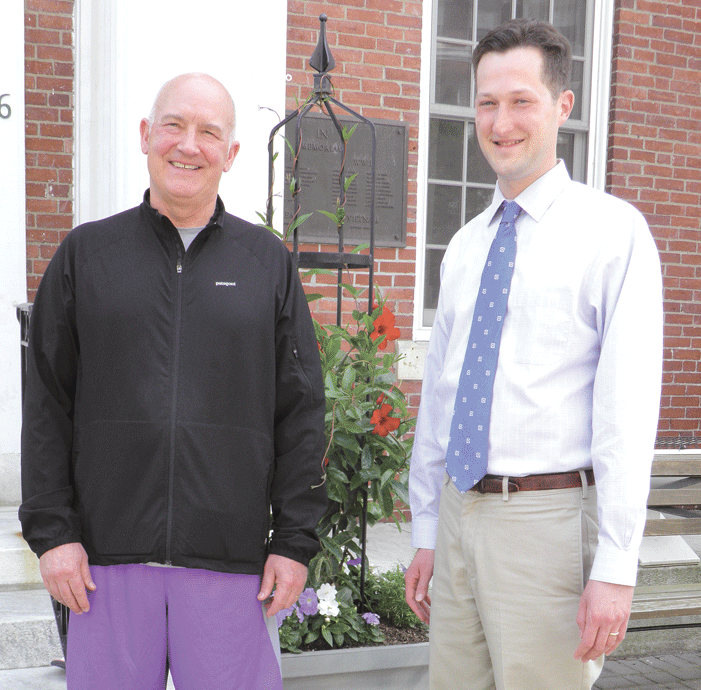
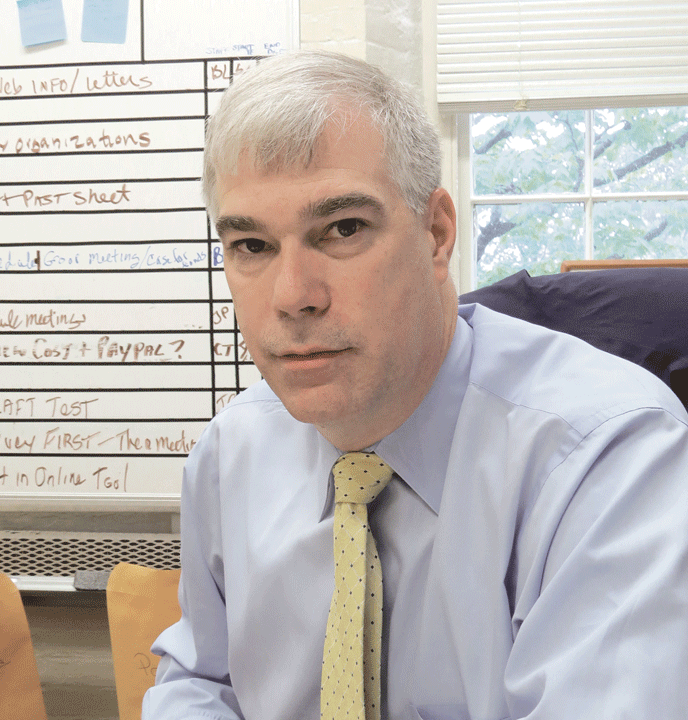
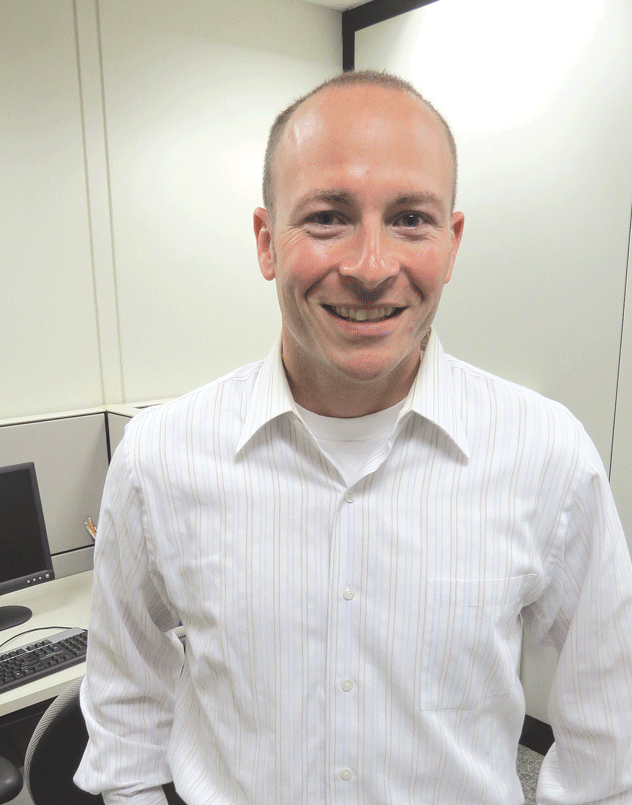
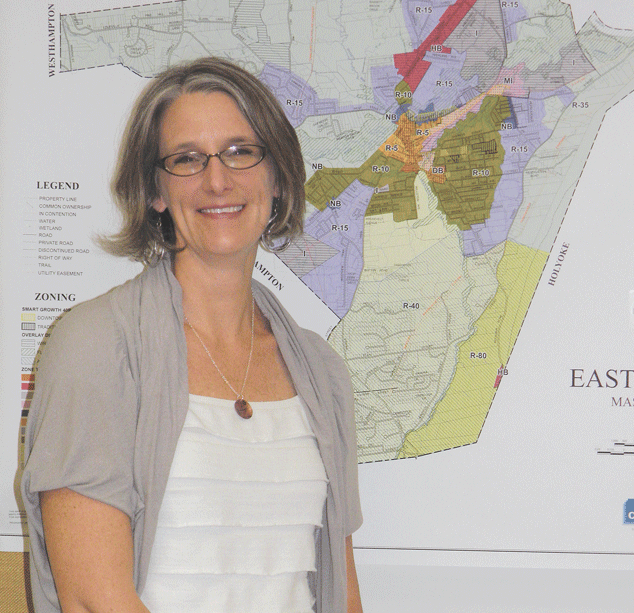
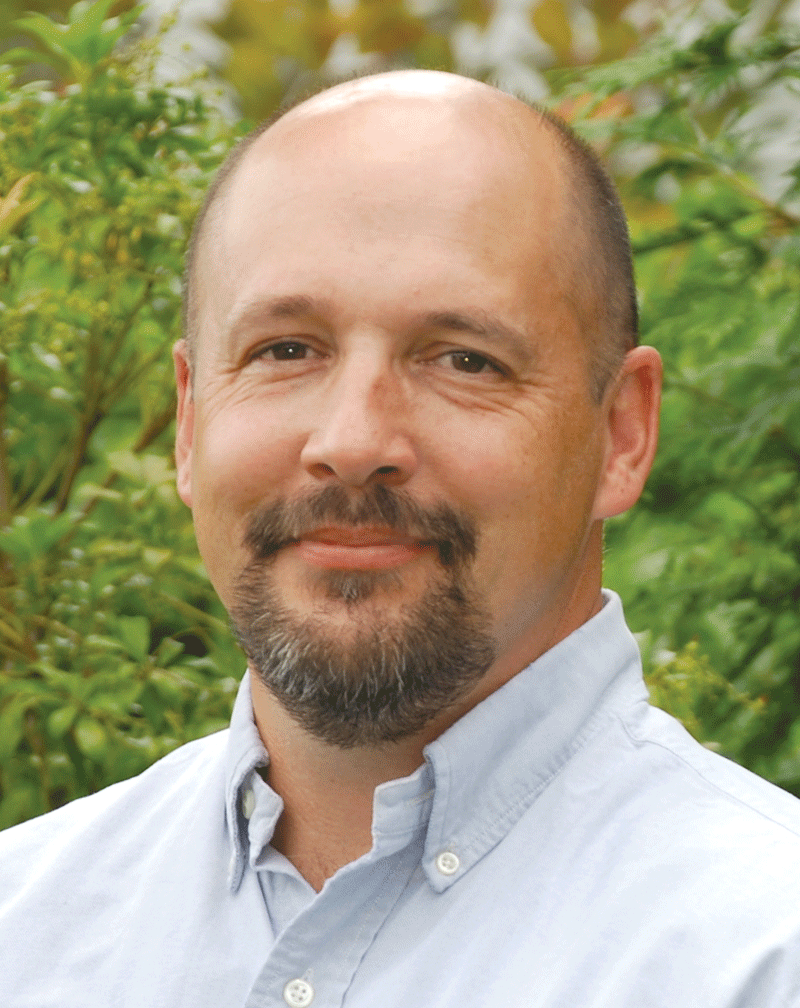
This office will be in existence for a short time covering the period of construction and the first year of operation, with an expected span of 39 months. It will be overseen by Kevin Kennedy, the city’s chief development officer, and will be staffed by Al Chwalek, retired director of the Department of Public Works, and attorney James Hannifan.

The Casino Liaison Office will coordinate the efforts of the various city departments involved in the development and construction of the casino project and serve as an information resource for the developer and as a representative and facilitator for developer in the processing of its permitting, licensing, and regulatory approvals.

“Due to the size and complexity of this multi-million-dollar project, it is imperative that the city provide a direct point of contact as we move forward with the realization of this tremendous economic-development project for the city of Springfield,” said Sarno. “Both Al and Jim have direct knowledge of the development process and will be instrumental in making sure that, when issues arise, they can be dealt with directly and in a timely manner to ensure this project stays on track.”

In addition to the Casino Liaison Office staff, Sarno will also be bringing together a number of key departments as part of a casino-development team. This team will include the Office of Planning & Economic Development, Department of Public Works, Law Department, Building Department, Police Department, Fire Department, Water & Sewer Commission, and Office of Administration and Finance.

As part of this team, the city will also be re-engaging the services of a number of outside casino-related consultants. These include Fuss & O’Neil, a local traffic-engineering consultant; the Chicago Consultants Studio Inc., a Chicago-based planning firm, which will review site-planning-related issues; and Taft Stettinius & Hollister LLP, formerly Shefsky & Froelich Ltd., for its expertise concerning legal matters relating to the gaming industry.

The city will fund the office staff through payments received in conjunction with the host-community agreement. Outside consultants used for their expertise will be funded pursuant to the terms of the agreement, which obligate the developer to pay development process cost fees.

“As we did during the casino-review process, the city wants to ensure that we have a transparent and open process and that we also have the most qualified people to help guide one of the largest development projects in the city’s history,” Kennedy said. “This team of city departments and consultants, which will also be fully available to the City Council as part of their review, will help to play a major role in the permitting process and provide much-needed input as we look forward in anticipation of the casino’s opening in 2017.”

Daily News

WESTFIELD — Noble Hospital will hold the fourth Blood Wars: Guns vs. Hoses Blood Drive on Thursday, March 12 from 7 a.m. to 5 p.m. Westfield’s police and fire departments will help the Noble Hospital/Baystate Health Blood Donor Program, rolling up their sleeves to see who can donate the most blood. Donations will take place in the Donor Lab and Blood Mobile.

“What makes this event different from many of the other local blood drives is that the blood collected will be used at Noble Hospital to help people in the Greater Westfield area. We’re excited about the upcoming event and feel that it is a great opportunity for the Westfield police and fire departments to join forces with Noble Hospital for the benefit of our community,” said Allison Gearing-Kalill, vice president of Community Development. “Blood collected in excess of Noble’s need will go into the regional pool and will help defer costs when we have to purchase needed blood. Blood donations help Noble Hospital save money as well as lives.”

Added police Capt. Michael McCabe, “the Police Department is willing to bleed for its community, and we’re willing to put our arms where our mouths are.”

The winning team will receive the Blood Donor Challenge Cup, a trophy recognizing the winning team’s accomplishment. The Westfield Police are the defending champions, having won the previous three Blood Wars. Each donor receives a gift from the Baystate Health Blood Donor Program and a Noble Hospital swag bag.

The Noble Donor Center is open to the public on Wednesdays and Thursdays from 7 a.m. to 3 p.m. Appointments and pre-registration are recommended; however, walk-ins are also welcome. To make an appointment, call the Blood Donor Center at (413) 794-4600. Blood donations take approximately one hour to complete, including the interview, donation, and refreshments. Donors must be at least 17 years old, weigh at least 110 pounds, have a valid photo ID, be in good health, and have not donated blood within the past eight weeks. People who have had the flu vaccine or flu mist are allowed to donate.

Daily News

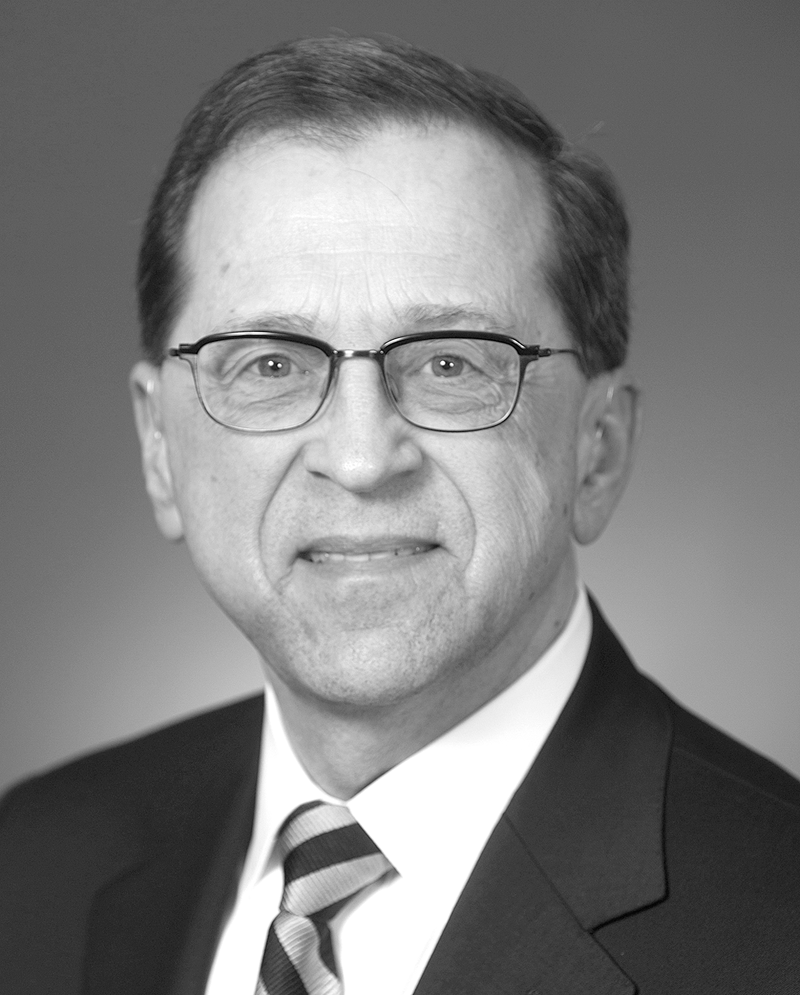
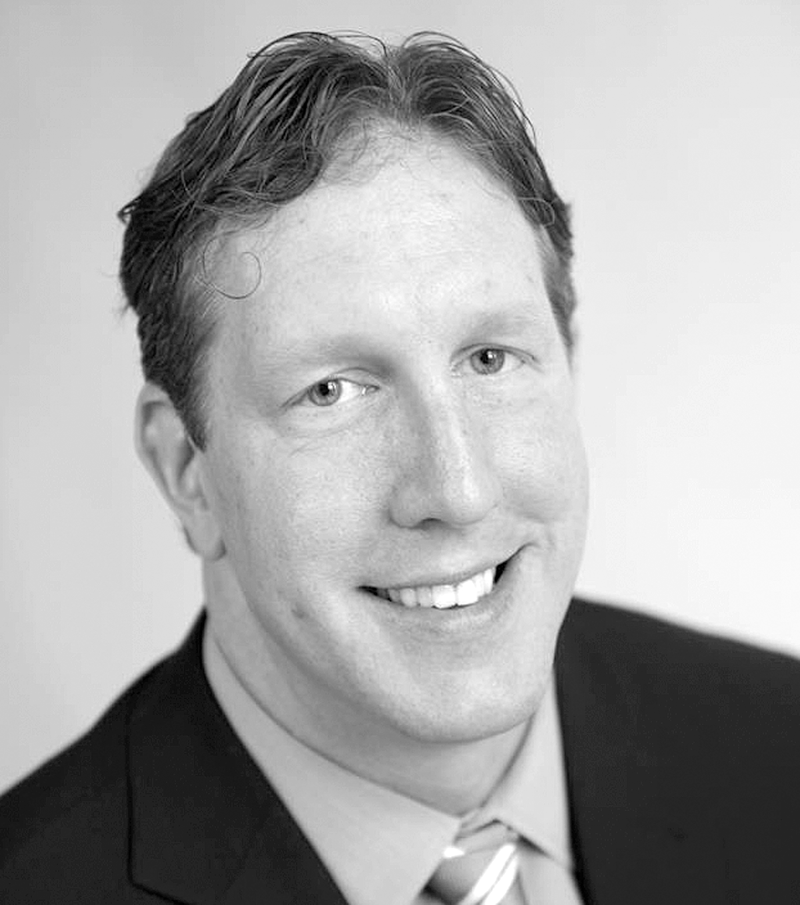
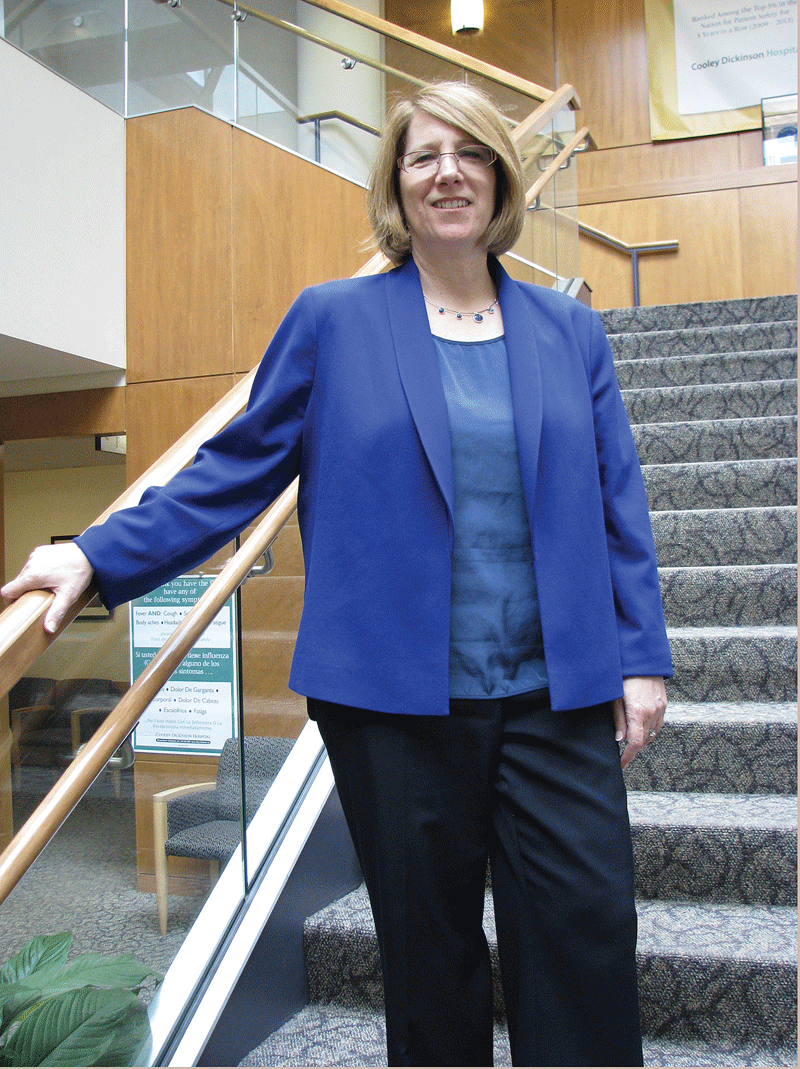
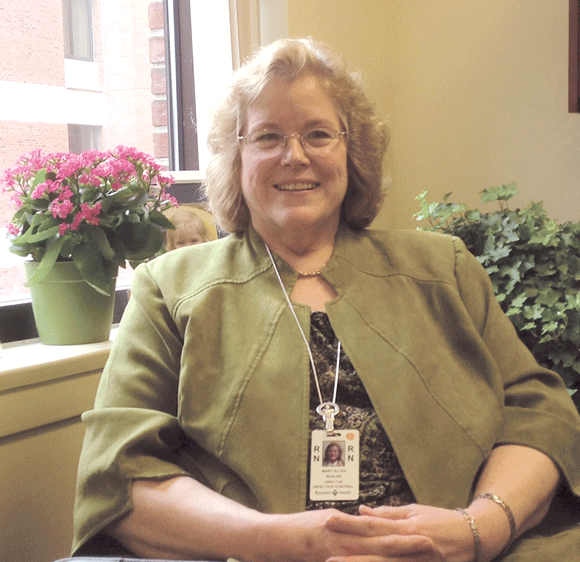
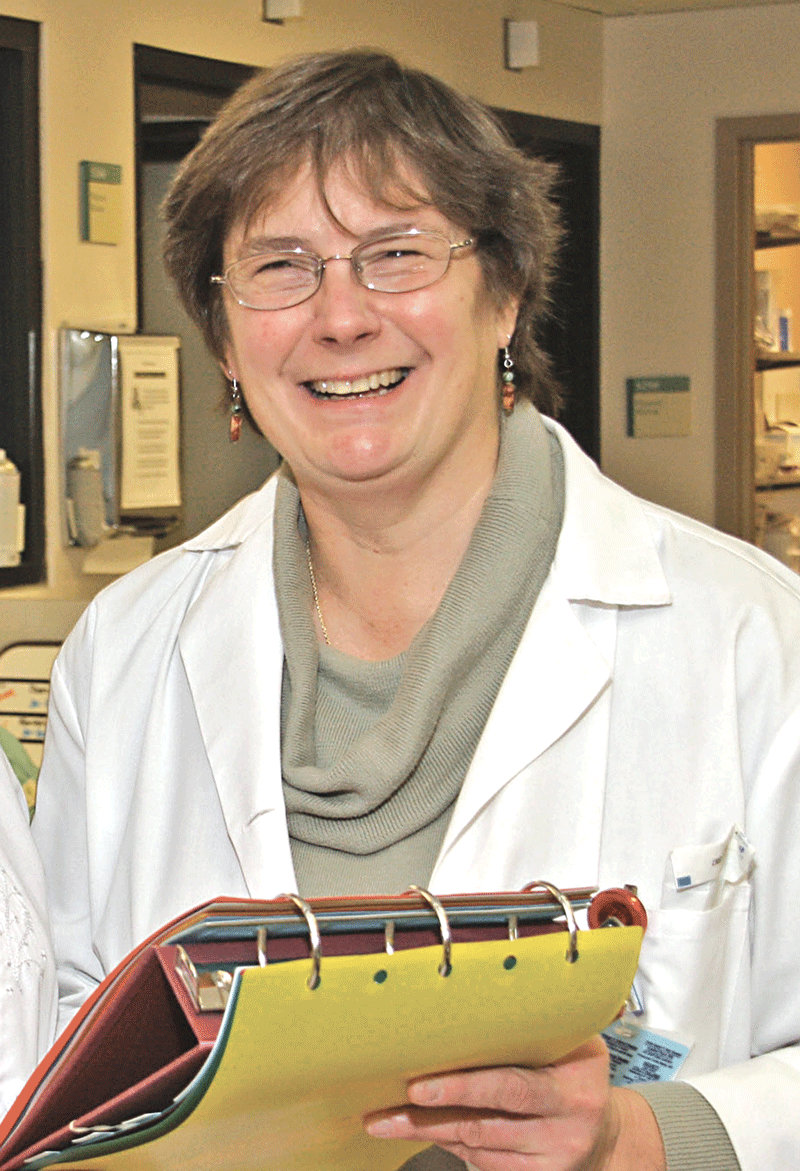
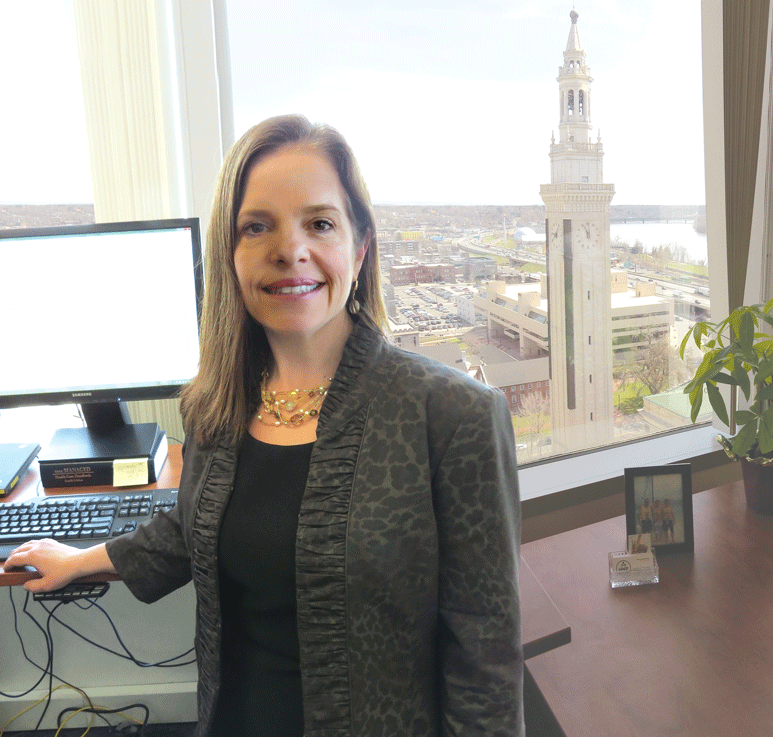
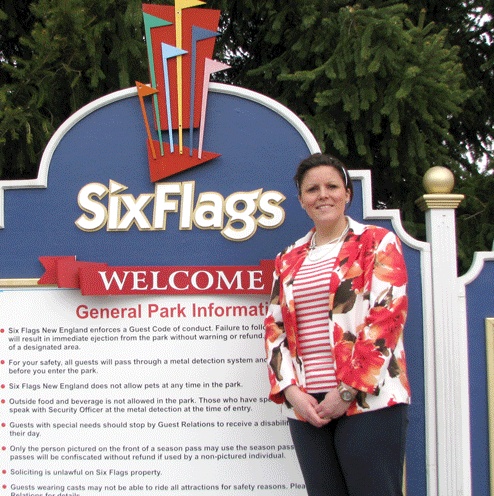
NORTHAMPTON — Following nationwide searches, Cooley Dickinson President and CEO Joanne Marqusee announced that two healthcare executives, Katherine Bechtold and Anthony Scibelli, have joined the organization’s senior leadership team.

Bechtold has been selected as Cooley Dickinson Health Care’s vice president of patient care services and chief nursing officer.

“I am very excited to have someone with Kate’s depth of experience, clear commitment to quality care and service excellence, collaborative style, and ability to inspire staff at all levels join the senior leadership team,” Marqusee said.

Added Bechtold, “I am excited about this wonderful opportunity to lead nursing and patient-care services at Cooley Dickinson. I was impressed with the commitment to patient care that I heard from staff and medical staff alike and look forward to being part of the new leadership team that Joanne Marqusee is building.”

Most recently, Bechtold served as the senior vice president and chief nurse executive for MultiCare Health System in Tacoma, Wash., where she oversaw system-wide nursing and clinical policies, case management, social work, and quality care for the five-hospital system and its primary-care, urgent-care, and specialty clinics.

She also served for eight years as chief nursing officer and vice president of patient care at Centura Health Systems in Englewood, Colo., and Saint Anthony Hospital System. She counts among her accomplishments leading Saint Anthony Central Hospital to one of the highest scores in the nation for nursing quality indicators and significantly reducing nursing-management turnover rates.

Scibelli has joined Cooley Dickinson Health Care as vice president, operations and chief administrative officer. He will supervise a number of departments, including Facilities, Housekeeping, Transport, Security, Nutrition, Lab, Imaging, and Human Resources.

“I am very excited that a leader with Tony’s range of experience, dedication to service excellence, and ability to lead teams and promote teamwork has accepted this important position. He will add much to the new senior leader team we are building,” Marqusee said.

Scibelli has most recently served as senior vice president, Human Resources, Support Services, and Post Acute Operations at Mohawk Valley Health System in Utica, N.Y., which resulted from the affiliation of Faxton-St. Luke’s Healthcare and St. Elizabeth Medical Center. He oversaw a range of functions, including Human Resources, Facilities Management, Support Services, Home Care, and Long-term Care. Scibelli joined Faxton-St. Luke’s Healthcare in 2004 as vice president, Human Resources and was promoted several times there.

Before joining Faxton-St. Luke’s, Scibelli worked in the food industry, where he got his start at Big Y Foods in Springfield. He earned a bachelor’s degree at Worcester State College and master’s degrees from Lesley College in Cambridge and SUNY Albany.

Class of 2015 Difference Makers
Company’s Contributions to the Region Extend Well Beyond Check Writing

Nick Fyntrilakis

Nick Fyntrilakis, the company’s vice president of Community Responsibility.
Photo by Denise Smith Photography

Nick Fyntrilakis certainly wasn’t around for what’s known in local lore as the Great Flood of ’36, when the Connecticut River, swollen by large amounts of melting snow and persistent rains, spilled over its banks in mid-March, breaching dams, knocking bridges off their foundations, and destroying homes and businesses.

But he’s heard the stories — and seen some of the photos — related to how MassMutual Financial Group, the company he now serves as vice president of Community Responsibility, opened its purse strings, not to mention its doors (quite literally), to help Springfield residents weather that disaster.

“We sheltered people in our home office on State Street because they didn’t have any place to go — we had people sleeping on cots in a gymnasium that we had at that time,” he told BusinessWest, adding that he references that story often because it helps explain the company’s long history of community involvement and the many different forms it has taken.

Actually, that history goes back well before 1936, he said, adding that it is his unofficial job description to help write more chapters and also create new ways to support area cities and towns (especially Springfield, its home base) and improve overall quality of life.

And in recent years, he and others at the company have added to the portfolio of community involvement in some intriguing — and what many would consider non-traditional — ways, from the many layers of support provided after the devastating tornado in 2011, to several forms of assistance to the nonprofit agency DevelopSpringfield, which grew out of a State Street revitalization initiative and is now involved in a wide range of economic-development-related activities, to multi-tiered support for Valley Venture Mentors and other groups and initiatives created to foster and nurture entrepreneurial activity and, ultimately, create jobs.

These come on top of more traditional forms of support, such as scholarships for high-school students, mentoring and internship programs, funding of cultural institutions such as the Springfield Symphony Orchestra (SSO) and CityStage, and continued support for the many events staged by the Spirit of Springfield, including its annual Fourth of July fireworks display.

Add it all up, and it becomes apparent that MassMutual, a Fortune 100 company (number 96 in the last compilation, with more than $33 billion in annual revenue) is making a huge impact in the community, one that certainly epitomizes the phrase Difference Maker.

The numbers certainly support such a designation:

• In 2014, MassMutual supported 109 Springfield-area entities, spreading $4.8 million among them;
• The company’s aggregate support of DevelopSpringfield from 2008 to 2014 totals more than $4.3 million, including a $1.6 million contribution toward planning and rebuilding following the tornado;
• This past year, MassMutual awarded $1.6 million to Valley Venture Mentors over the next three years to support an accelerator program and created the $5 million Springfield Venture Fund;
• Over the past five years, the company has granted internships to nearly 500 high-school and college students. Job offers were extended to 23 of the participants, and 17 are still with the company; and
• Company employees mentor roughly 35 Springfield high-school students each year, and has had 175 mentor matches since the 2010-11 school year.

But such statistics tell only part of the story. Indeed, Fyntrilakis, as well as representatives for some of the agencies supported by MassMutual, say the company’s involvement goes well beyond check writing, and is part of broad strategy to strengthen the Greater Springfield area and position it for a better economic future.

Jay Minkarah, president and CEO of DevelopSpringfield, called it a “holistic approach,” one that he believes separates MassMutual from most other corporate donors.

“One of things that distinguishes MassMutual’s support for initiatives like ours is that these are not just a nod toward giving back to the community or a feeling that the company should support charitable endeavors,” he explained. “These are different. These are strategic investments in the community.”

Summing up the company’s philosophy involving community involvement, Fyntrilakis said it mirrors its corporate outlook as well, meaning a focus on the longer term.

“We make decisions that are 50-year decisions — we don’t worry about the next quarter or what the stock price is going to look like in two days; we’re worried about how our company is going to be faring 50 years from now so we can deliver on the promises we make to our policy holders,” he explained. “And as a result, that translates into the way we engage our community and our corporate responsibility. We want to ensure that our region is strong into the future so that we can have a workforce that can deliver on the things that we need for our policy owners, and we want to continue to thrive as an organization. As goes our community, so goes our ability to do things.”

In Good Company

Springfield Mayor Domenic Sarno told BusinessWest that any community fortunate enough to have a Fortune 100 company headquartered within its boundaries should certainly expect that employer to be a solid corporate citizen.

Springfield’s fireworks

Springfield’s fireworks display now bears MassMutual’s name as lead sponsor — one of the company’s many examples of philanthropy in the category of community vitality.

But he and others are of the opinion that what MassMutual has done over the past 164 years goes above and beyond what could — and should — be expected.

“From the beginning, this city has always been able to count on MassMutual,” said Sarno, who has been in the corner office through a number of natural disasters and economic initiatives that the company has responded to. “It’s been a source of jobs, a force on economic development, and a philanthropic monster. And it should never, ever be taken for granted, because not every city has a MassMutual — and every city would love to have one.”

Fyntrilakis said the contributions made within the community are part of a corporate culture. “We are responsive and engaged and committed to serving our community,” he said, adding that, as the company has grown over the decades and expanded physically within other communities, that philosophy has followed.

“We support other communities where we have a presence,” he explained, “including Enfield, Phoenix, Memphis, and now Boston, where we have an office. We are engaged there as well.”

But the level of engagement is much higher in Springfield, he said, and for obvious reasons. The company traces its roots here, to 1851, when Caleb Rice, then an insurance agent working for Hartford-based Connecticut Mutual Life, decided to open a similar company — one owned by its policy holders — in Massachusetts. The company’s growth mirrored the nation’s — in other words, it expanded west, opening offices in several Midwestern states, and eventually reached the West Coast in 1868.

But it has always had Springfield has its base, with several headquarters facilities, including the current home on State Street, opened in 1927. Along with Smith & Wesson (because of that company’s strong brand recognition), it is the corporate entity most associated with the City of Homes.

“We have a much deeper involvement in Springfield, both from a financial perspective as well as a human-engagement perspective,” said Fyntrilakis, “in the sense of me serving on boards of directors, having our employees volunteer in the community on various things, and employees being generous with their own dollars to causes that we support or drives that we have for food or toys or things of that nature.

“It’s pretty special — it’s a meaningful degree of support,” he went on. “It goes along with being a Fortune 100 company, but it’s not just about how big we are or what people think we should do. It’s about what we think we should do and our own commitment.”

Fyntrilakis told BusinessWest that the phrase ‘corporate responsibility’ cuts across most all aspects of the company and includes employees in many departments and on many levels. Examples include everything from environmental responsibility — an important consideration for a company with such a large footprint, and one embodied in such initiatives as solar panels on the roof of the company’s headquarters and electric-car-charging stations in the parking lot — to employee benefits and training initiatives.

But perhaps the most visible component of corporate responsibility is the many actions that fall into the broad category of philanthropy or community involvement.

Historically, there are three main categories for this involvement, he said: education, economic development, and what the company calls ‘community vitality,’ and there are many examples of each.

School of Thought

Before elaborating on each area, Fyntrilakis first went into more depth about the philosophy that governs decisions on community involvement, because doing so helps explain directions taken by the company.

“We’re not ashamed to say that it’s important for our charitable activity to align with our business strategy,” he explained. “Because, in order for us to support charitable activity, our business needs to be strong.”

And one of the keys to achieving that strength (again, for the long term) is through a quality workforce and effective means of attracting and recruiting talent. Thus, many of the philanthropic initiatives within the realm of education involve initiatives that would help better train a workforce locally and also introduce young people to the company and its myriad employment opportunities. Meanwhile, initiatives within the area of community vitality are aimed at improving quality of life, but also to make the region more attractive to potential job candidates.

On the national level, he went on, many initiatives, such the LifeBridge and FutureSmart programs, are designed at enhancing the corporation’s brand and reputation, as well as empowering more Americans to become educated financially, which ties into MassMutual’s core business.

LifeBridge is a unique, free life-insurance program that helps children of income-eligible families pay for their education expenses if their insured parent or guardian passes away during the term of the policy, while the FutureSmart Challenge, conducted in conjunction with select NBA teams, stages interactive seminars at which students learn the importance of savings, career choices, staying in school and going to college, and how each has a profound impact on their future financial success.

Locally, within the category of education, said Fyntrilakis, the emphasis is on grades 6-12, with a focus on academic achievement and career pathways. Individual initiatives involve grants to specific programs to improve academic achievement, scholarships, mentoring students at the Springfield High School of Science and Technology and Putnam Vocational Technical High School (both located nearly across State Street from the company’s headquarters building), internships, job-shadowing programs, and others.

“Our hope is that we can create a pipeline for some of those young people to come and work at MassMutual,” he explained. “Many of our initatives are aimed at prompting the diverse, talented young people that we have to think about a career at MassMutual, and have a progression and a way that they can do that.”

MassMutual’s support to Springfield

MassMutual’s support to Springfield after the 2011 tornado came in many forms, from a $1.6 grant toward the rebuilding effort to a loaned executive to help draft a recovery plan.

In the realm of community vitality, support is directed toward those events and institutions that will attract people to the city of Springfield and the region as a whole, said Fyntrilakis. That list includes everything from the recent Spalding Hoophall Classic, which brought top high-school basketball players from around the country to the City of Homes for a three-day tournament, to Bright Nights, the Fourth of July fireworks, and other events staged by the Sprit of Springfield; from the SSO to CityStage and the Springfield Museums.

As with programs in the realm of education, MassMutual’s initiatives in community involvement usually go well beyond simply writing checks.

Indeed, Audrey Szychulski, outgoing executive director of the SSO, said the company’s contributions to that institution go well beyond its sizeable season sponsorship (a six-figure gift). Indeed, several officers of the company sit on the orchestra’s board, including Chief Marketing Officer John Chandler, the current chair.

“Besides funding, MassMutual has a core group of people who interact with us on a regular basis,” she explained, adding that the company has also assisted with strategic planning, marketing initiatives, introducing the SSOP to young professionals new to the region, and even a complete IT analysis. “And when it comes to a donation of that size, it’s really an investment in our general operating needs to ensure that we really can serve our community. To them, it’s not just about the concert, but the whole experience and helping to ensure that we can touch as many people as possible through outreach initiatives.”

Response to the tornado of 2011, as well as the flood of 1936 and other natural disasters, does not fall neatly into any of the three main categories of community involvement, but it does reflect the company’s sense of responsibility to the city and its residents.

“It was an extraordinary event, and we certainly wanted to step in,” Fyntrilakis said, adding that support took forms ranging from an immediate $100,000 donation to the American Red Cross to a $1.6 million contribution to DevelopSpringfield for its Rebuild Springfield Fund, to a donation of his time and energy to co-chair the rebuilding effort.

Fueling Entrepreneurship

But if the tornado does fit into a category, it would likely be economic development, said Fyntrilakis, adding this is a relatively new classification of community involvement for the company — but one that has garnered most of the headlines in recent months.

The sharpened focus on this realm dates back roughly to 2008 and the Great Recession, he told BusinessWest, noting that the company recognized a need to reach out and help the city, which was, like many former manufacturing centers, struggling to reinvent itself and stimulate new job growth.

“We stepped back and we decided that we really needed to help the community leverage the assets it had and really take advantage of opportunities to grow and strengthen its economy,” he explained. “It’s great for us to be able to do lots of things charitably, but the reality is, the better the economy is, and the better the opportunities for people to get jobs and for the tax base to grow — that’s really what’s going to help strengthen the community a lot more than charitable contributions that aren’t going to facilitate that.”

This emphasis on economic-development-related support has taken more forms, starting with a State Street Corridor initiative that remains a work in progress. As part of that endeavor, the company helped facilitate creation of DevelopSpringfield, which Fyntrilakis called a “bricks-and-mortar organization” charged mostly with developing and repurposing underutilized properties, thereby revitalizing many of the city’s neighborhoods.

Current projects include several on State Street, including development of a supermarket, reuse of the former River Inn, razed in 2013, and redevelopment of the so-called Gunn Block. Other initiatives include renovation of the Ansel Phelps House on Maple Street and DevelopSpringfield’s commitment to build an innovation center in two long-vacant buildings on Bridge Street.

That facility will become the new home to Valley Venture Mentors (VVM), another of the Difference Makers for 2015 (see related story, page A28) and one of the focal points for MassMutual’s multi-pronged efforts to promote entrepreneurship and encourage businesses to locate within Springfield.

Overall, the company is investing $6.5 million in that realm, with $1.5 million going to VVM over the next three years for a startup accelerator — the first cohort of 30 companies started its six months of programs in January — and $5 million for creation of the Springfield Venture Fund, which will invest in startups located in Springfield or willing to relocate there.

In December, video-game developer HitPoint Studios became the first company to receive an investment ($500,000) from the fund, relocating from Amherst to a suite in 1350 Main St. in Springfield.

“We kept hearing how entrepreneurs were chasing capital, and capital was dictating where folks were locating — Boston, Cambridge, and San Francisco were putting money on the table and driving people to those communities,” said Fyntrilakis as he discussed how and why the fund came about. “Those are great cities with wonderful entrepreneurial ecosystems, but we felt that we had, through VVM and others, a good entrepreneurial ecosystem in Springfield, but the early-stage capital just wasn’t available, and folks were leaving to pursue capital elsewhere.”

By providing that early-stage capital, as well as other forms of support for entrepreneurship, MassMutual is taking a somewhat bold step in the arena of community involvement, one that should pay huge dividends down the road, said Jay Leonard, a board member at VVM and one of those who helped guide it though its formative years.

“MassMutual’s support of both the accelerator and the fund has been critical,” said Leonard, who serves as an economic researcher for one of the company’s subsidiaries, Babson Capital Management, and has served as a go-between of sorts for VVM and the corporation. “The best way to provide economic development is to invest in companies that are going to be successful, and MassMutual’s doing that.”

Minkarah agreed, and returned to that word ‘holistic’ to describe the company’s community involvement, especially with entrepreneurship initiatives.

“The company has provided support for the Springfield Innovation Center and Valley Venture Mentors, and it created the Springfield Venture Fund, and you can’t just look at any of these in isolation,” he explained. “When you look at that total package, here are very well-thought-out strategic investments designed to create a physical place that will support and foster innovation and entrepreneurship, support an organization that can actually run the program, and provide funding to support startups and high-growth companies that are innovative and entrepreneurial themselves.

“These are investments that MassMutual is making in the long-term economic health of the community,” he went on, “because they believe these are strategically positioned initiatives that can have a catalytic effect.”

Flood of Memories

It’s unlikely that anyone was using the word ‘catalytic’ with any degree of frequency back in 1936.

And that term probably wouldn’t be used to describe people sleeping on cots in MassMutual’s gymnasium because the flood leveled their homes.

But times change, in some ways, and that word is certainly appropriate now.

That’s because, while the company is basically continuing a 160-year-old tradition of community involvement, it is finding new, dynamic, and in some ways groundbreaking ways for it to evolve.

And that’s one of many reasons why it is a Difference Maker.

George O’Brien can be reached at [email protected]

Community Spotlight Features
Greenfield Crafts Detailed Road Map for the Future

Mayor William Martin

Mayor William Martin says a new rail platform will help Greenfield attract residents and allow businesses in Springfield to draw from a larger pool of employees.

‘Independence.’

That’s a word Mayor William Martin uses frequently, and a goal he has set for Greenfield that the city is well on its way to achieving, in his estimation.

“Synonyms are ‘sustainability’ or ‘resiliency,’ and that is where we have focused our economic-development efforts,” he said. “We want Greenfield and its residents to become as independent as possible.”

To that end, an important initiative kicked off last month when Greenfield Light and Power began operating as a municipal aggregation plan to provide electricity. The town gained final approval and certification for the plan from the Department of Public Utilities in October.

Greenfield has a contract with Peregrine Energy Group to develop the innovative initiative, which will not only bring lower-cost electricity to the community, but includes measures to procure it from renewable sources.

“Our price is fixed and is about .0125 per kilowatt hour,” Martin said, adding that the variable rate from Western Mass. Electric was about .014 per kilowatt hour at the time of the interview. “Although it may not seem like much of a difference, it adds up when you factor in millions of kilowatt hours,” he explained.

The mayor said it’s important for the town to be able to offer competitive pricing because reports from the U.S. Small Business Bureau show small businesses account for 60% to 80% of the jobs in the U.S., and the top obstacle they face in New England and Massachusetts is the cost of electricity.

“We want to continue to help existing companies in Greenfield expand as well as facilitate and accommodate the Yankee ingenuity and entrepreneurial spirit of businesses that are an idea in someone’s garage,” said Martin as he outlined steps taken over the past three years to bring the municipal aggregation plan to fruition.

Greenfield Light and Power also plays into Greenfield’s commitment to a green economy and environment, because power purchased will be generated from renewable energy sources.

“We were the first city in the state to be designated as a green community,” Martin said. “We worked hard for this and can only get better. We already have a 2.5-megawatt solar farm and can create new solar and hydroelectric projects. We will eventually produce all of the electricity that we need and move it into our aggregation plan.”

The successful establishment of the municipal aggregation plan, coupled with the Green Communities Act of 2008, which gave municipalities the opportunity to seek independent telephone and Internet service, laid the groundwork for a telecommunications or (fiber-optics) light plant also designed to further Greenfield’s independence.

“I want us to have our own Internet provider and phone company,” Martin told BusinessWest, noting that he conceived the idea three years ago.

Steps to establish what’s known as Greenfield TelNet were enhanced in 2012-13 when the Mass Broadband Institute laid seven miles of fiber-optic line in the town as part of a project to increase broadband access to communities along Interstate 91 (more on that later).

Other projects designed to make Greenfield a more attractive place to live, work, and own a business include the town’s new, handicapped-accessible rail platform located behind the John W. Olver Transit Center. It was completed in December, and in addition to stops by Amtrak on its reconfigured Vermonter line, commuter rail service has been proposed that would run between Springfield and Greenfield four times a day, with stops in Holyoke and Northampton as well as Springfield.

Martin said a state transportation-funding bill passed last year includes $30 million to acquire and retrofit older MBTA commuter-rail locomotives for the line.

He hopes the new rail service will entice people to live in Greenfield and commute to jobs in Springfield, or travel to the town from Vermont, park there, and use the train to get to work. “People hired for the MGM casino could avoid congestion on I-91. Plus, it will give businesses in Springfield options to hire people out of the immediate job pool,” he said.

Net Gains and Concrete Results

Martin’s telecommunications proposal received approval from the Town Council two years in a row, and the town is waiting to get the legislative approval necessary to hold a special election for voters on April 14. Martin hopes the approval will come through and residents will approve Greenfield TelNet at that time.

However, steps have already been taken in an effort to shrink the time frame to implement service while following the process. The town partnered with Holyoke Gas and Electric to ultilize its fiber-optics network to create voice over IP telephone service and also contracted with Crocker Communications to install and maintain it. As a result, the phone service was changed over to VoIP in Town Hall several weeks ago, which Martin said will save about $158,000 a year. After wrinkles are worked out in the system, the town’s schools will also be outfitted with the new phone system.

“The next step will be Internet access, and we hope to develop strong partners to provide and service it for the city and for our residents and businesses at a future date, which could result in a huge cost savings for everyone. We want to guarantee the future use of fiber optics and make sure that bandwidth is not reserved for those who can afford higher rates,” Martin said. “Our plan includes installing wireless Internet access downtown in the future, which would be free to housing authorities. It would also guarantee the existence of Greenfield Community Television, and the possibilities would be unlimited.”

However, he added that the town is in discussions with Comcast to renew its contract, because it wants to leave all its options open.

Meanwhile, Martin said Greenfield has a number of other significant projects underway to spur economic growth. Construction of a new, $66 million Greenfield High School is expected to be complete in August, and the new $60 million Franklin County Courthouse is slated to be finished in two years.

“There is also a lot of private investment taking place,” the mayor told BusinessWest, noting that the owner of the block downtown that houses Wilson’s department store is putting together a proposal for a hotel and banquet hall that would occupy the upper stories of the building over the store and include new construction on the Chapman Street side of the property, which abuts a parking lot.

It would recreate the 19th-century hotel that once existed there, Martin said. “It served the bustling economic activity in the area, and was supported by industry and businesses. We haven’t seen the proposal yet, but a new boutique hotel would be important, as it would give people a place to stay overnight and would be another asset to our downtown.”

Patriot Care, a licensed and experienced medical-marijuana company, is also nearing the permitting phase for rehabilitating a historic building on the western part of Main Street.

“The $1 million project is expected to begin in the spring,” Martin said. “We are focusing on rehabilitating buildings from the early 1900s of Greenfield’s heyday.”

He added that the state has accepted a proposal to conduct a feasibility study for a new library, the school administration office is moving from Davis Street to Main Street, and the public safety commission has selected a site and formed a committee to move forward on a new public-safety complex that would house the fire and police departments.

In addition, “the Ford Toyota dealership on Main Street is building two new showrooms behind its present structure, which will separate the brands and showcase them in larger, more modern facilities. In addition, a new $2.5 million Cumberland Farms on Federal Street will be finished in a few weeks, and there is a proposal for a new Dunkin’ Donuts and Sunoco Convenience Store on Federal Street, which is the second-largest commercial area in the city.”

Baystate Franklin Medical Center is also adding a new, $23 million surgical wing to the hospital, which is expected to be open next year. In addition, Baystate purchased the former Holy Trinity School and convent across the street and has plans to demolish them and erect a medical professional building on the property.

Another project that has ties to the city’s history involves the Wiley and Russell Dam. It was scheduled to be demolished years ago, but the town requested that the Department of Conservation and Recreation Office of Dam Safety conduct a new review last November. As a result, it has been reclassified from a significant-hazard-potential dam to a low-hazard-potential dam, which means a failure would not be likely to result in any loss of life or significant damage to property.

The dam, which has a V-shaped waterfall just upstream of the Meridian Street Bridge, does need some repair. But in addition to making plans for that work, Greenfield officials are exploring the possibility of constructing a fish passage at the site with the U.S. Fish & Wildlife Service and the Massachusetts Division of Marine Fisheries.

Martin said the dam speaks to the town’s history, and in the 1800s, two businesses existed at its base, which include a company whose genesis led to the development of Kennemetal Inc.

Last July, that firm announced plans to expand its Greenfield operation with a $5 million investment in infrastructure, new equipment, and machinery. The expansion will result in 50 new jobs, which will be added over the next five years. Martin said the company’s decision to invest in the town is particularly significant because Greenfield was pitted against a site in South Carolina that Kennemetal considered after it closed its factory in Vermont.

Argotech is another Greenfield business that employs skilled workers and has plans to expand. “The company is based in our industrial park and is investing $20 million over the next 10 years in new equipment,” the mayor said.

He explained that the city is working with Greenfield Community College, Franklin County Technical School, and the Regional Employment Board to make sure both of these companies will have access to a pool of people trained in the specific job skills required in their industries.

“We talked about this and about our utility plan during our pitch to Kennemetal, and told them what we could provide in terms of training and power savings,” Martin said. “It’s the type of accommodation and collaboration we facilitate to help large businesses move to Greenfield or expand here.”

The town has also taken over a 100-year-property on an 11-acre site on Federal Street, and put out a request for proposals to redevelop 75,000 square feet of former factory space in a commercial condominium on the site obtained in December through the Bankruptcy Court. Greenfield also purchased the undeveloped half of the property from the court, which contains three playing fields on 6.62 acres the city had been leasing for $1 a year from Lunt Silversmiths.

“The entire property has been rezoned,” Martin said.

He added that Greenfield’s location and affordable housing also make it an attractive place to live and work. “We are the junction between Routes 2 and I-91 and have been known as The Crossroads since the Village of Deerfield was established,” he said. “Businesses are expanding here and are coming to Greenfield because they see it as a safe investment. We have shown that we can maintain a stable tax base of $1.36 million, and we are very competitive when it comes to the cost of electricity.”

Secure Future

Martin believes the measures that Greenfield is taking to become independent will bear fruit and make the town more resilient.

“Some people are guessing that the future will be different. But we guess we will be prepared for whatever it holds; we’ll have as many options as possible,” he told BusinessWest.

And that’s a solid blueprint for a sustainable economy.

Greenfield at a glance

Year Incorporated: 1753
Population: 17,456 (2010)

Area: 21.89 square miles

County: Franklin

Residential Tax Rate: $22.51
Commercial Tax Rate: $22.51
Median Household Income: $33,110 (2010)
Family Household Income: $46,412 (2010)
Type of government: Mayor; Town Council
Largest Employers: Baystate Franklin Medical Center; Town of Greenfield; Greenfield Community College

* Latest information available

Law Sections
Law Helps the Disabled Gain Greater Control of Their Financial Lives

By HYMAN G. DARLING, Esq.

Hyman G. Darling

Hyman G. Darling

The House and Senate, together with President Obama, recently passed the ABLE (Achieving a Better Life Experience) Act of 2014.

This new law will allow a disabled individual to establish a tax-free savings account while preserving government benefits. The ABLE savings account is modeled after the so-called 529 College Savings Plan, where funds are contributed on an annual basis, and the income earned is free from tax.

ABLE accounts allow the beneficiary to contribute $14,000 per year, provided the account balance does not exceed $100,000. Based on current tax rates, income-tax savings are minimal. The appeal and protection of the new law is that the individual can have a savings account without jeopardizing Social Security, Medicaid, and other benefits.

Unlike conventional savings accounts, all funds in an ABLE account are subject to payback, meaning that, if the ABLE account’s beneficiary passes away, then the state is entitled to reclaim benefits paid, up to the amount of the account at death. The intention, therefore, is that the funds will be spent on the individual’s needs and expenses, and not saved for a rainy day.

If a disabled person receives a lump sum — for example from an inheritance, divorce settlement, tort injury, retroactive Social Security Benefits, etc. — up to $14,000 may be contributed to an ABLE account without affecting other benefits. In this way, the ABLE account may eliminate the need to set up a special-needs trust or contribute the funds to a pooled trust.

The disabled individuals who will benefit most from the ABLE Act of 2014 are primarily those who do not have significant assets. A number of disabled people may also have ‘third-party’ special-needs trusts, which do not require payback. In this way, trust funds can be preserved for other beneficiaries, while ABLE account funds may be used only for the ongoing needs of the disabled person. ABLE account funds may be used for education, healthcare, transportation, and housing, among other expenses. ABLE accounts will have no impact on Medicaid eligibility.

Many worthy organizations worked for the passage of this bill, including the National Academy of Elder Law Attorneys, the Special Needs Alliance, and the National Down Syndrome Society. The ABLE Act, however, does contain some significant restrictions, including the provision that the disability must have been present before age 26. The act, nevertheless, was passed with overwhelming support from both Democrats and Republicans. The House passed it with a vote of 404-17, and the Senate approved the bill by a vote of 76-16. President Obama signed the bill into law before leaving for the 2014 winter holidays.

Disabled persons can start setting up ABLE accounts in 2015, if they can find a bank, broker, or agency to establish the account. While the ABLE Act changes federal law to allow for the savings accounts, each state must now create its own regulations. At this time, it is anticipated that the same banks or brokerage firms who offer 529 College Savings Plans are likely to offer the new ABLE accounts as well.

Living with a disability can be both time-consuming and expensive. There are approximately 58 million individuals with disabilities in the U.S. Given its restrictions, the ABLE Act of 2014 will affect a relatively small portion of those individuals and their families. The act is, however, an important step toward disabled individuals gaining greater control of their financial lives.


Attorney Hyman G. Darling is chair of Bacon Wilson, P.C.’s Estate Planning and Elder Law departments. His areas of expertise include all areas of estate planning, probate, and elder law. He is a frequent lecturer on various estate-planning and elder-law topics at local and national levels; (413) 781-0560; [email protected]

Construction Sections
Outlook Improves for Commercial Builders, Despite Stiff Competition

Fred Snyder, left, and Eric Forish

Fred Snyder, left, and Eric Forish spend a moment outside the new Westfield Senior Center, one of many projects keeping Westfield-based Forish Construction busy.

It’s only January, but Keiter Builders Inc. in Florence already has challenging projects on its roster for spring and summer.

“We’re seeing signs that 2015 will be busy, and the year is shaping up to be a good one,” said company President Scott Keiter, as he went through a list of contracts the firm was recently awarded. “We don’t have all the work we need yet, but we’re looking forward to getting more in the spring. This time of year is always slow for us, but the jobs we have are multi-dimensional and we’re excited about what we have lined up.”

Dave Fontaine Jr. said Fontaine Brothers, Inc. in Springfield is also doing quite well and has enough to work to last through the end of the year.

In fact, he expects 2015 to be better than 2014, which was solid.

“Public projects slowed down last year compared to what we saw immediately following the recession. It wasn’t dramatic, but there was a little less work,” said the company’s vice president. “We do a lot for the Massachusetts School Building Authority, and they didn’t have as many jobs. But things seem to be normalizing and we have a lot of good opportunities for 2016; a decent amount of large-scale public work and private clients who want projects done; things seem to finally be settling into a relatively normal economic climate.”

Eric Forish agrees. “The recession has passed,” said the president of Forish Construction in Westfield as he explained that private projects diminished significantly for a few years during the downturn in the economy, but are on the rise again. “Last year was our best year ever and I believe that 2015 will be a very good one.”

Renaissance Builders in Turners Falls has also had plenty of work. “We were extremely busy last year. We hired four new field personnel and one new office worker,” said President Stephen Greenwald, adding that most of the company’s commercial projects were privately funded. “While they haven’t been large in volume, they were extremely steady throughout the year.”

Still, commercial builders agree that competition is stiff, particularly for public jobs, which requires meticulous attention to detail and an ability to bid low, but not too low.

“The economy has stabilized, but it’s a new reality; we’re still adjusting to it and don’t know whether we can trust it,” said Greenwald. “The margins are better, but they will never go back to what they were before the recession. If you want to stay competitive, and busy, you have to be extremely accurate in your bidding. There is no room for mistakes.”

Keiter concurred, and said his company works very hard to estimate projects appropriately, and more importantly, execute them. “Margins are lean, but we are bidding to be successful. We win some and lose some, but we believe our systems are efficient, which helps us stay more cost effective than some of our competitors,” he explained. “We put a lot of energy into developing systems across the board from sales and estimating to production.”

Local companies say that downsizing their expectations helped some of them weather the recession. “Things got tight for a few years and a lot of companies dove after work and lost money. But we knew what we needed to do; we were cautious and realistic and did not try to maintain the same volume,” Fontaine said.

Forish Builders took a similar approach. “One of the keys to our success is that we have always been a very lean and aggressive company,” said its president. “This was not the first recession our company has gone through, and because we have learned from our experience, we made adjustments quickly.”

Competitive Arena

Although the economy is improving, the landscape has changed for commercial builders, as national companies are now competing for local projects.

“Firms are setting up offices in Springfield,” Fontaine said, adding that there are two ways that commercial builders get public jobs. The first is by prequalifying as a general contractor and bidding competitively; and the second is to be selected as a construction manager at risk. In this scenario, the property owner or agency chooses a contractor based on its experience and fees, and they join the project team during the design phase.

Dave Fontaine Jr.

Dave Fontaine Jr. says the volume of both public and private construction projects has increased in recent months, and the trend should continue into 2015.

“It’s a fee-based system and that’s the market where a lot of larger companies are competing with us,” said Fontaine, adding that very large firms typically have sophisticated sales and marketing departments. “But we have been relatively successful. We have hard bid cost-efficiency experience as well as the expertise it takes to be a construction manager, which sometimes works to our advantage, especially with clients we’ve worked for in the past.”

Greenwald also noted an influx of competition.

“We showed up to walk through a simple job priced at $50,000, and there were 16 builders there, so we didn’t bother to bid on it,” he said. “In the last two years, we have seen more and more builders from out of the area bidding on public-works jobs that range from $50,000 to $2 million, so if we think we will be outbid, we don’t follow through.”

Renaissance Vice President Tricia Perham added that it takes time and money to put together a bid, and in the current market, the investment is not always worthwhile. “As a result, we’re focusing our energy on referrals and past clients. But ironically, sometimes a municipality wants to hire us but has to hire someone else, because they are mandated to take the lowest bid,” she said, adding that this happened recently in the town of Montague.

Forish recalled a recent public job that he believes might have drawn four to six bids prior to the recession. “There were 12 companies bidding for it,” he told BusinessWest. “There is less opportunity right now in the public sector than in the private sector. But I don’t worry about what other companies are selling. We are selling ourselves and our product is very strong.”

Some local contractors speculate that the national companies opening offices in the area are doing so because of the $800 million MGM Resorts International Casino that will be built in Springfield’s South End.

However, area commercial builders don’t expect to be hired to build the casino and although it is far too early to tell who will get the job, they believe it will go to a massive national or international company.

“But there may be other opportunities as companies relocate or find they need to expand when they begin providing services to the casino, so, it may indirectly help area contractors,” Forish said, adding that suppliers and subcontractors are likely to benefit from the casino complex.

Plentitude of Work

The firms BusinessWest interviewed say they are doing well, however, despite fierce competition and other factors.

Fontaine Brothers recently finished a new $85 million high school in West Springfield and is close to finishing work on the new, $33 million Auburn High School, which was done under construction management at risk.

In addition, the firm recently completed a new junior/senior high school in East Bridgewater as well as Monomoy Regional High School in Chatham.

“Worcester has also been a very strong market for us for the past 15 years, and we have a presence in Eastern Mass.,” said Fontaine. “But Western Mass is our home market.”

His company will continue to be busy throughout the winter as it begins work on a new elementary school in Athol and ground is broken for a library renovation in Shrewsbury. “We are also finishing up the renovation of the old Chicopee High School,” Fontaine said, adding that the entire interior was gutted.

Other projects include demolishing the Plains Elementary School in South Hadley and building a new one, as well as additions to Pioneer Valley Chinese Charter Immersion School in Hadley and Southwick High School.

“Our work through 2015 is solid, so we are focusing on picking up projects late in the year that will carry us through 2016-17,” Fontaine said.

Keiter Builders does some residential work and has contracts to build a few new homes this year. But it has also landed a significant number of commercial jobs, and recently finished the Convino Restaurant in the basement of Thornes Market in Northampton, which opened several weeks ago.

“The work was very involved, because the space had never been used for a restaurant before,” Keiter explained.

The builder also completed demolition and reconstruction of the entryway to the Smith College Conference Center last summer, and is wrapping up work on the Carroll Room in the Campus Center at the college, where it installed maple paneling.

Other projects include shoring up a number of large granite stairways for a private client on an historic, commercial building in Northampton and a residential housing upgrades project at Smith College.

“It’s multifaceted, involves multiple buildings, and will include roofing, new windows, paint, and upgrades to their heating, ventilation, and air conditioning systems,” Keiter said of the work at Smith. “The work will be done during an eight-week period over the summer when students are on break.”

In addition, Smith hired the firm to handle the McConnell Hall Observatory project, which includes removing a flat roof and putting a domed ceiling on the structure.

“We’re also working for Western Builders on a commercial project in Holyoke,” Keiter said, noting that it’s not uncommon for his company to subcontract with other area builders on large projects.

Forish said his firm is also busy. “We’re finishing a fire-protection system at the UMass Dubois Library as well as a wastewater treatment plant for Kanzaki Specialty Papers in Ware. And last summer we completed a highway department complex in Deerfield and a large addition to Holyoke Charter School,” he said, adding that work on the new Westfield Senior Center and a new facility for Sarat Ford Lincoln in Agawam is underway, as are large additions to Pioneer Valley Christian School and Astro Chemicals Inc.

Renaissance Builders also has its share of contracts. It is upgrading a manufacturing facility, renovating a multi-family apartment building for a commercial landlord in Northampton, and will replace a condominium complex in the spring in Gill that burned to the ground.

Paradigm Shift

Greenwald said the margins on private work have improved compared to what they were a few years ago. But improvement is relative, he added, because five to seven years ago, the numbers were a lot better. “We bid on projects if we think we have a good chance of getting the work, especially if it is a unique job with difficult logistics or circumstances and we have a good idea of how to solve the problem,” he told BusinessWest.

Indeed, the ability to do specialized work helps local commercial contractors. Fontaine said 90% of its work involves green building, and last year the firm was named as one of the “Top 100 Green Building Contractors” by the Engineering News Record.

Renaissance Builders also does its share of green building, and Perham said that has given the company an edge over other commercial builders. “We’ve put a lot of energy into training our employees in green-building techniques and energy efficiency. We have also done work for chemically sensitive clients,” she said.

Since the economy has improved, contractors agree that the forecast appears bright for the coming year. “Things in our network are slowly progressing in the right direction, and the year ahead in the Pioneer Valley looks good,” Keiter said.

Fontaine agreed. “The landscape has changed as larger firms have entered our market. But we are also competing with local firms that have been in the valley for decades,” he said. “Overall, we’re excited to see what 2015 will bring, and we certainly hope other local contractors do well, as it helps the local economy to have work stay here.”

Forish concurred. “Everyone had at least one tough year during the recession,” he said. “But we adjusted quickly, and things look better, at least for the short term. We hope it continues in the long term.”

Banking and Financial Services Sections
ESB’s Acquisition of Citizens National Will Create Needed Efficiencies

Matt Sosik

Matt Sosik says ESB’s acquisition of Citizens National Bank is a response to the challenging conditions within the financial-services sector.

“The status quo will eat you alive — if you allow it to.”

That was the blunt, yet very effective, short answer offered by Matthew Sosik when asked why Easthampton Savings Bank (ESB) took advantage of what he called a rare and unique opportunity to acquire Putnam, Conn.-based Citizens National Bank last month for $51.3 million.

His much longer answer not only addressed the question but summed up what has become an ever-more-challenging operating climate for banks in this region, while also explaining a surge in mergers and acquisitions within the industry, one that he expects will continue in the new year.

“What you’re seeing in the industry right now is simply a response to a confluence of a number of things,” he told BusinessWest. “First, we’ve been in a prolonged low-interest-rate environment, and the margins in the industry have been shrinking for some time now; this is a really hard time, generally speaking, to produce profitability in this business.

“Then you overlay that on a regulatory-compliance environment that is very expensive,” he went on, “and it’s not just those costs. It’s the cost of doing business today; banks are facing the same rising expenses as other industries — healthcare insurance, attaining and retaining top-level performers … there are a lot of increasing costs in this business. Put it altogether, and you’ve got an industry that’s in flux, and also in a never-ending search for efficiencies.”

That search has led to a number of recent mergers, acquisitions, and territorial expansion efforts, including the merger of equals between United Bank and Rockville Bank completed last spring, the announced acquisition of Hampden Bank by Berkshire Bank, a deal expected to be finalized in the second quarter of this year, and the expansion of Connecticut-based Farmington Bank into the Western Mass. market with planned branches in East Longmeadow and West Springfield (see related story, page 23).

And it led ESB to explore and then seize the opportunity to acquire Citizens National, a roughly $330 million bank that essentially put itself up for sale to the highest bidder last summer.

Sosik said he doesn’t know how many suitors there were for Citizens National (that information has been kept confidential), but he believes there were quite a few. ESB eventually prevailed, and its triumph will enable it to expand its presence into Connecticut with five branches, in Putnam, Woodstock, North Grosvenordale, Brooklyn, and Danielson.

More importantly, said Sosik, the gambit will enable ESB to gain needed size and additional regional market share — it will be roughly 33% larger when the deal closes several months from now — without greatly increasing costs.

In short, the deal gives ESB a greater chance to achieve that elusive profitability Sosik mentioned.

“We see this as an opportunity to do a couple of things,” he explained. “First, create an efficient, combined organization — we’re trying to broaden our asset base and keep our expenses controlled; that will produce efficiencies — and also, this is a means to geographic diversification.”

Most importantly, it gives ESB a much-needed opportunity for growth when standing pat is simply not an attractive option, he went on.

“I don’t think you can sit idle in this industry, in the same way that you can’t in any other business,” he explained. “Because every year, our costs go up 4% to 5% or more, and if you’re not growing at that same pace, you’re going backwards. For us, this is an attempt to keep that status-quo wolf from the door.”

For this issue and its focus on banking and financial services, BusinessWest takes a look at how and why this acquisition came about, and what it means for ESB moving forward.

Checks and Balances

Given ESB’s aversion to the status quo, Sosik said, the institution has long been examining potential opportunities for expansion and growth, both organically and through acquisition.

But organic growth is a considerable challenge in what all those in the industry consider a no-growth region — one that has also seen some new players enter the fray, with more on the way, such as Farmington.

And acquisition opportunities are few and far between for a bank of ESB’s size — it only recently surpassed $1 billion in assets — and geographic playing field, where many players, both publicly owned and mutually held, are considerably larger, or smaller, but still too big to acquire.

So when Citizens National hired a firm to execute a sale last summer, a rare opportunity presented itself.

“We’re always looking at opportunities to continue to grow and prosper, but this particular opportunity was definitely rare and somewhat unique in that we were able to acquire a stock bank of a size that we could afford,” he explained. “We can’t go out and buy a $600 million, $700 million, or $800 million bank, because of simple mathematics; our capital ratio just doesn’t support it.

“So this was a rare opportunity for us, and we treated it as such — we took this very seriously,” he went on. “It really represented a rare combination when you consider the size of the bank and the geographic location; it all made sense.”

Efficiencies will be created as a result of the acquisition, he said, because the institution that will emerge, with roughly $1.4 million in assets, can eliminate redundancies with regard to staff and operations.

“We’re going to look at how we’re going to do each of the functions we need to do,” he explained, “and you can simply do those more efficiently over a wider asset base. You’re going to clearly have operational efficiencies when you consolidate two departments into one in each of the operational areas of the bank.”

Sosik said ESB’s plan is to keep the Citizens National name on the five Connecticut branches because that institution is a known commodity and respected brand in that region, and also because that name will almost certainly resonate more in the Nutmeg State than the name of a small Hampshire County city that most people in Connecticut have never heard of.

“We’re going to try to take advantage of the franchise value they have in that market area — they’re a very well-known and well-respected organization, and we don’t want to lose their identity,” he said, adding that regulatory approval would be needed to keep the name on those branches.

Looking ahead, Sosik said the acquisition of Citizens National will enable Easthampton Savings to build on some momentum generated in 2014, despite those difficult conditions he described earlier.

“This past year turned out to be better than our best-case scenarios,” he said, referring to measures such as assets, deposits, and loan growth. “And that’s because we just grinded it out, doing all the little things you need to do to succeed in this environment.”

The move will also enable the bank to be more competitive at a time, and in a region, where many players are taking similar steps, with further activity possible, if not probable, in the near future, simply because those challenging conditions are not expected to change for the better, at least anytime soon.

“The perfect storm is not likely to abate,” he said. “Given that, the pressures are going to exist on our income statements, and we’re going to continue to have revenue issues on the margin side, and we’re going to continue to have expense pressures. And when you put all that together, you’re going to see certain banks struggle.

“The trend is here for a while — you’re going to see more consolidation in that marketplace,” he went on, adding that such consolidation will improve the overall health of the industry, while also creating opportunities for the remaining community banks in the market because of their smaller size and ability to serve customers in a more personalized fashion.

Bottom-line Improvement

Sosik said he’s not sure if additional acquisitions like this one are in ESB’s future.

That uncertainly stems in large part from the rare nature of such opportunities and an inability to predict just when and how they might come about.

Overall, the bank is not seeking out such opportunities as much as it is reacting to them when they do arise, he told BusinessWest, adding that this approach will continue, because it must, out of necessity.

As he said, the status quo will eat you alive — if you let it.

George O’Brien can be reached at [email protected]

Cover Story Law Sections
New D.A. Anthony Gulluni Makes His Case

COVER1214cAnthony Gulluni says he was in Boston recently for a meeting of the state’s district attorneys and district attorneys-elect — he’s in that latter category, having won the position in Hampden County in September.

And he noted that he was subjected to more than a few not-unexpected cracks about his age.

“Someone said I brought down the median age by 20 years, or something like that — there were quite a few jokes,” said Gulluni, who turned 34 in October, looks even younger, and is believed to be one of the youngest district attorneys — if not the youngest — in the state’s history.

While he takes the ribbing in stride, he makes it clear that he intends to have people talking about something other than his age — and soon.

Indeed, Gulluni, who will be sworn in early next month and has been hard at work on transition matters for several weeks now, has some ambitious plans for his office. Specifically, and repeatedly, he talked about fighting crime not only in the courtroom, where he intends to be much of the time, but outside it as well.

“We have a fundamental obligation to work with police departments and prosecute cases in the courtroom and keep people safe,” he explained. “But it’s a two-phase approach; there’s prevention, education, and addressing core issues such as mental health and substance abuse. But there’s also performing that fundamental function of the D.A.’s office — promoting public safety by prosecuting cases.”

Elaborating, he stressed that the D.A.’s mission to serve the public means working to assist not only the victims of crimes, but, when possible and when appropriate, those committing them as well.

“I see this as a position in which I’m serving the public; I’m serving the people of Hampden County and promoting public safety and ensuring criminal justice,” he explained. “There’s a great responsibility with that criminal-justice part, where serving people means serving the defendants that come into that courthouse.

“It’s very often overlooked that we have such impact on those people’s lives — and very often they’re repairable lives,” he went on. “All but a very, very small percentage of these defendants are people we’re not looking to save in some way or improve. And this goes into the job of being a district attorney and being a prosecutor, especially at those lower levels in Juvenile Court and District Court, where the focus should be, and often is, on rehabilitation.”

Gulluni told BusinessWest that he has a number of priorities for the months and years to come. They include everything from lobbying the state’s elected leaders for funding he said would be commensurate with the size of the county’s courts and their volume levels (more on that later) to creation of a new position, one dedicated to what amounts to public relations and telling the mostly unknown story of what the D.A.’s office does within, and for, the community.

And he will place heavy emphasis on stemming the tide of gun violence in the county and especially its two largest communities, Springfield and Holyoke.

“I’ve handled a lot of gun cases, and I think it’s the scourge of urban America,” he said. “Very literally, guns are necessary components in the street violence and many of our murders. An emphasis has been placed on prosecution of defendants with illegal guns, and this emphasis will continue. It’s a major problem, especially in Springfield, and there’s a trio that often travels together — guns, drugs, and gangs — and this is manifesting itself in the deaths of a lot of young people and the destruction of countless lives.”

For this issue and its focus on law, BusinessWest talked at length with Gulluni about his new position, the philosophy he brings to it, and his goals for his office and the diverse county it serves.

Law and Order

When asked why he joined the D.A.’s office and later chose to try and lead it, Gulluni started by talking about his father, Frank, and the legacy he left in public service.

“My father worked very hard for many, many years to help people, essentially, and was a public servant in the truest sense of the word,” he explained, noting that his father founded and then managed the Mass. Career Development Institute (MCDI) for roughly a quarter-century, until the late ’90s. “That record of service certainly influenced me. He helped thousands and thousands of people; I really learned a lot from that, and this passion for public service was ingrained upon me as a young person watching him help so many people.”

Anthony Gulluni

Anthony Gulluni says he intends to fight crime both in the courtroom and in the community.

That fondness for public service is reflected in his career path following graduation from Western New England University School of Law. After first serving as a law clerk in the Springfield Law Department and then as an assistant city solicitor, he joined then-District Attorney Bill Bennett’s team as an assistant D.A. in June 2009.

He said that both Bennett and his successor, Mark Mastroianni, served not only as mentors, but, like his father, as individuals who embodied the importance of public service.

“I had great mentors in that particular job,” he told BusinessWest. “But once I started in that office, I realized a love for the job because of the work, particularly the trial work, but moreso the public-service side of it and the impact that we as prosecutors have on individuals, particularly the individuals who come into the courthouse and those whose cases we prosecute, and those victims who are involved in the cases we prosecute.

“And because I live in the county and especially a place like Springfield, I also realize the impact that the office has collectively, and that we have individually as prosecutors, on the communities we serve in Hampden County,” he continued. “That was a source of great pride; I had opportunities to leave, and thought about it, but ultimately I stayed because I loved what I was doing.”

Soon after Mastroianni was appointed to a federal judgeship, Gulluni announced he would seek to succeed him as the region’s top prosecutor. He said his triumph over three opponents in the Democratic primary in September (there were no Republican candidates) was verification that he made the right career decision.

“If I lost, I think that would have shown that I was wrong in seeking the office at this time,” he said. “To win by a resounding margin in a four-person race really answered the question of whether I chose right, whether my sense was right, and whether my reasons were right.

“The way in which I ran my campaign was a manifestation of my reasons for running,” he went on. “And that was to show people that I care about the community. I’m a lifelong Forest Park resident, and I’ve been in the county my whole life, I was educated in this county, and I have a familial background in public service.”

As an assistant under Bennett and Mastroianni, Gulluni said he gained invaluable experience in the courtroom — which was another motivation for making that career transition — but also developed an appreciation for the many kinds of rewards that come from assisting the victims of crimes.

“Those are the cases I remember, the ones where someone was victimized and who was looking to me, the prosecutor, to bring some sense of satisfaction, maybe, or some sense of wholeness or repair for what happened to them,” he noted, adding that this category of crime includes everything from gun offenses to many OUI cases, to instances of breaking and entering. “That’s a solemn responsibility I always took very seriously. But in some cases, you let people down or you could never really satisfy them, which is understandable.

“However I could help that person in the healing process was always of great satisfaction to me,” he went on. “Sometimes you do let people down — maybe they’re unsatisfied with the sentence, or the case could not go forward — and that’s an inevitable part of the system, but I always worked as hard as I could to make people happy and give them a sense of closure.”

Bullet Points

Looking ahead, while also surveying the county and assessing the issues confronting it, Gulluni expects his office and its staff of 160, including 65 lawyers, will be busy not only assisting victims and providing that sense of closure, but also working to limit and perhaps reduce their numbers.

And, as he stated earlier, a critical piece of this assignment is work to rehabilitate, or save, the defendants in such cases.

“My focus is going to be especially on people who are suffering from mental and substance-abuse issues,” he told BusinessWest. “We need to address those core issues and give these people a hand. Very often there’s some punishment that goes with that, and this goes with the territory, but we’re looking to help some of those people we can help and who have issues — with crime being an outgrowth of those core issues.

“And if we can address those core issues, we’re acting in that humanitarian way by trying to help those people,” he continued. “But we’re also being fiscally prudent as well, understanding that the initial investment in these people hopefully will prevent future expenditures in terms of prosecution, probation, and incarceration if things were to continue in that way.”

As an example, he cited the national, and regional, problem of opiate addiction. The numbers of those who become addicted to painkillers and potent drugs such as heroin are rising at alarming rates, and with this surge comes criminal activity on many levels as individuals struggle to feed their addiction.

“We have to fight this inside the courtroom and outside it,” said Gulluni. “It comes to us as a criminal-justice issue, but it’s really a health issue. These people dealing with mental-health and substance-abuse issues are coming to us with the outgrowth of their problem — the commission of a crime — but that underlying issue is a health issue. Whether we’re equipped to our not, we have to deal with this issue and make a difference through whatever means we have. It’s going to be my obligation to better prepare and treat those issues through cooperative arrangements with nonprofits and outside agencies, but also with the trial court and the probation department.”

To this end, a so-called Veterans Court is being established through a pilot program to deal with individuals suffering from post-traumatic stress disorder and other issues, he said, and, likewise, a drug court is being considered to identify and handle cases where there are no real victims of the crimes in question, other than those suffering from addiction, and such individuals do not have a significant criminal history.

Such facilities, similar to a mental-health court already in existence, would enable prosecutors to take such cases out of the mainstream criminal-justice system and deal with them in a specialized way, Gulluni went on, adding that a drug court has been discussed for some time now, and he intends to make it a priority of his administration.

There are other priorities, as well, and Gulluni and has transition team have been addressing them since the end of what the D.A.-elect called a “time to rehabilitate” and then a “thank-you tour” that followed the election.

One of the first matters to be considered is personnel, said Gulluni, adding that the process of assembling his team is ongoing and will continue for some time.

Meanwhile, another priority is forging relationships with elected officials, with the goal of communicating the need for more funding and, hopefully, seeing that need addressed.

“We’re going to work hard to bring in as much money as we can,” he noted. “For fiscal year 2013, we were the fifth of the 11 districts in the Commonwealth in terms of funding, and our Superior Court during that time period disposed of the most cases of any district. Our District Court is among the busiest in the state; the volume is there, but the funding is not commensurate with the work that we’re doing.”

While funding is indeed tight, he will strive to find room in his budget for a professional to work with the media to better tell the story of what the D.A.’s office does, how, and why.

“We haven’t had such a person in a long time, and we need one,” he explained. “It’s a positive thing for us and a positive thing for transparency, most importantly. We’re accessible — this is essentially the people’s office, and we’re prosecuting on behalf of the people of Hampden County, and I’m beholden to them, so being able to communicate readily with members of the press is very important.

“Whether you’re in business or in the public sector, you want to get your message out,” he went on. “You want to show people what you’re doing and show them that what you’re doing is positive and impactful. It’s not just putting a face on the office — it’s preventing crime.”

Beyond greater exposure, Gulluni wants the D.A.’s office to be more visible and more active in the community, especially when it comes to young people and keeping them from taking the wrong path.

“We need to get in front of young people and send a message that there are things they have to avoid, especially in the urban atmosphere,” he said. “If we can get to some kids before they fall into that trap of crime, street violence, gangs, guns, and drugs, we might be able to keep them from getting into trouble.”

Bottom Line

When asked if he thought he’d be in the D.A.’s office long enough to be on the other end of jokes about 30-something prosecutors, Gulluni laughed before explaining that he’s focused now on the weeks and months ahead, not a few decades down the road.

He said he expects to serve in this office for at least two four-year terms, and hinted that his stay might be considerably longer.

At the moment, his only commitment is to the people of Hampden County and his pledge to fight crime inside the courtroom and out.

George O’Brien can be reached at [email protected]

Construction Sections
Houle Builds on Its Expertise in Healthcare Contracting

By KEVIN FLANDERS

Houle Construction President Tim Pelletier, left, and Vice President Bob Langevin

Houle Construction President Tim Pelletier, left, and Vice President Bob Langevin, with a ‘baffle box’ used to keep air free of dangerous particulates.

As a contractor specializing in projects at medical facilities, Raymond R. Houle Construction has seen the industry evolve dramatically since opening in 1977. Practices have changed. Regulations have tightened. Competition has increased.

But Ludlow-based Houle hasn’t been daunted by change, instead employing innovation and reinvention to succeed in a challenging business where plenty of other enterprises have failed.

Leading the way have been President Timothy Pelletier and Vice President Robert Langevin Jr., with more than 40 years combined at the company.

“We are healthcare-contractor-certified and have a tremendous amount of experience working in hospitals,” Pelletier said. “Our staff is up to date on all of the latest infection-control procedures.”

That’s critical in an age when construction at medical facilities has been far more closely scrutinized and regulated than in past decades. With the emergence, over the past 15 years, of new policies and protocols governing every project — from emergency departments to patient rooms — contractors must be certified before they can even consider working inside a hospital. Houle, boasting a staff of around 30 employees, is one of a few commercial builders in the area with experience in all aspects of healthcare construction.

Simply put, Pelletier said, his staff knows how to get the job done in situations where planning and execution are crucial. Hospitals are among the most challenging construction venues, partly because they can’t be shut down for weeks or months at a time to facilitate site work. As such, every member of the construction team must be adept at working seamlessly in an active medical environment, with minimal disruption to patients and staff.

For instance, “when you’re renovating an emergency department, you have to create a construction environment within the existing environment. The ER isn’t going to close so you can work,” he explained. And with hospital patients often resting in close proximity to where the work is being completed, he added, every procedure must be completed with an emphasis on safety and efficiency.

History in Healthcare

Operating in the beginning out of founder Raymond Houle’s garage in South Hadley, Houle Construction has evolved and grown to become one of the region’s noted contractors, particularly in the realm of medical facilities. The company’s clients have included Cooley Dickinson Hospital, Baystate Medical Center, Baystate Wing Hospital, Holyoke Medical Center, Mercy Medical Center, the Sisters of Providence Health System, and Genesis Health Ventures, among others.

Tim Pelletier

Tim Pelletier says working on medical facilities means completing projects efficiently while keeping patients safe.

But becoming a leading area name in healthcare construction has been far from easy. For example, each time a new infection-control procedure is introduced, the company must adapt accordingly, and each time a new healthcare mandate is instituted, the staff must align its practices to the fresh industry standard. In some instances, uncertainty over new regulations required the Houle team to rely on innovation.

“We were told to figure it out and come up with a solution,” Pelletier said, recounting a situation about eight years ago when hospital infection-control departments began to implement new asbestos-abatement regulations in windowless areas of facilities.

In response to the changes, the staff invented what is now known in the industry as a ‘baffle box’ — a device used to diffuse torrents of air generated by negative air machines during asbestos-removal projects. Now made of plexiglass, the first such devices made by Houle were constructed of plywood and helped to safely exhaust dust and particles.

Not long after the creation of baffle boxes, Pelletier and Langevin recalled, hospitals were requiring the use of similar devices, and the competition was mimicking Houle’s design. Today the staff continues to search for new strategies to maximize safety and efficiency on the job site, well aware that they can’t afford to be complacent in a rapidly changing, increasingly policed industry.

The reasons for tighter controls are numerous. First, patient privacy laws have been tightened under the Health Insurance Portability and Accountability Act (HIPAA). As for the renewed emphasis on infection control, there’s good reason for that. In 1999, the Institute of Medicine dropped a bombshell of a report called “To Err Is Human — to Delay Is Deadly,” claiming that up to 98,000 people were dying needlessly each year because of preventable medical harm, including hospital-acquired infections.

Since that time, hospitals have aggressively ramped up their infection-control protocols, and contractors that want a piece of the lucrative medical-facility construction niche have done the same. In fact, the New England Regional Council of Carpenters has created a training program for members who perform work in a clinical environment. The curriculum covers everything from controlling airborne contaminants to mold remediation to routing materials and personnel around patients and staff.

Bob Langevin

Bob Langevin says Ray Houle, the company’s founder, was a believer in figuring things out for himself, a trait he passed on to the current leadership.

“Hospital construction is a whole different animal,” Pelletier said. “It really isn’t like any other kind of construction. We are always looking for new ways to improve infection-control equipment. As we continue to do more projects, we learn better and faster ways to achieve results. You have to continually research the latest products so you can stay ahead of the curve and provide the best possible service to customers.”

Demonstrating the breadth of the firm’s work, he cited renovations to the fourth and fifth floors at Mercy Medical Center as one of the company’s largest recent projects, as well as a $10 million project for Specialized Technology Resources in Enfield, Conn., that converted a mushroom plant to a solar manufacturing facility. Houle also led a recent laboratory renovation at the John W. Lederle Graduate Research Center on the campus of UMass Amherst.

Drawing on Experience

Pelletier and Langevin ascribe their company’s sustained success to not only the staff’s commitment and hard work, but also the experience of each member. From the management team to those leading work in the field, Langevin said, everyone is on the same page and works collaboratively during each project.

“The core of the staff has been here for a minimum of 10 years. We all work really well together,” he noted.

Neither Pelletier nor Langevin went to college, instead receiving education in construction from hundreds of projects over the years. Starting off as carpenters, they slowly progressed through the ranks — every jobsite their classroom, every supervisor a de facto professor in a different subject.

“There is no replacement for being out in the trenches and doing it yourself,” Pelletier said. “We have a tight group here — it’s like a family environment.”

Both men learned much of what they know from Raymond Houle himself, who has now been retired for 15 years after handing the reigns to Pelletier.

“He worked his way up through the trade just like us and eventually started his own business,” said Langevin, who works closely with owners, project managers, and architects on a daily basis — all skills he learned from Houle and others. “He really wanted you to get out there and figure things out for yourself, but he was always there if you had a problem.”

He and Pelletier agree that taking time to appreciate all aspects of the job is integral, especially the lighter moments. In a business that often abounds with stress — particularly when deadlines near — the staff does its best to keep the atmosphere loose and upbeat. “I think it’s important to keep a good sense of humor,” Langevin said.

It’s far more important, of course, to ensure that each project stays on time and within its budget, which is often made even more difficult by tight parameters. For hospital leaders, the goal is to get work done as quickly as possible to reduce disruptions to staff and patients, although speed and attention to detail can be a tricky blend unless a company has many years of experience balancing those needs.

Sometimes, Pelletier told BusinessWest, meeting a condensed deadline can feel like achieving the impossible, even for veterans who have been in the industry for decades. But those who dedicate their careers to the industry learn to embrace the innate challenges of deadlines.

“It’s rewarding,” Pelletier said of finishing ahead of a difficult deadline, especially for jobs in medical settings. “Everyone has to work together, from the hospital staff to all of the contractors involved. It’s always a team effort, and we try to keep everything coordinated so it gels like it’s supposed to.”

Pelletier said business has taken a slight dip this year for Houle, with an array of smaller projects dominating the 2014 schedule. The staff has high hopes for a solid 2015, though. Overall, the local industry has been trending in a positive direction, and with such recent announcements as Holyoke Medical Center renovating its Emergency Department to include a behavioral-health component, contractors working in the medical niche hope construction opportunities will be available at area hospitals in 2015.

Then it’s up to Pelletier and his staff to decide which projects they will pursue.

“Things have been really busy over the last five years,” he noted. “It’s tailed off a little, but the drop hasn’t been significant, just a little downturn this year. I am optimistic that things will pick up. It all depends on what our customers are doing.”

Banking and Financial Services Cover Story Sections
Banks Navigate a Rapidly Changing Chess Board

BankLandscapeDPartIn assessing the many ways banking in Massachusetts has changed, Dan Forte summons two numbers: 338 and 175.

The first, said Forte, president of the Mass. Bankers Assoc., is the number of banks with offices in the Bay State in 1990. The second number is the same tally at the end of 2013.

“That’s a 48% drop, which, annualized, is a 2% drop per year,” Forte said. “There have been some periods where the consolidation was slower, while in some periods, it has been a little faster. We’re coming out of an economic trough, albeit slowly, and as the economy gets stronger, you’ll see mergers pick up over the next few years.”

Indeed, after a few relatively — but never totally — quiet years on the bank-merger front, 2014 has brought a rush of movement, most recently Berkshire Bank bringing Hampden Bank under its banner (see sidebar, page 19).

“It’s a combination of things,” Forte said, noting that the region’s most recent big moves — Berkshire’s in-market acquisition of Hampden, the interstate ‘merger of equals’ between United Bank and Rockville Bank a year ago, and Connecticut-based Farmington Bank’s plan to expand into Massachusetts — are very different from each other.

“The community banks are going to remain strong, but, like every other industry, there’s going to be a lot of change, and this is part of the change,” he said. “It’s really nothing new.”

Or, as Brian Corridan put it, “we have a lot of very good banks here in Western Massachusetts. But the world is changing, and the checker game in banking has become a chess game.”

Corridan, a local expert on the financial-services industry and president of Corridan & Co. in Chicopee, emphasized that not only are mergers and consolidations par for the course these days, they’re not the biggest story.
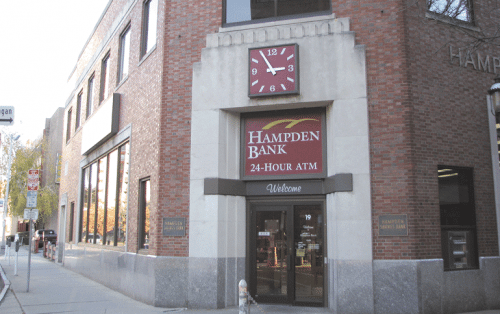
Hampden Bank

Berkshire Bank leaders are discussing whether to retain, consolidate, or close Hampden Bank branches that overlap Berkshire branch footprints — including Hampden’s headquarters in downtown Springfield.

“The reality goes far beyond the larger banks in our area merging with the smaller banks. We are now banked internationally right here in our Valley,” Corridan said, citing Citizens Bank, an affiliate of the Royal Bank of Scotland; TD Bank, part of Toronto-Dominion Bank in Canada; and the most recent entry, Spain-based Santander, which acquired Sovereign Bank in 2009.

“Look around — people have accounts at Citizens, TD Bank, and Santander. We’re not just talking about regional banks anymore, but foreign banks. They see the value of retail banking in our area,” Corridan said. “And it’s just the tip of the iceberg; there’s a lot of consolidation to come as banks look for economies of scale.”

That’s one of the reasons offered by Sean Gray, Berkshire Bank’s executive vice president of retail sales, in explaining why his institution is “doubling down on Springfield,” where Hampden Bank is headquartered, and where Berkshire already has a significant presence.

“Ultimately, there are economies of scale that come with larger size,” he said. “We believe we have to be big enough to do all the things larger institutions can do, but we feel we need to keep our roots in local decision making, and stay active in foundations and volunteerism and all the things you want a community bank to do at the end of the day.”

When it comes to making moves on this massive chessboard, how does a bank become more efficient, more profitable, and offer expanded services and a broader range of loans, while also maintaining the community involvement and high-touch environment long valued by retail customers in Western Mass.? For this issue’s focus on banking and financial services, BusinessWest examines how creating this balance has become, for banks large and small, the name of the game.

In the Red Tape

Ironically, much of the recent movement among banks to grow larger, quickly, has come as a result of new regulations in the wake of the 2008 financial collapse — a crisis in which the largest banks shouldered much more blame than smaller community banks.

“Since Obama came to town, it’s been a regulatory jungle, and the departments within individual banks experiencing the highest growth rate are the compliance departments,” Corridan said. “In response to more complicated regulations, the federal government is demanding more reports, and that rocks your bottom line. If you have to put $400,000 to $500,000 into your compliance department, that may upset the balance of whether you had a profitable balance or you’re in the red.”

Forte agreed, citing the way ‘call reports’ — the condition reports banks issue to regulators at the end of each quarter — have become much more onerous.

“The costs of doing business are clearly increasing,” he told BusinessWest. “As of 2012, there were 1,995 items in a call report. In 1990, there were 569 items. And the regulations coming out of Dodd-Frank are going to increase them even further; they’re looking now at increasing the number of reporting requirements by 63 elements. Every item takes time and costs money, and the risk of not completing these forms correctly is significant.”

Therefore, he said, banks aren’t just expanding their brand when they merge; they’re spreading these regulatory costs over a larger footprint.

For William Crawford IV, CEO of Rockville Bank, the decision to merge United with Rockville was about investing smartly in an aggressive growth plan.

“Getting to $5 billion in assets, getting to that scale, was very important,” he said. “We’re seeing a lot of small banks seek out strategic partners, much as we saw with Hampden, simply because the economics of being a very small community bank — say, under $1 billion — is very difficult when you look at the interest-rate environment out there. It makes it very difficult to lend money, and, unfortunately, we may be in this environment for an extended period of time.”

Still, he emphasized the importance of maintaining community ties, particularly in the realm of long-established charitable and volunteer efforts.

“Both companies, United and Rockville, have significant foundations that will continue to invest here as we always have,” he said. “And because of our increased size and scale, we have more resources to do those things. So, from a community perspective, two companies coming together is definitely a plus.”

While customers might occasionally feel disoriented by changes in bank ownership, Forte noted that banks have been contracting nationally at a 3% annualized rate, putting Massachusetts behind the U.S. pace. Some of that has to do with the fact that 70% of the banks in Massachusetts are mutual banks, which are limited in how they can merge.

“It requires the right alignment of planets — the board, management, succession timing, etc.,” he said. “Clearly, the trend from this year is a little faster than three years ago, which is not surprising, given all that’s been going on economically.”

The loosening of state laws across the U.S. governing interstate banking, starting around 30 years ago, created a much more nurturing environment for mergers, leading to the remarkable contraction in Massachusetts-based banks since 1990, Forte said.

“State lines are fairly arbitrary; you’re looking more at economies. That’s why interstate banking is so critical; it gave banks large and small the ability to expand geographically, regardless of state boundaries.”

Cache and Carry

Forte emphasized, however, the vigilance with which merging banks protect their reputation as local institutions.

“Community banks are a vibrant sector of the economy, and they help their local communities,” he said. “Their biggest strength is being high-touch. If they can maintain the high-touch aspect and be quick followers of technology and keep costs down going forward, they will continue to confound the pundits who have long predicted their demise.

“I believe there will continue to be a strong community-bank sector of the industry, and we’re not going to become like Canada, with six large banks and 100 credit unions that serve as the local banks,” he added. “We have vibrant community banks here in Massachusetts.”

That said, Corridan noted, “we’re down two publicly traded banks in the Pioneer Valley — Chicopee and Westfield. Look back 25 years, when we had BankBoston, Shawmut, Bank of New England, Baybank … we had smaller banks, and dozens of them.”

With their gradual fade, he predicted that the next 10 to 15 years will see a rapid ascent in credit-union membership. “If you want to bank locally, you’ll see credit unions get stronger, because they’re going to be the local banking entity.”

Springfield resident Morriss Partee, creator of EverythingCU.com, an online source for credit-union information and advocacy, hopes that’s the case, but admitted progress toward that goal has been gradual at best.

“Consolidation in banking has been going on for a very, very long time, and people always say the credit unions stand to benefit from that, and they certainly have to some extent,” Partee said. “At the same time, it’s surprising that they haven’t benefited even more than they have.

“The option of banking locally is just not that important to a lot of people,” he continued. “Of course, it’s important, but a lot of people don’t think deeply about their bank relationship. They say, ‘OK, I have checking; I have a big bank with lots of ATMs around; I can be functional in society.’”

Partee says there’s still plenty of untapped potential for credit unions, but they have to convince people it’s easy to switch over. EverythingCU.com has long offered a ‘switch kit’ to make that task easier and, in recent years, help people do it online. “People hear about credit unions from their friends or see representatives at a trade show and say, ‘OK, your credit union sounds great, but it’s not worth the hassle of moving.’”

Partee, who has been a vocal opponent of a Springfield casino, puts large national and international banks in the same category — businesses, he says, that want to benefit from Springfield but who, at the topmost levels, don’t care about detrimental effects on the community because they don’t live here.

“When lending decisions are made locally, that’s going to help the local community,” he said. “There are still local community banks that are staying local, and a lot of people feel just as passionately about their local community bank as they do about their credit union. With the largest banks — the internationals, especially — it seems like doing business with them is not necessarily helping the local economy; they’re not as responsive to entrepreneurs or people who don’t fit into neat little boxes they can check off in their system.”

Pittsfield-based Berkshire Bank, for its part, has been careful to characterize its acquisition of Hampden as a way of doubling its commitment to Greater Springfield, not uprooting a locally headquartered bank with a 162-year presence.

“We are keeping local leadership and local decision making right here,” Gray said, noting that Hampden Bank President Glenn Welch will remain the combined bank’s regional president for the Pioneer Valley. “We are the largest bank headquartered in Western Mass., and when we look at our overall investment in the region, Springfield has to be a part of that. We are very committed to Glenn and his leadership and his commitment to this region.”

Checking the Landscape

Partly because of the economies of scale produced by the merger, Gray said the combined institution would grow more quickly than the two would have separately. The fate of individual branches, some of which now have overlapping footprints, is still being discussed, though Berkshire is determined, he added, to keep as many current Hampden employees in place as possible.

That brings up a common concern in the industry — overbranching. Strikingly, while the number of banks in the Bay State has been cut in half over the past 25 years, the number of total branches has risen by 12%. “You’ve got a lot more branching,” Forte said, “as well as more services that provide easier access to customers, like remote deposit capture, online banking, and mobile banking.”

Considering these trends, and the fact that real-estate is the second-highest cost for banks after personnel, one would expect banks to start closing branches, rather than open more, he noted. But that hasn’t happened yet.

“New England is overbanked in terms of the number of branches per household,” Crawford said. “And it’s higher than it needs to be. Look at the transaction levels, and look at how frequently people conduct business inside a branch, versus using a mobile device for bill pay, or even a call center. The reality is, there are probably too many bank branches right now, and that structure can’t be supported by the way customers do their banking these days.”

Perhaps that’s the next phase of what has become an intriguing and unpredictable game.

“Think of how much change banks have gone through, and imagine what they will look like in three years, seven years, or 10 years,” Crawford told BusinessWest. “We need to have leadership that can figure out what’s working and work with vendors to get there — and do it in a way that’s attractive to customers and cost-competitive with much larger players. That’s the challenge.”

Berkshire Hills Acquisition of Hampden Bank Creates $7B Institution

Berkshire Hills Bancorp’s recent acquisition of Hampden Bancorp — bringing Hampden Bank under the Berkshire Bank banner — means that, for the first time in generations, no bank will be headquartered in Springfield. But Berkshire leaders say customers and the community will both benefit from the merger.

“This in-market partnership will create a strong platform for serving our combined customers, while producing attractive returns for both our existing shareholders and the new shareholders from Hampden joining us in this transaction,” said Michael Daly, president and CEO of Pittsfield-based Berkshire Bank. “This merger complements our expansion initiatives in Central Massachusetts and Hartford, a combined market area that is the second-largest in New England.”

Berkshire Hills Bancorp and Hampden Bancorp have signed a definitive merger agreement under which Berkshire will acquire Hampden and its subsidiary, Hampden Bank, in an all-stock transaction valued at approximately $109 million. Berkshire’s total assets will increase to $7.1 billion, including the $706 million in acquired Hampden assets.

Sean Gray, Berkshire’s executive vice president of retail banking, said the move “deepens our investment and commitment to the marketplace. We’re already in Springfield and the surrounding communities, so this gives us better economies of scale in that marketplace, which allows is to do more, and we’re excited about that opportunity.”

The in-market merger is expected to create efficiencies, strategic growth, and market-share benefits for the consolidated operations of the two banks in the Springfield area. Hampden operates 10 branches in the Greater Springfield area and reported $508 million in net loans and $490 million in deposits as of Sept. 30, 2014. Berkshire operates 11 branches with $627 million in deposits in the same market area.

“We will move into the top-five position in deposit market share,” Daly said, “and plan to use this opportunity to further capitalize on our strong product set and culture of customer engagement.”

Gray echoed the concept of culture. “I think we started with like values. We believe that a community bank has a responsibility to the community, and I think Hampden Bank thinks about it the same way. There’s a mutual respect there,” he said, adding that “our CEO has a great relationship with their CEO, and they both felt that the time was right.”

He also noted that Berkshire, like Hampden, has a culture of community involvement through donations — $269,852 since 2013 — and employee volunteerism.

Glenn Welch, president and CEO of Hampden Bank — who will become Berkshire’s regional president for the Pioneer Valley — said he is “delighted to be joining the Berkshire franchise. Our two banks share rich histories, consistent core values, and a strong commitment to customers and communities. I’m proud of our 162 years of serving customers in our markets and believe the combination created by our two companies will benefit our clients, communities, and shareholders.”

Under the terms of the merger agreement, each outstanding share of Hampden common stock will be exchanged for 0.81 shares of Berkshire Hills common stock. The merger is valued at $20.53 per share of Hampden common stock based on the $25.35 average closing price of Berkshire’s stock for the five-day period ending Nov. 3, 2014. The $20.53 per-share value represents 133% of Hampden’s $15.49 tangible book value per share and a 6.0% premium to core deposits based on financial information as of Sept. 30, 2014.

Gray conceded that the merger could lead to closings where Berkshire and Hampden have an overlapping branch presence, but nothing has been decided yet.

“Right now, we’re in the evaluation process,” he said. As for employees, “obviously, there will be some redundancy in jobs. But Hampden has 126 employees, and Berkshire right now has 102 openings. Will each of those employees map directly to these openings? We don’t know yet, but we do have a track record here.”

Specifically, he referred to Berkshire’s acquisition of Legacy Bancorp in 2010. “We were able to retain a good majority of those jobs. We put a lot of emphasis on that part of the evaluation process.”

Meanwhile, “from a customer perspective, they will have more branches,” Gray said. “We’ll be looking at what makes sense moving forward, but at the end of the day, the customers of this region will have enhanced services and more total branches.”


Joseph Bednar can be reached at [email protected]

Banking and Financial Services Sections
Pioneer Valley Credit Union Takes a Service-focused Approach

By KEVIN FLANDERS

Anabela Pereira Grenier

In her 30 years with PVCU, Anabela Pereira Grenier has seen assets rise from $2 million to $52 million.

Once a fledgling establishment operating out of a single post office room in 1923, Pioneer Valley Credit Union now runs five branches and offers a wide array of services and programs to its members.

Celebrating her 30th year with the institution, President and CEO Anabela Pereira Grenier has witnessed most of this growth just during her tenure. Since she started with PVCU, the credit union has increased its assets from $2 million to $52 million, in addition to expanding from 900 members to 7,500. It wasn’t always easy — especially during the recent recession — but PVCU has weathered the storm, she said, and emerged even stronger.

“We are the oldest operating postal credit union in the nation,” Pereira Grenier said of PVCU, which began as an institution exclusively for postal workers nearly a century ago. “It took a while, but once membership grew, we really took off.”

In 2008, right after the financial-industry collapse, PVCU officials decided to reach out to major Western Mass. employer groups in an attempt to stabilize business through a turbulent period. The decision not only provided an infusion of short-term momentum, but ultimately helped the member-owned credit union steer a course toward sustained success.

Baystate Health added PVCU as its credit union in 2008, followed by Westover Air Reserve Base. Later, Westfield’s Savage Arms and other prominent employers came on board, and the credit union now serves several other large companies and organizations, as well as federal employees in Springfield.

“We have increased our staff by more than 50% to keep up with the demand of the programs we offer,” said Trecia Marchand, vice president of marketing and business development. “Everyone is excited about the growth we have experienced. People know they can trust us when they see that these large employers have entrusted us with their most valuable assets — their employees.”

Creating Solutions

For Pereira Grenier and her team, the impetus behind every decision is member satisfaction. She said her staff understands the constraints of a challenging economy and strives to make it as easy as possible for members to navigate their finances, which has led to the creation of several innovative approaches.

For example, the CU on the Go Mobile Branch Solution was launched to enable members to use PVCU’s financial services at their workplaces. The project has been successful, she said, especially for people whose schedules don’t allow them to visit the credit union during normal business hours.

“When people see that their credit union is there to help them and provide services, they really appreciate it,” added Marchand, who has been with PVCU for eight years. “Employers don’t have to pay to offer this employee benefit. We bring the services to them — it’s a win-win situation for everyone.”

To ensure that members understand their options, PVCU has also developed a training system that elevates loan officers to certified financial life coaches. The certification process takes about one year, during which time loan officers learn how to familiarize members with financial practices and explain complex procedures in coherent, easily understandable presentations.

A session between a member and a financial life coach, Pereira Grenier said, is usually a one-on-one meeting tailored toward the member’s individual needs. From teaching people about their credit scores to analyzing how their budgets can be improved, the goal of every life coach is to help people save money and gain knowledge.

Additionally, the credit union offers financial-literacy courses for larger audiences, usually a few times yearly. PVCU is also amenable to visiting employers upon request for large group presentations.

“We are very dedicated to financial literacy,” Pereira Grenier told BusinessWest, “and have invested a lot of time and money into training our financial life coaches.”

Solid Services

In a competitive industry, Pereira Grenier said, PVCU has tried to set itself apart through consistent, ever-expanding member services. For individuals looking to improve their homes’ energy efficiency, PVCU has partnered with the Mass Save Heat Loan program to offer 0% loans. And for members who step through the doors with a loan application, it’s possible for them to come out with a check in a half-hour or less.

To accomplish that goal, the PVCU staff processes everything in-house, with no outsourcing or external complications, improving efficiency and keeping members coming back for additional programs.

“When others are trying to take money away from people, we are offering services that put money back into their pockets,” Marchand said, noting that the credit union’s investor-rewards checking program pays eight times more than the national average for interest-bearing accounts of its kind.

Moreover, the credit union pays money on debit transactions and also provides members an opportunity to donate their cash-back rewards to charity. The institution has partnered with Baystate Health Foundation, the Children’s Study Home, and the Soldiers Home in Holyoke as charitable partners for this program. For members interested in participating, they can choose which charity they will benefit with their rewards. In addition, PVCU is engaged in a number of other charitable and community-outreach efforts, including an annual essay contest for seventh- and eighth-graders and college scholarships for high-school seniors.

PVCU also offers online banking, express banking, mobile banking, online information about financial coaching, and myriad other services and programs. It’s all about keeping up with technology and utilizing it in advantageous ways, Pereira Grenier says.

Speaking of technology, the credit union’s marketing team continues to employ everything from social media to radio ads to promote PVCU’s services. The staff also works closely with human-resources departments of member companies to keep their employees apprised of upcoming events and opportunities. Whether someone is buying a used car, applying for a student loan, purchasing a home, or simply trying to learn how best to manage money, the staff is always available to help members create a plan to achieve sustainable financial security.

Total Team Effort

Originally chartered to “promote thrift among its members and to make loans to its members for provident purposes,” PVCU previously operated on Dwight and Main streets in Springfield before eventually shifting to its main office to 246 Brookdale Dr. in 1991. But continued staff growth has necessitated major restructuring and rearranging within the building, which the leadership team agrees is a great problem to have, especially at a time when many businesses have needed to make cuts to services.

Pereira Grenier remembers how spacious the main office was back in 1991, when PVCU had only a handful of employees working in the building. But with major staff increases over the last 20 years, the building has undergone a makeover to ensure that the office remains comfortable and welcoming to both employees and members. The basement, once used solely for record retention, now houses offices for the HR, marketing, and operations departments, as well as the credit union’s call center. Loan officers and service representatives, meanwhile, occupy the main floor for ease of member accessibility.

“We feel it is important to have our loan officers right there on the main floor where they are easy for members to reach,” Marchand said. The credit union strives for a similar environment at its other locations: at Baystate Medical Center and at 1883 Main St. in Springfield; at Westover Air Reserve Base in Chicopee; and at Savage Arms in Westfield. PVCU also operates a number of ATM locations in Springfield, Chicopee, and Holyoke.

“In the three years I have been here, the morale is at an all-time high,” said Human Resources Coordinator Jennie McPherson. “We have gone from a transaction culture to a consultative culture, and everyone is excited about what we are doing for our members. We all work well together as a team, and it’s a very inclusive environment. When we do off-site team-building exercises, staff members are happy to attend.”

McPherson and Marchand agree that PVCU’s success starts from the top, with the leadership Pereira Grenier has provided for three decades, and especially since taking over as president and CEO in 1998. They say employees have been inspired by how hard she works and her commitment to achieving success.

“She is a leader who really believes in what she’s doing every day, and the team comes together because of that,” Marchand said.

Guided by an 11-member board of directors that sets policy, governed by its members, and led by a dedicated staff, she added, PVCU is poised to continue its success into 2015. Invested in far more than its bottom line, Pereira Grenier and her team understand that, in this business, everything starts and finishes with member satisfaction.

Health Care Sections
Demand for Nurses Rises — Along with a Push for More Education

Joyce Thielen

Joyce Thielen says a significant shortage of nurses nationwide is on the horizon, with some specialties, like OR nursing, expected to be in particular demand.

If you want to be a nurse, the jobs are plentiful. If you want to be a certain kind of nurse, well … that’s more complicated.

At issue is the so-called nursing shortage, which made headlines 15 years ago but has receded somewhat since then, yet is expected to percolate again as Baby Boomer nurses finally move into retirement.

“I think, because of the age of our workforce right now, a shortage is going to happen,” said Joyce Thielen, associate dean of the Elms College School of Nursing, adding that many were ready to retire several years ago, but postponed that step when the economy went south in 2008.

“But as the market improves, as the economy improves, more people will start to retire. That’s the current thinking, anyway,” she noted. “There are specialties where that is particularly true. One example is the OR; many of the nurses in the operating rooms in area hospitals have been here for many years, and they’re predicting a shortage of them coming up.”

Nancy Craig-Williams, assistant dean of Nursing at Greenfield Community College, also sees plenty of opportunity, noting that all her school’s recent graduates who have passed the National Council Licensure Examination have received job offers in fairly short order.

However, “the opportunities may be changing from what people stereotypically think of as nursing,” she told BusinessWest. “Some students come in and expect to see the ER all the time, or they come into the nursing program and say, ‘I want to work in the hospital; can you guarantee me that?’ Well, no — we educate you to become a nurse and use the knowledge and skills you learn in school at a facility that needs those skills. Sometimes their ideas change once they’re in school.”

Some graduates, she said, don’t find themselves working immediately in their preferred environment, or working as many hours as they’d like, while about 20% of GCC’s nursing graduates move on from the two-year program and enroll in bachelor’s-degree programs elsewhere, reflecting a trend toward higher education for nurses in general.

“For them, this is a stepping stone as opposed to an end point,” Craig-Williams noted. “I think it has become more apparent to our associate-degree students that a bachelor’s degree will get them into positions, like acute care, that they want to go on to. Some of our graduates do go right to acute care, though, because they’ve been working at the facility or an opportunity presents itself.”

The Institute of Medicine (IOM), among other groups, has been calling for a better-educated nursing workforce, Thielen noted, especially at a time when a shortage of primary-care physicians is becoming more acute and nurses are being called upon to do more.

“Overall, we’re seeing a trend where associate-degree programs are highly encouraging their graduates to get their bachelor’s degree right away, and those with bachelor’s degrees are thinking about graduate schools,” she said, noting that fields like physical therapy, occupational therapy, and pharmacy are starting to require doctoral degrees for certain jobs, and nursing may not be far behind, especially at a time when the accountable-care model of care requires healthcare providers from various disciplines to work more collaboratively. “In order to be equal around the disciplinary table, nurses need to be better educated; it’s all about better patient outcomes.”

Still, she said, these trends shouldn’t scare prospective nurses from a field that’s sure to pose plenty of career opportunity over the next decade and beyond, at every education level. “It’s still a real phenomenon. It’s looking up. The last few years have been brigher, and opportunities continue to improve.”

Driving Demand

Healthcare economist Peter McMenamin told American Nurse Today recently that a combination of factors, from the aging of the nursing workforce to implementation of the Affordable Care Act, is driving rising demand for new nurses.

“Nursing is a good job,” he said. “Work satisfaction is high. If you look at the employment in U.S. hospitals for the last decade, month after month, there’s only a single month where employment went down. Hospitals have been continuing to hire during the recession.”

He cited U.S. Labor Department projections that 712,000 new jobs for registered nurses would be created between 2010 and 2020. “Everyone is expecting there are going to be more jobs. We’re hoping that there will be enough nurses to fill all of those jobs.”

The problem is that nursing schools are actually turning away applicants en masse, with capacity issues stemming partly from a long-standing lack of nursing professors.

From 2012 to 2013, for example, enrollment in bachelor’s-degree nursing programs increased by 2.6%, the slowest increase in five years. Meanwhile, nursing programs turned away 53,819 applicants in 2013.

Nancy Craig-Williams

Nancy Craig-Williams says the nursing profession provides a variety of opportunities and practice environments for graduates at every level of education.

That needs to change, according to a U.S. Bureau of Labor and Statistics (BLS) report that projects a 22% increase in available registered-nurse openings by 2025 and a 25% increase in licensed-practical-nurse and vocational-nurse jobs. Meanwhile, according to a study published in Medical Care, the nurse-practitioner workforce is expected to surge by 94% between 2008 and 2025.

“One of the trends is, we’re seeing hospitals offering residencies — they’re waiting for the right graduates to become licensed, and they’re offering residency programs that allows for a very intense orientation and helps with their entry into the practice,” Thielen explained. “And, again, we’re seeing a lot of graduates going to graduate programs earlier than ever. We’ve seen a lot of that because of IOM’s recommendation that nurses become a better-educated workforce. And the need for nurse practitioners is increasing because we have a decreasing number of primary-care providers. These are all trends.”

Craig-Williams agreed. “There’s a huge call for nurse practitioners right now. We do have students graduate from our program and transition to nurse-practitioner programs. In some cases, if they have other education or background, there are a lot of opportunities.”

Thielen also noted that a graduate’s chance of getting the job they want might depend on how willing they are to relocate.

“Our graduates are getting jobs, and they’re getting them right away if they go beyond New England,” she said. “We’ve had students go to North Carolina and other states — there are many more opportunities if you’re able to move out of the area. People staying in the area are taking a little more time; they may start out with part-time positions that grow into full-time positions or evolve into something else.”

According to the BLS, Texas, Florida, Washington, and Virginia ranked highest in job postings for nurses in the first quarter of 2014, while other states that showed significant growth over the last year include Georgia, Minnesota, and New Mexico.

“I believe that most of our national organizations, including the departments of Education and Labor, are saying we’re still looking at a nursing shortage,” Craig-Williams said. “Maybe it’s not as pronounced here in the Northeast, but it certainly is apparent in other areas of the country.”

Golden Years

Demographics — specifically, what’s commonly referred to as the aging of America — creates demand for nurses in two ways: by creating a wave of retiring older nurses, and by keeping people alive longer and needing more nursing care.

In fact, according to the American Medical Assoc. (AMA), adults 65 years and older represent the fastest-growing segment in American society, and this group is expected to surpass 40 million, or 13% of the nation’s population, in the next decade. America’s adult mortality rate, for men and women combined, ranks only 49th in the world.

At the same time, the AMA notes, chronic diseases account for 75% of American healthcare dollars spent, while more than half of Americans have some sort of chronic disease, like diabetes, heart disease, or cancer. Meanwhile, obesity has reached epidemic levels, with more than 72 million Americans, including 12.5 million American children, classified as obese.

The result is an American healthcare system approaching a state of dire need for many types of healthcare providers, nurses foremost among them — in all sorts of care settings, not just hospitals.

“Many of our students are getting positions in step-down, subacute units, long-term care, rehabilitation services. Some are working in the community, doing visiting-nurse or home-care placements. There are a few working in acute care,” Craig-Williams said, adding that a number of GCC graduates work at the Brattleboro Retreat, a behavioral-health facility just over the Vermont line, due to an ongoing relationship between the center and the nursing program. “Every year we do a rotation there.”

Overall, she told BusinessWest, nursing provides an abundance of opportunity for young people considering careers.

“We’re a small school, and we don’t graduate a large population of students, but our graduates are excellent candidates,” she said, adding that many are adult learners with bachelor’s or master’s degrees in other fields who considered nursing as a career later in life.

Whatever the case, she added, it’s becoming an increasingly good idea for many nurses to attain as much education as possible. “The research is pretty clear — a bachelor’s in nursing is going to increase your possibility of working where you want.”

Wherever that is, it’s important to remember that the greatest career benefit of nursing may be the ability to do something meaningful each day to help other people, Vicki Good, president of the American Assoc. of Critical Care Nurses, recently told nursezone.com.

“It may sound cliché, but we need to keep our eye on the ball, which is our patients and their families,” she said. “It’s so easy to become overwhelmed and distracted by the inevitability of change that we forget on whose behalf we do what we do.”

Joseph Bednar can be reached at [email protected]

Sections Super 60
Program Marks 25 Years of Honoring the Top-performing Companies

Super60logoIt started a quarter-century ago.

The program was smaller — it was known as the Fabulous 50 back then — and was conceived as a fund-raising event for what is now the Affiliated Chambers of Commerce of Greater Springfield (ACCGS), and also as an opportunity to celebrate the top-performing companies that characterized the region’s diverse economy.

Along the way, it has become a fall tradition, and the phrase ‘Super 60 company’ has become a bragging right for businesses large and small, said ACCGS President Jeff Ciuffreda, as he referenced the class of 2014.

It will be celebrated on Nov. 14 at Chez Josef in Agawam, which has traditionally been sold out for the Super 60 luncheon, and should be this year as well.

And, as in the previous 24 years, the Super 60 lists are characterized by diversity — in a number of forms (see snapshots below). First, geographically. Nearly 20 cities and towns in Western Mass. are represented by the companies in the Total Revenue and Revenue Growth categories, including both the larger cities, such as Springfield, Holyoke, and Westfield, but also the smaller towns, such as Ware, Belchertown, and Southwick.

There’s also diversity in terms of the industrial sectors represented on those lists. There are winners from the financial-services sector, retail, manufacturing, education, healthcare, technology, service, distribution, construction, and the region’s large nonprofit realm. And there’s diversity in terms of size, with some of the region’s largest employers on the Total Revenue list, and some of its smaller rising stars on the Revenue Growth compilation.

Add it all up, and this year’s winners provide ample reason for optimism as the region continues to battle its way back from the prolonged recession that began in 2007.

“Small business is the backbone of our region,” said Ciuffreda, “and the success of this year’s winners is a clear indication that our regional economy is strong.”

This strength is reflected in the numbers posted by this year’s winners. The average revenue of the companies in the Total Revenue category exceeded $35 million, with combined revenue of more than $1 billion. Meanwhile, one-third of the companies in the Revenue Growth category posted growth in excess of 50%, with the average growth of all honorees in that category at more than 49%.

Topping the Total Revenue category is West Springfield-based Balise Motor Sales, which now boasts more than 20 facilities (new- and used-car dealerships, collision-repair shops, and car washes) in Massachusetts and Rhode Island. Placing second is the Stavros Center for Independent Living, with NUVO Bank & Trust Co. placing third.

In the Revenue Growth category, Springfield-based City Enterprise Inc., a woman-owned commercial and residential builder, finished on top, followed by Troy Industries Inc. and Chemex Corp.

Also, 16 companies qualified for both categories. They include the Dennis Group, Gandara Mental Health, Joseph Freedman Co., Maybury Associates, M.J. Moran, Northeast Treaters, NUVO Bank & Trust Co., PC Enterprises (Entre Computer), Pioneer Valley Concrete Services, Premier Source Credit Union, Tighe & Bond, Troy Industries, Universal Plastics Corp., and Whalley Computer Associates. Each was placed in the category where it finished highest.

The winners will be saluted at the annual luncheon, which this year will feature Friendly Ice Cream President and CEO John Maguire as keynote speaker.

Maguire is credited with engineering a strong turnaround at the company, which began with a single shop in Springfield in 1935, grew into a regional powerhouse, but struggled through the ’90s and the first part of this century, eventually filing for bankruptcy.

The celebration luncheon is presented by Health New England and sponsored by Hampden Bank, Zasco Productions, and WWLP-TV22.

Reservations for the luncheon are required and can be made online at www.myonlinechamber.com or by e-mailing Sarah Mazzaferro at [email protected]. Tickets are $50 for ACCGS members, $70 for non-members. The deadline for reservations is Nov. 7.

Fast Facts:

What: The Super 60 Luncheon
When: Nov. 14, 11:30 to 1:30 p.m.
Where: Chez Josef, Agawam
Keynote Speaker: John Maguire, president and CEO, Friendly’s
For more Information: Visit www.myonlinechamber.com

TOTAL REVENUE

1. Balise Motor Sales
122 Doty Circle, West Springfield
(413) 733-8604
www.baliseauto.com
Jeb Balise, President and Dealer
Now one of the largest retailers of new and used automobiles in New England, Balise Motor Sales, which traces its roots back to 1929, operates more than 20 dealerships, collision-repair shops, and car washes in Massachusetts and Rhode Island. Brands sold and serviced include Buick, Chevrolet, GMC, Ford, Honda, Hyundai, Lexus, Mazda, Nissan, Scion, Subaru, Toyota, and Volkswagen. The company now employs more than 1,000 people at its various facilities.

2. Stavros Center for Independent Living
210 Old Farm Road, Amherst
(413) 256-0473
www.stavros.org
Jim Kruidenier, Director
The Stavros Center for Independent Living, founded in 1976, is one of the oldest independent-living centers in the country. It is the goal at Stavros to give people with disabilities the tools to take charge of their life choices, act on their own behalf, and overcome situations that reduce their potential for independence. The company operates three offices, in Amherst, Springfield, and Greenfield. Offerings include deaf and hard-of-hearing services, housing services, building services, options counseling, a transition-to-adulthood program, personal-care-attendant services, and many others.

3. Nuvo Bank & Trust Co. *
1500 Main St., Springfield
(413) 787-2700
www.nuvobank.com
Dale Janes, CEO
NUVO Bank is a locally owned, independent small-business bank located in downtown Springfield. NUVO provides loans, deposits, and cash-management services for personal-banking and business-banking needs.

The Assoc. for Community Living
220 Brookdale Dr., Springfield
(413) 732-0531
www.theassociationinc.org
Barbara Pilarcik, R.N., Executive Director
For 60 years, the Assoc. for Community Living has been creating opportunities, building relationships, and improving lives of children and adults with developmental disabilities and their families. The agency’s caring and experienced workforce empowers individuals with developmental disabilities to live with dignity, bringing fulfillment, community, and valuable relationships into their lives.

Charter Oak Insurance and Financial Services Co.

330 Whitney Ave., Holyoke
(413) 374-5430
www.charteroakfinancial.com
Peter Novak, General Agent
A member of the MassMutual Financial Group, Charter Oak been servicing clients for 127 years. The team of professionals serves individuals, families, and businesses with risk-management products, business planning and protection, retirement planning and investment services, and fee-based financial planning.

City Tire Company Inc.
25 Avocado St., Springfield
(413) 737-1419
www.city-tire.com
Peter Greenberg, President
Brothers Peter and Dan Greenberg, the third generation of a family-owned business founded in 1927, have grown the business to 11 locations in Massachusetts, Connecticut, New Hampshire, and Vermont. The company offers one-stop shopping for tires of all shapes and sizes and a full compliment of maintenance and repair services.

Commercial Distributing Co. Inc.
46 South Broad St., Westfield
(413) 562-9691
www.commercialdist.com
Richard Placek, Chairman
Founded in 1935 by Joseph Placek, Commercial Distributing Co. is a family-owned and -operated business servicing more than 1,000 bars, restaurants, and clubs, as well as more than 400 package and liquor stores. Now in its third generation, the company continues to grow through the values established by its founder by building brands and offering new products as the market changes.

The Dennis Group, LLC *
1537 Main St., Springfield
(413) 746-0054
www.dennisgrp.com
TOM DENNIS, CEO
The Dennis Group offers complete planning, design, architectural, engineering, and construction-management services. The firm is comprised of experienced engineering and design professionals specializing in the implementation of food-manufacturing processes and facilities.

Environmental Compliance Services Inc.
588 Silver St., Agawam
(413) 789-3530
www.ecsconsult.com
MARK HELLSTEIN, PRESIDENT AND CEO
For more than 25 years, ECS has specialized in environmental site assessments; testing for asbestos, lead, indoor air quality, and mold; drilling and subsurface investigations; and emergency-response management.

Gandara Mental Health Inc. *
147 Norman St., West Springfield
(413) 736-8329
www.gandaracenter.org
Dr. Henry East-Trou, CEO
Focusing on the Latino/Hispanic community, Gandara Center provides substance-abuse recovery, mental-health, and housing services for men, women, children, adolescents, and families throughout the Pioneer Valley.

Joseph Freedman Co. Inc. *
115 Stevens St., Springfield
(888) 677-7818
www.josephfreedmanco.com
John Freedman, President
Founded in 1891, the company provides industrial scrap-metal recycling, specializing in aluminum, copper, nickel alloys, and aircraft scrap, and has two facilities in Springfield — a 120,000-square-foot indoor ferrous facility, and a 60,000-square-foot chopping operation.

Kittredge Equipment Co. Inc.
100 Bowles Road, Agawam
(413) 304-4100
www.kittredgeequipment.com
Wendy Webber, President
Founded in 1921, Kittredge Equipment Co.is one of the nation’s leading food-service equipment and supply businesses. It boasts 70,000 square feet of showroom in three locations — Agawam, Williston, Vt., and Bow, N.H., making it the largest total showroom in New England, with in-stock inventory of equipment and smallware consisting of more than 7,000 different items. The company also handles design services, and has designed everything from small restaurants to country clubs to in-plant cafeterias.

Marcotte Ford Sales
1025 Main St., Holyoke
(800) 923-9810
www.marcotteford.com
BRYAN MARCOTTE, PRESIDENT
The dealership sells new Ford vehicles as well as pre-owned cars, trucks, and SUVs, and features a full service department. Marcotte has achieved the President’s Award, one of the most prestigious honors given to dealerships by Ford Motor Co., on multiple occasions over the past decade.

Maybury Associates Inc.*
90 Denslow Road, East Longmeadow
(413) 525-4216
www.maybury.com
John Maybury, President
Since 1976, Maybury Associates Inc. has been designing, supplying, and servicing all types of material-handling equipment throughout New England. Maybury provides customers in a wide range of industries with solutions to move, lift, and store their parts and products.

Northeast Treaters Inc./Chemical Wood Treaters *
201 Springfield Road, Belchertown
(413) 323-7811
www.ntreaters.com
David Reed, President
Northeast Treaters, founded in 1985 in Belchertown, is a manufacturer of pressure-treated lumber. In 1996, an additional facility was added in Athens, N.Y. to produce fire-retardant treated lumber.

Quabbin Wire & Cable Co. Inc.
10 Maple St., Ware
(413) 967-6281
www.quabbin.com
Paul Engel, President
Quabbin Wire & Cable Co. is a privately held corporation that manufactures a variety of thermoplastic shielded and unshielded cables that are sold through distribution. Cable applications and markets include local area networks (LANS), industrial LAN systems, telecommunications systems, control and Instrumentation, process-control interconnect, computer peripherals, low-capacitance data, point-of-sale equipment, sound and audio instrumentation, fire alarm and security systems, medical devices, and custom-designed signaling applications.

Rediker Software Inc.

2 Wilbraham Road, Hampden
(800) 213-9860
www.rediker.com
RICHARD REDIKER, PRESIDENT
Rediker software is used by school administrators across the U.S. and in more than 100 countries, and is designed to meet the student-information-management needs of all types of schools and districts.

Sarat Ford Lincoln
245 Springfield St., Agawam
(413) 789-5400
www.saratford.com
Jeff Sarat, President
Founded in 1929 by John Sarat Sr., Sarat Ford has become the largest Ford dealership in Western Mass., and today, grandson Jeff Sarat leads the company. The full-service dealership includes a state-of-the-art body shop, and a new, 10,000-square-foot expansion offers a 24-bay service center that houses a $1 million parts inventory featuring Ford, Motorcraft, Motorsport, and a variety of other specialty manufacturers.

Specialty Bolt & Screw Inc.
235 Bowles Road, Agawam
(413) 789-6700
www.specialtybolt.com
Kevin Queenin, President
Founded in 1977, Specialty Bolt & Screw (SBS) is a full-service solutions provider of fasteners, vendor-managed inventory (VMI) programs, and c-class commodities. Based in Agawam, it has locations in Valcourt, Quebec; Juarez, Mexico; Queretaro, Mexico; Rovaniemi, Finland; and Kaohsiung, Taiwan.

Spectrum Analytical Inc.
11 Almgren Dr., Agawam
(413) 789-9018
www.spectrum-analytical.com
Hanibal Tayeh, CEO
For more than a decade, Spectrum Analytical Inc. has provided quantitative analysis of soil, water, and, more recently, air samples, as well as petroleum products. Consulting firms, industries, municipalities, universities, and the public sector are among the constituencies that make up the client list.

Springfield College
263 Alden St., Springfield
(413) 748-3000
www.springfieldcollege.edu
Mary-Beth Cooper, President
Founded in 1885, Springfield College is a private, independent, coeducational, four-year college offering undergraduate and graduate degree programs with its Humanics philosophy — educating students in spirit, mind, and body for leadership in service to others.

Tighe & Bond Inc. *
53 Southampton Road, Westfield
(413) 562-1600
www.tighebond.com
David Pinsky, President
Having celebrated its 100th anniversary in 2011, Tighe & Bond specializes in environmental engineering, focusing on water, wastewater, solid-waste, and hazardous-waste issues, and provides innovative engineering services to public and private clients around the country and overseas.

United Personnel Services Inc.
1331 Main St., Springfield
(413) 736-0800
www.unitedpersonnel.com
PATRICIA CANAVAN, PRESIDENT
United provides a full range of staffing services, including temporary staffing and full-time placement, on-site project management, and strategic recruitment in the Springfield, Hartford, and Northampton areas, specializing in administrative, professional, medical, and light-industrial staff.

University Products Inc.
517 Main St., Holyoke
(413) 532-3372
www.universityproducts.com
John Magoon, President
University Products is one of the nation’s leading manufacturers and suppliers of materials for conservation, restoration, preservation, exhibition, and archival storage. The company’s catalog includes thousands of paper and plastic enclosures, specialty tapes and adhesives, preservation framing supplies, and archival storage boxes. In addition, it distributes furnishings, tools, equipment, chemicals, and other materials that contribute to the field of preservation.

Valley Fibers Corp.

75 Service Center Road, Northampton
(413) 584-2225
www.yarn.com
Steve Elkins, CEO
Valley Fibers Corp., operating as Webs Amera’s Yarn Store, was founded in 1974, and ships products for knitters, weavers, and spinners in Alaska, Hawaii, Canada, the continental U.S., and internationally. Products consist of all forms of natural and man-made fibers for clothing and accessories in addition to crochet accessories, tools, and more.

Valley Opportunity Council Inc.

35 Mount Carmel Ave., Chicopee
(413) 552-1554
www.valleyopp.com
Stephen Huntley, Executive Director
The Valley Opportunity Council (VOC) is the largest and most diverse community-action agency in the region. It has a network of support and collaborative services that include energy assistance, nutrition, early education and childcare, adult education, senior services, housing, money management, and transporation.

WestMass ElderCare Inc.
4 Valley Mill Road, Holyoke
(413) 538-9020
www.wmeldercare.org
Priscilla Chalmers, Executive Director
WestMass ElderCare is a private, nonprofit agency with a mission to “to preserve the dignity, independence, and quality of life of elders and disabled persons desiring to remain within their own community.” The agency offers a variety of services for elders, their families and caregivers, and persons with disabilities. Programs and services include supportive housing, home care, options counseling, adult family care, nutrition programs, adult foster care, and group adult foster care.

Whalley Computer Associates Inc. *
One Whalley Way, Southwick
(413) 569-4200
www.wca.com
JOHN WHALLEY, PRESIDENT
WCA is a locally owned family business that has evolved from a hardware resale and service group in the ’70s and ’80s into a company that now focuses on lowering the total cost of ownership of technology and productivity enhancement for its customers. Whalley carries name-brand computers as well as low-cost performance compatibles.

YMCA of Greater Springfield
275 Chestnut St., Springfield
(413) 739-6951
www.springfieldy.org
Kirk Smith, President and CEO
The YMCA of Greater Springfield, established in 1852, is the fourth-oldest Y in the world, second-oldest in the country, and third-oldest in North America only to Montreal and Boston. The Y provides services annually to more than 115,000 members, and the program participates in 14 cities and towns across the region. Facilities include the Downtown Springfield YMCA Family Center, the Scantic Valley YMCA Family Center in Wilbraham, the Agawam YMCA Wellness & Program Family Center, and the Dunbar YMCA Family & Community Center in Springfield.

* Indicates company qualifed in both categories

REVENUE GROWTH

1. City Enterprise Inc.
38 Berkshire Ave., Springfield
(413) 726-9549
www.cityenterpriseinc.com
Wonderlyn Murphy, president
City Enterprise Inc. offers skilled general-contracting services to the New England region. The company prides itself on custom design and construction of affordable, quality homes and the infrastructure surrounding each project.

2. Troy Industries Inc. *
151 Capital Dr.,
West Springfield
(866) 788-6412
www.troyind.com
Erhan Erden, president
Troy Industries is a leading U.S. government contractor that designs and manufactures innovative, top-quality small-arms components and accessories and complete weapon upgrades. Many iconic firearms manufacturers incorporate Troy products into their weapons, including Smith & Wesson, Sturm Ruger & Co., Viking Tactics, POF-USA, LaRue Tactical, LWRC International, Noveske, and HK Defense.

3. Chemex Corp.
11 Veterans Dr., Chicopee
(413) 331-4460
www.chemexcoffeemaker.com
Liz Grassy, president
The Chemex coffeemaker was invented in 1941 by Dr. Peter Schlumbohm. Made simply from non-porous, borosilicate glass and fastened with a wood collar and tie, it brews coffee without imparting any flavors of its own. Chicopee-based Chemex Corp., a family-owned company, manufactures Chemex coffeemakers, bonded filters, handblown water kettles, and accessories for worldwide distribution.

American Pest Solutions Inc.
169 William St., Springfield
(413) 781-0044
www.413pestfree.com
Robert Russell, president
For about a century, American Pest Solutions has been taking care of families and business owners to keep their properties free from ants, bedbugs, rodents, roaches, termites, and other harmful pest infestations. By utilizing products and pest-treatment solutions designed to minimize impacts on the surrounding environment, American takes an ecologically sensitive approach to pest control for the environmentally concerned client.

Boys & Girls Club Family Center Inc.
100 Acorn St., Springfield
(413) 739-4743
www.bgcafamilycenter.org
O’Rita Swan, executive director
The Boys & Girls Club Family Center, featuring a regulation-size gym, a full-size indoor swimming pool, and rooms where kids study and play, is devoted to the idea that children need a place where they are nurtured, protected, and loved. The center offers a variety of activities for children and teens, at all times of the day and early evening. Open year-round, its programs include a pre-school program, after-school program, teen drop-in program, and summer camp.

CanAm Fibers
100 State St., Ludlow
(413) 525-9018
www.canamfibers.net
Peter Meuiner, president
CanAm Fibers has established itself as a well-known and highly respected supplier of varied and specialty-grade paper products to export markets, particularly third-world countries, a segment that allows CanAm to offer domestic suppliers a feasible and economically advantageous avenue in which to dispose of excess material.

Convergent Solutions Inc.
9501 Post Office Park, Wilbraham
(413) 509-1000
www.convergentsolutions.com
Arlene Kelly, CEO
A healthcare billing solutions provider founded in 2006, Convergent Solutions provides hardware and software products that help eliminate human error in medical billing processes, thus helping bring down the cost of healthcare.

Dietz & Co. Architects Inc.
17 Hampden St., Springfield
(413) 733-6798
www.dietzarch.com
Kerry Dietz, CEO
Dietz & Co. provides a full range of architectural services in the public and private sectors, including work in housing, education, healthcare, commercial facilities, historic preservation, and sustainable projects. The firm seeks to bring the benefits of integrated design into all its projects, from individual buildings to entire neighborhoods.

FIT Solutions, LLC
25 Bremen St., Springfield
(413) 733-6466
www.fitsolutions.us
Jackie Fallon, president
Since 2004, FIT Solutions has been partnering with clients, from small-business owners who have only a few IT needs to large companies that have small IT departments, to provide the best candidates for a variety of IT positions. Serving both the Massachusetts and Connecticut markets, FIT Solutions determines the exact qualifications and skills needed, as well as the personality traits desired, in order to find candidates that fit an array of technology-based positions.

The Gaudreau Group
1984 Boston Road, Wilbraham
(413) 543-3534
www.gaudreaugroup.com
Jules Gaudreau, president
A multi-line insurance and financial-service agency established in 1921, the Gaudreau Group combines the traditional service philosophy of an agency with the talents of a dynamic marketing organization. With the expertise and resources that enable clients to respond to an ever-changing economic environment, the agency offers a broad range of insurance and financial products from basic life, home, and auto insurance to complex corporate services, employee benefits, and retirement plans.

GMH Fence Company Inc.
15 Benton Dr., East Longmeadow
(413) 525-3361
www.gmhfence.com
Glenn Hastie, owner
Serving the Western Mass. area for more than over 20 years, GMH Fence Co. is one of largest and most respected fence companies in the region. The fencing contractor offers quality service and fence installations from a selection of wood, aluminum, steel, and vinyl fencing that are durable and virtually trouble-free for residential, commercial, and industrial fencing requests.

Haluch Water Contracting Inc.
399 Fuller St, Ludlow
(413) 589-1254
Thomas Haluch, president
For 30 years, Haluch Water Contracting has served the region as a water-main construction and excavation contractor specializing in water, sewer, pipeline, and communications and power-line construction.

Hampden County Career Center / CareerPoint
850 High St., Holyoke
(413) 532-4900
www.careerpointma.com
David Gadaire, executive director
Since 1996, Hampden County Career Center Inc., d/b/a CareerPoint, has been serving the workforce and economic-development needs of individual job seekers, social-service agencies, and the business community throughout Hampden County and beyond. The center transforms the maze of complex, bureaucratic employment and training programs into one seamless service-delivery system for job seeking and employer customers alike.

Holyoke Community College Foundation Inc.
303 Homestead Ave., Holyoke
(413) 552-2546
www.hcc.edu/the-hcc-foundation
Erica Broman, executive director
The Holyoke Community College Foundation was created four decades ago to help the college meet the needs of the region’s citizens and workforce, by raising both funds and awareness and supporting programs and activities in keeping with the mission of the college.

Innovative Business Systems Inc.
161 Northampton St,. 
Easthampton
(413) 584-4274
www.for-ibs.com
Dave DelVecchio, president
For a quarter-century, IBS has provided information-technology solutions designed to meet the stated business objectives of its customers through a process-oriented, consultative approach, with services including exchange conversions, data-replication solutions, disaster recovery and business continuity, and much more.

Janice Yanni, DDS
180 Westfield St., West Springfield
(413) 739-4400
www.yanniorthodontics.com
Dr. Janice Yanni, owner
Dr. Janice Yanni specializes in orthodontic treatment for children, teens, and adults with offices in West Springfield as well as Tolland, Conn., using the latest in technology and a variety of treatment options, including Invisalign, Invisalign Express, Incognito, Six Month Smiles, and traditional braces.

M.J. Moran Inc. *
4 South Main St., Haydenville
(413) 268.7251
www.mjmoraninc.com
James Moran, CEO
The M.J. Moran company was formed in February of 1978 and has steadily grown in size. Services include plumbing, HVAC systems, process piping systems, high-pressure gas and steam systems, medical-gas systems, design/build services, and mechanical construction management. Repeat customers include Top Flite/Callaway Golf, Milton Bradley, Suddekor, Smith College, Mount Holyoke College, Amherst College, Eaglebrook School, Northfield Mount Hermon, and the Cooley Dickinson Hospital.


Market Mentors, LLC

1680 Riverdale St., West Springfield
(413) 787-1133
www.marketmentors.com
Michelle Abdow, principal
A full-service marketing firm, Market Mentors handles all forms of marketing, including advertising in all mediums, media buying, graphic design, public relations, and event planning.

Netlogix Inc.
181 Notre Dame St., Westfield
(413) 586-2777
www.netlgx.com
Marco Liquori, president
NetLogix offers a wide range of IT services, including equipment sales; managed network services and remote monitoring; network design, installation, and management; network security and firewalls; disaster-recovery and business-continuity services; VoIP; wi-fi; and more.

Northeast Security Solutions Inc.
33 Sylvan St.,
West Springfield
(413) 733-7306
www.northeastsecuritysolutions.com
George Condon, president
Northeast Security Solutions takes a unique, integrated approach to security by bringing together locks, access control, alarms, safes, camera systems, and door-replacement systems to enhance clients’ security.

O’Connell Professional Nurse Service Inc.
14 Bobala Road, Holyoke
(413) 533-1030
www.opns.com
Francis O’Connell, president
For more than two decades, O’Connell Professional Nurse Service has grown to deliver a range of home-health and staffing services across the Pioneer Valley. Services range from nursing care and geriatric healthcare management to advocacy and transportation.

Paragus Strategic IT
84 Russell St., Hadley
(413) 587-2666
www.paragusit.com
Delcie Bean IV, president
While still in high school, Delcie Bean founded Paragus IT in 1999, first under the name Vertical Horizons and then Valley ComputerWorks. Under the Paragus name, it has grown dramatically as an outsourced IT solution for area clients. From information technology solutions to CMR-17 compliance to EMR implementation, Paragus provides business computer service, computer consulting, information-technology support, and other proactive services to businesses of all sizes.

PC Enterprises / Entre Computer *
138 Memorial Ave., West Springfield
(413) 736-2112
www.pc-enterprises.com
Norman Fiedler, CEO
PC Enterprises, d/b/a Entre Computer, assists organizations with procuring, installing, troubleshooting, servicing, and maximizing the value of technology. In business since 1983, it continues to evolve and grow as a lead provider for many businesses, healthcare providers, retailers, and state, local, and education entities.

Pioneer Valley Concrete Service Inc. *
66 North Chicopee St., Chicopee
(413) 534-8171
Dan Smith, owner and president
Pioneer Valley Concrete Service is one of the largest open-shop concrete contractors in New England with experience in warehouse, industrial, institutional, foundation, flatwork, and mass concrete construction, with single-limit bonding capacity in excess of $12 million and aggregate bonding capacity in excess of $20 million, and more than 80 field personnel in addition to a fully staffed office.

Premier Source Credit Union *
232 North Main St.,
East Longmeadow
(413) 525-2002
premier-sourcecu.com
Bonnie Raymond, CEO and president
Premier Source Credit Union (formerly Kelko Credit Union) was founded in 1941 by the employees of Kellogg Envelope Co. Kelko merged with Twin Meadows Federal Credit Union in 2000, with Spalding Employees Credit Union in 2001, and with Embeco Credit Union (Hasbro Games) in 2006. Combining the resources of these credit unions has allowed it to continue providing personal attention, while expanding its products and services.

Topato Corp.
14 Industrial Parkway, Easthampton
www.topatoco.com
Jeffrey Rowland, president
Topato Corp. is a widely recognized online retailer of webcomic and related merchandise established around 2004 by artist Jeffrey Rowland. Its services are exclusively for established, original, independent Internet creators with a proven record of solid updates and a considerable existing audience.

Universal Plastics Corp. *
75 Whiting Farms Road, Holyoke
(800) 553-0120
www.universalplastics.com
Joseph Peters, CEO
Since 1965, Universal Plastics has been a leading force in the custom thermoforming industry. It specializes in precision custom thermoforming, a plastic-manufacturing process that converts a sheet of plastic into a highly detailed finished product with less tooling investment than other plastic molding processes.

V&F Auto Inc.
443 Springfield St, Agawam
(413) 789-2181
www.vfauto.com
Frank Palange, owner and president
Since 1988, V & F Auto Inc. has been a local, family-owned and -operated auto-repair center servicing Agawam and neighboring areas. As an approved AAA auto-service shop, its ASE-certified technicians have years of experience working on both domestic and import vehicles of all makes and models and can work with customers to find cost-effective repair and maintenance alternatives.

Valley Home Improvement Inc.
340 Riverside Dr.,
Florence
(413) 517-0158
www.valleyhomeimprovement.com
Steven Silverman, owner
Valley Home Improvement has specialized in home improvement, renovations, and remodeling service in Leeds, Hadley, Amherst, Sunderland, Florence, and Northampton since it was founded in 1991. Home-improvement and remodeling services include kitchen design, bathrooms, additions, sunrooms, screen porches, basement finishing, weatherization/insulation services, garages, and custom cabinetry and countertops.

Westside Enterprises Inc.
1004 Shoemaker Lane, Agawam
(413) 786-1414
www.westsideenterprises.com
Gary Mitchell, president
With a proven track record for project management and superior craftsmanship, Westside Enteprises is a general contractor offering project management, consulting/site management, project estimating, contract negotiations, quality-control management, subcontractor coordination, material purchasing and handling, site work, interior fit-up, and in-house craftsmen. Other specialties include all types of landscaping, retaining walls, snow removal, and emergency construction.

* Indicates company qualifed in both categories

Education Sections
Greenfield Community College Emphasizes Collaboration

Robert Pura

Robert Pura touts a number of GCC’s notable academic departments, from art to nursing to a unique program in renewable energy.

They’re called ‘studios.’

While they vary slightly in design across the Greenfield Community College campus, they all have some features in common, most importantly tables and couches at which students work and talk, in a space surrounded by that department’s faculty offices.

“About 13 or 14 years ago, the math department convinced us they wanted to have a space near the faculty offices for students to come, to ensure there wasn’t a long wait to see a faculty member,” said GCC President Robert Pura. Since then, virtually every department has followed suit in creating a common study area surrounded by those office doors.

“It’s a space with tables and chairs, where students can learn from each other and support each other, and the faculty are right there,” he explained, recalling a time when a maintenance worker questioned a mass of students sharing pizza and studying in one of the studios late at night.

“They didn’t want to leave. I laughed and said, ‘that isn’t a problem.’ That’s the spirit we want to see — a community where people are encouraged to work together and learn independently, but also from each other. That’s the kind of attribute that will serve them well, whether they transfer to another school or head into a career right away.”

The studios are one of the more notable examples of a culture of connectivity fostered at GCC, Pura told BusinessWest — one further enhanced by an extensive renovation of the campus’s core building three years ago, which better connected each department and brought in much more natural light to boot.

“You can see our commitment to community in the design of the building, our commitment to interconnectivity,” he said. “You’re always feeling like you’re connected to people as you’re walking around — you feel those relationships and sense of community among students and faculty and staff.

“I’ve talked to a lot of alumni over time,” Pura added. “It’s not a lecture they remember; it’s not a formula or that one piece of poetry. It’s the relationships they had with people that makes a long-term impact. As a smaller college, we have an opportunity to make that the strength of the institution.”

Hand in Hand

The main role of an institution like GCC, of course, is to prepare people — both young learners and older career transitioners — for jobs in a still-difficult economy.

To that end, and perhaps more than ever before, the state’s community colleges are working closely with area economic-development bodies and local businesses to bridge the gap between education and career opportunities, to ensure that their graduates have the skills and training required to meet companies’ needs.

That’s especially important for GCC, Pura said, because of its position as the only community college in Franklin County — or neighboring Hampshire County, for that matter.

Robert Pura

Robert Pura says GCC’s recently remodeled core building is designed with both access and connectivity in mind.

“It is essential, especially up here in Franklin County, that we collaborate with regional employee boards, the Literacy Project, the Center for New Americans, Franklin County Technical School, Smith Vocational School … the more we’re able to collaborate, the more we’re able to do collectively.”

One notable collaboration involves Steve Capshaw, the owner of Greenfield-based Valley Steel Stamp, who raised $250,000 from private industry for new manufacturing tools for Franklin Technical School, then got legislators to match it. The result was an effort involving both Franklin Technical School and GCC to boost opportunity in the manufacturing sector.

“With Steve’s commitment, we developed a state-of-the-art lab. The technical school developed a curriculum for their students, and we developed curriculum to reach the worker in transition,” Pura said. “Steve Capshaw is really the reason that happened; he’s certainly a local hero.”

Noting that the Franklin Hampshire Regional Employment Board was involved as well, Pura said he is “proud of the way folks in Franklin County and Hampshire County understand collaboration. We really do more with less.

“Collaboration happens to the be the way of life up here,” he added. “I don’t know if it’s because we have an agricultural base, and farmers collaborate as a way of life. But the same is true of the industrial base here, the banks and healthcare, the education folks up here — we really know how to collaborate well.”

Having those ties, he went on, helps the college in terms of program and curriculum development. “We listen to business leaders, healthcare leaders, agricultural leaders of the community. They want people who can communicate effectively, think critically, and work well with others — and these are the outcomes of a GCC education.”

Those are skills, of course, that translate to a multitude of fields, which is important at a time when many graduates wind up shifting gears into fields they didn’t major in, or return to school later in life to learn a new career.

“Coming here gives folks the opportunity to change direction without significant cost to their family or themselves,” Pura said. “Changing careers is a hard decision because of the investment they’ve already made. It shouldn’t cost another $200,000 to figure out what they want to do.”

Signature Programs

Like most colleges, Greenfield has differentiated itself in several academic areas, including its programs in renewable energy and energy efficiency. Those caught the eye of Congress, which invited Pura and associate professor Teresa Jones to speak at a subcommittee hearing last spring titled “American Energy Jobs: Opportunities for Education.” Lawmakers in Washington were interested in hearing how to link education with the growing need for a solar-energy workforce.

“There is a great deal of opportunity for economic growth, job creation, and job attainment in the sustainable-energy field,” Jones said at the time. “There is a huge potential for domestic jobs in the area of energy-efficiency upgrades, but people need knowledge and advanced skills to do those jobs.”

The field, she added, is already much different than it was only five years ago, “so businesses and workers need to be able to adapt. The key piece for us is figuring out where the best job opportunities are and what people need to know to succeed in getting those jobs or starting businesses. We look to our business and other community partners to help guide that process.”

On a related note, Pura also touted the college’s farm-to-food program. “What it’s really about is how to get local farming into the restaurants and refrigerators of the community and make that a more mutually beneficial system,” he said. Meanwhile, the American Assoc. of Community Colleges recently gave GCC an award for its sustainable systems on campus, including an energy-neutral greenhouse built two years ago, which supplies produce to both the school’s dining service and local food pantries.

“That comes from our commitment to not wanting to see the work being done in the classroom and the work we’re doing on campus being too far apart,” Pura said. “We learn from students, and we all learn from each other. These are powerful programs.”

As is the college’s well-regarded graphic arts program, which decorates campus buildings with paintings, sculptures, and other installations, and attracts some of the top art schools in the country to an annual ‘portfolio day,’ Pura said. “The combination of our students’ life stories with the strength of their fundamentals makes them highly sought-after artists.”

He also talked up GCC’s nursing program, noting that its graduates are typically among the top scorers in their licensure exams and snatch up jobs quickly in a market that’s starting to ramp up demand for quality nurses again.

But other programs that don’t get as much press are just as key to the college’s success, Pura added.

“At the core of our institution, two departments that are not as recognized as many are English and math. But these two departments teach the communication skills and critical-thinking skills that are so sought after. For all the wonderful acknowledgement of some of our signature programs, it is really the English and math departments that are fundamental to our school’s success.”

Room to Grow

GCC is helping its students succeed in other ways as well, including a new child-care center currently being built, which will be staffed by Community Action’s Head Start program.

“It’s hard to focus fully on academics with a child in your hands,” Pura said with a laugh. “So having child care on campus will help our students succeed, and it is a great start for kids; the data about the number of children who start in college-based child care and go on to college is pretty strong.”

It’s just one more way Greenfield Community College is forging connections and giving students the foundation to succeed, no matter their stage of life.

“There’s no distance here between students, and the teaching space embraces that philosophy,” Pura said, referring not only to those studios but to the classrooms, where students typically sit together in groups, not at separate desks.

“Those students come in with dreams of what they want to do with their lives,” he added. “We give them an opportunity, and if they work hard, they can be successful in their career aspirations.”

Joseph Bednar can be reached at [email protected]

Community Spotlight Features
West Springfield Takes Active Approach to Growth

Mayor Edward Sullivan

Mayor Edward Sullivan says the quality of life in West Springfield helps attract new businesses to the town.

Mayor Edward Sullivan says the city of West Springfield has changed its tactics toward economic development, and is moving forward “like a battleship,” which is a significant development.

“In the past, we moved like an aircraft carrier,” he said, meaning more deliberately. “But we are no longer sitting back on our heels. Instead, we have taken a proactive approach and are moving from a passive role to an active role. We’re doing a better job of marketing through our website and collaborations with regional agencies and commercial brokers. Nothing happens overnight, but we’ve laid the groundwork and put a strategic plan in place.”

To that end, Tara Gehring has been hired as the town’s first economic-development coordinator and assistant planner. She grew up in West Springfield, completed an internship in town, has a master’s degree in regional planning, and is part of a new team Sullivan created that meets with him weekly to brainstorm ideas to promote economic development. Members include Mark Noonan, the town’s conservation officer and assistant planner, and Douglas Mattoon, director of planning and development.

“We call ourselves the ‘crossroads of New England,’” said Sullivan. “And we have a lot to offer, including access to Interstate 91, Route 90, and Route 5, which meet in West Springfield, along with the CSX rail yard, which is the largest rail yard in Southern New England. And we believe that new investments by business owners will add to the quality of life.”

However, the mayor told BusinessWest the town is also investing in itself. He pointed to its new, $107 million high school, which opened in February; a $16.1 million library reconstruction and renovation project that is underway; and recent infrastructure improvements. He said they are all important because when communities are rated, these things, along with public safety, recreation, and access to highways, are taken into account.

Sullivan’s team meetings have resulted in marketing initiatives that include a redesign of the town’s website, which now contains links to commercial banks and business opportunities. “If someone is looking for commercial property, they can visit the website instead of having to look on their own. In the past, the town did not have a listing of available commercial sites,” Gehring said.

New guidebooks have also been created that are available online or at Town Hall. The first is titled “Business and Residents’ Guide to Permits and Licensing,” and lists the town’s departments and the permits they handle. There is also a more comprehensive version called the “West Springfield Permitting Guidebook.” It is more detailed and includes the names and contact information of the employees in each town department, as well as office hours and other pertinent information.

In addition, monthly open houses will begin Sept. 9. They will be held on the second Tuesday of each month from 10:30 to 11:30 a.m. for people hoping to open a new business or expand an existing one. The sessions will be attended by the heads of every department involved in the permitting process and will give people the opportunity to discuss their projects in a group setting.

“We wanted to remove any hoops or hurdles that businesses face, so we’re trying to streamline the process,” said the mayor. “It’s all part of our new, proactive approach.”

Mattoon noted that people who attend the meetings will have instant access to critical information, such as zoning laws and parking regulations. “In the past, there was no way to get representatives from every department to discuss a project. People had to go to each individual department, and in some cases, they were not aware of what was going on in other departments.”

Noonan added that these sessions will allow town officials to work more cohesively. “We want to change the way we operate as a municipality, and these meetings will provide us with business owners’ concerns so we can address them in a faster and more efficient manner.”

Sullivan concurred. “Time is money, and people would rather get a quick ‘no’ than a six-month ‘yes,’” he said.

Dedicated Measures

This summer, a team of experts began the preliminary work needed to create a new use for the former Southwick Paper Co. mill site at 150 Front St.

“We hope to revitalize the property and have it serve as an economic-development catalyst; it’s situated on the Westfield River and has an old canal on it,” Sullivan said, noting that Fibermark’s world headquarters are located in a separate building on the property.

From left, Mark Noonan, Tara Gehring, and Douglas Mattoon

From left, Mark Noonan, Tara Gehring, and Douglas Mattoon meet with Mayor Edward Sullivan every week to brainstorm ideas to promote economic development.

The project began about three months ago when Gehring requested help from John Mullin in assessing the site. An economic-development expert at UMass Amherst, he complied by assigning three graduate students to conduct a complete inventory of the property, including zoning and whether easements will be needed to move forward.

A public forum was held on Aug. 14 by the UMass researchers to gain input from neighbors and interested parties on what they would like to see built on the multi-level site, which includes several buildings.

“The district has vast potential because access to the river has not been taken advantage of, and there was discussion about using the site for small light manufacturing, condominiums, retail shops, and even a micro-brewery,” said Mattoon, adding that rezoning may be required to bring the plan to fruition. “All of the ideas had merit, and once we get the final report, the next step will be to implement the goals and objectives.”

In addition, improvements to other areas of the town are changing the landscape. They include an initial plan unveiled in June for a $650,000 Mittineague Park Gateway Project. The work is expected to be finished next year and will include a new pedestrian bridge along the nature trail and improvements to the park’s entranceway, the community garden, a horseshoes tournament pit, and parking facilities. In addition, accessibility to areas around the park, such as the Ezekiel Day House, commonly known as Santa’s House, will be improved.

Traffic flow to the UNICO building located within the park will also be modified, and a $1.4 million renovation of that structure, which began a year ago, has just been completed.

“Now it can be used year-round as a recreational facility,” said Mattoon, noting that the building, which was as constructed by volunteers from the nonprofit service club in the 1970s, was outdated and had never been insulated, so heating costs prohibited using it during the winter.

Improvements include a new kitchen, outdoor playscape, pool, picnic area, and parking lot as well as handicap accessibility.

“It can hold 100 to 150 people, and our plan is to have it become a meeting space for groups such as the Garden Club; the Senior Center will also use it as an ancillary building,” Mattoon said.

Sullivan added that “these things are important because people who do site reviews look at a town’s amenities. We’re investing in West Springfield in hopes that businesses will, too.”

The lack of parking in the Merrick Memorial District and downtown area is another obstacle officials are working to remove, as it has been a roadblock for business owners who have expressed interest in these sections of town but felt the problem was significant enough to settle elsewhere.

“Our zoning is not consistent with the needs of small businesses, especially in the Merrick section,” Noonan said, adding that the district now includes several empty storefronts.

He noted that the regulations were adequate when they were created in the ’50s because, at that time, people who lived there were able to walk to work at nearby companies such as Gibarco, and do the majority of their shopping in the neighborhood. “So many families didn’t own a car,” he told BusinessWest.

Sullivan said efforts are being made to expand the restrictive regulations, and measures may include shared parking space. For example, a business that is open during the day might share space with a restaurant that opens in the evening.

“Things that functioned for the 20th century are being re-examined or built anew for the 21st century,” Noonan added.

To that end, Gehring is exploring areas of town that haven’t been examined for a while to determine if business owners in these locations need help. For example, she recently visited the large industrial section behind Century Plaza on Memorial Avenue, but was happy to report that the business owners didn’t need any assistance from the town.

In addition, Gehring is working closely with the West of the River Chamber’s economic-development team to open lines of communication. “And in June, West Springfield had a table at the Western Mass. Developers Conference in Springfield — it was the first time the town was represented,” Gehring said, adding that she narrated a bus tour through the town in which she highlighted several neighborhoods.

“I want to help move our community forward for the next generation by assisting businesses and improving investment in West Springfield,” she added.

Infrastructure improvement is also ongoing, and West Springfield has undertaken more road repairs this year than it has in the last three or four years. In addition, the town put in a new water main from the Southwick Well Fields to the tanks and feeder system, and purchased additional land to protect the water supply.

The town also enacted a zone change in July in the Memorial Corridor Overlay District. “It was adapted to achieve economic stimulus as well as a means of protection from adverse uses that may or may not be associated with a casino built 800 yards from the West Springfield border,” Mattoon said. “It prohibits businesses such as pawn shops, but opens up opportunities for small businesses operating in 900 square feet or less that were previously not allowed, as it had industrial zoning.”

Multiple Offerings

Sullivan says the improvements West Springfield has made and continues to make, coupled with its focus on helping business owners succeed, should result in growth.

“Why wouldn’t a business want to come here?” he asked rhetorically. “We have everything they could want, and we plan to continue to invest money to enhance the quality of life in town. There is a lot going on here, and it all adds up to what government can do to help promote economic development.”

West Springfield at a glance

Year Incorporated: 1774
Population: 28,391 (2010)

Area: 17.5 square miles

County: Hampden

Residential Tax Rate: $16.41

Commercial Tax Rate: $31.99
Median Household Income: $40,266 (2010)

Family Household Income: $50,282 (2010)

Type of Government: Mayor, City Council
Largest Employers: Northeast Utilities; Brightside for Families and Children; Home Depot; Itt Exelis; UPS
* Latest information available

Business Management Sections
This Growing Trend Can Make Employers Tipsy

By GREG PELLERIN
An airplane pilot wants to bring his own propeller to work. A fireman insists on bringing his hose from home. A student says, “to heck with the textbook the teacher wants me to read; I’ll find one I like better.”

These scenarios might appear to be somewhat preposterous, but what if the pilot, fireman, and student insist that their ‘stuff’ will allow them to work better, faster, and more effectively? What’s an airline executive, fire chief, or teacher to say in response?

Greg Pellerin

Greg Pellerin

BYOD, short for ‘bring your own device,’ is the latest headache facing IT departments across the country and around the world. In increasing numbers, employees are insisting on bringing their laptop computers, tablets, and cell phones to work with them — security and compliance be damned. BYOD has employers scrambling to balance worker satisfaction, productivity, and the benefits of not having to pay for all this stuff, with the potential for sensitive data breaches, violations of privacy laws, and the need to have IT people well-versed in supporting the variety of end-user devices now being brought into the workplace.

BYOD even has its own Wikipedia page. “BYOD is making significant inroads in the business world, with about 75% of employees in high-growth markets such as Brazil and Russia and 44% in developed markets already using their own technology at work,” it reads. “In most cases, businesses simply can’t block the trend. Companies like Workspot believe that BYOD may help employees be more productive.  Others say it increases employee morale and convenience by using their own devices and makes the company look like a flexible and attractive employer. Many feel that BYOD can even be a means to attract new hires, pointing to a survey that indicates 44% of job seekers view an organization more positively if it supports their device.”

One of the biggest challenges for BYOD is in the healthcare industry. The electronic health record (EHR) mandate set by the federal government has doctors and nurses expecting instant access to information. Oftentimes, that means using their own cell phones, laptops, or tablets, which comes with the risk of exposing sensitive data, in violation of HIPAA regulations.

According to Anders Lofgren, writing for Health Management Technology, “banning devices outright isn’t an option, as about 70% of IT specialists and physicians already use mobile devices to access electronic health records.” Lofgren suggests implementing a comprehensive BYOD policy as soon as possible. Here are some suggestions on what to include.

• Start by Defining BYOD
. Mobile phones may be permitted, but iPhones, Android devices, and, heaven forbid, Blackberrys require different security protocols.

• Implement MDM. That stands for mobile device management, and basically means registering each and every device with your IT department.  It’ll be up to IT to set security policies and determine how data will be accessed, stored, and used.  They’ll also decide what apps will be allowed or banned, a potential major hurdle for any BYOD policy. MDM will also mean new, complex passwords, something employees generally dislike with a passion.

• Acceptable Use. Most companies have rules about corporate-issued mobile devices governing what an employee can and cannot do. That policy needs to be reassessed with BYOD, since personal devices can be used to access potentially offensive material using the company’s network connection. Do I hear First Amendment lawsuit?

• Termination. What happens when an employee leaves the company? You can’t take back his or her phone, but you must be able to remove e-mail access and other proprietary applications. When will this process occur, and how will it be enforced?

Embracing BYOD may be a necessity in keeping a 21st-century employee happy and productive, but, like BYOB, liability questions can arise if an accident occurs on the way home. n

Greg Pellerin is a 15-year veteran of the telecommunications and IT industries and a co-founder of VertitechIT, one of the fastest-growing business and healthcare IT networking and consulting firms in the U.S.;  (413) 268-1605; [email protected]

Daily News

EASTHAMPTON — Columbia Gas of Massachusetts has donated three natural-gas combustible indicators (CGIs) to the Western Massachusetts Technical Rescue Team (WMTRT).

Founded in January 2014, the WMTRT provides specialized skills and equipment not generally found in local fire departments, and is now available to all fire departments within the region. The donation included on-site professional training in the use of the equipment.

Confined-space rescue is just one of the many unique situations to which the WMTRT responds. Confined spaces can contain hazardous materials in liquid or gas forms. When responding to such a situation, specialized equipment is necessary to monitor the air for the displacement of oxygen and the presence of explosive or toxic gases. The donation of three CGIs to the rescue team allows it to perform an initial assessment of the atmosphere before entering the confined space. This exercise ensures the protection of the team and the public served.


Smith Tescier, Columbia Gas field operations leader, and Andrea Luppi, manager of communications and community relations for CMA, presented the CGIs to Capt. Rebecca Boutin of the Westfield Fire Department and members of the WMTRT at a training session at the Columbia Gas Easthampton maintenance facility. “We consider all fire departments and their personnel important partners in the communities we serve,” Luppi said. “Any chance we have to aid in their public-safety mission, we undertake gladly.”

Cover Story
UMass Facility in Springfield Set to Open Its Doors

Director of Operations William Dávila

Director of Operations William Dávila

William Dávila wasn’t looking to leave Springfield’s Gandara Center. In fact, he was quite happy in his role as director of Outpatient Services for the facility, which provides mental-health, substance-abuse, and preventive services for children, adults, and families across Western Mass.

But when he was informed that UMass Amherst was looking for someone to manage the center it was building within Tower Square in downtown Springfield, he saw an opportunity he couldn’t resist.

“I’m a UMass graduate and a Springfield kid,” he said with a voice that expressed pride in both those pieces of information. “When this came to my attention, I couldn’t pass it up. I’m a big fan of UMass, and the idea of bringing the quality education that UMass offers to Springfield, where I know it’s needed and where I know folks in my community are looking for opportunities, really intrigued me.”

Dávila, a member of BusinessWest’s 40 Under Forty class of 2013, eventually prevailed in an extensive search for the center’s director of Operations, and is now in a highly visible position with a clearly stated but multi-faceted job description — to make the broad vision for the UMass Center at Springfield become reality.

And that vision goes well beyond the actual 26,000-square-foot facility, which makes extensive use of glass and prompted Dávila to wear out the phrase ‘state of the art’ as he described it. Indeed, there are expectations that the center will be a catalyst for change and help bring a renewed sense of vibrancy downtown. In short, this is being viewed as an economic-development initiative as much as it is an educational facility.

And it will likely be both, said Dávila, adding quickly that, for now, the task at hand is to get the doors opened as scheduled on Sept. 2. All appears to be on track, he said while offering a tour of the facility — something he’s done quite often over the past several weeks — adding that UMass has moved quickly and purposefully in building the center, which will open less than 10 months after it was announced at an elaborate press conference at Tower Square.

More than 30 traditional and online courses will be offered through the center this fall, with titles ranging from “Gambling, the Hidden Addiction,” part of the curriculum for the Addiction Counselor Education program at UMass Boston, to “Introduction to Urban Education,” one of the offerings for Education students at UMass Amherst, to “Advanced Pathophysiology,” part of the Nursing program at UMass Amherst.

Dávila expects between 200 and 300 students, faculty, and staff to take part in programs at the center. In time, he believes, those numbers will escalate as people come to understand all that the facility has to offer and realize what an attractive learning environment has been created.

“This space is just very conducive to a good academic experience,” he explained. “We think that if people give us a chance, if they look at what we’re offering, they’ll be interested in being a part of it.”

For this issue, BusinessWest goes behind the scenes at the emerging UMass Center at Springfield to gain some perspective on the operation as well as the hopes and expectations of the individual chosen to manage it.

Course of Action

When asked when he started in his new position, Dávila had to think for a few minutes, and eventually had to summon his phone to pinpoint the date.

“It’s been a really hectic start,” he said with a laugh while discovering that his first day was July 7. “There’s been a lot happening here.”

By that, he meant everything from the work to build out the space, some of which looks out on Main Street, to meetings with a host of constituencies, including UMass Amherst Chancellor Kumble Subbaswamy, Springfield officials, and members of the business community, to giving those aforementioned tours, which are more detailed now than they were a few weeks ago because there is much more to see.

An architect’s rendering of the main entrance to the UMass Center at Springfield.

An architect’s rendering of the main entrance to the UMass Center at Springfield.

Several large classrooms, which can accommodate more than 30 students, are taking shape, as are two patient-simulation areas that will be used for nursing courses and other healthcare offerings and are expected to be among the main draws at the center. Meanwhile, two large student lounges, each making extensive use of natural light through huge windows, are receiving their final touches, as is the welcome center.

“It’s fascinating to see it all come together,” said Dávila, who brings a diverse background to his latest assignment, with a résumé that features work in higher education, social services, and nonprofits.

One of his first professional stops was with Project Hope of Merrimack Valley Catholic Charities, which he served as program director. That was followed by two assignments in higher education — first as assistant director of Graduate Admissions at Lesley University in Boston and then as coordinator of Personal & Academic Support Programs at Boston University.

He then switched gears and became Metro Boston regional manager for the Devereux Foundation, a national behavioral healthcare provider. That was followed by a stint as West Roxbury program manager for the MENTOR Network and then a five-year stop as deputy director of the Children’s Study Home in Springfield, before coming to the Gandara Center in 2011.

Dávila will put experiences at those various stops to good use while meeting what he said is an intriguing job description for the UMass Center’s director of operations.

“It’s kind of interesting — the job description is a combination of a community-relations person, an operations person, and some admissions as well,” he explained. “It’s a combination of all those things. I’ll be functioning as a recruiter, but I’ll definitely be looking for opportunities to connect prospective students with some of our different departments and making sure that I’m creating some opportunities for us to reach out to students.

“This is like coming back home for me,” he continued, referencing his work in higher education. “And one of the reasons why I thought it was a good match for me personally is because what they were looking for was not just someone to come in and say, ‘we’re opening our doors, and we’re offering these courses,’ because that’s a two-dimensional approach. What got me excited about this is that we’re trying to make sure that we demonstrate that we’re committed to the region.”

In the short term, as he said, the primary assignment is to coordinate a smooth launch for the center, which will be a closely watched initiative given the lofty expectations and the considerable hype that accompanied the university’s long-discussed plans to heighten its presence in Springfield exponentially.

Long-term, though, he said he will be tasked with gauging and then meeting community needs.

“We’ll need to make sure that we understand what the community is looking for in terms of educational programs,” he explained, “and that we are, to the greatest extent possible, offering those here locally.”

Class Action

A new sign on the east side of Tower Square announces the arrival of UMass.

A new sign on the east side of Tower Square announces the arrival of UMass.

The lineup of graduate and undergraduate courses for this fall was assembled in response to stated community needs, Dávila went on, adding that the offerings cover a number of degree programs, from nursing and addiction treatment to education and business. There are also a few classes offered through the school’s University Without Walls program for non-traditional students, many of whom are already in the workforce, as well as some non-credit training programs.

There will be a number of offerings in education, including “The Work of the Middle and High School Teacher” and “Adolescent Growth and Development,” he noted, as well as several classes offered through the Isenberg School of Management’s MBA program, including “Financial and Managerial Accounting” and “Leadership and Organizational Behavior.”

The biggest block of classes, however, is in nursing. Overall, there will be eight offerings, including “Pathophysiology” and “Advanced Pathophysiology,” “Community Focus in Nursing,” and “Cultural Diversity in Health and Illness,” he said, adding that the state-of-the-art simulation areas make the Springfield center a unique learning facility.

And its location should be an asset, not a hindrance, he went on, noting that, while downtown Springfield presents some challenges, the center offers 24/7 security, plenty of attached parking, the latest educational technology, a unique space, and scheduling that is conducive to working professionals as well as traditional students.

Making prospective students aware of all this is one of the more critical aspects of that aforementioned job description, said Dávila, adding that he and others are getting the word out through traditional advertising, social media, and networking. These efforts have yielded enrollment figures that are solid and consistent with unofficial goals.

But numbers, while important, are not the primary objective at this early stage, he went on, noting that more critical is the work to lay a solid foundation and then build on it through efforts to collaborate with other schools and the community at large to ensure that the center becomes what it was a designed to be — a multi-faceted resource.

He acknowledged that there are those at Greater Springfield-based colleges and universities who might consider the UMass center to be competition for them, but added that, thus far, other schools are indicating a desire to partner with the facility, not reject or fear it.

“I’ve been approached by other institutions about working together,” he told BusinessWest. “I’m sure there are some folks who are looking at us as competition, but others see that there are opportunities here; we can do degree programs, we can do transfer programs … there are opportunities here to do different things, and I know the faculty that’s already associated with us has expressed interest in that.

“I’m very excited about what’s happening here,” he went on. “We’ve got a great team coming together; we’ve got a lot of opportunities coming ahead. I think something like this gets people’s creativity going. People are thinking about doing new things, and they’re interested in doing some collaborations that maybe they haven’t thought about in the past. And we’re open to it.”

Grade Expectations

When asked how success would be measured at UMass Center Springfield, Dávila said the answer to that query will change over time.

“The first measure of success is going to be about satisfaction with the facility — that’s number one,” he said. “How do people feel coming in here? Do they feel they’re getting what they need? Are students satisfied with the facilities and resources?”

After that, success will be a function of connecting students to the courses, he went on, emphasizing that, while enrollment numbers are not critical at this stage, they will become paramount in the years to come as the center seeks to continually grow its operations.

But, overall, success will be measured by how well the center can connect with the community and become a vital resource, he said, noting that this first year will be an important one for not just establishing a presence, but making sure that presence is felt.

George O’Brien can be reached at [email protected]
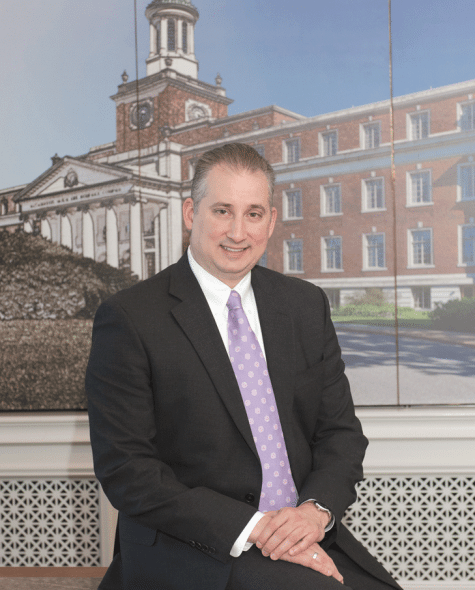
Business of Aging Sections
Armbrook Village Helps Seniors Navigate Stages of Life

By JAMES PALEOLOGOPOULOS

Executive Director Beth Cardillo

Executive Director Beth Cardillo

In the sleepy northwest corner of Westfield lies a winding path marked by a sign that reads “Armbrook Village: A Senior Living Residence.” But that description only tells part of the story.

This modern, 109,000-square-foot structure, which looks like a recently finished condominium complex with its siding, flowerbeds, and bleach-white balconies, is part of a growing wave of senior-living communities that offers older citizens a variety of options along the continuum of aging, its 122 units encompassing independent living, assisted living, and what’s known as Compass Memory Support Neighborhood, which allows residents with memory loss to receive constant treatment and supervision in a secure setting.

The result is an interactive community in the best sense of the word, said Beth Cardillo, executive director.

“We’re not going to get any bigger; we were built to operate at a very manageable size,” she told BusinessWest, adding that the facility, which serves seniors from age 60 to 100, is nearly three-quarters full. “We know everyone in the building. We know everybody’s daughter and son, we know everybody’s grandkids, and we work hard to provide a community atmosphere.”

Armbrook Village was built by East Longmeadow developer Michael McCarthy, along with other investors, in 2012 after he saw the benefits his late mother, Jean, experienced at a senior-living residence in Springfield. However, without any background in elder care or independent-living arrangements, he hired Senior Living Residences (SLR) — a Boston-based company specializing in senior housing operations with a special emphasis on dementia and Alzheimer’s disease — to manage the facility.

Managing 12 communities from Boston to Milford, SLR is affiliated with Boston University’s Alzheimer’s Disease Center, and seven of the chain’s communities feature Compass Memory Support Neighborhoods. With most of the residences located in Eastern Mass., Armbrook Village is the only SLR community on the Bay State’s western region, but it operates with the same goal as all the company’s properties — providing cost-effective care to all residents, whether they’re living independently and going to work each day or need assistance getting up in the morning.

Modern Living

For those living in the studio, one-bedroom, or two-bedroom apartments, Armbrook provides perks that allow residents to be totally on their own, “but not completely,” Cardillo said. Those perks include services ranging from emergency pull cords in each unit to transportation to doctor’s appointments.

The facility also makes it a point of encouraging its residents to get out into the community by providing transportation to restaurants, symphonies, and museums, among other destinations throughout the year. Independent-living residents also have access to three meals a day, prepared with an emphasis on ‘brain-healthy’ foods, as part of Armbrook’s affiliation with BU’s Alzheimer’s Disease Center.

According to Cardillo, SLR emphasizes such a diet throughout its communities, with a number of menu items built around a Mediterranean diet of fish, whole grains, and other foods that are both nutrient-rich and contain omega-3 fatty acids, a fat believed to help reduce the risks of dementia.

“Our statistics show it’s good for the brain,” she said. “A lot of olive oil, a lot of vegetables, a lot of fish, a lot of chicken — all studies point to certain herbs and foods not curing dementia, but adding to the mix of prevention.”

Independent-living residents enjoy other amenities as well, with apartments equipped with kitchens, washers and dryers, and walk-in showers. The apartments are designed to be “desirable,” said Cardillo, breaking away from the past industry standard of small, converted rooms.

Armbrook-Village “Years ago, I think, when assisted living became popular, they were taking the place of older buildings, maybe a converted school, a converted monastery. So the rooms were a lot smaller,” she told BusinessWest. “But now, when families are starting to look for apartments for their elders, they’re thinking, ‘just because Mom is 90 doesn’t mean she has to live in a small apartment.’”

Meanwhile, assisted-living residents receive help with many activities of daily living. Among those services are assistance with getting up in the morning, showering, getting dressed, as well as help with taking medication. Three meals a day are provided.

“Our assisted living is almost the same, only a little bit smaller, because they don’t need a full kitchen because we’re supplying the meals,” she explained.

Then there’s the Compass Memory Support Neighborhood, which features everything found in assisted living, plus some additional services. A smaller neighborhood with 25 units, it’s “the world in a smaller place” for residents with certain memory-related disorders, Cardillo said. “It’s a world that’s easier to negotiate, and it’s filled with activities all day long.”

The rooms were designed to be compact, she continued, since a number of residents there have a hard time finding their way around in bigger spaces. At the same time, the neighborhood’s activity rooms were designed to be larger, allowing residents to conduct activities and ensure that they are not isolating themselves in their own rooms, but staying involved in the community.

“We know that, with dementia, structure and socialization are key,” Cardillo said. Part of that socialization includes bringing out residents for art, photography, and adult learning activities, said Brenda Lopes, director of the Compass Memory Support Neighborhood.

“Here at Armbrook, we do a lot of adult learning, including a program called Reconnections,” Lopes said. “In it, we bring the memory-support residents back into the past with, say, imagery of Frank Sinatra and the Rat Pack or from World War II, and it works to help them connect the past with the future.”

That, along with a number of individualized programs and daily exercise, are among the routines that not only keep the residents active but also work against the effects of dementia and Alzheimer’s.

To enhance their care of residents, SLR involves staff in joint training operations through Boston University and, in Armbrook’s case, participation in a graduate study program with American International College’s occupational-therapy students. Part of a research project conducted by the students, the goal is to have residents in the Memory Care wing increase their daily activities through interacting with music as the AIC students observe its effectiveness and results.

Making Westfield Dementia-friendly

As part of its efforts to improve life for people with memory issues, Armbrook has launched a campaign to make Westfield one of the first ‘dementia-friendly’ communities on the East Coast.

Specifically, inspired by the story of Watertown, Wis. and its own drive to make the town friendlier and safer to those who are experiencing dementia, Cardillo set out earlier this year to coordinate with businesses and departments across Westfield to create an environment where, if an individual with memory loss were to wander into a restaurant or other establishment, staff would know the right steps to handle the situation.

“We’re trying to have more people learn more about dementia, so that, say, if an 85-year-old woman walks into the bank and is very confused, the tellers will be able to know what to do, properly identifying any confusion or memory issues,” Cardillo said. “I would like to do trainings throughout the community and here at Armbrook to teach people a little more about dementia, so that they can embrace it and not be scared by it and have the resources to know what to do.”

In addition to local banks, grocery stores, and other places of business, Cardillo wants to include the city’s police and fire officials, who sometimes find themselves dealing with people, either on the phone or at a scene, with some form of memory loss.

Already, a “virtual dementia tour” has begun involving the Fire Department, said Cardillo, a short (10-15 minutes) explanation of the symptoms of dementia. Hoping to include Noble Hospital and the local senior center, among other organizations, she plans to produce a PowerPoint in the near future as she continues to meet with officials such as the mayor and Chamber of Commerce.

“It’s about giving people the tools they need in order to know what to do when they come across somebody with dementia,” she said — tools her team at Armbrook Village provide to residents every day.

Business of Aging Sections
This Growing Model Bridges Gap Between Primary, Emergency Care

Rick Crews, left, with partner Jim Brennan

Rick Crews, left, with partner Jim Brennan, says there are many reasons — from affordability to its ability to save individuals time and aggravation — why urgent care has become so popular.

Rick Crews has been heralding the benefits of urgent care since he and Jim Brennan opened their first afc Doctors Express practice five years ago.

“We’re treating many people who traditionally used to go to the ER — but a lot of that was not appropriate,” he said of patients whose illness or injury didn’t rise to the level of an emergency, yet had no access to primary care.

“This is an alternative — a place you can go with really high-quality care that’s much more affordable, and get that care in a more timely fashion. That’s why urgent care is so successful right now.

“Hospitals need to concentrate on doing what they do best — the sicker patients, the more labor-intensive patients,” he continued, adding that patients who crowd the ER with less pressing matters cause a backlog, which elevates waiting times and frustration levels for everyone. Several area hospitals have recently renovated and expanded their emergency departments, but Crews said that’s not always the answer.

“I think we’ve provided relief for the hospital so they don’t have to build a new facility, and we’ve provided an outlet for patients, who can be seen for something in a much quicker fashion.”

If it sounds like hospitals consider afc Doctors Express and other urgent-care facilities a competitive threat, think again. In fact, hospitals are increasingly opening urgent-care clinics of their own to provide a level of care between the doctor’s office and the ER, with hours that often extend well into evenings and weekends, unlike the typical primary-care practice.

In some cases, hospitals are even teaming up with urgent-care practices, as evidenced by the recently announced affiliation between Boston-area afc Doctors Express franchises and Steward Health Care, a network of 11 hospitals and other facilities.

“The way our affiliation is set up is really cool,” Crews told BusinessWest. “When a patient walks in the door, we ask them, ‘do you have a primary-care provider?’ If they say ‘no’, we will refer them to primary-care physicians with the Steward group. And their family-practice physicians will refer their patients to afc Doctors Express after hours and weekends for urgent-care needs.”

Through the affiliation, 45 family-practice, emergency-medicine, and internal-medicine physicians employed by afc Doctors Express will join the Steward Health Care Network, and afc Doctors Express physicians will have access to Steward’s patient portal to evaluate a patient’s clinical history prior to commencing treatment. Clinical notes from an urgent-care visit will be communicated back to a patient’s primary-care physician or specialist for necessary follow-up.

“The hospitals are embracing urgent care; they see it as a great thing,” said Dr. Richard Freniere, co-owner, Urgent Care of Wilbraham, which opened last year. “We really have some good relationships with both Baystate and Mercy, open communications with doctors and emergency rooms in both hospitals.”

The pair know something about hospital ERs, since they’re both employees in the Wing Memorial Hospital Emergeny Department in Palmer, although Freniere devotes the bulk of his time these days to the Wilbraham facility.

“Baystate opened up an urgent care; they see the value of it,” Freniere said, citing just one of the area’s hospital-affiliated practices. “But we’re starting to see other competition coming in — little mom-and-pops, with one doctor, taking a shot at urgent care.”

Growing Model

According to the New York Times, the proliferation of those tiny practices makes it difficult to determine the exact number of urgent-care facilities in operation, but the Urgent Care Assoc. of America pegs the figure at around 9,000 — and growing.

Dr. Ateev Mehotra, associate professor of Health Care Policy at Harvard Medical School, told the newspaper that greater patient awareness of urgent care is causing a cultural shift.

“We expect to do our banking 24 hours a day, seven days a week, and to shop 24/7,” he said. “So now we want our healthcare to be 24/7.”

The cost of urgent care, with its much lower co-pays than emergency care, also appeals to patients — not to mention commercial insurers. By any measure, Freniere said, Wilbraham Urgent Care has been a success.

“We definitely way exceeded our one-year expectation. We are basically at our max volume right now. For the size of the facility we have, I really don’t want to burden the system any more than we do. If we go much more than this, we’ll have what happened in hospitals, getting too many people, and we won’t be able to provide what we set out to do in the first place.”

And seeing patients quickly is a hallmark of urgent-care clinics, with wait times typically averaging a half-hour or less, compared with several hours at some hospital ERs. So is time flexibility; according to the American Academy of Urgent Care Medicine (AAUCM), only 29% of primary-care doctors offer after-hours coverage, but urgent-care practices are generally open evenings and weekends, with some offering around-the-clock care.

Dr. Richard Freniere

Dr. Richard Freniere says hospitals are embracing urgent care, rather than viewing it as a threat, because it enables them to focus on what they do best.

That’s a relief for patients who would rather not deal with the emergency room to have a minor injury or illness treated. According to the AAUCM, the number of emergency-room visits increased by more than 1 million per year between 1994 and 2004, while the number of hospitals and ERs decreased by 9%.

Today, emergency departments handle 110 visits annually, and many are clearly not emergencies. A 2009 RAND Corp. study reported that up to 27% of ER visits could be easily handled by urgent-care centers or retail clinics, saving up to $4.4 billion per year in health costs.

“We’ve all experienced the five-hour wait at the ER — it’s not good,” Crews said. “We’ve all experienced those long waits and frustration in crowded ERs, so we are providing an alternative.” In fact, across the four practices he and Brennan own and six others for which they are master franchisees, patients’ average door-to-door time last year was 49 minutes.

“That’s a huge differentiator,” Crews said. “Then there’s the cost — in the emergency room, the average deductible is $100 to $200.”

Freniere agreed. “Being ER doctors for the past 20 years, we’ve seen all the people coming in and getting frustrated at times. And many of them really don’t need to be coming into the emergency department and incurring a high cost of care.”

The fact that a successful urgent-care practice can be very profitable isn’t lost on private-equity funds, which have purchased many urgent-care networks over the past few years. Insurance companies have also gotten into the ownership game. “Clearly there’s more competition now,” Freniere said.

Still, the Wilbraham practice has been such a success that the partners are preparing to open a second location in Worcester County. “And I’m not sure that’ll be the last place we do.”

Catching On

Massachusetts is especially fertile ground for urgent care, said Freniere, because the Bay State lagged considerably behind much of the country in adopting the urgent-care model, although that’s clearly changing.

“I think Massachusetts is a little late to the game,” he told BusinessWest. “We’re advanced in high-end care, but we really took the slow approach to urgent care. Everything was done in the hospital; everything was done in the big medical center. It never felt as if we had to cater to the patient. I think that’s a big change.”

That change includes the attitude of hospitals, which increasingly see the value in this relatively recent model. “They’re saying, ‘hey, guys, we want to get you to work with us. You’re complementary to what we’re doing.

“Doctors are coming around too,” Freniere added. “Initially they saw us as competition, but now they see us as supplemental. We’re not out to take anyone’s patients from them. We’re helping to unburden the system, basically.”

Crews has seen that shift as well. “There’s been a lot of change over the past four or five years since Jim and I opened up our first one,” he said. On the national level, afc Doctors Express — which was recently purchased by American Family Care — will boast more than 160 sites by year end, and Crews and Brennan expect to increase their total from 10 to 18 by the end of 2015.

“We continue to grow every year as patient volumes increase,” Crews said. “It’s because we focus on providing an exceptional patient experience, great quality medical care, convenient hours, and low prices — all those things together.”

Since affiliating with Steward, he said the partners have been busy meeting with the system’s hospital presidents and talking strategy. “These hospitals out there are embracing us.”

As for Freniere, he said he has been contacted by a large urgent-care company, but has no plans to sell — in large part because he finds delivering healthcare in this way a gratifying experience.

“The way the model is set up, the way it’s working right now … it’s attracting attention,” he said. “I think it’s the future.”


Joseph Bednar can be reached at [email protected]

Health Care Sections
Local Projects Reflect the Evolution of Cancer Centers

A rendering of the BMC Cancer Center in Pittsfield

A rendering of the BMC Cancer Center in Pittsfield

Mark Fulco recognizes the trends.

In fact, as senior vice president of strategy and marketing for the Sisters of Providence Health System, it’s part of his job to understand the demographic and medical trends in the region — and how SPHS should respond to them.

“Every year, we do a community health-needs assessment and some ongoing tracking of what’s happening with demographics and what’s happening with diseases in the region,” he said. “And cancer rates in our region are higher than the national trend. Meanwhile, our demographics are older than a lot of regions, and we’re aging in place; there’s not as much outmigration as in some other regions. And as folks age, we’ll continue to see both actual and predicted growth in cancer prevalence.”

In short, “we said, ‘wow, we’ve got some things we need to prepare for.’”

SPHS is doing so with a major expansion of its Sr. Caritas Cancer Center in Springfield, increasing its floor space from 16,000 square feet to almost 40,000 and bringing more cancer services together in one location.

“We’re bringing radiation oncology and medical oncology under one roof, which is ideal for the patient, both from a convenience standpoint and from a comprehensive care standpoint, because they can get all their care in one place,” Fulco said. “And having everyone together in one place is very effective for clinicians because there is quite a bit of interaction between various medical specialists who provide care in the cancer center. So having everything together in one place is very efficient for both caregivers and providers.”

That under-one-roof philosophy is one that has guided the recent surge in dedicated cancer centers around the country and particularly in Western Mass., where Baystate Health’s 65,000-square-foot D’Amour Center for Cancer Care and SPHS’s Sr. Caritas Cancer Center, both built in 2003, pioneered the concept.

In addition to the Caritas expansion, Berkshire Health Systems, which runs Berkshire Medical Center in Pittsfield, opened the BMC Cancer Center last fall and is gradually moving all cancer services under one roof. Meanwhile, Cooley Dickinson Hospital in Northampton, which has collaborated with Massachusetts General Hospital on cancer services since 2009, is now affiliated with that institution and will open the Mass General Cancer Center at Cooley Dickinson Hospital next year.

“Cancer care is a multi-disciplinary disease,” said Dr. Sean Mullally, medical director of the CDH Cancer Care Program. “It requires the input of a medical oncologist, radiation oncologist, and surgical oncologist, and it’s very important, in many situations, to have a collaborative approach from all three specialties.”

Michael Leary, director of media relations at Berkshire Medical Center, said the way cancer patients were shuttled around just a few years ago is not considered acceptable today.

The Sr. Caritas Cancer Center

The Sr. Caritas Cancer Center expansion, which will more than double the facility’s floor space, is expected to be completed in 18 months.

“Take a step back to what cancer services were like. You may have seen the hematologist/oncologist separately, and if you needed radiation services, you saw the radiation oncologist in a different location. If you needed rehabilitation therapy, you ended up in a third location. For social work, psychology, or counseling assistance of any kind, it was yet another location.”

That’s why the health system repurposed the original Hillcrest Hospital in Pittsfield to bring those services under one roof, said Ann McDonald, director of Oncology Services for BMC.

“We opened initially with medical oncology, infusion, and laboratory services,” she told BusinessWest. “Over the course of the next year, we will continue to add services, start opening some integrative health services, combining nutrition services, care navigation, social work, and movement therapy.

“The next phase, which won’t open until late this year, is a multi-disciplinary clinic, where patients can see a variety of physicians during treatment,” she continued. “We’ll have palliative-care services in the future. The last phase will be a year from now, when radiation oncology moves from its current site [at BMC] to the new cancer center. Then all our oncology physicians will see patients in one place.”

In this issue, BusinessWest examines the recent evolution of cancer care at area hospitals and why both patients and providers are cheering the effort to bring comprehensive oncology services under one roof.

Come Together

The plans for the Caritas Center expansion, which broke ground in the spring, include medical-oncology offices, including physician offices and examination rooms, on the first floor, and medical-oncology treatment space, including 32 infusion bays, an oncology pharmacy, and laboratory space, on the second floor. The project is expected to take 18 months.

The center is also adding two medical oncologists by the fall bringing that number to five, and has been using space in Weldon Rehabilitation Hospital — which, like the cancer center, is located on the Mercy Medical Center campus — pending the expansion of the Caritas Center.

Bringing more services into one building will offer patients much more efficient, comprehensive treatment, Fulco said. “By having the team together, we’re able to more efficiently deliver those services.”

Another driving factor in oncology, reflected in the design of the expanded cancer center, is the shift from inpatient to outpatient care. “We’re preparing for that; we think more and more care will be delivered on an outpatient basis. Even today, most of it is, except for surgical treatment,” he noted. “Over the years, we’ve seen care and treatment dramatically change, both the way care is delivered and the setting.”

Meanwhile, the first phase of the new BMC Cancer Center opened in November, including the new offices of Berkshire Hematology Oncology, BMC Infusion Services, and the Cancer Center Laboratory and Pharmacy.

Dr. Sean Mullally and Janet O’Connor

Dr. Sean Mullally and Janet O’Connor say CDH’s affiliation with the Mass General Cancer Center has only strengthened what has been a five-year collaboration.

When the center is fully complete, it will include those departments in addition to radiation oncology — which is currently located at the main BMC campus — and integrative support services for patients and family. The idea, Leary said, was to for individualized planning and treatment care to be provided by medical, surgical, and radiation oncologists working as a team.

“The goal was to take all the disciplines and put them together in one location, which happens to be a very beautiful location, the Hillcrest campus of Berkshire Medical Center, formerly Hillcrest Hospital,” he explained. “It’s a really pretty section of Pittsfield, overlooking a gorgeous lake, surrounded by pine trees and walking trails. We wanted a location for patients that was calming and soothing, but also one place they could go to receive as much care as possible. They’re facing enough challenges as it is; we’re making it as easy as possible on them.”

That’s especially true in the Berkshires, he said, which is even farther from cutting-edge oncology services in Boston — or even major highways — than the other regional hospitals building or expanding cancer centers.

“It’s really important to provide this care close to home,” Leary noted. “In any small community, the tendency is to think you can’t get state-of-the-art, advanced care unless you go to Boston or New York — Sloan Kettering or somewhere like that.

“But with the investments Berkshire Health Systems has made in its cancer program over the past several years, we have technology that, frankly, many cancer centers don’t, including one of the highest-end versions of tomotherapy,” he said, referring to a form of radiation therapy. “We do that because we don’t want people to have to go to Boston or New York. Obviously, we’d rather they stay in their community for their quality of life — and it makes it easier on their families, too.”

McDonald noted that BHS can also videoconference with, say, a geneticist in Boston, when necessary, so that a patient doesn’t have to spend five hours on the Pike. “We can send the information and do an entire consultation in a room at the cancer center.”

Getting Better

Cooley Dickinson can videoconference with Boston as well — specifically, Mass General, the institution it merged with last year.

Mullally said the affiliation expands what was already a healthy collaborative partnership when it comes to cancer care, and what is being called the Mass General Cancer Center at Cooley Dickinson will relocate into a new building on the CDH campus in 2015. The cancer center will be operated by Mass General Hospital Cancer Center, he added, and all its physicians will become Mass General doctors.

Expanded services will include access to clinical trials at Mass General Cancer Center, an increased number of chemotherapy and radiation-therapy treatment protocols, increased access to genetic screening and counseling, and, of course, implementation of Mass General’s multi-disciplinary care model, where patients and their medical, radiation, and surgical oncologists can meet in a single appointment to plan all aspects of care.

Janet O’Connor, the center’s clinical nurse director, said the facility emphasizes both state-of-the-art treatment and services that impact body, mind, and spirit, with integrative therapies including acupuncture, massage, and Reiki.

She said the high-tech and high-touch elements of modern cancer care are equally important, reflecting the fact that reducing stress enhances healing. So, while CDH now has access to the type of cutting-edge care available at Mass General, patients will receive treatment in a building designed with a healing atmosphere in mind.

“We’re building a beautiful space,” O’Connor said. “The waiting room space will be very open with lots of light, and we’re creating a green roof with windows looking onto the roof and greenery.” The center will include 18 infusion areas, up to 12 exam rooms, and swing space for the support services, from nutrition to massage. “The idea is to keep the patient with us and bring our people to them, so they can have a consultation with a dietician, or with someone in occupational or physical therapy … we’re providing space where they can go to the patient.”

An interior rendering

An interior rendering of the soon-to-be-expanded Sr. Caritas Cancer Center.

Patients and families were involved in the design phase, she added, and they will be further consulted on what kinds of committees or programs may be developed down the line.

Mullally also stressed the clinical-trial benefits of the Mass General affiliation, as MGH is one of the nation’s leaders in targeted therapy trials in melanoma, brain tumors, and other solid tumors.

“For the most part, if people want access to clinical trials, they need to drive to Boston. In the future, we’ll be able to provide many trials here, so it doesn’t require a ride back and forth,” he noted, adding that subspecialists at Mass General are easy to access when their consultation is needed. “They have an open-door policy; they pick up the phone.”

I Feel Fine

The cancer centers at Berkshire and SPHS are also embracing some new modalities, including the STAR (Survivorship Training and Rehabilitation) Program, an evidence-based education and training program that many hospitals and cancer centers offer to their administrative and clinical staff to develop more effective oncology-rehab services.

“It allows cancer patients, like those who have joint surgery, to go to rehabilitation faster and get better more quickly because of this enhanced focus on their rehab,” Fulco said.

The addition of rehabilitation oncology — combined with physicians’ new ability to coordinate care in one building — adds up to better quality of life for patients in Pittsfield, McDonald said.

“For so long, helping people survive was the primary outcome. As survival improves, quality-of-life treatment takes on additional meaning,” she said, which is why it’s important to add elements like exercise and rehabilitation; integrative services like yoga, Reiki, and acupuncture; and nutrition education. In fact, the center will invite guest chefs in for demonstrations on cooking healthy food.

Meanwhile, Leary said, “the Berkshires are a very good place for artists, and we’ve lined the walls of the cancer center with pieces of art by local artists. We’ve been able to display the talents of our community there.”

All the new cancer centers take the healing environment into account, Mullally said, and CDH is no exception. In the end, though, what drives the evolution of cancer care is that emphasis on bringing services to patients under one roof, and lessening their anxiety at what may just be the worst moment of their life.

“It makes it more convenient, and patients have better outcomes, if all the specialties are working together at the same time,” he said. “It makes for more patient-centered care.”

Joseph Bednar can be reached at [email protected]

Sections Technology
When It Comes to IT, Responsibility Is Reaching to the Top

By GREG PELLERIN

Greg Pellerin

Greg Pellerin

When it comes to your company’s IT infrastructure, whose job is it, anyway? Who takes the blame (or maybe even the fall) if something goes wrong? More and more, responsibility for an IT failure is reaching all the way to the executive suite.

In May, Target CEO Gregg Steinhafel resigned after a major data-security breach. Some said it wasn’t his fault, but the company’s board disagreed, saying it was a result of underinvestment in Target’s IT systems. The Associated Press quoted Daniel Ives, analyst for FBR Capital Markets, who said, “ultimately, it’s the CIO and the IT managers that are really more in the weeds, but just like the head coach of a football or basketball team that doesn’t make the playoffs, the CEO is ultimately responsible.”

And consider the case of James Thaw, president and CEO of Athens Regional Health System in Georgia. Thaw’s organization, like almost every hospital in America, had invested millions in implementation of an electronic health record (EHR) system. Whether there was pressure on the IT department to roll out the new software before it was fully tested is unclear, but according to the Athens Banner-Herald, the result was near-chaos.

Physicians sent a formal letter of complaint to the hospital’s administration claiming the implementation process was too aggressive and resulted in “medication errors, orders being lost or overlooked, emergency-department patients leaving after long waits, and an inpatient who wasn’t seen by a physician for five days.”

The letter was published less than two weeks after the hospital’s PR department proudly touted the new, integrated system as “the most meaningful and largest-scale information-technology system in its 95 year history.”

Thaw and Chief Information Officer Gretchen Tegethoff have since resigned.  Whether they were responsible for pressing the ‘go live’ button prematurely is unknown. Most hospitals contract with a team of external consultants who sit alongside representatives of the institution’s medical and administrative staff to oversee implementation over a one- to four-year timeframe. The fate of those consultants and team members is unknown.

So, what’s an executive to do? Most CEOs got to where they are because of their strategic abilities, not necessarily their technical strengths. What questions should they be asking their staff regarding major IT decisions?

“It comes down to two words: integration and communication,” said Michael Feld, president of VertitechIT, a nationally renowned expert consultant in IT management, and the acting chief technology officer at Lancaster General Hospital.  “IT is the engine that keeps an organization running, but oftentimes, CEOs will treat the department as a necessary evil.  Your IT people need to know where the company is going and how technology will play a role in that growth. When they don’t, you’ve got problems.”

Feld offers up three areas of advice on how to avoid an IT disaster that could have implications in the C-suite and the entire company:

• You wouldn’t think of launching a new sales or product initiative without announcing and getting buy-in from the sales and marketing departments. Integrate your IT department in the same way. Make sure everyone, from your chief information officer to front-line system engineers, understand issues that affect the life of the company.  Everyone should understand IT’s role in achieving those goals.

• Plan an off-site retreat with your CIO. He or she is, after all, no different than the CEO, one level down. Senior company executives need to know what your network can do, not necessarily how it’s done. Place the focus on understanding risks, benefits, costs, and the relationships all of them have to each other.

• Put your personal biases on the shelf. That new company initiative may have been born in your office, but it’s easy to fool yourself into believing that IT can just make it happen. Keep asking questions and challenge whether your internal systems and people are ready to press ‘go.’ Is there a fail-safe, redundant backup plan in place when something goes wrong? Are your internal people trained and fluent in its operation, and are there outside resources lined up for those special situations? If the answer is no, find out why.

No one wants to just throw money at a problem, hoping it will go away. But you can’t fight a fire without a long enough hose, and that new fire truck will be useless if there’s not enough water coming from the hydrant. In the end, it’s the chief that will take responsibility if things spin out of control. To paraphrase Smokey the Bear, ultimately, you can prevent forest fires. n


Greg Pellerin is a 15-year veteran of the telecommunications and IT industries and a co-founder of VertitechIT, one of the fastest-growing business and healthcare IT networking and consulting firms in the country; (413) 268-1605; [email protected]

Daily News

WESTFIELD — Westfield Bank is preparing to move its middle-market and commercial real-estate lending team into Springfield. The new offices will be located on the 23rd floor of Tower Square in downtown Springfield, where the bank already operates a branch on the first floor. The bank’s headquarters will remain in Westfield. The move is expected to be finalized by the end of the summer.

Community Spotlight Features
Lenox Strives to Become a Year-round Destination

Channing Gibson, left, and Christopher Ketchen

Channing Gibson, left, and Christopher Ketchen want Lenox to become a year-round tourist attraction.

When Channing Gibson envisions what the town of Lenox will look like in the future, he sees a vibrant, year-round destination with a wide array of recreational activities that appeal to young people, along with the cultural attractions that have drawn tourists to the area for generations.

“Recreation could range from birding to biking, hunting, horseback riding, and cross-country skiing,” said the chair of the town’s Board of Selectmen. “We have a town beach on Laurel Lake, and although the traditional tourist comes here for relaxation and culture, there is an opportunity to attract people for recreation as well.”

Right now, the town is packed with tourists whose typical goal is to relax and enjoy the wealth of cultural events offered during the summer. In the coming months, many guests will also attend weddings, because the pastoral setting and large number of historic inns and hotels have made Lenox a popular place to get married. “There are so many places to stay that range from modest accommodations to high-end inns and hotels,” Gibson said.

But during the winter, business dies down, and many storefronts close their doors. In addition, young people in Lenox, as well as in other towns in the Berkshires, are leaving the area, and the town’s demographics reflect an aging population.

So the community is looking to create new recreational venues that would attract tourists year-round and appeal to young people. To that end, officials are waiting for the final report from a study conducted by the Conway School of Landscape Design. It is titled “Lenox’s 2013 Open Space and Recreation Plan,” and provides recommendations to improve existing natural and recreational resources.

In order to understand why the town has chosen this focus for its economic-development plan, Gibson said, it’s necessary to look at its past. He explained that the General Electric manufacturing plant in Pittsfield and the tourist industry played vital roles in the town’s economy for generations, and although GE closed its doors in 1986, Lenox continued to thrive, thanks to tourism.

“The Berkshire Visitors Bureau says that Lenox accounts for 40% of the tourist dollars spent in the Berkshires. Our geography works for us, and our hardworking innkeepers and people in the hospitality business make sure that visitors who come to the Berkshires want to stay in Lenox,” he said, adding that Canyon Ranch, Cranwell Resort and Spa, and Tanglewood, whose offices are in Lenox, are among the town’s leading attractions. “But even though we are in the right place, it’s something we can’t take for granted. We have to do things to improve revenues from tourism, and there is a lot of land available that is presently underdeveloped that can be put to good use.”

Town Manager Christopher Ketchen concurs, and says putting a new spin on tourism offers great potential. “We specialize in hospitality and making folks feel welcome, and the town offers picturesque natural beauty in winter as well as in spring, summer, and fall. Plus, we have been designated by the state as a green community and are starting to become known as a center for health and wellness.”

Gibson said the Conway report contains many suggestions, including the fact that existing trails, parks, and other natural resources could be linked by a pathway which would give residents and tourists easy access to recreational resources.

“There are lots of little pieces of land that could also be developed and linked by a trail that could be used for walking, biking, and more; it’s something we can do ourselves,” he told BusinessWest, adding that there is plenty of open space available for new recreational venues, which could increase the town’s vitality and help change its demographics. “Our goal is to find a way to take what worked in the past and bring it into the future.”

Need for Growth

When town officials created the FY 2015 budget, it included a fiscal-impact analysis. Gibson said it had been suggested by a consultant who did some free work for the town, and the Planning Board thought it was an excellent idea. “There are a lot of people with different ideas about what should be done in terms of economic development, and we were told it was important to understand what was needed and what was realistic.”

Unfortunately, it was eliminated from the budget due to cost. But since that time, several things have put a positive spin on the future.

The first is that Ketchen was hired in April; the town had been without a manager for almost a year. He had served as finance director in Hopkinton and deputy director of general government in Wellesley before moving to Lenox, and town officials are optimistic that his enthusiasm and ideas will result in concrete gains.

Ketchen says his plans include hosting open houses so interested builders and developers can meet town officials from different departments.

In addition, a concerted effort is being made to market the attractions in Lenox via the Internet. “In the past, the Select Board did very little in the way of marketing, other than maintaining our infrastructure,” Gibson said. “But now the Berkshire Visitors Bureau is promoting Lenox as a year-round destination with a Google display ad.”

Some businesses have also started their own marketing campaigns, and Gibson said they have been successful. “But we want to maximize the success and continue to promote the town and bring more tourists here,” he explained.

The Conway report will help facilitate that goal. Its recommendations take into consideration the results of two community forums, in which residents overwhelmingly stated that one of their top priorities was to protect the town’s natural resources. But although they want to maintain the pastoral views and ecological richness found in Lenox, the initial report showed that many do not know where the town’s parks are or where they can access hiking trails.

This needs to be remedied, and town officials hope they will also be able to add new recreational offerings. Collaborative efforts will be required to make the vision a reality, but if the plan is approved, it will allow the town to apply for competitive grants from the state as well as from other entities. In addition, Lenox will be able to use monies set aside beginning in 2006 when the town approved the Community Preservation Act. “The Conway report is timely, as last year the state added recreation to the areas in which Community Preservation funds could be used,” Ketchen said.

Although most people think of the Berkshires as a summer destination, he added, marketing will focus on events held during other seasons, such as the Apple Squeeze Festival in the fall; Shakespeare and Co., which hosts performances year-round; and the summer cottages built by wealthy individuals during the Gilded Age. “Some have been reused and turned into hotels and museums,” Ketchen said, citing Canyon Ranch and Ventford Hall Mansion and Gilded Age Museum as examples.

In addition, Lenox continues to maintain its infrastructure and retain the town’s reputation as a safe, beautiful community. “The majority of our efforts are aimed at tourism,” Gibson said. “We make sure the roads are well-paved, the town is run well, and we have good police and fire departments. It helps the community at large, but is also good for our tourist industry.”

Gibson says every town in the Berkshires is focused on bringing new business to the area, but they have different things to offer. For example, Pittsfield ranks high in terms of size and capacity of building space, while North Adams appeals to lovers of the arts. “So we needed to create our own fertile seed bed, because we don’t have the Mass Turnpike nearby or a lot of industrial space.”

Breaking Ground

Plans for a small, high-end boutique hotel and spa within a Gilded Age mansion were recently permitted, and a new Courtyard by Marriott hotel has received approval from the Zoning Board.

Both will add to the town’s character, but “the Marriott’s demographics are slightly different than our other inns and represent a young, energetic clientele,” said Gibson. “It’s exciting and could relate well to our plan to create new recreation and change our demographics.”

Ketchen agrees. “We have a lot to offer young people in terms of lifestyle. There is a small-town familiarity here that lends itself to a deep and meaningful sense of community, and this feels like fertile ground for businesses,” he said. “Focusing on year-round amenities will give us an opportunity to bring new vitality to the community, and our creativity will drive our economy in the future.”

Gibson is looking forward to bringing the vision to fruition. “I’m very excited about the potential represented in the Conway plan,” he said. “It’s still pie in the sky, and we are not there yet, but we have a good chance for success.”

Lenox at a glance

Year Incorporated: 1767
Population: 5,025 (2010)
Area: 21.7 square miles

County: Berkshire
Residential Tax Rate: $12.07
Commercial Tax Rate: $14.91
Median Household Income: $45,581 (2010)
Family Household Income: $61,413 (2010)
Type of government: Open Town Meeting, Board of Selectmen, Town Manager
Largest Employers: B Mango & Bird, Canyon Ranch, Boston Symphony Orchestra Inc., Cranwell Resort Spa & Golf
* Latest information available

Departments People on the Move

Dena Hall

Dena Hall

Michael Moriarty

Michael Moriarty

United Financial Bancorp Inc. announced that J. Jeffrey Sullivan, president and member of the board of directors, is leaving the company to pursue other professional interests. In addition, it was announced that Dena Hall has been promoted to Western Mass. Regional President for United Bank, and Michael Moriarty will be Executive Vice President, Western Mass. Commercial Banking Executive. “I want to thank Jeff for his commitment to United Bank over the past 12 years and his effort in helping us achieve a successful legal close of our merger,” said William Crawford IV, CEO of United Bank and United Financial Bancorp Inc. “Jeff has enjoyed a long career in banking and demonstrated a strong personal and professional commitment to Springfield and Western Mass. All of us who have had the opportunity to work with Jeff wish him well in his future endeavors.” In addition to her leading role as Western Mass. Regional President for United Bank, Hall will continue to serve as Chief Marketing Officer for the bank and President of the United Bank Foundation. She has nearly 20 years of experience in bank marketing and charitable giving. She came to United Bank in 2005 after serving as Assistant Vice President of Marketing for Woronoco Savings Bank (now Berkshire Bank) and Executive Director of the Woronoco Savings Charitable Foundation in Westfield. Hall worked previously for the Community Foundation of Western Mass. Hall was named one of the Springfield region’s top young business and community leaders by BusinessWest magazine in its inaugural 40 Under Forty compilation in 2007, and was also named the Business Woman of the Year by the Westfield Chamber of Commerce. She is a member of the board of trustees for the Baystate Health Systems Foundation as well as a member of the Westfield Re-Development Authority and the Western Mass. Corporate Funder’s Forum. She is also the chairwoman of the Capital Campaign Scheduling Committee of Greater Springfield. Hall is a graduate of UMass Amherst, the Massachusetts School for Financial Studies, and the National School of Banking and Finance at Fairfield (Conn.) University. Moriarty, who previously held the title of Senior Vice President and Regional Team Leader for United Bank for more than seven years, will take on a key role as Executive Vice President, Western Mass. Commercial Banking Executive. Prior to joining United Bank, Moriarty was Vice President of Commercial Lending for the Bank of Western Massachusetts. He also was Vice Pesident of Commercial Lending for the Massachusetts Development Finance Agency. Earlier in his banking career, Moriarty was a Bank Examiner with the Office of the Commissioner of Banks in Massachusetts. He earned a bachelor’s degree from Merrimack College and an MBA from Western New England University. He is also a graduate of the Stonier National Graduate School of Banking, American Bankers Assoc. Hall’s and Moriarty’s new roles with the company became effective earlier this month.
•••••
Douglas Bowen

Douglas Bowen

Banker & Tradesman has named Douglas Bowen, President and CEO of PeoplesBank, a Community Bank Hero. In awarding that honor, the publication said it goes to individuals who show “an exceptional dedication to service and investment in their community.” Bowen and the others were recognized at a special reception to honor those in the industry who have gone above and beyond to better their organization and their community. Since becoming President and CEO of PeoplesBank in 2007, Bowen and his leadership team have led a culture change at the bank. That shift defined a triple bottom line for the bank: going forward, enhanced financial performance would be linked to community and employee engagement as well as environmental sustainability. The team focused on developing new and higher levels of employee engagement and involvement by creating life-work balance initiatives, a management-development program, employee-led think tanks, and employee-recognition events. PeoplesBank associates have volunteered an average of 6,000 hours each year for charitable causes, and 48 of the bank’s officers serve on the boards and committees of 115 nonprofit organizations. The bank has also donated more than $5 million to local charitable and civic organizations and financed more than $70 million in wind, hydroelectric, and solar energy projects. PeoplesBank, having built three LEED-registered offices, is also a leader in green construction. “I am proud to say that, when I look around at work, I see heroes — PeoplesBank associates doing remarkable things for our customers, the community, and our organization every day,” Bowen said in accepting the award.
•••••
Linda Ellen Jones

Linda Ellen Jones

Linda Ellen Jones, currently the Vice President of Statutory Affairs at Alfred University in New York and a national expert in structural ceramic materials, has been appointed Provost and Vice President for Academic Affairs at Western New England University. Jones will be the university’s chief academic officer and oversee the academic integrity of all colleges, schools, and institutes on campus. The provost is responsible for working with the deans and faculty to develop new programs, and oversees the academic-appointment process.
“I am thrilled to be joining Western New England University as Provost and Vice President of Academic Affairs,” said Jones. “As we all know, higher education is at a remarkable crossroads. The work in front of us is to help our students answer the questions, who do I want to be, and how do I best prepare for a future rich in possibilities? I look forward to championing a faculty and staff who understand the potential and who are willing to embrace our collective future.” Jones currently heads the New York State College of Ceramics, which is comprised of the School of Art and Design, the Kazuo Inamori School of Engineering, the Scholes Library, and the Schein-Joseph Museum. The College of Ceramics is a unit of the public SUNY system, but administered and housed by the private Alfred University. A materials scientist, Jones is recognized as a national expert in high-temperature corrosion and degradation of structural ceramic materials, and serves as a professor of materials engineering. Prior to her post at Alfred University, Jones served as Director of the Picker Engineering Program at Smith College in Northampton. She received her Ph.D. and master’s degree in fuel science, materials science, and engineering from Pennsylvania State University, and a bachelor’s degree in chemistry from Mary Washington College. Jones succeeds Dr. Jerry Hirsch, who is retiring after 16 years of service as the Provost of Western New England University.
•••••
Monson Savings Bank (MSB) has announced the promotion of Terry Poloski to Mortgage Originator. Poloski joined the bank in December 2011, has more than 30 years of experience in consumer and mortgage lending, and has worked with every aspect of the lending process, including underwriting. She is not only adept at helping her borrowers obtain the right financing package, but also at assisting them with every detail along the way, said Steve Lowell, MSB president, adding, “we are extremely fortunate to have Terry on our team. She embodies the Monson Savings commitment to customer service and is highly qualified to help people find the right financing package for new homes, construction, and refinancing.” Poloski is a member of the Realtor Assoc. of Pioneer Valley.
•••••
Steven Mitus

Steven Mitus

PeoplesBank announced that Steven Mitus, Executive Vice President and Chief Financial Officer of Balise Motor Sales Co., has been named to the PeoplesBank board of directors. Mitus formerly served as a Corporator for the bank. He is a cum laude graduate of UMass Amherst, where he earned a bachelor’s degree in business administration. He is also a graduate of Holyoke Community College. Mitus currently serves as a trustee of Baystate Health, where he is vice chair of the Audit Committee and a member of the Compensation Committee; as a trustee of the Community Foundation of Western Massachusetts, where he chairs the Audit and Finance Committee; and as a director of Health New England, where he is a member of the Compensation and Audit committees. The Affiliated Chambers of Commerce of Greater Springfield presented him with the Richard J. Moriarty Citizen of the Year Award for his current and past community service. Mitus is also a past recipient of the Holyoke Community College Distinguished Alumni Award. He is a member of Financial Executives International, the American Institute of Certified Public Accountants, and the the Mass. State Society of CPAs.
•••••
Ryan Leap

Ryan Leap

Easthampton Savings Bank announced that Ryan Leap has joined the bank as Senior Vice President of Commercial Lending. Leap brings to the bank more than 14 years of commercial-lending experience, most recently as Senior Vice President of Commercial Lending for Union Bank in Morrisville, Vt. He has worked as Senior Vice President of Commercial Lending for Hoosac Bank, a division of Mountain One Financial Partners, MHC, in North Adams. Prior to that, Leap was a Vice President of Commercial Lending with the Bank of Western Massachusetts in Northampton, which later became People’s United Bank. Leap earned a bachelor’s degree in economics, with a concentration in finance, from the University of Pittsburgh at Johnstown, Pa.
•••••
FieldEddy Insurance announced the following:
Gina Clark

Gina Clark

Sara Goodreau

Sara Goodreau

Gina Clark has been appointed Finance Manager. She will be responsible for training and supporting the finance-team members on all aspects of accounts payable and accounts receivable. Previously, she worked for several years in the finance and human-resources departments at Meyers Brothers Kalicka, P.C.;
Sara Goodreau has been appointed Personal Lines Account Manager. She holds her CISR and CIC designations. Her knowledge of various computer operating systems will benefit Goodreau as a staff trainer, and she will assist with operational tasks.
Carla Dawley

Carla Dawley

Carla Dawley has been appointed  Personal Lines Account Manager. In that role,  she will apply her knowledge in both the insurance and banking industries to provide customer service to her existing and new clients. Dawley has her P&C license and is currently working on obtaining her CISR designation.
•••••
TD Bank has named Denise Fleming Assistant Vice President and Store Manager of the branch located at 693 Memorial Dr. in Chicopee. She is responsible for new-business development, consumer and business lending, managing personnel, and overseeing the day-to-day operations at the store. Fleming has more than eight years of banking experience. Prior to joining TD Bank, she served as a Branch Sales Officer at Rockville Bank in Enfield, Conn. Fleming is a member of the Chicopee Rotary Club and the Greater Chicopee Chamber of Commerce, and is a graduate of the Connecticut School of Finance and Management.
Denise Fleming

Denise Fleming

She serves as community chairperson for the Independent Transportation Network’s annual Walk for Rides and also is a volunteer driver for the nonprofit organization, which provides transportation to senior citizens and the visually impaired.
•••••
The YMCA of Greater Springfield announced the following appointments to its board of directors:
Fran Smith, a veteran of the newspaper advertising and circulation business for 34 years, and currently Advertising Manager at the Republican and masslive.com;
Mark Smith, Vice President of Manufacturing & Supply Chain Management for Smith & Wesson, and previously Director with the Chicag0-based consulting firm Alvarez & Marsal;
Dan Flynn, Senior Vice President and Marketing Manager at People’s United Bank; and
Stacey Church, Assistant General Manager of the MassMutual Center in downtown Springfield.

Cover Story
Program Strives to Put More Qualified Workers in the Pipeline

Sarah Burek

Sarah Burek, one of the first graduates of the Advanced Call Center and Customer Service Training Program, is now an employee at MassMutual.

Sarah Burek was getting a little frustrated. Actually, more than a little.

She had been out of work for seven months and was having no luck at all finding something in what would be considered her field — clerical work such as her most recent assignment handling payroll at Brodeur-Campbell Fence Co. until she was laid off.

“It was just not a good job market, and there were a lot of people vying for the same positions,” she told BusinessWest, adding that she eventually came to the conclusion that she had to move in a new direction.

And it was right about that time that her counselor at the Springfield-based one-stop career center FutureWorks told her about something called the Advanced Call Center & Customer Service Training Program, an initiative led by the Regional Employment Board of Hampden County (REB) in conjunction with the Training & Workforce Options (TWO) program created by Springfield Technical Community College and Holyoke Community College, and a host of other partners.

Burek was intrigued by what she heard, applied to be part of the first class of a pilot program, which was to start last August, and survived a rigorous vetting process that yielded 18 participants.

Fast-forward nine months or so, and Burek is gainfully employed at the Retirement Services call center at MassMutual’s Enfield facility, just a few weeks after passing the difficult Series 6 security exam required for such a position.

She said she enjoys the work handling calls involving everything from explaining investment options to altering contribution amounts for 401(k)s, and is already excited about where this door that opened for her may eventually lead.

“It’s been an exciting journey,” she noted, “and I can’t wait to see where this path takes me.”

This is exactly the script, not to mention commentary, that organizers of this program had in mind when they conceived it in late 2012 and then won a $350,000 grant from the state Executive Office of Labor and Workforce Development to get it off the ground, said Larry Martin, director of Business Services and special project manager for the REB, who spearheaded the initiative.

He said need was identified in two areas. First, people like Burek, unemployed and underemployed, needed new job opportunities and environments in which they could advance over time. Also, companies like MassMutual, Liberty Mutual, Thing5, and the area’s banks, among many other employers, needed a larger, better-equipped pool of candidates for jobs in customer service and call centers.

The new program essentially addresses both, said Bob LePage, executive director of the TWO program. He told BusinessWest that surveys of area companies with call centers and customer-service personnel revealed that they were getting a large quantity of applicants, but not sufficient quality.

“Our surveys revealed a number of common challenges,” he explained. “There was high turnover and problems recruiting bilingual candidates, but there were also difficulties in recruitment of individuals that could come in the door and quickly move up in the organization on that career path.”

Looking ahead, the third class in the pilot program will begin its summer session in July and graduate in October, said LePage, noting that what will follow is an evaluation of the initiative — organizers are already identifying needed tweaks, such as altering session graduation dates to meet industry needs — and a likely scaling up of the endeavor.

Ultimately, organizers believe, the call-center training program will help companies fill positions more efficiently and thus less expensively, reduce the high turnover rates in this profession, and perhaps make the region a more attractive landing place for those looking to open or expand call-center operations.

Indeed, while the program’s initial thrust was to assist companies struggling to staff call centers and customer-service departments, organizers eventually broadened the mission to include an economic-development component.

“If we really did have a program that showed the ability to scale to meet employer needs, then attracting other call centers to the region might be much more viable,” said LePage. “If we could position ourselves as having an asset of multi-language speakers in our workforce, and people with proper customer-service skills and language skills, we could have a regional competitive advantage, if not a New England or Northeast competitive advantage.”

All that comprises a fairly tall order, but stories like the one scripted by Burek and others like her show that this initiative has great potential to improve the hiring landscape — for job seekers and area employers alike.

Ringing True

LePage told BusinessWest that the phrase ‘call center’ usually conjures up images of vast, open rooms with rows of cubicles operated by financial-services giants and cable operators. And while the region does have several of these larger operations, there are call centers of all sizes across virtually every business sector in Western Mass.

All banks have them, he noted, as do healthcare providers and insurance companies such as Health New England. Meanwhile, manufacturers such as Smith & Wesson and Dinn Brothers, a trophy maker based in Holyoke, maintain large call centers as well.

Bob LePage

Bob LePage says surveys of area employers revealed that they were getting applicants for call-center jobs, but not enough qualified applicants.

And while these facilities vary in their size, scope, and the nature of the questions being handled by the customer-service representatives, they share the common challenge of finding enough good help to fill the headsets.

“What employers told us is, ‘we get applicants; we don’t get qualified applicants,’” said LePage. “They also say the number of applicants that they have to review to find a qualified applicant is a large funnel. While a company may be looking to bring in a class of 10 people, it may have to look through 200 to 300 applications to find 10 qualified at the level and abilities they want.”

Surveys of these companies revealed both general and specific needs, said Martin, adding that many employers struggle to find bilingual candidates — a considerable problem given the changing demographics in the region — while others have difficulty securing those with adequate people skills.

Training such individuals is a comprehensive — and expensive — undertaking, he went on, adding that this situation is exacerbated by annual turnover rates that reach or exceed 30% in some sectors.

Meanwhile, at MassMutual, there is another challenge, said Eric Blackman, a senior recruiter for the company, noting that individuals must be licensed to work at one of the company’s four call centers by the Financial Industry Regulatory Authority. And to get a license, candidates must pass that aforementioned Series 6 or Series 7 exam, which poses a number of difficult questions about finance and investments. If they don’t pass, they’re terminated.

“We end up losing a lot of individuals based on that,” he said, adding that the call-center training program has the potential to provide the company with candidates better-prepared to pass that test.

All of these factors prompted area workforce-development officials to come together and consider possible solutions, said Martin, adding that it was the financial-services sector, and especially MassMutual, that generated a dialogue on creating an action plan.

It came in the form of something called the Financial and Business Services Workforce Development Collaborative, which was created in the summer of 2012. It first involved a number of area banks and other financial-services businesses, but other companies, ranging from Thing5 to the staffing firm United Personnel, came on board as well.

“Upfront and center was the immediate need for customer-service and call-center personnel,” Martin explained. “But we wanted to look at the overall occupational needs of the industry long-term.”

The desire to meet those needs, while also creating new and better opportunities for the unemployed and underemployed, dovetailed nicely with the parameters of a request for proposals issued in 2012 by the Workforce Competitive Trust Fund, an agency dedicated to making Bay State businesses more competitive.

That RFP focused on sector initiatives to create candidates for hard-to-fill positions where additional training is needed, but also put an emphasis on what Martin called the “middle skills,” meaning opportunities for those with at least a GED but not a college degree.

The proposed Advanced Call Center & Customer Service Training program became the thrust of a response to that RFP, which involved the REB and TWO, as well as additional partners, including the Economic Development Council of Western Mass., DevelopSpringfield, Putnam Vocational High School, and others.

Eric Blackman

Eric Blackman says the call-center program may help MassMutual address the problem of recruiting a sufficient number of qualified bilingual candidates.

The $350,000 grant received from the state funded the training of 60 individuals, as well as job-development and job-placement services once the third session is completed, said Martin, adding that 16 of the 17 participants in the first class graduated, and several have been placed with area companies, while 17 of the 18 members of the second class successfully completed the regimen.

He described the 16-week program as “intense,” and by design, to meet the specific needs of employers, especially those in the financial-services sector.

“We didn’t want to set up anyone to fail,” he explained, adding that the vetting process is quite extensive and designed to weed out those who would not eventually meet the criteria for employment. “We do two levels of interviews to make sure that we’re matching the right individuals with this program.”

Busy Signals

Karen Zanetti was among those who went through, and passed, that rigorous interview process. She was one of the 18 members of the program’s second class who graduated on May 20.

Like Burek, she was unemployed — she was laid off from a job in human services roughly a year ago — and looking for a fresh start when she heard about the call-center initiative from her counselor at Holyoke-based CareerPoint and considered it an intriguing proposition.

“I had always had an interest in finance, banking, and customer service from years ago when I worked in retail,” she explained. “And when I saw the different kinds of classes that went into this program, it really appealed to me.”

She started an internship at MassMutual recently and hopes that experience will lead to a job with the company. Meanwhile, several members of her class have been hired by Liberty Mutual, and a few others have joined customer-service staffs at area banks and healthcare providers.

“It was a really good class,” said Martin, adding that the early results show that the program has real potential to reduce the size of the funnel LePage described and make it easier, and less expensive, for companies to secure qualified workers.

LePage agreed, adding that the success of the first two classes reveals that the program will likely benefit sectors other than financial services.

“One of the areas where we’ve had some dialogue and seen some success is the healthcare industry,” he noted. “We didn’t go into this thinking about this sector relative to call centers, but Baystate Health and Health New England both have significant call-center programs and need people with solid customer-service skills.”

The first two sessions of the pilot program have yielded some important lessons that will enable program organizers to make adjustments to better serve both participants and area employers, he added.

One such lesson concerns the scheduling of the sessions. Employers like MassMutual tend to hire at certain times of the year, and graduates need to be hitting the job market at those times, LePage said. “Our dialogue with industry partners revealed their desire to have the output of the students more aligned with their hiring patterns. Instead of a class that completes its work in December, they really see a value in completing in October, when they do their last hiring of the year. An officer with one of the banks said, ‘if you make toys, you don’t deliver on Christmas morning,’ and he’s right.”

Meanwhile, the first session revealed the importance of teaching the students the hiring process, he went on.

“We now run essentially a week of career experience,” he said. “The students do tours of area employers, such as Liberty Mutual. They spend a half-day there with the Liberty Mutual team, they sit in on calls, they visit the call center, they learn the operation.”

Program organizers also bring in eight to 10 employers for what LePage called “speed mentoring,” which amounts to one-on-one interviews that provide invaluable practice for the real thing.

It was during one of these speed-mentoring sessions that Blackman met Burek and immediately recognized that she was the type of candidate the company looks for.

“She was very articulate and very ambitious; she had the demeanor about her, the professionalism that we look for,” he recalled, crediting the call-center program with bringing such a candidate to the interview room.

Looking ahead, Martin said, after the third session is completed in the fall, the program will continue to operate as part of TWO, and will be a self-sustaining initiative, with participants eligible for financial aid and possibly assistance from potential employers in the form of scholarships.

Indeed, with the cost of the program likely to be $1,500 to $2,000 per student, LePage noted that this amount is far less than what a company would spend to hire and train an individual.

If and to what degree the program is scaled up is a matter that will essentially be determined by the needs of area businesses, said Martin, adding that organizers certainly don’t want to flood the market with candidates and leave candidates without job opportunities.

However, by scaling up, the region could gain that competitive advantage that comes with having a large, qualified pool of call-center and customer-service candidates.

“There’s been dialogue about being more aggressive just within the Commonwealth,” said LePage, “and be able to say to financial-services companies in the Boston area that we have the workers they need.”


A Positive Tone

It’s too early to know just how effective the call-center training program will be in helping employers overcome the many challenges to hiring qualified workers, create opportunities for the unemployed and underemployed, and perhaps make this region more competitive when it comes to attracting more customer-service facilities.

But it’s not too early to say that it is certainly moving the needle in the right direction.

Just ask Sarah Burek.

She’s on a path she couldn’t have imagined a year ago, and as she said, she can’t wait to see where it might take her. n

George O’Brien can be reached at [email protected]
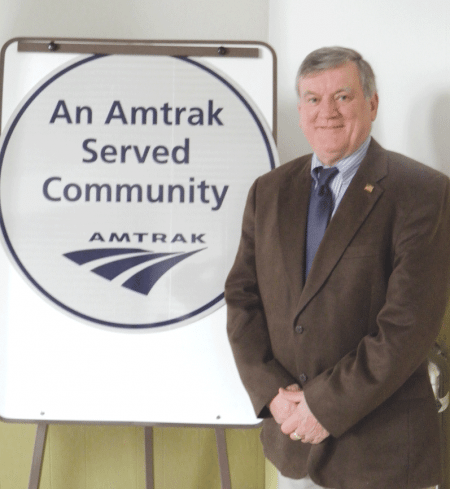
Community Spotlight Features
Partnerships Anchor Easthampton’s Development

Jessica Allan

Jessica Allan says Easthampton will soon have three breweries, thanks to the quality of its water and improvements in infrastructure.

Mayor Karen Cadieux says Easthampton’s transformation from a mill town into a thriving city began roughly 15 years ago, and continues today due to unique and ongoing collaborations.
“One hand helps the other here, and partnerships between the city and private business owners have spearheaded revitalization,” she explained. “Public funding has encouraged business owners to make investments, which is how our story began.”
Town Planner Jessica Allan agrees.
“The city finds money through grants for infrastructure, and as a result, private business owners use their own money to make improvements to their property,” she noted. “Things have happened in Easthampton because the community and city have worked together to improve different areas. Our arts community has also formed collaborations to help Easthampton gain recognition in and outside of the Pioneer Valley.
“In the past, Easthampton had a really strong manufacturing base. It is still happening within the mills, but in a creative way,” she continued, citing enterprises that include furniture makers and a high-end wrapping-paper business whose clients include New York City boutiques.
She pointed to the Pleasant Street mills project that is now underway as a good example of a public-private partnership. Several years ago, Michael Michon, who owns Mill 180; Will Bundy, who owns the Eastworks Mill; and James Witmer, who owns the Brickyard Mill, approached the city for help. “They told us they had tenants who wanted to move into their buildings but were hesitant due to the lack of parking,” Allan said, adding that the trio had the idea of connecting their buildings and flipping the entrances, so they would open facing the Manhan Rail Trail instead of on Pleasant Street, because there was space there for a new parking lot.
The owners paid for the design, which includes 440 parking spaces, trees, and lighting. “The city did its part by applying for a MassWorks grant. The city received $2.75 million in October 2012 for the first phase of the project, and a second $1.5 million a year later to increase the parking capacity,” Allan said.
Money from the first grant will pay for an upgrade of the water lines as well as burying the electric lines. “We’re really dealing with safety issues,” Allan said. “The original water lines are still there, and the fire-suppression system doesn’t have enough pressure. There will also be new lateral connections to each building, so, if there is a problem in one building, it won’t affect the others. And burying the electric lines is helpful to the fire department.”
All those involved said Western Mass Electric Co. is a key player in the undertaking and that the utility made additional investments outside the area to some of their substations so the mills can get the power they need.
Cadieux says the project has been challenging, and Allan has held weekly construction meetings with representatives from city departments, the mill owners, the design consultant and engineering team, WMECO, and the construction contractor.
“The project is really complex, and a number of easements were needed,” she said. “But the end result will be rewarding and will spawn new economic activity. And the mill owners have spent millions on their buildings in anticipation of being able to fill in their empty space.”
Cadieux agrees. “It’s absolutely fantastic to have all these groups working together,” she said. “The project is very important to everyone involved.”

Ongoing Collaborations
Cadieux said the city’s history of partnerships began 15 years ago on Cottage Street when a buyer wanted to purchase the former 9,000-square-foot Majestic Theater, which was an eyesore that had been closed for years.
“But the owner of the theater insisted that he would not sell to the man unless he also bought the parking lot across the street. He couldn’t afford both properties, but the city was able to help by purchasing the lot with state funds,” she explained. “It was advantageous to both sides because the city needed more parking. And since that time, the city has received a great deal of state funding for infrastructure improvements. As a result, many restaurants and businesses have gone into space on the street.”
The city’s next major project is aimed at helping downtown businesses as well as providing people with a new recreational outlet. It’s called the Nashawannuck Pond Promenade Park, and will finally bring to fruition an idea that was born about a decade ago. The park is in the design stages, and, thanks in part to a $400,000 grant from the state, construction is expected to begin this summer.
“The 30-acre pond is in the heart of the community and will provide a gathering space for residents and visitors,” Allan said, as she viewed the peaceful body of water from the mayor’s office windows.
“The park will be the gateway to the cultural district on Cottage Street and will make Easthampton a destination location. We want to attract tourism and bring foot traffic downtown,” she told BusinessWest, adding that this is another example of how public funding spurs economic development in the city.

Mayor Karen Cadieux

Mayor Karen Cadieux says Easthampton is flourishing due to its diverse economy.

The project will include three handicap-accessible boat ramps, a 1,600-square-foot plaza, and a 4,000-square-foot boardwalk.
She added that the city is also looking at streamlining its permitting process and has partnered with the Greater Easthampton Chamber of Commerce to develop a workshop for first-time business owners. “In the past two years, ten new businesses have applied for permits downtown, and we are filling in vacant storefronts,” she said.
Allan explained that increased interest in space downtown is related to Easthampton City Arts+ and the events it sponsors, such as monthly art walks, which are very popular.
The formation of that organization resulted from yet another collaboration, this one between Easthampton City Arts and the Easthampton Cultural Council, which shared office space and coordinated events at Old Town Hall with a shared mission before they merged and became ECA+.
The group has worked with the city on a variety of occasions, and last year it was successful in its bid to have Cottage Street designated by the state as its 16th cultural district. “The effort was spearheaded by ECA+,” Allan said, adding that the city applied for the designation from the Mass. Cultural Council in January 2013.
The mayor says these partnerships are beneficial. “It’s exciting to have all of this happening in one community, and the growth that is taking place due to partnerships between the city, private businesses, and the arts community makes Easthampton unique.
“Again, it’s a matter of people working hand in hand,” Cadieux continued. “The arts community stimulates art growth, which attracts businesses to the city, and that results in our diversity.”
Fifty affordable-housing units called Cottage Square Apartments are also under construction in a long-abandoned building at 15 Cottage St. “It was our largest tax title and was purchased by a developer three years ago. The city supported the developer’s idea, and the project was permitted under special zoning,” Cadieux explained, referring to Easthampton’s so-called “smart-growth zoning,” which allows for denser development downtown. The mayor added that the city procured  $200,000 in Community Preservation Act monies, which has helped the owner leverage additional state and federal funding.
Improvements to infrastructure, as well as the city’s pure water, which comes from the Barnes Aquifer, have also played a role in attracting three breweries to the city over the past three years. The Abandoned Building Brewery was created through a renovation of 2,700 square feet in the Brickyard Mill; the Ford Hill Brewery and Hop Farm, located in a 9,500-square-foot building on three acres less than a mile away, is expected to be operational by the end of the year; and New City Brewing, which is not yet open, has chosen Mill 180 as its home.

Bright Future
Cadieux said partnerships will continue to take center stage in Easthampton. “Things have happened here because the business community and the city have worked together. We are committed to working collaboratively with our business and arts community and do all we can to foster partnerships.
“As a result,” she concluded, “we are flourishing — which is exciting, especially during these economic times.”

Employment Sections
FIT Solutions Creates a Strong Niche Within the Staffing Industry

Jackie Fallon

Jackie Fallon says her company has achieved steady growth through its focus on the specific needs of both the clients it serves and the candidates it places with those firms.

Jackie Fallon says her expertise lies in the realms of technology and staffing, but she also has a background of sorts in marketing, experience that didn’t effectively “kick in,” as she put it, when she went about naming her company, FIT Solutions.

The first word is an acronym that blends her last name with the sector she specializes in — Fallon Information Technology — while the second amounts to what Fallon believes the company provides to both the businesses it serves and the individuals it places with those clients; she calls them candidates. Meanwhile, she does a lot with that word ‘FIT,’ as evidenced by the slogan on her letterhead — ‘Providing IT Resources That FIT Your Business.’

Unfortunately — and this is probably a sign of the times — many jump to the wrong conclusion. “A lot of people think we’re a fitness company, and we’re not, obviously,” said Fallon with a laugh.

Despite this confusion, Fallon is nonetheless making a name for herself in a challenging subsector within the broad staffing industry — helping companies of all sizes, but especially small to mid-size enterprises, find the IT personnel they need to enable their ventures to operate effectively in an increasingly technology-driven world.

It’s challenging, she said, because, despite some attractive benefits to being in IT — the pay is generally good, and work is, for the most part, still plentiful — not enough young people are getting into the field. She speculated that the bursting of the dotcom bubble early last decade and the exporting of considerable work overseas to India and other spots may have prompted parents to steer their children toward other vocations.

Those attitudes are changing, Fallon went on, but finding a good quantity of candidates remains a problem. Meanwhile, there’s the matter of quality, or effectively matching candidates with clients. And that can be a challenge, because many small business owners and managers simply don’t know what they need when they set about finding IT help.

“Small to mid-size companies rarely hire an IT person,” she explained while pinpointing her company’s bread and butter. “And when they do, human resources has no idea what to look for; he or she is given a list of specs and technical jargon they don’t understand. So they look to us as an extension of their internal HR department.”

By excelling in that role, the company has made broad inroads in several sectors, including higher education — UMass, Bay Path, Mount Holyoke, and other area schools are clients — as well as healthcare, with Health New England and Accountable Care Associates among those FIT has served, and manufacturing, with Dalton-based Crane & Co. which makes the country’s currency, among the company’s many repeat customers.

As it marks 10 years in business, FIT, which serves the Western Mass. and Northern Conn. markets, continues to grow and expand that client base because it has been able to correctly anticipate and decipher those aforementioned needs and, as the slogan says, provide solutions that fit.

That phrase applies not only to the companies FIT serves, but also the individuals it places, she went on, noting that the company goes to great lengths to make sure the fit is good for both sides of the equation, because if it isn’t, neither party will benefit.

For this issue, BusinessWest looks at how this company has carved an effective niche within the local economy, and at where it — or IT, as the case may be — can go from here.

Technically Speaking

Fallon didn’t want to name the large IT-staffing company she worked for at the start of the last decade. But she did want to talk about how it conducted business.

“I didn’t like the way they treated clients or their candidates,” she said, referring, again, to the two constituencies in this industry. “It was all a numbers game, and it was about quantity versus quality and trying to make the candidate take as little as possible so they could make a higher hourly profit.

“I just didn’t like that, but from that experience, I learned a lot about the staffing industry, I learned that I liked dealing with people, which I’ve known all along, and I had enough technical knowledge to be dangerous,” she went on. With all that in mind, she decided she was ready to go into business for herself with a company that would do things differently.

Backing up a bit, and retracing the steps that prompted her to launch her own venture, Fallon said she graduated from Western New England University and was hired by IBM, starting as a word-processing secretary. She moved on to be a systems engineer on the company’s AS 400 product line, working primarily on the sales side, installation of equipment, and training people on how to use it.

She did that for more than a decade before accepting an offer to join one of her clients, software maker DataProfit, in the mid ’90s. There, she started the company’s hardware division and ran it until not long before the company went under in 2001. She described it as a great learning experience that also enabled her to make some connections that would serve her well in the years to come.

As DataProfit’s struggles mounted and its demise became increasingly apparent, Fallon segued into the staffing side of the IT industry, working for that aforementioned large player focused on numbers. In 2004, she decided to go out on her own with a venture that would take a personal approach to staffing and put the emphasis on quality, not quantity.

From the beginning, her company has focused primarily on small to mid-sized companies — ventures that are generally big enough to have IT staff as opposed to outsourced help, but not big enough to have their own recruiting departments — although MassMutual, ING, and other large corporations are also on the client list.

FIT handles permanent placement, temporary staffing, temp-to-hire scenarios, outsourced recruiting, and other services, and provides clients with a wide range of personnel, including chief information officers, project managers, web developers, application developers, business and system analysts, database designers and administrators, and help-desk and technical-support personnel.

“We do direct hiring — people will call and say, ‘we want to hire someone; help us find the right person,’” she explained. “But we also do pure contract work — someone needs three developers for a project for six months — and also temp-to-hire.”

Finding qualified individuals to fill these various positions has, as she said, become an ongoing challenge.

“There are a lot of openings for candidates,” Fallon explained, “because there are not enough young people getting into the IT sector to make up for the ones we’re losing to the retirement side.

“There are many reasons for this,” she went on. “I think the parents of these young people became wary after the dotcom bust and the outsourcing to India and told their kids they didn’t want to get into this field because their jobs would be eliminated. But that sentiment couldn’t be further from the truth — we’re seeing a lot of companies come back onshore because of the issues they’ve had outsourcing offshore.”

Overall, FIT owes its success in this niche to knowing its clients and understanding what they want — and don’t want — when it comes to IT personnel, and consistently providing solutions (there’s that word again).

“Clients want to look at me as an extension of their company,” she explained. “And you really need to get to know them. You need to know what kinds of people they like and what kinds of people they don’t like; if it’s a quiet office, you can’t send in someone who’s loud and boisterous. And if you take care of your clients, they’ll take care of you.”

Looking ahead, Fallon said FIT Solutions is ideally situated for continued, and perhaps profound, growth.

Indeed, she noted the company doesn’t have any direct competition in this market, although some players have tried to enter the field and failed to gain a foothold, primarily because of those aforementioned challenges. Meanwhile, information technology continues to change, improve, and be an ever-growing part of doing business, which makes this work somewhat recession-proof.

“Even in the downturn, we were still very busy because there were IT projects that had to be done,” she explained. “Companies took the contract route because they couldn’t afford to bring people on full-time, but they still needed their projects done.”

But while FIT could, in theory, grow to the size of Fallon’s former employer, she is opting for what she called “smart growth,” which will leave her with the size — and mindset — to effectively serve clients.


The Bottom Line

While some people may mistakenly believe Fallon’s venture is a fitness company, most business owners now know the name, the acronym, the mission, and, most important, the track record for success.

And as FIT Solutions moves into its second decade of serving clients and candidates, it is more determined than ever to live up to both words in that name.

George O’Brien can be reached at [email protected]

Health Care Sections
Joanne Marqusee Takes the Reins at Cooley Dickinson

CDHdpARTWhen Boston’s Beth Israel Hospital merged with Deaconness Medical Center 18 years ago, Joanne Marqusee was there to witness the aftermath.

And it wasn’t pretty.

“I learned about what organizations should not do when they merge,” said Marqusee, the new president and CEO of Cooley Dickinson Hospital in Northampton, taking over for Craig Melin, who had steered the CDH ship for a quarter-century and through both quiet and turbulent seas.

With Cooley Dickinson having recently finalized a merger of its own, with Massachusetts General Hospital, she reflected on the smoothness of that transition compared to the tumult that followed the Beth Israel Deaconess deal in 1996.

“Being across the street from each other, in some ways it seemed like the perfect merger,” said Marqusee (pronounced ‘mark-a-see’), who joined the BI team in 1992. She noted that the two institutions had complimentary specialties; for example, Deaconess was known for surgery, while BI had a stronger medicine program. “On paper, it seemed like a match made in heaven. But in some ways, there really wasn’t enough attention paid to how to bring two cultures together, how to manage people through that situation. And it really matters.”

Staff from the two Boston institutions became notoriously suspicious of each other. “People didn’t want to work in teams. Fortunately, I had been there only three years, so I didn’t define myself as a ‘BI person.’ I didn’t have this bias based on what side of the street I worked on. That didn’t define my contribution to the corporation.”

On the bright side, however, “when the organization was in such flux, with people coming and going, there were a lot of opportunities,” she said. “So I was given more and broader responsibilities — often in areas I didn’t necessarily have any background in.

“I kind of learned over time that management is management,” she continued. “Particularly as a non-clinical person moving up in healthcare, I applied the same approach to problems involving people, whether in a clinical or non-clinical area.”

Having most recently served as executive vice president and chief operating officer at Hallmark Health System, located just north of Boston, a job she accepted in 2009, Marqusee is embracing her first stint in the CEO’s chair, and has been pleased with the way Cooley Dickinson and Mass General are coexisting.

“The distance makes it almost easier; people don’t feel threatened,” she told BusinessWest. “And they have been terrific. We can call there for help; they have such intellectual capital. I spend at least one day a month at MGH and feel like a part of their team, which is nice.”

Matthew Pitoniak, who chairs the CDH board and led the search committee tasked with replacing Melin, is impressed with Marqusee’s acumen for bringing different teams together within an expansive health system, one that includes the hospital, the Cooley Dickinson VNA, and a number of other practices.

“We set out to identify a person capable of leading our care system into the future,” he said. “We also wanted a strong collaborator who can bring together the components of our care system for optimal patient care, and a leader who could build upon our affiliation with Massachusetts General Hospital while strengthening our local system.”


On a Mission

Marqusee was raised outside New York City in a family that was politically involved and socially conscious. “All my siblings and I ended up doing mission-based work in one way or another.”

Attending Cornell University, she didn’t know what career path she wanted to take, but she had a love for international affairs and languages, so she majored in linguistics. But she eventually felt a call to nonprofit management.

“I thought, ‘should I be a social worker?’” she said. “But I had a sense that a better fit would be to look at how whole organizations work and to make an impact there.”

While earning a master’s in public policy from Harvard University’s Kennedy School of Government, she decided she was more analytic than she’d suspected, and wound up working in New York Mayor Ed Koch’s first administration. There, in 1984, she was exposed to the Health and Hospitals Corp., which ran 11 public hospitals, five nursing homes, and dozens of ambulatory-care sites. It was a $2 billion corporation with 50,000 employees.

“After about a month, I realized I wanted to be in the healthcare world,” she said. “It was so complicated; I had the sense I could spend decades in healthcare and have different roles and always be learning.”

From there, Marqusee joined Beth Israel in 1992 and eventually ascended to senior vice president of operations for the merged system. She eventually ran most support and ancillary areas of BI Deaconess, including the Laboratory, Pharmacy, Radiology, and other clinical areas, as well as non-clinical areas such as housekeeping and patient transport.

“I got an appreciation for the fact that hospitals aren’t just doctors and nurses, even though TV and movies tell us they are,” she said. “I really got to see how, if you could tap the creativity of what’s considered support staff, it can make a great deal of difference.”

Take transport personnel, for example. “Follow one of them around for a day and see what a difference they make in healthcare,” she said, noting that patients are often already anxious and confused as they’re being moved from a room they know to somewhere unfamiliar, and a transporter who engages that patient with information and compassion makes a huge difference. “If nobody talks to them, it can be quite frightening.”

Eventually, though, Marqusee sought a new challenge. “I loved BI Deaconess; I loved the fact that it was an academic center. But personally, my interest and skill set is on the clinical side of medicine, and while teaching and research are good — we want to find a cure for cancer and teach the physicians of the future — my skills at managing people, bringing people together, can make more of a difference on the clinical side. I wanted to work in a community hospital.”

CDH

Joanne Marqusee takes over at CDH in an era of growth and new construction for the community hospital.

So, in 2009, she took over operations of the community-based Hallmark Health System, which is comprised of acute-care hospitals Lawrence Memorial of Medford and Melrose-Wakefield of Melrose, with more than 300 beds, as well as several ambulatory-care centers, a home-health agency, and a school of nursing. There, Pitoniak said, she spearheaded improvements in clinical quality and safety, financial stability, service excellence, and employee, physician, and patient satisfaction.

“Hospitals are complicated cities with 24/7 operations, involving doctors, nurses, phlebotomists, transporters, people who make sure supplies get where they need to go — it’s this complicated dance to make sure everything gets done right,” she said.

“There are a lot of policy issues, but also the question of, how do you make such a complex organization work better? How do you make teams work better?,” she went on. “The emergency room, for instance, is an amazing thing — think of all the different parts that have to come together to move everyone from A to B.”

In her five years at Hallmark, she said, she helped standardize practices and managed to improve both patient and employee satisfaction, while better engaging physicians — even while battling the onset of a recession that made life difficult for all community hospitals.

“In 2009, it was awful. People were losing their jobs, and if not them, their spouse was losing their job. It had a huge effect in all hospitals,” she said. “We were able to get through that and find ways to reduce costs while improving care. As a non-healthcare person, I like to apply the quality-improvement approaches of other industries, like the LEAN approach that Toyota uses. That’s very helpful in bringing frontline staff together, standardizing workflow, and finding ways to keep the patient at the center.”

Marqusee added that she wants employees at all levels to enjoy their jobs. “That’s important. People like it when they have fun and work as a team. For staff, it’s important to balance the seriousness of what they do with enjoying the community they work in. People come to healthcare, usually, because they care about what they’re doing.”

Western Swing

While Marqusee loved being in a community hospital, she occasionally missed the learning experiences of an academic medical center, and the opportunity to lead a Mass General-affiliated CDH appealed to her. “I wasn’t sure what I wanted to do, but when this came up, I was really excited; it seemed like the perfect job for me. It’s a community hospital that’s very well-regarded with high quality scores — very, very impressive.

“I hadn’t thought I would leave the Boston area, but my twins grew up and were in college, and my husband recently retired,” she went on. “Northampton seems like such an ideal area, really, with the culture and level of activity here. We can be connected with Boston, and not far from New York.”

She cited the hospital’s well-known infection-control efforts as one example of how CDH has been a leader.

“The focus on quality is clearly embraced here; physicians and staff are proud of being innovators,” she said. “Some people think hospitals and healthcare systems are solely based upon healing people, but harm can happen in hospitals. We want to make sure people don’t leave with an infection, and we make a priority of that. The housekeepers are passionate about this issue. They think, ‘what I do makes a difference in whether patients get sick here or not.’”

At the same time, Marqusee takes the reins amid controversy over a state investigation into several serious incidents in the Childbirth Center, including two infant deaths and a failure to properly treat high blood pressure in a mother, leading to a stroke that caused her death. The hospital has since reorganized the center and its affiliated nurse-midwife practices and launched a corrective action plan.

“We’re trying to be out there and communicating,” she said, noting that the recent tragedy comes on top of stress that already existed related to the Mass General merger and Melin’s announced retirement. “It’s been a year and a half of people not knowing what’s going to happen. So we communicate with them the good and the bad, the issues we need to work on, trying to be honest so we can get better. We’ve been as open as we can about the Childbirth Center to staff and the community.”

She credited Melin with steering the hospital with a steady hand amid an ongoing shift in the healthcare industry toward accountable care, which emphasizes efficiencies of treatment. “In America, we use more healthcare, but we don’t necessarily have better health outcomes.”

She said Northampton is a progressive community when it comes to understanding, for example, that more MRIs are not necessarily better, but added that the industry has a long way to go toward a less-wasteful system of care.

“Physicians get paid to see patients; they don’t get paid to talk on the phone,” she noted as another example. “But even five minutes on the phone can be more valuable than having them come into the hospital, be exposed to more germs, and maybe be encouraged to take an unnecessary test.”

What Cooley Dickinson can do, Marqusee said, is improve its own processes, and that begins with better communication between departments.

“We’re trying to understand where our systems do not work as well as they could, to connect the departments with one another, communicate better between the day shift and evening shift,” she said.

“The departments themselves run quite well; this place is strong operationally. They don’t need a leader to come in and tell food services or the ICU how to run their department, but they could use help linking to one another in interdisciplinary teams,” she continued. “Most errors in healthcare tend to be around communication or handoffs, radiology to ICU, day shift to evening shift, communication between nurses and physicians, nurses and technicians. I’ve been interested in finding where the gaps are and setting priorities for improvement projects.”

Take the Emergency Department, for example. “That’s such a complicated place — the doorway to the organization in many ways; a hospital’s reputation in the community tends to rise and fall with the Emergency Department,” she told BusinessWest. “But the ED staff themselves say we could do much better with the way we communicate with people upstairs, so in the fall, we’re launching a major project to reorganize how we work in the ED, make it even better.

“Right now, patients are happy with it,” she stressed, “but if they spend less time here, it would make them even happier.”

Talk It Out

In her first two months on the job, Marqusee has been busy spending time in many different areas of the hospital and, in fact, the entire CDH network. “I’m trying to make people understand that it’s not just a hospital; Cooley Dickinson is also the VNA, off-site physician practices, radiology, and rehab,” just to name a few, she said.

“I’m also trying to meet people from different shifts — nights, weekends, evenings. It’s a whole new world at night, so I’m trying to understand their challenges, too. I’m just trying to create some visibility; I don’t want anyone to think the CEO is a suit in the corner office they can’t talk to. I want to have a culture that’s not hierarchical, where the frontline staff understand that I care about them, and they can talk to me.”

The bottom line, Marqusee said, is that, despite recent challenges, a well-regarded hospital system has the ability to improve, and that’s not a task she takes lightly.

“I feel like this community values Cooley Dickinson, and that doesn’t just happen,” she said. “It’s years of reaching out and providing valuable services.”

Joseph Bednar can be reached at [email protected]

Health Care Sections
Area Hospitals Tout the Critical Role of Infection Control

Mary Ellen Scales

Mary Ellen Scales says a big part of infection control is infection prevention.

It’s been five years since H1N1 put a major scare into the medical community. The virus, a combination of influenza virus genes never previously identified in either animals or people, appeared in the spring of 2009, spread across the globe, and caused hundreds of deaths in the U.S. alone.

By the time an effective vaccine was developed and distributed in the fall, however, the H1N1 threat had begun to ease up. “It was a flu that went through the entire summer and into the fall, when the traditional flu season was supposed to be starting, and then it started to tail off and disappear,” said Carol Wojnarowski, an RN and infection-control manager at Holyoke Medical Center. “It was a very unique situation. That’s how pandemics get labeled — it’s out of season, it’s worldwide, it usually moves rapidly, and it can be a significant disease for those who can’t fend it off.”

Wojnarowski and her staff — and infection-control personnel at all area hospitals — are among the community’s front-line defenses against such threats, along with local and state public-health officials. When threats emerge, their concerns range from making sure enough masks are available to protect people against airborne transmission to working with pharmacies to rotate antibiotics, to preserve their efficacy.

“We’re always working with other departments, from microbiology to central supply sterilization,” Wojnarowski added. “All these have to be moving together. One won’t work on its own.”

Not every infectious disease is communicable among people, she was quick to note. “You can get tetanus from a dirty nail or a rusty fence, but I can’t give you tetanus. But smallpox, chicken pox, measles, flu, I can give those to you and the person next to you. We have strategies in case we have a pandemic in the community and our vaccines aren’t suppressing it, so we can keep it under control.”

Mary Ellen Scales, an RN and chief infection-control officer for Baystate Health, said outbreaks of flu or a norovirus in the community will often be reported by the Department of Public Health, while, in other cases, a surprising number of patients with similar symptoms will show up in the emergency room, triggering an alert.

But she was quick to add that a significant part of her department’s job has nothing to do with infections and viruses that show up in the community. “Part of infection control is actually prevention. Chasing the horse after it’s left the barn is infection control; not opening the door in the first place is infection prevention.”

Indeed, infection prevention is serious business for hospitals. According to the Centers for Disease Control and Prevention (CDC), hospital-acquired infections are the fourth-leading cause of death in the U.S., and are responsible for tens of billions of dollars annually in healthcare costs.

“We have a responsibility to make sure patients, staff, visitors, and community members who come to Cooley Dickinson Hospital or its satellites are protected from transmittable infectious diseases,” said Linda Riley, an RN and manager of infection prevention at CDH. “We look for certain diseases in the hospital, and infections related to devices people use — IVs, catheters, tubes in the lungs that help them breathe. We look for infections in people having certain procedures and surgeries.

“We work as a team to keep our whole community safe where there’s a community exposure,” she noted. “I would alert our medical staff members, all our offices, let them know what they should expect, what the symptoms are, what they should do if people end up at their offices with measles or flu or something else.”

But where CDH has made major strides, she explained, is reducing the threat of infection inside the hospital.

“We’ve developed improvement plans to reduce the threat of infections,” Riley said. “We do orientation and education for staff, patients, and community members. We implement best practices, and I’m always on the Internet, reading infection-control journals and blogs, looking for new ideas, things we can do to create a safer environment for patients and staff.”


Just Breathe

Take, for example, ventilator-associated pneumonia (VAP), which is usually serious and caused by bacteria, which can be resistant to antibiotics. According to the Centers for Disease Control’s National Healthcare Safety Network Report, Cooley Dickinson’s efforts in preventing ventilator-acquired pneumonia place the hospital in the top 10% of the nation’s medical/surgical ICUs.

And that’s a big deal; patients on ventilators have a 32% mortality rate in the short term, but it rises to 46% when pneumonia is introduced.

The culture shift began in 2005 when a team of respiratory therapists, physicians, nurses, quality-improvement staff, and infection-prevention specialists adopted a set of instructions from the Institute for Healthcare Improvement known as the ‘IHI ventilator bundle.’ The bundle offers a series of interventions determined to be the best evidence-based practices related to reducing the risk of VAP to patients.

Carol Wojnarowski

Carol Wojnarowski says infection-control work in hospitals involves a number of departments effectively working together to identify — and minimize — risks.

The staff also scrutinized existing VAP cases to identify patterns and trends. They determined that the most vulnerable patients were those on ventilators for more than 19 days, those with difficult intubations, and those who required transportation within the hospital.

The hospital’s prevention strategy — which works, since it hasn’t had a VAP case in three years — includes making sure patients’ heads are elevated and heating the ventilator tubing to body temperature before use; if they aren’t heated, the gas that passes through them can turn into water vapor, which is a potential breeding ground for contaminants. Doctors at CDH also use closed-suction catheters, which allow them to clean secretions from a patient’s airway while maintaining ventilation, which also cuts down on the risk of infection.

A similar team was assembled at Baystate, which also adopted the IHI ventilator bundle in 2005 and, like CDH, witnessed an almost total elimination of VAP incidents. That followed on the heels of other infection-control measures, like installing alcohol hand rubs throughout its hospitals. “It’s important for healthcare workers to clean their hands,” Scales said.

Cooley Dickinson has taken a high-tech approach to hand hygiene, installing an electronic system, called the DebMed GMS, that monitors whether doctors, nurses, and other care providers are cleaning their hands before seeing patients.

An electronic box at each station keeps a tally of how many provider-patient contacts are preceded — or not — by hand disinfecting. Each department then discusses the findings at staff meetings to develop goals and strategies for improving compliance rates.

Again, this is a serious matter. A study conducted at Duke University Medical Center showed that a 1% increase in hand-hygiene compliance results in annual cost savings of $39,650 for a 200-bed hospital, due to fewer incidents of germ transmission requiring further care and longer stays.

Cooley Dickinson has also taken a cutting-edge approach to cleaner patient rooms using an ultraviolet disinfecting technology known as Xenex Px-UV. The system uses UV light to kill drug-resistant organisms like MRSA, VRE, and Clostridium difficile, or C. diff — which, by itself, infects 165,000 hospitalized patients annually, and about 9,000 of those die, according to the CDC. But at CDH, the presence of C. diff dropped by 82% in just the first four months after the introduction of Xenex.


Home Invasion

Wojnarowski said the report of a widespread pathogen in the community is followed by communication with public-health officials and procedures on everything from quarantines to immunizations. Hospital policy also requires care providers to be fully immunized against transmittable diseases.

But she also emphasized the importance of monitoring and preventing infections that develop inside the hospital.

“We invade the patient a lot; we put catheters in their veins, their bladder, their lungs. And those therapies, though they help the patient and provide relief in some ways, are also a pathway for bacteria to get in.”

That’s why Holyoke Medical Center has established guidelines for how long a catheter or IV can stay in, and how to put a medicated dressing around the catheter and insertion site.

“We’re always updating our guidelines, our patient-care practices, always consulting with operating-room people, sterilizing equipment — what can we do better to clean equipment, keep it sterilized? What are the latest strategies out there?” Wojnarowski explained. “It extends to purchasing equipment, too. For example, sometimes it’s cheaper to buy something disposable versus something we have to sterilize.”

Riley agreed. “We’re part of the equipment-management process, and we look for things that make hospital procedures safer.” For example, IVs must be disinfected with alcohol swabs, but CDH has started using alcohol-impregnated caps that keep the port disinfected. “We found this made our IV-related infections go away. We’re always looking for new things that come on the market and new practices to help us prevent infections.”

She said her job is enjoyable, if only because no two days are the same. For example, “environmental sources of infection are a concern when we do construction, so we do risk assessment, decide what protective barriers need to be in place, and do regular inspections. We do water and air testing to make sure they’re clean for the staff.”

Scales said her team gets support from the Mass. Department of Public Health, the Centers for Disease Control and Prevention, and other bodies dedicated to preventing infection both inside and outside a hospital’s walls.

“We also get calls all the time from people in the community, clinics, doctors’ offices, about how to manage certain things. I got a call from a barber who wanted to teach infection control in hairdressing. That’s fascinating. People are more aware of the fact that infections can be passed — and that they can be prevented.”

Those relationships with state and national agencies can be onerous, too, Wojnarowski added, because organizations like the Joint Commission demand rigorous record-keeping. “We’ll have to provide a log book for temperatures in refrigerators, to prove that vaccines are stored at the right temperature,” she said. “A lot of stuff is very tedious, but it’s all about keeping people healthy, because healthcare does have risks. The therapies and treatments people undergo are not risk-free.”

Riley added that her department works closely with infection-control officials in other hospitals to support each other and share strategies that work. “We help each other problem-solve, do educational programs, and e-mail each other when we have questions. I think it’s the most successful example of hospital collaborations and communications. Our relationships are everything — knowing whom to call, when to call, and knowing you trust these people.”

Impossible Task?

Wojnarowski said they need that network because of how demanding their role is.

“The government says to the hospital, ‘improve this number, get this number to zero,’ which is completely impossible,” she told BusinessWest. “People ask, ‘why is it impossible?’ Well, you have a very elderly population; you have a population that’s on a lot of serious medications that weaken your system.

“Not every patient is a 20- or 30-year-old marathon runner,” she added. “Some are overweight, some of them smoke, and they’re not as healthy as the marathon runner. A risk for me might not be a risk for you. Although there is standardization of procedures, we’re not all the same.”

Riley agrees that zero infections is an impossible goal to meet, but it’s still the goal.

“It shows the commitment of the hospital to do everything we can to make a safe environment for patients. The community really appreciates it,” she said. “The goal is zero infections. But no one is able to do that; it’s not just what we do, but the patient’s own immune system. No hospital has achieved zero, but we’re working as hard as we can, doing everything we possibly can, to create the safest environment for our patients, staff, and visitors.

“If we don’t aim high,” she added, “we’ll never get there. So we’re aiming for zero.”


Joseph Bednar can be reached at [email protected]
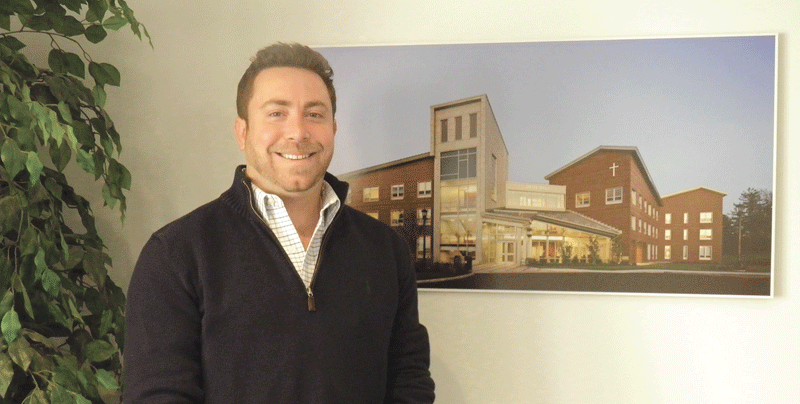
Daily News

EAST LONGMEADOW — FieldEddy Insurance announced the appointments of Gina Clark as finance manager as well as Sara Goodreau and Carla Dawley as personal-lines account managers. Clark will be responsible for training and supporting the finance-team members on all aspects of accounts payable and accounts receivable. Previously, she worked for several years in the finance and human-resources departments at Meyers Brothers Kalicka, P.C. Goodreau holds her CISR and CIC designations, and has worked as a personal-lines account manager for more than six years. Her knowledge of various computer operating systems will benefit Goodreau as a staff trainer, and she will assist with operational tasks. As a personal-lines account manager, Dawley will apply her knowledge in both the insurance and banking industries to provide exceptional customer service to her existing and new clients. Dawley has her P&C license and is currently working on obtaining her CISR designation. “We are pleased to continue our growth with the addition of these new hires,” said Timm Marini, president of FieldEddy Insurance. “It is a very exciting time for our agency, and these three women have proven industry experience, which I know will provide substantial benefits to both our company and, most importantly, our clients.” Clark will be based out of the East Longmeadow office, while both Goodreau and Dawley will be located in the South Hadley office.

Opinion
Giving Credit Where It’s Due

When Kevin Kennedy took over as Springfield’s chief development officer in late 2011, BusinessWest asked the long-time aide to Congressman Richard Neal why he wanted to take on that rugged assignment at that point in his career.

He started with an answer you might expect, something about how this was a considerable challenge and how he liked challenges, especially this one. He then gave a reply one might not expect, unless they know him well.

“I’ve proven I can get things done,” he said with a voice brimming with confidence. “And that’s what the city needs right now — someone who can get things done.”

Kennedy was referring to such projects as the new federal courthouse on State Street, a Neal-led initiative where he was essentially point person; the State Street corridor project, another Neal initiative, which enhanced a lengthy stretch of that road; and Union Station, a project that was not yet started when he moved into his city office on Tapley Street, but one that’s well on its way, largely because of his persistence and the belief he shared with Neal that the long-shuttered landmark was a key to further development in the city.

We’ve long been skeptical about what a revitalized Union Station means for Springfield, but there is no debating that, over the past two and half years, Kennedy has shown that he can get things done, and we believe he’s in large part responsible for a can-do attitude that exists now in this city.

And that’s important, because for too long, there had been a ‘can’t-do’ attitude here, one that stifled growth, especially when it involved the private sector.

Before elaborating on Kennedy’s track record to date, we have to admit that he’s benefited from being in the right place at the right time. Indeed, this a time when Baystate Health boldly went forward with its $250 million Hospital of the Future project despite a balky economy; when UMass Amherst, amid seemingly non-stop prodding to do something, anything, to help bolster Springfield’s downtown, came forward with plans to build a satellite center there (the welcome center is already open); when the state has committed to spending more than $200 million to fix the viaduct portion of I-91; when the state wanted to help the city by making it the site for a backup data center; and, last but certainly not least, when the gaming industry made Springfield the city of choice for the Western Mass. resort casino.

Those projects account for a huge chunk of the $2.5 billion in development projects recently completed or in various forms of progress in Springfield, as outlined at a recent event held at CityStage to show just how much is happening in the City of Homes beyond the casino planned for the South End. And while it’s fair to say that most of that would have happened no matter who was in the chief development officer’s chair, these projects did not happen in a vacuum.

Instead, they happened because city departments and economic-development agencies are coordinating their efforts in ways we haven’t seen in some time, and also because there seems to be an actual development plan for Springfield — again, something we haven’t seen for a while. And Kennedy deserves credit for both.

The plan involves using one project to leverage further development in a given area and create momentum. This was seen on State Street, where the courthouse, data center, and corridor enhancements have spurred new projects, such as a planned grocery store and restoration of the Gunn Block, with more in the works. On Main Street, meanwhile, the plan is to take momentum from Union Station, the UMass satellite center, and other initiatives to create a long stretch of progress from the North End, where several new medical facilities have opened, to the tornado-ravaged South End and the planned casino site.

From there … well, the plan is to generate additional momentum through more success stories and more evidence that Springfield is a place where things can happen.

There is still considerable work to be done in this city, but Kennedy has proven that he can, indeed, get things done. And as he said, that’s what Springfield needs right now.

Banking and Financial Services Sections
Recent Data Breaches Should Serve as a Wake-up Call for Businesses

By LARRY SNYDER, Ph.D.

Larry Snyder

Larry Snyder

All organizations, regardless of industry or size, are subject to cybersecurity risks. So if you have a business and you don’t have a cybersecurity plan or cybersecurity business unit, as the famous line from a popular movie states, you should “be afraid … be very afraid.”

Security breaches have an enormous impact on organizations. They can result in loss of investments, legal costs, and an erosion of consumer and investor confidence. One needs to look no further than the recent Target breach to understand how publicized breaches negatively impact the reputation of an organization.

According to IBM’s “2012 Mid-year Trend and Risk Report,” companies are attacked an average of 2 million times a week. The report also indicates a 38% increase in reported incidences of loss, theft, and exposure of personally identifiable information as compared to the previous year.  Keep in mind, this report was issued prior to the third-quarter breaches of retail organizations that resulted in the compromise of more than 100 million records.

Risk Based Security released a report in February 2014 indicating that more than 822 million records were exposed during data breaches in 2013, nearly double the previous high-water mark. That equates to 2.2 million records per day, or 1,560 per minute.

Regulations such as Mass. Gen. Laws § 93H-1 et seq. and 201CMR 17.00 increased administrative responsibilities for understanding and managing cybersecurity risks within organizations.

To build the business case that it is imperative for industries to address cybersecurity concerns, we must first quantify the threat. While the data on security breaches continues to be a bit murky, as there is really no incentive for organizations to fully disclose when and what they have lost, the available data provides a somber view.

The “2013 Cost of Data Breach Study: Global Analysis” released by the Ponemon Institute reveals that, globally, the average cost of a data breach has increased from $130 per record to $136. In this same report, the U.S. has cited an average cost of $188 per record. For context, this means the Target breach cost approximately $20.68 million.

The Computer Security Institute and the FBI conduct an annual survey of computer crime and security. The majority of respondents are organizations with annual revenue over $10 million that allocate some portion of their overall IT budget toward information security. As alarming as the number of reported breach incidents is, what is perhaps more worrisome is the number of organizations that could not determine if they had experienced a data breach. According to the CSI/FBI survey, 9.1% of those surveyed indicated that they did not know if their organization had experienced a security incident in the previous year.

The reaction to recent breaches has led the public and investors to call on industries to develop a more proactive approach to cybersecurity risks. Effective governance principles demand that an organization’s leadership re-evaluate the role cybersecurity has within their organization. No longer can security be viewed as an expense that is implemented as an afterthought or a reactive exercise under the category of ‘the cost of doing business.’ The integration of technology into every aspect of an organization’s daily operation has made cybersecurity controls essential for continued success. In essence, cybersecurity has moved from an expense to a stand-alone business unit. While these units will not produce direct profit for an organization, they add revenue indirectly.

Organizations that effectively protect their proprietary data, including customer information, and can effectively respond to security breaches send a clear message to the public, investors, and regulatory agencies about their attitude toward security, and reap the rewards through increased consumer engagement.

Every level of an industry, including management, staff, vendors, and suppliers, has the responsibility of addressing and responding to cybersecurity risks. As a business unit, cybersecurity personnel are responsible not only for identifying risks, but also for implementing controls for early detection, investigating and mitigating cyberthreats, and taking corrective action to prevent further exploitation.

To accomplish this, cybersecurity departments must address the following essential elements:

• Improve threat detection through the implementation of risk intelligence and forecasting;
• Conduct security data-management analytics;
• Employ organizational risk consultants;
• Develop secure control design and implementation that aligns with business needs; and
• Implement organizational change through information-security awareness and training programs.

The data breaches of 2013 must serve as a wake-up call for business owners, managers, and cybersecurity professionals. If your organization cannot determine whether it has experienced a data breach, if you do not have an effective cybersecurity risk-management program, or if you have not positioned the cybersecurity function in your organization as an essential business unit, you are putting your organization at risk … a risk from which it may not recover.

Larry Snyder, Ph.D is director of the new MS in Cybersecurity Management program at Bay Path College. He has nearly two decades of experience in law enforcement, fraud detection, and auditing, working in this capacity for the U.S. Army and in a variety of industries. He is a pioneer in the field of cybersecurity management education and, prior to joining Bay Path, worked with the State University of New York’s Herkimer County Community College in obtaining national certification for its Cybersecurity program from the Committee on National Security Systems; (413) 565-1294; [email protected]

Features
Springfield’s New Police Commissioner Charts a Course

Page6CommishARTJohn Barbieri acknowledged that his analogy wasn’t perfect, but believed it worked on a number of levels, so he went with it.

He was talking about law-enforcement personnel and why many people don’t understand why they can’t prevent crime, or criticize them for not doing so. And he drew a comparison to getting a bad diagnosis from one’s doctor.

“For a community to expect the police to resolve crime in a city is like going to your doctor and being mad at him because you have cancer,” said Barbieri, a deputy chief who will become Springfield’s police commissioner next month. “If the doctor could go back 20 years and take the cigarette out of your hand or stop you from working at the asbestos factory, that would be one thing. Don’t be upset with him because you have cancer; be upset with him if he doesn’t treat it properly.

“I can’t go back 20 years and give the person who broke into your car an educational opportunity or parental discipline,” he went on. “The best I can possibly do is look at the trends and patterns from when such break-ins occur, be responsive and try to have police in that area, make an arrest whenever possible, and work with area residents and educate them about what’s going on in their neighborhood.”

If a community wants to make a serious dent in crime, there must be what he called a “holistic response” to the matter, and a police department will certainly play a key role in that, he said, adding that police must work in collaboration with neighborhood residents, other social agencies, the school department, and other players.

Indeed, collaboration has been the word heard most often in the many media interviews, neighborhood meetings, and other gatherings at which Barbieri has spoken or taken questions since he was named commissioner on March 19.

And it will continue to be heard in the weeks, months, and years to come, because it is the one-word thrust of Barbieri’s philosophy regarding public-safety initiatives and how to make them more effective.

Collaboration between police, the public, and neighborhood groups lies at the heart of the C3 (Counter Criminal Continuum) Policing program in the city’s North End, a multi-faceted initiative aimed at stemming gang-related crime, which Barbieri has co-led, and for which he and other organizers were named Difference Makers by BusinessWest in 2013.

Barbieri wants to expand that specific program to Mason Square, the South End, and Forest Park, but he wants the key ingredients in its success formula — cooperation and information from neighborhood residents — to become a city-wide phenomenon.

“The goal is to go into those neighborhoods and work with the residents to teach them that the department does care, legitimize our services to them, and show them we can be responsive,” he continued. “And then educate them with regard to their responsibilities with preventing crime in their neighborhoods and being our eyes and ears.”

And while working to inspire residents to take a more active role in public-safety efforts, Barbieri has a number of other goals and objectives — everything from making more effective use of available resources to improvements in crime analysis, to making sure the department is ready if and when a casino opens in the South End.

In a broad-ranging interview with BusinessWest, he addressed those issues and many others, and in the course of doing so, put that term ‘collaboration’ to early and repeated use.

Chief Concerns

The office at police headquarters that Barbieri will soon be vacating in favor of the commissioner’s space has an eclectic array of photos on the walls, everything from assorted views of his prized 1966 Chevy Impala — “driving it keeps me sane” — to an image of the World Trade Center the moment the second plane struck the south tower. He said he hung it there so he could point to it whenever someone says a major act of terrorism can’t happen in a city like Springfield.

There’s also a shot of him in a cruiser taken a few months after he joined the force in 1988, one of several times the city was beset with fiscal problems and the police budget was stretched thin — as the photo made clear.

“We didn’t have enough money to paint the cruisers black and white,” he said in noting why the car he was sitting in was all white (it came that way), and also why it looked beat up. “The car was in such disrepair that you had to leave it running at all times. It had a bad battery, so you ran it all night; if you shut it off, it wouldn’t restart, and you’d have to call a tow truck and get a jump.”

Several years later, during the Clinton presidency and a period of heightened federal assistance for law-enforcement efforts, things were much different. Springfield’s force numbered roughly 700 officers, nearly double the current number, community policing was in vogue, and the police could effectively “smother” crime in many ways and many places, said Barbieri, by effectively deploying all that manpower.

John Barbieri

John Barbieri has a number of goals and objectives for his department, including an expansion of the C3 Policing program into three additional neighborhoods.

Those days are gone, and they are, in all likelihood, not coming back, he went on, adding that this reality is why he places such a heavy emphasis on collaboration and involving city residents and a host of other partners in the process of combating crime and making the streets safer.

Talk of inspiring more collaborative efforts has dominated what Barbieri called the “whirlwind tour” he’s been on since he prevailed over two other deputy chiefs in the search for the successor to the retiring William Fitchet.

That tour has included interviews with many local media outlets, community meetings, and the release of his five “priority objectives” for the department and his administration:

• Initiate a movement toward a proactive, patrol-centered department ideology;
• Deliver improved response times;
• Create increased levels of service through clearer lines of delegation of authority and responsibility for line supervisors;
• Build relationships with stakeholders for collaborative problem-solving, enhanced communications, and unified effort; and
• Develop and implement measurement and feedback processes to modify and enhance operations as required regarding calls for service.

Barbieri borrowed the term ‘listening tour’ to describe the six weeks or so since he’s been named the new commissioner, and said it will continue for the next several months, and involve meetings and briefings with the Chamber of Commerce, the City Council and its various subcommittees, the press, concerned-citizens groups, and many other constituencies.

“Hopefully during the listening tour there will be educational opportunities for both of us,” he said. “I want and need to know what some of the concerns of the community are, although I’d like to think I’m fairly well plugged in. And the other part is educating people about this department; there are people out there who still think we have 700 officers and community policing and that we’re going to be able to focus on every small aspect of their concerns. We’ll work with them with regard to prioritization, and I have to work on attaining maximum efficiency here.”

It’s been a relatively quick ride to the top for Barbieri, who joined the force in 1988 after serving as a special police officer for Baystate Medical Center and later as a supervisor there.

Seemingly from the start, his work on the force has involved gangs and gang-related violence. Indeed, one of his first assignments was with the City Uniform Anti-gang Patrol, and after working on a patrol that focused on the city’s schools, whereby he became familiar with many at-risk youths, he was one of the city’s first two gang-intelligence officers.

He was named sergeant in 1995, lieutenant in 2001, captain in 2005, and deputy chief in 2009. In that latest assignment, he had a number of responsibilities, including supervision of the uniform division, the Police Academy, the Street Crimes unit, and anti-gang deployments, including the C3 initiative.

That work in the North End, which he remains involved with, has garnered local and national press, including a segment on 60 Minutes, with Barbieri sharing the spotlight with State Police Officers Michael Cutone and Tom Sarrouf, who drew inspiration for their counter-insurgency tactics from their experiences serving with the Special Forces in Iraq and Afghanistan.

That press has inspired a number of cities to explore creating similar initiatives, said Barbieri, adding that he was recently in Michigan, consulting with state police there on plans to create programs in Detroit, Lansing, Flint, and other cities.

“They’re running into a lot of the same problems in those cities that we ran into here — gang activity and economically impacted cities,” he explained. “And they have several cities that don’t have the financial wherewithal to increase their police departments. So they reached out to us because we have a plan and it’s working.”

Arresting Developments

Overall, the C3 program has been hailed as a major success — crime is down in a number of categories — and the initiative has shown what can happen when the residents of a neighborhood take an active role in making it safer by reporting crimes and providing police with information that could prevent more of them.

As an example, he pointed to a recent shooting on Osgood Street that remains under investigation. Thanks to shot-spotter technology, police were on the scene within a minute, and have received a number of leads from witnesses.

“The level of cooperation we get now down there is just unprecedented,” he said. “We got a number of tips and calls, and we continue to get tips and calls since the shooting occurred. That just didn’t happen before C3 Policing.”

It’s happening now, he said, because those involved in the program have been able to convince residents of the North End that there is a direct connection between this higher level of cooperation and improved quality of life. And this is something that has to happen in other neighborhoods, he said, adding that an obvious key is the simple act of reporting crimes.

“Statistics just tell you about reported crime,” he noted. “And if you look at the worst neighborhoods, where we have the shootings, the drug dealing, and other crimes that makes the newspapers and television, it’s all the little things, the lawlessness in that neighborhood — it’s permissive for all this to occur. And in those neighborhoods, they don’t report crime because they’re afraid, they’re inured, and they’re apathetic.”

The risk to doing all this is that there will be reported crime, something that might create apprehension among those who watch crime statistics or drive Springfield higher on those infamous lists of the most dangerous places to live, he went on, but when crimes are reported, police departments have a better chance of preventing more of them down the road.

Looking forward and acting on the assumption that there won’t be significant, if any, additions to the force in terms of personnel, Barbieri said one of his priorities is to review departmental procedures and initiatives with the goal of ensuring that people and resources are being used in the most efficient manner possible.

“The goal is to take a baseline snapshot of what we do, look at where we want to be, and analytically look at a transition method to get us there,” he said. “We need a projected plan and timeline — and I have the basis of that on paper and in my head — and get a management team in here, because as smart as I’d like to think I am, it’s much smarter to take the experience and intelligence of eight or nine people and put them together to come up with a well-balanced plan.

“The objective is to make us the most efficient department possible with the number of officers we have,” he went on. “There may be a time when I’ll go to the mayor for more police officers, but I’m not there yet.”

And those aforementioned partners that Barbieri listed, especially city residents, can play a role in making the department more efficient through the information they provide.

“In this modern era, what we need is for people to report crime; we need neighborhood residents to get involved and be the eyes and ears of the police,” he told BusinessWest. “And we need to look at that reported crime and put officers where it’s occurring. It’s less about free travel time for police officers for discretionary response, and more about directed patrol time, because there are so many things going on above and beyond what the sector officers may know from their own experience. Neighborhood residents and our computer experts here can predict trends and patterns, and we need to put officers where the dots are.”

Elaborating, Barbieri said another of his goals is to improve crime-analysis efforts, something Boston has been doing, in an effort to both stem crime and more efficiently utilize available resources.

“Instead of catching on to a series of breaks into homes after there have been 30 breaks, and have eight detectives follow up in hopes of catching somebody,” he said, “my hope is to catch on to a series of breaks after three or four them, have uniformed patrol officers patrol more heavily in those neighborhoods in an effort to apprehend that person, but, more importantly, to deter them.”

Looking further ahead, and toward the elephant in the room, the $800 million MGM Springfield gaming and entertainment complex planned for the South End, Barbieri said it will present new and different kinds of challenge for his department.

There are still some hurdles to clear before it becomes reality — especially a referendum question that will soon be in the hands of the Supreme Judicial Court — and it will be at least three years before a casino opens its doors, but Barbieri said the city, and his force, must aggressively move forward with the assignment of being ready.

“We have to plan, plan, plan, plan — that’s the biggest thing,” he said, adding that there will be visits to a number of cities that have casinos to observe, ask questions, and learn. “And once the details start to emerge as to just what we’re looking at, we have to start planning immediately. And then you have to plan to adjust your plan once it starts.”

Off-the-cuff Remarks

Thinking back on those days when Springfield had 700 police offers and could easily afford to paint its cruisers black and white, Barbieri said everyone knew that those conditions wouldn’t last forever — and they didn’t.

“We made the most of it while we had it, though,” he said, adding that the force has adjusted to the new reality, and it will continue to do so in the years to come. Part of that adjustment is stressing that holistic approach to improving public safety and then making it happen.

And this comes back to that notion of collaboration — a word you’ll keep hearing from the new police commissioner long after his listening tour is over.

George O’Brien can be reached at [email protected]

Sections Women in Businesss
Maura McCaffrey Takes the Helm at Health New England

Maura McCaffreyMaura McCaffrey remembers reading the want ad in her Sunday paper — Health New England was looking for a clinical pharmacist — and thinking this was a job she really wanted.

She had gotten to know many members of the staff at the Springfield-based health-insurance provider while working as a sales representative and then regional account executive for the pharmaceutical giant Eli Lilly, and had come to respect the company’s culture and team-focused way of doing business.

But there were some complications to making this career move. Indeed, McCaffrey and her family were living 75 miles east of Springfield at the time. Her twin sons were 4 years old. She had an office in her home, made her own hours, and drove a company car she would have to relinquish.

After some soul searching, though, she decided to apply, with the thinking that this was very likely to be a short-term assignment, a line or two on her résumé, and merely the latest example of what she described as a career-long pattern of being able to put personal fears and insecurities aside and take some risks to advance professionally. “My plan was to figure out what I could about managed care, and I thought I would be here 18 months, two years at the most.”

It didn’t work out that way, and she told BusinessWest that she knew this would be the case early, probably on her first day at HNE. But she didn’t tell her husband that until well after those 18 months she had originally given herself to figure out if this was going to work.

“I told my husband, ‘I have to apply for this job, I have to work at Health New England — this is my opportunity to find out what this company is all about,’” she recalled. “And he said, ‘well, that’s a little impulsive; you just read a newspaper, we live 90 minutes away. You want to take that job and make that commute?’

“I said I thought it would be worth it for 18 months,” she went on. “Three years later, my husband said, ‘you’re either all in on this and we’re going to move the family, or you’re going to find something else.’ And I said, ‘I’m all in — I just haven’t finished learning everything I want to learn from Health New England.’”

In the decade since, she’s gone from all in to all the way to the top.

Indeed, she recently succeeded Peter Straley as president and CEO, completing a succession process that began heating up over the past several months as Straley let his intention to retire be known, but has actually been a work in progress for several years.

hnelogo_cmykAs she talked with BusinessWest about her ascension, one that has quickly made HNE one of the largest women-led business in the region, McCaffrey said the company essentially put her on a path to the CEO’s office, and she took it, along with many more of those risks she described earlier.

There were several changes to the title on the business card along the way — she served as everything from Pharmacy Services manager to vice president of Marketing, Business Development & Medicare to chief executive officer — and that learning process she described earlier never stopped, and it won’t now that she has the corner office, she said.

Looking forward, McCaffrey said there are a number of challenges facing the healthcare industry and payers such as HNE, especially when it comes to controlling the cost of care and, overall, making the community healthier.

These two missions go hand in hand, she said, adding that the industry must somehow move from its current, and highly inefficient, fee-for-service model to one that rewards providers for keeping people from getting sick, not simply treating them when they take ill.

And one of the keys to progress is inspiring individuals to take responsibility for their own health, she went on.

For this issue, BusinessWest talked at length with McCaffrey about everything from that path she took to the CEO’s office to the factors that are keeping more women from gaining such a title, to the prospects for real — and effective change — in the business of providing affordable healthcare.

Exercise in Firm Leadership

When it comes to taking control of one’s health, McCaffrey, like her predecessor, practices what she preaches.

She said she’s generally up by 4 each morning and starts her day with exercise, for a minimum of 10 minutes, but usually much more. She’s at her desk by 6 or 6:30 — “that’s my best thinking time” — and quite often, that desk sits three and a half feet in the air.

Indeed, McCaffrey’s workspace includes a desk leaf complete with a small motor that elevates it to a height by which she can work while standing, which, she states, is far more healthy than sitting for eight or 10 hours.

“I sit in meetings all day, which isn’t good for you,” she noted, “so I stand when I’m doing e-mails and other work.”

How McCaffrey, the proud daughter of Irish immigrants who came to this country in the early ’60s, arrived at the CEO’s office with the so-called ‘standing desk’ is an intriguing story, one that begins at an old-fashioned corner drugstore in her hometown of Leominster, roughly 20 miles north of Worcester.

There, after school, she worked the soda fountain, scooped ice cream, served coffee, sold cigarettes and lottery tickets, and, when the pharmacist was busy, would go out back and help him fill prescriptions, usually doing the paperwork in this era before computers.

Eventually, the store’s owner tried to convince her to attend pharmacy school — and had to keep on trying, because she was initially, and continually, resistant to that idea.

“I said, ‘are you crazy? How would I ever know all these prescriptions and all this stuff?’” she recalled, adding that the pharmacist eventually tried to persuade her by highlighting the job-security aspects of the profession — one has to be licensed to do this work — and when that didn’t work, he focused on financial security and schedule flexibility.

“But again, I said, ‘thanks, but no thanks,’” she went on, adding that he finally sold her when he said she could attend UConn or the University of Rhode Island and pay in-state tuition because Massachusetts didn’t have a public pharmacy school. That was welcome news because she was paying for college herself.

As she was graduating from URI, the pharmacist who started her down this road was selling his five stores to CVS, but he essentially made McCaffrey part of the deal, so she worked for that chain for several years, and thoroughly enjoyed the work.

“I loved every minute of it — it was a phenomenal career,” she told BusinessWest. “You saw when people were getting healthier or better, or they’d share stories about their families — it was a great job, and I had a great team to work with.”

Part of that job was to do community-support programs, where she would speak on behalf of CVS and talk about the benefit of pharmacists or educate the public about their medications. And in the course of doing so, she became acquainted with people in the pharmaceutical industry, who encouraged her to join them.

Eventually — after being reminded that, if this didn’t work out, she could go back to pharmacy work — she made the leap, joining Eli Lilly first as a senior sales representative and then as a regional account executive, handling much of Central and Western Mass. and working with companies like HNE.

And this brings us back to that want ad she read in the Sunday paper, and the learning that she wanted to continue.

Healthy Outlook

As she talked about her first years with HNE, McCaffrey said there were plenty of learning opportunities, which eventually exposed her to every department in the company, the people who worked in them, and the processes for achieving continuous improvement and growth.

“They allowed me to take on opportunities that were stretch-risk assignments for departments where I had no idea, technically, what they did,” she explained. “But I knew I could work with people and I could help manage people, and we could get to the outcomes. And I also knew that, if you gave me time and let me sit down and work with people, I could understand the department and what they were doing.

“One of these was the call center,” she went on, “and later, it was enrollment, provider relations, and credentialing. I didn’t have a strong background in those departments, the people here are team players, but it’s all about collaboration; they’re OK if you’re not the world’s leading expert on call centers — as long as you’re willing to jump in, learn about it, look for opportunities to improve, and take care to develop the people on these teams, which I was.”

Taking full advantage of the opportunities given her, McCaffrey started moving up the ladder, from clinical pharmacist to Pharmacy Services manager to director of Pharmacy & Service Operations to vice president of Pharmacy & Service Operations. Then came another one of the exercises in risk-taking — assuming a new position essentially created for her: vice president of Marketing & Business Development.

“I had some marketing background from Eli Lilly — they put us through great training programs, but I didn’t go to college for marketing,” she explained, adding that she leaned on those who did to help build the HNE brand, while also engaging in business-development initiatives, such as launching the Medicare and Medicaid product lines.

After six years in that role, she was promoted to COO, another newly created position, which included everything she was already doing, in addition to sales and a new IT department.

By the spring of 2013, she found herself spending more and more time at Baystate Health — HNE’s parent company — working with its CEO, Mark Tolosky, and board members, and filling in for Straley at a number of meetings and events. Late that summer, not long after Straley made clear his intention to retire and the timeline to do so, Tolosky offered her the CEO’s job. She took over early last month.

Her new office is slightly larger than the one she’s occupied the past few years, and the responsibilities are certainly greater, but McCaffrey said her management style and her approach to working with others within the company won’t change.

When asked to describe it, she returned to that word ‘collaboration,’ which she described as the opposite of dictating, which is certainly not her style.

“I believe that, if you get teams to work together, you get a better product than if just one person is in a dictatorship role,” she said. “But, likewise, you can’t be afraid to make decisions; you need someone who can be decisive and, with either limited data or as much data as you have, make those decisions.

“More importantly, my leadership style is based on what we call our high-performance culture,” she went on, adding that there are three steps to creating it:

• Make sure employees know and understand that they are responsible for their own performance;

• Likewise, employees are responsible for the success of those who are critical to helping them get their job done, what the company calls ‘shareholders’; and

• Make it clear that employees have to give up their own agendas for the good of the company.

“You need to develop core relationships with the people you work with,” she went on. “To me, that’s the cornerstone of the high-performance culture we have here; you must develop relationships, even with the most challenging people, the people that are most difficult for you, the people who have opposite personalities than you. My expectation is that you will then understand where someone is coming from and empathize, put yourself in their shoes.”

Future Tense

Teamwork and a high-performance culture has enabled HNE to outperform competitors that are exponentially larger, said McCaffrey, and those qualities will be needed moving forward as the landscape for health plans becomes ever more challenging.

Looking ahead, she said that change is necessary — that aforementioned shift from the traditional pay-per-service model to one that rewards providers for keeping people from getting sick — and that it is happening, albeit not as quickly as most people would like.

“If we’re changing the way we practice medicine, from the fee-for-service, do-more-and-you-get-paid-more world, to one of population management and being responsible for a global budget for people, while at all times maintaining the highest-quality care possible … that’s not going to happen overnight,” she said. “But can I look out on Western Mass. and see flickers of positive behavior? I absolutely can.”

“But even with continued progress in population management, the real key to creating a healthier community will be to inspire people to take control of their own health and well-being,” said McCaffrey.

“That’s a challenge for every provider that interacts with someone; it’s a challenge for every disease-management group,” she told BusinessWest. “How do you convince someone that wearing a pedometer and walking 10,000 steps a day is really a good thing? They can read the material, they understand that, and they understand that, if they eat McDonald’s three times a week, that’s not good for their heart. Moving from knowing something to doing something, or not doing something, is the key.”

Now one of the few women in top-leadership positions among the region’s largest employers, McCaffrey was asked about these numbers and whether they are likely to change.

She said they might, if the business community becomes more willing to give women such opportunities and, more importantly, if women are willing to take the risks and do the hard work necessary to seize those opportunities.

“Women have to be willing to take risks and put themselves out there,” she said, adding that this goes for men as well. “If you want to sit back and hope that someone comes to you someday and says ‘would you like to be a CEO?’ then the chances of that happening are slim to none.

“But if you’re willing to manage your fears and your insecurities and say, ‘I don’t know how to manage a call center, but I know how to manage people, and if you know how to do that part of a job, the technical aspects will take care of themselves,’ then you can get the role you want — there’s no doubt in my mind,” she went on. “You have to be able to put aside those fears and say, ‘I can do this.’ You can’t be afraid; you can’t let fear hold you back.”

Bottom Line

It’s been a very intriguing 10 years for both the healthcare industry and McCaffrey since she told her husband she was “all in” on Health New England.

She’s shown repeatedly that she’s able to put aside those fears and insecurities she mentioned and not only reach for opportunities, but grasp them as well.

This is a philosophy that she believes permeates the entire company, and she’s intent on keeping it that way, as evidenced by the language in a global e-mail she sent to the staff just after she officially took over as CEO.

“I said that I was excited about what’s in store for us,” she recalled. “I said that there are times of change still ahead, and that if we keep to the core of who and what our company is, we can look at this change as opportunity and growth for the company.”

And as she goes about that assignment, she can certainly lead by example.

George O’Brien can be reached at [email protected]
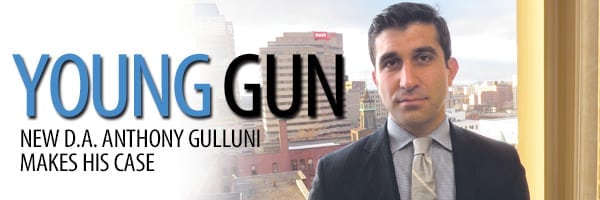
Departments People on the Move

Westfield-based Tighe & Bond, a civil and environmental engineering firm, announced that William Hardy, P.E., has been named the growing firm’s Chief Operating Officer. In this role, Hardy will work with the firm’s management to ensure optimum service delivery to Tighe & Bond’s expanding customer base across all of its geographic locations. Hardy, who will oversee all Tighe & Bond operations from the firm’s Westfield office, has 35 years of diverse professional civil and environmental engineering experience serving public and private clients. His design portfolio includes water, wastewater, solid waste, civil, highway, bridge, environmental, and building projects. In addition to his background in operations, he is well-known for his business-development efforts that have benefited clients throughout New England, New Jersey, and Texas. “Bill’s professional expertise and recognition in our industry will be an asset as we accelerate Tighe & Bond’s next phase of growth,” said David Pinsky, the company’s president and CEO. “He brings a commitment to high-quality services that is essential to our clients and our firm’s mission. We are thrilled that he has joined our team.” Hardy earned both his bachelor’s and master’s degrees in Civil Engineering from Northeastern University. In addition, he holds an associate degree in Civil Engineering from Wentworth Institute. Hardy is a licensed professional engineer in Massachusetts, Connecticut, Rhode Island, Maine, and Texas. He is also active in many professional organizations, including the American Society of Civil Engineers, the Boston Society of Civil Engineers, the New England Water Environment Assoc., and the New England Water Works Assoc.
•••••
Florence Savings Bank, a mutually-owned savings bank serving the Pioneer Valley through nine branch locations, announced the following:

Christopher Whelan

Christopher Whelan

Christopher Whelan has been selected as a recipient of the President’s Award for 2014. The President’s Award is a tradition established by the bank in 1995, affording employees the opportunities to nominate their peers for a prestigious award that recognizes outstanding performance, customer service, and overall contribution to Florence Savings Bank. Whelan was nominated by seven different departments at the bank. Whelan, who is a Collector at Florence Savings Bank, first joined the bank in April 2011 as a Teller at the King Street office in Northampton. He attended Holyoke Community College and UMass Amherst. Whelan is a participant in the Leadership Pioneer Valley Class of 2014. He is treasurer for the Salvation Army Service Unit of Northampton, a volunteer race committee member for Cutchins Programs for Children and Families, and a member and volunteer with Northampton Area Young Professionals. John Heaps Jr., President and CEO at Florence Savings Bank, said, “we’re proud of the work that Chris does every day. His exemplary efforts on behalf of the bank and the community make him an outstanding choice for this award.”
Michael Grandfield

Michael Grandfield

Michael Grandfield has joined the bank as Vice President/Commercial Lender. In this role, he will help oversee and further develop the bank’s commercial-lending portfolio. Grandfield comes to Florence Savings Bank with more than 25 years of banking experience, most recently as Vice President/Commercial Lender at Hampden Bank. Grandfield is a graduate of Bryant College in Smithfield, R.I., with a bachelor’s degree in Business Administration. He earned his master’s in Business Administration from American International College. He is active in a number of community organizations. An active participant in the Agawam Rotary Club, he is that organization’s past president and is a Paul Harris Fellow recipient. He has been recognized as Citizen of the Year by the Agawam Saint Patrick’s Committee. Grandfield has also served in leadership roles for several other civic organizations, including the West of the River Chamber of Commerce and the Agawam Cultural Council. Grandfield was additionally honored as a Governor’s Points of Light recipient for outstanding volunteerism during the term of Gov. Mitt Romney.
•••••
Dr. John Schreiber has been appointed president of Baystate Medical Practices and Chief Physician Executive of Baystate Health, joining the health system’s senior leadership team. Schreiber comes to Baystate from Tufts Medical Center in Boston, where he served as Chairman of the Department of Pediatrics. He was also Chief Administrative Officer and Pediatrician-in-chief of the Floating Hospital for Children, the 100-bed primary affiliate children’s hospital for Tufts University School of Medicine, where he was instrumental in forging clinical partnerships as part of the hospital’s collaborative-care delivery model serving four local community hospitals and patients and families in the Boston area. Earlier in his career, Schreiber served as Chair of the Department of Pediatrics at the University of Minnesota and was a faculty member of the Graduate Program in Microbiology. He played a leading role in the opening of the new University of Minnesota Children’s Hospital. “We are confident that Dr. Schreiber’s numerous achievements in teaching and mentoring the next generation of physicians in varied care settings, his nurturing of physician partnerships, his ability to support a robust clinical-research program, and in exceeding quality and safety standards will help us meet our strategic needs, the vision of our organization, and the needs of our community,” said Dr. Mark Keroack, executive vice president and chief operating officer at Baystate Health. Schreiber received his bachelor’s degree at Haverford College in Pennsylvania and earned his medical degree from Tulane University School of Medicine in Louisiana. He also completed a master’s degree in public health and tropical medicine at Tulane University School of Public Health and Tropical Medicine. He completed his pediatric residency and his clinical and research infectious-diseases fellowship at Children’s Hospital and Harvard Medical School in Boston. Schreiber’s research and laboratory work has been devoted to creating better vaccines to prevent devastating diseases in children. He has served on numerous professional committees for the Pediatric Infectious Disease Society, the Infectious Disease Society of America, the Society for Pediatric Research, and the American Assoc. of Immunologists, which awarded him its 2012 Distinguished Service Award. He has also authored more than 70 scholarly publications.

40 Under 40 The Class of 2014
Risk Oversight Officer, PeoplesBank, age 27

Robert-Raynor-01Armed with a business management degree from Springfield College, Robert Raynor said he wasn’t looking specifically at the banking world. “But it was definitely the most interesting option out there.”

So he joined PeoplesBank as a management development trainee in 2009 and was soon promoted to risk oversight auditor and then risk oversight officer. In that role, he develops and completes detailed financial and operational audits to evaluate the effectiveness of management controls, accuracy of financial information, and policy compliance.

“It’s a lot of testing, a lot of report writing, and a lot of interactions with various departments,” he said, adding that he enjoys this diversity because he has the opportunity to learn about many different areas of the bank, including ever-changing regulations, processes, and technology.

But Raynor also appreciates how PeoplesBank provides plenty of opportunities to improve its internal culture, which he takes by serving on the institution’s social committee, professional book club, employee appreciation committee, and especially the environmental committee, for which he’s currently co-president. On that group, he helped launch a program to promote and track employee carpooling, helps plan and run an annual environmental fair, contributes articles to a newsletter about green initiatives, and coordinates community events like cleanup days and tree plantings.

“Sometimes I feel like I really lucked out with where I work, and being able to come here directly after college,” he said. “I feel extremely lucky because not only do I have a number of opportunities professionally, but many opportunities to get involved in things like the environmental committee. I feel very good about the work I do and know I’m helping an organization involved in helping the community.

“It’s something that gets all the employees active,” he added. “The bank is great about giving us the time and resources to do these things.”

His community involvement extends to other organizations as well, including extensive work on the board of the Boys and Girls Club of Greater Holyoke.

“The Boys and Girls Club is such an amazing organization,” Raynor said. “I see the work that gets done there. It’s a great way to be involved in a community organization that directly helps children better themselves. It works.”

— Joseph Bednar

40 Under 40 The Class of 2014
Assistant Director, Miller Worley Center for the Environment, Mount Holyoke College, age 33

Ruby-Maddox-01Ruby Maddox has always had a heart for the environment. These days, she’s trying to put it at the heart of every student’s experience at Mount Holyoke College.

Her role at the college’s Miller Worley Center for the Environment involves coordinating partnerships with the various academic departments, the community, and national organizations to create on-campus programs, community projects, and learning opportunities for students centered on environmental literacy.

“Our goal is to help students connect to the environment regardless of what academic discipline they’re in, so they understand the implications of their subject of study,” she said. For example, a political science student might learn about land rights, deforestation policy, and other issues. “All these things intersect with the environment so students can have a true liberal-arts education.”

Perhaps more significantly, Maddox spearheaded the creation in 2002 of a youth gardening program in Springfield that evolved into an entity known as Gardening the Community, which is centered on urban agriculture, sustainable living, and youth development.

At the time, she was a theater major at Holyoke Community College, but she was active in community service, and was inspired by a professor’s recommendation to start the gardening program.

“We operate in the Mason Square area and teach kids how to grow food on vacant and abandoned lots,” Maddox said, adding that the program, which also emphasizes building healthy communities and developing youth leadership, recently received a grant from the Mass. Department of Agriculture, and is one of the only urban community-supported agriculture programs in the area. “We employ about 30 youth each summer. It exposes them to the fact that building community is possible, and that they can be producers and not just consumers.”

Today, she still serves as chair of the GTC board of directors, while also maintaining a blog, thecbosector.wordpress.com, that focuses on community-based organizations with an emphasis on urban philanthropy. She has also volunteered with Habitat for Humanity and was an organizing committee member for the Undoing Racism Organizing Collective in Springfield.

In other words, Maddox believes in helping urban young people build a healthier future, in every way.

“My big thing is experiential learning, both for youth and adults,” she said. “I love my work.”

— Joseph Bednar

40 Under 40 The Class of 2014
President and CEO, Griffin Staffing Network, age 38

Nicole-Griffin-01Nicole Griffin’s beliefs have played an important role in her career. They begin with her faith in God, love for people, and conviction “that we are commissioned to serve others” — beliefs that were strengthened when someone helped her land a job interview at MassMutual.

“I got the job and am so thankful for what I have. The door was opened for me, so opening doors for others has been the model for my life,” said the founder of Griffin Staffing Network and Springfield Mustard Seed, a club that helps startup companies and entrepreneurs obtain the resources they need to become successful.

Griffin, who is married with two children, spent 12 years in the insurance industry before launching her own business. She began in MassMutual’s contracting department, was promoted several times, earned numerous awards, and created a task force to help departments work together in a productive manner.

From there, she moved to an underwriting position at Phoenix Insurance in Hartford, then returned to MassMutual.

During a volunteer stint with Junior Achievement, a student who didn’t know how to dress for a job interview inspired her to become a certified job interviewer, then open ABC Interviewing Co., which she ran part-time. The work was fulfilling, but not profitable. “I loved watching people grow, but wanted to do more,” she said.

Volunteer work at St. John’s Congregational Church in Springfield had sparked Griffin’s interest in human resources, and in 2010, she left the insurance industry and opened her own staffing agency, where she helps teens and adults acquire job-related skills and find temporary and permanent employment.

In 2012, she founded Springfield Mustard Seed in response to clients who wanted to become entrepreneurs. She is also a board member of Intercity Youth Inc. and Springfield Preservation Trust, and a member of the 2014 United Way Women’s Leadership Council Steering Committee and the Order of the Eastern Star. She was event coordinator for the Save Our Springfield Block Party in 2012 and served on the W.E.B. Dubois Committee in 2011 and 2012.

“I’m amazed at where I am,” she said. “But you only become successful when you help others.”

— Kathleen Mitchell