Home Posts tagged Departments (Page 6)
40 Under 40 The Class of 2014
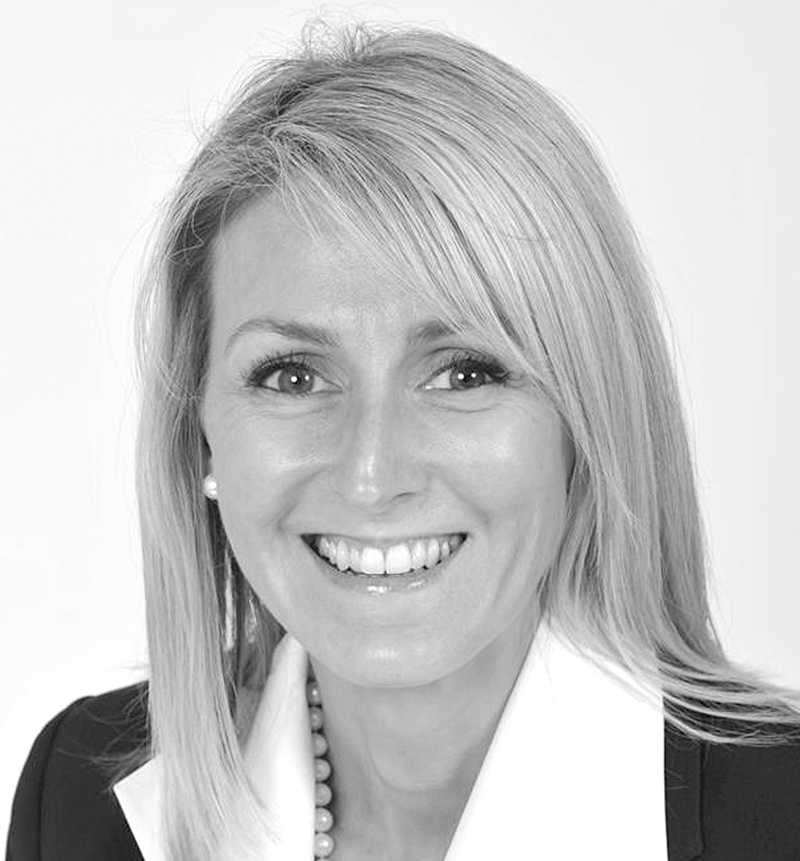
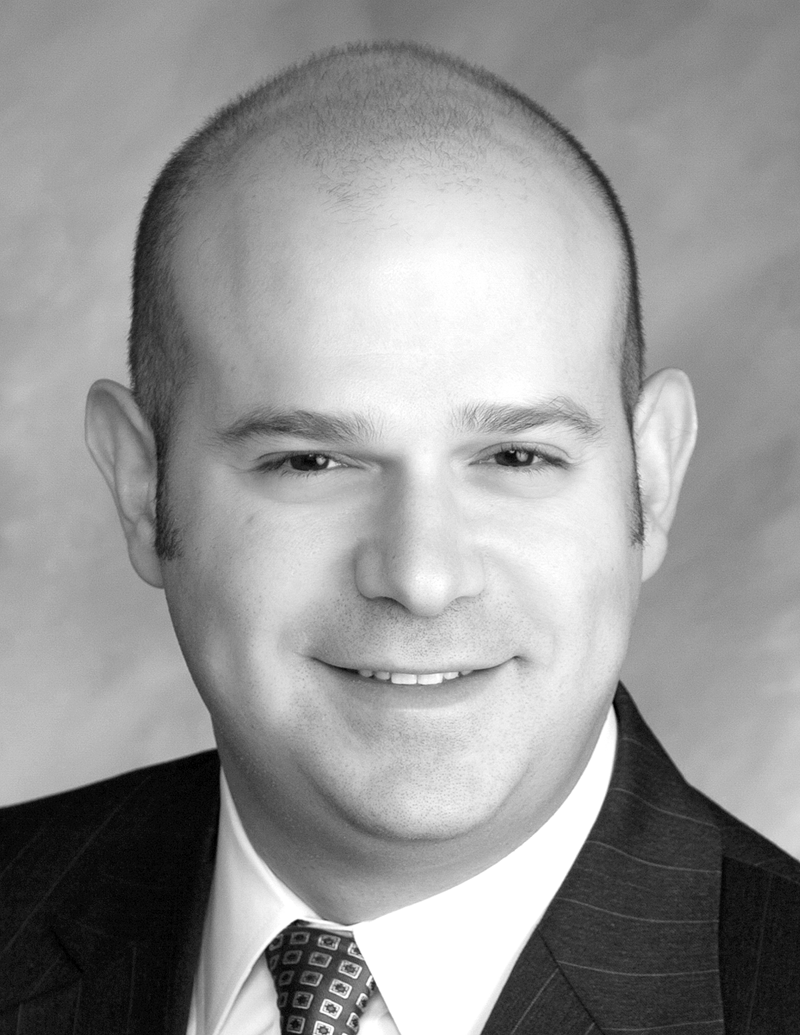
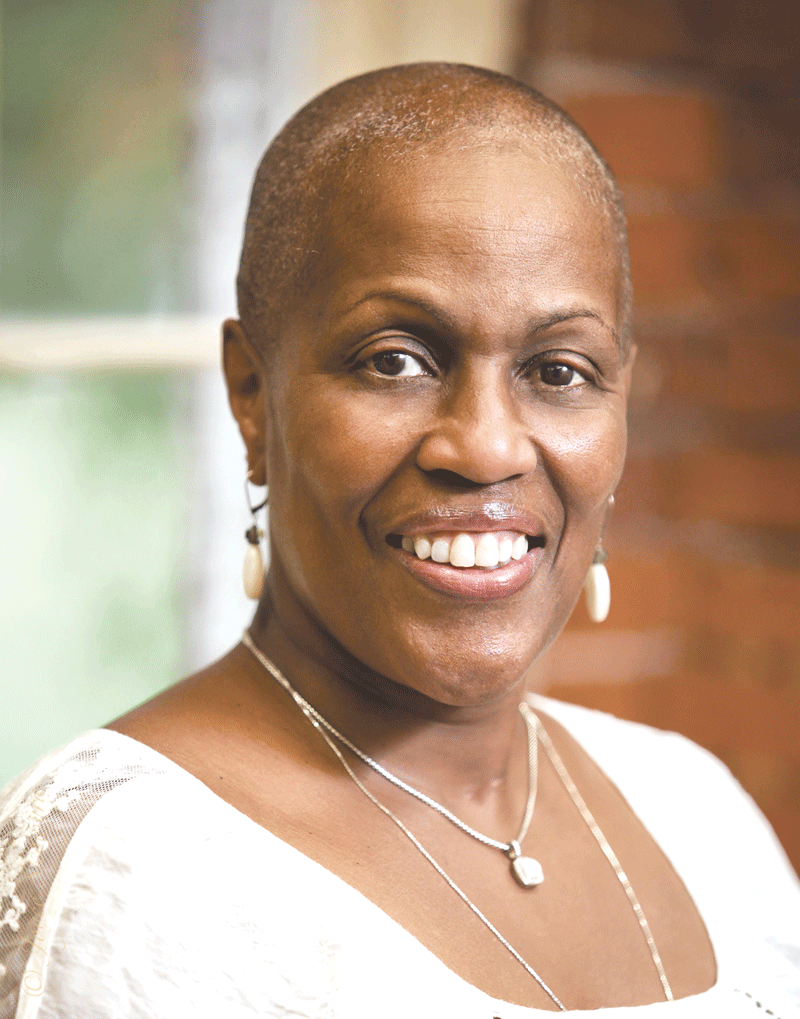
President and CEO, Griffin Staffing Network, age 38

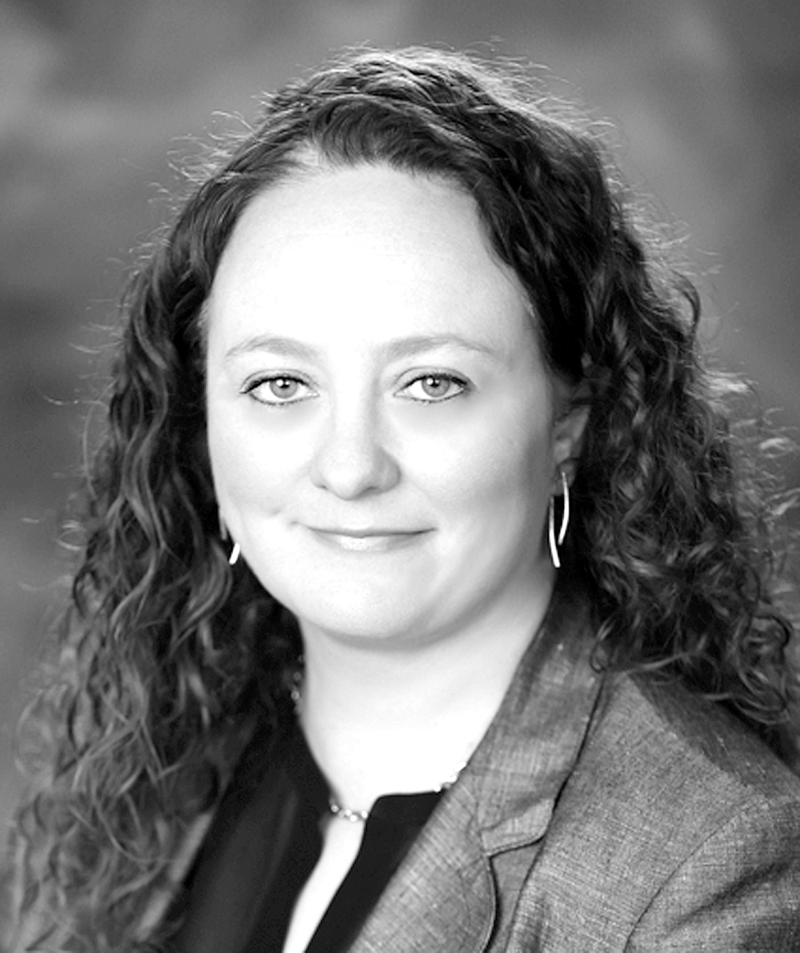
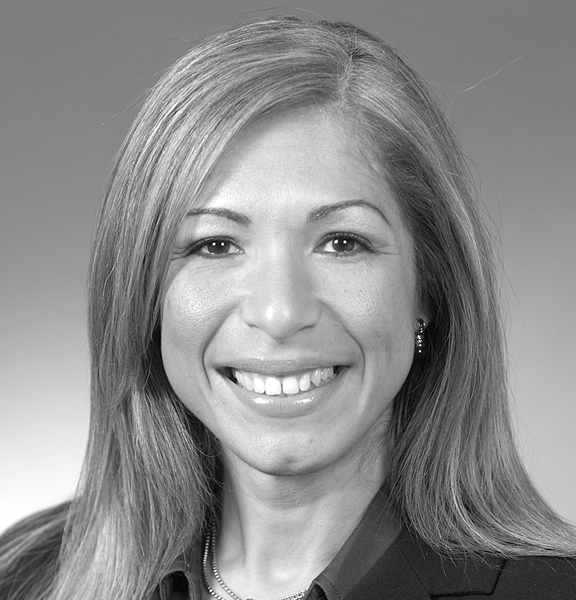
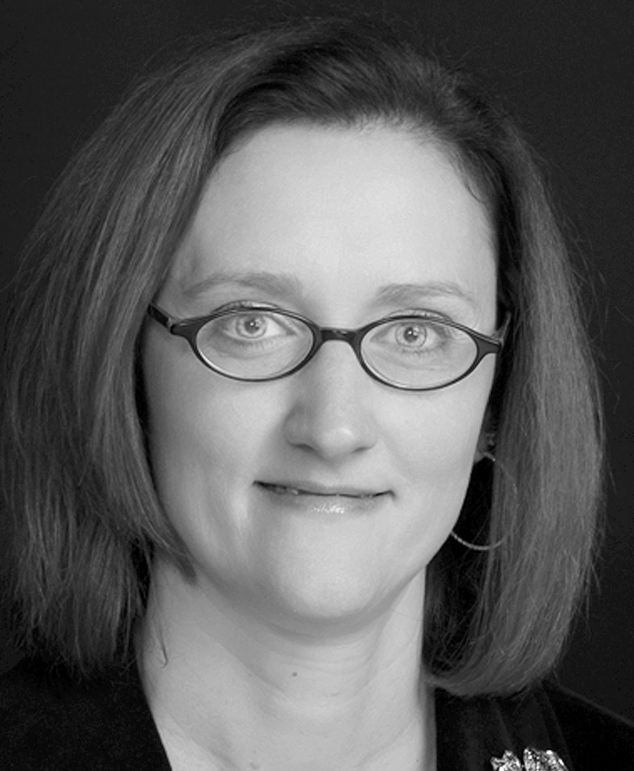
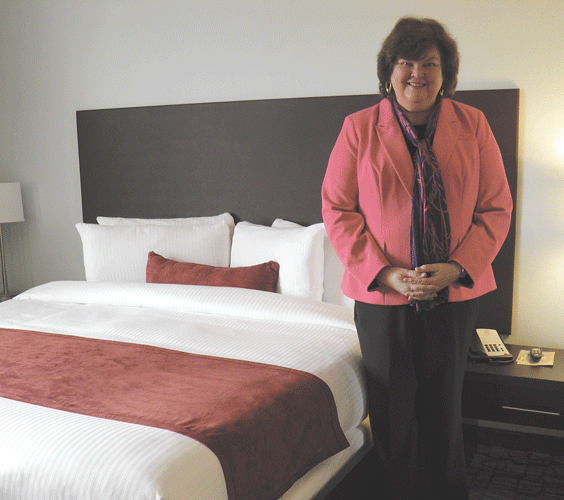
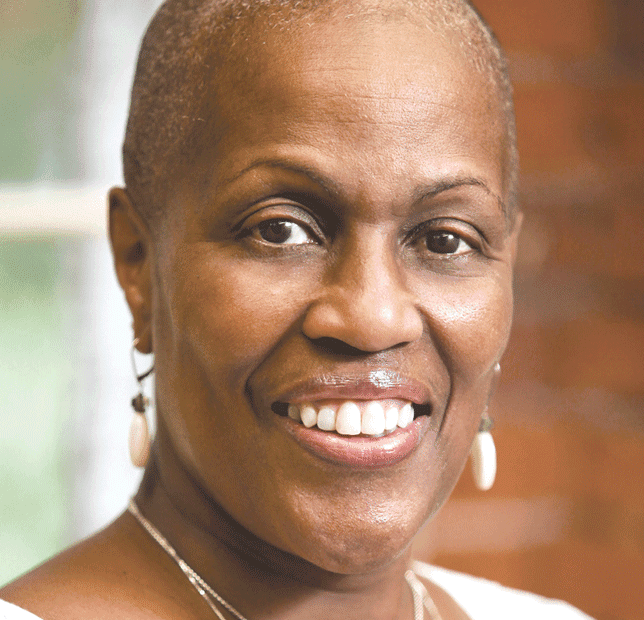
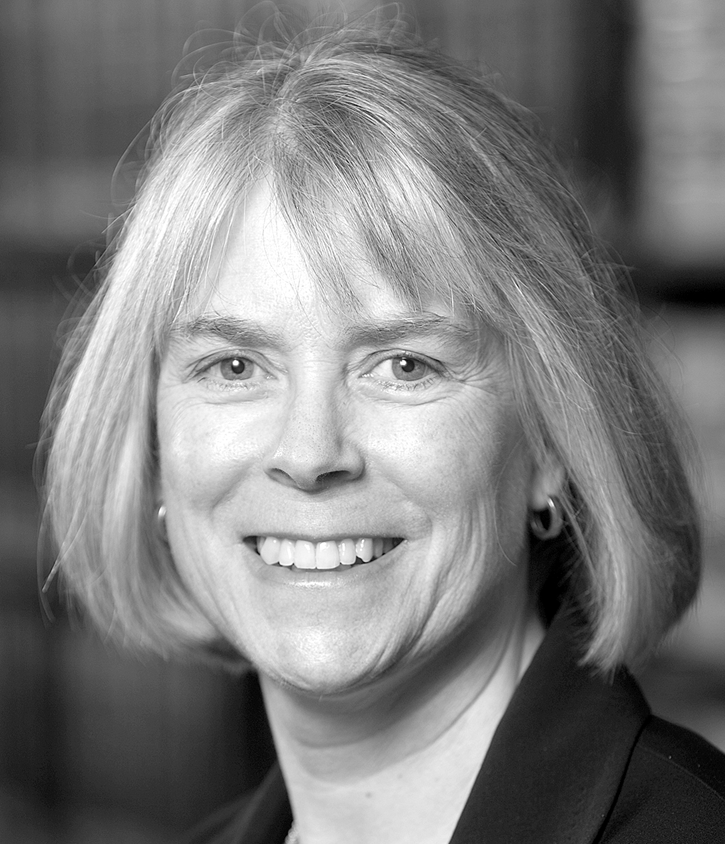
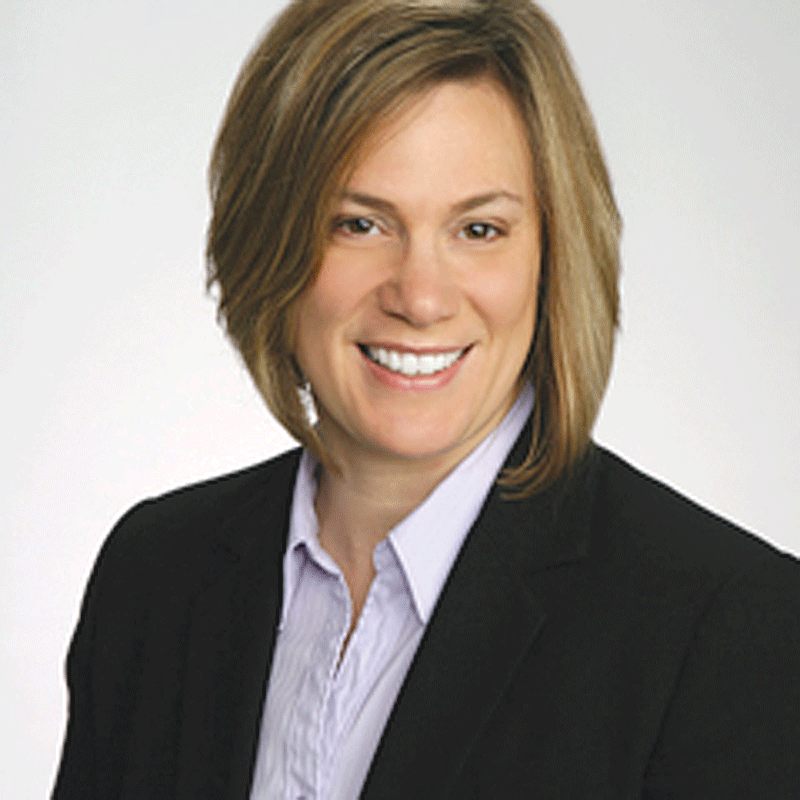
Nicole-Griffin-01Nicole Griffin’s beliefs have played an important role in her career. They begin with her faith in God, love for people, and conviction “that we are commissioned to serve others” — beliefs that were strengthened when someone helped her land a job interview at MassMutual.

“I got the job and am so thankful for what I have. The door was opened for me, so opening doors for others has been the model for my life,” said the founder of Griffin Staffing Network and Springfield Mustard Seed, a club that helps startup companies and entrepreneurs obtain the resources they need to become successful.

Griffin, who is married with two children, spent 12 years in the insurance industry before launching her own business. She began in MassMutual’s contracting department, was promoted several times, earned numerous awards, and created a task force to help departments work together in a productive manner.

From there, she moved to an underwriting position at Phoenix Insurance in Hartford, then returned to MassMutual.

During a volunteer stint with Junior Achievement, a student who didn’t know how to dress for a job interview inspired her to become a certified job interviewer, then open ABC Interviewing Co., which she ran part-time. The work was fulfilling, but not profitable. “I loved watching people grow, but wanted to do more,” she said.

Volunteer work at St. John’s Congregational Church in Springfield had sparked Griffin’s interest in human resources, and in 2010, she left the insurance industry and opened her own staffing agency, where she helps teens and adults acquire job-related skills and find temporary and permanent employment.

In 2012, she founded Springfield Mustard Seed in response to clients who wanted to become entrepreneurs. She is also a board member of Intercity Youth Inc. and Springfield Preservation Trust, and a member of the 2014 United Way Women’s Leadership Council Steering Committee and the Order of the Eastern Star. She was event coordinator for the Save Our Springfield Block Party in 2012 and served on the W.E.B. Dubois Committee in 2011 and 2012.

“I’m amazed at where I am,” she said. “But you only become successful when you help others.”

— Kathleen Mitchell

Briefcase Departments

North Adams Regional Hospital Closes
NORTH ADAMS — The board of trustees of Northern Berkshire Healthcare (NBH) approved a resolution late last month to close North Adams Regional Hospital (NARH), the Visiting Nurse Assoc. & Hospice of Northern Berkshire, and three medical practices owned by NBH. The decision was made in response to NBH’s worsening financial status. The organizations closed on March 28, but a court order kept the hospital Emergency Department open for the time being. “In the six years that I have been on the board, we have investigated every possible avenue and exhausted all options as we searched for a way to continue operating the hospital and its affiliates,” said Julia Bolton, board chair. “Board members, management, physicians, and employees have worked together with dedication and commitment to prevent this outcome. But now, given our finances and the daunting challenges that small rural community hospitals are facing in this healthcare environment, we can no longer continue.” More than 500 affected employees received layoff notices and assistance in filing for unemployment benefits. Northern Berkshire Healthcare Physicians Group includes Northern Berkshire Family Medicine, Northern Berkshire Ob/Gyn, and Northern Berkshire General Surgery, all in North Adams. “The implications of this decision are far-reaching, but our primary concern is for our patients,” said Timothy Jones, president and CEO of NBH. “We are working tirelessly to ensure a smooth transition to other care providers including other hospitals in the region.” Patients of Northern Berkshire Family Medicine and the VNA & Hospice of Northern Berkshire are being transitioned to other practices and agencies. “North Adams Regional Hospital opened 129 years ago in 1885, and as an institution we have served the people of this area with dedication and pride,” Jones said. “Many of those who work here have served our patients for decades, and today’s news is a shock. We wish it could be different.” Meanwhile, lawyers working for the state are seeking to keep emergency services operating for at least 90 days during any ownership transition or closure. Lawmakers are also discussing the possibility of merging NBS with a larger, more stable partner, most likely Berkshire Health Systems in Pittsfield.

Springfield Armor to Bolt for Michigan
SPRINGFIELD — The Springfield Armor, the NBA Developmental League affiliate of the Brooklyn Nets, have signed a deal with the Detroit Pistons to become that team’s minor-league affiliate and moves to Grand Rapids for the 2014-15 season. Owner Michael Savit’s decision to sell, first reported by Michigan-based mlive.com, came as a surprise to Springfield officials. The team has played at the MassMutual Center for the past five years. The new Grand Rapids franchise has an undisclosed multi-year affiliation agreement with the Pistons in place, and the sale has met league approval, according to mlive.com. It will play home games at The DeltaPlex Arena in Walker, a Grand Rapids suburb. The franchise will be locally owned, and the Pistons will establish a single-franchise affiliation with it. Currently, 14 of the 17 D-League teams have single-franchise affiliations with NBA parents. Detroit currently is one of six NBA teams sharing the Fort Wayne (Ind.) Mad Ants. D-League teams follow one of two ownership models — exclusive ownership by the parent NBA club, or a hybrid affiliation in which local ownership controls day-to-day and business operations while the parent club controls basketball operations. The Grand Rapids franchise will follow the hybrid model, whereby the Pistons will pay players’ and coaches’ salaries and run basketball operations, but local owners operate autonomously in other business areas, including marketing and merchandising.

UMass Football to Leave Mid-American Conference
AMHERST — The University of Massachusetts has announced that it will end its football affiliation with the Mid-American Conference (MAC) following the 2015 season. Athletic Director John McCutcheon said the decision was made after the MAC President’s Council elected to exercise a contract clause that offered UMass a choice of becoming a full member for all sports in the MAC or opting to remain a football-only member for just two more years. The university has been conducting a study of its current and potential conference alignments with the assistance of Carr Sports Consulting. “While the report is not complete,” McCutcheon said, “we believe full membership for all sports in the MAC is not a good fit for us. Because most of the MAC schools are in the Midwest, the additional travel would strain our athletic budget and pose considerable time-management challenges for our student athletes. We are confident that, within the next two years, we will find a more suitable conference for our FBS football program.” Currently, UMass Amherst has 21 varsity athletic teams (10 for men, 11 for women). Football plays in the MAC, and the other 20 teams compete in the Atlantic 10 Conference, Hockey East (men’s ice hockey), and the Colonial Athletic Assoc. (men’s lacrosse). UMass began playing as a football-only member of the MAC in 2012. McCutcheon added that “we remain committed to FBS football. Many institutions have successfully navigated this challenging period of conference realignment, and we will do the same.” Football coach Mark Whipple expressed confidence in the future of the university’s football program. “I was aware of this possibility when I accepted the position of head coach, and I believe this move is in the university’s best interest,” he said. “My focus is on building a program that we all can be proud of and that provides a great experience for our student athletes.” Whipple, the coach with the most wins in UMass football history, returned to the helm of the program this year. The Minutemen’s 2014 home schedule includes three games at refurbished McGuirk Alumni Stadium in Amherst and three games at Gillette Stadium in Foxboro.

Leadership Pioneer Valley Seeks Applications for Fall
SPRINGFIELD — Leadership Pioneer Valley (LVP) is now accepting applications for its 2015 class, which begins in late September. LVP is a regional leadership-development program for 40 existing and emerging leaders from the private, public, and nonprofit sectors. It helps businesses retain employees; enhances leadership skills, including collaboration, team building, confidence, and cultural competency; builds wider and more diverse networks; and increases community and regional understanding. The 10-month program immerses participants in an inspiring and results-driven curriculum that teaches hands-on leadership skills while examining critical issues that impact the region. LVP combines seminars and experiential learning at different locations throughout the Valley to foster the skills, collaboration, networks, and commitment needed to build the next generation of area leaders. The competitive application process prioritizes diversity by employment sector, geography, race, gender, and sexual orientation. “I have had the opportunity to work with some of the Baystate graduates of LPV,” said Steven Bradley, vice president of Government and Community Relations and Public Affairs at Baystate Health. “They are taking their learning seriously and upped their leadership within their departments and in the organization as a whole. It was a great experience for them and Baystate.” To find information about tuition, upcoming open houses, the 2014-15 program schedule, and how to apply, visit www.leadershippv.org. The application deadline is July 1.

Ted Hebert to Sue Big E Over Casino Fallout
WEST SPRINGFIELD — West Springfield resident Ted Hebert, owner of Teddy Bear Pools, who was opposed to the Hard Rock Casino proposed for the Big E fairgrounds and defeated in September by West Springfield voters, recently filed a lawsuit on behalf of himself and Teddy Bear Pools against the Eastern States Exposition, claiming his West Springfield casino opposition has led to Big E management to exclude Teddy Bear Pools from the 2014 Fair after 28 consecutive years as an exhibitor. “We filed suit today [March 31] in Hampden County Superior Court seeking injunctive relief that would allow Teddy Bear Pools, an exhibitor at the Eastern States Exposition for the past 28 years, to have a continued presence,” said Hebert’s attorney, Paul Rothschild of the Springfield law firm Bacon Wilson, P.C. “Prior to the referendum and after Ted Hebert expressed his personal opposition to a proposed West Springfield casino, documents we are prepared to submit in a hearing before the court will show that Big E management suggested Hebert ‘be a team player’ and withdraw his opposition to the casino. Since the referendum this past September, Ted Hebert has repeatedly reached out to fair management and members of the exposition’s board of trustees to maintain the long-standing relationship between Teddy Bear Pools and the Big E, and to continue a presence on the fairgrounds for this year’s fair. Hebert learned his company would not be welcomed at the 2014 Big E, and Teddy Bear Pools was omitted from the standard exposition communication about leasing space for the fall fair.” Big E President Gene Cassidy told the Republican that he was not aware of the lawsuit until he was asked about it by the newspaper. Rothschild said he planned to seeking a hearing in Superior Court based on the Massachusetts Civil Rights Statute, claiming that Hebert’s civil rights were interfered with by “threats, intimidation, or coercion” and exclusion from the upcoming Big E by fair management. The lawsuit will seek reinstatement as an exhibitor and an award of damages.

Business Confidence Up Slightly in March
BOSTON — The Associated Industries of Massachusetts (AIM) Business Confidence Index, continuing to hold close to a neutral 50 on its 100-point scale, rose slightly to 51.1 in March. “Business confidence in Massachusetts has been in neutral range for a year, dipping below neutral when there was a threat of federal default and when the  government shut down in October, but otherwise with not much upside,” said Raymond Torto, global chairman of research at CBRE and chair of AIM’s Board of Economic Advisors. Torto pointed to several factors that are holding the confidence index down. “One is a generally negative view of national conditions, attributable in part to deadlocked politics. The confidence numbers are persistently low in relation to the actual performance of the economy. Another, as we noted last month, is particularly weak confidence among small employers, who face severe competitive pressures and feel the weight of regulatory burdens. Finally, hiring trends are built into our index, and among employers participating in our survey, the ability to contribute to job creation has been less hearty than might be expected during a recovery period.” AIM’s Business Confidence Index has been issued monthly since July 1991 under the oversight of the Board of Economic Advisors. Presented on a scale on which 50 is neutral, its historical high was 68.5, attained in 1997 and 1998; its all-time low was 33.3 in February 2009.

Departments People on the Move

Bay Path College announced the following:

Brian Basgen

Brian Basgen

Brian Basgen has been chosen as Executive Director for Information Technology. Basgen is a collaborative leader with a decade of experience managing IT in both higher education and the private sector. Most recently, he was the Assistant Vice Chancellor for IT at Pima Community College in Tuscon, Ariz. He holds an MS in IT management from Trident University and a BA in history and philosophy from Flinders University;
Phylis Gedeon has joined the college as Associate Director of Compliance. Most recently, she was the Assistant Director of the Processing Unit in Financial Aid Services at the UMass Amherst. She earned her master’s of education in higher education at UMass and brings extensive and diverse knowledge in student financial services; and
Michael Albano has been named Associate Director of Operations, Student Financial Services for Bay Path. Albano was the Associate Director of Financial Aid at the Massachusetts Institute of Technology. A graduate of Western New England University, he earned his master’s of education at Springfield College and is currently working on his doctor of education degree at Northeastern University.
•••••
Chuck Gijanto has resigned as president of Regional Markets for Baystate Health. In this role, he serves as CEO of Baystate Franklin Medical Center and Baystate Mary Lane Hospital and is responsible for Baystate Medical Practices in the Northern and Eastern regions. His last day will be June 27. Giganto joined Baystate Health in 2008 and has done much over the last six years to engage physicians, senior leaders, employees, community members, and donors in important discussions to set strategic direction for the system’s community hospitals. He has strengthened operations; led patient satisfaction, service, and financial-improvement initiatives; overseen the medical staff development plan; fueled new programs; and recruited critical physicians and healthcare leaders to the organization.
•••••
Becker’s Hospital Review recently released its list of the Top 100 Chief Medical Officers of Hospitals and Health Systems. That list of notable physician leaders in the nation includes Dr. Mohammed Shafeeq Ahmed, COO and CMO of Baystate Mary Lane Hospital and Baystate Health Eastern Region. Physician leaders were selected for inclusion on this list based on their healthcare experience, awards they’ve received, and their commitment to continuous improvement in safety and quality care. Many of the leaders were nominated by their peers, and the list was vetted by industry experts. Ahmed joined Baystate Mary Lane Hospital in 2003 as a practicing physician, medical director of Baystate Medical Practices – Mary Lane Ob/Gyn, and chief of Obstetrics and Gynecology. He has also served as vice president of the medical staff and regional medical director for the Baystate Affiliated Physician Organization. In 2010, he began serving as chief medical officer. In 2012, he also assumed the role of chief operating officer for Baystate Mary Lane Hospital and Baystate Health Eastern Region.
•••••
Big Y Foods announced the promotion of Eric Swensen to Vice President of Center Store for the 60-store chain. Swensen will oversee all grocery, dairy, frozen food, health and beauty care, general merchandise, pharmacy, retail pricing, space management, and store brands. He will be responsible for developing strategies and tactical direction as well as planning and support for each of these departments. He will report to Michael D’Amour, executive vice president.
•••••
Diane Dukette has joined the Sisters of Providence Health System as Vice President of Fund Development. In this role, she serves as a key member of the Sisters of Providence leadership team, is responsible for all fund-raising and development efforts, and will lead major gifts. She will also design and implement a comprehensive plan for developing key external alliances by cultivating individual and philanthropic support. She will play a key role in driving philanthropic support for key system initiatives, including the recently announced expansion of the Sr. Mary Caritas Cancer Center. Dukette returns to SPHS with more than 20 years of experience in development, strategic marketing, and fund-raising. Most recently, she served as Vice President of Development at Cooley Dickinson Hospital in Northampton.

Departments People on the Move

Jessica West

Jessica West

Easthampton Savings Bank announced that Jessica West has been promoted to Branch Officer at the Northampton Street office. West served as Assistant Manager with Eileen Hickle as Branch Officer before her retirement at the end of February. She joined the bank as a Senior Teller for the Belchertown office in 2002, was promoted to Assistant Branch Manager in Belchertown in 2008, then Assistant Branch Manager at the Northampton Street office in 2012. West graduated from Springfield Technical Community College with an associate degree in mechanical technologies, and has taken various CFT courses.
•••••


Candace Pereira

Candace Pereira

The Gray House has inducted Candace Pereira to a three-year term on its board of directors. Pereira, a Commercial Lending Officer at United Bank since 2005, served most recently as Senior Credit Analyst following earlier positions as Senior Commercial Loan Associate and Mortgage Representative. Pereira holds a bachelor’s degree from the University of Massachusetts and an associate degree in business administration from Springfield Technical Community College. The Gray House is a small neighborhood human-services agency in Springfield whose mission is to help its neighbors facing hardships to meet their immediate and transitional needs by providing food, clothing, and educational services in a safe, positive environment in the North End of Springfield.
•••••

Denise Dukette

Denise Dukette

Hampden Bank
announced three new members to its Business BankingCommercial Lending group:
• Denise Dukette, Vice President, Commercial Credit Officer, joined the bank in June 2013, as Vice President and Credit Officer of Business Banking. She oversees risk management, credit underwriting, and operational support for the bank’s business-lending functions. Dukette brings more than 30 years of managerial and lending experience, having held leadership roles at commercial and community banks in the Springfield and Hartford markets, including Fleet Bank, TD Bank, and United Bank. She has managed credit departments, loan review, risk management, loan operations, and commercial lending, as well as working at a Western Mass. economic-development agency. Dukette earned a bacherlor’s degree in economics at Wheaton College and an MBA from UConn;


James Babcock

James Babcock

James Babcock, Vice President, Commercial Lending, has spent nearly all of his 25 years in commercial lending at community banks in the Northern Conn. market, including United Bank, Simsbury Bank & Trust, and First National Bank of Suffield. His new role will include business development in Massachusetts and reaching out into Connecticut. Babcock has a bachelor’s degree from George Washington University and earned an MBA from Babson College; and


John Downs

John Downs

John Downs, Vice President, Commercial Lending, brings more than 30 years of managerial and commercial-lending experience, having held leadership roles at community banks including PeoplesBank and Chicopee Savings Bank. Downs earned a bachelor’s degree in business administration from American International College and an MBA from Western New England University.
•••••


Michael Linton

Michael Linton

Michael Linton, Owner of Michael’s Party Rentals in Ludlow, recently graduated from the Certified Event Rental Professional (CERP) program, developed by the American Rental Assoc. (ARA), one of the party and event rental industry’s most distinguished certifications. Recipients of the CERP certification were recognized at the Rental Show, ARA’s annual trade show and convention, in Orlando, Fla. in February.
•••••
Rick’s Place Inc. recently announced that Donald Mitchell, Director of Projects and Facilities at the YMCA of Greater Springfield and current Vice President of the Board of Directors, succeeds founding board President William Scatolini, who, along with Dan Sheehan and Glen Garvey, established Rick’s Place in memory of their friend from high school, Rick Thorpe, who died in Tower Two of the World Trade Center on 9/11. Mitchell brings enthusiasm and experience to Rick’s Place; since 2008, he operated a local nonprofit in Springfield, assisting small businesses, and has served on a state board and several nonprofit boards. Scatolini’s tenure as President of the board from 2007 to 2014 helped to establish Rick’s Place, and he will continue his involvement with the organization as a member of the executive committee. Rick’s Place, which opened in March 2007 with six youth, provides support to grieving young people and their families. Seven years later, the nonprofit has worked with hundreds of youth throughout Hampden County.

Autos Sections
Auto Dealers Expect Sales to Accelerate in 2014

By MICHAEL REARDON
CarSalesDPartWith the recession in the rear-view mirror, the automobile industry is poised for another successful year fueled by a stronger economy and high demand.
While sales and leasing were strong last year, 2014 is predicted to be even more robust, according to local auto dealers and industry analysts. The good news for buyers is that they are still clearly in the driver’s seat.
“This will be a great year to be a consumer,” Mike Balise, vice president of Balise Auto Group, told BusinessWest. “There’s a real battle for market share. The price of cars will go down this year. The interest rate is the only area that will make things more expensive, but probably not this year.”
According to Don Pion, owner of Bob Pion Buick GMC in Chicopee, January is traditionally a slow month at his dealership because of the wintry weather, holiday credit-card bills arriving in the mail, and people curtailing their shopping. This year was different, though.
“Our numbers in January of this year were substantially ahead of January 2013,” Pion said. “From everything I see, 2014 will be a very good year for the auto industry. Last year was the first real strong year we had in a number of years; it was a good year for the auto industry in general, and 2014 will be better.”
Indeed, industry analysts J.D. Power’s Power Information Network and LMC Automotive teamed up on a study which predicted that new-vehicle sales would rise 3% in January 2014. The joint study stated that consumers purchased 847,000 new vehicles last month, the most January sales since 2004. According to the J.D. Power and LMC Automotive forecast, consumers are spending an average of $29,500 on new cars and trucks, approximately $300 more per vehicle compared with the same time period last year.
Based on January sales, analysts believe the coming year will be strong. LMC Automotive is predicting 16.2 million light-vehicle units will be sold in the U.S. in 2014, an increase of 600,000 vehicles over 2013, and the most overall since 2007. More than 85 million vehicles were sold worldwide last year, with Toyota taking the lead.

Chip Gengras (right, with shop foreman Alan Riccardone)

Chip Gengras (right, with shop foreman Alan Riccardone) says the recession hit every car dealer, but he expects sales at BMW of West Springfield to surge this year.

The average age of cars on the road is 13 years, as consumers largely stopped buying new cars when the recession hit. Local auto dealers believe 2014 will be the year when buyers open their wallets and replace their older models.
“There’s a little bit of a pent-up demand,” said Rob Pion, Don’s son and the dealership’s service manager. “For awhile, people were not buying vehicles. They were waiting for the economy to turn around. Sales this year will be somewhat based on need.”
Chip Gengras, president of Gengras Motor Cars, is so confident in the strength of the auto industry that he is setting a sales-increase goal at his BMW of West Springfield dealership higher than the one set by BMW of North America.
“BMW sold 309,000 units in the United States last year,” Gengras said. “The U.S sales increase goal for this year is 10%. Our goal is a 15% increase in sales.”
This is quite a contrast to where Gengras started when he bought BMW of West Springfield in August 2008, two weeks before the banking collapse ushered in the economy-crushing Great Recession.
“The recession impacted every car buyer and dealer,” he said. “People who bought BMWs stopped. People held onto their cars longer.”
Analysts predict new-car sales will rise 5% in 2014, but Balise believes sales in the Northeast will go up about 1% or 2%.
“North America is still the world’s biggest new-car market,” he said. “You will see growth this year.”
On Jan. 12, Jim Lentz, CEO of Toyota North America, told the Society of Automotive Analysts Automotive Outlook Conference in Detroit that the industry will begin a  “leveling off” period in sales, but an increasingly stronger economy will make 2014 another great year for the auto industry.

Buy the Buy
Balise, Don Pion, and Gengras are all owners of long-established area car dealerships and have weathered many ups and downs. Balise’s grandfather, Paul, started the family’s first dealership in 1919 in Hatfield. The business then moved to Front Street in Chicopee, where it was called Balise Motor Sales. Balise Chevrolet opened in Springfield, across the street from its current location, in the 1930s.
Today, Balise Auto Group sells a variety of domestic and foreign vehicles at more than 20 locations in Massachusetts and Rhode Island, and employs 1,050 people.

Mike Balise

Mike Balise says a heated battle for market share makes this a good year to be a car buyer.

Don’s father, Bob, started Bob Pion Buick GMC in June 1977 on Front Street in Chicopee in what was formerly Charapek Pontiac. The business added GMC to its line in 1990 and Buick in 1995. Bob Pion Buick GMC moved to its present location at 333 Memorial Dr. in Chicopee in 1991.
Today, Gengras Motor Cars is operated by Chip and his brother Jonathan. The company was launched in Hartford as a Lincoln dealership in 1937 by their grandfather, E. Clayton Gengras. E. Clayton (Skip) Gengras Jr. took over the business in the early 1970s.
The company currently boasts seven dealerships that sell a variety of domestic and foreign vehicles, and has 350 employees.
All three of the local auto dealers are confident that used-car sales are also slated to remain strong this year, although it is harder to find quality pre-owned vehicles. Don Pion said he has seen significant growth in the sales of certified used cars. Certified used-car features such as maintenance packages and extended warranties offer the customer a level of comfort that the vehicle is of good quality and will be well taken care of.
“It’s a nice product to offer customers with a lot of protection for them,” Pion said. The challenge with used cars is availability. Nice used cars are at a premium now.”
Gengras agreed, saying that reconditioned, certified vehicles that meet the manufacturers’ standards will be attractive to buyers looking for quality at lower prices.
However, while “leasing will stay hot and is a great value,” Balise said, finding an inexpensive used car “is almost impossible.”
Leasing became popular during the recession when people who would normally buy a new car instead opted to lease for a lower price. This trend is also expected to remain popular this year, as leasing options continue to remain affordable.
These days, customers can get a one-price lease package that not only includes the vehicle, but also features like OnStar and maintenance and service. Because leasing is affordable and is for a finite period of time, it is a good way for dealers to showcase an automobile and for consumers to drive something out of the ordinary.
“Leasing entices people to try the product,” said Pion, noting that Bob Pion Buick GMC averages about 50 units of sales and leases per month, and roughly half of those are leased.
Gengras said the numbers are about the same at his dealership.
“It gives you the opportunity to take advantage of cars that maintain their value,” he said. “You’re getting more vehicle for less money.”
Several trends have emerged in the auto industry over the past few years, and many will continue in 2014. Among them is a movement toward more and more people going online, not just to research different cars they might be interested in purchasing, but to visit a dealership website and select a vehicle, figure out payments, choose accessories, and more. “Customers have more power than ever to make these choices,” Balise said.
The car-buying experience is going mobile in another way, as customers are increasingly using their smartphones to do their shopping.
“It used to be people used their desktop computers; now it’s more mobile,” Gengras said. “Texting is starting to become prevalent; it’s the easiest way to get in touch with customers. But I can’t imagine a day when people won’t come into the showroom. Buying a car is such an emotional and significant purchase. People want to come in and feel the acceleration, feel the leather, hear the stereo.”
Another trend Pion has witnessed is customers who are willing to move to a smaller vehicle than in the past, but are not willing to sacrifice luxury. Manufacturers have responded.
“Over the past two or three years, things have been trending that way,” he explained. “You see a high level of content and luxury in smaller packages today.”
Rob Pion (right, with Evan Stoddard, business manager, and Joe Soucy, sales manager)

Rob Pion (right, with Evan Stoddard, business manager, and Joe Soucy, sales manager) says Bob Pion Buick GMC is seeing some pent-up demand.

Fuel economy is an ongoing priority that has become deeply rooted in the car-buying experience. While hybrid vehicles have become very popular, electric cars have not caught on.
“Electric cars are less popular because there are certain limitations to those vehicles that technology has not solved yet,” Balise said. “Performance is great, but length of travel and how long it takes to charge electric vehicles are an issue.”
Active safety features are constantly improving, as manufacturers are now including items that stop the vehicle when it is in danger of crashing into the car in front of it, or side-hazard-monitoring systems that lets the driver know when a vehicle is in his blind spot.
And customer service has become a major selling point for car dealers over the past few years. Customers have myriad ways of finding information about vehicles, so auto dealers must offer them a great experience when they come through the door, from attractive showrooms that offer amenities like wi-fi to extended hours for sales and service departments, to servicing cars quickly.
An example is BMW Genius, a program that includes highly informed client advisors that provide information about the products in a no-pressure way, especially high-tech features, Gengras said.
“We want to be friendly, efficient, and informative. We’re respectful of people’s time. We’re customizing the experience around what the customers want more today than ever before.”
Since vehicles are much more sophisticated these days, Balise noted, it is incumbent on dealers to make sure their employees in all departments are highly trained and up to date on the latest technology.

Drive Time
In the end, it all comes down to the quality of the cars in the showroom or on the lot, said those we spoke with. In this highly competitive environment, dealers cannot lure customers onto their lots and close a deal unless their manufacturers produce highly desirable vehicles.
“The most important thing is the product; the second-most important thing is customer service,” Pion said.
With those two elements of the equation standard, dealers are expecting 2014 to be another banner year.

Departments People on the Move

Christopher Marini

Christopher Marini

Theresa Glod

Theresa Glod

Teresa Perkins

Teresa Perkins

Meyers Brothers Kalicka, P.C. recently hired two new Associates, Christopher Marini and Theresa Glod, and announced the promotion of Teresa Perkins. Marini and Glod will work closely with clients in the firm’s Accounting and Auditing department.  Before coming to MBK, Marini interned for two years at Pignatare and Sagan, LLC, Certified Public Accountants, and earned a BBA from UMass Isenberg School and Commonwealth Honors College. He is currently pursuing his MSA at UConn, and is a member of the Mass. Society of CPAs. Glod worked previously at PricewaterhouseCoopers in New York City, and holds a BBA in Accounting and an MS in Accounting from Western New England University. She is currently sitting for her CPA exam.  Perkins was promoted to Senior Associate in the Audit and Accounting division; she was previously a Staff Audit Associate and, before coming to MBK, was a staff accountant at Big Y Foods. Perkins is a graduate of Western New England University, earning a bachelor’s degree in 2006 and an MS in Accounting in 2009. She is currently studying for the CPA exams.
•••••
Lori Gazzillo

Lori Gazzillo

Berkshire Bank recently announced that Lori Gazzillo has been promoted to Vice President and Director of the Berkshire Bank Foundation. Gazzillo will oversee the bank’s two foundations, one of which provides grants to nonprofit organizations in the communities served by Berkshire Bank, and the other in which the foundation administers the bank’s extensive employee volunteer program and scholarship program. Gazzillo has served for the past year as the foundation’s Assistant Director and assumed the key leadership role with the retirement of Peter Lafayette as former director after eight years of service on Dec. 31, 2013. Lafayette will continue in an advisory capacity. Gazzillo joined Berkshire Bank in July 2011 from Legacy Banks after Berkshire Bank and Legacy merged. While at Legacy, she served as Vice President of Community Relations. Prior to her banking career, Gazzillo worked for nine years at Massachusetts College of Liberal Arts (MCLA), overseeing the institution’s public relations. Currently she serves on the Berkshire Chamber of Commerce Board of Directors, Multicultural BRIDGE, and Berkshire Business and Professional Women. She holds a BA in Journalism from Keene State College and a M.Ed. from MCLA.
•••••
The Westfield-based engineering firm Tighe & Bond recently promoted five employees who have demonstrated exceptional performance, client service, and leadership. Three of the five have been promoted to Associate within the firm’s stock ownership program; they are:
Briony Angus

Briony Angus

• Briony Angus, AICP, a project manager who joined Tighe & Bond’s Westfield office in 2008. Angus is an environmental and land-use planner with 15 years of experience managing development projects that require approvals from local, state, and federal regulatory agencies. A certified land-use planner, Angus is a member of the American Planning Assoc., and Chair of the Amherst Conservation Commission. Angus has a BA from McGill University and a MA in Urban and Environmental Policy and Planning from Tufts University;


Susan Guswa

Susan Guswa

Susan Guswa, P.E, a senior engineer who joined Tighe & Bond’s Westfield office in 2003. She has more than 18 years of experience, serves as a project manager and design engineer for major wastewater upgrades throughout New England, and is Tighe & Bond’s Wastewater Technical Practice Group Leader. Guswa holds a BS in Civil and Environmental Engineering from Duke University and a MS in Civil and Environmental Engineering from Stanford University. She is a member of the Water Environment Federation and the New England Water Environment Assoc., and


David Popielarczyk

David Popielarczyk

David Popielarczyk, P.E., a senior engineer who joined Tighe & Bond’s Westfield office in 1986, and has more than 27 years of experience in the planning, evaluation, design, and construction management of water resources and wastewater projects. Popielarczyk received his BS in Civil Engineering from the University of Hartford, and a MS in Environmental Engineering from UMass Amherst.  He is a member of the American Society of Civil Engineers, the New England Water Works Assoc., the New England Water Environment Assoc., and the Water Environment Federation.
Also promoted into the stock ownership program were:
• Gary Roberts, an environmental scientist in the firm’s Westfield office; and
• Joseph Persechino, P.E., LEEP AP, a project manager in the firm’s Portsmouth, N.H. office.
•••••
The Springfield-based regional law firm of Bacon Wilson, P.C. announced the following:
Benjamin Coyle

Benjamin Coyle

Benjamin Coyle has been named a shareholder. He is a member of the firm’s business and corporate, estate planning and elder, litigation, municipal departments, and is a five-time recipient of the SuperLawyers Rising Stars distinction and a board member of the Western Mass. Council of the Boy Scouts of America. Coyle earned his J.D. from Western New England University School of Law and his B.S.B.A. from Western New England University.


Adam Basch

Adam Basch

Adam Basch has been named a shareholder of the firm. He is a member of the litigation department, practices in the areas of construction litigation, personal injury, general litigation, and commercial litigation. He is the former secretary of the Hampden County Bar Association, a six-time recipient of the SuperLawyers Rising Stars distinction, and serves as a member of the Wilbraham Planning Board and the United Way Allocation Committee. He teaches litigation and business law at Bay Path College and is the author of numerous construction and general litigation articles. Basch earned his J.D. from Western New England University School of Law and his B.A. from Union College.

Community Profile Features
Greenfield’s Location, Technology Aid Reinvention

Bob Pyers

Bob Pyers says developments ranging from expanded Amtrak service to new broadband infrastructure will help Greenfield grow and prosper.

As a former economic-development director for 13 years with the Economic Development Council (EDC) of Western Mass., Robert Pyers was consulted several times by various Greenfield municipal employees about growing the town at the intersection of Interstate 91 and Route 2. The answer was always the same.
“We told them you’re not going to get any traction on anything until you change your system of government,” said Pyers, now Greenfield’s economic development director, a position he’s held since Mayor William Martin unseated Greenfield’s first mayor, Christine Forgey, in a write-in campaign in 2009.
Forgey served two terms after the town applied for, and was granted, a city form of government in 2003; under her leadership and, now, with four full years under Martin’s guidance, the city’s unemployment rate has fallen from 8.3% to 6.7% — lower than both the Commonwealth and the nation, Pyers said.
“We’ve been very successful since converting from the selectman style of government to mayoral; it changed things because you have greater impact in terms of designing your business plan,” he said, noting that a mayor’s decision comes much faster than the colliding opinions of select board members and their executive council. “In the old system, it was very difficult for decisions to be made because there was always a naysayer.”
The critics are far fewer these days, Pyers continued, because the city is seeing traction in many areas, like a visible solar farm on a capped landfill and the invisible addition of underground broadband for high-speed Internet, VoIP, (voice over Internet protocol, which facilitates multi-media sessions over online networks), and future wireless Internet for businesses and residences.
“Reinventing itself” is how Martin characterizes Greenfield’s current efforts to become self-sustaining, just as it used to be just after the Civil War through its own gas and electric companies, which were sold to larger corporations in the 1930s. The mission is to now return to that efficient and environmentally sound existence.
Mayor William Martin

Mayor William Martin says Greenfield’s efforts to become more self-sustaining are nothing short of a reinvention.

“We’ve always had this opportunity, surrounded by rivers, roads, and land,” he said, “and we’ve got quite a population that is interested in sustainability and active in cooperatives — in fact, we’re the city with the most number of cooperatives in Massachusetts — so everyone contributes to the economy, the culture, and the governance. It’s wide-open; every opinion is valued.”
The reinvention of Greenfield, which is central to almost a half-million residents within a 25-mile radius, is possible, both told BusinessWest, because of the city’s best natural attribute: its location.
Greenfield has historically prospered in its Upper Pioneer Valley setting as a nexus for walking the famous Mohawk Trail — which became the well-traveled Route 2 that crosses over I-91 — and connecting with roads that lead to Boston, Springfield, Albany, and even Montreal, Martin said.
Revitalized Amtrak passenger service coming online along the Connecticut River in the next year, Pyers added, will help the city — the administrative center of Franklin County — continue to act as a net importer of diverse forms of labor, including manufacturing, retail, tourism, and public-services jobs.
“In the old-fashioned sense, Greenfield is the county seat,” Pyers explained. “We’re the center of the population and the center of all public services, as well as employment.”
For this issue’s Community Spotlight, Martin and Pyers explained how those in Greenfield are using this central location, and the transportation and new technology it supports, to spur future growth in a number of different ways.

Investing in the Future

Of Greenfield’s 9,500-strong workforce, 8,500 of those live in town, Pyers said. But a couple of years ago, the town lost a growing IT firm called HitPoint that moved to Amherst because the infrastructure it needed just wasn’t available in Greenfield. Once in Amherst, HitPoint grew from 10 employees to 35. Pyers said that isn’t going to happen in Greenfield again.
To that end, Greenfield, in partnership with the Department of Public Utilities, is in the last stages of approval to create what’s called a Municipal Aggregate Plan, providing the town with affordable high-speed Internet, broadband, and VoIP, preparing a level, high-tech playing field on which new and existing businesses can grow.
The project is being tackled in conjunction with the Massachusetts Broadband Institute (MBI), a division of the Massachusetts Technology Collaborative. Martin said the MBI has the authority to invest up to $40 million in state capital funding for broadband-related infrastructure and improvement projects. The MBI works closely with municipalities like Greenfield, broadband service providers, and other key stakeholders to create new, statewide digital opportunities. To that end, the MBI has ‘ringed’ Greenfield with seven miles of broadband, with access to about 25 large buildings, said Martin.
The three-phase effort will begin with updating the town’s current IT infrastructure; phase two will expand that hard-wired infrastructure to 25 more major businesses, and the third will benefit the public in the form of free wi-fi — downtown first, and then further outside the town center. Part of that effort involves a promising study by the Franklin County Council of Governments regarding the feasibility of a proposed Internet interconnect facility for a city-owned, 100-acre brownfield-turned-industrial park abutting I-91 — essentially a server farm and switching station for other providers.
As the city solicits private developers, Pyers said, there are two benefits: spinoff businesses that need to be located near high-speed connectivity, and the fact that the extremely expensive mechanics on the property would be privately owned — and the largest taxpayer in Greenfield.
Additionally, when Martin was elected in 2009, he immediately took advantage of the Green Communities Act of 2008, legislation that encourages investment in renewable energy. During the recession, Greenfield was able to build a revenue-generating, 17-acre solar farm on a capped landfill, and is instituting new energy upgrades for residential properties through a Community Development Block Grant (CDBG) program by working with the Department of Energy Resources. By mid-spring, the plan will allow Greenfield to purchase all the electricity for the town’s businesses and residences.
“It won’t cost the town anything, just our investment in looking for the best deal, which should be lower than any other entity, and our distributor, Western Massachusetts Electric Co., will handle house calls and billing,” Martin explained.
While a small community like Greenfield can’t influence the economy, it can prepare its infrastructure and sustainability efforts for when the national and state forecast picks up, said Pyers. “So we’re concentrating on making our investments in things that will make the cost of production in Greenfield, and for service industries, much more competitive.”

Smart Crossroads

Regardless of the industry, businesses take seriously both cost of production and availability of high-tech services, and both Martin and Pyers said several Greenfield firms will immediately benefit from the city’s investments.
They include New England Natural Bakers, producer of granola and tofu; Real Pickles, producer of naturally fermented pickles; PV2, an installer of solar farms and solar applications for business and residential use; Argotec, producer of plastic film for other manufacturers’ applications; Bete Fog Nozzle Inc., a high-precision maker of spray guns and devices used in industrial applications; and the Sandri Company, which provides a diverse combination of energy products (its leader, Tim Van Epps, was named BusinessWest’s Top Entrepreneur for 2013).
While Country Hyundai recently moved to brand-new headquarters in Northampton (see story on page 31), Dillon Chevrolet and Toyota of Greenfield have recently expanded in the west end of the city. More retail business development includes more than 200,000 square feet on the Mohawk Trail; a possible 100-acre parcel on French King Highway, targeted for manufacturing in the power-services industry; and a 40,000-square-foot expansion of an existing food-service business in town.
The renovation and expansion of the Franklin County Courthouse from 60,000 to 96,000 square feet is another bright spot, but one challenge will be to fill the 48,000-square-foot vacancy on Main Street left by the Juvenile Court when it moves to the larger courthouse, Martin added.
Wilson’s

A new hotel above Wilson’s is an example of how Greenfield is growing in myriad ways.

But it’s the renovation of a still-to-be-named, 52-unit boutique hotel on the upper floors of the former Greenfield Hotel, above Wilson’s department store on Main Street — one of the last remaining privately owned general-merchandise department stores — that has many excited about more rooms for business travelers and tourists, and the smart reuse of 30,000 previously empty square feet.
Scheduled to open within the next two years, the hotel will help support a new cultural-district initiative centered around the stately, but vacant, First National Bank building right off the Town Common, and the many events that the Greenfield Business Assoc., a division of the Franklin County Chamber of Commerce, produces each year, including the three-decade-old Green River Festival on the grounds of Greenfield Community College, which attracts thousands each July.
Residents take much pride in Greenfield Community College, Martin noted, adding that, while the city is surrounded by public and private schools, the newest addition to that list is the Massachusetts Virtual Academy, or ‘MAVA @ Greenfield,’ the first of only two distance-learning schools of its kind in the state.
As part of the Commonwealth of Massachusetts Virtual School, the MAVA is a K-12 public school, similar to a charter-school model, that operates independently under a board of trustees. Its 28 certified teachers primarily teach from a remote location using the Internet, Martin explained. Now serving 500 students, MAVA has the ability to serve up to 2,500. The state has indicated that there are approximately 19,000 resident students that would want to participate who are international musicians or athletes, have health issues, or are home-schooled students requiring hybrid classes.
Meanwhile, the MAVA is joined by the new $66 million (80% reimbursed by the state) Greenfield High School, which replaces the original 1950s structure. Classrooms will open this September to 500 students, allowing for growth up to 685, he explained. The entire new school will be fully complete by September 2015, and the original structure demolished.
“We’ll now have a combination of a 1,000-seat auditorium in our new high school and a Cultural Arts District in the downtown,” Martin added. “It’s going to be another catalyst for creating and maintaining momentum in Greenfield.”

Spreading the Word

After the high-school completion, a possible consolidation of public-safety departments, the need for a new senior center, and refurbishment of other 75- to 110-year-old structures are all up for discussion. As those plans develop, the return of improved Amtrak passenger service — for trains topping 75 mph, running between New York’s Grand Central Station and Montreal — will allow more people to discover a reinvented Greenfield.
“When people come into Greenfield, they have that ‘wow, this is quite an interesting place’ type of response,” said Martin. “We’re hearing that more and more, and that spreads the word.”
While the physical changes in Greenfield include new building facades on Main Street that replaced older ones, the city’s biggest changes in the works can’t be seen because they’re either underground, in the form of broadband, or soon to be in the air, as wireless Internet.
“There’s a new vitality, and we’re moving at a different speed now,” Martin said. But while he’s always striving to create a more efficient city, Greenfield — true to its heritage as a county seat — also continues to benefit in every way from its advantageous natural setting.
“Obviously, the Mohawks, the Iroquois, the settlers, and the colonists all noticed the location,” the mayor said. “It’s location, location, location — so let’s use it.”

Greenfield at a Glance

Year Incorporated: 1753
Population: 17,456 (2010); 18,168 (2000)
Area: 21.9 square miles
County: Franklin
Residential Tax Rate: 20.72
Commercial Tax Rate: 20.72
Median Household Income: $38,219
Family Household Income: $46,412
Type of government: Mayor, City Council
Largest employers: Baystate Franklin Medical Center, Greenfield Community College, Argotec, Bete Fog Nozzle Inc.
* Latest information available

Elizabeth Taras can be reached at [email protected]

Banking and Financial Services Sections
Switch to Santander Banner Brings Some Change, but Also Stability

Sovereign Bank

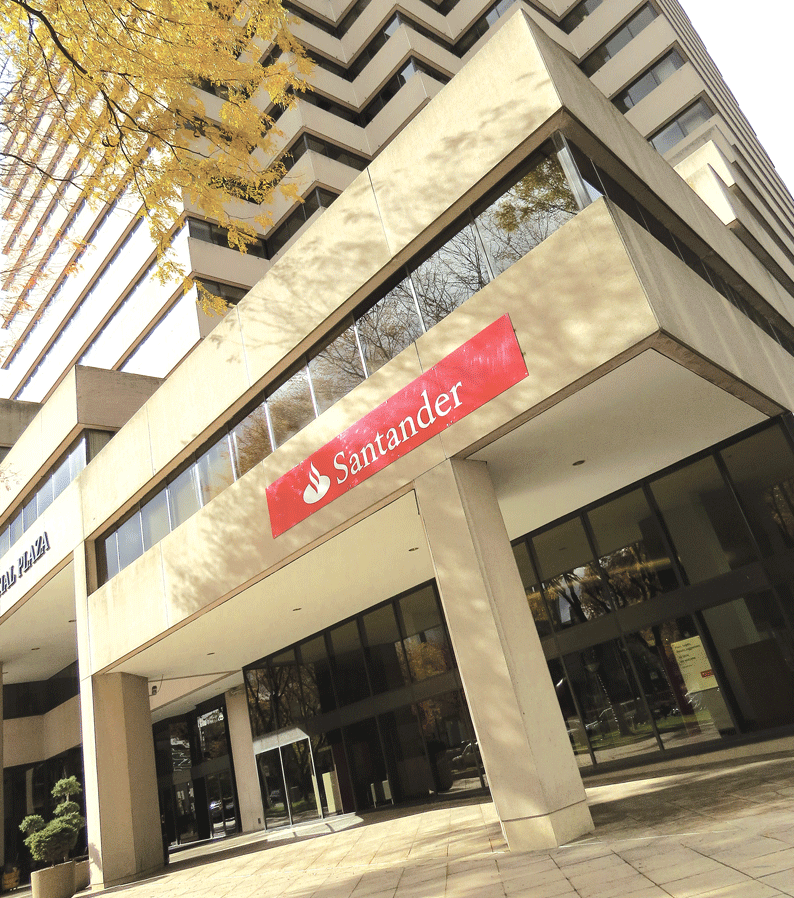
Sovereign Bank customers were met with a name change last fall, but Santander Bank leaders say other changes have been nearly seamless.

When the Sovereign Bank signs suddenly came down across Massachusetts last fall, replaced by the Santander Bank name, it was … well, anything but sudden.
“We branded as Santander on Oct. 17, but as you can imagine, a lot of work went on behind the scenes prior to the rebranding,” said David L’Heureux, Santander’s market manager of Commercial Banking for Massachusetts and New Hampshire, as he explained why the international banking giant, based in Spain, made the name change almost four years after acquiring Sovereign.
“We’ve been preparing for the rebranding for the past year and a half or so,” he told BusinessWest. “A lot of that behind-the-scenes activity was internal infrastructure changes, but also new product development, so that when we rebranded, we could bring new products and services to the market.”
Sovereign, one of the 25 largest retail banks in the U.S. by deposits — operating in Massachusetts, Connecticut, Delaware, Maryland, New Hampshire, New Jersey, New York, Pennsylvania, and Rhode Island, serving 1.7 million retail and commercial clients — was acquired by the Santander Group in early 2009. Locally, it maintains offices in Springfield, Chicopee, Westfield, and Enfield, Conn.
Initially after the acquisition, Sovereign did business as a financially autonomous member of the Santander Group, but October marked the first time it operated as a federally chartered U.S. retail and commercial bank under the Santander brand.
“Since being part of Santander, we received a national charter for the bank, which allows us to do a lot more commercial business,” L’Heureux said. “And we’ve invested in infrastructure to deliver our services in a consistent manner across our footprint.”
With 102 million customers and more than $72 billion in market capitalization, the Santander Group is one of the world’s largest financial institutions, with subsidiaries doing business under the Santander brand in the United Kingdom, Germany, Brazil, Mexico, Chile, Argentina, Spain, and Portugal. It has maintained business operations in the U.S. for more than three decades.
Since Sovereign became part of the Santander Group, the bank’s corporate headquarters were relocated to Boston.
“Although we’re the largest bank headquartered in Massachusetts — we have 228 branches in Massachusetts — we also bring a global dynamic to the marketplace,” L’Heureux said. “We operate in 40 different countries and 10 different major U.S. markets.
“What Santander brings to the table is the ability to help our clients do business in a more global fashion,” he continued. “We’ve invested a significant amount of capital and people in our international trade services group. We’re already seeing increased traction, helping clients do business overseas. These companies can be very large or very small; in our local economy, business needs vary, and we have the ability to address the full spectrum.”

Big Spenders
L’Heureux said the changes for Sovereign customers go well beyond a name change.
“We also spent a lot of time, effort, and money developing new products, both for consumer and commercial customers,” he noted. On the retail side, for example, a program called extra20 checking pays customers up to $20 per month for having at least $1,500 each month in direct deposits and paying at least two bills from their accounts online each month. No minimum balance is required, and no maintenance fee is charged.
“It’s not a promotion, but an ongoing product,” he explained. “It’s $20 for doing normal business with the bank. That’s been very popular; we’ve had a good reaction from the public.”
Meanwhile, “on the commercial side, we’ve unveiled or are unveiling more services,” he continued. “We have a purchasing card for corporate clients, akin to a credit card, that basically allows companies to have their purchasing departments acquire electronically, as opposed to going through a purchasing system internally. The goal is expediency and ease of operation, if you will, on the corporate side.”
As part of a planned $200 million initiative over the next three years, Santander has unveiled a series of other upgrades nationally, including:
• Network-wide refurbishment of the bank’s more than 700 branches, including improved space facilitating personalized, one-on-one banking;
• Completion of its newly renovated flagship branch on Beacon Street in Boston;
• Rollout of enhanced ATMs across its footprint in an effort to bring greater convenience and functionality to customers;
• A new, streamlined website design, featuring industry best practices in fee disclosure, improving transparency and ease of use for consumers;
• A new, comprehensive package of financial products and services designed to meet a wide range of business and consumer financial needs; and
• A substantial print, broadcast, and online advertising campaign across the bank’s markets, both locally and nationally, designed to familiarize customers with the Santander Group.
“We’re looking forward to acquainting consumers and businesses with the Santander brand as well as our expanded capabilities and resources,” said Kathy Klingler, chief marketing officer and director of corporate communications, in a press statement. “Our new advertising campaign will focus on how Santander will support our customers in achieving their dreams, goals, and ideas.”
Locally, L’Heureux said, those customers range from retail clients to small businesses to much more sizable companies.
“From the local hardware store to large multi-nationals, the bank has people dedicated to those different ends of the spectrum,” he told BusinessWest. “We feel we bring the strength of a large, global bank, but also the local commitment of a community bank.”

Street Level
That focus on local service is important in a region that values its community-banking culture.
To that end, Santander intends to promote corporate social-responsibility efforts by working with local agencies, nonprofit organizations, and higher-education institutions, Klingler said. In 2012, Sovereign Bank contributed more than $2 million across its footprint to nonprofits; issued more than $2 billion in community loans and investments to low- and moderate-income individuals, families, and businesses; and awarded more than $8.5 million in grants to 26 college and university partners.
Meanwhile, L’Heureux said, “in Western Mass., in the Springfield area, we have branches staffed with local people who know the market, who know the clientele. So I think we’ve been doing business in Springfield just as we are in Spain.”
With all the changes, he added, it’s important that customers understand what’s not changing.
“The people are not changing. Account numbers are not changing. Local offices are not changing. In fact, we’re reinvesting in our branches, repurposing all our branches,” he said.
“Our tagline is ‘a bank for your ideas,’” he added. “We think that applies as much on Main Street as it does on Wall Street. It’s very simple: we listen to clients, try to simplify our solutions for them, and enable them to achieve their objectives. That’s our mantra: listen, simplify, and enable.”

Joseph Bednar can be reached at [email protected]

Departments People on the Move

Dianne Fabrocini

Dianne Fabrocini

The Affiliated Chambers of Commerce of Greater Springfield (ACCGS) announced that Dianne Fabrocini has joined the organization as Executive Director of the ACGCS affiliate, the East of the River Five Town Chamber of Commerce (ERC5).
Fabrocini will serve as the liaison between the ERC5 and the ACCGS and will be responsible for carrying out the direction set by the board of directors. She will also work with ACCGS staff in developing membership programs, benefits, and services; producing events; and enhancing municipal relations in the five communities served by the ERC5: East Longmeadow, Hampden, Longmeadow, Ludlow, and Wilbraham. Fabrocini brings to the organization nearly 20 years of experience in marketing, public relations, and management. Most recently, she served as office manager for Vulcan Products Co. in Enfield, Conn. Prior to that, she owned Fabro & Associates, a professional sports-management company providing event planning, promotions, player representation, and contract negotiations to various clients throughout Western Mass., where she founded the Legends Celebrity Golf Classic and brought the first United Soccer League professional men’s soccer team to the region. Fabrocini also served as general manager and owner of the Springfield Sirens women’s soccer team, now known as the New England Mutiny, and held the position of regional director for the National Kidney Foundation. Fabrocini is a graduate of the University of Akron in Ohio.
•••••
The Board of Directors of the Amherst Area Chamber of Commerce recently announced new officers for 2014, led by second one-year-term president Larry Archey, Director of Facilities and Grounds at Hampshire College. Archey will be joined by Nancy Buffone, UMass Executive Director of External Affairs and University Events, as First Vice President, and Julie Marcus, Director of Marketing at New England Environmental, as Second Vice President. Other new board members include:
Mark Ellsworth, Center for Extended Care, treasurer;
Jerry Guidera, Spanish Studies Abroad, secretary; and
Jim Brassord, Amherst College, at large.
Kathryn Grandonico, Lincoln Real Estate, remains immediate past president. Returning board members include Aaron Jolly, the Pub; Meredith Schmidt, UMass Campus Center; Meghan Gregoire, PeoplesBank; Felicity Hardee, attorney; Niels la Cour, UMass Planning; Reza Rahmani, Lit and Moti; Barry Roberts, EV Realty Trust; G. Christopher Blauvelt, Innovara; John Kokoski, Mapleline Farm; and Youssef Fadel, New England Promotional Marketing. The appointments were effective Jan. 1 and formally ratified at the chamber’s annual meeting at the Lord Jeffery Inn on Jan. 15. The mission of the Amherst Area Chamber of Commerce is to create, maintain, and promote a vital, thriving business climate throughout the Amherst area and to initiate and support the civic, educational, recreational, and economic well-being of the Amherst area.
•••••
AJBmediab&w
Benjamin Coyle

Benjamin Coyle

The Springfield-based regional law firm Bacon Wilson, P.C. recently announced that Adam Basch and Benjamin Coyle have been named shareholders of the firm. Basch, a member of the litigation department, practices in the areas of construction litigation, personal injury, general litigation, and commercial litigation. He is a former secretary of the Hampden County Bar Assoc., a six-time recipient of the SuperLawyers Rising Stars distinction, and serves as a member of the Wilbraham Planning Board and the United Way Allocation Committee. He teaches litigation and business law at Bay Path College and is the author of numerous construction and general litigation articles. Basch earned his JD from Western New England University School of Law and his B.A. from Union College. He is a member of the firm’s business and corporate, estate planning and elder, litigation, and municipal departments. He is a five-time recipient of the SuperLawyers Rising Stars distinction and a board member of the Western Mass. Council of the Boy Scouts of America. He earned his JD from Western New England University School of Law and his BSBA from Western New England University.
•••••
William Fontes

William Fontes

Easthampton Savings Bank announced that William Fontes has joined the bank as Vice President Commercial Lending. Fontes has more than 30 years of banking experience in commercial lending and most recently was senior vice president, commercial banking team leader at United Bank and, prior to that, a commercial banking team leader at People’s United Bank. Fontes earned his bachelor’s degree in business management from the University of Massachusetts and his MBA, majoring in finance, from Bryant University.
•••••


David Pinsky

David Pinsky

The Food Bank of Western Massachusetts recently elected President and CEO David Pinsky to its board of directors. His three-year term, serving the nonprofit organization that has been fighting hunger in Western Mass. for more than 30 years, began this month. Pinsky, who serves as Tighe & Bond’s President and CEO, has worked at the engineering firm since 1988.  He also serves on the board of directors for the American Council of Engineering Companies of Massachusetts and the Community Foundation of Western Massachusetts. A professional engineer for more than 25 years, Pinsky holds an MS in environmental engineering from the University of North Carolina at Chapel Hill, and a BS in civil engineering from the University of New Hampshire. He is also an active member of numerous professional societies and organizations in the engineering profession, such as the American Water Works Assoc., the Massachusetts Water Works Assoc., and the New England Water Works Assoc.
•••••
Thomas Dowling

Thomas Dowling

Thomas Dowling, CPA, MST, was recently hired by Meyers Brothers Kalicka, P.C. for the position of Senior Associate, where he will be responsible for guiding staff-level accountants in their duties and helping to manage the day-to-day operations of engagements. Dowling has worked in various capacities at small to mid-sized CPA firms for four years. He graduated magna cum laude with a bachelor in accountancy degree from Bentley University and continued at Bentley to earn his master’s in taxation, graduating with high distinction. He is a member of AICPA, MSCPA, and the Beta Gamma Sigma International Business Honor Society.
•••••


Lydia Martinez

Lydia Martinez

Sarah Williams

Sarah Williams

The YMCA of Greater Springfield recently announced the addition of Lydia Martinez, Assistant Superintendent of Springfield Public Schools, to its corporate board of directors, and named Sarah Williams the new chairperson. Williams, the Vice President of Enterprise Risk Management at the Hartford Insurance, joined the YMCA of Greater Springfield board in 2011.
•••••


Dr. Junie Baldonado

Dr. Junie Baldonado

Dr. Junie Baldonado recently joined Ludlow Family Dentistry and doctors R. Carl Szarlan, Joseph Wegiel, Frank Mitera, and Michelle Roberts in providing general dentistry to the families of Ludlow and the surrounding towns. Baldonado is a graduate of Loma Linda University School of Dentistry in Riverside, Calif. He attended NYU for his undergraduate work and majored in fine arts, while completing the pre-med requirements for entrance into dental school. Baldonado had been practicing in the Sacramento, Calif. area prior to joining the Ludlow dental practice and is now accepting new patients and in all phases of dentistry.
•••••


M. Dale Janes

M. Dale Janes

Springfield-based NUVO Bank & Trust Co. recently announced that Chief Executive Officer M. Dale Janes was awarded the Sally Barnhart Leadership Award from the Assoc. for Community Living in appreciation for his voluntary leadership as president of the board of directors. Janes is the immediate past president and has been a member of the board of directors since 2006. He has also served on the finance and audit, investment, executive, and ad hoc committees, providing guidance throughout the purchase of a new headquarters, major renovations at the Inclusive Community Center located in Hadley, expansion of services for the medically challenged in Hampshire County, and developing a two-year strategic plan.
•••••
Christopher Boino

Christopher Boino

Christopher Boino was recently appointed President of Western Builders, a construction management and general contracting firm, a subsidiary company of the O’Connell Companies, headquartered in Granby. Joining Western Builders as a project manager in 2013, Boino brings more than 14 years of experience in the construction industry and is now responsible for the successful day-to-day operation of the company. Boino earned his MBA from Bentley University and a bachelor of science in Construction Management from Arizona State University’s Del Webb School of Construction. Boino is a LEED-accredited professional and is a certified project-management professional. He was previously employed in the Boston area with Shawmut Design & Construction and Cafco Construction. Western Builders was established in 1975 and has successfully completed new construction and renovation projects throughout New England in the areas of academics, healthcare, and housing.

Health Care Sections
Mercy Medical Center Takes High-tech Path to Greater Efficiency

Sharon Adams

Sharon Adams says the professionals who staff the ‘hub’ are specially trained to monitor and enhance the efficiency of the patient experience.

The screens tell the story. Hundreds of stories, actually.
They line the walls of a room at Mercy Medical Center, appropriately called the ‘hub.’ One screen details the occupant of each inpatient bed and their anticipated time of discharge. Another details patient movement in the emergency room, while other screens keep tabs on various hospital departments. And at any time, specially trained nurses known as clinical care coordinators, or C3s, can call up a patient’s status to make sure they’re getting the care they need in a timely fashion.
“We were looking to some system to pull the operations of the hospital together and find an effective way to improve patient flow and be more efficient,” said Daniel Moen, president and CEO of the Sisters of Providence Health System (SPHS), which includes Mercy. “We wanted a better experience for our patients, and also make it a better place to work for the staff by removing some of the bottlenecks we were dealing with.”
He found a solution when he traveled to Toledo, Ohio with Sharon Adams, Mercy’s chief nursing officer and senior vice president of Patient Care Services. There, they visited Mercy St. Vincent Medical Center, a large, tertiary-care hospital that had implemented technology from a company called Care Logistics. “Sharon and I were there about three hours and said, ‘we have to do this,’” Moen said. “You could walk into their patient-care hub and see almost everything going on in the hospital.”
So Mercy brought the technology to Springfield, dubbing it Care Connect. The effect, Moen said, has been transformative, enhancing communication between providers and ensuring that patients’ time in the hospital is not wasted.
“I call it our air traffic control system for the hospital. It allows us to track patients from the ER to the inpatient side and gives us targets for patient discharges,” he told BusinessWest, adding quickly, however, that technology alone cannot make a hospital more efficient. “It really was a massive process change, and we engaged hundreds of our employees in this process change.”
Those changes suggest that the healthcare industry’s shift toward accountable care — a model of which Mercy has long been on the cutting edge — is definitely taking shape on Carew Street in Springfield, and beyond.
For this issue’s focus on the future of healthcare, BusinessWest looks at how Mercy plans to reach its goal of achieving more efficient, coordinated care without sacrificing quality — a challenge for all hospitals at a time when growing cost constraints demand it. In many ways, this initiative shows how the future of healthcare is already here.

Hub of Progress
The human element is as critical to Care Connect as the technology. When someone is admitted to Mercy, a C3 works directly with physicians and other providers to track the patient’s progress, plan a schedule of tests and procedures, and come up with an expected discharge time.
The focus is on using time wisely, Adams said. For example, the C3s use details such as when the patient is being transported or when rooms are being cleaned to arrange tests and other care around his or her schedule.
“We’re trying to eliminate the ‘white space’ in the patient stay, when people are waiting for things to happen,” Moen added. “That’s not useful for the patient, and it’s not good for us to be less efficient than we should be. So this was really a unifying point — what can we do to make this better? And having it all coordinated from this hub is important.”
Last spring, in preparation for bringing the Care Connect system online, more than 1,500 employees in dozens of departments were trained on using the new software to coordinate with the C3s.
As for the coordinators, “they were specially trained for eight weeks, full-time, in this patient-flow system and documentation,” Moen said. “The hub is open 24 hours a day, seven days a week. It used to be that things slowed down on weekends; we’re trying to make sure we’re an efficient operation seven days a week, to get patients the services they need all the time.”
Mercy also implemented a program called ‘operational rounding’ every Wednesday, where members of the SPHS senior leadership team join front-line providers in patient-care areas. From their observations, they work together to find ways to improve efficiency and quality of care.
“We’ve made more than 75 specific improvements in patient flow, many impacting quality, such as reducing falls and pressure ulcers and hospital-acquired infections,” Moen explained. “Again, it’s about having an understanding of where we are and where we’re trying to go. This has really been a transformational project for us, and we couldn’t be happier with the results at this point.”
As impressive as the patient-management technology is, Adams added, it doesn’t operate in a vacuum. “We’ve spent years working through what the current processes are, in every department, every place the patient touches. We went through 47 or 50 departments, working with them to ask, ‘this is what we currently do; what can we do in the future? What’s the best thing for patients?’ We’re no longer saying, ‘what’s best for our own schedules?’ It’s all patient-focused.”
It’s also a metrics-driven program, Moen said, and all that data is fed directly to the hub. “We’re taking a lot of different milestones, and we can see where the delays are in the process. This gives us sort of a dashboard to see where we can improve further and document where we’ve gotten better.”
Adams stressed that the C3s have a supervisory role in patient care, and they’re trained to be experts in care coordination. “They understand the resources in the community, what insurance will pay for, and they update the insurance company about why the patient needs to stay longer.”
Documentation is critical. “Clinical documentation supports why that patient should be an inpatient, making sure we are capturing the severity of that patient’s diagnosis. That’s where they work very closely with physicians … saying, ‘you probably need to be documenting why the patient is more complex than we thought.’ They make sure we’re being reimbursed at the level of care we’re providing.
“The physicians feel it’s a very good resource,” she added. “They are pleased when the clinical-care coordinators say to them, ‘you just need to document this.’ They don’t see it as a threat; they see it as a great resource, reflecting all the hard work we’re doing for patients.”

Accountable to Patients
Hospital leaders across the U.S. understand they’re facing a new era of cost consciousness, driven by a growing, aging population, health reform that’s pushing more patients into the system, and the burden of new, expensive technology.
Accountable care is a model by which a team of providers — doctors, nurses, specialists, and therapists — are paid a certain amount to collectively treat a patient. The concept, which Mercy began to pioneer in Western Mass. almost a decade ago, stresses efficiencies like limiting unnecessary tests, but demands quality as well, because preventing rehospitalization is a key goal. Moen said Care Connect goes to the heart of that model.
“We’ve made great strides in all areas. We wanted to reduce length of stay and still make it a better patient experience,” he told BusinessWest. “And because we’re freeing up capacity on the inpatient side, the ER has become much more efficient; there are fewer situations where a patient is held in the ER, waiting for an inpatient bed.”
Mercy has made changes in the emergency area as well, getting patients to a physician or physician’s assistant quicker than before and fast-tracking less serious situations to clear capacity for patients who are more ill. “We’ve taken an hour off the door-to-door time for patients in the emergency room,” Moen said.
Care Connect has also aided the discharge process, he noted, as C3s help coordinate care beyond the hospital, whether it’s skilled nursing, home care, or simply setting up primary-care appointments and following up — all with the goal of preventing readmissions.
“We want to bring these concepts out to providers in other parts of the system, particularly behavioral health at Providence in Holyoke,” he said. “People are working as a team, less silo-based. It’s a much more planned process. It helps us be more efficient and minimize wasted motion, and it frees up staff to spend as much time as possible with patients.”
Adams said the effort has spawned nothing short of a culture change. “Providers and staff have more time to communicate together, as a team, like physicians years ago. That’s what patients loved, seeing a nurse and provider sitting with them, talking.”
The process also helps reduce anxiety for patients and families, she said, by sharing as much information as possible about what tests, procedures, and treatments are coming up, and when.
“Now we’re all on the same page. Patients are already feeling vulnerable, but now they have more control over their own schedule. We can tell them exactly what time the CT scan is, rather than saying, ‘oh, just wait for the phone call.’”
The hub has also helped C3s and other providers identify backlogs in the system in real time, which makes it easier to prevent them. “In the past, some of this data wouldn’t be available until weeks later, making it difficult to recreate what happened,” Adams explained. “The idea is to get you out safely with good care, and not keep you here any longer than you’d like or we’d like.”
More information — for patients during their stay, and for hospital leaders — is a constant goal, Moen said.
“Especially for patients with no working knowledge of the healthcare system, this gives them a better idea about their condition, and we can take some of the anxiety out of the situation patients find themselves in,” he told BusinessWest. “If we can do that, it’s a major accomplishment. We want to be a navigator for them, along with their primary-care doctor.”

Ahead of the Curve
As he showed BusinessWest around the hub on the hospital’s third floor, Moen called Care Connect “a very important subset of the whole ACO process, where we’re getting patients to the right level of care as soon as possible, and helping them stay well despite the chronic conditions they may have.”
But he admitted Mercy still has much to do — namely, make its zero-defect philosophy a reality through this renewed emphasis on efficient, coordinated care.
“If we’re perfect 99% of the time, that means 1% of patients didn’t get the care they deserve, and that’s not acceptable,” he said. “It’s not easy — medical care is very complicated, and patients are very individualized.”
But modern healthcare is only going to become more complicated, and health systems that have not moved accountable care from a conceptual buzzword to reality — as Mercy has done with Care Connect — will be at a distinct disadvantage in a challenging future.
“A lot of hospitals will have trouble catching up,” Moen said. “We didn’t want to be in that position. We always want to be out ahead of the changes.”

Joseph Bednar can be reached at [email protected]

Law Sections
Are You Up to Speed on the Advantages and New Regulations for 2014?

Hyman G. Darling

Hyman G. Darling

More and more people are starting to realize that reverse mortgages aren’t just for those struggling to keep their homes. These loans can also work for affluent retirees as a tax-savings strategy (using income-tax-free funds to pay off traditional mortgages rather than using taxable retirement-savings income) and for those who are looking for a cushion to keep them from selling investments at the wrong time. In prior years, it was fairly expensive to get a reverse mortgage, because the fees were considerably higher than those of a typical mortgage or home-equity loan, but that has changed. A reverse mortgage, also known as a home-equity-conversion mortgage, becomes a good solution for people who may wish to cash in on the equity in their house.
If you (or your parents) need additional funds for home care or possibly to pay the costs of living, including heat, taxes, insurance, etc., then a reverse mortgage is a valuable alternative, since it does not need to be paid back during your lifetime. One of the problems, however, is that, once the limit is reached on the withdrawal amount of the loan, further funds are not available, and you may have to either sell the house or attempt to obtain a new reverse mortgage if the value of the home has increased sufficiently.
A reverse mortgage is similar to a regular mortgage, except that the bank advances funds to you, either in a lump sum or on an annuity basis, or possibly merely on a credit basis, which means that you can withdraw funds as desired up to the allowed maximum. The loan does not have to be paid back unless you die or live out of the house for at least six months, possibly in a long-term-care facility. As long as at least one spouse lives in the home, however, no payments need to be made, nor does the house have to be sold.
In most cases, your assets and income are not considered for a loan to be approved or denied, as the bank is merely funding it based on the equity in your house. Also, in most cases, the funds received from a reverse mortgage do not adversely affect your eligibility for any governmental benefits, since it is not construed to be income, but rather, merely the withdrawal of equity from your home.
Many retirees have already transferred their houses to their children and reserved a life estate. In these cases, provided that they (the homeowners) are at least 62 years old, many banks will consider providing them with a reverse mortgage, but their children will have to sign off on the mortgage also. If this is a concern for your kids, they could deed the house back to you, but this may trigger an additional five-year waiting period, in the event that you wish to re-transfer the property to your children, in order to protect the asset from long-term-care expenses.

What’s New in 2014?
Created by the Consumer Financial Protection Bureau, one of the most important new regulations that go into effect Jan. 1, 2014 prohibits banks from approving mortgages for anyone whose debt-to-income ratio is higher than 43%. This means that borrowers’ total debt liability, including housing, should not be more than 43% of their income. A qualified mortgage is one that would be eligible for resale on the secondary mortgage market.
The other new rule requires banks to limit the fees for originating mortgages to no more than 3% of the loan amount. This could discourage many institutions from pursuing loans for lower-priced houses.
While the ability-to-repay rules, effective in January 2014, will now apply to most mortgage loans, they exclude certain types of loans, such as home-equity lines of credit, time-share plans, and reverse mortgages.
Until the new rules become effective, almost any homeowner who had equity in a home could qualify for a reverse mortgage. However, starting Jan. 13, 2014, there will be new underwriting standards for new applications to ensure that borrowers have the ability to continue to pay taxes and insurance on an ongoing basis. Additionally, homeowners may be able to draw only 60% of the available principal limit, unless there are mandatory obligations, such as mortgage payoffs or liens. Credit-card debt is not considered a mandatory obligation.

Conclusion
Prior to obtaining a reverse mortgage, the federal government requires that you be counseled as to its pros and cons. This counseling is free, and you may obtain information from the AARP Reverse Mortgage Education Program by calling (800) 209-8085. You may also wish to contact an elder-law attorney who is also skilled in advising clients as to the benefits and detriments of obtaining a reverse mortgage.

Attorney Hyman G. Darling is chairman of Bacon Wilson, P.C.’s Estate Planning and Elder Law departments. His areas of expertise include all areas of estate planning, probate, and elder law. He is a frequent lecturer on various estate-planning and elder-law topics at local and national levels, and he hosts a popular estate-planning blog at bwlaw.blogs.com/estate_planning_bits; (413) 781-0560; [email protected]

Columns Sections
Here’s a Helpful Estate-planning Year-end Checklist

Lisa L. Halbert

Lisa L. Halbert

As the end of the year approaches, this is a good time to take stock and review where you have been and where you want to head. Financial planners encourage annual reviews, employers start to consider year-end evaluations, and life coaches ask clients to reflect on steps taken and plans for professional growth. And estate planners encourage clients to periodically review elder and estate plans in order to confirm (or re-confirm) that all is in place.
Estate planning is not a static project to be finalized and then put on a shelf, never to be reviewed again. In truth, it is a never-ending process, one which requires periodic review in order to remain pertinent. At least every five years and upon major life events, pull out the documents and make sure they continue to be relevant. Further, periodic statutory changes dictate that your intentions will be best attained if documents are reviewed.
Among the action steps or paperwork to consider are the following:

List Your Assets
At the core of any good estate plan is a list of all of your assets, with estimated values. Generally this will include bank accounts, securities, real estate, retirement funds, insurances (life or disability), annuities, business valuations, and tangible personal property, just to name a few. Identify whether each asset is owned in your name alone (and with or without a beneficiary designation) or jointly with another, and whether it carries a beneficiary designation or is held in trust. This information informs an estate-planning attorney as a beginning point. After your estate plan is fully developed, do not be surprised if assets are re-titled or change columns.

Last Will and Testament
A last will and testament controls assets that are held in your name alone and without a designated beneficiary at your time of death. These are the only assets that go through the probate process. Your will provides a road map as to who you would like to receive your probate assets. It can also provide for forgiveness of debt or allow someone temporary use of an asset (such as living in a home until a certain age, or a certain event occurs).
Generally, a will allows you to control and determine who inherits your estate at your death. (Exceptions to this statement are that a surviving spouse and minor children have certain statutory rights that take priority over the terms of the will, even if you intended to disinherit the spouse and/or child.)
Under the Massachusetts Uniform Probate Code (MUPC), which went into effect March 31, 2012, the probate process has now been expedited and no longer requires as much court intervention or oversight, although court supervision is available where appropriate.
If you pass away without a will (referred to as dying ‘intestate’), state law dictates how your assets get distributed. Historically, if you die intestate, survived by a spouse and children, your assets are allocated among them. Under the MUPC, if you die intestate and are survived by your spouse and children of both you and your spouse (whether biological or adopted), then your spouse will receive your entire net estate, without any portion specifically allocated to the children of both you and your spouse.
The MUPC also changes the title of the person appointed to oversee the administration of an estate to a personal representative (PR). Further, the MUPC provides a list of individuals who have priority to serve as your PR. At the top of the list is your spouse, and then a child (over the age of 18), etc. However, if you die intestate and the spouse does not want to serve as the PR, the MUPC allows the spouse to designate someone else to act as the PR, even if an adult child wants to serve. And while the statute is a bit more complex, the point is that you should consider whether it is more thoughtful and prudent to effectuate your intentions by dying with or without a will.
If you want to know that all of those you love will receive certain assets, then have a will or other estate-planning document prepared. Particularly for those who might not have a spouse, but do have good friends or charitable inclinations, a will is likely a solid start to accomplish those same distributions.
A will might also have some significance prior to your death. During your lifetime, if you become incapacitated and another is put in charge of your assets and financial management, there may be occasions where gifts are appropriate and the fiduciary could look to your will in order to figure out who or what entities are most dear to you. The will, therefore, may offer some direction even during your lifetime.

Trust-based Planning
Depending upon your assets, intended beneficiaries, and other information, a trust might be a better option to accomplish your preferred distributions than a will. A trust is a document with three major players: the person who creates it (you, also known as the grantor), the trustee (who could be you and/or others and is the one who actually administers or manages the assets), and the beneficiaries (who could be you and/or others who receive a benefit under the trust). It provides an instruction manual or road map as to how you want your assets (and debt) managed and invested, as well as distributed. It is especially useful if there are minor beneficiaries and you want to know that instructions are followed long-term, or where another needs some long-term financial assistance or management (such as a special or supplementary-needs trust).

Beneficiary Designations
Confirm that beneficiary designations on your various accounts remain current and in line with your overall estate plan. Types of assets that frequently carry opportunities for beneficiary designations include insurance, annuity, retirement accounts, and/or some brokerage accounts (accounts that hold securities and other investments). Beneficiary designations (other than to your estate) completely avoid the asset going through probate, and there may be some income-tax advantages to naming a beneficiary directly, rather than your estate or trust.
Keep in mind that the individuals or entities named on the beneficiary designation are the recipients to whom the assets will be paid. If your estate plan is premised on having assets go through your probate estate, and therefore directed to be distributed through your will, but the beneficiary designation is not changed to be consistent with that approach, your plan will be defeated.
An estate plan, once completed, may use a blend of assets that are directed to specific beneficiaries via designation, as well as assets that go through probate or a trust. Retirement assets may have a better income-tax benefit if directed to specific individuals or charities (especially if you are looking to save an income-tax bite to the estate), while life insurances might be more appropriate to go through probate. Each client situation is different.
If you are divorced and intend for your ex-spouse to receive assets via a beneficiary designation that has not been changed since the divorce, revisit the designation. Under the MUPC, divorce effectively revokes certain beneficiary designations to a prior spouse. You may need to take affirmative steps to insure that the designation will be upheld by renewing it post-divorce.

Same-sex Spouses
On June 26, 2013 the Supreme Court of the United States issued a decision that addressed the legality of the Defense of Marriage Act (DOMA). The court determined that, although each state may regulate marriage for its citizens, once married, all spouses are to be treated equally under federal law. For planning purposes, this impacts not only your federal income taxes, but Social Security benefits, FMLA, and health-insurance coverage.
Retirement benefits from a qualified retirement plan will be required to allow the surviving spouse of a married couple, whether same-sex or heterosexual, to withdraw the funds over the surviving spouse’s lifetime. IRAs that allow a spouse to roll over inherited assets into his or her own IRA are now allowed. There are more than 1,000 federal benefits that may be impacted by this ruling. Check beneficiary designations as well as federal tax withholding (IRS Form W-4).
Same-sex married residents no longer need to file separate federal tax returns for each spouse. Married filing jointly or married filing separately is the same for all married couples. In fact, you might want to consider amending your returns for 2011 and 2012. While an amended return is not guaranteed to benefit you, if you do not look into it, you will never know.
For estate planners, another significant change is that same-sex couples now are able to take advantage of the unlimited marital exemption to transfer assets between spouses during life, as well as at death. For high-wealth couples, portability of the estate-tax exemption at the death of the first spouse to a surviving spouse is now allowed. With an estate-tax exemption currently at $5.25 million per spouse, this allows a same-sex married couple to have a combined $10.5 million estate-tax exemption. While you might not think it impacts you, if the surviving spouse wins a large lottery ticket or comes into money for any other reason, even after the first spouse’s death, having elected portability may result in a significant estate-tax savings.

Healthcare Proxy (HCP)
Review your HCP to confirm that it identifies current designations of those whom you want making healthcare decisions for you if and when you can no longer make or communicate them on your own. It can only benefit you to list appointees to serve in consecutive order. Ask your attorney whether additional provisions to your document would be prudent.
For example, do you have a religious belief that needs to be articulated? Would you allow certain drugs to be administered that might otherwise require court approval? Do you want your healthcare agent to choose a nursing home for you if it becomes necessary? Once signed, provide your HCP to your healthcare providers and other physicians and hospitals. Some peoplekeep a copy on the refrigerator, in the car, or with other important papers. And, of course, provide a copy of your HCP to those you have appointed as decision makers.
Even though you may have already signed a HCP at your attorney’s office, did you more recently have a medical procedure where you signed a “new” HCP in the physician’s office or hospital? Understand that by signing the new form you revoked the prior one. Though it might not have been your intention, reconvene with your attorney to discuss whether to re-sign the old document. It was likely more comprehensive and the product of greater deliberation.
Without an HCP, if healthcare decisions need to be made for you, a court will appoint a guardian to make sure they are made. Your spouse does not automatically have that right. The benefit of an HCP is that you get to choose those individuals who you trust to make decisions for you, as opposed to having a court choose.

Do-not-resuscitate Order
The DNR is not prepared by your attorney. It is available to be signed in your physician’s office, and it states that, if your heart stops, you do not want extraordinary measures taken to restart it. A DNR is not interpreted to mean that you want to be taken off of medical machinery (and be allowed to die) if you are being kept alive only by such mechanical devices.

Durable Power of Attorney
The DPA allows you to appoint people to assist with financial management of assets in your name (and not in trust) while you are alive. It terminates at the moment of death. A DPA can be very broad or narrow in the actions which the appointee (the attorney-in-fact) is authorized to take. The benefit of a DPA is that you, not a court, choose who can have access to your financial information. A DPA can allow the attorney-in-fact to have access to your assets even though you are fully capable of thinking and acting for yourself (for example, while away on vacation), or it can be written to allow access only if and when you start to fail mentally.
A DPA does not change the underlying ownership of the asset. It merely allows another to act as your fiduciary, step into your shoes, and make decisions as your agent. If an asset is owned by you and you alone, then at your death, the authority of the attorney-in-fact terminates, and the asset then goes through your will, unless there is a beneficiary designation attached to it.
Provide the DPA to your appointee(s), or advise the appointee of your attorney’s name so that the document can be located if needed. Remember, if no one knows about it, or you fall ill and cannot communicate where the document is located, court action might still result.

Passwords
While not directly related to estate planning, a more controversial issue arises regarding passwords. While any IT person will advise against making a comprehensive list of your accounts and associated passwords, those same individuals might not regularly work with a segment of the population that may become ill or lose their memory.
There is no perfect solution in this electronic world. Perhaps you prefer to prepare the list of passwords and save it on paper, publish it to your attorney-in-fact under a DPA, or provide a copy to your legal counsel.
Others recommend putting the passwords into a paper file and filing it at the back of your filing cabinet, backwards. The list should be comprehensive and cover whatever assets you access (such as an ATM card) and electronic accounts, whether for bank, brokerage, credit card, loan, and even health-related information. It also helps to print out the most recent security questions and answers, too.

Important Papers
Organize a filing system for important papers. If an alphabetical system is not your style, consider putting all important papers in one place. Documents to be retained include Social Security card, copy of birth certificate, and legal documents (will, trust, HCP, DPA, marriage license or divorce decree, and funeral-related paperwork). Include on this list your children or next of kin and their addresses. If you should die, and a non-family member is involved, it makes locating family much easier.

Health Insurance and the Affordable Care Act (ACA)
This checklist would be incomplete if you are not reminded about open enrollment for many health-insurance plans in general, and the ACA in particular (open enrollment has been extended through March 2014). Even if you currently have health insurance, there may be financial advantages to reviewing the costs associated with the ACA. This is particularly true for blended families, those where an ex-spouse continues to be covered, or where you are straddling being on Medicare yourself, but have children to cover.

Conclusion
This checklist provides a starting point. For more information, contact an estate-planning professional for a comprehensive review of your plans. n

Lisa L. Halbert, Esq. is an associate in the Northampton office of Bacon & Wilson, P.C. A member of the estate planning, elder, and real estate departments, she is especially focused on legal matters relating to elder and estate planning, and asset protection; (413) 584-1287; baconwilson.com/attorneys/halbert

Company Notebook Departments

HCC to Receive $20.3M to Renovate Campus Center
HOLYOKE — Holyoke Community College will receive more than $20 million over the next few years to renovate its Campus Center. Massachuetts Gov. Deval Patrick announced a plan earlier this month to spend $1.8 billion on capital-improvement projects throughout the state. HCC’s share will be $300,000 in the current fiscal year, FY 2014, and an additional $20 million over the next few years. “We are most appreciative of this commitment by the state,” said HCC President William Messner in a message to the HCC community, “as it will address a critical need and be a significant step in alleviating deferred maintenance issues on our campus.” The $300,000 will be used for planning, with the $20 million to be spent on renovations and improvements. The main priority for the Campus Center project is to waterproof the building, said Bill Fogarty, vice president of Administration and Finance. The Campus Center, or G building, was the last of the original campus buildings to be constructed after HCC moved to Homestead Avenue, opening in 1981. The third floor was renovated in 2009 and turned into a center for Electronic Media Arts. The building has long been plagued by leaks, and makeshift internal drainage systems constructed from aluminum, housing gutters, garden hoses, and buckets, are evident throughout the building. “There is a serious water-infiltration issue that needs to be addressed,” Fogarty said. “We have plastic bags over expensive equipment over there. It’s ridiculous.” Beyond the waterproofing, administrators are considering a number of different options for renovations, including possible expansion. One idea is to move the Campus Bookstore from the first floor to the second floor and the Student Activities Office from the Donahue Building to be closer to the Food Court, “so we can have some synergy and build more instructonal space on the first floor,” said Fogarty. Another option is to move the HCC Welcome Center, which houses Admissions and Student Account Services, from the second floor of the Frost Building to the Campus Center. Fogarty said he favors moving the Culinary Arts program from the Frost Building to the Campus Center to be closer to HCC’s food-service operation. Expanding kitchen space would allow HCC to offer an associate degree in Culinary Arts. Currently, HCC offers Culinary Arts as a one-year certificate program.

Monson Savings Bank Is SBA Lender of the Year
MONSON — Monson Savings Bank has been named the Western Mass. “7a Lender of the Year” by the Small Business Administration (SBA). Robert Nelson, SBA district director for Massachusetts, and Anne Hunt, SBA lead lending specialist, presented Steve Lowell, president of Monson Savings Bank, with the Lender of the Year Award at the bank’s Loan Center on Nov. 18. Monson Savings earned the award by closing on more of the SBA’s flagship small-business 7a loans in Western Mass. than any other bank during the SBA’s 2013 fiscal year. The bank made these loans to a wide variety of retail, professional, and consumer-service-oriented businesses in more than 10 different industries from transportation to construction; childcare to healthcare. “This is a very exciting award for us,” Lowell said, “because it goes to the heart of our brand promise to help small businesses prosper. These are the businesses that drive our local and regional economies, and it feels great to play a role in this economic activity.” Lowell accepted the award on behalf of the entire commercial-lending and loan-servicing departments at the bank, most of whom were present at the ceremony.  “It was great for the SBA officials to come to our offices to present the award because it’s so important to recognize the people who work so hard for and care so much about our business customers,” said Lowell.

Chick-fil-A to Open Restaurant in Chicopee
CHICOPEE — Chick-fil-A will open its first restaurant in Chicopee in early 2014. To be located at 501 Memorial Dr., the 4,976-square-foot restaurant is project to open in the first quarter of the year, and create roughly 80 new jobs. The restaurant will seat 135 people and offer wi-fi, a drive-thru, and an indoor play area. As it does at every grand opening, Chick-fil-A will celebrate its arrival in Chicopee by giving away a one-year supply of free Chick-fil-A meals (52 certificates) to the first 100 adults in line on opening day. Owner/operator Robert Hewes has been selected to operate the Chicopee restaurant.

MGM Springfield, Ludlow Announce Surrounding-community Agreement
LUDLOW — MGM Resorts International announced that it has finalized the first surrounding-community agreement for its MGM Springfield proposal with the town of Ludlow. Earlier this month, members of the town’s board of selectmen unanimously endorsed the agreement. Mike Mathis, MGM Resorts Vice President of Global Gaming Development, said that “the first agreement is an important one. It has energized us, and demonstrates that, with good communication and an open mind, there is a way forward for all parties involved. We thank the Ludlow town leaders for their hard work and cooperation leading up to today.” The agreement will pay Ludlow $50,000 upfront and a minimum of $100,000 annually based on a third-party impact analysis. Collaboratively, MGM and designated surrounding communities will work to select a third-party analyst. Additionally, the agreement includes a look-back period on the first- and fifth-year anniversaries so that the actual impacts can be measured and addressed. In addition to the mitigation dollars that have been agreed upon between Ludlow and MGM, the company will contribute, through state-tax payments, to certain funds set up by the Massachusetts gaming law. Surrounding communities can go through the Mass. Gaming Commission to draw upon these funds for additional unforeseen impacts. MGM has been working with officials from eight communities to better understand their questions and concerns around the MGM Springfield project. As a result of these meetings and communications, the MGM team hopes to come to similar agreements before its application is due on Dec. 31. MGM Springfield, an approximately $800 million resort, is proposed for 14.5 acres of land between Union and State streets, and between Columbus Avenue and Main Street. MGM is seeking the sole gaming license in Western Mass.

FSB Receives SBA Award for Lending Program
FLORENCE — Florence Savings Bank has received the 2013 Western Massachusetts SBA 504 Lender of the Year by Dollars Award from the U.S. Small Business Administration (SBA). The SBA 504 Loan Program is available to help startup and existing businesses with a wide range of activities, including working capital and to purchase, renovate, or construct real estate. The award was presented at a ceremony at the SBA offices in Boston in mid-November. We are very proud to have won this award,” said Joseph Traczynski, senior lending executive and senior vice president of FSB. “Our bank is committed to helping local business get access to the resources they need to grow and compete, and the SBA loan programs allow us to expand our lending to more businesses and help create jobs for our area.” Massachusetts small-business owners received 1,869 loans supporting $605 million from the SBA in fiscal year 2013 (Oct. 1, 2012 through Sept. 30, 2013), according to an announcement made by Massachusetts SBA Director Robert Nelson. More than 18,000 jobs were supported across the state, including 8,375 newly created jobs, as a result of SBA’s lending activity. “We are very fortunate to have lending partners like Florence Bank that are so committed to the communities they serve and utilize the SBA programs to service the needs of their small-business customers. Congratulations to Florence Bank on this award,” Nelson said. Previously, Florence Savings Bank received an SBA award for the most loans to women-owned businesses in Massachusetts. Florence Savings Bank was founded in 1873 and has nine offices in Hampshire County, as well as loan offices in Greenfield and West Springfield. The bank currently employs 200 people.

Departments People on the Move

The law firm Bulkley Richardson, with offices in Springfield, Boston, and Amherst, recently announced that 10 lawyers have been named to 2013 Massachusetts Super Lawyers, a list of top lawyers in the state, and that two lawyers were named to Rising Stars, a list of top up-and-coming lawyers. No more than 5% of the lawyers in Massachusetts are selected for the Super Lawyers list, and no more than 2.5% of the lawyers in the state are selected as Rising Stars. Both lists will be published in the 2013 New England Super Lawyers magazine. The following Bulkley Richardson lawyers were named Super Lawyers:

Francis Dibble Jr.

Francis Dibble Jr.

J. Patrick Kennedy

J. Patrick Kennedy

Mary Kennedy

Mary Kennedy

Kevin Maynard

Kevin Maynard

Kelly McCarthy

Kelly McCarthy

David Parke

David Parke

John Pucci

John Pucci

Donn Randall

Donn Randall

Ellen Randle

Ellen Randle

Ronald Weiss

Ronald Weiss

Francis Dibble Jr., whose practice areas include business litigation, health law, and antitrust litigation;
J. Patrick Kennedy, business litigation, banking, and intellectual property litigation;
Mary Kennedy, employment and labor and schools and education;
Kevin Maynard, business litigation, general litigation, and nonprofits;
Kelly McCarthy, health law;
David Parke, business/corporate law and mergers and acquisitions;
John Pucci, criminal defense, white collar;
Donn Randall, banking and business litigation;
Ellen Randle, family law; and
Ronald Weiss, mergers and acquisitions, closely held business, and estate planning and probate.
Named Rising Stars were:
Matthew Kane
Matthew Kane

Matthew Kane

Kelly Koch

Kelly Koch

, banking, business litigation, and general litigation; and
Kelly Koch, family law and estate planning and probate.
•••••


Kirk Smith

Kirk Smith

Kirk Smith, President and CEO of the YMCA of Greater Springfield, has been invited to join the Board of Directors for the National Conference for Community and Justice (NCCJ), an organization founded in 1927 as the National Conference of Christians and Jews. The human-relations organization is dedicated to fighting bias, bigotry, and racism in America. NCCJ promotes understanding and respect among all races, religions, and cultures through advocacy, conflict resolution, and education. Smith took on the role of President and CEO of the YMCA of Greater Springfield in 2011. Among his many leadership roles in Western Mass., he serves on the board of directors for the Springfield Chamber of Commerce and the Executive Committee for the Alliance of YMCAs of Massachusetts. He also serves as the head coach for the YMCA of Greater Springfield Buckeyes, a U16 AAU basketball team.
•••••
James Chadwell

James Chadwell

Antonio Dos Santos

Antonio Dos Santos

Crear, Chadwell & Dos Santos, P.C. recently announced that shareholder James Chadwell, Esq., and shareholder Antonio Dos Santos, Esq. have been selected as a 2013 Massachusetts Super Lawyer and Rising Star, respectively, and will appear in the 2013 New England Super Lawyers magazine. Each year, no more than 5% of the lawyers in the state are selected to receive the Super Lawyer honor, which recognizes attorneys who have distinguished themselves in their legal practice through a rigorous selection process and third-party validation of their professional accomplishments. Chadwell, who has received this honor four years in a row, focuses his practice on representing insurers, self-insurers, and employers in workers’ compensation requests. Dos Santos, who specializes in all facets of commercial real estate, commercial finance, and general business law, and represents many closely held businesses regarding entity formation, succession planning, mergers and acquisitions, and financing, has again been selected as a Massachusetts Rising Star for his work in real estate, the ninth year in a row. No more than 2.5% of lawyers in the state are named to the Rising Star list, and they must be nominated by other lawyers who have personally observed them in action, either as opposing counsel or co-counsel, or through other firsthand courtroom observation.
•••••
Easthampton Savings Bank announced that Randall Gage has been hired as the new Senior Vice President of Residential Lending. Gage has more than 20 years of banking experience. Most recently he was Senior Vice President and Special Assets Officer at United Bank. Gage’s lending background dates from his early career as a bank examiner in the Holyoke Field Office of the FDIC, and includes experience with all areas of residential lending at Hometown Bank, Apple Valley Bank, and finally New England Bank and United Bank. Gage obtained his bachelor’s degree from the University of Rochester and his juris doctor degree from Quinnipiac University School of Law. He is a member of the Connecticut Bar Assoc. and the American Bar Assoc., and coaches youth soccer and basketball.
•••••
Hilton Hotels Corporation has honored Mary Annis, Guest Service Agent, Hampton Inn, Hadley, with the company’s national Spirit Award, designating Annis as a top performer within the Hilton family of hotels.
•••••
Jeannette Strange

Jeannette Strange

PeoplesBank has announced the appointment of Jeannette Strange as a Mortgage Consultant who will focus primarily on the communities of Chicopee, Holyoke, Springfield, South Hadley, and Ludlow. Strange, who is fluent in Spanish, will offer mortgage refinancing and special first-time homebuyers’ programs. She brings more than 10 years of mortgage and lending experience to her new position, and most recently served as a Senior Loan Associate at PeoplesBank and, prior to that, as a Loan Specialist. Strange is an active member of the Realtor Assoc. of the Pioneer Valley, BuyHolyokeNow, BuySpringfieldNow, and the Latino Chamber of Commerce.
•••••


Annie Lajoie

Annie Lajoie

The Northampton-based management-side only labor and employment law firm of Royal LLP recently welcomed Annie Lajoie to the firm. Lajoie will focus her practice in labor law and complex employment litigation, and counsel companies on the multitude of state and federal employment laws impacting them, including employment discrimination and harassment, wage and hour, disability and leave, workplace safety, OSHA, affirmative action, and contract negotiations. Her work will also includes drafting employee manuals, preparing non-disclosure, non-solicitation, and non-compete agreements, and conducting management training. Lajoie is a graduate of the University of Massachusetts, Amherst and a graduate of Western New England University School of Law.
•••••
The Springfield-based regional law firm of Bacon Wilson, P.C. is pleased to announce that Kenneth J. Albano, Esq., has been elected Chairman of the Board of Directors for the Western Mass. Division of the March of Dimes. Albano is a shareholder and a member of the firm’s corporate, finance, and healthcare departments. He is also a member of the Mass. Municipal Law Association, and he currently serves as Town Counsel to the communities of Monson, Southwick, and Holland. Albano earned his BA from Providence College and his JD from Western New England University School of Law.
•••••
Springfield College recently named Brian Magoffin Director of Sports Communications. Magoffin is responsible for all aspects of media and sports information relating to the 26 intercollegiate men’s and women’s sports teams. His responsibilities include website maintenance and redesign, designing recruiting publications, updating and creating all social media elements involving Pride Athletics, and overseeing game-day functions. He has been a member of the athletics staff at the college since 2007, serving as the assistant director of sports communications, also serving as the interim director since July 2012. Magoffin earned a BS in Sport Management from Springfield College in 2005.

Community Profile Features
Culture, Education Boost Business in Williamstown

Carl and Marilyn Faulkner

Carl and Marilyn Faulkner have survived myriad setbacks in the tourism industry to remain a regional draw.

Carl Faulkner has never played professional baseball.
His name, however, is engraved inside a New York Yankees World Series ring on display in an antique curio cabinet in the great room of the Williams Inn, on the green in the heart of Williamstown.
Faulkner and his wife, Marilyn, have been the inn’s proprietors since 1979, and the ring is just one of many mementos that validate just how respected the the couple is by thousands of tourists who have visited the area, famous thespians who have performed in the Williamstown Theater Festival, and students and alumni of Williams College, located mere yards away.
“I’ve never been to a Yankee game, but for 30 years I knew George Steinbrenner because he used to come for his college reunion. He said he was fed up with Cooperstown and wanted the fans here to be able to see and touch a real ring,” Faulkner said, adding with a sly smile that he believes Steinbrenner added Faulkner’s name to the ring to deter him from selling it.
All who know Carl Faulkner know he would never do such a thing, but the dry humor and easy demeanor are among the many reasons he and Marilyn have attracted so many return guests, both celebs and regular folks, to this small town on Route 2, the famous Mohawk Trail.
Whether for a Williams College reunion or commencement, a play at the famous Williamstown Theater, a visit to the Sterling and Francine Clark Art Institute — known affectionately as ‘the Clark’ — or an exhibit at the Massachusetts Museum of Contemporary Art (MASS MoCA) in nearby North Adams, Williamstown isn’t easy to get to, but legions of alumni, and fans of culture and natural beauty, think the town and its unique attributes are well worth the trip.
In fact, those making the trek from the Mohawk Trail, or the Mass Pike and Route 7 from the south, can currently see economic development in progress on the Williams campus and at the Clark.
James Kolesar, vice president for public affairs at Williams College for the past 29 years, told BusinessWest that a new, three-story Sawyer Library, now under construction, will replace the original, soon-to-be-demolished library, located about 50 yards away, making way for a formal quadrangle. Throw in the massive, three-year, $50 million renovation and expansion project at the Clark, which should be complete by the end of 2014, and there is a firm foundation for economic growth in Williamstown.
“Our academic reputation is a draw, certainly, no question about it,” said Kolesar, noting that Williams stacks up well in stature with Harvard, Yale, Dartmouth, Brown, and archrival Amherst College. “With our 1,000 employees and operating expenditures of more than $190 million, that’s $82 million in capital improvements from us, plus the Clark improvements.”
Williamstown is not without its issues, however. The Great Recession affected businesses here much the same as in other Western Mass. communities, and when Hurricane Irene struck in 2011, a popular mobile-home park was essentially wiped out, further shrinking an already-low inventory of affordable housing.
Meanwhile, the aforementioned new economic development and ongoing roadwork — courtesy of the federal stimulus program — will be positive for the town in the long run, but Faulkner calls the disruptions they cause in the meantime “medicine that has to be swallowed” (more on this later).
But the biggest challenge this town of 7,870 residents (2,000 of whom are Williams College students) faces, according to Town Manager Peter Fohlin, isn’t what one would expect — it’s a lack of land. Specifically, “we don’t have enough developable land for me to respond to inquires I get.”
The issue, he said, isn’t due to infrastructure or the mountainous terrain surrounding the town, but the fact that a collection of successful farms, producing mostly cattle for beef and not available for sale, comprises much of the usable land.
For this month’s Community Profile, BusinessWest ventured to the most northwestern point of the Commonwealth to learn more about the business life of Williamstown and how the community, even with the logistical challenges of its far-flung location and lack of buildable land, is making the most of its educational, cultural, and natural advantages.

Cultural Values
Like Carl Faulkner, Fohlin has his own sense of humor. He proudly states that Williamstown isn’t that remote, but, rather, “centrally located four hours from everywhere.”
Fohlin’s ability to make fun of himself in his municipal position — in which, he says, he’s often dodging verbal bullets — is on display each year for the Fourth of July parade.
“Instead of Peter being in front waving, he’s at the back behind the horses with a shovel and a broom,” said Marilyn Faulkner, laughing. “That’s the kind of guy he is.”
That upbeat attitude will help as Fohlin, the five-member select board, and other departments in town seek to replace its outdated high school and police and fire stations, among other issues. While citizens are “engaged in lively debate over priorities and affordability” when it comes to municipal needs, he said, Williamstown has a lot on its plate for a small community.

James Kolesar

James Kolesar says Williams Colleges provides an excellent educational and cultural anchor for business in Williamstown.

Also on that plate is the fate of those who used to live in the Spruces, a 100-acre planned mobile-home community. Fohlin said the park was a “showcase” when it was built in the 1950s. “It had a ferris wheel, a fountain, and a groundbreaking government structure in which the people in the park voted their own officials and managed their own rules,” a predecessor of the now-common ownership associations in many residential communities.
But the swift floodwaters from Irene severely damaged 160 of its 225 mobile homes; almost 5% of Williamstown’s non-student population was made homeless in a day. Fohlin said the remaining homes will ultimately be moved because they are in a flood plain, and the housing authority is working on a 40- to 60-unit project for those living temporarily with family or friends.
Kolesar said the loss of the park damaged the town’s socioeconomic diversity, which is already lacking for a combination of reasons, among them fewer jobs for young people, which keeps them from returning after high school or college graduation, as well as increasing real-estate costs.
The town does boast a significant percentage of second homeowners, and some, Faulkner said, are faces that might not be familiar, but as CEOs of major corporations or notable alumni, their names certainly are. “It’s such a desirable place to live, and that drives the property values up,” added Kolesar.

Road Well Traveled
The guest ledger at the Williams Inn, especially from Clark visitors, has been truncated for the past three years due to the massive expansion project. The final phase includes construction of a new visitor, exhibition, and conference center, as well as a comprehensive landscape plan for the 140-acre property. During this period, the Stone Hill Center on campus is housing some of the more famous works, but several others have been loaned out to other galleries across the nation for the duration of construction.
“It makes me cry,” Carl said, feigning the wipe of a tear from his cheek. “We are usually busy for lunch, but it’s been much less so over the past couple years, and with this most recent two-week closure, we had almost no one.”
But the Faulkners are no strangers to setbacks; it’s just part of the tourism industry. Hoteliers all their lives in New England, they suffered through the 1970s gas shortage, and 9-11 slowed all tourism in the U.S., but the tightening of the American and Canadian borders by Homeland Security has caused problems with bus tours, he said. Canadian bus-tour companies now encourage Americans to fly to Canada, skipping American border-security checks and, as a result, bypassing the Berkshires region, Williamstown businesses, and the Williams Inn.
Amid the recent Great Recession, visitorship was also down, and then the federal stimulus to create jobs offered many towns funds to improve roadways, which tore up Main Street and the green in front of the inn for almost two years. When Irene’s rains took out the Spruces, the Mohawk Trail — the most scenic route into town — was also massively damaged.
But the innkeepers remain upbeat, replacing those missing customers with tourists from Europe and Australia, and are focusing on the region’s residents with seasonal events like the German Oktoberfest they recently staged for hundreds of attendees over a two-week period. Next up is a month and a half of holiday programming, which has always proven popular.

Good Company
Fohlin and Kolesar both say Williamstown’s selling points reflect the American Dream — a town that is safe, has an excellent educational system (the Mt. Greylock Regional School District), and little traffic in the real sense of the word.
Certainly, Williams College remains one of the main draws in town, and Kolesar sees the institution as the main anchor of business in the Williamstown area — economically, culturally, and socially.
Yes, prospective students who appreciate city life might see four years in this remote area of the Northern Berkshires as a deal breaker. “But, for some students, it’s a plus,” said Kolesar. “By and large, students who end up coming here end up falling in love with the area, not just the college.”
Faulkner agrees. “The college is like having a good uncle in town,” he added. “And we do have a strong feeling that better days are ahead.”

Elizabeth Taras can be reached at [email protected]

Sections Super 60
Depth, Diversity Define the 2013 List of Top-performing Companies

Super60logoJeffrey Ciuffreda says there are a number of encouraging signs to take from this year’s roster of Super 60 companies — the 24th compilation of the region’s top-performing businesses.
For starters, there are the numbers — for both revenue and revenue growth — posted by the winners, said Ciuffreda, president of the Affiliated Chambers of Commerce of Greater Springfield, which has presented the program since 1990. He noted that companies in the first category averaged more than $35 million last year and combined for more than $1 billion. Meanwhile, one-third of the companies in the revenue-growth category averaged in excess of 50% growth over the past three years, and the average for those 30 honorees was 49%.
These figures speak to how well the area business community has rebounded from the deep and lengthy recession that began in 2008, said Ciuffreda, noting that another positive sign is the diversity represented by this year’s list, which includes everything from colleges to technology companies; healthcare facilities to manufacturers; financial-services firms to retailers.
The number of small, and in some cases very small, businesses on the list is also encouraging, he noted, adding that perhaps the most noteworthy quality when it comes to this year’s roster is the number of first-timers; there are seven, the largest group of newcomers in several years.
“To get new folks on there shows that maybe over the past few years, when people had their heads down and were just surviving, there were some businesses that were experiencing pretty good progress,” he told BusinessWest, adding that their participation in Super 60 shows a desire to tell their story. “It’s a good sign for the economy when you can get new businesses that can exhibit that kind of growth.”
Still another source of encouragement is the large number of companies — 12 in all — that qualified for both categories, said Ciuffreda, noting that this stat indicates that some larger companies have been experiencing strong growth.
The 2013 edition of the Super 60 will be feted at the program’s annual luncheon on Oct. 25, from 11:30 a.m. to 1:30 p.m. at Chez Josef in Agawam. The event will feature introductions of the winners and include a presentation on a unique business venture in the region — Simple Diaper and Linen, a growing enterprise that has mastered the technique of eco-friendly laundering.
Principals Angie Gregory and Jessica Montagna will detail the company’s profound growth and unique business model, and thus continue a pattern of letting emerging entrepreneurs take center stage at the Super 60 lunch. In recent years, Paul Kozub, founder of V-One Vodka, and Stanley Kowalski, founder of FloDesign, have been keynoters.
Meanwhile, for this issue, BusinessWest spotlights the 60 winners (snapshot profiles begin on page 21) in both the total-revenue and revenue-growth categories.
Topping the former is Springfield College, led by new president Mary-Beth Cooper, followed by Noonan Energy Corp., a residential heating and cooling company, and Whalley Computer Associates Inc., a Southwick-based technology-solutions firm.
Whalley is one of six companies in the category to also qualify for the revenue-growth list. The others are Gandara Mental Health, Joseph Freedman Co. Inc., Maybury Associates, Millennium Power Services Inc., and Tighe & Bond.
Topping the revenue-growth category (where there are actually 31 winners)  is Mahan Slate Roofing Co. Inc., which specializes in slate and copper roofing for residential, institutional, and commercial structures, followed by Paragus IT, the Hadley-based outsourced IT solutions firm, and Troy Industries Inc., a U.S. government contractor that designs and manufactures small-arms components and accessories.
Troy was one of six in that category to also qualify for the total-revenue list. The others are ABLE Machine Tool Sales Inc., the Futures Health Group, LLC, NUVO Bank, Specialty Bolt & Screw Inc., and Titan USA Enterprises Inc.
To be considered, companies must be based in Hampden or Hampshire counties or be a member of the ACCGS, have revenues of at least $1 million in the last fiscal year, be an independent and privately owned company, and have been in business at least three full years. Companies are selected based on their percentage of revenue growth over a full three-year period or total revenues for the latest fiscal year.
For more information regarding the Super 60 or to make reservations for the luncheon, call (413) 755-1313 or order online at www.myonlinechamber.com.  Tickets cost $50 for ACCGS members and $70 for non-members.

Elizabeth Taras can be reached at [email protected]

TOTAL REVENUE

* Indicates company qualifed in both categories

1. Springfield College
263 Alden St., Springfield
(413) 748-3000
www.springfieldcollege.edu
Mary-Beth Cooper, President
Founded in 1885, Springfield College is a private, independent, coeducational, four-year college offering undergraduate and graduate degree programs with its Humanics philosophy — educating students in spirit, mind, and body for leadership in service to others.

2. Noonan Energy Corp.
86 Robbins Road, Springfield
(413) 734-7396
www.noonanenergy.com
Ted Noonan, President
Founded by Timothy Noonan in 1890, the fifth-generation energy company is now led by Ted Noonan, and installs, replaces, maintains, and upgrades heating and cooling systems throughout the Pioneer Valley.

3. Whalley Computer
Associates Inc. *
One Whalley Way, Southwick
(413) 569-4200
www.wca.com
John Whalley, President
WCA is a locally owned family business that has evolved from a hardware resale and service group in the ’70s and ’80s into a company that now focuses on lowering the total cost of ownership of technology and productivity enhancement for its customers. Whalley carries name-brand computers as well as low-cost performance compatibles.

Aegis Energy Services Inc.
55 Jackson St., Holyoke
(800) 373-3411
www.aegisenergyservices.com
Lee Vardakas, Owner
Founded in 1985, Aegis Energy Services is a turn-key, full-service provider of combined heat and power systems (CHPs) that generate heat and electricity using clean, efficient, natural-gas-powered engines. These modular CHP systems reduce a facility’s dependence on expensive utility power, reduce energy costs, and reduce one’s carbon footprint.

American International College
1000 State St., Springfield
(800) 242-3142
www.aic.com
Vincent Maniaci, President
The 128-year-old private, coeducational, liberal-arts school is interracial, interfaith, and international. One of the keystones of the AIC experience is the opportunity to interact with students from many different backgrounds. The college is organized into schools of Arts, Education, and Sciences; Business Administration; Health Sciences; and Continuing Education.

Associated Electro-Mechanics Inc.
185 Rowland St., Springfield
(800) 288-4276
www.aemservices.com
Elayne Lebeau, Owner/CEO
Associated Electro-Mechanics is a diversified, one-stop industrial sales and service center servicing the New England region and beyond, with a variety of industrial repair and rebuilding services.

The Association for Community Living
220 Brookdale Dr., Springfield
(413) 732-0531
www.theassociationinc.org
Barbara Pilarcik, Executive Director
For 60 years, the Association For Community Living has been creating opportunities, building relationships, and improving lives of children and adults with developmental disabilities and their families. The agency’s caring and experienced workforce empowers individuals with developmental disabilities to live with dignity, bringing fulfillment, community, and valuable relationships into their lives.

Baystate OB/GYN Group Inc.
2 Medical Center Dr., #206, Springfield
(413) 794-8484
www.bogg.com
dr. Howard Trietsch, managing partner
Caring for patients for more than 25 years, Baystate Ob/Gyn Group Inc. offers experienced care for pregnancy, gynecology, menopause, and surgical gynecology for women from teens through the elder years at four office locations in the region.

Braman Chemical Enterprises
147 Almgren Dr., Agawam
(413) 732-9009
www.braman.biz
Gerald Lazarus, President
Braman has been serving New England since 1890, using state-of-the-art pest-elimination procedures for commercial and residential customers. The company has offices in Agawam, Worcester, and Lee, as well as Hartford and New Haven, Conn.

Bridgeport National Bindery Inc.
662 Silver St., Agawam
(413) 789-1981
www.bnbindery.com
Bruce Jacobsen, Executive Vice President
A full-service bindery with on-demand book-printing capabilities, BNB offers a wide variety of binding styles and professional rebinding services, including binding for libraries, pre-binding, textbooks, editions, and conservation. The company also offers digitization, the process of reformatting a print item into an electronic format.

Charter Oak Insurance and Financial Services Co.
330 Whitney Ave., Holyoke
(413) 374-5430
www.charteroakfinancial.com
Peter Novak, General Agent
A member of the MassMutual Financial Group, Charter Oak been servicing clients for 127 years. The team of professionals serves individuals, families, and businesses with risk-management products, business planning and protection, retirement-planning and investment services, and fee-based financial planning.

City Tire Company Inc.
25 Avocado St., Springfield
(413) 737-1419
www.city-tire.com
Peter Greenberg, President
Brothers Peter and Dan Greenberg, the third generation of a family-owned business founded in 1927, have grown the business to 11 locations in Massachusetts, Connecticut, New Hampshire, and Vermont. The company offers one-stop shopping for tires of all shapes and sizes and a full complement of maintenance and repair services.

Commercial Distributing Co. Inc.
46 South Broad St., Westfield
(413) 562-9691
www.commercialdist.com
Richard Placek, Chairman
Founded in 1935 by Joseph Placek, Commercial Distributing Company is a family-owned and operated business servicing more than 1,000 bars, restaurants, and clubs, as well as more than 400 package and liquor stores. Now in its third generation, the company continues to grow through the values established by its founder by building brands and offering new products as the market changes.

The Dennis Group, LLC *
1537 Main St., Springfield
(413) 746-0054
www.dennisgrp.com
Tom Dennis, CEO
The Dennis Group offers complete planning, design, architectural, engineering, and construction-management services. The firm is comprised of experienced engineering and design professionals specializing in the implementation of food-manufacturing processes and facilities.

Environmental Compliance Services Inc.
588 Silver St., Agawam
(413) 789-3530
www.ecsconsult.com
Mark Hellstein, CEO
For more than 25 years, ECS has specialized in environmental site assessments; testing for asbestos, lead, indoor air quality, and mold; drilling and subsurface investigations; and emergency-response management.

Gandara Mental Health Inc. *
147 Norman St., West Springfield
(413) 736-8329
www.gandaracenter.org
Dr. Henry East-Trou, CEO
Focusing on the Latino/Hispanic community, Gandara Center provides substance-abuse recovery, mental-health, and housing services for men, women, children, adolescents, and families throughout the Pioneer Valley.

Joseph Freedman Co. Inc. *
115 Stevens St., Springfield
(888) 677-7818
www.josephfreedmanco.com
John Freedman, President
Founded in 1891, the company provides industrial scrap-metal recycling, specializing in aluminum, copper, nickel alloys, and aircraft scrap, and has two facilities in Springfield — a 120,000-square-foot indoor ferrous facility and a 60,000-square-foot chopping operation.

Delaney Restaurant Inc. / The Log Cabin
500 Easthampton Road, Holyoke
(413) 535-5077
www.logcabin-delaney.com
Peter Rosskothen, President
The Delaney House restaurant offers 13 private-themed rooms for any special occasion, with seating for up to 260. It offers two dining options — fine dining and the more casual Mick. The Log Cabin Banquet & Meeting House offers banquet facilities for weddings, showers, anniversaries, engagement parties, bar/bat mitzvahs, business meetings, holiday parties, and other events.

Marcotte Ford Sales
1025 Main St., Holyoke
(800) 923-9810
www.marcotteford.com
Bryan Marcotte, President
The dealership sells new Ford vehicles as well as pre-owned cars, trucks, and SUVs, and features a full service department. Marcotte has achieved the President’s Award, one of the most prestigious honors given to dealerships by Ford Motor Co., on multiple occasions over the past decade.

Maybury Material Handling *
90 Denslow Road, East Longmeadow
(413) 525-4216
www.maybury.com
John Maybury, President
Since 1976, Maybury Material Handling has been designing, supplying, and servicing all types of material-handling equipment throughout New England. Maybury provides customers in a wide range of industries with solutions to move, lift, and store their parts and products.

Millennium Power Services Inc. *
79 Mainline Dr., Westfield
www.millenniumpower.net
(413) 562-5332
Michael Pellegrini, President
Founded in 2000, Millennium Power Services is a full-service valve-repair shop and manufacturer of new valve parts. With a fleet of mobile machine shops, the company offers on-site service throughout the U.S., which allows customers to monitor their jobs, and also offers emergency valve service both at customer sites and in shops located in Massachusetts, Maine, and Florida.

PC Enterprises d/b/a Entre Computer
138 Memorial Ave., West Springfield
(413) 736-2112
www.pc-enterprises.com
Norman Fiedler, CEO
Entre assists organizations with procuring, installing, troubleshooting, servicing, and maximizing the value of technology. In business since 1983, it continues to evolve and grow as a lead provider for many businesses, healthcare providers, retailers, and state, local, and education entities.

Poly-Metal Finishing Inc.
1 Allen St # 218, Springfield
(413) 781-4535
www.poly-metal.com
Jason Kudelka, President
Poly-Metal Finishing Inc. has served the metalworking industry for more than three decades and specializes in providing the aerospace, military, and com­mercial sectors with complete anodic services: sulfuric anodizing, color anodizing, chromic, hardcoat, polylube pro­cessing, chemical conversion of aluminum, and pre-bond coatings.

Rediker Software Inc.
2 Wilbraham Road, Hampden
(800) 213-9860
www.rediker.com
Richard Rediker, President
Rediker software is used by school administrators across the U.S. and in more than 100 countries, and is designed to meet the student-information-management needs of all types of schools and districts.

Rocky’s Hardware Inc.
40 Island Pond Road, Springfield
(413) 781-1650
www.rockys.com
Rocco Falcone II, President
With locations throughout Massachusetts, Rhode Island, and New Hampshire, the family-run business founded in 1926 is a fully stocked, convenient source for not only typical hardware-store items but also a line of goods for the home, yard, and garden.

Sarat Ford Lincoln
245 Springfield St., Agawam
(413) 789-5400
www.saratford.com
Jeff Sarat, President
Founded in 1929 by John Sarat Sr., Sarat Ford has become the largest Ford dealership in Western Mass., and today, grandson Jeff Sarat leads the company. The full-service dealership includes a state-of-the-art body-shop facility, and a new, 10,000-square-foot expansion offers a 24-bay service center that houses a $1 million parts inventory featuring Ford, Motorcraft, Motorsport, and a variety of other specialty manufacturers.

Spectrum Analytical Inc.
11 Almgren Dr., Agawam
(413) 789-9018
www.spectrum-analytical.com
Hanibal Tayeh, CEO
For more than a decade, Spectrum Analytical Inc. has provided quantitative analysis of soil, water, and, more recently, air samples, as well as petroleum products. Consulting firms, industries, municipalities, universities, and the public sector are among the constituencies that make up the client list.

Tighe & Bond Inc. *
53 Southampton Road, Westfield
(413) 562-1600
www.tighebond.com
David Pinsky, President
Launched in 1911, Tighe & Bond specializes in environmental engineering, focusing on water, wastewater, solid-waste, and hazardous-waste issues, and provides innovative engineering services to public and private clients around the country and overseas.

United Personnel Services Inc.
1331 Main St., Springfield
(413) 736-0800
www.unitedpersonnel.com
Patricia Canavan, President
United provides a full range of staffing services, including temporary staffing and full-time placement, on-site project management, and strategic recruitment in the Springfield, Hartford, and Northampton areas, specializing in administrative, professional, medical, and light-industrial staff.

W.F. Young Inc.
302 Benton Dr., East Longmeadow
(800) 628-9653
www.absorbine.com
Tyler Young, CEO
This family-run business prides itself on offering a variety of high-quality products that can effectively improve the well-being of both people and horses with its Absorbine brands.

REVENUE GROWTH

* Indicates company qualifed in both categories

1. Mahan Slate Roofing Co. Inc.
P.O. Box 2860, Springfield
(413) 394-3513
www.mahanslate.com
John Mahan, Vice President
While Mahan Slate Roofing does not install asphalt shingle roofing or commercial flat roofing, they do specialize in beautiful and lasting slate and copper roofing for residential, institutional, municipal, and commercial structures. Mahan also has a full sheet-metal shop, which allows the company to produce a wide range of copper products including custom gutters and downspouts, and it designs snow-guard systems, often a much-needed accessory for slate roofs.

2. Paragus IT
84 Russell St., Hadley
(413) 587-2666
www.paragusit.com
Delcie Bean IV, President
While still in high school, Delcie Bean founded Paragus IT in 1999, first under the name Vertical Horizons and then Valley ComputerWorks. The name Paragus, short for asparagus, one of Hadley’s most famous agricultural products, has grown dramatically as an outsourced IT solution for area clients. From information technology solutions to CMR-17 compliance to EMR implementation, the Paragus experts in computer systems and information technology provide business computer service, computer consulting, information-technology support, and other proactive services to small and medium-sized businesses.

3. Troy Industries Inc. *
151 Capital Dr., West Springfield
(413) 788-4288; (866) 788-6412
www.troyind.com
Steve Troy, CEO
Troy Industries was founded on the principle of making reliable, innovative, over-engineered products that function without question when lives are on the line. All products are American-made and designed to perform flawlessly under intense battle conditions. The choice of special ops, law enforcement, and war fighters worldwide, Troy Industries is a leading U.S. government contractor that designs and manufactures innovative, top-quality small-arms components and accessories and complete weapon upgrades.

ABLE Machine Tool Sales Inc. *
800 Silver St., Agawam
(413) 786-4662
www.ablemts.com
Alan Lockery, President
ABLE Machine Tool Sales distributes some of the world’s finest machine tools, but it also offers clients the Able Metrology Tech Center, providing measurement tools to suit manufacturing-inspection requirements. ABLE’s experienced sales staff and service technicians are given extensive training, and the company is factory-authorized to assist with mechanical and electrical repairs, preventive maintenance programs, and employee-training programs.

Adam Quenneville Roofing and Siding
160 Old Lyman Road, South Hadley
(413) 536-5955
www.1800newroof.net
Adam Quenneville, CEO
Adam Quenneville offers a wide range of residential and commercial services, including new roofs, retrofitting, roof repair, roof cleaning, vinyl siding, replacement windows, and the no-clog Gutter Shutter system. The company earned the 2010 BBB Torch Award for trust, performance, and integrity.

Advance Welding
47 Allston Ave., West Springfield
(413) 734-4544
www.theperfectweld.com
Christopher Kielb, President
Since 1978, Advance Welding has served its clients with high-quality welding, brazing, and metal fabrication with state-of-the-art facilities and more than 100 years of combined welding experience. The company recently added 6,000 square feet of new facilities and actively participates as role models to young people who may someday seek a career in welding, by showing that the manufacturing industry still thrives in America.

Aegenco Inc.
55 Jackson St., Springfield
(413) 746-3242
Spiro Vardakas, President
Aegenco, an energy-conservation consulting firm, has grown steadily since its inception in 2005.

REVENUE GROWTH
* Indicates company qualifed in both categories

1. Mahan Slate Roofing Co. Inc.
P.O. Box 2860, Springfield
(413) 394-3513
www.mahanslate.com
John Mahan, Vice President
While Mahan Slate Roofing does not install asphalt shingle roofing or commercial flat roofing, they do specialize in beautiful and lasting slate and copper roofing for residential, institutional, municipal, and commercial structures. Mahan also has a full sheet-metal shop, which allows the company to produce a wide range of copper products including custom gutters and downspouts, and it designs snow-guard systems, often a much-needed accessory for slate roofs.

2. Paragus IT
84 Russell St., Hadley
(413) 587-2666
www.paragusit.com
Delcie Bean IV, President
While still in high school, Delcie Bean founded Paragus IT in 1999, first under the name Vertical Horizons and then Valley ComputerWorks. The name Paragus, short for asparagus, one of Hadley’s most famous agricultural products, has grown dramatically as an outsourced IT solution for area clients. From information technology solutions to CMR-17 compliance to EMR implementation, the Paragus experts in computer systems and information technology provide business computer service, computer consulting, information-technology support, and other proactive services to small and medium-sized businesses.

3. Troy Industries Inc. *
151 Capital Dr., West Springfield
(413) 788-4288; (866) 788-6412
www.troyind.com
Steve Troy, CEO
Troy Industries was founded on the principle of making reliable, innovative, over-engineered products that function without question when lives are on the line. All products are American-made and designed to perform flawlessly under intense battle conditions. The choice of special ops, law enforcement, and war fighters worldwide, Troy Industries is a leading U.S. government contractor that designs and manufactures innovative, top-quality small-arms components and accessories and complete weapon upgrades.

ABLE Machine Tool Sales Inc. *
800 Silver St., Agawam
(413) 786-4662
www.ablemts.com
Alan Lockery, President
ABLE Machine Tool Sales distributes some of the world’s finest machine tools, but it also offers clients the Able Metrology Tech Center, providing measurement tools to suit manufacturing-inspection requirements. ABLE’s experienced sales staff and service technicians are given extensive training, and the company is factory-authorized to assist with mechanical and electrical repairs, preventive maintenance programs, and employee-training programs.

Adam Quenneville Roofing and Siding
160 Old Lyman Road, South Hadley
(413) 525-0025
www.1800newroof.net
Adam Quenneville, CEO
Adam Quenneville offers a wide range of residential and commercial services, including new roofs, retrofitting, roof repair, roof cleaning, vinyl siding, replacement windows, and the no-clog Gutter Shutter system. The company earned the 2010 BBB Torch Award for trust, performance, and integrity.

Advance Welding
47 Allston Ave., West Springfield
(413) 734-4544
www.theperfectweld.com
Christopher Kielb, President
Since 1978, Advance Welding has served its clients with high-quality welding, brazing, and metal fabrication with state-of-the-art facilities and more than 100 years of combined welding experience. The company recently added 6,000 square feet of new facilities and actively participates as role models to young people who may someday seek a career in welding, by showing that the manufacturing industry still thrives in America.

Aegenco Inc.
55 Jackson St., Springfield
(413) 746-3242
Spiro Vardakas, President
Aegenco, an energy-conservation consulting firm, has grown steadily since its inception in 2005.

American Pest Solutions Inc.
169 William St., Springfield
(413) 781-0044
www.413pestfree.com
Robert Russell, President
For nearly 100 years, American Pest Solutions has been taking care of families and business owners to keep their properties free from ants, bedbugs, rodents, roaches, termites, and other harmful pest infestations. By utilizing products and pest-treatment solutions designed to minimize impacts on the surrounding environment, American takes an ecologically sensitive approach to pest control for the environmentally concerned client.

Axia Insurance & Affiliates
933 East Columbus Ave., Springfield
(413) 788-9000
www.axiagroup.net
Michael Long, CEO
“AXiA” translates from Greek to mean ‘value, capability, merit, and worthiness’; it’s Axia Insurance’s philosophy of doing business. Representing several carriers for commercial clients, Axia also represents other personal-insurance companies specifically for MassMutual employee services, but can service to anyone for personal lines.

Con-Test Analytical Laboratory
39 Spruce St., East Longmeadow
(413) 525-2332
www.contestlabs.com
Thomas Veratti Sr., Founder
Established in 1984, Con-Test provides environmental consulting and testing services to a variety of clients throughout Western Mass. The laboratory-testing division originally focused on industrial hygiene analysis, but rapidly expanded to include numerous techniques in air analysis, classical (wet) chemistry, metals, and organics, and has the capability for analyzing nearly all water, air, soil, and solid materials.

Dynamic Dock & Door Inc.
64 Lowell St., West Springfield
(413) 731-1114
www.dynamic-dock-door.com
Bret Leveillee, Vice President
Dynamic Dock and Door is a complete materials-handling company specializing in loading-dock equipment, overhead doors, storage systems, and energy conservation. Providing companies across New England and New Jersey for more than 20 years with quality overhead door and loading-dock equipment, installation, and service, the company has recently added installation, sales, and service of traditional commercial man doors to its product and service mix.

FIT Solutions
25 Bremen St., Springfield
(413) 733-6466
www.fitsolutions.us
Jackie Fallon, President
Since 2004, FIT Solutions has been partnering with clients, from small-business owners who have only a few IT needs to large companies that have small IT departments, to provide the best candidates for a variety of IT positions. Meeting with the hiring manager, FIT Solutions determines the exact qualifications and skills needed, as well as the personality traits desired in order to find candidates that fit an array of technology-based positions. FIT Solutions now serves both the Massachusetts and Connecticut markets.

Fletcher Sewer & Drain Inc.
824a Perimeter Road, Ludlow
(413) 547-8180
www.fletcherseweranddrain.com
Teri Marinello, President
Since 1985, Fletcher Sewer & Drain has provided service to homeowners as well as municipalities and construction companies for large pipeline jobs from Western Mass. to Southern Conn. From unblocking kitchen sinks to replacing sewer lines, this woman-owned company keeps up-to-date with all the latest technology, from high-pressure sewer jetters to the newest camera-inspection equipment.

The Futures Health Group, LLC *
136 Williams St., Springfield
(800) 218-9280
Peter Bittel, CEO
The Futures Health Group provides special-education and clinical services and management to 25,000 students and individuals. Bittel has more than 35 years of clinical and executive leadership experience in the areas of special education, rehabilitation, and developmental disabilities.

The Gaudreau Group
1984 Boston Road, Wilbraham
(413) 543-3534
www.gaudreaugroup.com
Jules Gaudreau, President
A multi-line insurance and financial-service agency established in 1921, the Gaudreau Group combines the traditional service philosophy of an agency with the talents of a dynamic marketing organization. With the expertise and resources that enable clients to respond to an ever-changing economic environment, the agency offers a broad range of insurance and financial products from basic life, home, and auto insurance to complex corporate services, employee benefits, and retirement plans.

GMH Fence Co. Inc.
15 Benton Dr., East Longmeadow
(413) 525-3361
www.gmhfence.com
Glenn Hastie, Owner
Serving the Western Mass. area for more than over 20 years, GMH Fence Co. is one of largest and most respected fence companies in the region. The fencing contractor offers quality service and fence installations from a selection of wood, aluminum, steel, and vinyl fencing that are durable and virtually trouble-free for residential, commercial, and industrial fencing requests.

Janice Yanni, DDS, PC
180 Westfield St., West Springfield
(413) 739-4400
www.yanniorthodontics.com
Dr. Janice Yanni, Owner
It’s never too early or too late to think about improving a smile, and Yanni Orthodontics has a mission to make all their patients smile. Dr. Janice Yanni specializes in orthodontic treatment for children, teens, and adults with offices in West Springfield as well as Tolland, Conn., using the latest in technology and a variety of treatment options, including Invisalign, Invisalign Express, Incognito, Six Month Smiles, and traditional braces.

Lattitude
1338 Memorial Ave., West Springfield
(413) 241-8888
www.lattitude1338.com
Jeff Daigneau, Owner
Executive chef and owner Jeff Daigneau opened Lattitude in 2007 and offers a unique, continually changing menu, based on local, seasonal product and his own classically trained talent for inimitable cuisine. The recent addition of a large outdoor patio-bar area for dining and live music will complement new interior expansions, including a new, 80-seat banquet room. Lattitude offers private, on-site events as well as off-site catering for 10 to several hundred people.

Market Mentors, LLC
1680 Riverdale St., West Springfield
(413) 787-1133
www.marketmentors.com
Michelle Abdow, Principal
A full-service marketing firm, Market Mentors handles all forms of marketing, including advertising in all mediums, media buying, graphic design, public relations, and event planning.

NetLogix Inc.
181 Notre Dame St., Westfield
(413) 586-2777
www.netlgx.com
Marco Liquori, President
NetLogix offers a wide range of IT services, including equipment sales; managed network services and remote monitoring; network design, installation, and management; network security and firewalls; disaster-recovery and business-continuity services; VoIP; wi-fi; and more.

NUVO Bank & Trust Co. *
1500 Main St., Springfield
(413) 787-2700
www.nuvobank.com
M. Dale Janes, CEO
Chartered in 2007, NUVO is an independent, locally owned bank that provides deposits, residential and commercial loans, and cash-management services for both personal-banking and business-banking needs.

O’Connell Professional Nurse Service Inc.
14 Bobala Road, Suite 1B, Holyoke
(413) 533-1030
www.opns.com
Francis O’Connell, President
For more than two decades, O’Connell Professional Nurse Service Inc., (O’Connell Care at Home and Healthcare Staffing) has grown to deliver a range of home-health and staffing services across the Pioneer Valley. Services range from nursing care and geriatric healthcare management to advocacy and transportation.

Powervestors, LLC
55 Jackson St., Holyoke
(413) 536-1156
www.aegisenergyservices.com
Spiro Vardakas, Owner
Powervestors provides services in power-generating equipment installation throughout the region.

R & R Industries Inc.
195 Rocus St., Springfield
(413) 733-2118
www.randrind.com
Bruce Robinovitz, President
Family-owned and operated since 1957, R & R Industries is a full-service metal and auto recycler serving Western Mass. and Northern Conn., providing recycling and container services to commercial, industrial, and residential customers.   The company also purchases all ferrous and non-ferrous metals at market prices and supplies hard-to-find auto parts for older models.

Robert F. Scott Co. Inc.
467 Longmeadow St., Longmeadow
(413) 567-7089
Leonard Rising III, President
Robert F. Scott Co. Inc. (known as Longmeadow Garage) is a locally owned and operated, full-service gasoline and automotive service station. Its staff includes ASE-certified technicians well-versed in all makes and models.

Specialty Bolt & Screw Inc. *
235 Bowles Road, Agawam
(413) 789-6700
www.specialtybolt.com
Alan Crosby, CEO
Founded in 1977, Specialty Bolt & Screw Inc. is a distributor of innovative fastener solutions. The company has engineering resources on staff to help determine the optimum fastener for each application, and utilizes state-of-the-art technology along with more than 30 years of experience to help clients achieve their objectives.

Titan USA Enterprises Inc. *
140 Baldwin St., West Springfield
(888) 482-6872
www.titanman.com
Ralph Colby, CEO
For almost four decades, Titan USA Enterprises has served industrial distributors as a manufacturer of premium-quality, solid-carbide, high-speed steel and cobalt cutting tools.

United Industrial Services Inc.
120 Almgren Dr., Agawam
(413) 789-0896
www.unitedindustrialinc.com
Tony Reopel, Vice President
From the simplest hand truck to the most sophisticated conveyor systems and in-plant racking layouts, United Industrial Services has been providing material handling solutions for every size of business for more than 30 years. The company supports sales, leasing, rentals, parts, and services for all forms of industrial mechanical needs, and offers OSHA experts to provide guidelines for safe operation of every machine sold.

Universal Plastics Corp. *
75 Whiting Farms Road, Holyoke
(800) 553-0120
www.universalplastics.com
Joseph Peters, CEO
Since 1965, Universal Plastics has been a leading force in the custom thermoforming industry. It specializes in precision custom thermoforming, a plastic-manufacturing process that converts a sheet of plastic into a highly detailed finished product with less tooling investment than other plastic molding processes.

Whalley Precision Inc.
28 Hudson Dr., Southwick
www.whalleyprecision.com
DAVID WHALLEY, PRESIDENT
Whalley Precision Inc. is a family-owned small business and full-service manufacturing company/FAA repair station founded in 1990. The company performs general fabrication, machining, and assembly. Its services include CNC/manual milling and turning; ID, OD, and surface grinding; jig boring; honing; MIG and TIG welding; metal forming; and robotic welding and assembly. In addition to carbon steel, the company routinely works with stainless steel, aluminum, space-age alloys and plastics, and materials such as Inconel and Kovar, as well as various other hardened materials.

Wright Architectural Millwork Corp.
115 Industrial Dr., Northampton
(413) 586-3528
www.wrightmw.com
Walt Price, President
Wright Architectural Millwork embraces current technology, blending digital technology and traditional craftsmanship for the highest quality of millwork solutions, which can be found in the facilities of some of the world’s best-known companies and institutions. The firm procures and works with non-wood materials (such as stone, glass, leather, fabrics, and architectural metals), integrating them into quality woodwork for complete, customized designs.vv

American Pest Solutions Inc.
169 William St., Springfield
(413) 781-0044
www.413pestfree.com
Robert Russell, President
For nearly 100 years, American Pest Solutions has been taking care of families and business owners to keep their properties free from ants, bedbugs, rodents, roaches, termites, and other harmful pest infestations. By utilizing products and pest-treatment solutions designed to minimize impacts on the surrounding environment, American takes an ecologically sensitive approach to pest control for the environmentally concerned client.

Axia Insurance & Affiliates
933 East Columbus Ave., Springfield
(413) 788-9000
www.axiagroup.net
Michael Long, CEO
“AXiA” translates from Greek to mean ‘value, capability, merit, and worthiness’; it’s Axia Insurance’s philosophy of doing business. Representing several carriers for commercial clients, Axia also represents other personal-insurance companies specifically for MassMutual employee services, but can service to anyone for personal lines.

Con-Test Analytical Laboratory
39 Spruce St., East Longmeadow
(413) 525-2332
www.contestlabs.com
Thomas Veratti Sr., Founder
Established in 1984, Con-Test provides environmental consulting and testing services to a variety of clients throughout Western Mass. The laboratory-testing division originally focused on industrial hygiene analysis, but rapidly expanded to include numerous techniques in air analysis, classical (wet) chemistry, metals, and organics, and has the capability for analyzing nearly all water, air, soil, and solid materials.

Dynamic Dock & Door Inc.
64 Lowell St., West Springfield
(413) 731-1114
www.dynamic-dock-door.com
Bret Leveillee, Vice President
Dynamic Dock and Door is a complete materials-handling company specializing in loading-dock equipment, overhead doors, storage systems, and energy conservation. Providing companies across New England and New Jersey for more than 20 years with quality overhead door and loading-dock equipment, installation, and service, the company has recently added installation, sales, and service of traditional commercial man doors to its product and service mix.

FIT Solutions
25 Bremen St., Springfield
(413) 733-6466
www.fitsolutions.us
Jackie Fallon, President
Since 2004, FIT Solutions has been partnering with clients, from small-business owners who have only a few IT needs to large companies that have small IT departments, to provide the best candidates for a variety of IT positions. Meeting with the hiring manager, FIT Solutions determines the exact qualifications and skills needed, as well as the personality traits desired in order to find candidates that fit an array of technology-based positions. FIT Solutions now serves both the Massachusetts and Connecticut markets.

Fletcher Sewer & Drain Inc.
824a Perimeter Road, Ludlow
(413) 547-8180
www.fletcherseweranddrain.com
Teri Marinello, President
Since 1985, Fletcher Sewer & Drain has provided service to homeowners as well as municipalities and construction companies for large pipeline jobs from Western Mass. to Southern Conn. From unblocking kitchen sinks to replacing sewer lines, this woman-owned company keeps up-to-date with all the latest technology, from high-pressure sewer jetters to the newest camera-inspection equipment.

The Futures Health Group, LLC *
136 Williams St., Springfield
(800) 218-9280
Peter Bittel, CEO
The Futures Health Group provides special-education and clinical services and management to 25,000 students and individuals. Bittel has more than 35 years of clinical and executive leadership experience in the areas of special education, rehabilitation, and developmental disabilities.

The Gaudreau Group
1984 Boston Road, Wilbraham
(413) 543-3534
www.gaudreaugroup.com
Jules Gaudreau, President
A multi-line insurance and financial-service agency established in 1921, the Gaudreau Group combines the traditional service philosophy of an agency with the talents of a dynamic marketing organization. With the expertise and resources that enable clients to respond to an ever-changing economic environment, the agency offers a broad range of insurance and financial products from basic life, home, and auto insurance to complex corporate services, employee benefits, and retirement plans.

GMH Fence Co. Inc.
15 Benton Dr., East Longmeadow
(413) 525-3361
www.gmhfence.com
Glenn Hastie, Owner
Serving the Western Mass. area for more than over 20 years, GMH Fence Co. is one of largest and most respected fence companies in the region. The fencing contractor offers quality service and fence installations from a selection of wood, aluminum, steel, and vinyl fencing that are durable and virtually trouble-free for residential, commercial, and industrial fencing requests.

Janice Yanni, DDS, PC
180 Westfield St., West Springfield
(413) 739-4400
www.yanniorthodontics.com
Dr. Janice Yanni, Owner
It’s never too early or too late to think about improving a smile, and Yanni Orthodontics has a mission to make all their patients smile. Dr. Janice Yanni specializes in orthodontic treatment for children, teens, and adults with offices in West Springfield as well as Tolland, Conn., using the latest in technology and a variety of treatment options, including Invisalign, Invisalign Express, Incognito, Six Month Smiles, and traditional braces.

Lattitude
1338 Memorial Ave., West Springfield
(413) 241-8888
www.lattitude1338.com
Jeff Daigneau, Owner
Executive chef and owner Jeff Daigneau opened Lattitude in 2007 and offers a unique, continually changing menu, based on local, seasonal product and his own classically trained talent for inimitable cuisine. The recent addition of a large outdoor patio-bar area for dining and live music will complement new interior expansions, including a new, 80-seat banquet room. Lattitude offers private, on-site events as well as off-site catering for 10 to several hundred people.

Market Mentors, LLC
1680 Riverdale St., West Springfield
(413) 787-1133
www.marketmentors.com
Michelle Abdow, Principal
A full-service marketing firm, Market Mentors handles all forms of marketing, including advertising in all mediums, media buying, graphic design, public relations, and event planning.

NetLogix Inc.
181 Notre Dame St., Westfield
(413) 586-2777
www.netlgx.com
Marco Liquori, President
NetLogix offers a wide range of IT services, including equipment sales; managed network services and remote monitoring; network design, installation, and management; network security and firewalls; disaster-recovery and business-continuity services; VoIP; wi-fi; and more.

NUVO Bank & Trust Co. *
1500 Main St., Springfield
(413) 787-2700
www.nuvobank.com
M. Dale Janes, CEO
Chartered in 2007, NUVO is an independent, locally owned bank that provides deposits, residential and commercial loans, and cash-management services for both personal-banking and business-banking needs.

O’Connell Professional Nurse Service Inc.
14 Bobala Road, Suite 1B, Holyoke
(413) 533-1030
www.opns.com
Francis O’Connell, President
For more than two decades, O’Connell Professional Nurse Service Inc., (O’Connell Care at Home and Healthcare Staffing) has grown to deliver a range of home-health and staffing services across the Pioneer Valley. Services range from nursing care and geriatric healthcare management to advocacy and transportation.

Powervestors, LLC
55 Jackson St., Holyoke
(413) 536-1156
www.aegisenergyservices.com
Spiro Vardakas, Owner
Powervestors provides services in power-generating equipment installation throughout the region.

R & R Industries Inc.
195 Rocus St., Springfield
(413) 733-2118
www.randrind.com
Bruce Robinovitz, President
Family-owned and operated since 1957, R & R Industries is a full-service metal and auto recycler serving Western Mass. and Northern Conn., providing recycling and container services to commercial, industrial, and residential customers.   The company also purchases all ferrous and non-ferrous metals at market prices and supplies hard-to-find auto parts for older models.

Robert F. Scott Co. Inc.
467 Longmeadow St., Longmeadow
(413) 567-7089
Leonard Rising III, President
Robert F. Scott Co. Inc. (known as Longmeadow Garage) is a locally owned and operated, full-service gasoline and automotive service station. Its staff includes ASE-certified technicians well-versed in all makes and models.

Specialty Bolt & Screw Inc. *
235 Bowles Road, Agawam
(413) 789-6700
www.specialtybolt.com
Alan Crosby, CEO
Founded in 1977, Specialty Bolt & Screw Inc. is a distributor of innovative fastener solutions. The company has engineering resources on staff to help determine the optimum fastener for each application, and utilizes state-of-the-art technology along with more than 30 years of experience to help clients achieve their objectives.

Titan USA Enterprises Inc. *
140 Baldwin St., West Springfield
(888) 482-6872
www.titanman.com
Ralph Colby, CEO
For almost four decades, Titan USA Enterprises has served industrial distributors as a manufacturer of premium-quality, solid-carbide, high-speed steel and cobalt cutting tools.

United Industrial Services Inc.
120 Almgren Dr., Agawam
(413) 789-0896
www.unitedindustrialinc.com
Tony Reopel, Vice President
From the simplest hand truck to the most sophisticated conveyor systems and in-plant racking layouts, United Industrial Services has been providing material handling solutions for every size of business for more than 30 years. The company supports sales, leasing, rentals, parts, and services for all forms of industrial mechanical needs, and offers OSHA experts to provide guidelines for safe operation of every machine sold.

Universal Plastics Corp. *
75 Whiting Farms Road, Holyoke
(800) 553-0120
www.universalplastics.com
Joseph Peters, CEO
Since 1965, Universal Plastics has been a leading force in the custom thermoforming industry. It specializes in precision custom thermoforming, a plastic-manufacturing process that converts a sheet of plastic into a highly detailed finished product with less tooling investment than other plastic molding processes.

Whalley Precision Inc.
28 Hudson Dr., Southwick
www.whalleyprecision.com
DAVID WHALLEY, PRESIDENT
Whalley Precision Inc. is a family-owned small business and full-service manufacturing company/FAA repair station founded in 1990. The company performs general fabrication, machining, and assembly. Its services include CNC/manual milling and turning; ID, OD, and surface grinding; jig boring; honing; MIG and TIG welding; metal forming; and robotic welding and assembly. In addition to carbon steel, the company routinely works with stainless steel, aluminum, space-age alloys and plastics, and materials such as Inconel and Kovar, as well as various other hardened materials.

Wright Architectural Millwork Corp.
115 Industrial Dr., Northampton
(413) 586-3528
www.wrightmw.com
Walt Price, President
Wright Architectural Millwork embraces current technology, blending digital technology and traditional craftsmanship for the highest quality of millwork solutions, which can be found in the facilities of some of the world’s best-known companies and institutions. The firm procures and works with non-wood materials (such as stone, glass, leather, fabrics, and architectural metals), integrating them into quality woodwork for complete, customized designs.vv

Columns Sections
Set a Thorough, Realistic Budget for Your Business

By DEBRA KAYLOR, CPA

Kaylor-DebYou may have heard a lot about the budget for the Commonwealth of Massachusetts this summer and how we, the taxpayers, were going to help balance that budget through new taxes. But what about your budget?
Budgets are a necessary tool to help you monitor where you are and what changes you may need to make to address any unforeseen situations on a timely basis. Many are still recovering from the recession, and while the thought of having to prepare a budget seems frightening to many, it’s a useful and necessary tool to help you and your business make it through any economy — good or bad.
Budgeting helps measure your performance by being able to review what you expected to happen as opposed to what actually happened, and analyze why those differences occurred. Depending on the size of your business, budgeting might be done semi-annually, quarterly, monthly, or even weekly. It relies on assumptions and expectations for the future. As such, you need the right data to build these assumptions and expectations.
There are many questions to ask yourself and others — where do we think revenues will be, what new customers do we think we will gain (or conversely lose), what is the expected cost of our supplies, what new projects do we need or want to do, how many employees do we need, and what will happen with our insurance rates? While no one has a crystal ball, working with other departments in your organization as well as colleagues in your industry will allow you to build a realistic vision of what is expected to happen.
Here are a few things to consider:
• Know what you can control and what you can’t control. Some industries are fairly straightforward, and revenues (and related expenses) can be easily predicted. However, most are not and are subject to variables that are market- or economy-driven and cannot be controlled. Start with what you know, and then step back to review the variable factors and how your business will (or can) react to significant changes in those factors.
• Be realistic. If you expect revenues to decrease, set your budget that way. Do not set yourself up for failure. Budgets are there to help you, not hurt you. Don’t make your budget a target of where you’d like to be, but rather a tool to monitor your progress toward your strategic goals.
• Be careful not to get too specific. This may divert your efforts too much to gathering the data instead of effectively using it.
• Consider seasonal changes in your business when preparing quarterly or monthly budgets. Is most of your revenue generated in the summer? Prepare your budget that way so you can better analyze your budget versus actual results and why actual results may or may not meet the budget.
• Allow plenty of time before the year begins to prepare the budget. Typically, the process isn’t easy, and a lot of information must be gathered prior to pulling it all together. This will also give you an opportunity to consider other actions that may be necessary to meet certain goals — i.e. do you need additional financing, or do you need to reconsider your insurance package? The budget should also be approved by management or a board of directors and discussed with those responsible for monitoring their areas.
• See if your accounting software can help develop and monitor your budget. Many software packages do allow you to enter your budget on an annual and/or monthly basis and may be able to help pull the historical data you may want. This will eliminate the time and potential errors of manually entering information into an Excel spreadsheet.
• Monitor the budget in a timely and consistent manner. This allows you not only to measure your performance, but also to hold people accountable for their areas and reward those who do well. Yes, there are always unknowns, and sometimes things happen that are not in the budget. But that’s OK. One common mistake of monitoring is expecting actual results to mirror the budgeted amounts. While some line items are typically easy to predict (like rent expense, which usually does not change month to month if there is a signed lease agreement in place), most are not, and variances are expected. Monitoring on a timely basis will allow you to identify the factor that kept you from meeting your budget. Successful monitoring will also enable you to adjust other areas as necessary for the larger variances in a timely fashion.
• Learn from your mistakes, especially if you haven’t used budgeting as a tool in the past. In addition to helping you monitor how your business performed monetarily, budgeting should teach you something about your customers and your vendors. What is happening with them will affect you both in the short and long term.
While budgeting is often thought of a tool for businesses, it is also effective for your personal finances. Do you want to take a vacation this year? Do you need a new car? How much money will you need? The same principles apply and will allow you to do the things you would like to do and be prepared to react to unexpected events.
Now that you have your budget, keep up the good work. Budgeting is not a one-time event. To be successful, it must be monitored on a consistent basis to help you succeed with all of your goals. If you monitor and review your budget on a timely basis, you will be better prepared for the unexpected as well as preparing for the future.

Debra Kaylor, CPA is an audit and accounting senior manager at the Holyoke-based public accounting firm Meyers Brothers Kalicka, P.C.; (413) 322-3515; [email protected]

Departments People on the Move

Christine McCormick

Christine McCormick

Christine McCormick, Dean of the College of Education at UMass Amherst, was elected a fellow in Division 15 Educational Psychology of the American Psychological Assoc. (APA), the premier scientific and professional organization representing psychology in the U.S. The APA is the world’s largest association of psychologists, with more than 134,000 researchers, educators, clinicians, consultants, and students as its members. Fellow status is an honor bestowed upon APA members who have shown evidence of unusual and outstanding contributions or performance in the field of psychology. With UMass Amherst since 2005, McCormick is the author or co-author of publications on a variety of topics in child development and education. In 2012, she was elected to serve a three-year term on the executive board of the Council of Academic Deans from Research Education Institutions, an assembly of deans of education from research and land-grant institutions throughout North America. She was also elected to the executive committee of the American Educational Research Association’s Organization of Institutional Affiliates, which provides a forum for academic institutions, non-university-based research institutions, and professional associations to share information about federal education research issues, people, and events, as well as to be engaged in shaping policy with regard to significant research issues. She was appointed by Gov. Deval Patrick to the Mass. Special Commission on Civic Engagement and Learning, which completed its work last January, and also served on the editorial boards of two major journals in her field: the Journal of Educational Psychology and Educational Psychology Review. She received her Ph.D. in educational psychology, with a minor in measurement and statistics, from the University of Wisconsin-Madison.
•••••
The Springfield-based regional law firm Bacon Wilson, P.C. announced that Francis Mirkin, Esq. has been named 2013 Top Rated Lawyer in Real Estate by lawyer-ranking service Martindale-Hubbell. This distinction will appear in the December issue of American Lawyer & Corporate Counsel magazine. Mirkin is a shareholder and a member of the firm’s real-estate and banking and finance departments. He is also member of the Mass. Real Estate Conveyancer’s Assoc. and a frequent speaker on commercial real-estate and foreclosure-related matters. He is a multi-year recipient of the SuperLawyer distinction and is rated AV by Martindale-Hubbell, which is the highest ranking achievable. Mirkin earned his BA from the University of Massachusetts and his JD from Suffolk University School of Law.
•••••
Teresa Parker

Teresa Parker

Mortgage Originator Teresa Parker is now located at United Bank’s Ludlow branch. Parker had served as the personal banker at United’s Longmeadow branch for nine years before transitioning to her new position as mortgage originator in the bank’s Springfield region. She joins Ludlow personal banker Yvonne Santos and her staff at the 528 Center St. location.
•••••


Angela Lussier

Angela Lussier

The BrunoFox Group recently named Angela Lussier its Chief Strategy Officer. Lussier is an award-winning speaker, TEDx alumna, author, and business consultant whose advice has been featured on Yahoo!, NBC, ABC, Virgin.com, the Ladders, About.com, CBS Money Watch, and other outlets. Within this role, Lussier will serve as lead developer for the organization’s Innovation Unit, which is producing Consulting 2.0 services for entrepreneurs and young professionals. Lussier has worked with individuals, as well as Fortune 100 companies, who have used her successful strategies to achieve unprecedented results.
•••••


Erin Catharine

Erin Catharine

Erin Catharine, copywriter with the Lenox-based creative agency Winstanley Partners, has been named Young Careerist of the Year by Western Mass. Women magazine. The award is part of the magazine’s annual Women to Watch competition, which recognizes local women working in a variety of careers. Winners were decided by nominations and votes from the public. The honor is celebrated with a special issue of Western Mass. Women and an awards banquet. The Young Careerist award was added this year to recognize a professional woman in the region between the ages of 20 and 26 who has a college degree, has been working for less than three years in her profession, and has excelled in her position through contributions to the organization, continued professional development, volunteerism, and more. A graduate of Virginia Commonwealth University, Catharine joined the Winstanley creative team in 2012 following stints with Howell Creative Group in Williamsburg, Va. and Taradel LLC in Richmond, Va. She is a past recipient of the Advertising Women of New York scholarship, a Student Silver Addy award, a Richmond, Va. Ad Club Bronze Student Cannonball Award, and the Judge’s Choice Award at the Dallas Society of Visual Communications National Advertising Student Show and Conference.
•••••
Daniel Sullivan

Daniel Sullivan

The Martin J. Clayton Insurance Agency, based in Holyoke, recently named Daniel Sullivan President. Sullivan has worked at the agency since 1990 and holds the Charter Property Casualty Underwriter (CPCU) and Certified Insurance Counselor (CIC) designations. Sullivan works extensively in the commercial property and casualty arena, serving the needs of local businesses. The full-service agency provides personal and commercial insurance and financial services to clients throughout Massachusetts and Connecticut.
•••••
The Loomis Communities recently announced the appointment of Dr. Charles Hines as Medical Director at the Loomis House Nursing Center in Holyoke. Hines has been a geriatric medical practitioner for 20 years and is board-certified in gerontology and internal medicine. Hines, who graduated from St. George’s University School of Medicine, is a certified medical director through the American Medical Assoc.
•••••
Beth Raffeld was named Vice President for Development at Smith College. Raffeld, a Senior Executive at Massachusetts Institute of Technology, has a 30-year career in educational fund-raising and, as the new chief development officer, will over seen an organization that raised $39 million last year and direct a staff of more than 60.
•••••
The Young Professional Society of Greater Springfield (YPS) recently welcomed the following new members to its Executive Board:
Jeremy Casey

Jeremy Casey

Peter Ellis

Peter Ellis

Elizabeth Ginter

Elizabeth Ginter

Edward Nuñez

Edward Nuñez

Jeremy Casey, Assistant Vice President and Commercial Services Officer at Westfield Bank, takes the reins as President. Casey is also on the board of the Springfield Rotary Club and a member of BusinessWest’s 40 Under Forty class of 2013;
Peter Ellis, Creative Director at DIF Designs, is the new Vice President. Ellis is a member of BusinessWest’s 40 Under Forty class of 2011;
Elizabeth Ginter, Attorney with Ellis Title Co., returns to the board as Clerk. Ginter is a member of BusinessWest’s 40 Under Forty class of 2012 and Western Mass. Women magazine’s Women To Watch for 2013-14;
Edward Nuñez, Assistant Vice President of Business Development at Freedom Credit Union, joins the board as Treasurer. Nuñez is a member of BusinessWest’s 40 Under Forty class of 2012 and is the 2012 recipient of the Bankers & Tradesman Credit Union Hero Award.
Ashley Clark, Commercial Service Officer at Westfield Bank, also serves on the YPS Marketing Committee. Clark is a board member of the Greater Springfield Habitat for Humanity.
Juli Thibault

Juli Thibault

Juli Thibault, Talent Acquisition Marketing & Operations Manager at Baystate Health, is Co-Chair of the YPS Marketing Committee and Strategic Plan Task Force.

Departments People on the Move

Kenneth Albano, a shareholder and a member of the Corporate, Finance, and Healthcare departments for the Springfield-based Bacon Wilson, P.C. was recently elected Chairman of the Board of Directors for the Western Mass. Division of the March of Dimes. Albano is a member of the Mass. Municipal Law Assoc., and currently serves as Town Counsel to the communities of Monson, Southwick, and Holland. Albano earned his BA from Providence College and his JD from Western New England University School of Law.
•••••

Jean Deliso

Jean Deliso

Jean Deliso, Principal of Deliso Financial Services, has been elected a member of the 2013 Chairman’s Council of New York Life Insurance Co. Members of the elite Chairman’s Council rank in the top 3% of New York Life’s sales force among more than 12,250 licensed agents. A New York Life agent since 1995, Deliso is an associate with the Connecticut Valley General Office in Windsor, Conn. She is chairman of New York Life’s Agents Advisory Council and is a consistent qualifying member of the Million Dollar Round Table and currently a 2013 Court of the Table Member. Deliso currently serves on many boards in her community, including the Pioneer Valley AAA Auto Club, Pioneer Valley Refrigerated Warehouse, and the Community Music School of Springfield.
•••••

Keith Minoff

Keith Minoff

Keith Minoff has been selected by his peers for inclusion in the 20th edition of The Best Lawyers in America in the practice areas of commercial litigation and corporate law. Minoff is a trial attorney specializing in business and employment litigation and has been in practice for more than 25 years.
•••••


David McBride

David McBride

Erica Flores

Erica Flores

Skoler, Abbott & Presser, P.C. recently announced the addition of two new associates, David McBride and Erica Flores. Flores joined Skoler Abbott after relocating to Mass. from Pennsylvania, where she was an associate at the office of Morgan Lewis. She is a 2005 graduate of the University of Pennsylvania Law School and received her BS from the University of Colorado, Boulder, in 2001. In addition to her litigation practice, Flores regularly advises clients with respect to day-to-day employment issues, including decisions regarding adverse employment actions and litigation avoidance. From 2005 to 2006, she served as a clerk to the Russell Nigro, associate justice of the Supreme Court of Pennsylvania. Flores is a member of the American Bar Assoc. and the Pennsylvania Bar Assoc. McBride is a 2013 graduate from the Cornell Law School and received his BA in Economics from the University of Notre Dame in 2008. His practice is concentrated in labor law and employment litigation. His experience includes work on labor and employment-law issues, including employer compliance with federal laws at a major labor union in New York.

Departments People on the Move

Jeffrey Fialky, shareholder of the Springfield-based law firm of Bacon Wilson, P.C., was recently named Chairman of the Springfield Chamber of Commerce. Fialky is a member of the firm’s corporate, commercial, banking, and municipal departments, where he specializes in sophisticated business, financing, and commercial real-estate transactions, representing the interests of business owners and lending institutions, as well as municipalities and landowners. Fialky is the former President of the Young Professional Society of Greater Springfield, and is also currently Chair of the Springfield Museums membership and development committee, and serves as a director on the boards of the United Way of Pioneer Valley, the Scibelli Enterprise Center at STCC, Alden Credit Union, and the Jewish Federation of Western Mass. Fialky earned his BA from the University of New Hampshire and his JD from Western New England University School of Law.
•••••
Bulkley Richardson recently announced that several of the Springfield-based firm’s lawyers were selected by their peers for legal-industry accolades. The following lawyers were named to The Best Lawyers in America 2014:
• Francis Dibble Jr. was named the Best Lawyers 2014 Springfield Litigation – Labor and Employment Lawyer of the Year. Dibble was also recognized in the areas of bet-the-company, commercial, antitrust, and securities litigation;
• David Parke was named the Best Lawyers 2014 Springfield Corporate Law Lawyer of the Year; and
• John Pucci was named the Best Lawyers 2014 Springfield Criminal Defense: Non-white-collar Lawyer of the Year. Pucci was also recognized in the area of criminal defense (white collar);
• In addition, the following Bulkley Richardson lawyers were also selected for the 2014 edition of Best Lawyers in specific practice fields:
• Peter Barry, construction law;
• Michael Burke, medical-malpractice law (defendants) and personal-injury litigation (defendants);
• Mark Cress, bankruptcy and creditor-debtor rights, insolvency and reorganization law, and corporate law;
• Daniel Finnegan, administrative/regulatory law and litigation (construction);
• Robert Gelinas, personal-injury litigation (defendants);
• William Hart, trusts and estate;
• Kevin Maynard, commercial litigation and litigation (banking and finance, construction);
• Melinda Phelps, medical-malpractice law (defendants) and personal-injury litigation (defendants);
• Donn Randall, commercial litigation;
• Ellen Randle, family law; and
• Ronald Weiss, corporate law, mergers-and-acquisitions law, and tax law.
•••••
United Bank recently announced the promotions of seven staff members at the bank’s corporate offices in West Springfield:
• Nira Flatley was promoted to Assistant Vice President, Collections Manager. A graduate of Bay Path College with nearly 25 years of banking experience, she is responsible for managing residential delinquencies within the bank’s loan portfolio;
• Kristyn Samere, who joined the bank in 2010, is now Assistant Vice President of Training and Development. She is an active member of the Society for Human Resources Management and the American Society for Training and Development. A business administration graduate of Roberts Wesleyan College, she is currently pursuing an MBA at Northeastern University;
• Amy Ganci was appointed Assistant Vice President, Commercial Lending Administration. With more than 21 years of experience in the commercial-lending field, Ganci joined the bank in 2011. She holds a degree in business/financial management from Westfield State University and an associate’s degree from Greenfield Community College;
• Jennifer DeBarge was promoted to Marketing Officer. A graduate of Westfield State University, she joined the bank in 1998 as a teller and transferred to the marketing department in 2003 as marketing assistant;
• Ana Ricardo, who joined the bank in 2008 and has more than 15 years of residential lending experience, was promoted to Underwriting Officer;
• Ann Vallance was promoted to Business Banking Officer. She began her banking career in 2004 and joined the bank in 2012 in the areas of commercial lending and credit analysis; and
• Patricia Pasterczyk was promoted to Business Banking Officer. She joined the credit department in 2011 with more than 30 years of financial-services experience. She graduated magna cum laude from Elms College with a bachelor’s degree in business management. She also attended the School for Financial Studies at Babson College and holds a certificate in advanced paralegal studies from Elms College.
•••••
Shatz, Schwartz, and Fentin, P.C. announced that eight of the Springfield-based firm’s attorneys were recently selected by their peers for inclusion in The Best Lawyers in America 2014:
Stephen Shatz was named the Best Lawyers 2014 Springfield Real Estate Law Lawyer of the Year. Shatz, first listed in the publication in 1993, was selected for his work in the specialty areas of banking and finance law and real-estate law. A shareholder since 1969, he concentrates his practice in the areas of real-estate development, real-estate finance, and commercial leasing;
• Steven Schwartz was selected for the areas of corporate law, business organizations and closely held companies, and family-business law. He concentrates his practice in the areas of family-business planning, mergers and acquisitions, corporate law, and estate planning;
• Gary Fentin was selected for his work in the areas of commercial transactions and banking and finance law. His practice areas include commercial and real-estate finance and development, industrial revenue bonds, affordable housing, estate planning, business law, and business foreclosures and workouts. Fentin manages the firm’s tax-exempt bond practice and is the only counsel west of Worcester approved as bond counsel to the Mass. Development Finance Agency;
• Michele Feinstein was selected in the areas of elder law and trusts and estates. She concentrates her practice in the areas of estate planning and administration, elder law, probate litigation, health law, and corporate and business planning;
• Carol Klyman, first listed in the publication in 2007, was selected for her work in the area of elder law. Her practice areas include elder law, estate planning and administration, special-needs trust planning, estate settlement, guardianships, and probate litigation;
• Timothy Mulhern, first listed in the publication in 2008, was selected for his work in the areas of tax law and corporate law. He concentrates his practice in family-business planning, taxation, corporate law, and estate planning;
• Ann (Ami) Weber, first listed in the publication in 2007, was selected for her work in the area of elder law. She practices in the areas of estate-tax planning, estate administration, probate, and elder law; and
• Steven Weiss, first listed in the publication in 2008, was selected for his work in the areas of bankruptcy and creditor-debtor rights as well as insolvency and reorganization law. His practice areas include commercial and consumer bankruptcy, reorganization, and litigation. Weiss manages the firm’s bankruptcy, reorganization, and workout practice, and has been a member of the private panel of Chapter 7 trustees for the District of Massachusetts since 1987, and also serves as a Chapter 11 trustee.

Back to School Sections
Five Colleges Inc. Forges Partnerships Between Schools

Neil Abraham

Neil Abraham says the five colleges have been collaborating as long as they’ve existed, but they’re finding new ways to work together.

The knot of Hampshire County schools known as the Five Colleges — Amherst, Hampshire, Mount Holyoke, Smith, and UMass Amherst — boast tens of thousands of students who share much more than a region.

They’re also able to attend courses on each other’s campuses, access free buses between schools, share library and dining services, attend open theater auditions, and much more, thanks to Five Colleges Inc., the Amherst-based consortium that has been dedicated, since its inception almost 50 years ago, to fostering partnerships and shared resources among the five institutions.

But even at the consortium’s inception, the concept of cooperation was nothing new at the colleges.

“The campuses have been collaborating almost as long as they have existed, sharing one thing or another,” said Neil Abraham, executive director of Five Colleges Inc. “The consortium is a separate corporation, founded in 1965, but that’s not when collaboration started. There were major collaborative efforts prior to that, ranging from intercampus buses to students being able to take courses at each other’s campus to library purchasing collaboratives.”

The organization began life as Four Colleges Inc. — Hampshire College would be chartered a year later, spurring a name change — focusing initially on library collaboration and course cross-registration among the campuses. At first, Abraham said, the college presidents assigned faculty members to the consortium, taking time away from the classroom to think about opportunities for collaboration, but the effort eventually evolved into a quasi-independent organization with 38 full-time employees and a $10 million endowment — but still requires heavy involvement from the individual colleges.

“These employees help grease the collaborative endeavors,” Abraham said, “but there’s far more energy put in by people employed by the campuses than even those 38 who work for the consortium enterprise.”

Kevin Kennedy

Kevin Kennedy says the economic impact of the Five College Schools Partnership is significant, and far-reaching.

Kevin Kennedy, communications director for Five Colleges Inc., said that “it’s important to keep in mind the tremendous value our member campuses themselves receive by collaborating.” He cited several examples, including:

• Nearly 40 joint faculty appointments, individuals who teach on multiple campuses and allow campuses to cover curricular areas that they might not otherwise be able to afford if they had to pay the full expenses of a tenure-track faculty member;

• A course interchange that allows students to take most courses offered on any member campus at no additional cost. “Thus our campuses are able to offer a richer, more varied curriculum to prospective and current students,” Kennedy said, noting that almost 6,000 courses are taken through the interchange each year;

• Open borrowing through the libraries, making 9 million volumes available to students, many more than they could access in one library alone; and

• A combined compliance and risk-management office that saves the four liberal-arts colleges hundreds of thousands of dollars a year.

The consortium serves 35,000 students and 2,500 faculty members, also supporting two joint departments and a joint major, 15 interdisciplinary certificate programs, and those aforementioned cross-registrations.

That’s remarkable, considering the fact that these schools are also in competition with each other, Abraham said.

“Over the years, in the heat of the moment, there have probably been jealousies and competitive juices flowing in equal measure,” he said, but there’s also a shared recognition that some things can be accomplished — or, at least, achieved at a reasonable cost — only by working together.


It’s Academic

Take, for example, the Center for the Study of World Languages. Launched by Five Colleges Inc. in 1991, the program coordinates campus offerings in languages beyond the 15 or so commonly taught at the schools — 41 additional languages and dialects, in fact, not available at any of the colleges, from Afrikaans, Tagalog, and Zulu to Creole, Mongolian, and Xhosa.

“The interest level is too small for any college to hire a faculty member, but our center has developed curricula for students to have opportunities to study these languages,” Abraham said.

“Often, there’s a minimum cost to do something, such as a full-time salary,” he went on, but not enough interest on one campus to justify that salary. By creating and funding a program to meet that need, the consortium creates economies of scale. “Sometimes the best way to do things is to build larger communities where otherwise they would be painfully small, and that’s good for both faculty members and students.”

A similar program is the Five College Center for East Asian Studies, founded in 1976 and based at Smith. “This program is intended to improve how East Asian cultures are taught in our region’s middle and secondary schools,” Kennedy said, and does so by maintaining a resource library, publishing a monthly e-newsletter, and, most notably, conducting seminars, institutes, conferences, and workshops for college and pre-college educators.

The consortium also provides benefits to the community beyond the five colleges, he said. Take, for example, the Five College Schools Partnership, which has for several decades provided professional-development opportunities to K-12 teachers across the Pioneer Valley by pairing them with college faculty for real-world learning experiences.

“The Schools Partnership has led field trips to South Africa and Asia, to Civil War battlefields and Civil Rights battlegrounds,” Kennedy noted. “The program just completed a three-week institute on the Native Americans of New England that brought classroom teachers from as far afield as American Samoa — which I think is about as far afield as one can be and still be in America.”

The economic impact of the Schools Partnership is significant, Kennedy noted; in fact, the program has attracted some $6 million in funding over the years, which is mainly used to pay local teachers to participate in these activities.

Speaking of financials, each college contributes $1 million annually, and together, they provide another $1.4 million to fund the 40 joint faculty appointments. Five Colleges Inc. also takes in an additional $2 million in external grants each year, and typically spends close to $600,000 from its endowment, bringing its annual cash outlay to around $9 million.

In its annual report, the consortium’s board of directors praised the value proposition of the organization. “Through collaboration and cooperation, there are greater academic and intellectual opportunities for students and faculty members than could be offered at any single campus, greater efficiency in operations and administration, and greater opportunities for innovation. We should take advantage of these opportunities while remaining mindful and respectful of the differences that create the separate identity of each campus.”

As higher-education budgets come under increasing pressure, the board noted, the advantages of collaboration are more apparent than ever. “Five Colleges Inc. has a leadership role to play in demonstrating a model for higher education that is both pedagogically and financially sustainable.”


Moving Along

Because taking courses across campuses has become so popular at the colleges, the consortium had to come up with a strategy to transport students who don’t own cars. To that end, it has forged a relationship with the Pioneer Valley Transit Authority to facilitate that, Abraham said.

“For awhile, we had a private express bus service in the ’90s,” he explained. “A few years after the PVTA formed, we negotiated with them, and now we provide the additional funding needed for them to run buses frequently enough so there would be better regional transport that met the needs of students to get reasonably quickly from one campus to another.”

That partnership — and its promotion of public transit — is one example of how Five Colleges Inc. supports sustainability efforts on the campuses. In fact, that was the theme of the consortium’s efforts last year, with the colleges encouraged to contribute in various ways. To wit:

• Amherst College hosted the Thoreau Foundation-funded Workshop in Environmental Leadership, a course open to all Five College students;

• Hampshire College formalized its Sustainability Initiative, exploring opportunities for change in all aspects of campus life, and initiated the Food, Farm, and Sustainability Institute as a summer program for students;

• Mount Holyoke College established five environmental indicators to measure energy use, greenhouse-gas emissions, recycling rate, campus land use, and stormwater management, which will be presented to the trustees annually;

• Smith College unveiled the Building Dashboard, an interactive technology that enables students, faculty members, and alumni to view, from any computer, the level of energy and water use in campus houses and buildings; and

• UMass Amherst expanded its permaculture gardens project, winner of the White House Campus Champions of Change Challenge, to serve all four dining commons. Meanwhile, the UMass Student Farming Enterprise opened a farmers’ market in the Campus Center.

Other consortium initiatives are technology-related, such as the Five College Fiber Optic Network, financed by all five campuses and coordinated through Five Colleges Inc. Fifty-four miles long, reaching from Springfield up around the campuses and back down, the project was completed in 2007 at a cost of just under $4 million.

There are economic benefits to the initiative, Abraham said. In addition to providing several towns in the Pioneer Valley with high-speed access, Five Colleges Inc. recently signed contracts with Cooley Dickinson Hospital to provide Internet access to two of its facilities, and with Crocker Communications to provide access to some of its clients, including HitPoint Studios, the game company that recently moved to Amherst. “We have a little subsidiary company that leases the fiber we don’t need to others,” he explained.

Meanwhile, even in today’s increasingly wired — and wireless — world, the colleges’ library collaboration remains just as important as ever, emphasizing the continuing value of books on paper.

“Libraries coordinate on buying, so they think twice before buying an extra copy of something if they can borrow it from another library,” Abraham said. “They’ll also think twice before they get rid of something.”

That applies not only to books, but to academic journals. “Professional journals are now available electronically, so people can find the latest and earlier research on their computers, but it’s nice to keep a print copy in case the electronic copy has a bad photograph or you need a higher-resolution version of something.”


New Opportunities

Five Colleges Inc. has its hands in many other initiatives, from Museums10 — a marketing and programming partnership among the art museums at the colleges and five other regional museums — to multi-cultural initiatives and mentoring programs.

Abraham cited the instinctive nature of how such programs come to life. They often begin, he noted, with one or more people saying, “boy, if we had a little help we could do better.”

As he told BusinessWest, “many of these things happen from that level of interest, rather than from some visionary saying, ‘there ought to be a program; let’s do this.’ Instead, it comes from people who want it and will put some sweat equity into making it happen. ‘Organic’ is the right word for how it all comes about.”


Joseph Bednar can be reached at  [email protected]

Departments People on the Move

Mary Paquette

Mary Paquette

Mary Paquette has been named Director of Dexter Health Services at American International College, where she will operate in a dual capacity, serving as both a clinician and Director of Medical Services. As a senior member of the Student Affairs Leadership Team, Paquette will have shared responsibility for division-wide strategic planning and assessment activities, manage the day-to-day operations of the campus health center, provide direct medical care, and respond to medical emergencies as required. Paquette will also serve as an advocate for student health needs, managing and providing leadership for a broad range of student-development-oriented departments and programs, which will focus on prevention and education to help students become knowledgeable healthcare consumers. Paquette served previously as associate director of health services at Western New England University. She earned her BSN degree from Elms College and her MSN degree from UMass Amherst. She also studied Coronary Care Nursing at Middlesex Community College and received OSHA/occupational medicine training at STCC, and works in the Emergency Department at Johnson Memorial Hospital in Stafford Springs, Conn. and Hartford Hospital.

•••••

Trisha Neill

Trisha Neill

Holyoke Medical Center announced the promotion of Trisha Neill to the position of Manager of Physical Therapy, Occupational Therapy, and Cardiac and Pulmonary Rehabilitation. Neill received her BS in Physical Therapy from the University of New England, and during the past year, she completed her doctorate of Physical Therapy degree from Simmons College. She has worked in a variety of physical-therapy positions throughout Western Mass. and has been with Holyoke Medical Center for 11 years.

•••••

Spherion, a national recruiting and staffing franchise, recently announced that Brian Houle is the new local franchise owner/operator of the West Springfield office. Houle will be responsible for leading the growth of the firm in the region. He is expanding temp and temp-to-hire for non-clinical healthcare positions and will focus on professional-level positions for direct hire in the areas of accounting and finance, human resources, engineering and manufacturing, and sales and marketing. Houle has a BS from the University of Lowell and an EMBA from Suffolk University, and served in the Massachusetts National Guard.

•••••

Julie Buehler was recently appointed Vice Chancellor for Information Services and Strategy and Chief Information Officer (CIO) at UMass Amherst. Buehler, who has served as deputy CIO at the University of Rochester since 2008, will oversee UMass Amherst’s Office of Information Technologies. Working with the campus administration, individual colleges, and faculty governance bodies, and in coordination with the UMass system IT office, she will also plan and implement the campus’s information and electronic communication strategy, including academic, research, and administrative computing. Buehler, who was an American Council on Education fellow in 2010-11 at the Rochester Institute of Technology, has also been leading an organizational development initiative at the University of Rochester to strengthen communications, foster diversity, and improve the IT unit’s alignment with institutional goals. The pilot effort led to the creation of a new professional-development program for staff to share expertise and develop leadership skills. Buehler received her BS in accounting from the State University of New York at Geneseo and was licensed as a Certified Public Accountant in 1994. She earned her MBA with a concentration in accounting and information systems in 1997 from the William E. Simon Graduate School of Business Administration at the University of Rochester.

•••••

Kazimierz Borawski

Kazimierz Borawski

Kazimierz Borawski, Vice President of Finance at United Bank, recently graduated from the New England School for Financial Studies at Babson College, an intensive two-year program for bank managers, run by the Mass. Bankers Assoc. Borawski, who joined United Bank in 2010, is primarily responsible for coordinating all phases of financial planning, asset-liability management, profitability analysis and reporting, peer-group comparisons, and investor presentations. In addition, he is a member of United’s Asset Liability Management and Enterprise Risk Management committees. His past experience includes a role as an accounting consultant in the Retirement Services division at MassMutual Financial in Springfield. Previously, he served as senior financial associate with JPMorgan Chase in New York City, in the investment banking division. Borawski has an MBA from Manhattan College and a bachelor’s degree in Accounting from Baruch College in New York.

Education Sections
Colleges Increasingly Rely on Social Media to Interact with Students and Alumni

Janet Garcia

If colleges aren’t active in social media, Janet Garcia says, they’re not on prospective students’ radar.

In the age of smartphones and social media, Janet Garcia says, people are constantly on the lookout for information. College students are no different; in fact, they might embody that cultural shift more than anyone.

“This generation of students is on the Internet constantly,” said Garcia, director of Marketing at Westfield State University. “If you’re not on the Internet, you’re not on their radar screen.”

No worry of that at WSU, however, which uses Twitter as an information-sharing resource, LinkedIn as an alumni networking tool, and Facebook for — well, just about everything else.

“These social-media tools, are tremendously valuable to me from a marketing perspective because we’re able to engage with audiences while letting people know what’s going on and what’s coming up more efficiently,” said Garcia. “For us, it’s a great value that adds to the scope of our marketing.”

But while traditional marketing, advertising, or recruitment efforts have historically been one-way conduits, social media is, by definition, a back-and-forth effort, she noted. And that has turned the way colleges communicate with their various constituencies upside down.

“One of the best things about social media is that it facilitates a dialogue among groups that wouldn’t easily be in conversation with each other — current students, prospective students, alumnae, parents, friends of the college,” said Laurie Fenlason, vice president for Public Affairs at Smith College. “That lends authenticity and immediacy, which helps students considering Smith get a full and vivid picture of what life will be like in college and after college.”
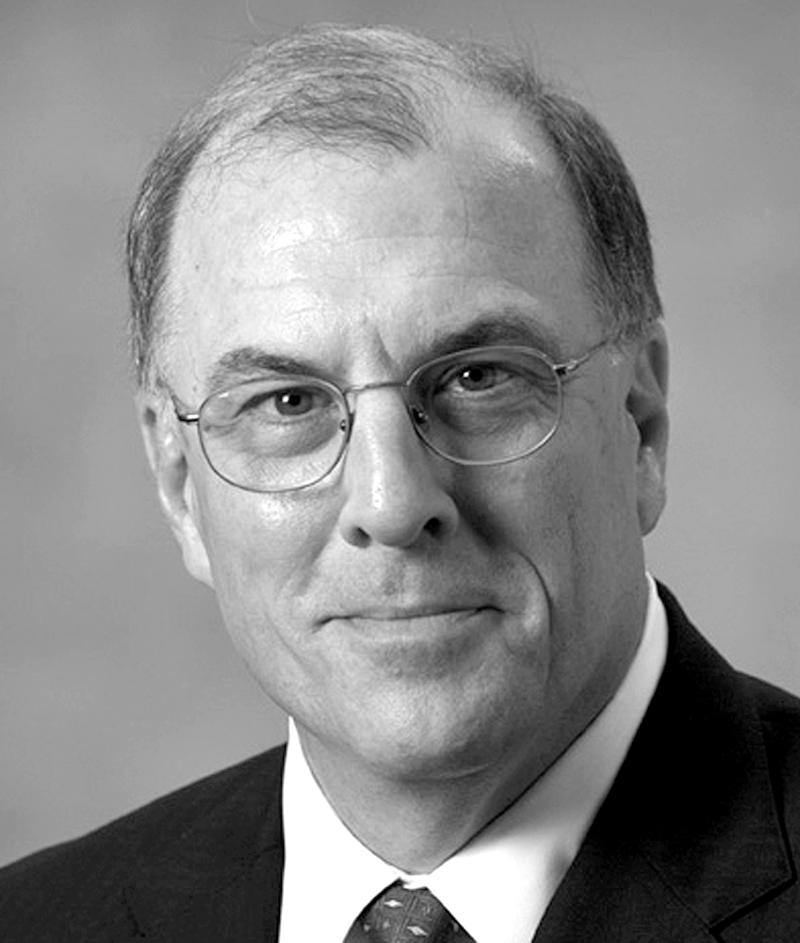
She, like Garcia, emphasized the concept of engagement in describing her institution’s active use of Facebook, Twitter, Instagram, LinkedIn, and YouTube, as well as its lesser presence on Tumblr, Pinterest, and Foursquare.

Nancy Farrell

Nancy Farrell says the Elms is active on many social-media channels, but the common denominator is engagement.

“At Smith, we have an active social-media program that engages all of our key constituencies,” Fenlason said, including alumni, current and prospective students, parents, faculty, and staff among those groups. “Our goals are not only to maximize our followers, but to create engagement and dialogue.”

For example, “a Tweet or Facebook post about a Smith graduate’s achievements can go a long way toward making the case for Smith to a prospective student and her family; they can see an actual, vivid example of the value of the education we provide,” she explained. “And videos or Instagram images give prospective students a sense of what it feels like to be on our campus — what it feels like to be a Smithie — even if they’re half a world away.”

Nancy Farrell, director of the Office of Institutional Marketing at Elms College, also used that word engagement in noting why her school is active on Facebook, Twitter, YouTube, and Instagram. “Each one serves a unique function in our messaging, but the one commonality they have is engagement, which is the whole concept behind social media.

“The really important thing to understand is the behavior of this generation of students,” she added. “They want things immediately. You have to instantly respond and stay connected to them — to operate where they are, and work in their environment.”

For this issue’s focus on education, BusinessWest logs on to the world of social media, and how colleges have increasingly come to rely on it to inform, stay in touch, and, yes, engage.


Click Like

Take, for example, WSU’s comprehensive strategy for Facebook.

“We use it in a lot of different ways,” Garcia said. “Our admissions staff has their own Facebook presence and use that for their own purposes, for prospective students, to keep them apprised of what’s going on, let them know deadlines, open houses, things like that.

“We also create pages for each incoming class. For example, the 2017 page was just created this year. We invite prospective students to join the page and communicate with them,” she went on, noting that the college helps with planning and tries to increase their comfort level. “Then they use that page for four years here to communicate with their classmates, share information, talk about classes, sometimes try to sell books, and talk about events they’re going to and try to get their friends to go. It’s a real communication tool.”

It’s one that continues after graduation, only as an alumni page, she added. Meanwhile, the athletic department manages a page to keep students and the public up to date on games and athletes, while individual academic departments set up pages based around those students’ interests.

And, of course, “the university has a general Facebook page to keep the public engaged,” Garcia explained. “We provide information about events and keep people engaged with what’s happening on campus — everything from infrastructure changes to a faculty member getting a grant, that kind of thing … anytime we’re in the news. We really have quite a Facebook presence.”

The Elms also encourages a vibrant Facebook culture, said Karolina Kilfeather, web manager. She said today’s college-age generation doesn’t respond to traditional messaging like their predecessors did, but are looking for something more sincere — and, again, communication that runs in both directions.

“So we’re careful about not policing what students say, even if it’s something negative,” she told BusinessWest. “We do keep our eye out for inappropriate things, like bullying or being wantonly aggressive. But beyond that, we do the best we can to respond to complaints or negativity, but never try to shut anyone off. We don’t discourage students from being honest, and because of that, they stay engaged with us.”

In short, she said, colleges need to realize there’s been a seismic shift in the way young people communicate. “It has become much more of a dialogue. The hardest thing to learn is coming down from the mountain. The audience wants a two-way channel now.”

It’s gratifying, Garcia said, when that audience spans generations. “It’s interesting because we’ll have alumni go to a class page to talk to current students about when they were here, things they did, how much things have changed. That cross-generational communication happens on Facebook a lot.”


Press Play

Kilfeather said the Elms has certainly recognized the shift, using social media to make sure people know what’s happening on campus. “It’s been very instrumental getting crisis information out, if we have potential snow days … students look for information on Facebook and Twitter. We’ve learned we get a quick response to questions on social channels.”

Meanwhile, she said, Twitter has been a positive place to engage prospects, while YouTube is useful to showcase some of the campus programs with short videos, including footage of a cafeteria flash mob and a music video created by the field hockey team.

“These were student-driven, their idea, they came up with it, and for the most part, they produced it,” said Doug Scanlon, publications manager at the Elms. “It was organic.”

Social-media moments like that are useful in projecting a different side of campus life than someone might encounter in an official college publication, Kilfeather said.

“We have a reputation for a serious image, and this is an opportunity to use a lot more humor and candor and a more conversational tone. People have responded positively to that; students look for content after events, they want to see more videos, they want to see more photos. It has changed the tenor of the relationship between colleges and students.”

And they’re not waiting until they get back to their rooms, but living in virtual connectivity 24/7, Scanlon said. “These students all have smartphones, and they’re always checking in. It’s something that’s a part of their lives now.”

Managed correctly, Kilfeather said, social media can definitely pay dividends for a college, and that includes making sure the college’s website is not only accessible from various social-media sites, but optimized for smartphones and tablets. “Facebook and Twitter are very proactive about making sure they are successful on mobile devices. No longer does somebody have to be at the computer to interact with your message.”

As a result, “our percentage of mobile traffic to the website has more than doubled every year for the past five years,” she noted. “We know we have to be available that way, to make it easy to access and share that way. Mobile devices are certainly not going away.”

Neither, most marketing professionals seem to agree, is social media, and the constant challenge is learning how to use it and what platforms to adopt.

“It’s not about putting information out the way a lot of companies do when they get on the social-media bandwagon; they think of it as just another way of pushing, pushing, the way we use traditional marketing channels. This is very different,” Farrell said.

“As technology advances and different forms of social media come out,” she added, “we have to be very cognizant whether it’s the right move for us. Just because it’s there doesn’t mean we have to use it. That’s probably our biggest challenge moving forward: to carefully choose channels that work for us as an institution.”

That’s a challenge worth undertaking at Smith, Fenlason said, because colleges that don’t take social media seriously will find themselves at a competitive disadvantage.

“It’s vital to meet prospective students where they are, on the channels and devices they value,” she said, “with content that is truly social — visual, immediate, engaging, and real.”

Joseph Bednar can be reached at [email protected]

Education Sections
Holyoke Catholic Survives Through Its Close-knit Community

Theresa Kitchell’s quilt

Theresa Kitchell’s quilt, which showcases previous homes for Holyoke Catholic High School, tells only part of the story of this resilient institution.

Theresa Kitchell says she’s been quilting for decades now.

And like other practitioners of this time-consuming pastime, she enjoys it because it provides relaxation, as well as the ability to tell a story through one’s artistic expression.

The piece hanging in her office at Holyoke Catholic High School, which she has served as principal for the past three years, certainly does that. It features images of many of the historic buildings that were part of Holyoke Catholic decades before that name was ever put over a door — and there have now been several doors that have had that honor.

The only landmark missing is the current mailing address, 134 Springfield St. in Chicopee, said Kitchell, noting that she created the piece before the move to that location in 2008. (The quilt was created to be a featured prize at a fundraising auction, was given by the high bidder to his mother, an alum, and was then gifted back the school after she passed away).

But the quilt showcases only physical structures, Kitchell went on, so it tells only part of a remarkable story. The far more important chapters involve the perseverance and vision required for this school to live on through several forced relocations (more on those later), and the dedication of an alumni base and a current generation of parents who value quality and tradition more than a modern gymnasium and state-of-the-art auditorium — although those may also become reality in the not-too-distant future.

“I think ‘resourceful’ is a great adjective for us because we’ve had to make do for so many years,” said Kitchell, referring first to a move to Granby and the former St. Hyacinth Seminary, and later a move to the current address. “We had to start from scratch, in everything, and the faculty has been incredibly willing to do whatever needed to be done, in whatever facility we found ourselves.”

Today, Holyoke Catholic, with annual tuition of $8,000, boasts an enrollment of roughly 300, with students from 30 area communities and several from China. That number has remained steady in recent years despite a deep economic recession and the latest of those aforementioned moves.

Kitchell and Liz Adzima, director of Advacement, attribute this consistency to recognition among parents that, while the school still lacks some amenities, it is synonymous with value and excellence.

These are exemplified in the price tag — well below what is charged at area private schools — but also in the award-winning STEM (science, technology, engineering, and mathematics) curriculum, multiple partnerships with neighboring Elms College, and strong performing-arts and internship programs, among other initiatives.

“Parents make that decision to send their children here because they know that the sacrifices to be made are well worth it for the quality of education their children will receive here,” said Adzima.

For this issue and its focus on education, BusinessWest turns the spotlight on Holyoke Catholic, which has a rich, intriguing history and — because of that aforementioned resilience and vision — is adding new chapters to the story told by Kitchell’s quilt.


Quite a Yarn

Some of the institutions that came together to form what is now Holyoke Catholic High School can trace their histories back to the late 1800s, said Adizma, noting that Holyoke once had many small parish elementary schools and high schools.

These schools weren’t large enough to field their own sports teams, she went on, adding that, by the middle of the 20th century, several, including Holy Rosary, Sacred Heart, and St. Jerome’s, were bringing their athletes together to compete under the name ‘Holyoke Catholic.’ And as it became increasingly difficult for those smaller schools to exist on their own, discussions intensified about taking the concept of Holyoke Catholic beyond the playing field.

“Through that on-field unity, people started seeing that maybe it was time to come together,” said Adzima, adding that Holyoke Catholic High School was formed in 1963 on the campus of St. Jerome’s, located in the heart of the city’s downtown.

Eventually, however, those facilities became overcrowded and, worse, structurally unsafe — a determination made by Thomas Dupre, bishop of the Catholic Diocese of Springfield, in 2002.

The search for what all agreed would be temporary quarters eventually focused on the 500-acre St. Hyacinth College & Seminary in nearby Granby, said Kitchell, adding that, while the location was not ideal, especially for families in Holyoke, the school managed to maintain consistent enrollment numbers.

And while there was an initial push to raise funds to build a new Holyoke Catholic, fiscal constraints brought a focus on retrofitting an existing educational facility, Adzima went on, adding that sights were eventually set on a former elementary school on Springfield Street in Chicopee, between the Holy Name and Assumption parishes, and only a few hundred yards from Elms College.

The process of retrofitting the facility was completed in the summer of 2008, and the new Holyoke Catholic opened that fall, said Kitchell, adding that the move brings a number of advantages for the school, ranging from accessibility to the natural connection with the Elms.

“The parents have been most supportive; they wanted their children to go to Holyoke Catholic, and they made the move to Granby, which was really inconvenient, and then they made the move here,” Kitchell told BusinessWest. “The move to Chicopee was certainly the most feasible economically, and there were other real pluses; first, we’d be back in an urban setting, and second, we’d be in close proximity to the Elms.”

Elaborating, she and Adzima said the new location, just minutes off interstates 91 and 391, makes the school not only affordable, but also quite accessible, especially to major population centers such as Chicopee, Springfield, and Holyoke.

As for the Elms, that institution brings facilities and collaborative efforts that greatly enhance the value of a Holyoke Catholic education, she said.


Sewing Seeds

The partnership with the Elms only begins with Sr. Mary Reap, the college’s president, who serves on the Holyoke Catholic board of trustees.

It extends to the institution’s library — which extends full privileges to Holyoke Catholic students, who can now take in a number of exhibits and programs, such as last year’s Holocaust exhibit — and the Veritas Auditorium, which has become home to the high school’s performing-arts programs.

However, and ironically, due to construction at the Elms, those programs are utilizing facilities at the former MacDuffie School in downtown Springfield. (MacDuffie relocated two years ago to the former St. Hyacinth’s Seminary.)

The drive to Springfield is somewhat inconvenient, but such headaches are certainly nothing new for loyal parents and alums, said Adzima, adding that the performing-arts program has enjoyed great success.

She explained that students, including incoming freshmen, work throughout the summer to produce the popular annual fall performance; recent shows (there are three a year) have included Hello, Dolly!, How to Succeed in Business Without Really Trying, and Godspell, and this year The Wizard of Oz is on the schedule.

While quality and high expectations are the foundation of the Holyoke Catholic curriculum, and, historically, the English department has been very strong, Kitchell is proud of recent recognition from the state for the science department, which recently earned the 2013 Secretary’s Award for Excellence in Energy and Environment Education.

The award is fitting, she added, since 10 faculty members and 10 students were involved last year in a ‘technology frontier experiment,’ during which teachers and students used iPads daily in all departments to deepen their knowledge of that form of technology in a school setting.

“The use of handheld devices, not just pen and paper, is coming; that’s their world, and we just have to figure it out,” said Kitchell. “Students and faculty have been learning, literally, from each other across the board.”

Another perk of the school’s proximity to the Elms is the college’s advanced-placement program, which allows qualified area high-school students to take up to three college credits each semester in their junior and senior years, graduating from high school with a possible 12 college credits. Offered at reduced-credit cost, the late-afternoon and evening courses are a convenient walk across the street for about 30 Holyoke Catholic students per year, said Kitchell.

In addition to that program, Holyoke Catholic requires every senior to undertake a 50-hour internship at an area business or nonprofit. To fulfill that requirement, they must write a paper about their experience and present to members of a faculty panel.

“This year, we had students in the operating room with a surgeon at Baystate Medical Center, in court with attorneys — one student actually dug into the research and helped solve a case — and they really get put to work,” said Adzima. “It lets them see what it’s like in the real world, and the more time and attention that they give to identifying the correct spot for them, the better experience they have.”


Common Threads

Looking ahead, Kitchell said the school is looking at ways to fill in some of the missing pieces from its bricks-and-mortar presence, including a performance-arts facility and a gymnasium.

Two parishes in that section of Chicopee have merged, she noted, and this development may create opportunities for expansion down the road if the fiscal health of the diocese permits.

In the meantime, the school will continue to carry on and make do, something it has become quite proficient at in recent years, displaying vast amounts of imagination and resilience, skills that are among the many it tries to impart to its diverse student population.

Thus, while Kitchell says there are no plans to add new segments to that quilt on her wall, there are certainly new chapters to be written in the history of a school that has found its place — in more ways than one.


Elizabeth Taras can be reached at [email protected]

Education Sections
AIC Will Add Degree in Public Health to Its Roster of Options

Cesarina Thompson

Cesarina Thompson says AIC’s new program in Public Health is a strategic response to changes in the nation’s healthcare system, which stress prevention, not treatment.

Cesarina Thompson says the recently created program in Public Health at American International College in Springfield represents a coordinated response to ongoing trends in this region and across the country — specifically, a strong movement toward preventing disease rather than simply treating it.

“Healthcare is changing, and with the passage of the Affordable Care Act, it is projected that we’re going to be focusing more on disease prevention and keeping people healthy and out of the doctor’s office and the hospital,” said Thompson, dean of the college’s School of Health Sciences, noting that AIC’s decision to launch the program this fall is also a response to an anticipated surge in need for professionals in public health and what’s known as ‘health education.’

Indeed, projections show that demand for health educators in Massachusetts will grow by roughly 50% between 2010 and 2020, said Thompson, who pointed to a number of recent job postings to show what the job market looks like now — and what it will look more like in the future.

Fallon Community Health Plan, for example, recently advertised for an ‘employer group wellness specialist’ to “implement innovative educational strategies for general health and wellness, health promotion, and prevention for employees,” she noted, adding that Premier Health & Fitness Resources, with facilities in Springfield and Hartford, posted for a ‘health screening technician’ and ‘health educators,’ and Emerson Hospital in Concord advertised for a ‘manager of health and wellness programs.’

“We’re seeing more of these kinds of jobs, those focusing on wellness and community health,” she told BusinessWest. “And we’re going to see considerably more of them in the future. This is the direction that healthcare is taking, and there will be considerable demand for professionals who can work in this field.”


Recognizing a Need

Meeting that demand is the primary motivation behind the establishment of the bachelor’s degree program in Public Health, which will be launched this fall, said Thompson, adding that discussions about adding such an offering began soon after she came to AIC late last year from a position as associate dean of the School of Health and Human Services at Southern Connecticut State University.

She told BusinessWest that administrators at AIC have long sought to expand the School of Health Sciences, and a program in Public Health eventually emerged as the most logical and potential-laden option for doing so.

Careful due diligence revealed a need for such an offering in Western Mass., and specifically the Greater Springfield area, because, for starters, there is only one other undergraduate program in Public Health in this area (at UMass Amherst). But another motivating factor is Hampden County’s undesirable status as the least-healthy county in the state, as measured by the University of Wisconsin Population Health Institute and the Robert Wood Johnson Foundation.

“We’re at the bottom of everything in terms of mortality and morbidity, and health factors such as smoking, obesity, and quality of life,” said Thompson, a former nurse, referring to the latest data, from 2012. “These numbers were definitely part of our rationale for creating this program, and it seemed like a great fit for us as an urban institution in the heart of Springfield.

“What we’d like to do with this program is certainly reach out and serve the diverse community of students that we always serve,” she continued, “but also give back to the community, because I believe it will benefit this region to have more people educated as public-health professionals.”

Thompson said the initiative builds on AIC’s other offerings in its School of Health Sciences — Nursing, Physical Therapy, and Occupational Therapy — and uniquely positions these four programs under one roof.

“Although healthcare professions such as nursing, OT, and PT address health promotion and prevention concerns, given our current healthcare system, these professionals typically care for patients at the time of an illness or injury,” she explained. “Public health practice, on the other hand, focuses primarily on helping people to maintain and improve their health.

“What is unique about our new Public Health program is that it will be housed within the School of Health Sciences; students and faculty will have an opportunity to work and learn together, maximizing the expertise that each brings to healthcare, and collaborating to educate well-prepared professionals for our new healthcare system.”

Upon graduation from the program, which will include such courses as Global Health, Epidemiology in Public Health, and Community Health Promotion — as well as a required internship in the public-health arena — students will have amassed the skills needed for a number of well-paying positions, said Thompson, but also the option of gaining a master’s degree in Public Health, with the nearest such program located at UMass Amherst.

Employment opportunities for graduates of the bachelor’s program would come in a number of settings, including nonprofits, community health centers, municipal health departments, and many others.

“In public health, people work within towns and within states,” she explained, listing the state Department of Public Health as one potential landing spot. “If there’s an outbreak of some sort of health problem, these are the people out there providing information on what to do.”

Thompson said the college is projecting that enrollment in the program will likely be between 10 and 15 students this fall — it was not approved by the Board of Trustees until March, too late for the most recent recruiting cycle —  but the numbers are expected to swell to 50 within a few years.

And she expects interest from a number of constituencies — from high-school graduates to individuals looking to change careers to those already in the healthcare sector (or working their way there) who may see public health as an attractive option to clinical-care fields such as nursing.

“This is one of the fastest-growing careers in the healthcare field,” said Thompson. “And we expect that there will be a great deal of interest in this program.”


— George O’Brien

Health Care Sections
Don’t Put Off Estate Planning for Your College-aged Children

Lisa L. Halbert

Lisa L. Halbert

Summer is here, and your college-aged kids (or grandkids) are on break, or home from school, if only for a short period of time. While these technically ‘legal’ adults are likely trying to work, catch-up on Zs, and reluctantly make the rounds for various doctor and dentist appointments, it’s a good idea to add an appointment with a lawyer to the list.
Everyone over the age of 18 — including college- or post-college-aged individuals — should consider the prudence of executing a healthcare proxy and a durable power of attorney.

Healthcare Proxy
A healthcare proxy (HCP) is a document by which a legally competent person over the age of 18 (usually referred to as the ‘principal’) appoints another adult (the ‘agent’) to help make healthcare decisions for the principal, but only if the principal is unable to either make or communicate their own healthcare decisions.
Signing an HCP does not allow an agent unfettered access to the principal’s healthcare information. So long as a principal has the requisite capacity, an agent cannot access the principal’s medical information unless or until a medical release (and not just the HCP) is signed by the principal.

Durable Power of Attorney
Conceptually, a durable power of attorney (POA, or sometimes referred to as a DPA) is similar to an HCP in that the principal (in this case the college-aged student) nominates another adult (usually referred to as an attorney-in-fact) to step into the shoes of the principal and act on his or her behalf for almost any financial transaction. The proposed attorney-in-fact needs to be trustworthy, in an almost blind-faith sort of way. The attorney-in-fact may be a parent, trusted friend, sibling, or other advisor. Authority granted under a POA is typically quite comprehensive, with college-aged adults frequently concerned about the following:
• Banking, including online accounts, check writing, opening and closing accounts, and transferring funds between accounts (especially where money is coming from parents);
• Entering into or changing contracts, i.e. for rental agreements, airline flights, cell-phone and Internet access, student loans, and credit cards;
• Changing beneficiaries on contracts, including creating and funding of individual retirement accounts; and
• Buying and selling cars, securities, or real estate, although these are less-often needed by college students.
The document should be durable, so that it remains in force and effect even at a time when the principal might lose legal capacity, whether due to periods of serious mental or physical illness or injury resulting from a fall, car accident, alcohol, or drugs, which leaves the principal alive, but unable to think or reason clearly.
If the POA does not reference that it is durable, then if the principal becomes incapacitated or incompetent, and unable to think or express thoughts clearly, the authority of the attorney-in-fact terminates. And whether the document is durable or not, upon the death of the principal, all authority terminates, and the attorney-in-fact is no longer authorized to act.
While an HCP can be used or invoked only where the principal is not able to make certain decisions (and therefore cannot be used when the principal is fully able to think and reason), a POA can be crafted to allow the attorney-in-fact access to financial affairs at the same time as the principal, or to take effect at a later time, whether based on the principal’s losing capacity or upon certain events (such as a trip out of the country).
As a general statement, if the principal does not (almost) blindly trust the appointee with access to his or her finances, then do not appoint that person. And if you do have that kind of trust, then it is likely administratively easiest to have the document in full force and effect from the original date of signing, as opposed to a later date.  If you decide to make the POA invoked upon injury or illness, it may not be easy to get you to agree to see a doctor, or it may take time to get an appointment, both of which can delay the process during a pivotal time.
The principal may want to consider appointing not just one person, but likely up to three individuals to serve consecutively under both the HCP and POA. Therefore, if the first person becomes unable or unavailable, there is a second person to act, etc. If the principal does not change his or her mind about appointing these same people, then by naming individuals to serve consecutively, the document should remain viable and valid for a longer period of time.

Good Reasons
Why should you encourage your son, daughter, or grandchild to meet with an attorney and sign a healthcare proxy and separate durable power of attorney?
Many 18- to 25-year-olds do not live at home. They are at college, or beginning to branch out and live far away from home. Many want their independence but have not yet really learned to plan for the unexpected, at least in terms of legal documents. Your adult child could have a medical emergency, perhaps due to being hit by a drunk driver, a fall down stairs, an emotional issue that severely impacts thought processes, or a financial situation that needs prompt or urgent action (such as limited access to bank funds while traveling in a foreign country).
With a healthcare proxy and durable POA in place, these and many more issues can be addressed quickly and in a cost-effective manner by someone whom your child has chosen.
The ramifications of not having the documents in place could mean that court action may be necessary in order to have someone appointed to make medical decisions, or to help access accounts and/or address various financial issues. The cost associated with a court action, in terms of time, emotions, and money, can be problematic.
Further, if court action is necessitated because the person did not have a POA or HCP, then it is someone around the principal who initiates the request for court assistance or intervention. In effect, the principal loses control of choosing who makes certain decisions (whether medical or financial) and whether they will be made consistent with the principal’s approach.
This summer, consider a unique way to express your love and caring to your independent-minded 18- to 25-year-old. Gently suggest that he or she take an hour or so to talk to an attorney about these documents. You can even make a present to your child or grandchild that covers the cost of having the work done. In the long run, having an HCP and POA is a great investment in your child or grandchild by encouraging their independence and sense of responsibility to self. It shows that someone cares enough to help them plan for the unexpected. The documents are valid for years into the future, with originals being kept safely at the law firm or in a safe. If properly authorized, copies can be provided to medical professionals, financial institutions, and the named appointees, or provided via computer, as well as kept with passports or travel itineraries.

Lisa L. Halbert, Esq. is an associate in the Northampton office of Bacon & Wilson, P.C. A member of the estate-planning, elder, and real-estate departments, she is especially focused on legal matters relating to elder and estate planning and asset protection; (413) 584-1287; baconwilson.com/attorneys/halbert

Sales and Marketing Sections
How to Avoid These Nine Common Marketing Mistakes

Christine Pilch Mancini

Christine Pilch Mancini

Business generally doesn’t just find you. You have to work hard to educate and attract the people who want and need your product or service. That’s marketing.
But the game has changed dramatically over the last five years or so, as the economy forced businesses to tighten up their expenses. In addition, social media has leveled the playing field and enabled small companies with tiny budgets to compete with much larger companies that have deep pockets. It has become very tempting for businesses to consolidate staff or try a do-it-yourself approach to their marketing.
Be it unfamiliarity, lack of education, or square pegs in round holes, there are a lot of marketing mistakes costing companies precious dollars these days. Are you making any of the following mistakes?

1. Me, Me, Me Messages
Nobody cares about how great you are, how long you’ve been in business, and that you’ve got good service. They only care about what they get. The old adage, ‘what’s in it for me?’ is truer now than ever before in people’s over-scheduled lives. They care about things that make their lives easier, save them time, help them, and solve a problem, so don’t bother with marketing messages that don’t point out how you can benefit them.
Benefits are much more effective in piquing interest than features. Take care to minimize and remove language that emphasizes the words, I, me, we, us, my, and our and turn your message around to what ‘you’ get.
Hint: Read the first page of your website. If your message isn’t primarily about ‘you,’ meaning ‘your customer,’ you might be wise to hire a good copywriter for a tuneup.

2. Not Tracking Results or Return on Investment

If you aren’t tracking results, how can you be sure which marketing efforts are paying off? This should be true of every marketing tactic that you use, be it something traditional — such as a TV ad, membership in an organization, or a print ad — or new-media initiatives, like a Facebook page, Google AdWords, or a Pinterest contest.
Tracking results can help you react quickly when something isn’t working quite right. If you watch carefully, you will be able to switch gears when messages get stale or don’t hit their mark. Pinpointing lead sources is certainly more difficult, as people tend to jump all around the web en route to you, but there are ways to track your results, and it’s to your advantage to know where you’re getting the best bang for your buck.
Hint: If you want to drive traffic to your website, Google Analytics is a terrific tool for gauging the success of your efforts. You can see exactly where your traffic is coming from. You can also build unique landing pages on your website that are fed from different lead sources. Or you could obtain a special phone number or embed a special offer to track a particular advertisement. The more specific you can be, the better.

3. Neglecting to Set Goals
If you haven’t set goals, how will you determine when something is successful? Every business has its own measurement of success, and, likewise, each marketing tactic and/or campaign should also have its own objectives. Be specific. For example, a Facebook page could have many different objectives over its lifetime: growing its fan base (‘likes’), building interaction, or driving traffic to your website. Set your goals before you implement something new, and set new ones for subsequent campaigns.
Hint: If you want to increase sales of a particular product, check how your numbers have been in the past, decide on a reasonable expectation for the promotion you plan to put forth, and establish a number that you want to hit within a certain timeframe. This will allow you to react during the process, adjusting your marketing or augmenting if necessary, so you can achieve your goal.

4. Not Testing
The ability to cost-effectively test something new varies by media, but it is usually very easy to do on new-media channels. Use them to see who is attracted to particular messages, what time they see them, etc., and then use this information in other venues to help better target your ads.
Hint: Many companies test-market videos on YouTube, which gives them the ability to see how many people watch their videos within a particular timeframe, the demographics of those viewers, and how much of the video they watched, without having to buy expensive TV time. Post your own test videos and use this information to customize future videos and marketing messages that better appeal to your target audience.

5. Refusing to Try Something New (Especially When the Old Stuff Stops Working)
Familiarity is comforting, but an old advertising tactic that used to work, but is barely producing new leads, is wasting your money. Suppose you used to get lots of business whenever you ran a particular TV ad, and you haven’t seen those results for a long time, but you keep running the same old ad because you like having your friends and family see you on TV. Wouldn’t it make more sense to shift that money into something new? This could be a fresh, new TV spot, direct mail, radio, or new media. The possibilities are endless.
Hint: Don’t let your ego get in the way of bringing business through the door. Business owners, their kids, and their pets are usually not the best TV personalities, and they often actually turn off potential customers.

6. Misusing QR codes

A QR code is a two-dimensional bar code that can be scanned with a smartphone and takes a user to a webpage. They are best utilized for a user to get more information about whatever you are promoting in print, which could be on something such as a mailer or print ad. The single greatest misuse of a barcode is using it to link to a webpage that is not optimized for mobile. This just wastes the user’s time and causes frustration because non-mobile-optimized pages are very difficult to read and navigate on a small screen.
Other mistakes include neglecting to provide the ‘more information’ that you promised, and using QR codes on the web or within e-mail.
Hint: You can stop printing product information through the simple use of a QR code applied to your product, which brings your customer to the right page on your website for all the information he needs for the use and service of your product.

7. Buying Lists and Fans
You’ve likely seen offers of thousands of e-mail addresses or Facebook fans for your page, but what is the worth of someone who doesn’t want or need what you have to sell? Doesn’t it make more sense to talk to someone who has interest in your product or service and may actually purchase from you? Lists that you can purchase are usually not targeted, and the e-mail addresses are usually not connected to people who opted in to receive your messages, so they will consider you a spammer. That can lead to big problems.
Purchased Facebook fans are no more valuable, as it’s easy enough to hide a page feed from one’s newsfeed, so your messages aren’t being seen. Yes, your number of fans may seem impressive, but those fans are worthless if they never receive your messages and have no interest in what you’re selling.
Hint: Even when creating your own e-mail list, make sure it is comprised only of people who opt in to receive your messages. Sending to the e-mail addresses of your social-media connections and those from business cards that you collect is impolite and unprofessional. These people will likely consider your messages spam.

8. Letting a Non-marketer Coordinate Your Social Media
Social media for business is a marketing function. Yes, any kid fresh out of college can set up a Facebook page and Twitter account for you, but what do they know about marketing your business? What messages will they send? How will they handle angry or disappointed customers? Will they plan and track?
Hint: There is a reason that it’s called social-media marketing. When looking for someone to handle your social media, make sure that they understand how to market your business. If you wouldn’t put them in a traditional marketing job, they are not qualified to handle your social media either, unless working under the direction of someone who is a marketer.

9. Separating Digital Marketing from Traditional Marketing

Social media and traditional marketing are so closely intertwined within companies these days that separating them makes as much sense as having your sales and marketing departments operate exclusive of each other. Campaigns should be synched so that you’re not sending competing or non-complementary messages. This also prevents the danger of one department not knowing what the other is doing and possibly undercutting each other.
Hint: Create a system whereby information freely flows between traditional- and new-media people within your business. This could be accomplished via daily or weekly meetings, a spreadsheet that team members update, or perhaps even through a private Facebook group, where departmental activity and plans are logged. Facebook displays to the group leader who reads what content on its groups, so it is apparent when something has or has not been read. Regardless of the method, communication is critical.

Bottom Line
Everybody wants a good return on their marketing investments, so if you’re making any of the above mistakes, changing course just might not only save you money, but also bring in more business to boot.
If you’re in over your head or many of the techniques mentioned above are Greek to you, perhaps it’s time to call in a qualified marketer to bring fresh ideas to the table.

Christine Pilch Mancini owns Grow My Company and is a marketing strategist. She trains businesses to utilize LinkedIn, Twitter, Facebook, YouTube, Pinterest, blogging, and other social-media tools to grow, and she collaborates with professional service firms to get results through innovative positioning and branding strategies; (413) 537-2474; growmyco.com; linkedin.com/in/christinepilch;
facebook.com/growmycompany

Meetings & Conventions Sections
UMass Hotel and Conference Center Offers Diverse Menu of Options

Van Sullivan, left, Retail Dining Services Campus Center manager, and Hotel Manager David O’Connor

Van Sullivan, left, Retail Dining Services Campus Center manager, and Hotel Manager David O’Connor show off two of the international dishes available in the Blue Wall Café.

An entire wall in the lobby of the UMass Hotel and Conference Center in Amherst is dedicated to plaques and framed certificates showcasing awards, which range from accolades for green initiatives and cleanliness, to Trip Advisor’s Certificates of Excellence and a designation as the best hotel in Amherst, to being named the best college hotel in Massachusetts by Yankee magazine, as well as numerous prestigious honors for its extraordinary, world-class cuisine.
In 2012 alone, the AAA three-star-rated hotel won eight national awards for its food. In addition, Ken Toong was feted with the distinguished Silver Plate award during the International Foodservice Manufacturers Assoc. conference held last month. “Groups have chosen to come here just because our food is so good,” said Toong, executive director of Auxiliary Enterprises for UMass Amherst. “Our food has been ranked third in the country by the Princeton Review, and visitors can choose to eat at our University Club and Restaurant, in our food court, or in one of four dining commons.”
The self-supporting boutique hotel/conference center accommodates groups of fewer than 10 people or as many as 10,000, thanks to its access to apartments and rooms on campus during the summer months, as well as the Student Union Campus Center, two auditoriums which each seat 600 people; the Fine Arts Center, which seats 2,000; and the William D. Mullins Memorial Center, which seats close to 10,000. In addition, more than 200 classrooms are available during the summer.
“We are an affordable alternative with a vast number of options that people may not have considered,” said Meredith Schmidt, director of the Campus Center Student Union Complex, adding that the hotel is used by many national and international organizations and is positioned in the heart of the campus within a 400,000-square-foot complex that includes the university store, a credit union, a hair salon, and a wide variety of dining options. Sports organizations can access playing fields, and the staff works closely with the area’s five-college community as well as the Amherst Business Improvement District (BID).
Guests can also enjoy events held on campus, stroll through its miles of walkways, mix and mingle with students, and visit the student-run Franklin Permaculture Garden, an ecological center which has been formally recognized by President Obama.
The $5 million in annual revenue generated from the hotel, and 350 annual conferences held there, also helps to support the university and the Amherst BID. Each hotel guest is charged a daily $1 fee, which goes to the BID, and, like other revenue-based operations on campus, the hotel and conference center pays administrative overhead to the central UMass budget office.
“It’s a domino effect,” Toong said, as he talked about how the revenue this operation raises contributes to the economy.

Unlimited Resources

Ken Toong, executive director of Auxiliary Enterprises

Ken Toong, executive director of Auxiliary Enterprises, says the award-winning Franklin Permaculture Garden is one of many attractions on the Amherst campus that people who stay at the hotel/conference center can enjoy.

The hotel’s guests represent a wide spectrum of business opportunities. Some attend conferences, while others are there for events sponsored by the university, which include graduations, open houses, and career fairs. There are also guest lecturers, performing artists, visiting sports teams, alumni, and the general public, who find the location and hotel convenient if they are visiting the area or attending events such as Amherst’s annual craft fair.
The hotel also hosts wedding receptions, often held on the 11th floor, which features sweeping views of the campus and the Pioneer Valley.
Rooms in the state-of-the-art hotel average $135 a day for visitors. Conference rates for rooms in residence halls are much lower, however, and typically cost $25 per person per day without air conditioning, or $50 for an air-conditioned space. Three meals a day featuring award-winning cuisine can be added for an additional $30 per person per day.
Although there is lots of space available, the campus is constantly expanding, and the hotel offerings continue to grow. Commonwealth College will open a residential complex there on Aug. 13 with 1,500 beds, which will add to the number of rooms that can be reserved during the summer months.
“People can stay at the hotel or in one of our 10,000 rooms,” Toong said. “One of the big advantages we offer is a multitude of choices.”
There are also continual upgrades, and a new front entrance to the hotel with valet parking is expected to be complete within two years. “We are also putting in a new restaurant inside the hotel that will have 200 seats,” Toong said.
He told BusinessWest that employees focus on providing exceptional service, for which they have been feted, and guests as well as the student population enjoy the international cuisine, with choices such as an all-you-can-eat sushi bar. “We serve only sustainable seafood and offer students 15 food choices from around the world at every meal. We promote healthy eating, so we check the sodium content of everything we serve and use a lot of fresh herbs and fruits and vegetables,” Toong explained.
The food-service operation spends $2.3 million each year for fresh produce, and 27%, or about $600,000, is purchased from local farmers. “It’s also very important to us to buy meat from animals that have been treated humanely. Plus, we compost everything, including our plasticware and the paper coffee cups used at conferences,” he noted. “Our goal is to give our customers the best, and we want to be a leader in supporting the environment.”
During the past year, the operation has generated an additional 48 tons of compost due to an increase in recycling efforts.
Toong also cited a number of organizations the facility belongs to, such as the Community Involved in Sustaining Agriculture program. “Students and guests want us to do this, and we find that, if we give people great value, they come back,” he said. And since the school has 16,000 students signed up for its full meal plan, it’s easy to accommodate groups of any size. “The hotel gets 24,000 guests each year, and large numbers don’t scare us.”

Group Offerings

About 40% of conferences held on the campus are related to academics, and professors from the university’s 200 departments often bring in key people from leading organizations they belong to.
Toong organizes the annual Taste of the World Chef Culinary Conference, which is held at UMass Amherst and attracts 300 accomplished chefs from across the nation, who engage in research and development during the week-long event. This year, they will include Robert Irvine from the television show Restaurant Impossible and Jet Tila, celebrity guest judge from the TV series Chopped.
Although he is integral to the hotel/conference center’s operation, Toong said the staff makes it easy to host events there, as they employ a one-stop-shopping approach. “We are able to be flexible, and because we are part of the UMass family, we seldom say ‘no’ to requests,” he explained.
Special needs are recognized even when there are no requests, and to exemplify this, Toong pointed to a recent conference attended by senior citizens, where food-service staff brought meals to their tables to make things easier for them, even though that had not been part of the arrangement.
“We want to create jobs for staff members and bring more business to campus; there are so many great buildings here, and we make sure people get great value in terms of food and service,” he said, adding that price is always negotiable.
Schmidt agreed. “We give people lots of options because we can,” she said.
Meredith Schmidt, director of the Campus Center Student Union complex

Meredith Schmidt, director of the Campus Center Student Union complex, says the hotel’s 116 rooms were gutted and completely renovated several years ago.

That includes technological advances. The hotel renovations have allowed the Hotel and Conference Center to keep abreast of trends, and iPod docking stations and charging areas are built into desks in each room. In addition, wireless Internet is available everywhere on campus. “And we have the best views in the Valley, especially during fall foliage season,” she said.
Toong said the center takes pride in bringing visitors to the university. “Our job is to enhance revenue, as we are self-supporting. But we also want to share this world-class university.” And there are many events that guests can enjoy on campus, such as a guest chef who is brought in to make a weekly presentation.
The award-winning Franklin Perma-culture Garden is one of the attractions. It provides a popular walking destination that hotel and conference attendees enjoy. It is shaped like a leaf and was created by student volunteers who used more than 500,000 pounds of composted food and mulch to turn a section of lawn into a sustainable ecological plot.
“Last year, we grew 1,500 pounds of vegetables there, and this year we expect to grow 2,000 pounds,” Toong said. “The garden contains more than 1,200 species of plants and herbs.”

Ongoing Mission
Toong said the future of the hotel and conference center is bright, but its administrators are aware of the need to be continuously proactive in their marketing efforts. But it’s a worthwhile task.
“This hotel and conference center is good for Western Mass.,” said Toong. “There are so many great buildings on campus, and it’s efficient and effective for us to use these resources.
“We offer a lot of options because we care — it’s the little things that make a difference,” he continued, adding that, together, they add up to a big opportunity for the university to generate revenue and gain exposure.

Sections Technology
The Effect of ‘Bring Your Own Device’ on Today’s Businesses

By CHARLIE TZOUMAS

Charlie Tzoumas

Charlie Tzoumas

Gartner Inc. recently reported that ‘bring your own device’ (BYOD) programs, which allow users to conduct their daily business activities with their smartphones and tablets, are the “most radical shift in enterprise client computing.”
But despite the potential cost savings in not having to purchase and maintain expensive computer equipment, this new shift to BYOD does bring serious concerns about both network performance and security.

In the Beginning
When portable technology first made its foray into the business world, it was typically through the use of company-provided laptops and cell phones, which were intended solely for professional purposes. While these were difficult to maintain and expensive to purchase, they provided each IT department with almost full control over which devices could access a given company’s network.
With the dawning of these devices for personal use, however, employees were reluctant to sacrifice their iPhones, iPads, and Android devices while at the office, which led to the push for BYOD.
As time has gone on, more and more businesses have accepted that their employees will use at least one — and sometimes two, three, or more — personal devices while in the office. It’s easy to imagine that at least one of your colleagues uses a laptop for day-to-day business activities, an iPad to take notes during a meeting, and/or a smartphone while sitting in traffic en route to the office.
On the bright side, this means that IT departments do not need to conduct as much training as they may have once needed to, but this also means that there are increasing security risks and more bandwidth congestion on these networks, which can be far worse of an inconvenience if not handled correctly.

Keeping Tabs on Network Performance
Gartner also stated that 80% of recently installed corporate wireless networks will become obsolete by 2015 due to poor infrastructure planning, and this is largely because of the growth of BYOD and the impact that this influx of devices can have on a network’s performance.
As more and more devices are added to a network, that network logically slows down. If there are enough devices, it can get overwhelmed. An overwhelmed network dramatically affects productivity, causes unnecessary anxiety for everyone involved, and, at the most severe level, can completely shut down an entire company until the situation is resolved.
How can this be fixed? Businesses must ensure that their internal wireless networks can handle these influxes of devices while still delivering the same speed and performance that their employees need to get their jobs done. Cable operators and other service providers carry a majority of the bandwidth responsibility, so choose a communications partner that has a high-capacity backbone that can be easily scaled up or down to mirror whatever needs your business may have. And make sure your provider can do this quickly, as waiting around for weeks to upgrade your bandwidth can have dramatic effects on your bottom line.

Identifying and Eliminating
Security Risks
Since the devices now being brought into today’s office environments are not company-owned, the IT department does not have full control over them, which means that accidental malware downloads or computer viruses are not only commonplace, but can easily spread to an entire company’s network in a matter of seconds.
If these devices do not have the proper security safeguards in place to protect them, they can potentially allow unknown users to access sensitive company data, which puts the entire organization at risk.
How have IT departments been addressing these concerns? They’ve focused on finding ways to limit access to critical data or to verify employee identities when accessing certain devices and applications, data, or other company resources. Software is consistently being introduced to the market — some of it coming from places as unexpected as the cable company, like Comcast’s recently introduced Upware platform — to allow software administrators to set controls so that users cannot access certain programs without prior authorization.
It may seem minor, but these small changes can help to protect your network from a number of security risks, many of which you may not even know you have.

BYOD Is Here to Stay
At the end of the day, the ability for employees to access corporate networks from their personal devices 24/7 does improve productivity and can drive business growth — and when that also translates to less cost, training, and support required on the IT department’s part, it’s unlikely that it will be going away anytime soon.
And that’s good, because Jupiter Research recently predicted that the number of BYOD devices would double by 2014, which means that enterprises really don’t have a choice, since the number of devices already in the hands of their employees makes it relatively impossible for businesses to ignore them. In fact, a large percentage of supporters for BYOD are C-level company executives themselves, who ultimately oversee IT management and push for BYOD programs to be implemented because they, too, want to use their own devices.
This means that IT departments need to invest in a reliable network infrastructure that has the capacity and bandwidth to support this growing trend, and that offers the scalability and security features to accommodate the ever-changing needs of their employees. Doing this will not only make their lives much easier and less anxiety-ridden, but will also help to improve the ultimate longevity of their company.

Charlie Tzoumas is regional vice president of Comcast Business; [email protected]

Restaurants Sections
The Whately Inn Has Come a Long Way Since It Hosted Burlesque

Chip Kloc

Chip Kloc says the fire in 1984 was disruptive, but it ultimately proved to be an important turning point for the Whately Inn.

Stephen “Chip” Kloc III, chef and owner of the Whately Inn, remembers cooking dinner for his regular Wednesday-evening crowd back on Sept. 13, 1984.
The date is etched into his mind because what happened that night was unforgettable, and what’s happened since has become another important chapter in the long and intriguing history of this landmark establishment and family business.
“I noticed the ceiling — the paint was bubbling,” he recalled. “So I poked it, and a hole formed. I’m looking up, and all of a sudden it sounded like a train going through once the air got to it.”
‘It’ was a small fire that broke out in rafters dried by the intense heat generated by the broiler located below. The blaze went straight up a dormer, ignited the roof, and then proceeded to burn down from the second floor.
“There were probably 30 people in here at the time,” recalled Chip’s father, Steve, who followed his father, Steve Sr., into the restaurant business and eventually inspired the third generation to do the same. “But over the years, about 500 people have said they were at the inn that night.
“No one wanted to leave,” he continued, adding that there was a remarkable sense of calm amid the calamity. “Some people were saying, ‘oh, the fire’s just in the kitchen; it’ll be fine.’”
Several patrons left, but took their plates with them, said Chip, adding with a laugh that most people did, in fact, pay their bill.
With help from several fire departments, the first-floor kitchen, bar, and dining area were saved, but the entire second floor, except for the porch deck, was a loss. A renovation that took more than a year to complete provided a new, 75-seat second-floor banquet room where there had been none.
Though devastating for the Klocs, the fire turned out to be a pivotal turning point for the inn, which today focuses much more on quality cuisine and banquets and weddings — a far cry from its former role as a home for burlesque shows that played out on a stage that is now part of the dining room (more on that later).
These days, the excitement is in the delectable flavor and value of traditional American cuisine with French influences that Chip Kloc has perfected over his three decades learning and working alongside his father.
From the rack of lamb dijonaise to the broiled jumbo shrimp Francoise to the house specials of broiled filet mignon, beurre noisette, and prime rib, fine cuisine now takes center stage.
For this Restaurant Guide’s focus on landmark institutions in the Pioneer Valley, BusinessWest toured the historic inn that markets itself with the slogan ‘eat greatly at the Whately,’ and spoke with this father-and-son team about the establishment’s evolution and the family’s ability to capture and keep a following that is hungry and loyal, no matter the state of the economy.

Back in the Day

The Whately Inn’s historic dining room

The Whately Inn’s historic dining room features a stage area that showcased burlesque dancers in the 1950s and 1960s.

To help him provide a history lesson, Chip Kloc summoned a yellowed print advertisement for the Whately from January 1966. It hyped floor shows, including burlesque entertainment with comedians as emcees, as well as dinner and dancing in the the Rainbow Room. Boiled lobsters were priced at $1.50.
In addition to underscoring the rate of inflation over the past 47 years, the clipping begins to tell the story of how much has changed at this landmark on Chestnut Plain Road.
Popular from the 1860s to the 1940s, burlesque featured bawdy comedy and female striptease in cabarets and clubs, as well as theatres, and the Whately Inn was one of the few in the region to present the spicy form of amusement.
Chip was 6 in the mid-1960s and can remember the crowds.
“I used to sell the girls towels for 25 cents as they were coming off the stage,” he said with a laugh, noting that this stage still stands in the main dining room, next to the historic fireplace. “It sure was a destination back then.”
To explain how it became one, the Klocs went back further in time, to the years just after World War II ended, when Steve Sr. made his foray into the hospitality industry with two restaurants — the Williams House in Williamsburg and the Rainbow Club in Haydenville. The latter, which was destroyed by fire in the mid-’50s, was in many ways an inspiration for the Whately Inn, which the elder Kloc acquired later that decade.
“People used to come in here [to the Whately Inn] and say how much they loved the Rainbow Club,” said Chip, adding that this affection was spawned by the food and the entertainment, both of which were brought to the Whately by his grandfather and father.
Steve Jr. cut his teeth in the business at a popular restaurant and dance hall on the Connecticut River in South Hadley called the River Lodge, later renamed the Riverboat. He would essentially recreate that establishment’s menu at the Whately, which was sold by his father in 1969, beginning more than a decade of sharp decline for the landmark in terms of both its physical state and popularity.
Steve Jr. watched this downward spiral from afar, as co-owner (with his father and others) of other restaurants, including the Captain’s Table in Northampton. “The roof over the stage had collapsed because of snow,” he recalled, adding that, by the mid-’70s, the inn was in terrible condition.
“It was awful,” added Chip, “but the second owners after my grandfather sold it fixed it up a bit and restored it. The bar, the chandelier, and the front door are all handmade from trees in Whately.”
These owners were not able to turn the eatery’s financial fortunes around, however. And when they put the landmark on the market in 1980, Steve Kloc Jr. saw an opportunity to turn back the clock while also focusing on the future.

Holding Steady
While the fire in September 1984 was in most ways a setback, Chip and Steve both described it as a blessing in disguise because it pushed them to make updates to decades-old electrical wiring, put in four larger hotel rooms where there had originally been six, and add a second-floor banquet room.
When it reopened in 1985, the inn was a more flexible and responsive player in the hospitality sector, with fine dining, a banquet facility, and a hotel. And it has taken full advantage of this attractive mix of services.
With most customers coming from within a 50-mile radius, the inn has thrived through its regulars, those who have heard about it though word-of-mouth referrals and want to experience it, and a growing banquet business. The main key to its success is repeat business.
“Many people come at least once a month, and one couple has been coming every Sunday since the fire,” said Chip, noting that, during the recession, when other hospitality-related businesses were suffering or closing, the Whately Inn held steady.
“There was a decline, but nothing that seriously affected us,” Chip explained. “We’ve built this business consistently over the years, and we’ve been growing little by little every year. After the fire, there was maybe a little bit of a rush, but overall it’s been consistent growth.”
Since the recession, however, Steve has seen customers give more attention to the value they are getting with everything they buy.
“Some people look at our menu and say we’re expensive,” he said, “but if you look at what you get, we’re very reasonably priced.”
Specifically, what the Whately Inn is known for, besides its popular French-American traditional-style cuisine, is a five-course, prix fixe dinner, including appetizer or soup of the day, salad, potato, vegetable of the day (usually in season, fresh, and local), gourmet entrée, choice of dessert, and coffee.
Historically, the two most popular dishes have been the 12-ounce filet mignon and the 18- to 24-ounce prime rib for $30.95. Meanwhile, there is one item generally not found anywhere else — frog legs from Bangladesh and Thailand.
“We sell 30 pounds per month,” said Chip. “No one sells them anymore so we have them for the customers that want them.”
“We’ve had the same menu since day one,” Steve added. “We add daily and weekend specials every week, but the old menu has been good for us; it’s what brings the people back.”
The dining room holds 120, and on an average Saturday night, Chip and his staff will serve between 250 to 300 patrons. On holidays, reservations are made months in advance, and a typical Thanksgiving, Mother’s Day, or Easter will attract 600 to 700 diners.

Just Desserts
In addition to consistent, quality cuisine, Chip said the Whately Inn’s employees are another key to success. One staffer has been with the Klocs since he was in high school, dating back to the Captain’s Table days in the 1970s. Chip’s mother, Fran, manages the bar, while his wife, Lisa, manages the dining room and schedules the waitstaff and any reservations. Chip’s brother Gary helps out as a waiter, and various other family members have pitched in over the years.
While Steve ‘officially’ retired this past January, when not in Florida, he still can be found helping out in the kitchen.
In his new role as the president of the family business, Chip said the goal is to keep the last three decades of fine dining and value steady, so loyal customers can continue to ‘eat greatly at the Whately.’

Elizabeth Taras can be reached at [email protected]

Departments People on the Move

The Springfield-based law firm Bacon Wilson, P.C. recently announced the addition of associate attorneys:

Thomas Reidy

Thomas Reidy

Spencer Stone

Spencer Stone

Kathryn Crouss

Kathryn Crouss

• Thomas Reidy is a member of the litigation and real estate and zoning teams, and earned his J.D. from Western New England University (WNEU) School of Law and his BA from Assumption College;
• Spencer Stone is a member of the bankruptcy and reorganization, real estate, and business and corporate departments. He earned his J.D. magna cum laude from WNEU School of Law and his BA from UMass Amherst; and
• Kathryn Crouss is a member of the litigation department and earned her JD cum laude from WNEU School of Law and her BA from Allegheny College.
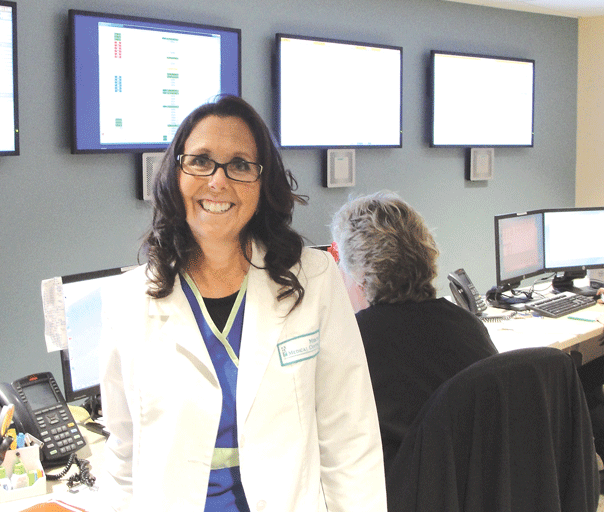
•••••
Ronald Maniscalco, P.E., recently joined Tighe & Bond Inc. as a Senior Electrical Engineer in the Westfield-based firm’s expanding electrical and mechanical engineering team. With more than 20 years of experience in electrical and telecommunication design for both public and private clients, Maniscalco’s expertise includes designing, specifying, and reviewing power, lighting, technology, instrumentation, lightning protection, fire detection, security, video surveillance, as well as telephone and instrumentation systems. He also provides electrical energy-efficiency studies and electrical-services surveys to establish equipment condition and National Electrical Code compliance, and electrical arc flash analyses with overcurrent protective-device coordination studies are a specialty. Maniscalco earned his BS in Electrical Engineering from the Rochester Institute of Technology and is a registered professional electrical engineer in 12 states.  He is a member of the National Council of Examiners for Engineering and Surveying, the Illuminate Engineering Society, and the American Society of Mechanical Engineers.
•••••
Louis Abbate, retiring President and CEO of Willie Ross School for the Deaf, was presented the Member Emeritus Award by the Mass. Assoc. of 766 Approved Private Schools. The award was created in 2004 by the association’s directors to recognize those individuals who have made outstanding contributions of voluntary leadership and professional expertise to the association and its member schools. Abbate began his tenure at Willie Ross as executive director in 1985 and is responsible for numerous capital improvements and the development of the Partnership Campus with East Longmeadow, a model program that has been recognized throughout the nation. Abbate will retire in June.

40 Under 40
The Seventh Annual 40 Under Forty Competition

This year’s nominations were scored by a panel of five judges, who accepted the daunting challenge of reviewing more than 100 nominations and scoring individuals based on several factors, ranging from achievements in business to work within the community. BusinessWest would like to thank these outstanding members of the Western Mass. business community for volunteering their time to the seventh annual 40 Under Forty competition. They are:

Jeffrey Fialky

Jeffrey Fialky

• Jeffrey Fialky, a member of the 40 Under Forty class of 2008 and a shareholder of the regional law firm Bacon Wilson, P.C., and member of the firm’s corporate, commercial, and municipal departments, where he specializes in all aspects of corporate and business law, banking, commercial real estate, and sophisticated commercial transactions. He joined the firm in 2006 after nearly a decade of living in Eastern Mass., where he held senior commercial attorney positions within some of the country’s most prominent publicly traded telecommunications and cable television companies. He previously served as an assistant district attorney in Hampden County.

Fialky is also active in the community, having served on a number of nonprofit and economic-development-related organizations. They include the Springfield Chamber of Commerce, Springfield Museums, the United Way of Pioneer Valley, the Jewish Federation of Pioneer Valley, the Springfield Technical Community College Scibelli Enterprise Center Advisory Board, the Alden Credit Union board of directors, the Community Foundation, the American Cancer Society, the Young Professional Society of Greater Springfield, Leadership Pioneer Valley, OnBoard, the YMCA of Greater Springfield, the Mason Wright Foundation, the EDC Tourism Development Committee; and the American Red Cross Pioneer Valley Chapter.

Brendon Hutchins

Brendon Hutchins

• Brendon Hutchins, CFP, a member of the 40 Under Forty class of 2012, and senior vice president of Account Management for St. Germain Investment Management. Prior to joing the firm in 2003, he was vice president and financial advisor for the FleetBoston Financial Corp. Private Clients Group in Springfield. His prior experience includes eight years with Fidelity Investments as a vice president in the retirement division, with responsibilities across multiple locations during his tenure there.

In addition to being a certified financial planner, Hutchins holds NASD series 7 and 65 licenses for securities representation and investment-advisor services. He currently serves on the board of directors for the New England office of the March of Dimes, the Greater Springfield YMCA, and the Basketball Hall of Fame, and has also served on the board for the Springfield School Volunteers.

Mark O’Connell

Mark O’Connell

• Mark O’Connell, president and chief executive officer of Wolf & Co., providing audit and financial reporting services to both privately held and publicly traded financial institutions and holding companies across New England, including community banks and mortgage banking institutions. In his current capacity, he is responsible for the strategic direction of the firm, while also providing audit and advisory services to financial institutions. His experience also includes consultation on audit and accounting issues related to mergers and acquisitions and with respect to debt and security offerings filed with the Federal Home Loan Bank Board, the Federal Deposit Insurance Corp., and the Securities and Exchange Commission.

O’Connell has been involved with a number of industry and nonprofit organizations, including the American Institute of Certified Public Accountants (AICPA), the Massachusetts and Connecticut Societies of Certified Public Accountants, and the Children’s Study Home in Springfield. In 2010, he won the Human Services Forum Board Member Award.

Myra Smith

Myra Smith

• Myra Smith, vice president of Human Resources and Multicultural Affairs at Springfield Technical Community College (STCC). Joining the college in 1978, Smith has helped transform the STCC community into one of inclusiveness that celebrates cultural diversity. Among her many accomplishments is the creation of the STCC Diversity Council and its event series, which brings national and international speakers and artists to the campus. Smith also was responsible for the creation of the STCC “Think Tank” series, which brings community leaders together to assist with the retention and graduation rate of young men of color.

Smith is also active in the community, serving on many local boards, including People’sBank, the National Conference for Community Justice of Western Mass., and the STCC Foundation. Smith is a founding trustee of the Martin Luther King Charter School of Excellence and a trustee for the Non-Unit Health and Welfare Trust Fund for the Commonwealth of Massachusetts. Smith was recognized in 2007 by Unity First with a Women of Leadership Award, and received a Women of Vision Award from the Elms College Step Forward Program in 2005.

Jeff Sullivan

Jeff Sullivan

• Jeff Sullivan, executive vice president and chief operating officer of United Bank. In that capacity, which he assumed Jan. 1, Sullivan is responsible for the bank’s retail deposit and operations division, advancements in technology and electronic banking, and franchise expansion efforts. In addition, he also oversees the Information Systems and Facilities Departments and the United Wealth Management Group, and is also responsible for the company’s enterprise risk management program. He previously served the bank as executive vice president and chief lending officer and, prior to arriving at United, served in commercial-lending capacities for the Bank of Western Mass. and BayBank.

Sullivan has been involved with a number of area nonprofit and economic-development-related organizations, including DevelopSpringfield, Better Homes Inc., Martin Luther King Jr. Family Services, Briana Fund for Children with Physical Disabilities, OnBoard, the Pioneer Valley Plan for Progress, the Holyoke Chamber of Commerce, and the Economic Development Council of Western Mass.

Environment and Engineering Sections
WNEU Creates New Civil and Environmental Engineering Program

Student Emily Lynch, seen here with Kenneth Lee

Student Emily Lynch, seen here with Kenneth Lee, says she’s always been fascinated by bridges, and ultimately decided to make civil engineering a career.

When asked about the factors that drove Western New England University’s decision to create its new Department of Civil and Environmental Engineering, Ken Lee summoned some telling numbers.

The first were from the Bureau of Labor Statistics (BLS), which is projecting an employment growth rate of 19% for civil engineers and 22% for environmental engineers — one of the fastest-growing subspecialties within the broad realm of civil engineering — between 2010 and 2020.

Another number — and probably the one fueling those BLS projections — comes from the American Society of Civil Engineers, which, when assessing the nation’s aging infrastructure, projects that $71 trillion in infrastructure investments will be made by 2030.

“Everything we make in civil engineering has a lifespan,” said Lee, chairman of the new department, in an article announcing his appointment in the university’s alumni publication, the Communicator. “Buildings and bridges are crumbling, and transportation systems need overhauling. We need plenty of engineers to plan, design, analyze, develop, organize, and manage retrofits and new construction projects.”

Couple these projections with the university’s desire to grow its well-regarded College of Engineering, and civil engineering, with a strong focus on environmental engineering, was the logical path to take, said S. Hossein Cheraghi, dean of the College of Engineering.

“We want to grow, and one of the best ways to do that is with new programs,” he said, adding quickly that existing offerings are also being expanded. “And when we looked at different programs and at statistics from the Department of Labor in terms of future opportunities for employment, we realized that civil engineering made the most sense for us.”

He told BusinessWest that talks on such an expansion were initiated about three years ago, and they culminated with a program launched last fall with 13 students.

Emily Lynch is one of them.

A Connecticut resident, she said that, while growing up, she became fascinated by bridges — “I would drive over them and just be awestruck,” she explained — and by her junior year had decided to make civil engineering a career.

“I liked math more, but I didn’t want to make that my livelihood,” she went on. After being alerted by her guidance counselor to the new program at WNEU, she made that school one of three options — Wentworth in Boston and the University of New Haven were the others — and eventually decided to became part of the inaugural class at the Springfield campus. “There’s supposed to be a huge jump in demand for civil engineers in the years to come; I want to be part of that.”

Creation of the Civil Engineering program is one of the primary drivers of a planned expansion of Sleith Hall, home to the College of Engineering, said Cheraghi, noting that plans call for 8,600 square feet of new space, as well as renovations and upgrades to the entire building.

Work on the two-story addition, projected to cost between $12 million and $13.5 million, is expected to begin this summer, he went on, adding that the new area will house laboratory space for the new program, as well as labs for Biomedical Engineering, classroom space, and a computer lab. The project also includes building-wide HVAC improvements, the installation of a new sprinkler system, and technology improvements.

S. Hossein Cheraghi, dean of the College of Engineering

S. Hossein Cheraghi, dean of the College of Engineering, says the new civil engineering program will help “internationalize” the WNEU campus.

“The addition of new programs and growth in existing programs in the College of Engineering is driving the need for additional space,” said Cheraghi, noting that the school also added a doctoral program in Engineering Management and has seen increasing enrollment in its existing engineering programs — biomedical, electrical, industrial, and mechanical.

For this issue and its focus on engineering and the environment, BusinessWest takes an in-depth look at the university’s new Civil Engineering degree and what it means for both the school and those currently enrolled in the program.


Bridging a Gap

When asked why he left a teaching position at UMass Lowell to come to WNEU, Lee broke into a wide smile.

“Opportunities to lead a new program, especially a civil engineering program … those are quite rare today,” he said, adding that he was looking forward to the many challenges involved with getting such an initiative off the ground, from hiring faculty to recruiting students to setting the tone academically. “This is a very exciting career opportunity.”

It came about, said Cheraghi, because the School of Engineering, and the university as a whole, has set some ambitious goals for continued growth, and civil and environmental engineering represented both the most glaring area of need and the best opportunity for expansion, given those projections from the BLS.

The new program also fits nicely into a recently developed strategic plan for the university, one component of which is the goal of greater “internationalization” of the campus and thus the student population.

“We want to bring more international students to our campus,” he explained. “And this is one of the most important programs for developing countries. There is a global need for civil engineers.”

Meanwhile, an analysis of the regional market revealed that there was a need for — and thus room for — another civil engineering program.

Departments exist at UMass Amherst and UConn, said Lee, and there is an associate’s degree program at Springfield Technical Community College. A two-year degree opens some doors to employment, he went on, but a baccalaureate or graduate degree offers access to many more opportunities.

Cheraghi told BusinessWest that the new program will play a large role in helping the College of Engineering continue its pattern of growth and reach ambitious targets for enrollment. Indeed, the Engineering department had 320 students in 2009, boasts 475 at present, and would like to be at 600 within five years, he said, adding that these numbers clearly indicate the need for the planned expansion of Sleith Hall.

While the Civil and Environmental Engineering initiative is new, Lee said, the university has a long history of excellence in engineering, and this will certainly help draw people to what’s called the CEE program. WNEU’s comparatively smaller class sizes and its so-called ‘theory to practice’ approach to engineering education, which provides hands-on experience that enables students to hit the ground running as they enter their chosen careers, are also effective selling points.

These were some of the factors that helped prompt Lynch to eventually choose WNEU. She’s still wrapping up her freshman year, but already has designs on what she wants to do professionally.

“I’m leaning toward the structural side of civil engineering — building roads and bridges and fixing the many that are crumbling,” she said. “I really want to fix our infrastructure.”

Students in the program will focus on the latest advances in the design, construction, and maintenance of today’s infrastructure, including roads, bridges, buildings, airports, tunnels, dams, water-treatment and supply networks, and environmental systems, said Lee, adding that students will study the many areas of civil engineering, from structural engineering to geotechnical engineering.

The WNEU program is somewhat unique, he went on, because of its separate environmental engineering concentration. Students who take that route will get a civil engineering degree, which provides great flexibility, he explained, but also a strong focus on issues involving water — from treatment to renewable energy.

Another unique aspect of the program will be the incorporation of ‘green’ engineering techniques and sustainable materials, he said.

“Until recently, efficiency and environmental impacts have not been major parts of the equation,” he told the Communicator. “But now, when you design a building, you want it to be as energy-efficient as possible and use as little water as possible.”

Original projections for the program’s first year were for 10 students, said Lee, adding that, without much (if any) advertising, 13 were chosen from roughly 75 applications. And both of those numbers project to go much higher for year two, with perhaps 140 applications and possibly 20 to 25 students admitted. The goal is to reach 100 students in the program by the time the first class graduates in 2016.

One popular route could be transferring into the program from STCC after completion of the two-year program there, he noted, adding that WNEU can begin accepting transfers when members of the inaugural class reach their junior year.

The university is set to hire a second faculty member for the program for year two, said Lee, who was the first, and add two more for the start of the 2014-15 academic year.


On the Right Road

Assessing his career shift and decision to both teach and administer WNEU’s new engineering program, Lee said he believes he’s in the right place at the right time.
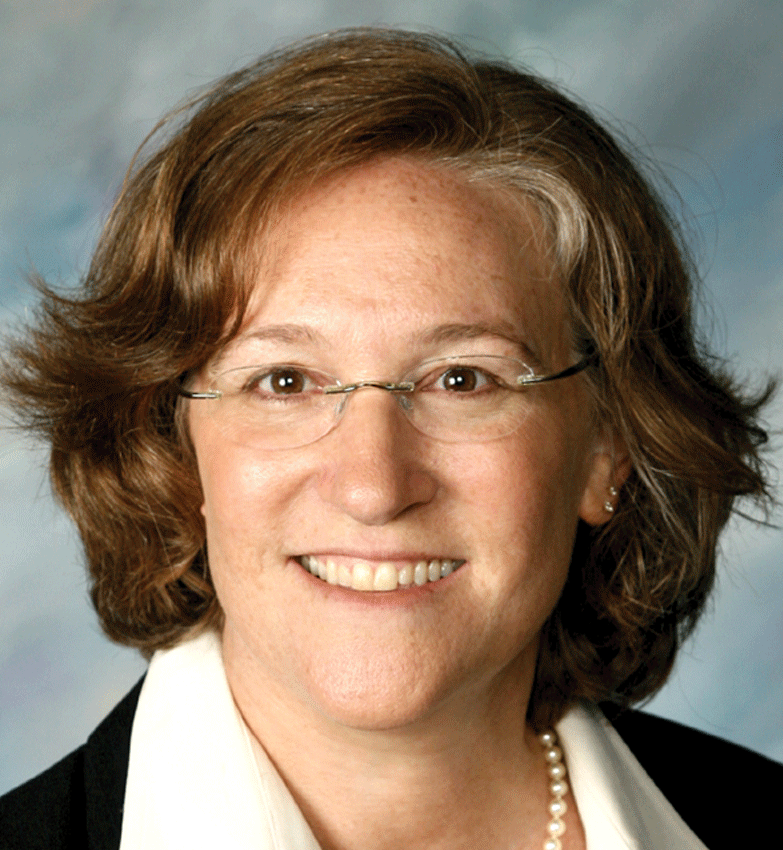
And the same can be said of the 13 students in that program’s inaugural class and those who will enroll in the years to come.
Indeed, the projections made by the American Society of Civil Engineers and the Bureau of Labor Statistics would seem to provide ample evidence that he’s right.

Time will tell if WNEU’s large investment will prove worthwhile, but already there are signs that the university is building momentum — in more ways than one.

 

George O’Brien can be reached at [email protected]

Cover Story
UMass Chancellor Will Make Proper Planning a Priority

COVERart0313bAs he talked about UMass Amherst and the course he projects for the school he now serves as chancellor, Kumble Subbaswamy summoned a well-worn quote from Dwight Eisenhower: “plans are nothing; planning is everything.”

Those words were uttered in reference to preparations for D-Day, the largest amphibious invasion in history, but they’ve been borrowed by leaders in virtually every field, including academia, to describe the difference between having a plan on paper and engaging in effective, thorough, sensible planning.

There is a new strategic planning initiative underway at the Amherst campus, said Subbaswamy (known to colleagues as ‘Swamy’), one that will provide a detailed outline of where this soon-to-be-150-year-old institution needs to be with regard to everything from the life sciences to economic-development initiatives within the Commonwealth; from increasing the volume of research initiatives on the campus to improving graduation rates.


The faculty-led initiative, which should be ready by the summer, will shape the school’s trajectory for the next several years, said Subbaswamy, who came to the Amherst campus last July.

“Eisenhower was correct — planning is a forcing mechanism for us to think seriously about where we want to go,” he told BusinessWest. “Without planning, anything goes.

“This is a time when economic development is on a lot of people’s minds,” he continued, while juxtaposing the school’s current mission against the one it started with as one of the institutions created through the Land Grant Act of 1862. “Globalization has had an impact on what it means to be a 21st-century economic power; we still have a lot of assets that the state has invested in that can produce direct benefits to the Commonwealth and beyond, and we will be articulating that as part of our strategic plan.”

But planning has become a far more challenging assignment in the current fiscal climate, one in which state contributions to the state university have been declining, said Subbaswamy, adding that the funding situation leaves many question marks about everything from further progress in what has become known as the ‘Springfield Initiative’ to efforts at the university to help the state’s businesses become more globally competitive.

“If the expectation is that planning means that new resources will suddenly and magically appear, that’s unrealistic; that’s not what happens,” he said. “But if the goal is to say, ‘whether new resources come in or not, we want to prioritize where we spend our money,’ then the planning exercise is a very important one and a necessity.”

Moving forward, he said the school, its administrators, and faculty will be addressing what he called some of the “new challenges” facing those in higher education today. He put on that list such matters as the emergence of online education and what it means to residential institutions to continuously hone the model for a successful research university.

Meanwhile, one additional challenge for the UMass Amherst campus, and it’s not a recent phenomenon, is making its various programs and reputation for excellence as well-known within the state as it is outside.

“Sometimes, it feels like UMass Amherst is the best-kept secret inside the Commonwealth of Massachusetts — it has a far better reputation outside the state,” he explained, adding that this is likely due in large part to the Bay State’s many prestigious and well-known private institutions — Harvard and MIT top that lengthy list — which often overshadow the state university’s flagship campus.

“But I think people are beginning to recognize the difference between the publics and the privates,” he went on, “and, in particular, the important role that public institutions play within the Commonwealth. When you get into deeper conversations, you see that there is high and growing regard for UMass Amherst; people recognize, for example, that admission standards have gotten pretty high, and they recognize that the Commonwealth Honors College is a destination place for the best and the brightest inside the state and outside it as well.”

The Commonwealth’s stock of private schools may also play a role in what many have described as a less-than-passionate alumni base when it comes to the university, said Subbaswamy, who didn’t exactly disagree with that characterization. He said the school suffers from geographic challenges — many of its graduates live and work across the state, which is not a huge distance comparatively, but certainly psychologically — and also from a lack of what he called “connecting points.”

And he placed in that category everything from buildings and features on the campus itself — perhaps the most historic and best-known building, the chapel, has been closed for more than a decade — to a big-time sports program.

For this issue, BusinessWest conducted a wide-ranging interview with Subbaswamy, one that touched on everything from rising in the ranks nationally among research institutions to possible expansion into downtown Springfield — and how it all comes back to planning.


Class Action

After arriving last summer after a stints at two other major public schools — the University of Kentucky’s Lexington campus and the University of Indiana’s flagship campus in Bloomington — Subbaswamy said he commenced a lengthy, and in some ways ongoing, series of “meets and greets” with individuals and groups at both ends of the state.

The constituencies involved were both internal — faculty, staff, and students, among others — and external, ranging from alumni groups to state legislators to the Cranberry Growers Assoc., which, while based in Wareham on Cape Cod, boasts many members from the UMass School of Agriculture, and certainly isn’t among those lacking an appreciation for the state university.

“Among the cranberry growers, there is true adulation and respect for the institution,” said the chancellor, “because they readily admit that their business would not be what it is today without the continued work on the campus.”

In some respects, these meetings involved varying degrees of what Subbaswamy called “repairing relations” — his predecessor, Robert Holub, was essentially forced out after three years at the helm, and there has been considerable turnover in the chancellor’s office in recent years — but he told BusinessWest that this work is essentially done.

“Part of this work was reassuring our support base that everything is continuing on campus, that the positive momentum generated by my predecessors has not been slowed down, and that we’re on track to dealing with the new challenges in public higher education,” he explained. “The other was securing their continued support as we commence our 151st year.”

Those aforementioned constituencies have moved on, he explained, to the broader topic of what to expect from the school’s new leader.

And the answer to that question is clouded by a number of issues, but mostly the challenging fiscal situation, said the chancellor, adding that those who have expectations should manage them appropriately given the financial landscape.

And this mindset applies to both aspects of how a flagship university impacts economic development, he said, referring to both the narrow focus — the jobs at the campus and the spending it generates, for example — and the broader role stemming from transferring research into business opportunities, assisting existing businesses with becoming more competitive and moving in new and profitable directions, and drawing new businesses to the region.

“This is a role than can only be played by major research universities, public or private, and in this region, we’re it,” he explained. “And in a climate where the state has been reducing our appropriation over the past five or six years, we don’t have the resources that we can come up with to play that additional role in economic development.

“We have the knowhow, we have the expertise, and we have the desire,” he continued. “But we have a very limited ability to get engaged unless we find resources, whether it’s through the state, the local region, or federal assistance, to do it on the scale that’s needed to be a true catalyst.

“And we’re only one element in bringing about systemic change,” the chancellor went on. “The local government, local businesses, the state government, and the private sector — they all have a role to play in this. We’re ready, and we have a track record of getting involved with social change and economic development, but we can’t do it without resources.”

Quantifying matters, Subbaswamy said the university has been coping with a 26% reduction in state appropriations over the past several years. A current proposal from the governor to reverse the course of state assistance would certainly help, he went on, but it wouldn’t put the university even back to where it was five or six years ago.

Meanwhile, the campus infrastructure continues to age and deteriorate, he told BusinessWest, adding that the vast majority of the buildings are now more than 50 years old or fast approaching that number — there was a huge building boom in the ’60s and early ’70s, but then virtually nothing for the next 30 years — and there is currently $1.6 billion in deferred maintenance that needs to be undertaken.

The school has responded with efforts to become more efficient and cut fat where possible, but higher tuition and fees have also become reality, bringing the school dangerously close to limiting one of its historical assets in the Commonwealth — access to all economic classes of students.


Progress — by Degrees

The ongoing fiscal challenges are also going to play a role in the university’s involvement in the region’s largest community, said Subbaswamy, adding, again, that there are expectations about what the institution can and should do with regard to the City of Homes.

The Springfield Initiative has a number of moving parts, involving everything from the arts to biosciences (the Pioneer Valley Life Sciences Institute); from creating an active presence in the downtown — the university’s Design Center was relocated to Court Square — to work with Davis Foundation on issues involving education in urban settings.

The most recent talk, or speculation, has centered on broadening that downtown presence with a satellite facility, said Subbaswamy, adding that terminology, not to mention expectations, must be put in proper perspective.

“Somehow, the expectation that a large campus can be created suddenly, and without a comprehensive needs analysis, is unrealistic,” he explained, opting to use the phrase ‘satellite center’ to describe what, if anything, could develop. “Different people have different views on what they expect from UMass, and, in general, these expectations need to be managed properly.”

Elaborating, he said that many area officials have an ‘if-you-build-it-they-will-come’ thought process when it comes to a UMass facility in downtown Springfield, while he considers smaller, phased-in growth to be more practical, especially in these times.

“If you want to grow organically, and start with what we consider to be the highest priorities — how can we make a difference,” he said, “and then, based on that success and additional resources, grow more, I think that’s a much more realistic approach for today’s financial climate.”

And this brings him back to the subject of planning and the ongoing initiative at the university to chart a course for the years and decades to come.

UMass already has a number of stated priorities and strategic initiatives — some more clearly articulated than others, he said, adding that putting such matters within a plan, with clearly stated goals and methods for measuring results, makes it easier to achieve progress with those goals.

He cited work within the broad realm of life sciences as one example.

“We understand that the life sciences are of major importance to the state at this time, so we will have a focus on life-sciences research and development in this plan,” he explained. “We’re already doing [work in that field], but we haven’t explicitly stated it. By stating it, that allows different colleges and departments to align their resources in this general direction.”

Moreover, the strategic plan in progress will not only prioritize matters and provide a road map for reaching certain goals, it will ultimately leave the university better prepared for when the financial skies clear, said the chancellor.

“When you make an argument for new resources, having a cogent plan allows you to make an argument for those resources better than if you simply said, ‘give us money, and we’ll do good things,’” he told BusinessWest. “I’m sure we’ll do good things, but what is the benefit to society; what is the benefit to the Commonwealth?”

While undertaking this strategic planning, the new chancellor will look to address some of the other priorities that were reinforced during those meet and greets. These include making the school less of a well-kept secret within the Commonwealth and getting graduates more engaged with their alma mater.

The school’s almost-year-long sesquicentennial celebration may provide one of those key connecting points for the alumni base that Subbaswamy described.

The chancellor said the planned events, including a Founder’s Day that will be expanded into a Founder’s Week, will offer a springboard for fund-raising efforts that have been delayed by the change in the chancellor’s office, with the so-called ‘public phase’ of that initiative set to begin April 27. Meanwhile, it will also dovetail in many respects with the strategic-planning initiative and offer opportunities to show how, while the school may have changed in countless ways since 1863, its overall mission really hasn’t.

“When the Land Grant Act was passed 150 years ago and our campus was created, there were specific expectations about educating the general populace and conducting relevant research and making sure that this research translated into benefiting society,” Subbaswamy said. “As times have changed, the role of research universities has also evolved, but land-grant universities have maintained that original mission — teaching, research, and outreach.

“This will be a time for reflection on where you’ve come from,” he continued, “and also an opportunity to rethink how you want to focus for the future.”


School of Thought

As he talked about where the Amherst campus has been, where it is, and where it’s going, the chancellor didn’t borrow another famous Eisenhower quote — “unless we progress, we regress” — but that was the essence of the message he left with BusinessWest.

The school does, indeed, have the same mission it had when it was launched at the height of the Civil War, but education, technology, and the global economy have all changed in myriad ways.

Subbaswamy has many items on his to-do list, but proactive response to those changes are at the top of the chart — along with the constant planning that is, as Ike said, everything.


George O’Brien can be reached at [email protected]

Features
And Five Judges Will Now Score the 40 Under Forty Hopefuls

40under40-LOGO2012A flurry of last-minute nominations has produced a near-record number of entries for BusinessWest’s 40 Under Forty program.

A total of 99 individuals have been nominated for the honor of joining the class of 2013, the seventh since the program was initiated in 2007.

The daunting, yet rewarding, task of scoring these individuals now falls to five judges (including two previous winners), who represent fields ranging from law to accounting; from education to financial services. They will be returning their scores later this week, and the winners will be notified in the days that follow.

The class of 2013 will be profiled in the April 22 issue of BusinessWest, one of the most popular issues of the year, and the annual 40 Under Forty gala is scheduled for June 20 at the Log Cabin Banquet & Meeting House. Here are those who will be scoring this year’s nominees:

Jeffrey Fialky

Jeffrey Fialky

• Jeffrey Fialky, a member of the 40 Under Forty class of 2008 and a shareholder of the regional law firm Bacon Wilson, P.C., and member of the firm’s corporate, commercial, and municipal departments, where he specializes in all aspects of corporate and business law, banking, commercial real estate, and sophisticated commercial transactions. He joined the firm in 2006 after nearly a decade of living in Eastern Mass., where he held senior commercial attorney positions within some of the country’s most prominent publicly traded telecommunications and cable television companies. He previously served as an assistant district attorney in Hampden County.

Fialky is also active in the community, having served on a number of nonprofit and economic-development-related organizations. They include the Springfield Chamber of Commerce, Springfield Museums, the United Way of Pioneer Valley, the Jewish Federation of Pioneer Valley, the Springfield Technical Community College Scibelli Enterprise Center Advisory Board, the Alden Credit Union board of directors, the Community Foundation, the American Cancer Society, the Young Professional Society of Greater Springfield, Leadership Pioneer Valley, OnBoard, the YMCA of Greater Springfield, the Mason Wright Foundation, the EDC Tourism Development Committee; and the American Red Cross Pioneer Valley Chapter.

Brendon Hutchins

Brendon Hutchins

• Brendon Hutchins, CFP, a member of the 40 Under Forty class of 2012, and senior vice president of Account Management for St. Germain Investment Management. Prior to joing the firm in 2003, he was vice president and financial advisor for the FleetBoston Financial Corp. Private Clients Group in Springfield. His prior experience includes eight years with Fidelity Investments as a vice president in the retirement division, with responsibilities across multiple locations during his tenure there.

In addition to being a certified financial planner, Hutchins holds NASD series 7 and 65 licenses for securities representation and investment-advisor services. He currently serves on the board of directors for the New England office of the March of Dimes, the Greater Springfield YMCA, and the Basketball Hall of Fame, and has also served on the board for the Springfield School Volunteers.

Mark O’Connell

Mark O’Connell

• Mark O’Connell, president and chief executive officer of Wolf & Co., providing audit and financial reporting services to both privately held and publicly traded financial institutions and holding companies across New England, including community banks and mortgage banking institutions. In his current capacity, he is responsible for the strategic direction of the firm, while also providing audit and advisory services to financial institutions. His experience also includes consultation on audit and accounting issues related to mergers and acquisitions and with respect to debt and security offerings filed with the Federal Home Loan Bank Board, the Federal Deposit Insurance Corp., and the Securities and Exchange Commission.

O’Connell has been involved with a number of industry and nonprofit organizations, including the American Institute of Certified Public Accountants (AICPA), the Massachusetts and Connecticut Societies of Certified Public Accountants, and the Children’s Study Home in Springfield. In 2010, he won the Human Services Forum Board Member Award.

Myra Smith

Myra Smith

• Myra Smith, vice president of Human Resources and Multicultural Affairs at Springfield Technical Community College (STCC). Joining the college in 1978, Smith has helped transform the STCC community into one of inclusiveness that celebrates cultural diversity. Among her many accomplishments is the creation of the STCC Diversity Council and its event series, which brings national and international speakers and artists to the campus. Smith also was responsible for the creation of the STCC “Think Tank” series, which brings community leaders together to assist with the retention and graduation rate of young men of color.

Smith is also active in the community, serving on many local boards, including People’sBank, the National Conference for Community Justice of Western Mass., and the STCC Foundation. Smith is a founding trustee of the Martin Luther King Charter School of Excellence and a trustee for the Non-Unit Health and Welfare Trust Fund for the Commonwealth of Massachusetts. Smith was recognized in 2007 by Unity First with a Women of Leadership Award, and received a Women of Vision Award from the Elms College Step Forward Program in 2005.

Jeff Sullivan

Jeff Sullivan

• Jeff Sullivan, executive vice president and chief operating officer of United Bank. In that capacity, which he assumed Jan. 1, Sullivan is responsible for the bank’s retail deposit and operations division, advancements in technology and electronic banking, and franchise expansion efforts. In addition, he also oversees the Information Systems and Facilities Departments and the United Wealth Management Group, and is also responsible for the company’s enterprise risk management program. He previously served the bank as executive vice president and chief lending officer and, prior to arriving at United, served in commercial-lending capacities for the Bank of Western Mass. and BayBank.

Sullivan has been involved with a number of area nonprofit and economic-development-related organizations, including DevelopSpringfield, Better Homes Inc., Martin Luther King Jr. Family Services, Briana Fund for Children with Physical Disabilities, OnBoard, the Pioneer Valley Plan for Progress, the Holyoke Chamber of Commerce, and the Economic Development Council of Western Mass.

Departments People on the Move

The Business Networking International (BNI) Western Massachusetts Executive Team recently chose Jason Turcotte, owner of Turcotte Data & Design, a website design and development business in Ware, as the 2012 Director of the Year for Western Mass. at the organization’s annual banquet at the Delaney House. The award recognizes one director for commitment and dedication to the organization and for accomplishments within the chapters each oversees. In June 2012, after two years as a director consultant, Turcotte became the managing director of the Western Mass. BNI region, which encompasses Hampshire, Hampden, Franklin, and Berkshire counties. In that part-time role, he oversees and provides continued structure, training, and support to the region’s chapters and members in Western Mass. to ensure that every chapter is following the BNI system, establishing goals, and keeping pace to achieve them.

•••••

Hector Toledo

Hector Toledo

Gov. Deval L. Patrick has reappointed Hector Toledo to the Springfield Technical Community College board of trustees, effective Jan. 16, 2013 through March 1, 2017.  Toledo, an alumnus of STCC, is Vice President and Sales Director at Hampden Bank and has served on the STCC board of trustees since 2008.  In June 2012, Toledo was appointed by Patrick to serve as the chair of the board of trustees.

•••••

Doherty, Wallace, Pillsbury & Murphy, P.C. recently announced that attorney Rebecca Thibault has joined the Springfield-based firm as an Associate. Her practice areas include general corporate, real estate, and environmental law. She was an intern of the Massachusetts Department of Environmental Protection’s Office of Appeal and Dispute Resolution (Western Region) and was managing editor of Washington University Global Studies Law Review while in law school.

•••••

Felicity Hardee

Felicity Hardee

Felicity Hardee, a Partner with the regional law firm Bulkley Richardson who chairs its Real Estate and Environmental Law departments, has been elected President of the Valley Community Development Corp. The nonprofit corporation addresses the growing needs of low- and moderate-income people in the Pioneer Valley through developing and preserving affordable rental and ownership housing, cultivating economic self-sufficiency, and fostering community leadership. Hardee previously served as the organization’s vice president.

•••••

First Niagara Bank recently announced that First Vice President of Small Business Banking John Delgadillo and Vice President of Commercial Lending Allison Standish Plimpton have each been recognized as a New Leader in Banking by the Connecticut Bankers Assoc. and Connecticut Banking magazine. Delgadillo manages small-business relationships in the New England Region for the bank, while Standish Plimpton manages commercial relationships in the Greater Hartford and Greater Manchester area. The New Leaders In Banking awards recognize bankers who show promise and potential in the local banking industry. Honorees are chosen by an independent panel, which considers Connecticut bankers under the age of 50 who are judged to be outstanding employees, managers, or business leaders and who make a notable impact within their banks or their community.

•••••

Amherst-based New England Environmental Inc. (NEE) announced that Jack Jemsek has joined the company as a Senior Hydrogeologist. Jemsek is a Massachusetts licensed site professional, a Connecticut licensed environmental professional, a professional geologist in New Hampshire, and a certified geologist in Maine. He has a bachelor’s degree in Earth Science from the University of Notre Dame, and a Ph.D. in Marine Geology and Geophysics from the Massachusetts Institute of Technology and Woods Hole Oceanographic Institution Joint Program in Oceanography. With more than 24 years of conducting environmental assessments, remedial investigations, hydrogeologic studies, and environmental permitting, Jemsek has been responsible for overseeing technical and regulatory aspects of environmental projects and project teams, directing and managing site investigations and risk characterizations, and designing and evaluating remedial actions for hazardous-waste disposal and brownfield sites throughout New England.

•••••

Craig Melin, President and CEO of Cooley Dickinson Hospital, will join the founding board of the Hampshire County Regional Chamber, while the hospital has pledged a two-year, $15,000 investment to the developing initiative. Melin has been a longtime supporter of the idea of a Regional Chamber, saying it can help Northampton, Amherst, and Easthampton avoid duplication of economic-growth efforts. Melin said he brings to the board a perspective on improving the health of the community, continuously improving the quality of the broader care system and helping to make healthcare more affordable.

Class of 2013 Difference Makers

Organizers of Springfield’s C3 Policing Program

C3Policing

Michael Cutone, left, and John Barbieri. (Note: Tom Sarrouf was on assignment with his SF units and not available to be photographed.)

Michael Cutone was asked how he could tell if the C3P, or Counter Criminal Continuum Policing program, in Springfield’s North End was succeeding with its various goals in the manner that organizers anticipated when they commenced the initiative roughly three years ago.

The Massachusetts State trooper and master sergeant in the U.S. Army Special Forces (the Green Berets) paused for a second and nodded his head a few times, as if to indicate that he gets that question often, and that he had an answer.

Actually, he had several.

For starters, he told BusinessWest, there is statistical evidence showing often-dramatic reductions in what would be considered gang-related crime in the Brightwood neighborhood since this program, based on tactics used by the Special Forces in Iraq and Afghanistan, went into effect. Comparing 2010 statistics with those from 2009, before the initiative started, there was a 76% decrease in larceny, a 66% drop in weapons violations, a 55% reduction in burglary, and a 47% decline in motor-vehicle thefts.

But there is also anecdotal evidence concerning what is being called a counterinsurgency, or COIN, program, he said, listing everything from reports of gang members throwing their cell phones into the nearby Connecticut River because they believe the police must have them bugged — so accurate is their information about gang activities past and planned — to other reports of gang operatives offering to pay neighborhood residents for information on what those leading the C3P operation are up to.

Meanwhile, there’s the rising number of communities and police departments looking to emulate this model — officials have come from as far away as the Netherlands to observe the concept and talk with its organizers — and the growing volume of press it’s generating; the New York Times and Boston Globe have done stories, and 60 Minutes will present a report on the program later this winter.

Still, with all that, Cutone prefers to sum things up with what he calls the “non-traditional answer,” a summation of what residents and neighborhood activists are saying about C3P at what amounts to the heart of the program, regular Thursday community meetings designed to share information and ideas and continuously strengthen the relationship between the police and area residents. Or what they aren’t saying, as the case may be.

“No one’s saying, ‘you guys suck, and we don’t want you here anymore — this is a all a bunch a crap,’” he explained with a laugh, noting that such sentiments work as effectively (for him, anyway) as the crime stats, media attention, and cell phones in the river.

Collectively, they tell him that the COIN operation is meeting its overriding goal — to make things very uncomfortable for the gangs that once ruled these streets through intimidation, so much so that they’ll want to get out of the various businesses they’re in, especially selling drugs. And this happened because the program has succeeded in getting residents involved in making their streets safer, where once they were “inured, apathetic, and afraid.”

Those are three words that John Barbieri, deputy chief of police in Springfield, used early and often as he talked with BusinessWest about C3P. He is the official within the department with whom Cutone and Tom Sarrouf, a fellow state trooper and team commander of Cutone’s Special Forces (SF) unit, worked most closely to get this program implemented.

“The problem with the communities we’re talking about is that there’s very little involvement with the police,” he said, adding that the gangs in the North End had thrived in part due to what amounted to passive support from the community. “And there are myriad reasons for this, but a lot of this boils down to them not being stakeholders — these people are, for the most part, very poor, and they’d become inured to gang violence, violence in general, and drug dealing.”

In very simple terms, the C3P program has succeeded in making people claim a stake, he went on, and by doing so, they are considerably weakening that base of passive support.

Sarrouf agreed. “The residents there are now engaged in their community, where before they were not, plain and simple,” he said, referring to the most tangible and far-reaching benefit derived from what has become known in SF circles as the “Avghani Model,” named after the small town in Northern Iraq where these tactics were employed successfully to gain the trust and support of the local population and make them a resource in the fight against the enemy.

For their success to date and the promise of much more, Cutone, Barbieri, Sarrouf, and all those people in the community who work with them are truly Difference Makers.

Joining the Force

As he talked about how the COIN program works, Cutone offered a few analogies to help get his points across.

The first is what he calls the “seagulls and the Labrador retriever on the beach” scenario. Elaborating, he said that, while the dog will scare the birds away, they will merely hover or fly off, eventually to return; their lifestyle is interrupted, but not changed. The same is true, he said, with a typical police crackdown, or increased police presence, in an area like Springfield’s North End.

Another analogy involves a water balloon. When one pushes a finger into a full water balloon, it compresses that area, he said, noting that, when the finger is removed, the balloon returns to its original shape. What C3P is designed to do is apply several pressure points and not relieve that pressure, thus permanently altering the shape of balloon, or, in this case, a neighborhood. And a third analogy references a farmer battling weeds; unless one gets to the root of the problem and removes the weeds, they will keep coming back.

Using such effective visuals, Cutone, Sarrouf, and Barbieri explained how a COIN operation, and this one in particular, goes well beyond most traditional police tactics and the community-policing concept as a whole to involve a neighborhood in efforts to reduce crime.

And such extreme tactics are necessary, said Cutone, because gangs, like insurgents in foreign countries, are clever opponents not usually thwarted by what would be considered conventional approaches.

“Gang members and drug dealers are very savvy; they exploit the fact that people don’t want to engage with the police,” he explained. “They exploit that passive support. Just like insurgents, they move into areas where people are not going to report on them. Terrorist training camps don’t set up shop in Longmeadow or Belmont, Mass. They set up in Yemen, Afghanistan … failed states. Well, gang members and drug dealers will move into a failed neighborhood for the same reasons.”

‘Failed’ would be one effective way to describe Brightwood in the early fall of 2009, said Barbieri, adding that it was, at that time, the scene of heightened gang violence and activity, punctuated by several murders, including one “finished off” near the entrance to the trauma unit at nearby Baystate Medical Center.

In response to the surge, Springfield police countered with heightened patrols and a spate of arrests. “We were carrying assault rifles because they were carrying assault rifles,” he recalled, adding that, while police were diligent in their work, the results were basically similar to that of the retriever on the beach.

It was about this time that Cutone — who had attempted to initiate a counter-insurgency program in Brightwood based on tactics used by the SF, but seen it back-burnered — made another push. And the reason was obvious to those fighting crime in that neighborhood at that time, he said.

“It was clear that, just as we couldn’t kill our way out of insurgency in Iraq, we weren’t going to arrest our way out of this gang and drug problem,” he said.

Instead, the answer lay with intelligence, said Barbieri, returning to his thoughts about making residents stakeholders.

“It’s the community involvement that separates these neighborhoods from the suburbs and even the more affluent areas of Springfield, such as 16 Acres and Forest Park,” he explained when talking about the attitude that existed in Brightwood three years ago. “If there’s a crime in those neighborhoods, people become involved. If there’s drug dealing, they don’t tolerate it. When they call the police, they demand results — they go out and take pictures of the people involved; they take down license plates.

“In Brightwood, we were working like animals, but it all boils down to intelligence, and no one was telling us what was going on,” Barbieri continued. “No matter how long I work your neighborhood, no matter how much patrolling I do down there, I don’t know your neighborhood like you do — you know who’s dealing drugs and who’s hanging out in front of your house all day. It’s a community that keeps a community safe.

“Trooper Cutone comes up to me at a meeting and says, ‘I just got back from Iraq; there’s a counterinsurgency model to target gangs where we get the community involved and committed, and we try to change the conditions and build capacity in the neighborhoods,’” he went on. “I was the right target audience, and this was the right target location.”

For Your Information

Cutone recalls that the COIN initiative got its unofficial start with what he described as “dismounted patrols,” where he would get out of his cruiser and walk into shops and engage the owners and employees.

“That’s something we would do in Army SF when we were deployed in remote areas — we would live amongst the villagers and get to know them,” he explained. “Using that principle that I was taught, I would walk into a lot of these Hispanic shops, using my limited supply of Spanish to simply say ‘hello.’ These folks would look at me like a hog staring at a wristwatch, saying, ‘why is this trooper in my shop having coffee and asking me how I’m doing?’ So I got the cold shoulder in a lot of places.”

Changing attitudes and generating the steady flow of information, or intelligence, that the program needs to succeed took the better part of year, said those we spoke with, adding that the process of building trust and a working relationship with the neighborhood’s residents was difficult, and it is in many ways ongoing.

There are many moving parts within the program, but its heart and soul is the regular Thursday community meetings, staged at a few different locations, such as the apartment complex at 101 Lowell St.

At these sessions, updates are given, information is shared, and ideas are launched, such as the so-called ‘walking school bus’ concept — teachers chaperoning groups of students as they walk to school in the morning — which was offered by an employee of the Baystate Brightwood Health Center.

Overall, trust is built and momentum is generated through these meetings and other initiatives, such as regular Saturday neighborhood walk-throughs during which police officers will knock on doors and engage residents, other types of outreach efforts, classes on how to report crimes and spot gang activity, and ‘text-a-tip,’ which enables residents to forward information anonymously, said Cutone and Barbieri, adding that the results have been dramatic when it comes to the residents of the neighborhood taking that stake they once resisted and becoming an invaluable resource.

“We gave them our work numbers, our work cell numbers, our e-mail addresses, we gave them classes in how gangs recruit youths and how to identify if your child is in a gang — those types of things,” said Cutone. “And what happened, little by little, is that, between the Thursday meetings, the walk-throughs on Saturdays, and these classes, the amount of criminal information started increasing exponentially.”

And this volume represents a radical departure from what the police are accustomed to, and normally forced to subsist on.

“Typically, narcotics units and gang units get their information from criminal elements — I arrest a bad guy, he’s looking at X number of charges and X number of years, so all of a sudden, he wants to cooperate with the police, so he gives me another bad guy,” Cutone explained. “That’s a good technique, and we still use that technique; the problem with it, though, is that you’re minimizing your information flow, because 95% or more of the people in a community are law-abiding citizens. If you’re only dealing with the criminal element, you’ve eliminated 95% of your information flow.

“So now I have all this intelligence coming into my work computer — I’ve had guns and drugs located because informants would send material to my work cell phone and we’d be able to make arrests and recover stolen weapons,” he continued. “None of that would have happened if we hadn’t built this rapport with the local population.”

This steady flow of information has changed life for gang members to the extent that there are reports that some are buying new cell phones every month because they believe the police are somehow tapping the lines, said Barbieri, adding that there have been other reports of residents trying to chase away undercover police officers working the neighborhood, believing they’re there to buy drugs.

As for the neighborhood as a whole, there has been palpable change, said Sarrouf.

“When you ask people what’s different about living there now as opposed to before the program started, they’ll tell you very candidly that it’s safer, they feel more engaged in their own community, and they feel more empowered to be able to participate in the direction their community takes with respect to the issues that they had prior to this.

“Before, the North End was just truly chaotic; that’s the only way to describe it,” he went on. “Is there still crime there today? Of course, but it is at a much more manageable level, where there’s trust built between the community, city government, and law enforcement where they can respond more accurately, in a more timely fashion, and with a better approach.”

State Rep. Cheryl Coakley-Rivera, who represents that neighborhood, used different words to say essentially the same thing.
“There’s a renewed sense of hope — that’s the word I keep coming back to,” she explained. “But there’s also a sense of action and responsibility. If I’m a resident and I go to one opf these meetings, I come away thinking, ‘what can I do? — I have a team behind me now. What is my responsibility when it comes to working with that team?’ Is it just to fix my fence or clean up my yard, or is it call text-a-tip because I saw a guy put a gun in his trunk?’ There is a new sense of responsibility.”

To a Different Beat

Despite the gains in Brightwood, Sarrouf said, there is still much work to be done in this neighborhood.

“We’re not trying to fool anyone and present this as any kind of quick fix,” he explained. “Right up front, we said that this is a very long-term project, one that will take years to accomplish all its goals. Are we there yet? No, but we’re seeing incremental dividends with respect to the fact that the community is getting better over time.

“And what we’re not seeing is a fallback to what it was — which is a very good thing,” he continued.

In other words, there is more than sufficient evidence — both hard and anectodal — to suggest that this program is working, and that those who have put it in a position to succeed are worthy of being called Difference Makers.

George O’Brien can be reached at [email protected]

Banking and Financial Services Sections
How Do I Know If My Business Should Be Filing in Multiple States?

Jennifer Reynolds

Jennifer Reynolds

With the speed at which technology is changing and the borderless environment in which we now live, businesses often find themselves unknowingly doing business in states other than the one they call home.

In fact, in today’s business environment, very few companies do business in only one state. Further, it is not unusual to find that small to medium-sized closely held companies are doing business in several states — or even all 50. And it’s no secret that states are struggling financially. As such, they are all competing for your tax dollars.

A review of your company’s interstate activities can help comply with the various tax laws and identify valuable tax-saving opportunities.


So, how do you know if your business should be filing in other states?

A state’s power to tax your business depends on its connection (or nexus, as it is referred to in the world of accountants and attorneys) with the state. The level of nexus required, however, may vary depending on the tax involved. The four most prevalent state taxes are:

• Sales and use taxes;

• Corporate income taxes;

• Franchise taxes; and

• Payroll taxes.

Many early nexus cases involved sales and use taxes. Technically, the consumer is responsible for those taxes, but because of the impracticality of collecting them from individuals, states have placed this burden on the seller.


Do you have an economic presence?

Going back to the founding fathers, the Commerce Clause prohibited states from imposing tax on out-of-state businesses unless that business had a ‘substantial nexus’ with the taxing state. Substantial nexus, as you can imagine, can be interpreted differently by each person. So how do we know what constitutes substantial nexus?

Well, as with all interpretations of the Constitution, the courts interpret the meaning. Here, U.S. Supreme Court decisions have determined that, for purposes of applying the commerce clause, ‘substantial nexus’ means physical presence. Thus, states cannot constitutionally tax an out-of-state business unless that business has some form of physical presence in that state.

In its landmark 1992 decision in Quill v. North Dakota, the U.S. Supreme Court ruled that a state cannot require an out-of-state seller to collect sales or use taxes unless it has a substantial physical presence in the state. Again, the meaning of ‘physical presence’ depends on the facts and circumstances. But, in general, you have a physical presence if you maintain offices, stores, manufacturing or distribution facilities, property, or employees in the state.

In the age of e-commerce, it’s extremely easy for companies to do business remotely with customers in states or countries where they have no physical presence. Many courts and state legislatures believe that economic presence is a more relevant indicator of a business’s connection with a state.

Over the last few years, there has been a trend in the courts toward eliminating the physical-presence requirement, at least for purposes of income and franchise taxes. But for now, physical presence is still required today to trigger sales and use tax-collection obligations, but many states require only a very minimal presence to establish nexus, and the courts are agreeing.

However, under Federal Public Law 86-272, states are prohibited from taxing a company’s income if its only activity in that state consists of the solicitation of orders or the sale of tangible personal property that is approved and shipped from outside of that state.

One caveat, though: this law does not apply to intangible property. Hence, several recent cases have allowed states to tax an out-of-state firm’s income on intangibles such as credit cards or trademark licenses, even though the firm had no physical presence in that state. A substantial ‘economic’ presence was sufficient.

For example, Connecticut has now instituted a ‘bright-line’ economic nexus test. A taxpayer is deemed to have substantial economic presence if it generates receipts of $500,000 or more attributable to the purposeful direction of business activities toward the state, examined in light of the frequency, quantity, and systematic nature of a company’s economic contacts with this state, without regard to physical presence, to the extent permitted by the U.S. Constitution.

However, Public Law 86-272 will continue to restrict Connecticut’s ability to impose a tax on income derived within its borders from interstate commerce if that activity was only the solicitation of orders of tangible personal property, and where those orders are sent from outside of Connecticut for acceptance and subsequently shipped from outside of Connecticut. And Connecticut is not alone. More states are pushing for economic presence in lieu of a required physical presence.


Am I doubling my tax obligations by crossing state lines?

You might think that establishing nexus with a state increases your tax exposure, but in some cases it does the opposite.

Consider corporate income taxes. Many states determine the portion of your income subject to their tax using a three-factor formula based on the percentage of your sales, property, and payroll attributable to the state. (In some states, the sales factor is double-weighted.) Others use a single-factor formula based on sales. If you’re able to apportion some of your income to a state with a lower tax rate, it can actually reduce your company’s tax bill.


Taking the ‘I’ll take my chances and let them find me’ approach can be a gamble.

Revenue-hungry states will continue to extend the geographical reach of their tax laws, and state agencies will continue to communicate with each other about state taxes. Along with companies, state revenue departments are also becoming more sophisticated.

For example, many states are starting to query vendor files of customers within the state. In-state auditors are looking at invoices to ensure that proper sales and use taxes are being paid for the out-of-state businesses with potential nexus in their state. From there, the states are generating nexus questionnaires to businesses that appear in their audits but are not showing as being registered in their state.

States are not only going after current taxes, but targeting businesses and individuals for back taxes from the date they first started doing business in that state. In addition to the tax, states are imposing penalties for not registering to do business in the state (which itself requires a fee and generally requires the company to file annual reports). The penalties for not registering, and penalties and interest for late filing and payment of taxes, can be substantial.


How can I be proactive to determine my company’s exposure to other states?

To ensure compliance with all applicable laws, be sure to periodically review your business’s interstate activities either internally with your accounting staff or with a qualified tax or legal advisor.

A nexus study may help you to understand your company’s obligations in the various states. It helps to identify your company’s normal business activities in relation to the various nexus standards, based on the type of tax (i.e. income, franchise, payroll, sales and use, or even a ‘privilege tax’ imposed by some states) and the states with which you may have connections.

Having the information up front before you begin a job or do business in another state can help you manage your company’s bottom line. Managing and planning for potential filing and tax obligations in advance can mean the difference between a profitable job and an unprofitable job.

This article is intended to provide a general overview of the multi-state tax environment. As always, you should consult your tax and/or legal advisor regarding the applicability of this general information to your business’s specific situations.


Jennifer Reynolds is a tax manager with the Holyoke-based certified public accounting firm Meyers Brothers Kalicka, P.C.; (413) 322-3542; [email protected]

Company Notebook Departments

Springfield College, STCC Sign Articulation Agreement for IT Students

SPRINGFIELD — Springfield Technical Community College (STCC) and Springfield College recently signed an articulation agreement allowing students at Springfield College to take Information Technology classes at STCC, recognizing the high quality of the Computer and IT Security program offered at STCC. Additionally, the agreement allows STCC students completing an associate’s degree in Computer Information Technologies to transfer to Springfield College as juniors in their Computer and Information Sciences major. “The agreement between STCC and Springfield College is historic because it gives bilateral pathways for STCC students to continue their education by earning a bachelor’s degree at Springfield College and it allows Springfield College students to gain access to the computer networking and security curriculum and expertise offered at STCC,” said Brian Candido, STCC Computer Information Technologies program chairman and associate professor. “It is a true win-win scenario for all students and faculty at both institutions.” Candido said the two colleges have been working together in this capacity since 2008 through the Cooperative Colleges of Greater Springfield (CCGS). The formal signing of this articulation agreement not only creates an opportunity for STCC students to transfer to Springfield College as juniors, but also allows STCC students to become eligible for school-based scholarships based on their grade-point averages. For Springfield College student Karon Perkins, the partnership between STCC and Springfield College gives him access to a top-notch IT program as well as a chance to experience campus life at another college besides his own. “STCC offers a good selection of programs not offered at Springfield College,” said Perkins. “And having the opportunity to come to STCC gives me a taste of a different college — what it’s like to be on a different campus — and I’ve learned a lot.” Leona Ittleman, dean of STCC’s School of Business and Information Technologies, credits both STCC and Springfield College faculty for the work they have done to make this agreement between the campuses a reality. “Some of our best students transfer to Springfield College and receive the benefits of our colleagues’ experience and dedication to student learning,” she noted. The Computer and Information Sciences major at Springfield College is a professional program that offers a solid core of theoretical and applied computer-science courses and provides students with the choice of one of four required concentrations: Information Systems, Software Development, Game Programming, or Internet and Network Security.


Big Y Raises $194,000 to Fight Breast Cancer

SPRINGFIELD — In order to raise awareness and funds to fight breast cancer, all Big Y Supermarkets donated proceeds from the company’s October initiative “Partners of Hope” to 17 breast-cancer support groups throughout Massachusetts and Connecticut. This month-long program reflects the partnership, commitment, and support of breast-cancer awareness and research that are so vital for many. In October,  Big Y raised $194,000, which was donated to nearly two dozen organizations. Locally, these included the Women’s Imaging Center at Berkshire Medical Center, Rays of Hope, and the Mercy Breast Care Center. “Big Y is committed to promoting breast-cancer awareness to our community,” said Big Y CEO Donald D’Amour. “Over the past five years, we’ve made tremendous progress thanks to our customers, vendors, and employees. In addition, these funds benefit local programs throughout our region. It is truly a collaborative effort.” Since 2007, the chain has raised more than $863,000 for this cause. During the entire month of October, specially marked ‘pink’ products and promotions involved almost every department in the store. Big Y donated a portion of the proceeds from several departments, including floral and produce. Many other items with pink packaging were available, and their manufacturers also made a donation of a portion of their proceeds for breast-cancer research as well. Big Y’s pink, reusable, earth-friendly shopping bag highlighting the breast-cancer awareness campaign were available, and every store promoted Partners of Hope pink ribbons for $1 as a way of generating additional proceeds for breast-cancer organizations throughout Massachusetts and Connecticut.


Cooley Dickinson Named a Leapfrog Top Hospital

NORTHAMPTON — Cooley Dickinson Hospital is one of 92 hospitals nationwide and eight in Massachusetts named to the Leapfrog Group’s annual list of Top Hospitals, which was announced on Dec. 4 at Leapfrog’s annual meeting. “It is because our doctors, nurses, allied-health professionals, and staff take the steps necessary to ensure that our patients receive safe, high-quality care that Cooley Dickinson achieved this recognition,” said Craig Melin, president and CEO. “Being named a Top Hospital is validation from an independent authority that our staff is continuously focused on delivering a high quality of care. Ultimately, our patients benefit most from our efforts, because they are less likely to experience quality or safety events at Cooley Dickinson.” Leah Binder, president and CEO of the Leapfrog Group, said the Top Hospital distinction “is by far the most competitive award a hospital can receive. Leapfrog holds hospitals to the highest standards on behalf of our purchaser members and their employees. By achieving the Top Hospital accolade, Cooley Dickinson has demonstrated exemplary performance across all areas of quality and patient safety that are analyzed on the Leapfrog Hospital Survey.” Besides announcing this year’s Top Hospitals, the Leapfrog Group focused on transparency as the key to improved hospital safety at its annual meeting. Cooley Dickinson was selected as a Top Hospital out of nearly 1,200 hospitals participating in the Leapfrog Group’s annual survey. Hospitals reaching this achievement include academic medical centers, teaching hospitals, children’s hospitals, and community hospitals in rural, suburban, and urban settings.

Top Hospital selections are based on the results of the Leapfrog Group’s annual hospital survey, which measures hospitals’ performance on patient safety and quality, focusing on three critical areas of hospital care: how patients fare, resource use, and management structures in place to prevent errors. The results of the survey are posted at www.leapfroggroup.org/cp.

Features
Penn National Likes Its Odds of Winning the Casino Contest

Penn National’s proposed Hollywood Casino Springfield

A view from the north of Penn National’s proposed Hollywood Casino Springfield.

Editor’s Note: This is the latest in a series of articles detailing the players and issues involved in the competition to place a resort casino in Western Mass. This segment focuses on Penn National Gaming Corp. and its plans for a casino in Springfield’s North End.


Tim Wilmott says that, if a company was going to build a casino in Springfield, it probably couldn’t pick a more challenging site for such a project than the one Penn National has chosen in Springfield’s North End.

After all, the $800 million proposal, to be called Hollywood Casino Springfield, involves relocating two of the city’s largest businesses — the Republican, its 330 employees, and its massive press operation, as well as Peter Pan Bus Lines and its more than 250 local employees — and then remediating those properties and making them ready for construction. Those moves come complete with myriad headaches and a very large price tag.

But this high degree of difficulty and the benefits to be derived from such an aggressive course are big parts of what makes this site so attractive to the Wyomissing, Pa.-based company, said Wilmott, its president.

Indeed, it is his belief that, by taking on a location that has, in addition to these stern logistical challenges, vast potential for further economic development, or what Penn National officials call a “ripple effect,” the casino operator has gained an edge in what all are expecting to be a spirited and expensive competition to win the license to operate in Western Mass.

“We took a look a lot of Western Mass. communities as we were deciding where to focus our efforts in this state,” he explained. “Clearly, we thought the Western Mass. region gave us the greatest chance of victory, and as we looked at the various locations in that zone, we felt that, to win the overall bid, we had to have the greatest community impact — and this site provides that.”

The relocation of the Republican and the creation of Republican Village Square

The relocation of the Republican and the creation of Republican Village Square in the heart of downtown are part of what Penn National officials call the “ripple effect.”

Detailing this potential impact during a wide-ranging interview with BusinessWest, Wilmott and others with the company said the printing operation at the Republican will obviously have to be relocated, probably to one of the business parks in the northeast corner of Springfield — Memorial II, near Smith & Wesson, or the Chicopee River Industrial Park that straddles the border with Chicopee. Also, the other units of the business — editorial, advertising, distribution, and more — would be relocated as well, probably to one of the downtown office buildings, providing a boost to the central business district.

Meanwhile, Peter Pan’s various business operations would also be relocated, Wilmott continued, with transportation-related units going across Main Street to a revitalized Union Station, and others (administrative personnel, for example) moving to Union Station or the center of the downtown.

“Given the energy that our development would have in that part of downtown Springfield, with the relocation of the Republican, the relocation of Peter Pan Bus Lines, and the revitalization of Union Station and the Paramount Theater,” said Wilmott, “we thought that all of these things give us a lot of credibility, both at the city level and at the state level. We think it gives us the best chance to win the bid.”

This potential ripple effect prompted Wilmott to draw comparisons between the Springfield initiative and a casino Penn National opened just over two months ago in Columbus, Ohio.

There, at the behest of city officials, the company essentially put aside a proposal to locate a casino in the arena district of the city, and instead blueprinted plans to place one on the site of a former Delphi Auto Parts manufacturing facility in a neighborhood plagued by poverty and crime.

“It was listed as one of the poorest communities, not only in Ohio but in all of the Midwest — their dubious distinction was to be listed as the ‘loneliest town in America’ at one point by one of the travel magazines,” said Eric Schippers, Penn National’s vice president of Public Affairs.

He told BusinessWest that the ripple effect in that community is still in its infancy stage, but there is evidence that the casino is becoming a catalyst for growth (much more on that later).

For this issue, BusinessWest continues its series of stories on the battle for the Western Mass. casino license with an in-depth look at Penn National’s plans for the North Side of Springfield, and how company officials believe it will more than stand up to the competition.


Roll of the Dice

Penn National staged an elaborate unveiling of its plans for the North End on Dec. 20 at the refurbished Paramount Theater.

The red carpet, with a decidedly Las Vegas-like look and feel, drew more than 200 people, and allowed Wilmott and other officials with the company to present long-awaited details on the Hollywood casino. Specific aspects of the plan had been kept under wraps, by and large, while the company hammered out an agreement to acquire an option on the Republican’s properties from the paper’s parent company, Advance Publications Inc., he said, according to an agreement was reached just days before the unveiling.

Penn National, an operator of casinos and racetracks that currently has 26 facilities in 18 states, is proposing a 300,000-square-foot casino-resort complex, including a 250-room hotel, 100,000 square feet of gaming space, 2,000 square feet of retail, and extensive renovations to the nearby Paramount. Company officials project roughly 2,500 construction jobs and 1,500 permanent jobs.

Plans call for what Jay Snowden, Penn National’s senior vice president, dubbed a “regionally focused” mix of restaurants and clubs, including a sports bar that would become former Boston College and New England Patriots star Doug Flutie’s first foray into the hospitality business.

Other planned restaurants include Davio’s, a chain of steakhouses owned by Springfield native Steve Difillippo; Ole Mexican, a Boston-based chain; b.good, a high-end burger chain; and a deli to be operated by the Scherff family, owners of the downtown Springfield landmark the Student Prince.

The broad plan has been formalized over the past several months, said Schippers, but in reality, it has been perhaps 20 years in the making.

Indeed, the proposal unveiled at the Paramount is similar in a great many ways to a concept first proposed by the late Peter L. Picknelly, then-president of Peter Pan Bus Lines, noted Schippers, adding that it made a good deal of sense in the early ’90s, and still does today.

That’s because it involves minimum disruption of residential neighborhoods; makes effective use of nearby highways, especially Routes 91 and 291, to create easy access; and creates economic-development opportunities in a low-income neighborhood — the North End.

“I don’t think he [the elder Picknelly] was envisioning some of the significant additional ripple effect that we’re going to bring about,” said Shippers. “But certainly his vision for revitalizing the North End and making it a gateway to the downtown is consistent with what we’re proposing.”

Wilmott agreed, and told BusinessWest that Picknelly’s two-decade-old vision eventually became the focus of the company’s efforts once it decided to enter the Massachusetts casino contest.

Elaborating, and echoing officials with other casino operators focusing on this market, Wilmott said Western Mass. (and, more specifically, Springfield) offers perhaps the clearest path to a casino license in the Bay State — most believe Suffolk Downs is a virtual lock for the Boston-area license, and the Southeastern Mass. license fight is complicated by possible participation by the Wampanoag tribe — and also the best geography.

And by that, he meant access to lucrative markets to the west, south, and east of the city, a location that makes entry into the Massachusetts market well worth the expense, and the risks, involved with such a gambit.

“As we look at every market, we look at the location and the proximity of customers to that specific location,” Wilmott explained. “As we look at the demographics of the Springfield MSA [metropolitan statistical area] with its location to Hartford, with its location to the west and Albany, and also to the east, we like what we see. When we look at all of these studies, proximity always wins the battle in terms of where customers want to visit a casino.

He said he sees little chance that three casinos in Massachusetts will saturate the regional market, because there remains limited competition from the two Connecticut casinos, which, while they are down somewhat from pre-recession days in terms of overall revenue, are still two of the largest casino operations in the country.

“There is always the risk that, over time, the state of Massachusetts, after its gets this initial lot of licenses, will fall in love with the revenue and say, ‘let’s open this to further expansion,’” he continued. “We run that risk in every jurisdiction we operate in, and it’s up to the lawmakers in that state to determine how far they want to go with this. It’s always a risk we run when we make investments in new jurisdictions.”

Penn National now finds itself in a two-way fight to get on a referendum ballot in Springfield — although there is a good chance that both its plan and another submitted by MGM Resorts International for the South End wind up before voters — and, for the moment, anyway, a three-way contest for the Western Mass. license, with Mohegan Sun’s proposal for Palmer still very much in the mix.


Headline News

As he gauged the fight ahead — without commenting on rival MGM’s plans (something both camps have been asked to refrain from by Springfield officials) — Wilmott said he liked his company’s chances moving forward.

The ripple effect is a big part of the reason why, he noted, but there are others as well, starting with access and traffic flow.

Snowden told BusinessWest that, beyond the additional development opportunities, the North End site offered perhaps the best scenario when it came to getting traffic in and out of a Springfield-based casino.

“The more time we spent in Springfield understanding the traffic-congestion problems that exist, we felt that the location in the North End offered the best solution,” he said. “That’s because, regardless of whether you’re coming from the north via 91 or 90, or from the south along 91, or from the east of 291, we have three separate ramping-system solutions. We really felt that this provided us the best point of access from any direction, and would help to mitigate the traffic concerns in Springfield.”

But what separates Penn National’s plans from others, Wilmott believes, is its ability to create new jobs and help spark economic-development activity in those areas of the city to which dislocated businesses and employees are moved.

In the case of the Republican and its non-printing operations, he noted that, while dozens of employees will be moved only a few blocks, the impact will be significant on retailers in the central business district and perhaps on the commercial real-estate market as a whole.

Meanwhile, he continued, relocation of the printing facilities and employees will help fill some industrial-park space in the northeast corner of the city.

George Arwady, publisher of the Republican, summed things up simply by saying, “we’re in the way here,” meaning the newspaper’s 180,000-square-foot facility, including the massive press, happens to be where the casino wants to go.

Getting out of the way will be a two-part process that will require some logistical maneuvering, he told BusinessWest, adding that a second, currently unused printing press owned by Advance Publications and currently warehoused in Michigan would be brought to Springfield to enable the company to continue printing its own newspaper, as well as several others it now prints in a growing business venture, while the current press is dismantled and moved.

“It’s a very unusual situation … we’re not a partner in this project, we’re not an investor, we’re not in the casino business — we’re just selling our property,” he explained, adding that, as the process advances, there could be triggers that would actually result in the start of construction of a new printing facility before a casino license is granted.

As for the non-printing operations and personnel, Arwady said the company is seeking to lease class A office space “in the heart of downtown.” He wasn’t more specific, and didn’t say how much space would be needed, but the Dec. 20 unveiling included some details of a facility to be known as “Republican Village Square.”

“The newspaper is actively seeking vacant Class A office space and public gathering space, and we already have had design firms looking at options,” said Arwady. “The Republican plans to use the power of its affiliated website, MassLive.com, to create an interactive, 21st-century village square to bring large numbers of people together for a wide range of fun and community-building activities; at lunchtime, after work, on the evenings and weekends, this aspect of the project will bring new energy and life to the very center of the city.

“Although the details are still under development, we plan to use our combined media strength in English and Spanish to make this new site the place to be in the entire region,” he continued. “Not just for browsing the web and enjoying a cup of coffee, but also for public meetings, blood drives, the creation of video on MassLive and YouTube, singing groups, art shows, and a thousand other purposes. … The goal would be to create a beehive of activity in the heart of downtown 24-7, instead of only during the workday. This would be good for our business, and also very, very good for the heart of our city.”

Meanwhile, Peter A. Picknelly, CEO of Peter Pan Bus Lines and a 50% partner with Penn National in the Hollwood Casino Springfield project, told BusinessWest that his company was always supportive of the city’s efforts to revitalize Union Station, and was asked on several occasions to be a tenant in that facility. The big problem with that equation, he went on, was redevelopment of the existing bus terminal and related facilities — or, to be more precise, lack of viable opportunities to do so.

“We’re in a building across the street [from Union Station], it works for us, we pay ourselves rent, we have vendors that pay us money,” he explained. “We’ve told the city that, while we support Union Station, we simply can’t leave this property abandoned and go next door and pay rent. That’s illogical, and no business person would do that.”

The proposed Hollywood casino effectively solves that problem, he went on, adding that the Penn National plan creates ripples by bolstering the Union Station initiative and requiring Peter Plan to relocate other departments in other parts of the city.

Elaborating, he said there are three business operations that would be moved: the bus-company operation would be moved into Union Station, while administration and support personnel would move to either Union Station or 31 Elm St., currently being developed by the Picknelly-owned company Opal Management, depending on space availability and lease structure in the station, among other conditions. The third facet of the business, maintenance, would be relocated to a new facility, he went on, adding that the company is currently looking at property on Tapley Street and other sites for new construction.

“This proposal is what I view as true urban renewal,” said Picknelly. “And that’s why we picked Penn National as a partner; they embraced this concept. We didn’t just want to build a casino in Springfield; we want to use a casino to help revitalize the city.”


Placing their Bets

This notion of urban renewal is the point that Penn National officials will be stressing as the process moves forward, said Wilmott, adding that the next stage involves finalizing proposals for review by both the city and the state.

Final bids are due by Jan. 3, he continued, adding that Springfield officials are looking for specific details on everything from revenue projections to traffic plans to human resources. The city will then decide if it wants to enter into negotiations with one or both operators on what’s known as local-impact fee. Ballot questions on one or both plans would come much later in the year.

Assessing the landscape, Penn National says the Springfield competition will be highly competitive, and one they believe could ultimately be decided — if other considerations, ranging from finances to impact on public safety to traffic, are relatively equal — by that community impact, or ripple effect, that Wilmott described.

And with that, he, Snowden, and Schippers returned to Columbus, Ohio and the company’s project there.

The casino opened just a few weeks ago, they stressed, but work that began well before the ceremonial ribbon was cut has created a growing sense of momentum in that neighborhood.

“We’ve worked with a coalition of business owners in West Columbus to talk about how we can be a catalyst for other positive development in that area,” said Schippers, “so there’s a new spring in the step of the business community there.

“Like in Springfield, we believe there is going to be a very positive ripple effect there after we’re underway and in a fully stable environment,” he continued, adding that among the developments are a new restaurant in the area near the casino, movement to redevelop an all-but-abandoned car lot, and action among elected officials to make investments in the infrastructure there.

“There have been road improvements, transportation studies have been conducted, and now it appears that the state will be investing more in getting better access and better roads to that area,” said Schippers. “Other businesses have announced plans to add shifts or make new investments, and people are exploring the addition of another hotel, which would create even more of a catalytic effect.”

The same types of things will likely take place in Springfield, said Snowden, starting with the activity to result from the need to relocate the two impacted businesses along Main Street.

“There won’t be just one construction project taking place in Springfield,” he noted. “You’re going to have the elements of the Republican relocation and the same with Peter Pan. It’s not just the breaking of ground in a single phase for the casino, hotel, parking, and restaurants, but also the ripple effect taking place at the same time.”

Wilmott agreed.

“That’s why we liked this site in the first place,” he said. “All things being equal — if we’re matching MGM in terms of impact fees to the community, for example — we think the site is more valuable to the long-term economic development of Springfield than other sites. And that’s why we believe that site should win out.”


Trump Card?

Time will tell if those at Penn National are right in their assessment of this contest and their proposal. For now, they are guardedly optimistic about their chances in this high-stakes competition, primarily because they like the hand they’re playing.

There are many aspects to their plan, but they’re betting that the ripple effect to be created by their $800 million facility will be the deciding factor — and ultimately enough to claim the prize in the middle of the table.


George O’Brien can be reached at [email protected]