
Home Posts tagged Insurance (Page 25)
Accounting and Tax Planning Sections
Despite Ambiguity, This Is Still a Time for Tax Planning

We have a challenging year before us on the tax-planning front, with expiring provisions leading to uncertain future rates and pending elections leaving us with little in the way of legislative expectations.

Historically, the last few months of the year are used to implement tax-planning techniques to manage individuals’ tax liability for the current year with the relative certainty that comes from having the majority of the year behind us. This year, the only certainty appears to be everyone’s uncertainty.

Ambiguity in the tax realm can have a paralyzing effect on planning, but a wait-and-see approach can lead to lost opportunities or last-minute scrambles to seize the remains of an opportunity. Although the tax future remains unclear, planning opportunities remain. There are gifting provisions that are largely considered once-in-a-lifetime opportunities and rates that may be the lowest to be seen in a while. They provide an opening to make meaningful tax-planning decisions before 2012 comes to a close.

The focus in this piece is on tax-planning techniques that can be initiated during the remainder of 2012. But, depending on one’s facts and circumstances, these are just the beginning of the opportunities that might be available. If you think any of these strategies apply to you, be sure to contact your tax professional or advisor.


Changes on the Horizon

Despite the quiet year for tax legislation, significant changes are before us for 2013. Two years ago, when faced with a comparable series of expiring provisions, the can was legislatively kicked down the road. Conclusive action was deferred in favor of short-term extension solutions.

Here we stand, nearly two years later, with a similar collection of rate reductions, deductions, credits, and incentives set to expire as the calendar flips from one year to the next. In addition, two new taxes stemming from healthcare-reform legislation become effective in January.

Absent any late-year legislation, the significant changes on the horizon in 2013 are as follows:

• Two new taxes established under the Patient Protection and Affordable Care Act will go into effect on Jan. 1 — a 0.9% tax on wages and self-employment income, and a 3.8% contribution tax on investment income;

• Individual tax rates will universally climb, with the highest rate rising from 35% to 39.6% before accounting for the new taxes stemming from the act. Including the 3.8% UIMC tax, the top rate on investment income will rise to 43.4%. The current 10% rate bracket expires, reverting back to 15% as the lowest tax rate. The UIMC tax is explained below;

• Federal estate and gift-tax rates will increase from 35% to 55%, and the exclusion amount will drop from $5.12 million to $1 million;

• A series of tax rules designed to reduce what is commonly referred to as the ‘marriage penalty’ will sunset at the end of this year, raising taxes for many dual-income couples;

• Preferential tax rates on capital gains and dividends, currently 15% for most individuals, will expire at the end of the year, with the tax rate on long-term capital gains returning to 20% and qualified dividends losing preferential treatment altogether, returning to the ordinary income rates of up to 43.4%;

• Limitations on itemized deductions and personal exemptions will return in 2013 for higher-income taxpayers;

• It is anticipated that millions of additional taxpayers will become subject to the alternative minimum tax (AMT) with the expiration of the ‘AMT patch’; and

• The child tax credit will be reduced by half for 2013.


Business Tax Strategies

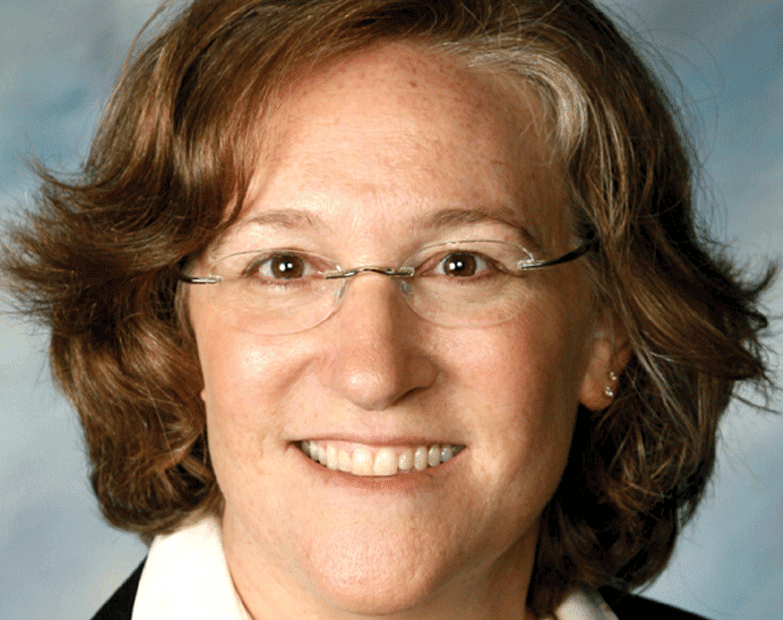
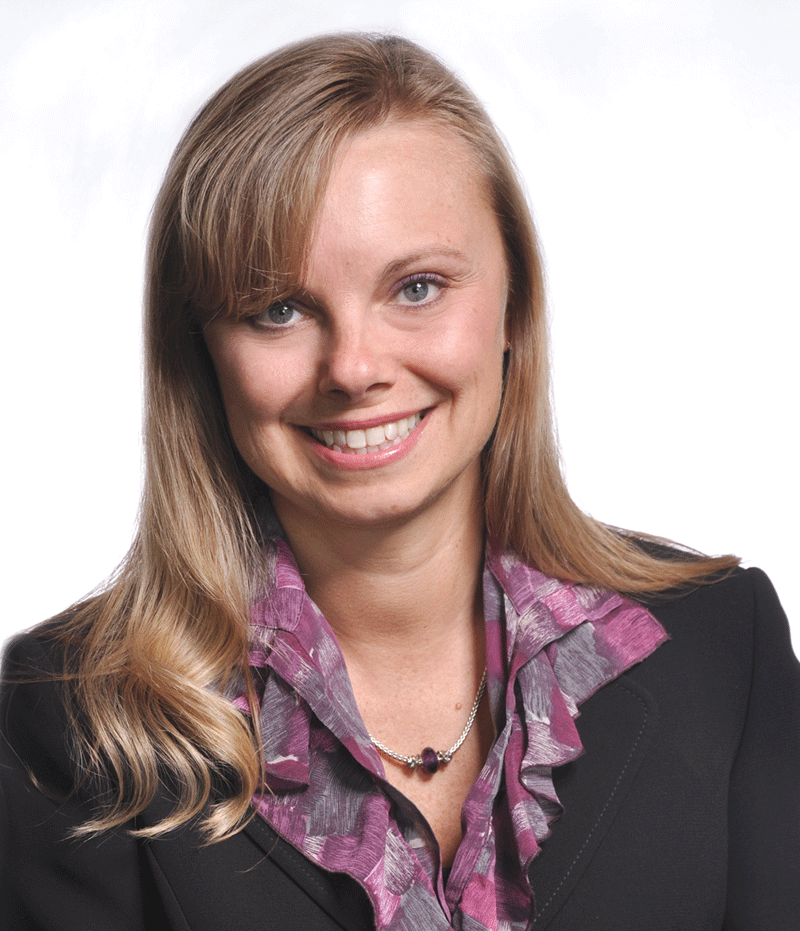
Kristina Drzal-Houghton

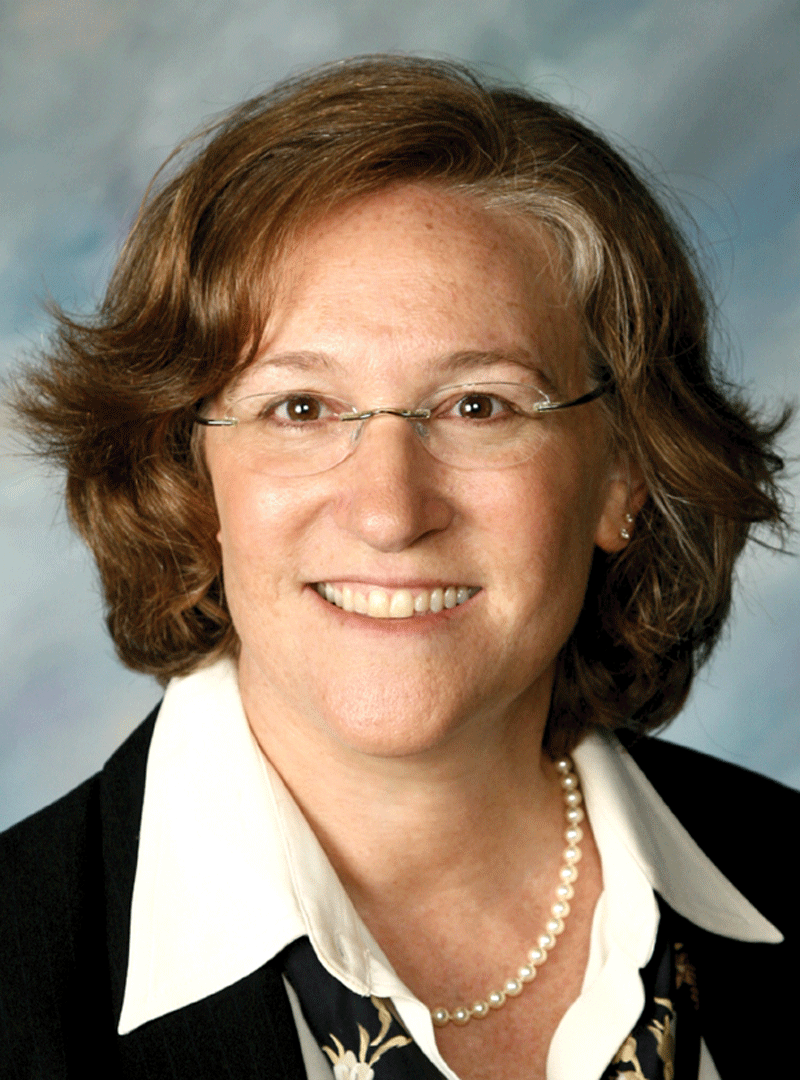
Kristina Drzal-Houghton

• Section 179 Expensing: IRS Code Section 179 provides businesses the option of claiming a full deduction for the cost of qualified property in its first year of use rather than claiming depreciation over a set period of years. For 2012, the Section 179 dollar limitation is $139,000, with a $560,000 investment limitation.

The dollar limitation for 2013 is scheduled to drop to $25,000, with a $200,000 investment limitation. Businesses might want to consider accelerating scheduled purchases into 2012 to take advantage of the higher limits.

Businesses with a fiscal year-end should note that the $139,000 deduction limit applies to property purchased and placed in service during tax years beginning in 2012.

• Bonus Depreciation: Property not qualifying for an immediate tax write-off under the expensing election may qualify for an increased first-year depreciation deduction under bonus depreciation rules. This deduction is equal to 50% of the cost of qualifying property purchased and placed in service by Dec. 31, 2012.

Unlike the Section 179 deduction, bonus depreciation is not limited in amount or by an investment limitation, and it can create a current-year net operating loss.

• Changes to Repair Regulations: Comprehensive repair and capitalization regulations issued by the IRS late in 2011 may open up planning opportunities.

A new de minimis expensing rule allows a business to deduct certain amounts paid or incurred to acquire or produce a unit of tangible property if the company has an allowable policy. There is an overall ceiling limiting the total expenses a company may deduct under the de minimis rule. Accounting policies and existing depreciation schedules should be reviewed to determine whether changes in accounting methods should be filed and adjustments taken. In many cases, the change will result in accelerated expensing.

• Corporate Dividends: Traditional C corporations face double taxation on distributed earnings. Profits are taxed at the corporate level, and dividends paid out to shareholders are again subject to tax at the individual level. With the maximum 15% tax rate for qualified dividends during 2012 rising to 43.4% for 2013, this may be the year to consider paying out accumulated earnings that the corporation is not otherwise using.

• Health Insurance Tax Credit: A tax credit is available for an eligible small employer to purchase health insurance for employees. To qualify as an eligible small employer, the company must:

— Pay for at least 50% of the premium cost for employees;

— Generally have no more than 25 full-time equivalent employees employed during the year; and

— Pay its full-time equivalent employees annual wages averaging no more than $50,000.


Individual Tax-planning Strategies

• Planning for the New Healthcare Taxes: Effective Jan.1, a 0.9% hospital insurance (HI) tax applies to wages and self-employment income, while a 3.8% Medicare contribution (UIMC) tax applies to investment income. Neither tax becomes applicable until income exceeds the established threshold noted in the table below.

The HI tax may be managed through withholding for employees, but in certain circumstances, such as for dual-income households or in years of employer transitions, withholding may not fully cover the wages subject to the HI tax.

For the purposes of the UIMC tax, net investment income has been defined to include dividends, rents, interest, passive-activity income, capital gains, annuities, and royalties. Specifically excluded from the definition are self-employment income, income from an active trade or business, gain on the sale of an active interest in a partnership or S corporation, IRA or qualified plan distributions, and income from charitable remainder trusts.

For individuals, the amount subject to the UIMC tax is the lesser of your net investment income, or the excess of your modified adjusted gross income, which is generally your adjusted gross income with certain foreign earned-income adjustments, over the applicable threshold amount.

For both taxes, the applicable thresholds are as follows:

Keep in mind that the UIMC tax applies if you have net investment income and your modified adjusted gross income is above the threshold. The impact of the tax may be minimized through shrewd management of your net investment income, proximity to the thresholds, or both.


Year-End Tax Planning Strategies

Bearing in mind the new Medicare taxes and the scheduled changes in tax rates, traditional year-end tax planning techniques may need to be reversed to take advantage of the known lower rates of 2012.

• Shifting Taxable Income Between Years: When you’re expecting stable rates in the future, the traditional year-end strategies are largely focused on deferring income and accelerating deductions. But with the rates set to rise for most taxpayers, the better tax answer may come from an opposite approach.

Income accelerated into 2012 could potentially result in a significantly lower rate than the same income recognized during 2013. Because rates remain relatively uncertain, now may not be the time to accelerate income. But having a plan in place should the rates hold will allow taxpayers to act deliberately as the rates become more certain.

• Managing the AMT: When undertaking tax planning, both regular and AMT tax liabilities need to be evaluated. At times, certain deductions may need to be shifted between years to manage the alternative minimum tax.

• Paying Estimated State Income Taxes: The payment timing of the fourth-quarter estimated state-tax payment, generally due Jan. 15, 2013, has some flexibility. It may be paid before year end for a current-year federal itemized deduction. The alternative minimum tax should be considered before employing this tax-planning tool because state income taxes are not deductible for AMT purposes.

• Fulfilling Charitable Goals: An alternative to cash donations is the contribution of appreciated assets. When contributing assets, you can deduct the fair market value of certain property and avoid paying taxes on the appreciation. However, if you would like to donate securities that have declined in value, you will likely want to sell them first to realize the loss and then gift the proceeds to your organization of choice. In some circumstances, particularly when there is expiring capital loss, a direct donation may not be the most effective tax-planning tool.

• Funding Retirement Plans: For retirement contributions to qualify for a deduction in 2012, contributions must be in place usually before the end of the year. The exceptions to the rule are IRAs and SEP (simplified employee pension) plans. An IRA can be created and funded by April 15, 2013, and a SEP by the extended due date of your tax return.

• Converting to a Roth IRA: Roth IRAs have long-term advantages over traditional IRAs because money grows and can be distributed tax-free. Some taxpayers find that the benefits of tax-free withdrawals in the future are in line to be greater than the tax cost on conversion.

Converting before-tax earning plans — 401(k)s, traditional IRAs, etc. — to the after-tax Roth IRA creates taxable income in the year of conversion. The upfront tax cost does not make conversion the right answer for every taxpayer, but for taxpayers with certain circumstances, conversion can be an extremely powerful tool.

• Paying with Credit Cards: As a reminder, paying tax-deductible expenditures, including charitable contributions, with a credit card secures the deduction in the current year, even if you do not actually pay the credit-card company until the following year.

• Deducting Losses from Pass-through Entities: If you are expecting a 2012 loss from a partnership, LLC, or S corporation, ensuring that you have sufficient tax basis will help to secure your ability to deduct the loss. You may be able to increase your tax basis prior to year end, but given the rates for 2013 as enacted, you might want to purposely avoid doing so until 2013 to push the loss into the higher rates of 2013.


Capital Gains and Losses

You should consider a few basic rules when planning for capital gain or loss transactions:

• Gains and losses from securities sales generally are recognized on the trade date as opposed to the settlement date. So a December trade will be a 2012 transaction, even if the settlement date is in the following year;

• Sales at a loss reduce other capital gains, and a net capital loss in excess of capital gains of up to $3,000 is available to be used to offset other income, with excess losses being carried forward to future years; and

• Before you sell an asset to recognize a gain, check your holding period. Capital assets held for over a year are eligible for a significantly lower tax rate than those held less than a year.


Estate- and Gift-tax Planning

Absent congressional action, the $5.12 million estate and gift-tax exemptions and current top tax rate of 35% will revert to a $1 million exemption with a top tax rate of 55% beginning Jan. 1, 2013. Moreover, the estate-tax exemption will no longer be portable between spouses.

Because of the reversion to a lower exemption and a higher tax rate, what could be a once-in-a-lifetime opportunity exists to transfer significant assets to the younger generation without incurring any estate and gift tax. Also note that:

• The annual gift tax exclusion for 2012 remains at $13,000. It is expected to rise to $14,000 for 2013;

• If you are married, you can avoid federal gift-tax ramifications by gifting up to $26,000 per donee, or recipient, in 2012 under the gift-splitting rules. Annual gifting is a relatively simple method to reduce your taxable estate; and

• Along with the high gift-tax exemption, the generation-skipping transfer-tax exemption is also $5.12 million during 2012. So, the door is open to bypass children and transfer significant wealth to future generations.

Developing an overall tax strategy under ambiguous circumstances can feel daunting. But the deliberate, informed implementation of a plan for what is known now can also protect against what remains to be seen — as what is unknown becomes known.


Kristina Drzal Houghton, CPA, MST, is partner-in-charge of Taxation at Meyers Brothers Kalicka, P.C. in Holyoke; (413) 536-8510.


Health Care Sections
Local Author Provides Insight into Asperger’s and Autism Spectrum Disorder

John Robison

In different ways, John Robison’s three books, challenge people’s assumptions about living with Asperger’s.

When John Elder Robison was a child, he thought he was “defective.”

Other children didn’t like him, and despite his best efforts, he couldn’t master social skills or figure out how to respond when people talked to him.

Robison failed continuously in school, wouldn’t make eye contact with anyone, and blurted out inappropriate responses to conversation, such as the time he cracked a grin when his mother was told about a child who had been killed. His parents were concerned and took him to several mental-health professionals who labeled him as “lazy, angry, or a social deviant,” and said he might have to be institutionalized if his behavior continued.

But Robison wasn’t malicious. He was simply different due to Asperger’s syndrome, an autism spectrum disorder characterized by restricted and repetitive patterns of behavior and significant difficulty with social interaction.

At the time, not much was known about the condition, so Robison suffered continuous shame and ostracism. “For my first 40 years, I was unaware that I had Asperger’s. I knew I was different, but I didn’t know why, and that lack of knowledge suffused me with a feeling of inferiority that permeated and poisoned my life,” he said. “Those feelings handicapped and hampered me in countless ways.”

Robison dropped out of high school and left home at age 16. At that point, a combination of luck and his savant-like “differences,” which were indeed rare gifts, led to work with famous musicians, including Pink Floyd and KISS. A professor had introduced him to electrical engineering, and the self-taught genius worked around the clock, creating revolutionary electronic breakthroughs for the industry that forever changed the world of music, including custom guitars with fiery smoke bombs inside.

Today, Robison is the author of the New York Times bestseller Look Me in the Eye, which chronicles his life growing up, and Be Different, which is filled with practical advice for “Aspergians, Misfits, Families and Teachers.”

A third book, expected to hit stores in March, is titled Raising Cubby, and is a memoir of Robison’s unconventional relationship with his son, who also was born with Asperger’s.

“It’s a unique story of parenting,” Robison told BusinessWest, explaining that he felt compelled to write it because the majority of books about raising kids who are “different” are about “heroic moms with disabled kids,” which he deemed depressing.

“I thought there should be something entertaining and hopeful, as real stories serve a powerful social purpose,” he said. “My book about my son Cubby celebrates being unique.”

In addition to owning J.E. Robison Service in Springfield, which restores and services European luxury cars, the Amherst resident and author is a strong advocate for people with autism and neurological differences. He is involved with autism research and therapy programs at Harvard’s Beth Israel Deaconess Hospital and Massachusetts General Hospital, sits on the science and treatment boards of the nonprofit organization Autism Speaks, and serves on the Interagency Autism Coordinating Committee, which makes strategic plans that become the blueprint for treating autism in federal agencies including the National Institute for Health and the Centers for Disease Control and Prevention.

Robison also gives 30 to 40 talks each year at a wide variety of international medical centers and conferences, ranging from Massachusetts General to Mount Sinai Hospital to Baystate Medical Center’s Child Psychiatry Conference in Springfield. Last year he spoke in Australia, and this month he will lecture at the most prestigious medical schools in Italy about Asperger’s, autism, “and how we think.”

His mission is clear. “I want to show young people, parents and teachers that kids who are different bring something unique to the world and can grow up to be OK,” he said. “Sometimes people talk about autism like it’s a disease, but the world needs us. If wasn’t for autistic people, we would still be in caves. It’s people like me who invent things and drive the world forward.”


Targeted Focus

Robison said the newest Diagnostic and Statistical Manual of Mental Disorders will be published next year, and it will replace about 40 distinct conditions with the umbrella diagnosis of ‘autism spectrum disorder.’

The change has generated tremendous controversy, as people fear if they lose their diagnosis, their insurance companies could cancel or withhold services. To ensure this doesn’t occur, a number of validation studies are being conducted, including one at Baystate Medical Center.

Robison says evidence from these studies shows the new criteria not only includes the vast majority of young people with prior diagnoses, but also picks up adults with other diagnoses who had not been identified with the disorder. This is important, since people who are not properly diagnosed may assume they are “defective,” which leads to poor self-esteem, he continued.

In addition, a diagnosis can give people an understanding of what they are failing to do that other people expect. “It can be an important step in making adaptive changes and allowing people to get along better in the world,” Robison said, adding that his success “is relatively unusual and was facilitated by being different.”

For example, his auto-repair facility came about due to his childhood fixation with Land Rovers. “Today, a fixation like this would be seen as a disability. But if someone starts a business related to what they are focused on, there may not be anyone else in the world who knows as much about the topic,” he explained.

Autism affects about 1% of the population and is usually seen as a significant disadvantage. But Robison said taking a different viewpoint can lead someone to find answers to seemingly unsolvable problems. “Since 98% of people think the same way, the 1% with autism may see an obvious answer to a problem that is totally invisible to everyone else,” he told BusinessWest.

In fact, approaching a problem from a different mindset can result in revelations and insights. “If you have different wiring in your brain, you can approach things in a unique manner. You don’t need to be smarter than everyone who came before you; you just need to have a different vision,” he said.

Robison used this gift when he worked for the music industry, and said it allowed him to envision and create things no one had ever seen or heard of before. It also led to success in his car-restoration business, and the vehicles he has worked on have been featured on magazine covers. “And it has proved true in my writing. People say my stories are unique, not because they are literary masterpieces, but because things that are obvious to me due to my differences are things other people have not seen before.”

His talents include professional photography, and he has captured images used by publicists in many venues because they are unique. For example, during this year’s circus at the Big E, he climbed a 50-foot pole and braced himself against a tower connected to a high wire to get close-ups of aerial performers. Then he went inside the lion’s cage to photograph the beasts jumping through rings of fire.

“Autistic people are often driven to be the best at what they do,” he said.


Uncommon Struggles

Still, life is not easy for people who are different. “Children are often bullied and ridiculed, which can be frightening for parents as they worry about whether their children will ever be able to live independently,” he said. “I feel my stories show these children, as well as adults and teachers, that it is possible for them to succeed and do better than other people.”

However, that can only occur if the person’s ability to hone in on a topic is directed toward something that can lead to career success, which he says does not include playing video games.

“In many instances, children get fixated on things that don’t have commercial value and don’t offer a career path,” Robison said. “Many autistic children immerse themselves in something, and their parents think the behavior is unhealthy. If it’s a dead end, it may be a problem. But rather than suppress the fixation, if parents can redirect the child to something that can have a productive outcome, it may be the best thing they can do.”

However, this can mean thinking outside the box. “If someone is fascinated with cockroaches, they may be seen as a freak at age 15, but later in life companies like Orkin may pay them a lot of money if the person becomes a world expert,” he said, referring to the large, national pest-control company.

In his case, Robison’s interests aligned with people who wanted to hire him, and although he never took a formal educational course in the areas of his success, his intense interest resulted in “thousands and thousands of hours of study facilitated by a social disability. If you don’t have friends and places to go, nothing stops you from studying 18 hours a day.”

However, not understanding how to interact socially was a real handicap for the author and inventor, who refers to his second wife as ‘Unit 2’ because she is the second sister of three in her family. He said the fact that people’s social responses and interactions often defy logic was the reason why he had such a difficult time mastering acceptable responses to conversation.

However, he eventually learned the skill and realized that, if everyone was completely honest, their relationships might not survive.

“But it was frustrating and lonely growing up because I was not in sync with everyone else; if you are a logical person in an illogical world, you are isolated,” he said.

Robison hopes educating people about autism and related social behaviors can make a difference for children growing up with those disorders today. “We should be talking about remediating disability as opposed to curing it, because the world needs people who are different. These are all messages that I bring to people.”


Value and Validation

Robison believes he serves as an example of how differences can be assets. “Everything I have done is because I think differently. When I was 16 or 17, it wasn’t obvious to people that I would do anything I have accomplished, so seeing someone like me is very encouraging to people,” he said, adding that no one has any real idea of a child’s true potential.

His books are enlightening and offer an inside view of the way people with autism think and interact with the world. And it’s that striking difference that allowed the child who once thought he was “defective” to grow into a man who is giving his all to facilitate positive change in our world today.

Insurance Sections
Voluntary Benefits Are Becoming More Popular with Employees

Patti D’Amaddio

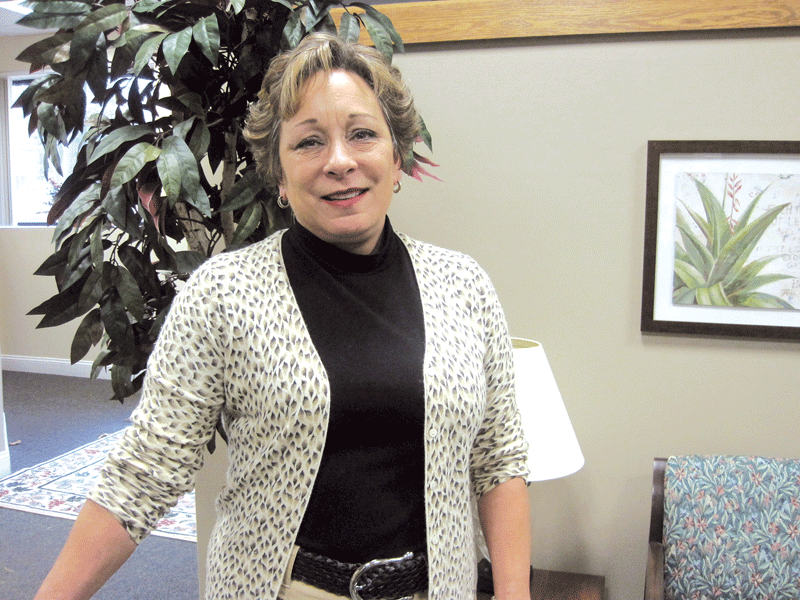
Patti D’Amaddio says employees, especially those in Gen X and Gen Y, embrace voluntary benefits, even though they pay much of the costs.

By definition, an employee benefit is a perk largely paid for by the employer.

Right?

Actually, that’s not always the case these days, as a concept called ‘voluntary benefits’ is becoming increasingly prominent in workplaces across America. These are benefits made accessible to employees but are paid for mostly or fully out of their own pockets.

And workers, for the most part, are responding positively.

“The voluntary benefit is really an increasing trend, no question,” said Patti D’Amaddio, human resource generalist at the Employers Assoc. of the NorthEast, “because it allows the employer to add value to their benefit plan without adding a lot of cost. Instead of not offering things they feel they can’t afford, they’re offering voluntary benefits and letting people tailor them to match their personal needs, whether it’s long-term care or a number of other things.”

A survey conducted by EANE registered growing use of voluntary benefits, or VBs. Of the member companies that responded, 62% of them offer VBs of some kind. Of this group, 93% offer supplemental life insurance, 70% offer dependent life insurance, 20% offer auto insurance, 18% include long-term-care insurance, and 10% provide legal services. Four percent even offer pet insurance.

“That’s valued especially by Baby Boomers, whose kids have grown up; they’re spending a lot of money on their pets,” D’Amaddio said. “Again, anything can be tailored to the employees’ needs. Even if it costs the employee, it’s seen as a benefit being offered by the employer to the employee.”

Jim Mooradian and Bryan Lambert, founder and broker, respectively, with Jim Mooradian and Associates, a Boston-based insurance-brokerage firm, recently wrote on the topic of voluntary benefits for the Northeast Human Resources Assoc.

They note that, in today’s changing financial landscape, companies are looking for creative ways to expand their benefits packages while tightening their belts in other ways. In many cases, businesses are looking to control costs in their medical plans and other employer-funded benefits, from gym memberships to eye care.

Scott Llewellyn, western regional sales vice president at the Ameritas Group, recently told California Broker magazine that the idea of spending a few dollars per paycheck for that peace of mind is appealing to many employees — especially at a time when employers are paring back the health and dental benefits they traditionally pay for.

“Offsetting some of the lack in demand created by the down economy is a host of very new and creative voluntary benefits,” he notes. “Brokers are using these benefits to help increase their income, given the new realities of lower commissions from medical carriers.”

As Mooradian and Lambert point out, “companies increasingly see voluntary benefits as an effective tool for boosting employee commitment at little to no cost. Since voluntary benefits are employee-paid, corporate expenses are minimal, yet VBs deliver an immediate, tangible benefit to employees. Once the benefit is set up, there are virtually no ongoing demands on HR staff resources, since claims are administered directly by the carrier.”

It’s a win-win, but only if employees feel voluntary benefits are worth the expense. Increasingly, they do.


Youth Appeal

D’Amaddio cited a MetLife study that suggested that younger workers — both Gen X and Gen Y — are driving the new interest in voluntary benefits.

According to the survey, one half of such workers in smaller businesses (those with fewer than 500 employees) said current economic conditions make them look more toward employee benefits to achieve financial security — even if they have to fund 100% of the cost themselves.

Timm Marini

Timm Marini says chronic disease coverage, such as cancer insurance, is one of the hottest trends in voluntary benefits.

Businesses, in turn, are seeing voluntary benefits as a recruiting and retention tool. Four out of five employers of smaller businesses surveyed in MetLife’s 10th annual Study of Employment Benefit Trends ‘strongly agree’ that retaining quality workers is an extremely important objective of employee benefits. Meanwhile, the survey found that 72% younger workers who are very satisfied with their benefits feel a strong sense of loyalty to their employers, compared with 46% of younger workers overall.

“It’s hard to overestimate the importance of responding to the needs of younger workers on whose shoulders the future of a small business can depend,” said Anthony Nugent, executive vice president of Group, Voluntary, and Worksite Sales at MetLife. “Our study underscores that the generational differences about benefit needs and preferences are not just reflections of age. Younger workers, particularly those in many smaller organizations that were hit very hard by the recession, and who are unsure about the future of Social Security, have a different benefits perspective than older generations.”

The survey was reported by World at Work, a national employer-resources firm, which also noted that Gen X and Gen Y members, who collectively comprise 56% of the workforce, recognize that a broad range of benefits carries a cost, and they are more willing than their predecessors to bear some of those costs, despite the financial stresses many of them are feeling in the current economy.

“Two-thirds of Gen X and Gen Y would rather pay more than lose those benefits,” D’Amaddio said, again citing the MetLife survey. In fact, 54% of younger workers would be interested in having a wider array of benefits options even if means paying the full cost of certain voluntary benefits, such as life, dental, vision, disability, critical illness, or homeowner/auto insurance.

Such workers are essentially making a cost-benefit calculation between the cost of premiums for some coverages — which can be as little as $3 or $4 per week — and the the benefit, which is often a predetermined lump sum, with few strings attached, paid when a covered event occurs, such as an accident or a debilitating illness such as cancer, stroke, or heart attack, Mooradian and Lambert note.

Voluntary benefits, they write, “offer simple, affordable solutions to very real problems. An average accident policy, for example, costs an employee about $3.75 a week — about the same as a cup of coffee and a doughnut.”

And the terms, they note, are straightforward. “If an employee’s child falls off the swingset and breaks her wrist, the policy could pay $400 to be used for any purpose. If an employee slips and dislocates a shoulder, the policy could pay $500. Unlike core health and disability benefits, the money from this accident policy can be used to pay anything from uncovered medical costs to household expenses such as a utility bill. For rank-and-file employees, getting cash in hand during a difficult time is crucial to their financial well-being.”

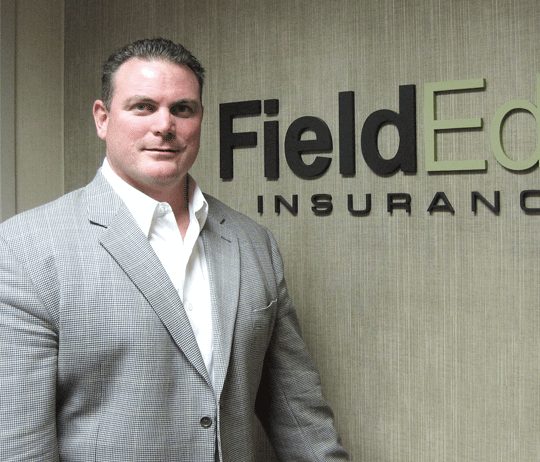
Voluntary benefits can bring peace of mind during more serious medical situations as well, said Timm Marini, president of FieldEddy Insurance.

“We do a lot of voluntary benefits,” he said. “Historically, it’s been dental and disability, but all of a sudden, more and more, it’s critical illness and cancer coverage, things of that nature. That’s the hottest trend right now.”

That development may be in response to a couple of colliding trends — the fact that Americans are living longer than ever, often with chronic conditions, and the ever-soaring costs of health care, particularly for older and sicker patients.

“I think a lot of this is congruent with the life tables going up — more and more people are living longer, the medicines are better, and they’re living longer even with cancer and things of that nature,” Marini said. “Diseases are certainly as preventable as they’ve ever been, and the success rate is higher in treating cancer and putting it into remission.”


When Trouble Strikes

Studies increasingly show that families appreciate the way VBs allow them some spending flexibility during a rough patch. According to MetLife’s annual survey, having enough money to cover bills during sudden illness is the number-one concern of 63% of full-time employees and 75% of young families with children.

“One of the biggest issues facing America’s working families during a health crisis isn’t the cost of care itself,” Mooradian and Lambert point out. “It’s the loss of cash flow that results from being out of work, coupled with uncovered expenses associated with aftercare and treatment. If a family is living paycheck to paycheck, having the primary breadwinner miss a week of work has a significant impact on their financial stability.”

D’Amaddio also noted that voluntary benefits are convenient, in that they’re paid with a payroll deduction, and they are typically transferrable, so workers can take these benefits with them when they change jobs. “They’re not tied directly to the employer — and with the transient nature of employment right now, people aren’t staying 40 years with the same company, and they can take these benefits with them wherever they go.”

In addition, according to MetLife’s annual survey, 55% of employees feel that payroll deductions for voluntary benefits help them to be more disciplined about saving. This discipline — coupled with the financial safety net the benefits provide — can also translate into increased enrollment in company-sponsored 401(k) plans. At the very least, the report suggests, accident and critical-illness insurance might help curb a trend toward increasing credit-card debt incurred by participants in high-deductible health plans.

And companies are beginning to see quality VBs as retention tools. The MetLife survey suggests that employees who feel good about their company’s benefit package are much more likely to enjoy their jobs and to feel loyal to their employers.

“In small to mid-sized companies, when Joe or Jill has a heart attack, everyone knows about it,” Mooradian and Lambert write. “A $10,000 critical-illness payout within weeks of a diagnosis becomes good news that travels fast. Maybe that’s why critical-illness coverage is experiencing double-digit growth.”

But D’Amaddio cautioned employers about who they partner with to administer such benefits.

“We’ve heard some horror stories,” she told BusinessWest. “You want to make sure your partner is all about service for your employees, because an employee might say, ‘this is a great benefit, even if I have to pay for it’ — until they can’t get a claim processed, or they can’t get hold of a representative, or the service is inadequate. Then it becomes a detriment.”

In most cases, however, voluntary benefits are proving to be a key safety net for employees, one they’re more than happy to pay for.


Joseph Bednar can be reached at [email protected]

Court Dockets Departments

The following is a compilation of recent lawsuits involving area businesses and organizations. These are strictly allegations that have yet to be proven in a court of law. Readers are advised to contact the parties listed, or the court, for more information concerning the individual claims.


HAMPDEN SUPERIOR COURT

Audette Group, LLC v. Concord Heights, LLC, et al

Allegation: Failure to pay for construction services: $118,945

Filed: 10/11/12


People’s United Bank v. A.D. George Construction Inc. and Andrew D. George

Allegation: Non-payment and default on two promissory notes: $138,631.67

Filed: 9/28/12


HAMPSHIRE SUPERIOR COURT

Financial Pacific Leasing, LLC v. Atkins Construction, LLC, Kenneth G. Atkins, and Maureen A. Atkins

Allegation: Suit on previous judgment: $39,802.28

Filed: 8/13/12


Gary Kendall v. Colvest/Belchertown, LLC

Allegation: Negligent property maintenance causing injury: $28,763.43

Filed: 9/25/12


Krishnamurti Rao, M.D. v. Michael Dillon, M.D.

Allegation: Action to recognize the judgment of a different state: $226,293.68

Filed: 8/29/12


HOLYOKE DISTRICT COURT

Diana Rodriquez v. Kmart Corp.

Allegation: Negligent maintenance of property causing slip and fall: $3,908.31

Filed: 7/26/12


NORTHAMPTON DISTRICT COURT

Western Mass Environmental, LLC v. Corbett Home Improvement and Edward Corbett

Allegation: Non-payment of services rendered: $8,735

Filed: 9/27/12


PALMER DISTRICT COURT

Larry G. Cusing & Sons Inc. v. Papesh Excavation and Alan R. Papesh

Allegation: Non-payment of well-drilling services and materials: $5,499.07

Filed: 8/6/12


SPRINGFIELD DISTRICT COURT

Pioneer Chiropratic Inc. and Pain Management and Rehabilitation Inc v. The Premier Insurance Co. of Massachusetts

Allegation: Breach of contract and failure to pay PIP: $3,719.08

Filed: 9/12/12


Robert Gossman v. Szczebak Realty Trust, et al

Allegation: Breach of contract when defendant failed to return refundable deposit pursuant to a formal offer to lease: $8,000

Filed: 9/20/12


WESTFIELD DISTRICT COURT

American Zurich Insurance Co. v. Carlos Professional Deliveries and Carlos Cosmo

Allegation: Monies owed for insurance services rendered: $7,543

8/29/12


Correction:

A court listing in the Oct. 22 issue of BusinessWest was incorrect due to a transcription error. The item should have read:


HAMPDEN SUPERIOR COURT

Hanibal C. Tayeh, Hanibal Technology, LLC, and Spectrum Analytical Inc. v. Vanessia Petroleum of Doha, Qatar and Cheikh Abdul Aziz Al Thani

Allegation: Breach of loan agreement: $1,500,000

Filed: 8/27/12

Chamber Corners Departments

ACCGS

www.myonlinechamber.com

(413) 787-1555


• Nov. 7: Chamber’s Business@Breakfast, at Ludlow Country Club, Tony Lema Drive in Ludlow. Registration begins at 7 a.m., the buffet opens at 7:30, and the program begins at 7:55. Guest Speaker is Tony Cignoli, who will be giving a recap of the elections. Coffee Bar Sponsor is Reminder Publications. Salutes will be given to Reminder Publications on its 50th anniversary and Columbia Gas on its 165th anniversary. Cost to attend is $20 for chamber members and $30 for non-chamber members. Reservations should be made in advance at www.myonlinechamber.com, by faxing information to (413) 755-1322, or by e-mailing Cecile Larose at [email protected]. Sponsorships are still available. Contact Larose at (413) 755-1313 if you are interested.

• Nov. 29: Government Reception, at Storrowton Tavern on the Eastern States Exposition grounds. Sponsors for this event are Columbia Gas of Massachusetts, Verizon, Baystate Health, and Western Mass. Electric Co. Tickets are $50 for members and $70 for non-members. To make reservations, go online to www.myonlinechamber.com, e-mail Cecile Larose at [email protected], or fax your reservation to (413) 755-1322. Sponsorships are available. Contact Cecile Larose if you are interested.


CHICOPEE CHAMBER OF COMMERCE

www.chicopeechamber.org

(413) 594-2101


• Nov. 14: Greater Chicopee Chamber of Commerce November Salute Breakfast, from 7:15 to 9 a.m., Summit View Banquet & Meeting House, 555 Northampton St., Holyoke. Speakers are state Sen. Senator Gail Candaras and state Rep. Joseph Wagner. Among the topics they will address are transportation and gaming. Cost is $20 for members and $26 for non-members. Sign up online at www.chicopeechamber.org.


GREATER HOLYOKE CHAMBER OF COMMERCE

www.holycham.com

(413) 534-3376


• Nov. 14: Chamber After Hours, 5-7 p.m., at Eighty Jarvis Restaurant, Holyoke. This Business networking event includes a 50/50 raffle, door prizes, and a bake sale. Local accountants and lawyers may attend this event as the chamber’s guests at no charge. Cost is $10 for members, $15 for non-members. Call the chamber at (413) 534-3376 to register, or sign up online at holyokechamber.com.

• Nov. 15: SBA Business Plan Basics Seminar, 9-11 a.m., at the chamber offices. This workshop will focus on management fundamentals from start-up considerations through business-plan development. Topics will include financing, marketing, and business planning. Presented by Allen Kronick of the Mass. Small Business Development Center Network. Cost is $40, which includes a continental breakfast. Call the chamber at (413) 534-3376 to register, or sign up online at holyokechamber.com.

• Nov. 29: SBA Marketing Basics Seminar, 11 a.m. to 1 p.m., at the chamber offices. This workshop will focus on the basic disciplines of marketing, beginning with research — primary, secondary, qualitative, and quantitative. The core focus will be on developing and keeping a customer. Topics will include advertising, public relations, and the importance of developing a marketing plan. Presented by Dianne Doherty, director of the Mass. Small Business Development Center Network. Cost is $40, which includes a light lunch. Call the chamber at (413) 534-3376 to register, or sign up online at holyokechamber.com.


GREATER NORTHAMPTON CHAMBER OF COMMERCE

www.explorenorthampton.com

(413) 584-1900


• Nov. 7: Networking Training Session, 4:15-5 p.m. at the Northampton Survival Center, 265 Prospect St., Northampton, prior to the Arrive@5.

• Nov. 7: Arrive@5, 5-7 p.m. at the Northampton Survival Center, 265 Prospect St., Northampton. Arrive when you can, stay as long as you can. A casual mix and mingle with colleagues and friends. Sponsored by Masiello Employment Services, Webber & Grinnell Insurance, and Dr. Hauschka Skin Care. Cost: $10 for members, $15 for non-members.


PROFESSIONAL WOMENS CHAMBER

www.professionalwomenschamber.com

(413) 755-1310

• Nov. 14: November Luncheon, 11:30 a.m.-1 p.m., at Max’s Tavern, Springfield, at the Basketball Hall of Fame, MassMutual Room. Guest speaker is Lynn Ostrowski of Health New England. Cost: $25 for members, $35 for non-members.


SOUTH HADLEY/GRANBY CHAMBER OF COMMERCE

www.shchamber.com

(413) 532-6451


• Nov. 14: Economic Summit, 8-9:30 a.m. at Mount Holyoke College. Guest speaker is James Hartley, professor of Economics, who will talk on current state of the economy. Cost is $15 per person for breakfast. RSVP to [email protected] or call (413) 532-6451.

• Nov. 30: Holiday Party, 5-7 p.m. Sponsor: Village Eye Care. Cost: $5 per person.


GREATER WESTFIELD CHAMBER OF COMMERCE

www.westfieldbiz.org

(413) 568-1618


• Nov. 14: Annual Meeting and Awards Dinner, 6-9 p.m. at Shaker Farms Country Club, 866 Shaker Road, Westfield. Salute the Business Leader of the Year, Jeffrey Daley, city advancement officer. Guest speaker will be state Sen. Michael Knapik. Platinum sponsor: Westfield State University; Gold sponsors: First Niagara and Noble Hospital; Silver sponsors: Berkshire Bank and Savage Arms. Cost: $45 for members; $50 for non-members. To register, call Pam at (413) 568-1618, or e-mail [email protected].

Chamber Corners Departments

ACCGS

www.myonlinechamber.com

(413) 787-1555


• Oct. 26: Super 60 Luncheon, 11:30 a.m. to 1:30 p.m., Chez Josef in Agawam. The chamber’s annual event recognizes the top 60 companies in both revenue and growth. This has always been a well-anticipated event that draws roughly 500-600 people. Presenting sponsor is Health New England. Guest speakers are Stanley Kowalski III, owner and founder of FloDesign Inc., and state Secretary of Housing & Economic Development Greg Bialecki, who will show how government and private industry can work together successfully in this environment. Cost is $50 for members, $70 for non-members. Reservations can be made online at www.myonlinechamber.com, or by emailing Cecile Larose at [email protected].

• Nov. 7: Chamber’s Business@Breakfast, at Ludlow Country Club, Tony Lema Drive in Ludlow. Registration begins at 7 a.m., the buffet opens at 7:30, and the program begins at 7:55. Guest Speaker is Tony Cignoli, who will be giving a recap of the elections. Coffee Bar Sponsor is Reminder Publications. Salutes will be given to Reminder Publications on its 50th anniversary and Columbia Gas on its 165th anniversary. Cost to attend is $20 for chamber members and $30 for non-chamber members. Reservations should be made in advance at www.myonlinechamber.com, by faxing information to (413) 755-1322, or by e-mailing Cecile Larose at [email protected]. Sponsorships are still available. Contact Larose at (413) 755-1313 if you are interested.

Nov. 29: Government Reception, at Storrowton Tavern on the Eastern States Exposition grounds. Sponsors for this event are Columbia Gas of Massachusetts, Verizon, Baystate Health, and Western Mass. Electric Co. Tickets are $50 for members and $70 for non-members. To make reservations, go online to www.myonlinechamber.com, e-mail Cecile Larose at [email protected], or fax your reservation to (413) 755-1322. Sponsorships are available. Contact Cecile Larose if you are interested.


CHICOPEE CHAMBER OF COMMERCE

www.chicopeechamber.org

(413) 594-2101


• Nov. 14: Greater Chicopee Chamber of Commerce November Salute Breakfast, from 7:15 to 9 a.m., Summit View Banquet & Meeting House, 555 Northampton St., Holyoke. Speakers are state Sen. Senator Gail Candaras and state Rep. Joseph Wagner. Among the topics they will address are transportation and gaming. Cost is $20 for members and $26 for non-members. Sign up online at www.chicopeechamber.org.


GREATER EASTHAMPTON CHAMBER OF COMMERCE

www.easthamptonchamber.org

(413) 527-9414


• Oct. 22: Celebrity Bartenders Night 2012, from 6-9 p.m. at the Opa-Opa Steakhouse & Brewery, 169 College Highway, Southampton. Join us for a night of fun with local celebrities mixing your drinks. Your tips benefit the chamber’s holiday lighting fund. Raffles and more fun. Admission is free.


GREATER HOLYOKE CHAMBER OF COMMERCE

www.holycham.com

(413) 534-3376


• Nov. 14: Chamber After Hours, 5-7 p.m., at Eighty Jarvis Restaurant, Holyoke. This Business networking event includes a 50/50 raffle, door prizes, and a bake sale. Local accountants and lawyers may attend this event as the chamber’s guests at no charge. Cost is $10 for members, $15 for non-members. Call the chamber at (413) 534-3376 to register, or sign up online at holyokechamber.com.

• Nov. 15: SBA Business Plan Basics Seminar, 9-11 a.m., at the chamber offices. This workshop will focus on management fundamentals from start-up considerations through business-plan development. Topics will include financing, marketing, and business planning. Presented by Allen Kronick of the Mass. Small Business Development Center Network. Cost is $40, which includes a continental breakfast. Call the chamber at (413) 534-3376 to register, or sign up online at holyokechamber.com.

• Nov. 29: SBA Marketing Basics Seminar, 11 a.m. to 1 p.m., at the chamber offices. This workshop will focus on the basic disciplines of marketing, beginning with research — primary, secondary, qualitative, and quantitative. The core focus will be on developing and keeping a customer. Topics will include advertising, public relations, and the importance of developing a marketing plan. Presented by Dianne Doherty, director of the Mass. Small Business Development Center Network. Cost is $40, which includes a light lunch. Call the chamber at (413) 534-3376 to register, or sign up online at holyokechamber.com.


GREATER NORTHAMPTON CHAMBER OF COMMERCE

www.explorenorthampton.com

(413) 584-1900


• Nov. 2: Health Insurance Info Session, 8-10 a.m.

• Nov. 7: Networking Training Session, 4:15-5 p.m. at the Northampton Survival Center, 265 Prospect St., Northampton, prior to the Arrive@5.

• Nov. 7: Arrive@5, 5-7 p.m. at the Northampton Survival Center, 265 Prospect St., Northampton. Arrive when you can, stay as long as you can. A casual mix and mingle with colleagues and friends. Sponsored by Masiello Employment Services, Webber & Grinnell Insurance, and Dr. Hauschka Skin Care. Cost: $10 for members, $15 for non-members.


PROFESSIONAL WOMENS CHAMBER

www.professionalwomenschamber.com

(413) 755-1310

• Nov. 14: November Luncheon, 11:30 a.m.-1 p.m., at Max’s Tavern, Springfield, at the

Basketball Hall of Fame, MassMutual Room. Guest speaker is Lynn Ostrowski of Health New England. Cost: $25 for members, $35 for non-members.


SOUTH HADLEY/GRANBY CHAMBER OF COMMERCE

www.shchamber.com

(413) 532-6451


• Nov. 14: Economic Summit, 8-9:30 a.m. at Mount Holyoke College. Guest speaker is James Hartley, professor of Economics, who will talk on current state of the economy. Cost is $15 per person for breakfast. RSVP to [email protected] or call (413) 532-6451.

• Nov. 30: Holiday Party, 5-7 p.m. Sponsor: Village Eye Care. Cost: $5 per person.


WEST OF THE RIVER CHAMBER OF COMMERCE

www.ourwrc.com

(413) 426-3880


• Nov. 1: Food Fest West, from 5:30 to 7:30 p.m. at Crestview Country Club, Agawam. This is a chance for local Pioneer Valley Restaurants to highlight their culinary expertise. Restaurants participating include Lattitude, Nadim’s Downtown, and Chez Josef, among others. There will be approximately 15 restaurants participating in this year’s event. This year’s presenting sponsor is Western Massachusetts Electric Co. Tickets are $25 for chamber members and for anyone who pays in advance, and $30 at the door. Proceeds raised by the event go to support the chamber’s Educational Fund and the Business Education Grant Program.


GREATER WESTFIELD CHAMBER OF COMMERCE

www.westfieldbiz.org

(413) 568-1618


• Nov. 5: Mayor’s Coffee Hour, 8 a.m. to 9 a.m., at Shaker Farms Country Club, 866 Shaker Road. An open forum with Mayor Daniel Knapik, free and open to the public. To register, call Pam at (413) 568-1618, or e-mail [email protected].

• Nov. 14: Annual Meeting and Awards Dinner, 6-9 p.m. at Shaker Farms Country Club, 866 Shaker Road, Westfield. Salute the Business Leader of the Year, Jeffrey Daley, city advancement officer. Guest speaker will be state Sen. Michael Knapik. Platinum sponsor: Westfield State University; Gold sponsors: First Niagara and Noble Hospital; Silver sponsors: Berkshire Bank and Savage Arms. Cost: $45 for members; $50 for non-members. To register, call Pam at (413) 568-1618, or e-mail [email protected].

DBA Certificates Departments

The following Business Certificates and Trade Names were issued or renewed during the month of October 2012.


AGAWAM


Berkshire Athletic Development

77 Cecile St.

Brian Regnier


Mass Movers & More

377 South West St.

Gregory Bassett


North Atlantic Trucking Co.

20 Conifer Dr.

James Craven


True Star Cleaning

69 Parker St.

Christine Bertoncelli


CHICOPEE


Civro Enterprises LLC

95 Elcon Dr.

Angel Civro


Fedora’s Custom Building & Home Improvement

24 Arnold Ave.

Christopher Federa


Gracie’s Cleaning Service

155 State St.

Grazyna Syrek


Paul Teehan Insulation Company

28 Slate Road

Paul Teehan


Smile 4 Me Gifts and Services

144 Horseshoe Dr.

Victor Lopez


EAST LONGMEADOW


Dance Inc.

168 Denslow Road

Julie R. Szymanski


Duets Salon for Hair & Nails

42 Harkness Ave.

Laura M. DeLuca


Hampden Hearing Center

200 North Main St.

Susan B. Chunyk


M. Scott Investments Inc.

94 Maple St.

Michael S. Poggi


Redstone Rehab & Nursing Center

135 Benton Dr.

Alberto A. Lugo


GREENFIELD


Carolyn’s Critter & Cottage Care

126 Elm St.

Carolyn Gabriel


Community Yoga & Wellness Center

16 Federal St.

Susan Peck


Doggie Dipst Clips

278 Federal St.

Karen M. Baker


Greenfield Family Wellness

34 Glenbrook Dr.

Katherine Golub


Homedic

14 Graves Road

Aleksandr Agapov


Nelo

306 High St.

Jefferies Anderson


Shape & Nature Press

76 Hastings St.

Maria Williams-Russell


Transcendental Meditation Program for Women

277 Main St.

Sheila Moschen


HOLYOKE


MD Beauty Salon and Supply

396 High St.

Marie Ferrer


Revista Antorcha

26 Forestdale Ave.

Arnaldo Garcia


Union Mart

297 Appremont Highway

Ghulam Safeer


LUDLOW


Communicare LLC

360 Sewall St.

Merissa Hall


Vibrant Message

322 West Ave.

Meaghan Murphy


PALMER


Dynamic Coating Solutions

21 Wilbraham St.

John C. Becker IV


Fit Club

21 Wilbraham Road

Jessica Francis


Labonte Self Storage

256 Wilbraham St.

Eva Labonte


Lazy Lady Farms

60 Olney Road

Paul Lukaskiewicz


SPRINGFIELD


Aaron’s

1275 Liberty St.

Ray Simmons


Action Center for College

1 Armory Square

Bob Giannino-Racine


Bezalel Prophetic Art

1676 Carew St.

Triny E. Vargas


Botanica Chango Gifts

21 Rutland St.

Nelson Ramirez


Clean Green Cleaning Service

12 Myrtle St.

Danielle R. Reeves


Cross-Spectrum Laboratories

114 Sunnybrook Road

Herbert Singleton Jr.


Eastern Ave Market

264 Eastern Ave.

Juleidy Almanzar


Falls Fruit and Vegetable

1003 St. James Ave.

Isam Mohamed


Forastiere Funeral Home

45 Locust St.

Forastiere Family


Gator Financial and Insurance

63 Green Lane

Woodgett Walter


Gerardo Car Limo Service

626 Carew St.

Charles F. Pimental


Hanger Clinic

1985 Main St.

Hanger Prosthetics


International Health Solutions

604 Cottage St.

Margarita Blater


WESTFIELD


Able Welding

3 Progress Ave.

Patrick Martin


Aleksandr Verbetsky Photographer

3 Cross St.

Aleksandr Verbetsky


Gigi Pizza Inc.

358 Southwick Road

Yauqoob Mohammed


Justice for Thomas

12 Deep Wood Dr.

Natalie Avery


The Batter’s Box LLC

170 Lockhouse Road

Timothy Kelleher


WEST SPRINGFIELD


Baron Auto Sales

195 River St.

Timothy Roberts


Chavez Construction

43 Roanoke Ave.

Andres Chavez


Fathers & Sons Audi

989 Memorial Ave.

Damon S. Cartelli

Holiday Party Planner Sections
After Extensive Renovations, ‘the Jeff’ Is Again Open for Business

Robin Brown

Robin Brown, standing in the wine-tasting room, brings years of culinary and hotel-management experience to the newly renovated Lord Jeffery Inn.

Robin Brown, director of sales and catering for the Lord Jeffery Inn, located just off the Amherst Common and part of Amherst College, is still trying to master the proper way to say the name of this community.

That would be the way residents pronounce it: phonetically, it’s Am-erst — the ‘h’ being silent. She’s working on it and making considerable progress, though she admits that she can’t quite bring herself to call the inn by the name most in Amherst do: ‘the Jeff.” (The inn, like the town and college, owes its name to Lord Jeffery Amherst, best known as one of the victors of the French and Indian War.)

“I still just say it all out: Lord Jeffery Inn,” she said with a laugh. “I’ll get the ‘Am-erst’ soon; I’m practicing.”

Coming from the eastern part of the state, she brings 30 years of sales and catering experience to the Jeff as the second employee hired, just after General Manager Robert Reeves, during an extensive renovation that closed the landmark for an extended period.

The historic inn is owned by the Amherst Inn Co., an affiliate of Amherst College, and managed by the Waterford Hotel Group, and is a member of the Historic Hotels of America. The three-year, $14 million overhaul, the most extensive rehab since the facility opened in 1926, was completed late last year, and the inn reopened on Jan. 5.

Brown arrived in April 2011, enabling her to start her wedding and event sales from a clean slate. “I was temporarily put up in the dorm building, and this area [a new patio with perfectly set pavers that lead into the new, 160-seat ballroom] was a mud pit, and I had to walk across the boards to the door with my hard hat on,” she said. “I was literally booking weddings off of swatch boards, carpet samples, and artists’ renderings. I’d put hard hats on brides and bring them to the parking lot.”

She said she couldn’t bring the brides in, largely for insurance reasons, but, more importantly, because they tend to be very emotional.

“I would never have sold a thing,” Brown said, adding that, despite the handicaps, she did manage to sell the inn to those brides-to-be; this first full year, the Jeff will host more than 26 weddings, and her goal for 2013 is 40. Meanwhile, she has booked many other events as well.

It’s been a solid comeback for the landmark, which was closed but certainly not forgotten in the Amherst community. “I’m sure that there were some who wondered … but we’re open now, and look how elegant it is.”

For those who are fans and followers of the inn, gone is the darkness of millwork, the dated hotel rooms, and the musty smell. This elegant new Lord Jeffery Inn is everything an historic inn should be: a showcase of 1920s architecture, but with a present-day flair. For this focus on the holiday banquet season and local meeting facilities, BusinessWest takes an up-close look at the stately inn to see how the new fits very comfortably within the old.


Up the Ladder

Brown brings an intriguing résumé to the Jeff.

“Right out of college, I was working in the kitchen of the Ritz [now the Taj] in Boston — it was awesome,” she said, adding that there were many interesting career stops even before that. “At 15, I was a private, personal chef for a Virginia brewery company, at their summer home in Maine. The woman [owner] said, ‘no 15-year-old can meet my standards,’ and I said, ‘then let me work for you for a week, and if what you said is true, then don’t pay me,’ and a week went by, and she gave me a 50-cent raise.”

With degrees in Culinary Arts and Food & Beverage Management, she loves, and knows, a catering kitchen inside and out. And she and Dino Giordano, the executive chef, also know they are lucky to be a part of an inn and banquet facility that is literally brand-new, or at least as much as possible to stay within the Historic Hotels of America designation.

“I drive to work each day, and I still can’t believe how lucky I am,” said Giordano, as he looked at the kitchen, one of three at his disposal. “I’m used to hot and small, and this … this is just phenomenal.”

In addition to two full-size kitchens and one smaller one, 49 hotel rooms and suites were completely gutted, said Brown, adding that there is now a wide selection of room choices, with deluxe rooms coming with a sun porch.

And the meticulous attention to detail is apparent. Brown showed BusinessWest a variety of suites that have completely new bathrooms, but look as they would have in 1926. The bridal suite is one of Brown’s favorites. “Our brides can look out over the lawn and tent to see their guests arrive,” she said.

And many brides will continue to watch guests arrive for the entire event. It’s a definite trend Brown has seen, called the ‘on site’ wedding, where the ceremony and reception occur on the same grounds. “Years ago, you were expected to get married in a church,” said Brown. “Now, there is more creativity and freedom.”

And the layout for this new trend, as well as traditional weddings and corporate events, is one reason for the specific additions and their locations in the the Jeff.

Brown explained the extensive restoration to the property, noting that it includes additions to a 2,360-square-foot ballroom on the site of the former tent area. The ballroom roof is now a posh rooftop deck complete with a 30-foot-high outdoor fireplace. The newly positioned tented garden area offers a 40-by-80-foot tent that will seat 180, and is open from the end of April through October.

But one of the key elements to the entire renovation, said Brown, is the focus on environmental sustainability that features amenities such as organic bath products, an extensive recycling program throughout the inn, and the distinction of being one of the Pioneer Valley’s greenest hotels.

“We’re a green inn,” she explained. “The college has a definite commitment to sustainable design, so the owners are seeking LEED certification per their incorporation of several sustainable features such as 50 geothermal wells, which are each 500 feet deep and will provide environmentally friendly heating and cooling to the facility.”

The renovations, she continued, include more than $1 million in energy-efficiency improvements, most of which guests will never see, but all of which retain the historic look of the building. In addition, none of the elegant millwork was altered.

Once guests appreciate their first introduction to the newly painted inn — which is now white, as it was when first opened, according to Brown — the delightful aroma of farm-to-table cuisine is where she and Giordano feel they’ll capture even more fans.


Soups On

Stepping into the new 30 Boltwood restaurant, the former Boltwood Tavern, is like stepping into a contemporary wine-country kitchen. The dark paneling has been replaced by soft natural colors, the wooden tables and chairs replaced by comfortable and stylish booths, and a chic, new curved bar, a large fireplace, and contemporary chandeliers combine today’s designs with traditional New England architecture.

The restaurant offers a private, eight-person dining area, a 16-person greenhouse room with views to the stars at night, and a small wine room. The description of this new restaurant is the latest buzzword in the culinary world: ‘farm table’ or ‘farm-to-table cuisine.’

“Everything we do, we try to get locally first, and we are a part of CISA [Community Involved in Sustaining Agriculture],” Brown told BusinessWest. “And certain times of the year, our chef will go to the farmers market on Saturday, with the clients that have the inn’s Farmers Market Package, and he shops with them and cooks for them.”

While the new restaurant is open for all meal periods, Brown said, one feature is the traditional Sunday brunch.

Giordano, hand-picked by the Waterford Hotel Group and classically trained in New York City, has a flair with gluten-free and vegetarian dishes, Brown explained.

“We’re working on our signature dishes,” added Brown. “We don’t want to just jump out of the gate and say we have a signature dish.” To that end, she and Giordano are looking for staff and guests to help identify their favorites.

And as the holidays approach, the institution of the farm-table menu will be coupled with new traditions, Brown said, that the inn hopes the community will accept. She points to Breakfast with Santa on Sundays leading up to Christmas, Holiday Tea in the library on December Saturdays, a giant gingerbread house in the new foyer, and holiday carolers outside the inn on specific nights around the holidays.

Overall, the Lord Jeffery Inn is creating new traditions on many levels.


Welcome Mat

Stepping her toes deeper into the Amherst area, Brown is serving with the Amherst Chamber of Commerce board on the programming and ambassador committees, and also serves on the newly formed Regional Tourism Council for Hampshire County, which helps to brand the county.

And while becoming more involved in the community, she is, as she said, making definite progress with pronouncing the town’s name like a local.

She still won’t call her place of employment the Jeff, but by whatever name it’s known, the inn is back, once again assuming a position of prominence in this proud community.


Elizabeth Taras can be reached at [email protected]

Court Dockets Departments

The following is a compilation of recent lawsuits involving area businesses and organizations. These are strictly allegations that have yet to be proven in a court of law. Readers are advised to contact the parties listed, or the court, for more information concerning the individual claims.


CHICOPEE DISTRICT COURT

Lois and Daniel Stratton v. Skinner Real Estate Services Inc., Ronald Czelusniak, and Martin Caproni

Allegation: Intentional and negligent misrepresentation in the sale of a home: $4,500

Filed: 9/4/12


GREENFIELD DISTRICT COURT

Ace Fire and Water Restoration Inc. v. 31 Ames Street, LLC and Thomas S. Sroczyk

Allegation: Non-payment of fire-restoration services: $13,517.65

Filed: 7/25/12


Denis Menard v. Quality Builders and Rick Ward

Allegation: Breach of contract for failure to construct roof and shingles in a good and workmanlike manner: $20,630

Filed: 8/31/12


HAMPDEN SUPERIOR COURT

Patricia Castagne v. MassMutual

Allegation: Employment discrimination: $25,000+

Filed: 9/14/12


Tawyna-Pitts Jones v. National Union Fire Insurance

Allegation: Non-payment of settlement: $5,000

Filed: 9/10/12


PALMER DISTRICT COURT

Janine McGahan v. BSF Construction and Harry Fett Jr.

Allegation: Monies owed for work paid for but not completed on a kitchen-remodel project: $16,580.96

Filed: 9/7/12


SPRINGFIELD DISTRICT COURT

Western Mass Electric v. New England Black Chamber of Commerce Inc.

Allegation: Non-payment of utility services: $4,027.26

Filed: 8/30/12

Company Notebook Departments

Balise Ford in Wilbraham to Expand

WILBRAHAM — Balise Ford in Wilbraham has relocated temporarily just down Boston Road to the former Medieros Chevrolet location, the company announced. Construction for the all-new Balise Ford of Wilbraham is underway on its permanent site at the corner of Boston Road and Stony Hill Road. The new dealership will include 27,000 square feet. The state-of-the-art building will feature a large, customer-friendly showroom and a customer lounge with flatscreen TV and free wi-fi. The construction will also implement many green features, such as LED lighting, throughout. “This new Ford store has been a long time coming,” said company President Jeb Balise. “Our customers need and deserve a more spacious building. The new dealership will give our customers a bigger selection of new and used vehicles, as well as some customer amenities that we have long wanted to include. We’re excited about what this new dealership means to our customers and the communities it serves.” The service area will be improved by an indoor service drive and write-up area, 16 service bays, and the area’s largest Ford truck-service facility. A new Quick Lane Tire & Auto Center will offer full service and everyday low prices for all makes and models. Construction of the new site will be handled by Associated Builders of South Hadley. The new dealership will open for business before Memorial Day 2013.


Bay Path Receives

$3 Million in Grants

for Programs

LONGMEADOW — In recent weeks, Bay Path College has college has received nearly $3 million in federal funding for two programs. School officials and U.S. Rep. Richard Neal announced first that the college has been awarded a five-year grant for $999,841 by the Health Resources and Services Administration (HRSA) for the Physician Assistant Training in Primary Care Program. A few weeks later, it was announced that the school would receive $1.9 million from the U.S. Department of Education for several initiatives, including further development of its Women as Empowered Learners and Leaders program, which all undergraduate students must complete. Money will also be directed toward efforts to help students make it to graduation, and for new technology as well. In 2012, only 12 grants were distributed nationwide by HRSA in a highly competitive process, and Bay Path’s Master of Science in Physician Assistant Studies was the only program in New England to receive this award. The focus of the grant is to increase the number of primary-care practitioners, particularly for underserved areas; provide opportunities for physician assistants in community partnerships with the program to have a dual role as clinical faculty; and facilitate the recruitment and retention of minorities and veterans. Currently, Hampden County is ranked last among the 14 counties in Massachusetts for its poor health statistics and outcomes. A similar trend in poor health outcomes is also evident in nearby Berkshire County. Bay Path’s Physician Assistant Studies Program was selected in part because of its partnerships with area healthcare providers, including Baystate Health Center, Caring Health Center, Hampden County Physician Associates, Tapestry Health, and Berkshire Health Systems, in their collaborative efforts to focus on providing accessible and quality healthcare for the underserved in these regions. “The master of science in Physician Assistant Studies is a direct result of the college’s Vision 2013 master plan,” said Bay Path President Carol Leary. “There is a tremendous need for physician assistants. This demand, combined with our investment in our science facilities and academic initiatives over the past several years, led us to launch this highly successful program. We are honored to have been recognized by HRSA, and it is a strong endorsement of the good work of our board of trustees, faculty, and staff.”

Bradley Airport Opens

Cell-phone Waiting Lot

WINDSOR LOCKS, Conn. — The Connecticut Airport Authority (CAA) and Bradley International Airport (BDL) have announced the opening of a cell-phone waiting lot at the airport. This waiting area is equipped with a sign with a QR (quick response) code that allows customers to use their smartphones to scan the code and be connected directly to Bradley’s latest flight-arrival information. It is located on Light Lane, which runs parallel to Route 75 (Ella T. Grasso Turnpike), near the intersection of Route 75 and Schoephoester Road. This secure, lighted location is a two- to three-minute drive to the BDL arrivals area. Motorists should follow the posted signs on Schoephoester Road, which will direct them to the cell-phone waiting lot. “The opening of this cell-phone waiting lot is in direct response to our customers’ requests,” said CAA Chair Mary Ellen Jones. “We are committed to enhancing our stakeholders’ total travel experience at Bradley International Airport.” Said CAA Executive Director Kevin Dillon, “over the next few months, airport staff will be closely monitoring this new customer amenity here at Bradley; we have heard and will continue to respond to the traveling public in order to fulfill the state of Connecticut’s commitment to total quality customer satisfaction at BDL.”


Liberty Mutual Employees Pitch In for Square One

SPRINGFIELD — Liberty Mutual Insurance’s Springfield Customer Response Center staged a recent school-supply drive to assist Square One’s afterschool and out-of-school programming. More than 700 items were collected. “During a recent meeting with the good folks at Liberty Mutual Insurance, we were describing the needs of the many children and families who are living in area hotels,” said Kimberley Lee, vice president of Advancement for Square One. “The company responded immediately by organizing a school-supply drive, and the outpouring of employee support was overwhelming. More than 700 items were donated, including notebooks, pens, pencils, pencil sharpeners, crayons, colored markers, writing paper, rulers, folders, binders, staplers and more. To think that there are children unable to do their schoolwork or participate in class because they are without the necessary school supplies was both unacceptable and unimaginable. These employees really came through, as they always do, and have made an immediate impact in the lives of so many school-age children.”


High-performing Culture Earns PeoplesBank Honors

HOLYOKE — PeoplesBank recently was named an Employer of Choice by the Massachusetts Chamber of Commerce and a Top Corporate Charitable Contributor by the Boston Business Journal. The designation came after a rigorous evaluation that analyzed the bank’s culture, training and development, communication, employee-recognition programs and rewards, as well as life-work balance. According to Janice Mazzallo, senior vice president of Human Resources, PeoplesBank has been implementing a culture shift for several years. “Studies have shown that employers who focus on creating a strong culture and a high level of employee engagement also have strong financial performance. It is sort of a win-win.” Mazzallo noted that the management-development program, in-house learning center, employee-led think tanks, and efforts at creating an optimal life-work balance are just a few of the efforts that PeoplesBank has put into place to enable and support that culture shift. A record-setting $1 million in annual charitable contributions set the stage for the Boston Business Journal naming PeoplesBank a Top Corporate Charitable Contributor for the fifth year in a row. The bank’s employees have also been historically ranked in the top 10 by the publication for volunteer hours and individual charitable contributions. During the past year, PeoplesBank made substantial contributions toward tornado relief and regreening in impacted areas of Western Mass., supported the construction of a greenhouse at an elementary school so students could learn about growing their own healthy food, and helped fund new library construction in several communities.

Features
West of the River Chamber Taps into Youth

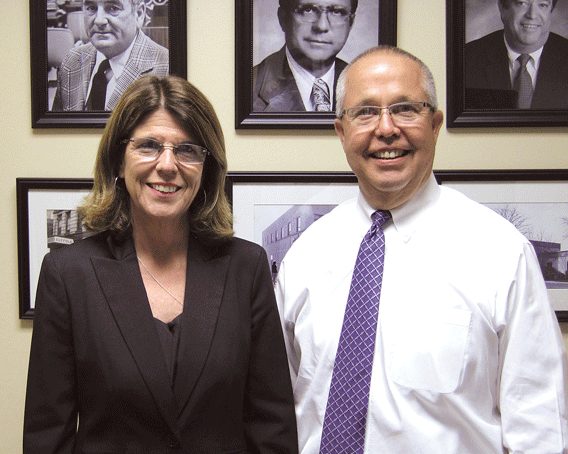
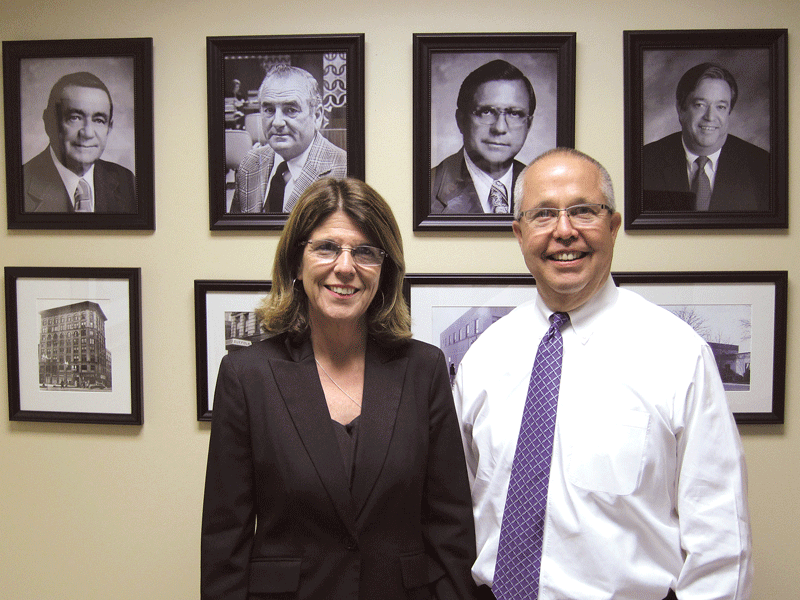
Michael Beaudry and Debra Boronski

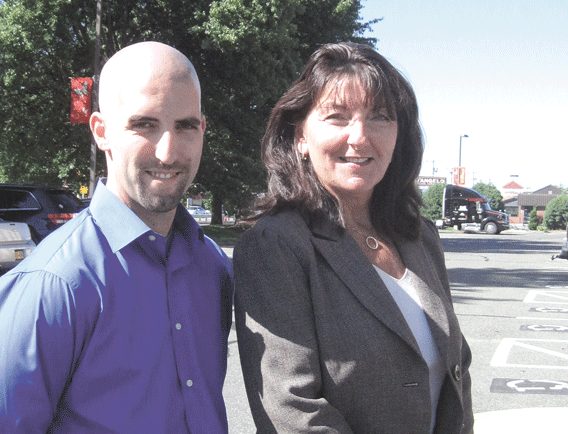
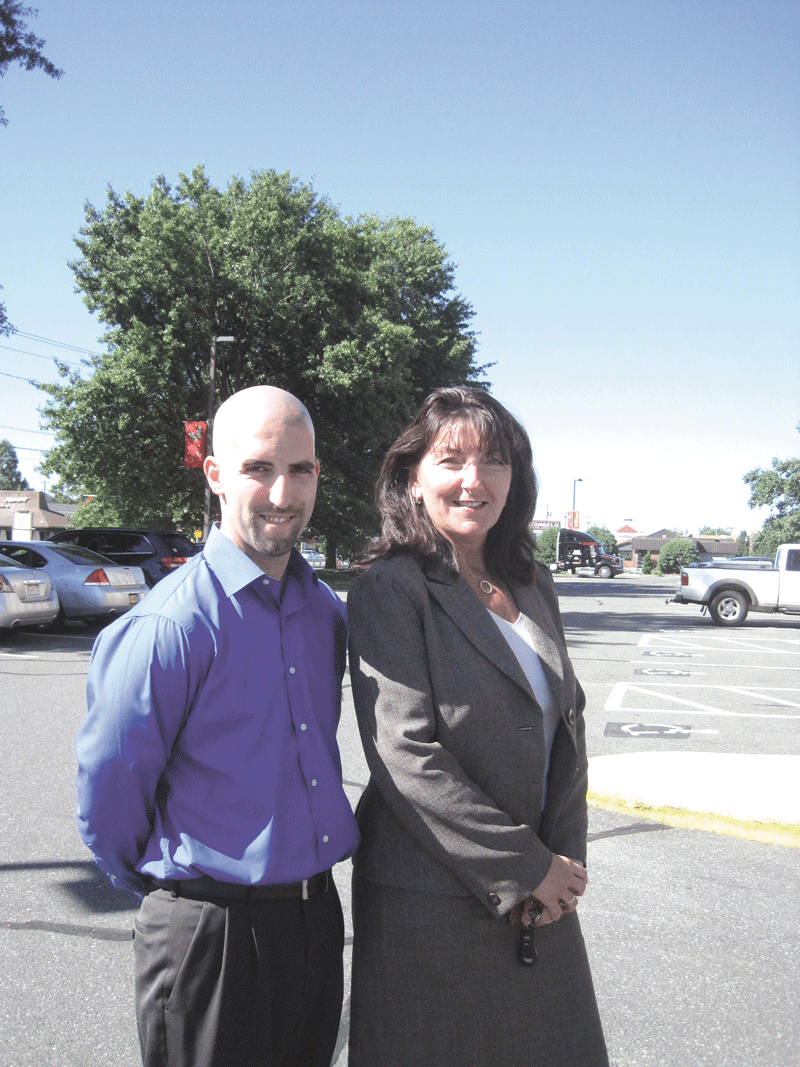
Michael Beaudry and Debra Boronski are completing the first year of a new management arrangement that saves the WRC a significant amount of administrative expenses.

Remo Pizzichemi has passed the torch.

Specifically, Pizzichemi, vice president of the Welcome Group Inc., which manages the West Springfield Hampton Inn and the Springfield/Enfield Holiday Inn, has passed the chairmanship of the West of the River Chamber of Commerce (WRC), to 32-year-old Michael Beaudry, owner of Azon Liquors and TEG Business Consulting, a small marketing and branding company that focuses on social networking, both in Agawam.

Pizzichemi is proud of his past year helming the WRC, the business organization that serves West Springfield and Agawam — the towns directly west of the Connecticut River — characterizing his tenure as the start as a new way of operating (more on that later). But he’s cognizant of the need to keep a membership-based business organization interesting, active, and, most importantly, growing. With technology radically altering the various ways of communicating and doing business, the board felt strongly that a shot of youthful energy was necessary.

“We went in [to a new era of the chamber] with eyes wide open, knowing that we needed to address younger business officers on the board, and we did that primarily by asking Mike to be the chairman this year,” said Pizzichemi. “The fact that he owns two small businesses, it’s really helped us expand our horizons to not be the typical stale chamber, but to be a vibrant new chamber that focuses on young, new people and young, new businesses.”

Beaudry represents the demographic that the chamber needs to pay attention to, added Debra Boronski, the new executive director of the WRC, who also runs the Massachusetts Chamber of Commerce (again, more on that later). “And that is why, at our recent annual meeting, we had a speaker who talked about how each generation works with, and needs to work with, each other in the workplace.”

One of Beaudry’s first goals will be an overhaul of the chamber’s website, which he says will be user-friendly — offering the ability to purchase event or program tickets online, and providing a broad interactive forum for members, as opposed to a static, administratively managed blog — in addition to more Facebook and Twitter outreach.

While other chambers — not just in the Western Mass. region, but across the nation — are wringing their hands, wondering what they are going to do about their aging membership, and how they should appeal to that younger population that’s necessary for their survival, the WRC is actively creating events and programming that appear to be attracting that target audience, while retaining current businesses.

With catchy new names for networking programs — ‘Wicked Wednesdays’ instead of the typical ‘After 5’ event, for instance — and more attention to business advocacy, the WRC is healthy and growing, and not a moment too soon.

For this edition of Getting Down to Business, BusinessWest sat down with the past and present chairmen of the West of the River Chamber, as well as the relatively new executive director, who have all ridden out a recent storm of uncertainty that could have spelled the end of the WRC.


At a Crossroads

“This chamber finished last year with more members than it started with,” Boronski proudly stated.

In any chamber’s book, that would be a success, but it’s especially gratifying for this group, considering its recent turmoil. About two years ago, faced with a monthly management-fee increase request by the Affiliated Chambers of Commerce of Greater Springfield (ACCGS), which oversaw the administrative and event duties of the WRC, the board felt there was a need for an economical solution that wouldn’t continue to eat away at the bottom line.

“We were at a crossroads, where they asked us to contribute more money, and we just couldn’t see it; our board of directors formed a subcommittee to determine if there were any alternatives, because we literally had no idea if there was any alternative,” explained Pizzichemi.

The answer was to offer a unique deal to Boronski, who had been vice president of the ACCGS for 11 years and in 2008 founded, and remains president of, the Massachusetts Chamber of Commerce, a statewide chamber which provides discount business benefits, but more importantly provides businesses a presence on every legislative level across the Commonwealth.  The deal enabled Boronski to handle day-to-day WRC affairs as executive director, at a significantly reduced cost.

“Local chambers of commerce are looking at more effective ways to use their resources to better serve their members,” she said. “That’s how progressive this chamber is; they partnered with me and are using their member resources to provide services and products as opposed to paying rent, insurance premiums, and high salaries.”

Now, for the same $300 member fee plus $4 per employee (the creation of a ‘micro-business’ dues level for sole proprietorships is being discussed), which Pizzichemi said hasn’t been raised in four years, members not only receive the benefits of the WRC — including discounted or free consultation services, networking events, and business representation with both towns’ municipalities — but also reap all of the Massachusetts Chamber benefits.

Initially, the migration away from the ACCGS and the new managerial change were confusing to some members who left the chamber, thinking they had been members of the ACCGS, not the WRC.

“Some left because they thought that the ACCGS was a chamber, but it’s really a management organization, and they were members of the WRC all along, so the numbers dipped from 217 to 177 at one point. But we’re back up there,” Boronski explained, noting that the WRC surpassed its former peak last year, with 234 members.


Share the Wealth

As the WRC sorted out its new position as a standalone chamber with no bricks-and-mortar central office, it relied on old-fashioned teamwork and launched a mission to appeal to a younger audience while offering business advocacy and a set schedule of more events.

Boronski pointed to ‘Business with Bacon,’ which offers “breakfast with sizzling-hot topics,” which caused all to laugh — but the underlying feeling is that, be it funny, cute, or catchy … it’s working.

“We are getting members to come out for those and network, and our Wicked Wednesdays are attracting 50 to 70 people and that’s a strong showing,” said Beaudry.

But two years ago, there weren’t many events at all, Boronski said. “We’ve really made it a mission to have set schedules for purely networking events. In fact, the tag line for Wicked Wednesdays is ‘no cost, no agenda, no program, no kidding.’ That’s what small businesses need, to network and meet with people with no agenda other than that.”

“And,” Pizzichemi added, “the ability to offer real substance in the form of education and business support.”

He and Beaudry counted on their fingers the amount of money given out by the WRC in the form of grants. Six grants for $500 apiece were awarded a few years ago to member businesses for advertising assistance, and recently, four $1,000 business grants were awarded to help businesses with educational costs.

“For example, one of our auto-dealership repair services was awarded a grant to further the education of one of his technicians,” Pizzichemi said.

Another recent win for both the WRC and Agawam was the chamber’s advocacy for modifications to the business personal tax valuation that were ultimately passed, resulting in lowered taxes for hundreds of businesses. Other big hits include the recent approval of two solar-power developments (by Rivermoor Energy/Citizen’s Energy) for H.P. Hood and the town of Agawam, support for Costco’s liquor-store license and expansion, and the encouragement of a new economic-development administrator in West Springfield, which resulted in the recent hiring of Michele Cabral.

The three also point to the creation of the Agawam Small Business Assistance Center (ASBAC), which was initially funded by the town of Agawam but is now funded by the WRC. From the basics of Excel and QuickBooks to the ins and outs of social-media marketing, the ASBAC provides monthly educational seminars that help startup business members.

Next up for the WRC is the high-profile 6th Annual Food Fest West on Nov. 1 at Crestview Country Club. Pizzichemi anticipates almost 20 restaurants and more than 300 attendees.

“In a climate where almost every restaurant is overshadowed by franchises — certainly Riverdale Street in West Springfield is home to many — this elegant event celebrates our dining quality, but we do let the franchises in,” Pizzichemi said.

Along with the annual summer golf tournament and the hosting of candidate forums for local political races, ‘Coffee with the Mayor’ programs — open forum where members may converse with new West Springfield Mayor Gregory Neffinger and Agawam Mayor Richard Cohen — began this spring and have been well-received by members, said Beaudry.

As he takes charge, Beaudry’s goal is to achieve a constant flow of new, young businesses and retention of longtime members. Tapping his social-media knowledge, Boronski’s experience, and what he knows his generation needs to succeed in business, he and the companies that make up the WRC may just make this body’s transitional years a model for other chambers.


Elizabeth Taras can be reached at [email protected]

Construction Sections
When to Classify People as Independent Contractors

Employers beware. Hiring people as ‘independent contractors’ may provide a competitive advantage that seems tempting. However, the risks of misclassifying employees as independent contractors may far outweigh the benefits.

By classifying a worker as an independent contractor rather than an employee, a business may reap certain advantages. For example, the business may not be held vicariously liable to third parties in court for the negligent acts of an independent contractor as it would for an employee. The business may also avoid paying payroll tax, including the Federal Insurance Contribution Act (FICA) and Federal Unemployment Tax Act (FUTA), and also avoid payments toward state unemployment and workers’ compensation insurance. The business may also save substantial costs by not having to enroll the individual in any employee-benefit plans.

Unfortunately, the use of independent contractors carries with it the inherent risk that the federal or state government will determine that a business should have treated a particular person, or class of persons, as employees for tax, wage-hour, unemployment, workers’ compensation, or employee-benefit-plan purposes. To avoid running afoul of state and federal law regarding misclassification of workers, businesses need to examine their independent-contractor relationships, understand the risks, and consider taking appropriate steps to reclassify or restructure their relationships with these individuals.

In determining whether an individual is an employee or an independent contractor, the most important factor is the employer’s right to direction and control over the individual. The more direction and control that the employer has, the more likely it is that the individual will be deemed to be an employee. Some of the factors to consider are whether the employer sets hours, provides an office and equipment, and gives instructions on how to perform tasks as opposed to the individual making his or her own schedule, being self-directed, and furnishing his or her own equipment and supplies. This is the test that has traditionally been applied by the IRS to determine whether a worker is an employee or independent contractor for federal employment-tax purposes.

Many states, including Massachusetts, apply different tests for determining a worker’s status. The Massachusetts Independent Contractor Law (MICL) is among the strictest in the country and creates a presumption that an individual performing any service is an employee. To overcome this presumption, the party receiving services must establish that:

• The worker is free from its control and direction in performing this service, both under a contract and in fact;

• The service provided by the worker is outside the employer’s usual course of business; and

• The worker is customarily engaged in an independent trade, occupation, profession, or business of the same type.

The first part of the test looks at the degree of control and direction retained by the employer over the services performed by the individual. It is the employer’s burden to demonstrate that the services at issue are performed free from its direction or control and carried out with minimal instruction. An independent contractor completes the job using his or her own approach with little direction and dictates the hours that he or she will work on the job.

The second part of the test requires that the service the individual performs be “outside the usual course of business of the employer.” This requirement impacts any business that hires independent contractors to supplement its regular workforce. In 2003, for example, the Supreme Judicial Court of Massachusetts found that a newspaper had misclassified its newspaper carriers as independent contractors when the carriers were performing the usual course of business of the newspaper.

The third part of the test requires that the individual be customarily engaged in an independently established trade, occupation, profession, or a business of the same nature as that involved in the service performed. In other words, is the worker wearing the hat of an employee of the employing company, or is he or she wearing the hat of his or her own independent enterprise? This requirement may be difficult to satisfy if the independent contractor works only for one company.

The MICL is enforced by the Fair Labor Division of the Office of the Attorney General of the Commonwealth. The Attorney General’s 2008 advisory concerning the MICL states that an employer’s failure to withhold taxes, contribute to unemployment compensation, or provide workers’ compensation for an individual is not considered when analyzing whether an employee has been misclassified. Nor is the existence of an independent-contractor agreement (although, according to the attorney general, the MICL requires that all independent-contractor relationships be reflected in written agreements or job descriptions). In other words, just because an employer believes that a worker should be an independent contractor and treats that worker as such does not make it so in the eyes of the law.

The attorney general can issue civil citations and institute criminal prosecutions against businesses and individuals for both intentional and unintentional violations of the MICL. More significantly, private citizens may file civil actions in court for themselves and others similarly situated, claiming that they have been misclassified as independent contractors but are, in fact, employees entitled to all the rights and protections under the Massachusetts Wage Act. The Wage Act is a particularly potent weapon since it imposes personal liability on officers and managers of companies who violate its provisions, including the MICL. In addition, the 2008 amendments to the Wage Act require a court to award treble (three times) damages plus attorney’s fees and costs to an employee who prevails on his or her claim.

Misclassifying employees as independent contractors may also subject a business to:

• Income-tax liability for monies that should have been withheld from the ‘wages’ of the ‘employees’;

• Employer FICA and FUTA contributions;

• Potential overtime pay and other wage claim liability;

• State unemployment-insurance payments;

• Workers’ compensation insurance premiums and potential liability for workplace injuries; and

• Other civil and criminal liability. Additionally, workers may be entitled to coverage and benefits under existing employee benefit plans.

There are several approaches a business can take to address these risks. It might:

• Evaluate relationships with independent contractors to determine whether the classification is proper under the MICL three-part test;

• Review all written independent-contractor agreements and modify them where appropriate;

• Ensure that all independent-contractor relationships are reflected in written agreements or job descriptions correctly describing the relationship and the party’s respective obligations;

• Begin treating misclassified independent contractors as employees; and

• Maintain independent-contractor relationships but take steps to limit potential exposure (for example, ensure that no independent contractor works more than 40 hours per week so that the business does not face potential overtime liability).


Keith A. Minoff is a Springfield-based attorney specializing in employment law and business litigation; (413) 301-0866.

Chamber Corners Departments

ACCGS

www.myonlinechamber.com

(413) 787-1555


• Oct. 2: Rake in the Business Tabletop Showcase, 4:30-7 p.m., 1599 Memorial Dr., Chicopee. The ACCGS has joined the Greater Chicopee, Holyoke, and Westfield chambers of commerce to bring members an affordable way to market their business. Platinum Sponsors: Charter Business, PeoplesBank, and Westfield Bank. Gold Sponsors: BusinessWest, First Niagara Bank, the Westfield News, and Harrington Insurance. Tables cost $100 and include table covering, skirt, and electricity (if needed). This opportunity is open to chamber members only. Make table reservations online at www.myonlinechamber.com, by calling CecileLarose at (413) 755-1313, or e-mailing larose@myonlinechamber. You may also fax your form to (413) 755-1322. The cost to attend the event is $5 if pre-registered, $10 at the door.

• Oct. 11: The Western Mass Business Expo, 7:30 a.m. to 6 p.m., MassMutual Center, Springfield. The ACCGS is partnering with BusinessWest on the event, which starts with the Chamber Breakfast at 7:30 a.m. in the ballroom, where Commissioner of Higher Education Richard Freeland will release the report “Time to Lead: the Need for Excellence in Massachusetts Public Higher Education.” Also planned are brief comments by area college presidents. Tickets cost $25 per person for breakfast and $45 per person for lunch. For reservations to the breakfast or lunch, contact Cecile Larose at [email protected], or register online at www.myonlinechamber.com.

• Oct. 17: Business After 5, 5-7 p.m., Six Flags New England, Agawam. Come join the chamber as Six Flags offers an inside look at the Looney Tunes characters and how they prepare to meet the public. Sponsorships are still available for this event. The Chamber has reduced the price of its After 5 this season to $5 for members and $10 for non-members. Reservations are accepted at www.myonlinechamber.com or by emailing Cecile Larose at [email protected]. There will be food and a cash bar.

• Oct. 26: Super 60 Luncheon, 11:30 a.m. to 1:30 p.m., Chez Josef, 176 Shoemaker Lane, Agawam. This annual chamber event recognizes the top 60 companies in both revenue and growth. Presenting sponsor is Health New England. Other sponsorship opportunities are still available. Guest speakers are Stanley Kowalski III, owner and founder of FloDesign Inc., and Secretary of Housing and Economic Development Greg Bialecki, who will show how government and private industry can work together successfully in this environment. Cost is $50 for members, $70 for non-members. Reservations can be made online at www.myonlinechamber.com or by emailing Cecile Larose at [email protected].


Amherst Area Chamber of Commerce

www.amherstarea.com

(413) 253-0700


• Oct. 4: Amherst Area Chamber of Commerce Annual Awards Dinner, 5:30-9 p.m., Lord Jeffery Inn. Annual Awards Dinner presented by PeoplesBank. Emceed by Monte Belmonte of 93.9 FM. This year’s A+ Awards recipients are the Hitchcock Center for the Environment, Legacy Award for Environmental Leadership; Ray Shafie, former owner of Copy Cat Print Shop, Lifetime Achievement in Business; Chris Riddle, retired architect and founder of Kuhn Riddle Architects, Lifetime Achievement in Business; Youssef Fadel, New England Promotional Marketing, Chamber MVP. Additional sponsors: Health New England, J.F. Conlon & Associates.

• Oct. 12: Chamber Legislative Breakfast, 7:15-9 a.m., Lord Jeffery Inn. Cost: $15 for non-members, $12 for members.


Franklin County Chamber of Commerce

www.franklincc.org

(413) 773-5463


• Oct. 12-13: Brick & Mortar International Video Arts Festival, 4-10 p.m., downtown Greenfield. A walking tour of video art. Free admission. See www.greenfieldvideofest.org for more information.

• Oct. 19: Breakfast Series Program, 7:30-9 a.m., Bella Notte Restaurant, Huckle Hill Road, Bernardston. Thank you to U.S. Rep. John Olver. Sponsored by Greenfield Cooperative Bank and the Academy at Charlemont. Cost: $12 for members, $15 for non-members. Call (413) 773-5463 for reservations.


Greater Easthampton Chamber of Commerce

www.easthamptonchamber.org

(413) 527-9414


• Oct. 6: Casino Night, 6-11 p.m., One Cottage St., Easthampton. Come try your luck at an array of gaming tables. Lucky winners will win prizes. Hors d’oeuvres and a cash beer and wine bar throughout the evening. Major Sponsors: Easthampton Savings Bank, Finck & Perras Insurance Agency. Cost: $25 in advance, $30 at the door. For more information, visit www.easthamptonchamber.org.

• Oct. 11: Networking by Night Business Card Exchange, 5-7 p.m., hosted and sponsored by Cooley Dickinson Southampton, Rehabilitation & Outpatient Services, Big Y Plaza, College Highway, Southampton. Hors d’oeuvres and door prizes. Cost: $5 for members, $15 for non-members.

• Oct. 22: Celebrity Bartenders Night, 6-9 p.m., Opa-Opa Steakhouse & Brewery, 169 College Highway, Southampton. Join us for a night of fun with local celebrities mixing drinks. Your tips benefit the chamber’s holiday-lighting fund. Raffles and fun. Free admission.


Greater Holyoke Chamber of Commerce

www.holyokechamber.com

(413) 534-3376


• Oct. 2: Rake in the Business Table Top Showcase, 5-7:30 p.m., Chicopee Castle of Knights. Four area chambers — Holyoke, Chicopee, Westfield, and ACCGS — are getting together to present a tabletop mini-trade show. Tables cost $100. Call (413) 534-3376 to register, or sign up online at www.holyokechamber.com.

• Oct. 3: Sales Training Breakfast, 7:45-9 a.m., the Log Cabin, 500 Easthampton Road, Holyoke. “How to Close the Sale in the New Economy,” Marc Wayshak, author of two books on sales and leadership, shares his revolutionary selling system for salespeople, entrepreneurs, and companies alike. Cost: $25 for members, $30 at the door and for non-members. Call (413) 534-3376 to register, or sign up online at www.holyokechamber.com.

• Oct. 10: Autumn Business Breakfast, 7:30-9 a.m., the Log Cabin, 500 Easthampton Road, Holyoke. Sponsored by the Republican and Holyoke Medical Center. Recognizing new members, business milestones, and networking breakfast meeting. Cost: $20 in advance, $25 at the door, $30 for non-members. Call (413) 534-3376 to register, or sign up online at www.holyokechamber.com.

• Oct. 17: Chamber After Hours, 5-7 p.m., the Pioneer Valley Railroad train at Holyoke Heritage Park. Business networking event to take place on a train car and caboose, including a 50/50 raffle, a variety of door prize, and complimentary appetizers and beverages. Cost: $10 for members, $15 for non-members. Call (413) 534-3376 to register, or sign up online at www.holyokechamber.com.

• Oct. 22: “Building a Small Business” Seminar, the PeoplesBank Conference Center at the Kittredge Business Center. Reception at 5 p.m., followed by a 6 p.m. panel discussion on “Writing a Business Plan, Sales, Marketing, Networking, and Adapting to a Changing Economy.” Free admission. Call Joanna Brown at (413) 552-2253.


Greater Northampton Chamber of Commerce

www.explorenorthampton.com

(413) 584-1900


• Oct. 3: Arrive @ 5, 5-7 p.m., 99 Pleasant St., Northampton. Sponsored by Innovative Business Systems, Crocker Communications, and Pioneer Training. Cost: $10 for members.

Professional Women’s Chamber

www.professionalwomenschamber.com

(413) 755-1310


• Nov. 14: November Luncheon, 11:30 a.m. to 1 p.m., Max’s Tavern, MassMutual Room, Basketball Hall of Fame, Springfield. Guest Speaker: Lynn Ostrowski of Health New England. Cost: $25 for members, $35 for non-members.


Greater Westfield Chamber of Commerce

www.westfieldbiz.org

(413) 568-1618


• Oct. 2: Rake in the Business Table Top Showcase, Castle of Knights, Chicopee. Presented by the Greater Chicopee, Greater Holyoke, Greater Westfield, and Affiliated Chambers of Commerce of Greater Springfield. Exhibitor tables cost $100.00 (Westfield’s new members get a 50% discount), and each receive six extra passes to the show. Cost: $5 in advance, $10 at the door. Each ticket is entered into a drawing for a Kindle Touch with a leather case. Platinum Sponsors are Westfield Bank, PeoplesBank, and Charter Business; Gold Sponsors are BusinessWest, the Westfield News, First Niagara, and Harrington Insurance Agency Inc. Call Pam at (413) 568-1618 or e-mail [email protected] to register.

• Oct. 17: WestNet Oktoberfest, 5-7 p.m., East Mountain Country Club, 1458 East Mountain Road, Westfield. Sponsors: Comcast and Frosted Swirl Cupcakes. Cost: $10 for members, $15 cash for non-members. Your first WestNet is always complimentary. Call Pam at (413) 568-1618 or e-mail [email protected] to register.

Court Dockets Departments

The following is a compilation of recent lawsuits involving area businesses and organizations. These are strictly allegations that have yet to be proven in a court of law. Readers are advised to contact the parties listed, or the court, for more information concerning the individual claims.


HAMPDEN SUPERIOR COURT

Alexander C. Richardson v. HSBC Bank, USA National Assoc., as trustee for Wells Fargo Home Equity Assets Backed Securities

Allegation: Chapter 93A damages for wrongful foreclosure without following statute: $100,000

Filed: 8/13/12


David Walczak v. Mass Central Railroad Corp.

Allegation: Negligent maintenance of railroad track causing plaintiff to be thrown from his bike: $35,509.91

Filed: 8/13/12


Norman Lloyd Jr. v. Adam Quenneville Roofing & Siding Inc.

Allegation: Failure to pay earned commission: $40,000

Filed: 8/20/12


Rachel L. Beiermeister v. Crackel Barrel Old Country Store Inc.

Allegation: Employment discrimination: $2,003,000

Filed: 7/31/12


HAMPSHIRE SUPERIOR COURT

Amhad Development Corp. v. Amherst Assoc. Development Inc.

Allegation: Breach of construction contract: $50,000

Filed: 7/12/12


Felix Perez v. Anthony’s Dance Club Inc., et al

Allegation: Negligence causing personal injury: $40,000+

Filed: 7/27/12


R.E. Laplante Construction Inc. v. Harold L. Eaton Associates Inc.

Allegation: Breach of contract to supply accurate land survey: $25,000+

Filed: 7/2/12


Ruth M. Braman v. Ian Modesto, D.M.D

Allegation: Negligence in extraction of 22 teeth: $100,000+

Filed: 7/13/12


Western Mass Recycled Metals v. ABC&D Recycling Inc.

Allegation: Breach of management and operation agreement: $125,000+

Filed: 8/3/12


SPRINGFIELD DISTRICT COURT

Liberty Mutual Insurance Co. v. Avery Investment Properties, LLC

Allegation: Balance due on workers’ compensation insurance policy: $43,272

Filed: 8/10/12


Polygon US Corp. v. Simard’s Family Restaurant

Allegation: Non-payment of labor and materials provided for water-damage restoration: $4,006.38

Filed: 8/10/12


West Springfield Auto Parts v. Brake King

Allegation: Non-payment of goods sold and delivered: $97,929.35

Filed: 8/14/12


West Springfield Auto Parts v. Rycorp Inc.

Allegation: Non-payment of goods sold and delivered: $51,565.21

Filed: 8/14/12


WESTFIELD DISTRICT COURT

Tighe & Bond Inc. v. Struever Bros. Eccles & Rouse Inc.

Allegation: Breach of contract and balance due for engineering services rendered: $36,513.89

Filed: 8/9/12

Cover Story
A Textbook Example of Effective Job Sharing

While job sharing is hardly a new concept — it’s at least a few decades old by most accounts — it has rarely succeeded, or even been tried, at a high-level administrative post, such as vice president of Philanthropic Services at the Community Foundation of Western Massachusetts, which is now being shared by Kristin Leutz and Katie Allan Zobel. For one of them (Leutz), this is a chance to live out research she did while attaining a master’s degree in Industrial/Organizational Psychology at Springfield College. For both, it’s a way to achieve coveted work/life balance while also carrying out highly rewarding work. What they’ve been doing for the past seven years can be described with one word: pioneering.

There’s a small pile of rocks — one of the owners actually called it a “sculpture” — sitting in the middle of the table, or leaf, that lies between the desks occupied by Katie Allan Zobel and Kristin Leutz.

These items come in all sizes and shapes (including a few that look like hearts — Leutz collects and treasures those), and they were brought back to Springfield from many different travel destinations. Most are gifts from one to the other, but some were found and simply added to the mix.


Kristin Leutz

Kristin Leutz says the unique job-sharing situation she entered allows her to live out the research she did at Springfield College and MassMutual.

“It’s … a shared pile of rocks,” said Leutz with a laugh, noting that this makes the unique office accessory symbolic in many ways. That’s because these two women share, well, just about everything.

That starts with a job — vice president of Philanthropic Services for the Community Foundation of Western Massachusetts — and its salary and needed benefits. They also share an office, a copier, that leaf with the rocks, a bookcase that is far too cluttered for either one’s good, the nameplate outside the door, and even the door itself (items chosen by both, ranging from newspaper cartoons to art created by Leutz’s youngest child, now compete for space).

It’s been this way since the late fall of 2005, when Zobel and Leutz applied as a team for a position then called director of Development, and prevailed over several traditional hopefuls — meaning singular men and women — in a decidedly different candidate-selection process (more on that later).

Currently, Leutz works Mondays and Tuesdays, Zobel takes over on Thursdays and Fridays, and they’re both in on Wednesday, or what has come to be known, alternately, as ‘overlap day,’ ‘hand-off day,’ and ‘pass-the-baton day.’

Between them, they have raised between $5 million and $8 million per year, said Kent Faerber, former president of the foundation and now interim president, and been highly successful in a multi-faceted position that has involved everything from fund-development management to PR and marketing, to promoting philanthropy across the region.

“This has been a very challenging job to share because of the sophistication of the work and the need for our external constituency to feel that their relationships with the foundation are seamless,” he told BusinessWest. “While a prospective donor might make initial contact with one of them, the other needed to be able to pick that up whenever he or she might call back or make contact later. They have developed quite extensive routines of information sharing and collaboration despite the fact that they are normally not in the office or on duty at the same time.”

When asked how they are able to succeed in this unique and challenging sharing arrangement, Leutz and Zobel used different words and phrases to say what amounts to the same thing: they work hard at it. And they need to, because, while having two minds working on all that goes into this job description is certainly beneficial for the foundation, such a scenario can get complicated.

“To try to figure this out is not simple; it’s not a straightforward thing,” Zobel said of job sharing in general. “We’re true pioneers.”

That’s a word that both used early and often, because there is very little job sharing going on in this region in general, and only a few examples from across the country of it working at such a high administrative level. The two are well-aware of this, and understand that their partnership could be considered ground-breaking and a potential model.

For this issue and its focus on women in business, we take a look at this unique employment arrangement, how it came about, and why, seven years later, it’s stronger than ever.

Sharing the Wealth

Carol Leary, president of Bay Path College and a long-time (now former) board member and president of the Community Foundation, remembers the search that eventually brought Leutz and Zobel to the organization — as well as her reaction to a situation (a teamed pair of candidates) that she hadn’t seen before and hasn’t seen since, at least at that level.

“I really didn’t have to be convinced very much — I loved the concept of trying it,” she recalled. “My sense was that the worst thing that could happen was that it wasn’t going to work … and I figured it was well-worth the risk because we didn’t want to lose either one of them.”

But Faerber, president of the foundation at the time, remembers that there was considerable skepticism among other members of the search panel, especially about the logistical aspects of such an arrangement. What eventually swayed them, he believes, was the prospect of putting two strong, creative minds to work on the many challenges and opportunities that would confront whomever held that title.

Katie Allan Zobel

Katie Allan Zobel says she wanted to work for the Community Foundation, but couldn’t handle a 55-hour week, and the job-sharing arrangement allowed her to advance her career goals.

“I was aware of the talent that these two brought to the position, so I was prepared to rethink whatever preconceptions I had about how this might get done,” he told BusinessWest, adding that other search committee members obviously felt the same way, as they chose the two over perhaps 25 other candidates. “There was awareness of the fact that, if you had two minds working on this, that was a fairly significant plus.”

How these two minds came to sit across the table from those interviewers is an intriguing story, which starts at Amherst College in the mid-’90s, where Leutz and Zobel worked together in the broad realm of fund-raising and alumni relations.

They thrived in those roles, but Leutz eventually left the school to pursue a master’s degree in something called Industrial/Organizational (I/O) Psychology at Springfield College. This is an emerging field, she explained, that involves the scientific study of employees, workplaces, and organizations, and covers many aspects of human resources and organizational development, including a wide range of work/life balance issues and trends.

These specific areas of study defined her master’s thesis work at MassMutual. “I was looking at what they called alternative work arrangements there,” she explained, adding that job sharing was part of the mix, but there was a very limited study pool. “I did a large-sample survey and qualitative study of their employees and what kinds of work/life arrangements they were using — alternative schedules, part-time work, and other initiatives.”

She would eventually go on to work for the company as an organizational-development consultant in the Human Resources department, working on what amounted to the human side of a large-scale implementation of the SAP technology system. Little did she know that soon she would be taking much of what she learned in the classroom and at the financial-services giant and applying it to what amounts to a pioneering experiment.

Fast-forwarding somewhat, Faerber reached out to Zobel in the early fall of 2005 when she was an independent consultant (Amherst College was one of her clients) and asked if she could provide temporary support for the Community Foundation when its director of development was stricken with the cancer that would eventually take her life, and was then on leave of absence.

Zobel recalls being somewhat reluctant at first, but agreed, and soon found the work rewarding and the foundation an organization she enjoyed working for. “I was here for three months, and came to realize what an amazing resource the Community Foundation is. I had no idea the extent of their work and the way in which they did that work; it was both surprising and so engaging that I wanted to stay and apply for that position.”

But she determined fairly quickly that the 55-hour work week that the job entailed was something she didn’t want at that time in her life, with two young children.

Zobel recalls initial discussions with Leutz (who by this time had left MassMutual after the birth of her first child, ironically because she couldn’t work out the flex-time arrangement she desired) about the possibility of sharing this job. She did so without knowing the full extent and specific direction of Leutz’s graduate work — “I knew it was organizational development, but not much more than that” — and found her very open to what at that time amounted to exploring uncharted territory.

“This was a chance to live out my research and test it out,” Leutz recalled. “I was working way too many hours at MassMutual after the birth of my son, and didn’t have the work/life balance that I wanted. Here was the work/life expert having no balance; it was like the shoemaker’s children having no shoes. I was home with my son and ready to work, but not full-time.”

“When Katie came to me with this opportunity, which represented a chance to work in philanthropy in a way that I hadn’t before, I was excited,” she continued, “and I knew how to structure the job. So we applied for the position as a team.”


Work in Progress

Since getting the job and putting both their names on the plate outside their office, Leutz and Zobel have had an additional — and unique — segment attached to an already-lengthy job description: making their employment arrangement work for all parties involved.

This assignment involves everything from financial considerations, or costs to the organization, to ensuring seamless (that’s another word both women used repeatedly) delivery of services to the many kinds of clients who work with the Community Foundation.

As for the financial side of things, if two people are going to take a job that would normally be carried out by one individual, they theoretically can’t cost more than that one person would if things are going to work out for the company. And for the most part, that’s been the case with Leutz and Zobel.

Neither one has needed health insurance through the organization, which helps — if both did, that would be an additional expense — and their salary and other benefits amount to no more than what one individual would earn. There are some additional expenses — two computers and two phones are required, and if they travel together on conferences, there are two plane tickets and two registration fees (they split a hotel room) — but not many.

As for achieving a seamless operating environment, this involves constant and highly effective communication and making the very most of those aforementioned hand-off days.

Backing up a bit, the co-vice presidents went into some detail about what the foundation does and what their responsibilities are.

The foundation itself administers a charitable endowment consisting of approximately 528 separately identified funds (totaling $110 million) serving Hampden, Hampshire, and Franklin counties. The foundation also plays a central role in the charitable distributions from four large private foundations in the region, administered by Bank of America and representing approximately $24.6 million in additional charitable assets.

As for Leutz and Zobel, their official job description reads this way: “manage fund development and donor services; provide charitable gift-planning services to individuals, families, and groups, including planned gifts and gifts on non-cash assets; serve as a partner to local professional advisors assisting their clients in charitable giving; promote philanthropy in the region among stakeholders including institutions, individuals, and corporations.”

There are myriad responsibilities that go with that description, said Zobel, adding that, for two people splitting a week to carry them out, there must be communication, organization, and efficient sharing of those most important ingredients: information and opinions.

Elaborating, Zobel said she and Leutz will use Tuesday evening and then their traditional Wednesday carpooling (they both live in Amherst) to stay abreast of what’s happening with their many constituencies and plan a smooth flow of service and teamwork.

“On Tuesday evening, Kristin puts down in an e-mail to me what we call our ‘transition memo,’” she explained. “It explains everything that has happened, with highlights and bullets and an ongoing project list that we continually update; some things come off the project list, while others are added on that we need to do.

“We use that Wednesday commute to talk things over,” she continued. “I’ll have read the memo, looked it over Tuesday, and we’ll talk about those things that really need discussion.”

Said Leutz, “we basically talk on the phone a lot on our off days as well. We try to respect time off, but we wind up talking a lot because it makes things easier. And we use that commute to make the most out of discussing things that need decisions together or relationships that we share equally.”


Checking Your Balance

And while this job-sharing relationship has worked out well for the Community Foundation, it has also been everything Leutz and Zobel could possibly have expected from it — and more.

Indeed, they both talked about how this arrangement has done more than help them achieve work/life balance. It has also enabled them to be in a creative, rewarding job they could not have taken on otherwise, while also putting them in a collaborative environment that has allowed them to stretch their collective imaginations and become even better at what they do.

It’s such an attractive work environment that Leutz has stayed in it far longer than she has any other employment situation.

“I’m a restless person — this is the longest I’ve stuck with anything,” she said. “And I think that’s because I’m a collaborative thinker; even if I was working full-time, I would want to work this way, with people, because it enhances my production.”

Zobel agreed. “To do this kind of work on your own would be much harder. I can get a lot of feedback from Kristin throughout the week and from week to week about what I’m doing right, what I should change … I get infused with new energy.”

The downside to the arrangement, or at least one of them, they said, is that they are now latched to each other career-wise, a fairly tenuous situation, but one that neither one is worried about at the moment. After all, the relationship has survived a parental leave (Leutz had her second child a year after they took the job) and the need for both to earn higher wages, which they’ve accomplished through outside consulting work.

“You have to be much more creative with your own career to stay committed to someone at this level,” said Zobel. “That’s not necessarily a disadvantage, but it’s certainly a challenge.”

When asked if job sharing is a viable option for area companies and individuals working for them, both Leutz and Zobel said they provide ample proof that such arrangements can work.

But both employer and employees have to fully understand the concept, its many potential benefits, and the myriad challenges before they attempt to implement such a practice, they said.

And that starts with individuals fully understanding that, when they split a job, they take half the salary. That sounds simple, but many don’t get that part, said Zobel.

“People get all excited about this idea when we talk about it,” she told BusinessWest. “What Kristin and I wanted was a really meaningful, significant, meaty job, and you don’t usually get that in a part-time job; you either have to work much more than part time, or you work part-time and don’t get everything you want.

“Many of our peers feel the same way,” she went on. “And that’s why they get so excited about this. But then when they realize they only get half the salary, they get these startled looks on their faces.”

Moving beyond that all-important consideration, such arrangements can only work when the two individuals can work together effectively and establish a very high level of trust, something that has been accomplished in this case.

“I know when I’m not here, the work is getting done at as well as I would have done it, if not better,” said Leutz, “because Katie is here and I have complete trust in her.”

In general, job sharing has worked best with positions like administrative assistant, Leutz explained, but it has been effective in a variety of settings and with many different job titles.

“Any job share should be able to be matched to the work and to the role, but there are certain jobs that would be very difficult for people to share, and there are many ways that people structure job shares,” she said. “Some people have very discreet responsibilities and don’t overlap very much, and other people share everything because of the nature of the work.

“There are examples from around the country where executive-level employees, women and men, have been able to do this,” she continued. “But they have tended to structure these arrangements very creatively depending on the organization and the needs of the job. And we figured we had to do that here; we had to really understand the nature of the work and make ourselves flexible.”

Looking back, Leutz and Zobel both noted that they didn’t have all the answers for that search panel back in 2005, and that it’s taken the ensuing seven years to completely fill in their canvas. They’re not sure how long this relationship will go on, but for now they’re more than content to continue their pioneering efforts.


Two the Future

The level of sharing between Leutz and Zobel apparently goes further than the two understood — at least until recently.

Indeed, Leutz has one of those office chairs with a large rubber ball as the seat — chosen for ergonomic reasons (something else she learned while studying I/O Psychology). And when BusinessWest noted that Zobel uses a more traditional model, she admitted to her office mate, “I often use yours when you’re not here,” which was news to Leutz.

But beyond the chair, the door, the copier, and the four weeks of vacation, the two share something else — a firm desire to make this situation work both for them and the organization. It’s been something they’ve certainly had to work at, and it is that commitment to not merely a job, but also a truly unique work arrangement, that has made it successful.

You might say it’s a working situation that’s rock solid — and in more ways than one.

George O’Brien can be reached at [email protected]

Court Dockets Departments

The following is a compilation of recent lawsuits involving area businesses and organizations. These are strictly allegations that have yet to be proven in a court of law. Readers are advised to contact the parties listed, or the court, for more information concerning the individual claims.


HAMPDEN SUPERIOR COURT

Easthampton Savings Bank v. JRE Masonry & Restoration Inc. and Amanda and Jerome Ezold

Allegation: Failure to make payment on a revolving line of credit: $74,711.84

Filed: 7/17/12


Forish Construction Co. v. Dallaswhite Corp. and DeNardo Realty, LLC

Allegation: Defendant has failed to pay for services rendered and materials supplied: $132,329

Filed: 8/9/12


J.D. Contracting Inc. v. Seaver Construction Inc. and Berkley Surety Group, LLC

Allegation: Breach of contract for services, labor, and materials: $439,163.54

Filed: 7/31/12

HAMPSHIRE SUPERIOR COURT

Akiva Cahn-Lipman v. Smith College

Allegation: Breach of employment contract: $86,293.92

Filed: 8/2/12


DGA Realty, LLC v. University Motors, LLC

Allegation: Breach of lease agreement: $100,000

Filed: 7/12/12


M.J. Moran Inc. v. Standard Builders Inc., Amherst Inn Owner, LLC, and Amherst Inn Co.

Allegation: Breach of contract on construction project: $703,754.55

Filed: 7/16/16


Safe Environment of America Inc. v. G.V.W. Inc. and Berkley Regional Insurance Agency

Allegation: Failure to pay for asbestos and other environmental services provided: $600,000

Filed: 7/10/12


Collins Electric Co. Inc. v. Standard Builders Inc., Amherst Inn Owner, LLC, and Amherst Inn Co.

Allegation: Breach of construction-project contract: $811,503.44

Filed: 7/16/12


NORTHAMPTON DISTRICT COURT

Easthampton Savings Bank v. Core Chiropratic Clinic

Allegation: Default on revolving business credit note: $12,014.66

Filed: 7/6/12


SPRINGFIELD DISTRICT COURT

Dolliff & Co. Inc. v. Hampden Structural Systems Inc.

Allegation: Balance due for brokerage Services provided: $8,424.32

Filed: 8/9/12


Liberty Mutual Insurance Co. v. Performing Arts Building and Renovation

Allegation: Non-payment on workers’ compensation policy: $6,442.04

Filed: 8/10/12


Patmar Supply Inc. v. Duziem Laboratories

Allegation: Non-payment of goods sold and delivered: $6,375.16

Filed: 8/7/12


TD Banknorth, N.A. v. Vins Inc. and James Rothera Jr.

Allegation: Default on promissory note: $20,098.34

Filed: 8/6/12


United Rentals v. Hergon Design Inc.

Allegation: Non-payment for materials, equipment, and services on a construction project: $10,240.40

Filed: 8/14/12


WESTFIELD DISTRICT COURT

Tighe & Bond Inc. v. Fortis Property Group, LLC

Allegation: Breach of contract and balance due for engineering services rendered: $12,435.91

Filed: 8/9/12

Law Sections
Annino Draper & Moore Charts a Growth Strategy

From left, Louis Moore, Tracie Kester, Cal Annino, Mark Draper, and Trant Campbell.

From left, Louis Moore, Tracie Kester, Cal Annino, Mark Draper, and Trant Campbell.

Cal Annino says most law firms, especially smaller boutique operations like his, don’t traditionally embrace those proverbial five-year operating plans.

“Things change much too quickly in this business for that,” he explained, referencing all that’s happened over the past half-decade to get his point across. But this doesn’t mean that firms can’t undertake strategic planning, he stressed repeatedly.

At Springfield-based Annino Draper & Moore, or ADM, as it’s called, the firm he started with Mark Draper and Louis Moore (former colleagues at the firm Ryan & White) in 1990, planning is a year-round assignment usually focused on the shorter term, said Annino. And often, track is laid at a year-end meeting of the minds, or planning session, in the firm’s conference room.

At the most recent one, last December, the partners decided to move ahead with everything from a larger and more visible satellite office in Westfield (it has another, similar facility in Northampton) to more extensive marketing, including a revamped and expanded Web site and an electronic newsletter, to a hard push into the realm of alternative dispute resolution, or ADR.

“We’ve jumped with two feet into the arbitration and mediation aspects of alternative dispute resolution,” said Annino, the firm’s managing partner, adding that the creation of the ADR Group was an aggressive step taken in response to ongoing trends toward greater use of ADR and thus less work in the courts, and the recognized need to fill voids in business in such areas as estate planning, family law, and others.

Draper is a certified arbitrator who has handled a number of cases, and others at the firm have taken mediation training, Annino noted, adding that ADR services could become a strong growth area for the firm moving forward, especially if marketed aggressively, which ADM intends to do.

“With the reputation that this firm has in the marketplace now, once we let people know that we’re in the mediation and arbitration business, this will be a good source of business for us,” he explained, adding that, with ADM’s expertise across many areas of the law, it could mediate or arbitrate a wide range of matters.

The past several months have been spent putting the ADR Group and other strategic initiatives into effect, said Annino, adding that these steps, coupled with the firm’s wide diversity of specialties — covering everything from construction law to estate planning; environmental law to general business law — has Annino Draper & Moore positioned for continued growth.

For this issue and its focus on business law, BusinessWest turns the spotlight on a two-decade-old firm that is shedding its comparatively low profile and taking intriguing steps in response to changes in the legal profession, as well as the local business community.


Firm Resolve

Tracing the history of the firm, Annino said it is one of several that were essentially spun off from Ryan White, which at one time had more than two dozen lawyers and was one of the largest firms in the area.

Lawyers in that firm were “compartmentalized” into certain practice groups, he continued, adding that, with their backgrounds in diverse areas, the three individuals with the names now over the door decided there was proper chemistry and synergy for a partnership.

The firm had a solid foundation in the form of clients that stayed with the three partners after they left Ryan & White, and continuously built on that foundation over the years.

“We’ve been able to grow because many of the clients who came with us when we left Ryan & White are still with us,” he continued. “We have very loyal clients, and, frankly, we do a great job for them. We do excellent work, and we’re responsive; that’s what a small firm has to do in order to compete.”

Trant Campbell, who specializes in everything from family law to dispute resolution, joined the firm in 2007, and the latest addition is Tracie Kester, Annino’s one-time assistant and paralegal, who earned her J.D. at Western New England Law School, became an associate at the firm soon thereafter, and was named partner earlier this year.

From the beginning, the firm’s success has been attributed to its diversity and ability to provide a wide range of services to specific clients.

Annino, the firm’s managing partner, focuses on corporate law, municipal and health care law, banking and finance, commercial and residential real estate, estate planning, and elder law, while Draper specializes in construction law and civil litigation. Moore’s areas of practice include environmental law, land-use issues, municipal law, insurance law, civil litigation, and dispute resolution, while Campbell focuses on family law and domestic relations, estate planning, business and corporate law, and dispute resolution, and Kester specializes in business and corporate law, commercial and residential real estate, estate planning and elder law, and civil litigation.

“The work I do in residential and commercial real estate works out well with Mark’s construction practice and Lou’s environmental practice,” said Kester, offering just one example of the synergies within the company and how the various specialties complement one another and improve the overall quality of service. “Any time I have a hint of an environmental problem with one of my real-estate deals, I go down to hall — I don’t pass ‘Go,’ don’t collect $200, and go straight to Lou’s office.”

There is similar synergy between estate-planning work and real estate, noted Campbell, adding that ADM can handle a full range of client needs, and often without having to go outside the firm for an expert.

“Clients’ legal needs don’t necessarily fall in one area,” he explained. “If there was an estate administration going on, there may be a piece of real estate involved, and there may be some environmental issues and some title issues. What I found when I came here was a willingness and a desire on the part of the other members of the firm to help us reach a solution; it’s a great level of comfort.”

Moore agreed. “We don’t do everything that the large firms do,” he said, “but the things we do, we do well and more cost-effectively than most other firms.

“It’s not unusual, especially in some more complex matters, when you’re dealing with a larger firm on the other side, to see them have two or three lawyers in a meeting or at a hearing,” he continued. “And maybe not in every instance, but many of them, clients are getting billed for that.”

The firm’s diversity and cost-effective service have served the company well during the recent — and in many ways still ongoing — economic downturn, he continued, adding that the firm, like most all others, struggled during the leanest of times, especially in hard-hit fields like construction, where most activity came to a grinding halt, but persevered without cutbacks or salary cuts because of its broad range of specialties.


Case in Point

Looking ahead, Annino said the business community, and society in general, are moving increasingly in the direction of ADR, and the firm is responding accordingly — and proactively — with its new ADR Group.

He noted that in addition to divorce and other areas where ADR has been used effectively for many years, there is vast potential for the firm to gain business in such areas as environmental law, construction law, and family law.

“When people find out that we’re doing environmental, family, and contract mediation and arbitration — and we really haven’t told them yet, but we’re starting to — I think we’re going to be very busy,” he said. “I see the family-mediation piece as one where there is growth potential — I’m not aware of it being done extensively now.

“You look at a case where the parents die and now there’s an issue with the estate,” he continued, offering an example of the type of work he anticipates. “You’ve got four children, and everyone is going to get a lawyer. If you’re well-thought-of as being able to mediate or arbitrate those types of issues, rather than fighting them out in the courtroom, that would seem like the perfect venue to resolve family disputes — privately, quietly, and less expensively.”

When asked how a firm, or a specific individual, gains a solid reputation in the realm of ADR, Draper said it does so by becoming known for both expertise and fairness, which can only be attained through time, experience, and thoughtful resolutions.

“The first thing you need to do is get the word out, which we’re trying to do,” he told BusinessWest, noting the use of the firm’s Web site and other vehicles to introduce the service. “Beyond that, it’s just like any aspect of a legal practice — if the parties in the mediation or arbitration perceive you to be fair, then I think you’ll get a good recommendation from the parties and the attorneys. On the other hand, if you’re perceived as being unfair or biased toward one party or the other, you’re not going to get a good recommendation from either side.

“If I see someone who has a bias as an arbitrator, I’m disinclined to use that person,” he continued, “because I’m not sure where the bias is going to fall next time. So it’s just like building any other kind of practice.”

While working to build its portfolio in ADR, the firm is making strides with many of the other strategic initiatives identified last December.

For example, the firm has relocated into larger quarters on Broad Street in Westfield, providing improved visibility. Annino and Kester (both Westfield residents) spend at least one day in a week in that city, which has recorded significant residential and business expansion in recent years and offers strong growth opportunities.

Meanwhile, the firm is moving ahead with plans to market itself more aggressively and become much more visible than it has been in the past.

Specific steps include the revamped Web site, which will, in addition to offering information about the firm, its lawyers, and their areas of expertise, provide visitors with information on timely issues of the day, as well as a new e-newsletter sent to hundreds of clients and prospective clients.

The first edition, which came out in June, chronicles the Westfield relocation, announces Kester’s new status as partner, introduces the new ADR services, and even offers a bit of commentary on the economy.

“We have definitely noticed an uptick in business and consumer confidence and a resulting demand for legal services,” it reads. “There is also new optimism in our clients. Much of our new work results from clients expanding business operations or taking advantage of new business opportunities. It is exciting to be part of this emerging vitality, and to see long-time clients optimistic again about the future for their families and businesses.”


Closing Argument

Whether this perceived uptick and rise in optimism translates into new growth opportunities for ADM remains to be seen. But it’s clear that the firm is taking solid steps to effectively position itself within a changing economic and legal landscape.

As Annino noted, five-year plans don’t generally work out in the legal industry. But firms still need to look down the road and anticipate where opportunities will be found and take proactive steps to capitalize on them.

And ADM has a firm resolve — both literally and figuratively — to do just that.


George O’Brien can be reached at [email protected]

Law Sections
So What Does That Mean for Massachusetts Employers?

John S. Gannon

John S. Gannon

In its most significant decision of the year, and arguably the last decade, the U.S. Supreme Court recently upheld most of the Patient Protection and Affordable Care Act (PPACA), the controversial health care legislation also known as ‘Obamacare.’

But a blessing from the Supreme Court only seemed to take the health care debate to more contentious levels as Republican politicians, including presidential hopeful Mitt Romney, have promised to repeal the law. Even so, businesses cannot wait for a ceasefire in Washington. Employers must forge ahead and continue efforts to implement the law as provisions pertaining to the employer-employee relationship become effective.


The Court’s Ruling

At the forefront of the dispute over the PPACA’s legality was a constitutional challenge to the so-called individual mandate, which requires individuals to carry health insurance or pay a penalty. Opponents argued that Congress overstepped its authority when it enacted this part of the law. The Supreme Court majority disagreed, concluding that the individual mandate is a valid exercise of Congressional power to tax. “Because the Constitution permits such a tax, it is not our role to forbid it, or to pass upon its wisdom or fairness,” wrote Chief Justice John Roberts, author of the majority opinion.

Notably, the Supreme Court rejected the Obama administration’s principal argument in support of the individual mandate. Trying to avoid labeling the provision a tax, the government contended throughout that the mandate was a valid exercise of Congress’ power to regulate interstate commerce. That contention failed. “The individual mandate forces individuals into commerce precisely because they elected to refrain from commercial activity,” declared Roberts. “Such a law cannot be sustained under a clause authorizing Congress to regulate commerce.”

Massachusetts is viewed by many as the birthplace of the individual mandate. The state health care reform law includes a similar provision requiring residents of the Commonwealth to carry health insurance or pay a fine, although the formula for calculating the penalty is different from the method used under federal law.


Next Steps for Employers

Now that the uncertainty surrounding health care reform has been resolved, at least from a legal perspective, employers must be prepared to comply with significant provisions of the PPACA that kick in over the coming months. Starting this year, employer-sponsored group health plans will need to provide employees with a summary of benefits and coverage (SBC), which must include certain coverage details. Insurance carriers may provide the SBC notification for fully insured group plans, but plan administrators will have to provide the notification for self-funded plans.

The PPACA also requires employers to report the aggregate cost of employer-sponsored health coverage on Forms W-2. Employers that filed more than 250 Forms W-2 for tax year 2011 must ensure that the cost of coverage is reported next year. Smaller employers may be off the hook until 2014.

Beginning Jan. 1, 2013, the PPACA limits employee contributions to an FSA to $2,500 per year. The $2,500 FSA cap applies only to employee pre-tax contributions to a health care FSA, and does not affect employer contributions toward health care premiums, health savings accounts, health reimbursement arrangements, or other similar accounts.

Looking Ahead

In addition, savvy employers should begin planning to implement parts of the law set to take effect in 2014, including an employer mandate that penalizes businesses for failing to offer adequate health-insurance coverage.

The controversial employer mandate kicks in a little over a year from now. Starting in 2014, employers with more than 50 full-time employees must provide a minimum level of health-insurance coverage or pay a $2,000 penalty per full-time employee. As noted above, this concept is not entirely new to Massachusetts employers, many of which have been required to provide health insurance to employees since 2006, when the Commonwealth enacted its own version of health care reform. However, Massachusetts employers need to be aware that the penalty for failing to offer coverage is far greater under federal law.

The PPACA also requires that the coverage be ‘affordable’ and provide ‘minimum value.’ Coverage is considered affordable if the employee’s required contribution does not exceed 9.5% of household income. An employer provides a ‘minimum-value’ plan if the plan covers at least 60% of the participant’s covered expenses. If the coverage fails to meet these requirements, the employer may be subject to an excise tax of $3,000 if an employee declines to enroll in the plan.


PPACA Uncertainty

Calls to repeal the PPACA will echo throughout the 2012 electoral season. But rescinding the law is no small task. For starters, it will almost certainly take a makeover in the Oval Office. Until that day comes, employers need to be sure they are in compliance with the provisions of the PPACA that are set to go into effect this year and next. They also need start planning for the critical employer mandate set for 2014.


John Gannon is an associate in the Springfield labor and employment law firm of Skoler, Abbott & Presser, P.C., which represents employers exclusively and specializes in helping employers understand their obligations under state and federal employment law; (413) 737-4753; [email protected]

Opinion
A Simple Remedy for a Wall Street Danger

Over the past several weeks, the financial community has paid rapt attention to trading losses at JPMorgan Chase, estimated to be anywhere from $2 billion to as much as $9 billion. The sudden emergence of such a large loss sent a disturbing tremor through an already-vulnerable economic landscape. The lesson to be learned here is emphatically not about the bank or its leadership, but about the structure of our financial system.
The loss by the much-admired bank was more than a case of a private-sector company taking a private-sector hit because of a private-sector error. First, if a bank this important were to become endangered, the contagion to global financial confidence would surely necessitate a bailout. Losses in institutions to which we entrust the soundness of our money, or where deposits are guaranteed, put the rest of us at risk. Second, and less widely appreciated, JPMorgan’s trading loss is a minuscule fraction of the bank’s more than $75 trillion in notional value of its current positions in derivative securities. The trading of derivatives — securities whose prices are dependent on valuations of underlying assets but do not represent direct ownership claims on those assets — is exempt from the sensible regulation of disclosure and leverage normally applied to stocks, bonds, and other direct claims. This is still, despite all recent attempts at financial reform, the Wild West of trading markets.
Banks say their trading positions are properly hedged by countervailing positions, leaving them little risk. They ‘prove’ this using statistical models anchored in past price behavior and by noting that market pricing indicates a proper balance between their opposing positions, leaving little residual exposure. The problem is that the models are oversimplifications. They rarely predict unfamiliar possibilities, sometimes called ‘black swans,’ or the impacts of external events such as geopolitical disruptions.
All three of the largest U.S. banks have open derivatives positions in excess of 24,000% of their equity capital. Neither models nor markets can protect them from small percentage imbalances. In addition, bank-trading relationships around the world are so interconnected that, if one goes down, all are threatened. No CEO or board of directors, however talented and honorable, can oversee trading at the multi-trillion-dollar scale with perspective and precision enough to assure the avoidance of systemic impairment. Nor can any government oversight body.
Bank lobbyists insist that all this trading is needed to facilitate commercial transactions, but don’t be fooled. The open derivatives positions at the three largest U.S. banks exceed twice the GNP of the world. Add in large European and Asian banks, and the commercial-hedging argument becomes a parody. Hedging is useful in commerce, but its systemic risk should never outweigh its commercial value.
Under present rules, banks are free to put us all at risk in derivatives trading without creating any offsetting cushion. Every derivatives transaction involves some basis risk (that two paired commodities will not continue to move in unison), some counterparty risk (that the trade will not be honored by the other party), and some human-error risk. Accountants and regulators know well that netting massive positions to zero cannot reflect true exposure.
Whenever a new position is taken, there should be a mandatory accompanying reserve or capital charge. This would have a twofold benefit. It would increase protection for both the public and the banks, and it would dull the appeal of hazardously oversized trading accounts. Although regulators should set the actual amounts, imagine that the charge was uniformly 0.1% of the notional position value. Open positions of $75 trillion in derivatives would require $75 billion put aside, an amount large enough to make that trading scale unappealing. Charges to match the risk created would bring trading volumes back to sensible size with a minimum of new regulations and no need to outlaw useful commercial practices. They would simply acknowledge that all derivatives positions, however useful, impose some risk on the holders and the public. Current scale imposes an unmanageable risk.

James M. Stone, former chairman of the Commodity Futures Trading Commission and commissioner of Insurance for Massachusetts, is CEO of the Plymouth Rock group of property and casualty insurance companies.

Banking and Financial Services Sections
Some of the Old Rules May Not Apply When it Comes to 2013
Jim Barrett

Jim Barrett

By JAMES W. BARRETT, CPA/PFS, MST

Once tax filings are taken care of for the prior year, there is always the temptation to tuck current taxes away until the end of the year, when the tendency is to focus on tax strategies that can be executed quickly because of the short period of time remaining.
It would be prudent to take a moment before summer gets into full swing to focus on strategies that may take a little more time to implement but have the potential to reap significant tax savings.
Tax circumstances can change with a single event. Life events, such as marriage or divorce, the birth or death of a family member, retirement, relocation, or a job change, will generally alter your tax position, often dramatically.
Conventional wisdom is to avoid paying taxes for as long as possible by accelerating deductions and/or deferring income. But conventional wisdom may not apply in 2012. Two ominous tax clouds loom on the horizon for 2013, adding a significant level of uncertainty and reducing the value of traditional planning techniques.
The most broadly applicable change is the imminent expiration of the so-called Bush-era tax cuts. The scheduled arrival of the new 0.9% tax on earned income and 3.8% tax on investment income, enacted to pay for the 2010 health care legislation, also should not be overlooked.
We recognize that tax planning requires you to consider a series of unknown future events. Educated guesses and reasonable assumptions go a long way, but keep in mind that no tax strategy is final until the time for changing course has passed.

Planning in Times of
Tax-rate Change
Intentionally raising taxable income in the current year is contrary to the long-standing general guidelines to tax planning. Historically, tax planning has focused on accelerating deductions into the current year and deferring income into future years. But, with rates scheduled to increase, what has worked in years past may not produce the best tax outcome for the future.
The basic framework to help shape your overall income-tax planning in 2012 is as follows:
• If you expect to be in a higher income-tax bracket in 2013, consider accelerating income into 2012 and deferring deductions to 2013.
• If you are forecasting a lower income-tax rate in 2013, reverse the strategy: consider deferring income and accelerating deductions.
This year and going forward, keep in mind that the focus should always be on your marginal tax rate, the highest rate at which your last, or marginal, dollar of income will be taxed. Even though overall tax rates may rise in the future, if your income will be substantially lower in 2013 than in 2012, your marginal tax rate may decrease under the graduated-tax-bracket system.
It’s also important to keep in mind a couple of additional key income-tax concepts while mapping out tax techniques for 2012:

Alternative Minimum Tax:
In years you are subject to the alternative minimum tax (AMT), your deductions may be limited. If you anticipate being subject to AMT in either 2012 or 2013, consider timing those deductible expenditures limited under the AMT regime to maximize deductibility.
Standard Deduction:
If you expect to claim the standard deduction in either 2012 or 2013, shift itemized deductions into the year in which you will not claim the standard deduction to take full advantage of the deductions.

Rising Tax Rates
Individual income-tax rates are set to rise on Jan. 1 of next year to a top rate of 39.6%, a 13% increase over the customary rates in recent years. In addition, limitations on both itemized deductions and personal/dependency exemptions are scheduled to return for 2013, potentially raising the income-tax rate another three to four percentage points for taxpayers subject to these limitations.
Further still, dividends are set to once again be taxed as ordinary income in 2013. The 15% rate enjoyed on qualified dividends for a number of years could potentially become a 39.6% rate. The top tax rate on long-term capital gains is also set to increase by roughly one-third to 20%.

Provision 2011 2012 2013
Ordinary Income Rates 10.0% No Change 15.0%
15.0% No Change  15.0%
25.0% No Change  28.0%
28.0% No Change 31.0%
33.0% No Change 36.0%
35.0% No Change 39.6%
Long Term Capital Gains 15.0% No Change  20.0%
Qualified Dividends 15.0% No Change 39.6%
AMT Exemption – Single 48,450 33,750 No Change
AMT Exemption – Married 74,450 45,000 No Change

Unfortunately, the increasing rate news does not end here; since the Supreme Court did not overturn the health care legislation, the tax impact of the legislation begins in 2013.
Taxpayers with modified adjusted gross income above $200,000 ($250,000 on a joint return) will be subject to two additional taxes:

Hospital Insurance:
A 0.9% hospital insurance (HI) tax will apply to earned income, such as wages.
Unearned Income Medicare Contribution:
A 3.8% unearned income Medicare contribution (UIMC) tax will apply to investment income, including interest, dividends, and capital gains.

For taxpayers above the threshold, the impact of these two new taxes will be broad-reaching. With the addition of the UIMC, the top rate for long-term capital gains will rise by more than 50% to 23.8%, while the top ordinary income rate will rise by more than 15% to 40.5%.
Planning now may reduce the tax burden in years to come, and the timing and composition of earnings become critical. Potentially, a bonus from your company during 2012 instead of 2013 or a 2013 capital transaction accelerated into 2012 could save significant tax dollars. With uncertainty in these rates — and all tax rates this year — midyear may not be the time to initiate the transaction, but it is an ideal time to lay the foundation.
Although the new health care taxes apply to most types of earned (HI tax) and unearned (UIMC tax) income, the new taxes will not apply to retirement-plan distributions, IRA payouts, or tax-exempt income, such as interest from state and local government bonds.
Increases in tax rates are generally adverse for most taxpayers, but with increased rates comes increased value in your deductions, making this a great year to strategize with your tax adviser about the best timing for your deductions.
Here are some 2012 and 2013 planning points to consider if the new health care taxes go into effect Jan. 1, 2013:

Mind the Income Threshold: If you expect that your 2013 modified adjusted gross income (MAGI) will be close to, or just above, the $200,000 (single filer) or $250,000 (joint filers) threshold, you may be able to avoid the HI and UIMC taxes by accelerating income into 2012. The UIMC tax applies only to taxpayers who have both net investment income and MAGI above the threshold amounts.
Adjust Your Investment Portfolio: Seek out investments that produce tax-exempt or tax-deferred income, such as non-dividend growth stocks, tax-deferred annuities, and state or local government bonds. Since it may take time to realign your portfolio, you may want to start well in advance of Jan. 1, 2013.
Spread the Gain:
Installment reporting spreads the investment income from the gain on a sale over a period of years, reducing MAGI and deferring recognition of the investment income. However, electing out of installment reporting in 2012 results in gain recognition before the higher tax rates go into effect.
Transfer Investments to Family Members: Although your children’s investment income may be taxed at your marginal tax rate under the ‘kiddie-tax’ rules, an unmarried child is subject to the UIMC tax only if the child’s MAGI exceeds $200,000. You may be able to use a family limited partnership or other technique to spread some of your investment income among your children prior to Jan. 1, 2013.

Planning Your Estate and Gifts
Absent congressional action, the $5.12 million estate-tax exemption and current top tax rate of 35%, in place for 2012, will revert to a $1 million exemption with a top tax rate of 55% beginning Jan. 1, 2013. Moreover, the estate-tax exemption will no longer be portable between spouses.
With the lifetime gift exclusion also at $5.12 million for the rest of 2012, there exists what could be a once-in-a-lifetime opportunity to transfer significant assets to the younger generation without incurring any wealth transfer taxes. On Jan. 1, 2013, the lifetime gift-tax exclusion is scheduled to revert to $1 million.
Along with the high gift-tax exemption, the generation-skipping transfer-tax exemption is also $5.12 million during 2012. So the door is open to bypass children and defer the impact of estate taxes for many years into the future.
It’s uncertain where the estate-tax exemption and tax rates will end up in future years. And with the expiring provisions, it’s a good idea to review your plan to ensure that it is up to date.
Legislation proposed in Congress limiting valuation discounts attributable to minority interests or lack of marketability also potentially affects wealth transfer. The tax cost of gifts could increase should the changes be enacted.
Since these rules have not yet gone into effect, planning potential remains. Before transferring interests in family businesses or family limited partnerships, consult with your tax adviser to discuss potential tax and valuation pitfalls.
The gift-tax annual exclusion remains at $13,000 per donee, or recipient, for 2012. With gift splitting, spouses can transfer up to $26,000 to each person before the lifetime gift-tax exclusion comes into play.
Gifting techniques you may want to consider this year include:
• Outright gifts to family members;
• Transfers to family members through a family limited partnership; and
• Transfers in trust, including irrevocable life-insurance trusts, defective grantor trusts, and charitable trusts.
Following are a series of other tax-planning opportunities to consider:

Timing of Payments
Reviewing your withholding and planned quarterly estimated tax payments now provides the flexibility to adjust payments to limit or prevent penalties and manage cash flow.
Underpaying your taxes over the course of the year will subject you to underpayment penalties, which can be reduced or eliminated by increasing your withholding or quarterly estimated tax payments. A quirk in the penalty rules treats withholding, even if it occurs late in the year, as if it had been taken evenly throughout the year, making it a powerful planning tool for individuals.
On the flip side, why remit payment too soon when you can invest those funds until April 15, 2013? As long as you will not be subject to an underpayment penalty, consider holding on to your cash as long as possible by cutting back on your withholding or lowering your remaining quarterly estimated tax payments.

Retirement Funding
You can reduce your current tax obligations and help save for your retirement in a tax-efficient manner by contributing to a tax-qualified retirement plan. Qualified plans provide tax deferral — or tax avoidance, in the case of Roth accounts — on earnings until you receive distributions.
The earlier you make the contribution, the sooner your tax-deferred or tax-free earnings begin. If you already have a retirement plan in place, consider funding it as soon as possible to allow funds to start growing now.
To qualify for a tax deduction in 2012, your retirement plan generally must be in place before the end of the year. Exceptions are IRA and SEP (simplified employee pension) plans, which can be set up and funded through April 15, 2013.
Establishing a new retirement plan requires thoughtful decision-making. Small employers (generally those with 100 or fewer employees) that set up a qualified retirement plan may be eligible for a tax credit of up to $500 per year for three years. The credit is limited to 50% of the qualified startup costs.
The following contribution limits, along with the catch-up contribution limits for those 50 and older, apply for the 2012 tax year:

Limit Limit w/Catch Up
401(k) 17,000 22,500
IRA 5,000 6,000
Simple IRA 11,500 14,000
Self-Employed 50,000 55,500

Individuals with earned income, including alimony, are generally eligible to contribute to traditional IRAs. Claiming a deduction for your contribution is another matter. It depends on your income and whether you or your spouse is covered by an employer-sponsored retirement plan.
If neither you nor your spouse are covered by an employer’s plan, you may deduct your contribution to your traditional IRA. If you or your spouse are an active participant in an employer-sponsored plan, the deduction for your IRA is phased out at adjusted gross income (AGI) levels:

Filing Status  AGI Phase-out Range
Single 58,000 – 68,000
Married filing jointly 92,000 – 112,000
Married filing separately 0 – 10,000
Spousal IRA 173,000 – 183,000

 
Many taxpayers find the long-term benefits of contributing to a Roth IRA or a Roth 401(k) outweigh the short-term financial benefits of tax-deductible contributions. While Roth contributions are not tax-deductible, none of the income earned in the Roth account will have tax consequences unless there are early distributions, in which case penalties may apply. In addition, the Roth account is not subject to the required minimum distribution rules that apply when you reach age 70.
Eligibility to contribute to a Roth IRA depends on the amount of your income level. Contributions are allowed if your modified adjusted gross income for 2012 is between $110,000 and $125,000 for singles or between $173,000 and $183,000 for joint filers.
You can still roll your retirement savings from your traditional IRA or other qualified retirement plan into a Roth IRA. However, you must pay tax on the rollover amount. Unlike in past years, income limits no longer apply to Roth rollovers.
You might want to consider a Roth rollover in 2012 if you expect to be subject to the unearned income Medicare contribution tax in future years. Although distributions from a traditional IRA are not subject to the UIMC tax, taxable IRA distributions increase your modified adjusted gross income. If your MAGI exceeds the $200,000/$250,000 threshold, your investment income will be subject to the UIMC tax.
By rolling over your traditional IRA to a Roth IRA in 2012, you will recognize the additional income before the UIMC tax goes into effect. Once you have had a Roth IRA account in place for five years, future distributions from the Roth IRA will be non-taxable and will not increase your modified adjusted gross income.
If you own a business, you may be able to avail yourself of a defined-benefit type of retirement plan. These plans often allow higher retirement contributions than other types of plans. The higher retirement benefit must be weighed against the additional cost of providing comparable retirement benefits for your employees.

Charitable Contributions from IRAs
The tax rule allowing those over age 70 to make charitable contributions from their IRA without the need to include the distribution in income expired at the end of 2011. Making these contributions directly was generally advantageous because it didn’t raise the contributor’s income for limits on itemized deductions and certain phaseouts.
Although Congress has a track record of reinstituting expired tax provisions and applying them retroactively, it is certainly not guaranteed. If you are confident that you want to make the donation regardless of the tax treatment, you can still transfer the contribution directly from your IRA to the qualified charity. If Congress decides to retroactively reinstate the donation rule, the transfer will be excluded from income just as under the pre-2012 rule.
If Congress does not reinstate the rule, any charitable donation made from your IRA will be treated in the same manner as a donation made from any other source. The distribution from the IRA will be recognized as income, and the contribution will be included on your return as an itemized deduction. While the deduction should offset the income, the benefit will not be as great as it would have been if the income had not been recognized in the first place.

Employee Health Plans
If you are not currently providing health coverage for your employees, a tax credit for small businesses may make the cost of purchasing this coverage more affordable. The maximum credit is 35% of the premiums paid by the employer.
To be eligible for the credit, the employer generally must contribute at least 50% of the total premium. The full credit is available for employers with 10 or fewer full-time equivalent employees (FTEs) and average annual wages of less than $25,000. Partial credits are available on a sliding scale to businesses with fewer than 25 FTEs and average annual wages of less than $50,000.

New Employees
Congress extended the Work Opportunity Tax Credit for employers that hire eligible unemployed veterans after Nov. 22, 2011 and before Jan. 1, 2013. The credit can be as high as $9,600 per veteran for for-profit employers or up to $6,240 for tax-exempt organizations.
The amount of the credit depends on a number of factors, including the length of the veteran’s unemployment before hire, the hours a veteran works, and the amount of first-year wages paid. Employers who hire veterans with service-related disabilities may be eligible for the maximum credit.
If you own a business and have children, consider putting them to work during summer vacation or after school. You will be able to deduct their wages as long as you make their pay commensurate with what you would pay a non-family employee for the same services. For 2012, they can earn as much as $5,950 and pay zero income tax. If they earn $10,950 and contribute $5,000 to a traditional IRA, they will also pay zero income tax.

Capital Expensing
Generous expensing rules apply to most non-real-estate assets acquired and placed in service during 2012. The expensing election limit under Section 179 is set at $139,000 if the total amount of qualified asset purchases does not exceed $560,000. The deduction is available for most business equipment, furniture, and off-the-shelf computer software.
There are limits to the Section 179 deduction, including a requirement that the deduction not cause or increase a taxable loss. But the 50% bonus depreciation election, also available through the end of 2012, can cause or increase a taxable loss.
The key to qualifying for these enhanced deductions is that the asset must be placed in service by Dec. 31, 2012. Just ordering or paying for the asset is not enough. Considering the time it may take to identify the appropriate equipment, obtain competitive bids, order the product, have it assembled and shipped, and then get it installed and operational, now may be the time to begin the acquisition process.
With tax rates on personal income scheduled to rise in 2013, those who operate businesses as S corporations, partnerships, LLCs, and sole proprietorships will have to consider carefully whether to take advantage of the enhanced business deductions available for assets placed in service during 2012. Particularly for assets with shorter depreciable lives, forgoing the enhanced deductions for 2012 may result in more tax savings in 2013 and later years.
No one can predict the future, and predicting future actions of Congress is particularly hazardous. Congress can — and all too often does — change the tax law at a moment’s notice.
Tax planning is an ongoing process. Saving taxes is generally a good strategy, but making a bad business, investment, or personal decision just to save some tax dollars is never a good strategy.

James Barrett is managing partner of Meyers Brothers Kalicka in Holyoke; (413) 536-8510; [email protected]

Departments People on the Move

Mark R. Tolosky

Mark R. Tolosky

Mark R. Tolosky, president and CEO of Baystate Health, was recently awarded the prestigious 2012 William L. Lane Hospital Advocate Award from the Mass. Hospital Assoc. (MHA) in recognition of his “exceptional leadership.” During his 20-year tenure at one of the largest health systems in New England, Tolosky has helped transform Baystate Health into one of the Top 15 health care systems in the country, as recognized by Thomson Reuters. Lynn Nicholas, president and CEO of the MHA, noted that Tolosky “has driven the transformation of the North End of Springfield into a vibrant ‘medical mile,’ constructing new facilities, creating jobs, improving the local community, and contributing to the economic development of the city.” Nicholas added, “under Tolosky’s leadership, Baystate Health and Health New England are also nationally recognized for top levels of quality and safety, most notably through advances made in clinical care, the adoption of health-information technology, and the development of team-based and patient-centered medical homes.” Each year at the association’s annual meeting, the MHA publicly acknowledges one senior hospital executive who exemplifies exceptional leadership and the characteristics to which all hospital and health system leaders should aspire. Tolosky was nominated by Richard B. Steele Jr., chairman of the Baystate Health Board of Trustees, and his senior leadership team at Baystate Health. “Mark sets a stellar example as a CEO who tirelessly advocates for improvement, inclusion, responsibility, preparation, taking the high road, and the importance of collaborative, positive relationships,” noted one letter in support of Tolosky’s nomination. According to Nicholas, it was the first time in the nine-year history of presenting the award that the MHA executive committee was unanimous in its selection.
•••••

Eugene J. Cassidy

Eugene J. Cassidy became the seventh CEO of the Eastern States Exposition (ESE) in its 95-year history on June 27. He joined ESE as Director of Finance in 1993, and was named Executive Vice President and Chief Operating Officer in March 2011. He succeeded Wayne McCary, who retired June 26 after 21 years at the helm of the West Springfield institution. “The Big E is a balance of agriculture, industry, and entertainment all designed to move the core mission of the exposition forward while retaining the roots on which it was built,” said Cassidy. He is accredited as a certified fair executive by the International Assoc. of Fairs and Expositions (IAFE) and is actively involved as a member of the budget and finance and program committees. He is a frequent presenter at IAFE meetings on the local, regional, and national levels and served as program chair of the organization’s International Convention in Las Vegas in 2010. Cassidy began his career at KPMG Peat Marwick in Springfield. He then served as treasurer of Chicopee Cooperative Bank and Colonial Mortgage Co. and was assistant vice president of Park West Bank and Trust Co., all wholly owned subsidiaries of Westbank Corp.
•••••
Andrea Robitaille, P.E., recently joined Tighe & Bond Inc. as a Project Engineer. She brings to that position eight years of professional experience with the firm’s expanding structural-engineering team. Robitaille has provided bridge design and inspection, construction design, and transportation-planning services for numerous clients and projects throughout New England.
•••••
David Kalman, M.D. was recently promoted to President of Springfield Medical Associates, a multi-specialty group gractice with locations in Springfield and Enfield. Kalman has been a practicing gastroenterologist since 1927.
•••••
Amy Royal

Amy Royal

Amy Royal, founding partner of Royal LLP, the Northampton-based woman-owned boutique, management-side labor and employment law firm, has been invited to speak at the ExecuSummit 7th Annual National Employment Practices Liability Insurance Conference at Mohegan Sun in Uncasville, Conn. in October. She will present on minimizing emotional-distress damages in employment-litigation claims.
•••••
Danielle Nicklas

Danielle Nicklas

Danielle Nicklas, an attorney with the Springfield-based firm Cooley, Shrair P.C., has been appointed to serve on the Mass. Bar Assoc. (MBA) Health Law Section Council. Each council is charged with formulating and recommending policy and legislative positions, developing CLE program content for the MBA, and producing articles for Section Review and/or Lawyers Journal. Nicklas focuses her practice on the area of health law with a concentration in health care compliance, risk management, Start, and anti-kickback regulations.
•••••
Kevin Hart

Kevin Hart

Holyoke-based Mohawk Communications announced that Kevin Hart has joined the staff as Director of Operations. Hart has more than 15 years experience in the telecommunications field, from high-end PBX systems, to fiber installation, to managing communication networks for mid- to large-sized businesses. He will be managing the customer service department along with the outside technicians and various other projects.

Cover Story
Roger Crandall Shapes a Vision for MassMutual

The six-foot-long fish mounted over Roger Crandall’s desk certainly looks real.
But in fact, this work of art, as he calls it, is a wood carving fashioned with the help of several dozen photographs of the 140-pound tarpon that Crandall hooked, battled for more than an hour and a half, landed, and then released off the Florida keys in 2006.
“I was looking through a fishing magazine, and found this woman in New Hampshire who does wood carvings of what are usually trout or salmon,” Crandall, the chairman, president, and CEO of MassMutual explained. “I sent her 50 pictures, she did some research on tarpon to get the dimensions right, and it took her three years to do it.”
Like just about everything else assuming floor, wall, and shelf space in Crandall’s large office at MassMutual, which he jokingly refers to as the hall of dinosaurs, the wood carving has meaning and tells a story — or several of them. In this case, the fish, which he admits probably wouldn’t fit anywhere else, relates his passion for the sport, which he enjoys for the challenge of fights like he had with the tarpon, but more for the relaxation it provides as well as the opportunity to get away from the numbers that have dominated his life and career.
“In a world, and a job in particular, where information is constantly coming at you, getting out onto a river or a flat is great,” he explained. “For that two, three, of four hours, there’s no Blackberry, there’s no crisis in Greece, there’s no low interest rates, no unclear regulatory policy, none of the things I deal with on a day-to-day basis; it’s a great way for me to de-stress and relax.”
Moving around the room, one will find dozens of objects that speak volumes about Crandall’s work and the mindset he brings to it. For example, there’s the 107-year-old grandfather clock, presented as a gift to a former president of MassMutual by the general agents association. Still keeping good time, the clock is there as a reminder of the importance of the relationship between the company and its agents and general agents, he said.
Hanging on a wall a few feet away, meanwhile, is a framed copy of an insurance policy sold in 1894. “We literally sell the same type of policy today,” said Crandall, adding that the document is a reminder that the foundations on which the company was built haven’t really changed — and won’t. “One of our best-selling products in the 1890s was also one of the best-selling products in 2011.”
And then, there are the model planes, or what Crandall referred to as “deal toys.” There are more than a dozen of them in total, and they represent individual aircraft or airlines that MassMutual has owned or invested in over the decades, he explained, noting a few that he’s particularly proud of. One would be a model of a jet owned by Morris Air, a small outfit started by David Neeleman in Salt Lake City that caught Crandall’s attention when he was an analyst for MassMutual in the early ’90s.
The company tripled its investment in Morris Air in just over 18 months when that venture was sold to Southwest Airlines, Crandall recalled, adding that the story got better — and the deal-toy collection grew significantly — when, after his non-compete agreement with Southwest expired, Neeleman started another airline that MassMutual became an original private equity investor in — JetBlue. “I think we made $80 million on a $15 million investment,” he said.
Although it would outwardly appear that Crandall’s office is outfitted as a way to salute past achievements, he described it collectively as an inspiration for the future — the tense that certainly occupies most of his time and attention.
He told BusinessWest that he’s focused on the year 2040, for example. That’s the year the U.S. is expected to be a nonwhite majority, and while that’s 28 years away, he’s already taking steps to position the company for that time, with steps ranging from a comprehensive effort to change the demographic mix of the company’s roster of agents to the introduction of many new products, to aggressive marketing to target groups ranging from African Americans to gays and lesbians.
A big part of getting the company positioned for the future is to remind customers and potential customers of the need to secure their futures — and then provide the products and services to help them do it, Crandall said, summing up matters by first borrowing an old Mandarin proverb — “when you’re safe, think about danger” — and then a quote attributed to Albert Einstein: “the most powerful force in the universe is compound interest.”
For this issue, BusinessWest talked at length with Crandall about tarpon, investments in airlines, and company history — but mostly about the future and how he intends to position the 161-year-old company to be fully ready for it.

On a Grand Scale
Crandall remembers that while he was in grade school, he would often go to the office on Saturdays with his father, a group life and health salesperson for MassMutual.
“I would stuff envelopes for him so he could do mailings, and got a penny an envelope,” he said, adding that he eventually took on more far-reaching duties. Indeed, when personal computing came into prominence, he would use an early spreadsheet program called VisiCalc (which predated Lotus and Excel) to help his father show prospective clients how much the premiums would be for group life insurance.
“Later, during summers when I was in college, I would go out on sales calls with him and sit in on meetings with MassMutual pension customers … that’s how I got a serious introduction to MassMutual,” he said, adding that while his father spent 34 years with the company, he didn’t picture himself following in those footsteps, let alone becoming CEO.
However, a series of circumstances, starting with the economic landscape he encountered upon graduating from the University of Vermont with a bachelor’s degree in 1988, put him on course that eventually led to that office on the second floor of the company’s State Street headquarters.
“I started in the real estate investment department, and it was the perfect time to get into that sector,” he recalled, “because we were about to have the biggest commercial real estate collapse since the Great Depression; it was actually a wonderful learning experience.”
MassMutual gave him the opportunity to take the charter financial analysts exam, and he eventually moved from real estate to the investment division to the securities investment division, where, fortuitously for him, the analyst assigned to watch the airline industry had just retired.
“At that time, my uncle, Bob Crandall, was president of American Airlines,” he explained. “So the guy I worked for said, ‘at least you’ll have one person to call,’ and told me to watch the airline industry.”
With a little guidance from his uncle, but mostly a keen eye for potential-laden ventures, Crandall steered MassMutual toward the Morris Air, JetBlue, and other deals now commemorated in his office. In 2000, he joined Babson Capital Management, LLCV, a MassMutual subsidiary, and in 2002 was named managing director of that company and head of its Corporate Bond Management, Public Bond Trading, and Institutional Fixed Income units.
In 2005, he was appointed chairman of Babson Capital and executive vice president of chief investment officer of MassMutual, eventually becoming president and CEO in January of 2010, and later named chairman as well.
He took those final steps to his current post at the height of the Great Recession, a downturn that severely tested all financial services institutions, but also brought a number of opportunities for MassMutual.
“The company is much stronger today than it was at the end of 2007,” he explained. “Our sales are higher, our earnings are higher, and our capital is higher. It was Rahm Emanuel (President Obama’s former chief of staff) who said, ‘don’t let a good crisis go to waste,’ and from our perspective, it became a great opportunity to remind people about the strength of a mutual company and how we differ from a stock company.
“It was also a time to remind people of the inherent strength that the mutual life insurance company products have,” he continued. “So we’ve actually been able to take market share as well as grow over the past three or four years.”

Dollars and Sense
Elaborating, he said MassMutual has done so essentially by focusing on what he called the “basics.”
And by this he means the three main pillars of the company’s operations — providing customers with financial security, paying the best dividends, and providing exceptional customer service.
For example, the company has “doubled down” on its roster of agents, going from 3,700 a few years ago to more than 5,000 today, he said, while also investing in new products, including a number of creative life insurance options, designed to meet the various needs of customers.
Such steps are part of those aforementioned efforts to position MassMutual for both today (and those opportunities from the fiscal crisis Crandall described) and the much different look and feel that this country — and the world — will have two, three, and four decades from now.
And with that, he turned to another item in his office, a framed commemorative photo, a gift from a Chinese entity that MassMutual has partnered with on a utility venture.
“My guess is that 20 or 30 years from now, someone’s going to look at that and say, ‘wow, MassMutual was thinking not five years ahead, but 10 and 20 years ahead in dealing with China. So I put that there to remind whoever’s sitting here in the future of that.”
To further explain his mindset, he referenced that acquired skill attributed to hockey legend Wayne Gretzky. “He said he would skate not to where the puck was, but to where he thought he would be,” said Crandall. “That’s what we’re trying to do.”
And in a figurative sense, the puck is going to a place and time, not far off, and in some cases, already here, where the demographic picture will be much different. The company has responded in a number of ways, he said.
“One of the big things we did was realize that the face of America is changing, and we needed a much more aggressive diversity strategy,” he explained. “So we’ve gone from having maybe 100 of our agents being multicultural to perhaps 1,000 over the past four years.
“Meanwhile, we’ve gone from having no dedicated multicultural marketing campaigns,” he continued, “to having dedicated campaigns for Hispanics, African Americans, Asian Americans, the gay and lesbian markets … we’ve really embraced diversity in a big way, and it’s making a huge difference for us. And we’ve only scratched the surface of the opportunities there.”

It’s not Foreign Policy
Another component of the company’s ‘getting back to basics’ strategic initiative is using marketing and other vehicles to emphasize the inherent advantages from doing business with a mutual company, Crandall continued.
“We’re owned by our policy holders, so we don’t get torn between two opposing views,” he explained. “Shareholders, we believe, are inherently, and rightly, more willing to take more risk than the policy holder is. Since we have just one constituency, we think that’s a huge advantage over having two, and you have to look no further than to a few public companies that are undergoing very sigfificant changes because their shareholders are pushing them to do that — their policy holders are not a big part of that public discussion.
“We’ve spent a lot of time redoing our advertising and marketing to remind people about mutuality,” he went on, pointing to a recent ad now framed and on his wall as one example. “We’re reminding people that we’re 160 years old (now 161) and we’ve been focused on policy holders since we were founded.”
These various pieces, from investment in new products to bolstering and greatly diversifying the roster of agents, to more aggressive marketing have all helped the company, said Crandall, noting that in 2011, MassMutual set records for sales of whole life insurance products and retirement products, and ended the year with record capital. And those trends have continued into the first half of 2012.
Looking ahead, he said there are tremendous opportunities to build on that recent progress, as evidenced by what many would describe as alarming statistics regarding Americans and how little they’ve done to secure a solid financial future.
“There are 50 million Americans who don’t have any life insurance, and that’s a huge opportunity for us,” he explained, adding that this is one of the reasons why, in addition to taking market share from competitors, the company can grow simply from what will, or should be, a much larger pie. “The other huge opportunity stems from the fact that Americans simply haven’t been saving enough money for probably the past 25 years.
“They’ve suddenly realized that they haven’t saved enough, and also realized that their house isn’t worth what they thought it was,” he continued. “So savings rates have tipped up, and we’ve done what I think is a very good job in our 401(k) business of reminding people how effective it is to save for retirement in that way, how steps taken in your 30s and 40s can make a difference when you’re in your 60s.”
Which brings him back to Albert Einstein and his comment on compound interest.
“Fundamentally, if you start saving early enough, you can solve all these problems,” he said, referring to the possibility of not having enough money for retirement, health care, or long-term care. “It’s very hard to take care of those things if you wait until you’re 60, and we want to help people understand that and start saving early.”

The Bottom Line
Among the myriad artifacts in Crandall’s office is a photograph of himself with David Neeleman in front of a JetBlue plane at New York’s JFK Airport.
Like the grandfather clock, framed insurance policy, and assorted deal toys, it is, as he said, a celebration of a past achievement, but also serves as inspiration for future success.
And it’s yet another example, said MassMutual’s top executive, of how even a company with 160 years of history to look back on, can only succeed if both eyes are on the future — and especially the distant future.

George O’Brien can be reached at [email protected]

DBA Certificates Departments

The following Business Certificates and Trade Names were issued or renewed during the month of June 2012.

AGAWAM

4U Siding and Roofing
605 Southwick St.
Dmitry Bruskiy

Agawam Wellness
430 Main St.
Nichole Hines

Christo’s & Sons Landscaping
129 South St.
Mark Christodlous

Custom Cabinet and Millwork Inc.
62 Suffield St.
Garrett Kimball

Wargamers’ Terrain
73 Tobacco Farm Road
Joe Linares

Tucano Applications
14 Mansion Woods
Leonardo D. Mascarenhas

AMHERST

Deepening Roots Farm
793 Bay Road
Andrew Korza

Ganna Designs
2 Morgan Place
Crystal Nielsen

Hess Express
468 West St.
R.J. Lawlor

Majik Management Consulting
279 West St.
David Majka

Renew Vitality
324 Middle St.
Rosamond Wulsin

CHICOPEE

Abundant Wellness Center
94 Chicopee St.
Deborah Boulanger

D & D Sales
815 McKinstry Ave.
Donald Perusse

Dave & Lisa’s Artful Furnishings
165 Front St.
David Murphy

DES Auto Technologies
439 Chicopee St.
David Stearns

Eris Construction
26 Casino Ave.
Erisnaldo Santos

Pioneer Valley Landscaping
45 Dresser Ave.
James Hebert

West Side Home Improvement
429 Front St.
Viktor Lapik

GREENFIELD

Driscoll’s Company
45 High St.
John J. Driscoll

Lipton Mart
100 Mohawk Trail
Michael Lipton

SMD Contracting
278 Main St.
Stephanie M. Dudos

Zemi
176 Main St.
Maya Meyers

HADLEY

Crystal Gardens Unlimited
140 Mount Warner
Crystal Boucher

Hadley Dry Cleaners
206 Russell St.
Hwa J. Han

Interskate 91 North
367 Russell St.
William Hoeffer

Riverside
373 River Dr.
John Kershlis

Shaolin Kung Fu Center
231 Russell St.
Ryan Budny

Z Auto
105 East St.
Michael Zera

HOLYOKE

Emmanuel Jewelry Store
311 High St.
Tai W. Kang

Luigi’s Christian Book & Music Store
103 High St.
Eddie Rivera

M & M Mini Mart
46 Franklin St.
Naz B. Naji

Real China Restaurant
1529 Northampton St.
Shi Z. Liu

Stop N’ Go
915 Main St.
Sagheer Nawaz

Valley Hall
26 Hadley Mills Road
Gabriel Reyes

Who’s Next Barber Shop
241 Main St.
Omar Peralta

PALMER

Crimmins and Graveline Insurance Agency
1382 Main St.
Thomas Graveline

N.M. Construction
11 Conant St.
Nathaniel Messier

Reskewed Things
1444 North Main St.
Charles L. Hood III

Trackside Tire Service LLC
1237 Park St.
Norman J. Ashline

Track Side Trains
1294 South Main St.
Greg Flamand

SOUTHWICK

R.B. Distributors
375 North Loomis St.
Russell Jones

Shawn Rutola Electrician
25 Eagle St.
Shawn Rutola

SPRINGFIELD

L & G Signs & Designs
120 Kimberly Ave.
Leroy A. Davidson

L & Q Game Shop
182 Oakland St.
Luis Lopez

L & S Transportation
118 Cardinal St.
Liliya Dudrova

La Garita Convenience
1212 Main St.
Betsy Lozada

La Zona Supermarket Corporation
24 Fort Pleasant Ave.
Hector Merejo

Lazy Valley Winery Inc.
34 Front St.
Scott Santaniello

Lil Divas Boutique Salon
65 Sycamore St.
Elizabeth Matos

MJA Construction
11 Gold St.
Nelson Menjivar

One Stop Cuts
494 Central St.
Charlette Gentry

Pink Peace
5 Danaher St.
Michelle LaPorte

R. Rocca Construction
169 Carver St.
Roger H. Rocca

Richard R. Rulnick
79 Embassy Road
Richard R. Rulnick

Simply Divine Beauty Lounge
607 Dickinson St.
Kelly Rochelle

So Fresh, So Clean
94 Wilbraham Road
Michael R. Marshall

Spring Street Super Grocery
121 Spring St.
Jose M. Rijo

T-Shirt Time
427 State St.
Hernesto Olmo

The Vela-Villalobos Corporation
1350 Main St.
Eduardo H. Vela

The Brothers Grocery
314 Bay St.
Virginia Leonor

Top Performance Heating
58 Davenport St.
Dorsey Cupe Jr.

Tsvor Construction Company
113 Michon St.
Aleksandr Tsvor

Ummi’s Haven Daycare
16 Glendell Terrace
Saliyhah A. Wadud

Valley Inn Boston Road
339 Boston Road
Bryan L. Townsend

Vigo Remittance
432 Belmont St.
Western Union

WM Development Company
1 Monarch Place
Joseph A. Lashinger

West Indian Taste Inc.
320 Wilbraham Road
Cornel Forbes

WESTFIELD

Boise Cascade LLC
33 Fowler St.
Jim Wickham

Bshara Catering
110 Airport Road
Paul Bshara

Cherished Loved Ones Home Care
244 Birch Bluffs Dr.
Carolyn Giordano

Lucky Spa & Nails LLC
303 East Main St.
Huan V. Huynh

Marek Jewelers
7 Day Ave.
Scott Marek

The Country Clipper
9 Russell Road
Sara Noska

The Sharing Tree
27 King St.
Karen E. Eaton

WEST SPRINGFIELD

98 Front Street
98 Front St.
Suzanne Halpin

A and N Transport
33 Craig Dr.
Andrew Ngure

Acumen Data Systems Inc.
2223 Westfield St.
Edward W. Squires

Aquatique Pools
730 Union St.
Robert E. Genereux

Beautiful Rooms
42 Myron St.
Gary R. Okun

Dream Events
43 Belle Ave.
Daria Krasnov

E-Zee Mart
83 River St.
Arshad Iman

First Niagara Benefits Consulting
225 Park Ave.
First Niagara Risk Management Inc.

Galaxy 900
32 Pine St.
Ralph T. Dalise

Gamelli Vending
203 Circuit Ave.
Justin P. Gamelli

Odd Jobbers
67 Armstrong St.
Jared Hamre

Subway
1329 Riverdale St.
Steven Petow

Columns Sections
Record Retention for Small, Closely Held Businesses

Patricia Murphy

Patricia Murphy

Now that 2011 has come to a close and tax returns have been filed, many businesses may be considering purging old files. All businesses produce a variety of records; however, maintaining these records is more than a matter of filing away a few important documents.

Determining how long to keep documents is a combination of judgment and state and federal limitations. Document retention in small businesses might not be as challenging as it is in large corporations, but the small-business owner has a bigger role in keeping track of records and ensuring that they are both retained correctly and properly maintained.

Determining how long to keep business and financial records can quickly become complex and confusing. However, business-record retention is important for several reasons, including potential tax audits, litigation, future sale of business, and succession planning. Establishing and following a record-retention schedule will go a long way toward ensuring that your company keeps the vital records it will need. Here are some things to keep in mind.


Tax Records

Although actual tax returns should be kept permanently (including cancelled checks from tax payments), the supporting documentation from previous years should be kept until the chance of an audit passes.

The IRS generally has three years to examine your return. This limit can increase to six years if the agency believes you under-reported income by more than 25%. No limit exists if you failed to file or filed a fraudulent return. As such, it is wise to keep tax records for at least seven years after a return is filed.

Special attention should be paid to records connected to assets (i.e. residences, real estate, stock purchases, etc). Keep records relating to property until the period of limitations mentioned above expires for the year in which you dispose of the property itself. You must keep these records to figure any depreciation, amortization, or depletion deductions and to figure the gain or loss when you sell or dispose of the property.

Generally, if you have received property in a nontaxable exchange, your basis in that property is the same as the basis in the property you have given up, increased by any money you have paid. You must keep the records on the old property, as well as the new property, until the period of limitations expires for the year in which you dispose of the new property.


Accounting Systems

Audit reports and financial statements from accountants, trial balances, general ledgers, journal entries, cash books, charts of accounts, check registers, subsidiary ledgers, and investment sales and purchases should be kept permanently. Other records, such as payable and receivable ledgers, bank reconciliations, bank statements, and cash and charge slips, should be retained for seven years.

For certain assets (residences, real estate, stocks, etc.), all statements, invoices, and purchase documents that substantiate cost should be kept, typically for seven years after the asset is sold. Depreciation schedules and asset-inventory records should be kept permanently.


Corporate Records

Small businesses that have a corporate structure also need to retain certain corporate records. All information for annual reports, articles of incorporation, stock ownership and transfers, bylaws, capital-stock certificates, dividend registers, cancelled dividend checks, and business licenses and permits should be kept permanently.


Employee Records

Small businesses that employ individuals other than the owner or partners should keep each employee’s records for the duration of employment. These records can then be disposed of beginning seven years after the date of termination. Payroll records should be kept for the following periods.

Permanently:

• W-2 forms;

• Payroll tax returns; and

• Retirement plan agreements.

10 Years:

• Workers’ compensation benefits;

• Employee-withholding-exemption certificates; and

• Payroll records.

Seven Years:

• Payroll checks;

• Time reports;

• Attendance records;

• Medical benefits; and

• Commission reports.

Three Years:

• Contractor information upon completion of contract; and

• Tip substantiation.


Insurance

Copies of all current insurance policies should be maintained in separate files and kept for 10 years after the policies expire.


Legal

Documents such as bills of sale, permits, licenses, contracts, deeds and titles, mortgages, and stock and bond records should be kept permanently, while canceled leases and notes receivable can be kept for 10 years after cancellation.


Storage of Documents

To save time and space, consider an electronic storage system to file your data. The IRS has accepted electronic supporting documentation for several years. All requirements that apply to hard-copy books and records also apply to electronic storage systems that maintain tax books and records. The electronic storage system must index, store, preserve, retrieve, and reproduce the electronically stored books and records in a legible format. All electronic storage systems must provide a complete and accurate record of your data that is accessible to the IRS.

With the threat of identity theft, it is also good practice to shred all of the records you no longer need, especially those with personal information.  Shredders are an inexpensive means of destroying small amounts of information. However, a personal shredding service should be considered with a large volume of shredding.

The suggested retention periods shown above are not offered as a final authority, but as a guide to determine your needs. If you have any unusual circumstances or wish to delve further into record-retention rules and regulations for a specific industry, you should consult with your CPA, attorney, or other industry professional. This is especially important if you plan on destroying any important legal, business, or financial paperwork.


Patricia Murphy is a senior associate at the Holyoke-based public accounting firm Meyers Brothers Kalicka, P.C.; (413) 322-3540; [email protected]

DBA Certificates Departments
The following Business Certificates and Trade Names were issued or renewed during the month of June 2012.


AGAWAM


A+ Services

1135 North Westfield St.

John J. Snide


C & C Installation

837 Springfield St.

Andrew Clough


My Tan Factory

850 Suffield St.

Samantha Cloud


The DHL Group

387 Springfield St.

Andrew Clough


The Skin Salon

159 Main St.

Debra Pazik


AMHERST


Food 2 Go Delivery Service

1040 North Pleasant St.

Webster A. Marfo


Hampshire Hospitality Group

220 North Pleasant St.

University Motor Lodge LLC


Hickory Ridge Golf Club

191 West Pomeroy Lane

David Wasenda


Integrated Therapeutic Massage

664 Main St.

Kristine Sullivan


Julian’s Home Renovation & Repair

52 Chapel Road

Julian Albo


CHICOPEE


444 Front Street LLC

444 Front St.

Neesha Patel


Diverse Academy of Martial Arts

155 Front St.

Stephen Majgier


First Class Cuts

55 Springfield St.

Luis Graceski


Forget Me Knot Funbooths

95 Wheatland St.

Craig Galipeau


Hank’s Variety

457 Granby Road

Priti Patel


J and P’s Lawn Service

16 Amherst St.

Julie Murphy


SVT

124 Exchange St.

Ali O. Kosfoglu


Video Game Castle

40 Center St.

Ralph Cotter


GREENFIELD


Deerfield River Recycle

116 Meridian St.

Richard Plotczik


Franklin Spectacle Shop

489 Bernardston Road

Brian W. Wadman


Healing Works Salon

55 Cleveland St.

Diane Morrison


Kleeberg’s Sugar House

343 Adams Road

Brian Kleeberg


HADLEY


Active Chiropractic

8 Goeffe St.

Bradford Eichwald


Dwight Home Improvement

27 Maple Ave.

Thomas Dwight


Hadley Coin-op Laundry

206 Russell St.

Richard Czarniecki


Mountainview Auto Sales

71 Lawrence Plain

Wayne Asselin


TD Bank

140 Russell St.

Derrick Feuerstein


HOLYOKE


Aeropostale

50 Holyoke St.

Harry Axt


Bunt Down

49 Calumet Road

Thomas Kelliher


CPL LLC

279 Cabot St.

Stuart Lindeman


Dollar World

237 South St.

Aisha Ghuman


Fresh Paint Design

67 Lawler St.

Filipe Medes


New York Nails

778 Homestead Ave.

Karen A. Spear


Red Robin

27 Holyoke St.

Phyllis R. Mercurio


Ronald E. Gillis Insurance Agency

290 High St.

James R. Gillis


PALMER


J.C. Construction

2124 Palmer Road

Justin J. Coyer


Majestic Masonry

11 Pearl St.

Jacob Gehlhausen


Patriot Consumer Services

63 Belanger St.

Jason C. Brooks


Russell Baker Realty

1700 Park St.

Russell Baker


The Yellow House Inc.

1479 North Main St.

Bonny Rathbone


SOUTHWICK


David Sutton Heating

207 Mort Vining Road

David Sutton


Ham Hill Tents LLC

11 Ham Hill Road

Julie Servis


SPRINGFIELD


350 Grill

350 Worthington St.

Sherri L. Via


4King Edward Enterprises

20 Lemnos Lane

Keshawn Dodds


A2Z Convenience Store

115 Chestnut St.

Zaman Sajid


A.S.N.S. Landscape

64 Pasadena St.

Aramis Perez


Asian Market

19 Pomona St.

Truong Nguyen


Beautiful Lady Beauty

618 Belmont Ave.

Duane M. Dowd


Bedel Omar

685 State St.

Bedel A. Omar


Big Daddy’s Homemade Ice

955 Boston Road

Filomena Dibenedetto


Branandez Trucking

393 Water St.

Laura K. Brazier


C.J.D. Construction

23 Ingersoll Road

Carlo Dilizia


Cosmoprof

1726 Boston Road

Beauty Systems Group


County Chimney of Massachusetts

4 Berbay Circle

Edith Engelhard


Crafty Are We

52 Frederic St.

Carol A. Bissonnette


Darlene & Mary Sisters

76 Embury St.

Darlene D. Francis


Deals on Wheels

170 Main St.

Aramis Perez


Divalicious Salon

1601 Main St.

Javier Mulero


Economico T.V.

183 Pendleton Ave.

Rafael D. De Cola


Eight Residential LLC

32 Hampden St.

Daisy Sanchez


Exclusives Barber Shop

162 Boston Road

Dwayne R. Scott


Healthy Neighborhoods

50 Silver St.

Armando Roman


It’s a Snap Creative Photo

155 Lucerne Road

Richard R. Fullwood


J.J. Gleason Company

314 St. James Ave.

David J. Baker


Kaos to Kosmos

1655 Main St.

Luz S. Ramirez


Kishu Kali Corporation

823 Belmont Ave.

Kalpesh B. Patel


WESTFIELD


Creative Hairdressers Inc.

459 East Main St.

Michele Johnson


Follow Me

36 School St.

Gina Berte


Full Tilt Fabrication

121 Summit Lock Road

Michael Rossman


Liberty Lifting & Hoisting

7 Belmont St.

Thomas M. Johnson


M & Y Designs

404 Southwick Road

Shelly Hawley


Management Solutions Northeast

34 Country Club Dr.

Christopher W. Nagle


Santiago Family Restaurant

34 Franklin St.

Ismael R. Santiago


WEST SPRINGFIELD


Asian Star

753 Union St.

Nar Rai


Cosmo Prof

464 Riverdale St.

Beauty Systems Group LLC


Five Guys Burgers and Fries

1268 Riverdale St.

Robert Zinck


J. Paier Carpentry

265 Lancaster Ave.

Joseph L. Paier


J & J Archery

1102 Riverdale St.

Balise Motor Sales


John’s Home Improvement

97 Chester St.

John E. Richard


Mind Body and Skin

117 River St.

Angela Lamothe


Native Lands

33 Terry Road

James D. Poteat


Natural Nails

244 Memorial Ave.

Lien A. Chen


New Day Church

864 Riverdale St.

Michael Sorcinelli


Shrub Man

120 Interstate Dr.

Thomas P. Mauer


Z Case to go Distributor

703 Westfield St.

Yuri Murzin


Departments Incorporations
The following business incorporations were recorded in Hampden, Hampshire, and Franklin counties and are the latest available. They are listed by community.


CHICOPEE


Krishna Gopal Inc., 457 Granby Road, Chicopee, MA 01013. Priti H. Patel, 2 Smith Place, Williston Park, N.Y. 11596. Convenience store and liquor license.


FEEDING HILLS

Che Bella Salon & Spa Inc., 833 & 835 Springfield St., Feeding Hills, MA. Anna Lisa Martino, same. Beauty salon.

NORTHAMPTON

Wishbone Productions Inc., 43 Warburton Way, Northampton, MA 01060. Matthew McCloghry, same. Fundraising sales and marketing services.

RUSSELL


Russell Enterprise Inc., 265 Dickinson Hill Road, Russell, MA  01071. Nadezhda Burkovskiy, same. Truck leasing.

SPRINGFIELD

Metropolitan Insurance Union Inc., 251 Boston Road, Springfield, MA 01109. Lance D. Letourneau, same. Insurance company.


Goodness Outreach Ministries Inc., 145 Bay St., Springfield, MA 01109. Derrick Augustus Samms, 801 Chicopee St., Chicopee, MA 01013. Community outreach.

Re Green Springfield, Inc., 1441 Main St. Suite 601, Springfield, MA 01108.

Timothy J. Ryan, 72 Morningside Park, Springfield, MA 01108. Non-profit organization designed to include the development, creation, and implementation of sustainable planting, caring, and maintenance of trees and vegetation in the city of Springfield. This includes the development of programming and initiatives to raise and expend funds for the planting, care, and maintenance of trees and the urban forest on both public and private lands within the city of Springfield.

Iglesia Pentecostal Jesus La Rosa De Saroin Inc., 316 1/2 Bermont Ave., Springfield, MA 0110. Mercedes Figueroa, 44 Allen Park Road Springfield, MA 01118. Bible studies and religious services related to the church.

Bonneau Anesthesia Services, Inc., 69 Mashapaug Road, Sturbridge, MA 01566. Jean-Paul Bonneau, 69 Mashapaug Road Sturbridge, MA 01566. Nurse anesthesia services.


WEST SPRINGFIELD

Ar-Rahman Co. Inc, 470 Main St., West Springfield, MA  01089. Abdulkadir Hussein, 483 Union St., West Springfield, MA 01089. Grocery store.

Car Development Inc., 122 Doty Circle, West Springfield, MA 01089. James E. Balise, 122 Doty Circle, West Springfield, MA 01089. Financing and redevelopment of real estate.

Affordable Home Improvement By Paul Inc., 533 Elm St., West Springfield, MA 01089. Pavel Panasyuk. 533 Elm St, West Springfield, MA 01089. Home improvements.


WILBRAHAM


Lucmar Livery Inc., 2460 Boston Road, Wilbraham, MA 01095. Paul J. Martins, 16 Lembo Dr. Wethersfield, MA 06109.


Chamber Corners Departments

ACCGS

www.myonlinechamber.com

(413) 787-1555


• June 20: ACCGS Ambassadors meeting, 4-5 p.m. in the EDC Conference Room, Springfield.

• June 21: ACCGS Executive Committee meeting, noon-1 p.m. in the TD Bank Conference Center, Springfield.

• June 27: Professional Women’s Chamber Board of Directors meeting, 8-9 a.m.

• July 9: ACCGS Annual Golf Tournament, at the Ranch in Southwick. Registration starts at 10:30 a.m., with a 12:30 shotgun start. Sponsors to date include: Lunch Sponsor: MassMutual Center; Reception Sponsor: Blue Cross Blue Shield; Photography Sponsor: NUVO Bank; Putting Contest Sponsor: H.L. Dempsey Co.; Hole in One Sponsors: Rocky’s Ace Hardware, Hampden Bank, and Teddy Bear Pools & Spas. The chamber is still looking for sponsors at all levels. New this year is the Flag Sponsor for $250. Costs: foursomes, $600; individual golfers, $150; reception only, $30. Interested parties may register online for any of the sponsorships as well as for golf and dinner, or by e-mailing Cecile Larose at [email protected], or by faxing a registration form to (413) 755-1322. For more information, call (413) 755-1313.


CHICOPEE CHAMBER OF COMMERCE

www.chicopeechamber.org

(413) 594-2101


• June 19: Health & Career Fair presented by Health New England, 8:30-11:30 a.m. at the Castle of Knights, 1599 Memorial Dr., Chicopee. If you are in the health care industry and have job openings, be a part of the job fair that will be at this event in the section “Corridor to Your Career.” The event is free to attend, and the public is welcome. Complimentary coffee, herbal tea, and sliced fresh fruit will be available until 9:30 a.m.

• June 27: Business After Hours, 5-7 p.m., at Grandview Estates off of Granby Road in Chicopee. Cost: $5 for pre-registered members, $15 for non-members.

• June 30: Bus trip to New York City — a day on your own in the city. The bus leaves the chamber parking lot at 7 a.m. and returns around 9:30 p.m. Cost: $45 per person. Call (413) 594-2101 or sign up online at www.chicopeechamber.org.


FRANKLIN COUNTY

CHAMBER OF COMMERCE

www.franklincc.org

(413) 773-5463


• June 29: Breakfast Series, 7:30-9 a.m., Annual Legislative Breakfast and Annual Meeting, FY 2013 budget and business news from our delegation on Beacon Hill. Sponsored by People’s United Bank. Cost: $12 for members, $15 for non-members.


GREATER EASTHAMPTON CHAMBER OF COMMERCE

www.easthamptonchamber.org

(413) 527-9414


• July 12: Networking By Night Business Card Exchange, 5-7 p.m., featuring a gala waterski show. Hosted by the Oxbow Water Ski Show Team, 100 Old Springfield Road, Northampton. Door prizes, hors d’ouevres, host beer and wine. Tickets: $5 for members, $15 for non-members.

• July 27: 28th Annual Greater Easthampton Chamber of Commerce Golf Tourney, 9 a.m. shotgun start for the Scramble event. Hosted by Southampton Country Club, College Highway, Southampton. Major sponsors: Easthampton Savings Bank and 5 Star Building Corp. Cost for the outing, which includes golf with cart, lunch, dinner, and a gift, is $100 per person and $400 per foursome. “Win a Buick Hole in One” sponsored by Cernak Buick. A $10,000 hole in one sponsored by Finck & Perras Insurance. Register at www.easthamptonchamber.org.


GREATER NORTHAMPTON CHAMBER OF COMMERCE

www.explorenorthampton.com

(413) 584-1900


• June 21: New Member Info Session for June, 8-9 a.m. This is the chance to tell us more about your business and how the chamber can best serve you. Meet other new members and learn how to make the most of your chamber membership. RSVP to (413) 584-1900 or [email protected]. A light breakfast will be served.


WEST OF THE RIVER

CHAMBER OF COMMERCE

www.ourwrc.com

413-426-3880


• June 21: Economic Development Committee Meeting, 7:30-8:30 a.m. Hosted by the Work Opportunity Center, Agawam.

• July 11: Wicked Wednesday, 5-7 p.m., EB’s Restaurant, 385 Walnut St. Ext., Agawam. Cost: free for members, $10 for non-members.

Court Dockets Departments
The following is a compilation of recent lawsuits involving area businesses and organizations. These are strictly allegations that have yet to be proven in a court of law. Readers are advised to contact the parties listed, or the court, for more information concerning the individual claims.


CHICOPEE DISTRICT COURT

Brandi Sabourin v. Stop & Shop Holdings Inc.

Allegation: Negligent maintenance of premises, causing injury: $4,667.23

Filed: 4/25/12


Granite City Electric Supply Co. v. Pelland Electrical Contractors Inc. and John Pelland

Allegation: Breach of contract for electrical materials supplied: $19,510.01

Filed: 6/4/12


FRANKLIN SUPERIOR COURT

Russell and Kathryn Scott v. Farm Family Insurance Co.

Allegation: Failure to pay on insurance policy: $80,000

Filed: 4/13/12


HOLYOKE DISTRICT COURT

Lillian Santos v. Holyoke Mall Co. and UGL Services UNICCO Operations

Allegation: Slip and fall on foreign substance: $4,766.97

Filed: 5/30/12


PALMER DISTRICT COURT

Cach, LLC v. Linda Mason aka Linda L. Johnston and Joe’s Handyman

Allegation: Breach of credit-card agreement: $4,818.96

Filed: 5/24/12


SPRINGFIELD DISTRICT COURT

Catherine Gaynor v. Price Rite

Allegation: Slip and fall: $6,883

Filed: 5/18/12


Constellation New Energy Inc. v. Apple Tree Market Inc.

Allegation: Non-payment of services rendered: $19,812.27

Filed: 5/17/12


Wanda Roche v. Patalono Pizza, LLC

Allegation: Failure to clear ice, causing slip and fall: $16,097.18

Filed: 5/17/12


WESTFIELD DISTRICT COURT

Bobbie Demers v. Walmart Stores Inc.

Allegation: Failure to provide adequate security, causing personal injury: $9,550.36

Filed: 5/15/12


Vellano Brothers Inc. v. Lagone Plumbing & Heating Supply Inc.

Allegation: Non-payment of goods sold and delivered: $3,925.26

Filed: 4/6/12

Health Care Sections
Coping with Being Stuck in the Middle, Caring for Parents and Kids

Lisa L. Halbert

Lisa L. Halbert

They call it the ‘sandwich generation,’ those individuals who care for their young, college-aged, adult, or boomerang kids, while at the same time caring for parents or in-laws who need some level of assistance. These stuck-in-the-middle people are overworked, stressed, tired, and oftentimes financially strapped from the burden.
Typically there is some hope or expectation that, as a child ages, parenting modulates from hands-on caregiving duties to those of chauffeur, disciplinarian, and behavior-modeling duties, and then the child goes their own way. For many with aging parents, however, the roles reverse, and caring for parents expands from driving them to appointments to moving them in to live with you, to engaging in disagreements as if you had another grumpy child — and even to the adult equivalents of diapering and assisting with feeding.
For some, it is an honor to care for aging parents. This commitment comes not only from a strong sense of family, but also from concern that nursing-home experiences are not ideal and can be prohibitively expensive. For others, it is an obligation, whether self-imposed or not. For most people caught in the sandwich generation, perhaps it is a blend of love, obligation, and concern about how they would want to be treated if or when they become stuck in such a needy situation.
While the sandwich generation connotes comfort, the nitty-gritty is that caregiving for any one person is hard enough, but when attention and care must be divided among three generations — your parents, spouse, and children — the emotional, physical, and financial toll can become devastating. From both a practical and estate-planning perspective, steps that caregivers might consider taking include the following:

Anticipate Problems Before They Arise
As early as possible, consider typical sandwich-generation issues. Initiate discussions with your parents about how they want to live, whether they have long-term-care insurance, what kind of health care and life-saving measures are desired, and who should make legal and medical decisions for them if they are no longer able to handle their own affairs. Yes, these are difficult topics and not ripe for the holidays, but as an adult child of aging parents, you must address these types of questions while there is still time to plan. This can help your whole family avoid a lot of problems down the road.

Apply the Golden Rule
Remember your parents telling you that you should treat others as you would want to be treated? Well, now is the time to take that to heart, especially as even loving family members are sometimes not nice to those who are infirmed. You might talk about them rather than to them, or make decisions for them rather than with them. You might overestimate your loved one’s disabilities and underestimate their capabilities.
Too often, we equate intelligence with language and the ability to communicate, but how would you feel if you became hard of hearing or lost your ability to speak? Would that make you less intelligent?
Now is also your opportunity to train your children about how to treat you a few decades down the road. Teach them by example to be tolerant, loving, and kind. Teach them to include seniors in decision making and to be respectful.

Essential Legal Documents
In addition to a will, there are three basic estate-planning documents that every adult should consider. A health care proxy (HCP) authorizes another to make health care decisions when someone cannot make those decisions for himself or herself. A durable power of attorney (POA) authorizes someone to make decisions about issues in another’s legal world, such as bank accounts, brokerage accounts, or almost anything relating to money. This document can be drafted so that you and your elderly relative can access accounts at the same time. As the attorney-in-fact under a POA, therefore, you can help reinforce your family member’s independence in that he or she can retain some control until capacity diminishes.
The third document, a living will, provides a specific directive to the individual’s physician regarding under which circumstances the individual is to be kept alive by life-sustaining equipment and when the physician is to stop such mechanical approaches and allow the patient to die with as much dignity and as little pain as possible.  Some attorneys combine this directive within the HCP, while others leave it as a standalone document. Either approach works.
It is important to note that a diagnosis of Alzheimer’s or early dementia does not prohibit the consideration and signing of essential estate-planning documents. As early as possible, you must have your parent talk to estate-planning counsel. If your parent remains aware of basic information, he or she may still have capacity to sign the forms. This documentation is important, if not imperative, for both you and your parent. Statistics show that caregivers actually frequently falter because the stress and the pressure of caregiving may lead to their own injury or illness.
When documentation is in place, have it reviewed periodically, especially with any change in family structure, to ensure that the appropriate people are named to the appropriate positions.
Keep in mind that, while you might be a wonderful caregiver, loading up with financial responsibilities may result in too much of a time commitment for you. Sharing those same responsibilities with siblings or others might be the better choice.
Understand that, without a POA and/or HCP in place, situations will likely arise that require court action, whether guardianship or conservatorship, to be initiated. And while a POA and/or HCP are not a guarantee that you can avoid these actions (and additional costs), the chances of needing court involvement drops significantly.

Preserve Your Own Assets
Financial planners constantly say it is foolish to raid your retirement savings to pay for your children’s college education or your parents’ long-term care. Your kids can take out student loans that they have plenty of time to repay, and your parents’ own assets should finance their care for as long as possible.
If caregiving to a parent is likely to be in your future, urge your children to explore multiple financial-aid options to fund college, which will help alleviate the burden on you, especially merit grants and scholarships that neither of you will have to repay after they graduate. For some, one part of the puzzle might be to consider having your child spend a couple years at a community college, and then transfer to a four-year program, which can save tens of thousands of dollars. For others, consider whether your child might qualify for more money from needs-based aid as opposed to merit-based scholarships. A good college advisor should be fluent in advising which schools look at what information relative to financial aid. Also, understand that the optimal time to consider college financial-aid planning is when your child is in 9th or 10th grade.
As for your parents, you might consider involving a financial planner in advance of their caregiving needs changing. An evaluation of assets and income as well as expenses (current and then modified for the new living situation) can be done to consider whether investments should be adjusted so as to produce more or less income. Also consider long-term-care insurance, whether for nursing home care and/or home care — and the earlier, the better.
Identify a qualified financial planner who can advise whether a long-term-care insurance or home-care insurance policy may suit your parents’ needs. It is important to ascertain that the policy you’re considering meets current Medicaid requirements. These requirements are quite specific, so while your financial planner or insurance agent may have some knowledge of the issues, check with your legal counsel, who should be able to lend insight. Typically the premium will increase with age, and you and your parents should carefully consider the services provided and length of the term. Your lawyer may also be able to provide guidance while you’re in this process.
A caregiving contract may also be appropriate for services that you will provide for your parents, especially in cases where you leave or decline traditional employment in favor of caregiving. Such contracts should address the prospective wages and range of services to be paid under the contract. Contracts can also address your parent’s financial contribution to any modification of the residence where your parent will be living, yours or their own.
When considering caring for a parent who could potentially need traditional nursing-home assistance or renovating your home to accommodate the new caregiving duties, in order to avoid violating certain Medicaid regulations, a properly written contract must be made in advance of the cash outlay. If your parents make promises to compensate you via their will, or you are too proud to discuss the issues in advance, the result could be you bearing the financial brunt and never receiving appropriate compensation, irrespective of good intentions.

Check Your Health
From a practical standpoint, it must also be mentioned that you will be no good to your parents or your children unless you make yourself a priority. Get proper exercise, rest, and relaxation. Remain involved with your interests and friends. Keep communication lines open with your partner, parents, siblings, and children, and enlist the help of others. You cannot bear this burden alone without considerable stress taking its toll on you.

Lisa L. Halbert, Esq. is an associate in the Northampton office of Bacon & Wilson, P.C. A member of the estate-planning, elder, and real-estate departments, she is especially focused on legal matters relating to asset protection; (413) 584-1287; baconwilson.com/attorneys/halbert

Insurance Sections
Third Generation of Ross Insurance Agency Looks to the Future

Kevin Ross and Maureen Ross O’Connell

Kevin Ross says he and Maureen Ross O’Connell work well together because they understand where each excels.


While Maureen Ross O’Connell said that her father didn’t want her to work at the family’s insurance company during her college years, her brother, Kevin Ross, laughed and said he knew since he was 5 years old that the company would one day be in their hands.
“I can remember my father bringing me into his office, and as a kid I would point to a desk and say, ‘that’s mine, dad!’” he remembered with a laugh.
Today, the siblings comprise the third generation of their family to run Ross Insurance Agency Inc. Their brother, Ernie, was also part of the team until he passed away last year. Sitting down with BusinessWest recently, the partners offered a look into an agency that, in many intriguing ways, is looking squarely to the future.
Like many family-business owners, both Ross and O’Connell said that their best education came from the daily interaction and on-the-job words of wisdom from the generation before them. And having grown up in the agency together, Ross added, the siblings have honed their collaborative technique.
“Family businesses have their struggles,” he acknowledged. “Every one of them does, and I won’t say that we don’t sometimes. But we know where we excel. Maureen runs the inside of the house, administration, the staffing, company communications, and I’m in sales. We play off each other, and that’s why it’s been so successful.”
And it isn’t just the walk-in, brick-and-mortar business where Ross Insurance excels. The partners long ago recognized the changing marketplace for their service-based industry, and have been steadily trending in the direction dictated by technology.
Like a seasoned IT whiz, O’Connell explained both how the firm has maintained a regularly updated insurance blog, and the efficacy of spiking its professional online presence with current information, all for the purposes of search-engine optimization (SEO). “When people Google, we want to be right up there,” she continued. “We’ve been working very hard on organic SEO for almost a year and a half. It’s been very beneficial.”
But as the third generation talked about the shifting sands of technology and how it impacts their industry, they stopped before a wall of photos in their office. In front of this large grid of Little League team pictures, all sponsored by Ross Insurance, O’Connell said, “as much as this digital age allows us to grow, it’s not to say that this community and this local piece isn’t important.”

Shop Talk
O’Connell and Ross are just the latest generation to put their stamp on the company — and they are well aware of all the contributions needed to take the venture to this point in its long history.
“In 1925 our grandfather, George Ross, had a grocery store in Holyoke,” Ross said. “But he decided that he wanted to get into the insurance business instead. Holyoke was growing and booming, and he saw it as a real opportunity. So he started the business from scratch.”
In the years after World War II, his sons, George Jr. and Ernie, and son-in-law Jim Gorman took over the firm. Returning to the story of her first days in the company, O’Connell said that she had always been a diligent worker — “I didn’t play any sports in high school; I worked.
“When I entered college, my father insisted that I quit work and devote my time to my studies,” she continued, adding with a laugh, “I was furious!”
The time soon came for Ernie to revisit his moratorium on her collegiate employment. “He called me one day in November,” she remembered. “The business had recently moved from Suffolk Street to High Street. And basically, he said, ‘the bills aren’t getting out — can you come and send out statements?’ It didn’t take me long to say, ‘sure!’ I was going to get paid, it was work, I was thrilled.
“I finished that job before the day ended,” she continued, “so my uncle had me start another project. That wasn’t finished by day’s end, so I had to come back, and then that went on for several days. Finally my uncle said to my father, ‘either give her a job or let her go.’ And so my Uncle Jim hired me as a file clerk. That was my first official job here.”
Meanwhile, her sibling contrasted this story with his own tale, as an early adopter of the family business. “I went into the office with dad on nights and weekends,” Ross said. “I just knew from day one that this is what I wanted to do. I went to business school at Bryant, and there was no question about it; I was coming into the family business.”
While their stories might have diverged up to that point, once they were part of the staff, the two spoke similarly of the benefits of working in a generational family business.
“From my perspective as an in-house employee with my beginnings here,” O’Connell said, “dad was harder on me than any of the other staff — from day one.
“But we had the greatest working relationship,” she went on. “I learned everything from that second generation. I would come in the morning, grab a coffee, and sit at the spare chair at my dad’s desk and just hash things out — talk about the business, where we were going, what we were doing. I loved working with them.”
With Ross nodding in agreement, she added, “it was sad, very sad, when they all retired.” Their father eventually bought out his partners in the firm, and when the time came for his legacy to be built upon by the next generation, both O’Connell and Ross said the transition was as smooth as could be expected.
“In the last few years of his owning the business,” Ross explained, “he went into semi-retirement and passed the reins of operation over to us, which gave us valuable education, but also gave him a comfort level, knowing that, when he was ready to sell out, we could take it on successfully.”

Linked In
Pausing to reflect back on her earliest days in the firm, O’Connell recalled her first official job at Ross, in claims. “In those days we paid our own claims. So that means a customer would call in with a claim, I go into Jim’s office, ask him if it was a payable claim, he’d have me pull the form, and from that moment on, every claim that came in, I’d pull the form. He made me research every single claim. It was the best education I could ever have gotten in the industry.”
The pair’s professional development in many ways mirrors their industry. O’Connell said that, while the office isn’t paperless — yet — much of its registration and filing is streamlining in that direction. Their marketing budget has seen a similar shift.
“Years ago, quite a bit of our business was walk-in,” Ross added. “We were on High Street, and that’s the way things were done. Now, we have an employee who handles all of our social media. We post four blogs a week on our on-site blog, and we post to our off-site blog. And the bottom line is that this works for our SEO.
“The first thing the modern consumer does before he makes a purchase, he gets on the computer,” he continued. “We want to be the first agency that pops up, so we get the opportunity to deal with that person. Maureen really has been spearheading this process.”
The new walk-in customer, she said, is anywhere with an Internet connection. “We’re writing policies across the state,” she said. “We wrote a workmen’s comp policy for a business in Hawaii. They had a salesman in Massachusetts, and they had to have a workmen’s comp policy. Their agent couldn’t provide it, so they got in touch with us.”

Neighborhood Watch
O’Connell said that the firm is in the formative stages of digital growth.
“But while the digital age is very young, we think it’s the future of our business,” she continued. “So we’re embracing that and working as hard as we can to make that a very important part of our future. We’re growing without bricks and mortar.”
However, in talking about the future of their industry, both O’Connell and Ross gestured to that wall of Little League pictures. “We’re a committed, third-generation business in our community,” Ross said. “Maureen and I spend a lot of time trying to grow our business and be the best answer for all of their questions and needs. But it’s also important to give back to the fabric of our community. Immediately since we took over in 1990, we paid close attention to two areas — youth and education; they’re important to us.”
O’Connell said that is the difference — a locally based family business maintaining its community roots. “When auto insurance in Massachusetts went competitive in 2008,” she added, “we first had the Geicos, Progressive, all of them. To compete with that, we have to be an important part of our community, giving back to it. The direct writers don’t do that. They don’t care.”
As part of the ongoing renovations at the Holyoke Public Library, O’Connell and Ross have created the Team Ernie Charitable Golf Tournament; the goal is to raise $60,000 for the construction project, and in turn the newspaper and periodicals room at the new facility will be named for their late brother.
Speaking to the technology that has secured their generation’s ascent into the digital age, O’Connell said that, while it is necessary to have a strong online presence, some things will never change.
“Yes, we want to be straightaway on Google searches,” she said. “Otherwise, you’re not getting that primary opportunity. And then you get the chance to show them the personalized customer service.
“Face to face is not obsolete,” she added. “But it is important to get them here first.”

Departments Picture This

Send photos with a caption and contact information to:  ‘Picture This’ c/o BusinessWest Magazine, 1441 Main Street, Springfield, MA 01103 or to [email protected]

Doris’ Day

More than 200 friends, colleagues, and area business leaders turned out at the Delaney House on May 29 to honor Doris Ransford, who recently retired after 26 years as director of the Greater Holyoke Chamber of Commerce. At top, Ransford is flanked by Robert Gilbert, president and CEO of Dowd Insurance, and Deborah Buckley, president of Goss & McLain Insurance. Bottom, she shares a moment with Peter Rosskothen, left, co-owner of Delaney House and the Log Cabin and former chamber board president, and state Sen. Michael Knapik, who represents Holyoke.


By the Book

Steven Bradley, a vice president at Baystate Health and a Link to Libraries Celebrity reader, recently read to grade 2 students at the William DeBerry Elementary School in Springfield. Bradley read the book Grace for President and shared with the students his experience, visit, and photograph with President Obama. He spoke to the students on the importance of reading 20 minutes every day, education, and being the best they can be. Each student received a donation of a new book and bookbag donated by Link to Libraries and supported by Baystate Health. Link to Libraries conducts more than 30 readaloud programs each school year throughout Western Mass. and Connecticut. For more information, visit www.linktolibraries.org.


Cutting the Ribbon

The Polish National Credit Union staged a ribbon-cutting ceremony on May 24 to celebrate the grand reopening of its Granby branch at 34 West State St. The branch, one of PNCU’s busiest, has been completely renovated and expanded, doubling its size. It now includes a suite of private offices for mortgage originators and loan officers and a spacious lobby and expanded teller line. The six-month project was directed by general contractor Barber Associates of Ludlow. Cutting the ribbon are, from left, Edward Ryback, PNCU board of directors chairman; James Warren, representing state Sen. Gale Candaras’ office; Virginia Snopek, trustee chairperson of the Granby Public Library; and Lynn Trompke, PNCU Granby branch manager.

Chamber Corners Departments

ACCGS
www.myonlinechamber.com
(413) 787-1555

• June 5: Springfield Chamber of Commerce Executive Committee, noon-1:30 p.m., in the EDC Conference Room, Springfield.
• June 6: ACCGS June Breakfast, 7:15-9 a.m., at Springfield College. Cost: members, $20; non-members, $30.
• June 8: ACCGS Legislative Steering Committee meeting, 8-9 a.m., at the TD Bank Conference Center, Springfield.
• June 12: ACCGS Annual Meeting, 11:30 a.m.-1:30 p.m., at the MassMutual Center. Keynote speaker is state Attorney General Martha Coakley. Cost: members, $40; tables of eight, $300; non-members, $60.
• June 13: ACCGS After 5, at the Glass Room, Elegant Affairs, Springfield, Cost: members, $20; non-members, $30.
• June 20: ACCGS Ambassadors meeting, 4-5 p.m., in the EDC Conference Room, Springfield.
• June 21: ACCGS Executive Committee meeting, noon-1 p.m., in the TD Bank Conference Center, Springfield.
• June 27: Professional Women’s Chamber Board of Directors’ Meeting, 8-9 a.m. Hosted by the Professional Women’s Chamber.

CHICOPEE CHAMBER OF COMMERCE
www.chicopeechamber.org
(413) 594-2101

• June 19: Health & Career Fair presented by Health New England, 8:30-11:30 a.m., at the Castle of Knights, 1599 Memorial Dr., Chicopee. Calling all businesses in the health care industry. Be an exhibitor: $125 for members, $175 for non-members. If you are in the health care industry and have job openings, be a part of the job fair that will be at this event in the section “Corridor to Your Career.” The event is free to attend, and the public is welcome. Complimentary coffee, herbal tea, and sliced fresh fruit will be available until 9:30 a.m.
• June 27: Business After Hours, 5-7 p.m., at Grandview Estates, located off of Granby Road in Chicopee. Cost: $5 pre-registered members; $15 for non-members.
• June 30: Bus trip to New York City, a day on your own in the city. The bus leaves the chamber parking lot at 7 a.m. and returns around 9:30 p.m. Cost is $45 per person. Call (413) 594-2101 or sign up online at www.chicopeechamber.org.

FRANKLIN COUNTY CHAMBER OF COMMERCE
www.franklincc.org
(413) 773-5463

• June 29: Annual Legislative Breakfast and Annual Meeting, 7:30-9 a.m. Attendees will be briefed on FY ’13 budget and business news from our delegation on Beacon Hill. Sponsored by People’s United Bank. Cost: $12 for members; $15 for non-members.

GREATER EASTHAMPTON CHAMBER OF COMMERCE
www.easthamptonchamber.org
(413) 527-9414

• June 14: Networking by Night Business Card Exchange, 5-7 p.m. Network on Shop Row, Main Street, Easthampton. Sponsors: Daily Hampshire Gazette, Silver Spoon Restaurant, and Taylor Agency Real Estate. Hors d’ouevres, door prizes, host beer and wine. Tickets: $5 for members; $15 for future members.

GREATER NORTHAMPTON CHAMBER OF COMMERCE
www.explorenorthampton.com
(413) 584-1900

• June 6: Northampton Chamber Monthly Arrive @5, 5-7 p.m. A casual mix and mingle with your colleagues and friends. Hosted by Pioneer Valley Landscapes at the Garden House at Look Park, Florence. Sponsored by Finck & Perras Insurance Agency, United Bank, and Verizon Wireless/Wireless Zone. Catered by Captain Jack’s. This event will also be accompanied by the band Changes in Latitude. V-1 Vodka will be on hand for a martini sampling, and there will be door prizes, including a handheld leaf blower and a professional line trimmer donated by Pioneer Landscapes, and an iPad donated by Verizon Wireless/Wireless Zone.
• June 21: New Member Info Session, 8-9 a.m. A chance to tell us more about your business and how the chamber can best serve you, meet other new members, and tell you how to make to the most of your chamber membership. A light breakfast will be served. RSVP to (413) 584-1900 or [email protected].

NORTHAMPTON AREA YOUNG PROFESSIONALS
www.thenayp.com
(413) 584-1900

• June 13: Looking to stand out in the crowd? The Northampton Area Young Professionals are looking to help. Join us for a unique opportunity to meet with more than 20 local nonprofit organizations with upcoming board-level openings who are looking for their next leaders. In addition, they’ll showcase their organizations an discuss other volunteer opportunities. The event will be staged from 5-8 p.m. in the Smith College Conference Center. The event is free to members of NAYP and the Greater Northampton, Greater Easthampton, and Amherst chambers of commerce; $5 entry for all others. For more information, contact [email protected].

PROFESSIONAL WOMEN’S CHAMBER
www.professionalwomenschamber.com
(413) 755-1310

• June 7: Woman of the Year, honoring Attorney Ellen Freyman, 6-9 p.m., at the Springfield Sheraton. Cost is $55 per person.

SOUTH HADLEY/GRANBY CHAMBER OF COMMERCE
www.shchamber.com
(413) 532-6451

• June 13: Beyond Business, 5-7 p.m. Sponsors: Big Wide Smiles and Chicopee Savings Bank. Entertainment by Berkshire Hills Music Academy. Refreshments available. Cost: $5. Reservations are encouraged by June 6 by calling (413) 532-6451 or e-mailing [email protected].

WEST OF THE RIVER CHAMBER OF COMMERCE
www.ourwrc.com
(413) 426-3880

• June 5: Membership Committee meeting, 8-9 a.m., Westfield Bank, Agawam.
• June 6: Education Committee Meeting, 8-9 a.m. Hosted by Agawam High School and the Career Development Center, Agawam.
• June 6: Wicked Wednesday and Member Appreciation, 5-7 p.m., at the Hampton Inn of West Springfield. WRC invites you to join us on the first Wednesday of every month at businesses across Agawam and West Springfield. Get a little wicked with us and see what WRC is all about. These events are free for WRC members and $10 for non-members.
• June 7: Annual Breakfast Meeting, 7-9 a.m., at Chez Josef in Agawam. Tickets are $25 for WRC members, $35 for non-members. The WRC hosts Seth Mattison of BridgeWorks, an organization dedicated to helping businesses successfully bridge the generational gaps they face in their workforce, as it announces its 2012-13 chairman and board of directors. This event is sponsored in part by Development Associates and Westfield Bank.
• June 14: Programs Committee meeting, 7:30- 9 a.m., at Management Search Inc., West Springfield.
• June 15: Executive Committee meeting, 8-9 a.m., at Hampden Bank, West Springfield.
• June 21: Economic Development Committee meeting, 7:30- 8:30 a.m., at the Work Opportunity Center, Agawam.

GREATER WESTFIELD CHAMBER OF COMMERCE
www.westfieldbiz.org
(413) 568-1618

• June 8: June Chamber Breakfast, 7:15 a.m., at the Ranch Golf Club. Guest speaker is Richard K. Sullivan Jr., secretary of the state Executive Office of Energy and Environmental Affairs. Platinum Sponsor is First Niagara; Gold Sponsors are United Bank and Westfield State University; Bronze Sponsor is AIM. Tickets are $25 for members; $30 for non-members. For more information or to register, contact Carrie Dearing at (413) 568-1618 or [email protected]. The Ranch Golf Club is offering a golf special for those who attend the breakfast; $75 for 18 holes with a cart. Call (413) 569-9333 to make a reservation.
• June 12: Chamber WestNet, 5-7 p.m., at Maple Brook Alpaca Farm. Sponsors are AIM and Wal-Mart. Featured speaker is Sarah Tanner of the United Way of Pioneer Valley Inc. Attend the WestNet for business-connection opportunities; bring your business cards. Tickets are $10 for members, $15 for non-members. For more information or to register, contact Carrie Dearing at (413) 568-1618 or [email protected].
• June 18: 51st Annual Golf Tournament, 10 a.m.-7 p.m., at East Mountain Country. Title Sponsor is Westfield Gas & Electric, Cart Sponsor is United Bank, and there are seven Eagle Sponsors: Air Compressor Engineering, Field Eddy Insurance, Peppermill Catering, Savage Arms, Wal-Mart, Westfield Bank, and the Westfield News Group. We are still accepting foursomes, sponsorships, and raffle prizes. Contact Kate Phelon at (413) 568-1618 or [email protected].

Cover Story
Nick Fyntrilakis Brings Energy to His Role in ‘Community Responsibility’

Nick Fyntrilakis says that every once in a great while he thinks about what might have happened, career-wise, had he prevailed in that highly controversial race for the 9th Hampden seat in the state House of Representatives in 1999, when he was only 24.
“My guess is that I’d probably still be in the State House somewhere, or in some role in government,” he conjectured, while contemplating several possible scenarios that could have played themselves out over the ensuing decade — such as a few terms in the House and then maybe a successful run at the state Senate seat vacated by Brian Lees in 2006 — or some other path.
But he didn’t prevail in that race, obviously, losing out in a Democratic primary that wound up being settled in the courts. So he shifted his focus from public service — he had been working as the aide to then-9th District seat holder Dennis Murphy — to an entrepreneurial gambit as a marketing consultant.
This started him down an interesting road to a job that could easily be considered public service — although he’s employed by the massive financial-services giant MassMutual.
Fyntrilakis now holds the title vice president of Community Responsibility, a post that comes complete with a lengthy job description that includes everything from consideration of the thousands of charitable-funding requests the company receives every year, to representing MassMutual on all manner of issues — and at all kinds of events — involving the city of Springfield.
Indeed, while President and CEO Roger Crandall has the helm at the company, Fyntrilakis is in many ways, if not most ways, the face of MassMutual in Springfield and Enfield, what he called the corporation’s “home-office communities.”
Summing up what he does in that capacity, while also simplifying things greatly, Fyntrilakis said he focuses much of his time and energy on what he calls “issues of the day.” These are in a constant state of flux, and vary in terms of how much of his time and energy they absorb. The list includes everything from helping to set the agenda for a recent visit to Springfield by the new chancellor of UMass Amherst, to ongoing work to revitalize the city’s State Street Corridor, to taking a lead role in determining MassMutual’s eventual contribution ($3 million) to Baystate Health’s $296 million Hospital of the Future.
He also chairs DevelopSpringfield, the nonprofit corporation formed in 2008 to advance development and redevelop projects, stimulate economic growth, and expedite the revitalization process within the city.
And then, there’s the tornado that roared through Springfield last June 1. It made his already-packed calendar and lengthy to-do list both exponentially more so. It brought a new category of consideration for the company’s philanthropic endeavors (more on that later) and eventually led MassMutual to designate Fyntrilakis as a loaned executive to help oversee recovery efforts along with Gerald Hayes, a vice president at Westfield State University.
In that role, Fyntrilakis has provided direction for the Rebuild Springfield initiative — a public-private collaboration involving Develop Springfield and the city’s redevelopment authority — which has undertaken development of a master plan that covers all impacted neighborhoods and the city as a whole.
To all of his various initiatives in Springfield, including tornado recovery, Fyntrilakis brings an approach, or philosophy, that he summed up with two words — ‘direct’ and ‘thoughtful’ — and then explained in some detail.
“We have real issues here in the community,” he explained. “If you try to tiptoe around things, that’s not real helpful to anyone; we have to be direct in our communications to each other, understand what the issues are, and get to the point on things.
“At the same time, we need to do things in a thoughtful way and a caring way,” he continued. “I believe that I do both, and I hope that I do both; we need to focus on what the issues are and deal with them in a direct manner, while at the same time, we have to be compassionate and understand the sensitivity of things.”
Both traits are certainly necessary when confronting what he sees as the biggest long-term issue facing Springfield — improving its education system.
“There are no easy answers to the education problem we have in Springfield,” he said. “What I would say is that we need radical change. What I would ask of the mayor and the School Committee as they approach this change of leadership in the superintendent’s office — ‘what is it that we’re going to do that’s significantly different from what we’re doing today in order to get a better result?’”
For this issue, BusinessWest talked at length with Fyntrilakis about his broad role and how he approaches it, and also about Springfield and its prospects for the future.

Learning Curves

Nick Fyntrilakis

Nick Fyntrilakis says he approaches his work on the many issues facing Springfield with the goal of being direct and “thoughtful.”

Born and raised in the City of Homes, Fyntrilakis remembers taking the bus from his neighborhood in East Springfield to the downtown in the early and mid-’80s.
He would visit many of the stores still doing business there then, including Steiger’s and Johnsen’s Bookstore, and eventually reach his father’s small breakfast-and-lunch restaurant on Main Street called Athens. He worked several different jobs there as he got older, while also devoting significant time to listening to what his father and others were saying about the city and its prospects moving forward.
This curiosity, or fascination, was blended with a sense of community service instilled by his parents  — his mother, who worked at the East Springfield branch of the city library, was one of the first members of the East Springfield Neighborhood Assoc., and both parents were involved in a number of political campaigns — and this mix propelled him toward government service.
He started as an aide to Murphy in 1996, not long after graduating from UMass Amherst with a double major (Environmental Science and Resource Economics). About a year and a half later, he decided to seek one of the two open seats on the Springfield School Committee.
“At that time, unlike today, it was very rare to get open seats that were not heavily contested,” he said, adding that there were eventually 13 candidates in the primary for three seats on the ballot. The field was whittled to six, and he ultimately finished third, joining the board when he was only 23.
“I enjoyed it,” he said of his stint on the school board. “It was hard work, but you get a real appreciation of what people are facing in terms of the process and the positives, negatives, and challenges involved with the public schools. There are 40-plus school buildings in the city, and you certainly start to learn about every nook and cranny of the city.”
Fyntrilakis decided to take this knowledge, as well as his love of politics, and seek a much higher office, Murphy’s House seat, in 1999. He eventually lost in the primary to Jack Keough by 32 votes, a number that prompted a complicated recount.
“That election was a real mess,” he recalled. “There were a variety of irregularities, including Republicans voting in a Democratic primary, inactive voters voting and not having their registration confirmed, and dead people voting — there were at least three confirmed dead voters that participated.”
The election was eventually thrown out in Hampden Superior Court, but Keough appealed that ruling. Faced with the appellate court’s desire to bring 150 inactive voters to court to verify their registration, Fyntrilakis dropped the case and returned his focus to the School Committee, to which he won another term in 2001.
Professionally, he started a consulting business, focusing on public relations and marketing. He did that for three years before winning a job at MassMutual. He started in the Hartford office, where he handled oversight of several education programs and outreach involving Hartford residents.
In 2005, he was given the opportunity to lead all educational programs in Springfield and Hartford, among other responsibilities, a career move that required him to step down from the school board. He became an assistant vice president in 2008 and succeeded Ron Copes in the role of director of Community Responsibility, or what had been known previously as Community Relations. He was named a vice president in late April.
When asked if there’s anything approaching a typical day in this job, Fyntrilakis laughed while shaking his head.
There are are a number regular assignments to be handled by him and his staff of nine, such as charitable giving, field programs involving the company’s 5,000 agents, and the LifeBridge free life-insurance program, but then there are those aforementioned issues of the day. He also sits on a number of boards and commissions, from the Springfield Chamber of Commerce to the Springfield Business Improvement District to the United Way.
“Every day is different, and that’s one of the things I like about what I do,” he explained. “We’re involved with a number of different entities, and also involved with improving the community. A lot of the work I do centers around what’s going on that week or what the hot issues are, and things are always changing.”

Twists of Fate
One of the more intriguing components of Fyntrilakis’s job description is overseeing the company’s charitable giving, currently about $7 million per year, and sifting through the more than 1,000 requests, or ‘asks,’ that arrive annually.
Generally speaking, this giving falls into three categories:
• Education, including many initiatives that fall under the corporation’s Career Pathways initiative, which provides scholarships, experiential learning opportunities for young people, and other components designed to track students into careers in financial services and, perhaps, MassMutual;
• ‘Community vitality,’ which includes support to cultural or community activities ranging from the Springfield Symphony Orchestra to July 4th fireworks; from CityStage to the Hoop City Jazz Festival; and
• The broad realm of economic development, which has been a focus area for only the past five or six years, he said. It includes efforts such as State Street Corridor work, downtown revitalization, and the various initiatives carried out by DevelopSpringfield.
The tornado doesn’t fit conveniently into any one category, but in reality, it touches all three, said Fyntrilakis, who noted that Springfield Mayor Domenic Sarno reached out to him just a few days after the tornado struck to take a lead role in the rebuilding effort.
Actually, his involvement in tornado-recovery efforts began within hours after the twister carved its half-mile-wide path of destruction through the city.
“I remember that night being on the phone with [Executive Director] Rick Lee at the Red Cross, saying ‘what do you need? What can we do? — you let us know, and we’re there,’” he told BusinessWest. “The first thing that we did, which was easy, was to cut a check for $100,000 to the Red Cross, and from there we did a lot more with the agency around volunteering and getting our employees involved. We were certainly on the ready to do whatever it was that the city wanted and the Red Cross needed to get the community back on its feet.”
Assessing what’s happened in the year since, Fyntrilakis said the creation of a master plan is an important initial step in the rebuilding process, and the best thing about that document is the level of involvement from city residents.
“One of the top priorities was community engagement, and ensuring that this wasn’t going to be the mayor’s plan or the City Council’s plan, or the consultant’s plan,” he explained. “This was going to be the community’s plan, and at the end of the day, we had that community involvement, exemplified by our last meeting in January, when we had 500 people at St. Anthony’s Social Center to hear the executive summary and ask questions.”
He said the mayor has asked those involved with Rebuild Springfield to use the tornado as a catalyst, not only for restoring damaged areas and encouraging new development, but for city-wide changes in such pressing areas as education, public safety, and job creation — and he believes that the disaster, and the resulting master plan for revitalization, can ultimately become just that, because of that community involvement.
“The best part of this plan, for me, is that it forces, or continues, dialogue among the various parties involved in certain aspects of improving the community,” he said, noting that there will be meetings within the designated tornado-damaged districts to continually gain input from residents and refine specific plans as necessary. “In the past, there wasn’t a formal structure to continue those conversations; people would say, ‘we’ve got our plan, now let’s go off and go about our business.’
“Now, it’s the reverse,” he continued. “We’ve said from the start, ‘we’re going to have a plan; what’s the implementation model, who’s leading it, and how do we drive that?’ There’s a real difference to how the city is approaching this moving forward.”

Work in Progress
When asked about the challenges of working with bureaucracy-laden partners such as City Hall, the School Department, and, in the case of the tornado, state and federal agencies, and also about the enormity of the issues the city is confronting, Fyntrilakis acknowledged that his work can sometimes be trying, but he has the patience and other qualities needed to cope.
“Certainly there are days when it feels like you’re trying to boil the ocean, and you wonder how you’re going to get that done,” he explained. “But those aren’t the majority of the days, because if they were the majority, you wouldn’t be doing this for very long.
“When you step back and look at some of the success — and you really need to concentrate on the success — and have a vision and a belief in what you’re doing and a passion for it, then you can sustain the energy requited to do the work,” he continued. “If you were to put your hands up in the air and say, ‘what am I going to do change things?’ or ‘what is MassMutual going to do to change things?’ on a particular issue, you’re not going to get very far. You have to have that belief and passion in what you’re doing.”
Fyntrilakis said he learned a number of lessons from his predecessor, Copes, about everything from setting priorities for expending time and resources to gaining the all-important momentum needed to achieve progress on pressing issues.
“He was certainly a role model for me, and he was very respected in the community,” Fyntrilakis explained. “He knew when to try to push to get things to move in the right direction, and also when not to.
“He tried to get people rowing in the same direction with a common focus,” he continued. “And that’s what I try to do in my work — to bring people together in this community, and to try to get people focused on what the objective is. I think we all want the same things … a better community, better schools, a more robust economic climate. We want a vital community; the question is, how do we get there?”
As one of the region’s largest employers, MassMutual is looked upon as a resource and potential contributing partner in virtually every endeavor facing Springfield, he said, adding that this simple fact presents one of the company’s biggest challenges — deciding when, where, how, and to what extent to get involved.
“We get invited to every conversation in town, which is great,” he said. “But it’s also somewhat impossible to be involved in every conversation in town, so we try to focus on where there’s the most need, where there are areas we can impact that align with our interests as an organization, and participate in and influence those. But we’re invited to everything.”
Which brings him back to the many problems facing the city’s School Department and the need to bring about that radical change he described.
“It’s a huge issue for the city,” he told BusinessWest. “If people are going to say that we’re chugging along and we’ve got some good things in the hopper, that may be true, but it’s just not happening fast enough to get us to where we need to be. We need significant change.”

The Bottom Line
As he mentioned, Fyntrilakis doesn’t think often about what might have happened if a few more people had voted for him in the House race back in 1999.
He’s very much preoccupied with the present, future, and those innumerable ‘issues of the day’ involving the city he grew up in and remains passionate about.
He’s not in public service in a very technical sense, but those two words probably best sum up everything in his lengthy job description — and concisely describe the philosophy he takes with him to work every day.

George O’Brien can be reached at [email protected]

Chamber Corners Departments

ACCGS
www.myonlinechamber.com
(413) 787-1555
• June 1: ERC5 Town Chamber Annual Meeting, 11:45 a.m.-1 p.m., at the Country Club of Wilbraham. Cost: members, $20; non-members, $25.
• June 5: Springfield Chamber of Commerce Executive Committee, noon-1:30 p.m., in the EDC Conference Room, Springfield.
• June 6: ACCGS June Breakfast, 7:15-9 a.m., at Springfield College. Cost: members, $20; non-members, $30.
• June 8: ACCGS Legislative Steering Committee meeting, 8-9 a.m., at the TD Bank Conference Center, Springfield.
• June 12: ACCGS Annual Meeting, 11:30 a.m.-1:30 p.m., at the MassMutual Center. Keynote speaker is state Attorney General Martha Coakley. Cost: members, $40; tables of eight, $300; non-members, $60.
• June 13: ACCGS After 5, at the Glass Room, Elegant Affairs, Springfield, Cost: members, $20; non-members, $30.
• June 20: ACCGS Ambassadors meeting, 4-5 p.m., in the EDC Conference Room, Springfield.
• June 21: ACCGS Executive Committee meeting, noon-1 p.m., in the TD Bank Conference Center, Springfield.
• June 27: Professional Women’s Chamber Board of Directors’ Meeting, 8-9 a.m. Hosted by the Professional Women’s Chamber.

CHICOPEE CHAMBER OF COMMERCE
www.chicopeechamber.org
(413) 594-2101
• June 19: Health & Career Fair presented by Health New England, 8:30-11:30 a.m., at the Castle of Knights, 1599 Memorial Dr., Chicopee. Calling all businesses in the health care industry. Be an exhibitor: $125 for members, $175 for non-members. If you are in the health care industry and have job openings, be a part of the job fair that will be at this event in the section “Corridor to Your Career.” The event is free to attend, and the public is welcome. Complimentary coffee, herbal tea, and sliced fresh fruit will be available until 9:30 a.m.
• June 27: Business After Hours, 5-7 p.m., at Grandview Estates, located off of Granby Road in Chicopee. Cost: $5 pre-registered members; $15 for non-members.
• June 30: Bus trip to New York City, a day on your own in the city. The bus leaves the chamber parking lot at 7 a.m. and returns around 9:30 p.m. Cost is $45 per person. Call (413) 594-2101 or sign up online at www.chicopeechamber.org.

FRANKLIN COUNTY CHAMBER OF COMMERCE
www.franklincc.org
(413) 773-5463
• June 29: Annual Legislative Breakfast and Annual Meeting, 7:30-9 a.m. Attendees will be briefed on FY ’13 budget and business news from our delegation on Beacon Hill. Sponsored by People’s United Bank. Cost: $12 for members; $15 for non-members.

GREATER EASTHAMPTON CHAMBER OF COMMERCE
www.easthamptonchamber.org
(413) 527-9414
• June 14: Networking by Night Business Card Exchange, 5-7 p.m. Network on Shop Row, Main Street, Easthampton. Sponsors: Daily Hampshire Gazette, Silver Spoon Restaurant, and Taylor Agency Real Estate. Hors d’ouevres, door prizes, host beer and wine. Tickets: $5 for members; $15 for future members.

GREATER NORTHAMPTON CHAMBER OF COMMERCE
www.explorenorthampton.com
(413) 584-1900
• June 6: Northampton Chamber Monthly Arrive @5, 5-7 p.m. A casual mix and mingle with your colleagues and friends. Hosted by Pioneer Valley Landscapes at the Garden House at Look Park, Florence. Sponsored by Finck & Perras Insurance Agency, United Bank, and Verizon Wireless/Wireless Zone. Catered by Captain Jack’s. This event will also be accompanied by the band Changes in Latitude. V-1 Vodka will be on hand for a martini sampling, and there will be door prizes, including a handheld leaf blower and a professional line trimmer donated by Pioneer Landscapes, and an iPad donated by Verizon Wireless/Wireless Zone.
• June 21: New Member Info Session, 8-9 a.m. A chance to tell us more about your business and how the chamber can best serve you, meet other new members, and tell you how to make to the most of your chamber membership. A light breakfast will be served. RSVP to (413) 584-1900 or [email protected].

NORTHAMPTON AREA YOUNG PROFESSIONALS
www.thenayp.com
(413) 584-1900
• June 13: Looking to stand out in the crowd? The Northampton Area Young Professionals are looking to help. Join us for a unique opportunity to meet with more than 20 local nonprofit organizations with upcoming board-level openings who are looking for their next leaders. In addition, they’ll showcase their organizations an discuss other volunteer opportunities. The event will be staged from 5-8 p.m. in the Smith College Conference Center. The event is free to members of NAYP and the Greater Northampton, Greater Easthampton, and Amherst chambers of commerce; $5 entry for all others. For more information, contact [email protected].

PROFESSIONAL WOMEN’S CHAMBER
www.professionalwomenschamber.com
(413) 755-1310
• June 7: Woman of the Year, honoring Attorney Ellen Freyman, 6-9 p.m., at the Springfield Sheraton. Cost is $55 per person.

SOUTH HADLEY/GRANBY CHAMBER OF COMMERCE
www.shchamber.com
(413) 532-6451
• June 13: Beyond Business, 5-7 p.m. Sponsors: Big Wide Smiles and Chicopee Savings Bank. Entertainment by Berkshire Hills Music Academy. Refreshments available. Cost: $5. Reservations are encouraged by June 6 by calling (413) 532-6451 or e-mailing [email protected].

WEST OF THE RIVER CHAMBER OF COMMERCE
www.ourwrc.com
(413) 426-3880
• June 5: Membership Committee meeting, 8-9 a.m., Westfield Bank, Agawam.
• June 6: Education Committee Meeting, 8-9 a.m. Hosted by Agawam High School and the Career Development Center, Agawam.
• June 6: Wicked Wednesday and Member Appreciation, 5-7 p.m., at the Hampton Inn of West Springfield. WRC invites you to join us on the first Wednesday of every month at businesses across Agawam and West Springfield. Get a little wicked with us and see what WRC is all about. These events are free for WRC members and $10 for non-members.
• June 7: Annual Breakfast Meeting, 7-9 a.m., at Chez Josef in Agawam. Tickets are $25 for WRC members, $35 for non-members. The WRC hosts Seth Mattison of BridgeWorks, an organization dedicated to helping businesses successfully bridge the generational gaps they face in their workforce, as it announces its 2012-13 chairman and board of directors. This event is sponsored in part by Development Associates and Westfield Bank.
• June 14: Programs Committee meeting, 7:30- 9 a.m., at Management Search Inc., West Springfield.
• June 15: Executive Committee meeting, 8-9 a.m., at Hampden Bank, West Springfield.
• June 21: Economic Development Committee meeting, 7:30- 8:30 a.m., at the Work Opportunity Center, Agawam.

GREATER WESTFIELD CHAMBER OF COMMERCE
www.westfieldbiz.org
(413) 568-1618
• June 8: June Chamber Breakfast, 7:15 a.m., at the Ranch Golf Club. Guest speaker is Richard K. Sullivan Jr., secretary of the state Executive Office of Energy and Environmental Affairs. Platinum Sponsor is First Niagara; Gold Sponsors are United Bank and Westfield State University; Bronze Sponsor is AIM. Tickets are $25 for members; $30 for non-members. For more information or to register, contact Carrie Dearing at (413) 568-1618 or [email protected]. The Ranch Golf Club is offering a golf special for those who attend the breakfast; $75 for 18 holes with a cart. Call (413) 569-9333 to make a reservation.
• June 12: Chamber WestNet, 5-7 p.m., at Maple Brook Alpaca Farm. Sponsors are AIM and Wal-Mart. Featured speaker is Sarah Tanner of the United Way of Pioneer Valley Inc. Attend the WestNet for business-connection opportunities; bring your business cards. Tickets are $10 for members, $15 for non-members. For more information or to register, contact Carrie Dearing at (413) 568-1618 or [email protected].
• June 18: 51st Annual Golf Tournament, 10 a.m.-7 p.m., at East Mountain Country. Title Sponsor is Westfield Gas & Electric, Cart Sponsor is United Bank, and there are seven Eagle Sponsors: Air Compressor Engineering, Field Eddy Insurance, Peppermill Catering, Savage Arms, Wal-Mart, Westfield Bank, and the Westfield News Group. We are still accepting foursomes, sponsorships, and raffle prizes. Contact Kate Phelon at (413) 568-1618 or [email protected].

Health Care Sections
Family Care Medical Center Marks 30 Years in Business

Drs. David Doyle, left, and Ira Helfand say the Family Care Medical Center

Drs. David Doyle, left, and Ira Helfand say the Family Care Medical Center has become what they call a “community institution.”

Dr. Ira Helfand says the staff at the Family Care Medical Center in Springfield  may eventually get around to doing something this year to officially mark the facility’s 30th anniversary, but at present, people are simply too busy to have any kind of party.
But that doesn’t mean there isn’t anything to celebrate at the urgent-care facility that has been at the same location on Allen Street since the start. Actually, there’s plenty.
For starters, there’s the sustained, steady growth that Helfand and partner Dr. David Doyle have orchestrated since they acquired the business six years ago from founder Dr. Ty Matthews after working for him for many years. There’s also continued diversification of the center — which now handles everything from camp and school athletic physicals to a host of urgent-care matters; from physical therapy to suboxone treatment for those with opiate addiction — a key source of that growth.
And then, there’s the fact that the center is still thriving long after many competitors have opened their doors — and then eventually closed them because their operating model wasn’t profitable. “We’ve seen a lot of them come and go,” said Doyle, referring to rival urgent-care facilities.
But what is perhaps most celebration-worthy, said Helfand, is that the center has become what he considers “a community institution,” a part of the fabric of the Western Mass. health care sector.
“There have been people who have been coming here for two decades or more,” he explained. “They have their own primary-care doctor, but come here for their urgent-care needs on a fairly regular basis. We have charts for all our patients, and some are big and thick, because people have been coming back year after year for their urgent-care problems.”
For this issue, BusinessWest takes an indepth look at just how the FCMC has gained institution status in this region, and how it intends to continually build on the success that has enabled it to reach a notable milestone like 30 years and boast shelves crowded with those thick files Helfand described.

No Cake Walk
There were about 15 people in the waiting room at the FCMC when BusinessWest visited the facility in the late afternoon on a Friday in mid-April. That’s typical for the center, said Helfand, noting that its staff will treat 90-100 people per day, on average, numbers that have remained fairly constant through the years.
And those waiting at that particular time represent the many different reasons why people come to the center, he continued, noting that some required attention but couldn’t get an appointment with their primary-care physician for several days or even weeks, while others could have opted for a hospital emergency room, but were wary of a lengthy wait that has become the norm in such units. And still others have less-urgent needs that don’t require a visit to an ER or PCP — and thus can be handled at the center.
All these reasons explain why the FCMC and other urgent-care facilities were created, said Doyle, noting that this type of facility is certainly not a recent phenomenon. But they don’t make clear why this facility has succeeded while others have not.
The explanation for this lies in the center’s ability to essentially provide what it promises — quality, compassionate care that is usually administered in an hour, on average, he told BusinessWest, adding that the answer also lies with a staff that boasts many who have been at the FCMC for decades and thus understand the large and diverse population it serves.
The center’s successful track record is reflected in the fact that the vast majority of new patients are derived from word-of-mouth referrals from existing clients, said Helfand. “We’ve never done much marketing, mostly because we haven’t needed to.”
Backing up a bit, Helfand and Doyle said they both started in health care as emergency-room physicians and worked together for many years at Cooley Dickinson Hospital in Northampton. But both were attracted to the urgent-care model, and more specifically, the one in place at the FCMC.
In 2006, with Matthews easing into retirement, the two acquired the facility, and have since made the often-difficult transition from employee to employer, while achieving roughly 50% growth in revenues over that six-year span and expanding the staff to roughly 30.
Helfand and Doyle said many things have changed since 1982, and even since 2006, including the advent of health-care reform in Massachusetts, which has mandated insurance coverage for all residents (bringing some logistical and bureaucratic challenges), as well as ever-improving information technology and a constantly changing competitive landscape. But some things haven’t changed, he went on, including the factors that gave rise to urgent-care facilites.
In fact, some of these have become more exacerbated in recent years. This includes the declining numbers of primary-care physicians — a phenomenon that exlplains those issues of accessibility — and the still-growing use of the hospital emergency room as a PCP among some constituencies, creating more crowding and longer waits.
“I think people have more difficulty accessing their primary-care physician,” said Doyle. “When they have an urgent problem, they’ll call their primary care, and not be able to see him or her for weeks or months; they might have an acute infection, allergic reaction, poison ivy, a sprained ankle, and need some attention. Also, emergency rooms are overutilized, and we are able to see a lot of the minor emergencies.”
Helfand concurred, and noted that being able to help people impacted by these converging forces in health care is one of the most rewarding aspects of working in an urgent-care setting.
“So many patients in the emergency room are just so unhappy,” he said by way of contrasting his current work assignment with the one he had several years ago. “They’ve been waiting for hours — even in the best emergency rooms. So many of the patients who come here are just so pleased that they can be seen by a doctor, get treated, and get discharged in an hour or an hour and 15 minutes.”
Today, the FCMC provides a host of services it has offered since the beginning, such as school and camp physicals; primary-care services for those suffering from hypertension, diabetes, and other conditions; and urgent care for everything from flu-like symptoms to urinary infections to lacerations. It also offers lab and X-ray services, FAA exams, psychological counseling, and orthopedics, and has an on-site physical-therapy facility.
In recent years, though, the center has added additional services, such as the suboxone practice for opiate addiction involving heroin, but also pain medications such as oxycontin. Suboxone is an alternative to methadone, and one that Doyle believes is more effective.
“We feel strongly that works much better than methadone,” he explained, adding that the number of patients being treated for opiate addiction continue to rise, and the extent of the problem isn’t generally understood.
“When we started doing this five years ago, experts estimated that there were 1 million people with opiate addiction,” he continued. “Now, they’re saying 4 million to 5 million, and it’s probably many times that number.”

On the Mark
As he talked with BusinessWest in the center’s conference room/break facility, Helfand helped himself to one of the large chocolate-chip cookies from a box someone had left on the table.
“This is our celebration, I guess,” he joked, noting that, while 30 years in any business is a noteworthy achievement, and three decades in this one is certainly an accomplishment, nothing elaborate is planned to commemorate what started in 1982.
Instead, the FCMC will celebrate by doing what it has always done, and that’s meet a need, and do so in an effective, patient-friendly fashion.
In other words, it will go on being a community institution.

George O’Brien can be reached at [email protected]

Employment Sections
What You Should Know About Worker Misclassification

Charlotte Cathro

Charlotte Cathro

Since the downturn in the economy, businesses have been looking for ways to cut costs, and the largest cost for many is payroll. Companies might engage more part-time and temporary workers, in addition to independent consultants, to reduce expenses. However, business owners could find themselves in a difficult position if they don’t know the rules of how to classify these workers.
Due to tight budgets and decreased collections, federal and state governments are also cutting costs and looking to generate additional revenue. These governments have focused efforts on misclassification of workers to collect unpaid employment taxes. A similar push by the IRS from 1988 through 1994 reclassified 483,000 workers as employees and resulted in $751 million in assessments.
Business owners trying to reduce costs would rather have their workers classified as independent contractors than as employees. Employers are required to withhold and submit federal and state withholding taxes from an employee’s payroll, and pay Social Security, Medicare, and unemployment taxes on their behalf. Depending on how the company’s plans are set up, they could also provide health, dental, retirement, and other benefits to everyone classified as an employee. Sick time and vacation time might also be paid. State protections such as wage-and-hour laws may apply only to employees, and employment arrangements can be much more difficult to terminate.
Independent contractors are considered self-employed individuals. Some workers appreciate the flexibility and the ability to deduct additional un-reimbursed expenses against income. The contractor is responsible for paying the employer and employee contributions for Medicare and Social Security taxes, and they receive a deduction on their tax return for the employer portion. They are expected to make quarterly estimated tax payments on their income since they are not having taxes withheld. Health and other insurance is the self-employed individual’s responsibility, and they may be entitled to a deduction for tax purposes. The company using their services is responsible for acquiring the appropriate federal identification number and issuing a form 1099 at the end of the year if they paid the worker over $600, but they do not incur payroll-tax liabilities.
Issues with classification are generally noted when a worker applies for unemployment, since employees are eligible, while self-employed individuals are not. Effective in 2008, the federal government implemented the Emergency Unemployment Compensation Program, which provides federal funding to extend unemployment benefits up to 53 weeks. An additional program effective in 2012, the Federal-State Extended Benefits Program, provides for an additional 20 weeks of unemployment during periods of high unemployment on a state-by-state basis.
Therefore, depending on the employee’s state, the individual may be eligible for up to 99 weeks of payments. The more attractive the unemployment benefits become, the more likely individuals are to apply and open up the inquiry into whether they were previously employed.
Determining whether a worker is an employee or an independent contractor is more complex than simply how the worker is paid or whether they work full-time or part-time. The IRS has historically used a series of questions referred to as the ‘20-factor test’ to establish worker status. The 20-factor test was not intended to be used as a pass-or-fail determination. However, the results were often unclear because some of the questions did not affect the final result of the test.
In a 2009 update to its manual for auditors, the IRS noted that some of these questions could be inapplicable, other pieces of information could be pertinent, and relevancy changes over time given the circumstances. Therefore, it revised its approach to include more general considerations organized into three categories: behavioral control, financial control, and relationship of the parties.
Behavioral control exists when the employer directs the employee in the way that they perform their duties. The level of instruction and training the worker receives, who provides the tools or equipment, and when and where the work should be done would all be factors to consider in this area. The business can, of course, indicate the result of the work to be performed, but when it also has control over the means and methods to achieve the result, it is acting more like an employer.
Financial control includes considerations related to whether the worker acts like a self-employed person. For example, to what extent do they make themselves available to assist multiple businesses? An independent contractor might also have made their own financial investment in facilities, tools, or equipment; might incur unreimbursed expenses related to their work; and could achieve a profit or a loss. To establish the relationship between the business and the worker, the IRS would look at the permanency of the relationship as well as to what extent the work performed is an integral part of the company’s business.
A written contract would be a consideration in determining the relationship of the parties, but it cannot be used to avoid classification as an employee if other factors indicate that relationship.
Many states, including Massachusetts and Connecticut, have moved away from the IRS definition of ‘employee,’ and have adopted another test for determining worker status. In addition, some states have separate tests for unemployment and workers’ compensation classifications. Often, specific industries, such as construction contractors, have stricter rules.
The most common non-IRS test is called the ‘A, B, C’ test. This test has three factors, all of which must be met for the worker to be considered an independent contractor. The first test is whether the employer exercised control and direction over the worker. This is similar to the behavioral-control test. The second test asks whether the duties performed were outside of the usual course or all normal places of business; integral functions of a business generally would be performed by employees. The final test is the most stringent, and is where this type of test differs from the IRS. A contractor must be engaged in an independently established trade or business. To meet this definition, it could be shown that the worker has his or her own business license, insurance, or federal identification number.
Penalties for misclassification of workers differ depending on whether the misclassification is considered an intentional disregard for the requirements. If it is deemed intentional, the employer is responsible for all back taxes. If no intentional disregard is found, the employer can use Section 3509 rates to calculate their federal liability. The rates are lower if the employer issued the appropriate 1099 forms.
If the forms were filed, the employer is liable for the employer’s share of Social Security and Medicare plus 20% of the employee’s portion. In addition, the employer is responsible for income tax at a rate of 1.5% of wages. If the 1099s were not filed, the amounts increase to 40% of the employee’s portion of Social Security and Medicare and 3% income taxes. The employer owes even if the worker properly paid income taxes and self-employment taxes on their income, and cannot recover amounts from the employee. The business would be responsible for unpaid benefits such as retirement-plan contributions for the reclassified employees. On top of the federal requirements, the employer will likely have state tax liabilities and may face steep fines and penalties.
A business can be absolutely certain that the IRS will agree with its worker classification only by obtaining a determination letter directly from the source. Form SS-8 is organized with questions in the three factor categories and provides information the IRS can use in issuing the determination. The form can be filed with the IRS by a firm or by a worker to receive a resolution for purposes of federal withholding and employment taxes only, although many states that conform to IRS rules will accept the determination. States that do not conform to IRS rules generally also have a request form to file with their employment divisions.
The IRS and many states have voluntary settlement programs whereby a company is required to file and pay only for the last few years, but these programs are available only if no notices or inquiries have been received. If you are unsure whether your workers are properly classified, it is best to speak with your accountant or labor attorney as soon as possible to gauge your exposure.

Charlotte Cathro is a tax manager for the Holyoke-based public accounting firm Meyers Brothers Kalicka, P.C.; [email protected]

Chamber Corners Departments

ACCGS
www.myonlinechamber.com
(413) 787-1555

• May 9: After5, 5-7 p.m., Elegant Affairs/the Glass Room, 1380 Mai• St., Springfield. Enjoy a night of food, drink, great company, and fantastic networking. Cost is $10 for members, $20 for non-members. Registratio• may be done online at www.myonlinechamber.com, or  e-mail [email protected].

AMHERST AREA CHAMBER OF COMMERCE
www.amherstarea.com
413-253-0700

• May 9: Chamber Breakfast, 7:15-9 a.m., at the Red Barn. Cost is $12 for members, $15 for non-members.
• May 22: Chamber After Five, 5-7 p.m., at the The Lord Jeffery Inn. Cost is $5 for members, $10 for non-members.

GREATER EASTHAMPTO• CHAMBER OF COMMERCE
www.easthamptonchamber.org
(413) 527-9414

• May 10: Networking by Night Business Card Exchange, 5-7 p.m. Sponsored by Easthampto• Savings Bank and hosted by Amy’s Place Bar & Grill, 80-82 Cottage St., Easthampton. This event features hors d’ouevres, door prizes, and a cash bar. Tickets: $5 for members, $15 for future members.
• May 18: Wine & Microbrew Tasting, 6-8:30 p.m., One Cottage Street (corner of Cottage and Unio• streets) i• Easthampton. Sample more tha• 50 wines and microbrews and enjoy fine food and a• extraordinary raffle. Major sponsor: Easthampto• Savings Bank. Event sponsor: Innovative Business Systems. Wine Sponsor: Westfield Spirit Shop. Microbrew sponsor: Big E’s Supermarket. Food Sponsor: Log Rolling at the Log Cabin/Delaney House. Benefactor: Finck & Perras Insurance Agency. Tickets are $30 i• advance, $35 at the door. To order tickets or for more information, call the chamber office at (413) 527-9414 or order online at www.easthamptonchamber.org.
• May 20: “For The Kids!” Easthampton’s 12th Annual Big Rig Day, 9 a.m. to 3 p.m. (rai• or shine), at the Easthampto• Municipal Building & Public Safety Complex, Payso• Avenue, Easthampton. See trucks of all sizes — constructio• equipment, safety vehicles, and specialty cars and trucks. Free admissio• and parking. For more information, visit www.bigrigday.com.

GREATER HOLYOKE CHAMBER OF COMMERCE
www.holycham.com
(413) 534-3376

• May 16: Chamber After Hours, 5-7 p.m., at Simplicity Salon, 1735 Northampto• St., Holyoke. Sponsored by Girls Inc. of Holyoke and Girl Scouts of Central and Wester• Mass. Cost is $10 for chamber members, $15 for non-members. A marketing table is $25. Joi• your friends and colleagues for this informal evening of networking. Call the chamber at (413) 534-3376 or register online at holyokechamber.com.
• May 21: The 44th Annual Holyoke Chamber Golf Tournament at Wyckoff Country Club, 233 Easthampto• Road, Holyoke. Registratio• and lunch at 11 a.m. Tee off at noo• (scramble format). Cost is $125 per player, which includes 18 holes of golf, cart, lunch, prizes, dinner buffet, gift bag, and foursome photo. Awards, cash prizes, and raffles will follow dinner, consisting of a• array of elaborate food stations. Call the Holyoke Chamber at (413) 534-3376 to sig• up, or register online at holyokechamber.com.
• May 30: Greater Holyoke Chamber of Commerce Annual Meeting, 4 p.m.,
at the Log Cabi• Banquet & Meeting House. Program followed by grand receptio• with assorted food stations. Sponsored by Goss & McLai• Insurance Agency; Resnic, Beauregard, Waite & Driscoll; TD Bank; Dowd Insurance Agency Inc.; and PeoplesBank. Tickets are $25. Call  (413) 534-3376 or register online at holyokechamber.com.

NORTHAMPTO• AREA YOUNG PROFESSIONAL SOCIETY
www.thenayp.com
(413) 584-1900

• May 10: May Networking Event, 5-8 p.m., at Ibiza Tapas i• Northampton. Free to NAYP members, $5 for guests. Visit www.thenayp.com for details.

SOUTH HADLEY/GRANBY CHAMBER OF COMMERCE
www.shchamber.com
(413) 532-6451

• May 18: Legislative Breakfast, 7:30-9 a.m., at the Orchards Golf Club, South Hadley. Sponsors: South Hadley & Granby Chamber of Commerce. Special guests: legislative representatives. Tickets are $15 at the door. RSVP at (413) 532-6451 by May 11. Seating is limited.
• May 21: South Hadley & Granby Day at the Orchards Golf Club. Tee times, 8 a.m.-2 p.m. Sponsor: South Hadley & Granby Chamber of Commerce. Opportunity to wi• a foursome at the Orchards. Cost is $65 per person, lunch included. For tee times and details, call Tony Giannetti at (413) 533-1784, or e-mail [email protected].

WEST OF THE RIVER CHAMBER OF COMMERCE
www.ourwrc.com
(413) 426-3880

• May 10: Programs Committee Meeting, 7:30- 9 a.m., at Management Search Inc., West Springfield.
• May 17: Economic Development Committee Meeting, 7:30-8:30 a.m., at the Work Opportunity Center, Agawam.
• May 18: Executive Committee Meeting, 8-9 a.m., at Hampde• Bank, West Springfield.
• May 22: Board of Directors Meeting, 7:30- 8:30 a.m., at the Captai• Leonard House, Agawam.

GREATER WESTFIELD CHAMBER OF COMMERCE
www.westfieldbiz.org
(413) 568-1618

• May 16: WestNet Plus 1, 5-7 p.m. Hosted by Pioneer Valley Railroad, Old Montgomery Road, Westfield. Our monthly networking event will be held o• the Pinsly Railroad Dining Car and Caboose with a• opportunity to check out a locomotive i• the shop. Our sponsor this month is Comcast. The featured speaker this month is Andrew Morehouse of the Food Bank of Wester• Massachusetts. It’s a great opportunity to make business connections, so bring your business cards. Cost is $10 for members, $15 cash for non-members.

YOUNG PROFESSIONAL SOCIETY OF GREATER SPRINGFIELD
www.springfieldyps.com

• May 17: 4th Annual Great Golf Escape, 11 a.m.- 5 p.m., at Shaker Farms Country Club, Westfield. Non-member registrations opens April 1. Only 32 foursomes available.

Restaurants Sections
Tucker’s Serves American Cuisine the Old-fashioned Way

The Andersons and Evan Mattson, center

The Andersons and Evan Mattson, center, say that Tucker’s is not just a family-run restaurant, but a legacy of the chef’s professional career.


There are a few jobs that define Michael Anderson’s professional career as a head chef, but one that perhaps has the most significance was as a dishwasher.
Indeed, while scrubbing in the sinks at Storrowton Tavern & Carriage House in West Springfield, Anderson said he gained what he called the “building blocks” for a long legacy on the other side of the kitchen.
“I felt such a sense of camaraderie between the cooks and the waitstaff,” he told BusinessWest. “There was longevity in that kitchen — people worked there for over 30 years; it wasn’t seen as a stepping stone, where people say, ‘I’m only a waiter until I go on to a different field.’ These people were invested in it, and this was their life.”
But it wasn’t just the culinary bonhomie that attracted Anderson back then. It was the famous owner, William Kavanaugh — or ‘Tucker’ to his close friends and family — who became a mentor to the budding chef. Such was the impression made upon the young man that he said, “I knew way before I ever had a restaurant that his nickname would be its name one day.”
That day would not be in the immediate future, although Anderson said that, from the time he first put together a résumé as a chef, he knew that owning and operating was his goal. After learning the ropes on the line at Storrowton, ultimately becoming executive chef there, he catered for a few years until the call came that Yankee Candle wanted to open its own restaurant at the flagship store in South Deerfield, and the company wanted him to run the kitchen.
Opening Chandler’s Tavern in 1995, he said, was a good dry run for an aspiring restaurateur. “That was a real eye-opener,” he remembered, chuckling. “None of us quite knew what to expect. And when we first opened, we got blasted; we were doing 700 lunches a day.”
The 45-minute commute wasn’t very appetizing to Anderson, however, especially with a growing family. “It was right around the time our first daughter was born,” his wife and co-owner, Karen, said. “He came home one day and said, ‘I quit my job.’”
The man who always wanted to own his own spot wasn’t hanging up his pots to dry, though: right down the road from their home in Westfield, Anderson had spotted a derelict building for sale on College Highway in Southwick. “It took me only a couple of days to know that this was the place for my restaurant,” he said.
Today, Tucker’s sits across the street from that spot, in a building created for the husband-and-wife restaurateurs. Sitting down with BusinessWest, the Andersons were joined by Karen’s uncle, Evan Mattson, who is retired from his job owning an insurance agency. These days, he does the restaurant’s accounting, is the host, and rolls up his sleeves to tend bar on occasion.
The walls are cluttered with framed paintings by the couple’s children, Paige and Payton, making this truly a family affair.
But, of course, people come for the food, and there’s good reason for that. Anderson’s skills on the stove were honed over a lifetime of cooking, but they also hold the legacy of those mentors he had from his earliest days in a professional kitchen. ‘Tucker’ himself helped out in the earlier restaurant across the street, as proud as he could be, Mattson remembered.
And while the man who helped shape Anderson’s career isn’t around any longer to see his namesake thriving, he’s not far away: his portrait holds pride of place just inside the front door.

Dish Network
“I feel like I’m getting old when I say that I do things ‘old school,’ but you have to spend a lot of time to understand how the business works,” Anderson said.
“At Storrowton, I was with these guys every night on the line — you can’t learn these skills overnight,” he continued. “It takes years. And I still do things the same way now as they did then. They stuck to what they knew, and they were successful.”
While a student at Holyoke Community College studying culinary arts, Anderson said that one of his teachers was also his boss cooking at Storrowton. These lessons gave him the understanding of cooking solid fare from scratch. “Seasonally or otherwise, everything is made from your own recipes,” he said of his style. “Just like the way things used to be done.”
This level of integrity attracted the attention of the powers at Yankee Candle when they tapped him to run the kitchen at their new restaurant, and today, Anderson credits that experience as a firsthand look on how to market one’s culinary creations.
“They never stopped marketing at all,” he remembered. “Every week, there was some sort of event — not just dinner with Santa, there were Teddy Bear Teas, specials of every kind. It was fully gung-ho.”

William Kavanaugh

William Kavanaugh remains an inspiration for Michael Anderson, keeping watch from a wall at Tucker’s today.

But his only reservation was that he wanted his own kitchen, and when he saw the spot in Southwick, he said it “just clicked.”
“We didn’t have a big game plan, but we got the financing together,” he continued. “Karen was still working at MassMutual, which was a good comfort, because making a lot of money wasn’t my primary concern; I wanted to cook good food and do what I love.”
Today, Karen — who met Michael when she was busing tables at Storrowton — serves as the events manager, front-of-house scheduler, and occasional bartender; on this day, she also pulled a shift waiting tables at lunch. She said it was easy for a few years in the first Tucker’s location to pull down both jobs, but she agreed with her husband that it wasn’t the final destination for their restaurant.
After six years in the original location, the pair invested in some developable property across the street. “We always knew that we wanted to have banquet facilities,” she said, “something that was only possible at the other spot when we weren’t open for regular dining.”

Spicing It Up
Mattson joked that his wife sees him less often now than when he was running his insurance agency. But helping to run this family restaurant gives him an equal measure of pride.
“I look at all the comments that come in,” he said, “and I can honestly tell you that, on a scale of one to five, very, very seldom are they less than 4.8, which to me means that people recognize that this is quality food, they appreciate our service, and they like the value that they’re getting.”
Added to that dining experience is what the husband and wife hoped to create from the beginning of their dream — a space for events in Southwick. Two banquet rooms seat up to 150 people, and Karen mentioned that they see all manner of parties, from weddings and rehearsal dinners to showers and retirements.
Taking a cue from her husband’s years at Chandler’s, she said that Tucker’s has garnished its lunch and dinner menus with a regular series of special events. A wine dinner — five courses paired with different vintages — is staged four times per year (the next is expected in September), a comedy night held at similar intervals, and an increasingly popular beer dinner, with different brews paired with food. The recently opened Westfield River Brewing Co. is going to be on tap at Tucker’s — one of only a handful of eateries to feature the brand — and Karen said the next beer dinner should have these local suds served up with the specials.
But in a tough economy, all agreed that customers are seeking value, even though the menu at Tucker’s, running the scale from burgers to filet mignon, offers dinners at all price points. Responding to that, she said that the restaurant has offered special deals through Groupon, and in the last year has been offering customers the chance to redeem Big Y’s gold and silver coins as a coupon good for half off one of two dinners or lunches, respectively.
“Think about it,” she said. “Gas stations redeem them for 20 cents off a gallon of gas, but what is that, around two dollars?”
The emphasis, however, is and always will be on the food — Michael’s passion, and the main ingredient for Tucker’s success. There will be one additional foray into commerce outside the dining room, however — to bottle and market the spices he uses in his famous butternut squash recipe.

Natural Selection
The lessons learned in the kitchen at Storrowton are evident on the pages of Tucker’s menu, as he still likes to cook traditional, American-style dishes from scratch: Yankee pot roast, chicken pot pie, crab cakes, baked cod, sirloin au poivre, chicken cordon bleu, and many more. It’s honest fare served in a no-nonsense way, he said. “If I’m cooking fish, as one example, it has to be natural, some light seasoning —  just a good, fresh product. Not too much stuff on it. Keep it simple.”
And that philosophy carries over to all aspects of the business, from a family who understands that there can be a lot of heat in the kitchen if you don’t do things the right way.
“I love to cook, but to be able to sleep at night, I want to make sure that people get what they order,” Michael said. “When regulars call me to order food, they don’t ask the price, because they know I’m not going to jab them. There’s a sense out there, maybe, that restaurants put the screws to you, but that’s not a lot of restaurateurs. There are a lot of those people who are honest businesspeople making good food.”
And across the room, the portrait of ‘Tucker’ smiled over the conversation — a lasting legacy carried on by the protégé who adopted his ideas and made them his own. In Kavanaugh’s lifetime, he was proud to see what his former dishwasher had become.

Banking and Financial Services Sections
Keys to Understanding and Negotiating Bank Covenants

Kristi Reale, CPA, CVA

Kristi Reale

Most commercial-loan agreements contain what are commonly referred to as financial covenants. These covenants often serve as an early-warning system to alert both the lender and the borrower that the business might not be headed in a positive direction.
Knowledge of how these covenants are constructed and why they might be included is very important in negotiating an effective loan agreement.
Covenants typically break down into three classifications: affirmative or positive, restrictive or negative, and financial. What follows is a review of these covenants and some of the language attached to them, as well as some answers to many of the common questions that business owners and managers have about these terms and conditions.
Affirmative or positive covenants are standards and requirements the borrower must meet while the business loan is outstanding. Examples include maintaining the proper level of insurance coverage, paying taxes in a timely manner, maintaining a checking account with the lender, submitting financial information to the lender, or maintaining the business.
Restrictive or negative covenants are requirements that limit the borrower’s actions in favor of the lender. Examples include limiting capital-acquisition purchases, restricting dividends or stockholder distributions, limiting owner compensation, or preventing new borrowings from other lenders.
Financial covenants are usually derived from common ratios and other metrics based on the balance sheet, income statement, and statement of cash flows, and require the borrower to maintain certain liquidity or performance ratios. Some of the most common are:
• Debt-to-equity ratio: This ratio, sometimes called a leverage ratio, is a benchmark of a business’ total liabilities divided by its total stockholders’ equity. This ratio highlights how much the owners have at risk (equity) vs. the lenders (liabilities). A ratio of 1.5:1 indicates that, for every dollar of equity in a company, there also exists $1.50 of debt.
• Debt-service ratio: This ratio is a cash-flow measure that reflects the borrower’s ability to service its debt obligations. It is usually calculated as a company’s net cash flow divided by its required debt service during a given period. A calculation of 1.2x indicates that, for every $1 of debt service (principal plus interest) a company is responsible for in a given period, it has $1.20 in net cash to service it. This is often a good measure of a borrower’s cash flexibility in meeting debt obligations.
• Working-capital ratio: This ratio is defined as those funds invested in a company’s cash, accounts receivable, inventory, and other current assets, and is calculated by subtracting current liabilities from current assets. Working capital finances a company’s cash-conversion cycle, which is the time required to convert raw materials into finished goods, finished goods into sales, and accounts receivable into cash. A positive working-capital covenant ensures that the borrower exercises prudent balance-sheet management and maintains adequate flexibility to meet interim cash needs.

Can You Negotiate Covenants with
Your Lender?
If your company is strong financially, you are in a better position to negotiate loan covenants with your lender when you are applying for a new loan. Lenders utilize covenants to minimize their risk and protect their interests; however, a lender would not be making a loan to your business if it did not want your business to succeed.  Have a clear idea of where your strengths lie, and negotiate your covenants accordingly.
By submitting a well-developed business plan and having an honest discussion with them about your business, you might be surprised by how willing a lender will be to work with you.

Know What You Are Signing
Ignorance is not bliss when signing a loan agreement, so make sure you carefully read your loan document and understand what you are agreeing to. If you do not understand a covenant or how it is calculated, you should seek out professional guidance, as once you sign that document, you are bound by the terms and conditions of the loan agreement regardless of your understanding.

Monitor and Communicate
Do not wait until the end of the year to look at your covenants. Create a proactive system to monitor progress on all financial loan covenants. Covenants should be reviewed at least quarterly. Update your internal projections through the end of the year and calculate whether you will be in compliance.
If you determine that a covenant breach is apparent, you should contact your lender as soon as possible. Be open and forthright with your lender, as they do not like surprises. Set a meeting; bring your calculations, projections for the remainder of the year, and a realistic recovery plan for the future. The lender is now aware of a possible breach that could occur, and the conversation will be calmer than one conducted at the last minute. A well-informed lender may be willing to change the terms of your loan to your benefit.

What If I Do Not Pass?
Once you realize that you will not be in compliance with the covenants, you will need to notify your lender in writing and request a covenant-waiver letter. This letter basically acknowledges the non-compliance, and the bank then waives the company’s compliance for the period in question.
A covenant breach is a technical violation of the loan document, and allows the lender to take any action legally available under the terms of the loan agreement. One of the most severe actions is to call the loan and terminate the relationship; though not the most common action, it is a possibility.
More often than not, the lender will charge you a penalty for a covenant breach. These penalties can be an increase in the interest rate paid or a one-time monitory penalty. You can attempt to negotiate the penalty with your lender; however, once the covenant is breached the power shifts to the lender.

In Conclusion
It is very important for business owners to fully understand loan-covenant issues in today’s tight credit environment. Failure to do so can place your organization at significant risk. Maintain a healthy and open communication with your lender.
Remember, they would not be willing to loan you money if they did not want your business to succeed. Be prepared to negotiate with a detailed plan of action, and utilize outside professionals such as independent certified public accountants to ensure that covenants are fair, achievable, and address your company’s needs. Your CPA and your banker can be valuable resources in structuring your loan to be the most advantageous to all parties.

Kristi Reale, CPA, CVA is a senior manager with Meyers Brothers Kalicka, P.C. in Holyoke. In addition to the tax, accounting, and consulting services she provides clients, she is also a certified valuation analyst; (413) 536-8510.

40 Under 40 The Class of 2012
President, Foley/Connelly Financial Partners

Connelly-ChristopherRight out of college in 1998, Christopher Connelly went directly into financial planning. And he knew there were several ways he could proceed in this business.

“You can go to work for a larger financial corporation, or you can become an independent,” he said, adding that, like most, he worked for a large firm with the goal of later becoming independent, which he did. “In 2004, through some networking and strategic planning, I partnered with Brian Foley, who owned a property and casualty insurance agency. We decided to build a strategic alliance, where you get a partner with a group of clients who isn’t in the same field as yourself, but similar.”
Jokingly, he added, “if I wanted to be what I thought was mediocre, I’d be in a large branch and have them pay for my hard costs. But what I wanted was to have my own world, and have my own company. I knew that, if I wanted to be extraordinary, independent was and is the way to go.”
It wasn’t long before the firm branched out itself. Connelly jointly founded the partner company Foley/Connelly Benefits Group, focusing exclusively on employee benefits. At the same time, he knows that life isn’t just work and no play.
Recognizing the abundance of charity golf tournaments held every year, Connelly and his friend Rob Desilets, owner of local screen-printing shop Pro Style Graphics, decided to capitalize on what he called his “fraternity of hockey-league friends.” Playing off the name of the NHL trophy, the two started the Stanley Keg Tournament, a fund-raising event that takes place annually at the MassMutual Center, and which donates thousands every year to a local charity decided upon by the member players.
Past recipients have included the American Cancer Society/Leukemia Lymphoma Society, Shriners Hospital for Children in Springfield, and Griffin’s Friends at Baystate. To acknowledge those who might prefer the links to the rink, the Stanley Keg has grown into a summer golf tournament, and there are plans to add poker to the events.
Independent and extraordinary — that’s an award-winning combination.
— Dan Chase