Home Posts tagged Manufacturing (Page 9)
Features
Mike Vedovelli

Mike Vedovelli

Arriving at a Crossroads

In April, Mike Vedovelli found himself in a place he wasn’t expected to be — the market for a new job. But just as the Baker administration has gone in a new direction with the Mass. Office of Business Development, which Vedovelli served as Western Mass. liaison, he has gone in one as well. He’s the new director of the Community & Economic Development for Chicopee, and believes he’s in the right place at the right time, from a career-challenge perspective.

Mike Vedovelli says he was taken somewhat by surprise in March when he was told that his services to the Mass. Office of Business Development (MOBD) were no longer required.

But he added quickly that he always understood that the job he held for more than seven years existed at the whim of whoever was governor, and when it came to the MOBD, the Charlie Baker administration decided it wanted to go in a different direction.

The ensuing, and unexpected, job search was undertaken with a mix of trepidation — Vedovelli said he had never been unemployed before — but also a certain dose of confidence that resulted from the experience amassed and contacts made while with MOBD and also while working for nearly a decade in the Community Development office in Westfield.

Together, those resume stops provided skills he considered salable to both the public and private sectors, and as things turned out, he was right. There were several intriguing calls, he noted, adding that the one that stood out came from Tom Haberlin, an economic development consultant for Chicopee, who wanted to know if Vedovelli had any interest in running the department that he once headed for more than 15 years.

To make a somewhat long story short, he did.

And in mid May, Vedovelli became director of Community & Economic Development, a relatively new title in Chicopee and a job with a wide range of responsibilities.

Discussing the sum of those parts, Vedovelli said his new assignment puts him in the right place at the right time from a career-challenge perspective. This is the area’s second-largest metropolitan area, one of the state’s so-called Gateway cities, and a former manufacturing center — everything from tires to bicycles; from golf balls to military uniforms have been produced there — that is in many ways trying to reinvent itself.

Among the projects in various stages of progress are efforts to redevelop the former Uniroyal site and the area surrounding it — a problem that has challenged officials in City Hall (including a half dozen mayors) for roughly 35 years; continued revitalization and reshaping of the Memorial Drive retail sector; efforts to resurrect a long-moribund downtown; and plans to build another industrial park near Westover Air Reserve Base.

Overall, though, Chicopee faces the same basic economic development mission as other area communities — retaining existing companies, attracting new ones, and creating more of what has become the region’s most precious commodity — jobs.

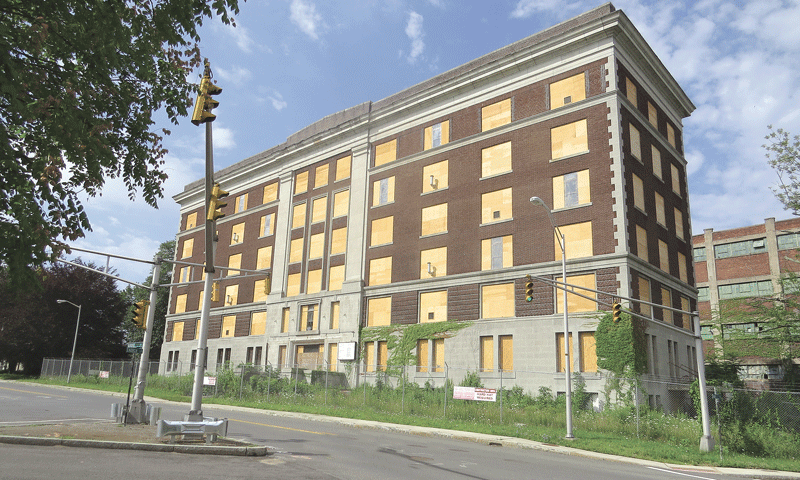
the former Uniroyal facility

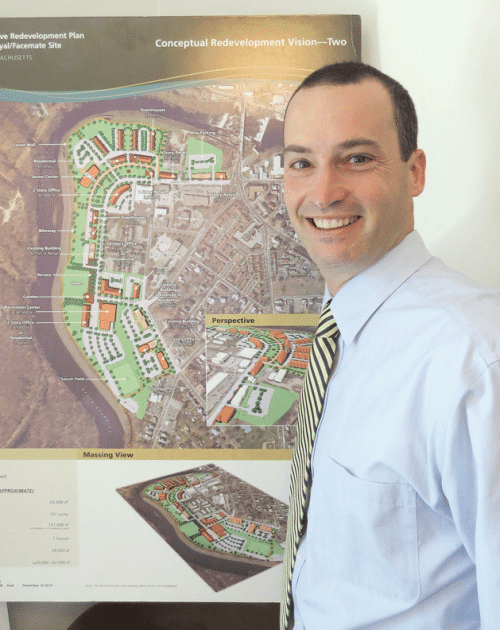
Mike Vedovelli says redevelopment of the former Uniroyal facility has been a challenge in Chicopee for more than three decades, and it remains a top priority.

And that mission dovetails nicely with Vedovelli’s work with MOBD, where he worked with businesses large and small that were looking to come to Western Mass. — or remain here despite various challenges confronting them in their efforts to do so.

Thus, he intends to call on those experiences, as well as those in Westfield, where one of his primary duties was overseeing deployment of community development block grants, as he takes on his new position.

“This position was attractive because I’m from Springfield, I know this area, I’ve done this kind of work before in Westfield, and I’m versed with local issues and matters such as community development block grants,” he explained. “And my seven years with the state enables me to bring the connections and the business relationships that I have, both on the state side, but also with commercial lenders, commercial brokers, and national and local developers.”

For this issue, BusinessWest talked with Vedovelli about his new assignment, the many issues confronting Chicopee, and the unique perspective he brings to his latest career stop.

Arriving at the Crossroads

As MOBD’s Western Mass. liaison, Vedovelli had a large and diverse territory to cover — essentially everything from Worcester west.

Initially, he needed a GPS system to find some of the communities he was assigned to and businesses with growth issues that needed resolution. He said he eventually figured out the lay of the land, a phrase that, as he applied it, meant more than just geography.

“It was a terrific learning experience,” he said of his time with MOBD. “I learned a lot about the issues businesses are facing and what they need to reach their goals. Working with them to find ways to stay in Massachusetts and grow their ventures was very rewarding work.”

And in the course of doing it, he made a number of contacts on the local, regional, and state levels, and came to understand the value of public-private partnerships when it came to creating economic development opportunities.

When his time with the state abruptly ended, he put out some feelers, and got some phone calls and e-mails back. Some of the correspondences involved opportunities that might develop down the road, while others were more immediate and thus more intriguing.

And it was the chance to lead Chicopee’s various development initiatives that most appealed to him.

“This city is in an interesting place in its long history,” he explained. “It’s a Gateway city, and it’s facing the same issues that those other Gateway cities are facing — job creation, redeveloping old mill buildings, revitalizing once-vibrant downtowns — but it has some unique challenges as well.

“But this city has enormous potential,” he went on. “Look at a map and you’ll see that all the major highways run through it. This is truly the crossroads of the region.”

And the city has reached a crossroads in a figurative sense as well, he went on, adding that while there is some land for development — such as the Chicopee River Business Park on the border with Springfield — city officials need to ready more property for development, a reality that puts an exclamation point behind such efforts as the proposed new industrial park and efforts to repurpose the Uniroyal site.

While he has a great deal of learning still to do when it comes to Chicopee, its players, opportunities, and challenges — he’s spent considerable time in recent weeks meeting with business owners, chamber leaders, and elected officials — Vedovelli was already quite familiar with the city when he took over the large office in the space the city leases on Center Street.

Indeed, he had worked with several individual companies in his capacity at MOBD, and from those experiences came to appreciate that ‘crossroads’ quality the city possesses, something that made it very attractive to companies looking to locate — or relocate — within Western Mass.

Perhaps the best example is Menck Windows, the German manufacturer that settled on Champion Drive in Chicopee as home to its first U.S. operation.

“I had been working with the principals of that company for a while when they were trying to zero in on an area,” Vedovelli explained. “And Chicopee just hit all the right buttons.

“One of the key assets that the city has is Chicopee Industrial Light and the cost advantages they bring,” he went on while listing the many factors that went into Menck’s decision process. “Things like that are very attractive to private industry, and Chicopee has many assets like that — location, access to major highways, an inventory of desirable buildings in the industrial parks that businesses can move into, attractive commercial property tax rates compared to other cities in the area; it’s an attractive package.”

And it has appealed to other clients as well, he said, listing other companies he worked with, such as Lymtech Scientific, which landed on Westover Road, and Chemex, the coffee-maker manufacturer that relocated to the city from Pittsfield last year.

Selling Points

Meanwhile, Chicopee, Holyoke, and Westfield have long been part of the same consortium when it comes to federal housing funds, and the communities are in the same economic target area, he explained, adding that he has experience working with officials in all three cities.

“Long before the buzzword collaboration started getting tossed around back in the early 2000s, we were already collaborating with each other,” he explained.

Looking ahead, Vedovelli said his informal job description is to forge more of those collaborative efforts, and do more hard selling of all Chicopee’s many assets, but from a different office.

He said there are a number of economic development issues facing the city, none larger, more complex, or more historic (in every sense of that word) than the Uniroyal project.

The complex of buildings once dominated the area near the Chicopee River in the Chicopee Falls section of the city, and in many ways, it still does. Some of the factory buildings have been torn down, others are in the process of demolition, and still others, especially the administration building, are targeted for possible reuse.

Since Uniroyal announced it was closing the massive plant in 1980, the city has been involved in an ongoing saga involving everything from taking control of the property to clearing it of hazardous materials; from demolishing the various buildings to devising redevelopment plans; the site was even proposed as a possible site for a new Catholic high school (it was eventually rejected).

It’s been a complicated, frustrating, and very expensive process, said Vedovelli, adding that it is now in the critical phase where the city will attempt to address the question ‘what comes next?’

There are many possible answers, he told BusinessWest, noting that while the new Pope Francis High School is off the table (it will be built on the site of the old Cathedral High School in Springfield) most everything else still is.

That includes the possibility of senior housing or another form of residential development in the former Uniroyal administration building, which is still in good shape and fit for redevelopment.

“There’s a lot of moving parts with this initiative — it’s a work in progress,” he said, adding that a request for proposals will likely be issued for the administration building this summer, and other RFPs will follow for other parcels.

Another priority moving forward is downtown, said Vedovelli, noting that while Chicopee’s central business district is less defined — and was never as robust — as those in other communities, it has potential to become more of a destination.

“The Munich Haus has become a real draw, it brings people downtown,” he said of the German restaurant on Center Street. “We’re looking at attracting another restaurant so they can feed off one another. But overall, we need to look at the storefronts, determine what’s working and not working, and make the area more attractive.”

One possible key to progress in that area is creating more foot traffic through new housing developments, he went on, adding that while there has been little progress with regard to the massive Cabotville Industrial Park and reported efforts to convert some of its space into apartments or condos, there is more promising news on the vacant John R. Lyman mill off Front Street.

“There’s a developer who wants to place 50 to 70 live-work lofts there, which would be a really nice addition to the downtown.” said Vedovelli, adding that a larger population of people living in that area would create a need for additional service and hospitality-related businesses.

Progress Report

As 2015 got underway, Vedovelli could not have envisioned himself tapping a pen on an aerial photo of the Uniroyal plant five months later while discussing possible options for the site’s future. Nor would he have imagined himself mulling strategies for bringing that desired foot traffic to downtown Chicopee.

But circumstances changed the picture in a hurry, and instead of driving across a four-county region hoping to spur economic development, he’s doing essentially the same job on a smaller, yet dynamic playing field.

It’s an abrupt change in the course of his career, one that has taken him to a crossroad — literally. It is not a challenge he sought, necessarily, but one he fully embraces.


George O’Brien can be reached at [email protected]

Opinion

A Character Test for Springfield

Looking at the matter objectively, this would seem like a strange time to be voicing anything approaching concern when it comes to the city of Springfield.

Indeed, in many ways, things haven’t been this good in the City of Homes for decades — maybe a century when you get right down to it. There’s excitement and energy in the air, a can-do feeling that comes naturally when the city is chosen as home for a half-billion-dollar casino, a Chinese company has selected it as the place where it wants to build subway cars, Union Station is poised to end nearly a half-century of frustrating dormancy, and there is greater entrepreneurial juice than at any time since Smith and Wesson started manufacturing guns here.

But momentum is a curious thing. One moment, an individual or baseball team — or city — can have it in abundance, and the next minute, all or most of it can be lost.

Springfield could very well be at one of those types of crossroads.

The casino project is, in fact, underway, although you really couldn’t tell that by walking though the South End. Things are off to a very slow start, and already MGM is asking the gaming commission to move up the opening date from 2017 to 2018.

The stated reason is the pending I-91 viaduct reconstruction project (we’ll get to that in a minute), but there is already concern that there might be more to this — much more. Connecticut has passed legislation allowing the owners of Foxwoods and Mohegan Sun to explore opening a jointly run casino near the border with Massachusetts. Suddenly, 2018 looks like a best-case scenario for MGM’s facility, and people are starting to wonder out loud just how successful a Springfield casino will be with an already-established competitor operating 10 to 15 miles away.

And then, there’s that I-91 project. It’s been looming for about 18 months now, and work is set to begin (lane-closing schedules are starting to dominate local news broadcasts).

Residents, business owners, and people who work downtown are wary about this project, and they should be. Anyone who lived through — or tried to do business through — the Memorial Bridge reconstruction project and/or the seemingly simple process of reversing the ramps on I-91 to make the new Basketball Hall of Fame more accessible, can readily attest that these projects rarely proceed on schedule and are far more of an inconvenience than even the worst skeptics can anticipate.

Already, service businesses such as law, accounting, and financial services firms, as well as retail operations, are beginning to wonder if people will even try to get to downtown Springfield to do business with them.

All this is enough to potentially zap some of that all-too-critical momentum from the city at a time when Springfield seems to be rebounding in a very big way.

This may sound over-simplistic, but the city, its elected officials, and its business leaders, can’t let that happen. How? That’s the $64,000 question, and it will take some imagination to answer it.

One piece to the puzzle could be a well-constructed pubic relations campaign, one focused on how far the city has come, and how far it can go once the casino opens, construction crews have replaced the last piece of deteriorating viaduct, and some of the startups and next-stage companies taking root in Springfield hit their stride.

A PR blitz won’t make it any easier to get into downtown Springfield once the heavy work on I-91 begins, but it might keep the focus where it belongs — on the city’s long-term future — and not on traffic jams or the slow pace of progress in the construction of MGM Springfield.

As we said at the top, this might seem like a strange time to be even a little worried about Springfield, but that’s a sentiment many people are expressing.

The challenge moving forward is not to allow worry to stifle momentum.

Daily News

EAST LONGMEADOW — MARX Events recently launched its Dream Wedding Giveaway in partnership with wedding vendors from across the region. The free wedding, with a value of $35,000, will be awarded to a U.S. veteran or active service member who is nominated and selected from a panel of predetermined judges.

The contest began on July 1, the deadline for submission is Aug. 10, and the top three finalists will be announced on Aug. 14. The winner will be chosen the week of Aug. 24.

The Dream Wedding includes a free wedding venue and catering for 50 participants. The ceremony will take place on Thursday, Oct. 22 at Chez Josef in Agawam.

“This is our way to give back to the men and women of our military who give so much for us,” said Mark Ashe, president of MARX Events.

Vendor partners include Chez Josef (venue and catering for 50 people), the Delaney House (rehearsal dinner and VIP party), Dani Fine Photography (full wedding photography), Tanya Costigan Events (wedding-planning services), Myers Video Production (videography), Robert Charles Photography (engagement session), In White (wedding gown), Hannoush Jewelers (wedding bands), CJC Event Lighting (event lighting), Formal Affairs (tuxedos for groom and groomsmen), the Passionate Pear Catering Co. (wedding cupcake tier), Langones Florist (centerpieces and bouquets), Crystal Vazquez Makeup (makeup for bride and three bridesmaids), Deluxe Limo (limo services), Love Always, Jacquelyn (invitations), the Bridal Corner (bridesmaids’ dresses), and Your Wedding Ceremony By Mikki Viereck (officiate).

Along with producing the event and the contest, MARX Entertainment will provide full entertainment services inclusive of DJ and photo booth for the evening of the wedding. Chikmedia, a local marketing and PR firm, has partnered to co-produce the event. Western Mass News, Kix 100.9, and BusinessWest have joined as media partners.

Smith & Wesson, Springfield-based leader in firearm manufacturing and design, is a key sponsor for this year’s giveaway. “At Smith & Wesson, we hold a special place for those who defend our freedom,” said Anne Bruce, vice president of Human Resources. “We are excited to work with so many talented local businesses as a part of what will certainly be a wonderful event. As we work through the planning process, we look forward to learning more about our local veterans and their personal stories.”

For more information, contact Meghan Rothschild at (413) 218-4994 or [email protected].

Community Spotlight Features
East Longmeadow Touts Residential, Business Gains

By GERRY FITZGERALD

Paul Federici

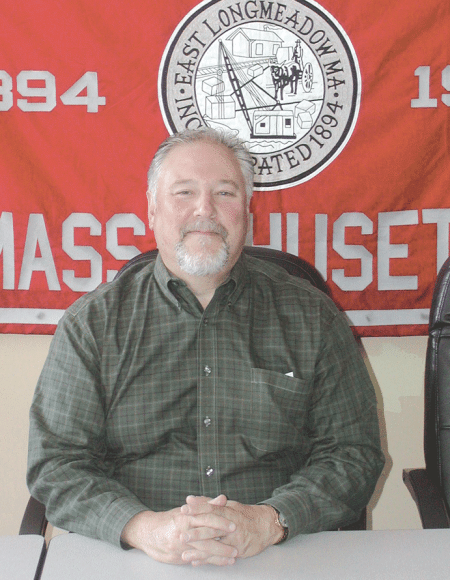
Paul Federici says East Longmeadow’s strong balance, in the form of both residential and commercial growth, has made it an attractive location for businesses.

When asked to list the most pressing problems in his community, Paul Federici, chairman of the East Longmeadow Board of Selectmen, paused, then grimaced slightly as he tried to think of matters that might fit that description.

Finally, he shrugged and almost apologetically offered, “well, we’ve got two issues on the horizon that we’re going to have to deal with, but I’m not sure I’d say either one is a problem.”

And if they are problems, they could well be placed in that category of ‘good problem to have,’ he told BusinessWest, referring to a recognized need to build a new high school and an ongoing study to determine if this town of 16,000 people should change its form of government, from the present three-member Board of Selectmen to a mayor, town manager, or other format.

“As much as I enjoy being a selectman, we’ve got a $50 million corporation here, and it may be time for full-time professional management in town,” said Federici, adding that the two issues he mentioned are tied directly to the town’s strong recent pattern of growth, both commercial and residential.

And there are many reasons for both — everything from available, buildable land to an attractive location near several affluent communities; from an alluring commercial tax rate to a host of quality-of-life amenities (everything from the attractive parks to the region’s largest Fourth of July parade) — that collectively make this an attractive place to live, work, and launch a business.

“The town continues to grow,” said Federici. “Homes are selling in all price ranges, from the smaller starter homes on up to the high-end luxury homes in the developments off Prospect Street, which is a very positive sign, and the business climate here has probably never been better.”

East Longmeadow businessman John Maybury, president of Maybury Material Handling, located in the Denslow Road Industrial Park since 1981, echoes Federici’s comments about East Longmeadow’s commercial economy.

“The industrial park is just about completely filled,” said Maybury, “although there still may be a couple of buildable parcels left. The Deer Park industrial area just south of Denslow is also growing nicely, and all of these companies are doing very well. And, of course, we still have the big ones, Hasbro and Lenox, which has invested $60 million in the plant since its purchase by Newell Rubbermaid in 2003.”

Federici pointed to recent newcomers to town as great examples of the positive business climate of East Longmeadow. He listed the Arbors Day Care, WhiteStone Marketing Group and Go Graphix, a new self-storage facility, Toner Plastics, All Hose Inc., and the recently opened, $15 million Philip H. Ryan Health Science Center of Bay Path University on Denslow Road.

Bay Path’s first physician-assistant class to use the new building graduated in May. “It’s great to have Bay Path University in town,” said Federici. “The new building is fabulous, inside and out, and we’re proud to have it in East Longmeadow.”

That facility is one of many recent success stories recorded in town, and, for this latest installment of its Community Spotlight series, BusinessWest chronicles many others while speculating on what might come next.

In Good Company

Asked to pinpoint the core reason why East Longmeadow is thriving financially — the town’s bond rating is at its highest point ever — and has become an attractive landing spot for families and businesses alike, both Federici and Maybury repeatedly used the word ‘balance.’

“It’s the great balance we have between the commercial, retail, and residential sectors that makes East Longmeadow unique,” noted Maybury. “We’ve got some huge industrial companies, and big employers, in Hasbro and Lenox, along with a great mix of large and small commercial firms in the industrial parks, several thriving retail areas, and a growing residential market. That’s a great mix.”

Federici concurred. “That balance is why we have a strong tax base and reasonable taxes, good infrastructure, and good schools,” he told BusinessWest. “It’s why East Longmeadow is a great town for families.”

And for businesses as well, he added, noting that growth has come in virtually all sectors of the economy, from manufacturing to education.

That extends to the retail sector as well, said restaurateur Bill Collins, who, with his business partner, Michael Sakey, opened the Center Square Grill in May 2014.

According to Collins, the restaurant has far exceeded its first-year projections. “Knock on wood, of course,” he said with a grin, “but business has been great, better than we’d hoped for.”

He is quick to attribute much of the restaurant’s success to the centralized location of the town between Wilbraham, Hampden, Springfield, Longmeadow, and Somers, Conn.

“We draw our customers from a five- to 10-mile radius that cuts through five surrounding towns plus all of East Longmeadow,” he explained. “If you look at a map, the center of East Longmeadow is just a fabulous location for retail businesses, and all of the stores, restaurants, and services in the area are doing very well.”

He also credits the town government for creating a positive business environment. “When were first looking to open at Center Square, the Planning Department, selectmen, and the licensing people could not have been more helpful or more welcoming,” said Collins. “They bent over backward to help us get up and running as soon as possible, and that means a lot to a new business.”

Bring up the 100-pound gorilla that every Western Mass. restaurant is at least wary of, the MGM Springfield casino coming to downtown Springfield in a few years, and Collins says he is aware but not overly concerned. “We’re quickly creating many, many loyal, return customers,” says Collins. “We don’t see these people suddenly heading into downtown Springfield to eat at a casino.”

Federici has a similar reaction to the impact of MGM Springfield. “We’ll see,” he said with a shrug. “I don’t think the casino will have a huge impact on us. Two different impact studies, one by the Pioneer Valley Planning Commission and the other by the casino people, both predicted an increase in traffic in the town of about 6%. For a few hours on certain days, we may feel that, but I don’t think it’s going to be anything dramatic.”

Returning to those aforementioned ‘good problems to have,’ Federici said the School Department has concluded that the nearly 60-year-old high school, built when the town was roughly half its current size, is clearly in need of replacement.

“The selectmen gave the approval to the School Committee to go to the state for funding,” he said. “Last year, the project didn’t make the list of 100 or so building projects approved for partial state reimbursement, but it will be submitted again this year.”

Even if approved for partial state reimbursement, the new high school will be a costly burden for the town. “The estimated cost for a new high school is $80 million,” said Federici, “and some significant part of that is going to have to be picked up by the town. But that will be a problem we’ll overcome, and then, we’ll have a beautiful new high school for our children.”

The Bottom Line

As for a possible change in the town’s governmental structure, Federici chose to discuss it with humor, in the form of a story the town clerk once told some visitors to Town Hall.

“He told them, ‘East Longmeadow has a three-member Board of Selectmen and an open town meeting … the pilgrims had a three-member Board of Selectmen and an open town meeting.’ So maybe it is time to make a change.”

If one does come, it will be a clear sign — yet another one in a series of signs, actually — that this community is in a growth mode, and that the trend will only continue and accelerate.

East Longmeadow at a glance

Year Incorporated: 1894
Population: 15,720 (2010)
Area: 13.0 square miles
County: Hampden
Residential Tax Rate: $20.72
Commercial Tax Rate: $20.72
Median Household Income: $62,680
Family Household Income: $70,571
Type of Government: Open Town Meeting, Board of Selectmen
Largest Employers: Hasbro, Lenox Tools, East Longmeadow Skilled Nursing, Redstone, Plastipak
* Latest information available

Opinion
IT Talent Crunch Echoes a Bigger Problem

Delcie Bean IV was one of the panelists at a forum on entrepreneurship hosted recently by the Mass. Small Business Development Center Network. He devoted most all of his roughly five minutes of mic time to what he called a “crisis” intruding upon his industry — the IT sector.

It involves a distinct and disturbing shortage of talent, noted Bean, founder and president of Paragus Strategic IT, who used mostly the future tense to talk about the matter, but hinted strongly that the problem is, in many respects, already here.

He and his colleagues in the IT sphere dissect the matter in greater detail for a story in this issue of BusinessWest (page 36). They talk about how the talent crunch is real and stifling growth opportunities; about how this development seems to make little sense, because there are jobs with good wages available and few individuals seemingly willing to position themselves to take advantage; about how they plunder good workers from each other, often with higher wages as the requisite carrot, a tactic with short-term benefits but long-term consequences; and about how they’re not sure when, or even if, the situation will improve appreciably.

They were all talking about IT, but in many respects, they were speaking about the economy as a whole. Indeed, you could easily substitute software designers and computer-related business owners with manufacturers, nursing-home operators, and even players in the hospitality industry, and the conversation would be essentially the same.

The question remains: where will the workers come from?

As they talked about the matter, those in the IT sector speculated that some might be scared away by the seemingly complex nature of the work in that realm and the notion that they’re not smart enough to thrive in it, when the opposite is generally true.

Joel Mollison, president of Northeast IT in West Springfield, hinted strongly at this when he said, “the tech field can be a bit overwhelming if you’re not absolutely sure that’s where you want to be.”

Others noted how the so-called Millennials tend to follow their passions, not just a paycheck, and wonder out loud how to get people passionate about a career still described with terms such as ‘Geek Squad.’

The answer comes with creating some passion, or something approaching it, and here again, we’re not just talking about IT. This also holds for the manufacturing sector, which suffers not only from lingering misperceptions about what this field is like, but the real fear that jobs in that sector will be sent offshore or to a lower-cost state.

Creating passion for designing software or troubleshooting IT problems will not be easy, but this is the direction our society and our economy are heading in, and talented individuals will be needed to keep things humming.

What’s needed are more programs that will encourage young people — and when we say young, we mean elementary-school age — that such careers are attractive, potentially lucrative, and attainable. At the same time, we need to emphasize quality-of-life issues here in Western Mass., and thus convince those who do have the requisite aptitude for this work that they don’t have to leave the area to launch a career.

Bean went so far as to express the hope that a television show, CSI: Cyber, might fuel interest in this sector in the same way that The Big Bang Theory has for physics.

We hope his optimism is warranted, but industry leaders know it will take more than TV shows to ensure that not only the IT field, but all sectors of the economy will have enough of that most precious commodity moving forward: talent.

That’s because the crisis is already here.

Banking and Financial Services Sections
130 Years Later, PeoplesBank Still Reflects the Character of Its First President

Doug Bowen

Doug Bowen says PeoplesBank shares many of its values with its first president, William Skinner.

William Skinner, Holyoke’s most noted industrialist and philanthropist, was known as an innovator, someone who cared about his employees, and a business owner who was deeply involved in his community. Roughly 130 years after he became the first president of what was then Peoples Savings Bank, the institution still reflects Skinner’s values.

Sarah Skinner Kilborne says that, as a child, she heard little about her great-great-grandfather, William Skinner, founder of the Skinner & Sons Silk Manufacturing Co. and Holyoke’s most noted industrialist and philanthropist.

Actually, she heard far more about the company, which had been sold before she was born, than she did about the man, which created first her curiosity and later a fascination concerning his life and times.

Indeed, she never knew about Skinner’s youth in London, where he grew up in abject poverty and vowed to escape from that life. (Actually, no one knew about those years, because Skinner rarely, if ever, talked about them to anyone). And she also heard very little about perhaps the most important chapter in his life — how he rebounded remarkably from a catastrophic flood in 1874 that destroyed his mill in Skinnerville (near Williamsburg) and built anew in Holyoke.

Intrigued by what she came to know about that latter episode, Kilborne became determined to find out more. Years of intense research resulted in her book American Phoenix, published in 2012, which chronicles how Skinner turned that disaster into destiny.

Sarah Skinner Kilborne

Sarah Skinner Kilborne says she was at first curious about her great-great-grandfather, and then fascinated by his life and times.

“I never heard much about William Skinner the man,” she told BusinessWest. “I knew who he was, I knew he was the founder of the family company, I knew he was my great-great-grandfather. But I knew little about him.”

In the course of researching and writing her book, Kilborne said she learned a great deal, about not just what he did, but how and why. Among other things, she said, he was:

• An innovator. “He took advantage of the most modern machinery, kept an eye on the market, looked for opportunities, saw the big picture, and always looked ahead,” she said;
• A philanthropist who was involved with, among other things, the creation of Holyoke Hospital, the Holyoke Public Library, and the city’s YMCA;
• A business owner who cared deeply about his employees. “If he saw a hard-working employee really struggling and just not able to get ahead, he might step in and pay off all of that man’s debts to help him get a fresh start”; and
• As implied earlier, someone who didn’t glance back. “He was an immigrant who had suffered a terrible childhood, and he’d done everything he could to escape it,” Kilborne said. “He didn’t look back to the past; he cared about the future.”

And those are the very same qualities that still define PeoplesBank, which Skinner served as its first president when it was known as Peoples Savings Bank, said Doug Bowen, who now has that same title and has been with the institution for 40 of its 130 years.

As the bank celebrates its milestone anniversary this year, it is not marking that number or another figure ($2 billion in assets, which the institution just passed), as much as it is highlighting those traits it still has in common with Skinner, he explained.

“If William Skinner were to look at the bank today, he would see that, in some ways, nothing has changed, and in another way, everything has changed,” said Bowen, now in his 10th year at the helm of the Holyoke-based institution.

Certainly, the figures on the ledger sheet have changed. The bank, which opened on St. Patrick’s Day in 1885 and tallied two accounts totaling $65 that day, had $74,000 in deposits its first year of operation, and now has more than $1.5 billion. The number of branches has grown as well; there are now 17.

But the bank is still known for those qualities Skinner instilled in it, including philanthropy — it’s owned a spot on the Boston Business Journal’s list of the state’s largest corporate charitable donors for several years now; innovation, which comes in many forms, from the considerably ‘green’ quality of its recently opened branches to the so-called ‘customer innovation lab’ now taking shape on the fifth floor of the bank’s headquarters building; and as a thoughtful employer — the bank has earned status on the Boston Globe’s list of the best places to work in the Commonwealth the past two years.

“We’re still a mutual bank — our charter is basically the same as it was in 1885,” said Bowen. “And our pillars, our values of innovation, community support, the environment, and employee engagement … there are a lot of parallels and lot of crossovers between where we are today and where we were 130 years ago.”

For this issue and its focus on banking and financial services, BusinessWest details how PeoplesBank can draw some straight lines between the values of its industrious first president and the way the institution conducts business today.


Fabric of the Community

Kilborne said the flood of 1874, caused by the breach of a poorly designed and hastily constructed reservoir dam, was one of the worst industrial disasters of the 19th century and in the history of this region — 139 people were killed by the wall of water crashing down the Pioneer Valley, and the disaster ultimately led to the passage of landmark dam-safety laws.

Still, few in this region know much, if anything, about the catastrophe.

“That was a story that seemed to be lost,” she said, adding that some of her research for American Phoenix benefited greatly from In the Shadow of the Dam, a book about the disaster written by Elizabeth Sharpe and published in 2007.

Lost also were many of the details of how Skinner, whose mill was completed destroyed by the flood — “there was nothing of it left to photograph,” said Kilborne — would go on to build one of the largest silk-manufacturing companies in the world in a then-evolving Holyoke, a unique city specifically designed for industry.

“William Skinner’s story takes the flood’s story to another level,” she said. “This is a personal story in the midst of the flood, and it really addresses this issue of how you rebuild your life after you lose everything.

“I was so taken with his story, and I personally wanted to know how he did it,” she went on. “I was gripped by this sense of loss that he sustained and that everyone else in the Valley sustained at the time of the flood, and how it was that William Skinner’s saga turned into a legendary success story; what set him apart?”

To make a compelling story short, what set him apart were those aforementioned attributes, she said, listing perseverance, innovation, philanthropy, and a burning desire to forge a far better life for his family than the one he endured in the Spitalfields section of East London.

Kilborne mentions the creation of Peoples Savings Bank and Skinner’s appointment as its first president in her book, but doesn’t go into any great detail about the institution or his tour of duty with it.

But she speculated that the values that dominated other aspects of his life and career were undoubtedly evident there as well.

“As the president of the bank, he would have been very community-oriented and conscious of the burden of debt; when he helped found Holyoke Hospital, he was proud of the fact that the hospital was delivered free of debt to the community,” she explained. “When he moved to Holyoke, his reputation was that of being a great financier and manager; within two years, the city wanted him to run for mayor.

“As a banker and as a businessman, he was known to be a man of wise conservatism,” she went on. “But he was also willing to take risks, because he knew the value of investing, he knew the value of innovation, he knew the value of looking to the future. He knew you couldn’t stay stuck in the past and do the same thing over and over again, because if you do, you’re going to be left behind.”

Roughly 114 years after Skinner relinquished the helm at the bank, those same attitudes, if you will, permeate the bank’s operating philosophy, said Bowen, referring specifically to Skinner’s focus on innovation and looking toward to the future and the opportunities and challenges it will bring.

This is reflected in some of the accolades the bank — and Bowen himself — have received in recent years. That list includes everything from placement on the ‘largest corporate charitable donors’ and ‘top places to work’ compilations to recognition for Bowen as one of the Boston Globe’s Top 100 Innovators in 2011, and as one of BusinessWest’s first Difference Makers for essentially creating the environment in which all of the above could happen.

Material Evidence

Before elaborating on how PeoplesBank operates now as it did 130 years ago, Bowen noted that it does so in a banking environment that has changed dramatically since 1885 and is, in many ways, more challenging.

Now, as then, the playing field is crowded with competitors, although the composition of the field is different, with many national and regional players. Meanwhile, due to plummeting interest rates, margins are now razor-thin, making it difficult for banks of all sizes to be profitable.

The customer innovation center now under construction at PeoplesBank

The customer innovation center now under construction at PeoplesBank is one of the many ways in which the bank reflects William Skinner’s innovative character.

In this environment, institutions are looking for any edge they can get and are united in their quest to increase volume and attain greater market share to compensate for those slimmer margins. Locally, most have banks have done this through acquisition and territorial expansion, and PeoplesBank is no exception (at least with the latter), having executed an aggressive pattern of expansion, including the opening of three branches in Springfield and others in Westfield, West Springfield, and Northampton.

This widening of the footprint (along with inflation, of course) helps explain why it took the bank 120 years to reach $1 billion in assets and only a decade to double that total.

But there’s more to the growth equation than physical expansion, said Bowen, adding that today’s institutions, especially community banks like PeoplesBank, can gain an edge with more personalized service than that delivered by the regional and super-regional players. They can also do so by using technology to improve that service.

And this brings Bowen back, once again, to William Skinner, who embraced those ideals.

“When he built in Holyoke, he bought the latest and most innovative machinery that there was for silk making,” Bowen explained. “Skinner silk became the standard for the American silk and satin industry, and a lot of it was because of his investment in those innovative machines.”

In many ways, PeoplesBank is following that example, he went on, citing everything from design of the bank’s LEED-certified branches to the development of apps for smart phones.

“One of the things that was interesting about the buildings Skinner built was that they had monitor roofs, which had a row of ventilating windows above it that could be opened, which pulled all the hot air up and through the building, something that was unique at that time,” Bowen explained. “Also, the skylights let good light into the manufacturing area, and according to the book, his factories were considered the healthiest in the Northeast, and this mirrors some of the things we’re doing.”

As an example, he mentioned branches like the one recently constructed in Northampton, which focuses on providing natural light and fresh air to make the work environment more conducive to productivity and employee satisfaction.

As another example, Bowen cited the customer innovation lab taking shape at the bank’s headquarters building, a step taken to address the incredible pace of technological advances and the ways in which they can be harnessed to better serve customers.

The bank recorded more than 2 million online banking sessions in 2014, more than double the number only three years ago, said Bowen, adding that this pace of growth will only accelerate in the years to come as customers demand even greater convenience. The lab was formed, by and large, to create such convenience.

“The lab is all about tomorrow and addressing those customer demands for convenience in the future,” he said. “We’re using technology to accelerate innovation and enhance the customer experience.

“The lab won’t have any beakers or Bunsen burners, but it will have space where people can brainstorm about that customer experience and places where we can have focus groups and more broadly speak to the different delivery channels,” he went on. “We want to focus on all the different ways you can deliver products, services, and information to our customers.”

The bank already has what are known as ‘tech titans,’ he said, individuals who will analyze new technology, such as the Apple watch, for example, and evaluate what that technology could potentially mean for customers. The new innovation lab will take such efforts to a higher level, with the focus squarely on the customer.

“We’re constantly, constantly, constantly trying to look at things through the customers’ eyes,” he explained. “We’re trying to create as good an experience, and as seamless an experience, as we can.”

Meanwhile, the bank is also working to apply that phrase ‘good experience’ to employees as well. And placement on the ‘best places to work’ list three years in a row — the only firm in this region to make that compilation — is evidence that it is succeeding in that mission.

“This is based an anonymous survey of employees and gauges what they think of you — we’re not sending in all the nice things we do; it’s strictly the employees,” he said of the process of determining who makes the list. “And when you consider all the businesses in Boston that we’re up against, it’s quite an honor.

“We’re a bank — we don’t have beer on tap or a ping-pong table,” he continued, referring to some of the amenities offered by IT companies. “We can make it fun to work here, but there are constraints we are under.”

Back to the Future

Bowen told BusinessWest that the bank has little, if anything, planned to mark its 130th anniversary.

“We’re more focused on the future and on the things that will make a difference for the community and our employees right now,” he said, adding that, in this respect, the bank is once again emulating its first president and his values.

Skinner’s outlook and his manner of doing business are perhaps best captured by these comments from his great-great-granddaughter.

“He was very broad-minded; he was capable of seeing the large relations of things,” she said. “He had a very expansive way of looking at the world, probably because he grew up in England and moved to America. He saw things globally, and he saw things in a very large frame. He looked at the whole picture, while doing everything he could to build on the present.”

Bowen didn’t say as much, but he strongly implied that continuing to conduct business as Skinner would is certainly the best way the bank can celebrate its milestone.


George O’Brien can be reached at [email protected]

Daily News

MCLEAN, Va. — U.S. manufacturing technology orders totaled $336.98 million in May, according to the Assoc. for Manufacturing Technology (AMT). This total, as reported by companies participating in the U.S. Manufacturing Technology Orders (USMTO) program, was down 13.2% from April’s $388.43 million and down 6.2% when compared with the total of $359.28 million reported for May 2014.

With a year-to-date total of $1,798.34 million, 2015 was down 7.9% when compared with 2014. These numbers and all data in the report are based on the totals of actual data reported by companies participating in the USMTO program.

“In large part, the decline in manufacturing technology orders is due to smaller manufacturers feeling a sense of economic uncertainty and therefore hesitant to make any kind of capital investment,” said AMT President Douglas Woods. “In addition, the energy industry has curbed its spending, accounting for about half of the year-to-date decline in orders, and aerospace did not perform as well as expected in the first quarter. We expect the downturn to ease thanks to strong performance in the automotive and medical industries, with industrial production and a stronger PMI also indicating resilience in manufacturing.”

The USMTO report, compiled by the trade association representing the production and distribution of manufacturing technology, provides regional and national U.S. orders data of domestic and imported machine tools and related equipment. Analysis of manufacturing technology orders provides a reliable leading economic indicator as manufacturing industries invest in capital metal-working equipment to increase capacity and improve productivity.

Briefcase Departments

State Unemployment Drops to 4.6% in May
BOSTON — The state’s total unemployment rate dropped to 4.6% in May, a 0.1% decrease from the previous month, the Executive Office of Labor and Workforce Development announced Thursday. The unemployment rate is the lowest it has been in the state since December 2007. The new preliminary job estimates from the Bureau of Labor Statistics indicate Massachusetts gained 7,400 jobs in May, marking the ninth consecutive month of jobs gains. Over the year, the state’s seasonally adjusted unemployment rate fell 1.2% from 5.8% in May 2014. The unemployment rate in Massachusetts peaked in September 2009 at 8.8%. The May state unemployment rate is 0.9% lower than the national rate of 5.5% reported by the Bureau of Labor Statistics. The Bureau of Labor Statistics also revised upward its April job figure, reporting the state gained 11,200 jobs, instead of 10,100, which the agency reported last month. “We have had solid job growth in the last three months, with approximately 30,000 jobs added in the state,” Labor and Workforce Development Secretary Ronald Walker II said. “As more jobs are created, more people are coming back into the labor market.” Over the month, jobs were up 7,400, with a private-sector gain of 7,100. Since May 2014, jobs grew by 70,600, with 59,300 private-sector job gains. Sectors that gained jobs over the month include construction, which added 3,500 jobs; retail trade, 1,500 jobs; and wholesale trade, 1,500 jobs. Transportation and warehousing lost 500 jobs. Manufacturing gained 600 jobs, and financial activities gained 700 jobs. Education and health services and professional, scientific, and business services had the largest job gains over the year.

Women’s Fund Announces $240,000 in Grants
EASTHAMPTON — The Women’s Fund of Western Massachusetts (WFWM) announced a total of $240,000 in new grant commitments in Berkshire, Franklin, Hampden, and Hampshire counties. Working within focus areas of educational access and success, economic justice, and safety and freedom from violence, partners in these communities will each receive $60,000 over three years to deploy innovative programs that will help shift the landscape for women and girls. Grantees include Berkshire County’s Flying Cloud Institute and ROPE/Women of Color Giving Circle for their Berkshire Collaborative for GIRLS in STEM project; Franklin County’s Greenfield Community College, Montague Catholic Social Ministries, New England Learning Center for Women in Transition, and Seeds of Solidarity for their Women’s GARDEN Project Collaborative effort; Hampden County’s Neighbor to Neighbor and Voices from Inside for their Voice Activated project; and Hampshire County’s MotherWoman, UMass Amherst, and Hampshire College for their Firm Foundation: Policy Change for Mothers project. “We had an extremely competitive applicant pool,” said Elizabeth Barajas-Román, Women’s Fund CEO. “The grants committee made difficult choices based on projects with meaningful collaborations, clear and attainable impact on the community, and on proposals that balanced our portfolio of funded projects already in the field.” The new 2015 grantees join exiting Women’s Fund grant partners funded through 2017: Berkshire United Way for a coalition effort titled Face the Facts Teen Pregnancy Prevention Coalition; the Prison Birth Project in Hampden County, which will continue its social- and reproductive-justice efforts for incarcerated and post-incarcerated mothers; and, in Hampshire County, the Treehouse Foundation’s project, Re-envisioning Foster Care Together. “Collectively, these grantees will help leverage the WFWM’s impact on the lives of women and girls in Western Massachusetts,” Barajas-Román said. “The WFWM will also continue to convene skill-building sessions and support the programming of organizations that work on issues that impact women and girls.” In addition to the financial award, WFWM will invest an additional $20,000 into the partnership by giving each organization the opportunity to nominate its staff, constituents, or board members as participants of the WFWM’s Leadership Institute for Political and Public Impact (LIPPI), a program that has equipped 200 women from across the four western counties to become civic leaders in their communities; impact policy on the local, state, and national levels; and seek and retain elected positions. The WFWM is a public foundation that invests in the lives of local women and girls through strategic grant making and leadership development.
 
Tree-planting Program Expands to Chicopee
CHICOPEE — At a tree-planting ceremony at Fredericks Park in Revere, state Energy and Environmental Affairs Secretary Matthew Beaton announced an initiative to expand the Greening the Gateway Cities Program (GGCP) to include the cities of Chicopee and Revere. The program, which targets the Commonwealth’s 26 gateway cities, is designed to utilize tree plantings as a way to reduce energy use in urban neighborhoods and lower heating and cooling costs for residents and businesses. “By extending the Greening the Gateway Cities Program to include the communities of Revere and Chicopee, our administration continues its commitment to work closely with cities and towns across the Commonwealth to provide resources that benefit municipalities and improve the state’s environment,” said Lt. Gov. Karyn Polito. Added Beaton, “increased tree canopy will provide our communities with the first, and best, line of defense from excessive urban summer heat and the biting winds of winter. In addition to benefiting the Commonwealth in terms of energy efficiency, the Greening the Gateway Cities Program will provide the residents of Revere and Chicopee with cleaner air and water, reduced noise pollution, and the beatification of homes and neighborhoods within their community.” With a defined goal of a 10% increase in urban tree canopy in selected neighborhoods within gateway cities, the increase in tree cover is expected to reduce heating and cooling costs in the selected areas by approximately 10%, with an average homeowner saving approximately $230 a year, once the trees reach maturity. Over their lifespan, the trees are expected to lead to $400 million in energy savings for residents and businesses. Aimed at improving the often-low tree canopy found in the Commonwealth’s gateway cities due to their urban character and history of manufacturing, the program’s benefits are not isolated to energy efficiency. By planting trees, communities will see a reduction in stormwater runoff, higher air quality, an increase in property values and tax receipts, and a safer, healthier environment for residents. Under the program, the Department of Conservation and Recreation (DCR) is spearheading tree-planting efforts and is in the process of planting up to a combined 15,000 trees in Holyoke, Chelsea, and Fall River. Agency staff, working in partnership with local municipalities and grass-roots organizations, have developed a successful approach to planting the number of trees required to have an energy impact, focusing on high-density urban neighborhoods, where planting on average 10 trees per acre will provide benefits to 15 to 25 households. Planting this number of trees will increase canopy by an estimated 1% in eight years, and 10% in 30 years. “The Greening the Gateway Cities Program is not only an important tool in our overall urban forestry plan, but will be an engine for job creation and energy sustainability in these communities,” said DCR Commissioner Carol Sanchez. “DCR is proud to continue the long-standing partnership between the Bureau of Forestry and the cities of Chicopee, Revere, Chelsea, Holyoke, and Fall River. With the help of local community and grass-roots organizations, GGCP will pay dividends in these high-density urban communities where green space is needed most.” To implement the expansion of the Greening the Gateway Cities Program, the DCR will partner with the city governments of Chicopee and Revere and community groups to plant approximately 100 trees this June, and thousands more to come. The program will also benefit the cities’ local economies by creating jobs for residents. DCR will hire local workers for tree-planting teams in each city, and every tree will be purchased from Massachusetts nurseries. “The City of Chicopee greatly appreciates the Commonwealth’s commitment to our city and its neighborhoods by providing us with a number of replacement trees,” said Chicopee Mayor Richard Kos.

State Offices Partner on Financial Education
BOSTON — The state Division of Banks, in partnership with the state Treasurer’s Office, announced the creation of the Financial Education Innovation Fund, which will provide an opportunity for high schools to develop or expand financial-education fairs. These events, most commonly known as Credit for Life fairs, are designed to be a fun and effective way for students to learn about making real-world financial decisions when it comes to saving, spending, and budgeting based on career choices and lifestyle decisions. “I feel strongly that students need to be exposed to financial literacy earlier and more often. We need to teach these skills so they can be used every day, so individuals can make sound financial decisions about their future,” said Gov. Charlie Baker. “I am pleased that the Division of Banks is joining the Treasurer’s Office in promoting future Credit for Life fairs.” Massachusetts school districts are not required to teach financial education, and these courses are taught on a voluntary basis. Approximately 50 high schools in the Commonwealth currently offer money-management events to their students. Initially, $50,000 will be allocated to the Innovation Fund from the Division of Banks to support a pilot financial-education program. High schools throughout the Commonwealth that may not otherwise be able to sponsor this type of program may apply for funding to conduct a Credit for Life fair. This financial-education initiative will be funded with monies received by the division in settlement of alleged unlawful lending practices. For the first year, up to 15 schools will be selected to receive funding from the Innovation Fund. Schools must submit a completed application to the Treasurer’s Office by June 30 for consideration of an Innovation Fund award of up to $5,000. Award grantees will be notified in August, and financial-education events will be conducted by Dec. 31. “The Division’s goal of consumer protection goes beyond the implementation and enforcement of laws and regulations,” said John Chapman, undersecretary of Consumer Affairs and Business Regulation. “It is also our responsibility to provide consumers of all ages the proper information to make wise financial decisions.” The application for the Innovation Fund initiative is available at www.mass.gov/treasury/financial-education/innovation-fund. The Division of Banks is an agency within the Office of Consumer Affairs and Business Regulation that oversees state-chartered banks and credit unions, check sellers, debt collectors, foreign transmittal agencies, mortgage lenders, and brokers. For more information, visit www.mass.gov/dob or call (800) 495-2265.

Daily News

SPRINGFIELD — Thomas O’Connor Jr., chairman and CEO of Mohawk, will join U.S. Rep. Richard Neal to discuss the future of the fine-paper industry during the New England Paper Cluster’s annual conference today in Springfield.

The New England Paper Cluster, a regional, nonprofit trade association founded by the Economic Development Council of Western Massachusetts, is comprised of New England-based businesses — including paper mills, packaging companies, and printing companies — that work to promote the regional paper industry.

Mohawk is currently completing renovations on an envelope-converting facility in South Hadley. The company is investing approximately $2 million to retrofit the facility and expects to hire up to 40 full-time employees to produce more than 500 million envelopes annually.

“Insightful, forward-thinking companies such as Mohawk are supporting the local paper economy by locating plants in New England,” said Ben Markens, principal of the Markens Group and president of the Paperboard Packaging Council. “This meeting will assist us in identifying ways we can encourage other paper-related firms to see value in moving to the region as well as share expertise and best practices so that existing companies may thrive.”

Added O’Connor, “The town of South Hadley has been extremely cooperative and supportive of our interest in opening a new envelope manufacturing and distribution facility. We selected our new facility in South Hadley because the layout of the building is ideal for our manufacturing needs, the site required minimal construction prior to becoming operational, and there is an abundant pool of highly skilled envelope workers in Western Massachusetts.”

Neal, a member of the Congressional Paper Caucus, will present an update from Washington about recent legislative efforts to promote the paper industry on the federal level.

Daily News

BOSTON — The state’s total unemployment rate dropped to 4.6% in May, a 0.1% decrease from the previous month, the Executive Office of Labor and Workforce Development announced Thursday. The unemployment rate is the lowest it has been in the state since December 2007.

The new preliminary job estimates from the Bureau of Labor Statistics indicate Massachusetts gained 7,400 jobs in May, marking the ninth consecutive month of jobs gains.

Over the year, the state’s seasonally adjusted unemployment rate fell 1.2% from 5.8% in May 2014. The unemployment rate in Massachusetts peaked in September 2009 at 8.8%. The May state unemployment rate is 0.9% lower than the national rate of 5.5% reported by the Bureau of Labor Statistics.

The Bureau of Labor Statistics also revised upward its April job figure, reporting the state gained 11,200 jobs, instead of 10,100, which the agency reported last month.

“We have had solid job growth in the last three months, with approximately 30,000 jobs added in the state,” Labor and Workforce Development Secretary Ronald Walker II said. “As more jobs are created, more people are coming back into the labor market.”

Over the month, jobs were up 7,400, with a private-sector gain of 7,100. Since May 2014, jobs grew by 70,600, with 59,300 private-sector job gains. Sectors that gained jobs over the month include construction, which added 3,500 jobs; retail trade, 1,500 jobs; and wholesale trade, 1,500 jobs. Transportation and warehousing lost 500 jobs. Manufacturing gained 600 jobs, and financial activities gained 700 jobs.

Education and health services and professional, scientific, and business services had the largest job gains over the year.

Daily News

HOLYOKE — The ninth annual 40 Under Forty award program, staged by BusinessWest, will be held at the Log Cabin Banquet & Meeting House tonight. The sold-out event honors the region’s most accomplished and civic-minded professionals under age 40, and this year’s class was profiled in the April 20 issue.

This year’s winners represent virtually every sector of the economy — from financial services to manufacturing; retail to healthcare; technology to nonprofit management; education to law. They also show the seemingly innumerable ways people can give back to the community.

This year’s event features a new wrinkle — the Continued Excellence Award, presented to the previous 40 Under Forty honoree who has most impressively built upon their track record of excellence. The finalists are Delcie Bean, Kamari Collins, Jeff Fialky, Cinda Jones, and Kristin Leutz, and the winner will be announced at tonight’s gala.

The 40 Under Forty program and gala are sponsored this year by Northwestern Mutual (presenting sponsor), Paragus Strategic IT (presenting sponsor), Fathers & Sons, the Isenberg School of Management at UMass Amherst, Moriarty & Primack, and United Bank.

Features
AIM Action Plan Strives to Make the Commonwealth More Competitive

AIM coverChris Geehern says he didn’t contrive the phrase (or this particular application of it) — attribution belongs to a Baystate business owner requesting anonymity — but he certainly puts it to work liberally as he talks about the Commonwealth’s innumerable business regulations and the manner in which they are enforced.

“He called it the ‘bad-waiter syndrome,’” Geehern, executive vice president for the Associated Industries of Massachusetts (AIM), said of the individual in question. “He said doing business in Massachusetts is like going to a restaurant where you really like the food, the atmosphere is terrific, and the dessert and drinks are just what you wanted. But the whole experience gets ruined because the waiter is rude and doesn’t really care about whether you like the place or not.

“What we’ve heard repeatedly from employers is that it’s less about the regulations themselves,” he continued, “and much more about the way they are interpreted and enforced — which drives companies crazy.”

Bringing attention to this bad-waiter syndrome and actually doing something about it are two of the many stated goals in a document titled “Blueprint for the Next Century,” the drafting of which is one of several ways — and perhaps the most meaningful — AIM has chosen to mark its 100th anniversary this year.

Composed following extensive polling of the organization’s 4,500-odd members, the blueprint identifies four major public-policy issues, or areas of concern, that members say must be addressed if the state is to remain competitive in an increasingly global economy.

In addition to the need to establish what the report’s authors call a “world-class state regulatory system … that meets the highest standards of efficiency, predictability, transparency, and responsiveness,” these are:

• “Workforce,” meaning a system for educating and training workers and providing them with the skills necessary for companies to succeed;
• “A uniformly strong business climate.” Roughly translated, this involves taking the stunning success enjoyed by the Greater Boston region and expanding it to the rest of the Commonwealth, while also providing opportunity to all business sectors; and
• “Health insurance and energy costs” and the need to lower them to make the state more competitive.

AIM President and CEO Rick Lord, seen here with Gov. Charlie Baker

AIM President and CEO Rick Lord, seen here with Gov. Charlie Baker, says workforce issues are by far the number-one concern among the state’s employers.

None of these areas of concern would in any way be considered news, especially to anyone doing business in Western Mass., said AIM President Rick Lord, and collectively they will defy quick or easy resolution.

“None of these have easy solutions,” he noted. “But we hope to have a second release of this blueprint at the end of this year that will include recommendations that will hopefully move us forward.”

To illustrate these concerns, or challenges, and the threats they pose to the future of the state’s economy, AIM presents the example of a Western Mass. company, Northampton-based MachineMetrics.

Led by Eric Fogg, Bill Bither, and Jacob Lauzier, the venture has created a cloud software solution that improves the productivity of manufacturing facilities by collecting, analyzing, and visualizing data from machines, parts, and people. In many ways, its future is dependent on the health of the state’s manufacturing sector, its ability to attract and retain qualified help, and its proficiency with navigating the state’s costly and highly regulated business environment.

“MachineMetrics is the kind of company that may ultimately determine the ability of Masachusetts to build upon an economy that in many ways remains a paradox — an international center of technology, innovation, medical research, financial services, and higher learning near Greater Boston, but a more traditional, amorphous economy just outside of Route 128,” write the report’s authors. “Fogg, Bither, Lauzier, and innovators like them hold the unique promise of joining the ‘eds and meds’ economy of the 617 area code with existing industries struggling to create jobs for residents in the rest of the state.

“It is a promise that will be played out against a vibrant and unforgiving global economy in which investment, resources, jobs, people, and capital flow at blinding speed to the most competitive environments,” they go on. “States, regions, and nations no longer have the luxury of taking their job bases for granted — failure to nurture the business climate not only impedes the growth of existing companies, but also leads to a silent and corrosive flow of job expansions to other locations that provide employers with the best opportunities for success.”

For this issue, BusinessWest takes an indepth look at “Blueprint for the Next Century” and the challenges and opportunities it identifies for the Bay State moving forward.

History Lessons

Lord said AIM traces its roots to 1915, perhaps the apex of the state’s manufacturing sector, when 27 manufacturers came together in the belief that their interests would be better served by a statewide organization charged with advocating on their behalf.

“They felt they needed an organization that would be their voice in the State House,” said Lord, adding that several of those original 27 members were from the western part of the state, and four — Crane Paper in Dalton, Package Machinery in Holyoke, Hampden Papers in Holyoke, and GE, which had several locations, including a huge complex in Pittsfield — are still paying dues a century later.

AIM remained an association of manufacturers until 1989, when membership was opened to all business sectors and the entity became an employers’ association. Today, there are more than 4,500 members, with roughly 30% of them in the manufacturing sector.

AIM will mark its first 100 years of service in a number of ways. The celebration began, unofficially, with the organization’s annual meeting in May, and will climax with a huge gala slated for Nov. 16 (close to the actual anniversary date) at the Boston Convention Center.

Between now and then, there were will be ceremonies in different regions of the state, staged to mark the centennial but also to honor companies and individuals that have made major contributions to the state’s business community and the cities and towns in which they are based.

One such ceremony will take place in Springfield, in the Lyman & Merrie Wood Museum of Springfield History, on June 15. The honorees will be MassMutual, Yankee Candle founder and Kringle Candle co-founder Michael Kittredge, and the Hampden County Sheriff’s Department’s vocational training program.

Meanwhile, in Dalton, on June 11, AIM honored Onyx Specialty Papers, Berkshire Health Systems, and SABIC Innovative Plastics.

But the most significant aspect of the centennial celebration is “Blueprint for the Next Century,” which attempts to not only identify the challenges facing business owners of all sizes, but also take on the much more difficult task of pinpointing potential solutions.

And this brings Lord and Geehern back to MachineMetrics, which, as they said, embodies both the promise of the future and the considerable obstacles to achieving that promise.

To put things in perspective, the report’s authors presented MachineMetrics’ case and asked a number of poignant questions that apply to most ventures doing business in the Bay State or looking to do so:

• Will the advanced-manufacturing companies to which they want to sell their idea survive in the relentlessly high-cost, high-regulation environment in Massachusetts?
• Will MachineMetrics find the skilled, educated, and motivated people it needs to grow and to develop new iterations of the company’s software?
• Will young companies located in Western Mass. and other areas outside the Cambridge/Boston innovation beltway develop the critical mass needed to extend opportunity throughout the state?
• Will the MachineMetrics platform make manufacturers so efficient that they will be able to increase business without creating new jobs?
• Will government regulators encourage the growth of companies like MachineMetrics, or will they set up bureaucratic impediments like the one that recently convinced a neighboring software company in Amherst to move to Texas?
• Finally, will the government research money that built Massachusetts into a world-class center of higher education, medical science, biotechnology, and defense technology continue to flow or slow to a trickle?

How the state — meaning its business leaders and especially its elected leaders — answer these and other questions will go a long way to determining how the next century, or at least the next few decades, will unfold, Lord said.

Help Wanted

There is probably no issue where the answers are more important than the broad issue of workforce, he went on, adding that virtually every business sector, and every individual business, will be challenged in the years to come with the task of attracting and retaining individuals with the skills needed for that business to succeed.

“This was by far the number-one concern among Massachusetts employers,” said Lord. “We heard it in all geographic areas of the state, from Boston to Western Mass., and we heard it in all industries — particularly, and quite loudly, in manufacturing.

“That’s because the age of the workforce is high — 50% of the sector’s workforce will retire in the next 10 years,” he went on. “So they’re facing a crisis in filling jobs that will become available.”

But the reality is that the word ‘crisis’ is not restricted to that industry, he told BusinessWest, adding that solutions to it lie mostly in the ability of the business community and the state’s education system — meaning preschool to college — to work together to ensure that businesses will have qualified workers.

Specific recommendations include, among other things, taking better advantage of the opportunities provided by the Workforce Innovation and Opportunity Act of 2014; elevating the role of vocational education; renewed emphasis on the fundamentals, such as math, science, and communications skills; and expanding performance-based funding for the state’s community colleges and public four-year institutions.

Beyond workforce issues, though, there are other issues challenging business sectors and individual ventures, said Lord and Geehern, adding that one of the most critical is the matter of creating a uniformly competitive structure across all industries, geographic regions, and populations.

Elaborating, Lord said that what the state has done in recent years amounts to picking winners and losers. And this phrase applies to both geography and business sectors.

“We’ve heard from a lot of companies that they believe we need to promote economic opportunity uniformly across the state,” he explained. “The Greater Boston area survived the recent economic downturn pretty well, but other areas of the state suffered more significantly, so economic opportunity is unevenly spread throughout Massachusetts. In addition, over time, the state has adopted policies or incentives that favor certain industries over others. The sense is that economic opportunity ought to be more evenly distributed.”

Geehern agreed, noting that state government, in general, has a tendency to chase whatever the ‘sexy’ industry might be at the moment. In the ’80s, it was personal computers, and at the start of this century, it was Internet-based ventures, he went on, adding that, in recent years, it’s been biotech, a focus punctuated by former Gov. Deval Patrick’s commitment of $1 billion to that sector, an expenditure that primarily benefits the eastern part of the state.

“What we’re trying to say with this [blueprint] is that you can’t just chase after the cool industry, whatever that might be at the moment,” he continued. “You have to think about what industries match up with the skills that are available in Massachusetts and do your best to encourage business growth throughout — meaning throughout all industries and throughout all regions.”

As with the workforce initiative, however, stating the problem and finding solutions to it are two completely different things, they acknowledged.

The blueprint recommends a number of steps, but especially increased focus on the state’s so-called gateway cities, older manufacturing centers, including several in Western Mass., such as Springfield, Holyoke, Pittsfield, and Westfield.

“A lot of this inequity exists in our older, urban areas,” said Lord. “There has been some focus on the gateway cities, but I think there’s more that can be done there; I think the Baker administration will try to do some creative things.”

By Any Measure

Another major issue for the state moving forward is both the number of regulations on the books and the manner in which they are enforced, said Geehern, who drew upon the example of that aforementioned software company in Amherst — the one compelled to relocate to Texas — to get his point across.

“During their first few years in operation, companies usually lose money, and this one was no exception,” he explained. “And the Department of Revenue required them to file their return electronically. That’s fine, but the DOR would not let this company use any of the typical, commercially available online platforms to submit those returns.

“Instead, they had to go out and buy this specialized piece of software that I believe cost about $2,500,” he went on. “Things like this prompted this company — which was a medical software company run by an M.D., so it’s exactly the kind of company that’s in the wheelhouse of Western Mass. — to move to Texas. And when the founder sells in five or 10 years for lots and lots of money, all those capital gains are going to Texas, rather than Massachusetts, not to mention all those jobs.”

Such stories are hardly isolated incidents, said Geehern and Lord, adding that they are a key element in the prevalence of that bad-waiter syndrome described earlier.

“There’s a sense that Massachusetts is just a tough place to do business because of the multitude of government regulations that impact companies in all sorts of ways,” said Lord, adding that, by AIM’s count, there are roughly 2,200 of these regulations, and they are often not reviewed in anything approaching a systematic fashion.

Which is why business leaders were encouraged by the Baker administration’s imposition of a 90-day moratorium on new regulations (since extended) as well as a comprehensive review of all existing regulations announced in April.

“All agencies are in the process of looking at the regulations that their agency has promulgated, and they have to justify whether they should be kept, amended, or repealed,” said Lord. “And we’re soliciting input from our members to help in this process.”

The desired result, he said, are regulations and enforcement policies that protect society, but don’t punish businesses.

But while companies must cope with a highly regulated environment, they must also deal with high costs, especially when it comes to energy and health insurance, said Lord, adding that, as with the other public-policy initiatives, these do not constitute a recent phenomenon.

But they are becoming more of a factor, he said, adding that the Commonwealth now boasts (if that’s the right term) the second-highest per-capita healthcare costs in the nation (15% higher than the national average) and the third-highest electric rates.

“And these put us at a competitive disadvantage to lower-cost places, both in the United States and around the world,” said Lord, adding that relief from these costs will not come easily.

Steps toward progress outlined in the report include, for healthcare, everything from maintaining the current definition of ‘full-time employee’ — the state’s benchmark is 35 hours, while federal reforms put the number at 30 — to repealing the medical-device tax under federal health reform.

As for energy costs, the report recommends steps such as new pipelines to transport natural gas into the Commonwealth and reorganization of the Mass. Department of Public Utilities.

Getting a Tip

Ridding Massachusetts of the ‘bad-waiter syndrome’ is not an assignment for the faint of heart. Such perceptions about the Commonwealth and its general attitude toward business have existed for most all of the time AIM has been in existence.

Real progress is the goal, and AIM is striving to achieve some by not only stating the problems, but eventually providing a road map for finding improvement.

And if that destination can be reached, then this century-old organization will really have something to celebrate.

George O’Brien can be reached at [email protected]

Community Spotlight Features
South Hadley Falls Rebound Gathers Momentum

Michael Sullivan says the newly opened Texon Mill Park in

Michael Sullivan says the newly opened Texon Mill Park in South Hadley Falls features a walking trail with beautiful views.

The village known as South Hadley Falls was the center of life and commerce in the town of South Hadley for more than a century. But over the past 60 years, major employers downsized or moved, and as buildings and lots were left vacant and underutilized, the village slowly lost its vitality.

But ‘the Falls’ is undergoing a revitalization, one that is a central feature of the community’s master plan. And efforts by town officials to realize a vision outlined in a report titled “The Rise of the Falls” are coming to fruition.

“When we first started down this path, we wanted to draw attention to South Hadley and the Falls,” said Town Administrator Michael Sullivan. “We are at the point where we are seeing some results, but talks with developers have pointed out other needs and opportunities, so the plan is evolving and changing.”

Indeed, officials are taking a holistic approach that includes a variety of measures. For example, several weeks ago, the South Hadley Redevelopment Authority, established last year, unveiled concepts aimed at changing the traffic pattern at the intersection of Main and Bridge streets and Main and Lamb streets. The SHRA would like to see roundabouts created, which Sullivan says are often referred to as “traffic-calming devices,” because they slow down traffic and improve pedestrian safety, while allowing vehicles to flow in an orderly manner.

In addition, the Redevelopment Authority is evaluating the use of several properties that are highly visible to drivers who enter South Hadley Falls from Holyoke via the Vietnam Veterans Memorial Bridge.

“Two are vacant, and two are occupied by businesses, but that may not be their highest and best use; there might be suitable and available space for them to move into elsewhere in South Hadley,” Sullivan said, adding that this would have to be negotiated, but one site contains an auto-repair shop that is an eyesore due to distressed vehicles sitting outside.

“We want to use these properties to make a statement. First impressions count, and they are on adjoining lots that encompass 7.3 acres,” the town administrator told BusinessWest, as he talked about the importance of how people view the Falls.

Another part of the redevelopment plan that plays into the way the area is viewed is abating vacant and blighted buildings, and combined efforts by the Planning Board, selectmen, and Redevelopment Authority to eliminate the problem have yielded some success.

Sullivan said the town was successful in its bid to get Mohawk Paper to open a new, 120,000-square-foot envelope manufacturing and distribution facility in the Falls in the former James River Graphics building, which had been vacant for more than 10 years. South Hadley competed against Chicopee for the business, but Mohawk chose the Falls and invested $2.5 million to retrofit the building. “They opened May 15, added 35 jobs, and told us they plan to add another 35 next year,” he said.

In addition, Presstek consolidated the manufacturing side of its New York and New Hampshire plants and expanded its business in South Hadley via a $2 million upgrade of machinery and improvements. “They also added 25 employees,” Sullivan said.

Expanding Horizons

These investments, coupled with the growth of other businesses, led town officials to realize they need more housing and transportation options if they expect to attract new residents to South Hadley Falls.

“We need to redouble our efforts to provide workforce housing,” Sullivan said, explaining that the hope is that new hires in South Hadley or the environs will want to move to the village.

Progress in that arena is already taking place. Via the tax-title process, the town took ownership of a home on 8 Graves St. that was in deplorable condition, and is hoping to auction it off at the end of the month.

South Hadley officials also worked with the Attorney General’s office to get the owner of an abandoned home on 10 Canal St. to sell it. They were successful, and it was purchased, renovated, then resold to a family that is now living there.

“We’re using a variety of tools to try to improve housing and are really positioning South Hadley for the new millennium,” Sullivan said.

The town’s efforts have been aided by developer Nicholay Dipon, who plans to construct three new buildings that will contain 12 condominiums on an empty lot owned by the town situated across the street from the new, $7.7 million South Hadley Public library on 2 Canal St., which opened in August.

The selectmen have also approved Dipon’s plans to convert the decommissioned library building on 27 Bardwell St. into six market-rate apartments, and Sullivan said all of these units will be steps away from the newly opened, $12 million Texon Mill Park, which features a 3.4-mile looped walking trail with breathtaking views of the Connecticut River and the Holyoke Electric Dam.

In addition, South Hadley applied for a 40R designation from the state, which would allow the town to substantially increase its supply of housing and decrease its cost by expanding zoning for dense housing. Sullivan said officials expect to find out if their bid was successful in the next few months, adding that, if South Hadley receives the designation, it will give the town access to grants and low-interest loans to meet the goal.

“But we’re trying to give thoughtful consideration as to where we would put any new housing,” he told BusinessWest, explaining that the town recently received a $15,000 Planning Assistance Toward Housing Grant, which will be matched by $21,000 from town coffers to determine how to improve the available housing stock and increase density while keeping the Falls safe from crime.

Access to recreation is important to young professionals, and the town appropriated $30,000 to have the Pioneer Valley Planning Commission determine the best way to establish a pedestrian/bicycle path that would connect the Village Commons to the Falls.

Sullivan said the path is necessary because the housing market has changed dramatically over the last decade, and graduate students and young professionals are looking to rent apartments of 900 square feet or less in walkable neighborhoods where they can recreate as well as live and work.

“They can climb the Mount Holyoke Range at one end of town and canoe or kayak on the river at the other end,” he said. “But young people today don’t want to put a bike rack on their car. They are very active and will want a bike path, so we’re trying to find a way to tie in the amenities we have and offer diverse recreational opportunities, which include things such as golf.”

Public transportation is another critical component that appeals to young professionals, and the new Holyoke rail platform slated to open in September is within a mile of the Falls.

Although residents will be able to bike or walk to the train when service begins, South Hadley officials realized they needed to offer alternate ways to get there. To that end, they worked closely with Pioneer Valley Transportation Authority and created a ‘Tiger Trolley,’ which will allow residents to use the bus to get to the high-speed train when service begins without having to use a vehicle, and travel to Big Y, the Village Commons, restaurants, and other attractions in town.

The trolley began operating in February and runs from the Mueller Bridge in Holyoke into the Falls, before looping through South Hadley to the Village Commons. In addition to regularly scheduled stops, there is a transit-access-point, or TAP, program, which allows people to get picked up at any one of eight additional stops if they call a half-hour in advance or use a smartphone app to schedule a stop. Five of the pickup points are in South Hadley, and three are in the Falls, and Sullivan noted that, once the high-speed rail service starts, it could eliminate the need for residents of the Falls to own a vehicle.

“The Tiger Trolley transportation system is the first of its kind in the state, and we plan to increase the number of stops as demand increases,” he said, explaining that people who are on the bus can ask the driver to drop them off at any of the access points.

Work in Progress

Town officials are doing all they can to make South Hadley Falls into a walkable, vibrant neighborhood, and will continue to expand their plan to realize that goal.

“We want to build on our strengths as we head into the future,” Sullivan said, “and although we are positioned well as a cradle-to-grave community, there is still room for improvement.”

South Hadley at a glance

Year Incorporated: 1775
Population: 17,961

Area: 18.4 square miles

County: Hampden

Residential Tax Rate: $19.38 to $20.26

Commercial Tax Rate: $19.38 to $20.26

Median Household Income: $46,678 (2010)

Family Household Income: $58,693 (2010)

Type of government: Town Meeting; Board of Selectmen
Largest Employers: Mount Holyoke College; Exopack Advanced Coatings; Big Y World Class Markets; Pioneer Valley Performing Arts School
* Latest information available

Daily News

CHICOPEE — At a tree-planting ceremony at Fredericks Park in Revere, state Energy and Environmental Affairs Secretary Matthew Beaton announced an initiative to expand the Greening the Gateway Cities Program (GGCP) to include the cities of Chicopee and Revere. The program, which targets the Commonwealth’s 26 gateway cities, is designed to utilize tree plantings as a way to reduce energy use in urban neighborhoods and lower heating and cooling costs for residents and businesses.

“By extending the Greening the Gateway Cities Program to include the communities of Revere and Chicopee, our administration continues its commitment to work closely with cities and towns across the Commonwealth to provide resources that benefit municipalities and improve the state’s environment,” said Lt. Gov. Karyn Polito.

Added Beaton, “increased tree canopy will provide our communities with the first, and best, line of defense from excessive urban summer heat and the biting winds of winter. In addition to benefiting the Commonwealth in terms of energy efficiency, the Greening the Gateway Cities Program will provide the residents of Revere and Chicopee with cleaner air and water, reduced noise pollution, and the beatification of homes and neighborhoods within their community.”

With a defined goal of a 10% increase in urban tree canopy in selected neighborhoods within gateway cities, the increase in tree cover is expected to reduce heating and cooling costs in the selected areas by approximately 10%, with an average homeowner saving approximately $230 a year, once the trees reach maturity. Over their lifespan, the trees are expected to lead to $400 million in energy savings for residents and businesses.

Aimed at improving the often-low tree canopy found in the Commonwealth’s gateway cities due to their urban character and history of manufacturing, the program’s benefits are not isolated to energy efficiency. By planting trees, communities will see a reduction in stormwater runoff, higher air quality, an increase in property values and tax receipts, and a safer, healthier environment for residents.

Under the program, the Department of Conservation and Recreation (DCR) is spearheading tree-planting efforts and is in the process of planting up to a combined 15,000 trees in Holyoke, Chelsea, and Fall River. Agency staff, working in partnership with local municipalities and grass-roots organizations, have developed a successful approach to planting the number of trees required to have an energy impact, focusing on high-density urban neighborhoods, where planting on average 10 trees per acre will provide benefits to 15 to 25 households. Planting this number of trees will increase canopy by an estimated 1% in eight years, and 10% in 30 years.

“The Greening the Gateway Cities Program is not only an important tool in our overall urban forestry plan, but will be an engine for job creation and energy sustainability in these communities,” said DCR Commissioner Carol Sanchez. “DCR is proud to continue the long-standing partnership between the Bureau of Forestry and the cities of Chicopee, Revere, Chelsea, Holyoke, and Fall River. With the help of local community and grass-roots organizations, GGCP will pay dividends in these high-density urban communities where green space is needed most.”

To implement the expansion of the Greening the Gateway Cities Program, the DCR will partner with the city governments of Chicopee and Revere and community groups to plant approximately 100 trees this June, and thousands more to come. The program will also benefit the cities’ local economies by creating jobs for residents. DCR will hire local workers for tree-planting teams in each city, and every tree will be purchased from Massachusetts nurseries.

“The City of Chicopee greatly appreciates the Commonwealth’s commitment to our city and its neighborhoods by providing us with a number of replacement trees,” said Chicopee Mayor Richard Kos. “As a gateway city, positive impact on neighborhoods and our community as a whole will be measured.”

Added state Sen. James Welch (D-West Springfield), “Greening the Gateway Cities is a great fit for Chicopee, and I am pleased that its residents will benefit not only from the energy-saving and environmental aspects of the program, but also from the beautification of their neighborhoods as the tree planting progresses.”

Daily News

DALTON — Associated Industries of Massachusetts (AIM) will celebrate its 100th anniversary on June 11 by honoring three people and organizations shaping the Berkshire County economy — manufacturing entrepreneur Patricia Begrowicz, Berkshire Health Systems, and SABIC Innovative Plastics.

The largest employer association in Massachusetts will present three Next Century awards during a centennial reception at the Crane Model Farm in Dalton from 4:30 to 6:30 p.m. AIM President and CEO Richard Lord will be joined by approximately 100 business and community leaders for the event. The Next Century awards recognize individuals, companies, and other organizations for seminal contributions to the Massachusetts economy and the well-being of its citizens.

“Pat Begrowicz, Berkshire Health Systems, and SABIC Innovative Plastics exemplify the transformative and lasting power of economic opportunity. Their vision and leadership have allowed Berkshire County residents to work, support families, and build lives for themselves while making this region a wonderful place to live,” Lord said.

Begrowicz gave new life to a 200-year-old business in 2009 when she and a business partner acquired the assets of MeadWestvaco’s specialty paper division and created Onyx Specialty Papers in South Lee. It was an extraordinary act of courage in the face of both the Great Recession and the ongoing cost and regulatory challenges of manufacturing products in Massachusetts. The action preserved the livelihoods of 152 manufacturing workers, scientists, and engineers who now supply materials for countertops, laminate floors, furniture, filters, graphic arts, and automotive transmissions.

Berkshire Health Systems is among a vanguard of community hospitals developing new models of patient care and financial sustainability in a turbulent healthcare market. The most dramatic example of the company’s innovative approach came when it stepped in and invested more than $6 million to provide medical services to people in Northern Berkshire County in the wake of the closing of North Adams Hospital. BHS has also invested in the recruitment of new physicians to meet the demand from patients who formerly sought treatment from doctors in private practice.

SABIC Innovative Plastics, a world leader in providing thermoplastic solutions, sets a unique standard for balancing success in the global marketplace with addressing the needs of its hometown. Founded with the acquisition of GE Plastics in 2007, SABIC employs 9,000 people in 35 countries making products for the automotive, electronics, transportation, building and construction, and healthcare industries. At the same time, SABIC employees volunteer their time in the Berkshires and elsewhere through programs that support community initiatives focused on education and environmental sustainability.

Community Spotlight Features
Three Rivers Looks to Get on the Right TRACK

Dave Golden was proudly showing off artwork created by Palmer public-school students in a room in the North Brookfield Savings Bank in Three Rivers.

The exhibit has been on display only several weeks, but it has already sparked interest, and other artists have approached Golden, the branch manager, to ask if they could exhibit their own work there. He says the art show is part of a collaborative effort to transform Three Rivers into a thriving center for the arts.

“I’ve partnered with organizations that are working together to bring arts to the village; we want to beautify Main Street and fill empty commercial spaces,” Golden said, adding that he is talking with a property owner about having a mural painted on a wall across the street from the bank.

Members of On the Right TRACK

Members of On the Right TRACK say the popularity of the Palmer Historical Cultural Center indicates that a creative-arts economy could help revitalize Three Rivers.

There are myriad examples of this movement and the momentum it is creating, including Palmer Historical and Cultural Center Inc., or PHCC, which stages performances in Harmony Hall that include concerts by international and national musicians; plays by local theater groups; lectures; and a variety of workshops.

Collectively, they show the potential of the creative arts as a revitalization tool. The PHCC, for example, is just a few steps from the bank and a number of vacant storefronts that could be made available to artists on the half-mile stretch of Main Street.

But a lot more will be needed to realize the vision, and the timing is critical.

“Main Street has fallen victim to the economic downturn, and modern shopping habits have made it difficult for small businesses in the village to survive,” said Alice Davey, director of Palmer’s Community Development Department. “We realize that if action is not taken immediately to reverse this trend, the commercial area of Three Rivers will be lost forever.”

Town Manager Charlie Blanchard concurs. “Three Rivers was once a thriving community, but that has changed over the years,” he said, explaining that the village came into existence when manufacturing plants were built on the riverbanks in the 1800s and early 1900s. 

These facilities led to the establishment of a bustling economy, and Main Street businesses cropped up and flourished around the factories until they began to downsize and eventually close. They included the Otis Factory building that was built in 1872 and operated until 1936, and the massive Tambrands plant that was built in 1872 and closed in 1997.

“But until that time, hundreds of employees went to local restaurants for lunch and shopped at the hardware store, grocery store, furniture store, and clothing store,” said Davey. “They patronized the local bank and had their hair done at the local barbershop or hairdresser.”

That ended when Tambrands left the area. “The customer base shrank, and slowly, one by one, businesses closed,” Davey told BusinessWest, adding that people began frequenting big-box stores and using the Internet to shop.

Today, the former Tambrands factory has become the Palmer Technology Center, and although it houses about 20 small businesses, Davey said they don’t come close to employing the hundreds of residents who once worked in the building.

In addition, 41% of the existing storefronts on Main Street are vacant, and the businesses that remain are struggling. “Some Main Street building owners are finding it impossible to find commercial tenants, so they have resorted to converting spaces into residential units in order to have sufficient income to cover their expenses,” she told BusinessWest, adding that fewer people go downtown, and last October, an anchor restaurant closed, due in part to its customers’ concerns for personal safety after dark caused by poor lighting in the area.

But officials hope that is about to change via a consortium called On the Right TRACK (the acronym stands for Three Rivers Arts Community Knowledge). Partners include the bank, Palmer officials, the PHCC, the Three Rivers Chamber of Commerce, the Palmer Redevelopment Authority, and the Quaboag Valley Community Development Corp.

Individual Efforts

These organizations had known for a long time that something was needed to revitalize Three Rivers, and efforts to that end began in earnest when the Quaboag Valley Community Development Corp., a nonprofit that assists businesses with training and other resources, held a number of public hearings to get input from residents as to whether they believed building upon the cultural and creative economy would attract visitors.

“There is a long history of pride in the cultural resources of Three Rivers that dates back many years,” said Executive Director Sheila Cuddy.

Daniel Slowick of the Palmer Redevelopment Authority agreed, and explained that the village contains many families of Polish and French descent who came to Three Rivers to work in the mills. “One of the hallmarks of the Polish culture was the establishment of Pulaski Park, which draws Polish fans from all over the country who come here every weekend from May to September to hear the bands,” he said, adding that the cultural heritage of the French and Polish has been kept alive.

Dave Golden

Dave Golden shows off some of the student artwork on display at North Brookfield Savings Bank.

Three Rivers’ first major arts venture was established in May 2012, when the PHCC purchased a former church building for $1 with the intent of preserving its historic character and using it as a place to stage performances that would appeal to a diverse group of people.

“We began holding programs in the fall of 2012, and since then we have rented out the space to outside groups, such as Monson Arts Council, who staged a play here,” said PHCC President Robert Haveles.

The nonprofit has been highly successful, and Haveles said it is sought out by national and international performers and has built an e-mail notification list of more than 1,100 people in the two and a half years since it opened.

Other agencies had also been working on revitalization efforts, and in January 2014, the Three Rivers Chamber of Commerce begun putting together a business program that will be launched this year.

“We will provide three months of free rent to new or relocating businesses that will be matched by the building owners. The new businesses will also be provided with a laundry list of professional services donated by members of the chamber, including printing, graphic design, and legal and accounting help,” said chamber spokesperson Renee Niedziela. So far, four landlords have agreed to participate, and the chamber hopes to sponsor two businesses this year.

At about the same time, the Palmer Redevelopment Authority made arrangements with Maple Tree Industrial Center to provide small businesses with free rent for a year, supplemented by a five-week business-planning course offered by the Quaboag Valley Community Development Corp.

But it took nine months before the two groups became aware they were developing similar programs independently.

“That all changed a few months ago,” Slowick said.

When Davey found out about the different efforts taking place, she applied for assistance from the Massachusetts Downtown Initiative, and received funding that will be used to conduct a market study.

Then, when the Mass. Cultural Council announced it was taking applications for the Adams Arts Program, which supports projects that revitalize communities through the creation of jobs in creative industries and engagement in cultural activities, Davey and Cuddy got together and decided it was an ideal opportunity for Three Rivers because of the success of PHCC and the fact that other communities have been successful in using the arts as an economic driver.

A partnership was formed among the Quaboag Valley Community Development Corp., the PHCC, the Three Rivers Chamber of Commerce, and the Palmer Redevelopment Authority, which led to the On the Right TRACK project.

It was submitted last month as part of the application for the Adams grant, and if the town receives the money, it will be used to establish a website and pay for marketing and other costs related to the project.

But interest has already been piqued, and attendance was high at public meetings held in April. “People are genuinely excited about using the arts as a revitalization tool,” Davey said.

Moving Forward

Niedziela says it’s amazing to have so many groups working together on a project that holds unlimited potential.

Slowick concurred, and added that the Palmer Redevelopment Authority has the ability to apply for grants from the Dept. of Housing and Community Development that could include money for an enhanced streetscape, which would complement the park that is within walking distance of Main Street. “Each group involved in this brings something different to the table, and the consortium is pulling it all together to make it happen,” he said.

Indeed, enthusiasm is running high.

“We’re really excited about bringing cultural opportunities to residents and visitors,” Cuddy said, explaining that her organization plans to work with landlords to help them view their properties in a new way.

Which will definitely help this effort to put Three Rivers on the right track.

Palmer at a glance

Year Incorporated: 1775
Population: 12,140 (2010)
Area: 32 square miles
County: Hampden
Tax Rate, residential and commercial: Palmer, $20.63; Three Rivers, $21.35; Bondsville, $21.44; Thorndike, $21.61
Median Household Income: $50,050
Family Household Income: $58,110
Type of government: Town Council
Largest Employers: Baystate Wing Hospital; Camp Ramah of New England; Big Y World Class Markets

* Latest information available

Insurance Sections
Insurance Is Personal — and Business, Too — at Moulton

By CLARK HOWELL

It has been exactly four years since tornadoes struck Western Mass. on June 1, 2011, an event that insurance agents remember well.

Cindy Moulton St. George (center), daughter Katie Gagner, and husband Roy St. George

Cindy Moulton St. George (center), daughter Katie Gagner, and husband Roy St. George represent the second and third generations of this family business.

Cynthia Moulton St. George, president of Moulton Insurance, recalls her employees climbing through downed trees and over debris to get to clients in the days following that unexpected disaster, which resulted in some $150 million in damages.

“We had gotten authority from our companies,” Moulton St. George said, “and they would refund our accounts. And we would just go and write checks … because people had nothing.”

She added that some people victimized by the twisters had everything “sucked right out of their house — if their house was even there.”

Katie Gagner, who manages the company’s Belchertown office — Moulton has additional offices in Palmer and Ware — added that “it was crazy” in those hectic first days of writing checks and consoling clients and residents after the disaster.

As a third-generation family business launched by Moulton St. George’s father in 1952 (Vice President Roy St. George is her husband, and Gagner is their daughter), they say they understand the needs of both families and businesses — a commitment put to the test by the tornadoes, but one in play every day.

“We are an advocate for our clients,” Moulton St. George said, adding that the image of agents sitting behind a desk is inaccurate, and that getting out into the community — though usually not scrambling over tree branches — is every bit as important as doing the paperwork of a claim.

Moulton St. George said it’s that personal connection to the community that sets independent agents apart from the large, national direct sellers of insurance.

For example, she went on, many auto service centers, and especially auto-body repair shops, won’t even do business with motorists who have direct-seller auto insurance. “They have signs right in the shops, many of them, that say, ‘if you have XYZ Insurance, don’t bother asking us to do your repairs.’”

Independent agencies like Moulton are different for many reasons, she said, but especially because they actively advocate for clients, particularly “when it comes to the claim, which is why you buy insurance.”

Setting Their Sites

When she and St. George sat down with BusinessWest, the company was both celebrating some recent successes and taking steps to further raise its profile.

Specifically, the agency had just received the Long Term Service Award from the Quaboag Hills Chamber of Commerce, and was preparing to launch a new, content-rich website.

The website — which will offer more information on business and commercial lines of insurance — is important, Moulton St. George said, because people don’t always associate the company with those areas of expertise, even after 63 years in business.

“Businesses may not look at Moulton Insurance as the go-to agency for commercial lines,” St. George said, but added that perceptions will change once people become aware of the extensive list of business and commercial products offered by their company.

However, he explained, auto, home, and life insurance will continue to play a vital role in the overall mix of products Moulton offers to residents of Massachusetts, Connecticut, New Hampshire, and Vermont.

A stronger web presence is important for an agency based in the Quaboag region that aims to reach across Western Mass. and beyond. St. George said the company probably could have better advertised its experience with commercial lines in the past, which is one reason the website is getting an overhaul.

“We can handle anything from a Main Street type business to a manufacturing facility,” as well as the fleet of vehicles associated with that company, he said, adding that Moulton represents more than 15 insurance carriers, both regional and national, to provide options should a situation require specialization.

St. George is equally proud of the employees representing those products. He noted that many agencies in Western Mass. have relatively low ratios of full-time licensed agents to total employees. In other words, an agency might have three licensed agents and a total number of 14 employees, meaning that the majority of employees can only handle administrative work, and not the actual work of determining the best insurance product for a given situation.

Of Moulton’s 16 employees, however, 14 are licensed agents, ranking in the top 20% of agencies in the region by ratio of agents to employees. Further, the agency boasts five certified insurance counselors (CICs), three in the commercial area alone.

The CIC designation, he explained, is a mark of distinction that represents a commitment to professional excellence and leadership within the industry. CICs are recognized as among the best and most knowledgeable insurance practitioners in the nation. The designation is earned by attending five intensive CIC Institutes: agency management, commercial casualty, commercial property, life and health, and personal lines. The formal training required to become a CIC includes 100 classroom hours and the successful completion of comprehensive exams in these five areas of expertise.

Moulton also boasts eight certified insurance service representatives (CISRs). These agents have gone through a program that offers additional learning opportunities in the commercial-lines and personal-lines arenas, as well as courses in health and risk management.

Earning Trust

However, St. George and Moulton St. George both stressed, knowledge of insurance products alone won’t make an agency a trusted entity within its region. That comes from years of dedication and service to a community.

“Our reputation is a big part of what we do,” Moulton St. George said, noting that her father, Charles Moulton, had the foresight in 1952 to start an insurance agency that strived to bring personal service and cost-effective insurance coverage to area customers. Since then, she said, the company’s agents have made deep connections to the community.

The new website, they say, is just one way of raising the agency’s profile and letting insurance shoppers know what Moulton can offer to protect against the storms of life and business. Sometimes literally.

Business Management Sections
Local Consultants Stress the Need for Succession Planning

George Miller was explaining how he came to be the owner and operator of the Magic Wings Butterfly Conservatory & Gardens in South Deerfield.

He said he would try to make a long story short, but acknowledged that this was probably not possible, and then proved his point.

Kevin, left, and Michael Vann

Kevin, left, and Michael Vann say too many business owners make the mistake of putting off key decisions on succession.

Indeed, it took some time to explain how Miller went from being the construction-company owner originally hired by a team of nine principals to build the unique facility in Deerfield, to eventually becoming one of two partners to create and open the tourist attraction in 1999, and then become sole owner a few years later.

In short, there was obviously a good deal of attrition concerning that original ownership team, Miller told BusinessWest, adding that some of them developed cold feet when they learned the actual price tag for this facility — “I gave them some numbers and then had to perform CPR on a few of them.” Others dropped out during what became a protracted battle with the town for the permits needed to make the concept reality.

“They thought the butterflies were going to eat Deerfield,” said Miller with a chuckle, adding that he was asked to come on as a partner, and eventually, he and the lone remaining original investor prevailed and opened the doors to the facility. But this was to be a short-lived partnership.

“We had different philosophies — I liked making money, and he liked spending it,” Miller said. So he bought him out and continued to operate Magic Wings as a family operation, with daughter Kathy Fiore and son George Jr. eventually taking leadership positions.

Fast-forward to early this year, and Miller decided it was time to move on from the enterprise. Actually, his wife provided much of the motivation.

“She said, ‘when is it going to be my turn?’” he told BusinessWest, a reference to how the venture had come to consume most of his time and attention and how she would like some of both.

So Magic Wings is now for sale, thus becoming one of myriad businesses across this region and around the country now dealing with the complex, often thorny issue of succession.

In many ways, Magic Wings is atypical, said Michael Vann, who, with his father, Kevin, manages the Vann Group, a Springfield-based consulting company now handling the sale, and a company that specializes in such transactions and the larger issue of succession.

Magic Wings is certainly unique — a butterfly conservatory is an unsual business and one that commands a distinct brand of passion from its owner, said Mike Vann, adding that, in this case, there were few, if any, options concerning succession; the next generation has no interest in taking over the venture, and a sale to other employees is not a possibility, leaving Miller to sell.

But in many ways, Magic Wings is typical in that it presents lessons in how succession is something owners must be thinking about and planning for; otherwise, the process can become more tedious and difficult.

It also demonstrates how there are many moving parts to succession planning and the many other issues — from estate planning to retirement savings — that older business owners face as they come to grips with deciding the fate of what many describe simply as “my baby.”

Kevin Vann likened the process to putting together a jigsaw puzzle with many pieces.

“I tell new clients to picture it this way: you take a puzzle box that has 500 pieces in it, and you dump them out on the table,” he explained. “And you try to fit all those pieces to the puzzle — their personal life, their business life, and all those offshoots like the retirement plan — together. And when we get started, we don’t know what it’s going to look like.”

These days, the Vanns are helping many business owners with their figurative jigsaw puzzles — Mike estimates that maybe 40% of the company’s revenues are succession-plan-related — and the numbers will only move higher as the Baby Boomer generation ages and business owners confront something they probably don’t want to confront — succession.

They have forged an alliance with the consulting firm ROCG, a multi-national corporation that specializes in business consulting and especially succession issues, and are thus adjusting their own business plans to acknowledge succession planning as a major growth opportunity.

For this issue and its focus on business management, BusinessWest looks at that opportunity and the many issues involved with succession planning.

Getting the Bugs Out

Mike Vann says the numbers tell the story when it comes to the issue of succession planning, why it’s important for business owners to start thinking and doing something about it, and also why it represents a strong growth opportunity for his company.

“Statistics from a study that MassMutual conducted show that 26% of businesses have done some kind of succession planing, and 74% haven’t done anything,” he explained, adding quickly that many, if not most, of the companies in the former category would be considered larger, more sophisticated enterprises, with dozens or hundreds of employees.

Thus, the number of small and mid-size businesses — the kind of ventures that dominate the Western Mass. economy — with a plan of any kind is much smaller, perhaps as low as 10%.

There are a number of factors contributing to those statistics, said the Vanns, including a reluctance to face the issue of succession (there are several reasons why), preoccupation with other matters, especially the day-to-day operations of the business in question, and the general attitude that there will be time to do succession planning ‘later.’

Magic Wings Butterfly Conservatory

Magic Wings Butterfly Conservatory in Deerfield is a unique business, but shares many of the common issues involved with succession.

While that’s true, later can sometimes be too late, said the consultants, adding that, ideally, business owners should be thinking about succession from the day they start their venture, but more realistically, they should give it strong consideration starting no later than 10 years before their projected exit from the stage.

Put another way, said Kevin Vann, business owners should put as much energy into how they’re going to exit their business as they do with how they’re going to start it.

Helping clients with these issues has become a steadily larger potion of the business portfolio for the Vanns, who also assist clients with sales of businesses (work that is often related to succession planning), mergers and acquisitions, organic growth opportunities, and strategic planning.

“We carry an inventory of six to a dozen succession-planning cases in different stages at any given time,” said Kevin. “It’s a part of our business that’s growing rapidly.”

When asked about those stages, he said there are several, starting with creation of an actual plan itself. This is followed by diligent updating of this document as time moves on and circumstances change. And then, there’s execution of the plan.

In many cases, companies will have a plan, but it will sit on a shelf neglected, said Mike, adding that this is a common mistake business owners make.

He cited the example of a local manufacturing company operated by two brothers who put a buy-sell agreement together.

“One of them’s 68, the other’s 63, and they have a buy-sell agreement in place,” he explained. “At that age, [the younger partner] doesn’t want to have to deal with buying out his brother, and there are no family members to take over. So it’s great that you have a buy-sell agreement, but it’s bad news if you’re the one who doesn’t die.”

Kevin agreed. “Succession and the many issues involved with it are a big problem today,” he told BusinessWest. “Over the past 20 years, the population has been conditioned to think, ‘let’s get our retirement planning done; let’s get our elder-care planning and our estate planning done.’ If you’re in business, succession planning has often been pushed off, and it’s catching a lot of people off guard. And we’re all living longer, so it’s easier to put it off.”

Flight Plans

Returning to the example of Magic Wings, Mike Vann said George Miller was not exactly caught off guard — he’s known for some time that neither of his children had an interest in taking over the business when he decided it was time.

But that time came up sooner than he might have anticipated several years ago, and he is now tasked with selling — with assistance from the Vanns — a business that requires a certain kind of owner, one with the requisite passion for its unique purpose, the ability to thrive in what is definitely a ‘people business,’ and one that can see past the many challenges to what Miller believes are solid opportunities.

And it may take some time to find such an investor.

For other business owners, there are different issues to be dealt with. And the list is even longer for those in family businesses, where succession-planning issues and estate-planning issues often collide at high speeds. In those cases, matters include which children will take over the business, on what terms, and with consideration to those children who are not involved in the business.

This crowded intersection of planning issues brings Kevin Vann back to that notion of a jigsaw puzzle. And what business owners need to keep in mind is that a succession is like a will in that it can’t sit on a shelf or in a safe as years and decades go by.

“Succession plans are constantly evolving because people are constantly evolving,” he said. “Someone gets sick, they suffer a health crisis, there’s a domestic problem, an issue with children, divorce … all these kinds of things.

“It’s not just about ‘gee, I’m getting old, I might die,’” he went on, referring to the thought pattern that often spurs one to action on a succession plan. “It’s about all those other things that are going on in your life all day long.”

And succession planning is not just about money — although that is a big part of it, he continued, adding that lifestyle issues often come into play.

“Many people want to stay active, stay productive — they don’t want to let go of their business,” said Kevin. “They have nowhere else to go, have no other vocations, no other hobbies. This is their baby, and they don’t want to let go. And they don’t want to be home with their spouse. These issues are all part of the planning process.”

Overall, succession plans are like snowflakes in that no two are alike, said Mike Vann. Therefore, each situation — meaning each business and the people involved with it — is unique. And there are many moving parts to each plan.

“There’s a big evaluation component to the business,” he noted while referencing where and how the process starts. “There’s a lot of analysis with the company and the people involved with it. We spend a lot of time coming to understand not only the business, but the personalities and the expectations of those individuals. You’re dealing with some very interesting nuances with business owners’ spouses; there’s a lot of discussion as to what’s next.

“There’s a recommendation component that addresses various options,” he went on. “You look at the estate plan that’s in place and what the individuals are doing from a financial-services component. It’s a holistic piece, and it needs to be, because, for many business owners, the company is the largest and most valuable asset they own.”

As for the execution phase, well, that comes complete with its own set of issues, said the Vanns, adding that it’s one thing to have a plan, but another thing altogether to carry it out — and the latter is often more difficult than the former.

“It’s not uncommon for us to get to a situation where we’ve completed a plan, there’s agreement on the plan, and no one wants to execute,” said Mike. “That’s because there are some hard conversations that have to come, probably some decisions on a family member that an individual doesn’t want to make, and many other things. It can get difficult.”

The Vann Group’s affiliation with ROCG will help in the process of helping clients navigate all that whitewater, said Kevin, adding that company has several offices in North America and provides access to resources and knowledge.

“If we want someone to look at an employee stock-ownership program, they have people who are experts on those,” he said. “The same with valuations and the many types of situations we encounter. There’s a wealth of knowledge and experience that we can tap into.”

Happy Landings

Looking ahead and at their own venture, the Vanns acknowledge that succession planning will soon become a huge source of business for a wide range of companies and individuals involved in consulting.

They believe they will have a leg up (or six legs up, in the case of Magic Wings) on all that competition thanks to their experience, affiliation with ROCG, and work putting together hundreds of those proverbial jigsaw puzzles.

Indeed, succession planning, like running a butterfly conservatory, involves hard work and, well, making sure things take off and land properly.

And they believe they have the perfect flight plan.


George O’Brien can be reached at [email protected]

Building Permits Departments

The following building permits were issued during the month of May 2015.

AMHERST

Donald Laverdiere
451 West St.
$127,000 — Install 136 solar panels

W D Cowls Inc.
113 Cowls Road
$690,000 — Renovate existing barn into new Atkins Market

CHICOPEE

Chapin School Veterans Housing, LLC
40 Meadow St.
$5,661,000 — School renovation to convert to 43 housing units

John Lemon
583 James St.
$15,000 — Interior remodel in Walgreens

Majid Nizam Din
2041 Memorial Dr.
$52,500 — Renovate existing service station and convert to convenience store

Reesg Properties, LLC
1610 Memorial Dr.
$377,000 — Remodel existing space for auto sales

Valley Opportunity Council
54-56 Mt. Carmel Ave.
$27,000 — Interior remodel of first and second floors

EASTHAMPTON

Ashton Acquisitions
329 Main St.
$12,000 — Exterior repairs

City of Easthampton
43 Main St.
$275,000 — Interior renovation of Old Town Hall

James R. Witmer, II
142 Pleasant St.
$5,000 — Install two walls

Laura Penny
70-72 Maple St.
$5,000 — Replace entry door

LUDLOW

Oscars Pizza
973 East St.
$5,000 — New fire-suppression system

NORTHAMPTON

Maura Glennon
17 Main St.
$70,000 — Renovations for bakery/café

Smith College
26 Bedford Terrace
$99,000 — Install 32 replacement windows and interior doors

Smith College
44 College Lane
$164,000 — Construct observatory on rooftop

Smith College
22 Elm St.
$131,000 — Interior renovations to art gallery and art department

Smith College
29 Elm St.
$386,000 — Install replacement windows and masonry repointing

SPRINGFIELD

3640 Main Street, LLP
3640 Main St.
$180,000 — Second-floor office renovation for Retina Associates

Electric Term, Inc.
50 Warehouse St.
$309,000 — Construct a 7,700-square-foot pre-engineered addition

RockTenn
320 Parker St.
$14,000 — Construct new office in manufacturing area

Silver Brick Group
15 Taylor St.
$65,000 — Re-configure offices to new design

SIS Center LLC
1441 Main St.
$8,000 — Interior renovation

SIS Center LLC
1441 Main St.
$65,500 — Tenant fit out

Springfield Partners
721 State St.
$49,000 — Interior renovation

Texas Roadhouse
380 Cooley St.
$133,000 — New roof

United Personnel
1550 Main St.
$13,500 — Minor alteration to first floor

WEST SPRINGFIELD

Dress Barn
935 Riverdale St.
$432,000 — Interior fit out

Longhorn Steakhouse
1105 Riverdale St.
$36,500 — New roof

Agenda Departments

Civic ‘Hackathon’
June 6-7: As part of the National Day of Civic Hacking, more than 100 people with a variety of computer-technology skills are expected to participate in the Hack for Western Mass. (H4WMA) being held at the UMass Center at Springfield. This ‘hackathon’ will connect these ‘techies’ with more than a dozen nonprofit organizations from throughout the Pioneer Valley to create web­based solutions to help them have greater impact on their communities. Participants are being actively sought; the website www.hackforwesternmass.org is available for information, registration, and sponsorship opportunities. “Civic hackers are a generous breed,” said H4WMA co­organizer Steven Brewer, director of the Biology Computer Resource Center at UMass Amherst, noting that the hackthon is entering its third year. “The first was held at UMass Amherst in 2013. Last year’s was held in Holyoke. This year, we wanted it in Springfield.” A hackathon is a gathering of people — many with computer-technology skills but also project managers, scribes, presentation preparers, designers, and social-media mavens — who come together to code collaboratively in a short period of time, usually a weekend, to create IT­based solutions to local problems. More than three dozen local nonprofits have benefited or will benefit from this annual day of local civic hacking. “It’s a great opportunity to apply local talent to local challenges,” said Bram Moreinis, another H4WMA co­organizer, who ran Tech Scouts in Greenfield last summer. The organizers, who also include Elyssa Serrilli, a lead mentor for the Full Moon Girls program of the Vermont Wilderness School, and Cristos Lianides­Chin, a FileMaker developer at inRESONANCE in Northampton, have been meeting for months to get ready for this weekend. “It takes a lot of planning to pull this together — recruit project managers, nonprofits, sponsors, and participants; do all the outreach; and set up all the technology” noted Serrilli. Added Lianides-Chin, “there are many details to keep track of and people to engage to bring it to fruition. We’ve been meeting weekly in person and almost daily online for months. Online collaboration tools have come a long way.” Participating nonprofits include United Way of Pioneer Valley, Square One, Suit Up Springfield, Springfield Parking Authority, Gardening the Community, DIAL/SELF, Lyme Disease Resource Center, LightHouse Personalized Education for Teens, Permaculture Practitioners in the Northeast, Smith College, Full Moon Girls, and Pioneer Valley Local First. “This hackathon is such a novel way of helping our regional nonprofit organizations,” said LaTonia Naylor, manager of community impact at United Way of Pioneer Valley. “We’re thrilled on two levels. We’ve submitted a challenge that will help us with engaging the volunteers that give their time to many area nonprofits, and many area nonprofits will benefit from the solutions that emerge.” The organizers also want to engage youth in information technology and offer a youth hackathon running in parallel to the main event. Sponsors of the event to date include UMass Amherst’s Center for Public Policy and Administration, Atalasoft, Communicate Health, App­o­Mat, FIT Solutions, Last Call Media, Mad POW, inRESONANCE, AmherstMedia.org, the UMass Center at Springfield, and the Springfield Parking Authority. For more information and to register or sponsor, visit hackforwesternmass.org or contact Cristos Lianides­Chin at [email protected].

Breakfast Series on IT Security
June 11: You have heard the stories about Target, Home Depot and Sony, but could something like that really happen to a small business in Western Mass.? What are the biggest threats facing a small business when it comes to IT security? Spoiler alert: it isn’t what you think. Join Paragus Strategic IT as it kicks off its new breakfast series by taking a look at these questions and eating some great food. Presenters will review what’s happening locally, regionally, nationally, and globally when it comes to IT security, and share valuable tips that can help prevent your business from becoming the victim of a cyberattack. The event is scheduled for 8 to 9:30 a.m. at Paragus Strategic IT, 112 Russell St., Hadley. To register, visit www.eventbrite.com/e/paragus-breakfast-series-tickets-16867459024.

Workshop on Retirement Planning, Social Security
June 16:
Monson Savings Bank is holding a complimentary workshop titled “Social Security: The Choice of a Lifetime.” It will be presented by Kevin Flynn, regional vice president of Nationwide Financial, and an expert on retirement planning and helping people to understand Social Security and how to optimize their benefits. The event is designed to give people a comprehensive understanding of the rules and details regarding when and how to file for Social Security. It will be held from 5 to 6:30 p.m. at the Hampden Senior Center at 104 Allen St. in Hampden. The free event is open to the public. “This workshop is back by popular demand,” said Steven Lowell, president of Monson Savings Bank. “Knowing when and how to file for Social Security can have a big impact on retirement income. We have offered this workshop before, and those who attended were very appreciative of the information.” Those interested in attending should call Anna Driscoll at (413) 267-1221 or e-mail [email protected]. Seating is limited. Refreshments will be served.

40 Under Forty
June 18: The ninth annual 40 Under Forty award program, staged by BusinessWest, will be held at the Log Cabin Banquet & Meeting House the evening of June 18. The event honors the region’s most accomplished and civic-minded professionals under age 40, and this year’s class was profiled in the April 20 issue. This year’s winners represent virtually every sector of the economy — from financial services to manufacturing; retail to healthcare; technology to nonprofit management; education to law. They also show the seemingly innumerable ways people can give back to the community. This year’s event will feature a new award — the Continued Excellence Award, presented to the previous honoree who has most impressively built upon their track record of excellence. Always one of the most anticipated events and best networking opportunities on the calendar, the gala will feature lavish food stations, entertainment, and the introduction of this year’s class. Tickets cost $65 each, with standing-room-only tickets still available. Tickets can be ordered by calling (413) 781-8600, ext. 100, or by visiting HERE. The 40 Under Forty program and gala are sponsored this year by Northwestern Mutual (presenting sponsor), Paragus Strategic IT (presenting sponsor), Fathers & Sons, the Isenberg School of Management at UMass Amherst, Moriarty & Primack, and United Bank.

Berkshire Region MITS Summer Institute
July 6-10: Berkshire Museum will host the Berkshire Region Museum Institute for Teaching Science (MITS) summer session for middle- and high-school teachers. This year’s theme is “Going with the Flow: Using Inquiry Methods to Teach Watershed Science.” The Berkshire Museum is the lead educational partner for MITS in the Berkshires. The program is presented with instructing partners Housatonic Valley Assoc., Flying Cloud Institute, and American Rivers. This exciting professional-development program will focus on the ecology and history of local rivers and watersheds. Participants will learn from experts about what is affecting water quality in the rivers that flow through area communities and how scientists effectively measure watershed health using principles of ecology, engineering, and robotics. The week-long institute includes outside exploration of local rivers and time indoors at the museum for hands-on, inquiry-based projects. Institute participants will build and use a SeaPerch underwater remotely operated vehicle (ROV) and then take it back to their classrooms. The SeaPerch ROV is used to take videos of underwater ecosystems and collect water samples. SeaPerch curriculum serves as an introduction to basics in engineering, ship and submarine design, and an exploration of ways that engineers have been able to explore places that are too dangerous or unreachable for humans to visit. The educators will explore a variety of methods to test water quality. They also will build miniature urban landscapes to prototype methods for remediating runoff in an exploration of low-impact-development solutions to non-point source pollution. Participants will learn from experts about the science and politics of dam removal that have been affecting New England rivers, and they will hear the story of PCB pollution and removal in the Housatonic River watershed and examine issues surrounding urban and agricultural runoff into rivers and aquifers. Throughout the course, participating educators will try out, develop, and implement inquiry-based approaches and project ideas for use in the classroom that amplify the concepts covered in the course and that will encourage students to become critical, inquisitive thinkers. Throughout the institute, the educators will be working with proven methods of assessing student learning. Educators who complete the institute earn professional development points and/or graduate credits from either Massachusetts College of Liberal Arts or Cambridge College, based on a teacher’s chosen level of participation. All activities will be linked to Massachusetts Common Core state standards and STEM (science, technology, engineering, math) initiatives. All teachers from grades 5 to 12 are welcome to attend. Online registration for the institute is available at www.mits.org. There will be an orientation on June 20 before the July 6-10 session. The deadline to guarantee a spot is June 1; late sign-ups will be accepted based on space availability. The registration fee, which includes the cost of the SeaPerch kit, is $400 for individual participants and $375 for two or more participants from same school district. Meghan Bone, Berkshire Museum’s School and Teacher Program specialist, can answer questions about the program; she can be reached at (413) 443-7171, ext. 332, or [email protected].

Western Mass. Business Expo
Nov. 4: Comcast Business will present the fifth annual Western Mass. Business Expo at the MassMutual Center in downtown Springfield, produced by BusinessWest and the Healthcare News in partnership with Go Graphix and Rider Productions. The business-to-business show will feature more than 100 booths, seminars and Show Floor Theater presentations, breakfast and lunch programs, and a day-capping Expo Social. Details about specific events, programs, and featured speakers will be printed in future issues of BusinessWest. Current sponsors include MGM Springfield, Expo Social sponsor; the Isenberg School of Business at UMass Amherst, education sponsor; Johnson & Hill, silver sponsor; DIF Design, director level sponsor; and 94.7 WMAS, media sponsor. Additional sponsorship opportunities are available. Exhibitor spaces are also available; booth prices start at $750. For more information on sponsorships or booth purchase, call (413) 781-8600, ext. 100.

Cover Story Entrepreneurship Sections
VVM Accelerator Participants Continue the Quest for Traction

Jessica Lauren with some of her Olive Natural Beauty products.

Jessica Lauren with some of her Olive Natural Beauty products.

Traction.

Webster has many definitions for that noun, including ‘the adhesive friction of a body on the surface on which it moves’ — and that’s why it’s used frequently, and often with accompanying adjectives, by companies selling tires.

That’s also, although more loosely, why it’s part of the lexicon among those who launch new businesses — and, perhaps more importantly, those who sometimes help finance them.

Indeed, traction is a precious and often hard-to-calculate commodity in business. It is an inexact measure of how effectively a product or service is gaining acceptance, credibility, and, yes, sales.

So, in many ways, the first annual Accelerator Awards, staged recently by Valley Venture Mentors, represented a highly competitive contest of traction — which of the 30 companies in the first cohort of VVM’s Accelerator Program had it, and which ones could gain a lot more of it if they had some more capital to work with.

If the numbers written on the ceremonial checks handed out at the awards ceremony on April 30 are any indication — and most involved would say they are — then Jessica Lauren has certainly achieved some traction with Olive Natural Beauty Inc.

This is a venture that boasts a growing line of products that, as the name suggests, uses olive oil as its base ingredient, but separates itself from others that do the same by the all-natural quality of every item on the ingredient list.

Lauren won a check for $35,000, the largest amount handed out that night by a panel of judges, each of whom had, in essence, $20,000 to apportion and were free to dispense it any way they chose. Lauren intends to stretch those dollars about as far as humanly possible, allocating them for everything from more aggressive marketing programs to building inventory to taking on a strategic partner, as she seeks to take her company to the proverbial next stage.

“It costs money to run a business, and anything would really help push us to the next level,” she said, adding quickly that the amount on her check constitutes far more than ‘anything.’ “This is going to be huge for us.”

For this issue and its focus on entrepreneurship, BusinessWest talked at length with Lauren and others from that first cohort who successfully communicated a level of traction for their businesses to both their peers and those aforementioned judges.

Dave Waymouth, for example, took home a $32,500 check to advance his veture, PetSimpl, which markets a device — one he believes is a vast improvement over anything currently available — that can help pet owners keep track of their furry loved ones.

Lightspeed Manufacturing in Haverhill is now producing the so-called Pip, named after Waymouth’s terrier mix, which in many ways inspired this business (more on that story later).

Waymouth is taking orders, and he expects his product to officially hit the market this summer and be in several outlets in time for the holidays.

Meanwhile, Jake Mazar and his partner, Soham Bhatt, hit their highly competitive market with Artifact Cider roughly a year ago. They now have their product in 40 liquor stores and eight bars along the I-91 corridor, and intend to use the $20,000 they won to help pay for a part-time salesperson to increase their cider’s reach and strengthen its brand.

The accelerator project’s first cohort has 27 more stories like these. They are all different, but there are many common denominators, especially that quest for traction.

Getting a Grip

‘I love you guys, but … no way.’

That’s one of the qualitative assessments used in conjunction with actual numbers (1-9) on the score sheets employed by so-called ‘herds’ within that first accelerator cohort as the entrepreneurs judged their peers and fellow competitors in one of the early phases of the process that decided who received checks on April and how big they were.

Dave Waymouth

Dave Waymouth says his ‘Pip’ device, which helps pet owners find lost loved ones, is a vast improvement over what currently exists on the market.

That phrase obviously pertained to someone who would score a ‘1’ or ‘2,’ and thus it wasn’t used often, if at all, said Paul Silva, executive director of VVM, as he noted that the 30 companies chosen to be in that first cohort were clearly among the more promising startup ventures in this region — and well beyond, as things turned out.

Other assessments, used far more often, included ‘weak story and not enough customer validation,’ ‘somewhat agree/you got me onto the right side of the fence,’ ‘believable story but not enough customer validation,’ and ‘a rare unicorn of perfection,’ which would constitute a ‘9.’

The unicorn has become the unofficial symbol of VVM, and it was on display prominently at the awards ceremony. It represents an ambitious goal, something rare, but also (at least in the VVM universe) something real.

Finding a unicorn is the unstated mission of all the entrepreneurs involved with the accelerator program, said Silva, noting that these individuals went through a rugged period of learning and assessment designed to provide tough love, mentoring, and, for several ventures, very-much-needed cold, hard cash.

Those aforementioned herds were comprised of five entrepreneurs each, and the herds did not judge those in their own group, said Silva, adding that they gathered scores to six questions (statements, actually) — ranging from ‘the company has proven, in-depth understanding of their customers and the customers’ pains’ to ‘the company has a proven revenue model, logical pricing, and has an accurate handle on all applicable costs; they know what can kill them!’ — to effectively narrow the field to 12 finalists.

This smaller field was then assessed by the group of 14 judges, who are also investors, who heard 10-minute presentations from the finalists and then could follow up with more questions and input during a trade-show period before the awards presentation.

Lauren obviously impressed those judges, with both what she’s accomplished to date and the potential to soar much higher.

Like the others we spoke with, Lauren said her venture was born through a mix of necessity and both experience with other products on the market and frustration with them.

“Growing up in an Italian family, olive oil was an important part of our lifestyle in terms of being healthy and taking care of yourself and your skin,” she explained. “And when I went to college, I went to work for an apothecary, and that experience really opened my eyes to the cosmetics industry in the U.S., because there are literally no regulations — there are tons of ingredients that go into cosmetic products that are not regulated or tested or approved by the FDA or any other organization.”

What evolved over time, then, was a business focused on the many beneficial properties of olive oil and featuring the transparency and natural ingredients missing from most products made in the U.S.

She started with a lab in her kitchen, testing various products and providing them to friends and relatives, who started asking for more. And, as she said herself, “the rest is history.”

Explaining in more detail, she said olive oil has become, in many respects, a gourmet product. She is riding that wave, certainly, but in a unique way.

Her products have achieved traction in a number of ways, she said, noting that she’s sold more than 400,000 units to date (like a true entrepreneur, she got more precise, offering the number 404,000). The products are sold through 30 retailers in the U.S. and Canada, and Lauren is in serious negotiations with a major chain she opted not to name that will greatly improve that number if all goes well.

Perhaps most importantly, she’s getting some solid reviews, which are crucial because of the sheer volume of competition.

For example, Michelle Phan, founder of the website ipsy.com, which helps consumers wade through the myriad products on the market through reviews and recommendations, tried some of Lauren’s lip balm and discussed it glowingly in one of her online videos.

As part of that PR and marketing push toward which Lauren wants to direct some of her winnings, she’s striving to win some exposure in People, Good Housekeeping, and other publications with a strong focus on health and beauty and that feature companies making such products.

If all goes as planned — and she expects it will — sales volume, currently around $250,000, should eclipse $1 million in 2016.

A Breed Apart

Waymouth said Pip, his terrier mix, went missing early one evening a few years ago. As anyone who’s been through such an ordeal would understand, this was quite a traumatic experience.

“We live near busy roads, and he sees every car as something with a friend in it,” he explained, adding that, fortunately, the dog was found just a few hours later.

But the experience left Waymouth frustrated by the pet-protection products available on the market — and determined to build the proverbial better mousetrap. He calls it a “LoJack for your pet,” a reference to the vehicle-tracking system designed to help police recover stolen vehicles.

“I’m a big tech guy, so I assumed there were GPS trackers that did this,” he said of his thought process after Pip — now the company’s ‘spokesdog’ and the face of the venture, pictured on the business cards and website — was found safe. “But when I looked, everything was too big for him, or it had horrible battery life.”

At the time, he was enrolled in the MBA program at the Isenberg School of Management at UMass Amherst, and decided to enter a business-pitch competition and make his case for a more effective product. He finished third in that contest and then went through several more rounds where he flushed out the business model and came up with a way to make the product smaller and with longer battery life.

He eventually prevailed in the extended competition, winning a total of $30,000 to build a prototype. He was then accepted into MassChallenge, which helped create connections to Verizon and other strategic partners and make the concept reality.

The Pip uses mostly the same cutting-edge technology found in a smartphone to send a text message to the pet owner when the animal in question leaves a so-called ‘safe zone’ — the owner’s home and area around it, as well as a several-foot-wide area around the pet while it’s being taken for a walk, for example. With the press of a button, the owner gets turn-by-turn directions to locate the animal. When the pet is in that safe zone, the device stays in a low-power mode, Waymouth explained, thus greatly extending battery life.

The first manufacturing run will be for 1,000 of the devices, he said, adding that many orders came in through a Kickstarter campaign, and others continue to trickle in through the website. That will be followed by a run of 5,000 and perhaps another of that size if demand warrants.

The Pip will soon be available on Amazon, and Waymouth is expecting that it will become an in-demand item for the upcoming holiday season. The current sticker price is $99, with a $5 month charge for the cellular connection, or $199 for the ‘unlimited option.’ Over time, and as the technology improves, he expects those price points to come down.

While getting ready for the Christmas season, Waymouth is also in hard pursuit of capital for the venture, and is finding many interested parties.

“I’ve gotten more interest than I can really deal with, which is a great problem to have,” he explained, noting that negotiations continue on a first round of financing he expects will approach or exceed $500,000.

One of those interested parties is the Springfield Venture Fund, he said, adding that its participation will require him to move his headquarters from Northampton to Springfield (that’s one of the conditions of the fund, backed by MassMutual). Either way, the company fully expects to stay within the 413 area code.

“We’re planning on staying in this region,” he said. “We want to be a Western Mass. success story.”

Core Business

Those same sentiments were echoed by Mazar, who said his aptly named product is fast gaining that all-important traction in this area.

Elaborating, he gave a rather loose definition of an ‘artifact’ as something created by man, and from another era, that’s been discovered or rediscovered. Hard cider, he went on, was a popular and potent potable in New England a few centuries ago, primarily because the soil here was more suitable for growing apples than it was for cultivating the hops needed for beer.

Dave Mazar says Artifact Cider

Dave Mazar says Artifact Cider is establishing itself within the fastest-growing segment of the alcoholic-beverage market.

And cider remained popular until Prohibition, when many of the apple trees planted more than 100 years earlier were cut down, and in the time it took to grow new ones, many Americans had switched allegiance to beer, he said, continuing the history lesson. But over the past five years or so, hard cider has made a comeback, with a number of products occupying package-store shelves.

The Artifact Cider Project, as it’s formally known, is part of the wave, said Mazar, but the product differentiates itself in what is now the fastest-growing segment of the liquor market by the way it’s made — with local apples and unique blends.

The story begins, sort of, several years ago, when Mazar was diagnosed with celiac disease, an autoimmune disease of the small intestine caused by a reaction to gluten, which is found in wheat and similar crops, including hops.

“I couldn’t have beer, so, prompted by that diagnosis, I discovered cider,” he said, adding that this interest was shared by Bhatt, a friend since middle school whose aptitude in science, engineering, and culinary arts has effectively complemented Mazar’s background in business — he was a consultant for several years — and, most recently, farming.

“Local agriculture is my passion in life, so Artifact is a combination of our respective professional backgrounds,” he noted, adding that the venture was launched on a virtual shoestring in 2013, and the first cider was introduced in June 2014.

Today, the company has three brands, or blends: ‘New World,’ the first product; ‘Wild Thing,’ described as a “supremely tart, sessionable” cider; and ‘Colrain,’ named after the Franklin County town where the apples used to make it grow.

They come in kegs and 22-ounce bottles, or “bombers,” said Mazar, adding that the obvious goal moving forward is to sell more of them, and the $20,000 won through the accelerator program will certainly help with that assignment.

“One of the things we want to do with the money we received through Valley Venture Mentors is hire a part-time salesperson to help build the brand,” he explained. “We’re mostly focused on our existing accounts; we’re not trying to grow too quickly.

“Eventually, we’d like to get our cider into Eastern Mass. and Boston, but we’re really focused on the Pioneer Valley as our home base,” Mazar went on. “We want to be successful here before we expand too broadly.”

Two marketing interns, one from Smith College, the other from Mount Holyoke, will be working for the company this summer, he noted, adding that they’ll be handling, among other things, cider tastings and other events to introduce or reintroduce people to cider and the Artifact label.

Money Talks

Speaking for all those who took home ceremonial checks from VVM, Mazar said the money comes at an important time and provides needed fuel as the company looks to grow its brand.

“We’re a small company, so getting capital at this stage is going to change things quite a bit for us,” he noted. “We really bootstrapped this company — we started it with our own personal finances, and we’ve done everything on the cheap. We’ve made the money we started with go quite a long way.”

Such is life for the startup business owner looking to take an idea from drawing board to reality — and gain that precious commodity called traction.

The companies in this first cohort all have some of it. The challenge — and the mission — is to earn more.


George O’Brien can be reached at [email protected]

Health Care Sections
BFMC’s Bradley Embraces a Demanding New Challenge

Steve Bradley

Steve Bradley says it’s his goal to place Baystate Franklin Medical Center in the top 10% of community hospitals nationwide.


Steve Bradley’s commute to what might still be considered his new job — he’s been at it about nine months now — is roughly the same, time and distance-wise, as the one to his old position.

But the destinations, not to mention the job descriptions, are worlds apart.

Indeed, from his home in Pelham he used to travel south and slightly west to Springfield, population 160,000, and the administrative offices of Baystate Health, one of the state’s largest health systems, which he served as vice president for Government, Community & Public Relations. Now, he travels north and west, to Greenfield (population roughly 18,000), and Baystate Franklin Medical Center (BFMC), part of the Baystate system and one of the state’s smallest hospitals with only 90 licensed beds. There, his name badge reads ‘president.’

“It’s a huge change,” said Bradley. “I went from one of the largest urban centers in the state to the most rural area in the Commonwealth; all of Franklin County only has about 80,000 people.”

But when one gets past the differences in population, demographics, and compass points, the challenges inherent with both jobs — and both healthcare providers — are quite similar, Bradley told BusinessWest.

“These areas are very different, except in a few very important regards,” he explained, starting with the overriding common denominator. “Poverty drives everything challenging in Springfield and in Hampden County, and poverty drives everything challenging in Franklin County.

“The poverty looks different, though,” he went on. “In Franklin County, it’s rural poverty, so a lot of it is hidden; this is the poorest county in Massachusetts.”

Meanwhile, the issues that create such poverty are similar as well, said Bradley, adding that educational attainment is an issue in both regions, limiting access to many technology-driven jobs, and, at the same time, many of the manufacturing jobs that would be described as low-skilled or moderate-skilled, have left both areas, leaving fewer alternatives.

But Franklin County has some additional and unique challenges, he went on, adding that the biggest are its remoteness and small population. Public transportation exists but it is quite limited, he said, and this impacts many aspects of everyday life, including healthcare.

Meanwhile, the rural nature of the county makes recruiting and retaining doctors — already a stern test statewide because of the high cost of doing business here — an especially daunting task for BFMC.

Improving access to healthcare, improving the overall quality of the services available at BFMC and its community health centers, and putting the hospital back in the black after years of operating in the red (something that was accomplished last year for the first time in many years), constitute Bradley’s unofficial mission since he succeeded Chuck Gijanto last July — and he credits his predecessor with creating considerable momentum in each area.

The official mission, or goal, is to move the medical center into the top 10% of community hospitals nationwide within five years.

This will occur through the addition of new facilities, such as the 50,000-square-foot surgical center now taking shape on the BFMC campus, said Bradley, who set that goal the day he arrived and knows he now has four years and three months to realize it, and also through new initiatives, such as ongoing efforts to integrate programs at BFMC with those at Baystate Medical Center and other facilities in the system (more on those later).

But mostly, it will come through what he considers a somewhat new attitude, or a renewed and heightened commitment to the people of Franklin County — and all areas served by community hospitals within the system — on the part of Baystate Health and its president and CEO, Dr. Mark Keroack.

“Baystate Health and our new CEO are making it clear that for the first time in a very long time, community hospitals are as important to Baystate Health as any other entity,” he explained. “And he’s backed up those words with resources, not only financial resources, but clinical resources as well. As a result, we’re living our mission in a more authentic way.

“Our mission for years has been to improve the health of the people of our communities every day with quality and compassion, but I don’t think you could really say that this is the way the people of Franklin County felt that Baystate Health was behaving,” he went on. “But under this leadership team, we’re talking the talk and walking the walk.”

For this issue, BusinessWest talked at length with Bradley about this intriguing change in his career path and also about his ambitious plans for this rural hospital.

Working in the Background

While Franklin County represents a new mailing address for Bradley, it’s a region he’s already quite familiar with, through his work at Baystate Health as well as career stops before that.

Indeed, Bradley spent more than four years as chief of staff for state Sen. Stanley Rosenberg, currently president of that body.

While his district includes Hampshire County’s major population centers, especially Northampton and Amherst, it also covers most of eastern Franklin County, including Greenfield and Deerfield.

“Franklin County was a big part of his district, and we were up here quite often,” he said. “I got to know a lot of people, and became familiar with the individual communities and their issues.”

Those years with Rosenberg were wedged between two decidedly different stints within the broad spectrum of healthcare.

Prior to that assignment, Bradley served as the first director of the Western Mass. region of the State Department of Mental Retardation. In that role, he established the department’s first Regional Competency and Diversity Initiative, helped lead the closing of the region’s only institution for people with developmental disabilities, and created a nationally recognized community-based system of services and programs for those individuals.

Baystate Franklin Medical Center

An architect’s rendering of the 50,000-square-foot surgery center now under construction at Baystate Franklin Medical Center.

At Baystate, Bradley saw his role expand and evolve over 15 years. He started as vice president for Government Relations, and eventually added community relations and public relations to his job description.

Over the years, he was involved in a number of high-profile initiatives both within the system and in the community.

Regarding the former, he led the team that gained state approval for Baystate Medical Center’s Hospital of the Future; he helped write the application for the what turned out to be the second-largest determination-of-need (DON) grant in the state’s history. He also helped lead efforts to get Baystate Medical Center added to the state Medicaid waiver.

As for the latter, he was involved with everything from Springfield Technical Community College (he was chairman of its Board of Trustees) to DevelopSpringfield, which he also served as a trustee.

But perhaps the work he’s most proud of has come with making Baystate a major player in an initiative called the Undoing Racism Organizing Collective, which he serves as a member of its steering committee.

Launched by Irene E. and George A. Davis Foundation President John Davis, UROC, as it’s called, stages two-day workshops and other initiatives to meet its mission to ‘organize, communicate, and provide resources to undo racism in our families, communities, and institutions.’

“It has a very narrow focus, which is to provide two days of high-quality education centered around understanding the effects of institutionalized white privilege on communities of color,” Bradley explained, adding that Baystate set aside $200,000 from its community benefits budget to help fund the work, which he considers critical to the region’s future.

“There’s a direct link between 400 years of institutionalized racism and economic status,” he went on, adding that since he arrived at Baystate he’s been working in various ways to stem this tide and its many effects on the health of individuals and a community, and the Davis initiative provided a way to take these efforts to a higher plane.

“Our goal is to help people who are not of color to understand what the differences are in day-to-day living,” he told BusinessWest. “White people don’t ever think about walking into a store and being followed, or being turned down for an apartment, or being stopped while they’re driving just because the police officer thinks he can stop you — and they need to think about these things.”

Bradley told BusinessWest that he greatly enjoyed the sum of all the parts that went into his job, and wasn’t exactly looking for another career challenge, especially the one he eventually accepted, when Gijanto approached him about succeeding him.

“I like to joke with my friends and associates that becoming president of a community hospital was not high on my professional bucket list,” he explained. “I loved the job I was doing, I’d been doing it for 14 years; but I will say that you can’t do the same job forever.

“I was asked by Chuck Gijanto to seriously consider the position; I was surprised and really honored, but I hadn’t given it any consideration,” he went on, adding that other administrators at Baystate encouraged him to apply. “Twenty-seven interviews later — well, I interviewed with 27 people, let’s put it that way — here I am.”

The Job at Hand

‘Here’ is a place far removed from Springfield and other Hampden County population centers in many ways.

Indeed, Franklin County is a mostly agricultural region, where the communities are very small, population-wise, with many of them home to fewer than 1,000 residents. BFMC is the only hospital in the county, and there is only one college — Greenfield Community College — as well. And there are only three major employers: GCC, BFMC, and Yankee Candle.

Since formally arriving in Franklin County, Bradley said he’s come to understand even more about the individuals who live and work there.

“This is a very individualistic county — people here don’t like to be told what to do,” he said, adding that he was speaking in generalities, obviously. “It’s also a very self-sustaining community; this county has taken the lead in addressing the opiod-addiction crisis, for example.

“That came out of grass-roots, community organizing, a very tight network of community leaders, political leaders, social service leaders, religious leaders, and healthcare leaders who identified the problem long before anyone else did,” he went on. “And rather than fighting over who was going to lead this effort, they came together in a coalition that has been extremely effective.”

Bradley is already getting involved with the Franklin County community. Indeed, he’s a member of the chamber’s board of directors, and he’s annual campaign co-chair for the United Way of Franklin County.

But most of his time and energy is focused on the medical center and meeting that lofty goal he set upon his arrival. And there are obvious challenges to meeting it, he said, listing everything from the remoteness of the county to the difficulty BFMC faces in recruiting and retaining doctors and other healthcare professionals.

“I think there’s two buses that run between Springfield and Greenfield each day,” he noted. “I’ve talked to many people who’ve said that if they have to go to Springfield for care, they have to take the whole day off from work — they take a bus in the morning, and they take a bus back late in the afternoon. They don’t want to take the whole day off, their boss doesn’t want them to take the whole day off, and they can’t afford to take off the whole day. But they must.”

So in many respects, the evolving strategy is to bring healthcare to the people of Franklin County, rather than bring them to the care, and to improve the facilities on the BFMC campus so area residents won’t be tempted to drive past it to pursue care elsewhere, Bradley explained.

“We’re brining a lot of care up from Springfield and having it delivered inside Baystate Franklin Medical Center,” he said, adding that there are many facets to the broad strategy being deployed.

A Cut Above

One of them has involved improvements to the emergency department, which actually led to a situation where there was a shortage of beds to accommodate those who required admission, a problem resolved by reopening a nursing unit that had been mothballed for eight years, when volume at BFMC had plummeted.

“It was mothballed because there just wasn’t the demand, and the hospital was losing between $2 million and $4 million annually, year after year,” Bradley explained, adding that the surge in emergency room volume was in some ways a good news, bad news situation.

Another step forward is the new surgery center, or the “surgery modernization project,” as it is also known, said Bradley, adding that the new facility rising on the campus is sorely needed to replace facilities that are half a century old and in most all ways antiquated.

“Our operating rooms are 48 years old,” he explained, “and when you’re out there nationally and internationally trying to recruit surgeons and skilled operating room nurses and technicians, and competing against brand new facilities such as the ones at Baystate Medical Center or Cooley Dickinson Hospital, that makes it much harder to compete.”

The new center will feature five operating rooms that are two or three times larger than the ones they’re replacing. Construction is due to be completed in the summer of 2016, and the facility should be operating by December of that year.

In addition to building new facilities, BFMC is also moving forward aggressively with plans to integrate its services with those at Baystate Medical Center and other providers within the system, a step that will improve quality, add needed depth and flexibility, and enable more people to receive care close to home.

“Down the road 40 miles, we have one of the top academic medical centers in the United States,” he said, referring to BMC. “And in the parent company, Baystate Health, we have one of the top 15 health systems in America. Plus, we have one of the top-rated heart and vascular programs in the state in Springfield.

“When you have that kind of expertise 40 miles away, and you’re part of that system, you need to take full advantage of that,” he went on. “What we’re doing is fully integrating all of our clinical service lines with Baystate Medical Center.”

At present, roughly 95% of surgical services are integrated, he continued, adding that rather than being an independent operation, as it has been historically, BFMC’s surgical services are now essentially part of a larger Baystate Health team, with day-to-day operations led by Baystate’s chairman of surgery, with shared governance.

“This will create what amounts to a seamless surgical program,” Bradley explained. “And what that does is get more surgeons who are specialists to actually come up and provide surgery here, rather than forcing the patients to go to Springfield. And the new surgery center will make it even more desireable for folks to come here, because we’ll have a state-of-the-art facility.”

Other clinical service lines will follow, said Bradley, adding that this work in progress will yield a facility far more capable of adequately serving the people of Franklin County than the one operating the past several years.

Bottom Line

And one that he expects will be in that top 10% of community hospitals nationwide.

“That’s our only goal here,” he said of that benchmark. “I think it’s going to take us the better part of the next four years to get there, because every other hospital is getting better too.

“But we’re going to a be a great community hospital,” he went on, “and there’ll be no reason for anyone to have to leave Franklin County to receive high-quality care.”

Becoming the administrator charged with backing up that statement isn’t a career move that Bradley could have envisioned 18 months ago. But it’s a challenge he’s willing accepted.

Indeed, he believes he’s certainly in the right place at the right time.

George O’Brien can be reached at [email protected]

Departments Incorporations

The following business incorporations were recorded in Hampden, Hampshire, and Franklin counties and are the latest available. They are listed by community.

ASHFIELD

Lakeside Park Improvement Inc., 141 Buckland Road, Ashfield, MA 01330. Andrea N. Hynes, 154 Dyer Road, Ashfield, MA 01330. Bar and restaurant.

HAMPDEN

GIV Home Improvement Inc., 21 Kibbe Lane, Hampden, MA 01036. Igor Gusev, same. Construction.

HOLYOKE

Ray & Rae Rental Inc., 64 Lower Westfield Road, Holyoke, MA 01040. Raymond Houle, same. Purchase, sale, and management of property.

LONGMEADOW

Hot Pepper Promotions Co., 144 Franklin Road, Longmeadow, MA 01106. Spencer Mitchell Ross, same. Promotional products, offset, and digital printing.

PITTSFIELD

Berkshire Rugby Football Club Inc., 56 Oswald Ave., Pittsfield, MA 01201. Kenneth Frank Card III, same. To offer the opportunity to play organized rugby.

Capital Bus Tours Inc., 703 Housatonic St., #222, Pittsfield, MA 01201. Xiang Xing He, 2525 Maxwell St., Philadelphia, PA 19152. Tour bus company.

New England Fence Inc., 965 South St., Pittsfield, MA 01201. Todd M. Storti, same. Sales and installation of fences.

SPRINGFIELD

Attorney Christopher J. Brown, P.C., 51 Taylor St., 3rd Floor, Springfield, MA 01103. Christopher J. Brown, 13 Brentwood Dr., Wilbraham, MA 01095. Lawyer.

Born Free Marketing Inc., 235 Hancock St., Springfield, MA 01109. Charlie Holmes, 59 Carew Terrace, Springfield, MA 01104. Event-marketing services.

Cross-Spectrum Acoustics Inc., 99 Florida St., Springfield, MA 01109. Herbert L. Singleton Jr., same. Acoustical consulting services.

Dartmouth Design Studio Inc., 640 Page Boulevard, Room 104, Springfield, MA 01104. David P. Gaby, 1105 Worhtington St., Springfield, MA 01109. Design services.

Interstate Mart Inc., 475 Sumner Ave., Springfield, MA 01108. Mena M. Tiwari, 652 Sumner Ave., Springfield, MA 01108. Convenience store.

New Yummy Cuisine Inc., 882 Sumner Ave., Springfield, MA 01108. Duan Luo, same. Restaurant.

Springfield Merchants Group Inc., 1655 Boston Road, Space 138, Springfield, MA 01129. Alpaben Patel, same. General merchandise store.

Titeflex Commercial Inc., 603 Hendee St., Springfield, MA 01104. William T. Smith, same. Manufacturing.

WESTFIELD

Kevin Lancto Inc., 110 Tannery Road, Westfield, MA 01085. Kevin M. Lancto, same. Sewing machine repair.

WEST SPRINGFIELD

Gold Chopsticks No. 2 Inc., 12 Chestnut St., West Springfield, MA 01089. Shang Ying Liao, same. Restaurant.

WILBRAHAM

CLB Enterprises Inc., 16 Horseshoe Lane, Wilbraham, MA 01095. Catherine L. Belleville, same. Retail store.

WILLIAMSTOWN

CBSolutions Inc., 148 Main St., Williamstown, MA 01267. M. Lucy Pavalock, 10 Ashton Ave., North Adams, MA 01247. Bookkeeping and accounting services.

Departments Picture This

Send photos with a caption and contact information to: ‘Picture This’ c/o BusinessWest Magazine, 1441 Main Street, Springfield, MA 01103 or to [email protected]

Manufacturing the Future

IMG_3203IMG_3199IMG_3207IMG_3202More than 12,000 business owners, engineers, designers, production managers, and purchasing executives gathered at EASTEC, the East Coast’s premier manufacturing event, last week at the Eastern States Exposition. In its 34th year, the event showcased the latest manufacturing technologies and provided access to industry experts sharing insights on how to foster innovation, increase productivity, and improve profits. This year, more than 300 new products were highlighted at the show. Among the 650 exhibitors were many from Greater Springfield, including (from top to bottom) Ray Jack, senior sales representative, Steve Atkins, technical sales, and Don Quinn, inside sales manager, Lenox in East Longmeadow; Melinda Mitton, treasurer and management representative, Advance Welding in Springfield; Alex McGill, vice president, McGill Hose & Coupling Inc. in East Longmeadow; and Kathleen Trudeau, vice president, sales and marketing, Hayden Corp., West Springfield.

Features
Plan for Progress Gets a 10-year Overhaul

PVPC Executive Director Tim Brennan

PVPC Executive Director Tim Brennan

Tim Brennan acknowledged that it was a loose analogy, but thought it worked effectively.

He was comparing the Plan for Progress — a document first drafted two decades ago by the Pioneer Valley Planning Commission (PVPC), which he serves as executive director — to an automobile.

“They both need regular maintenance, like oil changes,” Brennan explained, noting that the plan requires periodic fine-tuning to reflect changes in everything from demographics to economic-development strategies to government funding priorities. “And they both need major engine overhauls.”

For the Plan for Progress, those overhauls come every 10 years — less-involved updates are undertaken every five — which means the one announced May 4 is the second since the document was first inked in 1994.

And it stresses a number of priorities for this region moving forward, especially the all-important matter of workforce supply and creating more of it. Many Baby Boomers have retired, and tens of millions more will do so over the next 10 years or so, said Brennan, and the task of replacing them will severely test the region and pose a significant challenge for virtually all business sectors, from healthcare to manufacturing to the huge service industry.

This isn’t exactly a news flash, Brennan acknowledged, noting that the Plan for Progress and a host of other reports have sounded the alarm on this phenomenon for more than a decade. But the situation — which was in many ways helped by the Great Recession and its impact on retirement-savings efforts, which forced many Boomers to stay in the workforce longer than they planned — will soon reach a critical stage, if it hasn’t already.

That means the region will soon have to address the matter far more aggressively, and effectively, than it has, despite all those warnings.

“On the talent side, we’re having this whoosh,” he said, using that term to describe the Boomers who have left the workforce or soon will. “Talent is job one; the most important issue for economic development isn’t tax breaks or raw materials or land — it’s really talent now.

“This has been going on for a while,” he went on. “But it’s becoming more intense, and all the projections for the next 10 to 15 years are for labor shortages. We need to intervene.”

There are many other focal points, or so-called ‘decade declarations,’ within the 27-page report, titled “2015-2025: Building Strategies for the Region,” which is available for viewing at www.pvpc.org. They come in three forms — goals, key opportunities, and key challenges — and all of them are regional in scope and focus.

Improving flow in the talent pipeline obviously falls in that last category, where it is joined by “fragile infrastructure systems” and “retention and growth of existing businesses.”

The updated Plan for Progress

The updated Plan for Progress identifies a number of goals, opportunities, and challenges, all with a regional focus.

The key opportunities, meanwhile, involve “leveraging new connections that significantly enhance the region’s economic competitiveness” — a reference to everything from enhanced rail service to broadband networks; “leading the Commonwealth’s clean-energy transformation while moving the region toward a balanced and diversified energy portfolio”; and “harnessing the economic-development potential of the New England Knowledge Corridor.” That’s something Brennan says both Western Mass. and Northern Conn. have essentially failed to do since the corridor was conceptualized 15 years ago.

As for goals, well, there are four of them, which essentially encompass both those challenges and opportunities:

• Develop and maintain a globally competitive and regionally engaged talent pool;
• Foster an environment where established, new, and growing businesses and organizations can thrive;
• Implement and enhance the infrastructure that connects, sustains, and ensures the safety and resiliency of the region; and
• Conduct economic-development activities in a regionally responsible manner, prioritizing collaboration and engagement.

Of course, putting goals, challenges, and opportunities — all identified by a large Plan for Progress coordinating council over the past 16 months or so — down on paper is only one step in the process, said Brennan, adding that the report also identifies specific strategies for reaching those goals and addressing concerns.

As an example, he cited the plan’s last major overhaul, which, among other things, identified a critical need to cultivate young leadership in the region. Strategies to address that matter included creation of what came to be known as Leadership Pioneer Valley, which has created an extensive program to groom young leaders and familiarize them with the region.

Regarding the stated goal of developing a talent pool, the report recommends strategies ranging from bolstering early education to improving K-12 achievement and graduation rates, to enhancing career and workforce training initiatives.

For this issue, BusinessWest takes a look under the hood at the latest update of the Plan for Progress and the priorities it has identified.

Borderline Opportunities

Over the past 15 years, Brennan noted, the Knowledge Corridor, the region stretching from the Vermont border to New Haven, has become a brand. Just how well-recognized a brand it is, both regionally and nationally, is a subject for debate, he said, but added that it clearly hasn’t become much more than a brand.

Moving forward, however, it must do so, he went on, noting that, when it comes to economic development and attracting and retaining employers, there is obviously strength in numbers. The corridor has those, he said, citing a combined population of more than 2.7 million people. It also has more than 40 institutions of higher learning, several major healthcare providers, an international airport, and a host of other assets.

All of these must be exploited and effectively sold, he told BusinessWest, because promoting the Valley’s place in this broader region is perhaps its best hope for growth, given trends Brennan believes will only accelerate in the years and decades to come.

“That critical mass makes us the 20th-largest market in the country, and that’s not inconsequential,” he said. “Our future fortunes are tied to moving beyond this being a brand, and putting as much substance as we possibly can into this and working together.

“It’s a whole new economic ballgame out there; we have to put a different team on the field, and we’ve got to play differently than we did 10 or 20 years ago,” he said, adding that the two states and their leaders will have to put aside the parochialism that his existed historically. “Our nation is going to morph into about a dozen mega-metropolitan regions, and we need to be part of that. I remember one guy said, and I’ll never forget this, ‘you guys better watch out, or you’ll become a cul-de-sac in New England.’”

Harnessing the potential of the Knowledge Corridor is one of the opportunities identified by the report, said Brennan — and they are opportunities, he added, even if some people don’t necessarily recognize them as such. He puts the corridor, those aforementioned ‘connections’ — especially rail service — and the potential to lead the state’s clean-energy transformation firmly in that category.

Regarding rail service, which Brennan has long advocated as a potential economic engine, the emphasis moving forward must be on not only enhancing north-south connections — which have dominated the discussion and the progress made to date — but expanding east-west connections as well.

At present, there is one train a day (the Vermonter) running from Vermont to Springfield, and real potential to bring perhaps a dozen trains a day running between Springfield and New York. A Springfield-Boston connection is further from reality and will come with a hefty price tag, probably hundreds of millions of dollars, said Brennan, but there is considerable interest in one, there have been some signals of support from the Baker administration, and a 2024 Boston Olympics may provide the needed incentive to get the job done.

In the years to come, Tim Brennan says, the Knowledge Corridor must become much more than a brand.

In the years to come, Tim Brennan says, the Knowledge Corridor must become much more than a brand.

“We think this has a lot of benefit potential,” he said of rail service in any direction. “Wherever you have a place where trains land, whether it be at Union Station [in Springfield] or one of the platforms to the north, you get these sort of hotspots of development around it — a quarter-mile or half-mile around the station, you tend to get a development surge.

“If you have enough service and it’s reliable out on that rail line,” he went on, “young people and seniors tend to gravitate toward this kind of living situation more and more.”

He cited Boston as an obvious example, even with all the problems that visited the Massachusetts Bay Transportation Authority this past winter.

“We’re not arguing that we’re Boston, but we have a toehold on north-south connections to New York,” he explained. “And if we can offer good, robust, reliable service … we’re an affordable area, and people can commute from here. We think we can capture folks, and that’s one way to build the talent pool in the Valley.”

As for the movement away from fossil fuels, this could be an opportunity to create jobs, said Brennan, and also maneuver around what is becoming a growth-stifling problem with natural-gas distribution.

“I think there’s a transformation going on,” he said of what some call a nationwide trend toward greener sources of energy. “And those who lead it are going to be in a better situation to be economically competitive.

“The numbers seem to indicate that we’re a leader inside a state that’s a leader,” he went on. “So let’s keep that going.”

Going into Labor

While the report urges action on the many opportunities it identifies, the main thrust of the document is its focus on the talent pool — how to ensure there is a deep one for the years and decades to come, and the sense of urgency that must be attached to efforts to address this concern.

“One of our biggest assets in the Valley and the Knowledge Corridor is one of the most highly productive workforces in the country,” said Brennan. “But the question we’re facing is, how do we replace those men and women and keep that asset in place?

“On the supply side, we need lots of replacement troops,” he went on, adding that, while the situation hasn’t reached a critical stage (at least in some sectors) because many individuals are working longer than they anticipated a decade ago and others have embarked on what’s known as ‘soft retirement,’ where they’re still in the workforce but on a part-time basis, serious crunch time is fast approaching.

The emphasis isn’t solely on numbers, he said, adding that the accumulated talent must possess the skills required by businesses — and there will be many of them — with ‘help-wanted’ signs out. “On the demand side, you have lots of jobs that are opening, but do the bodies have the skills to fill those posts?” Brennan asked rhetorically, adding that, too often, the answer is ‘no.’ “So it’s a two-pronged problem.”

The region’s employers, not to mention workforce-related agencies such as the regional employment boards, have long recognized the existence of a skills gap, Brennan went on, and there have been efforts to address it.

Moving forward, there must be more initiatives such as Training & Workforce Options (TWO), created by Springfield Technical Community College and Holyoke Community College to assist employers with the challenge of training individuals for specific jobs, and Westfield Vocational Technical High School’s new program to train people for jobs in the aviation field.

“We need to intervene over the next decade,” said Brennan, “so that, by the end of this 2015-2025 period, we’re not wringing our hands about how we had a problem, we forecast it, and yet we didn’t do enough it to change it.”

Such intervention efforts must involve a number of players, including the workforce-development agencies and the region’s many colleges, he said, adding that the focus will be on everything from early childhood education to training and retraining those already in the workforce or on the outside looking in, to stemming the so-called brain drain.
“There’s a lot of talk about how we get more of the public and private colleges to offer internships in jobs that are in the career paths of young men and women, so they get a job as they come out with their degree,” he said, adding that the talk needs to turn to action. “The message has gotten through, but we need a lot of implementation out there to tackle this for the long term.”

But talent is only one of the issues facing area business owners and managers, said Brennan, noting that one of the updated plan’s goals is to foster an environment where established and new businesses can thrive.

Like efforts to grow the talent pool, meeting this goal will be a multi-pronged effort, he said, adding that there is a great deal of entrepreneurial energy in the region and thus a large number of startups and early-stage businesses. Likewise, there are a number of businesses led by Baby Boomers who will be retiring soon and are thus facing the many daunting issues involved with transitioning to the next generation — or deciding if there will be a transition.

These ventures will need assistance in forms ranging from capital to succession planning to, yes, talent, Brennan said, noting that the region must build on an already-significant support network.

“When we did a growth-business study with the Donahue Institute, they said the good news from the recession period was that most of the small businesses hung in there — we didn’t have an avalanche of closures; they sort of held their ground,” he explained. “And now, many of these companies are growing; what resources will they need in order to continue growing?

“Many of them need an infusion of capital, and some of them are so small that they can’t get away from the oven or the drill press to go look for help,” he went on. “We need to create ways to get information to these small businesses in a user-friendly way, and we need to make these services more seamless so they don’t have to go here for this and there for that.”

Driving Forces

Like the original Plan for Progress and the first 10-year update, this latest document is intended to serve as a road map of sorts, said Brennan, identifying preferred routes and speed bumps on the way to a more prosperous future for the Pioneer Valley.

With this latest overhaul, the region now has some directions to follow, he went on, adding that, if area leaders stay on course, they should reach the intended destination.

But the road ahead has a number of curves, he implied, and the region would be wise to heed both the speed limit and the many caution signs.

George O’Brien can be reached at [email protected]

Employment Sections
United Personnel Engages in Professional Matchmaking

UnitedPersonnelDPart
Jennifer Atwater says partnerships are at the foundation of United Personnel’s 30-year history of success.

“We don’t just put bodies in jobs; we do much more than that. We take a proactive role and partner with our customers so both they and our job seekers can meet their goals,” said the company’s vice president of operations. “Employers often tell us they need a candidate who can hit the ground running, while job candidates can be so anxious to find employment, they say they are willing to take whatever we have available.

“But it’s important for us to talk to the employer in depth to get to the bottom of what they really need,” she continued, noting that these meetings often reveal that the position the customer wants to fill entails responsibilities not included in the job title or description. “It’s also important for us to extrapolate a job candidate’s strengths from their résumé, pare them down, and make sure the work environment will be a good fit for their personality and what they want to do.”

In 1984, Mary Ellen Scott and her late husband, Jay Canavan, opened the job-placement agency in Hartford, under the moniker United Temporary Professional and Industrial Staffing. Five years later, they moved to Springfield, where they quickly were recognized for their ability to provide local companies with staffing and employment solutions. Today, the business operates in three locations — the others are in Easthampton and Pittsfield — and continues to be run by family members.

Although Jay is deceased and Mary Ellen has retired (she serves as chairman emerita of the board), their daughter Patricia is president, and daughter Andrea also sits on the board of directors.

The company’s professional job-matching service has led to a bevy of long-time and new clients who include sole proprietors that need someone part-time, manufacturers in need of temporary employees throughout the year, and businesses seeking to fill permanent positions. And United has done well despite the ebb and flow of the economy over the past three decades. Business is currently booming in its offices, which employ a total of 30 people.

“As the economy improves and things pick up, many of our customers find they need an extra pair of hands, but are not yet ready to commit to a full-time employee,” Atwater told BusinessWest, adding that, over the past year or two, the number of companies using United to fill full-time positions has risen. Overall, the company placed and paid 2,700 employees last year, and 303 were hired full-time by the businesses where they were placed.

She noted that many companies don’t have a job recruiter, and the responsibilities of advertising, sifting through résumés, and interviewing job candidates often interfere with efficient operations when added to a busy employee’s schedule.

“It can also be difficult for businesses that need temporary employees to keep pace with ever-changing employment laws,” she said, noting that United’s commitment to staying knowledgeable and keeping clients informed about changing legislation sets them apart from other job-placement agencies.

Atwater cited progressive discipline as an example, and said firing temporary employees is not as simple as it was years ago.

“The mentality toward temporary staffing has changed. In the past, if the employer didn’t like a temporary worker, they could demand that the agency find someone else. But today, more goes into the equation; we don’t want to run into a situation where an employee feels they have been treated unfairly,” she told BusinessWest, noting that United makes sure laws are followed to avoid accusations or lawsuits claiming discrimination.

Complex Formula

United Personnel has grown considerably since its early beginnings.

The agency opened a second office in Northampton in 1994, then moved to Easthampton when it outgrew its space there. However, that branch will soon move back to Northampton in a building the company purchased on Brewster Court to accommodate its increasing client load.

A third office also opened in Pittsfield three years ago after Canavan contacted area business owners and determined there was a need for their services in Berkshire County.

In addition to finding temporary workers for employers who need to fill a position for a pre-determined period of time, the agency also does ‘temp-to-hire’ placements in which they put people in temporary jobs that can lead to full-time positions.

UnitedPersonnelLOGO“It gives the person a foot in the door so they can see what the climate of the company is like, and lets the employer assess the person’s skills and see whether they can fulfill the duties they need them to accomplish,” Atwater said.

United also provides direct hires, which range from administrative assistants to executive positions such as human resource managers, chief financial officers, and sales directors. “We do all the vetting and have a wide database of candidates to choose from,” she noted. “We advertise for the positions through our website, MassLive, and social media.”

However, after a preset, limited number of candidates are selected, the customer typically conducts its own interviews and makes the final determination as to who will get the job.

And United spends a considerable amount of time with each client before they search their database to find a qualified applicant. Atwater said company representatives visit customers and speak with them at length, as well as view the environment the new employee will be working in. “It’s important because not everyone wants to be in a cubicle or at a company with more than 20 people.”

The firm also delves deeply into what the employee will need to do on a daily basis. “Companies have called us saying they need someone to answer the phone, but when we meet with them, we discover the person also needs to be able to work with Excel and Outlook. We spend a long time at their business so we can fine-tune exactly what they are looking for,” she continued.

The selection process for job candidates begins when they fill out an application. After it is reviewed, they are contacted by phone, and if United feels they can help them find employment, an interview is scheduled at one of its branches to get more information about what the person does best, their job history, and what they are seeking.

“We also look for skills that are transferable because they may be able to transition into a new industry,” said Atwater. “For example, United has had great in-house success hiring people with sales backgrounds, as our jobs are fast-paced and customer-oriented.”

After a placement is made, United continues to solicit feedback from the customer to ensure things are going well, which can be especially important in manufacturing, where a diverse range of skills can be required.

Atwater said it’s reassuring for customers to know that United’s phones are manned 24 hours a day, seven days a week, to handle any problems that might arise. A staff member is available until 9 p.m., and after that, a live answering service takes over. If a temporary employee calls in sick, they are expected to call in and notify United as well as the firm they are working for.

Atwater added that it’s important for both the employer and employee to be happy. “If someone is going to spend eight to 12 hours a day in a position, they need to like what they are doing.”

Careful Screening

The partnerships United Personnel forms extend into the community. Indeed, its employees are actively involved in nonprofit organizations, and many serve as ambassadors at their local chambers of commerce or are members of Northampton Young Professionals or the Young Professional Society of Greater Springfield.

“Every employee also has a professional-development plan which they draw up with their manager. It insures that they continue their training,” said Atwater, adding that it is critical for them to keep up with changes in employment law, such as the Right to Know Act for temporary workers, which was passed last year and requires employers to give industrial job candidates specifics in writing that include their rate of pay, work location, and job duties.

Canavan is active in at least 11 local nonprofits, and the combined efforts of her employees allow the agency to stay in tune with local workforce needs while networking and solidifying relationships.

The agency also supports organizations including Girls Inc., the Women’s Fund of Western Massachusetts, and the Berkshire Community Foundation, and has sponsored events and nonprofits including the Outlook Legislative Luncheon, Go Red for Women, Dakin Humane Society, Springfield Bright Nights, Dress for Success, DevelopSpringfield, the Springfield Public Forum, and more.

Although the groups United Personnel works with have changed over the course of three decades, its services have always been in demand.

“When the economy is poor and our customers have to lay people off, they need temporary help because they still have to produce the same amount of product,” Atwater said.

Once the economy shifts into a higher gear, however, temporary employees may be able to transition into full-time jobs. “Our job is to work with customers, figure out their needs and provide them with the most qualified job candidates,” she continued. “We want everyone we serve to be happy.”

Which involves a very specialized type of matchmaking that requires knowledge and insight far beyond the skills listed on a résumé.

Meetings & Conventions Sections
Smith College Conference Center Offers a Slice of Paradise

Smith College Conference CenterAddie MacDonald was offering a quick tour of the Smith College Conference Center.

He started in the front lobby and quickly moved on to the main meeting room, ticking off its various amenities — including a host of seating possibilities, state-of-the-art audio-visual systems, ample parking, and a slew of catering options — as he walked.

“And then … there’s that,” he said, gesturing out the huge windows covering one side of room.

‘That,’ of course, is Paradise Pond and the many views of it and the surrounding grounds that are perhaps the best selling point of this relatively new entry into the highly competitive local market for meetings and conventions.

Intriguing even in winter, the pond area is exceptionally beautiful in the spring and fall, said MacDonald, manager of the conference center, adding that the views — from the Paradise Room, as that aforementioned main meeting facility is called, to the deck nearby and many of the other rooms in this complex — certainly help explain why this facility has become an attractive option for groups of several sizes since it opened to the public only four years ago.

But there is more to this venue than what’s visible out the windows, or experienced up close if one chooses to venture outside during a break in the proceedings in question — which almost everyone does, said MacDonald.

There’s the location — downtown Northampton and, more specifically, the Smith campus, which boasts everything from century-old buildings to its famous botanical garden (designed by the firm headed by Frederick Law Olmstead, who also conceptualized Central Park), to the pond and its waterfall — which is something decidedly different among meeting venues. There are also the many catering options available, said MacDonald, adding that the facility’s kitchens have been used by many of the city’s renowned restaurants to prepare meals for clients.

Addie MacDonald

Addie MacDonald says the Smith College Conference Center is off to a good start because of its mix of scenery and amenities.

Addie MacDonald says the Smith College Conference Center is off to a good start because of its mix of scenery and amenities.
[/caption]Until very recently, these views and amenities could be enjoyed only by Smith faculty and invited guests. Indeed, the conference center, or at least the main building in the complex, was once the Faculty Club and then the College Club, said MacDonald, meaning it was open only to faculty and staff and was, as he put it, the “social epicenter for the academic mission of Smith.”

“For years, there is where faculty would come to wine and dine and entertain lecturers who would come from out of town, or interview potential candidates,” he explained, adding that the conference center is comprised of two buildings — the 1950s-era former Faculty Club, and a century-old building eventually acquired by the college that was believed to be the home of a buggy-whip manufacturing facility. “And this was ultimately a place where they could freely speak, exchange ideas, develop coursework, and invite other professors from local colleges.

“Over the years, it became more and more popular, and the college decided to open it up to the Northampton general public — and then well beyond,” he continued.

Mostly through word-of-mouth referrals, it quickly became the site for a wide array of functions — from weddings to corporate retreats; from holiday parties to meetings of the U.S. Fish & Wildlife Service.

“They do retreats, and once or twice a year they might meet here to discuss policy — I think they like looking at our pond because they can identify the various ducks that are coming and going from there,” MacDonald joked, referencing the fish and wildlife agency.

He told BusinessWest that Smith has become more aggressive in its marketing of the conference center in recent months, and it can certainly no longer be considered a hidden gem or best-kept secret.

It now stages more than 25 weddings a year, and the calendar, especially for those warmer months, fills up quickly.

“In many respects, this is like a classic startup business with a great infrastructure behind it,” he said of the venture. “And it’s gone well — we’ve picked up business even faster than we anticipated; the location has really attracted a number of people.”

For this issue and its focus on meetings and conventions, BusinessWest takes in the views at the Smith College Conference Center and examines why it has quickly become a venue of choice for many different types of groups.

Setting the Stage

MacDonald brings an intriguing background to his role as manager of the conference center.

Indeed, the Vermont native eventually settled in New York City, where he worked for years for the Directors Guild of America, handling a number of screenings and movie premieres in Gotham.

“It was the classic New York job in many ways — a lot of late nights and meeting many interesting people,” he explained, adding that there were several factors that motivated him to come back to New England and get this startup successfully off the ground.

The deck, with its views of Paradise Pond

The deck, with its views of Paradise Pond and the many forms of wildlife that inhabit it, has become a popular spot at the Smith College Conference Center.

“New England is in my blood, and my wife and I really knew that we wanted to find a place to settle down and find a community,” he explained. “We found all that in Northampton and Smith.”

But there are still quite a few of those late nights that he was in many ways hoping to leave behind, he went on, adding quickly that this is a good thing because it’s a clear sign that the conference center is off to a strong start in its bid to become a player in the region’s meeting and conventions market.

“We hit the ground running, because part of my charge here was to bring in new business, and people from Northampton and beyond, across Western Massachusetts, have always been eager to come to campus, utilize our facilities, and take advantage of the many resources we have here — and, quite frankly, impress their clients, because the view and this location are unparalleled.”

As MacDonald mentioned, the conference center, which was given a facelift in early 2014 — one that opened up the lobby area and gave it a new façade — is more than one room with a great view. Offering a more elaborate tour, he and Merrilyn Lewis, associate director of the Events Management Office at Smith, stopped at a number of smaller rooms that are appropriate for a number of different types of events.

There’s the Oak Room, which can accommodate 75 for a reception, 100 for theater-style seating, and 55 for a seated dinner. There’s the adjacent lounge, which can host 50 for a reception, said Lewis, adding that clients can book both rooms for a slightly larger event.

There’s also the so-called Directors Room, which can seat 15 for meetings, and Meeting Rooms B and C, which can accommodate six and 15 people, respectively. Meanwhile, the lobby and adjoining deck, which can accommodate 75 for a reception, has become a popular alternative, in part because it brings guests even closer to the beautiful surroundings and allows more of the senses to get some exercise.

“Everyone likes it out here, and it’s part of the attraction; not many venues have an outdoor location that’s this convenient,” said MacDonald as he stepped onto the deck, noting that various forms of wildlife often come into view, including some otters that recently established residence nearby and have put on some good shows for guests.

the conference center at Smith

Addie MacDonald says the conference center at Smith is much more than a room with a view.

The venue is a natural for weddings because of the facilities and surroundings, said MacDonald, adding that the center has booked several, some involving individuals, especially students, who have connections to Smith, but also many others who don’t.

And already, a number of businesses, nonprofit groups, and even government agencies have discovered the conference center, said Lewis, noting that Yankee Candle, headquartered in nearby Deerfield, has hosted a number of events there, as has Baystate Health, the Northampton School District, United Way of Hampshire County, and others. Some of those groups are based a few blocks or a few miles from the campus, but many others are headquartered in Springfield and points further south and east.

“Sometimes, when you’re staging a company retreat, it’s nice to hold it away from the office in a completely different setting, which frees up thinking,” Lewis explained. “And that sentiment has brought a lot of people here.”

And while the spring, summer, and early fall are easily the busiest months, the center books a number of corporate outings and annual meetings in the winter, and the venue has hosted a number of smaller holiday parties as well.

View to the Future

Looking ahead, the conference center’s obvious goal is to add more events to its calendar, said MacDonald, who told BusinessWest that he expects this will happen as more individuals and groups come to the facility for the first time.

This will lead to more word-of-mouth referrals, he noted, as well as repeat business — and there has already been a good amount of that.

“We’ve been very fortunate to have a number of repeat clients because of the convenience, location, and simplicity of it all,” he said, adding that a number of businesses and nonprofits have returned several times.

They obviously liked what they saw — both literally and figuratively.


George O’Brien can be reached at [email protected]

Departments Real Estate

The following real estate transactions (latest available) were compiled by Banker & Tradesman and are published as they were received. Only transactions exceeding $115,000 are listed. Buyer and seller fields contain only the first name listed on the deed.

FRANKLIN COUNTY

ASHFIELD

57 Bronson Ave.
Ashfield, MA 01330
Amount: $135,800
Buyer: Eleanor Dodson
Seller: Peter H. Wiitanen
Date: 03/31/15

1601 West Road
Ashfield, MA 01330
Amount: $198,000
Buyer: Robert J. Wigmore
Seller: Steven R. Greenberg
Date: 03/31/15

BERNARDSTON

10 Gill Road
Bernardston, MA 01337
Amount: $193,000
Buyer: Donald S. Fraser
Seller: Dylan F. James
Date: 04/01/15

16 Shaw Road
Bernardston, MA 01337
Amount: $120,000
Buyer: Valerie K. Deane
Seller: Galen A. Stearns
Date: 03/30/15

25 Shedd Road
Bernardston, MA 01337
Amount: $180,000
Buyer: Lorena R. Norwood
Seller: Florence Savings Bank
Date: 03/27/15

BUCKLAND

45 Conway St.
Buckland, MA 01338
Amount: $1,300,000
Buyer: John Madocks
Seller: Lamson & Goodnow Manufacturing Co.
Date: 03/25/15

CONWAY

151 South Deerfield Road
Conway, MA 01341
Amount: $270,000
Buyer: Alan E. Greenfield
Seller: Ellen D. Zanetti
Date: 03/30/15

173 Whately Road
Conway, MA 01341
Amount: $320,000
Buyer: Emmet P. Drische
Seller: Diane Poland
Date: 04/01/15

470 Wilder Hill Road
Conway, MA 01370
Amount: $208,702
Buyer: FNMA
Seller: Rebecca E. Snow
Date: 03/26/15

DEERFIELD

7 Memorial St.
Deerfield, MA 01342
Amount: $1,150,000
Buyer: Freccia LLC
Seller: Linda C. McInerney
Date: 03/23/15

ERVING

8 West High St.
Erving, MA 01344
Amount: $205,000
Buyer: Daniel J. Jagla
Seller: Michael A. Letourneau
Date: 03/27/15

GREENFIELD

43 Freeman Dr.
Greenfield, MA 01301
Amount: $185,000
Buyer: Arthur J. Hannan
Seller: John D. Bergeron
Date: 03/26/15

20 Hancock Lane
Greenfield, MA 01301
Amount: $210,587
Buyer: Wilmington TR
Seller: Andrew W. Candler
Date: 03/30/15

59 High St.
Greenfield, MA 01301
Amount: $296,000
Buyer: Roy J. Balaconis
Seller: Stacy, Marilyn, (Estate)
Date: 03/25/15

102 Highland Ave.
Greenfield, MA 01301
Amount: $500,000
Buyer: Christopher M. McInerney
Seller: Diane D. Peterson
Date: 03/23/15

38 Shattuck St.
Greenfield, MA 01301
Amount: $187,500
Buyer: Amanda S. Abramson
Seller: Peter Szemere
Date: 03/31/15

194 Wells St.
Greenfield, MA 01301
Amount: $125,000
Buyer: Hassan A. Peters
Seller: Wilk, Richard P., (Estate)
Date: 03/31/15

65 Wildwood Ave.
Greenfield, MA 01301
Amount: $165,000
Buyer: James R. Lord
Seller: Lawrence E. Diluzio
Date: 04/01/15

MONTAGUE

48 Broadway
Montague, MA 01351
Amount: $119,000
Buyer: Maureen B. Mooney
Seller: Barbara E. Turner-Delisle
Date: 03/27/15

9 Chestnut St.
Montague, MA 01351
Amount: $226,000
Buyer: Thomas J. Smith
Seller: Turners Falls RT
Date: 04/01/15

NORTHFIELD

42 Ashuelot Road
Northfield, MA 01360
Amount: $145,000
Buyer: Owen B. Davidson
Seller: Jane Southworth
Date: 03/23/15

46 Warwick Road
Northfield, MA 01360
Amount: $130,000
Buyer: Laura H. Fries
Seller: Wayne A. Decatur
Date: 03/26/15

ORANGE

36 Rogers Ave.
Orange, MA 01364
Amount: $115,000
Buyer: Jane Whelton-Wallace
Seller: Kimball, Marilyn H., (Estate)
Date: 03/30/15

218 South Main St.
Orange, MA 01364
Amount: $132,673
Buyer: FNMA
Seller: Peter Parker
Date: 03/23/15

SHELBURNE

106-108 Bridge St.
Shelburne, MA 01370
Amount: $120,000
Buyer: Melanie C. Dreher
Seller: FHLM
Date: 04/03/15

Memorial Dr.
Shelburne, MA 01370
Amount: $225,000
Buyer: T&T Property LLC
Seller: J. Gaulin Properties LLC
Date: 04/02/15

WARWICK

65 Royalston Road
Warwick, MA 01378
Amount: $123,000
Buyer: Seth D. Wright
Seller: FNMA
Date: 03/27/15

WHATELY

25 Grey Oak Lane
Whately, MA 01093
Amount: $525,000
Buyer: Oliver G. Rich
Seller: Scapes Builders & Excavation
Date: 03/31/15

239 State Road
Whately, MA 01373
Amount: $254,000
Buyer: Jordan M. Bean
Seller: John H. Zieminski
Date: 03/31/15

HAMPDEN COUNTY

AGAWAM

24 Broz Terrace
Agawam, MA 01030
Amount: $158,000
Buyer: Paul F. Broz
Seller: Eleanor G. Broz
Date: 03/24/15

17 Liswell Dr.
Agawam, MA 01030
Amount: $360,045
Buyer: FNMA
Seller: Jennifer M. Hall-Cotto
Date: 04/01/15

201 Meadow St.
Agawam, MA 01001
Amount: $320,000
Buyer: Jeremy S. Abrahamson
Seller: James E. Scliopou
Date: 04/01/15

775 Niorth West St.
Agawam, MA 01030
Amount: $179,900
Buyer: John G. Kudlic
Seller: Crane, Robert F., (Estate)
Date: 04/03/15

BRIMFIELD

29 Crestwood Road
Brimfield, MA 01010
Amount: $323,707
Buyer: USA HUD
Seller: Cosmo J. Casamassa
Date: 03/31/15

13 Main St.
Brimfield, MA 01010
Amount: $425,000
Buyer: Shiv Krupa RT
Seller: Kevin F. Spencer
Date: 04/02/15

146 Tower Hill Road
Brimfield, MA 01010
Amount: $388,000
Buyer: Dmitry Voloshinov
Seller: Ronald A. Wagner
Date: 04/01/15

CHICOPEE

22 Arlmont St.
Chicopee, MA 01013
Amount: $160,000
Buyer: David F. Crumb
Seller: FHLM
Date: 03/27/15

54 Berger St.
Chicopee, MA 01020
Amount: $125,000
Buyer: MNH Sub 1 LLC
Seller: Donna M. Deschenes
Date: 04/01/15

150 Empire St.
Chicopee, MA 01013
Amount: $189,900
Buyer: Jessica Ojeda
Seller: Luis Builders Inc.
Date: 04/02/15

150 Empire St.
Chicopee, MA 01013
Amount: $206,000
Buyer: Nadezhda Sycheva
Seller: Jessica Ojeda
Date: 03/26/15

44 Eton St.
Chicopee, MA 01020
Amount: $300,000
Buyer: Steven J. Ross RET
Seller: Stanley W. Sawa
Date: 04/02/15

32 Luther St.
Chicopee, MA 01013
Amount: $230,000
Buyer: James Louis
Seller: Kazimierz F. Irzyk
Date: 03/27/15

22 Marguerite St.
Chicopee, MA 01020
Amount: $253,000
Buyer: Joseph N. Lavigne
Seller: Carol O. Josefek
Date: 03/27/15

452 Prospect St.
Chicopee, MA 01020
Amount: $175,000
Buyer: Joanna D. Pagan
Seller: Cheryl A. Salvador
Date: 04/01/15

861 Prospect St.
Chicopee, MA 01020
Amount: $230,000
Buyer: Timothy J. Wrona
Seller: 1580 Ocean Avenue LLC
Date: 04/03/15

30 Rimmon Ave.
Chicopee, MA 01013
Amount: $125,000
Buyer: Marcel A. Lacen
Seller: Harbor Investment Group
Date: 04/01/15

59 Sullivan St.
Chicopee, MA 01020
Amount: $134,900
Buyer: David K. Pernell
Seller: George J. Fontaine
Date: 03/23/15

95 Thaddeus St.
Chicopee, MA 01020
Amount: $127,000
Buyer: John Valerio
Seller: Raymond L. Cloutier
Date: 04/02/15

39 Thomas St.
Chicopee, MA 01013
Amount: $214,000
Buyer: Vernon T. Jones
Seller: Arclair Development LLC
Date: 03/26/15

58 White Birch Ave.
Chicopee, MA 01020
Amount: $133,000
Buyer: Dana M. Hoover
Seller: Keith W. Bradway
Date: 03/31/15

51 Willow St.
Chicopee, MA 01020
Amount: $267,000
Buyer: Stacy Tassone
Seller: Ronald J. Pete
Date: 03/27/15

219 Woodcrest Dr.
Chicopee, MA 01020
Amount: $170,000
Buyer: Cinoe F. Cortes
Seller: James T. Russell
Date: 04/01/15

EAST LONGMEADOW

1 Apple Blossom Lane
East Longmeadow, MA 01028
Amount: $27,203,112
Buyer: SNR 24 Bluebird Estates Owner
Seller: East Longmeadow Retirement
Date: 04/01/15

47 Avery St.
East Longmeadow, MA 01028
Amount: $245,000
Buyer: Philip M. Payer
Seller: John Czupryna
Date: 03/24/15

8 Day Ave.
East Longmeadow, MA 01028
Amount: $170,000
Buyer: Amy M. Pawle
Seller: James G. Kantany
Date: 03/31/15

253 Maple St.
East Longmeadow, MA 01028
Amount: $188,063
Buyer: Deutsche Bank
Seller: Robert H. Johnson
Date: 03/23/15

102 Meadow Road
East Longmeadow, MA 01028
Amount: $212,500
Buyer: Dean McKeever
Seller: Westcott G. Clarke
Date: 03/24/15

665 North Main St.
East Longmeadow, MA 01028
Amount: $325,000
Buyer: Passive Realty LLC
Seller: City Line Development Corp.
Date: 03/31/15

671 North Main St.
East Longmeadow, MA 01028
Amount: $325,000
Buyer: Passive Realty LLC
Seller: City Line Development Corp.
Date: 03/31/15

Parker St.
East Longmeadow, MA 01028
Amount: $27,203,112
Buyer: SNR 24 Bluebird Estates Owner
Seller: East Longmeadow Retirement
Date: 04/01/15

322 Prospect St.
East Longmeadow, MA 01028
Amount: $285,000
Buyer: Alicia Gamelli
Seller: Karen M. Hand
Date: 04/03/15

HAMPDEN

152 Allen St.
Hampden, MA 01036
Amount: $269,022
Buyer: Wells Fargo Bank
Seller: Jacob Garcia
Date: 04/01/15

118 Raymond Dr.
Hampden, MA 01036
Amount: $276,094
Buyer: Bank Of America
Seller: Vincent A. Bortolussi
Date: 04/02/15

70 Rock A. Dundee Road
Hampden, MA 01036
Amount: $629,000
Buyer: Micheal S. McGovern
Seller: Oscar L. Elguero
Date: 04/01/15

303 Wilbraham Road
Hampden, MA 01036
Amount: $171,850
Buyer: Joseph Sullivan
Seller: Roger F. Dialessi
Date: 03/26/15

HOLYOKE

359 Chestnut St.
Holyoke, MA 01040
Amount: $150,000
Buyer: Marque Sheppard
Seller: Greater Springfield Habit
Date: 03/31/15

11 Claren Dr.
Amount: $185,005
Buyer: Kristen A. Amos
Seller: USA HUD
Date: 04/03/15

407 Hillside Ave.
Holyoke, MA 01040
Amount: $179,900
Buyer: Marilyn Thomas
Seller: CDM Properties LLC
Date: 03/27/15

135 Lincoln St.
Holyoke, MA 01040
Amount: $162,000
Buyer: Bet J. Alwin
Seller: Mary B. Agostino
Date: 03/26/15

17 Mason Road
Holyoke, MA 01040
Amount: $173,900
Buyer: Ryan P. Neveu
Seller: Mary D. Moriarty
Date: 03/31/15

491 Northampton St.
Holyoke, MA 01040
Amount: $177,000
Buyer: Nicholas R. Ryder
Seller: Jon Deblase
Date: 03/25/15

79-81 Taylor St.
Holyoke, MA 01040
Amount: $130,000
Buyer: Kevin J. Godek
Seller: Maria E. Pabon
Date: 03/27/15

LONGMEADOW

28 Edson St.
Longmeadow, MA 01106
Amount: $260,000
Buyer: Eric P. Lesser
Seller: Michael J. Russell
Date: 04/01/15

140 Field Road
Longmeadow, MA 01106
Amount: $170,000
Buyer: Tracey M. Arcelli
Seller: Paul R. Lopardo
Date: 04/02/15

118 King Philip Dr.
Longmeadow, MA 01106
Amount: $275,000
Buyer: Alexander M. Payes
Seller: Margaret B. Jenkins TR
Date: 04/01/15

190 Knollwood Dr.
Longmeadow, MA 01106
Amount: $330,000
Buyer: Marielle J. Morgan
Seller: George R. Sullivan
Date: 04/01/15

6 Meadow Road
Longmeadow, MA 01106
Amount: $155,000
Buyer: Tracy B. Jeanis
Seller: John Lanucha
Date: 04/02/15

82 Merriweather Dr.
Longmeadow, MA 01106
Amount: $317,500
Buyer: Allan R. Shendell
Seller: FNMA
Date: 04/02/15

15 S. Park Ave.
Longmeadow, MA 01106
Amount: $341,000
Buyer: Kaitlyn E. Wong
Seller: Michael A. Siciliano
Date: 04/01/15

488 Williams St.
Longmeadow, MA 01106
Amount: $217,500
Buyer: Casja Jarry
Seller: Tracy B. Jeanis
Date: 03/31/15

LUDLOW

1388 Center St.
Ludlow, MA 01056
Amount: $274,000
Buyer: Steven A. Prior
Seller: Wendell M. Prior
Date: 03/26/15

32 Fairway Dr.
Ludlow, MA 01056
Amount: $125,000
Buyer: Fernando Barroso
Seller: Isabel G. Martins
Date: 03/26/15

72 Highland Ave.
Ludlow, MA 01056
Amount: $145,800
Buyer: Patrick J. Hurtado
Seller: Edite J. Freitas
Date: 04/03/15

203 Pondview Dr.
Ludlow, MA 01056
Amount: $127,500
Buyer: Daniel O. Stebbins
Seller: Margaret G. Daigle
Date: 03/31/15

32 White St.
Ludlow, MA 01056
Amount: $166,498
Buyer: Webster First Federal Credit Union
Seller: Daniel D. Larrow
Date: 03/30/15

MONSON

110 Bumstead Road
Monson, MA 01057
Amount: $230,000
Buyer: Theresa A. Bodak
Seller: Frederick McDonald
Date: 03/30/15

35 Elm St.
Monson, MA 01057
Amount: $194,758
Buyer: Bayview Loan Servicing
Seller: Charles M. Woodcock
Date: 03/27/15

24 Robbins Road
Monson, MA 01057
Amount: $138,000
Buyer: Amber L. Letendre
Seller: FNMA
Date: 03/27/15

MONTGOMERY

16 Birch Bluff Road
Montgomery, MA 01085
Amount: $250,000
Buyer: Oleg Stupak
Seller: Annemarie Brahm
Date: 03/31/15

PALMER

229 Burlingame Road
Palmer, MA 01069
Amount: $168,600
Buyer: John Bell
Seller: James N. Athearn
Date: 03/24/15

225 Old Warren Road
Palmer, MA 01069
Amount: $165,000
Buyer: James M. Hensley
Seller: Alexander Dorjets
Date: 03/26/15

2 Pioneer Dr.
Palmer, MA 01069
Amount: $346,000
Buyer: Dustin T. Hermann
Seller: Karl Haywood
Date: 03/27/15

5 Sibley St.
Palmer, MA 01080
Amount: $168,000
Buyer: Selina A. Ammann
Seller: Fervest LLC
Date: 03/30/15

359 Springfield St.
Palmer, MA 01069
Amount: $341,000
Buyer: Victor C. Lopez
Seller: Manuel Duarte
Date: 03/30/15

SPRINGFIELD

Albany St.
Springfield, MA 01101
Amount: $1,905,000
Buyer: Buckeye Terminals LLC
Seller: ExxonMobil Oil Corp.
Date: 04/02/15

670 Allen St.
Springfield, MA 01118
Amount: $115,000
Buyer: Matthew A. Gosselin
Seller: Nicole A. Ciavola
Date: 03/30/15

3-7 Audubon St.
Springfield, MA 01108
Amount: $325,000
Buyer: Passive Realty LLC
Seller: City Line Development Corp.
Date: 03/31/15

5 Audubon St.
Springfield, MA 01108
Amount: $325,000
Buyer: Passive Realty LLC
Seller: City Line Development Corp.
Date: 03/31/15

7 Audubon St.
Springfield, MA 01108
Amount: $325,000
Buyer: Passive Realty LLC
Seller: City Line Development Corp.
Date: 03/31/15

65 Bartels St.
Springfield, MA 01128
Amount: $180,000
Buyer: Matthew P. Dibiaso
Seller: Jason S. Maynard
Date: 03/24/15

736 Belmont Ave.
Springfield, MA 01108
Amount: $165,000
Buyer: Christiaan X. Vandamme
Seller: Robert G. Ferron
Date: 03/25/15

104 Belvidere St.
Springfield, MA 01108
Amount: $155,000
Buyer: Rebecca L. Mckeever
Seller: Deluca Development Corp.
Date: 04/02/15

36 Bennington St.
Springfield, MA 01108
Amount: $134,500
Buyer: Yanitza I. Lebron
Seller: Paul J. Sears
Date: 03/23/15

15 Berard Circle
Springfield, MA 01128
Amount: $162,000
Buyer: Cindy A. Wodecki
Seller: Joseph E. Pelletier
Date: 04/02/15

179 Bridle Path Road
Springfield, MA 01118
Amount: $118,000
Buyer: Christopher S. Crosno
Seller: Brenda J. Thompson
Date: 03/30/15

328-330 Chapin Terrace
Springfield, MA 01104
Amount: $130,000
Buyer: FAB Holdings LLC
Seller: Peter P. Hoontis
Date: 04/01/15

174 Denver St.
Springfield, MA 01109
Amount: $127,500
Buyer: Jose M. Garcia
Seller: Nelson Garcia
Date: 03/27/15

Springfield, MA 01129
Amount: $125,000
Buyer: Redempter I. Isiaho
Seller: Bousquet, Virginia V., (Estate)
Date: 03/27/15

99 Fisher St.
Springfield, MA 01109
Amount: $200,000
Buyer: Jose L. Ortiz
Seller: Delson F. Nunez
Date: 03/31/15

212 Garnet St.
Springfield, MA 01129
Amount: $150,000
Buyer: Odessa Torres
Seller: Karen E. Torres
Date: 04/03/15

170 Goodwin St.
Springfield, MA 01151
Amount: $115,000
Buyer: Jose A. Rodriguez
Seller: Helder F. Nunes
Date: 03/23/15

15 Gourley Road
Springfield, MA 01129
Amount: $145,000
Buyer: Vincent L. Ashton
Seller: Beth A. Conway
Date: 03/26/15

63 Governor St.
Springfield, MA 01104
Amount: $142,000
Buyer: Dwayne Brown
Seller: Global Homes Properties
Date: 03/31/15

136 Kerry Dr.
Springfield, MA 01118
Amount: $146,500
Buyer: Erica Etchells
Seller: Edward J. Haluch
Date: 03/24/15

14 Lafayette St.
Springfield, MA 01109
Amount: $120,000
Buyer: Dionne Real Estate LLC
Seller: Wells Fargo Bank
Date: 03/30/15

368 Longhill St.
Springfield, MA 01108
Amount: $417,000
Buyer: Pierre W. Joseph
Seller: Jennifer A. Thorn
Date: 03/25/15

72 Lumae St.
Springfield, MA 01119
Amount: $160,000
Buyer: Susan C. Young
Seller: Lee J. Dufault
Date: 03/31/15

65 Mallowhill Road
Springfield, MA 01129
Amount: $122,000
Buyer: Luz E. Cotto
Seller: Deutsche Bank
Date: 03/30/15

206 Pine Acre Road
Springfield, MA 01129
Amount: $134,000
Buyer: Lisa M. Zunis
Seller: Leonor Depina
Date: 03/23/15

162 Redlands St.
Springfield, MA 01104
Amount: $117,000
Buyer: Judith A. Hurston
Seller: Scott, Beverly V., (Estate)
Date: 03/27/15

125 Squire Lane
Springfield, MA 01118
Amount: $147,000
Buyer: Jason F. Hyde
Seller: Ceislak, Edward S., (Estate)
Date: 03/27/15

15 Sorrento St.
Springfield, MA 01108
Amount: $173,000
Buyer: Terry Streeter
Seller: Adeleke Thomas
Date: 04/01/15

259 Trafton Road
Springfield, MA 01108
Amount: $187,000
Buyer: Geoffrey M. Schmidt
Seller: Douglas M. Campbell
Date: 03/30/15

116-118 Victoria St.
Springfield, MA 01104
Amount: $139,000
Buyer: Shao T. Ma
Seller: Kalena Alston-Griffin
Date: 04/01/15

116 White Birch Dr.
Springfield, MA 01119
Amount: $160,000
Buyer: Shane M. Manning
Seller: Dennis M. Maleshefski
Date: 04/03/15

540-542 White St.
Springfield, MA 01108
Amount: $170,000
Buyer: Jorge Santana
Seller: Sergey Savonin
Date: 04/01/15

78 Wilmington St.
Springfield, MA 01119
Amount: $198,108
Buyer: Flagstar Bank
Seller: Orlando Palacios
Date: 03/23/15

34 Winding Lane
Springfield, MA 01118
Amount: $175,000
Buyer: James M. Plushner
Seller: Andrew J. Lucia
Date: 03/31/15

SOUTHWICK

150 Berkshire Ave.
Southwick, MA 01077
Amount: $450,000
Buyer: Phillip Milidantri
Seller: Nancy R. Mackinney
Date: 04/03/15

391 College Hwy.
Southwick, MA 01077
Amount: $200,000
Buyer: Daniel A. Storrs
Seller: Samuel C. Chevalier
Date: 04/03/15

19 Feeding Hills Road
Southwick, MA 01077
Amount: $130,000
Buyer: Sharon King
Seller: Welch, Sylvia N., (Estate)
Date: 03/31/15

36 Grove St.
Southwick, MA 01077
Amount: $447,000
Buyer: Mary Troy
Seller: Brendan T. Gunther
Date: 03/30/15

WEST SPRINGFIELD

258 Belmont Ave.
West Springfield, MA 01089
Amount: $242,500
Buyer: Katherine Zielinski
Seller: Patricia M. Kocor
Date: 03/27/15

59 Boulevard Place
West Springfield, MA 01089
Amount: $185,000
Seller: Edouard Devarennes
Date: 03/26/15

106 Buckingham Ave.
West Springfield, MA 01089
Amount: $235,000
Buyer: Rachel L. Dionne
Seller: Stephen P. Bail
Date: 03/27/15

116 Cedar Woods Glen
West Springfield, MA 01089
Amount: $450,000
Buyer: Stephen P. Bail
Seller: Anthony J. Wheeler
Date: 03/27/15

21 Dale St.
West Springfield, MA 01089
Amount: $173,465
Buyer: Wells Fargo Bank
Seller: Linda Shaw
Date: 03/27/15

71 Elmwood Ave.
West Springfield, MA 01089
Amount: $122,472
Buyer: USA VA
Seller: Albert F. Borzomato

871 Piper Road
West Springfield, MA 01089
Amount: $465,000
Buyer: Dmitriy Kaplyuk
Seller: Nadezhda Sychev
Date: 03/26/15

56 Squassick Road
West Springfield, MA 01089
Amount: $271,750
Buyer: Eric J. Early
Seller: Anne C. Beauregard
Date: 03/27/15

44 Stone Path Lane
West Springfield, MA 01089
Amount: $180,000
Buyer: Danielle S. Petraitis
Seller: Petraitis, Edward S., (Estate)
Date: 03/27/15

1290 Westfield St.
West Springfield, MA 01089
Amount: $134,000
Buyer: Carlos H. Melendez
Seller: Andreoli, Anthony J., (Estate)
Date: 03/27/15

WESTFIELD

90 Big Wood Dr.
Westfield, MA 01085
Amount: $320,000
Buyer: Vanessa E. Beattie
Seller: William P. Farrell
Date: 03/31/15

48 Claremont St.
Westfield, MA 01085
Amount: $176,000
Buyer: Olga V. Kravets
Seller: Burrage, Rosemarie, (Estate)
Date: 03/27/15

31 Dug Road
Westfield, MA 01085
Amount: $195,000
Buyer: Zane B. Skerry
Seller: Deborah C. Woodford
Date: 03/26/15

1087 East Mountain Road
Amount: $186,000
Buyer: Allen C. Therrien
Seller: Anil K. Mallavarapu
Date: 03/31/15

9 Gladwin Dr.
Westfield, MA 01085
Amount: $135,000
Buyer: S&C Homebuyers LLC
Seller: Retained Realty Inc.
Date: 03/24/15

19 High St.
Westfield, MA 01085
Amount: $160,000
Buyer: Nathaniel L. Nunez
Seller: Kara Adamites-Grant
Date: 03/27/15

12 Kellogg St.
Westfield, MA 01085
Amount: $152,000
Buyer: Rocki Fleming
Seller: Douglas R. Peters
Date: 03/31/15

265 Montgomery Road
Westfield, MA 01085
Amount: $295,000
Buyer: Vladimir Carmona
Seller: James J. Vadnais
Date: 03/25/15

110 Old Stage Road
Westfield, MA 01085
Amount: $255,000
Buyer: Brian Brown
Seller: Mark G. Lawrence
Date: 03/31/15

551 Southwick Road
Westfield, MA 01085
Amount: $185,000
Buyer: Paul Coughlin
Seller: Gordon F. Durphey
Date: 03/27/15

161 Tannery Road
Westfield, MA 01085
Amount: $185,000
Buyer: Ivan Kirpichev
Seller: Mallory K. Dazelle
Date: 03/27/15

WILBRAHAM

9 Branch Road
Wilbraham, MA 01095
Amount: $250,000
Buyer: Katie L. Knodler
Seller: Eileen M. Nicoli
Date: 03/31/15

13 Craigwood Terrace
Wilbraham, MA 01095
Amount: $200,000
Buyer: Mark A. Edgar
Seller: Tinamarie Talenda
Date: 04/03/15

10 Daniele Dr.
Wilbraham, MA 01095
Amount: $369,900
Buyer: Mark D. Davis
Seller: Custom Homes Development Group
Date: 03/31/15

8 Opal St.
Wilbraham, MA 01095
Amount: $141,500
Buyer: Eileen M. Nicoli
Seller: Carol A. McFarlin
Date: 03/31/15

14 Woodside Dr.
Wilbraham, MA 01095
Amount: $248,000
Buyer: Brian P. Normoyle
Seller: William J. Aguilar
Date: 04/02/15

HAMPSHIRE COUNTY

AMHERST

1279 Bay Road
Amherst, MA 01002
Amount: $279,000
Buyer: Elana M. Kleiman
Seller: Joanne E. Tebaldi
Date: 04/01/15

35 Elf Hill Road
Amherst, MA 01002
Amount: $357,500
Buyer: Hanna Spinosa
Seller: Reed F. Perkins
Date: 04/03/15

236 Harkness Road
Amherst, MA 01002
Amount: $255,000
Buyer: Chelsea E. Grybko
Seller: Gordon S. Kramer
Date: 03/31/15

289 Pelham Road
Amherst, MA 01002
Amount: $280,000
Buyer: Rocky Hill Road Partners
Seller: Thomas C. Thornton
Date: 04/02/15

136 Pomeroy Lane
Amherst, MA 01002
Amount: $392,888
Buyer: Sheldon F. Finlay
Seller: Cheryl B. Wilson
Date: 03/27/15

345 Strong St.
Amherst, MA 01002
Amount: $335,000
Buyer: Joan West
Seller: Rongheng Lin
Date: 04/01/15

30 Sunrise Ave.
Amherst, MA 01002
Amount: $155,000
Buyer: Yeshi Gyaltsen
Seller: FNMA
Date: 03/30/15

15 Teaberry Lane
Amherst, MA 01002
Amount: $393,000
Buyer: Terry S. Johnson
Seller: Milly Butera FT
Date: 03/31/15

15 Trillium Way
Amherst, MA 01002
Amount: $395,000
Buyer: Jonghyun Lee
Seller: Robert S. Bergquist
Date: 03/31/15

115 Van Meter Dr.
Amherst, MA 01002
Amount: $350,000
Buyer: Abbigail T. Chickering
Seller: Bailey, Leeta L., (Estate)
Date: 03/27/15

170 Wildflower Dr.
Amherst, MA 01002
Amount: $435,000
Buyer: Matthew A. Lackner
Seller: Anthony M. Pellegrino
Date: 04/03/15

BELCHERTOWN

49 Azalea Way
Belchertown, MA 01007
Amount: $390,000
Buyer: William D. Porter
Seller: Brian J. Sullivan
Date: 03/27/15

24 Brandywine Dr.
Belchertown, MA 01007
Amount: $282,000
Buyer: Robert E. Bergendahl
Seller: Cathy A. Dow-Royer
Date: 03/23/15

28 Hickory Hill
Belchertown, MA 01007
Amount: $360,000
Buyer: Changli He
Seller: J. N. Duquette & Son Construction
Date: 03/30/15

261 South Liberty St.
Belchertown, MA 01007
Amount: $130,000
Buyer: Rudolf Pauls
Seller: Constance M. Loftus
Date: 04/02/15

255 West St.
Belchertown, MA 01007
Amount: $118,000
Buyer: Mitchell T. Halon
Seller: US Bank
Date: 04/01/15

CHESTERFIELD

27 Indian Hollow Road
Chesterfield, MA 01012
Amount: $185,000
Buyer: Richard W. Pytko
Seller: Wilburn G. Dawson
Date: 04/01/15

237 Ireland St.
Chesterfield, MA 01084
Amount: $377,100
Buyer: Gregory E. Meister
Seller: David B. Kielson
Date: 03/27/15

EASTHAMPTON

35 Beyer Dr.
Easthampton, MA 01027
Amount: $195,000
Buyer: Laura M. Mangones
Seller: Kathleen Thomas
Date: 03/26/15

401 East St.
Easthampton, MA 01027
Amount: $160,000
Buyer: Paul J. Laliberte
Seller: James J. Laliberte
Date: 03/23/15

9 Elliot St.
Easthampton, MA 01027
Amount: $120,967
Buyer: FNMA
Seller: William R. Pereira
Date: 03/25/15

15 Kingsberry Way
Easthampton, MA 01027
Amount: $363,500
Buyer: Dipan L. Patel
Seller: Crown Meadow Corp.
Date: 03/27/15

274 Loudville Road
Easthampton, MA 01027
Amount: $255,000
Buyer: Mylo Kushner
Seller: Paul A. & Cecile A. Blais IRT
Date: 03/31/15

369 Main St.
Easthampton, MA 01027
Amount: $190,000
Buyer: Louise F. Vera
Seller: Paul J. Duda
Date: 03/30/15

22 Morin Dr.
Easthampton, MA 01027
Amount: $214,000
Buyer: Edward Harvey
Seller: Kristopher B. Wiemer
Date: 03/27/15

231 Park St.
Easthampton, MA 01027
Amount: $215,000
Buyer: Albert T. Baer
Seller: Worthington Group LLC
Date: 03/31/15

66 Taft Ave.
Easthampton, MA 01027
Amount: $281,350
Buyer: Ian J. Ybarra
Seller: Zaik, Chester F., (Estate)
Date: 03/27/15

33 West St.
Easthampton, MA 01027
Amount: $310,000
Buyer: Michael A. Pusch
Seller: Elizabeth Crawford
Date: 03/31/15

GRANBY

133 Cold Hill
Granby, MA 01033
Amount: $262,500
Buyer: Hollis D. Haley
Seller: Peter W. Dewitt
Date: 04/01/15

20 Ferry Hill Road
Granby, MA 01033
Amount: $195,000
Buyer: Nicholas J. Desroches
Seller: Andrew J. Grogan
Date: 03/23/15

34 Greenmeadow Lane
Granby, MA 01033
Amount: $220,000
Buyer: Melissa Sulikowski
Seller: Whote, Lincoln E., (Estate)
Date: 03/27/15

23 New Ludlow Road
Granby, MA 01033
Amount: $138,000
Buyer: Elizabeth A. Goodale
Seller: Beaudry, Raymond T., (Estate)
Date: 04/01/15

HADLEY

231 River Dr.
Hadley, MA 01035
Amount: $295,000
Buyer: Green Tree Family LP
Seller: Jennifer R. Gwozdzik
Date: 03/24/15

104 Rocky Hill Road
Hadley, MA 01035
Amount: $268,600
Buyer: Luis O. Hernandez-Munez
Seller: Lobsang Dolma
Date: 03/26/15

270 Russell St.
Hadley, MA 01035
Amount: $900,000
Buyer: To Your Health LLC
Seller: Paul J. Ciaglo
Date: 03/31/15

272 Russell St.
Hadley, MA 01035
Amount: $1,025,000
Buyer: TDC LLC
Seller: Valhalla Property Ent. LLC
Date: 03/31/15

42 Stockbridge Road
Hadley, MA 01035
Amount: $300,000
Buyer: Michael S. MacDonald
Seller: Bednarz, Barbara A., (Estate)
Date: 03/30/15

8 Wampanoag Dr.
Hadley, MA 01035
Amount: $355,000
Buyer: James W. Deloge
Seller: Quentin S. Amrani
Date: 03/25/15

HATFIELD

27 Prospect St.
Hatfield, MA 01038
Amount: $250,000
Buyer: Carl G. Burwick
Seller: Emily M. Rich
Date: 03/31/15

HUNTINGTON

Sampson Road
Huntington, MA 01050
Amount: $203,500
Buyer: Dept. Of Conservation & Recreation
Seller: Charles M. MacDonald
Date: 03/23/15

NORTHAMPTON

115 Emerson Way
Northampton, MA 01062
Amount: $120,000
Buyer: Sunwood Development Corp.
Seller: Emerson Way LLC
Date: 03/26/15

145 Emerson Way
Northampton, MA 01062
Amount: $117,500
Buyer: Rosemund LLC
Seller: Emerson Way LLC
Date: 03/23/15

49 Lyman Road
Northampton, MA 01060
Amount: $517,000
Buyer: Peter O. Zierlein
Seller: Earl T. Billingsley
Date: 04/01/15

89 Marian St.
Northampton, MA 01060
Amount: $369,000
Buyer: Steven Moga
Seller: David Ruderman
Date: 03/31/15

87 Nonotuck St.
Northampton, MA 01062
Amount: $170,000
Buyer: Andrew E. Morehouse
Seller: Rudzenski, Alice, (Estate)
Date: 04/01/15

208 Rocky Hill Road
Northampton, MA 01062
Amount: $196,000
Buyer: Ashley S. Guerin
Seller: Lucille H. Barbour
Date: 03/27/15

963 Ryan Road
Northampton, MA 01062
Amount: $185,500
Buyer: Ryan Road Partners LLC
Seller: Mark B. Hoover
Date: 04/02/15

PELHAM

29 Butterhill Road
Pelham, MA 01002
Amount: $520,000
Buyer: Barbara M. Masley
Seller: Claudia P. Brown
Date: 03/26/15

SOUTH HADLEY

504 Amherst Road
South Hadley, MA 01075
Amount: $161,500
Buyer: Ryan Lafond
Seller: FNMA
Date: 04/03/15

15 Ashfield Lane
South Hadley, MA 01075
Amount: $180,000
Buyer: Carolyn P. Collette
Seller: Helping Hands Support Inc.
Date: 03/23/15

15 Chapel Hill Dr.
South Hadley, MA 01075
Amount: $255,000
Buyer: Nicholas Kranz
Seller: Claire Carter RET
Date: 03/30/15

9 Enterprise St.
South Hadley, MA 01075
Amount: $165,000
Buyer: Virginia L. Traub
Seller: George W. Lafley
Date: 03/27/15

15 Lois Ave.
South Hadley, MA 01075
Amount: $169,000
Buyer: Matthew D. Relihan
Seller: Philip P. Karwoski
Date: 03/27/15

40 Park Ave.
South Hadley, MA 01075
Amount: $150,500
Buyer: Quentin S. Amrani
Seller: Susan M. Bishop
Date: 03/25/15

SOUTHAMPTON

75 Middle Road
Southampton, MA 01073
Amount: $275,000
Buyer: Marcia Touchette
Seller: John P. Sheehan
Date: 03/26/15

7 Old County Road
Southampton, MA 01073
Amount: $327,000
Buyer: Adriana Marcinowska
Seller: Robert J. Archbald
Date: 03/31/15

WARE

31 Mountainview Dr.
Ware, MA 01082
Amount: $193,000
Buyer: William Deschamps
Seller: FHLM
Date: 03/24/15

160 North Road
Westhampton, MA 01027
Amount: $355,000
Buyer: Christopher J. Joly
Seller: Michael A. Labelle
Date: 04/01/15

108 River Road
Ware, MA 01082
Amount: $173,000
Buyer: Joshua T. Ellis
Seller: Daniel P. Fama
Date: 03/27/15

WESTHAMPTON

Easthampton Road
Westhampton, MA 01027
Amount: $118,000
Buyer: Judith G. Steinberg
Seller: Karen S. Alexander
Date: 03/27/15

Daily News

GREENFIELD — Skoler, Abbott & Presser, P.C., a leading labor- and employment-law firm serving the Greater Springfield area, announced that partner Susan Fentin will address attendees of the Franklin County Chamber of Commerce “Wake-Up Wednesday,” series on Wednesday, May 6 from 7:30 to 9:30 a.m. at Greenfield Community College, 270 Main St., Greenfield, first floor.

Fentin, alongside Lisa DeLisle, Human Resources director at Mayhew Steel Products and Deerfield Packaging, will discuss best practices for employers conducting job interviews.

“Employers want to make the best decisions possible when hiring new employees,” said Fentin. “It’s imperative that employers understand not only how to put their interviewee at ease, but also how to make the most of the time they have to spend with their potential new hire. I encourage both Franklin County Chamber members and non-members to take advantage of this opportunity to learn about the legal aspects of the interview process.”

Several federal and Massachusetts laws limit what employers can ask during the interview process, including questions about an applicant’s age, gender, national origin, disability, or any other questions related to a person’s protected status that are not directly related to the qualifications for the position. Fentin and DeLisle will address the entire interview process — from the time the candidate walks through the door to the extended job offer. The presentation will include the legal aspects of the interviewing process as well as provide informative, real-life examples of situations they have encountered. The presentation will conclude with a question-and-answer session for attendees to learn more.

The event is free and open to the public, but seating is limited. Coffee and light refreshments will be provided. For reservations, visit www.gcc.mass.edu/wakeup, call (413) 586-6506, or e-mail [email protected].

Fentin has been a partner at the firm since 2004. Her practice concentrates on labor and employment counseling, advising large and small employers on their responsibilities and obligations under state and federal employment laws, and representing employers before state and federal agencies and in court. She speaks frequently to employer groups, conducts training on avoiding problems in employment law, and teaches master classes on both the FMLA and ADA. Since 2010, she has been ranked as one of the top labor and employment attorneys in the state of Massachusetts by the prestigious Chambers USA rating firm.

DeLisle holds both the PHR (professional in human resources) and SHRM-CP (certified professional) designations from the Human Resources Certification Institute and the Society of Human Resources Management. She has spent the majority of her career in therapeutic education. She has spent the past three years as the director of Human Resources for Mayhew Steel Products, the global leader in punch and chisel manufacturing.

DBA Certificates Departments

The following Business Certificates and Trade Names were issued or renewed during the month of April 2015.

AGAWAM

CNE Associates
135 Edgewater Road
James Millot

Comics and More
250 Cooper St.
Deborah Stellato

Jetsetter Play Cards
28 Meadow St.
Paul Ruccio

Phoenix PC Repair
61 Regency Park Dr.
Ryan Surprenant

Masterpiece Healing
762 Springfield St.
Michael Parrish

The Dent Guy
162 Parkview Dr.
Eric Brumley

CHICOPEE

I Fix It Solutions
38 Rzasa Dr.
Scott Piegza

Joe T. Handyman Service
40 Slate Road
Joseph Taliceo

Professional Car Services & Logistics
103 Crescent Dr.
David Lozado

Ryan & Son Handyman Services
269 McCarthy Ave.
Ryan Mandell

GREENFIELD

David Roe Electrician, LLC
269 Federal St.
David Roe

Hair by Marge
30 Mohawk Trail
Margary Fisher

Serenity Senter
45 Bank Row
Vicky Seavey

HOLYOKE

All Star Fashion
362 High St.
Javier Rosa

Dairy Market
160 Lyman St.
Irfan Kashif

Kim Lee Nails
322 Appleton St.
Luy Nguyen

Polish Delicatessen
214 Lyman St.
Marta Pelka

Relco Compliance Services
51 North Canal St.
Margaret J. Morneau

Technique USA
24 Old Jarvis Ave.
Thomas J. Kennedy

LUDLOW

Dr. Binca Warren
222 Winsor St.
Binca Warren

Lorraine’s
19 Prospect St.
Lorraine Carreira

SAS Comfort Shoes
433 Center St.
Donna Wishart

Spy Shelf
60 Parker Lane
James Wojnar

PALMER

Demore’s Automotive
1160 Park St.
Michelle Demore

Hermanson Excavation
44 Forest St.
Derek Hermanson

Tony V Entertainment
65 Springfield St.
Anthony Valley

SOUTHWICK

3 Tees
14 Shore Road
Twisted Pair Consulting, LLC

K9 Cleanups
91 Berkshire Ave.
James Shovak

Kennedy’s Seasonal Services
266 Granville Road
Gregg Kennedy

Jaime Beth Photography
21 Matthews Road
Lauri Scott-Smith

Sarah Crepeau Handling
312 Granville Road
Sarah Crepeau

Southwick Forastiere Funeral
624 College Highway
Frank Forastiere

Southwick Tae Kwon Do
491 College Highway
Gary Cormier

SPRINGFIELD

A Tranquil Journey Massage
45 Vincent St.
Lisa Dowers

AGV Transport
76 Brittany Road
Joseph Richard

Allstate Electrical Contractor
336 Main St.
Gary M. Landry

Arrow Tree Services
269 Forest Hills Road
John C. Larace

B & A Transport
73 Grover St.
Angel M. Santos

Bellajems
1293 Bradley Road
Erica Fonseca

Brightwood Press Company
121 Chestnut St.
Adam Gomez

C.M. Technical Consulting
118 Washington Road
Paul R. Campana

El Caribeno Restaurant
858 State St.
Eddy J. Garcia

Erica’s Market
234 Orange St.
Erica Nunez

Forastiere Family Funeral
45 Locust St.
Forastiere Family

Good Vibes Project
75 Athol St.
Thomas J. Matthew

GRP Companies
1350 Main St.
Daniel Eastman

Hafey Funeral Service
494 Belmont Ave.
Forastiere Family

Hashbury
1812 Wilbraham Road
Frank S. Cincotta

Heavenly Sweets Bakery
159 Wellington St.
Shauna Beecher

Junior Achievement
1500 Main St.
Jennifer Connolly

Live & Breath Media
39 Ingersoll Grove
Jorge Perez

Lydia’s Boutique
1019 Main St.
Jeremy Rodriguez

Mass Fashion Source
4 Tacoma St.
Axel Quinones

Miguel’s Towing & Inspection
155 Rocus St.
Miguel A. Santiago

MW Dwell
99 Haskin St.
Marshal Anderson

Pito Barbershop
1129 State St.
Israel L. Lopez

WEST SPRINGFIELD

4 Brothers Transport
4 Chapin St.
Ravshan Agayev

C & M Realty
1095 Westfield St.
LJCD Associates, LLC

D & A Home Service
83 South Blvd.
Dmitry Ivanov

Class General Contracting
21 Murray Place
Brian St. Amand

Galustov Consulting
18 Hampden St.
Mavlyud Galustov

Lynch Flooring
115 Frederick St.
Peter L. Lynch

Precision Manufacturing
54 Myron St.
Peter Urbanek

RBR Wholesalers
900 Riversale St.
Robert Roe

Romack
203 Circuit Ave.
Robert Espinosa

West Side Auto Detailing
4 Chapin St.
Islam Agayev

Company Notebook Departments

Normandeau Technologies Named Partner of the Year
WEST SPRINGFIELD — Normandeau Technologies (NTI) announced it has been awarded the 2014 Ericsson-LG Enterprise North American Partner of the Year Award at the Ericsson-LG Global Partner Conference held in Cancun, Mexico. The award celebrates the excellence Normandeau Technologies has achieved in helping to build the North American distribution channel for the iPECS communications platform and for its success in bringing IP telephony, unified communications, mobility, and call-center solutions to SMBs in industries such as manufacturing, insurance, realty, medical, education, government, and financial. Bob Rankin, general manager of Presence Management, the largest distributor of Ericsson-LG iPECS products in North America, noted, “NTI continues to expand sales of our award-winning iPECS LIK VoIP platform with the iPECS Unified Communications Solution (iPECS UCS) and iPECS Contact Center Suite Solution (iPECS CCS). We recognize and appreciate the continuous hard work NTI performs in their region, and we applaud their continued success with iPECS.” Successfully marketed worldwide with a dominant market share in South Korea, Australia, and South Africa, and significant market share in many other countries, the iPECS is a highly scalable and fault-tolerant platform that connects up to 1,200 endpoints per system and up to 300,000 endpoints with networking. It’s a versatile, premise-based IP phone platform with a competitive entry cost, five-year warranty, and one of the industry’s lowest total cost of ownership (TCO). The Ericsson-LG UCS is a collaboration platform for organizations of virtually any size that integrates voice, presence, video conferencing, and instant messaging on the IPECS platform. The Ericsson-LG CCS is a multi-channel call-center solution providing intelligent management of multiple communication mediums. “We’re honored to receive this recognition for our sales success with the Ericsson LG line of advanced communication applications in the Massachusetts area and for our success in bringing these new technologies to our clients,” said Brett Normandeau, president of NTI. “Solutions like the iPECS UCS and iPECS CCS offer a tightly integrated, next-generation communications environment for telecom resellers at a very compelling price point.”

Survey Touts Growth of Whittlesey & Hadley
HARTFORD, Conn. — Whittlesey & Hadley, P.C., one of the area’s largest independent accounting, audit, tax, and business-advisory firms, ranks ninth in the 2015 Accounting Today annual survey of regional leaders in New England. The firm’s expansion into Western Mass. in August 2014 helped precipitate a growth in revenue of 10%. The average firm growth for top firms in New England was 6.8%. “From our early beginnings in 1961, our firm has continued to focus on achieving steady growth through unmatched service to our clients and the retention of a highly skilled and committed team of professionals,” said Managing Partner Drew Andrews. “Today, we are embracing a more aggressive growth plan that combines the acquisition of professional service firms throughout New England with a similar culture and philosophy as Whittlesey & Hadley, where our unwavering commitment to exceed client expectations every day, in every way possible, will prevail.” The annual survey is published in Accounting Today’s March issue and is based on total revenue.

40 Under 40 The Class of 2015
State Senator, First Hampden and Hampshire District; Age 30

Eric Lesser

Eric Lesser

Eric Lesser likened it to being equipment manager for the 2004 World Series-winning Boston Red Sox.

That’s how he chose to describe his time as “ground logistics coordinator” for then-U.S. Sen. Barack Obama during his 2008 campaign for the presidency. “Basically, my job was to keep track of all the luggage and all the equipment as we crisscrossed the country,” he explained. “I had to keep track of all the loose ends and make sure everything went smoothly.”

Obama, Lesser, and the rest of the campaign team visited 47 states and logged 200,000 miles that year. Since then, he hasn’t traveled nearly as much, but he’s certainly covered a lot of territory, figuratively speaking.

Indeed, after forging a relationship with Obama’s eventual senior advisor, David Axelrod, during the campaign, Lesser went to work for him in the White House, occupying a desk just a few feet from the Oval Office during a critical, intense time in the nation’s history, one defined by the Great Recession and wars in Iraq and Afghanistan.

He would later become director of Strategic Planning for the White House Council of Economic Advisors before enrolling in Harvard Law School in 2011. As he pursued that degree, he became a father (daughter Rose is now 21 months old), was hired as a technical consultant to the HBO series Veep — “they’ll e-mail me scripts, and I’ll make sure everything sounds good and is realistic” — and eventually decided to pursue public service on another level.

Indeed, in the spring of 2014, he announced his intentions to seek the state Senate seat being vacated by Gail Candaras, and in November he triumphed in a hard-fought election, becoming the youngest of the state’s 40 senators.

Today, Lesser is focusing his efforts on the issues that dominated his campaign, the battle against opioid abuse — he’s been named to the Senate committee addressing that issue and has written several pieces of legislation to confront the problem — and economic development, especially efforts to revitalize the region’s manufacturing sector and retain young talent.

“Western Mass. can be a place where young people can grow and prosper, and where young families can stay,” he said. “We can do that if we focus on those areas where we have traditional strength, like high-tech manufacturing. There’s a reason why the Armory was here, and American Bosch, and Indian Motocycle; let’s build on that history.”

— George O’Brien

Photo by Denise Smith Photography

40 Under 40 The Class of 2015
President and Owner, Universal Plastics Corp.; Age 36

Jay Kumar

Jay Kumar

Jay Kumar spent nearly a decade on Wall Street as a proprietary trader for J.P. Morgan Chase, eventually rising through the ranks to executive director. He did very well for himself on ‘the Street,’ but there was something missing in terms of professional satisfaction, feelings that came to the surface during what Kumar called some “deep soul searching” when new financial regulations, specifically the so-called Volcker Rule, passed in the wake of the financial crisis of 2008, shutting down ‘prop trading,’ as it was called.

“I was talking to my father about the idea of small-business ownership,” he recalled. “I did some thinking about it and liked the idea of buying and running a small manufacturing business.”

He talked further with a family friend who owned a few such ventures, and those discussions only whetted his appetite. That friend knew of an established Holyoke business, Universal Plastics, that was on the market.

In June 2012, Kumar purchased the precision thermoformer and has become a thoroughly hands-on owner with the operation. Since taking the reins, he has expanded the company through acquisition of Mayfield Plastics in Sutton in late 2013, while also introducing greater automation and adding new equipment that has increased efficiency and opened doors to new business.

The seismic career shift has been everything he anticipated, and more.

“I was excited by the idea of building something,” he told BusinessWest. “In my old career, I didn’t really get to build — it was much more about numbers and the computer screen; you never really saw what you were doing.

“Here, you could see we were making things; my first day here, they showed me the underside of a pool table they were making,” he went on. “You could see all these very tangible things that were being made, and that intrigued me.”

What also intrigues this father of two are the challenges to securing a qualified workforce for the years and decades to come. To that end, he has continued and expanded a long tradition of opening the doors to Universal Plastics to young people with the hopes that they might come to understand and then capitalize on the opportunities in the manufacturing sector.

“We try to encourage people to know what manufacturing is,” Kumar said, “and that it can be an exciting place to work — and a rewarding place to work.”

— George O’Brien
Photo by Denise Smith Photography

40 Under 40 The Class of 2015
Operations Manager, CRD Metalworks LLC; Age 36

Patrick Davis

Patrick Davis

Patrick Davis says his Williamsburg-based company, CRD Metalworks LLC, flies under the radar.

“We’re not trying to be too big for our britches; we’re very earnest, humble people, doing the best we can,” he said of the forestry-products manufacturing firm, which employs 15 people full-time. “We’re nestled here in the hills of Massachusetts, and we’re proud to be local employers in our industry. We’re not a household name in Western Mass., but ask someone working in the forestry industry who we are, and they’ll know immediately.”

Specifically, he noted, “we are the nation’s largest manufacturer of firewood-processing equipment. Basically, a firewood processor takes a length of tree and splits the wood; it’s all mechanized.”

Davis didn’t plan on working in the forestry industry; as co-founder of Montague Webworks, he was an Internet marketing professional serving clients throughout the Valley. Christopher Duval, CRD’s owner, hired Davis in 2007 to help grow his business, and in 2009, Davis sold his marketing firm to his partners to work full-time as CRD’s operations manager. In that role, Davis manages virtually all aspects of the rapidly expanding enterprise.

“Since 2009, we’ve multiplied the growth of the company 15 times; we were a $300,000 company, and now we’re a $10 million company,” he said of the firm, which now ranks as the number-two company in its industry domestically, with about 400 active clients in 41 states and 12 foreign countries. “It’s been quite a ride. We’ve done that through our marketing efforts, but also because we have an exceptionally good product. It’s a family-owned company, and our market segment loves that.”

Despite the challenges of his wide-ranging job, however, Davis finds plenty of time for civic involvement as well, chairing the Orange Town School Building Committee and serving on the boards of his church and area professional organizations.

“I just got elected to the elementary-school board in Orange,” he said. “I live in a small community, and I was raised in a very small, tight-knit, Roman Catholic family. I’m a firm believer that you should put your resources where they can be most effective. I don’t fancy myself a politico, but if you have the leadership ability to speak on behalf of others who can’t or choose not to do it themselves, it’s important to do so.”

Davis also sees civic involvement as setting an example for his two children.

“I take my role as a father very seriously,” he said. “When they ask questions, it gets them involved, too, and they know it’s important to do things for others.”

— Joseph Bednar

Photo by Denise Smith Photography

Daily News

HOLYOKE — The ninth annual 40 Under Forty award program, staged by BusinessWest, will be held at the Log Cabin Banquet & Meeting House the evening of June 18.

The event honors the region’s most accomplished and civic-minded professionals under age 40, and this year’s class will be revealed and profiled in next week’s April 20 issue. This year’s winners represent virtually every sector of the economy — from financial services to manufacturing; retail to healthcare; technology to nonprofit management; education to law. They also show the seemingly innumerable ways people can give back to the community.

Always one of the most anticipated events and best networking opportunities on the calendar, the June 18 gala will feature lavish food stations, entertainment, and the introduction of this year’s class. Tickets cost $65 each, with tables of 10 still available. Tickets can be ordered by calling (413) 781-8600, ext. 100, or by visiting www.businesswest.com.

The 40 Under Forty program and gala are sponsored this year by Northwestern Mutual (presenting sponsor), Fathers & Sons, the Isenberg School of Management at UMass Amherst, Moriarty & Primack, Paragus Strategic IT, and United Bank.

Daily News

SPRINGFIELD — The Professional Women’s Chamber (PWC) has announced that Anne Paradis, chief executive officer for MicroTek Inc. in Chicopee, has been named the PWC 2015 Woman of the Year.

The award, given annually since 1954, is presented to a woman in the Western Mass. area who exemplifies outstanding leadership, professional accomplishment, and service to the community. A celebration in Paradis’s honor will be held on Tuesday, May 19 at 5:30 p.m. at the Carriage House, Storrowton Tavern, 1305 Memorial Ave., West Springfield.

“We are thrilled with this year’s honoree — a truly inspiring and accomplished woman like Anne Paradis,” said Janet Casey, PWC board president. “She is a domestic trailblazer among women in the high-tech industry, and the opportunity that she has provided to people with disabilities speaks so deeply to her sense of compassion. Her achievements are spectacular and her generosity admirable.”

Microtek was founded in 1983 with the mission of integrating individuals with disabilities into the workforce. The company provides custom cable and wire configurations, control panels, and enclosures for customers in the medical equipment, scientific test and instrumentation, life sciences, industrial, and retail industries.

Paradis was tapped to lead the organization in 1987. Under her guidance, the company has grown an average of 15% each year, expanded its product lines and client base, and created more than 80 jobs. As well, Paradis has led the organization through construction of a new 22,000-square-foot manufacturing facility, obtained industry certifications as well as ISO 9001:2008 and ISO 13485:2003 registrations, and has been awarded the Massachusetts quality-of-service certification with distinction for employment services every year since 1996.

Prior to joining MicroTek, Paradis served as a management and training consultant, served as the marketing director and employment design specialist for New England Business Associates, and spent nearly 10 years in the mental-health field. She is a member of the Baystate Health board of trustees and vice chair of its audit committee, past president of the Women’s Fund of Western Massachusetts board of directors, corporator of the Wentworth Institute of Technology, and former president of the National Assoc. of Supported Work Organizations board of directors.

She also served on the reference services advisory board for UMass and the electronic advisory committee for Chicopee Comprehensive High School. She is also active in the Social Enterprise Alliance, the Wire Harness Manufacturer’s Assoc., the Women Presidents’ Organization, and the Human Right Campaign, and in 2009 was named to the 21st Century Women Business Leaders Hall of Fame at Bay Path University.

Tickets for the May 19 celebration, sponsored by BusinessWest, are $55. To register, visit www.myonlinechamber.com or e-mail Kara Cavanaugh at [email protected].

Company Notebook Departments

Mercy Announces $1 Million Gift for Cancer Center Campaign
SPRINGFIELD — Mercy Medical Center announced that Cynthia and William Lyons have made a $1 million challenge gift to Transforming Cancer Care – the Capital Campaign for the Sister Caritas Cancer Center. The Lyons’ gift will support the 26,000-square-foot expansion of the Cancer Center and is particularly significant because it reflects the largest single gift for the Capital Campaign from members of the community. “We have been inspired by the high level of care and compassion that runs throughout the Sisters of Providence Health System,” said Cynthia Lyons. “The work being done at the Sister Caritas Cancer Center is especially exciting.” Added Daniel Moen, president and CEO of the Sisters of Providence Health System, “The tremendous support we have received from Cynthia and William Lyons is indicative of the importance and necessity of the services provided by the Sister Caritas Cancer Center. We are grateful for their generosity on behalf of the patients who will benefit from the expansion project.” Under the leadership of Dr. Philip Glynn, director of Oncology, the Sister Caritas Cancer Center staff has expanded significantly to meet patient need that continues to increase. By 2022, demand for outpatient cancer services is expected to grow by 26%. In addition to increasing treatment space, the $15 million expansion will bolster the cancer center’s already strong capabilities by enhancing communication among the oncology providers and facilitating ease of access to existing services. The design of new infusion bays will increase privacy for patients, as well as for a supporting family member or friend. “We are so impressed with the new leadership and forward thinking of Mercy Medical Center and its oncology center,” Lyons said. “The commitment and vision of the physicians directly involved with the growth of the cancer center speaks to the investment of the hospital community. The new plan unites state-of-the-art treatment, research, and clinical-trial opportunities with Mercy’s trademark mission-driven qualities of compassion and respect for the individual. “This expansion is important because, directly or indirectly, cancer touches all of us,” she continued. “People really do want to be part of something that is successful and meaningful. We sincerely hope our gift inspires others in our community to give as well.” To make a gift to Transforming Cancer Care – the Capital Campaign for the Sister Caritas Cancer Center, call (413) 748-9920 or visit www.mercycares.com.

Normandeau Receives Partner of the Year Award
WEST SPRINGFIELD — Normandeau Technologies (NTI) announced it has been awarded the 2014 Ericsson-LG Enterprise North American Partner of the Year Award at the Ericsson-LG Global Partner Conference held in Cancun, Mexico. The award celebrates the excellence Normandeau Technologies has achieved in helping to build the North American distribution channel for the iPECS communications platform and for its success in bringing IP telephony, unified communications, mobility, and call-center solutions to SMBs in industries such as manufacturing, insurance, realty, medical, education, government, and financial. Bob Rankin, general manager of Presence Management, the largest distributor of Ericsson-LG iPECS products in North America, noted, “NTI continues to expand sales of our award-winning iPECS LIK VoIP platform with the iPECS Unified Communications Solution (iPECS UCS) and iPECS Contact Center Suite Solution (iPECS CCS). We recognize and appreciate the continuous hard work NTI performs in their region, and we applaud their continued success with iPECS.” Successfully marketed worldwide with a dominant market share in South Korea, Australia, and South Africa, and significant market share in many other countries, the iPECS is a highly scalable and fault-tolerant platform that connects up to 1,200 endpoints per system and up to 300,000 endpoints with networking. It’s a versatile, premise-based IP phone platform with a competitive entry cost, five-year warranty, and one of the industry’s lowest total cost of ownership (TCO). The Ericsson-LG UCS is a collaboration platform for organizations of virtually any size that integrates voice, presence, video conferencing, and instant messaging on the IPECS platform. The Ericsson-LG CCS is a multi-channel call-center solution providing intelligent management of multiple communication mediums. “We’re honored to receive this recognition for our sales success with the Ericsson LG line of advanced communication applications in the Massachusetts area and for our success in bringing these new technologies to our clients,” said Brett Normandeau, president of NTI. “Solutions like the iPECS UCS and iPECS CCS offer a tightly integrated, next-generation communications environment for telecom resellers at a very compelling price point.”

Braman Termite and Pest Elimination Earns Award
AGAWAM — Braman Termite and Pest Elimination, a provider of pest-management services in Southern New England since 1890, has earned the service industry’s coveted Angie’s List Super Service Award, reflecting an exemplary year of service provided to the local marketplace, according to the consumer-review site in 2014. “We are honored at Braman Termite and Pest Elimination to have once again earned the Angie’s List Super Service Award, especially this year as we celebrate 125 years in business,” said Jerry Lazarus, third-generation owner. “I am confident that we provide a superior level of customer service that our customers have come to expect. This service is the result of our entire staff, but also under the leadership of several dedicated members that have been with Braman for decades.” Only about 5% of the companies in the Greater Springfield market have performed consistently well enough to earn the Super Service Award, said Angie’s List founder Angie Hicks. Service-company ratings are updated daily. Companies are graded in areas ranging from price to professionalism to punctuality. Angie’s List Super Service Award winners have met strict eligibility requirements, which include an ‘A’ rating in overall grade, recent grade, and review-period grade. The company must be in good standing with Angie’s List, pass a background check, and abide by Angie’s List operational guidelines.

BHS Partners with Ob/Gyn Practices
PITTSFIELD — In a move that will help to ensure long-term obstetric and gynecologic services throughout the region, Berkshire Health Systems (BHS) has announced that three key ob/gyn physician practices have joined together and formed Berkshire Ob/Gyn of BMC, which solidifies and stabilizes critical women’s health services for the community. The three practices joining under the Berkshire Health Systems Physician Practice Group are Berkshire Ob/Gyn Associates, located in Pittsfield and Lenox, and Northern Berkshire Ob/Gyn and Gyn Services of the Berkshires, located in Adams. This investment in ob/gyn stabilizes these essential physician services and supports consistent and reliable access to care. The partnership was partially precipitated by the 2014 closure of the former North Adams Regional Hospital (NARH) and the community need to provide ongoing maternal-child healthcare for residents of North Berkshire. A former NARH physician practice, Northern Berkshire Ob/Gyn was able to continue to provide care without interruption of service when Berkshire Health Systems assumed responsibility for the practice, and Berkshire Ob/Gyn provided coverage for the North Berkshire physicians and their patients. Growing changes in healthcare policy and in the health insurance reimbursement system have challenged the viability of private physician practices, which was a major factor in prompting Berkshire Ob/GYn to join together with the two BHS practices to form one unified service under BHS. At the same time, healthcare systems like BHS are increasingly relied upon to ensure current and future access to critical services for the community by investing in physician practices and ensuring they have the necessary support systems and financial stability and investment to succeed in the long term. Working together, the physicians of Berkshire Ob/Gyn of BMC can provide 24/7 coverage for maternity and routine, surgical, and emergency gynecological care throughout the region. Berkshire Ob/Gyn of BMC includes Drs. Andrew Beckwith, Daniel Barraez-Masroua, Robert Benner, Herbert Kantor, Joan Lister, Charles O’Neill, Cassandra Service, Michael Shreefter, Lauren Slater, and Susan Yates. In addition, the practice features the expertise of three certified nurse midwives: Robin Rivinus, Lydia Kelly, and Evelyn Resh. The practice will continue to provide services throughout Central and Northern Berkshire County, with offices in Pittsfield, Lenox, and Adams. O’Neill and Yates will primarily work out of the Adams office, but will also provide services in Central Berkshire County. Lister will provide urgent-care gynecological services. “The strength of this combined physician practice will allow us to continue to provide comprehensive ob/gyn and women’s-health services for all who need this care in the Berkshires,” Beckwith said. “Healthcare has become increasingly complex, and private physician practices are faced with significant challenges that threaten their long-term viability. By becoming part of Berkshire Health Systems, we have preserved these practices, and, as one unified provider, we can assure access to our patients to the best physician and healthcare services possible.”

<strong>Loomis House Nursing Center Earns Top Scores
HOLYOKE
— The Loomis Communities announced that the Loomis House Nursing Center has received perfect scores on surveys from the Mass. Department of Public Health (DPH) for the third year running. The DPH reviews all areas of care practices to make certain that all regulations are followed. These areas include resident rights, facility practices, infection control, quality of life, resident satisfaction, quality of care delivered, culinary services, all nursing and ancillary services, rehabilitation, physical environment, and administration. In addition, a second life-safety survey reviews the physical plant issues that make a safe living and working environment. “Deficiency-free surveys are a top indicator of excellence in nursing homes,” said David Scruggs, president and CEO of the Loomis Communities. “We are extremely proud of the dedicated staff at the Loomis House Nursing Center.” Loomis House Nursing Center was the first nursing home in Massachusetts to receive certification as a leader in providing person-centered care, a concept that adapts the way care is delivered to accommodate each resident’s preferences. “This holistic approach to successful aging and self-determination honors and respects the individual,” Scruggs said. The certification comes from the Commission on Accreditation of Rehabilitation Facilities International, an independent, nonprofit accreditor of health and human-services organizations. The Loomis Communities offers independent-living apartments and cottages, assisted living, and skilled nursing care at Applewood in Amherst, Loomis House in Holyoke, Loomis Lakeside at Reeds Landing in Springfield, and Loomis Village in South Hadley.

Daily News

FLORENCE — Molding Business Services (MBS) announced it has taken on a new partner, Jonathan Soucy of Plymouth. He joins forces with partners Terry Minnick, Joel Minnick, and Andrew Munson, and will help bolster the firm’s M&A advisory and recruiting efforts.

Soucy has more than 25 years of experience in precision injection molding and manufacturing. He holds a bachelor’s degree in plastics engineering UMass Lowell and an MBA from Suffolk University. For the past six years, Soucy served as the CEO of Plainfield Precision, a multi-national manufacturer of injection-molded components, metal stampings, and complex assemblies. During his tenure with Plainfield, he led a corporate-wide turnaround, developed and executed a strategic plan to build value, and successfully sold the various Plainfield companies to maximize shareholder return.

Soucy’s move to MBS coincides with a Jan. 30 transaction that saw Plainfield Precision sell its final production facility — a precision automotive injection molder in San Luis Potosi, Mexico — to the U.S. subsidiaries of Nissha Printing Co. Ltd. Based in Japan, Nissha is a global manufacturer of printed films and owns Eimo Technologies, a Michigan-based manufacturer of decorative, injection-molded components. MBS advised Plainfield in the transaction.

Soucy also spent nearly two decades with a Plainfield predecessor company called Pixley Richards. Pixley was a custom plastic-injection-molding company specializing in tight-tolerance parts. During his tenure there, Soucy held various roles in engineering and operations management until eventually leading a management buyout of the company and assuming the role of owner and CEO.

Molding Business Services was founded in 1998 by Terry Minnick, also an industry veteran and former owner of a custom injection-molding company. Today, MBS works with molders and other plastics processors and provides merger/acquisition advisory, executive recruiting, and commercial consulting services. MBS has sold an industry-leading 64 plastics processors since its inception and typically places around 100 skilled people each year with molders all over the world.

Daily News

WEST SPRINGFIELD — Normandeau Technologies (NTI) announced it has been awarded the 2014 Ericsson-LG Enterprise North American Partner of the Year Award at the Ericsson-LG Global Partner Conference held in Cancun, Mexico.

The award celebrates the excellence Normandeau Technologies has achieved in helping to build the North American distribution channel for the iPECS communications platform and for its success in bringing IP telephony, unified communications, mobility, and call-center solutions to SMBs in industries such as manufacturing, insurance, realty, medical, education, government, and financial.

Bob Rankin, general manager of Presence Management, the largest distributor of Ericsson-LG iPECS products in North America, noted, “NTI continues to expand sales of our award-winning iPECS LIK VoIP platform with the iPECS Unified Communications Solution (iPECS UCS) and iPECS Contact Center Suite Solution (iPECS CCS). We recognize and appreciate the continuous hard work NTI performs in their region, and we applaud their continued success with iPECS.”

Successfully marketed worldwide with a dominant market share in South Korea, Australia, and South Africa, and significant market share in many other countries, the iPECS is a highly scalable and fault-tolerant platform that connects up to 1,200 endpoints per system and up to 300,000 endpoints with networking. It’s a versatile, premise-based IP phone platform with a competitive entry cost, five-year warranty, and one of the industry’s lowest total cost of ownership (TCO).

The Ericsson-LG UCS is a collaboration platform for organizations of virtually any size that integrates voice, presence, video conferencing, and instant messaging on the IPECS platform. The Ericsson-LG CCS is a multi-channel call-center solution providing intelligent management of multiple communication mediums.

“We’re honored to receive this recognition for our sales success with the Ericsson LG line of advanced communication applications in the Massachusetts area and for our success in bringing these new technologies to our clients,” said Brett Normandeau, president of NTI. “Solutions like the iPECS UCS and iPECS CCS offer a tightly integrated, next-generation communications environment for telecom resellers at a very compelling price point.”

Opinion
Cutting Tourism Dollars Isn’t the Answer

We understand that Massachusetts Gov. Charlie Baker has a huge budget deficit to close — more than $750 million, by most estimates — and we don’t intend to overanalyze his efforts to do so, because almost all budgets are unpopular — and debatable.

But his announced intentions to slash funding for both the Mass. Office of Travel and Tourism (from $14.2 million to $6.1 million) and the regional tourism councils (from $5 million to $500,000) represent a tack we wouldn’t recommend.

That’s because the tourism sector is becoming an increasingly important contributor to the state’s economic health and well-being, and it will be even more so in the years to come as the casinos currently on the drawing board open their doors to the millions expected to visit those resorts each year. And also because, in this sector, perhaps even more than in some others, you really do have to spend money to make money.

Already, state legislators who understand the importance of tourist dollars to the cities and towns they represen are casting serious doubt about whether the governor’s proposal will fly, and we hope they’re right in their assessments. Dollars spent to promote the state and individual regions like Greater Springfield, the Berkshires, or the Amherst-Northampton corridor are not so much expenditures as they are investments, and the new governor’s administration needs to recognize that and find another way to trim some $12 million from the budget.

In a way, we can understand the administration’s thinking with regard to tourism funding, especially given the dearth of attractive options when it comes to cutting the budget. After all, the Commonwealth’s major attractions and convention facilities are not exactly state secrets, and Internet-savvy site finders have a wealth of information at their disposal.

But as traditional sources of employment and economic vitality (especially manufacturing) have declined in recent years, competition for tourism dollars has become increasingly intense.

And in this environment, visibility is critically important. Even states and cities that have long been popular destinations, spots that one might think wouldn’t need to advertise — Florida, California, Hawaii, New York City, and Las Vegas all come to mind — have invested millions in keeping themselves front and center when it comes to the minds and wallets of tourists.

Such a mindset has created a good amount of momentum locally, especially with regard to conventions and meetings. Greater Springfield is an attractive — and reasonably priced —alternative for convention planners, and these assets have been a big factor in an increase in bookings in recent years.

And now, those pushing this area as a convention or meeting site have something more to sell — the resort casino that will soon be taking shape in Springfield’s South End.

That’s an attractive addition, one that has the potential to make this area a real player in that segment of the tourism industry and one that should open some doors that were previously closed.

But for that door to open all the way, this state and this region have to be able to promote themselves — and now. Indeed, many conventions are booked years in advance, and now is the time to strike.

As we said at the top, closing a $750 million budget gap will be difficult, and it’s easy to say ‘don’t cut here’ or ‘don’t cut there.’ But in the case of funding for the Office of Travel and Tourism and the individual convention and visitors bureaus, cuts now could have some serious consequences later.