Home 2020 (Page 18)
Daily News

EAST LONGMEADOW — Cartamundi, a leading global manufacturer and distributor of playing cards, collectible cards, card games, and board games, and owner of U.S Playing Cards, has announced it has immediate employment opportunities at its East Longmeadow facility. The job openings available range from entry-level to skilled worker opportunities. A full list of open positions is available at cartamundi.com/us/en/careers.

The job openings are in preparation of significantly increased demand for board and card games during the upcoming fourth-quarter holiday season. Cartamundi is the manufacturer of many iconic board games, including Monopoly, Trivial Pursuit, and Magic: The Gathering, and is a long-time partner with leading companies, including Hasbro.

“Cartamundi’s secret to success has always been our highly skilled, dedicated, and motivated workforce that believes in our company’s purpose of sharing the magic of playing together, said Sandi Mauro, vice president of Human Resources. “We are committed to investing in our employees with entry-level through advanced skills-training programs. As production at our East Longmeadow factory gears up to meet the increased demand during the upcoming holiday season, we are immediately looking to add 100 new team members to our production team.”

In response to COVID-19, Cartamundi has put in place specific protection measures for all workers on its production lines, including plexiglass screens, appropriate social-distancing measures, and adherence to strict guidelines and health measures recommended by the government.

Daily News

SPRINGFIELD — American International College (AIC) will offer a certificate in Addiction Counseling beginning with the fall 2020 semester. Applications are being accepted for entry into this new program that can be completed in under two years.

The 29-credit undergraduate certificate program is designed for individuals interested in a career as a certified alcohol and drug counselor (CADC). This academic program has been approved by the Massachusetts Board of Substance Abuse Counselor Certification as meeting the 300 hours of required training and education needed to sit for the CADC certification examination in Massachusetts. The U.S. Bureau of Labor Statistics reports projected employment opportunities for substance-abuse counselors will grow at a rate of 22% through 2028.

“There is a growing need for educated professionals in the addiction field to help others find recovery,” said Lina Racicot, AIC’s program director of Graduate Psychology. “We welcome professionals in the field as well as those with lived experience who want to make a difference in the lives of others.”

American International College is seeking to establish partnerships with local and regional agencies and organizations to offer the program to their employees with flexible modalities, including on-site instruction. These courses carry college credit that can be applied toward an associate or bachelor’s degree at AIC.

Registration is open for the first two courses that start the week of Aug. 24. “Introduction to the Behavioral Sciences for Human Services” and “Addiction and Substance-use Disorders” will be offered remotely during the fall semester with synchronous course meetings one night per week over Zoom during the scheduled class time, Tuesdays and Thursdays, respectively, from 6:30 to 9 p.m.

Daily News

HOLYOKE — Hazen Paper Co. has created an innovative, two-sided promotion to demonstrate cutting-edge holographic technologies. Hazen’s team designed the artwork on both sides to showcase specific visual effects with nano-holography that delivers an even more dramatic three-dimensional effect than lenticular printing.

The front features a fire-breathing dragon with minutely detailed glittering scales. The effect of a blast of moving flames was achieved with registered, custom color-motion and multi-channel holography. On the back, a shimless random repeat custom hologram, ‘random burst,’ creates a moving, three-dimensional flash backdrop for a flock of butterflies.

Originated entirely within Hazen’s state-of-the-art holographic lab and manufactured in its Holyoke facility, the project was realized on Hazen Envirofoil, an environmentally friendly product. Sub-micron transfer-metallized Envirofoil uses less than 1% of the aluminum of traditional foil laminate and a recycled film carrier, and is repulpable as paper after de-inking. It was offset-printed using UV-cure inks by AM Lithography of Chicopee. Vertically integrated, Hazen can take production from design to holographic paper in less than two weeks.

Perhaps the most unusual aspect of the promotion is that it is two-sided custom holography, transfer-metallized on both sides. “It hasn’t been done before,” company President John Hazen said. “The ability to transfer-metallize a lightweight stock on two sides with custom holography opens up the potential for use in many applications where consumer impact is key. It’s very exciting.”

Daily News

WESTFIELD — Westfield State University’s (WSU) teacher-education program has received full, seven-year accreditation with commendation from the Assoc. for Advancing Quality in Educator Preparation (AAQEP) for its wide-ranging, growing work in anti-racism education. WSU is the first institution of higher education in the AAQEP membership to receive commendation from the organization.

“Educator preparation at Westfield State has been a vital and integral part of Westfield State University since Horace Mann founded the institution in 1839 as the Westfield Normal School. It is Horace Mann’s philosophy that we continue to embrace: to welcome all students — regardless of fortune, ethnicity, gender, or religion. This remarkable heritage is embodied by our Education Department,” said Roy Saigo, WSU’s interim president. “National accreditation by AAQEP continues the affirmation of Westfield State University’s longstanding tradition of excellence in teacher preparation for the Commonwealth of Massachusetts and region.”

The WSU Education Department’s teacher-education program is designed to prepare educators to teach effectively within a democratic society. Its mission is informed by several pillars, including critical engagement with diversity, social justice, community building, scholarship, and reflective practice. Program coursework and field experiences provide students with the understanding, knowledge, and skills that will enable them, as teachers, to engage with diversity and issues of equity, build inclusive learning communities, embrace the scholarship of teaching and learning, and adopt a reflective practitioner mindset.

These principles — which undergird the Teacher Education program — set expectations that are essential for those who will teach in K-12 schools, and collectively are needed to provide the foundational knowledge for WSU students to become effective, caring, and equitable teachers.

Robert Kersting, WSU’s interim provost, in recognizing the faculty, staff, and librarians whose collective efforts made AAQEP accreditation possible, noted that “Westfield State University strives for excellence in each of our academic programs, and this prestigious accreditation with commendation is a clear example of that success.”

The Accreditation Commission also commended the university’s education programs for their concerted and deepening work in anti-racist education, as these efforts permeate the preparation of educators, are embedded in and impact the wider campus culture, and reach into the community through campus- and program-based partnerships.

All education students participate in annual Anti-Racist Education Town Hall events featuring relevant themes like the School-to-Prison Pipeline, share common readings across courses, and participate in guest lectures on campus.

Daily News

SPRINGFIELD — Western New England University (WNEU) College of Pharmacy Health Sciences and Big Y Foods, Inc. Community-Based Residency Program has received accreditation from the American Society of Health-System Pharmacists (ASHP) and the American Pharmacists Assoc. (APhA). The accreditation establishes criteria for training pharmacists for the purpose of achieving professional competence in the delivery of patient-centered care and in pharmacy services.

The purpose of the post-graduate year one (PGY1) Community-Based Pharmacy Residency Program is to build upon the doctor of pharmacy (PharmD) education and outcomes to develop community-based pharmacist practitioners with diverse patient care, leadership, and education skills who are eligible to pursue advanced training opportunities, including post-graduate year two (PGY2) specialized residencies and professional certifications.

ASHP’s Commission on Credentialing extended the accreditation of the residency program through 2024. The accreditation means the program meets or exceeds the national standards set for a residency training program.

The WNEU College of Pharmacy and Health Sciences and Big Y Foods Community-Based Residency Program is the only such university-based initiative in Western Mass.

“We provide the ability to tailor the residency to the interests of the resident. Big Y, as a local, family-owned company, supports the resident to excel and advance the practice of pharmacy where the impact can be felt and seen in the community,” said Kam Capoccia, WNEU clinical professor of Community Care and PGY1 Community-Based Residency Program director. “Our program provides opportunities for the resident to teach students, patients, healthcare professionals, and members of the community. Some of our graduates have stayed on with Big Y and some have pursued a PGY2 residency in ambulatory care.”

Big Y Pharmacist Dr. Amanda Pelland became the Medication Therapy Management (MTM) specialist for Big Y Pharmacy & Wellness Centers after completing the residency. “This unique position was created for me based on the research and experiences in that one year of training,” she said. “The program provides opportunities to create innovative programs and to do more as a pharmacist.”

This year, the residency program graduated its fifth resident. Three of the graduates are Big Y pharmacists who have created new pharmacy services, and two graduates went on to pursue PGY2 ambulatory-care residencies.

WNEU College of Pharmacy and Health Sciences also offers a PGY1 Community-Based Pharmacy Residency Program with Walgreens. This program began in 2014 and is also accredited by ASHP and APhA.

Daily News

SPRINGFIELD — MHA has received a new minivan specially converted to increase community integration and access for those the agency serves. Funding for this vehicle was provided through a grant from the Massachusetts Department of Transportation’s Community Transit Grant Program.

“Helping those we serve to get where they need to go — and, more importantly, where they want to go — is a fundamental element of the services MHA provides to individuals with physical and intellectual disabilities,” said Kimberley Lee, vice president of Resource Development & Branding for MHA. “We are extremely grateful to the Commonwealth for the many opportunities this funding is providing to MHA and to those we serve.”

The Community Transit Grant Program is an annual, competitive grant program that distributes funds from the State Mobility Assistance Program and Federal Transit Administration.

Daily News

WESTFIELD — Westfield State University appointed Maggie Balch dean of students. She will report to Vice President for Student Affairs Gloria Lopez, and will oversee student activities and leadership, student conduct, residential engagement, and the Career Center.

An accomplished student-development professional, Balch has more than 20 years of experience in the field.

“We are thrilled to welcome Maggie to campus, where her considerable expertise in student development, engagement, and support will serve our students well,” Lopez said. “She exemplifies the strong commitment to student well-being and to the student experience that’s critically important to us at Westfield State.”

Balch most recently served in a similar position for the past five years at Rhode Island School of Design. Prior to that, she held progressively advancing positions in student life at Brandeis University for 12 years, ranging from director of Residence Life to associate dean of Student Life.

“There is a deep affection for Westfield State among the students, staff, and faculty I have met and a sincere investment in the holistic development of students,” Balch said. “I am eager to meet everyone and become involved in such a dynamic and engaged community.”

Balch earned a bachelor’s degree in elementary education from Pennsylvania State University and master’s degree in higher education administration: student affairs at the University of Connecticut. She later held positions in residence life at Washington University in St. Louis, Indiana University, and UMass Dartmouth.

Daily News

AMHERST — UMass Amherst Athletics announced the cancellation of the 2020 UMass football season on Tuesday.

“After consulting with university, state, and public health officials, we have made the difficult decision to cancel the 2020 UMass football season,” Athletic Director Ryan Bamford said. “We have been in constant communication with university leadership and our football staff since March, with the health and safety of our student-athletes, coaches, and staff remaining our top priority. The continuing challenges surrounding the COVID-19 pandemic posed too great of a risk, and we reached the conclusion that attempting to play a season would not have placed the members of our program in the safest situation possible.”

Football student-athletes will remain enrolled in coursework full-time, either virtually or in-person, in line with the UMass Amherst’s update to its fall reopening plan, announced on Aug. 6. The university will also examine the possibility of playing football in the spring.

Football-team members began returning to campus for team activities in late June, with extensive health and safety protocols in place to mitigate the risk of COVID-19. Over the past seven weeks, the program had only one positive test with more than 600 COVID-19 tests administered.

“I am absolutely heartbroken for our players, our former players, our alumni, and our UMass football community,” said Head Coach Walt Bell said. “Our job as coaches and mentors is to provide opportunities for our players, and do everything in our power to not take them away. Today’s news was devastating, but we will be resilient and prepared to be our best when our best is required.

“I would like to give an unbelievable amount of gratitude to our medical professionals, our administration, our campus, our athletic training staff and our operations staff for creating one of the safest environments in college football,” he added. “The testing, the protocols, the risk mitigation, and the execution have been incredible.”

UMass football did not complete its spring practice regiment or host its spring game due to the NCAA’s cancellation of athletic activities in March in response to the COVID-19 pandemic.

“These times have presented us with extensive uncertainty, and we are disappointed for all the members of our fall sports programs who will not have the opportunity to compete this autumn,” Bamford said. “We remain hopeful and fully intend to conduct a competitive schedule for our fall sports in the 2021 spring semester.”

Daily News

SPRINGFIELD — Last month, Leadership Pioneer Valley’s (LPV) board of directors approved a plan for the next six months. The plan creates new leadership-development options aimed at addressing the needs of the wider community.

Because leadership in a pandemic necessitates both a statewide and national perspective, LPV will continue to collaborate with programs across the Commonwealth and participate in the National Leadership Alumni Network — a first of its kind. It will also continue offering sessions exploring creating more equitable workplaces and communities. These programs and others in the works are designed to address the needs of LPV alumni and the wider community.

LPV’s signature LEAP program, a nine-month regional leadership-development program for emerging leaders, will be pushed back to January 2021, and will be a hybrid of virtual and in-person programming that prioritizes safety while building engaging connections. This fall, LPV will offer a number of new opportunities including small Leadership Luncheons, a Leader Roundtable series, and a new Adaptive Leadership series. All sessions will begin virtually and transition to in-person when feasible.

“Like almost every organization and family, the pandemic and its consequences have required that LPV reconsider how we fulfill our mission and continue to serve our region,” said Russell Peotter, board chair of Leadership Pioneer Valley. “The board and executive director have had numerous conversations with our supporters, employers, alumni, and each other to create this path forward, which we feel will do just that.”

COVID-19 Daily News

BOSTON — The Baker-Polito administration has released additional data on community-level spread of COVID-19 in order to target additional resources and implement community-specific strategies to stop the spread of the virus.

Last week, Gov. Charlie Baker announced a new set of initiatives aimed at stopping the spread of COVID-19 in Massachusetts, especially in higher-risk communities that have seen a recent uptick in cases. While Massachusetts has seen an overall decrease in COVID-19 cases and hospitalizations since May, there has been a slight uptick in certain communities in recent days.

The administration has released data on the average daily cases per 100,000 residents, average percent positivity, and positive tests for all 351 Massachusetts cities and towns over the last two weeks. Based on the average daily cases per 100,000 residents, each city or town has been designated as a higher-risk, moderate-risk, or lower-risk community. Going forward, this information will be updated and included in the Department of Public Health’s weekly public-health dashboard, which is published each Wednesday. Click here to view a map with these designations by community.

Any city or town designated higher-risk is considered to have a high level of COVID-19 infection, and will receive additional support from the Commonwealth to address the spread of the virus.

Last week, Baker also announced a targeted cross-agency COVID Enforcement and Intervention Team that will be responsible for ramping up enforcement statewide and coordinating intervention efforts at the local level in these higher-risk COVID-19 communities. Those efforts will include:

• Targeted interventions and inspections by a range of member agencies;

• Cease-and-desist orders for businesses and organizations in violation of the COVID-19 orders;

• Support for local and state officials in exercising their authority to fine restaurants or suspend or cancel liquor licenses when restaurants do not comply with required safety measures;

• Targeted public messaging (like road signs and PSAs) to alert residents of higher-risk COVID communities;

• Technical support to local government officials to support enhanced local COVID-19 prevention efforts, such as assistance in accessing CARES Act funding;

• Potential restrictions or shutdowns for parks, playgrounds, businesses, or other entities believed to be contributing to COVID-19 spread in higher-risk communities; and

• Additional public-health support, such as testing, tracing, and quarantining.

Business Talk Podcast Special Coverage

We are excited to announce that BusinessWest, in partnership with Living Local, has launched a new podcast series, BusinessTalk. Each episode will feature in-depth interviews and discussions with local industry leaders, providing thoughtful perspectives on the Western Massachuetts economy and the many business ventures that keep it running during these challenging times

Episode 18: Aug. 12, 2020

Thom Interviews Paul Silva & Kelly Minton of Innovation Accelerator

Innovation Accelerator teaches nonprofits how to develop, test, and deploy new mission-aligned, revenue-generating programs. Co-founders Paul Silva and Kelly Minton join Thom Fox to discuss how they are helping Western Massachusetts nonprofits identify unrestrictive revenue streams to offset funding challenges brough about by the COVID-19 pandemic.

Sponsored by:

Also Available On

Daily News

SPRINGFIELD — Springfield Technical Community College (STCC) will offer a new social-media strategy and design certificate this fall in the Department of Technical Arts and Design.

The coursework is designed to prepare students for the planning and implementation of a promotional strategy using a variety of social-media platforms, including social networking, microblogging, photo sharing, and video sharing.

In addition, students will take courses in graphic design, motion graphics, marketing, and advertising to blend social-media strategy and design, a combination that is very much in demand, said Professor Philip Ruderman, a faculty member in the Graphic Communications & Photography program at STCC.

Ruderman called the program a vehicle to help students promote their talents, showcase their work, and develop relationships that will grow their employer’s business, or their own.

“With the explosion of social media within our society, the need for this training to blend effective campaigns with the latest technologies is long overdue,” Ruderman said.

The new social-media tools course offered this fall will focus on the basic elements needed to create and maintain a successful social-media campaign, including social-media marketing basics, social-media mix, social marketing process, analysis, strategy development, program and communication design, and implementation.

This online course will put students on the path for self-promotion and promotion of businesses. The training enables them to build awareness within the marketplace and to target and engage online viewers and build a community of followers.

An online search for social-media jobs in the region will yield a number of results, including digital content creators, digital content producers, social-media designers, and social-media specialists. In addition, a number of marketing positions requiring social-media skills can also be found.

“Many of our students majoring in graphic design or photography will need to promote themselves as independent, freelance photographers or graphic designers,” Ruderman said. “This new program will provide the necessary knowledge for students to be able to promote themselves and display their work to business prospects.”

Nine courses, or 27 credits, are required to complete the program, which could be completed in as few as two semesters. To learn more about the program, visit stcc.edu/explore/programs/smsd.coc. For questions, call Admissions at (413) 755-3333.

Daily News

EASTHAMPTON — bankESB promoted Nathaniel Munson to assistant vice president – portfolio manager, and announced that Leighanne Sullivan has joined the bank’s Marketing Department as its social-media coordinator.

Munson joined bankESB in 2018 as portfolio manager, and prior to that was with Westfield Bank for six years, most recently as senior credit analyst. He holds a bachelor’s degree in business administration from Western New England University and is an active member of the Mountain View Baptist Church in Holyoke, currently serving as a trustee, Sunday school director, and youth leader.

Prior to joining bankESB, Sullivan was a marketing assistant with Project Look Sharp in Ithaca, N.Y., and before that was a marketing intern with Westfield Bank and a public-relations and social-media intern with Sarah Hall Productions.

She will be responsible for maintaining the bank’s social-media presence across all platforms as well as those of the member banks of its parent company, Hometown Financial Group. Additionally, she will produce video content and serve as the primary administrator for the company intranet.

This spring, Sullivan earned her bachelor’s degree in integrated marketing communications from Ithaca College, where she was a participant in the college’s Leadership Academy and a member of the women’s crew team.


Daily News

WESTFIELD — Westfield State University (WSU) and Holyoke Community College (HCC) have partnered to create an affordable pathway for students who earn an associate degree in biotechnology from HCC to transfer credits and pursue a bachelor’s degree from WSU.

The transfer agreement benefits students by providing an affordable option to enroll at HCC for two years and take high-level science courses that can be applied at Westfield State. With the agreement in place, students will experience a smooth transfer process between the two schools.

“Westfield State University is honored to continue our long relationship with Holyoke Community College, this time providing a bridge between an associate degree in biotechnology and the career that community-college students want to pursue,” said Roy Saigo, interim president of Westfield State University. “This partnership also underscores the Westfield State’s commitment to facilitating accessible and affordable degree options for everyone, regardless of background.”

Under the articulation agreement, students will receive credit from Westfield State for program-related courses completed at HCC. They can apply those credits toward the requirements for a bachelor of science degree in biology, with a concentration in biotechnology, at WSU.

“We are proud of our partnership with Westfield State University that allows students to earn their associate’s degree at Holyoke Community College and transfer seamlessly to Westfield State to earn their bachelor’s degree and beyond,” HCC President Christina Royal said. “Programs like these offer affordable pathways for students to begin their careers with less debt and enter the next phase of their lives as leaders in the medical and science fields.”

Continued growth in biotechnology and medical research is expected to increase demand for these workers, according to the U.S. Bureau of Labor Statistics. In addition, MassBioEd reports that nearly 12,000 jobs are forecast to be created through May 2023.

“Massachusetts has one of the highest concentrations of biotechnology and pharmaceutical companies in the world, and a degree in biotech typically translates to careers with competitive salaries and opportunities for advancement,” said Emily Rabinsky, Biotechnology program coordinator and professor of Biology at HCC. “Furthermore, it provides students with career opportunities in which they can play a role in positively impacting others’ lives.”

HCC offers an associate degree in arts and science with a concentration in biotechnology. In 2018, the college opened a 13,000-square-foot Center for Life Sciences that features a dedicated biotechnology lab and instructional cleanroom like those used in the biotechnology industry.

“During a time when molecular and cellular biology is of the utmost importance, Westfield State’s biotechnology program provides students with the content knowledge and skills to be prepared for any career in the biotechnology field, including vaccine development, genetic engineering, and biofuels,” said Jennifer Hanselman, dean of WSU’s College of Mathematics and Sciences.

“HCC provides a quality foundation in sciences and mathematics, allowing students to make a seamless transition into Westfield State’s program,” she added. “Housed within our Biology Department, the Biotechnology program supports the shift from ‘student to scientist’ through individualized mentoring, research, and internship opportunities.”

Daily News

HOLYOKE — U.S. Rep. Richard Neal recently visited Holyoke Community College (HCC) to announce the awarding of a four-year, $1.89 million federal grant aimed at helping families impacted by opioid use.

The funds — $399,676 in the first year — will enhance HCC’s existing Community Health Worker training program with the goal of increasing the number of CHWs qualified to work on integrated opioid-use disorder teams in area health centers in medically underserved communities.

The grant comes from the Health Resources and Service Administration (HRSA), part of the U.S. Department of Health and Human Services.

“We all know someone who suffers from this epidemic,” Neal said during a press event outside the HCC Campus Center. “This disease touches all people from all walks of life. We must continue to work together to combat this critical public-health and safety issue, and I am grateful for the good work HCC continues to do in this realm.”

HRSA’s Opioid-impacted Family Support Program supports training programs that enhance and expand paraprofessionals’ knowledge, skills, and expertise. It aims to increase the number of peer-support specialists and other behavioral-health-related paraprofessionals who work on interprofessional teams to provide services to children whose parents are impacted by opioid-use disorders and other substance-use disorders, as well as their family members in guardianship roles.

HCC’s partners in the grant project include Behavioral Health Network, Holyoke Health Center, and the MassHire Hampden Country Workforce Board.

“Funding to launch this new program could not come at a more critical time for our community and economy,” HCC President Christina Royal said. “COVID-19 has made clear how essential community health workers are in addressing the wide range of physical, behavioral, and mental-health issues faced by members of our community. Through this program and with our partners, we will not only have the ability to support more families struggling with substance use, but we will also be creating more jobs in a sector central to our region’s economic growth.”

Community health is an emerging healthcare field and community health workers are typically employed by agencies to focus on underserved populations, conducting home visits and connecting clients with needed services. They do not provide medical care.

Five years ago, HCC became one of the first colleges in Massachusetts to offer a community health worker certificate program, part of the college’s Foundations of Health program.

The funding from the latest grant will provide training for an additional 100 individuals (25 students and incumbent workers each academic year for four years) as CHWs in Western Mass. Each participant will receive $3,000 to help defray the cost of tuition, fees, and supplies, and a $5,000 stipend while in Level 1 training.

The grant will also allow for the creation of a registered apprenticeship program with HCC’s partners that will be the first of its kind in Western Mass. Students who enter an apprenticeship after they finish training are eligible for an annual stipend of $7,500.

Daily News

BOSTON — Gov. Charlie Baker signed “An Act Financing the General Governmental Infrastructure of the Commonwealth,” which authorizes up to $1.8 billion in capital funding for key investments in public safety, food security, and information technology (IT). This includes programs to enhance the security of the Commonwealth’s IT assets, improve the delivery of state and local services, and continue responding to the COVID-19 pandemic.

“We are pleased to have worked closely with the Legislature to sign this bill into law and continue investing in information-technology improvements, public-safety upgrades, and food security across the Commonwealth,” Baker said. “We are continuing to support critical capital investments that modernize our technology infrastructure and allow us to deliver effective and reliable government services for the people of Massachusetts during the unprecedented COVID-19 pandemic.”

Authorizations totaling $660 million in the legislation will support IT-infrastructure needs throughout the Commonwealth, strengthening cybersecurity and improving how state agencies serve their constituents. The bill authorizes $90 million for public safety, including $10 million to establish a new fire-training facility in Southeastern Mass.

In addition, $346.5 million is authorized for municipal grant programs, including $25 million for firefighter-safety grants, $10 million for a municipal ADA-accessibility grant program, and $5 million for the Community Compact program. The legislation also authorizes $37.3 million in capital funding to ensure food security for residents across the Commonwealth.

Other notable authorizations in the bond bill include $115 million for library-construction grants, $20 million for a program to enhance fiber-optic connectivity in key municipal buildings, and $375 million for repairs and improvements to facilities across the Commonwealth.

Daily News

SPRINGFIELD — The Springfield Museums issued a community call for portraits that will result in the exhibit “This Is Us: Regional Portraiture Today” at the D’Amour Museum of Fine Arts from Oct. 24 through April 4, 2021.

In conjunction with the exhibition “The Outwin: American Portraiture Today” (on view at the D’Amour Museum of Fine Arts from Oct. 3 through April 4), the Springfield Museums invite submission of original portraits by artists of all ages residing in the Connecticut River Valley and Hartford County, Conn.

“Since its opening in 1933, the D’Amour Museum of Fine Arts has proudly showcased artworks by our exceptional community,” said Heather Haskell, director of Art Museums and vice president of the Springfield Museums. “We are especially excited about ‘This is Us: Regional Portraiture Today’ and look forward to sharing the submissions and backstories with our visitors.”

Artists are invited to use their own art materials, or to pick up a 16-by-20-inch canvas, free of charge, at the Museums’ Welcome Center during regular open hours. The Museums request only one submission per artist of a portrait created within the last two years. The Museums are especially interested in works that complement the themes explored in “The Outwin: American Portraiture Today,” including identity, human connection, and responses to the current political and social environment.

“Of any artwork, portraiture is the most personal, and in this time of social distancing, the show will provide all of us with the opportunity to ‘meet’ our neighbors through vicarious interaction,” Haskell said.

Daily News

SPRINGFIELD — Trinity Health Of New England announced the opening of the Joyce D. and Andrew J. Mandell Center for Comprehensive Multiple Sclerosis Care and Neuroscience Research at Mercy Medical Center. Multiple sclerosis (MS) patients in the Greater Springfield area are now able to access their healthcare needs in one central location with a team of specialists dedicated to every aspect of their care.

The Mandell Center, located at 175 Carew St. in Springfield, offers a combination of cutting-edge treatments, groundbreaking research, and innovative rehabilitation programs, and provides an all-inclusive treatment plan for each patient’s individual needs. In addition to state-of-the-art equipment, the model will include a nationally recognized team of MS specialists including neurologists, neuropsychologists, urologists, physiatrists, social workers, occupational and rehabilitation therapists, speech pathologists, physician’s assistants, and nurses.

The Mandell MS Center at Mercy is partnered with the world-renowned Joyce D. and Andrew J. Mandell MS Centers at Mount Sinai Rehabilitation Hospital in Hartford, Conn. and Saint Mary’s Hospital in Waterbury, Conn.

“As part of Trinity Health Of New England, all three MS Centers share the same vision regarding the delivery of cutting-edge patient care and service excellence,” said Dr. Robert Krug, president of Mount Sinai Rehabilitation Hospital. “Our dedicated team of providers is proud to welcome Mercy Medical Center’s MS patients, and we are confident they will benefit from the focused care and supportive services that we provide.”

Multiple sclerosis is a disease that causes a disruption in the myelin that insulates and protects nerve cells. MS is a long-lasting disease that can affect a person’s brain, spinal cord, and optic nerves, causing problems with vision, balance, muscle control, and other basic body functions. Thus, having a variety of specialists in one location is invaluable for MS patients.

“The Mandell Multiple Sclerosis Center truly complements the services we offer at Mercy Medical Center because it exemplifies our mission to provide patient-driven, compassionate care in a state-of-the-art facility,” said Deborah Bitsoli, president of Mercy Medical Center. “Always mindful of the needs of our community, Mercy remains committed to supporting our patients by providing the latest and best in healthcare.”

COVID-19 Daily News

BOSTON — Gov. Charlie Baker announced a new set of initiatives aimed at stopping the spread of COVID-19 in Massachusetts, especially in higher-risk communities that have seen a recent uptick in cases. While Massachusetts has seen a decrease in COVID-19 cases and hospitalizations since May, there has been a slight uptick in certain communities in recent days.

The administration announced a set of initiatives, including stricter statewide rules for public and private gatherings and targeted community guidance. The administration also announced that, starting this week, additional reporting for town-by-town data will be published weekly to show the spread of COVID-19 at a community level. Additionally, previously announced free COVID-19 testing in 17 communities has been extended through Sept. 12.

Baker also signed an updated gatherings order, effective Tuesday, Aug. 11, which will reduce the limit on outdoor gatherings from 100 to 50 people (indoor gatherings limit will remain at 25 people); apply these limits to all types of gatherings, on both public and private property; and require face coverings where more than 10 people from different households will be mixing.

Due to the recent increase in positive cases, the second step of phase 3 of the Commonwealth’s reopening plan has been postponed indefinitely.

Restaurant rules have been updated to state that alcoholic beverages may be served only for on-site consumption if accompanied by orders for food prepared on-site. The administration will be taking measures to ensure that bars masquerading as restaurants will be closed. Public-safety officials, including state and local law enforcement, have the jurisdiction to enforce these orders, and event hosts in violation of these orders will be subject to fines or cease-and-desist orders.

The administration also announced a targeted cross-agency COVID Enforcement and Intervention Team that will be responsible for ramping up enforcement statewide and coordinating local intervention efforts at the local level in higher-risk COVID-19 communities.

Communities will be designated as higher-risk COVID-19 communities based on public-health data, including but not limited to rising trends for new cases and the percentage of positive COVID-19 tests.

Business Talk Podcast

We are excited to announce that BusinessWest, in partnership with Living Local, has launched a new podcast series, BusinessTalk. Each episode will feature in-depth interviews and discussions with local industry leaders, providing thoughtful perspectives on the Western Massachuetts economy and the many business ventures that keep it running during these challenging times

Episode 17: Aug. 10, 2020

George Interview Senator Eric Lesser

George interviews Senator Eric Lesser and they discuss, in detail, the ENDURE Act, which authorizes $455 million to provide relief to communities and stimulate economic development in an effort to combat devastating impacts of the COVID-19 pandemic

Sponsored by:

Also Available On

Daily News

SPRINGFIELD — Springfield College Provost and Vice President for Academic Affairs Martha Potvin announced that M. Susan Guyer has been named dean of the School of Physical Education, Performance and Sport Leadership. Guyer had been serving as interim dean since January 2020.

Guyer has been a faculty member at Springfield College since receiving her doctor of physical education degree from Springfield College in 2003. Four the past four years, she has served as chair of the Springfield College Department of Exercise Science and Athletic Training.

“I believe that Springfield College has identified the right person at the right time to continue to build on the legacy and traditions of this storied school,” Potvin said. “She clearly lives the Springfield College mission every day and has demonstrated that she has the background and skills to lead the school through the dynamic changes that higher education is experiencing.”

In 2017, Guyer was named the Distinguished Springfield Professor of Humanics and focused on a year-long vision to foster collaborative relationships and leadership on campus between exercise, health, and other disciplines. Her vision brought together campus and community members across multiple disciplines to discover, share, and adopt the principles of the ‘exercise is medicine’ program, and assisted in helping change the culture of chronic-disease prevention and management.

“I am very excited to be given the opportunity to lead the School of Physical Education, Performance and Sport Leadership and build on the foundation that those before me have established,” Guyer said. “I look forward to expanding on our traditional programs in a new and innovative way as we face a paradigm shift in higher education. I also strongly believe in our Humanics philosophy and giving back to our surrounding community.”

During Guyer’s time at the college, she has built strong community partnerships and has hosted multiple symposiums benefiting the health of the campus community members and surrounding community neighbors. She has annually collaborated with Baystate Rehabilitation Care to lead programs that highlight the importance of fitting exercise into a person’s daily routine. In addition, she also has worked with health experts from Baystate Medical Center, the New England Center for Functional Medicine, and the Springfield College Nutritional Sciences Program to host an annual Heart Health Symposium on campus.

In October 2018, Guyer was honored by the Springfield City Council with a proclamation recognizing her commitment to creating collaborative health initiatives within the city of Springfield to improve the overall health of all citizens. She has also received numerous national accolades from her professional associations, including the National Athletic Training Assoc. Service Award, the National Athletic Training Assoc. Most Distinguished Athletic Trainer Award, and the Gail Weldon Award of Excellence. These awards represent her continued contributions to service, professional development, mentoring, and leadership.

Guyer earned her master’s degree in athletic training from Old Dominion University, and her bachelor’s degree in athletic training, with a dual minor in sports science/fitness and coaching, from Castleton State College.

Daily News

LONGMEADOW — After a long push for emerging professionals to be proficient in technical skills upon graduation, employers are now advocating for a slight twist: employees still need soft skills, too. The American Women’s College at Bay Path University, known for its ability to offer degree programs specific to workforce needs, recently announced a degree that combines a liberal-arts education with the technical skills in high demand.

The digital information design and society major offers students a curriculum that combines traditional liberal-arts skills in critical thinking, ethics, analysis, communication, and research with technical skills in coding, programming, data science, text mining, web development, modeling, and mapping.

“We really wanted to think about what the future of work looks like and how we can train our students to meet those needs that employers are asking for,” said Emily Thompson, academic director of Liberal Studies and Communications at the American Women’s College. “Employers need people with tech and STEM skills, but they also need people who can write well, think critically, and possess emotional empathy in the workplace.”

While a degree in liberal studies has always been an interdisciplinary program, the addition of quantitative and computational thinking skills allows students to apply their knowledge base across career fields. The program, in which students will earn a bachelor of arts degree in liberal studies, also allows students to tailor their curriculum to best suit the direction they want to head in post-graduation.

“We’ve left elective space open to allow students a broad spectrum in where this degree can take them,” Thompson said. “While one student may be interested in public policy and can choose electives that focus on that field, another may be interested in instructional design or new media design, and can choose electives that support those fields.”

Upon graduation, students will be equipped to enter fields like academic and health administration, digital communications, media production, learning design, and public-relations strategy.

For more information on the digital information design and society concentration, visit www.baypath.edu/digitalinformationdesign.

Daily News

ENFIELD, Conn. — Asnuntuck Community College Accounting Professor Nicles Lefakis recently retired after 41 years of teaching at ACC.

Part of a two-person team in the early years, he and Esther Alaimo built an accounting program that boasted the highest percentage of students in the state’s community-college system. They also negotiated the first transfer agreements with four-year colleges that provided for all degree requirements to be transferred.

Lefakis was also key to development of the first accounting course specifically aimed at assisting small-business owners with their bookkeeping needs, again a model for the state’s community colleges.

“After 41 years, Nick Lefakis is the longest-serving full-time faculty member in Asnuntuck’s history,” said Teresa Foley, interim dean of Academics. “His dedication to Asnuntuck’s students and the community throughout the years has been steadfast and unprecedented. His great sense of humor and historical perspective are always appreciated by his colleagues and students alike. We are glad that Nick is not going far and will be back to teach part-time at Asnuntuck in the fall.”

Lefakis was a faculty leader at Asnuntuck, often elected by his peers to serve on committees related to personnel, curriculum and academic standards, and improving instruction. He was also selected by college management to serve on various committees related to accreditation, college management, and course transfer.

Always interested in helping the community, Lefakis and Alaimo brought the Internal Revenue Service’s Volunteer Income Tax Assistance (VITA) to Asnuntuck in the early 1980s and ran it for a number of years. Lefakis was key in helping long-time colleague Bill Searle recently get ACC to once again be the host for VITA in Enfield.

On the state level, Lefakis was deeply involved with the state Center for Teaching since its inception. Selected to the staff of the prestigious Barnes Seminar in its second year, he was selected as a staff member more often than any other person in the state.

Michelle Coach, Asnuntuck’s interim CEO, applauded Lefakis’ commitment to the college. “He has dedicated 41 years to Asnuntuck Community College in the Business department. We wish him the best and will not forget his words of wisdom, incredible memory of the past, and his witty sense of humor. We are thankful he will continue as an adjunct at the college.”

Daily News

SPRINGFIELD — Big Y Foods announced plans to completely renovate its Norwood supermarket at 434 Walpole St. starting in January in order to provide a new, state-of-the-art shopping experience.

The larger store will allow for expanded offerings including freshly tossed pizza; store-made fish and chips; a variety of prepared meals;, additional local fruits, vegetables, seafood, and meats; natural and organic options; and more. Additional space also allows for a larger selection of local products, which is part of Big Y’s commitment to discovering new local partners in the region and building up the local economy. Renovated store plans include increasing the size to 55,000 square feet from the current 42,598 square feet.

In an effort to better serve customers in the Norwood area, the location will need to close for a period of time so extensive renovations to the store, shopping center and parking lot can be accomplished. The market currently employs about 115 people. Once it temporarily closes in 2021, all full- and part-time employees will be offered positions at neighboring Big Ys until the new facility opens. There will then be a need for about 40 additional employees to staff the new departments.

“Our commitment to the safety and well-being of our customers and our employees is always paramount, along with constantly improving our world-class shopping experience and the availability of local and nutritious products and offerings,” said Charles D’Amour, Big Y president and CEO. “We are excited about our long-term future as part of the Norwood community. While we regret this disruption, it will also allow for a faster and safer renovation process for employees, customers, and construction workers during these times of social distancing and other safety protocols.”

Daily News

BOSTON — In response to the COVID-19 pandemic, the U.S. Small Business Administration (SBA) has developed a new, temporary loan product called Community Advantage Recovery Loans (CARL) for eligible lenders to provide technical and financial assistance to support small businesses located in underserved areas.

The SBA issued a document in the Federal Register, providing specific requirements for Community Advantage Recovery Loans. In addition to getting funded, the underserved small businesses will also receive technical assistance to build financial resiliency against future business disruptions.

“We are excited that Western Massachusetts will have access through Common Capital to the new CARL program, together with traditional Community Advantage and SBA microloans to help with continued recovery in the region,” District Director Bob Nelson said.

Community Advantage Recovery Loans can be approved through Sept. 27 and must be fully disbursed no later than Oct. 1. The CARL Participant Guide is available on SBA’s website and outlines all other loan terms and conditions.

“Common Capital appreciates the opportunity to participate in this new program, which will help us increase the flow of loan capital to underserved businesses in Western Massachusetts,” Common Capital President Raymond Lanza-Weil said. “Combined with our existing SBA loan programs, we look forward to expanding our assistance to businesses that have a concrete plan for adapting to the COVID-19 economy.”

Daily News

HOLYOKE — Macy’s will open its first Macy’s Backstage at the Holyoke Mall on Saturday, Aug. 8. Macy’s Backstage, which will have 11 locations nationwide, will offer customers another way to shop by providing a store-within-a-store shopping experience.

Macy’s Backstage Holyoke Mall will have 12,600 square feet of dedicated retail space on the second level inside the full-line Macy’s, delivering a constantly changing assortment of merchandise. The selection includes both new and established brands in apparel for men, women, and children, as well as toys, housewares, home office, home textiles and décor, cosmetics, hair and nail care, personal protective equipment, pet accessories, kid’s shoes, designer handbags, activewear, and more.

“Our customers are excited about the Macy’s Backstage shopping experience, and we are thrilled to offer a strong assortment of in-the-moment fashion and great prices for each Backstage location and the community it serves,” said Michelle Israel, Macy’s senior vice president of off-price.

Shoppers can earn and redeem Star Rewards and use their Macy’s credit card at Backstage locations.

Daily News

SPRINGFIELD — The Jewish Community Center of Springfield (JCC) and Jewish Family Service of Western Massachusetts (JFS) have partnered to provide “J-Camp in a Box” this summer to over 400 children, ages 5-12, including 250 refugee and low-income youths.

The first box was distributed in July, and the second box begins going home to campers this week. With summer camps closed across the state due to COVID-19, these ‘campers’ are staying busy with two boxes full of activities to do at home. Each camper receives an activity calendar as well as materials for summer fun, play, and learning at home.

With a grant from the Community Foundation of Western Massachusetts to JFS, along with support from HIAS, the Philanthropic Initiative of Boston (TPI), the Jewish Endowment Foundation, the Jewish Federation of Western Massachusetts, the Harold Grinspoon Foundation, and PJ Library Western Massachusetts, as well as many other local partners, sponsors, and volunteers, JFS and the JCC combined resources to create the boxes.

JFS brought on a refugee youth expert, Susan Tuberville, to adapt camp box activities and materials developed by the JCC to be appropriate for refugee youth. The 40-page JCC guide to the first box for English speakers became a colorful, 80-page booklet to walk English-language learners through camp-box activities, with added English-language development activities. Activity guides were translated into Nepali and Swahili to increase access and encourage parents to do activities with their children who may have more English skills.

JFS is staying in touch virtually with these campers throughout the summer, including home visits, check-in calls, and messaging groups to keep excitement high. The JCC is managing a private Facebook page where campers can connect and adults can share footage of campers enjoying activities and completing projects.

The second box contains more than 20 new projects for families, from arts and crafts to STEM, and even a soccer ball and four cones for each household. The bevy of activities available will provide a respite to parents, while educating and entertaining children in the community during an uncertain time.

Daily News

BOSTON — When Gov. Charlie Baker issued stay-at-home guidance in mid-March, hundreds of mentoring and youth-serving programs across the state immediately faced a daunting challenge: how to keep mentors and mentees connected in a meaningful way while requiring strict social distancing.

Mass Mentoring Partnership (MMP) is a statewide capacity-building organization that provides critical support to a network of more than 370 mentoring and youth-serving programs from Boston to Pittsfield. To support the field in the midst of the growing COVID-19 crisis, MMP responded in a number of ways: by conducting research in the field to identify the most critical needs; offering free training in timely topics like trauma-informed practice and family and caregiver engagement; advocating for specific COVID-19 legislation that will provide necessary support to families particularly hard-hit by the pandemic; and offering fun, virtual activities that can be enjoyed by mentors and their mentees.

MMP recently analyzed the survey of the field and found the results to be troubling, yet not surprising. Programs reported that the vast majority of families had difficulties keeping their children connected to their mentors; most reported a lack of access to tech devices, as well as problems with wi-fi connectivity. Seventy-five percent also indicated that families were simply too overwhelmed to maintain that connection.

Project Coach is a popular mentoring program in Springfield that matches students at Smith College with local high-school students, providing academic support as well as training on becoming a sport coach and mentor. These teens in turn help local elementary students with homework and offer after-school sports and enrichment programming.

According to Erin DeCou, coordinator of the Urban Education Initiative and Project Coach at Smith College, the mentoring team shifted quickly in April to support matches virtually. For the remainder of the school year, Project Coach hosted the Virtual Academic Coaching Academy every Tuesday, bringing together students and educators to share high-impact leadership skills that lead to success in school and life. On Thursdays, they sponsored an all-team meeting that included panel discussions with community leaders covering a range of topics. These Zoom calls included teens and their families, and discussions focused on the community response to the COVID-19 epidemic, leadership in challenging times, and what teens can do to contribute, lead, and learn.

Project Coach is currently communicating with the Springfield school district about how to best support students this fall, pending further details on school reopening.

Daily News

SPRINGFIELD — During COVID-19, the world has turned upside down. For parents with babies at the Davis Neonatal Intensive Care Unit (NICU) at Baystate Children’s Hospital, the pandemic brings especially tough choices.

Due to the coronavirus, Baystate Health’s NICU allows just one parent to visit at a time. To ease the stress of separation, the NICU team keeps families connected through personal webcams attached to many of the bassinettes. Using a unique password, parents can log onto a secure website anytime, day or night, to visit their baby virtually.

Recently, Bulkley Richardson generously donated $10,000 to support the purchase of additional cameras.

Peter Barry, former managing partner at Bulkley Richardson, knows firsthand the difference these resources make for families. His grandchild was in the care of Baystate Children’s Hospital Neonatal Continuing Care Unit when he was born.

“The skill and caring of the team were truly impressive,” Barry said. “These cameras will make a very difficult situation a bit easier for parents and grandparents. Bulkley Richardson is proud to provide philanthropic support for this level of life-saving expertise in our region.”

The Davis Family Neonatal Intensive Care Unit is the only one of its kind in Western Mass., providing the highest level of care available for sick or premature newborns. NICU patients often have prolonged hospital stays of weeks or months.

“At Baystate, parents are key members of the care team,” said Stephanie Adam, manager of the Davis Neonatal Intensive Care Unit and Continuing Care Nursery. “In normal times, these cameras have enabled family members to stay connected when work, military service, or other children have limited their visits. During the pandemic, the connection these cameras offer is crucial. We are thankful to all the donors over the years who have supported this project.”

Scott Berg, vice president of Philanthropy at Baystate Health and executive director of the Baystate Health Foundation, added that “we are so thankful for the generosity of Bulkley Richardson in helping our youngest patients and their families. These cameras provide comfort to parents during a very challenging time for their families.”

Daily News

SPRINGFIELD — Springfield Technical Community College (STCC) will host virtual registration events to help anyone interested in signing up for fall semester classes, which start Sept. 8.

Anyone interested in attending the virtual events can join a Zoom live meeting on Wednesday, Aug. 12 from 9 a.m. to noon, or Thursday, Aug. 20 from 1 to 4 p.m. Pre-registration is required. Visit stcc.edu/apply/stcc-to-your-plan to sign up and learn more.

STCC Dean of Admissions Louisa Davis-Freeman said she was excited to offer the virtual events. “You can meet with staff to discuss admissions and financial aid and take the necessary steps to register for classes from the safety of your own home. We also have an online chat button on the homepage of stcc.edu. If you can’t make it to one of the virtual registration events, you can chat with someone online between 7:30 a.m. and 5 p.m., Monday through Friday. You also can give us a call at (413) 755-3333.”

The virtual registration events can help students even if they’ve already registered for fall classes but need help with other services, Davis-Freeman said. Participants can get information about admissions, student financial services, academic advising, and testing and assessment, among other STCC services.

STCC will hold online classes for the fall semester, with a combination of low-density, face-to-face labs. Instruction plans were made in light of the Commonwealth’s four-phased approach to reopening the Massachusetts economy during the COVID-19 pandemic.

Anyone interested in becoming a student at STCC this fall can also submit an online application at stcc.edu/apply anytime before Sept. 8.

Daily News

STOCKBRIDGE — T​he​ ​Red Lion Inn and IS183 Art School announced the fourth annual artists-in-residence at the Red Lion Inn: Tessa Kelly and Chris Parkinson.

Each summer, artists are invited to interpret and express the inn’s spirit through their work. Through the partnership with IS183 Art School, artists hold lectures to deeply engage the community in their process and are invited to teach a workshop through the school. This year, the Red Lion Inn will host two artists, architect pair Kelly and Parkinson.

For the months of July and August, they are invited to create work, both on site and off, using the Red Lion Inn as their studio and inspiration. ​Midway through their residency, IS183 will host a virtual Artist Talk where they will discuss their backgrounds, artistic vision for the project, and experience so far at the inn. The Artist Talk will take place Friday, Aug. 14 from 6 to 7 p.m., via Zoom.​ The residency will conclude with an exhibition, details to be announced.

Kelly and Parkinson are architects and founders of ARCADE in Pittsfield, whose mission is to use design as a platform to create and support culture in disinvested, de-industrialized cities.

ARCADE’s work has been supported by the National Endowment for the Arts and the National Endowment for the Humanities, displayed at MASS MoCA and Hancock Shaker Village, and featured in Dwell magazine and the Boston Globe. Notable projects include the Mastheads and the Westside Riverway Park.

Kelly is a graduate of Williams College and the Harvard Graduate School of Design and has taught in the graduate program at the Yale School of Architecture. Parkinson is a graduate of Amherst College and the Yale School of Architecture and has taught at Rensselaer Polytechnic Institute.

Daily News

GREENFIELD — In light of the recent coin shortage, Greenfield Cooperative Bank announced that the fee for non-account holders to use the coin-counter machines will be temporarily waived.

“We feel eliminating the fee is the right thing to do to encourage people to turn in their coins during this shortage,” said Tony Worden, executive vice president and chief operating officer.

Coin counters can be accessed at the bank’s Amherst, Shelburne Falls, Turners Falls, and Greenfield main office branches.

Business Talk Podcast

We are excited to announce that BusinessWest, in partnership with Living Local, has launched a new podcast series, BusinessTalk. Each episode will feature in-depth interviews and discussions with local industry leaders, providing thoughtful perspectives on the Western Massachuetts economy and the many business ventures that keep it running during these challenging times

Episode 16: Aug. 5, 2020

Thom Fox chats with Nancy Urbschat, Principal at TSM Design

Thom Fox chats with Nancy Urbschat, Principal at TSM Design. In 2019, TSM shifted to a remote business model – long before COVID-19.  Nancy shares what she has learned in leading a remote team and managing her award-winning creative services agency through the pandemic.

Sponsored by:

Also Available On

Daily News

BOSTON — Confidence among Massachusetts employers weakened during July after two months of gains as the COVID-19 pandemic shrank the U.S. economy at a 33% annual clip during the second quarter.

The Associated Industries of Massachusetts (AIM) Business Confidence Index fell 3.2 points to 45.8, indicating a predominantly pessimistic outlook among businesses throughout the Commonwealth. Confidence was 16.2 points less than in July 2019.

The decrease, which came four months after the index suffered the largest one-time decline in its history, reflected concern among employers that surging COVID-19 cases in other parts of the country could eventually spell a prolonged and uneven national economic recovery.

Employers, in fact, showed significantly more confidence in the prospects of the Massachusetts economy than the national one, as the Massachusetts Index portion of the BCI rose 2 points in July while the National Index tumbled 6.5 points.

“Businesses continue to face uncertainty around both the public-health crisis and the economic crisis brought about by shutdowns and stay-at-home orders,” said Raymond Torto, professor at the Harvard Graduate School of Design and Chair of the Board of Economic Advisors (BEA). “The uncertainty will only intensify as cities and towns debate what to do about opening schools in September.”

The AIM Index, based on a survey of more than 140 Massachusetts employers, has appeared monthly since July 1991. It is calculated on a 100-point scale, with 50 as neutral; a reading above 50 is positive, while below 50 is negative.

The constituent indicators that make up the Business Confidence Index were mostly lower during July. Employers’ confidence in their own companies fell 4 points to 47.6 after moving into optimistic territory the previous month for the first time since the COVID-19 shutdown.

The gain in the Massachusetts Index assessing business conditions within the Commonwealth brought it to 48.8, 19.4 points lower than a year ago. The U.S. Index measuring conditions nationally ended the month at 37.2, losing 25.4 points during the past 12 months.

The Current Index, which assesses overall business conditions at the time of the survey, slid 4.3 points to 42.0. The Future Index, measuring expectations for six months out, dropped 2.2 points to 49.6. The Employment Index declined slightly — 0.5 points to 47.7 — while the Sales Index, a leading indicator, declined 9.1 points to 42.6 points.

Manufacturing companies (46.7) were more confident than non-manufacturers (44.8). Medium-sized companies (46.9) were more optimistic than small companies (45.9) or large companies (44.1). Companies in Western Mass. (46.3) were more upbeat than those in Eastern Mass. (45.3).

Katherine Kiel, professor of Economics at the College of the Holy Cross and a BEA member, said employers continue to face headwinds in a Massachusetts economy that declined at a staggering 43.8% annual rate during the second quarter.

“The pandemic affected Massachusetts and other northeastern states early and severely during the second quarter, so it’s not surprising that Massachusetts now has the highest unemployment rate in the nation at 17.4%,” Kiel said. “September will mark a critical juncture in the recovery as we see how many students return to college campuses and how schools handle the start of classes.”

AIM President and CEO John Regan, also a BEA member, said a key factor for Massachusetts employers moving forward will be the willingness of the federal government to provide financial support to the Commonwealth’s struggling unemployment-insurance system.

Projections from the most recent Unemployment Trust Fund Outlook Report estimate the fund will run a $6.6 billion deficit over the next several years. Employer contributions are due to increase from $1.6 billion this year to $2.2 billion in 2021.

“AIM strongly supports measures that will stabilize the unemployment-insurance system and moderate potential unemployment-tax increases for employers already struggling to keep their doors open,” Regan said.

Daily News

SPRINGFIELD — Michael Matty, president of D.J. St. Germain Investment Management Co. Inc., announced the appointment of Christopher Mainard to Operations specialist and Amanda Limero to Client Services and Operations associate.

Mainard has a strong working knowledge of trading, client services, financial operations, and data analysis, with more than 20 years of experience in those fields.

His career began in the compliance division of Hartford, Conn.-based Advest Inc. His experience there included responsibilities in retirement operations, subsequently becoming the Operations supervisor for the Investment Management department. His career continued to expand with experience gained from other investment-management firms in Boston. While at Taylor Investments, he was a Trading and Portfolio specialist.

Limero, who will be working out of St. Germain’s d/b/a Gage-Wiley office in Northampton, has more than 18 years of banking experience and brings a wide range of skills in operations, administration, corporate communications and customer relationships. She spent the past 13 years at United Bank, with the last five of those years as a Payment Operations manager.

She holds an associate degree in liberal arts from Holyoke Community College and a bachelor’s degree in business management from the Isenberg School of Management at UMass Amherst. She recently passed the Securities Industries Essential Exam, a new-for-2020 requirement pertinent to the securities industry.

Daily News

SPRINGFIELD — Beginning Sept. 9, the Realtor Assoc. of Pioneer Valley will sponsor a 40-hour, 14-class, sales-licensing course to help individuals prepare for the Massachusetts real-estate salesperson license exam. The course will be completed on Oct. 15. Tuition is $400 and includes the book and materials. For an application, call the (413) 785-1328 or visit www.rapv.com.

The Realtors Assoc. has taken all necessary COVID-19 sanitary precautions in accordance with CDC and Massachusetts Department of Public Health guidelines to ensure the safety of its students. Classes are limited to 18 students.

Daily News

BOSTON — State Rep. Mindy Domb announced designated funding in the amount of $300,000 for the town of Amherst for information-technology (IT) upgrades in the recently passed IT bond bill. Domb joined her colleagues in the state Legislature to pass the legislation, which authorizes up to $1.7 billion in spending for the improvement of IT equipment and related projects in Massachusetts.

“The COVID-19 pandemic has shined a light on the importance of digital equity and the need to ensure a strong information-technology infrastructure that is available to all. I am proud to have played a role in making sure the 3rd Hampshire gets our fair share of state resources,” Domb said. “This funding will assist the town of Amherst to undertake projects in the coming years as varied as providing free wi-fi internet access in downtown Amherst for the benefit of people who need it, including people who are experiencing homelessness, visitors, and small businesses; connecting underserved residents to wi-fi internet access by expanding wi-fi internet access to key municipal parking lots near town and school buildings; purchasing IT equipment for disaster preparation and contingency preparedness; delivering information-technology technical assistance to the Amherst Senior Center and its participants and acquiring necessary IT equipment for their benefit; and expanding remote-work capabilities and creating efficiencies in town government functions.”

Paul Bockelman, Amherst town manager, added that “the COVID-19 pandemic has forced the town to make significant investments in technology and migrate services to online platforms. It is important that the state recognize the need for further investment, and I thank Rep. Domb for her advocacy to ensure this commitment for the town of Amherst is included in this important bill.”

Coronavirus Cover Story Modern Office

The Future of Work

Michael Galat

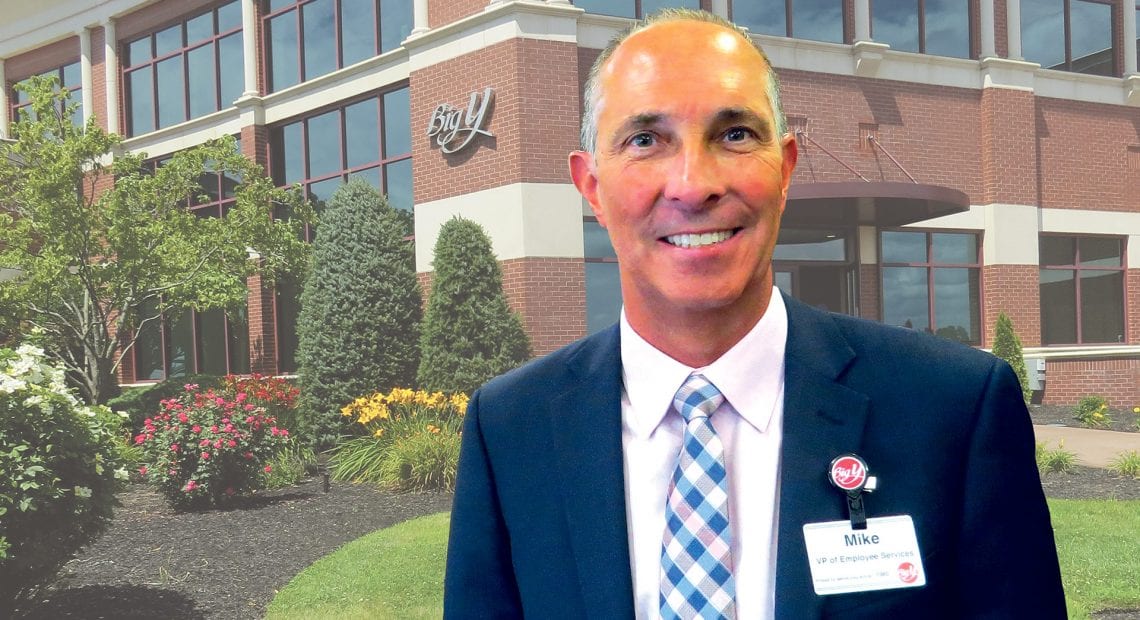
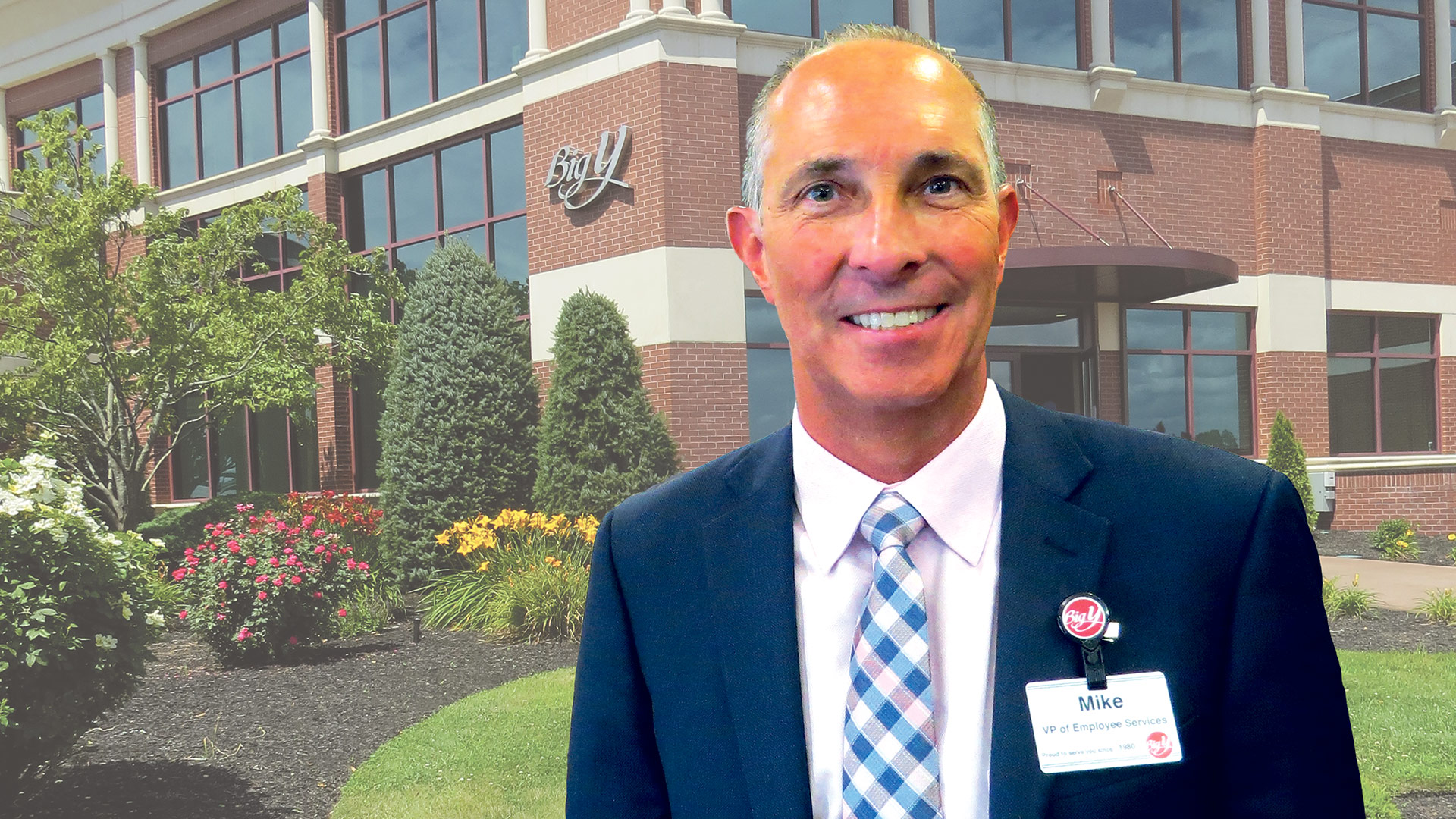
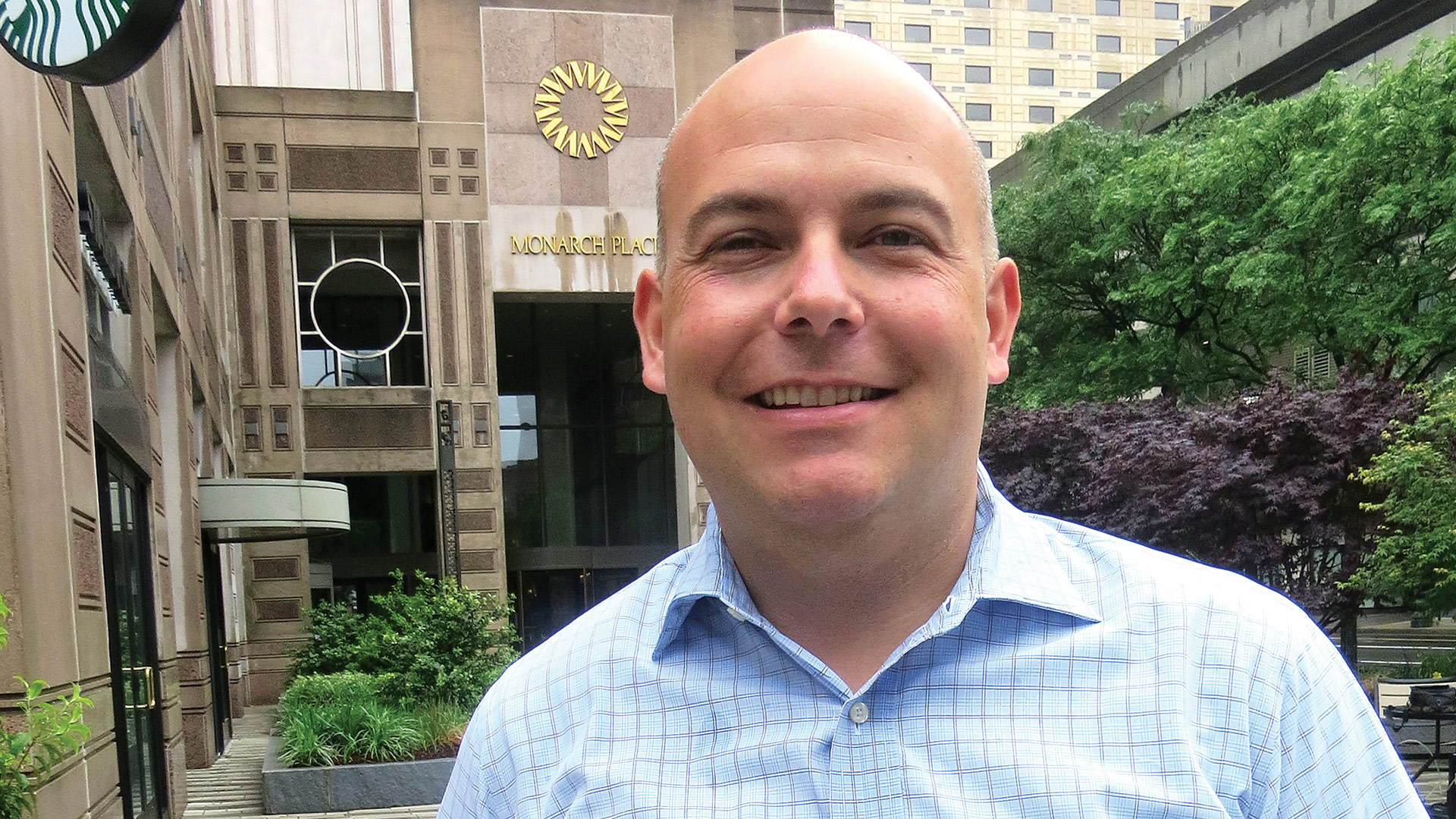
Michael Galat, vice president of Employee Services at Big Y.

When businesses sent employees home in mid-March, many thought it would be for just a few weeks. Instead, as the pandemic lingered, weeks stretched into months, and now, even as companies are allowed to bring their teams back on site, many have not. The reason? Employers say it makes little sense to risk their people’s health if they can do their job just as well at home. But … if they can work effectively at home, why bring them back at all? That’s a conversation many companies are having as they ponder the future of the workplace in the COVID-19 era.

Big Y Foods is one of the region’s largest companies, with more than 11,000 employees throughout Massachusetts and Connecticut. It has also been an essential business throughout the pandemic, so it never shut down.

Many of its employees — those who stock shelves, prepare food, work the cashier lines, and do any number of other tasks — must do their jobs on site, in a specific location. But at Big Y’s 300-employee-strong customer-support center in Springfield, which supports those frontline workers, that wasn’t necessarily the case.

“About 80% of them started working from home once COVID-19 started gaining traction,” said Michael Galat, vice president of Employee Services at Big Y. That shift meant setting everyone up with the right equipment if they didn’t have it at home, and also putting together a best-practices guide for working remotely. “Whether people are working remotely or not, they need to have access and be available to support those locations.”

The lesson learned over four months? They did their jobs just fine. And until COVID-19 begins to subside in earnest, Big Y is taking its time bringing employees — at least the ones who don’t have to work in the stores — back to their pre-pandemic workspaces.

“We’re definitely taking our time. We’re at about 30% in the support center now,” Galat said. “Obviously this is peak vacation time, but we are slowly, and I mean slowly, reintegrating people in the support center.”

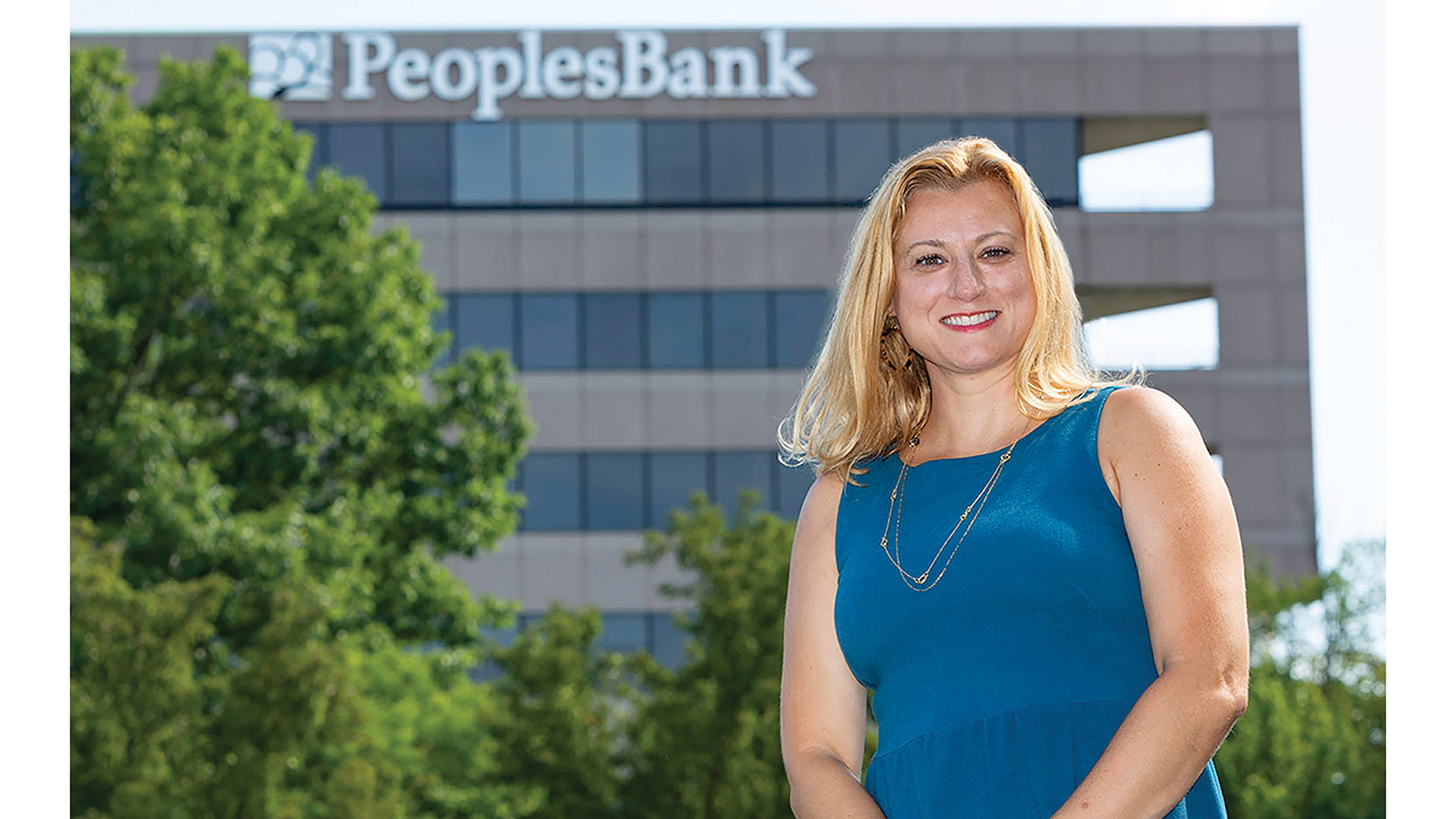
PeoplesBank is learning similar lessons about what employees can accomplish at home, said Amy Roberts, chief Human Resources officer.

“There’s always a concern, when you don’t have someone on site, because you can’t see what they’re doing. Are they working?” she said. “But we haven’t really missed a beat in terms of productivity levels. Some people like working from home — it works for them — while some people prefer working in the office, and they can’t wait to come back. But for overall productivity and meeting the needs of customers, we haven’t had any concerns.”

Roberts doesn’t see a day, post-pandemic, when the majority of bank employees are still working at home. But functioning so well over the past few months has at least gotten HR leaders talking.

“Is this something we can do on a more permanent basis? We’re still trying to figure out the right blend. But there seems to be some opportunity for flexible work options, and I think we’re going to do that in the future.”

“Is this something we can do on a more permanent basis? We’re still trying to figure out the right blend,” she told BusinessWest. “But there seems to be some opportunity for flexible work options, and I think we’re going to do that in the future.”

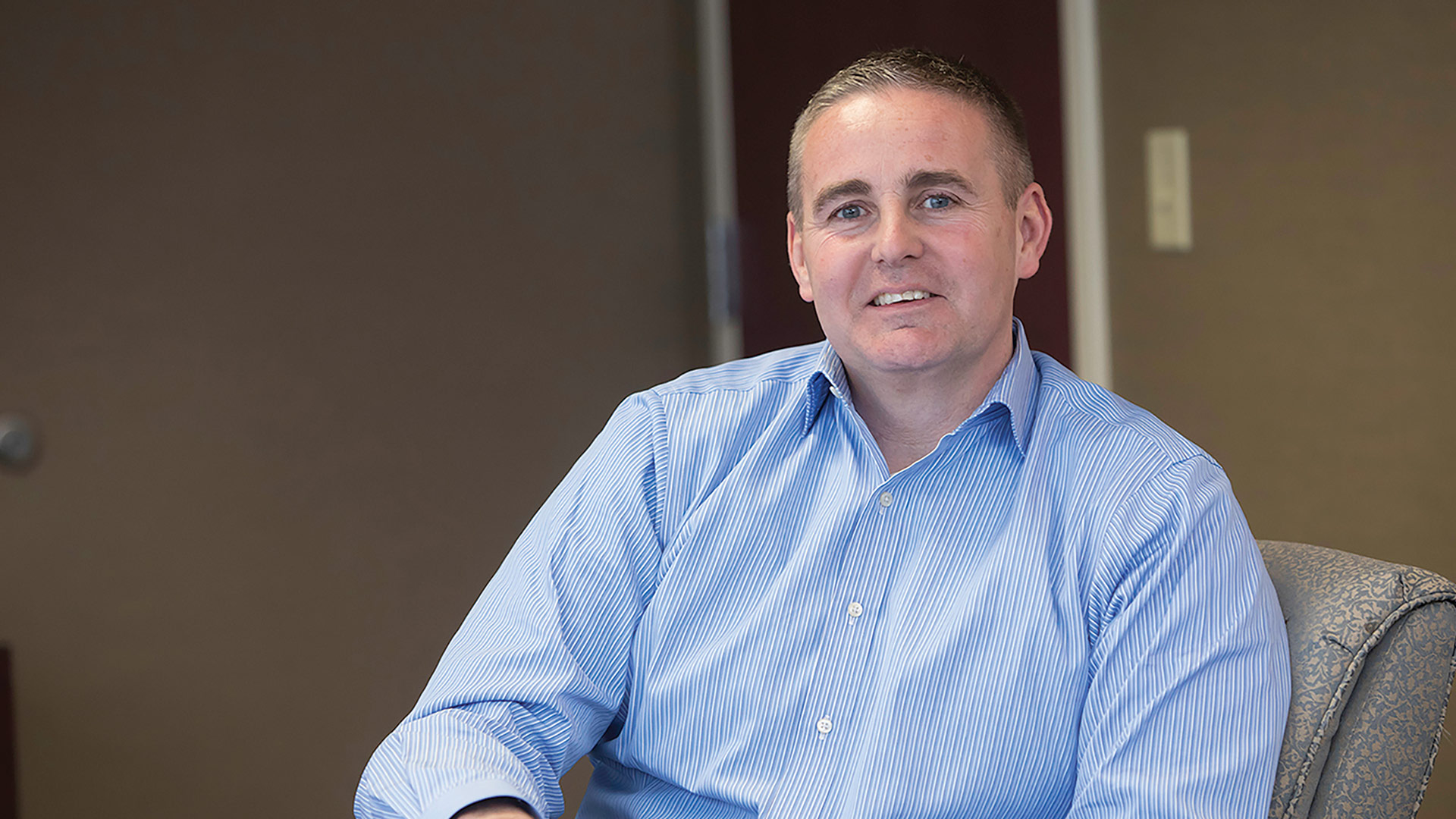
Patrick Leary has had those conversations, too. As a partner with MP CPAs, he understands that much of his business is face to face with clients. “But I don’t think we’ll go back to 100% on site.”

Elaborating, he explained that “the model of having everyone show up at 9 o’clock and work all day until 5, then go home, I think it’s really been proven that it doesn’t need to be that way. Yes, we need to have people available, and we can’t have somebody that decides, ‘I want to enjoy my day, so I’ll start the workday at 5 p.m. and work till 1 a.m.’ — although some of the 20-somethings might like that; me, I need to be in bed by 9.”

But while it’s true that employees need to be available to field phone calls and take appointments during core work hours, he went on, it may not be necessary to have everyone working in the same place at the same time.

“I think our ideas about what is a regular workplace have completely changed,” Leary went on, and it wasn’t sending everyone home in March that shifted those ideas; it was how long the stay-at-home trend has lasted.

Amy Roberts says PeoplesBank

Amy Roberts says PeoplesBank has to balance the benefits of working at home with the interactive employee culture it has cultivated.

“If everyone went home, and two weeks later they were back in the office, we wouldn’t be having this conversation,” he noted. “But we’ve proven in four months that people can work at home, work efficiently at home, and accept working at home.”

These three companies — a supermarket chain, a bank, and an accounting firm — all have totally different business models and customer needs, yet they’re all saying the same thing when it comes to the workplace of the future, and specifically whether remote work is here to stay: nothing is set in stone, but it’s a conversation worth having.

Shifting on the Fly

Shifting to remote appointments back in March was a smooth process, Leary said, partly because all the clients were working remotely, too.

“That part of it was not overly challenging,” he added. “And we had stress-tested our internal systems about a month earlier as good practice, just to see how we were doing. We did some modifications, so system-wide, we were in good shape. We had been using voice over internet for the phones, so when someone called at the office, it could ring at the house. So we were good there.”

The company did need to work through some quality-control issues, however, especially since the team was being physically separated during the heart of tax-preparation season.

“That, to me, was the biggest challenge,” he said. “Most people are accustomed to doing that in face-to-face settings, but we did it with everyone at home. We developed some protocols for how that would work.”

The firm created a schedule for individuals to come to the office to pick up packages, scan documents, and send them to the right people.

“The model of having everyone show up at 9 o’clock and work all day until 5, then go home, I think it’s really been proven that it doesn’t need to be that way.”

“Then there was the whole PPP thing, working with virtually all our business clients, showing them how to apply for it, and making sure they knew they rules, which were evolving almost daily,” Leary recalled. “We had a core group staying really closely involved and on top of the regulations, and we did a couple of webinars for clients.”

Then there was COVID-19 itself. “We were helping clients through their issues with business being called off — what do they do for cash flow?” he went on. “But the biggest challenge for me was that it all occurred during our busiest time.”

Banking customers were dealing with some of the same issues, as well as their usual needs, and PeoplesBank leaders were quick to make sure employees were set up to work at home.

“In a matter of two weeks, we assigned something like 150 Chromebooks and issued VPN access to all office items,” Roberts said, noting that about 170 people who work in the office were sent home to work. Some, who could not get the access they needed for whatever reason, were paid until the issues were resolved, and they began working from home as well.

These days, the main office is about 25% occupied, with most still working totally from home and others coming into the office one or two days a week. Like Leary, Roberts said discussions have already taken place regarding what the past four months mean for the future of remote work.

“There are definitely limitations, if we’re going to pursue it is a work type,” she said. “We’re going to need technology that ensures full access and takes care of the little things you experience when you’re at home instead of the office, like system slowdowns and delays.”

In short, if PeoplesBank is going to expand remote work in perpetuity — and not just because a pandemic has forced much of the work world home — it needs to the same experience from a work standpoint. “We’ve highlighted things that can be better. But for the most part, it’s been pretty seamless.”

Leary said the current situation has opened his eyes to internet infrastructure needs in the community, especially in places like the hilltowns, which can run into slow speeds and spotty cell service. “If this becomes the new norm, we can’t have someone working in their house who can’t connect to the outside world efficiently.”

Remote Learning

For a company like Big Y — which, between its supermarkets, convenience stores, and gas stations, is a 24/7 operation — flexible work options on the customer-support side make sense, Galat said.

“We’re able to give flexibility to that employee who may have childcare issues, or is caring for an elderly parent, and it allows us to support our stores while minimizing the amount of people who come in here,” he said, which remains an issue with the pandemic still a threat. “So having flexibility of schedule helps their personal lives and also our workplace.”

Patrick Leary

Patrick Leary says a shift to more permanent work-at-home options will require an investment in technology.

Claire D’Amour-Daley, the chain’s vice president of Corporate Communications, agreed. “Some have even felt more productive at home than here. It will certainly be part of the workplace of the future.”

She was especially impressed that the company was able to shift how it did business — not just moving some employees home, but taking steps to protect the ones in the stores — essentially on the fly.

“We’re used to working quickly, but not that quickly,” she said. “The stores were slammed the first few weeks, and this added yet another element of urgency. But we never stopped; we quickly pivoted to serve our stores and our customers in an unprecedented manner.”

“We made it work, and we needed to,” Galat added. “We needed to stay connected more than ever during this time.”

That said, “there are more discussions to be had,” he continued. “Absolutely, some lessons were learned — we’re able to support our locations — but when you look at the company-culture part of it, you lose that social aspect.”

To counter that, remote employees have been conferencing over Zoom three or four times a week, in some departments every day. Meanwhile, they’ve been issued guidance for working efficiently at home, from creating a comfortable, ergonomically correct work area to setting aside time for mind-clearing breaks.

“Eighty to 85% of the feedback has been positive,” Galat said. “People have been able to get their products done. Some have missed the social element, but for others, there’s value in the time saved not commuting in traffic.”

PeoplesBank has long promoted an interactive, employee-centric culture, and that has to be considered when pondering the future of the workplace.

“We rely on that interaction and engagement you get by being in the office together as a group,” Roberts said.

“Making sure we can continue that interactive part of our culture is something I’m really focused on right now. That’s a tricky one. If you have a completely remote workforce, you lose some of those engagement opportunities, and you have to shift some of the ways you engage. We’re not going to let that stop us from pursuing flexibility, but we have to consider the great culture that we have.”

Home or Away?

While employee culture and technology requirements are certainly legitimate topics of discussion, none of the professionals who spoke with BusinessWest expressed much concern about employee accountability and efficiency — “our concerns about people not doing their work dissipated pretty quickly,” D’Amour-Daley said — meaning remote workers may indeed have a broader role in the future.

“It’s been interesting to say the least,” Leary said. “I’ve fallen into a pretty good routine from day one. I’ve tried to make it a regular day: shower, get dressed — not in a suit, but not pajamas — and sit down at my computer. It makes for a more normal routine than saying, ‘I’ll get to work when I get to it.’ And I think most people would feel the same.”

Expanded use of remote work would also open up opportunities for both companies and employees, especially those who want to live in, say, Boston or New York City, he noted. Those individuals could expand their job-search horizons, while Western Mass. could become a more attractive place for businesses to set down roots, taking advantage of the region’s relatively low lease rates while hiring from afar.

All these opportunities can only open up if remote work proves a viable option. And companies of all types are starting to think it is.

“I haven’t had a single client call and say, ‘hey, I was talking to Sally, and I heard a dog barking in the background; it was really distracting,’” Leary said. “I actually think the idea of working from home is good for people. In that time they’d be commuting, maybe they’re exercising or spending more time with their family.

“People do miss the social interaction,” he was quick to add. “Maybe they live alone, or it’s just them and their significant other in the office.”

But the employees of MP CPAs who are back in the office — about half the team — are there by choice, he said, with others choosing to remain at home.

Because it works. And employers like things that work. So, in this era of Zoom and home offices and (sometimes) pajamas, they’re paying attention.

Joseph Bednar can be reached at [email protected]

Features Special Coverage

Mission: Accepted

Paul Belsito

Paul Belsito

Paul Belsito admits he’s struggling somewhat with Zoom and conference calls — not the technology, but the nature of those forms of communication.

He’s a people person, and he likes meeting them face to face — and not on screen or over the phone.

“I enjoy going to events and networking — that’s how I meet people,” he said, noting that there haven’t been any opportunities like that since he’s arrived, and he’s looking to the day when they return. “Zoom is OK, and I’m getting good at it, but it’s not the same.”

But it is reality in the summer of 2020, and this is how Belsito, chosen late this spring to fill the rather large shoes of Mary Walachy as executive director of the Irene E. and George A. Davis Foundation, has been going about what will remain his primary assignment for the foreseeable future.

And that is to ‘meet’ as many people as possible and come to fully understand the many issues and challenges facing the Western Mass. community.

“This is a world built on relationships, and you have to understand people’s perspectives and listen actively so you can help build on the foundation that’s been laid,” he explained, adding that, since arriving in early June, he’s been doing a lot of listening, with the intention of acting — and collaborating with others — on what he’s hearing.

It’s an assignment he accepts with considerable enthusiasm, and one to which he brings an intriguing background, blending work in financial services, government (he was district director for state Sen. Edward Augustus), higher education (he was executive assistant to the president at Assumption College in Worcester, his alma mater), and philanthropy; most recently he served as president of the Hanover Insurance Group Foundation in Worcester and assistant vice president for Community Relations.

And he intends to draw on all that experience in a role that involves everything from community outreach to regional problem solving, but mostly comes down to what Belsito calls “impact philanthropy.”

“A lot of my work has been grounded in community work,” he said, using that phrase to describe many of his career stops. “Getting involved and influencing has always been part of my DNA, and it’s generational in many ways — my family was very involved in the community in Worcester.”

This devotion to community work, as well as an opportunity to continue and build on Davis Foundation initiatives in literacy, early-childhood education, improving the Springfield Public Schools, and other endeavors, drew him to the Davis Foundation, created by George Davis, founder of American Saw & Manufacturing, and his wife Irene, and the opportunity to succeed Walachy, whose work he has admired from Worcester.

“The work that Davis has done in literacy and specifically early education is well-known throughout the Commonwealth,” he noted. “I had known them from that lens of an active member in a peer community trying to work on the same issues; Mary is a household name in the early-education space throughout the Commonwealth, and her name is often brought up as someone to model in her guidance on how to pull these programs together.”

Coming to Springfield from Worcester, Belsito said there are many similarities between the state’s second- and third-largest cities (with Worcester being the former), and common challenges. These include everything from education to economic development and job creation. But they are different and unique communities with their own “personalities,” as he called them.

“This is a world built on relationships, and you have to understand people’s perspectives and listen actively so you can help build on the foundation that’s been laid.”

“Worcester and Springfield are not the same, although they do have similar traits,” he noted. “It’s my job to listen and maybe take some of my experiences from Worcester and share those with folks in Springfield. Maybe one in 20 will catch and improve the lives of children and families.”

Meanwhile, recent events have brought other priorities to the fore, including the plight of the region’s nonprofits, many of which have been severely impacted by the pandemic from the standpoints of revenue and sustainability, and the broad issue of racial justice, which the foundation has helped address through creation of the Healing Racism Institute, now a separate 501(c)(3), but still very much affiliated with the Davis Foundation.

Educare Springfield

Paul Belsito says his primary goal is to build on the foundation created by the Davis Foundation with initiatives such as Educare Springfield, a unique early-education facility that opened its doors last fall.

And these emerging issues are dominating many of those discussions he’s been having as he goes about listening and building relationships.

For this issue, BusinessWest talked at length with Belsito about his new role, but especially about the challenges facing Springfield, the region, and its large core of nonprofits — all of which have looked to the Davis Foundation over the years for not simply financial support, but also direction and leadership.

Moving forward, he said the foundation will be continuing in those roles and constantly looking for new ways in which to make an impact and move the needle.

Background: Check

Tracing the steps that brought him to the Davis Foundation’s suite of offices in Monarch Place, Belsito said his professional career started at Flagship Bank and Trust Co. in Worcester, where he served as a trust administrator, working with families to help manage their assets and trusts.

While in that role, he started doing volunteer work within the community, and before long, his career aspirations changed.

“All of a sudden, everything flipped, and the volunteer work became a career,” he told BusinessWest, adding that, in 2005, he started working for Augustus, now the city manager in Worcester. After a stint as a private consultant, he became executive assistant to the president at Assumption, which was, in many ways, a continuation of the work he did at the State House.

“I worked for a state senator who was very driven by policy, not politics,” he explained. “His mindset was, while we were in that building, how could we improve the lives of people not only in that district, but across the Commonwealth? The policy piece was very important to me, and it carried over to the higher-education piece.”

From Assumption, he went to Hanover Insurance, which, like MassMutual in this market, has historically been deeply involved in the community, often serving as a “catalyst for change,” as he put it.

He started in community relations and eventually became president of the Hanover Insurance Group Foundation.

“As we began to pivot on how to not only make the company a world-class company but also the city in which it was headquartered, I did a lot of work with the Worcester Public Schools, with the Hanover Theater, and various organizations within the community that really helped to round out the experience for children and families so that they would be successful out in the community,” he said, noting that perhaps the most significant initiative launched by the Hanover Foundation is the Advancement Via Individualized Determination (AVID) college-readiness program in the Worcester Public Schools.

“It was an honor to work for a company that was so committed to impact philanthropy,” he went on, “which is trying to move the needle and have outcomes and data that support the investment that you’re making.”

Slicing through his job description at Davis, he said it’s to generate this type of needle-moving philanthropy — or more of it, because the foundation has been involved in a number of potentially game-changing initiatives, including Cherish Every Child, a nationally recognized Reading Success by 4th Grade program, the advocacy group Springfield Business Leaders for Education, and, most recently, the effort to establish the innovative Educare Springfield early-education center, which opened last fall near the campus of Springfield College.

“One of the things that struck me about the Davis family was the humility with which they do their work. They want to be sure they’re supporting things that generate outcomes and improve the quality of education and quality of life for children and families in the region.”

The desire to continue such initiatives and create more of them brought Belsito to Springfield (via Zoom) to interview for the Davis job, a job posting that came about as he was looking for a new challenge after spending a short stint working for the city of Worcester on its COVID-19 response.

“I had known of Davis for a long time — and we actually used Davis and the work that Springfield was doing as one of the models as we were developing a reading-for-success program what would work best for our community.”

Forward Thinking

Looking ahead, Belsito said that, as the Davis Foundation continues its mission of service to the community, the specific direction of its initiatives will be determined by recognized needs within area cities and towns.

But he’s certain that education and a hard focus on young people will be at the heart of those discussions.

“One of the things that struck me about the Davis family was the humility with which they do their work,” he explained. “They want to be sure they’re supporting things that generate outcomes and improve the quality of education and quality of life for children and families in the region.

“And if you look at the legacy of the family, that’s been a consistent theme,” he went on. “And as we look to the next phase of where the Davis family’s impact will be, I believe that it will consistently be in education and literacy, but we also have a new generation of family members who are getting more active within the community, so how do we integrate some of their perspectives in making sure that we have a consistent, shared goal of improving the lives of children and families in Hampden County?”

Beyond this shared goal, there are new and emerging needs within the community, he said, noting, as one example, the mounting challenges facing the region’s large core of nonprofit organizations, many of which were struggling with finances before COVID-19.

“Many nonprofits are in a vulnerable state from a financial perspective,” he noted. “And this experience from the past few months has only exacerbated that. So we want to look at how Davis and organizations like the Community Foundation of Western Mass. can come together to help ensure that the mission-driven organizations that are needed for the community to be successful can thrive and be able to provide the services they need.

“Even from the start of my interview process at Davis to today, a lot has changed,” Belsito went on, referring not only to the pandemic and its repercussions, but also George Floyd’s death and the resulting focus on racial justice. “Perspectives have changed, and priorities have changed, and so we need to convene people at the local level and ask, ‘what does this community need to be successful?’”

What hasn’t changed are the many social determinants of health — from housing and transportation to food insecurity and job losses — that are impacting quality of life in the region, he continued, adding that COVID-19 has helped shine a light on inequities in the system and the need to initiate steps to address them.

And when it comes to such efforts and other initiatives, the key is listening to members of the community and creating a dialogue about to address these problems, he said, adding that the Davis Foundation has historically been a leader in such discussions, and it will continue to play that role into the future.

“I’m a believer that, when you pull people together, there’s usually a solution that can be found,” he said, using that phrase to refer to everything from the sustainability of nonprofits to improving public education.

‘Meeting’ the Challenge

Left with what he says is little choice, Belsito has become quite savvy with Zoom and other virtual methods for meeting and getting to know people.

It’s not as he would want it, but it is indeed reality. And so are the many challenges confronting Springfield and the region, many of them amplified or accelerated by a pandemic that has been relentless.

Belsito said his first assignment is to understand what makes Springfield Springfield, and it is ongoing. From there, his job is to pull people together — something the Davis Foundation has always been good at it — and, when possible, move the needle.

He’s made it a career to take on such work, and he’s more than excited about what the next chapter might bring.

George O’Brien can be reached at [email protected]

Coronavirus Special Coverage

Step Inside

Jade Jump and Nate Clifford

Jade Jump and Nate Clifford, owners of Cornucopia in Northampton.

For Dave DiRico, the forced shutdown of retail outlets across the Commonwealth in March could not have been more ill-timed.

After all, late March is when many golfers, a good number of them armed with gift certificates from the holidays, start filing into his store in West Springfield, DiRico’s Golf & Racquet, and reload for the coming season. They come in looking for new clubs, balls, bags, shoes, and other accessories.

And they keep coming in through the spring, said DiRico, noting that, aside from the holidays, March, April, and May are by far his busiest months.

But not this year, obviously, as he was closed completely until early May and then open for curbside sales only — something this business isn’t really suited for — for several weeks.

But when he did reopen … well, the surge in business might not make up for everything that was lost during the shutdown, but it has been significant and in many ways surprising. Indeed, in addition to what could be called pent-up demand — people who needed to reload and had to wait until he was open to do so — the pandemic has actually created a mini-explosion of interest in golf, because it’s one of the few sports that can still be played under the current restrictions and advisories on social distancing.

“Things took off … it’s been crazy,” DiRico told BusinessWest. “One of the few outdoor activities you can have right now is golf; we have kids who were supposed to do internships and can’t, and they’ve taken up golf. We have kids who played baseball and summer sports and couldn’t play those, so they’ve taken up golf. We have spouses who’ve never played the game who have taken up golf.

“Couple that with our regular business,” he went on, “and June and July have taken off like a rocket ship.”

Nate Clifford has also navigated the ups and downs of shutting down and reopening at Cornucopia, the natural-foods store he and his wife, Jade Jump, own at Thornes Marketplace in downtown Northampton. They were among many shop owners who had to shift their business model on the fly to survive the past few difficult months.

“Shoppers are saying, ‘I just wanted to shop with somebody locally.’ We’re hearing a lot of that. I think that’s awesome.”

In fact, March 15, the day they and all the other Thornes stores shut down, was the couple’s one-year anniversary of buying the 40-year-old establishment. Though sales of food and wellness products may have made Cornucopia an essential business in the state’s eyes, Thornes made a decision to shutter the whole complex, and that meant Cornucopia, too.

“We understood, but we made an impassioned plea to the landlord to give us some access for pickup and delivery, with the goal of helping people, especially the older population around here who need us,” Clifford said. One day later, on March 16, they were back in business with that new model.

“We put a simple order form up on the website and told people, ‘you shop here; you know what’s here — what’s your wish list, and we’ll get the best possible order for you.’ We delivered, or you could pick it up and we’d run it out to you, put it in your trunk or in the passenger window, whatever you were comfortable with. We did that for three months, and we were overwhelmed with the support we got.”

That support was certainly reflected on June 15, the first day shoppers were allowed back in the store itself. “We had such a rush of people, I had to step into the back room to shed a few tears,” Clifford said. “I thought, ‘we’re going to be OK.’”

Unfortunately, not all retailers can say the same thing. They’ve seen some pent-up demand, to be sure, but 2020 is turning into a very challenging year as many shoppers are staying home, cutting back on their spending (or both), and doing most of their buying online.

Still, retailers are happy to be open again, even if the long-term outlook is mixed, and consumer confidence remains uncertain.

One Step at a Time

Sharon Cohen, who has owned Footbeats for Women at Thornes for the past four years, noted that, without college students and tourists from out of town, business is slower than is typical for this time of year, but customers are returning steadily. She’s happy to see them, especially after instituting the safety measures mandated by the state — and by common sense.

“We’ve revamped the way the store is laid out to promote social distancing,” Cohen said. “Shoppers are saying, ‘I just wanted to shop with somebody locally.’ We’re hearing a lot of that. I think that’s awesome.”

After Thornes was shut down in mid-March, Cohen launched a website so customers could still purchase her shoes, and, like Clifford, she delivered to peoples’ homes. Every Friday afternoon, she used Facebook Live to talk about shoes in stock and offer commentary on trends and new styles.

“I’d pick them off the displays on the wall and talk about them. Customers would text and ask questions about cost or size,” she said, noting that she will likely continue that practice. “We tried new, inventive ways to meet the customers.”

In the store, she tries to strike a balance between customer needs and safety; for example, when customers try on a pair of shoes, if they are leather and cannot be sanitized, the shoes are put in quarantine for 24 hours, as per Centers for Disease Control and Prevention (CDC) guidelines.

Dave DiRico

Dave DiRico says a mini-explosion in the popularity of golf has helped offset some of the huge losses incurred when his shop was shut down by the pandemic during the spring.

Thornes management has instituted many new protocols and equipment, including iWave ionizing air filters that heighten air quality, foggers that sanitize the building nightly, and door monitors at each of the two open entrances to ensure that people entering wear masks and sanitize their hands. The complex also installed hands-free door openers on bathroom doors.

“Thornes has done a lot to prepare for our opening, and we continue to stay educated and follow safety protocols,” said Richard Madowitz, the marketplace’s co-president. “We are receiving consistent positive feedback from shoppers on the cleanliness of the building and their comfort. We are providing a safe environment.”

All shared tables and chairs on the building’s second and third floors have been removed, and directional arrows on the floors separate traffic and promote social distancing.

“Signage is everywhere,” Madowitz stressed. “Each store is managing its state-mandated capacity count, and Thornes itself is managing the state-mandated capacity counts for its common spaces without shops.”

“I make sure people who come into the store feel safe. I’m doing what I feel is right by my customers and staff. That’s my focus.”

Mask compliance is high, at 99%, he noted, adding that “masks are not required for those with medical conditions that prevent them from wearing one.”

Despite what he calls a “vocal minority” making waves nationally about mask wearing, Clifford said his customers have been respectful of the mandate.

“We’re dealing with people who have health issues, and I’d say the average customer spending big amounts is over 50, getting supplements, taking to our expert staff. We want them to feel safe,” he told BusinessWest. “For those folks who don’t want to wear masks, even for legitimate reasons, we still have pickup and curbside. But I make sure people who come into the store feel safe. I’m doing what I feel is right by my customers and staff. That’s my focus.”

Visitors to Holyoke Mall are greeted with a similarly wide range of mandates, from face coverings and six-foot distancing to directional arrows and guidance to wash hands, use sanitizer, and avoid touching products unless purchasing them, said Lisa Wray, the mall’s director of Marketing.

In return, the mall has enhanced its cleaning and sanitizing of the common areas and numerous touch points, restrooms, seating areas, and food court, and the cleaning team is utilizing new electrostatic sprayers, leveraging the same technology used to clean hospital rooms, using an approved disinfectant recommended by the CDC. In addition, Holyoke Mall employees, security, housekeeping staff, and contractors undergo daily health screenings.
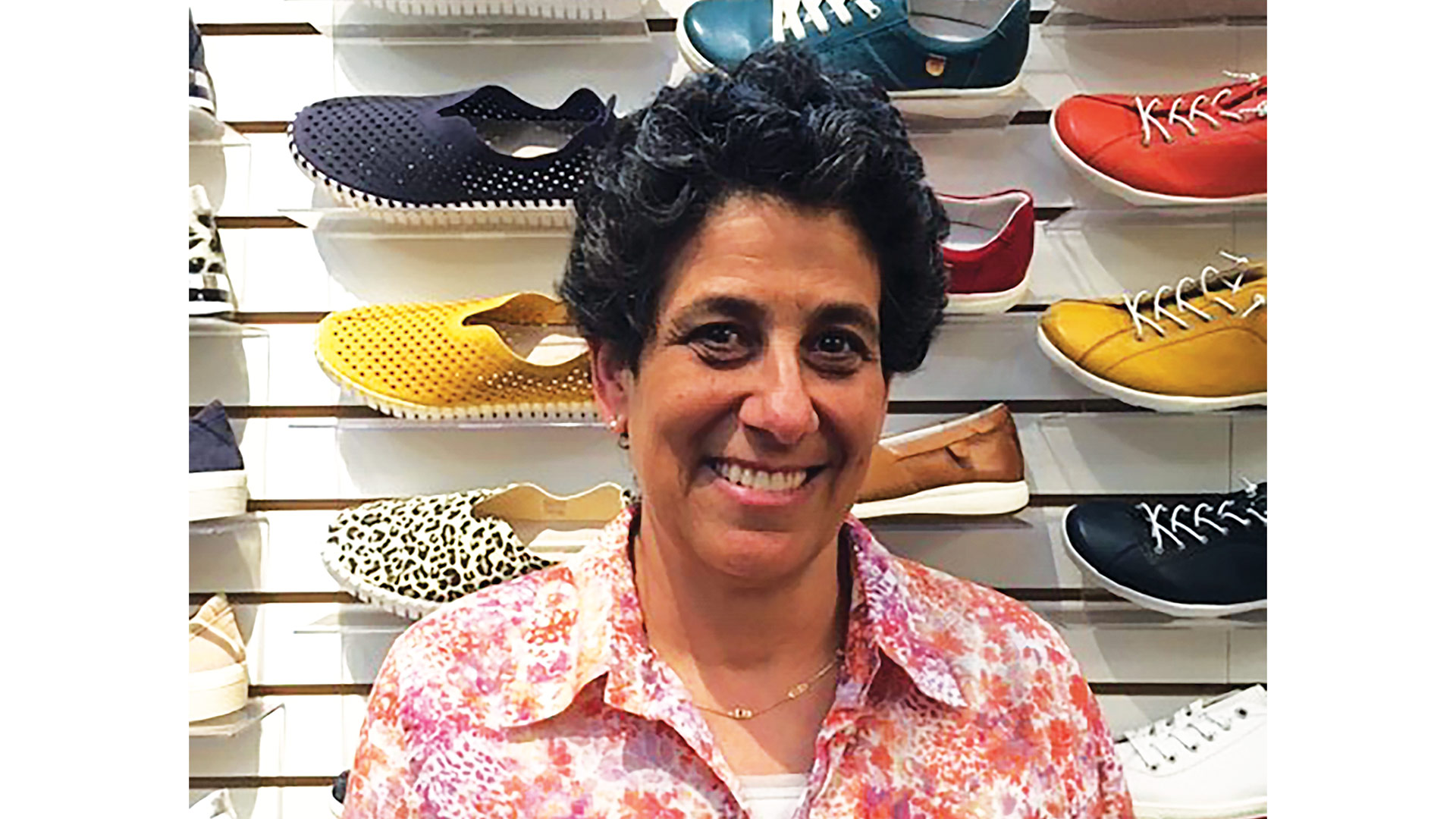
Sharon Cohen

Sharon Cohen says she used online outreach and a sales website to stay afloat during the shutdown.

All those steps were necessary, Wray said, to not only bring customers back, but make them feel safe upon return.

“Having our tenants close with thousands of employees and their livelihoods impacted is certainly difficult; however, the safety and well-being of our guests, employees, and tenants is of primary importance,” she told BusinessWest.

“We have been seeing guests steadily return to the shopping center, and even with reduced occupancy, tenants have been seeing strong sales,” she added. “With the back-to-school season upon us and the sales-tax holiday weekend at the end of August, we’re hopeful the months ahead will continue to trend positively. We’re cautiously optimistic that the fourth quarter will continue to ramp upward, as guests adapt to this new way to shop.”

Warning Signs

That optimistic view isn’t shared by the entire retail industry. Just last week, two businesses at the Shops at Marketplace in downtown Springfield — Serendipity and Alchemy Nail Bar — announced they were closing, unable to stay afloat after the forced pandemic closure and an inability to procure business aid from either the federal Paycheck Protection Program or the city’s Prime the Pump grants.

Meanwhile, on a national level, Tailored Brands, which owns suit sellers Men’s Wearhouse and Jos. A. Bank, is closing hundreds of stores and drastically reducing its corporate workforce as the pandemic continues to decimate the retail industry.

GlobalData Retail recently noted that year-over-year sales of men’s formal clothing fell by 74% between April and June, and not just because stores were closed. “While this deterioration will ease over time, demand will remain suppressed for the rest of 2020 and well into 2021 as office working, business meetings, and socializing are all reduced.”

Fortunately for DiRico, the pandemic has done the opposite in the golf sector, creating some opportunities in the form of new players who need equipment — with many of them using stimulus checks to buy it. But there are challenges as well, starting with shortages of stock caused by closure of factories and then restrictions on capacity.

“Our biggest problem right now is getting equipment,” he explained. “That’s because most of our manufacturers are based in California, where only 40% of the factory is open, which means they can only produce ‘X’ amount of clubs for the world; it’s slow in getting equipment.”

Other challenges include the many the new rules and protocols regarding social distancing and sanitizing, he went on. Still, for the customer, things are pretty much business as usual, meaning they can still try on shoes or gloves and take a few practice swings with a driver in the simulator.

‘Normal’ is not a word that comes to mind when describing operations or this year in general, but overall, the surge the game has seen will certainly help make 2020 less forgettable, DiRico went on, and it offers considerable hope for the future — if those who have taken up this difficult, expensive, and time-consuming game can find a way to stay with it.

“For the past 15 years or so, golf has been on the decline,” he said, listing cost and time among the big reasons. “Now, some of the pros I’ve talked with say they’re booked solid; they have tee times from 6:30 to 4. And membership at the country clubs is up. If these clubs can retain just 15% of these new golfers, they’ll be in good shape.”

For Cornucopia, the pandemic offered an opportunity to build an online, pickup, and delivery presence it might not have otherwise, Clifford said — one it will continue to maintain, opening up new business avenues.

“We were thrilled to be able to pivot to that quickly. That’s one thing Jade and I do well, being flexible and doing whatever we need to survive. We’re resilient, and now that we have a strong foundation, if we were ever to experience another shutdown, we’ll be able to continue the cash flow.”

These days, sales volume isn’t what it was on reopening day on June 15, and won’t be until colleges are back in session. “That’s when you normally see more foot traffic; July is not a busy retail time,” Clifford noted, adding that a weakened tourism season isn’t helping, as even visitors to the Berkshires often make their way to downtown Northampton for an afternoon. “That’s not happening right now.”

But he’s cheered that all the Thornes businesses are open seven days a week. “That has caused a lot more consistency in the shopping experience, when the stores are open and welcoming people and wanting them to come in and physically shop.”

And hoping that extended shutdown is a thing of the past.

Joseph Bednar can be reached at [email protected]