Home 2022 January (Page 3)
Daily News

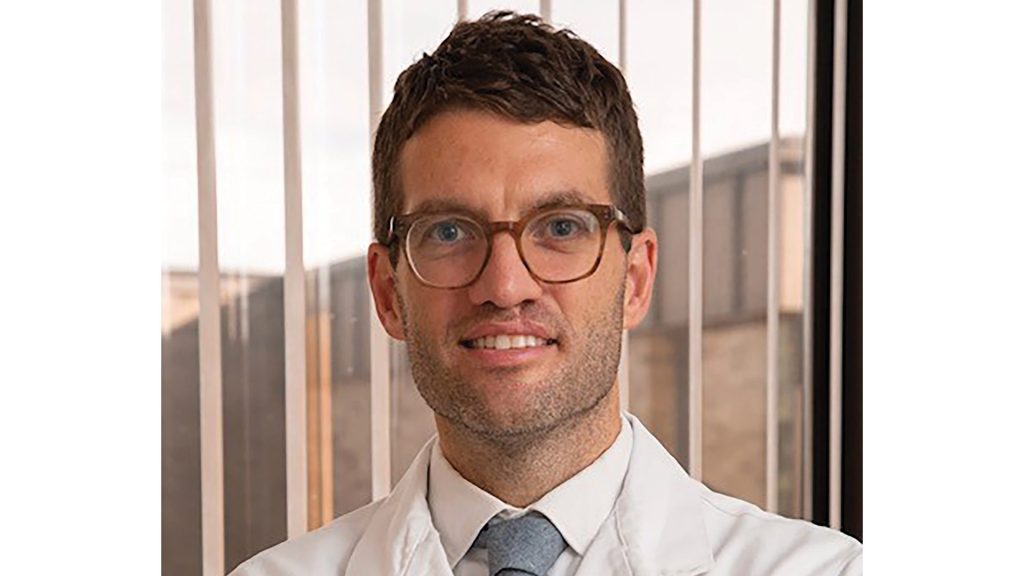
SPRINGFIELD — Shatz, Schwartz and Fentin, P.C. announced Attorney Mark Esposito as a new shareholder in the firm.

“Attorney Esposito has been an incredible asset to our team for the past four years,” founding Partner Steven Schwartz said. “He is knowledgeable, ethical, and very community-focused. Shatz, Schwartz and Fentin continues to develop and grow, and we look forward to seeing how Mark can assist in that future success.”

Esposito joined the firm in 2017 and has a wide-ranging, litigation-focused practice. He represents clients in general, commercial and probate litigation, labor and employment matters, administrative law, and criminal cases. He has counseled various public-sector labor unions and employees in collective bargaining, arbitration, and litigation, and represents clients in state and federal courts as well as before administrative agencies.

A summa cum laude graduate of Boston University School of Law, Esposito was a member and note editor of the Boston University Law Review. Prior to law school, he graduated magna cum laude from Williams College, where he was inducted into the Phi Beta Kappa society.

Daily News

SPRINGFIELD — UMass and NBA star Marcus Camby has joined White Lion Brewing Co. in a strategic partnership. White Lion currently distributes a small independent portfolio of artisan brands in Massachusetts, primarily in the western part of the state. Camby’s goal is to help open new markets throughout New England and beyond, as well as release his own portfolio of beer brewed by White Lion.

“White Lion continues to expand its community reach,” White Lion Brewing Co. President Ray Berry said. “We have a proven track record and incredible community partners like the Naismith Basketball Hall of Fame, the AHL Springfield Thunderbirds, and MGM Springfield, to name a few. I remember when Marcus electrified the region — just thinking about it brings back so many great memories. He loves our brand and what it represents. We are very excited and think we have a game winner.”

Added Camby, “I am extremely impressed by the brewery’s commitment to the community and its approach to diversifying the craft-beer trade. I look forward to being a part of expanding the brand throughout the New England and Tri-State region. This is my home, and to be able to have a quality beer named after me, and be able to tell its story, is something I’m truly excited about.”

Daily News

SPRINGFIELD — Community Bank recently donated $6,500 to support Open Pantry Community Services.

Open Pantry aims to increase food security for families in the surrounding community through its Emergency Food Bank, Loaves and Fishes Community Kitchen, and holiday meal programs. It further supports those in need by providing Teen Parent and Open Door Social Services programs, as well as permanent housing for homeless single women recovering from substance abuse.

“We’re honored to donate to Open Pantry Community Services,” Community Bank Branch Manager Gilbert Nieves said. “The programs and services they provide have a tremendous impact on our community, and we’re happy to support them in any way we can.”

Open Pantry welcomes individuals and groups willing to help the community through volunteering at the Emergency Food Pantry, Loaves and Fishes Community Kitchen, the People’s Center, Open Door Social Services, and the holiday meal program.

Daily News

SPRINGFIELD — Pathlight’s executive director, Ruth Banta, announced her retirement after almost 20 years with the organization. Pathlight, established in 1952 and headquartered in Springfield, is a pioneer in services for children, teens, and adults with intellectual and developmental disabilities throughout the four counties of Western Mass.

Banta came to Pathlight in 2003 and served 14 years as its chief financial officer and vice president of Administration. She was named executive director in 2016. In her tenure as executive director, she has led Pathlight through a period of growth, as well as steering it through the rocky waters of a global pandemic.

“I have been proud to be able to continue the growth and innovation that has been the hallmark of Pathlight since its founding in 1952,” said Banta, who first encountered Pathlight as a parent when the organization supported her son with autism.

Some of the highlights of her tenure as director include revenue growth of 14% and 22% growth in net assets, leaving Pathlight in a strong financial position.

Under her leadership, Pathlight created the first program in this part of the state to serve an individual in a community residence who needed full-time ventilator support. Pathlight also acquired 13.5 acres of previously state-owned land to replace two antiquated community homes with three modern, five-bedroom homes for people with intellectual disabilities.

The Milestones day program, located in Hadley, grew by 55%, while there was a 100% increase in adult services through Family Support and Autism Connections. Banta also supported the development of an innovative sexuality and relationship curriculum through Whole Selves.

Most recently, she oversaw the purchase of a new building in Northampton to house programs in Hampshire County, including Whole Children, Milestones, and Family Empowerment. She also supported infrastructure developments for remote services and work, electronic health records, and online training.

“My career and life have been so enriched by all the members of the Pathlight community over the past two decades,” Banta said. “I look forward to the next phase of my life and continuing to see the growth and innovation at Pathlight.”

Hank Drapalski, president of the Pathlight board of directors, has worked with Banta since her early days at Pathlight and said that she has a well-deserved reputation for her depth of knowledge and level of skill.

“Ruth has committed herself wholeheartedly to our organization and has accomplished many great things during her career with Pathlight,” he said. “The entire board will miss her — Ruth has been wonderful to work with — and we all hope she will have many years of enjoyment ahead of her in retirement.”

Daily News

BOSTON — State Treasurer Deborah Goldberg, chair of the Massachusetts Clean Water Trust, announced that more than $23.9 million in grants were awarded for 33 projects in 26 communities across the Commonwealth. The grant funds are awarded to cities, towns, counties, and water utilities most in need of financial assistance to help pay for improvements to drinking water and wastewater infrastructure.

The $23.9 million in grants is associated with 33 projects being funded by $229 million in low-interest loans by the trust. These funds reduce the total loan amount and are meant for communities that may not be able to complete this necessary work without additional financial assistance.

“Providing these funds saves significant dollars for our local communities while protecting the environment and the health of our citizens,” Goldberg said. “This $23.9 million investment is another wonderful example of the trust’s work helping our cities and towns, and most importantly the people who live here.”

The communities or water utilities receiving grants include Ayer, Barnstable, Barnstable County, Barnstable Fire District, Blackstone, Brockton, Chicopee, Deerfield Fire District, Dracut Water Supply District, Dudley, East Brookfield, Eastham, Fall River, Fitchburg, Gloucester, Holyoke, Leominster, Lynn Water and Sewer Commission, New Bedford, Revere, South Essex Sewerage District, Springfield Water & Sewer Commission, Taunton, Tyngsborough, Wareham, and West Boylston Water District of West Boylston.

“The Baker-Polito administration is proud to continue supporting Commonwealth communities working to strengthen local drinking water and wastewater management systems,” said Secretary of Administration and Finance Michael Heffernan, who is also a member of the Clean Water Trust’s board of trustees. “Infrastructure investments like these are critical to maintaining the health and well-being of Massachusetts residents.”

Daily News

SPRINGFIELD — The Hampden County Bar Assoc. will hold a Legal Help Hotline on Thursday, Jan. 20 from 3 to 6 p.m. Local, experienced attorneys will be available to provide legal advice on various topics, including divorce and family, bankruptcy, business, employment, landlord/tenant, and real estate.

Individuals needing advice should call (413) 732-4648 to speak to a volunteer.

Daily News

WARE — Country Bank announced that Jessica McGarry has been promoted to first vice president, team lead for its Commercial Lending division in the East.

McGarry, who joined Country Bank in 2017, has more than 20 years of experience in financial services focused on commercial lending. She earned her bachelor’s degree in business from Nichols College, was a recipient of the Forty Under 40 designation in 2014 from Worcester Business Journal, and was a member of the Leadership Worcester class of 2015-16.

“I look forward to leading the Commercial Lending division in Worcester as Country Bank continues to provide high-quality business financing in Central Mass.,” McGarry said. Our team is knowledgeable and dedicated, with deep connections that will continue to drive growth in the region. Strategic and hardworking individuals, coupled with dynamic lending solutions and a responsive approval process, will position our team to capitalize on large and small opportunities as we move into 2022 and beyond.”

Tom Wolcott, first senior vice president for Commercial Lending, added that “Jessica’s extensive background working with commercial customers, financing strategies, and, in the process, building long-term partnerships in the East has been a part of Country’s success in the Worcester market.”

Daily News

AMHERST — Hampshire College announced a new $5 million investment in its Change in the Making campaign. This second $5 million gift to the campaign, given by an anonymous benefactor, will fund the Ken Burns Initiative to Transform Higher Education, propelling implementation of Hampshire’s innovative approach to undergraduate liberal-arts education.

“This is yet another historic moment for Hampshire College,” President Ed Wingenbach said. “We’re reinventing the liberal arts by placing globally relevant questions at the center of our curriculum and challenging students to become agents of momentous change. This donor — who has no previous affiliation with the college — recognizes that higher education requires radical change and that Hampshire is best suited to lead that disruption. We are enormously grateful.”

The unrestricted operating gift supports the ongoing implementation of a new curricular model that organizes undergraduate education around the most urgent challenges of our time, instead of the traditional structures of majors and disciplines. This revolutionary way of teaching and learning is intended to prepare students for meaningful work that can change the world.

The initiative will accelerate development of innovative approaches to inquiry-driven, project-based education that enables students to master the entrepreneurial skills needed for today and for tomorrow. Key components of Hampshire’s curriculum — building courses around urgent challenges, the unique Semester Unbound program, learning collaboratives, and project teams — will all be supported by these funds.

“I’m humbled that such a generous philanthropist chose to make this extraordinary gift to my alma mater in my honor,” said campaign co-chair Ken Burns. “I know Hampshire is transformative because I experienced it firsthand. I saw how the originality of practices implemented at the college reverberated through higher education. Fifty years later, our nation needs fresh thinking in higher education, and Hampshire is poised to deliver on that opportunity.”

Since its launch in January 2020, Change in the Making: A Campaign for Hampshire has raised more than $33 million toward its $60 million goal and is on track for a successful completion in June 2024.

Daily News

BOSTON — Resurgent COVID-19 disruptions, persistent supply-chain issues, and a slowing state economy pushed confidence among Massachusetts employers to a 10-month low at the end of 2021.

The Associated Industries of Massachusetts (AIM) Business Confidence Index declined 1.2 points to 56.7 in December. The Index remains within optimistic territory, 7.4 points better than a year ago, but has now declined for five consecutive months.

Employers remain upbeat about the fundamental strength of the economy, but their confidence is muted by the evolving public-health crisis, rising prices, and a structural labor shortage.

“The December Business Confidence Index reflects companies attempting to maintain operations and grow business amid the sudden spread of the Omicron variant of COVID-19. Travel, healthcare, hospitality, and other service industries began to experience increased employee absences in an already-tight labor market,” said Sara Johnson, chair of the AIM Board of Economic Advisors (BEA) and executive director of Global Economics at IHS Markit.

Inflation remains a major concern for Massachusetts companies. “Our inability to predict where material costs will be three to six months from now is a terrible burden on our business and our bottom line,” wrote one survey participant.

The Massachusetts economy, which grew at a 6.1% annual clip during the first quarter of 2021 and 8% during the second quarter, slowed to a 2% annual growth rate during the July-September period, according to MassBenchmarks.

The AIM Index, based on a survey of more than 140 Massachusetts employers, has appeared monthly since July 1991. It is calculated on a 100-point scale, with 50 as neutral; a reading above 50 is positive, while below 50 is negative.

The constituent indicators that make up the Index were mostly lower during December. The confidence employers have in their own companies slid 1.2 points to 59.9, leaving it 6.8 points better than it was a year ago. The Massachusetts Index assessing business conditions within the Commonwealth declined 1.7 points to 55.6, up 7.2 points since December 2020. The U.S. Index measuring conditions nationally shed 0.9 points in December to remain in pessimistic territory at 47.9.

The Current Index, which assesses overall business conditions at the time of the survey, lost 1.6 points to 56.1. The Future Index, measuring projections for the economy six months from now, declined 0.8 points to 57.3

The Manufacturing Index was the only indicator to rise during the month, gaining 2.1 points to 55.3. The Employment Index lost 0.6 points to 55.6.

Medium-sized companies (58.9) were more bullish than large companies (57.5) or small companies (53.5).

Katherine Kiel, professor of Economics at the College of the Holy Cross and a BEA member, said companies are struggling to budget for 2022 because inflation has reached a 30-year high of 6.8% nationally.

“Commodity prices remain volatile, and companies report that supply-chain delays on key components continue to slow project schedules,” she noted. “Wage inflation is also playing a role as employers work hard to hire and retain qualified workers across a range of industries.”

AIM President and CEO John Regan, also a BEA member, said employers remain fundamentally optimistic about the economy at a time of both extraordinary hope and unprecedented uncertainty.

“We face an ever-mutating public-health crisis, a generational shortage of qualified workers, supply-chain disruptions, the highest inflation since the early 1990s, and shifting expectations about the nature of work itself,” Regan said. “Despite these challenges, however, many Massachusetts companies and their employees are finding ways to thrive. Many members of the AIM board of directors tell me their companies posted record results in both 2020 and 2021. And Massachusetts employers have created 519,500 jobs since the employment trough in April 2020, boosting the labor-force participation rate from 60.4% to 66.3%.”

Business Talk Podcast Special Coverage

We are excited to announce that BusinessWest, in partnership with Living Local, has launched a new podcast series, BusinessTalk. Each episode will feature in-depth interviews and discussions with local industry leaders, providing thoughtful perspectives on the Western Massachuetts economy and the many business ventures that keep it running during these challenging times.

Episode 95: January 10, 2022

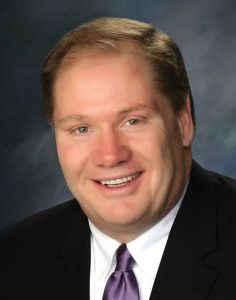
George Interviews Paul Stelzer, president of Appleton Corp

Paul Stelzer

BusinessWest Editor George O’Brien has a lively, wide-ranging discussion with Paul Stelzer, president of Appleton Corp. The two talk about the region’s commercial real estate market and the powerful forces driving it, especially COVID and its many side-effects. It’s a compelling discussion and must listening, so join us on BusinessTalk, a podcast presented by BusinessWest in partnership with Living Local.


Also Available On

Daily News

SPRINGFIELD — The Springfield Symphony Orchestra (SSO) board announced the hiring of Paul Lambert, former vice president of Enshrinement Services & Community Engagement at the Naismith Memorial Basketball Hall of Fame, as interim executive director of the SSO.

Lambert succeeds interim Executive Director John Anz, who left the SSO to take a position at another organization. Lambert will start in the position immediately.

Lambert’s professional experience includes nearly 20 years with the Basketball Hall of Fame, initially as vice president of Guest Experience and Programming, and more recently as vice president of Enshrinement Services & Community Engagement. His work transformed the Hall of Fame enshrinement into a nationally recognized celebration and media event which has served as the bedrock of the Hall’s development and outreach efforts.

Prior to the Hall of Fame, Lambert served as director of Event Production for the National Basketball Assoc. (NBA), working on the development and execution of live programming, grass-roots initiatives, and international events, including the NBA Jam Session program, numerous All-Star Games, successfully staged events in Canada and Mexico, and numerous initiatives and events throughout Europe, Asia, and Australia.

Before working in the basketball industry, Lambert enjoyed a career in professional theater, including his roles as general manager of the Cape Playhouse in Dennis for seven years and as executive director of the Westport (Conn.) Country Playhouse. He also served as a production stage manager for many years.

According to Paul Friedmann, vice chair of SSO’s management committee, “the Springfield Symphony Orchestra board is very pleased to announce the hiring of Paul Lambert to the position of interim director of the SSO. Paul is a seasoned and respected leader in the region and played a key leadership role at the Basketball Hall of Fame. In his senior position with the Hall of Fame, he was involved in signature live events such as enshrinement and the Spalding Hoop Hall Classic national high-school tournament. Paul also was tasked with engaging local, regional, and national stakeholders on behalf of the Hall of Fame. He has prior experience with the Hall in holding live performance events.

“In his position with the Hall of Fame, Paul was tasked with connecting and engaging with the community and is held in high regard within the region,” Friedmann added. “Paul is acutely aware of how important local entertainment and arts institutions like the Hall of Fame and the symphony contribute to the quality of our lives in Western Massachusetts.”

Added Lambert, “as a longtime subscriber, I am aware of the significant challenges facing the SSO today. When the board approached me with this opportunity, my first thought was, ‘how can I help?’ Through good faith and creative problem solving, I look forward to the return of wonderful, live symphonic music to the stage at Symphony Hall.”

Lambert serves on a number of local boards and community organizations, including the National Conference for Community and Justice; former board chair of New England Public Media; the Loomis Communities; and the boards of the Cape Cod Center for the Arts, the South Hadley Cultural Council, Longmeadow UNICO, and the Springfield Rotary. He is a graduate of Boston College, cum laude, with a bachelor’s degree in English and theater.

Daily News

HOLYOKE — Whittlesey announced the promotion of Greg LaCasse, CPA to director, effective immediately. LaCasse joined the firm in 2017 and has more than 25 years of experience in public and private accounting, including Big 4 experience and four years in the private sector, serving as the chief financial officer for an international retail and consumer goods IT consulting firm.

LaCasse is an active member of Whittlesey’s real-estate, construction, and manufacturing niche and specializes in providing tax and advisory services to both businesses and individuals with a focus working with clients in the professional-service, real-estate, retail, wholesale, construction, and manufacturing and distribution industries.

He holds a bachelor’s degree in accounting from Central Connecticut State University and a master’s degree in taxation from the University of Hartford. He also pursues continuing professional education in taxation and business-advisory services. He is an active member of the American Institute of Certified Public Accountants and the Connecticut Society of Certified Public Accountants.

Daily News

SPRINGFIELD — Due to the recent rise in COVID-19 cases, the Springfield Regional Chamber has decided, out of an abundance of caution, to postpone its Government Reception that was slated for Jan. 13.

“Given the rise in cases and our hospital systems constrained, as well as our risk assessment which estimates this event will cause a greater than 99% risk of spread (despite vaccinations and boosters), we believe postponing is the most prudent and right thing to do for our community,” chamber President Nancy Creed said. “Thank you for your understanding as we work to keep our community members healthy and safe during this time. We look forward to gathering together in person soon.”

The chamber will provide more details soon, but in the interim, members can reach out and submit any questions and/or concerns at springfieldregionalchamber.com/contact-us.

Daily News

HOLYOKE — The Cannabis Education Center (CEC) at Holyoke Community College announced its schedule of industry training programs for the spring 2022 semester.

The CEC will offer four 12-hour, introductory Cannabis Core educational training courses, with the first set to run Saturday, Jan. 22, and Sunday, Jan. 23, from 9 a.m. to noon and 1 to 4 p.m. each day over Zoom.

The Cannabis Core program provides an overview of the cannabis industry in Massachusetts and is geared for people looking for general knowledge as they consider a cannabis career. During four three-hour sessions, students will interact with cannabis experts and guest speakers in reviews of the plant, various cannabis products, the endocannabinoid system, laws and prohibition, growing and plant care, labeling, packaging, testing, employment considerations, and more.

The Cannabis Core program is a foundational course and a prerequisite for the following career track courses: patient services associate (classes start Feb. 5), cultivation assistant (Feb. 26), extraction technician (April 2), and culinary assistant (April 19). Additional Cannabis Core programs will run Feb. 19-20, March 19-20, and April 5-6.

The cost of the Cannabis Core training is $599, but scholarships are available to those who qualify. To register, visit hcc.edu/cannabis-core.

Daily News

PITTSFIELD — Bousquet Mountain is opening the first floor of its new base lodge today, Jan. 7, for ski operations. Tickets, rentals, bootup and warmup areas, and restrooms will be available in the lodge from noon to 9 p.m. today. Food trucks will be available at the mountain until food and beverage service in the building launches.

The 17,500-square-foot building features a multi-purpose area for comfortable breaks from the slopes, a quick-service dining option in addition to the full-service restaurant, a rental shop with full-service ski-tuning operation, and retail space. Multiple high-definition screens are featured throughout the lodge, enabling live streaming of on-mountain races along with viewing of high-profile sporting events. Heated walkways, firepits, and a large patio area provide numerous options for outdoor enjoyment of the base area in addition to the second-floor outdoor deck.

Bousquet will launch Lift Bistropub, a full-service bar and restaurant, on the second floor of the lodge in early February. Open year-round, Lift Bistropub expects to provide service to both indoor and outdoor seating, with the second-floor deck providing panoramic views of the mountain.

The lodge is part of a substantial investment in the nearly 100-year-old ski area by Mill Town, the owner of the mountain. Other new features this year include new terrain, added tubing lanes, upgraded lighting, and a full overhaul to the mountain’s snow-making system.

Lift tickets, rentals, lessons, and tubing tickets are available to purchase on site and at bousquetmountain.com.

Daily News

SPRINGFIELD — The Springfield Thunderbirds, AHL affiliate of the St. Louis Blues, have carried on their mission of being pillars of the Springfield community, with continued support from People’s United Bank. Since the start of the 2021-22 regular season, the Thunderbirds have made more than 60 appearances in the community, in addition to charitable initiatives such as Hockey Fights Cancer, Toys for Tots toy drives, and Teddy Bear Toss donations. Many of these events have featured interaction in the community from the team mascot, Boomer.

“We at the Thunderbirds pride ourselves on being champions in the community,” team President Nathan Costa said. “As much as we love putting on a first-class operation at each of our games, we put equal importance on making a positive impact in our community, whether that is engaging with young people in schools, working in tandem with nonprofit charities, or performing random acts of kindness. We thank our longtime partners at People’s United Bank for their continued support and shared philanthropic values.”

Jaimye Kelley, senior vice president, Commercial Banking at People’s United Bank, added that “we’re proud to support and partner with the Thunderbirds in their many community initiatives and to have the opportunity to be a part of the life-changing impact their efforts are having on local families. Community giving and volunteerism is central to People’s United’s mission, and we look forward to continuing our support of the Thunderbirds in 2022 and bringing our shared philanthropic values to communities across Western Massachusetts.”

In the month of November, the Thunderbirds went lavender across their platforms to spotlight the NHL and AHL’s Hockey Fights Cancer initiative. Proceeds raised throughout the month went on to benefit a wide array of local cancer-based charities, including the Sister Caritas Cancer Center, CHD’s Cancer House of Hope, Baystate Children’s Hospital, and the Hockey Fights Cancer charity itself.

Highlighting a busy month of December, the Thunderbirds collected more than 5,000 stuffed animals in the club’s annual Teddy Bear Toss on Dec. 11. In a showing of holiday spirit, Thunderbirds staff and Boomer delivered donations of those bears to a wide range of area charities, including the Springfield Boys & Girls Club, Ronald McDonald House, YMCA of Greater Springfield, CHD, Martin Luther King Jr. Family Services, and the Boys & Girls Club Family Center.

Furthering the team’s heartfelt gestures, Thunderbirds captain Tommy Cross, together with teammates Michael Kim and Drew Callin, also provided a meaningful gesture at holiday time when the trio purchased a plethora of presents for three local families who were recently displaced from their homes. This marked the second time in his two Thunderbirds seasons that Cross has led such a mission.

Boomer and the team were active in numerous other charitable affairs throughout the fall and early winter. The T-Birds partnered with local elementary schools for yet another successful kickoff to the team’s Stick to Reading program, with support from MassMutual. The initiative promotes literacy among elementary-school students in the Western Mass. community. Schools participate in a six-week reading program during the Thunderbirds’ regular season, with a reward of tickets to a game for students who complete their reading goals.

For more information on the Springfield Thunderbirds and their charitable contributions, please visit www.springfieldthunderbirds.com. To donate to the T-Birds Foundation, click here.

Law

No Breach January

By Lauren C. Ostberg


Along with the widely reported cyberattacks on behemoths like LinkedIn and Facebook, 2021 also saw cyberattacks on local governments, small businesses, school systems, nonprofit organizations, and other smaller, more vulnerable targets. For more than a decade, Massachusetts has enumerated a set of administrative, physical, and technological safeguards designed to protect consumer’s personal information.

“This personal information is what you are obliged to safeguard; access, use, or compromise of this personal information by an unauthorized person constitutes a reportable breach.”

For more than a decade, you — a natural person, corporation, association, partnership, or other legal entity who uses, stores, or otherwise accesses personal information in connection with the provision of goods and services or with employment — have been required by law to put such safeguards in place.

Whether a genuine desire to comply with 201 CMR 17 or the breaches of 2021 motivates you, the new year is the perfect time to strengthen your cybersecurity position with three simple steps.


Inventory the Personal Information You Possess

Under applicable Massachusetts law, ‘personal information’ is a Massachusetts resident’s first and last name or first initial and last name combined with a Social Security number, driver’s license or state ID number, financial-account number, or credit- or debit-card number. This personal information is what you are obliged to safeguard; access, use, or compromise of this personal information by an unauthorized person constitutes a reportable breach. A useful first step in developing, or improving, your cybersecurity position, then, is compiling a list of every location where you keep this personal information.

Creating this list should make some security risks apparent — do you have Social Security numbers in your e-mail inbox, in an unlocked filing cabinet, or stored on the desktops of employees’ unencrypted laptops? In the event you experience a ransomware attack or another cybersecurity incident, knowing where personal information was stored can help you quickly determine whether the potentially compromised data contained ‘personal information’ and, thus, whether you have experienced a ‘breach’ reportable to regulators.

If you already have a well-developed written information security program (WISP) and feel confident in your cybersecurity posture, this step still applies to you. Reviewing and updating this inventory can (and should) be part of your annual review of that WISP’s scope and effectiveness.


Learn to Encrypt Personal Information

Massachusetts regulators require that personal information (when held by a person other than the consumer) be encrypted ‘in transit’ and ‘at rest.’ In transit refers to information when it is transmitted across networks — say, from one e-mail account to another. At rest refers to storage, on a flash drive, laptop, etc., or on an e-mail server.

If you comply with this regulation, an employee’s lost laptop or a compromised e-mail account will not impact consumers or raise the risk of identity theft because that sensitive information should be inaccessible to unauthorized parties. Encryption can be a simple process — in some cases, it’s a matter of a few well-placed clicks. Let this year be the one you figure it out.

If you have already enabled encryption on relevant devices and accounts, and have policies requiring the encryption of personal information, congratulations. After you pat yourself on the back, make sure your employees are aware of these policies and that they knew how and when to make use of these safeguards.


Train on Phishing

Massachusetts’s data-security regulations require employee training as both an enumerated administrative and technical safeguard. This is because internal policies regarding access to use of, and the transportation of, personal information required by 201 CMR 17 are of limited use if they are not consistently followed company-wide.

Similarly, the best malware protection and server encryption will not protect a business whose employees hand over the proverbial keys to the kingdom by providing their credentials or downloading malware by clicking a link in a phishing e-mail.

Because individuals responding to phishing e-mails is a known vulnerability, it is a useful place to start training. Phishing, which can take the form of e-mails or phone calls, is the fraudulent practice of attempting to obtain personal information or other valuable data from a person by pretending to be a reputable, and trusted, third party. Training employees to recognize, avoid, and report these scams is an initial step (and one endorsed by the FTC) to improving your cybersecurity hygiene.

While other safeguards in 201 CMR 17 and the Attorney General’s Compliance Checklist (like two-factor authentication) are important considerations, if you inventory your personal information, enable and use encryption, and train yourself and your employees to avoid phishing scams, you will be well on your way to a breach-free January and a compliant 2022.


Lauren Ostberg is an attorney in Bulkley Richardson’s cybersecurity group; (413) 272-6282.

Law

A Development of Note

By Alexander J. Cerbo, Esq.


As COVID-19 continues to grow, mutate, and spread like a California wildfire, the Equal Employment Opportunity Commission (EEOC) has released guidance which outlines, in detail, just how COVID-19 may qualify as a ‘disability’ under the Americans with Disabilities Act (ADA).

Alexander J. Cerbo

Alexander J. Cerbo

In its recent report, the EEOC clarifies that employees who are either asymptomatic or have mild COVID symptoms that resolve in a matter of weeks are not considered disabled under the ADA. These cases are not found to substantially limit a major life activity as they do not restrict an employee’s bodily functions for a prolonged period.

However, ‘long COVID,’ or cases that persist for several weeks or even months after the initial infection, may qualify as an ADA-recognized disability. Symptoms include ongoing fatigue, brain fog, difficulty concentrating, difficulty breathing, or shortness of breath. In addition, other health conditions caused by COVID, or pre-existing health conditions exacerbated by COVID (such as heart inflammation), are considered a disability if they limit a major life activity.

The EEOC cautions that a determination as to whether an employee’s COVID-19 case constitutes a disability should always be made on a case-by-case basis.

While employers should be mindful as to how they handle employees with COVID, the ADA does provide employers with a ‘direct-threat’ defense by which an employer may require an employee with COVID, or its symptoms, to refrain from physically entering the workplace during the CDC-recommended period of isolation. An employer will risk violating the ADA if they exclude an employee from the workplace based upon “myths, fears, or stereotypes,” particularly if the individual is no longer infectious.

EEOC guidance is clear that an employer does not automatically violate the ADA in taking adverse action against an employee if they have COVID-19. Employees must meet the criteria of an ‘actual’ or ‘record of’ disability to be eligible for a reasonable accommodation. An actual disability is a “physical or mental impairment which substantially limits a major life activity.” Record of a disability is when the person has a history of that disability.

Eligible employees are not automatically granted a reasonable accommodation — their disability must require it, and the accommodation requested must not pose an undue hardship on the employer. Employers may also request supporting medical documentation in determining whether to grant an employee’s accommodation request.

With COVID-19 cases on the rise once again, and the inception of the new, highly contagious Omicron variant, employers should continue to remain alert for future guidance from the federal government in this ever-evolving pandemic.


Alexander J. Cerbo, Esq. is an attorney who specializes in labor and employment-law matters at the Royal Law Firm LLP, a woman-owned, women-managed corporate law firm that is certified as a women’s business enterprise with the Massachusetts Supplier Diversity Office, the National Assoc. of Minority and Women Owned Law Firms, and the Women’s Business Enterprise National Council; (413) 586-2288; [email protected]


Law

Sobering Advice

By Ryan O’Hara


Hosted any parties recently? Hosting any in the weeks ahead? Whether you’re running a business and throwing a holiday shindig for your employees, having some folks over for a festive dinner party, or watching with friends as our new-look New England Patriots win the Super Bowl (why not this year?), it’s worth pausing to consider how you might avoid the risk of liability for any guests who might have a little too much fun.

I know, I know — maybe not the most pleasant thought, but what should you expect when you invite a litigator to the function? Like it or not, when hosting any get-together where guests may imbibe, a responsible host must take a moment to consider their legal obligations.

“You don’t want to be an innovator, so erring on the side of doing what you can to make sure your guests consume alcohol responsibly, and trying to make sure everyone has safe transport home, is the best practice.”

You’re likely familiar with the concept that, under Massachusetts law, bars, restaurants, and the like can be held civilly liable for damages caused by service of alcohol to an individual whom the establishment knew (or should have known) to be intoxicated. In practical terms, when an establishment serves someone showing recognizable signs of intoxication, and that person subsequently drives drunk, gets into an accident, and hurts someone, the establishment is held responsible for those damages.

“Good, sound policy,” you note as you sagely nod along. Agreed! But what you may not be aware of is that you — yes, you — are subject to the same obligations if you host an event and choose to serve your guests alcohol. This legal concept is known as ‘social host liability,’ and has been the law of the Commonwealth since 1986, via the Supreme Judicial Court’s decision in McGuiggan v. New Eng. Tel. & Tel. Co., 398 Mass. 152 (1986).

Social host liability provides that, where a private individual serves alcohol, or makes alcohol available while effectively controlling the supply, and that alcohol is served to a person the host knew (or should have reasonably known) to be intoxicated, the host is liable for any harm caused by that guest’s ensuing drunkenness. In essence, if you choose to provide guests with alcohol, you take on the duties (and potential liability) of a bartender. So, just as in the commercial context, if you serve a drink to somebody you already know is half in the bag, and that person then drives drunk and causes harm to people or property, you may be held responsible.

So, how can you be sure to avoid this kind of harm as a host? Since McGuiggan, Massachusetts courts have examined the scope of this liability, and some guiding principles have emerged. First, you should keep a close eye on your guests’ behavior if serving alcohol. Case law has largely limited liability to service of guests showing tangible signs of intoxication — slurred or loud speech, imbalance, inappropriate behavior, and the like. As a simple rule, if you notice a guest appears drunk, you shouldn’t provide them any more alcohol and should make sure they don’t drive. This will protect the public at large, protect you, and maybe even leave a happier guest the next morning.

Second, you can make sure your party is BYOB. Case law to date strongly suggests that you cannot incur any liability for guests who consume their own alcohol, even if it’s at your house or other premises, and even if you provide the atmosphere for a wild party. As long as you’re not providing the intoxicant, you’re probably not on the hook if something bad happens. If you are going to serve your own alcohol, try to stick to single-service amounts and control the supply, so that you can gauge a guest when they take it. Providing guests with carte blanche access to an open bar or leaving out a boozy self-serve punch bowl may make for a raucous time, but it’s also the riskiest approach.

This area of the law remains relatively new and undeveloped. You don’t want to be an innovator, so erring on the side of doing what you can to make sure your guests consume alcohol responsibly, and trying to make sure everyone has safe transport home, is the best practice.

If you plan on offering cannabis to your guests, you should know that no case law exists on service of cannabis products. However, you can reasonably anticipate that cannabis will be treated under a similar analysis. The issue could be complicated by varying tolerances and delayed onset of intoxicating effects, as well as differing impact if combined with alcohol. So, be extremely cautious if providing cannabis products (particularly edibles), especially to guests who have been drinking, or in any way appear intoxicated.

In short, a mindful, practical approach to alcohol service at private functions is good practice, period. No one wants to be a buzzkill; however, a little restraint and consideration makes for a great host — and a great guest, too. Most importantly, it will avert avoidable harm to your guests and the public, and any liability for yourself.

Note: this article is not intended to convey specific legal advice or to create an attorney-client relationship, and is provided for informational purposes only.

And, with that, cheers to a new year!


Ryan O’Hara is an associate with Bacon Wilson, P.C. and a member of the firm’s litigation team. His legal practice encompasses virtually all aspects of litigation, including contract and business matters, landlord-tenant issues, land-use and real-estate litigation, and accidents and injuries; (413) 781-0560;
[email protected]


Health Care

Speaking from Experience

By Elizabeth Sears


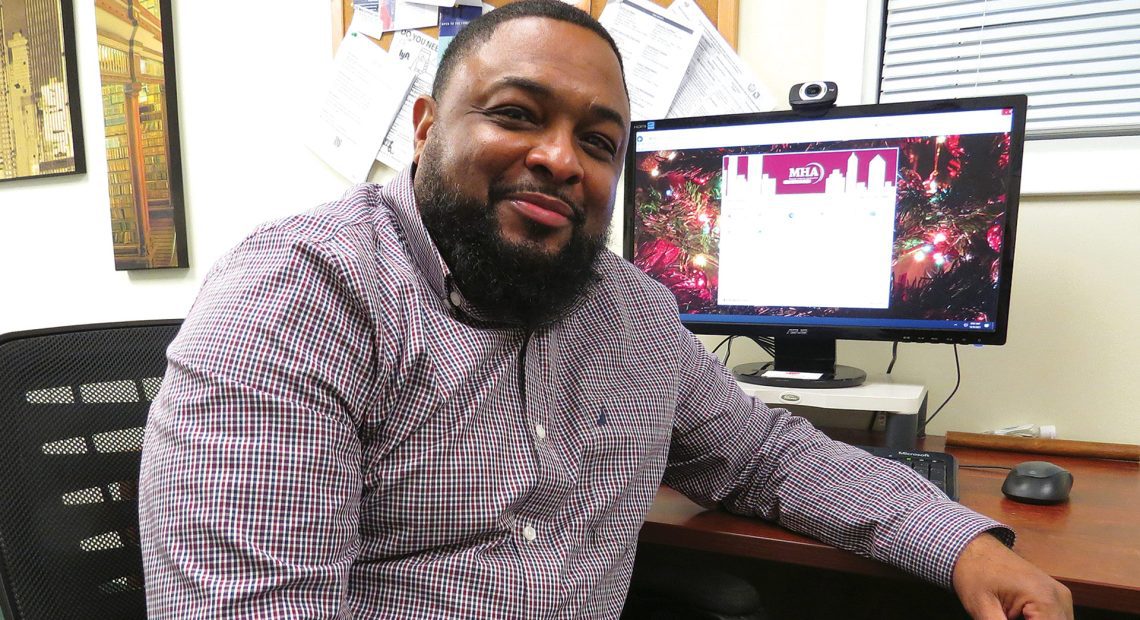
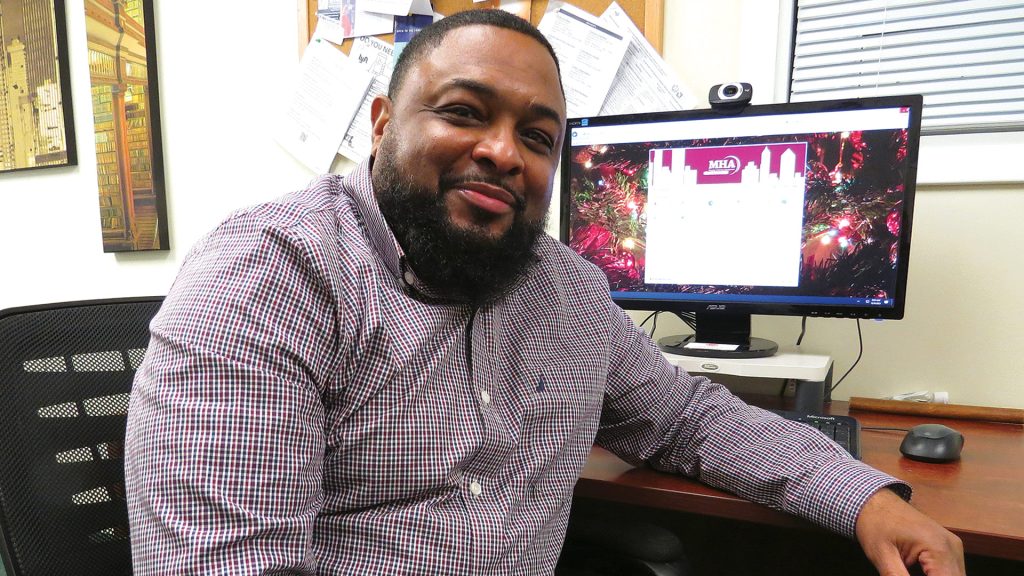
Dallas Clark

Dallas Clark says lived experience and empathy are key to what makes recovery coaches so effective.

Dallas Clark is in the business of spreading empathy and sharing hope. 

He is a recovery coach in the Recovery Coaching program at MHA’s BestLife Emotional Health and Wellness Center in Springfield. Inspired by the positive influence his own recovery coach had on him, Clark helps individuals who are facing the challenges of addiction to meet their goals and connect back into the community. 

A recovery coach is someone who has gone through the recovery process themselves and has completed the certifications required to become a coach. They act as a bridge to recovery, a ‘concierge’ of sorts, helping clients take control and regain power in their lives by providing them with wellness plans, encouragement, and other forms of assistance.

This model of treatment works because of the trust that is built between coaches and clients. Due to walking a similar path, recovery coaches are able to understand the experiences and emotions of their clients in a way others without such life experience cannot. They know what it is like to have an addiction and can connect on a personal level with someone looking to begin their own recovery. 

“The peer-to-peer counseling that recovery coaches provide is a very vital part of the process.”

“One thing that’s important about being a recovery coach is that we have lived experience. When we talk about empathy, we’ve been in those shoes,” Clark said. “I know it’s very important that you be supported by somebody that really does understand what you’re saying.”

Tommy Smyth, another recovery coach in the program, echoed this sentiment.

“The peer-to-peer counseling that recovery coaches provide is a very vital part of the process in terms of offering the comfort level of a shared experience,” he noted. “We are among the first supports someone beginning recovery encounters and often where they begin to trust the process. I continue to meet with them in addition to whoever and whatever else becomes part of their recovery.”

Recovery coaches help to motivate, support, and empower clients in a way that meets their specific needs. This help sometimes involves providing referrals. Clark recalled recently helping one of his clients find a primary-care physician and helping others with goals like finding a dentist or changing medications. 

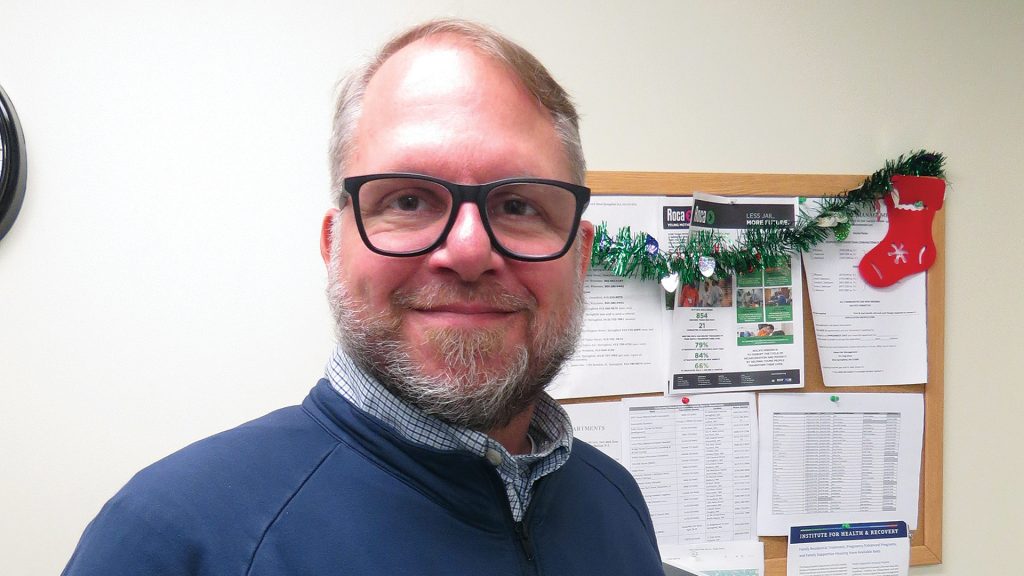
Tommy Smyth

Tommy Smyth says no one should feel stigma or shame about seeking treatment for addiction.

Other times, recovery coaches help individuals communicate with their family, assist in building a broad support team, and provide resources for family members who may feel helpless. Whatever the case, clients are met exactly where they are in their recovery process, whether in the very early stages or further along. 

“We collaborate on a wellness plan, prioritizing goals and building on individual strengths to empower their recovery. It is their recovery,” Smyth said. “I can use my recovery as an example and in understanding what they are dealing with or feeling, but recovery is about giving power back to the individual to take charge of their healing and eventually their lives.”


Meeting a Growing Need

MHA’s Recovery Coaching program launched on Feb. 17, 2020 — less than a month before the World Health Organization declared COVID-19 a pandemic. The inability to meet clients in person proved to be a noteworthy obstacle for coaches to try to overcome, as well as trying to bring clients back into a community that was shut down.

“The major issue was not having the one-on-one connection because recovery coaching is really based on relationship building. Not being in-person and getting to meet the individual, it was hard to build a strong relationship over the phone,” Clark said. “It was a lot of meetings being on Zoom. A lot of people didn’t know how to use Zoom, so that was a difficult part, and just connecting people back into the community.”

However, the pandemic’s impact did not mean a slow start for the program. There was only one coach at the time of its initial launch, but an immediately full caseload emphasized a need to add more staff. Since then, MHA has added four certified recovery coaches for a total of five coaches in the program. They are continuing to expand, planning to take on more coaches as needed.

“We’re starting to build collaborations with other agencies, which are providing more referrals for us, so that’s one reason we’re expanding the Recovery Coaching program,” Clark said.

The program has now shifted to a hybrid format, offering a combination of in-person and remote coaching. Also, the impact of certain resources reopening after previously closing during the pandemic has been felt greatly by members of the program. 

“We’re getting back to that place now where recovery centers are back open. Drop-off centers are back open, and that’s a big plus because, when the pandemic hit, a lot of places had shut down that are recovery-oriented,” Clark said. “People didn’t have those safe places to turn to.”

Smyth spoke on the recent death of Jimmy Hayes, an NHL hockey player from Massachusetts who died from a combination of fentanyl and cocaine. Hayes’s father expressed fear of the media portraying his son as a “junkie.” In response to this, Smyth emphasized the importance of treating individuals who experience addiction with empathy and dignity, as well as providing them with the help they need. 

“If you want to get help, there are people out there, including recovery coaches who have been where you are, willing to walk and fight with you. You don’t have to keep going through what you are going through alone — you can take control, and you will get your life back.”

Addiction is a disease with a gripping nature that cannot be overstated, and with the especially risky nature of drugs being laced with cheaper and more lethal substances and sold to unsuspecting buyers, resources like MHA’s Recovery Coaching program are essential for members of the community experiencing addiction, Smyth noted.

“Recovery coaches can and do make a difference. The more we can educate the public about addiction and the role recovery coaches can play, the better,” he said. “No one should be stigmatized or judged for having an addiction to a substance. No one should be made to feel shame, rejection, or failure in seeking treatment to start and sustain recovery.”


From Despair to Hope

The feelings of empathy and hope that Clark and Smyth exude can be felt in a single conversation with them. Smyth concluded with a word of encouragement for anyone seeking to regain control of their lives from an addiction. 

“If you want to get help, there are people out there, including recovery coaches who have been where you are, willing to walk and fight with you. You don’t have to keep going through what you are going through alone — you can take control, and you will get your life back.”

When asked what message he would like to leave with BusinessWest’s readers, Clark spoke, without a single hesitation, of hope.

“I think the most important part is providing that hope for others. I always tell people that I didn’t know what that looked like. I didn’t even believe in myself, but somebody believed in me. I didn’t have hope — somebody gave hope to me.”

Health Care

New Lease on Life

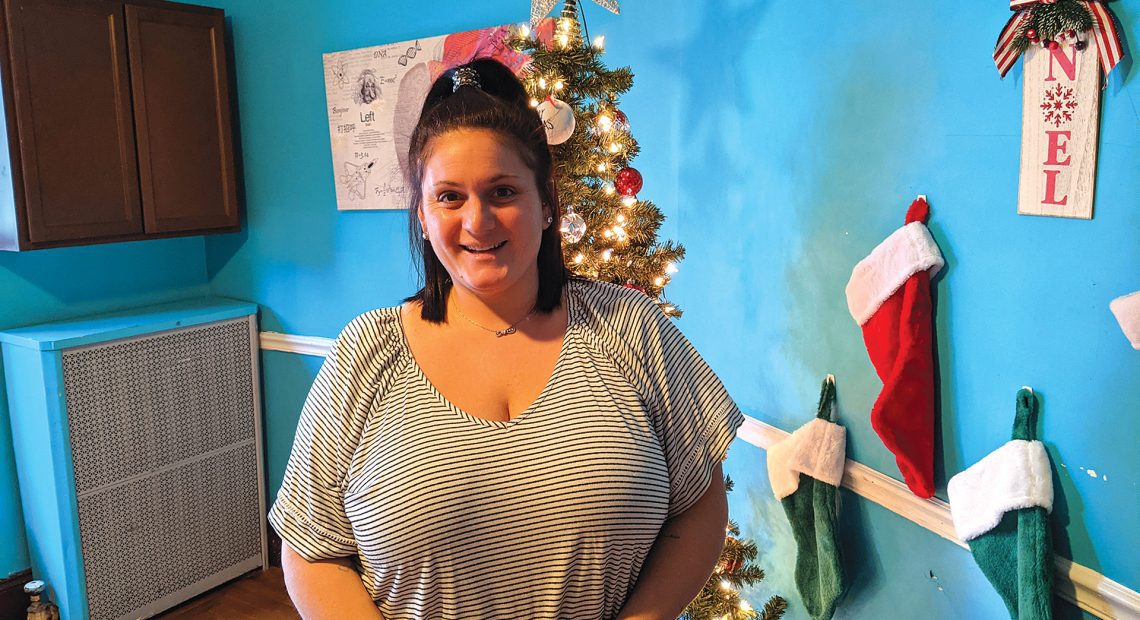
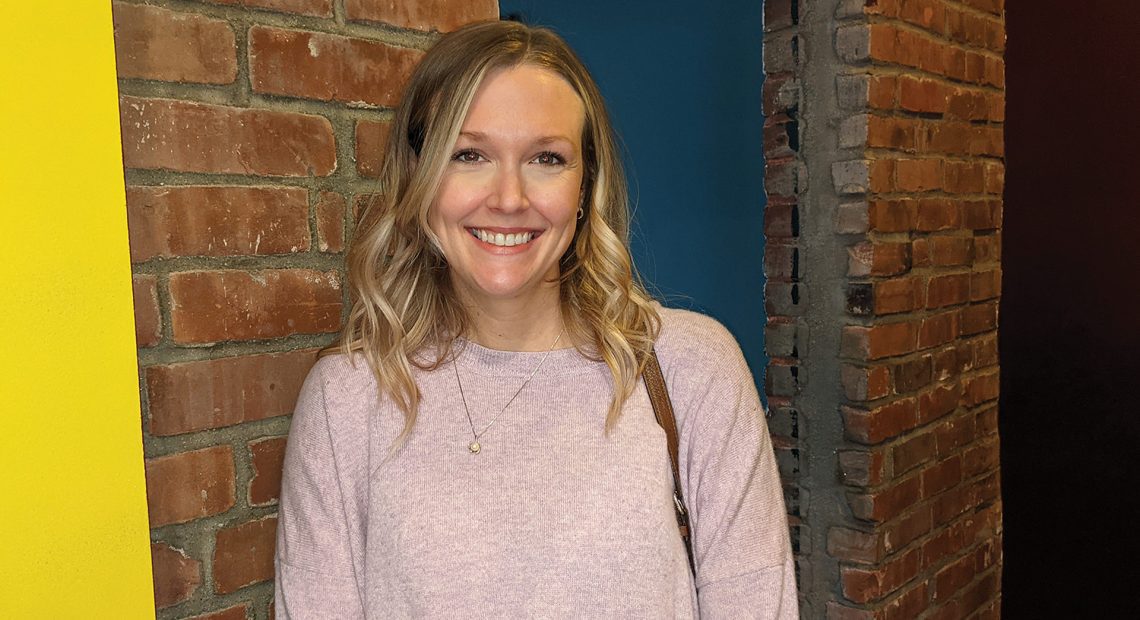
Daniella Grimaldi

Daniella Grimaldi says it often takes weeks for clients to warm to the program — but the results speak for themselves.


Daniella Grimaldi has worked with young addicts long enough to know it can happen to anyone.

“I say this to everybody: you don’t know what you don’t know about your kids. You could have the best kids in the world and raise them the right away, but all they have to do is hang out with someone who’s doing the wrong thing. That’s when kids fall behind.”

And fall, all too often, into substance abuse. That’s where Goodwin House comes in.

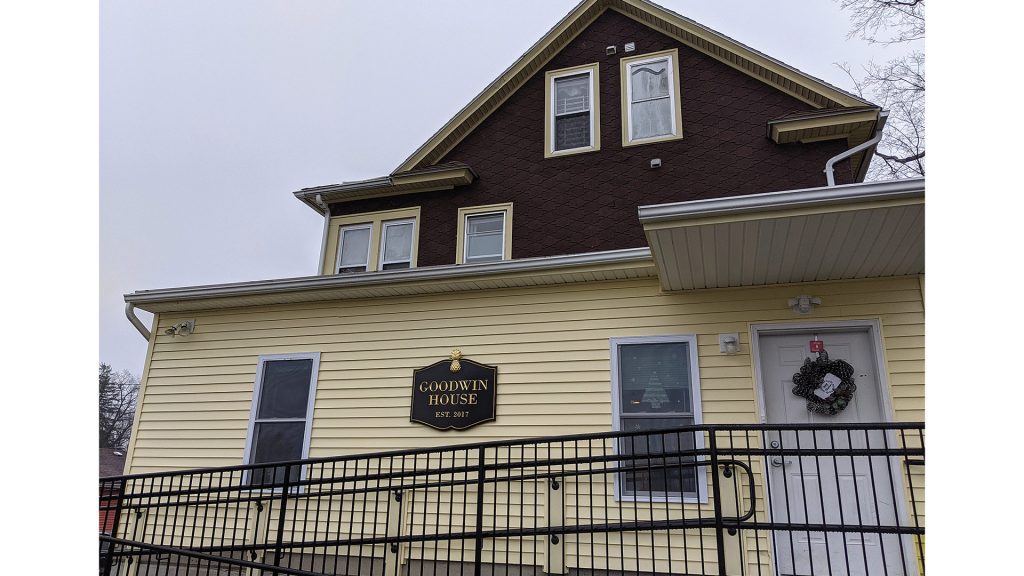
“We are one of the only programs like this in the state,” said Grimaldi, program director of the house in Chicopee opened by the Center for Human Development in 2017 and named after its long-time CEO, Jim Goodwin. Its clients are teenage boys, ages 13 to 17, who live there, often after a stint in detox, for 30 to 90 days in order to recover from addiction and learn the coping mechanisms and life skills they need to be successful — and remain drug-free — afterward.

“There aren’t a lot of these programs for adolescents,” she went on. “But this is the age where, if you get the help you need, you’ll be more successful than if you get the help at 30 or 40 years old and know you’ve wasted all that time engaging in substances and not getting help.

“I think it’s critical. A lot of our kiddos who leave us call us a year or two later and say, ‘I’m really thankful for the opportunity,’” Grimaldi added. “I recently talked to a kiddo who left us at beginning of 2020, and he was like, ‘Daniella, do you remember me? I’ve been sober for 399 days.’ That’s something I’m really proud of, when kids call back, and they’re proud of themselves.”

“This is the age where, if you get the help you need, you’ll be more successful than if you get the help at 30 or 40 years old and know you’ve wasted all that time.”

At first, Goodwin House focused solely on substance abuse, but earlier this year, it became ‘co-occurring enhanced,’ which means it focuses on both substance abuse and the mental-health piece. In doing so, the client-to-staff ratio shrank from 1:5 to 1:3. “We changed the ratio to better support the residents we serve, and we hired a bunch of new positions,” Grimaldi said.

Among those are a recreational therapist. “She was a teacher, so she’s always worked with adolescents. She’s able to do therapeutic relationship building with our residents and tie it all back into their therapeutic approach, which I think is awesome. You never think about how teaching clients how to play basketball together could actually be a therapeutic group. You think it’s just you out here playing with your friends; it’s just basketball — but it’s not. It’s more than that.”

Goodwin House also hired an educational liaison to help clients bridge the gap between their work at Liberty Preparatory Academy — a recovery-focused high school in Springfield they attend during their time in the program — and their normal school districts. “It makes for an easier transition; it’s not so chaotic,” Grimaldi explained.

“They don’t want to be here,” she was quick to admit. “I’ve never had a kid who really, truly wanted to physically be here, but they work the program, and then they realize it’s not as bad as they think, and they do the work so they can gain the sobriety they need.”

And then come those post-program phone calls, when Grimaldi hears them say they’re glad they stayed.


Busy Schedule

Clients are referred to Goodwin House from many sources, she told BusinessWest.

“It could be self-referral from the adolescent themselves, from teachers, schools, courts, the DYS system, the DCF system, or it can be from their own parents. Anyone can make a referral to Goodwin House. We accept all different types of insurance, and if we don’t accept your insurance, the biller of last resort pays — so DPH picks up cost, or DCF — so no kid is left behind and everyone is entitled to treatment.”

Goodwin House opened in 2017

Goodwin House opened in 2017 focusing solely on substance abuse, but recently became ‘co-occurring enhanced’ to focus on mental health as well.

The house’s capacity is 15 residents, although it’s running under that during the pandemic. A typical weekday has clients attending Liberty Prep, then returning for a snack and ‘room time’ so they can settle down from the day.

“Some kids don’t like school; it can be traumatic, triggering, and bring a lot of anxiety, so we let them have a cool-off period of about 30 minutes,” Grimaldi explained.

That’s followed by a strict regimen: a group therapy session, recreational therapy, dinner, chores, another clinical group, maybe a local recovery meeting with Alcoholics Anonymous or Narcotics Anonymous, then phone calls, down time, and bed.

The weekends are similar, with school replaced by recreational activities in the community, such as bowling outings. That is, as long as they’re eligible to go. The program operates on a motivational ‘level’ system, and clients progress from orientation to level 5, with more privileges the higher they go.

“If you work the program, the program works for you,” Grimaldi said. “What you’re willing to put in is what you’ll take out of it.”

Often, the residents aren’t serious about the program for the first month, she noted. “I call it the honeymoon period, or the adjustment period. Often, the work doesn’t start until 35 or 40 days in, and a lot of times that’s when you see kids really struggle with themselves and their internal issues, and they’re asking, ‘can I do this without substances, or can I not?’

“Sometimes we see kids have to return,” she added. “But a lot of times, those are the kids who are actually more successful. At first they didn’t get it, but they try it again, and it works for most of them.”

Goodwin House also encourages family engagement and involvement during the client’s stay, Grimaldi said. In fact, last month, all the families were invited to the house for Thanksgiving dinner, each family seated in a separate area so they could have a meaningful holiday together.

“I’ve never had a kid who really, truly wanted to physically be here, but they work the program, and then they realize it’s not as bad as they think, and they do the work so they can gain the sobriety they need.”

“A lot of times, a client will come to Goodwin House and will have a poor relationship with their parents. ‘Oh, my parents are mean because they put me here. My parents don’t care about me.’ We hear that all the time. So we try to work on that family relationship. We rebuild that through family therapy as well as family engagement and involvement.”

By the time clients leave, Grimaldi and her team want them to have a sponsor, be able to work their recovery, and also to have success academically. The center’s after-care coordinator keeps in touch with clients for a month after they leave, helping connect them to outside resources they can call upon to support their continued recovery.

“I’ll give them my business card, and a lot of them call me,” she added. “They’re interested in what’s happening. Sometimes it’s the kid who had the worst behaviors who wants to call back and say thanks. The one who was 399 days sober, he had a lot of incidents while he was here, but he turned it around and did what he needed to do and realized his life was worth living. And once you realize your life is worth living and there’s something to live for, your mindset changes.”


Breaking the Stigma

While stigma around mental health and substance abuse has lessened in society in recent years, it’s still an issue for many, especially parents of struggling teenagers — and it’s one factor keeping some families from seeking help, Grimaldi said.

“Stigma is always going to be there. But I tell parents, ‘it’s not what people think about you, it’s what you do to help your kid’ you’re the one bothered by your son being in a drug program, not him. He’s here to get the treatment he needs.”

Part of that is building life skills, she explained.

entrance to Goodwin House.

This apt message recently greeted people at the entrance to Goodwin House.

“We’re not just a substance-abuse and mental-health program. We teach them a lot of independent-living skills, all the different skills they haven’t learned at home. A lot of kiddos, when they come to us, they don’t know how to do basic chores. They were never taught.

“Or they’ve never done dinner as a whole, like we do here,” she went on. “They’re like, ‘why are we all eating together?’ They’re not used to it. It’s sad because you think, at their age, they would be used to having dinner with their family, but they’re not, so we teach them how to exist within a big, cohesive family.”

Grimaldi has some advice for families whose kids may not necessarily be struggling with addiction: talk to them before they get to that point. Because, again, it can happen to anyone.

“So many people wait until their kid gets into the worst point, when they’re in the hospital, getting stomach pumped, getting Narcan, but we shouldn’t wait until it gets to that point. We should be able to help our kids from the start, realizing there’s small changes that can happen, and those small changes lead to the bigger things.”

For example, a teenager might suddenly stop hanging out with long-time friends or engaging in a sport they’ve loved all their life.

“Instead of waiting until the school calls and says, ‘hey, your kid was caught with a cigarette,’ or ‘your kid was smoking pot up on the hill,’ be more attentive right now. There’s more to life than the busyness.”

It often starts with the most basic questions to get communication flowing between parent and child — and lessen the chances of those signs being missed.

“Ask, ‘how was your day? What did you learn today? What did you have for lunch today?’ These are basic questions parents don’t ask. I’ve seen parental visits where they just stared at each other because they don’t know how to talk to each other. They never took the time to get to know their kid. And I think it’s because people are so busy doing busy things.”

Goodwin House keeps Grimaldi plenty busy, and she loves seeing clients progress through the levels — and, more importantly, progress into sobriety and independence.

“I love my job. I love being able to work with so many different youth in such a short period of time,” she told BusinessWest. “You’re able to work with them and see where their struggles are. I love what I do because I think we make a difference, in the sense that we’re able to support them and help them gain sobriety. Even if it’s just 90 days, it’s 90 days they didn’t have before.”

Which then becomes 399 days — and counting.

Daily News

SPRINGFIELD — On Tuesday, the National Labor Relations Board (NLRB) announced a monetary settlement to resolve a complaint against the Springfield Symphony Orchestra Inc. (SSO), which was accused of violating federal labor law.

The NLRB ordered the SSO board of directors to pay its unionized musicians the $276,406 they would have earned for playing 10 concerts, but with the requirement of hosting two concerts.

The orchestra musicians’ committee offered to drop all charges against the SSO in exchange for the resignations of all six members of the SSO board’s management committee (BMC) and a plan to put the money toward a full 2022 concert season. The 71 musicians had previously voted unanimously that they have no confidence in the BMC. The musicians have resolved to put the NLRB settlement money toward producing their own concerts for the Springfield community in 2022.

“During the pandemic, the BMC fired the orchestra’s beloved music director, looked on as almost the entire SSO organizational staff disappeared, and recently stood by as the fifth SSO executive director since the end of 2012 departed the organization,” the musicians said in a statement. “This sorry state of affairs makes plain what has been evident for years: BMC members have a stranglehold on the operation of the SSO, despite lacking any experience in running a performing-arts organization.”

Beth Welty, chair of the musicians’ committee, added that “our beloved Springfield Symphony Orchestra has been reduced to a hollow shell by the very people entrusted with its well-being. The musicians of the SSO believe the BMC’s destructive actions demonstrate that the time has come for its members to depart the organization. Our musicians have given voice to this opinion in their unanimous vote of no confidence in the BMC. We, the musicians of the Springfield Symphony Orchestra, for the sake of the SSO’s future, demand the resignations of the members of this committee.”

Daily News

GREENFIELD — Kevin O’Neil, chairman of the board of directors of Greenfield Cooperative Bank (GCB) and its Northampton Cooperative Bank division, announced the promotion of Anthony Worden to chief executive officer.

Last year, Worden took over as president of GCB, following the planned retirement announcement of former President and CEO Michael Tucker. Worden’s promotion to CEO culminates a transitionary year and overall succession plan put in place by the board of the bank.

“This past transition year of Tony becoming president and CEO has been very smooth,” O’Neil said. “He has demonstrated his knowledge of banking and leadership skills to the board, the employees, and the community. We are very excited and confident to have Tony as the new CEO of the bank.”

Worden said he is looking forward to continuing the tradition of supporting customers and small businesses in Franklin, Hampshire, and, most recently, Hampden counties, adding that “it is my intention to uphold GCB’s reputation of being there for our local communities through our support of homebuyers and small business.”

Worden is a director, executive committee member, and former chair of the governance committee for the United Way of the Franklin and Hampshire Region; a former director of the Franklin County Community Development Corp.; and a former director of Berkshire Brewing Co. of South Deerfield. He received his bachelor’s degree from UMass Amherst and his MBA is from the Isenberg School of Management at UMass Amherst, and he is a graduate of the ABA Stonier Graduate School of Banking at the University of Pennsylvania.

Daily News

GREENFIELD — The Greenfield Local Cultural Council announced the recipients of its 2022 grants. Thanks to the Massachusetts Cultural Council’s funding of more than $17,000, 36 programs benefiting the citizens of Greenfield and beyond will receive support.

The recipients include the 2022 Theater Thursday Play Reading Series, A Voice Towards Loving, The Shoestring Magazine, Jazz Spectrum Under 40, Solidarity Festival, In This Together, Antenna Cloud Farm 2022 Season, “Wild Symphony” 2022 PVS Education Concert, Fifth Annual Great Greenfield DinoFest, Fairgrounds Welcome Art, Hilltown Families Suggests, Authors & Artists Festival: Writing the Land, The Bridge of Her Nose, Franklin County Pride 2022, Hip Hop Dance Chair Exercise for Seniors!, Shakespeare’s Macbeth by the Greenfield Players, Greenfield Winter Carnival Ice Sculptures, Greenfield Bee Fest, Last Request, Introduction to Metal Casting from 3D Prints, Stolen Moments, New England Sax/Wind Quartet, Children’s Songs and Singing Games Family Concert, Intro to Pique Assiette Mosaics, Pamela Means Presents The Power of the Protest Song: Our Shared History & Present Day Struggles, Did Grandma Have a Filling Station: Greenfield’s Women in Business, PaxSax Quartet Concert, Ninth Annual Pocumtuck Homelands Festival, Greenfield Military Band Summer Concert Series 2022, Community Concert Series, Peaks and Valleys Music and Arts Festival, Social Justice in the Arts and Media: Theory and Practice, Youth Creative Writing Workshops, and Community Outreach for Racial Justice: Year 2.

Daily News

SPRINGFIELD — Jewish Family Service of Western Massachusetts (JFS) is partnering with Yad Chessed to expand its offerings to Jewish individuals and families in Western Mass. struggling with financial insecurity.

As a social-services agency rooted in the Jewish values of kindness (chessed) and charity (tzedakah), Yad Chessed is committed to helping those in need navigate a path toward financial stability while preserving their privacy and dignity. This partnership will bring new resources to the Western Mass. community, including emergency financial aid, monthly food cards, and ongoing support.

In 2020, JFS was the recipient of a Jewish Poverty Challenge grant from the Network of Jewish Human Service Agencies, and has been working to build a sustainable response to Jewish poverty in Western Mass., including food insecurity, unemployment, childcare and health crises. With the goal of raising awareness and building partnerships, JFS is excited to be partnering with Yad Chessed.

Individuals or families in need of assistance should contact Rosalind Torrey at [email protected] or (413) 737-2601.

Cover Story Economic Outlook

COVID Complicates Generally Optimistic Projections

A year ago, business and economic development leaders were looking beyond a surge in COVID to what they were seeing as better times — when the pandemic would be a thing of the past, the economy would rebound, and ‘normal,’ as in the life we experienced before March of 2020, would return. Most of that, especially the parts about COVID being over and returning to normal, didn’t happen. And that explains why, a year later, amidst another strong surge in COVID cases, there is quite a bit of optimism about the year ahead, but also some hedging of bets. This past year showed that we just can’t predict what will happen with this pandemic or with many of its side effects, everything from an unprecedented workforce shortage to inflation and supply chain woes, to a still white-hot housing market. In the stories that begin on page 16, area business leaders look ahead and project a year in which most all of the stern challenges from 2021, and especially the pandemic, will linger. But they also see a new and perhaps better chance to more effectively move on from COVID.

The Economy >>

Optimism Abounds, but Many Factors Make It Difficult to Project


The Region >>

There Were Glimpses of Progress in 2021, and More Are Expected


Small Business >>

Many Are Busy, But Challenges Linger as the New Year Dawns


Higher Education >>

Region’s Colleges, Universities Face More Stern Tests in 2022


Healthcare >>

The Prognosis Is for Another Year of Stern Challenges in 2022


Tourism >>

Sector Is on the Rebound, but Hospitality Still Faces Staffing Issues


Features Special Coverage

Missed Connections

It’s a widely quoted statistic that, unfortunately, hasn’t changed much in recent years — only about one-quarter of information-technology (IT) jobs are held by women, and the percentages are much less for women of color — and women in IT leadership, for that matter. That will change, those working and teaching in the field say — but only with a stronger emphasis on making not only women aware of the wide array of careers available in IT, but girls as well.
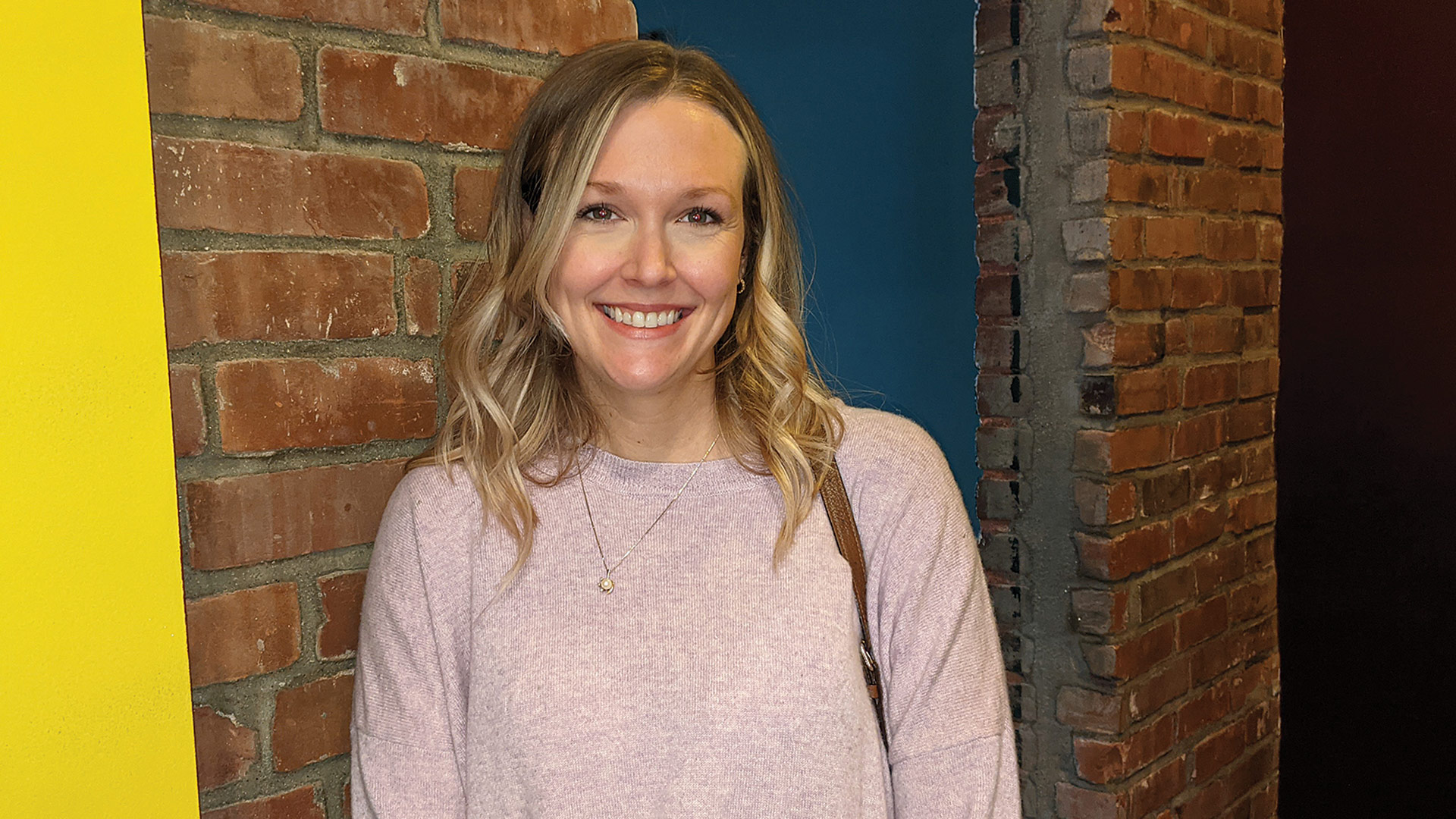
Hilary LeBrun

Hilary LeBrun says stereotypes have obscured what a rich, varied field IT is — and kept many women from exploring it.

As an associate professor of Computer Science at Elms College, Beryl Hoffman is somewhat far afield of her first chosen college major: biology.

“I had not really heard about computer science as a career at all — my high school didn’t offer it,” she told BusinessWest. “But a friend talked me into taking a coding class for fun.”

And she enjoyed it — enough to eventually push her studies in a different direction.

“As soon as I started it, I felt that, if girls had that experience early on, they would also really enjoy it,” Hoffman recalled. “What hooked me was the problem-solving aspect, plus the creativity. A lot of girls don’t get introduced to that, even after school or at home, where it’s boys gaming and building robots. Girls don’t get to experience that as much.”

That reality has no doubt contributed to a wide gender disparity in the IT world. According to data from the National Center for Women & Information Technology, women make up 47% of all employed adults in the U.S., but hold only 25% of computing roles. It’s more dire for minority women; of the 25% of women working in technology, Asian women make up just 5% of that number, while black and Hispanic women account for 3% and 1%, respectively.

“What hooked me was the problem-solving aspect, plus the creativity. A lot of girls don’t get introduced to that, even after school or at home, where it’s boys gaming and building robots.”

“It’s mostly societal expectations and stereotypes,” Hoffman said. “I do believe we need to start introducing people, especially young girls, to computer science and technology when they’re young. That’s happening more and more — I’m seeing more computer science even in elementary schools. It will change; it’s just slow. But I have been seeing slight improvements every year.”

Hilary LeBrun didn’t start out in computer science, and she certainly never thought she’d eventually be COO of Paragus IT when she was working in the hotel industry.

“I was up for a change — I wanted to work in a more family-friendly industry, and the hotel industry isn’t family-friendly. I also wanted to work for a growing company with a good culture that was doing something important. And I found it in Paragus.”

She started as an assistant to CEO Delcie Bean and was quickly excited about how the company helps other businesses — keeping networks secure, creating efficiencies, finding budget-friendly solutions for clients, and the like. She sees the wide variety of work available in IT, and the relationship-centered focus of much of it, and has thought about why more women aren’t plugging in to these careers.
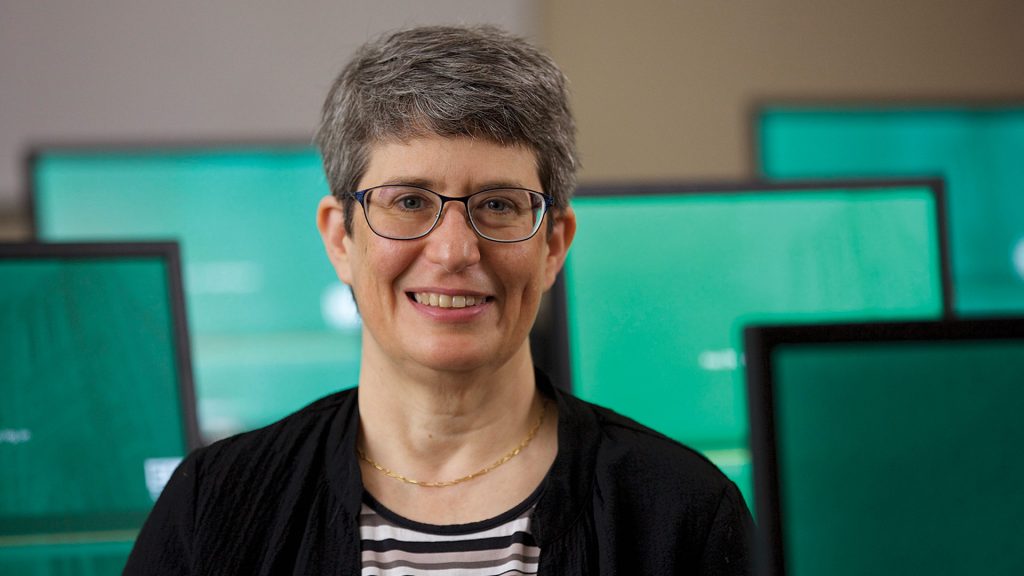
Beryl Hoffman

Beryl Hoffman says one key to closing the gender gap in IT is introducing girls to computers at much earlier ages.

“Part of it is the stereotype,” LeBrun said, echoing Hoffman’s thoughts. “It’s always been this predominantly male industry, and it’s something that’s taken women a little while to get into. There’s almost a stigma around it, that it’s this geeky industry, it’s the gamers that get into it, but people aren’t seeing there’s so much more to it.”

For instance, “it can attract somebody who wants to solve problems, and also create efficiencies, even someone who wants to go into management — there are just so many different aspects. There’s a lack of awareness around that, and the ways that women — and even men — can learn and get that education, get that foot in the door.”

“It’s always been this predominantly male industry, and it’s something that’s taken women a little while to get into. There’s almost a stigma around it, that it’s this geeky industry, it’s the gamers that get into it, but people aren’t seeing there’s so much more to it.”

Zoe Alfano got her foot in the door as a college student at UConn, where she had her eyes on an engineering degree but began working in campus tech support and realized she was good at solving problems. With four years of that work experience in hand, she was hired by Paragus as a client support engineer. She cited a couple of reasons why women don’t follow a similar path.

“It depends a lot on the person, their experience. They might not have been exposed, or didn’t have someone in their lives say, ‘try it out, you might be good at it.’ Or, some people just don’t consider themselves technical; they think they’re not good at it. But they might be good at problem-solving, and solving a problem with a piece of technology isn’t a whole lot different than figuring out what’s wrong with the stove when it’s not working, or solving a math problem. Some people might be better than they anticipate, but don’t have the opportunity to try.”

Constant Change

When they do try, Alfano said, they find that it’s a field that’s constantly evolving, with always something new to learn.

“There’s such a wealth of knowledge, it’s impossible to be a jack of all trades, with so many things to specialize in. A network manager can prevent attacks. A technician like me is good at solving day-to-day issues but might not be as good at solving network-related issues. There are so many different things to know about and learn, and you always have an opportunity to learn something new and choose where want to go.”

Zoe Alfano

Zoe Alfano

“Solving a problem with a piece of technology isn’t a whole lot different than figuring out what’s wrong with the stove when it’s not working, or solving a math problem.”

That can be appealing for women who love learning and working collaboratively, she added — and, often, helping people.

“You’re able to say, ‘hey, I can help with your issue,’ and if you value getting a positive response from someone, that’s a big reason to stick with the field. You talk on the phone, and they’re so grateful their problem isn’t happening anymore. It just makes you feel good.”

LeBrun finds a gratifying challenge in how quickly IT changes.

“Even just the technology we support — 10 years ago, every company had a server. Now servers are dying; everyone’s going to the cloud,” she noted. “So we always need to adapt, always need to change, and that’s one of the aspects I love about it. The industry is not stagnant. There’s always something to learn, new technology to adapt and bring to our clients.”

Beverly Benson, IT and Security program director at Bay Path University, first became interested in the field when her own information was compromised. The more she learned about cybersecurity, the more she related it to the non-technical things people do every day to keep safe, from locking doors to watching over their kids. In short, she saw an appealing human element to a technical field.

“We do that as mothers naturally, always trying to protect our children, always checking in and protecting. I just get paid to do it,” she said. “I think it comes naturally as a woman; we’re the nurturers in a positive sense, a protective sense.”

She agreed with the others BusinessWest spoke with that more awareness of the breadth of IT careers, from the highly technical side to the more relationship-driven side, would boost the number of women interested in pursuing it. “There are a variety of careers within the field — they need to know it’s much more than coding,” she noted.

“There is a need to protect information and infrastructure in every sector,” Benson went on. “It has the potential to impact the food you eat, the vehicles that you drive, it can impact healthcare and your medical records … everyone is now living in such a connected world that there is a need to protect every aspect of our lives.”

Hoffman agreed. “It’s a really awesome field of high-growth, high-paying jobs,” she said. “Also, technology is essential in any field now. A lot of folks are missing out on the opportunities out there. And I think a lot of it starts with education. We need to let people know about these careers and have girls experience them.”

To that end, Hoffman is part of a nonprofit, Holyoke Codes, that aims to bring coding and robotics to kids in Holyoke. She also received grant to build a high-school curriculum called CSAwesome, a free e-book that teaches AP CS A and Java and is becoming more widely used in high schools.

“That’s great to see, too,” she said. “And the AP College Board has done a lot to try to get girls to take AP classes in computer science. It’s nice to see as we try to grow that pipeline, and see it broaden and become more diverse.”

Beverly Benson

Beverly Benson

“Everyone is now living in such a connected world that there is a need to protect every aspect of our lives.”

The education needs to start earlier than high school, though. “They say that most kids start thinking about careers in middle school. So we need to start educating them there,” Hoffman said, adding that girls need to see more female role models from the IT world.

“As more women go into IT, they will encourage even more women to go into IT. But it’s just slow. We should start them young — even at home, often the robotics and the computers are bought for the boys, not the girls.”

Disparities linger in school districts as well, she said, noting that suburban schools are more likely to present robust computer-science programs than urban and rural schools.

That’s a lot of factors in play, she told BusinessWest, “but it’s slowly changing.”


Serve and Protect

LeBrun admits IT can be an intimidating field for women, considering the gender disparity and stereotypes, and is glad she found a company in Paragus that employs — and promotes — plenty of women. She hopes others will find similarly supportive cultures.

But she also believes women need to consider how important IT is to the work world as a whole and how gratifying it can be to be a part of that.

“COVID really opened up businesses’ eyes to how important their IT is and how much they depend on it,” she said. “We try to tell our clients, ‘picking your IT firm should be as important a decision as picking your lawyer or accountant.’ We’re a partner. We’re working to protect their business.

“And I think that’s really exciting,” she added, “to be in an industry that can protect other companies so much — it just creates so many opportunities. Again, it’s about bringing that awareness to girls in school who are still trying to figure it out.”

For older women and career changers, Tech Foundry, a workforce training program affiliated with Paragus, is one example of how to create opportunity — “to just make it doable for them, because it can be scary,” LeBrun said. “There’s a lot to learn in the field.”

“A lot of people don’t realize the stereotype of a nerd in his basement, coding away, it’s not like that anymore. It takes a team to create software.”

IT companies would do well, she added, to seek employees who might not have every technical skill, but brings fresh perspectives to an organization. “They might not have the traditional background, but have the drive and personality, and the rest can be taught.”

The collaborative nature of much IT work is appealing as well, Hoffman said. “A lot of people don’t realize the stereotype of a nerd in his basement, coding away, it’s not like that anymore. It takes a team to create software.”

The IT industry is also becoming integrated into other careers, she added, from healthcare to finance. “More and more, all fields are integrating IT, so no matter what you do, those skills are going to be useful in the future, especially in Massachusetts, with so much growth in biotechnology and health sciences.”

The ability to work remotely is another plus — for many firms, a fairly recent one, Benson said.

“Because we had no other choice, we had to work remotely during the pandemic. That has opened doors of possibilities for all people, including women. You don’t have to uproot your family to move to a state heavily populated by cybersecurity opportunities. Now some organizations are OK with you working remotely.”

In short, opportunity abounds. Hopefully, the women we spoke with said, awareness will follow — and stereotypes will continue to crumble.

“I try to encourage women to give it a try,” Benson said. “My mantra is ‘dare to dream.’ I want to see more women in this field. We need them.”


Joseph Bednar can be reached at [email protected]

 

Law Special Coverage

What Can Business Owners and Managers Expect in 2022?

This past year was a busy one on the employment-law front, with a number of new measures and mandates for employers to follow and some emerging trends, such as unionizing activities, to watch. As the new year dawns, these matters will continue to be at the forefront, and obviously bear watching.

By John S. Gannon, Esq. and Meaghan E. Murphy, Esq.

Last year, we saw legislators and employers trying to pivot from COVID-19 safety measures to more traditional labor and employment-law issues. However, with the Delta and Omicron variants wreaking havoc across the globe, businesses and lawmakers are once again looking for ways to stop the spread of the pandemic. Here are some labor and employment highlights from 2021 that are sure to impact employers in 2022.

John Gannon

John Gannon

Meaghan Murphy

Meaghan Murphy

Employer Vaccination Mandates

In September 2021, President Biden signed several orders requiring federal employees, federal contractors, and most healthcare workers across the country to be vaccinated against COVID-19. He also instructed OSHA to develop an emergency temporary standard directing private employers with 100 or more employees to implement COVID-19 vaccine mandates or require weekly testing for their unvaccinated employees. These mandates have been challenged in courts around the county, with varying results. For example, in early December, a federal court in Georgia issued a countrywide stay of the federal-contractor vaccine mandate.

The OSHA ‘shot-or-test’ rule was similarly blocked by one court late last year, but a few weeks later, a different court ruled in favor of the Biden administration and reinstated the emergency standard. It appears the U.S. Supreme Court will have to sort all of this out, and we expect they will rule on these issues early in 2022.

“Unionization campaigns at some of the country’s largest companies have been heating up.”

Here in the Commonwealth of Massachusetts, state mandates are in place for employees working in long-term care and assisted living, certain home-care workers, and executive-level state workers (including law enforcement). Legal challenges to the vaccine mandates were filed in Massachusetts courts, but to date all of them have failed.


Accommodations to Vaccination

In October, the Equal Employment Opportunity Commission (EEOC) released guidance making it clear that all employers, regardless of size or industry, can require that employees receive the COVID vaccine. There is one big caveat: federal and most state laws require employers to provide reasonable accommodations for religious beliefs, disabilities, or pregnancy-related reasons. These are commonly referred to as medical and religious exemptions. Employers that are considering a mandatory vaccination program should have policies explaining how these exemptions work, as well as exemption forms ready for employees to fill out.


Biden Administration’s Support for Unions

In June, President Biden appointed Jennifer Abruzzo as the National Labor Relations Board’s (NLRB) new general counsel. She quickly made clear her (and the new Democratic administration’s) pro-labor stance on various issues through a series of memoranda issued by her office. Not surprisingly, Abruzzo has vowed to undo much of the NLRB’s activity under former President Trump, which tended to be pro-business.

Unionization campaigns at some of the country’s largest companies have been heating up. Employees at a Starbucks in Buffalo, N.Y. voted to unionize. Starbucks has agreed to sit down at the table and bargain with the union. This is the first time organized labor has gained a foothold in one of Starbucks’ U.S. locations, but it certainly does not seem like it will be the last. Employees at Starbucks in several other states, including Massachusetts, Washington, and Arizona, are also seeking to unionize.

In addition, employees at an Alabama Amazon warehouse recently voted not to unionize, but the union trying to organize those employees alleged that Amazon intentionally interfered with its union-organizing efforts. In one of its biggest actions under President Biden, the NLRB announced that Amazon had committed to allow more room for employees to conduct union activity and to send an e-mail directly to current and former employees to inform them of their labor rights. It is the clearest example to date of how Democratic officials in this administration will seek to use federal power to help employees organize.


Paid Family and Medical Leave

Starting Jan. 1, 2022, most Connecticut employees will be able to take paid time off to attend to personal and family health needs. Under the program, employees are entitled to 12 weeks of paid-leave benefits, and up to 14 weeks if an employee experiences a serious health condition that occurs during a pregnancy.

This program is similar to the Massachusetts Paid Family and Medical Leave program, which went live at the beginning of last year. The Department of Family and Medical Leave published data stating that the department approved 43,440 applications between Jan. 1 and June 30, 2021. Benefits totaling $167,915,781 were paid out during this time. This was before employees could take PFML to care for family members, which became available on July 1.


Employee Mobility: Tackling the Labor Shortage

A record 4.4. million Americans quit their jobs in September 2021. The high quit rates were commonly dubbed the ‘Great Resignation,’ and made it clear that Americans are switching jobs for better pay, starting their own businesses, or continuing to struggle with child care and school schedules.

As the pandemic lingers, it’s likely that the quit rates will remain high for the next several months. As a result, employers will need to raise wages and/or offer more lucrative benefit packages to attract and retain talent. Businesses should also consider offering employees who do not physically need to be in the office every day some sort of a hybrid work-from-home schedule, a model that has dramatically increased in popularity over the last year.


John Gannon and Meaghan Murphy are attorneys at the firm Skoler, Abbott & Presser, P.C., in Springfield; (413) 737-4753; [email protected]; [email protected]

Health Care Special Coverage

When It Can’t Wait

Mercy Medical Center

Mercy Medical Center, like all area hospitals, has seen a series of COVID surges over the past two years, including the current one.

Last month’s DPH guidance to hospitals, telling them to postpone all non-essential procedures that could result in an inpatient stay, is a challenge on multiple levels, local hospital leaders say. One, it’s not so easy to simply redeploy personnel from one department to another. Two, there’s no one-size-fits-all definition of ‘non-essential.’ But most important, it’s critical that patients seek out the care they need and let doctors make the judgment calls — and the fear is that this new guidance will chase those patients away. It wouldn’t be the first time.

It’s never good to put off necessary treatment, Spiros Hatiras said, whether that be cardiac screenings, lab tests, or cancer surgery.

“The outcome is not going to be good,” said the president and CEO of Valley Health Systems, which includes Holyoke Medical Center. Yet, that’s exactly what has happened over the past two years, due to a combination of people’s fear of public places and guidance from the hospitals themselves for people to stay home during the early height of the COVID-19 pandemic in 2020.

“People were initially scared; they wanted to stay away from the hospital,” Hatiras said. “Then we started reducing capacity and told people, essentially, ‘don’t come to the hospital.’ We started seeing people come back over the summer and fall, and now we’re back to telling people to stay away.”

He was referring to the Massachusetts Department of Public Health’s (DPH) guidance to hospitals concerning non-essential, elective, invasive procedures, which took effect Dec. 22.

“We started seeing people come back over the summer and fall, and now we’re back to telling people to stay away.”

“To preserve healthcare personnel resources, all hospitals are directed to postpone or cancel all non-essential elective procedures likely to result in inpatient admission in order to maintain and increase inpatient capacity,” the guidance reads. “Patients are reminded to still seek necessary care at their hospital or from their healthcare provider.”

The guidance comes as the Omicron variant has pushed hospitals to capacity limits with a new COVID surge.

Dr. Robert Roose

Dr. Robert Roose says treating all patients, urgent and non-urgent cases alike, is part of Mercy’s mission, but it will abide by the state’s guidance.

“Hospital capacity is stretched more than it has ever been since the beginning of the healthcare emergency,” Massachusetts Health & Hospital Assoc. (MHA) President and CEO Steve Walsh said in recent testimony to the state Legislature. “After two years of fighting this virus, our caregivers are simply exhausted.”

He acknowledged that “some of these pressures, we feel, are not COVID-related and may have also been mounting for several months.” Still, a strained healthcare workforce is facing a staffing shortage that has contributed to the loss of approximately 500 medical/surgical and ICU hospital beds since the beginning of the year.

Still, Hatiras questions the wisdom of simply assuming caregivers can be efficiently redeployed to other tasks.

“The idea is that, if we don’t do these surgeries, it opens up resources to redeploy in the hospital. But we know that’s not so easily done. You can free up nurse, but in a lot of cases, there’s not a whole lot they can do. It’s not like they can suddenly be an ER nurse or an ICU nurse. There are a lot of issues around that in terms of training and competencies. So the value of actually redeploying staff is somewhat questionable.”

He suggested what might work better is to issue the guidance as an advisory. “We can advise hospitals to find ways to create capacity. At the end of the day, there’s not a single hospital that would leave a patient untreated because they’re going to schedule a plastic surgery ahead of that patient. What we really need is more staff, which we don’t have.”

Dr. Robert Roose, medical director of Mercy Medical Center, said his team takes pride in caring for all the needs of the community, so the DPH guidance poses a challenge.

“Hospital capacity is stretched more than it has ever been since the beginning of the healthcare emergency.”

“It is important for us, from a mission perspective as well as from an operations perspective, to be able to be there when patients need us, whether for emergency care or non-emergency care,” he said. “All types of care across the continuum support individuals’ well-being and wellness.”

That said, “Governor Baker and the Department of Public Health have issued an executive order for hospitals to suspend non-emergency procedures that could result in an inpatient stay. In order for us to fulfill our obligations as a hospital, we are, of course, complying with those orders. We recognize this can be a concern for patients, as well as our providers and colleagues who wish to continue to provide the care they are so expertly trained to do. This is not an ideal situation, but one we find ourselves in, and we look forward to resuming all care in the very near future.”


What Is Non-essential?

To help redirect resources, Gov. Charlie Baker activated the Massachusetts National Guard on Dec. 22 to address the non-clinical support needs of hospitals and transport systems. Up to 300 of these Guard members will support 55 acute-care hospitals, as well as 12 ambulance service providers across the Commonwealth.

DPH surveyed hospitals and ambulance service providers and, in concert with the MHA, identified five key roles that non-clinical Guard personnel can serve in support hospital operations for up to 90 days: driving ambulances used to transfer patients between two healthcare locations, such as when patients are discharged from a hospital and transferred to a long-term-care facility; providing continuous or frequent observation of a patient who is at risk for harm to themselves; helping to maintain a safe workplace; bringing patients via wheelchair or, if needed, stretcher, from their patient room to tests such as X-ray or CT scan, or from the emergency department to their inpatient floor; and delivering patient meals to their rooms.

Spiros Hatiras says very few procedures can be deemed non-essential when one considers the health effects of delaying them.

But if resources are, indeed, being directed away from non-essential procedures, the question becomes what, exactly, constitutes a non-essential procedure. And the answer, in many cases, is complicated.

“The decision of what can be safely postponed, even for a week or three or four, is left to the discretion of the surgeon or clinical team,” Roose said. “That is an incredibly important fact because, ultimately, the providers are the ones responsible for the care of the patient, and we never want to see something untoward occur during the period of time when they could have been attended to. At Mercy, just like at other hospitals, those decisions are made by the treating providers and patients in collaboration, with their best interest in mind.”

Hatiras agreed. “When we talk about necessary procedures, first of all, there’s no particular approach; every individual is different. If you think about it, there are very few procedures where postponing it enhances one’s health. We’re talking about surgery here. When somebody gets to the point where they need surgery, it’s not like getting a haircut, where it can wait until next month.”

Exceptions to this rule might include discretionary plastic surgery and perhaps Lasik, where the worst-case scenario might be a few more months of wearing glasses or contacts.

“But that’s about the only things I can think of,” Hatiras said. “With other things, you’re doing it because you’re in pain or your health is deteriorating in some way.”

Take bariatric surgery, which some people might put in the non-essential category. Those patients start the process six months before surgery and tackle issues such as diabetes and blood pressure — “all the issues that make COVID deadlier,” Hatiras said. They typically have to lose a certain amount of weight before surgery and undergo psychological screening and counseling.

“When they meet all the milestones and the date approaches where they’re ready for surgery, should we now tell them, ‘guess what? We can’t do your surgery; we’ll let you know when we can.’ That would be wholly detrimental to the patient, who worked for six months to get to a point they might never get back to.

“Could you call that elective?” Hatiras added. “When you do the surgery, the diabetes gets better, the blood pressure gets better, the heart gets better. I take issue with what some people consider elective.”

Or take knee and hip replacements, he went on. “Is that really elective when there’s a risk of blood clots because they can’t walk or they’re risking other illnesses because they’re taking pain medications to cope with it?”


Call Your Doctor

Hatiras and Roose both hope the new state guidance doesn’t chase people away from seeking the care they actually need. That’s what happened last year, and hospitals and patients are still feeling the effects.

“At this point in the pandemic, our concern is that we have started to see the impacts of people in the community delaying care during prior waves of the pandemic,” Roose said. “We want to encourage members of the community to seek out important primary care, preventive care, and non-urgent care that can contribute to their health and wellness.”

In other words, let doctors and facilities decide what’s necessary — and how that care can be delivered.

“We have seen the pandemic shift many things in healthcare, including the way people seek care, which now is occurring far more through digital or virtual means than prior to the pandemic,” Roose said. “We’re seeing high demand for additional services in the home after a hospital stay, or in skilled nursing and other facilities. We are paying attention to how we can provide a service that delivers both in terms of convenience and excellence, because the pandemic has changed fundamentally the way care will be delivered for many years to come.”

The MHA, the DPH, and hospitals are united on one front: the unvaccinated far, far outnumber the vaccinated when it comes to taking up inpatient beds — and especially ICU beds — with COVID, in turn making it harder for hospitals to provide other services.

“When somebody gets to the point where they need surgery, it’s not like getting a haircut, where it can wait until next month.”

According to the DPH, 97% of COVID breakthrough cases in Massachusetts have not resulted in hospitalization or death, and unvaccinated individuals are five times more likely to contract COVID than fully vaccinated individuals and 31 times more likely to contract COVID than individuals who have a booster.

The MHA’s executive committee recently released an “urgent plea” for Massachusetts residents to do five things if they haven’t already: get vaccinated for both COVID-19 and the flu, and get boosted when eligible; always wear a mask when in public and when social distancing isn’t possible; get tested for COVID-19 if you develop symptoms or if you come into close contact with someone who has tested positive; keep up with regular medical appointments, “as we are now seeing the devastating effects of delayed care from the first waves of the pandemic”; and seek care from a doctor or urgent-care center when appropriate.

“When in doubt, you should never hesitate to visit your local emergency room,” the committee noted. “But for many medical situations, these settings can provide you with more timely and efficient care.”

It’s notable that, along with the expected advice to vaccinate and mask up, these medical professionals would warn against delaying care, even amid the DPH’s guidance to hospitals to postpone some procedures.

“Cumulatively, I think we’re dropping the health status of individuals,” Hatiras said, noting that people have put off colonoscopies, mammograms, and other procedures that are key to detecting issues early, before they develop into health crises. Holyoke Medical Center has responded with a public campaign to bring patients back, so they don’t keep delaying important visits.

“Don’t put something off. Don’t make that decision yourself,” he added. “To me, there is no safer place than a hospital. To me, a hospital is a lot safer than a restaurant, a lot safer than the mall, whatever you want to compare it to, because we have personnel aware of infection-control issues. We wear masks indoors, we hand sanitize, we know how to avoid infection.”

And don’t put off behavioral-health needs, either, Hatiras added, noting that isolation and anxiety have soared during the pandemic. “We see a lot of people deteriorating, in both their physical health and mental health, and that combination is never good.”

Roose agreed that it’s critical for individuals to seek the care they need, no matter what the state is saying, and let their doctor guide their next steps.

“There’s a lot of attention on capacity in hospitals, but we would not want anyone to delay care for important business, like mammograms, colonoscopies, lab tests, or emergency or urgent care,” he told BusinessWest. “We are here to take care of you, and we want to continue to send that message.”


Joseph Bednar can be reached at [email protected]

 

Community Spotlight Special Coverage

Community Spotlight

By Mark Morris

Mayor John Vieau

Mayor John Vieau says public safety and public health have been priorities of his first term.


Fresh off his re-election, Chicopee Mayor John Vieau said the main goal for his second term is the same when he first campaigned for the office two years ago: a focus on public safety.

“A city can have great schools, great trash pickup, and low taxes, but if you don’t feel safe, those other things aren’t so important,” Vieau said.

In the mid-1980s, Chicopee bolstered its police force by hiring a large number of officers. Nearly 40 years later, the city has seen many of those officers retire from the force, while others have left due to COVID-19 concerns to pursue other careers. For Vieau, this created multiple challenges.

“Based on civil-service exams, we hired 10 replacements for our retiring officers,” he said. “Then we ran into a quagmire because at first we couldn’t send them to the police academy because it was closed during the worst of the pandemic.”

As the academy eased its mandates, those officers completed training, and Vieau has hired an additional 15 officers with the intent of bringing the police force back to full strength.

“A city can have great schools, great trash pickup, and low taxes, but if you don’t feel safe, those other things aren’t so important.”

In addition to new officers, Chicopee is encouraging a new style of policing by introducing community policing at a substation on Center Street. With officers on walking beats, they are better able to make connections with people.

“This has been very successful because people are seeing the same officers who are building relationships and rapport with folks in the neighborhood,” the mayor said, adding that he’s looking to eventually bring a substation to Willimansett as well as other parts of the city.

The concern for public safety also extends to the Fire Department, which staffs two ambulances 24/7. Recently the fire chief suggested a pilot program to add a third ambulance for overnight coverage. The suggestion came about due to demand for more coverage during those hours as well as the closing of the private ambulance company that lent assistance when Chicopee ambulances were busy. The success of the pilot program will result in Chicopee adding a new ambulance along with the new fire pumper trucks that had been ordered.

“Just like with the police, we want to make sure our Fire Department has the tools they need to keep themselves and our city safe,” Vieau said.

Part of public safety includes fighting the spread of COVID-19. Chicopee received 15,000 rapid test kits from the state and has been distributing them to residents in low-income areas and at the senior center.

“Our message remains the same — we believe everyone should get vaccinated,” Vieau said.


Supporting Businesses

Keeping Chicopee businesses healthy also remains a priority. Through the Coronavirus Aid, Relief, and Economic Security (CARES) Act, more than 70 businesses received support. Julie Copoulos, executive director of the Chicopee Chamber of Commerce, said her organization helped small-business owners receive more than a half-million dollars in grant money during the pandemic.

“For us, it meant coming back to our core mission of supporting businesses and enhancing the economic climate,” Copoulos said. “Many of the small-business grants went to minority- and women-owned businesses.”

Julie Copoulos is enthusiastic about progress on development at the former Uniroyal and Facemate sites, among others.

The city will also receive $38 million through the American Rescue Plan Act (ARPA). Vieau has formed a committee to determine how to use that money in a way that will have a long-term impact for taxpayers in Chicopee.

“For us, it meant coming back to our core mission of supporting businesses and enhancing the economic climate.”

“I have a smart group of people who are looking into the best way to use the ARPA funds,” he said. “We’ve also surveyed residents for their ideas on how to spend the money.”

Vieau wants to proceed with caution on how to use these one-time funds because it would be easy to spend it all in one place.

Chicopee at a Glance

Year Incorporated: 1848
Population: 55,560
Area: 23.9 square miles
County: Hampden
Residential Tax Rate: $16.99
Commercial Tax Rate: $37.39
Median Household Income: $35,672
Median Family Income: $44,136
Type of Government: Mayor; City Council
Largest Employers: Westover Air Reserve Base; J. Polep Distribution Services; Callaway Golf Ball Operations; Dielectrics; MicroTek
* Latest information available

“I could target one infrastructure project and use all that money and more,” he said. “For example, the wastewater treatment plant needs upgrades to keep up with current pollution standards, and that project alone will cost around $50 million.”

For bigger projects like this, Vieau is hopeful about Chicopee’s prospects for funding through the recently passed federal infrastructure deal. “I’m going to fight for as much of that infrastructure money as we can get,” he said.

In the meantime, the mayor shared with BusinessWest an important development regarding the former Uniroyal site. After more than a decade of investing millions of dollars in hazardous-waste cleanup at the site, by this spring, the city will begin looking for potential new owners of both the headquarters and an adjacent building on the site.

“We are all looking forward to getting the Uniroyal property back on the tax rolls,” Vieau said. “It’s been a long time coming, and we are super excited about it.”

Right now Michelin, which owns the Uniroyal brand, is completing $1.5 million in cleanup efforts at the site. Once that’s done, the mayor explained, the city will launch a request for proposals in search of prospective buyers of the property.

Because Chicopee represents a good number of manufacturers, Copoulos believes this gives the city an advantage in the years ahead. She noted that economists have pointed out that manufacturing industries have come back to pre-COVID levels while more customer-facing industries continue to have challenges.

“I’m enthusiastic about the development while also reminding myself to be patient because big projects like this take time.”

“As a community with so many manufacturers, this can potentially give us a leg up,” she said. “Supply-chain issues will make domestic manufacturing more of a priority, and that makes me hopeful about prospects for Chicopee.”

The spring will also mark the beginning of construction for the new headquarters of the Food Bank of Western Massachusetts. After many years in Hatfield, the Food Bank purchased 16.5 acres in the Chicopee River Industrial Park in order to expand its warehouse in a more environmentally friendly building. Selecting Chicopee was a strategic decision on a couple of fronts. The location on Carew and East Main streets gives the Food Bank easy access to major highways, and because the city is in Hampden County, where the issue of hunger and food insecurity are more severe, the organization is in a better position to address the problem.

“The Food Bank location in Chicopee will be at the hub of addressing food insecurity in Western Mass.,” Vieau said.

Dino Facente

Dino Facente says his bakery’s move from Springfield to Chicopee has been a positive one.

Anticipation is also growing for the former Facemate property in Chicopee Center. Final plans and permits are being approved for a 54,000-square-foot, multi-sport facility; a 102-unit residential building; and renovation of the former Baskin building into a 10,000-square-foot restaurant and brewery, where Loophole Brewing will locate.

Both Vieau and Copoulos praised Singing Bridge LLC, a local developer, for leading the project because it shows a commitment to the success of Chicopee. For Copoulos, completion of the project can’t arrive soon enough.

“I’m enthusiastic about the development while also reminding myself to be patient because big projects like this take time,” she said.

Vieau noted in particular the 102 units of housing that will be added to Chicopee Center.

“Many people want to stay in Chicopee but are looking for empty-nest housing,” he said. “Realtors have told me if more condominiums were on the market, they could immediately sell them.”


Stops and Starts

The city had a setback recently when the Silverbrook Group said it may not be able to develop 600 apartments in the former Cabotville Mill in the center of town, citing rising construction costs as the main culprit. Vieau remains optimistic that both the Cabotville and Lyman mills will eventually be developed for housing and other uses.

While the next step for the mills is uncertain, that hasn’t stopped Vieau from moving forward with what he called a renaissance of Chicopee’s downtown. The city received a grant to convert the old library building, adjacent to City Hall, into an incubator space for budding entrepreneurs. The first steps involve bringing the building up to compliance with current ADA regulations. Vieau would like to eventually see the cultural council or the chamber take office space there, too.

“I liked the location because it’s not far from the plaza, and I could keep the customers who enjoyed coming in.”

“Entrepreneurs have to start somewhere, so why not start at our old library?” he wondered.

Next door to the old library, the former Rivoli Theatre has just gone up for sale. The mayor called this another space with great potential for the city.

In addition to new entrepreneurs, Chicopee still manages to attract established businesses to locate there. After decades at the Springfield Plaza, Dino Facente had been looking to move the Koffee Kup Bakery. In his words, he “stumbled on” Mickey’s Bike Shop, which had recently closed. The East Street location turned out to be the right spot to move the bakery.

“I liked the location because it’s not far from the plaza, and I could keep the customers who enjoyed coming in,” Facente said. He also credited Chicopee officials at all levels for making the move easy and successful.

“I’ve picked up a lot of business since I’ve been here,” he said. “I’ll be staying here until I retire.”

Economic Outlook

Sector Is on the Rebound, but Hospitality Still Faces Staffing Issues


the Big E came roaring back in 2021

After skipping 2020 altogether, the Big E came roaring back in 2021, even posting its best-ever attendance day in fair history.

John Doleva said 2020 was supposed to be the “year of all years” at the Basketball Hall of Fame, when it would unveil a $25 million renovation of the museum and welcome record crowds to a series of events and new attractions.

It was the year of all years, all right. Just for … another reason, namely a pandemic that shuttered most tourist attractions for months.

But the Hall did get to that ribbon cutting this past May, said Doleva, the institution’s president and CEO. And that wasn’t all.

“We had a terrific summer,” he told BusinessWest. “We were up 36% over 2019 — and that’s comparing it to a quote-unquote ‘normal’ year; we were up 300% over 2020.”

The Hall was very aggressive in promotion and advertising across a variety of platforms in 2021, he added, highlighting additions like a 14-by-40-foot LED screen on center court that could host remote visits with Hall of Famers, and recently wrapping up a series of eight college basketball tournaments in major cities across the country.

“I’d say we came out of 2021 as positive as we possibly could,” Doleva said, adding that the plan is to continue to aggressively market and elevate the brand in 2022, as well as looking to open new galleries every year, taking a lesson from Six Flags, which tends to unveil a major new ride each spring. “We’ve adopted that thinking. We want to give customers reasons to come back and see something new and exciting.”

Mary Kay Wydra has also been impressed with the tourism sector’s resilience in 2021.

“When the restrictions were lifted in late spring, we saw a boost in the attractions, and hotel occupancy grew,” said Wydra, president of the Greater Springfield Convention and Visitors Bureau. “Looking ahead, I do feel like we’re positioned to continue building on this momentum.”

Mary Kay Wydra

Mary Kay Wydra

“When the restrictions were lifted in late spring, we saw a boost in the attractions, and hotel occupancy grew. Looking ahead, I do feel like we’re positioned to continue building on this momentum.”

Last year’s boost in tourism was largely generated by leisure travel — and a need among people to go to something, she noted.

“When we were hunkered down at home, not doing anything, we all had a desire to reconnect with family and friends. The industry term is ‘human-oriented travel’ — the collective urge of people to reconnect. And we saw that.”

What she also saw was a region uniquely situated to meet that need in enriching ways. “We have a lot of things to do in our area. And when people come to visit, not everyone stays with family; they’re staying in hotels and visiting our attractions. So we had a very robust summer.”

So robust, in fact, that hotel occupancy rates in the region this summer exceeded pre-pandemic 2019 levels in three different months.

“It would be great to continue the momentum in 2022,” Wydra went on. “We always know the first three or four months is soft — it’s our shoulder season — but we should see good travel again this summer, again dominated by leisure travel. Conventions and meetings have been far more impacted by the pandemic, and 2022 will still be a little light. But the forecast for 2023 is far better.”

That’s because many organizations schedule their annual events a few years out, and events that were canceled in 2020 already had other sites scheduled for 2021 and 2022, but not 2023, she explained — and Western Mass. is aiming to get some of that business back — that is, “if they’re still doing in-person meetings,” Wydra said, and that is, indeed, a lingering question on the convention circuit.

It didn’t seem like many people had a problem crowding into the Big E a few months ago. A total of 1,498,774 people visited the 2021 event, after it was canceled outright in 2020. According to Carnival Warehouse’s annual Top 50 Fairs list, the 2021 Big E was the third-largest fair in North America, even surpassing the Minnesota State Fair — a huge achievement, Eastern States Exposition President and CEO Gene Cassidy said — for the first time.

On its way to that achievement, the Big E set four daily attendance records over the course of the 17-day event, including an all-time single-day attendance of 177,238 on the final Saturday.

“I think there was pent-up demand,” Wydra said of those numbers. “You miss something for a year, you definitely want to get back there the next.”

Jonathan Butler, president and CEO of 1Berkshire, said hard numbers won’t be known for a while regarding visitorship in Berkshire County in 2021.

“But our feeling, especially post-Memorial Day weekend, was that the Berkshires was really bustling during the summer,” he told BusinessWest. “And we saw different types of visitors to the Berkshires — a lot more younger couples, younger travelers trying to get out of the urban setting and finding the Berkshires to be a great option for them, with open space, a lot of recreational opportunties, and room to breathe. We saw bits and pieces of that in the summer of 2020, but saw it exponentially increase in 2021.”

Two factors slowed the momentum somewhat, and they’re both national in scope, not unique to Western Mass., Butler said. One was the Delta variant of COVID-19 (and, on its heels, Omicron), and the other is a lingering workforce shortage, which has kept some attractions, restaurants, and retail destinations from being open every day, and forced some hotels to operate at less-than-peak room capacity.

“We’ve seen a little bit of growth in terms of job applicants and some employers being able to get some workforce back,” Butler said, “but it’s still a bigger gap than we want for the economy to get fully back on its feet.”

“We saw different types of visitors to the Berkshires — a lot more younger couples, younger travelers trying to get out of the urban setting and finding the Berkshires to be a great option for them, with open space, a lot of recreational opportunties, and room to breathe.”

One factor that especially impacts hotels has been a decline in international workers coming to the region on work visas, due to both pandemic fears and shifting federal rules, he explained. “These are highly trained, motivated members of our local properties’ teams, and the loss of that demographic in the workforce has been another obstacle that has disproportionately affected hospitality.”

On the plus side, “even starting in 2020, we’ve seen a boom in outdoor recreation; it’s been a leading reason to visit the region,” Butler noted. “We saw continued increased activity at museums this year, again, building off 2020. Many museums and historical sites feature outdoor space, which is a nice option for people. And we saw some return to live performing arts this year. We’re very sensitive to the impact the pandemic has had on performing arts in the Berkshires, so it was good to see a return to live performances again at places like Tanglewood and Jacob’s Pillow.

“The big takeaway from 2021 was that people want to be here, and it’s a broader group that wants to be here, not just couples over 50,” he went on. “We’re seeing an influx of young adults, young families, who want to take part in a large variety of things — outdoor recreation, the food economy, health and wellness opportunities. We’re exposing whole new audiences to the Berkshires, and that will benefit us in the long term.”

Wydra feels the same about Western Mass. as a whole, and said the industry has learned to roll with the shifting demands of the pandemic because society demands it.

“Just like people in general, we have to adapt to the challenges COVID puts in front of us, things like masking, sanitary conditions, safety protocols. It’s super important to visitors, and something that will not go away for a while, if at all,” she said. “It’s becoming our new normal, and we’re all trying to figure it out.”

While noting, once again, how important it is that conventions and group business return at some point, Wydra also admitted the region has plenty going for it.

“The beauty of Western Mass. is that we have this amazing collection of great attractions and incredible natural resources. If people don’t want to go to Six Flags, they can go ziplining or rafting. There are so many things to do here, and that’s why we’re positioned well as a destination.”

Doleva has been busy promoting the re-envisioned Hall as an ideal site for meetings, fundraising dinners, product launches, and more, and he takes a similar interconnected view of the tourism industry in general. In fact, he says it’s necessary if the sector truly wants to shake off the pandemic and move ahead.

“We certainly take our obligation as part of the major attractions in the Valley very seriously,” he said. “We can and will work together as we go forward, and I think we’ll be in a very good position. None of us thinks of this region as a single-day trip. There’s multiple things to do, and we’ve recommitted to that idea throughout this whole COVID experience.”


— Joseph Bednar


Economic Outlook

The Prognosis Is for Another Year of Stern Challenges in 2022


Dr. Robert Roose says he’s deeply optimistic that 2022 will be the year when, as he put it, “COVID no longer rules most aspects of our lives.”

Elaborating, Roose chief medical officer for Mercy Medical Center, said that soon — how soon, he doesn’t know — COVID will reach a point where it is a more endemic infection that has much lower risk for larger numbers of people in the community. He bases that belief on a number of factors, including vaccines, rapid testing, and, soon, an oral, pill-based therapy that can reduce the risk of hospitalization amongst those that are most vulnerable to severe illness.

“The combination of these things has me optimistic that, for the summer, six months from now, and perhaps sooner, we will have lower rates of infection, higher proportions of our population immune to COVID — or at least the most severe effects of COVID — through vaccination or natural infection, and we will have more therapies that are available for those that would be vulnerable,” he said. “And I’m optimistic that will happen this year.”

Lynnette Watkins

Lynnette Watkins

“I’m very much an optimist; I’m a glass-half-full kind of person. I’m optimistic about the year ahead, despite the many challenges we face now and into the future. But 2022 is going to be challenging, especially the first few quarters, because of COVID and the ramifications of both the current surge and previous surges.”

Roose is not alone in that assessment — others we spoke with expressed similar optimism — but for now, all those in healthcare must cope with the present, when COVID still does rule most aspects of our lives, and when there are myriad other challenges stemming from the pandemic.

These include everything from intense workforce shortages that are being felt in this sector perhaps more than any other; high levels of fatigue and burnout among those working in most all healthcare settings, especially hospitals; growing mental-health issues that are impacting people in all age groups; and mounting non-COVID-related health issues stemming from individuals putting off needed care during the pandemic, or simply not being able to get it (see related story on page 41).

The sum of all these challenges and others prompted Dr. Mark Keroack, president and CEO of Baystate Health, to use the word ‘crisis’ early and quite often as he addressed the state of his healthcare system at an hour-long Zoom press conference a few weeks ago. Actually, he used the plural of that word, noting that his system was and is facing four crises: staffing, capacity management, a surging need for behavioral-health services, and, of course, COVID and the skyrocketing increases in cases due to Omicron.

While addressing these issues, Keroack echoed Roose when he said he is optimistic that COVID will become more endemic and, therefore, less controlling in the months and years ahead. But those other issues, and especially the workforce crisis, are expected to linger well into 2022 and probably well beyond.

Lynnette Watkins, who recently took the helm at Cooley Dickinson Hospital in Northampton, agreed, although she, too, was optimistic about 2022 and beyond.

“I’m very much an optimist; I’m a glass-half-full kind of person,” she said. “I’m optimistic about the year ahead, despite the many challenges we face now and into the future. But 2022 is going to be challenging, especially the first few quarters, because of COVID and the ramifications of both the current surge and previous surges.”

Dr. Mark Keroack

“About one in five healthcare workers has left the field since the start of the pandemic, and clearly that has shown up in our institution as well.”

The new year will certainly get off to an ultra-challenging start, she went on, noting that Omicron will test the healthcare system in every way imaginable, from capacity to workforce.

“We’ll get through this, but it’s going to be a challenging, challenging time for the next three to four months,” she told BusinessWest. “We tend to be about three weeks behind our neighboring states, meaning Connecticut, New Hampshire, and New York, in particular, when it comes to this surge in the disease. So January is going to a particularly tough time for this region, but what we’re seeing in the research is that, as quickly as this virus surges, it declines.

“With that, we need to make sure we have the capacity and capability of taking care of those patients who are COVID long-haulers, as well as those who have deferred and delayed care,” she went on. “And that is going to continue to be a challenge.”

Looking forward, those we spoke with said that perhaps the biggest challenge looming over the industry is a workforce crisis that was in evidence before the pandemic, especially among nurses, but has been exacerbated by COVID.

“We’re seeing those gaps just widen,” Roose noted. “The chasm between what we need to close is just wider.”

For the immediate future, hospitals and other providers will be impacted not only by people leaving their jobs, or the industry as a whole, due to retirement, burnout, and other factors, but also workers being infected by the virus and being forced to the sidelines, as well as the huge toll the shortages take on those in the trenches.

“We’ve really put a lot on our people — we’ve asked them to do a lot, like coming in for extra shifts, filling in, and stretching themselves,” Keroack said. “If we were fully staffed with people who were feeling refreshed, we’d feel a lot more confident about what we’re facing in the next few weeks.”

Meanwhile, staffing up during this crisis is a difficult and very expensive proposition, with all hospitals forced to hire what are known as ‘contract nurses,’ often at rates of $5,000 per week or more, Roose noted.

As for workers leaving their jobs, the numbers tell the story; Keroack told the assembled press that Baystate had 1,800 vacancies at that point in time in a total workforce of 13,000, roughly 14% of its workforce. In normal times, the number of vacancies would be closer to 500.

Dr. Robert Roose

Dr. Robert Roose

“Long-term, we could build some strength out of this. But short-term, it’s going to be very challenging.”

“About one in five healthcare workers has left the field since the start of the pandemic, and clearly that has shown up in our institution as well,” he remarked. “It’s been especially hard for bedside caregivers; many nurses have taken early retirement, and it has also affected respiratory therapy and pharmacy, and it’s been hardest for our entry-level employees — medical assistants, various technical positions, nurses’ aides, environmental workers, food-service workers.”

Roose said the numbers are similar at Mercy, with vacancy rates of 10% to 15%, with ‘functional’ vacancy rates, those that take into account open positions but also those employees on leave, being much higher, in some departments as much as 30% or more.

At Cooley Dickinson, Watkins noted, the number fluctuates anywhere between 9% and 12%, with the majority in nursing and nursing support.

In response to these developments, hospitals have made adjustments, said those we spoke with, including higher wages for many positions, expanded benefits eligibility, bonuses, ramped-up recruiting efforts, job fairs, and other steps, all aimed at bringing improvement when it comes to both hiring and retention.

And in some respects, they’re working, said Keroack, noting that these efforts are bringing in between 100 and 150 new workers each week, with the ratio of people coming in to those leaving being roughly 2 to 1.

“So we’re gaining on the problem, but it still quite significant,” he said, adding that, to that point in time, the system had spent roughly $40 million on bonuses and shift differentials, and another $40 million on contract-labor expenses, for calendar year 2021.

Looking ahead, those we spoke with said that, eventually, the laws of supply and demand will being improvement to the staffing crisis, but relief is not likely to come any time soon.

Keroack said part of the problem, especially when it comes to nurses, is simply getting enough people into and then through the pipeline.

“There’s a tremendous shortage of nursing faculty members — we had a number of senior seniors take early retirement — and so the pipeline simply wasn’t fat enough to completely replenish the pool in a quick amount of time,” he said. “We have waiting lists of people wanting to go to nursing school, but they’re limited by the number of clinical placements and the number of faculty.”

Roose agreed. “I think that at some point, a few years from now, things will start to settle out, perhaps sooner if there can be some major interventions at the federal level from a legislative perspective, as well as reconnecting with some of the meaning behind why people get into healthcare in the first place,” he noted. “This can spur people to enter the field as a result of wanting to be part of something so transformative.

“Long-term, we could build some strength out of this,” he went on. “But short-term, it’s going to be very challenging.”

The same can be said the mounting mental-health crisis impacting the region and the entire country, said Watkins, expressing optimism that American Rescue Plan Act funds can and will be put to use to address this emerging issue.

“A lot of what’s coming through this act will definitely help on all fronts and all healthcare providers,” she explained, “but especially our mental-health professionals and building that pipeline to increase access to care — because we’ve all suffered, and if we’re not looking into mental-health support services, we should.”

And while COVID has certainly given all those in healthcare a number of headaches and challenges, it has also given this sector the opportunity, born of necessity, to innovate and find and new and often better ways of doing things and caring for patients, said Watkins, adding that perhaps the best example of this is the rise of telehealth, a trend that will certainly continue in 2022 and beyond.

“While a lot of people might have thought about telehealth before the first wave of the pandemic, now it’s here, and it’s here to stay,” she said, with conviction in her voice. “Whether it’s teleradiology, teleneurology, or other ways of engaging telehealth … this has emerged as one of the key delivery options of the future; there’s more access, without the inconvenience of travel and waiting. The emergence of telehealth has been a real game changer.”

Summing things up, Watkins maintained her glass-half-full outlook, but stressed repeatedly that 2022 will pose the same challenges as the past two years, and they will likely increase in intensity before there is solid improvement.

“We have a very, very depleted workforce,” she said while speaking for all her colleagues in the industry, “and a very, very sick population.”


— George O’Brien

Economic Outlook

Region’s Colleges, Universities Face More Stern Tests in 2022


Looking ahead to 2022, Sandra Doran projects that this will be what she called “the year of the woman.”

Elaborating, she said many women have put their lives, careers, and educational goals on hold the past few years. And she projects that many will be making up for lost time in the months to come as the region and its large and important higher-education sector look to return to something that has been quite elusive since March 2020: normalcy.

“COVID has had a disproportionate impact on women, both in the workforce and in higher education,” said Doran, president of Bay Path University in Longmeadow, a women’s college, at least at the undergraduate level. “Many people lost their jobs, and many students weren’t able to continue, especially our adult students, those who work and live and go to school, and our graduate students — many of them had to delay their own aspirations. And I see many people saying, ‘I’m not going to put that aside any longer.’”

Sandra Doran

Sandra Doran

“Many people lost their jobs, and many students weren’t able to continue, especially our adult students, those who work and live and go to school, and our graduate students — many of them had to delay their own aspirations. And I see many people saying, ‘I’m not going to put that aside any longer.’”

The area’s colleges certainly need this to be the year of the woman — and a better year all around. Many had been struggling with enrollment before the pandemic, due to smaller high-school graduating classes, but other factors as well. And the pandemic only exacerbated the problem, with enrollment down more than 3% nationally in the fall of 2021.

The region’s community colleges have been the hardest-hit, with double-digit drops in enrollment at all of them over the past two years, but all schools have been impacted by COVID.

“Like every state university in Massachusetts, we’re having enrollment challenges,” said Linda Thompson, who took the helm at Westfield State University last summer, noting that many are still wary about attending college in the midst of a pandemic.

Those we spoke with said ‘normal’ was something they were anticipating would return last fall. Indeed, as COVID cases plummeted over the summer and the economy reopened across the board, there were high expectations for that fall semester, said Harry Dumay, president of Elms College in Chicopee. But the Delta variant showed how quickly the picture, and expectations, can change.

And as the new year dawns, COVID and its Omicron variant loom large over this sector, with some uncertainty about whether schools can open their campuses for the spring semester (several closed their doors as Omicron cases spiked in the middle of December) and under what circumstances they can reopen.

“Fall of 2021 was actually a very good enrollment period for us.”

“We’ll be watching over the break to see how things develop, and we will have contingency plans in place if we need to do anything different,” said Dumay, adding that returning students must be vaccinated and receive their boosters as soon as they are eligible. “We’ll be as cautious and prudent as we were in the fall of 2021, and even more so, given what we’ve seen from Omicron.”

There are other challenges as well, especially a workforce crisis that hasn’t spared any sector, especially higher education.

“We have jobs that are going unfilled; we have jobs where, in the past, we’d have 100 applicants — we’re just not seeing that anymore,” said Thompson, noting this trend involves positions at every level and shows few if any signs of abating any time soon.

But amid the questions, concern, and uncertainty, there is also optimism, expressed by Dumay and others, that 2022, and especially the fall semester, will bring improvement on enrollment numbers and a return to something approaching normal.

Harry Dumay says he’s confident about the way enrollment is trending at the Elms heading into 2022.

Harry Dumay says he’s confident about the way enrollment is trending at the Elms heading into 2022.

Or continued improvement, as the case may be.

“Fall of 2021 was actually a very good enrollment period for us,” said Dumay, adding that, after a slight decline in the fall of 2020, the first semester after COVID made its arrival, the school — bucking those national trends — saw record applications among traditional, first-time freshmen, close to record acceptances, and one of the highest enrollment numbers for first-time freshmen in more than a decade.

Meanwhile, the numbers for transfer students and graduate students were also solid, with the latter helped by the opening of a graduate admissions office, he went on, adding that the only segment that was down was continuing education, the students who transfer from community colleges, a statistic in keeping with the struggles at those schools.

“As we look to the fall of 2022, everything is trending as it was in the fall of 2021,” he went on. “In fact, we’re ahead, year over year, in terms of applications, and all three segments that were good last year continue to look very solid for 2022.”

Doran shared that optimism. “I feel very confident about next fall,” she said. “Many students had an online experience over the past few years in high school, and now, they’re looking for a more personalized, in-person fall experience, and that’s what we’re really good at.

“I really see this as a very strong year for women in education and women in the workforce,” she went on. “And I feel that way for several reasons, starting with the fact that I hear women say, ‘we can no longer put on our lives on hold — we have to move forward aggressively, and part of our life plan is to make sure we have the right education.’

“But we also hear from employers that they’re very eager to fill their talent pipeline,” she went on. “They know our students, that they’re well-qualified and exceptional employees, and we’re working very closely with employers to make sure our curriculum provides our students with the strengths, capabilities, skillsets, and thinking ability to succeed; I see it on both sides of the equation.”

Linda Thompson

Linda Thompson

“We’re looking at more things we can do with community colleges. We need to streamline pathways from high school to community college to four-year institutions. These are the things that are going to much more prevalent moving forward.”

When asked if the phrase ‘pent-up demand,’ which is being heard in many contexts as the economy continues to grow, also pertains to higher education, those we spoke with offered a qualified ‘yes,’ noting that there is demand for education that is career-focused.

“I think we’re going to see increased enrollment in the online space, and I think it’s because women know that, to advance their careers and to realize their career aspirations, many of them need a credential, a bachelor’s degree, a master’s degree — if you’re going to teach in Massachusetts, eventually you’ll need a master’s degree,” Doran said. “There’s a lot of momentum around educational attainment, particularly for our students. That’s because we’re really focused on student services, internship, career development, and making sure our curriculum aligns with workforce needs.”

Thompson agreed, noting that, as the number of high-school graduates continues to decline, colleges and universities need to increase their focus on those who may have tried college and stopped because life got in the way.

“Now, they’re probably looking for opportunities for growth and moving up in their jobs,” she noted. “So we need to do more to reach adult populations; faculty are starting to look at the way they offer courses, and probably will be offering more things in a blended format.

“Also, we’re looking at more things we can do with community colleges,” she went on. “We need to streamline pathways from high school to community college to four-year institutions. These are the things that are going to much more prevalent moving forward.”

Beyond enrollment and a long list or protocols to be followed and updated as necessary, COVID has brought other challenges as well, and these will certainly continue in 2022, said those we spoke with. Dumay told BusinessWest that managing through the pandemic has been difficult and exhausting on many levels.

“Across higher education, and across all industries, for that matter, people are tired,” he said. “If you ask any college president, they would say they and their teams are … fill in your favorite word — they’re on edge, they’re tired, they’re demoralized. And we’re paying attention to all that.”

Elaborating, he said ‘all that’ means paying more attention to the needs of students, obviously, but also faculty and staff, many of whom are coping with pandemic-related issues off the job as well as on it, and also focusing on the mental health of students.

“Students have different ways of coping with the uncertainty of the time,” he said. “And we’re seeing, across all campuses, a lot more students with mental-health issues, and COVID is exacerbating that.

“All of these things have created a whole lot of challenges, and there’s been very little let-up,” Dumay said in conclusion, adding that this trend, in addition to all the others, will almost certainly continue into the new year.”

Thompson agreed. “I think we’re going to be living with this virus for a long time,” she said. “I see it continuing to mutate; I see us having to be vigilant with hand washing, wearing masks, paying attention to our health and well-being, and doing whatever we need to do.”


— George O’Brien

Economic Outlook

Many Are Busy, But Challenges Linger as the New Year Dawns


Bart Raser says customers, contractors, and homeowners have all felt frustration

Bart Raser says customers, contractors, and homeowners have all felt frustration when their favorite brands aren’t available.

Bart Raser started by stating the obvious: 2021, like 2020, was “a great year to be in the hardware business.”

Indeed, many of those who found themselves working at home, or just spending more time at home because of COVID, found themselves wanting to work on their homes as well, and that certainly brought more customers — contractors and do-it-your-selfers alike — to the doors of the eight Carr Hardware locations, six in Western Mass. and two in Northern Conn., with the flagship store in Pittsfield.

But while business has certainly been good, there have been myriad challenges as well, from workforce shortages — which Raser, the company’s president, has largely been able to avoid, and he’s one of the few who can really say that — to inflation, production, and supply-chain issues, caused in large part by that soaring demand and a workforce crisis that no one in his sector has been able to avoid.

And that’s why large orders of grass seed, bird food, and other spring items will be arriving at those stores in a few days or a few weeks, rather than in mid-March, as is customary, because Raser’s team ordered well in advance to make sure the shelves would be stocked. And that’s also why he’s predicting it will be very difficult to buy a new lawnmower come April, and those forced to do so will pay a steep price for that item.

“Lawnmowers for spring look tricky — really, really tricky,” he told BusinessWest. “Some of the big manufacturers got out, and … there will be fewer choices and significantly higher prices.”

Raser’s story has its own specific nuances, but there are common threads for most all small-business owners in the region. For many, business has been good, although in most cases still not as good as before the pandemic. But there have been — and will continue to be — headwinds, like inflation, shortages of products that consumers want, lingering workforce issues, and the impact of all of the above on the bottom line.

Kris Houghton, a partner with the Holyoke-based accounting firm Meyers Brothers Kalicka, said 2021 was a time when her small-business clients were looking to put COVID behind them. That didn’t happen, obviously, and as they continued to battle the pandemic and many new challenges emerged or escalated, especially the workforce crisis and the rising cost of everything from labor to health insurance.

“There’s definitely an employee shortage, which is causing employers to have to pay more than they would otherwise have paid in the past,” she explained. “And, of course, paying more leads to two things: they either increase prices to their customers, or there is less profit for them in the end. It’s a compounding problem, and the biggest issue is employees.”

But there are others, including supply chain, she said, adding that businesses in many sectors could have done better in 2021, if they only had product to sell or produce. That’s true of auto dealers, obviously, but also hardware chains, restaurants, and manufacturers.

“Supply chain is also a big problem because, if businesses can’t get the product, they can’t sell it,” Houghton noted. “And if they want the product bad enough, they pay increased shipping costs to try to make product available; all this is leading to diminished bottom lines.”

And these dynamics become even more critical in the months ahead, she went on, because most federal support programs, from PPP to the employee-retention credit, have expired or soon will.

“Those were lifelines to try to restore a little bit to their bottom lines,” she said. “So there is concern about the future. In New England, we’re resilient, and some businesses were fortunate enough to have some reserves that can help them carry on. I don’t know about the other businesses. Are they going to be able to borrow? Are they going to run up costly debt? Are business owners going to be relying on credit cards, which come with 18% interest? These are some of the questions that will be answered in 2022.”

“Supply chain is also a big problem because, if businesses can’t get the product, they can’t sell it. And if they want the product bad enough, they pay increased shipping costs to try to make product available; all this is leading to diminished bottom lines.”

As noted, 2021 was a solid year for many small businesses, especially those in manufacturing and related services. Jeanne Bell, controller and co-owner of Westside Finishing Co. in Holyoke, spoke for many when she said her company struggled to keep up with demand from customers who saw a surge in orders themselves.

“We ended up having a really good year,” she said. “It started off rocky, of course — the first two quarters, we were eligible for the employee-retention credit, but the second half of the year has been really, really busy, and it looks like it’s going to continue into next year.”

She said Westside is a job shop that power-coats parts and ships them back out again. Clients, and there are many, include OEMs like East Longmeadow-based Excel Dryer.

“We work for a variety of industries, and all of them are busy right now,” she told BusinessWest. “We’re actually turning down work right now because we can’t do it all; we would have to start a second shift to have more capacity, and we probably wouldn’t mind doing that if we thought we could get the people, but that’s our biggest challenge — workforce.”

Elaborating, she said the company’s labor costs rose in 2021, and one of the big reasons why was the need to hire additional staff to fill in for those out with COVID. And those additional costs kept this past year from being as profitable as others in the past.

Looking back, and ahead, she said overall sales in 2021 were not quite at pre-COVID levels. But she believes the company can get there in 2022, if current trends involving customers continue, if the economy continues to grow, and if some of those issues impacting clients themselves, including production and supply chain, work themselves out.

That’s a good number of ‘ifs,’ but overall, she said there is ample reason to be optimistic about the year ahead.

“We’re actually turning down work right now because we can’t do it all; we would have to start a second shift to have more capacity, and we probably wouldn’t mind doing that if we thought we could get the people, but that’s our biggest challenge — workforce.”

Raser concurred, but noted that most of the issues that came to the surface in 2021, especially when it comes to production and supply-chain woes — due to everything from soaring demand to workforce shortages to that large number of container ships waiting in a queue to be unloaded — are expected to linger well into 2022. He said roughly 3,000 of the 38,000 products his company sells have been impacted by both production and supply-chain issues, with that list including everything from paint and batteries to plumbing supplies and those aforementioned lawnmowers and other types of power equipment.

Paint manufacturers have been especially hard hit, he noted, adding that resin plants in Texas were set back by a succession of natural disasters, including the snow and freezing temperatures last winter and, later, hurricanes, as well as workforce challenges.

“All the big manufacturers of paint — Sherwin Williams, PPG, and Benjamin Moore — are all really struggling,” he noted. “And our painting contractors are very frustrated, as are their customers and homeowners as well. We’re been around a long time and have a lot of brands, so we’re able to pull a lot of levers to keep items in stock, but people have to flexible — they may have to consider moving to a different brand or a different product to get their project done.”

That part about being flexible goes for small businesses as well. This past year was solid for many of them, but business wasn’t the ‘normal’ that people had been hoping for, and expecting, around this time last year.

As we turn the calendars again, there are similar hopes and large doses of optimism, but the reality is that normal, as we knew it 22 months ago, is still an elusive target.


— George O’Brien

Economic Outlook

There Were Glimpses of Progress in 2021, and More Are Expected

When asked to project what lies ahead, Rick Sullivan said he believes the region got a taste of what he expects 2022 will be like last summer and early fall — before Delta and Omicron entered the lexicon.

Flashing back, he said the tourism sector was rebounding on many levels, with the Big E on its way to a very solid year, many other attractions across the region open again, and most all restaurants and other types of venues taking full advantage of large amounts of pent-up demand.

Meanwhile, the housing market was (and still is) booming, in part because there was considerable interest in moving to this region among those in Boston, New York, and other markets due to the growing popularity, and availability, of remote work. And the Western Massachusetts Economic Development Council, which Sullivan serves as president and CEO, was seeing an uptick in inquiries and site searches involving the region, with much of the interest coming from transportation and distribution companies, but also some manufacturers as well.

Rick Sullivan

Rick Sullivan

“From a retail and from a travel and tourism point of view, the future looks bright, and we had that taste of it.”

“We didn’t quite get to where we thought we’d be when we looked into our crystal balls at the start of 2021, but I thought we caught a glimpse of where we will be in the summer and early fall,” he said. “From a retail and from a travel and tourism point of view, the future looks bright, and we had that taste of it.”

That ‘taste,’ as Sullivan called it, could be a preview of 2022, and there is considerable optimism that it will be. But there are many question marks regarding what’s on the horizon, and most all of them are COVID-related in some way, shape, or form.

That includes a workforce crisis that has impacted every sector of the economy and spawned the term ‘Great Resignation,’ as well as supply-chain issues, enormous stress and strain on healthcare providers, and a host of challenges for small businesses, including, by and large, the end to COVID-generated federal relief measures such as PPP and the employee-retention credit.

As for COVID, itself, its unpredictability — and deep impact on the economy and specific business sectors — were on full display in December, said Tom Senecal, president of Holyoke-based PeoplesBank, citing postponed business conferences, canceled holiday parties (including one scheduled by his company), and the ripple effect all this had on businesses that were projecting a far better end to 2021, as just one example.

“COVID is going to be the impactful event of the beginning of 2022 — it might alter the way we continue to do business,” he said. “It comes down to mandates and whether businesses can stay open. Some colleges are closing; think about how it might affect the Amherst and Northampton market if colleges are closing and maybe not reopening depending upon how COVID goes.”

But despite great uncertainty about COVID and other issues, such as inflation and the fact that is no longer transitory in the eyes of the Fed, there is optimism that soon — how soon no one knows — the region may be see more of what it caught a glimpse of in 2021.

Vince Jackson, executive director of the Greater Northampton Chamber of Commerce, said many businesses returned to 2019 levels of revenue last year, and many others that didn’t at least came close, with expections that they will in the year ahead. But in many ways, the situation is similar to what the region was experiencing a year ago. As 2021 dawned, there was a general feeling that the worst was over and that ‘normal’ was maybe a quarter or two away. The reality was much different, of course.

“One of the things we learned from 2021 is that things are ever-changing,” he explained. “The outlook could be one way today, but end up being very different. We didn’t know what to expect at the end of 2020 as we headed into 2021, and we were just hoping for the best. And … here we are again, ending the year with a lot of uncertainty, just as much uncertainty going into 2022.”

As the new year starts, Jackson noted, many business owners, especially those in the retail and hospitality sectors that dominate Northampton’s economy, are looking for more consistent statewide direction regarding masking, vaccinations, and other COVID-related matters.

Vince Jackson

Vince JacksonVince Jackson

“One of the things we learned from 2021 is that things are ever-changing. The outlook could be one way today, but end up being very different. We didn’t know what to expect at the end of 2020 as we headed into 2021, and we were just hoping for the best. And … here we are again, ending the year with a lot of uncertainty, just as much uncertainty going into 2022.”

“Most business owners are looking for guidance on masking so that they don’t have to end up being the mask police,” he said, adding that many have questions about whether masks should be mandated or simply advised, because business can be lost depending on the answer.

Like Sullivan and others we spoke with, Jackson said 2021, or at least a short slice of it during the summer, provided a glimpse of what everyone is hoping for in 2022.

“As the year went on, things got better,” he recalled. “Summer came, the economy reopened, and people were ready to get outside and return to a sense of normalcy. We saw that in almost every sector of business, and the response was beyond expectations because of the community’s response, the public’s response, to returning to what was normal for them.

“From a restaurant standpoint, there was outdoor dining for those not quite ready to get out as much, and there was still takeout. But then, there was a whole statewide initiative to push indoor dining because we had the vaccines and things were safe,” he went on. “As I look back, I think we need to learn from history because we’re kind of in the same cycle in most people’s minds.”

Looking back at 2021, Jackson said the dominant limiting factor for most businesses was workforce. It kept many restaurants closed an additional day, or even two, each week, and it kept many types of businesses from realizing their full potential as the economy roared back to life in last spring and summer as COVID restrictions were lifted.

Thus, perhaps the biggest question hanging over 2022, beyond COVID, of course, is whether there will be any improvement on the labor front.

Tom Senecal says COVID is going to be the impactful

Tom Senecal says COVID is going to be the impactful event of early 2022, and might continue to alter the way business is done.

It’s too early to tell, but at present, there are few signs of real progress, said Senecal, who related a recent experience at the bank that speaks volumes about how deep and widespread the problem is.

“We had an open, entry-level position a few months ago that 16 people applied for; 16 people set up an interview, and 16 people didn’t show up the interview,” he recalled. “No phone call, no nothing.”

As alarming as that is, what’s perhaps more disconcerting is a lack of solid answers for what is behind this and similar episodes being recorded at businesses across the region.

“I don’t know what that says,” Senecal said, with a note of exasperation in his voice. “This was a few months ago, after the unemployment benefits ran out. I don’t understand that phenomenon and why it’s happening now.”

Sullivan concurred, and said that what the past few months have clearly shown is that the problem is much deeper than unemployment benefits and also rests with issues such as childcare, elder care, and the retirement of many in the Baby Boom generation.

“Every business has the help-wanted sign out, and you’ve seen things like sign-on bonuses and higher wages, which I think is a healthy thing for the economy,” he told BusinessWest. “Our employers have had to get a little more creative with incentives to keep the employees they have, and they’ve had to do things to bring new workers in. It’s not a regional problem, but a national one, and it’s one we’re going to have to come to grips with in 2022.”

“Our employers have had to get a little more creative with incentives to keep the employees they have, and they’ve had to do things to bring new workers in. It’s not a regional problem, but a national one, and it’s one we’re going to have to come to grips with in 2022.”

Meanwhile, there are other challenges the region must contend with in the weeks, months, and quarters to come.

“Supply chain and inflation are the two biggest economic dampers, both nationally and regionally,” Senecal said. “Core inflation is up 6%, gas is up 33%, cars are up 12% … when you talk inflation, it’s not the 6%, it’s the things outside the core inflation index that are really driving up prices. And the Fed has taken the words ‘temporary’ or ‘transitory’ out of their projections, meaning the Fed believes it’s real inflation.”

But while there are challenges, there are opportunities as well, said those we spoke with, noting that 2021 brought some positive signs when it comes to interest among both individuals and businesses alike to come to Western Mass. to take advantage of its quality of life and lower overall cost of living.

As for individuals, many have decided they can live in the 413 and work essentially wherever they want, said Sullivan, adding that this dynamic certainly impacted the local housing market, driving prices higher as inventory levels fell, following the laws of supply and demand.

And on the business side, there has been an uptick in activity when it comes to site selectors inquiring about the 413.

“We currently have more than 40 site searches going on, and that number has been pretty consistent for us over the past year or two,” he said. “And that’s a healthy number; it’s at the high end of what we’ve traditionally seen. It doesn’t mean that everyone is going to come here, obviously, but it does mean that people are out there looking.

“And the big difference this year, as opposed to perhaps few years ago, is that this interest comes in different sectors,” Sullivan went on. “We’ve always been historically attractive to the transportation and logistics companies because we’re at the crossroads of New England, and businesses can easily serve the Northeast given the Turnpike, I-91, and the other highways here, and rail and the airports. But we’re seeing the sectors increase, everything from manufacturing, which we had not seen a lot of, to cybersecurity and Big Data, such as the proposal for Westfield.”

Overall, Sullivan and others said the trends, both positive and negative, will continue into 2022, which should — and COVID will obviously have a lot to say about this — provide more than just a glimpse, or taste, of better times.


— George O’Brien

Economic Outlook

Optimism Abounds, but Many Factors Make It Difficult to Project

Bob Nakosteen started his discussion concerning the regional and national economy with a quick rejoinder that doubled as something to top everyone’s wish list.

“Well, if we put aside COVID…” he started while talking about the year ahead and, more specifically, about inflation and optimism that the Fed’s anticipated actions to raise interest rates will stem the rising tide of the past few quarters and bring it more under control in the months to come.

Overall (COVID notwithstanding), Nakosteen, a semi-retired professor of Economics at the Isenberg School of Management at UMass Amherst, said most factors involving the economy are positive — everything from consumer confidence to jobless rates; from a still-white-hot housing market to persistent pent-up demand for goods and services, especially the former.

Of course, you can’t take COVID out of the equation, as much as we all might like to, and that’s why predicting just what will happen in 2022 with regard to the economy and the many forces that drive it is still somewhat of a crapshoot.

Still, there is general optimism when it comes to the big picture and matters such as inflation — even though the Fed and others have dropped the word ‘transitory’ when talking about the issue — confidence, supply chain, the stock market, and perhaps even the workforce crisis, said Nakosteen and others we spoke with.

Karl Petrick

“The Fed wants to make sure it doesn’t jam on the brakes and raise interest rates so fast that they cause the recession they’re trying to avoid. It’s not good to get a recession named after you.”

Indeed, earlier this month, in a note to clients, Marko Kalanovic, JPMorgan’s chief global strategist, wrote, “our view is that 2022 will be a year of a full global recovery, and end of the global pandemic, and return to normal conditions we had prior to the COVID-19 outbreak.”

All that might still happen in the next 12 months, but the events of the past few weeks show that recovery may be slower, and perhaps not as complete as JPMorgan projects.

Karl Petrick, a professor of Economics at Western New England University, told BusinessWest that inflation should ease up in 2022 and retreat from highs of nearly 7% (year over year) in November to below 5% and perhaps to 4% or even 3% in the months ahead.

He said soaring gas prices, triggered by the laws of supply and demand as the economy started to roar back to life roughly a year ago, have been a big factor in soaring inflation, and they have already started to fall.

“It takes time for supply to meet that surge in demand, and as oil suppliers rebound, we expect to see that price come down, and we’re already seeing some moderation,” he said, adding that, if the impact of Omicron on the global economy is substantial — and already there are signs of slowdown and even shutdown in some countries — then demand for energy (and, therefore, the prices for same) will come down.

“Regardless, we expect to see inflation moderate,” he said. “It will still be a little uncomfortable compared to what we’re used to — we had gotten used to prices going up 2% or 1% a year, and that was part of the shock we felt as prices really started to jump the second half of this year — but things will improve.”

One key to what happens with inflation is action on interest rates, said Nakosteen and Petrick, noting that the Fed is certainly paving the way for higher rates. In mid-December, the central bank announced plans to phase out its large-scale bond-buying program faster than initially planned. That will give the Fed more flexibility to raise rates, and 12 of the 18 members of the Fed’s rate-setting committee expect rates to rise by three-quarters of a percentage point or more in 2022.

While such action is expected to keep higher inflation from becoming more entrenched, there are risks and costs to raising rates, said Petrick, adding that the Fed wants to keep inflation in check without slowing the pace of growth or, far worse, putting the country on a course to a recession.

That’s what happened in the early ’80s, he said, when then Fed Chairman Paul Volker elevated interest rates to historic levels, which triggered a recession that, in many historical references, bears his name.

Bob Nakosteen

Bob Nakosteen

“I don’t think the Fed is going to have to raise interest rates to the point where it’s going to dip us into a recession.”

“The Fed wants to make sure it doesn’t jam on the brakes and raise interest rates so fast that they cause the recession they’re trying to avoid,” Petrick said. “It’s not good to get a recession named after you.”

Nakosteen agreed, and said that, overall, he’s in the camp that believes that higher inflation as was seen over the last three quarters of 2021 will be transitory — and not built into the economy, as others predict — but perhaps for a longer period than everyone would like. He also agrees that, while the Fed is talking tough about inflation and the need to keep it in check, its overall response will not be as tough as the talk.

“I don’t think the Fed is going to have to raise interest rates to the point where it’s going to dip us into a recession,” he told BusinessWest. “The economy is going to continue to grow, maybe not as quickly, inflation is going to come down over the next year, and interest rates are going to go up, but not by very much; it will affect the housing market and automobiles.”

Petrick agreed, projecting “pretty reasonable” growth for the year ahead, but adding quickly that events of even the past few weeks — the rise of Omicron and setbacks for President Biden’s Build Back Better program among them — have tempered some of those expectations.

“At the beginning of December, before we knew the Omicron variant was as prevalent as it was internationally, growth projections were pretty high, about 4% to 5% globally, and about 4% in the United States,” he said. “And then … those projections came down to about 3.7% to 3.8%, and now, with the doubts about the Build Back Better agenda getting through Congress, they’ve been downgraded again, to 3% to 3.5% on an annual basis next year — that’s the consensus that I’ve seen.

“But the first quarter will be pretty quiet, with about 2% growth, which was our average, pre-COVID,” he went on. “And that’s a big slowdown from this year, when we saw 5.5% growth overall, which was expected.”

As for the longer-term picture … Petrick said the consensus, if there is one, is that there will be continued growth in 2023, perhaps 2.5% to 2.9%. But as the events of the past few weeks have shown, things can change — and very quickly.

So projecting too far out is obviously difficult. For now, there is widespread if cautious optimism about which way the arrow will point in 2022.

But as Nakosteen noted, the past two long and mostly painful years have shown that there is simply no putting COVID aside. u


— George O’Brien

Daily News

SPRINGFIELD — Following a rigorous national search, the New England Public Media (NEPM) board of directors selected Matt Abramovitz as the new president of NEPM, starting Feb. 1.

Abramovitz joins NEPM from New York Public Radio, where he is currently serving as vice president of Programming for WQXR, one of the nation’s leading classical-music stations. During his tenure, he developed new digital content, diversified programming, and established innovative partnerships, including a collaboration with the Metropolitan Opera that produced the critically acclaimed podcast “Aria Code.”

“Matt impressed us with his outstanding leadership qualities and his passion for public-service media,” said Bob Feldman, chair of the search committee, and Susan Fentin, chair of the NEPM board of directors, in a statement. “He is committed to the mission and goals of public media and the role that it plays in creating and supporting a strong, vibrant local community. We could not be more excited to have him lead our next chapter as a vital public-media organization.”

Abramovitz is a graduate of Wesleyan University and received his master’s degree from Cornell University.

Daily News

ST. LOUIS — Due to St. Louis Blues Assistant Coach Mike Van Ryn being in COVID-19 protocols and Assistant Coach Steve Ott dealing with a back issue, Springfield Thunderbirds Head Coach Drew Bannister will join the NHL team to assist the coaching staff for Wednesday’s game in Pittsburgh against the Penguins.

Bannister is in his fourth season as head coach with the Thunderbirds, the Blues’ AHL affiliate. Over his AHL head-coaching career, with the San Antonio Rampage and Thunderbirds, he has posted a record of 72-71-22. He has led the Thunderbirds to a 17-8-2-1 record thus far in 2021-22, and his team currently sits atop the AHL’s Atlantic Division standings with 37 points.

Daily News

LONGMEADOW — Kelsey McDonald, director of Life Enrichment, and Joy Peterson, director of Sales, recently began careers at the Glenmeadow life-plan community in Longmeadow.

McDonald previously worked as an occupational therapist, rehab technician, and certified nursing assistant with several area rehabilitation providers and hospitals. She will oversee Glenmeadow’s life-enrichment programming, which is designed to nurture the whole person — mind, body, and spirit — using the six dimensions of wellness, which include physical, emotional, spiritual, intellectual, environmental, and social.

“Kelsey has a vast depth of experience working with older adults and has continued to educate herself in geriatric health,” Glenmeadow President and CEO Anne Thomas said. “Her focus on overall wellness is in line with Glenmeadow’s mission, and I am excited to have her part of the team.”

McDonald graduated with honors from Springfield Technical Community College and received a bachelor’s degree in psychology from the University of Massachusetts. She is currently enrolled in an online doctoral program in gerontology at UMass.

Peterson has more than 20 years of marketing and sales experience working for organizations providing senior-living and at home services in Massachusetts and Southern New Hampshire. She believes in a consultative approach to support families in identifying needs and helping educate everyone about the benefits of community living to prevent isolation.

“Joy is personable and professional and has already been helpful in assisting many families in navigating the available options,” Thomas said. “She quickly establishes rapport and puts everyone at ease.”

Peterson graduated from Westfield State University with a bachelor’s degree in political science and holds a master’s degree from Lasell College with a concentration in elder-care marketing.

Daily News

WESTERN MASS. — The ArtsHub Virtual Summit: “How to Recover and Thrive” welcomes emerging and established artists, performers, arts managers, and those in creative fields to join in a week-long series of virtual interactive workshops, training, and networking sessions on Jan. 10-14.

The ArtsHub Virtual Summit, designed to provide tools to help those working in creative fields recover from the disruption created by the pandemic and learn how to position their business to thrive as the economy recovers, will present daily sessions with guest speakers at 10 a.m., noon, and 6 p.m.

“You can’t succeed if you can’t be found,” said Lisa Davol, marketing manager for the Franklin County Chamber of Commerce and ArtsHub project co-coordinator. “One of the goals of the new ArtsHub website is to provide a comprehensive list of creatives in the region to promote and connect them with each other and with those looking to purchase or hire.”

This is being done through a partnership with New England Foundation for the Arts’ (NEFA) CreativeGround database, and Dee Schneidmann of NEFA will lead one of the ArtsHub Virtual Summit sessions with a focus on how to get listed in the new ArtsHub online directory and how the listing will increase visibility for artists and their work. The summit sessions were created in response to surveys, focus groups, and conversations with artists and arts leaders. Experts in the field were invited to focus on the concept of ‘how-to’ in their disciplines. A full schedule of events, session descriptions, presenter bios, and links to register can be found at www.umass.edu/aes/artshub.

“The ArtsHub will be officially launched at the ArtsHub Virtual Summit and includes feature articles on the region’s artists and organizations, resources such as grants and calls for public art, places to post opportunities such as rehearsal space for rent or studio space wanted, arts calendar, and much more,” said Dee Boyle-Clapp, director of the Arts Extension Service at UMass Amherst and ArtsHub co-coordinator.

The fee for the ArtsHub Virtual Summit is $55 and provides access to all sessions and online access through January.

The ArtsHub was made possible by an initial grant from the Massachusetts Office of Business Development and additional support from the Community Foundation of Western Mass.