Home Archive by category Sections (Page 41)

Sections

Home Improvement Uncategorized

Advice — on the House

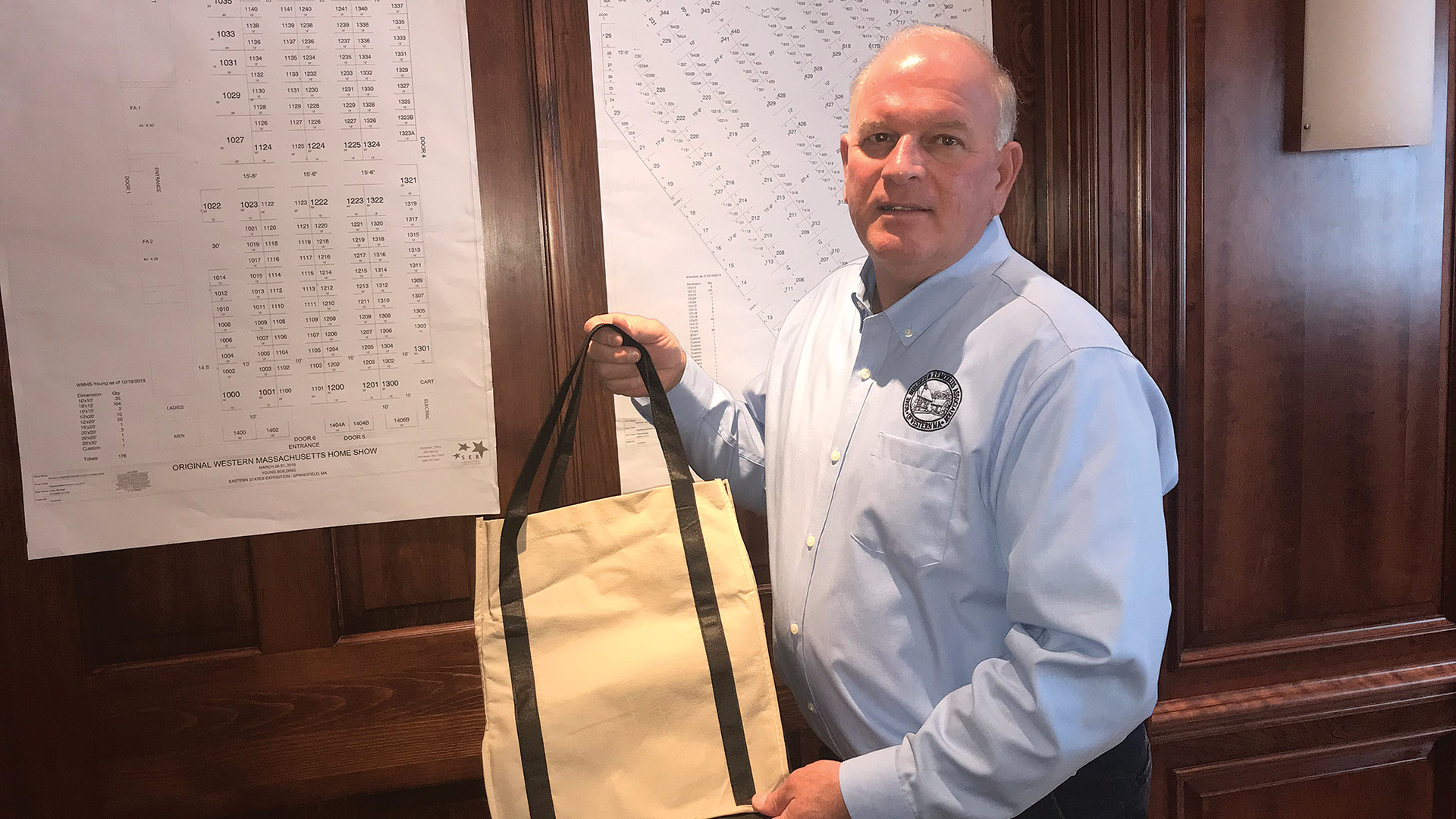
Andrew Crane holds up a prototype of one of the reusable bags attendees will receive at the 2020 Home and Garden Show.

By Mark Morris

Sometimes the online approach isn’t the most efficient way to tackle a project.

“If you’re looking to hire a landscaper, for example, you could look all over the internet and be dissatisfied,” said Andrew Crane, executive director of the Home Builders and Remodelers Assoc. of Western Massachusetts (HBRAWM).

Instead, he suggests conducting a search at the Western Mass Home and Garden Show, where consumers can speak directly with local landscapers and myriad other professionals.

Crane’s organization sponsors the annual event, which is now in its 66th year. Held at the beginning of spring, this year’s edition is scheduled for March 26-29 at the Eastern States Exposition grounds in West Springfield.

Originally, the event served as a venue for tradesmen in the association to familiarize each other with their craft. Over time, the show evolved, putting more emphasis on consumers, and has grown to the point where more than 350 exhibitors reserve space every year.

Exhibitors at the show can help consumers with everything from replacing a faucet to building an entire home — and everything in between. Innovations in building products, as well as home-related services such as Realtors and insurance agents, all have a presence at the home show.

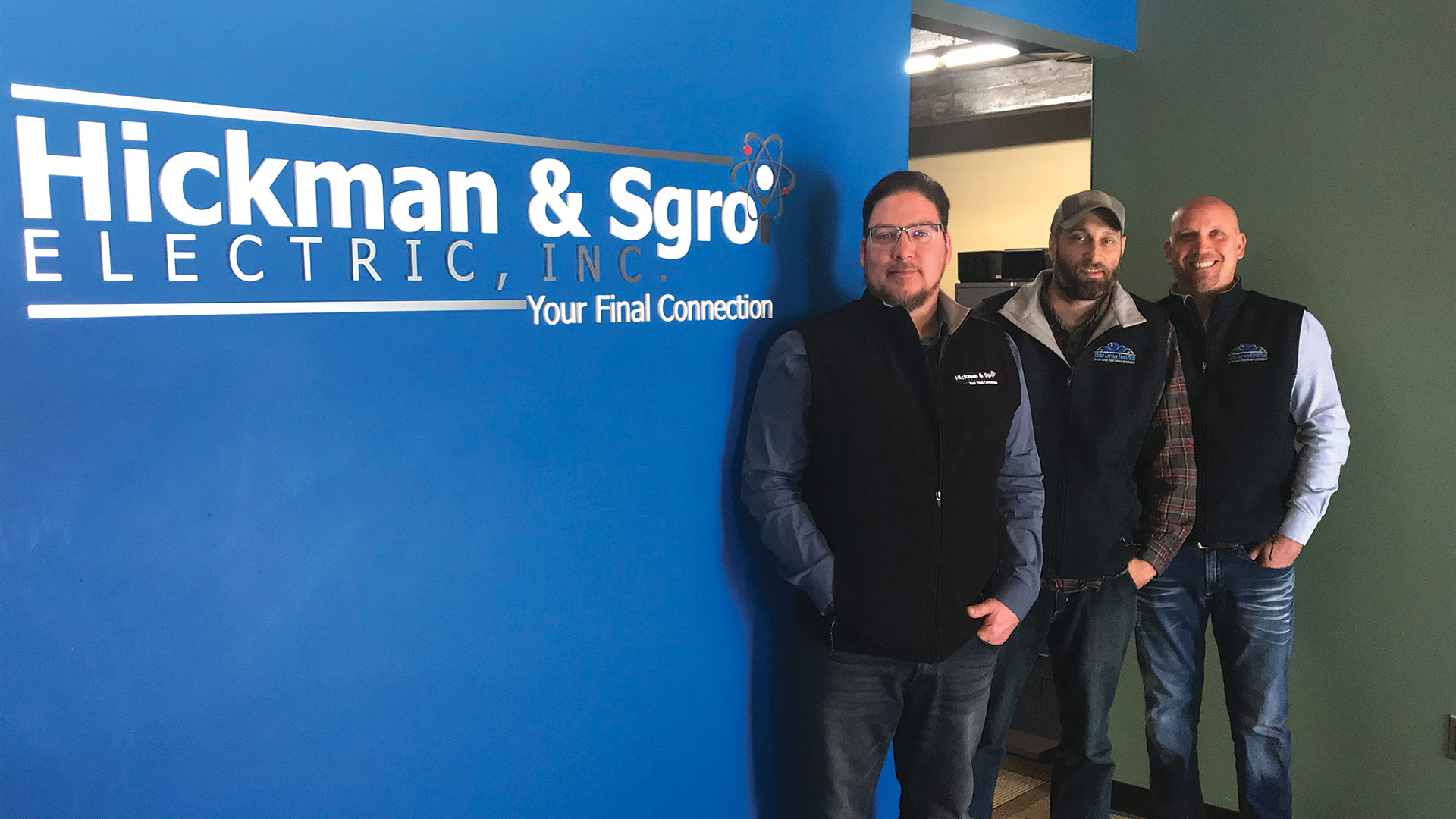
Todd Hickman, Steve Sgroi, and John Collins will use the show to introduce a new segment of their business, Home Service Electrical.

Regarding that landscaper search, at press time, four landscapers had reserved booths at this year’s home show. For landscape projects that involve ‘hardscape’ (incorporating stone work into a landscape design), 14 different vendors of this specialty have signed on.

BusinessWest caught up with several different exhibitors to this year’s show, representing a wide range of industries. Their home-show experience varies from nearly two decades to a couple of first-time exhibitors, but they all share an enthusiasm about the opportunity to connect with people during the event.

Room to Grow

Stuart Fearn, president of Safeco Foam Insulation, marks his 17th home show this year. “Since day one, the home show has proven to be a home run for my business,” he said, adding that he sees his main job at the show as educating people about spray-foam insulation, and it’s a worthwhile effort.

“We get a lot of business and awareness from the home show,” he noted. “It helps people know we exist, and we will often get calls up to six to nine months after the show when they need insulation.”

For nearly two decades now, remodeling has remained a strong trend in home projects. Whether someone is updating their current home or purchasing an older home to modernize, Crane said demand remains strong for windows, siding, and many other products that will fit into existing homes.

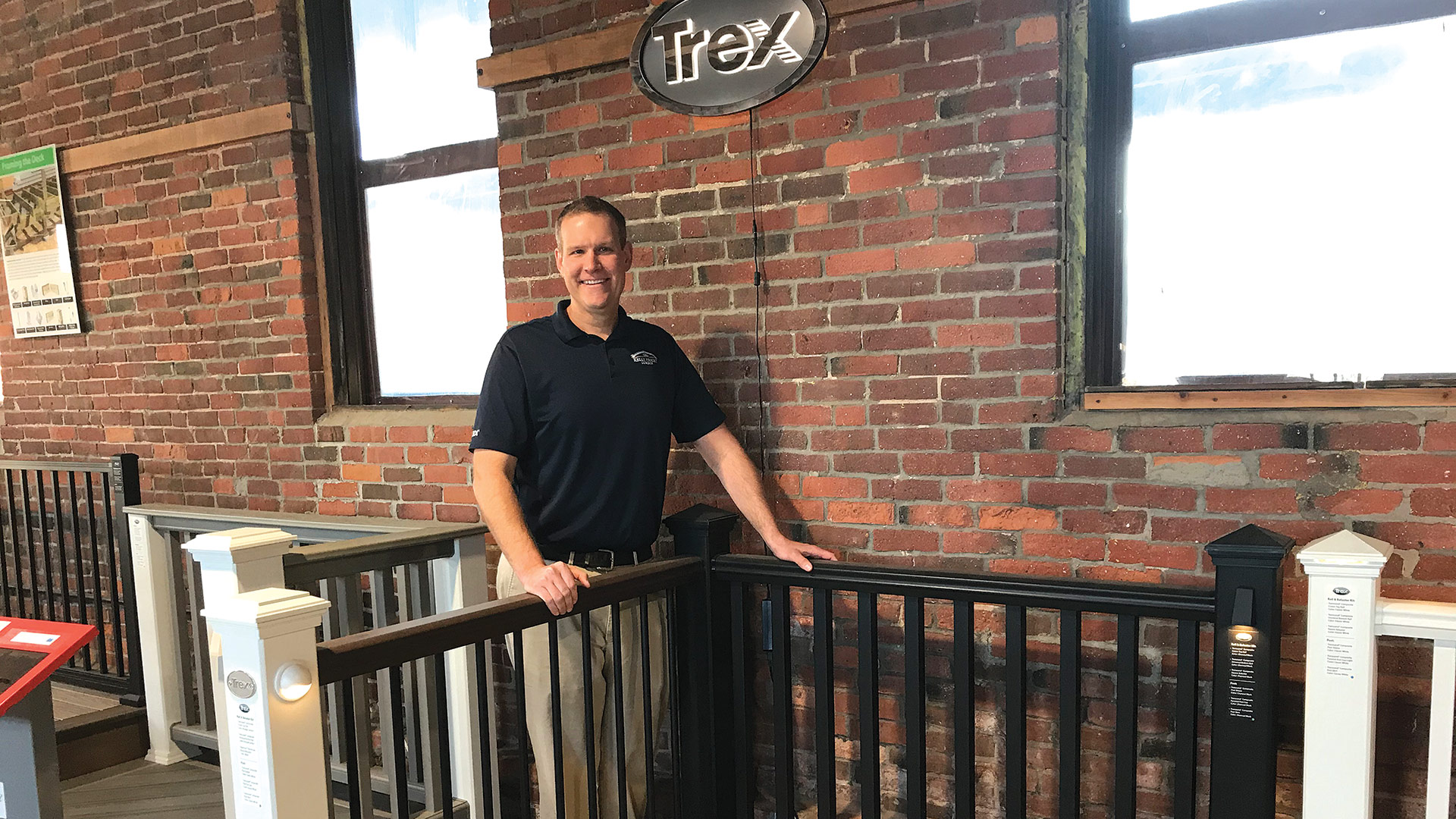
Scott Fleury, business development director for Kelly-Fradet Lumber in East Longmeadow, sees the home show as an opportunity to put consumers in touch with the best people for their remodeling projects. The current president of HBRAWM, Fleury has been a part of the home show for 10 years. Kelly-Fradet often displays kitchen, bath, and outdoor deck products it sells primarily through contractors.

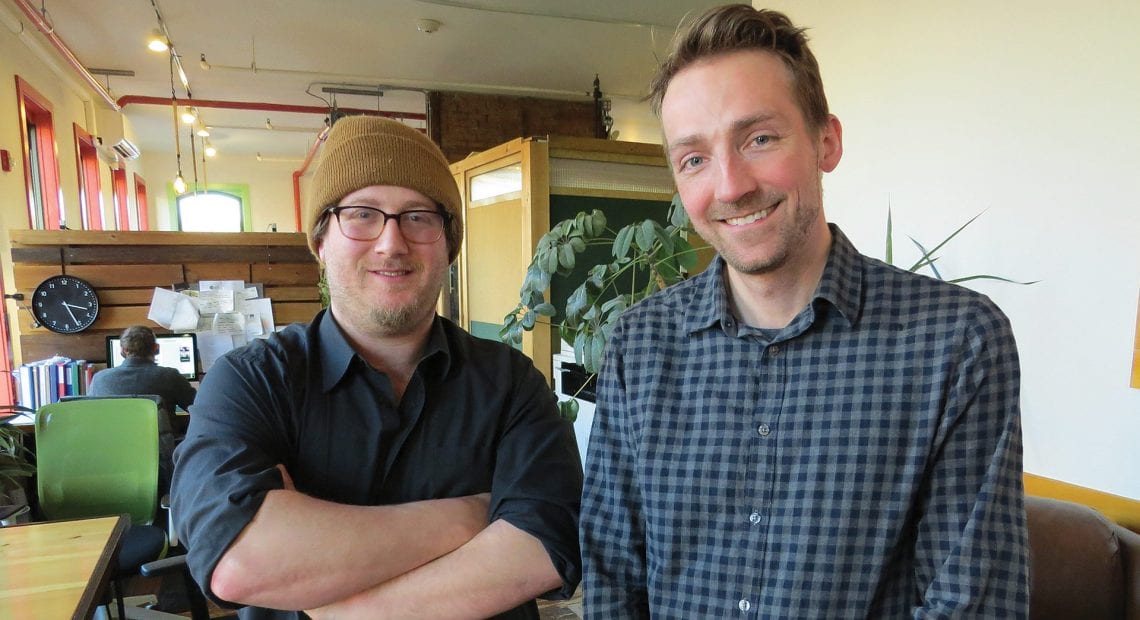
Painters Christopher Grenier and Jillian Forcier inspect the results of their recent work in a Northampton home.

“Often a homeowner will come to our booth with a project, and we are able to walk them right to a contractor who is also at the show,” he said. “On the flip side, contractors will bring people to our booth to show them the products we carry that apply to their project.”

Lori Loughlin, showroom manager for Frank Webb Home in Springfield, has taken part in the show for the past five years. Loughlin, vice chair of the organizing committee for the event, said her company sees an almost immediate return on its investment.

“Initially we see a big spike in sales right after the home show,” she said adding that the impact of the event often continues throughout the year. “People will come in as late as Christmas time and tell me they saw us at the home show.”

Christopher Grenier, owner of Grenier Painting and Finishing, reserved a booth at the home show last year for the first time. He enjoyed the experience so much, he is now on the event’s organizing committee.

Grenier noted that customers who need painting services often ask him for referrals about flooring, plumbing, and other services. He gladly recommends other members of the association to help customers find the right person for the job.

“I’ve recommended other painters when a customer needs someone who specializes in painting cabinets, for example,” he said. “We’re not in competition; it’s more of a camaraderie.”

One of the key benefits he sees to having a booth at the show is the ability to give people individual attention for their projects.

“When I’m asked why people should go to the home show, my response is, you’re going to find local people you can trust,” he noted.

Loughlin agreed and said that, because people can touch the products in her company’s booth, it helps them recognize quality kitchen and bath fixtures. When products like these are researched and then bought online, there’s no tactile experience, and service after the purchase is often lacking.

“Our customers know they can call us if there is ever a problem,” she said.
“There’s no sending things in the mail; we’ll just take care of it right here.”

As in past years, most booths will be located in the Better Living Center and the adjacent Young Building. New this year, the space between the two buildings will be used as a “contractor’s village” for products that exhibit better outside.

Scott Fleury helps Kelly-Fradet Lumber get all decked out for the show.

PV Squared Solar, a residential solar-energy installer, will forego the traditional booth setup indoors and will instead set up a solar-powered trailer in the contractor’s village to run electrical devices off the grid.

Anna Mannello, marketing coordinator for PV Squared, said that, as a first-time exhibitor, the home show presents a great way to connect with people in the community.

“PV Squared Solar is based in Greenfield, so we’ve done most of our business in Franklin and Hampshire counties,” she said. “While we’ve done a few installations in Hampden County, this will be an opportunity to increase our exposure to lots of new people.”

Mannello hasn’t yet finalized what appliances they plan to demonstrate, but during the four days of the show, attendees will be able to connect to PV Squared’s trailer to charge their phones using solar power.

It’s one thing to be a first-time exhibitor, and it’s quite something else to launch a new business at the home show. That’s how Todd Hickman, president of Hickman and Sgroi Electric, is approaching his inaugural exhibit.

While his company is an established residential, commercial, and industrial contractor, he and his partner, Steve Sgroi, are introducing Home Service Electrical, a membership-based, comprehensive approach to homeowner electrical needs. Instead of waiting for an emergency, Hickman said the service starts with a full inspection of the home’s electrical system to prevent familiar problems, such as losing power while cooking Thanksgiving dinner.

When a service call is needed, a professional technician in a fully stocked van will be expected to solve most problems in one visit. Each service has a standard price, so the consumer knows upfront what the job will cost. The home show represents an opportunity to introduce this different concept for electrical service.

“We’re creating a brand, so it’s important to educate the public on who we are, the image we present, and to assure people that we plan to be here for generations to come,” Hickman said.

Sgroi, vice president of Hickman and Sgroi, said their goal for the home show is simple, and it’s one shared by many, on one level or another.

“We hope to schedule inspections and grow the business until we are overwhelmed,” he said, while Hickman quickly added, if that happens, the business will gladly expand to meet the demand.

The Finish Line

For many years, HBRAWM provided plastic bags for show attendees to collect information from exhibitors. Crane proudly noted that the plastic bags are gone and have been replaced this year with reusable cloth bags, similar to those found in supermarkets.

“It’s one small way our members can be part of the solution to improving our environment,” he said. The bag will include a map showing all booth locations and a guide with contact information on all the HBRWM members.

“If you have a specific project, the map and guide will help you navigate the show to get the information you need,” Crane said. “If you don’t have any projects and you want a social experience, then you can just walk around, and you’ll have a great time.”

He concluded that other home shows have come and gone in the area, but ‘the original’ home show is here to stay. “After 66 years, it’s now a piece of Western Mass. history.”

The Western Mass Home and Garden show will be open Thursday and Friday, March 26-27, from 1 to 9 p.m.; Saturday, March 28, from 10 a.m. to 9 p.m.; and Sunday, March 29, from 10 a.m. to 5 p.m. General admission is $10 for adults. Children under 12 are admitted free. Veterans and active military with ID are admitted free on Thursday only. Discount coupons for every day of the show are available at www.westernmasshomeshow.com.

Home Improvement

Green-building Tax Breaks

By Lisa White, CPA, CJ Aberin, CCSP, and Brandon Val Verde, CEPE

On Dec. 20, 2019, a pair of tax provisions, Sections §45L and §179D, made their way into the government’s year-end spending package. These often-overlooked incentives provide a lucrative tax-saving strategy for the real-estate industry.

Not only were the 45L credit and 179D deduction extended through 2020, but the benefits can also be retroactively claimed if missed on prior tax returns. Real-estate developers, builders, and architects that may be unfamiliar with the provisions should take a closer look to avoid a missed opportunity.

45L: Tax Credit for Residential Real Estate

The 45L credit is a federal incentive worth up to $2,000 per qualified unit and is designed to reward homebuilders and multi-family developers of apartments, condos, or production homes. To qualify, a dwelling unit must provide a level of heating and cooling energy consumption that is 50% less than the 2006 International Energy Conservation Code (IECC) Standards.

Of this 50% reduction, a minimum of 10% must come from the building envelope. All residential developments and apartment buildings completed within the last four years are worth assessing for potential 45L tax credits. Eligible construction also includes substantial reconstruction and rehabilitation. The credit is available in all 50 states; however, developments must be three stories or less above grade in height.

Here’s an example of now the credit works:

A building owner has an apartment complex consisting of three, two-story buildings, and each building has 20 units. All 60 units meet the qualifications to claim the credit. In year one, 48 of the units go under lease. The credit in year one would be $96,000 ($2,000 x 48). In year two, if the remaining 12 go under lease, a credit of $24,000 can be claimed in that year.

Of course, there are some costs for this benefit. The amount of basis in the building will need to be reduced by the amount of the credit claimed. Since a credit is a dollar-for-dollar reduction in tax liability, taking a credit over a deduction usually results in a more favorable tax position. There is also the cost for the study and certification, but this expenditure would qualify as a business deduction.

The credit can be claimed in the year the dwelling unit is leased or sold, and there is no limit on the number of qualifying units that can be claimed. The amount of the credit applied is limited to the tax liability (meaning it’s not a refundable credit), and the credit cannot be used to offset AMT. However, any unused credit can be carried back one year or carried forward for 20 years.

The following types of projects should be evaluated, as there are typically benefits available for:

• Affordable housing (LIHTC);

• Apartment buildings;

• Assisted-living facilities;

• Production-home developments;

• Residential condominiums; and

• Student housing.

179D: Tax Deduction for Commercial Real Estate

While 45L typically applies to residential properties, 179D is designed for energy-efficient commercial buildings and offers a tax deduction of up to $1.80 per square foot for energy-efficient lighting, HVAC systems, and the building envelope.

Unlike most deductions, which are based on the amount spent, this deduction is primarily based on square footage. New construction and a wide range of improvements, from simple lighting retrofits to full-scale construction projects, are eligible for this beneficial tax break.

Improvements are limited to the affected area, and to be eligible, they must reduce energy and power costs by making investments in any of the following categories: a building’s envelope, HVAC and hot water, and/or interior lighting systems.

Beneficiaries of this deduction may include:

• Building owners (commercial or residential);

• Tenants making improvements; and

• Architects and designers of government-owned buildings.

Added Benefits for Architects and Designers of Government Buildings

Architects and designers who implement energy-efficient designs on government buildings are also eligible for the 179D tax deduction if their design meets the criteria. Because government entities cannot use the tax deduction, they can assign the deduction to the designer in the year that the building was placed in service. Since 179D was extended retroactively, architects, engineers, and building contractors should review government projects from prior years to obtain all the deductions for which they are eligible.

Claiming the Benefit

Pursuant to the IRS guidance on claiming these green-building tax breaks, taxpayers are required to certify the tax credit or deduction with a detailed engineering analysis. These supporting studies can be generated by a third-party provider.

While a taxpayer may have missed out on tax credits or deductions when filing original tax returns, the good news is that the tax benefits can be claimed retroactively, dependent on the taxpayer’s situation. A tax preparer can assist in the finer details while working with a qualified professional that has expertise in securing both 45L and 179D tax incentives.

Lisa White, CPA is a tax manager with Holyoke-based public accounting firm Meyers Brothers Kalicka, P.C.; [email protected]

CJ Aberin is a principal at KBKG and oversees the Green Building Tax Incentive practice. Over the last several years, he has performed green building tax incentive studies and cost segregation for clients in various industries that range from Fortune 500 companies to individual real estate investors.

Brandon Val Verde is a certified energy plans examiner and senior manager within the Green Building Tax Incentives practice of KBKG. His understanding of various energy standards and codes such as ASHRAE 90.1, IECC, and Title 24 allow him to identify opportunities for Green Building Tax Incentives.


Business of Aging

Care Connections

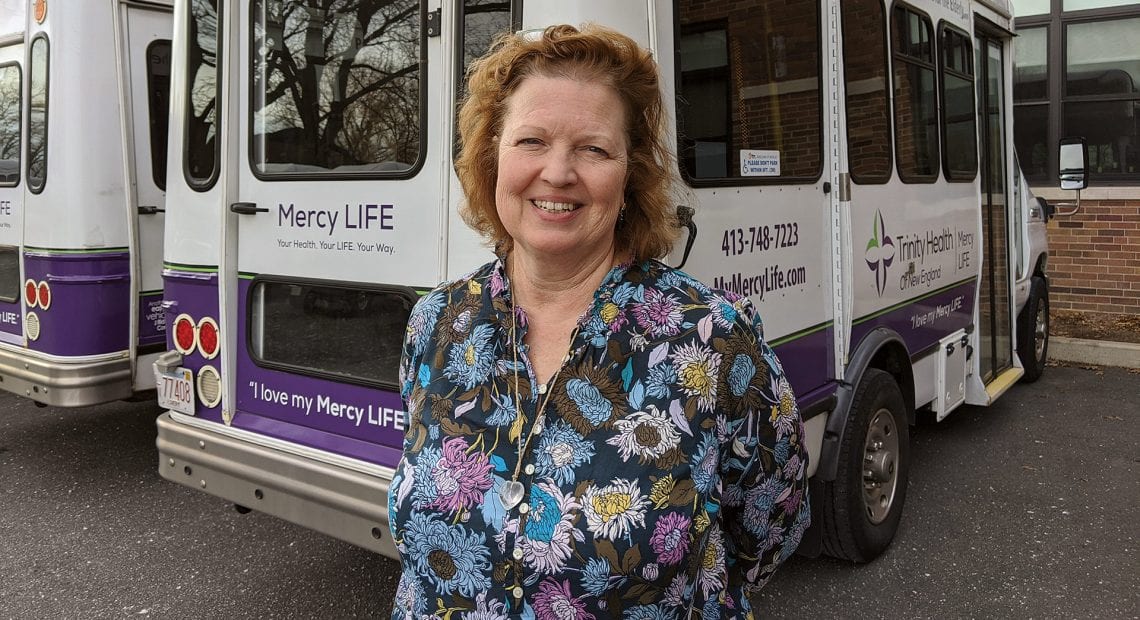
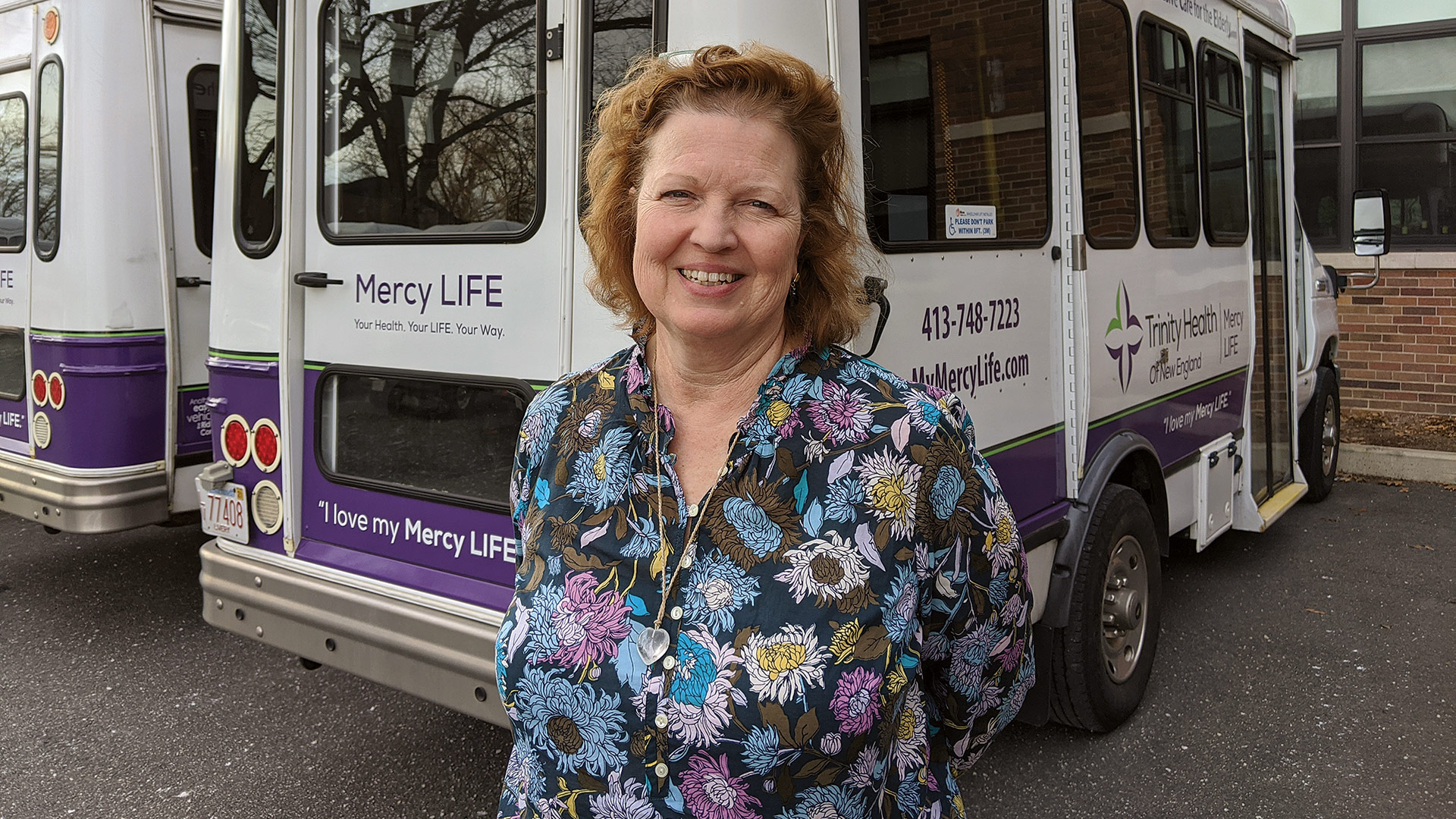
Kathy Burns says Mercy LIFE’s team approach to care has helped seniors maintain and even improve their health.

Celina Conway tells the story of a man who arrived at Mercy LIFE after five years in a nursing home, and was so weak, he couldn’t even hold a cup with both hands. After five years receiving services there, though, he felt stronger than he had in a decade — since before his nursing-home stay, in fact.

“They’re getting stronger,” said Conway, the facility’s director of Enrollment and Marketing. “There are people who came here in wheelchairs and now walk — quite a number, actually. Those are not uncommon stories.”

Mercy LIFE is a PACE (Program of All-inclusive Care for the Elderly) program run by Trinity Health PACE that will celebrate its sixth anniversary on March 1. PACE programs are on the rise in the U.S. because the role they play — providing a range of health programs aimed at keeping seniors out of nursing homes — is becoming more prominent.

“We’re serving people who could be in nursing homes. The model was designed as a place for folks who need some care and need some eyes on them on a more regular basis than an elder living independently,” said Kathy Burns, the center’s executive director. “In fact, everybody who joins us has to be, in the eyes of the state of Massachusetts, clinically nursing-home eligible. And they tend to thrive here because of the intensive care management we do with this big, multi-disciplinary team.”

Indeed, that team includes primary-care doctors, home-care nurses, physical and occupational therapists, dietitians, social workers, among others, all working as a team on each enrollee’s individualized care plan. And it’s not just healthcare; it’s also a place for seniors to socialize, participate in activities, and be generally engaged in life.

“Everything is under one roof, kind of like a nursing home, but nobody lives here; they go home at the end of the day,” Conway said. “When people enroll in the PACE program, they agree to have all their services provided by the staff here, including primary care.”

It’s a managed-care model not far removed from accountable care, the model that has crept into hospitals nationwide, which involves teams of providers being paid by insurers to keep patients well over a period of time, rather than being paid for each treatment, test, and hospital stay.

“It’s actually the precursor to accountable care,” Burns said, noting that, about 40 years ago in San Francisco’s Chinatown neighborhood, families wanted a place for their elders to go instead of a nursing home — a central location where they could bring in health services. Medicare funded a trial run, and the model worked. A second PACE site followed in Boston, and today, 131 PACE programs provide services at 263 centers nationwide, serving about 51,000 participants.

Why? Because the model works, Burns said, giving one example of how such programs keep people healthier while saving money.

“We get a good idea how this person functions, what’s important to them, what their goals are, how we think we can meet their needs. They have the ability to say, ‘I don’t want to do this,’ but typically, once they walk in the door, they’re sold and they do want to enroll.”

“Everybody on the team is equally important in their observations of what’s going on with the elder. Let’s say a driver who’s driven Mrs. Smith here every week for a long time notices, ‘boy she’s really out of sorts today.’ He’s supposed to come in and tell his boss, who will come to the morning meeting and say, ‘Mrs. Smith isn’t right today.’

“So Mrs. Smith is sent right down to the clinic, and we’re going to look at her,” she continued. “And if she’s got, say, a UTI brewing, we’re going to get her on some antibiotics and take care of her right here instead of her going home, where the infection gets worse, and she ends up in the ER with delirium because the infection makes her delirious, and all of a sudden she’s in a psych ward spending Medicare or Medicaid’s money unnecessarily because what she needed was antibiotics, which we can take care of right here.”

Safe Haven

Mercy LIFE currently enrolls more than 300 seniors, about 100 of whom are on site on a typical day.

“We explain to people this is a different way to have your healthcare delivered, and we have conversations to make sure they want care delivered this way,” Conway said. “We want to help them live safely at home.”

If, after being assessed by a nurse, they meet the criteria of needing nursing-home-level care, team members speak further with them and their family members, she went on.

“We get a good idea how this person functions, what’s important to them, what their goals are, how we think we can meet their needs. They have the ability to say, ‘I don’t want to do this,’ but typically, once they walk in the door, they’re sold and they do want to enroll.”

Conway said Mercy LIFE enrollees are assessed and placed into one of four different activity levels, from totally independent to needing more help to memory care, and it’s not uncommon for people to move from one level to another over time. “If people are concerned they won’t find people like them, they will.”

The rehab gym is a popular spot where participants can get stronger, she added. Some sign up for time with a personal trainer, while others might work in small groups or one on one to deal with specific issues, such as balance.

“They always think they’ll get weaker and less mobile as they age, but we’re lifers; we’re planning to be with them for life. So we’re trying to do preventive care, which is less expensive than dealing with a crisis after an episode where somebody falls.”

Occupational therapists on the team also spend time in the home, and are always scoping out issues that could be dangerous, Conway noted.

“We are responsible for everything. So if someone needs a grab bar, or someone needs a toilet set, we are going to order it and deliver it ourselves, which is better than getting a script and going to the medical equipment store. It’s very personalized service. When we work as a team, we prevent so many hospitalizations, emergency-room trips, that sort of thing.”

Burns added that the attention and engagement seniors get at Mercy LIFE brings a richness and measure of security they might not find on their own. “It’s an intensive model of oversight that really keeps them safe at home, happy at home. A lot of folks who come here had spent years at a time just sitting at home watching television. Now they’re doing all kinds of interesting things in our day room, while they’re seen by doctors and therapists.”

And the care plan is different for everybody, Conway said as she walked with BusinessWest past a conference room where an interdisciplinary team was meeting, as they do multiple times each day, to discuss whatever issues may have arisen with some of the people in their charge.

“We’ve helped 550 people over the past six years,” she added. “We don’t discharge people to hospice. We serve people until the end of their life. It’s a beautiful model. To see people when they enrolled and then see the progress and the support they get is very rewarding.”

Burns agreed. “A lot of families have been incredibly grateful for that gift.”

Effective Model

Burns and Conway both came back repeatedly to the financial benefits of preventive care and the value of preventing incidents before they arise. “If you don’t have an ambulance ride, an ER visit, a hospitalization, and a rehab visit, you’re saving a ton of money right there,” Conway said. “I know our interdisciplinary team members work hard to prevent those four key things. Everybody’s happy as a result of that.”

There is no cost to the vast majority of the seniors or their families (there is a private-pay option for a small percentage of participants). Medicare grants the program a flat monthly premium, while MassHealth provides funding as well. However, this year, MassHealth reduced its rate by 2.1%.

“We’re advocating for some of that to be brought back,” Burns said. “The problem for small but effective programs like ours is they’re easy targets for things like that. And we’re really hoping MassHealth will consider pulling back that decrease.”

Those who work at the West Springfield site see that effectiveness every day, Conway said. “This is mission work. I don’t think you’ll find anyone working at Mercy LIFE for the money. They stay here because they enjoy it so much.”

She told BusinessWest she appreciates the chance to tell the Mercy LIFE story because many people still have misconceptions.

“People think it’s home care, they think it’s adult day health, they think it’s a doctor’s office … but it’s all of those things,” she said.

“It sounds too good to be true,” Burns added. “But it just works.”

Joseph Bednar can be reached at [email protected]

Business of Aging

Sound Judgment

By Kayla Ebner

The girl sits in her classroom and turns up the volume wheel on her hearing aid loud enough to hear her teacher. Suddenly, the classmate sitting next to her drops his book. She tries to turn her hearing aid down, but it’s already too late. A loud ‘bang’ echoes through her head, then ringing, and more ringing.

Decades later, Jen Sowards remembers exactly how moments like those — and hearing loss in general — felt.

She’s struggled with hearing loss for her whole life, although it wasn’t identified until she was 6 years old. Fortunately, technology in hearing aids continues to get better and better, and Sowards gets to be a part of the evolution. 

Her life experience with hearing loss inspired her to become an audiologist, a career she has thrived in for more than 18 years. After spending more than a decade practicing across the country in Portland, Ore., she returned to the East Coast, where she worked at Clarke Hearing Center in Northampton for about a year. She has since opened her own practice at Florence Hearing Health Care and continues to help people who face the same daily struggles as she does.

“My own experience helped shape my philosophy for clinical practice now. I remember the audiologist just not necessarily taking a lot of time to explain things to me.”

“My own experience helped shape my philosophy for clinical practice now,” said Sowards, adding that her interactions with audiologists as a young child weren’t always positive. “I remember the audiologist just not necessarily taking a lot of time to explain things to me.”

Now, years later in her own practice, she takes ample time to explain to patients what she’s doing, why she recommends one type of hearing aid over another, and much more.

Dr. Deborah Reed, doctor of Audiology at Ascent Audiology & Hearing in Hadley, compares the human auditory system to a piano. The sensory nerve cells in the ear are like the keyboard, and their job is to stimulate the auditory nerve fibers. 

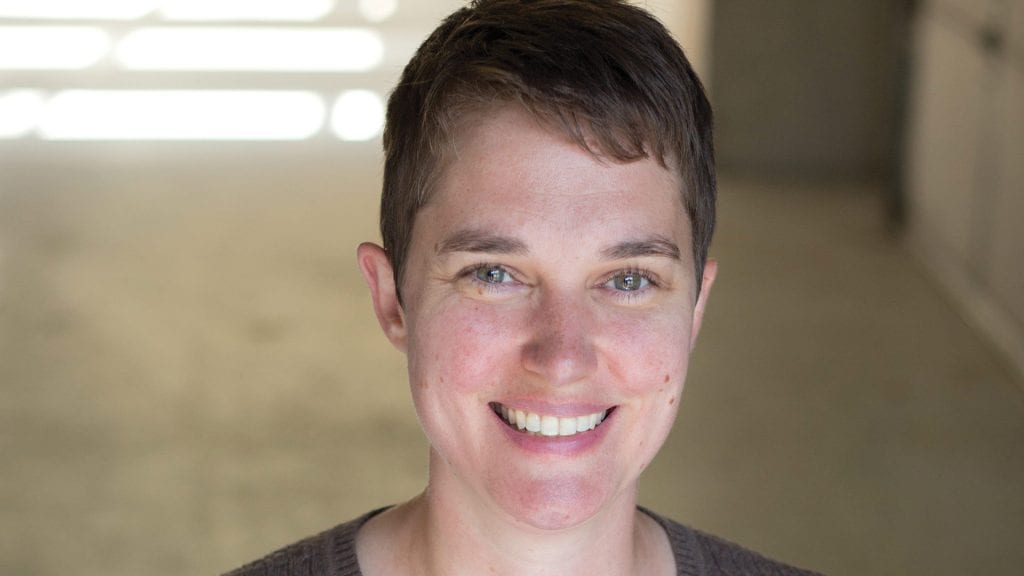
Jen Sowards uses her personal experience with hearing loss to help her patients who face the same daily struggles she does.

“If we unroll that auditory nerve, each fiber would be tuned to a particular pitch just like each string of a piano would be tuned to a particular note, and the job of the keyboard is to play the piano strings,” Reed said. “What we look for during the hearing test is, how well is your keyboard working, and how tuned are your piano strings?”

To continue with this analogy, hearing aids are tuned to respond wherever the keyboard dysfunction is occurring. 

“The bottom-line job of the hearing aid is to restore speech sounds and to improve our communication,” Reed continued. “We’re not necessarily looking to just give you a bunch of volume, we’re looking to give you clarity of speech, and we can do that by fine-tuning the digital processor of the hearing aids today.” 

That’s a long way from the earliest hearing aids, which were hollowed-out animal horns in the 1800s. As technology continues to improve, more people than ever are able to receive custom treatment for their hearing loss — and more lives are being changed.

Beat of a Different (Ear) Drum

Now, Sowards no longer hears the ringing, and loud noises are no longer painful.

That’s because the hearing aids themselves automatically adjust the volume of sounds coming into them. If a sound is very soft, the hearing aid recognizes that and turns it up, and vice versa.

“They really came a long way to where, by digitizing that signal, they were able to have an automatic volume control,” she said, adding that a hearing aid is a lot like a mini-computer. “Being able to automate the volume control on those really made a big difference.”

This is just one way in which modern-day hearing aids have improved. From those initial hollowed-out animal horns, hearing aids evolved to giant battery packs strapped to a person’s chest. A lot of variations have followed — with the past decade in particular seeing a notable burst of progress.

“We’re not necessarily looking to just give you a bunch of volume, we’re looking to give you clarity of speech, and we can do that by fine-tuning the digital processor of the hearing aids today.”

Sowards was fit with just one hearing aid when she was identified with hearing loss as a child. Since then, research has shown that the brain processes sound a lot better when hearing clearly through both ears.

“The prevailing thought at the time was, ‘well, if you can hear with one ear, that’s probably good enough,’” she said. “But if you can hear well out of both ears, you tend to have much better processing for speech when there’s competing background noise, and you also have much better localization skills, or the ability to tell what direction the sound is coming from.”

To achieve this, the patient must first be fit with the right hearing aid. They come in myriad types and sizes, but the ideal match depends on their ear anatomy and severity of hearing loss.

“In a perfect world, we would want to fit the best technology with everybody, but we can’t always do that,” said Reed, adding that fitting hearing aids to people is very much a case-to-case basis. “Then, we have to make judgment calls around quality of life and need.”

For example, someone who is a manager working full-time attending events and interacting with people on a daily basis will want a hearing aid that can process noise much better. On the other hand, someone who works in assisted living might not need all the fancy features.

One of the more recent developments is fall detection. If a person falls, Reed said, some hearing aids now have the ability to detect that fall and issue an alert. If the person does not respond and cancel the alert, a message is sent out to an emergency contact list.

“What we know about people with hearing loss is they tend to be older and might be more isolated,” she explained. “We’re trying to keep them safe and independent.”

Another feature is the ability to Bluetooth hearing aids to a smartphone. Apps allow a person to adjust the settings of their hearing aid and pin that location, so the next time they go there, the hearing aid will adjust to those saved settings automatically.

Hearing aids are also rechargeable, whereas years ago, batteries needed to be replaced. Sowards says most hearing aids now last 20 to 21 hours before needing to be charged again.

Not every person with hearing loss needs hearing aids, but for those that do, plenty of technology is available to support their needs.

“We’re really fortunate today in that technology is amazing,” Reed said. “The digital processing available in hearing aids has never been faster or more accurate.”

Don’t Ignore the Signs

The effects of untreated hearing loss can be startling. An estimated 36 million Americans have some sort of hearing loss — that’s 17% of the adult population.

Unsurprisingly, the incidence of hearing loss grows with age; however, hearing loss is growing in teens as well. According to the Hearing Loss Assoc. of America, an estimated one in five American teens experiences some degree of hearing deficit. Meanwhile, 12.5% of kids between the ages of 6 and 19 have hearing loss as a result of listening to loud music, particularly through earbuds at high volumes.

And the effects go beyond the ears. Studies show that those with hearing loss show significantly higher rates of depression, anxiety, and other psychosocial disorders. Hearing loss has also been associated with decreased social and emotional communication and cognitive function.

Dr. Deborah Reed

“What we know about people with hearing loss is they tend to be older and might be more isolated. We’re trying to keep them safe and independent.”


When it comes to teens with hearing loss due to loud music, Sowards says two factors are hugely important: the volume of the music and the time the ears are exposed to the sound.

She compares the fine hair cells in the ears to a green lawn. “If you walk across it a couple times, those blades of grass spring right back up, and it’s no big deal. But if you and 20 of your friends walk that same path eight hours a day, you’re going to get a bare patch.”

The simple solution: be careful with how loud and how often you listen to music. “If it’s loud and constant, that’s when you start to see the damage,” Sowards said.

Reed gave another analogy: exposure to sunlight. Limiting the duration of loud sounds is similar to putting on sunblock or avoiding long stretches of exposure to harmful UV rays.

“It’s okay to listen to music a little louder when you’re working out or something, but make sure you’re turning it down when you’re hanging out reading or doing homework,” she said.

Signs a person may be experiencing hearing loss may include muffled speech and other sounds and difficulty understanding words, especially with competing background noise.

When experiencing symptoms like this, Reed said it’s important to visit an audiologist to get a baseline hearing test sooner rather than later. “What we know now that we didn’t know seven or eight years ago is that the sooner we start treating hearing loss, the better we do.”

Technology

Air Apparent

By Sean Hogan

Small businesses have been drawn to VoIP technology because of the substantial cost savings they gain when making the switch. However, as VoIP has continued to evolve over the years and moved into the ‘cloud,’ small businesses have begun to leverage VoIP in new ways to gain competitive advantages in their respective industries.

The growth of virtual companies and remote workforces has brought everyone to the same playing field, and customers across every industry are looking to work with credible, prestigious, large companies. Here are some ways in which cloud voice can make your business look bigger than it is today.

Your office just got a receptionist you don’t have to pay for. Cloud-based phone systems today include features that completely eliminate the need for a receptionist. Systems can be configured in order to route calls directly to the intended employee via a unified auto-attendant. Also, if your office doesn’t have a receptionist, systems can distribute incoming calls among specific groups.

This goes beyond simply sending sales calls to salespeople and admin calls to support employees. For example, you can use caller ID to send specific accounts directly to the CEO’s cell phone. Or if none of the salespeople answer an incoming call, it goes to the sales manager’s cell phone.

Sean Hogan

“Small businesses have begun to leverage VoIP in new ways to gain competitive advantages in their respective industries.”

Unlimited locations, one office number. With the rampant growth of startups and virtual companies, many businesses need to have a communications system that supports both in-house and remote workers while maintaining a professional image across the board. With cloud voice, calls to the main office can be sent out anywhere simply by asking the customer to dial an extension, just like how large corporations are doing.

Seamless conference calls and lightning-fast voicemails. Conference calls or online meetings are often a source of frustration for most companies. Cloud voice solutions enable businesses to host conferences during meetings so you can be face to face, even when you can’t be in the same location.

Furthermore, all technology is hosted through a single solution, so when it’s time to host a meeting, businesses can rest assured that the technology will perform as promised. Another way in which cloud voice accelerates collaboration is through its ability to convert voicemails into MP3 files, which can be sent as e-mail attachments. Additionally, voice calls can be converted to text and vice versa for easier retrieval and communication.

Collaborate on the fly. Today’s employees need to be constantly connected. Collaboration can’t always be planned out in advance, and when a good idea strikes, everyone needs to be in the loop. Cloud technology has made it easy for employees to see from their desktop what their co-workers are doing and how to best access them (e.g. instant message, voice, or e-mail) so communication can happen immediately.

There are many advantages to moving a company to cloud voice. For small business, the rewards are plentiful because they can utilize the same technology as large enterprises for a fraction of the cost and make them look just as big.

Sean Hogan is president of Hogan Technology.

Features

Plane Speaking

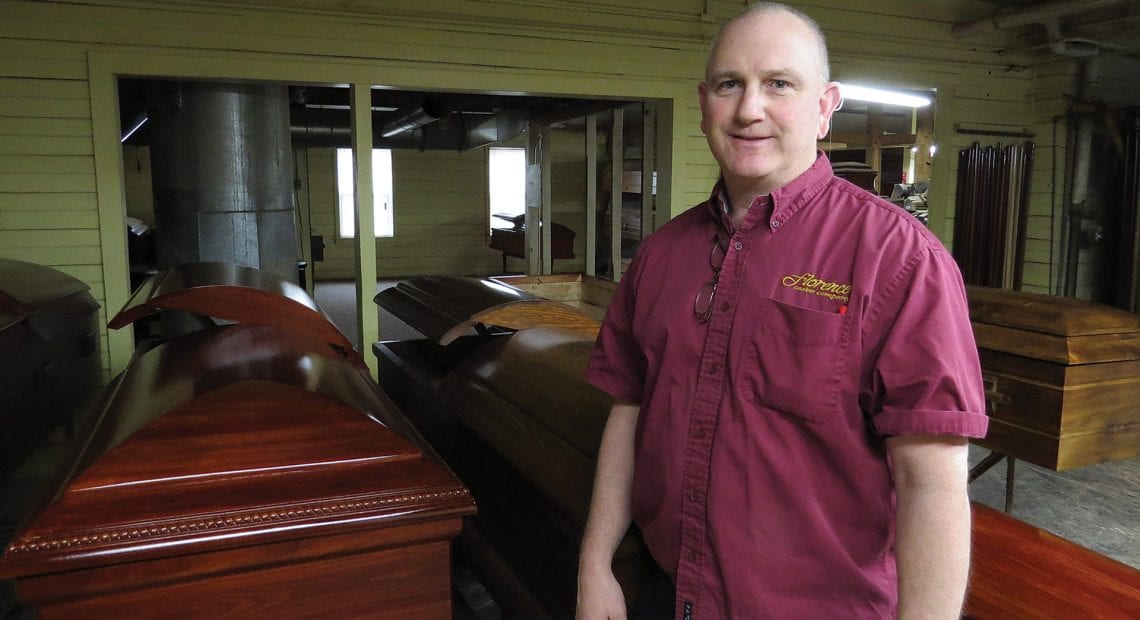
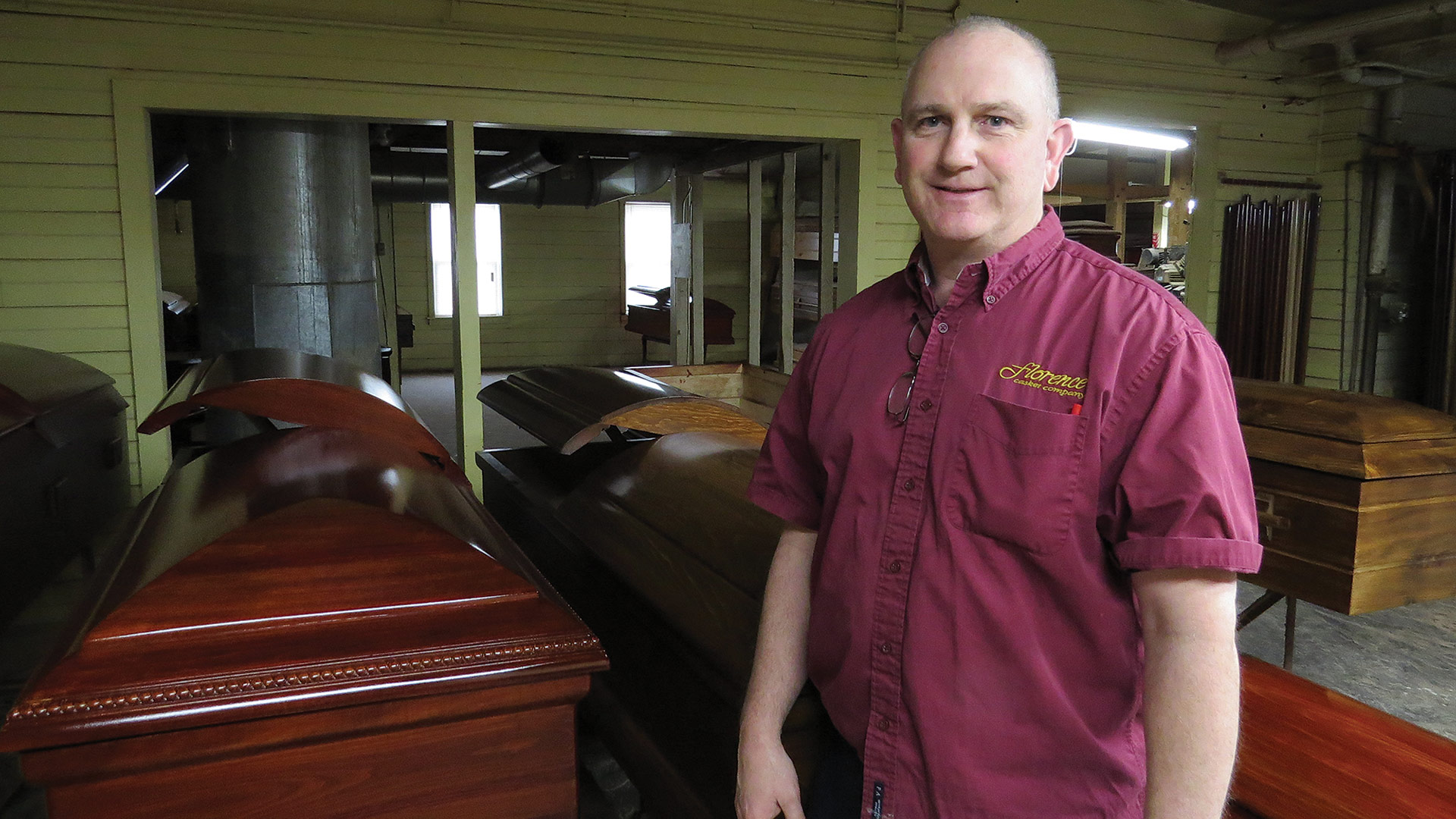
Bill Hogan

Florence Casket Co. has been making its mainstay products, wooden caskets, for nearly 150 years now. And it’s making them pretty much the same way, as well — by hand. But while this business seems frozen in time in some ways, this unique industry has seen change and evolution — and the company has more than kept pace.

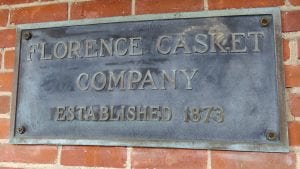
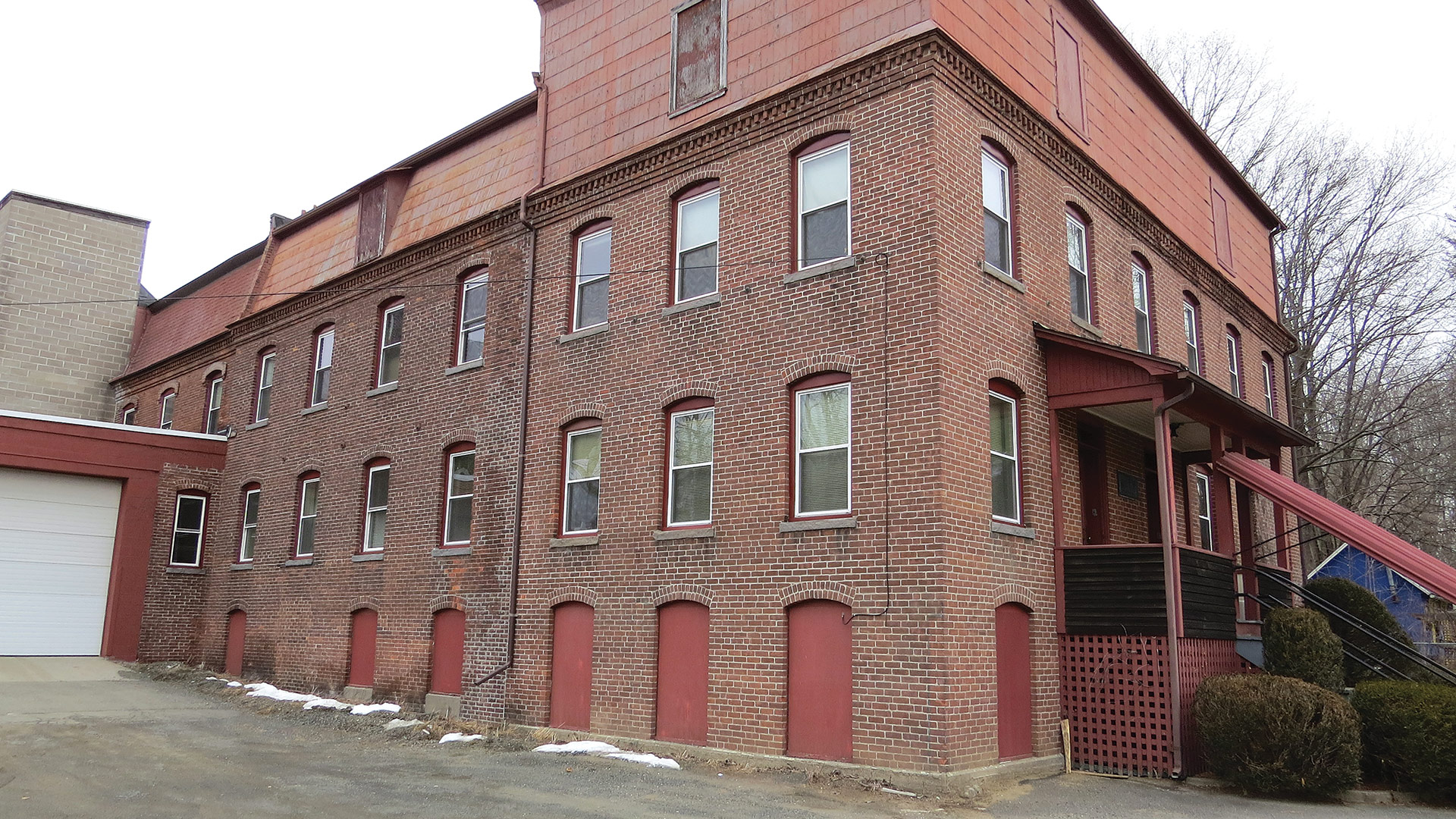
There’s a good amount of history on display at the Florence Casket Co. plant in Florence, as one might expect at a company that’s been making the same product in the same building since 1873, as the plaque mounted near the front entrance proclaims.

Much of it is captured in the photographs hanging in the lobby, the conference room, and Bill Hogan’s spacious and somewhat cluttered office — testimony to the fact that the third-generation president wears quite a number of hats at this venture.

Many of those photos, including those in Hogan’s office, are portraits of first- and second-generation leaders of this unique business, including his maternal grandfather, Russell Christenson, who bought the company with a few of his siblings in the mid-’50s. In the conference room, meanwhile, there are several photos of the vintage horse-drawn hearses the company loans out to area funeral homes for special services — as well as framed newspaper accounts of those funerals, with the hearses featured prominently.

And in the lobby, hanging not far from a framed receipt — dated 1898 and given from the Florence Furniture Co., Manufacturers of Burial Caskets and Undertakers Supplies, to a Joseph Belanger for “boxes” and other materials — are two aerial photos of the factory.

One is relatively recent, maybe a decade or so ago. The other one, a black and white shot … Hogan isn’t quite sure, although he thought he could determine the date if he did a little research. There are a few clues, including an old rail line that’s been gone for decades, and a few cars — compared with the full parking lot of today — that look like they might be from the late ’20s or early ’30s.

Whatever the date is, the building certainly looks different on the outside than it does today — there have been several expansions. On the inside, though, most areas — from the lobby to most of the manufacturing spaces — probably look very much the same as they did back then.

Indeed, to walk into this factory, wedged between houses in a decidedly residential neighborhood, is to almost step back in time. While some of the equipment, including a CNC machine, are new, most everything else in this building is old — as in old world. Which is one way of saying they’re pretty much making caskets here the same way they did when the building was opened, when Ulysses S. Grant was in the White House, and when that picture was taken — whenever that was.

“We could buy machines that would do most of this mechanically, but we do it all by hand.” said Hogan, adding that, on a typical day, roughly two dozen caskets will be shipped out to funeral homes across a territory that covers most of the Northeast.

While in many ways time seems to have stood still at this company, the reality is that it hasn’t. Times have changed in some ways, from the amount of competition — there are far fewer companies doing this now, although some are national and even international giants — to the increasing popularity of cremation, which has certainly impacted demand for the wooden caskets this company specializes in — although demand is still steady.

“As much has cremation has crept in and become more and more popular, there are still a fair number of families that want to have a traditional funeral,” he explained, adding that this is especially true in the Northeast.

Craftsmen at Florence Casket assemble models the same way they were built in 1873 — by hand.

Overall, Florence Casket, while in some respects still doing business the way it did nearly 150 years ago, is also adapting to changing times by diversifying into everything from supplying cremation urns and metal caskets to making specialty caskets, such as oversized models, and even those for pets.

But its bread and butter remains fine wooden caskets, which are in many ways custom-made for each customer. The company’s strategy has been to generate more of the remaining business for such caskets in its territory by “going into untouched corners to find new customers,” as Hogan put it.

For this issue, BusinessWest visited this unique business to learn about a business where demand may be constant, but so too is change and the need to adapt to it.

Going with the Grain

Hogan began his extensive tour of Florence Casket — something he enjoys and does fairly often — in the shipping area, where several caskets, covered by protective wrapping, sat waiting to be delivered to one of dozens of funeral homes in the company’s client portfolio. He spent the next 40 minutes or so explaining the many processes involved with getting them ready for delivery.

He began by rolling open a large wooden door and pointing to a separate building in which vast stores of kiln-dried lumber — everything from pine to poplar; maple to mahogany — are kept. He then took BusinessWest on a journey that covered three floors — the top floor is essentially for storage of finished product — and more steps than one could likely imagine when looking at the final product. Steps that include planing, cutting, gluing, shaping, assembling, painting (staining), lacquering, sanding at many stages along the way, and installation of the interior fabric.

He also introduced some industry terms of a sort, such as ‘ears,’ the wooden pieces affixed to the side of the casket, to which the handles are mounted, and the ‘piece of pie,’ the wedge-shaped (hence the name) piece glued and then stapled into the front of the top of the casket.

Finished caskets are stored on the third floor of the company’s headquarters in Florence and then customized to meet the specific needs of clients.

The craftsmen making and assembling pieces are doing things pretty much the way they’ve been done for decades, said Hogan, as he pointed to some equipment that’s been in use from the very beginning, or so he’s been told.

Again, he knows much more about the chapter in the company’s story that began when his family bought it nearly 70 years ago — but through research and stories passed down, he’s been able to gain an appreciation of its full and long history.

And before giving his tour, Hogan provided an in-depth and quite intriguing inside look at his company and the casket business — which he stressed repeatedly is not the funeral business, although the two have always been intertwined, and were even more so decades ago, as we’ll see.

As for Hogan, he started working in the plant when he was very young; he said his grandfather would put him to work mowing lawns and handling other duties. Later, he worked on the floor during summers and school vacations. After graduating from Castleton College in Vermont, he returned to the family business in 1993, and “I haven’t looked back.”

“When I was kid, I didn’t necessarily picture myself doing this,” he explained. “But it was an opportunity that was presented to me, and it’s the path I chose; it was a good decision.”

Thus, he’s one of several third-generation members of the family involved with the business, and while some from the second generation are still active as well, including a semi-retired uncle who serves as a sales representative in Vermont, most have retired. But they still consult when called upon.

“The whole family has been a great sounding board for me when there’s been problems, questions, cares, or concerns,” he told BusinessWest. “They bring years of experience to the table.”

And there have been a number of matters on which to consult, he said, adding that, while the casket business is steeped in tradition and history, there has been change and evolution and the need to adapt to it.

As evidence, Hogan referenced the ‘showroom’ sign on another door to the building, even though it hasn’t actually served that role in quite some time.

A craftsman finishes ‘painting’ a casket, one of many steps in a very involved process.

“Many years ago — this is before my time, but it’s what I’ve been told — funeral directors would bring families here to look at caskets and choose a model,” he explained. “The funeral director would call down and say, ‘we’d like you to put a polar casket, a maple casket, and a cherry casket into the showroom for the family to see.’”

Later, funeral homes established their own small showrooms, he went on, adding that, when a particular model was chosen, the funeral director would call Florence and order a replacement. More recently, many of those showrooms have been given over to other uses, Hogan noted, and a number of funeral homes are displaying casket options through miniatures or simply photos on the internet, neither of which is ideal, but that’s nonetheless reality.

So after a model is picked, a call will be placed to Florence Casket for that item, he said. While the company has several of each type of casket (meaning the wood it’s made from) in those third-floor storage areas, it essentially makes each item to order, especially with the handles and interior fabric, which separates it from those competitors who stockpile inventory in huge warehouses.

“Our specialty is we manufacture everything as needed,” he explained. “Everything going tomorrow, we’re working on today; you can change colors, interiors, handles — you can customize them more than you can elsewhere.”

Board Meetings

Making things to order brings its own challenges, he went on, adding that, while some times of the year are busier than others — and winter in the Northeast, for whatever reason, probably the weather, is one of those times — work, like death itself, is constant and unpredictable.

“People don’t stop dying because it’s a holiday or because it’s the weekend or because the weather is bad,” he explained, adding that this makes the December holidays, and the time off that comes with them, sometimes difficult to navigate.

It also makes Fridays and Mondays, positioned on opposite sides of the weekend (when the business is closed), more hectic than the other days of the week. “So Mondays are essentially three days all wrapped into one.”

Indeed, BusinessWest visited on a Friday, and Hogan was interrupted several times to advise those making deliveries in time for the weekend.

Those deliveries are made almost exclusively within a Northeast territory that stretches from roughly Atlantic City, N.J. to the Canadian border, a coverage area chosen because it can be served from the Florence location with a fleet of trucks and vans.

As noted earlier, that territory was once home to a number of companies that made wooden caskets, but now there are just two — Florence and a company in Athol called Cambium Corp. There was a third, New England Casket in East Boston, but its factory burned to the ground almost a year ago, and the company is still in a state of limbo, said Hogan.

Meanwhile, there are a few large national players, including Batesville Casket Co. and Matthews Aurora Funeral Solutions, both based in Indiana with additional locations in other states.

New England Casket sold primarily to distributors, while Florence does not, which explains why the company hasn’t picked up much business as a result of that devastating fire, said Hogan. Instead, as noted, it has responded to the impact of cremations and other forces within the industry by working to add new customers within its territory. It has done this by going into those untouched corners that Hogan mentioned, and also stressing what differentiates it from other makers, specifically the quality and customization of the work.

This was on full display during Hogan’s tour, which essentially took the process from start to finish. On a tour that might take 40 minutes, he stops and explains each step. In real time, it probably takes about 40 hours, he noted, with some woods, such as oak and cherry, being more porous, thus needing more time to dry between coats of lacquer.

One of the last stops on the tour, the third-floor storage area, shows the depth of the customization process. Indeed, for each type of wood there are several different colors, or stains, and a variety of models. In cherry, for example, there’s everything from the Tanglewood to the Monticello to the Washington, each with customizable handles and panels. In mahogany, another of the higher-end options along with cherry, there are four options — Baldwin, Nantucket, Newport, and Simsbury — again, each one customizable.

Hogan said one of the keys to the company’s success is to have options for all tastes and price ranges, with mahogany and cherry at the high end, pine at the lower end, and woods like poplar, perhaps the most popular, in the middle.

Indeed, there are more than two dozen options in poplar, Hogan said. “We sell a lot of them because they’re reasonably priced and the finishes are brilliant.”

Bottom Line

Those models are part of the ongoing story at Florence Casket, which is closing in on 150 years of making both wooden caskets and history.

Those framed photographs in the lobby, conference room, and Hogan’s office reflect this history, but the real story is written on the shop floor, where they’re still doing many things the same way they were done in 1873.

The same way they did in that black-and-white photo — whenever it was taken.

It was Ben Franklin who said that, in this world, “nothing is certain except death and taxes.” For 147 years, this company been a constant as well.

George O’Brien can be reached at [email protected]

Insurance

Deepening Its Roots

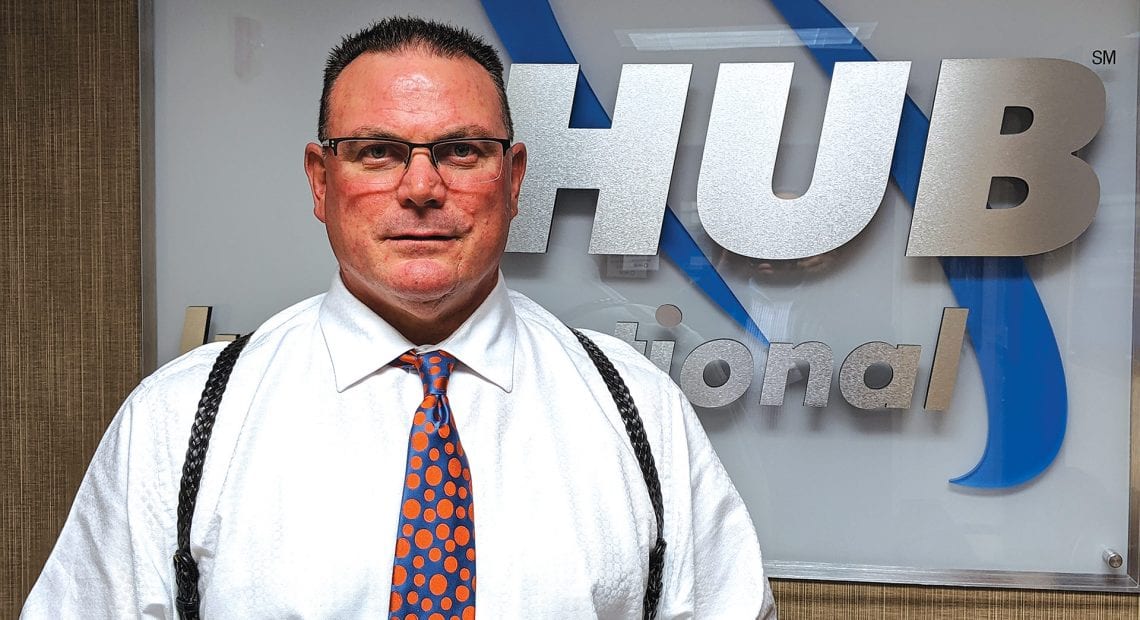
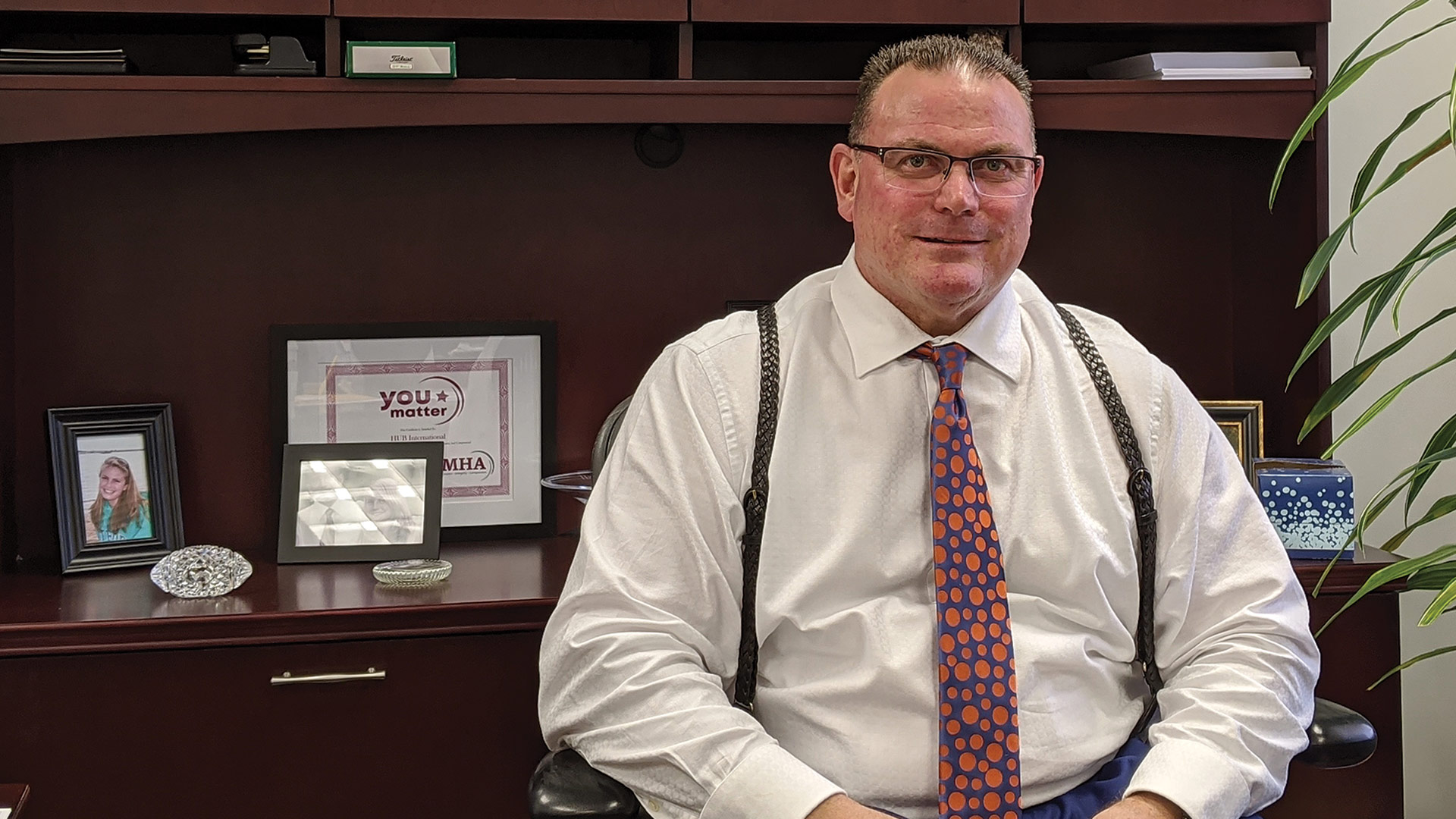
Timm Marini, president of Personal Lines

When FieldEddy Insurance entered the HUB International family a little over five years ago, it traded a name with a rich regional history for one backed by the resources of a large corporation. The result has been the best of both worlds — HUB’s clout improves the office’s ability to grow specific niches through talent development, while the company is still able to focus on local needs with an emphasis on building deeper relationships with customers.

The insurance company known as FieldEddy had more than 160 years of history and a still-growing geographic footprint in Western Mass. when it became part of the HUB International family in 2014.

It’s a move that simply made sense at the time, Timm Marini said, and he feels even more strongly about that five years later.

“It’s such a natural fit for us,” said Marini, president of Personal Lines at HUB International New England in East Longmeadow. “There’s a cultural mesh in that our focus and HUB’s focus has always been in delighting the customer.”

Several years ago, FieldEddy employees were tasked with coming up with tools and resources they needed to better ‘delight’ those customers, Marini recalled. “We got to about seven of them and looked at each other and said, ‘we’re going to go bankrupt trying to buy all this and do all this on our own.’ So we plugged into HUB, and that’s when we really became the market leader.”

While FieldEddy had grown dramatically through acquisition over the previous two decades, under the HUB name, the company took a more organic approach, Marini told BusinessWest, adding talent in specific growth areas, from cybersecurity to healthcare (in the wake of health-insurance reform in the Bay State, followed by the Affordable Care Act nationally).

But last year, it was back on the acquisition trail, purchasing the Insurance Center of New England in Agawam — a move, Marini said, that represented the same sort of ‘cultural mesh’ that FieldEddy and HUB did five years ago.

“They had some great talent on their team and a couple of niche markets that made sense for us,” he said. “We’re not just buying to get big. We’re buying to get better. If we can buy an organization or invest in an organization that helps us get better, that’s what HUB’s acquisition strategy country-wide is.”

“When there’s a catastropic event — a hurricane, a tornado — HUB is ready, and we’re communicating to our customers, we’re communicating to the marketplace, and we’re giving them better data than what you’d receive in the news. We’re getting ready for the event.”

The company undergoes a due-diligence process before making an offer, he explained, one that involves three questions. “Number one, is it a good fit? Number two, are they bringing something to the party to make us better? And number three, can we make it grow?

“This was a great cultural fit, with really educated people — just good, solid folks. That first piece of it was a home run,” Marini went on. “Then, they have talent that we didn’t have, and we’re getting that talent. HUB wants to bring levels of expertise and be able to delight our customers differently. We want different people on our teams, different resources available to us, that will help our customers.”

For this issue’s focus on insurance, Marini talked about how HUB continues to expand both its reach and its knowledge base in numerous ways.

Hub of Activity

HUB itself has been around only since 1998, with its first operations in Canada and Chicago. Its first acquisition after that was CJ McCarthy Insurance Agency in Wilmington, Mass. in 2000. It picked up FieldEddy 14 years later.

Today, Marini said, HUB is the largest independently owned agency in New England, the largest personal-lines agency in the country, and the fifth-largest agency in the U.S. overall. So, while the firm operates autonomously with local decision making, it does so with plenty of clout behind it.

“A lot of our talent investments, we could never do on our own,” he said, citing growth in areas like risk services and loss control, claims advocacy, and underwriters who specialize in specific niches.

Legalization of marijuana is one example. “We’ve made pretty significant investments in educating our brokers across the country and making sure we can handle the unique needs of that industry.”

As another example, “on the health side, we’re asking, ‘what do we need to do better for the customer?’ We’ve invested in health and wellness folks, people who can help mitigate exposures and help us all be healthier … we’ve invested in actuaries, underwriters, data-analytics experts, just to help carve out the information and make sure the pricing we receive from insurance carriers is the right one for our customers.”

“I believe we’ve tried to move away from just the transactional side of things. Price is important, coverage is more important, but most important is being that advocate — not just when the negative or adverse thing happens, but being there through the process, through the life of the product that you’re talking about. It’s not just the transaction.”

And in times of emergency, HUB brings more to the table than insurance, he added.

“When there’s a catastropic event — a hurricane, a tornado — HUB is ready, and we’re communicating to our customers, we’re communicating to the marketplace, and we’re giving them better data than what you’d receive in the news. We’re getting ready for the event.”

When a hurricane devastated Bermuda last year, he noted, “we had $10 million homeowner customers on the island. And when that happened, we had barges filled with emergency-care stuff out there. HUB coordinated it — paid for by us, by our carrier partners — and it had nothing to do with insurance, just to do with taking care of people.

“Again, as a small independent, we didn’t have the resources to do that,” he went on. “That’s really cool. To be able to communicate that and see it in action, it puts me to bed thinking we made the right decision five years ago.”

In general, Marini said, being part of a large national company is a healthy balance between local autonomy and broader resources.

“The budget is more regional and filters across, but my team is plugged into the process. We have growth initiatives and retention initiatives — again, focused on delighting the customer,” he told BusinessWest. “We say, ‘grow well, grow big, but don’t just be big — be great at what you do.’ And the greatness comes from our customer feedback.”

Knowledge Is Power

HUB International New England has also bolstered its educational outreach in recent years. For example, it recently sponsored a seminar with about 350 business customers about the new employee leave laws in Massachusetts, featuring Bill Alpine, director of the Commonwealth’s Department of Family and Medical Leave, and two attorneys.

“That whole educational process takes a real investment in your people, in your talent. And that’s one of the benefits of HUB,” he said, adding that the company offers a ‘HUB University’ program in Chicago, where employees are trained in specific industries and niches to be better able to serve certain types of customers.

“It could be as simple as one individual or one family that owns one home, or a high-net-worth individual with millions of dollars of assets, all the way to the largest corporations in the world,” he said. “We educate each one of those folks and determine their needs through an assessment, a conversation. It’s not just selling them a product, it’s really finding a solution — and having them understand up front what they’re buying.”

All insurance, after all, is assessing risk and deciding how to mitigate and cover it, he went on. Someone in a flood zone might decide, based on not having a flood in the past 100 years, that they’re OK with not covering that, but at least they’ve had the conversation.

“It’s an educated buying decision based on some expertise we bring to the table. It’s not just trying to sell a policy,” Marini said. “And how do you get there? We have to educate our employees, and they educate our customers. It’s a shared conversation, not a unilateral conversation.”

HUB takes part in national summits with industry experts as well, talking about hot trends and digging into coverage details, such as how to protect, say, someone’s vast wine collection from California wildfires. That’s a first-world problem to be sure, he noted, but if it’s something of value to the customer, then it’s important to HUB.

“Each person has specific things that are special to them,” he told BusinessWest. “Our responsibility is to find the right levels of protection for them.”

That involves forging relationships, he added.

“I think about some of the partnerships I have personally. The same guy has made my suits for 28 years. The same guy cut my hair for 34 years. Those are personal relationships — yes, they provide a service, and insurance is a service — but they’re real, personal relationships that bring different conversations than you have with your friends and your other acquaintances.

“I believe we’ve tried to move away from just the transactional side of things,” he continued. “Price is important, coverage is more important, but most important is being that advocate — not just when the negative or adverse thing happens, but being there through the process, through the life of the product that you’re talking about. It’s not just the transaction.”

Community Ties

Marini says HUB International New England has long maintained relationships of another kind as well — with the nonprofits and community organizations it supports with money, time, energy, and expertise.

“I still sit on six nonprofit organizations. It’s all about giving back to the community,” he said, adding that employees are encouraged to get involved as well, even if it overlaps with work time. “We encourage that; we don’t count it against their time. It’s good for our organization. We want to be in the community, frankly. It’s what we are. And HUB is the exact same way. It’s an expected part of the culture.

“We encourage everyone in the organization to be involved. It’s rewarded, not penalized,” he went on. “After all, this is a people business. We earn a lot of money, and we invest a lot of money. That’s something I’m proud of.”


Joseph Bednar can be reached at [email protected]

Autos

Shifting Lanes

For years, people have been aware — at least vaguely — of the benefits of electric cars, especially energy conservation and savings on gasoline. But according to at least one survey, a general lack of awareness still surrounds these vehicles, especially when it comes to their often-surprising road performance. Yet, electrics and hybrids are gaining momentum, as evidenced by the number and variety of models being introduced to the marketplace — a group that might soon include larger SUVs and trucks.

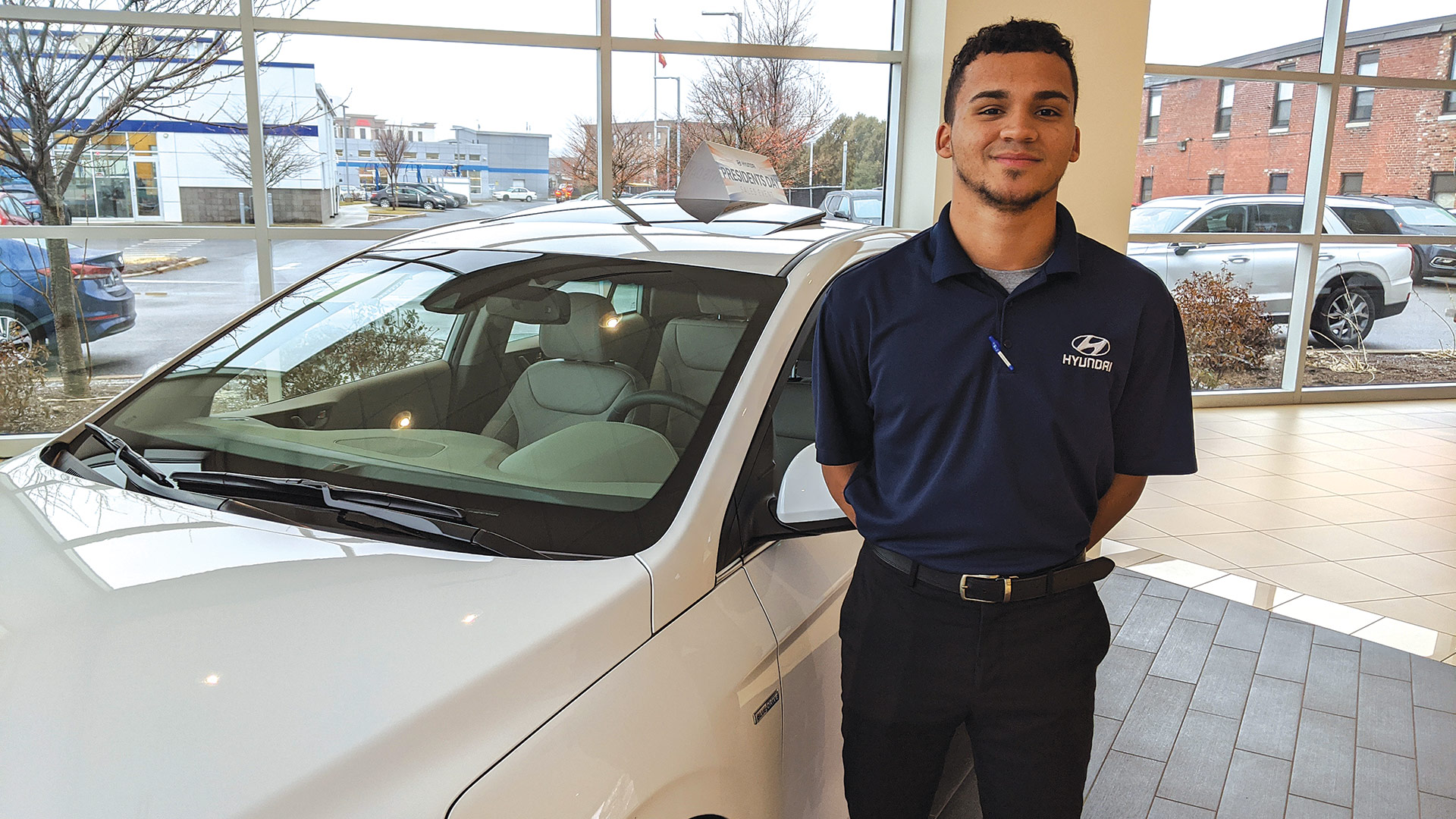
Brian Ortega sees the connection between electric cars and energy conservation in general.

“They’re popular for a multitude of reasons,” said the product specialist at Balise Hyundai in Springfield. “One, a lot of people are making the transition to having solar panels in their home or making other changes to be a little more eco friendly. People are becoming more aware of climate change, and they want to switch to electric cars.”

But here’s what many drivers of gas-powered vehicles don’t know — people drive electric cars for the performance, too.

“With full electric, there’s a lot more torque,” Ortega said. “When you hit the pedal, there’s no gears, nothing but electricity hitting the car, so your takeoff and speed on the vehicle and ability to get out of snow is a lot better on an electric car.”

Since the days when the Toyota Prius was the only option on the electric market, he told BusinessWest, manufacturers have gradually improved the performance and pickup of electric vehicles, as well as hybrids, which tap into both electricity and gasoline (more on that later). And with Hyundai, Nissan, and a host of other names starting to roll a wider variety of electric and hybrid cars out of factories, they’ve been gradually improving ride quality as well.

“A lot of people have the stigma that it’ll only perform so well, but when they come from a traditional sedan and see that it performs at the same level or better, they are always caught off guard by that,” said Ortega.

Carla Cosenzi, president of TommyCar Auto Group, which sells a number of electric and hybrid vehicles, agreed.

“I think people are shocked when they get in the car and realize the pickup they have,” she said. “When consumers look at electric vehicles, they usually don’t expect them to be as responsive as they are or have the torque they have.”

Whatever the reason, she went on, “we see electrification becoming more popular among manufacturers. It seems everyone’s research and design are focused on electrification now, and they’re definitely becoming more popular with consumers, for a number of reasons. For one thing, I think consumers are now more environmentally conscious than in the past, so if vehicles offer zero emissions, that’s better for the environment and more efficient than internal-combustion engines. The other piece is that these cars are more affordable than in the past.”

Ford has taken note of shifting attitudes on electrics and hybrids and pivoted accordingly, said Jeff Sarat, president of Sarat Ford Lincoln in Agawam.

Brian Ortega says charging stations for electric cars are more ubiquitous than they think — and Hyundai has an app to help locate them while driving.

“It’s interesting — for a while, Ford and Lincoln dropped all of their hybrid vehicles, but recently they brought back numerous versions of hybrids, both plug-in and traditional hybrids. Lincoln has a plug-in version of the Aviator coming out called the Grand Touring model. That’s something like a high-end luxury vehicle, and with the plug-in version, believe it or not, it gets more horsepower and torque than a regular twin-turbo V6 that comes standard in that vehicle.”

In addition, Ford will soon launch the all-electric Mustang Mach-E, which Sarat said is a whole new entry point into electric vehicles — perhaps a hipper one.

“I think this vehicle — and I’ve seen it, I’ve sat in it — is really going to take the electric world by storm, and going to battle the likes of Tesla because it looks better than the Tesla, has better range, and it’s also probably a fraction of the cost, which is nice.

“I think, forever, the common thought about electrics and hybrids was that these aren’t exciting cars,” he added. “The Mustang Mach-E and Aviator Grand Touring, those are exciting vehicles with plenty of range. That’s what we’re seeing in the newer vehicles.”

Engines of Change

To explain the difference between electric and hybrid vehicles, Ortega pointed out two that Hyundai sells: the Ioniq, a sedan, and the Kona EV, a small SUV.

The EV is strictly electric, while Ioniq has a plug-in hybrid and an electric hybrid,” he said. “With full electric vehicles, there’s only the charge, no gas. Hybrid is a mixture of an electric battery, electric drivetrain, and an actual gasoline engine. With the typical hybrid, you fill it up with gas, and it uses regenerative braking, so that, every time you step on the brake, it actually charges the hybrid battery, and gives you a little extra range in driveability.

Carla Cosenzi

“I think people are shocked when they get in the car and realize the pickup they have. When consumers look at electric vehicles, they usually don’t expect them to be as responsive as they are or have the torque they have.”

The plug-in hybrid allows you to go a farther distance between the charge that’s on the car and the gasoline you put into it. So, with a plug-in hybrid, if you get 52 miles to the gallon on gasoline, you get 30 additional miles of range from electricity.”

Ford has long been a player in this market with its Escape hybrid, a small SUV. “We sold thousands of those,” Sarat said. “And we still have the Fusion Energi with the plug-in hybrid; we sell a lot of those.”

The tipping point for many people, he believes, will be the emergence of electric and hybrid trucks and larger SUVs. He said the hybrid Escape was discontinued for a time when the difference between its gas mileage and that of a gas-powered model was small — say, 33 miles per gallon versus 28. Now that hybrid SUVs get well over 40 miles per gallon, though, the difference is more likely to attract buyers, and Ford hopes that’s the case as it develops a hybrid Explorer.

“That will fit seven people and get 40 miles per gallon,” he said. “Everyone wants that.”

Cosenzi said some electric cars in her stores have sold well for years.

“The Nissan Leaf won a number of awards and was one of the top-selling electric vehicles for the past couple of years — and was one of the first electric vehicles on the market,” she told BusinessWest. “I think people are really excited about the range. They get over 200 miles per charge, so that’s really appealing. Other things put a customer at ease, too — you can save money on maintenance and gas, and the manufacturer supports the battery life of the vehicle; Leaf has an eight-year, 100,000-mile battery warranty.”

She also cited Hyundai’s Ioniq and Kona as popular sellers, as well as the Sonata hybrid. Volkswagen offers an electric Golf and is developing other electric models. And Volvo has the T8 hybrid and announced an electric XE40 SUV that will go on sale this year. And TommyCar just acquired a Genesis franchise, which will introduce an electric car this year.

In short, Consenzi said, electric and hybrid models are starting to proliferate, and that speaks to manufacturers’ confidence in their sales potential.

“I think, even when we talk about the next two or three years, you’ll see huge growth. From everything we hear from manufacturers, all the research and design is going into electrification.”

Forward Progress

Long-term forecasts of electric and hybrid vehicles have fluctuated by year, but the national growth rate since 2013 still averages about 25% per year.

Several factors explain why growth isn’t even higher, according to a recent survey by research firm Altman Vilandrie & Co. of 2,500 American drivers. When asked what’s stopping them from buying such vehicles, 85% of respondents pointed to a perceived lack of charging stations, followed by cost (83%), and concerns over the range (74%). And 60% said they were simply unaware of electric cars.

Worries about range and charging-station location seem to go hand in hand, and manufacturers have noticed. Ortega said Hyundai has an app that connects with a car’s data screen — even if navigation isn’t installed — and points out all the charging stations in the area.

“Typically, you’ll always have one within two miles of where you are,” he noted. “Of course, on the highway, that’s where it becomes more spread out, but they tend to be readily available.”

Cosenzi added that today’s charging stations are much more efficient than they used to be. “People waited a long time for their car to be charged, but now it’s as quick as under 45 minutes for a full charge.”

As for cost, she noted that government rebates for electric vehicles are often aggressive, such as a $7,500 federal rebate and state rebates that vary by manufacturer, but tend to average around $2,500. “That’s quite an advantage for going electric, plus savings on gas mileage.”

Ortega agreed, noting that, after about $9,000 in rebates, drivers can lease an Ioniq for under $200 a month, no money down.

“It makes all the sense. It’s the cheapest lease you can get,” he said, adding that, “in the future, that’s going to be the route people go. You’ll have that performance as well as the savings. They’ll become more popular.”

The fuel savings, after all, remains a huge factor, Sarat said.

“My truck has a 35-gallon gas tank in it. I hate filling that up; it costs 75, 80 bucks. Nobody likes doing that,” he told BusinessWest. “Pretty soon we’ll have hybrid pickup trucks. To me, that’s exciting because I hate filling this gas tank. I like to be home at night, plug it in, and be done with it, and be able to go to work the next day or go skiing on the weekend.”

And maybe go a little easier on the environment, too.

Joseph Bednar can be reached at [email protected]

Commercial Real Estate

Sign of the Times

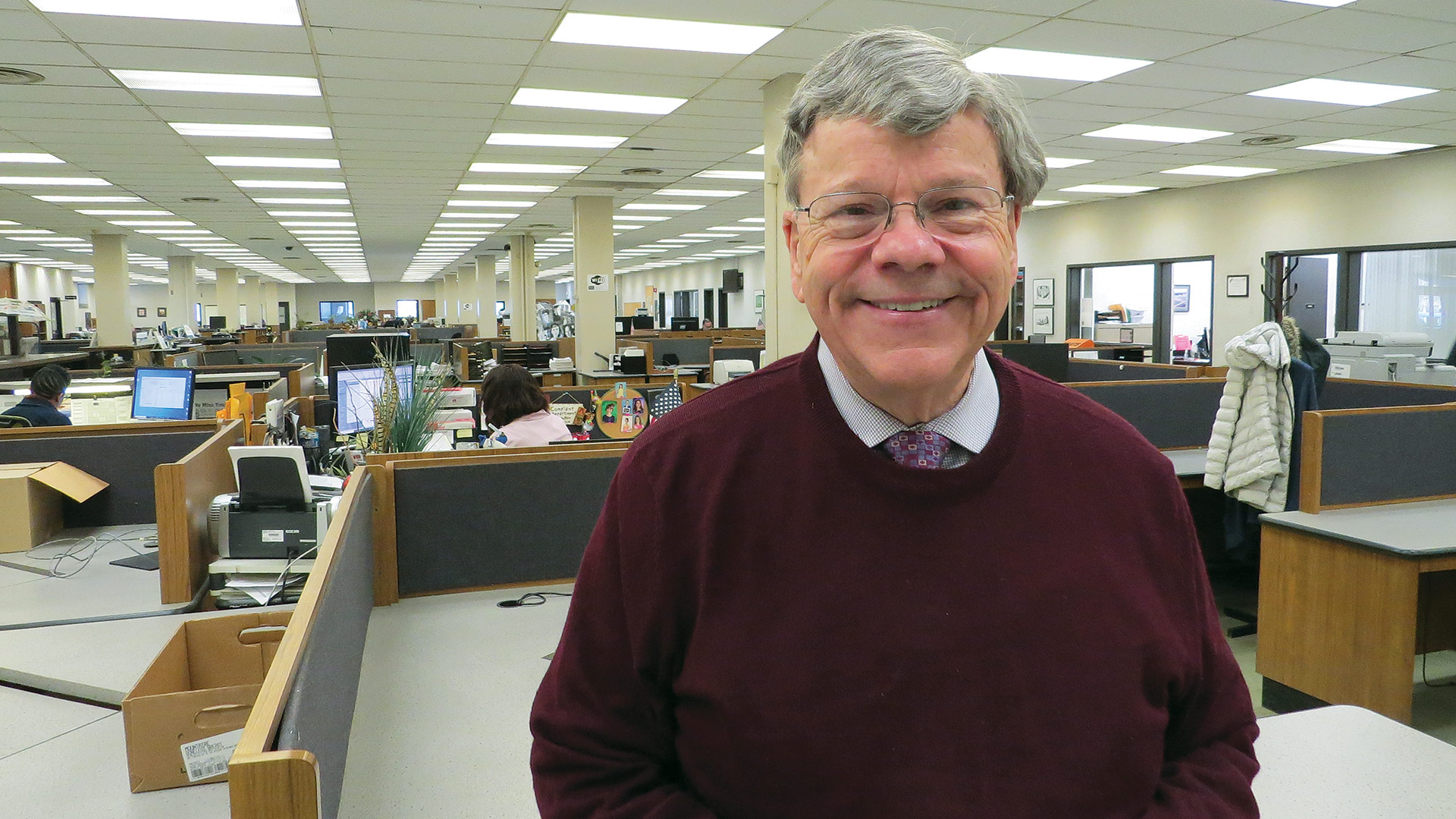
Republican Publisher George Arwady says the newspaper’s staff can fit into perhaps one-third of the space in the building on Main Street, prompting an effort to sell or lease that real estate.

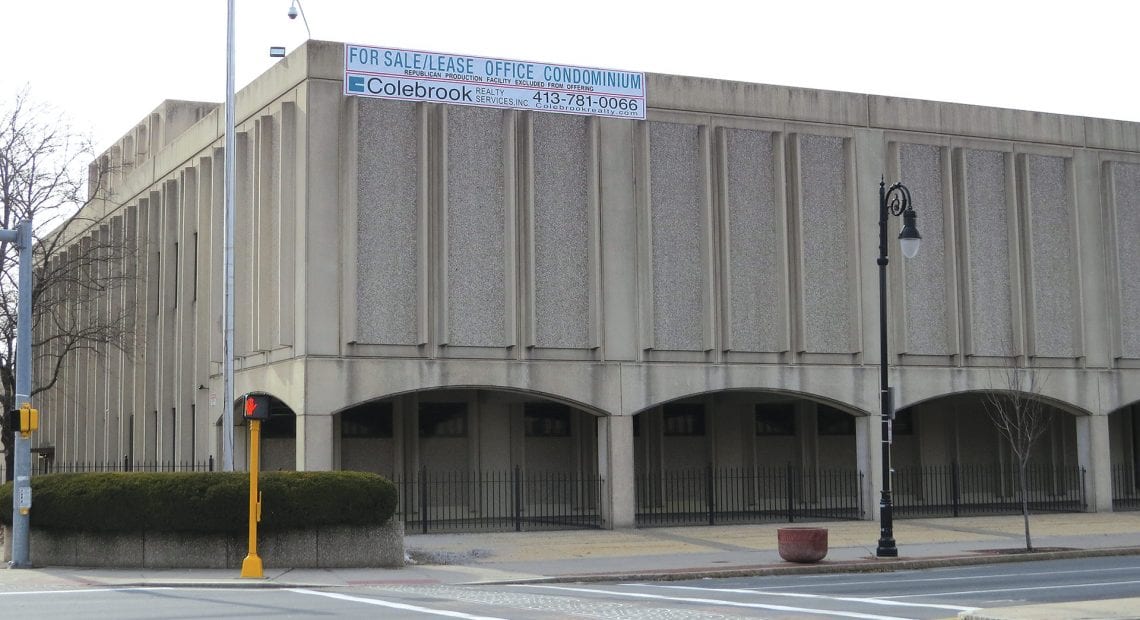
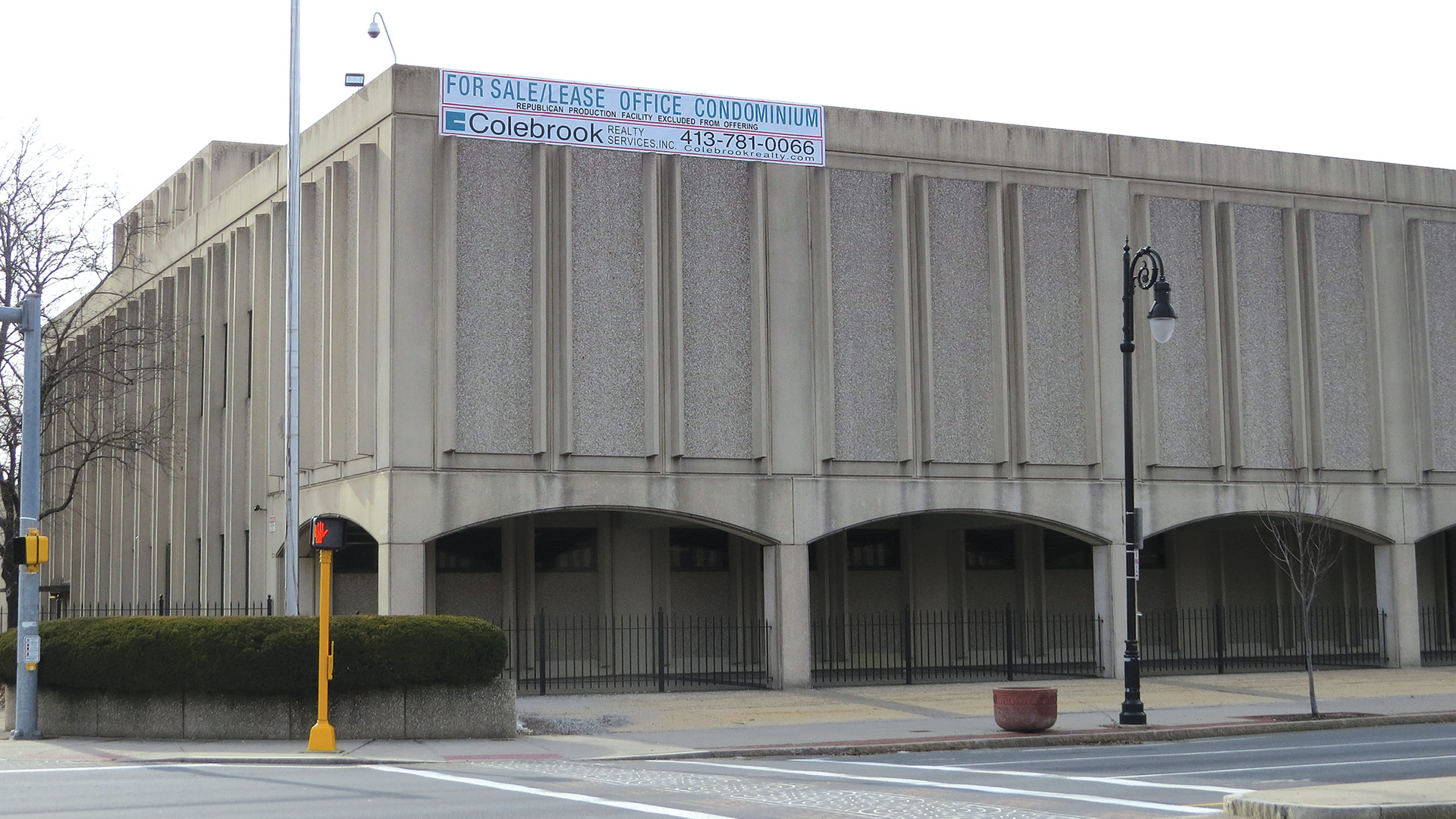
The sign just went up on the top of the structure a few months back. But the Republican building on Main Street in Springfield has been for sale or lease, on one level or another, for the better part of a more than a decade now.

Thus, it has become part of a regional and national story involving newspapers and commercial real estate. Technology has changed, papers have consolidated operations, and staffs have become smaller — those last two trends accelerated by a sharp decline in the fortunes of most all newspapers as interest in print advertising has waned. Thus, those papers’ real-estate needs have changed accordingly. And sometimes dramatically.

So it is in Springfield and at the Republican, part of Advance Publications, where publisher George Arwady estimates that the business — meaning the non-commercial-printing side of the venture (he stressed that repeatedly) — now requires not even half, and perhaps not even a third, of the roughly 64,000 square feet in the office building opened more than a half-century ago.

“We had maybe 500 people working in this building in the heyday — that’s when we were producing three newspapers, the Daily News, Union, and Republican, that were all competing against each other. There were competing newsrooms, competing circulation departments … they threw things over the fence at one another,” said Arwady, who came aboard as publisher nine years ago but certainly knows the history. “We might have 100 non-production people here now; we certainly don’t need all this space.”

Which brings us back to that sign. It announces loudly what has been widely known for years now — that there are large quantities of what Jack Dill, a principal with Colebrook Reality Services, which is now marketing the property, described as flexible, conveniently located space available for lease or sale as business condominiums.

And if someone wanted the whole building (again, not the huge commercial-printing operation), they can have that, too, if the price is right, said Arwady.

Indeed, he said the staff at the paper could easily be relocated into 20,000 square feet of space, and perhaps even less, in any of a number of downtown office buildings.

The fact that there are a number of properties that could accommodate them, including all the major office towers and several other buildings, including Union Station, helps explain why there has been little movement on the Republican space over the years, and why the sign has gone up on the property.

“It’s a buyer’s market, and certainly not a seller’s market,” said Arwady, noting, as area commercial real-estate brokers and managers have for some time now, that there is what amounts to a relative glut of office space in downtown Springfield, at least when compared with much hotter markets such as Boston, Cambridge, and even Cleveland.

In that last city, another Advance newspaper, the Plain Dealer, has relocated to smaller quarters, and its now-former headquarters has been sold and redeveloped. Something similar has happened at a number of other Advance publications, said Arwady, including the one in Grand Rapids, Mich. (the Press), and the Gazette in nearby Kalamazoo, where he once worked, where the newspaper property was acquired by a hospital group.

“They kept a portion of the old building, designed by a famous architect, and they built a large addition with offices,” he explained. “And the paper moved into nice space three blocks away in downtown Kalamazoo.”

And in Grand Rapids, he went on, the Press building was sold and redeveloped; it is now part of what’s known as the Medical Mile, a renowned healthcare destination.

“We’ve done this stuff all over the country, so we’re experts,” Arwady said of the Advance group, noting that the story has been replicated, to one degree or another, with newspapers — and communities — of all sizes.

The pattern has continued regionally as well, with a number of newspaper properties, perhaps most prominently the Boston Globe’s former headquarters building on Morrissey Boulevard in Dorchester being sold and redeveloped.

The Globe left its 700,000-square-foot complex in 2018 after nearly 60 years at that location, and took up residence on Washington Street — not far from where it had operated starting in 1870. It sold the Dorchester property to developer Nordblom, which is reshaping it into something called BEAT (Boston Exchange for Accelerated Technology). Plans call for 360,000 square feet of office and 300,000 square feet of flex, light industrial, and lab space that will likely include a craft brewery.

“It’s a massive project; the site is being totally redeveloped,” said Dill, who attended Boston College High School across the street. “That’s an example of what’s happening in cities across the country.”

And the Republican almost had a success story to top all these others. That’s almost.

“The solution for each market has been different. And at the end of the day, all real estate is local, as Tip O’Neill said about politics, and you have to find solutions that are available and practical and economical in the place that you happen to be located.”

Flash back to 2013 when there were briefly three Springfield casino proposals vying for the coveted Western Mass. license. In addition to the South End blocks now occupied by MGM Springfield and a short-lived proposal to build where CRRC is now assembling subway cars, Penn National, which now operates the slots casino in Plainville, wanted to build a casino on a large parcel that included both the Peter Pan bus terminal (now home to the Way Finders headquarters under construction) and the entire Republican parcel, including the massive printing operation.

“Somewhere, I have an option to buy that’s this thick from Penn National,” said Arwady, placing his thumb and index finger roughly two inches apart. “They were going to take the whole shooting match and build me a new production facility — the city was trying to get me to go into the industrial park; we were going to move all the office people downtown. And they were going to pay for the whole thing.”

Since the MGM plan got the nod in Springfield and then with the Gaming Commission, Arwady has essentially been trying to forge a successful plan B, and he acknowledged that doing so will be somewhat challenging because the market remains soft in Springfield. But he nonetheless remains optimistic that the property can regain the vibrancy it had 30 and even 20 years ago.

This optimism is based on a number of factors, starting with that prime ingredient in commercial real estate — location. Indeed, the property is visible from — and lies almost underneath — I-91, and also just off 291. Meanwhile, the bus and train stations are right across the street.

Beyond location, the building, described by Arwady as a “concrete fortress,” has abundant free parking (a rarity in the downtown area) and flexibility in that he believes it can accommodate everything from retail to professional offices to a variety of different cannabis-related businesses.

“We even have a large vault,” said Arwady. “And a vault is the most attractive thing you can have, from a commercial real-estate perspective, for a cannabis company, because it’s still an all-cash business and they can’t use the banks.”

Dill told BusinessWest that he can envision a number of different potential redevelopment opportunities at the site, including office space, education-related uses, and perhaps co-working space. And flexibility — meaning the ability to respond to a market’s needs — is an important quality when redeveloping such structures, because each real-estate market is unique.

“The solution for each market has been different,” he explained. “And at the end of the day, all real estate is local, as Tip O’Neill said about politics, and you have to find solutions that are available and practical and economical in the place that you happen to be located.”

Over the past several years, a number of entities, from law firms to education-related facilities, have toured the property, said Arwardy, adding that he believes this interest will eventually translate into a transformation of the property into other uses — perhaps several of them.

This has been the trend — or the story — when it comes to newspapers and commercial real estate, and the story is ongoing. u

George O’Brien can be reached at [email protected]

Community Spotlight

Community Spotlight

A $50 million renovation will transform Elm Court, on the Stockbridge line, into a new resort.

Historic properties are getting a second act in Lenox these days.

Take the $60 million expansion and renovation at the former Cranwell Spa & Golf Resort. The Miraval Group, a subsidiary of Hyatt Hotels, purchased the property in 2016 for $22 million and has transformed it into a high-end wellness resort, called Miraval Berkshires Resort & Spa, featuring 102 guest rooms and suites, and a luxury, 46-room hotel, Wyndhurst Manor & Club.

Set to open in May, the complex known as Miraval Berkshires is the third Miraval property nationwide, following its flagship in Tucson, Ariz. — named among the top 20 destination spas in the world last year by Condé Nast Traveler readers — and a second location in Austin, Texas, which opened last year. Hyatt acquired Miraval in 2017, and Wyndhurst Manor & Club is part of Hyatt’s Destination Hotels brand.

The 29,000-square-foot spa in Lenox “was conceived to excite all five senses and encourage mindfulness and introspection,” according to the company, and will include 28 treatment rooms, an indoor/outdoor lounge pool, separate relaxation rooms for women and men, a salon, a sauna, a steam room, a retail boutique, and a courtyard that evokes “a sense of harmony with nature.”

The neighboring Wyndhurst Manor & Club, a renovated Tudor-style mansion built in 1894, will offer a more traditional hotel experience, but guests there can purchase day packages for Miraval.

“We are excited to continue the Miraval brand’s expansion with the upcoming opening of Miraval Berkshires, as well as to welcome Wyndhurst Manor & Club to the Hyatt family,” said Susan Santiago, senior vice president of Miraval Resorts, in a release. “These two properties will offer distinct and memorable travel experiences, and we look forward to inspiring once-in-a-lifetime, transformative experiences for all guests who visit our Miraval and Wyndhurst resorts in the heart of the Berkshires.”

Then there’s the Elm Court estate on the Stockbridge-Lenox line, constructed in 1886 as a summer cottage for William Douglas Stone and Emily Vanderbilt. It completed a series of renovations in 1919 and evolved into an inn in the ’40s and ’50s, hosting dinners, events, and overnight accommodations. It was eventually placed on the National Register of Historic Places.

These days, Travaasa Berkshire County is working on a $50 million renovation of the property to develop a new resort there, featuring 112 rooms, including 16 existing suites in the Gilded Age mansion. After a series of starts and stops, including a holdup in land court in Lenox and a pause for infrastructure improvements to the roadway and water and sewer lines, the project is now moving forward.

“Travaasa Berkshire County’s plan preserves and protects a beloved historic property, respects community character, conserves open space, and contributes to the hospitality culture of the region,” the project website notes. “A tasteful, responsible commercial use of this property by a financially healthy organization will revive a dormant estate, create living-wage hospitality jobs at all skill levels, and maintain the property on town tax rolls.”

Even the Mount, Edith Wharton’s English manor-style home during the early part of the 20th century, is making news these days. Her classic novel The Age of Innocence is celebrating its 100th anniversary this year, and to mark the occasion, the Manor is displaying Wharton’s personal copy of the book.

“We have many, many of her works that either have bookplates or her signature — or both, as with this copy — and so, to finally have her own copy of The Age Of Innocence join this collection of her work, it’s amazing. It’s incredible,” Nynke Dorhout, the Mount’s librarian, told Northeast Public Radio recently.

Looking Ahead

Lenox is much more than its historical properties, of course. It’s also long been renowned for its cultural and recreational attractions, from Tanglewood, the summer home of the Boston Symphony Orchestra, to Shakespeare & Co., to the town’s collection of rustic inns and bed and breakfasts.

But the business community has seen new energy in recent years as well, with projects like a Courtyard by Marriott that opened in 2017 and features 92 rooms with panoramic views, an indoor pool, a large patio with firepits, a restaurant, and a 12,000-square-foot event space; the relocation of Morrison’s Home Improvement Specialists Inc. from Pittsfield and its adaptive reuse of a blighted building that had been vacant for 10 years; an apartment conversion at the Walker Street Residences by the Allegrone Companies; and the construction of Allegrone’s headquarters and co-working office space using green design and technology in a building on Route 7.

Lenox at a glance

Year Incorporated: 1767
Population: 5,205
Area: 21.7 square miles
County: Berkshire
Residential Tax Rate: $12.10
Commercial Tax Rate: $14.78
Median Household Income: $85,581
Median Family Income: $111,413
Type of Government: Board of Selectmen, Open Town Meeting
Largest Employers: Canyon Ranch, Boston Symphony Orchestra, Kimball Farms
* Latest information available

To address an aging population, town officials created a first-time-homebuyers program in 2016 in partnership with four banks that offers up to $10,000 in down payments to qualified applicants. They also changed zoning requirements to make it easier to build new apartments and condominiums or convert older housing stock into appealing residences, as well as adopting a Complete Streets policy that will make the town eligible for state funds to improve connectivity for pedestrians and bicyclists.

Meanwhile, to encourage companies to move to Lenox or expand, town officials have been focused on a five-year open-space plan that was adopted several years ago. In addition, the Berkshire Natural Resources Council, the regional land trust, has been working to develop a regional trail network with a long section passing through Lenox.

Add it all up, and this town of just over 5,000 is looking decidely to the future, while continuing to celebrate and restore its rich past.

Joseph Bednar can be reached at [email protected]

Insurance

Beyond the Bottom Line

If a customer wants insufficient coverage, Mark Lussier says, he or she should at least have a conversation about it and understand the risk.

Mark Lussier tells the story of a newly licensed driver backing out of her driveway in South Hadley who didn’t see the 85-year-old walking along the sidewalk. They met, and he fractured his hip and was in rehab for six months.

“Fortunately, the lawyers weren’t bloodthirsty, and they settled for the policy limit for bodily injury,” said the co-owner of Lussier Insurance in West Springfield, noting that, too often, lawyers aim for the maximum award, putting the defendant’s house and savings at risk.

Yet, “in its infinite wisdom, the Commonwealth of Massachusetts has determined that $20,000 of bodily-injury coverage is all you need to be legal,” he told BusinessWest.

Then there’s property-damage coverage on auto-insurance policies, which has a minimum requirement of $5,000. “I had a case not too long ago where someone hit a hydrant and a parked car, and then a porch. I’m guessing $5,000 wasn’t enough to pay for all that stuff. But it’s interesting to see how many people have only $5,000 for property damage.”

Many bare-bones policies come from the direct writers like Geico and Progressive that saturate the airwaves with ads focused only on premium price. But, in reality, insurance customers can get policies for not much more than the bare-bones pricing of the online marketers, but with much better coverage, explained in detail, simply because of the flexibility Massachusetts insurers have enjoyed over the past 12 years — flexibility that, for the most part, didn’t exist before.

Indeed, for much of the past century, auto-insurance rates in Massachusetts were set by the state Division of Insurance. Anyone who requested a premium quote for a certain level of coverage would receive the same price from any number of companies, unless they were eligible for a group discount.

Managed competition, which began in 2008, allows insurance companies to offer their own rates. Although these rates may vary, they must still be approved by the Division of Insurance — hence the term ‘managed.’ The result is that Massachusetts drivers are able to compare the different rates, benefits, and services offered by the insurance companies competing for their business.

“So many people are gathering information online without talking to the agent to explain the coverage, so they don’t understand at all what they’re purchasing. It’s the same old story,” said Trish Vassallo, director of Operations at Encharter Insurance in Amherst.

And, while $5,000 won’t cover the cost of a telephone pole or guardrail, injuring a person with one’s car and being undercovered is usually far worse, she explained. But that doesn’t have to be the case, as the premium difference between $100,000 and $250,000 in coverage can be as low as $10 per year — well worth the peace of mind.

Trish Vassallo

“I don’t think there’s an agent in Massachusetts who doesn’t welcome clients calling and talking to them. We like getting away from billing questions and talking about the nuts and bolts of insurance. It’s what we live for — sharing knowledge. It’s so important to make sure you understand everything you’re getting. You don’t want to learn about it after a loss.”

“That’s what we explain to them. Accidents happen, and if a building is hit, $250,000 might not be enough, but it certainly gets you closer,” she said, adding that, if a pedestrian is hit and successfully sues, $100,000 isn’t going to cover the costs.

Auto insurance, like all personal lines, is all about understanding risks and making an educated decision on what one’s comfort level is, she said — and not just settling for the lowest bottom-line price.

Bundle of Options

Under managed competition, carriers have been able to offer individualized add-ons and rider endorsements, from accident forgiveness to gap coverages to good-student discounts, and local agents say it’s important to have a conversation to get the best price for the coverage that’s actually sufficient.

“Today’s market is all about packaging and bundling insurance, and when you shop just one product, you sell yourself short in the money game,” Vassallo said.

To that end, she said, picking up the phone and talking to an agent is far superior to pressing a few buttons online.

“It’s about educating yourself, and I don’t think there’s an agent in Massachusetts who doesn’t welcome clients calling and talking to them. We like getting away from billing questions and talking about the nuts and bolts of insurance. It’s what we live for — sharing knowledge. It’s so important to make sure you understand everything you’re getting. You don’t want to learn about it after a loss.”

Part of that education, Lussier added, is understanding what’s most important to insure.

“Why buy auto insurance? In the consumer’s mind, it’s to protect the car; that’s the thing they care about,” he said. “I was the same way when I was a brand-new driver. ‘Give me what I need, whatever’ — until you have a claim. One thing I hear is, ‘I thought I had coverage for that.’”

Under the prior, regulated system, insurance providers were required to apply specific surcharges for certain accidents and traffic violations. Now, insurance companies are permitted to develop their own rules, subject to state approval, for imposing surcharges for at-fault accidents and traffic violations.

They can also include a raft of incentives, such as bundling auto and home insurance when both policies are bought from the same carrier, offering multi-car discounts or AAA membership credits, or using disappearing deductibles to reward drivers for not having accidents over a long period of time.

Then there are away-from-home discounts for college students who are on their parents’ policies, yet spend much of the year away from home without access to the family car.

“A newly licensed driver can add $800 to $3,000 to a premium, depending on whether they have their own car or not,” Lussier said. “A good-student discount can take some bite off that, and then you can get a discount while they’re away at school. Some companies require you to be at least 100 miles away to give you the discount, some only 25.”

What parents should not do in that situation, Vassallo said, is take their child off the policy completely to save some money.

“You don’t want to do that — God forbid he gets in his roommate’s car and gets into an accident, and the roommate has minimal [coverage] limits, and now the family is looking at potential harm to their assets. Companies can give discounts for students who go off to college, but you should keep them on the policy. Even though they’re not a regular driver anymore, it still provides protection.”

Limited Thinking

One rule of thumb when it comes to liability and coverage, Lussier said, is to ask, ‘how much am I worth?’

“If I’ve got a house, a savings account, a 401(k), I have to protect that with bodily-injury [coverage], then $20,000 isn’t going to be good enough,” he told BusinessWest, noting that, often, the difference between coverage levels doesn’t translate to all that much in the annual premium. For instance, he asked, what if the difference between $100,000 and $300,000 is just $80 per year?

“Do you want to take a risk for 80 bucks a year? When an accident happens, we want to know that we had the discussion and that you’re OK with understanding the risk after considering your driving habits and where you drive and what you have to protect,” he explained. “You’re saving 80 bucks to have crappy limits. We can keep your crappy limits, but we want you to tell us that’s what you want.”

Joseph Bednar can be reached at [email protected]

Autos Road Game

Road Game

Editor’s Note: This is the third installment of a new series for BusinessWest — car reviews of a sort. These are first-person looks, and some commentary, about some of the vehicles — and issues — that are, let’s say, in the news.

The GMC Sierra 2500 is one of many models that have become popular with people who not only use such a vehicle to work, but those who just want to drive a truck.

Remember that scene from American Graffiti?

OK, that doesn’t narrow it down, does it? There are lots of good scenes to remember, and lots of good lines, too. (I recall my first semester at UMass in 1975 when I was only 17 (drinking age was 18 back then); I must have told the bouncers at the Blue Wall a dozen times that I lost my ID in a flood. And none of them were creative enough to reply, like the old wino in that famous package-store scene, “I lost my wife, too; her name wasn’t ID, though.”)

I’m talking about the scene where the nerdy character (I forget his name) played by Charles Martin Smith, the one who lost his ID, is driving down the main drag in the handsome ride borrowed from Ron Howard’s character (I forget that name, too.) Anyway, two guys out cruising the strip come upon this vehicle and say, “that can’t possibly be you in that gorgeous car, can it?” — or words to that effect.

I thought of that line as I was out reviewing/test driving the 2020 GMC Sierra 2500 HD. People all along Route 57 were probably thinking, “that can’t possibly be you in that huge, gorgeous pickup, can it?” The suit and tie certainly didn’t help, but beyond that, this was a classic mismatch.

Perhaps never in the history of motorized vehicles has a driver seemed less suited to what he or she was driving. (Wait, there was Mike Dukakis in that tank back in 1988. If you missed it, Google it; the ad pretty much destroyed his presidential campaign.)

OK, I’m exaggerating about this mismatch thing, but not really. I can spell drywall, but that’s about it. Electric work? I’m like Michael Keaton’s character in Mr. Mom; when asked if he plans to use 220 volts in an addition onto his house, he replies, “220, 221, whatever it takes.”

“… it brings the best of two worlds — the truck world and luxury-car world — together, which is why it is appealing to people who need their truck to work, and people who don’t.”

I look more like Charles Martin Smith than Charles Martin Smith does. So what am I doing in a Sierra 2500? Reviewing it, that’s what, and maybe also dashing some cold water on the notion that pickup trucks are for … well, the kinds of people who have historically driven pickup trucks, especially as they become more well-appointed and look and feel more like cars — in this case, luxury cars.

Indeed, this 2500 has leather, heated seats, a heated steering wheel, ventilated front seats, Apple Carplay and Android Auto, a power sunroof, wireless charging, a Bose premium sound system, and a lot of other things you would expect to find in a luxury car. But it also has a Duramax 6.6-liter turbo-diesel engine, a six-foot bed, a GMC ‘Multipro Tailgate’ (more on that later), and the ability to tow between 14,500 and 18,500 tons of whatever you want to tow, depending on configuration.

In other words, it brings the best of two worlds — the truck world and luxury-car world — together, which is why it is appealing to people who need their truck to work, and people who don’t, said Shaun Cummings, commercial manager at Balise Chevrolet Buick GMC.

“We’re seeing everyone from the family man or woman to the contractor to the lawyer getting into trucks today,” he said, noting that this is especially true with the 1500 model. “And that’s because they’re not just trucks anymore; they have air conditioning, wireless charging, sunroofs, heated seats, and they continue to add things.”

Even business editors are giving them a look — in this case a detailed look that helps bring the broadening market for this model, and seemingly all pickup trucks, into perspective.

Hailing a Cab

While out driving this pacific blue metallic Sierra (cool color), I was thinking not only of Charles Martin Smith and his character, but Sister Mary Caritas, SP (Sisters of Providence), one of my favorite people in the world.

At 96, she’s not only still driving, but getting from here to there in a mid-sized SUV, as I learned in a recent conversation. Paraphrasing her comments, she said she’s been looking up at people her whole life — the only way anyone would dream of using the word ‘small’ in connection with the sister is in regard to how vertically challenged she is — and it was great to be looking down on someone, literally, for a change.

You can do that in this Sierra, believe me. You’re riding above pretty much everything on the road that has just four wheels — well above. (To those not well-versed in trucks, just getting in one can be a challenge for many, especially those of Sister Caritas’ height; I managed without a step, but most would need one.)

The author rides high for his test drive in the Sierra 2500.

Getting used to the height is just one of the assignments; there’s also the language of trucks, which is somewhat different from that of cars, especially if all you’ve known is cars.

For example, HD doesn’t mean high-definition; it means heavy-duty. And then, there’s phrases like crew cab, as opposed to regular cab or double cab, standard bed vs. long bed, and even Duramax, the engine produced by DMAX, a joint venture between General Motors and Isuzu in Moraine, Ohio.

There are a lot more people who know this language now, said Cummings, adding that many factors contribute to the increasing popularity of pickups in Western Mass. — and across the country, for that matter.

These include improved gas mileage (the 2500 gets 13 mpg, but the smaller 1500, the bread and butter for GMC, does even better), all those luxury-car-like amenities mentioned earlier, and decent lease rates, which are making trucks with higher sticker prices (the 2500 I test-drove listed for $73,250) more affordable.

“We’ve been doing a lot of leasing on these trucks lately,” he explained. “It’s made it more affordable for a lot of people.”

As for the Sierra 2500, this is a full-size, HD pickup, said Cummings, adding that it has undergone a complete a redesign for 2020, with a number of what he called “first-in-the-industry features.”

This list includes that aforementioned Multipro Tailgate, which has six different positions.

“It comes down so it makes a work station for you if you’re on the job site,” he explained, “or if you need a step to get in the bed. It also acts as load support, so if you’re putting a long piece of plywood in there, this will help. It’s a pretty cool innovation, and it’s exclusive to GMC.”

The model test-driven has the 6.6-liter Duramax diesel, but there is also a 6.6-liter V8 gas engine. There are also a number of trims, from the SLE (base price $54,395) up to the top-of-the line Denali (MSRP from $75,045). Regardless of the engine or trim, the 2500 has a basic mission life.

“It’s built to haul,” said Cummings. “It’s built to tow, it’s built to plow — it’s work truck; that’s what it’s made for.”

That said, while the 2500 is popular with those who need a ‘work truck,’ it’s also gaining the attention of those who have something large to tow, like a boat or a trailer or a few snowmobiles. Or who have a lot stuff to take to the dump (a large constituency). Or who need a truck for runs to Home Depot (although you can have almost anything delivered these days). Or people who just want to drive a pickup.

And there are lot of reasons why one would, as that trip down and back on Route 57 revealed.

In a commercial for the Chevy Silverado, the Sierra’s close cousin, now making the rounds during sports broadcasts, those doing the test drive are picked up in a helicopter and taken to what looks like a lumber camp, where they then tow several tons of logs up a hill on a dirt road. We were going to do that, but we didn’t have a helicopter, or any logs to tow, or a dirt road with a hill.

So we settled for the South End Bridge and Route 57 instead. The ride was smooth and even — although you are in a pickup, after all, and you do feel those bumps in the road — and there’s certainly plenty of power and acceleration. (I looked down at one point and realized I was doing almost 80, as in miles per hour, not kilometers, and it certainly didn’t feel like it.)

The cabin is huge and well-appointed; again, all the creature comforts are here. If you weren’t three or four feet off the ground and in a cab about four feet wide, you wouldn’t know you were in a truck. Which was the point of this exercise, or one of them.

Fueling Interest

Mike Dukakis sure looked out of place in that tank — he was the butt of jokes for months, and he’s probably still hearing about it. And maybe I did, too, in the Sierra 2500. But probably not. Times, and pickups, are changing.

Massachusetts isn’t destined to become Texas, Wyoming, or even Arkansas soon when it comes to the number of pickup trucks on the roads, but the numbers are climbing.

And the 2500 is one of the reasons why.

George O’Brien can be reached at [email protected]

Commercial Real Estate

Changing the Landscape

An aerial drone shot of the Northampton/I-91 Professional Center on Atwood Drive.

Ken Vincunas says he started getting into drone photography years ago — well before most practitioners.

There was a lengthy learning curve, and in some ways it’s still ongoing, he acknowledged, but overall it’s been a fun, intriguing experience as the technology has improved and its capabilities have grown. Meanwhile, it’s become a very practical — and much-needed — work tool for Vincunas, president of Development Associates, the Agawam-based commercial real-estate management firm and developer.

Indeed, he uses drone shots to help market the myriad properties in the company’s portfolio from Greenfield to East Granby, Conn.; shots from above often provide a unique perspective.

Shots like the one on this page, which Vincunas took last fall — probably in the early morning, by the looks of the parking lot and the lack of traffic on nearby I-91. Perhaps better than any thousand words could — even these — the picture tells how the development on Atwood Drive in Northampton, known officially as the Northampton/I-91 Professional Center, has changed the landscape in that area, once home to the Clarion Inn and Conference Center (Vincunas told BusinessWest he has some powerful drone shots capturing the demolition of that facility).

Today, the site has become home to a wide range of businesses and institutions, including the Massachusetts Trial Court, now a major tenant in the third building to be developed on the property, known as 15 Atwood, the large one in the center of the picture.

But Cooley Dickinson Hospital (CDH) is the dominant tenant on the property, with facilities in all three buildings and a presence summed up with the collective ‘Atwood Health Center.’

The hospital, a Massachusetts General Hospital affiliate, has its name on 22 Atwood (Cooley Dickinson Health Care), which houses a number of facilities, from Atwood Internal Medicine to Hampshire Cardiovascular Associates; from integrated behavioral-health services to women’s health. Meanwhile, at 8 Atwood, the first building developed, CDH has located its occupational-therapy, physical-therapy, and speech-language facilities, and in 15 Atwood, opened last spring, CDH has placed general surgical care and infectious-diseases facilities and Oxbow Primary Care.

Thus, the facility has become a true healthcare destination, similar to the Brightwood section of Springfield’s North End, although, as Vincunas noted, it is home to a wide variety of tenants, including an engineering firm and an accounting firm slated to move into 15 Atwood later this year (buildout on the latter is much further along than the former).

Which means the parking lot generally doesn’t look anything like it does here. And it’s likely to become even more full in the coming months as Vincunas looks to fill the remaining spaces in 15 Atwood, roughly 8,000 square feet in total.

“We’re seeing a good amount of interest in this space,” he said while sitting at a table in one section if it. “We had one caller interested in the whole thing and several others interested in pieces of it.”

But he’s already looking beyond those spaces — both literally and figuratively — to the undeveloped property at the back of this parcel, adjacent to the highway. There is room for additional development there, he said, and already a search is underway for the anchor tenant or tenants needed to greenlight new construction.

“We have site-plan approval for another building, which is a significant milestone,” he said, adding that the permit will allow something between 40,000 and 50,000 square feet, somewhat smaller than the 66,000-square-foot 15 Atwood. “We’ll need someone there to be the anchor, as it was with these other buildings.”

For this issue, BusinessWest takes an in-depth look at the Atwood Drive complex and how it remains an important work in progress.

A Vision Comes into Focus

Despite how it might look to some, Vincunas stressed repeatedly that this venture was certainly not an overnight success.

Indeed, it’s been more than a decade in the making, he said, and the story really begins when the Clarion property, located on the north side of Atwood Drive, was acquired at auction by the O’Leary and Shumway families in the early ’90s. Other sites on both sides of the street were acquired over the ensuing years, and eventually a vision developed for a professional office complex, said Vincunas, one that would be built in stages as need — and anchor tenants — emerged.

“We’re seeing a good amount of interest in this space. We had one caller interested in the whole thing and several others interested in pieces of it.”

Redevelopment of the south side of the property, undertaken by a partnership of the O’Leary and Shumway families, with Development Associates as leasing agent and construction property manager, began with 8 Atwood, with construction commencing in 2011. It is now home to Clinical & Support Options, several CDH facilities, as noted, and New England Dermatology. The building known as 22 Atwood was built in 2012. It is now home to 17 different CDH services, including the diabetes center, fertility services, geriatrics, podiatry, radiology and imaging, rheumatology, and spine medicine.

Construction on 15 Atwood — led by the O’Leary family as managing partner, again in partnership with Development Associates — began in 2017, with the trial court as the anchor tenant; the facility had been located in cramped quarters in downtown Northampton and needed an upgrade.

Ken Vincunas stands in the space being built out for the construction firm BluRoc in 15 Atwood, the latest addition to the complex just off I-91 in Northampton.

The court, now occupying roughly 22,000 square feet, moved in last February, and since then, a number of additional tenants have signed on, including Cooley Dickinson, which moved in last fall; the state Department of Developmental Services; Assurance Behavioral Health; Staffier Associates, a mental-health clinic; OnaWay, LLC, an accounting firm relocating from Holyoke; and BluRoc, a construction firm now located in Hadley.

This diverse mix of tenants was drawn to the Atwood Drive complex by a number of factors, but especially accessibility (the site is just off exit 19 of the highway), parking, the large footprints available, and the ability to shape these spaces to fit specific needs.

“One of the big draws is the parking — it’s very hard to find a very large space with this kind of parking in Northampton,” Vincunas explained. “And it’s very accessible, which makes it attractive to a wide range of businesses and facilities like the courthouse.”

And also BluRoc, which will soon be occupying more than 6,000 square feet of space on the third floor of 15 Atwood.

“They have three offices in three different buildings in one little area, and they needed a consolidated office; they’re going to have 30 people here,” he said, adding that buildout of the space should be completed by late spring.

With the third and first floors fully leased, there are now just those two spaces remaining on the second floor, he said, adding, again, that there has been a good amount of interest expressed in those footprints.

Looking ahead to the last remaining parcel and development of that space, Vincunas said there is no definitive timeline on construction, but he believes there is solid demand.

Shutter to Think

The accounting firm OnaWay has its own aerial shot of 15 Atwood on its website, accompanied by the words “our new home in 2020 is underway, and we’re stoked to live and work where we call home.”

There’s a growing list of companies saying similar things about this location, which has been completely transformed over the past decade — from unused property and a tired hotel and conference center into a state-of-the-art professional complex and healthcare destination.

As Vincinas said, it wasn’t an overnight success, certainly, but it has developed — yes, that’s a photography term — into one of the better development stories in the region.

As that drone shot clearly demonstrates.

George O’Brien can be reached at [email protected]

Features

The Future Is Now

Both the immediate and long-term future of the manufacturing industry will be defined by the development of several evolving trends and cutting-edge technologies. According to the Assoc. of Equipment Managers (AEM), many of these are poised to have a significant impact in 2020 and beyond, so it’s critically important for manufacturers to develop a keen understanding of what they are and how they will grow over time. Here are the five most notable trends the AEM sees impacting those within the industry, both this year and in the future.

Wearable Technology

Manufacturers of all types and sizes are increasingly looking into — and investing in — wearable devices with different sensors that can be used by their workforce. According to a recent article from EHS Today, electronic features found in wearable devices allow for organizations to monitor and increase workplace productivity, safety, and efficiency. In addition, employers are now readily capable of collecting valuable information, tracking activities, and providing customized experiences depending on needs and desires.

Predictive Maintenance

Effective equipment maintenance is central to the success of any manufacturer. So the ability to predict impending failures and mitigate downtime is incredibly valuable. Predictive maintenance gives manufacturers the means to optimize maintenance tasks in real time, extending the life of their machinery and avoiding disruption to their operations.

However, iIn order to successfully build a predictive maintenance model, manufacturers must gain insights on the variables they are collecting and how often certain variable behaviors occur on the factory floor.

5G/Smart Manufacturing

Smart factories are becoming the norm in manufacturing, and they rely on connected devices to leverage technologies like automation, artificial intelligence, and more. In addition, these devices are capable of sensing their environments and interacting with one another. As factories of the future continue to grow and develop, manufacturers need to realize that they must be able to adapt the networks that connect them, efficiently and effectively.

VR and AR

When it comes to using augmented reality (AR) and virtual reality (VR) in manufacturing, the possibilities are endless. Whether it’s helping make processes more efficient, improving product design and development, or maintaining machinery more effectively, these technologies are capable of becoming game-changers in the coming years.

According to an article from PwC, manufacturers are becoming more adept at finding ways to incorporate these technologies within their organizations in an effort to drive a future defined by digital connectivity. In fact, one in three manufacturers have adopted — or will adopt — VR and AR in the next three years.

Cybersecurity

The importance of cybersecurity in manufacturing cannot be overstated. More and more connected devices are being integrated into organizational processes each day, so it almost goes without saying that the manufacturing industry needs to develop a keen understanding of how to best deal with them.

Features

To Preserve and Protect

Pete Westover

For more than 30 years, Pete Westover served as Amherst’s conservation director and watershed forester, and over that time he worked with a host of others to preserve large tracts of farmland, create a system of conservation lands, and build roughly 80 miles of trails. In 2006, he left that post to, in essence, partner with others and take his conservation work to a higher, broader plane. The company is called Conservation Works, and it is changing the landscape — or not changing it, as the case may be — in a number of meaningful ways.

The red Prius (what else would he drive?) in Pete Westover’s driveway is not yet five years old.

But he has more than 165,000 miles on it already, by his estimates — he hasn’t looked at the odometer lately — and the number climbs steadily each week.

That’s because he’s on the road — a lot — in his work, and sometimes off the road as well. Indeed, from his home in South Deerfield, he’s packed up and trekked off to dozens of communities in the Commonwealth and beyond, doing work that, well, doesn’t seem much like work.

It’s more of a passion.

And it’s the same for all the partners at a unique company called Conservation Works, a name that doesn’t say it all, necessarily, but goes a long way to explaining what this is.

As it notes on its website, this company works with public, private, and nonprofit landowners to enhance land conservation and ecological resiliency. And it does so through work on everything from conservation of open space and farmland to the development and maintenance of trails; from invasive-plant-management plans to an upcoming workshop on climate-change resilience at Frontier Regional High School in South Deerfield.

“We focus on land — trails, ecology, and land-protection work,” said Westover, the company’s managing partner, who was appointed Amherst’s conservation director and watershed forester in 1974 — the first such position in the state as far as he knows — and held that position for 30 years.

In 2006, he collaborated with Terry Blunt, former executive director of the Connecticut River Watershed Council (now the Connecticut River Conservancy) to create Conservation Works.

Blunt passed away in 2010, but a team of professionals (more on this group later) carries on his work and his legacy.

A look at the portfolio of recent and current projects provides an effective snapshot of both what this company does and the challenges facing municipalities and individual landowners today:

• Providing assistance to the town of Dover for an open space and recreation plan;

• Working with the Massachusetts Department of Fish and Game’s Natural Heritage & Endangered Species office on inventories of rare plants and invasive species on Mount Tom;

• Working with the town of Deerfield on phases I-IV of a municipal vulnerability (climate change) preparedness plan;

• Working with Amherst College on a host of initiatives, from replacement of nine red pine stands to invasive plant monitoring and control;

• Working with Fish & Game on breeding bird surveys in Southwick, Montague Plains, and other communities;

• Providing assistance to the Hilltown CDC on a farmers’ market and local food-promotion program;

• Conducting a wetlands assessment and planning project for the Orchards Golf Club in South Hadley; and

• Working with Lathrop Retirement Community in Northampton to improve trail accessibility at its facility.

And then, there are the projects involving trails and trail systems. The company has worked on dozens of them, from the Three Bridges Trail in Hatfield to the Willard Wood Trail in Lexington to the Robert Frost Trail, which winds its way through several communities in Western Mass.

Conservation Works will be working with the Kestrel Land Trust to overhaul the entire 47-mile Robert Frost Trail, which stretches from the Holyoke Range to Wendell State Forest. (Photo courtesy of Conservation Works)

But, as Westover noted, much of the company’s time and energy is spent on helping communities and individuals preserve land, especially the dwindling amounts of farmland in the Commonwealth.

“We just can’t afford to lose any more farmland,” he said, noting that the state’s Agricultural Preservation Restriction (APR) program has protected more than 80,000 acres to date — roughly a quarter to a third of “what needs to be protected.” Conservation Works has played a role in several efforts to preserve farmland, and has become a valuable partner in navigating what can be a daunting process.

When asked about what’s in the business plan for Conservation Works, which he described a low-overhead company — everyone works out of their homes (when they’re not working in the field) — Westover implied that the goal is to be able to do more of the above, as in all of the above.

For this issue, BusinessWest talked at length with Westover about Conservation Works, the many types of work it undertakes, the importance of conversation, and even the already-visible signs of climate change. While doing so, that passion mentioned earlier is clearly evident.

No Walk in the Park

When Westover talks about an MVP, he isn’t referring to most valuable player in the NFL or NBA.

In his world, that acronym stands for municipal vulnerability plan, like the one Conservation Works is finalizing for Deerfield. Such a plan involves climate change and what such developments as rising temperatures and rising rivers — which are both already happening — mean for communities.

No community had an MVP until a few years ago, and most still don’t have one now, but the number of cities and towns looking into getting something down on paper is growing, said Westover, because more municipal leaders are coming to understand that climate change is real.

Conservation Works has partnered with the New England Small Farm Institute on a long-term land-preservation plan for the 420-acre Lampson Brook Farm in Belchertown, one of many initiatives to preserve dwindling farmland in the region. (Photo courtesy of Conservation Works)

And Deerfield’s plan, now in the latter stages of development, could become a regional and even a national model.

“It’s state-funded,” he told BusinessWest, “and the state’s been putting a lot of money into not only phase one — which is an analysis of what the vulnerabilities are in each town with such things as flooding and agriculture damage from temperature changes, and damage to town facilities — but also with follow-up programs that give money for actual improvements.

“Every town is now expected to come up some kind of municipal vulnerability plan in response to climate change,” he went on, noting that he’s now talking with officials in Bernardston about such a plan, and he expects others to follow suit.

Thus, MVP becomes part of the alphabet soup of acronyms one finds in this realm — from DFG (Department of Fish & Game) to MDAR (Mass. Department of Agricultural Resources) to FCROG (Franklin Regional Council of Governments) — that the partners at Conservation Works will use as they go about their work.

And, as Westover noted, it’s a talented team with members who bring specific areas of expertise to the various projects on the to-do pile. That team also includes:

• Fred Morrison, who brings expertise in everything from geology to freshwater mussels to dragonflies;

• Laurie Sanders, a naturalist, writer, and former host and producer of Field Notes, a weekly natural history series that aired on NEPR;

• Christopher Curtis, retired chief planner and section manager for the Land Use and Environmental Section of the Pioneer Valley Planning Commission, a consulting environmental planner for the company;

• Dick O’Brien, former regional director for the Trustees of the Reservations and director of the Buck Hill Conservation Education Center, who brings to the table extensive experience as a conservation land manager and specialist in the design and construction of sustainable and ADA-accessible trails; and

• Molly Hale, who worked for 10 years as an independent contractor and owner of Molly Hale Wildlife Biologist before joining the company in 2010. She has completed detailed habitat assessments and surveys for rare plants and animals on more than 3,000 acres.

Together, the partners are working on more than a dozen projects at any given time, said Westover, adding that there is a consistent pipeline of work.

And, as noted, much of that work involves land preservation, an often time-consuming and difficult process with a number of steps, beginning with a landowner willing to seek restrictions on his or her property. The company has created a strong niche helping landowners work with the Massachusetts Department of Agricultural Resources to complete Agricultural Preservation Restriction (APR) applications, assemble supporting materials, obtain funding assistance, and make the case for approval to local town boards and committees and the state Agricultural Lands Preservation Committee.

Such work, and the company has undertaken a lot of it, takes on a heightened sense of urgency as the challenges for farmers mount and the value of real estate — especially in the eastern part of the state — continues to rise.

“We’re losing a lot of dairy farms; 20 years ago, we had something like 650 dairy farms, and now we’re down to under 200,” Westover said. “And our orchards are under pressure. Land is in extreme demand here in the Valley, so if land is available, people are going to bid on it.”

Since the APR program began roughly 40 years ago, more than 30,000 acres have been preserved in Hampshire County alone, said Westover, adding that there have been some recent success stories, including a project he worked on — the Szala Farm in Hadley.

“We had been concerned about that property because the owners had been approached by developers regularly,” he said. “Fortunately, that won’t become a subdivision.”

Growing Pains

But more subdivisions are needed, he said, adding that there must be a balance between preservation efforts and needed new commercial and residential development.

“Land preservation has to go in parallel with land development,” he explained. “We’re not trying to protect everything; we’re trying to create a balance. In Amherst, for example, the balance is pretty good; there’s a lot of protected farmland, a lot of open space, but there has been a lot of development as well.”

Conservation Works built a 450-foot boardwalk in Norcross Wildlife Sanctuary in Wales, one of hundreds of projects in its portfolio. (Photo courtesy of Conservation Works)

Helping communities create such a balance through open-space plans, trail creation, and other initiatives is a big part of the portfolio of services offered by Conservation Works, which has many types of clients. These include municipaliti; private companies and institutions, like the Orchards Golf Club, Lathrop Communities, and Amherst College; and a host of land-conservation trusts.

These include the Amherst-based Kestrel Land Trust, perhaps the company’s biggest client. Indeed, Conservation Works is now assisting Kestrel with a number of initiatives, including wood turtle habitat monitoring in Agawam, work on the Robert Frost Trail, construction of the Holland Glen Trail in Belchertown, and land negotiations in collaboration with the Silvio O. Conte National Wildlife Refuge.

Trail work has become a big part of the portfolio, with work in communities across the state, from Newton to Westfield (Stanley Park) to Fitchburg.

“One of our hopes with trail development is that everyone will have, within walking distance, a trail they can use, whether it’s a 10-minute walk or a 20-minute walk,” Westover noted, adding that the company is working on a trails project in Southampton and continues to assist Lathrop Communities with trail development on its properties.

One of the better success stories in this broad realm is the Robert Frost Trail, which now stretches 47 miles and runs from the Holyoke Range to the Wendell State Forest.

“It goes through a lot of public lands, town-conservation lands, state forests, and state Fish & Game land, but it also goes through a lot of private land, by permission,” noted Westover, who helped conceive the initiative decades ago. “It’s a wonderful asset, a real recreational resource, and we worked with the Kestrel Land Trust to completely overhaul the trail because maintenance tends to fall behind; we’re going to go in and replace bridging, get rid of downed trees, replace signage, and more.”

Meanwhile, a growing amount of work falls into the category of invasive-species inventory and subsequent action to control those species, he said, adding that some of these problems are directly linked to climate change.

As an example, he cited frangula alnus, commonly known as glossy buckthorn, a tall, deciduous shrub native to Europe and parts of Africa and Asia.

“It expands exponentially once it comes into an area, and it’s one of about a good half-dozen invasive plants that have absolutely taken over the landscape,” he explained, noting that many of these plants were brought in as landscaping elements and then quickly spread well beyond their intended perimeter.

Forest Park in Springfield is one area that is being threatened by these plants, he said, adding that it is urging the Parks Department to consider some type of action, but there are many others as well.

“I was in Westport, Mass on a project recently,” he recalled. “The multiflora rose down there is so bad you literally cannot walk through the woods. It’s super aggressive — it will take over the landscape, and it’s very hard to get rid of, and that’s true of bittersweet, swallowwort, and many others.

As for climate change, there is plenty of evidence that it is already impacting communities in Western Mass., he said, citing, as just one example, the severity of floods on the Deerfield River.

“The Deerfield has gotten hammered; the farms along the river have been really hit hard by silt that washes up over the farms and smothers the plant growth,” he explained. “Historically, it has always flooded, but the flooding is getting worse, and they’re expected to be even more so.”

Meanwhile, temperature records continue to be set, there are other extreme weather events, and invasive plants, which benefit from hotter, wetter weather, have gained a foothold, which is why communities need an MVP.

Looking ahead, the company, as noted, is looking to expand. Westover and other team members meet periodically with officials at the Massachusetts Small Business Development Center Network for advice on to take the venture to the next level.

“What we’re hoping to do is broaden the number of projects that involve our whole team,” he said, adding that, in addition to larger-scale initiatives, he would, of course, like to expand the portfolio of clients, especially with the region’s colleges and universities, and also entities specializing in land development.

“We’re pretty busy dealing with what’s right in front of us,” he said, noting that he’s working on perhaps 15 projects at the moment. “But we have one eye on the future, and we see opportunities to grow.”

On the Right Trail

That other eye is on everything from migrating birds in the Southwick Wildlife Management Area to needed work on the Robert Frost Trail, to that dreaded glossy buckthorn taking over the region.

It’s a job that takes him all over New England and even beyond and puts hundreds of miles on that red Prius each and every week.

But for Westover and his partners at Conservation Works, it’s only work in the sense that they get paid to do it.

It’s really a passion, and one that is helping to change the landscape in this area — or not change it, as is very often the case — in very positive ways.

George O’Brien can be reached at [email protected]

Education

Valuable Perspectives

Students at UMass Amherst participate in the 2017 International Festival.

International students can add a lot to a university or college. They bring diversity when it comes to cultural traditions, and they give domestic students a chance to experience global perspectives. However, it is not always easy to be an international student at a U.S. institution. The process to get in can be very difficult, tuition is expensive, and a rocky political climate makes the decision to go to a different country for school even more unsettling. But colleges and universities in the area are taking steps to make international students feel at home.

Imagine moving to a new country where you don’t know anyone and don’t speak the predominant language.

This is the reality for international students who travel to the U.S. to further their education. But local institutions in Western Mass. are well aware of this and have implemented several new strategies to make these students feel more at home.

The 2019 Open Doors Report on International Education released by the Institute of International Education and the U.S. State Department’s Bureau of Educational and Cultural Affairs notes that the total number of international students enrolled in U.S. colleges fell by 2.1% from 2017 to 2018, and continues to drop. This national decline is being attributed to many factors, including student visa delays and denials, the steep price of U.S. higher education, and a rocky political climate.

However, a few institutions in Western Mass. are bucking this trend and continue to accept a consistent number of international students. In some cases, the numbers are even increasing.

While dedicating resources, staff members, and lots of time toward specifically reaching out to international students may not have been on the radar for institutions 10 or 15 years ago, the benefits of bringing these students to campus has become clearer for schools, several of which have adopted strategies for recruiting international students. Some even have positions dedicated to just this effort.

“It’s only been about 10 years that we’ve been really putting our mind to it,” said Kregg Strehorn, assistant provost for Enrollment Management of Undergraduate International Admissions at UMass Amherst.

But putting forth such an effort can’t happen all at once; it requires thoughtfulness, a solid plan, and a team willing to put in the work to make sure these students not only enroll in the university, but thrive there.

“One thing when we began to recruit international students was to make sure that we had a slow-growth model,” said Strehorn, adding that they didn’t just open up the doors and welcome any qualified international student because they wanted to increase the numbers. “We were very planful, very guided. That included me being in constant contact with our campus partners.”

At Western New England University (WNEU), two staff members travel internationally to recruit students, and the institution works with several companies geared toward marketing efforts specifically for international students.

Michelle Kowalsky Goodfellow, executive director of Undergraduate Admissions at WNEU, said a big part of the process is making the students feel welcome, just like they do for any domestic student as well.

“We really try, as we do for any student here, to get them involved in other clubs and organizations and get them to a place where they can make some connections with other friends and not just treat them as, ‘oh, they’re the international students,’” she said. “We want them to have the full experience like any other student.”

Despite a tense political climate and some difficult circumstances, these two universities, among many others, have implemented specific plans to give international students a great experience from start to finish — and those efforts are bearing fruit.

Welcoming Diversity

Strehorn summoned a phrase — “the farther you get away from home, the more you understand home” — to explain how he approached learning about the international student market.

So much so, in fact, that he moved to China with his family for four months to get to the bottom of it.

“China was the first market that we really drilled down and tried to understand how we would compete in that market,” he told BusinessWest, adding that UMass Amherst was already receiving a solid flow of applications from China before implementing specific outreach strategies.

UMass and other institutions have honed strategies for not only attracting international students, but creating a welcoming environment for them.

Living there, he added, helped him understand the intricacies of the market and helped him develop a strategy to move forward.

And it’s working.

According to a fact sheet from the Office of Institutional Research at UMass, the number of entering first-year international students has grown continuously over the past decade, from 54 in the fall of 2010 to 444 last fall.

“From that slow-growth model, we can meet and decide, how many more students can we add for the following year?” Strehorn said.

WNEU has had similar experiences, and Goodfellow says the university accepts around 50 new international students each fall at the undergraduate and graduate levels.

One of the ways UMass and WNEU have been able to retain these students is by cultivating an open and welcoming environment. Goodfellow noted that, despite the negative perception the media may portray regarding the U.S. and its relationship with international visitors in general, most are able to recognize that they will be coming to a safe space.

Massachusetts also leans toward the more progressive side — another talking point for international students and their families.

“I tend to articulate that and say, ‘you would be coming to a place that’s a lot more open to diversity and people with different backgrounds,’” she said. “That’s kind of a big part of a university in general — the inclusion and feeling of acceptance of all people.”

Strehorn added that creating a welcoming environment from start to finish is a big part of recruiting and retaining international students. When they are admitted, the first department they hear from on campus is International Programs, where they receive help with their I-20 document and visa to enter the country, as well as assistance with how to travel to the U.S., where to land, and how to get to campus.

Michelle Kowalsky

“We really try, as we do for any student here, to get them involved in other clubs and organizations and get them to a place where they can make some connections with other friends.”

“It’s really that welcoming spirit that then carries through,” he said. “Not only have they had a good experience through the admissions process, that first handoff over to International Programs is quite smooth and friendly.”

Strehorn said the somewhat tumultuous political climate in the U.S. is a common topic for international students and their families. He added that these families frequently see Americans on the news being less than welcoming of people from other countries, and that can be a valid concern.

“We hear from students and families constantly about the political atmosphere in the United States, whether they will be safe,” he went on. “We are consistently asked about the president and his policies. I think people are doing their due diligence when they’re sending their children here, wondering, are they still going to get a good education at a fair price? And are they going to be safe and welcomed?”

A more recent concern is the spread of the coronavirus, which continues to wreak havoc in China. As a result, UMass has decided to suspend its spring 2020 program to China, affecting seven students. However, the university has not yet made any changes to recruiting Chinese international students. Like everyone else, Strehorn noted, they are waiting for more information before making any big decisions.

“Right now, we are moving business ahead as usual,” he said, adding that they have reached out to several contacts at universities in the U.S. as well as overseas. “We’re hoping to support people from China as always, and we’re hoping this doesn’t turn out to be as devastating as it has the potential to be.”

Home Away from Home

Despite these challenges, there are certainly benefits to bringing international students to an American campus. The first, Goodfellow says, is the diversity factor.

“It allows both our domestic students to interact with folks from all over the world, as well as for those students that are coming from abroad to get a perspective of a U.S. student,” she said.

Another reason is the economic impact international students have on universities and the areas surrounding them.

International students are not eligible to receive federal financial aid, meaning most students, aside from merit-based scholarships like the #YouAreWelcomeHere scholarship at WNEU, are paying full price to attend these universities, boosting revenues for schools and the areas around them.

To put a specific number on that impact, according to the Assoc. of International Educators, international students studying at U.S. colleges and universities contribute $39 billion to the U.S. national economy and support more than 400,000 jobs.

Strehorn added that UMass likes to call itself a “global community,” and it can’t be that without representation from the globe.

“Having folks from all different countries is imperative,” he said. “Domestic students can benefit tremendously from being in classes, discussions, clubs, and social events with students from other countries. I think all of that has formed kind of a home away from home for these students.”

Kayla Ebner can be reached at [email protected]

Hampshire County

Getting Down to Business

Vince Jackson

Taking over leadership of a chamber of commerce is always fraught with challenges, especially in a community as rich in diverse businesses and nonprofits as Northampton, and also stepping into the large shoes of the previous executive director, who served for 27 years. But Vince Jackson, with his deep background in entrepreneurship, business development, and marketing, is proving to be an ideal fit, and has already begun to shift and deepen perceptions about what a chamber can be.

Vince Jackson has been preparing for his new role for more than 30 years.

“What attracted me to this job is, well, it’s a bit of a sweet spot,” said Jackson, who took the reins as executive director of the Greater Northampton Chamber of Commerce last June.

He was referring to an intriguing mix of careers leading up to that point, including a decade and a half in corporate America; he worked for 10 years as a senior product manager at PepsiCo, two years as an assistant product manager at Kraft Foods, and three years as a senior systems analyst at Procter & Gamble.

“When it comes to engaging and interacting with our corporate community here,” he told BusinessWest, “I understand large organizations like Cooley Dickinson Health Care, I understand Coca-Cola’s Northampton’s operation and the challenges they face, I understand L3Harris.”

Equally important — or perhaps moreso, considering the makeup of the region’s economy — was his two-decade experience with Marketing Moves, the company he founded in 2000, which provided client companies with strategic marketing support.

“For the last 19 years before I took this job, I was a marketing consultant,” he explained. “I targeted Fortune 50 corporations, but I also partnered and did subcontracting work with a lot of small businesses. And I was running a small business myself, so when it comes to understanding the joys and pain points and opportunities of the small-business owner, I can relate — regardless of the industry — and also bring some of my marketing experience that may benefit them in unique ways.”

In the meantime, he was also amassing a great deal of nonprofit board leadership experience, and Northampton and its environs have a rich base of such organizations, he added. In fact, among some 525 chamber members, close to 50 are nonprofits. “So understanding the nonprofit arena is important.”

“When it comes to engaging and interacting with our corporate community here. I understand large organizations like Cooley Dickinson Health Care, I understand Coca-Cola’s Northampton’s operation and the challenges they face, I understand L3Harris.”

In short, Jackson’s background made him an easy choice to replace Suzanne Beck, who had led the chamber for 27 years before her retirement last year.

He took the reins at an interesting time, as the chamber was beginning to activate a new strategic plan. Through that process, preparing a marketing plan of his own, and communicating with members, he quickly learned an important lesson: “The things that got us here won’t get us there. So we’ve got to do things differently.

“Our vision for this community is that we really want to make it a place for everybody,” he went on. “Northampton is a very welcoming community, and we want to make sure this is also a prosperous community and that all the things that make it special really cascade through Northampton and across the community.”

Part of that vision is recognizing and promoting the city’s calling cards, such as its array of eclectic, mostly locally owned businesses. “Most of the retail shops offer things you might not find at the mall, or on Amazon. That’s the kind of thing that makes this place special and unique.”

It’s also a welcoming and inclusive community, he added, and one with a heart for advocacy, as evidenced by the number of nonprofits in the area. “They provide a lot of services that are so needed in a community like this, and you see the impact of that kind of support when you are out in the neighborhoods.”

With those strengths in mind, the chamber’s new strategic vision emphasizes two key points: that the health of the economy and the health of the community are one, and the chamber must include and reflect that community.

“The mission of the chamber, in layman’s terms, is to be a matchmaker,” Jackson told BusinessWest. “We want to be that catalyst for bringing people together, bringing organizations together, doing innovations, collaborations, and anything that moves our economy and community forward. You’ll hear us say, over and over again, that when the economy thrives, our community thrives, and when our community thrives, the economy thrives. That’s our core belief, and that’s really what the mission of the chamber is all about — driving the economic impact and the community influence to make that happen.”

On Message

The plan seeks to boost Northampton’s economic profile — both internally, growing the business base, and externally, drawing more tourism — by targeting five specific audiences.

The first is arts and culture, an area Northampton and its surrounding towns has been long known for, with its raft of museums, music venues, historic-heritage sites, and host of resident writers, artists, and craftspeople. The second is outdoor recreation, which encompasses everything from bike paths, fishing, and boating during the warm seasons to skiing and other winter sports.

Both those realms draw heavily from New York, Boston, and other urban centers, which are home to both people with an interest in the arts and weekenders looking to get away and be outdoors. And on the outdoor front especially, economic-development leaders from Hampshire and Franklin counties have often joined forces to promote a wider swath of the Pioneer Valley.

This stretch of Main Street in Northampton is typical of the city: the odd chain amid a series of unique, eclectic, locally owned businesses.

The third audience is people with connections to the Five Colleges, which collectively serve some 50,000 students each year, roughly 10% of those international, which feeds into the chamber’s fourth targeted audience, the international market. The fifth audience is the LGBTQ community, which has long identified Greater Northampton as a welcoming place.

“We at the chamber want to be the local experts on the economy, and one of the ways we do that is through our tourism efforts,” Jackson went on, noting that the chamber gets an annual grant from the Massachusetts Office of Travel and Tourism for marketing and promotional activities and programs that drive tourism to the area.

“And we see enormous impacts on our economy when we do that, when we give people reasons to come to Hampshire County and Northampton,” he went on, adding that Northampton itself sees about 50% of the regional tax dollars from tourism.

“The other way we drive the economy to offer opportunities for entrepreneurs to get established and find ways to make this a business-friendly place by working with all of our business owners and the city to make this a good place to start a business and be successful,” he explained.

One example can be found in the burgeoning cannabis industry, as NETA, the first retail dispensary in Massachusetts to sell for adult use, has been a notable success story since opening 15 months ago, and the city has about a dozen licenses pending for businesses in all areas of the cannabis trade, from cultivation to production to sales.

“When the economy thrives, our community thrives, and when our community thrives, the economy thrives. That’s our core belief, and that’s really what the mission of the chamber is all about — driving the economic impact and the community influence to make that happen.”

To better connect and assist businesses and entrepreneurs of all kinds, the chamber recently presented more than a dozen free business workshops, or “knowledge sessions,” Jackson called them, in which business leaders volunteered their time to share information and ideas. These included a look at digital marketing, a session dealing with different generations in the workplace, and another that brought beauty, health, and wellness businesses together.

Crafting a new strategic plan is daunting when a chamber has had one director for more than a quarter-century, especially when a new director is coming in, he said, which is why the chamber treated 2019 as a transition year. But there were some notable success stories.

“For example, I found it a joy to partner with [state Sen.] Jo Comerford, who was working hard for earmarks for the nonprofit community in Western Massachusetts,” he said, noting that, right before Christmas, she was able to secure $150,000 for a handful of nonprofits, three of which are chamber members. “The chamber will be the fiscal agent when those funds come through. This was the kind of matchmaking we’re proud to do.”

The Right Fit

Ruth Griggs, a member of the chamber’s board of directors who was on the search committee that brought Jackson on board, told the Daily Hampshire Gazette last spring that he was a deeply experienced entrepreneur with a balance of skills and characteristics chamber members appreciate.

Jackson, in turn, said one of his goals was to move past being just a membership organization to more of a “partnership organization” — getting people to move from being just dues-paying members to becoming more engaged with the chamber and the community.

Today, he says that has, indeed, been a priority, citing the recent opening — a couple storefronts away from the chamber offices on Pleasant Street — of Wurst Haus, the most recent new eatery from the restaurant group led by Peter Picknelly and Andy Yee, and the chamber’s outreach to them.

“When new businesses come into the community, we want to make the sure the chamber is partnering with them, and that they’re also excited about partnering with the chamber,” Jackson said. “It’s a two-way exchange that will benefit all of Northampton. We make sure we invite them and introduce them to all the work the chamber does.”

Part of that is encouraging members to participate in committees that shape much of the chamber’s direction, including a finance committee, an ambassador committee that welcomes new businesses, and an economic-development committee of about three dozen members that meets monthly to talk about projects big and small.

Members of that latter committee include “seasoned business owners and young ones, nonprofits, local politicians, bank presidents — it’s a good, diverse mix of folks who add a point of view that’s unique, and when we come together, we’re all better collectively,” he said.

In a thriving, 21st-century chamber, he told BusinessWest, members aren’t just dues-paying entities, but true investors — of time and talent, not just money — in the chamber and in the community.

“The chamber is run by volunteers,” he said, noting that his team includes four full-time staff and three part-timers (the latter mainly managing the visitor center), so members who want to be deeply involved are critical. “There are a lot of connections to be made, and our role is really to be that catalyst and bring people together to make it all happen.”

If members are willing to work toward that goal, Jackson said, then the Greater Northampton Chamber of Commerce — and chambers in general — still have a key role to play in their communities.

“People expect the chamber to be the centerpoint, and historically we have been. But it wasn’t as open an organization as it is now,” he said, noting, again, that the endgame is a thriving economy and a thriving community. “They’re inextricably linked; they go hand in hand.”

Joseph Bednar can be reached at [email protected]

Accounting and Tax Planning

This Measure Changes the Retirement Landscape in Several Ways

It’s called the Setting Every Community Up for Retirement Enhancement Act, and it was signed into law just a few weeks ago and took effect on Jan. 1. It is making an impact on taxpayers already, and individuals should know and understand its many provisions.

By Ian Coddington and Gabriel Jacobson

Signed into law Dec. 20, 2019, the SECURE Act, or Setting Every Community Up for Retirement Enhancement Act, has changed the retirement landscape for Americans retiring or planning to retire in the future.

The prominent components of the SECURE Act remove the maximum age for Traditional IRA contributions, increase the age for required minimum distributions, change how IRA benefits are received after death, and expand the types of expenses applicable to education savings funds. This law offsets some of the spending included in the budget bill by accelerating distribution of tax-deferred accounts.

Ian Coddington

Gabriel Jacobson

Due to the timing of this new legislation, there will be many questions from tax filers regarding the new rules and what changes apply to their plans. We hope this article will provide a starting point for understanding the changes that will impact us come tax time.

A Traditional IRA, or Traditional Individual Retirement Account, can be opened at most financial institutions.

Unless your income is above a certain threshold, every dollar of earned income from wages or self-employment contributed to the account by an individual reduces your annual taxable income dollar for dollar. This assumes you do not contribute above the annual limit into one or more tax-deferred retirement accounts.

Due to increasing life expectancy, the SECURE Act has eliminated the maximum age limit that an individual may contribute to a Traditional IRA. Prior to 2020, the maximum age was 70½.

The SECURE Act also raises the age that an individual with investments held in a Traditional IRA or other tax-deferred retirement account, such as a 401(k), must take distributions from 70½ to 72. These required minimum distributions, or RMDs, serve as the government’s way of collecting on tax-deferred income and are taxed at the individual’s income-tax rates, so no special investment-tax rates apply.

Each year, the distribution must equal a certain fraction of the year-end balance of an individual’s tax-deferred retirement account. The tax penalty for omitting all or a portion of your annual RMD is 50% of the amount of the RMD not withdrawn. The fraction is known as the life-expectancy factor and is based on the individual’s age.

The SECURE Act did not change the life-expectancy factors for 2020, but a change is expected for 2021. Unfortunately, RMDs for individuals who reached 70½ by Dec. 31, 2019 are not delayed. Such individuals must continue to take their RMDs under the same rules as prior to passage of the SECURE Act.

“With the SECURE Act going into effect Jan. 1, 2020, the law is making an impact on taxpayers now. The effects of this will continue over the next few years, as death benefits for beneficiaries and minimum distributions will not affect all retirees immediately.”

Individuals who inherit Traditional or Roth IRAs during or after Jan. 1, 2020 are now subject to a shorter time frame for RMDs pursuant to the SECURE Act. Prior to passage of the SECURE Act, individuals were able to withdraw funds from their IRAs over various schedules. The longest schedule was based on the beneficiary’s life expectancy and could last the majority of the individual’s life.

This allowed those who inherited Traditional IRAs to stretch the tax liabilities on those RMDs discussed previously over a longer period, reducing the annual tax burden. Under the current law, distributions to most non-spouse beneficiaries are required to be distributed within 10 years following the plan participant’s or IRA owner’s death (the 10-year rule). This may increase the size of RMD payments and push an individual to a higher tax bracket.

Exceptions to the 10-year rule are allowed for distributions to the following recipients: the surviving spouse, who receives the account value as if they were the owner of the IRA; an IRA owner’s child who has not yet reached majority; a chronically ill individual; and any other individual who is not more than 10 years younger than the IRA owner. Those beneficiaries who qualify under this exception may continue to take their distributions through the predefined life-expectancy rules.

Section 529 plans have also been expanded by the SECURE Act. These plans can be opened at most financial institutions and are established by a state or educational institution.

These 529 plans use post-tax contributions to generate tax-free earnings to pay for qualified educational expenses. As long as the distributions pay for these expenses, they will be tax-free. Qualified distributions include tuition, fees, books, and supplies. Previously, distributions were only tax-free if paid toward qualified education expenses for public and private institutions; now, they will include registered apprenticeships and repayment of certain student loans.

This will expand the qualified distributions to include equipment needed to complete apprenticeships and technical classes and training. For repayment of student loans, an individual is able to pay the principal or interest on qualified education loans of the beneficiary, up to $10,000. This can also include a sibling of the beneficiary, if the account holder has multiple children.

With the SECURE Act going into effect Jan. 1, 2020, the law is making an impact on taxpayers now. The effects of this will continue over the next few years, as death benefits for beneficiaries and minimum distributions will not affect all retirees immediately.

This article does not qualify as legal advice. Seek your tax professional or retirement advisor with additional questions on the impact this will have in your individual situation.

Ian Coddington and Gabriel Jacobson are associates with Holyoke-based public accounting firm Meyers Brothers Kalicka, P.C.; [email protected]; [email protected]

Community Spotlight

Community Spotlight

Claudia Pazmany says the Amherst Area Chamber of Commerce and the Amherst Downtown BID have found many ways to partner to raise the town’s profile.

The Amherst Area Chamber of Commerce shares a downtown storefront with the Amherst Downtown Business Improvement District (BID). More important, the two organizations share a common vision.

“In general, BIDs and chambers aren’t always symbiotic, but we have found a way to really bridge that,” said Claudia Pazmany, the chamber’s executive director.

Gabrielle Gould, executive director of the BID, agreed. “We’ve been working very closely with the chamber; it’s been great bouncing a lot of ideas off each other,” she said. “I think both the BID and the chamber have this approach that a rising tide lifts all shops. We want the Amherst area to thrive and succeed.”

Gould, who came on board the BID five months ago, said part of her focus has been heavily marketing a buy-local, shop-local, eat-local philosophy, and it’s bearing results. For example, a ‘red-ticket’ month held during the holidays, in which shoppers got a red ticket for each $25 spent downtown, which went into a drawing for cash prizes, generated about $500,000. “That’s money that stays local instead of going to the big-box stores.”

The BID is also conducting conversations with residents and businesses about zoning and development — particularly targeting those who generally oppose any change.

“We’re getting some developers together with some community members who are anti-development, where developers are saying, ‘look, I’m fourth-generation Amherst. I’m not the boogeyman. I’m not looking to build a high-rise,’” she explained. “Let’s stop talking about what we hate, let’s stop talking about what’s already been built, and let’s start working together to make a vibrant and dynamic downtown. And without some redevelopment, that’s not going to happen. We need retail stores. We need restaurants.”

Beyond that, the BID has formed a new Foundation for Downtown Amherst, looking to create a 501(c)(3) with a mission to boost the downtown through arts and culture development and promotion. Goals include building a parking garage and working with architects and engineers to create a permanent performing-arts shell on the common.

“Amherst has slipped a bit — we’ve become a drive-through town, and we’ve lost some retail — and to drive traffic back to our downtown, we need density, but we also need things that people will travel to town for.”

Gould hopes to raise sufficient funds to endow the latter project, maintain it, and program it for two years with free performances, ranging from local high-school plays and concerts to touring musicians and theater and dance companies. Another idea is to commission a piece of sculpture that would become a recognized landmark in Amherst and beyond.

“My take on downtown is, if you bring in more art and culture, the retail and restaurants will follow, because we’re going to drive people to Amherst,” she told BusinessWest.

“This should be a destination. In all four seasons of the year, we have a lot to offer. Amherst has slipped a bit — we’ve become a drive-through town, and we’ve lost some retail — and to drive traffic back to our downtown, we need density, but we also need things that people will travel to town for. Our job is to support the businesses that are here and help in bring new businesses and more visitors.”

Broad Vision

Meanwhile on Jan. 22, the Amherst Area Chamber of Commerce released its 2020 Vision report, which seeks to activate:

• Fiscal resiliency, by establishing processes and benchmarks to keep the town resilient through challenging times, while creating pricing structures to benefit chamber members and drive further membership;

• Community impact, by developing new and deeper opportunities to create partnerships and increase exposure for the chamber’s 65 nonprofit members;

• Transformative tourism outreach, by creating opportunities to highlight the creative economy and redefine the Amherst area as a destination;

• The entrepreneurial pipeline, by creating a toolkit for startups that offers information and support on startup space, marketing visioning, pitch support, loan support, mentoring connections, and microfinancing;

• Workforce development, by bolstering educational and training programs, supporting other regional educational offerings, and connecting job seekers to jobs and transportation; and, conversely, working to address barriers to employment for chamber members;

• Advocacy, through the creation of a government affairs and policy advocacy committee to create programs and forums vital to members and bring forward key issues that support economic development through direct communication with lawmakers and key stakeholders; and

• Professional development for chamber staff, partly by establishing goals around membership, the entrepreneurial pipeline, tourism, advocacy, professional development, and community impact.

“Everything is driven by conversations with people who walk through the door — maybe an alum from one of the colleges, maybe someone who’s retiring here,” Pazmany said. “They’re here because it’s a destination with huge, untapped potential, and we have to get that word out.”

Take the town’s position as a dining destination, she noted. “Downtown Amherst has everything — you can explore the world through dining downtown, and because it’s a college town, the prices are right.”

The plan to take advantage of that is twofold, both she and Gould said — better marketing of what’s already downtown, especially to those outside the region, and bringing in more of it.

Economic efforts involve regional thinking as well, Pazmany added, noting that Amherst businesses have often felt that Route 9 development in Hadley was a deterrent to their success, while, in fact, an improving regional profile benefits everyone. Amherst, she said, can take advantage of that regional attention while honing its own strengths.

“People really love the community feel here. It’s a walkable downtown, with pretty much everything at your fingertips,” she told BusinessWest, adding that people want to feel like they’re part of something bigger, and that’s something a thriving downtown district can provide.

Amherst at a glance

Year Incorporated: 1759
Population: 39,482
Area: 27.7 square miles
County: Hampshire
Residential Tax Rate: $21.32
Commercial Tax Rate: $21.32
Median Household Income: $48,059
Median Family Income: $96,005
Type of Government: Town Council, Town Manager
Largest Employers: UMass Amherst; Amherst College; Hampshire College; Delivery Express
* Latest information available

“We have arts and culture and a lot of venues that offer music,” she went on, adding that museums like the Mead, the Carle, and the Yiddish Book Center offer an additional cultural backdrop in town, while the Amherst Cinema drives plenty of programming downtown. That’s why it’s important to take that strength and grow it further, she noted, as a way to both keep residents living here and cultivate a tourism economy.

“More than 30,000 come down Route 9 every day. I have the best of both worlds — I get to focus on the downtown, and I also get to focus on the broader community and bring that to the table when I partner with the BID.”

Creative Thinking

One other advantage for the chamber, Pazmany said, is its connection to UMass Amherst, which has deepened by reaching out to Gregory Thomas, executive director of the Berthiaume Center for Entrepreneurship to discuss strategies for harnessing the significant entrepreneurial energy being generated on campus and keeping it local.

That takes physical development, and some creativity, she noted, as the town isn’t home to swaths of large, unused buildings like in Holyoke and Easthampton — and, as Gould noted, not everyone in town is high on new development.

But she would like to see an influx of new businesses that cater equally to residents and the 35,000 college students who live in town most of the year, from grocery stores to a men’s clothing shop to a place to buy bedding and furniture.

“We’re looking out there and saying, ‘what is going to benefit all of us?’ In terms of bringing in retailers, we need buildings to put them in. A lot of pieces need to fall into place, but we’re heading in the right direction.”

In her few months on the job, Gould has been asking businesses, ‘what do you need?’

“They all say, ‘we need more businesses,’” she went on, and that’s not always an easy sell to residents, especially long-established ones. “There’s excitement here, but also a lot of fear when you mention development, when you mention building, when you mention ‘new.’ When you start talking to them, it’s very fear-based.

“So how do we take the big, bad boogeyman out of the closet and decide what Amherst really needs?” she asked. “If we don’t, we’re not going to see growth and positive change. We might lose more retail and restaurants. And we don’t want that — we want more people to come in.”

Joseph Bednar can be reached at [email protected]

Education

Joint Effort

Jeff Hayden says the Cannabis Education Center is a much-needed training ground that will support the growth of an industry on the rise in Holyoke and across Massachusetts.

Investment, job creation, and tax revenue.

According to Jeff Hayden, vice president of Business and Community Services at Holyoke Community College (HCC), these are the three keys to economic development.

They’re also precisely what the cannabis industry is bringing to the state of Massachusetts, which is why HCC has created the Cannabis Education Center, a new series of non-credit courses that provide skilled workforce training to prepare participants for a career in the cannabis industry.

HCC has partnered with the Cannabis Community Care and Research Network (C3RN) to create the first-ever cannabis training center in the state, and classes and programs are in full swing.

Hayden said the conversation about a cannabis training course started two and a half years ago, when discussion was heating up across the Bay State about the prospects of legal, adult-use cannabis — and how the Cannabis Control Commission would handle an expected proliferation of businesses. Once word got out that the commission would be licensing companies — and, therefore, creating jobs in the state — HCC jumped into action.

“Right now, there are about 75 employees in Holyoke who work for cannabis companies, but the projection is that, within a year of those licenses being granted to them, there will be somewhere between 400 or 500 employees in Holyoke.”

“When we heard that, we started to look around for different resources to try to learn more about what was going to happen, and especially what was going to happen in terms of the workforce training and how does someone get ready for the jobs that are going to come in this field,” he told BusinessWest.

About 14 companies have already applied for 21 licenses, and counting, in Holyoke alone. Two are active, both run by Green Thumb Industries on Appleton Street, and the rest are provisional or pending. But that won’t be the case for long.

“Right now, there are about 75 employees in Holyoke who work for cannabis companies, but the projection is that, within a year of those licenses being granted to them, there will be somewhere between 400 or 500 employees in Holyoke,” Hayden said.

Soon, the demand for trained, qualified employees in several different cannabis careers will skyrocket, and there needs to be people to fill those positions.

That’s where HCC comes in.

Growing Like a Weed

Hayden says there are currently five key pillars under the Cannabis Education Center’s umbrella: community education, meaning teaching people all about the cannabis industry; social-equity training; occupational training; custom contract training to cannabis businesses, including communication, leadership, and mentorship skills; and developing different trainings that would be useful for the industry.

Sage Franetovich says there’s a lot of curiosity around the subject of cannabis, and she expects the career prospects to draw people from different backgrounds.

“In all these pillars that we have, we hope that we’re providing a broad-based approach to the industry to either the job seeker or the business so that they can get the training and skills they need either to get on that career track or to be able to be a successful business,” said Hayden. “The hope, really, in terms of what they walk away with, are stackable credentials.”

A few examples of rising careers in this industry are cannabis culinary assistant, cannabis retail/patient advocate, cannabis cultivation assistant, and cannabis extraction technician assistant.

But HCC’s cannabis education doesn’t stop at the center. The college is also soon to offer its first credit-based cannabis-related course, called “Cannabis Today,” through its Sustainability Studies program. While no cannabis will be allowed on campus, the programs will use off-site locations for programs that require practice with the plant.

Sage Franetovich, Biology professor at HCC, will be teaching the class and said she has been working on developing the curriculum for the fall of 2020, and hopefully sooner, in the summer, if all goes well.

“With a response to the growing market and job market, we decided it would be a good fit to offer a course on cannabis cultivation with a focus on hemp,” she said.

The class will target topics such as the cultivation of hemp, indoor growing versus outdoor growing, and plant diseases and pest management.

Franetovich said she has been working with several people in the cannabis industry to develop the best possible curriculum for the class. “I think there’s a lot of curiosity around the subject, and I think that will be a draw for people from different backgrounds.”

All this activity comes in response to what will soon be incredibly high (no pun intended) demand for a cannabis workforce.

“When you start to think about that many new people coming in, that’s the equivalent of some of the large things that have happened regionally, like the CRRC company in Springfield, or MGM,” Hayden said.

And this center is striving to prepare people for careers in cannabis with everything from knowledge of the cannabis plant to knowledge of the industry itself, to understanding the commission’s regulations and how those impact the way they’ll do their jobs.

For example, a culinary technician working with edibles needs to know some of the ways the chemicals impact the edible product, specific measurements, levels of dosing, and more.

In the end, all this training is an investment that will, hopefully, bring the city of Holyoke a lot of jobs, and a lot of revenue.

High Expectations

Hayden estimates that between $20 million and $30 million has already been invested in the cannabis industry in Holyoke alone, despite only two operating licenses so far. He says the taxes going to the state will be significant, but 3% of sales also goes to the municipality. That means $1 million in sales equals $30,000 in taxes for the city of Holyoke.

“It’s a significant amount of money that the town can garner,” he said. “This past year, we’ve already received over $100,000 from cannabis-related companies for the city of Holyoke with only two licenses.”

And, so far, the response to the center has been positive, he noted. One of the first programs, a one-time class on the business and accounting side, drew 15 participants, and more than 100 people have expressed interest in training.

The first occupational training course began on Jan. 25 at the HCC MGM Culinary Arts Institute and will continue for five more Saturdays for eight hours a day. C3RN will then place those who successfully complete the course in internships with local companies.

The ultimate goal of all these trainings is not simply to hand participants a diploma, but give them several certifications that will allow them to thrive in every aspect of the field.

“That’s really what we’re shooting for, someone who’s got multiple pieces of paper,” Hayden said. “It’s not just one diploma, it’s multiple pieces of paper that show to an employer that they’re ready for the job and that they can learn from the employer in terms of the skills they need for the future.”

Kayla Ebner can be reached at [email protected]

Hampshire County

Prodigy Offers Fresh Entertainment Alternative

By Mark Morris

Jeff Bujak says he designed the mini-golf course to challenge everyone who plays it.

When game designers evaluate a new concept, one of the most important considerations is for the game to deliver a fun and different experience every time it’s played.

Jeff Bujak, owner of Prodigy Mini Golf & Game Room in Easthampton, applies that same standard to his business.

“I want folks to view the experience at Prodigy as one where they haven’t had enough. I want people to say, ‘there are about 2,000 games I haven’t played yet, so I’m going to keep coming back.’”

Actually, there are currently 2,198 games available at Prodigy, and that’s one reason why the company website describes it as “a gamer’s wonderland.”

Located on the ground floor of the Eastworks mill complex, the 8,000-square-foot game room is the culmination of Bujak’s past experiences as a musician and game player, and his passion for creating things that didn’t exist before.

Originally from Syracuse, N.Y., he spent 15 years traveling the country as a solo keyboard player and as part of the band Somebody’s Closet. He moved to Northampton for its well-known music scene in 2004. Tired of life on the road and sleeping on people’s couches, he decided in 2015 that he’d had enough of life on the road and left music for what he called “a stable paycheck with daytime hours.”

While working in the IT department at Viability, a human-services provider in Northampton, Bujak had the idea of a business that featured a mini-golf course and board games. Meanwhile, around that same time, his wife opened Small Oven, a bakery in Easthampton.

“I could see that Easthampton had real positive energy for business, so I started telling bakery customers about my idea for an entertainment complex,” he recalled. When he presented his business plan to Will Bundy, owner of Eastworks, it proved to be a winning move.

“When I first met Jeff, I knew that Prodigy was going to happen at Eastworks,” Bundy said. “Eastworks is a community of creative and entrepreneurial businesses. Prodigy and its unique view on games and gaming is a perfect fit for us.”

Flipping the Switch

The original proposal was for a mini-golf course and board-game room with no video games that would be called Analog. When Bujak saw how much space was available at Eastworks, he refined his idea and decided to offer more entertainment options. As a collector of video games and their consoles, he knew he could easily include those into the game room.

Most of the video-game offerings are on consoles like NES, Sega, and ColecoVision, which are no longer produced. Bujak has connected them to TV sets from 20 to 30 years ago because the games work best on the older sets.

“I want to keep this place fun for real gamers. When someone plays Mario, they expect it to react the way it did when they were younger, so you need the older TVs to get that.”

Prodigy is positioned as a game room for ages 13 and up. As a result, Bujak said some of the younger players have never seen televisions with picture tubes and often ask for help in turning them on.

Prodigy offers 26 retro video-game consoles that work best on older TV monitors.

The nostalgia doesn’t end with video games, as Bujak proudly pointed out that, instead of serving alcohol, Prodigy offers vintage sodas such as Yoo-hoo, Mellow Yello, and Hawaiian Punch to put customers in a nostalgic mood.

Bujak considered naming the game room after himself, but Bundy suggested that choosing a an edgy word people could relate to might be more effective. After researching several candidates, Bujak landed on ‘prodigy,’ loosely defined as ‘young and smart.’

“My vision was for a place that was ‘young’ in the sense that it always offered something fresh, and ‘smart’ because it encouraged people to use their brains in a fun way,” he said.

He envisioned a game room with one admission price, and every game is then free to play, intentionally countering the typical business model of an arcade, where admission is free and customers pay for each game they play.

All-day admission on Wednesdays and Thursdays costs $10 “per human” and increases to $12 Friday through Sunday. Monthly memberships and discount punch cards for small groups are also available. Bujak said he wants to keep his focus on providing value to people who visit Prodigy.

“I will often ask myself, ‘what does $12 get you at a movie theatre compared to the experience at Prodigy?’ Did my customers get their $12 worth?”

Opened in March 2018, Prodigy features a rich mix of retro video games, classic pub games, and stacks of board games. Winding its way throughout the game room is a challenging 18-hole mini-golf course Bujak designed and built himself. As someone who won mini-golf tournaments in the past, he researched courses and game rooms throughout the Northeast to come up with a fresh design for his course.

“My vision was for a place that was ‘young’ in the sense that it always offered something fresh, and ‘smart’ because it encouraged people to use their brains in a fun way.”

“I wanted to throw a whole different angle on mini-golf course design,” he said. “I’ve tried to incorporate some of the decision making players are confronted with in video games and apply that to mini-golf. “

He explained further that, like a video game, many of the holes on the course offer several paths to aim for, all with different consequences.

Next Level

Business has been brisk, with Bujak doubling his first year’s projections. Along the way, he has also been making adjustments to the room and game choices to make sure the appeal stays fresh.

“I see my key demographics as people in their 30s,” he said, adding that couples in their 30s will often come together to Prodigy to play competitively with a board game or a four-player video game. If they want to play cooperatively, they can form a band and play Guitar Hero.

Bujak has also found that Prodigy is a great place for first dates.

“You can really get to know someone better when you are having a conversation over a game — not to mention what you learn about a person when you see how they handle winning and losing,” he said. Because Prodigy doesn’t serve alcohol, it’s also a safe place to ‘break the ice’ with someone.

“While we host plenty of families and friends, our place appeals to folks who don’t know each other well, but end up knowing each other better at the end of the experience,” he noted.

With that dynamic in mind, he sees hosting business groups as a growth opportunity for Prodigy in 2020. “Because games bring out the competitive and cooperative nature in us, I feel we can offer companies a great place for team-building events and networking opportunities.”

From day-long rentals to single meetings, Bujak said Prodigy is set up with plenty of audio-visual support, including a 10-foot-wide screen for PowerPoint and video presentations and seating to accommodate up to 40 participants.

Recently, Bujak hosted his former co-workers from Viability, who took part in several staff days. This experience assured him that Prodigy can be an effective location for off-site business meetings.

“When you have a social event with a game theme, it generates conversation in ways other gatherings don’t,” he said, adding that “competing with yourself or with others creates healthy competition, which is good for your mind and good for productivity.” 

Prodigy has found success early on as a place where people bring their friends to share a fun place they’ve discovered, which is right in line with Bujak’s marketing strategy.

“From the beginning, I’ve told people that Prodigy is not like any other place,” he said. “It’s something you have to come and see.”

Accounting and Tax Planning

The State of Things

By Jonathan Cohen-Gorczyca, CPA

Very rarely do court cases related to state taxation make national news. South Dakota v. Wayfair Inc. (2018) was a Supreme Court case that decided in a 5-4 vote that states can charge and collect tax on out-of-state sellers, allowing the new precedent to supersede the physical-presence standard that most states were practicing.

Jonathan Cohen-Gorczyca

Typically, when a case is decided, states react quickly in order to increase tax revenues. While this case predominately affects Internet retailers who exceed a certain amount of shipments to a state or a certain dollar threshold of sales, it should cause all businesses to rethink what state tax filings and business registrations they are required to complete in order to maintain compliance with state tax laws and reduce exposure. In addition, pass-through entities, such as partnerships and S corporations, could have partners and shareholders that may also have tax-filing requirements in these states.

Businesses should maintain records of the number of completed transactions as well as the dollar amount of sales to each of the 50 states. Since each state has different laws that could trigger nexus for income or sales tax, this is a starting point to determine if additional state filings are required or if they should have been filed in prior years.

Nexus is the amount and degree of a taxpayer’s business activity that must be present in a state before the taxpayer is required to file a return and pay tax on income earned in the state. Individual states determine what degree of nexus triggers a tax-return filing requirement, and those rules can vary from state to state. Other questions that should be asked and analyzed include, but are not limited to, the following:

• How much property and equipment does the company own in another state?

• How much payroll is paid to employees that are in another state?

• If the company is selling tangible property, how is the property delivered? Are they using a third-party carrier? Are they sending company employees to make the delivery?

• Are employees or hired independent contractors installing the property once it is delivered in another state?

While these questions relate to the more traditional physical-presence standard in various states, the answers should be looked at in conjunction with the number of completed transactions and the dollar sales in a state. For example, Connecticut and New York have implemented a factor-based nexus standard (also known as a bright-line nexus test) for sales, payroll, and property (even if the taxpayer does not have a substantial physical presence in the state) in an attempt to increase tax revenue.

If, during the tax year, sales exceed $500,000 to Connecticut or $1 million to New York, a company located in Massachusetts with very little or no physical presence would be required to file tax returns in these states. Various states are now collecting income and sales tax revenue when an out-of-state company is not even setting foot into the state.

“Individual states determine what degree of nexus triggers a tax-return filing requirement, and those rules can vary from state to state.”

In order to help businesses determine if a sales or income-tax nexus exists in a particular state, states will commonly post a nexus questionnaire on their Department of Taxation’s website. Numerous questions will be asked about current and prior business activity in the state, such as sales amounts, how items are shipped, if employees are traveling to the state, and many other questions. Once submitted, the state will decide on whether sales or income-tax nexus exists in the state and what filings would be required. You should consult with your accountant or attorney prior to filling out these questionnaires because, if they are filled out incorrectly, it could cause a state to make an incorrect determination.

In addition to the questionnaires, many states have set up voluntary disclosure programs. If it is clear that a business has established nexus in a state in the current year but also failed to make this determination in prior years, there is the risk of exposure and potential tax audits, which could lead to additional taxes due plus penalties and interest.

By disclosing prior years’ sales, activities, and other connections to the state, the state may potentially waive penalties and interest through its voluntary disclosure program. Once again, the voluntary disclosure program should only be entered into after a determination is made by your accountant or attorney.

The states’ changes in nexus standards, which determine when a company may become subject to sales or income taxes in outside states, should be cause to review and analyze a company’s annual activities in other states. As these state laws may change every year, a company is responsible for maintaining tax compliance in each respective state and should review the nexus standards every year in order to stay compliant.

Jonathan Cohen-Gorczyca, CPA, MSA is a tax supervisor in Melanson Heath’s Greenfield office; (413) 773-5405.

Features

All the Right Moves

Fran Arnold and his wife, Rosemary, have guided the family business through consistent growth and evolution over the past four decades.

Conklin Office recently completed the consolidation of its various operations into the former Ampad factory on Appleton Street in Holyoke. The new space tells a story about how this company has evolved over the years — and also about the modern office and what it should look like.

The back wall of the massive showroom at Conklin Office Furniture’s complex on Appleton Street in Holyoke is decorated in a somewhat unorthodox but quite meaningful way.

There, Fran Arnold, owner and president of this multi-faceted, family-run operation, has arranged some of the signs that have hung on the company’s facilities over the years, including one from when he bought the venture in 1981; it says ‘Conklin Office & School Supply Company.’

“I kept them — and I thought this would be good place for them,” said Arnold as he offered a tour of the sprawling facility. “They tell a story, really — they tell how far we’ve come over all these years.”

Indeed, they do.

The ‘Office & School Supplies’ part of the operation was scrapped a long time ago as Staples and businesses like it took over that part of the world. And the ‘office’ part of the equation has evolved tremendously into a company with a host of moving parts — from sales of new and mostly used furniture (including lines the company has developed itself) to recycling and reconditioning of furniture of all kinds, to an office-design component.

It’s all under one roof now — one very large roof — after the company moved its showroom and offices from a facility on Canal Street (sold to one of the many entities now looking to cultivate cannabis in Holyoke’s vast portfolio of old paper and textile mills) last fall. It was quite a move, as one can imagine, and the company is in many ways still catching its breath after that lengthy and logistically complex undertaking.

“We decided to do it like a Band-Aid; we just pulled it off quickly,” he said, noting that the move came in one large stage that ended in October rather than several, and the moving-in process is still ongoing in some respects.

But the new space seems to be well worth all the cost and trouble. And it gives the company an opportunity to not only display all that it sells, but also put the modern office — or the emerging interpretation of the modern office — on full display.

“I don’t think the ink on the contract was dry when Staples opened up. That put such pressure on all the old, local office-supply dealers that many of them went of business. I took a turn toward used office furniture.”

Indeed, the office/welcome area at Conklin employs many of the current trends, said Arnold, from the glass walls that surround his own office to the wide-open spaces, distinct lack of cubicle walls, modern lighting, and sit-stand desks being used by employees.

Meanwhile, the items on the floor, especially new benching models and smaller workstations, speak to how businesses are maximizing the square footage they’re willing to pay for.

The signs on the back wall of the new showroom help tell how far this business has come over the years.

“Everything is moving toward efficiency and budget,” he explained. “The individual workspace is getting smaller, but that’s necessary — office space in New York and these other major cities costs a fortune today, so companies are reducing the size of the footprint the person sits in, but the spaces are open and more conducive to collaboration.”

Conklin’s product lines, and its own offices, speak to these trends, said Arnold, adding that, while the company responds to these movements, it is also living up to the motto seen on many of those aforementioned signs: “What Goes Around Comes Around.”

That’s a nod (and a play on words) to the recycling and re-manufacturing aspects of the business — huge components of the operation — but also to its very ‘green’ mindset (right down to the 2,600 solar panels on the roof) and the way the company does business with a wide range of businesses in sectors ranging from education to financial services to manufacturing.

For this issue, BusinessWest visited the Conklin complex in Holyoke and talked with Arnold about office furniture, the modern office and how it continues to evolve, that motto and all that it reflects, and those signs along the wall in the showroom and how they really do tell a compelling story.

News Desks

While office design and office furniture are obviously serious businesses, Arnold said it’s quite OK — and actually quite necessary, in his mind — to have a little fun with it all.

Hence the names on many of the chairs he showed BusinessWest in one of the showrooms.

There’s the ‘Nellie,’ named after one of his granddaughters; the ‘Roxie,’ named after Conklin’s office manager; the ‘Brode,’ named after one of his grandsons; and the ‘Vito,’ named after … him; that’s what his grandkids call him. There’s also the ‘Junior Vito,’ a slightly smaller version of the original.

Conklin’s new facilities were designed to reflect the changes that have come to the modern office.

These chairs, all on the cutting edge of ergonomic trends, are part of the Gateway line of furniture the Conklin company has developed itself. The products — everything from chairs to benching to laminate furniture — are made in China, said Arnold, and they’re selling well as companies large and small look for value, quality, and chairs that are ergonomically friendly.

‘Fun’ isn’t a word that word that would be used to describe Conklin’s recent move — Arnold shook his head as he thought back on all that was involved — but it was necessary in some ways, and now that it’s over, the company is in a better place than it was — figuratively but also quite literally.

Arnold was able to take advantage of the soaring interest in Holyoke real estate, and the company, as noted, is now able to put everything together under one roof.

And as the tour clearly showed, it is a huge roof, and there is a lot under it.

The many components have come together over the past 39 and a half years, and there has been constant evolution, said Arnold, noting that, as that sign said, the Conklin company he bought in 1980 sold office supplies.

“I don’t think the ink on the contract was dry when Staples opened up,” he recalled. “That put such pressure on all the old, local office-supply dealers that many of them went of business. I took a turn toward used office furniture.”

And that has been the company’s main focus for most of its existence — buying and reselling used furniture, often refinishing, refurbishing, or ‘remanufacturing’ it (the term the company prefers to use) before it lands in the showroom or the warehouse. This mindset is captured succinctly in another one of those old signs hanging on the back wall: Beside the company name and logo, it reads ‘Don’t Monkey Around with the High Cost of New Office Furniture.’

Companies of all shapes and sizes have heeded that advice, and Conklin has taken full advantage, growing into one of the largest operations of its kind, with other offices in Red Bank, N.J., Philadelphia, and Chicago.

The company’s showrooms are filled with furniture bought across the country from a variety of sources. Very often, it arrives via liquidations — large companies either closing or moving from one space to another and selling the furniture it leaves behind.

“You can’t move more than 100 people over a weekend and move the furniture at the same time,” Arnold explained. “They need to move into furniture that was already set up.”

The Conklin company spent the ’80s and a good part of the ’90s building up the vast amounts of capital needed to properly run a business like this one and expanding operations. The company was located on Lyman Street in Springfield for a number of years, and also operated out of property on Warwick Street.

“You used to be able to put 100 8-by-8 cubicles on a floor; today, you can put 250 people on that floor. And what the employees are getting back by having so little space are big open areas.”

In 2005, Conklin moved its headquarters to the massive facility on Canal Street that was formerly home to American Thread and one of the first factory buildings built in Holyoke, and later moved the showroom (still on Lyman Street) there as well.

“We never thought we’d fill up Canal Street, but we did,” he Arnold went on, adding that the company eventually needed additional space and found it, ironically enough at the former Ampad facility on Appleton Street (Ampad made the legal pads and other office products the Conklin company once sold), which it purchased in 2008.

And in that 233,000-square-foot facility, the company greatly expanded its reconditioning and remanufacturing operations, adding a powder-coating operation, reupholstering, and more. Eventually, it was decided that operations needed to be moved there as well.

“I thought that the building on Canal Street was not really conducive to what we do,” he said. “We need higher ceilings and big areas to move in, and I started thinking about selling Canal Steet.”

Those thoughts coincided with the start of the cannabis era in Massachusetts and broad interest in Holyoke’s old mills for a number of possible reuses — cannabis in particular, but also condominiums and apartments.

“There were two or three serious possibilities in play working with condominiums or apartments,” he recalled. “But, lo and behold, cannabis was legalized, and they came after the building.”

‘They’ is True Leaf, a Florida-based medical-marijuana dispensary, he went on, adding that things moved quickly after that, with Conklin having to move out 150,000 square feet of space cram-packed with furniture.

Space Exploration

And eventually move it into space Arnold described as “totally raw” and, like much of the used furniture that comes his way, in need of some refurbishing. His staff now occupies the former administration area of the Ampad operation, space that looked like offices used to look, with enclosed private offices against the windows and tall cubicle walls outside — “people really couldn’t see much further than eight or 10 feet away from where they were.”

That has all been replaced with what most are saying the modern office should look like, said Arnold, who, as he talked about trends in modern office furniture and design, abruptly stopped talking and started walking toward a showroom area at the front of the store where the ‘Roxie’ and ‘Nellie’ are on display.

Talking again as he walked, he said offices everywhere, but especially those in large cities where real-estate prices are soaring, are getting smaller, and every square foot is being put to efficient, meaningful use.

Many people are doing some work at home, he went on, and companies are encouraging more people to join those ranks. For those who do come to the office, their employers are seemingly in a mood to trade more of those aforementioned wide-open spaces for smaller actual workspaces.

“You used to be able to put 100 8-by-8 cubicles on a floor; today, you can put 250 people on that floor,” he said. “And what the employees are getting back by having so little space are big open areas to continue their productivity — areas for collaboration, coffee bars, and just communal areas where they can be themselves. And windows are being left open, so they can see what’s going on outside.”

To get this point across, he referenced a product the company is selling a lot of these days — benching. These are small workstations — a desk with a drawer or two underneath — arranged in rows, or benches, with fabric screens separating the workers on either side of these benches.

While some of these workspaces measure 30” by 72”, said Arnold, many companies have moved to 60” and others to 54” or even 48”. The goal, as he said, is to put more people into a smaller amount of space, knowing they only spend some of their time at these spaces, with the rest in those collaborative areas mentioned earlier.

The Conklin website now lists a number of benching options, many part of what it calls its Stretch line, as well as what would be considered today’s ‘private’ office — a desk (often one that can be raised or lowered), credenza, and pedestal, all of them small in comparison to what was popular years ago.

And while staying at the forefront of these trends, with its Gateway line and items on the showroom floor, Conklin is working hard to respect that motto and be ‘green’ in every way it can — from the solar panels, which produce enough power for roughly 125 homes, to every aspect of the recycling operations.

“When we take a [cubicle] panel apart, all the fabric gets sent down south; it gets ground up and recycled,” Arnold said. “The shrink wrap gets baled and sent to a local company that makes oil from it. All the cardboard is baled … very, very little goes to the landfill.

“We’ve been ‘green’ from the very beginning,” he went on. “It’s a big part of who we are.”

Chair Man

As he walked around the office area at the new headquarters building, Arnold noted that all it might be missing, that’s might, is a large aquarium — a touch he might look to add in the near future.

Other than that, it represents all that the modern office is — or should be — in terms of space, light, glass, work areas, amenities for employees, and space-saving strategies for employers.

It also represents change and evolution for this company, which has come a long way since it sold office and school supplies on Lyman Street.

Like Arnold said, those signs on the showroom wall tell a story — one of ongoing growth, evolution, being ‘green,’ being proactive, and introducing products like the ‘Vito’ and the ‘Junior Vito.’

A story with a number of intriguing chapters still to be written.

George O’Brien can be reached at [email protected]

Banking and Financial Services

Forward Progress

President and CEO Mike Ostrowski

Arrha President and CEO Mike Ostrowski says credit unions have in many ways filled the void left by many of the smaller community banks that have disappeared from the landscape. To take full advantage of opportunities that are presenting themselves, an institution must have a blend of size and nimbleness — and a name that resonates. He believes Arrha has all three.

Mike Ostrowski calls it his ‘jungle home.’

Because … that’s what it is. The Osa Peninsula in southwestern Costa Rica is quite remote, and that’s what Ostrowski, president and CEO of Arrha Credit Union, likes about it.

“I have a little hut there — there’s no electricity, there’s no anything,” he explained while grabbing his phone to show photos of the area. “I typically go down there for two weeks; I alternate between living in the jungle and this tiny fishing village where I’ll stay for a few days. That’s my release.”

The upcoming trip, one coinciding with his 60th birthday later this month, will be a shorter stint, only six days, he said, adding that this is a good time of year to go because the fishing is good — he’ll be looking to land blue marlin and black tuna — and it is not rainy season.

“That comes in June,” he said. “And when it rains, it rains. It’s unbelievable how much water comes down. It’s like standing in a shower.”

He’ll return from this trip to a jungle of a different sort — a rapidly changing landscape in banking and financial services. It’s not exactly a hostile environment, but there are plenty of challenges — from razor-thin margins resulting from historically low interest rates to ever-escalating regulation — and competition that comes in all shapes and sizes and from all directions.

To survive and thrive in this environment, he told BusinessWest, an institution needs a solid blend of size and nimbleness and he believes Arrha — that’s the new brand that the former Springfield Teachers Credit Union assumed roughly five years ago — is strategically aligning itself to achieve both.

“We’ve been building that [commercial real-estate] business slowly and methodically for several years now. But it’s accelerating because of that vacuum created when banks like United leave; there’s no question that we’re taking advantage of opportunities like that.”

While size has become increasingly important in this age, that nimble quality is critical as well, he said, especially with all that competition, including the ever-growing roster of fintech companies offering everything from platforms with which the pay bills to risk-management services to payment-protection solutions.

“They’re all nipping at our heels for the dollars that a typical credit union or bank might get,” Ostrowski explained. “We’re fighting the battle on that front, and, fortunately, we have some of the best technology available; we can do anything they can do, and we can probably do it better because we’re local.”

But amid these many challenges there are also opportunities, he said, especially as a pattern of mergers and consolidations within the banking industry continues, such as with the recent acquisition of United Bank by Peoples United Bank.

As banks get larger and more of them become publicly held, he noted, credit unions have in many ways taken the spot once occupied by many of the smaller community banks that have disappeared from the landscape.

“And that’s a healthy thing,” said Ostrowski, who has spent the past 37 years in the financial-services sector and worked for a number of those community banks, including United, where he got his start, and Ludlow Savings. “That’s a normal progression of the industries; we’re looking to fill a void, a vacuum; people want to deal locally. The solid credit unions are taking the place of those local banking institutions that were around.”

To take full advantage of these opportunities and effectively and efficiently fill this void — something many other players are trying to do as well — Ostrowski said Arrha needs to be nimble, take full advantage of technology, stress its personable brand of service, and do what’s needed to attract the younger generations.

All of this, in a nutshell, is the strategic plan moving forward, he said, adding that the bank is looking to introduce ITMs (interactive teller machines) in its two locations, possibly by the middle of the year, and create what he calls the ‘branch of the future,’ something that will become a model for possible future expansion into smaller physical spaces.

This model involves the interactive technology, the ITMs, but also the human touch in the form of banking professionals making sure customers are comfortable using that technology and that all their needs are met.

“We’re not reinventing the wheel,” he said, noting that the technology is already in place in several area institutions. “We just want to be on the cutting edge; this concept will be taking off soon, and I want to be on the forefront of it.”

For this issue and its focus on banking and financial services, BusinessWest talked with Ostrowski about Arrha’s strategic plan moving forward, one that calls for smart growth, taking advantage of the opportunities presenting themselves, and positioning itself for life in this jungle.

Points of Interest

Ostrowski has a small collection of bobbleheads residing atop a bookshelf in his office at Arrha’s Springfield’s facility on Industrial Drive.

When asked about it, he quickly deferred to a different collection, one that has more meaning.

This is an assemblage of coffee cups bearing names of financial institutions he once worked for. A few have been turned upside down, Ostrowski’s way of indicating that the bank in question made some key strategic mistakes, which in some cases led to that brand disappearing from the landscape.

Mike Ostrowski says Arrha will soon be introducing ITMs and creating what he called the ‘branch of the future.’

Opting not to go into specific details about any of these institutions, he hinted strongly that many of these mistakes involved trying to grow too quickly, taking unwarranted risks, and becoming something the bank wasn’t.

And he’s committed to not making these mistakes with Arrha, a credit union that first operated out of a classroom at Commerce High School in Springfield at the dawn of the Great Depression. His plan is for slow, steady growth — in memberships, assets, deposits, commercial loans, and perhaps locations, although he has no immediate plans to broaden the portfolio beyond the current two.

In short, he intends to continue living up to the credit union’s still somewhat new and unusual name — Arrha, an old English word that translates into ‘money in exchange for a contract, a pledge in earnest.’

Ostrowski said the name change was needed because the former name, Springfield Teachers Credit Union, and even the shortened version, STCU, didn’t adequately convey that membership was open to anyone who lives or works in the three counties of the Pioneer Valley.

The new name does — sort of — but often needs to be explained. Ostrowski doesn’t mind; in fact, he looks forward to doing it.

“That’s exactly why we picked the name — it gives us a chance to tell the story,” he told BusinessWest. “So, from a marketing perspective, I think it’s brilliant.”

The story, at present, is of a still relatively small credit union — it’s in the middle of the pack among area institutions of this type with roughly $140 million in assets — working to grow and position itself for success in the long term.

As for growth, Arrha has seen a steady rise in membership, said Ostrowski, noting that, over the past 18 months or so, it has gained more than 1,500 and now boasts more than 11,500.

“If we were Boston, where there’s a lot of inflow of people, I would not be too happy with those numbers, but given where we are and what the statistics show, I’m quite pleased,” he said, noting, as all other bank and credit-union leaders do, that this is, by and large, a no-growth area. Meanwhile, even though Arrha’s expanded criteria for membership — Hampden, Hampden, and Franklin counties in addition to some of Northern Conn. — appears broad, it is still somewhat restrictive, at least when compared to most banks in the region.

In this no-growth environment, the institution must look to do more with existing customers and offer more services, such as commercial lending and commercial checking accounts. Arrha expanded into this realm several years ago, and has built a solid portfolio, most of it involving commercial real estate.

“We’ve been building that business slowly and methodically for several years now,” he explained. “But it’s accelerating because of that vacuum created when banks like United leave; there’s no question that we’re taking advantage of opportunities like that.”

As with all other aspects of the credit union’s operation, the commercial side of the ledger is driven by relationship-building efforts, he said, adding that these relationships are developed far more through trust than interest rates.

By All Accounts

While working to build the membership base and commercial portfolio, Arrha is also taking a number of steps to attract younger audiences, said Ostrowski, noting that these initiatives involve everything from financial-literacy programs involving area high-school students to digital marketing programs, to making sure the credit union remains on the cutting edge of technology — something that’s quite necessary to get and keep the attention of Millennials and those behind them.

“It’s a tough generation to reach,” he acknowledged, adding that digital marketing is fast becoming the most reliable method. “And some of them have never been inside a bank or credit union.”

Still, all members of this generation will eventually need what he called a “warm hug” — the personalized service they’ll need when filling out their first mortgage application or looking to buy a business.

“And we’re here for them when they need that warm hug,” he went on, adding that Arrha is enjoying some success with attracting the younger generations, as evidenced by the fact that the average age of its members has gone down — by two years — while that number has been going up industry-wide.

“That tells me that we’re achieving what we’re intending to do when it comes to reaching out to that generation,” he said, adding that, specifically, this is the 25-to-35 age group.

And if all goes according to plan, when these individuals — and all other customers — enter one of the Arrha locations later this year, they’ll be stepping into that ‘bank of the future’ Ostrowski mentioned.

The credit union is currently in the exploratory stage on the new technology, with plans to implement the changes perhaps six months from now, he noted, adding that the institution will do its homework and due diligence and make sure this important work is undertaken properly.

He expects that the blend of technology and human touch will resonate with not only Millennials, but all generations. And he believes it could also serve as an effective model for smaller, highly efficient branches in the future, facilities that could enable Arrha to expand its physical presence to other communities.

“This will give us the ability to do additional branching at a lower cost structure,” he explained, adding that a facility with a few ITMs and perhaps two or three staff members would need only 1,000 square feet, and perhaps half that, as opposed to a traditional branch several times that size.

Ostrowski said he was inspired by what he saw at an institution in the Washington, D.C. area, which had ITMs and three roving employees qualified to handle everything from car and mortgage loans to wire transfers, and is looking to do something similar here.

“They had the ability to handle every banking need — but they weren’t wasting their time doing transitional deposits or withdrawals,” he said. “It’s a far more efficient way to do things, and it’s still very member-friendly.”

Bottom Line

That branch of the future seems a long way from that hut on the Osa Penninsula — in every way imaginable.

But they’re both in a jungle in some respects.

This jungle in the 413 is a highly competitive environment where, as noted earlier when mentioning banks not around anymore, survival is not assured. It can be secured by being forward-thinking, on the leading edge of technology, and customer-friendly.

In short, it happens by avoiding the kinds of mistakes that would prompt Ostrowski to turn a coffee cup upside down.

And that, in plain, basic terms, is the business plan for Arrha.

George O’Brien can be reached at [email protected]

Construction

Doors to Success

Invigorated.

That’s not the word many people would use to describe themselves after being in the same business, with the same company, for 34 years. But that’s precisely how Al Herringshaw feels about his most recent career move.

Specifically, he purchased Pella Windows & Doors of Western Massachusetts, a window and door sales and installation business headquartered in Greenfield, which he first joined as a teenager in 1985. It’s been a long and challenging road to ownership, one that required decades of experience in the field and lots of “homework,” as Herringshaw called it, to be ready to take that leap.

Despite the challenges, he would be the first to say he’s glad he decided to take the reins. The second would be Gary Sherman, former owner of Pella Windows & Doors, whom Herringshaw credits with not only showing him the ropes, but also providing support throughout the transition process.

“As succession occurred from Gary Sherman to me. I wouldn’t have done it without his support and without the support from all the employees,” said Herringshaw. “It wasn’t a one-man show. Gary wanted it to happen, I wanted it to happen, and it allowed Gary and I to provide a fairly seamless experience for the employees.”

Herringshaw said making this an easy transition for staff members topped his priority list — not only out of respect for them, but because he knows how it feels to be an employee. In fact, he held several positions in the company before ascending to ownership this past July.

“It feels really good that they’re, in my opinion, back to promoting innovation and coming up with unique things within the window and door industry that set us apart. They’ve really come up with some neat products over the last couple years.””

Herringshaw was only 19 when he started at Pella in the summer of 1985 as a sliding-door builder. He worked in the shop for two years before moving to commercial coordinator, as recommended by his shop supervisor. He spent two years there, then moved into an outside sales rep position in West Springfield for 10 years — all positions he says he enjoyed greatly.

“It’s good to spend time in the field,” he said. “You certainly learn a lot about a business in a sales position.”

In 2000, he came back to Greenfield as Sherman’s general manager and spent 20 years in this position before purchasing the business last year. He said the company had a great back end to 2019, and he’s excited to tap into his extensive experience to bring even more success to an already thriving business.

Opportunity Knocks

Herringshaw believes his experience within the company will help him bring many skills to the table in order to take Pella to a new level.

“I think it helps me garner some respect from the employees because I have seen a lot of the business,” he said. “I also think it gives me perspective on how to look at certain things when people come to me with issues, or even when a customer comes to me.”

Herringshaw said minimal changes were made to staff or location of employees during the transition, and he hopes to fill seven to 10 open positions in the near future.

And that’s only the beginning.

He says he has several ideas and goals he would like to implement to take Pella Windows & Doors to the forefront of the construction field.

“I think we need to add new talent to our business, and I think we need to grow our social-media profile,” he said. “I think those are two key things for our business to get us to the next level.”

Perhaps one of his biggest goals is to raise the Pella profile in the architect community.

“I think we do well there. I’d like to be awesome there,” he told BusinessWest. “I would like Pella products to be the number-one thought-of brand in an architect’s office.”

Al Herringshaw says his many years and layers of experience in the company will help him garner respect from his employees.

As for how to accomplish this, he said he’s excited about some new products that the Pella corporation is introducing to help stand out from the competition.

“It feels really good that they’re, in my opinion, back to promoting innovation and coming up with unique things within the window and door industry that set us apart,” Herringshaw said, adding that he is on a product board where he gets to give input to the company. “They’ve really come up with some neat products over the last couple years.”

For example, he hopes to become a business that is very focused on the ability to supply replacement windows, noting that this will be in high demand in the future.

“When you look at the inventory of homes we have in New England, there are a lot of old homes,” he said. “I think energy-efficient replacement is a big deal, and a good experience for customers is something that we have to focus on and be ready to supply.”

“My folks are very available, I’m very available, and we want to make sure people are happy with the end result. I think that’s a big deal for any company today — to be conscientious and to understand that that’s probably the one way you can truly make yourself unique.”

Standing out is difficult in this industry marked by stiff competition and often vulnerable to economic tides. But Herringshaw is confident that, by diversifying the business and continuing to provide excellent service to customers, Pella will be able to stand out.

“I think the innovation makes a big difference in standing out,” he said. “I truly believe that the overall quality of our products, the fit and finish, really is superior to anyone else’s. But I’ll also tell you, at the end of the day, I believe our customers would say that they do business with us because of the way we respond and take care of them.”

Looking Ahead

Installed sales manager Dan Wells is enthusiastic about the new ownership, noting that “Al has a way of keeping everyone engaged and focused on priorities. One of those priorities is supporting the communities where we live and work.”

A fixture in Western Mass. and Vermont since 1962, Pella has long been known for its customer-centric approach to business, Herringshaw noted, and he expects that to continue. “I have one goal — to make Pella of Greenfield the number-one place to purchase windows and doors, and the number one place to work.”

In short, with plenty of experience in the field, a mind full of ideas and goals, and a hardworking team ready to make it happen, Herringshaw is ready to take Pella Windows & Doors to the next level.

“My folks are very available, I’m very available, and we want to make sure people are happy with the end result,” he said. “I think that’s a big deal for any company today — to be conscientious and to understand that that’s probably the one way you can truly make yourself unique.”

Kayla Ebner can be reached at [email protected]

Community Spotlight

Community Spotlight

The Morgan-Sullivan Bridge project is ahead of schedule, and with a new acceleration agreement in place, it is due to be completed by late summer next year.

Mayor William Sapelli said he received the text late on a Friday afternoon earlier this month, and it was somewhat unexpected; he was anticipating word coming later.

But it was very, very welcome.

It came from state Lt. Gov. Karen Polito, and it said, in essence, that the state had approved what’s known as an acceleration agreement for the Morgan-Sullivan Bridge project. What that means is that money has been apportioned that will allow the general contractor, Palmer-based Northern Construction, to pay crews overtime to work on nights and weekends to accelerate (hence the name) the timeline for completing what amounts to a full replacement and widening of the 74-year-old bridge over the Westfield River.

As a result, the anticipated completion date, originally May 21, 2022, is now August 9, 2021.

And what this means is that the 2020 edition of the Big E will be the last that will have to contend with this all-important span, which links Agawam with West Springfield, being under construction.

That’s why that text was so welcome. Even though the two communities, the Big E, tens of thousands of people who visited it, and those who live, work, and do business near the bridge somehow made it through the 2019 exposition without major incident, doing so presented a serious challenge.

It’s not something they’d want to do again, but they’re quite grateful to only do it once more, to be sure.

“This is great news regarding the bridge,” said the mayor. “With this acceleration plan, we’re going to cut almost a year off the completion time.”

The bridge project has been the dominant topic of conversation in this city (remember, it has a mayor) that is still officially called the Town of Agawam since well before construction began. And Sapelli has been part of many of those conversations as he continues a daily ritual of eating breakfast — and often holding court — at different eateries in the community.

“We’ve expedited our permitting process to try to make it easier; we certainly don’t look the other way or cut corners, but there are things we can do to expedite the permitting process and make it less complicated for people to come to town.”

As was noted in this space last year, this rotation includes Partners, Giovanni’s, and a somewhat new addition, the Pride station on North Westfield Street in the center of Feeding Hills.

“There, it’s a bunch of old-timers — a great bunch of guys; I’m the youngest one there,” Sapelli, the retired school superintendent who just started his second two-year term as mayor, noted. “We used to meet at the McDonald’s, but with the renovation at Pride, they moved over there. That’s on Mondays; I’m there at 7 and then in City Hall by 7:30. We sometimes take up as many five tables, and there’s always a lot to talk about … beyond the bridge.”

Indeed, while that project has complicated things at and for the Big E and also caused some initiatives to hit the ‘pause’ button, including redevelopment of the Games & Lanes building on Walnut Street Extension and the site of a former motel on Suffield Street, there are still things happening.

Indeed, the shopping plaza on Springfield Street once dominated by a FoodMart that saw its roof collapse and has struggled with vacancies in recent years is now essentially full. The latest additions include Still Bar & Grill — now occupying space that was briefly home to a satellite location of the YMCA of Greater Springfield — and a small but intriguing market called Kielbasa and Dairy. It sells more than those items, but they are the headliners. Which explains why they’re on the sign.

Agawam at a glance

Year Incorporated: 1636
Population: 28,718
Area: 24.2 square miles
County: Hampden
Residential Tax Rate: $16.83
Commercial Tax Rate: $31.61
Median Household Income: $49,390
Family Household Income: $59,088
Type of government: Mayor; City Council
Largest Employers: OMG Inc., Agawam Public Schools, Six Flags New England, Whalley Computer Associates
* Latest information available

Meanwhile, a new tenant — TW Metals, a subsidiary of O’Neal Industries — has taken over roughly half the sprawling space once occupied by Simmons Mattress in the Agawam Regional Industrial Park, a Westmass property located on the site of the former Bowles Airport.

Also, another new business, Vanguard Renewables, an organic recycler, has broken ground on Main Street, said Sapelli, adding that a new over-55 housing development is being planned for a large parcel on South Westfield Street, and a number of vacancies in the myriad strip malls and small shopping centers that populate the city are being filled.

And perhaps the best news for the business community is that the business tax rate has come down slightly, a step that Sapelli believes speaks loudly about this community’s commitment to being business-friendly.

For this, the latest edition of its Community Spotlight series, BusinessWest talked with Sapelli about all these matters and what they mean moving forward for a community that is very much looking forward to life after this bridge project has been completed.

Food for Thought

Getting back to those gatherings over breakfast, Sapelli said the tone has been generally positive lately — and it hasn’t always been so, especially in the ramp-up, if you’ll pardon the expression, to the start of the bridge project.

The improved mood can be attributed in part to the bridge work already being ahead of schedule — thanks to a considerable amount of work on nights and weekends — and the fact that, while there have been inconveniences, they haven’t been as bad as many anticipated.

“What I’m hearing — and believe me, they wouldn’t be afraid to tell me otherwise — is how smoothly they think things are going,” said the mayor. “It’s not as congested as they thought it would be, and things are moving pretty well and they’re on schedule, which never happens with projects like this.”

That held true, generally speaking, for the 17 days of the Big E last September, he went on, adding that a great deal of collaboration and early planning efforts paid off handsomely.

“It wasn’t as bad as many people thought it would be, and I heard that not only from residents but police officers working details,” said Sapelli. “And we attribute this to the fact that we met — with ‘we’ meaning the police, the administration, West Springfield police, and the Big E — and came up with a plan of action.”

Elaborating, he said the Big E printed materials instructing motorists how to get to the fairgrounds without using Routes 75 (Suffield Street) and 159. And visitors — most of them, anyway — heeded that advice. The Big E also used park-ride facilities in Agawam that helped ease traffic on and around the bridge, despite record attendance at the fair.

And for the 2020 edition … well, things will go a little more smoothly because the three lanes to the south of the bridge (now under construction) will be open, as opposed to the two lanes on the north side currently being used.

But enough about the bridge. There are other things happening in the community, starting with that important vote on the commercial tax rate, said Sapelli.

Mayor William Sapelli

Mayor William Sapelli says Agawam is making progress on many economic-development fronts, from filling vacant storefronts to zoning reform to workforce-development initiatives in its schools.

The town’s split rate now looks like this: $16.83 residential and $31.61 commercial. Last year, the numbers were $16.65 and $31.92. Commercial rates don’t generally go down at the expense of the residential side, Sapelli acknowledged, and the decrease was only 31 cents.

But that’s an important 31 cents, perhaps on the tax bill and certainly from the standpoint of sending a message, said the mayor, adding that some historical perspective is in order.

“Years ago, when the split in the tax rates originally started, the rates were fairly close; now, the commercial rate is almost double,” he explained, adding that he and other city officials decided it was time to move them closer together.

“At my presentation to the City Council, I talked about how we, as public officials, talk about being business-friendly,” he recalled. “It’s one thing to say it; it’s another thing to do it.”

He believes the unanimous vote in the council is a solid example of ‘doing it,’ and he believes it might help bring more new businesses to consider Agawam moving forward.

In addition to that lower rate, the community boasts good schools, available land, plenty of parks and recreation (three golf courses, for example), and, as noted, ample opportunities for retail operations.

There have already been some intriguing additions, he said, noting that the Still and Kielbasa and Dairy are solid additions to the plaza on Springfield Street, and they’re helping bring more people to that section of Agawam.

Meanwhile, TW Metals helps fill a troubling vacancy in the industrial park, he noted. The company signed a 10-year lease for 65,000 square feet, half the nearly 130,000-square-foot building, now owned by Agawam 320 TGCI LLC, an affiliate of the Grossman Companies.

“I think we’re doing well because of our location and because we’re business-friendly,” said Sapelli. “We’ve expedited our permitting process to try to make it easier; we certainly don’t look the other way or cut corners, but there are things we can do to expedite the permitting process and make it less complicated for people to come to town.”

Bridging the Gap

As noted earlier, the bridge project has put some initiatives on hold in this community, including efforts to revitalize and modernize the Walnut Street Extension area, which includes the Games & Lanes parcel, and also redevelopment of the parcel off Suffield Street.

But in most other respects, things are moving forward, and the talk over breakfast at the Pride store, Partners, and Giovanni’s has been generally positive. And with that text from the lieutenant governor, there was certainly more good news to discuss around those tables.

In short, this community isn’t waiting until the ribbon is cut on the new bridge to create momentum, more jobs, and new opportunities.

George O’Brien can be reached at [email protected]

Banking and Financial Services

A ‘Natural Partnership’

Chris Milne, left, and Mike Matty both say the union of St. Germain and Gage-Wiley is a natural partnership.

Mike Matty says the talks with Chris Milne began roughly two years ago.

And as they often do in such cases, these discussions were somewhat intermittent in nature and came in varying degrees of intensity.

“With those first preliminary talks, you talk, then you stop talking about it for a little while, you revisit it … it’s been percolating for a while,” said Matty. “Half the time, it’s just … you grab dinner or you grab a beer and chat about business more than anything else, primarily because the companies are so similar and dealing with the same issues and you want to see how they’re dealing with these issues. And then, the talk would turn to ‘are we still thinking about this, or are we not thinking about this?’”

‘This’ was a proposed acquisition of Northampton-based Gage-Wiley & Co., which Milne served as president and CEO, by Springfield-based St. Germain Investment Management, which Matty has led for a number of years now. And eventually, the talk led to a deep dive and a decision to go forward.

The combined company has close to $2.4 billion in assets (Gage-Wiley had nearly $800 million), and four offices overall — St. Germain has a second office in Lee, and Gage-Wiley has a second office in Plymouth. This means it has much-needed size at a time of increased — and more complex — regulation, but also a small-enough size to remain nimble. Just as important, it now has nearly two centuries of time in the investment-management business.

Indeed, Matty joked that Gage-Wiley was a little on the young side in comparison to St. Germain, with the former being only 87 years old and the latter 96.

“I realize they’re a fairly new upstart, since they only started in 1933,” said Matty, who then turned serious and called this a “natural partnership.”

Natural because the companies are so similar — they both were started in Springfield, they’ve both remained locally owned and privately held, and they have similar operating philosophies.

Milne agreed. He actually initiated those talks two years ago, not thinking they might eventually lead to this union. Like Matty, he said the early discussion was focused on simply how to do business in a changing environment.

Eventually, though, it became clear that coming together made far more sense than staying apart and competing with each other.

“It’s a case where one plus one equals three,” said Milne. “It seemed like the right thing to do at the right time and for the right reasons; the similarities and compatibility were just too good not to get married.”

The name ‘Gage-Wiley’ will remain over the door of the facility in Northampton, and Milne will serve as managing director, because that brand is well-established, and it made no sense to change it, said Matty.

“I realize they’re a fairly new upstart, since they only started in 1933.”

“There’s a lot of good will built into that name and client relationships built up over time,” he told BusinessWest. “It’s very strong name, and we have no intention of disrupting things and taking all that away from them.”

Thus, in many ways, that office will operate much like October Mountain, St. German’s subsidiary in the Berkshires — a firm with its own name and its own staff, but with a bigger organization behind it.

“Very little, if anything, will change,” said Matty. “From the Gage-Wiley client standpoint, their statements look almost identical to the way they looked before — there just happens to be a new line that says ‘securities offered through St. Germain Securities’ on it. The phone number is the same, they’re talking to the same people … from the client standpoint, it will be almost invisible.”

Beyond the size and wealth of experience the combined firm now boasts, however, it also has what Matty described as a deeper pool of talent and expertise that it can bring to the table to better serve investment clients.

Elaborating, he said the teams at the respective companies bring experience in different areas that will complement each other effectively.

“We bring to the table for them a fixed-income expertise that they didn’t have, and we also bring more resources on compliance, legal matters, and human resources,” he explained. “And that comes with being a bigger company and having to tread these waters for a longer time with more people — we’ve had more experience at it.”

Meanwhile, Gage-Wiley brings different elements to the table, starting with some operational processes and ways of doing things that are in some ways better than those at St. Germain, Matty noted.

Gage-Wiley also brings an expertise in what is known as ESG (environmental, social, and governance) investing, a mindset that is growing in popularity, especially among the younger generations.

“Many people are looking to invest according to their ethics,” said Matty, noting that years ago the acronym for this philosophy was SRI — socially responsible investing.

But there is a difference, he went on, adding that SRI was mostly an exclusionary approach — ‘here’s what we’re not going to buy’ — while ESG is more of an inclusionary approach.

“People will say, ‘here’s a company I want to see a change at — I’m going to buy some of its stock, see if I can be a shareholder activist, and see if we can make some changes from within,’” he explained. “It’s a more comprehensive approach than the old SRI.”

And the team at Gage-Wiley, based in Northampton, has developed an expertise in this realm that St. Germain did not possess.

It does now, though, because of this ‘natural partnership’ that Matty described, one that brings nearly two centuries of local ownership together under the same umbrella — if not the same name and same roof.

As noted, this union gives the combined company more size and the important element of flexibility. But it also provides something else — stability and staying power during an ongoing time of consolidation within this industry.

“We’re going to stay independent,” Milne said. “And we’re now the perfect size — we’re not too big, and we’re not too small, and we’re not going anywhere.”

—George O’Brien

Banking and Financial Services

A Primer on Record Retention

By Emily White

Emily White

Emily White

These days, it’s hard to imagine holding on to paper copies of every paid bill, invoice received, or other financial document. Today’s society has moved from paper copies of documents to digitized, searchable files — all within the click of a mouse or stroke of a keyboard. Many practices even have copies of important documents secured by fingerprints or facial recognition on iPhones or tablets.

However, while the methods of retaining documents have changed, having a record-retention policy is still important and should serve as a guide within a practice, no matter where or how files are kept.

Retention of specific documents should be easily identifiable in a practice’s record-retention policy. A basic record-retention policy should include a listing of recommended retention periods for specific financial items. The length of time certain records should be maintained depends on services offered by the practice, types of files, and any specific regulations that may determine the holding period.

“While the methods of retaining documents have changed, having a record-retention policy is still important and should serve as a guide within a practice, no matter where or how files are kept.”

The retention policy should be reviewed by a practice’s legal counsel to ensure proper compliance with all laws and regulations.

Records retention generally falls into four general time-specific categories: two years, three years, seven years, and permanently. Documentation to be retained for two years includes items such as bank reconciliations and general correspondence. Typical three-year retention-policy items include bank statements, insurance policies, internal reports, and employment applications. Records to be kept for seven years include items such as payroll records, personnel files (for terminated employees), sales records, and subsidiary ledgers. Items to be retained indefinitely include audit reports, active contracts, legal correspondence, meeting minutes of board of directors and stockholders, retirement and pension records, and union agreements.

In addition, specific guidelines provided by the IRS govern retention of income-tax returns and related documents. Generally, income-tax returns are kept indefinitely, along with related depreciation schedules, financial statements (audited or unaudited), and year-end trial balances.

As the world becomes more technologically advanced, it is becoming easier for practices to store files on the ‘cloud.’ Cloud-based storage has become the newest method of storing records and files. Keeping files on the cloud not only frees up physical space, but also significantly reduces the risk of potential for loss of work and crucial documents. Medical practices are recommended to back up their computerized files to the cloud daily, at a minimum.

Record retention on the cloud is a secure and paperless way to keep all required files. Many practices opt to scan in all paper copies of files, support, or related documents and keep these files on the cloud. This method of record retention is a great way to reduce physical paperwork but remain in compliance with applicable laws, regulations, and company policies on record retention. As e-mails have become a significant form of communication, their storage timelines have also become important. E-mails are subject to discovery as evidence in the event of a lawsuit, so ensuring that e-mails are retained for an appropriate amount of time is crucial.

The storage of e-mails should be outlined in a practice’s record-retention policy, dependent upon the nature of the e-mails. Some may need to be kept indefinitely if they include significant legal correspondence or other agreements. Practices should refer to the general guidance for these matters.

Practices should consider the necessary requirements for record retention based on their service offerings and areas of expertise. Practices should also consult with legal counsel to develop an appropriate record-retention plan that follows all appropriate laws and regulations, including specific IRS guidance for tax-related items. In today’s digital world, it is easier than ever to engage in cloud-based storage for the purpose of complying with record retention. Additionally, a record-retention policy should be reviewed annually for possible changes and updates. After all, who knows when paper copies will come back in style?

Emily White is a senior audit associate for the Holyoke-based public accounting firm Meyers Brothers Kalicka, P.C.; (413) 322-3531; [email protected]

Banking and Financial Services

Dollars and Sense

By Steve Siebold

It is now not only the start of a new year, but also the beginning of a new decade. Maybe the last 10 years weren’t exactly your greatest, financially speaking. Maybe you are still dragging around an excess amount of credit-card debt, or you simply haven’t done a good job putting enough money away for retirement.

Whatever the case, the new decade can be different, and it starts with what goes on between your ears.

If you are really serious about taking control of your financial situation in the coming years, start by examining your relationship with money. Here are six changes to make when it comes to how you think about money.

Money Is Your Friend

If you have struggled financially your entire life, chances are you have a bad relationship with money. You may even see it as an evil force that you associate with greed or crooks. The more you see it as a negative, the harder it’s going to be to acquire any of it.

Start by changing your outlook on money, and see it for the positives it really presents, like possibility, opportunity, and freedom. Money isn’t everything, but it does make life easier.

Money Is Infinite

Sadly, most people are stuck with the limited belief that they can only make so much money in a year. They’ve been led down this path by well-meaning but misguided people their entire lives who sold them on the notion that this is the way it has to be.

This is so untrue. In a free-market economy, you can earn as much as your heart desires. The key is solving problems for people. The more problems you solve and the more value you bring to the marketplace, the more money you make.

It Starts with Your Expectations 

The majority of people believe the only way they will ever get wealthy is by guessing the lottery numbers or going to the casino. In the new decade, self-made millionaires expect to make even more money than they made in the previous decade, and there’s no talking them out of it.

“The more problems you solve and the more value you bring to the marketplace, the more money you make.”

You have to expect big things to happen, and this will make you bold, aggressive, and fearless in the pursuit of wealth. Even if you don’t know how it’s going to happen just yet, it starts with a belief that it will.

Separate Logic and Emotion 

Most people use emotion when making financial decisions, and this is one of the worst things you can do. Self-made millionaires, on the other hand, use emotion to motivate them, but stick to pure logic when it comes to money.

Logic means not buying the million-dollar mansion that you can’t afford. Emotion is dangling that big house in front of you like the proverbial carrot in front of the rabbit to make you work harder.

Focus on Your Reason

Behind any defined goal there is always a reason. Why do you want whatever it is you are after? In this case, why do you want more money? Is it for your family? Do you want to take a big trip next summer? Do you finally want to be financially free? When you focus on your ‘why,’ it’s going to push you to take action in achieving those financial goals. Figure out your why and never take your eyes off of it.

Watch Your Dialogue

Begin monitoring everything you say to yourself and others. When you talk about money, is the way you use your language programming you for success or failure? Next, begin listening to the way people around you use their language when it comes to money. Ask yourself the same question about them.

This is an eye-opening experience. What you’ll find is that the masses are always talking about running out of money. The self-made wealthy, on the other hand, are always talking about how to make more of it.  

The Takeaway

As we enter a new decade, make the decision to take control of your finances once and for all. Your thoughts and beliefs about money won’t make you rich on their own, but it all starts here.

If you are rich, keep thinking the way you are thinking. If not, it’s time to change the way you look at money in 2020 and beyond.


Steve Siebold is author of the book ‘How Money Works,’ and a self-made millionaire who has interviewed more than 1,300 of the world’s wealthiest people over the last 35 years; www.howmoneyworks.com

Construction

Powered Up

Mike Ostrowski says having the right tools and resources for each job matters, but so does a focus on the personal service and small details.

Mike Ostrowski says having the tools and equipment to be able to do any job is at the top of his priority list.

In fact, it has been that way since the day he started his business. 

Right after high school, Ostrowski went to work for an electrical company in Westfield. For 10 years, he gained extensive experience beyond what many believe is the typical job description of an electrician. 

“When people think of electricians, they think lights and plugs and stuff like that,” said Ostrowski. “While that’s part of it, my specialty and what I got into is automation controls and machinery.”

While he felt he gained an ample amount of experience at this position, he did not feel appreciated for what he brought to the table, so he left the company to start his own business in 2004.

“I went out to see my dad and said, ‘hey, can I borrow enough money to buy a van?’” Ostrowski told BusinessWest. “So, I went out and bought a van and put tools in it.”

“When people think of electricians, they think lights and plugs and stuff like that. While that’s part of it, my specialty and what I got into is automation controls and machinery.”

The rest is history.

This van — and Ostrowski’s dream‚ turned into Ostrowski Electrical, which became AMP Electrical in 2006. He gained a partner that year, and before they parted ways in 2010, they were still able to grow the company from seven employees to 35.

AMP has since downsized to 12 staff members, and while the company has taken some twists and turns over the years, Ostrowski continues to promote the same values he started with, specifically focusing on delivering strong personal service to customers.

“Quality and neatness still count for us,” he said. “Sometimes that’s missed in projects that I’ve seen. Even though we’re a smaller company, we have all the tools and equipment that it takes to do big projects, which a lot of smaller guys don’t have.”

Around the World

As Ostrowski said, many tend to view electricians as just that: people who install lights. But one way AMP Electrical is able to stand out from the crowd is its automation and support services, which have taken Ostrowski everywhere from local cities and towns to all the way to Egypt.

“I like watching the whole process run from start to finish,” he said. For example, beginning in 2005, he picked up a couple projects for Qarun Petroleum Co., based in Cairo, where he designed, built, and tested control panels and wired pump skids locally. He then shipped them off to Cairo, flew there himself, and ran the startup process.

While this is certainly not a regular occurrence, Ostrowski says this is a process that he encounters locally as well.

More recently, AMP Electrical worked on a bleach-dilution process for KIKCorp, a leading independent manufacturer of consumer packaged goods. Ostrowski and employees programmed the valves and controls so the bleach could be diluted to whatever temperature the company wanted.

Of course, AMP is capable of much more than these complex jobs. The company also offers complete electrical construction services, municipal water and wastewater controls, building electrical maintenance, telecommunications solutions, complete service to industrial manufacturing, electrical testing, and bucket-truck services.

The key, as Ostrowski said, is having the tools for every job.

But this field does not come without its challenges. With the wide array of services they offer, AMP has managed to stand out from area competition, but has struggled, as many in this and related industires have, with a lack of skilled workers. “There are not enough skilled people out there,” he said. “There’s a gap in knowledge.”

This, he noted, is partially due to the solar boom, which has created a deficiency in electricians. When people go into solar as apprentices, they come out with the skills to put solar panels on, but often lack basic electrical skills.

“The biggest challenge today, being in this field, is finding talented electricians,” he told BusinessWest. “The solar industry has created a lot of electricians that don’t have a lot of the basic pipe-bending skills and electrical knowledge that you would get working for a traditional electrical contractor.”

Ostrowski himself has quite a few more skills than the average electrician. Moving from business owner to employee, he’s had to do some research to strengthen his expertise in areas including finances, estimating, and business management, all without a college degree.

“I’m a licensed electrician that basically figured it out and made it happen,” he said.

Getting the Job Done

No matter what hat Ostrowski may wear at any given time, electrician or business owner, he makes sure his employees have the tools to get the job done and sets an example of what quality service should look like.

“You’re still going to see my face on job sites,” he said. “When the phone rings and everyone’s busy, my boots are in the corner. I’ll grab my tools and go out and fix somebody’s piece of equipment, or I’ll plug my laptop in and be able to look at somebody’s process and take care of them.”

Kayla Ebner can be reached at [email protected]

Construction

Building a Bridge

Cynthia DeSellier instructs Aleah Pannell, second from right, and other students in a classroom at STCC.

Civil engineers help design bridges, roads, and other critical infrastructure projects. In fact, “we make civilization possible,” Springfield Technical Community College (STCC) Assistant Professor Cynthia DeSellier tells her first-year students.

“You turn on the water in your house — a civil engineer made that possible,” DeSellier added. “Engineering truly does make civilization possible. Without us, the standard of living we enjoy wouldn’t be there.”

The civil engineering technology (CET) program at STCC prepares students for robust careers as technicians who help civil engineers to plan, design, and build highways, bridges, utilities, and other infrastructure projects. They play a key role in commercial, industrial, residential, and land-development projects.

With a two-year associate degree, a civil engineering technology graduate is poised to work in a growing field where the median pay in 2018 was $52,580 per year, according to the Bureau of Labor Statistics (BLS). Graduates typically search for jobs in industries such as construction, engineering, planning, design, and management.

The bureau projects that jobs for civil-engineering technologists will continue to grow over the next several years. “The need to repair, upgrade, and enhance an aging infrastructure will sustain demand for these workers,” according to the BLS.

“CET is a hallmark engineering technology program at STCC,” said Professor Beth McGinnis-Cavanaugh, an STCC graduate who chairs the department and earned a master’s degree in civil engineering. “The program was founded in 1968, and our graduates have always been in demand. That speaks to the consistency of overall demand and growth in the field. The need to build new infrastructure or upgrade existing infrastructure is constant. Local employers are eager to hire our graduates in a range of civil engineering sectors.”

First-year students enrolled in STCC’s civil engineering technology program will acquire skills in computer-aided design (CAD), construction estimating, and construction materials and methods. In the second year of the program, students will study structures, hydrology, surveying, quality control of materials like concrete, asphalt production, and roadway construction.

“Our graduates have always been in demand. That speaks to the consistency of overall demand and growth in the field. The need to build new infrastructure or upgrade existing infrastructure is constant.”

DeSellier graduated from STCC’s CET program in 2000. She went on to receive her bachelor’s degree in civil engineering technology from a four-year institution. After working in the field for several years, she joined STCC as an assistant professor. Since then she has been able to combine her passion for civil engineering with her love of teaching.

“I went into the civil engineering technology program as a young student at STCC not knowing anything about the field, but I came out with my degree loving it,” she said. “After working as a civil engineer for several years, I started teaching. Civil engineers specialize in areas such as structural analysis, transportation, soils and foundations, water resources, and environmental engineering. Our jobs are extremely important.”

While there have been great strides toward gender equality in the workforce, female engineers continue to be underrepresented at companies and in classrooms. According to the Society of Women Engineers, only 13% of working engineers are women, and only 3.7% of female college freshmen plan to major in engineering. Latinos and African-Americans make up about 12% of the engineering workforce, according to U.S. News & World Report.

McGinnis-Cavanaugh, who is the faculty advisor for the Society of Women Engineers, said the college would like to see more overall diversity in the classroom and in the field.

“We have several women teaching engineering at STCC, which is terrific,” she said. “There’s a misconception that civil engineering is a man’s field, but that’s not the case. Women successfully manage large construction and engineering projects and make significant contributions to the planning, design, construction, and sustainability of buildings, bridges, dams, water and wastewater facilities, and road and highway systems.

“The work of the civil engineer helps society by ensuring clean water, safe structures, and innovative transportation systems, among other civil works,” she added. “Women who enter this field are passionate about helping society and applying their knowledge and training to improve the quality of life for all. I would love to see more women and people of color enrolled in the civil engineering technology program. It’s important to bring diverse backgrounds to the field to offer different perspectives and better solutions to critical infrastructure and sustainability problems.”

Aleah Pannell, who graduated from STCC in May and was sometimes the only woman in a class, said women should not feel intimidated by engineering or any of the science majors.

“Some other programs might be easier than engineering, but I like the challenge,” Pannell said. “I would say to any woman — or anybody — take the chance. At the end of it, you will be able to say you accomplished something that was challenging.”

Construction

Slowing Trend

Dodge Data & Analytics recently released its 2020 Dodge Construction Outlook, predicting that total U.S. construction starts will slip to $776 billion in 2020, a decline of 4% from the 2019 estimated level of activity.

“The recovery in construction starts that began during 2010 in the aftermath of the Great Recession is coming to an end,” said Richard Branch, chief economist for Dodge Data & Analytics. “Easing economic growth driven by mounting trade tensions and lack of skilled labor will lead to a broad-based but orderly pullback in construction starts in 2020. After increasing 3% in 2018, construction starts dipped an estimated 1% in 2019 and will fall 4% in 2020.”

However, he was quick to note, “next year will not be a repeat of what the construction industry endured during the Great Recession. Economic growth is slowing but is not anticipated to contract next year. Construction starts, therefore, will decline, but the level of activity will remain close to recent highs. By major construction sector, the dollar value of starts for residential buildings will be down 6%, while starts for both non-residential buildings and non-building construction will drop 3%.”

The pattern of construction starts for more specific segments is as follows:

• The dollar value of single family housing starts will be down 3% in 2020, and the number of units will also lose 5% to 765,000. Affordability issues and the tight supply of entry-level homes have kept demand for homes muted and buyers on the sidelines.

• Multi-family construction was an early leader in the recovery, stringing together eight years of growth since 2009. However, multi-family vacancy rates have moved sideways over the past year, suggesting that slower economic growth will weigh on the market in 2020. Multi-family starts are slated to drop 13% in dollars and 15% in units to 410,000.

• The dollar value of commercial building starts will retreat 6% in 2020. The steepest declines will occur in commercial warehouses and hotels, while the decline in office construction will be cushioned by high-value data-center construction. Retail activity will also fall in 2020, a continuation of a trend brought about by systemic changes in the industry.

• In 2020, institutional construction starts will essentially remain even with the 2019 level as the influence of public dollars adds stability to the outlook. Education building and health-facility starts should continue to see modest growth this year, offset by declines in recreation and transportation buildings.

• The dollar value of manufacturing plant construction will slip 2% in 2020 following an estimated decline of 29% in 2019. Rising trade tensions has tilted this sector to the downside with recent data, both domestic and globally, suggesting the manufacturing sector is in contraction.

• Public-works construction starts will move 4% higher in 2020, with growth continuing across all project types. By and large, recent federal appropriations have kept funding for public works construction either steady or slightly higher — translating into continued growth in environmental and transportation infrastructure starts.

• Electric utilities and gas plants will drop 27% in 2020 following growth of 83% in 2019, when several large LNG export facilities and new wind projects broke ground.

Dodge Data & Analytics is North America’s leading provider of analytics and software-based workflow-integration solutions for the construction industry.

Features

In Search of Rising Stars

Five hundred and twenty.

That’s how many men and women from across Western Mass. — yes, some of them now with AARP cards, or at least a few invitations to sign up — are members of a fairly exclusive club.

These are the individuals with BusinessWest 40 Under Forty plaques on their desks or their framed profile on their wall.

It’s a club that includes entrepreneurs and nonprofit managers, educators and legislators, lawyers and accountants, restaurant owners and fitness-club founders. There was even a high-school student who managed to impress the judges enough to become a member of the class of 2011.

But enough about the members of first 13 classes of honorees. We’re looking for the next group — the 40 who can call themselves members of the class of 2020.

It all starts with nominations. If you’ve nominated someone before, you know the drill. If you haven’t — and you should, because you undoubtedly know some rising stars in this region and need to let us know about them — the form can be found by going HERE.

But whether you’ve nominated someone before or not, you need to understand the importance of a thorough, complete nomination, one that will capture the attention of the judges, bring the qualifications and talents of the individual to the forefront, and ultimately bring that nominee to the stage at the Log Cabin Banquet & Meeting House in June.

As BusinessWest Associate Publisher Kate Campiti explains, “in recent years, we’ve seen the number of nominations rise steadily — in some years to nearly 200 individuals. That’s why it’s important to be detailed with one’s nomination and explain in clear, direct language why the individual in question is deserving of this honor — deserving of having that plaque on their desk.”

As noted earlier, honorees have come from all sectors of business and also from public service and the nonprofit realm. The only prerequisites are that nominees be under age 40 as of April 1, 2020 and that they be standouts in their field — and in the community.

The deadline for submitting nominations is end of day on Feb. 14. That’s right, Valentine’s Day. Those nominations will be sent to a panel of five judges (they will be announced early next month), and the scores will be tallied. The 40 highest scorers (after ties are broken) will comprise the class of 2020.

And, of course, 40 Under Forty is just one component of what promises to be a very exciting year of BusinessWest programs.

Indeed, the Difference Makers for 2020 have been chosen, and they will be profiled in the Feb. 3 edition of the magazine. In all, seven individuals and groups were chosen for the honor, making this a very large, diverse, and intriguing class of winners who will be celebrated on March 19 at the Log Cabin.

The 40 Under Forty event will follow in June, with Healthcare Heroes, which honors those in this region’s large and very important health and wellness field, slated for October, and the Women of Impact, now in its third year, in December.

Nominations for all of these programs are accepted year-round; the deadlines for the specific programs will be printed in BusinessWest.

Features

Training Ground

In all of the region’s key economic sectors, such as healthcare, education, and manufacturing, organizations say, almost with one voice, that the number-one barrier to growth is finding and keeping talented workers — a task made even more difficult at a time of historically low unemployment. BusinessWest sat down with one of the Pioneer Valley’s leading workforce-development voices to discuss an evolving, long-term blueprint to meet those needs — and grow the economy even further.

Healthcare. Education. Advanced manufacturing.

In any conversation about the economic character of the Pioneer Valley — both its rich past and promising future — those three sectors would be high on the list of key factors.

Indeed, a late-2018 report produced by the MassHire Hampden County Workforce Board and the MassHire Franklin Hampshire Workforce Board calls them ‘priority industries,’ meaning the most important to the region’s economic success, and they form the basis of a comprehensive ‘labor-market blueprint’ which aims to narrow workforce talent gaps and help companies — and the overall economy — grow.

A new report, issued just a few weeks ago, follows up on that blueprint, outlining the many ways employers, economic-development agencies, vocational and technical schools, area colleges, and other entities have partnered to do just that.

Needless to say, it’s a daunting challenge, said David Cruise, president and CEO of MassHire Hampden County.

“What we’re doing at the moment is actually going in and implementing the goals and strategies we laid out in the blueprint,” he explained. “One of the priority works we did was to identify, through looking at both supply and demand data, the three priority industries in Pioneer Valley region.”

Beyond healthcare, education, and manufacturing, however, the blueprint also identifies four other critical industries: business and finance; professional, scientific, and technical, including information technology (IT); food services and accommodation, which takes into account the impact of MGM Springfield; and sustainable food systems, a growing sector particularly in Franklin and Hampshire counties.

“We have been working pretty carefully within those seven industries, trying to collect data, trying to make certain the programs we run are consistent with that data,” Cruise said.

The priority industries have two things in common, he noted: long-term growth opportunities for individual companies and the sectors as a whole, and clear career pathways, where people cannot just land entry-level jobs, but steadily progress in their career from there.

“That’s why we’re spending a significant amount of time — and we’re very excited about the work we’re doing — with our regional education partners to make certain they’re developing programs and courses that align with those occupations, within those priority industries, that will allow someone to take courses and get into programs where there’s a pathway that will allow them to, yes, get a job, earn more money, and take care of their families, but also be able to see some pathway forward. That’s what we’re really focused on.”

It’s another way of looking at the value of retention, he added, which allows companies to avoid the time and cost of losing employees and training replacements, but also helps individuals gain career stability and establish deeper roots in the region.

“How do we put in place opportunities that will allow workers, both new and incumbent, to be able to move forward in these companies and in their occupation?” he asked. “That’s how you drive economic growth.”

Getting Resourceful

In the Pioneer Valley, Cruise noted, job growth isn’t generated by a few massive companies.

“We certainly have some publicly traded companies, some large companies, but the growth in the region is really being driven by small and medium-sized enterprises. And we want to support those companies because they don’t necessarily have all the resources they need. They struggle when they can’t retain folks; it becomes a tremendous cost factor for them, spending all that time recruiting and not being able to retain their recently hired folks. We have a significant commitment to try to work with those small to medium-sized companies throughout the Pioneer Valley.”

One way the MassHires do so is through partnerships with numerous vocational and technical high schools offering a wide variety of programs, most of them aligned with the priority initiatives outlined in the blueprint, he noted — not to mention the three community colleges in the Pioneer Valley.

The more recent report on blueprint progress examines programs at the voke-tech schools and community colleges — and Westfield State University — and how their programs connect with priority industries.

David Cruise says today’s successful small to medium-sized business understands the importance of community partners like colleges and economic-development entities.

“We did an analysis of the educational programs and pathways and courses that are really aligned with these occupations within these priority industries,” Cruise said. “We’re asking, ‘where are the gaps?’”

The blueprint creators took particular interest in specific ‘priority occupations’ currently in demand. In healthcare and social assistance, these include social- and human-service assistants; direct-care workers such as registered nurses, nursing and medical assistants, and personal-care aides; and clinical workers such as dental hygienists, pharmacy technicians, medical records and health IT; physician assistants; and physical and occupational therapists.

In education, priority occupations center on educators at all levels, including vocational-technical, STEM, and trades, as well as teachers’ assistants. In manufacturing, the key jobs include supervisors, production workers such as CNC operators and machinists, and inspectors, testers, and quality-control workers.

The report — which provides plenty of detailed evidence that training and degree programs are available in all these fields — will be updated every two years, with the hope that such programs will continue to expand and adapt to evolving workforce needs.

“We’re trying to fashion a regional workforce response as opposed to trying to fashion a workforce response in Hampden County or in Hampshire-Franklin. We want to look at a regional response,” Cruise said. “We think it makes more sense, and we have a better chance at mitigating the supply gap if we combat it that way.”

One important evolution concerns apprenticeships, he added. “We’ve been very aggressively involved in developing registered apprenticeships in healthcare and advanced manufacturing. We have about 74 apprentices involved in programming in the area right now, which is significant. A year and a half ago, we had 16. We’re being very careful about making certain the funding that we have and how we deploy the money is clearly aligned with where the employers are telling us the demand is.”

The two Pioneer Valley MassHires also connected with the MassHire Berkshire Workforce Board to produce yet another study, this one taking a five-year outlook on workforce needs in manufacturing — again, focusing in on key careers, including machinist, CNC operator, quality control, supervisor, and CNC programmer.

“We did an analysis of the educational programs and pathways and courses that are really aligned with these occupations within these priority industries. We’re asking, ‘where are the gaps?”

“We’re focusing our work — at least in this industry — around two things,” he explained. “One is trying to be certain the incumbent employees in our regional companies have the skills they need to be technologically relevant and be able to work in these spaces. But the ongoing concern is, where do we find entry-level CNC operators? In most of these companies, they’re resourceful enough and do enough internal training and continuous improvement where they can deal with some of these areas, like machinists and CNC programming. Where they really struggle is getting entry-level people, particularly operators, to come in.”

To address that need, MassHire is launching three training programs in February that should yield an additional 45 workers to join local companies.

“Even though we’re excited about it, that, in itself, is certainly not going to solve all the problems of supply and demand,” Cruise went on, noting, again, that manufacturing faces the same supply challenges as healthcare and education. “In all these industries, the demand is there. We’re trying to figure out ways we can increase the supply chain so we can minimize this supply gap in all three of these areas.”

Making Connections

One intriguing development involves making connections with comprehensive high schools in the region, Cruise told BusinessWest, recognizing that the state has been innovative in making career-development opportunities available to non-vocational high schools.

“We’re doing a lot of work with these school districts. They’ve made a decision that they want their students to have career-awareness and career-focus opportunities that will allow their students to look at different career pathways. Whether they’re going on to a two- or four-year college or directly to work, they want them to be more knowledgable about what those requirements are, what the pathways look like.”

To that end, the regional workforce boards have sent information to area superintendents about hiring needs and opportunities in the priority sectors and what students need to do to access them.

“In the next few weeks, we’ll send more information to the schools that will be very helpful to superintendents, counselors, and teachers, to help them provide guidance to their students — and also the parents — around career pathway opportunities. We’re really excited about that, and I’m convinced that, over time, students and parents will be making better career decisions.”

At the end of the day — any day — the main workforce challenge for businesses is simply finding the right talent and hanging onto it.

“The people who are able to work and want to work, in a lot of cases, have found employment, yet that supply gap is still there at our two career centers and the one in Greenfield as well,” Cruise said. “We continue to get customers coming in, but the customers that are approaching us need some additional supports and services before we feel they’re able to secure employment and particularly retain employment.”

Meanwhile, he noted, employers find they’re spending more resources than they’d like onboarding individuals they don’t retain over the long term.

“So we’re trying to find ways at our two one-stop centers to talk with our customers, look at the barriers that are the reasons they are not in the labor force, and try to use our community organizations and resources to do the best we can to mitigate some of those barriers.”

Sometimes it’s a simple lack of soft skills, or employability skills, that cause matches to fail — people not reporting to work, or people not having the ability to work in a team concept, he explained. “We can at least put the job seekers that approach us in a better position for companies to retain them. It’s hard work because many folks who are not in the labor market have more than one barrier that has to be mitigated, and that requires significant allocation of resources and time and staff to be able to do that. But we have to do that; that’s our job.”

Many employers say they can train for aptitude, but not attitude. “The employers we work with are saying to us, ‘send me someone who has the aptitude and willingness to learn, who’s going to be here every day, on time, and is going to be willing to accept the instruction we give them, be able to accept constructive criticism when it’s given,’” Cruise said. “Again, it’s something we’re pretty laser-focused on.”

MassHire is fortunate, he added, to work in a region full of companies, mostly small, that understand the value of partnerships and are willing invest time and resources in working with the workforce boards and colleges.

“The whole concept of going alone isn’t going to work anymore,” he said. “You have to figure out a way to be in some collaborative partnerships where you can leverage resources, look at your assets, identify your gaps, and put in place opportunities and programs that will respond to that. We do that well out here. I’m not suggesting it’s not done well in other places, but we think we have a little bit of a copyright on that.”

Joseph Bednar can be reached at [email protected]

Law

2019 Employment Law Year in Review

This past year was one that saw a number of landscape-changing developments in the broad realm of employment law. From paid family leave to cannabis to overtime-threshold changes, there were a number of changes to existing laws, new measures to keep track of, and new challenges for employers.

By Maureen James, Esq.

2019 … it’s been real.

Much like politics this year, employment law has experienced quite the roller-coaster ride. So what has this year taught us? Where will we go next? Has anyone really gotten over the Game of Thrones finale? Will 2020 include more Baby Yoda? You know … the important stuff.

This year saw many changes, most of which will really be felt during 2020 and beyond. Even so, those changes have opened dialogue to new and progressive topics that are changing the landscape of employment law. Here is a summary of the new developments, both here in the Commonwealth and nationally.

Paid Family Medical Leave

We cannot write a ‘year in review’ without starting with the Massachusetts Paid Family Medical Leave law (PFML). A lot of attention was given to PFML last year, and rightfully so. This is an institutional change, and all involved have been nervous about its rollout.

As readers are likely aware, PFML is a state-offered benefit that, come 2021, will entitle most Massachusetts workers to take up to 26 weeks of paid leave for medical or family reasons. PFML is funded through a Massachusetts wage tax that is shared by employees and businesses with 25 or more employees.

Last summer, the Department of Paid Leave issued final regulations and rolled out an updated timeline for employers, which included the deadline for notification to employees of Sept. 30, 2019, the commencement of payroll withholdings on Oct. 1, 2019, and information on the application process for private-plan exemptions.

It is clear this will be a hot topic throughout 2020 as employers will start making their quarterly PFML tax contributions and begin preparing for the first round of claims beginning in January 2021.

Marijuana

Medicinal and recreational marijuana went from nowhere to everywhere this year. Commissions, taxes, licensing … there are lots of complicated issues. For employers, many have been trying to balance state and federal law, as well as existing policies and changing culture. Unfortunately, we are not yet at a place were clear policies and practices exist. Over the next year, this will likely be a hot topic as its effects continue to grow — pun intended.

National Labor Relations Board

Last summer, the National Labor Relations Board made some drastic policy shifts in three swift steps. In May, it was announced that it intended to set standards for union activity on employer property. It followed up in June 2019 with a ruling in UPMC Presbyterian Shadyside, where it overturned decades of precedent and determined that employers can ban union organizers from public areas of their private property.

In August 2019, it held in Bexar County Performing Arts Center Foundation that property owners can bar labor protests by off-duty contractor workers unless they work “regularly and exclusively” on the property and there is no “reasonable non-trespassory alternative” for communicating their message. With these large shifts, it will be interesting to see what other areas NLRB reviews and possibly enacts changes to next year.

“This year saw many changes, most of which will really be felt during 2020 and beyond. Even so, those changes have opened dialogue to new and progressive topics that are changing the landscape of employment law.”

Continuing this trend of pro-employer decisions, a few weeks ago the board released a decision overruling a prior case that held that employees have a presumptive right to use an employer’s e-mail system for non-work-related communications, which includes e-mail traffic related to forming a union. The recent decision reconfirmed that an employer has a right to restrict employee use of its e-mail system as long as it is done on a non-discriminatory basis.

Union Fees

In a recent case — Janus v. State, County, and Municipal Employees Council 31, 138 S. Ct. 2448 — the U.S. Supreme Court held that non-union workers cannot be forced to pay fees to public-sector unions. Throughout 2019, this has been a debated topic in Massachusetts. The Legislature passed a law providing Massachusetts’ public employee unions access to contact information for employees, as well as certain allowances to charge fees to non-members.

Gov. Charlie Baker vetoed the law, but in September, he was overridden. As we move into 2020, the effect this law has on union dues and relationships between members and non-members, if any, remains to be seen.

Department of Labor Overtime Threshold Changes

One of the many regulations taking effect at the inception of 2020 includes a boost to the salary threshold for the eligibility of workers to receive overtime under the Fair Labor Standards Act (FLSA). This change will extend overtime protections to currently exempt workers making less than $684 per week (or less than $35,568 per year) and highly compensated employees making less than $2,066 per week (or less than $107,432 per year). This means, before year’s end, employers who employ exempt workers will need to review their compensation (including any non-discretionary bonuses and commissions) to ensure they earn enough to qualify for exempt status as of Jan. 1, 2020.

Non-compete Law

Massachusetts’ new Noncompetition Agreement Act has changed how employers draft, use, and enforce non-compete agreements. The law makes certain types of non-competes flatly unenforceable, and restricts how long and for what reason an agreement can be used in other situations. It also requires consideration (i.e., some sort of payment) to the employee if an employer wants to enforce a non-compete provision. The law has only been in effect a year, so we have not seen the full ramifications of the statute yet.

U.S. Citizen and Immigration Services’ H-1B Visas

March 2020 will bring the official beginning of the spring season, but also the first round of electronic registration for H-1B visas under the fiscal year 2021 cap. H-1B sponsorship is offered by employers in ‘specialty occupations’ that require at least a bachelor’s degree (or the equivalent in education and experience). In this new electronic process, employers seeking H-1B workers subject to the 2021 FY cap will complete an electronic registration that requires only basic information about the company and each requested worker.

The H-1B random selection process will use those registrations, and then the selected registrations from that pool will be eligible to file more detailed petitions for the H-1B visa cap.

2020 … Bring It On

There are only a few things that are certain: death, taxes, and another terrible reality show. However, 2020 most certainly will be a year where many new laws stretch their legs and see their first moments of sun. There will undoubtedly be new issues to confront, but no matter what year it is, you can never be too prepared.

Maureen James is an attorney with Skoler, Abbott & Presser, P.C., one of the largest law firms in New England exclusively practicing labor and employment law; (413) 737-4753; [email protected]

Health Care

Vision 2020

Few industries change as rapidly — and as dramatically — as the broad, multifaceted realm of healthcare. From oncologists’ use of cancer fingerprinting and gene therapy to facial transplants for accident victims; from cutting-edge protocols to save the lives of stroke and heart-surgery patients to a dizzying array of new treatments to improve vision … the list is seemingly endless, making it impossible to paint a full picture of where healthcare has come in the past decade.

But we at BusinessWest wanted to try anyway — and, at the same time, look ahead at what the next decade might bring. So, appropriately, here at the dawn of 2020, we invited a wide range of healthcare professionals to tell us what has been the most notable evolution in their field of practice in the past 10 years, and what they expect — or hope — will be the most significant development to come in the next decade.

The answers were candid, thoughtful, sometimes surprising, but mostly hopeful. Despite the many challenges healthcare faces in these times of advancing technology, growing cost concerns, and demographic shifts, the main thread is still innovation — smart people working on solutions that help more people access better care. After all, healthcare is, at its core, about improving people’s lives, even when they seek it out during their direst moments.

Innovation and promise. That’s what we believe a new decade will bring to all corners of the healthcare world — that is, if these leaders, and countless others like them, have anything to say about it.

Administration

Joanne Marqusee

President and CEO, Cooley Dickinson Health Care
Joanne Marqusee

The most significant recent development in healthcare administration has been a recognition of the role patients play in their own healthcare. “Crossing the Quality Chasm: A New Health System for the 21st Century,” published in 2001 by the Institute for Healthcare Improvement, called for a massive redesign of the American healthcare system. Specifically, it provided “Six Aims for Improvement,” five of which focused on safety, effectiveness, timeliness, efficiency, and equity. Not talked about as much, the sixth aim was to make healthcare ‘patient-centered.’

While we still have a ways to go to truly be patient-centered, we have witnessed a sea change in the past decade in this regard. Patients are increasingly active participants in their care, questioning their doctors and other providers to ensure that they understand their options, using electronic medical records to engage in their care, and speaking out about what they want from treatment or forgoing treatment at the end of life. The best healthcare providers — both organizations and individuals — embrace these changes, welcoming patients as more than recipients of care, but rather active partners in their own care and decision making.

My hope for the most significant development over the next decade has to do with providing universal healthcare coverage while controlling healthcare costs. While we almost have universal coverage in Massachusetts, too much of the nation does not. A hotly debated topic, universal healthcare has many benefits, including increasing access to preventive and routine medical care, improving health outcomes, and decreasing health inequalities.

Surgical Technology

Dr. Nicholas Jabbour

Chairman, Department of Surgery, Baystate Medical Center

Dr. Nicholas Jabbour

The most significant development in surgery over the past decade has been the move toward less invasive surgical approaches made possible through advanced technology. These approaches include robotic and minimally invasive surgery, including intraluminal surgery in areas such as gastroenterology, cardiology, and neurosurgery — for exemple, the passage of an inflatable catheter along the channel inside of a blood vessel to enable the insertion of a heart valve instead of making a large opening in the chest. As a result, we have seen a big shift from inpatient to outpatient surgery with shorter hospital stays and improved post-op recovery.

In the next decade, we foresee these innovations in less invasive surgery will be enhanced by better computing and software integration. This interaction will include the merging of radiological and potentially pathological information — which is currently available in a digital format — with real-time visualization of anatomical structure during surgery. This will offer surgeons the opportunity to improve the accuracy and speed of a surgical procedure while minimizing the risks.

The next decade will also see major innovation in the area of transplantation with the development of tissues or whole organs through bio-engineering manipulation of animal or a patient’s own cells. The integration of this bio-engineering manipulation with currently available technology, such as 3D printing and 3D imaging, will provide patients with the needed tissue or organ — including valves, bone grafts, hernia mesh, skin, livers, and kidneys — in a timely manner. This development will revolutionize the field of transplantation and surgery in general.

Behavioral Health

Karin Jeffers

President & CEO, Clinical & Support Options Inc.

Karin Jeffers

Over the past 10 years, we’ve seen a growing adoption within the behavioral-health and medical fields of holistic treatment models. While the two disciplines were once treated as different animals, the entire health field is now moving to treat both the body and the mind — together. The next 10 years are likely to bring these two fields even closer.

Today, you’re seeing behavioral-health clinicians being hired into physical health practices. Likewise, physical health providers are cross-training to better understand behavioral issues. Whereas, a decade ago, a behavioral-health client might be assigned a therapist or a psychiatrist, they are now gaining access to more robust set of supports, including nursing, case management, recovery coaching, and peer support from those with lived experience. Government mandates and payment model changes are forcing outcomes-based integration, too. Pediatricians, for example, must now do behavioral-health screenings of all youth under 21. In the mental-health space, you’re seeing clinicians ask about weight, exercise, and other physical factors.

We’re seeing significant movement on both the state and federal levels to value outcomes over volume. It’s reflected in the criteria set by the Excellence in Mental Health Act for certified community behavioral-health clinics, a designation CSO has earned, and in the work we have done with the Substance Abuse and Mental Health Services Administration. Our ability to tailor programs, like our grant-funded work at the Friends of the Homeless shelter in Springfield, has literally saved lives among those experiencing homelessness and co-occurring conditions, like substance-use disorders.

In the coming years, we hope to see integrated care models become even more mainstream. Things appear headed in the right direction, but government action establishing payment reform within the behavioral-health field needs to be taken — and the integrated models need to be appropriately funded. Such changes would affirm overall health and wellness to include both physical and behavioral health.

Weight Management

Dr. Yannis Raftopoulos

Director, Holyoke Medical Center Weight Management Program

Dr. Yannis Raftopoulos

Weight management is a rapidly evolving field, and I am fortunate to be part of it. One of the most significant innovations this field has experienced in the last 10 years was the development of a new gastric balloon. Packaged in a small capsule and swallowed with water, the Elipse balloon provides satiety while requiring no procedure or anesthesia for its placement and removal. Together with its excellent safety profile, the Elipse balloon is the least invasive and yet effective weight-loss modality available today. Elipse is manufactured in Massachusetts by Allurion Technologies.

I had the opportunity to be an investigator in the European trial which led to the Elipse market approval in the European Union in 2016. Recently, Holyoke Medical Center was among 10 U.S. sites in which an FDA-regulated trial was conducted. The trial was completed successfully, and Allurion has submitted data requesting FDA approval to market Elipse in the U.S. The balloon’s use in Europe shows that patients can lose more than one-fifth of their initial weight.

A New England Journal of Medicine study reported that 107.7 million children and 603.7 million adults, among 195 countries, were obese in 2015. High body-mass index accounted for 4 million deaths and contributed to 120 million disability-adjusted life-years. Obesity is a chronic disease, and its management requires long-term guidance and close patient-physician communication. Successful collaborations between existing best practices with technology innovations that will allow delivery of effective weight-management care on a massive and global scale could be the most significant evolution in the field in the next 10 years.

Cancer Care

Dr. Hong-Yiou Lin

Radiation Oncologist, Mercy Medical Center

Dr. Hong-Yiou Lin

The advent of new medical oncology drugs has improved control of microscopic and, to a lesser extent, macroscopic disease, allowing local treatments, such as surgery or radiotherapy, to increase survival. To cure cancer, we need to eliminate cancer cells where they started, as well as any microscopic cells traveling through the body. The idea of using immunotherapy to fight cancer has been around for decades, but bringing this idea to the clinic has been hampered by the cleverness of cancer cells knowing how to evade detection by our immune system. Recently FDA-approved immunotherapy either takes away that ‘invisibility cloak’ or wakes up our dormant immune cells to start fighting cancer.

The biggest development in oncology in the next 10 years will be personalized precision medicine, which allows the oncology team to tailor treatment to each patient’s unique cancer biology and life circumstances. Meanwhile, improvements in cancer diagnosis will come from novel PET radiotracers and new MRI sequences that allow for more accurate staging and identification of the best site to biopsy. Pathologists will use novel tools such as genome sequencing to supplement traditional microscopy to subclassify the specific type of cancer within a certain diagnosis instead of grouping into broad categories.

Surgical, medical, and radiation oncologists can then use the above information to decide on the best sequencing between surgery, systemic therapy, and radiotherapy to minimize side effects and maximize cure. Medical oncologists will be able to offer more drugs that target new mutations, overcome drug resistance, increase specificity to a mutation, or better fine-tune immunotherapy, targeting only cancer cells by enlisting gene modification as well as natural killer cells. Radiation oncologists will have new radiomic and genomic tools to personalize the radiation dose and volume, and when to offer radiotherapy.

In short, over the next 10 years, cancer care will continue to move away from the traditional one-size-fits-all model toward a more personalized approach.

Allergy and Immunology

Dr. Jonathan Bayuk

Medical Director, Allergy & Immunology Associates of New England

Dr. Jonathan Bayuk

There have been incredible and exciting advances in allergy and immunology in the last two years. However, the unmet needs of allergic and autoimmune-disease-afflicted patients has grown dramatically in the last 20 years. In response to the increasing prevalence and acuity of allergic diseases and autoimmune diseases, the world has launched products to help address these very severe patients. These medications are indicated for many conditions and work very well. They are generally safe, but are very expensive. These medicines are different than traditional pharmaceutical drugs as they are not chemicals, but biologically derived medicines designed to augment or modify the immune response. As such, they are call biologic medications.

In the field of allergy and immunology, we can now dramatically treat and potentially cure many diseases that in the past were very challenging to manage. The biologic medicines that we have now treat asthma, eczema, allergic disease, and hives. The patient selection is based on severity of their condition, and these medicines are only for moderately to severely affected people. If, as a medical profession, we were to place as many people as possible on these therapies, the cost would be astronomical and not sustainable.

However, is it fair to deny any of these patients access to these treatments who truly need them? I would argue that choice is a very difficult one to make, and as physicians, our primary goal is healing at whatever cost. As a nation, we have a dilemma. Can we afford the medicines we have or not? It is unclear that any serious legislative body is willing to tackle that question. For now, the use of these medicines is changing lives dramatically, and it is an exciting time to be able to use these newer tools to help our patients live better lives.

Eye Care

Dr. David Momnie

Owner, Chicopee Eye Care

Dr. David Momnie

What are the most significant advancements in eye care in the last decade? It depends on whom you ask. Retinal ophthalmologists would probably say it’s the treatment of wet macular degeneration, a leading cause of blindness, with anti-VEGF injections. Cataract surgeons would most likely cite small-incision surgery and new lens implants that often leave patients with 20/20 vision. Glaucoma specialists might tell you it’s the development of MIGS, or minimally invasive glaucoma surgery. These operations to lower the pressure in the eye use miniature devices and significantly reduce the complication rate.

Primary-care optometrists and ophthalmologists would no doubt talk about the advances in optical coherence tomography, a remarkable instrument using light waves that gives cross-sectional pictures of the retina. The technique is painless and non-invasive and is becoming the gold standard in eye care because it has revolutionized the diagnosis and treatment of glaucoma and macular degeneration. For optometrists specializing in contact lenses, using newly designed scleral lenses to restore vision in people with a corneal disease called keratoconus has been a major development. There are many other specialists in eye care, including LASIK surgeons, that have seen remarkable changes in technology.

What will the next decade bring? Artificial intelligence (AI) is becoming more accurate for screening, diagnosing, and treating eye conditions. AI systems can increasingly distinguish normal from abnormal pictures of the retina. Where there is a shortage of ophthalmologists and optometrists, AI screenings combined with telemedicine, providing remote care using communications technology, may be able to find and treat more people who are falling between the cracks of our healthcare system. The term 20/20 is the most common designation in eye care, and the year 2020 will probably usher in another decade of remarkable developments in our field.

Information Technology

Teresa Grogan

Chief Information Officer, VertitechIT

Teresa Grogan

From the perspective of technology that enables healthcare, the biggest game changer of the last decade has been the iPhone — and now, essentially any smartphone.

Steve Jobs introduced the first iPhone in 2007 (a little over a decade ago), and physicians embraced it quickly. It started as a simple tool for doctors (applications like the PDR, or Physicians’ Desk Reference) for looking up drug interactions. Today, it’s a portable EMR, a virtual visit facilitator, and a remote-monitoring device for many healthcare providers, as many patients have embraced — and insisted on — this technology to improve access to care. As the cost decreases and cellular bandwidth improves, the rapid growth of the IoMT (Internet of Medical Things) will place smartphones at the center of the next wave of healthcare technology breakthroughs.

Looking forward, I’d like to see complete elimination of passwords to access electronic information. While there has been some movement toward this with ‘tap and go’ badges and fingerprint readers, a single standard is needed that would work regardless of the software program used. I hope there are greater strides in the creation, deployment, and adoption of other biometric technologies, like iris, face, or voice recognition, so that a healthcare professional could walk into a patient room — or into a hospital — and the computer systems would know his or her identity in immediate and secure fashion. If access to the data needed by a healthcare provider were as easy as turning on a light switch, the improvements in quality of life and efficiency in work for that provider would translate to improved patient outcomes.

Cardiovascular Care

Dr. Aaron Kugelmass

Vice President and Medical Director, Heart and Vascular Program, Baystate Health

Dr. Aaron Kugelmass

We have seen many improvements in cardiovascular care over the last 10 years, but the development, approval for clinical use, and dissemination of transcutaneous aortic valve replacement (TAVR) stands out as the most dramatic. This new technique allows cardiologists and cardiac surgeons, working together, to replace the aortic valve without opening a patient’s chest or utilizing heart-lung bypass, which has been the standard for decades. This less invasive approach is typically performed under X-ray guidance and involves accessing a blood vessel in the leg and guiding a catheter to the heart.

The TAVR procedure was first approved for clinical use in November 2011. It was initially limited to very sick patients, who were not candidates for traditional surgery because of the risk it posed to them. TAVR allowed patients who otherwise could not receive life-saving valve surgery to have their valves replaced with improvement in longevity. With time and experience, the procedure was approved for lower-risk patients as well, and more recently has been approved for the majority of patients, including those with low operative risk. TAVR has been shown to be equivalent or safer than traditional aortic valve-replacement surgery, and is quickly becoming the procedure of choice for most patients who require an aortic valve replacement. Since the procedure typically does not require open-heart surgery, recovery time is much shorter, with some patients going home within a day or two.

In the next 10 years, we expect that similar less-invasive procedures with shorter recovery time will be developed for other heart-valve conditions in patients who otherwise could not receive therapy.

Memory Care

Beth Cardillo

Certified Dementia Practitioner and Executive Director, Armbrook Village

Beth Cardillo

During the last 10 years, neuroscientists have been researching the causes of Alzheimer’s disease. There has been much discussion about which comes first — the amyloid plaque or the fibrillary tangles that develop in the brain, which are roadblocks to cognition, thus causing the difficulties with Alzheimer’s and other related dementia. That question has not been answered yet. Researchers were able to isolate the APOE gene, which is a mutant gene that is found in familial Alzheimer’s disease, helping us to better diagnose it. We have also better understood how diet, exercising both body and brain, and lifestyle contribute to the disease. Currently there are 101 types of dementia, with Alzheimer’s accounting for 75% of cases.

The next 10 years will result in more preventive actions. One major action will be to help people avoid developing type 2 diabetes, which may be labeled the next cause of Alzheimer’s (this type of Alzheimer’s is already being called type 3 diabetes). There has been a major link between sugar in the hippocampus and Alzheimer’s disease. Though there is no cure yet for Alzheimer’s, we are finding more information based on genetics, diet, and PET scans, which can show shrinkage in the brain.

Every year, researchers are more hopeful that a new drug will be developed to eradicate the disease. The last new drug from Biogen was looking hopeful in clinical trials, but that turned out to be not the case. Prevention continues to be at the forefront, as well as participating in clinical trials. More people who do not have dementia or mild cognitive impairment are desperately needed for clinical trials so comparisons of the brain can be made.

Nursing Education

Ellen Furman

Director of Nursing, American International College

Ellen Furman

As in all healthcare, the one thing that can be ascertained is constant change. The same can be said in nursing education today. No longer is the instructor-led lecture method of teaching considered best practice in education, but rather the shift to using class time to apply learned concepts. One way this is done is through the ‘flipped classroom.’ Using this educational modality, students study the concepts being taught preceding the class, followed by class time where students apply these concepts in an interactive activity, thereby developing students’ abilities to think critically, reason, and make healthcare judgements based upon the application of knowledge.

Another change in nursing education is an expanded focus away from pure inpatient (hospital-based) clinical education to outpatient (community-based) clinical education. While hospital-based education remains essential, the realization that most healthcare provided is in outpatient settings has broadened the clinical experiences required to prepare the graduate registered nurse for care provision.

Additionally, with healthcare as complex as it is, nursing students are being taught to be prepared for entry into practice. Education regarding the use of evidence-based practice, how to apply for the licensure examination, preparation to be successful on the National Certification Licensure Exam, nurse residency opportunities, interviewing techniques, transitioning from student nurse to registered nurse, etc. are all taught using a variety of educational modalities based upon the current best available evidence in nursing education.

As we forge ahead in healthcare, nurse educators will continue to evolve to meet healthcare needs through the education of nursing students so as to prepare them to provide care to meet the needs of those we serve well into the future.

Orthotics and Prosthetics

James Haas

Co-owner, Orthotics & Prosthetics Labs Inc.

James Haas

Advances in prosthetic technology have clearly been the most significant development in my field over the past decade. From knees and feet that adapt to different walking speeds and terrains to hands that send sensations of touch to the brain, every aspect of patient care has changed and continues to change at a rapid pace.

Prosthetic feet, knees, and sockets have been greatly impacted. Once made from multi-durometer foams and wood, the prosthetic feet of today are made from carbon, fiberglass, and kevlar laminated with modified epoxy resins. They store energy and adjust to uneven terrain and hills. Microprocessor knees have on-board sensors that detect movement and timing and then adjust a fluid/air control cylinder accordingly. These knees not only make it safer for a person to walk, they also lower the amount of effort amputees must use, resulting in a more natural gait. Sockets once made from stiff materials are now incorporated with soothing gels and flexible adjustable systems that allow a patient to make their own adjustments to improve their comfort.

As for the next decade, I hope to see national insurance fairness. Devices typically last about three to five years. Some people make them last longer, but others, especially growing children, need replacements more often. Many private insurance plans have annual caps and lifetime limits on coverage for orthotics and prosthetics. The Amputee Coalition of America authored insurance-fairness legislation and has lobbied for its implementation for over a decade. This legislation has been ratified in 20 states, including Massachusetts. The Fairness Act requires all insurance policies within the state to provide coverage for prosthetics and orthotics equal to or better than the federal Medicare program and have no coverage caps and lifetime restrictions.

Dental Care

Dr. Lisa Emirzian

Co-owner, EMA Dental

Dr. Lisa Emirzian

The most significant development in the field of dentistry over the past decade has been the integration of digital technology into our daily practices. There are three components of digital dentistry: data acquisition, digital planning, and, finally, the manufacturing of the restoration to be created. Data acquisition today is accomplished with digital radiographs, paperless charting, intra-oral scanners, cone-beam 3D scanners, and video imaging. For the planning process, we now have the ability to merge the data with software that enables computer-aided design and digital smile design, allowing dentists to perform complex procedures, including guided surgical treatments and smile designs, with optimum results. Fabrication and execution of the final restorations can be done in the office or, more often, in laboratories with highly sophisticated digital milling machines, stereolithography, and 3D printing.

In the next decade, we will see data fusion to ultimately create the virtual patient. The next-generation digital workflow will merge intra-oral 3D data with 3D dynamic facial scans, allowing dentists to create 3D smile designs and engineer the dentofacial rehabilitation. The integration of scanners and software will expedite the delivery of ‘teeth in a day.’ In addition, multi-functional intra-oral scanners will allow for early detection of carious lesions and determine risk levels for different patients.

Above and beyond this foreseeable future, artificial intelligence (AI) will be the next paradigm shift. Companies are already looking for big-data collection and deep machine learning to help the practitioner in their everyday chores of diagnosis and treatment. AI cloud-based design platforms will input data, and AI engines in the background will aid in all parts of dental treatment, including diagnosis, design, and fabrication of final restoration.

Let us not forget one thing: the future is all about us — people utilizing technology to enhance the human connection between doctor and patient.

Rehabilitation

John Hunt

CEO, Encompass Health Rehabilitation Hospital of Western Massachusetts

John Hunt

A significant rehabilitation development from the past includes one that may surprise you. Time. A luxury we once knew, time meant patients could recover in a hospital longer after a surgery, an accident, or an illness. Nurses had more time to assess patients to know exactly what they needed. Insurance companies approved longer patient stays through lengthy consideration. Ten years ago, a stroke survivor could recover for two weeks in a hospital and then join us for a rehabilitation stay that would last several weeks.

Today, a three- to five-day stay in the referring hospital, followed by a two-week stay in rehabilitation, is the norm. We are seeing significant decreases in the age of stroke survivors as well as an increase in the number patients who survive with cognitive and physical disabilities. Yet, we also see medical breakthroughs, including the discovery of tissue plasminogen activator (TPA) — nothing short of a miracle. TPA actually reverses the effects of an evolving stroke in patients when used early on, making recoveries easier.

With new advanced technologies being introduced every year, rehabilitation continues to progress at a rapid speed. Looking into the future, evidence-based research will continue to grow to help us make knowledgeable decisions that ultimately impact patient outcomes. Increased clinical expertise will lead to higher functional gains in shorter amounts of time. As a result, acute inpatient rehabilitation will impact the lives of patients like we’ve never seen before.

Hearing Care

Dr. Susan Bankoski Chunyk

Doctor of Audiology, Hampden Hearing Center

Dr. Susan Bankoski Chunyk

The most common treatment for hearing loss is hearing aids. Although digital processing has been available in hearing aids since 1996, the past 10 years have offered great leaps in technology for people with hearing loss. Each generation of computer chip provides faster and ‘smarter’ processing of sound. Artificial intelligence allows the hearing-aid chip to adjust automatically as the listening environment changes, control acoustic feedback, and provide the best speech signal possible. People enjoy the convenience of current hearing aids’ Bluetooth streaming, smartphone apps, and rechargeable batteries.

These features are ‘the icing on the cake,’ but the real ‘cake’ is preservation of the speech signal, even in challenging listening situations. Since the primary complaint of people with hearing loss is understanding in noise, new hearing-aid technology works toward improving speech understanding while reducing listening effort in all environments. This significantly improves the individual’s quality of life.

The negative effects of untreated hearing loss on quality of life are well-documented. Recent research has also confirmed a connection between many chronic health conditions — including diabetes, cardiovascular disease, kidney disease, balance disorders, depression, and early-onset dementia — and hearing loss. This research shows that hearing loss is not just an inevitable consequence of aging, but a health concern that should be treated as early as possible. My hope for the future is that all healthcare providers will recognize the value of optimal hearing in their patients’ overall health and well-being and, just as they monitor and treat other chronic health conditions, they will recommend early diagnosis and treatment of hearing loss.


Community Spotlight

Community Spotlight

MJ Adams, Greenfield’s director of Communty and Economic Development

Let’s get the bad news out of the way. And it certainly is bad news.

Wilson’s department store, an anchor and destination in downtown Greenfield for a century or so, will be closing its doors as its owner moves into retirement, leaving a very large hole to fill in the middle of Main Street.

The store was practically synonymous with the city and its downtown, drawing visitors of all ages who wanted to shop in one of the last old-time department stores in this region and maybe in the state.

“It’s devastating and it’s heartbreaking because it’s part of the fabric of the community,” said Diana Szynal, executive director of the Franklin County Chamber of Commerce, headquartered on Main Street in Greenfield. “This will be a serious loss for Greenfield, but…”

That ‘but’ constitutes what amounts to the good news.

Indeed, while unquestionably a loss, the closing of Wilson’s — which was certainly not unexpected by most — isn’t producing anything approaching the hand-wringing such news would have generated a decade or even five years ago.

Redevelopment of this large and highly visible site will certainly pose challenges. But instead of focusing on that aspect of the equation, most are consumed by the other side — the opportunity side, which Szynal referenced as she finished her sentence.

“We are looking at this as an opportunity,” she said. “We know something good will go there, something that reflects a changing landscape in retail.”

Meanwhile, there are enough good things happening and enough positive energy in this city that most are thinking this is something Greenfield can deal with and perhaps even benefit from in the long run as the retail world changes.

Jeremy Goldsher, left, and Jeff Sauser, co-founders of Greenspace co-working space.

As for those good things and positive energy … it’s a fairly long and impressive list that includes:

• New businesses such as the Rise Above coffee shop, and established businesses under new ownership, such as the Greenfield Garden Cinema, another downtown anchor;

• A refocused Greenfield Business Assoc. (GBA), now under the leadership of coordinator Rachel Roberts;

• A burgeoning cultural economy headlined by the Hawks & Reed Performing Arts Center in the heart of downtown, but also a growing number of arts-related ventures;

• Co-working spaces — such as Greenspace, located above Hawks and Reed, as well as Another Castle, a facility that has attracted a number of video-game-related businesses — that are attracting young professionals and bringing more vibrancy to the downtown;

GCET, the municipal provider of reliable high-speed internet, a service that that has made those co-work spaces possible;

The Hive, a makers space now under development on Main Street, just a block or so down from Wilson’s;

• Rail service, specifically in the form of the Yankee Flyer, which brings two trains a day to the city, and enables one to travel to New York and back the same day;

• A new town library, which is expected to bring more vibrancy — and another co-working space — to downtown; and

• A noticeable tightening of the housing market, a tell-tale sign of progress.

“I have some employees who are trying to buy homes in Greenfield, and the inventory is moving so fast, they’re having a hard time getting something,” said Paul Hake, president of HitPoint, a video-game maker and anchor tenant in the Another Castle co-working space. “We have someone who’s trying to buy here from Los Angeles; he’s very excited, but he says, ‘every house I look at is gone by the time I can make an offer.’ The market’s hot, and that’s always good.”

The landscape in downtown Greenfield is changing. Long-time anchor Wilson’s is closing, while new businesses, such as the coffee shop Rise Above, have opened their doors.

These pieces to a large puzzle are coming together and complementing one another, thus creating an attractive picture and intriguing landing spot for entrepreneurs looking for quality of life and an affordable alternative to Boston or Northampton. And they’re also creating momentum that, as noted, will hopefully make the closing of Wilson’s a manageable loss.

“We’re sad to see Wilson’s go,” said William Baker, president of Baker Office Supply, another Main Street staple (pun intended) since the 1930s, and also president of the Greenfield Business Assoc. “But we’re all excited to see what comes next.”

Roberts agreed.

“Downtown is at a crossroads, and we’re working together to see what fits and put the pieces together,” she noted, adding that there is a great deal of collaboration going on as the community hits this fork in the road, an important ingredient in its resurgence. “We support each other, and that’s huge. I’ve lived in plenty of other places where you see isolation and people hitting walls. We don’t hit walls here — we just make a new window and figure out how you’re going to reach across that window to your neighbor and say, ‘how are we going to make this work?’”

For this, the latest installment of its Community Spotlight series, BusinessWest opens a window onto Greenfield, or what could be called a new Greenfield.

Banding Together

Jeremy Goldsher was born in Greenfield and grew up in nearby Conway. Like many other young people, he moved on from Franklin County to find opportunity, but unlike most, he returned to his roots — and found it there, in a number of different ways.

Indeed, he’s now at the forefront of a number of the initiatives creating momentum in Greenfield. He and Jeff Sauser co-founded Greenspace, which bills itself as “flexible, on-demand co-working space in the heart of downtown,” and is part of the ownership team at Hawks and Reed, which is drawing people from across the region, and well beyond, with a diverse lineup of shows, ranging from open-mic night on Jan. 7 to Bombtrack, a Rage Against the Machine tribute, on Jan. 10.

He’s also on a host of committees, including the Downtown Greenfield Neighborhood Assoc. and the GBA, and was active in the push for a new library.

He told BusinessWest there is considerable positive energy in the city, generated by a host of factors, but especially a burgeoning cultural economy, a growing number of young entrepreneurs finding their way to the city (thanks to fast, reliable internet service), and a downtown that is becoming ever more attractive to the younger generations.

What’s made it all possible, he noted, is a spirit of collaboration and a number of groups working together.

“It really does a take a village,” he said. “It’s such a blessed time to be a part of this community; there’s a wave of construction and development happening, and it’s just exciting to be part of it.”

MJ Adams, director of Community and Economic Development for Greenfield, agreed. She told BusinessWest that, as a new year and a new mayoral administration — Roxann Wedegartner was elected last November — begins, a number of initiatives launched over the past several years are starting to generate progress and vibrancy.

These include everything from the new courthouse, transportation center, and parking garage in the downtown to GCET’s expanding footprint; from Greenfield Community College’s growing presence downtown — and across the city, for that matter — to redevelopment of the former Lunt Silversmith property into a healthcare campus.

“The city conducted a master-planning process about five years ago that really engaged the community in a robust conversation of what we saw as our future,” Adams explained. “As we come up on the five-year anniversary of that initiative, the community is talking about focusing more specifically on the downtown and downtown revitalization.

“We’ve seen a major shift in how our downtown plays itself out,” she went on. “And I think we’re trying to figure out what role the city should be playing and what’s the role of the various partners in the community as we try to continue moving forward and seeing Greenfield become the robust, vibrant arts and cultural hub of Franklin County.”

There are a number of these partners, starting with GCC, the only college in Franklin County. The school has long had a presence in the downtown, and is working to become more impactful in areas ranging from workforce development to entrepreneurship, said Mary Ellen Fydenkevez, chief Academic and Student Affairs officer.

As examples, she said the college, which is in the midst of its own strategic-planning process, has launched a creative-economy initiative in collaboration with retired Congressman John Olver; put together a ‘Take the Floor’ event, a pitch contest with a $10,000 first prize; and blueprinted a new ideation center to be created in the East Building within the school’s main campus.

“There, we hope to bring together all different kinds of entrepreneurs to work together in a working space,” she explained, adding that the college plans to stage workshops on various aspects of entrepreneurship to help fledgling businesses develop.

Meanwhile, it plans to start a new business of its own, a coffee shop to be managed by student interns.

“One of our focal points is experiential learning,” she told BusinessWest. “And this business will provide that — it will give students opportunities to learn while doing; they’ll be running their own business.”

Meanwhile, on the academic side, the college is looking at new programs to support workforce-building initiatives in healthcare precision manufacturing and other sectors, and it is also blazing a trail, if you will, with a new program in adventure education.

Indeed, the school recently received approval from the state Department of Higher Education for an associate-degree program to focus on preparing individuals to lead businesses in the outdoor-adventure sector, which includes ziplining, rafting, and more.

“We feel that Western Mass. is a great place for such a program,” Fydenkevez said. “And we’re optimistic that we’ll get some good response; this is an important part of the economy here.”

Art of the Matter

The same can be said of the broad arts and entertainment sector that has emerged over the past several years, said Rachel Katz, owner of the Greenfield Gallery, billed as the city’s premier (and also its only) art gallery, and president of the Crossroads Cultural District.

“I’m a big believer in the creative economy driving growth, especially after an industrial exodus, as we’ve seen in so many small New England towns — it’s a model we’ve seen repeated all through the country,” said Katz, who converted the former Rooney’s department store in 2015 with the intention of creating a gallery and leading the way in a creative-economy revival.

“I saw when I came here that there were already a lot of creative people here doing some amazing things,” Katz went on. “There just wasn’t a home for them; I created a home.”

Since then, the arts and music sector, if you will, has continued to grow, said Katz, who believes it is leading the revival now taking place. And another major piece to the puzzle with be added with the Hive makers space.

Like other facilities of this type taking shape in other communities, The Hive will be a membership-based community workshop with tools and equipment — from computer-controlled precision machining equipment to 3D printers to traditional sewing machines — made available to these members.

“This space is critical,” Katz said, “because it provides a bridge between the creative economy and the more traditional technological economy. And the one resource we still have — it’s never gone away despite the closing of all the tap-and-die shops — is the people that are here.

Jeremy Goldsher at Hawks & Reed Performing Arts Center, the anchor of a growing cultural economy in Greenfield.

“Those people still have skills and ideas; they just don’t have a place to actualize them,” she went on. “The Hive will give these people an outlet, and when you put tools in the hands of people with ideas, only good things can happen.”

Good things also happen when you can give people with ideas reliable, high-speed internet and attractive spaces in which to work, said Sauser, Goldsher’s partner at Greenspace and an urban-planning consultant by trade.

He told BusinessWest that the Greenspace model is to take obsolete or underutilized space and “make it cool again.” He and Goldsher have done this above Hawks and Reed and across the street at 278 Main Street, and they’re currently scouting other locations in which to expand.

Rachel Roberts, coordinator of a revitalized Greenfield Business Assoc.

Their spaces have become home to a diverse membership base, he said, one that includes an anchor tenant, smaller businesses, and individuals. Above Hawks and Reed, the anchor tenant is Australis Aquaculture, a producer and marketer of farm-raised barramundi — with the farm in Vietnam.

“They wanted to move their executive and sales teams from Montague to downtown Greenfield, in part to retain staff, keep people happy, and have people enjoy coming to work — many of their employees now walk to work,” Sauser explained, adding that the other anchor, Common Media, a digital-marketing company, was based on Route 9 in a building people didn’t enjoy coming to.

Both moves speak volumes about Greenfield’s revitalization, he went on, adding that both companies have lower overhead then they had before, and their employees are happier, both strong selling points.

“My observation, and my personal experience, is that Greenfield is great at attracting people who are looking for a certain quality of life and sense of community — and can work wherever they want,” he noted. “And there’s more and more people like that in this world.”

Creating a Buzz

All those we spoke with said that easily the best thing Greenfield has going for it at present is a spirit of collaboration, a number of parties, public and private, working together to forge a new, stronger, and more diverse economy.

This collaborative spirit is being celebrated — sort of — in another intriguing initiative certain to bring more color to the downtown. It’s the latest in a region-wide series of public art-installation projects, initiatives that brought dozens of painted sneakers to Springfield, bears to Easthampton, terriers to West Springfield, and C5As to Chicopee.

Greenfield will soon be populated with giant bees, said Sarah Kanaby, board president of Progress Partnership Inc.

“These bees are a symbol of the collective energy and the buzz — there have been 5 million bee puns to come out of this project — that we’re seeing in Greenfield,” she explained, noting that artists are painting and decorating the bees now, and they are scheduled to be installed in May or June. “We strongly believe, because of Greenfield’s connection to the modern beehive and all that the beehive represents in terms of collectivism and cooperation, that this is the right image.”

Roberts agreed, noting that a revitalized GBA is one of those groups working with other public and private entities to bring more vibrancy to the downtown and the city as a whole.

“We’re trying to work more collaboratively with the town government to create more things to benefit businesses here in Greenfield as well as the greater community,” she said, adding that one example of this is the addition of new holiday lights on the town common and other holiday-season touches throughout the downtown.

“We’re focusing on taking what we’ve already done and making those programs better, and also finding new ways to support the businesses as well as the community,” she said, adding that, while much attention is directed toward new businesses and attracting still more ventures, her agency doesn’t want to look past long-standing anchors, both small and large, that are still a big part of the picture.

Efforts toward securing not only a new library but also a new fire station are part of this work, she said, adding both facilities are desperately needed, and both with contribute toward quality of life and a greater sense of pride in the community.

Baker, the third-generation owner of the family business, one that has been on Main Street since 1936, agreed, and noted that the GBA has given a voice to a business community that historically hasn’t had one, and at a time when its voice is needed.

“The downtown is re-inventing itself right now; we’re in the midst of trying to figure out what a downtown should be in this new day and age,” he told BusinessWest. “And in talking to people, I think we’re on the right track; there are a lot of great new ideas. We just have to continue with the creative economy, the co-work space, the fantastic internet service that we have, and draw people downtown as we try to figure out the next chapter and what a downtown should look like.”

What’s in Store?

This brings us back to the elephant in the room — the closing of Wilson’s and the huge void it will leave downtown — and where we started this discussion.

Yes, this development is a blow to the city and the end of the area in a number of ways. But this is a new era Greenfield and a different time.

Specifically, it’s a time of collaboration and working together to create new and different kinds of opportunities and new uses for existing spaces.

“Wilson’s was an anchor for this downtown for the longest time, for 137 years,” Adams said. “But it’s exciting to think about what’s next; we’re about to turn the page and see what’s next.”

As Roberts said, those working within this collaborative don’t hit walls, they create new windows. And the view from those windows is very promising.

George O’Brien can be reached at [email protected]

Economic Outlook

Little Change in the Forecast

‘More of the same.’

For the past several years now, that’s essentially what most economists have been saying when asked about what to expect next year.

Bob Nakosteen

And by ‘more of the same,’ they generally meant steady but decidedly unremarkable growth, which is what the nation, this state, and this region have been enjoying — and that’s the right word for it, because it certainly beats the alternative — for the past half-decade or so.

But over the past 18 to 24 months, ‘more of the same’ has come to mean some other things. These include speculation about a recession and even hard predictions that one is right around the proverbial corner; turmoil, especially in the form of a trade war with varying degrees of escalation; and a historically low unemployment rate that is a positive economic sign, obviously, but also a serious challenge to employers in every sector.

And as a new year and a new decade begins, we’re probably looking at … more of the same, as in all of the above, from the slow growth to the recession speculation to the employment challenges.

“Nationally, gross domestic product grows through a combination of an increase in the labor force and increased productivity, and both of those are really in a slump right now,” said Bob Nakosteen, a professor of Economics at Isenberg School of Management at UMass Amherst, while summing things up. “Productivity is in a long-running slump, and our labor force is growing much less quickly. So although there isn’t any obvious risk of a recession, there is an obvious risk of a real stagnation.”

Of course, 2020 is also a presidential election year, which adds yet another intriguing element to the equation, said Nakosteen, adding that, traditionally, election years, especially those featuring presidents seeking re-election, feature policies designed to provide an additional economic jolt or stimulus.

But this year, there’s really not much that can be done, he went on, adding that another tax cut is unlikely, and interest rates are already at near-historic lows, so they really can’t be lowered any further.

“Generally, those in power during election years try to pass legislation or encourage monetary policy that will trigger more growth,” he explained. “I don’t know how much room there is for that currently, especially with these big tax cuts that have ballooned the deficit, and especially with a split Legislature. They’ve completely hamstrung themselves in terms of fiscal policy — spending and taxes, and what can they do with monetary policy; interest rates are edging slowly back down, but there’s not much room to back down. And it’s completely obvious that interest rates just don’t have the effect that they used to on the economy.”

“There was a real consensus that there was real risk of a recession coming. But that discussion has abated, you’re not hearing those comments anymore. Now, there’s consensus that there’s nothing on the horizon that’s especially risky.”

As for the proverbial big picture, 2019 was supposed to the year the expansion, one of the longest in the country’s history, ended, at least in the minds of many economists, who have since amended their speculation and instead projected a recession for some time this year. And a good deal of this conjecture is focused on the dreaded yield curve, which has been a deadly accurate predictor of recession for decades now.

An inverted yield curve is the interest-rate environment in which long-term debt instruments have a lower yield than short-term debt instruments, and when such inversion happens, recession almost always follows; in fact, the yield curve has inverted before every U.S. recession since 1955.

This strikingly accurate track record has prompted many economists to say it’s not a question of if there will be slowdown and then recession, but when.

But Nakosteen said that, despite an inverted yield curve, talk of an imminent recession has diminished, largely because most of the other indicators are generally less forbidding.

“There was a real consensus that there was real risk of a recession coming,” he told BusinessWest, emphasizing ‘was.’ “But that discussion has abated; you’re not hearing those comments anymore. Now, there’s consensus that there’s nothing on the horizon that’s especially risky. There are negative things going on, especially the trade war, and there are parts of our economy that are not doing well, such as manufacturing and agriculture. But overall, there’s not much to indicate that we’re destined for a recession.”

That said, the risk of stagnation — defined as a prolonged period of slow economic growth, usually accompanied by high unemployment, as was seen in the early ’90s during the so-called ‘jobless recovery’ — is very real. And the ongoing struggle to find and retain talent will be the main reason why.

“Finally, the labor-force constraint, the fact that the labor force is growing very, very slowly, has become binding,” he explained. “We’ve been talking about this for years now — we knew it was coming, we just didn’t know when it would hit. And there’s a good chance that it finally has hit.

“Employers just can’t find workforce to fill jobs, and you can’t make more if you don’t have people to make more,” he went on, adding that this workforce crunch is impacting the Bay State perhaps even more than the country in general.

Indeed, Nakosteen believes that low unemployment — actually, what amounts to full employment — is likely the primary reason why the Commonwealth has been consistently lagging behind a national economy that is growing at a rate of maybe 2%.

“We have an industry mix of healthcare, high-tech, and education that should make us a fast-growing state, but we’re not; we’re growing more slowly,” he noted. “And I really think that’s because employers just can’t find workers.”

He said evidence of this can be found within statistics on commuting trends, with the Bay State drawing steadily larger numbers of workers from neighboring states, especially Rhode Island and New Hampshire.

“The downside of growth is always on the supply side, and I consider supply to be supply of labor, which is now confronting the state and especially Boston,” he said, adding that there are a number of factors, from the high cost of living to horrendous commutes, that are now limiting the workforce that can help companies in and around Boston grow.

High-speed rail linking east and west might provide some relief, he admitted, but that solution is likely years away if it happens at all.

As for the stock market, when asked to explain why the markets soared nearly 30% this year despite turmoil and talk of inverted yield curves and recession, he said simply, “I can’t.”

He did offer this, though. “I think you have to look at behavioral economics and behavioral finance rather than analytical economics and analytical finance to explain this. It’s a behavioral thing. [Yale economist] Robert Shiller noted that a narrative starts to dominate, and people start to believe it — everyone says the stock market’s great, and that’s kind of self-fulfilling.”

As for 2020, again, Nakosteen is predicting something he’s been forecasting for the better part of a decade now, even though the term hasn’t always meant exactly the same thing: more of the same.

George O’Brien can be reached at [email protected]