

Home Archive by category Sections (Page 66)

Sections

Luxury Living Sections

Rising Tide

Oxbow Marina in Northampton

Oxbow Marina in Northampton

A boat is, for most buyers, a true luxury item, and price tags can get high. Yet, boat sales have remained steady over the decades, and even the Great Recession posed only a blip for the industry, which has posted steady gains for the past several years. The bigger challenge, sellers say, is generational — specifically, drawing young people into the activity who will then share the passion with their own children.

Diane Bassett Zable calls it “water therapy.”

“You go away on a Friday night, spend a couple days and nights on a boat, and come back refreshed — you feel like you’ve been away even longer than that,” said Bassett Zable, co-owner of Bassett Boat, whose family business has been in Springfield for 73 years.

“You might not get your kids to sit still in your 29-foot living room, but on a 29-foot boat, away from video games or TV — unless you choose to have a TV — they’ll start playing cards again with the family,” she went on. “It’s a wonderful family activity. You’ll find a lot of families that boat also snow ski together, and vice versa; they want that family unity. Boating really does give that to you.”

Maritime enthusiasts across the U.S. echo that passion, and boat sales nationally have remained healthy over the past few years, with steady improvement each year the norm, according to Boating Industry.

In fact, following a solid 2015, this sector is expecting an even stronger year in 2016, Thom Dammrich, president of the National Marine Manufacturers Assoc., told the publication, noting that the broader economic indicators that affect sales are healthy. “The economy, while not robustly strong, is still positive. Fuel prices remain low. Interest rates remain low. There’s nothing negative happening to adversely affect boat sales in the coming year that we can see today.”

Chuck Burke, who co-owns Action Marine in Holyoke with Paul Robillard, notes that the inverse is also true. “When you get high gas prices, when interest rates go up and the economy is shaky, we see a direct drop on sales,” he said.

Not lately, however. Through mid-May, Action has seen a 16% increase in business over this time last year, but Robillard said that number may be a bit deceptive. Last year, a longer, colder winter meant a later start on sales, which was followed by a very strong June. This year’s mild winter weather got sales ramped up earlier, but a mediocre June would bring the numbers in line with 2015, so the jury is still out. But the partners are confident that brisk business will continue through the spring and into summer.

Mick Duda, owner of Oxbow Marina in Northampton, which has long sold a wide range of boats alongside its slip-rental, service, and supply business, agreed.

“Business has stayed strong,” he told BusinessWest. “The only slow year was about seven years ago, in the recession. People didn’t have the discretionary income, so they didn’t buy boats, or they were buying repossessed boats.”

In a healthy economy, it’s a different story.

“The people we primarily sell to have the capacity to buy these things. We’re not selling small sports-store-type products. Our cheapest new boat starts off around $20,000, but some go up to a half-million. That’s the niche I want to be in.”

Diane Bassett Zable

Diane Bassett Zable says a passion for boating is often passed down from parents to children, so it’s important to get young families interested in the activity.

In a recent Boating Industry reader survey — including boat dealers, manufacturers, marina owners, and others working in the industry — 77%  said they expect their revenue to increase this year. More than half expect revenue to increase by more than 10% for 2016, while only 4% expect their revenue to decrease. That would be an improvement over 2015, a year when 71% said their revenue increased, 13% reported a decline, and 16% said business was flat.

Duda said his team at Oxbow — which includes his children, Clay Duda and Shelley Anderson — has been recording strong sales at regional boating expositions. “We go in with a positive attitude, and our shows are always really strong. We have top-notch products because we’ve been in it so long, and we get clientele who can well afford to buy a boat.”

Behind the Numbers

Still, nearly half the respondents in the Boating Industry survey said they are ‘very concerned’ about the challenge affordability poses to the industry, with 96% saying they were at least ‘somewhat concerned’ about the issue.

But Bassett Zable said many are looking at raw numbers instead of the monthly cost — banks will accept 15-year terms on new boats up to $50,000 and 20 years for pricier models — while too many look to buy used, not realizing that new boats bring warranties and lower interest rates.

“A lot of people might not realize how affordable a new boat is,” she said. “When they’re new to the sport, they say, ‘oh, what do you have used?’ I chuckle at that. If you’re new to something, why do you want someone else’s headaches?”

Instead, Bassett deals almost exclusively in new craft, backed up with long warranties and a service culture — the staff answers their phones even after hours and on weekends — that have ranked the business second nationally on the industry’s Customer Satisfaction Index. After all, she said, a negative experience will chase newcomers away much more quickly than the price of a new boat.

As for a boat’s value, if it has a sleeping area, she said, that can become a second-home writeoff. “A lot of people don’t realize that. It’s direct waterfront property. You can wake up with a cup of coffee and a seagull. You can finance that for $100,000 and pay $599 a month. That’s the cost of a fancy hotel room for one night. It’s really affordable, but I don’t think that message has reached everyone.”

Mild winter weather with minimal snow, as the region enjoyed this past winter, can help raise the profile of boating come spring, Burke said. “You’re not getting bogged down in shoveling snow, and when the shows start in January, February, and March, that kind of gets the ball rolling. February is more like mid-March, business-wise, because of the lack of snow.”

In addition, he recalled, the last few years have seen rainy springs that raised water levels and kept marinas and boat owners from opening their docks early. “This year, the weather was more consistent, which was conducive to early boating.”

Duda doesn’t have an issue at Oxbow, whose slips are protected from swells and heavy flooding. “On the river proper, you never know what’s going to happen, but here, there’s no current whatsoever,” he said, adding that the slips are secured by a network of underwater cables, keeping everything in place.

He said the marina benefits greatly from its visibility from Interstate 91, but he doesn’t wait for business to come to him, taking part in shows throughout the Northeast and delivering product from New Jersey up to Canada. But plenty of customers visit the spacious showroom, lined with Crownline fiberglass vessels, Bennington pontoons, and other models.

“You can’t beat the exposure from the interstate. This is the crossroads of the Northeast, the junction of 90 and 91,” he said. “And people with this kind of money want to see what they’re buying; they don’t want to look at a catalog. They want to come inside a nice showroom and look at the boats displayed.”

The property, celebrating its 50th anniversary with a series of events this year, has come a long way from its humble beginnings. Duda was a dairy farmer in Easthampton when he came across some property for sale along the Connecticut River. He bought it with the intention of farming, but started to consider boating as a potential business opportunity. So he bought more land neighboring the first parcel — where hundreds of boats are now moored — and launched a marina. Today, he owns more than 200 acres, which is home to not only the marina, but two soccer fields and the headquarters of a waterski team.

“When I met with the neighbors, they were happy because it was a mess over here,” he said, recalling that the property was a popular site for nighttime parties before he began buying up the land — a good investment, it turned out, considering that waterfront property has become so expensive that many dealers can afford only small parcels with smaller showrooms. “But Oxbow has grown so much. We’re busy.”

Living Large

Sellers of large boats are experiencing a resurgence in business. Specifically, boats over 40 feet, hit hard during the recession, posted some of their strongest numbers, Dammrich noted, especially in the offshore fishing market.

Buyers who can work a larger boat into their monthly budget have more than one reason to do so, Bassett Zable said, including ease of operation. Twin-engine boats above 30 feet long can be fitted with a joystick and steered like a video game — in other words, much easier than a smaller boat.

However, many factors go into choosing the right vessel, Duda said. “A boat has to meet the needs of the family and what its desire is. If it’s just fishing, they want an offshore fishing-type boat. If they’re interested in cruising, overnights, that’s something different. If you can fit the family to the right model boat and price, then they’ll be happy. If not, they won’t be happy.”

Paul Robillard, left, and Chuck Burke

Paul Robillard, left, and Chuck Burke say a robust service business buoys the bottom line at Action Marine no matter what kind of sales year it’s been.

Still, despite the positive signs, Boating Industry reported that a decline in entry-level boaters remains an issue for the industry in 2016, which is reflected in the continuing decline in sales in the ‘runabout,’ or small motorboat, market.

“Back in the ’80s, young people were getting into boating, but fewer are now,” said Burke, a 50-year industry veteran who opened Action with Robillard 26 years ago. That’s why attending boat shows is important. “It gets the boating season going and allows people to see what’s out there, what’s new.”

Action specializes in fishing boats — alumimum vessels between $10,000 and $20,000, and some offshore fiberglass fishing boats in the $20,000 to $40,000 range. “Our strong suit is fishing. What we’ve got, our niche, we’re sticking with that.”

But fishing is just one way to enjoy the water, Duda said. “Boating is certainly very popular, and it’s a true family form of recreation, which everyone in a family can enjoy at the same time.”

Bassett Zable understands the family appeal, but knows it’s a constant challenge to attract families who have never experienced boat ownership.

“Boating is here to stay, and once people understand how great it is, they love it. It’s such a fabulous family memory. And if their children grow up with it, they’ll want to stay part of it, so we have to make sure it stays affordable.”

To that end, her goal is to make boat shopping a pleasurable experience, and stress service after the sale. “Dealers look like equals, but we’re not,” she said. “Not all manufacturers are equal, and neither are dealers. What’s their reputation? If they say they’re going to do something, do they do it? If you buy a boat from Bassett, you’re joining my Bassett Boat family — and I take that seriously.”

She recalled someone who called, panicked, on a Sunday evening. He needed to clean up a spill in the cabin of his 34-foot boat before his wife saw it, but couldn’t find the central vacuum. “He was so happy that I answered the phone and helped him. I was in a supermarket in Florida, but I took the call.”

Bassett Boat, which overlooks Lake Massasoit in Springfield and boasts a second location in Old Saybrook, Conn., also offers learn-to-boat programs to turn novices into capable captains.

“I want to deal only with quality products that bring quality customers, and then turn around and give them quality service,” Bassett Zable said. “When you can stick with that strategy, that’s a winning combination.”

Continued Growth

Speaking of service, Burke said that side of the business is what insulates Action from recessions like the one that struck eight years ago. “If the economy goes down, people tend to put their money into repairs to keep what they have going. Either way, it kind of balances out for us because we have a strong service background, and people bring their boats to us for service. In fact, that’s what keeps the door open. Sales are nice, but secondary.”

Duda also stressed the value of taking care of customers, and said many employees have stayed with Oxbow for decades and know the business well.

“Work is what I live for, and I’m still working at my age,” he said. “I still wake up at 3:30 to plan the day.”

With his children doing most of the selling these days, Duda can devote part of his time to growing vegetables on some of Oxbow’s acreage. Last year saw squash, and this year he’ll be growing sweet corn.

“After all,” he said, “I’m still a farmer” — one who, 50 years ago, saw a future in the boat business and took the plunge.

Joseph Bednar can be reached at [email protected]

Commercial Real Estate Sections

Building Momentum

Ken Vincunas

Ken Vincunas stands near the bulldozer that will soon take down the Clarion Hotel & Conference Center, which will become the site of additional office facilities.

Over the years, Agawam-based Development Associates has steadily grown its portfolio to more than 2 million square feet of space under management. Behind those numbers are some intriguing new projects, including additional development just off I-91 in Northampton at the former Clarion Hotel & Conference Center property.

The walls of Ken Vincunas’ office in Agawam Crossing, the property his company built on Silver Street, are covered with photos that he and his daughter have taken in Italy, Spain, and other travel destinations over the past several years.

The front lobby of that space is another matter. The photos there feature landmarks of a different kind, specifically some of the properties Development Associates has built over the years and now manages. There’s one of the Greenfield Corporate Center, for example, as well as 8 Atwood Dr. in Northampton, one of two 40,000-square-foot buildings at that site, known collectively as the Northampton/I-91 Professional Center.

The list of properties, and collection of photos, has grown steadily over the years, said Vincunas, adding that the goal has always been to achieve smart growth when it comes to the portfolio — and thus cover more wall space — through new ventures with sound potential.

And if things go as planned, Development Associates may need to buy some more frames in the months and years to come.

Indeed, the company, which currently has roughly 2.1 million square feet under management in Western Mass. and Connecticut, is mulling additional opportunities at the Atwood Drive complex, if you will, including the former Clarion Hotel & Conference Center, which is set to be demolished.

Permitting has been obtained for 120,000 square feet of new buildings on the north side of the property, across from the two existing 40,000-square-foot structures — 8 and 22 Atwood Dr., respectively, said Vincunas.

But depending on how, and what type, of demand emerges, plans could change, and the site might instead be used for two 60,000-square-foot business facilities.

“We have something permitted, but there is a lot of flexibility with that site, and a number of potential uses,” he said, adding that the picture will likely come into focus over the next several months.

the former Dow Jones warehouse

Located just off the junction of Route 291 and the Mass Pike, the former Dow Jones warehouse is now part of the Development Associates portfolio.

Meanwhile, Development Associates recently acquired the 80,000-square-foot former warehouse property operated by Dow Jones on First Avenue in Chicopee. Located just a few hundred yards from where the Mass Pike and Route 291 come together, the site is easily accessible and well-suited for distribution and manufacturing uses, said Vincunas, adding that there has already been significant interest expressed in the site from a variety of potential users. The company also completed a purchase/leaseback of two buildings at Westover owned by Ethos Energy.

For this issue and its focus on commercial real estate, BusinessWest talked with Vincunas about his company and its ongoing efforts to expand its portfolio of properties — and opportunities.

Success Stories

As he talked with BusinessWest at the Clarion site — just a few feet from the then-idle bulldozer poised to start tearing down the long-time Northampton landmark, which was home to the restaurant Page’s Loft and many other names over the years — Vincunas pointed in a few different directions on the parcel as he talked about what could happen there next.


Click HERE for a listing of available commercial properties


He said the property, owned by Atwood Partners, an entity whose partners include members of both the O’Leary and Shumway families (the latter has owned or developed a number of hotels in the Amherst/Northampton area), has a variety of possible uses, and a tentative plan has emerged.

It calls for a smaller hotel, a restaurant, and a four-story, 80,000-square-feet office facility slated to be built on the site of famous (or infamous) domed pool on the Clarion footprint. A sign now appears in front on the property announcing that the space is for lease.

But the hotel market is becoming more crowded, he said, noting a number of recent additions, including a new facility less than a mile away on Conz Street. So a hotel may not be in the cards.

Additional office space — an expansion of the professional center complex — certainly is, though.

The planned 80,000-square-foot structure is being described as ‘professional and medical space’ — there are plenty of both types of businesses at 8 and 22 Atwood Dr. — with spaces from 2,500 square feet all the way up to 70,000 (essentially the entire building) available. It would be built on a parcel that would make it very visible from I-91, and just a few hundred yards from exit 18 off that highway.

“It would be pretty much a landmark right off the highway when it’s done,” Vincunas noted.

But development of such large properties hinges on signing one or more large, or anchor, tenants early enough in the process to justify construction, he noted, adding that the days of spec building are long over in this market. (Clinical & Support Options is an anchor at 8 Atwood Dr., while Cooley Dickinson Hospital is an anchor in both existing structures).

“In order to move forward with a venture of that magnitude, you need to have some pre-leasing on a major scale,” he explained. “And there just aren’t that many of those anchor tenants out there — they’re getting harder to find.”

He is conducting an ongoing hard search at the moment, and already has a few solid leads.

If enough demand materializes, the plans for the site may be altered to feature two 60,000-square-foot buildings, he told BusinessWest, adding that there is ample parking on the site to support such development.

While efforts to secure anchor tenants for the planned Northampton development continues, the company continues work to add tenants to existing properties, said Vincunas.

Agawam Crossing

Agawam Crossing, now home to an eclectic mix of businesses, is at full occupancy.

And there are many of them, scattered across Hampden, Hampshire, and Franklin counties and into Northern Conn. The portfolio is diverse, and includes everything from what’s described as ‘industrial/flex/technology space’ in South Deerfield, now available for leasing, to ‘flexible automotive space’ at property on Palomba Drive in Enfield, Conn. — 8,000 square feet of space is available — to the 145,000-square-foot Greenfield Corporate Center, home to a number of businesses and agencies.

One of them is the Greenfield District Court, which is scheduled to relocate soon to new space downtown and become part of ongoing revitalization efforts in that central business district. That will leave Development Associates with a large vacancy to fill; however, Vincunas is confident that, with the momentum now evident in Franklin County’s largest community, the building will gain new tenants.

“This is an excellent office park setting, and we have a great deal of flexibility with the property,” he said, adding that the space is ideal for a call center, medical facility, education, and other uses.

Meanwhile, the Chicopee property represents an intriguing addition to the portfolio, he said, adding that the property has been underutilized, and could be an attractive option for businesses across several sectors of the economy, given its strategic location.

“With such a great location and a good quality building, we could either take on multiple tenants or try to get a single tenant for the whole building,” he noted. “We’re entertaining a number of proposals to try and maximize the use of that building.”

Bottom Line

Development Associates recently moved into its own new space in the Agawam Crossing building, joining Comcast Spotlight and physicians affiliated with Mercy Medical Center as recent tenants.

The company has about 2,000 square feet, with a number of private offices, a large business hub, and a sizable front entranceway that has plenty of wall space.

That’s a commodity that will surely be put to use as this company continues to expand its portfolio with new properties that are suitable for a variety of tenants — and for framing as well.

George O’Brien can be reached at [email protected]

Meetings & Conventions Sections

Thinking Outside the Box

Hadley Farms Meeting House
After-5 events, those ubiquitous get-togethers sponsored by area chambers of commerce, can get a little stale, Brenda Lee said.

“You go, and everyone eats, drinks, and talks a little, then everyone leaves,” said Lee, sales manager at Pioneer Valley Hotel Group, by way of explaining why one of the group’s properties, Hadley Farms Meeting House, is hosting a slightly different After-5 with the Greater Chicopee, Greater Westfield, and South Hadley & Granby chambers.

It’s called “A Networking Night in the Tropics,” and attendees on June 22 will enjoy theme-appropriate food like tropical beef empanadas, fried plantains stuffed with vegetables, coconut shrimp and Jamaican jerk chicken skewers, and mango avocado salad. The local steel-drum band Rum & Steel will be on hand to provide music.

“We’re telling everyone to wear luau attire; we’re going to make it fun,” said Lee, adding that she’s also looking to set up a beach scene with Adirondack chairs where chamber members can take photos with their tropical drinks.

It’s just one event, but it typifies how Lee and her team at Hadley Farms is trying to make a name for the three-year-old banquet and meeting spot by thinking outside the box.

Take, for example, Margarita Madness in March, sponsored by the Amherst Area Chamber of Commerce, which drew close to 500 people to sample local companies’ margarita creations. Or the Western Mass. Mineral, Jewelry & Fossil Show in April, sponsored by the Connecticut Valley Mineral Club.

Then there’s Hadley Farms’ second annual Taste of the Valley bridal show in September — the first drew about 200 brides, and Lee is hoping for more this year — which will feature plenty of food to sample and a diamond-sapphire ring giveaway from Northampton Jewelers; and a chili cookoff in February open to anyone who wants to bring the heat to attendees, with proceeds benefiting a local nonprofit.

One key element for bringing attention to any facility, Lee said, is to mix things up — to pepper unique and signature events into the usual mix of weddings, holiday parties, and business meetings. And that’s especially crucial for a less than three-year-old banquet hall playing in a fiercely competitive field in the Valley.

Brenda Lee

Brenda Lee says the facility’s size, flexibility, and indoor and outdoor amenities make it an ideal space for many different functions.

“The biggest thing is always thinking outside the box — what hasn’t been done?” she said. “You don’t want to oversaturate the area with the same, boring things; you want different ideas.”

Those ideas, plus an ambitious effort to market the facility in myriad ways, from wedding expos to chamber of commerce connections, is helping Hadley Farms build a name in the region, and positive memories for its clients.

Meeting a Need

Hadley Farms opened in September 2013 in the Hadley Village Barn Shops on Route 9, right next to Hampton Inn, owned by the Pioneer Valley Hotel Group (PVHG), whose other area properties include Comfort Inn in Hadley, La Quinta Inn & Suites in Springfield, and Holiday Inn Express in Ludlow.

Built on the site of a former Yankee Candle store, it was a direct response to demand for meeting space from people patronizing the Hampton Inn and other PVHG properties, Lee explained.

“They were getting multiple phone calls looking for venue space, meeting space, and we don’t have anything at Hampton. There is space at Comfort Inn, but smaller space —a meeting room for maybe 40 people. So they looked around Franklin County and Hampshire County, saw there wasn’t a big venue, and decided to build a big venue to facilitate larger events.”

Capacity, in fact, is a major draw for Hadley Farms, which features a 4,000-square-foot ballroom that can be trisected into smaller meeting spaces, in addition to a cozy lounge. If an event — say, a wedding party — wants to utilize the outdoor patio space as well, the facility can accommodate around 750 guests. “It gives us an advantage, especially when people are looking for a larger event with larger space, because there’s not a heck of a lot of that in this area.”

Hadley Farms hosts myriad types of events, including weddings, jack and jills, bridal and baby showers, engagement parties, fund-raisers, and business meetings. Clients range from big corporations like Yankee Candle and Baystate Health to small nonprofits.

One of the changes Lee suggested when she came on board was the establishment of on-site food service instead of the outside caterers being used exclusively at first. Today, about 90% of parties choose the in-house chef. “We have tesimonials come through on a daily basis about our facility, the staff, the food, and the events running smoothly.”

Hadley Farms Meeting House

Hadley Farms Meeting House boasts spaces ranging from a grand ballroom holding hundreds of people to intimate lounge areas.

Lee knows something about event planning, having been a DJ for the past 24 years — including 13 at Chez Josef in Agawam — and worked at weddings up and down the Eastern Seaboard. She amassed plenty of contacts with vendors over those years, which she calls on to help clients at Hadley Farms plan their events.

“I work with a lot of vendors when it comes to weddings — DJs, florists, photographers, officiants,” she said. “I try to help the wedding planning go smoothly.”

After all, all brides want a minimum of hassles on the way to their big day.

“Weddings need 100% of your focus,” she told BusinessWest. “They’re constantly e-mailing, asking questions, and you have to be on top of it. We have more than 30 weddings booked over the next year, so we’re starting to get known. People come in, see the venue, and think it’s beautiful. They love the facility, the big, bright windows, and the patio.”

Lee has been busy raising the facility’s profile at four regional wedding shows, and once she has a bride’s attention, she tries to craft something special for what they want to spend. Depending on the client’s budget, different reception packages range from a buffet to food stations to a formal plated dinner.

“Weddings are becoming huge here,” she went on. “We have outdoor space for them to have their ceremony, and we also have Hampton Inn, where we give the bride and groom an overnight stay, plus offer their guests room blocks at a discounted rate.”

This is also Hadley Farms’ biggest year yet for proms — Lee is already booking 2017 parties. Meanwhile, repeat business of all kinds is proving substantial. Take New England Public Radio’s vintage holiday event last December, featuring an orchestra and Sinatra-style music. “They rebooked with us again this year. We also did Rock 102’s Valentine party in February, and they’re booking with us for next year as well.”

Constant Contact

Lee says the success she and her team have had in building Hadley Farms’ roster of events is “all about communication,” which includes attending chamber events every week and keeping in contact with their members, both in person and through e-mail blasts.

Keeping the meeting rooms filled requires both flexibility and creativity. For example, since the cold months tend to be quieter when it comes to weddings, Hadley Farms is running a ‘winter wonderland’ wedding-package special from mid-December through mid-March, which offers brides amenities they would pay more for during June or July.

And to complement its growing holiday schedule, Hadley Farms will host what it’s calling a Big-Little Holiday Party on Dec. 9, a large gathering of small businesses that gives such companies the trappings of a big bash on a small budget. “We decided to put that together so small businesses that don’t have space to go for the holidays can come here and enjoy entertainment, appetizers, a nice buffet dinner, and dancing.”

Whatever the event, Lee said, “I enjoy meeting new people and creating a fun-filled event for them — just making people happy. I think that’s the biggest thing, making sure we’re there for them 24/7. If someone sends me an e-mail, I e-mail right back. If I don’t get back to them, they’re calling the next venue. So follow-up is really important, as is meeting with them several times before the event, making sure they’re getting what they want, helping them with creative ideas.”

Not that she does it herself. “We all work together as a team. I think being a DJ for so many years, helping to create so many events over the years, gave me a passion to be in charge of a banquet facility like this and create the events we have here.”

Joseph Bednar can be reached at [email protected]

Features

Elite Eight

It’s a crowded field of nominees for this year’s Continued Excellence Award.

After a panel of independent judges considered dozens of submitted nominations and scored each one, a logjam for the final slot pushed the field of finalists past the planned five. Now, they’ll meet to discuss the merits of all eight finalists and choose an ultimate winner for the second annual crowning next month.

BusinessWest launched the Continued Excellence Award last year to recognize past 40 Under Forty honorees who have built on the business success and civic commitment that initially earned them that honor, Associate Publisher Kate Campiti explained.

“We wanted to single out for recognition those who have built upon their strong records of service in business, within the community, and as regional leaders. And, like last year’s finalists, these eight individuals have certainly done that.”

The winner of the second annual Continued Excellence Award will be announced at this year’s 40 Under Forty Gala, slated for June 16 at the Log Cabin Banquet & Meeting House in Holyoke.

The finalists, as determined by scores submitted by three judges — James Barrett, managing partner of Meyers Brothers Kalicka, P.C.; Delcie Bean, president of Paragus Strategic IT and last year’s Continued Excellence Award winner; and Janine Fondon, president and CEO of UnityFirst.com — are, in alphabetical order:

Dr. Jonathan Bayuk

Dr. Jonathan Bayuk

Dr. Jonathan Bayuk

Bayuk, president of Allergy and Immunology Associates of Western Mass. and chief of Allergy and Immunology at Baystate Medical Center, was named to the 40 Under Forty class of 2008 after establishing himself as a strong advocate for families dealing with food allergies, creating the Western Mass. Food Allergy Network. He has also served on the boards of the New England Allergy Society and the Mass. Allergy and Asthma Society, and is currently president-elect of both.

But he has since dedicated a tremendous amount of time and philanthropic support to other causes as well, including Homeward Vets, an organization that helps homeless veterans transition to self-sufficiency, and Team Henry, a group that promotes childhood wellness through exercise and nutrition. He also continues to coach several sports, serve on the board of Northampton Little League, teach medical students and residents, and organize events to help the region’s homeless.

Michael Fenton

Michael Fenton

Michael Fenton

When Fenton was named to the 40 Under Forty in 2012, he was serving his second term on Springfield’s City Council and preparing to graduate from law school. He was also a trustee at his alma mater, Cathedral High School, where he dedicated countless hours to help rebuild the school following the 2011 tornado.

Today, Fenton is City Council president and an associate at Shatz, Schwartz & Fentin, P.C., practicing in the areas of business planning, commercial real estate, estate planning, and elder law. He received an ‘Excellence in the Law’ honor from Massachusetts Lawyers Weekly and was named a Super Lawyers Rising Star in 2014. Meanwhile, in the community, he is a founding member of Suit Up Springfield, a corporator with Mason Wright Foundation, a volunteer teacher at Junior Achievement, a member of the East Springfield and Hungry Hill neighborhood councils, and an advisory board member at Roca Inc., which helps high-risk young people transform their lives.

Jeff Fialky

Jeff Fialky

Jeff Fialky

Another member of the 40 Under Forty Class of 2008, Fialky was recognized an an associate attorney at Bacon Wilson in Springfield and for his volunteer work with numerous area organizations. He has since added a number of lines to that résumé. For starters, in 2012, he was named a partner at Bacon Wilson, and is active in leadership capacities with the firm. But he has also become a leader within the Greater Springfield business community.

Former president of the Young Professional Society of Greater Springfield, Fialky currently serves as chair of the Springfield Chamber of Commerce, and is also on the board of trustees of the Springfield Museums. In his capacity with the chamber, he has spent the past several years working with city officials and community organizations to foster economic development in the city and advance a 10-year economic strategic plan for Springfield.

Dena Hall

Dena Hall

Dena Hall

Hall was an inaugural Forty Under 40 honoree in 2007, two years after joining the senior management team at United Bank, leading its marketing and public-relations team as well as investor relations for United Financial Bancorp Inc.

Since then, she has been promoted at United seversal times, first to senior vice president during a series of acquisitions that significantly expanded the bank’s footprint. Her role expanded further in 2013 when the bank merged with Rockville Bank and she was promoted to executive vice president and chief marketing officer for the now-$5 billion organization. Today, she is regional president for the Western Mass. area and continues to serve as president of the United Bank Foundation for Massachusetts and Connecticut, overseeing more than $10 million in assets and helping distribute $1 million monthly to nonprofits in the two states. Meanwhile, she continues to volunteer with numerous nonprofit boards and civic organizations.

Amanda Huston Garcia

Amanda Huston Garcia

Amanda Huston Garcia

When she was named to the 40 Under Forty class of 2010, Huston Garcia was vice president of operations for Junior Achievement (JA) of Western Mass. Meanwhile, she was active in myriad community organizations, including various chambers of commerce, the Young Professional Society of Greater Springfield, and various boards at Elms College and Springfield High School of Science and Technology.

In 2011, she left her position with JA — but still plays numerous roles in the organization — and became a full-time professor at Elms, where her passion for teaching young people about entrepreneurship and financial literacy remains strong. In addition to helping create the Elms MBA program, she developed a partnership between Elms and JA, recruiting more than 60 college students each year to teach JA programs. She also forged a classroom partnership between Elms and Putnam Vocational Technical Academy and is working on a program to help Putnam students earn college credits.

Amy Jamrog

Amy Jamrog

Amy Jamrog

Another member of the inaugural 40 Under Forty class of 2007, Jamrog was honored as owner of the Jamrog Group, ranking among Northwestern Mutual’s top 3% of all financial advisors; she had also been recognized twice with Northwestern Mutual’s Community Service Award for her business success and community involvement.

Since then, the Jamrog Group has grown substantially, now advising more than 500 families and businesses while sponsoring a number of community organizations. Jamrog also teaches workshops and speaks at conferences about connecting money and values. She’s also a trustee of the Community Foundation of Western Mass. and chairs its philanthropic services committee. She helped secure several major gifts to the foundation through her financial planning with clients, served on a task force to determine the organization’s future direction, and helped promote Valley Gives. She has also been heavily involved, with the Women’s Fund of Western Mass., including a stint as board chair.

Alex Morse

Alex Morse

Alex Morse

Morse’s story is well-known, being elected Holyoke’s youngest mayor at age 22 in 2012 — reason enough to be named to the 40 Under Forty class of 2014. He’s since then won re-election twice, time enough to put his leadership in perspective.

On his watch, investments in downtown Holyoke total more than $30 million. He has overseen more than $2 million in streetscape improvements, new and renovated parks, ongoing rehabilitation of the mill buildings, a partnership with the Greater Holyoke Chamber of Commerce to launch the SPARK entrepreneurship program, and several new development projects, including the Canal Walk, new apartments in the former Holyoke Catholic building, and the new train platform in downtown Holyoke. During his terms, community policing strategies have led to drops in crime, property values have gone up, and the unemployment rate has dropped. As a result, the Popular Mechanics recently named Holyoke the sixth-best ‘startup city’ in the nation.

Meghan Rothschild

Meghan Rothschild

Meghan Rothschild

Rothschild, then development and marketing manager for the Food Bank of Western Mass., was named to the 40 Under Forty class of 2011 mainly for her tireless work in melanoma awareness. A survivor herself, she began organizing local events to raise funds for the fight against this common killer, and launched a website, SurvivingSkin.org, and TV show, Skin Talk, that brought wider attention to her work.

Since then, Rothschild has been exceptionally busy, transitioning from a board seat with the Melanoma Foundation of New England to a job as marking and PR manager, where she’s the face of the organization’s “Your Skin Is In” campaign. She has testified in Boston and Washington, D.C. in support of laws restricting tanning beds. Meanwhile, she hosts a community talk show, “The 413,” on 94.3 FM, and co-founded chikmedia, a marketing firm that specializes in nonprofits and fund-raisers — all while supporting a raft of area nonprofit organizations with her time and resources.

Luxury Living Sections

Healthy Meetings

Spa

By Jaclyn C. Stevenson

There’s a new movement afoot in resorts across the country. Meditation techniques are offered alongside manicures. Lessons in stretching appropriate for the workplace precede a soak in the hot tub, and sessions of tai chi join cups of chai tea in the spa’s quietest corners.

Indeed, luxury resorts are offering a greater number of health and wellness opportunities to guests of all types, but there’s a particular focus of late on corporate groups. According to the “Global Spa & Wellness Trends Forecast” published by Spafinder Wellness Inc., for the 13th time, workplace wellness is one of the top 10 trends in the spa industry for 2016.

The study suggests that this is a direct response to a growing number of businesses across the country taking the well-being of their employees more seriously, for the health of both their teams and their companies’ bottom lines.


Go HERE for a list of area Day Spas


For instance, it found that, if businesses want their employees to engage in, and stick to, new behaviors, they are well-served to introduce a broad range of wellness activities that go beyond a traditional gym membership. That’s a niche resorts that offer wellness services can fill, and gradually businesses are identifying ways to combine stress reduction, fitness, healthy eating habits, and more into their company meetings and retreats.

There’s the Rub

That’s not to say it’s always an easy sell. Christine Mariconti, spa director at Cranwell Spa and Golf Resort, said she and her team have made a concerted effort in recent years to highlight relaxation and wellness offerings to corporate groups, and she’s seeing an overall uptick in spa services during meetings. But all-inclusive packages are still scantily booked, and it falls to Cranwell’s team to identify each group’s specific needs and desires, as well as what their schedules and budgets will allow.

“We truly believe these types of services are important to offer to employees, but the biggest problem is they just don’t have enough time,” said Mariconti. “Typically, corporate groups are booked right through dinner, and I see very few businesses that can devote part of their budget to an entire day of downtime for their employees.”

To help address that issue, Mariconti said Cranwell has developed a suite of services for guests pressed for time, including 22-minute facials and massages or express manicures and pedicures. She said corporate groups have begun working these breaks into their agendas more often — after lunch and before the afternoon session, for example — to offer a unique incentive as well as a moment of respite in a jam-packed schedule.

“It offers an opportunity to break away for a moment, to clear the mind, and exhale,” she said. “Guests don’t need to feel like they’re holding their breath all day. Plus, they return to their meetings refreshed and ready to go.”

Canyon Ranch in Lenox

Canyon Ranch in Lenox welcomes executives to its facilities for corporate retreats, then works with them to create individualized plans for each guest to implement at home and work.

Conversely, Mariconti noted that Cranwell also offers spa allowances that give employees the opportunity to spend a full day using its facilities, often as a goal-setting reward.

“It’s such a positive thing,” said Mariconti. “We work with companies to book those services and sometimes, a group of coworkers will even come together. That is such off-the-map activity for most people, and also very important for the health of their team.”

Dawn Ramsey-Jacobsson, director of sales with Canyon Ranch in Lenox, which specializes in wellness-based services, agreed that the trend toward holistic services and programs for members of corporate groups is picking up slowly, growing little by little as the definition of ‘healthy meetings’ continues to widen.

“The demand is not as high as we’d like, but ‘health and wellness’ has definitely become a buzz term, and more and more we’re seeing companies taking a closer look at how they run their meetings and really trying to make them healthier,” she said, noting that the resort typically welcomes C-suite executives to its facilities for extended board meetings and corporate retreats, and works with these groups to create individualized plans for each guest that can be implemented upon return home — and to work.

“This is the perfect environment to focus on wellness objectives and personal goals in the health realm. We can present all we have to offer to guests to try hands-on, and they can work a plan through before they leave.”

All Canyon Ranch visitors complete a confidential health and lifestyle questionnaire prior to arriving and reside in an alcohol-free environment for the length of their stay. Nurse educators and ‘lifestyle concierges’ are always on hand, and chefs and dietitians work in tandem to develop all of the resort’s meals, which are typically low-sodium and locally sourced.

Its most inclusive — and, in another way of speaking, exclusive — option is the Executive Health Program, an integrated plan that includes a full physical and diagnostic testing; nutrition consultations; an exercise physiology consultation with a personalized exercise prescription; private training in yoga, tai chi, qi gong, or meditation; and more.

“There is definitely a strong instructional piece incorporated into the customized agendas we create for all of our groups, and more companies in general are looking for these types of classes,” said Ramsey-Jacobsson. “In fact, nearly all of our groups take some sort of class now.”

Give Me Your Tired…

In terms of corporate guests, this often translates to solving some of the key stressors members of the American workforce suffer. For instance, 55% employees who responded to the SpaFinder Wellness study reported that the top obstacle to work productivity was overall fatigue. Job stress was a close second at 52%, followed by lack of time to accomplish tasks (47%) and poor sleep (45%).

The survey also found that roughly nine in 10 employees who tried a new fitness or wellness activity felt inspired to continue it on a consistent basis, and 38% said they were more productive and happier at work.

Those new activities could be as simple as replacing donuts and coffee with fruit and bottled water, or going a few steps further and taking a class in chair yoga, or attending private lectures covering stress management or the importance of sleep.

“The objective has become teaching people to live longer, healthier lives,” said Ramsey-Jacobsson, “and corporate meetings are just one place we can start. Business gets done, healthier decisions are made, and companies are giving their employees a real gift by investing in their health.”

Community Spotlight Features

Community Spotlight

Mayor Richard Alcombright

Mayor Richard Alcombright says recent developments like the expansion of Mass MoCA are raising North Adams’ profile as a destination.

Mayor Richard Alcombright says North Adams used to be a little mill town that people had to drive through to get to Stockbridge, Williamstown, or popular spots in Southern Vermont.

“But over the last decade, we’ve become a place to stop and are really finding our way to becoming a destination,” he told BusinessWest, adding that there are many projects in various stages of completion that will only enhance the city’s growing popularity.

The $65 million, third-phase expansion of the Massachusetts Museum of Contemporary Art (Mass MoCA), which will double its footprint, adding 130,000 square feet of gallery space and enhancing the outdoor courtyard space, is expected to be finished next year. The work is taking place on the south end of the campus of the former Sprague Electric factory, whose 16 acres of grounds and 26 buildings with an elaborate system of interlocking courtyards and passages was transformed into the museum in 1999. When the renovations are complete, the North Adams museum will be the largest of its kind in the country.

Mass MoCA has had a regional economic impact of $24 million annually, and drew more than 160,000 visitors last year alone. The numbers are expected to increase, especially since the $100 million renovation and expansion of the Francine and Sterling Clark Art Institute two years ago in nearby Williamstown continue to grow and have helped strengthen North Adams’s position as a destination for arts and culture.

Alcombright calls the two institutions “cultural bookends,” and said the expansions have boosted confidence in the city and inspired private investments on a scale not seen in decades.

Indeed, Salvatore Perry and Karla Rothstein of Latent Productions in New York City had no plans to invest in North Adams until they drove through the town two years ago to pick up their daughter from a New Hampshire camp.

They had never been to the Berkshires and planned to visit the Clark, as it’s called, but when they spotted the Cariddi Mill (originally known as the Greylock Mill) that stretches 700 feet along Route 2 in North Adams on 7.8 acres, their plans underwent an abrupt change.

The couple has focused on developing properties with unrealized potential in Manhattan and Brooklyn, but seeing the former cotton mill that was for sale led them to scrap plans to see a concert at Mass MoCA that night.

Instead, they did some research, met with the owner and broker the next day, and purchased the 240,000-square-foot property for $750,000. “The building is a magnificent structure, and as architects, the potential was immediately apparent to us,” Perry said.

The next year was spent conducting research to determine the best potential use for the property and list any challenges that would be involved in rehabbing the site.

The couple formed a new limited-liability company called Greylock Works, which reclaimed the property, and work began last October in an area known as the Weave Shed. The goal was to transform it into a 32,000-square-foot event space, and although it was not finished, it was introduced to the public via a New Year’s Eve Party that attracted 600 guests.

Site foreman Joe Boucher said the space will be complete in July, and pointed out the newly installed wall-to-wall windows facing the street and the unusual sawtooth construction which floods the space with light.

“It will hold 1,000 people and is a resource that doesn’t exist in the region,” Perry noted.

The next phase of the project will involve the renovation of an adjacent, 32,000-square-foot area that will be turned into a retail food hub or artisanal food incubator, with a butcher shop, bakery, cheesemakers, and a restaurant situated off of a main interior corridor. Each business will have a small area for retail operations and also have room to conduct wholesale operations to help sustain a flow of year-round revenue.

“The focus is to bring activity, great jobs, events, and fantastic food production to this portion of the site,” Perry said, adding that renovating the event space and food incubator will cost between $5 million and $6 million.

When that portion of the mill is finished, plans will be implemented to build a hotel, amenities for it, residential condos, and a park on the rest of the property.

Renewed Interest

In addition to cultural offerings, North Adams has an endless panorama of hiking trails, and the Hoosic River, which runs directly through the city’s downtown, is one of few area waterways that supports wild brown trout.

Alcombright said other draws include the Massachusetts College of Liberal Arts, and the fact that North Adams and Williamstown, which is home to the Clark and Williams College, are linked by Route 2 has led the communities to piggyback on projects whenever they can.

Another project based on private investment between the two has begun at the site of the former Redwood Motel on 915 State Road in North Adams. It was built in the ’60s and was in a state of disrepair until it was purchased last April for $350,000 by a group that includes Boston developers, a Brooklyn publisher, and a musician from the band Wilco.

Project Manager Eric Kerns said the group formed an LLC called Beyond Place for the project, and initially planned a creative renovation of the 18-room motel. But the vision has grown, and the parties have assembled nearly 50 acres of property, including the 65,000-square-foot Blackinton Mill site north of the motel and 45 acres of former industrial land contiguous to it. The plan is to connect the properties and build a resort that will appeal to Millennials and young families in Brooklyn, Boston, and other communities.

“They’re primed to discover the Berkshires as a tourist destination,” Kerns said of the younger demographic. “Although the area has a lot for them, including music, art, and outdoor recreation, most hospitality properties are still targeting a much older demographic.

“We want to create a home for the next generation of Berkshire visitors,” she went on, “and plan to take a familiar site and reorient it back from the road toward the river and prioritize what new generations are looking for.”

A house that sits on the motel property will be renovated and turned into a central lodge, and an old farmhouse to the east on the newly purchased grounds will also be reimagined.

“This project is moving forward at an accelerated rate, and the goal is to have all 47 rooms completed a year from now when Mass MoCA completes its third phase of renovation; we feel that an economic renaissance is happening between North Adams and Williamstown, and we are at the center of it,” he continued, adding that a profound confluence of the Appalachian Trail, the Mohawk Trail, and the Hoosic River can be found on the property.

Thomas Krens, who once directed the Guggenheim Museum in New York and its overseas satellites, and was one of the driving forces behind the establishment of Mass MoCA, has proposed another project for North Adams: a $20 million model-railroading and architecture museum in Western Gateway Heritage State Park that has a footpath directly across from Mass MoCA’s south gate.

“The idea has been very, very well received by the state, the community, and the private sector,” Alcombright said, adding that the museum — which would be twice as large as the Miniatur Wunderland, a model-railway attraction in Hamburg, Germany that is presently the largest of its kind in the world — is expected to bring another 200,000 to 300,000 visitors to North Adams each year.

The Hoosic River Revival is another endeavor that promises to enhance North Adams and bring new life downtown by a radical revision of the existing flood-control system. A plan has been designed that will protect the city while making the waterway a focal point and promoting recreation along it that will enhance the city’s cultural and economic vitality.

The existing flood-protection system was built in the ’50s. It is bordered by a chain-link fence, runs through two and a half miles of the downtown area, and contains 45-foot-wide, three-sided concrete panels that are 10 to 15 feet high, which make it impossible for fish to live in that section of the river.

The project was spearheaded by resident Judy Grinnell in 2008, and since that time a dedicated coalition, which formed a nonprofit three years ago, has raised a total of $800,000 (including $575,000 from the state) for the revival.

“The river is an integral part of our downtown,” Grinnell noted, explaining that two branches bisect and merge at the end of the last building on the Mass MoCA complex.

The importance of the project was driven home when Hurricane Irene hit in 2011 and the river rose within two feet of the floodwalls.

“It was opportunistic that we started this project when we did because the system is aging. It is not going to flood any time soon, but three of the 20-foot panels have fallen in over the past 15 years, and six are leaning,” Grinnell noted, adding that officials are working with the Army Corps of Engineers, and a plan has been created that will include community gardens, a bike path, and other amenities designed to bring people downtown.

Last year the state Legislature appropriated $8.75 million for the project as part of an environmental and energy bond bill, and the nonprofit received $500,000 to design a half-mile section as a pilot project, which is in the approval process.

“The Hoosic River revival is an ecological project, but it’s also an economic-development project,” Grinnell said, citing other cities such as Providence, R.I., and San Antonio, Texas, where access to the riverfront has helped spur revitalization and create vibrant downtowns.

Changing Landscape

When Alcombright took office in 2010, North Adams had a $2.3 million budget deficit with $100,000 in reserve. Today, the city is in a much different position, and for the last two years has had a balanced budget with $1.6 million in reserve.

The mayor said taxpayers bore the brunt of the problem, but thanks to new projects underway, the city’s future is on a fast track to success.

A $30 million renovation of the former Silvio O. Conte Middle School that transformed it into Colgrove Park Elementary School was completed last winter, and the building opened in January. Nearly 80% of the cost is being reimbursed by the state, and the new school will add to the city’s appeal.

“We managed to sustain ourselves through the bad times, have built our way back up, and are starting to see growth; we’re on the upside of the hill and are starting to feel some excitement,” the mayor noted as he spoke about Mass MoCA and the private investments taking place.

Perry agreed. “North Adams is at a turning point,” he said. “When we decided to invest here, the regional hospital was shutting its doors, and now, almost two years later, it’s phenomenal to see the optimism and investments private developers are planning alongside major institutional achievements by places such as Mass MoCA and Williams College.”


North Adams at a Glance

Year Incorporated: 1878
Population: 13,354 (2014)
Area: 20.6 square miles
County: Berkshire
Residential Tax Rate: $17.39
Commercial Tax Rate: $37.93
Median Household Income: $41,531 (2013)
Family Household Income: $52,202 (2013)
Type of government: Mayor; City Council
Largest Employers: Crane & Co.; Northern Adams Regional Hospital; BFAIR Inc.
* Latest information available

Business of Aging Sections

Giving a Lift to Those Who Served

Jesus Pereira


Jesus Pereira founded Vet Air to enable veterans to “fly first class” to appointments at VA hospitals.

Dave Shields remembers that first flight being more than a little bumpy. And the plane’s cabin was even smaller than he’d imagined, and took a while to get used to.

Such sentiments, clearly not meant to convey dissatisfaction or disappointment, were to be expected, though. After all, while Shields was certainly no stranger to flying, his 21 years in the Air Force were mostly spent in and around the giant C-130 Hercules transport plane. In fact, the majority of his time serving in Vietnam was spent at Tan Son Nhut Air Base, just outside Saigon, training South Vietnamese crews in how to maintain the workhorse aircraft, which has now been in continuous use by the Air Force for more than 60 years.

It was his time in the service, which also included a lengthy stint at what is now Westover Air Reserve Base in Chicopee, that explains why Shields found himself in that tiny Cessna 172 just over a year ago. Well, that’s where the story starts.

As a veteran, Shields is entitled to receive care for service-related medical issues at the many Veterans Administration (VA) hospitals around the country (such as the one in Leeds) and healthcare providers affiliated with them, such as Yale-New Haven Hospital.

Diagnosed with cancer in his ear, Shields would eventually receive care at both the VA center in White River Junction, Vt., and Yale-New Haven. Getting to either place from his home in Greenfield, while certainly doable, was logistically difficult and quite time-consuming.

Or not, as things turned out, because of a unique nonprofit organization, based in Holyoke, that had just taken flight, quite literally. Called Vet Air, it recruits volunteer pilots to ferry vets like Shields to VA facilities along the Northeast corridor.

Jesus Pereira, founder, a veteran himself (Army Guard, with a 10-month deployment to Kuwait on his résumé), and one of those pilots, explains its basic mission and the many rewards for those who make it happen.

“These people served our country,” he explained. “This is something we can do for them to make things easier and less stressful for them and treat them like first-class, first-rate flyers. I love doing it, and all the pilots feel the same way.”

Pereira, who learned to fly at a tiny airfield in Turners Falls a dozen years ago, said that, to date, Vet Air is averaging maybe two or three flights per month, and has arranged maybe 60 in all. He has piloted roughly a quarter of them, and has taken Shields to several of his appointments.

He noted that, while the pilots are the ones who actually transport veterans to their respective destinations, it takes, well, an army of supporters, including area residents who support its various fund-raisers, to enable the agency to carry out its mission.

For this issue, BusinessWest took to the air with Pereira to gain some insight into Vet Air and its work, which is uplifting, in every sense of that word.

Plane Speaking

To call the flight from Northampton Airport to the even smaller field in Turner Falls a ‘short hop’ would be to greatly understate matters.

It’s 10 minutes door to door, or runway apron to runway apron, as the case may be. But Pereira, who flew BusinessWest to that small town just east of Greenfield to meet Shields — he was already doing some flying that Saturday afternoon and volunteered to do a little more — made the most of that time as he talked about Vet Air, its mission, and the challenges to meeting it.

Indeed, in between frequent bits of routine discourse with officials at both airports during the flights out and back, he explained that this agency is off to what all of those involved consider a very solid start.

Indeed, while only in business, if you will, for 18 months or so, Vet Air has already helped script a number of poignant success stories.

Jesus Pereira, left, with frequent passenger Dave Shields.

Jesus Pereira, left, with frequent passenger Dave Shields.

For example, there’s ‘Karen,’ an Army interrogator, who was severely injured when a prisoner she was questioning struck her with his handcuffs, breaking her jaw and causing damage to her eyes as well. Vet Air flew her to an appointment at a balance center, where she received specialized care in order to help her with her vision and balance.

Then, there’s Ben Bauman, a Marine from the Bay State who hadn’t been home to see his family in more than two years for personal and financial reasons; Vet Air took him on the last leg of an emotional journey home last Christmas.

To write such stories, Vet Air relies on volunteer pilots, said Pereira, noting that there is a small cadre of them who have made most of the flights to date, usually to the VA facilities in White River Junction and West Haven, Conn., although there have been other destinations as well.

There are three or four Western Mass. area pilots who take part, as well as a colorful individual from Maine who flies a pontoon-equipped plane nicknamed ‘the Moose,’ and handles a number of assignments in Northern New England.

“A lot of them do it because they have the time and means to just go flying,” he said. “But mostly they do it because they recognize the importance of what we’re doing and want to be part if it.”

In many cases, those being transported are veterans in the process of trying to determine if health matters are, indeed, service-related, he explained, adding that this process usually requires several visits to VA doctors, which explains why most Vet Air clients have used the service on multiple occasions.

Many of the servicemen and women who have found Vet Air are veterans of Desert Storm or post-9/11 campaigns in Iraq and Afghanistan, said Pereira, but some, like Shields, served in Vietnam.

Clients simply have to get to the airport closest to where they live, and Vet Air essentially takes it (or them, to be more precise) from there, he told BusinessWest, adding that it arranges ground transportation from the destination airport to the provider in question — usually in the form of a vehicle loaned by one of the airport’s fixed-base operators (FBOs).

There are certainly other means to take such vets to appointments at various providers, Pereira went on, adding that shuttles run between the VA hospitals to take individuals for specialized care at facilities where such services are provided.

“But taking the shuttle can often make a half-hour appointment take all or most of the day,” he explained, noting that a shuttle will make at least a few stops along its route to pick up additional veterans bound for the same destination. And it won’t return home until all those aboard are done with their respective visits.

A flight aboard the Cessna he usually pilots — it belongs to a friend, a flight instructor who lets him take it when he needs it  — can cut the trip down to an hour or two.

“We took a woman from White River Junction’s VA who had to go to the Traumatic Brain Injury Center on Long Island,” he noted, citing an example of Vet Air’s primary reason for being. “To drive from Northern Vermont to Long Island is quite a trip. Her appointment was six hours long, and to drive home after that — I don’t think most people could that, so now this becomes an overnight, with all those additional expenses.

“We flew her there and back the same day,” he went on, “and it cost them nothing.”

Soar Subject

This ability to chop several hours off a potentially day-killing visit caught the attention of Shields, whose first involvement with Vet Air centered on bringing it to the attention of other veterans, not securing a ride himself.

“I saw a quick news story about it on one of the local stations,” he explained, adding that his first reaction was to help create awareness. He did so by helping to secure the agency a presence at the annual camping and outdoor show at the Big E in the spring of 2015.

A few months later, though, Shields was diagnosed with cancer and had need for Vet Air himself.

He said there were other alternatives for getting him to the facilities where he was treated, but they involved far more time and logistics.

“This was the easiest way,” he explained. “The [VA] shuttle goes to West Haven, but it doesn’t go to Yale; with Vet Air, there was a courtesy car at the airport that took me right there. It’s a great service.”

Shields hasn’t had to dial Vet Air’s number in several months now, but the nonprofit isn’t far from his thoughts. In fact, he’s become an ardent supporter who has referred a number of veterans to the agency.

And it needs such assistance.

Indeed, as Pereira noted, it takes the help of many people to get that plane in the air and then get the client to the VA facility, said Vet Air’s founder, adding that, while the flyer’s time is donated, there are flight-related expenses — roughly $80 to $120 per hour in the air, depending on the plane used — that have to be covered.

There are other costs as well, he said, listing everything from the landing fees charged by some airports to the modest marketing efforts to bring attention to the agency.

Fortunately, Vet Air’s mission resonates with many individuals and businesses, he went on, citing, as just one example, the FBOs that will often donate a courtesy car, like the one Shields rode in, to get a veteran from the airport to a healthcare provider.

“Once they see what we’re doing and what the mission is, they want to be part of it,” he explained, adding that, moving forward, Vet Air needs more people to become part of its story.

The agency stages fund-raising events such as the recent Mother’s Day Bazaar at the Moose Lodge in Chicopee and a similar gathering coming up for Father’s Day, said Pereira, and also sells T-shirts bearing its logo on its website.

As awareness of the agency grows and need for its services escalates, fund-raising will become an ever-more-important focus, he explained, noting that those who want more information on the agency or wish to help can visit www.vetair.org.

Landing Lights

Like the plane Pereira was flying, Vet Air is certainly small in size as nonprofit agencies go, with a budget that extends to only five figures.

But it is having a big impact on the lives it has entered. That means everyone from the vets sitting in the back seat of that Cessna to the individual flying the Moose; from the families of those veterans to the individuals and related nonprofits who have helped make these flights possible.

Thanks to Pereira’s vision and the help of countless contributors, veterans in need of care are now flying first-class — even if the plane’s cabin is only four feet wide.

George O’Brien can be reached at [email protected]

Business of Aging Sections

Into the Light


Dr. Katherine White

Dr. Katherine White says tanning can be a difficult habit to break, due to the way it makes people look and feel.

In recent years, many teens have turned to tanning beds to enhance their looks on prom night and graduation day. But that practice is no longer possible, due to a new state law that Gov. Charlie Baker signed in February that bans anyone under the age of 18 from using a tanning bed.

Prior to passage of this measure, Massachusetts allowed teenagers between the ages of 14 and 17 to visit tanning salons with consent from a parent or legal guardian, and those under age 14 to tan if a parent or guardian was present.

However, research by the American Academy of Dermatology, the Melanoma Research Foundation, the American Assoc. for Cancer Research, and other prestigious groups have led to legislation in 42 states prohibiting young people from using tanning beds due to studies that prove exposure to artificial ultraviolet light before the age of 35 increases the risk of melanoma by up to 75%.

Melanoma is not only the deadliest form of skin cancer, it is the most common form of cancer in young adults 25 to 29 years old, and the second-most common form in young people 15 to 29 years old. It is also the leading cause of cancer death in women aged 25 to 30 and the second-leading cause of death in women between the ages of 30 and 35. In addition, ultraviolet radiation emitted by tanning beds can lead to basal-cell and squamous-cell cancer and cause wrinkles, lax skin, brown spots, and other signs of premature aging.

Dr. Catherine White, a dermatologist and founder of Hampshire Dermatology and Skin Health Center in Northampton, said dermatologists have been advocating for changes in the law for years, and herald the newly passed legislation, as well as the fact that the U.S. Food and Drug Administration proposed two new rules last year regarding tanning beds. The first would not only restrict use of sunlamps in salons to individuals 18 and older, but also mandate that users sign a certificate before their first tanning session and every six months thereafter acknowledging they have been informed of the risks to their health.

The second proposal would require sunlamp manufacturers and tanning facilities to take additional measures to improve the overall safety of their devices. Suggestions include improving eye safety by limiting the amount of visible light allowed through protective eyewear; improving labeling on replacement bulbs to ensure tanning facility operators are using the correct bulbs, which would reduce the risk of accidental burns; preventing the installation of stronger bulbs without recertifying and re-identifying a device with the FDA; and requiring all sunlamp products to have an emergency shut-off switch that users can easily find and identify by touch or sight.

Artificial tanning has become a $2.5 billion industry, so these measures are deemed critical to people’s safety. Approximately 7.8 million adult women and 1.9 million adult men in the U.S. tan indoors, and reports show that 35% of American adults, 59% of college students, and 17% of teens have used a tanning bed.

White acknowledges that most tanning salons are small businesses that are often owned by women and add vibrancy to local communities, and says it’s important to recognize that fact, but agrees with other experts that medical information regarding tanning beds must be transmitted to clients in a clear way that outlines the risks.

“The World Health Organization has said that ultraviolet light is a known human carcinogen,” she told BusinessWest. “Using a tanning bed is a dangerous activity and increases the risk of developing basal-cell cancer, squamous-cell cancer, and potentially life-threatening melanoma.”

Overcoming Obstacles

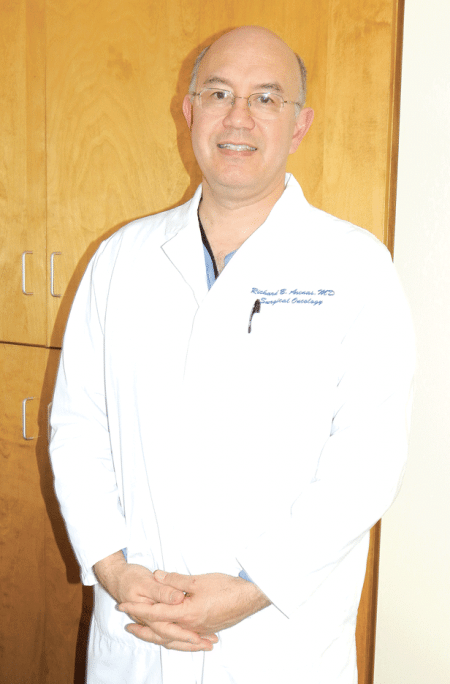
Dr. Richard Arenas, chief of Surgical Oncology at Baystate Medical Center, has seen patients in their early 20s with melanoma, and says researchers believe the intensity and type of ultraviolet radiation emitted by tanning beds may be forcing changes at an accumulated rate in cells. Environmental factors may also be at play, and some people may be more sensitive to UV light than others and have family histories that could predispose them to getting skin cancer.

Dr. Richard Arenas

Dr. Richard Arenas says the incidence of melanoma, which is a life-threatening cancer, is on the rise in young people.

“But the biggest challenge is determining at what age a person is capable of making a decision to acknowledge the potential risk of using a tanning bed,” he explained, adding that there has not been enough publicity about the dangers and the fact that the rate of melanoma is on the rise, especially in young Caucasian women.

White concurs, and says education needs to be ongoing, especially since tanning is part of youth culture; college students often rent limos and go tanning as a group, and she has heard of cheerleading coaches who bring their teams to a tanning salon prior to a meet.

“The light and warmth may feel good, and there may be social benefits, but the fact is, when ultraviolet light hits the skin, it damages genetic material,” she noted. “A tan is an emblem of injury, and is the body’s last-ditch effort to prevent DNA damage and protect against damage to the cells. Sometimes the body can repair the damage, but it’s not always possible.”

Still, most human beings love the sun, and the reasons for visiting tanning salons are complex and include societal reinforcements — people often tell others with a tan they look great — and many women consider going to a tanning salon a way to pamper themselves.

But the dangers that have come to light are clear, and the Commonwealth’s new legislation mirrors similar laws in California, Delaware, the District of Columbia, Hawaii, Illinois, Louisiana, Minnesota, Nevada, New Hampshire, North Carolina, Oregon, Texas, and Vermont that ban the use of tanning beds for all minors under 18.

However, experts say tanning not only is it a difficult habit to break, it can be addictive, which was documented in studies released in 2013 that show ultraviolet light increases the release of endorphins or feel-good chemicals that relieve pain and generate feelings of well-being.

“People like to tan. It’s calming, relaxing, and something that they may regard almost like a treat. And although most adults know it’s not a good thing to do, they have the right to visit a tanning salon. But they need information about the risks spelled out clearly,” White said, adding that dermatologists hope the FDA’s proposal to have adults sign consent forms acknowledging the risks of tanning beds will be adopted nationwide.

As for the addictive nature of the habit, researchers often compare tanning to cigarette smoking. “Both industries can injure customers, and it is to their benefit to start people young before they are able to make informed decisions. And both have an addictive quality which make them difficult to break,” White told BusinessWest.

Misconceptions also exist that range from benefits associated with ultraviolet light and vitamin D — experts say taking supplements is safer — to the fact that some people believe it’s a good idea to get a base tan in the winter before going to a sunny locale such as Florida or the Caribbean.

But that is indeed a myth. “There is nothing protective in going to a tanning salon before a trip, because each exposure increases the risk of developing skin cancer, especially in young people,” White said. “We know that intense ultraviolet exposure is more dangerous early in life than it is later on, and people with a history of childhood sunburns are at greater risk for cancer.”

Prevention is Key

Ultraviolet radiation is made of UVA and UVB wavelengths, or rays. UVA rays cause aging of the skin, while UVB rays are short, more powerful, and can lead to cancer.

The sun delivers both, but Arenas says tanning beds deliver a more significant dose of both UVA and UVB.

“The damage caused at a young age can carry forward for the rest of a person’s life. Tanning beds are an unnatural source of UV radiation and are dangerous,” he noted, adding that the propensity for problems may be exacerbated if people are fair-skinned, sport red hair, or have a lot of moles. In addition, the fact that people are living longer means they will have more exposure to the sun, so putting oneself in harm’s way at a young age is even more dangerous than it may have been generations ago.

Arenas urges people to be their own advocates when it comes to skin cancer, and said everyone should get a full skin checkup each year.

“Insist that your doctor examine your entire body, including the cracks and crevices,” he told BusinessWest, explaining that skin cancer can occur on the palms of the hands and bottoms of the feet, as well as in the genital and anal areas. “You really need to have respect for your skin. We can’t avoid the sun, but people need to appreciate the fact that it causes changes that could lead to skin cancer.”

White says people who love the look of a tan can achieve the same result with spray tans, bronzers, and gradual self-tanners, and since many salons offer spray tans, clients who have purchased tanning packages should ask to have their sessions converted to spray tans. She also advises people using tanning as a means of pampering themselves to think of other ways to reward themselves that they find equally relaxing.

“The bottom line is that skin cancer can be prevented, and the new laws will help,” Arenas said. “All it takes is good judgment.”

Business of Aging Sections

A Sense of Motion

Dr. M. Zubair Kareem

Dr. M. Zubair Kareem says BPPV can be managed, but it is a permanent condition, and symptoms can reoccur at any time.

Some 90 million Americans will experience a sudden onset of dizziness at least once, and about 50% of those may have a condition called benign paroxysmal positional vertigo. While it’s a permanent malfunction, symptoms can be treated and managed, which is why doctors say it’s important to educate patients about the condition.

About four years ago, Jeanne Tardit got up one night and suddenly became so dizzy, she couldn’t make it to the bathroom.

“It was really scary. Everything was spinning, and I felt as if I had no control over my body,” the 86-year-old recalled. “It was something I couldn’t live with.”

Tardit numbers among an estimated 90 million Americans who will experience dizziness at least once in their lifetime. It can be frightening, and the causes can vary, so it’s important to get an accurate diagnosis.

About 50% of people, including Tardit, who experience a sudden onset of dizziness have a condition called benign paroxysmal positional vertigo, referred to as BPPV or BPV.

Dr. M. Zubair Kareem, vascular neurologist and medical director of Holyoke Medical Center’s award-winning stroke program, said the symptoms can be treated and managed, but once BPPV occurs, it can return, because it is a permanent mechanical malfunction of a part of the internal ear.

It is diagnosed by taking a good history and examining the patient; tests including a CT scan or MRI of the brain are not required. BVVP is not life-threatening or something that can be resolved with surgery or medication. However, many patients get quite nervous when an attack occurs, and sometimes require an anti-anxiety medicine at least for a short period of time.

“It’s important to educate people about what BPPV is and how it can be managed,” said Kareem, adding that, although most people associate only hearing with the ear, the organ also serves as sensor for the coordination system of the body. Since the head weighs 10 to15 pounds, people could fall forward due to the change in the center of gravity when the head bends forward, and the brain makes appropriate adjustments, which include causing the back of the neck muscles to stiffen. The inner ear is part of the body’s balance system and helps with that adjustment.

BPPV results in a false sense of motion, or vertigo, due to inaccurate signals sent to the brain, which result in dizziness or spinning that can be accompanied by nausea, loss of balance, and blurry vision due to rapid jerking movement of the eyes.

It does not make a person confused or cause any paralysis, disorientation, pain, or speech or language problem, but some patients experience significant anxiety, which can be disabling. Symptoms may vary in each person, and they are typically brought on by changing the position of the body or head position, and often occur when a person looks up, bends down, rolls over, or gets out of bed.

About 2% to 4% of people experience BPPV in their lifetime, and the Mayo Clinic reports it is the cause of approximately 50% of dizziness in the elderly population.

Caitlin Eckhoff

Caitlin Eckhoff demonstrates one of four sequential head positions used in the Epley maneuver, which was designed to reduce vertigo.

Although it can be extremely uncomfortable and disrupt a person’s work and social life, the problem is usually treatable and can be helped with specific, easy-to-learn exercises that patients do whenever a dizzy spell begins. Kareem, along with other doctors and physical therapists trained in vestibular rehabilation therapy, often teach their patients to do these exercises.

In addition, Kareem employs something called the Epley maneuver, which was developed by and named after Dr. John Epley in 1980 and consists of a series of carefully orchestrated head movements. However, for the Epley maneuver to be successful, it is important to have a precise diagnosis and know the exact location of the malfunction.

Kareem does not recommend this maneuver to patients of advanced age or with neck arthritis. Patients unable to do the day-to-day exercises themselves may benefit from sessions with a therapist trained to administer vestibular therapy and the Epley maneuver, which can help keep vertigo from reoccurring or at least minimize the symptoms.

Mechanical Problem

Kareem says understanding BPPV involves a brief lesson in physics, and he frequently provides one to his patients using a detailed diagram.

“Basically, we have sensors in each ear that can detect our head’s movement or position,” he explained. “It’s important for the brain to know where the head is in space.”

Each ear has three sensors in the shape of tiny, semicircular canals that are filled with a jelly-like substance. One end of each tube is dilated, and its floor is lined with tiny hair cells topped by thousands of minuscule calcium carbonate crystals that are suspended in the gel, like a cloud hovering over them. When a person moves his head to the side, the weight of the crystals creates a ripple in the jelly, which causes the hair cells to move and initiates nerve impulses that are passed along the vestibular nerve to the brain to tell it the head is moving. When the brain receives this signal, it sends commands to the eyes, muscles, and the rest of the body that allow the person to maintain balance.

The system works well when people are young, unless there is a trauma to the head, but once people reach age 50, a significant number develop a problem because some of the tiny crystals break off, become loose, and settle on the floor of one of the ear canals. If that happens and the person moves their head in a certain way, the floating crystals send a false signal to the brain, which it reads as motion even though there is none. Normal signals transmitted by the moving hair follicles are subtle, but Kareem says signals from loose crystals are very strong, and the result can be a sudden onset of severe dizziness.

“It usually happens when a person gets up in the middle of the night or upon waking,” he noted, adding that BPPV typically occurs in one canal of either ear, although in some cases it can occur in both ears.

The brain is able to counter the false signal within seconds or a minute, but the vertigo, which can be severe enough to make the person feel like they are about to fall, can cause acute anxiety that can continue long after the spinning feeling stops.

Obtaining an accurate diagnosis is critical because dizziness can be caused by a number of other things. Kareem says a diagnosis of BPPV involves taking the patient’s history and administering a test called the Dix-Hallpike maneuver, which involves moving the head in a position that causes vertigo. This test can help localize the problem, but it may not be positive in every patient with BPPV.

Although no one wants to be diagnosed with a condition that can’t be cured, the good news is that the exercise, combined with the Epley maneuver, can move the loose particles into a part of the ear where they stop causing symptoms, which resolves the problem, at least temporarily, for about 90% of people.

“Once people understand the problem and know that it is not a serious, life-threatening illness, they feel comfortable managing it. With the daily exercise regimen, they feel significantly better,” said Kareem.

Tardif’s physician sent her to Attain Therapy and Fitness in Wilbraham, where she received vestibular rehabilitation. Her vertigo went away after a few sessions, and when she had another dizzy spell 18 months ago, additional treatments resolved the problem again.

Quality of Life

Lisa Blain, a certified vestibular therapist at Weldon Rehabilitation Hospital in Springfield, says many people suffer with BPPV for years because they don’t know it can be remedied.

Lisa Blain

Lisa Blain says tiny floating particles in the ear canal can lead to sudden bouts of dizziness when their motion is misinterpreted by the brain.

“The people I see have often been treated with medication or tried other things that didn’t work, and restrict their activity level because they fear moving too much will cause them to become dizzy,” she told BusinessWest.

“BPPV can be aggravating, irritating, and frightening, and a lot of people are unaware there is a treatment for it that works, but it’s important to have it correctly diagnosed,” she continued, mirroring Kareem’s statement and adding that different types of vestibular rehabilitation can be used for vertigo problems that result from concussions, stroke, or following long periods of immobilization.

She explained that the vestibular system, which is responsible for maintaining balance, consists of three parts: the central nervous system, the inner ear, and vision, which all need to communicate and work together seamlessly.

Blain advises people being treated for BPPV to bring someone with them and not plan on returning to work after a treatment because the Epley maneuver is designed to bring on dizziness, and the person may feel off balance after a session, even though the induced vertigo quickly passes. “It works well, but it can be uncomfortable in the short term,” she noted.

Caitlin Eckhoff, a physical therapist from Attain Therapy and Fitness who treated Tardif and specializes in vestibular rehabilitation, agrees, and says people often become anxious about the treatment.

She said it’s critically important for the therapist to know which ear and which canal is affected. “But 80% to 90% of patients have their symptoms resolved within two to six visits.”

Researchers do not know what causes the crystals in the ear to break off, and it can be difficult for people with BPPV to pinpoint what movements cause the onset of dizziness.

“For some, just going to the grocery store and moving their head around to find something on a shelf can cause a problem,” Eckhoff said, adding that doing exercises at home speeds the recovery process. “It’s a difficult issue for people, and a lot of people think they have to live with it. But it’s very rewarding to treat, as it’s the closest to an instant fix that I can offer someone.”

Indeed, in a day and age where people want problems resolved as quickly as possible, exercises and vestibular therapy can seemingly work small miracles.

Business Management Sections

Words to Live By

By Patricia Fripp


In a perfect world, you would have an unlimited budget to hire top keynote speakers for all your meetings and conventions. Since you don’t, here are some proven suggestions that have been successfully incorporated by many companies and associations. Adopt them into your meeting-planning process and become a hero for getting the most for your meeting dollar.

One seasoned association executive director had six days of speaking and seminar slots to fill. As part of the overall convention, instead of assigning each slot to a different speaker, she suggested to the conference committee that they maximize the contribution of a few top presenters, hiring three of them to fill three different roles. That’s how they made 1 + 1 + 1 = 9. Three speakers used in three ways equals nine slots filled.

Here’s how such a move can save your organization time and money and let you trade up to professional speakers you might have thought you couldn’t afford.

Save on Hotels and Airfare

Cutting the number of speakers will most likely reduce the total nights of lodging needed. You will definitely save on transportation — for instance, three round trips versus nine.

Speakers May Reduce Fee

Many speakers will conduct multiple presentations for the same fee and discount several days in the same location. Perhaps your prior speakers might have been more flexible if you had only thought to ask, “after your keynote, could you conduct a breakout session?” or “while you are here, could you emcee one morning?” or “could you moderate a panel?” Even, “our chairman is a bit nervous. Could you coach him on the opening of his keynote speech?”

Speakers and trainers who travel across country will frequently charge considerably less for three consecutive days at one hotel, rather than three separate dates months apart.

The Answer Is ‘No’ If You Don’t Ask

One Realtors Assoc. event organizer asked, “after your luncheon speech, could you deliver a breakout seminar on your topic and go deeper?” That thrilled the speaker, who wanted to prove he had more to offer than the 45 minutes of ideas presented in his keynote speech.

One seasoned professional speaker always makes a habit of suggesting a breakout following her keynote. One of her clients said, “well, the agenda is already slotted in. However, we’d love it if you would emcee our ‘Top Producers’ panel, the first breakout session after lunch.”

It’s Easier to Get Sponsors

Trading up to a more seasoned or bigger-name speaker makes it easier for you to get sponsors. If you have ever said, “we can’t afford your fee,” instead ask, “if we can find a sponsor to help pay for your presentation, would you be willing to have a book signing in their booth?”

Who would sponsor your event? Consider approaching the exhibitors at your conventions or whoever sells to your members or whoever wants good PR with the people in the audience. List these ‘angels’ prominently in the program and meeting audio-visual presentations.

At many conventions, the sponsor has the opportunity to introduce the speaker and handle the Q and A. Ahead of time, introduce your speakers to their sponsors, and encourage them to incorporate a couple of lines into their presentation that tie into their sponsor.

For example, one keynote speaker, in her speech to an 800-person audience at a national convention, thrilled the association, audience, and sponsor. After her opening story, she quoted the founder of her corporate sponsor, gave examples from the sponsor’s newsletters to reinforce her points, and incorporated its name in her walk-away line.

When your speakers are wise enough to feature their sponsors in their presentations, you will not have a problem getting sponsorship for future conferences.

Three Invaluable Bonuses

Having speakers on hand throughout your event gives you far greater flexibility in scheduling. In case of a last-minute speaker cancellation or no show, they can substitute. And continuity can establish a powerful connection between audience and speakers.

With six days of speaking and seminar slots to fill, our seasoned association executive director said, “we found that, when we triple-book speakers, they become even more popular, really getting to know our association members, who always enjoy their staying around longer. Our members feel they know them as friends when they can talk to them in the trade show and after-hour events as the speakers are with us for several days.”

Continuity, during an event or from year to year, means your speakers are able to notice and volunteer to help your organization in special ways you may not have considered.

More Bang for Your Buck

Many successful meeting planners are able to negotiate with their speakers for extras.

Wise speakers figure that, as long as they are there anyway and are being paid well, their time belongs to the client. Therefore, they are happy to take on extra tasks.

The next time you are planning a conference, consider the multiple ways you might incorporate your speakers’ talents. In addition to what you are engaging them to do, it doesn’t hurt to ask if the speaker would be willing to do one of these:

• Deliver one or two breakout sessions to the schedule;
• Add a partner/guest program;
• Introduce other speakers;
• Emcee part of the event;
• Moderate a panel;

Sign autographs;

• Coach company or association leaders on their presentations; or
• Appear in the sponsor’s booth to make their sponsorship more of an investment.

If your speaker does not ask how else he can serve you, perhaps you should consider continuing the search.

Patricia Fripp is a keynote speaker, executive speech coach, and sales presentation skills trainer. Meetings and Conventions magazine named her “one of the most electrifying speakers in North America.” She is virtually everywhere with her online learning platform FrippVT. Many of the courses earn continuing-education credits earned through XtraCredits.

Features

Meetings of  the Minds

The team at AnyCafé

The team at AnyCafé: from left, Evan Choquette, chief information officer; Logan Carlson, CEO; Chris Urciuoli, president; and Ryan Noon, chief technical officer.

‘Community’ and ‘network.’ Those were the two terms used time and again by members of the second cohort of Valley Venture Mentors’ accelerator program to describe the program — and they speak volumes. While those involved with the 36 ventures are competing against each other for prize money, they are also staring down the same challenges of entrepreneurship, thus making that journey a little less daunting for their colleagues.

Jas Maggu was relating some personal sentiments. But she was also speaking for every member of Valley Venture Mentors’ second accelerator cohort — and also anyone who’s tried to turn an idea into a business.

Jas Maggu

Jas Maggu, founder of AuthenFOOD

“As an entrepreneur, it can get really lonely, and you have huge ups and downs,” said Maggu, who has launched a venture called AuthenFOOD, which will bring gourmet, healthy foods right to one’s doorstep. Through her participation in the four-month accelerator program, which wrapped up a week or so ago, she finds she is far less lonely.

And also more enlightened, more confident, better connected, and, in her mind, better able to stare down the many challenges standing between her and success.

She is not alone in these sentiments. Indeed, as BusinessWest talked with several members of the 36-member cohort — some of whom had already given final presentations before their peers, while others were going to have to sleep on it another night and stand at the podium the next day — many common sentiments were expressed.

Individually and collectively, they spoke of camaraderie and shared learning experiences; gaining a firmer grasp of their specific concept, the market for it, and what it will take to advance it; making important connections; and simply being able to share common challenges and emotions that explain what Maggu meant when she spoke of loneliness.

These sentiments came from a diverse audience trying to advance a seriously eclectic mix of business concepts. For example:

• Joe Salvador is on the verge of bringing to the market a new silencer, or noise suppressor, for firearms, a product he believes will resonate with shooters trying to not only improve their accuracy but save their hearing;

• Chris Urciuoli heads a team of fellow Western New England University engineering students trying to seize what they consider a huge opportunity with a product that will enable the user to brew a cup of coffee anytime and anywhere — hence the corporate name AnyCafé. They’ve already heard from the CEO of Keurig, who told them he believes they have the next logical entrepreneurial step in the ongoing saga of the K-Cup;

• Dr. Alex Louizos is a vascular surgeon and co-founder and CEO of Nanotech Galaxy, which is working to produce software that will enable surgeons to operate more efficiently and healthcare providers to reduce their expenses;

• Lora Fischer-DeWitt has developed a line of jewelry called Scout Curated Wears that is already in a number of gift stores in the region, including Cedar Chest in Northampton;

• Angela Lussier has launched a venture called Speaking School for Women, which, as that name suggests, was conceptualized to help women become better public speakers and, overall, more effective communicators;

Lora Fischer-DeWitt

Lora Fischer-DeWitt, founder of Scout Curated Wears

• Tom Skypek is co-founder of an online networking tool he bills as a “Match.com for government contracting professionals”; and

• Terra Missildine, already a serial entrepreneur — she has a ‘green’ cleaning company — has launched a family-friendly co-working space called Cultivate. She jokingly notes that she wishes she was in the accelerator before she opened the doors (more on that in a bit), but she nonetheless credits the experience with helping her attain early success.

Vastly different people with a wide range of ideas and a common dream (actually, several of them) — that’s what the cohort is. As for what it’s about … we’ll let the entrepreneurs do the talking.

In the course of doing so, they go a long way toward validating the optimism expressed by those who believe the intense accelerator regimen will help steel its participants for the rigors they will face and create a host of new employers for the region.


2016 VVM Accelerator Finalists (in alphabetical order)

AnyCafé: Developer of hot beverage solutions for the future, including the Travel Brewer
Celia Grace: Fair-trade, ethical wedding dresses that give back and empower women around the world
DaVinci Arms: Designer and manufacturer of firearms suppressors and accessories for mission-critical applications
Homebody Holistics: Maker of all-natural, hand-crafted, herbal cleaning solutions using no harsh chemicals or additives
iRollie: Niche-market phone-case manufacturer and online retailer featuring the rolling tray phone case
Livingua: An app that connects travelers to locals who know the language and culture wherever and whenever they want
Name Net Worth: Connective platform that leverages trusted relationships to measure and strengthen a user’s personal and professional networks
Need/Done Inc.: Instant help for kids at home from people your parent network trusts
Prophit Insight: Software company that helps healthcare providers identify and acquire unique sources of physician referrals
Scout Curated Wears: Designer, curator, and producer of thoughtful women’s accessories
Sumu: Works with property managers and landlords to post fee-free apartments to help users find their next home
Treaty: Nanotechnology company whose flagship product is FogKicker, a biodegradable anti-fog solution made from nanocellulose


Getting Down to Business

“Joe’s the man.”

That opinion was expressed loudly by someone in the conference room at VVM headquarters in Tower Square — exactly whom wasn’t entirely clear to BusinessWest — but there were several heads nodding at the suggestion.

‘Joe’ is the aforementioned Joe Salvador, and the commentary about him was not simply in reference to his suppressor concept — although that’s part of it. It’s clear that, over the past four months, he’s been able to help several of his cohorts, through everything from valuable connections to words of wisdom.

“Joe has put me in touch with someone I’m courting to be an advisor,” said Skypek. “And I know a lot of that has happened across the board; there’s a nice community of people here who are all in this together.”

Joe Salvador

Joe Salvador says the accelerator process has helped him better articulate his suppressor concept and identify target audiences.

Such reflections cut right to the chase when it comes to explaining the accelerator and its inherent value — to those taking part and the region as a whole. Indeed, while the 36 participants are competing against each other for bigger shares of the $250,000 in prize money that will be awarded at the Accelerator Awards on May 26 — everyone will get at least $1,000, and the top prize last year was $35,000 — they are, as Skypek said, in this together.

‘This,’ specifically, being the struggle — because that’s exactly what it is — to turn an idea into a viable business. So, in many ways, the accelerator is a type of support network.

The cohort members are in various stages of development — Missildine and Fisher-DeWitt, as mentioned, were already in business, while those at AnyCafé entered the program with simply a concept — but they all have the common goal of accelerating their progression.

The program they were chosen to be part of helps in that regard in several ways, from rugged weekend boot camps focusing on specific aspects of business management to back-and-forth between participants, to interaction with mentors who can help the entrepreneurs with the issues right in front of them while also assisting them with seeing around the corner and anticipating what will come next.

Much of this support could be described as a form of tough love, or challenging the participants, said Missildine, among others, noting that friends and family members, while they mean well, will often tell entrepreneurs what they think they want to hear.

“Here, you’re confronted on your assumptions, and you have to essentially prove things,” she explained. “And that’s important, because as an entrepreneur, you don’t always have someone pushing back on you regarding the assumptions you make about your business.”

Salvador said the various efforts to challenge his team to identify a market for its product and outline a course for moving forward have certainly helped in the progression of DaVinci Arms, which he described as a spinoff from Wilbraham-based FloDesign, which has developed noise-suppression equipment for several applications, including the military.

“When we started this, we had a really strong product that we had developed, but we really didn’t have the business side locked down — you had two engineers running the company,” he explained. “Through VVM, we’ve been able to gain a laser focus on every aspect of what was needed to grow our startup.

“We needed to have our financials really well-addressed, what our customers and market segment were, how we were going to engage that customer segment, what we were looking at for funding, how we were going to raise that funding, and much more,” he went on. “Basically, all the minutiae that builds up the business, that’s what we needed help with: the details of financing, marketing, and sales, all coming together.”

Dr. Alex Louizos

Dr. Alex Louizos credits the accelerator with helping him create more effective presentations for his software concept.

Through all of that, VVM and its accelerator program helped DaVinci hone its presentation and target it to a specific audience, he explained, adding that, before, the team was giving highly technical presentations that effectively went over the collective heads in the audience.

“At the start, I knew that suppressors were selling like crazy, but I didn’t know who they were selling to,” he explained, adding that, through the accelerator experience, the venture has gained key contacts, identified its primary audiences, and drawn a road map for moving forward, starting with product demonstrations and putting the suppressors in the hands of distributors in gun-friendly states like Florida, Texas, and Utah.

Missildine said the accelerator process has also helped her with the audience-identification process and other aspects of her business. She’s grateful for the help, but wishes it had come earlier; if it did, she might have done some things differently.

“I’m a lifelong entrepreneur, and I’m extremely impulsive,” she explained. “I opened the doors to my business in the second month of the accelerator, and already see what I would have done differently if I had gone through the whole experience prior to launch.”

Elaborating, she said she would have shopped, and negotiated, more effectively for a space for the co-working venture — she joked that she has the highest overhead of any venture in the Valley — and she would have expanded her team and not tried to do everything herself.

Through the experience, though, she’s proven what she’s believed all along — that her concept is scalable. And along the way, she’s found “camaraderie and community” on a scale she couldn’t have imagined.

“The accelerator plugs you into so many more resources than the homework that you do,” she explained. “By going through this, I feel that my company’s in a much better place.”

In Good Company

Louizos feels much the same way about his venture, which centers around using artificial intelligence — what he calls “smart software” — that empowers doctors to diagnose patients more quickly and also enables hospitals to analyze data in a way that saves both time and money. He credits the accelerator experience with helping him sharpen his business focus and better articulate complex subject matter.

“When I started the accelerator, I couldn’t describe what I was doing in a way that a 5-year-old would understand,” he noted. “I received lots of critical feedback in a way that helped me explain my idea in a way that makes sense to everyone and also creates some enthusiasm about it.”

Summing up the experience, he said it helped him identify and understand the weakest aspect of his business — because, as the saying goes, it’s only as strong as that point — and improve upon it.

Meanwhile, the team at AnyCafé didn’t exactly have a business when this accelerator session started. Instead, they had a concept, and a bold one at that — to bring to the market a device that would brew a single cup of coffee anywhere the consumer chooses.

The key to this concept — and what has apparently kept others from bringing something like it to store shelves — is battery technology that fuels the heater in the thermos-like device, team members noted, adding that they have perfected this technology and are ready to scale up this operation.

But the science was and is only a part of the equation, as the accelerator experience has shown them.

“We didn’t have much entrepreneurial experience, but we knew we wanted to do this,” said Urciuoli. “Over the past four months, VVM has taught us the way you have to think to succeed as a startup company; they’ve given us the spirit and the knowledge to go out and create our product and a plan to get it to the market and millions of individuals.”

Logan Carlson, another of the AnyCafé partners, agreed, and, echoing Salvador, said the accelerator experience has provided insight not available in the college classroom — especially the engineering classroom.

Tom Skypeck

Tom Skypeck was one of many who used the term ‘community’ to describe the 36 accelerator participants.

“It’s been a tremendous teaching experience,” he said. “Our knowledge has increased exponentially, just because of all the amazing people who are here.”

Maggu has been part of this teaching experience from many sides — she was a venture capitalist “in another life,” as she put it, and has been involved with VVM as a mentor. Now in the role of entrepreneur, she understands, even more than she did before, the importance of connections and learning from others going through similar experiences.

The accelerator process has given her both. Indeed, through her involvement with the program and connections made, she’s been able to forge a partnership with Fitness Together, one of several health clubs she works with to help individuals lose weight by eating better.

And she’s also learned by listening to and interacting with the other 35 participants.

“It’s been great to be part of this tremendous community,” she said, “where everyone you know is going through the same phases that you are.”

Like Maggu, Fischer-DeWitt said the prospect of starting a business can be very isolating. She then added another adjective: scary.

Things are somewhat less so than four months ago, she said, making frequent use of the words ‘network’ and ‘community,’ as so many others did, to describe what VVM, and especially the accelerator, creates.

“The connections have been amazing,” she said, adding that her business is growing rapidly — she’s now in 130 stores and has sales representatives in more than 20 states — and her experience in the accelerator will help her manage that growth and continue the expansion process in a smart fashion, literally and also figuratively.

Only the Lonely

The four AnyCafé partners now have matching dark brown golf shirts with their company’s logo. They had them on as they made their final presentation that Friday evening.

But they have much more than this wardrobe option, thanks to the accelerator. They have, as Urciuoli, said, much more of an ability to think as businesspeople, and not simply engineers with an idea.

Their learning curve, similar to that of other participants, but also unique in some ways, is what the creators of the accelerator program had in mind when they conceptualized it.

That, and making entrepreneurship just a little less lonely.

And in that mission, they have succeeded beyond all expectations.

George O’Brien can be reached at [email protected]

Community Spotlight Features

Community Spotlight

Mayor William Martin

Mayor William Martin says renovations are being made to transform the century-old former Lunt Silversmiths building into medical offices.

Mayor William Martin says projects that were started years ago are coming to fruition in Greenfield, and new ones are underway that will help the town continue down its path to independence, as well as addressing areas that need revitalization.

The Town Council just approved a $5 million bond to create a municipal Internet, phone, and data-services company called Greenfield Community Energy and Technology (GCET) that will be paid for by the company after it is established. Free Internet service is being provided on Main and High streets until the project is completed, thanks to a $500,000 pilot program, and 82% of voters voiced approval for GCET, which will provide the bandwidth and speed needed to stay competitive and attract new businesses, as the town has lost some in the past due to a lack of technology.

“We’ve been given the green light to move forward with this project,” Martin said, noting that, in addition, Greenfield Light and Power began operating as a municipal aggregation plan more than a year ago and brought not only lower-cost electricity to the community, but measures to procure the energy from renewable sources.

“The company went online Jan. 1 last year, and now all of our electricity is 100% green,” the mayor told BusinessWest, adding that the public utilities will increase the likelihood of retaining businesses, encouraging them to expand, and enticing new businesses to move to the community.

GCET will also allow the Greenfield School Department to administer the Partnership for Assessment of Readiness for College and Careers (PARCC) exam to public-school students; the test is aligned with Common Core standards and replaces the Massachusetts Comprehensive Assessment System (MCAS) test.

Other compelling reasons for installing an up-to-date fiber-optic system include the fact that Greenfield Community College has a downtown campus, and the town established the Mass. Virtual Academy at Greenfield five years ago on Main Street, the Commonwealth’s first virtual K-12 public school.

Public utility companies will play a vital role in maintaining the town’s independence, but they are only a part of other major initiatives taking place. The new, $66 million Greenfield High School opened its doors last September, and the new, $73 million Greenfield Trial Court is expected to open in October, benefiting downtown businesses and restaurants that suffered when construction began on the courthouse about three years ago and operations were temporarily moved several miles away.

Keeping Pace

Martin told BusinessWest that, although some people over the age of 50 still think of downtown Greenfield primarily as a place to do retail shopping, that business has moved to malls, which makes developing a new identity critical to the neighborhood’s future.

“Greenfield is fortunate to have maintained some of its luster and attractions that are extremely unique, such as the century-old Wilson’s department store and Gardens seven-screen cinema,” he said, noting that the downtown area also contains new ethnic restaurants as well as federal, state, and county agencies, including the courthouse, Baystate Franklin Medical Center, the county jail about a mile away, and the new, $14 million intermodal John W. Olver Transit Center that serves Franklin County Transit Authority bus routes and provides intercity bus service as well as a train station that houses Amtrak’s Vermonter line.

Greenfield Trial Court

The new, $60 million Greenfield Trial Court is expected to open in October and restore lost foot traffic to downtown businesses and restaurants.

In spite of these major institutions, the temporary courthouse move did affect a number of downtown businesses. However, some made accommodations to make up for revenue that was lost, including restaurants that started delivery services.

But when the Greenfield Trial Court opens next fall, the attorneys, courthouse employees, and people scheduled to appear in court are expected to help to restore the regional downtown center to its former vitality.

However, city officials are well aware that academics, government, education, and manufacturing are the fast-growing industries in the Pioneer Valley.

“So we’ve applied a special focus to advancing our downtown in these specific areas,” Martin said. “Downtowns of the future will be more service-oriented, with attention paid to the needs of individuals and families, rather than the wants. And an increase in pedestrian traffic will stimulate the development of other small businesses offering entertainment, food, boutique shopping, and social, cultural, and religious gatherings.”

He added that the town’s focus on healthcare is exemplified by the planned development of the former Sears Department store into medical, dental, and professional offices. The Lunt Silversmiths property about 1.5 miles from Main Street is also undergoing substantial reconstruction for conversion to a residential medical treatment center of 65 beds operated by Behavioral Health Network and other clinics, which complements Greenfield’s regional position as host to Baystate Franklin Medical Center.

“We’re actively soliciting medical groups,” Martin noted, adding that Patriot Care, which provides medical marijuana, has purchased the former American Legion building at 7 Legion St. just off Main Street, and is renovating it to suit its needs, and a former convenience store a half-mile from downtown was purchased by a cardiology practice with several hundred clients and is expected to open in June.

Other efforts are being made to enhance the downtown, and last month the Town Council approved spending $4.2 million to build a new community center on a one-acre site a block from Main Street, which will serve as a senior center during the day and offer space for classes in the evenings and on weekends.

Martin said a 100-year-old building on the site which currently houses the central office for the school department will be either demolished or converted to housing, and the office will be moved to the middle school.

In addition, a central communications center for the county is in the planning stages, and will be located in a strategic area on West Main Street, which Martin describes as “an area that requires stimulation and planning with both private and public development.

“It is blighted, so we want to fill it in and make it more attractive to stimulate further development,” he told BusinessWest, adding that a number of buildings there have already been demolished, redeveloped, or scheduled for major renovations or redevelopment.

Town officials are also working to create a village of tiny houses, which are growing in popularity, on a ¾-acre lot at 102-106 Deerfield St. A bike path is situated to the rear of the lot, and a formal bike lane was established on Route 2 after the town adopted the Complete Streets program, a transportation and design initiative that promotes safe travel for walkers and cyclers.

Greenfield also received a $177,000 grant to create a new dog park a short distance away at Green River Park off of Petty Plain Road, as well as a $400,000 PARC grant to install a new playground, signage, basketball court, and pickleball court and revamp the parking lot.

“It will be a big expansion,” Martin said. “Right now, the park only contains two softball fields, a basketball court, and a parking lot. But in addition to the improvements and expansion, next year we expect to create a mile-long walking and biking path around the park that will provide a quiet, meditative place where individuals and families people can take their kids to enjoy a walk by the river.”

Measures have also been taken to address flooding from the Green and Deerfield rivers on Deerfield Street, which have caused real problems in the past for Mohawk Meadow Golf Course and the Department of Public Works treatment plant. Streetscape and engineering work has been done to prevent future floods, including the installation of a unique set of storm doors on the DPW building.

Martin added, however, that condemned properties with flooded basements are still monitored, while fire ravaged-buildings have been removed.

Continued Growth

Greenfield hopes to build a new library to replace the current structure on Main Street, built in 1880, which lacks the space and modern amenities needed to keep pace with today’s needs. A state grant was procured to pay for a design, and a forum was held last month to inform residents about evolving plans.

Martin said the town’s finances are in good shape, and it was fortunate to be able to negotiate contracts with the unions that will allow it to maintain a steady cost of living, while reducing the increase over time.

Although the residential tax rate is high, he noted — Greenfield ranks fourth in the state in that category — valuations are low, so the average homeowner pays $3,934 in real-estate taxes, ranking 211th in the Commonwealth.

So, the combination of new projects and long-awaited ones coming to fruition has officials excited about the future.

“We’re looking to continuously strengthen our unique approach to reframing Main Street, and our next step will be to make it an attractive destination for young people with curious minds,” Martin said, adding that the town hopes to open an innovation center and a program that would allow businesses to share services.

He told BusinessWest that two manufacturing companies have plans to move Greenfield, and officials hope to build on the success of businesses that have been in town for years and work with the school department to shorten the path from graduation to job security.

“We believe that municipal investment will act as a catalyst for private investment and set the town up to repair and replace institutional buildings and needed infrastructure,” the mayor added, noting that new sewer and water lines and pump stations are being installed throughout the town.

Upcoming challenges will include a lack of parking when the new courthouse opens because it was built on a former parking lot.

“But we’re looking forward to the revival of foot traffic, which will help downtown businesses, although things won’t really settle down until construction on a new multi-storied garage is complete,” Martin continued, explaining that strategies to deal with the issue may include measures such as a shuttle service to distant parking lots.

But the town is keeping pace by installing utilities and technology that will keep it independent, attract young people, and offer businesses all they need to be successful in the years to come.

Cover Story Restaurants Sections

Plenty to Chew On

This Year’s Restaurant Guide Reflects a Diverse Dining Scene

RestaurantGuideSecDPBy all accounts, restaurant are flourishing across Western Mass., a region that offers nearly endless choices when it comes to cuisine, atmosphere, price range … you name it. For this special section, the 2016 Restaurant Guide, we venture to three establishments — with calling cards ranging from solar-brewed beer to classic French cuisine to singing servers — that clearly reflect that variety. Bon appetit!

Restaurants Sections

Star Power

Andrew Mankin

Andrew Mankin, owner and brewer, says a ‘green’ operating philosophy has helped Barrington Brewery & Restaurant create a strong brand.

Andrew Mankin recalls that when he and business partner Gary Happ were crunching the numbers regarding their planned use of solar-heated water for their brew-pub establishment in Great Barrington, what they saw gave them reason to pause.

But not for very long.

“We decided that at some point you’ve got to put your money where your mouth is and do something,” he recalled, as he talked about the system they were contemplating — one that would coincide with, and be a key element in, the construction of a banquet facility that would complement their already well-established brewery and restaurant on busy Route 7. “When you’re putting up a new building, you’re spending a lot of money on all kinds of things, so we thought, ‘why not something that’s environmentally friendly?’”

That ‘something’ has turned out to be an investment that has paid off in a number of ways — from dramatically reducing natural-gas bills to giving Barrington Brewery & Restaurant a branding identity — ‘solar-brewed beer’ — that is not only earth-friendly, but helps generate business as well.

“People will come in, point to those words, and say, ‘what does this mean?’ said Mankin, who, as the company’s owner/brewer, is not only willing but well-equipped to explain it all. (Usually, the dissertation includes handing the individual one of the informative placemats the company uses that not only detail the solar hot-water use but explains the brewing process in five easy-to-follow steps.)

Co-owner Gary Happ with his daughter, Chelsea

Co-owner Gary Happ with his daughter, Chelsea, who is managing the operation’s banquet facility.

Overall, the sun-heated water gives many environmentally conscious individuals and families a reason to turn off Route 7 and into the large converted barns that comprise this operation. Or another reason, to be more precise.

And there must be several, said Happ, now a nearly 40-year veteran of the ultra-challenging hospitality industry, noting that, while the beers brewed at that location — labels that include Black Bear Stout, Hopland Pale Ale, Berkshire Blond, and Ice Glen IPA, along with a host of seasonal offerings — are a huge draw, there are hundreds of microbrews available in this region. In short, the food has to be good, too.

Barrington Brewery & Restaurant has that part of the equation covered with a menu, classified generally as ‘pub fare,’ that includes everything from barbecued ribs to shepherd’s pie to spinach and eggplant casserole.

To say this establishment effectively blends beer and food is not just idle talk, Happ noted. Indeed, those aforementioned brews are included in the recipes for menu items ranging from the chili to the blue cheese dressing to the famous (it’s been profiled in Bon Appetit a few times) chocolate stout cake.

“We try to keep everything simple, and we make everything here,” he explained. “It’s not a fancy, expensive menu, but it’s good, fresh food.”

The interior’s décor

The interior’s décor can be described with one word: beer.

As for that aforementioned banquet facility, named Crissey Farm, it has become a solid addition to the venture, said Mankin, noting that, in a region studded with venues at both the high and low end, this 200-seat room has become an attractive middle-of-the road option.

“We throw a very good wedding for a very fair price,” he explained, adding that the facility is drawing its share of other types of events as well, including corporate outings and meetings. “It’s an attractive alternative for people looking for something in the middle.”

For this issue and its annual Restaurant Guide, BusinessWest takes an in-depth look at the Barrington Brewery and Restaurant, where the bright ideas include, but are certainly not limited to, the water-heating process.

Lager than Life

The sign

The sign that greets patrons says it all.

It doesn’t take much time, or many words, for that matter, to describe the décor and the mood at this establishment. ‘Beer’ will do just fine.

It’s brewed on the site, served on tap at the tavern portion of the eatery, sold in pint bottles (the partners distribute to a few other locations as well), explained on the placemats, and reflected on the walls — all of them.

There are pictures of old breweries, tavern signs from a long time ago — one declares that something called ‘white rose special’ costs 20 cents a bottle — and glasses, coasters, and trays bearing the names of brewers from the present, past, and distant past.

While referencing the huge display of coasters — Mankin has no idea how many there are on display or in storage because there’s no room left to display them — he pointed to a couple of his favorites: Dog & Parrott and Ridley’s Old Bob.

Those were brewed in England, which is where Mankin cut his teeth in this art and science. He was a self-described home brewer some 30 years ago, when he had a chance to learn from the masters at the Vaux Brewery in Sunderland in Northeast England, near the border with Scotland.

Upon returning home, his thoughts turned increasingly toward making beer a career, not a hobby. And when he met Happ, things started to come together.

Happ, then a partner in the hugely successful 20 Railroad Street restaurant in Great Barrington’s downtown, was selling his interest in that entity and eyeing a new entrepreneurial adventure. Mankin was looking for his first.

They decided to blend their resources and talents and opened Barrington Brewery & Restaurant on Route 7 in what’s known as the Jennifer House Complex, which featured antique shops and other forms of retail.

Over the past two decades, this venture has become a key component in a broad revitalization effort that has seen Great Barrington evolve from a sleepy Berkshires town “where the sidewalks were rolled up at 8 o’clock,” said Happ, to a true year-round destination.

The town’s rebirth has included everything from new shops and restaurants to the stunning $9 million renovation of the 111-year-old Mahaiwe (pronounced Muh-hay-we) Theatre. Now known as the Mahaiwe Performing Arts Center, it presents music, dance, theater, opera, talks, and movie classics (The Graduate is playing on May 21).

With this new vibrancy has come both opportunity and challenge in the form of greater competition, said Happ, adding that Barrington Brewery & Restaurant has thrived by drawing both local residents and the tourists that now come all 12 months of the year, and through creation of a niche with many elements.

Food (moderately priced) and beer are obvious ingredients, both figuratively and literally, he explained, but the ‘green’ factor is also a key part of the equation.

And there’s more to it the solar hot-water system, which, when installed, was the largest such facility in the region. Indeed, the venture buys its power from Pine Island Farm in Sheffield, a partnership dairy operation that boasts what’s known as an anaerobic digester facility, in which the methane from animal waste is converted into electricity and sold to National Grid.

“When we write a check for our energy at the end of the month, we don’t make it out to National Grid, we make it out to Pine Island Farm,” said Happ, with a strong dose of satisfaction and pride in his voice. “From the beginning, we’ve always tried to run a green business as best we could, and we’re continuing down that path.”

The next step, already on the drawing board and well into the development stage, is to create a photovoltaic system on a two-acre parcel the partners recently acquired and generate enough power to operate both the restaurant and Crissey Farm.

Unfortunately, the state has thrown a roadblock of sorts in front of what Happ called the “crown jewel of our greenness.” Apparently, there is a cap on photovoltaic systems of this type, and it has been reached, he went on, making it clear that this was a source of great frustration.

“Here are two guys trying to do the right thing, run a good, green business, and leave a small footprint, and who’s holding us up? The state,” he said with noticeable exasperation. “We’re ready to go.”

Crissey Farm

Crissey Farm, the banquet facility at Barrington Brewery & Restaurant, is making a name for itself.

Whether the state eases restrictions on solar-power systems and allows the partners to proceed remains to be seen, although both men believe this matter involves the question ‘when?’ and not ‘if?’

In the meantime, they will continue making beer with solar-heated water and press on with their efforts to grow the banquet side of the business.

Off to a solid start, 200-seat Crissey Farm, opened just as the Great Recession was starting in the summer of 2008, is creating a niche in its own right, said Mankin.

“We have a wedding booked every weekend right into October,” he explained. “Over the past few years, business has really picked up.

Icing on the Cake

Mankin told BusinessWest that Barrington Brewery isn’t shy about sharing the recipe for its famous chocolate stout cake. It’s already been published in Bon Appetit, he noted, and staff at the restaurant will hand patrons a copy if they ask for one.

This willingness to share trade secrets is somewhat rare in the restaurant business, he acknowledged, but the company isn’t worried about losing business from the practice.

“It’s not easy to make it — there’s a lot that goes into this,” he said, referring to the stout cake.

But those exact words could be used to describe the restaurant industry itself. The Barrington Brewery has succeeded by creating an effective niche — one that involves price, beer, food — and a green philosophy.

All that gives this establishment star power — in all kinds of ways.

George O’Brien can be reached at [email protected]

Restaurants Sections

Gourmand’s Delight

Paul Hathaway

Paul Hathaway takes pride in creating unique dishes that feature produce from local farms.

Chez Albert is no ordinary French restaurant. But then, Paul Hathaway, who opened the award-winning bistro in Amherst after moving to Western Mass. from Boston 11 years ago, is far from an ordinary chef.

The self-taught food connoisseur and culinary artist makes everything in his restaurant from scratch and has carefully cultivated relationships with local farmers who provide him with their freshest seasonal produce. As a result, the menu changes at least six times a year, although seasonal dishes do accompany staples that customers choose repeatedly at the popular eatery nestled downtown on North Pleasant Street.

“We make our own pickles, grind our own beef, cure our own hams, make all of our desserts from scratch, and stay away from fillers and preservatives,” Hathaway told BusinessWest. “A lot of focus is placed on presentation. People eat with their eyes first, so we try to make things appetizing visually and by using flavor. We focus on utilizing local ingredients to the utmost in unique ways and pickle, cure, or preserve them so the colors or flavors pop in different dishes.

“Many people think French food is fancy, but they don’t realize it’s about using basic techniques,” he went on. “It’s a low, slow style of cooking that allows you to get the best flavor out of whatever you cook.”

Although the menu’s offerings rival dishes in restaurants known for fine dining — current seasonal plates include crab and smoked trout galette with spicy rouille, rabbit ragout with a farm cheese pierogi, and entrées such as pork confit with creamy polenta and a sweet glaze — the mood at Chez Albert was designed to be intimate, yet informal.

“We offer a relaxed, elegant atmosphere which is not stuffy; service is delivered with a smile, and we are always looking for ways to make people happy and get them to try new dishes such as rabbit or oxtail,” Hathaway said, adding they also serve sandwiches and burgers for those with less-adventurous palates.

Amy Paul

Amy Paul says Chez Albert will begin offering wine dinners this summer, which will pair fine wines with foods from different cultures that could range from Vietnamese to Thai or North African.

His wife, Amy Paul, who runs the front end of the bistro and is its wine connoisseur, says music played during lunch and dinner ranges from soul to funk to jazz, which helps create a party-like atmosphere, especially on weekends, in the specially designed eatery with soft lighting that emanates from copper fixtures designed by a local artist.

Frequent patrons include professors from area colleges, as well as people from the neighborhood who sometimes have lunch and dinner at the bistro the same day.

The restaurant seats 48, with 20 additional seats on the patio, where lush flowering plants thrive during the summer. Events at Chez Albert range from business dinners to birthdays and rehearsal dinners, and reservations are suggested as the mainstay bistro is a popular spot and has earned accolades; it was feted with Trip Advisor’s 2015 Certificate of Excellence and named Best in the Valley by a Valley Advocate reader’s poll last year.

Honed Talents

Hathaway loved food as a child, enjoyed baking, and looked forward to holiday dinners with family and friends that featured Italian, Polish, Irish, and other ethnic cuisine.

His culinary career began when he got a job at Seaside Restaurant at Faneuil Hall in Boston during his teenage years. But he didn’t become passionate about cooking until he left that eatery and went to work for Davio’s Italian Steakhouse in Cambridge.

At that point, he began to work his way up the ladder and hone his skills in some of the Hub’s best restaurants. “I had a real thirst and drive to learn new techniques and got my chops under some fine Boston chefs,” Hathaway recalled, explaining that he honed his skills under celebrity chef Todd English, James Beard Award-winning chef Jody Adams, and chef-owner Paul O’Connell of Chez Henri in Boston.

Hathaway became a chef at Pomodoro in the city’s North End, then co-owned Washington Square Tavern before he moved to Western Mass. and opened Chez Albert.

“French food has always been farm-to-table, and there are so many local purveyors and farmers here that people sometimes take them for granted. But I was young, ambitious, and excited about the opportunity that exists in Amherst and was inspired to do something in the European style,” he said, adding that he initially opened Chez Albert on 27 South Pleasant St. in a former bank that screamed ‘old French bistro,’ because it had high ceilings, marble floors, and a feeling frequently found in Paris eateries where people count on seeing friends and enjoying good food.

After the bistro became established, Paul was introduced to Hathaway through a friend. She began working for him, and they fell in love, got married, and had a daughter, followed by twin boys.

Paul’s need to focus on the children meant she had to curtail her hours at the bistro, but it continued to flourish, and four years ago when the lease ran out, the couple decided to move Chez Albert to its current location at 178 North Pleasant St.

The new location doubled their space; it took a major renovation to get it the way they wanted, and they often worked late at night. Great attention was paid to detail, and Hathaway hired local artists to design unique copper light fixtures, paint a mural on the bar, and create custom woodwork and cushioned seats throughout much of the interior.

However, his food has always been the biggest draw, and bar manager Michelle Kacich says patrons appreciate the fact that the menu offers French dishes that can be difficult to find locally, such as the popular appetizer pate de foie and the equally popular entrée pork confit. Although the menu does change with the seasons, some items are served throughout the year, such as escargot and Chez salad, made from local field greens, French green beans, dried cherries, shaved red onions, and crispy duck comfit tossed in a champagne vinaigrette and topped with shaved, hard-boiled eggs and croutons.

Hathaway keeps his focus on farm-to-table cooking, but it can be difficult during the winter, so he makes exceptions. But robust soups and other dishes that include a variety of root vegetables have become mainstays, and with the exception of daily specials, the menu doesn’t undergo much change until early March when spring brings freshly picked arugula, spinach, and radishes to the table.

Some patrons enjoy eating at the bar where they watch soccer and other sports on the flat-screen TV. The cocktail menu features signature drinks created by Kacich, and whenever she gets requests, she makes customized libations to suit palates that prefer sweet, savory, sour, or bitter tastes. Customer favorites include a pear ginger martini and a ‘honey bee,’ which is made from cardamom-infused bourbon, citrus, honey, and bitters.

Changing Tastes

Chez Albert

Chez Albert’s offerings have expanded over the years beyond French cuisine to encompass Asian, Italian, Mediterranean, and Middle Eastern influences.

Hathaway believes it’s important for businesses to evolve, and will make changes this summer that may include new artwork.

“We’re not erasing the old, but improving what we have built on,” he noted. “Every business needs to adapt and evolve over time.”

Prix fixe wine dinners that pair wines with foods from different cultures will be offered during the summer, which is a time when business tends to slow down. Since a similar dinner that features five to seven courses is sold out every New Year’s Eve, Paul expects them to be popular.

“My husband has a following, and people get excited when he cooks something other than French,” she told BusinessWest, explaining that, over the years, the menu has grown to include dishes with Asian, Italian, Mediterranean, and Middle Eastern influences. The wine list has also expanded; in addition to French, there are Spanish, Italian, and American wines, with more than 10 varieties served by the glass.

Customers appreciate being served by Emmanuel Proust, who comes from France and has worked at Chez Albert since it opened. Paul says many see him as the face of the restaurant, so they had a painting commissioned of him dressed as Napoleon that hangs above a cozy niche of copper-topped tables.

“We’re a playful group of people, and we do our best to make people feel like family,” she noted on a recent evening, as customers began filtering in, the music picked up, and the bistro came to life.

Restaurants Sections

Singing for Your Supper

Tony Serafino, with his business partner, Dawn Doyle

Tony Serafino, with his business partner, Dawn Doyle, says he wanted to create a destination, not just a restaurant.

As a 30-year veteran of the restaurant industry, Tony Serafino wasn’t interested in just another eatery when he considered opening the Grill at the Boulevard.

That’s why diners enjoying a dinner of pasta, steak, or any number of other options on a Thursday, Friday, or Saturday night are treated to the spectacle of a server — or several — making their way to the front of this cozy establishment on Page Boulevard in Springfield, picking up a microphone, and belting out a few standards.

“When I opened this business, I wanted to try to recreate the Copa on a much smaller scale,” he said, referring to the Copacabana, the famed New York nightclub known through the decades for its array of live entertainment.

“I had visions of waiters like in Goodfellas, leading people through the crowd and sitting them in front while Frankie Valli was singing — not that we have Frankie Valli, but you get the idea. I wanted to give it that extra thing needed to make this location a destination. We weren’t going to survive off neighborhood business alone — the volume just isn’t there. To bring people to us, to become a destination point, we needed something different.”

The Grill’s success since he and his business partner, Dawn Doyle, opened on Super Bowl weekend in February testifies to the appeal of the ‘singing servers,’ as they’re known, but also to a varied lunch and dinner menu made from scratch. “Everyone says the food is the greatest,” said Serafino, who’s also the executive chef. “That’s one thing that’s really helped build us and kept us going.”

Serafino’s previous executive-chef positions included stints at restaurants owned by long-time friend Jim Efantis, who also owns the building that now houses the Grill and an adjoining bar, Rory Fitzgerald’s. The space next to the bar had been vacant for several months, and, truth be told, it needed plenty of work. But he saw some potential.

“I looked at the space and thought it could be a decent lunch, dinner, and breakfast space,” he told BusinessWest, noting that breakfast is currently served on Sundays only, but that could change as CRRC Rail Corp., the Chinese rail-car manufacturer establishing its North American headquarters in Springfield, builds its factory across the street on Page Boulevard, intending to employ several hundred people.

“It’s a neighborhood bar, and the building is the oldest established boarding house in the city of Springfield,” he noted. “I was intrigued by what was going on across the street, and figured we’ll have a few months to get our feet wet.”

Vintage Sounds

The walls of the Grill are adorned with striking, hand-drawn portraits of mid-century musical icons, from Frank Sinatra to Patsy Cline to Louis Armstrong, a visual accompaniment to the music patrons will hear.

“One thing I’ve always wanted to do in my career was to create a small, Copacabana-type atmosphere, with singing waiters,” Serafino said. “And it’s really starting to come to fruition. The customers are having a ball. We try to keep it to the ’30s and ’40s musical theme, but if the crowd wants to hear something from Grease so they can all sing, we can do that too.”

So far, the concept has been a winner, he added. “People keep coming back, and we’re always seeing new faces, too.”

He said the development of the rail-car facility could usher in a weekday breakfast menu, but he wants to keep changes to a minimum at first. “I’ve been doing this for almost 30 years, and you can’t have rabbit ears when people say, ‘do this’ or ‘do that.’ You have to stick to your business model and get it working before you start adding on.”

The walls of the Grill at the Boulevard

The walls of the Grill at the Boulevard are decorated with drawings of some of the musicians patrons might hear covered by the ‘singing servers.’

That lunch and dinner menu, which he characterizes as ‘upscale American bistro’ food, features pasta selections like tortellini alfredo and buffalo mac and cheese, beef dishes like New England pot roast and short ribs, and other options ranging from chicken francaise and chicken marsala to pork milanese — and, of course, daily specials.

“We are a scratch kitchen; everything from the bread on up is made right here,” Serafino told BusinessWest, adding that the menu, which features about 20 entrees and a dozen appetizers, is complemented by at least three specials a night.

“At any given time, it could be blackened New York strip, blackened Delmonico with gorgonzola fondue … the risotto here — and I’m going to toot my own horn, because I can — is the best you’ve ever had, and my customers will tell you that.

“We’re also very big on plate presentation,” he went on. “A lot of these kids [servers], they’re young and had to be trained in these little things that the customers appreciate. But we’re all about having fun with good food and good friends at a blue-collar price.”

The three nights a week when the servers sing are the most popular, he admitted. When the small house is packed and the music is playing, Serafino noted, the festive atmosphere gets contagious. “All these people have no idea who each other are, but as they’re walking out, they’re shaking hands like they’re best friends. They all get into it, and they have a ball.”

Next Steps

Those images are gratifying to Serafino, who believes his goal of establishing a destination restaurant on Page Boulevard — and maybe other regional locations — is a viable one.

“It’s doing well. I think we’re going to outgrow the place,” he said, adding that one expansion option in the future would be to keep the ‘Grill at’ name with each new establishment, as in Grill at Main Street or Grill at Forest Park, or wherever he might move the concept.

He admits some people are still getting accustomed to that concept, and his vision for the bistro menu. One woman became upset — and left — when the sides for her steak dinner didn’t include a baked potato, insisting that the Grill is a steakhouse, and steakhouses serve baked potatoes.

Fortunately, most patrons are happy that Serafino is following his own muse.

“Some people will try to label you as a specific kind of restaurant,” he said. “All I know is, a lot of people really enjoy it.”

Joseph Bednar can be reached at [email protected]

Education Sections
Joan Kagan

Joan Kagan, Square One president and CEO

For more than 130 years, Square One has met the challenge of providing quality early-childhood education, thus serving not only young people, but also their families and the community. Today, as the importance of such education becomes ever more apparent, the challenges to providing it continue to mount. Square One is trying to meet those challenges through vital connections to a host of constituencies.

By Sarah Leete Tsitso

When a water main broke and created a massive sinkhole in the middle of downtown Springfield two weeks ago, Square One President and CEO Joan Kagan could empathize with those who were displaced.

She has seen more than her fair share of disasters and led her team back from the brink. In June 2011, a tornado tore through Square One. Eighteen months later, another of its buildings was destroyed by a gas explosion downtown. Even now, the view from the Square One administrative offices on Main Street is obscured by bulldozers, dirt piles, and orange fencing that are all part of MGM’s massive construction project.

Through — or despite — it all, this 133-year-old nonprofit organization continues to thrive, serving 700 children and their families each day, even in the face of adversity. When the tornado hit on a Wednesday evening, the agency reopened on Monday morning and had space for every single child in the program. After the gas explosion, it got tougher; the team was weary from living in crisis mode and struggling to find the energy to regroup and rebuild. Still, despite the loss of two sites, it had to turn away only 17 children, helping those families find other programs that met their needs.

“The key to the survival of Square One is our adaptability and responsiveness to the needs of the community,” said Kagan. “We have a great, committed staff and team, a board that is willing to take occasional leaps of faith, and a caring community.”

To further strengthen the organization, Kagan and the board of directors recently made a bold decision to expand the resource development team. She hired Kristine Allard in July as vice president of development, then added Dawn DiStefano in January to serve as director of grant development.

Together with Kagan, this experienced team is already making an impact in raising funds and awareness.

Building a Solid Foundation

Square One’s mission is to ensure that all children and families have the opportunity to succeed at school, at work, and in life by providing educational programs, family-support services, health and fitness resources, and a voice in the community. At the core of everything it does is a belief, confirmed by research, that children who begin learning early become better learners for life.

Programs at Square One include center-based child care; preschool and kindergarten; home-based child care in 40 locations throughout the region; after-school, weekend, and summer programming for children living in homeless shelters; fitness and nutrition initiatives; job-skills training for parents; parent education for incarcerated and post-incarcerated parents; supervised visitation; peer support groups for victims and survivors of domestic violence and parents recovering from addiction; and family literacy programs.

Kristine Allard

Kristine Allard, vice president of Development for Square One, says the agency hopes to build support by creating connections.

Taking a holistic, whole-family approach to early-childhood education ensures that the needs of the child are met, with a belief that family success contributes to educational success. As science and research have expanded to show the importance of early-childhood education, the demand for highly qualified teachers has risen dramatically over the past couple of decades. Unfortunately, salaries for these teachers have not kept pace, which presents a near-constant issue for organizations like Square One.

Kagan said early-childhood education has been a focus in terms of curriculum development and resources; however, there is still a lot of work to do in ensuring that programs can attract — and retain — energetic, committed, qualified teachers to lead these classrooms and undertake the important work happening inside.

For many years, early-childhood education was called nursery school, and was focused on keeping children safe and entertained while their parents were at work. Now, these programs are geared toward preparing children for public school, making sure they are ready to learn and interact with their peers when they enter kindergarten.

As this evolution progressed, the need for trained and educated teachers expanded. But supply has not kept up with demand, particularly since jobs in early-childhood education have notoriously low pay rates. Kagan said it is increasingly difficult to find and keep these teachers. As their level of education and training increase, they often leave to take better-paying jobs in the public school system.

Because Square One mostly serves at-risk children and families, Kagan and Allard stressed the need for teachers and others who can meet the unique needs of this population. Of the 700 children served each day, only four are privately paid. The others receive some sort of subsidy that enables them to access services.

Many of Square One’s children have at least one parent who is incarcerated. Others are involved with the Department of Children and Families, are homeless, have at least one parent in recovery, or have a teen parent. With this wide array of needs, Square One employs social workers, therapists, and others who can provide support services to the children and their families.

Many of these family issues have an impact on education, as well as the children’s social and emotional growth. If a child is hungry or malnourished, it affects that child’s ability to focus in school. If a child has a toothache, he or she may not be as cooperative and open to learning.

Kagan noted that 85% of brain development occurs between birth and age 5; if a child does not have a solid foundation, he or she will fall behind, resulting in lifelong implications for future success. To give a strong start to as many children as possible, Square One has partnered with the YMCA, Head Start, and the Springfield School Department on a pilot program geared toward providing free early education to 4-year-olds who had never before participated in a formal program. The school department, which received a four-year grant from the state, provides coaches who work with the teachers at Square One to ensure that the curriculum aligns with state standards.

“We realized there is a large pool of children entering kindergarten who have had no access to formal child care or preschool, so those children were entering kindergarten completely unprepared for it,” said Allard. “This means they are already way behind their peers, even when it comes to basics like how to stand in line or take instructions from a teacher.”

The program launched in September, with 60 children in three classrooms participating at Square One. Kagan reports that, while there have been challenges, the children’s growth has been remarkable.

If You Fund It, They Will Learn

Funding for pilot programs like the one at Square One is important, but only scratches the surface of the organization’s true financial needs. Kagan spends a considerable amount of time lobbying legislators at the state level to increase funding for education programs.

While she understands there is only so much money to go around, and plenty of worthwhile causes looking for a piece of the pie, she believes access to early-childhood education is crucial to the growth and development of society as a whole. She and others in the field have spent years advocating for adequate funding to cover the cost of doing business, which includes paying teachers a living wage and providing exceptional classroom experiences.

At Square One, the annual cost to provide high-quality early education and care is $15,000 per child. The state reimburses $9,000 of that cost, leaving a $6,000 gap for each child, every year.

“The state has to understand that this is really about getting children off to a good start,” she said. “We want them to succeed in school, graduate, go to college or vocational training, and become productive members of society. We also need the state and other stakeholders to understand the savings involved; when you invest in early education, the research has shown that there are significant savings down the road in costs associated with social welfare, criminal justice, and special-needs programs.”

Financial limitations have resulted in fewer programs offering these services to children statewide, and fewer seats in the remaining classrooms. In recent years, the number of available spots for those seeking early-childhood education in Massachusetts has shrunk by 3,000. This reduction in capacity is due to several factors, including the difficulty finding teachers and ever-increasing state regulations. If programs cannot find staff and cannot comply with state licensing requirements around the quality of the teachers they do find, they are closing their doors. It’s a simple business problem — it is not possible to operate without quality staff and enough money to pay the bills. When these centers close, it is the children who suffer.

Square One

At the core of everything Square One does is a belief, confirmed by research, that children who begin learning early become better learners for life.

If a child doesn’t have access to early-education programs, they have difficulty keeping up with their peers once they enter the public schools. The struggles are academic, social, and behavioral, and are challenging to address once the ship has sailed. For many of these struggling students, Kagan noted, it’s like going to a job every day where your boss yells at you for doing it wrong, but never shows you the right way.

This is where public and private investment in early-childhood education comes into play. Advocating for increased government funding is one way to raise needed funds, but it can’t be an organization’s only revenue stream. This is where Allard and DiStefano come in.

Developing a Brand

Since joining the team almost a year ago, Allard said she has been asking a lot of pointed questions. Did people in the community know the Square One brand? Did they know about the wrap-around services provided for families? Were they aware that there is more to Square One than preschool? Had people made the mental transition from the organization’s old identity — Springfield Day Nursery — to its new one?

The team sought answers to those questions, and built its development plan around the answers. This included implementation of a new annual fund-raising campaign, more marketing, bigger special events, and expanded outreach on new grant opportunities. The equation is simple: if they can raise more money, they can serve more kids, pay higher teacher salaries, and have a greater impact on the community.

“When you look at our families and the challenges they face, it can consume you,” said Allard. “Or, you can identify a need and perhaps make a call, write a grant, make a connection in the community, and, in the end, find a solution.”

While Greater Springfield does not have a deep pool of donors, the businesses and individuals here are generous with both their time and money. However, with fierce competition for limited dollars and volunteers, nonprofits like Square One are focused on tracking results. Donors look at their contributions as investments, and want to see those investments yield dividends. Kagan and Allard believe their donors appreciate the work done by the organization and understand how it benefits the community. But there are still those who may not be familiar with Square One and its mission.

Special events are one way to help spread the word and engage new supporters. While labor-intensive and time-consuming, events are about more than making money. They are also about making friends.

“Events let us get in front of people and provide them with that personal connection to the people we serve,” said Allard. “They get to meet the people their money supports and hear their stories first-hand. It’s different coming from the person who lived it. Afterward, people walk away with a better understanding of their community.”

That awareness also gives Square One and other nonprofit organizations a platform to advocate for what they need to meet their mission. For example, Kagan cited the Kentucky Derby-themed event held on behalf of Square One on May 7 at the Colony Club. This event, she noted, provides an opportunity to talk about the early-education and family-support services the organization provides.

“From understanding comes compassion,” she said. “That’s a big part of what comes from hosting an event like this. It’s about funds, friends, and advocacy. And, of course, it’s about having fun.”

Kagan and her staff bring that philosophy directly into the classroom, promoting friendship and fun as well as education. This long-standing commitment to families and children’s education has resulted in a large, dynamic group of donors and supporters who are always willing to lend a hand. Kagan recalls how, after the tornado, when she and her team escaped with nothing more than the items in their pockets, they were setting up shop in temporary space all over the city. A local business heard about their plight and showed up on their doorstop with a big box of office supplies.

“It may not seem like a big deal, a box full of pens and notebooks, but it was a very big deal for us,” she said. “You take those things for granted until you don’t have them. We literally had nothing; we got out with our lives, but that was about it. So, for someone to think about that basic need and make their way to our door with that box? It’s just one example of how this community rallies around its friends and neighbors in need.”

Manufacturing Sections

Making a Strong Case

Joe Eckerle

Joe Eckerle, Pelican’s vice president and general manager, with one of the company’s high-end coolers.

For decades now, the names Pelican and Hardigg (which came together through a merger in 2008) have been well-known in the commercial, government, and public-safety realms, with containers used to ship everything from missile guidance systems to laboratory specimens. Now, the company — and the plant in South Deerfield that has been one of Franklin County’s largest employers for 60 years — is also making coolers, luggage, and cell-phone protectors, taking this brand places it’s never been before.


Joe Eckerle calls it ‘Pelican DNA.’

That’s a term — one he would use often — with roots that actually go back long before that corporate name and logo went up on the sprawling manufacturing complex in South Deerfield in 2008, and also well before Pelican products hit the market in the mid-’70s.

It refers, at least in part, to design, performance, and quality standards set more than six decades ago by James Hardigg when he started a company that would design and produce material, like foam, to protect products and, later, hard-plastic containers of all shapes and sizes.

Torrance, Calif.-based Pelican Products acquired Hardigg, its main competitor, because its standards, and culture, mirrored those set by Pelican founder Dave Parker, said Eckerle, vice president and general manager of the South Deerfield operation. And, in recent years, this international corporation has applied this collective DNA to an ever-growing roster of products that has made this brand something it really wasn’t before — a true household name.

Indeed, the name ‘Pelican,’ which was mostly known for commercial, military, and public-safety applications — its cases have protected everything from hunting rifles to missiles to parts for the Hubble telescope — is now also on cell-phone protectors, coolers, suitcases, GoPro cases, and even backpacks.

“They all have that Pelican DNA,” Eckerle said of the new products, referring not only to their hard-plastic backbones, but also to a reputation for durability — practically everything that is shipped out the door comes with a limited lifetime guarantee and is described with the adjective ‘indestructible.’

The recent efforts to expand the product line and enter new markets, such as the one for high-end coolers, is part of an ongoing effort to create more vertical integration at Pelican, said Joe Baltronis, senior vice president of Worldwide Marketing.

Joe Baltronis

Joe Baltronis says Pelican has vertically integrated its operations and entered a number of new markets in recent years.

He told BusinessWest there are now separate divisions devoted to the commercial/government, ‘BioThermal,’ and consumer components of the company’s portfolio of products, with all three (and especially the consumer side) seeing impressive growth in recent years, triggered in large part by the specific focus — and expertise — brought to those divisions.

“Pelican was very much a matrix organization … everybody worked on everything,” he explained. “We realized while getting into the consumer world, especially, when we had been so entrenched in that commercial/government world, that we needed new expertise, we needed people who understood consumer retail cycles, we needed people that understood the variances of the various markets we were going after.”

This vertical integration and penetration into new markets has spurred a roughly 10% increase in the workforce in South Deerfield, said Eckerle, to about 400 people, 300 of them in manufacturing jobs.

But innovation certainly hasn’t been limited to new-product development, said Baltronis, who took a quick break from his conversation with BusinessWest to retrieve one of six sizes of protective cases now bearing the brand name ‘Pelican Air.’

“This represents a significant breakthrough — it’s an innovation statement,” he noted, while explaining that the case he was holding was roughly 40% lighter than its predecessor of the same dimensions.

Pelican Air went on the market just a few weeks ago, he said, joking that he believes a good deal of the sales to date have been to competitors bent on reverse engineering these cases to figure out how all that weight was taken out.

When pressed by BusinessWest on that subject, he was understandably shy with specifics, but did offer some generalities.

“Through our engineering efforts, we’ve been able to take a significant amount of weight out of the case, not only in the manufacturing process, the molding, but also with the components, where we’ve been able to do things like honeycombing, coring, and other processes,” he explained, adding that part of the equation is the material that goes into the mold, which is proprietary.

“It’s all top-secret,” Eckerle noted with a laugh, adding that it is certainly not a secret that the company, now with sales offices on four continents, is looking to take the Pelican and Hardigg brands to places they’ve never been — in every sense of that phrase.

For this issue and its focus on manufacturing, BusinessWest talked at length with Eckerle and Baltronis to get an in-depth look at the many forms of progress that have taken place at this Franklin County stalwart, and about all that goes into that term ‘Pelican DNA.’

A Different Mold

While the Pelican name is not always visible to moviegoers — although sometimes it stands out — there’s no debating that this company’s products have logged considerable time on the big screen (as well as the small screen) in recent years.

Indeed, its containers were omnipresent in The Martian, and made several appearances in the latest Star Wars installment. Products have appeared in some of the Iron Man movies — Tony Stark keeps his arc reactor in a case made by Pelican — and those with sharp eyes could also spot them in episodes of Alone and Dexter, among many other shows.

“Any military movie where there are cases in the background — that’s us,” said Eckerle. “We make for great background material.”

But while the company is making its presence known on Hollywood production lots, that’s not exactly one of the specific goals put down in a broad-based, constantly changing business plan — although such exposure certainly helps. Instead, the primary mission is to make that name ‘Pelican’ more and better known to a host of constituencies, including home and business owners, by putting it on more of the products they use.

It already resonates with a number of groups — from hunters and fishermen who walk the aisles at Cabela’s or Bass Pro Shops, to police and fire departments in most every community in the country (the company makes everything from the flashlights officers carry to the cases used to hold materials used to train bomb- and drug-sniffing dogs), to major defense contractors and the small shops supplying them with parts.

The company has done well meeting the specific needs of these consumer groups, enough it to make the global leader in high-performance protective cases. But in recent years, it has recognized opportunities to put that Pelican DNA into a host of new products, said Eckerle, and it is seizing those opportunities and gaining new visibility in the process.

“One of the big changes seen over the past five years is that you can actually walk into a store and see our products,” he explained. “Before, you would have gone to a dealer or gone online; now, you can walk into Dick’s and see our coolers.”

Before elaborating on the present and future, though, we first need to take a look back to understand how we arrived at this point.

Our story begins with James Hardigg, an aerospace engineer noted for his work to create what’s known as the cushion curve, which, as that name suggests, involves determining how much cushioning is needed to keep a product safe during transport.

He started a company that was initially focused on manufacturing protective materials, said Baltronis, adding that the industry term ‘cushioning’ goes well beyond foam, and extends to cradling systems and what amount to shock absorbers. It was years later that the company directed much of its focus to cases.

“Mr. Hardigg used to say that the only real purpose of the case is to protect the foam; the purpose of the foam is to protect the product,” he said, adding that, nonetheless, by the late ’60s or early ’70s, the company was far better known for those cases.

Indeed, Hardigg became the industry leader in a process known as roto molding, or rotational molding, whereby a heated hollow mold is filled with a material, in this case plastic, and is then slowly rotated, causing the softened material to disperse and stick to the walls of the mold.

Pelican Air

Pelican Air makes what the company calls an “innovation statement,” and represents a key improvement to a core product.

Over the years, the Hardigg name was attached to a growing number of products, some manufactured in large quantities, but many of them custom-built for the specific customers. Cases built by the company, some as large as a room, were designed and built to protect everything from hunting rifles to cameras; from parts for the Apache helicopter to delicate medical instruments.

Meanwhile, a continent away, in Torrance, just south of Los Angeles, the next compelling chapter in this story was unfolding.

Dave Parker, an avid scuba diver, recognized the need for rugged flashlights and cases that wouldn’t leak, so he and his wife, Arlene, started a company that would manufacture one in his garage.

Named Pelican Products, this venture would soon move on from the SABRELITE flashlight to waterproof first-aid kits. Dissatisfied with the quality of the work turned out by a contract manufacturer assigned to make the cases, Parker decided to produce them himself.

The company would go on to expand its line to include a host of protective cases and other products such as industrial dive lights, said Eckerle, and become an industry leader in injection molding.

In 2004, the company was acquired by the private-equity firm Behrman Capital, and four years later, it would effectively double in size through the acquisition of chief rival Hardigg, making it the largest manufacturer of equipment-protection cases in the world.

Cold-case Files

In recent years, the company has taken the logical step of introducing consumer products imbued with the same standards of quality and durability, said Baltronis, who initiated this line of conversation by digging into his pocket, grabbing his cell phone, and proudly displaying its back side, which displayed the name ‘Pelican.’

It’s getting easier for consumers to duplicate that maneuver, he told BusinessWest, adding that the company now makes its Voyager cases for Samsung Galaxy S7 and S7 Edge, as well as a host of iPhones.

“This is a rugged, high-end protector — that’s the segment we’re in; it’s built to last,” he said of the one in his pocket, adding that this same philosophy and DNA (there’s that term yet again) is being applied to a host of new products, which bodes well for the company and the South Deerfield manufacturing facility.

As Eckerle (alongside Baltronis and Les Rhodes, facilities manager for the operation) offered BusinessWest a tour of that plant, he stopped for several moments in the large area now dedicated to the production of the company’s Elite coolers.

While pausing at one of the 30-quart models being readied for shipping, he turned his body in several different directions to point out the many different sizes and shapes now being produced, all the way up to 250 quarts, a popular model with commercial fishermen.

He then pointed to the wheels on one of the models.

“That’s something we do that no one else does,” he said proudly, adding a quick ‘to the best of my knowledge’ in acknowledgment of a market where things can change quickly.

The wheels on the coolers — those products are also certified ‘bear resistant’ by the Interagency Grizzly Bear Committee — constitute just one example of how the company doesn’t want to simply be in a market, he explained: it wants to be a leader and an innovator in that specific market.

The South Deerfield plant

The South Deerfield plant remains a world leader in the process known as roto molding, or rotational molding.

Consider this language from the ‘cooler’ section of the company’s website: ‘We hold ourselves to a higher criteria than other cooler makers,” it states. “From the latches to the freezer-grade seal to the toughest handles in the business, every part is engineered to our extreme durability and performance standards.”

There is similar verbiage in the description of luggage, cell-phone protectors, and backpacks (which are assembled overseas and feature crushproof, watertight laptop and tablet compartments).

But while new-product development has been the primary focus within the business plan in recent years, innovation involving what would be considered the company’s traditional, or core, product lines is also a big part of the equation, especially as competitors have encroached on that territory and taken market share by cherry-picking popular models to emulate, said Baltronis.

Pelican Air is a prime example of such movement. Marketed using catchphrases such as ‘floats like a butterfly, protects like a Pelican,’ the lighter protective cases represent, as he said, an innovation statement, and an answer to perhaps the only major concern voiced about Pelican products over the years: weight.

“We’ve launched a number of new products on the consumer side in recent years, with the cases on the core side taking somewhat of a backseat,” he explained. “As we started to look at encroachment, we brought our gaze back to the core products — and it wasn’t just ‘let’s come out with a few new sizes or form factors,’ it’s ‘what can we fix?’ And that’s what we feel we’re doing here.”

Case in Point

Baltronis told BusinessWest that the Hardigg name lives on today because it resonates across many industry sectors  — although the containers sent out of the Deerfield plant are co-branded ‘Hardigg’ and ‘Pelican.’

That’s fitting because the two iconic names in this increasingly competitive industry share the same standards — the same DNA, if you will.

And that DNA is giving birth to not only new product lines, but new product innovations that will take those names from Mars (well, at least in the movies) to the kitchen closet to the cell phone in your pocket.

This would seem to herald more growth and vitality for that plant built by James Hardigg all those years ago, one that continues to break the mold in more ways than one.

George O’Brien can be reached at [email protected]
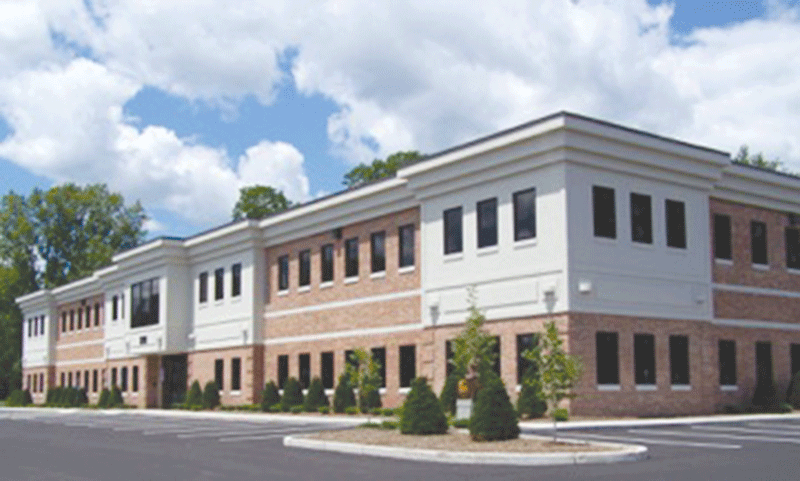
Education Sections

New-school Thinking

Carlos Santiago says it would be one of those proverbial ‘good problems to have.’

He was referring to the possibility that so many individuals will seek to take part in the Commonwealth Commitment program — an ambitious, first-of-its kind initiative designed to incentivize more people to enter college and complete their degree — that there are potential logistical and financial challenges for the state’s four-year public colleges and universities.

Carlos Santiago

Carlos Santiago

Santiago, the Commonwealth’s commissioner of Higher Education, stopped short of predicting that would actually happen. But he didn’t hesitate to say he expected this program to address a number of concerns facing the state, its institutions of higher learning, and families faced with the daunting task of paying for a college education.

These include smaller high-school graduating classes, a demographic phenomenon that is certainly effecting recent enrollment, especially at the 15 community colleges; still-problematic graduation rates, or ‘completion rates,’ at the public schools; the spiraling cost of college, which is keeping many from entering or finishing a degree program; and, last but not least, a serious skills gap facing businesses in virtually every sector of the economy.

Commonwealth Commitment was blueprinted with all that as the backdrop, said Santiago, adding that he believes it can brighten each of those pictures.

“We think this is the right message at the right time,” he said, while acknowledging there are risks for the four-year colleges due to the financial incentives offered to participants. “The Commonwealth needs more people to enter into our institutions, and for more students to graduate with less loan burden. This is the right message.”

Here’s how it works: Students will begin their studies at one of the community colleges, enrolling in one of the 24 Commonwealth Commitment/Mass Transfer Pathways programs that will roll out this fall. That list includes (for September) biology, chemistry, economics, psychology, and history, and (starting in the fall of 2017) early childhood education, computer science, criminal justice, and others. Students must attend full-time and maintain a cumulative GPA of 3.0.

After earning an associate’s degree in two and half years or less, students will transfer to one of nine state universities or five UMass campuses to earn a baccalaureate degree. At the end of every successfully completed semester, students will earn a 10% rebate on tuition and fees, payable in the form of a check, or may opt to receive a voucher to use for books and other education-related expenses — the program does not discount room and board. And tuition is frozen for the duration of the duration of the degree program, which must be completed in 4½ years.

While there is no shortage of that proverbial cautious optimism regarding Commonwealth Commitment, no one is really sure what will happen. But they can speculate, and, when pressed by BusinessWest, they did.

Monica Perez, interim vice president of Academic Affairs at Holyoke Community College, said the program will likely become an effective incentive for students to not only enroll at a community college, but quickly harden their focus on a degree program and the path for completing it. She noted that, historically, students have lost time, credits, and money while trying to settle on a major. Commonwealth Commitment will likely expedite the process through its monetary incentives.

Monica Perez

Monica Perez

“Every time a student changes his or her major, especially if you’re going from something that’s relatively general, like arts and sciences, to something specific, like health, and then back out again, to criminal justice, you’re going to lose credits,” she explained. “And when you lose credits, you have to start again.”

What the new program will likely do, through its time-based incentives, is prompt students to think harder about a major, lock in it on it, and stay on that path.

Ira Rubenzahl, the retiring president of Springfield Technical Community College, agreed, and noted that STCC was one of the first schools in the Commonwealth to undertake a program similar in structure and mission. He said there is already evidence that they work as intended — meaning, to get people into college and reduce the price of that education by starting at schools like his.

“This will hopefully encourage more people to consider community colleges for the first two years of their college education,” he said. “And it will provide incentives to complete, which is important because, while getting people to start down this path is one thing, the goal is to get them to the end.”

For this issue and its focus on education, BusinessWest takes an in-depth look at Commonwealth Commitment and how it could potentially change the landscape for the state and its public institutions.

Course Change

They become known as ‘$30K degrees,’ and that term goes a long way toward explaining what they are.

Yes, these are bachelor’s degrees that cost $30,000 (or less, in many cases) and involve earning an associate’s degree at one of the participating community colleges and then transferring, through a host of articulation agreements (such as the ones STCC and HCC have with Westfield State University) to a four-year institution.

Ira Rubenzahl

Ira Rubenzahl

These programs have worked out very well, said Santiago, adding that Commonwealth Commitment takes matters statewide and at least one step further with its rebates, locked-in tuition, and additional 10% off the total price.

They will take the sticker price of a college education down well below $30,000 in most cases, he went on, to $23,000 or even $22,000, and bring a higher level of sophistication to the model whereby students start at a community college and finish at one of the state’s public universities — with the accent on ‘finish.’

“As I saw what was developing, I said to myself, ‘this is great, if you live in one of these regions,’” he recalled. “I thought, ‘why can’t we do this across the entire system of higher education? Why can’t a student from any two-year campus follow a similar pathway to any four-year campus or UMass?’”

Starting this fall, they can, he went on, adding that, as this expanded program started coming together, the initial plan was to call it the ‘Commonwealth $30K Degree.’ But this was determined to be less than accurate, because there would be some cases where the cost would exceed that number, but a great many more where it wouldn’t reach it.

But a far bigger challenge than naming the initiative would be selling it — or so Santiago and others thought.

As things turned out, while Commonwealth Commitment presents some inherent risks for the four-year schools, Santiago acknowledged, noting that the tuition waivers and locked-in prices could pose challenges, it received what amounted to universal buy-in from those schools when this initiative was put on the table. It even came from the two specialty schools — Massachusetts Maritime Academy and Massachusetts College of Art and Design— which many thought would have reservations about the comcept.

“In Massachusetts, public higher education is a very decentralized system,” he explained. “Just because we have what we think is a good mean doesn’t mean everyone is going to buy into it. But the reality is they did — they supported it, across the board.”

Santiago believes there are many reasons for this buy-in, chief among them being those smaller high-school graduating classes, a trend expected to continue for at least another eight years, according to most experts.

These declining numbers of traditional college students has left colleges and universities across the country looking for imaginative ways to boost enrollment while at the same time keeping their standards high — methods such as the recent decision by the University of Maine to charge out-of-state students the rate they would be paying to attend their home state’s university.

And these discussion points bring Santiago to the contention that Commonwealth Commitment is about far more than affordability, although that is a huge part of it. It’s also about getting people onto a path toward a degree — and onto a path more likely to get them to the end than what existed previously.

Perez believes the program has a good chance of succeeding with that mission through the various incentives, or forms of motivation, that it provides to finish, finish quickly, and earn a degree in a field where job prospects are solid.

With that, she returned to her thoughts about how this program might sharpen a student’s focus and thus eliminate lost time and expense.

“Community-college students often take 80 or more credits to get a two-year degree,” she noted, adding that this number should be closer to 60. “At the four-year level, they’re taking anywhere from 130 to 134 credits to get a 120-credit degree.

“Part of the design of this program is to get students on the pathway they need to finish it,” she went on, “and guide them along the way so they can finish in a timely manner and not waste time or money.”

If Commonwealth Commitment can succeed in getting more people into college and through to a degree, it will help Massachusetts with another huge challenge, he said: the pending retirement of workers from the Baby Boom generation and the need to replace those talented individuals.

“One-third of our labor force is 55 years of age or older,” he explained. “It’s the most educated component of our labor force, and they’re going to be retired in 10 years. The Commonwealth must find a way to start replacing these individuals.”

Degree of Inspiration

Returning to the possibility of hundreds, or even thousands, of individuals taking full advantage of Commonwealth Commitment, Santiago added an adverb to his commentary.

“That would be a really good problem to have,” he told BusinessWest, adding that, if that scenario becomes reality, steps will be taken to address it.

“We’ll bring resources to bear — we’ll make it work,” he said, adding that, at the very least, he expects this initiative to prompt more people to take the path it lays out.

And if that happens, those individuals, their families, the colleges, and businesses across the state all stand to benefit.

George O’Brien can be reached at [email protected]
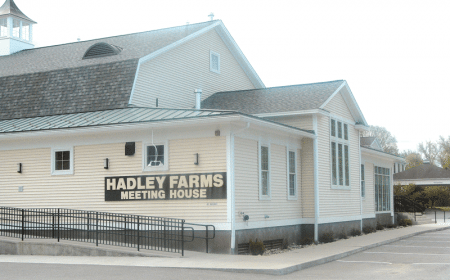
Business Management Sections

Getting to Know You

Ross Giombetti

Ross Giombetti, president of Giombetti Associates

Thirty years ago, Rick Giombetti developed a concept, called Performance Dynamics, that links personality with business productivity and potential. His Hampden-based company, Giombetti Associates, has grown significantly since then, helping hundreds of companies succeed by understanding personalities and building better leaders. His son, Ross, recently took the reins of the firm, but doesn’t expect much to change — least of all the passion he and his father share for making a difference in clients’ lives.

It’s not always easy, Ross Giombetti says, to be a client of his business-consulting firm, Giombetti Associates.

“We want to build the relationship and build the trust so clients know we care about the demands of their business, then deliver feedback that is true, real, and honest — tell them what they need to hear, not what they want to hear. And sometimes it stings,” said Giombetti, who recently succeeded his father, Rick — who co-founded the Hampden-based firm 30 years ago — in the president’s chair.

“I’ve certainly been called ‘direct’ before,” Ross went on, “but you’ll also find we back that up with support and compassion, so when we have to deliver a message you’re not going to like, you walk away trusting it, and knowing it’s what you needed to hear to make you and your organization better.”

That message varies wildly from client to client, as it always has; Giombetti Associates deals in leadership development and training, team-building, talent acquisition and recruitment, pre-employment assessment, and strategic executive coaching, among other roles.

“But the foundation of it all is building high-performance, world-class companies through people,” he explained — an idea he would return to several times during his talk with BusinessWest.

“There’s one constant in every business, regardless of size or industry — people, who have character traits that drive their behavior, and can cause issues and conflict,” he explained. “Our clients come to us to help them solve challenges related to personality and leadership. It could be they have a team that doesn’t get along really well or isn’t maximizing their potential or their results. There could be a talent gap in the organization that they want us to help solve, or it could be them wanting us to protect their business from making bad hiring decisions.”

The heart of Giombetti Associates is a concept called Performance Dynamics — a means of assessing personality and understanding how it affects behavior in the workplace — created in 1986 by Ross’s father, Rick, and his business partner, Paul Alves. At the time, the pair — former human-resources professionals who had struck out on their own — had virtually no money, and even scraping up enough to fly to Washington to visit the U.S. Patent and Trademark Office was a challenge.

But their idea paid off, and today, the company boasts hundreds of business clients worldwide — from mom-and-pop operations to Fortune 500 companies — helping them make hiring decisions, train executives, build leadership skills, handle office conflict, and perform a host of other interpersonal tasks.

Simply put, Performance Dynamics explores personality and applies it to leadership in business. Before quitting his job to become a consultant 30 years ago, Rick Giombetti used his human-resources experience and psychology education to develop personality-assessment exercises that companies could use to understand and manage their hiring and personnel issues. These assessment tools measure factors ranging from personality traits and mental maturity to overall understanding of leadership and how people cope with conflict.

“They’re validated and defined by major psychological think tanks,” Ross said. “We put them together in a trademarked process. My father and Paul Alves, they were well beyond their time, extremely progressive as it related to personality and leadership. That’s how it all started — with a dream and a philosophy.”

With clients boasting anywhere from five employees to 100,000, in industries ranging from landscape design to advanced manufacturing; from medical facilities to banking and insurance, the one common denominator is people, he went on. “That’s one reason why we work in all those different industries. You can change the function, change the geography, but people exist in every single one of them.”

Let’s Talk

When a company hires Giombetti, it should be ready to talk.

“Our work is a combination of things and involves a lot of fact finding, a lot of exploration, a lot of open-ended conversations in an attempt to get to know a person, a team, an organization, or an entire culture. That’s where we start,” he said.

That said, “we don’t take on new business without knowing what we’re walking into. They have to believe philosophically same things we believe. If they don’t, we’re not afraid to walk away from business. We’re not afraid to fire a customer.

“Once we know what we’re looking at,” he explained, “to really help develop an individual, a team, or a culture, we have a series of personality instruments we use that go really deep, identify the ‘why’ behind the ‘what.’ It’s not hypothetical, not conceptual; it’s concrete and real.”

A few of the team members

A few of the team members at Giombetti Associates, from left: Miklos Ats, Ross Giombetti, and Amanda Collins.

As one example, he cited a client in the Midwest founded on the core belief of purpose-driven products. “They don’t really care as much about the money they make or the success they have; they want their employees to wake up with purpose. So they’re founded on the right philosophy.”

However, Giombetti went on, the company’s leader was simply too nice and struggled with making difficult decisions, and that held his organization back.

“I’d like to think that, after working more than five years with them, his own leadership and the culture as a whole have gotten much stronger and better,” he said. “They now blend family and balance of life with accountability.”

After all, he continued, bosses can care deeply about their employees’ family time, work-life balance, and having fun at work, but at the end of the day, there has to be accountability and a focus on growing the business. Now, he said, “their organization is an example of an organization we would all want to work for.”

Another client — a local firm, Notch Mechanical Constructors in Chicopee — had a much different issue. It’s a company run by five siblings who balance their input well. “They maintain boundaries and keep each other accountable and grounded, and they make good business decisions,” Giombetti said. But they struggled with finding a strong financial leader.

“We have close to a 20-year relationship with this family, and we wanted to make sure they hire the right person. We went through a lot of due diligence, and it took us longer than we or they would like, but the story has a happy ending. We found somebody who is a great cultural fit — the same philosophy, grounded, humble, but tough and smart. They’re pretty happy with the decision we made. Sometimes making the right decision takes longer.”

In both cases — a company leader who had to change his way of thinking, and bringing in the right person from the outside for a key role — it all came down to the importance of people, he stressed.

“Great organizations believe that building a strong team with great people is largely what makes you successful. You can have a great product, you can have great service, you can have a great business model, but without the people, you won’t capitalize on your opportunities. You’ll have nothing.”

Smart Growth

Giombetti currently employs six people and is actively looking for a couple more to meet the needs of an expanding client base nationwide.

“But we’re careful about the business we take on,” he said. “We don’t take on business just for the sake of growing. That philosophy will never change as long as I’m tied to the organization. I learned that from my father, that bigger is not always better; better is better. I want to do it the right way, to continue to treat our clients like their business was ours, and I don’t want to lose touch with the close relationships we have with most of them. So we’re really careful about how we run our business.”

In part, that means running the business like that client in the Midwest who prioritizes his workers’ lives away from the office, saying he wants to do the same for team members like Miklos Ats, senior associate; Amanda Collins, office manager (who’s being groomed for a larger, human-resources generalist role), and Monica Childers, who doesn’t have a title beyond ‘protector’ and ‘boss of all of us,’ Giombetti joked.

“When I’m not working, I’d rather be spending time with my wife and three kids and a million hobbies,” he said. “I’d rather see Mik spend time with his lovely wife and go eat at more great restaurants. I’d like to see Amanda spend more time honing her trivia skills, and see Monica spend more time with her awesome husband, who recently learned how to make sushi, and their fantastic two boys. We believe in ‘work hard, play hard.’”

At the same time, he wants the firm to continue giving back to the community, through its efforts with Habitat for Humanity and other local organizations. Meanwhile, Giombetti coaches youth sports and launched a mentorship program at Minnechaug Regional High School in 2012 — efforts that, along with his business success, contributed to his selection to BusinessWest’s 40 Under Forty class of 2016.

“We’re passionate about developing young people,” he said. “Most students don’t know who they are or what they want to do, but if we can help them better understand who they are, they’ll have a lot less stress and anxiety in their young life and career.”

These efforts are just one more way Giombetti is committed to the Western Mass. region. “The Pioneer Valley will always be our home. I don’t have visions about moving our office into a big city to be closer to bigger business and more opportunities. I’m happy being where we’re at, doing what we do, supporting awesome clients and individuals.

“Philosophically, we treat our clients’ businesses like our own, and we’re going to protect that,” he went on. “Our clients trust us to know their people, know their culture, know their business, and protect it like it was our own.”

As for Ross’ father, Rick Giombetti may have relinquished his president’s title this year, but he remains active in some project work as a strategic advisor, which Ross appreciates. “His legacy will live on forever here. He’s a fantastic leader.”

One who has long been committed to building up the leadership potential of others, a passion he certainly passed along to his son.

“It sounds cliché, but I wake up every morning truly being motivated to inspire people and make a difference,” Ross said. “When students are coming out of college, when they’re asked the question, ‘what do you want to do?’ a majority say, ‘make a difference,’ but they don’t know what that means — and don’t know how.

“That is the passion I live every day,” he went on. “When I see somebody grow, develop, and become a better person, become a better husband or wife, become a better teammate or leader, that keeps me coming back for more.”

Joseph Bednar can be reached at [email protected]
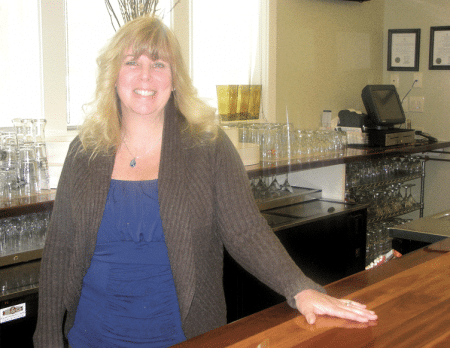
Manufacturing Sections

On Schedule

David Cruise

David Cruise says partnerships to raise up a workforce for CRRC MA USA. will benefit the region’s entire manufacturing sector.

When a company from across the globe sets up shop in Springfield, it can’t exactly bring its workforce with it.

“We need 100% new employees,” said Bobby Doyle, senior consultant for CRRC MA USA, the Chinese rail-car manufacturer currently building a $95 million production plant at the former Westinghouse site on Page Boulevard. “We can’t transfer people from China here; it wouldn’t work.”

Among the reasons CRRC — formerly CNR Changchun Railway Vehicles — chose Springfield, however, was optimism that the city and region could supply a workforce to support what will become the company’s North American headquarters. “The capital investment we’re putting in, that’s a big commitment,” he said, “and there’s got to be a long-term labor force.”

That’s why CRRC has forged a number of interlocking partnerships — with the Regional Employment Board (REB) of Hampden County, the local sheet-metal and electrical unions, Roger L. Putnam Vocational Technical Academy, and the engineering departments of area colleges and universities, for starters — to build that workforce.

But local economic-development leaders see potential benefits to these partnerships beyond the CRRC jobs, said David Cruise, the REB’s president and CEO.

“We’ve been working with [Doyle] to identify very specific production positions they will need on the factory floor,” he said. “They’ll need some administrative positions and engineering positions, but at the Regional Employment Board, we’re focusing on how to help them on the factory floor, where the heart of the work is going to get done.”

At the same time, Cruise continued, “we’re also concerned with not just identifying the workforce for CRRC, but with the broader regional metal-fabrication industry as well, hoping other companies benefit from the presence of CRRC in the region. We want to be sure that any sort of workforce training we develop benefits that broader metal-fabrication industry. That’s been our strategy.”

He explained that CRRC could present some spinoff work for other manufacturers and perhaps attract new manufacturing business to the region.

“We certainly want to be a conduit and help with CRRC Massachusetts, but we also shared with them, and they understand the value of, our intent to build training programs and build a delivery system that can respond to all the needs that may develop here in the region.”

Local Flavor

In 2014, CNR Changchun received a $566 million contract to manufacture 284 new subway cars for the Massachusetts Bay Transportation Authority (MBTA — 152  for the Orange Line and 132 for the Red Line.)

Construction at the 40-acre site — including a new, 220,000-square-foot factory building and conversion of the former Westinghouse administration building into CRRC’s administrative, engineering, and research offices — is underway. When it’s fully operational in 2018, the factory will employ 150 production workers with starting salaries of at least $66,000 a year, on top of about 150 construction workers needed to build the new plant. The MBTA cars will be built over a five-year period.

To develop a worker pool with the necessary skills, the REB is working closely with Sheet Metal Workers Local 63 and Electrical Workers Local 7 to develop training programs to be hosted mainly at Putnam after school hours.

“Putnam has some of the latest technology and equipment in the area, and I felt it was really critical to build that relationship between Local 63, Local 7, and Putnam,” Cruise said.

Along with training workers currently in the field for CRRC’s immediate demand, another goal is to attract unemployed and underemployed individuals into the training programs to prepare for a surge in demand as the rail-car plant grows beyond its initial buildout.

“As this facility comes online, the majority of initial-wave workers will be individuals who have experience in sheet-metal and electrical work,” Cruise said. “But as the facility expands and grows, clearly there will be some opportunities for entry-level positions.”

Cruise believes that, indeed, CRRC will be that kind of catalyst.

“We think this assembly facility will lead to the development of contracts with other municipalities and states around the country, with hope that some, if not all, of that work finds its way back to Springfield,” he told BusinessWest. “We’re not building programs just to get to opening day, but that can grow with them — and they can have some assurances that broader training is in place to meet future demand. There will be times when their workforce will be expanding pretty dramatically.”

Doyle agreed. “We’re pursuing two other contracts right now, one in Pennsylvania and one in Los Angeles, and both would be manufactured in Springfield, so Springfield is going to be a very busy location in the next five years,” he said. “We’d like to see the workforce keep doubling if we’re successful.”

Cruise said the after-school programs at Putnam — say, 3 to 9 p.m. — will complement offerings at Local 63’s own training center during the day. “That gives us 12 hours a day, which is exciting for us. It gives us some real bandwidth in terms of not only building great programs, but having some flexibility in scheduling.”

Meanwhile, the REB is working on a similar arrangement with Local 7, developing a curriculum for training programs to meet CRRC’s specific needs. “They’re excited to partner with us. They have a training facility in Chicopee, so we can run the same kind of afternoon program at Putnam, and at the same time utilize Local 7’s training facility during the day should demand dictate.”

The REB will look to competitive state grants to fund these programs. “It’s a challenge to identify funding to do this; unions are not allowed to use their funding for apprenticeship programs.”

That issue aside, Doyle called Putnam a “tremendous resource” and noted that CRRC officials have visited several times already. “We see them as a huge long-term partner.”

Once the initial hiring process is complete, a group of 20 to 30 employees, maybe more, will relocate to China for 10 months to a year to train on light rail cars in that country, learning how to test all the systems in the trains and bringing that technology back to Springfield. A second group of employees will go to China for four months to learn the assembly process. Production of the MBTA cars will begin in Springfield early in 2018.

College Try

CRRC is starting to build other connections as well, working with Western New England University’s College of Engineering to develop talent for the design and research operations at the new plant, and examining similar opportunities with UMass Amherst and Springfield Technical Community College. Meanwhile, FutureWorks, the one-stop career center located in Springfield, will serve as a resource for the hiring process.

“For them to be able to see that these kind of partnerships can be developed quickly — that they’re coordinated, agile, flexible, and can respond to their business demands — to me is adding great value and ensuring this corporation, and the industries that will benefit from it, will have a very bright future, not only here in Massachusetts, but across the country,” Cruise said.

Doyle admitted that, during CRRC’s search for a North American home, Springfield posed some negatives, including one of the highest commercial tax rates in the Commonwealth. But other positive factors outweighed that, including the city’s proximity to two major interstates and a CSX Transportation rail line, and, yes, those aforementioned partnerships, and the enthusiasm of the municipal and economic-development leaders who forged them.

“I’m excited about where we are,” Cruise said. “We’ve worked over time with a lot of different companies and a lot of different partnership arrangements. This is especially exciting because the parties we pulled together do not have an established history of working as partners in this workforce-development space.”

Therefore, he went on, “we are excited about the opportunity this company presents to the city of Springfield and the region and job-creation efforts here in the Valley. Quite honestly, I can’t wait to get started.”

Joseph Bednar can be reached at [email protected]

Business Management Sections

Visual Flight Rules

By Elizabeth McCormick

Don’t incentivize employees with money. They don’t want it.

Did you do a double-take? The statement is a bit facetious; your workers expect fair compensation for the work they do. But it’s not the be-all and end-all of their motivation. In fact, it’s not even one of their top three motivators.

The top three motivators — culture and values, career opportunities, and senior leadership — account for more than 60% of a worker’s job satisfaction. Let’s look at each of these in turn and examine how it influences — and is influenced by — a transparent corporate culture.

Defining Transparency and Culture

There’s a temptation to think of corporate culture and transparency as synonymous, whether that transparency is achieved yet or not. Consider the following statement by a fictional CEO: “our corporate culture is one of transparency.”

It probably strikes you as an empty phrase. The more cynical would likely start looking for transparency in practice in this executive’s organization, or, worse yet, start examining the CEO for behavior consistent — or inconsistent — with the statement.

Take a minute to look out the window. Some of you might see trees, green spaces, and water, while others might see walls of adjacent buildings. A few of you probably noticed the window needs cleaning. You probably see where this is going. While people can value transparency, in many ways transparency isn’t a value at all. It’s a condition.

Transparency sits in between culture and perception. You already have corporate transparency. It’s simply a matter of opacity. With this model in mind, it becomes clear that an enterprise with opaque cultural transparency is likely to frustrate perceptions. Conversely, high transparency contributes to a satisfying work condition.

Traditional, hierarchy-based management is often defined by the corner office or the prime parking space, beneficial rewards and demonstrative achievements that get entrenched in the myths of corporate culture, making the workplace a competitive environment rather than a collaborative one, promoting a set of skills in the workforce that may not be the skills best suited to advancing corporate objectives.

So it’s easy to see that, if the fictional CEO of our example makes his or her statement, then goes back to the office and closes the door, the words are hollow.

The Real Message Behind Career Opportunities

Consider the silent pluggers. Every workplace has them, those who quietly do their job, day after day, and they’re good at it. Perhaps they want to know that they can keep doing what they are doing, earning a little more over time.

To them, a bump up to supervisor may be the worst possible outcome. Promotion is a reward for some, but a punishment for others. If the corporate window on advancement is opaque, the pluggers may not be doing their best work in hopes of being passed over.

Promotion may also be a tangible demonstration of a person’s value. It’s hard to argue that your work isn’t valued if the company gives you more money and responsibility. But if this validation can come only through career advancement, then they probably aren’t experiencing workplace transparency when it comes to day-to-day job performance.

Given that salaries are typically closely guarded by company and workers alike, it’s likely that, in the opaque workplace, there are those who are consumed with the idea that others are making more for similar or less effort. A promotion or a raise is the only way they can calm the inner voices against the thought that they are being ripped off.

There just can’t be salary transparency, though, can there? Well, the military does it. Public institutions such as universities and government agencies at all levels publish salary information. We all know how much the president makes. With access through the Internet to job listings across the country or even around the world, it’s never been easier for a worker to establish his or her market value. But remember, money is only number five on the list of motivators. It’s not that workers want to be paid the most. Workers simply want to be paid fairly.

Transparency and Senior Leadership

Brace yourselves: here’s where you come in. You’ve probably heard the glib catchphrase, ‘people don’t quit their jobs, they quit their bosses.’

It may be simplifying somewhat, but examine your own job history to see if it’s true for you. What makes up a good boss is different for everyone. Despite the definitions, there are leaders who are accepted as superior, so there are overlaps of perception.

You read how opacity affects perception, and the real challenge for you as a manager is to find the balance that’s right for your company and for your workers, and, since you must live it, what’s right for you.

Reviewing the basic definition of a manager, we are reminded, of the saying, ‘a manager is a person whose work is completed through the efforts of others.’

Your workers are completing your essential work. You probably know how they tick as a group and, in some cases, as individuals. You’re likely contemplating the concept of transparency to help your people work better, more efficiently, and with satisfaction and loyalty.

E-mail, calendars, work time, and work tasks can keep tabs on the work that your staff is doing. Is this gathered information used to adjust and adapt, or is it a corporate Big Brother whose only result is increasingly complex work avoidance?

A smart approach to transparency may beat a ‘more is better’ approach, particularly during the early stages of implementation. Systems that feed the transparent condition are often used in opaque ways, sending mixed messages. Understanding transparency as a condition means treating transparency as a process. Your workers are looking to you for guidance, example, and sincerity. For more than 16% of them, it’s the most important factor leading to job satisfaction.

Your Visual Flight Rules

Reducing the opaque walls of hierarchal corporate culture is not something to attempt on a whim or on a mission statement. Employees can see right through you if your leadership lacks sincerity.

It’s ironic, but perhaps the best methods to begin efforts to improve transparency are subversive. You can quietly try on your own transparency changes, learn about your staff, their goals, dreams, and frustrations. Mix these with your knowledge of the business, your clients, and your industry. Just as a pilot flies from one landmark to the next, so too will your process toward transparency.

Elizabeth McCormick is a speaker, author, and authority on leadership. A former U.S. Army Black Hawk pilot, she is the bestselling author of her personal development book, “The P.I.L.O.T. Method: the 5 Elemental Truths to Leading Yourself in Life”; www.yourinspirationalspeaker.com

Employment Sections

Distance Learning

By Stefanie Renaud, Esq.

Stefanie Renaud

Stefanie Renaud

Telecommuting is one of the fastest-growing employment trends in the U.S., up 103% since 2005. Today, more than 3.7 million employees telecommute at least half the time. Undoubtedly, that number will continue to grow, because 85% of Millenials, who make up the largest generation in the workforce, would actually like to telecommute full-time.

Although research shows that telecommuting improves morale, increases productivity, and improves employee quality of life, there are many legal issues for employers that may complicate this popular work arrangement.

The Fair Labor Standards Act

The federal Fair Labor Standards Act (FLSA) and parallel Massachusetts law require employers to pay their employees properly. These statutes categorize employees in two ways: exempt and non-exempt. For non-exempt employees, the vast majority of the workforce, the employers must keep detailed records of hours worked and wages paid, pay the overtime rate of time and half for all hours worked over 40 per week, and pay employees minimum wage.

Exempt employees are just that: employees who are exempt from these record-keeping and overtime requirements. Thus, telecommuting for exempt employees does not implicate wage/hour law. However, employers should take great care before classifying employees as exempt. The FLSA and Massachusetts law lay out a few narrow exceptions with specific job and salary requirements. To ensure you are properly classifying your exempt workers, consult with an employment attorney before classifying employees as exempt.

Record-keeping Requirements

For non-exempt telecommuting employees, the employer must keep accurate time records and pay the employee for all work performed. How does an employer keep records for an employee it never sees?

Employers may utilize an electronic time-keeping program that requires employees to punch in and out, or rely on paper time cards. Regardless of form, the employer should provide time sheets for employees to use when recording their work hours. Employees should also ‘sign off’ on their time sheets, either electronically or in paper form.

According to the 11th Circuit Court of Appeals, the employer is responsible for providing the time sheets, but the employee is responsible for accurately keeping their time records. Thus, the telecommuting policy should emphasize that the employee is responsible for accurately recording their work hours.

Employers should also provide telecommuting employees with information to help them independently determine what working time is compensable. For non-exempt employees, compensable time is any time spent engaged in ‘principal activity.’ Commuting time may also be compensable. If employees complete principal activity at their home or office, then travel to the other workplace and complete principal activity there, then their commuting time is compensable. Consult with employment counsel to help define principal activity and to untangle the many complicated issues surrounding compensable time under wage/hour law.

Proper and Timely Payment of Wages

Regardless of the telecommuting employee’s status as exempt or non-exempt, the employer is responsible for complying with all state and federal wage laws. Employers must know where telecommuting employees will be working because state law governs many facets of the employment relationship, including meal and rest breaks and how often employees must be paid.

In Massachusetts, employees are entitled to a 30-minute meal break when working six or more consecutive hours, and wages must be paid on either a weekly or biweekly basis.

Location is also particularly important to comply with minimum-wage laws, because some states and municipalities, such as San Francisco, have higher minimum-wage rates than federal law. In Massachusetts, the minimum wage is currently set at $10 per hour, with another increase scheduled for Jan. 1, 2017. Consult with your employment counsel to ensure compliance with state and local laws.

Overtime Managed

Keeping accurate time records not only aids in tracking employee eligibility for federally mandated benefits under the Family Medical Leave Act and the Affordable Care Act, but also in the proper calculation of overtime compensation. How can an employer control overtime for employees who telecommute? The telecommuting policy should clearly prohibit overtime, unless authorized in advance.

The policy should be consistently enforced, with proper remedial action taken after each violation. However, regardless of the employer’s overtime policy, a non-exempt employee must be paid overtime compensation, at the time-and-a-half rate, for all hours worked over 40 per week.

Even so, some overtime does not have to be paid — if the activity is de minimis.  De minimis activity is an insubstantial or insignificant period of time, beyond the normal work hours, that cannot practically be precisely recorded for payroll purposes. Business realities will determine if an activity is de minimis, so consult with your employment counsel on any question about whether overtime pay is due or not.

The Best Policy

The best telecommuting policy is one that is well-thought-out and extremely clear. The policy should clearly define what it means to work, what is ‘principal activity,’ which activities are compensable, and how to request authorization for overtime. The policy should also be clear as to when employees are not expected to work, what breaks should be taken, and that the employee is responsible for accurately recording their work hours.

The best policy will not only give employees important information, but get important information in return. Because state and local laws differ, employers should obtain information about the legal obligations in the specific state where their employee will be based.

Employers may wish to test their telecommuting policy by running a pilot program. A test run can help identify potential problems and allow for proactive solutions to be incorporated into the final policy. Because of the legal complexity of this area, employers should carefully consult with employment counsel when developing and implementing a telecommuting policy and program.

Finally, as with any policy, the telecommuting policy must be clear about which employees are eligible to telecommute. The policy should be consistently followed, as inconsistent awarding of telecommuting privileges could expose the employer to liability for discrimination.

Stefanie Renaud, Esq. is an associate with the law firm Skoler, Abbott & Presser, P.C., which exclusively represents management in labor and employment matters. She is admitted to practice in Massachusetts; (413) 737-4753; [email protected]

Features

A Y’s Guy

Scott Berg

Scott Berg

Scott Berg has a long history with both the institution of the YMCA and the Greater Springfield Y, the second-oldest in the country. Thus, he has a firm understanding of the many challenges now facing the local agency and the need for strong partnerships, or connections, as he called them, to bring about a more solid financial footing.

Scott Berg was certainly no stranger to the Greater Springfield YMCA when he walked through the doors of its Chestnut Street facility that day in January, his first as president and CEO.

In fact, one could make a strong argument that no one knew this organization, launched nearly a full decade before the first shots were fired during the Civil War — not to mention the myriad challenges it was now facing — better than he did.

Indeed, he first started working at the facility more than 20 years ago, when then-director Steve Clay tapped him to be senior program director of the organization’s youth and camping services. He would go on to play the lead role in the development and chartering of the Scantic Valley branch of the Springfield Y in Wilbraham, and then direct all aspects of a $6.5 million capital campaign to build a home for that branch and renovate other YMCA facilities.

And after he left the Y’s employ to pursue other career opportunities, including key development roles at both Springfield College and Western New England University, he remained involved with the organization, especially as a long-time board member.

So he certainly knew his way around the Chestnut Street offices when he arrived in January as successor to Kirk Smith — especially the route to a small conference room of sorts that he fashioned out of an old administrative office that, decades earlier, had served as what amounted to the front desk when the Y operated a hotel-like operation on its upper floors.

“I knew we needed a better place to have meetings — a quiet place where we could brainstorm,” said Berg of his small-scale renovation project.

And there has been quite a bit of that brainstorming over his proverbial first 100 or so days in office. Meetings in that new conference room have involved everything from the difficult but necessary decision to shut down the branch the Y opened in Agawam only 18 months ago due to membership levels far below those projected, to a desperately needed refinancing of the Y’s debt — a deal negotiated with a half-dozen area financial institutions led by Monson Savings Bank, to the ongoing saga involving the Dunbar Community Center.

“I came into this with my eyes wide open,” Berg said of his career decision, noting that these are some of the more challenging times this organization has seen in its long history.

They are in many ways similar to the perilous financial straits the Y maneuvered through during his time in the mid-’90s. What enabled the organization to navigate that whitewater, he explained, was a combination of imagination, determination, and the ability to both forge new partnerships with the broad community the Y serves and connect people with the institution. And he expects that same formula will propel the Springfield institution to better, far more solid footing.

Chestnut Street

When Scott Berg talks about a “new YMCA,” he’s not necessarily talking about replacing the building on Chestnut Street, opened in 1968.

“What I want to do with the team is address the most pressing challenges — financially and programmatically — that face us now,” he explained. “We have to look at the problems that will be confronting us over the next two or three years, but at the same time determine where we want to see ourselves past that three-year mark moving forward.”

Looking ahead, he noted that, as the Y prepares to mark its 165th birthday, the facility on Chestnut Street — part of a huge urban-renewal effort in Springfield’s North End — will approach the half-century mark itself, a milestone that has already prompted considerable talk of a ‘new Y.’

Berg uses that term himself, but not necessarily in the context of a replacement for the aging Chestnut Street facilities — a step he acknowledges is still many years away. Instead, he uses it to refer to the organization as a whole and if and how it should be reshaped to better serve constituencies ranging from its members to the larger community.

“The YMCA is not a building,” he insisted. “The Y is a mission, and we need to go where the people are. The Y can go anywhere and be anywhere.”

For this issue, BusinessWest sat down with Berg in that new meeting room he created to talk about the organization, its challenges, its future, and how he considers himself fully equipped to lead the organization to better times.

A Good Fit

As he walked through the Y after his interview with BusinessWest on his way to the fitness center for some pictures, Berg stopped to talk with several individuals.

They ranged from an obviously pleased teen sitting in the front lobby who had just that morning secured his driver’s license, to an elderly gentleman in the locker room who has been coming to the Chestnut Street facility since the day it opened in 1968, to a Springfield-based lawyer walking some laps on the fitness center’s track, something he’s been doing for decades.

If he seemed totally at ease in those surroundings and with such people, it was with good reason. Indeed, Berg said he’s been around and, in many ways, part of YMCAs his whole life, dating back to when his mother was a volunteer at the original Agawam branch back in the ’70s.

He took part in a number of its programs, including what was known then as Y Indian Guides with his father.

For Berg, the Y shifted in nature — from being something he participated in to something he aspired to do for his career — when he worked as a staffer at Camp Sloper in Southington, Conn. while in high school and college.

As things turned out, he was far from the only future YMCA director working or staying at the camp during his tenure; there were several, in fact, and they remain in touch today, said Berg, talking about everything from their respective families to common challenges facing their Ys.

Berg started his career with the Y organization in 1991, a year after earning a degree in English at Boston College, as youth and family director of the Waltham Family Branch of the YMCA of Greater Boston.

In 1994, Clay, whom Berg had met while both were working for Ys in the eastern part of the state, offered him a somewhat similar opportunity in Springfield, as youth and camping services program director, and he accepted it.

“It was really good timing,” he recalled. “He was looking for a youth and camping director, and I was a youth and family director. At the time, we were just starting a family … it was a great opportunity.”

Over the next decade, he would hold several titles with the YMCA of Greater Springfield, but was most noted for his work with the creation of the Scantic Valley branch — a name that stems from the river that runs through several communities in that area.

It all started with Clay deciding to act upon multiple requests he’d received for a teen center in Wilbraham, an assignment he gave to Berg. Over time, Y leaders saw a need for additional YMCA programming, he noted, adding that this led to the eventual creation of a new Y branch that provided services through partnerships with, and facilities at, Wilbraham Monson Academy, Healthtrax, area schools, and other sites.

Growing participation in such programs led to a feasibility study that concluded there was ample demand for a full Y branch in the Wilbraham area, said Berg, who led the efforts to raise money to build the current facility in Post Office Park on Route 20.

Berg ran that Y for a few years before leaving for different opportunities. After a brief stint with Action Fire Restoration in Chicopee, which he served as general manager, Berg would shift his career path and segue into higher education and, more specifically, development efforts.

At Western New England University, he served as director of Major Gifts & Planned Giving and, among others, took a lead role in the capital campaign to expand the institution’s law school. And at Springfield College, he was assistant vice president for Development, managing a team that raised an a average of $4.5 million each of the five years he was in that role.

When Clay retired from the Y, Berg said he thought briefly about seeking the president’s role, but quickly determined that the job, which can be something approaching a seven-day-a-week proposition — “it’s a lifestyle more than it is a job,” he noted —  was not the right opportunity at that time, given the young age of his four children.

But Berg, who had been serving on the Y’s board since 2007, stepped down from that panel in 2011 to seek the director’s position when James Morton left to lead the YMCA of Greater Hartford. He did not prevail in that search, but again put out his name in for consideration last fall, because of what he called “devotion to the YMCA” — a phrase he used to reference not only the Greater Springfield operation — the second-oldest in the country — but the institution as a whole.

“I’m a Y person by nature and by birth — this has always been near and dear to my heart,” he said, while noting that the phrase ‘dream job’ doesn’t exactly fit the description for his new position. Instead, he chose to say it’s the right job at this time in his life — and a stern challenge he’s willing to accept.

The Shape of Things to Come

Leaning up against one wall in the new meeting room Berg created is a board honoring the groups and individuals that donated to the so-called Growing Together campaign he led to not only build the Scantic Valley YMCA, but also purchase and renovate Blessed Sacrament Church into the North End Youth Center.

He recalls this as a time when the community rallied behind the Y — one of countless times it has done so during its history — and help propel it to new heights. And also as a tremendous learning experience for him on a number of levels.

“The Y gave me the gift of being able to be a capital-campaign director, and I learned it all, soup to nuts,” he explained, adding that his experiences conceptualizing and then building the new Y branch helped him in those roles at Springfield College and WNEU. “That’s where I cut my teeth on serious fund-raising; we had hundreds of volunteers, there were timelines, expectations … it was really interesting because you have some great conversations, and you never really know where people’s interests are. That was an unbelievable experience.”

He had some others with the two colleges, he said, adding that what he learned from all that work is what he considers the most important lesson concerning development.

“It’s not about asking for money,” he told BusinessWest. “It’s about developing relationships and seeing if people have an interest in supporting the cause; it becomes super effective if you can connect people to your mission. And if you believe in what you’re doing, it’s much easier to get that support.”

Believing in what he’s doing certainly won’t be an issue for Berg in his new role, given his passion for the Y organization and the Greater Springfield institution. And he hopes to use that passion — which permeates the agency, he said — to connect more people to its broad-based and ever-evolving mission.

“We have a great story to tell in terms of the number of young people we serve, the number of teens we serve, and the people we assist who have low and moderate incomes; last year, we gave out more than $750,000 in financial aid,” he explained. “We need to tell that story better and make sure we’re in the businesses that we should be in.”

Moving forward, one of those businesses should include a strong focus on wellness and prevention, he went on, adding that this is one of the recognized needs within the community as the population ages, and the direction in which healthcare, in general, is moving.

“Moving forward, there’s more and more need at YMCAs across the country, including ours, to look at the health-and-wellness component as people age,” Berg explained. “How can we be part of their family and part of their lifestyle and partner with their medical providers and their families to make sure they get the care they need?”

Seeking Fiscal Fitness

More and stronger connections and partnerships will be needed in the months and years to come, he said, because this Y is facing some stern fiscal challenges and difficult decisions.

branch in Agawam

The fiscal problems facing the YMCA of Greater Springfield have prompted many difficult decisions, including the one to close the branch in Agawam, opened in 2014.

One of those decisions has already been made with the announced closing of the 10,000-square-foot Agawam branch at the end of May, closing the book on an operation that looked good on paper, but never lived up to expectations.

“The members there really love it, and they’re wonderful people,” he told BusinessWest. “We just didn’t have enough of them.”

But the Agawam branch’s failure to reach the break-even point is just one factor contributing to the difficult budget situation, he went on, adding that, as expenses have grown over the years, revenues have struggled to keep pace and, in general, have failed to do so.

Dunbar is an example. The Mason Square institution, which has been operating under the dark cloud of foreclosure for more than two years, turned over operations to the Y in 2011.

Those operations have been expensive, said Berg, who summoned the phrase “turning the corner” to describe them from the standpoint of breaking even. The city of Springfield recently threw a lifeline to Dunbar when it announced it would pursue purchasing of the facility, and Berg said the Y might emerge as the winner of a search for an entity to run the operation — hopefully in a more cost-effective fashion.

The mounting financial challenges have forced the organization to do what all businesses and nonprofits do when they reach such a point — take steps to bring the two sides of the ledger, revenues and expenses, into better balance.

Closing the Agawam branch was one step, Berg noted, while another was the refinancing of the Y’s accumulated debt. Several institutions have come together to assist the Y in this endeavor, he said, adding that it should help the $12 million operation with cash flow.

As for the future, and that ‘new Y’ he referenced, Berg said a replacement structure for the Chestnut Street is always something in the back of his mind, but something simply not realistic now or in the foreseeable future.

But, as he said, the Y is not a building, so a ‘new Y’ doesn’t mean a new structure.

“Once we get through our immediate challenges, we need to examine what the Y facility of the future looks like, or should look like,” he said, adding that this means everything from the facilities to the programming. “We need to anticipate what the needs and demands will be over the next 25 to 50 years and then look at how to meet them.”

View to the Future

Aside from providing convenient space for meetings, that renovated office at the Y also offers a great view of the side entrance to the facility, said Berg.

And that allows those conducting business to maintain a focus, figuratively but also quite literally, on what — and whom — they’re in business to serve.

“We can just look out there and see what we’re here for,” he said, adding that this vantage point should help the team at the Y not only weather the current storm but hone its mission to effectively meet changing societal needs in the years and decades to come.

“I look at the Y as a lifestyle — it’s not something you join, it’s something you live,” he said in conclusion, adding this is especially true for him, and this attitude fully explains why he’s now looking out the window every day.

George O’Brien can be reached at [email protected]

Health Care Sections

A Holistic View of Healthcare

Dr. Scott Wolf takes the reins at Mercy Medical Center and the Sisters of Providence Health System at an exciting time in the system’s history, but also a challenging era in healthcare overall — one in which its leaders must emphasize cost efficiency, yet focus on the patient experience and outcomes more than ever before. The key, he said, is to maintain a holistic, ‘360-degree view’ of a rapidly changing industry.

Dr. Scott Wolf

Dr. Scott Wolf says a background in direct patient care gives a physician leader an important perspective that helps him or her impact the operational aspects of care.

Dr. Scott Wolf says he brings to his job what he refers to as a “360-degree view” of healthcare.

That’s a phrase Wolf, the recently named president of Mercy Medical Center and the Sisters of Providence Health System (SPHS), would use early and often as he talked about his background, which blends direct care to patients — he’s a board-certified internist — as well as time spent working on population-health initiatives, the insurance side of the equation, and several roles within the broad realm of hospital administration.

Which means, he noted, that he can see matters from several different perspectives, including those who provide the care, as well as those who pay for it.

“I think every physician should spend a week in a managed-care office, just to understand what goes on beyond their practice,” he said of his time spent with Aetna as senior medical director of Northeast Patient Management. “It really gives the perspective from the payer.”

That was just one of several efforts he made to not only break down his diverse background in healthcare, but also explain its inherent value.

Here’s another one.

“When you think of how healthcare is transforming, with the growing focus on the patient experience, on outcomes, and as we emerge from a pay-per-service, business-focused approach to healthcare, and we evolve into this population-health era, these are the conditions where a physician-leader can excel,” he said, while explaining why more people with direct patient-care experience are now in senior management positions in healthcare. “Having a background in direct patient care really affords a physician leader the opportunity to have that perspective and be able to impact the operational aspects of care.”

Indeed, that full-circle view he described is enormously helpful, he told BusinessWest, because these are extremely challenging times for all those involved in the delivery of healthcare — a time of immense competition, a broad host of financial challenges, and an intense focus on the patient experience.

“All of my experiences have helped me develop a very 360-degree view of healthcare,” he explained, “and the challenge we face on a daily basis of providing the highest-quality care in a very cost-effective manner, while all the while providing an extraordinary patient experience.”

Wolf has the additional challenge of leading a hospital, and a health system, guided by a mission to deliver care to those who most need it, regardless of the circumstances when it comes to profit and losses.

But that mission is what makes SPHS, part of the larger Trinity Health system, unique and such a pivotal force in the Western Mass. region, he said, adding that working in such an environment is quite satisfying.

“That’s what makes the job so rewarding,” he explained. “Everyone in this organization feels a responsibility to carry on the legacy of the Sisters of Providence. They live out our values — caring for the poor and the most needed — and that’s what really grounds us.”

For this issue, BusinessWest talked at length with Wolf, who succeeded Dan Moen in his twin roles in January, about his new role at Mercy and SPHS, the challenging environment the system faces, and how that 360-degree view should help him as he steers the ship through some fairly treacherous waters.

The Big Picture

Traveling back in time to his days in medical school, Wolf recalled a period when was “teetering” as he pondered which specific path to take with regard to a career in healthcare.

“I was already accepted into a fellowship in pulmonary critical care,” he explained. “But I was developing an affinity for primary care, as opposed to subspecialty medicine, and as I thought about my future, I didn’t want to be restricted to one discipline; I really felt that my passion was in helping and addressing the needs of the whole person.”

Such a philosophy is likely a refection of his background — he’s an osteopathic physician, Wolf noted, adding that, while he’s had several employers during his career and a wide array of titles on his business cards, this desire to tend to the whole person has been what amounts to a constant throughout.

Chronicling those career stops, Wolf started with his stint at Hartford Hospital, where he was chief medical resident, as director of Clinical Operations in Ambulatory Medicine. In that role, for which he wore a number of hats, his accomplishments include development of a strategic plan resulting in the implementation of a primary-care model of healthcare delivery, with outcomes demonstrating improved patient care, increased practice efficiency, and improved patient satisfaction.

And it was during this time that Wolf, and the industry in general, began what has been a gradual shift toward population health, or “pop health,” as he called it. He became involved with research involving populations with asthma and diabetes, and the in the course of doing so was introduced to individuals working for Pfizer Health Solutions Inc., a subsidiary of the pharmaceutical giant, and this eventually led to his first serious career shift.

Indeed, after earning a public health degree in population health, Pfizer presented him with an opportunity to take on a leadership role in the design and implementation of disease-management programs.

“I made a bold move to leave clinical medicine and my comfort zone of dealing with patients and jumped into corporate America,” he explained, adding that his four years at Pfizer provided learning experiences on a number of levels — not to mention travel around the world — through his work as medical director of state initiatives, such as the “Florida: A Healthy State” program, which, over its first four years, improved the health of more than 190,000 Medicaid beneficiaries based on behavioral, clinical, and utilization metrics, while generating savings and investment of $139 million.

By 2004, Wolf was ready to significantly reduce his frequent-flyer miles and make another bold move, this one to yet another branch of healthcare, if you will — the insurance industry.

That aforementioned role as regional medical director with Hartford-based Aetna involved mostly a focus on healthcare-utilization services across the Northeast.

As noted earlier, he experiences in this realm were eye-opening.

“It was an incredibly enlightening experience,” he told BusinessWest. “It gave me insight into the business side of healthcare, from understanding utilization to understanding the many challenges payers face in helping to provide appropriate levels of care but do so in a cost-effective environment.

“When you’re sitting on that [managed care] side, you’re exposed to an incredible amount of waste that is delivered in our system,” Wolf went on. “There’s an extraordinary amount of duplication and superfluous tests that are done.”

Wolf said he considered such insight into that side of the business to be a prerequisite of sorts for effective service in the higher ranks of hospital management, so, three years after arriving at Aetna, he decided to go back to the realm where he was most comfortable and most satisfied.

It took just one visit in early 2010, by his recollection, for him to determine that Mercy Medical Center was where he wanted to continue his career in healthcare in the role of chief medical officer.

“From the minute I walked in the door and experienced my first day visiting with key members of leadership at the time, I knew right away that this was the place for me,” he explained. “The commitment to the mission was palpable. The commitment to each other, and just the reverence that was expressed in the hallways among colleagues and patients, was such that I knew that this was the place I wanted to be.”

Healthy Perspective

As he talked about the changes that have come to the healthcare field in recent years, and especially what would have to be described as an even sharper focus on the patient experience, Wolf summoned a name Millennials would probably have to Google to fully appreciate.

“I go back to the days of Marcus Welby,” he said, referring to the television doctor of the ’70s, “when the patient did whatever they were told, how they were told, and they were never in a position to question. What the doctor said was doctrine.”

Those days are long gone, he told BusinessWest, adding that patients are much better-informed than they were years ago, they’re emboldened to ask questions and challenge what they’re told, and their demands and expectations are much greater because of something else they didn’t have in abundance four decades ago: choice.

Scott Wolf says he welcomes the challenge of leading a hospital and health system guided by a mission to deliver care to those who most need it, regardless of the financial equation.

Scott Wolf says he welcomes the challenge of leading a hospital and health system guided by a mission to deliver care to those who most need it, regardless of the financial equation.

“In this new age of consumerism, the patient is becoming much more cognizant and aware and educated about the care and services they are receiving,” he went on. “And they have much more choice about where they seek care and services. Information is now all over the Internet in a very transparent way, so that patients have the ability to shop, if you will. It’s not that we’ve never paid attention to the patient experience before, it’s just now elevated to the point where the expectations of the patients are much greater.”

This new age of consumerism is just one of many elements in that broad, three-legged challenge he described earlier — providing the highest-quality care in a cost-effective manner, while providing the highest levels of patient satisfaction.

And it’s another example of why that full-circle view of healthcare is so valuable today, he said. “With the focus on the patient experience, it’s hard to be able to understand what that experience is like unless you’ve been in a position to deliver that experience.”

But the patient experience is just part of the equation. That experience must be delivered effectively and in a cost-efficient manner, he noted, adding that the constant and ever-growing challenge is to meet what he called the “triple aim.”

“We’re constantly driven to reduce operational expenses,” he went on. “But at the same time, we’re also challenged to hopefully realize operational revenues so we can reinvest in resources; you need to have a stream so you can reinvest in technology, human resources, capital requirements to maintain facilities, and more. It’s a challenge to keep your costs at a minimum, deliver care as efficiently as possible, and be able to generate a margin so you can keep reinvesting.”

In this environment, hospitals and healthcare systems must be responsive and, in a word, somewhat nimble, he said, adding quickly that they must also have the necessary resources to do all of the above.

Being part of Trinity Health gives the SPHS and Mercy the needed size and flexibility to function efficiently and compete in this changing healthcare landscape, he said, adding that the system has undertaken a number of strategic initiatives in recent months to better position it for growth.

These include everything from an affiliation (now being finalized) with Smilow Cancer Hospital at Yale-New Haven Hospital to the acquisitions of Hampden County Physician Associates and RiverBend Medical Group, the latter of which he described as a “true game changer.”

“This is huge in terms of our strategy to pursue our strategy of true population health,” he explained. “The fact that we’ll be on one common electronic medical record will allow for the seamless transfer of information, and we will be able to assure a seamless transition of care from the inpatient arena to a primary-care provider in our community.

“And this truly allows us an enormous foundation of primary care,” he went on. “And primary is really the core of population health.”

Coming Full Circle

Looking ahead, Wolf said the challenges confronting Mercy, SPHS, and all healthcare providers are only going to grow in severity as the population ages, technology improves, and patients become increasingly demanding.

To succeed, providers must be flexible and able to adapt to changes quickly and effectively, he said, adding that the system is now better-positioned to carry out that multi-faceted assignment.

He said his job description comes down simply to giving all those within the system the means and the tools to carry out their mission. And, as he said many times, having a 360-degree view of healthcare certainly helps with that broad task.

George O’Brien can be reached at [email protected]

Community Spotlight Features

Community Spotlight

Kevin Kennedy

Kevin Kennedy says MGM’s casino is just one of the many positive stories unfolding in Springfield.

Springfield is undergoing a $2.7 billion transformation, and although that number — and the current spate of progress — is dominated by MGM’s $900 million casino, a plethora of other exciting projects are underway.

Chief Development Officer Kevin Kennedy said the city initiated a team effort four years ago with city officials and groups that include DevelopSpringfield, the Springfield Regional Chamber, the Business Improvement District (BID), and the Parking Authority, who convene on a regular basis to collaborate on projects and areas of focus that are proposed or underway.

Each group does its part, and an annual city report is designed to show the public the substantial investments being made.

They include the $88.5 million renovation of Union Station, which is 55% complete and slated to open at the end of the year.

“We all share the same vision,” said Jeffrery Ciuffreda, president of the Springfield Regional Chamber, adding that the chamber wrote numerous letters of support to help secure the funding to revitalize Union Station.

DevelopSpringfield has a number of projects taking place (more about that later), and a groundbreaking ceremony will be staged in the upcoming weeks for the new Innovation Center, which will serve as the cornerstone for the city’s newly designated Innovation District.

DevelopSpringfield President and CEO Jay Minkarah told BusinessWest the center will comprise about 18,000 square feet of space in two formerly vacant adjacent buildings at 270 and 276 Bridge St. and will become the new home of Valley Venture Mentors (VVM), which provides collaborative work space and services to help fledging businesses.

The center, which will be bordered downtown on the south by the MGM casino and on the north by Union Station, will include a café and rental space for young companies as they outgrow shared space at VVM.

The city partnered with DevelopSpringfield on the project, and the Commonwealth awarded a $2 million MassWorks grant to MassDevelopment to support development of the Innovation Center. The agency then sub-granted the funds to DevelopSpringfield. MassMutual also contributed $500,000 to the project, and generous contributions were received from the Beveridge Family Foundation and the Berkshire Bank Foundation.

In addition, the city will soon announce plans to redevelop and refurbish Stearns Square and Duryea Way, which connects to Union Station.

“We’ve developed a collective strategy and vision, and have had a great deal of good fortune,” Kennedy told BusinessWest, referring to winning the bid for the casino and securing funding for Union Station, which was accomplished with help from legislators. However, he and other key figures credit the city’s successful tornado recovery and rebuild efforts that began in the wake of the 2011 catastrophe with their recent success in obtaining funding for downtown projects.

And the plans continue to expand. “We would also like to create a dining district, and are actively working with the BID to create a loan program to encourage new restaurants,” Kennedy noted. “Our future revolves around culture, entertainment, innovation, and dining. MGM is an entertainment giant, and their offerings will be very attractive, but we need to couple them with innovation because that is where the economy is moving.”

Sizeable Investments

Successfully revitalized downtowns feature housing options as well as retail establishments, said Ciuffreda, and the chamber is excited about SilverBrick Lofts, a 200-unit complex with one- and two-bedroom apartments that are slowly being converted from subsidized housing into market-rate rentals. Renovations have been going on for about 18 months as leases expire, and many of the revamped units are already rented and feature exposed brick, reclaimed wood beams, arched windows, and high ceilings.

Union Station

The redevelopment of Union Station is being hailed as one of the keys to revitalization in Springfield’s downtown.

“They’re in an old mill that is actually three buildings in one, and runs from Worthington Street to Taylor Street; SilverBrick sits behind the new Innovation Center and is right across from the open tunnel that leads into Union Station,” Ciuffreda noted, adding that, in addition to housing, there are also a dozen retail spaces in the complex, mostly along Worthington and Main streets. One of them has been rented, and a new chocolate and coffee shop is expected to open there soon.

In addition, MGM’s contract includes establishing 54 new units of market-rate housing within a mile of the casino, and the (now-vacant) former Springfield School Department building on 195 State St. has been identified as a potential site.

“We’re starting to see the rebirth of the downtown with the Innovation District, the new market-rate housing, and Union Station opening in the fall,” Ciuffreda said. “The combination is resulting in a big change while MGM is being built.”

In addition, the Mass. Convention Center Authority has been working closely with the Springfield Parking Authority, and the Convention Center Authority will soon be issuing requests for proposals for a feasibility study to determine the future of the Civic Center Garage.

The Parking Authority has undertaken about $900,000 in structural repair work to the facility, but that patch is expected to be effective for only five years, so the study will show whether the garage should undergo more repairs or be replaced, given that MGM will build a garage to house 3,300 vehicles a few blocks away.

The city, Parking Authority, and Springfield Technical Community College also plan to conduct a study of the upper State Street area to determine the need and feasibility for developing a parking structure there to serve the growing needs of the neighborhood.

In addition, the city recently finished a $6 million reconstruction of Boston Road and has undertaken major work along the State Street corridor that serves as a major east-west connector with the downtown area.

Ciuffreda said real opportunity exists at Eastfield Mall on Boston Road, which has lost its anchor tenants in recent years, but continues to be a popular destination for area residents.

To serve their needs, the Pioneer Valley Transit Authority has a bus service that runs along the corridor. A recent study identified it as a prime route to introduce Bus Rapid Transit to the region, which would originate at Union Station and run to Eastfield Mall — a 7.1-mile corridor that’s one of the most heavily traveled bus routes in the PVTA system, with more than 5,000 riders a day.

Over the coming months, PVTA will host neighborhood and public forums to share information on the system and get input about the service, which would include faster service and fare collection, exclusive bus lanes, and stations as opposed to bus stops.

Work is also going on in other parts of the city. The intersection at Sumner and Harkness avenues was completely reconfigured within the last year, and reconstruction of North Main Street to the Chicopee line has taken place.

A ribbon cutting will be staged next month in Forest Park for the new Eco Center, which is part of the tornado rebuild; construction on the senior center at Blunt Park is about to begin; and work to rebuild the South End Community Center will commence this summer.

Kennedy added that financing is being lined up to redevelop the Indian Motorcycle building in Mason Square, which is partially occupied, and construction should start by the end of the year. In addition, the North End Citizens Council also received a $50,000 state grant to create a master plan for the area.

Preserving History

Minkarah said one of DevelopSpringfield’s exciting projects is the creation of the $1.8 million Lower Maple Business Park, which includes the renovation of the historic Ansel Phelps-Solymon Merrick House and the former Female Seminary on adjoining parcels along Maple Street.

Jay Minkarah

Jay Minkarah says DevelopSpringfield is creating a new business park on lower Maple Street.

The site also includes six commercial garages and a two-story carriage house with a double-bay garage that is ideal for a contractor or other business that needs attached indoor parking. In addition, there is plenty of space for parking on the grounds.

The $1.8 million renovation of the property is almost complete, and is within walking distance of downtown Main Street. A number of offices and suites have been thoughtfully designed, while other space will be outfitted to suit tenants’ needs, and space in the Merrick House at 83 Maple St. will become DevelopSpringfield’s permanent home.

The majority of funding for the project has been provided by the organization, which was founded in 2008 and initially composed of volunteers in the wake of the State Street redevelopment program. Its focus is extremely challenging projects — restoring blighted but highly visible buildings with cultural and historic value that have deteriorated to the point where it is cost-prohibitive for the city or developers to rehabilitate them.

“We’re seeking to meet multiple goals, which include stimulating revitalization and economic development by saving buildings that show decay, decline, and disinvestment,” Minkarah said. “They give the wrong message when people drive by, but if they are restored, it has the opposite effect and helps to bring up property values, which contributes to the economy. We see ourselves as the city’s private, nonprofit development partner.”

He added that the Innovation Center was conceptualized at the end of 2014 when it became apparent that a new vision was needed for the city’s entertainment district.

“We’re hoping not only to create an exciting center for entrepreneurship and innovation, but a place where jobs are created,” Minkarah said, referring to VVM’s programs for startup businesses. “It’s always exciting when new businesses come to a city, but our core strategy needs to be growing new companies here to fulfill dreams and create jobs. We want to stimulate innovation, which needs to be one of the pillars of our economy.

“This project is also about revitalizing buildings that really need renovation and making a very visible investment in an area suffering from a high vacancy rate,” he continued, noting that the total cost, including acquisition and rehabilitation of the buildings, will total $3.5 million.

Other DevelopSpringfield projects include a historic renovation of the Gunn Block on the corner of State and Walnut streets. The organization is also working to bring a full-line grocery store to Mason Square, where it owns about 4.5 acres and is willing to develop the site.

Last August, it purchased a vacant church on the corner of Carew and Dwight streets in the North End and is in the process of acquiring six vacant lots from the city for parking.

Along the Central Street corridor, which was heavily impacted by the 2011 tornado, DevelopSpringfield acquired several vacant lots for redevelopment. New homes have been built on three of them by Viva Development for qualifying, working low-income families, and additional homes are planned.

“Sometimes we are the developer, sometimes we take a lead role in planning issues, and other times we provide support to the city and other nonprofits by serving as part of a project team or by writing grants to secure funding that can lead to revitalization,” Minkarah said.

Bright Future

A city’s reputation centers around its central business district, said Kennedy, noting that, while Springfield has had some problems in recent years, work by multiple stakeholders who share a vision is aimed at changing that perception.

“Our future is much brighter than it was five years ago, and there is a lot of activity going on downtown, coupled with increased lighting and a new police program,” he said. “All of the projects fit together, and we have the highest bond rating in our history, which really adds confidence to everything as we move forward.”

In short, the city is seeing considerable movement, he said in conclusion, noting that, through a concerted team effort, Springfield is enjoying real progress in its efforts to grow, thrive, and attract entrepreneurs, new residents, and visitors in the years to come.

Springfield at a Glance

Year Incorporated: 1852
Population: 153,278
Area: 33.2 square miles
County: Hampden
Tax Rate: Residential: $19.66; Commercial: $38.60
Median Household Income: $50,916 (2014)
Family Household Income: $64,576 (2014)
Type of government: Mayor, City Council
Largest Employers: Baystate Health; MassMutual Financial Group; Big Y; Sisters of Providence Health System; Smith & Wesson; Center for Human Development
* Latest information available

Health Care Sections

Taking Matters to Heart

By Kathleen Mitchell

Dr. Yufeng Zhang

Dr. Yufeng Zhang says it’s critical to see a doctor right away after unusual symptoms.

The statistics are chilling: Not only is cardiovascular disease the number-one killer of women in this country, every 80 seconds a woman dies from the disease or from a stroke.

Roughly 40 million women across the nation are affected, and although 90% have more than one of the major risk factors — which include high blood pressure, elevated serum cholesterol, smoking, obesity, diabetes, physical inactivity, and family history — up to 80% of heart disease is preventable.

Much has been done in recent years to raise awareness, including the American Heart Association’s Go Red for Women initiative, but Dr. Yufeng Zhang says that, although about 50% of Caucasian women know the risks for heart disease, only one-third of Hispanic and African-American women are armed with such knowledge. In addition, the incidence of diabetes is higher in Hispanic females, which raises their risk for cardiovascular disease or an event.

“Women have fewer heart attacks than men, but their mortality rate is higher,” said Zhang, a cardiologist from Pioneer Valley Cardiology in Springfield.

She added that age also increases risk, because younger women get some protection from estrogen, which declines after menopause.

But that doesn’t mean they’re immune. “We see 30-year-olds in our office with heart disease,” she said.

Most studies on cardiovascular disease have been conducted on men, and the symptoms that occur when a woman is having a heart attack can be very different from what men experience.

For example, sudden exhaustion with no known cause and shortness of breath are signs that a woman should go to the hospital. So is acute indigestion and sweating or shortness of breath with no other cause.

“If you have chest pain with acute stomach discomfort, it’s important to seek immediate medical care,” said family nurse practitioner Kristin O’Connor of Western Mass Physician Associates in Holyoke. “Women’s symptoms are often more vague than the ones men experience.”

Other, more-well-known indicators include chest pain that doesn’t disappear after 15 minutes, arm numbness or tingling, and jaw and back pain. But women often ignore what they are feeling and hope their discomfort will go away.

“So many women come here a few days after damage to their heart has been done, so don’t wait to go the hospital: be vigilant about unusual symptoms,” Zhang said, explaining that she recently saw an older woman whose only complaint was exhaustion when she was having a heart attack.

Stress is also a risk factor and can change the body’s hormone levels. “The heart can temporarily give up if a person is under a lot of stress,” she added.

Preventive measures are important, and O’Connor says women should do all they can to mitigate them.

“Although you can’t modify your family history, you can change excessive alcohol intake, your diet, your weight, and your stress level,” she said, adding it’s also important to know one’s family history. “You can also stop smoking and increase your activity if you lead a sedentary lifestyle.”

Kristin O’Connor

Kristin O’Connor says a woman can be thin, but still have clogged arteries.

Other risks include co-morbid conditions such as kidney disease, hypertension, and metabolic syndrome, which is a cluster of conditions that raise the chances of having heart disease. Many of the factors don’t have symptoms until damage has been done, but, according to the National Institute for Health, if women have three or more of the following criteria, they are at risk for the syndrome:

• A waist measurement of 35 inches or more or abdominal obesity. Excess fat in the stomach area puts women at greater risk for heart disease than excess fat in other parts of the body, such as the hips;

• A high triglyceride level or taking medicine to treat it;

• A low level of HDL or ‘good’ cholesterol, or taking medication to increase it, which also helps remove cholesterol from the arteries;

• High blood pressure or taking medicine to treat it. If pressure rises and stays high over time, it can damage the heart and lead to plaque buildup; and

• High fasting blood sugar, which may be an early sign of diabetes, or taking medicine to treat it.

“But metabolic syndrome is not a disease, so lifestyle modifications can change it,” O’Connor said.

She added that women need to engage in 30 minutes of exercise three to five times a week and increase the amount as their stamina and endurance build.

“You don’t need to run; you can walk, but you do need to increase your activity above and beyond what you do in a normal day,” she told BusinessWest.

For example, although some might assume that a woman who works as a waitress and is on her feet all day is getting her fair share of exercise, O’Connor says it’s not enough because the body adjusts to whatever a person does on a daily basis.

Knowledge Is Key

Managing heart disease is important, and women need to keep track of their cholesterol levels. HDL should be high, and LDL should be low, but even if those numbers fall within a normal range, a high triglyceride level puts women at risk for a cardiac event.

Triglycerides— fats from the food we eat that are carried in the bloodstream — are especially significant in women. In fact, an increase of only 88 points raises the risk that a woman will develop heart disease by 37%, while it increases the risk for men by only 14%. In the past, their importance was overshadowed by a focus on cholesterol, but research has shown that triglyceride levels over 150 mg/dL can increase the risk of heart disease, especially if HDL or ‘good’ cholesterol is less than 40 mg/dL.

Cardiovascular disease includes coronary artery disease, which occurs when there is a blockage in a heart vessel caused by high cholesterol, which allows plaque to build up.

But drugs called statins, which reduce cholesterol and stabilize plaque, can make a difference. Stents can be put into vessels that are blocked to enlarge them, but Zhang warns that people can develop new blockages if they don’t alter their diets and lifestyles.

Guidelines say a woman’s body-mass index (BMI) should not be more than 25, but Zhang said that number may be too high for some groups, such as Asian women.

O’Connor concurs, and says looking fit or being thin does not necessarily equate to heart health.

“It’s not just about the numbers on the scale; a woman may have a normal BMI or weigh 100 pounds, but still smoke like a chimney or drink too much,” she said, noting that it’s important for women to get screening tests during annual visits with their physicians. She added that some women are “skinny fat” — their bodies are thin, but they have clogged arteries from plaque that cannot be seen.

Indeed, what women choose to eat does make a decided difference. Zhang noted that, although many women with heart disease tell her they don’t eat much fat or red meat, new studies show carbohydrates and sugars are the biggest dietary culprit and can significantly increase the risk of dying from cardiovascular disease.

The Journal of the American Medical Association reports that, if 17% to 21% of the calories a person consumes each day come from sugar that does not occur naturally in foods such as fruit or milk, the risk of dying from coronary vascular disease rises by 38%.

“Sugar causes inflammation in cells, weight gain, and is linked to an increase in LDL or bad cholesterol, as well as triglycerides,” O’Connor said.

The World Health Organization advises limiting sugar intake to five teaspoons a day, but since the average adult in the U.S. consumes about 22 teaspoons a day, which is hidden in processed foods and beverages, it’s not an easy change to make.

“But sugar increases blood pressure, weight, and cholesterol, which all raise the risk of heart disease,” warned registered dietician and nutritionist Nancy Dell of Nancy Dell & Associates Nutrition Counseling, adding that it also causes aging and wrinkling of the skin.

Although it’s difficult to give up sugar cold turkey, Dell said it can be done by gradually retraining the taste buds. For example, she told a woman who loves cola to begin adding a small amount of lemon-flavored seltzer to each glass, then slowly increase the amount of seltzer in the beverage over time.

However, consuming too much dietary fat is still problematic, and it’s found in products women tend to enjoy, such as cheese, cream cheese, and coffee creamers, although black coffee and tea can reduce the risk of heart disease.

Trans fats are the worst offender, and a Harvard study found that women in the U.S. with the highest levels of trans fats in their blood had three times the risk of coronary heart disease as those with the lowest levels. And although the U.S. Food and Drug Administration has mandated that companies stop using trans fats in food products, the agency is allowing it to be phased out over time.  As a result, Dell said it still appears in many products, so it’s important to read labels.

“You are what you eat, and if you eat foods that are unhealthy, you will become unhealthy,” she said. “The food you consume becomes part of your body.”

Cautious Approach

Zhang said women have more risk factors than men for cardiovascular disease, so they need to make it a point to care for themselves.

Gender differences that men don’t face include radiation for breast cancer and pregnancy-related hypertension and gestational diabetes, which raise the likelihood that a woman could have a heart attack or heart disease; even though two of these conditions occur during pregnancy, the risk factor doesn’t disappear after a woman has given birth.

Ultimately, prevention is key, and O’Connor recommends that women start blood screenings at age 20 to measure inflammatory markers and their cholesterol.

“Even if the results are normal, the screenings should be repeated every two to three years for the rest of their lives,” she said.

All these factors play a role in maintaining a healthy heart.

“Most heart disease is preventable,” Zhang said, “and if it does occur, it is treatable if women take care of themselves, eat a healthy diet, exercise, see their doctors on a regular basis, and take the medications prescribed for them.”

Health Care Sections

See Change

Drs. David Momnie and Camille Guzek-Latka

Drs. David Momnie and Camille Guzek-Latka say scleral lenses are giving hope to a subset of patients who have tried other remedies unsuccessfully.

Since Bradley Sweet was diagnosed with keratotonus, he’s had to choose between poor vision and constant discomfort. Until now.

Keratoconus, also known as ectatic corneal dystrophy, is a progressive, debilitating eye disease in which degenerative thinning results in irregular bulging of the normally spherical cornea, the clear covering in front of the eye. The condition results in grossly distorted vision, causing glare similar to looking through a windshield while driving in a rainstorm without using wipers.

Eyeglasses don’t help with this particular condition, leaving contact lenses as the only non-surgical path to functional vision. Unfortunately, said Dr. David Momnie, Sweet’s eye doctor and owner of Chicopee Eyecare, soft contact lenses have trouble conforming to the irregular cornea, while rigid, gas-permeable lenses that rest on the cornea can cause discomfort to that area.

In Sweet’s case, his corneal lenses fit poorly and ‘rocked’ on the surface, causing moderate pain. “On top of that, there was chafing; he had a scar from it,” said Dr. Camille Guzek-Latka, who has worked with Momnie since 1990.

But the team at Chicopee Eyecare was able to offer something different from most optometrists — scleral lenses, which contact the sclera, or the white part of the eye, and vault the entire cornea. If they fit properly, they offer both improved vision and comfort, Momnie told BusinessWest. For Sweet, they worked — and the rubbing and chafing was a thing of the past.

“No one else around here is fitting these,” Momnie said, adding that he knows of optometrists in Lowell and Boston who fit them.

Another patient came to the practice with similar issues. In 1994, she had undergone radial keratotomy, a procedure that involves making incisions in the cornea, and one that is mostly out of favor in the vision world. In her case, the procedure didn’t heal properly, and she ended up with distorted corneas, which causes blurred vision.

“We tried all kinds of things on her,” said Momnie, including soft lenses, corneal lenses, and hybrid lenses, which are hard in the middle but have a soft edge.

“We never got a good outcome with any of those,” Guzek-Latka said. “She was motivated, too — she would always say, ‘what do you have? What do you have?’”

When he decided to start fitting scleral lenses last year, Momnie called her up. “She’s the first one who came to mind. I said, ‘would you be interested in coming down sometime?’ She said, ‘I’ll be there in 10 minutes.’”

The fact that she finally found relief is immensely gratifying to Momnie and his team. Keratoconus affects somewhere between one in 500 and one in 2,000 people, and for those suffering with it, it can be debilitating.

“They can’t function; a lot of them can’t drive, can’t get licenses, can’t work,” Guzek-Latka said. “I’ve had people crying because they were so happy once they can see. That’s why we do it. To give someone their sight back is the best feeling in the world. People are so appreciative.”

Forward Looking

Chicopee Eyecare has a long history in the region. In 1974, Momnie took the reins of the practice from his father, Dr. Paul Momnie, who opened the office in 1950. After Guzek-Latka came on board in 1990, Dr. Julianne Rapalus, a part-time associate, joined soon after, and the three have been working together to solve vision issues ever since.

Bradley Sweet

Scleral lenses gave Bradley Sweet the ability to see without constant discomfort.

Specialty contact lenses have long been among the practice’s niches, Momnie said. Until about 10 years ago, his team fit infants as young as eight weeks old with special contact lenses after they underwent cataract surgery. Fortunately, today, children born with congenital cataracts are now able to undergo intraocular lens-implantation surgery, eliminating the need for such specialty contacts.

Scleral lenses are a continuation of that mission to provide widely unavailable solutions for specialty eye issues — in this case, keratoconus.

Glasses can’t help because the lenses are too far away from the surface of the cornea to create the smooth, refractive surface necessary to translate the image clearly to the back of the eye and therefore to the brain. And primitive scleral contact lenses were made of low-breathability materials (the same as in Plexiglas, actually), resulting in severe swelling of the cornea.

However, today’s scleral lenses are manufactured with highly oxygen-permeable materials and are a viable treatment for irregular, diseased, or severely dry corneas, Momnie said. “These lenses require an exact alignment as they rest entirely on the damaged cornea. Fortunately, for some people, newer designs and materials have made scleral contact lenses more compatible with the eye and more comfortable to wear.”

Despite these advances, he added, the eye-care community has been slow to embrace these lenses, probably because they require an entirely new fitting philosophy, Momnie noted. “The lenses must be aligned with the exact amount of clearance to achieve adequate comfort and oxygen transmission to the cornea.”

He’s not surprised their use isn’t widespread. “They’re very time-consuming to fit and require a large investment in fitting sets. However, the more we looked into the advances in scleral-lens technology in the last few years, the more we realized this was a service that we needed to offer.”

The only other therapeutic option for improving vision in keratoconus patients is called penetrating keratoplasty, also known as a corneal graft or corneal transplant.

“In some cases, the eyes are too distorted. If it doesn’t work, sometimes the next step is corneal grafts, but these can have inherent problems too,” Guzek-Latka said. Because of the inherent risks and high cost of surgery, this option is typically reserved only for patients who cannot receive treatment from contact lenses.

Also, “while many transplants are successful,” Momnie said, “the eye is permanently weakened, and often a complex contact-lens fitting is still required to restore vision.”

Progressive View

Keratoconus isn’t the only condition that can benefit from scleral lenses. Others include corneal scarring or irregularity due to trauma or prior surgery, as in the case of the patient with a past radial keratotomy; severe ocular surface disease associated with surface defects like erosions and ulcers; and a number of other conditions, including severe dry eye, radiation injury, chemical or thermal injury, or certain congenital disorders.

In the case of keratoconus especially, Momnie said, there are few options beyond scleral lenses.

“Very often, for keratoconus, we are the last stop before the operating table,” he told BusinessWest, noting that some patients’ corneas are too damaged to avoid surgery. “But if we can keep them off the operating table and fit them with one of these, they’re in good shape.”

Only a handful of laboratories in the country manufacture scleral contact lenses, he noted. Often, the fitting requires two or three attempts before a proper fit is achieved. Advanced, computerized instruments like a topographer and an optical coherent tomographer — which maps the corneal irregularity much like a landscape topographic map, but much more precisely — are used to improve the chances of success.

When a patient does find success with scleral lenses and avoids surgery, which is most of the time, it can be life-changing, Guzek-Latka said.

“To be able to get someone to see, these younger guys trying to raise a family … if you can do that for them, that’s the best feeling in the world for me,” she added. “Anybody can give you a pair of glasses, and we love doing that for people. But when you take someone who can’t see, can’t function, and get them back to work and a normal life, when they look at you and say, ‘I can see, I can see,’ that’s what I love.

“We help more than we can’t, and they’re often pretty desperate by the time they see us; they’ve tried everything,” she went on. “So if we get someone like that seeing and doing their thing, that’s priceless. It’s very rewarding.”

Joseph Bednar can be reached at [email protected]

Construction Sections

Work in Progress

American Environmental’s Tom MacQueen

American Environmental’s Tom MacQueen says employees of construction-related companies appreciate having steady work close to home.

With construction on the MGM Springfield casino underway, plenty of local businesses — 40 to 50 over the next six to nine months — will have worked on the project in its first phase. But that’s just the beginning, say city and regional business leaders, who say MGM has forged a number of strategic partnerships to ensure that even more area companies — those in construction, but also providers of myriad other services — benefit from this $900 million effort.

Construction is moving forward on the 14.5-acre MGM Springfield site between Union and State streets and Columbus Avenue and Main Street.

About 70% of the footprint for the garage, casino, hotel, and outdoor space has been cleared, and about 45 local and non-regional companies have been employed during the process.

Work to compact the ground and get it ready for the garage, which will be the first structure built, is taking place now. Demolition is also still occurring in the area where the casino and hotel will be built, and on April 19 the First Spiritualist Church was moved 600 feet from its former home on 33-37 Bliss St. in preparation for placing it on a new foundation.

Brian Packer, MGM’s vice president of construction, told BusinessWest that one building and the rear portion of the State Armory still need to be knocked down. In addition, the rear of two structures, 73 State St. and the Union Chandler Hotel, whose historic front facades will be preserved, also still need to be demolished once the facades are secured and braced.

“We are encouraged by the tremendous progress MGM Springfield has made over the last several months. As we begin the next phase of construction, our outreach efforts will focus on electrical, mechanical, and drywall,” he said. “We anticipate announcing dates for information sessions soon for union companies interested in these jobs. MGM Springfield continues to support the involvement of local businesses — and minority-, woman-, and veteran-owned businesses — and we encourage these companies to participate in the process.”

Eric Nelson, vice president and project executive for Tishman Construction Corp., the general contractor overseeing the MGM build, said a concerted effort has been made to hire as many local subcontractors as possible in keeping with the project labor agreement, and they will continue to hire firms over the next 12 months.

“A significant amount of the work has gone to firms in Springfield and the surrounding communities,” he said.

Local businesses benefiting from the trickle-down effect include American Environmental Inc., a minority-owned Holyoke business which did a significant amount of abatement and some demolition; Ultimate Abatement, a woman-owned firm in Springfield, which received a large contract to do abatement on the former YWCA building; Gagliarducci Construction Inc., which handled site work; and New England Blue Print Paper in Springfield, which has contributed printing and copying services.

Within the next six to nine months, Packer said, 40 to 50 local companies will have worked on the project, and the majority are in Springfield.

Gerry Gagliarducci, owner of Gagliarducci Construction Inc., said he has had a crew on site since last year. The company has done exploratory work for underground utilities, screened excavated materials for reuse on the site, and, most recently, conducted preparations needed to move the church.

“We’ve enjoyed our relationship with MGM and Tishman Construction. This project is a big boost to the local economy and carries down to all areas of business, including fuel for vehicles, lunches, and major expenditures,” he noted, adding that workers with good-paying jobs may buy new automobiles or make other major purchases.

Work for local firms has come about in part because MGM has been reaching out to the business community for several years to initiate strategic partnerships and discussions. They also participate in events such as the annual Western Mass. Business Expo, staged by BusinessWest, and have held informational sessions for contractors, which will continue before substantial work comes up for bid.

Brian Packer

Brian Packer, pictured in front of the First Spiritualist Church during its 600-foot relocation, says MGM expects to reach out soon to local firms for electrical, mechanical, drywall, and other types of work.

Local providers have also benefited. They include Caring Health in Springfield, which won the bid for the drug-testing portion of the contract and has tested every construction employee on the site, as well as Arrow Security Co. Inc., which has provided security services for the property since the construction began.

“The project has definitely been beneficial to us,” said Arrow CEO John DeBarge. “Prior to the recession, 10% of our business was new construction. It went to 0%, and MGM is the first substantial project we’ve obtained, which helps our business and our employees. We’ve hired a number of new employees who are Springfield residents.”

At this point, the abatement and demolition is almost complete, site work is starting, and construction of the framework is expected to begin in the fall.

Outreach Efforts

Jeffrey Ciuffreda, president of the Springfield Regional Chamber, said his organization has an excellent relationship with MGM, and is working closely with the company to make sure local businesses benefit not only during the building process, but once the casino is operational.

He noted that MGM’s agreement with the city of Springfield includes spending $50 million annually on local goods and services after it opens, but said the word ‘local’ is relative, and includes Hampden, Hampshire, Franklin, and Berkshire counties.

So far, MGM has carried out its end of the contract and joined with the Springfield Regional Chamber to host two supplier and vendor fairs attended by its former vice president of global procurement, who came from Las Vegas to highlight opportunities for local businesses and provide strategies and insights for doing business with the casino. A vendor fair was also staged in Holyoke in conjunction with the Greater Holyoke Chamber of Commerce.

Businesses doing construction work have to be unionized, but suppliers and service providers do not when the project opens. However, they do have to be registered with the Mass. Gaming Commission.


Click HERE to download a chart of the region’s General Contractors


Companies hired so far tout the benefits of the project to the regional economy. They include American Environmental Inc., which has done a significant amount of work on the project. It won the first abatement contract, has been working for MGM since last March, and since that time has been awarded a half-dozen additional abatement contracts and an equal number of structural take-down contracts that have included demolishing the former YWCA on Howard Street, which dated back to the 1900s and most recently housed the Western Massachusetts Alcohol Treatment Center; the former St. Joseph Rectory on Howard Street; and the Springfield Rescue Mission on Bliss Street, which relocated to the former Orr Cadillac building on Mill Street, which the casino resort provided in exchange for the mission’s former property.

“It’s been a wonderful foundation project for the entire calendar year,” said Tom MacQueen, American Environmental’s general manager, adding that area employees appreciate having steady work close to home and MGM has done a great job identifying qualified, local contractors.

In addition, American Environmental has been introduced to new contractors on the site and made arrangements to work with them in the future, which is an extra benefit of working on the project.

T&M Equipment Corp. in Springfield is another local company benefiting from the ripple effect. The union-affiliated contractor was hired to do excavation work for the garage and hotel and has been on site for about a month.

“This is great for local companies, and we are excited to work with MGM and be part of history in Springfield,” said Project Manager Taylor Wright. “This site is really large and will not only bring more work to area companies, but will allow more people to be employed from local unions.”

MGM is working to increase union construction workforce opportunities, and has convened a Community Partners Network, which has grown from nine to 21 members. The network holds biweekly meetings to identify ways to recruit diverse populations that meet union requirements and are ready to join a union or a union joint apprenticeship and training committee, and also recruit people who may not meet union requirements and need supportive services and soft-skills training.

MGM has also met with a number of trade unions to share construction timelines, potential partnerships, and other issues pertinent to hiring. They include the Carpenters Union #108; the Painters & Allied Traders Council #35; Ironworkers Local #7; and a bevy of other groups. In addition, a construction diversity task force has been formed.

Outreach continues, and MGM Springfield and Tishman are exploring the possibility of developing an ongoing partnership with Putnam Vocational Academy students interested in joining unions and working on the Springfield job site.

The Springfield Regional Chamber created a list of members for MGM that could do construction-related work, and goals have been established by the Mass. Gaming Commission for doing business with certified minority-, woman-, and veteran-owned companies.

Ciuffreda has also told MGM about local companies that manufacture windows and other supplies that will be needed during construction, and said officials have expressed real interest in them.

900 million project

With the $900 million project only in its early stages, MGM expects to involve many more local workers.

“The door was open early on, and although we can’t offer our members any guarantees, as the construction unfolds we will make sure that MGM’s list continues to be updated,” he told BusinessWest, adding that MGM has divided chamber members into categories and given the list to contractors, who are encouraged to use local suppliers.

“We’ve told our members that MGM is a world-class organization and is big on quality, quantity, and cost,” Ciuffreda noted, adding that some local firms may be too small to be competitive in terms of pricing or unable to produce the large number of items needed.

However, the chamber has filed a grant request with the Gaming Commission that would allow it to provide technical assistance to businesses. Funds will be targeted toward minority-, woman-, and veteran-owned firms that wish to do business with the casino.

MGM’s future needs will be seemingly endless, and goods and services needed will range from security to special hardware, signage, exterminators, alcoholic beverages — the casino has already agreed to work with local craft-beer producers — to food, which Ciuffreda said could be supplied by farmers in the Pioneer Valley. Other non-gaming vendors will include linen suppliers, garbage handlers, and limousine service companies. However, the majority of those firms won’t be hired for more than a year from now, when advertisements and meetings will provide interested businesses with the information they need.

“We are on track for the September 2018 opening and are excited to share in the economic growth,” said Seth Stratton, vice president and general counsel for MGM Springfield. “The silver lining is that there is still plenty of time for businesses to ramp up or start with us, and as we get closer to the opening, we will step up our own processes and procedures to formally do outreach with the business community so we can spend the amount of money we have agreed to in our contract.”

Keeping Pace

Ciuffreda said MGM will do well because it is a behemoth with an established history, but its future success will be measured by the impact it has on local companies. At this point, MGM is doing everything it promised, he noted, but the chamber will continue its quest to make sure its members benefit from the spinoff.

For example, the chamber has a 100-page document listing items that MGM Detroit purchases, and Ciuffreda intends to sit down with officials and find out what is procured from national companies and what could be supplied locally to fulfill the $50 million annual agreement as things move forward.

“We won’t leave any rocks unturned,” he told BusinessWest. “The trickle-down effect is not only going to happen, it’s happening right now and will continue to grow.”

Construction Sections

Fertile Environment

GreenUrban-519278869Companies involved in U.S. construction plan on intensifying their involvement in green building over the next three years, according to the new World Green Building Trends Study from Dodge Data & Analytics, conducted with support from United Technologies Corp. and its UTC Climate, Controls & Security business. The U.S. is also one of the global leaders in the percentage of firms expecting to construct new green institutional projects and green retrofits of existing buildings.

The global study, which received additional support from Saint-Gobain, the U.S. Green Building Council, and the Regenerative Network, positions the U.S. as a strong participant in the global green movement. Responses from more than 1,000 building professionals from 60 countries place the U.S. green industry in context. The study also provides specific comparisons with 12 other countries from which a sufficient response was gained to allow for statistical analysis: Australia, Brazil, China, Colombia, Germany, India, Mexico, Poland, Saudi Arabia, Singapore, South Africa, and the United Kingdom.

According to the report, U.S. construction should see an increase in the share of green work in the next few years, largely as a result of companies intensifying their involvement in the green-building industry. An increasing percentage of respondents projected that more than 60% of their projects would be green projects — from 24% of respondents in 2015 to 39% in 2018. Respondents projecting that fewer than 15% of their projects would be certified green plummeted from 41% in 2015 to 27% by 2018.

Worldwide Trend

While this increased share of green building is impressive, it is significantly less than many developing countries included in the survey. For example, Brazil expects six-fold growth (from 6% to 36%) in the percentage of companies conducting a majority of their projects green, five-fold growth is expected in China (from 5% to 28%), and fourfold growth is expected in Saudi Arabia (from 8% to 32%).

“The strong U.S. industry for green-building projects is clearly an opportunity for U.S. firms, but so is the rapid rise of green in many of the developing countries,” said Stephen Jones, senior director of Industry Insights, Dodge Data & Analytics. “Expertise from experienced green designers, builders, and manufacturers from the U.S. is likely to be essential to support the aggressive green-building expectations revealed by the study respondents.”

In the U.S., the highest percentage of respondents report that they expect to work on new green institutional projects (such as schools, hospitals, and public buildings), green retrofits of existing buildings, and new green commercial construction (such as office and retail buildings) in the next three years. When compared with global averages, it becomes clear that the U.S. is a leader in new green institutional construction and green retrofits of existing buildings. For example:

• 46% of U.S. respondents expect to work on new green institutional buildings, compared to 38% globally; and

• 43% of U.S. respondents plan to work on green retrofits of existing buildings, again well above the global average of 37%.

The U.S. is also distinguished from the global findings in terms of the importance it places on reducing energy consumption as an environmental reason for building green. Over three-quarters (76%) of U.S. respondents consider this important, nearly double the percentage of the next most important environmental factor, which is reducing water consumption. While the other 12 countries in the study prioritize the reduction of energy consumption, only Germany, Poland, and Singapore do so to the same extent.

“The survey shows that global green building activity continues to double every three years,” said United Technologies Chief Sustainability Officer John Mandyck. “More people recognize the economic and productivity value that green buildings bring to property owners and tenants, along with the energy and water benefits to the environment, which is driving the green-building industry’s growth. It’s a win-win for people, planet, and the economy.”

Cost and Value

The study demonstrates the benefits of building green, with median operating cost decreases for green buildings of 9% expected in just one year globally. Building owners also report seeing a median increase of 7% in the value of their green buildings compared to traditional buildings, an increase that is consistent between newly built green buildings and those that are renovated green. These business benefits are a critical driver for the growth of green building anticipated globally.

The U.S. is also notable for having the lowest percentage of respondents who report that their company uses metrics to track green-building performance. Only 57% of U.S. respondents report using metrics, compared to a 75% average globally. This may be linked to the fact that the U.S. is also the country with the highest level of concern reported about higher perceived first costs for green building, notably more than the percentage who consider this an important challenge to building green in other developed countries with active construction markets, like Germany and the U.K. u

Dodge Data & Analytics, which prepared this article, is a leading provider of data, analytics, news, and intelligence serving the North American construction industry.

Banking and Financial Services Cover Story Sections

Dollars and Sense

Westfield Bank President and CEO Jim Hagan

Westfield Bank President and CEO Jim Hagan

Westfield Bank and Chicopee Savings Bank will come together in the first merger of locally based institutions in more than two decades. The $2.1 billion entity will have a solid foundation on both sides of the Connecticut River, said Westfield Bank President and CEO Jim Hagan, and the capital with which to undertake further territorial expansion.

He couldn’t pinpoint exactly when they started, but Westfield Bank President and CEO Jim Hagan said the talks he’s had with his counterpart at Chicopee Savings Bank, Bill Wagner — about this marketplace, the changes taking place in it, and a possible merger of their institutions — are not exactly a recent development.

Well, that’s true of those first few subjects of conversation, anyway.

“Bill and I had a number of discussions about this market, what was happening in it, bank consolidations, and the importance of size and scale in the industry,” said Hagan, who took the helm at Westfield in 2005, adding that these talks took a different tone and moved to a much higher level of intensity last fall.

That’s when both men were working together on what could be called the financial institutions’ component of the capital campaign to raise funds for the Sr. Caritas Cancer Center at Mercy Medical Center, and thus seeing much more of each other.

Summing up those discussions in general terms, Hagan said the two presidents agreed that there were many shortcomings — and, yes, risks — to remaining at their respective sizes (roughly $1.4 billion in assets at WB and $650,000 at CSB) given the many changes in the region’s banking community and the growing dominance of larger players.

He and Wagner eventually concluded that a merger of their banks not only made sense, but easily made the most sense of the many options that had presented themselves in recent years.

“We were both well-capitalized institutions, and we both felt strongly that we wanted to have what we considered to be a strong, independent bank headquartered in Western Massachusetts, one that would be locally owned and locally managed,” Hagan explained. “And, together, we felt we had a great opportunity to do just that.”

It took several more months to hammer out the details, but those discussions last fall certainly laid the groundwork for the announcement made early last month — that the two institutions would merge and thus become the second-largest locally managed bank in Hampden County, a $2.1 billion entity (to operate under the name Westfield Bank) with 21 locations in Western Mass. and Northern Conn.

As he elaborated on why this was the most sensible route for the banks, Hagan said this would be a merger of two local institutions with long histories in the region — and with footprints that featured hardly any overlap. (The only community where both banks have a branch is West Springfield, and those facilities are separated by several miles, not several blocks or even yards, as is often the case in a region almost always characterized by the term ‘overbanked.’)

These historical and geographical considerations will translate into fewer redundancies and therefore fewer reductions in workforce when the banks come together later this year, said Hagan, as well as less encroachment in this market by the larger regional banks that had shown interest in acquiring CSB.

Meanwhile, the two institutions have similar philosophies, nearly identical operating systems, and even a common marketing approach — one with the accent on a highly personalized brand of service, said Kevin O’Connor, senior vice president of Retail Banking, Retail Lending, and Marketing for Westfield Bank.

All of this should lead to a smooth transition and greater customer retention when the dust eventually settles, said Hagan, as well as a financial institution that will play a much more significant role in the local economy than the banks could individually.

For this issue and its focus on Banking & Financial Services, BusinessWest looks at this latest merger to reshape the local banking community and what the emerging $2.1 billion institution will bring to the proverbial table.

Points of Interest

As he returned to the subject of when and how this merger started to come together, Hagan said it was born from the knowledge — possessed by everyone conducting banking in this market — that size really does matter.

Elaborating, he said that size, or ‘scale,’ the other term used to convey the same points, amounts to far more than bragging rights or a significantly larger limit on commercial loans (although that certainly is an important factor, as will be discussed in a bit).

WestfieldBankLogoChicopeeSavingsLogoInstead, size is easily the most effective means with which to effectively cope with razor-thin margins and significantly deeper layers of regulation that resulted from the financial crisis — caused in good part by a lack of regulation of financial institutions — of nearly a decade ago.

“Size and scale creates efficiencies in terms of your operating costs,” he explained. “And having that 21-branch network creates efficiencies with products, services, and the delivery network.”

Elaborating, Hagan noted that, while there are few redundancies to result from this merger when it comes to physical locations, there will certainly be some redundancies — which can be reduced or eliminated — that involve operations and the staffing of same.

Meanwhile, the merger will enable the larger institution to spread the costs resulting from greater regulation over a wider footprint, he went on, adding that, in simple terms, the costs for the new, larger Westfield Bank will be significantly less than what the two current institutions are paying together at present.

This phenomenon goes a long way toward explaining much of the recent movement within the market, and why a number of brands have disappeared from the landscape.

Along with these mergers have come some growing pains during the process of transforming two banks into one, Hagan acknowledged, adding quickly that he expects this merger to go rather smoothly because the banks operate on different platforms of the same system and there will be few of what would be called ‘institutional changes.’

Kevin O’Connor

Kevin O’Connor says Westfield Bank and Chicopee Savings Bank have similar cultures and operating systems, which should make for a smooth transition.

“What we found is that the culture of Chicopee Savings Bank is very similar to the culture of Westfield Bank,” he explained. “So we expect that the integration of the systems, the people, and the philosophies will go very smoothly.”

But efficiencies constitute only one of the benefits of size, he went on, adding that the merger with CSB takes the Westfield Bank name to places it has never been (physically, anyway), starting with Chicopee, the second-largest city in Western Mass. and one with a huge business community.

Chicopee also has branches in Ludlow, South Hadley, and Ware, locations that will greatly increase Westfield Bank’s presence on the east side of the Connecticut River, which is limited (if that’s the right term) at present to locations in Springfield, East Longmeadow, and Enfield, Conn.

And while the bank has historically done business with residents and businesses in virtually all communities in Western Mass. and Northern Conn., including those on the east side of the river, having one’s name on buildings in more of those cities and towns is a tremendous benefit, Hagan explained.

“A greater percentage of the businesses we lend to — the machine shops, the universities, healthcare institutions — are on that [east] side of the river,” he explained. “And we think we can increase our loan portfolio, our deposits, and more based on the success we’ve already had with a limited presence in those communities.”

Taking Note

In practical terms, the merger will significantly increase the emerging bank’s lending capacity, said O’Connor, noting that the current limit at WB is $22 million, and for CSB it’s $16 million. The larger Westfield Bank will have a $35 million limit. This will enable it to write more loans and generate more deals without the need to collaborate with other institutions, he explained.

“There would less need to do participations with other banks,” he said of the higher limit. “And it broadens the view of what Westfield Bank can do for people in sectors like manufacturing, healthcare, and others that we do well in, even though we can do a lot now.”

Beyond this greater lending capacity, the merger will enable Westfield Bank to greatly accelerate that process of territorial expansion that has been ongoing for several years now, said Hagan.

Significant milestones include a move into downtown Springfield (Tower Square) in 2000, a move that has paid significant dividends, said Hagan, noting more than $65 million in deposits at that location, as well as the East Longmeadow branch, opened in 1997.

These steps were followed by penetration into the Northern Conn. market with branches in Granby, just a few miles from a location in Southwick, in 2013, and the one in Enfield, opened a year later.

Both moves were common-sense expansions of what is truly a network, he said, adding that both Connecticut branches, and especially the one in Enfield, have done extremely well despite the fact that they have the name of a small Western Mass. city over the door.

When this merger is completed, that name should resonate even more, said Hagan, who anticipates further territorial expansion in the years to come.

When asked where it might take place, he was understandably vague, but did offer some insight, hinting that the institution will likely look south to Connecticut, east toward Quabbin and perhaps Worcester County, and within the city of Springfield for potential opportunities. And the merger greatly increases the list of possibilities.

“With the combined capital we’d have, we’d be able to look at additional acquisitions in different marketplaces where we may have an interest in expanding,” he explained. “We like the Northern Connecticut marketplace, we would look at Central Mass., and I’d like to expand in Springfield; there are many possibilities.

“But first and foremost,” he went on, “we want to make sure this merger is successful.”

Bottom Line

As he talked about Chicopee, the pending loss of the community’s name from the institution that has had a huge presence in its downtown since 1854, and how well the new name would play in that proud community, Hagan acknowledged that all this will constitute a significant change that might take a while for some to digest and accept.

Then again, he told BusinessWest, the reaction he’s seen thus far in that city has been overwhelmingly — but not, in his mind, at least, surprisingly — positive.

“That’s because this is the first in-market merger in more than 25 years, and because we’re a local institution, and because of our reputation of being community leaders and community supporters,” he said by way of explaining his theory.  “It’s gone  very well.”

And he expects things to continue to go well, for all those reasons listed above, but mostly because of what they all verify — that this is the option that makes the most sense for both institutions.

George O’Brien can be reached at [email protected]

 

Banking and Financial Services Sections

Making Their Time Count

Kara Stevens says she likes to keep busy.

That’s good, because attaining that state certainly hasn’t been an issue lately — and it probably won’t be for probably the next 20 or 30 years.

Indeed, as she talked with BusinessWest, Stevens was mentally putting some finishing touches on the final exam she’ll give students in one of the undergraduate accounting classes she teaches at Bay Path University, which she serves as director of Accounting Programs and associate professor. She was also preparing lesson plans for the graduate class she teaches (those students are on a different schedule and won’t see their course work wrap up for another few months).

https://www.mscpaonline.org/news_and_resources/news/964/view

Kara Stevens

Melyssa Brown

Melyssa Brown

Meanwhile, she’s been hard at work on her own studies — she’s pursuing a doctorate in accounting, with the main focus of her research being financial-literacy programs and how to make them more effective. She has a strong base of knowledge with which to start, having worked with Junior Achievement (JA) on that endeavor for some time, and joining the agency’s board last year.

Then there’s her work with the Mass. Society of CPAs — she was named to that board earlier this year, and has been actively involved with its Western Mass. chapter. And she’s the mother of a 4-year-old daughter, and is expecting another child later this year.

As mentioned earlier, it’s a good thing she likes to be busy. And that full slate, crowded as it is with a combination of professional achievements, work in the community, personal and professional development initiatives, and more clearly resonated with the judges selecting the MSCPA’s Women to Watch in the so-called ‘Leaders Category.’

As did Melyssa Brown’s application, which is equally studded with achievements and community work that would make it clear that she also makes full and effective use of the 24 hours in each day.

Indeed, Brown currently serves as senior manager of the Audit and Accounting Department at Holyoke-based Meyers Brothers Kalicka, and recently began serving as a so-called accounting mentor to area startups involved in programming created by Valley Venture Mentors. In that capacity, she’s providing key financial advice — and words of wisdom on many other aspects of running a business — to entrepreneurs at critical stages in the development of their companies.

“Often, I’m helping people at VVM with questions about finance because that’s what I specialize in,” she said about her role as a mentor at the monthly sessions. “But you can help people in all kinds of ways, and it’s been great — I learn as much as they do.”

Brown is also a key contributor to Girls Inc., a Holyoke-based nonprofit that focuses on empowering young girls across the region. An alumna of that organization, her involvement has grown steadily over the years, serving on the executive, finance, and strategic planning committees, and also as treasurer, vice president of the board (her current role), and, perhaps most importantly, as a role model for the girls in the program.

For this issue and its focus on Banking & Financial Services, BusinessWest profiles these two women to watch — who have much in common, right down to their status as BusinessWest 40 Under Forty winners (Brown in 2013, Stevens with the recently named class of 2016) — as a way to shine a spotlight on the emerging talent in this important sector of the local economy.

Contributions That Add Up

At its core, Brown told BusinessWest, Girls Inc. wants those who participate in its programs to be strong, smart, and bold. She believes she possesses all three qualities, and gives the organization ample credit in that regard.

“That’s what they teach, and that really encompasses it all — mind, body, and spirit,” she explained, crediting the organization with helping her develop perhaps the most important trait needed to succeed in business today: confidence.

And now, she’s trying to help the next generation of young women do the same, through a variety of programs, and her participation with the organization is just one of the many professional and community-oriented activities that fills her calendar.

As is the case with Stevens, Brown’s story begins in college (in this case Elms), which she entered not knowing exactly what she wanted to do with her career other than “something in business.” A strong aptitude for math and accounting helped sharpen her focus and put her on a path toward becoming a CPA.

She started at Downey, Sweeny, Fitzgerald & Co. in Springfield, and eventually came to Meyers Brothers Kalicka in 2004, where she soon became the youngest senior manager in the 65-year history of the company.

She said there are many aspects to her work in auditing, and noted that comes down to working with people more than working with numbers. She came back repeatedly to the notion of herself as adviser and problem solver.

“Clients will often run into something and call us and say, ‘how do I handle this?’ or ‘what do I do with this?’” she said, adding that she enjoys helping clients through what can often be a difficult process.

In many ways, that notion of working with others to solve problems also applies to her work with VVM and Girls Inc.

At VVM, she said, entrepreneurs come to the group with imaginative ideas and usually need guidance and direction about how to convert those ideas into successful ventures.

“They have a passion for something, but often don’t know how to turn it into a business — or a viable business,” she said, adding that her work is rewarding on a number of levels.

“I learn so much from it; you surround yourself with other smart people — it’s inspiring,” she told BusinessWest. “It’s a learning experience for me as much as it is for them.”

As for Girls Inc., which is the only board she sits on, Brown says she has a passion for its multi-faceted mission, especially programs aimed at steering women toward careers in the STEM (science, technology, engineering, and math) careers. Actually, she noted, an ‘a’ has in many cases been added to the acronym, which stands for ‘art.’

One program she helped conceptualize is known as Eureka!, which buses cohorts of girls to UMass Amherst for four weeks in the summer, where they receive training in STEM fields from professors at the university.

Teaching Moments

As she talked about the final exam she was readying for her undergraduate students, those taking an intermediate course in accounting, Stevens said it would obviously go heavy on technical material.

“Debits and credits … technical stuff like that,” she explained. “It’s tough; it’s cumulative, so there’s lots to remember. It’s a lot like the financial-accounting part of the CPA exam, which I like to say is a mile long and inch thick, meaning there’s lots and lots and lots of information that adds up.”

It was just that kind of material for which Stevens showed an aptitude — and an affinity — at Springfield Technical Community College a decade and a half ago. She developed so much of each that her indecisiveness about what to major in was over.

Fast-forwarding a little, she majored in accounting at UMass and eventually went to work at Wolf & Co. But her career took a rather unexpected turn when she started doing some adjunct teaching at West State University.

She discovered she enjoyed teaching accounting at least as much as doing it herself, and joined the faculty at Bay Path on a full-time basis. Not long after doing so, she blueprinted the school’s master’s-degree program in accounting, one of many it has added over the past several years.

And while she enjoys her work in the classroom and is proud of how the school’s accounting programs have grown, she’s perhaps most excited about her work in the community, much of which falls into that category of financial literacy, an important focus of JA.

And she’s been able to blend the various aspects of her professional life by getting many of her students at Bay Path involved in the critical work of helping young people understand money and how to better manage it — for a lifetime.

“My students will visit (Springfield’s) Central High, where they’re teaching the first-year students, the freshmen, about financial literacy,” she said, adding that the experience benefits those on both sides of the equation.

She’s become so involved, and so fascinated, by these efforts to promote and create financial literacy — and make them ever-more effective — that she made this the focus of her doctoral work; she’s in year two of a five-year program she actually hopes to complete in four.

“The effort to make this community more financially literate is a real passion of mine,” she told BusinessWest. “Through Junior Achievement and the research I’m doing, I’m trying to help create ways to increase what we’re doing. We need more volunteers —people on the professional level — to be out there educating young people.

“Studies have shown that these efforts help the community as a whole,” she went on. “If you teach the high-school students to be more financially literate, they’re going into their homes and potentially teaching the parents.”

She said one of her specific points of focus moving forward, from a research perspective, is women.

“Research is showing that, overall, girls in high school are just not as confident in being financially literate,” she explained. “But after these programs, we’re seeing a big increase, compared with the males, when it comes to being more comfortable with these topics. Hopefully, the end result will be that, in their adulthood, they’re making smarter financial decisions.”

Beyond the Numbers

Staying busy. That’s just one of the many things Brown and Stevens have in common.

They’re making their time count — in every sense of that word — in ways that are benefiting their employers, their own careers, and, most importantly, the Western Mass. community.

And that’s why they’re not just busy — they’re women to watch. Closely.

George O’Brien can be reached at [email protected]

Banking and Financial Services Sections

Record Retention 101

By Patricia Murphy

Patricia Murphy

Patricia Murphy

All entities produce a variety of records. Maintaining these records is more than a matter of filing away a few important documents. A well-thought-out record-retention plan can benefit your company operationally, protect against litigation, and help ensure compliance with state and federal laws and regulations.

Over the past decade, the amount of electronic information has grown exponentially, and organizations are producing far more content than ever before. A significant amount of electronic data is produced and shared through various forms of unstructured data (e-mails, texts, social media). The ability to easily share information, while efficient, puts multiple copies of important documents in multiple locations. Many organizations don’t have systems in place to deal with this unstructured data, yet are liable for this content.

An effective records-management program will provide employees with the knowledge and tools needed to ensure paper and electronic files are properly managed. Establishing and following a record-retention schedule will go a long way to ensure your company keeps the vital records it needs (and doesn’t).

Tax Records

Although the actual tax returns should be kept permanently (including the cancelled checks from tax payments), the supporting documentation from previous years should be kept until the chance of an audit passes. The IRS generally has three years to examine your return, though the limit increases to six years if the agency believes you underreported income by more than 25%. No limit exists if you failed to file or filed a fraudulent return.

Special attention should be given to records connected to assets (i.e. residences, real estate, equipment, stock, etc.), which need to be kept longer. The tax consequences of a transaction this year, such as a sale of property, may depend upon events that happened years ago. Keep records relating to the property until the above period of limitations expires for the year in which you dispose of the property.

For example, to determine tax consequences of the sale of real estate, you must know your basis (the original cost plus later capital improvements). If you received property in a non-taxable exchange (like-kind exchange), your basis in the new property is the same as the basis of the property you gave up, increased by any additional money paid to acquire the new property.

You must keep the records on the old property, as well as on the new property. If stock is sold, you would need to maintain records of your basis of the stock, which includes your initial investment plus any reinvested dividends.

Accounting Systems

Audit reports and financial statements from accountants, trial balances, general ledgers, journal entries, cash books, charts of accounts, check registers, subsidiary ledgers, and investment sales and purchases should be kept permanently. Other records, such as payable and receivable ledgers, bank reconciliations, bank statements, and cash and charge slips should be retained for seven years.

For certain assets, typically you want to keep all of the statements, invoices, and purchase documents that substantiate cost for six years after the asset is sold. Depreciation schedules and asset-inventory records should be kept permanently.

Corporate Records

Small businesses that have a corporate structure also need to retain certain corporate records. All information for annual reports, articles of incorporation, stock ownership and transfers, bylaws, capital stock certificates, dividend register, cancelled dividend checks, and business licenses and permits should be retained permanently.

Employee Records

Small businesses that employ individuals other than the owner or partners should keep the employee records while the person is still employed with the company. The personnel files can then be disposed of after seven years, beginning after the date of termination. Payroll records should be kept as follows:

• W-2 forms, payroll-tax returns, and retirement-plan agreements — permanently;

• Worker’s compensation benefits, employee withholding exemption certificates, payroll records (after termination) — 10 years;

• Payroll checks, time reports, attendance records, medical/dental benefits, commission reports, accident reports — seven years;

• Employee benefit plans — six years; and

• Contractor information upon completion of contract, and tip substantiation — three years.

Insurance

Occurrence-based policies (which cover claims reported years after the policy expires, as long as the event occurred during the policy period) are essentially active forever and should be kept indefinitely. Property policies/claims-made policies (which cover claims reported only within the policy period) should be kept for six years. Workers’ compensation policies should be kept indefinitely, as claims could take years to develop. Life-insurance policies should be kept permanently.

Legal

Documents such as bills of sales, permits, licenses, contracts, deeds and titles, mortgages, and stock and bond records should be kept permanently, while canceled leases and notes receivable can be kept for 10 years after cancellation.

Document imaging (scanning) allows technology to convert paper documents to electronic images. Document imaging can provide major benefits, including reducing storage space, reducing paper purchased, improved employee productivity, and quick overall access to information.

With the threat of identity theft, it is a good practice to shred all the records you no longer need, especially those with personal information. Shredders are inexpensive in destroying small amounts of information; however, a personal shredding service should be considered with a large volume of shredding.

The suggested retention periods shown above are not offered as a final authority, but as a guide to which to compare your needs. If you have any questions or unusual circumstances, or wish to delve more into industry-specific practices, be sure to consult your CPA, attorney, or other industry professional before destroying any important legal, business, or financial paperwork.

If you have questions regarding electronic files, consider speaking with an IT professional in addition to those resources listed above.

Patricia Murphy is a senior associate at the Holyoke-based public accounting firm Meyers Brothers Kalicka, P.C.; (413) 322-3540; [email protected]

Employment Sections

Hire Education

By SARAH LEETE TSITSO

Maria Cokotis

Maria Cokotis, assistant director of Career Development for the College of Business at Western New England University, helps Michael Jednak, a senior finance major, prepare for a job opportunity at a company in Boston.

Within weeks, the job market will be flooded with newly minted college graduates clutching both diplomas and dreams of the perfect job — or at least a solid opportunity with which to begin their chosen career.

Andrea St. James, director of the Career Development Center at Western New England University, said most young professionals will fare well in their pursuits given the current economic climate — particularly those who have completed their degrees in subject areas where there is high demand for trained, qualified candidates.

And that description certainly pertains to sectors including information technology, computer science, information management, accounting, actuarial science, and business analytics.

Candice Serafino, interim director of UMass Amherst Central Career Services, agrees that many of the technical majors are seeing high rates of employment upon graduation. For some students at UMass, job offers have been coming for several months now.

“There is high demand for all of the STEM [science, technology, engineering, and math] majors,” said Serafino. “For many of these jobs, firms are recruiting students in the fall semester. These students are faring quite well, and already have their jobs lined up well before graduation. Employers are looking for the analytical and problem-solving skills these students possess.”

The ability to creatively solve problems is a common theme for this year’s graduating seniors, with career counselors crediting this skill with their success in the job market.

Andrea St. James

Andrea St. James says career-services professionals and students need to have frank, honest conversations about which jobs are hot — and which are not.

“Employers are finding that this cohort of students is filled with lifelong learners who use their critical-thinking skills to approach problem solving,” said Serafino. “Our students are looking at problems from a big-picture perspective, communicating at a high level, and working as part of a team to achieve results. They are motivated, hardworking, upwardly mobile, and resourceful. All of this makes them very appealing to employers.”

St. James agrees, noting that the 2016 graduates are comfortable sharing their opinions, are willing to take calculated risks, and have a desire to work for innovative entrepreneurs.

“Employers are going to see young professionals who are hungry to gain experience while, at the same time, making a difference in their communities,” she said. “They are a creative bunch who are ready to add value to organizations across the board.”

Laurie Cirillo, executive director of career and life planning at Bay Path University, told BusinesWest she believes this generation is sometimes “misunderstood,” with some employers believing these young professionals want high salaries and accolades without putting in the requisite work.

“That’s just not true,” she said. “The work ethic is there — when employers are able to find what motivates them. My experience with this generation is that they are pushing hard to excel and achieve. They take risks and are not afraid to try something new. Employers can catch this wave and cultivate some pretty extraordinary talent.”

Entrepreneurial thinking is a skill many of these young professionals have cultivated, which means more are looking for outside-the-box opportunities when it comes to employment.

“We’re seeing students who want to create their own machine instead of being a cog in someone else’s,” said Serafino. “Students are interested in innovative startups and niche jobs.”

Finding Their Niche

When it comes to niche professions, Cirillo noted that providing new, cutting-edge majors is critical for students’ long-term success.

She said areas like healthcare and information technology are booming, with high levels of job placement for graduates.  Total enrollment at Bay Path has grown 42% since 2011, with 100% growth in graduate programs since 2001, primarily in Occupational Therapy, Physician Assistant, Clinical Mental Health Counseling and Accounting.

She added that 96% of the 2015 graduates from the university’s traditional-student programs are employed, enrolled in graduate school, or both. She also noted that the state’s unemployment rate for March was 4.4%, well below local and national average, another benefit for job seekers. Overall, she attributes the success of Bay Path graduates to strategic decisions to offer programs and majors that reflect hiring trends and needs within the workforce.

“We build our programs and majors around where we see job growth,” Cirillo said, citing Bay Path’s new cyber security major as just one example.

Laurie Cirillo

Laurie Cirillo says she believes the current generation of students is largely “misunderstood” by employers.

Serafino said UMass takes the same approach. This year, the university noted an increase in employer interest in its life-sciences programs, so it held a career fair specifically for those students and prospective employers. “It was hugely successful, and we plan to expand on it next year.”

But if some fields are at various levels of ‘hot,’ others are cooling off, having reached a saturation point in today’s competitive job market. St. James said she’s seen a “leveling off” in law, education, communications, and marketing, for example.

And such trends warrant frank discussions between career-services professionals and students pursuing degrees in those fields, she went on.

“When we have students pursuing a major where we’re noticing a market saturation or fewer potential jobs, we’re poised to have an honest conversation with them, advising them to look at different opportunities where they can still utilize their skills and be successful,” said St. James. “In these cases, students need to look at what else they can do to diversify and translate their skills [into a career]. We want them to be ready when the economy shifts or new innovations change the marketplace.”

Serafino agrees that jobs in certain creative fields are experiencing a slowdown. However, she notes that technology and other innovations have shifted the demand to new niches. For example, the need for social-media professionals is opening up a whole new area of career opportunities for graduates.

Degrees of Success

Another challenge many college graduates are facing is the need for advanced degrees. Having a bachelor’s degree is often required, but in many industries it is becoming just as important to have a master’s or other advanced degree.

“You can still get a position in your field, but if you want to move up, master’s degrees are becoming the new bachelor’s degree,” said St. James. “We are also seeing an increased need for certificates and advanced study for certain professions, which is creating a niche market for specific areas of expertise.”

At Bay Path, where some of the most popular majors are science-based, advanced degrees are a necessity. Areas of study with high rates of students seeking advanced degrees include occupational therapy, physician assistant, accounting, clinical and mental-health services, and education (special education in particular).


Click HERE for a list of Western Mass. Employment Agencies


Even though some careers are now requiring a higher level of education, Serafino said she is still seeing many undergraduates who are able to secure great jobs. The question is, how are they doing it?

All three career-services professionals agree that there are several ways graduating students can get a leg up on their competition in the open market.

The first is by connecting early and often with career counselors. This includes attending job fairs, being paired with mentors who have experience in the student’s chosen field, and job-shadowing opportunities.

St. James noted that Western New England University is part of the College Career Centers of Western Massachusetts, along with American International College, Bay Path University, Holyoke Community College, Elms College, Westfield State University, Springfield College, and Springfield Technical Community College. Together, this collaborative recently hosted a career fair that helped cross-promote the colleges while also providing a one-stop shop for prospective employers.

“Hosting a career fair that is open to eight colleges really allows businesses to see the breadth and depth of the candidates we have here in Western Mass.,” said St. James. “We had a number of large employers in attendance who really got a chance to see a range of candidates from a wide variety of majors and schools.”

Serafino said UMass also hosted a number of job fairs this year, bringing more than 500 employers to that campus.

In terms of providing students with the information and guidance they need to prepare for the workforce, St. James said it is important to have career counselors with real-world experience in a specific industry.

“Our career counselors need to be able to connect students with professionals in the industry so those students can have real conversations and experiences with innovators who are working in the trenches,” she said.

Cirillo said career exploration is built directly into the curriculum at Bay Path, from the student’s first year until they complete their course of study.

“We want every student to have a plan for the future before they cross that stage on graduation day,” she said. “We spend four or more years preparing them to make connections, continuously think about and modify their education and life plan, and take the steps they need to be empowered and successful in whatever career they have chosen.”

Second, internships are more crucial than ever. Bay Path University requires internships for nearly all of its undergraduate students, for example.

Cirillo said studies have shown that employers are more likely to hire a candidate if he or she has a grade point average above 3.0 and has experience in the field. Internships provide that experience and, for many prospective employees, enable them to make connections within their industry that can lead to permanent positions. Internships help students feel confident in their chosen career path, as well as provide them with experience that often translates into higher starting salaries.

At Western New England University, students are eligible for an academic internship in their junior year. St. James noted that some majors require an internship, while others do not. That said, St. James said her career counselors always recommend internships, whether or not the student receives course credit for the experience.

“For most students, they have never done any real work in that career field,” she said. “Internships help students determine if they really want to do such work and if that career is right for them. Experiencing it first-hand, as early as possible, either reaffirms their career choice or enables them to redirect their efforts.

“When our students take that first step into the workforce, it can be a scary experience, especially if they have no knowledge or realistic expectations about work in the field,” she went on. “That can make the transition into the workforce much more difficult.”

Serafino said internships are a win/win proposition, often ensuring that talented young professionals stay in the area. She noted that employers like hiring students who have interned with their company, because those interns have a better understanding of that organization’s needs and culture.

At UMass, Serafino said a recent survey showed that close to 65% of seniors in the class of 2015 participated in some type of experiental learning, whether it was a formal internship, community-service opportunity, or job shadowing.

Cirillo also noted that internships can keep talent local.

“Employers who offer internship opportunities are cultivating their own pipeline,” she said. “It helps keep talent here in our region.

Balancing Act

As students celebrate their graduation, they are also experiencing anxiety.

Debt is front of mind for many, and so is the desire for that elusive work/life balance. As St. James noted, students want to work for companies that are socially responsible and that offer opportunities for employees to volunteer in the community. Some students want to wear a suit every day, but some don’t.

This duality is challenging for employers looking to attract and retain young talent. One commonality is a desire for mentors, and the development of strong relationships among co-workers.

“Those relationships are important to this generation of employees,” said St. James. “They need to like and value their jobs and the people around them. For them, it’s about more than a paycheck. It’s about forming relationships that have value, making a difference, progressing within their chosen field, and building a strong network. That’s what our students are looking for as they enter the job market.”

Employment Sections

Don’t Try to Disprove Evolution

By Peter Vickery

Peter Vickery

Peter Vickery

Is a hospital allowed to terminate a Muslim employee who refuses to be vaccinated on religious grounds, or would termination constitute unlawful discrimination?

That was the question confronting the U.S. District Court for the District of Massachusetts when Leontine Robinson sued Boston Children’s Hospital under Title VII of the federal Civil Rights Act and Chapter 151B of Massachusetts General Laws. The short answer? The hospital was entitled to summary judgment, meaning Robinson lost. But as for the reasons why she lost, employers should take note of the many steps the hospital took in an effort to accommodate Robinson, steps that in combination amounted to a ‘reasonable accommodation’ sufficient to fend off her claim of discrimination.

Need the hospital have gone to the trouble of taking those steps for fear of a lawsuit? The well-reported cases of the past few years send mixed messages. Some suggest that many judges are deaf to pleas for religious liberty, while others have ears to hear. On one hand, the U.S. Supreme Court has held that hijab-wearing job applicants have a right to be hired by Abercrombie & Fitch despite the company’s no-headwear policy and that Hobby Lobby has the right to refrain from paying for its employees’ abortifacients despite the dictates of the Patient Protection & Affordable Care Act.

On the other hand, unless the Supreme Court rules otherwise, the federal Department of Health and Human Services — with the approval of six different federal courts of appeal — will continue insisting that the nuns of the Little Sisters of the Poor must pay for contraceptives. Similarly, after a Catholic prep school (Fontbonne Academy in Milton, Mass.) rescinded its job offer to a man when it learned that he was married to another man, the Superior Court for Norfolk County held that the school had discriminated against him unlawfully.

Notwithstanding the fact that Fontbonne based its decision on a religious objection to same-sex marriage, it was not entitled to any sort of dispensation from the state. Incidentally, the school would have been on firmer ground had it limited its enrollment and employment to Catholics, but by welcoming people of all faiths and none, it ran afoul of the Commonwealth’s anti-discrimination law (yes, you read that correctly).

So, given the experience of Little Sisters of the Poor and Fontbonne Academy, one could be forgiven for thinking that, when a children’s hospital — by definition, a place for the treatment of children who are ill, some of them very seriously — instructs its employees to get vaccinated against influenza, it would be perfectly all right for the hospital to respond to a simple ‘no’ with an equally simple ‘goodbye,’ even if the employee cites religious grounds. That is not the current state of our Commonwealth’s anti-discrimination law, however. Boston Children’s Hospital demonstrated admirable wisdom and foresight in not immediately directing Robinson to the door marked ‘exit.’

The case began in 2011 when, in accordance with recommendations from the American Academy of Pediatrics and the Mass. Department of Public Health, the hospital adopted a policy requiring those employees working in patient-care positions to be vaccinated against the influenza virus. Robinson refused. She was often the first employee to come into contact with patients, and her job involved touching them and sitting close to them. She also happens to be a Muslim, more specifically an adherent of the Nation of Islam, and initially she said the basis for her refusal was the presence of pork byproducts in the influenza vaccine.

At this juncture, although it is not relevant to the legal analysis of Robinson’s claim of religious discrimination, readers may wish to note that, within Islam as a whole, on this issue at least, the Nation of Islam is a bit of an outlier. In 1995 (coincidentally, the year Robinson started working at Boston Children’s Hospital) the Islamic Organization for Medical Sciences ruled that the series of chemical reactions by which porcine products turn into gelatin is transformative, so much so that the resultant gelatin is not ‘judicially impure’ but ‘lawful and permissible.’ Therefore, according to the Islamic scholars who authored the 1995 statement, observant Muslims are allowed to receive vaccinations via gelatin that, prior to its transmogrification, contained pig tissue.

But the Nation of Islam takes a different view of vaccines, as do some Scientologists, a few minor Christian denominations such as End Time Ministries, and Robert F. Kennedy Jr.  The year after the Islamic scholars issued their statement, the Nation of Islam’s minister of health declared all vaccines suspect and recommended a “moratorium for all African-American members of the Muslim faith.” Although it was issued in 1996, Robinson only learned of this recommendation in November 2011.

From that point forward, she foreswore all vaccines, possibly regretting the tetanus shot she had received in September. Nevertheless, so far as the hospital was concerned, the loneliness of the Nation of Islam’s anti-vaccine position among Muslims in general and the fact of Robinson’s prior vaccines were not trees worth barking up: judges are loath to assess the sincerity and bona fides of a litigant’s religious professions.

To recap, Robinson, an employee at a children’s hospital, refused a mandatory influenza shot on religious grounds that it was pig-based, and even though mainstream Muslim opinion holds that the vaccine is permissible, the hospital did not simply fire her. Rather, in order to accommodate her religious objection (the initial one), the hospital offered Robinson a pig-free version of the influenza vaccine. But by that stage, Robinson had learned of the Nation of Islam’s moratorium on all vaccinations, so she refused that too.

Again, instead of firing Robinson, the hospital attempted to accommodate her. Human resources arranged an interview for a clerical position, a job that did not involve direct patient care, but for which Robinson was not chosen. After that, she did not apply for any other positions in the hospital. After that, the hospital not only granted Robinson a two-month leave of absence to look for work, but also assigned an HR employee to help her.

When the two months were up and Robinson had not found new employment, the hospital gave her two more weeks. Finally, when the additional two weeks expired, it categorized Robinson’s separation from the hospital as voluntary so that she could apply for other positions. In February 2014, Robinson sued the hospital for religious discrimination.

At summary judgment, the court assumed that Robinson could show that her vaccine refusal was based on a sincerely held, bona fide religious belief, so the burden shifted to the hospital to show either that it had offered her a reasonable accommodation or that a reasonable accommodation would be an undue burden. The court found in the hospital’s favor on both counts: the hospital had offered a reasonable accommodation (see the preceding paragraph), and the accommodation Robinson requested would have been an undue hardship (her working in a patient-care position without vaccination would increase the risk to the hospital’s already-vulnerable patients).

What should Massachusetts employers take away from this case? First, that Title VII and Chapter 151B prohibit discrimination on the basis of religion. Second, challenging the bona fides of an employee’s professed belief is a fool’s errand. As the court stated. “although inconsistencies between a person’s conduct and her professed religious beliefs may suggest insincerity, they may also reflect an evolution in the person’s religious views.” Do not try to disprove evolution.

Third, on the bright side, an accommodation is not reasonable if it would generate undue hardship, which in turn means that the employer does not have to create a new job for the religious objector.

Fourth, and perhaps most importantly, as a practical matter, an employer should bear in mind the burden-shifting formula and prepare to demonstrate two things in detail: (1) that it attempted to accommodate the employee’s religious objection, and (2) precisely how the particular accommodation that the employee requested would cause undue hardship.

Peter Vickery practices employment law in Amherst; (413) 549-9933.

Employment Sections

A Transition in the Law

By Karina L. Schrengohst, Esq. and Jennifer Butler, Esq.

Discrimination based on transgender status or gender identity is a developing area of the law.

Recently, there has been considerable debate on the local, state, and national levels over access to bathrooms for transgender individuals. As the public debates this issue, legislators, administrative agencies, and courts are shaping the law that prohibits gender discrimination, including discrimination against transgender individuals.

In light of this, businesses that are open to the public should understand how to navigate through the legal landscape of an evolving area of discrimination law.

Karina L. Schrengohst

Karina L. Schrengohst

Jennifer Butler

Jennifer Butler

In 2012, with the passage of An Act Relative to Gender Identity (also known as the Transgender Equal Rights Bill), Massachusetts added gender identity as a protected class under the state’s anti-discrimination law, which defines gender identity as “a person’s gender-related identity, appearance, or behavior, whether or not that gender-related identity, appearance, or behavior is different from that traditionally associated with the person’s physiology or assigned sex at birth.” Massachusetts law prohibits discrimination against an individual based on that individual’s gender identity, transgender status, or perceived nonconformity with gender stereotypes in the context of employment, housing, education, and credit.

Massachusetts public-accommodation law, however, currently does not explicitly prohibit discrimination based on gender identity or transgender status. Massachusetts law prohibits discrimination in a place of public accommodation based on race, color, national origin, ancestry, religious creed, sex, sexual orientation, and disability.

A place of public accommodation is essentially any place open to the general public. This includes, for instance, hotels, restaurants, bars, retail stores, theaters, sports stadiums, museums, libraries, parks, gyms, swimming pools, beaches, laundromats, gas stations, and public transportation. In other words, this means that, for example, it is unlawful for a restaurant to refuse service or a movie theater to refuse entry to an individual based on his or her gender.

Gender identity will likely soon be a protected class under Massachusetts public-accommodation law. In fact, a bill is now under review by the state Legislature that seeks to add the term ‘gender identity’ to the existing law to expressly prohibit discrimination against transgender individuals in the context of places of public accommodation. In addition, the proposal specifically aims to increase the scope of anti-discrimination law to explicitly grant transgender individuals access to public areas legally separated by gender, like bathrooms and locker rooms, consistent with their gender identity.

The proposed legislation has gained an increasing amount of support from the business community. Earlier this month, more than 40 businesses supporting the public-accommodations bill joined Attorney General Maura Healey in an open letter to lawmakers, urging them to take a favorable vote on the bill.

In the meantime, even in the absence of an explicit prohibition on discrimination based on gender identity, business owners should understand that denying access to transgender individuals could result in a lawsuit based on gender discrimination, which is explicitly prohibited by Massachusetts public-accommodation law.

In the employment context, federal law does not explicitly prohibit discrimination based on gender identity.  Despite this, federal courts and the Equal Employment Opportunity Commission have recognized that discrimination based on gender identity or transgender status is a form of unlawful gender discrimination. A lawsuit could similarly be brought in the context of public-accommodation law.

Because change is on the horizon, and considering the current trend of interpreting gender-discrimination law, to reduce the risk of litigation, business owners would be wise to take steps to ensure that their policies and practices do not deny access and otherwise discriminate against individuals based on gender identity, transgender status, or perceived non-conformity with gender stereotypes.

Additionally, as most places of public accommodation are subject to employment-discrimination law, business owners should educate their employees that discrimination based on gender identity is unlawful and will not be tolerated in the workplace. Because this is a developing area of the law, business owners should consult with counsel with any questions concerning transgender-discrimination law.

Karina L. Schrengohst, Esq. and Jennifer Butler, Esq. specialize exclusively in management-side labor and employment law at Royal, P.C., a woman-owned, boutique, management-side labor and employment law firm, which is certified as a women’s business enterprise with the Massachusetts Supplier Diversity Office, the National Association of Minority and Women Owned Law Firms, and the Women’s Business Enterprise National Council. Schrengohst can be reached at (413) 586-2288 or [email protected]. Butler can be reached at (413) 586-2288 or [email protected].

Sections Travel and Tourism

The Great Escape

The Berkshire region

The Berkshire region has become known for its outdoors and foodie tourism.

By JACLYN C. STEVENSON

The Berkshires have always been a haven for tourists and a region in many ways dependent on the dollars those tourists spend. And throughout history, this has been largely a summer phenomenon. But in recent years, the state’s westernmost county has been devoted to making itself a year-round destination, with those efforts yielding solid results.

In the late 1800s, society’s well-to-do waved farewell to ‘the season’ in the Berkshires — the summer months — with elaborate parades, featuring horse-drawn carriages.

In the 1910s and 1920s, vacationers returned in the warmer months to venues like the Colonial Theatre in Pittsfield, for a chance to see the stars — Ethel Barrymore, Al Jolson, and Sarah Bernhard, to name a few — basking in the glow of General Electric’s newfangled footlights.

And in the 30s, the first picnickers began flocking to Tanglewood’s grounds, bringing increasingly over-the-top spreads with them to listen to music outside and engage in a bit of neighborly competition.

Today, all of these attractions — even GE’s switch-board-operated footlights, though not in operation — still help define a vibrant summer and early-fall season that offers a number of historic cultural opportunities. Across Berkshire County, however, leaders of destinations of all kinds agree that year-round development is the key to continued success. To that end, they’re allocating dollars, developing partnerships, and highlighting hidden talents, with the common goal of welcoming visitors during all seasons, not just ‘the season.’

Dinner and a Show

Lindsey Schmid, director of Marketing at 1Berkshire and the Berkshire Visitors Bureau, said this includes calling attention to all the area’s specific strengths: farm-to-table culinary experiences, year-round outdoor recreation, and several different types of lodging opportunities, from bed and breakfasts to boutique inns to large hotels.

“The Berkshires will always be a cultural mecca, but the rolling hills and open space not filled with cars is part of that culture,” Schmid said. “More and more people are viewing us as a year-round escape, and we’re working to call attention to the different things visitors are escaping to.”

That includes a rich ‘foodie’ culture that extends from fine dining to locally produced niche items, such as spirits from Berkshire Mountain Distillers, cheese from Cricket Creek Farm, craft beer from Big Elm Brewing and Wandering Star Brewery, and bread from Berkshire Mountain Bakery.

1Berkshire staff

1Berkshire staff pose with #intheberkshires signs — just one aspect of a larger effort to brand the region as a year-round destination for travelers of all ages.

The Berkshire theater scene, often thought of in terms of summer stock, has evolved to offer readings of plays in progress, musical-theater labs, and new works that have started at venues such as Barrington Stage Co. in Pittsfield, Shakespeare and Co. in Lenox, and WAM Theatre, a professional company that produces plays and events across Berkshire County with a focus on female theater artists and stories of women and girls.

“There’s so much to do all year round, we often remind even local residents of the value that is in their backyard,” said Schmid. “Many theater productions that got their start here have gone on to present off- and on-Broadway following successful showings in the Berkshires. That’s a point of pride for us.”

For instance, Schmid called WAM Theatre (the acronym stands for Where Arts and Activism Meet) “a start-up that also brings a new level of theater” to the Berkshires. Now in its seventh year in business, WAM continues to find new ways to extend its influence — and its season. Artistic Director Kristen van Ginhoven announced plans for the company’s 2016 season in February — including performances and events scheduled from February into October and a new collaboration with the Berkshire Theatre Group (BTG), an organization created in 2010 by the merger of two of Berkshire County’s oldest cultural organizations: Berkshire Theatre Festival, founded in 1928 in Stockbridge, and the Colonial Theatre, built in 1903 in Pittsfield.


Click HERE for a chart of the region’s tourist attractions


“I’m delighted to announce the programming we’ve planned for WAM Theatre’s seventh season,” said van Ginhoven. “We have a dynamic lineup of events that fulfill our vision of creating opportunity for women and girls.”

She will direct WAM’s main-stage production, the American premiere of The Bakelite Masterpiece by Kate Cayley, in September and October this year, outside of the more traditional summer season. The play will be co-produced with BTG and performed at the Unicorn Theatre in Stockbridge.

“The play came to me via a close colleague in Canada who acted in the original production,” she noted. “I immediately envisioned it at the Unicorn and approached Kate Maguire [Berkshire Theatre Group artistic director and CEO], who loved the play. WAM Theatre is very excited that the Berkshire Theatre Group has opened their doors to make this a co-production.”

A Walk in the Woods

Schmid noted that she’s seen the region’s marketing dollars spreading across the entire calendar more and more in this way — traditional seasons lengthening, the ‘off-season’ shortening, and an overall, collaborative effort afoot to position the Berkshires as an escape for all types of travelers, rather than simply an historic or cultural destination.

“In the past, there’s been a lot of marketing of the summer and fall, because that’s when we had traffic. In the last couple of years in particular, though, we’ve focused more branding dollars on the shoulder seasons,” she said, adding that the tourism industry on the whole is seeing a trend toward travelers looking for unique outdoor experiences, and that’s something on which Berkshire County can capitalize.

“It’s not just taking a hike outdoors — there are adventure opportunities like aerial parks, as well as things designed to make nature feel more accessible to people who aren’t used to it,” she said, listing mountain biking, white-water rafting, mountain coasters — including North America’s longest, the Thunderbolt at Berkshire East in Charlemont — and the burgeoning trend of forest bathing, through which groups are guided through the woods, traveling short distances but taking in the scenery, among the options.

Lindsey Schmid

Lindsey Schmid says the region’s farm-to-table culinary experiences, outdoor recreation, and lodging opportunities make it a year-round destination.

“The outdoor activity message in the Berkshires is allowing us to talk to a slightly younger audience,” she said, “but also to address other hurdles, like museum fatigue among group tours. That’s something so many cultural facilities are experiencing … and here, they can stay outdoors, experiencing the natural beauty and enjoying a cultural experience at the same time; that sets us apart.”

Indeed, Berkshire County is home to several outdoor cultural venues. In addition to Tanglewood, the Boston Symphony Orchestra’s summer home in Lenox, Jacob’s Pillow in Becket offers world-class dance performances outside on a 220-acre parcel of land that is also a national historic landmark. The Norman Rockwell Museum in Stockbridge includes 36 acres of largely walkable space, as does adjacent Chesterwood — once the summer home of sculptor Daniel Chester French — which regularly offers modern sculpture walks on its campus.

Conversely, the region’s outdoor destinations, including its mountain resorts — among them Berkshire East, Ski Butternut in Great Barrington, Jiminy Peak in Hancock, and Bousquet Mountain in Pittsfield — have taken a page from the cultural venues, offering a greater variety of things to do throughout the year. Now in its 15th year, the Berkshires Arts Festival is hosted at Ski Butternut in July. Jiminy Peak has had some late-autumn success with its 13 Nights of Jiminy haunted attraction, and Berkshire East opened Thunder Mountain Bike Park just last year.

Sherry Roberts, who owns Bousquet, noted that a number of upgrades have been made at the mountain in recent years, all with an eye toward year-round operation.

“We’ve made a lot of renovations to our banquet space, allowing us to open the lodge up for private functions,” she said. “We’re contacting schools and booking them now for summer adventure camp, as well as different parks and recreation groups.”

Roberts said the adventure-camp business, along with other offerings such as a waterslide, adventure park, zipline, and go-karts, serve Bousquet Mountain well — necessitating a full-time office staff during the summer months as well as ski, snowboarding, and tubing season.

“We do try to book most of the summer,” said Roberts, noting that the mountain resort community feels the importance of year-round business acutely, especially following a particularly slushy winter ski season that never quite guaranteed even a full week of strong sales. “When you have a group coming at a specific time and date, there are no surprises — not like opening the doors in January and seeing pouring rain.”

With all of New England seeing record warmth, Roberts said this season was particularly short.

“There were no snowstorms in the forecast, so we were very careful with the money we spent on snow making,” she said. “But we continued right to the end of the season, and I have a tremendous staff that is young and full of ideas. Whether it’s private functions, groups, or what we offer to the public, we’re always trying to build on it.”

All for One

Continuing to build on the idea of cooperation across all types of tourism outfits in the Berkshires, Schmid said 1Berkshire is working more and more with its members to create group opportunities such as cooperative ad buys, sponsorships, and other member benefits that help stretch the marketing budget across 12 months. To woo a younger audience, the region has also taken to putting its many attractions under one social-media umbrella: #intheberkshires, which is added to everything from billboards to Facebook updates.

“We’re branding all year round, and we’re better honed in than ever on specific messages about what our members offer,” she said. “The overall push is that, whoever you are, you can imagine yourself in the Berkshires.”

While that daydream might include a late-season picnic at Tanglewood, a night at the theater, and a farewell to the season with flower-festooned carriages, it can also include a modern meal, an arts walk, or even a high-wire zipline. Whatever the season, the Berkshires are open for business.

Sections Travel and Tourism

Treasure Trove

Shows are held in May, July, and September

Shows are held in May, July, and September, and unusual statues are among the many items for sale.

Patricia Schultz’s New York Times bestseller 1,000 Places to See Before You Die includes the Brimfield Outdoor Antiques Show, and, as a result, the world-renowned event has been put on many people’s bucket lists.

“I had a lady call from Michigan last week who is coming in May just for that reason,” said Lenny Weake, president of the Quaboag Hills Chamber of Commerce, which fields an untold number of calls every year about the show that began 57 years ago and features about 6,000 vendors on 1,200 acres of privately owned property that stretch along a one-mile strip of Route 20.

The event is held three times a year, and the first show of 2016 will take place May 10-15. Many people make reservations a year in advance, and local hotels and motels from Springfield to Sturbridge take bookings from all over the U.S. and as far away as England, France, and Korea.

“Anything you could ever dream of can be found here,” Weake said. “It’s not just small items and trinkets. There are life-size statues, vintage ice-cream stools and counters, all types of period furniture, antique signs, toys, clocks, trains, jewelry, old magazines, movie posters, and buttons so intricate you need a magnifying glass to see the mosaics on them.”

But he admits it can be a test of endurance when a dedicated collector is in search of a specific item because vendors are not grouped by the type of merchandise they sell or the fields where they are located. In fact, there is no map to help locate a particular vendor, which makes it especially important for people to get receipts with names and phone numbers when they make a purchase, in case they want to return to the booth.

It takes days to walk the properties, and Weake advises people to dress comfortably and bring a backpack or wagon to hold their purchases because their vehicle may be parked six fields away from where they find what they want.

Some fields are open only on selected days, and because there is an endless bounty of things to see, many shoppers browse Wednesday through Sunday, including avid antique enthusiasts and collectors determined to be among the first on hand when a new field opens.

Over 1 million people attend the three annual outdoor showcases, which will be held this year May 10-15, July 12-17, and Sept. 6-11. However, the May show typically contains the most merchandise because dealers buy pieces all winter and often bring so much, they need to rent more than one spot to put it on display.

David Lamberto began helping the owner of Hertan’s Antique Show 25 years ago. That’s the name of the field he eventually purchased and runs today. He explained that the words ‘field’ and ‘show’ are used interchangeably, but the reality is that each show is its own entity and run by the person who owns the property.

The town of Brimfield is not involved with the event, although property owners must get permits, and Massachusetts state tax is collected on purchased items.

Vendors plan for the events far in advance, and many have been returning for decades, setting up their wares in booths next to their friends.

“They regard it as more than an opportunity to sell things,” Lamberto noted. “They also come to buy and network. It’s almost like a convention of antique dealers from all over the country.”

Expanding Horizon

Auctioneer Gordon Reid staged the first notable Brimfield antique show in 1959 after he purchased a piece of property on Route 20. It featured 67 dealers, attracted about 300 people, and was so successful he held a second one the same year.

Lenny Weakes

Lenny Weakes says people come from all over the world to buy and sell at the Brimfield Outdoor Antiques Show.

By the time Reid died in 1974, the 25 acres dedicated to his show had become home to about 800 vendors, and many marked the annual events on their calendars. After he passed away, his daughters, Jill Lukesh and Judy Mathieu, took over and changed his business name from the Gordon Reid Company to J & J Promotions.

Word spread about Gordon’s success, and when they began turning dealers away due to lack of space, many started knocking on neighbors’ doors, and the show expanded as owners of adjoining properties cashed in on the opportunity.

Every show or field charges for parking, and a few, including J & J, charge the first day they open, but many have no admission charge. In addition, a plethora of food vendors are spread out over the mile-long strip so visitors don’t have to worry about where to eat. Most dealers have porters that can help with large, bulky items.

And although the Brimfield Outdoor Antique Show is a venue unto itself, local businesses including restaurants, gas stations, hotels, motels, and bed-and-breakfast operations benefit from each seasonal show and have come to rely on it for part of their annual revenue.

The Quaboag Hills Chamber of Commerce receives endless calls about where to stay and what there is to do in the area, since families and spouses often attend together, but not everyone likes to shop. Weake and his staff work hard to educate them, promote their members, and tell callers about area historical or tourist attractions they might enjoy.

He added that transportation is often a critical part of a discussion because many visitors arrive at Bradley International Airport or on Amtrak and need to rent a vehicle. “People from places like New York City can’t envision what the show is like or the geography of it is like,” Weake explained. “They’re flabbergasted when I tell them there is no public transportation or taxi service in Brimfield.”

But the event is definitely an economic driver for the area, and Weake’s goal is to get people to stay at least an extra day. Many do, and visit attractions that range from the Basketball Hall of Fame and Springfield Museums to Yankee Candle and Old Sturbridge Village, while others drive to see historic sites, such as the 14 milestones Benjamin Franklin erected in 1767 when he was assistant postmaster general of the U.S. and mail was delivered to towns along the Old Boston Post Road.

The owners of properties who rent space formed the Brimfield Show Promoters Assoc. some time ago and advertise the event via the Internet, TV, and print media. They also belong to a number of different chambers and visitors and convention bureaus that help to spread the word. And some, including J & J Promotions, do their own advertising.

Social media has also helped raise awareness, and five years ago, Gretchen Aubuchon of Aubuchon Hardware started a tent for designers at Hertan’s by advertising it on Twitter. It was well-received, and for three years, busloads of designers from across the country gathered in a beautifully decorated private tent outfitted with chandeliers and a bar where they relaxed, compared notes, and stopped to rest during shopping sprees.

The tent ceased to exist two years ago after Aubuchon moved to a different job, but designers still band together, and last week Lamberto received a call from a Chicago group that will attend the May event. There are also celebrities and buyers from many different places, including local antique shops that rely on the show to boost their inventory of sought-after items.

“Ralph Polo sends a team to find things to decorate their stores, and we see people like Barbra Streisland and Martha Stewart every year,” he told BusinessWest.

The popular TV show Flea Market Flip usually stages a taping in Brimfield at least once a season, and Weake said the newest, most-sought-after items include repurposed furniture and building materials that have been transformed into lights, wine racks, and other one-of-a-kind pieces.

Collecting Memories

When eBay first became popular, business decreased slightly, and although people still use their cell phones to compare prices and haggle, there is nothing like the joy of finding something unexpected, being able to touch it, and bringing it home that same day.

“Our father was a visionary. He pioneered the show, did beautifully with it, and we hope we are making him proud,” Lukesh said.

Leake is happy it draws so much attention to the Quaboag region and also benefits area businesses.

“It’s the place to be, and people come here from all over the U.S. as well as from other countries,” he said. “We want them to have a good time, and they do. It’s a beautiful area and a treasure hunt; there is everything under the sun, and you never know what you will find.”

Landscape Design Sections

Going Yard

Amherst Landscape & Design Associates

One of Amherst Landscape & Design Associates’ many hardscape projects.

After several lean years during the recession, followed by the slow revival of the home-building and commercial-construction sectors, landscape designers are finally feeling like their industry is surging, with customers jumping on trends ranging from outdoor kitchens to landscape lighting to sustainable elements. A mild winter meant an early start for these professionals, who are optimistic the brisk business will continue throughout 2016.

It’s a simple question, just four words. But it speaks volumes about the optimism area landscape designers feel about the 2016 season.

“The golden question we’re hearing is, ‘when can you start?’ Not ‘let me get back to you,’ but ‘when can you start?’” said Stephen Roberts, president of Stephen A. Roberts Landscape Architecture & Construction in Springfield. “We haven’t heard those words much the last eight years, but we’re starting to hear them. People want to pull the trigger and go.”

That’s not to say the last few years haven’t been positive. Since the lean times caused by the Great Recession, the landscape-design business, like other construction trades, has been on an upward arc. But something seems different — even more positive — this year, Roberts said.

“We’ve seen an uptick in calls coming in, contracts have been signed already, and the backlog is stacking up,” he noted. “It seems stronger than the past few years.”

He admits the unseasonable winter — one in which the Pioneer Valley totaled well under two feet of snow and bare lawns, not mounds of snow, dotted the landscape throughout much of January and February — had something to do with that.

“Of course, we had the mild winter; last year, there was still plenty of snow on the ground at this time, and people weren’t thinking about landscaping,” he said when he spoke with BusinessWest at the start of April. “This year, with hardly any snow, people have been looking at their dreary landscape all winter and thinking about what to do.”

The warm weather also allowed for an early start to work, Roberts said. “We were able to get out much earlier because the ground wasn’t frozen; we could start excavating and preparing for construction. And because we got out into the community earlier, people saw the trucks, and that generated even more action.”

Steve Prothers, president of Amherst Landscape & Design Associates, senses similar optimism in the air.

“It’s exciting. There’s a lot of energy out there, a lot of excitement for the new season,” he said. “Of course, that’s true after every winter, regardless of the severity; come spring, people are excited to be outdoors, and they look to landscaping to make their property a beautiful and desirable place to hang out.”

Still, the mild winter and early onset of warm weather — give or take a couple late-season accumulations that melted quickly — gave landscapers about a four-week start on the time they usually start cranking up, which is typically mid-April.

“From what I can tell, this is going to be a very busy year,” he said. “That shows there’s a lot of construction going on. Landscaping is always the result of a lot of physical building and remodeling, and it’s kind of a snowball effect. We can’t help but benefit. As they go, we go. When they’re down in flow, so are we. I’ve been doing this for 37 years, and maybe we’re a little insulated in this region, but we’re still affected by the ups and downs of the national and local economy.”

Roberts agreed that a strong flow of work among both commercial contractors and home builders over the past few years has definitely trickled down to landscapers.

“A lot of new construction is getting ready for landscaping,” he explained. “When the engineers are first getting busy, we’re usually two years out from them. But you’re seeing contracts being signed now for the landscape phase.”

At Home Outdoors

As a specialist in hardscaping, Prothers is in a good spot these days, as that aspect of landscape design has been on an upward track since the recession began to fade and people began reinvesting in their homes in earnest.

“We’re seeing a lot of landscape construction from people who are remodeling or expanding and want to expand their outdoor living rooms, using walkways, patios, gazebos, pergolas … anything that makes the space more inviting to hang out or entertain.”


Click HERE for a chart of area landscape design companies


He said water features and outdoor firepits have become especially popular with customers, not to mention kitchen areas where families can cook and dine outdoors — in some cases, poolside. Others are hardscaping around hot tubs and better connecting the poolside experience to the overall landscape — in both cases, making pools and hot tubs part of the entire outdoor-living experience, rather than standalone spots to enjoy a dip or a soak. “People want to feel like they’re spending vacation time in their backyard.”

Roberts agreed that demand remains strong for outdoor living rooms, cooking areas, and firepits. “Those are still high up on the want list for a lot of customers. And the trend is more toward gas features, which are easier to operate.”

Beyond the cooking aspects, he added, homeowners have moved well beyond lawn chairs and favor durable and weatherproof outdoor furniture. “They want to create comfortable, casual spaces. They want to gather and relax in a little more upscale environment than what they’ve had in the past.”

Steve Roberts and his dog, Max

Steve Roberts and his dog, Max, enjoy a moment at the firepit on the Elms College quadrangle, which his company gave a significant makeover recently.

They’re also increasingly looking to install artistic landscape lighting, also known as architectural lighting, a niche popular in the South that is coming into its own in the Northeast. As opposed to powerful floodlights, landscape lighting uses a variety of smaller accent lights to highlight the features of a home and yard.

“Outdoor lighting is being requested a lot more, with the LED lights available now,” Roberts said. “Those are more energy-efficient, and more people are gravitating toward them than in the past. They’re coming up earlier in the conversation, instead of something being added on in the future; people are asking for lighting up front.”

All these features reflect national landscaping trends, according to Corinne Gangloff, media relations director for the Freedonia Group, which studies landscaping trends. She writes that, “as part of the outdoor living trend, homeowners create outside kitchens and living rooms, and businesses extend outdoor areas to expand their seating space. Urban communities increasingly create ‘parklets,’ small green spaces that may feature flower beds, container gardens, walking paths, water features, seating, bird-watching opportunities, and statuary. Some communities have used these parks as a way to address the issue of abandoned homes in blighted neighborhoods, tearing down the structures and replacing them with this type of public green space.”

Other trends in this $6.3 billion industry, according to the organization’s 2016 survey, include heating elements, pavers, and environmental concerns, driving the popularity of solar-powered features, water conservation, and recycled materials.

“Sustainability is a growing concern and desire for homeowners,” writes Jill Odom, associate editor of Total Landscape Care. “As houses get renovated to conserve energy, yards will be redesigned to conserve water. There are plenty of design options that can be used to achieve this, but the two main options will be low-water-use plant material and better irrigation systems.”

Practical features are popular too, Roberts noted. “A lot of people want to add gardens and grow vegetables and fruit. I think there’s definitely a trend toward having some type of edible landscape aspects to their properties, even if it’s just an herb garden, just to have something to pick and throw on a salad. We see that as kind of a trend.”

Heating Up

While the hot choices in landscaping features might vary from customer to customer, Prothers told BusinessWest, the professionals working in the field report similar levels of enthusiasm for what the spring and summer of 2016 will bring after that remarkably mild winter.

“If it’s not overwhelming, it’s certainly steady work,” he said, noting that customers are starting to think about their spring plans sooner — as in the previous winter or even fall — and booking their projects instead of waiting, as they might have in past years. “They realize these jobs have a schedule, so they want to lock them in, and they’re thinking in advance.”

There are plenty of reasons for that, he added, but in general, people have a little more money to spend right now, and they want to invest it in their homes — specifically, in extending their homes outside. “There are a lot of larger renovation jobs taking place, which is great, but also a lot of older landscapes that were installed 30, 40 years ago, and are tired and need a little attention. People want something that’ll go the rest of distance they’re in their homes — or help them resell their homes.”

The almost complete lack of snow this year, while a relief for the average Massachusetts homeowner weary of long, harsh winters, did pose some stress to landscapers — Roberts included — who turn to snow removal during the cold months. But he’s not complaining about the flip side.

“We rely on that winter income for our overhead, and to give us a little cash going into the spring, and that money wasn’t there this year,” he said. “But, luckily, things are on the upswing now.”

Joseph Bednar can be reached at [email protected]

Landscape Design Sections

Deep-rooted Concepts

This landscape design by David Paine

This landscape design by David Paine uses plants to create privacy as the steps behind this home lead to a hot tub.

Bill St. Clair likes to compare the plantings around a home to a frame chosen for an expensive piece of artwork.

It takes time and care to select the right frame — or, in this case, plants for a landscape design — but doing so is well worth the cost because it enhances the beauty and increases its value.

“Plants can transform a beautiful home into a picture,” said the owner of St. Clair Landscaping and Nursery in Hampden. “I tell people all the time they are the frame around a house.”

Andy Grondalski agrees and says plants can also be used to create outdoor living space. “Some people frame outdoor rooms with plants, while others use them on patios or along winding paths that lead to areas with a bench or pond or that open up into a field,” said the nursery manager from Sixteen Acres Garden Center in Springfield. “Annuals, perennials, shrubs, and trees can be used to define space and create a garden, and people can plant them with roses, hydrangeas, or different varieties of day lilies.

“But it’s important to find the right plants for the right place,” he continued, adding that he has measured out 20-foot spots at the nursery and had people place plants alongside each other before they buy them to make sure they like how they look from a distance.

“You may prefer something ornate, while other people want something simpler, but plants are an investment, so it’s important to be sure what you are getting is something you really like,” he noted.

Andy Grondalski

Andy Grondalski says people can have color in their yards year-round with the right mix of plants.

Local experts say it’s also critical to use plants with a USDA Hardiness Zone 5 rating because they can withstand the harsh New England climate. The zones are based on average annual extreme minimum temperatures over a 30-year period, and although some people purchase plants rated for Zone 4 and Zone 6, they are less likely to survive when the weather turns cold.

Although everyone wants plants that don’t require much maintenance, with the exception of mature trees and shrubs, they all need watering, and some require deadheading, pruning, trimming, repotting, and other work.

“Plants are alive, and anything alive has to be cared for,” Grondolski said.

David Paine, owner of Plan It Green in Northampton, advises people to use native plants as often as possible. “They are more apt to survive because they’ve lived here for thousands of years,” said the licensed landscape architect. “They also benefit the environment.”

For example, white oak trees produce acorns, while serviceberry trees, blueberry bushes, and various varieties of holly produce berries that birds eat.

Paine said some people shy away from oaks because they views acorns as messy or worry they’ll dent their vehicles when they fall, but oak trees provide incredible habitats; more than 300 wildlife species are known to use or make their home in oaks, including dozens of types of birds.

Flowering plants that attract bees and butterflies are also important and beneficial.

“We would lose many of our food sources if we didn’t have bees to pollinate plants, and although some people are afraid of them, they are far more interested in the nectar on flowers than human beings,” Paine said.

As the number of people concerned about the environment increases, those who love the look of a lush lawn are turning to varieties that are hardier and more drought-tolerant.

“Everyone wants their place to look nice, but Kentucky bluegrass needs two inches of water a week, so it’s almost irresponsible to plant it,” Paine said, adding that replacing turf grass with ground cover is also a growing trend.

Variety of Settings

Today, many landscapers use plants to define a space or create privacy around an outdoor living area. “We put Japanese painted ferns in 24-inch pots around a outdoor room in a Longmeadow home that has a fireplace and TV,” St. Clair told BusinessWest, adding that they are 18 to 24 inches in height and 36 inches wide.

The use of ornamental grasses is also on the rise because they reach heights of five to seven feet and provide privacy and interest, as well as a soothing sound when the wind ruffles through them.

The grasses need to be cut back six to 12 inches from the ground in the fall, although some people leave them standing until the spring because they like the way they look when they are covered with snow. They don’t begin growing again until late May or June, but can reach their mature height in two months.

“They came into popularity over the past decade, are relatively easy to care for, and provide a different aesthetic,” Paine explained.

People love colorful plantings, which can add beauty or create warmth in almost any area, and experts say color can be maintained year-round with a mixture of spring, summer, and fall perennials as well as bushes, including green or gold evergreens or holly, which are known for their glossy green leaves and bright red berries.

“You can also achieve year-round color by using only shrubs and trees, as there are so many interesting textures of foliage and bark,” Grondolski said. “Red twig dogwood shows up really nicely in the snow, and paperback maples have cinnamon-colored bark that peels off like birch bark. Their fall foliage is phenomenal in the fall, and when it comes to color, it’s definitely a multi-season tree.”

He added that reblooming hydrangea is one of the most popular bushes, and it’s possible to change the color of the plant’s flowers from blue to pink or purple by changing the soil composition and making it more acidic or more alkaline.

Filling large pots with plants can also add interest to a landscape, especially when they are placed on each side of the front door of a home or business. St. Clair has clients who like the look of these pots and have him change the flowers in them each season.

Others prefer a more permanent plant and opt for dwarf Alberta spruce trees in pots, as they do well year-round and can be decorated with lights during the Christmas season. They reach a height of three to four feet and can be sprayed in the fall with anti-desiccant oil that prevents the moisture from escaping so they don’t dry out during the winter, although they do need to be watered until the pot freezes.

The market for trees is also growing, and popular choices include varieties of Japanese maples with dome-shaped foliage that looks like an upright umbrella, Kousa dogwoods, Bradford pears, thundercloud plums, and apple trees.

“People can have a small orchard in a 50-by-50-foot space if they plant dwarf varieties. They are the easiest trees to grow, and you don’t need a huge area or have to climb a ladder to harvest the fruit,” Paine said.

Sixteen Acres Garden Center sold out of fruit trees last year, and Grondolski said people are still replacing trees that were downed during the tornado and freak October snowstorm several years ago. In addition to aesthetics, they are beneficial to the environment and reduce heating and cooling bills because they provide shade in summer and block the wind in the winter.

Choosing a plant or tree can be daunting, however, as growers continue to offer an array of new varieties. Some, such as the Kousa dogwood, are disease-resistant, while hollies have been genetically engineered; until about five years ago, a holly plant would not produce red berries unless there were a male and female shrub within 100 feet of each other. “But today, growers have propagated a holly that has the male and female in the same plant,” St. Clair noted.

Helping Plants Thrive

Plants are an investment, and knowledge is required to make sure they not only survive, but thrive.

Sixteen Acres Garden Center guarantees its plants for a year, and the majority that are returned have failed because of the way they were planted.

“Many people make the mistake of putting soil too high around the stem, which causes rot and kills the plant. Or they place the plant too deep in the soil,” Grondolski said, adding that mulch around plants or trees should be tapered inward, and there shouldn’t be any about three fingers away from the base.

“If you want to ring a tree with mulch, you should create a bowl near the base that catches water and can be filled with a hose,” he told BusinessWest.

Paine said another mistake people make is not checking to find out how large something will grow. “A Colorado blue spruce is cute when it is young, but it will grow 70 feet tall and 35 feet wide,” he noted, adding that most plants eventually have to be moved or removed.

However, many don’t require the trimming needed years ago when most homes had a row of yews planted in front of them.

“Things in this profession keep evolving,” St. Clair said, explaining that, when he started out in business 40 years ago, most trimming was done with hand shears. That changed when gas hedge trimmers hit the market, but today, hand trimming has made a comeback.

“Gas trimmers aren’t selective,” he said. “For example, you can’t bring in a canopy on a maple tree with them, so more is being done today by hand, as people want a natural appearance.”

Another thing that has changed is the practice of planting yews in front of a home, which were occasionally punctuated by an azalea plant.

Paine said the idea of putting shrubs in front of a home originated in Victorian times because the multi-storied homes with steep staircases that were being built at the time didn’t look like they were anchored to the ground.

“So, people started planting shrubs around them to create a visual anchor. The nursery business developed as a result, and they tried to sell foundation plants to every homeowner,” he said. “But capes and small ranches don’t really need them, and in a lot of cases, they are out of scale with the house.”

Today, landscapers tend to put accent plants in key locations such as the corners of a home, on either side of the front door, or along the front walkway.

The amount of space people have to work with makes a decided difference, and Grondolski said people who have only eight to 10 feet in front of their home often choose to tier plants of different heights to add interest.

“But plant material won’t perform well unless it’s in the right location,” he cautioned. “If it needs a lot of sun and is in the shade, the growth will be stunted, and it will drop leaves or needles as it stretches to grow toward the light.”

Peace of Mind

St. Clair said many people with demanding jobs don’t want to spend time caring for the plants on their property. As a result, a growing number of clients have him maintain their plantings, and if they do their own maintenance, they make sure someone waters their plants when they are away during the summer.

“Protecting their investment is very important,” he said.

And, indeed, the reasons surpass aesthetics and money spent on them. “Many people find plants and gardens therapeutic, whether they are sitting on a bench and admiring them or down on their hands and knees working,” Grondolski said.

So, with longer days and warmer weather on the horizon, it’s an ideal time to look  online and make careful choices about plants that can be used to frame a property, enhance it, and increase its value.