Home Archive by category Sections (Page 67)

Sections

Employment Sections

Don’t Try to Disprove Evolution

By Peter Vickery

Peter Vickery

Peter Vickery

Is a hospital allowed to terminate a Muslim employee who refuses to be vaccinated on religious grounds, or would termination constitute unlawful discrimination?

That was the question confronting the U.S. District Court for the District of Massachusetts when Leontine Robinson sued Boston Children’s Hospital under Title VII of the federal Civil Rights Act and Chapter 151B of Massachusetts General Laws. The short answer? The hospital was entitled to summary judgment, meaning Robinson lost. But as for the reasons why she lost, employers should take note of the many steps the hospital took in an effort to accommodate Robinson, steps that in combination amounted to a ‘reasonable accommodation’ sufficient to fend off her claim of discrimination.

Need the hospital have gone to the trouble of taking those steps for fear of a lawsuit? The well-reported cases of the past few years send mixed messages. Some suggest that many judges are deaf to pleas for religious liberty, while others have ears to hear. On one hand, the U.S. Supreme Court has held that hijab-wearing job applicants have a right to be hired by Abercrombie & Fitch despite the company’s no-headwear policy and that Hobby Lobby has the right to refrain from paying for its employees’ abortifacients despite the dictates of the Patient Protection & Affordable Care Act.

On the other hand, unless the Supreme Court rules otherwise, the federal Department of Health and Human Services — with the approval of six different federal courts of appeal — will continue insisting that the nuns of the Little Sisters of the Poor must pay for contraceptives. Similarly, after a Catholic prep school (Fontbonne Academy in Milton, Mass.) rescinded its job offer to a man when it learned that he was married to another man, the Superior Court for Norfolk County held that the school had discriminated against him unlawfully.

Notwithstanding the fact that Fontbonne based its decision on a religious objection to same-sex marriage, it was not entitled to any sort of dispensation from the state. Incidentally, the school would have been on firmer ground had it limited its enrollment and employment to Catholics, but by welcoming people of all faiths and none, it ran afoul of the Commonwealth’s anti-discrimination law (yes, you read that correctly).

So, given the experience of Little Sisters of the Poor and Fontbonne Academy, one could be forgiven for thinking that, when a children’s hospital — by definition, a place for the treatment of children who are ill, some of them very seriously — instructs its employees to get vaccinated against influenza, it would be perfectly all right for the hospital to respond to a simple ‘no’ with an equally simple ‘goodbye,’ even if the employee cites religious grounds. That is not the current state of our Commonwealth’s anti-discrimination law, however. Boston Children’s Hospital demonstrated admirable wisdom and foresight in not immediately directing Robinson to the door marked ‘exit.’

The case began in 2011 when, in accordance with recommendations from the American Academy of Pediatrics and the Mass. Department of Public Health, the hospital adopted a policy requiring those employees working in patient-care positions to be vaccinated against the influenza virus. Robinson refused. She was often the first employee to come into contact with patients, and her job involved touching them and sitting close to them. She also happens to be a Muslim, more specifically an adherent of the Nation of Islam, and initially she said the basis for her refusal was the presence of pork byproducts in the influenza vaccine.

At this juncture, although it is not relevant to the legal analysis of Robinson’s claim of religious discrimination, readers may wish to note that, within Islam as a whole, on this issue at least, the Nation of Islam is a bit of an outlier. In 1995 (coincidentally, the year Robinson started working at Boston Children’s Hospital) the Islamic Organization for Medical Sciences ruled that the series of chemical reactions by which porcine products turn into gelatin is transformative, so much so that the resultant gelatin is not ‘judicially impure’ but ‘lawful and permissible.’ Therefore, according to the Islamic scholars who authored the 1995 statement, observant Muslims are allowed to receive vaccinations via gelatin that, prior to its transmogrification, contained pig tissue.

But the Nation of Islam takes a different view of vaccines, as do some Scientologists, a few minor Christian denominations such as End Time Ministries, and Robert F. Kennedy Jr.  The year after the Islamic scholars issued their statement, the Nation of Islam’s minister of health declared all vaccines suspect and recommended a “moratorium for all African-American members of the Muslim faith.” Although it was issued in 1996, Robinson only learned of this recommendation in November 2011.

From that point forward, she foreswore all vaccines, possibly regretting the tetanus shot she had received in September. Nevertheless, so far as the hospital was concerned, the loneliness of the Nation of Islam’s anti-vaccine position among Muslims in general and the fact of Robinson’s prior vaccines were not trees worth barking up: judges are loath to assess the sincerity and bona fides of a litigant’s religious professions.

To recap, Robinson, an employee at a children’s hospital, refused a mandatory influenza shot on religious grounds that it was pig-based, and even though mainstream Muslim opinion holds that the vaccine is permissible, the hospital did not simply fire her. Rather, in order to accommodate her religious objection (the initial one), the hospital offered Robinson a pig-free version of the influenza vaccine. But by that stage, Robinson had learned of the Nation of Islam’s moratorium on all vaccinations, so she refused that too.

Again, instead of firing Robinson, the hospital attempted to accommodate her. Human resources arranged an interview for a clerical position, a job that did not involve direct patient care, but for which Robinson was not chosen. After that, she did not apply for any other positions in the hospital. After that, the hospital not only granted Robinson a two-month leave of absence to look for work, but also assigned an HR employee to help her.

When the two months were up and Robinson had not found new employment, the hospital gave her two more weeks. Finally, when the additional two weeks expired, it categorized Robinson’s separation from the hospital as voluntary so that she could apply for other positions. In February 2014, Robinson sued the hospital for religious discrimination.

At summary judgment, the court assumed that Robinson could show that her vaccine refusal was based on a sincerely held, bona fide religious belief, so the burden shifted to the hospital to show either that it had offered her a reasonable accommodation or that a reasonable accommodation would be an undue burden. The court found in the hospital’s favor on both counts: the hospital had offered a reasonable accommodation (see the preceding paragraph), and the accommodation Robinson requested would have been an undue hardship (her working in a patient-care position without vaccination would increase the risk to the hospital’s already-vulnerable patients).

What should Massachusetts employers take away from this case? First, that Title VII and Chapter 151B prohibit discrimination on the basis of religion. Second, challenging the bona fides of an employee’s professed belief is a fool’s errand. As the court stated. “although inconsistencies between a person’s conduct and her professed religious beliefs may suggest insincerity, they may also reflect an evolution in the person’s religious views.” Do not try to disprove evolution.

Third, on the bright side, an accommodation is not reasonable if it would generate undue hardship, which in turn means that the employer does not have to create a new job for the religious objector.

Fourth, and perhaps most importantly, as a practical matter, an employer should bear in mind the burden-shifting formula and prepare to demonstrate two things in detail: (1) that it attempted to accommodate the employee’s religious objection, and (2) precisely how the particular accommodation that the employee requested would cause undue hardship.

Peter Vickery practices employment law in Amherst; (413) 549-9933.

Employment Sections

A Transition in the Law

By Karina L. Schrengohst, Esq. and Jennifer Butler, Esq.

Discrimination based on transgender status or gender identity is a developing area of the law.

Recently, there has been considerable debate on the local, state, and national levels over access to bathrooms for transgender individuals. As the public debates this issue, legislators, administrative agencies, and courts are shaping the law that prohibits gender discrimination, including discrimination against transgender individuals.

In light of this, businesses that are open to the public should understand how to navigate through the legal landscape of an evolving area of discrimination law.

Karina L. Schrengohst

Karina L. Schrengohst

Jennifer Butler

Jennifer Butler

In 2012, with the passage of An Act Relative to Gender Identity (also known as the Transgender Equal Rights Bill), Massachusetts added gender identity as a protected class under the state’s anti-discrimination law, which defines gender identity as “a person’s gender-related identity, appearance, or behavior, whether or not that gender-related identity, appearance, or behavior is different from that traditionally associated with the person’s physiology or assigned sex at birth.” Massachusetts law prohibits discrimination against an individual based on that individual’s gender identity, transgender status, or perceived nonconformity with gender stereotypes in the context of employment, housing, education, and credit.

Massachusetts public-accommodation law, however, currently does not explicitly prohibit discrimination based on gender identity or transgender status. Massachusetts law prohibits discrimination in a place of public accommodation based on race, color, national origin, ancestry, religious creed, sex, sexual orientation, and disability.

A place of public accommodation is essentially any place open to the general public. This includes, for instance, hotels, restaurants, bars, retail stores, theaters, sports stadiums, museums, libraries, parks, gyms, swimming pools, beaches, laundromats, gas stations, and public transportation. In other words, this means that, for example, it is unlawful for a restaurant to refuse service or a movie theater to refuse entry to an individual based on his or her gender.

Gender identity will likely soon be a protected class under Massachusetts public-accommodation law. In fact, a bill is now under review by the state Legislature that seeks to add the term ‘gender identity’ to the existing law to expressly prohibit discrimination against transgender individuals in the context of places of public accommodation. In addition, the proposal specifically aims to increase the scope of anti-discrimination law to explicitly grant transgender individuals access to public areas legally separated by gender, like bathrooms and locker rooms, consistent with their gender identity.

The proposed legislation has gained an increasing amount of support from the business community. Earlier this month, more than 40 businesses supporting the public-accommodations bill joined Attorney General Maura Healey in an open letter to lawmakers, urging them to take a favorable vote on the bill.

In the meantime, even in the absence of an explicit prohibition on discrimination based on gender identity, business owners should understand that denying access to transgender individuals could result in a lawsuit based on gender discrimination, which is explicitly prohibited by Massachusetts public-accommodation law.

In the employment context, federal law does not explicitly prohibit discrimination based on gender identity.  Despite this, federal courts and the Equal Employment Opportunity Commission have recognized that discrimination based on gender identity or transgender status is a form of unlawful gender discrimination. A lawsuit could similarly be brought in the context of public-accommodation law.

Because change is on the horizon, and considering the current trend of interpreting gender-discrimination law, to reduce the risk of litigation, business owners would be wise to take steps to ensure that their policies and practices do not deny access and otherwise discriminate against individuals based on gender identity, transgender status, or perceived non-conformity with gender stereotypes.

Additionally, as most places of public accommodation are subject to employment-discrimination law, business owners should educate their employees that discrimination based on gender identity is unlawful and will not be tolerated in the workplace. Because this is a developing area of the law, business owners should consult with counsel with any questions concerning transgender-discrimination law.

Karina L. Schrengohst, Esq. and Jennifer Butler, Esq. specialize exclusively in management-side labor and employment law at Royal, P.C., a woman-owned, boutique, management-side labor and employment law firm, which is certified as a women’s business enterprise with the Massachusetts Supplier Diversity Office, the National Association of Minority and Women Owned Law Firms, and the Women’s Business Enterprise National Council. Schrengohst can be reached at (413) 586-2288 or [email protected]. Butler can be reached at (413) 586-2288 or [email protected].

Employment Sections

Distance Learning

By Stefanie Renaud, Esq.

Stefanie Renaud

Stefanie Renaud

Telecommuting is one of the fastest-growing employment trends in the U.S., up 103% since 2005. Today, more than 3.7 million employees telecommute at least half the time. Undoubtedly, that number will continue to grow, because 85% of Millenials, who make up the largest generation in the workforce, would actually like to telecommute full-time.

Although research shows that telecommuting improves morale, increases productivity, and improves employee quality of life, there are many legal issues for employers that may complicate this popular work arrangement.

The Fair Labor Standards Act

The federal Fair Labor Standards Act (FLSA) and parallel Massachusetts law require employers to pay their employees properly. These statutes categorize employees in two ways: exempt and non-exempt. For non-exempt employees, the vast majority of the workforce, the employers must keep detailed records of hours worked and wages paid, pay the overtime rate of time and half for all hours worked over 40 per week, and pay employees minimum wage.

Exempt employees are just that: employees who are exempt from these record-keeping and overtime requirements. Thus, telecommuting for exempt employees does not implicate wage/hour law. However, employers should take great care before classifying employees as exempt. The FLSA and Massachusetts law lay out a few narrow exceptions with specific job and salary requirements. To ensure you are properly classifying your exempt workers, consult with an employment attorney before classifying employees as exempt.

Record-keeping Requirements

For non-exempt telecommuting employees, the employer must keep accurate time records and pay the employee for all work performed. How does an employer keep records for an employee it never sees?

Employers may utilize an electronic time-keeping program that requires employees to punch in and out, or rely on paper time cards. Regardless of form, the employer should provide time sheets for employees to use when recording their work hours. Employees should also ‘sign off’ on their time sheets, either electronically or in paper form.

According to the 11th Circuit Court of Appeals, the employer is responsible for providing the time sheets, but the employee is responsible for accurately keeping their time records. Thus, the telecommuting policy should emphasize that the employee is responsible for accurately recording their work hours.

Employers should also provide telecommuting employees with information to help them independently determine what working time is compensable. For non-exempt employees, compensable time is any time spent engaged in ‘principal activity.’ Commuting time may also be compensable. If employees complete principal activity at their home or office, then travel to the other workplace and complete principal activity there, then their commuting time is compensable. Consult with employment counsel to help define principal activity and to untangle the many complicated issues surrounding compensable time under wage/hour law.

Proper and Timely Payment of Wages

Regardless of the telecommuting employee’s status as exempt or non-exempt, the employer is responsible for complying with all state and federal wage laws. Employers must know where telecommuting employees will be working because state law governs many facets of the employment relationship, including meal and rest breaks and how often employees must be paid.

In Massachusetts, employees are entitled to a 30-minute meal break when working six or more consecutive hours, and wages must be paid on either a weekly or biweekly basis.

Location is also particularly important to comply with minimum-wage laws, because some states and municipalities, such as San Francisco, have higher minimum-wage rates than federal law. In Massachusetts, the minimum wage is currently set at $10 per hour, with another increase scheduled for Jan. 1, 2017. Consult with your employment counsel to ensure compliance with state and local laws.

Overtime Managed

Keeping accurate time records not only aids in tracking employee eligibility for federally mandated benefits under the Family Medical Leave Act and the Affordable Care Act, but also in the proper calculation of overtime compensation. How can an employer control overtime for employees who telecommute? The telecommuting policy should clearly prohibit overtime, unless authorized in advance.

The policy should be consistently enforced, with proper remedial action taken after each violation. However, regardless of the employer’s overtime policy, a non-exempt employee must be paid overtime compensation, at the time-and-a-half rate, for all hours worked over 40 per week.

Even so, some overtime does not have to be paid — if the activity is de minimis.  De minimis activity is an insubstantial or insignificant period of time, beyond the normal work hours, that cannot practically be precisely recorded for payroll purposes. Business realities will determine if an activity is de minimis, so consult with your employment counsel on any question about whether overtime pay is due or not.

The Best Policy

The best telecommuting policy is one that is well-thought-out and extremely clear. The policy should clearly define what it means to work, what is ‘principal activity,’ which activities are compensable, and how to request authorization for overtime. The policy should also be clear as to when employees are not expected to work, what breaks should be taken, and that the employee is responsible for accurately recording their work hours.

The best policy will not only give employees important information, but get important information in return. Because state and local laws differ, employers should obtain information about the legal obligations in the specific state where their employee will be based.

Employers may wish to test their telecommuting policy by running a pilot program. A test run can help identify potential problems and allow for proactive solutions to be incorporated into the final policy. Because of the legal complexity of this area, employers should carefully consult with employment counsel when developing and implementing a telecommuting policy and program.

Finally, as with any policy, the telecommuting policy must be clear about which employees are eligible to telecommute. The policy should be consistently followed, as inconsistent awarding of telecommuting privileges could expose the employer to liability for discrimination.

Stefanie Renaud, Esq. is an associate with the law firm Skoler, Abbott & Presser, P.C., which exclusively represents management in labor and employment matters. She is admitted to practice in Massachusetts; (413) 737-4753; [email protected]

Health Care Sections

A Holistic View of Healthcare

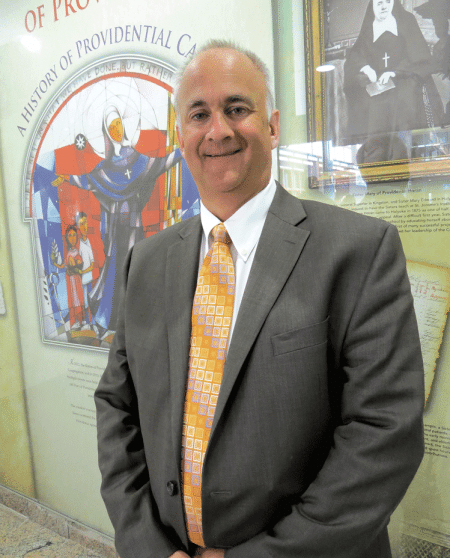
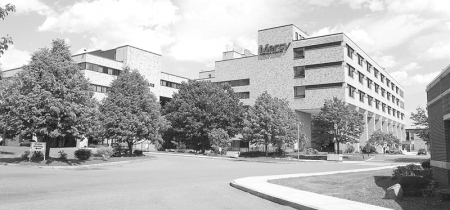
Dr. Scott Wolf takes the reins at Mercy Medical Center and the Sisters of Providence Health System at an exciting time in the system’s history, but also a challenging era in healthcare overall — one in which its leaders must emphasize cost efficiency, yet focus on the patient experience and outcomes more than ever before. The key, he said, is to maintain a holistic, ‘360-degree view’ of a rapidly changing industry.

Dr. Scott Wolf

Dr. Scott Wolf says a background in direct patient care gives a physician leader an important perspective that helps him or her impact the operational aspects of care.

Dr. Scott Wolf says he brings to his job what he refers to as a “360-degree view” of healthcare.

That’s a phrase Wolf, the recently named president of Mercy Medical Center and the Sisters of Providence Health System (SPHS), would use early and often as he talked about his background, which blends direct care to patients — he’s a board-certified internist — as well as time spent working on population-health initiatives, the insurance side of the equation, and several roles within the broad realm of hospital administration.

Which means, he noted, that he can see matters from several different perspectives, including those who provide the care, as well as those who pay for it.

“I think every physician should spend a week in a managed-care office, just to understand what goes on beyond their practice,” he said of his time spent with Aetna as senior medical director of Northeast Patient Management. “It really gives the perspective from the payer.”

That was just one of several efforts he made to not only break down his diverse background in healthcare, but also explain its inherent value.

Here’s another one.

“When you think of how healthcare is transforming, with the growing focus on the patient experience, on outcomes, and as we emerge from a pay-per-service, business-focused approach to healthcare, and we evolve into this population-health era, these are the conditions where a physician-leader can excel,” he said, while explaining why more people with direct patient-care experience are now in senior management positions in healthcare. “Having a background in direct patient care really affords a physician leader the opportunity to have that perspective and be able to impact the operational aspects of care.”

Indeed, that full-circle view he described is enormously helpful, he told BusinessWest, because these are extremely challenging times for all those involved in the delivery of healthcare — a time of immense competition, a broad host of financial challenges, and an intense focus on the patient experience.

“All of my experiences have helped me develop a very 360-degree view of healthcare,” he explained, “and the challenge we face on a daily basis of providing the highest-quality care in a very cost-effective manner, while all the while providing an extraordinary patient experience.”

Wolf has the additional challenge of leading a hospital, and a health system, guided by a mission to deliver care to those who most need it, regardless of the circumstances when it comes to profit and losses.

But that mission is what makes SPHS, part of the larger Trinity Health system, unique and such a pivotal force in the Western Mass. region, he said, adding that working in such an environment is quite satisfying.

“That’s what makes the job so rewarding,” he explained. “Everyone in this organization feels a responsibility to carry on the legacy of the Sisters of Providence. They live out our values — caring for the poor and the most needed — and that’s what really grounds us.”

For this issue, BusinessWest talked at length with Wolf, who succeeded Dan Moen in his twin roles in January, about his new role at Mercy and SPHS, the challenging environment the system faces, and how that 360-degree view should help him as he steers the ship through some fairly treacherous waters.

The Big Picture

Traveling back in time to his days in medical school, Wolf recalled a period when was “teetering” as he pondered which specific path to take with regard to a career in healthcare.

“I was already accepted into a fellowship in pulmonary critical care,” he explained. “But I was developing an affinity for primary care, as opposed to subspecialty medicine, and as I thought about my future, I didn’t want to be restricted to one discipline; I really felt that my passion was in helping and addressing the needs of the whole person.”

Such a philosophy is likely a refection of his background — he’s an osteopathic physician, Wolf noted, adding that, while he’s had several employers during his career and a wide array of titles on his business cards, this desire to tend to the whole person has been what amounts to a constant throughout.

Chronicling those career stops, Wolf started with his stint at Hartford Hospital, where he was chief medical resident, as director of Clinical Operations in Ambulatory Medicine. In that role, for which he wore a number of hats, his accomplishments include development of a strategic plan resulting in the implementation of a primary-care model of healthcare delivery, with outcomes demonstrating improved patient care, increased practice efficiency, and improved patient satisfaction.

And it was during this time that Wolf, and the industry in general, began what has been a gradual shift toward population health, or “pop health,” as he called it. He became involved with research involving populations with asthma and diabetes, and the in the course of doing so was introduced to individuals working for Pfizer Health Solutions Inc., a subsidiary of the pharmaceutical giant, and this eventually led to his first serious career shift.

Indeed, after earning a public health degree in population health, Pfizer presented him with an opportunity to take on a leadership role in the design and implementation of disease-management programs.

“I made a bold move to leave clinical medicine and my comfort zone of dealing with patients and jumped into corporate America,” he explained, adding that his four years at Pfizer provided learning experiences on a number of levels — not to mention travel around the world — through his work as medical director of state initiatives, such as the “Florida: A Healthy State” program, which, over its first four years, improved the health of more than 190,000 Medicaid beneficiaries based on behavioral, clinical, and utilization metrics, while generating savings and investment of $139 million.

By 2004, Wolf was ready to significantly reduce his frequent-flyer miles and make another bold move, this one to yet another branch of healthcare, if you will — the insurance industry.

That aforementioned role as regional medical director with Hartford-based Aetna involved mostly a focus on healthcare-utilization services across the Northeast.

As noted earlier, he experiences in this realm were eye-opening.

“It was an incredibly enlightening experience,” he told BusinessWest. “It gave me insight into the business side of healthcare, from understanding utilization to understanding the many challenges payers face in helping to provide appropriate levels of care but do so in a cost-effective environment.

“When you’re sitting on that [managed care] side, you’re exposed to an incredible amount of waste that is delivered in our system,” Wolf went on. “There’s an extraordinary amount of duplication and superfluous tests that are done.”

Wolf said he considered such insight into that side of the business to be a prerequisite of sorts for effective service in the higher ranks of hospital management, so, three years after arriving at Aetna, he decided to go back to the realm where he was most comfortable and most satisfied.

It took just one visit in early 2010, by his recollection, for him to determine that Mercy Medical Center was where he wanted to continue his career in healthcare in the role of chief medical officer.

“From the minute I walked in the door and experienced my first day visiting with key members of leadership at the time, I knew right away that this was the place for me,” he explained. “The commitment to the mission was palpable. The commitment to each other, and just the reverence that was expressed in the hallways among colleagues and patients, was such that I knew that this was the place I wanted to be.”

Healthy Perspective

As he talked about the changes that have come to the healthcare field in recent years, and especially what would have to be described as an even sharper focus on the patient experience, Wolf summoned a name Millennials would probably have to Google to fully appreciate.

“I go back to the days of Marcus Welby,” he said, referring to the television doctor of the ’70s, “when the patient did whatever they were told, how they were told, and they were never in a position to question. What the doctor said was doctrine.”

Those days are long gone, he told BusinessWest, adding that patients are much better-informed than they were years ago, they’re emboldened to ask questions and challenge what they’re told, and their demands and expectations are much greater because of something else they didn’t have in abundance four decades ago: choice.

Scott Wolf says he welcomes the challenge of leading a hospital and health system guided by a mission to deliver care to those who most need it, regardless of the financial equation.

Scott Wolf says he welcomes the challenge of leading a hospital and health system guided by a mission to deliver care to those who most need it, regardless of the financial equation.

“In this new age of consumerism, the patient is becoming much more cognizant and aware and educated about the care and services they are receiving,” he went on. “And they have much more choice about where they seek care and services. Information is now all over the Internet in a very transparent way, so that patients have the ability to shop, if you will. It’s not that we’ve never paid attention to the patient experience before, it’s just now elevated to the point where the expectations of the patients are much greater.”

This new age of consumerism is just one of many elements in that broad, three-legged challenge he described earlier — providing the highest-quality care in a cost-effective manner, while providing the highest levels of patient satisfaction.

And it’s another example of why that full-circle view of healthcare is so valuable today, he said. “With the focus on the patient experience, it’s hard to be able to understand what that experience is like unless you’ve been in a position to deliver that experience.”

But the patient experience is just part of the equation. That experience must be delivered effectively and in a cost-efficient manner, he noted, adding that the constant and ever-growing challenge is to meet what he called the “triple aim.”

“We’re constantly driven to reduce operational expenses,” he went on. “But at the same time, we’re also challenged to hopefully realize operational revenues so we can reinvest in resources; you need to have a stream so you can reinvest in technology, human resources, capital requirements to maintain facilities, and more. It’s a challenge to keep your costs at a minimum, deliver care as efficiently as possible, and be able to generate a margin so you can keep reinvesting.”

In this environment, hospitals and healthcare systems must be responsive and, in a word, somewhat nimble, he said, adding quickly that they must also have the necessary resources to do all of the above.

Being part of Trinity Health gives the SPHS and Mercy the needed size and flexibility to function efficiently and compete in this changing healthcare landscape, he said, adding that the system has undertaken a number of strategic initiatives in recent months to better position it for growth.

These include everything from an affiliation (now being finalized) with Smilow Cancer Hospital at Yale-New Haven Hospital to the acquisitions of Hampden County Physician Associates and RiverBend Medical Group, the latter of which he described as a “true game changer.”

“This is huge in terms of our strategy to pursue our strategy of true population health,” he explained. “The fact that we’ll be on one common electronic medical record will allow for the seamless transfer of information, and we will be able to assure a seamless transition of care from the inpatient arena to a primary-care provider in our community.

“And this truly allows us an enormous foundation of primary care,” he went on. “And primary is really the core of population health.”

Coming Full Circle

Looking ahead, Wolf said the challenges confronting Mercy, SPHS, and all healthcare providers are only going to grow in severity as the population ages, technology improves, and patients become increasingly demanding.

To succeed, providers must be flexible and able to adapt to changes quickly and effectively, he said, adding that the system is now better-positioned to carry out that multi-faceted assignment.

He said his job description comes down simply to giving all those within the system the means and the tools to carry out their mission. And, as he said many times, having a 360-degree view of healthcare certainly helps with that broad task.

George O’Brien can be reached at [email protected]

Health Care Sections

Taking Matters to Heart

By Kathleen Mitchell

Dr. Yufeng Zhang

Dr. Yufeng Zhang says it’s critical to see a doctor right away after unusual symptoms.

The statistics are chilling: Not only is cardiovascular disease the number-one killer of women in this country, every 80 seconds a woman dies from the disease or from a stroke.

Roughly 40 million women across the nation are affected, and although 90% have more than one of the major risk factors — which include high blood pressure, elevated serum cholesterol, smoking, obesity, diabetes, physical inactivity, and family history — up to 80% of heart disease is preventable.

Much has been done in recent years to raise awareness, including the American Heart Association’s Go Red for Women initiative, but Dr. Yufeng Zhang says that, although about 50% of Caucasian women know the risks for heart disease, only one-third of Hispanic and African-American women are armed with such knowledge. In addition, the incidence of diabetes is higher in Hispanic females, which raises their risk for cardiovascular disease or an event.

“Women have fewer heart attacks than men, but their mortality rate is higher,” said Zhang, a cardiologist from Pioneer Valley Cardiology in Springfield.

She added that age also increases risk, because younger women get some protection from estrogen, which declines after menopause.

But that doesn’t mean they’re immune. “We see 30-year-olds in our office with heart disease,” she said.

Most studies on cardiovascular disease have been conducted on men, and the symptoms that occur when a woman is having a heart attack can be very different from what men experience.

For example, sudden exhaustion with no known cause and shortness of breath are signs that a woman should go to the hospital. So is acute indigestion and sweating or shortness of breath with no other cause.

“If you have chest pain with acute stomach discomfort, it’s important to seek immediate medical care,” said family nurse practitioner Kristin O’Connor of Western Mass Physician Associates in Holyoke. “Women’s symptoms are often more vague than the ones men experience.”

Other, more-well-known indicators include chest pain that doesn’t disappear after 15 minutes, arm numbness or tingling, and jaw and back pain. But women often ignore what they are feeling and hope their discomfort will go away.

“So many women come here a few days after damage to their heart has been done, so don’t wait to go the hospital: be vigilant about unusual symptoms,” Zhang said, explaining that she recently saw an older woman whose only complaint was exhaustion when she was having a heart attack.

Stress is also a risk factor and can change the body’s hormone levels. “The heart can temporarily give up if a person is under a lot of stress,” she added.

Preventive measures are important, and O’Connor says women should do all they can to mitigate them.

“Although you can’t modify your family history, you can change excessive alcohol intake, your diet, your weight, and your stress level,” she said, adding it’s also important to know one’s family history. “You can also stop smoking and increase your activity if you lead a sedentary lifestyle.”

Kristin O’Connor

Kristin O’Connor says a woman can be thin, but still have clogged arteries.

Other risks include co-morbid conditions such as kidney disease, hypertension, and metabolic syndrome, which is a cluster of conditions that raise the chances of having heart disease. Many of the factors don’t have symptoms until damage has been done, but, according to the National Institute for Health, if women have three or more of the following criteria, they are at risk for the syndrome:

• A waist measurement of 35 inches or more or abdominal obesity. Excess fat in the stomach area puts women at greater risk for heart disease than excess fat in other parts of the body, such as the hips;

• A high triglyceride level or taking medicine to treat it;

• A low level of HDL or ‘good’ cholesterol, or taking medication to increase it, which also helps remove cholesterol from the arteries;

• High blood pressure or taking medicine to treat it. If pressure rises and stays high over time, it can damage the heart and lead to plaque buildup; and

• High fasting blood sugar, which may be an early sign of diabetes, or taking medicine to treat it.

“But metabolic syndrome is not a disease, so lifestyle modifications can change it,” O’Connor said.

She added that women need to engage in 30 minutes of exercise three to five times a week and increase the amount as their stamina and endurance build.

“You don’t need to run; you can walk, but you do need to increase your activity above and beyond what you do in a normal day,” she told BusinessWest.

For example, although some might assume that a woman who works as a waitress and is on her feet all day is getting her fair share of exercise, O’Connor says it’s not enough because the body adjusts to whatever a person does on a daily basis.

Knowledge Is Key

Managing heart disease is important, and women need to keep track of their cholesterol levels. HDL should be high, and LDL should be low, but even if those numbers fall within a normal range, a high triglyceride level puts women at risk for a cardiac event.

Triglycerides— fats from the food we eat that are carried in the bloodstream — are especially significant in women. In fact, an increase of only 88 points raises the risk that a woman will develop heart disease by 37%, while it increases the risk for men by only 14%. In the past, their importance was overshadowed by a focus on cholesterol, but research has shown that triglyceride levels over 150 mg/dL can increase the risk of heart disease, especially if HDL or ‘good’ cholesterol is less than 40 mg/dL.

Cardiovascular disease includes coronary artery disease, which occurs when there is a blockage in a heart vessel caused by high cholesterol, which allows plaque to build up.

But drugs called statins, which reduce cholesterol and stabilize plaque, can make a difference. Stents can be put into vessels that are blocked to enlarge them, but Zhang warns that people can develop new blockages if they don’t alter their diets and lifestyles.

Guidelines say a woman’s body-mass index (BMI) should not be more than 25, but Zhang said that number may be too high for some groups, such as Asian women.

O’Connor concurs, and says looking fit or being thin does not necessarily equate to heart health.

“It’s not just about the numbers on the scale; a woman may have a normal BMI or weigh 100 pounds, but still smoke like a chimney or drink too much,” she said, noting that it’s important for women to get screening tests during annual visits with their physicians. She added that some women are “skinny fat” — their bodies are thin, but they have clogged arteries from plaque that cannot be seen.

Indeed, what women choose to eat does make a decided difference. Zhang noted that, although many women with heart disease tell her they don’t eat much fat or red meat, new studies show carbohydrates and sugars are the biggest dietary culprit and can significantly increase the risk of dying from cardiovascular disease.

The Journal of the American Medical Association reports that, if 17% to 21% of the calories a person consumes each day come from sugar that does not occur naturally in foods such as fruit or milk, the risk of dying from coronary vascular disease rises by 38%.

“Sugar causes inflammation in cells, weight gain, and is linked to an increase in LDL or bad cholesterol, as well as triglycerides,” O’Connor said.

The World Health Organization advises limiting sugar intake to five teaspoons a day, but since the average adult in the U.S. consumes about 22 teaspoons a day, which is hidden in processed foods and beverages, it’s not an easy change to make.

“But sugar increases blood pressure, weight, and cholesterol, which all raise the risk of heart disease,” warned registered dietician and nutritionist Nancy Dell of Nancy Dell & Associates Nutrition Counseling, adding that it also causes aging and wrinkling of the skin.

Although it’s difficult to give up sugar cold turkey, Dell said it can be done by gradually retraining the taste buds. For example, she told a woman who loves cola to begin adding a small amount of lemon-flavored seltzer to each glass, then slowly increase the amount of seltzer in the beverage over time.

However, consuming too much dietary fat is still problematic, and it’s found in products women tend to enjoy, such as cheese, cream cheese, and coffee creamers, although black coffee and tea can reduce the risk of heart disease.

Trans fats are the worst offender, and a Harvard study found that women in the U.S. with the highest levels of trans fats in their blood had three times the risk of coronary heart disease as those with the lowest levels. And although the U.S. Food and Drug Administration has mandated that companies stop using trans fats in food products, the agency is allowing it to be phased out over time.  As a result, Dell said it still appears in many products, so it’s important to read labels.

“You are what you eat, and if you eat foods that are unhealthy, you will become unhealthy,” she said. “The food you consume becomes part of your body.”

Cautious Approach

Zhang said women have more risk factors than men for cardiovascular disease, so they need to make it a point to care for themselves.

Gender differences that men don’t face include radiation for breast cancer and pregnancy-related hypertension and gestational diabetes, which raise the likelihood that a woman could have a heart attack or heart disease; even though two of these conditions occur during pregnancy, the risk factor doesn’t disappear after a woman has given birth.

Ultimately, prevention is key, and O’Connor recommends that women start blood screenings at age 20 to measure inflammatory markers and their cholesterol.

“Even if the results are normal, the screenings should be repeated every two to three years for the rest of their lives,” she said.

All these factors play a role in maintaining a healthy heart.

“Most heart disease is preventable,” Zhang said, “and if it does occur, it is treatable if women take care of themselves, eat a healthy diet, exercise, see their doctors on a regular basis, and take the medications prescribed for them.”

Health Care Sections

See Change

Drs. David Momnie and Camille Guzek-Latka

Drs. David Momnie and Camille Guzek-Latka say scleral lenses are giving hope to a subset of patients who have tried other remedies unsuccessfully.

Since Bradley Sweet was diagnosed with keratotonus, he’s had to choose between poor vision and constant discomfort. Until now.

Keratoconus, also known as ectatic corneal dystrophy, is a progressive, debilitating eye disease in which degenerative thinning results in irregular bulging of the normally spherical cornea, the clear covering in front of the eye. The condition results in grossly distorted vision, causing glare similar to looking through a windshield while driving in a rainstorm without using wipers.

Eyeglasses don’t help with this particular condition, leaving contact lenses as the only non-surgical path to functional vision. Unfortunately, said Dr. David Momnie, Sweet’s eye doctor and owner of Chicopee Eyecare, soft contact lenses have trouble conforming to the irregular cornea, while rigid, gas-permeable lenses that rest on the cornea can cause discomfort to that area.

In Sweet’s case, his corneal lenses fit poorly and ‘rocked’ on the surface, causing moderate pain. “On top of that, there was chafing; he had a scar from it,” said Dr. Camille Guzek-Latka, who has worked with Momnie since 1990.

But the team at Chicopee Eyecare was able to offer something different from most optometrists — scleral lenses, which contact the sclera, or the white part of the eye, and vault the entire cornea. If they fit properly, they offer both improved vision and comfort, Momnie told BusinessWest. For Sweet, they worked — and the rubbing and chafing was a thing of the past.

“No one else around here is fitting these,” Momnie said, adding that he knows of optometrists in Lowell and Boston who fit them.

Another patient came to the practice with similar issues. In 1994, she had undergone radial keratotomy, a procedure that involves making incisions in the cornea, and one that is mostly out of favor in the vision world. In her case, the procedure didn’t heal properly, and she ended up with distorted corneas, which causes blurred vision.

“We tried all kinds of things on her,” said Momnie, including soft lenses, corneal lenses, and hybrid lenses, which are hard in the middle but have a soft edge.

“We never got a good outcome with any of those,” Guzek-Latka said. “She was motivated, too — she would always say, ‘what do you have? What do you have?’”

When he decided to start fitting scleral lenses last year, Momnie called her up. “She’s the first one who came to mind. I said, ‘would you be interested in coming down sometime?’ She said, ‘I’ll be there in 10 minutes.’”

The fact that she finally found relief is immensely gratifying to Momnie and his team. Keratoconus affects somewhere between one in 500 and one in 2,000 people, and for those suffering with it, it can be debilitating.

“They can’t function; a lot of them can’t drive, can’t get licenses, can’t work,” Guzek-Latka said. “I’ve had people crying because they were so happy once they can see. That’s why we do it. To give someone their sight back is the best feeling in the world. People are so appreciative.”

Forward Looking

Chicopee Eyecare has a long history in the region. In 1974, Momnie took the reins of the practice from his father, Dr. Paul Momnie, who opened the office in 1950. After Guzek-Latka came on board in 1990, Dr. Julianne Rapalus, a part-time associate, joined soon after, and the three have been working together to solve vision issues ever since.

Bradley Sweet

Scleral lenses gave Bradley Sweet the ability to see without constant discomfort.

Specialty contact lenses have long been among the practice’s niches, Momnie said. Until about 10 years ago, his team fit infants as young as eight weeks old with special contact lenses after they underwent cataract surgery. Fortunately, today, children born with congenital cataracts are now able to undergo intraocular lens-implantation surgery, eliminating the need for such specialty contacts.

Scleral lenses are a continuation of that mission to provide widely unavailable solutions for specialty eye issues — in this case, keratoconus.

Glasses can’t help because the lenses are too far away from the surface of the cornea to create the smooth, refractive surface necessary to translate the image clearly to the back of the eye and therefore to the brain. And primitive scleral contact lenses were made of low-breathability materials (the same as in Plexiglas, actually), resulting in severe swelling of the cornea.

However, today’s scleral lenses are manufactured with highly oxygen-permeable materials and are a viable treatment for irregular, diseased, or severely dry corneas, Momnie said. “These lenses require an exact alignment as they rest entirely on the damaged cornea. Fortunately, for some people, newer designs and materials have made scleral contact lenses more compatible with the eye and more comfortable to wear.”

Despite these advances, he added, the eye-care community has been slow to embrace these lenses, probably because they require an entirely new fitting philosophy, Momnie noted. “The lenses must be aligned with the exact amount of clearance to achieve adequate comfort and oxygen transmission to the cornea.”

He’s not surprised their use isn’t widespread. “They’re very time-consuming to fit and require a large investment in fitting sets. However, the more we looked into the advances in scleral-lens technology in the last few years, the more we realized this was a service that we needed to offer.”

The only other therapeutic option for improving vision in keratoconus patients is called penetrating keratoplasty, also known as a corneal graft or corneal transplant.

“In some cases, the eyes are too distorted. If it doesn’t work, sometimes the next step is corneal grafts, but these can have inherent problems too,” Guzek-Latka said. Because of the inherent risks and high cost of surgery, this option is typically reserved only for patients who cannot receive treatment from contact lenses.

Also, “while many transplants are successful,” Momnie said, “the eye is permanently weakened, and often a complex contact-lens fitting is still required to restore vision.”

Progressive View

Keratoconus isn’t the only condition that can benefit from scleral lenses. Others include corneal scarring or irregularity due to trauma or prior surgery, as in the case of the patient with a past radial keratotomy; severe ocular surface disease associated with surface defects like erosions and ulcers; and a number of other conditions, including severe dry eye, radiation injury, chemical or thermal injury, or certain congenital disorders.

In the case of keratoconus especially, Momnie said, there are few options beyond scleral lenses.

“Very often, for keratoconus, we are the last stop before the operating table,” he told BusinessWest, noting that some patients’ corneas are too damaged to avoid surgery. “But if we can keep them off the operating table and fit them with one of these, they’re in good shape.”

Only a handful of laboratories in the country manufacture scleral contact lenses, he noted. Often, the fitting requires two or three attempts before a proper fit is achieved. Advanced, computerized instruments like a topographer and an optical coherent tomographer — which maps the corneal irregularity much like a landscape topographic map, but much more precisely — are used to improve the chances of success.

When a patient does find success with scleral lenses and avoids surgery, which is most of the time, it can be life-changing, Guzek-Latka said.

“To be able to get someone to see, these younger guys trying to raise a family … if you can do that for them, that’s the best feeling in the world for me,” she added. “Anybody can give you a pair of glasses, and we love doing that for people. But when you take someone who can’t see, can’t function, and get them back to work and a normal life, when they look at you and say, ‘I can see, I can see,’ that’s what I love.

“We help more than we can’t, and they’re often pretty desperate by the time they see us; they’ve tried everything,” she went on. “So if we get someone like that seeing and doing their thing, that’s priceless. It’s very rewarding.”

Joseph Bednar can be reached at [email protected]

Construction Sections

Work in Progress

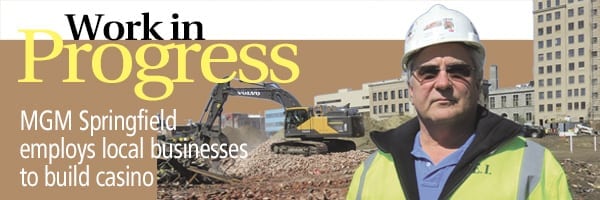
American Environmental’s Tom MacQueen

American Environmental’s Tom MacQueen says employees of construction-related companies appreciate having steady work close to home.

With construction on the MGM Springfield casino underway, plenty of local businesses — 40 to 50 over the next six to nine months — will have worked on the project in its first phase. But that’s just the beginning, say city and regional business leaders, who say MGM has forged a number of strategic partnerships to ensure that even more area companies — those in construction, but also providers of myriad other services — benefit from this $900 million effort.

Construction is moving forward on the 14.5-acre MGM Springfield site between Union and State streets and Columbus Avenue and Main Street.

About 70% of the footprint for the garage, casino, hotel, and outdoor space has been cleared, and about 45 local and non-regional companies have been employed during the process.

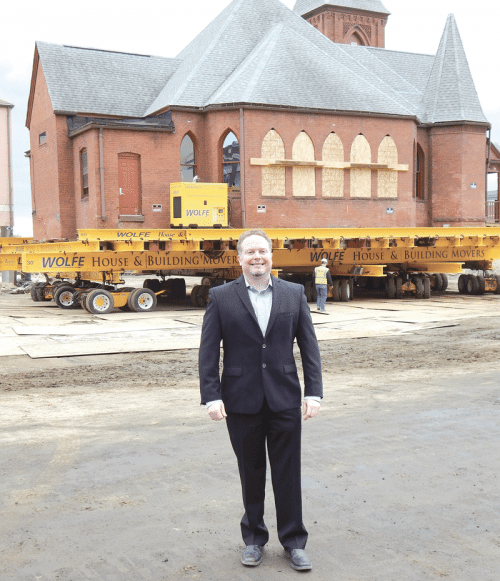
Work to compact the ground and get it ready for the garage, which will be the first structure built, is taking place now. Demolition is also still occurring in the area where the casino and hotel will be built, and on April 19 the First Spiritualist Church was moved 600 feet from its former home on 33-37 Bliss St. in preparation for placing it on a new foundation.

Brian Packer, MGM’s vice president of construction, told BusinessWest that one building and the rear portion of the State Armory still need to be knocked down. In addition, the rear of two structures, 73 State St. and the Union Chandler Hotel, whose historic front facades will be preserved, also still need to be demolished once the facades are secured and braced.

“We are encouraged by the tremendous progress MGM Springfield has made over the last several months. As we begin the next phase of construction, our outreach efforts will focus on electrical, mechanical, and drywall,” he said. “We anticipate announcing dates for information sessions soon for union companies interested in these jobs. MGM Springfield continues to support the involvement of local businesses — and minority-, woman-, and veteran-owned businesses — and we encourage these companies to participate in the process.”

Eric Nelson, vice president and project executive for Tishman Construction Corp., the general contractor overseeing the MGM build, said a concerted effort has been made to hire as many local subcontractors as possible in keeping with the project labor agreement, and they will continue to hire firms over the next 12 months.

“A significant amount of the work has gone to firms in Springfield and the surrounding communities,” he said.

Local businesses benefiting from the trickle-down effect include American Environmental Inc., a minority-owned Holyoke business which did a significant amount of abatement and some demolition; Ultimate Abatement, a woman-owned firm in Springfield, which received a large contract to do abatement on the former YWCA building; Gagliarducci Construction Inc., which handled site work; and New England Blue Print Paper in Springfield, which has contributed printing and copying services.

Within the next six to nine months, Packer said, 40 to 50 local companies will have worked on the project, and the majority are in Springfield.

Gerry Gagliarducci, owner of Gagliarducci Construction Inc., said he has had a crew on site since last year. The company has done exploratory work for underground utilities, screened excavated materials for reuse on the site, and, most recently, conducted preparations needed to move the church.

“We’ve enjoyed our relationship with MGM and Tishman Construction. This project is a big boost to the local economy and carries down to all areas of business, including fuel for vehicles, lunches, and major expenditures,” he noted, adding that workers with good-paying jobs may buy new automobiles or make other major purchases.

Work for local firms has come about in part because MGM has been reaching out to the business community for several years to initiate strategic partnerships and discussions. They also participate in events such as the annual Western Mass. Business Expo, staged by BusinessWest, and have held informational sessions for contractors, which will continue before substantial work comes up for bid.

Brian Packer

Brian Packer, pictured in front of the First Spiritualist Church during its 600-foot relocation, says MGM expects to reach out soon to local firms for electrical, mechanical, drywall, and other types of work.

Local providers have also benefited. They include Caring Health in Springfield, which won the bid for the drug-testing portion of the contract and has tested every construction employee on the site, as well as Arrow Security Co. Inc., which has provided security services for the property since the construction began.

“The project has definitely been beneficial to us,” said Arrow CEO John DeBarge. “Prior to the recession, 10% of our business was new construction. It went to 0%, and MGM is the first substantial project we’ve obtained, which helps our business and our employees. We’ve hired a number of new employees who are Springfield residents.”

At this point, the abatement and demolition is almost complete, site work is starting, and construction of the framework is expected to begin in the fall.

Outreach Efforts

Jeffrey Ciuffreda, president of the Springfield Regional Chamber, said his organization has an excellent relationship with MGM, and is working closely with the company to make sure local businesses benefit not only during the building process, but once the casino is operational.

He noted that MGM’s agreement with the city of Springfield includes spending $50 million annually on local goods and services after it opens, but said the word ‘local’ is relative, and includes Hampden, Hampshire, Franklin, and Berkshire counties.

So far, MGM has carried out its end of the contract and joined with the Springfield Regional Chamber to host two supplier and vendor fairs attended by its former vice president of global procurement, who came from Las Vegas to highlight opportunities for local businesses and provide strategies and insights for doing business with the casino. A vendor fair was also staged in Holyoke in conjunction with the Greater Holyoke Chamber of Commerce.

Businesses doing construction work have to be unionized, but suppliers and service providers do not when the project opens. However, they do have to be registered with the Mass. Gaming Commission.


Click HERE to download a chart of the region’s General Contractors


Companies hired so far tout the benefits of the project to the regional economy. They include American Environmental Inc., which has done a significant amount of work on the project. It won the first abatement contract, has been working for MGM since last March, and since that time has been awarded a half-dozen additional abatement contracts and an equal number of structural take-down contracts that have included demolishing the former YWCA on Howard Street, which dated back to the 1900s and most recently housed the Western Massachusetts Alcohol Treatment Center; the former St. Joseph Rectory on Howard Street; and the Springfield Rescue Mission on Bliss Street, which relocated to the former Orr Cadillac building on Mill Street, which the casino resort provided in exchange for the mission’s former property.

“It’s been a wonderful foundation project for the entire calendar year,” said Tom MacQueen, American Environmental’s general manager, adding that area employees appreciate having steady work close to home and MGM has done a great job identifying qualified, local contractors.

In addition, American Environmental has been introduced to new contractors on the site and made arrangements to work with them in the future, which is an extra benefit of working on the project.

T&M Equipment Corp. in Springfield is another local company benefiting from the ripple effect. The union-affiliated contractor was hired to do excavation work for the garage and hotel and has been on site for about a month.

“This is great for local companies, and we are excited to work with MGM and be part of history in Springfield,” said Project Manager Taylor Wright. “This site is really large and will not only bring more work to area companies, but will allow more people to be employed from local unions.”

MGM is working to increase union construction workforce opportunities, and has convened a Community Partners Network, which has grown from nine to 21 members. The network holds biweekly meetings to identify ways to recruit diverse populations that meet union requirements and are ready to join a union or a union joint apprenticeship and training committee, and also recruit people who may not meet union requirements and need supportive services and soft-skills training.

MGM has also met with a number of trade unions to share construction timelines, potential partnerships, and other issues pertinent to hiring. They include the Carpenters Union #108; the Painters & Allied Traders Council #35; Ironworkers Local #7; and a bevy of other groups. In addition, a construction diversity task force has been formed.

Outreach continues, and MGM Springfield and Tishman are exploring the possibility of developing an ongoing partnership with Putnam Vocational Academy students interested in joining unions and working on the Springfield job site.

The Springfield Regional Chamber created a list of members for MGM that could do construction-related work, and goals have been established by the Mass. Gaming Commission for doing business with certified minority-, woman-, and veteran-owned companies.

Ciuffreda has also told MGM about local companies that manufacture windows and other supplies that will be needed during construction, and said officials have expressed real interest in them.

900 million project

With the $900 million project only in its early stages, MGM expects to involve many more local workers.

“The door was open early on, and although we can’t offer our members any guarantees, as the construction unfolds we will make sure that MGM’s list continues to be updated,” he told BusinessWest, adding that MGM has divided chamber members into categories and given the list to contractors, who are encouraged to use local suppliers.

“We’ve told our members that MGM is a world-class organization and is big on quality, quantity, and cost,” Ciuffreda noted, adding that some local firms may be too small to be competitive in terms of pricing or unable to produce the large number of items needed.

However, the chamber has filed a grant request with the Gaming Commission that would allow it to provide technical assistance to businesses. Funds will be targeted toward minority-, woman-, and veteran-owned firms that wish to do business with the casino.

MGM’s future needs will be seemingly endless, and goods and services needed will range from security to special hardware, signage, exterminators, alcoholic beverages — the casino has already agreed to work with local craft-beer producers — to food, which Ciuffreda said could be supplied by farmers in the Pioneer Valley. Other non-gaming vendors will include linen suppliers, garbage handlers, and limousine service companies. However, the majority of those firms won’t be hired for more than a year from now, when advertisements and meetings will provide interested businesses with the information they need.

“We are on track for the September 2018 opening and are excited to share in the economic growth,” said Seth Stratton, vice president and general counsel for MGM Springfield. “The silver lining is that there is still plenty of time for businesses to ramp up or start with us, and as we get closer to the opening, we will step up our own processes and procedures to formally do outreach with the business community so we can spend the amount of money we have agreed to in our contract.”

Keeping Pace

Ciuffreda said MGM will do well because it is a behemoth with an established history, but its future success will be measured by the impact it has on local companies. At this point, MGM is doing everything it promised, he noted, but the chamber will continue its quest to make sure its members benefit from the spinoff.

For example, the chamber has a 100-page document listing items that MGM Detroit purchases, and Ciuffreda intends to sit down with officials and find out what is procured from national companies and what could be supplied locally to fulfill the $50 million annual agreement as things move forward.

“We won’t leave any rocks unturned,” he told BusinessWest. “The trickle-down effect is not only going to happen, it’s happening right now and will continue to grow.”

Construction Sections

Fertile Environment

GreenUrban-519278869Companies involved in U.S. construction plan on intensifying their involvement in green building over the next three years, according to the new World Green Building Trends Study from Dodge Data & Analytics, conducted with support from United Technologies Corp. and its UTC Climate, Controls & Security business. The U.S. is also one of the global leaders in the percentage of firms expecting to construct new green institutional projects and green retrofits of existing buildings.

The global study, which received additional support from Saint-Gobain, the U.S. Green Building Council, and the Regenerative Network, positions the U.S. as a strong participant in the global green movement. Responses from more than 1,000 building professionals from 60 countries place the U.S. green industry in context. The study also provides specific comparisons with 12 other countries from which a sufficient response was gained to allow for statistical analysis: Australia, Brazil, China, Colombia, Germany, India, Mexico, Poland, Saudi Arabia, Singapore, South Africa, and the United Kingdom.

According to the report, U.S. construction should see an increase in the share of green work in the next few years, largely as a result of companies intensifying their involvement in the green-building industry. An increasing percentage of respondents projected that more than 60% of their projects would be green projects — from 24% of respondents in 2015 to 39% in 2018. Respondents projecting that fewer than 15% of their projects would be certified green plummeted from 41% in 2015 to 27% by 2018.

Worldwide Trend

While this increased share of green building is impressive, it is significantly less than many developing countries included in the survey. For example, Brazil expects six-fold growth (from 6% to 36%) in the percentage of companies conducting a majority of their projects green, five-fold growth is expected in China (from 5% to 28%), and fourfold growth is expected in Saudi Arabia (from 8% to 32%).

“The strong U.S. industry for green-building projects is clearly an opportunity for U.S. firms, but so is the rapid rise of green in many of the developing countries,” said Stephen Jones, senior director of Industry Insights, Dodge Data & Analytics. “Expertise from experienced green designers, builders, and manufacturers from the U.S. is likely to be essential to support the aggressive green-building expectations revealed by the study respondents.”

In the U.S., the highest percentage of respondents report that they expect to work on new green institutional projects (such as schools, hospitals, and public buildings), green retrofits of existing buildings, and new green commercial construction (such as office and retail buildings) in the next three years. When compared with global averages, it becomes clear that the U.S. is a leader in new green institutional construction and green retrofits of existing buildings. For example:
• 46% of U.S. respondents expect to work on new green institutional buildings, compared to 38% globally; and

• 43% of U.S. respondents plan to work on green retrofits of existing buildings, again well above the global average of 37%.

The U.S. is also distinguished from the global findings in terms of the importance it places on reducing energy consumption as an environmental reason for building green. Over three-quarters (76%) of U.S. respondents consider this important, nearly double the percentage of the next most important environmental factor, which is reducing water consumption. While the other 12 countries in the study prioritize the reduction of energy consumption, only Germany, Poland, and Singapore do so to the same extent.

“The survey shows that global green building activity continues to double every three years,” said United Technologies Chief Sustainability Officer John Mandyck. “More people recognize the economic and productivity value that green buildings bring to property owners and tenants, along with the energy and water benefits to the environment, which is driving the green-building industry’s growth. It’s a win-win for people, planet, and the economy.”

Cost and Value

The study demonstrates the benefits of building green, with median operating cost decreases for green buildings of 9% expected in just one year globally. Building owners also report seeing a median increase of 7% in the value of their green buildings compared to traditional buildings, an increase that is consistent between newly built green buildings and those that are renovated green. These business benefits are a critical driver for the growth of green building anticipated globally.

The U.S. is also notable for having the lowest percentage of respondents who report that their company uses metrics to track green-building performance. Only 57% of U.S. respondents report using metrics, compared to a 75% average globally. This may be linked to the fact that the U.S. is also the country with the highest level of concern reported about higher perceived first costs for green building, notably more than the percentage who consider this an important challenge to building green in other developed countries with active construction markets, like Germany and the U.K. u

Dodge Data & Analytics, which prepared this article, is a leading provider of data, analytics, news, and intelligence serving the North American construction industry.

Features

A Y’s Guy

Scott Berg

Scott Berg

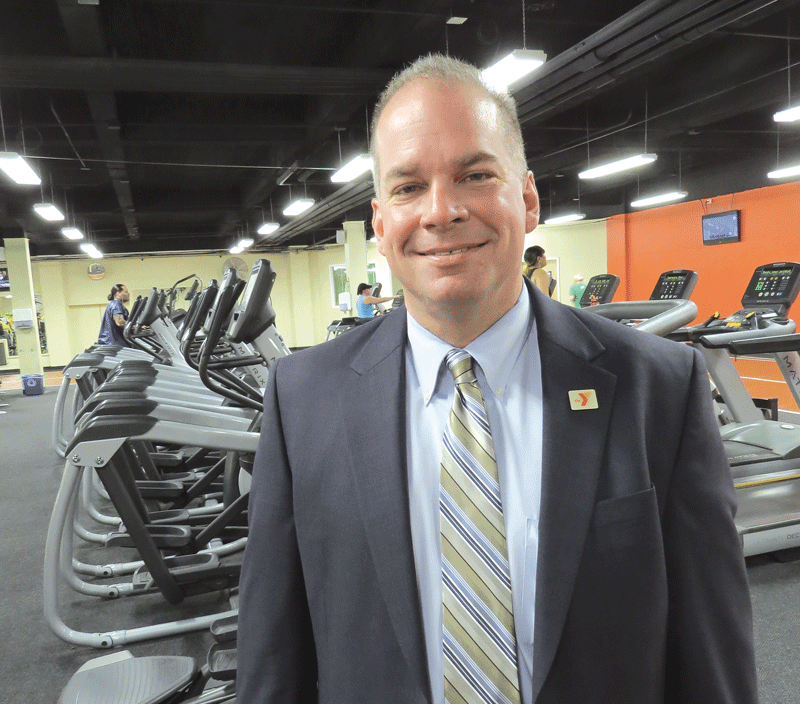
Scott Berg has a long history with both the institution of the YMCA and the Greater Springfield Y, the second-oldest in the country. Thus, he has a firm understanding of the many challenges now facing the local agency and the need for strong partnerships, or connections, as he called them, to bring about a more solid financial footing.

Scott Berg was certainly no stranger to the Greater Springfield YMCA when he walked through the doors of its Chestnut Street facility that day in January, his first as president and CEO.

In fact, one could make a strong argument that no one knew this organization, launched nearly a full decade before the first shots were fired during the Civil War — not to mention the myriad challenges it was now facing — better than he did.

Indeed, he first started working at the facility more than 20 years ago, when then-director Steve Clay tapped him to be senior program director of the organization’s youth and camping services. He would go on to play the lead role in the development and chartering of the Scantic Valley branch of the Springfield Y in Wilbraham, and then direct all aspects of a $6.5 million capital campaign to build a home for that branch and renovate other YMCA facilities.

And after he left the Y’s employ to pursue other career opportunities, including key development roles at both Springfield College and Western New England University, he remained involved with the organization, especially as a long-time board member.

So he certainly knew his way around the Chestnut Street offices when he arrived in January as successor to Kirk Smith — especially the route to a small conference room of sorts that he fashioned out of an old administrative office that, decades earlier, had served as what amounted to the front desk when the Y operated a hotel-like operation on its upper floors.

“I knew we needed a better place to have meetings — a quiet place where we could brainstorm,” said Berg of his small-scale renovation project.

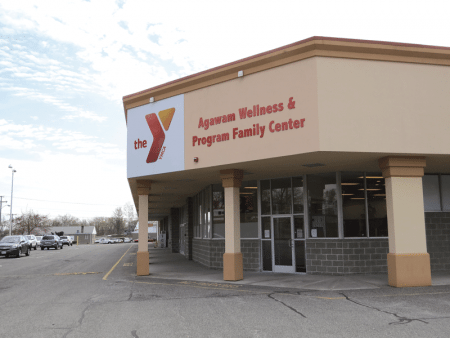
And there has been quite a bit of that brainstorming over his proverbial first 100 or so days in office. Meetings in that new conference room have involved everything from the difficult but necessary decision to shut down the branch the Y opened in Agawam only 18 months ago due to membership levels far below those projected, to a desperately needed refinancing of the Y’s debt — a deal negotiated with a half-dozen area financial institutions led by Monson Savings Bank, to the ongoing saga involving the Dunbar Community Center.

“I came into this with my eyes wide open,” Berg said of his career decision, noting that these are some of the more challenging times this organization has seen in its long history.

They are in many ways similar to the perilous financial straits the Y maneuvered through during his time in the mid-’90s. What enabled the organization to navigate that whitewater, he explained, was a combination of imagination, determination, and the ability to both forge new partnerships with the broad community the Y serves and connect people with the institution. And he expects that same formula will propel the Springfield institution to better, far more solid footing.

Chestnut Street

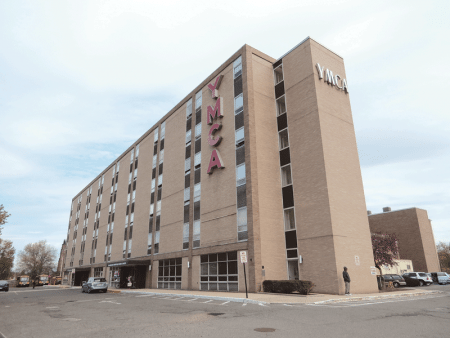
When Scott Berg talks about a “new YMCA,” he’s not necessarily talking about replacing the building on Chestnut Street, opened in 1968.

“What I want to do with the team is address the most pressing challenges — financially and programmatically — that face us now,” he explained. “We have to look at the problems that will be confronting us over the next two or three years, but at the same time determine where we want to see ourselves past that three-year mark moving forward.”

Looking ahead, he noted that, as the Y prepares to mark its 165th birthday, the facility on Chestnut Street — part of a huge urban-renewal effort in Springfield’s North End — will approach the half-century mark itself, a milestone that has already prompted considerable talk of a ‘new Y.’

Berg uses that term himself, but not necessarily in the context of a replacement for the aging Chestnut Street facilities — a step he acknowledges is still many years away. Instead, he uses it to refer to the organization as a whole and if and how it should be reshaped to better serve constituencies ranging from its members to the larger community.

“The YMCA is not a building,” he insisted. “The Y is a mission, and we need to go where the people are. The Y can go anywhere and be anywhere.”

For this issue, BusinessWest sat down with Berg in that new meeting room he created to talk about the organization, its challenges, its future, and how he considers himself fully equipped to lead the organization to better times.

A Good Fit

As he walked through the Y after his interview with BusinessWest on his way to the fitness center for some pictures, Berg stopped to talk with several individuals.

They ranged from an obviously pleased teen sitting in the front lobby who had just that morning secured his driver’s license, to an elderly gentleman in the locker room who has been coming to the Chestnut Street facility since the day it opened in 1968, to a Springfield-based lawyer walking some laps on the fitness center’s track, something he’s been doing for decades.

If he seemed totally at ease in those surroundings and with such people, it was with good reason. Indeed, Berg said he’s been around and, in many ways, part of YMCAs his whole life, dating back to when his mother was a volunteer at the original Agawam branch back in the ’70s.

He took part in a number of its programs, including what was known then as Y Indian Guides with his father.

For Berg, the Y shifted in nature — from being something he participated in to something he aspired to do for his career — when he worked as a staffer at Camp Sloper in Southington, Conn. while in high school and college.

As things turned out, he was far from the only future YMCA director working or staying at the camp during his tenure; there were several, in fact, and they remain in touch today, said Berg, talking about everything from their respective families to common challenges facing their Ys.

Berg started his career with the Y organization in 1991, a year after earning a degree in English at Boston College, as youth and family director of the Waltham Family Branch of the YMCA of Greater Boston.

In 1994, Clay, whom Berg had met while both were working for Ys in the eastern part of the state, offered him a somewhat similar opportunity in Springfield, as youth and camping services program director, and he accepted it.

“It was really good timing,” he recalled. “He was looking for a youth and camping director, and I was a youth and family director. At the time, we were just starting a family … it was a great opportunity.”

Over the next decade, he would hold several titles with the YMCA of Greater Springfield, but was most noted for his work with the creation of the Scantic Valley branch — a name that stems from the river that runs through several communities in that area.

It all started with Clay deciding to act upon multiple requests he’d received for a teen center in Wilbraham, an assignment he gave to Berg. Over time, Y leaders saw a need for additional YMCA programming, he noted, adding that this led to the eventual creation of a new Y branch that provided services through partnerships with, and facilities at, Wilbraham Monson Academy, Healthtrax, area schools, and other sites.

Growing participation in such programs led to a feasibility study that concluded there was ample demand for a full Y branch in the Wilbraham area, said Berg, who led the efforts to raise money to build the current facility in Post Office Park on Route 20.

Berg ran that Y for a few years before leaving for different opportunities. After a brief stint with Action Fire Restoration in Chicopee, which he served as general manager, Berg would shift his career path and segue into higher education and, more specifically, development efforts.

At Western New England University, he served as director of Major Gifts & Planned Giving and, among others, took a lead role in the capital campaign to expand the institution’s law school. And at Springfield College, he was assistant vice president for Development, managing a team that raised an a average of $4.5 million each of the five years he was in that role.

When Clay retired from the Y, Berg said he thought briefly about seeking the president’s role, but quickly determined that the job, which can be something approaching a seven-day-a-week proposition — “it’s a lifestyle more than it is a job,” he noted —  was not the right opportunity at that time, given the young age of his four children.

But Berg, who had been serving on the Y’s board since 2007, stepped down from that panel in 2011 to seek the director’s position when James Morton left to lead the YMCA of Greater Hartford. He did not prevail in that search, but again put out his name in for consideration last fall, because of what he called “devotion to the YMCA” — a phrase he used to reference not only the Greater Springfield operation — the second-oldest in the country — but the institution as a whole.

“I’m a Y person by nature and by birth — this has always been near and dear to my heart,” he said, while noting that the phrase ‘dream job’ doesn’t exactly fit the description for his new position. Instead, he chose to say it’s the right job at this time in his life — and a stern challenge he’s willing to accept.

The Shape of Things to Come

Leaning up against one wall in the new meeting room Berg created is a board honoring the groups and individuals that donated to the so-called Growing Together campaign he led to not only build the Scantic Valley YMCA, but also purchase and renovate Blessed Sacrament Church into the North End Youth Center.

He recalls this as a time when the community rallied behind the Y — one of countless times it has done so during its history — and help propel it to new heights. And also as a tremendous learning experience for him on a number of levels.

“The Y gave me the gift of being able to be a capital-campaign director, and I learned it all, soup to nuts,” he explained, adding that his experiences conceptualizing and then building the new Y branch helped him in those roles at Springfield College and WNEU. “That’s where I cut my teeth on serious fund-raising; we had hundreds of volunteers, there were timelines, expectations … it was really interesting because you have some great conversations, and you never really know where people’s interests are. That was an unbelievable experience.”

He had some others with the two colleges, he said, adding that what he learned from all that work is what he considers the most important lesson concerning development.

“It’s not about asking for money,” he told BusinessWest. “It’s about developing relationships and seeing if people have an interest in supporting the cause; it becomes super effective if you can connect people to your mission. And if you believe in what you’re doing, it’s much easier to get that support.”

Believing in what he’s doing certainly won’t be an issue for Berg in his new role, given his passion for the Y organization and the Greater Springfield institution. And he hopes to use that passion — which permeates the agency, he said — to connect more people to its broad-based and ever-evolving mission.

“We have a great story to tell in terms of the number of young people we serve, the number of teens we serve, and the people we assist who have low and moderate incomes; last year, we gave out more than $750,000 in financial aid,” he explained. “We need to tell that story better and make sure we’re in the businesses that we should be in.”

Moving forward, one of those businesses should include a strong focus on wellness and prevention, he went on, adding that this is one of the recognized needs within the community as the population ages, and the direction in which healthcare, in general, is moving.

“Moving forward, there’s more and more need at YMCAs across the country, including ours, to look at the health-and-wellness component as people age,” Berg explained. “How can we be part of their family and part of their lifestyle and partner with their medical providers and their families to make sure they get the care they need?”

Seeking Fiscal Fitness

More and stronger connections and partnerships will be needed in the months and years to come, he said, because this Y is facing some stern fiscal challenges and difficult decisions.

branch in Agawam

The fiscal problems facing the YMCA of Greater Springfield have prompted many difficult decisions, including the one to close the branch in Agawam, opened in 2014.

One of those decisions has already been made with the announced closing of the 10,000-square-foot Agawam branch at the end of May, closing the book on an operation that looked good on paper, but never lived up to expectations.

“The members there really love it, and they’re wonderful people,” he told BusinessWest. “We just didn’t have enough of them.”

But the Agawam branch’s failure to reach the break-even point is just one factor contributing to the difficult budget situation, he went on, adding that, as expenses have grown over the years, revenues have struggled to keep pace and, in general, have failed to do so.

Dunbar is an example. The Mason Square institution, which has been operating under the dark cloud of foreclosure for more than two years, turned over operations to the Y in 2011.

Those operations have been expensive, said Berg, who summoned the phrase “turning the corner” to describe them from the standpoint of breaking even. The city of Springfield recently threw a lifeline to Dunbar when it announced it would pursue purchasing of the facility, and Berg said the Y might emerge as the winner of a search for an entity to run the operation — hopefully in a more cost-effective fashion.

The mounting financial challenges have forced the organization to do what all businesses and nonprofits do when they reach such a point — take steps to bring the two sides of the ledger, revenues and expenses, into better balance.

Closing the Agawam branch was one step, Berg noted, while another was the refinancing of the Y’s accumulated debt. Several institutions have come together to assist the Y in this endeavor, he said, adding that it should help the $12 million operation with cash flow.

As for the future, and that ‘new Y’ he referenced, Berg said a replacement structure for the Chestnut Street is always something in the back of his mind, but something simply not realistic now or in the foreseeable future.

But, as he said, the Y is not a building, so a ‘new Y’ doesn’t mean a new structure.

“Once we get through our immediate challenges, we need to examine what the Y facility of the future looks like, or should look like,” he said, adding that this means everything from the facilities to the programming. “We need to anticipate what the needs and demands will be over the next 25 to 50 years and then look at how to meet them.”

View to the Future

Aside from providing convenient space for meetings, that renovated office at the Y also offers a great view of the side entrance to the facility, said Berg.

And that allows those conducting business to maintain a focus, figuratively but also quite literally, on what — and whom — they’re in business to serve.

“We can just look out there and see what we’re here for,” he said, adding that this vantage point should help the team at the Y not only weather the current storm but hone its mission to effectively meet changing societal needs in the years and decades to come.

“I look at the Y as a lifestyle — it’s not something you join, it’s something you live,” he said in conclusion, adding this is especially true for him, and this attitude fully explains why he’s now looking out the window every day.

George O’Brien can be reached at [email protected]

Banking and Financial Services Cover Story Sections

Dollars and Sense

Westfield Bank President and CEO Jim Hagan

Westfield Bank President and CEO Jim Hagan

Westfield Bank and Chicopee Savings Bank will come together in the first merger of locally based institutions in more than two decades. The $2.1 billion entity will have a solid foundation on both sides of the Connecticut River, said Westfield Bank President and CEO Jim Hagan, and the capital with which to undertake further territorial expansion.

He couldn’t pinpoint exactly when they started, but Westfield Bank President and CEO Jim Hagan said the talks he’s had with his counterpart at Chicopee Savings Bank, Bill Wagner — about this marketplace, the changes taking place in it, and a possible merger of their institutions — are not exactly a recent development.

Well, that’s true of those first few subjects of conversation, anyway.

“Bill and I had a number of discussions about this market, what was happening in it, bank consolidations, and the importance of size and scale in the industry,” said Hagan, who took the helm at Westfield in 2005, adding that these talks took a different tone and moved to a much higher level of intensity last fall.

That’s when both men were working together on what could be called the financial institutions’ component of the capital campaign to raise funds for the Sr. Caritas Cancer Center at Mercy Medical Center, and thus seeing much more of each other.

Summing up those discussions in general terms, Hagan said the two presidents agreed that there were many shortcomings — and, yes, risks — to remaining at their respective sizes (roughly $1.4 billion in assets at WB and $650,000 at CSB) given the many changes in the region’s banking community and the growing dominance of larger players.

He and Wagner eventually concluded that a merger of their banks not only made sense, but easily made the most sense of the many options that had presented themselves in recent years.

“We were both well-capitalized institutions, and we both felt strongly that we wanted to have what we considered to be a strong, independent bank headquartered in Western Massachusetts, one that would be locally owned and locally managed,” Hagan explained. “And, together, we felt we had a great opportunity to do just that.”

It took several more months to hammer out the details, but those discussions last fall certainly laid the groundwork for the announcement made early last month — that the two institutions would merge and thus become the second-largest locally managed bank in Hampden County, a $2.1 billion entity (to operate under the name Westfield Bank) with 21 locations in Western Mass. and Northern Conn.

As he elaborated on why this was the most sensible route for the banks, Hagan said this would be a merger of two local institutions with long histories in the region — and with footprints that featured hardly any overlap. (The only community where both banks have a branch is West Springfield, and those facilities are separated by several miles, not several blocks or even yards, as is often the case in a region almost always characterized by the term ‘overbanked.’)

These historical and geographical considerations will translate into fewer redundancies and therefore fewer reductions in workforce when the banks come together later this year, said Hagan, as well as less encroachment in this market by the larger regional banks that had shown interest in acquiring CSB.

Meanwhile, the two institutions have similar philosophies, nearly identical operating systems, and even a common marketing approach — one with the accent on a highly personalized brand of service, said Kevin O’Connor, senior vice president of Retail Banking, Retail Lending, and Marketing for Westfield Bank.

All of this should lead to a smooth transition and greater customer retention when the dust eventually settles, said Hagan, as well as a financial institution that will play a much more significant role in the local economy than the banks could individually.

For this issue and its focus on Banking & Financial Services, BusinessWest looks at this latest merger to reshape the local banking community and what the emerging $2.1 billion institution will bring to the proverbial table.

Points of Interest

As he returned to the subject of when and how this merger started to come together, Hagan said it was born from the knowledge — possessed by everyone conducting banking in this market — that size really does matter.

Elaborating, he said that size, or ‘scale,’ the other term used to convey the same points, amounts to far more than bragging rights or a significantly larger limit on commercial loans (although that certainly is an important factor, as will be discussed in a bit).

WestfieldBankLogoChicopeeSavingsLogoInstead, size is easily the most effective means with which to effectively cope with razor-thin margins and significantly deeper layers of regulation that resulted from the financial crisis — caused in good part by a lack of regulation of financial institutions — of nearly a decade ago.



“Size and scale creates efficiencies in terms of your operating costs,” he explained. “And having that 21-branch network creates efficiencies with products, services, and the delivery network.”

Elaborating, Hagan noted that, while there are few redundancies to result from this merger when it comes to physical locations, there will certainly be some redundancies — which can be reduced or eliminated — that involve operations and the staffing of same.

Meanwhile, the merger will enable the larger institution to spread the costs resulting from greater regulation over a wider footprint, he went on, adding that, in simple terms, the costs for the new, larger Westfield Bank will be significantly less than what the two current institutions are paying together at present.

This phenomenon goes a long way toward explaining much of the recent movement within the market, and why a number of brands have disappeared from the landscape.

Along with these mergers have come some growing pains during the process of transforming two banks into one, Hagan acknowledged, adding quickly that he expects this merger to go rather smoothly because the banks operate on different platforms of the same system and there will be few of what would be called ‘institutional changes.’

Kevin O’Connor

Kevin O’Connor says Westfield Bank and Chicopee Savings Bank have similar cultures and operating systems, which should make for a smooth transition.

“What we found is that the culture of Chicopee Savings Bank is very similar to the culture of Westfield Bank,” he explained. “So we expect that the integration of the systems, the people, and the philosophies will go very smoothly.”

But efficiencies constitute only one of the benefits of size, he went on, adding that the merger with CSB takes the Westfield Bank name to places it has never been (physically, anyway), starting with Chicopee, the second-largest city in Western Mass. and one with a huge business community.

Chicopee also has branches in Ludlow, South Hadley, and Ware, locations that will greatly increase Westfield Bank’s presence on the east side of the Connecticut River, which is limited (if that’s the right term) at present to locations in Springfield, East Longmeadow, and Enfield, Conn.

And while the bank has historically done business with residents and businesses in virtually all communities in Western Mass. and Northern Conn., including those on the east side of the river, having one’s name on buildings in more of those cities and towns is a tremendous benefit, Hagan explained.

“A greater percentage of the businesses we lend to — the machine shops, the universities, healthcare institutions — are on that [east] side of the river,” he explained. “And we think we can increase our loan portfolio, our deposits, and more based on the success we’ve already had with a limited presence in those communities.”

Taking Note

In practical terms, the merger will significantly increase the emerging bank’s lending capacity, said O’Connor, noting that the current limit at WB is $22 million, and for CSB it’s $16 million. The larger Westfield Bank will have a $35 million limit. This will enable it to write more loans and generate more deals without the need to collaborate with other institutions, he explained.

“There would less need to do participations with other banks,” he said of the higher limit. “And it broadens the view of what Westfield Bank can do for people in sectors like manufacturing, healthcare, and others that we do well in, even though we can do a lot now.”

Beyond this greater lending capacity, the merger will enable Westfield Bank to greatly accelerate that process of territorial expansion that has been ongoing for several years now, said Hagan.

Significant milestones include a move into downtown Springfield (Tower Square) in 2000, a move that has paid significant dividends, said Hagan, noting more than $65 million in deposits at that location, as well as the East Longmeadow branch, opened in 1997.

These steps were followed by penetration into the Northern Conn. market with branches in Granby, just a few miles from a location in Southwick, in 2013, and the one in Enfield, opened a year later.

Both moves were common-sense expansions of what is truly a network, he said, adding that both Connecticut branches, and especially the one in Enfield, have done extremely well despite the fact that they have the name of a small Western Mass. city over the door.

When this merger is completed, that name should resonate even more, said Hagan, who anticipates further territorial expansion in the years to come.

When asked where it might take place, he was understandably vague, but did offer some insight, hinting that the institution will likely look south to Connecticut, east toward Quabbin and perhaps Worcester County, and within the city of Springfield for potential opportunities. And the merger greatly increases the list of possibilities.

“With the combined capital we’d have, we’d be able to look at additional acquisitions in different marketplaces where we may have an interest in expanding,” he explained. “We like the Northern Connecticut marketplace, we would look at Central Mass., and I’d like to expand in Springfield; there are many possibilities.

“But first and foremost,” he went on, “we want to make sure this merger is successful.”

Bottom Line

As he talked about Chicopee, the pending loss of the community’s name from the institution that has had a huge presence in its downtown since 1854, and how well the new name would play in that proud community, Hagan acknowledged that all this will constitute a significant change that might take a while for some to digest and accept.

Then again, he told BusinessWest, the reaction he’s seen thus far in that city has been overwhelmingly — but not, in his mind, at least, surprisingly — positive.

“That’s because this is the first in-market merger in more than 25 years, and because we’re a local institution, and because of our reputation of being community leaders and community supporters,” he said by way of explaining his theory.  “It’s gone  very well.”

And he expects things to continue to go well, for all those reasons listed above, but mostly because of what they all verify — that this is the option that makes the most sense for both institutions.

George O’Brien can be reached at [email protected]


Community Spotlight Features

Community Spotlight

Kevin Kennedy

Kevin Kennedy says MGM’s casino is just one of the many positive stories unfolding in Springfield.

Springfield is undergoing a $2.7 billion transformation, and although that number — and the current spate of progress — is dominated by MGM’s $900 million casino, a plethora of other exciting projects are underway.

Chief Development Officer Kevin Kennedy said the city initiated a team effort four years ago with city officials and groups that include DevelopSpringfield, the Springfield Regional Chamber, the Business Improvement District (BID), and the Parking Authority, who convene on a regular basis to collaborate on projects and areas of focus that are proposed or underway.

Each group does its part, and an annual city report is designed to show the public the substantial investments being made.

They include the $88.5 million renovation of Union Station, which is 55% complete and slated to open at the end of the year.

“We all share the same vision,” said Jeffrery Ciuffreda, president of the Springfield Regional Chamber, adding that the chamber wrote numerous letters of support to help secure the funding to revitalize Union Station.

DevelopSpringfield has a number of projects taking place (more about that later), and a groundbreaking ceremony will be staged in the upcoming weeks for the new Innovation Center, which will serve as the cornerstone for the city’s newly designated Innovation District.

DevelopSpringfield President and CEO Jay Minkarah told BusinessWest the center will comprise about 18,000 square feet of space in two formerly vacant adjacent buildings at 270 and 276 Bridge St. and will become the new home of Valley Venture Mentors (VVM), which provides collaborative work space and services to help fledging businesses.

The center, which will be bordered downtown on the south by the MGM casino and on the north by Union Station, will include a café and rental space for young companies as they outgrow shared space at VVM.

The city partnered with DevelopSpringfield on the project, and the Commonwealth awarded a $2 million MassWorks grant to MassDevelopment to support development of the Innovation Center. The agency then sub-granted the funds to DevelopSpringfield. MassMutual also contributed $500,000 to the project, and generous contributions were received from the Beveridge Family Foundation and the Berkshire Bank Foundation.

In addition, the city will soon announce plans to redevelop and refurbish Stearns Square and Duryea Way, which connects to Union Station.

“We’ve developed a collective strategy and vision, and have had a great deal of good fortune,” Kennedy told BusinessWest, referring to winning the bid for the casino and securing funding for Union Station, which was accomplished with help from legislators. However, he and other key figures credit the city’s successful tornado recovery and rebuild efforts that began in the wake of the 2011 catastrophe with their recent success in obtaining funding for downtown projects.

And the plans continue to expand. “We would also like to create a dining district, and are actively working with the BID to create a loan program to encourage new restaurants,” Kennedy noted. “Our future revolves around culture, entertainment, innovation, and dining. MGM is an entertainment giant, and their offerings will be very attractive, but we need to couple them with innovation because that is where the economy is moving.”

Sizeable Investments

Successfully revitalized downtowns feature housing options as well as retail establishments, said Ciuffreda, and the chamber is excited about SilverBrick Lofts, a 200-unit complex with one- and two-bedroom apartments that are slowly being converted from subsidized housing into market-rate rentals. Renovations have been going on for about 18 months as leases expire, and many of the revamped units are already rented and feature exposed brick, reclaimed wood beams, arched windows, and high ceilings.

Union Station

The redevelopment of Union Station is being hailed as one of the keys to revitalization in Springfield’s downtown.

“They’re in an old mill that is actually three buildings in one, and runs from Worthington Street to Taylor Street; SilverBrick sits behind the new Innovation Center and is right across from the open tunnel that leads into Union Station,” Ciuffreda noted, adding that, in addition to housing, there are also a dozen retail spaces in the complex, mostly along Worthington and Main streets. One of them has been rented, and a new chocolate and coffee shop is expected to open there soon.

In addition, MGM’s contract includes establishing 54 new units of market-rate housing within a mile of the casino, and the (now-vacant) former Springfield School Department building on 195 State St. has been identified as a potential site.

“We’re starting to see the rebirth of the downtown with the Innovation District, the new market-rate housing, and Union Station opening in the fall,” Ciuffreda said. “The combination is resulting in a big change while MGM is being built.”

In addition, the Mass. Convention Center Authority has been working closely with the Springfield Parking Authority, and the Convention Center Authority will soon be issuing requests for proposals for a feasibility study to determine the future of the Civic Center Garage.

The Parking Authority has undertaken about $900,000 in structural repair work to the facility, but that patch is expected to be effective for only five years, so the study will show whether the garage should undergo more repairs or be replaced, given that MGM will build a garage to house 3,300 vehicles a few blocks away.

The city, Parking Authority, and Springfield Technical Community College also plan to conduct a study of the upper State Street area to determine the need and feasibility for developing a parking structure there to serve the growing needs of the neighborhood.

In addition, the city recently finished a $6 million reconstruction of Boston Road and has undertaken major work along the State Street corridor that serves as a major east-west connector with the downtown area.

Ciuffreda said real opportunity exists at Eastfield Mall on Boston Road, which has lost its anchor tenants in recent years, but continues to be a popular destination for area residents.

To serve their needs, the Pioneer Valley Transit Authority has a bus service that runs along the corridor. A recent study identified it as a prime route to introduce Bus Rapid Transit to the region, which would originate at Union Station and run to Eastfield Mall — a 7.1-mile corridor that’s one of the most heavily traveled bus routes in the PVTA system, with more than 5,000 riders a day.

Over the coming months, PVTA will host neighborhood and public forums to share information on the system and get input about the service, which would include faster service and fare collection, exclusive bus lanes, and stations as opposed to bus stops.

Work is also going on in other parts of the city. The intersection at Sumner and Harkness avenues was completely reconfigured within the last year, and reconstruction of North Main Street to the Chicopee line has taken place.

A ribbon cutting will be staged next month in Forest Park for the new Eco Center, which is part of the tornado rebuild; construction on the senior center at Blunt Park is about to begin; and work to rebuild the South End Community Center will commence this summer.

Kennedy added that financing is being lined up to redevelop the Indian Motorcycle building in Mason Square, which is partially occupied, and construction should start by the end of the year. In addition, the North End Citizens Council also received a $50,000 state grant to create a master plan for the area.

Preserving History

Minkarah said one of DevelopSpringfield’s exciting projects is the creation of the $1.8 million Lower Maple Business Park, which includes the renovation of the historic Ansel Phelps-Solymon Merrick House and the former Female Seminary on adjoining parcels along Maple Street.

Jay Minkarah

Jay Minkarah says DevelopSpringfield is creating a new business park on lower Maple Street.

The site also includes six commercial garages and a two-story carriage house with a double-bay garage that is ideal for a contractor or other business that needs attached indoor parking. In addition, there is plenty of space for parking on the grounds.

The $1.8 million renovation of the property is almost complete, and is within walking distance of downtown Main Street. A number of offices and suites have been thoughtfully designed, while other space will be outfitted to suit tenants’ needs, and space in the Merrick House at 83 Maple St. will become DevelopSpringfield’s permanent home.

The majority of funding for the project has been provided by the organization, which was founded in 2008 and initially composed of volunteers in the wake of the State Street redevelopment program. Its focus is extremely challenging projects — restoring blighted but highly visible buildings with cultural and historic value that have deteriorated to the point where it is cost-prohibitive for the city or developers to rehabilitate them.

“We’re seeking to meet multiple goals, which include stimulating revitalization and economic development by saving buildings that show decay, decline, and disinvestment,” Minkarah said. “They give the wrong message when people drive by, but if they are restored, it has the opposite effect and helps to bring up property values, which contributes to the economy. We see ourselves as the city’s private, nonprofit development partner.”

He added that the Innovation Center was conceptualized at the end of 2014 when it became apparent that a new vision was needed for the city’s entertainment district.

“We’re hoping not only to create an exciting center for entrepreneurship and innovation, but a place where jobs are created,” Minkarah said, referring to VVM’s programs for startup businesses. “It’s always exciting when new businesses come to a city, but our core strategy needs to be growing new companies here to fulfill dreams and create jobs. We want to stimulate innovation, which needs to be one of the pillars of our economy.

“This project is also about revitalizing buildings that really need renovation and making a very visible investment in an area suffering from a high vacancy rate,” he continued, noting that the total cost, including acquisition and rehabilitation of the buildings, will total $3.5 million.

Other DevelopSpringfield projects include a historic renovation of the Gunn Block on the corner of State and Walnut streets. The organization is also working to bring a full-line grocery store to Mason Square, where it owns about 4.5 acres and is willing to develop the site.

Last August, it purchased a vacant church on the corner of Carew and Dwight streets in the North End and is in the process of acquiring six vacant lots from the city for parking.

Along the Central Street corridor, which was heavily impacted by the 2011 tornado, DevelopSpringfield acquired several vacant lots for redevelopment. New homes have been built on three of them by Viva Development for qualifying, working low-income families, and additional homes are planned.

“Sometimes we are the developer, sometimes we take a lead role in planning issues, and other times we provide support to the city and other nonprofits by serving as part of a project team or by writing grants to secure funding that can lead to revitalization,” Minkarah said.

Bright Future

A city’s reputation centers around its central business district, said Kennedy, noting that, while Springfield has had some problems in recent years, work by multiple stakeholders who share a vision is aimed at changing that perception.

“Our future is much brighter than it was five years ago, and there is a lot of activity going on downtown, coupled with increased lighting and a new police program,” he said. “All of the projects fit together, and we have the highest bond rating in our history, which really adds confidence to everything as we move forward.”

In short, the city is seeing considerable movement, he said in conclusion, noting that, through a concerted team effort, Springfield is enjoying real progress in its efforts to grow, thrive, and attract entrepreneurs, new residents, and visitors in the years to come.

Springfield at a Glance

Year Incorporated: 1852
Population: 153,278
Area: 33.2 square miles
County: Hampden
Tax Rate: Residential: $19.66; Commercial: $38.60
Median Household Income: $50,916 (2014)
Family Household Income: $64,576 (2014)
Type of government: Mayor, City Council
Largest Employers: Baystate Health; MassMutual Financial Group; Big Y; Sisters of Providence Health System; Smith & Wesson; Center for Human Development
* Latest information available

Banking and Financial Services Sections

Making Their Time Count

Kara Stevens says she likes to keep busy.

That’s good, because attaining that state certainly hasn’t been an issue lately — and it probably won’t be for probably the next 20 or 30 years.

Indeed, as she talked with BusinessWest, Stevens was mentally putting some finishing touches on the final exam she’ll give students in one of the undergraduate accounting classes she teaches at Bay Path University, which she serves as director of Accounting Programs and associate professor. She was also preparing lesson plans for the graduate class she teaches (those students are on a different schedule and won’t see their course work wrap up for another few months).

https://www.mscpaonline.org/news_and_resources/news/964/view

Kara Stevens

Melyssa Brown

Melyssa Brown

Meanwhile, she’s been hard at work on her own studies — she’s pursuing a doctorate in accounting, with the main focus of her research being financial-literacy programs and how to make them more effective. She has a strong base of knowledge with which to start, having worked with Junior Achievement (JA) on that endeavor for some time, and joining the agency’s board last year.

Then there’s her work with the Mass. Society of CPAs — she was named to that board earlier this year, and has been actively involved with its Western Mass. chapter. And she’s the mother of a 4-year-old daughter, and is expecting another child later this year.

As mentioned earlier, it’s a good thing she likes to be busy. And that full slate, crowded as it is with a combination of professional achievements, work in the community, personal and professional development initiatives, and more clearly resonated with the judges selecting the MSCPA’s Women to Watch in the so-called ‘Leaders Category.’

As did Melyssa Brown’s application, which is equally studded with achievements and community work that would make it clear that she also makes full and effective use of the 24 hours in each day.

Indeed, Brown currently serves as senior manager of the Audit and Accounting Department at Holyoke-based Meyers Brothers Kalicka, and recently began serving as a so-called accounting mentor to area startups involved in programming created by Valley Venture Mentors. In that capacity, she’s providing key financial advice — and words of wisdom on many other aspects of running a business — to entrepreneurs at critical stages in the development of their companies.

“Often, I’m helping people at VVM with questions about finance because that’s what I specialize in,” she said about her role as a mentor at the monthly sessions. “But you can help people in all kinds of ways, and it’s been great — I learn as much as they do.”

Brown is also a key contributor to Girls Inc., a Holyoke-based nonprofit that focuses on empowering young girls across the region. An alumna of that organization, her involvement has grown steadily over the years, serving on the executive, finance, and strategic planning committees, and also as treasurer, vice president of the board (her current role), and, perhaps most importantly, as a role model for the girls in the program.

For this issue and its focus on Banking & Financial Services, BusinessWest profiles these two women to watch — who have much in common, right down to their status as BusinessWest 40 Under Forty winners (Brown in 2013, Stevens with the recently named class of 2016) — as a way to shine a spotlight on the emerging talent in this important sector of the local economy.

Contributions That Add Up

At its core, Brown told BusinessWest, Girls Inc. wants those who participate in its programs to be strong, smart, and bold. She believes she possesses all three qualities, and gives the organization ample credit in that regard.

“That’s what they teach, and that really encompasses it all — mind, body, and spirit,” she explained, crediting the organization with helping her develop perhaps the most important trait needed to succeed in business today: confidence.

And now, she’s trying to help the next generation of young women do the same, through a variety of programs, and her participation with the organization is just one of the many professional and community-oriented activities that fills her calendar.

As is the case with Stevens, Brown’s story begins in college (in this case Elms), which she entered not knowing exactly what she wanted to do with her career other than “something in business.” A strong aptitude for math and accounting helped sharpen her focus and put her on a path toward becoming a CPA.

She started at Downey, Sweeny, Fitzgerald & Co. in Springfield, and eventually came to Meyers Brothers Kalicka in 2004, where she soon became the youngest senior manager in the 65-year history of the company.

She said there are many aspects to her work in auditing, and noted that comes down to working with people more than working with numbers. She came back repeatedly to the notion of herself as adviser and problem solver.

“Clients will often run into something and call us and say, ‘how do I handle this?’ or ‘what do I do with this?’” she said, adding that she enjoys helping clients through what can often be a difficult process.

In many ways, that notion of working with others to solve problems also applies to her work with VVM and Girls Inc.

At VVM, she said, entrepreneurs come to the group with imaginative ideas and usually need guidance and direction about how to convert those ideas into successful ventures.

“They have a passion for something, but often don’t know how to turn it into a business — or a viable business,” she said, adding that her work is rewarding on a number of levels.

“I learn so much from it; you surround yourself with other smart people — it’s inspiring,” she told BusinessWest. “It’s a learning experience for me as much as it is for them.”

As for Girls Inc., which is the only board she sits on, Brown says she has a passion for its multi-faceted mission, especially programs aimed at steering women toward careers in the STEM (science, technology, engineering, and math) careers. Actually, she noted, an ‘a’ has in many cases been added to the acronym, which stands for ‘art.’

One program she helped conceptualize is known as Eureka!, which buses cohorts of girls to UMass Amherst for four weeks in the summer, where they receive training in STEM fields from professors at the university.

Teaching Moments

As she talked about the final exam she was readying for her undergraduate students, those taking an intermediate course in accounting, Stevens said it would obviously go heavy on technical material.

“Debits and credits … technical stuff like that,” she explained. “It’s tough; it’s cumulative, so there’s lots to remember. It’s a lot like the financial-accounting part of the CPA exam, which I like to say is a mile long and inch thick, meaning there’s lots and lots and lots of information that adds up.”

It was just that kind of material for which Stevens showed an aptitude — and an affinity — at Springfield Technical Community College a decade and a half ago. She developed so much of each that her indecisiveness about what to major in was over.

Fast-forwarding a little, she majored in accounting at UMass and eventually went to work at Wolf & Co. But her career took a rather unexpected turn when she started doing some adjunct teaching at West State University.

She discovered she enjoyed teaching accounting at least as much as doing it herself, and joined the faculty at Bay Path on a full-time basis. Not long after doing so, she blueprinted the school’s master’s-degree program in accounting, one of many it has added over the past several years.

And while she enjoys her work in the classroom and is proud of how the school’s accounting programs have grown, she’s perhaps most excited about her work in the community, much of which falls into that category of financial literacy, an important focus of JA.

And she’s been able to blend the various aspects of her professional life by getting many of her students at Bay Path involved in the critical work of helping young people understand money and how to better manage it — for a lifetime.

“My students will visit (Springfield’s) Central High, where they’re teaching the first-year students, the freshmen, about financial literacy,” she said, adding that the experience benefits those on both sides of the equation.

She’s become so involved, and so fascinated, by these efforts to promote and create financial literacy — and make them ever-more effective — that she made this the focus of her doctoral work; she’s in year two of a five-year program she actually hopes to complete in four.

“The effort to make this community more financially literate is a real passion of mine,” she told BusinessWest. “Through Junior Achievement and the research I’m doing, I’m trying to help create ways to increase what we’re doing. We need more volunteers —people on the professional level — to be out there educating young people.

“Studies have shown that these efforts help the community as a whole,” she went on. “If you teach the high-school students to be more financially literate, they’re going into their homes and potentially teaching the parents.”

She said one of her specific points of focus moving forward, from a research perspective, is women.

“Research is showing that, overall, girls in high school are just not as confident in being financially literate,” she explained. “But after these programs, we’re seeing a big increase, compared with the males, when it comes to being more comfortable with these topics. Hopefully, the end result will be that, in their adulthood, they’re making smarter financial decisions.”

Beyond the Numbers

Staying busy. That’s just one of the many things Brown and Stevens have in common.

They’re making their time count — in every sense of that word — in ways that are benefiting their employers, their own careers, and, most importantly, the Western Mass. community.

And that’s why they’re not just busy — they’re women to watch. Closely.

George O’Brien can be reached at [email protected]

Banking and Financial Services Sections

Record Retention 101

By Patricia Murphy

Patricia Murphy

Patricia Murphy

All entities produce a variety of records. Maintaining these records is more than a matter of filing away a few important documents. A well-thought-out record-retention plan can benefit your company operationally, protect against litigation, and help ensure compliance with state and federal laws and regulations.

Over the past decade, the amount of electronic information has grown exponentially, and organizations are producing far more content than ever before. A significant amount of electronic data is produced and shared through various forms of unstructured data (e-mails, texts, social media). The ability to easily share information, while efficient, puts multiple copies of important documents in multiple locations. Many organizations don’t have systems in place to deal with this unstructured data, yet are liable for this content.

An effective records-management program will provide employees with the knowledge and tools needed to ensure paper and electronic files are properly managed. Establishing and following a record-retention schedule will go a long way to ensure your company keeps the vital records it needs (and doesn’t).

Tax Records

Although the actual tax returns should be kept permanently (including the cancelled checks from tax payments), the supporting documentation from previous years should be kept until the chance of an audit passes. The IRS generally has three years to examine your return, though the limit increases to six years if the agency believes you underreported income by more than 25%. No limit exists if you failed to file or filed a fraudulent return.

Special attention should be given to records connected to assets (i.e. residences, real estate, equipment, stock, etc.), which need to be kept longer. The tax consequences of a transaction this year, such as a sale of property, may depend upon events that happened years ago. Keep records relating to the property until the above period of limitations expires for the year in which you dispose of the property.

For example, to determine tax consequences of the sale of real estate, you must know your basis (the original cost plus later capital improvements). If you received property in a non-taxable exchange (like-kind exchange), your basis in the new property is the same as the basis of the property you gave up, increased by any additional money paid to acquire the new property.

You must keep the records on the old property, as well as on the new property. If stock is sold, you would need to maintain records of your basis of the stock, which includes your initial investment plus any reinvested dividends.

Accounting Systems

Audit reports and financial statements from accountants, trial balances, general ledgers, journal entries, cash books, charts of accounts, check registers, subsidiary ledgers, and investment sales and purchases should be kept permanently. Other records, such as payable and receivable ledgers, bank reconciliations, bank statements, and cash and charge slips should be retained for seven years.

For certain assets, typically you want to keep all of the statements, invoices, and purchase documents that substantiate cost for six years after the asset is sold. Depreciation schedules and asset-inventory records should be kept permanently.

Corporate Records

Small businesses that have a corporate structure also need to retain certain corporate records. All information for annual reports, articles of incorporation, stock ownership and transfers, bylaws, capital stock certificates, dividend register, cancelled dividend checks, and business licenses and permits should be retained permanently.

Employee Records

Small businesses that employ individuals other than the owner or partners should keep the employee records while the person is still employed with the company. The personnel files can then be disposed of after seven years, beginning after the date of termination. Payroll records should be kept as follows:

• W-2 forms, payroll-tax returns, and retirement-plan agreements — permanently;

• Worker’s compensation benefits, employee withholding exemption certificates, payroll records (after termination) — 10 years;

• Payroll checks, time reports, attendance records, medical/dental benefits, commission reports, accident reports — seven years;

• Employee benefit plans — six years; and

• Contractor information upon completion of contract, and tip substantiation — three years.

Insurance

Occurrence-based policies (which cover claims reported years after the policy expires, as long as the event occurred during the policy period) are essentially active forever and should be kept indefinitely. Property policies/claims-made policies (which cover claims reported only within the policy period) should be kept for six years. Workers’ compensation policies should be kept indefinitely, as claims could take years to develop. Life-insurance policies should be kept permanently.

Legal

Documents such as bills of sales, permits, licenses, contracts, deeds and titles, mortgages, and stock and bond records should be kept permanently, while canceled leases and notes receivable can be kept for 10 years after cancellation.

Document imaging (scanning) allows technology to convert paper documents to electronic images. Document imaging can provide major benefits, including reducing storage space, reducing paper purchased, improved employee productivity, and quick overall access to information.

With the threat of identity theft, it is a good practice to shred all the records you no longer need, especially those with personal information. Shredders are inexpensive in destroying small amounts of information; however, a personal shredding service should be considered with a large volume of shredding.

The suggested retention periods shown above are not offered as a final authority, but as a guide to which to compare your needs. If you have any questions or unusual circumstances, or wish to delve more into industry-specific practices, be sure to consult your CPA, attorney, or other industry professional before destroying any important legal, business, or financial paperwork.

If you have questions regarding electronic files, consider speaking with an IT professional in addition to those resources listed above.

Patricia Murphy is a senior associate at the Holyoke-based public accounting firm Meyers Brothers Kalicka, P.C.; (413) 322-3540; [email protected]

Sections Travel and Tourism

The Great Escape

The Berkshire region

The Berkshire region has become known for its outdoors and foodie tourism.

By JACLYN C. STEVENSON

The Berkshires have always been a haven for tourists and a region in many ways dependent on the dollars those tourists spend. And throughout history, this has been largely a summer phenomenon. But in recent years, the state’s westernmost county has been devoted to making itself a year-round destination, with those efforts yielding solid results.

In the late 1800s, society’s well-to-do waved farewell to ‘the season’ in the Berkshires — the summer months — with elaborate parades, featuring horse-drawn carriages.

In the 1910s and 1920s, vacationers returned in the warmer months to venues like the Colonial Theatre in Pittsfield, for a chance to see the stars — Ethel Barrymore, Al Jolson, and Sarah Bernhard, to name a few — basking in the glow of General Electric’s newfangled footlights.

And in the 30s, the first picnickers began flocking to Tanglewood’s grounds, bringing increasingly over-the-top spreads with them to listen to music outside and engage in a bit of neighborly competition.

Today, all of these attractions — even GE’s switch-board-operated footlights, though not in operation — still help define a vibrant summer and early-fall season that offers a number of historic cultural opportunities. Across Berkshire County, however, leaders of destinations of all kinds agree that year-round development is the key to continued success. To that end, they’re allocating dollars, developing partnerships, and highlighting hidden talents, with the common goal of welcoming visitors during all seasons, not just ‘the season.’

Dinner and a Show

Lindsey Schmid, director of Marketing at 1Berkshire and the Berkshire Visitors Bureau, said this includes calling attention to all the area’s specific strengths: farm-to-table culinary experiences, year-round outdoor recreation, and several different types of lodging opportunities, from bed and breakfasts to boutique inns to large hotels.

“The Berkshires will always be a cultural mecca, but the rolling hills and open space not filled with cars is part of that culture,” Schmid said. “More and more people are viewing us as a year-round escape, and we’re working to call attention to the different things visitors are escaping to.”

That includes a rich ‘foodie’ culture that extends from fine dining to locally produced niche items, such as spirits from Berkshire Mountain Distillers, cheese from Cricket Creek Farm, craft beer from Big Elm Brewing and Wandering Star Brewery, and bread from Berkshire Mountain Bakery.

1Berkshire staff

1Berkshire staff pose with #intheberkshires signs — just one aspect of a larger effort to brand the region as a year-round destination for travelers of all ages.

The Berkshire theater scene, often thought of in terms of summer stock, has evolved to offer readings of plays in progress, musical-theater labs, and new works that have started at venues such as Barrington Stage Co. in Pittsfield, Shakespeare and Co. in Lenox, and WAM Theatre, a professional company that produces plays and events across Berkshire County with a focus on female theater artists and stories of women and girls.

“There’s so much to do all year round, we often remind even local residents of the value that is in their backyard,” said Schmid. “Many theater productions that got their start here have gone on to present off- and on-Broadway following successful showings in the Berkshires. That’s a point of pride for us.”

For instance, Schmid called WAM Theatre (the acronym stands for Where Arts and Activism Meet) “a start-up that also brings a new level of theater” to the Berkshires. Now in its seventh year in business, WAM continues to find new ways to extend its influence — and its season. Artistic Director Kristen van Ginhoven announced plans for the company’s 2016 season in February — including performances and events scheduled from February into October and a new collaboration with the Berkshire Theatre Group (BTG), an organization created in 2010 by the merger of two of Berkshire County’s oldest cultural organizations: Berkshire Theatre Festival, founded in 1928 in Stockbridge, and the Colonial Theatre, built in 1903 in Pittsfield.


Click HERE for a chart of the region’s tourist attractions


“I’m delighted to announce the programming we’ve planned for WAM Theatre’s seventh season,” said van Ginhoven. “We have a dynamic lineup of events that fulfill our vision of creating opportunity for women and girls.”

She will direct WAM’s main-stage production, the American premiere of The Bakelite Masterpiece by Kate Cayley, in September and October this year, outside of the more traditional summer season. The play will be co-produced with BTG and performed at the Unicorn Theatre in Stockbridge.

“The play came to me via a close colleague in Canada who acted in the original production,” she noted. “I immediately envisioned it at the Unicorn and approached Kate Maguire [Berkshire Theatre Group artistic director and CEO], who loved the play. WAM Theatre is very excited that the Berkshire Theatre Group has opened their doors to make this a co-production.”

A Walk in the Woods

Schmid noted that she’s seen the region’s marketing dollars spreading across the entire calendar more and more in this way — traditional seasons lengthening, the ‘off-season’ shortening, and an overall, collaborative effort afoot to position the Berkshires as an escape for all types of travelers, rather than simply an historic or cultural destination.

“In the past, there’s been a lot of marketing of the summer and fall, because that’s when we had traffic. In the last couple of years in particular, though, we’ve focused more branding dollars on the shoulder seasons,” she said, adding that the tourism industry on the whole is seeing a trend toward travelers looking for unique outdoor experiences, and that’s something on which Berkshire County can capitalize.

“It’s not just taking a hike outdoors — there are adventure opportunities like aerial parks, as well as things designed to make nature feel more accessible to people who aren’t used to it,” she said, listing mountain biking, white-water rafting, mountain coasters — including North America’s longest, the Thunderbolt at Berkshire East in Charlemont — and the burgeoning trend of forest bathing, through which groups are guided through the woods, traveling short distances but taking in the scenery, among the options.

Lindsey Schmid

Lindsey Schmid says the region’s farm-to-table culinary experiences, outdoor recreation, and lodging opportunities make it a year-round destination.

“The outdoor activity message in the Berkshires is allowing us to talk to a slightly younger audience,” she said, “but also to address other hurdles, like museum fatigue among group tours. That’s something so many cultural facilities are experiencing … and here, they can stay outdoors, experiencing the natural beauty and enjoying a cultural experience at the same time; that sets us apart.”

Indeed, Berkshire County is home to several outdoor cultural venues. In addition to Tanglewood, the Boston Symphony Orchestra’s summer home in Lenox, Jacob’s Pillow in Becket offers world-class dance performances outside on a 220-acre parcel of land that is also a national historic landmark. The Norman Rockwell Museum in Stockbridge includes 36 acres of largely walkable space, as does adjacent Chesterwood — once the summer home of sculptor Daniel Chester French — which regularly offers modern sculpture walks on its campus.

Conversely, the region’s outdoor destinations, including its mountain resorts — among them Berkshire East, Ski Butternut in Great Barrington, Jiminy Peak in Hancock, and Bousquet Mountain in Pittsfield — have taken a page from the cultural venues, offering a greater variety of things to do throughout the year. Now in its 15th year, the Berkshires Arts Festival is hosted at Ski Butternut in July. Jiminy Peak has had some late-autumn success with its 13 Nights of Jiminy haunted attraction, and Berkshire East opened Thunder Mountain Bike Park just last year.

Sherry Roberts, who owns Bousquet, noted that a number of upgrades have been made at the mountain in recent years, all with an eye toward year-round operation.

“We’ve made a lot of renovations to our banquet space, allowing us to open the lodge up for private functions,” she said. “We’re contacting schools and booking them now for summer adventure camp, as well as different parks and recreation groups.”

Roberts said the adventure-camp business, along with other offerings such as a waterslide, adventure park, zipline, and go-karts, serve Bousquet Mountain well — necessitating a full-time office staff during the summer months as well as ski, snowboarding, and tubing season.

“We do try to book most of the summer,” said Roberts, noting that the mountain resort community feels the importance of year-round business acutely, especially following a particularly slushy winter ski season that never quite guaranteed even a full week of strong sales. “When you have a group coming at a specific time and date, there are no surprises — not like opening the doors in January and seeing pouring rain.”

With all of New England seeing record warmth, Roberts said this season was particularly short.

“There were no snowstorms in the forecast, so we were very careful with the money we spent on snow making,” she said. “But we continued right to the end of the season, and I have a tremendous staff that is young and full of ideas. Whether it’s private functions, groups, or what we offer to the public, we’re always trying to build on it.”

All for One

Continuing to build on the idea of cooperation across all types of tourism outfits in the Berkshires, Schmid said 1Berkshire is working more and more with its members to create group opportunities such as cooperative ad buys, sponsorships, and other member benefits that help stretch the marketing budget across 12 months. To woo a younger audience, the region has also taken to putting its many attractions under one social-media umbrella: #intheberkshires, which is added to everything from billboards to Facebook updates.

“We’re branding all year round, and we’re better honed in than ever on specific messages about what our members offer,” she said. “The overall push is that, whoever you are, you can imagine yourself in the Berkshires.”

While that daydream might include a late-season picnic at Tanglewood, a night at the theater, and a farewell to the season with flower-festooned carriages, it can also include a modern meal, an arts walk, or even a high-wire zipline. Whatever the season, the Berkshires are open for business.

Class of 2016 Difference Makers Features

Scenes From the Eighth Annual Event

2016 AwardMore than 450 people turned out at the Log Cabin Banquet & Meeting House in Holyoke on March 31 for a celebration of the 2016 Difference Makers, the eighth annual class of individuals and organizations honored by BusinessWest for making an impact in their Western Mass. communities. The photos below capture the essence of the event, which featured entertainment from Veritas Preparatory Charter School and the Taylor Street Jazz Band, as well as fine food and thoughtful comments from the honorees. This year’s class, chosen by the editor and publishers of BusinessWest from dozens of nominations, include Hampden County Sheriff Michael J. Ashe Jr.; the late Mike Balise, Balise Motor Sales and philanthropist; Big Brothers Big Sisters of Franklin, Hampden, and Hampshire counties; Bay Path President Carol Leary; and John Robison, president of Robison Service and advocate for individuals on the autism spectrum. Once again, the honorees received glass plates handcrafted by Lynn Latimer, representing butterflies, the symbol of BusinessWest’s Difference Makers since the program was launched in 2009. Photos by Leah Martin Photography

Sponsored by:

EMAdental
FirstAmerican
HNEnew
MBK
NorthwesternMutual
PeoplesBanks
RoyalPC
SunshineVillage

A chorus of young singers

A chorus of young singers from Veritas Preparatory Charter School in Springfield kicks off the evening’s festivities.

2016 Difference Maker Big Brothers Big Sisters

From 2016 Difference Maker Big Brothers Big Sisters (BBBS): from left, Angela Smith-LeClaire; her ‘little,’ Abby; Executive Director Danielle Letourneau-Therrien; and Kate Lockhart, all of BBBS of Hampshire County; and Ericka Almeida from BBBS of Franklin County.

Marisa Balise (left) and Maryellen Balise

Marisa Balise (left) and Maryellen Balise, daughter and wife, respectively, of Difference Maker Mike Balise.

Representing event sponsor Northwestern Mutual, from left: Nico Santaniello, Dan Carmody, and Darren James.

Representing event sponsor Northwestern Mutual, from left: Nico Santaniello, Dan Carmody, and Darren James.

Bill Hynes, Baystate Health Foundation

Bill Hynes, Baystate Health Foundation (left), and Hector Toledo, People’s United Bank.

Deborah Leone

Deborah Leone with 2013 Difference Maker James Vinick, Moors & Cabot Inc.

event sponsor Royal, P.C.,

Back row: from event sponsor Royal, P.C., from left: Julie Cowan, Sarah Reece, Shawna Biscone, Founding Partner Amy Royal, Tanzi Cannon-Eckerle, Joe Eckerle. Front row: from left, Amy Jamrog, the Jamrog Group; Dawn Creighton, Associated Industries of Massachusetts; Mike Williams, Royal, P.C.; and 2010 Difference Maker Don Kozera, Human Resources Unlimited.

From event sponsor EMA Dental

From event sponsor EMA Dental, from left: owners Dr. Vincent Mariano and Dr. Lisa Emirzian, Christine Gagner, Colleen Nadeau, Amy Postlethwait, Dr. Rebecca Cohen, and Dr. Colleen Chambers.

from event sponsor First American Insurance

Back row, from left: from event sponsor First American Insurance, Edward Murphy, President Corey Murphy, Chris Murphy, and Molly Murphy; and Jim Fiola, Westwood Advertising. Front row, from left: from First American Insurance, Amber Letendre, Jenna Dziok, Alicja Modzelewski, Dina Potter, and Noni Moran.

t sponsor Meyers Brothers Kalicka, P.C.,

From event sponsor Meyers Brothers Kalicka, P.C., back row, from left: Brandon Mitchell, Managing Partner Jim Barrett, Kristi Reale, Joe Vreedenburgh, and Jim Krupienski. Front row, from left: Howard Cheney, Donna Roundy, and Melyssa Brown.

Representing event sponsor PeoplesBank

Representing event sponsor PeoplesBank, back row, from left: Xiaolei Hua, President Tom Senecal, Meghan Parnell-Gregoire, Matt Krokov, Cindy Wszolek, and Mary Meehan. Front row, from left: Shaun Dwyer, 2009 Difference Maker Doug Bowen, Anna Bowen, and Matthew Bannister.

sponsor Health New England

From event sponsor Health New England, back row, from left: Dan Carabine, Steven Webster, Elaine Mann, Rosa Chelo, and Sandra Bascove. Front row, from left: Brooke Lacey, Aracelis Rivera, Sandra Ruiz, and Nicole Santaniello.

: Jill Monson-Bishop

Back row, from left: Jill Monson-Bishop, Inspired Marketing; Darren James and Nico Santaniello, event sponsor Northwestern Mutual; and Heather Ruggeri, Inspired Marketing. Front row, from left: Daryl Gallant, Joe Kane, Donald Mitchell, and Dan Carmody, Northwestern Mutual.

From event sponsor Sunshine Village

From event sponsor Sunshine Village, back row, from left: Jeff Pollier, Michelle Depelteau, Marie Laflamme, and Ernest Laflamme. Front row, from left: Colleen Brosnan, Richard Klisiewicz, and Executive Director Gina Kos from Sunshine Village, and Chicopee Mayor Richard Kos.

From event sponsor Meyers Brothers Kalicka, P.C.

From event sponsor Meyers Brothers Kalicka, P.C., from left: Joe Vreedenburgh, Jim Krupienski, and Managing Partner Jim Barrett.

Brenda Olesuk

Brenda Olesuk from Meyers Brothers Kalicka, P.C., an event sponsor.

David Beturne

David Beturne, executive director, Big Brothers Big Sisters of Hampden County, and his wife, Julie.

From left: Western Mass. Economic Development Council President

From left: Western Mass. Economic Development Council President and CEO Rick Sullivan, BusinessWest Associate Publisher Kate Campiti, and Springfield Mayor Domenic Sarno.

2016 Difference Maker John Robison

2016 Difference Maker John Robison, who could not attend the event, addresses the audience remotely.

Jack Robison

Jack Robison, son of 2016 Difference Maker John Robison, speaks about his father’s life and work on behalf of individuals on the autism spectrum.

Mike Balise

Mike Balise, honored posthumously as a 2016 Difference Maker, is memorialized by, from left, his children David and Marisa, and his wife, Maryellen.

Carol Leary

Carol Leary, honored as a 2016 Difference Maker, addresses the packed room at the Log Cabin.

 Michael J. Ashe Jr.

2016 Difference Maker Sheriff Michael J. Ashe Jr. takes in the evening’s presentations.

Sections Travel and Tourism

Treasure Trove

Shows are held in May, July, and September

Shows are held in May, July, and September, and unusual statues are among the many items for sale.

Patricia Schultz’s New York Times bestseller 1,000 Places to See Before You Die includes the Brimfield Outdoor Antiques Show, and, as a result, the world-renowned event has been put on many people’s bucket lists.

“I had a lady call from Michigan last week who is coming in May just for that reason,” said Lenny Weake, president of the Quaboag Hills Chamber of Commerce, which fields an untold number of calls every year about the show that began 57 years ago and features about 6,000 vendors on 1,200 acres of privately owned property that stretch along a one-mile strip of Route 20.

The event is held three times a year, and the first show of 2016 will take place May 10-15. Many people make reservations a year in advance, and local hotels and motels from Springfield to Sturbridge take bookings from all over the U.S. and as far away as England, France, and Korea.

“Anything you could ever dream of can be found here,” Weake said. “It’s not just small items and trinkets. There are life-size statues, vintage ice-cream stools and counters, all types of period furniture, antique signs, toys, clocks, trains, jewelry, old magazines, movie posters, and buttons so intricate you need a magnifying glass to see the mosaics on them.”

But he admits it can be a test of endurance when a dedicated collector is in search of a specific item because vendors are not grouped by the type of merchandise they sell or the fields where they are located. In fact, there is no map to help locate a particular vendor, which makes it especially important for people to get receipts with names and phone numbers when they make a purchase, in case they want to return to the booth.

It takes days to walk the properties, and Weake advises people to dress comfortably and bring a backpack or wagon to hold their purchases because their vehicle may be parked six fields away from where they find what they want.

Some fields are open only on selected days, and because there is an endless bounty of things to see, many shoppers browse Wednesday through Sunday, including avid antique enthusiasts and collectors determined to be among the first on hand when a new field opens.

Over 1 million people attend the three annual outdoor showcases, which will be held this year May 10-15, July 12-17, and Sept. 6-11. However, the May show typically contains the most merchandise because dealers buy pieces all winter and often bring so much, they need to rent more than one spot to put it on display.

David Lamberto began helping the owner of Hertan’s Antique Show 25 years ago. That’s the name of the field he eventually purchased and runs today. He explained that the words ‘field’ and ‘show’ are used interchangeably, but the reality is that each show is its own entity and run by the person who owns the property.

The town of Brimfield is not involved with the event, although property owners must get permits, and Massachusetts state tax is collected on purchased items.

Vendors plan for the events far in advance, and many have been returning for decades, setting up their wares in booths next to their friends.

“They regard it as more than an opportunity to sell things,” Lamberto noted. “They also come to buy and network. It’s almost like a convention of antique dealers from all over the country.”

Expanding Horizon

Auctioneer Gordon Reid staged the first notable Brimfield antique show in 1959 after he purchased a piece of property on Route 20. It featured 67 dealers, attracted about 300 people, and was so successful he held a second one the same year.

Lenny Weakes

Lenny Weakes says people come from all over the world to buy and sell at the Brimfield Outdoor Antiques Show.

By the time Reid died in 1974, the 25 acres dedicated to his show had become home to about 800 vendors, and many marked the annual events on their calendars. After he passed away, his daughters, Jill Lukesh and Judy Mathieu, took over and changed his business name from the Gordon Reid Company to J & J Promotions.

Word spread about Gordon’s success, and when they began turning dealers away due to lack of space, many started knocking on neighbors’ doors, and the show expanded as owners of adjoining properties cashed in on the opportunity.

Every show or field charges for parking, and a few, including J & J, charge the first day they open, but many have no admission charge. In addition, a plethora of food vendors are spread out over the mile-long strip so visitors don’t have to worry about where to eat. Most dealers have porters that can help with large, bulky items.

And although the Brimfield Outdoor Antique Show is a venue unto itself, local businesses including restaurants, gas stations, hotels, motels, and bed-and-breakfast operations benefit from each seasonal show and have come to rely on it for part of their annual revenue.

The Quaboag Hills Chamber of Commerce receives endless calls about where to stay and what there is to do in the area, since families and spouses often attend together, but not everyone likes to shop. Weake and his staff work hard to educate them, promote their members, and tell callers about area historical or tourist attractions they might enjoy.

He added that transportation is often a critical part of a discussion because many visitors arrive at Bradley International Airport or on Amtrak and need to rent a vehicle. “People from places like New York City can’t envision what the show is like or the geography of it is like,” Weake explained. “They’re flabbergasted when I tell them there is no public transportation or taxi service in Brimfield.”

But the event is definitely an economic driver for the area, and Weake’s goal is to get people to stay at least an extra day. Many do, and visit attractions that range from the Basketball Hall of Fame and Springfield Museums to Yankee Candle and Old Sturbridge Village, while others drive to see historic sites, such as the 14 milestones Benjamin Franklin erected in 1767 when he was assistant postmaster general of the U.S. and mail was delivered to towns along the Old Boston Post Road.

The owners of properties who rent space formed the Brimfield Show Promoters Assoc. some time ago and advertise the event via the Internet, TV, and print media. They also belong to a number of different chambers and visitors and convention bureaus that help to spread the word. And some, including J & J Promotions, do their own advertising.

Social media has also helped raise awareness, and five years ago, Gretchen Aubuchon of Aubuchon Hardware started a tent for designers at Hertan’s by advertising it on Twitter. It was well-received, and for three years, busloads of designers from across the country gathered in a beautifully decorated private tent outfitted with chandeliers and a bar where they relaxed, compared notes, and stopped to rest during shopping sprees.

The tent ceased to exist two years ago after Aubuchon moved to a different job, but designers still band together, and last week Lamberto received a call from a Chicago group that will attend the May event. There are also celebrities and buyers from many different places, including local antique shops that rely on the show to boost their inventory of sought-after items.

“Ralph Polo sends a team to find things to decorate their stores, and we see people like Barbra Streisland and Martha Stewart every year,” he told BusinessWest.

The popular TV show Flea Market Flip usually stages a taping in Brimfield at least once a season, and Weake said the newest, most-sought-after items include repurposed furniture and building materials that have been transformed into lights, wine racks, and other one-of-a-kind pieces.

Collecting Memories

When eBay first became popular, business decreased slightly, and although people still use their cell phones to compare prices and haggle, there is nothing like the joy of finding something unexpected, being able to touch it, and bringing it home that same day.

“Our father was a visionary. He pioneered the show, did beautifully with it, and we hope we are making him proud,” Lukesh said.

Leake is happy it draws so much attention to the Quaboag region and also benefits area businesses.

“It’s the place to be, and people come here from all over the U.S. as well as from other countries,” he said. “We want them to have a good time, and they do. It’s a beautiful area and a treasure hunt; there is everything under the sun, and you never know what you will find.”

Features

Step by Step

ParadePipes

It was only a few days after the last marchers had passed the reviewing stand at the 65th annual Holyoke St. Patrick’s Day Parade, but committee members were already hard at work breaking down that event and beginning work on the next one. It’s been this way since the beginning, in 1952, for what committee members prefer to call a ‘homecoming’ rather than a parade. The event is in many respects like a half-million-dollar business, but it’s different in one important respect: its lifeblood is committee members who not only volunteer, but pay for the privilege of being part of this labor of love.

There’s a clock in the upper right-hand corner of the home page on the website for the Holyoke St. Patrick’s Day Parade that counts down the days, hours, and minutes to the start of the next one, the 66th, set for March 19, 2017.

It’s there for the potential attendees and the general public, said Michael Moriarty, president of Olde Holyoke Development Corp. and the incoming chairman of the Parade Committee, adding quickly that those who make this event happen don’t need a countdown.

“They have one in their head,” he joked, adding that the roughly 120 active members of the committee (there are nearly 300 total) know just how many days — and at least one actually does know how many hours — there are to the next parade. And they also know what they have to do each month — and even each week — between now and then to assure that this ‘homecoming,’ as they prefer to call it, comes off with as few hitches as possible.

But while parade committee members don’t need a clock, they certainly need a good calendar, excellent time-management skills, and an understanding spouse or significant other, said Moriarty, adding that, if they are truly active — and most are just that — they will attend dozens of meetings over the next 335 days or so. In fact, most have already been to several since the 65th parade concluded just a few weeks ago.

There are no fewer than 22 subcommittees working on the event, said Moriarty, with assignments ranging from the pre-parade road race to marketing; from determining which bands will march to deciding who will receive each of the many coveted honors bestowed each year.

“We have lots of subcommittees because we have lots of moving parts,” he said, adding that what looks like extreme bureaucracy and overkill to some is actually a conscientious attempt to make sure each of those moving parts moves properly by awarding ownership of it to a laser-focused group with the requisite talents (more on that in a bit).

As BusinessWest talked with members of the parade’s Marketing Committee at Johnny’s Tavern in South Hadley just a few weeks after the parade, there were comparisons made between organizing the parade and a running a half-million-dollar business, which is what this is.

The parade’s Marketing Committee

The parade’s Marketing Committee is one of 22 subcommittees working year-round to make the event a success.

And, in many cases, the comparisons work. The parade, like a business, has to be mindful of revenues and expenses, always with the goal of making sure the latter do not exceed the former. It must also put a premium on customer service and providing value for patrons. And, like ventures across all sectors of the economy, it puts an emphasis on continuous improvement.

But in many other ways, the analogy doesn’t work as well. The biggest difference is that the employees, the committee members, are not only volunteers, but they pay for the right to attend all those meetings and do all that work. Indeed, there is an annual fee or dues payment — a check that committee members look forward to writing.

“We don’t have any paid staff, and we’re one of the very few parades of this size that does not have a paid executive director,” said Moriarty, adding that the event has relied on generations of volunteers.

In a word, the parade is not a business, but a tradition, and so is the committee itself, with many members noting with pride in their voices that they are second- or third-generation participants. But while most traditions are resistant to change — and this one was for many years as well — it has come to the parade and the committee that organizes it, and in a meaningful way, said Alan Cathro, an officer with Meriden, Conn.-based Tucker Mechanical, who pointed at the people sitting at the table to get his point across.

“Until 1988 or so, it was all white men who were asked to be on the committee,” he said, noting that the parade committee was, in many respects, defined by what would be called ‘old Holyoke.’ Today, women comprise roughly half the parade committee, and it is diverse in many other ways as well, said Cathro, referring to race, age, and geography, among other traits.

It is this diversity that has enabled the parade to grow in size and stature and extend its influence well beyond the borders of Holyoke to become part of the fabric of the entire region.

For this issue, BusinessWest takes an in-depth look at the Holyoke parade, the committee that runs it, how this is a tradition that has changed with the times, and why those committee members don’t need a clock ticking down the days.

Marching Orders

When asked about those two dozen subcommittees and their various assignments, Moriarty offered a heavy sigh, but also a determined look that seemed to indicate that he could list them all if pressed and given enough time.

But when afforded the opportunity to provide a sampling, he seized upon it.

There is a committee devoted to the selection of a grand marshal, perhaps the most coveted honor, he noted, adding quickly that there is essentially a committee for each of the many awards that have been added over the years and the announcement events that are part of that process.

These range from the John F. Kennedy Award, presented annually to an American of Irish descent who has distinguished themselves in their chosen field, to the O’Connell Award, presented to a long-standing member of the Parade Committee who has made significant contributions to the fund-raising efforts of the parade and/or the association.

The pre-parade road race

The pre-parade road race has become one of the weekend’s most anticipated events.

There’s also a committee (a large one) that handles both the March road race and the so-called ‘Halfway to St. Patrick’s Day Road Race,’ which, as that name suggests, is staged each fall. There’s a panel to run the annual fund-raising golf tournament in October, another to pick the Grand Colleen and her court, still another that’s charged with producing the annual parade program book (this year’s ran 124 pages), and on it goes.

Meanwhile, there are committees for the many area cities and towns that now have a significant presence at the parade, a lengthy list that includes Chicopee, West Springfield, Westfield, and many other communities.

As he noted earlier, Moriarty said the committees assume ownership of a specific assignment, thus providing a measure of quality assurance regarding all those parts to the whole.

“We break up into different areas of interest, with some of them related specifically to the parade, and some to the many events that precede it,” he explained. “We have a lot of skilled builders on our floats committee, for example; we have folks who assess and select all the bands; we have a coordination committee that works early on to make sure that things are lined up and come out onto the street properly — and that’s a very intensive bit of work that goes on well before anyone shows up in Holyoke.”

In fact, said Cathro, probably half of the subcommittees will have the bulk of their work, if not all of it, done two months before the parade.

But the work for the next year begins as soon as the parade or another specific event assigned to a subcommittee is in the books, said Brian Donoghue, a sales representative with ASICS Corp., who used the Road Race Committee, which he chairs, and its recent meeting to review this year’s race, as an example.

“We went over what worked and what didn’t, and we had a list of really every little thing that happened over those two days, the Friday and Saturday,” he noted. “It was three pages of notes — this went well, this didn’t go well, this needs to change — while it’s fresh in everyone’s mind.”

When asked how it went, he offered a firm “we did OK this year.”

More specifically, “we kept waiting for something to go wrong,” he joked, “and nothing really did.”

This same kind of commitment to detail, critical review, and continuous-improvement philosophy permeates each committee, said Moriarty, and this quality has facilitated continued growth and excellence.

Band of Brothers — and Sisters

Overall, the Holyoke parade, as an institution, likes to look back and reflect on the past, said Cathro, adding that this exercise involves everything from the weather that has greeted the event — everything from snow to mid-70s temperatures — to famous personalities, a list that includes the actor Robert Stack, the historian Doris Kearns Goodwin, the author Tom Clancy, JFK, and his brother, Sen. Ted Kennedy.

But in general, and especially after that year’s parade is in the books, the focus is squarely on the future and writing new chapters to that storied legacy.

Together, the committee, the subcommittees, and their makeup convey how the parade has grown and changed — and, in many important ways, not changed — over the years, he went on, noting, as others did, that the parade has evolved from a Holyoke event into a regional phenomenon now ranked at or near the very top of the nation’s largest and most prestigious St. Patrick’s Day parades — and parades of any kind.

And while it’s not written down anywhere, it is the committee’s basic — and very broad — assignment to make sure that the parade maintains this distinction and is in all ways worthy of it.

Again, as all those smaller committees would suggest, there is much that goes into this, said Moriarty, who listed everything from securing the many local, regional, and even national sponsors for the event to taking the multi-faceted marketing efforts to a national level, to forging a relationship with WGBY, Channel 57, to televise the parade and thus give it status afforded to only a few parades across the country.

demographics

An event run solely by men as recently as 30 years ago has broadened its leadership demographics considerably since then.

What makes the Holyoke parade special and one of the most prestigious events of its kind in the country is the sum of procession that moves through the streets of Holyoke, said Sheila Moreau, vice president of Sales & Marketing and professional development coordinator for Springfield-based Mindwing Concepts Inc., listing everything from those aforementioned celebrities to bands like the internationally known Mummers.

There are expenses attached to most all of those elements, she went on, adding that some bands cost as much as $5,000, and even high-school bands must be compensated for their appearances.

This puts a premium on finding sponsors, she told BusinessWest, noting that this is work the public doesn’t see, but it’s critically important to maintaining the parade’s high standards for quality. And to sell the parade to sponsors, committee members don’t sell it as a parade.

“It’s not just a road race, it’s not just a parade, it’s this whole weekend — it’s kind of a festival of sorts, a true homecoming,” said Moreau, adding that this message resonates not only with local companies like Holyoke-based PeoplesBank and a host of smaller businesses that call the Paper City home, but also with regional stalwarts such as Big Y and international corporations such as Stop & Shop and Aer Lingus. “We have an incredible product for people to be involved with.”

But it certainly helps to be able to show these sponsors just what kind of value they’re getting for their contribution, she went on, adding that the parade’s Marketing Committee can now provide detailed information about just how many individual impressions they will generate by putting their name in front of the 400,000 attendees.

And while it’s essential to note what those selling sponsorships or carrying out the subcommittee work do to make the annual homecoming memorable and run smoothly, said Moriarty, it’s more important to examine how that work is carried out, and by whom.

Regarding the former, he noted that, while there is more diversity than ever when it comes to who works on the parade, the common denominator remains passion for the event and a firm understanding of all that it means, not just to Holyoke, but the region.

As for the latter, as he looked around the table at Johnny’s, he noted the many young faces, the fact that half those present were women, and some of those present were definitely not of Irish descent.

“Those are all very healthy signs,” he said, adding that, where once individuals had to be asked to serve, now people can request to be part of this tradition. And many do, said Moriarty, adding that recruitment has never really been a problem, especially of late.

“I’ve been on the committee for 29 years, and I’ve witnessed this dichotomy — on the one hand, we’ve been successful for a very long time, and you never want to break the stuff that you did right last year,” he said. “So there’s a lot of resistance to change for that very legitimate reason. But at the same time, we’re in a dynamic economy where the source of our sponsors change, and in a world where service oganizations are not growing or getting younger.

“We’re an exception to that — we’re growing, and we’re getting younger, and a big reason for that is the change that allowed women to be members,” he went on. “We wouldn’t have a committee if we weren’t open to bringing women on.”

But beyond the breaking of the gender wall, the parade continues to attract young people from across the region who are drawn by everything from the majesty of the event to the friendships that come from being part of it all.

Moving Experience

Hayley Dunn, a community relations and economic development specialist with Eversource Energy, summed things up nicely.

“I’m a second-generation member, and my sister is a member as well; we have a lot of pride in the history of the parade and the organization and the work that our fathers and grandfathers have done,” she told BusinessWest, using that collective ‘we’ to refer to everyone in the room and those who will be attending all those other meetings over the next 340 days. “So we don’t want to see these events fail. I felt a duty … I came to Holyoke, and I joined the Parade Committee to make sure this amazing homecoming event keeps going. ”

Such sentiments go a long way toward explaining why this event continues to grow in size and stature — and also why none of the committee members need to look at that countdown clock on the home page.


George O’Brien can be reached at [email protected]

Landscape Design Sections

Going Yard

Amherst Landscape & Design Associates

One of Amherst Landscape & Design Associates’ many hardscape projects.

After several lean years during the recession, followed by the slow revival of the home-building and commercial-construction sectors, landscape designers are finally feeling like their industry is surging, with customers jumping on trends ranging from outdoor kitchens to landscape lighting to sustainable elements. A mild winter meant an early start for these professionals, who are optimistic the brisk business will continue throughout 2016.

It’s a simple question, just four words. But it speaks volumes about the optimism area landscape designers feel about the 2016 season.

“The golden question we’re hearing is, ‘when can you start?’ Not ‘let me get back to you,’ but ‘when can you start?’” said Stephen Roberts, president of Stephen A. Roberts Landscape Architecture & Construction in Springfield. “We haven’t heard those words much the last eight years, but we’re starting to hear them. People want to pull the trigger and go.”

That’s not to say the last few years haven’t been positive. Since the lean times caused by the Great Recession, the landscape-design business, like other construction trades, has been on an upward arc. But something seems different — even more positive — this year, Roberts said.

“We’ve seen an uptick in calls coming in, contracts have been signed already, and the backlog is stacking up,” he noted. “It seems stronger than the past few years.”

He admits the unseasonable winter — one in which the Pioneer Valley totaled well under two feet of snow and bare lawns, not mounds of snow, dotted the landscape throughout much of January and February — had something to do with that.

“Of course, we had the mild winter; last year, there was still plenty of snow on the ground at this time, and people weren’t thinking about landscaping,” he said when he spoke with BusinessWest at the start of April. “This year, with hardly any snow, people have been looking at their dreary landscape all winter and thinking about what to do.”

The warm weather also allowed for an early start to work, Roberts said. “We were able to get out much earlier because the ground wasn’t frozen; we could start excavating and preparing for construction. And because we got out into the community earlier, people saw the trucks, and that generated even more action.”

Steve Prothers, president of Amherst Landscape & Design Associates, senses similar optimism in the air.

“It’s exciting. There’s a lot of energy out there, a lot of excitement for the new season,” he said. “Of course, that’s true after every winter, regardless of the severity; come spring, people are excited to be outdoors, and they look to landscaping to make their property a beautiful and desirable place to hang out.”

Still, the mild winter and early onset of warm weather — give or take a couple late-season accumulations that melted quickly — gave landscapers about a four-week start on the time they usually start cranking up, which is typically mid-April.

“From what I can tell, this is going to be a very busy year,” he said. “That shows there’s a lot of construction going on. Landscaping is always the result of a lot of physical building and remodeling, and it’s kind of a snowball effect. We can’t help but benefit. As they go, we go. When they’re down in flow, so are we. I’ve been doing this for 37 years, and maybe we’re a little insulated in this region, but we’re still affected by the ups and downs of the national and local economy.”

Roberts agreed that a strong flow of work among both commercial contractors and home builders over the past few years has definitely trickled down to landscapers.

“A lot of new construction is getting ready for landscaping,” he explained. “When the engineers are first getting busy, we’re usually two years out from them. But you’re seeing contracts being signed now for the landscape phase.”

At Home Outdoors

As a specialist in hardscaping, Prothers is in a good spot these days, as that aspect of landscape design has been on an upward track since the recession began to fade and people began reinvesting in their homes in earnest.

“We’re seeing a lot of landscape construction from people who are remodeling or expanding and want to expand their outdoor living rooms, using walkways, patios, gazebos, pergolas … anything that makes the space more inviting to hang out or entertain.”


Click HERE for a chart of area landscape design companies


He said water features and outdoor firepits have become especially popular with customers, not to mention kitchen areas where families can cook and dine outdoors — in some cases, poolside. Others are hardscaping around hot tubs and better connecting the poolside experience to the overall landscape — in both cases, making pools and hot tubs part of the entire outdoor-living experience, rather than standalone spots to enjoy a dip or a soak. “People want to feel like they’re spending vacation time in their backyard.”

Roberts agreed that demand remains strong for outdoor living rooms, cooking areas, and firepits. “Those are still high up on the want list for a lot of customers. And the trend is more toward gas features, which are easier to operate.”

Beyond the cooking aspects, he added, homeowners have moved well beyond lawn chairs and favor durable and weatherproof outdoor furniture. “They want to create comfortable, casual spaces. They want to gather and relax in a little more upscale environment than what they’ve had in the past.”

Steve Roberts and his dog, Max

Steve Roberts and his dog, Max, enjoy a moment at the firepit on the Elms College quadrangle, which his company gave a significant makeover recently.

They’re also increasingly looking to install artistic landscape lighting, also known as architectural lighting, a niche popular in the South that is coming into its own in the Northeast. As opposed to powerful floodlights, landscape lighting uses a variety of smaller accent lights to highlight the features of a home and yard.

“Outdoor lighting is being requested a lot more, with the LED lights available now,” Roberts said. “Those are more energy-efficient, and more people are gravitating toward them than in the past. They’re coming up earlier in the conversation, instead of something being added on in the future; people are asking for lighting up front.”

All these features reflect national landscaping trends, according to Corinne Gangloff, media relations director for the Freedonia Group, which studies landscaping trends. She writes that, “as part of the outdoor living trend, homeowners create outside kitchens and living rooms, and businesses extend outdoor areas to expand their seating space. Urban communities increasingly create ‘parklets,’ small green spaces that may feature flower beds, container gardens, walking paths, water features, seating, bird-watching opportunities, and statuary. Some communities have used these parks as a way to address the issue of abandoned homes in blighted neighborhoods, tearing down the structures and replacing them with this type of public green space.”

Other trends in this $6.3 billion industry, according to the organization’s 2016 survey, include heating elements, pavers, and environmental concerns, driving the popularity of solar-powered features, water conservation, and recycled materials.

“Sustainability is a growing concern and desire for homeowners,” writes Jill Odom, associate editor of Total Landscape Care. “As houses get renovated to conserve energy, yards will be redesigned to conserve water. There are plenty of design options that can be used to achieve this, but the two main options will be low-water-use plant material and better irrigation systems.”

Practical features are popular too, Roberts noted. “A lot of people want to add gardens and grow vegetables and fruit. I think there’s definitely a trend toward having some type of edible landscape aspects to their properties, even if it’s just an herb garden, just to have something to pick and throw on a salad. We see that as kind of a trend.”

Heating Up

While the hot choices in landscaping features might vary from customer to customer, Prothers told BusinessWest, the professionals working in the field report similar levels of enthusiasm for what the spring and summer of 2016 will bring after that remarkably mild winter.

“If it’s not overwhelming, it’s certainly steady work,” he said, noting that customers are starting to think about their spring plans sooner — as in the previous winter or even fall — and booking their projects instead of waiting, as they might have in past years. “They realize these jobs have a schedule, so they want to lock them in, and they’re thinking in advance.”

There are plenty of reasons for that, he added, but in general, people have a little more money to spend right now, and they want to invest it in their homes — specifically, in extending their homes outside. “There are a lot of larger renovation jobs taking place, which is great, but also a lot of older landscapes that were installed 30, 40 years ago, and are tired and need a little attention. People want something that’ll go the rest of distance they’re in their homes — or help them resell their homes.”

The almost complete lack of snow this year, while a relief for the average Massachusetts homeowner weary of long, harsh winters, did pose some stress to landscapers — Roberts included — who turn to snow removal during the cold months. But he’s not complaining about the flip side.

“We rely on that winter income for our overhead, and to give us a little cash going into the spring, and that money wasn’t there this year,” he said. “But, luckily, things are on the upswing now.”

Joseph Bednar can be reached at [email protected]

Community Spotlight Features

Community Spotlight

Douglas Albertson

Douglas Albertson says Jessica’s Boundless Playground is just one important addition to Belchertown’s recreational culture.

Douglas Albertson says Belchertown officials are in the midst of several major planning initiatives that have converged with the goal of addressing the community’s needs, setting the stage for future growth, and connecting the former Belchertown State School with the town center and Lampson Brook Farm property that borders the edge of the state school and was once part of it.

“Belchertown is poised for the next round of development, and the Planning Department is getting ready for what will come. But we’re making sure that what we do is what the community desires,” the town planner told BusinessWest, adding that making areas contiguous in the town is the main focal point within that vision.

An assisted-living facility called Christopher Heights of Belchertown, to be built by the Grantham Group LLC and contain 83 units, 40 of them affordable, has been approved on the old state school property, but the group is waiting to receive low-income housing credits before breaking ground for the project.

Four buildings have been demolished to make room for the facility, and this year the second phase of demolition on the property has begun with the abatement of the multi-story former auditorium, which will be torn down when it is complete.

The master plan for the former state school created by MassDevelopment contains space for retail shops, offices, and live/work/play units for artisans, but there is a need for connectivity between that acreage and other parts of the town within walking distance, including the town common, the public-schools complex, the police station, the senior center, and businesses and apartments to the north.

To that end, Albertson applied for and received a grant from the American Institute of Architects and the New England Municipal Sustainability Network, which sent a ‘sustainable-design and resiliency team’ comprised of five experts in engineering, architecture, community design, sustainability, and planning to the town. After spending three days in the community gathering input, which included a public forum that attracted close to 70 residents, they conducted research and follow-up interviews, and looked at available development sites. The team’s final set of recommendations is not complete, but the initial report notes that piecemeal planning done in the past needs to be pulled together in a cohesive manner that will fill in gaps that exist.

“The plan is all about the larger community and providing cohesion,” Albertson said.

Selectman Nicholas O’Connor is also helping to plan for the future, and has enlisted aid from more than a dozen people on town departments and boards. He told BusinessWest that, although he hopes the former state school property will someday attract new businesses, retail operations, and restaurants, business owners and entrepreneurs need a reason to want to come to Belchertown.

O’Connor was elected last May, is the liaison for the town’s human-services group that includes about 15 organizations, and believes that adding agritourism and recreational opportunities will help attract businesses and result in visitors who could help them to thrive.

“We get a lot of vehicular traffic, but it is not stopping here,” he noted. “We are land-rich and have so many beautiful places to hike and fish that we should be able to capitalize on that, which would help to create a more fertile business environment.”

O’Connor and other officials believe building a new sports complex large enough to host tournaments would bring more visitors to town, and the Cultural Council wants to create a performance and community space for concerts, drama productions, and other gatherings which could also make a difference. They would, in theory, both benefit residents and draw people into vibrant spaces that could give new businesses and restaurants an opportunity to germinate and do well.

Old-school Thinking

O’Connor cites the former Lampson Brook Farm property as a prime spot to add a sports complex as well as the playing fields that the Recreation Department says the town needs, especially since they will lose some of the ones they have when the old state school is developed.

Obtaining ownership of the property would be timely, because the farm used to be part of the old state school, and Gov. Charlie Baker recently said he wants it removed from the state surplus rolls.

“It contains hiking trails that we can’t use right now due to no-trespassing signs,” O’Connor said.

The town is also hoping to purchase the defunct Patrick Center on 47 State St. near the public-school complex, which has been vacant for more than a decade, for recreational use. It is going through a value assessment and consists of a 4,400-square-foot building on 5.4 acres.

The Norwottuck Rail Trail ends a few miles from Lampson Brook, and O’Connor says if it could be extended through the farm property into the MassDevelopment site, it would provide a connection that would allow people to get from one area to the other more easily.

“The goal is to create a pedestrian zone,” he explained, adding that the town is also petitioning the Pioneer Valley Transit Authority to extend the existing bus route to the courthouse.

Residents are doing their own work to fill in gaps and make Belchertown more accessible and attractive, and the completion of Jessica’s Boundless Playground about 16 months ago on school property off Route 202 across from the police station serves as a prime example. It is fully accessible, contains exercise stations for adults and state-of-the-art play equipment for the small set, and was named in honor of 19-year-old Jessica Martins, who had Rett syndrome and died in 2009 from the H1N1 or ‘swine flu’ virus.

Her mother, Vicki Martins-Auffrey, formed Team Jessica with a group of friends. It raised $600,000 for the park over a five-year period (which included $200,000 in Community Preservation Act funds). In addition, close to $400,000 in volunteer labor was donated, with help coming from local businesses and 200 volunteers from the community who built the playground in two days.

“We had to turn people away,” said Martins-Auffrey, adding that the idea for the boundless playground came from Drew Gatesman and Mike Seward, who contacted her and suggested the park be named after her daughter. “The response to this was incredible. It seemed like we made the impossible happen, as a lot of people didn’t think we could ever do it.”

In addition, several hundred residents have completed four ‘walk audits’ to identify areas around State Street, Route 9, and Route 202 that need improvement and are home to many apartments and shops.

Albertson said town officials recommended installing sidewalk curbs, wheelchair ramps, and other enhancements that could help pedestrians navigate the area more easily. As a result, signs have already been put up to identify crosswalks, and as the state school property is developed, pedestrian accessibility will remain an area of focus.

The town is also planning on making improvements to the section of Route 202 between the state school property and the public school complex, and Albertson said officials hope to implement the state’s Complete Streets policy in the area, which would make it eligible for additional state funding that could pay for new sidewalks, bicycle lanes, and other amenities.

“It’s a great time to do some planning for this in addition to developments at the state school,” Albertson said, adding that, as that property gets developed, it may fuel investments by businesses situated along the nearby commercial zone on Stadler Street.

He noted that a large commercial lot owned primarily by Pride that sits to the west has real potential for development. Pride purchased the 46-acre parcel in 2005, and a few businesses have been established there, including a physician office building, Tractor Supply, and Planet Fitness. The Eastern Hampshire District Courthouse also sits on six acres, leaving 28.5 acres open for development.

The Town Common is about a mile from the courthouse and is included in the larger planning area, and Albertson said the idea is to create a sense of cohesion between it and the area along Route 202 that runs from the old state school to the public school complex.

Infrastructure work is also nearing completion on Route 181 and is expected to be finished in the near future. “It has been rebuilt and was in the works for well over 10 years,” the town planner continued, noting that the roadway has been widened, new sewer lines have been installed, and drainage repairs have been made.

Development is also occurring in the form of a large commercial solar-energy project that was recently approved and will be built toward the end of the year by Nexamp on land that includes a sand pit and a Christmas tree farm situated between Franklin and North Liberty streets.

“We were one of the first green communities, and clean energy is part of our value system,” Albertson said, noting that a previously approved solar farm off Springfield Road has been completed and is expected to go online in the near future.

Businesses are also growing, and Albertson said Universal Forest Products LLC has purchased abutting property with plans to expand.

Forward Movement

Creating cohesion between the town common and the area along Route 202 that is bordered by the public schools complex and the state school on each end is a project that will take time.

But O’Connor and Albertson, along with a supporting cast of officials and active residents, are committed to fulfilling that goal.

“There is connective tissue that overlays everything,” O’Connor said, “and what we have planned is something we need to do not only for ourselves, but to position the town as an attractive place where businesses can grow and thrive.”


Belchertown at a glance

Year Incorporated: 1761
Population: 14,735
Area: 52.64 square miles
County: Hampshire
Residential Tax Rate: $17.97
Commercial Tax Rate: $17.97
Median Household Income: $76,968
Family Household Income: $80,038
Type of government: Open Town Meeting; Board of Selectmen
Largest Employers: Hulmes Transportation Services; Belchertown High School; Super Stop & Shop
* Latest information available

Landscape Design Sections

Deep-rooted Concepts

This landscape design by David Paine

This landscape design by David Paine uses plants to create privacy as the steps behind this home lead to a hot tub.

Bill St. Clair likes to compare the plantings around a home to a frame chosen for an expensive piece of artwork.

It takes time and care to select the right frame — or, in this case, plants for a landscape design — but doing so is well worth the cost because it enhances the beauty and increases its value.

“Plants can transform a beautiful home into a picture,” said the owner of St. Clair Landscaping and Nursery in Hampden. “I tell people all the time they are the frame around a house.”

Andy Grondalski agrees and says plants can also be used to create outdoor living space. “Some people frame outdoor rooms with plants, while others use them on patios or along winding paths that lead to areas with a bench or pond or that open up into a field,” said the nursery manager from Sixteen Acres Garden Center in Springfield. “Annuals, perennials, shrubs, and trees can be used to define space and create a garden, and people can plant them with roses, hydrangeas, or different varieties of day lilies.

“But it’s important to find the right plants for the right place,” he continued, adding that he has measured out 20-foot spots at the nursery and had people place plants alongside each other before they buy them to make sure they like how they look from a distance.

“You may prefer something ornate, while other people want something simpler, but plants are an investment, so it’s important to be sure what you are getting is something you really like,” he noted.

Andy Grondalski

Andy Grondalski says people can have color in their yards year-round with the right mix of plants.

Local experts say it’s also critical to use plants with a USDA Hardiness Zone 5 rating because they can withstand the harsh New England climate. The zones are based on average annual extreme minimum temperatures over a 30-year period, and although some people purchase plants rated for Zone 4 and Zone 6, they are less likely to survive when the weather turns cold.

Although everyone wants plants that don’t require much maintenance, with the exception of mature trees and shrubs, they all need watering, and some require deadheading, pruning, trimming, repotting, and other work.

“Plants are alive, and anything alive has to be cared for,” Grondolski said.

David Paine, owner of Plan It Green in Northampton, advises people to use native plants as often as possible. “They are more apt to survive because they’ve lived here for thousands of years,” said the licensed landscape architect. “They also benefit the environment.”

For example, white oak trees produce acorns, while serviceberry trees, blueberry bushes, and various varieties of holly produce berries that birds eat.

Paine said some people shy away from oaks because they views acorns as messy or worry they’ll dent their vehicles when they fall, but oak trees provide incredible habitats; more than 300 wildlife species are known to use or make their home in oaks, including dozens of types of birds.

Flowering plants that attract bees and butterflies are also important and beneficial.

“We would lose many of our food sources if we didn’t have bees to pollinate plants, and although some people are afraid of them, they are far more interested in the nectar on flowers than human beings,” Paine said.

As the number of people concerned about the environment increases, those who love the look of a lush lawn are turning to varieties that are hardier and more drought-tolerant.

“Everyone wants their place to look nice, but Kentucky bluegrass needs two inches of water a week, so it’s almost irresponsible to plant it,” Paine said, adding that replacing turf grass with ground cover is also a growing trend.

Variety of Settings

Today, many landscapers use plants to define a space or create privacy around an outdoor living area. “We put Japanese painted ferns in 24-inch pots around a outdoor room in a Longmeadow home that has a fireplace and TV,” St. Clair told BusinessWest, adding that they are 18 to 24 inches in height and 36 inches wide.

The use of ornamental grasses is also on the rise because they reach heights of five to seven feet and provide privacy and interest, as well as a soothing sound when the wind ruffles through them.

The grasses need to be cut back six to 12 inches from the ground in the fall, although some people leave them standing until the spring because they like the way they look when they are covered with snow. They don’t begin growing again until late May or June, but can reach their mature height in two months.

“They came into popularity over the past decade, are relatively easy to care for, and provide a different aesthetic,” Paine explained.

People love colorful plantings, which can add beauty or create warmth in almost any area, and experts say color can be maintained year-round with a mixture of spring, summer, and fall perennials as well as bushes, including green or gold evergreens or holly, which are known for their glossy green leaves and bright red berries.

“You can also achieve year-round color by using only shrubs and trees, as there are so many interesting textures of foliage and bark,” Grondolski said. “Red twig dogwood shows up really nicely in the snow, and paperback maples have cinnamon-colored bark that peels off like birch bark. Their fall foliage is phenomenal in the fall, and when it comes to color, it’s definitely a multi-season tree.”

He added that reblooming hydrangea is one of the most popular bushes, and it’s possible to change the color of the plant’s flowers from blue to pink or purple by changing the soil composition and making it more acidic or more alkaline.

Filling large pots with plants can also add interest to a landscape, especially when they are placed on each side of the front door of a home or business. St. Clair has clients who like the look of these pots and have him change the flowers in them each season.

Others prefer a more permanent plant and opt for dwarf Alberta spruce trees in pots, as they do well year-round and can be decorated with lights during the Christmas season. They reach a height of three to four feet and can be sprayed in the fall with anti-desiccant oil that prevents the moisture from escaping so they don’t dry out during the winter, although they do need to be watered until the pot freezes.

The market for trees is also growing, and popular choices include varieties of Japanese maples with dome-shaped foliage that looks like an upright umbrella, Kousa dogwoods, Bradford pears, thundercloud plums, and apple trees.

“People can have a small orchard in a 50-by-50-foot space if they plant dwarf varieties. They are the easiest trees to grow, and you don’t need a huge area or have to climb a ladder to harvest the fruit,” Paine said.

Sixteen Acres Garden Center sold out of fruit trees last year, and Grondolski said people are still replacing trees that were downed during the tornado and freak October snowstorm several years ago. In addition to aesthetics, they are beneficial to the environment and reduce heating and cooling bills because they provide shade in summer and block the wind in the winter.

Choosing a plant or tree can be daunting, however, as growers continue to offer an array of new varieties. Some, such as the Kousa dogwood, are disease-resistant, while hollies have been genetically engineered; until about five years ago, a holly plant would not produce red berries unless there were a male and female shrub within 100 feet of each other. “But today, growers have propagated a holly that has the male and female in the same plant,” St. Clair noted.

Helping Plants Thrive

Plants are an investment, and knowledge is required to make sure they not only survive, but thrive.

Sixteen Acres Garden Center guarantees its plants for a year, and the majority that are returned have failed because of the way they were planted.

“Many people make the mistake of putting soil too high around the stem, which causes rot and kills the plant. Or they place the plant too deep in the soil,” Grondolski said, adding that mulch around plants or trees should be tapered inward, and there shouldn’t be any about three fingers away from the base.

“If you want to ring a tree with mulch, you should create a bowl near the base that catches water and can be filled with a hose,” he told BusinessWest.

Paine said another mistake people make is not checking to find out how large something will grow. “A Colorado blue spruce is cute when it is young, but it will grow 70 feet tall and 35 feet wide,” he noted, adding that most plants eventually have to be moved or removed.

However, many don’t require the trimming needed years ago when most homes had a row of yews planted in front of them.

“Things in this profession keep evolving,” St. Clair said, explaining that, when he started out in business 40 years ago, most trimming was done with hand shears. That changed when gas hedge trimmers hit the market, but today, hand trimming has made a comeback.

“Gas trimmers aren’t selective,” he said. “For example, you can’t bring in a canopy on a maple tree with them, so more is being done today by hand, as people want a natural appearance.”

Another thing that has changed is the practice of planting yews in front of a home, which were occasionally punctuated by an azalea plant.

Paine said the idea of putting shrubs in front of a home originated in Victorian times because the multi-storied homes with steep staircases that were being built at the time didn’t look like they were anchored to the ground.

“So, people started planting shrubs around them to create a visual anchor. The nursery business developed as a result, and they tried to sell foundation plants to every homeowner,” he said. “But capes and small ranches don’t really need them, and in a lot of cases, they are out of scale with the house.”

Today, landscapers tend to put accent plants in key locations such as the corners of a home, on either side of the front door, or along the front walkway.

The amount of space people have to work with makes a decided difference, and Grondolski said people who have only eight to 10 feet in front of their home often choose to tier plants of different heights to add interest.

“But plant material won’t perform well unless it’s in the right location,” he cautioned. “If it needs a lot of sun and is in the shade, the growth will be stunted, and it will drop leaves or needles as it stretches to grow toward the light.”

Peace of Mind

St. Clair said many people with demanding jobs don’t want to spend time caring for the plants on their property. As a result, a growing number of clients have him maintain their plantings, and if they do their own maintenance, they make sure someone waters their plants when they are away during the summer.

“Protecting their investment is very important,” he said.

And, indeed, the reasons surpass aesthetics and money spent on them. “Many people find plants and gardens therapeutic, whether they are sitting on a bench and admiring them or down on their hands and knees working,” Grondolski said.

So, with longer days and warmer weather on the horizon, it’s an ideal time to look  online and make careful choices about plants that can be used to frame a property, enhance it, and increase its value.

Features

Bad Writing Inc.

By JOEL SAMBERG

Good writing in corporate America is dead.

Well, not really, at least not entirely. But with a considerable number of e-mails, press releases, newsletters, advertorials, and other forms of internal and external communications showing signs of carelessness, it’s not exactly the picture of health, either.

While there is plenty of accomplished writing coming out of Springfield-area businesses and organizations (some generated in-house and some provided by skilled marketing communications agencies), too often it is the sloppy, nominal work that stands out. Through indifference, good writing has been devaluated in corporate America. That needs to be reversed.

It’s bad enough when you receive a poorly written e-mail from the human resources department (after all, they’re the ones who should know all about the skill sets needed to grow business); it’s even worse when a white paper prepared by the corporate communications department has misspellings and misplaced modifiers.

The promotional merits of good, effective writing must never be underestimated. Too many executives and managers fail to recognize that whatever is written on behalf of their products, services, and projects — including hiring efforts and networking ventures — can end up as archival material that represents their companies for years to come, even if that’s not the intention.

This includes websites, brochures, e-newsletters, advertorials, company-wide e-blasts, and much more. In today’s cyber world, anything can show up anywhere and last forever. That’s just the way it is. Rambling, boring, ostentatious, cliché-ridden, or grammatically challenged writing can easily come back to haunt. Good writing from the start pays off.

Unfortunately, fewer people seem willing to take the time. Most employees claim they are overworked to begin with; who has time to reread something twice before sending it out?

E-mail is one of the biggest victims, from subject lines to body copy. How often have you received an e-mail that has absolutely nothing to do with what the subject line indicates? The subject line might say “Kittens & Puppies,” for example, and because of that you may decide to wait until the next afternoon to open it. But it could, in fact, be from your biggest client asking you to meet him early in the morning for an important discussion that concerns an income-earning opportunity.

Your client simply hit ‘respond’ on your last e-mail — the one in which you presented a promotional idea tying in to a local pet shelter — and wrote a new e-mail without bothering to change the subject line. That income-earning opportunity would have been missed simply because the subject line on an e-mail wasn’t changed.

I received a corporate e-mail the other day for which the subject line read “Re,” followed by body copy that said, “Tomorrow is fine my bad for not getting back to you sooner.” The fact is that e-mail is fast and easy — too fast and easy. It empowers us, making us feel as if we are dynamic skippers on the information superhighway with no need for self-evaluation, and certainly none for criticism or even assistance.

Many companies rely on their own employees to provide content for business communications, including websites. Often it’s a budgetary decision: why hire a communications firm or reputable freelancer when writing is a fundamental skill we have all learned in school? I believe that’s one of the reasons why professional writing is not always seen as a valuable corporate commodity.

But here’s the problem: yes, we can all write, but we can all add, subtract, multiply, and divide, too, yet would you want to use just any employee to run your accounting department? Good writing is actually a specialized skill. Fewer people are willing to acknowledge that fact.

Here’s an actual line from a website I recently reviewed: “The owners of the company have made a commitment to continue to provide the excellent service and expertise which has lead to the success of these firms through the years.”

The owners may have a commitment to service, but evidently not to syntax or spelling.

Thousands of press releases are generated every day. When deciding which ones to save and which to discard, editors won’t be charitable to the ones that are weak and unconvincing. Here’s an actual selection from a release issued by a nonprofit organization: “On March 4, three planes loaded with thousands of pounds of emergency resources and supplies delivered much-needed goods to the local orphanage. ‘When we approached the orphanage to see what we could do to help them, we were simply doing what all of us do every day,’ the organization’s president said.”

Does the president’s comment do anything to truly set him and his organization apart?

I took the liberty of pulling together a few simple suggestions to help put an emphasis back on good, effective writing, particularly for the in-house crowd for whom corporate communications may not be a primary job description.

• Reread everything several times before deeming it final — at least once for the sole purpose of eliminating as many words and phrases as possible;

• Avoid clichés like a pandemic;

• Simple words and phrases are always better than those that try to impress;

• Know your audience;

• Recognize that your audience is as stressed and as cautious as you are, and will find it easy to dismiss what they read if it doesn’t grab them right away; and

• Get a second pair of eyes to read all material — preferably someone who isn’t already familiar with the topic. Beg for their honest opinion. Listen to them.

Help might actually be just a water cooler away, because most companies have people on staff with a proven facility for writing and editing who can provide a little bit of editorial support. They may appreciate being asked to help because they, too, may very well wish to keep good writing alive.

So go ahead and send out an internal e-mail to find the right person to provide a fresh pair of eyes. But be careful: in the subject line, please do not write “Fresh Pair.” You’d probably get a nasty e-mail back from HR. You don’t want that — even if it’s well-written. n

Joel Samberg is a freelancer who offers time-efficient, cost-effective corporate writing and editing for businesses, organizations, and individuals. In addition to press releases and newsletters, he also helps out with white papers, advertorials, speeches, brochures, websites, presentations, slogans, special projects, and more; joelthewriter.com; [email protected]

Cover Story Golf Preview Sections

Spring in Their Step

Kevin Kennedy

Kevin Kennedy, head professional at Springfield’s municipal courses, Franconia and Veterans.

The region’s beleaguered golf industry, which has been beset with challenges ranging from the recession to a dwindling number of players, to even stiffer competition in the form of additional courses, caught a break from Mother Nature this spring — several weeks of additional revenue. While working to capitalize on that opportunity, courses, and the industry in general, confront the larger task of creating the next generation of golfers.

That sound you might have heard about a month or so ago — if you were listening carefully enough — was cash registers opening and closing at a few of the region’s public golf courses, especially the smaller, family-owned operations.

A few weeks later, though, it was much easier to pick up that noise, as most area municipal courses also opened their doors and greens to players. And by this past weekend, just about every course in the region was seeing play.

In this business, that’s called an early spring, or — in the case of those that opened several weeks ago or stayed open almost throughout the winter — it was a very early spring. And if any sector of the economy needed a break from Mother Nature, it was the golf industry.


Go HERE for a PDF chart of area Golf Courses


Indeed, this industry has been hit hard by a combination of factors ranging from declining play (and there are several reasons for that) to winters like the one in 2014-15 that have kept courses shuttered, for the most part, until at least mid-April.

How much does the extra month or so help? Kevin Kennedy, the long-time pro at Springfield’s two municipal courses, Franconia and Veterans, said it doesn’t guarantee a great or even good year — 2011 saw an early start, and everyone knows what happened that summer and fall — but it does create a positive vibe and some momentum.

“An early start is quite valuable, and much better than a late fall,” he told BusinessWest, on March 17, the official opening of the season at Franconia, adding that this sentiment applies to not only play, but equipment and apparel sales as well. “People are really excited to be out and playing.”

He barely finished that thought when, as if on cue, maybe his 10th customer of the season came through the door, joining playing partners already warming up on the first tee. “It’s St. Patrick’s Day … I’m playing golf and having a couple of beers,” he told those in the clubhouse as Kennedy counted out his change. “How good is that?”

No one had to answer him, because the answer was obvious. And there were plenty of people expressing similar thoughts.

“It’s another three weeks of play, another three weeks of generating revenue,” said Chris Tallman, head golf professional at Cold Spring Country Club in Belchertown as he talked about the club’s slated March 25 opening. “And after the mild winter, people are psyched to get out and play.”

But while the golf industry is getting a series of breaks from the weather — a first-day-of-spring snowstorm conveniently missed the region, and a misty Good Friday was not a total washout — there is still no shortage of challenges confronting this industry, especially in Western Mass.

For starters, the local sector is usually described with the words ‘saturated’ or ‘oversaturated’ — the latter more than the former — and with good reason. There are four courses the public can play in Agawam, for example, three more in Westfield, and three more in Southwick, where’s there’s also an executive par-3 course.

Chris Tallman

Chris Tallman says one big challenge facing all course owners and managers today is creating a large pool of golfers for the future.

“There are a lot of courses in this area, and they’re all working hard to attract players,” said E.J. Altobello, head pro at Tekoa Country Club, a semi-private course. “It’s a very competitive situation.”

Meanwhile, the pool of golfers these courses is trying to attract certainly isn’t getting any bigger. In fact, the consensus is that it’s getting smaller, as Baby Boomers retire and move to warmer climes, and young adults continue to struggle with the sport’s cost and time commitment — more the latter than the former.

The challenge, said Altobello, and one that all courses share together, is to create a bigger pool, especially through a hard focus on young people.

And while Kennedy has some doubts about this young generation — “kids today don’t want to hit a shot, go walk after it, wait five minutes, and then hit another shot; they need instant gratification,” he said — Altobello is more optimistic.

“We’ve been making a big push over the past several years with more junior programs, and they’ve generated some real results,” he said. “That’s going to be our base for the future. And as you get more kids to play, you often get their parents out as well, and their usage is going to go up.”

Thus far, Mother Nature has given the industry a reason to be optimistic. For this issue and its focus on sports and leisure, BusinessWest looks at how area courses look to seize whatever momentum they’ve been given and make 2016 a year with lots of round numbers.

Rough Drafts

As he waited for customers on St. Patrick’s Day, Kennedy began the task of filling the racks and shelves in his pro shop, which have been barren since the end of November.

A skilled retailer and keen observer of golfers’ spending habits, he said an early spring doesn’t just help fill the daily sheet of tee times.

“People will buy in the fall, but not as much as in the spring, because they don’t want to buy something and then have to put it in the cellar or garage for four or five months,” he explained. “That’s another way that an early spring helps; if people buy something now, they get a full season’s use out of it.”

Such observations provide insight into how most golfers think and spend. They are creatures of habit, like bargains, and definitely look to get their money’s worth.

Such character traits help delineate the many challenges facing those in the golf industry today. Summing it all up, those we spoke with came back again and again to that word ‘experience’ and the never-ending task of providing one that is meaningful and value-laden.

“You have to take care of people from the minute they arrive to the moment they pull out of the parking lot,” said Tallman, adding that, at Cold Spring, he really means the minute they arrive.

Indeed, visitors to the semi-public course are greeted upon arrival, their clubs are put in a cart, and they’re driven to the pro shop, a perk usually reserved for private courses and expensive resort layouts, although the practice is becoming more common at public facilities, out of sheer necessity.

Such red-carpet service has helped Cold Spring, which opened in 2012, attract steady levels of play and overcome one additional challenge. Actually, two — location and perception of same. Belchertown is not exactly on the beaten path, said Tallman, but the perception is that it’s much further off that path than it actually is.

“I was at the golf expo a few weeks ago, and a number of people came up to me and said, ‘I like your course a lot; if I were closer by, I’d definitely join,’” he said, adding that roughly 160 people have joined, and there is also a steady volume of public play. That comes in form of many first-timers — the course is still new, as courses go — but especially repeat play.

And generating large amounts of that is every club’s goal, said Altobello, adding that customer service, which hasn’t always been a hallmark of this industry, especially when times were much better, courses were full, and tee times were hard to get, is now of paramount importance.

And it involves every aspect of the experience, he added, from the consistency of the greens to the quality of the food; from the availability of tee times to the temperature of the beer being served.

“You need to show people a good time,” he said, speaking for pros and course owners across the region. “If you do, they’re far more likely to come back to your course. If you don’t … there are plenty of other places for them to go.”

Overall, he said the goal for the industry is to generate more play that the region’s bevy of courses can share. And a good, early spring can certainly help.

“What I’m hoping is that the medium-use golfers, those who don’t play a lot, can use this opportunity to play more,” he said. “If they get off to an early start, get a few rounds in during March, that might spur them to play more during the season. If the industry can get that eight- or nine-time-per-year player up to 15 or 16, that really makes a difference.”

But from the bigger-picture perspective, the challenge of creating more rounds for courses to share involves much more than weather.

Tight Lies

That’s why area courses, while keeping one eye on the present and the current legions of players, have the other on the future and the task of generating solid volumes of business for years, even decades, to come.

And here’s where things get a little dicey. In the ’60s, Arnold Palmer and the advent of televised golf combined to give the game a huge boost, one that involved men, women, and children, and as a result, thousands of new courses were built, including dozens in this area. In the late ’90s, Tiger Woods did very much the same thing, inspiring, among other things, the small army of young players from around the world now dominating the tours in the U.S. and Europe — players like Jordan Speith, Jason Day, Rory McIlroy, and Rickie Fowler.

Will those dynamic young players spawn another golf boom and inspire large numbers of young people to take up the game? That’s the $64,000 question.

As he answered it, Kennedy said he’d like to be optimistic, but settled for what he considers realism. He noted that Fowler inspires some clothing and shoe sales — he likes bold colors, and is especially partial to orange, the one worn by his alma matter, Oklahoma State. But, overall, Kennedy noted, today’s young people are not turning to golf like the generations before them.

“They’re into other sports and other activities,” he told BusinessWest. “They don’t want to spend four or five hours playing golf.”

Tallman and Altobello, though, were more upbeat. They acknowledged that golf is competing with many things for the time and attention of young people, but believe it is winning some of those contests. And they and most others in his profession are helping by promoting the game, running youth camps, offering attractive rates for play, and other incentives.

“Our job is to create new golfers,” said Tallman. “We run a lot of junior programs, and they’re packed. I’m encouraged by what I’ve seen, but we have to keep working hard at encouraging the young people; this is our future, after all.”

Altobello agreed, and voiced more concern about those in their 20s and 30s, a constituency that wasn’t exactly courted heavily when they were young because the game was booming, thanks largely to Woods, and active recruitment of new players wasn’t a real priority.

“They were somewhat ignored when they were young because the industry was very healthy, and there just wasn’t a push to get more players into the game; the golf business was resting on its laurels,” he said, adding that, as a result, many Millennials didn’t get into golf, and now find it difficult to do so as they attempt to balance already-busy schedules dominated by family and career.

This current generation of young people is getting much more attention, with the expectation that this will pay dividends decades down the road, he went on, citing, as one example, a pilot program set up by the PGA of America called the PGA Junior Golf League, what he called a Little League for this sport.

“We’ve taken that to a good level in our area,” he said, adding that the initiative was launched in 2012. “In our Greater Westfield league, we’re probably going to have 75 kids this year. The goal is to get them turned on to the game and get them comfortable with it.”

As for those retiring Baby Boomers, the ones who stay in this market, well, many of them do have the time and resources for the game, said Altobello, and they have the potential to make an impact on the local market.

“That’s another strong segment — there are a lot of people retiring, and they have the time and money to play,” he said. “But golf is a difficult game to take up late in life, and those who do generally struggle with it. We’ll see what happens with that group.”

Finishing Hole

Looking ahead, the pros we spoke with said the early start is certainly a blessing and a chance to create some momentum when the industry certainly needs some.

In the larger scheme of things, though, the golf business will need much more than a few additional weeks of revenue to get its game in significantly better shape.

The focus has to be on customer service and, to the greatest extent possible, generating a solid pipeline of customers for the years to come.

Like the game itself, that assignment comes with no shortage of challenge, frustration, or hope.

George O’Brien can be reached at [email protected]

Law Sections

Stop, Collaborate, and Listen

Lauran Thompson

Lauran Thompson says the practice of law, especially for solo practitioners, lends itself to co-working spaces.

Co-working spaces — where solo practitioners ply their trade in a common area to share expenses and collaborate with other business owners — is not a new concept, but it has been slow to catch on in the Western Mass. legal arena. That’s surprising, says Lauran Thompson, considering how many lawyers work alone but could benefit from the dynamics of co-working. That’s why she launched Dockit in January, hoping the downtown Springfield space attracts a mix of new and experienced lawyers intrigued by the benefits of collaboration, idea sharing, and simple convenience.


Joan Williams is a well-established defense attorney, having maintained a solo practice in the region since since 2005.

She worked from an office in Northampton, but after she and her family moved to Connecticut, she found she didn’t relish the hour-long commute, so she opened a new office in Springfield. But she found the space bland and was looking for a change. That’s when she heard about — and became quite intrigued by — a new venture called Dockit.

“It’s the complete package,” Williams said of the new co-working space for lawyers that opened in January in downtown Springfield, a five-minute walk to the Hampden County Hall of Justice. “It’s a nice space. I don’t have to go out and buy furniture or pay for Internet service, and I don’t have to worry about finding conference space.”

Lauran Thompson — a paralegal who had managed her family’s law office, Thompson & Thompson, for 15 years — recognized the value of co-working as well, and saw opportunity in a model popular among law professionals out west and in Boston, but sorely lacking in Western Mass.

“Managing a law office, I’ve seen first-hand how important collaboration is,” she said, adding that her firm was looking for ways to be more collaborative with other attorneys. “I started looking into finding a workspace where we could do more collaborating, and I happened upon this new co-working movement. My research showed there’s a movement in the legal community toward shared space.”

The business she started, Dockit — located just off Main Street, in the pedestrian walkway between Harrison Street and the MassMutual Center known as Market Place — provides exactly that, with plenty of amenities to boot. Members don’t have their own desks or offices, but can work or meet with clients in a number of shared spaces, from open seating areas in the central area to three small, private conference rooms. The modern layout contrasts with the dark wood and exposed brick of the renovated building, creating a vibe that seems to suit the Millennials that will likely comprise the bulk of the facility’s ever-changing membership.

“We’re reaching out to solo practitioners spread out all over the county, offering a space to come and meet with people and share ideas,” she told BusinessWest. “We have WiFi, desktop computers, printing, faxing, scanning, videoconferencing, and a nice kitchen area where we keep lunches.”


Go HERE to download a chart of Law Firms in Western Mass.


Co-working is not a new concept in the Pioneer Valley; business incubators in particular are known for their use of shared space and collaboration. But in legal circles, Dockit is filling a gap regionally. Although lawyers of all types are welcome at Dockit, Thompson said defense attorneys will comprise the majority of members, in part because of a quirk in the system.

“It’s particularly important for people who are working as bar advocates,” she explained. “There’s a requirement for them, if they want to be on the list for Hampden County, if they want to be assigned a case, to have an address in Springfield. That’s for the benefit of the client, so the client doesn’t have to trek around to meet them.”

A quiet space near, but separate from, the courthouse makes sense in other ways, Thompson went on, noting that the courthouse is packed with district attorney’s office staff, judges, clerks, criminal defense lawyers, bar advocates, and others in close proximity, and there’s not much room to discuss matters privately. “Imagine putting both football teams in the same locker room. We give them space to come and collaborate.”

Suiting Their Needs

Dockit offers several tiers of membership with different price points, depending on how often a member needs the space, ranging from five days a month to five days a week. That flexibility is valuable, Thompson said, for lawyers who use the space for an array of reasons, from everyday work to an occasional need for collaboration with fellow attorneys.

“A cornerstone of co-working is co-workers,” Erin Sperger, a legal research and writing attorney in Seattle, wrote in the New Yorker recently. “For single-lawyer firms, it is great to be able to discuss ideas and cultivate relationships with attorney co-workers. When compared to a traditional law office environment, the kind of conviviality found in a co-working space can be a breath of fresh air.”

She warned of privacy issues that can arise by using shared equipment and speaking to clients in an open area, but said common sense and caution eliminates most of those.

“For me, the advantages of co-working far outweigh any possible risk,” she wrote. “It is more than just office space; it’s a rich source of mentoring, referrals, and an opportunity to collaborate by co-counseling with other attorneys. Co-working spaces attract people who like the idea of collaborating and sharing resources — generally a pretty great batch of people.”

Dockit’s location

Dockit’s location along Market Place in downtown Springfield gives it easy access to the Hampden County Hall of Justice.

Thompson said Dockit isn’t likely to be anyone’s permanent home, and the membership model — it’s renewed monthly, with no long-term leases — means lawyers can come as long as the facility benefits them. Some members, she added, are established attorneys with separate offices seeking the collaboration, continuing legal education (CLE) programs, and convenience offered through co-working — all summed up by Dockit’s slogan, “the firm alternative.”

“A lot of attorneys come out of law school, and to take appointments from the the court, they have to have a mailing address in town. But it can be difficult signing a two- or three-year lease, so we provide a place where they can meet with clients without that lease.”

Thompson would like to see Dockit expand its offerings as well.

“We’ve started doing some e-mail surveys to see where there’s interest in social events after hours — showing movies or doing docket discussions,” she explained, adding that events could center around current hot topics in the legal world, such as the current controversy over a Supreme Court nomination, or some new ruling that may be impactful to the Greater Springfield legal community. “We might talk about it, what kinds of motions we need to draft, what we need to do.”

Others who maintain home offices far away from the courthouse may use Dockit to help their work-life balance, she added. “They’re not going to close their home office, but this gives them an element of professionalism, where they can put their name on the door and have a place where they can meet clients that isn’t Dunkin’ Donuts or Barnes & Noble. There are a lot of benefits.”

Williams appreciates all of them, but came back to one in particular.

“For me, the biggest thing is having people I can bounce things off of. As solo practitioners, we sometimes don’t get that back-and- forth around issues. It’s good to have this space where people can come in and ask questions.”

Case Study

While bringing in more CLE opportunities and expanding awareness of Dockit, Thompson hopes the idea expands in Western Mass., just as co-working has in other industries.

“Within the co-working movement, the legal community is certainly a niche group,” she said. “I’d say we cater mostly to the defense community. We’re open to other types of lawyers, but we cater our CLE events to the defense community, which tends to be a community that doesn’t get a lot of these resources. We want like-minded people to be able to share information, while, at the same time, we’re really conscious of client confidentiality.”

It’s a balance, just like the work-life balance that Millennials — a generation known for not only collaboration, but a mobile lifestyle — crave. “They don’t want to carry the anchor of a five-year lease commitment. If you make that kind of commitment, you feel like you have to be in that space.”

On the other hand, because of its tiered plans, lawyers can make Dockit a space that works for them, not the other way around.

“What’s going to happen with the co-working movement is exactly what we’re doing — it’s starting to branch into niche groups,” Thompson said. “This is the wave of the future with Millennials. They don’t want to sit in the office all the time. Here at Dockit, we cater to that.”

Joseph Bednar can be reached at  [email protected]

Sections Technology

Model Business

3DprintingDPart

3D printing is hardly a new development, but its applications have rapidly expanded over the past decade as companies use it to produce both inexpensive design prototypes and large runs of manufactured parts. Connecticut-based ACT Group has been at the forefront of this revolution regionally, selling and servicing 3D-printing equipment for a wide range of clients in myriad industries. Its success mirrors that of a technology that, clearly, is no longer flying under the radar.


When it comes to the capabilities and applications of 3D printing, Nick Gondek said, “the sky’s the limit.” Which is why he’s glad his company, ACT Group, has established a strong presence in that field.

Specifically, the firm — based in Cromwell, Conn. and formerly known as Advanced Copy Technologies — sells and services 3D printing equipment to a wide range of clients in fields as diverse as aerospace, medicine, and shoe manufacturing.

The company’s bread and butter, said Gondek, the company’s director of Additive Manufacturing and applications engineer, is a process called rapid prototyping, by which manufacturers can produce individual 3D models of potential products much more quickly and cost-effectively than previously possible.

Take, for example, ACT’s clients in shoe manufacturing, which include Timberland, New Balance, and Puma. Rapid prototyping using 3D printing — also known as additive manufacturing — can produce full-scale models of new designs, which can be easily modified numerous times at little cost, compared to making changes after manufacturing a large run.

Nick Gondek

Nick Gondek

“The technology has been around for some time, but flew under the radar,” said Gondek, whose parents, Greg and Cindi Gondek, purchased the company in 1999, when it focused solely on office-equipment supply. “Now it’s got everyone’s attention.”

They rebranded as ACT Group a couple of years ago to reflect a broadening in scope, including the company’s rise to prominence in the 3D-printing world.

“Five or six years ago, my father was traveling in Europe and was introduced to 3D printing,” Nick Gondek said. “After doing some research to better understand the clientele, he saw opportunity in this industry, on the service side of things.”

3D-printing technology allows users to create three-dimensional, solid objects using a computer-aided design (CAD) program. With a 3D printer, companies can now print a single part, or even complete product, in a matter of hours, when it used to take months. The technology can be used to create both precise, durable prototypes and final products for businesses of all sizes.

“We have a good customer base,” said Gondek, noting that ACT also services clients of 3D Systems, one of the nation’s premier 3D-printing companies, in the Northeast region.

The testimonials and success stories, as shared by Gondek with BusinessWest, are numerous. Daniel Copley, research and development manager at Parker Hannifin, which engineers products for industrial, hydraulic, and aerospace applications, said the company’s in-house 3D-printing capabilities reduced lead time for its prototypes as well as the number of iterations needed, and are saving some $250,000 a year in the cost of prototype parts.

Other clients have similar stories of efficiency and cost savings. Powermate, USA, a provider of power-supply-converting solutions, reports that prototype models of its products can be created in a half-day, with a 65% cost reduction over traditional production.

Meanwhile, John Reed, master prototype specialist at Black & Decker, noted that, “while a design may look good on the computer screen, there is really no substitute for actually holding something in your hand.”

Toby Ringdahl, computer aided design manager for Timberland, cited a dramatic reduction in prototype costs and turnaround time, resulting in more prototyping, better designs, and increased revenue, noting that 3D printing has succeeded in “compressing our design cycles, lowering our costs, and helping us produce better products for our customers.”

Expanding Scope

The 3D-printing process begins with a concept, which is digitally modeled using CAD software — in effect, creating a virtual blueprint of the object to be printed. The program then divides the object into digital cross-sections so the printer is able to build it layer by layer.

The manufacturer then chooses a material, which is sprayed, squeezed, or otherwise transferred onto a platform. The 3D printer makes passes over the platform, much like an inkjet printer, depositing very thin layers of material (each about one-tenth of a millimeter) atop each other to create the finished product.

ACT Group

ACT Group was formerly known as Advanced Copy Technologies, which focused solely on office equipment before expanding its scope, including its recent success with sales and service of 3D-printing equipment.

ACT first specialized in servicing this equipment for its client companies, but, not long after, saw opportunity in the sales of 3D printers, incorporating that end of the business as well.

Increasing numbers of manufacturers are turning to 3D printing, not only for prototyping, but for design, tooling, and delivery of parts and products. Cindi Gondek told Forbes that jewelers can use it to create new pieces, while museums can use it to reproduce rare items for study or display, just to name two applications that might not seem obvious at first.

3D printers can produce precision parts with impressive accuracy in a variety of materials, Nick Gondek said, including plastics, ceramics, wax, and metals.

Invisalign braces, manufactured by Align Technology, are a good example of a rapid-prototyping application most people have heard of, he went on. They are built using CT scanners and 3D printing techniques to fabricate a product that’s different for each user — to the tune of 17 million sets per year.

“Invisalign has a very unique production capacity. They have mastered customized production; every person’s braces are specific to that patient. They 3D print all the models and basically build a retainer over the custom-made molds,” he noted. Without the rapid prototyping allowed by 3D-printing technology, this process — and product — would be much more expensive and labor-intensive.

In fact, the broad field of medicine provides fertile soil for 3D printing, Gondek said, starting with the education and training of future doctors and other medical professionals.

“We have technologies that mimic the properties of human bone for pre-surgical practice, with students cutting bones, drilling bones … and we now have technology to mimic tissue as well, so we can cover them,” he explained.

The technology is also used for designing patient-specific braces and implants to mend broken bones and aid in surgery, Gondek added. “In the news, there’s a lot of talk about printing human tissue. No machine can print organs today, but that’s something that might become a possibility in five or 10 years.”

One ACT client is Maimonides Bone and Joint Center, which produces a 3D color bone model quickly and accurately from a CT scan. This 50% scale model helps doctors discuss medical issues with patients and assists with surgery practice sessions. “I found the 3D model invaluable in patient education, surgical planning, and physician training,” said the company’s Dr. Howard Goodman.

Meanwhile, Battelle Center for Mathematical Medicine developed a full-color 3D model of the F protein, which aided in the development of new perspectives on how respiratory syncytial virus (RSV) works, which promises to aid in vaccine research. “Even with prior access to stereo-3D monitors and professional graphics cards, nothing compares to a full-color, physical 3D model,” said Dr. William Ray, principal investigator and faculty member.

From the Ground Up

Additive manufacturing is also revolutionizing the architecture, engineering, and construction world, Gondek said, producing scale models of buildings faster and at lower cost than before, and allowing designers to make earlier decisions and reduce time to market.

Andrew Chary of Andrew Chary Architect PLLC, another ACT Group client, characterizes 3D printing as a natural outgrowth of building information modeling (BIM), which generates digital representations of buildings in the design phase. “BIM doesn’t reach its full persuasive potential on a computer screen,” he said. “The model comes to life when you hold a 3D print in your hands.”

The dominant material for prototyping is a liquid plastic that turns into a solid when exposed to UV light, Gondek explained. A ceramic material is typically used to mimic human bone, and any number of metals may be used when manufacturing industrial parts.

The move into 3D printing required some major shifts at ACT. The equipment involved in that realm is so different from the traditional office products the company sells that a dedicated team was established for 3D sales, service, and support. They were sent to MIT for professional education in the latest processes. “We couldn’t have their traditional 2D salespeople sell this equipment,” he explained. “The applications are too diverse.”

Thus, ACT Group continues to keep up with the latest 3D printing technology — a rapidly expanding field.

“We do our homework to a high extent so the customer fully understands the capacities as well as the limitations. We can’t be everything to everyone,” Gondek said. “But this is pushing the boundaries of what is possible.”

Joseph Bednar can be reached at [email protected]

Sections Sports & Leisure

Doubling Down

Dave Fluery

Dave Fluery says there are many advantages to owning two golf courses instead of one, and this explains his pursuit of Elmcrest Country Club.

Dave Fleury says it wasn’t long after he and business partner Greg Lindenmuth acquired Crestview Country Club in Agawam that they started thinking about the various benefits — especially the many economies of scale that would present themselves — if they owned two courses instead of one.

So they kept at least one eye on several potential acquisition targets in the region, not knowing when an opportunity might present itself.

Elmcrest Country Club, the private course in East Longmeadow, wasn’t actually one of them. But that changed, in dramatic fashion, in the days, hours, and especially the final minutes before that club and all the items in it were set to be auctioned off in January.

Indeed, maybe a week before that scheduled auction, and while Fleury, a golf-course designer by trade, was in Spain working on a project on the Costa Del Sol, the plan — if he could get to the auction upon his planned return — was to look at acquiring some tables and chairs, a request that came from his banquet manager.

But upon driving to the auction, picking up Lindenmuth on the way over, the discussion turned to maybe coming home with something much more, like the course itself. And after talking to those handling the auction upon arriving, Fleury was told this was eminently doable — if he could produce a check for $50,000 in 18 minutes and meet some other obligations.

“It was close, but we made it back with two minutes to spare,” he recalled, adding that, upon calling his lender at Westfield Bank, Fleury was pleased to learn it had a branch in East Longmeadow. A call was made, and the check was waiting for him when he got there, enabling the partners to race back and acquire the club for what would have to be considered the bargain price of $1 million.

All that constitutes an exciting, page-turning first chapter in this unfolding story. What happens next? Well, the authors are looking to script something along the lines of the comeback story they wrote for Crestview, which has recovered from the depths of economic gloom and rebuilt its membership to the desired 300 mark in four years.

But there will likely be some different plot twists, and, in essence, there has already been one.

Fleury said the turnaround at Crestview didn’t exactly start well. Members at the private club weren’t happy with the way they were left in the dark in the months before the course was sold, and weren’t thrilled, to put in mildly, with Fleury’s plans to make it a semi-private operation — one that’s open to the public but with many perks for members.

It took a while, but the Crestview ship was eventually righted. Members who stayed came to appreciate the new model, and many who left decided to come back when they saw how well it was working.

At Elmcrest, the semi-private plan has been given a much warmer initial response than the one originally received at Crestview, said Fleury, noting that many long-time members saw Crestview’s success — in fact, many of them had moved there as Elmcrest started its spiral — and welcomed the model for their former (and likely future) club.

“The members were so supportive and so positive,” he said of the Elmcrest members. “They believed in us because they thought we saved Crestview and resurrected that club; now they saw us as someone who could come into their club and effect positive change.”

For this issue and its focus on sports and leisure, BusinessWest looks at Fleury’s latest entrepreneurial venture within the highly competitive local golf market, and what this gambit means for him — and the playing field.

Fore Example

When asked what happened at the East Longmeadow club to bring it to precipitous decline and finally that auction in January, Fleury, a fairly close observer of the local golf market who was helped in this assessment by some insider information gleaned from long-time Elmcrest members who moved to Crestview, paused for a moment. He then said he would select his words carefully in a bid to be diplomatic, which he was.

“Let’s just say the club was struggling with the current economic and cultural environment that golf is in,” he explained. “The economics are still not the best, and it seems that, in a way, golf has lost its way somewhat, because of the economics, the time constraints, and everything that’s been said about the game.

“The owners didn’t know how to move forward,” he continued, adding that they told members theirs was a private club, but they didn’t run it like one, with numerous outings, specials, promotions, coupons, and other business-generating moves that private clubs just don’t take.

“The members didn’t feel appreciated,” said Fleury, adding that the situation, and the club’s finances, deteriorated to the point where the course and its various assets had to be auctioned.

With this acquisition, Fleury said he will soon enjoy those economies of scale, or cost synergies, as he called them, which are critical in a business where expenses keep rising and revenues are generally flat.

To make his point, he cited a piece of equipment known as a greens aerator, a vehicle that punches holes into the greens to allow air into the soil beneath. Such a procedure, called aeration, is undertaken at least once or twice a year.

“If you have to buy one of them, and the cost is $50,000, you’re much better off when you can spread the cost of that equipment over two courses instead of one,” he explained. “That’s a real cost synergy, and I can think of probably 25 more examples like that.”

But while having two golf courses can be advantageous, it has to be the right two courses, meaning operations that complement one another and don’t necessarily compete.

“We wanted to continue to grow the brand and the company,” he explained. “And the way to do that is by finding another course close enough, but not too close, in the same market, but not in the exact same market, from the standpoint of the price point and the property.”

To explain, he offered thoughts blending geography and economics in a way that resonates with many area business owners.

“I don’t have an issue with the Connecticut River, but apparently, a lot of people do,” he said, noting that it acts as a kind of borderline that many people looking to do business — and that includes playing golf — don’t want to cross.

Elaborating, he said that, while Crestview has done well since he acquired it, one area where it continues to struggle is with attracting players from communities east of the river, in both Massachusetts and Connecticut.

The Elmcrest acquisition gives the company an opportunity to tap into both geographic quadrants, and with courses that won’t exactly compete with one another because they will be at different levels price-wise and customer-experience-wise — Crestview at the high end, with Emcrest just one notch below.

Course Correction

As he talked with BusinessWest in mid March, Fleury was anticipating that Elmcrest would be open the first weekend in April.

“The course is in great shape, we’ve got our team in place, and we’re ready to go,” he said, uttering words he probably couldn’t have imagined just a few months ago.

But the landscape has changed, and very quickly. Now, Fleury wants to keep on altering it, making his small family of courses — and it would have to be called that — a formidable presence in the local market.

You might just say he’s changing the course of things — or courses, to be more precise.

George O’Brien can be reached at [email protected]

Sections Sports & Leisure

Private Conversations

David Brosseau

David Brosseau says that, while conditions have improved somewhat for the area’s private clubs, many challenges remain.

David Brosseau has been a member of Springfield Country Club for a quarter-century now, so he can speak from experience about how the landscape has changed over that time.

Not at the club, necessarily — although there have been renovations at the stately clubhouse, the building of a skating rink on property formerly occupied by tennis courts, and tweaks on the course, especially the treacherous, downhill, par-4 sixth hole — but in the marketplace.

Indeed, over the past several years, Brosseau, now in his second year as president of the private club off Route 5 in West Springfield, has seen developments that wouldn’t have been contemplated in 1991 — because they didn’t have to be. Things like membership drives, promotional ads in area publications, special introductory rates, and elimination of initiation fees.

But all those steps and more are part of a new reality for private clubs (most of them, anyway), who have seen waiting lists become a thing of the distant past, replaced by spirited competition for a dwindling number of golfers and families willing to make the investment needed to join a club.

“It’s very competitive out there right now, and it’s been that way for a while, especially the past five or six years with the turndown in the economy and the turndown in golf,” said Brosseau, adding that the number of clubs has actually increased, with the addition of Great Horse in Hampden, while the pool of prospective members is flat at best. “But we’re starting to see things improve somewhat.”

Mary McNally, the recently installed president of the Country Club of Wilbraham, a semi-private course that sees most of its play from its members, agreed. She said her facility, which she described as primarily a golf club — it doesn’t have a pool, tennis courts, or other family-oriented amenities — has confronted everything from the general decline in the number of people playing golf to an evident lack of loyalty among members at area clubs, in part because they’re not paying any initiation fees.

The Wilbraham club is more than holding its own — membership is currently at 300, a solid number, and it is working to hard to increase public play — but, like most clubs in the area, it must work much harder to maintain those numbers than it did years ago.

The good news for clubs is that what would be considered the worst seems to be over. That would be the lingering effects of a devastating recession on top of all those factors, a perfect storm that made for some lean and trying years.

“I think conditions are improved overall — the economy is better, and more people are looking to join a club,” said Attilio Cardaropoli, owner and general manager at Twin Hills Country Club in Longmeadow, one of the healthier facilities in the region.

That was certainly not the case seven or eight years ago, when the club was in financial distress and rumors swirled that the valuable real estate in the northeast corner of the town would be transformed into a subdivision.

But Cardaropoli not only resuscitated the club, he’s returned it to full membership — 300 or so members — and undertaken extensive renovations and additions, on the course and in the clubhouse, to better serve those members.

He said the key to success is catering to members, providing value, and offering a return on their investment. For this issue and its focus on sports and leisure, BusinessWest looks at how clubs strive to do just that.

Members Bounce

As she talked with BusinessWest in late March, McNally echoed what the leaders of virtually every club in the region have been saying for years now — that there is at least one too many of these facilities serving the general population.

Such sentiments explain why the recent auction of Elmcrest Country Club in East Longmeadow, a private facility that has been struggling for several years, was watched very closely: perhaps now there would be one less club with which to compete.

Attilio Cardaropoli

Attilio Cardaropoli says Twin Hills Country Club in Longmeadow has staged a dramatic comeback through a strong focus on serving members.

But the news that the partners who acquired Crestview Country Club in Agawam and converted it into a semi-private facility would do the same at Elmcrest after submitted the winning bid for the property (see related story, page 19) put an end such speculation — and optimism.

Which means the bounce that Wilbraham might have seen if Elmcrest closed — the clubs are only a few miles apart — certainly won’t be as great, said McNally, adding that this development merely adds another small layer to the ongoing challenge facing area clubs.

In a nutshell, that comes down to closing the proverbial gap between where the membership total stands and where a club’s leadership would want it to be. Years ago, most clubs didn’t have gaps, and if they did, they were small and easily closeable.

In recent years, though, and especially during and after the Great Recession, the gaps became wider, and to close them, clubs responded with a number of measures. Some were time-tested tactics, such as offering the fall months for free when someone signs on for the following year. But most were relatively new (at least for private clubs in this market), like advertising, membership drives, price incentives, waiving initiation fees, and creating new products in their form of specially tailored membership packages for constituencies ranging from young professionals to retirees.

Overall, such steps have worked at SCC, said Brosseau, adding that the club has closed its gap significantly, thanks to a recent membership drive (the first in several years), which added nearly 70 new members, and other steps.

For example, the club would at times offer three years of membership for the price of two, while it also restructured fees for existing members to bring them more in line with what recent recruits were offered, a step that has helped improve retention, as well as morale.

Overall, the club has evolved somewhat over the years, he went on, and is now more of a social club for families than a golf club, another clear sign of the times.

And this is reflected in some changes in scenery, such as that aforementioned skating rink.

“We put in a skating rink, and we get the warmest winter in years,” he joked, adding that, while the club struggled to keep the ice surface clear, it has generally succeeded in its mission to become more family-friendly.

That word ‘friendly’ was also used by Cardaropoli, who summoned it when talking about how Twin Hills does not levy assessments on members for capital improvements, maintenance, or any other reason, and this greatly improves morale.

And it gives the club another addition to an already solid list of selling points, including accessibility, price, course quality and walkability (there are few steep hills, despite the name on the sign), and large practice facility.

“We have a great course and a great location, and we cater to the membership,” he explained. “Every year, we’re taking on some improvements or renovations to the course, but the big thing is that we never have any special assessments or initiation fees, so when someone joins, they know exactly what they’re going to be paying, and there’s no surprises at the end of the year.”

The Country Club of Wilbraham, which expanded from nine to 18 holes in 2002, has fewer and different selling points — it lacks many family-friendly facilities and, thus, focuses on its strengths, intimacy and golf.

“We’re a small club, and we’re low-key,” she said. “We don’t have tennis or a pool or a fancy dining room, but we have a lovely facility and a relaxed atmosphere; we just try to be who we are and not pretend to be something we’re not, and I think that’s going to be the key to our success.”

Historically, that formula has worked well, she said, adding that the club has picked up several new members in recent months (many of them returnees who had left) and is ahead of the budgeted number for 2016.

Keeping it in or above that ballpark is an ongoing challenge, she went on, in part because of the competition and attractive offers from other clubs, but also that lack of loyalty she mentioned earlier.

“Someone might to go to one club one year because it’s $300 less,” she explained, adding that this happens more frequently now because people aren’t paying initiation fees. “But then, people often wind up coming back to where their friends are.”

Dues and Don’ts

Lately, more people have been coming back to the country-club lifestyle or experiencing it for first time.

It’s certainly not like it was 25 years ago, when Brosseau first joined SCC, or even 10 years ago, but conditions are improving gradually.

Still, stern challenges remain, said those we spoke with, adding that clubs must continue to be diligent and imaginative in their efforts to attract and then serve members.

Because the current environment constitutes a new normal.

George O’Brien can be reached at [email protected]

Sections Sports & Leisure

Communion with Nature

Benjamin Quick

Benjamin Quick hopes to strengthen and grow programs at Pioneer Valley Riverfront Club so more people can experience the beauty of the Connecticut River.

Sunlight dances off sparkling water as Emily Quirk sits on a platform overlooking the Connecticut River. Her white socks are wet and muddy, but the 17-year-old pays no heed to the chilly breeze blowing along the riverfront; her focus is upstream as she watches for the two boats she helped launch — thus, the muddy feet — return from their first outing this season.

Quirk has been rowing since eighth grade, and is a member of the Pioneer Valley Riverfront Club’s (PVRC) competitive team. “The sport is unique. Not many people are involved with it, but just being on the river is so peaceful,” she said.

It’s that same feeling and sense of wonder that newly appointed PVRC Executive Director Benjamin Quick hopes to promote in his mission to expand the club’s visibility, programming, and sponsorship. He also wants to upgrade some of the equipment and improve the boathouse, and although he has only been on the job a few weeks, new programs have already been put into place, and marketing efforts have begun to meet those goals.

“Most people don’t know anything about rowing. They think the only way to get on the water is to rent a kayak. But our rowing program provides recreational and competitive opportunities,” Quick said, adding that it only takes one day to learn to paddle a dragon boat.

His efforts to raise awareness about PVRC will get a decided boost in early December, when PVRC hosts the 2016 U.S. Rowing Annual Convention.

“This will be the most momentous rowing event in Springfield in a century; it will be the culmination of our work this year and put Springfield on the map,” Quick said, explaining that the convention is the premier event for organized rowing and teaching.

The multi-day affair will highlight the history of rowing, look to its future, and include a number of seminars and programs.

“We’re the gateway to the Connecticut River in Springfield, and this will be dream exposure,” Quick continued. “The rowing community is international but very networked, and since PVRC is the host club, it lends a degree of legitimacy to what we have felt here internally.”

More than 600 rowers, coaches, and interested people are expected to attend, along with several dozen vendors, and although the events will be held in Springfield hotels, PVRC will offer boathouse tours and is planning a Saturday-evening gala to make the convention memorable.

The last convention was held in Philadelphia, which boasts 12 private, exclusive boathouses that date back to the 19th century. “It’s a tough act to follow, but we are the people’s solution to getting on the water in Springfield,” Quick said, explaining that the City of Homes was selected as the 2016 venue due to efforts by the Greater Springfield Convention & Visitors Bureau.

GSCVB President Mary Kay Wydra said outreach began when there was talk of hosting the Olympics in Boston in 2024. During that time period, the tourism board worked hard to make connections that would promote sports-related activities in Western Mass., which led to winning the bid to have the U.S. Rowing Convention held here.

“We want to bring sporting events to the region that have an economic impact on our local economy,” said GSCVB Director of Sales Alicia Szenza. “We’re really proud that Springfield was selected.”

Changing Landscape

Springfield has a storied rowing history, and in 2012 PVRC took up residence in a century-old building that formerly housed Bassett Boat’s showroom. It sits on the edge of North Riverfront Park, which recently received a $1.3 million makeover, and is backed by the 3.7-mile Connecticut River Walk and Bikeway.

Quick said the club is delighted with the new pergola, pavilion, picnic tables, nautical flagpole, and sitting walls at the park, and works closely with the city to maintain it.

The views and the new amenities were designed to attract more people, and the improvements are important to the public face of PVRC, which is dependent on sponsorships, grants, and donations to fund its annual $500,000 budget.

The clubs sponsor a large number of youth programs, and Quick said the business community has been very supportive, with many companies stepping forward to help, such as Peter Pan Bus Lines, which houses some of its boats during the winter.

The Dragon Boat Festival

The Dragon Boat Festival on June 25 offers businesses a unique team building opportunity on the Connecticut River that includes entertainment, food, and a chance to compete for prizes.

The clubhouse has undergone recent renovations; new men’s and women’s locker rooms with showers have been added, and a new community room is slowly taking shape, where parents can relax and young people can do their homework if they arrive before the afternoon programming begins. The floor was just finished, thanks to help from United Water (Suez) in Agawam, which supplied the labor to paint it after a broken pipe destroyed the carpeting last winter. In addition, donations of high-quality, second-hand furniture are being accepted.

“Everyone who is exposed to what we do wants to help,” Quick said. But, unfortunately, many companies that support the club have told him they will have to reduce their contributions this year.

“But I see it as an opportunity, not a challenge,” he continued, adding that the organization has taken a close look at where to make improvements and what can be cut. For example, the club just hired three, part-time seasonal coaches, which is a reduction from the past, when they were overstaffed and didn’t have enough formal programs. “But that leak in the dam has been plugged,” he noted.

To illustrate that point, he told BusinessWest about a few new, formal initiatives that will kick off this summer. They include a five-day learn-to-row program that will take place the first week of each month; a dragon-boat paddling program, and an opportunity for experienced rowers to engage in high-performance training.

Corporate outings are also on the menu, and will range from kayaking to canoeing, with refreshments. “These programs will allow adults to get some exercise, see the city from a new perspective, and have a story to tell, which is part of the century-old rowing legacy,” Quick said, noting that business events will be custom-tailored to suit individual needs.

As mentioned before, youth programs comprise a critical part of the club’s mission, and about 100 young people are exposed to start rowing through the club — and hopefully develop a passion for it — each year. They come from a wide range of area communities, and many receive scholarships.

“Rowing is not a high-school sport, and our program gives kids from Springfield public schools an opportunity to see the city from the river,” said Quick. “If it opens one door even a few inches wider, we consider it a success.

“We’re trying to get kids to feel good about doing something well and set the bar high for them,” he went on, adding that this constitutes a commitment the PVRC has made to the city and its sponsors.

Rowing has another benefit for young athletes; almost 50% of females who apply for rowing scholarships receive them, and last year one of PVRC’s competitive rowers earned a full scholarship to George Washington University.

Adults who join the club become part of the Master’s Program and can choose to row competitively or simply enjoy lazing along the river on warm summer nights. However, most contribute financially or through donations of time, and many become mentors to teens in the youth programs.

“They work shoulder to shoulder with them during volunteer activities, which is an experience these teens couldn’t get anywhere else,” Quick said.

One of the club’s largest events is its Dragon Boat Festival, which will be held June 25, and will attract more than 500 paddlers from all over the Northeast. “The boats are magnificently decorated and have drummers who sit in the bow and set the beat for the paddlers,” he noted.

Teams are still needed, and groups and organizations are invited to sign up. The cost is $2,000, which includes a half-day of training, all that is needed — life jackets, the boat, coaching — and more.

“The festival is the perfect event for businesses and organizations looking for a new team-building opportunity,” Quick said, adding that no experience is needed. The day will also include a breast-cancer-survivor flower ceremony, Asian-themed entertainment, music, food, and vendors.

But not everyone wants to compete, so people can sign up to learn how to paddle and join others several nights a week on the club’s dragon boats. “We need more paddlers,” Quick said, noting the activity is well-suited to a variety of abilities, and women make up the majority of people who choose to navigate the river in this manner.

Tom Siddall was recently appointedthe new varsity and master’s rowing coach, and his goal is to change the way training is conducted by focusing on strength and conditioning, mobility, flexibility, volume, and intensity.

“I’ve been able to scale the program so participants can do as much as they want,” he said, explaining that, since rowers spend so much time indoors practicing during the offseason, it’s important for them to gain functional strength, which includes doing exercise such as squats, dead lifts, or one-leg unilateral movements.

Worthwhile Venture

On a recent day, Julia and Luis Cortes were rowing on machines overlooking the riverfront. “I like the discipline and commitment this requires,” said 16-year-old Luis, explaining that each person strives to break through their own personal barriers.

Julia was excited about getting out on the river, and said her enthusiasm has grown since they signed up five months ago.

Quick doesn’t find that surprising. “Sometimes you just have to stop and gawk at the wildlife,” he said. “We see bald eagles fishing on the river, and it’s an inspiring sight.”

And it is in line with the soaring goals of this club, which introduces people to a form of exercise that nourishes the mind, body, and spirit.

Law Sections

Employers, Prepare Now

By KARINA SCHRENGOHST

This year, the Department of Labor (DOL) is making some significant changes to the regulations governing which executive, administrative, and professional employees (white-collar workers) are exempt from the Fair Labor Standards Act’s (FLSA) minimum wage and overtime pay protections — and employers need to be ready.

Karina L. Schrengohst

Karina L. Schrengohst

Under FLSA, ‘non-exempt’ employees are entitled to overtime pay while ‘exempt’ employees are not. The largest category of exempt employees is white-collar workers, who generally fall within the exemption only if the following three requirements are met:

• The employee is paid a predetermined, regular, fixed amount, without regard to the number of days or hours he or she works;
• The employee earns a minimum salary of $455 per week, or $23,660 per year; and
• The employee’s duties involve certain tasks, authority, or training.

With respect to the third requirement (duties), the regulations provide some specific guidance. ‘Professional’ employees generally include those in the learned professions. An ‘executive’ employee regularly supervises others, is primarily involved in management duties, and has the authority to hire or fire. Finally, the ‘administrative’ exemption includes employees who exercise independent judgment, and whose primary duty involves office or non-manual work that is directly related to management or business operations.

The new DOL rule, which is anticipated in the spring or summer, increases the current salary threshold for exemption from $455 per week ($23,660 per year) to $970 a week ($50,440 a year), and will also implement automatic annual increases to the salary threshold, tied to certain economic indices.

In order to remain compliant with the regulations and avoid potential litigation, employers must identify those employees whose status may be affected by the anticipated salary-threshold revisions. Now is the time to conduct an internal wage-and-hour audit to assess your employees’ FLSA classifications. This assessment should become an annual practice.

When evaluating your employees’ status, keep in mind that not every employee who receives a salary is automatically exempt — they must also perform exempt duties. You should assess an employee’s day-to-day duties in order to determine whether or not those duties fall within the parameters of the regulations. You may find that a few employees fall into the gray area between exempt and non-exempt status. In such cases, it is prudent to err on the side of non-exempt status, bearing in mind that the employer bears the heavy burden of proving that an employee clearly falls within the terms of an exemption.
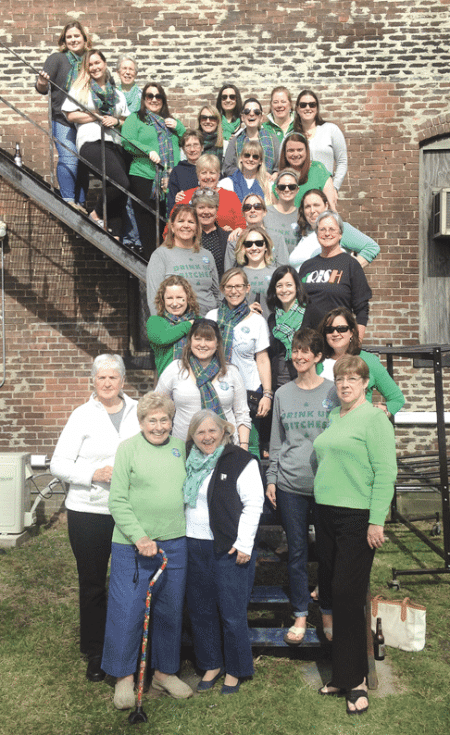

With careful review and early preparation, your company can be equipped to act when these sweeping changes to the law go into effect. If you have any questions about the FLSA or the white-collar exemptions, contact any of the attorneys at Royal, P.C.

Karina L. Schrengohst, Esq. is an attorney at Royal, P.C., a woman-owned, boutique, management-side labor and employment law firm. Royal, P.C. is a certified women’s business enterprise with the Massachusetts Supplier Diversity Office, the National Assoc. of Minority and Women Owned Law Firms, and the Women’s Business Enterprise National Council; (413) 586-2288; [email protected]

Features

Coming of Age

Peter Ellis, president of YPS, with Ashley Clark, vice president.

Peter Ellis, president of YPS, with Ashley Clark, vice president.

The region’s growing number of young professional groups were all created to fill a void in the region, a recognized need for an organization devoted to people of generally the same age and facing mostly similar challenges, professionally and personally. This void-filling role has included a good deal of evolution and expansion that goes well beyond networking, and into the realms of education, professional development, philanthropy, and stemming that problem known as the brain drain.


If all goes well — and admittedly, a lot will have to go well for this to happen — by roughly this time next year, the Young Professional Society of Greater Springfield (YPS) may be in the Guinness Book of World Records for hosting the largest single-day dodgeball competition on the planet.

The organization had approximately 350 participants for this year’s event, staged a few weeks ago at Springfield College, and is looking to do least as well next spring. If it can get that performance authenticated (and there’s a lot that goes into that, including a $10,000 cost, which the agency is trying to get underwritten), then it will become the record holder.

While that wouldn’t exactly put YPS on the map, it would be a marketing tool of sorts, said the group’s president, Peter Ellis, the so-called “czar of first impressions” (that’s really what it says on his business card) at Springfield-based DIF Design, and a source of bragging rights.

Or another source, to be more precise, he told BusinessWest, adding that, in nine years that went by in a real hurry, the group has succeeded in morphing from a networking group (or partying group, depending on who’s choosing the adjective) into a regional resource on many levels.

A resource, specifically, that has developed programming on everything from helping members become better public speakers to assisting them with that ultra-broad challenge of balancing life and career; from providing information on how to reduce stress (much of it from trying to achieve that balance) to familiarizing members with the people and issues on an upcoming election ballot.

This evolutionary process in many ways mirrors the one that has taken place at Northampton Area Young Professionals, or NAYP. Now boasting 200 active members across the region, the organization has moved well beyond networking, said its president, Christopher Whalen, collections officer at Florence Bank.

Actually, NAYP has always had a strong focus on philanthropy that in some ways differentiates it from many similar organizations, he went on, adding that, from the start, with an event called ‘Party with a Purpose,’ the group has always done more than simply get together.

Its monthly gatherings have always had a designated nonprofit beneficiary, he explained, and NAYP has worked diligently to connect members with opportunities to serve nonprofits, through board fairs and other steps.

Meanwhile, Young Professionals of Amherst (YPA) hasn’t really had any time to evolve. Launched in 2014 and now boasting more than 80 members, it essentially represents what the other young professional groups have developed into, said co-president and co-founder Kate Lockhart, development director of Big Brothers Big Sisters of Hampshire County.

She told BusinessWest that, while the group creates a host of networking opportunities, its mission comes down to creating connections — a term used by all those we spoke with.

For the Amherst group, and the others as well, this means connecting members to each other, connecting them to opportunities, and, most importantly, connecting them to the community with the goal of getting them actively involved.

But there’s another piece to this picture, and Lockhart, echoing sentiments expressed by others, summed it up nicely by saying that these groups give young professionals something they’ve never really had — a voice.

“We want to enable young people to be part of the conversation,” she explained, adding that many people within this constituency don’t believe they have the knowledge or experience to make their feelings known. YPA is not only helping to cure them of such sentiments, it is providing the platform for speaking out.

Kate Lockhart

Kate Lockhart, co-president of Young Professionals of Amherst, says the YP groups give their members something they’ve lacked — a voice.

“Our group is working hard to get people involved,” she went on, “and feeling that what they have to say is really important, and that they’re a crucial part of economic development here in Amherst and across this region.”

For this issue, BusinessWest talked with leaders of several area young professional groups about the ongoing evolution of their missions, rosters of programming, and business plans, and how such work benefits members, but especially the region.

Young Ideas

Those who spoke with BusinessWest said the YP group they now lead was created essentially out of an unmet need, or, even more specifically, a desire to fill a void in a particular region for a group devoted to people of generally the same age and facing mostly similar challenges, professionally and personally.

As Whelan explained, the local chamber of commerce, Rotary Club, Kiwanis Club, and other groups in a similar vein are all fine organizations, and many YP members are also involved with those groups as well, especially the chambers. But they can’t provide all of what a young professional group can — meaning those commonalities and connecting points.

“There was a need for something that went beyond the chamber,” he explained, “a need for a group of professionals at a similar stage in their careers, with common interests and challenges.”

And that’s why, collectively, the officers we spoke with say they stopped counting how many times Baby Boomers have told they them they wished they had something like this to join 20 or 30 years ago, because the number was getting so high.

In Amherst, said Lockhart, there are many groups and initiatives focused on the thousands of college students in that community, and a good number dedicated to older individuals, especially the rising number of retirees who have made the town their home. But the young professionals have been a traditionally overlooked constituency, she went on, and that’s why she and a few others decided to step up and do something about that.

“There’s a gap — there’s the college students, and then the older professionals with their networks, but there was really nothing for us,” she explained. “So a few of us tried to figure out how to make a network for this age group and their specific needs, and, by doing that, build a sense of community in the town we’re living in and working in.”

So, with the goal of filling those voids, YPS and NAYP were launched in 2007, and YPA in the fall of 2014. In each case, the words ‘young,’ ‘area,’ and ‘Greater’ are certainly relative terms. Indeed, while most members are in their 20s, 30s, or early 40s, there are some exceptions. And, in NAYP’s case, for example, the ‘area’ extends well beyond Paradise City and the communities that surround it.

In the beginning, at least with YPS and NAYP, the focus was — and still is, to a large degree — on networking, or bringing people together.

For YPS, the chosen vehicle was named Third Thursday, and it has become a day of the month event planners from other organizations have looked to avoid, at least if they want a large number of young people in attendance. NAYP also chose Thursday, and calls its gathering simply the ‘networking social.’ In Amherst, a town known for doing things differently, Wednesday was the chosen night for what are called ‘after hours events.’

There were, and are, many goals for networking, and most of them involve the professional, career side of the spectrum, said Ashley Clark, YPS vice president and, by day, cash management officer at Berkshire Bank. She noted that she owes her current job to the one she had before it at TD Bank, which she attained (or at the least scored the interview at which she made a suitable impression) through an encounter at a Third Thursday.

“I met the individual who runs all the retail branches in this area, and let him know I was looking for a different position. I met with him, and got the job,” she said, adding that this same scenario has played itself out many times.

But she was quick to note that most of the individuals she now counts as good friends were met through those same YPS events, and this is evidence of the large social aspect of this organization as well.

Ellis agreed, and went on to say that YPS, which counts as members law-firm partners, bank tellers, and everyone in between, can provide different things to people in different professions and stages of their career — be it opportunities for jobs, the ability to solicit new clients, or to build their own “professional network,” as he called it.

And networking remains a huge part of the equation, said Chicopee City Planner Lee Pouliot, the self-described “NAYP elder” (he’s been a member for five years), adding that many members have broadened their business portfolios or gained career opportunities as a result of those monthly get-togethers.

Northampton Area Young Professionals

Chris Whelan, right, president of Northampton Area Young Professionals, with Lee Pouliot, vice president.

But the networking always had a purpose beyond the mere exchanging of business cards, he said, adding that, over the years, he’s seen members also exchanging and advancing ideas for getting more involved in the community and also for coping with the many challenges facing this generation of young professionals.

Ellis agreed, and said he’s noted how his networking, and that of others in the group, has changed as their career progressed and their needs evolved.

“Early on, I would go to gatherings, people would say, ‘you need a web site or some design services, let me connect you to a guy,’” he said, noting that he was the guy in question. “Later, I was introducing people to others and creating connections. You become the locomotive, and it’s as if you’re returning the favor.”

Youth Is Served

Over time, the YP groups’ missions and programming have continued to expand and evolve, bringing into sharper focus those terms ‘resource’ and ‘connections.’

All those we spoke with noted that their organizations are looking to broaden their impact in the region, as well as their membership ranks, by partnering with various entities — other YP groups, a host of business and economic-development agencies including the chambers of commerce, area colleges, and even BusinessWest.

“One of the things we’ve identified from a strategic perspective is the need to identify and develop stronger partnerships,” said NAYP’s Whelan. “That includes our chamber, but also other chambers, Leadership Pioneer Valley, MassMutual’s Employee Resource Group, and others. We want to find ways we can collaborate with one another in ways that are mutually beneficial.”

Meanwhile, the groups are also launching new initiatives that fall into the broad categories of education, awareness, and professional development.

At YPS, the group has added something called the work/life balance committee, which, as that name suggests, concentrates on an area almost every young professional struggles with to one degree or another.

Another committee, focused on professional development, hosts, among other things, CEO luncheons (where participants dine with a CEO, hear him or her talk about their work, and then ask questions) and quarterly breakfast meetings featuring seminars on subjects ranging from stress reduction to public speaking, or, to be more specific, the need for developing strong verbal skills.

“These are little things that strike a chord with members,” Ellis said. “These are issues they’ve identified as important to them.”

NAYP also offers some professional-development programming for its members, said Whelan, adding that this is one area the group is looking to expand in the years to come with initiatives such as a webinar series and other vehicles.

Beyond professional development and work/life balance, though, the YP groups are also finding new ways to provide that voice for young people mentioned earlier.

“We want our members to feel that they should be at the table with everyone else,” said Lockhart, “and not think that, because they’re young, they shouldn’t have a voice.”

While most of the YP groups’ efforts are focused on their members, some are aimed at a different constituency that will hopefully become members in a few years — the area’s college students.

Indeed, the groups are now starting to develop and hone programming designed to curb the so-called brain drain in this region by introducing students to area employers and, in general, trying to convince them that they don’t have to leave this region after getting their diploma to find what it is they’re looking for.

Clark said YPS is looking to develop a pilot program that would help area college students develop the so-called soft skills needed to join the workforce, while also introducing them to potential career opportunities within the 413 area code.

“We want them to attend some of our networking sessions,” she said, “so they can meet the people who can say, ‘listen, you’re going to graduate in three months; I have a job for you.’ That’s an example of how we like to say that it’s not networking, but the business of connecting people.”

Lockhart said YPA is doing something similar in the Amherst area, and while the motivation for such programming was already obvious, her own experiences while attending UMass Amherst crystalized this recognized need.

“We’re trying to get the students who are graduating involved with us,” she explained. “We want them to understand that this doesn’t just have to be a stop on their journey; this can be where they live and work — there are opportunities here.

“I graduated from UMass Amherst in 2013, and I never thought about staying here until someone asked me,” she went on, noting that she came to Amherst from the eastern part of the state for her education. “I said, ‘oh, wow, there are opportunities here? I never knew that.’ There’s a huge misperception among students about this region, and we need to address that.”

A New Age

Looking forward, Ellis and Clark said YPS has reached the point in its existence where a full- or even part-time paid executive director is needed to ease the workload of the board members and, more importantly, to put an even sharper focus on all those elements in the mission statement.

But as with that line in the Guinness Book of World Records, a lot of things will have to go right for that to happen, they said, adding that the group will need to ratchet up its cash flow for an executive director to become reality.

In the meantime, however, the area’s YP groups are making many things go right, for their members, for area college students, and for the region as a whole.

In short, they are coming of age, in every sense of that phrase.

George O’Brien can be reached at [email protected]

Sections Technology

Easy Access

By JAMES DZIOBEK III and RYAN MARLING


Patients are looking for convenient ways to access healthcare services when they are unable to be physically present for a traditional office exam. Over the past couple of years, some physician practices across the country have started using telemedicine technologies in innovative ways to increase patients’ access to services.

A successfully implemented telemedicine service can increase access to care, and may also improve the operational efficiency of the practice and patient experience. Several factors are contributing to the spread of telemedicine, including a greater demand for convenient healthcare, improved technology to facilitate virtual visits, and the need for a focus on care coordination in many emerging payment models. Telemedicine may serve as a mechanism to help bridge the gap between patient demand and managing population health by providing improved access and convenient care.

While many interesting use cases exist, there have been a number of concerns raised about telemedicine. These include reimbursement, identifying appropriate patients for telemedicine visits, the ease of use of the technology, maintaining continuity of care, and concerns about providing care for patients across state lines. If you are thinking about implementing telemedicine in your practice, here are a few key considerations and best practices:

• Target your patient populations. Consider which patients in your practice may be candidates for use of the technology. Consider the clinical and demographic factors that may make video visits a practical solution.

• Be sure to designate a virtual visit champion. Having a clinical and administrative champion is important in developing your practice’s strategy for telemedicine. Champions would strategize and monitor the processes both administratively and clinically to ensure the healthcare needs of participating patients and physicians are met.

• Ensure a smooth virtual visit. Consider what the process and responsible person will be to ensure that requisite logistics are set up and a test run is completed prior to the virtual visit. Make sure that the patient is able to use the technology and that all systems are working properly in advance.

• Determine how virtual visits are incorporated into physician schedules. Will virtual visits be scheduled during a virtual-visit block, or will they be handled at certain points during the day? Advance consideration in this area may help with enhanced efficiencies for both virtual and in-person encounters.

Although it might not be perfect for all patients, telemedicine could help boost patient satisfaction and allow patients to be seen sooner during some routine follow-up visits. Telemedicine may also help physicians connect to patients in new ways outside of traditional care settings.

James Dziobek III is a research and data analyst at the Mass. Medical Society (MMS). Ryan Marling is an intern, Practice Solutions & Policy Research at the MMS. This article first appeared at massmed.org.

Community Spotlight Features

Community Spotlight

By JACLYN C. STEVENSON

John McNinch (left), owner of the Olde Heritage Tavern, and Kameron Spaulding

John McNinch (left), owner of the Olde Heritage Tavern, and Kameron Spaulding, director of the Lenox Chamber of Commerce, take a moment on Housatonic Street, one of the busiest centers for retail and restaurants in Lenox.

John McNinch jokes that his Lenox establishment, the Olde Heritage Tavern, is the “nerve center of the town.”

“That’s why I get all the tough questions,” he joked. “Because the tavern is the heart of any community, including ours.”

Still, it’s true that all walks of Lenox life pass through its doors regularly — members of town government, residents, tourists, and the in-town workforce among them. McNinch himself is a former selectman, current town moderator, and property owner in Lenox — and with his restaurant situated smack in the middle of Lenox Village, the Berkshire County town’s walkable center, he has both a birds-eye view and an ear toward the undercurrent of what’s happening.

Common topics of conversation, according to McNinch, include the overhaul of zoning laws to better accommodate new and diverse businesses. The lack of a vibrant evening and late-night scene in the village is another, and most recently, Lenox has been abuzz about an influx of new hotel developments and renovations, and concurrent discussions about tax incentives for new arrivals in the hospitality sector.

“I think the Planning Board needs to work on revamping our zoning bylaws — and they are — to make it easier to entice businesses to come and do what they need to do, and keep some of our young professionals in the area,” he said. “When we lose them, it’s a big loss to Lenox.”

Indeed, Lenox is a town that is trending older, with a median age of 51, not unlike most of Berkshire County. It’s also not a community that has the infrastructure for big-box stores or office construction for large outfits, said McNinch. But it is primed for small businesses, regional offices, and niche services.

“We need to entice companies here to build small offices, and also continue to offer more to those people and to our visitors and residents,” he said. “I would like to see more shops open later — that’s what we should be offering as a beautiful New England town. Lenox Village is essentially two blocks, but if nothing is open, there is no reason to walk the town past five o’clock. If we could successfully implement things like that, we could change the entire footprint of the town.”

That’s not to say all of the action happens in Lenox Village. Lenox, which abuts Lee, Stockbridge, and Pittsfield, is surrounded by walking and riding trails, most notably those in Kennedy Park — a town-owned network of former carriage roads — and also has a bustling commercial sector along Pittsfield Road (Routes 7 and 20), featuring the Lenox Commons shops and restaurants, outdoor outfitter the Arcadian Shop, and Guido’s Marketplace, a specialty grocer of some acclaim in the region.

Lenox includes two properties often described as ‘spa getaways’ — Cranwell Spa & Golf Resort, which also has an historic, 18-hole golf course built in 1926 and several banquet rooms — and Canyon Ranch, one of five international locations of this high-end resort that often caters to clandestine celebrities. Lenox Dale, a southerly section, represents the town’s small industrial center, and is situated on the banks of the Housatonic River.

Hotels, motels, inns, and bed & breakfasts appear in nearly every section of town, including the Yankee Inn and the adjacent Hampton Inn & Suites owned by Joseph Toole, a Lenox-based developer who is currently heading up construction of a new Courtyard Marriott on the same stretch. The project will add 92 more rooms to the town and represents an $8.3 million private investment. Another Berkshire-based developer, Vijaysinh Mahida, owns the newly opened Hilton Garden Inn on South Street in Pittsfield, just over the border from Lenox, and is planning another Lenox construction project on the site of a recently razed hotel — this time an extended-stay property with an event center. Plans are also afoot near Shakespeare & Co., a popular theater venue, to construct a luxury resort named Spring Lawn on the grounds of an historic mansion.

David Roche, chairman of the Lenox Board of Selectmen, agreed that building on existing strengths — in the tourism sector in particular — is the best course of action for the town in terms of maintaining its residents and business base while at the same time attracting new, younger audiences. He said town government and the Lenox Chamber of Commerce have been working more closely together than ever before to identify areas of opportunity.

“I think we’re in a spot where we recognize what needs to be addressed, so now we can plan,” he said. “We’ve identified several projects, and now we need to fund them — and our primary source of funding are the meals and rooms taxes.”

Tourist Trappings

Roche jokingly refers to these funding sources as the “tourist tax,” underscoring how important that income is to Lenox, and also where the town and its chamber most often converge.

“We recognize that tourism is our business,” he said. “It’s what will ultimately fund the necessary improvements in the community, fill a void in the county, and create new jobs.”

Kameron Spaulding, newly appointed director of the Lenox Chamber of Commerce (as well as a member of the Planning Board), has a similar outlook on the future of Lenox — one that sees many opportunities for growth, starting with the already-strong tourism sector.

It was ‘Reuben Day’ at the Heritage Tavern when he spoke to BusinessWest, and the dining room was packed.

“It’s an exciting time — we’re expanding what we’re doing as a chamber,” he said, noting that, in the past, the Lenox chamber has functioned more as a visitor’s bureau. Now, with Spaulding at the helm along with an influx of new blood on its board of directors, attention is turning to more fiscally minded matters.

“We get calls almost every day from people looking to open a business in downtown Lenox, and there actually isn’t a space for them right now,” he said. “So we’re doing pretty well. We don’t always do the best at communicating that — it’s a classic New England thing in that we tend to talk about what’s wrong, but the sky isn’t falling, and we’re having a massive year.”

Spaulding broke the tourism argument down further, calling attention to the role the restaurant and hotel sectors play.

“The strength of Lenox is always going to be the tourism industry,” he said. “We bring in $2.5 million in taxes alone annually. If you do the simple math off the tax rate, we’re talking about a $100 million industry, which is big for a town of 5,000.”

The warmer months are key for Lenox, which houses one-quarter of all of the hotel rooms in Berkshire County and also plays host to the Boston Symphony Orchestra at its ‘summer home’ at Tanglewood every year. It’s this busy season that Spaulding said the town must capitalize on, and this year marks a jumping-off point into several new endeavors bolstered by some strong numbers.

“Lenox is on track to record the best year in our history for restaurants for fiscal year 2016 that will end in June,” he noted. “That’s a jump of nearly 8%, and we know that from the meals-tax numbers. Protecting these strengths is what we focus on every day, making sure they don’t go anywhere.”

Spaulding said hotel tax numbers are also up, with about 2% growth, and adding to that base to meet the county-wide demand for rooms — which typically reach 90% occupancy or higher in the summer — is one way Lenox can position itself for further development across many different sectors. To this end, the chamber is aiming to become more involved at Town Hall — almost as a lobbying entity — speaking in favor of hotel development as one way Lenox can grow and prosper incrementally.

Still, not everyone is in favor of the move.

“People worry we will have a glut of ‘white elephant’ hotel rooms sitting empty in the off-season,” he said. “But I can say that lending right now for hotels is extremely tight, so if these hotel developers are getting financing — $25 to $30 million per hotel — then the need is out there. Where the chamber has been most involved is helping the town create a general policy for tax-increment financing.”

Having a TIF

Known as TIF, this public financing method is used as a subsidy for redevelopment, infrastructure, or other community-improvement projects around the world, and is not a new concept to many towns and cities. Tax incentives for new construction projects are considered by the Board of Selectmen on a case-by-case basis, and ultimately presented to voters with a recommendation from the board.

McNinch echoed his support of the hotel-based tax incentives, adding that they create a direct stream — in terms of both funding and needs for services — into Lenox as new projects are wooed to the region with attractive offers.

“The reason behind TIF is to entice businesses that are going to be good for Lenox to come here — not to offer tax breaks to businesses already building here,” he said. “Berkshire County has a need for more rooms, and with those rooms in Lenox, we will have a greater need for more things to do — especially more restaurants and more shops.”

McNinch has a keen sense of the balance between the summer months and year-round business, and how a greater balance can be achieved by playing to strengths. He said he notices growing confidence among his own patrons — seeing them more often, and more comfortable with spending some of their disposable income — as well as new activity in Lenox Village, the town’s busiest retail and dining center.

“I’ve seen more people coming into town more often, and while we still see some naked shops, we’re also seeing new businesses coming in and trying things out,” he said. “A good tourist year is a great year, but building local business year-round will only make it better.”

The Spaces Between

Spaulding added that there’s long been a misconception of many empty spaces in Lenox Village, which is largely made up of small retail businesses and restaurants situated on a small network of visible streets.

“There’s this magic number we hear all the time of ‘eight empty spaces,’ while in reality there is one empty retail space and one empty restaurant space now available, with several new operations moving in.”

The chamber itself will be moving into a new space on Main Street, which will provide better visibility, and a Great Barrington staple, Asia Barong, with its massive oriental sculptures, will soon open a new location in Lenox Village.

Speaking to the level of activity during shoulder seasons, Spaulding added that the fall of 2015 was almost as good numbers-wise as the summer season, due in part to the habit among Lenox residents to ‘reverse hibernate’ during those busy warmer months.

In fact, the chamber’s largest fund-raiser of the year and the town’s largest community event, the Apple Squeeze in September, marks the close of the summer season and will be expanding further this year to include an outdoor farm-to-table dinner, 25 more vendor booths (and a waiting list of more than 40), and musicians who will play the streets as well as a capstone Sunday concert.
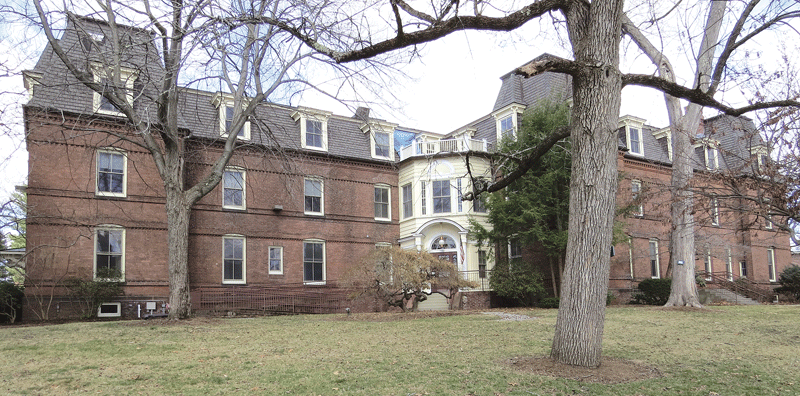
A traditional fall event in Lenox, the ‘tub parade’ hearkens back to the Gilded Age of the 1800s and the autumn carriage tours made by the wealthy to bid farewell to the region. It, too will be expanded through collaborations with other nonprofits to create a Gilded Age weekend. Meanwhile, the town’s holiday event, Making Spirits Bright, just launched last year and will repeat this year with plans to add more involvement from the town’s restaurants and retail shops.

So, when people ask Spaulding — or McNinch, Roche, and their fellow Lenox leaders — what’s new, they’ll often settle into a seat at the Olde Heritage Tavern to tell tales of upcoming excitement.

“People need options,” said McNinch. “We have a lot, and whatever we can do to build on those colder months in the year, that’s what I’m hoping we continue to do. It’s our job to attract people to Lenox, but it’s also our job to make them want to stay here.”


Lenox at a glance*

Year Incorporated: 1767
Population: 5,025 (2010)
Area: 21.7 square miles
County: Berkshire
Residential Tax Rate: $12.16
Commercial Tax Rate: $14.95
Median Household Income: $51,089 (2013)
Family Household Income: $74,531 (2013)
Type of government: Open Town Meeting
Largest employers: Canyon Ranch, Boston Symphony Orchestra, Cranwell Resort and Spa

* Latest information available

Features

Forward Thinking

Mayor Domenic Sarno

Mayor Domenic Sarno with a just a tiny piece of the vast collection of items now on display in his office.

Now in his ninth year as Springfield’s CEO, Domenic Sarno says much has been accomplished since he took office. He’s proud of these feats and will list them if prodded, but he’s more focused on the hard work still to come in the ongoing efforts to return the city to prominence. He’s buoyed by mounting evidence that cities, in general, are making a comeback, and that his, battle-tested by various forms of adversity, is more than ready to break out.

Domenic Sarno has now been mayor of Springfield for eight years and three months, give or take a few days. That means he’s been in that office longer than anyone in nearly six decades.

And if one wants to get an appreciation for everything’s that’s gone down in that time, all he or she has to do is visit Sarno’s office on the second floor of City Hall and take a good look around. But it would be wise to schedule a good bit of time for that assignment, if one wants to do it right.

Indeed, while most all mayors amass and display items that have come their way over their tenures, it’s unlikely that any corner-office holder can top this collection.

Almost every inch of Sarno’s large desk has been obliterated by a host of items, and all but the highest reaches of the tall, paneled walls are covered, mostly by photographs. Meanwhile, a decent chunk of floor space has been lost to items that can stand, like the nearly two dozen ceremonial shovels given to the mayor at groundbreakings for everything from MGM’s casino to CRRC’s subway-car manufacturing plant; from AIC’s new dining commons to Central High’s new science labs.

As for the photographs, they come in all shapes and sizes and portray a wide range of subjects. Framed shots of his family — father, mother, wife Carla, and daughters Cassandra and Chiara — sit on a shelf directly across the room from the center of his desk, for easy viewing, something he says he does often, and particularly when the going gets tough.

As for the rest of the photos, most of them unframed and printed from his computer or the sender’s, they run the gamut, and feature the mayor with individuals and groups of all sizes. There are some celebrities in the mix — Rob Gronkowski, John Kerry, Hillary Clinton, Charles Barkley, and the late Tom Menino, long-time mayor of Boston, would all qualify for that category. But most portray city residents with no claims to fame, and especially children in settings ranging from the classroom to the Big Balloon Parade.

Together, the items tell a story — actually, two of them.

First, they do a decent job of chronicling major developments and milestones during Sarno’s tenure — a list that includes everything from MGM’s historic decision to choose Springfield for a Western Mass. casino to the 25th anniversary of the Spirit of Springfield, conveyed in a large book that takes up a good amount of that desktop.

But the compendium also tells you a good deal about the person — an admittedly poor delegator who likes to be hands-on — who amassed it, hung all those pictures himself, and defies attempts by his staff to thin the herd of collectibles.

Together, he says, they speak to matters that are important to him — it would appear, then, there is very little that is unimportant — and that he doesn’t display them for his own viewing pleasure.

“People send me stuff all the time, and they love it when they come in, whether it’s for a meeting or a cup of coffee, and they see that photo that they sent or the gift they presented,” said Sarno, adding that he can help people in that quest because he knows where everything is. “It makes them feel part of the city, part of the administration.”

What this vast collection doesn’t convey, and obviously can’t, is what happens next.

Sarno admitted that many of the goals he set when he became mayor — everything from improved finances (the city now boasts the highest bond rating in its history) to more vitality downtown to sharp reductions in crime rates — have been achieved, to one degree or another.

Springfield is primed

Mayor Sarno says Springfield is primed to take full advantage of a movement back to cities by young professionals and retiring Baby Boomers.

But perhaps the biggest goal — restoring a sense of pride that has been missing since long before he took office — is still very much a work in progress.

When he became mayor, Sarno’s stated objective was to prompt people to stop saying ‘why Springfield?’ and start saying ‘why not Springfield?’ And while most have made an adjustment of sorts, many are still using some variation of the old language, and he wants that to change.

“We’ve shown what we can do, but we have to continue to confront, in concrete ways, the naysayers and the haters,” he explained. “I think this happens in every urban center — people get the sense that you can’t succeed. I know we can succeed, but we have to change the morale, the psyche of the city.”

For this issue, BusinessWest talked at length with Sarno about what’s been accomplished, what remains to be done, and how he intends to build on the collection in his office, even though there’s no room left for anything bigger than a commemorative thumbtack.

Picture Perfect

Sarno’s résumé is replete with career stops that have provided him with experience and mentorship that have helped him navigate eight years as the city’s CEO.

That list includes his four terms on the City Council and time as its president; his presence on the Financial Control Board that essentially ran the city for several years, including his early time in office; a lengthy stint as executive director of the South End Community Center; work in Hampden County District Attorney William Bennett’s office, where, among other things, he directed a program for juvenile probationers; and two years spent in the small office just a few feet away from the one he currently occupies, as aide to Mayor Mary Hurley.

But the top line on that résumé — or the bottom one, depending on how things are arranged chronologically — fits that category as well.

It reads simply ‘flooring installer, Corby Co.,’ four words that don’t begin to convey all that Sarno, then in his early 20s, gleaned from that job.

“Let me start by saying that I hated grouting — I mean, I really hated it,” he said, referring to the work of placing grout between tiles to keep them in place. “But I learned a lot on that job about working hard, getting your hands dirty, and taking pride in your work — and that’s why I always leave that line on my résumé.”

There is little, if anything, about his current job that he hates, although he admits there are frustrating days — many of them, in fact.

“There are times when I want to bang my head against the wall, and there are times when I want to bang someone else’s head against a wall,” he said, sounding a tiny bit like the Republican frontrunner for president. “And then you’ll get a thank-you card or letter or run into someone on the street, and they say, ‘thanks, mayor — you helped that individual or that cause or that family.’ And that keeps you going.”

He said he’s also had to endure a steep learning curve, despite all that he observed as Hurley’s aide, a city councilor, and Control Board member, and says the learning never stops.

Echoing sentiments he expressed to BusinessWest just a few months after taking office in 2008, when the top of his desk was uncluttered and the walls clear, he said that one can’t fully appreciate what it’s like to be mayor until one actually has that title on his or her business card — only Sarno doesn’t carry business cards.

Instead, he carries ‘Text-a-Tip’ cards, which, as that name suggests, implores the holder to text in tips that might help prevent or solve a crime, and he hands them out to everyone. But that’s another story.

Getting back to this one, Sarno said that when he talks about how his a 24/7 job, he means it.

“You can never turn off being mayor,” he explained. “When someone reaches out to you, no matter what day or time, night or day, you can’t say, ‘time out, I’m not the mayor right now.’ It’s part of your DNA.”

And this is especially true when his office, and the city itself, are in crisis mode. And there’s been a lot of that over the past eight years, including disasters of the Mother Nature-induced variety, such as the June tornado and October Nor’easter in 2011; the man-made type, such as the 2012 natural-gas explosion; and the Great Recession, which is in a category all its own.

Sarno told BusinessWest that weathering these storms has left the city — and him — battle-tested, for lack of a better term, and in some ways better able to tackle the hard work that remains.

Talking the Talk

Referring back to that learning curve he mentioned, Sarno said it takes many forms and includes virtually all aspects of the job, including that part about not being able to please everyone — something he knew already, but needed to experience as mayor, not as someone merely advising that office holder.

Also in that category is the art of public speaking, something he has to do almost every day. He believes he’s getting better at it, and constantly perfecting a style that blends unprepared remarks, humor, and his signature ending: ‘God bless you all, and God bless Springfield.’

“I don’t like to be on script — I like going off the top of my head,” he explained. “You need to do your homework and know your subject, but you also need to come from your head, your heart, and your gut. And you need to personalize and know your audience; you need to know when a dissertation is not warranted.”

Most all of his speeches also make reference to what he calls ‘priorities 1A and 1B.’ These would be education and jobs, respectively, and they represent the keys, he said, to alleviating the vexing problems of crime and poverty, not only in Springfield, but in every major urban center.

Big Balloon Parade

Seen here at the Big Balloon Parade, Mayor Sarno says Springfield has made progress, but work remains to improve the city’s psyche.

So while maintaining his focus on constituent service and what he calls the “meat and potatoes” of this job — making sure the trash gets picked up and the roads are plowed, for example — he places special emphasis on 1A and 1B, and believes progress has been achieved in both realms.

“People are less likely to get into that vicious cycle of poverty or involved in public-safety issues if they have a career trajectory,” he said, adding that his administration’s focus on jobs includes everything from attracting large new employers like MGM to encouraging entrepreneurship and innovation, through a variety of programs.

Overall, Sarno wants Springfield to be a place where people will want to raise a family, start a business, or both, and that stated goal is a tacit admission that people have been wary of doing so in recent years, and such attitudes still persist.

And this brings him back to that challenge of improving the city’s collective psyche. It won’t happen through a marketing initiative, although that might help, and the city has created one, he said. No, it will come about only if and when Springfield creates sufficient vibrancy and quality of life to become a destination.

Other urban centers have scripted impressive turnaround stories, he said, listing Lowell, Mass. and Brooklyn, N.Y. as examples, while noting that he’s buoyed by mounting evidence that cities are making a comeback decades after many residents and businesses abandoned them for the suburbs.

“We want to build on this phenomenon that’s happening across the country — empty nesters and Baby Boomers, besides young professionals, want to come back to their core city,” he said, “if you keep it clean and safe and give them the amenities they’re looking for — market-rate housing, job opportunities, and excitement.”

As for that marketing video, he said his administration thought about creating one several years ago, but didn’t believe there were enough success stories to tell. Now, there are more than enough, he noted, citing $2.5 billion in public and private investments taking place or recently completed.

Such numbers, and images, should help change some attitudes outside the city, he went on, adding that he’s probably more concerned about the outlook of those already living and or working in Springfield.

“This will get people to take a new look at themselves and the city,” Sarno explained. “Sometimes, we’re our own worst enemy, and we need to address that. I’m not going to paint a panacea of urban America — there are issues that you have to deal with day to day, and we’re doing that, but there are good things happening in Springfield.”

Collective Thoughts

As he looked around his office, Sarno all but acknowledged what his staff has been telling him for a long time now — that his office collection is due for some downsizing.

He’s not sure when or even if he’s going to get started on that project, or where he will put the items that come down off the walls or his desktop.

He does know that he probably has at least three years and nine months still to serve in this capacity, and that means more photos, T-shirts, ball caps, ceremonial shovels, and other items. His office isn’t going to get any bigger, so something will have to give.

What won’t give is his resolve to keep moving forward in his bid to achieve a real turnaround in Springfield. Progress has been made, but the job is far from finished.


George O’Brien can be reached at [email protected]

Community Spotlight Features

Community Spotlight

Marcos Marrero

Marcos Marrero stands across the lower canal from a planned condo project that he says will offer “beachfront property.”

As he talked about Holyoke and the broad economic-development plan he put in place for it when he became mayor just over four years ago, Alex Morse listed a number of key strategic planks in that platform.

They include everything from improving and broadening the housing stock, especially with market-rate options that would attract young professionals, to programs that would encourage entrepreneurship; from public investments aimed at spurring private development to a focus on expanding the creative economy; from public-private partnerships to bolstering the hospitality industry.
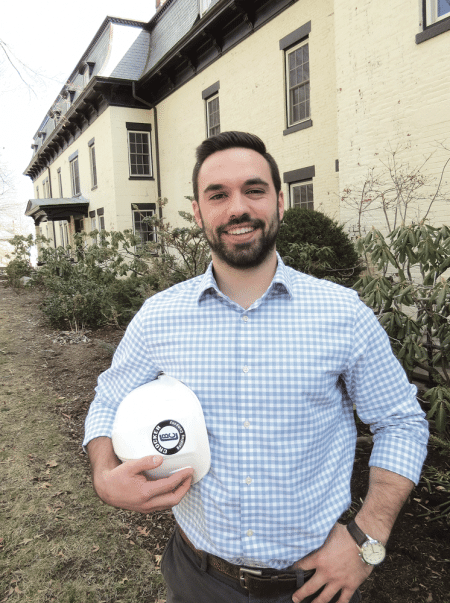
And for evidence of progress in all those realms, he pointed (figuratively, although he could also have done so literally from a window in his office in City Hall) to the many developments taking place on — or that can been seen from — Race Street.

Indeed, that north-south artery that runs along what’s known as the lower canal in this gateway city, famous for its legacy of paper making, represents a microcosm of the progress Holyoke has seen in recent years, said Morse, and the promise it holds for the future.

Along a three-block stretch, one can see perhaps the best example of the creative economy in motion in the Gateway City Arts venture, a mixed-use property that will soon feature a new restaurant. Moving south, one encounters the aptly named Cubit building (that’s the shape it takes), which will soon house Holyoke Community College’s Culinary Arts program on the first and second floors and residential space on the third and fourth floors, in an ambitious public-private partnership.

In between those properties is a vacant lot that will become home to the latest expansion effort involving Bueno Y Sano, the Mexican-food chain launched in Amherst two decades ago that now has six locations in Massachusetts and Vermont. The Holyoke facility will be a site for manufacturing some of the food items, but it will also have an eatery.

Across the street, and then across the canal, one can see the sprawling Canal Gallery complex. Once a home to artists and vacant for several years, it is the site of a planned 50-unit condominium complex, one with dozens of windows facing the canal, thus becoming what Marcos Marrero, Holyoke’s economic-development director, affectionately calls “beachfront property.”

From Race Street, one can see the city’s new railway platform, built on the site of Holyoke’s original train station, which is being hailed as one instrument in the city’s efforts to attract new businesses and residents. And one can also see the Massachusetts Green High Performance Computing Center, touted as a spark for more technology-related ventures.

Mayor Alex Morse

Mayor Alex Morse says the developments on — and that can be seen from — Race Street are a microcosm of the progress Holyoke is experiencing.

Also visible, but much further south, is the property at 216 Appleton St., a former mill being repurposed into housing, and still farther south is the former Parsons Paper building, which will soon be razed for a much-needed expansion of Aegis Energy Services, a provider of modular combined heat and power (CHP) systems for a variety of applications.

There are dozens of other developments in various stages of progress across the city, but the view of and from Race Street explains why there is a good deal of optimism and momentum in Holyoke, said Marrero, as well as some challenges that probably couldn’t have been envisioned a half-decade ago, but definitely fall in the ‘good-problem-to-have’ category.

“The progress over the past several years is quite dramatic, and we’re running into problems of success,” he explained. “Four years ago, very few people were saying, ‘our problem is we have too many people who want to be downtown, and we don’t have enough parking for everyone.’

“Four years ago, most people, not just in Holyoke, but across the region, would not have given this city a second glance or perceived it as a place they wanted to be,” he went on. “Now, that’s not the case; there’s a lot of momentum happening.”

For this, the latest installment of its Community Spotlight series, BusinessWest takes an in-depth look at the many forms of progress in the Paper City, and at what the future holds for this historic city on the comeback trail.

It Looks Good on Paper

As he gave BusinessWest a walking tour of the area east of City Hall down to Race Street, Marrero stopped at one point to admire the view as the limited amount of sun light on that warm March afternoon danced on the water in the upper canal near the city’s acclaimed children’s museum in Heritage Park.

Soon — and ‘soon’ is admittedly a relative term — there will be many more people enjoying similar views as residents of the city.

By Marrero’s count, there are approximately 450 units of housing — condos and apartments across a wide mix of price ranges — that are already planned or in the proverbial pipeline.

“There’s more housing in the downtown to be constructed or rehabbed than at any time since the city was first built,” he explained, while listing several projects within a few blocks of one another.

And housing represents a key component of the city’s broad development strategy, said the mayor, adding that Holyoke’s population, which was once at or near 60,000, sank below 40,000 in the ’90s, but is now back above 40,000, with hopes that it will continue to rise.

There are many reasons why the population decreased, said Morse, and, coincidentally, they mirror those economic-development platforms listed earlier, and range from a shortage or jobs to a dearth of attractive housing, to a distinct lack of incentive on the part of the development community to build such housing.

Indeed, until recently, the prevailing sentiment in Holyoke was, ‘you can built it, but will anyone come?’ with enough accent on the question mark to dissuade developers.

Recent interest in those properties on or near Race Street would seem to indicate a more positive attitude, which was effectively expressed by Denis Luzuriaga, who, with his brother, Marco, acquired the Cubit building and blueprinted its mixed-use plans (more on those in a bit).

“I see Holyoke as being not only a great place to live,” said Luzuriaga, who has called the city home for nearly 11 years, “but a place for potentially good returns on real estate as well.”

The basic development strategy for Holyoke is similar to the ones being blueprinted for other Gateway cities, said Morse, noting that, in simple terms, it involves making the community a more attractive place to live, work, and start a business — which Holyoke was until fairly recently.

There are many moving parts within this strategy, he went on, listing everything from job creation to new housing options; from incubator space in which new businesses can take root to rail service that can connect residents to jobs and clients, and connect others with Holyoke.

It will take years, perhaps even decades, for the canvas to fill in completely, but pieces to the puzzle are falling into place. And to see this — although in many cases the assignment requires imagination because projects haven’t started yet — we return to Race Street.

This artery certainly speaks to Holyoke’s past — it is dotted with old mills that manufactured everything from paper to wire, with emphasis on the past tense — but also its present and future.

Regarding the former, many of those properties have been vacant or underutilized for years, if not decades. As for the latter, the projects on the drawing board reflect broad optimism for a more vibrant city.

The Shape of Things to Come

The Luzuriaga brothers are in many ways typical of what could be considered a new generation of investors in Holyoke, lured by attractively priced but structurally sound real estate, but moreso by the city’s potential to reverse its fortunes.

Denis Luzuriaga told BusinessWest that he was a dabbler in commercial real estate, focusing on multi-family homes, when he decided to takes things up a notch — or two. And when deciding where to scale up his activities, he focused on the Paper City because of its attractive opportunities and recognizable momentum.

The Luzuriagas hadn’t officially closed on the 50,000-square-foot Cubit building (purchase price $350,000) when Holyoke Community College put out a request for proposals for a location in the city’s downtown in which to relocate its Culinary Arts program, but they submitted a proposal anyway.

It wasn’t chosen by the school (none of the bids in that round were), but it did garner some attention. And when the winner of the next round of submissions couldn’t make that plan materialize, the school went back to the Cubit building.

Denis Luzuriaga

Denis Luzuriaga, who, with his brother, Marco, is rehabbing the Cubit building, is among a new generation of investors in Holyoke.

Work on that project is slated to begin in a few months, said Luzuriaga, adding that roughly the same timetable applies to the residential component of the property — 18 units of market-rate apartments. At present, work is ongoing to replace the large windows that pour natural light into the property, which has housed operations manufacturing everything from shoelaces to corsets to wire.

Looking back to when he arrived in Holyoke, Luzuriaga said he liked what he saw — an old mill city with history, character, and potential. And now, he likes the picture that much more.

“There was something about this city, beyond the people and the way it looked, especially in the downtown area, that was very attractive to me,” he said. “I could see the potential for all kinds of positive change.”

So could Lori Divine, when she and fellow artist Vitek Kruta created Gateway City Arts in 2012. The venture has grown over the years, and now puts under one roof everything from learning areas to co-working space; from an event facility to incubator facilities for food-service businesses.

Actually, it’s two roofs (there are adjoining buildings along Race Street), and the expansion process is ongoing.

Indeed, the venture now includes Gateway City Live, which, as that name suggests, hosts a wide variety of live entertainment and events ranging from ‘tango nights’ to weddings. Coming next is the Gateway City Bistro, set to open in June, which will bring another much-needed eatery to the downtown area.

Divine and Kruta were so intrigued by the possibilities downtown that they acquired the Steam Building further down Race Street, so called because it once housed a steam-equipment manufacturer, and renamed it the STEAM (Sustainability Technology Entrepreneurship Art Media) building, with intentions for more mixed-use activity. It currently hosts a few businesses, including a web-design company and an alternative education program called Lighthouse, and will soon be home to a karate studio.

Assessing the scene along Race Street, and Holyoke in general, Divine sees momentum accumulating at a solid pace.

“It’s really exciting,” she said. “The Canal Walk is beautiful, the area is safe — and I know safety is a big issue for people — and it’s fun. It’s just a great place to be.”

Looking forward, the obvious goal is to prompt more residents and business owners to say just that, said Morse, adding that there is progress on both fronts.

The Parsons Paper demolition and cleanup, a long-awaited development after fire extensively damaged the site two years ago, will enable Aegis Energy Services, one of Holyoke’s fastest-growing companies, to expand in the city, he said.

Meanwhile, programs such as the SPARK (Stimulating Potential, Assessing Resource Knowledge) initiative, launched by the Greater Holyoke Chamber of Commerce, helps residents develop ideas into businesses.

“We want to encourage entrepreneurship, and we’re been recognized as one of the leading cities in that regard,” he explained, citing the city’s presence on a listing in Popular Mechanics. “This is a city with a history of entrepreneurship and innovation, and it continues today.”

Building Momentum

Luzuriaga believes Holyoke can and will attract more investors, turn its fortunes around, and become a true destination. And that optimism stems from the fact that he’s seen such a reversal of fortune up close and personal.

That was in Jersey City, N.J., a community across the Hudson River from Manhattan that had fallen on hard times and was making progress with the hard work of getting back on its feet while Luzuriaga lived and worked there.

“When I moved there 20 years ago, you could see that it had seen better days,” he explained. “It took a lot of effort by developers and city officials to get a steady pace of growth going, and I see the same type of thing happening in Holyoke; all the indicators are there.”

Luzuriaga says Jersey City was just starting to hit its stride by the time he relocated to Holyoke nearly 11 years ago. But he visits friends there often and marvels at the turnaround.

In Holyoke, he expects to not only witness the turnaround, but be a real part it. And he’ll have a front-row seat — right there on Race Street, at his beachfront property.

George O’Brien can be reached at [email protected]


Holyoke at a glance

Year Incorporated: 1850
Population: 40.135 (2012)
Area: 22.8 square miles
County: Hampden
Residential Tax Rate: 19.12
Commercial Tax Rate: 39.86
Median Household Income: $33,242
Family Household Income: $39,130
Type of government: Mayor, City Council
Largest employers: Holyoke Medical Center, Holyoke Community College, ISO New England, Universal Plastics, Marox Corp.
* Latest information available

Education Sections

Now Friendly Rivals

Bill Messner, right, and Ira Rubenzahl.

Bill Messner, right, and Ira Rubenzahl.

Located just seven miles apart as the crow flies, Holyoke Community College and Springfield Technical Community College have always competed, and in vigorous fashion, for everything from students to press coverage to state funding for capital projects. But when they arrived at their respective campuses in 2004, Presidents Bill Messner and Ira Rubenzahl found the relationship between the schools to be a case not of healthy competition, but unhealthy animosity. So they set about changing that equation. And as both men prepare to retire, they talked about what would have to be considered a stunning new attitude that prevails at both schools.

Neither man recalls which one of them actually picked up the phone and called the other.

What they clearly remember, though, is that a call, the first of many, was made. And, considering all that’s happened since the conversation ended, it could only be described with the adjective ‘historic.’

Ira Rubenzahl and Bill Messner had been at their new positions, as president of Springfield Technical Community College and Holyoke Community College, respectively, for just a few months (Rubenzahl arrived a few weeks earlier) in that summer of 2004. And while they hadn’t learned everything about the challenges that lay ahead, they did know one thing — that the relationship between the two schools, located just seven miles apart, had to change, and soon.

“Let’s just say that the institutions had not been working well together,” said Messner, his tone blending understatement with a dose of sarcasm as he described what he found upon his arrival. “And that was really not productive.”

Added Rubenzahl, “it didn’t take long to figure out that there was this problem. And we basically said, together, ‘we have to stop competing and start working together.’”

Actually, the competition hasn’t stopped, and both presidents agree that it can’t and won’t because, as the old saying goes, it’s good for the parties involved. But the animosity that prevailed a dozen years ago is mostly gone. And it hasn’t been missed.

For evidence of this, Rubenzahl and Messner pointed to a number of initiatives involving everything from workforce development to adult basic education; from legislative get-togethers to initiatives to train workers for MGM’s planned $900 million casino in Springfield’s South End.

They even listed the fact that the two travel together to meetings in Boston and elsewhere, and did so with a note of wonder in their tone that speaks volumes about just how bad things were.

Perhaps the very best piece of evidence, though, is the Deval Patrick Award for Workforce Development, presented by the Boston Foundation, which the schools earned together in 2014 for their collaborative effort known as TWO (Training & Workforce Options); more on that later.

Getting from where relations (if one could call them that) were in 2004 to where they are now didn’t happen overnight and would never be described as easy, both men noted.

“There are areas in which we’re much better off collaborating than we are competing,” said Messner. “But it took us a couple of years to get our arms around what those areas were, and how we could collaborate effectively.”

Also, the mountain to climb in terms of the level of animosity to be overcome was high and steep, said Rubenzahl.

“Bill and I got comfortable very quickly,” he noted. “But it took a while for the troops to line up because it was so inbred.”

Eventually, the troops did fall in line, both men noted, but the movement clearly started at the top.

Which is exactly why BusinessWest met with both presidents in Messner’s office in Frost Hall earlier this month. They’ve both announced that they’re retiring, with Rubenzahl due to exit stage left in June, and Messner a month or two later.

Yes, the presidents who arrived in the Pioneer Valley together will be leaving it together. And they’re leaving behind a track record of collaboration that couldn’t have been imagined a decade and a half ago.

Perhaps the best news is that both believe this pattern of cooperation has become so ingrained — and so welcomed by the schools’ respective boards — that they find it difficult to imagine a scenario in which it won’t continue after they’ve left their respective campuses.

“It will probably change in some ways to reflect the personalities of the two folks who are going to be following us,” said Messner. “But I think it’s grounded enough that it will continue. And my sense is that, if those two folks don’t choose to continue to collaborate, they’ll pay a price of some sort.”

New Course of Action

To put the dramatic change in the relationship between the two colleges in perspective, both Rubenzahl and Messner took a quick trip back to last summer and a press event that was significant on a number of levels.

Gov. Charlie Baker was coming to Western Mass. to deliver good news for both schools: HCC was getting $2.5 million for much-needed renovations of its cramped, antiquated, and leaky campus center, and STCC was getting $3 million for design work on a planned $50 million project to convert the historic structure known as Building 19 — one of the oldest buildings on the Springfield Armory complex later repurposed into the community college — into a new campus center.

He would announce both awards in a single ceremony at HCC, an arrangement STCC quickly signed off on.

“Before we came, they would never have dared to do that,” said Rubenzahl, saying those words slowly for additional emphasis and using the word ‘they’ to mean both the institutions and their presidents. “There would have been huge objections to doing that.”

Messner agreed, and, like his counterpart, treaded lightly, and diplomatically, when asked about the root causes of the sentiments that prevailed when he arrived.

HCC’s Kittredge Center

The opening of HCC’s Kittredge Center is one of the highlights of Bill Messner’s tenure, which was defined by improved relations with STCC.

However, it was well-known across the region, and even across the state, that the leaders’ predecessors — David Bartley, previously speaker of the Massachusetts House, at HCC, and Andy Scibelli, former Springfield city official and nephew of powerful state Rep. Anthony Scibelli, at STCC — didn’t exactly get along and were ferociously competitive, to put it mildly. And their institutions followed their lead — with a passion.

To explain the mood, Rubenzahl recalled some dialogue at a meeting he convened with several senior staff members at STCC not long after arriving.

“Someone referred to the ‘enemy,’” he recalled. “I said, ‘what enemy? Do you mean Holyoke?’ And he said, ‘yes, Holyoke.’ I was really taken aback by that, and said, ‘they’re not the enemy.’”

Rubenzahl believes that aforementioned phone conversation with Messner had already occurred by that point, but the chosen terminology cemented in his mind — actually both men’s minds, because similar language was being used in the campus off Homestead Avenue in Holyoke — that change was necessary.

And it came about, they said, partly due to those changes at the top, but also because it simply made sense.

Indeed, both presidents and their staffs had concluded that, while the schools would go on competing — “like Ford and Chevy do,” said Messner — they could also collaborate in many ways and, while doing so, achieve much more together than they ever could separately.

Examples abound, but TWO is clearly the most visible and perhaps the most impactful.

Messner described it as a “mechanism” for collaboration, the initiative that resulted from that somewhat time-consuming process he described earlier of determining in which realms the schools could collaborate, and how.

As the name suggests, the program involves creation of individually tailored programs to help solve workforce problems, specifically those related to the skills gap that has impacted virtually every sector of the economy.

Since its creation five years ago, TWO has assisted large corporations, small businesses, and broad economic sectors, said Rubenzahl, and it’s an example of something the schools could do with some success independent of one another, but to a much greater level of achievement together.

School of Thought

While TWO is the most visible manifestation of the new climate of cooperation between the two schools, there are many others, said the two presidents — starting with the meeting they were at just before sitting down with BusinessWest.

This was a gathering of state legislators to discuss matters involving public higher education, especially funding for the schools and individual initiatives. Years ago, there would have been two of these sessions, said Rubenzahl, one for HCC and one for STCC, because, well, that’s how it was done. (Actually, Greenfield Community College and Berkshire Community College had their own sessions as well.)

Now, there’s a single gathering — a practice that began the spring after the two presidents arrived — and it involves not only those two schools, but all seven public colleges and universities in Western Mass. Thus, the sessions are usually more productive because there are more people in the room, and far more convenient for legislators.

“I called Bill and said, ‘doesn’t it make sense to just have one?’” Rubenzahl recalled. “And for a lot of reasons; you’re more likely to get more legislators, and you can be more effective if you have several colleges saying the same thing as opposed to each one stating their individual needs.”

The legislative get-together is a simple yet effective example of collaboration, said Messner, adding that many others share its basic reason for being: common sense.

STCC

STCC President Ira Rubenzahl says his campus now looks for ways to collaborate with its competitor in Holyoke.

That list includes everything from faculty-development programs to the joint hiring of a consultant to create so-called wage grids; from adult basic education — something STCC has become more proficient at thanks to assistance from HCC — to the somewhat daunting task of training hundreds, and perhaps thousands, of the individuals MGM will eventually hire.

When looking back at how the current partnership on casino training came about, both presidents said this is another example of something that wouldn’t have materialized 13 years ago because of the animosity between the schools.

“We have this trust … we have this agreement — we don’t do things separately,” said Rubenzahl, adding that, years ago, the two schools probably would have fought tooth and nail for the entire pie. In this new era of cooperation, they agreed to split the pie long before the Gaming Commission determined the winner of the Western Mass. license.

“It wasn’t clear where the casino was going. Was it going to go to Palmer? Was it going to Springfield? Was it going to go to Holyoke?” he recalled. “But before we knew where it was going, we said, ‘an individual campus is not going to get involved in the training; we’re going to do it together.

“It winds up going in Springfield, but instead of fighting over it, we had already lined up our ducks,” he went on. “We had already figured out that, because Holyoke is really strong in culinary arts, if there’s culinary training, they’re going to get it. They can do it; we can’t do it. And we’re going to do some of the IT training, perhaps.”

Whenever there’s a meeting with MGM officials, the schools go together, said Messner, adding that the casino project is a good example of how the schools work together to meet the workforce needs of the five major sectors of the economy — manufacturing, healthcare, technology, hospitality, and financial services — because neither school can do all that alone.

As still another example of something happening now that wouldn’t have happened years ago — this one involving geography, or territory, as much as anything else — Messner cited initiatives blueprinted by Holyoke schools’ receiver  Stephen Zrike for Dean Technical High School.

“He wants two programs connected to college work,” Messner explained. “One is going to be in healthcare, and we’ll do that one, and the other is manufacturing, and we’re going to do that in conjunction with STCC; we’re not going to try to do that alone.”

Added Rubenzahl, “because of this [new relationship], we can do things we couldn’t do otherwise. Before, you couldn’t do that — you couldn’t go into the other college’s hometown and run a public-school program.”

Class Act

As for those shared rides to Boston and other destinations for gatherings of public-school leaders, both men laughed as they talked about how the practice has evolved and how it never would have happened with their predecessors.

“I drive, and he talks,” said Messner, referring to how a typical journey unfolds.

But while they carpool to such meetings, they usually don’t sit together once they arrive — a tradition that is more strategic than any kind of statement about how the schools, and presidents, get along.

“We don’t want to look like a two-headed monster,” said Rubenzahl, adding that the two are usually of a similar mind on most matters and don’t want to appear to be delivering comments in stereo.

Messner agreed. “You can’t cluster your strength all in one part of the room — you have to spread it out.”

In truth, and despite those seating arrangements, the schools have indeed become a two-headed monster — of collaboration.

George O’Brien can be reached at [email protected]

Education Sections

The Language of Business

Pioneer Valley Chinese Immersion Charter School

At the Pioneer Valley Chinese Immersion Charter School, puppets and other props help young students master the Chinese language.

Richard Alcorn has not forgotten the frustration he felt when he owned a business that imported goods from China and had to communicate with non-English-speaking customers on the other side of the globe.

“There were times when I spent 45 minutes or an hour with an interpreter only to realize they had absolutely no idea what I was talking about,” he told BusinessWest.

That experience, combined with the fact that Alcorn’s wife, Kathleen Wang, wanted their children and others to be prepared to work in a changing, global economy, led the couple to establish Pioneer Valley Chinese Immersion Charter School (PVCICS) in Hadley. It was important to them because both Alcorn and Wang were involved in the Massachusetts Initiative for International Studies, a statewide initiative to instill more international focus into K-12 education.

The school opened its doors in 2007 to kindergartners and first-graders, and today boasts roughly 440 students from 39 communities in kindergarten through grade 11. The continued expansion led the couple to outgrow their space, and last year the school was enlarged with a 40,000-square-foot addition.

Next year, PVCICS will add grade 12, and the first class that will matriculate will receive international baccalaureate diplomas that will open the door to continuing-education opportunities in other countries, while providing students with skills needed to work for Chinese employers or companies that do business in that country.

Through dedication and hard work, Alcorn, Wang, and others who are passionate about their mission have established a new model for education: PVCICS is the first fully articulated K-12 Chinese-language and cultural-immersion public charter school in the country.

“In addition to learning the language, our students learn about cultural differences,” said Wang, the school’s principal, as she explained that small things make a difference; for example, in China, the proper way to hand someone a business card is with two hands, rather than one.

Knowledge of such customs is important to engender respect and good relationships while communicating with Chinese customers, suppliers, and business owners.

“The State Department has deemed Chinese as a language critical to the future of the country’s economic and national security,” Wang said, noting that more employers are looking for people proficient in this language and the country’s cultural norms.

Tricia Canavan, president of United Personnel, a temporary and full-time staffing agency in Springfield, agreed.

“We’re starting to see a demand for employees who speak Mandarin Chinese, and we are recruiting them for jobs,” she said. “It speaks to the global nature of commerce; China is the world’s second-largest economy, and there is a need for fluency in the language.”

Alcorn, executive director of PVCICS, pointed to Chinese-owned CRRC USA Rail Corp., which broke ground in September on a new, $95 million subway-car factory in Springfield, as an example of the presence Chinese companies are establishing in the U.S.

Richard Alcorn and Kathleen Wang

Richard Alcorn and Kathleen Wang, founders of the Pioneer Valley Chinese Immersion Charter School.

“From the time we started this school, it was clear to us that, if local companies want to conduct business with China and local communities want to encourage Chinese companies to make local investments, we need people who know the language,” he told BusinessWest.

“Massachusetts, like all of New England, is trailing the nation in developing language and cultural-immersion programs that offer students the opportunity to develop skills needed to compete globally,” he went on. “When we first opened, there were only 15 Chinese-immersion programs in the U.S., and now there are over 150 public-school programs like this.”

The vast majority of the student body at PVCICS knew no Chinese when they entered, which reflects the growing movement to make students who speak English at home bilingual.

New York City has about 180 dual-language programs where students are learning Arabic, Chinese, French, Haitian-Creole, Hebrew, Korean, Polish, Russian, and Spanish. Delaware and North Carolina have joined their ranks, while 9% of public elementary-school students in Utah are enrolled in dual-language programs, and one in every five kindergartners in Portland, Ore. are in a dual-language program.

“These programs are economic-development initiatives,” said Alcorn. “People in the workforce who are employed in global businesses really need to be bilingual.”

Rapid Growth

PVCICS opened in 2007 with 42 students. Classes were held in a strip mall in South Amherst, and as the student body grew and grade levels were added, the school moved into a 26,000-square-foot former health club in Hadley. The space was completely renovated, and last year the building underwent that 40,000-square-foot expansion to keep pace with the growing number of students.

Growth continues, and demand for seats in this free public charter school is high. Students are chosen by lottery, and more than 100 applications pour in every year for 44 kindergarten slots.

Students can also enter in sixth or ninth grades, and those who do start in introductory Mandarin Chinese, while those who entered in elementary school are in a higher-level Mandarin class.

In grades kindergarten and grade 1, 75% of daily instruction is in Chinese, and 25% is in English. In grades 2 through 5, 50% of instruction is in Chinese, and 50% is in English. As the need for an expanded vocabulary and skills in English grow, the time spent in Chinese classes is decreased. Starting in sixth grade, 25% of daily instruction is in Chinese, and 75% is in English.

Research shows that early immersion in a foreign-language program makes it easier to become fluent. Mandarin Chinese can be especially difficult for adults to learn because the language is tonal and doesn’t have an alphabet.

And PVCICS ninth-graders are proud of their language skills.

Talia O’Shea entered the school in first grade and didn’t really understand what her teachers were saying until the middle of the school year, despite the use of drawings, puppets, and other props. But by the middle of second grade, she was speaking in Chinese.

Today, she does math in the language because she learned it initially in Chinese and says she sometimes finds herself thinking in the language, rather than in her native English.

But she regards the ability to do so as a bonus.

Ninth graders Talia O’Shea, Gabe Crivelli, and Amanda Doe

Ninth graders Talia O’Shea, Gabe Crivelli, and Amanda Doe enjoy learning subject matter in two languages.

“China is a very significant nation in terms of politics and economics on the world stage, so being fluent in both English and Chinese will be a benefit when I get a job,” the 14-year-old told BusinessWest, adding that her proficiency could help prepare her for a government career or allow her to work as a translator.

Amanda Dee also entered PVCICS in first grade, and although she had heard Chinese spoken at home, the language really didn’t take hold until she began conversing with her peers and interacting at school.

“When you learn to speak Chinese at a really young age, it gives you a deeper understanding of the language,” she said.

Ninth-grader Gabe Crivelli entered the charter school in sixth grade because he was seeking a challenging course of academics. He found it at PVCICS, and said the combination of rigorous standards and the challenge of learning a new language exceeded his expectations. He is glad he changed schools, and believes his bilingual skills will help him in the future since he hopes to own a business.

“Students in almost every other country learn a foreign language,” he noted, adding that his sister is also a student at the school, and they sometimes speak Chinese at home.

Parents also tout the school’s benefits. Canavan said she and her husband chose to send two of their sons to PVCICS and are happy they did.

“We felt it was important for our children to be fluent in another language so they could become global citizens,” she said, adding that they were also attracted by the focus on academic rigor and character building.

Ongoing Efforts

Alcorn and Wang tried to get a Chinese-immersion school program started in Amherst before they applied to the state to start a charter school in Hadley. And although their proposal was rejected, today they are happy with the outcome.

PVCICS has been highly successful and was a recipient of the 2015 Confucius Classrooms of the Year Award, which was presented to 10 schools across the world for excellence in teaching and learning, curriculum, cultural richness, community engagement, and extracurricular activities. Only three schools in the U.S. received the award, which Alcorn accepted from the Confucius Institute at its World Conference in Shanghai. In addition, last year its students received some of the highest MCAS scores in the Commonwealth.

Parental demand for the school’s program has fueled its continued expansion. Interest in Chinese has grown, and the school has enjoyed the support of the U.S. Department of Education and the U.S. Department of Agriculture, Rural Development.

In short, this couple’s vision is yielding positive results as PVCICS helps to establish a pipeline of students whose fluency in Mandarin Chinese will enhance the local economy and give them the skills needed to flourish in a fast-changing world.

Cover Story Entrepreneurship Sections

Land of Opportunity

Gokul Budathoki and Mena Tiwari

After years in a Nepalese refugee camp, Gokul Budathoki and Mena Tiwari found a new life — and business — in Springfield.

If all Ascentria Care Alliance did for refugees was help them get established in the U.S. and find jobs, it would be important work. But, thanks to an initiative launched in 2010 called the Microenterprise Development Program, Ascentria is actually putting many of its clients on the road to business ownership, through education, assistance with permitting and other hurdles, and small loans. The result, so far, is a patchwork of intriguing startups across the Pioneer Valley owned by people who truly appreciate their new opportunity, and have their sights set on continued growth.

Mena Tiwari’s story begins much like that of many refugees.

She was born in Bhutan, but, at age 2, her family fled that country’s inter-ethnic conflict, and she wound up in a refugee camp in Nepal, where she spent the next two decades.

While growing up there, owning a business — in the United States, no less — was the furthest thing from her mind.

“Back in the refugee camp, we didn’t get the chance to do anything like that,” Tiwari said, noting that her family ran a little shop in the camp, but it resembled in no way the complexity of opening a store in the U.S.

“Basically, we had a lot of love, but we didn’t have money,” she said, recalling how people would work with their hands — carving sandalwood into sticks for incense, for example — to make a little profit, and if they were able to scrape up enough for, say, a picnic outing, they appreciated it. “I always look for happiness in the little things. They made me happy because I worked for it.”

Tiwari met Gokul Budathoki in the camp, and after they immigrated to the U.S. — she in 2009, staying with family in Buffalo, N.Y., and he to New Hampshire in 2011 — they reconnected, and eventually married in late 2011; a year later, to the day, their son was born.

Tiwari worked in a salon as a hairdresser before moving to New Hampshire after the wedding, and Budathoki had been working at a Walmart, gaining a knowledge of retail he would put to use when the couple started talking about opening a business.

“Nobody was here to support us; her parents were in Buffalo, and my parents were back in country, so we had to support ourselves,” said Budathoki, who eventually enrolled at a community college and landed a new job with a mental-health nonprofit. “We said, ‘why don’t we open our own thing?’ So, after the baby was born, we put him in the carseat and drove around the countryside, looking.”

What they found was a new life in the Pioneer Valley — as proud owners of Interstate Mart near the ‘X’ in Springfield — with the help of the Microenterprise Development Program at Ascentria Care Alliance.

“We’re a resettlement agency,” Emil Farjo said of ACA, which has offices in Westfield and Worcester and was previously known as Lutheran Social Services. “We have refugees come from overseas, and we help them get an apartment, furniture, their first IDs, benefits from welfare and MassHealth, Social Security numbers, and ESL classes.”

Beyond those basic services, however, is the microenterprise program, which was created in partnership with the federal Office of Refugee Resettlement in 2010, with the goal of helping refugees launch businesses and reach economic self-sufficiency.

Nazar al Khaled

Nazar al Khaled was a famous singer in Iraq; now he hawks his wife’s authentic cuisine in West Springfield.

Farjo was hired to lead the program in 2012, leveraging his education, background in computer science, and experience as a business owner in Iraq, where he’d owned three very different enterprises, in engineering and HVAC, food distribution, and wholesale.

After fleeing Iraq in 2004 for the safety of his family and spending six years in Syria, he immigrated to the U.S. and connected with what was then Lutheran Social Services, working with other refugees on computer classes, vocational training, and other skills before being tapped to lead the business-startup program.

“I was very successful in my business, but when we fled our country, we left everything behind,” he told BusinessWest. “My experiences help me understand how these people think. I can be a bridge from their former country to the American system. This is my passion. I find everyone’s success is my success. I love what I’m doing, and I want to help them make their dreams come true.”

First Steps

The microenterprise program provides business planning, financing, and training to refugees in the Bay State. Applicants receive guidance in budgeting, marketing, finance, and obtaining permits and licenses. Typically, refugees lack sufficient credit history or loan collateral to receive traditional business loans, so the program provides small startup loans, typically in the range of $500 to $15,000.

To date, the program has helped spawn 32 businesses in Greater Springfield and 12 more in Worcester, ranging from child care to cleaning services; web-based services to landscaping and farming; delivery services to auto repair. Most owners are Iraqi or Bhutanese, with a smattering of refugees from Liberia, Lithuania, and Burundi.

“They’re new to the system, so we provide classes in financial literacy and money management, how to write a business plan, how to budget,” Farjo said. “We’re also a microlender; we don’t ask for credit, we just want them to take their first steps in business loans, and prepare them for the next step, which is traditional loans from traditional lenders.”

Mike Garjian, a serial entrepreneur who has been working with Farjo in the program, added that these classes tend to be full. “There’s a thirst for knowledge; they’re fully engaged. And that translates to business success.”

Farjo also works one on one with participants on hurdles such as site selection, licensing, and permitting. “They would be lost without us. We’re dealing with surrounding cities, and each city is different. It’s a hassle for them.”

For Tiwari and Budathoki, the hassles since opening almost 10 months ago have been worth it. Their store sells both American and ethnic food products, as well as an impressive array of Bhutanese clothing. Their customer base has been steadily growing, and they’re looking to establish a space for community gatherings in additional space at the back of the store.

“It began with a little stress,” Tiwari said, “but we can say we are happy.”

Nazar al Khaled is also pleased with his new business. He was a famous Iraqi singer — “very famous, not normal famous,” he noted — whose life, like that of so many countrymen, was turned upside down after the U.S. invasion in 2003. He caught a bit of a break when the New York Times and other sources reported him dead in an airstrike in 2004, as some Muslim groups that rose up after Saddam’s fall were targeting singers and other artists, and the report took some of the pressure off.

In 2009, he arrived in the U.S. with his family and stayed for a couple of years in New York before moving to Western Mass. in 2011 for a quieter lifestyle.

program director at Ascentria

From left, Mohammed Najeeb, program director at Ascentria, with Emil Farjo and Mike Garjian.

Recently — recognizing the culinary skills of his wife, Asmaa Mohammed, and wishing to go into business for himself — al Khaled connected with Farjo and opened Ahalna Foods on Main Street in West Springfield, a multi-ethnic neighborhood where eight of Ascentria’s refugee clients have launched enterprises. To hear him tell it, he definitely needed Farjo’s help.

“In America, there are many ways to start work, but no one tells you the right way,” he said of his earlier dealings with banks and municipal officials. “There are many rules, and nobody answers you, nobody smiles at you, nobody does anything for you. I say, ‘I want to open this business.’ They say, ‘OK, come back next month.’”

Ascentria, on the other hand, “brings us together and teaches us how to work with the banks, how to start a business,” he went on. “Any license or anything else we need, they help us with that.”

Iraqi cuisine, al Khaled said, is based on tradition that extends back 8,000 years, adding that his wife’s creations — which lean heavily on beef, lamb, and chicken — are meant to be savored by all the senses and demand the diner’s entire focus, as opposed to American “technology food” (his term for heavily processed fare) swallowed quickly in front of the TV.

Currently, Ahalna prepares meals for takeout, but also caters events, and aims to eventually move into wholesale distribution. So far, his clientele is mainly people who have already experienced and enjoy Iraqi fare, but he hopes to attract Americans who seek an authentic culinary experience.

“Americans don’t want to change,” he said, “but some Iraqi families have friends and neighbors, and when they bring them our food, they give it a taste and find it’s something different, and after that, they come here to buy it.”

Untapped Potential

Garjian believes Ascentria’s success helping refugees launch businesses should receive more attention than it does.

“This is a sector that’s been really invisible, but it’s a very powerful and interesting component to the region’s economic vitality,” he said. “They are competent, highly energized people.”

He recalled hiring a Vietnamese refugee from Lutheran Services 20 years ago for one of his businesses. She had been a mathematician in her homeland, but had never worked with computers. After he introduced her to one and showed her how to operate Excel, she was quickly running complex equations. What Ascentria’s microenterprise program does, he noted, is help people with these types of skills — or at least the potential to quickly attain them — achieve business success in a very different environment from where they began.

Take the three Iraqi refugees who operate Chicopee Auto Service & Sales Center on Front Street, for example. “We did not want to work for anybody,” said Ahmed Mustafa, who partnered with his brother, Abraheem Mustafa, and a friend, Omar Abdul Razzak, to establish the business early in 2015. They arrived in the U.S. by way of Syria after fleeing their homeland a few years after the invasion.

Chicopee Auto Service & Sales Center

From left, Abraheem Mustafa, Ahmed Mustafa, and Omar Abdul Razzak are partners at Chicopee Auto Service & Sales Center.

“It was the war,” Ahmed Mustafa said when asked why they left. “It’s always the war.”

But he credited Ascentria and Farjo for helping the partners navigate the permitting process to launch the business, on the site of a former, then-closed used-car dealership. They started with 13 cars for sale and now have 25 on the lot, and typically service about 15 cars at any given time. They recently installed a second repair bay to conduct alignments, and do state safety inspections as well.

Mustafa said there are challenges to starting a business, but he welcomes some of them, like the gradually growing presence of other auto-related businesses in the Chicopee Falls neighborhood. “Having more than one dealer is better for the business that has better prices and better quality,” he said, already speaking the language of a businessman who embraces competition.

Growing the business will bring other benefits as well, he added, not the least of which is being able to hire other immigrants, especially those who struggle with the English language and, therefore, find it challenging to land a job.

Farjo has high hopes for all the businesses his agency helps launch, but he always cautions against overly optimistic expectations.

“They need to be patient. They might not be successful right when they open. Taking a risk is not easy. Starting a business is not easy, even for Americans,” he said. “But when they find someone who will speak with them as a person, someone who cares, that makes a difference. I just want to go the extra mile to see these people be successful, and at the end of the day, they thank me for helping them out.”

Credit Where It’s Due

Budathoki and Tiwari say they have qualities that complement each other: his fortitude and her business mind, for starters. But both say Ascentria was a key element in their success.

“I cannot thank them enough,” Tiwari said. “We wanted to find a way to find success and feed our family, but we went to City Hall and and so many places before we met with Emil. Back in my country, I didn’t know the meaning of a business plan.”

But Farjo says his agency is merely helping them open doors. “They have our support, but it’s their skills and ambition and effort that makes them succeed.”

In a country that accepts some 70,000 refugees a year, Garjian said the microenterprise program serves a social purpose even beyond raising the standard of living for its handful of participants and boosting economic development region-wide. At a time when so many Americans look suspiciously at immigrants and refugees, these small-business owners (who are, like anyone who receives Ascentria’s services, thoroughly vetted and screened) might well be changing a few perceptions.

“Many of them are coming from areas of tyranny and loss of hope,” Garjian told BusinessWest. “To them, each breath is a gift. I’ve seen people walk off the elevators here and take their first breath of freedom. That’s so profound to me.”

Joseph Bednar can be reached at [email protected]

Entrepreneurship Sections

Passion Meets Purpose

Oliver and Emily Rich

Oliver and Emily Rich are proud of their business and trying to get people to view tea differently than they have in the past.


Oliver Rich carefully prepares a tray of ingredients that he will use to make unusual beverages, then pours generous servings of hot, frothy maple sugar black latte tea from a pitcher; micronized matcha mint tea with steamed milk from a sports drink-style shaker; and a sparkling chilled beverage made with strawberry, kiwi, and apple tea concentrate.

The scents and tastes are complex, and reflect just a few of the more than 120  blends of teas Rich has created since he launched Tea Guys LLC in 2002. Each tea has three flavors, and many people try several free samples in the Whately Tasting Room and Factory and learn new ways to prepare tea before making a purchase.

Indeed, it’s almost necessary because the array of choices is amazing: there are teas blended with chocolate, ginger, and bourbon; caramel, sea salt, and molasses; hibiscus, raspberry, and currant; as well as traditional varieties such as bergamot (Earl Grey) with lavender and vanilla.

The tea can be purchased in loose leaf form, specially created biodegradable bags which allow more flavor to escape and contain 200% more tea than an ordinary bag, K-Cups, micronized powder that provides additional health benefits, and liquid bags of concentrate that can be mixed by the spoonful with hot and cold water and milk or used to make cocktails or add flavor to food before or after it is cooked.

Creating this complex line of products was no small feat and has taken Rich years to master.

“There are more varieties of tea in China than grapes in France,” he said, as he shared information about the thousands of types of tea that stem from the Camellia sinensis plant and how growing it under different conditions produces different tastes.

“It took me years and years to perfect our tea, but we’re finally at the peak,” he went on. “We’re changing what it means to be a tea company and trying to change the way people view tea, consume it, and prepare it.”

Rich grew up in a family where food was very important, and cooked alongside his mother from the time he was a young child.

“I always liked creating things, but a lot of what I do is going back to basics,” he told BusinessWest, adding that his Swedish and Italian grandparents made everything by hand.

It’s a method that has always been part of his business, and he recalled a time when he stayed up for 24 hours to fill an order for tea bags from his kitchen, punching holes in tags, cutting strings, and heat-sealing them to the bags.

Today, Rich and his wife Emily, who has been part of the business from the beginning and left a full-time job to join him as operations manager in 2007, can still be found in their Whately factory at all hours doing things by hand, where blends are crafted daily in small batches.

Kathleen Rhine

Kathleen Rhine carefully measures tea into packages at Tea Guys in Whately, where a lot of the production is done by hand.

“This is truly a labor of love,” she said. “There are limited options for premium tea products that are interesting, but we bring something different to the table and are trying to expand the ways people use tea as well as their experience with it.”

That strategy, combined with a smorgasbord of offerings, has led to success, and Emily says people have come to the tasting room with a spouse who isn’t partial to tea, but has a much different outlook by the time they leave the room.

Trial and Error

The inspiration to start this venture came during a meeting between Oliver Rich and a friend who had gotten together at a tea shop in Cambridge to talk about ideas for starting a business.

Rich noticed a salesperson measuring out rote grutze tea, which he knew was named after a German dessert, and it sparked what he called “an epiphany.”

“I had never seen this type of tea, and realized I could not only make tea differently than anyone else, but could make it better by putting different ingredients into it,” he said, adding that the majority of grocery stores at the time stocked only mass-produced tea bags that are filled with tea dust, or fannings, that don’t have much flavor.

His friend was highly skeptical of the idea, and the feeling was mirrored by others who told Oliver he was crazy, but after conducting research, visiting tea shops throughout New England, talking to suppliers, and going to Asian markets to find unusual ingredients, he began creating new blends in his kitchen, and his friend agreed to partner with him.

Rich’s focus was on quality, and he began to line up customers, which increased in number when a family member who sold soap to bed-and-breakfast operations shared a list of contacts.

But because Rich’s business partner lived in Cambridge and he and Emily were doing everything by hand, the business took a long time to get off the ground.

“We were so ahead of the market that customers weren’t willing to pay for what we were making,” he told BusinessWest.

In 2003 Tea Guys moved into Eastworks in Easthampton, and a website was launched, which marked a turning point and led to new wholesale customers, which have long accounted for the bulk of their sales.

Rich’s partner eventually left, but he and Emily worked tirelessly and continued to experiment by mixing teas with freshly ground ingredients to create unique flavor combinations.

Tea Guys moved from Easthampton to Florence, and when the recession hit, Rich downsized into a 3,300-square-foot space in Hatfield. But the customer base has continued to grow, especially in recent years. Sales doubled in 2014 and 2015, and the company is on track to do $5 million in business this year.

Oliver Rich

Oliver Rich says the Tea Guys Tasting Room and Factory Store in Whately allows customers to sample varieties before making a purchase.

Two years ago, Rich and Emily took a leap of faith and moved into their current, 10,000-square-foot location in Whately, but he had to take out a large loan to buy equipment and hire more staff.

Although he tends to be risk-averse, the move has paid off, and today the business boasts 18 employees. But he continues to serve as the so-called master blender, using teas from China, Sri Lanka, Japan, and India, and ingredients that are fresh and exotic, including cocoa from Ecuador and Guatemala and maple syrup and chunks of maple sugar from a nearby sugaring farm.

“Most companies just add flavor to a base, but I look at the vast varieties and have added more than 300 ingredients to about 30 teas that I matched to complement their flavors,” Rich noted.

The company’s biggest break was realized two years ago when Big Y World Class Supermarkets placed Tea Guys products in its Fresh Acres store in Springfield. The conversation with Big Y had started in 2007 with Bill Eichorn, who championed the products, and helped the company develop a whole-leaf tea program that has expanded into 13 of their stores and continues to grow.

“We’re still an unknown, but it shows we are at the tipping point,” Rich said, noting that large displays at Big Y contain bins of whole-leaf tea that allow people to experience the complex aromas that seep into the taste of the 40 blends that Big Y carries.

And since this type of tea is a new experience for many, Tea Guys offers individual tea bags for $1.49 so people can sample different flavors.

Expanding Market

The company has come a long way over the last 14 years, and its products are used in frozen yogurts and served by restaurants, colleges and universities, and bed-and-breakfast operations. They are also a mainstay for national and international entrepreneurs who make their living selling the tea or holding tea parties.

“There has never been a mass market for our tea, but every second of every day somewhere in the world, someone is drinking it. It’s an affordable luxury,” Rich said.

“Tea is one of the products our country was founded on, but most people don’t fully appreciate the time and devotion that goes into planting, picking, and blending it,” he went on. “We have reinvented it, and were the first to combine different varieties of tea with ingredients like chocolate, nuts, and popcorn that you can see in the tea,” he continued. “But it took heart and passion to do so.”

It also took persistence and a belief that a quality product from the heart of New England would become something people could and would enjoy every day. And that’s exactly what has happened, one delightful cup at a time.

Environment and Engineering Sections

Generation Next

President David Pinsky

President David Pinsky says Tighe & Bond projects run the gamut from wastewater-facility design to coastal engineering; from alternative-energy initiatives to the Westfield River levee trail.

In its first 90-plus years, Tighe & Bond had emerged as a Western Mass. leader in civil engineering, carving out a strong reputation and myriad civil-engineering projects around the region. But over the past decade, the company has embarked on an impressive growth trajectory, adding offices, expanding its services, and adding 100 employees. The current vision, President David Pinsky says, involves staying independent, nimble, sensitive to industry trends, and increasingly driven by a burgeoning youth movement.

With 105 years in business and a workforce of 270, Tighe & Bond boasts numerous employees whose experience stretches back four and five decades. But many more are just beginning their career journey.

It’s a healthy mix, David Pinsky says.

“For the first time, Millennials are the largest generation at Tighe & Bond,” the firm’s president noted. “I think it’s exciting — four generations working together. We’ve got young professionals working with seasoned people, and they’re all learning from each other. We have some wonderful young talent; I’m so excited.”

At the same time, many of the company’s long-time clients are experiencing the same shift, as Baby Boomers begin to retire and Millennials climb the leadership ladder. It’s just one more reminder that nothing stays the same in the world of civil engineering, which is why Tighe & Bond has maintained an ambitious schedule of growth and expansion over the past decade.

“It starts with a vision for the company,” Pinsky said, holding a copy of a strategic plan, titled “Vision 2020,” the latest iteration of an exercise the company conducts every few years. “We sit down and talk and develop a strategic plan, and that starts with a vision of where we want to go. The real challenge is executing that plan.”

The most basic goal, he told BusinessWest, is to remain a privately owned, independent company at a time of great consolidation in the industry, with larger firms constantly acquiring smaller ones.

“We like exactly where we are; it provides some unique opportunities. We’re a regional, northeast firm — no longer just a Western Mass. firm, but not a national firm. We know our place, and it’s a sweet spot for us. We continue to grow, but not for growth’s sake. We want to grow profitably and be better able to serve our clients.”

That growth has been significant in nature; Tighe & Bond saw its workforce increase from 170 to just over 200 from 2006 to 2011, and the past five years have seen an even more dramatic surge, to a current roster of 270 — what Pinsky calls moderate and steady, but not “crazy,” growth, of between 5% and 10% per year. “That’s comfortable for us, and not overwhelming for employees.”

Growth has come in two ways, he added: Geographic expansion and adding new services. For the former, over the past five years, the company has opened up new offices in Portsmouth, N.H. — allowing it to reach customers in that state as well as Northeastern Mass. and Southern Maine, Pinsky said — as well as new branches in Westwood, serving Eastern Mass., and Red Hook, N.Y.


Go HERE for a PDF chart of the region’s engineering firms


The company had already tackled projects in these areas, Pinsky noted, and expanding its footprint simply enabled it to better serve those clients, as well as shift some employees who live in those areas and had been commuting long distances. In the case of Portsmouth, Tighe & Bond acquired an existing firm, doubled its office size, and retained many of its employees and leadership.

Chief Additions

Partly in response to that growth, Tighe & Bond has added two new leadership positions over the past two years, hiring Bill Hardy as chief operating officer and Bob Belitz as chief financial officer. “It’s been great having their experience and work ethic on the team, helping us as we continue to grow,” Pinsky said.

For more than a century, the company lacked those specific roles. Founded in 1911 to consult on broad-based civil-engineering projects, Tighe & Bond eventually came to specialize in environmental engineering, focusing on water, wastewater, solid-waste, and hazardous-waste issues, and now boasts eight offices in Massachusetts, Connecticut, New Hampshire, and New York.

Holyoke’s new treatment facility

Tighe & Bond designed Holyoke’s new treatment facility that disinfects drinking water using ultraviolet light.

The firm’s diversity of expertise, said Pinsky, has been a buffer against economic downturns in any one area. Currently, about 60% of its projects are public contracts with municipalities and state government agencies throughout New England and New York, and 40% is private work for a diverse group of industries, from healthcare to education to utilities.

Meanwhile, Tighe & Bond has significantly ramped up its expertise and focus on MEP (mechanical, electrical, and plumbing) services, Pinsky said, as well as increasing its presence in the realm of coastal engineering.

“That’s a really important service, recognizing that rising tides, storm events, and the effects of climate change can wreak havoc with infrastructure along the coastline, as well as inland near waterways,” he noted, explaining that the company has the expertise to plan and design facilities that are more resilient to events, like Superstorm Sandy in 2012, that threaten public and private infrastructure near coastlines. “It dovetails well with the services we already provide.”

The firm has also expanded its presence in renewable-energy projects over the past decade, Pinsky noted, adding that municipalities and developers in the Northeast are increasingly valuing alternative energy sources, and Tighe & Bond has established itself as an expert in the field, working on numerous photovoltaic, wind, and hydro power projects.

As an example, he said the firm has undertaken a number of solar projects where photovoltaic solar has been placed on capped landfills.

“Since we had expertise on the landfill side and expertise on the solar side, there’s a great synergy there,” he noted. “A lot of those projects are happening here.”

While seeing growth in all its markets, however, Tighe & Bond, like all such firms, has faced an increasingly complex regulatory and permitting landscape, one where environmental concerns once considered minor are now paramount.

“The permitting hurdles for most projects are very significant,” Pinsky said. “But we have experts on staff who are very skilled at navigating their way through the process; that’s absolutely something we bring to our clients. Permits can affect schedule, cost, and project viability to a significant extent, so having that expertise is very helpful.”

One advantage of being such a large, regional company is that employees are often called upon to work with other offices, whether by commuting or videoconferencing, if they bring a specific skill set to a challenging job, he went on. “We’re a very collaborative firm, so projects are done across offices all the time. We don’t consider a project to be a Westfield project or a Portsmouth project; it’s a Tighe & Bond project. We bring in the best talent we have to suit the needs of the client.”

Priming the Pump

Because that talent is critical to a project’s success, Pinsky said, it’s vital that Tighe & Bond retain its key staffers while continually bringing in new blood.

“It’s absolutely a big challenge,” he told BusinessWest. “We talk about the war for talent, and we’re certainly in the middle of that. People have so many opportunities coming out of school, a lot of choices. A lot of companies are looking for people who want to make a difference in engineering and the environment, and we do as well.”

Tighe & Bond now employs more Millennials

Tighe & Bond now employs more Millennials than any other generation, which bodes well for its future.

While engineering programs at colleges and universities are generally drawing attention, competition can be fierce for graduates, he went on, and firms especially value those who have worked in the field between three and 10 years, as they have some experience but also plenty of potential to grow.

“There’s a shortage of them. We certainly do a good job growing them internally, always thinking that a person we’re hiring today, in three years, will be one of those people. We make a lot of training programs, both internal and external, available to employees, and we certainly immerse them in a lot of project work by surrounding them with experienced people they can learn from and be mentored by.”

To be sure, Tighe & Bond employees regularly volunteer in classroom programs to encourage the next generation of scientists and engineers, but it also seeks to be an “employer of choice,” Pinsky said, for college graduates launching their careers.

“People want to work for great firms — they want to go to firms where they can grow and develop their careers, where there are strong core values, and for us, those values include respect, integrity, commitment, excellence, and reliability. They want to know they are contributing to the firm’s overall vision.”

The days of writing a vision plan and stashing it in the CEO’s top drawer are over, he added, noting that Vision 2020 was developed in conjunction with the whole team and distributed to each of them.

One recent change was the dramatic renovation of the firm’s Westfield headquarters, which increased the floor space from 32,000 to 42,000 square feet, accommodating 180 employees in one building instead of 130 in two, and adding more space for collaborative work. The project included ‘green’ elements like LEED-certified carpeting, LED lighting and more natural light, and a stepped-up recycling initiative to reduce waste. Similar expansion projects have been undertaken at the Worcester, Portsmouth, and Middletown, Conn. branches.

“We’ve improved our offices, invested in technology, and, overall, invested in people. That’s extremely important to us. We’ve created an environment where our people love being here,” Pinsky said. “Sometimes little things matter. It’s the culture of the organization — being connected with clients, and everyone in the office knowing they’re appreciated for the time they put in and the good work they do.”

Joseph Bednar can be reached at  [email protected]

Commercial Real Estate Sections

Landmark Development

Peter Picknelly outside Hubbard Hall.

Peter Picknelly outside Hubbard Hall.

Peter Picknelly calls it the right property — and the right project — at the right time. He’s referring to Historic Round Hill Summit, a luxury-apartment complex being created at the former Clarke School for the Deaf complex in Northampton, an initiative that will bring the past, present, and future together in intriguing fashion.

Peter Picknelly says he understood, when he submitted what would eventually become the winning bid for the former Clarke School for the Deaf property in Northampton, that there would be some significant challenges standing in the way of developing the various buildings on the campus for commercial and residential purposes.

As things turned out, he didn’t know at the time just how stern those hurdles would be. But he told BusinessWest that those challenges are the same things that make the property — and his project — so unique and attractive.

Indeed, this complex of buildings is historic — Calvin Coolidge, the nation’s 30th president, and before that, governor of Massachusetts, and before that, mayor of Paradise City, once lived in one of the buildings — and most of the structures are a century or more old. Meanwhile, the views of the surrounding area are stunning, and Northampton’s eclectic, bustling downtown is about 10 minutes away by foot.

The challenge? Blending the old (while at the same time preserving it) with the new, as in modern amenities and liveability in the luxury apartments that Picknelly and several partners will carve out of two former classroom buildings.

The preserving part of that equation is the most demanding, said Max Hebert, project manager for this $10 million endeavor, noting that these two properties, Hubbard Hall and Rogers Hall, like most others on the campus, are on the National Register of Historic Places — which means each nuance of the plans must be approved by the National Park Service before work can proceed.

“That process in itself was very complicated and very lengthy — it was an educational experience and it took much longer than we thought,” said Picknelly, but overall, work is progressing on an ambitious project that be believes represents the right product at the right time, and in the right location.

The Clarke School

The Clarke School property has a number of unique buildings being converted for residential and commercial development.

“Apartment living is becoming increasingly popular — people want to get out of their home and live in a vibrant community,” he said, noting that it has become an attractive option for both young professionals and empty nesters looking to downsize but still enjoy luxury.

As for the location, he said it’s ideal for both of those constituencies he described. Northampton is one of the region’s most walkable communities, and Historic Round Hill Summit is just minutes from a bike trail, Cooley Dickinson Hospital, Smith College, and everything downtown has to offer.

“The location is ideal, and there’s nothing else on the market like what we’re going to build here,” he said. “We think it’s an incredible mix.”

For this issue and its focus on commercial real estate, BusinessWest takes an in-depth look at that mix and how Picknelly and his partners are writing an intriguing new chapter to the already-rich history of this property.

Taking Things to New Heights

Picknelly, CEO of Peter Pan Bus Lines and the third-generation owner of that Springfield-based company, has — like his grandfather and father before him — always been entrepreneurial.

He’s picked up several businesses over the past few decades, with Springfield’s iconic Fort Restaurant, which he acquired with several partners from the Scherff family in 2014, the latest example. And, again, like his father, who famously acquired Monarch Place in 1994, he has been an aggressive player in the commercial real-estate realm.

He was a player in the bid to locate a casino in Springfield’s North End, on the Peter Pan property and adjoining parcels, for example, and the Opal Real Estate Group, which he also owns, is advancing plans to convert the former Court Square Hotel property in Springfield into a mixed-use complex blending retail, office space, and market-rate housing.

Max Hebert

Max Hebert is seen here outside Rogers Hall, phase two of the Historic Round Hill Summit project.

The plan for Historic Round Hill Summit is much the same, but the project is moving forward more quickly, with one of the old Clarke structures, Coolidge Hall, already home to several commercial tenants, and phase one of the ambitious residential component of the work already underway.

That would be the renovation of Hubbard Hall into 22 apartments — a mix of studio, one-bedroom, and two-bedroom units — which should be ready for occupancy by summer.

As he offered a hard-hat tour of the work in progress at the 36,000-square-foot Hubbard Hall, Hebert talked about that challenge of enabling the historic elements of the property to co-exist with modern needs, building codes, and a focus on energy efficiency.

As an example, he pointed to the windows — specifically a few in one unit that offer views of downtown Northampton and the Holyoke Range well beyond.

They are large (eight feet in height), in keeping with the original design, but the glass being looked through is an energy-efficient, double-paned product.

“You still have the historic charm of the window, but you don’t get the cold draftiness,” he explained, adding that, whenever possible, the historic integrity of the property has been maintained.

Beyond the windows, there are many other examples of maintaining many of the original historic features, said Hebert, who listed everything from the chalkboards that graced the classrooms to the wood trim; from fireplaces to the original Clarke School president’s safe.

But the past will also be blended with the present and even the future in the form of transitional-style fixtures, granite and quartz countertops, in-unit laundries, energy-efficient heating and cooling systems, and a commodity that has become a luxury item in Northampton — on-site parking.

All this comes with a steep price. Indeed, these units represent the very high end of the luxury-apartment market, with units going for between $1,500 and $2,900 a month.

Picknelly believes there is sufficient demand for such a product, and the early levels of interest, and even a few deposits on units, would seem to bear that out.

“We believe there is going to be a solid market for these units given the location, the views, the amenities — the whole package,” he said, listing professionals at Smith College, Cooley Dickinson Hospital, and other companies, as well as the growing number of retirees eyeing Northampton as a suitable landing spot, as potential tenants.

The Final Word

Time will tell if he’s on target with that assessment, and if Historic Round Hill Summit becomes a sound investment.

But, at the moment, Picknelly believes he has a winning proposition.

And in a nod to Calvin Coolidge and his legendary frugality with words, Picknelly was brief and to the point when asked if he was optimistic about the next life for this historic property.

“Absolutely,” he replied.

George O’Brien can be reached at [email protected]