Home Posts tagged Events (Page 36)
Features
West of the River Chamber Taps into Youth
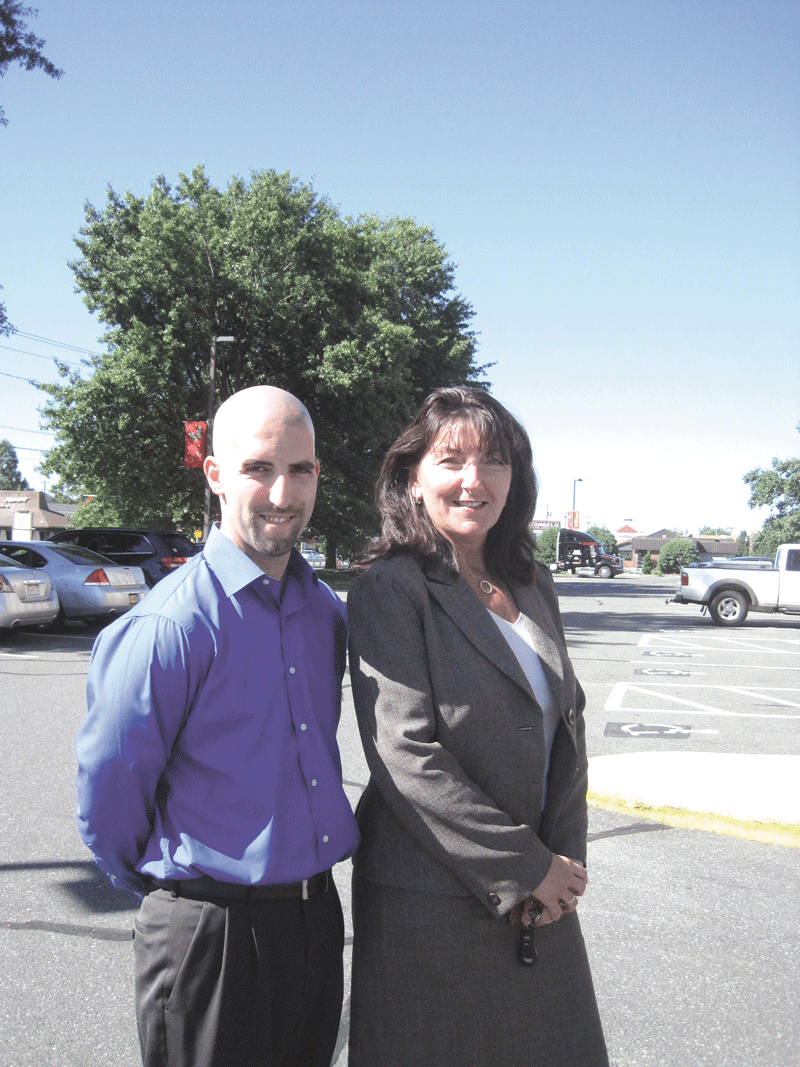
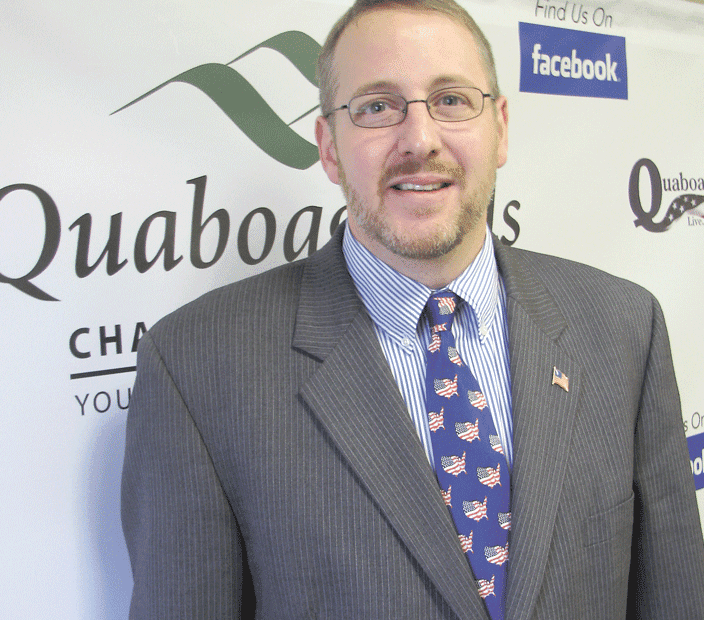
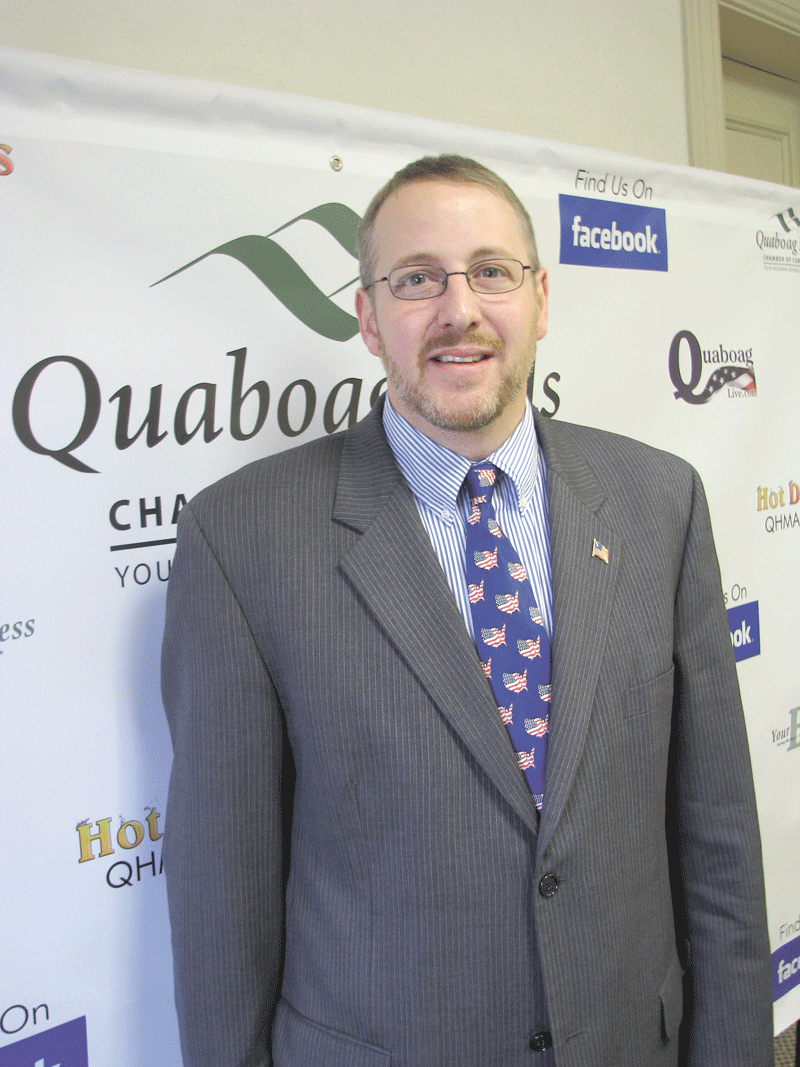
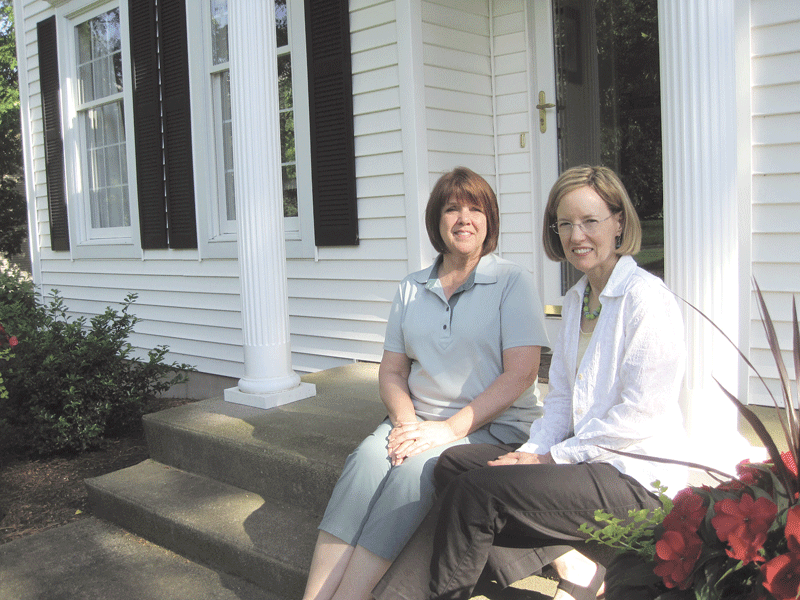
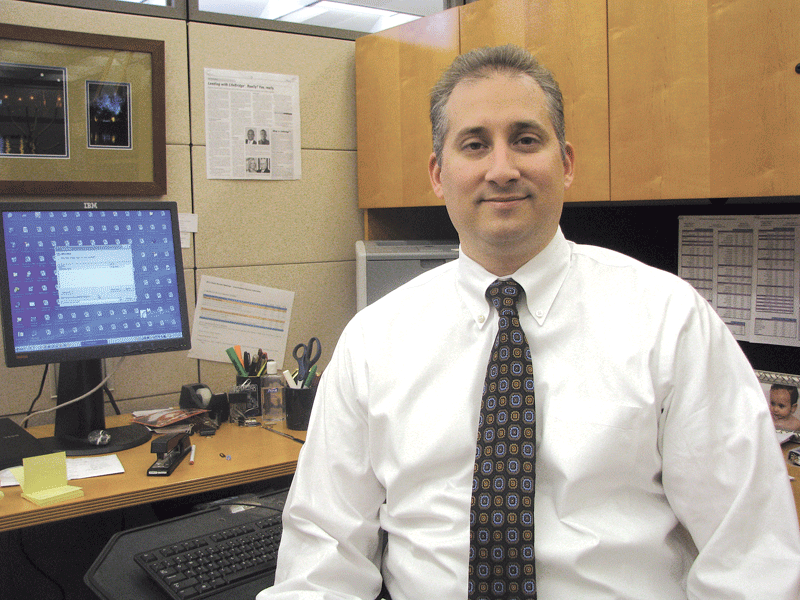
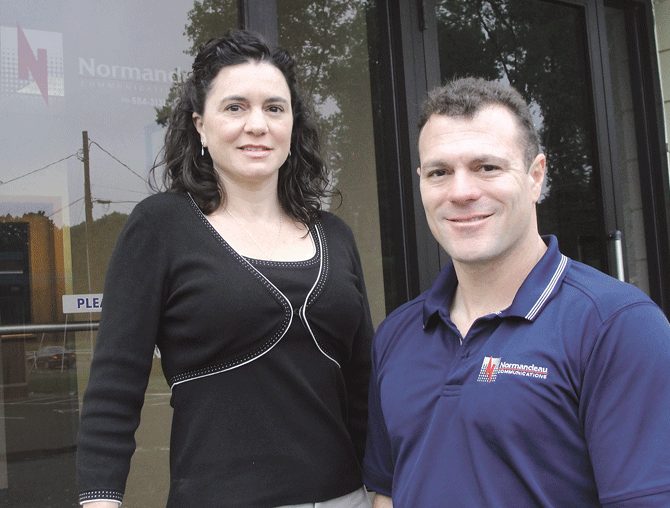
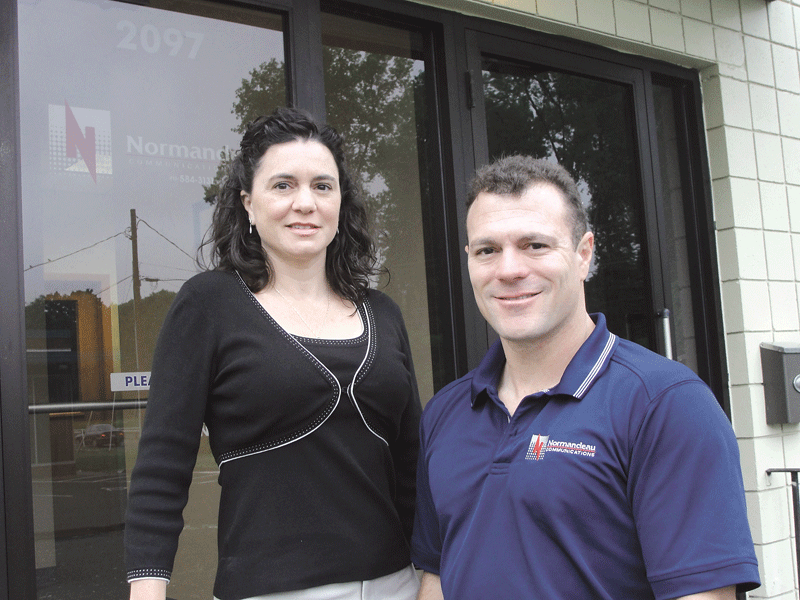
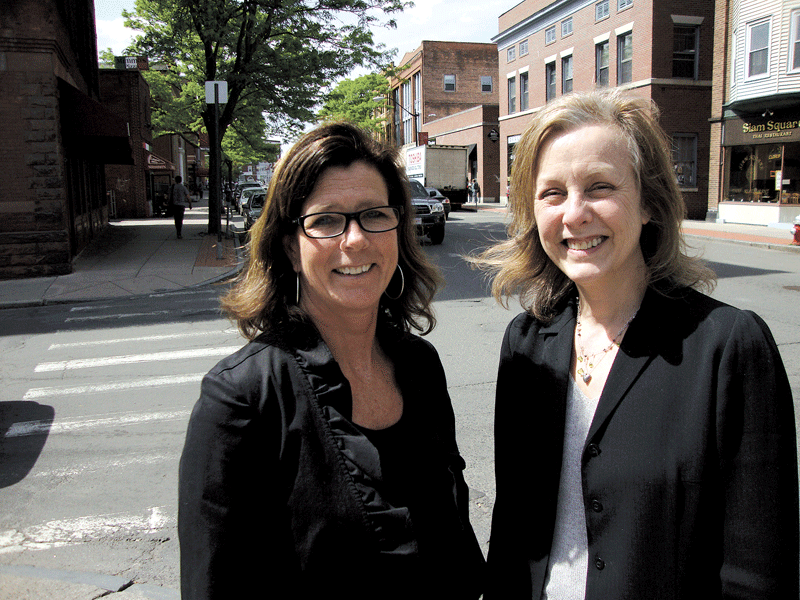
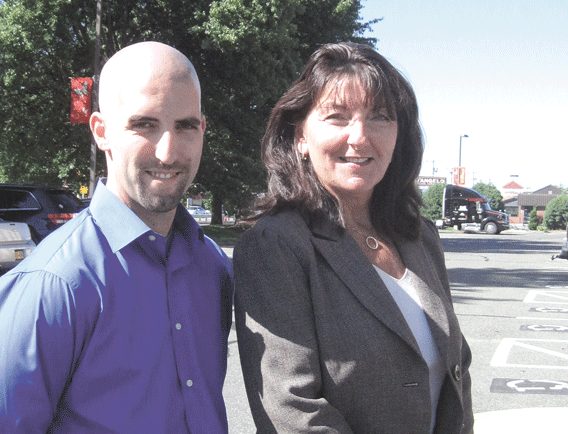
Michael Beaudry and Debra Boronski

Michael Beaudry and Debra Boronski are completing the first year of a new management arrangement that saves the WRC a significant amount of administrative expenses.

Remo Pizzichemi has passed the torch.

Specifically, Pizzichemi, vice president of the Welcome Group Inc., which manages the West Springfield Hampton Inn and the Springfield/Enfield Holiday Inn, has passed the chairmanship of the West of the River Chamber of Commerce (WRC), to 32-year-old Michael Beaudry, owner of Azon Liquors and TEG Business Consulting, a small marketing and branding company that focuses on social networking, both in Agawam.

Pizzichemi is proud of his past year helming the WRC, the business organization that serves West Springfield and Agawam — the towns directly west of the Connecticut River — characterizing his tenure as the start as a new way of operating (more on that later). But he’s cognizant of the need to keep a membership-based business organization interesting, active, and, most importantly, growing. With technology radically altering the various ways of communicating and doing business, the board felt strongly that a shot of youthful energy was necessary.

“We went in [to a new era of the chamber] with eyes wide open, knowing that we needed to address younger business officers on the board, and we did that primarily by asking Mike to be the chairman this year,” said Pizzichemi. “The fact that he owns two small businesses, it’s really helped us expand our horizons to not be the typical stale chamber, but to be a vibrant new chamber that focuses on young, new people and young, new businesses.”

Beaudry represents the demographic that the chamber needs to pay attention to, added Debra Boronski, the new executive director of the WRC, who also runs the Massachusetts Chamber of Commerce (again, more on that later). “And that is why, at our recent annual meeting, we had a speaker who talked about how each generation works with, and needs to work with, each other in the workplace.”

One of Beaudry’s first goals will be an overhaul of the chamber’s website, which he says will be user-friendly — offering the ability to purchase event or program tickets online, and providing a broad interactive forum for members, as opposed to a static, administratively managed blog — in addition to more Facebook and Twitter outreach.

While other chambers — not just in the Western Mass. region, but across the nation — are wringing their hands, wondering what they are going to do about their aging membership, and how they should appeal to that younger population that’s necessary for their survival, the WRC is actively creating events and programming that appear to be attracting that target audience, while retaining current businesses.

With catchy new names for networking programs — ‘Wicked Wednesdays’ instead of the typical ‘After 5’ event, for instance — and more attention to business advocacy, the WRC is healthy and growing, and not a moment too soon.

For this edition of Getting Down to Business, BusinessWest sat down with the past and present chairmen of the West of the River Chamber, as well as the relatively new executive director, who have all ridden out a recent storm of uncertainty that could have spelled the end of the WRC.


At a Crossroads

“This chamber finished last year with more members than it started with,” Boronski proudly stated.

In any chamber’s book, that would be a success, but it’s especially gratifying for this group, considering its recent turmoil. About two years ago, faced with a monthly management-fee increase request by the Affiliated Chambers of Commerce of Greater Springfield (ACCGS), which oversaw the administrative and event duties of the WRC, the board felt there was a need for an economical solution that wouldn’t continue to eat away at the bottom line.

“We were at a crossroads, where they asked us to contribute more money, and we just couldn’t see it; our board of directors formed a subcommittee to determine if there were any alternatives, because we literally had no idea if there was any alternative,” explained Pizzichemi.

The answer was to offer a unique deal to Boronski, who had been vice president of the ACCGS for 11 years and in 2008 founded, and remains president of, the Massachusetts Chamber of Commerce, a statewide chamber which provides discount business benefits, but more importantly provides businesses a presence on every legislative level across the Commonwealth.  The deal enabled Boronski to handle day-to-day WRC affairs as executive director, at a significantly reduced cost.

“Local chambers of commerce are looking at more effective ways to use their resources to better serve their members,” she said. “That’s how progressive this chamber is; they partnered with me and are using their member resources to provide services and products as opposed to paying rent, insurance premiums, and high salaries.”

Now, for the same $300 member fee plus $4 per employee (the creation of a ‘micro-business’ dues level for sole proprietorships is being discussed), which Pizzichemi said hasn’t been raised in four years, members not only receive the benefits of the WRC — including discounted or free consultation services, networking events, and business representation with both towns’ municipalities — but also reap all of the Massachusetts Chamber benefits.

Initially, the migration away from the ACCGS and the new managerial change were confusing to some members who left the chamber, thinking they had been members of the ACCGS, not the WRC.

“Some left because they thought that the ACCGS was a chamber, but it’s really a management organization, and they were members of the WRC all along, so the numbers dipped from 217 to 177 at one point. But we’re back up there,” Boronski explained, noting that the WRC surpassed its former peak last year, with 234 members.


Share the Wealth

As the WRC sorted out its new position as a standalone chamber with no bricks-and-mortar central office, it relied on old-fashioned teamwork and launched a mission to appeal to a younger audience while offering business advocacy and a set schedule of more events.

Boronski pointed to ‘Business with Bacon,’ which offers “breakfast with sizzling-hot topics,” which caused all to laugh — but the underlying feeling is that, be it funny, cute, or catchy … it’s working.

“We are getting members to come out for those and network, and our Wicked Wednesdays are attracting 50 to 70 people and that’s a strong showing,” said Beaudry.

But two years ago, there weren’t many events at all, Boronski said. “We’ve really made it a mission to have set schedules for purely networking events. In fact, the tag line for Wicked Wednesdays is ‘no cost, no agenda, no program, no kidding.’ That’s what small businesses need, to network and meet with people with no agenda other than that.”

“And,” Pizzichemi added, “the ability to offer real substance in the form of education and business support.”

He and Beaudry counted on their fingers the amount of money given out by the WRC in the form of grants. Six grants for $500 apiece were awarded a few years ago to member businesses for advertising assistance, and recently, four $1,000 business grants were awarded to help businesses with educational costs.

“For example, one of our auto-dealership repair services was awarded a grant to further the education of one of his technicians,” Pizzichemi said.

Another recent win for both the WRC and Agawam was the chamber’s advocacy for modifications to the business personal tax valuation that were ultimately passed, resulting in lowered taxes for hundreds of businesses. Other big hits include the recent approval of two solar-power developments (by Rivermoor Energy/Citizen’s Energy) for H.P. Hood and the town of Agawam, support for Costco’s liquor-store license and expansion, and the encouragement of a new economic-development administrator in West Springfield, which resulted in the recent hiring of Michele Cabral.

The three also point to the creation of the Agawam Small Business Assistance Center (ASBAC), which was initially funded by the town of Agawam but is now funded by the WRC. From the basics of Excel and QuickBooks to the ins and outs of social-media marketing, the ASBAC provides monthly educational seminars that help startup business members.

Next up for the WRC is the high-profile 6th Annual Food Fest West on Nov. 1 at Crestview Country Club. Pizzichemi anticipates almost 20 restaurants and more than 300 attendees.

“In a climate where almost every restaurant is overshadowed by franchises — certainly Riverdale Street in West Springfield is home to many — this elegant event celebrates our dining quality, but we do let the franchises in,” Pizzichemi said.

Along with the annual summer golf tournament and the hosting of candidate forums for local political races, ‘Coffee with the Mayor’ programs — open forum where members may converse with new West Springfield Mayor Gregory Neffinger and Agawam Mayor Richard Cohen — began this spring and have been well-received by members, said Beaudry.

As he takes charge, Beaudry’s goal is to achieve a constant flow of new, young businesses and retention of longtime members. Tapping his social-media knowledge, Boronski’s experience, and what he knows his generation needs to succeed in business, he and the companies that make up the WRC may just make this body’s transitional years a model for other chambers.


Elizabeth Taras can be reached at [email protected]

Features
Business Expo Offers Inspiration and Education to Attendees

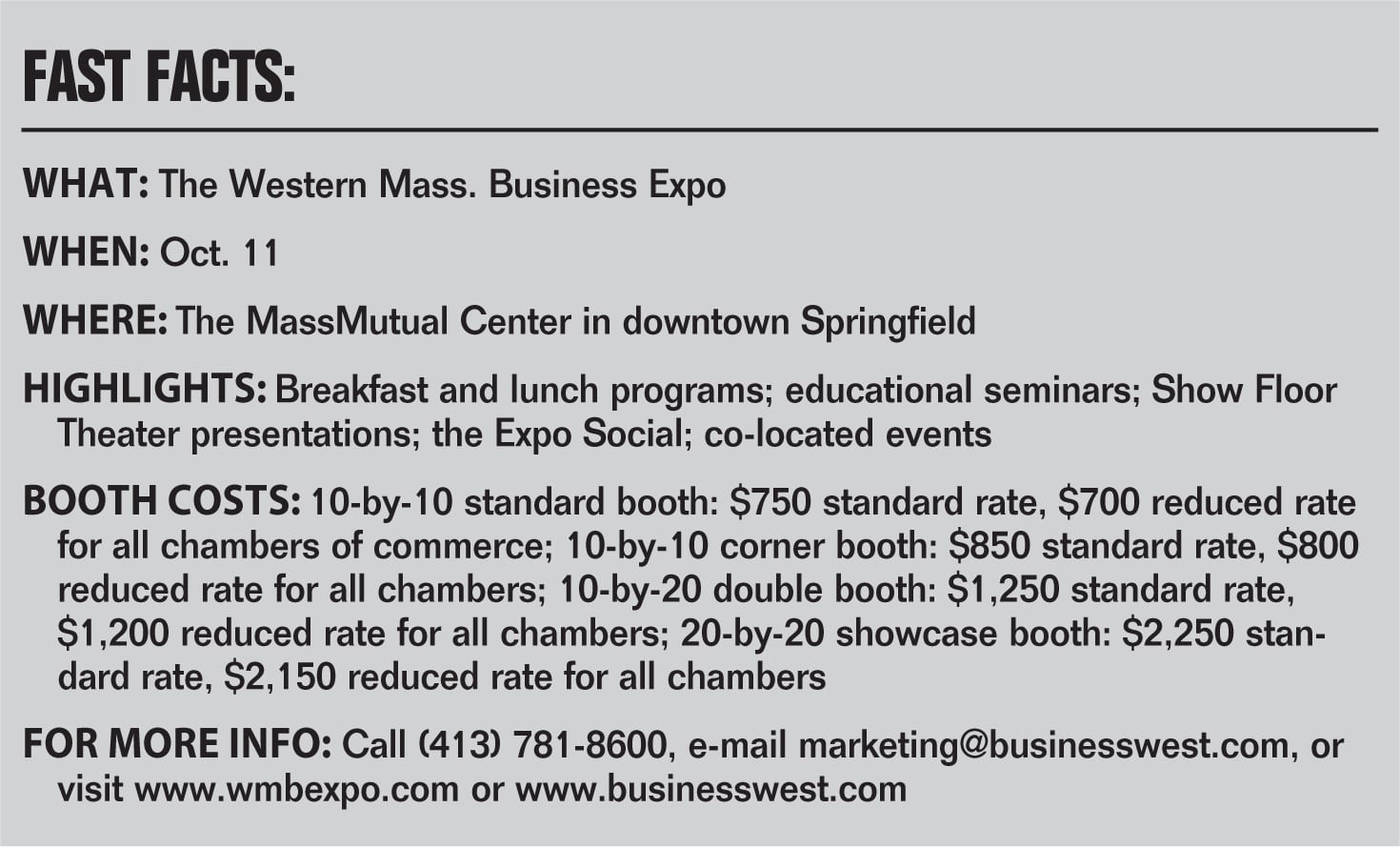
A man who climbed Mt. Everest. A woman who built her business from nothing and sold it for over $200 million. The head of the company that makes FiveFinger running shoes. These dynamic speakers and more are all at the Western Mass. Business Expo on Oct. 11. Why would you be anywhere else?

“This Expo is exceptionally well-developed this year,” said Kate Campiti, associate publisher of BusinessWest, which is producing this second annual event. “The variety of our inspiring, high-level speakers, informative programs, and the depth of our educational seminars are unmatched.”

From the Expo Kickoff Breakfast, with Mass. Commissioner of Higher Education Richard Freeland, presented by the Affiliated Chambers of Commerce of Greater Springfield (ACCGS), to the Expo Luncheon with Michael Clayton, Ambassador for Trust, who led the most successful BBB in the nation, and 12 educational seminars throughout the day, the schedule is fully packed. After only one year, the success of the Expo’s outreach and the audience that it attracts demonstrate how it has evolved into yet another educational experience.

“We’ve created what we’re calling ‘co-located’ events,” said Campiti. “These are events that would have occurred elsewhere, but the ease of opening up to our public has brought them to the Expo.”

Of those events, the first, from 8 to 9:30 a.m., includes the Purchasing Management Association of Western New England, a membership organization that serves the manufacturing community and the purchasing arm of those companies. The group will host their monthly meeting with Herb Robins, who will speak on “Lean 8 Wastes and Inefficiencies.”

From 10 a.m. to noon, the Pioneer Valley Planning Commission, UMass, and the Scibelli Enterprise Center at STCC will sponsor a Business Service Provider MeetUp. This event offers the nonprofits and agencies that serve small startups and entrepreneurs a chance to meet each other and learn more about how each agency helps their clients.

From 1 to 4 p.m., the Assoc. of Operations Management, a group that supports the manufacturing sector, will welcome Birgit Matthiesen of the Canadian Manufacturers and Exporters Assoc., who covers Capitol Hill and the Executive Branch, and works closely with U.S. associations toward heightened North American competitiveness.

In addition to more than 180 exhibitors, other highlights include Michael Matty of St. Germain Investment Management, who just recently climbed Mount Everest; Nancy Butler, author of Above All Else: Success in Life and Business; Michael Martin, GM of Vibram FiveFingers running shoes; four sessions about e-mail marketing and social media by Constant Contact; a Health Care Corridor; and the aforementioned co-located events that will provide impetus for the region’s business community to learn, build lasting relationships, and grow.

And speaking of relationships, the day will close out with what has become known simply as the Expo Social, where exhibitors and visitors can converse with each other from 4 to 6:30 p.m. Again, why would you want be anywhere else?

Sponsoring this entire event is Comcast Business Class, in addition to silver sponsors Health New England, Johnson & Hill Staffing Services, and Stevens 470. Booths are going fast, but a few are still available and can be ordered by calling (413) 781-8600, logging onto www.wmbexpo.com or www.BusinessWest.com, or e-mailing [email protected].

Briefcase Departments

Nonprofits Work Together to Beautify Zoo Grounds

SPRINGFIELD — Greater Springfield Habitat for Humanity (GSHFH) and the Zoo in Forest Park & Education Center joined together recently to improve the public grounds at the zoo during a volunteer event titled “Habitat Goes to the Zoo!” “Our primary mission is to provide decent, affordable housing to families, usually human families,” said Jennifer Schimmel, executive director of GSHFH. “Although this project falls outside of our typical mission, we are Springfield neighbors with the zoo, and the animals that live there need a little help with their housing as well. GSHFH is very adept at mobilizing and managing volunteers, and we are glad to be leveraging that talent on behalf of the zoo.” John Lewis, executive director of the Zoo in Forest Park, added, “we have spent much of this season recovering from big property damage from the storms of last year. We are so grateful that we were able to connect with Greater Springfield Habitat to put the finishing touches on many of our exhibits.” Habitat volunteers focused on painting 14 wooden buildings and animal sheds, he noted.


Blue Cross Blue Shield Awards $75,000 in Grants

BOSTON — To recognize Blue Cross Blue Shield of Massachusetts’ (BCBSMA) 75th anniversary, four not-for-profits each received a $75,000 grant to promote nutrition education and access to healthy foods. The BCBSMA 75th Anniversary Grants were awarded to the Holyoke Food and Fitness Policy Council, the Urban Food Initiative, Project Bread in partnership with Lynn Economic Opportunity Inc., and Boston Natural Areas Network. “For 75 years, Blue Cross has maintained a deep commitment to improving health outcomes and the quality of life for residents of the Commonwealth,” said Andrew Dreyfus, president and CEO of BCBSMA. “Many families continue to face financial hardship as a result of the economic downturn. With growing demand and shrinking resources, the safety-net services they turn to are severely strained. The BCBSMA 75th Anniversary Grants will help advance critical programs in the communities at greatest risk.” The four not-for-profit organizations were selected after a competitive process challenging them to develop programs to improve the lives of struggling families with children school-aged or younger in Massachusetts. Each organization takes a unique approach to advancing the health and nutrition of families facing economic hardship throughout the state. Locally, the Holyoke Food and Fitness Policy Council will implement a comprehensive nutrition education program geared towards influencing the eating habits of nearly 200 kindergarten students and their families located in three critical need elementary schools in Holyoke. The program provides education about eating and growing fresh produce, and includes field trips to local area farms. “Blue Cross’ support makes the Holyoke Kindergarten Initiative possible,” said Anne Cody, Kindergarten Initiative coordinator for the Holyoke Food and Fitness Policy Council. “Here in Holyoke, there is a large Latino population with strong preferences for culturally familiar produce. Thanks to Blue Cross, we can tie the students’ cultural backgrounds to local farming and healthy eating, which is an excellent approach to real and meaningful dietary preferences. We can’t thank Blue Cross enough for making the Holyoke Kindergarten Initiative a full, delicious adventure in local food and farming. Kids learn better when they eat better.”


Berkshire Money Management Named

Lead Sponsor of Artswalk

PITTSFIELD — First Fridays Artswalk, which began as the idea of local businesswoman Mary McGinnis and local artist Leo Mazzeo earlier this year, will become the first year-round monthly collaborative arts event in the Berkshires, thanks to a new lead sponsor. The local investment firm Berkshire Money Management has stepped up to the plate to support First Fridays Artswalk, enabling the initiative to continue into the winter and 2013. Berkshire Money Management President and Chief Investment Officer Allen Harris was impressed with the success of First Fridays Artswalk and saw an opportunity to help. “As a business owner, I see the incredible value of the arts and culture for the local economy and for our quality of life,” he said. “When I looked at the early success of the Artswalk and its positive impact for downtown businesses, it was clear to me that this needs to continue throughout the year.” He encouraged other local companies to also step up to the plate and support the event. Ferrin Gallery, who hosted the press conference announcing the new sponsor, was inspired by Harris to donate 15% of any sales made that day to First Fridays Artswalk. The events are held the first Friday of every month from 5 to 8 p.m. in downtown Pittsfield, featuring art shows in more than two dozen galleries, shops, and restaurants, often featuring artist receptions, artist talks, and other special events. McGinnis, owner of Gallery 25 and Mary’s Carrot Cake, has been measuring the direct economic impact in just the first four months of Artswalks. So far, she has documented more than $40,000 in sales of artwork and other items, and she’s not finished contacting businesses. Berkshire Money Management joins other major sponsors of First Fridays Artswalk, including Gallery 25, the Massachusetts Cultural Council/Cultural Pittsfield, and the Berkshire Art Assoc., along with the Berkshire Bank Foundation, Berkshire Heath Systems, Berkshire Theatre Group, and Downtown Pittsfield Inc. Downtown Artswalk partners include Empty Set Projects, Miller Supply, Berkshire Museum, Crowne Plaza, Brix Wine Bar, Marketplace Café, Downtown Pittsfield Inc., the Lichtenstein Center for the Arts, Pateez Boutique, Brenda & Co., Bagels Too, Berkshire Carousel Gallery, Steven Valenti Clothing for Men, Berkshire Community College Intermodal Gallery, Paul Rich  Sons, Spice Dragon, Alchemy Initiative, Art.On.No, Treehouse, Gallery 25, Mad Macs, BINGO!, Wild Sage, Aerus Electrolux, Y Bar, Ferrin Gallery, Circa, the Lantern, West Side Clock Shop, and Berkshire Medical Center. For more information, visit www.firstfridaysartwalk.com.


Construction Unemployment Falls

WASHINGTON, D.C. — The nation’s construction industry added 1,000 jobs in August, lowering the unemployment rate in the sector from 12.3% in July to 11.3% last month, according to the Sept. 7 employment report by the U.S. Labor Department. Year over year, the construction industry added 17,000 jobs, or 0.3%, rendering it among America’s slowest-expanding industries. The non-residential building-construction sector lost 2,400 jobs for the month and 4,900 jobs, or 0.7%, compared to one year ago. August employment in the sector stood at 653,200 jobs. Employment in the residential building-construction sector slipped by 1,100 jobs in August, but increased by 5,200 jobs, or 0.9%, during the past 12 months. Residential building-construction employment in August stood at 564,000 jobs. Non-residential specialty-trade contractor employment declined by 6,400 jobs in August and is down by 18,900 jobs, or 0.9%, from same time last year. In contrast, residential specialty-trade contractors added 8,200 jobs for the month and gained 18,700 jobs, or 1.3%, from one year ago. The heavy and civil-engineering construction sector gained 2,800 jobs in August and added 17,400 jobs, or 2.1%, since August 2011. Across all industries, the nation added 96,000 jobs as the private sector expanded by 103,000 jobs and the public sector shrank by 7,000 jobs. Year over year, the nation added 1,808,000 jobs, or 1.4%. The nation’s unemployment rate in August fell to 8.1%, down from 8.3% in July. “The fact that the construction-industry unemployment rate in August declined to 11.3% — the lowest level since October 2008 — seemed to be a pleasant surprise,” said Associated Builders and Contractors Chief Economist Anirban Basu. “But under further examination, this is largely due to former construction workers moving to other industries or leaving the workforce altogether. On a national level, the Labor Department reports a record-high 88,921,000 Americans are not in the civilian workforce. What is more discouraging, 368,000 people simply dropped out of the labor force last month and did not even look for a job. In the non-residential construction category, the news is similar. The sector lost additional employment in August, is down on a year-over-year basis, and posted negative job growth in six of the past seven months.” Basu noted that investors remain concerned by rising energy prices, America’s ‘fiscal cliff’ regarding year-end tax-cut expirations, the November elections, and impending policy decisions regarding interest rates and money supply. “Until at least some of this uncertainty is resolved, the non-residential construction labor market will continue to underperform.”


Business Confidence Index Continues to Rebound

BOSTON — The Associated Industries of Massachusetts (AIM) Business Confidence Index added three points in August to 55.2, continuing its recuperation from an 8.5-point plunge in June to 48.3. “What we have seen in the past few months encapsulates the overall course of this economic recovery,” said Raymond Torto, global chief economist at CB Richard Ellis Group Inc. and chair of AIM’s Board of Economic Advisors. “We are beset by persistent uncertainties — the June survey took place at a time of disturbing news from Europe, and of course there are domestic concerns as well — while, at the same time, the recovery is consolidating and prevailing business conditions are generally positive.” Torto noted that midyear drops in both 2010 and 2011 lasted longer than this year’s single month of decline. “We’re already most of the way back to May’s level. The Index is up six points from last August and 7.5 over two years. For the AIM Index as for the economy, progress since mid-2010 has been slow and bumpy, but the overall trend is upward.” The AIM Index, which has appeared since July 1991, is calculated on a 100-point scale, with 50 as neutral; a reading above 50 is positive, while below 50 is negative. The Index reached its historic high of 68.5 on two occasions in 1997-98, and its all-time low of 33.3 in February 2009.

Chamber Corners Departments

ACCGS

www.myonlinechamber.com

(413) 787-1555


• Oct. 2: Rake in the Business Tabletop Showcase, 4:30-7 p.m., 1599 Memorial Dr., Chicopee. The ACCGS has joined the Greater Chicopee, Holyoke, and Westfield chambers of commerce to bring members an affordable way to market their business. Platinum Sponsors: Charter Business, PeoplesBank, and Westfield Bank. Gold Sponsors: BusinessWest, First Niagara Bank, the Westfield News, and Harrington Insurance. Tables cost $100 and include table covering, skirt, and electricity (if needed). This opportunity is open to chamber members only. Make table reservations online at www.myonlinechamber.com, by calling CecileLarose at (413) 755-1313, or e-mailing larose@myonlinechamber. You may also fax your form to (413) 755-1322. The cost to attend the event is $5 if pre-registered, $10 at the door.

• Oct. 11: The Western Mass Business Expo, 7:30 a.m. to 6 p.m., MassMutual Center, Springfield. The ACCGS is partnering with BusinessWest on the event, which starts with the Chamber Breakfast at 7:30 a.m. in the ballroom, where Commissioner of Higher Education Richard Freeland will release the report “Time to Lead: the Need for Excellence in Massachusetts Public Higher Education.” Also planned are brief comments by area college presidents. Tickets cost $25 per person for breakfast and $45 per person for lunch. For reservations to the breakfast or lunch, contact Cecile Larose at [email protected], or register online at www.myonlinechamber.com.

• Oct. 17: Business After 5, 5-7 p.m., Six Flags New England, Agawam. Come join the chamber as Six Flags offers an inside look at the Looney Tunes characters and how they prepare to meet the public. Sponsorships are still available for this event. The Chamber has reduced the price of its After 5 this season to $5 for members and $10 for non-members. Reservations are accepted at www.myonlinechamber.com or by emailing Cecile Larose at [email protected]. There will be food and a cash bar.

• Oct. 26: Super 60 Luncheon, 11:30 a.m. to 1:30 p.m., Chez Josef, 176 Shoemaker Lane, Agawam. This annual chamber event recognizes the top 60 companies in both revenue and growth. Presenting sponsor is Health New England. Other sponsorship opportunities are still available. Guest speakers are Stanley Kowalski III, owner and founder of FloDesign Inc., and Secretary of Housing and Economic Development Greg Bialecki, who will show how government and private industry can work together successfully in this environment. Cost is $50 for members, $70 for non-members. Reservations can be made online at www.myonlinechamber.com or by emailing Cecile Larose at [email protected].


Amherst Area Chamber of Commerce

www.amherstarea.com

(413) 253-0700


• Oct. 4: Amherst Area Chamber of Commerce Annual Awards Dinner, 5:30-9 p.m., Lord Jeffery Inn. Annual Awards Dinner presented by PeoplesBank. Emceed by Monte Belmonte of 93.9 FM. This year’s A+ Awards recipients are the Hitchcock Center for the Environment, Legacy Award for Environmental Leadership; Ray Shafie, former owner of Copy Cat Print Shop, Lifetime Achievement in Business; Chris Riddle, retired architect and founder of Kuhn Riddle Architects, Lifetime Achievement in Business; Youssef Fadel, New England Promotional Marketing, Chamber MVP. Additional sponsors: Health New England, J.F. Conlon & Associates.

• Oct. 12: Chamber Legislative Breakfast, 7:15-9 a.m., Lord Jeffery Inn. Cost: $15 for non-members, $12 for members.


Franklin County Chamber of Commerce

www.franklincc.org

(413) 773-5463


• Oct. 12-13: Brick & Mortar International Video Arts Festival, 4-10 p.m., downtown Greenfield. A walking tour of video art. Free admission. See www.greenfieldvideofest.org for more information.

• Oct. 19: Breakfast Series Program, 7:30-9 a.m., Bella Notte Restaurant, Huckle Hill Road, Bernardston. Thank you to U.S. Rep. John Olver. Sponsored by Greenfield Cooperative Bank and the Academy at Charlemont. Cost: $12 for members, $15 for non-members. Call (413) 773-5463 for reservations.


Greater Easthampton Chamber of Commerce

www.easthamptonchamber.org

(413) 527-9414


• Oct. 6: Casino Night, 6-11 p.m., One Cottage St., Easthampton. Come try your luck at an array of gaming tables. Lucky winners will win prizes. Hors d’oeuvres and a cash beer and wine bar throughout the evening. Major Sponsors: Easthampton Savings Bank, Finck & Perras Insurance Agency. Cost: $25 in advance, $30 at the door. For more information, visit www.easthamptonchamber.org.

• Oct. 11: Networking by Night Business Card Exchange, 5-7 p.m., hosted and sponsored by Cooley Dickinson Southampton, Rehabilitation & Outpatient Services, Big Y Plaza, College Highway, Southampton. Hors d’oeuvres and door prizes. Cost: $5 for members, $15 for non-members.

• Oct. 22: Celebrity Bartenders Night, 6-9 p.m., Opa-Opa Steakhouse & Brewery, 169 College Highway, Southampton. Join us for a night of fun with local celebrities mixing drinks. Your tips benefit the chamber’s holiday-lighting fund. Raffles and fun. Free admission.


Greater Holyoke Chamber of Commerce

www.holyokechamber.com

(413) 534-3376


• Oct. 2: Rake in the Business Table Top Showcase, 5-7:30 p.m., Chicopee Castle of Knights. Four area chambers — Holyoke, Chicopee, Westfield, and ACCGS — are getting together to present a tabletop mini-trade show. Tables cost $100. Call (413) 534-3376 to register, or sign up online at www.holyokechamber.com.

• Oct. 3: Sales Training Breakfast, 7:45-9 a.m., the Log Cabin, 500 Easthampton Road, Holyoke. “How to Close the Sale in the New Economy,” Marc Wayshak, author of two books on sales and leadership, shares his revolutionary selling system for salespeople, entrepreneurs, and companies alike. Cost: $25 for members, $30 at the door and for non-members. Call (413) 534-3376 to register, or sign up online at www.holyokechamber.com.

• Oct. 10: Autumn Business Breakfast, 7:30-9 a.m., the Log Cabin, 500 Easthampton Road, Holyoke. Sponsored by the Republican and Holyoke Medical Center. Recognizing new members, business milestones, and networking breakfast meeting. Cost: $20 in advance, $25 at the door, $30 for non-members. Call (413) 534-3376 to register, or sign up online at www.holyokechamber.com.

• Oct. 17: Chamber After Hours, 5-7 p.m., the Pioneer Valley Railroad train at Holyoke Heritage Park. Business networking event to take place on a train car and caboose, including a 50/50 raffle, a variety of door prize, and complimentary appetizers and beverages. Cost: $10 for members, $15 for non-members. Call (413) 534-3376 to register, or sign up online at www.holyokechamber.com.

• Oct. 22: “Building a Small Business” Seminar, the PeoplesBank Conference Center at the Kittredge Business Center. Reception at 5 p.m., followed by a 6 p.m. panel discussion on “Writing a Business Plan, Sales, Marketing, Networking, and Adapting to a Changing Economy.” Free admission. Call Joanna Brown at (413) 552-2253.


Greater Northampton Chamber of Commerce

www.explorenorthampton.com

(413) 584-1900


• Oct. 3: Arrive @ 5, 5-7 p.m., 99 Pleasant St., Northampton. Sponsored by Innovative Business Systems, Crocker Communications, and Pioneer Training. Cost: $10 for members.

Professional Women’s Chamber

www.professionalwomenschamber.com

(413) 755-1310


• Nov. 14: November Luncheon, 11:30 a.m. to 1 p.m., Max’s Tavern, MassMutual Room, Basketball Hall of Fame, Springfield. Guest Speaker: Lynn Ostrowski of Health New England. Cost: $25 for members, $35 for non-members.


Greater Westfield Chamber of Commerce

www.westfieldbiz.org

(413) 568-1618


• Oct. 2: Rake in the Business Table Top Showcase, Castle of Knights, Chicopee. Presented by the Greater Chicopee, Greater Holyoke, Greater Westfield, and Affiliated Chambers of Commerce of Greater Springfield. Exhibitor tables cost $100.00 (Westfield’s new members get a 50% discount), and each receive six extra passes to the show. Cost: $5 in advance, $10 at the door. Each ticket is entered into a drawing for a Kindle Touch with a leather case. Platinum Sponsors are Westfield Bank, PeoplesBank, and Charter Business; Gold Sponsors are BusinessWest, the Westfield News, First Niagara, and Harrington Insurance Agency Inc. Call Pam at (413) 568-1618 or e-mail [email protected] to register.

• Oct. 17: WestNet Oktoberfest, 5-7 p.m., East Mountain Country Club, 1458 East Mountain Road, Westfield. Sponsors: Comcast and Frosted Swirl Cupcakes. Cost: $10 for members, $15 cash for non-members. Your first WestNet is always complimentary. Call Pam at (413) 568-1618 or e-mail [email protected] to register.

Meetings & Conventions Sections
Eastover, a Blast from the Past, Has a New Owner and New Vision

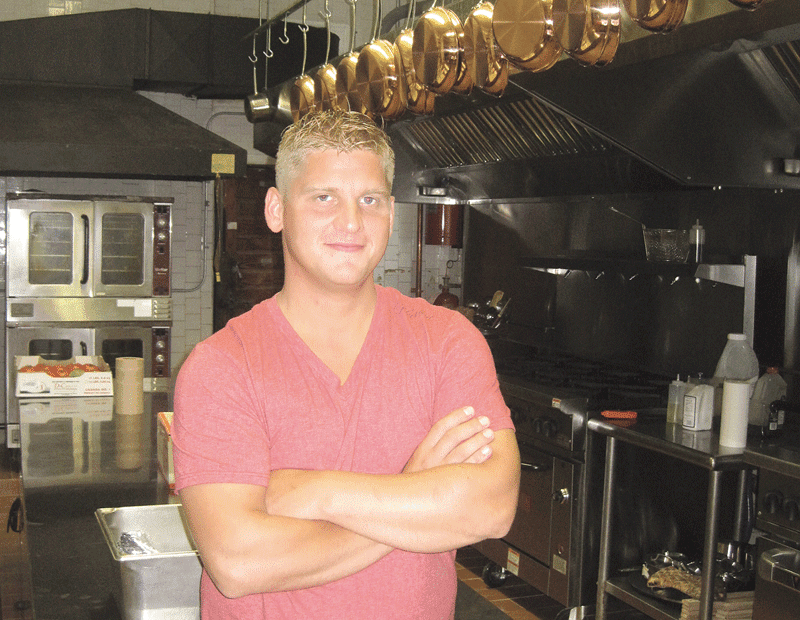
Two inexpensive Adirondack chairs sit side by side overlooking the Mt. Greylock range and October Mountain on one of the highest points of the 550-acre Eastover Hotel & Retreat campus in Lenox. They were put there by the facility’s new owner and head chef just to grab a few minutes to relax whenever they can.

“But every time we look, guests are sitting in them, and we never get a chance,” laughed Josh Mouzakes, executive chef for the recently purchased 100-year-old Gilded Age mansion and retreat property. “We picked them up at BJ’s … it’s kind of our joke.”

The fact that these two haven’t had many opportunities to sit and enjoy the stunning view bodes well for Eastover. For starters, they haven’t had the time, because they’ve been busy with a massive restoration effort that is still a work in progress. And when they have found a few minutes, paying customers have beaten them to it.

There haven’t been any of those at Eastover for some time. Indeed, this resort with an intriguing though somewhat checkered past that included rock concerts and get-togethers for nudists (more on all that later) had fallen on hard times — make that very hard times — in recent years, and is now looking at a future dominated by vast potential but also question marks.

That’s because the new owner, Long Island resident and former software engineer Yingxing Wang, doesn’t know exactly what she wants to do with the place. She has some ideas, mostly involving education, science, and nature — her original vision was for an international student exchange and destination for teens to learn about farming and gardening —  but the vision is still coming together.

While work continues on the mansion, which Wang acquired for just under $5 million, the facility has reopened and hosted a few events, such as a fashion show — Wang and Mouzakes both call this summer a “test run” — with more on the docket, including a weekend rock festival later this month, a mini-Woodstock aptly named BerkshireStock.

After that, well, it’s probably up to the imagination of people who see and read about Eastover and imagine the possibilities, said Wang, who did essentially that, only on a much grander scale, when she first saw the mansion. Curiosity eventually led to speculation, and a rehab job she couldn’t have imagined when she signed on the dotted line.

“I was curious about what was behind the brick and iron fence on East Street,” she told BusinessWest. “But I didn’t comprehend the extent of the structural work at the time.”

The intensively private Wang, who declined to be photographed for this story, deferring to staff instead, didn’t say how much she and her husband, a partner in a computer firm, have sunk into this restoration, but hinted that it’s more than the purchase price.

From a business perspective, she’s not sure when or even if she can recover those costs, but for now she’s content to let her imagination be her guide and business partner.

For this issue and its focus on meetings and conventions, BusinessWest ventured to Lenox to chronicle the emerging next chapter in the story of Eastover. No one knows how it will unfold — not even the people writing it.

Donna Zsofka

Donna Zsofka says the Old Stable, featuring a new sound system, is spacious enough to host up to 475 guests.

Past Is Prologue

That story begins in 1910, near the end of the Gilded Age, when Harris Fahenstock, a founding member of the First National Bank of New York, built the estate as a summer cottage, one of many that were built in Lenox during that period.

Sold by Fahenstock’s heirs in the 1940s, the property was eventually acquired by Stamford, Conn. resident George Bisacca at auction for a mere $41,500. He founded Eastover Resort in 1947.

Bisacca, a former clown in the Ringling Brothers Circus (which explains the strange primary ‘clown colors’ painted all over the mansion basement walls), made his money in a tire-repair shop. According to local legend and some published reports, he was entrepreneurial, a free spirit, a forward thinker, and a partier. Blending those traits, he created a then-rare resort for singles, which thrived in the ’50s and ’60s. He later added family-oriented activities as the young Baby Boomers shifted their leisure-time needs.

A Civil War buff, Bisacca had an extensive war-memorabilia collection, and kept a herd of bison on site, which, in addition to the unique ‘lifestyle-themed’ weekends (for bikers, nudists, non-drinkers, and women only), made Eastover a one-of-a-kind destination in the Berkshires and the Northeast in general. Bisacca’s daughter and granddaughter, Dorothy “Ticki” Winsor and Betsy Kelly, respectively, continued the resort theme after his death until 2003.

Wang admitted that she knew little of this history when she first encountered Eastover, and “fell in love with the place.”

Josh Mouzakes

Josh Mouzakes brings not only culinary expertise to Eastover, but also experience opening hotels.

Actually, what she loved was its potential, the location, and the views. The mansion itself was in very tough shape following years of neglect, both before and after it ceased being a resort destination.

Indeed, while reports say the mother-daughter team that operated Eastover after Bisacca’s death proudly boasted that little had changed since the resort first opened in 1947 (which was a plus for a strong following who happily returned year after year), that phrase also applied to the 20-plus buildings and the entire infrastructure. In short, there was no upkeep.

“There really wasn’t any infrastructure,” said Wang, adding that recent, and costly, renovations include new slate roofs on the stately stable, which houses the giant dance hall, the largest of its kind in Western or Central Mass.; a water main and sewer main; fiber optics and cable TV; a completely renovated indoor pool and slate walkways; all new, ADA-required handicapped ramps and bathrooms; working exit signage; sprinkler systems; and much more.

Wang admits that most developers would have bulldozed the place and started over, but she was able to look past all the work and see the beauty and potential that was clearly there. And she thanked town officials for facilitating her efforts.

“I have to say that the board of selectmen are pro-business, and considering the amount of work that we have done over the past three years, it would be nearly impossible in this time if we didn’t have their help.”

One person she credits with a majority of that help is Lenox Building Inspector William Thornton Jr., whom she has leaned on considerably after realizing the full extent of the money pit she’d purchased.

“I joke that Bill was our most affordable consultant; he knows code by heart, and I call him on his cell phone when I have a question instead of some expensive consultant,” she said, adding that her professional association is very serious.  “Yes, he is strict, but very fair, and he is demanding of everybody.”

Thornton isn’t the only one Wang leans on as she dives into a business venture and an economic sector — hospitality — that she admittedly knows little about.

She’s also relying heavily on Mouzakes, who brings not only culinary expertise to the equation, but also experience with opening hotels.

The reason he is now the chef at Eastover is due to his connections to well-known master chefs in the New York area and Europe, and as a quasi-hotel consultant, based on his experience in opening hotels on Long Island, New York, and, most recently, the five-year, $20 million rehab of the Lord Jeffery Inn in Amherst.

He said his cuisine style is contemporary American with French-influenced techniques (picture food creatively arranged on a plate that not only offers phenomenal flavor, but looks like art).

“The easiest way to categorize it is with local, sustainable, modern ingredients,” he explained. “If we can get the best food we can get, as close as possible, and use properly rained skills, that will be our signature.”

“That’s what we treat food here like — art,” added Wang. And the fresh ingredients for  that art will soon start growing right outside the slate patio with an herbal garden on the site of the former outdoor pool area, which was in such distressed condition, it had to be filled in.


Looking Forward

When asked if Eastover is or will become competition for neighboring exclusive destinations such as Cranwell Resort Spa & Golf Club and Canyon Ranch, Wang paused and then offered some levity.

“The reason we have no competitors is because no idiot in this world would invest so much money in this,” she told BusinessWest before turning more serious and noting that Eastover won’t be like those resorts in many respects. “We are different; the focus on nature is what sets us apart.”

She stressed again that she doesn’t know exactly what the resort will become, but she knows what it won’t be.

“I’m not exactly sure how we will end up, but we are not a fancy hotel with room service,” she explained. “We are a retreat to enjoy nature, and if you are looking for that other type of place, then it’s not here.”

She also knows that her original vision — of a destination for foreign-exchange  students — is not economically viable. But she and her staff of nearly 30, including Mouzakes and Donna Zsofka, the event coordinator, are letting clients and potential clients help shape what Eastover can become.

Things started with a grand-opening weekend in June, which both Wang and Mouzakes say had its share of successes and small disasters. Shortly thereafter came an international fashion show that brought young people from the New York City area. On the calendar are a  fund-raiser later this month for the Berkshire Grown project, which supports local farmers and food pantries, as well as BerkshireStock.

Wang said that two-day event will present 30 local and regional bands (who are all selling tickets) and could attract several thousand concertgoers and overnight campers to the property. “We can handle up to 5,000 easily because that field is a natural amphitheater,” she noted.

“Aside from our opening weekend, people have come to us with events they want to do here,” said Mouzakes, pointing to BerkshireStock as a prime example of how the venue will likely be become popular for people looking to stage events and get-togethers that would be considered beyond the ordinary.

Now open for business, said Zsofka, is the Tally Ho Pub, which offers unique seating in the former horse stalls (10 per booth), and is open to the public Fridays and Saturdays. Weddings, family reunions, and corporate events can be booked in the wood-paneled library or two other lavish mansion rooms that can accommodate 25 to 40 people, while the light-drenched Terrace Room can seat nearly 150.

Big enough for any event, said Zsofka, the Old Stable, with its new sound system, allows seated dining for 350 guests with a total capacity of 475, and at some point, Mouzakes will be refining the plans for a fine restaurant that will draw produce from local farmers as well as that soon-to-be-added herbal garden.

In the mansion, Wang is adding high-end bathrooms to each of the large second-floor former bedrooms (all have original fireplaces), which will reduce the guest rooms from 15 to 12, but offer at least one floor of exclusive quarters.

For now, marketing has been limited and understated (there is a Facebook page), said Mouzakes, adding that word-of-mouth is helping people discover — or, in many cases, rediscover — Eastover. Both he and Wang believe curiosity on the part of many who came here decades ago is helping to fill hotel rooms, generate inquiries about future events, and, yes, fill those aforementioned Adirondack chairs.

And it is the resort’s early success in attracting young people that has Wang encouraged — and on a number of levels.

She said her many visits to Lenox have convinced her that the area needs an infusion of youth — not that aging Baby Boomers are not welcome; they certainly are — but she is also encouraged by the younger demographic’s interest in the environment and getting in touch with nature.

“I am surprised to find that the upper-middle generation is not appreciative of the environment; it’s the young people who are,” she noted. “They have been taught about nature since they were young in school, and we need to figure out how to bring more young people here.”


Time Will Tell

While Eastover is officially open for business, there is still considerable work to be done at what could be called a resort-in-progress.

“I tell my staff to just follow your heart — everything will follow,” said Wang. “I also tell them to appreciate the process.”

That process won’t actually end, said Wang and Mouzakes, noting that the vision for the new Eastover, if it can be called that, will probably take years to become reality.

It might just be that long before these two can actually get to sit in one of those Adirondack chairs. But they’re certainly not complaining, because that means they’re very busy, and that people are once again discovering Eastover.


Elizabeth Taras can be reached at [email protected]
Features
South Hadley & Granby Chamber Relies on Support

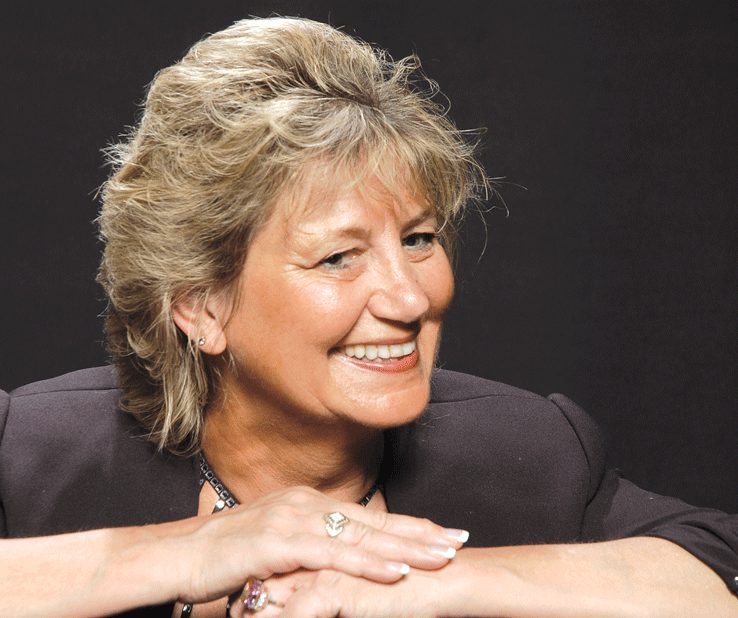
Susan Stockman and Steven Markow

Susan Stockman and Steven Markow say the chamber relies on a support network woven from about 100 mostly small businesses and organizations in the two towns.

Steven Markow was talking about life as a small-business owner in a small community. And to make his point about what he liked most about that life, he recalled a recent episode at the supermarket.

“A customer came up to me, called me by name, and said, ‘I need your help; I’ve broken my glasses,’” said Markow, an optometrist and owner of Village Eye Care in South Hadley. “I really like that. It’s just what I love about living and having a business in a small town; my customers can come up to me in the grocery store, and I know them by name, and I can know right away what they need.”

The business community in South Hadley and neighboring Granby is dominated by such small businesses, he went on, noting that, while this constituency certainly contributes to the social fabric of those towns, it creates challenges, as well as opportunities, for the South Hadley & Granby Chamber of Commerce, which he will serve as president beginning in January.

Elaborating, he said that, while the chamber has some larger members — Mount Holyoke College would definitely be in that category — most of the 100 businesses and organizations involved with the chamber would be considered small if not very small. This creates fiscal challenges (dues are set based on overall employment figures) and limitations on overall support for chamber initiatives, he noted, adding that what this chamber lacks in terms of a membership base and large companies, it makes up with imagination, energy, and resourcefulness.

Those were some of the words chosen by the chamber’s part-time executive director and only employee, Susan Stockman, former director of Corporate Communications for Yankee Candle. She said the chamber is able to carry out its broad mission of serving members and promoting the business community through the donations of time, talent, resources, and vision from supporters such as Mount Holyoke and its president, Lynn Pasquerella, who Stockman refers to as “a dynamo.”

“A while back, she opened her home to our members, and it was a highly attended networking event,” Stockman explained. “We have to rely on others in the community to support us in various ways so we can support our members. The police and fire department, South Hadley School Band, and even our small group of volunteers that produce the annual Holiday Stroll [an outdoor winter festival filled with music, shopping discounts, and food in the Village Commons], they all help.”

Markow agreed. “We take advantage of working as a group, and we’ve even gained members who want to help with the Holiday Stroll, which helps to develop our betterment goals for the community.”

For this issue’s Getting Down to Business focus, BusinessWest talked with Stockman and Markow about this support network that has evolved over the years, and how it is integral to the chamber’s efforts to help improve quality of life in South Hadley and Granby.


It Takes A Village

When Stockman retired from Yankee Candle in the fall of 2005, it took less than four months, even through the typically busy holiday season, for her to realize that full days of downtime were not for her.

“I was so bored, I couldn’t stand it,” she told BusinessWest. “But this opportunity came about, and I had a good deal of experience working with the Franklin County Chamber of Commerce, since Yankee Candle was the largest employer in that area.”

Her background in corporate communications at the renowned tourist attraction was a good fit for the town of South Hadley, and since the position was only part-time, skills that included effectively communicating business objectives and working with volunteers through past chamber functions were welcomed, said Stockman.

But the road hasn’t been easy. “We’re very different from every other chamber in the region in that we are not in a tourism area, and that doesn’t offer us any funding sources, like the state funding that Springfield or even the Berkshires receive.”

But Markow adds that what South Hadley lacks in tourism destinations, it makes up for in the nationally recognized college — Mount Holyoke — and the aforementioned high quality of life and atmosphere that both towns offer. While Granby may be more of an agricultural community, it recently became the new home of the MacDuffie School, a highly respected, private, international boarding high school, which relocated from downtown Springfield.

Markow says there are still many businesses in Granby, but those come with what he calls “outreach issues.”

“Granby has plenty of business, but it tends to be home-based, like contractors, electricians, and plumbers — those businesses that are service-related,” he explained. “And with just a part-time executive director and those of us in the chamber who are already very busy running our own businesses, it’s difficult to go out and speak to them about the pluses of being with the chamber.”

Still, membership has held fairly steady in recent years, despite some losses prompted by the Great Recession.

“It’s been a hard time for many, but most of those that we lost are small, one-person businesses or those that had personal or family concerns,” said Stockman, who noted that membership, which was at 125 a few years ago, is now closer to 100. She noted a spate of recent closings or businesses restructurings, mostly in the restaurant industry along the Route 202 corridor. “But already, we see new businesses taking over those spaces — a gourmet deli, for one — and that is encouraging.”

Overall, membership is just one of the areas where the chamber relies on its members and volunteers to help grow membership and otherwise enable the chamber to carry out its mission, said Markow. “It’s as a group that we can make progress.”

Stockman noted that even the small town of Greenfield has a paid official charged with business development. “We are that person for South Hadley and Granby.”

Despite these challenges, the chamber has been able to bring value to members — and help many small businesses mature and grow — by enabling them to make contacts, largely through a host of formal and informal networking events, as well as informational sessions designed to keep them abreast of issues impacting all businesses in the Commonwealth.

“We’ve had a lot of success over the past few years with our Beyond Business monthly events (essentially an after-5 networking event), and we are very flexible with the days, but members do help out.”

She offered a recent example of group-effort support: Chris Brunelle, owner of Brunelle’s Marina, offered the Lady Bea vessel (on which the company provides cruises down the Connecticut River) as the venue for a networking cruise event on August 28, which will keep the cost of the event down for members.


School Is in Session

Stockman is also preparing for a special Beyond Business at the Old Firehouse Museum in September that will honor premier members. But aside from the networking and recognition, Stockman said there are two standout events in the chamber’s educational program: an annual legislative breakfast, which offers members an update on the political landscape from state Rep. John Sciback and state Sen. Stan Rosenberg (who missed this past spring’s event due to cancer treatments); and the annual Economic Forum, now in its sixth year, which features Mount Holyoke College Professor James Hartley.

“The Economic Forum is especially well-received due to Jim Hartley, who heads the department of Economics and, in fact, was recently named as one of the best 300 professors in the nation by the Princeton Review,” Stockman told BusinessWest.

Indeed, that book, The Best 300 Professors, compiled by the well-regarded Princeton Review, lists no less than 14 Mount Holyoke College professors, more than any college in the Commonwealth listed in that publication.

It is through this high caliber of talent within the South Hadley and Granby area, Markow noted — not just from the large businesses like Mount Holyoke College, but from enterprises of all sizes — that the chamber is able to pool support that helps to educate and better the business and personal lives of those in the area, even if they aren’t chamber members.

“I’m really proud of the quality of life in this community,” he said. “We’re working to make both towns a more attractive place to live and work.”

As a final example, Markow mentioned that, even though he doesn’t own a dog, he suggested that the chamber help make possible the creation of a dog park, a concept he says is becoming increasingly popular in towns across the nation, and certainly a act of ‘betterment’ in the community.

“Dogs these days, with all the town policies, rarely have a chance to be off-leash, and while we can’t take this all on ourselves, we’ll help to facilitate and get it going,” he said.

While every program, initiative, or event isn’t exactly a walk in the park, so to speak, Stockman says each effort — small or large and usually group-oriented — is just one more step in the right direction for the chamber and the communities it serves.


Elizabeth Taras can be reached at [email protected]
Opinion
Moving Beyond the Pretty Pictures

MGM Resorts International staged a lavish press event at the MassMutual Center last week to announce its plans to build a casino and entertainment complex in Springfield’s South End. There was an overflow crowd, music, high-tech imagery, performers from Cirque du Soleil, and a full complement of media.

Springfield hadn’t seen anything quite like it before, but it will see something like it again, and probably very soon. Indeed, with the MGM event, the casino era in Western Mass. entered a new and intriguing phase. Let’s call it the ‘pretty pictures stage.’

Actually, they’re architect’s renderings, and there were a few on display in the packets being handed out at the MassMutual Center. They showed a South End teeming with people, lights, and vibrancy, a stark contrast to what exists now. Older buildings and properties damaged by last year’s tornado had been replaced by storefronts, restaurants, and attractive buildings for market-rate housing.

And along with the pictures came promises, in this case to connect the casino complex with downtown entertainment venues, such as the MassMutual Center, via a pedestrian walkway, thus eliminating one of the major complaints about casinos — that they keep people inside their walls and don’t spread the wealth. There were also pledges to incorporate existing downtown buildings, such as the former MassMutual headquarters at the corner of State and Main streets, and existing businesses, such as the Red Rose pizzeria, into the MGM complex.

There will be more of these press events, renderings, and promises in the weeks and months to come. There are casino plans unfolding for the North End of Springfield, involving the Republican building and other parcels, as well as the old Westinghouse complex in East Springfield, and perhaps another for a site in the middle of the central business district.

The trouble with these images, however, is that they tend to blind people, create expectations, and, in many ways, distract them from any other form of economic development and urban revitalization.

Indeed, with the start of the pretty pictures stage, it is quite evident that Springfield, and this region as a whole, needs some form of resolution to the question of where the casino is going to go — and the sooner the better. That’s because nothing is going to get done until that $64,000 question is answered.

Look at what has happened in Palmer. Mohegan Sun started putting out pretty pictures of what a casino on the hill just off the turnpike exit would look like, and the town has been in what amounts to a trance since. Granted, there is nothing approaching a Plan B for job creation and overall economic development in that community, but nothing else will even be considered until the casino matter is resolved.

In Springfield, we’re starting to see signs of the same thing. The phrase ‘tornado reconstruction’ seems old and passé. The matter of rebuilding the battered South End is on the back burner, and it will stay there until the winner of the Springfield casino sweepstakes is announced.

The same is true for other areas of the city, including the North End and the center of downtown. Almost everything now seems to hinge on where the casino will go — if Springfield lands one at all — and what the plan entails.

So it is incumbent upon those who will be making the decisions locally and then on a statewide basis to be diligent, thoughtful — this could be, after all, the biggest development in Springfield since the building of the Armory more than 200 years ago — but also expeditious.

There are currently about as many casino plans for Springfield as there are for the rest of the state combined, and the longer we have to look at the pretty pictures, consider the possibilities, and speculate, the longer it will be before we can move this city forward.

Features
Business Expo Will Feature a Wide Array of Educational Programs

Mobile marketing. E-mail marketing. Social-media marketing.

These are terms that most people in business has no doubt heard, and that most have uttered themselves. But not many can truly say they fully understand them, or know how to effectively utilize them to move their company or organization forward.

They’ll have a much better appreciation after attending the Western Mass. Business Expo 2012 on Oct. 11 at the MassMutual Center. Indeed, among the nearly two dozen informational programs to be presented that day will be “The Growing Role of Mobile Marketing: New Trends in Mobile and Why Consumers Love It,” “The Power of E-mail Marketing,” and “Social-media Marketing Made Simple.”

“E-mail marketing is the most cost-effective, targeted, trackable, and efficient way to build and maintain relationships for all types of businesses and organizations,” said Corissa St. Laurent, director of Regional Development for Constant Contact New England, which will present the latter two programs. “In this [e-mail] session, participants will discover how communicating with customers regularly can help a small business stay connected and generate increased referrals and repeat sales, as well as unwavering customer loyalty.”

As for mobile marketing, Tina Stevens, president of Stevens 470, who will present that program, said research shows that the number of mobile Internet users will exceed desktop users by 2014, and business owners must be prepared for that eventuality.

“Mobile devices have become so easy and convenient to use, they are now an integral part of our on-the-go lifestyle,” said Stevens. “Many of us are using a mobile device as much as, or more than, our desktop computer. We want businesses to realize that this is happening, and help them find ways to use this mobile technology to their advantage.”

These programs, part of the broader Sales & Marketing category of programs, are good examples of the way in which the Expo is much more than a networking event and opportunity for a company to gain exposure — although those opportunities exist as well, said Kate Campiti, associate publisher of BusinessWest, which will again produce the event.

“We want to provide attendees with tools, resources, and knowledge that business owners and managers can take back to their offices or plants and put to use the next day,” said Campiti. “That’s why we’ve made educational programs such a big part of the Expo. The expertise offered by our many speakers is one of many ways of providing value to attendees and exhibitors alike.”

The full roster of educational programs will be finalized over the next few weeks, said Campiti, adding that, in addition to Sales & Marketing, other categories will include Management & Leadership and General Business. In addition to the 21 seminars, there will be a number of Show Floor Theater presentations, including a talk by Michael Martin, vice president of Sales for Vibram FiveFingers, who will tell that company’s intriguing story, while also addressing the broader subject of innovation and how one development — such as the FiveFingers product — can lead to a number of growth opportunities for a company.

Details of the Expo are emerging, said Campiti, adding that organizers have been meeting through the spring and summer to finalize programs and fill in a schedule of events that will begin with breakfast at 7:30 a.m. and conclude with the popular Expo Social starting at 4:30 p.m., a get-together that has become one of the more highly anticipated networking events of the year.

Highlights will include more than 180 exhibitors, breakfast and luncheon speakers, presentation of the Better Business Bureau’s Torch Awards, educational seminars and special programs, a Technology Corridor, a Health Care Corridor, and a number of co-located events that will bring more people, energy, and opportunities for doing business to the MassMutual Center.

The event is being sponsored by Comcast Business Class (presenting sponsor), and silver sponsors Health New England, Johnson & Hill Staffing Services, and  Stevens 470. Additional sponsorships are available.

Booths are also still available, and can be ordered by calling (413) 781-8600, logging onto www.wmbexpo.com or www.businesswest.com, or e-mailing [email protected].


— George O’Brien

Cover Story
Entrepreneur Matches People with Business Opportunities

BW0812bCOVER
More than a decade ago, after the downsizing of his family’s business, Serv-U, Steve Rosenkrantz was trying to decide what to do next. He knew he wanted to run his own business, but didn’t know exactly which path to take. He enlisted the help of a company called Entrepreneur’s Source, which links clients with franchises — and the franchise they linked him with was Entrepreneur’s Source. Since then, he’s helped dozens of couples and individuals take charge of their lives and turn dreams into reality.

Tim Scussel still has many good things to say about the McDonald’s corporation.
“They were great … they made me an owner when I had no money,” said Scussel, who would eventually go on to operate three outlets for the fast-food chain — one at Mercy Medical Center in Springfield and the others in Enfield.
But things didn’t end well between Scussel and the company. Indeed, frustrated by what he considered unreasonable demands for him to essentially tear down and rebuild one of the Enfield locations — among many other things — the franchisee eventually sold out and commenced a search designed to identify what he would do next in terms of business ownership.
He didn’t know exactly what he wanted, but he had some parameters. He wanted to remain the kind of hands-on operator he was at McDonald’s — “I was at the stores every day; I was behind the counter working most days,” he said. But he also wanted a franchise, or corporate parent, that was more supportive and less combative. Meanwhile, he and his wife and full business partner, MaryAnn, desired fewer hours, a considerable drop in the number of times their beepers went off, and, overall, far greater control of their own destiny.
And Steve Rosenkrantz managed to find all that for them in an outfit called The Maids Home Services.
As the name suggests, this is a company that provides cleaning services, in this case for mostly residential clients. The Scussels now manage two such franchises, one serving Western Mass. and the other in the Greater Hartford area.
They arrived at this stage thanks to a process that Rosenkrantz, himself a franchisee with a company called Entrepreneur’s Source, describes with a number of words, phrases, and acronyms (like ILWE — income, lifestyle, wealth, and equity — more on that later), but boils down succinctly by saying that he helps people take charge of their lives.

Judy and Peter Yaffe

Judy and Peter Yaffe had never worked with seniors or the disabled before taking over a franchise of Homewatch Caregivers.

And by that, he meant that he often helps people transition from the corporate world to the realm of entrepreneurship. Put another way, he said he provides people with the resources to take a dream and make it reality.
Elaborating, he described his role as being not that of a consultant, but rather much more like a life coach and business coach combined. “People tell me what they want their life to be like,” he told BusinessWest, adding that, through an exhaustive process that could last from a few months to several years, he helps them find that life.
“We call ourselves coaches, not consultants,” he explained. “I think of a consultant as someone who’s an expert in a certain area, brought in to fix something; they get compensated, and they leave. A coach, quite simply, puts up guardrails on the highway and lets the client steer the car. We provide the inspiration.”
And very often, it’s with a business they would never have imagined being in.
Such was the case with the Scussels, and also with Jim Brennan and Rick Crews, two local businessmen, neither with anything approaching a background in health care, who wound up starting a Doctor’s Express franchise and now have several locally and in the Boston area.
And it was that way with Peter and Judy Yaffe, who had never worked with seniors or the disabled, but now operate a franchise of Homewatch Caregivers based in West Springfield. Over the course of roughly a decade in business, they’ve expanded into larger quarters twice, and now have eight office employees and about 100 caregivers in the field, who provide non-medical services to more than 80 clients a week, on average. And like most who have made the transition from employee to employer, they thoroughly enjoy that status.
“It was really a rush at the beginning — I really enjoyed the idea of not working for anyone else,” said Peter. “It was a complete and utter change for me, a 180-degree shift from what I had been accustomed to, and I loved it. I loved the free expression and the independence, and the idea of not needing a committee of people to agree with what I wanted to do. It was extremely exhilarating and stimulating.”
For this issue, BusinessWest takes an indepth look at Rosenkrantz’s entrepreneurial gambit, taken just over a decade ago, and how he assists others when they arrive at what he called the “career crossroads.”

Franchise Players

Tim and MaryAnn Scussel

Entrepreneur’s Source helped Tim and MaryAnn Scussel find a career that offers them far greater control over their own destiny.

As part of his efforts to market himself and stay in touch with clients and potential clients, Rosenkrantz sends out a number of company-produced correspondences that blend words and pictures to get some messages across — and remind people that he’s there and available for free consultation. Together, they pretty much tell the story of what he does and, to a large extent, how he does it.
There’s one with three portable toilets on the front and the headline, “you don’t have to love a product or service to capitalize on it.”
“Some people think you have to have an emotional connection to a business to be successful; the reality is, successful people are ‘in the business of business’ — they don’t have a love affair with the product of service,” it reads on the back. “The type of business you choose is less important than its ability to get you where you want to be.”
There’s another with that time-honored image of a needle in a haystack, with the headline “finding new career directions can be a little daunting.”
“On their own, most people find themselves wasting time, looking in all the wrong places,” it reads on the back. “They hunt for the business that will make them successful. But the business doesn’t make you successful: you make yourself successful. The business is just a vehicle.”
And then, there’s the one with a monster under a child’s bed and the one-word headline “boo!” On the back, the card explains what Rosenkrantz calls the FEAR (false evidence appearing real) factor. “Fears need a reality check,” the missive explains. “Exploring change can be uncomfortable, stirring up feelings like fear. But just because you have a feeling doesn’t mean events will bear it out. Give yourself permission to dream a little. We’ll take care of the monsters.”
In essence, what Rosenkrantz has been doing for the past 11 years is putting a strong touch of reality to all that hyperbole and, in the process, encouraging people to dream a little and help make their dreams real. Perhaps it’s best summed up with one more of those correspondences, the one with a closeup of a doorknob and the simple message, “you can’t open new doors with a closed mind.”
Opening minds to the full range of franchise opportunities has become an art and a science for Rosenkrantz, a process he knows intimately, because he went through it, from the other side of the desk — figuratively speaking, because most of his work is now carried out virtually, and there is no desk.
The story starts with the dramatic downsizing of what was once a chain of Serv-U hardware and home-improvement stores, owned and managed by Rosenkrantz and five cousins. When most of those pieces were sold off — a locksmith operation and decorating center remain — Rosenkrantz commenced a search for what to do next and turned to Entrepreneur’s Source for some guidance.
Like many of the people he now helps, he was intent on being in business for himself, and in an interesting twist of fate, one of the franchise opportunities put in front of him to consider was Entrepreneur’s Source.
“I was a model client; I went through the whole process in 2001,” he explained. “And I liked it so much that I said to my Entrepreneur’s Source coach, ‘I want to do what you’re doing.’ And he said that, coincidentally, one of the opportunities he had for me was that company.”
Over the past 11 years, Rosenkrantz, who is paid by franchisors when successful matches has made, has helped script many transition stories for individuals and couples, following those axioms printed on the company’s correspondences, especially the ones about keeping an open mind and finding opportunities in places that one wouldn’t expect.
And as he talked about what he does, he returned to that notion of being a life coach and business coach rolled into one.
“We are very empathetic about our clients,” he explained. “We get to understand what their emotions are, where they’ve been, and where they want to go to. It’s more than just looking at a résumé; it’s understanding the whole personal and family dynamics to be the best of our ability, to then fit the right business culture to their personality and what drives them. We don’t just throw ideas at them … we find out what makes them tick.”
And with that, he summoned that acronym (or phrase) ILWE, which pinpoints the four things he works to help people find.
“What we tell people is that you can have a great job and get the first two — income and, if it’s the right kind of job that gives you flexibility and autonomy, the lifestyle as well. What you generally can’t build as easily in the working-for-someone-else corporate world are the last two, wealth and equity.
“Building equity is about something of substance that you call yours,” he continued. “It’s your business to sell, or hand down to your children, to do what you want. Often, the first thing people say to me is, ‘the appeal to me of owning a business is that I want a clear, 10-year exit plan on my terms, not someone else’s.’”

At Home with the Idea
Many of these factors came into play with the Yaffes, who together launched a search for a business to run after Peter parted ways with Casual Corner in the fall of 2001 after a 20-year stint in which he served in many roles, including director of merchandise control.
Finding a job, especially one with the salary and benefits he was earning, wasn’t easy in the downturn that followed 9/11, said Yaffe, who told BusinessWest that his search took on a different complexion after he took in a PowerPoint presentation given by Rosenkrantz at a meeting involving the outplacement group he was involved with.
“I had never owned a business, but my background was a really good background for owning one,” he explained. “I just didn’t understand the product or service — but you can learn the product or service more easily than you can gain the financial background.”
The next step was a host of questions that comprise a big part of what Rosenkrantz calls the “discovery process.” Such questions cover everything from personal and financial background to the type of business the potential client believes he or she would be suited for and like to pursue.
“He has 500 franchises in his database, and he came up with five he wanted me to validate,” said Yaffe, adding that, while a few of these sparked some interest, he eventually asked for five more. That first batch included a paint business, a stained-glass operation, and a health-and-wellness outfit with a name that escaped him.
“Inches Away … Pounds Away … something like that,” he recalled, adding that, while he and Judy gave this option some real consideration, they ultimately concluded that the price — and the opportunity — were not quite right.
Somewhere along the way, Yaffe started thinking about home care, and while one of the companies he researched wasn’t in the Entrepreneur’s Source database, Rosenkrantz included a different company, Homewatch Caregivers, in the next batch of five.
Making a long story somewhat shorter, Peter Yaffe said he did some extensive research on the Denver-based company, and found it to be the match that the couple was looking for. It wasn’t something they knew a lot about from a business perspective, but they understood from personal experience both the importance of the service and its vast potential at a time when people are living longer and, in many cases, desiring to remain in their homes.
“The key to buying it was that we saw the potential for helping all these people because we had gone through it ourselves,” she said, noting that her mother needed some forms of assistance in the home, which she and others provided, and Tim’s parents also needed care. “We saw the potential for a business that would grow.”
So while Judy stayed on at a job as program director of the Hatikvah Holocaust Education Center in Springfield to secure needed benefits (she would join the venture roughly a year later), Peter leased a small space in West Springfield and commenced the process of getting the business off the ground.
The learning curve was fairly significant, he said, while echoing some of Rosenkrantz’s literature when he said that it’s not necessarily the type of business one gets into that determines success, but the skills and drive that one brings to the table.
“I never felt frightened,” said Peter. “I felt determined, and there was no question that I would be successful; failure never entered my mind — I wouldn’t allow it to enter my mind.”
As they talked with BusinessWest, the Yaffes stopped to offer a quick tour of their new offices — larger quarters in the same professional building on Union Street in West Springfield they’ve been in from the beginning. They’ve occupied the new space for several weeks now, but wall art and other forms of décor still sit in boxes waiting to be hung — testimony to how busy they’ve been and how successful their business has become.
It’s also an indicator of how well Rosenkrantz’ process works, and how people with the right skill sets and requisite measure of resolve can succeed in a business they probably couldn’t have imagined being in.

A Clean Break
Rosenkrantz, who said that he’s typically working with 30 or 40 people at a time and at all of the various stages of the process, told BusinessWest that his clients’ stories vary widely, but a common denominator is that they’re going through change — loss of a job, divorce, and relocation are just some of the triggers — and figuring out what to do with their lives.
And while he works with people of all ages, he says most of his clients are in their 40s, 50s, and 60s and might have achieved the first two parts of the ILWE equation (that’s might have), but are probably still searching for the others. And they possess many of the attributes necessary to be in business for themselves.
“They have good street smarts — they have some common-sense skills,” he said of those who have successfully made the transition. “They’ve lived a life, they understand personal and family battles and career battles, and they’ve persevered in many ways. Franchising really tends to embrace these people, while the corporate world, while it can’t say anything, generally doesn’t embrace that 63-year-old male.”
Franchising certainly embraced Tim Scussel. Indeed, as he talked about his relationship with McDonald’s, he noted that it lasted 35 years — and for roughly 33 of them, things were generally good.
But those last two … well, he summed them up with an anecdote or two that effectively conveyed his frustration with the corporate giant.
“They wanted me to rebuild the Enfield Street location, which I did,” he recalled. “A few years later, they said they wanted me to knock down the Elm Street location and rebuild it. I told them there was nothing wrong with it — it had all the latest equipment. When I said ‘no,’ they harassed the heck out of me for two years every single day, to the point where I finally said, ‘I’m done.’”
Long before he officially parted ways with the company, Scussel began the search for what would come next. He knew Rosencrantz from his days at Serv-U and counted him as a customer in a small swimming-pool cleaning-and-maintenance business he also operated.
“I was working on his pool one day and said to him, ‘Steve, it’s time to talk; what is out there for other businesses?’ I knew I was leaving McDonald’s — the train was leaving the station, and there was nothing I could do to stop it, short of knocking a building down. It was time to move on.”
After a lengthy period of discovery — ascertaining what the Scussels wanted from their next business venture — Rosencrantz presented them with several options, including a dry-cleaning outfit, a picture-framing operation, and The Maids. None seemed particularly appealing, Tim Scussel recalled, but he did copious amounts of homework on each, eventually had several conversations with the owner of The Maids, and liked what he saw and learned.
The couple started with the Hartford location and expanded into Western Mass. with what Tim called a satellite operation in 2006. The Great Recession certainly took its toll — maid service would, in most cases, anyway, fall into the category of discretionary spending — but they rode out the storm and are climbing back to something approaching pre-downturn business volume.
Meanwhile, they also have the lifestyle and supportive franchise that were both missing from the equation years ago.
“The culture here is to support the franchisee, not criticize,” he said. “The focus is on helping people grow their business, which is a breath of fresh air for me. That’s one of the things I was looking for, and I was able to find it.”

Taking Ownership of the Situation
A quick look around the Scussels’ facility in West Springfield reveals that they’ve traded golden arches for all things yellow and blue (mostly yellow)  — the corporate colors of The Maids Home Services.
The walls, marketing materials, uniforms for field employees, and business cards all feature that scheme, and they even have a bright yellow station wagon, decked out with the company name and logo, with which to visit clients and travel between the two locations.
But beyond the new colors, they also have a new and different relationship with their franchisor, and, in many respects, a different and better lifestyle. It came about through a unique business matchmaking process, which is both an art and a science, said Rosenkrantz, and a method by which people can truly take charge of their lives.

George O’Brien can be reached at [email protected]
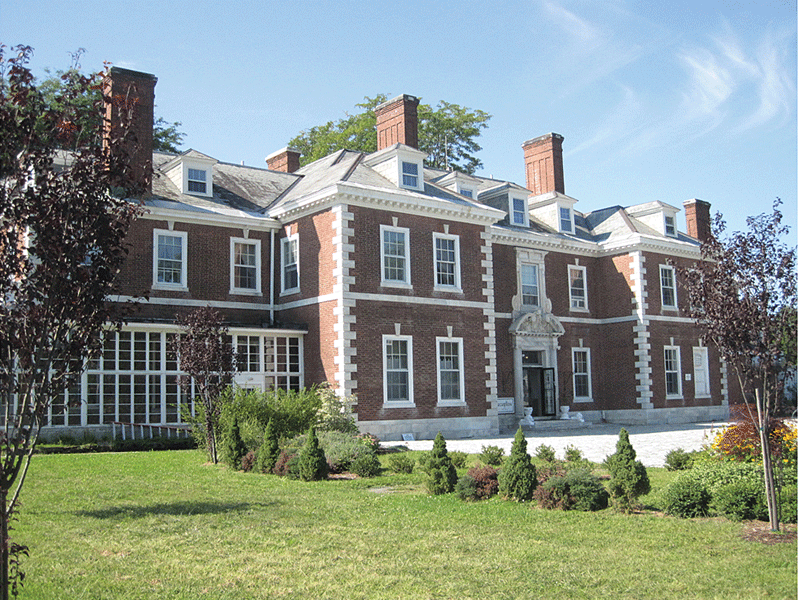
Chamber Corners Departments

AMHERST AREA CHAMBER OF COMMERCE
www.amherstarea.com
413-253-0700
• Aug. 15: Chamber After 5, 5-7 p.m., at the Amherst Brewing Co, 10 University Dr., Amherst. Joi• us for the debut of Live United 365 brew. Help the United Way of Hampshire County and network with chamber members at the same time. Admission: $5 for members, $10 for non-members.

GREATER HOLYOKE CHAMBER OF COMMERCE
www.holycham.com
(413) 534-3376
• Aug. 15: Chamber After Hours, 5-7 p.m. Hosted and sponsored by Hamel’s Creative Catering at the Summit View Banquet and Meeting House, 555 Northampto• St., Holyoke. Admissio• is $10 for members, $15 cash for non-members.
• Aug. 22: Summer Salute Breakfast, 7:30-9 a.m., at the Yankee Pedlar, 1866 Northampto• St., Holyoke. Cost is $20 i• advance, $25 at the door.

QUABOAG HILLS CHAMBER OF COMMERCE
www.qvcc.biz
(413) 283-2418
 • Aug. 25: Community Celebratio• 2012, 10 a.m.-4 p.m. Joi• Life’s Memories & More and the Collaborative for Community Health for a day of community celebration. Crafters, artisans, and vendors will be o• hand with a bounty of great items to view and purchase. Enjoy musical entertainment. Get a henna tattoo or treat yourself to one of the collaborative services like chair acupuncture, chair massage, or Reiki, and try some delicious food. For more information, contact [email protected] or call (413) 283-4448.

WEST OF THE RIVER CHAMBER OF COMMERCE
www.ourwrc.com  
(413) 426-3880
 • Aug. 20: 9th Annual Golf Tournament at Springfield Country Club. Proceeds will go toward the WRC Educational Fund, which supports the Business Educatio• Grant Program and student scholarships for Agawam and West Springfield Students. To register or for more information, contact the chamber at (413) 426-3880 or at www.ourwrc.com.

Features
New CEO John Maguire Is Shaping a Turnaround Strategy
John Maguire

John Maguire acknowledges that ‘going back to basics’ is hardly a new refrain at Friendly’s, but he believes the chain now has the requisite pieces, and attitude, to get it done.


When it comes to turning around troubled companies, John Maguire has been there and done that.
Well, sort of.
In many ways, he compares his current undertaking — which he said others have described succinctly with the two-word phrase “fixing Friendly’s” — to one of his first assignments with the Boston-based fast-casual bakery and café chain known as Au Bon Pain (later to be renamed Panera Bread Co.), close to 15 years ago.
“In 1993, I had the opportunity to run a commissary in Chelsea,” he recalled. “It was a 17,000-square-foot facility located under the Tobin Bridge, and this was a wonderful opportunity for me because I was going to get to run what was a broken business.”
Elaborating, he said this division of the company produced baked goods, sandwiches, salads, and fresh juice for all the Au Bon Pain restaurants in the Greater Boston area; products were shipped twice each day. By the time Maguire arrived, the business was failing, he said, noting that there were many ways to quantify and qualify the decline.
“Customer satisfaction, with regard to the quality of the product and service coming out of the building, was terrible,” he noted. “The employee satisfaction and how they felt about their jobs was terrible. And, oh, by the way, it was losing several million dollars a year.
“My approach to all this was that I wasn’t thrilled as much as I was scared to death,” he went on, adding that he soon found out that few if any of the 100 employees in the facility (except those that delivered products) had ever been to an Au Bon Pain and seen the fruits of their labor. So he took them.
“They had no connection to what we were trying to do and to what success would look like for us,” Maguire told BusinessWest. “One Saturday, I came in at 5 a.m. I had a Ford Explorer, and I picked a few people off the production floor and said ‘come with me.’ We drove to downtown Boston before the traffic hit and went into some of the restaurants. I was able to say to the people, ‘see how good your baked products look on the shelves? See why we want you to spin the lettuce for 30 seconds to remove all the moisture from the container?’ By doing that, we got people connected.
“That shaped my entire philosophy on leadership in business,” he continued. “You have to come up with a plan, and then you get people involved in what that plan is going to be. You focus them in the right direction, and then it’s your people who will make the determination if a business is successful.”
Maguire said he took this same philosophy to a number of career steps at Panera, from president of retail operations to executive vice president, and he intends to continue in that vein at Friendly’s, where he is now CEO — only without the Explorer, at least in a literal sense.
Indeed, he still intends to get people connected and make them part of the brand-resurgency process. And in a lengthy interview with BusinessWest, he explained how he will do that, while also delineating the scope of the challenge and the broad strokes of the strategic initiative to return the chain to prominence.
“In a nutshell, I would say that Friendly’s has lost its focus on what really makes it special,” Maguire explained. “It’s lost its perspective on who its customer is and what is the best way to deliver for that customer, and, most importantly, what gives us credibility with our customers.”
Successfully reversing those trends will not happen quickly or easily, he continued, adding, however, that it can be done, because he’s seen it happen at other chains, such as Boston Market, Steak & Shake, and even McDonald’s, and because he believes the right ingredients are, or soon will be, in place for it to happen here.
“The leadership teams that came in here tried really hard — it wasn’t that they didn’t have good ideas or do things,” he explained, noting the high rate of turnover in the corner office. “There’s some fundamental things that need to take place that didn’t happen. There’s no quick fix to any of this business. It took a long time for Friendly’s to lose its way; it’s going to take some time for us to find our way back.”

Any Given Sundae
Before discussing what he wants to do at Friendly’s — the chain that filed for Chapter 11 bankruptcy last fall, closing dozens of restaurants as it did so, before emerging from bankruptcy this past spring — Maguire, who took over on May 29, first explained why he tackled this assignment.
After nearly two decades at Panera Bread, he said he understood that he would only leave for another opportunity if it represented a chance to lead an organization (he was second in command at Panera) and was also something, or some company, that he was passionate about.
And Friendly’s certainly fit that description.
Maguire grew up in South Weymouth, only a few blocks from one of the chain’s locations, and said he spent considerable time there, creating memories at virtually every stage of his life.
“Some of my most memorable experiences have taken place in a Friendly’s restaurant,” he said, “from when I was a kid, when I would go to Friendly’s on weekends with my grandfather, to when I was a teenager — that was the spot where you hung out with your friends — to more recently with my daughter; Friendly’s was a place where we’d spend ‘Katie-dad time.’”
But there was far more to this than nostalgia.
“This was a brand that I not only grew up with, but also have rooted for,” Maguire told BusinessWest, adding that, in recent years, it was a chain that he watched decline, and from a very intriguing perspective.
“As someone who’s been in the industry, I was keenly aware of some of the challenges they’ve had over the past 10 or 15 years,” he noted. “There were times when I would speculate and say, ‘if I had the opportunity to run Friendly’s, what would I do? How would I approach it?’”
And now that he has that opportunity, he sums up the strategy moving forward quickly and succinctly with the phrase ‘getting back to basics,’ while acknowledging that the three or four men who occupied his office before he arrived said essentially, if not exactly, the same thing.
But there is a difference between saying something and doing it, he continued, adding that previous CEOs have understood Friendly’s main problem as well as he now does — getting away from what brought it success decades ago and instead trying to be all thing to all people. The problem has come in the execution of strategies to change that equation.
And with that, he referenced the several different Friendly’s menus on the conference-room table, while noting that there are still many items on it that are far removed from the company’s core and its success quotient.
“Things like steak tips,” he explained, adding that ‘under-555-calorie’ meals would also fall into this category — things the chain does, but doesn’t do especially well, and constitute items that do not bring many people to a restaurant known for decades as a source of what Maguire called “an indulgent experience.”
But they’re still on the menu, he went on, adding that it’s often hard for restaurant executives to pull them off.
“Everyone gets this — everyone understands there are too many items on the menu, but when push comes to shove, to actually do it, it’s difficult,” he said. “People are going to be nervous — we’re going to hear from a vocal minority of our customers who say, ‘I want this.’ It’s going to take some discipline and sticktoitiveness; we’re going to need the fortitude not to react and to give it a chance to succeed.”

Shaking Things Up
Summing up what has happened to the franchise he grew up with, Maguire said it’s a scenario he’s seen many times in the industry.
“What happened to Friendly’s, and what got Friendly’s off track, is basically the same story that happens to most concepts in the restaurant business,” he explained. “Most concepts in this industry diminish over time; three out of four restaurants are making less money today than they did five years ago.
“What happened to this chain is typical,” he continued. “You’re chugging along, and then, whether it’s the economy or overgrowth or lack of focus on the business, sales start to fall. And when that happens, people panic. They say, ‘uh-oh, sales are falling, we have to do something.’
“So they try things,” he went on. “They try new menu items, they try a different direction, and then sales either come up or they don’t, and usually, they don’t. So then they try some other things because now they’re a little more panicked because sales are really down. And then they try other things, and they don’t work.”
What follows are inevitable leadership changes, Maguire told BusinessWest, adding that this cycle continues to repeat itself as new people assume the CEO’s chair.
“And with all those leadership changes, over time, Friendly’s has become less and less of what Friendly’s was,” he noted. “The focus on operations has diminished, the menu proliferation has continued to the point where we don’t know if we’re family dining or casual dining … and we’ve lost focus on what was iconic to us, and we’re trying to please all people. And when you do that, you wind up not pleasing anyone.”
Thus, beyond sales and market share, what Friendly’s has ultimately lost over the past several years is something ultimately more important — credibility, said Maguire, adding that it’s his unofficial job responsibility to get it back.
To do this, he continued, the chain must remove what he called “complexity” from the equation, meaning everything from that aforementioned menu proliferation to ambiguity about just what Friendly’s is.
“What we do now is take great people who work in our restaurants and make their jobs very difficult based on the complexity of our menu and the complexity of our service system,” he explained, adding that the process of simplifying things is already underway.
To help with all this, the company has hired the research firm RTS (Results Through Strategy) to get a sense from customers about what the chain should be doing moving forward.
“We’re going to be heavily research-based,” he said, adding that this is a departure from the past and a big reason why the menu has proliferated. “Opinion has driven much of what we’ve put on the menu; the franchise community thinks we should have this product, the company thinks we should have that product. And the way I’ve described it to the team is that my opinion doesn’t get to determine what’s on the menu, and your opinion doesn’t get to determine. Our customers are going to be the ones to tell us what should and shouldn’t be on the menu, and they do that through what they believe we have credibility in and what they purchase from us.”
Such research will likely inform the company on how to maintain its current strong following among young families and seniors — two constituencies that have always supported the chain — and also provide insight into how to reach a client group that it has lost to a large degree — teenagers.
The company has developed prototypes for some new developments, such as an old-fashioned ice-cream parlor concept called the Scoop Shop (there’s one located inside a Burger King in New Jersey), as well as something called Friendly’s Express, said Maguire, but before it can think seriously about growing, it must focus on the fundamentals in its existing 400 locations.
And by this, he means speed and quality of service, cleanliness, mood, or atmosphere, and a menu that is tailored to the identified Friendly’s customer.
“We need to focus on how to create the best customer experience day in and day out,” he said, “because, until we do that, we won’t have the credibility, the cash, or the ability to grow.”

Topping It Off
As he talked about the large challenge ahead of him, Maguire said that as important as what he wants to do is how he intends to do it.
And for this, he returned to that Au Bon Pain facility in Chelsea, and that process of connecting people with the company’s products, goals, and aspirations.
Completing that story, he gave tours in his Explorer nearly every Saturday for more than two years; there was even a waiting list of sorts created to determine who would get to go next. But there was more to the turnaround process than getting employees into the field.
Indeed, Maguire said the plant had to be cleaned up and renovated, some workforce decisions had to be made — specifically, weeding out people who were not doing their jobs properly — and training had to be implemented for all those who remained.
“But in six to nine months, our customer perception had improved, our employee satisfaction had improved, the facility had improved, and after about a year, we started making a little money,” he noted. “And it started with getting people involved and getting them focused.”
He’ll be doing this on a much larger scale at Friendly’s, and while he won’t be using a Ford Explorer to get people connected and on the same page, he will be using other methods, all designed to improve the level and quality of communication within the company, which means several constituencies, including employees, franchisees, and vendors.
“One of the things we spend a lot of time on is town meetings,” he explained. “Next week, I’m meeting with all our franchise owners and speaking with them about where we’re heading with the business, what matters, and hearing from them on what we can do to better serve them as franchise partners.
“We’re opening up with every constituency in the business — generating that two-way conversation,” Maguire went on. “We’re even doing it with our vendors; we’re bringing all our vendor partners through so they can understand what we’re trying to accomplish, so they can help us in that mission.”
Overall, Maguire is optimistic about the prospects for a turnaround, despite the inherent high degree of difficulty, because other chains have successfully gone back to what made them successful.
“I’ve seen concepts be in worse position than Friendly’s is and reinvent themselves and come back,” he said, mentioning Steak & Shake, Boston Market, Captain D’s (a seafood restaurant), and McDonald’s, which he considers perhaps the best example.
“If you look back 10 years ago, McDonald’s was really in some trouble; their sales were falling, customer satisfaction was down, and they were losing market share to people like Panera Bread and Starbucks. What McDonald’s did was understand that their biggest point of difference is their 10,000 locations with drive-thru.
“They went after Starbucks and said, ‘we can’t compete with you on a $5 cup of coffee, but with 10,000 drive-thrus, we can improve our coffee to Newman’s Own, do it at a better price point, and you’ll pass six of our locations on your way to work. And they took a big chunk out of Starbucks by doing that.”
The place for all those at Friendly’s to start is with brand strategy, Maguire explained.
“One of the questions I asked myself before I came here, as I was going through the interview process, was ‘why should Friendly’s exist?’” he recalled. “And I think it should exist because of the differentiating things we have. We’re different than other concepts; there’s no brand in the U.S. that has the focus on ice cream, breakfast, burgers, melts, fries, and other pieces. But ice cream is the key differentiator.
“The best way to describe what our strategy is and what we’ve already begun to work on is bringing us back to our roots with relevance,” he explained. “We’re going to create a brand strategy: who is Friendly’s? What do we aspire to be? Who is our customer? What are the products that give us credibility in serving them? And what’s the best way to reach them?”

Chain of Events
Moving ahead, the company will attempt to reposition the brand, focusing more on the ‘story’ than on specific products, he concluded, adding that there will be many components to this turnaround effort.
“Businesses are not mathematical equations — they’re living, breathing organisms with many different parts and pieces and things that make them work,” he said. “For us, it will come down to … do we make a few fundamental bets, and do those bets work?”
Maguire noted that, since arriving nearly three months ago, he’s spent considerable time acquainting himself with the many nuances of Friendly’s history, and has met both Curtis and Prestley Blake, the brothers who started it all in 1935, as well as other top administrators from the company’s past.
But for the most part, this was a story he already knew and understood. The place where he logged significant Katie-dad time and listened to stories from his grandfather was now referenced with the past tense.
To fully fix Friendly’s, he has to make that place the center of the company’s future. It won’t happen overnight, he stressed repeatedly, but the process is already well underway.

George O’Brien can be reached at [email protected]

Features
GECC Looks to Channel Entrepreneurial Energy

Eric Snyder

Eric Snyder says a large supply of entrepreneurial spirit has helped revitalize Easthampton’s downtown and former mills, and given the chamber some new priorities.

Eric Snyder says that, while there are still a few large employers in Easthampton — Berry Tubed Products, National Nonwovens, and Stevens Urethane, for example — the business landscape in this community in the shadow of Mount Tom is now dominated by small (or, in many cases, very small) ventures.
“We have a lot of two- or three-person businesses, as well as a large number of sole proprietorships, and many of them are artists,” said Snyder, executive director of the Greater Easthampton Chamber of Commerce (GECC), noting that, as the face of business in this city has evolved over the past several decades, the chamber has responded accordingly.
Indeed, while the basic mission of the organization — representing the needs of the business community and giving it a voice on pertinent matters — hasn’t changed, many of the ways in which that mission manifests itself have.
In short, the chamber, which turned 50 last year, is doing more than it has historically in the broad categories of networking, education, and building exposure, said Synder, in an effort to help the myriad small businesses now filling storefronts and old mill space get off the ground or get to the next level.
“We’re concentrating more on the marketing of these small businesses and trying to keep them more in the forefront,” said Snyder, adding that the chamber now hosts a wide range of networking events, including its Networking at Night program on the second Thursday of each month, a casino night, and wine- and microbrew-tasting get-togethers. “We’re trying to get people to meet people; it’s as simple as that.”
And then, there’s a new monthly newsletter, sent electronically to the chamber’s approximately 300 members. It includes everything from legislative updates and reminders on upcoming events (Bear Fest 2012 was a lead item in the recent edition — more on that later) to news and notes on members; from a list of new arrivals at the chamber to something called ‘Member Spotlight.’
As the name suggests, this segment profiles a GECC member through words and a short video. One recent issue turned the spotlight on Web-tactics Inc., an eight-year-old company that handles Web-site design and other technology-solutions work. The video featured Janel Jordan, the company’s president.
“We like to educate people — ‘Web speak’ is very confusing and very scary, especially to someone just getting started,” said Jordan as the camera rolled. “We’re very patient … and we hold the client’s hand through the entire process.”
Such videos have now told a number of stories, noted Snyder, adding that the free service was designed to assist young and growing businesses by providing them with another marketing vehicle, one that has already brought results to some who have been profiled.
“It’s helping them get their name out and make those all-important connections,” said Snyder, who would put that last word to repeated use.
For this, the latest installment of its Getting Down to Business series, BusinessWest takes an indepth look at the changing business climate in Easthampton and how the half-century-old chamber is evolving to effectively serve its constituents.

Bear Necessities
A quick look at the rundown of new chamber members in the July newsletter speaks volumes about the still-emerging business landscape in this community.
That list includes Fitness Fusion, Furniture Recyclers, Glory of India restaurant, Mountain View Antiques & Collectibles, and Studio 72, among others.
Most of these ventures fall into that ‘very small business’ category, said Snyder, adding that many are now located in storefronts in a revitalized downtown or in the many renovated and rejuvenated former mill complexes that once gave this community its identity.
These include Eastworks (the former Stanhome headquarters building), the Paragon Arts & Industry Building, and Mill 180, all on Pleasant Street, and many others in and around the central business district.
These facilities are now home to a host of businesses across several sectors, including many that would fall into the category of ‘creative economy,’ said Snyder, adding that, on the whole, they speak to the vast supply of what he called “entrepreneurial energy” in this former manufacturing hub.
“Our downtown areas and shops are filling up again,” he said, noting significant progress on Cottage and Union streets in particular. “And we have a good amount of new businesses, which bodes well for the downtown.
“At the same time, things are picking up in the old mill buildings, especially along the Pleasant Street corridor,” he continued. “And we’re seeing a little bit of everything — light manufacturing, studios, and small businesses. Many of these are arts-related, but we’re also seeing the High & Mighty Brewery on Pleasant Street and another brewery operation progressing on East Street.”
What most of these small businesses need are visibility and those aforementioned connections, said Snyder, adding that many chamber initiatives added in recent years have been designed to provide those commodities, while also building what could be called the Easthampton brand.
The various networking events are a big part of the connection-building process, he noted, adding that attendance has been strong at such recent, and now stable, additions as Casino Night (there have been three) and the wine-tasting event, now in its fifth year.
As for branding and putting the city in the spotlight, the Bear Fest has been the biggest addition to the calendar, said Snyder, adding that the chamber partners with Easthampton City Arts on the initiative, now in its second incarnation (the first was in 2009).
This is a public art project in which life-size fiberglass bears are creatively transformed by locally and nationally known artists, putting Easthampton on the map as West Springfield has with its terriers, Springfield with its giant sneakers, and Chicopee with its replica C-5As.
This year, 92 bears now populate various locations in and around downtown. Sponsored by various businesses and organizations, the bears, to be auctioned off later this year at an event at the Log Cabin Banquet & Meeting House, bring thousands of visitors to the city’s streets and former mills, said Snyder, where they are introduced to many of the community’s new businesses.
Further introductions are being made on the new e-newsletter, he continued, adding that the publication has become another effective form of networking, as businesses can post news items and events, become a profile subject, and otherwise raise their profile among the diverse chamber membership.
The July edition, for example, has an item about Mary Ann’s Dance and More being featured in a recent issue of Retail Minded, a trade magazine devoted to news, education, and support of boutique businesses. There was also an extensive preview of Bear Fest 2012, with a call for sponsorships, an update on the Easthampton Farmers Market, and a look back at the Easthampton Spirit Committee’s family event and fireworks. There’s even a section called ‘Making Moves,’ highlighting such things as the opening of Mahan Bicycles and the expansion of Fur’s-a-Flyin with a new venture called Hairy’s Pet Supply.
“This is all free marketing, and we encourage people to take full advantage of it,” said Snyder. “It’s a way to bring additional value to members and help them make those connections.”

Work of Arts
Jordan mentions such connections during her member-spotlight interview.
“The networking events are priceless,” she said by way of explaining why Web-tactics is a member of the GECC. “You can go to one and meet hundreds of businesses and individuals and get referrals.”
Such get-togethers have always been part of the fabric of the chamber, but today, they’re even more important, as the city’s business community continues its evolution from a handful of mills that employed hundreds or thousands, to seemingly countless ventures that employ just a few.
“It’s a change for us, but then again, it isn’t,” said Snyder. “It’s always been about helping people meet people.”

George O’Brien can be reached at [email protected]
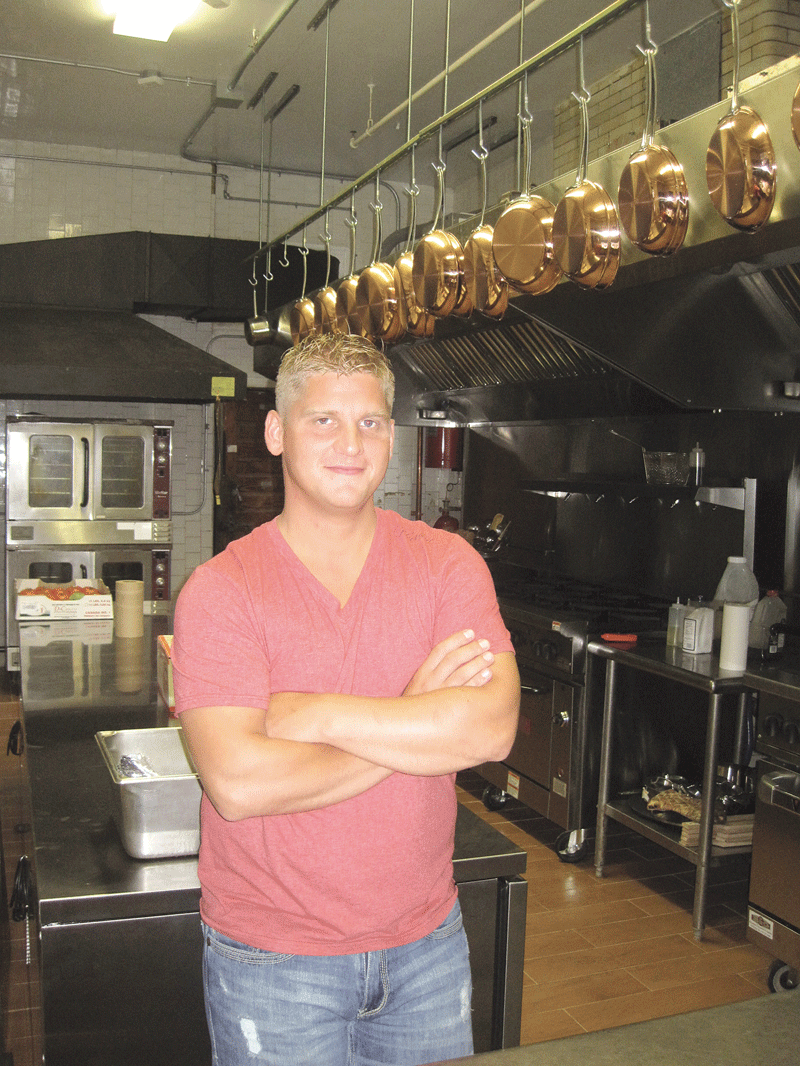
Sections Travel and Tourism
Old Sturbridge Village Changes with the Seasons

Ann Lindblad

Ann Lindblad says families today have less leisure time, so it’s important to make their visit worthwhile — and worth repeating.

Kids don’t want to hear how butter is churned. They want to do it.
And at Old Sturbridge Village, they can do just that — and plenty more. In fact, a renewed focus on hands-on learning and interactivity at this 66-year-old ‘living museum’ has contributed to a turnaround in attendance and finances since both bottomed out five years ago, said Ann Lindblad, OSB’s director of marketing and communications.
The change began, she said, in 2007, when Jim Donahue came on board as the new CEO, replacing Beverly Sheppard, who had resigned the year before. He’d had no previous museum experience — his background was in finance and education, most recently as CEO of the Bradford Dunn Institute in Rhode Island — but since Donahue’s appointment, the museum has reversed the declines and, starting in 2009, balanced the operating budget every year.
“It’s a stunning turnaround, and it’s happened as we’ve focused more on hands-on activities,” Lindblad said. “Today’s visitor doesn’t want to just watch; they want to see and touch and take part. We offer crafts and hands-on activities every day, and we have a whole host of special things visitors can try. For example, they can come in the fall and try plowing behind the oxen and see what that feels like.”
The past decade at OSB has felt more like a roller coaster. In the heyday of Old Sturbridge Village — the late 1970s through the 1980s — it wasn’t uncommon for annual attendance to approach 600,000 visitors. In 2004, that number had declined to 288,000, and in 2007 it plummeted to just over 220,000. It’s a phenomenon that other museums across America, of all types, have had to deal with.
“A lot of this is true of the whole living-history-museum category,” Lindblad said. “The high-water mark for attendance was during the Bicentennial back in the ’70s, and think about how much society has changed since then. Now you can shop 24/7, organized youth sports are popular, you have cell phones, the Internet, computer games … and both parents are working more than was the case in the 1970s, when it was common to pack the kids into the station wagon and head out on a day trip.
“There’s just less leisure time,” she continued, “and that is, I think, a strong incentive for us to make sure people don’t view visiting here as a waste of time, but want to come back and repeat the experience.”
Increasingly, they are doing just that. Despite a weather year in 2011 that threw many businesses for a loop — the June tornado tore a line of tree damage dangerously close to the 40 historic buildings, while the October snowstorm cut power and shut down the facility for a week — the museum finished the year with 263,000 visitors, just off the 273,000 pace of 2010. With weather acting a bit more cooperatively in 2012, the year’s attendance to date is 4% ahead of last year’s pace.
“Since our CEO took over the reins in 2007, we’ve had a 24% increase in attendance, and three consecutive years of balancing the operating budget,” Lindblad said, noting that a stronger focus on seasonal variety and interactive programs have been matched by a stronger marketing plan.
“And I think there’s a lot of grassroots marketing,” she added. “Visitors are coming, having a good experience, and helping us to spread the word. It still comes down to programming. If they come here and don’t have a good time, or they don’t learn anything, or they don’t find it compelling, then there’s no reason to come back.”

Interpreting the Past
For decades, Lindblad said, Old Sturbridge Village — which focuses on New England life from the 1790s to the 1830s — leaned on its ‘interpreters’ as its main draw. These employees — who dress in period garb and demonstrate trades ranging from printing to shoemaking, from pottery to tincraft — remain one of the most significant aspects of the museum.
“We’re famous for our historians in costume; that’s what sets us apart. They’re so knowledgable about that time period, and they’re our teachers,” she said — and the lessons aren’t always rooted in the past. Take agriculture, for example. “Some kids come and don’t know where a carrot comes from; they wonder why there’s dirt on carrots. They have no clue about which plants and vegetables are native. So there’s an amazing amount of teaching going on.”
She was quick to add, however, that these village inhabitants do a “third-person interpretation,” meaning they’re not acting out a character from the early 19th century, but simply performing the tasks of that era while speaking in their own, modern voice. “Visitors would get frustrated if they asked a question and someone couldn’t answer it because they couldn’t break character. It’s all about having fun, but making sure our guests are learning something while they’re having fun.”
Still, in recent years, the museum’s leadership felt interactivity was lacking, so they began to institute a more hands-on approach across the 220-acre grounds, as well as in classes visitors can sign up for on period cooking, blacksmithing, woodworking, textile crafts, and more.
“As an educator, our CEO would say that kids — or anyone, really — remember something longer if they’ve actually taken part in it; it sticks with them,” Lindblad said.
She noted that hearth cooking demonstrations are conducted every day. “There’s a fire in the fireplace, and the women who are cooking will teach things like how they judge the heat by putting their arm inside the hearth and counting. If they can count to 12 or 15 before it gets uncomfortable, then it’s about 350 degrees.”
Another focus at Old Sturbridge Village has been on seasonal and yearly events that provide more variety for those who choose to return, or purchase yearly memberships.
“The program staff has really bumped up the seasonal activities, so visitors can have another reason to visit — see something they hadn’t seen before,” Lindblad said. “And these can appeal to different age groups.”
Those seasonal activities extend even to the winter months — not normally a time when families are thinking about tourism and day trips.
“We’re committed to being open year-round, and we want people to see what the winter was like,” Lindblad said. “So, for example, we added Fire and Ice Days in January, where we demonstrate ice cutting and harvesting. In the days before refrigeration, ice was a huge cash crop in New England, and they had special tools to score and cut the ice and store and haul it, and merchants in Boston would ship it all over the world. People are fascinated by the process, and the enormous saws, and kids and adults can try sawing.”
The following month, visitors flock to an antique sleigh rally, where horse-drawn sleighs compete for prizes. “The winter was the social season,” Lindblad said. “The harvest was over, and people had more free time.”
Other seasonal events — dozens of them — follow throughout the year, from fireworks in July to harvest parties and Apple Days in the fall. And the museum isn’t afraid to occasionally step out of its time period. For example, it hosts an antique car show (all cars must predate 1946, the year the museum was established).
While focusing on 20th-century lifestyles, Lindblad said, the exhibition remains true to OSB’s historic bent. “We see grandparents bringing their grandchildren to that, so they can say, ‘this is what cars looked like.’”
Speaking of children, the museum still relies heavily on visits from school groups — around 65,000 students visit each year — while parents with children under 12 comprise another steady constituency. Older adults and empty-nesters also enjoy visiting, particularly during the leaf-peeping season in the fall. Meanwhile, families with young children often prefer the spring, when most baby animals are born.

Historic Showcase
At the heart of Old Sturbridge Village, however, are its period homes and shops. The most recent addition, the Small House, a 420-square-foot clapboard structure erected several years ago, is the first building added to the village since the mid-1980s, and the first ever to be built from the ground up; all the other buildings are actual historic properties relocated to Sturbridge. Unlike the middle-class houses in the village, the Small House tells the story of how the lower classes of the time lived.
Other stories are being constantly told as well. The recent Redcoats and Rebels event drew some 800 Revolutionary War reenactors to the village — the largest such war simulation in New England. And the facility recently added an authentic Concord stagecoach, “just like the ones plying roads all over New England in the 1830s,” Lindblad said. “You can get in the stagecoach and get a feel for the rigors of transportation. It’s a replica of the one that ran between Hartford and Worcester — it was bumpy and dusty, but that was the Cadillac of its time.” It was also, she added, a 12-hour trip.
Today, that’s like arriving from Detroit or Charlotte by car, and that’s not unheard of. “We attract a lot of out-of-state visitors, and they’re bringing a lot of money into the Massachusetts economy,” Lindblad said, noting that, while most of those hail from Connecticut, the museum attracts healthy numbers from the rest of New England, New York, and the mid-Atlantic states. In fact, all 50 states are represented each year, while international guests comprise 6% of visitors.
“I think, because we are within driving distance of so many millions of people, this is a good option for a day trip,” Lindblad said, noting that each $24 admission ($8 for kids) is good for a second visit within 10 days, so that families can make a multi-day stay of it. “They might not have the budget, during a recession, to fly to Disneyland or Disney World, but they’re still looking for a family experience. They can drive a couple of hours and have a rich experience, and still feel like they had a mini-vacation.”
After all, it’s only natural to crave some time away from it all. That’s as true now as it was 200 years ago.

Joseph Bednar can be reached at [email protected]
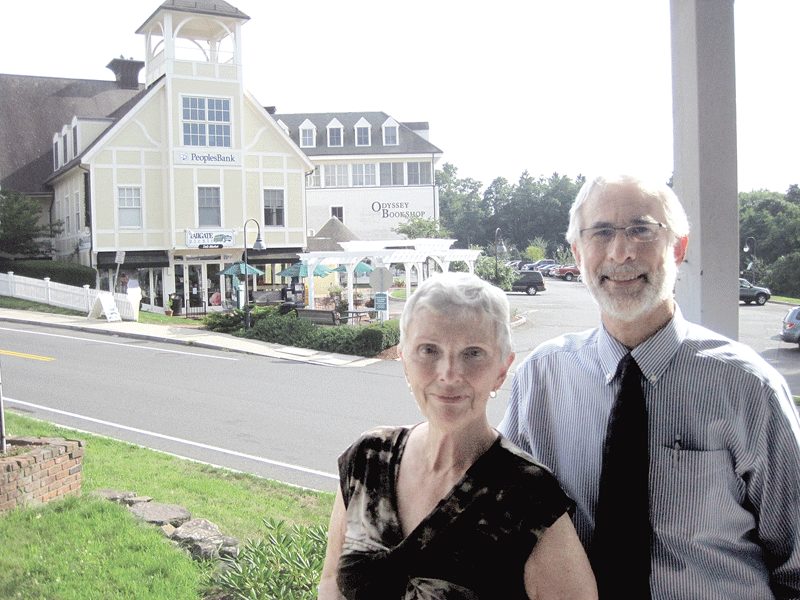
Sections Travel and Tourism
MASS MoCA Fills In the Wide Canvas of Contemporary Art

Joe Thompson

Joe Thompson says MASS MoCA’s constantly changing installations and inclusion of performing arts make it more vibrant than a static art museum.

Joe Thompson was talking about how, over its 13-year history, the Massachusetts Museum of Contemporary Art (MASS MoCA) had solidified its reputation as a unique showcase of what is called ‘new art’ — in all of the many forms that takes — and as a facility that is never afraid to take a chance on exhibits, programs, and events that are, in a word, different.
And with that, as if on cue, the sounds of people banging on metal drums, accompanied by a woman singing opera, could be heard from the floor below.
This was the New York City-based, multi-faceted classical-music organization Bang on a Can, which, according to its Web site, is “creating an international community dedicated to innovative music, wherever it is found.” With that mission in mind, the group, led by composers and founders Julia Wolfe, David Lang, and Michael Gordon, sought out MASS MoCA as the home for a summer educational and residency program for fellows and students in all forms of music.
The 18-day festival, which concluded on July 28, is sometimes called ‘Banglewood,’ in reference to the nearby, and much more traditional, Tanglewood Music Festival in Lenox. It is is dedicated, said the group, “entirely to adventurous contemporary music; we will write it, we will perform it, we will think about it, and we will talk about it.”
And for all that, the museum in North Adams, created out of several old mills that were part of the Sprague Electric complex, has become a venue Wolfe called both supportive and inspiring.
“MASS MoCA is a gold mine of support and atmosphere,” Wolfe told BusinessWest, “and this program, with all the surrounding art, allows for students to create and perform as colleagues, side by side with seasoned performers. It gets music into art spaces.”
Creation of this powerful learning environment is one of many ways to qualify and quantify the success MASS MoCA has recorded since opening in the summer of 1999, said Thompson, the museum’s director, adding that others include solid attendance figures (130,000 last year, a new record), a growing endowment (currently $14.5 million), and a large number of return visitors, a statistic that lies at the heart of the facility’s current operating philosophy.
Indeed, instead of a static museum dedicated to contemporary art, MASS MoCA is an ever-changing institution that showcases paintings in canvases, but also film, video, sculpture, and, yes, music.
“The farther away you get from North Adams, the more people think of MASS MoCA as a museum; the closer you get to North Adams, the more people think of MASS MoCA as the place where they see theater or dance events,” said Thompson, adding that this range of descriptions speaks to just how the museum has become different things to different people.
Julia Wolfe and David Lang

Julia Wolfe and David Lang say MASS MoCA helps enable Bang on a Can to “get music into art space.”

For this issue and its focus on the region’s tourism industry, BusinessWest looks at how MASS MoCA continues to grow and evolve while finding new ways to meet its two main goals: to provide a state-of-the-art (and arts) platform for contemporary works of all kinds, and create jobs in a corner of the state that needs some.

Exhibiting Determination
It’s called Solid Sound.
That’s the name that was given to a three-day music festival launched by MASS MoCA administrators in 2010, featuring Wilco, the American alternative-rock band based in Chicago.
Thompson said he and others were confident that Wilco and its opening acts would draw a good turnout, but they actually got a lot more than they bargained for — and more than the town was prepared for. More than 5,000 fans descended on North Adams, filling every available parking space and prompting restaurants to run out of food. Thompson and city officials who helped stage the event feared that litter would be scattered throughout downtown the morning after the event wound down.
“But all throughout downtown, all we saw were full garbage cans and neatly stacked cups and lined-up bottles — by recyclable type — next to each can,” said Thompson with a laugh. “It’s due to the type of engaged and environmentally conscious following that Wilco has.”
And this is, by and large, the same type of audience that is attracted to contemporary, or new, art, he continued, adding that the museum draws more than 120,000 visitors per year — a tribute, he believes, to an operating philosophy that he and others involved with this project agreed upon as they raised and then spent more than $31 million to convert portions of the Sprague complex into one of the largest (area-wise) contemporary-art museums in the world.
Going back to the early and mid-1990s, Thompson said he slowly grew away from his original, and firmly rooted, belief in the concept of a museum with large, fixed installations devoted to pared-down ‘minimal art’ of the ’70s and ’80s. While he admits they look great in the generous, rough-hewn spaces afforded by mill buildings, and don’t require fancy climate control, he came to think that static art offered far too limited a vision — perhaps a dangerously constrained one.
“Many people who shared my love of new art worried out loud whether visitors would make repeat visits to a permanent, fixed installation,” he explained. “That question — ‘would people come twice?’ — that was a tough question, and led me to think that a program of changing, shorter-term exhibitions might be a more engaging way to begin.
“As artists had become increasingly fluid in the way they work, with art-making practices that cross from sculpture to set design to video and film,” he continued, “it became clear that an institution that was to be truly responsive to the needs and trajectories of new art had to incorporate the performing arts as well.”
In a nutshell, the past 13 years of operation have essentially proven Thompson and others right in their thinking. The museum has changed exhibits regularly and hosted a broad mix of media — as evidenced by Solid Sound, Banglewood, and other projects and events — and visitors have come back repeatedly.

Creative Economy
The list of current and upcoming exhibits speaks volumes about the diversity created at MASS MoCA and the ability to present a different museum every time visitors venture to North Adams.
There’s “Oh, Canada” (through next April), the largest survey of contemporary Canadian art produced outside of Canada. It features the work of more than 60 artists who hail from every province and nearly every territory. There also “Invisible Cities,” showing through next February. Titled after Italo Calvino’s book — which imagines Marco Polo’s vivid descriptions of numerous cities of a fading era to Kublai Kahn — it features the work of 10 diverse artists who reimagine urban landscapes both familiar and fantastical.
Meanwhile, “Stanford Biggers: The Cartographer’s Conundrum” is a major multi-disciplinary installation by New York-based artist Stanford Biggers, and was inspired by the work of his cousin, the late artist, scholar, and Afro-futurist John Biggers.
And then there’s “Sol LeWitt; A Wall Drawing Retrospective, which is an ongoing, semi-permanent display that is the one notable exception to Thompson’s basic operating strategy of changing exhibits. It includes 105 large wall drawings — many would use the term murals — created by artist Sol LeWitt, who is considered by many in the art world to be the most influential conceptual artist of our time.
It is due to the sheer size of LeWitt’s large-scale art, some of it measuring more than 30 feet long by eight feet or more in height, that MASS MoCA was considered an ideal home for these works. Thompson told BusinessWest that a call early in 2003 from Yale University Art Gallery Director Jock Reynolds set in motion the process for bringing LeWitt’s art to North Adams, but first he had to be sold on a permanent display.
As Thompson explains it, Reynolds and LeWitt needed the space to construct LeWitt’s legacy (the artist never lived to see the unveiling in 2007) and focused on MASS MoCA because no other museum in the Northeast could dedicate tens of thousands of square feet of space to such large works. Thompson said the collaboration between Yale, the Williams College Museum of Art, and MASS MoCA resulted in a stunning “museum within a museum,” as he called it, on three floors, totaling 30,000 square feet.
“As much as we love our changing program, and you’re only as good as your last show, this was a rule-breaker for us,” Thompson said. “Suddenly, we had this beautiful milestone installation of Sol LeWitt’s, and it’s super-high-quality, it’s colorful, full of detail, and it just leaves you smiling — it just makes you feel good.”
It was a turning point for Thompson. “It made me think that the ideal museum is one that has both a core, permanent collection, but also lots of room for change; you want masterpieces that people return to over and over again, but you also want a vibrant roster of changing exhibitions that trigger the return visit. Sol LeWitt helped us see that.”

Broad Strokes
While MASS MoCA hasn’t yet matched its goal for creating 600 jobs, it has succeeded in contributing to the economic development of North Adams and the Berkshires in general, said Thompson, adding that it has become a day-tripping destination while also filling some hotel rooms as well.
Meanwhile, it has become that proverbial ‘different sort of venue’ that has attracted the likes of Bang on a Can, Wilco, and visitors who want to experience the full range of new art.
Perhaps David Lang summed it up best when he said that, because the museum, perceptions of North Adams have changed.
“Before, it was always a place you could visit,” he said. “Now, it’s a place you have to visit.”

Elizabeth Taras can be reached at [email protected]

Health Care Sections
Care @ Home Keeps Clients Independent and Moving to the Beat

Sherill Pineda

Sherill Pineda says she started Care @ Home with some inspiration from her friends and a desire to bring a higher level of service to the region.


Sherill Pineda calls them her “angels.”
These are the close friends who starting coming to her in the summer of 2010 looking for help with the care of aging parents, many of them veterans, in their homes. And they are the individuals Pineda, a veteran of the home health care industry, credits with giving her the motivation, confidence, referrals, and a solid foundation in the form of a growing client base to start a business she calls Care @ Home.
“My friends said, ‘don’t worry about the money — worry about taking care of our parents; that’s the most important thing,” said Pineda. “That same set of values — safety and independence and quality care — is what we have put in place for all our clients.”
And today, it is those friends, not to mention a host of other clients, who are using that word ‘angel’ to describe Pineda and her staff members, who bring a decidedly personalized style of care to their work, one that has enabled the company to achieve steady growth and a reputation for education, innovation, and giving back to the community.
Regarding the latter, Pineda has created what she calls the CARE Foundation, which stages a number of fund-raising events, with some of the proceeds funneled to local charities, veterans groups, and other local help organizations. “We try to do our part, whether it be big or small,” she told BusinessWest.
As for education and innovation, Pineda does a good deal of speaking, especially on the subjects of Alzheimer’s disease and the importance of physical fitness to the quality of life of all seniors. In fact, she’s a certified instructor in what’s known as Zumba Gold, a modified version of the increasingly popular Latin dance workout program designed especially for Baby Boomers.
And she’s brought it to a number of area senior centers and other gathering places, with solid results in terms of participation and reception.
She admits that she never thought that she’d be educating and entertaining seniors to the beats of ’40s ‘boogie woogie’ or ’50s Elvis Presley tunes through the popular Zumba dance-exercise routine, but it has become a big part of her community outreach.
In fact, it’s working so well that her fitness work, and her ties to the veterans community, led the 44-member 215th U.S. Army Band to reach out to Pineda and volunteer its talents for a CARE Foundation fund-raiser that became “A Tribute to Our American Heroes,” staged recently in the Holyoke High School auditorium. The event raised funds for homeless veterans.
Pineda told BusinessWest that other programs, in addition to 24/7 home care, include educational outreach in the workplace (called Care @ Work), at assisted-living centers, or anywhere she can plug in her speakers and iPod and get people dancing. In some way or shape, Pineda says all outreach, volunteer or otherwise, benefits the company, the client, or the community.
With a trained staff of 40, Care @ Home is well on its way to securing a firm foothold in the home-care industry in the Pioneer Valley. And for this issue, BusinessWest takes a look at the company and its ability to give back to the community in unique ways, while also offering skilled nurses and certified nursing assistants (CNS) to care for those who need compassionate, sometimes physical, and usually fun care and attention.

Working Relationships
In Pineda’s East Longmeadow office, there is a wall of yellowed, official Armed Services portraits, as well as recent photos, that showcase some of her first clients.
While veterans are not her only target group, they are the core of her young company’s client base. The company is an authorized agency for the Veterans Administration (VA), she explained, “and based on their eligibility and the VA requirements, if veterans meet the standards, they can receive home-care services through what is known as the Home Base Program; our state really supports our veterans.”
Kathleen Plante, care transition and community liaison for Care @ Home, adds that the Home Base Program’s goals mirror those of the agency, and include safety, independence, and reducing the need for future hospitalizations.
“The program is designed to facilitate keeping them at home as opposed to having to go into an institution or other facility,” she explained. “Our person-centered approach is the mission of the agency, and it secures the best possible outcome for our clients and their families. And, of course, our skilled nurses work with the physician, all to reduce the potential for relapse of a health issue, which could mean going back into an institution and the loss of their independence.”
Potential clients are introduced to the agency through relationships built by Pineda and her team. In fact, it is through current relationships, especially connections in the business community, that she projects strong growth for the new Care @ Work program.
The planned outreach to employers and employees through Care @ Work serves to explain to those still working and caring for a family member of any age, and for pretty much any medical reason, that help is available. The presentation, which is in the development phase, is designed to move through a human-resources department or employee-assistance program.
Whether from a work-related injury or one of the top four health issues Pineda sees — dementia, post-traumatic stress disorder, diabetes-related aliments, and cancer — transitional efforts from hospital to home or assisted living can be traumatic. Pineda and Plante both say that, from the start, effective care planning and medical follow-through both lead to better overall health and a sense of security for the clients and their families, including the need for respite services.
Early transition planning, quality care, and engagement, said Pineda, are qualities that make Care @ Home a different and innovative aging-in-place company.
“We are clinically and socially involved with our clients,” she noted. “We’re creating an individualized care plan and making sure we continue to have activities with them.”

Young at Heart
But when Pineda means ‘activities’, she’s not talking about crossword puzzles and bingo. In fact, she finds that some of her volunteer speaking and Zumba Gold requests stem from the fact that older individuals don’t want to play bingo anymore.
“They say to me, ‘we don’t want to hang out with those ‘seniors’ at senior centers … we want to learn new things; we’re tired of playing bingo,’” said Pineda.
Plante added good naturedly, “they don’t think they’re old; they think the others are old!”
And that dislike of a ‘center for old people,’ explains Pineda, is what is keeping many younger seniors away from physical activity, which is typically offered only in the local senior centers — and she notes that using the words ‘senior,’ ‘golden,’ and ‘elderly’ is already becoming increasingly unpopular among her clients.
This changing view of what old age really means to her clients, coupled with her awareness of the importance of staying active throughout one’s life, explains the emphasis Pineda places on physical and mental fitness in her work.
Last year, she became an Advisory Council member of the Western Mass. Healthy Aging Coalition, and a Matter of Balance coach in partnership with the Mass. Department of Public Health.
“Through the Matter of Balance program, we do a series of eight sessions that are two hours each, educating our aging population about fall prevention,” said Pineda, adding that one bad fall can physically and emotionally shut a person down due to the severity of the incident, resulting in depression and the often-debilitating fear of falling again.
But Pineda says learning and then practicing dance can potentially provide a needed confidence level to those who have fallen and fear a repeat, and this is one of many reasons she has tried to introduce audiences to Zumba Gold and its many potential benefits.
As a certified Zumba Gold instructor, Pineda has incorporated her exercise routine, a combination of Latin and international music with a fun and effective workout program, into weekend programs in which she educates her audience (people in their 60s and 70s), about the importance of staying active, no matter their age.
In that class, she discusses exactly what Alzheimer’s disease is, the early signs, what future help will be needed, and, more importantly, how staying healthy may slow or prevent the onset of the disease and various forms of dementia. Staying as active as possible is the key, said Pineda, who also serves as chairperson of the Alzheimer’s Assoc. Diversity Advisory Council of Massachusetts and New Hampshire.
After some quick discussion with questions and answers, she explained, Zumba begins.
“Then, and only then, do they get to do the dancing; they have to listen first, and then we have fun.”
But she stressed repeadedly that the dancing is far more than just fun; it’s medically important, and will become ever more so as the huge Baby Boom generation continues to age.

All for One, One for All
While Pineda is building her business to care for those in need now and in the future, she and Plante will complete the structure of the CARE Foundation, and will soon have a board of directors to determine the future beneficiaries of fund-raising events for local charities, and a possible endowment for clients that need help with financing their care.
To that end, Pineda says Care @ Home is constantly looking for collaboration and partnership, not just in home health care and fund-raising, but with other skilled professionals who can assist Pineda with bringing more educational outreach to the seniors and family members.
“We’re bringing health care to the next level,” said Pineda. “And that next level means breaking old molds and keeping as many seniors moving, educated, and engaged as possible.”
Plante agreed. “This whole model of reaching into every piece of people’s lives is what health care is going to be; we’re being proactive about it.”
And Pineda, who by all accounts is now fulfilling that role of ‘angel’ to her clients, will be singing and dancing to Elvis, or whatever song of choice her audience wants to step to, just to keep them moving, safe, and independent at home, or wherever home is.
“As long as I have my portable speaker, my iPod, and my flats,” she said, “I’m ready to go.”

Elizabeth Taras can be reached at [email protected]

Departments Picture This

Send photos with a caption and contact information to: ‘Picture This’ c/o BusinessWest Magazine, 1441 Main Street, Springfield, MA 01103 or to [email protected]

Gold Standard

Douglas Bowen, president and CEO of PeoplesBank, and Ludmilla Pavlova-Gillham, chair of the U.S. Green Building Council, Massachusetts Chapter – West Branch, display the LEED Gold certification for the bank’s year-old branch at 547 Memorial Ave. in West Springfield, which was constructed, and operates, in an environmentally friendly manner. It is the second PeoplesBank branch to receive LEED certification, the first building to be awarded a LEED certification in the town, and one of only two community banks in Massachusetts that has achieved LEED Gold status.


Check, Please

Max Burger, the second upscale burger restaurant and ninth restaurant of the Hartford-based Max Restaurant Group, celebrated a grand opening in late July at its 684 Bliss Road location in Longmeadow. A portion of the evening’s proceeds, totaling $9,025, were presented a week later to the Longmeadow Excellence in Education Foundation (LEEF), a private, volunteer, nonprofit educational foundation that was created to enrich and enhance the quality of education in Longmeadow public schools. Pictured, from left, are Justin Dion, president of LEEF; Tim Taillefer, managing partner of Max Burger; and Todd Ratner, LEEF board member.


Dream Car

Mike Balise (far left), vice president of Balise Motor Sales, shows off a Lexus LFA (sticker price: $454,000) at an unveiling celebration at the Lexus showroom on July 26. This model is one of only 500 (the 349th, to be exact) in the world, and one of only 50 with the specialty ‘Nürburgring package.’ The car, which has a V-10 engine, was tested at the famous German Nürburgring track and set the 10th-fastest time ever for a production vehicle. The orange racecar will be viewable at Balise Lexus and various promotional events in the New England area.

Features
Quaboag Chamber Spotlights an Intriguing Region

Lenny Weake

With the passing of gaming legislation, Lenny Weake says, the Quaboag chamber is now committed to fully harnessing whatever a Palmer casino would bring to the region.

When the state Legislature passed a comprehensive gaming bill last fall, it did more than usher in the casino era in the Commonwealth.
It also changed Lenny Weake’s job description. Well, sort of.
“Let’s just say they broadened it in a way,” said Weake, president of the Quaboag Hills Chamber of Commerce, which is headquartered less than a mile from where Mohegan Sun wants to build a resort casino on a hillside just off the Mass Pike exit in Palmer.
Elaborating, Weake said that, in the years leading up to that historic vote, the Quaboag chamber was in many respects a spectator on the gaming issue, taking a Switzerland-like stance of neutrality on a matter that sharply divided its membership. But with the passing of gaming legislation, the chamber understood that it could no longer stand on the sidelines, he told BusinessWest, adding that the issue now isn’t whether casinos are right for the state, it’s about jobs and economic development, the foundations of the chamber’s mission.
And, more to the point, it’s about effectively “harnessing” (a word Weake would use often) the vast potential for commerce and economic vitality that comes with a casino in one’s backyard.
“Everything has shifted … this isn’t about gaming anymore; it’s about what Palmer could be in the next five years,” he explained. “We’re not going to sit by and let this thing develop without making sure that we’re part of the process.
“Our role is changing; if Mohegan Sun is going to bring 4 million people into the region each year, we need to figure out how to work with those people and get those visitors off the mountain, in a sense, and get them into our communities,” he continued. We can’t let this economic development go by and not be a part of it, and not figure out a way to harness those 4 million visitors and have them explore the region.”
In recent months, this mindset has manifested itself in many ways, said Weake, but mostly through meetings with Mohegan Sun officials, town administrators, members of the Gaming Commission itself, and other players, including Northeast Realty, a development group that is advancing a number of additional development plans in and around Palmer, most of them contingent upon a casino being built in that community.
The broad assignment in each case, he said, is to make sure the Quaboag region’s business community has a voice in the proceedings, and that its interests are clearly understood. And in many ways, this simply represents a logical extension of the chamber’s ongoing work to promote and advance business in the region, Weake noted, adding that his work often comes down to putting the Quaboag area on the map — in a figurative sense.
Indeed, one of Weake’s priorities since he arrived at the chamber more than a decade ago has been to create and expand initiatives that will help people discover this region that lies roughly halfway between Springfield and Worcester and boasts attractions ranging from the Quabbin Reservoir to the giant antiques show in Brimfield — and, while doing so, support its businesses.
His latest effort in this regard is what he calls a “treasure hunt.” Still very much a work in progress, the initiative, based loosely on the hobby known as letterboxing (in which small, weatherproof boxes are hidden in publicly accessible areas, with clues distributed about how to find them), is designed to encourage people to get out and explore a region still in many ways saddled with the label ‘best-kept secret.’
“We want to expose people living right in our region to all there is to see and do here,” said Weake. “And while they’re out exploring, we want them to experience the restaurants we have here and other types of businesses and attractions.”

Exploring All Options
As he talked about the Quaboag chamber, Weake said it is similar to most such organizations in the Bay State, but has some unique challenges.
First, there is its sheer size; it stretches from Palmer east to Spencer, just outside Worcester, covering three counties (Hampden, Hampshire, and Worcester) and two area codes, a region covered by 10 different newspapers. Meanwhile, the communities represented by the chamber — Belchertown, Brimfield, Brookfield, East Brookfield, Hardwick, Holland, Monson, New Braintree, North Brookfield, Palmer, Spencer, Wales, Ware, Warren, and West Brookfield — are small (total population is about 36,000), and the business community is dominated by small (in most cases, very small) businesses.
Many of the communities, including Palmer and Ware, are former manufacturing centers trying to reinvent themselves and attract new sources of jobs, with many focusing on tourism.
As a result, much of the chamber’s work involves promoting and branding the region, and thus driving visitorship, said Weake, citing the Brimfield antiques shows, which the chamber promotes extensively through its Web site, as one primary example. The chamber also prints an annual recreation guide, which includes information on accommodations, attractions, events, farms, orchards, restaurants, shops, and more.
The ‘treasure-hunt’ concept is the latest manifestation of these efforts, he said, adding that much of the Quaboag region, despite the chamber’s best efforts, remains an unknown quantity to many Baystate residents. By compelling area residents and visitors to look for the various clues, the chamber is expecting them to learn about the area, individual communities, and, yes, specific businesses.
“We want to create something that will make people search through the region, learn about history, learn about the towns, but also have fun doing it,” he said, adding that the chamber is working to create what he called a prototype involving the town of Monson. “We want to come up with a treasure hunt, where, in the process of finding clues, people can learn all about this area.
“It’s in its beginning stages — we have to develop the concept, and then we have to sell it,” he continued, adding that the program will be akin to but not exactly like letterboxes. “We want people to see what we have; we want them to learn about people like [Hall of Fame baseball owner and manager] Connie Mack, who grew up in Brookfield.”
But there is much more to the chamber’s work than tourism, said Weake, adding that services to members have included everything from assistance in the wake of last summer’s tornadoes (Monson and Brimfield were especially hard-hit) to an annual resources directory, to a concept called Hot Deals, which enables businesses to post promotions on the chamber’s Web site.
The passing of gaming legislation last fall simply adds another comprehensive layer of advocacy to the chamber’s workload, he said, adding that the coming months will be both exciting and challenging.
Summing up the chamber’s involvement in the broad gaming issue, Weake repeatedly came back to that notion of harnessing everything that casinos bring to the table, from those projected 4 million visitors to actual commerce (hopefully to be conducted with local vendors), to hundreds of employees, many of whom might need a map to find Palmer.
“When Mohegan goes out to bid on products and services, we want to make sure that our businesses can competitively bid,” he explained, citing just one example of how the chamber will attempt to assist Quaboag-area companies and make sure their voices are heard. “We want to be able to educate businesses on how to work with Mohegan.”
Another example, he went on, is the point systems used by casino resorts to reward repeat customers. “We want to work with Mohegan and try to make sure businesses in this region can redeem those points,” he explained, “so people can go to the Salem Cross Inn [in Brookfield], for example, with points they’ve earned in Palmer.”
Weake said that individual casino developers looking to win the approval of the five-member Gaming Commission must make their applications as attractive as possible, and a big part of this involves commitments to partner with the community as a whole and the business community as well.
He said part of the changed, expanded role for the Quaboag chamber is to shape those partnerships in mutually benefiting ways.

Doubling Down
Weake stressed repeatedly that the chamber’s current work with regard to the matter of gaming should not be described as efforts to support a casino in Palmer. Rather, it is about job creation, economic development, and giving the business community stretched across those 15 Quaboag towns a strong voice in the matters of the day.
In that respect, the Legislature’s vote last fall did not technically change his job description — it merely added many new dimensions to what he was already doing every day.
And there’s a good bet — literally and figuratively — that these efforts will only become more elaborate, and intriguing, in the months and years to come.

George O’Brien can be reached at [email protected]

Opinion
A Simple Remedy for a Wall Street Danger

Over the past several weeks, the financial community has paid rapt attention to trading losses at JPMorgan Chase, estimated to be anywhere from $2 billion to as much as $9 billion. The sudden emergence of such a large loss sent a disturbing tremor through an already-vulnerable economic landscape. The lesson to be learned here is emphatically not about the bank or its leadership, but about the structure of our financial system.
The loss by the much-admired bank was more than a case of a private-sector company taking a private-sector hit because of a private-sector error. First, if a bank this important were to become endangered, the contagion to global financial confidence would surely necessitate a bailout. Losses in institutions to which we entrust the soundness of our money, or where deposits are guaranteed, put the rest of us at risk. Second, and less widely appreciated, JPMorgan’s trading loss is a minuscule fraction of the bank’s more than $75 trillion in notional value of its current positions in derivative securities. The trading of derivatives — securities whose prices are dependent on valuations of underlying assets but do not represent direct ownership claims on those assets — is exempt from the sensible regulation of disclosure and leverage normally applied to stocks, bonds, and other direct claims. This is still, despite all recent attempts at financial reform, the Wild West of trading markets.
Banks say their trading positions are properly hedged by countervailing positions, leaving them little risk. They ‘prove’ this using statistical models anchored in past price behavior and by noting that market pricing indicates a proper balance between their opposing positions, leaving little residual exposure. The problem is that the models are oversimplifications. They rarely predict unfamiliar possibilities, sometimes called ‘black swans,’ or the impacts of external events such as geopolitical disruptions.
All three of the largest U.S. banks have open derivatives positions in excess of 24,000% of their equity capital. Neither models nor markets can protect them from small percentage imbalances. In addition, bank-trading relationships around the world are so interconnected that, if one goes down, all are threatened. No CEO or board of directors, however talented and honorable, can oversee trading at the multi-trillion-dollar scale with perspective and precision enough to assure the avoidance of systemic impairment. Nor can any government oversight body.
Bank lobbyists insist that all this trading is needed to facilitate commercial transactions, but don’t be fooled. The open derivatives positions at the three largest U.S. banks exceed twice the GNP of the world. Add in large European and Asian banks, and the commercial-hedging argument becomes a parody. Hedging is useful in commerce, but its systemic risk should never outweigh its commercial value.
Under present rules, banks are free to put us all at risk in derivatives trading without creating any offsetting cushion. Every derivatives transaction involves some basis risk (that two paired commodities will not continue to move in unison), some counterparty risk (that the trade will not be honored by the other party), and some human-error risk. Accountants and regulators know well that netting massive positions to zero cannot reflect true exposure.
Whenever a new position is taken, there should be a mandatory accompanying reserve or capital charge. This would have a twofold benefit. It would increase protection for both the public and the banks, and it would dull the appeal of hazardously oversized trading accounts. Although regulators should set the actual amounts, imagine that the charge was uniformly 0.1% of the notional position value. Open positions of $75 trillion in derivatives would require $75 billion put aside, an amount large enough to make that trading scale unappealing. Charges to match the risk created would bring trading volumes back to sensible size with a minimum of new regulations and no need to outlaw useful commercial practices. They would simply acknowledge that all derivatives positions, however useful, impose some risk on the holders and the public. Current scale imposes an unmanageable risk.

James M. Stone, former chairman of the Commodity Futures Trading Commission and commissioner of Insurance for Massachusetts, is CEO of the Plymouth Rock group of property and casualty insurance companies.

Banking and Financial Services Sections
Some of the Old Rules May Not Apply When it Comes to 2013
Jim Barrett

Jim Barrett

By JAMES W. BARRETT, CPA/PFS, MST

Once tax filings are taken care of for the prior year, there is always the temptation to tuck current taxes away until the end of the year, when the tendency is to focus on tax strategies that can be executed quickly because of the short period of time remaining.
It would be prudent to take a moment before summer gets into full swing to focus on strategies that may take a little more time to implement but have the potential to reap significant tax savings.
Tax circumstances can change with a single event. Life events, such as marriage or divorce, the birth or death of a family member, retirement, relocation, or a job change, will generally alter your tax position, often dramatically.
Conventional wisdom is to avoid paying taxes for as long as possible by accelerating deductions and/or deferring income. But conventional wisdom may not apply in 2012. Two ominous tax clouds loom on the horizon for 2013, adding a significant level of uncertainty and reducing the value of traditional planning techniques.
The most broadly applicable change is the imminent expiration of the so-called Bush-era tax cuts. The scheduled arrival of the new 0.9% tax on earned income and 3.8% tax on investment income, enacted to pay for the 2010 health care legislation, also should not be overlooked.
We recognize that tax planning requires you to consider a series of unknown future events. Educated guesses and reasonable assumptions go a long way, but keep in mind that no tax strategy is final until the time for changing course has passed.

Planning in Times of
Tax-rate Change
Intentionally raising taxable income in the current year is contrary to the long-standing general guidelines to tax planning. Historically, tax planning has focused on accelerating deductions into the current year and deferring income into future years. But, with rates scheduled to increase, what has worked in years past may not produce the best tax outcome for the future.
The basic framework to help shape your overall income-tax planning in 2012 is as follows:
• If you expect to be in a higher income-tax bracket in 2013, consider accelerating income into 2012 and deferring deductions to 2013.
• If you are forecasting a lower income-tax rate in 2013, reverse the strategy: consider deferring income and accelerating deductions.
This year and going forward, keep in mind that the focus should always be on your marginal tax rate, the highest rate at which your last, or marginal, dollar of income will be taxed. Even though overall tax rates may rise in the future, if your income will be substantially lower in 2013 than in 2012, your marginal tax rate may decrease under the graduated-tax-bracket system.
It’s also important to keep in mind a couple of additional key income-tax concepts while mapping out tax techniques for 2012:

Alternative Minimum Tax:
In years you are subject to the alternative minimum tax (AMT), your deductions may be limited. If you anticipate being subject to AMT in either 2012 or 2013, consider timing those deductible expenditures limited under the AMT regime to maximize deductibility.
Standard Deduction:
If you expect to claim the standard deduction in either 2012 or 2013, shift itemized deductions into the year in which you will not claim the standard deduction to take full advantage of the deductions.

Rising Tax Rates
Individual income-tax rates are set to rise on Jan. 1 of next year to a top rate of 39.6%, a 13% increase over the customary rates in recent years. In addition, limitations on both itemized deductions and personal/dependency exemptions are scheduled to return for 2013, potentially raising the income-tax rate another three to four percentage points for taxpayers subject to these limitations.
Further still, dividends are set to once again be taxed as ordinary income in 2013. The 15% rate enjoyed on qualified dividends for a number of years could potentially become a 39.6% rate. The top tax rate on long-term capital gains is also set to increase by roughly one-third to 20%.

Provision 2011 2012 2013
Ordinary Income Rates 10.0% No Change 15.0%
15.0% No Change  15.0%
25.0% No Change  28.0%
28.0% No Change 31.0%
33.0% No Change 36.0%
35.0% No Change 39.6%
Long Term Capital Gains 15.0% No Change  20.0%
Qualified Dividends 15.0% No Change 39.6%
AMT Exemption – Single 48,450 33,750 No Change
AMT Exemption – Married 74,450 45,000 No Change

Unfortunately, the increasing rate news does not end here; since the Supreme Court did not overturn the health care legislation, the tax impact of the legislation begins in 2013.
Taxpayers with modified adjusted gross income above $200,000 ($250,000 on a joint return) will be subject to two additional taxes:

Hospital Insurance:
A 0.9% hospital insurance (HI) tax will apply to earned income, such as wages.
Unearned Income Medicare Contribution:
A 3.8% unearned income Medicare contribution (UIMC) tax will apply to investment income, including interest, dividends, and capital gains.

For taxpayers above the threshold, the impact of these two new taxes will be broad-reaching. With the addition of the UIMC, the top rate for long-term capital gains will rise by more than 50% to 23.8%, while the top ordinary income rate will rise by more than 15% to 40.5%.
Planning now may reduce the tax burden in years to come, and the timing and composition of earnings become critical. Potentially, a bonus from your company during 2012 instead of 2013 or a 2013 capital transaction accelerated into 2012 could save significant tax dollars. With uncertainty in these rates — and all tax rates this year — midyear may not be the time to initiate the transaction, but it is an ideal time to lay the foundation.
Although the new health care taxes apply to most types of earned (HI tax) and unearned (UIMC tax) income, the new taxes will not apply to retirement-plan distributions, IRA payouts, or tax-exempt income, such as interest from state and local government bonds.
Increases in tax rates are generally adverse for most taxpayers, but with increased rates comes increased value in your deductions, making this a great year to strategize with your tax adviser about the best timing for your deductions.
Here are some 2012 and 2013 planning points to consider if the new health care taxes go into effect Jan. 1, 2013:

Mind the Income Threshold: If you expect that your 2013 modified adjusted gross income (MAGI) will be close to, or just above, the $200,000 (single filer) or $250,000 (joint filers) threshold, you may be able to avoid the HI and UIMC taxes by accelerating income into 2012. The UIMC tax applies only to taxpayers who have both net investment income and MAGI above the threshold amounts.
Adjust Your Investment Portfolio: Seek out investments that produce tax-exempt or tax-deferred income, such as non-dividend growth stocks, tax-deferred annuities, and state or local government bonds. Since it may take time to realign your portfolio, you may want to start well in advance of Jan. 1, 2013.
Spread the Gain:
Installment reporting spreads the investment income from the gain on a sale over a period of years, reducing MAGI and deferring recognition of the investment income. However, electing out of installment reporting in 2012 results in gain recognition before the higher tax rates go into effect.
Transfer Investments to Family Members: Although your children’s investment income may be taxed at your marginal tax rate under the ‘kiddie-tax’ rules, an unmarried child is subject to the UIMC tax only if the child’s MAGI exceeds $200,000. You may be able to use a family limited partnership or other technique to spread some of your investment income among your children prior to Jan. 1, 2013.

Planning Your Estate and Gifts
Absent congressional action, the $5.12 million estate-tax exemption and current top tax rate of 35%, in place for 2012, will revert to a $1 million exemption with a top tax rate of 55% beginning Jan. 1, 2013. Moreover, the estate-tax exemption will no longer be portable between spouses.
With the lifetime gift exclusion also at $5.12 million for the rest of 2012, there exists what could be a once-in-a-lifetime opportunity to transfer significant assets to the younger generation without incurring any wealth transfer taxes. On Jan. 1, 2013, the lifetime gift-tax exclusion is scheduled to revert to $1 million.
Along with the high gift-tax exemption, the generation-skipping transfer-tax exemption is also $5.12 million during 2012. So the door is open to bypass children and defer the impact of estate taxes for many years into the future.
It’s uncertain where the estate-tax exemption and tax rates will end up in future years. And with the expiring provisions, it’s a good idea to review your plan to ensure that it is up to date.
Legislation proposed in Congress limiting valuation discounts attributable to minority interests or lack of marketability also potentially affects wealth transfer. The tax cost of gifts could increase should the changes be enacted.
Since these rules have not yet gone into effect, planning potential remains. Before transferring interests in family businesses or family limited partnerships, consult with your tax adviser to discuss potential tax and valuation pitfalls.
The gift-tax annual exclusion remains at $13,000 per donee, or recipient, for 2012. With gift splitting, spouses can transfer up to $26,000 to each person before the lifetime gift-tax exclusion comes into play.
Gifting techniques you may want to consider this year include:
• Outright gifts to family members;
• Transfers to family members through a family limited partnership; and
• Transfers in trust, including irrevocable life-insurance trusts, defective grantor trusts, and charitable trusts.
Following are a series of other tax-planning opportunities to consider:

Timing of Payments
Reviewing your withholding and planned quarterly estimated tax payments now provides the flexibility to adjust payments to limit or prevent penalties and manage cash flow.
Underpaying your taxes over the course of the year will subject you to underpayment penalties, which can be reduced or eliminated by increasing your withholding or quarterly estimated tax payments. A quirk in the penalty rules treats withholding, even if it occurs late in the year, as if it had been taken evenly throughout the year, making it a powerful planning tool for individuals.
On the flip side, why remit payment too soon when you can invest those funds until April 15, 2013? As long as you will not be subject to an underpayment penalty, consider holding on to your cash as long as possible by cutting back on your withholding or lowering your remaining quarterly estimated tax payments.

Retirement Funding
You can reduce your current tax obligations and help save for your retirement in a tax-efficient manner by contributing to a tax-qualified retirement plan. Qualified plans provide tax deferral — or tax avoidance, in the case of Roth accounts — on earnings until you receive distributions.
The earlier you make the contribution, the sooner your tax-deferred or tax-free earnings begin. If you already have a retirement plan in place, consider funding it as soon as possible to allow funds to start growing now.
To qualify for a tax deduction in 2012, your retirement plan generally must be in place before the end of the year. Exceptions are IRA and SEP (simplified employee pension) plans, which can be set up and funded through April 15, 2013.
Establishing a new retirement plan requires thoughtful decision-making. Small employers (generally those with 100 or fewer employees) that set up a qualified retirement plan may be eligible for a tax credit of up to $500 per year for three years. The credit is limited to 50% of the qualified startup costs.
The following contribution limits, along with the catch-up contribution limits for those 50 and older, apply for the 2012 tax year:

Limit Limit w/Catch Up
401(k) 17,000 22,500
IRA 5,000 6,000
Simple IRA 11,500 14,000
Self-Employed 50,000 55,500

Individuals with earned income, including alimony, are generally eligible to contribute to traditional IRAs. Claiming a deduction for your contribution is another matter. It depends on your income and whether you or your spouse is covered by an employer-sponsored retirement plan.
If neither you nor your spouse are covered by an employer’s plan, you may deduct your contribution to your traditional IRA. If you or your spouse are an active participant in an employer-sponsored plan, the deduction for your IRA is phased out at adjusted gross income (AGI) levels:

Filing Status  AGI Phase-out Range
Single 58,000 – 68,000
Married filing jointly 92,000 – 112,000
Married filing separately 0 – 10,000
Spousal IRA 173,000 – 183,000

 
Many taxpayers find the long-term benefits of contributing to a Roth IRA or a Roth 401(k) outweigh the short-term financial benefits of tax-deductible contributions. While Roth contributions are not tax-deductible, none of the income earned in the Roth account will have tax consequences unless there are early distributions, in which case penalties may apply. In addition, the Roth account is not subject to the required minimum distribution rules that apply when you reach age 70.
Eligibility to contribute to a Roth IRA depends on the amount of your income level. Contributions are allowed if your modified adjusted gross income for 2012 is between $110,000 and $125,000 for singles or between $173,000 and $183,000 for joint filers.
You can still roll your retirement savings from your traditional IRA or other qualified retirement plan into a Roth IRA. However, you must pay tax on the rollover amount. Unlike in past years, income limits no longer apply to Roth rollovers.
You might want to consider a Roth rollover in 2012 if you expect to be subject to the unearned income Medicare contribution tax in future years. Although distributions from a traditional IRA are not subject to the UIMC tax, taxable IRA distributions increase your modified adjusted gross income. If your MAGI exceeds the $200,000/$250,000 threshold, your investment income will be subject to the UIMC tax.
By rolling over your traditional IRA to a Roth IRA in 2012, you will recognize the additional income before the UIMC tax goes into effect. Once you have had a Roth IRA account in place for five years, future distributions from the Roth IRA will be non-taxable and will not increase your modified adjusted gross income.
If you own a business, you may be able to avail yourself of a defined-benefit type of retirement plan. These plans often allow higher retirement contributions than other types of plans. The higher retirement benefit must be weighed against the additional cost of providing comparable retirement benefits for your employees.

Charitable Contributions from IRAs
The tax rule allowing those over age 70 to make charitable contributions from their IRA without the need to include the distribution in income expired at the end of 2011. Making these contributions directly was generally advantageous because it didn’t raise the contributor’s income for limits on itemized deductions and certain phaseouts.
Although Congress has a track record of reinstituting expired tax provisions and applying them retroactively, it is certainly not guaranteed. If you are confident that you want to make the donation regardless of the tax treatment, you can still transfer the contribution directly from your IRA to the qualified charity. If Congress decides to retroactively reinstate the donation rule, the transfer will be excluded from income just as under the pre-2012 rule.
If Congress does not reinstate the rule, any charitable donation made from your IRA will be treated in the same manner as a donation made from any other source. The distribution from the IRA will be recognized as income, and the contribution will be included on your return as an itemized deduction. While the deduction should offset the income, the benefit will not be as great as it would have been if the income had not been recognized in the first place.

Employee Health Plans
If you are not currently providing health coverage for your employees, a tax credit for small businesses may make the cost of purchasing this coverage more affordable. The maximum credit is 35% of the premiums paid by the employer.
To be eligible for the credit, the employer generally must contribute at least 50% of the total premium. The full credit is available for employers with 10 or fewer full-time equivalent employees (FTEs) and average annual wages of less than $25,000. Partial credits are available on a sliding scale to businesses with fewer than 25 FTEs and average annual wages of less than $50,000.

New Employees
Congress extended the Work Opportunity Tax Credit for employers that hire eligible unemployed veterans after Nov. 22, 2011 and before Jan. 1, 2013. The credit can be as high as $9,600 per veteran for for-profit employers or up to $6,240 for tax-exempt organizations.
The amount of the credit depends on a number of factors, including the length of the veteran’s unemployment before hire, the hours a veteran works, and the amount of first-year wages paid. Employers who hire veterans with service-related disabilities may be eligible for the maximum credit.
If you own a business and have children, consider putting them to work during summer vacation or after school. You will be able to deduct their wages as long as you make their pay commensurate with what you would pay a non-family employee for the same services. For 2012, they can earn as much as $5,950 and pay zero income tax. If they earn $10,950 and contribute $5,000 to a traditional IRA, they will also pay zero income tax.

Capital Expensing
Generous expensing rules apply to most non-real-estate assets acquired and placed in service during 2012. The expensing election limit under Section 179 is set at $139,000 if the total amount of qualified asset purchases does not exceed $560,000. The deduction is available for most business equipment, furniture, and off-the-shelf computer software.
There are limits to the Section 179 deduction, including a requirement that the deduction not cause or increase a taxable loss. But the 50% bonus depreciation election, also available through the end of 2012, can cause or increase a taxable loss.
The key to qualifying for these enhanced deductions is that the asset must be placed in service by Dec. 31, 2012. Just ordering or paying for the asset is not enough. Considering the time it may take to identify the appropriate equipment, obtain competitive bids, order the product, have it assembled and shipped, and then get it installed and operational, now may be the time to begin the acquisition process.
With tax rates on personal income scheduled to rise in 2013, those who operate businesses as S corporations, partnerships, LLCs, and sole proprietorships will have to consider carefully whether to take advantage of the enhanced business deductions available for assets placed in service during 2012. Particularly for assets with shorter depreciable lives, forgoing the enhanced deductions for 2012 may result in more tax savings in 2013 and later years.
No one can predict the future, and predicting future actions of Congress is particularly hazardous. Congress can — and all too often does — change the tax law at a moment’s notice.
Tax planning is an ongoing process. Saving taxes is generally a good strategy, but making a bad business, investment, or personal decision just to save some tax dollars is never a good strategy.

James Barrett is managing partner of Meyers Brothers Kalicka in Holyoke; (413) 536-8510; [email protected]

Commercial Real Estate Sections
Pittsfield Strives to Generate Interest in Business Park at GE Site

Above, the GE Pittsfield Works in 1946. At top, an aerial shot of the portion of that same property that has become the William Stanley Business Park.

Cory Thurston says the name William Stanley Business Park was chosen to recognize the power of innovation, in this case the work of an inventor credited with, among other things, the development of the induction coil, or transformer.
Stanley, a long-time engineer with Westinghouse, created his prototype in 1886, in Great Barrington, but his concept, which made it possible to spread electric service over a wide area, would most dramatically change the landscape — and in many different ways — in nearby Pittsfield. It was there that he started the Stanley Electric Manufacturing Co., the venture eventually purchased by General Electric and later renamed the GE Pittsfield Works, a sprawling large-transformer-manufacturing complex that, at its height in the 1960s, employed more than 13,000 people.
Today, Thurston, executive director of the Pittsfield Economic Development Authority (PEDA), is hoping that innovation can again transform this property near Silver Lake more than a quarter-century after GE announced that it was closing the massive plant. The 52-acre business park, created on roughly a dozen various-sized parcels, transferred to the city by GE in recent years, officially opened in early June with a ribbon-cutting ceremony at the Mountain One Financial Center in a corner of the property off East Street.
The facility, a 6,735-square-foot, LEED-certified structure dominated by glass, is catching the attention of the city and the region, said Thurston, who is confident that it will also capture the imagination of the business and development communities, and eventually help repopulate the mostly barren acreage with a broad mix of businesses.
“It showed the naysayers, who didn’t believe anything would ever happen here, what can be done,” he explained, adding that the quick timeline for the project — it was announced in April 2011, ground was broken that August, and construction was completed on March 30 — demonstrates how the city is committed to making things happen on the property.
Moving forward, one possible catalyst for redevelopment could be a planned 20,000-square-foot life-sciences building, said Thurston, adding that the venture could be funded through a $6.5 million earmark granted to Pittsfield as part of the Commonwealth’s Life Sciences Bond Bill.
Intended as a stage-two facility for companies looking for room to get to the next stage, the 20,000-square-foot center would be a facility that could house and foster the kind of innovation that gave the park its name.
Beyond that initiative, though, the park could become home to anything from retail to light industrial; from green-energy ventures (there’s already a 1.8-magawatt solar power array on the property) to municipal facilities.
“We’re optimistic,” said Thurston. “Typically, in the Northeast, 70% of your economic development comes from within, from expansion of companies in the market already. We’re focusing quite a bit on making sure that our existing businesses have opportunities to grow, while we’re also looking at other options such as government facilities.”
There are a number of challenges involved with redeveloping the former GE complex, said Thurston, listing everything from the stigma attached to brownfield sites, even though this one has been cleaned, to competition in the form of perhaps 1 million square feet of former mill space in Berkshire County vying for the attention of startups and established businesses alike. But he is optimistic that the park can soon become a center for both innovation and jobs, as it was decades ago.
“We believe that this is a model for cooperative remediation and redevelopment efforts across the country,” he told BusnessWest while looking over a large aerial photograph of the GE complex taken decades ago. “There is enormous potential here.”
For this issue and its focus on commercial real estate, BusinessWest ventured to Pittsfield to learn how officials there hope to transform the landscape in this section of the city and, in some ways, have history repeat itself.

Current Events
Thurston said it’s difficult to quantify or even qualify the impact GE’s operation had — and still has — on the city.

This view from the northeast shows some of the vast open space now available for redevelopment with the transfer of the former GE property to the city of Pittsfield.

“Let’s just say GE made Pittsfield,” he told BusinessWest, adding that the manufacturing complex certainly contributed to the social and economic fabric of the community. But there was considerable controversy as well, especially in the form of environmental contamination involving land at the site, Silver Lake, and the nearby Housatonic River (GE agreed to pay $250 million to clean it up). Meanwhile, the demise of the transformer plant also led to years of economic struggle, outmigration (many young people left the city when GE did), and ongoing, often-painful efforts to reinvent and diversify the city’s economy.
And part of that reinvention is the redevelopment of the property on which Stanley Electric and then GE operated for close to a century, a project that has been ongoing for more than 13 years now and is defined by both challenges and opportunities.
Fast-forwarding through the years since a definitive economic-development agreement between GE, the city, the Environmental Protection Agency, and other parties was inked, Thurston said the 52 acres now under PEDA’s control have been remediated and transferred to the city for redevelopment. The pace of progress has often been frustratingly slow — the last parcels were not transferred until earlier this year — but significant momentum has been generated in recent months.
Standing outside the front door of PEDA’s office on Kellogg Street, which has a commanding 360-degree view of the site, Thurston hit the highlights. Pointing to his far right, toward Silver Lake, he referenced the solar installation completed by Western Mass. Electric Co. in 2010, as well as Mountain One’s project.
Turning to his far left, he pointed out a large 16-acre parcel on which several GE buildings once stood. It is, to the best of Thurston’s knowledge, the largest open, developable (“unimpeded” was the word he chose) tract in Pittsfield, and land that could be subdivided any number of ways to suit the needs of developers.
And, sweeping his hand to the right, he pointed out Woodlawn Avenue and the now-closed bridge (built in 1906) over the railroad tracks that run through the middle of the complex. The street, formerly a private way that bisected GE’s plant, will be repaired and made a public road, and a new bridge will be constructed by the state, said Thurston.
“This will hopefully be a real catalyst for our rebuild,” he said, noting that the site, hemmed in by residential neighborhoods and narrow, winding side streets, will need a secondary form of access in the form of an open Woodlawn Avenue to reach its full potential. “Finishing up these key infrastructure pieces is very crucial for us and our ability to put a large manufacturing facility or retail center that employs a large number of people on one of these sites.”
As he talked about that process, Thurston said the plan has several basic components, all designed to increase awareness of the site and its many amenities, and then bringing prospective tenants to PEDA’s door.
At present, the city is conducting some target marketing, while also working to connect with a host of public and private partners on the project, he continued, noting that this constituency includes a number of players.
Cory Thurston, seen in front of a map of the new business park

Cory Thurston, seen in front of a map of the new business park, says the site has amenities that could attract ventures from across several sectors of the economy.

For starters, there are state agencies that assist businesses in efforts to expand or relocate within the Commonwealth, he noted, listing the Mass. Office of Business Development and the Mass. Alliance for Economic Development, among others. There are also regional agencies such as the chambers of commerce serving the Berkshires, as well as 1Berkshire, which exists to stimulate new job growth and economic opportunity in the region by sparking collaboration between artists, designers, cultural institutions, and businesses.
Meanwhile, another potential partner, and major asset, as Thurston described it, is CSX Corp., which has a rail line that runs through the middle of the site and, with Woodlawn Avenue, creates four sectors of redevelopment.
“We’re working with their economic-development team to identify rail-friendly tenants that might be interested in an opportunity in downtown Pittsfield,” he explained. “They’re in a large growth mode, and rail service could be an important factor in drawing people to this site.”

Watts Next?
PEDA and these various partners have what Thurston considers a very salable product, one with amenities attractive to businesses in a variety of sectors.
At the top of this list is developable land that is in many cases ‘shovel-ready,’ a technical term used to describe land that is clean, fully permitted, and, as the phrase suggests, ready for a shovel.
Other parcels don’t quite fit that description, said Thurston, listing that aforementioned 16-acre parcel, for example, which has elevation changes and old foundations as the primary but still minor challenges to be overcome.
Another amenity, he told BusinessWest, is location, which is driven home in promotional aerial photographs of the site that prominently feature Crystal Lake and the nearby Berkshire mountains.
Beyond scenery, though, Pittsfield is located roughly halfway between Albany and Boston, said Thurston, and thus could be an attractive option for emerging technology and life-sciences companies operating or doing business in both markets. There is also the Berkshires’ still-affordable high quality of life, he went on, adding that this mix of selling points should turn some heads.
However, there are some challenges as well, including an economy still in recovery mode, that aforementioned stigma about brownfield sites, especially one with such a high profile, and a huge glut of former mill space in Pittsfield and surrounding communities that offers an attractive alternative to business owners, and one that usually carries a lower price tag than new construction.
“We’re confronting the same challenges being faced from a manufacturing and industrial perspective across the Northeast,” he explained. “New construction is difficult, and we have a lot of wonderful facilities in Pittsfield and across Berkshire County, like some of the old paper mills that have been repurposed, where businesses can grow and expand; there’s a lot of competitive real estate that still stands.”
But overall, Thurston believes the business park is the proverbial right place at the right time, and he thinks the planned life-sciences building is a potential-laden project that could drive that point home, while also creating some potential future tenants.
As currently conceived, the center would go beyond a typical incubator, providing next-stage companies with the shared lab space, broadband capacity, and other amenities needed to make that jump to where they’re ready to begin production and take on employees.
“This would be a nice, low-cost, quality-of-life facility that they could move their venture to and continue their growth and development,” he said, adding that the next phase in the project is convincing the state to release the earmark, a process that is already underway. “We want to create something new and exciting in Pittsfield.”
Overall, PEDA will be patient with the broad redevelopment process, said Thurston, adding that, in every way possible, it will “leave its options open.”
That sentiment applies to everything from potential reuses — the site has been mentioned as home to everything from retail complexes to municipal facilities, including a new courthouse and police station — to individual parcels.
Indeed, while it is likely that the 16-acre parcel mentioned earlier will be subdivided, PEDA will not do that until options for one larger user have been explored and exhausted.

Getting Amped Up
While it’s extremely unlikely that the former GE site will again be home to 13,000 jobs, said Thurston, the business park created there has vast potential to again play a lead role in shaping the economy of Pittsfield and the surrounding area.
What that shape will be is anyone’s guess, he noted, adding that it will take years to fill in the canvas.
But the process is well underway, momentum is building, and there are clear signs that this facility can live up to the name it’s been given.

George O’Brien can be reached at [email protected]
Chamber Corners Departments

AMHERST AREA CHAMBER OF COMMERCE
www.amherstarea.com
413-253-0700
• Aug. 15: Chamber After 5, 5-7 p.m., at the Amherst Brewing Co, 10 University Dr., Amherst. Join us for the debut of Live United 365 brew. Help the United Way of Hampshire County and network with chamber members at the same time. Admission: $5 for members, $10 for non-members.

CHICOPEE CHAMBER OF COMMERCE
www.chicopeechamber.org
(413) 594-2101
 • July 18: Summer Sizzle, 4:30-7:30 p.m., at the Chicopee Moose Family Center, 244 Fuller Road in Chicopee. This year’s theme is a Mexican Fiesta. More details to come. Sponsored by Freedom Credit Union and United Bank. Cost: $20 for members, $25 for non-members.
 
GREATER EASTHAMPTON CHAMBER OF COMMERCE
www.easthamptonchamber.org
(413) 527-9414
• July 27: The 28th Annual Golf Tournament (sold out), at Southampton Country Club. Check in is at 8 a.m., with a shotgun start at 9. Would you like to donate a raffle prize and/or to the golfer’s gift bag? Contact the chamber with your raffle prizE or gift donation.

GREATER HOLYOKE
CHAMBER OF COMMERCE
www.holycham.com
(413) 534-3376
• Aug. 15: Chamber After Hours, 5-7 p.m. Hosted and sponsored by Hamel’s Creative Catering at the Summit View Banquet and Meeting House, 555 Northampton St., Holyoke. Admission is $10 for members, $15 cash for non-members.
• Aug. 22: Summer Salute Breakfast, 7:30-9 a.m., at the Yankee Pedlar, 1866 Northampton St., Holyoke. Cost is $20 in advance, $25 at the door.

QUABOAG HILLS
CHAMBER OF COMMERCE
www.qvcc.biz
(413) 283-2418
 • Aug. 25: Community Celebration 2012, 10 a.m.-4 p.m. Join Life’s Memories & More and the Collaborative for Community Health for a day of community celebration. Crafters, artisans, and vendors will be on hand with a bounty of great items to view and purchase. Enjoy musical entertainment. Get a henna tattoo or treat yourself to one of the collaborative services like chair acupuncture, chair massage, or Reiki, and try some delicious food. For more information, contact [email protected] or call (413) 283-4448.

THREE RIVERS
CHAMBER OF COMMERCE
www.threeriverschamber.org
(413) 283-6425
• Aug. 6: Monthly meeting of the Three Rivers Chamber of Commerce, 7-8 p.m. at the chamber offices, 2376 Main St., Three Rivers. This meeting is open to the public.
 
WEST OF THE RIVER
CHAMBER OF COMMERCE
www.ourwrc.com  
(413) 426-3880
 • July 18: Chairman’s Luncheon. WRC’s chairman and executive committee invite members to join them for lunch to discuss WRC activities, network, and discuss how WRC can bring greater value to its members.
• July 19: Economic Development Committee Meeting. This committee meets to address how WRC can enhance the economic development of Agawam and West Springfield. If you would like to join this committee, e-mail [email protected] for more information.
• Aug. 1: Education Committee Meeting. This committee meets to address how WRC will support and promote educational activities within Agawam and West Springfield. If you would like to join this committee, e-mail [email protected] for more information.
• Aug. 1: Wicked Wednesday, West of the River Chamber of Commerce After Five.
• Aug. 20: 9th Annual Golf Tournament at Springfield Country Club. Proceeds will go toward the WRC Educational Fund, which supports the Business Education Grant Program and student scholarships for Agawam and West Springfield Students. To register or for more information, contact the chamber at (413) 426-3880 or at www.ourwrc.com.

GREATER WESTFIELD CHAMBER OF COMMERCE
www.westfieldbiz.org
(413) 568-1618
• July 18: Board of Directors Meeting, 8-9 a.m. in the President’s Boardroom at Westfield State University.
• August 1: Fund Development Committee Meeting, 8-9 a.m. at Air Compressor Engineering, 17 Meadow St., Westfield.
• August 8: Executive Committee Meeting, 8-9 a.m., at the Boys & Girls Club of Greater Westfield, 8-9 a.m.
 
YOUNG PROFESSIONAL SOCIETY OF GREATER SPRINGFIELD
www.springfieldyps.com  
• July 19: July Third Thursday, Great Lake Escape, 5-8 p.m. at Louie B’s Restaurant, 101 Point Road, Southwick. A sampling of Bud Light Lime will be provided by Williams Distributing. This event, as always, is free for for YPS members and $10 for non-members, and will include food and a cash bar.

DBA Certificates Departments

The following Business Certificates and Trade Names were issued or renewed during the month of June 2012.

AGAWAM

4U Siding and Roofing
605 Southwick St.
Dmitry Bruskiy

Agawam Wellness
430 Main St.
Nichole Hines

Christo’s & Sons Landscaping
129 South St.
Mark Christodlous

Custom Cabinet and Millwork Inc.
62 Suffield St.
Garrett Kimball

Wargamers’ Terrain
73 Tobacco Farm Road
Joe Linares

Tucano Applications
14 Mansion Woods
Leonardo D. Mascarenhas

AMHERST

Deepening Roots Farm
793 Bay Road
Andrew Korza

Ganna Designs
2 Morgan Place
Crystal Nielsen

Hess Express
468 West St.
R.J. Lawlor

Majik Management Consulting
279 West St.
David Majka

Renew Vitality
324 Middle St.
Rosamond Wulsin

CHICOPEE

Abundant Wellness Center
94 Chicopee St.
Deborah Boulanger

D & D Sales
815 McKinstry Ave.
Donald Perusse

Dave & Lisa’s Artful Furnishings
165 Front St.
David Murphy

DES Auto Technologies
439 Chicopee St.
David Stearns

Eris Construction
26 Casino Ave.
Erisnaldo Santos

Pioneer Valley Landscaping
45 Dresser Ave.
James Hebert

West Side Home Improvement
429 Front St.
Viktor Lapik

GREENFIELD

Driscoll’s Company
45 High St.
John J. Driscoll

Lipton Mart
100 Mohawk Trail
Michael Lipton

SMD Contracting
278 Main St.
Stephanie M. Dudos

Zemi
176 Main St.
Maya Meyers

HADLEY

Crystal Gardens Unlimited
140 Mount Warner
Crystal Boucher

Hadley Dry Cleaners
206 Russell St.
Hwa J. Han

Interskate 91 North
367 Russell St.
William Hoeffer

Riverside
373 River Dr.
John Kershlis

Shaolin Kung Fu Center
231 Russell St.
Ryan Budny

Z Auto
105 East St.
Michael Zera

HOLYOKE

Emmanuel Jewelry Store
311 High St.
Tai W. Kang

Luigi’s Christian Book & Music Store
103 High St.
Eddie Rivera

M & M Mini Mart
46 Franklin St.
Naz B. Naji

Real China Restaurant
1529 Northampton St.
Shi Z. Liu

Stop N’ Go
915 Main St.
Sagheer Nawaz

Valley Hall
26 Hadley Mills Road
Gabriel Reyes

Who’s Next Barber Shop
241 Main St.
Omar Peralta

PALMER

Crimmins and Graveline Insurance Agency
1382 Main St.
Thomas Graveline

N.M. Construction
11 Conant St.
Nathaniel Messier

Reskewed Things
1444 North Main St.
Charles L. Hood III

Trackside Tire Service LLC
1237 Park St.
Norman J. Ashline

Track Side Trains
1294 South Main St.
Greg Flamand

SOUTHWICK

R.B. Distributors
375 North Loomis St.
Russell Jones

Shawn Rutola Electrician
25 Eagle St.
Shawn Rutola

SPRINGFIELD

L & G Signs & Designs
120 Kimberly Ave.
Leroy A. Davidson

L & Q Game Shop
182 Oakland St.
Luis Lopez

L & S Transportation
118 Cardinal St.
Liliya Dudrova

La Garita Convenience
1212 Main St.
Betsy Lozada

La Zona Supermarket Corporation
24 Fort Pleasant Ave.
Hector Merejo

Lazy Valley Winery Inc.
34 Front St.
Scott Santaniello

Lil Divas Boutique Salon
65 Sycamore St.
Elizabeth Matos

MJA Construction
11 Gold St.
Nelson Menjivar

One Stop Cuts
494 Central St.
Charlette Gentry

Pink Peace
5 Danaher St.
Michelle LaPorte

R. Rocca Construction
169 Carver St.
Roger H. Rocca

Richard R. Rulnick
79 Embassy Road
Richard R. Rulnick

Simply Divine Beauty Lounge
607 Dickinson St.
Kelly Rochelle

So Fresh, So Clean
94 Wilbraham Road
Michael R. Marshall

Spring Street Super Grocery
121 Spring St.
Jose M. Rijo

T-Shirt Time
427 State St.
Hernesto Olmo

The Vela-Villalobos Corporation
1350 Main St.
Eduardo H. Vela

The Brothers Grocery
314 Bay St.
Virginia Leonor

Top Performance Heating
58 Davenport St.
Dorsey Cupe Jr.

Tsvor Construction Company
113 Michon St.
Aleksandr Tsvor

Ummi’s Haven Daycare
16 Glendell Terrace
Saliyhah A. Wadud

Valley Inn Boston Road
339 Boston Road
Bryan L. Townsend

Vigo Remittance
432 Belmont St.
Western Union

WM Development Company
1 Monarch Place
Joseph A. Lashinger

West Indian Taste Inc.
320 Wilbraham Road
Cornel Forbes

WESTFIELD

Boise Cascade LLC
33 Fowler St.
Jim Wickham

Bshara Catering
110 Airport Road
Paul Bshara

Cherished Loved Ones Home Care
244 Birch Bluffs Dr.
Carolyn Giordano

Lucky Spa & Nails LLC
303 East Main St.
Huan V. Huynh

Marek Jewelers
7 Day Ave.
Scott Marek

The Country Clipper
9 Russell Road
Sara Noska

The Sharing Tree
27 King St.
Karen E. Eaton

WEST SPRINGFIELD

98 Front Street
98 Front St.
Suzanne Halpin

A and N Transport
33 Craig Dr.
Andrew Ngure

Acumen Data Systems Inc.
2223 Westfield St.
Edward W. Squires

Aquatique Pools
730 Union St.
Robert E. Genereux

Beautiful Rooms
42 Myron St.
Gary R. Okun

Dream Events
43 Belle Ave.
Daria Krasnov

E-Zee Mart
83 River St.
Arshad Iman

First Niagara Benefits Consulting
225 Park Ave.
First Niagara Risk Management Inc.

Galaxy 900
32 Pine St.
Ralph T. Dalise

Gamelli Vending
203 Circuit Ave.
Justin P. Gamelli

Odd Jobbers
67 Armstrong St.
Jared Hamre

Subway
1329 Riverdale St.
Steven Petow

Commercial Real Estate Sections
Downtown Initiative May Prove to Be a Unique Stroke of Genius

John Simpson in the transformed space on the ninth floor at One Financial Plaza.

John Simpson in the transformed space on the ninth floor at One Financial Plaza.

Evan Plotkin says the ninth floor of One Financial Plaza had been “dark” — that’s a commercial real-estate industry term synonymous with vacant — for more than six years.

“With a few exceptions, no one had been in there, except for maintenance people, in a long, long time,” Plotkin, co-owner of the building and president of Springfield-based NAI Plotkin, told BusinessWest, adding that things have changed dramatically over the past month or so, and in a way that bodes well for Springfield and its downtown.

Indeed, roughly one-third of the ninth floor is now the exact opposite of dark, and while this space hasn’t exactly become a tourist attraction — not yet, anyway — a large and diverse group of people have hit that button in the elevator over the past several weeks. Many city officials have made the trek, as have many UMass trustees and administrators, including new president Robert Caret and recently named Amherst campus Chancellor Kumble Subbaswamy. The city’s police chief, William Fitchet, has been up for a look, as have a number of Plotkin’s friends and lovers of art.

They’ve come to see a unique collection of paintings, sculptures, and other works of art assembled by John Simpson, manager of the Hampden Gallery at UMass Amherst and an art professor in the Commonwealth Honors College at the university. Many of these same works had been occupying space — meaning that, in many cases, they were leaning up against walls, often back-to-back — in a gallery/theater in the old Hampden Dining Commons in the Southwest residential area at the university.

When Simpson was essentially evicted from that space by the building inspector several months ago, he launched a frantic search for alternative accommodations in which he could display art and create more of it. Before he really got started, Plotkin, who has been at the forefront of efforts to use art to stimulate economic development in Springfield, offered him a good chunk of the ninth floor free of charge.

It was, as they say, a deal he couldn’t refuse, and what the two men have created is intriguing on myriad levels.

Starting at the elevator doors, art abounds, ranging from self-portraits of the Commonwealth College students who created many of the works on display to various pieces that were part of a display on Egypt that Simpson helped create for the Springfield Museums nearly a decade ago.

But as they look out on all this art, both Plotkin and Simpson see something else — opportunities that come in many forms. These include the ability to demonstrate the potential for art to bring attention, energy, and vibrancy to a city or downtown, as well as a chance to show the leaders at UMass how an expanded presence in Springfield, something city leaders have desired for some time, could benefit both the school and the community.

“I like to say that we’ve planted a seed,” Plotkin told BusinessWest. “We’re watering it, we’re going to nurture it, and hopefully at some point in time this will grow into something bigger.”

The ninth floor is crowded with an eclectic mix of art, including this piece from an exhibit on Egypt at the Springfield Museums.

He envisions UMass eventually taking over all or most of the ninth floor and bringing a program or programs to the downtown, perhaps in the form of a satellite campus.

“We’re hoping that someday, UMass will plant its flag here,” he said, “and that some component of the university is located here. We have serendipitously gone in this direction, and now we have something wonderful that we can build on.”

For this issue, BusinessWest talked with Plotkin and Simpson about what they’ve done in One Financial Plaza, and also about how they expect that seed that’s been planted to germinate and yield something special.


Brush with Fame

Printed over one of the entranceways to the ninth floor from the bank of elevators is a famous quote from author John Updike: “What art offers is space — a certain breathing room for the spirit.”

In this case, though, it was the need to create physical space for the art in question — not to mention breathing room for Simpson — that provided the first compelling chapter of a story that could unfold in any number of ways.

For now, it’s a tale of new life for formerly dark square footage, or an opportunity, as Plotkin put it, to “activate” more space in Springfield’s downtown. He’s been using that term often in recent years, always in reference to taking facilities that were dark — in either a literal or figurative way — and putting them back into use, or better use.

Examples include everything from the revamped plaza area at 1550 Main St. (the former federal building) to the park-like spaces within the Morgan Square apartment complex further down Main Street, to the lobby of One Financial Plaza, which has become an art gallery of sorts in recent years. Meanwhile, many buildings and open spaces downtown have been further activated by the placement of many works created by local artist James Kitchen. His welded-metal creations, such as the massive ‘Saturn’ now gracing the small park created on the former Steiger’s lot, adorn many public and private spaces as part of another initiative spearheaded by Plotkin.

How the ninth floor at One Financial Plaza came to join that list is a saga that began when Simpson was turned out of his space at UMass.

Evan Plotkin, right, with John Simpson

Evan Plotkin, right, with John Simpson, equates his activation of the ninth-floor space to “planting a seed.”

Backing up nearly a decade, Simpson said he’s been involved with several projects, such as the display on ancient Egypt for the Springfield Museums, as well as creation of the Art Discovery Center in the George Walter Smith Art Museum at the Quadrangle, and a Buddhist temple that was displayed at the Smithsonian as well as the Springfield Museums. His search for space to store and display these pieces and others brought him to the Hampden Theater, which the university allowed him to use for more than eight years. But this arrangement conflicted with the university’s plans to put Hampden back into use as a dining commons, he continued, so he was forced to vacate the premesis.

The university has been cooperative in trying to find alternative arrangements, Simpson went on, but in the meantime, Plotkin offered something more immediate and potential-laden, in a building that has made great strides in recent years in terms of reducing a high vacancy rate, but still has several vacant floors.

“Pushing us out of Hampden created this opportunity to display all these years of work by the students, making it a living thing,” Simpson explained. “So people can make things and at the same time look at these previous accomplishments, and learn how to do their own.”

In less than two months, Simpson and some of his students have transformed a large portion of the ninth floor from a dark, cold (figuratively) place with peeling wallpaper in many places into an oasis of art worthy of that Updike quote.

There is ample gallery and reception space, with walls crowded with paintings and other art forms, most of them created by Commonwealth Honors College students who are not art majors, but have created art that somehow expresses their chosen field of study. There is also a large studio — formerly the cafeteria for the most recent tenant, UniCare — that boasts the large amount of natural light that artists require.


The Shape of Things to Come

The donation of the ninth floor for the foreseeable future solves Simpson’s immediate need for space, said Plotkin, but it also provided a significant opportunity for more of that “activation” work that he described.

“We’ve been successful in using art as a vehicle to transform space, and now it’s happened again here,” he said, gesturing with his hand to the art all around him. “This floor was vacant and dark for more than six years; now, it’s alive with energy.”

Simpson and Plotkin said the eclectic collection usually draws a one-word response from those seeing it for the first time — ‘wow.’

“Their jaws just drop,” said Plotkin, who has taken many friends and business associates through the space, which was also visited by many of those attending a pre-concert gallery opening and reception in the lobby of One Financial Plaza. The works hanging there, created by Commonwealth Honors College students, were inspired by Gustav Holt’s The Planets, which was performed that night by the Springfield Symphony Orchestra.

But while the present picture is drawing positive reviews, it is the prospects for the future that Plotkin, Simpson, and others find most intriguing. And speculation comes on many levels.

For starters, those involved with this project see the ninth-floor space as a possible site for events and fund-raising initiatives, and they speculate that it could someday be open for public visitation. They also see the strong possibility of collaborative initiatives with area schools, with the gallery and studio space providing unique learning opportunities for young people. Meanwhile, they also see it as a potential catalyst for more artists to seek to work and perhaps live downtown.

“This is where the business world and the art world intersects, and in a way that allows that revitalization thing to happen,” Plotkin said of what he believes is taking place at One Financial Plaza. “People can see this through all the things we’re doing in this building — it’s an example of what can happen.

“It’s like a test tube,” he continued. “We’ve created this environment, and people are looking at it as a microcosm of what can take place on a larger scale.”

And, on an even bigger scale, they see this collaboration as a possible springboard for creating a larger UMass Amherst presence downtown, one that might include a satellite campus, but also perhaps housing for students, which Plotkin described as a potential catalyst for further growth and new business development in the central business district.

“Everyone who’s talked about economic development has touched on the importance of creating student housing downtown,” he said. “Westfield State University has done this, and it has helped to re-energize economic development efforts in that city.”

Meanwhile, he believes that what has been created at One Financial Plaza can serve as an effective recruitment tool for UMass, as potential students see art created by others and hear how it has helped them gain confidence and resolve.

“The narrative here is that these very bright kids, many of whom didn’t know they had any artistic ability, discovered themselves,” he explained. “It’s incredible, it’s profound, and it’s enormous in its scope when you look at the quality of this work.”


Art of the Matter

As he looked around the ninth floor, Plotkin shook his head a few times while attempting to sum up all the possibilities.

“There is so much that can happen here — and also happen elsewhere because of this,” he explained. “As this matures, we’re hoping UMass can find the funds to have this fulfill all of its vast potential.”

Whether this will happen, and when, remain to be seen, but for now, what’s important is that the seed has been planted.


George O’Brien can be reached at [email protected]
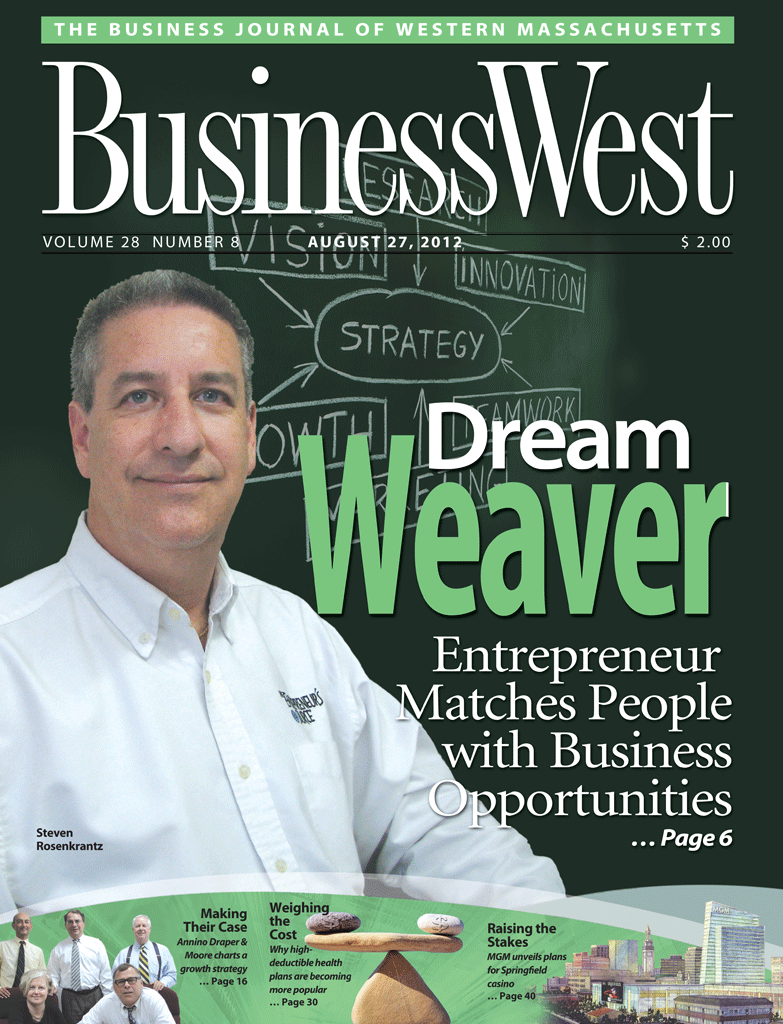
 

Commercial Real Estate Sections
Strong Interest Projected for the Former Asylum Nightclub Building

Kevin Kennedy expects several proposals for what is now known as 1600 Main Street.

Kevin Kennedy expects several proposals for what is now known as 1600 Main Street.

Kevin Kennedy says the original plan for what has long been known as the Asylum nightclub building in Springfield’s downtown was to take the property with the checkered past — there were a number of controversial all-night concerts there before the building was eventually shuttered due to safety concerns — and give it a new use as home to public offices.

In fact, his large department, Planning and Economic Development, or parts of it, was among many possible public-sector tenants that became part of the discussion when it came to the Asylum’s future.

But that was a few years ago, said Kennedy, the city’s chief development officer, noting that many positive things have happened in the interim that have prompted him to change his perspective on the now-renovated Asylum property. Indeed, a number of success stories, including the redevelopment of 1550 Main St. (the former federal building), the pending arrival of Thing5 and 300 new jobs in One Financial Plaza, plans for WFCR-AM to move into the Fuller Block across Main Street from the Asylum property, and other developments, have prompted Kennedy to believe there is strong private-sector interest in the building and its 21 on-site parking spaces.

He’ll find out just how much over the next several weeks as the city first issues a request for proposals (RFP) for development of the property’s 6,000 square feet, and then awaits responses.

He believes there will eventually be many to consider.

“I think there will be an active market for that building,” he told BusinessWest, adding that he considers commercial office space the most likely — and desired — reuse of the property. “Downtown is changing — for the better — and this could be another big success story there.”

Recounting the recent history of the Asylum building, Kennedy said that, as MassDevelopment proceeded with plans to revitalize and retenant the former federal building, the city knew it had to do something with the troubled property across Worthington Street from 1550 Main St.

The eventual plan conceptualized by the control board that was essentially running the city at that time was to raze all but the 6,000 square feet fronting Main Street, and create parking, as well as space for community events, on the demolished portion of the property.

And those plans were carried out over the past year in a $1.6 million initiative, funded with state and federal money, that included façade work that includes new signage that essentially renames the property 1600 Main Street.

The original intended tenants were public-sector entities, said Kennedy, adding that the Business Improvement District, the Springfield Parking Authority, and the Planning and Economic Development Department (currently located on Tapley Street) were all considerations.

But with those aforementioned positive developments downtown in recent months, those plans changed.

“When I came to this office [in December 2011], I took a look at the changing conditions in the downtown, with Thing5 coming in, the revitalizing of 1550 Main, the work that Herbie Flores [president of the New England Farm Workers Council] was doing on the blocks immediately adjacent to it, WFCR, progress in Morgan Square, and other developments, and came to the conclusion that we should RFP this for private use.

“That would enable us to get it back on the tax rolls,” he continued, “and that makes far more sense than public-sector use.”

And Kennedy believes there will be considerable interest from the private sector, especially with nearly two dozen on-site parking spaces, an attractive selling point to companies who might consider a downtown mailing address but have been hesitant to locate or relocate downtown due to concerns about available, convenient parking.

“Having 21 spaces adjacent to the building should help create a strong market for the property,” said Kennedy, adding that the RFP includes plans to locate a public market in that parking area on Saturday mornings.

Kennedy acknowledged that it’s difficult to forecast the level of response to an RFP — some recent projects have drawn considerable interest, while others, such as the former York Street Jail, failed to capture the attention of the development community — but he anticipates several proposals due to the strong combination of location, amenities, and the momentum gained in that part of downtown over the past several years.

Time will tell if Kennedy’s optimism about the site is fully warranted, but at the moment, he’s quite confident that the property’s reuse and return to the tax rolls will become part of that list of positive developments along Main Street — and perhaps prompt still more additions.

If it does, then it is likely that the city can retire that phrase ‘Asylum building,’ something it’s been trying to do for many years now.


George O’Brien can be reached at [email protected]

Company Notebook Departments

United Financial Bancorp Announces Acquisition

WEST SPRINGFIELD — United Financial Bancorp Inc., the holding company for United Bank, and New England Bancshares Inc., the holding company for New England Bank, recently announced the execution of a definitive merger agreement pursuant to which United Financial Bancorp will acquire New England Bancshares in a transaction currently valued at approximately $91 million, based on United Financial Bancorp’s 20-day volume-weighted average stock price of $15.89 per share as of May 30, 2012 and excluding shares used to terminate New England Bank’s employee stock ownership plan. United Financial Bancorp’s acquisition of New England Bancshares will add approximately $726.5 million in total assets, $557.9 million in gross loans, and $581.6 million in total deposits before acquisition-accounting adjustments. The transaction will expand United Financial Bancorp’s presence into Hartford, Tolland, New Haven, and Litchfield counties in Connecticut, where New England Bank operates 15 full-service banking offices and two administrative offices. Under the terms of the definitive merger agreement, at the effective time of the merger, each share of New England Bancshares common stock will be converted into the right to receive 0.9575 of a share of United Financial Bancorp common stock. The consideration received by New England Bancshares stockholders is intended to qualify as a tax-free transaction. United Financial Bancorp expects the transaction to be immediately accretive to its earnings per share, excluding one-time transaction expenses. The transaction represents 163% of New England Bancshares’ tangible book value and a core deposit premium of 7.4% at March 31. Richard Collins, chairman of the board, president, and CEO of United Financial Bancorp, said that “we are very pleased to announce our plans to partner with New England Bancshares. This combination presents a tremendous opportunity to expand our presence in Connecticut, where United Bank does not currently maintain any branches. Connecticut is an attractive and growing banking market, and one we have had our eye on for some time. Like us, New England Bancshares has deep roots in the communities it serves, and we look forward to introducing our brand of banking to this region. We believe the strategic value of this transaction will enhance our franchise and add value to our stockholders’ investment. We are excited about the future of our combined company.” David O’Connor, president and CEO of New England Bancshares, said, “we feel that this merger is an excellent opportunity for our customers and the communities we serve. Partnering with United Bank will allow us to continue providing our customers with a high level of personalized service and local decision making while preserving our community-bank atmosphere.” The transaction, which has been approved by the board of directors of both New England Bancshares and United Financial Bancorp, is expected to close in the fourth quarter of 2012. T


Research Spending Up 7% at UMass Amherst

AMHERST — According to UMass President Robert L. Caret’s office, research spending at the Amherst campus of UMass is up 7% over last year, while research spending at the five-campus system is up more than 8%. The funds, which helped the Amherst school reach a total of $181.3 million in research spending, come mostly from federal grants, with some private corporations also contributing to research projects. According to a report prepared by the UMass Office of Institutional Research, the university as a whole spent $586.7 million in fiscal 2011, up from $542.7 million in fiscal 2010. Some money on the Amherst campus has been spent developing new radar systems to provide earlier warnings of severe weather events such as tornadoes and hurricanes, while other funds were spent on nanotechnology.


Universal Plastics Acquired

HOLYOKE — The father-son team of Sunil and Jay Kumar has acquired Universal Plastics from the Peters family, pledging to serve as on-site managers and grow the business as the Whiting Farms Road company, founded in 1966 by James R. Peters, transitions from one family ownership group to another. Terms of the sale were not made public. Universal Plastics has gross annual sales of approximately $10 million, employs 70 people, and manufactures thermoforming plastics that include custom containers, protective covers, and enclosures for many large companies including Pratt & Whitney, General Electric, and BE Aerospace. The company also does work for the U.S. military. The new owners plan to keep senior management in place at the company and hope to expand and grow the product line. The Kumars also plan to serve as on-site owners and managers of the business. Sunil Kumar has an extensive background in manufacturing, having previously worked as president and CEO of International Specialty Products and GAF Materials Corp., and as executive vice president and member of the board of Bridgestone/Firestone Tires. His son Jay, who will join him in ownership, is a graduate of Cornell University and has worked extensively in the investment arena, most recently as managing principal at PAON LLC. According to Joseph Peters, president of Universal Plastics, closing on the sale of the business occurred this week, and the new ownership group has already reached out to many of Universal’s customers to inform them of the acquisition. Peters and his brothers Michael and Richard serve as senior managers of the company and will stay on for the foreseeable future to ensure a smooth transition.


HMC Earns Accreditation from Joint Commission

HOLYOKE — Holyoke Medical Center has earned the Joint Commission’s Gold Seal of Approval for accreditation by demonstrating compliance with the commission’s national standards for health care quality and safety in hospitals. The accreditation award recognizes Holyoke Medical Center’s dedication to continuous compliance with the Joint Commission’s state-of-the-art standards. The medical center underwent a rigorous, unannounced on-site survey in January. A team of Joint Commission expert surveyors conducted a full evaluation for compliance with standards of care specific to the needs of patients, including infection prevention and control, leadership, and medication management. “In achieving Joint Commission accreditation, Holyoke Medical Center has demonstrated its commitment to the highest level of care for its patients,” said Mark Pelletier, executive director of Hospital Programs, Accreditation, and Certification Services for the Joint Commission.

Chamber Corners Departments

ACCGS

www.myonlinechamber.com

(413) 787-1555


• June 20: ACCGS Ambassadors meeting, 4-5 p.m. in the EDC Conference Room, Springfield.

• June 21: ACCGS Executive Committee meeting, noon-1 p.m. in the TD Bank Conference Center, Springfield.

• June 27: Professional Women’s Chamber Board of Directors meeting, 8-9 a.m.

• July 9: ACCGS Annual Golf Tournament, at the Ranch in Southwick. Registration starts at 10:30 a.m., with a 12:30 shotgun start. Sponsors to date include: Lunch Sponsor: MassMutual Center; Reception Sponsor: Blue Cross Blue Shield; Photography Sponsor: NUVO Bank; Putting Contest Sponsor: H.L. Dempsey Co.; Hole in One Sponsors: Rocky’s Ace Hardware, Hampden Bank, and Teddy Bear Pools & Spas. The chamber is still looking for sponsors at all levels. New this year is the Flag Sponsor for $250. Costs: foursomes, $600; individual golfers, $150; reception only, $30. Interested parties may register online for any of the sponsorships as well as for golf and dinner, or by e-mailing Cecile Larose at [email protected], or by faxing a registration form to (413) 755-1322. For more information, call (413) 755-1313.


CHICOPEE CHAMBER OF COMMERCE

www.chicopeechamber.org

(413) 594-2101


• June 19: Health & Career Fair presented by Health New England, 8:30-11:30 a.m. at the Castle of Knights, 1599 Memorial Dr., Chicopee. If you are in the health care industry and have job openings, be a part of the job fair that will be at this event in the section “Corridor to Your Career.” The event is free to attend, and the public is welcome. Complimentary coffee, herbal tea, and sliced fresh fruit will be available until 9:30 a.m.

• June 27: Business After Hours, 5-7 p.m., at Grandview Estates off of Granby Road in Chicopee. Cost: $5 for pre-registered members, $15 for non-members.

• June 30: Bus trip to New York City — a day on your own in the city. The bus leaves the chamber parking lot at 7 a.m. and returns around 9:30 p.m. Cost: $45 per person. Call (413) 594-2101 or sign up online at www.chicopeechamber.org.


FRANKLIN COUNTY

CHAMBER OF COMMERCE

www.franklincc.org

(413) 773-5463


• June 29: Breakfast Series, 7:30-9 a.m., Annual Legislative Breakfast and Annual Meeting, FY 2013 budget and business news from our delegation on Beacon Hill. Sponsored by People’s United Bank. Cost: $12 for members, $15 for non-members.


GREATER EASTHAMPTON CHAMBER OF COMMERCE

www.easthamptonchamber.org

(413) 527-9414


• July 12: Networking By Night Business Card Exchange, 5-7 p.m., featuring a gala waterski show. Hosted by the Oxbow Water Ski Show Team, 100 Old Springfield Road, Northampton. Door prizes, hors d’ouevres, host beer and wine. Tickets: $5 for members, $15 for non-members.

• July 27: 28th Annual Greater Easthampton Chamber of Commerce Golf Tourney, 9 a.m. shotgun start for the Scramble event. Hosted by Southampton Country Club, College Highway, Southampton. Major sponsors: Easthampton Savings Bank and 5 Star Building Corp. Cost for the outing, which includes golf with cart, lunch, dinner, and a gift, is $100 per person and $400 per foursome. “Win a Buick Hole in One” sponsored by Cernak Buick. A $10,000 hole in one sponsored by Finck & Perras Insurance. Register at www.easthamptonchamber.org.


GREATER NORTHAMPTON CHAMBER OF COMMERCE

www.explorenorthampton.com

(413) 584-1900


• June 21: New Member Info Session for June, 8-9 a.m. This is the chance to tell us more about your business and how the chamber can best serve you. Meet other new members and learn how to make the most of your chamber membership. RSVP to (413) 584-1900 or [email protected]. A light breakfast will be served.


WEST OF THE RIVER

CHAMBER OF COMMERCE

www.ourwrc.com

413-426-3880


• June 21: Economic Development Committee Meeting, 7:30-8:30 a.m. Hosted by the Work Opportunity Center, Agawam.

• July 11: Wicked Wednesday, 5-7 p.m., EB’s Restaurant, 385 Walnut St. Ext., Agawam. Cost: free for members, $10 for non-members.

Features
Chicopee Chamber to Celebrate a Milestone

Gail Sherman

Gail Sherman says the Greater Chicopee Chamber will have a lot to celebrate at its 50th-anniversary party later this year.

Oct. 12 is shaping up as a big night for the Chicopee Chamber of Commerce. Make that the Greater Chicopee Chamber of Commerce (GCC).

That’s the original, corporate name of the organization that will celebrate its 50th anniversary on that evening with a dinner dance at the Castle of Knights on Memorial Drive. “Through the Years” will be the theme for the event, which will feature a special commemorative program, complete with a pictorial history of the chamber, a salute to board members, recognition of the 13 remaining charter members, (a list that includes Elms College, Chicopee Savings Bank, Spalding, and others), and the unveiling of a new logo that will return the word ‘Greater’ to the chamber’s brand.

And while much of the focus this fall will be on the past, there is much to celebrate concerning the present and future as well, said Gail Sherman, who this year will mark 15 years as director of the organization.

“We’ve developed a reputation as a chamber that’s very active, very inclusive, innovative, and that thinks outside the box,” she said, adding that there are many recent examples of how those qualities have manifested themselves to the benefit of members and the businmess community as a whole. They include:

• A new advocacy policy that represents a dramatic departure from the chamber’s longtime approach to issues impacting the business community. Where before, the GCC sought only to thoroughly educate its members on such matters, it will now do that while taking a position as well. Adopted in April, the new policy’s first position statement came in the form of opposition to a state budget proposal to centralize policy and budget control of community colleges under the state’s Board of Higher Education (more on that later);

• A new health care expo and career fair that will make its debut on June 19. Also located at the Castle of Knights, the fair, which is expected to draw at least 30 exhibiting companies from across the broad health care sector, has been designed to showcase those businesses, continue a chamber-wide focus on health and wellness, and help match companies in the field with qualified job candidates;

• Another new job fair — this one focused on veterans — that will take the name ‘Employ Wisdom — Hire a Veteran.” A collaborative effort between the chamber, the Chicopee Department of Veterans Service, and the Employer Support of the Guard & Reserve, the event, slated for July 3, is designed to bring veterans and employers together under one roof and create effective matches;

• Continuation of the chamber’s Business Executive Roundtable Series, a monthly program designed to help business owners and managers confront the many challenges involved with surviving and thriving in an increasingly global economy;

• A recent initiative called “Easy to Enter Chicopee Center,” a collaborative effort involving the chamber and downtown businesses that was launched to help those companies, especially retailers, cope with the closing of the Davitt Bridge; and

• Continuation of an accelerator program, or incubator initiative, that has helped a number of companies move from the garage or home office into the Western Mass. business community.

For this issue and its Getting Down to Business series, BusinessWest talked with Sherman about the coming milestone anniversary, but more about why she believes there will be much more to celebrate in the years and decades to come.


The Party Line

When Sherman arrived at the chamber in 1997 after career stops that included a lengthy stint as managing editor of the Chicopee Herald and later president of the Jay Peak Area Assoc. in Vermont, she didn’t expect that the stay would approach 15 years.

What has kept her in the chamber offices on Exchange Street in the heart of downtown has been the ongoing challenge to grow the chamber and make it a more effective force in what would be called the Greater Chicopee business community — and the way it has energized her and yielded a number of successful responses.

“It’s a busy, interesting, dynamic position,” she said of her role. “You get to know the business community and a lot of people, and you become so immersed in what’s going on in the community. I love the challenge of creating new programs and making this a better chamber.”

Indeed, over the years, and in collaboration with several other area chambers and other economic-development-related agencies, the Chicopee chamber has been part of a number of initiatives, ranging from innovative networking events, such as the recent Mine Your Business, to educational programs and the recently launched Business Roundtable series.

The key moving forward, said Sherman, is to continue to find new ways to serve the business community as a whole, while also bringing more value to a chamber membership.

And this brings her to the new advocacy program, which will involve issues — and there are many of them — that:

• Involve or pertain to the business community as a whole;

• Impact more than a substantial portion of the chamber membership;

• Influence the overall economic development of the area;

• Impact an entire business sector such as manufacturing, education, or tourism/retail; or

• Impact the enture business climate.

The state budget proposal to centralize policy and budget control of community colleges falls into each of those categories, said Sherman — so much so that a firm position statement on what the GCC calls a “red-flag issue” was deemed necessary.

“The chamber considers the local community colleges to be an important economic-development partner,” it reads. “We believe their ability to quickly identify and respond to particular local needs is a fundamental role that the colleges play in preparing residents for the available jobs and future employment opportunities. This ability would be drastically compromised if management were shifted to a centralized entity in Boston.

“We recognize that there are important gaps in the state’s overall arrangement for workforce preparation statewide that must be addressed,” the statement continues. “However, community colleges are only part of that system, and such issues have little to do with their governance. … Allowing for local control and self-determination to meet the ever-changing needs of the business community empowers the community colleges and their local boards.”

There will be more such position statements — reached when there is a consensus among chamber members on a specific issue — as the need arises, said Sherman, adding that possible subjects include everything from local property tax rates to unemployment insurance rates to a controversial proposal regarding mandated sick leave.

“Chambers are being pushed more and more toward becoming very involved in economic-development issues,” she told BusinessWest. “And that includes taking a position that would give our voice some power. We represent about 11,000 employees; to give them a voice is very important.”


Value Proposition

Due in part to the advocacy program and a desire to better reflect the regional impact of its programs and services, the chamber is re-emphasizing its original corporate name and the phrase ‘Greater Chicopee,’ which has not been used in many years, Sherman noted, adding that two area marketing firms, Jasin Advertising and Westwood Advertising, both based in Chicopee, are working on a new logo that will be launched at the October gala.

Meanwhile, there are a number of other new initiatives that are also part of that broad strategy to bring more value to members, she continued. These include the two job fairs slated for this summer. They were created to help job seekers find opportunities, she noted, but also to assist employers facing the ongoing challenge of finding qualified workers to fill job openings.

The health expo and career fair actually has many goals, she continued, and is in many ways an expansion of a collaborative effort with Health New England focused on health and wellness that included a unique event last fall called “Dancing Your Way to Wellness.” The June 19 event will feature exhibitors from across the medical field, a “Corridor to your Career” section, and a number of health screenings, including blood pressure, blood glucose, and body mass index.

“In order to lower their health-insurance premiums, people have to take an interest in becoming healthier,” she said. “One of the things we want to do with this expo is to keep the focus on wellness and remind people of the importance of taking care of themselves.”

The job fair focused on veterans, meanwhile, will have a singular purpose — bringing employers and potential employees together, said Sherman, who cited statistics showing that roughly one in three recently discharged young male veterans is unemployed, far more than double the current national jobless rate.

“Veterans can offer employers extensive skills sets — they have a lot of wisdom and skills that they can transfer to a job,” she explained. “But many veterans struggle to market themselves effectively. “Employ Wisdom — Hire a Veteran” was created to bring the employer and veteran employee together under one roof to meet face to face and interact in a less-stressful environment.”

And then, there’s the Easy to Enter Chicopee Center initiative, which has been active in raising money for an immediate need — promoting the downtown while the Davitt Bridge is closed, which it will be for the next two years — if all goes according to schedule.

The program includes a Web site (www.easytoenterchicopeecenter.com) that includes a button visitors can hit to find alternative routes into the central business district and a video featuring former Mayor Richard Kos explaining the many things people can do in Chicopee Center once they get there.

“We’re not doing this just because the bridge is closed,” Sherman told BusinessWest. “We want to start focusing on downtown and the gem that it could be. There are many mainstays that do bring people downtown, and we want to start shedding a positive light on downtown, but in the meantime, while people are readjusting their behavior because of the bridge closing, we want to make sure we stay positive.”

In addition to these new programs, the chamber is continuing and expanding many existing initiatives, said Sherman, citing, as just one example, the accelerator program that has been in place for more than a decade.

There are four incubator spaces of varying sizes at the chamber offices, she explained, noting that, at any given time, at least two are being rented by entrepreneurs trying to get ventures off the ground or to the next level. Current tenants include a massage therapist and Sandler Training, a business started by long-time consultant Jim Mumm that focuses on providing sales-staff training and other services to area businesses.

“We give people the opportunity to gain a downtown presence at a very affordable price,” said Sherman. “For businesses that are coming out of their home office or their cellar and want to have a professional environment, this is the perfect setting. We’ve had a lot of people come and go, and many have done very well in business.”

Another ongoing program is the series of business executive roundtables. Led by Lynn Turner and Ravi Kulkarni, principals with the Clear Vision Alliance, these sessions, staged on the second Thursday of each month from November through June, are a forum for leaders to stretch their thinking and challenge current assumptions in order to remain relevant and competive into the future.


The Bottom Line

The chamber’s 50th birthday actually arrives on Oct. 3, said Sherman, adding that she and her staff have been working for the past several months on the party that will come just over a week later and is expected to draw more than 200 people.

It will be a celebration of everything that’s happened since 1962, she told BusinessWest, adding quickly that, while this chamber is content to look back for this important milestone, its real mission is to look ahead and find new ways to build on that reputation for innovation and thinking outside the box.


George O’Brien can be reached at [email protected]
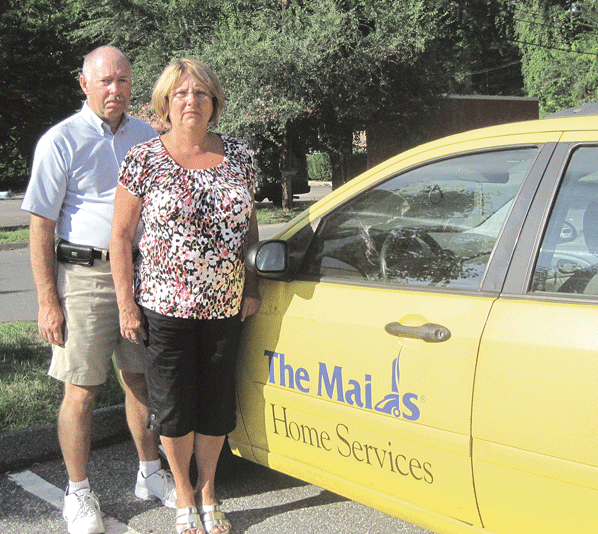
Sections Women in Businesss
WBOA Helps Area Business Owners Design a Plan for Success

Eileen Jerome, left, and Susan Kelley

Eileen Jerome, left, and Susan Kelley are proud of the caliber of educational programs that the WBOA offers area women in business.

‘Education’ and ‘inspiration.’

Those were the two words Susan Kelley summoned when asked what she gains through her participation in the Women Business Owners Alliance of Western Mass. (WBOA), a carefully chosen name that speaks volumes about what the organization is all about.

It truly is an alliance, said Kelley, owner of Kelley Tax Services in Westfield and current vice president of the WBOA board of directors. Elaborating, she said the group is comprised of mostly small-business owners who network, sometimes do business with one another, and raise money together to support nonprofit organizations that benefit women and girls. But mostly they learn from experts in the field and especially from each other, and come away empowered by the stories of perseverance that are told at the group’s monthly meetings.

“It is inspiring to learn from others who can share their work experiences,” said Eileen Jerome, current board president and owner of Jerome’s Party Plus/Taylor Rental in Westfield, who joined the group five years ago and has inspired others with her success.

This is what Renate Oliver had in mind when she started the organization in 1982, said Jerome, adding that Oliver will be one of many speakers at an elaborate 30th Anniversary Gala to be staged June 21 at Chez Josef. The event will honor a number of women for their contributions to the organization and their success in business, but mostly, the gala will be a celebration of how the WBOA has grown and evolved over the past three decades.

Indeed, the calendar is now filled with everything from a highly successfully fall speaker series appropriately named Kaleidescope to a raucous annual Women’s Night of Comedy, which is a fund-raiser for area nonprofits. Meanwhile, the group continues to meet monthly and thus carry out its primary mission: to empower women entrepreneurs to be all that they can be.

For this issue and its focus on women in business, BusinessWest looks at how that mission is carried out, and, in the course of doing so, explains why there will be much to celebrate at the upcoming gala.


Meeting of the Minds

Christine Parizo will be one of those honored on June 21.

Freda Brown

Freda Brown will be honored as 2012 Business Woman of the Year at the WBOA 30th Anniversary Gala.

A freelance copywriter who was already busy enough being a mother of two children with her own business, Christine Parizo Communications, she joined the Women WBOA because she saw it as an opportunity to grow professionally, learn from others in situations similar to hers, and become involved in the community.

From the start, she liked the group, and it liked her — enough to ask her to fill an open seat on the board, one involving communications and public relations, talents she specializes in. “I guess that if you want something done, ask a busy person,” said Parizo, who will be honored as the 2012 Outstanding New Member at the gala.

In many ways, her story is typical of those who become part of the organization — small-business owners who join to network and also tap into the collective wisdom in the room at the monthly breakfast meetings.

Jerome told BusinessWest she wasn’t quite sure what to expect when she attended her first meeting at the behest of a friend who thought she would fit in. “I walked into a room full of strange women,” she recalled, meaning people she had never met. Soon, they weren’t strangers, and Jerome eventually settled into a leadership role that put her on the path to becoming president.

She said there are currently about 80 members representing a number of professions and business sectors. The current roster includes attorneys, business coaches, financial planners, jewelry designers, and realtors, among others. Each has a different business story to tell, but there are common denominators: they own small businesses that want to grow, face myriad challenges as they go about that assignment, and often wear many, if not all, of the hats in their organization.

Such is the case with Kelley, a sole proprietor who came from the corporate world where literally everything was at her fingertips, and those little bothersome things like marketing, advertising, and ordering office needs were all done by other people. When she moved back to the area five years ago and started a new business on her own, it was a whole different world.

“I really needed to get out and meet other business owners, and having come from such a large company, it was very limiting being on my own,” she explained. “At WBOA, I felt welcomed; the speakers were very inspirational.”

Jerome told BusinessWest that WBOA is a very hospitable group, and every effort is made to welcome a new person, find them a place to sit, and let them know the routine immediately.

“We are a non-competitive group; we can have two women from the same type of business, and they support each other,” she said, adding that the goal isn’t for everybody to use each other as a prospect, but to grow each other’s business through support, education, and new relationships.


Sharing and Caring

Jerome told BusinessWest that there are many benefits to be derived from WBOA’s $95 annual membership fee. These include everything from the many kinds of learning opportunities to the opportunity to qualify for a low-interest business loan from the organization.

Indeed, financial assistance is available for those who qualify through the Cheryl Reed Memorial Loan Fund, which was established in 1991 in memory of Cheryl Reed, who owned Cheryl Reed Travel in East Longmeadow and was a founding member of WBOA. The funds can be used to get a business started or take it to the next level, said Jerome, adding that the program represents just one of the ways WBOA has evolved over the years.

Another is through refinement of the many educational components of the group’s mission, starting with the programs at the regular monthly breakfast meetings.

Topics are chosen based on both emerging trends in business and the common needs of the members, said Jerome, adding that the goal with every program is to give the assembled women information and insight that they can take back to their businesses and apply immediately.

She recalled one session in particular that featured a human-resources professional who described recent research showing that women are far less likely to ask for help, money, new opportunities, and pretty much anything to do with business. Her message was that the true secret to personal and professional success is to ask and ask often, and she punctuated her case by highlighting stories of others’ success.

All of the monthly series events are morning sessions, Jerome said, but in the fall of 2013, WBOA will offer five evening events for those members who can’t attend morning events due to child care or other work issues.

Meanwhile, the popular Kaleidoscope Fall Speaker Series, which specifically showcases members of the WBOA, will resume in September. “Part of our mission is to showcase our members because they have great experience and examples that we can all learn from,” said Jerome. “We really have a variety of talent in our members.”

For example, this past fall’s series, which was sponsored by Bay Path College, offered six WBOA members the opportunity to share their expertise about business, marketing, finance, and work/life balance. The members presented two at a time over a three-week period.

The first week’s workshop covered the nuances of finding a business niche and getting finances in order; week two focused on the broad topic of time management and how to improve it. The final week allowed the speakers to help answer some questions that are pretty much on the tongues of women business owners everywhere, such as, how does one move a customer from ‘I’m interested’ to ‘here’s my credit card’?

Another example of the group’s progression and ongoing evolution is the annual Women’s Night of Comedy, which draws a sellout crowd and raises money for three local nonprofit organizations that help women and girls in various aspects of life. Last March’s event featured four comediennes, including one of the most sought-after personalities on the national comedy scene, Patty Ross, and raised funds for Rick’s Place, Safe Passage, and Dress for Success.

Kelley is quick to point out that the Women’s Night of Comedy effort is a rocking and rolling night of kinship and networking, but it’s no laughing matter. Just a few years ago, the organization was able to give $250 to each nonprofit.  Two years ago, the amount escalated to $3,000 per organization, and this past year was raised again to $3,500 for each.

“More people have heard of it and are coming back, bringing their friends,” she explained, adding that the event is feeding off its own success, bringing more ticket sales, raffle prizes, and, most importantly, sponsorship money. “It’s awesome to see that it’s really a great night and, best of all, it’s growing.”


Fabric of Success

There is a full agenda for the upcoming 30th-anniversary celebration, said Jerome, starting with awards to members such as Parizo and Freda Brown, the organization’s treasurer, who will be named Woman of the Year.

The WBOA will also spotlight the Pioneer Valley’s Top Women in Business, chosen by the group based on community involvement, business growth, mentoring, volunteering, and innovation, and Oliver will deliver her highly anticipated address.

But overall, the night will be a celebration of 30 years of growth, evolution, and continued refinement of those qualities on which the organization was founded: education and inspiration.


Elizabeth Taras can be reached at [email protected]
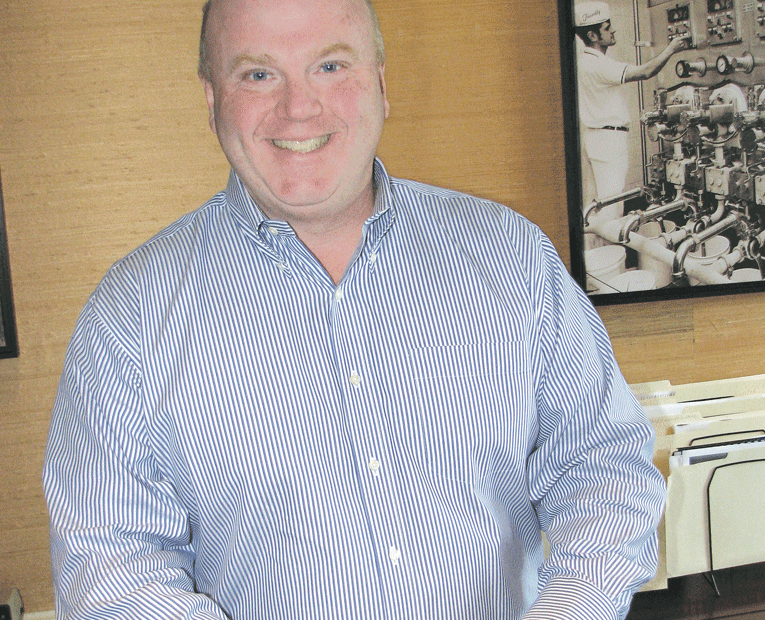
Cover Story
Nick Fyntrilakis Brings Energy to His Role in ‘Community Responsibility’

Nick Fyntrilakis says that every once in a great while he thinks about what might have happened, career-wise, had he prevailed in that highly controversial race for the 9th Hampden seat in the state House of Representatives in 1999, when he was only 24.
“My guess is that I’d probably still be in the State House somewhere, or in some role in government,” he conjectured, while contemplating several possible scenarios that could have played themselves out over the ensuing decade — such as a few terms in the House and then maybe a successful run at the state Senate seat vacated by Brian Lees in 2006 — or some other path.
But he didn’t prevail in that race, obviously, losing out in a Democratic primary that wound up being settled in the courts. So he shifted his focus from public service — he had been working as the aide to then-9th District seat holder Dennis Murphy — to an entrepreneurial gambit as a marketing consultant.
This started him down an interesting road to a job that could easily be considered public service — although he’s employed by the massive financial-services giant MassMutual.
Fyntrilakis now holds the title vice president of Community Responsibility, a post that comes complete with a lengthy job description that includes everything from consideration of the thousands of charitable-funding requests the company receives every year, to representing MassMutual on all manner of issues — and at all kinds of events — involving the city of Springfield.
Indeed, while President and CEO Roger Crandall has the helm at the company, Fyntrilakis is in many ways, if not most ways, the face of MassMutual in Springfield and Enfield, what he called the corporation’s “home-office communities.”
Summing up what he does in that capacity, while also simplifying things greatly, Fyntrilakis said he focuses much of his time and energy on what he calls “issues of the day.” These are in a constant state of flux, and vary in terms of how much of his time and energy they absorb. The list includes everything from helping to set the agenda for a recent visit to Springfield by the new chancellor of UMass Amherst, to ongoing work to revitalize the city’s State Street Corridor, to taking a lead role in determining MassMutual’s eventual contribution ($3 million) to Baystate Health’s $296 million Hospital of the Future.
He also chairs DevelopSpringfield, the nonprofit corporation formed in 2008 to advance development and redevelop projects, stimulate economic growth, and expedite the revitalization process within the city.
And then, there’s the tornado that roared through Springfield last June 1. It made his already-packed calendar and lengthy to-do list both exponentially more so. It brought a new category of consideration for the company’s philanthropic endeavors (more on that later) and eventually led MassMutual to designate Fyntrilakis as a loaned executive to help oversee recovery efforts along with Gerald Hayes, a vice president at Westfield State University.
In that role, Fyntrilakis has provided direction for the Rebuild Springfield initiative — a public-private collaboration involving Develop Springfield and the city’s redevelopment authority — which has undertaken development of a master plan that covers all impacted neighborhoods and the city as a whole.
To all of his various initiatives in Springfield, including tornado recovery, Fyntrilakis brings an approach, or philosophy, that he summed up with two words — ‘direct’ and ‘thoughtful’ — and then explained in some detail.
“We have real issues here in the community,” he explained. “If you try to tiptoe around things, that’s not real helpful to anyone; we have to be direct in our communications to each other, understand what the issues are, and get to the point on things.
“At the same time, we need to do things in a thoughtful way and a caring way,” he continued. “I believe that I do both, and I hope that I do both; we need to focus on what the issues are and deal with them in a direct manner, while at the same time, we have to be compassionate and understand the sensitivity of things.”
Both traits are certainly necessary when confronting what he sees as the biggest long-term issue facing Springfield — improving its education system.
“There are no easy answers to the education problem we have in Springfield,” he said. “What I would say is that we need radical change. What I would ask of the mayor and the School Committee as they approach this change of leadership in the superintendent’s office — ‘what is it that we’re going to do that’s significantly different from what we’re doing today in order to get a better result?’”
For this issue, BusinessWest talked at length with Fyntrilakis about his broad role and how he approaches it, and also about Springfield and its prospects for the future.

Learning Curves

Nick Fyntrilakis

Nick Fyntrilakis says he approaches his work on the many issues facing Springfield with the goal of being direct and “thoughtful.”

Born and raised in the City of Homes, Fyntrilakis remembers taking the bus from his neighborhood in East Springfield to the downtown in the early and mid-’80s.
He would visit many of the stores still doing business there then, including Steiger’s and Johnsen’s Bookstore, and eventually reach his father’s small breakfast-and-lunch restaurant on Main Street called Athens. He worked several different jobs there as he got older, while also devoting significant time to listening to what his father and others were saying about the city and its prospects moving forward.
This curiosity, or fascination, was blended with a sense of community service instilled by his parents  — his mother, who worked at the East Springfield branch of the city library, was one of the first members of the East Springfield Neighborhood Assoc., and both parents were involved in a number of political campaigns — and this mix propelled him toward government service.
He started as an aide to Murphy in 1996, not long after graduating from UMass Amherst with a double major (Environmental Science and Resource Economics). About a year and a half later, he decided to seek one of the two open seats on the Springfield School Committee.
“At that time, unlike today, it was very rare to get open seats that were not heavily contested,” he said, adding that there were eventually 13 candidates in the primary for three seats on the ballot. The field was whittled to six, and he ultimately finished third, joining the board when he was only 23.
“I enjoyed it,” he said of his stint on the school board. “It was hard work, but you get a real appreciation of what people are facing in terms of the process and the positives, negatives, and challenges involved with the public schools. There are 40-plus school buildings in the city, and you certainly start to learn about every nook and cranny of the city.”
Fyntrilakis decided to take this knowledge, as well as his love of politics, and seek a much higher office, Murphy’s House seat, in 1999. He eventually lost in the primary to Jack Keough by 32 votes, a number that prompted a complicated recount.
“That election was a real mess,” he recalled. “There were a variety of irregularities, including Republicans voting in a Democratic primary, inactive voters voting and not having their registration confirmed, and dead people voting — there were at least three confirmed dead voters that participated.”
The election was eventually thrown out in Hampden Superior Court, but Keough appealed that ruling. Faced with the appellate court’s desire to bring 150 inactive voters to court to verify their registration, Fyntrilakis dropped the case and returned his focus to the School Committee, to which he won another term in 2001.
Professionally, he started a consulting business, focusing on public relations and marketing. He did that for three years before winning a job at MassMutual. He started in the Hartford office, where he handled oversight of several education programs and outreach involving Hartford residents.
In 2005, he was given the opportunity to lead all educational programs in Springfield and Hartford, among other responsibilities, a career move that required him to step down from the school board. He became an assistant vice president in 2008 and succeeded Ron Copes in the role of director of Community Responsibility, or what had been known previously as Community Relations. He was named a vice president in late April.
When asked if there’s anything approaching a typical day in this job, Fyntrilakis laughed while shaking his head.
There are are a number regular assignments to be handled by him and his staff of nine, such as charitable giving, field programs involving the company’s 5,000 agents, and the LifeBridge free life-insurance program, but then there are those aforementioned issues of the day. He also sits on a number of boards and commissions, from the Springfield Chamber of Commerce to the Springfield Business Improvement District to the United Way.
“Every day is different, and that’s one of the things I like about what I do,” he explained. “We’re involved with a number of different entities, and also involved with improving the community. A lot of the work I do centers around what’s going on that week or what the hot issues are, and things are always changing.”

Twists of Fate
One of the more intriguing components of Fyntrilakis’s job description is overseeing the company’s charitable giving, currently about $7 million per year, and sifting through the more than 1,000 requests, or ‘asks,’ that arrive annually.
Generally speaking, this giving falls into three categories:
• Education, including many initiatives that fall under the corporation’s Career Pathways initiative, which provides scholarships, experiential learning opportunities for young people, and other components designed to track students into careers in financial services and, perhaps, MassMutual;
• ‘Community vitality,’ which includes support to cultural or community activities ranging from the Springfield Symphony Orchestra to July 4th fireworks; from CityStage to the Hoop City Jazz Festival; and
• The broad realm of economic development, which has been a focus area for only the past five or six years, he said. It includes efforts such as State Street Corridor work, downtown revitalization, and the various initiatives carried out by DevelopSpringfield.
The tornado doesn’t fit conveniently into any one category, but in reality, it touches all three, said Fyntrilakis, who noted that Springfield Mayor Domenic Sarno reached out to him just a few days after the tornado struck to take a lead role in the rebuilding effort.
Actually, his involvement in tornado-recovery efforts began within hours after the twister carved its half-mile-wide path of destruction through the city.
“I remember that night being on the phone with [Executive Director] Rick Lee at the Red Cross, saying ‘what do you need? What can we do? — you let us know, and we’re there,’” he told BusinessWest. “The first thing that we did, which was easy, was to cut a check for $100,000 to the Red Cross, and from there we did a lot more with the agency around volunteering and getting our employees involved. We were certainly on the ready to do whatever it was that the city wanted and the Red Cross needed to get the community back on its feet.”
Assessing what’s happened in the year since, Fyntrilakis said the creation of a master plan is an important initial step in the rebuilding process, and the best thing about that document is the level of involvement from city residents.
“One of the top priorities was community engagement, and ensuring that this wasn’t going to be the mayor’s plan or the City Council’s plan, or the consultant’s plan,” he explained. “This was going to be the community’s plan, and at the end of the day, we had that community involvement, exemplified by our last meeting in January, when we had 500 people at St. Anthony’s Social Center to hear the executive summary and ask questions.”
He said the mayor has asked those involved with Rebuild Springfield to use the tornado as a catalyst, not only for restoring damaged areas and encouraging new development, but for city-wide changes in such pressing areas as education, public safety, and job creation — and he believes that the disaster, and the resulting master plan for revitalization, can ultimately become just that, because of that community involvement.
“The best part of this plan, for me, is that it forces, or continues, dialogue among the various parties involved in certain aspects of improving the community,” he said, noting that there will be meetings within the designated tornado-damaged districts to continually gain input from residents and refine specific plans as necessary. “In the past, there wasn’t a formal structure to continue those conversations; people would say, ‘we’ve got our plan, now let’s go off and go about our business.’
“Now, it’s the reverse,” he continued. “We’ve said from the start, ‘we’re going to have a plan; what’s the implementation model, who’s leading it, and how do we drive that?’ There’s a real difference to how the city is approaching this moving forward.”

Work in Progress
When asked about the challenges of working with bureaucracy-laden partners such as City Hall, the School Department, and, in the case of the tornado, state and federal agencies, and also about the enormity of the issues the city is confronting, Fyntrilakis acknowledged that his work can sometimes be trying, but he has the patience and other qualities needed to cope.
“Certainly there are days when it feels like you’re trying to boil the ocean, and you wonder how you’re going to get that done,” he explained. “But those aren’t the majority of the days, because if they were the majority, you wouldn’t be doing this for very long.
“When you step back and look at some of the success — and you really need to concentrate on the success — and have a vision and a belief in what you’re doing and a passion for it, then you can sustain the energy requited to do the work,” he continued. “If you were to put your hands up in the air and say, ‘what am I going to do change things?’ or ‘what is MassMutual going to do to change things?’ on a particular issue, you’re not going to get very far. You have to have that belief and passion in what you’re doing.”
Fyntrilakis said he learned a number of lessons from his predecessor, Copes, about everything from setting priorities for expending time and resources to gaining the all-important momentum needed to achieve progress on pressing issues.
“He was certainly a role model for me, and he was very respected in the community,” Fyntrilakis explained. “He knew when to try to push to get things to move in the right direction, and also when not to.
“He tried to get people rowing in the same direction with a common focus,” he continued. “And that’s what I try to do in my work — to bring people together in this community, and to try to get people focused on what the objective is. I think we all want the same things … a better community, better schools, a more robust economic climate. We want a vital community; the question is, how do we get there?”
As one of the region’s largest employers, MassMutual is looked upon as a resource and potential contributing partner in virtually every endeavor facing Springfield, he said, adding that this simple fact presents one of the company’s biggest challenges — deciding when, where, how, and to what extent to get involved.
“We get invited to every conversation in town, which is great,” he said. “But it’s also somewhat impossible to be involved in every conversation in town, so we try to focus on where there’s the most need, where there are areas we can impact that align with our interests as an organization, and participate in and influence those. But we’re invited to everything.”
Which brings him back to the many problems facing the city’s School Department and the need to bring about that radical change he described.
“It’s a huge issue for the city,” he told BusinessWest. “If people are going to say that we’re chugging along and we’ve got some good things in the hopper, that may be true, but it’s just not happening fast enough to get us to where we need to be. We need significant change.”

The Bottom Line
As he mentioned, Fyntrilakis doesn’t think often about what might have happened if a few more people had voted for him in the House race back in 1999.
He’s very much preoccupied with the present, future, and those innumerable ‘issues of the day’ involving the city he grew up in and remains passionate about.
He’s not in public service in a very technical sense, but those two words probably best sum up everything in his lengthy job description — and concisely describe the philosophy he takes with him to work every day.

George O’Brien can be reached at [email protected]

Features
Plan Addresses Downtown Springfield’s Parking, Pedestrian Issues

This architect’s rendering shows the proposal for building a new, smaller parking garage on the site of the TB Bank parking lot.

This architect’s rendering shows the proposal for building a new, smaller parking garage on the site of the TB Bank parking lot.

Tim Love called it “a large gap between perception and reality.”
That’s how he chose to describe what he and others say is Springfield’s actual downtown parking problem — not the lack of inventory that many believe exists.
“There is plenty of parking in downtown Springfield, and when I say plenty, I mean plenty,” Love told BusinessWest, while quickly acknowledging that many people are simply not aware of this volume, leading to that perception he mentioned — that there is no place, or no good place, to park.
The city’s real issue lies with properly managing all that parking, he said — and this means everything from more-effective marketing of that supply to better signage to bring people to it, to perhaps more-creative pricing on the various products to incentivize people to use some of that underutilized inventory.
This need for better management is spelled out in something called the Downtown Springfield Parking and Pedestrian Plan (a carefully chosen name), which was prepared by Utile Inc. Architecture + Planning, with which Love is a principal, and Nelson Nygaard, a Boston-based transportation-planning firm, and funded by Mass Development.
The plan was commissioned in response to ongoing questions from city officials about what to do with the crumbling, 41-year-old, 1,232-space Civic Center Parking Garage. And while the document addressed that matter, it went much further in its scope.
Indeed, while the plan’s headline-making proposal is a suggestion to raze the Civic Center garage, build a new facility slightly more than one-third that size on a portion of the parking lot of the TD Bank building (owned by the Springfield Redevelopment Authority), and create a 250-space surface lot on the site of the old garage, there are many other suggestions, all aimed at making the downtown easier to navigate for motorists and pedestrians alike.
These include making Dwight Street, currently one way going south, a two-way road; closing down Falcons Way (the street that runs between the Civic Center garage and MassMutual Center) for many events, thereby creating what Love and others called a “Yawkey Way Effect,” in reference to the street outside Fenway Park in Boston where crowds gather before and after games; and improving the Market Street pedestrian way.
As for the specific plans for the garage and its proposed replacement, it would actually reduce the inventory of parking downtown by roughly 600 spaces, said Jason Schrieber, a principal with Nelson Neygaard.
But given the supply that exists downtown and the large percentage (more than half) of that supply that’s not being used, the city can easily absorb that loss, he said. Meanwhile, moving large amounts of parking even another block from the convention center could spur additional development in that area, he noted.
Using Boston and Northampton as examples, Schreiber said there are benefits to putting a few blocks of retail and hospitality venues between parking facilities and the front doors of event venues.
“If you look at the Academy of Music [in Northampton], there’s no parking there,” he explained. “You have to park in the city’s garage and walk past a number of shops and restaurants to get to the Academy of Music. That’s just one small, local example of what you see in many older downtowns.”
Kevin Kennedy, Springfield’s chief development officer, said, with the plan in hand, city leaders will closely consider all its points, from its basic premise — that perception is the real issue — to its major recommendation, and decide when and how to proceed.
While he agrees with some suggestions, he said there are questions about whether taking 600 spaces out of the inventory may hinder additional development, whether a 250-space surface lot on the footprint of the old garage is the best option for that site, and other matters.
And if they’re answered effectively, the city must then pursue financing for a plan that currently carries a price tag approaching $17 million.
For this issue, BusinessWest takes an in-depth look at the parking plan, thus shedding some light on what has become an important, and also complex, issue for many urban centers.

Reading Between the Lines
Matt Hollander described May 19 as “a great day for Springfield.”
There were three college commencement ceremonies going on that afternoon — AIC and Westfield State University at the MassMutual Center, which he serves as general manager, and Western New England University School of Law in Symphony Hall — as well as other, much smaller events in the convention center, he said. The various ceremonies and gatherings brought thousands of people downtown — as well as some serious gridlock.
It was the kind of day that would prompt questions about the wisdom of removing 600 parking spaces from the area around the convention center, he noted, while adding quickly that these are not the kinds of days on which to base one’s parking inventory.
“We don’t have many days like that Saturday,” he explained. “To build for your worse-case scenario doesn’t make any sense.”
Schreiber agreed.
“No one plans their system to the 100-year flood — it’s just not worth it,” he said, adding that Springfield and communities like it should create inventory sufficient to meet typical needs during peak weekday use — 10 a.m. to 2 p.m.
Going by that standard, Springfield is using not quite half (46%) the spaces in garages, on the street, and in surface lots within a 5-minute walk from the convention center, according to the report, and 51% of those within a 2.5-minute walk.
The ideal utilization rate, the identified target for most communities, is 85%, said Schrieber. But few communities actually come close to that number, he noted, adding that Springfield is in many ways typical of Northeast urban centers, although its utilization rates are even lower than those found in most other cities.
“I’ve found literally one place that actually has a parking-supply problem,” he told BusinessWest. “Every other community has plenty of supply, far more than anyone would have ever thought. We’re talking about hundreds or thousands of empty spaces at the peak hour of the day, and it all has to do with the need for better management programs.
“And those programs are starting to happen in various places around the country,” he continued. “There’s a couple of places in New England where they’re moving in the right direction. Nashua, N.H. is one of the better examples; they’ve implemented some fairly progressive management fixes in recent years.”
Elaborating, he said Nashua has implemented creative pricing policies, whereby busy streets are priced somewhat higher than those a little further away from the center of downtown, while parking in locations that would be considered remote is free or close to it.
“They used to price everything the same,” he explained. “When they changed, parking suddenly opened up; employees were willing to park in the cheaper spaces, and the prime customers who wanted the front door were willing to pay more for it.”
Such dynamic pricing programs can be a tool for improving overall parking management, said Corey Zehngebot, an urban designer and planner at Utile, noting that they help communities increase their utilization rates while reducing the kind of congestion Springfield saw on May 19.

On the Spot
But parking management starts with having the proper amount of inventory, said Love, returning to the study and its main recommendation — building a new garage much smaller than the existing facility and taking several hundred spaces out of the inventory.
“When you have too much parking, there are other negative effects,” he explained. “There are too many vacant lots; if you have too many surface parking lots and garages in your downtown, it’s not an attractive place.
“To always be well ahead of demand for the busy times … that kind of parking landscape is going to dominate a downtown, and you don’t want that,” he continued. “Providence figured this out 15 years ago; to make a downtown an asset, it has to be a place that people want to visit, and not just because of specific targeted destinations.”
Still another aspect of effective parking management is putting the inventory in the right places, said Zehngebot, noting that having 1,200 spaces literally across the street from the convention center, while convenient for visitors, isn’t exactly conducive to generating commerce and additional vitality in the city’s downtown.
A garage on the TD Bank lot would help create development opportunities along the block between Harrison Avenue and Falcons Way — and even on the site of the old garage itself, she said, while also facilitating efforts to create that aforementioned Yawkey Way look and feel on Falcon Way and bringing new life to a somewhat tired Market Street.
“There are several somewhat hidden corridors, like Market Street, which are pedestrian only,” she noted. “By increasing foot traffic through some of these places, we can help unlock some of their potential.”
Love agreed, and summoned the phrase “double duty” to describe what the authors of the parking garage have in mind for the proposed new garage. Elaborating, he said that it will not only meet parking-supply needs, but also funnel pedestrian areas, especially the Market Street corridor, while also perhaps serving as a catalyst for new retail and hospitality-related venues in that area.
“If we put the smaller garage on the TD Bank lot, with its lobby more or less oriented toward Market Street, we’ll be taking people who before would just get out of their cars and go directly to the MassMutal Center and not really experience the city, and require them to walk down Market Street to get to the convention center, and actually have a better experience,” he explained. “That’s already a well-scaled, well-designed space [Market Street], and we get that for free. At at the same time, the new garage could incentivize retail activity because it will have a measurable audience, a measurable demographic.”
Kennedy said city officials will closely consider the parking plan’s many recommendations, and as they do so, they will attempt to answer several questions. One of the biggest, he noted, is why the parking-utilization rate in Springfield is so low.
To be determined is whether the problem lies with awareness — do people actually know these spaces exist? — or resistance to using some of the city’s supply because of locations that might be considered poorly lit or unsafe, or still-sluggish economic conditions and a resulting high commercial real-estate vacancy rate. Or is it a combination of all these and other factors?
Also to be determined is whether a new 400-space garage (where 200 spaces must be reserved for TD Bank employees) and a 250-space surface lot on the site of the old garage will be sufficient to attract new development and handle the needs of the new businesses and residential units the city hopes to add in the years to come.
“We have a lot to look at and consider, and we need to continue the discussion with the downtown business community,” said Kennedy. “And we need to know exactly what we want before we move on financing.”

Casting Their Lot
Summing up the situation for Springfield, Love told BusinessWest that something has to be done about the Civic Center Parking Garage — either shoring it up at a high cost, something he wouldn’t recommend, or replacing it.
The key is for officials to get ahead of the situation and basically control the outcome, he continued, adding that the city still has an opportunity to do that. And while addressing the fate of that aging structure, the goal should not be to merely replace parking spaces, but to take major strides in the direction of more-effective management of the city’s parking inventory.
“Parking can and should be an integral part of economic development downtown,” said Kennedy, hinting strongly that the city has many questions to answer and steps to take before its parking supply can effectively play such a role.

George O’Brien can be reached at [email protected]
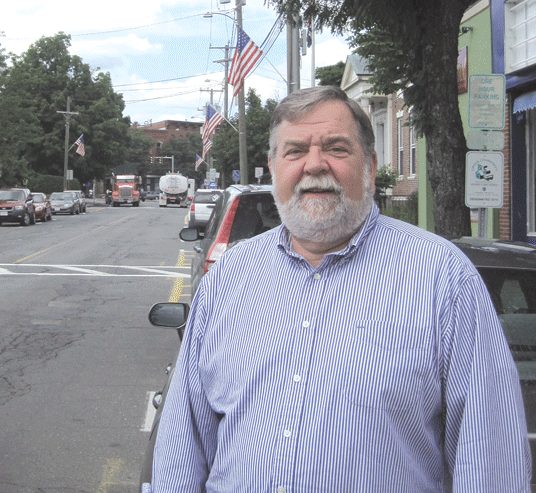
Sections Technology
Normandeau Communications Is All About Making Connections

Kim Durand and Brett Normandeau

Kim Durand and Brett Normandeau say they strive to match clients with business technologies that, in many cases, they weren’t even aware of.

WestIt wasn’t too long ago that business phone calls had to be made from a desk, and call management meant having a good secretary.
But there’s more than a hint of gee-whiz in Kim Durand’s voice when she describes some of the technology being installed by Normandeau Communications these days. Take the LG-Ericsson iPECS-LIK product, which manages all kinds of communication — phone calls, e-mails, texts, faxes, etc. — across multiple sites, and even on the road.
“The system processes all calls and does the call management for you,” said Durand, director of sales. “Not only can calls be sent to your cell phone, but voice mails left at your office can automatically appear on your smart phone with the .wav file attached, so you can listen to voice mail at any time. Any time people are on the road and not at their desks, like salespeople, it’s really important for them to be able to do the things they need to do.”
Normandeau has been selling, installing, and servicing telephone systems for 22 years, but voice over Internet protocol (VoIP) technology — which uses the Internet to exchange various forms of communication that have traditionally been carried over land lines — has added elements of convenience unheard of in those early days.
The company’s primary product line, Estech Systems Inc., gives business clients the option of a traditional digital business phone system, an Internet protocol telephony system, or a mix of the two.
But Normandeau is also touting a new patnership with LG-Ericsson, whose iPECS-LIK product further streamlines communication within any size business, from small offices to multi-site corporations with thousands of users, allowing calls to be forwarded between sites and even, as Durand mentioned, to mobile phones.
“We’re also providing surveillance systems as well as loudspeaker paging systems,” said Brett Normandeau, the company’s president and Durand’s brother. “All that ties in very well to your telephone system or your whole communication system. With Web access, I can log in and check the surveillance cameras, tie into the phone system, check e-mails” — all from a distance.
These are certainly exciting times in communications, and Normandeau has tried to stay ahead of the curve as it grows its presence in the Valley. Its visibility was boosted two years ago by a move from Florence to Riverdale Street in West Springfield.
“For us it’s been a convenient spot because a lot of our customer base is located in the Hampden County area,” Normandeau said, “and having acess to Interstate 91 and the Mass Pike makes it more convenient.”
In this issue, BusinessWest sits down with Normandeau and Durand to talk about how these siblings — and the company their father began — is making new connections every day.

New Menu
“Communications is not just talking anymore,” Normandeau said at one point. “It’s the integration of many different types of technology that allows you to communicate more effectively — be it Web sharing, desktop collaboration, instant messaging.”
“We’re taking these technologies,” Durand quickly added, “and merging them into single platforms that are able to offer comprehensive solutions for the customer.”
At its heart, Normandeau commiunications has been trading in phone systems since Ray Normandeau launched the enterprise in Florence in 1990, using money from an early-retirement package offered by a streamlining AT&T.
As Ray built his business on word of mouth and a few loyal customers, Brett started working alongside his father from the start, having been licensed as an electrical journeyman shortly before Ray launched the company. He took over as president when his father retired about 10 years ago.
At the start, clients were mainly residential, but gradually, the emphasis turned to business customers, which today comprise more than 90% of the client base.
“We’ve been expanding slowly since we started with just me and my father,” Normandeau said. “We’re moving into different avenues now. We just opened up a training room to hold seminars.”
That’s an important development, he and Durand said, because technology is changing so rapidly that employers don’t always understand what’s available to help their teams do their jobs.
“It’s technical training, training people on different technologies being brought to market,” Durand said. “These are business customers and commercial clients that might be looking for training on these technologies and how to apply them to their business. We’re really trying to find the right applications to fit our customer base.”
With the LG-Ericsson product, the focus is on consolidating different modes of communication. “It collects all technology — digital, analog, wi-fi, phones — and integrates them all with one solution,” Durand said. “That’s really important when you have multi-site networks with multiple locations, like bank branches or realtors. A lot of different types of businesses can benefit from this type of technology.”
Take the Three County Fair in Northampton, for example, which is now using the iPECS-LIK system to manage communication among seven buildings and across the grounds, while incorporating staff mobile phones and providing options for exhibitors as well.
“Because it’s an old fairgrounds, they have an antiquated communications infrastructure,” Normandeau said. “But because of the technology, we were able to utilize all that infrastructure and bring it up to IP specifications, so they could link it all together. It allows them to use old analog-type techniques and IP techniques in the same system.”
But the technology links sites much more far-flung than across a fairgrounds.
“We’ve gone from very small home offices to large companies with multiple sites across the country,” Normandeau said. “We’re implementing a system to connect an East Longmeadow office with a San Jose, Calif. office. Two weeks ago, we finished one connecting Hartford to Orlando.”
Such new products have allowed Normandeau to expand its reach from the smaller businesses that were long its bread and butter to bigger clients.
“The larger customers are definitely much more accessible to us now,” Durand said. “We’ve been doing this for so long now that we know what the implications are for each business; even if they don’t understand them, we can help them find what the right solution is, by making use of their existing infrastructure and minimizing the costs to the customer. That’s the thing we’ve excelled the most at — offering cost-effective solutions while still providing the technology to see them into the future.”

Knowledge Is Power
On July 18, Normandeau will host a seminar with a representative from LG-Ericsson to talk about the how its communications technology can benefit businesses, especially those with multiple sites. It’s just one of many such events aimed at educating clients — and potential clients.
“Customers in general are becoming more informed,” Durand said. “They’re looking at different technologies, and they do recognize what was not possible years ago is really feasible now.
“It’s really about educating customers so they know what they’re getting,” she continued. “We want people to know what the differences are. We know it’s a significant investment to update technology and phone systems. As a family business, this level of customer service has been really critical for us.”
Added Normandeau, “telephone systems don’t even have to be hardware-based on a customer’s premises anymore. They can be hosted IP systems. We are improving that solution as well, so customers can have an IP phone, but all system connectivity and features are located off-site.”
That option is especially important at a time when disaster recovery and business continuation are on the minds of Western Mass. businesses more than ever, following a year marked by tornadoes in June, tropical-storm flooding in August, and a freak snowstorm and widespread power outages in October.
“We moved a lot of clients, especially in the downtown Springfield area” following the tornado, he noted.
“As soon as it happened, Brett drove down there to try to reach out to our customers,” Durand added. “So many were impacted, with physical damage to their buildings, and communications were lower on the priority list at the moment.”
Still, she said, “it was a very busy year.” And yet another teaching opportunity — and those are, after all, yet another chance to make connections.

Joseph Bednar can be reached at [email protected]

Chamber Corners Departments

ACCGS
www.myonlinechamber.com
(413) 787-1555

• June 5: Springfield Chamber of Commerce Executive Committee, noon-1:30 p.m., in the EDC Conference Room, Springfield.
• June 6: ACCGS June Breakfast, 7:15-9 a.m., at Springfield College. Cost: members, $20; non-members, $30.
• June 8: ACCGS Legislative Steering Committee meeting, 8-9 a.m., at the TD Bank Conference Center, Springfield.
• June 12: ACCGS Annual Meeting, 11:30 a.m.-1:30 p.m., at the MassMutual Center. Keynote speaker is state Attorney General Martha Coakley. Cost: members, $40; tables of eight, $300; non-members, $60.
• June 13: ACCGS After 5, at the Glass Room, Elegant Affairs, Springfield, Cost: members, $20; non-members, $30.
• June 20: ACCGS Ambassadors meeting, 4-5 p.m., in the EDC Conference Room, Springfield.
• June 21: ACCGS Executive Committee meeting, noon-1 p.m., in the TD Bank Conference Center, Springfield.
• June 27: Professional Women’s Chamber Board of Directors’ Meeting, 8-9 a.m. Hosted by the Professional Women’s Chamber.

CHICOPEE CHAMBER OF COMMERCE
www.chicopeechamber.org
(413) 594-2101

• June 19: Health & Career Fair presented by Health New England, 8:30-11:30 a.m., at the Castle of Knights, 1599 Memorial Dr., Chicopee. Calling all businesses in the health care industry. Be an exhibitor: $125 for members, $175 for non-members. If you are in the health care industry and have job openings, be a part of the job fair that will be at this event in the section “Corridor to Your Career.” The event is free to attend, and the public is welcome. Complimentary coffee, herbal tea, and sliced fresh fruit will be available until 9:30 a.m.
• June 27: Business After Hours, 5-7 p.m., at Grandview Estates, located off of Granby Road in Chicopee. Cost: $5 pre-registered members; $15 for non-members.
• June 30: Bus trip to New York City, a day on your own in the city. The bus leaves the chamber parking lot at 7 a.m. and returns around 9:30 p.m. Cost is $45 per person. Call (413) 594-2101 or sign up online at www.chicopeechamber.org.

FRANKLIN COUNTY CHAMBER OF COMMERCE
www.franklincc.org
(413) 773-5463

• June 29: Annual Legislative Breakfast and Annual Meeting, 7:30-9 a.m. Attendees will be briefed on FY ’13 budget and business news from our delegation on Beacon Hill. Sponsored by People’s United Bank. Cost: $12 for members; $15 for non-members.

GREATER EASTHAMPTON CHAMBER OF COMMERCE
www.easthamptonchamber.org
(413) 527-9414

• June 14: Networking by Night Business Card Exchange, 5-7 p.m. Network on Shop Row, Main Street, Easthampton. Sponsors: Daily Hampshire Gazette, Silver Spoon Restaurant, and Taylor Agency Real Estate. Hors d’ouevres, door prizes, host beer and wine. Tickets: $5 for members; $15 for future members.

GREATER NORTHAMPTON CHAMBER OF COMMERCE
www.explorenorthampton.com
(413) 584-1900

• June 6: Northampton Chamber Monthly Arrive @5, 5-7 p.m. A casual mix and mingle with your colleagues and friends. Hosted by Pioneer Valley Landscapes at the Garden House at Look Park, Florence. Sponsored by Finck & Perras Insurance Agency, United Bank, and Verizon Wireless/Wireless Zone. Catered by Captain Jack’s. This event will also be accompanied by the band Changes in Latitude. V-1 Vodka will be on hand for a martini sampling, and there will be door prizes, including a handheld leaf blower and a professional line trimmer donated by Pioneer Landscapes, and an iPad donated by Verizon Wireless/Wireless Zone.
• June 21: New Member Info Session, 8-9 a.m. A chance to tell us more about your business and how the chamber can best serve you, meet other new members, and tell you how to make to the most of your chamber membership. A light breakfast will be served. RSVP to (413) 584-1900 or [email protected].

NORTHAMPTON AREA YOUNG PROFESSIONALS
www.thenayp.com
(413) 584-1900

• June 13: Looking to stand out in the crowd? The Northampton Area Young Professionals are looking to help. Join us for a unique opportunity to meet with more than 20 local nonprofit organizations with upcoming board-level openings who are looking for their next leaders. In addition, they’ll showcase their organizations an discuss other volunteer opportunities. The event will be staged from 5-8 p.m. in the Smith College Conference Center. The event is free to members of NAYP and the Greater Northampton, Greater Easthampton, and Amherst chambers of commerce; $5 entry for all others. For more information, contact [email protected].

PROFESSIONAL WOMEN’S CHAMBER
www.professionalwomenschamber.com
(413) 755-1310

• June 7: Woman of the Year, honoring Attorney Ellen Freyman, 6-9 p.m., at the Springfield Sheraton. Cost is $55 per person.

SOUTH HADLEY/GRANBY CHAMBER OF COMMERCE
www.shchamber.com
(413) 532-6451

• June 13: Beyond Business, 5-7 p.m. Sponsors: Big Wide Smiles and Chicopee Savings Bank. Entertainment by Berkshire Hills Music Academy. Refreshments available. Cost: $5. Reservations are encouraged by June 6 by calling (413) 532-6451 or e-mailing [email protected].

WEST OF THE RIVER CHAMBER OF COMMERCE
www.ourwrc.com
(413) 426-3880

• June 5: Membership Committee meeting, 8-9 a.m., Westfield Bank, Agawam.
• June 6: Education Committee Meeting, 8-9 a.m. Hosted by Agawam High School and the Career Development Center, Agawam.
• June 6: Wicked Wednesday and Member Appreciation, 5-7 p.m., at the Hampton Inn of West Springfield. WRC invites you to join us on the first Wednesday of every month at businesses across Agawam and West Springfield. Get a little wicked with us and see what WRC is all about. These events are free for WRC members and $10 for non-members.
• June 7: Annual Breakfast Meeting, 7-9 a.m., at Chez Josef in Agawam. Tickets are $25 for WRC members, $35 for non-members. The WRC hosts Seth Mattison of BridgeWorks, an organization dedicated to helping businesses successfully bridge the generational gaps they face in their workforce, as it announces its 2012-13 chairman and board of directors. This event is sponsored in part by Development Associates and Westfield Bank.
• June 14: Programs Committee meeting, 7:30- 9 a.m., at Management Search Inc., West Springfield.
• June 15: Executive Committee meeting, 8-9 a.m., at Hampden Bank, West Springfield.
• June 21: Economic Development Committee meeting, 7:30- 8:30 a.m., at the Work Opportunity Center, Agawam.

GREATER WESTFIELD CHAMBER OF COMMERCE
www.westfieldbiz.org
(413) 568-1618

• June 8: June Chamber Breakfast, 7:15 a.m., at the Ranch Golf Club. Guest speaker is Richard K. Sullivan Jr., secretary of the state Executive Office of Energy and Environmental Affairs. Platinum Sponsor is First Niagara; Gold Sponsors are United Bank and Westfield State University; Bronze Sponsor is AIM. Tickets are $25 for members; $30 for non-members. For more information or to register, contact Carrie Dearing at (413) 568-1618 or [email protected]. The Ranch Golf Club is offering a golf special for those who attend the breakfast; $75 for 18 holes with a cart. Call (413) 569-9333 to make a reservation.
• June 12: Chamber WestNet, 5-7 p.m., at Maple Brook Alpaca Farm. Sponsors are AIM and Wal-Mart. Featured speaker is Sarah Tanner of the United Way of Pioneer Valley Inc. Attend the WestNet for business-connection opportunities; bring your business cards. Tickets are $10 for members, $15 for non-members. For more information or to register, contact Carrie Dearing at (413) 568-1618 or [email protected].
• June 18: 51st Annual Golf Tournament, 10 a.m.-7 p.m., at East Mountain Country. Title Sponsor is Westfield Gas & Electric, Cart Sponsor is United Bank, and there are seven Eagle Sponsors: Air Compressor Engineering, Field Eddy Insurance, Peppermill Catering, Savage Arms, Wal-Mart, Westfield Bank, and the Westfield News Group. We are still accepting foursomes, sponsorships, and raffle prizes. Contact Kate Phelon at (413) 568-1618 or [email protected].

Company Notebook Departments

Hampden Bancorp Plans Cash Dividend
SPRINGFIELD — Hampden Bancorp Inc., the holding company for Hampden Bank, recently announced it had a $624,000, or 246.6%, increase in net income for the three months ended March 31, 2012, to $877,000, as compared to $253,000 for the same period in 2011. The provision for loan losses decreased $575,000 for the three-month period ended March 31, 2012 compared to the same period in 2011, due to decreases in delinquent loans, including non-accrual loans, declining impaired loans, and continued improvement in general economic conditions. In addition, the company’s total assets increased $37.8 million, or 6.6%, from $573.3 million at June 30, 2011 to $611.1 million at March 31, 2012. Securities increased $19.6 million, or 17.5%, to $131.5 million, and cash and cash equivalents increased $7.2 million, or 23.0%, to $38.3 million at March 31, 2012. Deposits increased $18.2 million, or 4.4%, to $435.4 million at March 31, 2012, from $417.3 million at June 30, 2011. The company has been focused more on obtaining core deposits than time deposits, according to Thomas R. Burton, CEO and vice chairman. “Economic conditions in our local economy continue to improve, as evidenced by a decline in delinquent and impaired loans as well as a nominal increase in loan growth,” he said. “We have reduced the provision for loan losses while continuing to maintain strong ratios related to our reserve coverage. Overall, we are pleased with the results but recognize that asset growth is necessary for continued financial improvement.” The board of directors declared a quarterly cash dividend of $0.04 per common share, payable on May 31, to shareholders of record at the close of business on May 16.

WMECo Launches Mobile Web Site
SPRINGFIELD — Western Massachusetts Electric Co. (WMECo) recently launched a mobile Web site for customers who use smartphones. Using the new mobile site, customers can view their account, pay their bill, view current power outages, or report a new power outage, all from the specially designed Web site. “It’s important to us that our customers feel we are accessible,” said Peter Clarke, WMECo president and chief operating officer. “They have told us they want more and easier ways to manage their accounts and receive information from us, so this is a logical next step for us to deliver on that request.” The mobile Web site works with either an iPhone or Android device. When customers access wmeco.com from a smartphone, they will be automatically directed to the mobile-friendly Web site.  In addition, the mobile site puts customers one touch away from calling or e-mailing WMECo customer service and from accessing the company’s Twitter, Facebook, and YouTube pages. Customers may also click a link on the site to view the company’s full Web site. WMECo, a Northeast Utilities company, serves approximately 210,000 customers in 59 communities throughout Western Mass.

Whalley Selected for ITC47 Contract
SOUTHWICK — Whalley Computer Associates (WCA) was recently awarded the ITC47 contract, which will allow it to continue to sell technology products such as desktop computers, laptops, servers, storage devices, and numerous other related technology products to organizations that use the Massachusetts State Purchasing Contract as a purchasing tool. WCA, a leading supplier to Massachusetts K-12 schools, partners with 181 of the state’s 320 school systems to provide technology products, services, training, and consultation. WCA also works with 57 cities and towns, 36 law-enforcement departments, 19 public colleges and universities, and 12 state agencies. “I think the number of Massachusetts organizations that have selected us as their primary vendor validates our decision to remain a large, regional, locally owned business,” said Paul Whalley, vice president and a former elementary-school teacher. Whalley noted that WCA is the sixth-largest vendor of the prestigious Massachusetts Higher Education Consortium (MHEC) contract, which has 600 suppliers providing computers, books, vehicles, science materials, furniture, and nearly every other product required by public Massachusetts colleges and universities. “WCA is also unique in having an office in the western part of Massachusetts and another in Central and Eastern Mass.,” said Whalley. “This allows us to rapidly and easily service those organizations that have offices throughout the state.”

Tighe & Bond Ranked Among Top Design Firms
WESTFIELD — The Engineering News-Record (ENR) once again ranked Tighe & Bond among the top 500 design firms in the nation, according to David Pinsky, president. ENR ranks companies by the previous year’s gross revenue for providing design services to domestic and international markets. Tighe & Bond ranked 272 in ENR’s 2012 report, which exceeds last year’s ranking of 309 and reflects the firm’s 2011 annual gross revenue of $36 million. “Last year was a very successful and profitable year for us,” said Pinsky. “We saw growth in all of our primary business units and acquired a sixth office in Portsmouth, N.H., that enables us to better serve our clients in that state, Southeastern Maine, and Northeastern Mass. All of this is backed by our ongoing commitment to deliver the highest-quality services to our clients on time and within budget.” The Boston Business Journal also ranked Tighe & Bond as one of the largest engineering firms in Massachusetts, according to Pinsky. In its 2012 Book of Lists, the journal ranked the firm 12th out of 25 top-billing firms.

Columbia Gas Supports Link to Libraries
SPRINGFIELD — Columbia Gas of Massachusetts has given a grant to Link to Libraries to help promote literacy and donate books to public elementary schools and nonprofit organizations in Western Mass. The funds will be used to supply all children entering kindergarten in Holyoke and Springfield with literacy bookbags. “We are tremendously honored that the Columbia Gas of Massachusetts has decided to join us in our mission,” said Susan Jaye-Kaplan, Link to Libraries co-founder. “This grant will have substantial economic impact in our mission to enhance early literacy and promote that all youth be proficient readers by grade 4.” Steve Bryant, president of Columbia Gas, noted that “Columbia Gas, as well as our employees, is committed to supporting families in need. Helping to provide books to kindergarten children is just one way we can help ensure that children get started on the right path to become lifelong readers.” Since its inception in 2008, Link to Libraries has donated more than 50,000 new books to area youth.

Big Y Adds 41st Pharmacy
SPRINGFIELD — Big Y Foods Inc. recently opened its 41st pharmacy in the World Class Market at 700 Main St., Suite 2, in Great Barrington. Pharmacy Manager Helen Costello, R.Ph., will be working alongside pharmacist Julie Samale, R.Ph. and technician Raeven Fuller to bring added convenience to grocery shoppers in Southern Berkshire County. Pharmacy hours will be weekdays, 9 a.m. to 8 p.m.; Saturdays, 9 a.m. to 5 p.m.; and Sundays, 9 a.m. to 1 p.m. Big Y Pharmacies plan to conduct special wellness events throughout the next few months, including total cholesterol and blood-pressure screenings, glucose and body-fat-percentage testing, and skin analysis. Big Y currently operates pharmacies throughout Massachusetts and Connecticut.

Chamber Corners Departments

ACCGS
www.myonlinechamber.com
(413) 787-1555
• June 1: ERC5 Town Chamber Annual Meeting, 11:45 a.m.-1 p.m., at the Country Club of Wilbraham. Cost: members, $20; non-members, $25.
• June 5: Springfield Chamber of Commerce Executive Committee, noon-1:30 p.m., in the EDC Conference Room, Springfield.
• June 6: ACCGS June Breakfast, 7:15-9 a.m., at Springfield College. Cost: members, $20; non-members, $30.
• June 8: ACCGS Legislative Steering Committee meeting, 8-9 a.m., at the TD Bank Conference Center, Springfield.
• June 12: ACCGS Annual Meeting, 11:30 a.m.-1:30 p.m., at the MassMutual Center. Keynote speaker is state Attorney General Martha Coakley. Cost: members, $40; tables of eight, $300; non-members, $60.
• June 13: ACCGS After 5, at the Glass Room, Elegant Affairs, Springfield, Cost: members, $20; non-members, $30.
• June 20: ACCGS Ambassadors meeting, 4-5 p.m., in the EDC Conference Room, Springfield.
• June 21: ACCGS Executive Committee meeting, noon-1 p.m., in the TD Bank Conference Center, Springfield.
• June 27: Professional Women’s Chamber Board of Directors’ Meeting, 8-9 a.m. Hosted by the Professional Women’s Chamber.

CHICOPEE CHAMBER OF COMMERCE
www.chicopeechamber.org
(413) 594-2101
• June 19: Health & Career Fair presented by Health New England, 8:30-11:30 a.m., at the Castle of Knights, 1599 Memorial Dr., Chicopee. Calling all businesses in the health care industry. Be an exhibitor: $125 for members, $175 for non-members. If you are in the health care industry and have job openings, be a part of the job fair that will be at this event in the section “Corridor to Your Career.” The event is free to attend, and the public is welcome. Complimentary coffee, herbal tea, and sliced fresh fruit will be available until 9:30 a.m.
• June 27: Business After Hours, 5-7 p.m., at Grandview Estates, located off of Granby Road in Chicopee. Cost: $5 pre-registered members; $15 for non-members.
• June 30: Bus trip to New York City, a day on your own in the city. The bus leaves the chamber parking lot at 7 a.m. and returns around 9:30 p.m. Cost is $45 per person. Call (413) 594-2101 or sign up online at www.chicopeechamber.org.

FRANKLIN COUNTY CHAMBER OF COMMERCE
www.franklincc.org
(413) 773-5463
• June 29: Annual Legislative Breakfast and Annual Meeting, 7:30-9 a.m. Attendees will be briefed on FY ’13 budget and business news from our delegation on Beacon Hill. Sponsored by People’s United Bank. Cost: $12 for members; $15 for non-members.

GREATER EASTHAMPTON CHAMBER OF COMMERCE
www.easthamptonchamber.org
(413) 527-9414
• June 14: Networking by Night Business Card Exchange, 5-7 p.m. Network on Shop Row, Main Street, Easthampton. Sponsors: Daily Hampshire Gazette, Silver Spoon Restaurant, and Taylor Agency Real Estate. Hors d’ouevres, door prizes, host beer and wine. Tickets: $5 for members; $15 for future members.

GREATER NORTHAMPTON CHAMBER OF COMMERCE
www.explorenorthampton.com
(413) 584-1900
• June 6: Northampton Chamber Monthly Arrive @5, 5-7 p.m. A casual mix and mingle with your colleagues and friends. Hosted by Pioneer Valley Landscapes at the Garden House at Look Park, Florence. Sponsored by Finck & Perras Insurance Agency, United Bank, and Verizon Wireless/Wireless Zone. Catered by Captain Jack’s. This event will also be accompanied by the band Changes in Latitude. V-1 Vodka will be on hand for a martini sampling, and there will be door prizes, including a handheld leaf blower and a professional line trimmer donated by Pioneer Landscapes, and an iPad donated by Verizon Wireless/Wireless Zone.
• June 21: New Member Info Session, 8-9 a.m. A chance to tell us more about your business and how the chamber can best serve you, meet other new members, and tell you how to make to the most of your chamber membership. A light breakfast will be served. RSVP to (413) 584-1900 or [email protected].

NORTHAMPTON AREA YOUNG PROFESSIONALS
www.thenayp.com
(413) 584-1900
• June 13: Looking to stand out in the crowd? The Northampton Area Young Professionals are looking to help. Join us for a unique opportunity to meet with more than 20 local nonprofit organizations with upcoming board-level openings who are looking for their next leaders. In addition, they’ll showcase their organizations an discuss other volunteer opportunities. The event will be staged from 5-8 p.m. in the Smith College Conference Center. The event is free to members of NAYP and the Greater Northampton, Greater Easthampton, and Amherst chambers of commerce; $5 entry for all others. For more information, contact [email protected].

PROFESSIONAL WOMEN’S CHAMBER
www.professionalwomenschamber.com
(413) 755-1310
• June 7: Woman of the Year, honoring Attorney Ellen Freyman, 6-9 p.m., at the Springfield Sheraton. Cost is $55 per person.

SOUTH HADLEY/GRANBY CHAMBER OF COMMERCE
www.shchamber.com
(413) 532-6451
• June 13: Beyond Business, 5-7 p.m. Sponsors: Big Wide Smiles and Chicopee Savings Bank. Entertainment by Berkshire Hills Music Academy. Refreshments available. Cost: $5. Reservations are encouraged by June 6 by calling (413) 532-6451 or e-mailing [email protected].

WEST OF THE RIVER CHAMBER OF COMMERCE
www.ourwrc.com
(413) 426-3880
• June 5: Membership Committee meeting, 8-9 a.m., Westfield Bank, Agawam.
• June 6: Education Committee Meeting, 8-9 a.m. Hosted by Agawam High School and the Career Development Center, Agawam.
• June 6: Wicked Wednesday and Member Appreciation, 5-7 p.m., at the Hampton Inn of West Springfield. WRC invites you to join us on the first Wednesday of every month at businesses across Agawam and West Springfield. Get a little wicked with us and see what WRC is all about. These events are free for WRC members and $10 for non-members.
• June 7: Annual Breakfast Meeting, 7-9 a.m., at Chez Josef in Agawam. Tickets are $25 for WRC members, $35 for non-members. The WRC hosts Seth Mattison of BridgeWorks, an organization dedicated to helping businesses successfully bridge the generational gaps they face in their workforce, as it announces its 2012-13 chairman and board of directors. This event is sponsored in part by Development Associates and Westfield Bank.
• June 14: Programs Committee meeting, 7:30- 9 a.m., at Management Search Inc., West Springfield.
• June 15: Executive Committee meeting, 8-9 a.m., at Hampden Bank, West Springfield.
• June 21: Economic Development Committee meeting, 7:30- 8:30 a.m., at the Work Opportunity Center, Agawam.

GREATER WESTFIELD CHAMBER OF COMMERCE
www.westfieldbiz.org
(413) 568-1618
• June 8: June Chamber Breakfast, 7:15 a.m., at the Ranch Golf Club. Guest speaker is Richard K. Sullivan Jr., secretary of the state Executive Office of Energy and Environmental Affairs. Platinum Sponsor is First Niagara; Gold Sponsors are United Bank and Westfield State University; Bronze Sponsor is AIM. Tickets are $25 for members; $30 for non-members. For more information or to register, contact Carrie Dearing at (413) 568-1618 or [email protected]. The Ranch Golf Club is offering a golf special for those who attend the breakfast; $75 for 18 holes with a cart. Call (413) 569-9333 to make a reservation.
• June 12: Chamber WestNet, 5-7 p.m., at Maple Brook Alpaca Farm. Sponsors are AIM and Wal-Mart. Featured speaker is Sarah Tanner of the United Way of Pioneer Valley Inc. Attend the WestNet for business-connection opportunities; bring your business cards. Tickets are $10 for members, $15 for non-members. For more information or to register, contact Carrie Dearing at (413) 568-1618 or [email protected].
• June 18: 51st Annual Golf Tournament, 10 a.m.-7 p.m., at East Mountain Country. Title Sponsor is Westfield Gas & Electric, Cart Sponsor is United Bank, and there are seven Eagle Sponsors: Air Compressor Engineering, Field Eddy Insurance, Peppermill Catering, Savage Arms, Wal-Mart, Westfield Bank, and the Westfield News Group. We are still accepting foursomes, sponsorships, and raffle prizes. Contact Kate Phelon at (413) 568-1618 or [email protected].

Construction Sections
Public-sector Construction Shows Signs of Life

Northern Construction Service was busy repairing roads following Hurricane Irene, including these in Florida, Mass.

Northern Construction Service was busy repairing roads following Hurricane Irene, including these in Florida, Mass.

When Hurricane Irene washed out miles of the Mohawk Trail last August, plenty of Franklin and Berkshire County residents were suddenly forced to find alternate routes to work and other destinations — often at great inconvenience.
“We’re not really a rapid-transit society, although we like to believe we are. We’re not Europe, even though some people want to make us Europe,” said John Rahkonen, president of Northern Construction Service in Palmer. “How would you run a train to some of the hilltowns? No matter what you do, you still need cars, and roads.”
Crews from Northern have spent plenty of days on Route 2 since that storm — which wreaked even more havoc just to the north in Vermont — fixing roadways that, in some cases, were completely wiped out by the hurricane.
For contractors that specialize in such projects, events like Irene mean steady work, in the same way tree-service outfits haven’t slowed down a bit since the freak October snowstorm felled limbs and branches across Western Mass. And when public roads are damaged, it creates a need that can’t be set aside, no matter what the economy is like.
Construction companies that focus on the private sector — where projects can more easily be put off or cancelled for financial reasons — have had a rough few years, but state and municipal jobs have continued to flow steadily (if not spectacularly) for firms heavily invested in the public sector. And it’s not just roads and bridges; the region has seen a building boom for new high school construction and renovations that shows no signs of slowing down.
Dave Fontaine

Dave Fontaine says public-school construction has been a healthy niche in the region for the past quarter-century.

“We’ve had a pretty good share of opportunities over the past 20, 25 years in the public-school market. We built a lot of schools locally,” said David Fontaine, president of Fontaine Brothers in Springfield.
He cited Chicopee Comprehensive High School as one of the firm’s bigger recent projects, but Fontaine has several other schools under construction across the state, including three in the Pioneer Valley, each at a different stage of completion. The new Minnechaug Regional High School in Wilbraham will open this fall, followed by the new Easthampton High School next spring. The firm also recently broke ground on a new West Springfield High School, which will open in 2014.
“They’re all unique,” Fontaine said. “The one coming out of the ground now in West Springfield is a large school with a big footprint and a large, complicated earthwork job. That was the big challenge there, coming out of the ground. And then there’s the length, because you’re tying up a lot of capital, for most of three years. You’re building a new building for two years, then you’re there for the third year tearing down the existing building and reconfiguring the whole area.”
Clearly, this is a vibrant scene — other high schools currently being constructed or rebuilt include Longmeadow High School and the new Putnam Vocational Technical High School — at least in part spurred by the Massachusetts School Building Authority, which, since 2004, has helped communities pay for school construction through a 1-percent sales tax.
“Since they started sending a penny of the state sales tax, we’ve fared pretty well,” Fontaine said. “The Building Authority hasn’t forgotten Western Mass.” The Bay State also benefited from the 2009 federal stimulus, which channeled $7.9 billion into the Commonwealth for construction projects.
Still, these success stories have not spread to all areas of construction, and contractors are finding that, in projects not involving a steady stream of state funds or, in the case of storm-damaged roads, immediate need, the public arena isn’t much more promising than the still-stagnant private sector.

Slim Pickings
Indeed, while state-funded projects have been available in varying degrees, infrastructure projects on the municipal level have been frustratingly slim, according to Matias Goncalves, president of Caracas Construction Corp. in Ludlow.
“It’s very competitive out there,” said Goncalves, whose firm focuses on public-sector projects such as roads, curbs, sidewalks, and underground utilities. “It’s tough right now.”
The entire industry was pounded throughout the Great Recession, and Goncalves said his niche has not rebounded due to tightened purse strings in city and town budgets.
“It’s the same as before; they don’t have as much tax revenue coming in, and as a result, they can’t do the capital-improvement projects they’ve been hoping to get done,” he told BusinessWest. “The same way people complain about school budgets, nobody wants to do any road work.”
And when jobs do come online, Goncalves said, contractors are faced with the same competitive situation across the board — namely, far more companies getting into the bid action than in decades past, and coming from farther away than before.
“We bid a job a couple of months ago with about 20 bidders; we finished in the middle of the pack,” he said. “It’s doubtful you’ll find a project without at least six to 10 bidders, easily.”
Projects involving state roads, on the other hand, have benefited from roughly $1 billion in bond issues per year recently. “That has not changed over the past two years,” Rahkonen said.
“We’re primarily doing a lot of bridge work in three states — Connecticut, Rhode Island, and Massachusetts — and we’re probably sitting on quite a bit of work,” he said, adding that the firm employs between 120 and 200 people, depending on the current workload.
Recent or pending work at Northern includes the Davitt Bridge in Chicopee, an $8 million job replacing most of a bridge on Route 2 in Gill, and a $6 million job repairing hurricane damage in Shelburne Falls. “There was no road in places. It varied from place to place, a lot of washouts; we had to do a lot of that repair on the Mohawk Trail.”
The situation on Route 2 was especially critical, he added, considering it’s one of only three thoroughfares running east to west across the state, the Pike and Route 20 being the others.

Cost and Effect
Still, Rahkonen said, these aren’t exactly heady days, even for firms who focus on state work. The fierce competition for bids that Goncalves cited has made it very difficult for firms to make profits, while costs continue to mount.
Take a bulldozer, Rahkonen said. Estimating conservatively, that piece of equipment might log 2,000 hours annually; after five years and 10,000 hours, it’s time to replace it. Pickup trucks — Northern maintains between 20 and 30 — only last so long, too, and need to be replaced at a cost of close to $40,000 per vehicle.
But recently, the U.S. Environmental Protection Agency has made budgeting even more difficult by requiring that all building equipment using diesel fuel (Northern has about 100 such machines) be fitted with a device to lower emissions to what are known as ‘Tier 4’ standards. At a cost of about $3,000 per conversion, the math isn’t hard to figure out. “That’s an additional cost that no one is putting into jobs, but we’re forced to do it.”
At a time of such tight profit margins, Rahkonen noted, any sort of additional cost is a burden, and it’s harder for contractors to grow their business. “They don’t expand, because they’ve got to make ends meet. Companies want to reinvest and hire more people, but if they’re getting clobbered, they can’t do it.”
Intense competition across all sectors of construction has brought players from Greater Boston and even neighboring states into Western Mass., but Fontaine has responded by doing the same; in addition to its local projects, the company is building schools in Norfolk and East Bridgewater.
“We’ve been more competitive recently; our forte has been larger projects, which don’t seem to draw the 10 to 15 bidders most projects do. I also think we’re pretty good at these big schools,” Fontaine said, adding that the company has the size and resources to absorb the day-to-day costs associated with a $5 to $10 million project over multiple years.
“Fortunately, we have the financial capacity to be carrying an awful lot of money over an awful lot of time,” he told BusinessWest. “I will say that, in the public-school marketplace, cities and towns do pay their bills every four to six weeks on average, so that’s pretty good, all things considered.”

Lean and Green
The keys to juggling so many big projects at once are many, Fontaine said, including the task managing subcontractors at such a volatile economic time.
“The last five to 10 years have been difficult with so many subcontractors going out of business, and you’re always nervous that a lot of bad subcontractors will turn a project bad, so we’re always very particular about who we subcontract certain things to,” he explained.
Then there’s the new emphasis on ‘green’ building, which has become especially important to municipalities putting up public structures like schools — a specialty that not only requires evolving skills, but reams more paperwork and frustration. Still, Fontaine said, he understands the momentum of the trend, particularly when it comes to energy-efficiency improvements that carry a long-term “bang for the buck.”
Other trends in public projects come and go.
“There’s a lot of library funding out there; we’re doing the Holyoke Library renovations, and some others have been funded,” Fontaine said. “But we’re not seeing anything in public-sector housing improvements.”
On the other hand, he said, there has been a rash of fire stations constructed over the last couple of years, and UMass Amherst continues to engage in numerous renovation projects.
Still, “about 70% public-sector activity is done by out-of-town firms,” he said. “But we’ve been fortunate. We’re not afraid to take our game on the road, either.”

Joseph Bednar can be reached at [email protected]
Features
Northampton Chamber Marks Century of Progress

Janet Warren, left, and Suzanne Beck

Janet Warren, left, and Suzanne Beck say the chamber benefits both businesses and the overall community.

In seven years, the Greater Northampton Chamber of Commerce will mark its centennial, and Suzanne Beck says many parallels exist between those earliest days and what the organization does today.
Beck, the chamber’s long-time president, told BusinessWest recently that the early GNCC set goals for civic responsibility in addition to the day-to-day concerns of the member businesses. In fact, the chamber was responsible for the establishment of the Northampton Community Chest in 1922 — what later became the United Way of Hampshire County. And in 1926, the Hotel Northampton was developed from an earlier and smaller structure into the elegant quarters guests enjoy know, all at the hand of the Chamber of Commerce.
“Of course we look at what our members need,” Beck said of the chamber’s role, “and we determine what we can do to meet those needs. But often, in helping the business sector move forward, there are roles for economic development and benefits to the community.”
For many, those centennial accomplishments might be hard to replicate. But within the past decade, the GNCC has excelled as a launching pad not only for business-minded subsidiaries, but also in active roles with events and organizations for the town and residents of Northampton. And, as BusinessWest reported in April, the GNCC was a catalyst for the creation of the Hampshire County Chamber of Commerce, ready to go online this year.
Joining Beck in her talk with BusinessWest was Janet Warren, current president of the chamber’s board of directors, and herself a long-time member. “We have done some research in the last handful of years which shows us that people join this chamber for a few reasons,” she said. “We know for a fact that our members would like to see a direct benefit to their business in terms of helping to grow.
“But there are also people who are joining because they know they can invest in the chamber,” she continued, “and help us work on projects that can have an overall impact within the community.”
Both Beck and Warren agree that an engaged membership, a committed board, and a dedicated staff are all dedicated to helping the GNCC get down to business. “There’s great vision, with great people, in a great community,” Warren said.

Membership Has Its Privileges
Both women said Warren’s own story of coming to the chamber was a good example of how the organization benefits its members. “She herself uses many of the programs that we offer, and has chosen to take on a critical leadership role,” Beck said. “So there must be something she likes.”
Warren smiled and introduced her own chamber piece. She’s the owner of MarCom Capital, a marketing and communications agency based in Hatfield. After working in a corporate environment in Connecticut, a lengthy commute from her family home in the Greater Northampton area, she decided 11 years ago to hang out her own shingle. “Even though I lived here, I didn’t know anyone in the business community,” she said.
“I joined the chamber almost immediately after starting up because it just seemed like the right thing to do,” she continued. “I came to a new-member orientation, and I literally got my first client there. And then, as I was leaving, another member approached me and said they needed marketing services, so I was like, ‘wow.’ I know it doesn’t always work out that way, but sometimes it does.”
For a few years, Warren said, she didn’t have much of an active role in the chamber. “I didn’t really intend to go to events, quite honestly — my kids were really little,” she explained. “For a couple of years, I just stayed connected via the communications sent to me through the chamber. Most of my business was out of the area because of the contacts from my old job.
“But getting the newsletters every month, getting the package of materials every month, it kept me connected to what was happening here,” she continued. “Then, of course, I did get more involved in committees, and it exploded.”
Member events run the gamut from the signature Arrive@5, a meet-and-greet held on the first Wednesday of every month, to new-member breakfasts. But the GNCC excels at member marketing, Beck said, and here she listed off a host of action plans. In addition to the monthly newsletter, available both in print and online, the chamber maintains an annual Explore Northampton guide, distributed to more than 22,000 local businesses and households. There is also a member-to-member value program, with special offers available between participating businesses.
That engaged membership base, however, also translates into referrals outside of the published guidebooks. “The tone of the events is very supportive, whether you’re in a new business or if you’ve been around for a while,” Beck said. “We have a very social membership. The value there is certainly that you may find someone with whom to do business, but definitely you’ll find somebody who you can rely on for support, or someone who will speak well of you when they’re out and about within the community.”

Special Effects
Like its predecessors of the early 20th century, the current iteration of the chamber has set goals for the city in which it operates. “At a certain point in the trajectory of a business, it becomes more important to be functioning in a strong environment,” Beck said. “You’ve taken care of all the primary needs of a new business, and now it’s incumbent to be operating that business in a thriving local economy. Where you are is as important as what you do.”
To that end, she outlined what the GNCC has accomplished in the 20 years she has been working with the organization. About a decade ago, the chamber’s tourism committee began talks with the administrators of the Three County Fairgrounds, all with an eye toward the city’s growing leisure-travel market.
“Destinations can often get a boost with more organized programming,” she said. “But you need certain facilities to pull that off. As it happens, the fairgrounds were going through some significant changes in the way they were operating, so we formed a partnership with the city, the chamber, and the fairgrounds. Since then, we’ve created a redevelopment strategy for the fairgrounds, raised $400,000 in public and private money to define the market opportunities for the venue, and this year, the first physical evidence was the construction of three new horse barns, which was undertaken with $4 million in state bond authorization.
This development could have far-reaching implications for the city, she explained, adding that the facilities will enable the community to host more events, and on a year-round basis. A market study has shown that this broader portfolio of events could generate an additional $35 million annually in consumer spending in the area.
Meanwhile, the GNCC has been instrumental as a launching pad for organizations to become independently operating entities. “We’ve been good at nurturing ideas, getting people together, collaborating, and then being transparent in terms of whatever is best for what needs to get done,” Warren said.
The Northampton Area Young Professionals is one good example of this. Still considered a partner organization with the GNCC, NAYP acts as a chamber of sorts to the younger members of the area’s business community.
Another example is the Northampton Business Improvement District (BID). At one time, the GNCC was responsible for the sidewalk sales, the Taste of Northampton events — “all things that members would support financially, when they were interested,” Beck recalled.
“Owners stepped up and said they couldn’t do this on a casual, ad-hoc basis,” she continued. “There’s an enormous investment in the properties downtown; in the creation of the BID, we supported it financially, and we supported with leadership. But the BID now takes on that role of downtown programming. They have a lot more money to spend than we ourselves alone would have, year after year.”
Beck and Warren were both enthusiastic about the unfolding regional organization. “Chambers across the country have been coming to the realization that you can’t get all that you want done when you’re focused only on a small area or a single municipality,” Beck said.
The Hampshire County Chamber of Commerce is close to fully funded for a target inauguration later this year. Again, Beck pointed to the GNCC’s role in this new agency as another key example of how her office has the community’s interests in mind, as well as those of the business sector.
“The EDC in Springfield is a great generator of economic-development interests for our region,” she said. “And it’s our job to set the table for Hampshire County. It doesn’t make any sense for this chamber to be pitching to site selectors. We don’t have the land, the commercial space. We have what we have. And we just need to look at a much bigger footprint.
“And, of course,” Beck added, “the chamber knows that what is good for business in the region is going to be a game changer for us all.”

Cover Story
Wayne McCary Exits the Big E Stage with Plenty of Memories

Cover-BW0512bWayne McCary was asked to speculate on how many visits he might make to the Big E this fall.
He offered a slight chuckle and then a wide grin that spoke volumes. “I really don’t know, but I’m sure I’ll get there — I’ll be one of those people eating my way through the fair,” said the Big E’s outgoing president as he thought ahead briefly to what will be his first trip to the West Springfield landmark as a non-employee in more than four decades.
“I certainly don’t want to be a shadow,” he continued, referring to his desire not to even appear to be looking over the shoulder of his successor, Gene Cassidy, who will take over in a month. “However, I’m looking forward to seeing it through the eyes of a spectator, rather than having the 24/7 responsibility of running the show.”
And while he might enjoy not having that burden of responsibility, McCary made it clear that he’s had a lot of fun at the fair in his many capacities over the years. “Every business has its trials and tribulations, and we’ve had plenty, but I’ve enjoyed every day that I’ve ever been here.”
This attitude, if that’s what one chooses to call it, explains a lot about McCary, his lifelong love affair with outdoor entertainment, and especially his passion for the Big E. Indeed, he told BusinessWest (and he’s told just about everyone else) that the very first time he visited it, as a high-school student growing up on the Connecticut shore, he said to himself that he wouldn’t just work there someday — he would like to run the place.

Wayne McCary

Wayne McCary knew from his first visit to the Big E that this was an institution he wanted to be part of — and someday manage.

He’s done just that for the past few decades, orchestrating a number of changes, but also maintaining many traditions, some that go back as far as the fair itself — 1916. It’s been a delicate balancing act, he said of this mix of old and new concepts, and a necessary one in an age when people have less time to devote to recreation and entertainment, and so many more options when it comes to how to spend that time.
And as he reflected on his long tenure with the Big E, McCary used both words and numbers to convey what he considers an economic success story, as well as a career path that met and probably exceeded all his dreams.
With the latter, he tossed out figures like 40 million — the number of people he estimates have passed through the Big E gates for year-round events during his 21 years as president — and also 95%, the number of survey respondents who said they enjoyed the fall fair enough to plan a return trip; $225 million, the amount the Big E contributes to the local economy each year; and 1.26 million, the Big E attendance record, set in 2009.
As for the former, well, he turned to Robert Frost and borrowed the last two lines from his classic poem “The Road Not Taken” to wrap up his sentiments on his time at the Big E for its 2001 annual report: “Two roads diverged in a wood, and I — I took the one less traveled by, and that has made all the difference.”
For this issue, BusinessWest will look back with McCary on his lengthy career and, in essence, explain why he would choose that verse.

A Hard Act to Follow
Although McCary didn’t officially start working for the Big E until 1973, when he took the title executive assistant, he said his fingerprints have been on the current incarnation of the fair since the mid-’60s.
By then, he was booking talent for a Boston-based company called Lordly & Dame Inc., and the Big E was one of his clients. He told BusinessWest that he collaborated with then-Big E President Bill Wynne to orchestrate an important change in the fair’s philosophy on entertainment.
Up to that point, he explained, the fair was featuring well-known names from television and Hollywood — Jack Benny, Bob Hope, and Lorne Greene were among the names he mentioned — and charging patrons to see and hear them. “One of my early charges from him [Wynne] was to reinvent the format for entertainment at the Big E, and the biggest change was to go from paid celebrity concerts and appearances to free entertainment.”
And one of the first big acts to appear with this new format was Diana Ross & the Supremes, a group that that been selling out venues across the country, which prompted McCary and officials at the Big E to make elaborate plans for overflow crowds.
However, there were many empty seats in the Coliseum for both shows, and for a few reasons. “People either didn’t believe that it was the real group, or they didn’t perceive it would actually be free — that was such a new concept,” McCary recalled. “So it took a few years before the general public became acclimated to the fact that the Big E was actually going to give away that magnitude of talent.”
But the adjustment was eventually made, he continued, and today mostly free entertainment — there is paid admission to a few shows a year — remains one of the hallmarks of the Big E. And that development has been just one of many changes, large and subtle, to come to the show in recent decades.
How McCary would come to preside over them is an intriguing story that really starts in a different New England entertainment venue — Ocean Beach Park in New London. It was there that he spent countless hours as a teenager, getting a “taste,” as he put it, for the outdoor-amusement industry. “I spent most of my youth around that beach, almost every day of every summer; I first went to work there when I was 14.”
It was soon after that he made his first trip to the Big E in the late ’50s, a trip that would eventually shape the career path he chose.
“I was blown away by the diversity of what was here,” he said of the first visit to the Big E. “I left there thinking, ‘this would be a great place to work and be part of the management team in the future.’”
But it would be several years before he would get to find out first-hand.
Indeed, after graduating from the University of Hartford with a business degree, he would take a job with Hartford Bank & Trust, knowing that his real interests lay elsewhere. “I knew my destiny was in the outdoor-entertainment business.”
He eventually landed at Lordly & Dame, and was soon booking entertainment for 25 fairs and circuses, including many rising country music stars, such as Dolly Parton and Barbara Mandrell.
Although he enjoyed his work, McCary desired to work at a venue. And although he had opportunities to take his career in a number of directions, geographically and otherwise, he chose the Big E because of its diversity, strong agricultural heritage, and totally unique multi-state character.
As executive assistant, he said he “rode shotgun” on entertainment and handled a number of specific projects, such as an expansion and renovation of the midway in the mid-’70s.
He worked in that capacity for a a decade before leaving to become executive director of the Cumberland County Civic Center in Portland, Maine, only to return to the Big E as senior vice president in 1986. He would become executive vice president in 1989 and president in 1991.
And through his tenure in that position, he said he was driven by a single goal: “to make the Big E the Disney of the fair industry.”

Show of Resilience
Looking back on the past 40 years, and especially his tenure as president, McCary believes he’s succeeded in that goal.
For evidence, he returns to those numbers regarding attendance, economic impact, and repeat visitation, but also to the fact that the Big E has survived and thrived over the past several decades, while many state fairs have downsized or ceased operations altogether.
“The Big E is a nonprofit 501(c)(3), but it’s never been subsidized,” McCary explained, “and many of our counterparts, many of the big fairs in this country, are heavily subsidized by the state, and that’s turning out to be an albatross in today’s world.”

It took some doing, but Wayne McCary was finally able to coax a Big E visit out of of then-Massachusetts Gov. Mitt Romney.

It took some doing, but Wayne McCary was finally able to coax a Big E visit out of of then-Massachusetts Gov. Mitt Romney.

Elaborating, he said that, as states struggle financially — and most all of them are — they have been forced to cut back on their support for fairs, and there have been some casualties, such as the Michigan State fair, which ceased operations last year.
“It was a creature of the state, and the state could no longer afford to subsidize its existence,” said McCary, noting that California is another state that has dramatically reduced its support for fairs. “And there are other fairs whose destiny is in harm’s way.”
McCary attributes the Big E’s longevity and continued growth to a number of factors, including everything from its six-state personality to its focus on the visitor experience, to a successful bid to lengthen the fair from 14 to 17 days in 1994.
The addition of that third weekend — a proposal twice rejected by officials in West Springfield before they approved it — has provided the fair with a needed cushion against revenue-sapping bad-weather days as well as a way to lessen what is still a considerable traffic burden on neighborhoods surrounding the Big E.
“The 17-day fair has helped put a much more solid economic foundation under the fair,” he explained. “It alleviated the worst traffic conditions and allowed for some moderate growth.”
Another key to the Big E’s financial success has been the ability to grow its book of business for events throughout the year to more than 120, although those numbers have been challenged in recent years by the opening of the MassMutual Center and other publicly supported venues.
Maintaining and growing that year-round business will be a challenging but necessary assignment in the years to come.
“We need to continue to be successful in attracting as many year-round events as possible,” McCary told BusinessWest. “The cost of sustaining the exposition can’t be driven solely by the revenues that come in during the Big E. As good as they are, as with every business, overhead here doesn’t shrink, and that will be a challenge going forward.”
Lengthening the fair and expanding the year-round side of the business have been two of many accomplishments he can cite during his tenure. Others include:
• Establishment of the Big E/West Springfield Trust, whereby 1% of the Eastern States Exposition’s gross revenues are contributed to the fund annually, with allocations made to worthy organizations and town projects; since the fund’s inception in 1994, contributions have totaled nearly $2.5 million;
• More than $36 million in capital improvements to the infrastructure and new facilities, including a new Equine Arena last year;
• Creation of the Big E Super Circus, with is seen by 80,000 fairgoers each year; and
• Many new innovations, including an authentic Mardi Gras parade and many international exhibits.
And as he talked about these developments, McCary stressed repeatedly that success in business is never the result of just one individual, and that is especially true with the Big E.
“The positive outcome that we have had is the result of the hard work of dedicated employees, volunteers, agricultural exhibitors, concessionaires, and entertainers,” he told BusinessWest. “I’ve always had tremendous respect for every individual who plays a role on the outcome of the exhibition — be it a ticket taker, a volunteer in Storrowton Village, a ride operator, shuttle bus driver, or a 4-H exhibitor; every single person’s contribution makes a difference.
“I’ve never seen my job as being more important than any other person’s as part of the fabric of producing this place,” he continued. “And that’s something I’ve tried to instill in everyone here; it takes a lot of people working together to make all this happen.”

State of the Eastern States
McCary is fond of saying that the Big E is “in the business of making memories.”
He’s referring to visitors and participants when he says that, but he has many of his own. They involve interaction with individuals and families, weather (good and bad), and specific episodes — everything from meeting a number of celebrity entertainers to being able to shake then-Massachusetts Gov. Mitt Romney’s hand at the fair — finally.
“We had to basically shame him into coming,” he said, noting that the presumptive Republican presidential candidate was by far the most reluctant Massachusetts governor when it came to making personal trips to the Big E, although he eventually stopped by near the end of his tenure.
And then, there was 9/11.
That day and the ones that followed (the fair was slated to open three days after the terrorist attacks) led to some of the most difficult decisions he had to make in his tenure. And with the benefit of hindsight, he can say that most all of them were made correctly.
“Planes weren’t flying for a few days; professional sports were shut down,” he said when recalling the time just after the attacks. “We had to make the decision whether we should open the exposition. Would it be appropriate? Would it be safe to open? Those were the questions we needed to answer.
“We had a lot of discussions with many officials in the six New England states, from the governors’ offices to security to police,” he continued, “and in the end the chairman of our board said, ‘it’s your call.’ We did decide, obviously, to go forward, and our thinking was that you didn’t have to come to the Big E, but you could if you wanted to. And I had a feeling that, perhaps because of the nature of the fair and its tradition, and being part of the culture of New England, that it might be able to contribute to the healing process.”
As it turned out, he was right.
More than 1 million people came to the fair, said McCary, adding quickly that, while there was a different feel than anyone had ever experienced there, the fair did indeed help people move on after the tragedy. “People wanted an opportunity to be with other people,” he went on. “I think the fair and its traditions exemplified the spirit of America; people were not willing to let what happened in New York compromise their life.”
Looking ahead, McCary said that he considers it part of his job description as president to see that the tradition of the Big E is handed down to the next generation of leadership, just as it was handed down to him.
Thus, he’s working closely with Cassidy, long-time Big E CFO, on transition issues, with the goal of a seamless transfer of control. Until his last day, June 26, he intends to continue what has been an ongoing process of passing on what he knows to those who will lead the Big E into the future.
“When you’ve had a career that’s spanned nearly 40 years here, most of what you’ve learned isn’t written down anywhere,” he explained. “You carry it with you, and I’m trying to share as much of that experience as I can with my successor and others in leadership here.”
McCary believes he’s handing over a Big E that, despite numerous challenges, is well-positioned for the future. He lists a number of positive attributes, including its traditionally strong entertainment lineups and ability to attract top talent, a first-class physical plant (“it’s old, but in great shape”), a highly respected professional staff, ongoing commitments from the six New England states to maintain and strengthen their participation along the Avenue of States, and devotion to the agricultural traditions that have been part of the show since the beginning.
“I believe this is an opportunity for a new generation to pick up the torch and build, hopefully, on what I’m leaving behind,” he explained. “There will be new ideas, new challenges, and different approaches; it’s important to keep any company  healthy and prosperous going forward.”
Overall, he believes that, if the Big E can continue to provide the quality visitor experience it has historically, while also remaining on firm financial footing, it should remain viable decades into the future.
“To borrow that old Coke slogan — this is the real thing,” he said of the fair experience in general and the Big E in particular. “It’s a family destination, and there’s only a few remaining.”
And even at a time of unparalleled competition for individuals’ time — be they adults or children — McCary believes there will always be room for the fair.
“Our lifestyle today is such that so much of it is computerized and electronic, and quite often, people don’t even have a chance to socialize in the workplace — a lot of people work from home,” he explained. “But there is still something within most of us; we want to get out and touch things and smell things and be part of something. And the fair can bring all those things together, and that’s why 1.2 million people come here in September — they like the excitement, and they like the diversity.”

Eyes on the Prize
McCary is due to become a grandfather for the first time in a few weeks. That’s just one of many things he’s looking forward to as he hands over the reins. “My wife [Annette] and I are looking forward to doing more of the things we want to do, as opposed to things we have to do.”
And he’ll be transitioning to the next stage of his life with few, if any, regrets and a great deal of gratitude for what he’s been able to do professionally.
“Not many people have the luxury of working at something for most of their career that they have a passion for,” he said. “I’ve clearly had that luxury; it’s been a 40-year adventure.”
And this fall, he’ll have another luxury — a chance to relax and eat his way through the fair like everyone else.

George O’Brien can be reached at [email protected]

DBA Certificates Departments

The following Business Certificates and Trade Names were issued or renewed during the month of April 2012.

AGAWAM

A.J. Precision Inc.
25 Century St.
Nicole Goyette

C & M Heating and Air Conditioning
28 Merrell Dr.
Mark Chevalier

Crestview Country Club
281 Shoemaker Lane
Greg Lindencuth

Evergreen Lawn Care
40 Tower Terrace
Eric Luccardi

J.B. Construction
83 Hope Farms Dr.
John Bishop

JRK Precision Machine, LLC
25 Century St.
John Baginski

Omega Mortgage
430 Main St.
Brad Salerno

Pioneer Valley Productions
43 South West St.
Joseph Paul

U.S. Lawns of Springfield
55 Halladay Dr.
Richard McCaslin

CHICOPEE
Angel Wings Couriers
19 Lark Dr.
Margaret Tichey

Connections Real Estate
78 Lyman Road
Daniel Stamborski

JJ Artwood
23 Tolpa Circle
Mark Chouinard

Pressure Tech
150 Deslauriers St.
Anthony Maschi

Western Mass Blower Door & Duct Testing
165 Front St.
John Kosak

Wireless Solution & Accessories
232 Exchange St.
David Hale

EAST LONGMEADOW

Coyne Tax
53 Wellington Dr.
Jonathan Coyne

Embroidered Images
22 Glynn Farms Dr.
Anne M. Drapalski

Events by Jackie M
19 Kelsey St.
Jacqueline Marlucci

Ojays
83 Elm St.
Jason Zalewski

Sharpline Construction & Remodeling
17 Cosgrove St.
Michael Parker

Studio Nails
30 Shaker Road
Jennifer Nguyen

The UPS Store
444 North Main St.
Lawrence M. Crasnick

GREENFIELD

Different Stuff Bakery
2 Fiske Ave.
Debbie Herrick

Family Vacuum Store
28 Chapman St.
Kellie Hemingway

Greenfield Auto Wrecking
392 Deerfield St.
Antonio Siano

Indoor Action Sports Center
1585 Bernardston Road
Jeff Coulston

Personal Touch Pilates
278 Main St.
Nadya Kostch

Presa Republic
25 Laurel St.
Jeremiah McLenithan

Tapestry Health
80 Sanderson St.
Leslie Laurie

The Home Depot
264 Mohawk Trail
Home Depot USA Inc.

Verlando
18 Pond St.
Todd Verlander

HOLYOKE

Aeropostale
50 Holyoke St.
Harry Axt

American Eagle
50 Holyoke St.
Jamie Frey

Western Mass Speech Therapy
56 Suffolk St.
Sean Bochman

LUDLOW

Brad Willard Professional Painters
89 Woodland Circle
Brad Willard

Culinary Cuisine Demonstrations
226 Chapin St.
Walter Grohs

Salon 345
345 Holyoke St.
Liz R. Ramos

PALMER

Elite DJ Services
1330 Ware St.
Robert A. Roy

Fitness With a Fab
159 Wilbraham St.
Fabio Alica

Palmer Coop Center
1239 South Main St.
Paul Vautour

Sam’s Food Store
1078 Park St.
Shakeel Ahmed

Tricia’s Techniques
8 Knox St.
Patricia Woffenden

SPRINGFIELD

Kaine Compton Consulting
20 West Canton Circle
Kaine K. Leanetta

Len-Mer Realty
1333 East Columbus Ave.
Leonard S. Michelman

Lozada’s Auto Repair
111 Farnham Ave.
Samuel Lozada

Magic Pizza
882 Sumner Ave.
Murat Atasoy

Millennium Nails Salon
1655 Boston Road
Anh T. Diep

MJ’s Auto Sales
32 David St.
Dory M. Harika

Morganti, Aquadro, & Cerru
19 Surrey Road
The Morganti Group

Northeast Distribution
467 Cottage St. ,
Ana M. Menendez

Perfectly Paired
123 Mayfair Ave.
Shawnique Mitchell

Photography By Jhun Ciano
30 Springfield St.
Rodolfo Guiterrez

Precanico Landscape Service
95 North Branch Pkwy.
Christopher George

Prestige Planning
73 Meadowbrook Road
Sheree A. Denson

Puerto Rico Restaurant
152 Rifle St.
Israel Rodriguez

Que Carter
183 Tyler St.
Kisha Johnson-Grant

Quick Sign Service
199 Acorn St.
Blas Rosa

R&M Remodeling and More
112 Avery St.
Miguel Homs

Rose Nails
752 Sumner Ave.
Kristen Nguyen

Salem Siding and Roofing
159 Boston Road
Helen J. Salem

The Best Handyman Service
53 Warrenton St.
Rolando Cruz

Thelma’s Creations
85 Edgeland St.
Thelma R. Behler

Touch of Class Fashions
82 Westford Ave.
Patricia Touset

Tropical African Market
810 Main St.
Kwabena H. Ahenkang

Viren Entertainment
70 East Alvord St.
Shawn G. Santanello

Zona Mobile Wireless Store
355 Belmont Ave.
Maria Alban

WESTFIELD

Alternative Generator
60 Old Stage Road
Christopher Robare

Angelic Stones
12 Blueberry Ridge
Lisa Wilson

DT Knights Landscaping
37 Summit Dr.
Daniel Knights

Greengrass Guys
491 Russellville Road
Michael Clendenin

Hardwarez Store
112 Dry Bridge Road
Timothy Taylor

Kitchens by Prestige
63 Meadow St.
David MacIver

Jiffy Lube
88 South Maple St.
Richard C. Smith

Nicholas Collins
38 Taylor Ave.
Nicholas Collins

Spark-A-Arc Sheet Metal
104 Mainline Dr.
Greg Duda

Supreme Lawn Care
33 Woodcliff Dr.
Grant Williams

Western Mass Solutions LLC
1006 Southampton Road
Brian Wagner

WEST SPRINGFIELD

Afterglow RV Auto Detailing
134 Orchard View St.
Michael J. Stefano

Accurate Accounts
193 Wolcott Ave.
Lyudmila Renkas

Cori’s K9 Clip
242 Elm St.
Cori Napolitan

JJ’s Soft Serve & More
16 Chestnut St.
Montagna Enterprises Corporation

Peak Performance Exterior
103 Lower Beverly Hill
Eric Barkyoumb

Pompeii Pizza
9 Norman St.
Elvan Ozcelik

Ready Motors
2405 Westfield Road
Victor Meyko

Saint Nicholas Orthodox Church
23 Southworth St.
Brendan Crawley

Chamber Corners Departments

ACCGS
www.myonlinechamber.com
(413) 787-1555

• May 9: After5, 5-7 p.m., Elegant Affairs/the Glass Room, 1380 Mai• St., Springfield. Enjoy a night of food, drink, great company, and fantastic networking. Cost is $10 for members, $20 for non-members. Registratio• may be done online at www.myonlinechamber.com, or  e-mail [email protected].

AMHERST AREA CHAMBER OF COMMERCE
www.amherstarea.com
413-253-0700

• May 9: Chamber Breakfast, 7:15-9 a.m., at the Red Barn. Cost is $12 for members, $15 for non-members.
• May 22: Chamber After Five, 5-7 p.m., at the The Lord Jeffery Inn. Cost is $5 for members, $10 for non-members.

GREATER EASTHAMPTO• CHAMBER OF COMMERCE
www.easthamptonchamber.org
(413) 527-9414

• May 10: Networking by Night Business Card Exchange, 5-7 p.m. Sponsored by Easthampto• Savings Bank and hosted by Amy’s Place Bar & Grill, 80-82 Cottage St., Easthampton. This event features hors d’ouevres, door prizes, and a cash bar. Tickets: $5 for members, $15 for future members.
• May 18: Wine & Microbrew Tasting, 6-8:30 p.m., One Cottage Street (corner of Cottage and Unio• streets) i• Easthampton. Sample more tha• 50 wines and microbrews and enjoy fine food and a• extraordinary raffle. Major sponsor: Easthampto• Savings Bank. Event sponsor: Innovative Business Systems. Wine Sponsor: Westfield Spirit Shop. Microbrew sponsor: Big E’s Supermarket. Food Sponsor: Log Rolling at the Log Cabin/Delaney House. Benefactor: Finck & Perras Insurance Agency. Tickets are $30 i• advance, $35 at the door. To order tickets or for more information, call the chamber office at (413) 527-9414 or order online at www.easthamptonchamber.org.
• May 20: “For The Kids!” Easthampton’s 12th Annual Big Rig Day, 9 a.m. to 3 p.m. (rai• or shine), at the Easthampto• Municipal Building & Public Safety Complex, Payso• Avenue, Easthampton. See trucks of all sizes — constructio• equipment, safety vehicles, and specialty cars and trucks. Free admissio• and parking. For more information, visit www.bigrigday.com.

GREATER HOLYOKE CHAMBER OF COMMERCE
www.holycham.com
(413) 534-3376

• May 16: Chamber After Hours, 5-7 p.m., at Simplicity Salon, 1735 Northampto• St., Holyoke. Sponsored by Girls Inc. of Holyoke and Girl Scouts of Central and Wester• Mass. Cost is $10 for chamber members, $15 for non-members. A marketing table is $25. Joi• your friends and colleagues for this informal evening of networking. Call the chamber at (413) 534-3376 or register online at holyokechamber.com.
• May 21: The 44th Annual Holyoke Chamber Golf Tournament at Wyckoff Country Club, 233 Easthampto• Road, Holyoke. Registratio• and lunch at 11 a.m. Tee off at noo• (scramble format). Cost is $125 per player, which includes 18 holes of golf, cart, lunch, prizes, dinner buffet, gift bag, and foursome photo. Awards, cash prizes, and raffles will follow dinner, consisting of a• array of elaborate food stations. Call the Holyoke Chamber at (413) 534-3376 to sig• up, or register online at holyokechamber.com.
• May 30: Greater Holyoke Chamber of Commerce Annual Meeting, 4 p.m.,
at the Log Cabi• Banquet & Meeting House. Program followed by grand receptio• with assorted food stations. Sponsored by Goss & McLai• Insurance Agency; Resnic, Beauregard, Waite & Driscoll; TD Bank; Dowd Insurance Agency Inc.; and PeoplesBank. Tickets are $25. Call  (413) 534-3376 or register online at holyokechamber.com.

NORTHAMPTO• AREA YOUNG PROFESSIONAL SOCIETY
www.thenayp.com
(413) 584-1900

• May 10: May Networking Event, 5-8 p.m., at Ibiza Tapas i• Northampton. Free to NAYP members, $5 for guests. Visit www.thenayp.com for details.

SOUTH HADLEY/GRANBY CHAMBER OF COMMERCE
www.shchamber.com
(413) 532-6451

• May 18: Legislative Breakfast, 7:30-9 a.m., at the Orchards Golf Club, South Hadley. Sponsors: South Hadley & Granby Chamber of Commerce. Special guests: legislative representatives. Tickets are $15 at the door. RSVP at (413) 532-6451 by May 11. Seating is limited.
• May 21: South Hadley & Granby Day at the Orchards Golf Club. Tee times, 8 a.m.-2 p.m. Sponsor: South Hadley & Granby Chamber of Commerce. Opportunity to wi• a foursome at the Orchards. Cost is $65 per person, lunch included. For tee times and details, call Tony Giannetti at (413) 533-1784, or e-mail [email protected].

WEST OF THE RIVER CHAMBER OF COMMERCE
www.ourwrc.com
(413) 426-3880

• May 10: Programs Committee Meeting, 7:30- 9 a.m., at Management Search Inc., West Springfield.
• May 17: Economic Development Committee Meeting, 7:30-8:30 a.m., at the Work Opportunity Center, Agawam.
• May 18: Executive Committee Meeting, 8-9 a.m., at Hampde• Bank, West Springfield.
• May 22: Board of Directors Meeting, 7:30- 8:30 a.m., at the Captai• Leonard House, Agawam.

GREATER WESTFIELD CHAMBER OF COMMERCE
www.westfieldbiz.org
(413) 568-1618

• May 16: WestNet Plus 1, 5-7 p.m. Hosted by Pioneer Valley Railroad, Old Montgomery Road, Westfield. Our monthly networking event will be held o• the Pinsly Railroad Dining Car and Caboose with a• opportunity to check out a locomotive i• the shop. Our sponsor this month is Comcast. The featured speaker this month is Andrew Morehouse of the Food Bank of Wester• Massachusetts. It’s a great opportunity to make business connections, so bring your business cards. Cost is $10 for members, $15 cash for non-members.

YOUNG PROFESSIONAL SOCIETY OF GREATER SPRINGFIELD
www.springfieldyps.com

• May 17: 4th Annual Great Golf Escape, 11 a.m.- 5 p.m., at Shaker Farms Country Club, Westfield. Non-member registrations opens April 1. Only 32 foursomes available.

Restaurants Sections
Tucker’s Serves American Cuisine the Old-fashioned Way

The Andersons and Evan Mattson, center

The Andersons and Evan Mattson, center, say that Tucker’s is not just a family-run restaurant, but a legacy of the chef’s professional career.


There are a few jobs that define Michael Anderson’s professional career as a head chef, but one that perhaps has the most significance was as a dishwasher.
Indeed, while scrubbing in the sinks at Storrowton Tavern & Carriage House in West Springfield, Anderson said he gained what he called the “building blocks” for a long legacy on the other side of the kitchen.
“I felt such a sense of camaraderie between the cooks and the waitstaff,” he told BusinessWest. “There was longevity in that kitchen — people worked there for over 30 years; it wasn’t seen as a stepping stone, where people say, ‘I’m only a waiter until I go on to a different field.’ These people were invested in it, and this was their life.”
But it wasn’t just the culinary bonhomie that attracted Anderson back then. It was the famous owner, William Kavanaugh — or ‘Tucker’ to his close friends and family — who became a mentor to the budding chef. Such was the impression made upon the young man that he said, “I knew way before I ever had a restaurant that his nickname would be its name one day.”
That day would not be in the immediate future, although Anderson said that, from the time he first put together a résumé as a chef, he knew that owning and operating was his goal. After learning the ropes on the line at Storrowton, ultimately becoming executive chef there, he catered for a few years until the call came that Yankee Candle wanted to open its own restaurant at the flagship store in South Deerfield, and the company wanted him to run the kitchen.
Opening Chandler’s Tavern in 1995, he said, was a good dry run for an aspiring restaurateur. “That was a real eye-opener,” he remembered, chuckling. “None of us quite knew what to expect. And when we first opened, we got blasted; we were doing 700 lunches a day.”
The 45-minute commute wasn’t very appetizing to Anderson, however, especially with a growing family. “It was right around the time our first daughter was born,” his wife and co-owner, Karen, said. “He came home one day and said, ‘I quit my job.’”
The man who always wanted to own his own spot wasn’t hanging up his pots to dry, though: right down the road from their home in Westfield, Anderson had spotted a derelict building for sale on College Highway in Southwick. “It took me only a couple of days to know that this was the place for my restaurant,” he said.
Today, Tucker’s sits across the street from that spot, in a building created for the husband-and-wife restaurateurs. Sitting down with BusinessWest, the Andersons were joined by Karen’s uncle, Evan Mattson, who is retired from his job owning an insurance agency. These days, he does the restaurant’s accounting, is the host, and rolls up his sleeves to tend bar on occasion.
The walls are cluttered with framed paintings by the couple’s children, Paige and Payton, making this truly a family affair.
But, of course, people come for the food, and there’s good reason for that. Anderson’s skills on the stove were honed over a lifetime of cooking, but they also hold the legacy of those mentors he had from his earliest days in a professional kitchen. ‘Tucker’ himself helped out in the earlier restaurant across the street, as proud as he could be, Mattson remembered.
And while the man who helped shape Anderson’s career isn’t around any longer to see his namesake thriving, he’s not far away: his portrait holds pride of place just inside the front door.

Dish Network
“I feel like I’m getting old when I say that I do things ‘old school,’ but you have to spend a lot of time to understand how the business works,” Anderson said.
“At Storrowton, I was with these guys every night on the line — you can’t learn these skills overnight,” he continued. “It takes years. And I still do things the same way now as they did then. They stuck to what they knew, and they were successful.”
While a student at Holyoke Community College studying culinary arts, Anderson said that one of his teachers was also his boss cooking at Storrowton. These lessons gave him the understanding of cooking solid fare from scratch. “Seasonally or otherwise, everything is made from your own recipes,” he said of his style. “Just like the way things used to be done.”
This level of integrity attracted the attention of the powers at Yankee Candle when they tapped him to run the kitchen at their new restaurant, and today, Anderson credits that experience as a firsthand look on how to market one’s culinary creations.
“They never stopped marketing at all,” he remembered. “Every week, there was some sort of event — not just dinner with Santa, there were Teddy Bear Teas, specials of every kind. It was fully gung-ho.”

William Kavanaugh

William Kavanaugh remains an inspiration for Michael Anderson, keeping watch from a wall at Tucker’s today.

But his only reservation was that he wanted his own kitchen, and when he saw the spot in Southwick, he said it “just clicked.”
“We didn’t have a big game plan, but we got the financing together,” he continued. “Karen was still working at MassMutual, which was a good comfort, because making a lot of money wasn’t my primary concern; I wanted to cook good food and do what I love.”
Today, Karen — who met Michael when she was busing tables at Storrowton — serves as the events manager, front-of-house scheduler, and occasional bartender; on this day, she also pulled a shift waiting tables at lunch. She said it was easy for a few years in the first Tucker’s location to pull down both jobs, but she agreed with her husband that it wasn’t the final destination for their restaurant.
After six years in the original location, the pair invested in some developable property across the street. “We always knew that we wanted to have banquet facilities,” she said, “something that was only possible at the other spot when we weren’t open for regular dining.”

Spicing It Up
Mattson joked that his wife sees him less often now than when he was running his insurance agency. But helping to run this family restaurant gives him an equal measure of pride.
“I look at all the comments that come in,” he said, “and I can honestly tell you that, on a scale of one to five, very, very seldom are they less than 4.8, which to me means that people recognize that this is quality food, they appreciate our service, and they like the value that they’re getting.”
Added to that dining experience is what the husband and wife hoped to create from the beginning of their dream — a space for events in Southwick. Two banquet rooms seat up to 150 people, and Karen mentioned that they see all manner of parties, from weddings and rehearsal dinners to showers and retirements.
Taking a cue from her husband’s years at Chandler’s, she said that Tucker’s has garnished its lunch and dinner menus with a regular series of special events. A wine dinner — five courses paired with different vintages — is staged four times per year (the next is expected in September), a comedy night held at similar intervals, and an increasingly popular beer dinner, with different brews paired with food. The recently opened Westfield River Brewing Co. is going to be on tap at Tucker’s — one of only a handful of eateries to feature the brand — and Karen said the next beer dinner should have these local suds served up with the specials.
But in a tough economy, all agreed that customers are seeking value, even though the menu at Tucker’s, running the scale from burgers to filet mignon, offers dinners at all price points. Responding to that, she said that the restaurant has offered special deals through Groupon, and in the last year has been offering customers the chance to redeem Big Y’s gold and silver coins as a coupon good for half off one of two dinners or lunches, respectively.
“Think about it,” she said. “Gas stations redeem them for 20 cents off a gallon of gas, but what is that, around two dollars?”
The emphasis, however, is and always will be on the food — Michael’s passion, and the main ingredient for Tucker’s success. There will be one additional foray into commerce outside the dining room, however — to bottle and market the spices he uses in his famous butternut squash recipe.

Natural Selection
The lessons learned in the kitchen at Storrowton are evident on the pages of Tucker’s menu, as he still likes to cook traditional, American-style dishes from scratch: Yankee pot roast, chicken pot pie, crab cakes, baked cod, sirloin au poivre, chicken cordon bleu, and many more. It’s honest fare served in a no-nonsense way, he said. “If I’m cooking fish, as one example, it has to be natural, some light seasoning —  just a good, fresh product. Not too much stuff on it. Keep it simple.”
And that philosophy carries over to all aspects of the business, from a family who understands that there can be a lot of heat in the kitchen if you don’t do things the right way.
“I love to cook, but to be able to sleep at night, I want to make sure that people get what they order,” Michael said. “When regulars call me to order food, they don’t ask the price, because they know I’m not going to jab them. There’s a sense out there, maybe, that restaurants put the screws to you, but that’s not a lot of restaurateurs. There are a lot of those people who are honest businesspeople making good food.”
And across the room, the portrait of ‘Tucker’ smiled over the conversation — a lasting legacy carried on by the protégé who adopted his ideas and made them his own. In Kavanaugh’s lifetime, he was proud to see what his former dishwasher had become.