Building Permits

The following building permits were issued during the month of October 2020. (Filings are limited due to closures or reduced staffing hours at municipal offices due to COVID-19 restrictions).

AMHERST

Arbors at Amherst, LP
130 University Dr.
$172,500 — Roofing

Winter Light Properties, LLC
264 North Pleasant St.
$5,000 — Repairs to cupola

CHICOPEE

1890 Chicopee, LLC
154 School St.
$8,000 — Roofing

Chicopee Provision Co.
19 Sitarz Ave.
$93,200 — Roofing

Dhanya Real Estate Holdings, LLC
21 Bay State Road
$100,000 — Finish previously started elevator shaft and finish second-floor office space

Zhen Yun Dong
108 West St.
$65,000 — Remodel retail space for new restaurant, remodel women’s restroom, install new fixtures, sushi bar, update plumbing and electrical

Dorothy Krawiec
2 Valier Ave.
$25,000 — Remove and replace three antennas and six remote radio heads

Mike Laser Enterprises, LLC
675 Fuller Road
$11,200 — Install fire alarm

LEE

Town of Lee
385 Pleasant St.
$48,500 — Roofing on salt shed

LENOX

Boston Symphony Orchestra
30 Richmond Mountain Road
$40,000 — Replace north foundation wall

GL&V USA Inc.
175 Crystal St.
$48,000 — Roof repair

Craig Switzer
2 Holmes Road
$12,500 — Roofing

NORTHAMPTON

Cosenzi Automotive Realty, LP
48 Damon Road
$1,500 — Non-illuminated front wall sign

City of Northampton
33 Hockanum Road
Upgrades and repairs to multiple wastewater-treatment plant systems

City of Northampton
212 Main St.
$3,682 — Form alcove for bottle-filling station

Maura Glennon
17 Main St.
$4,300 — Add service/pickup window with overhanging room and steps

Roman Catholic Diocese of Springfield
99 King St.
$275,000 — Add parking lot, replace concrete stairs and ramp, and add lighting

PITTSFIELD

195 South St.
Edwin Helitzer
$81,178 — Roofing

395 North, LLC
391 North St.
$2,500 — Spot repoint mortar on building exterior as needed

Cafua Realty Trust CXXVI, LLC
18 First St.
$5,500 — Remove and replace drive-thru menu-board footing

Four Industrial Drive, LLC
4 Industrial Dr.
$152,254 — Add paint booth and paint-mixing room to interior of building

Macfarlane Family Partners, LP
190 South St.
$66,113 — Remodel interior finishes

One Hundred One South Street
101 South St.
$227,132 — Demolish existing first-floor HVAC system, install new HVAC system

SPRINGFIELD

401 Liberty Street, LLC
10 Heywood St.
$41,800 — Alter space for new Friends of the Homeless emergency shelter for men, alter another space for supervision area and two toilets

1780 HCHQ Inc.
1780 Main St.
$175,000 — Install fire-alarm system at Way Finders

Gogri Inc.
740 Boston Road
$225,000 — Repair fire-damaged gas station, build addition, install new roof system

Francisco Gonzalez
2924 Main St.
$3,500 — Repair block wall

MGM Springfield Redevelopment, LLC
1028 Main St.
$354,917 — Install fire-alarm system for Walhburgers

Northgate Center, LLC
1985 Main St.
$150,000 — Alter tenant space for Center for Human Development training center

Miguel Pedrosa
2530 Main St.
$15,000 — Roofing

Solutia Inc.
730 Worcester St.
$1,110,000 — Repair commercial roof covering on Building 89, Eastman Co.

WILBRAHAM

2034-2040 Boston Road, LLP
2034 Boston Road
$3,845 — Sign for Garvey’s Nutrition, Energy, Lifestyle

Stony Hill Road Realty, LLC
805 Stony Hill Road
$20,000 — Remove and replace six antennas, remove additional three antennas

Women of Impact 2020

President and CEO, ServiceNet

She’s Grown Her Agency by Recognizing Needs and Welcoming New Ideas

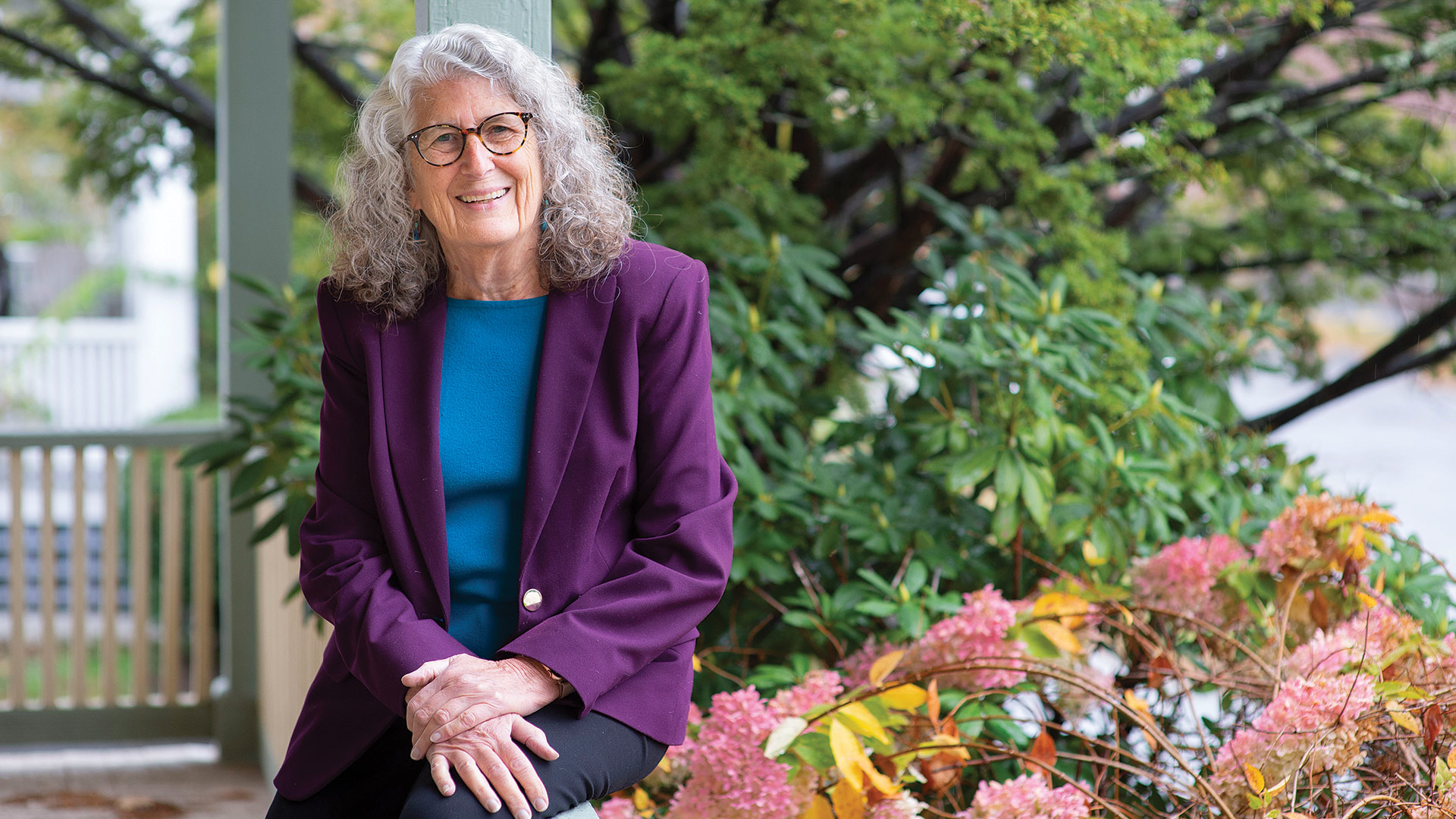
Sue Stubbs

Sue Stubbs

Sue Stubbs has always thought like an entrepreneur.

“Even as a kid, I was thinking about business opportunities,” she said, recalling that, during her studies at Northeastern University, she’d walk through Boston’s Back Bay — which was littered with dilapidated buildings back then — between her train stop and the campus.

“I tried to convince may parents to buy a brownstone in the Back Bay, and they thought I was nuts. Now, look what’s happened in that neighborhood. It would have been a good idea.”

Fortunately, Stubbs has been able to shepherd myriad good ideas into practice as president and CEO of ServiceNet, which she has led since 1980. Actually, she worked for Valley Programs back then, and later oversaw its merger with Northampton Area Mental Health Services and Franklin Hampshire Community Mental Health Center; the new organization became ServiceNet in 1995.

Through those years and well beyond, she has grown the agency from 25 employees to 1,750 and its annual budget from $500,000 to $70 million. From its origins running a few group homes, ServiceNet’s range of services has expanded to include residential and day programs for people with mental illness, developmental disability, autism, and brain injury; outpatient behavioral health clinics in five communities; addiction services; vocational services; shelter and housing programs for people working their way out of homelessness; children’s services; and more.

“We’ve been open to new opportunities, always looking at the next thing coming down the pike and asking, ‘how can we meet a need or take advantage of an opportunity?’”

“It’s very gratifying,” she said of that growth and her 40 years of, well, impact. “Not just in terms of staff and money, but in terms of the people we’re serving. And it’s not just due to me — it’s due to a lot of people, and a lot of collaboration with the state. We pride ourselves on being a good partner with the state.”

Among its many innovations over the years, ServiceNet:

• Established Prospect Meadow Farm in Hatfield, a working farm — staffed by individuals with developmental disabilities or autism — that has become one of the largest producers of log-grown shiitake mushrooms in Western Mass.;

• Created two multi-faceted enrichment centers for people with brain injury, which provide intensive rehabilitation services in partnership with area universities’ training programs, as well as social networking, programming in fitness and the arts, and opportunities for community service — a model that has become a standard across Massachusetts;
• Has become the first mental-health agency in Massachusetts to adopt an integrated electronic medical record, using aggregated data to track the impact of various outpatient clinical services over time;

• Partnered with academic leaders at area universities on applied research projects with ServiceNet’s own research team;

• Launched the Western Massachusetts PREP (Prevention and Recovery in Early Psychosis) program, an intensive, evidence-based day program for young people, designed to speed recovery and help prevent long-term, chronic mental illness; and

• Developed intensive residential programming for individuals with developmental disability who have also been diagnosed with mental illness.

“Some agencies keep doing the same thing for years and years, and they have one mission, and it’s narrow, and that’s all good,” Stubbs told BusinessWest. “When someone comes to me with an idea or a need that’s been identified and nobody else is stepping up, we’ve had a tendency to try to problem-solve and step up.

“That’s how we’ve grown,” she continued. “We’ve been open to new opportunities, always looking at the next thing coming down the pike and asking, ‘how can we meet a need or take advantage of an opportunity?’”


Calculated Risks

She’s always done so with an entrepreneurial mindset, thinking like a for-profit business might, with an eye toward calculated risk taking and a willingness to seize opportunities for growth and diversification when they come into view rather than remaining on the sidelines and playing it safe.

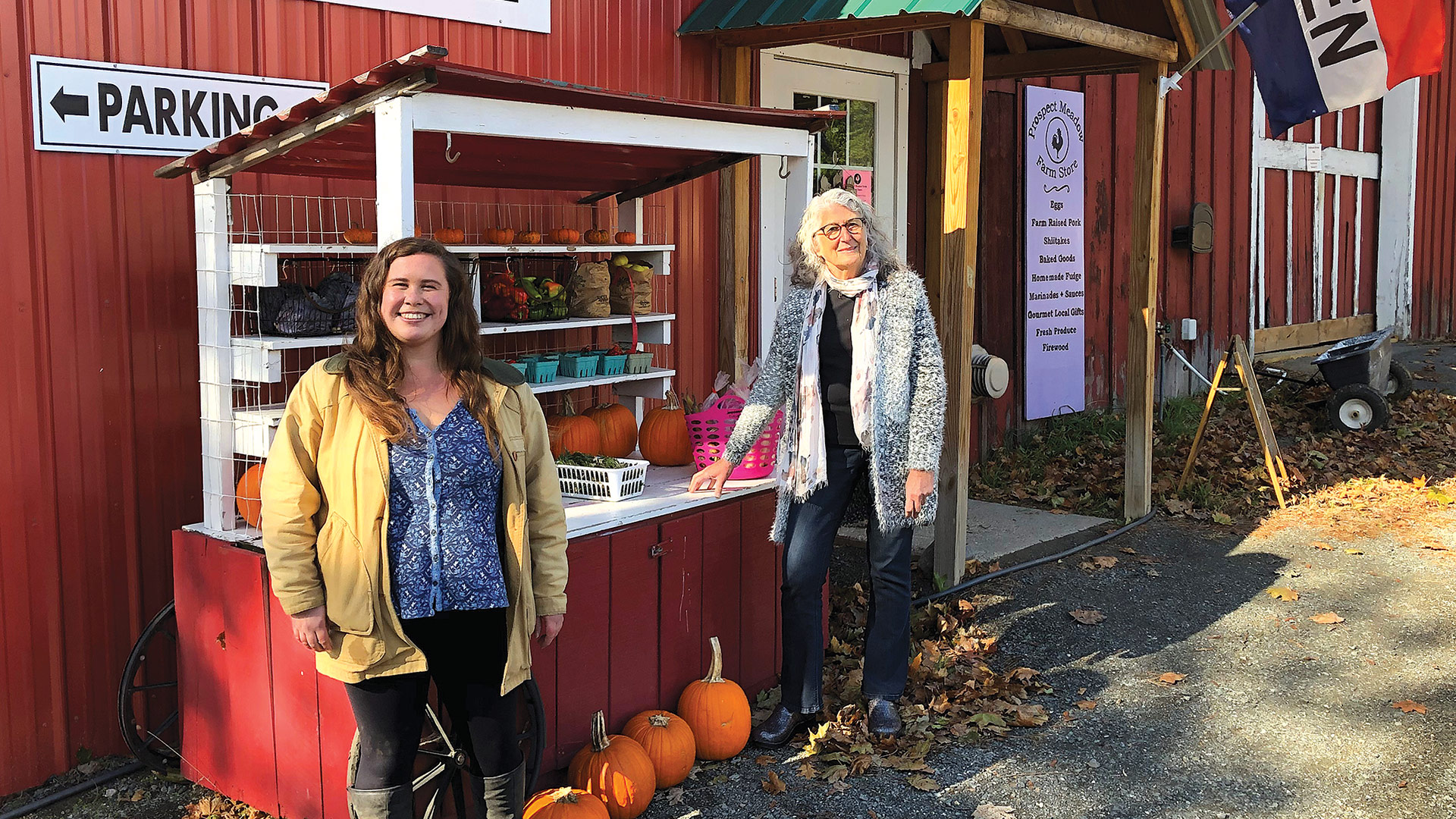
Sue Stubbs, pictured with Allie LeClair, assistant director of Prospect Meadow Farm in North Hatfield

Sue Stubbs, pictured with Allie LeClair, assistant director of Prospect Meadow Farm in North Hatfield, says the farm and its store have been revenue generators in addition to the farm’s therapeutic benefits.

Take, for example, day programs for people with acquired brain injuries. There were no such facilities in the region, said Stubbs, before ServiceNet began developing its own — and the state changed its outlook on the need for such programs. While services existed for people with developmental disabilities, she noted, “brain-injury patients usually ended up in nursing homes, where they weren’t getting the help they needed. The state now funds those services.”

Another example is Prospect Meadow Farm, which was developed around the value of connecting with living things, both animals and plants, for many clients with intellectual disabilities, autism, or brain injury. While it indeed serves that purpose — Stubbs tells of clients who have opened up like never before — its shiitake production and a café produce revenue that supports other ServiceNet programs.

That entrepreneurial mindset isn’t shared by every social-service organization, she noted.

“I guess some people are more risk-averse and worry more about bad outcomes. My feeling is, if something doesn’t work out, you have to be prepared to admit you’re wrong and you have to be prepared to fail fast,” she said, adding that ServiceNet has done exactly that on occasion.

“You can’t hold on to a project when you find fatal flaws or it’s too much of a struggle and it diverts energy from other things. You have to be willing to say, ‘this is not a project we should be doing,’ and be willing to cut your losses.”

She admits she may be more cautious these days — “I took more risks when I was younger, and didn’t think as much about contingency plans” — but one thing hasn’t changed, and that’s a focus on hiring people with both good business sense and “fire in the belly” when it comes to helping people, two traits that go hand in hand, she said.

“People ask, ‘how does an organization get its culture or its outlook, and how does the CEO make people feel the same way she does? How does it happen?’ It’s kind of an organic process, where people tend to hire and promote people who fit in with how they think.”

So, even though the management team at ServiceNet is diverse when it comes to age, gender, and nationality, “they’re people who have that entrepreneurial spirit, or step-up kind of spirit, that I have, and they end up being people who resonate with my way of thinking, so I promote them.”

That team has had a difficult year for sure, especially challenging the group homes, which obviously couldn’t close when much of the economy shut down in March; some managers worked extra hours, while temporary staff were brought in to cover those who were unable to work due to COVID-19 concerns.

The outpatient clinics had a different challenge, but ramped up virtual appointments quickly once the state made them billable.

“That allowed therapists to work at home, and we hardly skipped a beat in seeing our clients. It’s amazing how quickly therapists and clients adapted to it and liked it,” Stubbs said, adding that, while it can never replace all in-person visits, the remote model does have a future; for one thing, it has decreased the no-show rate.

“For some people, it may be a better option,” she said, adding that ServiceNet has also been able to expand its workforce pool by allowing employees to work at home. “Sometimes, out of adversity come good discoveries. We hope we can keep billing for remote forever.”


Making Things Happen

In her Women of Impact nomination form, Amy Swisher, ServiceNet’s vice president of Community Relations, called Stubbs “a visionary leader, insightful therapist, and restless entrepreneur who never stops innovating. Sue understood the power of possibility thinking long before this concept hit the mainstream.”

That remains true today for someone who has never been afraid of new ideas, and always encouraged her team to think outside the box.

“If we’re sitting around with our management team and somebody says, ‘hey, I have this idea, but it may sound crazy,’ everyone goes, ‘no, it doesn’t sound crazy. Maybe we can make that happen,’” Stubbs said. “People fill out each other’s ideas — and we’ve made a lot of things happen that way.”


Joseph Bednar can be reached at [email protected]


Women of Impact 2020

President, Holyoke Community College

The Pandemic Provides a Lens Through Which to View Her Leadership Skills

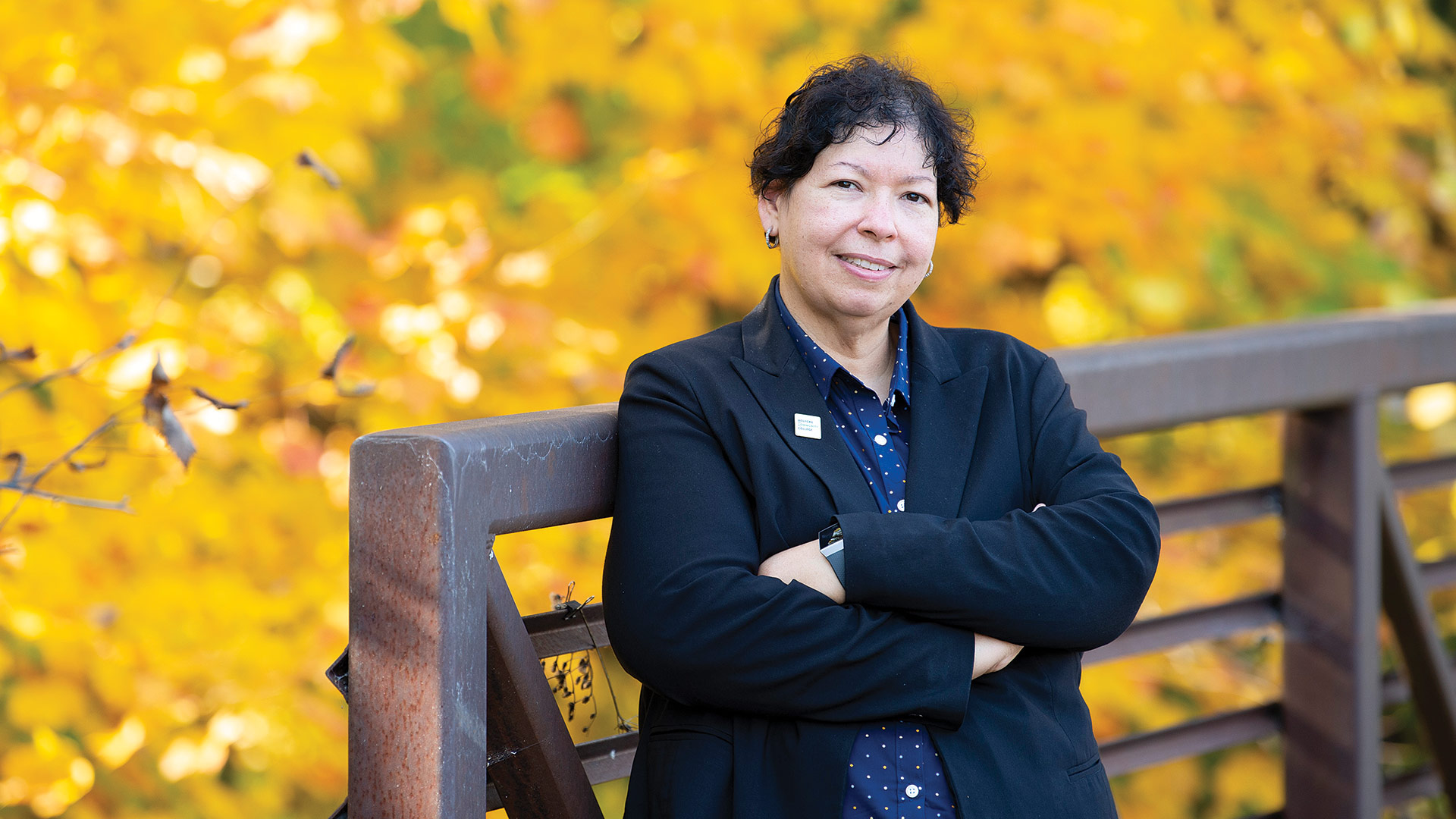
Christina Royal

Christina Royal

As she talked about the COVID-19 pandemic and her administration’s multi-leveled response to it, Christina Royal related a story that speaks volumes about both the impact of the crisis on every aspect of the higher-education experience at Holyoke Community College (HCC) and her own efforts to lead this institution through it — and beyond it.

It also helps explain why she’s been named a Woman of Impact for 2020.

This story is about a student, one of the many who needed some help with learning virtually from home — help that went beyond providing a laptop and internet connectivity.

“Through our student emergency fund, this student put in a request and said, ‘I’m so grateful for the college to provide a laptop for me … but I don’t have a desk,’” she recalled, adding that there were several people in this household suddenly faced with the challenge of trying to learn and work from home. “And that’s just one example of how we had to think about support at a deeper level, really dive into the individual needs of each of our students to support them during this time, and address the inequities that exist in the communities we serve.”

The college would go on to fund a desk for this individual, she went on, adding that this piece of furniture is symbolic of how the school has indeed expanded its view of student emergency needs during this pandemic — but also in general.

“One of the questions I bring up to employees of the college is, ‘what do we want to look like on the other side of this pandemic?’ Because I don’t want to be a person who just felt like I was trying to weather the storm. I want us to emerge stronger from this.”

Royal arrived on campus roughly five years ago with a mindset to do what was needed to address the many needs of students and help enable them to not only grasp the opportunity for a two-year college education, but to open many other doors as well. As a first-generation, low-income, biracial college student herself, she understands the challenges many of HCC’s students face — from food insecurity to lack of adequate housing and transportation — and she commits many of her waking hours thinking about how to help students overcome such barriers and achieve success, however that might be defined.

Meanwhile, as an administrator, she he has put the emphasis on long-term planning and leading for today, as well as tomorrow. This is evidenced by her push for a new strategic plan for the school — the first in its existence — but also the manner in which she is addressing this pandemic.

Instead of something to be merely survived, although that is certainly important enough, she views it as a learning experience and, in many respects, an opportunity.

“One of the questions I bring up to employees of the college is, ‘what do we want to look like on the other side of this pandemic?’” she explained. “Because I don’t want to be a person who just felt like I was trying to weather the storm. I want us to emerge stronger from this, and the work we have to do is so absolutely critical to this community, and we have an opportunity to continually strengthen ourselves.

Christina Royal meets with students at the HCC MGM Culinary Arts Institute, which opened its doors in 2019.

Christina Royal meets with students at the HCC MGM Culinary Arts Institute, which opened its doors in 2019.

“Just like education is a journey, so is continuous improvement,” she went on, adding that this process can — and must — continue, even in the middle of a global pandemic.

Her commitment to this process, and her ability to effectively keep one eye on the present and the other on the future, certainly makes her a Women of Impact.


Course of Action

Royal calls them ‘town meetings.’

These are Zoom sessions that she conducts with various audiences — students, faculty, members of the community — to keep them abreast of new developments and initiatives in the wake of the COVID-19 pandemic, and with the college in general. She’s staged 19 of them since March, including one just a few weeks ago in which the topic of conversation among faculty and staff was the ongoing accreditation process and the comments offered by the team at the New England Commission of Higher Education.

“I really prioritized this as part of our crisis-management plan — we really had to increase communication at the college,” she told BusinessWest. “When people are feeling isolated in their homes, and they’re uncertain about this thing called COVID, and they’re uncertain about their own health and safety, and they’re concerned about the college, I felt it was really important to come together.

“And while it’s really nice when we can come together in the same room, community is community, and we need to bring people together to feel a sense of community through this,” she said, adding that another initiative she’s implemented is the formation of a volunteer team of students and staff tasked with calling every student enrolled at the school every week “just to check in and see how they’re doing.”

These town meetings and weekly check-ins are just some of the ways Royal is providing both stewardship and forward thinking at a time when every college administrator’s abilities are being sternly tested. And the pandemic provides a lens through which her leadership skills and ability to build partnerships and create collaborative initiatives can be seen.

But first, we need to talk about life before anyone had ever heard the phrase COVID-19.

Royal became just the fourth president in HCC’s history in early 2017 after a stint as provost and vice president of Academic Affairs.

In an interview with BusinessWest soon after taking the helm, she provided some clear evidence of both her empathy for students and commitment to creating ever-stronger ties between the school and the communites it serves.

“I have a phrase that I’ve used often during my career — that ‘it takes a village to raise a student,’” she noted at the time. “And I really believe that having partnerships with business and industry and the community is essential for an institution of higher education to thrive. Likewise, for a community with a community college to thrive, it needs to have a strong community college. I look at it as a bi-directional relationship and partnership.”

Since her arrival, there have been a number of significant developments at the school, including a $44 million project to modernize and revitalize an antiquated Campus Center, the so-called ‘heart’ of the college, a new Center for Life Sciences, and the creation of the HCC MGM Culinary Arts Institute in the Cubit building, which opened its doors to considerable fanfare in early 2019.

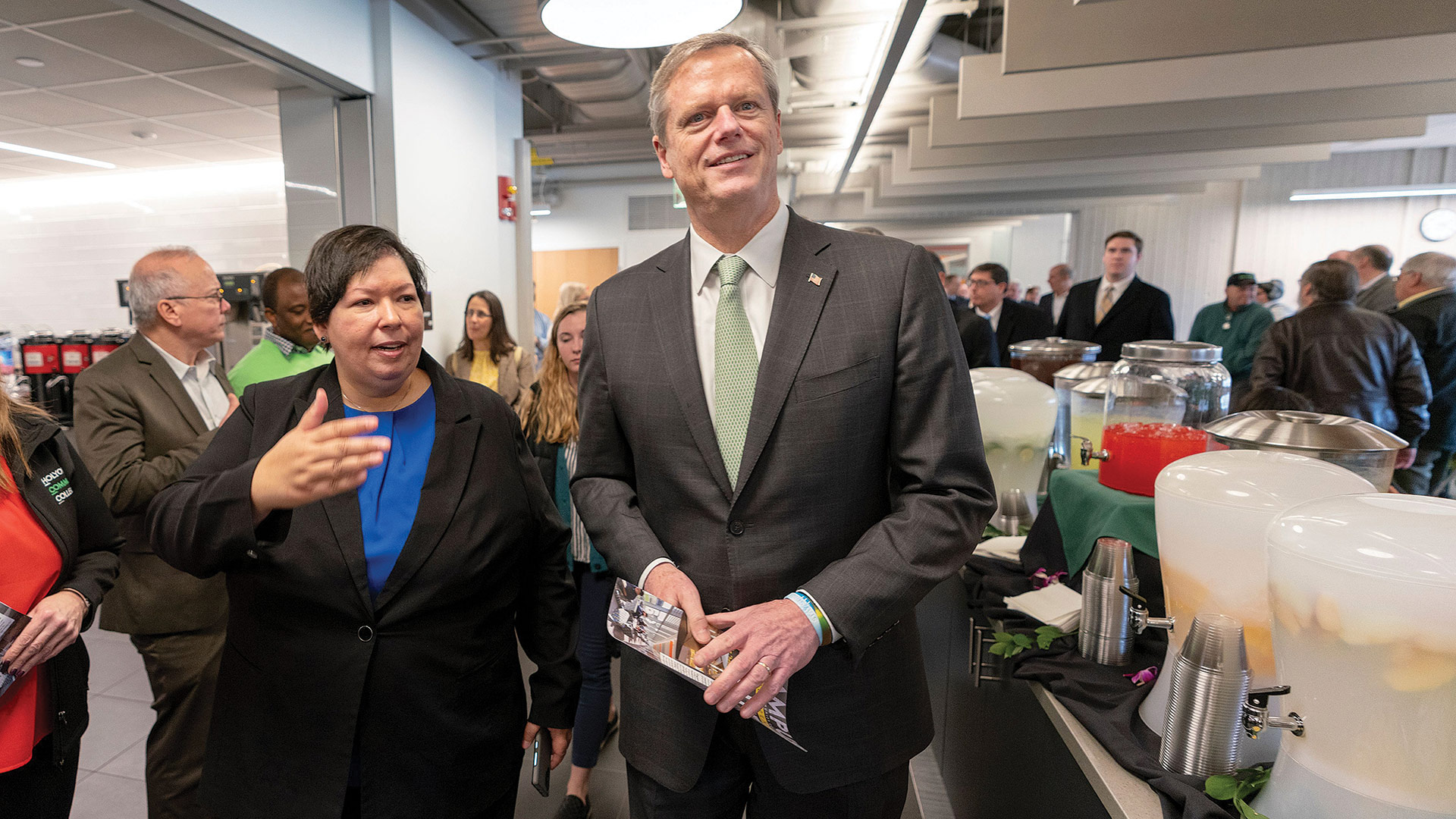
Christina Royal leads Massachusetts Gov. Charlie Baker on a tour of HCC

Christina Royal leads Massachusetts Gov. Charlie Baker on a tour of HCC’s new, $44 million Campus Center earlier this year.

Ironically, the new campus center staged its elaborate grand opening just a few weeks before the pandemic shut down college campuses across the Commonwealth. Meanwhile, the Culinary Arts Institute, while still operating on some levels, has seen a dramatic decrease in interest among prospective students as the pandemic has devastated the hospitality industry.

But while those new facilities are in many ways quiet, they form some of the building blocks that will support continued growth for decades to come.

No one can say with any degree of certainly when a sense of ‘normal’ will return to college campuses — HCC has already announced that most all classes will be taught remotely next spring — but Royal, as noted, is working to have her school ready for that day.

“I want us to look at this moment in time as an opportunity, and focus not just on the things that are outside of our control, but the things that we do have the ability to control,” she explained, noting that the questions and comments offered by students during those aforementioned check-ins are certainly helping in this process of continuous improvement and readying for life after COVID-19.

“When that day arrives, there will be a much-anticipated return to the classroom,” she noted, adding quickly, however, that the pandemic has proven there is certainly a place for remote learning and that it will be a big part of the equation moving forward.

“Distance learning is here to stay. And even if we have a smaller number of students on one end of the spectrum, wanting to take everything online, we have a lot of opportunity in that middle space of how we blend our in-person courses with hybrid learning.

“What’s so great about this time is that we have faculty members who are experimenting with ways to utilize this technology to more effectively reach their students and enable them to complete the work,” she went on. “And when you think about combining that with the pedagogy of the traditional classroom and their expertise in that setting, I imagine there’s going to be some wonderful opportunities to grow the blended student experience.”


Career Milestone

In 2021, HCC will celebrate its 75th anniversary.

At this time, no one, including Royal, can say when and how that milestone will be celebrated. But she does know it will be a time to look back at what’s been achieved, but, more importantly, focus on what will come next and how the school can do more to serve its communities and its students.

That’s what Royal has done since she’s arrived in Holyoke. It’s a mindset that has made her a great leader — at all times, and especially during these times.

And it has also made her one of this year’s Women of Impact.


George O’Brien can be reached at [email protected]

Picture This

Email ‘Picture This’ photos with a caption and contact information to [email protected]


Manufacturer of the Year

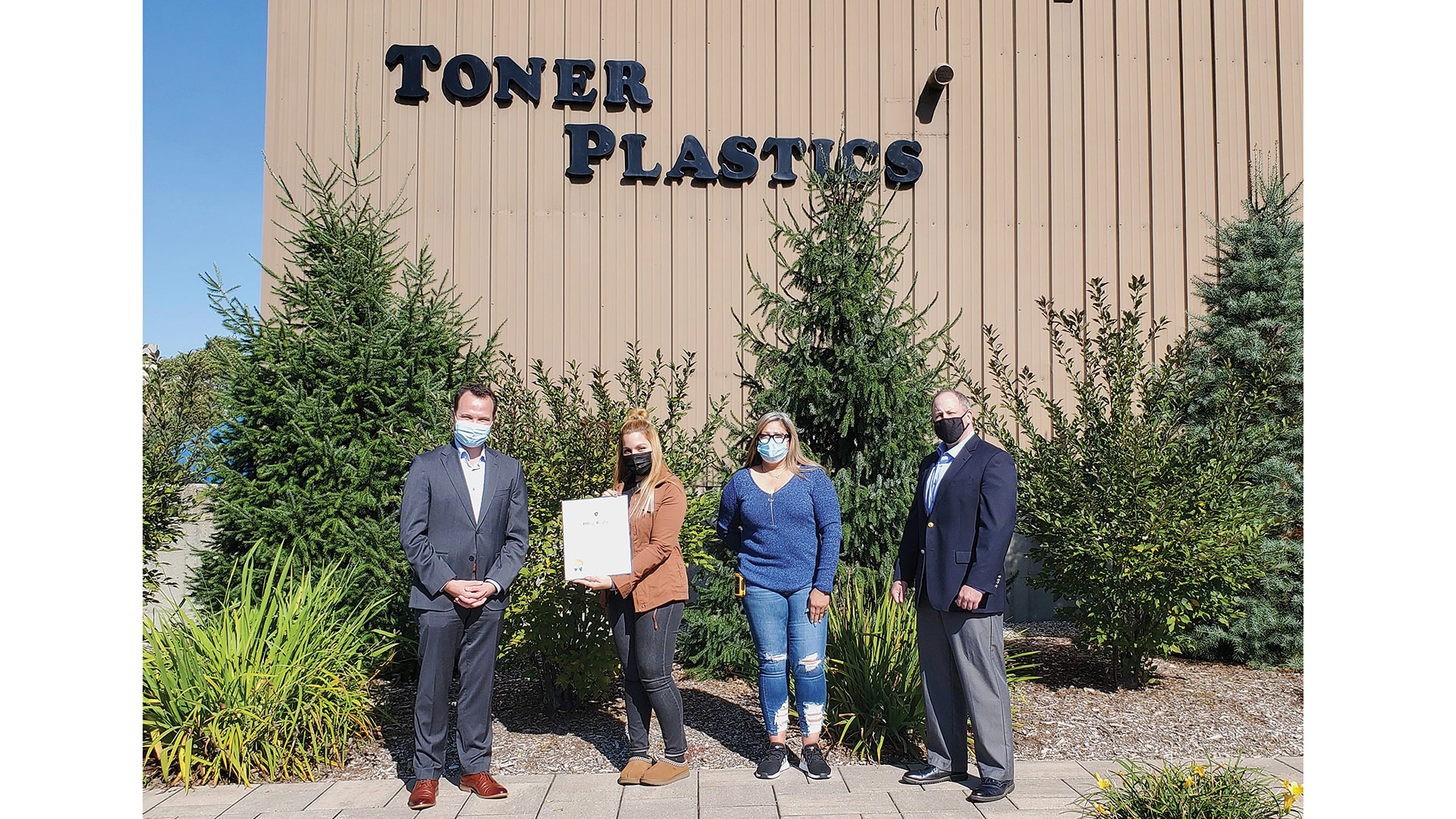
State Sen. Eric Lesser, Senate chair of the Manufacturing Caucus, recognized Toner Plastics as the First Hampden and Hampshire Manufacturer of the Year in a virtual, reimagined fifth annual Manufacturing Awards ceremony also attended by state Rep. Jeff Roy, Manufacturing Caucus co-chair; House Speaker Robert DeLeo; Senate President Karen Spilka; and Secretary of Housing and Economic Development Michael Kennealy. This followed an in-person presentation of the award by Lesser (pictured, left) at the East Longmeadow facility on Oct. 15 alongside company President Jack Warren and members of his team.


Grand Opening in Amherst

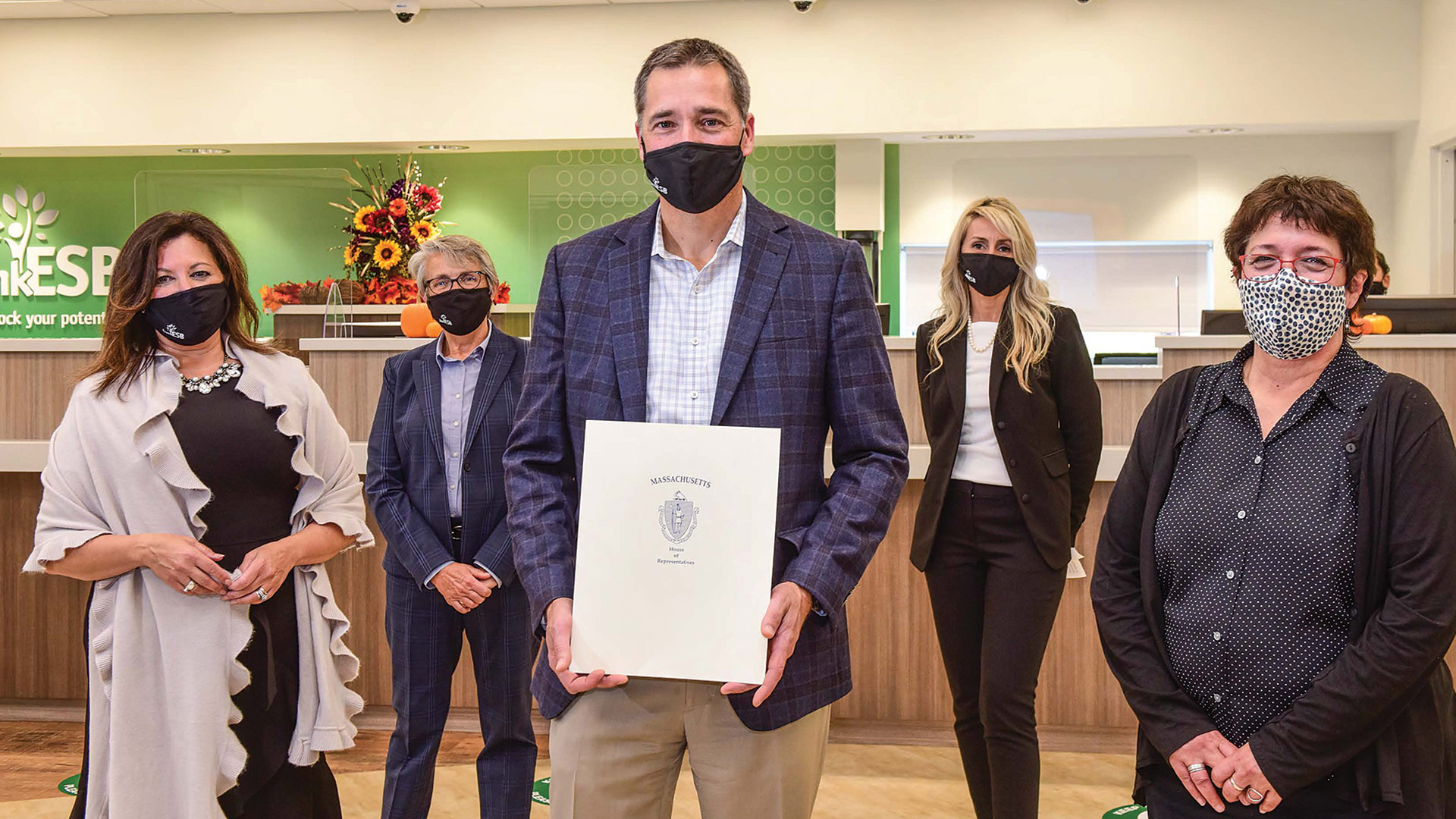
bankESB recently celebrated the virtual grand opening of its newest branch location at 253 Triangle St., Amherst. The event was commemorated in a Facebook Live broadcast hosted by the Amherst Area Chamber of Commerce. Pictured, from left: Claudia Pazmany, executive director of the Amherst Area Chamber of Commerce; Nancy Lapointe, senior vice president of Retail Administration at bankESB; Matt Sosik, bankESB president and CEO; Jessica West, bankESB assistant vice president and Amherst branch officer; and stste Rep. Mindy Domb


COVID-19 Relief

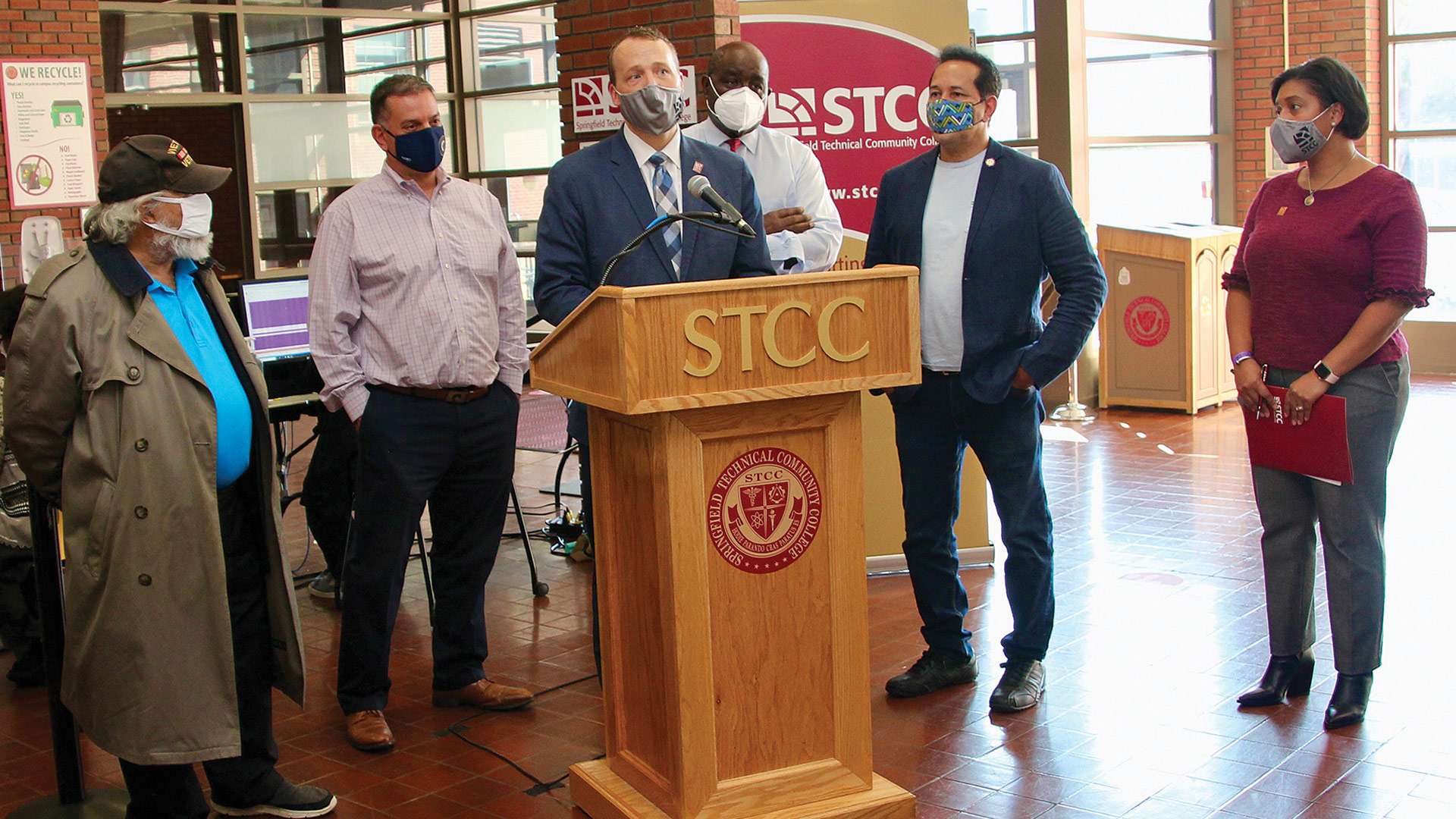
The state awarded Springfield Technical Community College (STCC) two grants totaling nearly $662,000 for COVID-19 relief. The money will be used to help keep the campus safe during the pandemic, compensate faculty for their work developing online courses, and boost student aid. Pictured: STCC President John Cook speaks at a news conference announcing the funding, alongside, from left, Heriberto “Herbie” Flores, president and CEO of Partners for Community; state Rep. Angelo Puppolo Jr; state Rep. Bud Williams; state Rep. Carlos Gonzalez; and Denise Hurst, vice president of Advancement and External Affairs at STCC.


Halloween, 2020-Style


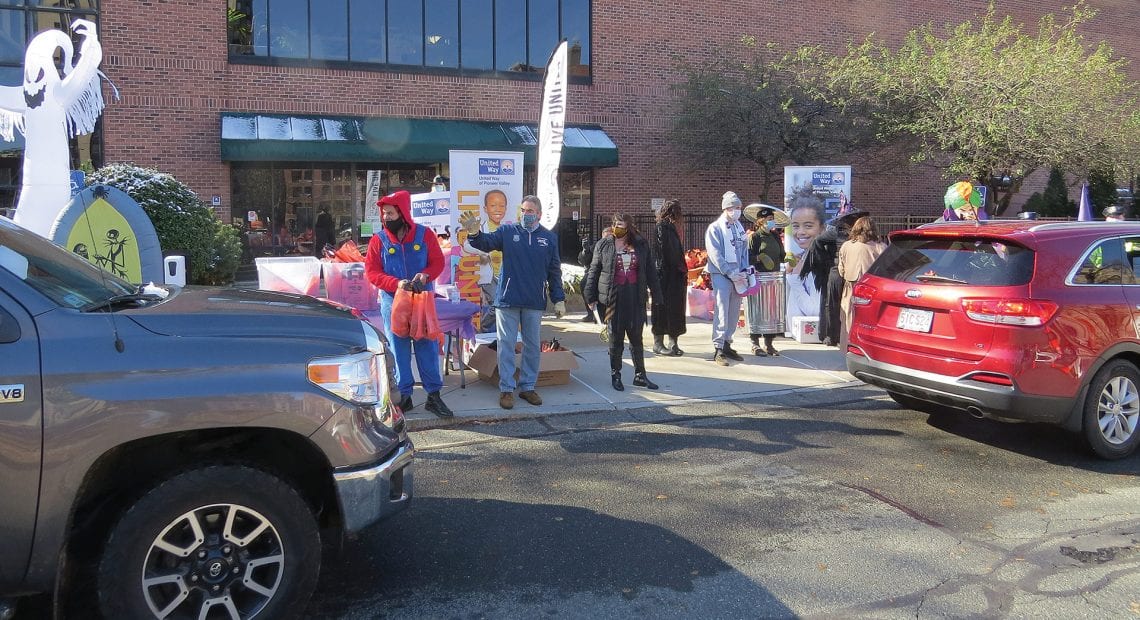
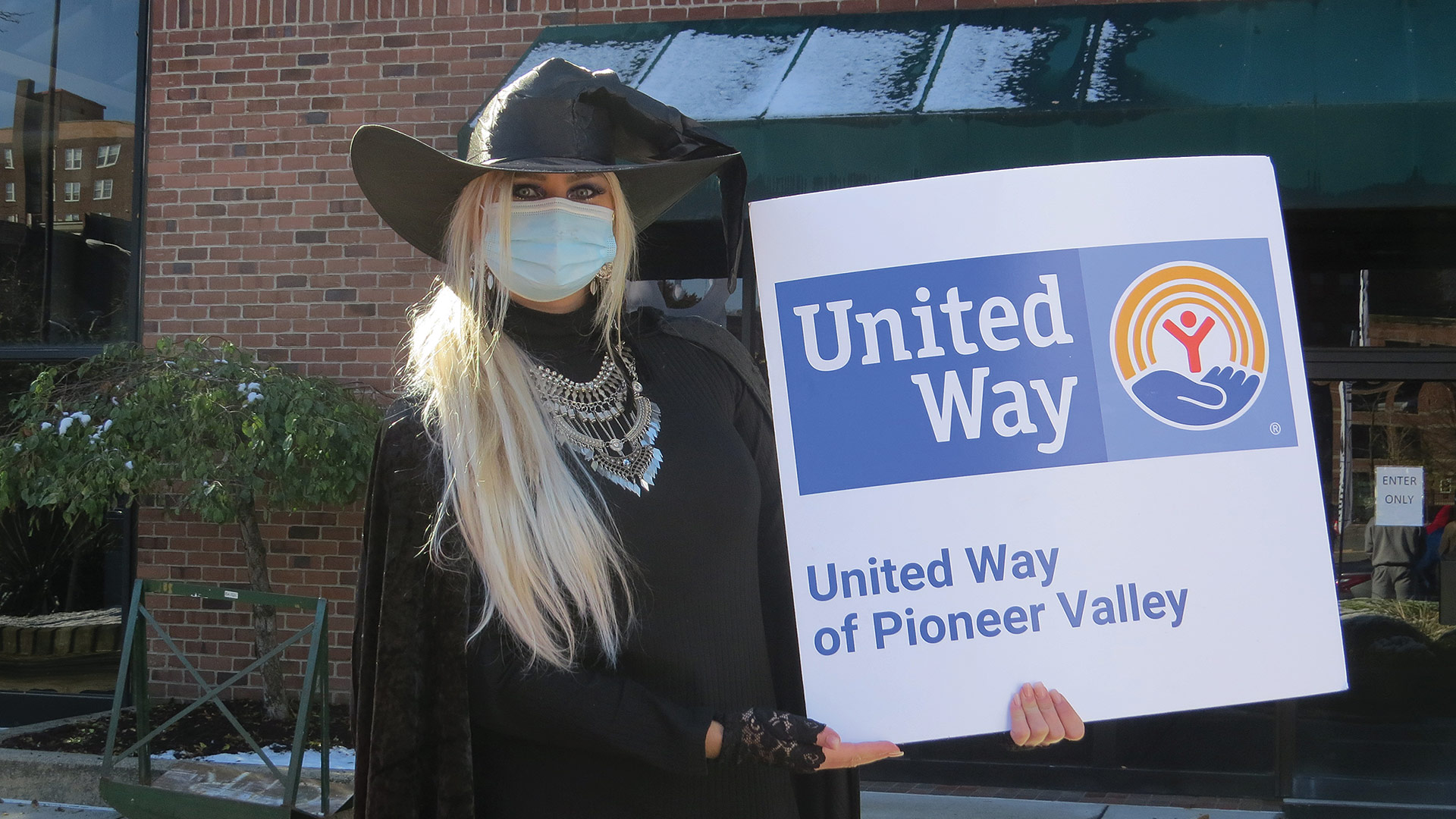
The United Way of Pioneer Valley staged a unique, COVID-era Halloween-day celebration at the TD Bank building in downtown Springfield. Sponsored by Colebrook Realty Services and Springfield Mayor Domenic Sarno, the event drew more than 3,000 cars, with those driving through dressed for the occasion. From top to bottom: Sarno waves to an approaching car; Paula Wysocka, a United Way staff member, gets into the spirit of the event; some of the goodies that were handed out to the young people being driven through; the entrance to the building was decorated for the holiday.


Celebrating STEM Week

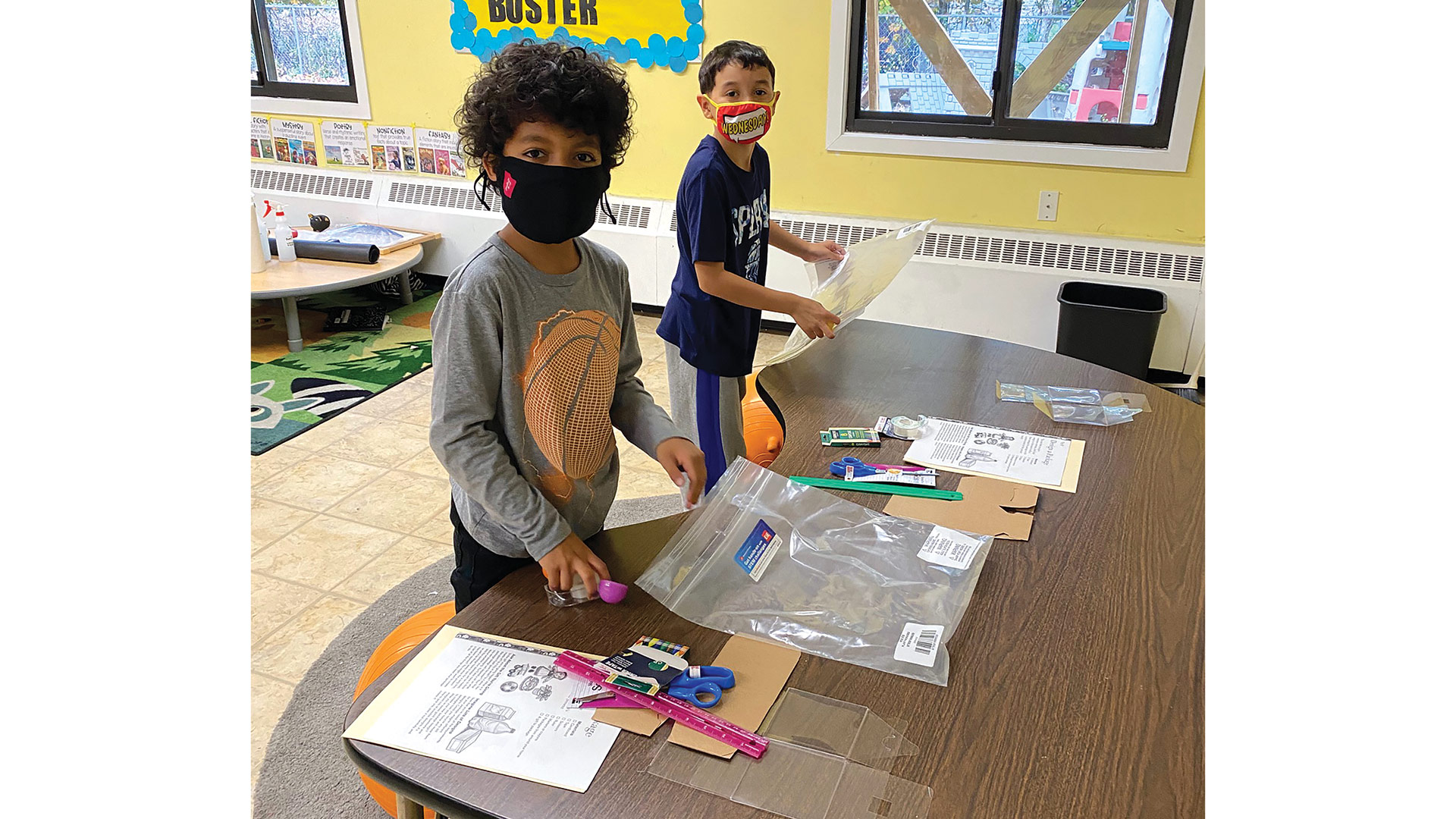
As a way to celebrate STEM Week in Massachusetts last month, the Red Sox Foundation and the Museum of Science in Boston partnered to distribute nearly 650 at-home science and engineering design-challenge kits to children at Springfield’s Square One (pictured), the Lawrence YMCA, and the Lawrence Boys & Girls Club. The Try It! kits are a part of the virtual learning resources the museum has developed through its curricular division, EiE, and its MOS at Home digital platform, to provide families with all the materials needed to enjoy fun and engaging science education any time, any place.


Women of Impact 2020

Director of Human Resources, Loomis Lakeside at Reeds Landing

She Changes Organizations for the Better Through Empathetic Leadership

By Mark Morris

Toni Hendrix

Toni Hendrix


Toni Hendrix has a few philosophies she’s fond of sharing.

The first is “the fish rots from the head.” To prevent that rot, she believes it’s important for each person to set a high standard.

“We need to lead by example,” said Hendrix, director of Human Resources at Loomis Lakeside at Reeds Landing in Springfield. “I’m extremely passionate about leadership, and when it’s done right, good leaders are role models.”

Her second philosophy is “God don’t like ugly.” She acknowledges the phrase uses improper grammar, but stating the idea this way gives it more impact. The point is not to treat others in an ugly way.

“Let’s do the right thing and treat people with dignity and respect because, if you don’t, karma can come back and bite you.”

Her third philosophy comes from a sergeant she served with while stationed in Germany with the U.S. Army.

“You won’t know how much people can do until they know how much you care,” she said, calling it a great message about the power of empathy. “If you show people that you care, take time to learn about their families, and show a real interest in them, they will take that hill for you. They will even die for you. Otherwise, they’re not even going to follow you up that hill; you’ll be by yourself.”

“If you show people that you care, take time to learn about their families, and show a real interest in them, they will take that hill for you. They will even die for you. Otherwise, they’re not even going to follow you up that hill; you’ll be by yourself.”

Those three philosophies basically boil down to one guiding principle, she added: treat people with dignity and respect. In a quarter-century of honing her skills as as a human-resources professional, she’s followed that guiding principle, especially when facing her toughest challenges.

After graduating from West Springfield High School, Hendrix served for seven years in the Army, which brought her to several U.S. states as well as Germany, Turkey, and South Korea. Her job was supposed to be as a military policewoman, but in the 1980s, the Army prohibited women from serving in that role.

“I ended up doing other duties, like guarding the gate and working as the provost marshal’s secretary, but I was never allowed to work as a military police person,” she said. But instead of letting that experience bring her down, she turned it into a motivator.

“I’ve had my own personal experiences with gender discrimination, sexual harassment, and being treated very differently because I lived in a country where I didn’t speak the language.”

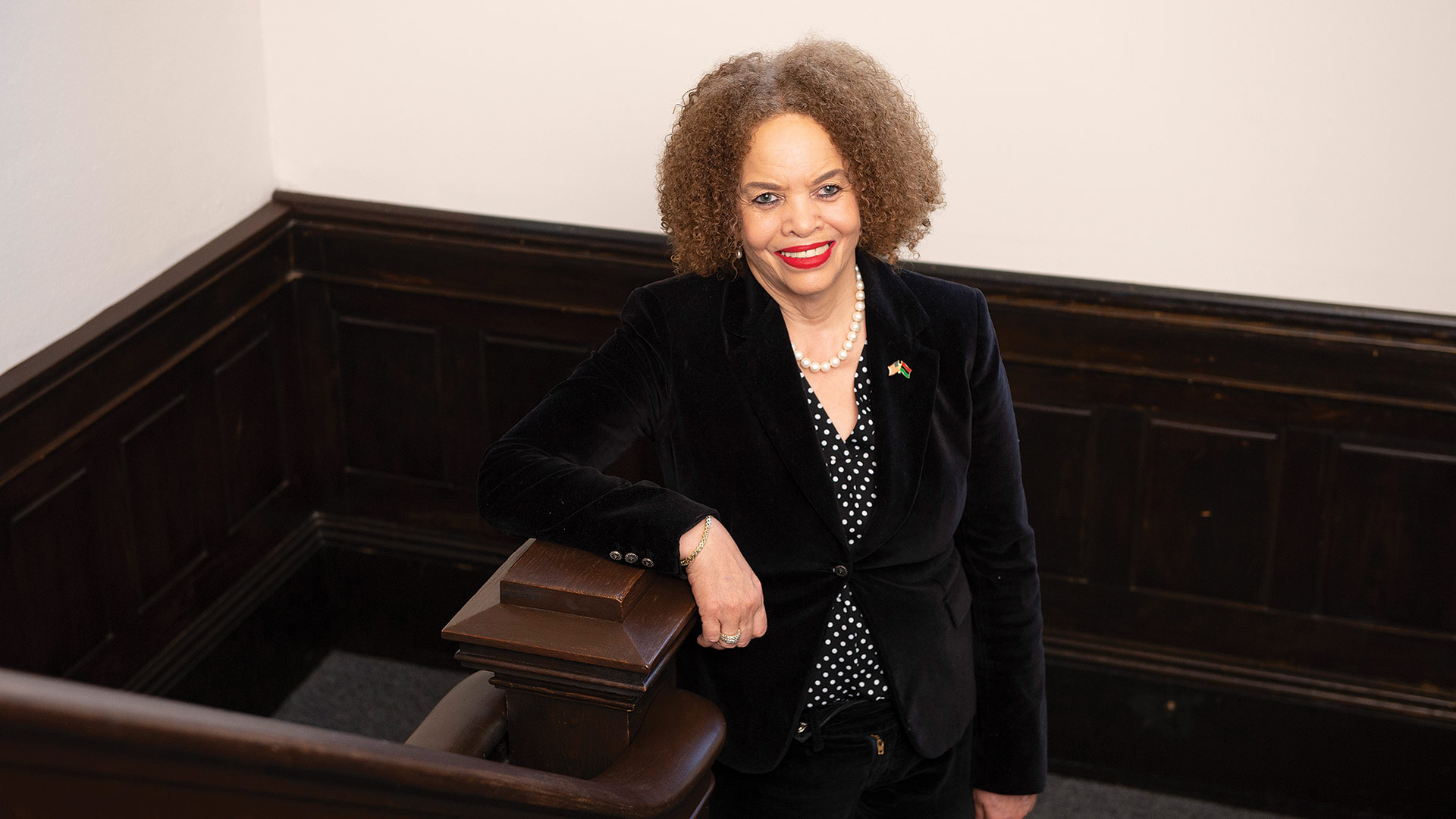
Treating people with dignity and respect has been a touchstone of Toni Hendrix’s career, including in her current role at Loomis Lakeside.

Treating people with dignity and respect has been a touchstone of Toni Hendrix’s career, including in her current role at Loomis Lakeside.

But those experiences provided a background that would become valuable in shaping her career, first as a Human Resources director with Mass Mutual and at several stops after that — all of them marked by a simple desire to be impactful by leading with empathy and treating people the right way.


Focus on Diversity

In the mid-1990s, Mass Mutual was working to address diversity issues that affected not only internal employees, but potential customers as well.

“At that time, their marketing messages were directed to white men with salaries over $100,000,” Hendrix said. “But they were ignoring families with dual incomes, women business leaders, and women entrepreneurs.”

When then-CEO Tom Wheeler decided he wanted diversity to be his legacy, Hendrix became the leader of that effort at MassMutual. Later, in the early 2000s, she brought those same leadership skills to Pennsylvania-based Simmons Consulting.

“We worked with a number of Fortune 100 and Fortune 500 companies that had gotten in trouble around gender or race discrimination issues,” she told BusinessWest. “With our help, they were able to better address diversity in their workforces.”

Hendrix also worked to improve human-resource processes at the American Cancer Society and Baystate Health before taking on her current role with the Loomis Communities.

It was a Loomis board member who encouraged her to be part of Bridge for Unity, a group of people from around the Pioneer Valley who come together to talk about race relations. With a goal of starting a dialogue among diverse people in a thoughtful and safe environment, the group has also hosted similar groups from South Carolina and Kentucky.

The simple act of gathering people to have a dialogue about race has been enlightening at times for Hendrix. “The people from Kentucky have a very different experience than the people from Amherst,” she observed.

A desire to be involved in the community has provided numerous opportunities for Hendrix to share her philosophies. In what she calls “my love project,” she serves as board president for the Art for the Soul Gallery in Springfield. Founded by Stella Butler and Rosemary Tracy Woods, Art for the Soul is a place where underrepresented groups can to display their art in all its various forms. When Woods decided to form a board of directors for the gallery, she asked Hendrix to lead it.

As a first order of business, Hendrix set a strategic goal to get the gallery out of the red. After some modest local fundraising, Art for Soul stepped up its game and organized its largest event, arranging for Harold Melvin’s Blue Notes to perform a concert in Springfield in 2018. Since then, the gallery has operated in the black, allowing the board to be more forward-thinking.

“We can now start to build the brand and develop our board to put the organization in a good place for the future,” she said.

Woods appreciates the impact her friend has had on the gallery. “Toni’s leadership and out-of-the-box thinking have been an inspiration and a godsend to the sustainability of Art for the Soul Gallery,” she said in nominating Hendrix to be recognized as a Women of Impact.


Building Community

As a human-resources professional, Hendrix has been a member of the Employers Assoc. of the NorthEast for some time, and in January, EANE invited her to join its board of directors. She admitted she was initially hesitant because the group lacked minority staff and board members. “Then I reminded myself, it’s not good enough to just be critical — I also have to serve when asked.”

Once the pandemic is behind us, she said, the human-resources profession will have to operate under a whole new set of rules and policies. “And I think the Employers Association will be right at the forefront of what this new world will look like, so I’m glad to be on their board.”

Meanwhile, years of experience anchored by those strong principles have enabled Hendrix to manage her own staff during these unprecedented times of COVID-19.

“In my entire career, I’ve never seen the kind of fear employees have now,” she said. “I’ve always been a proponent of treating people right, so we are focused on helping people feel more safe.” That involves reassuring employees that their workplace is a safe place and that support systems are in place should they have a problem.

Hendrix and her husband Joe, owner of Smokey Joe’s Cigar Lounge, have lived their lives in a way in which they are always building community. She credits her mother with setting the example a long time ago by always having room at the dinner table, treating visitors with dignity and respect.

“I start every board meeting at Art for the Soul Gallery by going around the table to ask, ‘what’s good in your world?’” she noted. “That way, we know what’s happening in each other’s lives.”

Whether it’s inviting people to her own house for dinner or offering Smokey Joe’s to a family that can’t afford a post-funeral gathering, Hendrix and her husband are dedicated to building community by treating others the way they’d like to be treated. “If that’s the only impact I leave in this world, that’s perfectly fine with me.”


Agenda

A+ Awards Show

Nov. 12: The Amherst Area Chamber of Commerce 2020 A+ Awards Show will be held virtually and broadcast live from Hadley Farms Meeting House, with PeoplesBank serving as presenting sponsor. Each year, the chamber gives A+ Awards to individuals and organizations that enrich the life of the community through their work in education, business, and civic engagement in Amherst, Belchertown, Hadley, Leverett, Pelham, Shutesbury, Sunderland, and the Pioneer Valley as a whole. This year’s honorees include Betsey McInnis (Lifetime Achievement Award), Phoenix Fruit Farm of Belchertown (Leader in Innovation Award), Kestrel Land Trust of Amherst (Leader in Sustainability Award), Ash Crawford, director of Operations at Amherst Coffee (Young Professional Award), Mercedes-Benz of Springfield (Community Service Award), and Lisa Eugin of Encharter Insurance (Chamber MVP). New this year is the COVID Hero, a nonprofit or individual who provided essential support services, went above and beyond, and took initiative to put others before self to benefit the greater good. Live voting will take place to choose a winner from the following organizations and individuals: Amherst Survival Center, Arizona Pizza, Bistro 63, Mary Beth Ogulewicz of the Amherst Senior Center, Rebekah Demling of ARPS PGO, and Wheelhouse Catering. Also new this year, David Jeffway, owner of Sharper Vision, will create video tributes for each awardee. A virtual access pass to the view the live awards show costs $20, or a $50 VIP package includes the virtual access pass, a $25 Amherst-area gift certificate, a hard copy of the 2020 A+ Awards Journal, and sponsor gifts. Registration is open, and A+ Award dinner sponsorships and ads are still available for the virtual extravaganza; for more information, visit amherstarea.com. E-mail Pazmany at [email protected] with any inquiries.


Bright Nights at Forest Park

Nov. 25 to Jan. 3: Bright Nights at Forest Park will take place this year. Spirit of Springfield and the city of Springfield have developed protocols to provide a safe and festive event that has been a holiday tradition since 1995. They will be instituted during setup, breakdown, and during the event, and include masks, regular cleaning, online ticketing, and more. Restrooms will be for emergency use only, and the usual bustling gift shop, amusement rides, horse-drawn wagon and carriage rides, and visits and supper with Santa will not be available. This will help keep all visitors safe and socially distanced in their vehicles during the experience. Bright Nights at Forest Park is three miles of a unique holiday experience featuring more than 675,000 lights and iconic displays like Seuss Land, Everett Barney Mansion, Toy Land, Happy Holidays, Springfield, and so many more. It generates $15 million in economic impact annually and has created a lifetime of family memories in its 25-year history. It also promises to be one of the safest events, with families contained in their cars. Admission will be $23 per car weeknights, weekdays, and holidays. Discounted tickets will be available at participating Big Y World Class Markets for $16.50. Due to bus-capacity limitations in Massachusetts, admission for buses has been reduced to $100 for buses with capacity of more than 30 people. Vehicles with seating from 17 to 30 people will be charged $50 for admission.


Healthcare Heroes

Nov. 18: Since the phrase COVID-19 came into our lexicon, those working in the broad healthcare field have emerged as the true heroes during a pandemic that has changed every facet of life as we know it. BusinessWest and its sister publication, the Healthcare News, will pay tribute in their own way, by dedicating their annual Healthcare Heroes program in 2020 to those who have emerged as true heroes during this crisis. The gala celebrating the winners will be held from 5:30 to 8:30 p.m. at the Sheraton Springfield Monarch Place Hotel in two separate events because of state restrictions on crowd size. The first event will honor the staff at Holyoke Medical Center; Christopher Savino, Emeline Bean, and Lydia Brisson, clinical liaisons for Berkshire Healthcare Systems; Rabbi Devorah Jacobson, director of Spiritual Life at JGS Lifecare; the Nutrition Department at Greater Springfield Senior Services Inc.; and Friends of the Homeless. The second cohort includes Mark Keroack, president and CEO of Baystate Health; the Institute for Applied Life Sciences at UMass Amherst; Maggie Eboso, Infection Control and Prevention coordinator at Mercy Medical Center; Jennifer Graham, home health aide at O’Connell Care at Home; and Helen Gobeil, staffing supervisor at Visiting Angels West Springfield. Tickets cost $90 per person. To make a reservation, contact Jennifer Godaire at (413) 781-8600, ext. 100, or [email protected]. The Healthcare Heroes program is sponsored by Elms College (presenting sponsor), Baystate Health and Health New England (presenting sponsor), and partner sponsors Bulkley Richardson, Comcast Business, and Trinity Health New England/Mercy Medical Center.


Women of Impact 2020

Berkshire County District Attorney

She’s Transforming the Criminal Justice System in This Rural Region
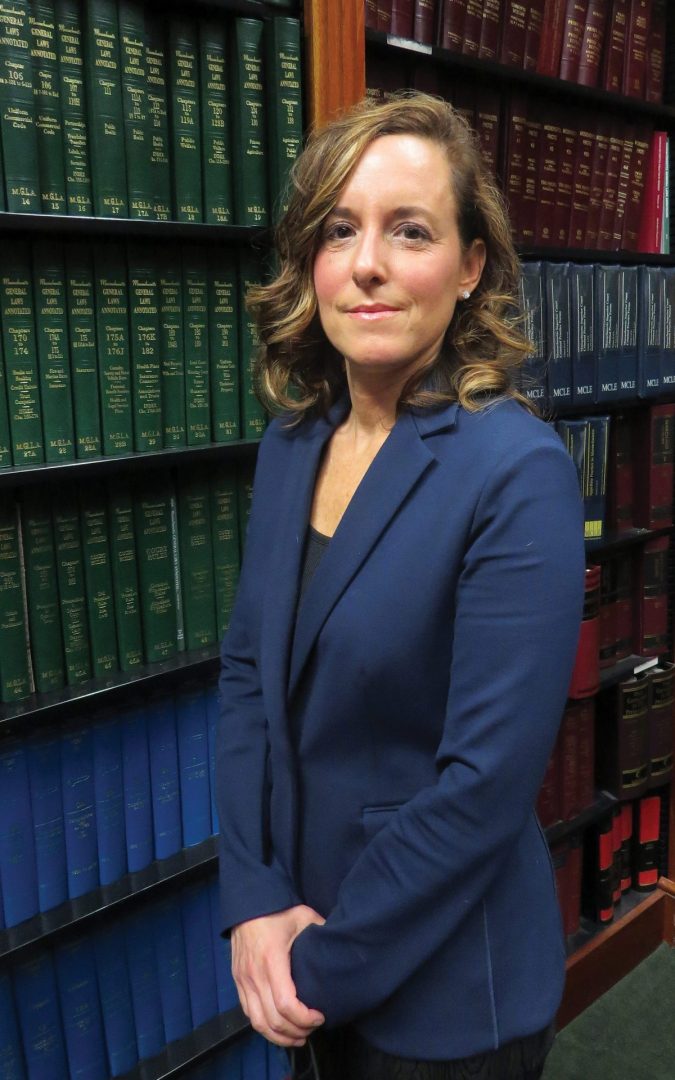
Andrea Harrington

Andrea Harrington

Like most who join the legal profession, Andrea Harrington says there’s a story behind her choice of career path.

In her case, it wasn’t a family member in that line of work who inspired her, or even a role  model from the community — meaning the Pittsfield area. Instead, it was the lawyers she saw on TV shows, especially L.A. Law, which was in its prime when she was in high school, and some real-life lawyers, like Anita Hill and Hillary Rodham Clinton, who inspired her to become the first in her family to go college, and eventually earn a law degree.

“Growing up, I didn’t really know many professional people,” she recalled, noting that her parents, like so many others, worked at General Electric’s massive transformer-production complex in Pittsfield. “I would see TV shows with lawyers, and to me, they looked like people who have the power to make change.”

Not all lawyers have used that power, but Harrington certainly has. In two short years after being sworn in as district attorney of Berkshire County, she has introduced a number of important changes to the criminal-justice systems in this rural county — changes that are already having an impact. For example, Harrington has:

• Implemented a no-cash-bail policy for most defendants in county courts;

• Created the county’s first domestic- and sexual-violence task force;

• Assembled a staff of reform-minded individuals that better reflects the makeup of the county’s population;

• Implemented a vertical prosecution model so that crime victims in District Court work with the same assistant district attorney and victim-witness advocate while their cases are resolved; and

• Initiated work to develop a formal Berkshire County DA’s Juvenile Diversion program to reduce juvenile crime and help youths make smart decisions.

Above all, Harrington said she is changing the mindset of criminal justice in the Berkshires, from a system that has focused on punishment to one centered on “problem solving.”

And there are many problems to solve, she told BusinessWest, listing poverty, opioid addiction, domestic violence (Berkshire County has a 33% higher rate of restraining orders than the rest of the state), behavioral-health issues, and many others.

“I saw a criminal-justice system that was stuck in this old model — a punishment model. And given how many resources were being put into it, we were not getting a good return on that investment, and it was just spreading misery throughout our community.”

Harrington’s influence, just two years after triumphing in a hotly contested race, is perhaps best summed up by Noreen Nardi, executive director of the Hampden County Bar Assoc., who nominated her for the Women of Impact award.

“The election of Andrea Harrington to Berkshire district attorney has had a transformational effect on the county, its criminal justice system, and politics,” she wrote. “Andrea has remade operations in the Berkshire District Attorney’s Office with an eye toward modernization, innovation, and integrity. She’s revamping how the staff prosecutes crime and handles court cases, changing its media and communications practices to emphasize complete transparency, and overhauling operations on community outreach, victim-witness advocate, and the Child Abuse Unit so that Berkshire County citizens receive the fair and equitable justice they deserve whenever they come into contact with the Berkshire DA’s Office.”


Impact Statement

The race for DA in 2018 wasn’t Harrington’s first bid for public office. Indeed, two years earlier, she ran, unsuccessfully, for a state Senate seat. It was a moment in her life that would in many ways crystalize all that came before — and pave the way for all that has followed.

But before getting to that race, we need to go back further and explain how she got there.

As noted, Harrington, inspired by the characters on L.A. Law and other shows, and those real-life role models as well, graduated from the University of Washington and earned her juris doctor degree from American University Washington College of Law in 2003. One of her early career stops involved work representing convicted death-row inmates in post-conviction appeals in South Florida, which she described as eye-opening.
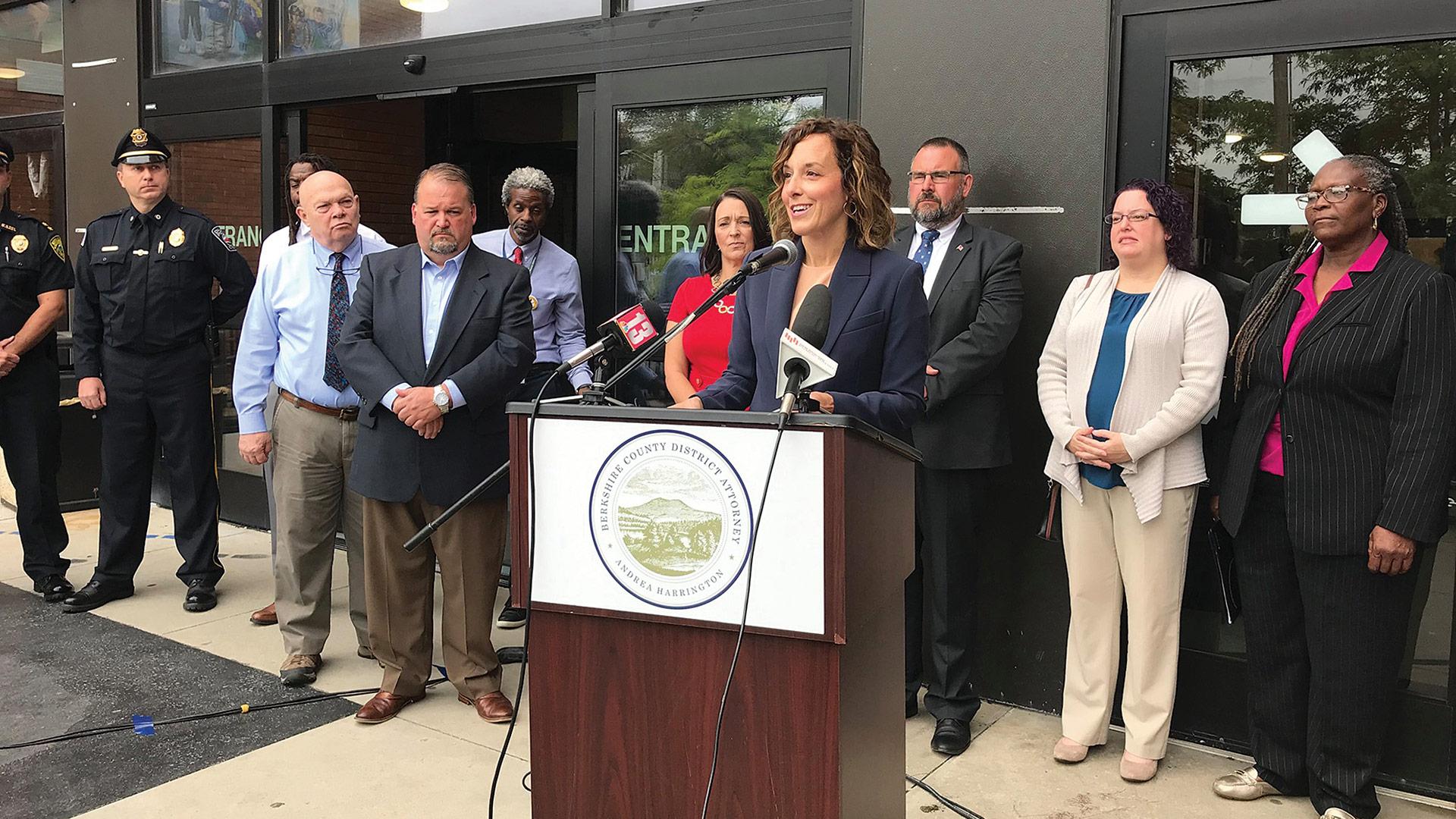
Andrea Harrington addresses those gathered at a press conference

Andrea Harrington addresses those gathered at a press conference to announce the launch of a juvenile-justice initiative, one of many programs she has introduced.

“That experience drove home for me how much power law enforcement does have over people’s lives,” she noted. “And also, how vital it is that we have prosecutors and police who have a healthy respect for the constitutional rights of defendants, and for civil rights.”

Elaborating, she said her work, which involved both the guilt and penalty phrases of these convictions, often centered on why such heinous and tragic crimes were committed. “And this gave me a different kind of lens — more of a problem-solving lens,” she said. “It’s sad to look back at someone’s life and recognize that, if there had been other kinds of intervention earlier on, then these really terrible crimes could have been prevented.”

After Florida, Harrington amassed more than a dozen years of legal practice, much of it defense work, while also raising a family — and watching her native Berkshire County change, for the worse.

“I was working in the courts, I had two young kids, and I was frustrated by what I was seeing in Berkshire County,” she explained. “In the courts, we see the big societal problems, we see the effects of the economic downturn in high rates of domestic violence, lack of opportunity, and drug use.

“I saw a criminal-justice system that was stuck in this old model — a punishment model,” she went on while explaining her involvement in politics and eventual run for the state Senate. “And given how many resources were being put into it, we were not getting a good return on that investment, and it was just spreading misery throughout our community. I thought that, if anyone was going to address these problems, I was going to be a part of it. I didn’t want to just be a cog in this machine that I didn’t think was working.”

While she lost that race, she was certainly encouraged by those who were telling her she should be running for a different seat — district attorney. And after winning a race ranked the top story of 2018 by the Berkshire Eagle, Harrington immediately went to work, fulfilling campaign promises and, more importantly, changing the criminal-justice system in Berkshire County.

One of her primary initiatives involved essentially eliminating the prosecution’s request for cash bail, which data shows disproportionately penalizes low-income individuals and African-Americans in most District Court cases.

“Who remains incarcerated pre-trial is driven by who can afford to post bail or not,” she explained, adding that this is one of many attempts to bring changes to long-established policies that were — in her estimation, at least — not working.

Another initiative undertaken early on was the formation of the Berkshire County Domestic and Sexual Violence Task Force and Steering Committee, assembled to address a growing public-health crisis in Berkshire communities and build prevention programs, she explained, adding that the Berkshires, like other rural areas, has high rates of these crimes.

Overall, Harrington said, the nature and volume of crime in Berkshire County has changed since she was growing up there, with more violent crime (there are eight homicides currently being prosecuted, a much higher number than in years past), drug-related crime, gang-related crime, and domestic and sexual violence. And her office is responding accordingly.
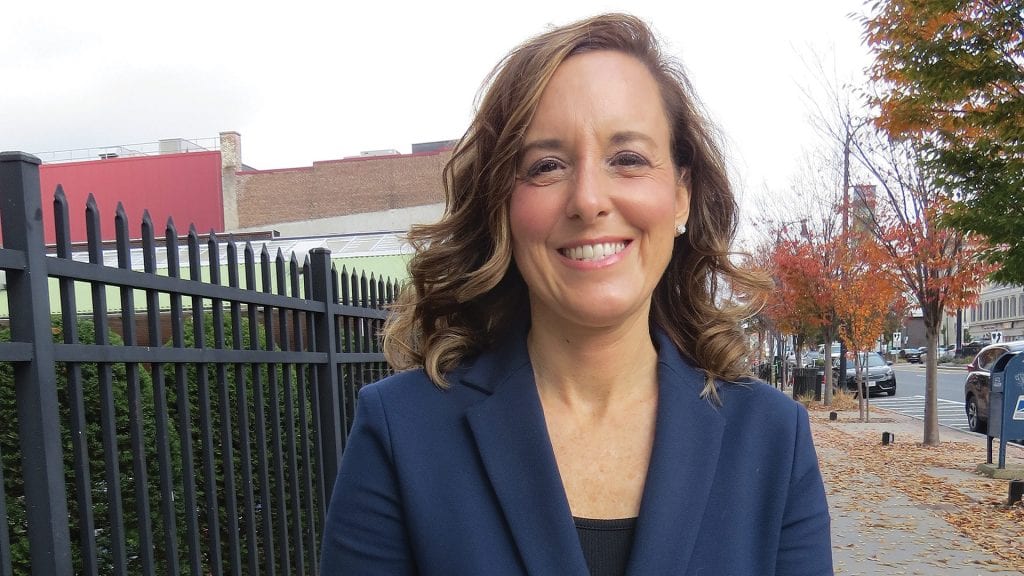
Andrea Harrington says she’s adjusted the focus of the criminal-justice system

Andrea Harrington says she’s adjusted the focus of the criminal-justice system in the Berkshires from one focused on punishment to one centered on problem solving.

“One of my proudest accomplishments is how we serve victims in this office,” she explained. “Previously, the practice was, once a case is actually arraigned and being prosecuted in court, the office would provide services to victims of crime. But we’ve expanded that; we want to have contact with victims as soon as there is a complaint of a crime — we think that’s really critical in being able to prosecute domestic violence and sexual assault.”

Another important change taking place involves the culture of local law enforcement, she told BusinessWest.

“We’re putting a lot more emphasis on doing high-quality investigations for violent crime,” she noted. “And we’ve out a lot of work into that, building our relationships with small-town police departments and also the State Police.”


Making Her Case

Harrington is currently prosecuting her first murder case, a matter that involves the shooting death of a woman in August 2019. COVID-19 has slowed the pace of progress in the courts, she noted, adding that she can’t say when the case will be coming to trial.

She can say that she’s looking forward to the challenge. “I love the law, I love being a lawyer, I love being in court.”

What she loves more, though, is having a bigger impact — an impact that goes beyond a single case, as significant as it might be, and translates into real change, real reform, and lasting significance.

This is what she thought lawyers had the power to do when she was watching those TV shows more than a quarter-century ago. Now, she’s proving they can, and while doing so, she has become a true Woman of Impact.


George O’Brien can be reached at [email protected]

Women of Impact 2020

CEO, Girls Scouts of Central & Western Massachusetts

She’s a Role Model and a Strong Advocate for Women and Girls

Pattie Hallberg

Pattie Hallberg

Pattie Hallberg has a large collection of keepsakes scattered about her office on Kelly Street in Holyoke. Together, they effectively tell a story of who she is, what she does, what she believes, and what’s important to her.

There’s the Ruth Bader Ginsburg bobblehead, for example, an indication of whom she draws inspiration from. There’s also the sign siting on her window sill that reads “No Solicitors, Unless You Sell Thin Mints,” a nod to her role as CEO of the Girls Scouts of Central & Western Massachusetts (GSCWM) and one of the programs for which the organization is most noted — cookie sales.

There are also a few framed quotes. One, attributed to Juliette Gordon Low, founder of the Girl Scouts, reads: “The Work of Today is the History of Tomorrow, and We Are Its Makers.” There’s another that’s unattributed and says simply “Do One Thing Every Day That Scares You.”

Hallberg must have been at least a little scared the day she made the decision to leave her job as chief executive of Invent Now Kids Inc., a subsidiary of the National Inventors Hall of Fame, and find a new challenge. Actually, she and her husband took the same plunge, if you will.

“I had four girls, and we were all kind of in transition,” she said while relaying the story. “My oldest was graduating from college, my two youngest were graduating from high school, and Jessica was at Lehigh University. I decided it was time for a transition for me; my husband and I decided that we were going to leave Northeast Ohio, and whoever found a job first — that’s where we were going to go.”

Long story short, she found employment first. Only it wasn’t a job she found, but a passion — or, to be more, precise, a new outlet for an existing passion.

“This is a business about relationships. I spend a lot of time talking to people who were Girl Scouts about what Girl Scouts meant to them. And then I talk to a lot of girls about what they’re doing, what they want to do, and where they want to go.”

This bold career move itself, fueled by ambition, confidence, and some adventurousness as well, makes a Hallberg a fine role model for the thousands of Girl Scouts under her charge. But there are plenty of other reasons why she’s worthy of that descriptive phrase. That list includes her accomplishments with this Girl Scout body, which resulted from a merger, which she managed, of three councils; her advocacy for young women; her work to inspire girls to pursue careers in STEM; her involvement in the community (she’s involved with groups ranging from the Women’s Fund of Western Massachusetts to the Investing in Girls Alliance in Worcester); and even how she has handled the responsibilities of being a mother and grandmother.

“It’s so important to teach children in general — for me, my job is girls — to learn about the community and to give back to their community,” she said. “That’s the ultimate community service in Girl Scouting, and I try be a role model for that; I try to give back to my community as best I can.”

Mostly, though, she is a role model, and a Woman of Impact, for the way in which she has devoted most of her career to understanding the issues and challenges facing women and girls — and there are many of them — and being proactive in finding ways to address them.

When asked about what her work entails, Hallberg said there is a lengthy job description, as might be expected when managing a $4 million agency. But overall, she said it boils down to two main duties — listening and relationship building.

“This is a business about relationships,” she explained. “I spend a lot of time talking to people who were Girl Scouts about what Girl Scouts meant to them. And then I talk to a lot of girls about what they’re doing, what they want to do, and where they want to go.”

Suffice it to say, during her career advocating for women and girls, she has gone well beyond talk. And that’s why she was nominated for, and is a recipient of, this BusinessWest honor.


Moving Stories

Among her many goals and aspirations, Hallberg wants to someday hear someone say, ‘Eagle Scout? Is that the equivalent of being a Gold Scout in the Girl Scouts?’ or words to that effect.

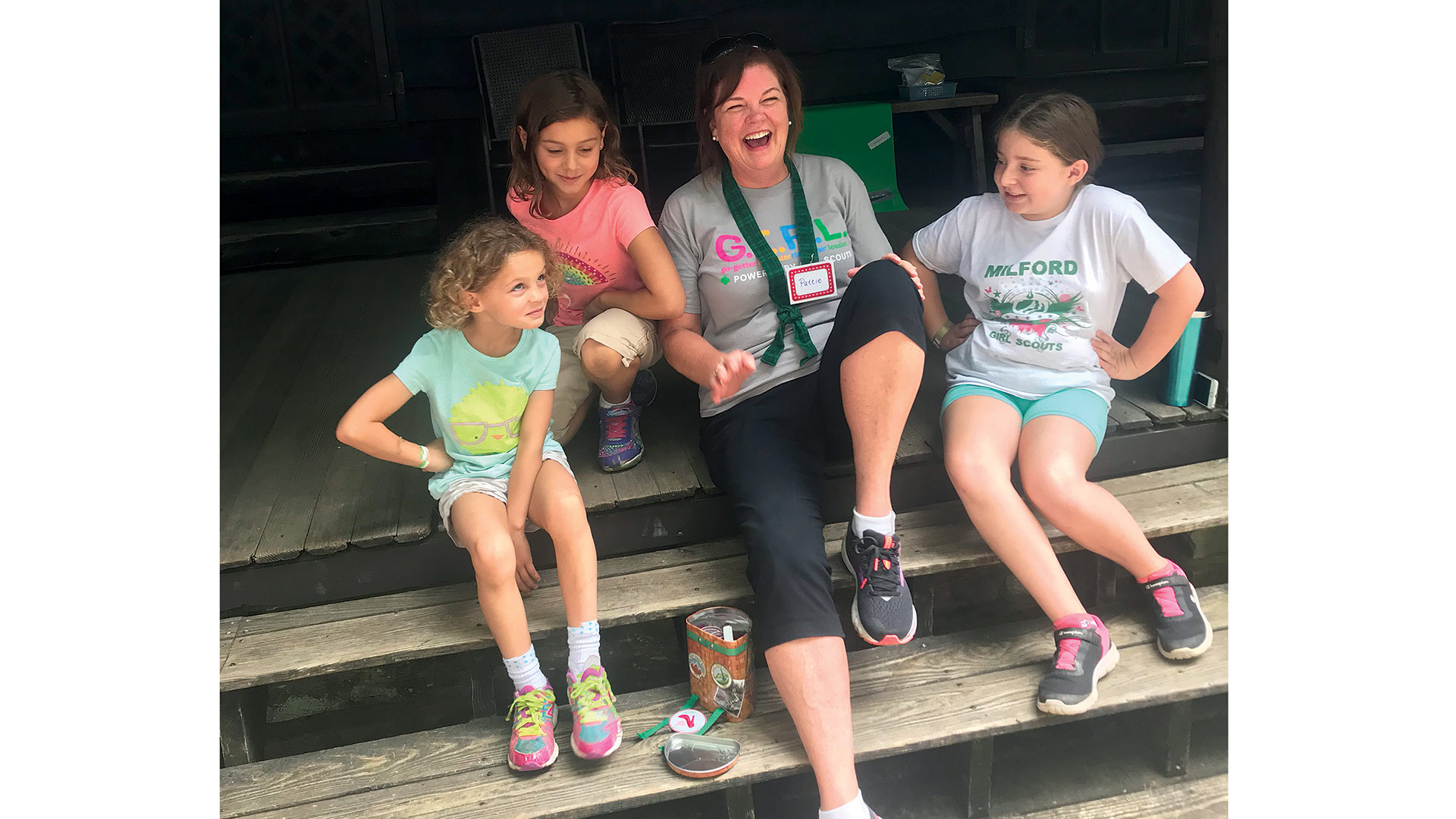
Pattie Hallberg says she enjoys spending time with Girl Scouts, and those who have been Scouts and can talk about what that organization has done for them.

Pattie Hallberg says she enjoys spending time with Girl Scouts, and those who have been Scouts and can talk about what that organization has done for them.

She’s heard the reverse of this question more times than she would care to say or count, because while most everyone has heard references to Eagle Scouts, the highest rank in Boy Scouts and a proud line on any résumé, only those in the know understand its counterpart. Hallberg wants more people to know and thus put an end to those frustrating questions.

But she has more pressing concerns at the moment, especially the many challenges facing girls of all ages today. When asked to give a list, Hallberg put stress at the very top of it.

“Girls are under an incredible amount of stress today,” she explained. “There’s the stress to do well in school, and all those things that we’ve all had, but there’s this added layer to it now that’s really overwhelming.”

Much of this stress is connected to bullying, she went on, adding that, while it has always been an issue, today it is an even deeper concern, for obvious reasons.

“The stories are overwhelming … what can happen to a girl in just a moment, mostly around the internet,” she said. “It’s frightening, and it really takes its toll on these girls.”

For these reasons, the Girls Scouts and especially the GSCWM have always been focused on creating what Hallberg called a “safe space,” one in which they could be different and unique. But beyond that, the agency is devoted to giving them opportunities — and the confidence to realize them.

Pattie Hallberg has devoted much of her life to being an advocate for women and girls, especially in her current role with the Girl Scouts.

Pattie Hallberg has devoted much of her life to being an advocate for women and girls, especially in her current role with the Girl Scouts.

Which brings her back to STEM, and the numbers involving girls in those fields, statistics that in large part fueled her desire to seek a new career challenge.

“I developed a sincere concern about girls and women in the STEM field,” she recalled, flashing back to her days at the Inventors Hall of Fame. “The youth STEM programs we ran … at the elementary-school level, in kindergarten, first, and second grade, half of those kids were girls, and half were boys. Around third or fourth grade, the girl numbers started to drop, and there were more and more programs where there was a disproportionate number of boys.”

Years later, the problem persists to a large degree, she said, adding that changing this equation has been one of her many goals with the GSCWM.

Indeed, since arriving in Western Mass. in 2008, Hallberg has done much more than merge three Girl Scout councils, covering 186 communities, into one, although that was a significant feat in itself. She has shaped the organization into a leader in this region in advocacy for young women and also put in place an aggressive strategic planning process that has sharpened the council’s focus and championed leadership development of young women.

As part of these efforts, the council has instituted a Girl Leadership Board made up of two dozen girls who meet regularly with Hallberg to share ideas, concerns, challenges, hopes, and aspirations. An important aspect of this board is the manner in which she has created space and practice for young women to speak out and experience being heard and empowered to bring their ideas to life through scouting.

“We have 18 middle- and high-school girls, and I meet with them once a month on a Saturday morning,” she told BusinessWest. “They are fantastic at talking about what it’s like to be a girl right now, what they need from programs like the Girls Scouts, and what they want, which is different from what they need. So I get a lot of perspective.”

And this perspective often helps shape programming and the overall direction of this 108-year-old institution, said Hallberg, noting that her job essentially involves a balance of honoring the history and traditions of the Girls Scouts, but also looking to the future as well.

“There’s so much to learn from the past and so much to learn about the future from these girls,” she went on. “What I try to do beyond the job of running this business and organization is to really try to understand the issues for both women and girls in our area and to advocate for them.”


Bottom Line

Managing the GSCWM, an agency that covers territory ranging Worcester to the New York border, requires Hallberg to travel extensively. She rolled her eyes when asked how many miles she puts on her car each year.

She spends the time on the road listening to books on tape — and thinking.

Thinking about the many challenges facing young women today — from bullying to financial literacy to having the skills needed to succeed in today’s technology-driven economy.

She’s managed to convert many of these thoughts into effective action, and this helps explain why she is a member of the Women of Impact class of 2020.


George O’Brien can be reached at [email protected]

Women of Impact 2020

Health and Human Services Commissioner, City of Springfield

This Leader in Public Health Is a Fierce Advocate for Social Equity

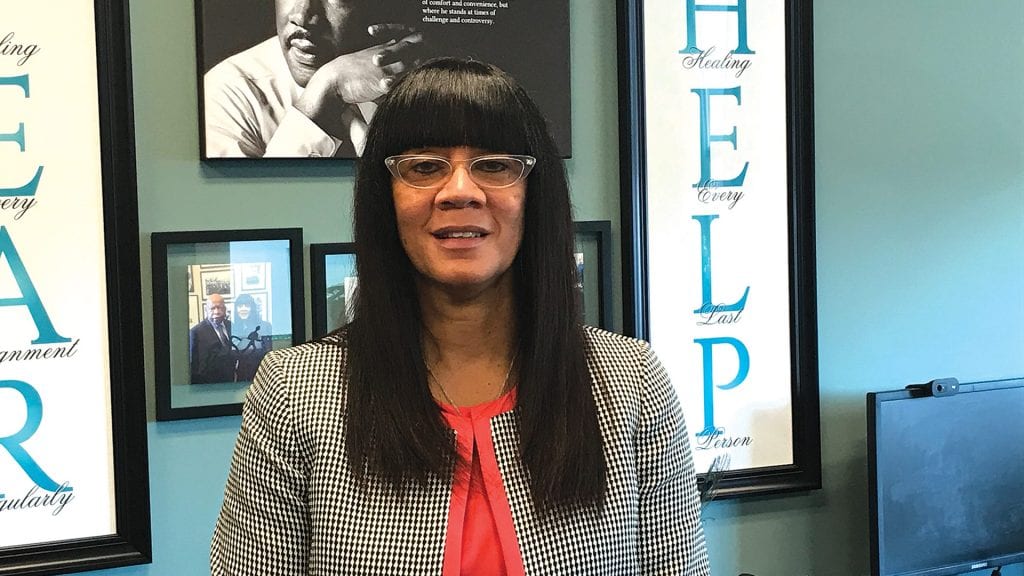
Helen Caulton-Harris

A career like that of Helen Caulton-Harris can’t be adequately summed up in just a few words. But she offered three important ones anyway.

“I believe in three things that are important to me and how I have spent my career: educate, advocate, and legislate.”

They apply both on the broader level and to specific moments in time — like the era of COVID-19 we’re living in now.

“To educate during this pandemic means to make sure we are educating the community about those things we need to do to stop the spread of this virus,” said Caulton-Harris, who has served as Springfield’s Health and Human Services commissioner for almost a quarter-century. That education has been a challenge, she added — and a constant learning experience as well.

“In the beginning, we really didn’t know what the impact was going to be. That’s why it’s called a novel coronavirus, because it’s new. Even the infectious-disease doctors, people who have studied all the science around diseases, had a learning curve with this virus. So we all are on this journey to try to educate.”

As for her advocacy role, “there are individuals in our community who don’t have a voice; they don’t have the ability to advocate for themselves, so our job in public health has really been to be the voice for the voiceless in our community, to make sure they get what they need, but also make sure we are speaking truth to those individuals who need to hear the truth around how to stem the tide.”

“Poverty is really the number-one public-health issue that I’ve had to deal with over the years — the fact that individuals living in poverty do not have equal access to the kinds of outcomes that we want for a healthy population.”

Finally, “what are the legislative interventions that need to be put in place in order to make sure we are doing what’s necessary on a political level?” she asked. “The messages from the political landscape, particularly at the federal level, have been very mixed, so it’s really been local public health out front, trying to do what we need to do in order to stem the tide of this virus.”

It’s been a busy year for someone whose role with the city — she also oversees animal control, veterans’ affairs, elder affairs, and libraries — has kept her plenty busy even without a pandemic to track every day. But it’s also been an opportunity to spotlight one of her passions: the demographic inequities that exist in public health.

“The pandemic has caused all of us to pause and really tear the Band-Aid off of what has been a festering wound,” Caulton-Harris said. “We’ve had to look criticially at our populations and how this virus is really impacting our community.”

It starts with the frontline workers — not only healthcare workers, but grocery-store employees, bus drivers, those who clean the hospital rooms, and so many others. “Those individuals overwhelmingly are black and brown, based on the data that we have.”

Then there’s the connection between poverty and healthcare access, and how economic factors put people at greater risk.

“Poverty is really the number-one public-health issue that I’ve had to deal with over the years — the fact that individuals living in poverty do not have equal access to the kinds of outcomes that we want for a healthy population,” she told BusinessWest. “So, from the beginning, we recognized that this virus really is impacting on the black and brown communities of the city of Springfield. It has been eye-opening from that perspective.”


Game Changer

‘Equity,’ as applied to topics of social justice, is more commonly discussed today than it once was, but it’s much more than a buzzword to Caulton-Harris, who recalls being passionate about matters of equity as a UMass Amherst student in the 1970s.

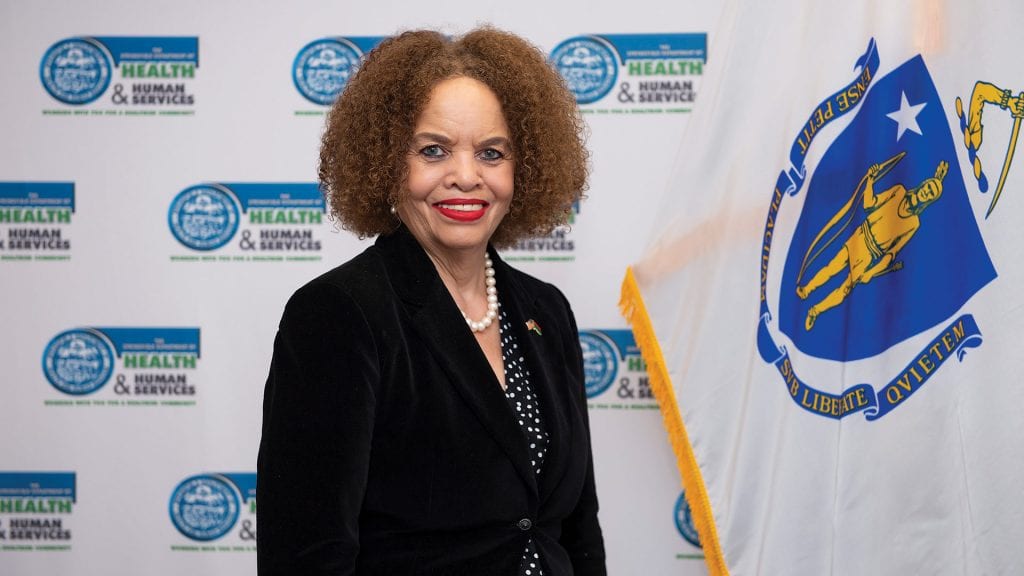
Helen Caulton-Harris has long recognized the connection between economic well-being and health, and COVID-19 has negatively impacted both for many families.

Helen Caulton-Harris has long recognized the connection between economic well-being and health, and COVID-19 has negatively impacted both for many families.

“During that time, there was a lot of momentum around social change and equity,” she said. “Public health says that everyone should have equal access, and we were thinking even then about how we can make social change. We are still — I am still — on that journey.”

When Mayor Michael Albano — the first of three Springfield mayors she has served under — appointed Caulton-Harris to her role in 1996, tasking her with combining the then-separate Department of Public Health and Department of Human Services, she didn’t consider herself a political person or a public figure. But she did relish the challenge of tackling some very serious issues, from infant mortality to teen pregnancy; from HIV and AIDS to substance-use disorders.

None of those have faded into irrelevance, of course. “All those things we saw as really challenging public-health issues are things we still work with today.”

But there were other shifts. For example, after 9/11, weaponized anthrax was a big issue, and on numerous occasions, Caulton-Harris helped investigate some suspicious white powder in Springfield. It was the first time her public-health focus shifted from behavior-related and community-based issues to external threats.

The other shift has been a growing understanding of how social determinants like employment, education, environment, and housing conditions directly impact health.

“We were working in silos, trying to help individuals make smart behavior changes, but public health is population-based,” she said. “We need to think about public health in the broadest sense and how it impacts populations. And social equity is the central piece of these social determinants of health — really looking at where a person works, plays, and lives.”

Meanwhile, the education aspect of her job continues to be critical, particularly with the COVID-19 infection rate rising in the city and across the state.

“When we were doing well, there were individuals in the city of Springfield and in Massachusetts who thought we were in a position where we could begin to take risks. And I think individuals did that. So we’re seeing a surge in the virus,” she said, noting that the previous week’s new case count in the city was 235, up from 107 the week before.

“COVID fatigue is absolutely real. I think each of us is tired. We have been battling this since late February, so I understand that individuals are tired,” she went on. “I have personally met residents who can’t go to funerals, who had to cancel weddings, who can’t go to hospitals and hold the hands of their loved ones. It is just really heart-wrenching to understand what’s going on. We believe that health is physical, mental, spiritual, and emotional, and all the quadrants of our health have been compromised by this virus.”

But if Springfield could control the spread in the spring — which it did, remarkably well — it can do so now, she believes. But it will take a collective effort.

“This virus really jumps from person to person; it loves having a host, and we are the host. Unless we do things like face covering, washing our hands, social distancing, and staying home when we’re sick, then the virus will continue to replicate itself until we have a vaccine.”


Family Legacy

When Caulton-Harris talks about responsibility, she speaks from the heart, and from a family legacy stretching back from her father, who was a Springfield police lieutenant, to her great-grandfather and great-great-grandfather, who served in the 10th Cavalry of the U.S. Army and the 54th Massachusetts Infantry Regiment, respectively.

“They contributed to the person I am,” she said. “We were raised to understand we had a role in the community and needed to give back.”

She’s also quick to credit the impactful women who shaped her own career, including the African-American nurses and nurse supervisor with whom she worked at her first job, at Neighborhood Health Center in Mason Square.

“To become a Woman of Impact is really important because I was immersed in women who had an impact on my life,” she told BusinessWest. “And they paid it forward by nurturing me, by mentoring me, and by making sure their behavior was something I would want to emulate.

“So, all these years later, to think about having an impact in my career, in my life, with other women is very, very gratifying,” she went on. “My journey has been completely dedicated to that social-justice movement that I saw as very important when I was a young woman at the University of Massachusetts. So I am really fortunate to sit here and feel as though I have lived that social-justice experience, rooted in science.”

She’s equally gratified when others follow in her footsteps.

“Three mayors allowed me to make decisions and supported those decisions,” Caulton-Harris said. “I would like to see more women, particularly women of color, emerge in leadership positions where they are decision makers and they can also have an impact on our residents, our state, and our nation.” u


Joseph Bednar can be reached at [email protected]

 

Women of Impact 2020

President and CEO, Caring Health Center

In Both Healthcare and Ministry, She Leads with a Servant’s Heart

By Mark Morris

Tania Barber

Tania Barber

Tania Barber likes to say her main motivation is servant leadership.

As president and CEO of Caring Health Center, as well as the founder and pastor of Living Water Global Ministries, her passion is focusing on the needs of others rather than the wants of self.

“I’m working in the career of healthcare, and I’m intertwining my calling, which is being a help to others,” she said. “It’s what gives me my drive.”

Barber’s story with Caring Health Center (CHC) begins in the salon where she worked as a hairdresser, which was about to close. As she was trying to figure out what to do next, one of her customers offered Barber temporary work as a switchboard operator at CHC.

“That was definitely not in my future plans, but it was bread and butter on the table for my children, so I said, ‘absolutely, I would love to come and help out,’” she recalled.

After a year as an independent contractor, Barber was hired as the permanent switchboard operator. As the years progressed, so did her career in roles of increasing responsibility, culminating in 2005 when she was asked to be CHC’s chief operations officer. She declined that offer and was asked two more times before finally accepting the position. Her hesitation was due to a concern that the COO position would remove her from the ability to engage and communicate directly with patients.

“I finally realized that I could have a greater impact in an executive management role, to help inform the policies and practices of the organization,” she told BusinessWest. “It was a chance to make positive changes to the issues I saw first-hand when I worked on the front line.”


Community Ties

Barber’s empathy for people in the community goes much deeper than her experience as a healthcare worker.

“I am one of our patients; I come from the same community,” she said. “When I was on MassHealth, I was denied services because they weren’t covered.”

These inequities made her more passionate about her position because community health centers are mandated to provide care for everyone, whether they have insurance or not. “It gave me the chance to speak to family members and people in the community that they could receive high-quality healthcare like everyone else and not be denied because of their ability to pay.”

Her passion for helping others led to her promotion to president and CEO of CHC in 2013. Under her leadership, the center has increased the number of patients seen every year from 14,000 to nearly 20,000, while staffing has increased from 109 employees to 250.

New services offered under her watch as president include a pharmacy, behavioral-health and substance-use treatment, and a wellness center. She has also built a diverse team, with strong representation by people of color in executive management and throughout the organization.

Barber has also put a special emphasis on improving services for the underserved and refugee populations in the community, noting that “I want to help remove the barriers and increase their access to quality care.” Currently, CHC serves the largest number of refugee and immigrant patients outside of Boston.

“I finally realized that I could have a greater impact in an executive management role, to help inform the policies and practices of the organization. It was a chance to make positive changes to the issues I saw first-hand when I worked on the front line.”

COVID-19 has brought multiple challenges to healthcare organizations, and CHC is no exception. Like most facilities, CHC offers telehealth, which works well for those who can access it. For others, it leads to a ‘digital divide’ where patients who might benefit from telehealth lack access to the internet or the devices to connect. This concerns Barber because recent data shows communities of color have contracted COVID-19 at a disproportionate rate.

While patients can still go to CHC for care, fear of leaving the house and becoming infected by coronavirus are preventing many from treating their other ailments. For the refugee population, these fears are compounded by the dual concerns of being exposed to immigration authorities, as well as to the coronavirus.

One solution, then, was to bring CHC to its patients.

“We purchased a mobile van to bring care to the community,” she explained. “The Mobile Health Clinical Services program has enabled us to confront some of the challenges we’ve seen during these times of COVID.”

Working with the Community Foundation of Western Massachusetts, CHC also arranged to provide mattresses as a way to combat COVID-19. Barber explained that a mattress makes a big difference for patients who live in dense neighborhoods or housing.

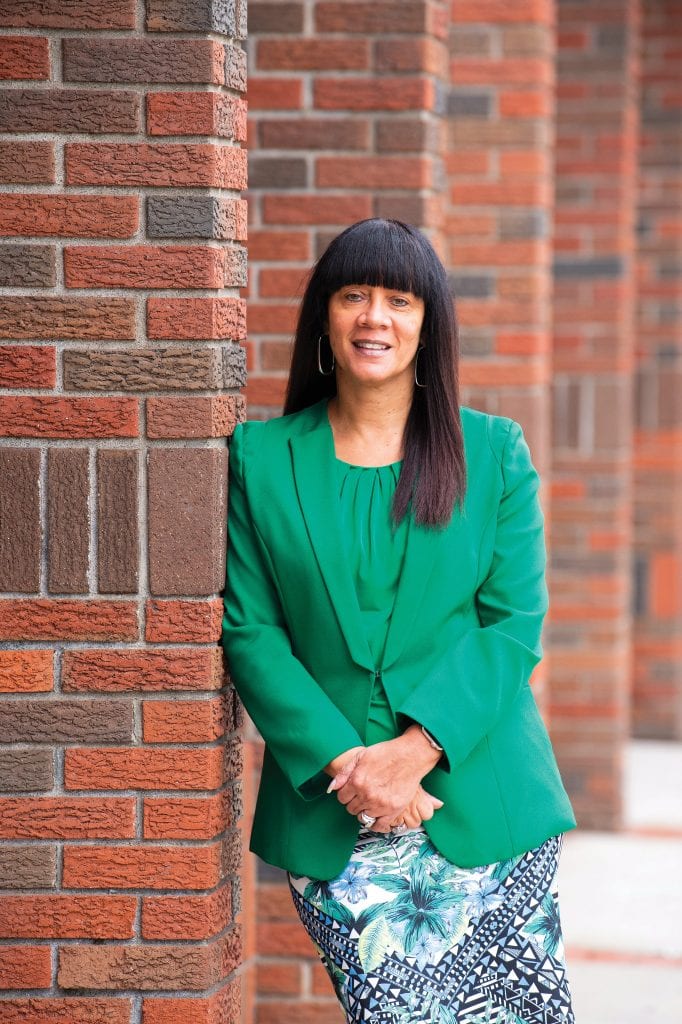
As a person of faith, Tania Barber says she believes in adding value to the lives of others.

“Many of these people were sharing the same sleeping quarters or even sleeping in the same bed. By setting up individual mattresses, they are able to get some separation.”


Woman of Faith

In addition to her full-time career with Caring Health Center, Barber is a minister with Living Water Global Ministries, which she founded in 2011. While wearing two hats can be exhausting, the key for her is balance. “I make sure to rest and take a vacation when I feel its time. Of course, I factor in family time as well.”

As a woman of faith, Barber said she believes in adding value to the lives of others. It starts with seeing a person’s potential, and she has encouraged several CHC employees to enroll in undergraduate and graduate programs.

“They have gone back to school, graduated, and now work in different roles in the organization. Two of our employees are currently pursuing doctorate programs,” Barber said with pride. “If you believe in people, they will have the faith to believe in themselves.”

In the spirit of that philosophy, Barber founded EST.HER, a leadership-consulting firm, in 2019. “One day I was looking at the Book of Esther and I didn’t see the name ‘Esther’ I saw E-S-T, H-E-R, and thought, ‘establish her.’”

Because her passion is to help others achieve their goals and dreams, Barber founded EST.HER to help motivate disenfranchised women and allow them to eventually become pillars in the community. In fact, the EST.HER logo uses the acronym PILLHERS, which stands for ‘Purposely Impacting Lifestyle Leaders Helping Each Reach Success.’

Biblical scholars have noted that the Book of Esther teaches that our past doesn’t dictate our future, and God places mentors in our lives to teach us wisdom, she noted. “I want to help women aspire to become the pillars in our community and serve as the anchors who can help the next generation of leaders.”

In her nomination of Barber as a Woman of Impact, Yvonne Williams, chief Development officer at CHC, noted that “it’s not an overstatement to say that Tania Barber’s intelligence and vision directly impact the lives of thousands of patients and their families, as well as hundreds of employees.”

Early in her career, Barber took a professional-development course titled, “How to Take Charge of the Front Desk.” Among other things, she credits it with teaching her how to switch gears to the supervisor role after making friends with co-workers.

“The course was also instrumental in teaching how to lead, how to help people see beyond the horizon of where we are and where we need to go, and, finally, how to get there.”

That early course launched a career of servant leadership, in which she is still helping people see beyond the horizon by making the simple declaration, “I’m here to help.”

With a long track record of leading by example and helping others do the same, Barber is a true Woman of Impact.

Health Care

What’s Next for Hospitals

By Spiros Hatiras

The year is 2020, in the midst of an unprecedented pandemic, and the subject is the U.S. healthcare system — more specifically, the average U.S. hospital. Is it alive and well, or is it ailing?

I will argue that all is not well with our healthcare system, and that the average U.S. hospital is facing tremendous challenges now and for the foreseeable future.

It is important to establish that, while the healthcare-delivery model has been shifting to less hospital-centric models, the acute-care hospital remains solidly in the center of our delivery system and, in my opinion, will continue to do so. Any notion of a more decentralized model with less emphasis on hospitals has been pushed many years into the future, in part as a result of the COVID-19 pandemic. Despite the accelerated growth of telemedicine during the pandemic, the need for hospital bed capacity, specialized equipment, and personnel — including the ability to ‘surge’ when needed — has all but ensured that the trend toward a smaller hospital footprint will slow down if not entirely reverse.

Shouldn’t that be good news for the future of hospitals? Well, not quite. While we may have a new appreciation for the need of readily available inpatient hospital care, we have also not solved any of the problems that hospitals have been facing for many years. In fact, the pandemic laid bare one of the most fundamental problems facing the industry, especially for smaller community hospitals. At the very onset of the pandemic, it was immediately clear that many hospitals, suffering from years of underfunding, faced immediate financial threat and would not be able to survive without a financial bailout, while private insurance companies reported record profits.

“I will argue that all is not well with our healthcare system, and that the average U.S. hospital is facing tremendous challenges now and for the foreseeable future.”

Why is this the case in a country where healthcare demands the highest per-capita expenditure of all developed countries? According to a study published in January 2019 by the Johns Hopkins Bloomberg School of Public Health, the U.S. topped the ranking of healthcare spending among developed countries in 2016 at $9,982 per capita per year, a figure that is more than double the median of $4,033.

The reason for this disconnect is that most of that money is spent not on actual care, but on administrative costs. A recent study by the Center for Medicare and Medicaid Services found that, of the $3.5 trillion spent on healthcare in 2017, 33%, or $1.1 trillion, was paid to hospitals. Unfortunately, a significant portion of that money covered unnecessary costs to process bills and get paid by insurance companies, meaning the total spent on actual hospital care was far less. The same is also true for doctors’ offices.

In a study published in 2017 in Annals of Internal Medicine, Steffie Woolhandler and David Himmelstiein noted that the administrative cost of our healthcare system was estimated to be $1.1 trillion, of which the vast majority is excess and unnecessary spending. We are spending vast sums of money on a deliberately confusing and complex insurance system.

Trying to navigate the onerous billing requirements, denied-claims management, pre-authorization requirements, and a host of other administrative hurdles unique to the U.S. healthcare system is wasteful and frustrating to hospitals, doctors, and patients alike. We spend more money administering the system than we spend on care. This should alarm each and every one of us and prompt us to look a little more carefully at proposals for a single-payer system.

It is time to ignore private insurers who portray a single-payer system as the boogeyman, or the end of healthcare as we know it, and recognize their argument for what it really is: a reluctance to part with huge profits being made from a broken system at the expense of our health.


Spiros Hatiras is president and CEO of Holyoke Medical Center.

Health Care

What’s Next in Health Education

By Marie Meckel, Kathleen Menard, Susan McDiarmid, and Theresa Riethle

Despite the complexities that COVID-19 has brought to healthcare education, the trajectory from traditional models to hybrid or virtual experiences was inevitable. Today’s technology allows healthcare educators to transcend geography, which widens access to health education in all segments of the population despite location, economic status, and race. The pandemic also revealed the vulnerabilities of underrepresented minorities.

These challenges caused many educators to pause to re-evaluate and readapt to how we teach and develop medical curriculum. Incorporating technology through virtual learning experiences while focusing on how social determinants of health impact patient care and outcomes are two areas of focus in the future of healthcare education.

Health programs can integrate in-person and remote simulation experiences; these include the traditional simulation lab consisting of realistic mannequins where learners can develop clinical skills in a safe setting without patient harm. Additional virtual experiences include a wide array of interactive patient-encounter portals where learners can conduct histories, perform physical examinations, order and interpret diagnostic tests, develop assessments and treatment plans, all while documenting patient records and receiving coaching and feedback every step of the way.

“By incorporating technology into healthcare education, medical learners will be better prepared for clinical practice.”

Live rounding with certified medical providers has also enabled learners to experience traditional hospital rounding from wherever they are in an interactive manner. Even surgical experiences can be supplemented with high-definition surgical videos and medical lectures from subject-matter experts.

While none of these experiences will replace the need for traditional hands-on learning, they can provide learners with unique education experiences that directly correlate to what is seen in clinical practice. With the increase in telehealth visits, medical learners are now equipped to adapt to these visits, delivering care in a better and more effective manner.

Technology is intertwined into healthcare today as seen with diagnostic imaging, robotic surgery, and electronic health records. By incorporating technology into healthcare education, medical learners will be better prepared for clinical practice. The virtual experiences will also develop independent and critical thinking, thus making it easier to adapt to innovations and changing patterns of illness and health systems.

In order to provide equitable, high-quality healthcare to all patients, we must include social determinants of health in the curriculum. These include socioeconomic status, education, neighborhood and physical environment, employment, and social-support networks, as well as access to healthcare.

This charge became more evident with the pandemic, as we have seen its profound impact on underrepresented minorities. It would be a disservice to future providers to ignore the current healthcare disparities in these populations. Addressing these determinants is not only important for improving overall health, but also for reducing health disparities that are often rooted in social and economic disadvantages.

Healthcare providers of the future will not necessarily be those who have a traditional classroom education, but will be those who know how to use, implement, and apply technology in healthcare systems and provide high-quality healthcare to all patients.


Marie Meckel, MS, MPH, MMSc, PA-C; Kathleen Menard, MS, PA-C; Susan McDiarmid, MS, PA-C; and Theresa Riethle, MS, PA-C are physician assistant faculty members at Bay Path University.

Health Care

What’s Next in Cancer Care

By John Sheldon, M.D.

Cancer is the second-leading cause of death in the U.S., but we continue to make significant advances in reducing its toll.

John Sheldon

John Sheldon

Key developments have included targeted drug therapies resulting from genomic profiling of tumor samples, which determines the molecular ‘fingerprint’ of the tumor; immunotherapy, which allows the body’s own natural immune system to better attack tumors; more sophisticated radiation-delivery technologies, which allow for more precise targeting of tumors and better sparing of adjacent normal tissues from radiation dose; and newer combination or ‘multi-modality’ treatment regimens, taking advantage of a combination benefit effect of different ways of attacking and killing tumor cells.

In lung-cancer treatment, for example, we now have drugs to target a variety of specific mutations that may be present, such as EGFR, ALK, ROS1, MET, RET, BRAF, or NTRK. Immunotherapy has been shown to provide a survival improvement in both stage-3 and stage-4 lung cancer. For earlier and smaller lung cancers, highly targeted radiation treatment can be delivered in a short regimen of just three to five sessions, as an alternative to surgery for patients who are not good surgical candidates. And for other patients, combination regimens of radiotherapy and chemotherapy followed by immunotherapy may be the preferred approach.

Even newer types of drugs are now available called antibody-drug conjugates, or ADCs, which target with high affinity a particular protein expressed on the surface of tumor cells, attach to the target, and then deliver a toxic payload to kill those particular tumor cells. This type of treatment was just approved by the FDA in April for metastatic ‘triple-negative’ breast cancer (a more aggressive type of breast cancer), and another drug in this category was approved last December for locally advanced or metastatic bladder cancer.

Molecularly targeted radiation delivery is another category of treatment that is advancing. Also known as peptide-receptor radiotherapy (PRRT), it consists of a radioactive particle, or radionuclide, linked to a protein, and this protein seeks out and targets its intended receptor, which is overexpressed on certain tumor cells. Once the protein-receptor binding takes place, the radionuclide is internalized into the tumor cell — and destroys the tumor cell. This treatment is currently being utilized for neuroendocrine tumors of the abdomen (the type of cancer that afflicted both Steve Jobs and Aretha Franklin), and it is being investigated for the treatment of metastatic prostate cancer.

Quality of life is an ongoing focus of cancer care, and while we always aim to increase survival, we simultaneously aim to optimize quality of life for patients under our care. In the realm of radiation treatment, shorter course regimens are more frequently being used (supported by evidence from clinical trials) in order to increase convenience for patients. Such regimens are now commonly used in the treatment of breast cancer, for early-stage lung cancer (as mentioned above), for some brain-tumor patients, and for some patients with prostate cancer. For the latter, radioactive seed implants into the prostate gland may be an option for a one-visit outpatient treatment.

In short, we continue to push forward strongly in the treatment of a broad range of cancers.


Dr. John Sheldon is medical director, Radiation Oncology at the Mass General Cancer Center at Cooley Dickinson Hospital.

Health Care

What’s Next in Behavioral Health

By Barry Sarvet, M.D.

As a science-fiction fan, I would love to be able to travel in time to see into the future of psychiatry. But, of course, the future isn’t really knowable and depends in large part on the choices we make. A more useful and realistic approach is for us to envision a possible future based on our awareness of the most urgent needs in the field, and to assume linear progress from the current state of our scientific knowledge and discovery.

Barry Sarvet

Barry Sarvet

In my opinion, the two most compelling needs within the field of psychiatry are the need for more effective, safe, and reliable treatments for the subset of psychiatric patients who don’t respond optimally to current treatments, and the need to make psychiatric care more accessible and equitable for everyone who suffers from mental-health conditions.

Depression is one of the most common psychiatric illnesses, affecting 7.1% of all adults and 13.3% of adolescents in the U.S. Severe depression is a potentially deadly illness, and suicide is a leading cause of death in this country. Although we already have a host of effective treatments for depression, between 10% and 30% of patients do not respond favorably to treatment. However, ongoing advances in our understanding of the neurobiology of mental illnesses in recent years have led to a number of novel biological treatments for treatment-resistant depression and other psychiatric conditions.

One recently developed treatment that has shown great promise with treatment-resistant depression is repetitive transcranial magnetic stimulation (rTMS). Available at Baystate, rTMS is a non-invasive procedure in which focused pulses of electromagnetic energy are applied to specific regions of the brain resulting in increases in blood flow and metabolic activity. rTMS belongs to a branch of psychiatric treatment referred to as psychiatric neuromodulation. We expect to see further development of this branch in coming years, particularly because of the encouraging observations of clinical effectiveness and safety of this type of treatment for patients whose conditions have not responded to conventional medications.

Other biological psychiatry advancements on the horizon include the development of medications targeting receptors for neurotransmitter systems (such as glutamate and NMDA) which have recently been implicated in the pathophysiology of depression and other psychiatric illnesses. We are also seeing a renaissance of research activity studying the use of so-called psychedelic drugs in combination with talk therapy to induce states of consciousness in which patients may find it easier to change well-worn patterns of thinking associated with psychiatric illnesses such as PTSD, anxiety, and depression.

Lastly, on the biological front, advances in the understanding of genetic variability in metabolism and responsiveness of the nervous system to psychiatric medications promise to usher in an era of personalized medicine in psychiatry, allowing psychiatric clinicians to select effective and tolerable medication treatments for patients without having to go through a trial-and-error process.

Even more important than advances in biological psychiatry is the need for progress in making psychiatric treatment more accessible to everyone who needs it. Currently, a majority of patients with mental illness do not receive any treatment at all, and for many more, treatment is delayed. In fact, many patients with untreated mental illness, disproportionately persons of color, end up in the criminal-justice system because of a lack of access to care.

In recent years, we have seen steady reduction in stigma surrounding mental illness and increased acknowledgment of the importance of mental health across society. Baystate’s recently announced plan for the development of a new, state-of-the-art psychiatric hospital facility for our region reflects the growing recognition of the importance of improving access to behavioral healthcare.

This new facility is just one component of a comprehensive strategy which needs to be executed in partnership with the whole community to improve access to all levels of mental healthcare and address persistent racial and socioeconomic disparities in access to care. Some of the components of this strategy includes work we have been doing at Baystate to embed mental-health services into our primary-care services. In addition, our development of new training programs for psychiatrists and child and adolescent psychiatrists have established a pipeline for enhancing the psychiatric workforce in our region.

We also will see continued use and improvement in telehealth models of psychiatric practice, which, of course, have dramatically grown in response to the pandemic, and have proven to be an important tool in reducing geographic barriers to access to care.


Dr. Barry Sarvet chairs the Department of Psychiatry at Baystate Health.

Daily News

HOLYOKE — One of Holyoke’s newest businesses, the Wealth Transition Collective, announced it will host a food drive, beginning the week of Nov. 16-20, to benefit Margaret’s Pantry in Holyoke in honor of National Hunger and Homeless Awareness Week.

Individuals can drop off non-perishable and canned foods during office business hours (Monday to Friday, 9 a.m. to 4 p.m.) at its newly renovated office at 1632 Northampton St., Holyoke. Weather permitting, there will be a drop-off table outside the front door for easy accessibility. Additionally, people are welcome to drop off non-perishable ans canned foods at the Greater Holyoke Chamber of Commerce, 177 High St., Holyoke on Wednesday, Nov. 18 between 11 a.m. and 4 p.m.

Some of the most-needed items at the pantry include canned goods (soups, stews, and vegetables), pasta and sauce, baking mixes, granola bars, and kid-friendly items. Margaret’s Pantry, a division of Providence Ministries for the Needy, is a full-service food pantry that has provided food to residents of Greater Holyoke for more than 30 years. Presently, the pantry provides food to more than 180 families each month, and approximately 72,000 meals a year are distributed to the needy in the community.

“When we decided to move our firm to Holyoke, we wanted to have an immediate impact in the community. Providence Ministries for the Needy has been doing that in Holyoke for decades. Supporting their cause and the people they serve helps us create that impact,” said Greg Sheehan, CEO of the Wealth Transition Collective.

Andréa Marion, the chamber’s executive director, added that “the Wealth Transition Collective is one of our newest members, and their active dedication to the Greater Holyoke community is impressive. We are beyond thrilled to be able to offer a donation location and help our members in every capacity. As a former director for a food pantry, I understand how crucial food drives are, especially as the colder months wear in. Hunger and homelessness are a major effect on our community, and this is an amazing way to build awareness to this cause.”

Daily News

SPRINGFIELD — Why does COVID-19 have a particularly devastating impact on black communities? How does your neighborhood impact your health? How does racism impact health outcomes?

These are some of the questions a Springfield Technical Community College (STCC) professor will raise during a live webinar on Wednesday, Nov. 11 at 2 p.m. Titled “Health, Wealth, and Race,” the event will feature a presentation by Dr. Raja Staggers, assistant professor in Social & Behavioral Sciences at STCC.

Members of the STCC community, as well as the general public, are invited to attend this free Zoom webinar. Visit stcc.io/staggers to register.

Staggers will explore race-based disparities in health outcomes with a focus on the disproportionate burden of COVID-19. In addition, she will consider the impact of a community’s environment and systemic racism on health, and will offer recommendations to address health inequities.

Staggers is a public-health sociologist and social researcher in the areas of health inequities and race and racism. She received a doctorate in medical sociology and social inequality from Howard University and a master of public health degree in community health education from New York University. She has facilitated national conversations on discrimination and the impact on health and has led trainings on anti-racism, cultural competency, and health equity.

Daily News

WILBRAHAM — Colony Hills Capital, based in Wilbraham, announced its recent acquisition of Lakeshire Village Apartments located at 4395 Washington Road in East Point, Ga. Colony Hills paid $22.3 million for the 284-unit, multi-family community.

Built in the 1970s, Lakeshire Village was completely redeveloped in 2003 by the seller using low-income housing tax credits (LIHTCs). Colony will rebrand the community and aims to reinvigorate it with fresh capital and fresh ideas. According to David Kaufman, president of Colony Hills Capital, the company will focus its capital investments on neglected community areas by adding sports courts, bringing the pool back on line, adding a dog park, and installing community picnic and grilling areas. Colony Hills will also add a fitness center, kids’ learning lab, and resident event area to the Community Center building.

“We are very excited to roll out these new amenities and resident programs to our newest community and want to ensure our residents have a high-quality experience living here,” Kaufman said.

Lakeshire Village is Colony Hills’ second LIHTC affordable-housing acquisition in the past year.

Colony Hills Capital is a multi-family real-estate investment-management company that targets investments in workforce, value-add opportunities located in secondary markets, primarily in the Southeast. Since its inception in 2008, Colony Hills and its affiliates have acquired more than 8,800 apartments worth approximately $600 million.

Daily News

SPRINGFIELD — Secret Santa is the most robust volunteer effort at the Children’s Study Home (CSH). With the community’s efforts, CSH has been able to put smiles on children’s faces and help families feel the joy of winter gift giving for 154 years running. With a pandemic placing more families in need, CSH is hoping to surpass last year’s total of more than 425 children having their wishes granted.

With its Secret Santa program, CSH begins the journey to ensure hundreds of children throughout schools in Springfield and the Berkshires, as well as family-support, foster-care, and residential programs build memories free from uncertainty, scarcity, and loss.

“This year, more than ever, we need the community to be there with us as they have been so often, supporting the work we do and those we serve,” said William Dávila, executive director and CEO of the Children’s Study Home. “Please consider sponsoring one of our very deserving children. Even a small contribution will go a long way in bringing them — and you — some much-needed holiday cheer.”

Supporting the program can include receiving a child’s wish list for $75, holding a toy drive at a business or organization, or simply making a donation to the Children’s Study Home. To join the community in making dreams come true for children — dreams that are often elusive and difficult to ensure — e-mail [email protected] or call (413) 636-3085, and, if possible, refer a friend so they can join the community of givers.
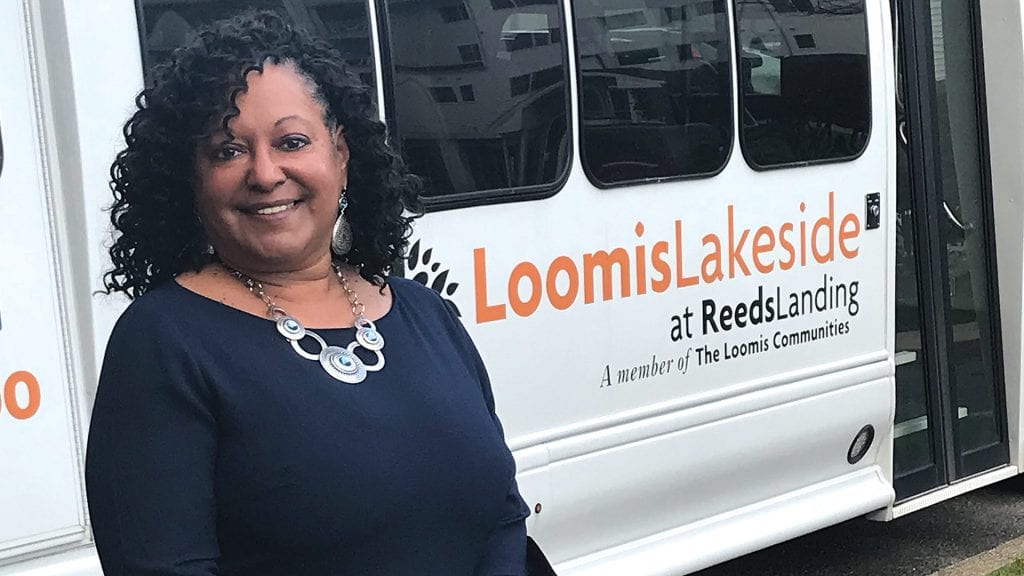
Business Talk Podcast Special Coverage

We are excited to announce that BusinessWest, in partnership with Living Local, has launched a new podcast series, BusinessTalk. Each episode will feature in-depth interviews and discussions with local industry leaders, providing thoughtful perspectives on the Western Massachuetts economy and the many business ventures that keep it running during these challenging times.

Episode 38: Nov. 9, 2020

George Interviews Peter Rosskothen, owner of the Log Cabin Banquet & Meeting House

Peter Rosskothen

BusinessWest Editor George O’Brien talks with Peter Rosskothen, owner of the Log Cabin Banquet & Meeting House and other hospitality-related businesses. The two discuss the state of the local events industry, the new restrictions imposed by the state, and how this vital sector of the economy is pivoting and looking for new and viable sources of revenue in these difficult times. It’s must listening, so join us on BusinessTalk.

Also Available On

Daily News

SPRINGFIELD — Springfield Technical Community College (STCC) won four medals at this year’s District 1 National Council for Marketing & Public Relations (NCMPR) Medallion Awards.

The Medallion Awards recognize excellence in design and communication at community colleges within the district, which covers the Northeast, parts of Eastern Canada, and the United Kingdom. STCC won three bronze medallions and one silver. The Communications and Marketing team was recognized for excellence in creating the following promotional products on behalf of the college: a brochure with facts about STCC and information about how to apply for financial aid (silver medallion); a spring 2020 semester newsletter (bronze); a fundraising pennant (bronze); and the “STCC Around” radio segment that airs on WTCC 90.7 FM on Thursdays at 8:30 a.m. (bronze).

The work was judged by marketing and communications professionals who are members of NCMPR at community colleges. Winners are awarded gold, silver, or bronze medallions.

“I’m super proud of the recognition my team is earning for STCC,” said Keith Paul, director of Communications and Marketing at STCC. “We love telling the stories of students transforming their lives. We’re humbled that our marketing peers at community colleges think we’re doing a good job of it.”

The Communications and Marketing staff at STCC includes Paul, Media Relations Coordinator Jim Danko, and Design and Production Services Coordinator Kerry Ferrero.

Denise Hurst, vice president of Advancement and External Affairs at STCC, congratulated the team.

“I am so excited to see the STCC Communications and Marketing team receive these accolades for their strategic and diligent work,” Hurst said. “Not only are they each talented in their own right, they collaborate with their colleagues across campus and within the community to collectively achieve the mission to share near and far that STCC is the most accessible and affordable higher-education institution in the area.”

NCMPR, made up of seven districts, represents marketing and public-relations professionals at community and technical colleges. NCMPR President Juan Gutierrez applauded the award winners, noting that they demonstrate the very best in design and communication work at two-year colleges within the region.

“To each of you, congratulations on this recognition that is so well-deserved,” Gutierrez said.

NCMPR District 1 received 221 entries from 27 community colleges. The awards ceremony was broadcast live on Oct. 29 on Facebook. Normally, award winners are celebrated at a District 1 conference, but NCMPR canceled the event this year due to the COVID-19 pandemic.

Daily News

HOLYOKE — Registration is now open for January and spring 2021 semester classes at Holyoke Community College.

HCC’s two-week January term, called Wintersession, begins Monday, Jan. 4, and runs until Friday, Jan. 15. The spring 2021 semester begins Monday, Jan. 25.

HCC will also once again be offering two additional, flexible start dates for the spring semester. Spring Start II classes begin Feb. 16 and run for 12 weeks. Spring Start III classes begin March 29 and run for seven weeks. All spring classes conclude by Wednesday, May 12.

“Our flexible fall start dates were very popular with students who were not ready to begin classes at the traditional time in early September because of uncertainties surrounding the pandemic,” said Mark Hudgik, director of Admissions. “For spring, we wanted to again offer flexible start dates to give students as many opportunities as possible to either begin or continue their college educations.”

Because of ongoing concerns related to COVID-19, HCC will continue to offer the majority of its classes remotely through the 2021 spring semester.

Like most colleges, HCC started remote instruction in mid-March after the pandemic forced campus closures. This fall, all HCC classes are being offered in one of three formats: online, blended remote, and blended face-to-face. Wintersession and spring-semester classes will follow these same formats.

Online courses offer a traditional, asynchronous online model with coursework deadlines established by instructors. Blended remote courses have both asynchronous online components combined with real-time scheduled class meetings via videoconference platforms such as Zoom. Blended face-to-face combines blended remote with some in-person instruction on campus. For the most part, this format is limited to health-science programs that require clinical labs, such as nursing, radiologic technology, veterinary technician, and medical assistant.

Last month, HCC also started offering some of its culinary-arts classes face to face in the kitchens of the HCC MGM Culinary Arts Institute on Race Street in downtown Holyoke.

To see HCC’s Wintersession and spring class offerings, visit hcc.edu/class-schedule. To register for classes, please visit hcc.edu/admissions.

Daily News

SPRINGFIELD — The Hamre Martin Team of Rovithis Realty, LLC has named Square One a charity of choice for the real-estate agency’s charitable-giving initiative.

At the closing of each real-estate transaction, clients have the opportunity to select a charity to receive a portion of the commission from the transaction. Square One has recently been added to a list of preferred organizations to receive funding.

The designation comes at a critical time as Square One recently expanded its early-education program to include full-day remote learning support for children in kindergarten through grade 5, in addition to its traditional preschool classrooms and family childcare offerings.

“Square One is such a vital presence in our community, especially during one of the most challenging years any of us have faced,” said Chris Martin, team leader of the Hamre Martin Team at Rovithis Realty. “We wholeheartedly support everything Square One does to help our fellow community members in need.”

Funds raised through this undertaking will support Square One’s Campaign for Healthy Kids, a multi-year fund-development initiative focused on the agency’s commitment to providing healthy meals, physical fitness, social-emotional well-being, and a healthy learning environment.

“Having the support of our business community is vital to our success in supporting children and families,” said Kristine Allard, vice president of Development & Communication at Square One. “We are so grateful to Chris and his team for recognizing the importance of our work and the need to support us financially.”

Square One currently provides early-learning services to more than 500 infants, toddlers, and school-age children each day, and family support services to 1,500 families each year, as they work to overcome the significant challenges in their lives.

“The past few months have greatly reinforced the demand for our programs and services,” Allard added. “With that growing demand and the unanticipated COVID-related expenses, including providing full-day support during remote learning, we have a tremendous need to expand our donor base.”

To make a donation, text ABC123 to 44-321, visit www.startatsquareone.org, or e-mail Allard at [email protected].

Daily News

SPRINGFIELD — In a letter to students, faculty, and staff, American International College (AIC) President Vince Maniaci praised the campus community for their diligence in working to keep everyone safe. He stressed that the college’s disciplined adherence to protocols does make a difference in preventing the spread of COVID-19, both on campus and in the community, thereby allowing for an anticipated successful completion to the fall semester.

The letter is in response to the rise of new cases of COVID-19 across Massachusetts that have resulted in changes to Massachusetts regulations effective Nov. 6. Maniaci acknowledged that, while most young people who contract the virus recover after having experienced only mild to moderate symptoms, “We must look beyond the borders of our campus and take our responsibility as members of the Greater Springfield community seriously and keep our friends and loved ones safe by continuing to do everything we can to stop the spread.”

Maniaci’s communication reiterated and provided links to new state regulations relative to gatherings, dining, stay-at-home orders, travel, and face coverings.

“We are all obligated to act in the best interests of our campus community. Students pledged compliance with guidelines upon return to campus in August, and faculty and staff are committed to do the same,” Maniaci said. “While there is no immediate end in sight, nor does anyone know how long our campus, the state, the nation, and the world will need to take such precautionary measures, we do know that, through compliance with protocols, AIC is contributing to the solution of how to continue educating our students with as little disruption and as much safety as possible.”

AIC announced last month that it would continue to opt for remote learning for the spring semester. More information about AIC’s health and safety precautions and protocols can be found at aic.edu.

Daily News

BOSTON — Gov. Charlie Baker announced the appointment of Maj. Gen. Gary Keefe and Lt. Col. Mark Bigda to the Holyoke Soldiers’ Home board of trustees. Brig. Gen. Sean Collins was appointed to the board last July. Together, these individuals represent extensive experience in the military and healthcare and have a direct connection to Western and Central Mass.

Keefe will serve a seven-year term, replacing former trustee Christopher Dupont, whose term ended in July. Bigda will serve until July 2022, serving the remainder of former trustee Cesar Lopez’s term following his resignation in September. Collins will serve until July 2024, serving the remainder of former trustee Richard Girard’s term following his resignation in June.

“I am pleased to appoint these three distinguished military and community leaders to the board of trustees for the Soldiers’ Home in Holyoke,” Baker said. “As the home continues to protect and care for the veteran residents during the COVID-19 pandemic, the appointment of these three trustees to the board will bring expertise that will benefit residents of the home, help steer its leadership, and fortify its clinical expertise.”

Keefe is currently assigned as adjutant general for the Massachusetts National Guard. In 1992, he joined the Massachusetts Air National Guard with the 104th Fighter Wing, and has held numerous assignments with the Massachusetts National Guard, having been appointed as adjutant general in May 2016.

Bigda serves in the Massachusetts Air National Guard as a flight surgeon for the 104th Fighter Wing at Barnes Air National Guard Base in Westfield, and has practiced as a physician for 30 years at his private practice, Manhan Internal Medicine, and also served as facility physician for 28 years at Hampshire County House of Correction. Bigda founded a nonprofit organization called Mustard Seed Missions and, since 2004, has led twice-yearly mission trips to remote villages in Haiti.

Collins, a board-certified nurse practitioner, currently serves as the Air National Guard assistant to the deputy surgeon general, assisting in the overall operation of the Air Force Medical Service, a 44,000-person, integrated healthcare-delivery system across the U.S. and overseas. He is also currently an assistant professor at UMass Medical School.

Daily News

BOSTON — Berkshire Bank announced the promotion of Jason White to executive vice president and chief information officer. He previously served as senior vice president and chief technology officer at the bank.

In his new role, White will lead all aspects of Berkshire’s information-technology program and oversee the teams responsible for ACH payroll, wire room, and electronic banking. He will also continue to direct the bank’s technology investments and assets to ensure it is meeting the changing demands of customers in a digitally focused banking environment. He will report directly to acting President and CEO Sean Gray.

“Jason is a proven technology leader whose strategic perspective, commitment to operational excellence, and collaborative leadership approach will accelerate our transformation into a 21st-century community bank,” Gray said. “His strong record of success in leading technology initiatives to increase efficiency and provide a secure and superior customer experience will be vital to our future growth and profitability. I am very pleased to welcome Jason to the bank’s leadership team.”

In August, BostonCIO announced White as a winner of its 2020 CIO of the Year ORBIE Award in the corporate category. The awards recognize chief information officers who have demonstrated excellence in technology leadership.

White previously served as senior vice president and chief technology officer at Berkshire Bank. He joined Berkshire in 2019 after the bank’s acquisition of Savings Institute Bank & Trust. Before that, he was responsible for streamlining the information-technology and operational workflows at Savings Institute, implementing a fully virtualized infrastructure, enhancing its overall information-security posture, and innovating customer digital channels. At Savings Institute, he served as chief information officer and information security officer. His background includes more than 25 years of experience supporting technology and operational areas within the financial industry.

Daily News

SPRINGFIELDBest Lawyers, in partnership with U.S. News and World Report, ranks Bulkley Richardson as 2021 Best Law Firm in the following 11 practice areas: banking and finance law, bankruptcy and creditor-debtor rights/insolvency and reorganization law, commercial litigation, corporate law, criminal defense: white collar, criminal defense: general practice, litigation: labor and employment, medical-malpractice law: defendants, personal-injury litigation: defendants, tax law, and trusts and estates law.

To be eligible for a ranking, a law firm must have at least one lawyer who is included on the Best Lawyers list. Bulkley Richardson has 14 lawyers included on the 2021 list, and two of the firm’s partners, Liz Sillin and John Pucci, were named 2021 Springfield Lawyers of the Year. Rankings are based on a rigorous evaluation process that includes the collection of client and lawyer evaluations and peer reviews from leading attorneys in their field.

Daily News

SPRINGFIELD — The American International College (AIC) Admissions office is offering virtual information sessions for undergraduate- and graduate-degree program applicants.

Information sessions are available Monday through Friday and provide an opportunity for attendees to speak with admissions counselors virtually to learn more about the admissions process, available programs at the undergraduate and graduate levels, financial aid, and more.

During November, in addition to the weekday information sessions, a special School of Health Sciences virtual information session for undergraduates is slated for Saturday, Nov. 7 for prospective students interested in gaining insight to programs in physical and occupational therapy, exercise science, nursing, and public health. The School of Business, Arts, and Sciences will offer a special program on Tuesday, Nov. 10 to showcase the more than 40 interdisciplinary program offerings at AIC that are grounded in the liberal arts.

Graduate virtual information sessions will be available during the month in the School of Health Sciences on Saturday, Nov. 7 and Tuesday, Nov. 10. On Thursday, Nov. 12, a session dedicated to the post-professional doctorate in occupational therapy will be offered.

The School of Business, Arts, and Sciences will provide virtual information sessions on Monday and Tuesday, Nov. 9 and 10, to highlight graduate-degree programs in business, psychology, and cannabis science and commerce.

AIC’s School of Education invites individuals to learn more about its program offerings on Sunday and Thursday, Nov. 8 and 12.

Interested participants are invited to visit aic.askadmissions.net/portal/ei/search for a complete list of dates, times, and to register.

Daily News

NORTHAMPTON — Girls on the Run (GOTR) Western Massachusetts is preparing for its celebratory 5K run on Saturday, Nov. 14. With modifications in place and close attention paid to current Massachusetts and GOTR guidelines, some teams will be able to run their 5K at their site, in person, and also attend the virtual 5K, while community members are encouraged to participate in a virtual 5K to support the organization.

Traditionally the fall GOTR 5K is held at Smith College, where all teams, coaches, and families come together to celebrate the girls’ achievements throughout the program. During the 20-lesson curriculum, which was shorted to 16 lessons this season due to the pandemic, girls learn social and emotional skills, such as how to manage emotions, establish boundaries, develop confidence, and resolve conflict — all skills that girls can use now and in the future to cope with life challenges. These lessons help to create resiliency among participants and are life skills that youth in the community can use during this difficult and unique time.

This season, thanks to collaboration with local parks and recreation departments and YMCAs, including the Hampshire Regional YMCA, 14 teams and just over 140 girls are participating in the fall 2020 season — fewer than the typical season, which averages 75 teams and 1,400, but GOTR leaders are pleased to have been able to successfully provide in-person and virtual programing to girls at a time when they need it the most. This was due in part to program modifications that included smaller team sizes, a shortened program, and social-distancing modifications to activities to keep girls and their coaches safe.

The GOTR virtual 5K is open to the community and is offered to additional family members and community runners who wish to participate. Registration is $20 and includes a downloadable run bib and training schedule, financial assistance is available as needed. Register at www.girlsontherunwesternma.

Daily News

SPRINGFIELD — Western New England University will host high-school students and their parents in a virtual open house that will be streamed live on Sunday, Nov. 15 from 10 a.m. to noon. The event is free, but advance reservation is required at visit.wne.edu or calling the Admissions Office at (413) 782-1312.

Executive Director of Undergraduate Admissions Michelle Goodfellow will lead guests on a live virtual tour of the campus, introduce them to the university’s new President, Robert Johnson, and show them what life is like as a Golden Bear. Along the way, prospective students and their families will interact with current students, win prizes, and learn about academic opportunities within the colleges of Arts and Sciences, Business, and Engineering. Also featured will be the new 4U University Advising Program and options for academic support, admissions and financial aid, living on campus and commuting, student activities, athletics, and more.

“I am so excited to have a chance to meet our prospective students at this event,” Goodfellow said. “Even though we are not able to have large numbers of students on campus, I am confident that those that attend will get a true sense of the Golden Bear spirit that exists on our campus.”

To wrap up the event, Goodfellow will host a live panel, where guests will be able to ask questions directly to current students. For a complete list of virtual open-house dates and times, visit visit.wne.edu.

Daily News

SPRINGFIELD — Last year, members of the Springfield College Physician Assistant Student Organization (PASO) held a volleyball tournament with proceeds benefiting the Mental Health Assoc. (MHA). Not surprisingly, the PASO volleyball tournament planned for spring 2020 was cancelled due to the pandemic, but that did not dissuade members of the student group from finding a way to raise funds for MHA.

“Our volleyball tournament was cancelled in the spring due to COVID-19, but the members of PASO still wanted to raise money for MHA,” said Alexandria Perrone, the student organization’s president. “MHA is an organization based here in Springfield that works to provide mental-health services and counseling to individuals in our local community. Members of PASO planned and carried out a virtual fundraiser where club members, families, and friends could donate a set amount to be entered in a drawing for prizes such as gift cards donated by local restaurants.”

The PASO virtual fundraiser took place during PA Week, Oct. 6-12, and giveaway winners were announced through e-mail and social media, she noted. “Social distancing made things a little harder, but with some creativity and effort, we raised $750 for MHA.”

Kimberley Lee, vice president, Resource Development and Branding for MHA, noted that, “even though members of PASO couldn’t hold their volleyball tournament in person this year, it didn’t prevent them from applying their time, talent, and energy to put on a virtual event to benefit MHA. We admire their resolve and respect their commitment to help people feel better and live their best life. We are thrilled that PASO has again chosen to support the important work of MHA.”

Daily News

HADLEY — TommyCar Auto Group, a local company that operates five car dealerships in Hampshire County, is joining forces with the Hampshire County Sheriff’s Office and Sheriff Patrick Cahillane for the ‘No Shave November’ campaign to raise awareness and funds for the Dana-Farber Cancer Institute.

For the second year, the auto group will match whatever funds are raised by the Sheriff’s Department, and is also encouraging customers to donate their TommyCar Rewards points toward the cause. Last year, the Sheriff’s Office raised $2,700, which TommyCar doubled for a total donation of $5,400 to Dana-Farber.

“We are grateful to again have this opportunity to partner with the Hampshire County Sheriff’s Department and are delighted that they are willing to support such a worthwhile cause,” said Carla Cosenzi, who co-owns TommyCar Auto Group with her brother, Tom. “The Dana-Farber Cancer Institute is near and dear to our hearts due to the outstanding care they provided to our father. This campaign is part of our ongoing commitment to honor his memory.”

No Shave November is devoted to increasing cancer awareness while raising funds to support cancer prevention, research, education about cancer prevention, as well as those fighting the battle. It’s a month-long journey in which participants forgo shaving and grooming to evoke conversations about cancer awareness.

Throughout the month of November, deputies and staff at the Hampshire County Sheriff’s Office will have the opportunity to opt out of the department’s dress code and grow out their facial hair with a donation of $20 to the Tom Cosenzi Driving for the Cure Charity Golf Tournament. Over the past 12 years, the annual tournament has raised more than $1 million to support brain-tumor research at Dana-Farber.

The Center for Neuro-Oncology at Dana-Farber Cancer Institute/Brigham and Women’s Cancer Center, under the leadership of Director Dr. Patrick Wen, has achieved cancer breakthroughs in the disease’s biology, drug design, and patient care. Wen and his research team now seek to broaden the understanding of molecular pathology and bolster research with a robust clinical-trial program to identify drugs that can target these diseases directly.

“My brother and I understand what these patients and families are going through first-hand,” Cosenzi said. “That’s why we are so committed to help raise funds to help find a cure, and why we are grateful for the support from the Hampshire County Sheriff’s Office.”

To learn more about the Tom Cosenzi Driving for the Cure Charity Golf Tournament, visit tomcosenzidrivingforthecure.com. Those interested in making a donation to the Dana-Farber Cancer Institute may do so by visiting bit.ly/3lfT146.

Daily News

BOSTON — The Baker-Polito administration announced a series of targeted measures to disrupt the increasing trend of new COVID-19 cases and hospitalizations. Gov. Charlie Baker announced these changes at a time where public-health data has indicated that cases are rising, with cases up by 278% and hospitalizations up by 145% since Labor Day. These measures are meant to disrupt rising trends now, so the Commonwealth can keep the economy and schools open for residents and prevent the need to roll back to an earlier phase of the state’s reopening plan.

All orders and advisories will be effective starting Friday, Nov. 6.

The revised stay-at-home advisory instructs residents to stay home between 10 p.m. and 5 a.m., except for activities such as going to work, running critical errands to get groceries and address health needs, and taking a walk.

Baker also issued a new executive order that requires the early closure of certain businesses and activities each night at 9:30 p.m. Effective Nov. 6, the following businesses and activities must close to the public each day between the hours of 9:30 p.m. and 5 a.m.:

• Restaurants (in-person dining must cease at 9:30 p.m., but takeout and delivery may continue for food and non-alcoholic beverages, but not alcohol);

• Liquor stores and other retail establishments that sell alcohol must cease alcohol sales at 9:30 p.m., but may continue to sell other products;

• Adult-use marijuana sales (not including medical marijuana);

• Live theaters and movie theaters (including drive-in), and performance venues (indoor and outdoor);

• Youth and adult amateur sports activities, including golf facilities;

• Recreational boating and boating businesses;

• Outdoor recreational experiences;

• Casinos and horse tracks;

• Driving and flight schools;

• Zoos, botanical gardens, wildlife reserves, and nature centers;

• Close-contact personal services (such as hair and nail salons);

• Gyms, fitness centers, and health clubs;

• Indoor and outdoor pools; and

• Museums, cultural and historical facilities, and guided tours.

Baker also signed an updated order related to face coveringsrequiring all people to wear face coverings in all public places, even where they are able to maintain six feet of distance from others. The revised order still allows for an exception for residents who cannot wear a face covering due to a medical or disabling condition, but it allows employers to require employees to provide proof of such a condition. It also allows schools to require that students participating in in-person learning provide proof of such a medical or disabling condition.

Baker also signed an updated order restricting gatherings. The new order  limits indoor gatherings at private residences to 10 people, and outdoor gatherings at private residences to 25 people. The limit on gatherings held in public spaces and at event venues (such as wedding venues) remains the same. The new order also requires that all gatherings (regardless of size or location) must end and disperse by 9:30 p.m.

The new gatherings order also requires that organizers of gatherings report known positive COVID-19 cases to the local health department in that community and requires organizers to cooperate with contact tracing. The gatherings order authorizes continued enforcement by local health and police departments and specifies that fines for violating the gathering order will be $500 for each person above the limit at a particular gathering.

Daily News

SPRINGFIELD — The Springfield Museums announced the winners of the 29th Ubora and 11th Ahadi award winners: state Rep. Bud Williams and Kareem Wedderburn. The award ceremony will be held virtually on Saturday, Nov. 14 from 6 to 7:30 p.m. The cost is $25 per household. To register, click here or call (413) 263-6800, ext. 325.

The awards are conferred each year by the African Hall subcommittee to African-American people from Greater Springfield who have demonstrated significant commitment to community service, education, science, humanities and/or the arts. The Ubora Award recognizes an adult of African heritage who exemplifies excellence in their commitment to creating a better community through service. The Ahadi Youth Award is presented to a young African-American who excels in academics and performs admirable service to the Greater Springfield community.

First elected to Springfield City Council in 1993, Williams, the Ubora Award winner, is also a member of the Massachusetts Black and Latino Legislative Caucus.

“His fight to keep banking services in our community has been a true blessing to the entire community. Mr. Williams works hard to make Springfield a safe and good community for all of us living in the city. He is an advocate with a heart of gold,” said nominator Mary Moore.

Williams was instrumental in stopping TD Bank from closing the Mason Square bank branch — a closure that would have negatively impacted poor and underserved residents, particularly senior patrons. “He is a champion for justice,” said nominator Mary Worthy.

Williams’s fight to address the injustices of subpar housing and support for displaced residents of Bergen Circle housing complex is another example of his work on behalf of the community. He assisted the elderly, provided transportation, and made certain that residents were treated with dignity as they sought out shelter and other services. “Bud works tirelessly on behalf of the entire Springfield community as he addresses issues that may negatively affect the health of the community. He is unafraid to speak out in the face of adversity for the betterment of the community at large,” said nominator Robert Cee Jackson.

Wedderburn was nominated by John Szymczyk, a counselor at Springfield Central High School. One of seven close-knit siblings raised by their mother, Wedderburn challenged himself throughout his high-school career with advanced-placement course work, leadership in school theater productions, and a pivotal Upward Bound (UB) program in social justice. Upward Bound’s mission is to enable first-generation and low-income students to succeed in high school and enroll in college. The program also has a significant social-justice element.

“UB’s social-justice program has allowed me to have productive dialogue on a variety of current issues, developed me as an activist, and in general made me more aware of the struggles that black people and other oppressed groups face,” he said.

Wedderburn became passionate about public transit when he started taking the PVTA to school every day. Since then he has studied, written about, and photographed transit as a hobby, and has also made it his career focus. Currently, he is a freshman at Westfield State University, majoring in regional planning.

Daily News

WILBRAHAM — FIC Restaurants, Inc., the restaurant company operating under the brand name Friendly’s Restaurants, announced an agreement to sell substantially all of its assets to Amici Partners Group, LLC, according to the Associated Press. Amici is currently affiliated with BRIX Holdings, a multi-brand franchising company with national and international experience in the restaurant industry.

Nearly all of Friendly’s 130 corporate-owned and franchised restaurant locations are expected to remain open subject to COVID-19 limitations, and the transaction is expected to preserve thousands of corporate-owned restaurant team-member and franchisee jobs.

To facilitate the sale process, Friendly’s has filed voluntary petitions for relief under Chapter 11 of the U.S. Bankruptcy Code. Friendly’s has asked the Bankruptcy Court for a hearing in mid-December to approve the sale and confirm the Chapter 11 plan.

“Over the last two years, Friendly’s has made important strides toward reinvigorating our beloved brand in the face of shifting demographics, increased competition, and rising costs,” said George Michel, CEO of FIC Restaurants. “We achieved this by delivering menu innovation, re-energizing marketing, focusing on takeout, catering and third-party delivery, establishing a better overall experience for customers, and working closely with our franchisees and restaurant teams. Unfortunately, like many restaurant businesses, our progress was suddenly interrupted by the catastrophic impact of COVID-19, which caused a decline in revenue as dine-in operations ceased for months and reopened with limited capacity.

“We believe the voluntary bankruptcy filing and planned sale to a new, deeply experienced restaurant group will enable Friendly’s to rebound from the pandemic as a stronger business, with the leadership and resources needed to continue to invest in the business and serve loyal patrons, as well as compete to win new customers over the long term,” he added. “Importantly, it is also expected to preserve the jobs of Friendly’s restaurant team members, who are the heart and soul of our enterprise and have been critical to the progress we have made in transforming this iconic brand.”

Daily News

WARE — Country Bank announced three recent promotions of long-time staff members.

Scott Emerson was promoted to vice president, IT Security. He has more than 20 years of experience in the technology industry and has been an essential part of the Innovation & Technology team at Country Bank for 14 years. He earned a bachelor’s degree in psychology from UMass Amherst and has also achieved several professional certifications, including information systems security professional (CISSP), information security manager (CISM), and GIAC enterprise defender (GCED).

Alyson Weeks has been promoted to assistant vice president, Human Resources. She began her career at Country Bank 12 years ago as a teller and has worked in various other roles in the Retail Banking division, including teller supervisor, Branch Operations manager, and Retail Operations manager, before joining the Human Resources team five years ago. She holds a bachelor’s degree in history from Worcester State University and has a master’s degree in education from American International College.

Erin Skoczylas has been promoted to assistant controller. She began her career at Country Bank 23 years ago as a part-time Operations clerk. Before transitioning to accounting in 2008, she worked in various positions throughout the Operations department. She holds an associate degree in business administration from Springfield Technical Community College and a bachelor of business administration degree from Western New England University. She is also a 2017 graduate of the New England School for Financial Studies.

Daily News

AGAWAM — Jean Deliso, CFP has been named a member of the 2020 Chairman’s Council of New York Life. Members of the Chairman’s Council rank in the top 3% of New York Life’s sales force of more than 12,000 licensed agents in sales achievement. She has accomplished this level of achievement for nine consecutive years.

Deliso has been a New York Life agent since 1995 and is associated with New York Life’s Connecticut Valley General Office in Windsor, Conn. She is a member of the Nautilus Group, an exclusive, advanced planning resource for estate-conservation and business-continuation strategies.

She is president and owner of Deliso Financial and Insurance Services, a firm focusing on comprehensive financial strategies that help position clients for a solid financial future. She has worked in the financial field for more than 30 years, her first seven in public accounting and the balance working in the financial-services industry.

Deliso has developed an expertise assisting business owners and individuals protecting and securing their and their family’s future. Her extensive experience has led to a focus in certain fields, such as cash and risk management, investment, retirement, and estate planning. She is fully committed to educating individuals regarding their finances and frequently conducts workshops advocating financial empowerment.

She currently serves on and has held chairman of the board positions at Baystate Health Foundation and the Community Music School of Springfield. She is also a former board member of the YMCA of Greater Springfield and Pioneer Valley Refrigerated Warehouse, a former trustee of the Community Foundation of Western Massachusetts, and a former member of the Bay Path University advisory board.

Daily News

SPRINGFIELD — Overland Lofts announced it is now accepting applications. Springfield’s Business Improvement District is offering a lease-signing incentive toward move-in expenses for tenants who sign a lease in the months of November and December. The Springfield BID will pay $200 toward the first month’s rent. Visit springfielddowntown.com for more information on this exclusive deal.

Overland Lofts is a new apartment development scheduled to open to residents in January 2021. It’s the first new apartment complex in Springfield’s downtown in decades. The apartment building is the result of an historic renovation of the Willy’s Overland Motor Co., the father to the modern-day Jeep. The building and apartment design retain features of the original building, with brick walls and industrial-style, energy-efficient windows, which will let in abundant natural light.

The 76,000-square-foot building will include 60 apartments ranging from lofts to two-bedroom units with state-of-the-art features such as granite kitchens, stainless-steel appliances, and washers and dryers in every unit. Building amenities will include a fitness center, storage units, and a lobby with work/study spaces, a secured package locker, an entertainment and lounge area that will be available for private events, and a common area with comfortable seating for casual gatherings and guests.

Residents will have the option of renting parking spaces within the building or in the secure outdoor lot adjacent to the building. In addition, the construction of an on-property dog park is underway.

Daily News

CHICOPEE — Lorraine’s Soup Kitchen & Pantry needs help to survive in a year filled with pandemic, unemployment, and families who are trying to make ends meet. The organization has seen a steady increase in visitors, and supplies are running low.

Ruben Reyes, executive director of Lorraine’s Soup Kitchen & Pantry, has seen a lot more people looking for food. “Lately, we’ve seen families who would not normally come through our doors. We’ve noticed a steady increase in families who are looking for meals,” he said, noting that Lorraine’s currently feeds 13% of Chicopee residents annually, or 600 families per month.

Adam Quenneville heard that Lorraine’s needed help and created Lorraine’s Drive to round up food and funds for the soup kitchen and pantry through the end of December. Quenneville is asking local people and businesses to contribute. He will accept food donations at his South Hadley office, and he has pledged to raise $5,000 for Lorraine’s through his own sales of roofing, siding, decks, and roofing services.

“We’ve seen what Lorraine’s has done for our community since 1980, and now they need us,” said Quenneville, who installed a free roof on Lorraine’s building 12 years ago. “I have decided to create a public drive so Lorraine’s gets what it needs to help our families and friends in these troubled times. I will also donate a portion of every sale I make through the end of the year to raise $5,000 for Lorraine’s.”

Quenneville is asking other local businesses to match his $5,000 donation or to contribute what they can to Lorraine’s Drive. “This is our community,” he said. “We need to take care of it.”

Monetary donations can be made on the donations page at lorrainessoupkitchen.com. Non-perishable food donations can be dropped at Lorraine’s Soup Kitchen & Pantry, 170 Pendexter Ave., Chicopee, or Adam Quenneville Roofing & Siding Inc., 160 Old Lyman Road, South Hadley. For more information, or to make a business donation, contact Quenneville at (413) 536-5955 or Reyes at (413) 592-9528 or [email protected].

Daily News

HOLYOKE — If the “Itsy Bitsy Zoomcast” sounds like something meant for children, that’s not too far from the truth. In fact, the graphic that introduces this new series of short videos is a child’s cartoon sketch of two bespectacled adults, real-life co-hosts Sheila Gould and Liz Charland-Tait.

Gould and Charland-Tait are part of the Early Childhood Education program at Holyoke Community College (HCC) and the co-creators of the online series that also has a much more academic and adult-sounding title: “The More We Get Together: Conversations That Build Bridges in Early Education.”

“We refer to it as the ‘Itsy Bitsy Zoomcast,’” said Gould, whose 9-year daughter, Marianne, drew the picture that leads into each show. “It’s a nod to the Itsy Bitsy Spider, and the episodes are very short — 15-20 minutes, max.”

As the formal name implies, the show is focused generally on early education and more specifically on re-establishing links disrupted by COVID-19, while also furthering development and training for students and professionals already working in the field.

“When the pandemic happened, Liz was really thinking about all the different ways people working in the field need to stay connected and how much everyone benefits from helping each other,” said Gould, coordinator of HCC’s Early Education program. “We came up with the idea for a Zoomcast to highlight issues important to the early-childhood field in Western Massachusetts that would also help our student teachers connect with the professional side of the field they’re entering.”

A Zoomcast is like a podcast, but in a video format. It’s recorded over Zoom, the video-chat application that has become so popular during the pandemic for people working at home.

Gould and Charland-Tait began working on the Itsy Bitsy Zoomcast at the beginning of the fall semester. The project is sponsored by both HCC and the Western Massachusetts Professional Development Center, which is based at HCC and funded through a Strong Start Training and Technical Assistance Grant the college received from the Massachusetts Department of Early Education and Care.

Each of seven planned episodes focuses on a different topic and features interviews with professionals from the early education field. Pairs of students from Gould’s “Student Teaching” class serve as guest hosts. Gould and Charland-Tait help moderate.

“We’re hoping the Zoomcast will help create common ground between the students and the employers who will ultimately hire them,” said Charland-Tait, lead coach for the Western Massachusetts Professional Development Center.

The first three episodes debuted in October on HCC’s Facebook page and are archived on the college’s YouTube channel, youtube.com/holyokecc. Future segments will be released over the next two months.

The first show, “Intro to the Wild West,” served as a prologue to the series and featured an interview with Kimm Quinlan, HCC’s director of Early Childhood Grant Initiatives. The second, “Running a Center – Then and Now: Staying Positive During a Pandemic,” welcomed Mariah Levine, director of Y Kids Pre-school at the Greater Holyoke YMCA, and Felicita Lopez, owner of New Horizons Family Childcare in Holyoke.

The remaining episodes will focus on themes such as perceptions of quality, overcoming barriers for parents who need childcare, the power of play, and embracing new COVID-19 guidelines. The last show will feature Samantha Aigner-Treworgy, commissioner of the Massachusetts Department of Early Education and Care. That episode will be broadcast on Dec. 2 with a Facebook watch party scheduled for 7 p.m.

“The show is gaining a lot of traction,” Gould said. “Having the commissioner on is a really big deal for our field and a huge deal for us.”

Based on the response so far, Gould and Charland-Tait are already thinking about a second season of the Itsy Bitsy Zoomcast during the spring 2021 semester.

“The pandemic has put such a spotlight on early-childhood education as people realize how much they depend on childcare,” Gould said. “The work is so important, and all the attention really presents an amazing opportunity to share and grow, so we’re thrilled to come up with this idea, and we hope it continues.”

Business Talk Podcast Special Coverage

We are excited to announce that BusinessWest, in partnership with Living Local, has launched a new podcast series, BusinessTalk. Each episode will feature in-depth interviews and discussions with local industry leaders, providing thoughtful perspectives on the Western Massachuetts economy and the many business ventures that keep it running during these challenging times.

Episode 37: Nov. 2, 2020

George Interviews Tom Senecal, president and CEO of PeoplesBank

Tom Senecal

George talks with Tom Senecal, president and CEO of PeoplesBank. The two discuss the state of the local economy, how the pandemic is impacting the business community specific sectors of the economy, the short and long-term impacts of state and federal stimulus initiatives, and what lies ahead in 2021. They also discuss the impact of the pandemic and falling interest rates on the banking industry. It’s must listening, so join us on BusinessTalk.

Also Available On