Home 2023 (Page 37)
Daily News

WEST SPRINGFIELD — The West of the River Chamber of Commerce welcomes its newest chamber member to West Springfield: Wood-n-Tap at 955 Riverdale St.

A charity event to benefit the Boys & Girls Club of West Springfield will take place on Saturday, March 4, with 4-6:30 and 7:30-10 p.m. seatings available. The ticket price is $35, which includes food, select beverages, and lots of fun — and the opportunity to be among the first to see the new location before it officially opens to the public on Wednesday, March 8.

For more information about the West of the River Chamber of Commerce, visit www.westoftheriverchamber.com.

Daily News

ENFIELD, Conn. — The Stack Group and the Opera House Players are teaming up to help give area teens access to formalwear this prom season through an initiative called Build a Prom.

Sarah Rose Stack, one of the organizers of the program, said it was inspired by her own experiences as a youth — “money was tight in our family” — and the skyrocketing costs associated with going to a prom today. These costs run from $50 to $120 for a ticket, she said, to as much as $700 for a dress and $130 or more for a tux rental.

“With inflation affecting more families than ever, many teens will not attend their prom simply because they don’t have anything to wear, or because they didn’t have a choice in what to wear,” Stack said.

Build a Prom gives them choices by collecting donations of gowns, tuxes and suits, shoes, accessories, handbags, and gift cards until Friday, March 3. Donations can be dropped off on Thursday and Sunday evenings at Opera House Players, 100 High St., Enfield, Conn. A pickup date, during which teens can try on items and pick what they want, is set for Saturday, March 11 at Opera House Players. Gift cards will be handed out to help with tux rentals, hair, makeup, and other expenses.

“By giving teens an opportunity to choose a dress or suit that they love, they can have the same try-on experience as their peers and pick something that they are proud to wear,” Stack said.

For more information or to schedule a dropoff, email Stack at [email protected].

Daily News

HOLYOKE — The MDRT Foundation has awarded a $2,000 grant to Girl Scouts of Central and Western Massachusetts (GSCWM) in support of the Girl Scout Leadership Experience and further its mission to build girls of courage, confidence, and character who make the world a better place.

The Million Dollar Round Table Foundation gives to charitable organizations worldwide, demonstrating the generosity, service, and impact of MDRT members. This year, the MDRT Foundation will award more than $1.6 million in MDRT member-endorsed grants to more than 300 charitable organizations worldwide.

Girl Scouts of Central and Western Massachusetts was nominated for the MDRT grant by Amy Jamrog, CEO of the Jamrog Group and GSCWM board member.

“I absolutely love the Girl Scouts of Central and Western Massachusetts,” Jamrog said. “I enjoy watching my 9-year-old niece earn her badges and grow in her confidence with my sister as her troop leader. I can see the impact GSCWM has had on my own family, not to mention the perspective I have regionally as a board member.”

The Girl Scout Leadership Experience is a collection of engaging, challenging, and fun activities for girls to develop a strong sense of self, display positive values, seek challenges, learn from setbacks, form and maintain healthy relationships, and learn to identify and solve problems in their community.

“The grant funds go toward helping girls find out who they are, what they care about, and where their talents lie,” Jamrog said.

Community Spotlight Cover Story Features

The Paper City Looks Back — and Ahead

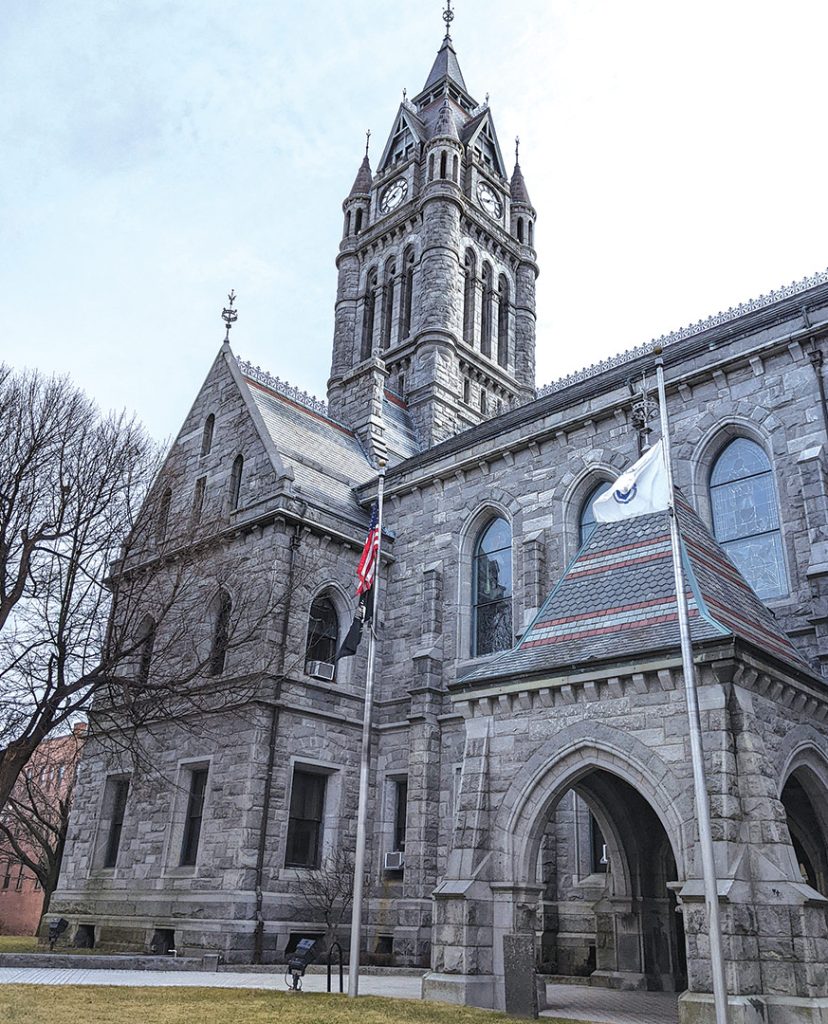
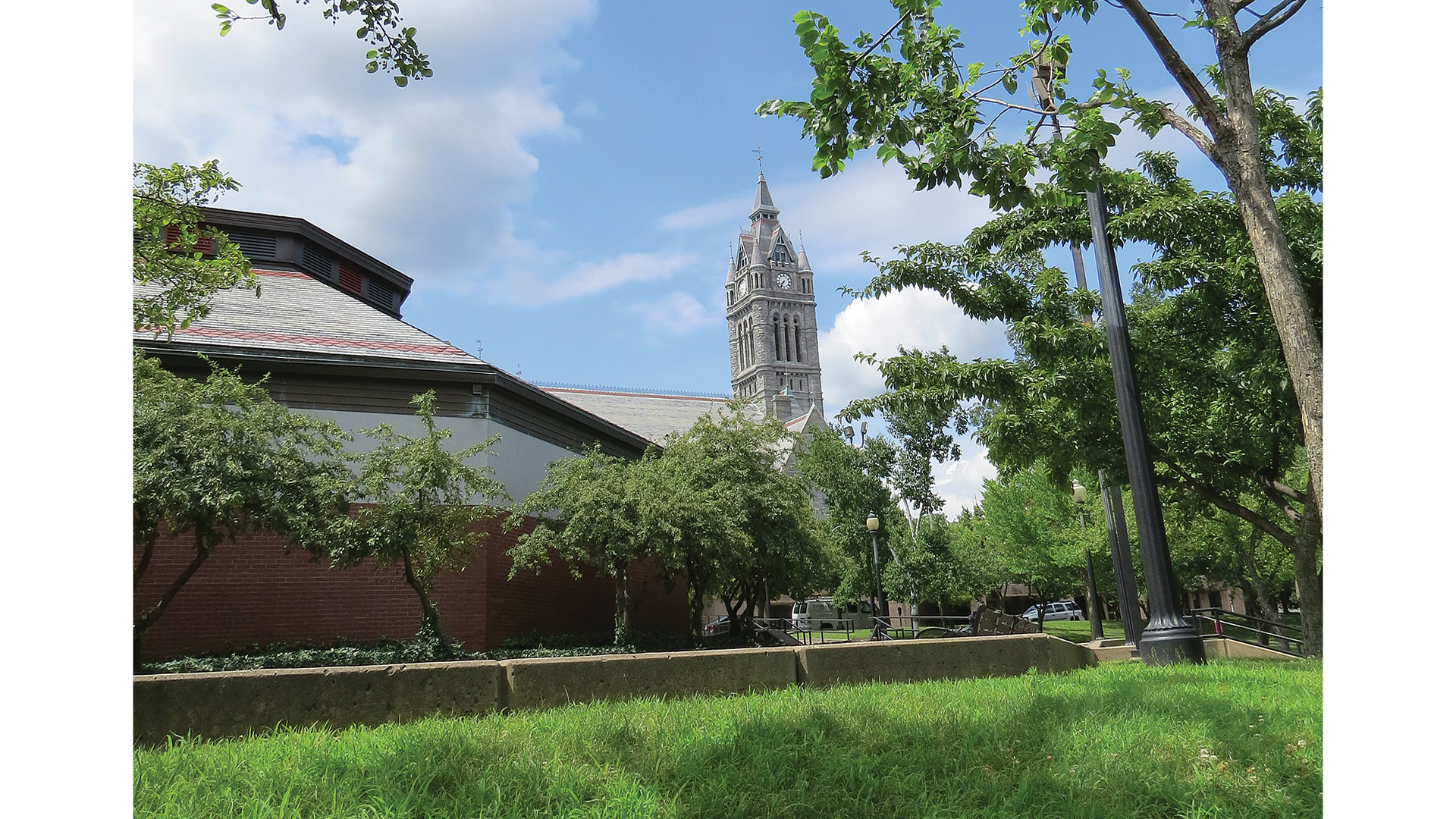
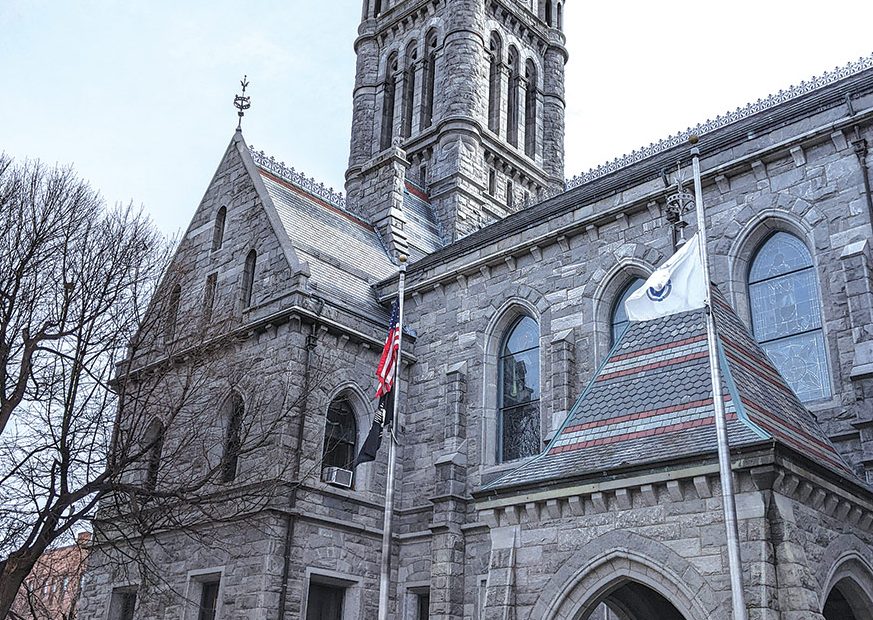
Holyoke City Hall

Go just about anywhere in the Paper City — City Hall offices, manufacturing facilities, the local utility, restaurants, some cannabis dispensaries, anywhere — and you will find pictures of what would be called ‘old Holyoke.’ And some images of the new Holyoke as well.

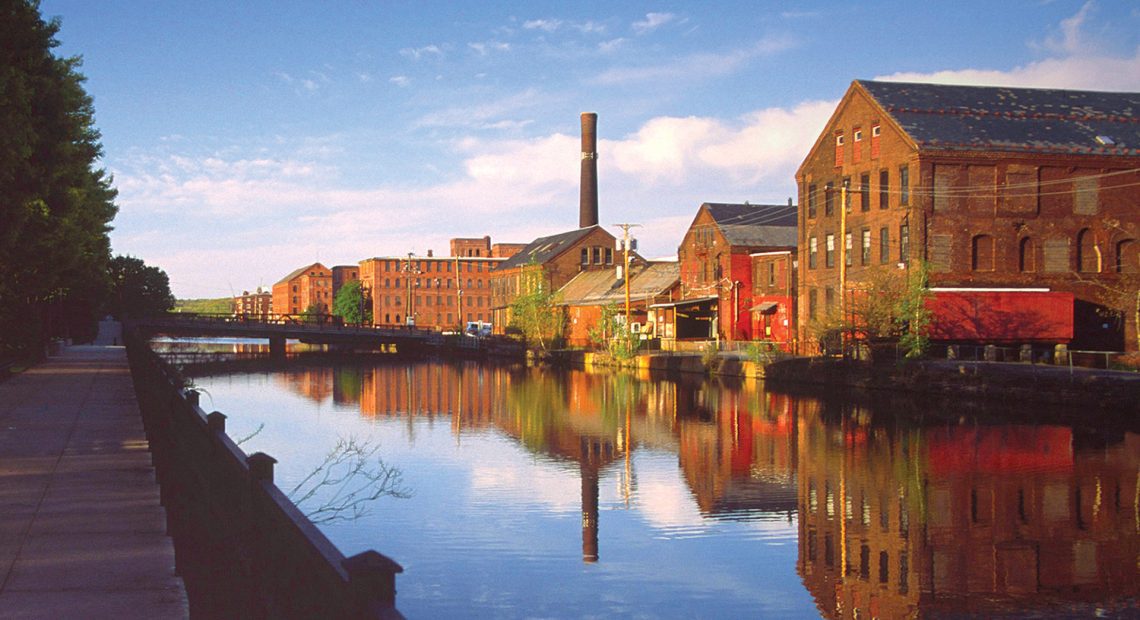
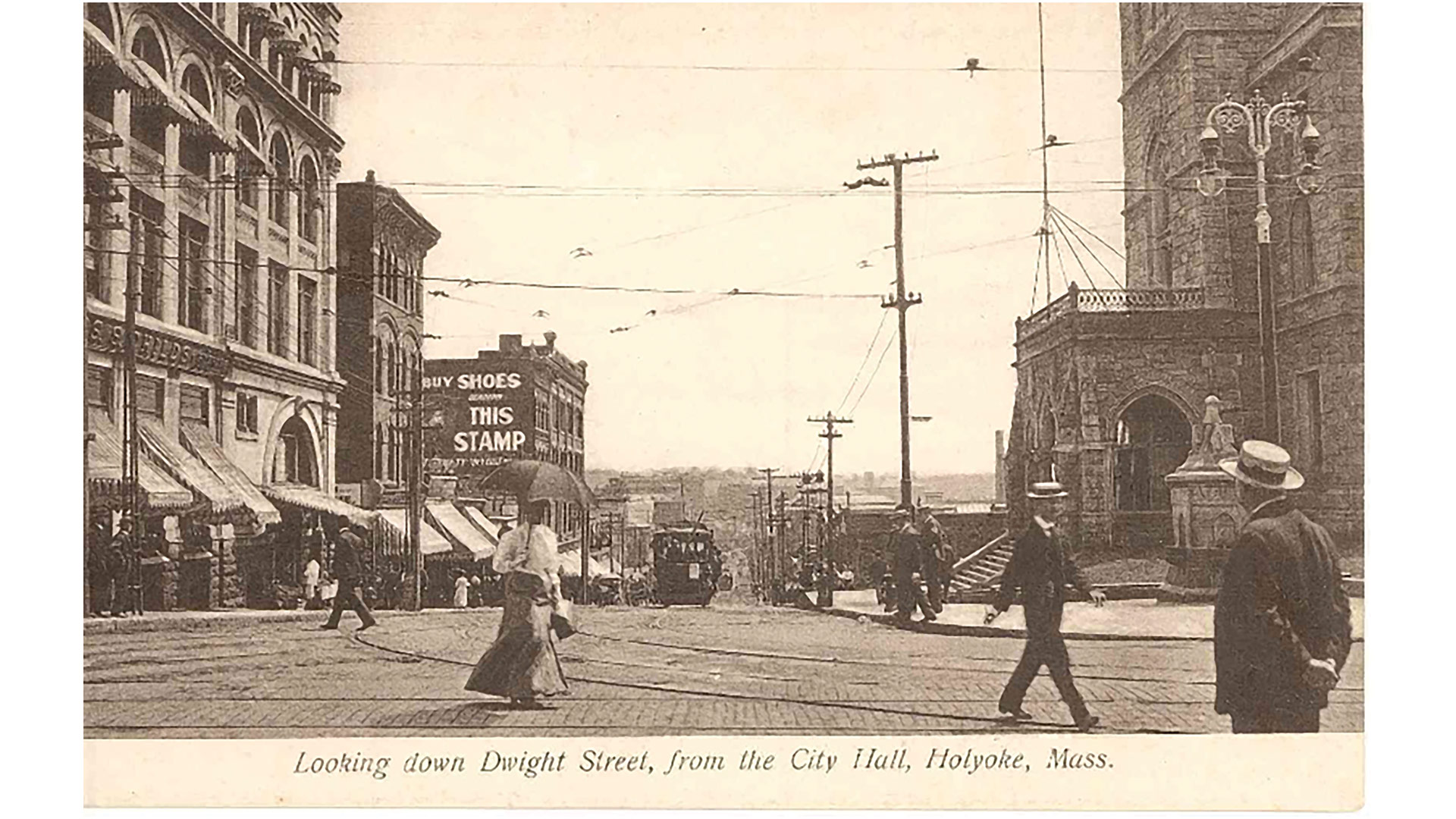
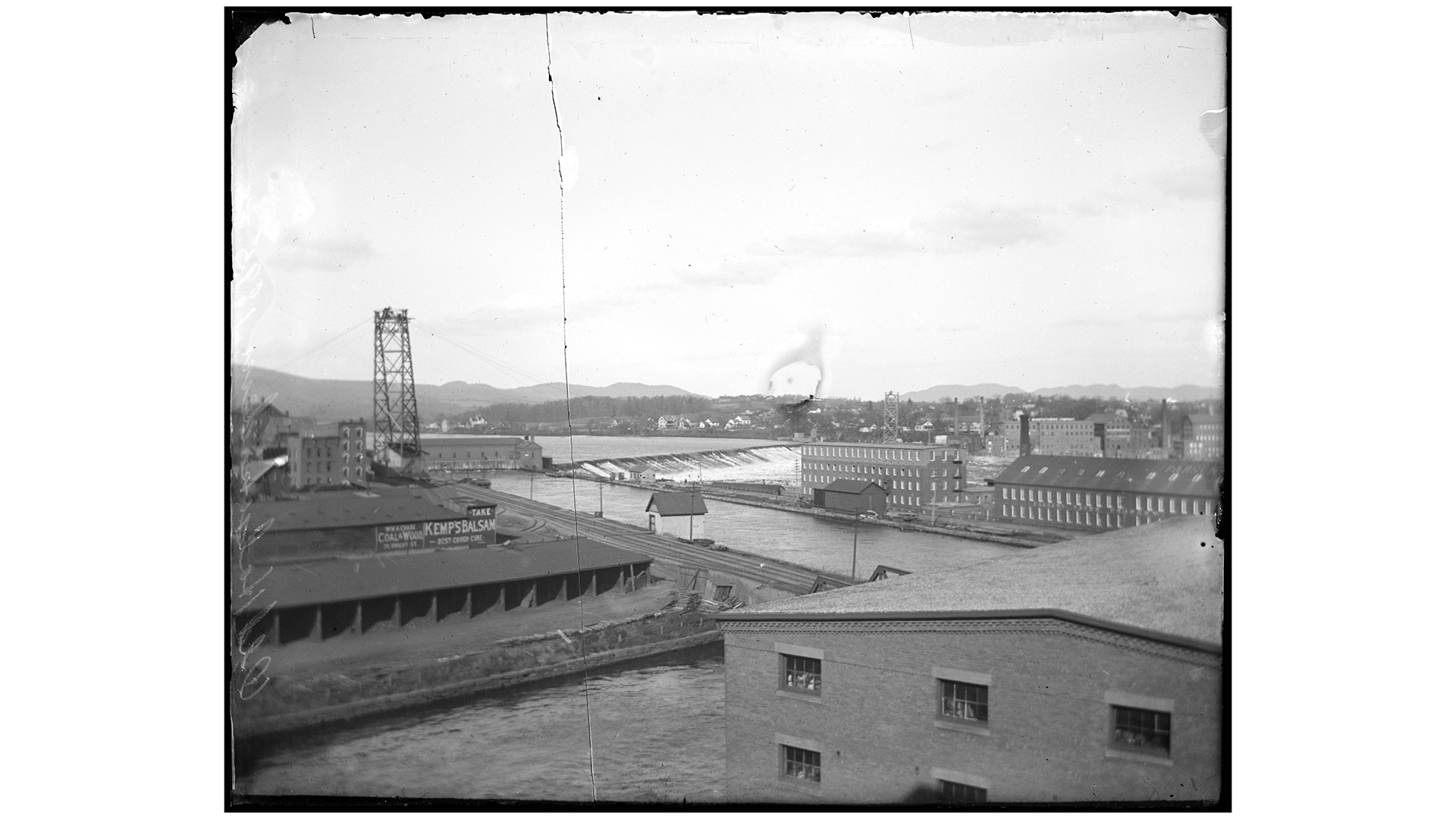
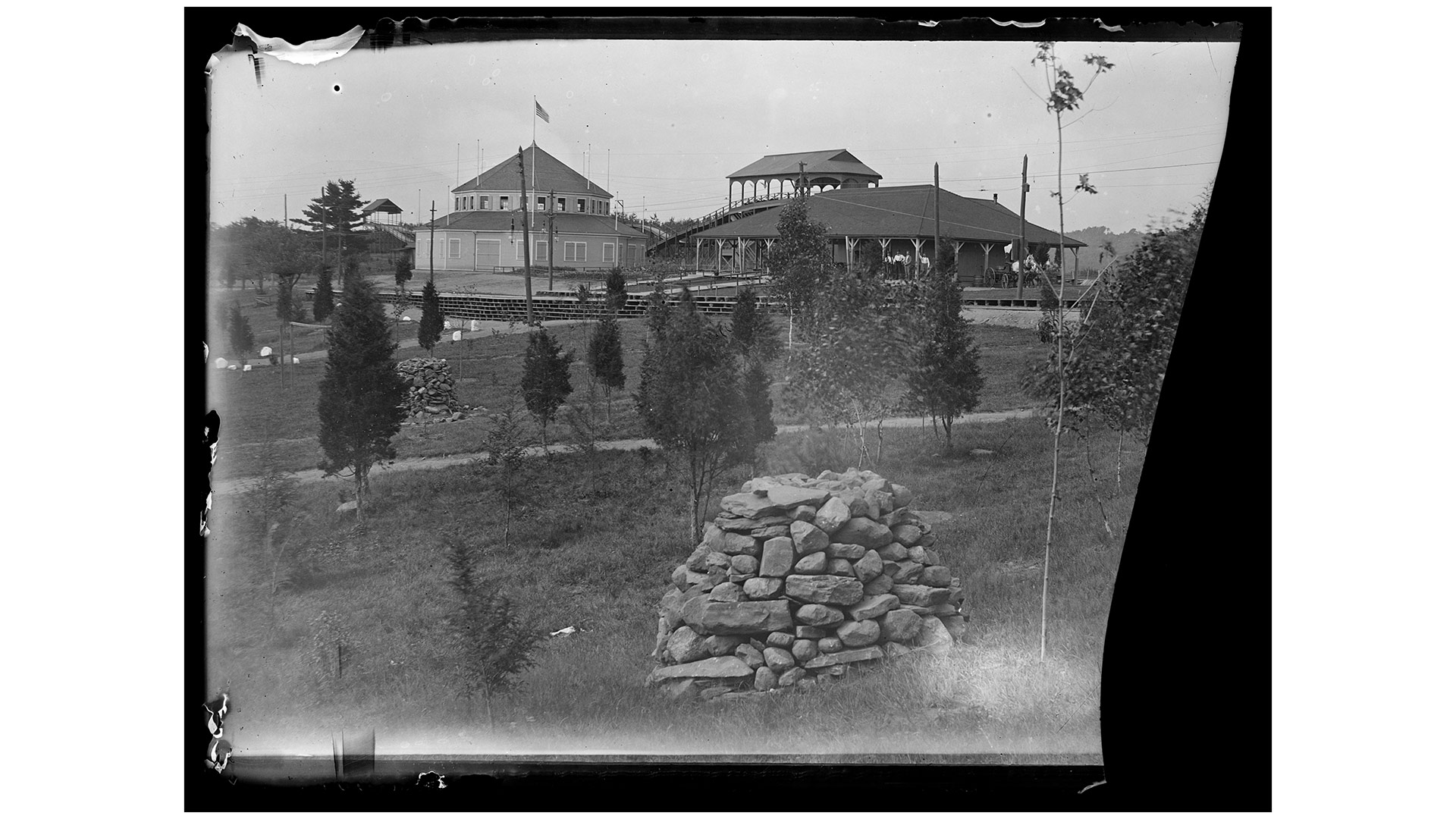
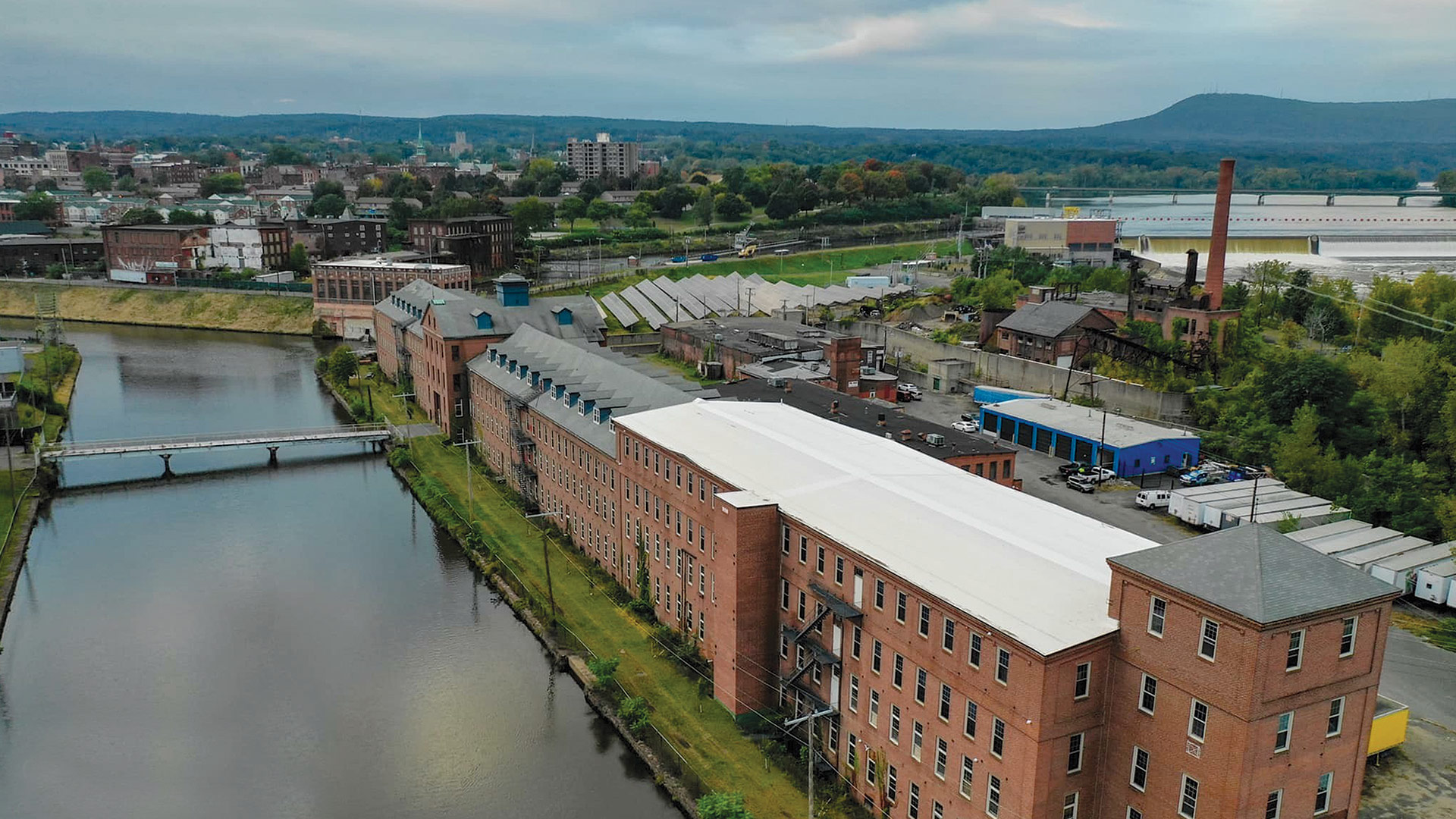
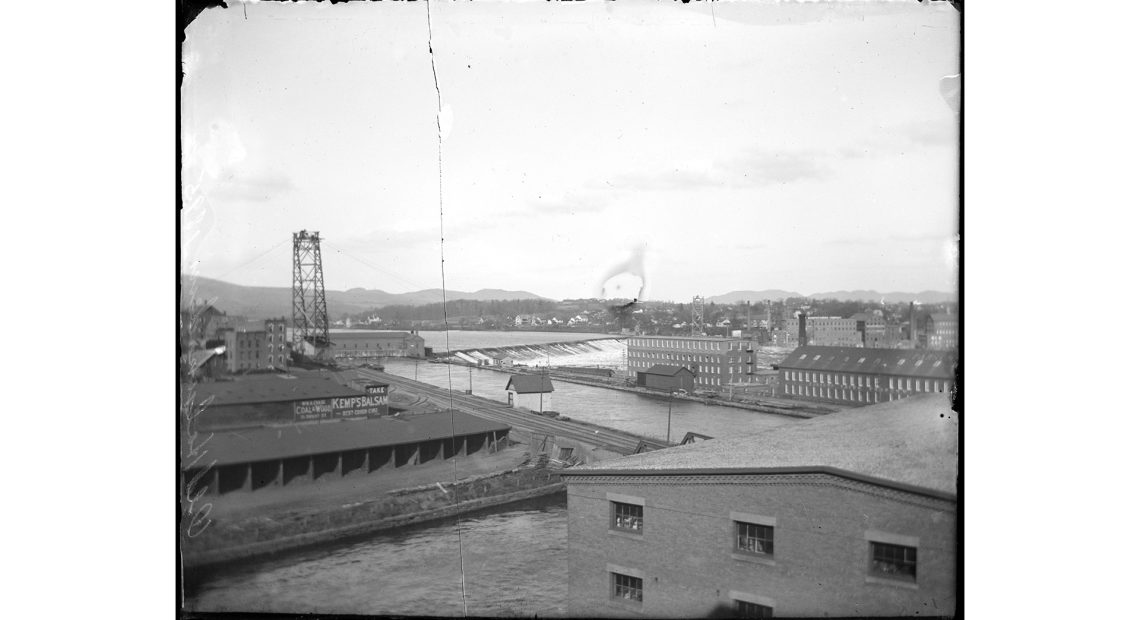
They’re everywhere. Pictures of the old but still-standing mills, the canals, Mount Tom, High Street in a different age, the Hadley Falls Dam, and especially City Hall, the iconic Gothic Revival structure built in 1871 that is, in many ways, the symbol of this historic city.

These pictures you see everywhere are visible evidence of the enormous pride people from this city, or now doing business in it, take in Holyoke.

You see this this pride in every community in Western Mass., from the small towns in Franklin County to the capital of the region, Springfield. But in Holyoke, it’s … well, different. And it just seems like there is more of it.

This much is made clear in the stories that follow in this special section commemorating the city’s 150th birthday. People from Holyoke take a special pride in being from their city, and for many reasons.

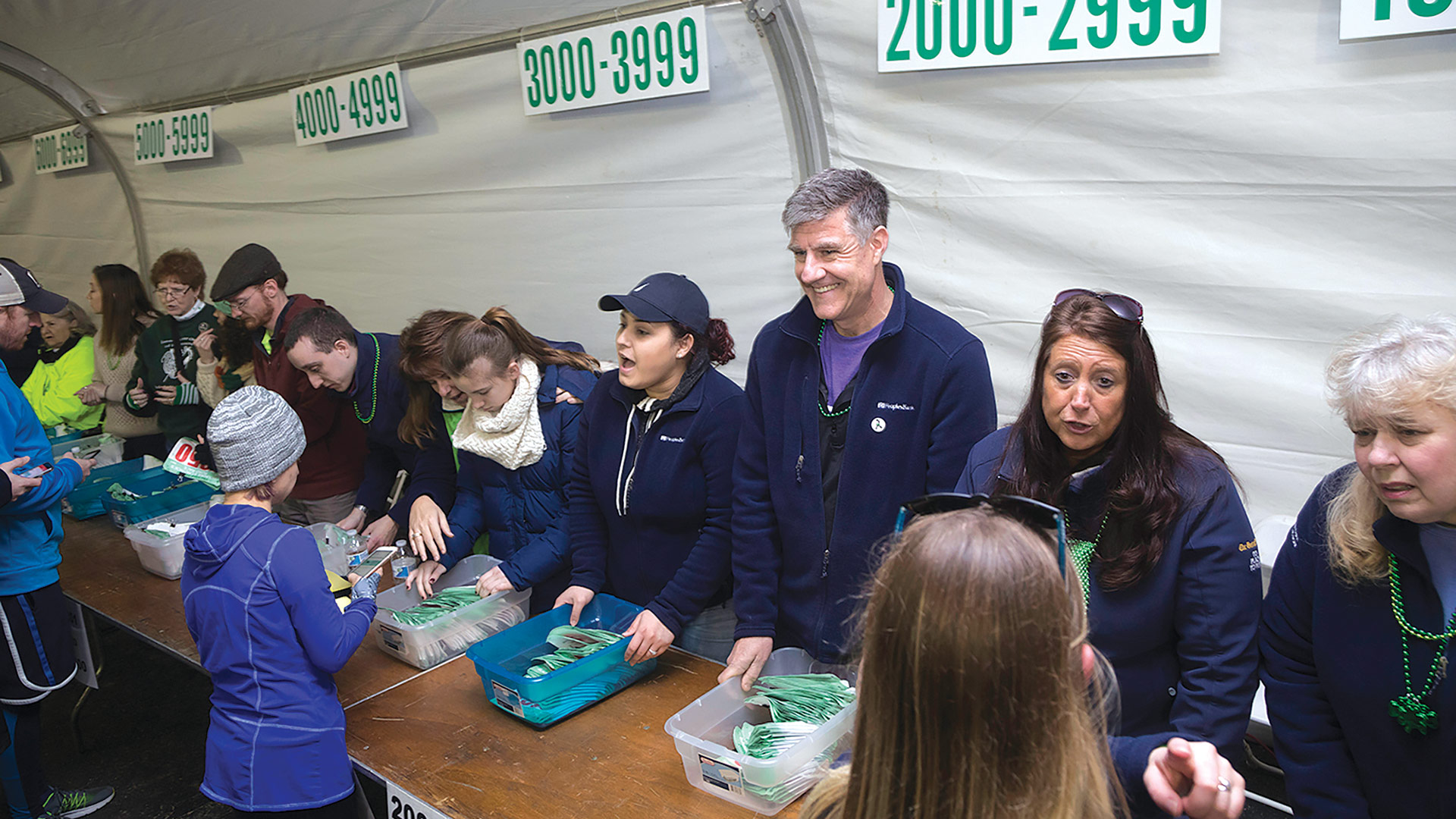
There is history — this is the country’s first planned industrial city. There is architecture. There are landmarks. There are institutions. There is tremendous diversity. There is the St. Patrick’s Day Parade and Road Race. Mostly, though, there are people — those who lived a century and more ago, and those who call it home today.

As the city turns 150, there is much to celebrate, and certainly not all of it is in the past, although the past is what many people like to focus on.

There was a time when Holyoke was a model industrial city producing some of the finest papers and textiles in the world. The mills producing these products created thousands of jobs, enormous wealth, and tremendous prosperity.

The city’s fortunes changed, obviously, as these mills closed or moved south or overseas starting just after World War II. For decades, the city was in decline, even as it remained a center of jobs and manufacturing.

Today, there is a sense of revitalization and vibrancy, with new leadership, especially Joshua Garcia, the city’s first Hispanic mayor, and an economy that is far more diverse and fueled by everything from a surging creative-arts sector to a cannabis industry that found in Holyoke a welcome mat, millions of square feet of old mill space perfect for cultivation and even dispensaries, and inexpensive, green energy.

Another factor powering this revitalization is entrepreneurship. Through the efforts of EforAll, the Greater Holyoke Chamber of Commerce, Holyoke Community College, and other agents of change, Holyoke residents, and especially those making up the minority majority, are creating new businesses, from restaurants to dance studios to fabric shops, that are changing the face of High Street — and the entire city.

These stories and many others are told in the pages that follow. Together, they tell of a city with momentum. A city with vision. A city with renewed optimism about what can be done when people work collaboratively. A city that has a lot to celebrate.


Holyoke. Wanna Make Something of It?

By Darby O’Brien


Unless you’re from Holyoke, you probably won’t get it.

We’re a little like Southie on the other side of the state. Hardscrabble Holyokers have grit and never quit. Holyoke is a city with soul. It’s a city of neighborhoods. Churchill, Elmwood, the Flats, the Highlands, Oakdale, and Springdale. As Liberty Bank President and Holyoker Dave Glidden says, “you can take the kid out of Holyoke, but you can’t take Holyoke out of the kid.”

Just look at the cast of characters that came out of this place. Start with the famous drummers. Hal Blaine, a Rock & Roll Hall of Famer, played with the legendary Wrecking Crew on 40 number-one hits, and Ronnie Hurst played in Steppenwolf. Holyokers Michael and John Shea wrote the Notre Dame fight song. We have Emmy-winning actress Ann Dowd. Alan Eisenstock was a writer and producer on shows like Mork and Mindy, Sanford and Son, and Family Matters. My nephew, Lenny Jacobson, is another one you’ve seen on the tube, from big-time TV spots to shows like Nurse Jackie, and he just won the 2023 JFK Award.

We’ve also got Neil Sheehan, the New York Times writer who released the Pentagon Papers and won a Pulitzer Prize for his book A Bright Shining Lie, considered to be one of the best books about the Vietnam War. Mitch Epstein is a world-renowned photographer. Frank Leja, who lived down the street from me as a kid, signed as a ‘bonus baby’ with the New York Yankees at 17. To this day, he’s the youngest player ever to appear in the pinstripes. The list goes on. Maybe it’s in the water. We’ve got four reservoirs. They’re all closed for fishing now, but we sneak in and cast a line anyway.

Another thing unique to Holyoke is the game of Pickie. We invented the game in the streets and alleys downtown. Just saw off your mother’s broom for a bat, and grab some Pee Gee balls, and you’re set. It’s always been a sports town. Betsy Frey carries on the family business at Holyoke Sporting Goods, probably one of the last independent sporting-goods stores left. Part of what keeps it going is the boatload of Holyoke merchandise she sells in the store, especially around parade time. You’ve heard about Holyoke’s St. Patrick’s Day parade, right? One of the biggest in the country.

The late “Made in Holyoke” rapper Justin Chavez said, “it’s a city full of pride and hope, a city that’s alive.” My old buddy John Hickey, who was the Water and Power chief, coined the slogan “Holyoke. Best City by a Dam Site.”

Damn right.


Darby O’Brien, a Holyoke native, is the owner of the marketing and public relations firm Darby O’Brien Advertising in South Hadley.

Features Special Coverage

Getting a Leg Up

Pedro Arroyo

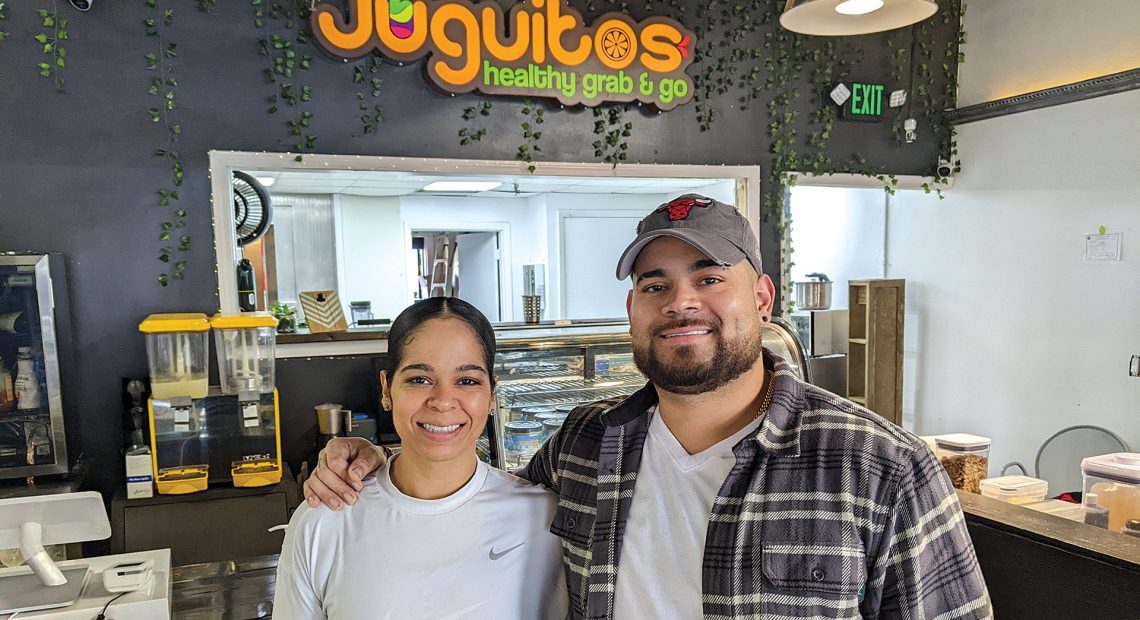
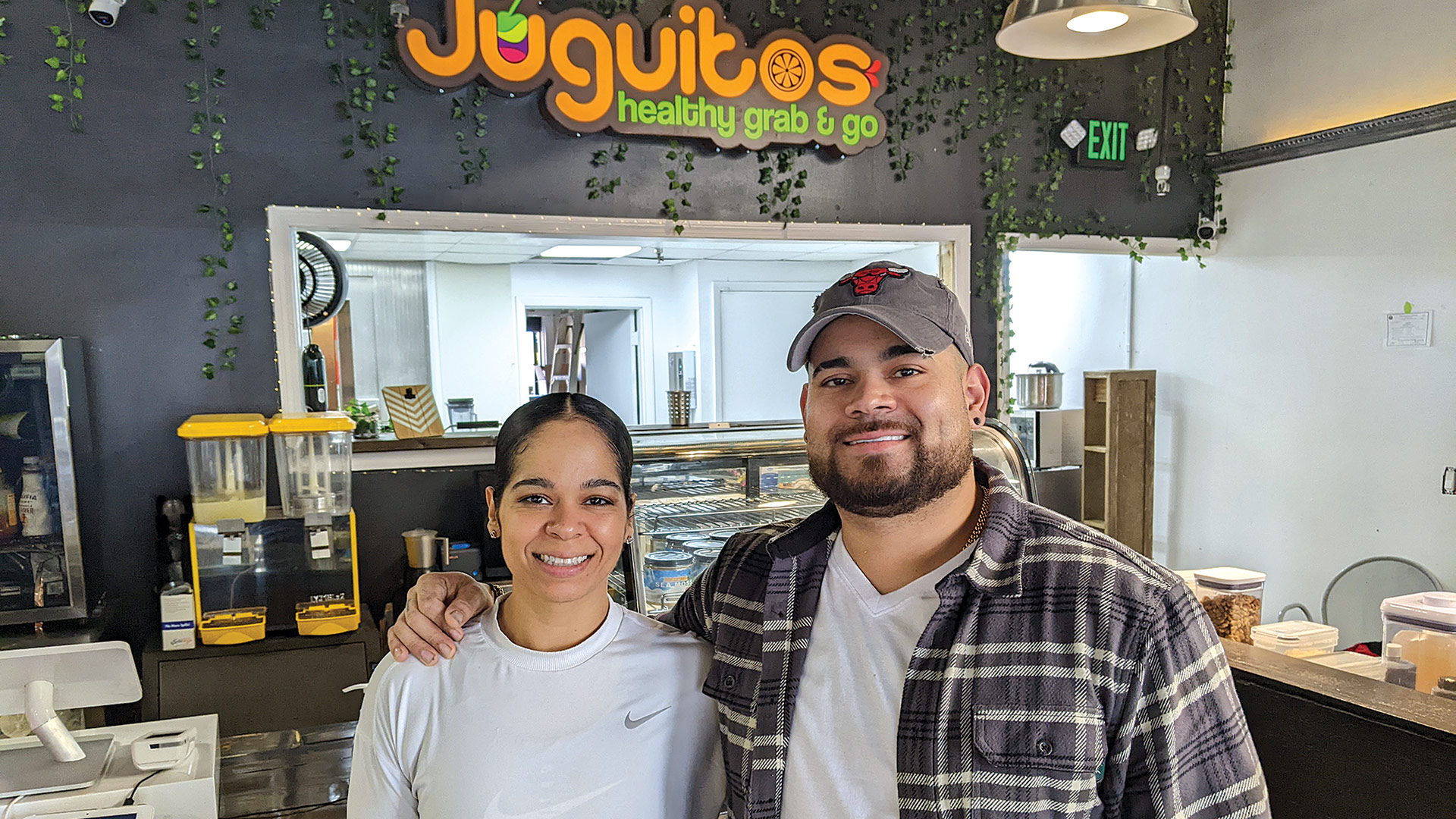
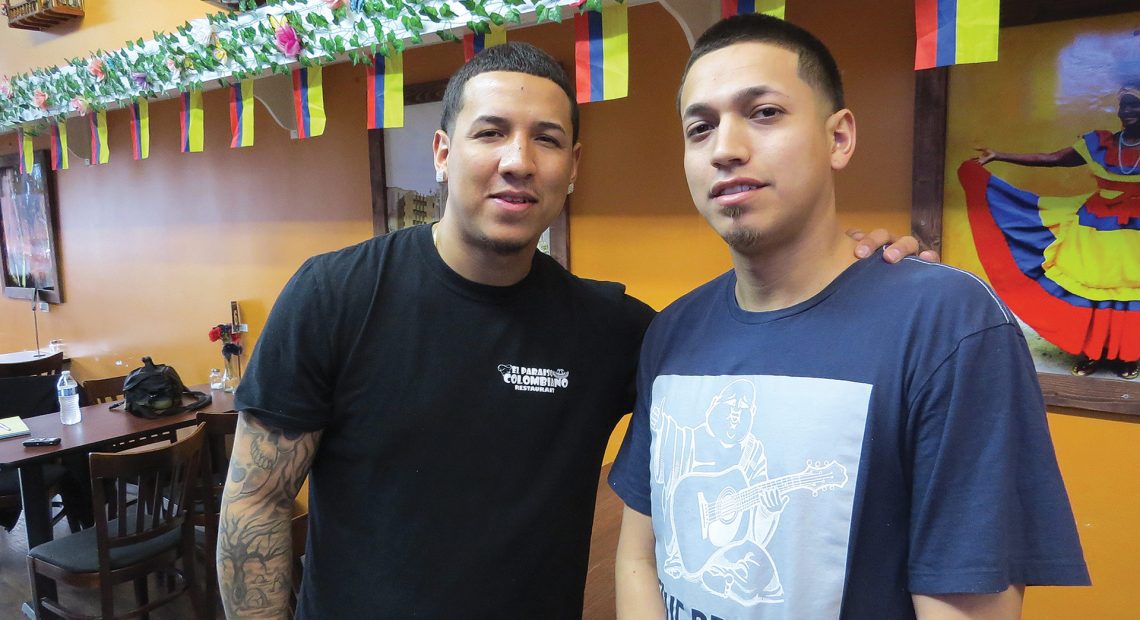
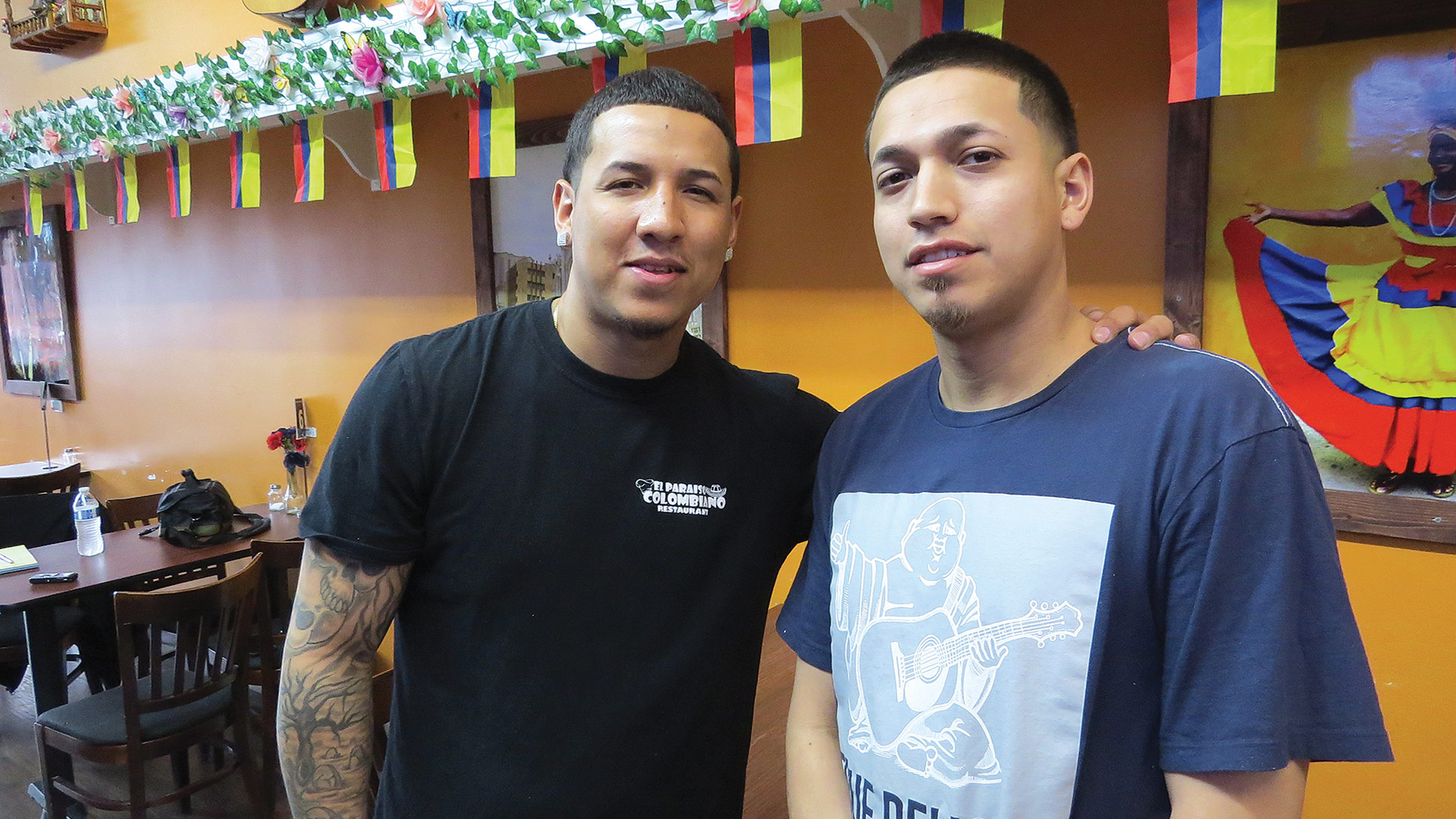
Pedro Arroyo says the LEDC mini-grant helped him and his sister, Elizabeth Arroyo, secure better signage for their business.


Tony Bermudez started his digital-media venture just before the pandemic hit.

And like just about everyone else who was in business at the time, he lost considerable momentum — and opportunities — when the state essentially shut itself down.

Indeed, his business has many components, but specially event video work, and for the first year or more of the pandemic … there were no events, or very few of them, anyway.

Bermudez, again, like many others, slogged his way through to the other side of COVID. But money has always been tight, and that’s why he considers himself fortunate to receive, and is very appreciate of, a mini-grant from the Latino Economic Development Corp. He is one of several to get one of the grants in a first round issued late last year, with another nine grants awarded in a second round just a month or so ago. Another round of grants will be awarded later in March.

‘Mini,’ in his case, means $1,100. But Bermudez was able to use it to secure software and some new equipment, specifically a lighting kit, that will help him take his business, Tony Digital Music & Media, to a higher level.

Beyond the small grant, though, Bermudez has been able to secure invaluable coaching from the LEDC, and through it he has been able to make important connections, including one with Mercy Medical Center that enabled him to secure work to create a video to help address the stigma attached to opioid addiction; work is expected to behind on that production soon.

Bermudez’s story is one of many that help bring to life the work going on at the LEDC, a new agency that BusinessWest profiled last year. Its mission, in simple terms, is to help employees become employers, said Andrew Melendez, director of Operations for the LEDC, and enable small businesses to take the next step.

It does this through a unique model focused on everything from these mini-grants to training programs offered by those coaches that will focus on everything from how to qualify for a business loan to workforce training to mental wellness, and much more.

“Capital infusions — putting money into the hands of small business owners — even if it’s only $1,000 or $2,000, can often make a huge impact, whether it’s a new business or even an existing business.”

As for the grants, they are indeed small, with amounts varying from $1,000 to $3,000 in the first few rounds. But small businesses just getting off the ground can use such funds to take important steps forward, Melendez said.

“Capital infusions — putting money into the hands of small business owners — even if it’s only $1,000 or $2,000, can often make a huge impact, whether it’s a new business or even an existing business,” he explained, adding that the grants are funded through $450,000 in overall support awarded to the LEDC by the state. “They can put that money to use in many different and important ways.”

Such was the case with Pedro Arroyo, who used his $2,500 grant to secure new and better signage for his business, Juguitos Healthy Grab & Go, at its new home on State Street in Springfield.

Arroyo and his sister, Elizabeth, saw a unmet need in Springfield for a place where people could get healthy foods in a hurry and moved forward to meet it, despite the pandemic, which was descending on the area just as they were getting started.

Jason Vásquez

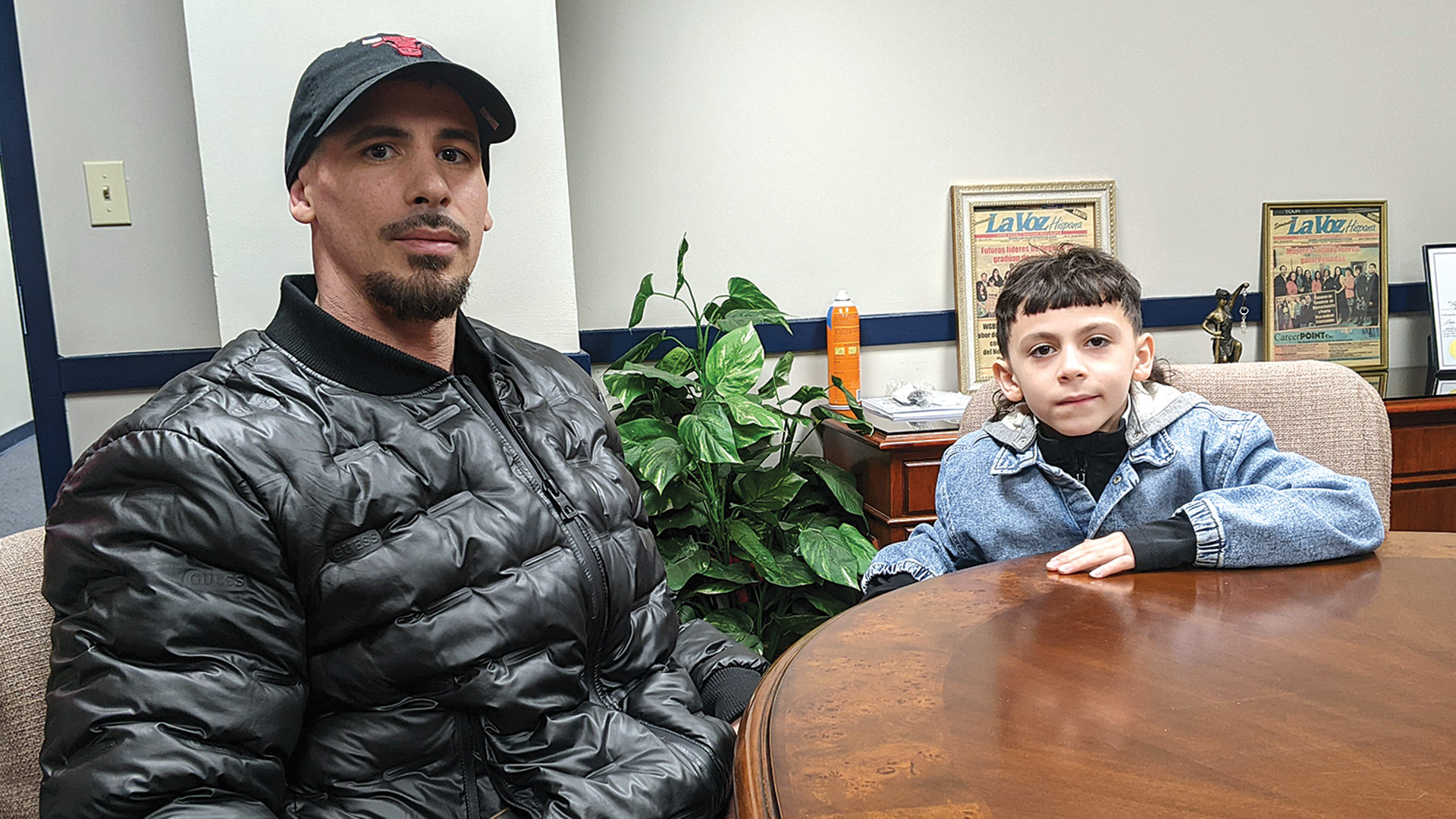
Jason Vásquez envisions his business growing and someday being run by his son, Nazareh.

“We saw an opportunity to provide something that wasn’t really available anywhere in the city,” he noted. “We came together, took a chance and said, ‘let’s try this.’

The stories behind these businesses, and people taking chances — and the grants they’ve obtained — help shed important light on the important work being done by the LEDC, and how it is changing the business landscape in all kinds of ways.


Progress Report

It’s called the unrestricted construction supervisor’s license.

Jason Vásquez, owner of Nas Small Repairs, which specializes in small construction projects and repairs to homes and businesses, needs one to take his venture, and his career, to the next level. And he’s using his $1,000 mini-grant to buy the code and regulations books and other materials to help him attain that license.

“I want to enable my small business to grow, and in the future, I’d like to have a program for young people and women to learn about construction and maybe move into the field,” he explained. “And to do that, I need this license and the right personnel behind me.”

Vasquez’s use of his mini-grant is exemplary of the many ways they are being put to use and how important they are to small businesses who need them to gain some momentum with whatever might be written into their business plan.

And the names on the businesses that have received such grants in the most recent round show just how varied these business plans are. That list includes Faded Barber Lounge, Thomas’ Cleaning, 50-50 Food Truck, Agudelo Apiary, Burgos & Son Trucking LLC, and Top-Flight Nutrition.

It also includes Juguitos Healthy Grab & Go, a name that tells you all you need to know (or almost all you need to know), and a venture inspired by personal need.

As Arroyo tells the story, he and his sister, Elizabeth, were both looking to shed some weight and “take back their health,” as he put it, starting with their respective diets.

“It was difficult because I was a videographer, and I was on the road all the time — I didn’t have the time to make prepared meals, and would eat out a lot,” he went on, adding that he and Elizabeth set out to address their own needs, and those of countless others, by creating a business focused on smoothies, juices, soups, sandwiches, and other healthy offerings that, as the sign says, people can grab and go.

The venture started off at 112 State St., a small location that was hindered further by a lack of parking, Pedro said, adding that the business was nonetheless able to thrive at that location, and thanks to $75,000 in ARPA funding secured from the city, he and Elizabeth were able to move into needed larger quarters just up the road, at 133 State St.

The LEDC has provided assistance at many critical junctures, he said, including direction on how to secure ARPA funding from the city of Springfield.

This work in progress is just one of many that the LEDC has become involved with, through technical assistance and coaching, a mini-grant, or both. And it’s just one example of how this agency is trying to change Main Street, or State Street, in this case, by helping more people get into business and put their signs on buildings.

Bermudez isn’t there yet, but he’s moving in the right direction, thanks to many different kinds of support from the LEDC.

As noted earlier, he received a grant that he used to buy equipment that made an immediate impact on his venture, which specializes in video promotion, business presentations and advertising, animation, event photography, and more.

“We saw an opportunity to provide something that wasn’t really available anywhere in the city. We came together, took a chance and said, ‘let’s try this.”

But it has been the coaching, and the connections the LEDC has helped him make, that have been even more impactful, he went on, citing not only the Mercy project, but also a contract in Holyoke to teach video production to young people as just a few examples of how the LEDC has been able to help him seize opportunities.

“They have a great team there, and a forward-looking attitude to help Latino small businesses,” he said, adding that that are dozens of coaches, each with a specific niche, that can help individuals like himself not only create a business plan, but execute it.

Gilberto Amador

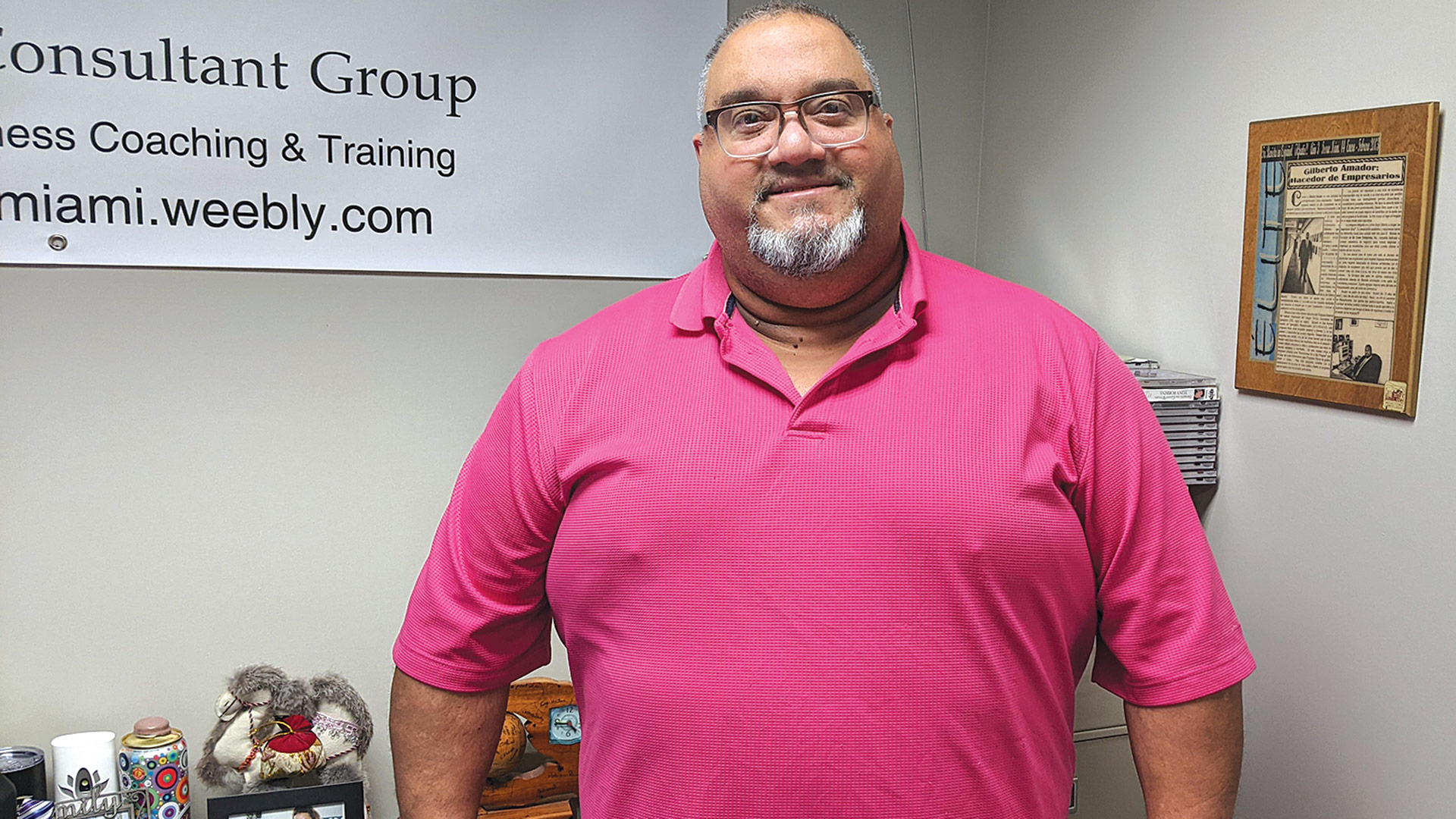
Gilberto Amador finds it rewarding to coach small-business owners to greater success.

Gilberto Amador, president and CEO of the Mass 2 Miami Consulting Group, is one of those coaches. He told BusinessWest he and other coaches at the LEDC act as a support network for new and emerging businesses.

He said the process starts with an hour-long meeting at which a game plan is developed for creating momentum and forward progress.

“They leave that meeting knowing what we need to work on,” Amador said, stressing the ‘we’ part of that equation, while emphasizing that the business owner needs to take ownership of the next steps and is held accountable for staying on the set course. “Maybe it’s a business plan, because many people are working on their business but they don’t have a business plan, or it could be marketing … whatever needs to be worked on.

“Sometimes it’s cash flow,” he went on. “You talk to them about cash flow and how their business functions, how they have to pay themselves from their business finances of their business, how to separate business from personal … these are things that a lot of business owners are not aware of or they haven’t been doing, and it’s very important for us to shed some light on these kinds of things so that these become more productive, and successful, businesses in our community.”


Bright Ideas

Amador described this work as very rewarding, especially as he sees small-business owners, such as Bermudez, Vasquez, and the Arroyos, take important steps forward and put their ventures on more solid footing.

“Part of being a business coach is really seeing the success of some of the businesses that are coming in,” he said. “They work so hard every day to do what they have to do … and we help them articulate what it is that they want to do and lay out the steps to get there. That’s where the rubber meets the road, and I love working with them because you get to see those lightbulbs go on.”

Turning on more of these lightbulbs is the unofficial mission at the LEDC, which has been busy handing out grants in recent weeks and will continue to do through the course of the year.

But that’s just part of the story. The other, much bigger part is helping these individuals get on a path to success, and stay on that path.

Law Special Coverage

Change at the Top

Jeff Fialky

Jeff Fialky

It’s called Service at the Pleasure of My Partners: Advice to the New Firm Leader.

And as that title might suggest, this book by Patrick McKenna and Brian Burke is intended for those lawyers who have, or soon will have, the title ‘managing partner’ affixed to their business card.

Jeff Fialky, a partner at Springfield-based Bacon Wilson, bought a copy of the book, which presents content built around real-life issues and questions, several weeks ago, after initial talks with Ken Albano, longtime managing partner at the firm, about passing the torch.

He said he’s read it, marked several passages, and dog-eared several of the pages, an exercise he described as just part of the transition process at the firm, one that should be completed by the spring.

“It’s a good resource to hear from other managing shareholders about coping with some of their challenges — what they encountered and what they had to overcome,” he said of the book.

As he takes the helm at Bacon Wilson, Fialky said he believes the firm is well-positioned for the future. It has what all firms this size — roughly 40 lawyers — are looking for in a solid mix of young lawyers, those at the mid-career stage, and several older, veteran lawyers. It also has an established presence in the region through its main office in Springfield and smaller locations in Westfield, Amherst, Northampton, and Hadley.

“The firm is in a phenomenal place,” he said. “We’ve been here for 135 years, and we have a solid foundation for the firm to succeed well on into the future — for another 135 years.”

There are challenges, though, especially when it comes to hiring young lawyers and maintaining that mix of talent. Indeed, there are fewer people graduating from law schools, and the competition for those who do is considerable and becoming more intense with each passing year.

“I felt the time was right for some new leadership, some younger leadership. Jeff is respected by everyone in the firm, and he’s the one that take the firm to the next level.”

“We’ve had significant challenges in retaining and identifying new talent,” he said. “The past few years have been really difficult to find people; it’s been very competitive, with all forms of employees, be it staff members, legal secretaries, administrative assistants, and lawyers. It’s all about supply and demand.”

Fialky said he is looking forward to leading the firm through these intriguing times and continuing a pattern of strong leadership that has enabled Bacon Wilson to continue to grow and expand its presence over the past few decades.

“I’m really excited for the opportunity,” he said. “My first reaction was just humility and comprehending the enormity of the responsibility and feeling really honored and humbled by it. When I came back to Springfield to Bacon Wilson, I was a mid-career transfer; I’d been practicing for a number of years at that point. I was so fortunate to be given an opportunity to start a career, and to think that, all these years later, I’d be in this position is something I would never have contemplated.

“But now that I’m here, I’m really appreciative for the level of responsibility that’s been given to me by my partners and my colleagues,” he went on. “And it’s something I take very seriously, but also with great energy and enthusiasm; I’m really excited.”

For this issue and its focus on law, BusinessWest talked at length with Fialky about his new role and what comes next for one of the most venerable firms in the region.


Firm Resolve

As he talked about his practice and large case load, his work in the community, the additional burdens that come with managing partner, and how he will manage it all, Fialky summoned that time-honored axiom ‘if you want to get something done, ask a busy person, and they’ll get it done.’

He has certainly been busy in recent years as chair of the firm’s corporate and commercial department, and also a member of the municipal department. He has also been involved in the firm’s governance and was one of the founders of its executive committee.

Overall, he specializes in sophisticated business, financing, and commercial real-estate transactions, representing the interests of business owners and lending institutions, as well as municipalities and landowners.

A BusinessWest Forty Under 40 honoree in 2008 and consistent finalist for the Alumni Achievement Award established several years later, Fialky joined Bacon Wilson in 2006 after nearly a decade in Eastern Mass., where he held senior attorney positions with some of the country’s most prominent Fortune 100 telecommunications and cable-TV companies. Prior to that, he served as an assistant district attorney in Hampden County after earning juris doctor at Western New England School of Law in 1994.

Albano told BusinessWest that, after six years as managing partner, including the three long and very challenging years defined by the pandemic, he felt it was time for a change at the helm. And he considers Fialky to be a logical and well-qualified successor.

“I felt the time was right for some new leadership, some younger leadership,” he explained. “Jeff is respected by everyone in the firm, and he’s the one that will take the firm to the next level.”

Fialky acknowledged that he takes the helm at an intriguing and challenging time for law firms, which are coping with everything from a difficult hiring market to transitioning to new ways of doing work in the wake of the pandemic, to new technology that tempts consumers to find their legal answers online instead of from a trained attorney.

“Technology, as it pertains to the law, is really interesting and difficult to predict,” he noted. “The legal industry is a trailing indicator of technology; we’re never at the forefront of innovation. The next big question is what happens with artificial intelligence down the road. There’s been quite a bit of recent press of artificial intelligence and service professions like the law and accounting. What’s so interesting about the law is that technology is a platform to accomplish the outcome, and how personal the law is relative to an attorney-client relationship.

“With so many of our clients … while they can pick up the phone, while we can Zoom from 15 miles away, they want to come in, they want to sit down, and they want to talk to their attorney,” he went on. “These are relationships that last decades, throughout people’s lives … you can’t replace that with technology.”

When asked about the management style he will take as he addresses these and other issues, Fialky said it will be one grounded in collaboration.

“That’s how I’ve engaged in our commercial department, where we ask for many opinions before we make a decision,” he explained. “But then, when decisions need to be made, we make a decision and stand by it. That’s how I intend to manage.”


Case in Point

Getting back to that book he’s been reading, Fialky said it’s a collection of thoughts from managing partners on subjects ranging from following a successful leader to keeping up morale when a firm is under duress; from creating performance standards to managing one’s time.

Soon, he won’t be reading about such matters, but coping with them in real time.

It’s a challenge he’s looking forward to, one he’s spent a career preparing for, and he knows he will take it on not by himself, but in collaboration with others.

Special Coverage Workforce Development

Fired Up

By Elizabeth Sears


Betsy Allen-Manning

Betsy Allen-Manning

Tunde Oyeneyin

Tunde Oyeneyin

Robin Roberts

Robin Roberts

The Women’s Leadership Conference is turning up the heat this year.

When Bay Path University’s signature annual conference returns to the MassMutual Center on Thursday, April 6, the theme will be “Ignite” — an extension of last year’s theme of “Reimagine.” The goal, simply put, is to ignite the post-pandemic professional plans of conference attendees and help turn them into reality.

“Last year, it felt important to bring the community back together to reimagine what may come next that may have shifted over COVID and from being away from the office place,” said Melissa Welch, Communications and Content director at Bay Path and co-chair of this year’s Women’s Leadership Conference (WLC). “That went so beautifully last year, with people in the community coming together to reimagine what came next for them. So this year, how do we build on that? How do we bring that same excitement and motivation back to the community?”

Bay Path President Sandra Doran echoed this sentiment.

“We want them to reignite their passion,” she said. “They’re professional women looking to further their career, looking to further their own professional journey, whether it’s in their existing career or looking outside of that. And this is the place to do it.”

The university’s 26th annual conference will feature TV host Robin Roberts and several other speakers (more on them later). The conference typically draws attendees not only from the Pioneer Valley, but from Eastern Mass., Connecticut, New York — anywhere within driving distance, due to the power of the speakers and the power of community.

“This is a new group, a new community … they’ve got their work community, they’ve got their family community, but now maybe they have a professional-development community. That is incredibly powerful,” Doran said. “If you are a mid-level manager or somebody who’s looking to executive leadership, or somebody who’s just entering into your career, and you’re trying to figure out, ‘what are those skills? What are those attitudes? What’s that growth mindset that is going to propel me to success in the workforce?’ Those are the professionals that you will find in the audience.”

“It’s very much experiential. Some people describe it as transformative. Some people describe it as the only conference they go to in any year because of the value that it brings to them personally as well as professionally. “

She explained that people keep coming back year after year because they’ve experienced growth, and they want to share that growth with others in the room. The conference provides a unique environment — a sort of support system — where professionals can share how they’ve grown in their career, and what comes next on that journey.

And this isn’t a conference where people just come and sit in rows to listen to speakers, Doran continued.

“It’s very much experiential. Some people describe it as transformative. Some people describe it as the only conference they go to in any year because of the value that it brings to them personally as well as professionally. I can’t emphasize enough how this is not a conference where we’ve just got 1,400 chairs lined up in a room. It is not that — everybody sits at a table. Every table is a conversation topic around something to do with personal or professional growth.”


Face Value

This is the second year WLC has returned since a two-year absence during the pandemic. With such a deep focus on the experiential quality of the conference, a virtual alternative was simply not an option, so no conference at all was held in 2020 or 2021.

“I think what was telling in the pandemic is a lot of things stopped, so in our case, our conference stopped for two years — and to come back last year and have 1,400 people come … people missed it so much over those two years,” said Karen Woods, Bay Path’s assistant vice president of Brand Strategy, Marketing, and Integrated Communications and WLC co-chair.

In addition to individuals who buy tickets to attend, Woods noted that companies call in inquiring about the upcoming conference far in advance. Businesses eagerly await to hear who the speakers each year will be and buy tables for their employees, knowing the professional-development value the conference holds.

Sandra Doran emphasizes the interactive nature of the conference, which is not a place to sit in rows and just listen.

Sandra Doran emphasizes the interactive nature of the conference, which is not a place to sit in rows and just listen.

Indeed, this year’s keynote speakers come from vastly different backgrounds and careers, but share something in common: the ability to ignite motivation in others.

The conference will begin with a motivational and humorous talk from author and speaker Betsy Allen-Manning that will guide attendees through exercises that aim to set the tone of the conference and ignite a day of learning. The founder of Corporate Culture Training Solutions, a leadership-training company, she specializes in creating positive employee experiences as well as developing leaders who are equipped to handle a hyper-competitive marketplace.

“Success doesn’t necessarily mean the top person in the company,” Woods said of the first keynote session. “Every single one of us needs that secret sauce to our own success, and how do we get there?”

The luncheon keynote talk will be given by Tunde Oyeneyin, a cycling and bike boot-camp instructor from Peloton who has become known for her empowering and motivational cycling sessions.

Oyeneyin was a professional makeup artist for 15 years, but after lifting the confidence of her clients through her beauty skills for so long, she realized that her true calling was in motivating others. She became a cycling instructor in Los Angeles and ended up being hired onto Peloton’s instructor team. She trains up to 20,000 riders per day through her live motivational classes. Now, she’s taking to the WLC stage to spark the energy of attendees and bring forward their inner passions.

“When you’re going to ignite new business plans, and you’re going to bring those forward, whether it’s personal or professional goals, you really need to have that ability to trust your gut — to find your voice, to be able to advocate for what’s next in your career,” Woods said.

The day will end with a keynote talk from Roberts, well-known as a Good Morning America co-anchor, Emmy Award and People’s Choice Award winner, author, entrepreneur, and Women’s Basketball Hall of Fame inductee, among other achievements. She’s going from the screen to the stage for a moderated Q&A session with Doran.

“We are so excited to introduce Robin Roberts to our WLC audience,” Woods said. “Everything she has done has been a way to ignite what’s next. From the court, when she played basketball, through all of her interviews, those that she’s spoken with and worked with over the years, to writing books — award winners — she’s the perfect person to end our day.”


Breaking Out

The conference will also feature four breakout sessions offering lessons and activities designed to give attendees valuable takeaways that can be applied to their professional lives.

Session A, titled “Forging and Managing the Hybrid Workspace” and led by Alexandra Samuel, will address how attendees can better navigate the hybrid workspace culture that emerged post-COVID. Samuel is an author and digital-workplace expert who seeks to help her audience solve the puzzle of balancing in-person and remote work in hopes of making the now-popular hybrid format a more viable piece of their workday.

Session B is called “Igniting Your Innovation and Understanding Your Onlyness” and will be presented by author and speaker Nilofer Merchant. She will discuss the concept of ‘onlyness’ — identifying what you alone bring to the table that somebody else can’t, what makes you stand out in the workplace, and how to find power in this self-knowledge. Merchant will help attendees discover their ‘onlyness’ and teach them how to socialize it to create real change.

Session C is titled “You’ve Got the Seat at the Table, Now What?” and will be led by Pirie Jones Grossman, a TedX speaker, author, and life-empowerment coach. She will offer an extension to the common conversation of how to reach corporate positions as a woman — and what to do once there. Sharing her research, she will challenge the idea that successful women in the corporate world need to show up like men, instead offering information on the unique leadership instincts and strengths of women’s brains.

Session D is called “The Power of Inclusive Leadership,” and will be led by Juliet Hall, an advisor, leadership consultant, speaker, and author. Objectives of this session include how workplaces can transform their leadership teams to build a strong foundation and promote equity, how workplaces can adjust their internal work teams to create a more inclusive environment for their employees, understanding unconscious bias and microaggressions, and how leaders can remodel internal culture.

For more information on the 2023 Women’s Leadership Conference, visit www.baypath.edu/events-calendar/womens-leadership-conference.

Health Care Special Coverage

Critical Condition


An “inflection point.” 

That’s what Dr. Robert Roose says hospitals have reached when it comes to their bottom lines and the ongoing challenge of making ends meet at a time when revenues continue to fall and expenses continue to rise. 

Hospitals have perpetually struggled from a fiscal standpoint amid continually rising prices, the need to constantly upgrade technology and innovate, and reimbursement rates from payers that have historically been below 80 cents on the dollar, Roose said. But trends and conditions that existed before the pandemic have only been exacerbated over the past three years, and now, hospitals are at a critical, and extremely challenging, crossroads. 

“There’s no way to sugarcoat it — hospitals and health systems across Massachusetts, and across the majority of the country, are finding themselves struggling in many regards, and at an inflection point where there are going to need to be continued efforts to support hospitals, or there will continue to be systems and hospitals that remain in distress,” said Roose, chief administrative officer at Mercy Medical Center in Springfield, part of Trinity Health Of New England. 

He quantified the situation by noting that Mercy is on a path to lose roughly $25 million for the fiscal year that will end in June, about the same amount as last year. 

“There’s no way to sugarcoat it — hospitals and health systems across Massachusetts, and across the majority of the country, are finding themselves struggling in many regards, and at an inflection point where there are going to need to be continued efforts to support hospitals, or there will continue to be systems and hospitals that remain in distress.”

Dr. Robert Roose

Dr. Robert Roose

“It will be challenging to persist with the current models that are in place in the same ways that we have in the past,” Roose went on. There are a multitude of reasons for that, but the challenges remain significant, and the pathways forward are going to require multiple initiatives and ongoing support from a variety of different angles. 

Dr. Lynette Watkins, president and CEO of Cooley Dickinson Hospital, an affiliate of Mass General Brigham, agreed, noting that COVID put the challenges that all hospitals are facing under a brighter spotlight. 

“The past three years have been particularly challenging,” she said, citing everything from staffing issues to the aging of the population and the pressures they put on hospitals. “What COVID laid bare is that all of these issues are there, and that it’s incumbent on us to be creative, accelerate the solutions, and leverage a lot of the tools that we were in many ways reticent to use, such as telehealth and virtual visits. 

“While this situation has challenged us, it has also provided us with an opportunity to think differently, to treat patients differently, to engage differently — with our patients and with the community,” Watkins went on, adding that she and her team at CDH are working to taking full advantage of that opportunity. 

Spiras Hatiras, president and CEO on Holyoke Medical Center (HMC), concurred. In remarks made to BusinessWest for its annual Economic Outlook, he spoke of both challenge and opportunity, on several fronts, but especially when it comes to workforce issues. 

The ongoing workforce crisis, while it has impacted all sectors, has put healthcare providers, and especially hospitals, at an extreme disadvantage, especially when it comes to nursing and the need to fill vacancies with contract or ‘travel’ nurses, which can cost two or three times what a staff nurse might, Hatiras noted. 

“In healthcare, there is a great deal of concern, and the most concerning part is the continuing shortage of personnel, which has created this market for temporary staffing at rates that are truly outrageous,” he said. “To put things in perspective, we have about 20 nurses on temporary staff that we get through agencies. Those 20 nurses, on an annual basis, cost us $5 million; each nurse costs us $250,000 because the rates are exorbitant — the nurses get a lot of money, but there’s also a middleman that makes untold amounts of money from this crisis. 

“As a nation, the federal government is doing a lot of things — they did some things with railroad workers, they’re helping Ukraine, they’re talking about a lot of things. They should have stepped in and regulated this and said, ‘the pandemic created a tremendous amount of shortage; we cannot allow private companies to go out and profit from that shortage of staffing and bring hospitals to their knees.’ With all this, it’s going to be very difficult for hospitals to cope, and that’s why all our strategy centers around finding a way to attract nurses here.” 

For this issue, BusinessWest takes an in-depth look at the fiscal challenges facing hospitals today, and what must happen for these institutions to weather this severe storm. 


Dollars and Sense 

When asked how hospitals arrived at this inflection point, as he called it, Roose said it was a combination of factors, but, as he and others noted earlier, it comes down to an exacerbation of, to borrow an industry term, some pre-existing conditions. 

These include a trend toward outpatient, rather than inpatient, care, which certainly impacts overall revenues, and also shortages on the workforce front, which increase the cost of doing business in many ways, and sharp rises in prices of … well, just about everything, from medications to PPE. 

“What COVID laid bare is that all of these issues are there, and that it’s incumbent on us to be creative, accelerate the solutions, and leverage a lot of the tools that we were in many ways reticent to use, such as telehealth and virtual visits.”

Dr. Lynette Watkins

Dr. Lynette Watkins

“We’ve been dealing with the aftershocks of one of the most significant public-health crises of our time,” Roose explained. “And it occurred at a point where many shifts in healthcare were already underway, including a shift from inpatient care toward the delivery of care in a lower-cost outpatient, ambulatory setting where the trends of consumers, our patients, were beginning to change, but where the reimbursement for those services had not been able to keep up with those changes. This was layered on top of an existing healthcare-workforce shortage. 

“So, the pandemic caused a significant challenge amidst what was already several headwinds that were providing stiff challenges for smaller hospitals across the country to overcome,” he went on, “forcing them to transform, to look differently, to meet those challenges and the needs of our community.” 

Elaborating, he turned the clock back to late 2019 for perspective. He said that there was already significant movement in how healthcare was being delivered. More services were being provided in settings outside hospitals, he explained, with surgeries taking place in outpatient, ambulatory settings. Meanwhile, insurance companies were adjusting as well, covering certain types of procedures, such as joint replacements, only if they took place in those lower-cost settings. 

“With that, inpatient volume was beginning to decline by a few percentage points,” Roose said, adding that those shifts were beginning to accelerate when the pandemic hit. Overall, there has been movement away from the fee-for-service model that had dominated healthcare delivery for decades and a shift toward promoting wellness, he explained, but not enough movement to shelter hospitals, especially smaller community hospitals, from those headwinds he described earlier. 

“It has certainly not kept pace with the dramatic impact on volume and the lack of reimbursement for fee-for-service care that has occurred to make up that gap,” he went on, adding that staffing shortages already existed before the pandemic, but they, too, were exacerbated by COVID and its many side effects. 

Watkins agreed, and, like others we spoke with, she said revenues have certainly improved since the depths of the pandemic, but they are still not at pre-COVID levels. 

And there are many other forces at play that are challenging hospitals, she added, including a shortage of workers at post-acute facilities such as nursing homes, which often leaves patients who are otherwise ready for discharge with no place to go, putting more pressure on hospitals. 

“We have two, three, or sometimes more patients who are ready for medical discharge, but when we don’t have a place to send those patients, so they stay with us,” Watkins said. “And that means that some patients who need to in an acute-care facility are in the emergency room or cannot get in; that’s been a huge, huge challenge.” 


Work in Progress 

One of the factors greatly impacting hospital finances is the ongoing workforce crisis, which has certainly increased the cost of providing care. Roose told BusinessWest that, while Mercy’s overall workforce is down perhaps 20%, due to a variety of factors, its workforce costs are still 7% to 8% higher than before the pandemic. 

Indeed, with many positions, not just nurses, hospitals have had to rely on contract employees, which are considerably more expensive than those on staff. 

“In healthcare, there is a great deal of concern, and the most concerning part is the continuing shortage of personnel, which has created this market for temporary staffing at rates that are truly outrageous.”

Spiros Hatiras

Spiros Hatiras

But there are other factors as well, said Watkins, including additional overtime, bonuses needed to attract job candidates, shift bonuses, and more. 

“It’s a huge challenge, and it significantly affected our financial performance, as well as that of other systems in the Commonwealth and across the country,” she said. “And we have to make sure that we are staffed to take care of the patients here that are sicker and that are staying longer.” 

Elaborating, she explained that Cooley Dickinson used very few contract nurses prior to the pandemic, but the need for such personnel has risen dramatically due to retirements, burnout, and individuals simply leaving the profession to do something else. 

These forces have left hospitals to fill the gaps as best they can and, for the long term, focus energies — or even more energies, as the case may be — on attracting and retaining personnel across the board. 

Indeed, Hatiras told BusinessWest that closing the staffing gap is critical because it will bring down the overall cost of doing business and help hospitals cope with lower amounts of COVID relief and revenue levels still below those from before the pandemic. 

“With ARPA funds drying up, we’re going to have pull ourselves up by our bootstraps. So our emphasis is on closing the staffing gap,” he said. “If we can do that, and not bleed money on the expense side, I think we’ll be OK; I think we’re poised to have a good year, as long as we’re able to attract nurses here.” 

Elaborating, he said closing this gap involves making HMC a preferred place to work, one where applicants with choices will want to go — and hopefully stay, thus reducing the high cost of continually filling vacancies. 

“We’re doing OK because we had to respond to what was going on in the market by creating even more attractive reasons for coming here — we raised our rates, we’re enhancing benefits, and at the same time, we’re looking at economic assistance for the lower-earning employees,” he said. “Where it’s more difficult is with the professionals because the dollars are significantly more, so competing just on price is difficult. The key for success — what keeps people here and makes them come here — is the culture of the place, so we put a tremendous amount of effort in the 10 years I’ve been here on creating a good culture. Now, it’s become a differentiator, and we’re pushing it even more. We’re an employer that listens to employees, responds to their needs, and cares. That’s what people want.” 

Roose concurred, and told BusinessWest that the recent challenges that hospitals have faced have put even more emphasis on the importance of people in the overriding task of providing quality care to patients — and the overall success of a provider. 

“Never has it been more apparent, and critical, to realize that people are the vehicles through which we deliver healthcare,” he said. “We do not deliver services that can be provided by machines; we’re reliant upon the great skills of care providers — and we don’t take that lightly.” 


Bottom Line 

Moving forward, Roose said, as hospitals cope with these various challenges — and, again, there are many of them — state and federal governments need to step up and continue to provide needed support. 

“The ARPA funding and other sources of relief through the pandemic and beyond, which is greatly appreciated, is not enough to close the gap from the challenges that we have encountered,” he noted. “The cost structure for delivering care has increased so dramatically, the models for fee-for-service care have not shifted quick enough, and the rates from commercial and other payers has not kept up with inflation. 

“So even with all that support, hospitals like Mercy Medical Center are expected to lose about $25 million this year, which is very similar to what it was the year before, and Trinity Health Of New England lost $65 million in fiscal 2022 from operations,” he went on. “And that puts incredible stress on hospitals.” 

Indeed, it does, and these losses, and the forces behind them, explain why hospitals are at an inflection point, and why change is needed if they are to move from critical condition fiscally to something far more sustainable.

Features

Hazen Paper Co.

This Family Business Has Been Innovating for Nearly a Century

President and CEO John Hazen

President and CEO John Hazen

John Hazen figured there was some risk in purchasing his first holographic printer back in 2005. But, as the third-generation co-owner of Hazen Paper Co. in Holyoke, he also saw the potential.

“I always say I was like Jack and the beanstalk,” he told BusinessWest. “Dad sent me out with a bag of beans — ‘grow the business, son!’ — and I bought this crazy thing called a holoprinter.”

But he was determined to build Hazen’s footprint in the world of holographic printing, and plenty of other technology at the company sprung from that first investment.

These days, Hazen regularly wins awards from the Assoc. of International Metallizers, Coaters and Laminators for everything from beverage packaging to annual programs for the Basketball Hall of Fame induction ceremonies and the Super Bowl. The 200-employee company has also been recognized for workforce-development efforts like an internship program with Western New England University that helps engineering students gain experience.

Clearly, Hazen Paper has come a long way from its origins in 1925, when Hazen’s grandfather, also named John, launched the enterprise as a decorative paper converter and embosser. His younger brother, Ted, joined Hazen in 1928 to help manage the growing company, which grew rapidly in the 1930s and expanded into printing and foil laminating by the 1940s.

Ted’s son, Bob, joined the company in 1957, and John’s son, Tom, signed on in 1960, and the second generation dramatically expanded the company, which became known worldwide for specializing in foil and film lamination, gravure printing, specialty coating, and rotary embossing. Hazen products became widely used in luxury packaging, lottery and other security tickets, tags and labels, cards and cover stocks, as well as photo and fine-art mounting.

The third-generation owners, John and Robert Hazen, joined the company at the start of the 1990s, and have continued to grow and expand, with a special emphasis on coating, metallizing, and — of course — holographic technology.

“It really was a startup, a technology startup in an older company. And ultimately, we really reinvented Hazen Paper,” John told BusinessWest. “The holographic technology ended up feeding the old business. So it’s like we installed a new heart in an old body.”

—Joseph Bednar


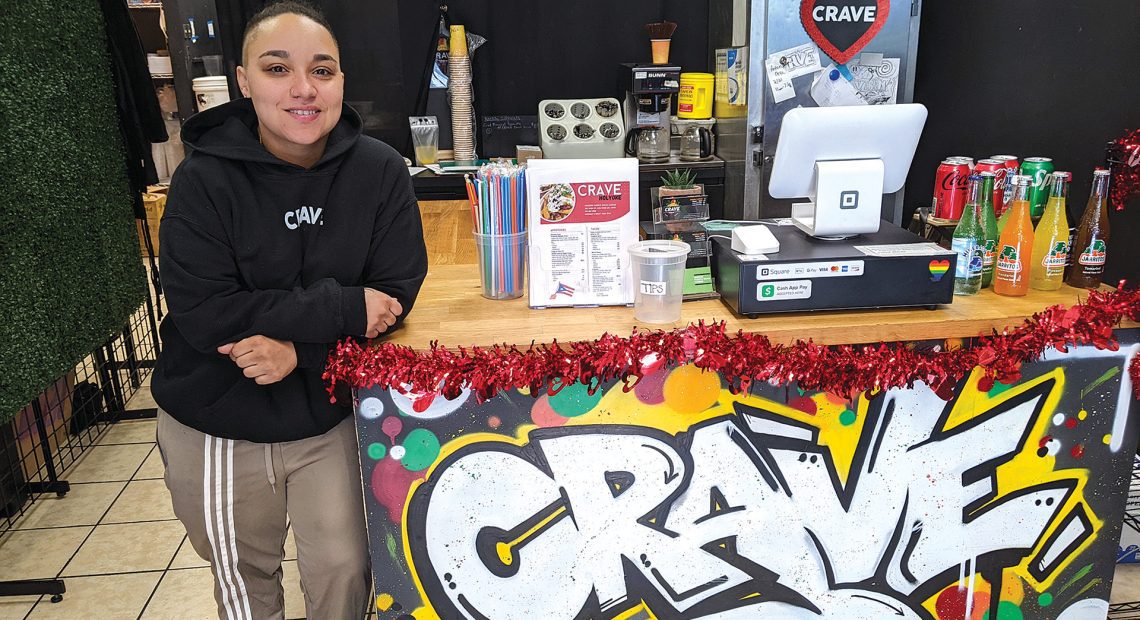
Crave

Nicole Ortiz Has Turned a Love of Food into a Growing Enterprise
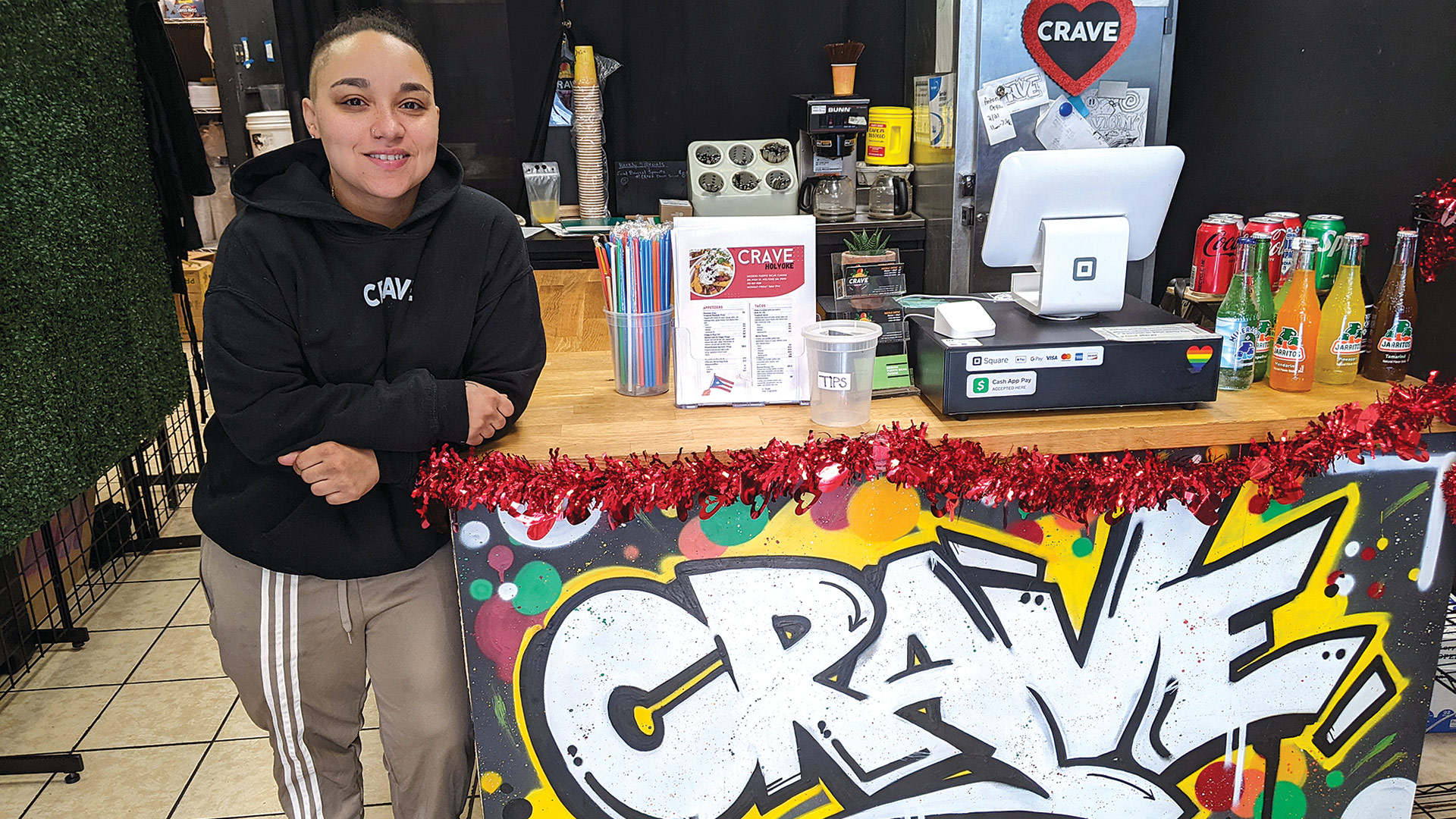
Owner Nicole Ortiz

Owner Nicole Ortiz

Nicole Ortiz was born in Springfield, but became intrigued by food during her four years in Cleveland.

There, she worked her first job in a kitchen, prepping and washing dishes in a small Puerto Rican restaurant, and the city’s West Side Market — filled with fresh foods from all over the world — became her favorite place, where she became captivated with food culture, local ingredients, and … food trucks.

After moving back to New England in 2016, she put her business degree and an itch for entrepreneurship to work, enrolling in the HCC MGM Culinary Arts Center, then winning a pitch contest and setting up a successful pop-up restaurant experience at HCC. She bought a food trailer, graduated from both HCC and EforAll Holyoke, and launched a food-truck business called Crave, specializing in modern Puerto Rican cuisine, all in 2020.

“My father is from Puerto Rico, and my mom’s family is from Italy and Finland,” she said. “I think the food we offer is different and unique, and draws inspiration from the many walks of life that I have had the opportunity to experience.”

Despite opening into the teeth of the pandemic, Crave Food Truck was a big-enough hit that Ortiz started sharing storefront space on High Street with Holyoke Hummus early in 2021, where she could prep meals and sell takeout orders. In June, she solely took over the lease, and Crave had a full-service restaurant, which now offers sit-down and takeout service, in addition to the food-truck operation and catering gigs.

Now managing a staff of eight, Ortiz is proud to be part of an ongoing entrepreneurial renaissance on High Street (see related story on page 36).

“We want to build on that and let people know what’s going on down here. Before, this street had a bad image, and a lot of people didn’t want to come down here. We created a High Street Business Association to look at all the businesses here on High Street and get all of us on the same page, working for a common goal — you know, bringing more people down here. That’s really exciting.”

—Joseph Bednar


Nick’s Nest

Area Residents Relish Visits to This Holyoke Landmark
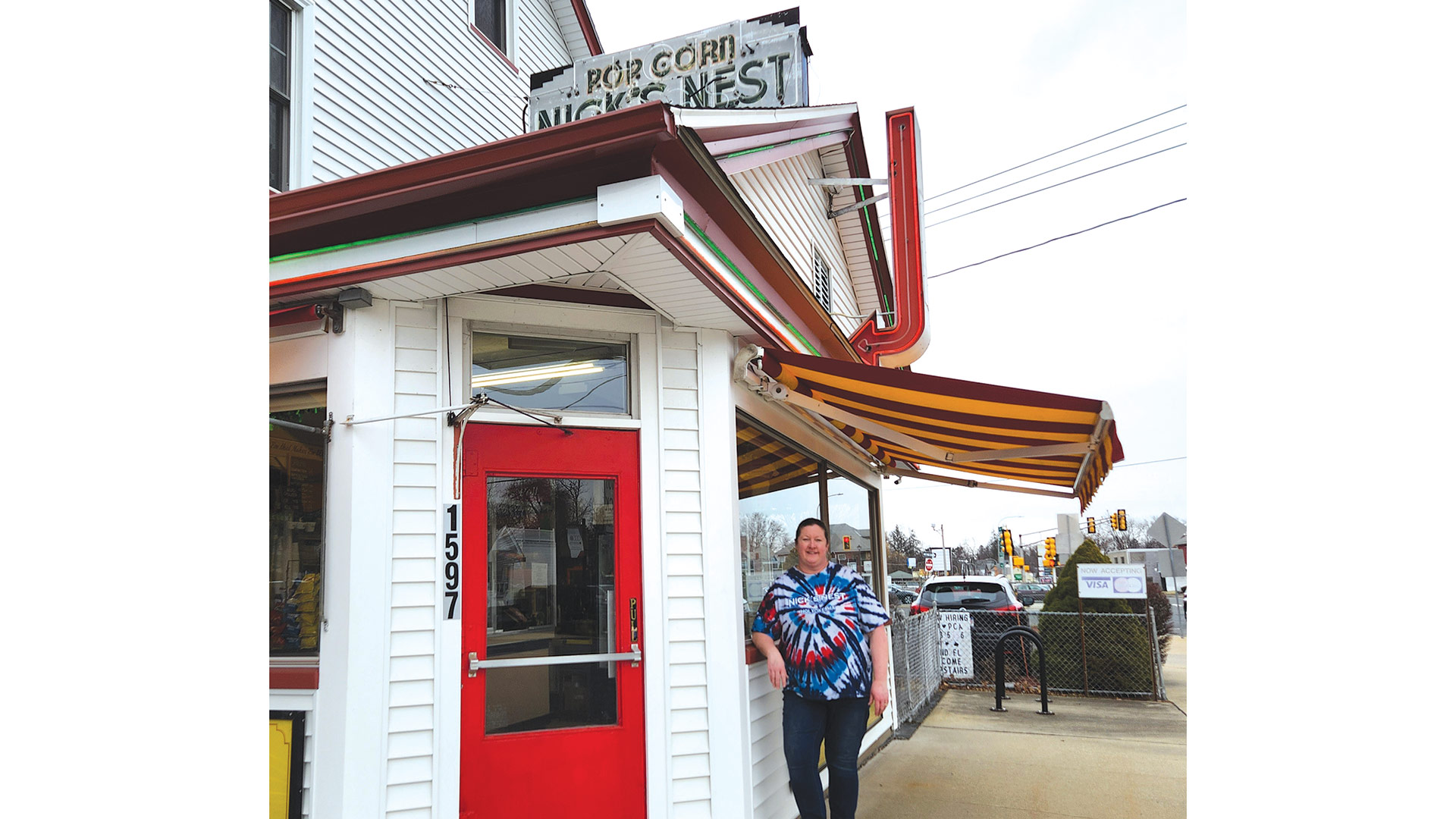
Co-owner Jenn Chateauneuf

Co-owner Jenn Chateauneuf

If you’re looking for perhaps the most iconic hot dog this side of Fenway, look no further than Nick’s Nest — a Holyoke landmark since 1921.

What originally started as a simple popcorn cart evolved into the well-known hot dog stand it is today, more than a century later. It started when founder Nick Malfas was told by his wife that the original location looked like a little bird’s nest — and the name ‘Nick’s Nest’ stuck.

The current owners of 18 years are Jenn and Kevin Chateauneuf.

“We always worked in the restaurant business; my husband was a bartender, and I was a waitress,” Jenn said. “We always wanted to venture out and own our own place. I’m from Holyoke, he’s from South Hadley, so obviously we knew of Nick’s Nest. When it came up for sale, we just jumped at the opportunity.”

Nick’s Nest has been at its current location on Northampton Street since 1948, but Jenn and Kevin have since expanded the menu from its original offerings. “Our specialty is hot dogs; when we bought the place, it was hot dogs, baked beans, and popcorn,” she explained. “We’ve added french fries, onion rings, homemade soups … we have homemade potato salad, homemade macaroni salad.”

Nick’s Nest continues to be the area’s go-to destination for hot dogs. In fact, the venerable eatery has won ‘best hot dog’ honors in the Valley Advocate’s reader poll every one of the 18 years the Chateauneufs have owned the restaurant.

In addition to its food offerings, Nick’s Nest has an assortment of branded merchandise including T-shirts and hats that display the name of the establishment along with its slogan — “A Holyoke Tradition” — for patrons to proudly show their love of good food and community.

Though Nick’s Nest has achieved much success over the years, Chateauneuf noted that it hasn’t been without its fair share of trials.

“We try to do a lot for the community because, obviously, they support us,” she said. “They were tremendous through COVID. We’re happy that we’re still standing after those couple of years because a lot of small businesses can’t say that.”

—Elizabeth Sears


Star Dancers Unity

This Business Helps Young People Take Positive Steps
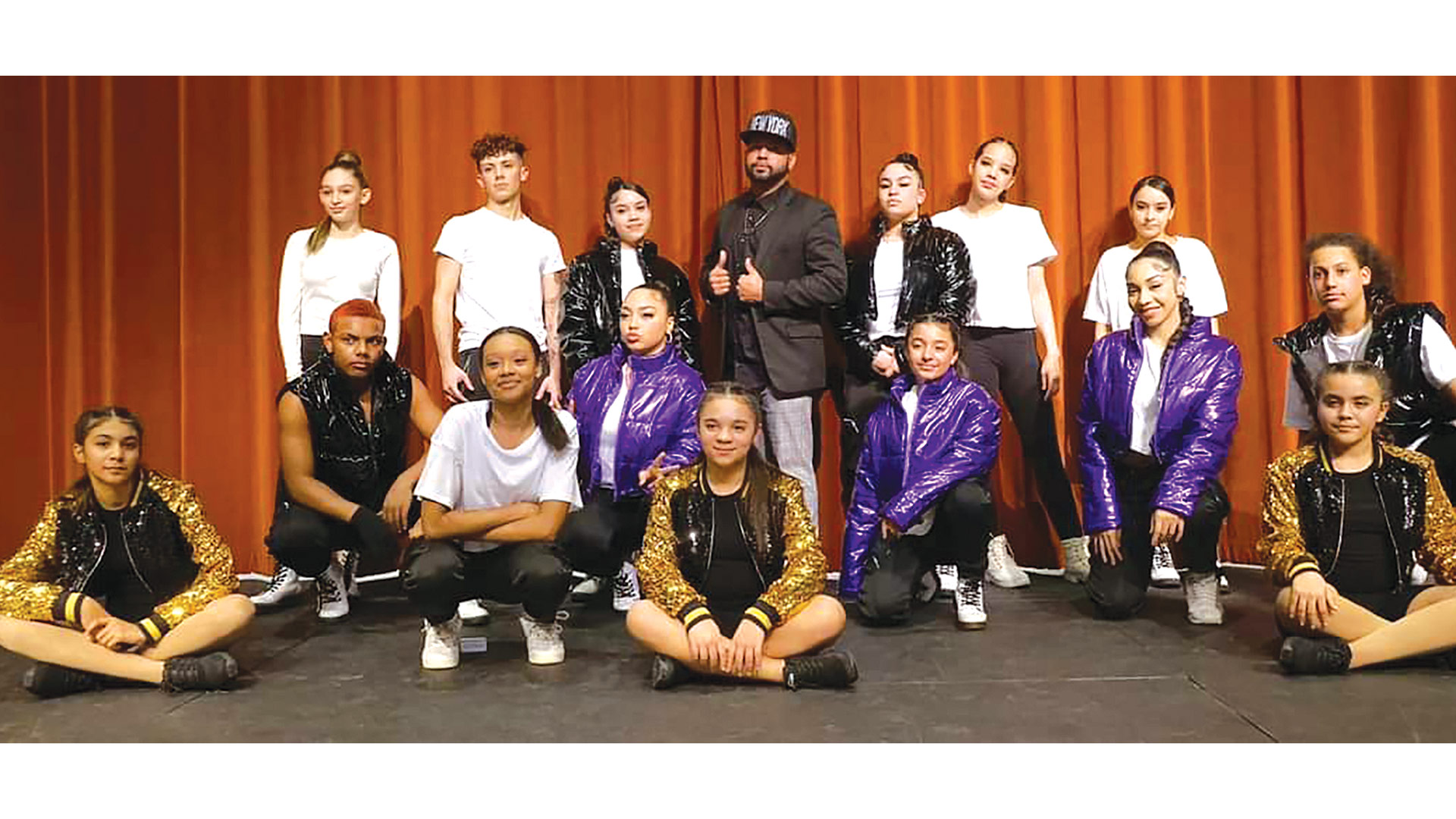
Alex Saldaña has made important moves to improve his community — dance moves, that is.

He’s been the owner and operator of Star Dancers Unity on High Street in Holyoke for the past 10 years. He originally became an enrichment dance instructor for Holyoke Public Schools, which is what inspired him to open his own business.

“I pretty much didn’t know what I was getting myself into,” he said. “But it’s just finding the opportunity — to be able to open a center in our community for youth that can benefit from dance services.”

Saldaña knew he wanted to use his background in dancing for good within the community, and he envisioned a space where area young people could go, noting high rates of teen pregnancy at the time of the studio’s opening.

“My inspiration was to be able to help some of those kids get some different activities besides being on the streets or doing things other than being productive in the community,” he said.

Star Dancers Unity currently has 65 students enrolled, said Saldaña, adding that Holyoke has been a great place to run his growing dance studio.

“The community has been supportive of my business, and also the aspect of understanding that I serve not just the youth but families in povery,” he explained. “I try to keep my tuition in a reasonable price range where it could be affordable to all families.”

As an extension of this work, Saldaña has taught salsa and hip hop for Holyoke Public Schools, and has been a visiting teacher in local afterschool and summer programs throughout the region. Currently, he works as a family coordinator for Holyoke Public Schools.

Star Dancers Unity not only participates in dance competitions, but is involved in many community events as well, from Celebrate Holyoke to performances at Holyoke High School for Hispanic Heritage Month.

“We partner up with different art pageants and do things for the schools,” Saldaña said. “When they have cultural diversity times, we also do presentations there.”

Clearly, by creating a safe, inclusive space, Star Dancers Unity is offering young people much more than dance lessons.

—Elizabeth Sears


Black Rose Trucking

These Two Women Are Hauling a Load of Ambition
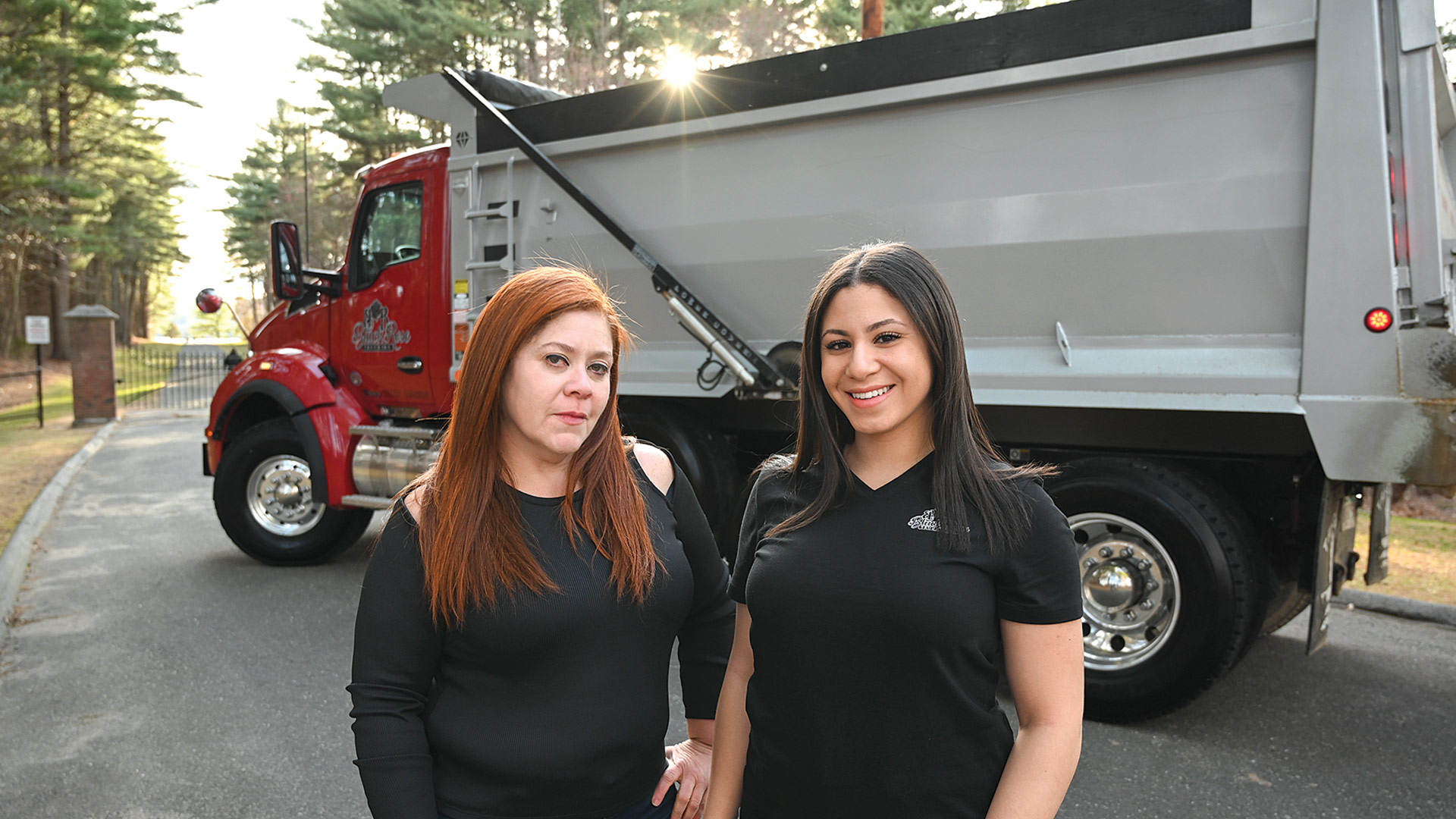
Co-owners Yolanda Rodriguez (left) and Ashley Ayala

Co-owners Yolanda Rodriguez (left) and Ashley Ayala

All Yolanda Rodriguez and Ashley Ayala needed to start a hauling company was … well, a truck. Soon, they will have two. And they’re not stopping there.

That second truck is the result of a successful crowdfunding campaign on Patronicity, bringing in $21,448 from 35 backers, more than their goal of $19,950. It’s an example of growing by thinking outside the box.

“Our long-term goal is to have more equipment and do more transport, which means more employees and growing our company,” said Ayala, the daughter in the mother-daughter ownership team that launched Black Rose Trucking three years ago. “We definitely have big dreams of having a lot of trucks, and being able, in the future, to offer different services than what we do now.”

Rodriguez has been in the commercial trucking industry for a long time, and Ayala eventually caught the bug. “She had a dream of owning her own business,” Ayala said. “She’s passionate about what she’s doing, and that kind of rubbed off on me. So a few years ago, I ended up getting my commercial driver’s license as well. And we decided to make a business out of it. Her dream kind of became my dream.”

COVID-19 delayed the process, and Black Rose didn’t start taking jobs in earnest until early 2021. “We just kept going until everything kind of opened up,” Ayala said.

They haul asphalt and other materials to and from construction sites, as well as doing paving and milling work for contractors and on highway projects, all the while taking pride in their position as women of color in a male-dominated field — and pride in their city as well.

“I was raised in Holyoke, so I see how Holyoke has progressed. And I’ve seen all these small businesses also come about and grow,” Ayala said. “We see these restaurants and other businesses come about that are owned by women of color. You can see every day how they’re progressing, and they’re still around. It’s definitely a nice feeling to be a part of that.”

—Joseph Bednar


Holyoke Sporting Goods

This Venerable Institution Helps Foster Team Spirit
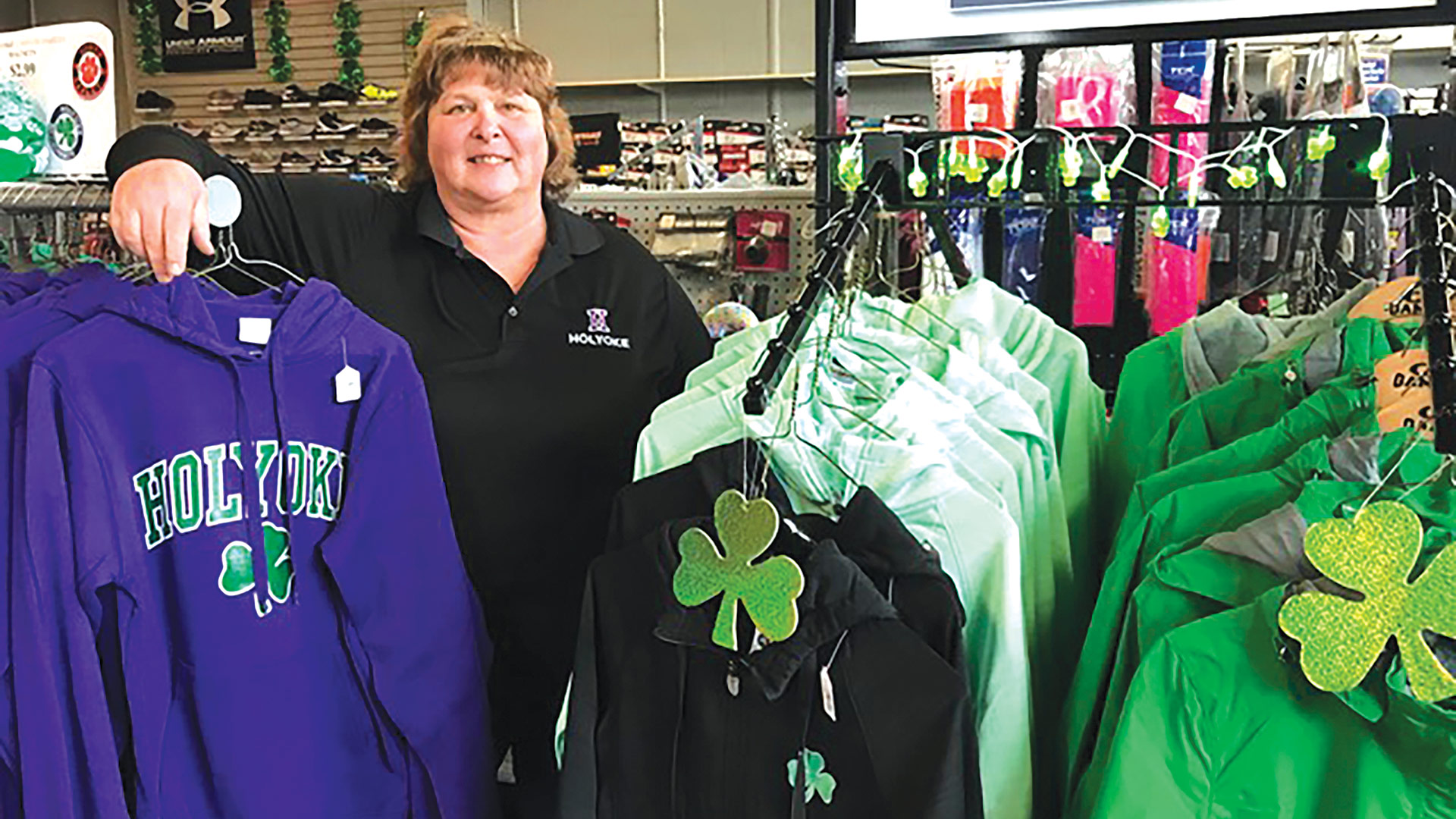
Owner Betsy Frey

Owner Betsy Frey

Nothing says ‘team spirit’ quite like matching uniforms, and whether you’re on a sports team, a sales team, or even team Gas & Electric, there’s a place in Holyoke to find your team spirit — Holyoke Sporting Goods.

Originally founded in 1928 in downtown Holyoke by James Clary, the company moved to its current location on Dwight Street under current owner and operator Betsy Frey in 2005.

“It’s in a much easier section of town to get to, we’re right off of the highway, which is convenient,” Frey said. “We have our own dedicated parking lot, which is nice, too; you don’t have to park on the street.”

Holyoke Sporting Goods caters not only to sports teams, but to many area businesses. “We do a lot of schools; we sell their sports equipment and their uniforms,” Frey said. “Then we do leagues like Little Leagues — we’ll supply them with all their baseballs, their equipment, their uniforms. I also do a lot of municipal stuff for the city of Holyoke or the city of Springfield, like Holyoke Gas & Electric, Water Works, Housing Authority, all the uniforms that they wear — they’ll wear shirts and stuff with a company logo on them. So we do all that.”

And with St. Patrick’s Day — along with Holyoke’s famous St. Patrick’s Day Parade — right around the corner, look no further than Holyoke Sporting Goods for related merchandise.

“Right now, we’re doing a lot of stuff for St. Patrick’s Day,” Frey said, “so I have a lot of Holyoke stuff with shamrocks and things like that.”

Frey said she enjoys running a business in Holyoke, adding that she gets a real team-spirit feeling from the city.

“Oh, it’s great,” she said. “Holyoke’s a great place to be in business. The people here are extremely supportive; they like to support their local businesses. I sell a lot of stuff in the store that has ‘Holyoke’ on it or is related to Holyoke. The people in Holyoke are wonderful; they support the business. This is a good community to have a business in.”

—Elizabeth Sears


Hadley Printing

For 125 Years, This Holyoke Staple Has Been on a Roll
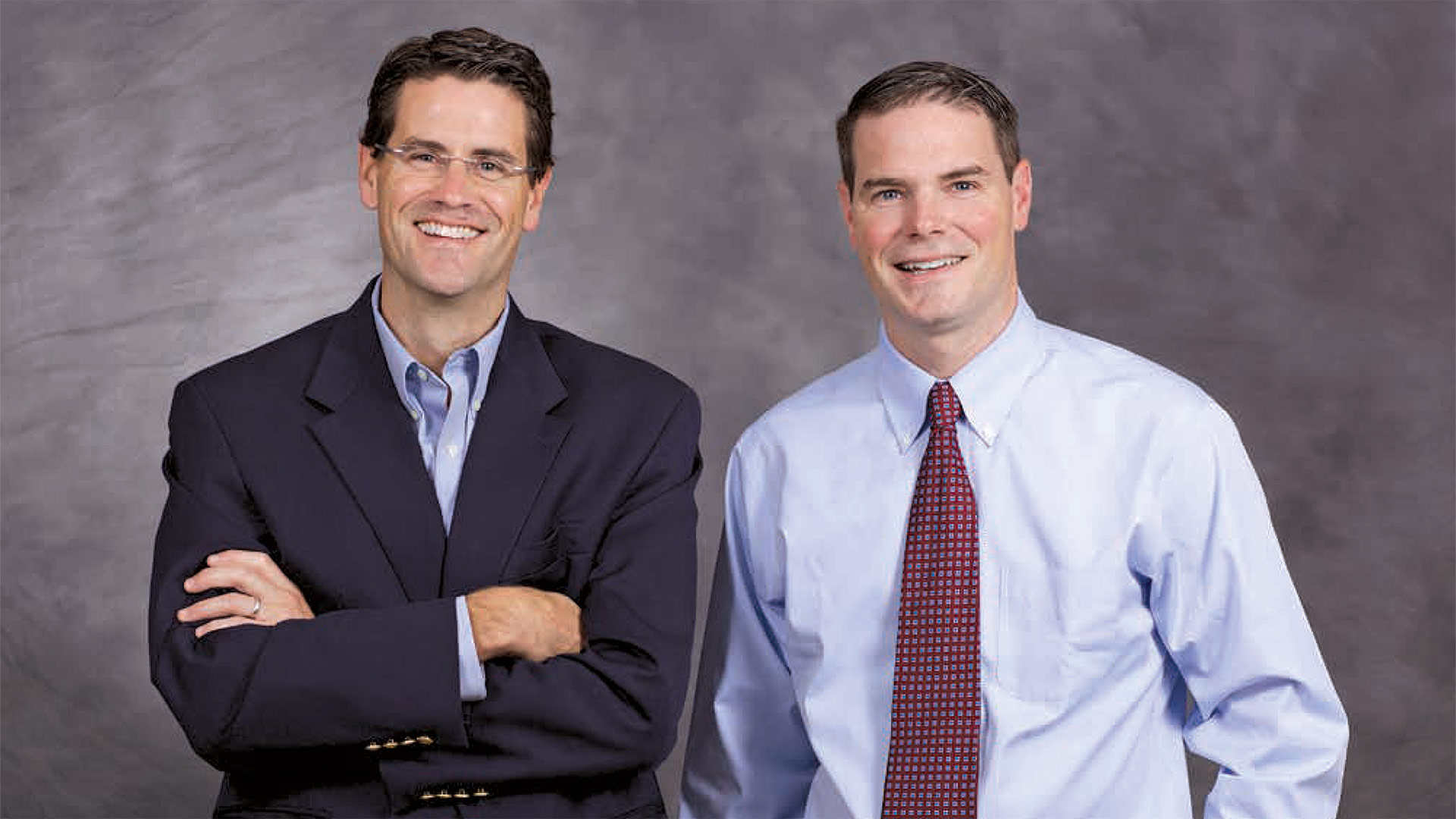
Owners and brothers Greg (left) and Chris Desrosiers

Owners and brothers Greg (left) and Chris Desrosiers

Hadley Printing has been a family-owned business for 125 years. Currently in its third generation under the direction of brothers Chris and Greg Desrosiers, the commercial printer offers digital printing, offset printing, and mail services to a wide variety of customers in New England.

The business originated in South Hadley, but in 1976, it moved to its current location on Canal Street in Holyoke. When asked about operating a business in the 33,000-square-foot building alongside one of the city’s historic canals, Vice President Greg Desrosiers had a lot to say.

“We’re in an old mill building … it used to be a silk company years and years ago; that’s when it was originated, so we’re kind of in an old silk mill,” he said. “The building itself serves us well — these mill buildings were made really well back in the day; so long as you take care of them, they serve you back really well. Obviously, it has tons of windows with natural light. In a manufacturing setting, that’s really, really welcomed and beneficial.”

Desrosiers noted that many manufacturing settings don’t have any windows to allow natural light to come in, so having the abundant natural light of one of the Holyoke mill buildings is much preferred to the usual dreary setting of four solid walls. The water view of the canal is not only another added bonus for day-to-day working pleasure, but it actually helps with the printing itself — Desrosiers can say with certainty that at least 50% of the company’s power is hydroelectric, but noted the actual percentage is probably much higher than that.

Hadley Printing, with 30 employees working across two shifts, has found another advantage to being located in Holyoke aside from operating out of the former silk mill. The company services customers in Connecticut, Vermont, New Hampshire, the Boston area, and Albany, in addition to local customers, making Holyoke a sweet spot.

“It’s really the crossroads of New England, with 91 and the Mass Pike intersecting right through Holyoke,” he explained. “It’s the center of our customer base. We’re in the middle of who we service.”

Elizabeth Sears


International Volleyball Hall of Fame

For a Half-century, It Has Lifted Up Its Sport and Its City
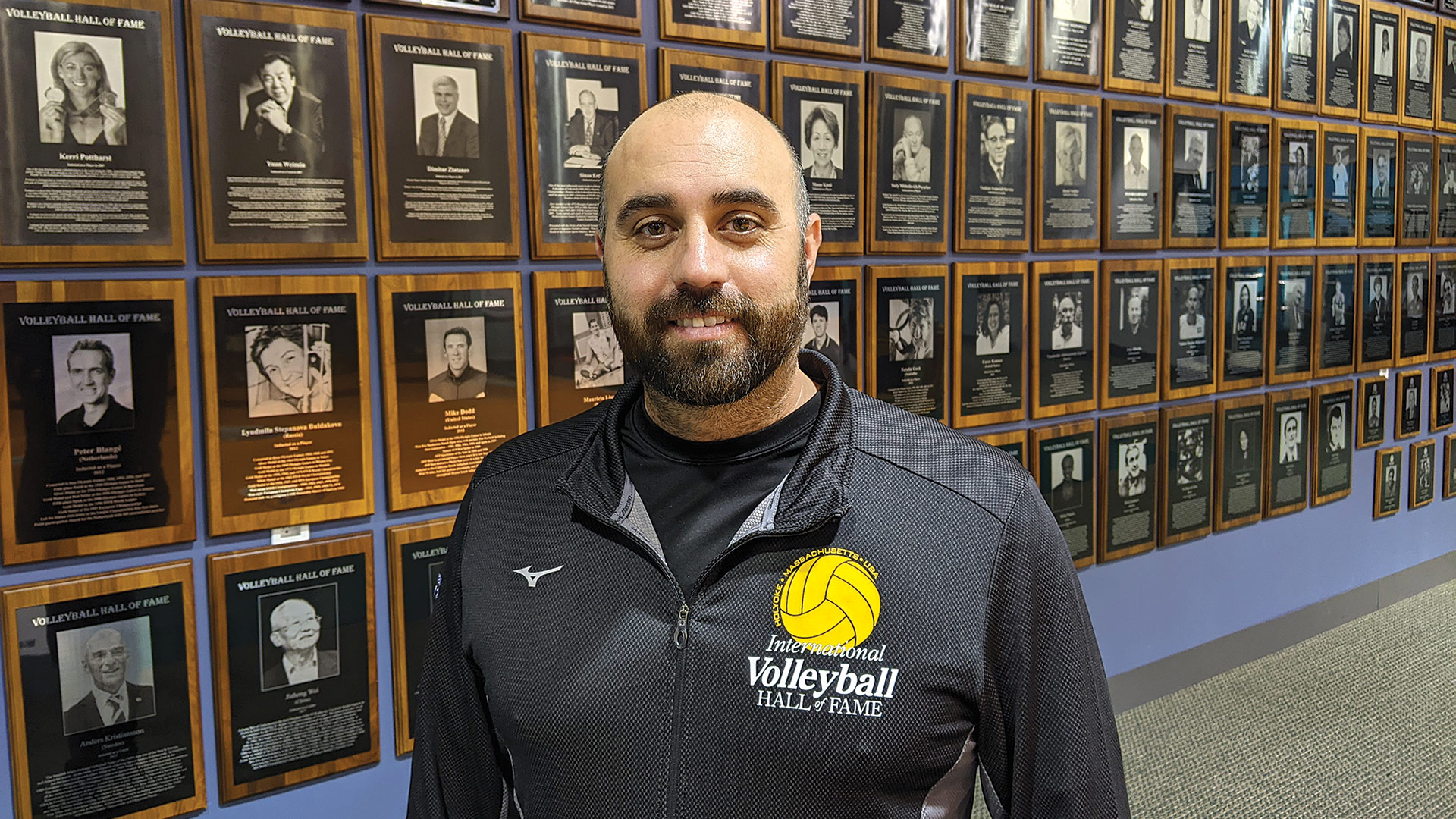
Executive Director George MulryStaff Photo

Executive Director George Mulry

Honor. Preserve. Promote.

Those three simple words reflect a robust, multi-pronged effort to celebrate the sport of volleyball and secure its future, and George Mulry detailed just a few of those prongs. Or spikes, if you will.

“On the honor side, we certainly recognize the inductees and those worthy of enshrinement in the Hall of Fame,” said Mulry, the Hall’s executive director. “But with some of our awards, we’re recognizing local individuals and organizations that are doing great things, not just for the sport of volleyball, but to help move the Volleyball Hall of Fame forward, which in turn helps move the city of Holyoke forward.

“The preserve side is really where we’re focusing a lot of our time now,” he added. “We have our Archival Preservation and Community Access Project, where we’re going through our entire archive, cataloguing it, and trying to digitize it and make it available as a resource library for the area. That will help bring some scholars in, which will give us an opportunity to improve the exhibits that we have and improve some online exhibits as well.

“And on the promote side, we’re not only trying to promote the growth of volleyball, but we want to promote volleyball itself within our region,” Mulry said, listing events like a summer volleyball festival, the collegiate Morgan Classic tournament at Springfield College, and no-cost youth clinics. “We’re just promoting the sport as a whole, while at the same time promoting the Hall of Fame as that vehicle for telling the story.”

From the Hall’s inception in 1971 to the opening of its current facility on Dwight Street in 1984 through today, with conversations taking place about what a future Hall of Fame might look like, Mulry said Holyoke has always been top of mind.

“For over 50 years, the city has really embraced being the birthplace of volleyball and used that as an economic driver for tourism and economic spinoff,” he explained. “There are a lot of really exciting things going on. But it’s the support that we’ve received from the city of Holyoke that really makes the whole thing go.”

—Joseph Bednar


Valley Blue Sox

This Team Has Become a Summer Tradition in Holyoke

If you visit Holyoke during the summertime, you might catch the Valley Blue Sox in action at Mackenzie Stadium.

The Blue Sox, originally known as the Concord Quarry Dogs, began in New Hampshire but have since rebranded and have called Holyoke their home for more than a decade now. The team is part of the New England College Baseball League, with players coming from all over the U.S. each summer.

“Having a team in Holyoke is great for us; you have a really loyal fan base, the same fans that usually come to a lot of games, so we get to know the same people throughout the summer in the city,” said Tyler Descheneaux, the new general manager. “The community really rallies around it.”

He went on to explain the team’s national impact as well as local significance.

“The purpose of this league is to try and have players that are trying to make it to that next level, to the major leagues, play summer ball,” he explained. “Our league is ranked as one of the top leagues in the entire country for summer leagues — last year, we were number two in the entire country. It’s a highly coveted league, so a lot of MLB scouts or even college scouts will come to our games to see how these players are.”

The team is going to bat with plenty of new promotions this season, including a partnership with Michael’s Bus Lines on a raffle, with one lucky fan winning a free bus ride for 25 people. Additionally, opening weekend will feature a giveaway of shirts to the first 250 fans who come to the game, and these aren’t just any shirts — the team is debuting a new logo this season, and this will be the first chance for fans to sport the team’s new look.

The Blue Sox are actively involved in the community — on and off the field.

“One thing that we do every summer is we always hold different youth baseball clinics, which usually last a week. We always hold one in Holyoke, and that’s coming up,” Descheneaux said.

With so much in store for the team and the community, this summer seems to be shaping up to be a home run.

—Elizabeth Sears


Marcus Printing

For Almost a Century, This Press Has Found Success
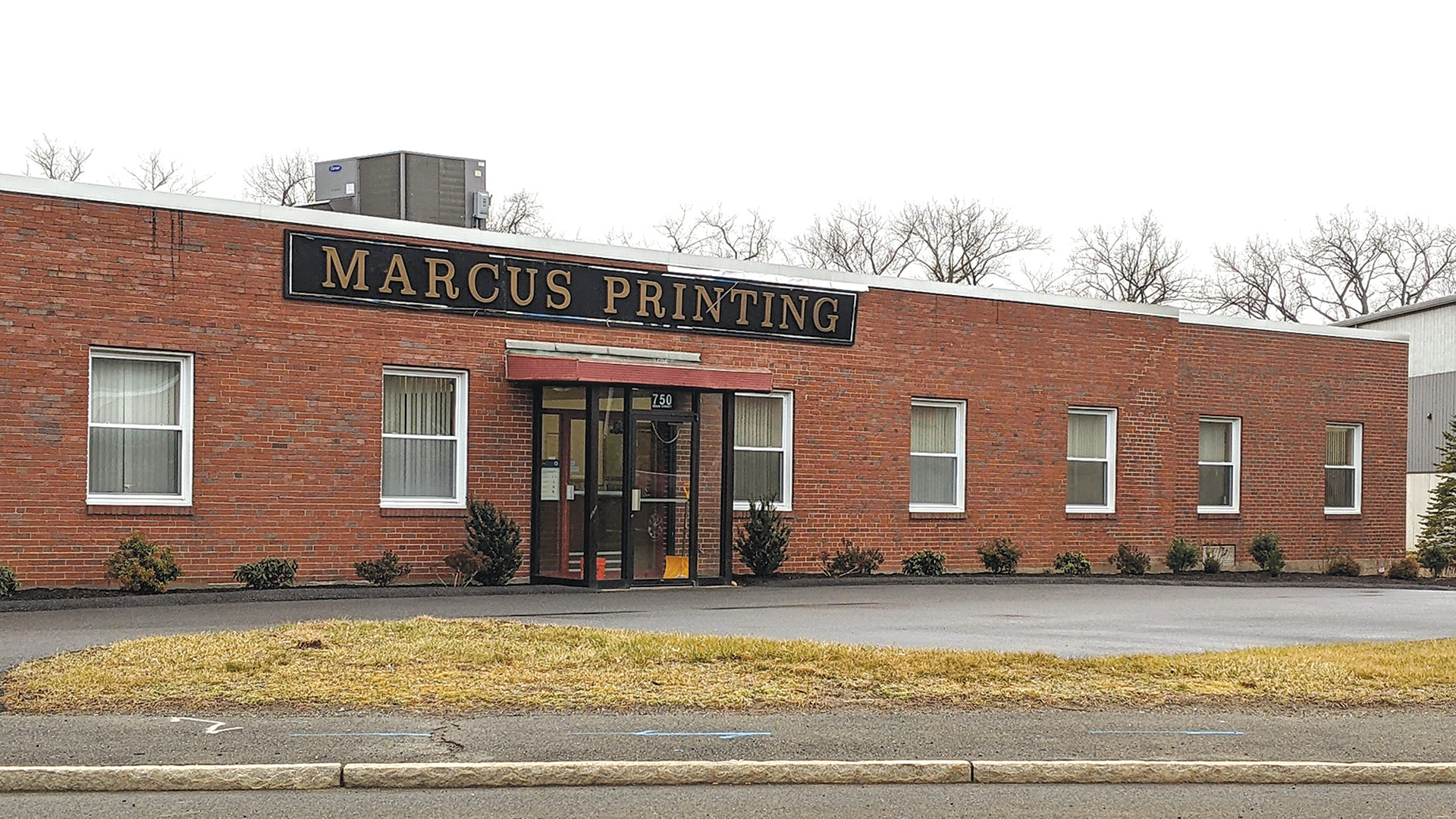
The printing industry has seen plenty of changes over the past century, but they’ve only accelerated in the new century, said Susan Goldsmith, president of Marcus Printing.

“Technology in printing has changed more rapidly in the past 20 years than the 100 years before that,” she noted. “We have basically kept up with technology, starting with eliminating film from the printing process and going direct to plate, and then getting into the digital world and most recently expanding into mailing as well as wide-format; we’ve become a little bit of everything to everybody.”

It’s a model that works for Marcus, she added. “We couldn’t be just a standalone digital shop, or a standalone offset shop. We’re a mid-sized print shop. That’s where we’re most comfortable — not printing a million pieces, but we can print 50,000, or we can print two for you. That’s been the niche we always wanted to serve.”

The third-generation family business was established in 1930 by Phil and Sarah Marcus at 32 Main St. in Holyoke, who moved to 109 Main St. in 1942. Back then, it was strictly a fine letterpress printing company, installing its first offset press in 1945.

In 1961, Marcus moved to a 7,000-square-foot space in the former Skinner Mill on Appleton Street. During the next 25 years, it expanded its offset production, purchased the building, and expanded to use all of its 21,000 square feet on three floors. The current location, at 750 Main St., is a 33,000 square-foot facility, all on one floor.

The company’s 30-plus employees pride themselves on customer service, Goldsmith said. “We don’t make promises we can’t keep, and we do everything in our power to get it to you when you need it. And we try to employ as many Holyoke people as we can.”

She’s also proud of her company’s place in the Paper City.

“Holyoke has a great business community, and printing and paper have been at its foundation. We just had a conversation with John Hazen about work our parents did together, and I’m guessing maybe our grandparents. It’s nice to have that long-term connection with the history of what the city is built on.”

—Joseph Bednar

Features

Pride and Promise

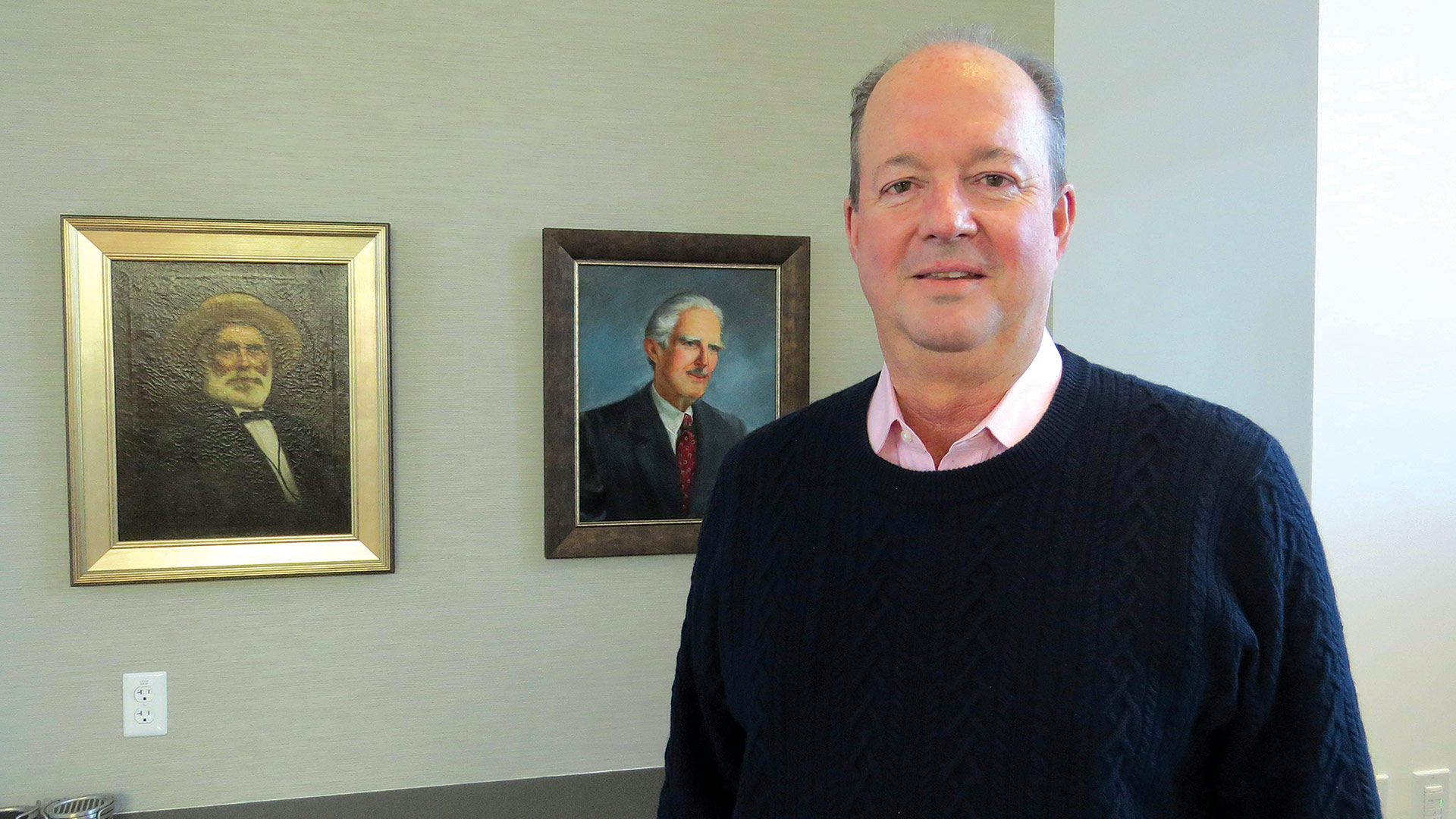
Jim Sullivan

Jim Sullivan says Holyokers, like himself, share a deep sense of pride in their community.

Jim Sullivan says he’s not really sure where it comes from. Like most people from Holyoke, he’s just taken it for granted.

He was referring to the immense pride people take in being from this city and, in a great many cases, still living in it.
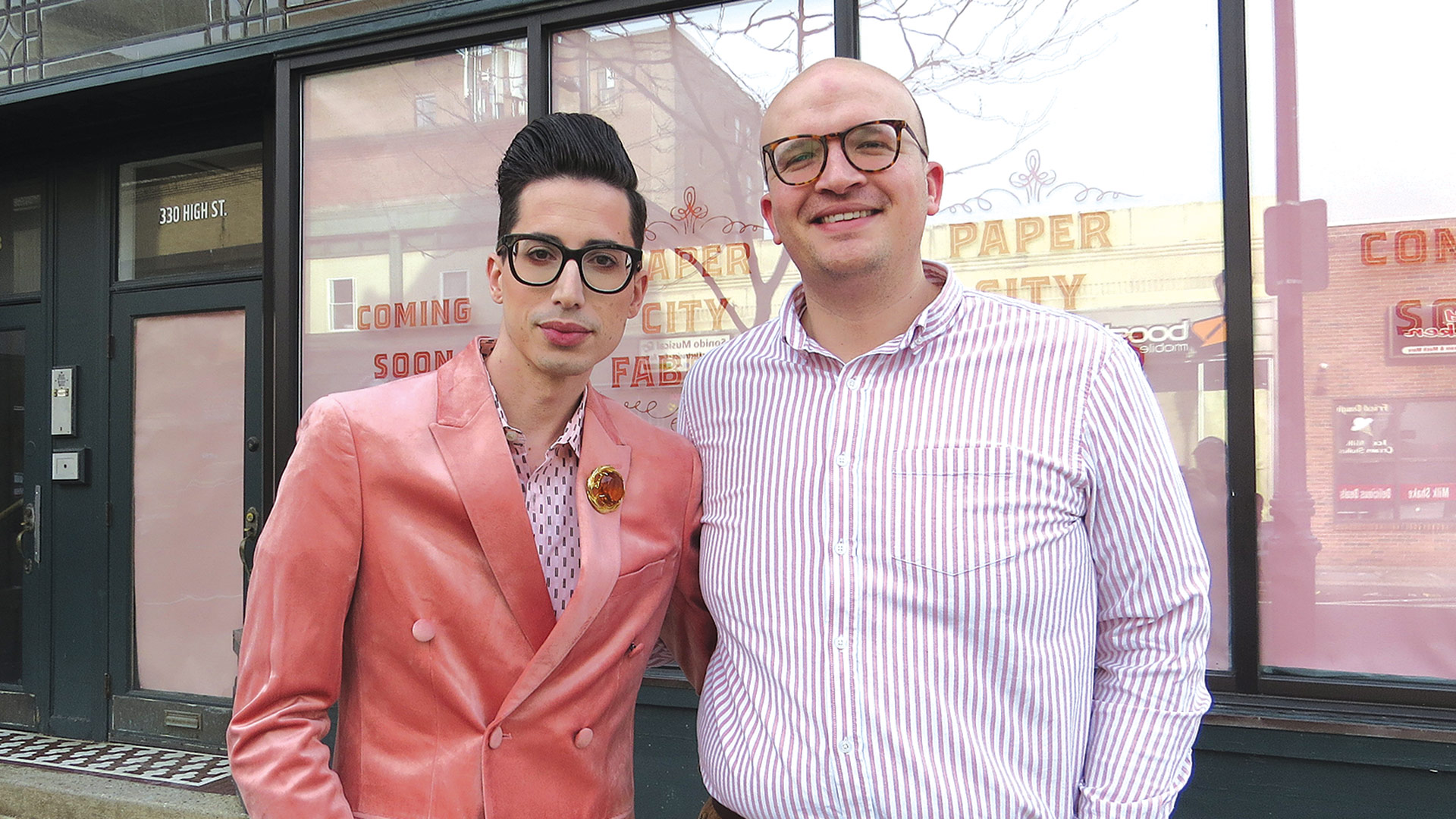
“There’s been a lot of change over the years, but what hasn’t changed is the spirit of the people,” said Sullivan, president of the O’Connell Companies, which was started in Holyoke and is almost as old as the city itself (it will mark its own sesquicentennial in six years). “There is a very proud heritage in the city of Holyoke, and it still exists today. Even with the youth today — and I like to spend some time with them at the Boys & Girls Club, where I’m a trustee — you get a sense of pride with the folks that you talk to.”

This pride is something that’s almost palpable as you talk with people from this city, and it was referenced by just about everyone we talked with for this special section — in one way or another.

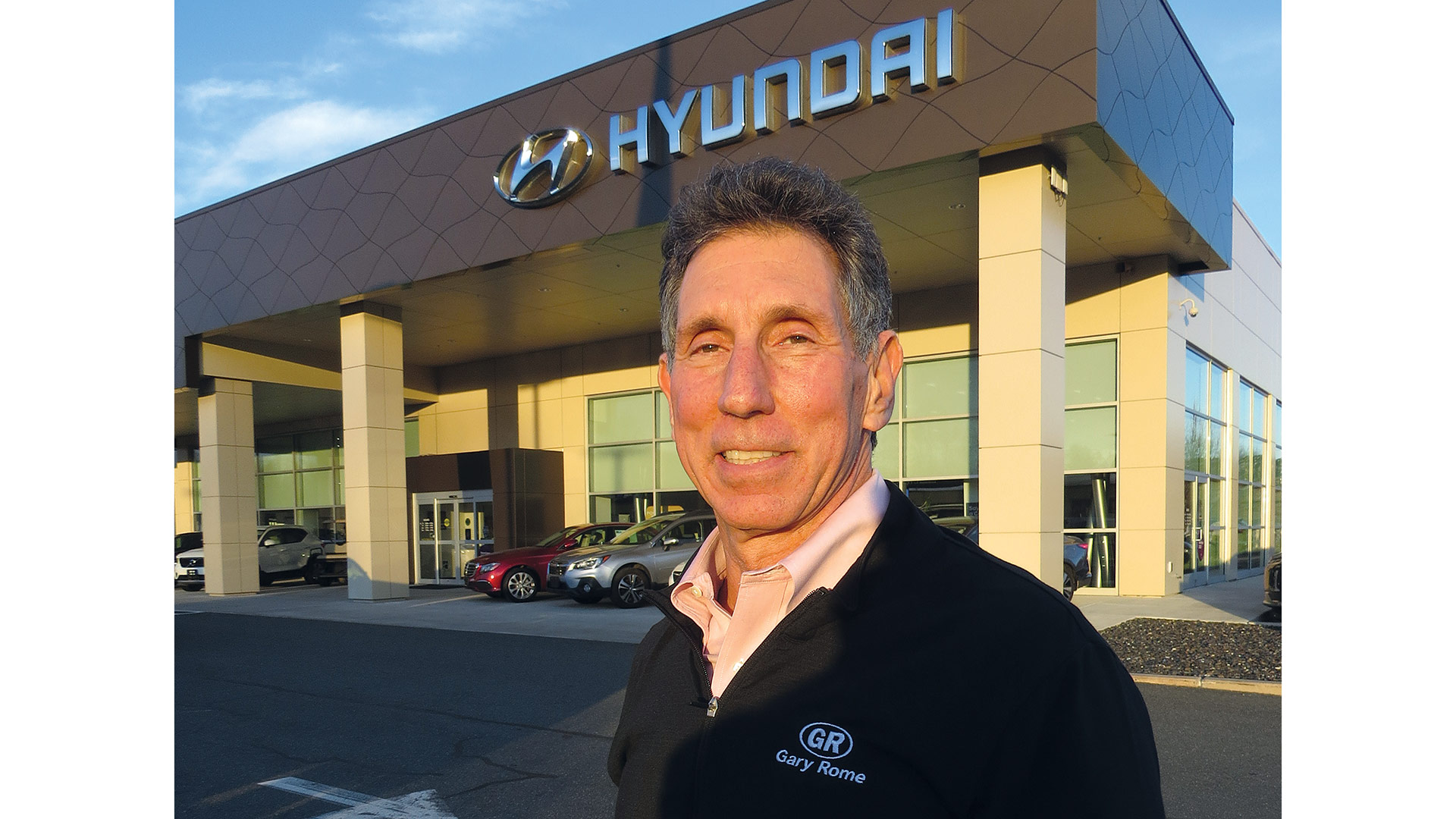
“There’s a saying … as Holyokers, we can talk bad about Holyoke, but you can’t talk bad about Holyoke,” said Gary Rome, owner of Gary Rome Auto Group, another Holyoke native, and someone with a huge presence in the city. “People here are very committed and passionate about their city.”

Beyond this omnipresent pride, Rome, Sullivan, and other business leaders we spoke with see many other qualities in Holyoke — history, tradition, diversity, economic progress, collaboration, energetic new leadership, new businesses, new business sectors (including cannabis and green energy), and something they’ve always seen: opportunities.

As in opportunities for entrepreneurs, for individuals looking for work or a career, for professionals looking for an affordable place to live, and for people aspiring to work for themselves instead of for someone else.

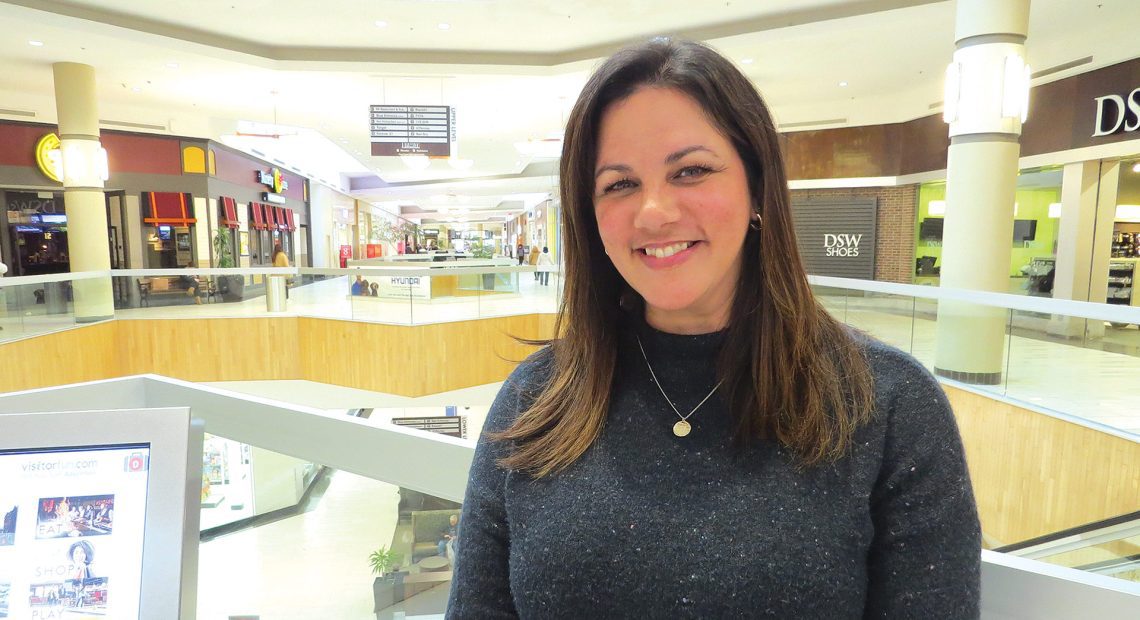
“There’s a lot of entrepreneurial spirit really coming alive in the city,” said Lynn Gray, general manager of the Holyoke Mall, which opened 44 years ago, changing the landscape in the community in many ways. “And that’s exciting because it benefits the city; it benefits everyone in and around the mall, having that entrepreneurial spirit. Moving forward, it’s a great path to be on.”
Meg Sanders, one of those entrepreneurs — she opened Canna Provisions on Dwight Street, part of a wave of cannabis-related businesses in Holyoke — agreed. She said she sees a great deal of vibrancy and entrepreneurial energy in the city, not just in cannabis, but also in the arts, hospitality, retail, and more.

“There’s a lot happening here — Holyoke is a great city that has so much to offer,” she said, adding that downtown is becoming more vibrant and, with many new types of arts and hospitality businesses opening, becoming much more of a destination.

Matt Bannister, senior vice president of Marketing and Corporate Responsibility at PeoplesBank, another Holyoke institution nearly as old as the city (it was founded by silk-mill owner William Skinner in 1885), concurred.

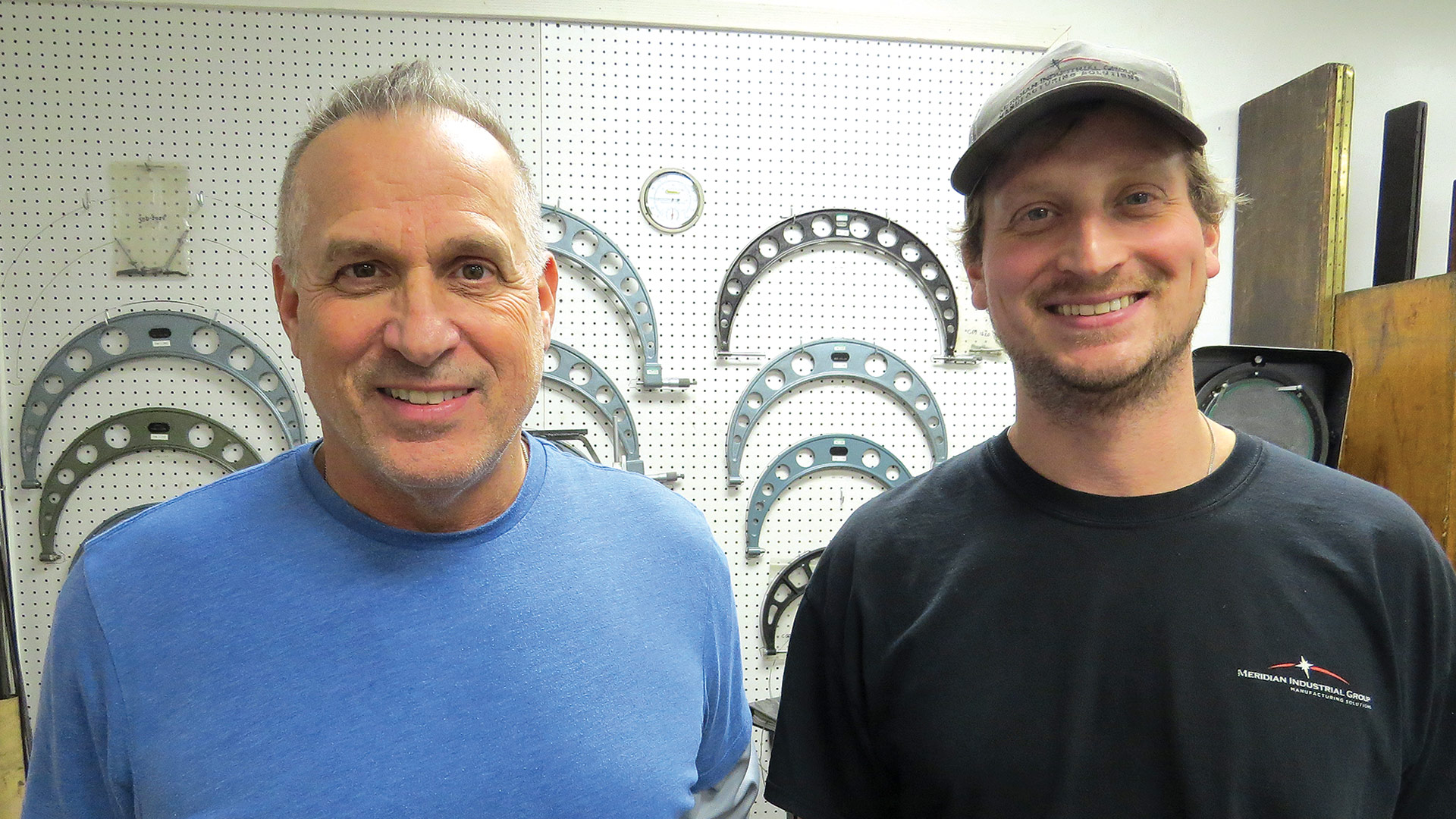
Steve Grande (left) and his son, Ben

Steve Grande (left) and his son, Ben, have engineered a transformation at Meridian Industrial Group.

He cited Gateway City Arts on Race Street, a live-entertainment venue, as an example of a relatively recent arts-fueled resurgence in the city, one that displays the trickle-down effect of such businesses and their ability to spur more development.
“Gateway is an example of the kind of anchor that you can build around,” he explained. “You get some nightlife, and the next thing you know, you have entrepreneurs and food trucks and all that. What’s happened down at Gateway, and what’s happening on Main Street, is that there’s some nice enthusiasm and energy.
“Overall, there is a good core of solid businesses, and there is a government in place that understands the importance of business development — we have smart people with a good vision,” Bannister went on, adding that the current wave of entrepreneurial energy coupled with large amounts of state and federal stimulus money make this a unique and potentially powerful moment in the city’s history.

For this special 150th-anniversary celebration edition, BusinessWest talked with a number of business owners about what they see today in Holyoke — and what they expect to see down the road.


Making Progress

There’s a manhole cover embedded in the floor just inside the main entrance to the property at 529 South East St., near the lower canal in Holyoke.

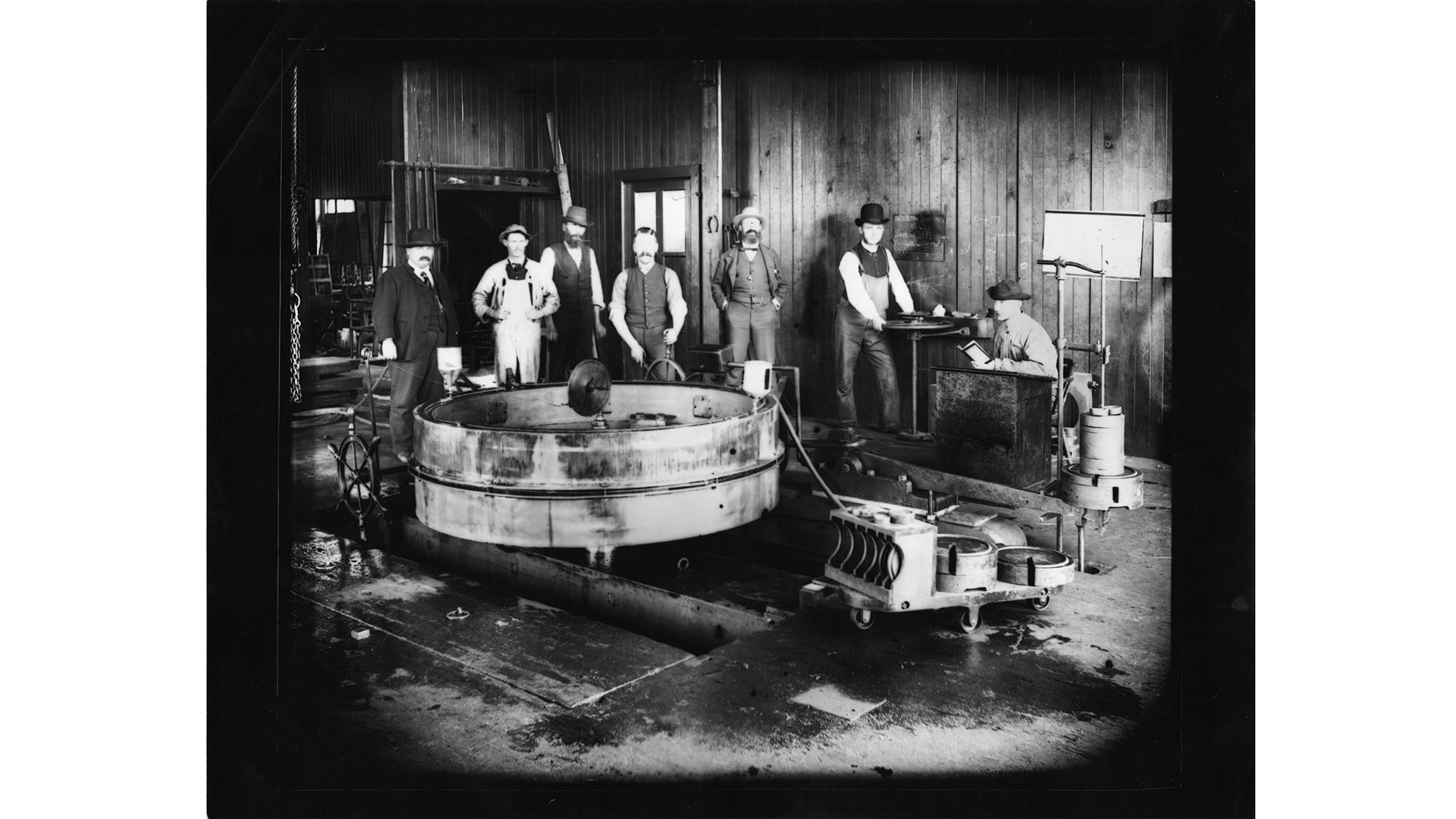
It bears the name J.W. Jolly, the company that made manhole covers for cities across the country and around the globe at that site more than 140 years ago.

There’s a mat now covering the one in the lobby here because more than a few people tripped over it, said Steve Grande, a former Springfield police officer who bought the business that was operating there, Central Massachusetts Machine, in 2009 and eventually changed the name to Meridian Industrial Group to reflect a broader customer base and product portfolio.

Indeed, this cutting-edge machine shop that he manages with his son, Ben, now specializes in very large parts (up to 30,000 pounds), including components for missiles, submarines, and even NASA’s DART (Double Asteroid Redirection Test) program that famously knocked a meteorite off its orbit a few months back.

Meridian is an example, and there are many of them in this city, where the past, present, and future come together at the same mailing address. And this is one of the many things being celebrated as the city turns 150.

It’s like that at the Canna Provisions facility on Dwight Street, where a dispensary designed to look like an art gallery has been created in an old mill where Yankee Candle once leased space and began its meteoric rise.

It’s like that at the Gary Rome Hyundai dealership on Whiting Farms Road, where a combination car wash and dog wash is taking shape on property that also boasts a solar array and, in his office, pictures of Rome’s father, who started selling cars in Holyoke more than 60 years ago.

It’s like that the O’Connell Companies’ gleaming new headquarters building on Kelly Way, which includes photos of the company’s founder, Daniel J. O’Connell, and his descendants, as well as construction projects undertaken decades ago — specifically the Memorial Bridge reconstruction project and the Rowes Wharf initiative in Boston, that won Build America awards from Associated General Contractors of America.

And it’s like that PeoplesBank’s banking center at 1866 Northampton St., site of the former Yankee Pedlar, a popular restaurant and gathering spot for generations of city residents.

Yes, the past, present, and future come together seamlessly in this city, where change is as constant as tradition.

Lynn Gray, general manager of the Holyoke Mall

Lynn Gray, general manager of the Holyoke Mall, says there a great deal of “entrepreneurial spirit” coming alive in the city.

This change can been seen everywhere — on High Street, where many new businesses have opened in recent years (see related story on page XX); at the mall, where many of the traditional retail stores have been replaced with entertainment-related businesses, such as a trampoline center and a bowling alley; in the countless mills, many of them now occupied by cannabis-related ventures; on Race Street, where Gateway City Arts and other arts- and hospitality-related businesses are now operating; at the historic Cubit Building, now home to apartments and the HCC MGM Culinary Arts Institute, and elsewhere.

What hasn’t changed is the great pride that people take in their city, and the spirit of entrepreneurship that built the community and is fueling its resurgence today. In fact, what business leaders see when they look at the city today is continued progress and revitalization.

Bannister, like others we spoke with, credited Joshua Garcia, the city’s first Hispanic mayor, and Aaron Vega, former state representative and now director of Planning and Economic Development in Holyoke, for creating a business-friendly environment in the city and generating real momentum on several fronts.

“They’re tilling a lot of soil in order to make things happen,” Bannister said. “When you throw a lot of seeds out, you’re never sure which ones are going to take and which ones aren’t, but you’re creating opportunities for things to happen.”


No Place Like Home

Those we spoke with said they consider it important not to just do business in Holyoke, but to be actively involved in the community and especially with efforts involving the next generations of Holyoke leaders.

Rome said his family has been doing business in Holyoke for almost a century. His grandfather started with a drugstore, he believes, and then opened a haberdashery. As Rome tells the story, money was so tight that his grandfather’s store and the neighboring shoe store would share a telephone.

Matt Bannister

Matt Bannister credits Holyoke Mayor Joshua Garcia and his administration for creating a business-friendly environment and fueling a surge in entrepreneurship.

“They had a hole in the wall, and they would pass the telephone back and forth through the wall,” he said, adding that things have certainly changed, for both his family and the city. What hasn’t changed is the family’s commitment to the city.

Indeed, Rome, was recently named one of BusinessWest’s Difference Makers for 2023, not only for his success in business — he was recently named TIME magazine’s Dealer of the Year — but for his work within the community, and especially Holyoke. He is a member of the foundation board at Holyoke Community College, and has donated his time, energy, and talent to countless nonprofits, while getting his company involved with them as well.

“When I look at Holyoke today, I see a lot of hope, a lot of passion,” he said. “And I see a strong initiative to let people know about all the good things that are happening in the city, and you can see that first-hand with our mayor and our economic-development team.”

Sullivan, who has been involved with the Boys & Girls Club for more than a decade now, said O’Connell supports a number of organizations and initiatives, from Girls Inc., which found a new home in the O’Connell Companies’ former headquarters on Hampden Street, to Providence Ministries for the Needy.

Gary Rome

Gary Rome, one of BusinessWest’s Difference Makers for 2023, is one of many Holyoke business leaders actively involved in the community.

PeoplesBank, meanwhile, has always been heavily involved in the community — supporting its nonprofits, being the main sponsor to the city’s famous St. Patrick’s Day Parade, and backing the many efforts at EforAll, the chamber, and other agencies to promote entrepreneurship and help others launch their own ventures, a key to the city’s continued progress.

“There’s an awful lot bubbling up,” Bannister said. “You have to wait and see which ones take root and which ones don’t, but we work with the Holyoke EforAll group to drive entrepreneurship because that’s how the next generation of businesses will come up; it won’t be a giant company that you lure here with tax incentives — it will be a whole lot of small businesses that will take off. It’s entrepreneurs at the street level that will drive growth.”

Even some of the relative newcomers to the scene in Holyoke said they realized early on the importance of getting involved, collaborating with others to generate more positive energy in the city, or just choosing the city as a landing spot.

Indeed, Sanders said there were many reasons why Canna Provisions put down roots in Holyoke, literally. Business-friendly bylaws and attractive space were among them, but there was also a desire to positively impact a city that was negatively impacted by the war against drugs and has, as she put it, “such good bones.”

“For us, Holyoke was a perfect canvas to do good,” she explained, adding that, in addition to bringing jobs and a new storefront to the city, the venture is also sparking other new business. Meanwhile, Sanders herself is getting involved with several initiatives, from the 150th-anniversary celebrations to the parade committee.

“Holyoke is an amazing city with so much potential, and bringing awareness to downtown and making sure everyone knows about all the cool things that are happening is very important,” she said. “Downtowns don’t turn around overnight, but it’s helpful if a community gets behind it — we see things turn around faster when everyone gets behind those efforts.”

Grande agreed, noting that he’s seeing progress in the community and is getting involved himself, with everything from workforce-development issues in manufacturing (he’s involved at Dean Tech and, specifically, an ongoing project to market its manufacturing programs) to his work as vice president of the Holyoke Taxpayers Assoc.

“I don’t want to sit on the sidelines and let other people do the heavy lifting,” he said. “We see improvements and excitement; this administration is bringing city officials together, and the real push from the business community is to make the city more attractive to potential new businesses by streamlining the permitting process, addressing crime, and much more. There’s an upward trajectory, but Holyoke has not been an easy sell.”


Passion Play

Flashing back more than a half-century to his youth, Sullivan said he and his friends thought Holyoke was “the center of the universe.”

It was only when they got older that their perspective changed — but only somewhat.

For many, it’s still the center of their lives, if not the universe, and the home of their businesses. It’s a unique and special place where the past, even the events of 150 years ago, are never far away and the future seems increasingly bright.

Features Picture This

Photos Past and Present

Holyoke’s rich industrial past, one that earned it the nickname ‘Paper City.’

Holyoke’s rich industrial past, one that earned it the nickname ‘Paper City.’

Old Holyoke Dam

Mountain Park

A view of Mountain Park, the popular amusement park that closed its doors in 1987.


Holyoke’s canals gave the city water power — and an identity.

Holyoke’s canals gave the city water power — and an identity.


City Hall has become a symbol of Holyoke.

City Hall has become a symbol of Holyoke.


One of the horses from the carousel

One of the horses from the carousel at Mountain Park, later moved to Heritage State Park, where it has become a popular attraction.


An aerial shot of Holyoke, one of its canals

An aerial shot of Holyoke, one of its canals, and one of its many distinctive mills.


The Massachusetts Green High Performance Computing Center

The Massachusetts Green High Performance Computing Center is part of a new era for Holyoke’s business community.


This mural created by the artist known as BORDALO II

This mural at 44 Clemente St., created by the artist known as BORDALO II, is part of the Beyond Walls initiative that has changed the landscape in downtown Holyoke and beyond.


Features

Getting Down to Business

Brothers Juan (left) and Gilberto Uribe

Brothers Juan (left) and Gilberto Uribe are co-owners of El Paraiso Colombiano restaurant, a true family affair that has found a home on High Street.

Juan Uribe calls it a “family dream.”

He was referring to El Paraiso Colombiano restaurant, an entrepreneurial gambit that is truly a family affair.

Indeed, Juan and his brother, Gilberto, are co-owners and also cook and tend bar. Their father is head chef, and their sister is a waitress. Together, they created and now operate what they believe to be the only Colombian restaurant between here and Hartford, one that opened in the middle of the pandemic, but quickly found its stride nonetheless.

“On grand-opening day, there was a line outside to the corner,” said Juan, adding that, while there have been plenty of challenges with this venture, it has been a huge success to date, drawing patrons from around the block but also across the region and even beyond. “We thought people would come out and support something new, and they have.”

Juan, Gilberto, and other members of the Uribe family are now part of a changing scene on High Street, one of several ‘main’ streets in this city, and also part of an ongoing surge in entrepreneurship that is changing the face of the local business community.

Indeed, where once this city was dominated by large mills that covered several blocks of real estate, it is now marked increasingly by smaller ventures that occupy a storefront or even a desk or cubicle in the incubator space at the EforAll offices, also on High Street.

Jeff Cattell and Joseph Charles are also part of this changing scene. Business and life partners, they launched Paper City Fabrics, a supplier of a wide variety of fine fabrics, in September 2021, and have taken it from an online operation to a storefront on High Street that was most recently home to a law firm. They are completing renovations now and expect to open in the spring.

“Our goal has always been to open a brick-and-mortar storefront,” said Cattell, adding that he and Charles moved to the city four years ago and, after considering several business options, settled on a thrift-store model in what he called the “fiber-arts realm.”

Elaborating, he said the store will accept donations of fabric, everything from cotton to silk, as well as sewing machines and other goods and equipment, and sell them at steep discounts, thus bringing another unique concept to downtown Holyoke and one that speaks to its storied past in many respects.

Paper City Fabrics, El Paraiso Colombiano, and many other new businesses on High Street and beyond, from City Sports Bar to the Artery, a pop-up shop, to Star Dancers Unity (see story on page 50), are, indeed, part of a wave of entrepreneurship in the city, said Jordan Hart, executive director of the Greater Holyoke Chamber of Commerce.

“There’s a lot of old players in Holyoke — there are many established businesses in many sectors, including manufacturing, which has traditionally been our foundation,” she explained. “But we’re seeing a lot of young, new faces as well, people who are investing in our downtown.”

Tessa Murphy-Romboletti, executive director of EforAll Holyoke and its Spanish equivalent, EparaTodos — an agency that is fueling this wave through accelerator programs, pitch contests, virtual workshops, co-working space, and more — agreed.

She said that the chamber, EforAll, and programs like the Transformative District Initiative, which are funneling dollars into storefront-improvement efforts and other programs, are helping people launch new businesses and then weather the many challenges they will face.

Tessa Murphy-Romboletti (left) and Jordan Hart

Tessa Murphy-Romboletti (left) and Jordan Hart say a surge in entrepreneurship has helped Holyoke’s business community become as diverse as the city itself.

These efforts are also making Holyoke’s business community much more diverse, said both Jordan and Murphy-Romboletti, noting that it looks much like the city itself, with many Hispanics and other minority groups taking on risks and putting their names (figuratively and, in some cases, literally) over the door of buildings on High Street and many other roads.

“Holyoke is such a diverse community, and I think we’re both trying to make sure that our business community reflects our community at large,” said Murphy-Romboletti, who is also an at-large city councilor in Holyoke. “That’s one of the great things about the Holyoke chamber now — you go to one of its monthly networking events, and it looks like the community of Holyoke; it’s very diverse, and Jordan has created a very welcoming environment.”


Food for Thought

Juan Uribe was driving a truck when he and other members of his family decided to pool their talents and resources and open El Paraiso Colombiano.

And he still drives a truck in the morning and sometimes during the day depending on how business it is at the restaurant, because … well, because he needs two jobs at this stage in his life, especially as the restaurant continues to emerge and build its brand.

But, like other members of his family, Uribe desired to be in business for himself, and with some encouragement and learning while doing from EforAll, the dream became a reality.

Like many such ventures, it started with a passion that would become a business.

“We were born and raised here in Holyoke, and friends would come around; we’d have little events — my grandmother would make empanadas, and my father would cook, my mother would cook, everyone would just love to be in our house,” he recalled. “So we decided to make it a business; we all love to cook, and this is a family business.”

A restaurant operating at 351 High St. had to shut down because of COVID, he went on, adding that, while the timing may not have been perfect for launching a new eatery, the family took the plunge.

Joseph Charles, left, and Jeff Cattell

Joseph Charles, left, and Jeff Cattell, owners of Paper City Fabrics, are part of a changing scene on High Street.
Staff Photos

“We knew we had a good idea going, so we decided to take everything we had and move ahead,” he said. “We knew that, even though there was a pandemic, people still had to eat, and we thought they would come out and support something new.”

That’s the quick version of the story, he said, adding that many pieces to the puzzle had to come together, obviously, as well as a business plan for bringing that ‘something new’ — authentic Colombian cuisine — to Holyoke and the region.

And the learning while doing continues, he said, adding that working for himself is “a lot of work, but it’s something that I love, something that my brother loves. It’s challenging, and it’s hard, but it doesn’t get any better than this.”

Cattell and Charles offered similar sentiments and similar excitement when it comes to being part of the scene on High Street, which is the logical next step for their venture.

“Shopping for fabric is a tactile experience,” Charles said. “Touching and seeing the colors in person and the textures of the fabric is an important part of the buying process.”

The two had been looking for a storefront for more than a year and eventually settled on 330 High St., across the road from El Paraiso Colombiano, a location that affords them the space they need for their retail operation as well as to process donations and create a classroom for sewing lessons. The space has some history — it was once a popular lunch counter — and some intriguing features, such as tin ceilings and a mosaic tile floor that was hidden by carpeting.

“It’s really cool to be able to restore some of that historical perspective,” said Cattell, adding that it’s also cool to be part of a changing dynamic in downtown Holyoke, which is seeing new businesses across many sectors.

Meanwhile, the chamber, EforAll, and other agencies, such as Nuestras Raices, a grassroots urban-agriculture organization, are working collectively to not only create a pipeline of new businesses like these, but help those businesses survive, thrive, and get to the proverbial next level.

For example, EforAll has, in addition to accelerator programs, a number of virtual programs it calls Deep Dives.

In recent months, such dives have been taken into subjects ranging from “Making It in the Food Business” to “Are You Getting All You Can Out of QuickBooks?” to “How to Use LinkedIn to Grow Your Small Business.”

Meanwhile, the chamber, through its many networking programs, is enabling these new small businesses to make the connections they need to grow their portfolios, while also learning from others facing the same challenges.

Indeed, Jordan told BusinessWest that the chamber has an attractive rate for solopreneurs and small businesses, enabling these ventures to be part of a full slate of events that provide invaluable opportunities to not only hand out business cards but also be an active part of a growing, more diverse business community.

Murphy-Romboletti agreed.

“The chamber has created a very welcoming environment, especially for my entrepreneurs who are not familiar with networking and are often so focused on being in the business and not necessarily working on the business,” she explained. “I think the chamber creates this environment where people can step away from the cash register or step away from the kitchen and connect with the community and build those relationships so they can be successful and really be part of the community; that’s been really valuable.”

In addition to helping individuals start a business and move it to the next level, agencies like the chamber and EforAll are working to get them involved in the community and take ownership of efforts to revitalize High Street and, overall, improve the landscape for business in the city.

“Whether it’s a new business or a business that’s been around for decades, we want them to feel like they have the ability to make change and advocate for what they want,” Murphy-Romboletti said. “We’re really being intentional about creating these spaces for them.”

Uribe said that getting involved in the community has been not just part of the business plan, but something important for the family.

Indeed, they are part of the many festivals that place in the city, and Uribe is the founder of the Paper City Food Festival, which staged its second edition last fall on the section of High Street between Appleton and Dwight streets, attracting more than 20 of the city’s restaurants.

“It’s a way for people to come out and see all that this city has to offer,” he told BusinessWest, adding that he engaged the chamber and started the festival to uplift local businesses and celebrate the community’s heritage and diversity.


Bottom Line

There was much to celebrate at last October’s food festival, and, similarly, there is much to celebrate with this city’s business community as it turns 150.

There is diversity. There is change. There is vibrancy. And, overall, there is a wider pipeline of new businesses, entrepreneurs like the Uribe family and Jeff Cattell and Joseph Charles.

Together, they are not just filling storefronts on High Street. They are energizing a city and writing an intriguing new chapter in its long and distinguished business history.


Features

A Portrait of Resilience

Mayor Joshua Garcia

Mayor Joshua Garcia says Holyokers need to take the long view when it comes to their city and its future.

As he talked about his city and its outlook moving forward, Holyoke Mayor Joshua Garcia first turned the clock back nearly 150 years and did what amounts to a ‘what if?’ exercise.

He was referring to Holyoke’s ubiquitous canals, which were, when they were conceived, no small bit of engineering — and financial — daring.

“It was a risk,” said Garcia, the city’s first Hispanic mayor, who took office in late 2021. “When folks built the canal system … I think about what that conversation might have been like, the divide that might have been going on in this community. You had some who probably said, ‘yes, we need to be proactive and build this system,’ and others who likely said, ‘this is too much money; our taxes are going to go up if we do that, and besides, I’ll be gone in 30 years.’”

Fortunately, those in that first category prevailed, he went on, adding that the canals helped fuel decades of prosperity, jobs, and an enviable quality of life, and they put the city on the map. And as he looks ahead, Garcia believes Holyokers must have that same willingness to take reasonable risks — to be daring, if that’s the right word — and make the necessary investments to continue, and bring to a higher level, an ongoing renaissance in a city that was among the nation’s wealthiest and a model of innovation and manufacturing excellence.

“I’m trying to get people to not think short-term — the investments we make today are not just for next month or next year, but 20 to 30 years out,” he said. “We want to build a middle school, for example, something that would benefit this city for generations to come.”

Long-term thinking is one of necessary ingredients for continued progress in this city, said Garcia and many others we spoke with for this special section commemorating Holyoke’s 150th anniversary. Overall, they said many of the other needed ingredients are already in place, everything from a focus on entrepreneurship to inexpensive and reliable green energy; from a solid, diverse workforce to spaces in which new businesses can get started and eventually grow.

Jeff Hayden, currently vice president of Business and Community Services at Holyoke Community College, previously served in several economic-development posts in the city, including as director of Planning and Economic Development. Nearly a half-century ago, he worked part-time at a Dairy Mart on Dwight Street managed by his father.

He has seen a lot of change over that half-century, and, more recently, a good deal of progress as Holyoke has diversified a business community once dominated by manufacturing, especially paper and textile making.

In the ’90s, manufacturing was still a pillar of the local economy, along with healthcare — there are several facilities providing everything from acute care to behavioral-health services to care to veterans, he noted, adding that, in recent years, diversification has included more retail (the city already boasts the Holyoke Mall), cannabis businesses, and strong growth in the arts and entertainment sectors.

And this diversification has strengthened the economy and made it more resilient, he said, adding that current efforts have been focused on creating opportunities across the board — meaning both jobs and opening the door to entrepreneurship.

Holyoke’s St. Patrick’s Day Parade

Holyoke’s St. Patrick’s Day Parade, this year celebrating its 70th edition, is a great tradition for the city and the many organizations, schools, and clubs that march.

“When I look at where Holyoke is today and where it’s going, it’s clear that its leaders are focused on providing economic opportunity for all, whether they be entrepreneurs who perhaps identify as Latinx or established businesses that have been here for a long time,” he said. “The hope is to help everyone grow, and grow together.”

Aaron Vega, the former state representative who is now serving as director of Planning and Economic Development, agreed.

“Like a lot of cities, we’re at a crossroads,” he said, noting that, while manufacturing has declined in recent years and decades, other sectors have emerged, such as cannabis, IT, and clean energy. One of the keys moving forward, said Vega and many others we spoke with, is that focus on entrepreneurship and helping new small businesses take root, in some cases literally.

“It’s very hard these days to start a small business, but we have a lot of supports for that, like EforAll and the chambers, and people now realize, especially here in Western Mass., that it’s the downtown businesses that create the character in a community,” he said. “So we’re really trying to focus on that; we’re really trying to empower people who live here already to open up their own business.”


Something to Celebrate

Like many others we spoke with for this special section, Garcia said the 150th anniversary is a time of reflection, an opportunity to look back at the city’s proud history and ahead to what the next chapters might be.

It’s also an opportunity to celebrate all that Holyoke is — a proud city with a rich history, rich traditions, a diverse population, a legacy of innovation, and other enviable qualities, he said, noting that perhaps the greatest of these is resilience.

Indeed, the city has always displayed the ability to withstand adversity and move on — whether it was the many challenges of becoming the nation’s first planned industrial city or reinventing itself and diversifying its economy when much of the manufacturing moved south or overseas, or, most recently, persevering through the COVID pandemic and its many side effects.

“It’s a celebration of resiliency,” he said, adding that the city will mark the occasion in a number of ways, including a gala, an ‘Eat, Drink, and Be Holyoke’ event, a time capsule that will be placed in City Hall and opened at the 200th anniversary, ‘150th’ merchandise (hats, key chains, etc.), commemorative beers made by local brewers, and much more. “It’s a celebration of everything Holyoke.”

Vega agreed, and noted that one of the driving forces behind the city’s ongoing resurgence is a focus on the arts and culture. He cited businesses such as Gateway City Arts, a live-performance venue, and organizations such as Beyond Walls, which partnered with Nueva Esperanza Inc., a community-development and social-services agency, to honor Holyoke’s designation as a Puerto Rican Cultural District, as well as the city’s rich history and diversity, with the installation of five large-scale outdoor murals.

“When you celebrate culture, people feel more connected to their community, more connected to their neighbors,” he explained. “And when you have the ability to celebrate art, it’s about bringing people into your community, with initiatives like Beyond Walls, the events at Wistariahurst, Gateway City Arts — it’s a celebration of music and arts that invites everyone to come join.”

Aaron Vega

Aaron Vega says Holyoke has many outstanding traits, especially its long history of resilience.
Staff Photo

Beyond the arts, Holyoke is seeing a surge in new businesses on High Street; a strong wave of cannabis businesses of all kinds, including large cultivation facilities; and an influx of data centers, including the Massachusetts Green High Performance Computing Center. And in many cases, the city’s ability to provide lower-cost, green energy is a big reason why many of those businesses found Holyoke.

“Anyone who is looking for cheap electricity and green energy will knock on our door — we’re the first call they’ll make,” said Jim Lavelle, general manager of Holyoke Gas & Electric (HG&E), which can trace its roots to 1902. “It’s an interesting time, to be sure, and we’re getting a lot of inquiries; people like the story of the low-carbon, cheap electricity.”

Interest is across the board, he said, adding that it comes from data centers and cannabis cultivators (both huge consumers of electricity), but also from business owners who want to minimize their carbon footprint, he said, adding that HG&E is working with city officials to help make the most of this asset and many others the city can boast.

Another asset is Holyoke Community College, said Hayden, adding that, historically, significant numbers of city residents have been unable to take full advantage of the employment opportunities in the city because they were qualified for those jobs.

The college has long worked to change that equation through programs that will ready individuals for jobs, be they as nurses, medical assistants, chefs, or, most recently, workers in the cannabis industry. HCC also has a strong track record of students transferring students to four-year institutions.

“I like to say that we help people get a job, get a better job, or help them do their job better,” he said.


Traditions Old and New

Getting back to those planned celebrations … the 150th will be just one of a growing number of events in Holyoke this year, said the mayor, noting everything from the famous St. Patrick’s Day Parade later this month to the Fiestas Patronales, which debuted last August — a four-day celebration of the city and region’s Puerto Rican culture and heritage and billed as the largest Latino event in Western Mass.

Jeff Hayden

Jeff Hayden says Holyoke has diversified its business community, strengthening it in the process.

These celebrations, old and new, capture the city’s past, present, and future, he said, adding that they reflect the city, its history, and especially its people.

That’s especially true of the St. Patrick’s Day Parade, which this year will mark its 70th edition, said Karen Casey, president of this year’s event. The 69th parade was three years in the making because of COVID, she said, a tiring, very frustrating experience on many levels.

What the pandemic years did was make those in Holyoke and beyond — this is, after all, a regional event — appreciate the tradition even more, if that’s possible.

“After having gone through what we all went through a few years ago, you saw just how much this meant to everyone,” she explained, referring to everyone from parade committee members to those who watch each year along the parade route. “Everyone just has a greater appreciation for how important this is.

“This is the third-oldest parade in the country, and we work very hard to maintain high standards,” she went on. “Anyone from around Holyoke is very proud of it; they brag about it … it’s a great tradition.”

While the buildup to the St. Patrick’s Day Parade continues, so too does planning for the 150th anniversary, said the mayor, adding that one of the intriguing tasks — and big challenges — ahead is deciding what should go in the time capsule.

Organizers are already thinking about items like one of the Super Bowl programs created by Hazen Paper, a Holyoke High School yearbook, T-shirts, a history of the city, and much more. It may take the shape of a volleyball with a large box inside.

The task of deciding what goes in the limited space in the time capsule is made more complicated by the many aspects of the city’s history and the many objects — recent and more than a century old — needed to tell the story. In many ways, it’s a good problem to have.

But getting back to that matter of resiliency, Vega said that trait is at the heart of the 150th celebration. And it is one shared by the community and the people who have lived here over the past few centuries.

“People talk about Boston Strong in the wake of the marathon bombing, but there’s also Holyoke Strong; it’s about resiliency, and it’s about history,” he said. “People have always come to Holyoke who have been migrants and have had nothing — and they built a life here. That’s what we need to keep remembering. This has always been a place where people come, get that grit, and find a path.

“This is what we’re celebrating as the city turns 150,” he went on, adding, again, that there is so much to celebrate.

Features

Holyoke’s 150th

By Penni Martorell

Happy anniversary, Holyoke! 2023 is the sesquicentennial, or more commonly called the 150th anniversary of the incorporation of the city. It is our good fortune that we, the citizens of Holyoke, will, at long last, will hold an official dedication ceremony for Holyoke’s City Hall, a structure that is not only of notable architecture, but also a fundamental component of Holyoke’s past, present, and future and the foundation of our community.

In a July 1876 article, the Holyoke Transcript reported:

“There ought to be public spirit enough in this city to appropriately dedicate this noble building. There seems to be a small faction opposed to it, but they should not be allowed to present a fitting dedication by those whose money has been spent in the construction of the finest hall in New England.”

That’s right, Holyoke City Hall was never dedicated upon its completion. Apparently, that small faction held out, and other circumstances derailed the building’s official dedication. So, it is only appropriate that we take time now to dedicate this magnificent building as it has stood in service to Holyoke for a century and a half. The official dedication will take place on Thursday, April 6.

Most of the story about City Hall is documented in Holyoke Annual Reports and a lengthy, detailed, unsigned article in the Saturday morning edition of the July 1, 1876 Holyoke Transcript. And as history so often reveals itself in layers, there are likely many more stories about the building. So here is some background information and details about the construction.

The total financial outlay to build this magnificent building, when all was said and done, was $372,000 in 1876. (Additional research done by the Historical Commission indicates that final cost was closer to $500,000 at the time.) In any case, in today’s money, that would be more than $10 million.

The town of Holyoke was established by an act of Massachusetts Congress Chapter 71 and signed into law On March 14, 1850 by Gov. George Nixon Briggs. The town’s first board meetings were held in rented meeting halls like Chapin Hall, Parsons Hall, and the Exchange Hall. A separate selectmen’s office was rented starting in 1861. The largest financial challenges for the town at that time were fees to West Springfield in relation to the contract of separation.

Constructing a building of this size and character was not an easy task, nor was it inexpensive. Delays and contractual issues increased the amount of time and money it took to complete this monumental undertaking. Unfortunately, division arose early on deciding where the building should be located. More delays arose during the building of City Hall and were memorialized in Holyoke’s Building Committee reports.

Fortunately, the city’s incorporation in 1873 brought about the reorganization of elected officials and, most importantly, new Building Committee members who acted quickly and effectively to get the construction work back on track … but it wasn’t a smooth process.

In October 1874, the new Building Committee contracted H.F. Kilburn of New York to serve as architect under the supervision of Watson Ely of Holyoke. In order to facilitate the completion of the building in a timely manner, Ely ordered that everyone that had moved into the unfinished building vacate the building and then closed City Hall during the winter of 1874.

Charles Attwood was the original architect who created the Gothic Revival and Romanesque Revival structural plan in 1871. However, many others contributed structural and decorative details, including local builder Casper Ranger, John Delaney, Ecclesiastical Stained Glass Works, Watson Ely, Henry Kilburn, Kronenberger and Sons, Filippo Santoro, Serpentino Stained Glass, and Samuel West.

Beyond the granite exterior walls, stone steps and pavers, and slate roof, other building materials include random ashlar, galvanized iron, glass, lead, marble, wood, brick, sheet metal, and copper.

One of the most important historical and stately features of Holyoke City Hall is the looming clock and bell tower. The imperial tower stands 225 feet high and houses a bell that weighs nearly 5,000 pounds. The clock’s face is composed of two-inch-thick Belgium milk glass. Sadly, the clock was inoperable and the bell was silent for decades. Thanks to Friends of City Hall, David Cotton, and a team of volunteers, the clock was restored after completing hundreds of hours of repairs, and on July 4, 2018, the clock was lit up and began keeping time again after almost 30 years.

But back to City Hall itself. As of July 1876, it had not been dedicated, and research has not found any indication it was ever dedicated. It’s time to remedy that.


Penni Martorell is Holyoke’s city historian and curator at Wistariahurst.

Features

Going with the Flow

By Joseph Bednar

bednar@ BusinessWest.com

Old Holyoke Dam

The city of Holyoke’s website details a series of telegrams sent by one James Mills on Nov. 6, 1848 to a group of industrialists in Boston who had invested in the first dam at South Hadley Falls and were eager to hear of its performance.

“The gates were closed and the water filling behind the dam,” Mills reported at 10 a.m. It would be his only happy missive.

Noon: “Dam leaking badly.”

1 p.m.: “Leaks cannot be stopped.”

2 p.m.: “Bulkheads are giving way.”

3:20 p.m.: “Dam gone to hell by way of Willimansett.”

So, it wasn’t the most auspicious way to begin Holyoke’s new direction as a planned industrial city that harnessed the power of the Connecticut River.

But the builders learned from their mistakes — and built a replacement dam. Like the first, it was also made of wood and completed the following summer. This dam still stands, 150 feet underwater, behind the current, modern stone dam that was put into service in 1900.

This bit of history is just one example of Holyoke not only overcoming challenges, but evolving with them along a winding, intriguing, still-evolving story.

The story actually begins much earlier, with the Indigenous tribes who settled there on the rich, alluvial plain, including the Nonotucks, from whom early European settlers eventually purchased the land that would be incorporated into the future boundaries of Holyoke.

Captain Elizur Holyoke is believed to be the first European to explore the future city. In 1633, he led an expedition up the Connecticut River to explore the potential for settlement. Two years later, based upon his report, European agriculture settlement began in the region. Initially concentrated in Springfield, settlers soon began to migrate to the surrounding areas that would later become West Springfield, Chicopee, and Holyoke. Holyoke was then known as Ireland Parish, a name that would remain in common use until 1850.

When Boston investors saw in the parish industrial potential similar to Lawrence and Lowell — and the energy potential of the river — they set out to create an industrial city on a large scale.

In 1847, taking advantage of the broad plain and the 57-foot drop in the Connecticut River at South Hadley Falls, work began on the planned industrial city. Canals, mills, boarding houses, offices, and a dam were all built by pick and shovel. And on March 4, 1850, Holyoke — with its working dam — was finally separated from West Springfield and designated its own town.

“There was some resistance from the farmers who initially didn’t want to sell their land,” said Penni Martorell, Holyoke’s city historian and curator of Wistariahurst. “But eventually [the investors] won out. They just bought the land and then laid out the plan for the city. The flats area was definitely the working man’s area. The middle area around the canals was where the factories were built, and then the highlands were set aside for retail businesses and homes of the wealthier families.”


Strength in Paper

Before the planned-city idea got rolling, Holyoke was mainly an agricultural community with a sprinkling of industry, including a lumber mill on the river.

“The investors had had success in Lawrence, in getting mills set up along the river up there. And then they were like, ‘well, where else can we go?’” Martorell told BusinessWest. “Lawrence and Lowell often lay claim to being the first planned industrial cities. We say they worked it out there, and then they perfected it here in Holyoke. They really took advantage of the 60-foot drop in the river, how to harness that energy and then send it through the canals.”

Holyoke’s development was rapid, with its population surging from about 3,200 in 1850 to 45,000 by the turn of the century and more than 60,000 at its peak in the early 1920s. Textiles were the first major product of the city, quickly followed by paper, which became the dominant force in the city. At one time, more than 25 paper mills were in operation.

By 1885, 12 years after its official designation as a city, Holyoke was the largest single producer of paper of any city in the U.S., producing around 190 tons per day, more than double the next-largest producer, Philadelphia, which produced 69 tons per day despite having a population nearly 40 times its size. By 1900, Holyoke would produce about 320 tons per day, predominantly writing paper, led by American Pad & Paper Co., American Writing Paper Co., and others.

Holyoke also built schools, churches, parks, and many public buildings, including the historic City Hall (see story on page 28). By the turn of the century, Holyoke exerted considerable influence on American life. The Holyoke Opera House was the test location for Broadway plays before moving on to New York. The Easter parade here drew as many spectators as on Fifth Avenue.

A number of industrial inventions arose out of the city in the late 19th and early 20th centuries. The first and most prominent hydraulic testing lab in the U.S., Holyoke Testing Flume, performed 3,176 tests to establish turbine efficiency from 1870 to 1932. Other pioneering developments included the first use of Hans Goldschmidt’s exothermic welding process in the Americas in 1904, by George Pellissier and the Holyoke Street Railway. In electronics, the world’s first commercial toll line, between the city’s Hotel Jess and a location in Springfield, entered service in 1878. Holyoke was also home to Thaddeus Cahill’s New England Electric Music Co., which, in 1906, demonstrated the telharmonium, the world’s first electromechanical instrument, a predecessor of the synthesizer.

Meanwhile, the availability of water power enabled Holyoke to support its own electric utility company and maintain it independently of America’s major regional utilities. The city was thus a rare unaffected area in the Northeast blackout of 1965.

But the city’s second century has been a complicated story, Martorell said.

“It was boom and bust. So every time there was a bust, the wealthier people were able to prepare for that. But the lower-income people were not able to prepare. They would move on to wherever there was work. So it was a bit of transience at certain points. The paper industry kind of morphed into other industrial spaces.”


Northern Migration

Beginning at the end of World War II, the city’s demographics began to change, as an influx of Puerto Ricans and other Latino groups began to migrate to the Northeast U.S., driven largely by the Farm Labor Program initiated by the U.S. Department of Labor, which recruited Puerto Rican laborers to work on agricultural land; in the case of Holyoke, many worked on tobacco farms and arrived in the city in search of better job opportunities at the mills, as previous generations had.

“In Springfield and Holyoke, housing was inexpensive, you had access to 91 and 95, and a lot of them had an agricultural background and were looking for farm work,” Martorell said of the Puerto Rican influx. “So between Hatfield and the tobacco fields along the Connecticut River, they were able to find work pretty quickly once they got here.”

By 1970, the number of Puerto Rican residents numbered around 5,000; however, by that time, many faced a city economy that was struggling. Holyoke’s mills had closed due to the changing economic landscape of early globalization and deindustrialization; from 1955 to 1970, half of all industrial jobs vanished. Despite economic and social difficulties, however, the population grew significantly, and today Latinos form the city’s largest minority group, with the largest Puerto Rican population per capita of any American city outside Puerto Rico proper, at 44.7%.

As for those old industrial buildings, their use is evolving.

“The Skinners, who made silk, sold their company to Indian Head Mills, which was a conglomerate going around buying up textile mills in the late 1950s or early 1960s. They bought the company and then shut it down a few years later,” Martorell said. “And many of the other paper companies had already gone out. Parsons Paper was the first paper company in Holyoke, and they closed their doors in 2005. So that was a pretty good run.”

A few specialty paper and printing companies remain, but today, many of the old mills along the canals are being repurposed, from cannabis cultivation, manufacturing, and retail operations to the entertainment venue known as Gateway City Arts.

Martorell said change has been a constant in Holyoke, but so has a feeling of promise.

“People in Holyoke love Holyoke. People are committed to being here, and they want to see good things happen for the city,” she told BusinessWest. “And I think the last two mayors have really tried to make an effort to rebrand the city in a more positive way and say that the challenges that we’ve had in the past have made us stronger and more diverse. So we embrace that and celebrate that.”


Some information for this article was adapted from the city of Holyoke’s written history and from Wikipedia.

Picture This

Email ‘Picture This’ photos with a caption and contact information to [email protected]


Great Outdoors


Florence Bank recently pledged $100,000 to Hampshire Regional YMCA to support its $1.5 million mission-expansion campaign to expand available program space by developing an outdoor exercise ‘airnaseum,’ or open-air gymnasium. The YMCA hopes to break ground on the project in the spring and evolve it over several years, as funds are gathered. The airnaseum and other improvements will benefit both children and adults.

Great Outdoors

Pictured, from left: Florence Bank President and CEO Matt Garrity awards the ceremonial check to YMCA staff members Mark Cabral, Basil Bartlett, Diana Carcamo, Genevieve Ledbetter, Jennifer Allen, Stephanie Kirkendall, and CEO Julie Bianco.


Art of the Matter

Amy Johnquest

Amy Johnquest

Amy Johnquest established the Taber Art Gallery at Holyoke Community College 24 years ago and since then has been its only director. Planning to retire at the end of the spring semester, she recently curated her final exhibition, “Upward and Onward,” an homage to her quarter-century at the gallery. Johnquest invited friends, family members, and colleagues to contribute their art to “Upward and Onward,” which also includes photos and paintings of herself as a child growing up in Ohio. The result is an exhibition of some 150 pieces from more than 40 contributors. The Taber Art Gallery is free and open to the public Monday through Thursday, 10 a.m. to 5 p.m.


KeyBank to Food Bank


The Food Bank of Western Massachusetts recently received a $225,000 community-impact grant from KeyBank Foundation, payable over three years, to increase the availability of culturally appropriate food at 25 Mobile Food Bank distribution sites. The program reaches underserved populations throughout Western Mass. that do not have access to healthy foods, including families, seniors, and children.

KeyBank to Food Bank

Pictured: Food Bank Executive Director Andrew Morehouse (far left) and Matthew Hummel, KayBank market president for Connecticut and Massachusetts (second from right), are flanked by their respective team members during the ceremonial check presentation.

Agenda

Ubora, Ahadi Award Nominations

Through March 31: The Springfield Museums is seeking nominations for the annual Ubora Award and Ahadi Youth Award. These prestigious awards — conferred by the African Hall Subcommittee — are awarded to African-American people from Greater Springfield who have demonstrated commitment, above and beyond, to fields of community service, education, science, humanities and/or the arts. The nomination deadline for both awards is March 31. True to the Swahili word that comprises its name, the Ubora Award recognizes an adult of African heritage who exemplifies excellence in their commitment to creating a better community through service. In 2022, the Ubora Award was given to Dr. Gerald “Bruce” Cutting and Carol Moore Cutting. Named for the Swahili word for promise, the Ahadi Youth Award is presented to a young African-American who excels in academics and performs admirable service to the Greater Springfield community. Eligible candidates must be age 19 or younger, live in or have strong ties to the Greater Springfield area, and be currently enrolled in grades 10, 11, or 12. In 2022, the Ahadi Award was given to Kayla Staley. The Ubora and Ahadi awards will be presented at a ceremony at the Springfield Museums in the fall. Nomination forms are available at springfieldmuseums.org/ubora. In addition to the electronic form, nominations may be emailed to [email protected] or mailed to African Hall Subcommittee, Springfield Museums, 21 Edwards St., Springfield, MA 01103.


Pynchon Award Nominations

Through March 31: The Advertising Club of Western Massachusetts is seeking nominations from throughout Hampden, Hampshire, Franklin, and Berkshire counties for the Pynchon Award, which recognizes citizens of this region who have rendered outstanding commitment to the community. The Order of William Pynchon was established by the Advertising Club in 1915 to recognize and encourage individuals whose lives and achievements typify the ideals of promoting citizenship and the building of a better community in Western Mass. Past recipients include community volunteers, social activists, teachers, journalists, public servants, business leaders, philanthropists, historians, physicians, and war heroes — a diverse group united by their passion for our region. To nominate an individual, submit a letter explaining why the nominee should be considered. Be sure to include biographical information, outstanding accomplishments, examples of service to the community, organizations he or she is or has been active in, and the names, phone numbers, and email addresses of at least three people who can further attest to the nominee’s eligibility for induction into the Order of William Pynchon. The Pynchon trustees reserve the right to eliminate nominations from consideration due to insufficient information. Nominations must be submitted by March 31 to William Pynchon Trustees, Advertising Club of Western Massachusetts, P.O. Box 1022, West Springfield, MA 01090-1022, or by email to [email protected]. The 2023 recipients will be announced in June, with an awards ceremony tentatively scheduled for the fall.


‘Economics of Climate Change’

March 1: Matthew Gibson, associate professor of Economics at Williams College, will give a talk titled “Economics of Climate Change” at 5:30 p.m. at the MCLA Feigenbaum Center for Science and Innovation, Room 121. This event is free and open to the public as part of MCLA’s Green Living Seminar series. Gibson is a research affiliate at the Institute of Labor Economics who works in environmental and labor economics, particularly time use, wage determination, air pollution, and flood risk. He received his PhD from the University of California San Diego. MCLA’s annual Green Living Seminar Series continues through April 19, presenting a series of lectures on the theme of “Capitalism and the Environment.” Every semester, the Green Living Seminar Series centers around a different topic that’s timely and relevant to current sustainability issues. The 2023 series is a presentation of the MCLA Environmental Studies Department. Podcasts will be posted online following each presentation at www.mcla.edu/greenliving.


Celebrity Bartender Fundraiser

March 8: I Found Light Against All Odds announced its first annual Celebrity Bartender fundraising event will take place from 5 to 8 p.m. at Plan B Restaurant in Springfield. The event will help the nonprofit continue to support at-risk youth and families in need and assist with the purchase of a home for homeless teen girls. A silent donor has pledged to match up to $100,000 to help with the purchase of the home. Michelle Brooks-Thompson will be performing at the event. She is an award-winning recording artist, a finalist on the third season of The Voice, a vocal coach, a motivational speaker, and CEO of MBT Music Inc. She has performed at many professional sporting events, singing the national anthem. She will perform “Never Give Up” at the I Found Light Against All Odds fundraiser. Celebrity bartenders for the evening include Kristine Puglisi Allard (Square One), Raymond Berry Jr. (White Lion Brewing Co.), Hampden County Sheriff Nick Cocchi, Dawn Creighton (Community Connector), state Rep. Carlos Gonzalez, Springfield City Councilor Justin Hurst, Nadim Kashouh (Nadim’s Mediterranean Restaurant), Springfield City Council President Jesse Lederman, Waleska Lugo (Inclusive Strategies, LLC), Dan Moriarty (Monson Savings Bank), state Sen. Jake Oliveira, Springfield Mayor Domenic Sarno, Payton Shubrick (6 Brick’s), Alethea Stevenson (Center School After School Program), and Jeff Sullivan (New Valley Bank & Trust).


Outlook 2023

March 10: Massachusetts Gov. Maura Healey will keynote the Springfield Regional Chamber’s premier legislative and economic forecasting event of the year from 11 a.m. to 1:30 p.m. Taking place in Exhibition Hall at the MassMutual Center, Outlook brings together business leaders and local, state, and federal policymakers to discuss this year’s economic outlook. This will be the first in-person Outlook event since 2020. Along with Healey, Outlook will feature a diverse lineup of speakers, with more presenters being announced within the coming weeks. Tickets for Outlook 2023 cost $75 for Springfield Regional Chamber members and $100 for general admission. The registration deadline is March 6. Reserved tables of 10 are available. Visit dev.springfieldregionalchamber.com/events/details/outlook-2023-6182 to register. For additional information, email [email protected] or call (413) 755-1309.


EANE Leadership Summit

March 29: The Employers Assoc. of the NorthEast will host its annual Leadership Summit at the MassMutual Center in Springfield. With a focus on navigating the new workforce, the summit will showcase tangible ways leaders can adapt to workplace dynamics that have significantly shifted in the three years since the onset of COVID-19. The program will feature an opening keynote from U.S. Olympic and Paralympic Hall of Famer Chris Waddell. A Western Mass. native, Waddell’s keynote will share his insights and experience as the first nearly unassisted paraplegic to summit Mr. Kilimanjaro. The closing keynote will be presented by Mohammad Anwar and Frank Danna, bestselling co-authors of Love as a Business Strategy. Attendees will also have access to 10 breakout sessions with topics including coaching and development, unlocking one’s potential, mastering time management, engaging multiple generations, avoiding legal landmines, mitigating conflict, leading with empathy, and more. Register and learn more at www.eane.org/event/2023-leadership-summit.


Difference Makers Gala

April 27: The 15th annual Difference Makers Gala will be held at the Log Cabin in Holyoke. Since 2009, BusinessWest has been recognizing the work of individuals, groups, businesses, and institutions through this recognition program. The 2023 Difference Makers was announced, and their stories told, in the Feb. 20 issue of BusinessWest and at businesswest.com. Tickets cost $85 each, and tables of 10-12 are available. To purchase tickets, visit businesswest.com/difference-makers. Partner sponsors for this year’s program include Burkhart Pizzanelli P.C., the Royal Law Firm, TommyCar Auto Group, and Westfield Bank.


Pioneer Valley Conference for Women

May 4: The Pioneer Valley Conference for Women will host its first in-person event at the Marriott in downtown Springfield. The theme of the conference is “Let Go.” Leading the speaker lineup are Paulette Piñero, social entrepreneur, writer, and leadership coach, and Yvonne Williams, author of Tested Faith and It’s All About the Shoes. Each will provide a keynote address to an expected audience of more than 300 attendees. The conference highlights topics that were chosen by the women of Western Mass., based on current trends and interests. Alison Maloni, owner of Alison May Public Relations, news anchor for a national network, and bestselling author of Breaking in the News: Build Buzz for Your Brand, will emcee the conference. Local comedian Jess Miller will entertain attendees during a VIP Comedy Kick-off the evening before the conference; tickets cost $35. The cost to attend the Pioneer Valley Conference is $52, which includes breakfast, lunch, a swag bag, and an afternoon celebration with a female DJ and complementary wine and hors d’oeuvres following the full-day conference. Keeping with the goal of accessibility, the conference will also be available virtually for those who are more comfortable watching through a screen. Sessions will be taped for future viewing. For more information on keynote speakers, sponsors, exhibitors, and panelists, visit sheslocal.org/pioneer-valley-conference-for-women.


Daily News

SPRINGFIELD — Feb. 26 was the official 90th anniversary of Peter Pan Bus Lines. The celebration kicked off at the company’s Annual S.T.A.R. Awards & Safety Banquet on Feb. 28 in Worcester to honor employees who have gone the miles for ‘Super Team Achievement & Recognition.’ This year’s spotlight shone on 11 of Peter Pan’s 1 million-, 2 million-, 3 million-, and 4 million-mile motor-coach operators.

“This is the night we celebrate our team’s outstanding performance, superior dedication, positive attitudes, and safe driving,” Peter Pan CEO Peter Picknelly said.

The brightest star at the 2023 S.T.A.R. Awards was Everette Anderson, who has been a Peter Pan motor-coach driver for 53 years, since May 1970. Anderson is the second motor-coach operator in the history of this country to be inducted into the National Safety Hall of Fame for driving 4 million miles without any accidents. The first inductee was Peter Pan motor-coach operator Ed Hope in 2017.

Picknelly described 4 million miles as 4.2 trips to the moon, or 40 times around the earth. “It’s an amazing accomplishment, and I cannot say enough about the dedication and professionalism that Everette Anderson has had behind the wheel. There have only been two drivers in history to achieve 4 million miles without an accident, and both have worked for Peter Pan. This really demonstrates our commitment to safety, and we are very pleased to honor these distinguished drivers.”

Motor-coach operators honored at the S.T.A.R. Awards also included Thomas Reckner and Paul Boie for 3 million miles; Phillandor Knight, Dave Kollisch, Wayne Soloman, and Anthony Wilson for 2 million miles; and Syed Bukhari, Edward Caouette, Frederick Perry, and Horace Wright for 1 million miles.

Peter Pan’s S.T.A.R. Awards marked the first stop for a year-long anniversary celebration. Presenting sponsors for the event were MCI, Transcor Data Services, and Bridgestone Firestone.

Daily News

PITTSFIELD — Dulye Leadership Experience will offer free coaching with its DLE Culture Chat on Friday, March 3, titled “How to Grow Your Career in 2023.”

Moderated by leaders in finance, technology, nonprofits, small business, and other sectors, the program will feature a lively, interactive format and comfortable opportunities for meeting attendees in large- and small-group discussions. Attendees will gain direction, resources, and insights to help them make a career-growth plan that fulfills them professionally and personally.

An engaging conversation will explore how to identify vital skills for advancing in one’s career, step up to new responsibilities out of one’s comfort zone, set trackable development goals, hold oneself accountable, and find an effective mentor to provide guidance.

This free, one-hour program begins at noon. Advance registration is required by clicking here.

Daily News

HOLYOKE — Girls Inc. of the Valley will host a milestone event to provide friends of Girls Inc. and local representatives with campaign fundraising updates for its new location. The event will take place on Tuesday, March 7 from 3:30 to 5 p.m. at 480 Hampden St., Holyoke.

Holyoke Mayor Joshua Garcia, state Rep. Patricia Duffy, and Girls Inc. of the Valley campaign co-chairs will be present at the event to make remarks. The fundraising thermometer sign will be updated as Girls Inc. of the Valley is closing in on $5 million raised. PeoplesBank will be financing the project through a loan to Girls Inc. of the Valley, in addition to a tax-exempt bond from MassDevelopment. This campaign was launched in 2018 with a mission to expand the physical footprint of Girls Inc. of the Valley and establish a permanent headquarters in Holyoke, allowing the organization to serve a larger community.

“Throughout this journey, we have gained a great deal of visibility, and people have been able to learn about who we are, what we do, and why Girls Inc. is so important to this region,” said Suzanne Parker, executive director at Girls Inc. of the Valley. “It’s been a great opportunity to tell our story and get people involved.”

Daily News

AMHERST — Scientists at UMass Massachusetts Amherst recently announced the invention of a nanowire 10,000 times thinner than a human hair that can be cheaply grown by common bacteria and tuned to ‘smell’ a vast array of chemical tracers — including those given off by people afflicted with a wide range of medical conditions, such as asthma and kidney disease.

Thousands of these specially tuned wires, each sniffing out a different chemical, can be layered onto tiny, wearable sensors, allowing healthcare providers an unprecedented tool for monitoring potential health complications. Since these wires are grown by bacteria, they are organic, biodegradable, and far greener than any inorganic nanowire.

To make these breakthroughs, which were detailed in the journal Biosensors and Bioelectrics, senior authors Derek Lovley, distinguished professor of Microbiology at UMass Amherst, and Jun Yao, professor of Electrical and Computer Engineering in the College of Engineering at UMass Amherst, needed to look no farther than their own noses.

“Human noses have hundreds of receptors, each sensitive to one specific molecule,” Yao said. “They are vastly more sensitive and efficient than any mechanical or chemical device that could be engineered. We wondered how we could leverage the biological design itself rather than rely on a synthetic material.”

In other words, the team wondered if they could work with nature to sniff out disease — and it turns out they have done just that.

The answer begins with a bacterium known as Geobacter sulfurreducens, which Lovley and Yao previously used to create a biofilm capable of producing long-term, continuous electricity from one’s sweat. G. sulfurreducens has the surprising natural ability to grow tiny, electrically conductive nanowires.

But G. sulfurreducens is a finicky bacterium that needs specific conditions in which to grow, making it difficult to use at scale. “What we’ve done,” Lovley said, “is to take the ‘nanowire gene’ — called pilin — out of G. sulfurreducens and splice it into the DNA of Escherichia coli, one of the most widespread bacteria in the world.”

Once the pilin gene was removed from G. sulfurreducens, Lovley, Yao, and the team modified it to include a specific peptide, known as DLESFL, which is extremely sensitive to ammonia — a chemical often present in the breath of those with kidney disease. When they then spliced the modified pilin gene into E. coli’s DNA, the genetically tweaked bacterium sprouted tiny nanowires bristling with the ammonia-sensing peptide. The team then harvested these ammonia-sensitive nanowires and built them into a sensor.

“Genetically modifying the nanowires made them 100 times more responsive to ammonia than they were originally,” said Yassir Lekbach, the paper’s co-lead author and a postdoctoral researcher in Microbiology at UMass Amherst. “The microbe-produced nanowires function much better as sensors than previously described sensors fabricated with traditional silicon or metal nanowires.”

And there’s no need to limit these new sensors to only ammonia and kidney disease. Toshiyuki Ueki, the paper’s other co-lead author and research professor in Microbiology at UMass Amherst, noted that “it’s possible to design unique peptides, each of which specifically binds a molecule of interest. So, as more tracer molecules emitted by the body and which are specific to a particular disease are identified, we can make sensors that incorporate hundreds of different chemical-sniffing nanowires to monitor all sorts of health conditions.”

Traditional nanowires, made from silicon or carbon fiber, can be highly toxic — carbon nanotubes are themselves carcinogens — and end up as non-biodegradable e-waste. Their raw materials can require enormous amounts of energy and chemical inputs to harvest and process, as well as leaving a deep environmental impact. But because Lovley and Yao’s nanowires are grown from common bacteria, they are far more sustainable.

“One of the most exciting things about this line of research is that we’re taking electrical engineering in a fundamentally new direction,” Yao said. “Instead of wires made from scarce raw resources that won’t biodegrade, the beauty of these protein nanowires is that you can use life’s genetic design to build a stable, versatile, low impact, and cost-effective platform.”

This research was supported by the National Science Foundation and nurtured by the Institute for Applied Life Sciences at UMass Amherst, which combines deep and interdisciplinary expertise from 29 departments to translate fundamental research into innovations that benefit human health and well-being.

Law

Sound Advice


By Trevor Brice, Esq.


Trevor Brice

Trevor Brice

On Jan. 24, the Equal Employment Opportunity Commission (EEOC) released new guidance for employers on how and when to accommodate applicants and employees with hearing disabilities.

The guidance covers when an employer may ask an applicant or employee questions about a hearing condition and how it should treat voluntary disclosures of a condition, what types of reasonable accommodations applicants or employees with hearing disabilities may need, how an employer should handle safety concerns about applicants and employees with hearing disabilities, and how an employer can ensure that no employee is harassed because of a hearing disability or any other disability.

This guidance is an update to the original guidance that the EEOC released regarding accommodations for deafness and hearing disabilities in the workplace on May 7, 2014.


Questioning Employees and Applicants on Hearing Disabilities

In general, before offering an individual a job, avoid asking the applicant about hearing disabilities or any disabilities or requiring an applicant to have a medical examination before a conditional job offer. However, the limited exception to this general rule is if an applicant has an obvious impairment or has voluntarily disclosed an impairment, and the employer reasonably believes that the applicant will require an accommodation to complete the application process or to perform the job because of the condition.

If this is the case, the employer may ask if the applicant will need an accommodation and what type. However, as a best practice in the pre-offer stage, it is prudent for an employer to stick to questions about the applicant’s ability to perform the position’s essential functions, with or without reasonable accommodation, such as whether the applicant can respond quickly to instructions in a noisy, fast-paced work environment.

After making a conditional job offer, an employer may ask questions about the applicant’s health (including questions about an applicant’s disability, including deafness and hearing disabilities) and may require a medical examination as long as all applicants for the same type of job are subjected to the same requirement.

For current employees, an employer may ask disability-related questions or require an employee to have a medical examination when the employer knows about a particular employee’s medical condition, has observed performance problems, and reasonably believes that the performance problems are related to a medical condition. However, the EEOC notes that employers should take precautions in this situation, as performance problems often are unrelated to a medical condition, and the problems should be handled in accordance with the employer’s existing policies regarding performance.

Regarding hearing conditions for current employees, an employer also may ask an employee about a hearing condition when it has a reasonable belief that the employee will be unable to safely perform the essential functions of the job because of it. Further, an employer may ask an employee about their hearing to the extent necessary to support the employee’s request for accommodations, to enable the employee to participate in a voluntary wellness program, or to verify the employee’s use of sick leave related to a hearing condition if the employer requires all employees to submit a doctor’s note to justify their use of sick leave.


Possible Accommodations and Safety-Related Exclusions

The EEOC suggests several reasonable accommodations that could be suggested or employed for hearing-disabled individuals. This non-exhaustive list includes a sign-language interpreter for use in interviews or during employment, assistive technology (including video relay or video remote interpreting services, hearing-aid-compatible telephone headsets, etc.), appropriate written memos and notes, note-taking assistance, work-area adjustments (moving a desk away from a noisy area, for example), time off, altering non-essential job functions, and reassignment to a vacant position.

Employers should remember that there is no magic word for requesting a reasonable accommodation; an individual simply has to tell the employer that he or she needs an adjustment or change at work because of an impairment. Employers do not have to provide reasonable accommodations if doing so would be an undue hardship, meaning that providing reasonable accommodation would result in significant difficulty or expense. Additionally, employers do not have to eliminate an essential function of a job, tolerate poor performance, or excuse violations of conduct to provide reasonable accommodations.

There is another consideration for employees with hearing disabilities. Employers may also exclude an individual with a hearing disability from a job for safety reasons when the individual poses a direct threat, which is defined as a significant risk of substantial harm to the individual or others because of a disability that cannot be eliminated or reduced through reasonable accommodations. If an employer believes there is such a direct threat, the employer should conduct an individualized assessment of the individual’s present ability to perform the essential functions of the job.

Considerations should include the duration of the risk, the nature and severity of potential harm, the likelihood that the potential harm will occur, and the imminence of the potential harm. The harm must be serious and likely to occur, not remote and speculative. Finally, the employer must consider whether any reasonable accommodations, such as the ones above, would reduce or eliminate the risk of direct threat. The EEOC provides examples of how this balancing test should work.

If employers have questions relating to this balancing test, or regarding the new guidance for hearing disabilities or disabilities and reasonable accommodations in general, it is prudent to contact legal counsel in order to avoid any potential liability.


Trevor Brice is an attorney who specializes in labor and employment-law matters at the Royal Law Firm LLP, a woman-owned, women-managed corporate law firm that is certified as a women’s business enterprise with the Massachusetts Supplier Diversity Office, the National Assoc. of Minority and Women Owned Law Firms, and the Women’s Business Enterprise National Council.

Features

A Changing Landscape?


By John Gannon, Esq.


John Gannon

John Gannon

Last month, President Biden gave his State of the Union address, during which he hyped the legislative accomplishments made during his time in the Oval Office. One of the topics that made the list: non-compete agreements.

Specifically, the president discussed the Federal Trade Commission’s (FTC) proposed rule to ban all non-compete agreements in the workplace. The rule could affect the employment terms of more than 30 million American workers.


Background

As many readers are likely aware, Massachusetts state law already restricts the use of non-compete agreements in the workplace. The Massachusetts Noncompetition Agreement Act (MNAA), which was passed back in 2018, prohibits non-compete agreements with non-exempt employees. In addition, non-compete agreements are enforceable only if an employee is terminated for cause. Under the MNAA, non-competes generally must be limited to 12 months, and must be supported by garden leave (i.e., paying the employee some amount of money during the non-compete period).

The MNAA does not prohibit agreements restricting employees from soliciting business with customers or clients, nor does it impact non-disclosure agreements meant to protect dissemination of trade secrets. And non-compete agreements entered into after the effective date of the MNAA — Oct. 1, 2018 — are not affected.

On Jan. 5 of this year, the FTC proposed its own rule that would ban all non-compete agreements, with limited exceptions. The proposed rule also bans ‘de facto’ non-competes, which could include anti-solicitation and non-disclosure agreements, depending on how they are written.

According to the FTC, “when employers use non-compete clauses to restrict workers from moving freely, they have the power to suppress wages and avoid having to compete to attract workers. Based on existing evidence, non-compete clauses also reduce the wages of workers who aren’t subject to non-competes by preventing jobs from opening in their industry.” The FTC estimates that “the proposed rule could increase workers’ earnings across industries and job levels by $250 billion to $296 billion per year.”


The Proposed Rule

The FTC’s proposed rule would ban all non-compete agreements between employers and employees, as well as independent contractors. The rule defines a non-compete as “a contractual term between an employer and a worker that prevents the worker from seeking or accepting employment.”

This is not limited to traditional non-compete provisions that limit an employee from seeking work with a competitor. The rule would encompass post-employment restrictions that ostensibly prohibit the employee from seeking future employment. Certainly, an argument could be made that overly broad non-solicitation or non-disclosure agreements have the effect of prohibiting a worker from going to work elsewhere.

Unlike the MNAA, the FTC’s proposed rule would rescind all employment non-compete agreements currently in place. It would also require employers to inform employees currently subject to a non-compete agreement that the agreement is no longer valid.


Strong Resistance

Not surprisingly, the FTC’s proposed rule does not sit well with businesses.

Calling the rule “blantantly unlawful,” the U.S. Chamber of Commerce noted that, “since the agency’s creation over 100 years ago, Congress has never delegated the FTC anything close to the authority it would need to promulgate such a competition rule.

“Attempting to ban non-compete clauses in all employment circumstances,” the chamber went on, “overturns well-established state laws which have long governed their use and ignores the fact that, when appropriately used, non-compete agreements are an important tool in fostering innovation and preserving competition.”

The FTC has invited public notice and comments on the proposed rule through March 20. Businesses and others can submit comments at www.regulations.gov/document/FTC-2023-0007-0001. After the close of this comment period, the FTC will publish a final rule, incorporating the input it receives.

This will just be the beginning. After the rule is issued, employers and trade associations are certain to challenge the rule in court. Ultimately, the legality of this rule may be decided by the U.S. Supreme Court, which is precisely what happened with the recent rule proposed by OSHA mandating a COVID ‘vaccine-or-test’ policy for larger employers. This rule was struck down by the Supreme Court earlier this year.


Next Steps for Employers

Many businesses in Massachusetts went through a non-compete process and procedure review back in 2018, due to the MNAA. However, employers need to understand that the proposed FTC rule goes beyond traditional covenants banning employees from working for competitors post-employment. It would be wise for employers to review non-solicitation and non-disclosure agreements currently in place to be sure they will be enforceable should the FTC’s proposed rule become the law of the land.

Businesses should also enhance any agreements meant to protect trade secrets and/or client relationships with suitable policies and procedures. This involves making sure confidential information stays confidential by limiting data access to ‘need-to-know’ groups. It also involves implementing polices geared toward ensuring that sensitive company information stays on site and cannot be accessed on an employee’s personal device.

Finally, employers should carefully follow the progress of the FTC’s proposed rule and work with legal counsel in drafting or enforcing non-compete and non-solicitation agreements going forward.


John Gannon is a partner with the Springfield-based law firm Skoler, Abbott & Presser, P.C., specializing in employment law and regularly counseling employers on compliance with state and federal laws; (413) 737-4753; [email protected]

Features

Petition Denied

By Michael McAndrew, Esq. and Michael Roundy, Esq.


Michael McAndrew

Michael McAndrew

Michael Roundy

Michael Roundy

The courts have widely established that cannabis businesses, even if compliant with state cannabis laws, are not protected by federal bankruptcy laws because they operate in a federally illegal industry. But can an employee of a cannabis business who has no ownership interest in that business file for bankruptcy individually under Chapter 13 of the Bankruptcy Code?

This question was answered with a resounding ‘no’ by the U.S. Bankruptcy Court for the District of Massachusetts in its recent decision in In re Blumsack, when the court dismissed such an employee’s bankruptcy petition in its entirety.

The would-be debtor, Scott Blumsack, had worked in the Massachusetts cannabis industry since 2021. At the time of the decision, he was the general manager of a cannabis business that manufactured, retailed, and wholesaled cannabis and cannabis products legally under Massachusetts law. In this role, Blumsack supervised employees, set up the retail operation, managed all aspects of the retail operation, and regularly acted as a ‘budtender,’ a role in which he regularly distributed cannabis to his employer’s customers. He was appropriately licensed under Massachusetts law to dispense cannabis, but had no ownership interest in his employer’s business.

In 2021, Blumsack filed a voluntary petition for reorganization under Chapter 13 of the Bankruptcy Code and submitted a plan of reorganization in which he proposed making payments to creditors out of the salary that he earned working in his employer’s cannabis operation. In the alternative, he proposed a plan for reorganization that would be funded out of his wife’s retirement funds, which arose from her wages unconnected to the cannabis industry.

In response to Blumsack’s proposed plans, the bankruptcy trustee moved to dismiss his bankruptcy petition, arguing that the proposed plans of reorganization could not be confirmed because the debtor’s activities in connection with his employment violate federal law. By working for a cannabis retailer, Blumsack had violated, and continued to violate, federal law by distributing cannabis and conspiring with his employer to violate federal law. The trustee argued that confirmation of the debtor’s plan would necessarily require the trustee to administer proceeds derived from such illegal activity.

Blumsack countered that, if the court adopted the trustee’s reasoning, any employee of a marijuana-related business (such as web designers and warehouse workers serving companies in the industry) could also be deprived of bankruptcy protections because of the cannabis industry’s wide-spectrum contributions to the state’s economy.

The court disagreed. Describing the case as one of “apparent first impression” because no on-point decisions had been found, the court noted that, for approval of a Chapter 13 plan of reorganization, the plan is required by statute to be submitted “in good faith and not by any means forbidden by law.” If a plan is not submitted in good faith, it may be dismissed “for cause.” Although neither ‘good faith’ nor ‘cause’ are defined in the bankruptcy code, both terms have been interpreted in case law throughout the country.

The Bankruptcy Court in this case held that, because Blumsack’s proposed plan of reorganization was funded by wages that were derived from participation in a cannabis retail operation and he continued to engage in the cannabis industry — federally illegal activity — while his bankruptcy case was pending, the plan was not proposed in good faith and was proposed by a means forbidden by law. Specifically, the court found that Blumsack’s job duties “require that he act in violation of federal criminal statutes.” Because of this, his plan would require the Chapter 13 trustee to “knowingly administer wages derived from an active participant in a criminal enterprise.” As such, the court could not find, under an objective standard, that the petition had been filed in good faith.

As a result, the Bankruptcy Court dismissed Blumsack’s petition for cause, noting that a lack of good faith is well-established grounds for dismissal for cause. The court also dismissed Blumsack’s alternative proposed plan for reorganization, despite the fact that it was to be funded by money not derived from the cannabis industry, because even under such a plan, Blumsack “objectively lacks good faith” by seeking the benefits and protections of federal bankruptcy law while simultaneously continuing to earn income from conduct that violates federal criminal law. In short, his plan, however funded, was tainted by his continued federally illegal activity.

While Blumsack’s counsel warned of a slippery slope, the court was unpersuaded and stated that it “must decide only the case it has before it.” The Bankruptcy Court made clear that its decision was cabined to the particular facts of this case, and that questions of good faith require a case-by-case analysis. Nonetheless, it is likely that other courts may take their cues from this decision to prevent others employed by cannabis companies or by companies serving the cannabis industry from filing for Chapter 13 bankruptcy.

How far will the reasoning of the court extend? To employees who do not directly participate in distributing cannabis products? To service providers who generate their own income by serving cannabis clients and thereby assisting them with their federally illegal activities? The Bankruptcy Court’s decision provides no guidance on these issues.

Absent congressional decriminalization of cannabis, issues at the intersection of state and federal laws affecting the cannabis industry will continue to be addressed on an ad hoc, case-by-case basis by federal regulatory agencies, prosecutors, and courts. For now, we can add individual bankruptcy protections to the growing list of complex issues affecting those working in, or for, the cannabis industry.


Michael McAndrew is an associate, and Michael Roundy a partner, at the Springfield-based law firm Bulkley Richardson.

Workforce Development

Learning Experience


Aundrea Paulk

Aundrea Paulk says no one should think they know everything about leadership.

Aundrea Paulk says many of her friends and colleagues call her a “sponge.” And she likes to use that phrase herself.

She believes it conveys what she considers to be a real and almost unquenchable thirst for knowledge and insight into how she can be a better leader, a better entrepreneur — and a better person.

“I like to learn … and I don’t think anyone gets to, or should get to, a place where they get comfortable and think they know it all when it comes to leadership,” said Paulk, director of Marketing & Communications for Caring Health Center in Springfield and owner of her own event-planning business called Soiree Mi. “Leadership is so expansive, and not only here at the Caring Health Center, but with my own business, I want to make sure that I’m constantly filling my well with knowledge so that, as a leader, I can show up in my best capacity, but also give those nuggets, as they call them, to others that are looking to grow their own leadership skills.”

It was this ongoing quest for knowledge — and desire to pass on those ‘nuggets’ — that prompted Paulk to put her name into consideration last fall when BusinessWest was gifting a slot at the two-day, immersive Dulye Leadership Experience (DLE) in the Berkshires.

Her self-nomination was one of many received by the magazine, and it certainly resonated with those deciding who would partake in this program of intense learning, networking, and professional development.

Paulk, a member of BusinessWest’s Forty Under 40 class of 2022, said she made the very most of her experience and came away with nuggets to share, a better appreciation of the need to sell herself and not just her company — or companies, in this case — and, overall, some solid takeaways on how to be a better, more effective leader.

“After completing the Dulye Leadership Experience immersion training, I learned how to better lead my department and, more importantly, how to recognize the strengths that I already have and better utilize them,” she said. “As the owner of Soiree Mi, it is important that I tap into those strengths to grow my business to develop relationships and gain partnerships that will enhance the overall community. These partnerships have allowed Soiree Mi to move from its infancy stage into an established, successful entity.”

Elaborating, Paulk said she and her staff recently conducted their own day-long retreat at Caring Health Center, and a good portion of the agenda focused on topics that were brought up at the DLE immersion training, including well-being, improved communication, and “networking with a purpose.”


Dive Right In

The DLE, as noted earlier, is a two-day, immersive program. It was conceived by Linda Dulye, founder of Dulye & Co., which helps leaders and their organizations cultivate magnetic cultures where employees want to stay and grow. During a painfully slow period for the company in the fall of 2008, their height of the Great Recession, she created the DLE, a nonprofit organization, to help recent college graduates be more workforce-ready and able to form relationships and sell themselves.

Over the years, the DLE evolved, and programming shifted to attract, develop, and retain young professionals in the Berkshires. The descriptions of the programs offered during the immersion provide real insight into how it helps attendees grow professionally and thrive in the modern workplace.

“The workplace has become more diverse, dispersed, digital, and dynamic,” reads the summation for a program titled “Create Connections for Differences.” “These changes create opportunities for growth, learning, and creativity, but they also cause disconnection. This session reveals strategies for working across and with differences to increase effectiveness, belongingness, creativity, and communication.”

A program called “(Re)train Your Communication Muscle” was described this way: “The pandemic has atrophied our social muscles — so much so that many find it difficult to interact with others. We have to retrain ourselves to work better. Fortunately, these muscles are resilient.”

The session was led by Marc Williams, communications coach and author of the books Beyond Limitations and The Rules of Engagement for Public Speaking. Paulk said she found the session helpful, and Williams even more so, especially when it came to the broad assignment of branding herself and building that brand.

She said one assignment attendees were given was to evaluate and update their professional LinkedIn page, and to fully understand its importance when it comes to their ‘brand.’

“We had to assess what we thought other people did without asking them, by just looking at their profile,” she explained while recalling the exercise. “What we found is that most of us don’t use our LinkedIn pages unless we’re looking for a job — that’s the only time people really go in and update it.

“That’s not what we should be doing,” she went on. “We should be making sure our professional and personal brand are on point. He [Williams] assessed and provided great feedback and evaluation of my page and how I can improve it.”

But the session she found most compelling, and the one that probably yielded the most ‘nuggets,’ she said, was one titled “Create a Culture of Well-being Within Your Team,” led by Andrea Lein, a self-described “positive psychology expert.”

“More employees are citing well-being as a key factor in deciding where and how they choose to work,” reads the brief description. “Experts believe we are transitioning to the next global crisis: a mental-health pandemic. Are you and your organization ready?”

Paulk said the session gave her plenty to think about when it comes to being ready, and it is prompting her to be more proactive on this issue.

“I always thought of well-being as self-care and the physical side of the equation,” she told BusinessWest. “I forgot about the importance of social well-being, communication as well-being, how we talk to one another; is it positive?”

Elaborating, she said that, while she still asks her staff members how their weekend went, she now looks to go deeper and find out how people are doing with their physical health, their financial health, their mental health, and how they are faring as they try to balance life and work.


Knowledge Is Power

Overall, Paulk said her willingness to take part in the leadership immersion program is a logical expression of her desire to continue learning and refine and build upon her leadership skills, something she believes all young professionals — and even those not quite so young — should be doing.

“The importance of continuing to develop your skills is critical to you as a human being and to what you want to put out in the world, the legacy you want to leave behind,” she explained. “If I stay stuck in a way of thinking or in the way I show up, I’m doing a disservice to myself; I’m doing a disservice to those I’m supposed to be in charge of and help grow.

“That’s why I continue to learn,” she went on. “I feel like there’s never a time in my life — I don’t care if I’m 100 — that I want to stop learning, and learning in different ways.”

That’s why she wanted to be at the Dulye Leadership Experience in November, and that’s why she’s a sponge, always looking to fill her well with knowledge.

Opinion

Editorial


The numbers are alarming — on many levels.

From July 2021 to July 2022, more than 57,000 more people moved out of the state than into it, one of the highest rates of what is being called ‘domestic outmigration’ in the country. And if you go back to April 2020, the number soars beyond 110,000.

That’s a lot of people who decided they couldn’t make it in Massachusetts anymore, or didn’t want to try. And these numbers should get everyone’s attention, because these departures are not good for individual cities and towns, or for the Commonwealth’s technology-driven economy.

It’s enough of a problem that Gov. Maura Healey made it one of the focal points of her inaugural address last month, stating “this is greatest state in the union, but people are leaving at some of the highest rates in the country — giving up on the Massachusetts story.”

It’s possible that some people are giving up because of the cold (and we don’t even have as much of that as we used to), or the traffic (in the Boston area), or the decidedly liberal nature of the State House, or even the ‘millionare’s tax.’ This might explain why more than 20,000 of those who have left have moved to New Hampshire, where taxes are much lower and elected leaders are much more conservative.

But it seems clear that most are leaving because they simply can’t afford to live here anymore.

That’s especially true in the eastern part of the state, where taxes are sky-high, home prices are through the roof, and other costs, including childcare, are becoming increasingly prohibitive.

“Affordability in Massachusetts has dropped dramatically,” Nadia Evangelou, senior economist for the National Assoc. of Realtors, told the Boston Globe recently.

We have a few thoughts on this problem. First, state leaders need to do something to address the housing problem here. The term ‘affordable housing’ has a shifting definition in Massachusetts and other states where there are plentiful, attractive jobs, but however it is defined, the state simply needs to create more of it. If it doesn’t, more people will leave or, in the case of graduating college students, settle somewhere else.

In the meantime, economic-development leaders in Western Mass. should double down on their efforts to try to convince people that if they want to escape the high prices (if not the cold), they don’t have to leave the state; they just have to look west of Worcester.

Indeed, while some communities in this part of the state are expensive, most are quite reasonable. And there isn’t nearly as much traffic. And the costs of childcare are considerably lower. And with the advent of remote work, you can have all of this and still work for IT and financial-services companies based in Boston or Cambridge.

Those of us Western Mass. know all this, and most people living in Newton, Wellesley, or Lexington know as well, but it wouldn’t hurt for this region to market itself more aggressively, especially in the eastern part of the state.

Doing so would benefit not only the Western Mass. region, where many communities have lost population and professionals of all kinds are needed, but the state as well.

Indeed, until ways can be found to somehow make this state, and especially the Boston area, more affordable, we need to focus on ways to inspire people to move from one end of the state to the other, instead of out of it altogether.

Opinion

Opinion

By Meredith Wise

DEI Initiatives are very much in our conversations. However, the HR Trends 2023 survey by McLean & Co. show that actions on these initiatives have stalled for the second year in a row.

This study highlights human-resources priorities and challenges, comparing current-year results to prior years. In 2021, DEI efforts jumped from eighth place in 2020 to fourth place largely due to national and global conversations and actions around equity and social justice. In 2022, these efforts fell to fifth place, and this year they have dropped to sixth on the HR priority list.

In our work helping companies develop roadmaps for DEI, a handful of key areas are lacking: dedicated time to focus on DEI, leadership support, training, and resources.

According to the study, governance, leadership buy-in, strategic discussions, and data collection are the common roadblocks to moving DEI efforts forward. Actions and planning can refocus your organization’s initiatives.

Leadership: Senior leaders should model DEI behaviors in all their interactions and communications. Training alone will not move your goals along. Moving beyond awareness training to competency learning opportunities will help elevate the support from leadership. The data in the study demonstrated that the 40% of organizations that leverage competency-based training are more likely to be high-performing in DEI compared to those leveraging awareness-based training.

Communications: DEI-related topics and performance should be woven into regular communication cadences from leaders and HR functions. Active communication and discussions about initiatives, actions, and challenges need to happen.

Formal DEI Strategy: Sixty-three percent of respondents indicated they did not have a formal or documented DEI strategy.This percentage has remained stable over the past three years. Policies and practices document how DEI programs will operate in the organization. These policies should address how DEI considerations are integrated, including the employee experience, performance management, recruiting, retention, advancement, compensation, and more.

Data: Understanding that time is at a premium for HR teams and professionals, initiatives in 2023 may best be focused on data collection and analysis. This data will shape strategy, demonstrate gaps and urgency to the organization, and allow for informed decisions on a formal strategy and governance.

There is no one-size-fits-all solution; however, with a combination of leadership support, resources, and a dedicated team, organizations will more likely become high performing versus those without this focus.

According to the study, recruiting is once again the number-one priority on HR professionals’ minds for the third year in a row. Although DEI has fallen further down the list, this work does not exist in a silo — maintaining momentum on DEI efforts will support other priorities, including talent attraction and retention.

It’s also good news that embedding DEI into organizational culture and processes does not require a degree in advanced physics. All that’s needed to operationalize DEI is the right commitment, planning, and structure.


Meredith Wise is president of the Employers Assoc. of the NorthEast. This article first appeared on the EANE blog; eane.org

People on the Move
Danielle Ren Holley

Danielle Ren Holley

Danielle Ren Holley, noted legal educator and social-justice scholar, will become the 20th president of Mount Holyoke College on July 1. The board of trustees unanimously elected Holley following a thorough and inclusive search process. Holley is the first Black woman in the 186-year history of Mount Holyoke College to serve as permanent president, and the fourth Black woman in history to lead one of the original Seven Sisters colleges. Since 2014, she has served as dean and professor of law at the Howard University School of Law. She is widely viewed as having renewed Howard’s historically important law school and raised its stature and visibility as a leading educator of social- and racial-justice lawyers. Prior to joining the Howard School of Law in 2014, Holley served as distinguished professor for Education Law and associate dean for Academic Affairs at the University of South Carolina. Earlier in her career, she served on the faculty of Hofstra University School of Law and practiced law as an associate at Fulbright & Jaworski in Houston. She holds a bachelor’s degree from Yale University and a juris doctorate from Harvard Law School, and she was a law clerk to Judge Carl Stewart on the U.S. Court of Appeals for the Fifth Circuit. She currently serves as co-chair of the board of directors of the Lawyers’ Committee for Civil Rights Under Law. She also sits on the boards of the Law School Admissions Council and the Howard University Middle School of Mathematics and Science. She is a Liberty Fellow through the Aspen Global Leadership Network and was also a fellow with the American Council of Education at Brown University in 2021-22, and currently serves on the board of the Watson Institute for International and Public Affairs at Brown University. She is a member of Delta Sigma Theta.

•••••

Meyers Brothers Kalicka, P.C. recently announced nine promotions: Samantha Calvao and Andrea Latour to associate; Mallory Beauregard, Olivia Calcasola, Lauren Foley, Keara Moulton, Kelly Moulton, and Francine Murphy to senior associate; and Sarah Rose Stack to director of Marketing & Recruiting.

Samantha Calvao

Samantha Calvao

Andrea Latour

Andrea Latour

Mallory Beauregard

Mallory Beauregard

Olivia Calcasola

Olivia Calcasola

Lauren Foley

Lauren Foley

Keara Moulton

Keara Moulton

Kelly Moulton

Kelly Moulton

Francine Murphy

Francine Murphy

Sarah Rose Stack

Sarah Rose Stack

• Calvao started her career as a paraprofessional at Meyers Brothers Kalicka and was recently awarded the PwC LLP Scholarship by the Massachusetts Society of Certified Public Accountants. She received her associate degree in accounting from Holyoke Community College and her bachelor’s degree in accounting from the University of Southern New Hampshire. She is also a member of the American Institute of Certified Public Accountants (AICPA) and the Massachusetts Society of Certified Public Accountants (MSCPA).

• Latour began her career with Meyers Brothers Kalicka, P.C. in February 2011. She primarily focuses on client bookkeeping and writeup work including monthly reconciliations, accounts payable, accounts receivable, payroll, and quarterly payroll returns and tax filings, as well as preparing corporate and personal tax returns. She received her associate degree from Becker College and is a member of AICPA and MSCPA.

• Beauregard began her career with Meyers Brothers Kalicka and has been a member of the MBK team for three years. She works on a diverse range of engagements, including not-for-profit, commercial, and review and compilation engagements. She received a bachelor of business administration degree in accounting from UMass Amherst and is currently studying for her MBA at UMass Lowell. She is also a member of AICPA and MSCPA.

• Calcasola has been a member of the taxation department at Meyers Brothers Kalicka, P.C. (MBK) for one year. Prior to MBK, she worked for two years as a senior corporate tax associate for a Boston-based firm. In her new role, she will be working on larger, multi-state returns and strengthening her niche in business taxation. She holds a bachelor’s and master’s degrees in accounting from UMass Amherst and is a member of AICPA and MSCPA.

• Foley started her journey with accounting at Meyers Brothers Kalicka in 2020. She focuses on commercial and individual tax returns as well as compilation and review engagements. She graduated from UMass Lowell with a bachelor’s degree in business administration and a master’s degree in accounting. She is also a member of AICPA and MSCPA.

• Keara Moulton began her career with Meyers Brothers Kalicka as a tax intern in January 2020. In addition to being a member of the tax department, she is a leader in the firm for various community-service and corporate-culture initiatives. As a senior associate, she will be working on more complex tax returns and helping clients prepare for deadlines throughout the year, as well as expanding her knowledge in the firm’s cannabis niche. She received her bachelor’s degree in accounting and sports management summa cum laude from Elms College and is currently studying for the CPA exam. She is also a member of AICPA and MSCPA.

• Kelly Moulton has worked in public accounting since 2020 and works on a diverse range of engagements, including accounting and audit, not-for-profit, and HUD engagements. In her new role as a senior associate, she will be leading more engagements as an ‘in-charge’ and also be taking on more detail review. She holds a bachelor’s degree in business management and accounting from Elms College and is a candidate for an MBA in accounting at Fitchburg State. She is a member of AICPA and MSCPA.

• Murphy joined MBK in 2013 with significant tax-preparation experience and a special focus in tax preparation for not-for-profit organizations and individuals. She will be taking on a larger leadership role with the firm’s tax-exempt clients, preparing larger 990 returns and reviewing smaller tax-exempt clients. She will also have more opportunities to assist with tax-planning and tax-projection projects for a wide breadth of clients and prepare more complex corporate consolidated returns. She holds an associate degree in accounting from Holyoke Community College and is a candidate for a bachelor’s degree in accounting from Westfield State University. She is also a member of AICPA and MSCPA.

• Stack joined Meyers Brothers Kalicka in early 2020 to spearhead its marketing and recruiting efforts. With more than 15 years of digital marketing, design, and communications experience, she brought a unique perspective to the firm and attracted new talent. In her new role as a director, she will be expanding the marketing department, enhancing the niche-development program, and developing a new marketing advisory service line. She earned a bachelor’s degree in interdisciplinary studies from UMass Amherst and is a candidate for a master’s degree in communication with two concentrations, digital communication and corporate and nonprofit communication, from Johns Hopkins University. She is a member of the Assoc. for Accountant Marketing, the American Marketing Assoc., and CPAmerica, and is the marketing committee co-chair for the Massachusetts Society of Certified Public Accountants.

•••••

Laura Freeman

Laura Freeman

Kelly Galanis

Kelly Galanis

Holyoke Community College (HCC) recently welcomed two new colleagues to its Institutional Advancement team: Laura Freeman as manager of Stewardship and Donor Relations, and Kelly Galanis as manager of Advancement Services. Prior to HCC, Freeman worked as the Alumni Relations program coordinator at UMass Amherst and VIP Services representative at MGM Springfield. She brings extensive experience to the development team in event planning (virtual and in person), project management, scholarship administration, and volunteer management. She holds a master’s degree in strategic fundraising and philanthropy from Bay Path University and attended Nichols College for her bachelor’s degree in business administration. In her new role, Galanis will provide leadership and direction for the Advancement division’s fundraising operations, including database management, prospect research and moves management, advancement reporting, gift recording, data integrity, and data security. She joins HCC with more than 20 years of experience in higher education, including 14 at Westfield State University. She holds a master’s degree in communication and information management and is currently pursuing her doctorate in education in higher education leadership and organizational studies at Bay Path University.

•••••

Joshua Griffing

Joshua Griffing

Excel Dryer Inc., manufacturer of the XLERATOR Hand Dryer, announced that Joshua Griffing has been promoted and will serve as the director of International Sales in addition to his current role as director of Marketing. He joined the Excel Dryer team in 2022 as director of Marketing, bringing more than two decades of experience in sales and marketing for international organizations. A graduate of Central Connecticut State University with a degree in international business, Griffing has held roles including executive vice president at Sportika Export, president of Raw Food Central LLC, and director of Sales and Marketing at Joining Technologies Inc. In his new role at Excel Dryer, he will be responsible for managing the export sales team, creating targeted territory-expansion plans, negotiating key account agreements, and increasing brand awareness globally.

•••••

Nikki Beck

Nikki Beck

Peggy Twardowski

Peggy Twardowski

CitySpace recently welcomed two new members to its board’s executive team. Nikki Beck will serve as CitySpace’s vice president, and Peggy Twardowski is the new clerk of the organization. Beck has been a board member of CitySpace since 2017. She is the production manager for the Smith College Theatre Department and also works at the Academy of Music and as a freelance stage manager. She is passionate about connecting theater organizations and has been sending a weekly newsletter of theatre events (Pioneer Valley Theatre News) since 2015. A Mount Holyoke College graduate and CitySpace board member since 2021, Twardowski is the Business Information director for the video-game industry’s largest representation agency, Digital Development Management, where she oversees research and data services. She has sought ways to actively promote the arts in the area, using her experience from top-grossing video-game crowd-funded campaigns to advise regional creators on Indiegogo and Kickstarter campaigns. Previously, she organized the Paint & Pixel Festival, a small press expo for regional children’s book illustrators, comic artists, and web comic creators.

•••••

Craig Shrimpton

Craig Shrimpton

Earlier this month, Cohn & Company Real Estate added Craig Shrimpton to its team of real-estate professionals. He brings more than 25 years of service in information security and technology consulting. Shrimpton is a veteran and a member of the Realtor Assoc. of the Pioneer Valley and the National Assoc. of Realtors.

•••••

Whittlesey, an assurance, advisory, tax, and technology firm, recently welcomed the newest manager to its team. Alanna Madsen, CPA is the latest tax professional to join the firm’s growing leadership team. Madsen has more than 14 years of public accounting experience and expertise in tax, accounting, and advisory services for closely held businesses, nonprofit organizations, and high-net-worth individuals. She holds a bachelor of business administration degree and a master’s degree in accounting from the Isenberg School of Management at UMass Amherst. She is a member of the American Society of Certified Public Accountants and the Massachusetts Society of Certified Public Accountants.

•••••

Heather Dameworth

Heather Dameworth

Lora Thayer

Lora Thayer

bankESB recently announced that two of its employees have been promoted to officer. Heather Dameworth has been promoted to cash management and government banking administrator officer. Dameworth joined bankESB in 2021 as cash management – government banking administrator. She has more than 18 years of banking experience, including roles in accounting, call centers, and retail. She holds a bachelor’s degree in business management from UMass Amherst. Lora Thayer has been promoted to commercial loan administrator officer. Thayer joined bankESB in 2003 as a teller and was promoted to loan servicing specialist in 2006. She joined the commercial team as commercial loan administrator in 2017 and was promoted to senior commercial loan administrator in 2021. She is also a member of the Hometown Financial Group checking acquisition team.

•••••

Naomi Aina

Whittlesey, a leading public accounting firm, announced the promotion of Naomi Aina, CPA to Assurance manager. She brings a wealth of experience, knowledge, and commitment to providing exceptional service to clients. Aina has more than 20 years of experience in public accounting, with a practice concentration in nonprofits. She joined Whittlesey in 2014 after working at Lester Halpern & Company, P.C. for 14 years. She is a member of the American Institute of Certified Public Accountants (AICPA) and the Massachusetts Society of Certified Public Accountants (MSCPA). She earned her bachelor’s degree in accounting from American International College and a master’s degree in accounting from Western New England College.

•••••

Hogan Technology announced the addition of two new team members. Kyle Partridge, an experienced IT support technician and Air Force veteran, is working with the IT support team in service and projects. He has a great understanding of the network environment and is very familiar with the company’s tech stack. Corey Harris is now director of IT. His roles and responsibilities will be to guide Hogan’s growth and nurture its IT team as the company expands its marketplace. He has more than 15 years of experience and is skilled at simply explaining complex solutions.

•••••

David Gadouas

David Gadouas

bankESB recently announced that David Gadouas has been hired as assistant vice president and branch officer of the bank’s State Street, Belchertown office. Gadouas has more than 15 years of banking experience. Prior to joining bankESB, he was employed by Bank of America, where he served as vice president and financial center manager. He holds a bachelor’s degree in mathematics from Westfield State University.

•••••

The Greater Northampton Chamber of Commerce welcomed five new board members at its first meeting of 2023 last month. The new board members are Erin Cahillane, Jillian Duclos, Ebru Kardan, Nanci Newton, and Amanda Shafii. Cahillane is the Amherst Fund coordinator at Amherst College and president of the Northampton St. Patrick’s Assoc. She received a bachelor’s degree in communications from Keene State College and a master’s degree in communications and new media marketing from Southern New Hampshire University. Duclos is vice president of Operations for Roberto’s in Northampton. After earning a bachelor’s degree in politics at Mount Holyoke College, she explored many different paths, moving away to work in politics, then public relations, then for nonprofits. Kardan is senior director of Diversity Communications and Events at UMass Amherst. She holds a bachelor’s degree in philosophy and art history from Rutgers University. At UMass, she provides leadership and oversight for internal and external visibility efforts of the Office of Equity and Inclusion, and implements campus-wide campaigns that strategically advance the university’s strategic goals around diversity, equity, and inclusion. Newton is a licensed massage therapist and owner of the Healing ZONE Therapeutic Massage in Hadley. She studied at the Muscular Therapy Institute in Cambridge and holds a bachelor’s degree in music education from Westfield State College. A member of the chamber for more than 20 years, she is active in the local nonprofit community, volunteering for many events for Cancer Connection, Safe Passage, and others, in addition to her work with the chamber. Shafii is the owner of CopyCat in Northampton. She holds a bachelor’s degree in psychology/neuroscience from UMass Amherst, where she also minored in sociology.

Company Notebook

MSB Announces $15,000 in Donations in 2023 Community Giving Initiative

MONSON — The people have voted, and the results are in for the Monson Savings Bank (MSB) 2023 Community Giving Initiative. In late 2022, MSB asked its community members to cast a vote for their nonprofit organizations of choice, and nearly 6,000 votes were submitted. This was the 13th year of the Monson Savings Bank Community Giving Initiative, and the public’s excitement to cast their vote has grown throughout the years. In total, 400 organizations were nominated to receive a donation. Monson Savings Bank is donating a total of $15,000 among the top 10 vote recipients. Monetary donations are one of the many ways the local bank stays true to its longstanding mission of supporting local communities. The 2023 Monson Savings Bank Community Giving Initiative recipients are I Found Light Against All Odds, Shriner’s Hospital for Children, Alex Cotton Memorial Fund, and Women’s Empowerment Scholarship, Springfield; Wilbraham United Players, Wilbraham Friends of Recreation, Rick’s Place, and Scantic Valley YMCA, Wilbraham; Link to Libraries Inc., Hampden; and Monson Free Library, Monson.


Berkshire Bank Named Among Best Midsize Employers by Forbes

PITTSFIELD — Berkshire Bank was recognized on the Forbes magazine list of America’s Best Midsize Employers 2023. This award is presented by Forbes and Statista Inc., a statistics portal and industry-ranking provider. The awards list was announced on Feb. 15 and can be viewed at forbes.com. Berkshire Bank is the only Massachusetts-based bank, and one of four banks in New England and New York, on the midsized employer banking and financial services list. Forbes and Statista selected the America’s Best Employers 2023 through an independent survey applied to a sample of approximately 45,000 American employees working for companies with more than 1,000 employees in America. Across 25 industry sectors, 1,000 employers have been awarded: 500 large employers and 500 midsize employers. The evaluation was based on direct and indirect recommendations from employees that were asked to rate their willingness to recommend their own employers to friends and family. Employee evaluations also included other employers in their respective industries that stood out either positively or negatively.


Ocean State Job Lot Partners with Customers on Earthquake Relief

NORTH KINGSTOWN, R.I. — Ocean State Job Lot (OSJL), a leading discount closeout retailer headquartered in Rhode Island with stores throughout New England, New Jersey, New York, and Pennsylvania, recently donated and coordinated the shipment of essential supplies to help those impacted by the deadly earthquakes in Turkey and Syria. More than 40,000 people have been killed and tens of thousands injured. OSJL partnered with its customers to donate more than $1 million in supplies, sending more than 35 types of items, including tents, blankets, coats, sweaters, socks, and health and hygiene products such as sanitizers, soap, and alcohol wipes. The items were shipped to Syria and Turkey, leveraging OSJL’s broad transportation network. All of the donated supplies were purchased at cost, in part through donations made by customers at each OSJL store to the 501(c)(3) Ocean State Job Lot Charitable Foundation to support the relief efforts. Monetary donations are still being accepted in-store and online at www.oceanstatejoblot.com/crisis-and-natural-disaster-relief-program.

Incorporations

IThe following business incorporations were recorded in Hampden, Hampshire and Franklin counties and are the latest available. They are listed by community.

AGAWAM

RDP Properties Inc., 5C Maple View Lane, Agawam, MA 01001. Tina M. Depalma, same. Real estate acquisition, management, and development.

BELCHERTOWN

Belchertown Stingrays Swim Team Boosters Inc., 66 State Street, Belchertown, MA 01007. Julie Lisek, same. Non-profit organization established to support the Belchertown Stingrays swim team and its coaches.

CHICOPEE

All About Tires Services Inc., 43 White Birch, Ave., Chicopee, MA 01020. Jorge Cividanes Cruz, same. To provide transportation and tire services to transportation companies.

Massachusetts Outlaws Corporation, 1 Griffith Road, Chicopee, M 01022. Benjamin Lee Ringman, same. Community-based baseball program for baseball players within the Chicopee, Mass. area and support the development of players across a wide range of participation levels.

EAST LONGMEADOW

Norwell Management Co. Inc., 200 North Main Street Suite, 204 East Longmeadow, MA 01028. Cynthia A. Redin, same. Management of limited liability company.

LONGMEADOW

Calab Rare Books, Inc., 70 Dennis Road, Longmeadow, MA 01106. Adam Gorfin, same. Sales and purchase of rare books.

PALMER

Eagle Owl Foundation Inc., 56 Olney Road, Palmer, MA 01069. Jeffery S. Bohnet, 16 King Street, Palmer, MA 01069. Non-profit organization established to rescue, save and rehabilitate all raptors as well as educate the community on raptor behavior.

PITTSFIELD

Boston Jazz Foundation Inc., 82 Wendell Ave., Suite 100, Pittsfield, MA 01201. Sebastian Molnar, 34 Raymond St., Allston, MA 02134. Purposes of the corporation is to serve marginalized jazz artists and the greater Boston artist community by providing resources and opportunities through free educational workshops; scholarships to further their musical studies and careers; legal and financial council; and performance spaces.

Genius Development Workshop Inc., 82 Wendell Ave, Suite 100, Pittsfield, MA 01201. Biu Ma, same. Establishment of an education center.

The Rockett Foundation Inc., 82 Wendell Ave., Suite 100, Pittsfield, MA 01201. Charles Martin, 992 Madison St., Fall River, MA 02720. Provides scholarships and assistance to students pursuing higher education.

SPRINGFIELD

Binary Data Technology Corporation, 33 Gates Ave., Springfield, MA 01118. Joseph Hagan, same. Entertainment, media and IT related business.

JDN Express Inc., 26 Hunter Place, Springfield, MA 01109. John David Navarro Torres, same. Transportation services.

Zeal Youth Empowerment Center Inc., 30 Bowdoin St., Springfield, MA 01109. Eliezer Serrano, 20 Windemere Dr., Agawam, MA 01030. Youth program offering after school programs to service 100 youth in Springfield and surrounding regions by providing: health and wellness workshops, financial literacy workshops, mentoring opportunities, entrepreneurial and leadership development.

WEST SPRINGFIELD

New England Farmhouse Furniture Inc., 1158 Piper Road, West Springfield, MA 01089. Heather Lapinski, 1158 Piper Road, West Springfield, MA 01013. Custom build and refurbish furniture for sale.

WESTFIELD

Quick Dumpsters Inc., 77 Mill St., Unit 16, Westfield, MA 01085. Joshua M. Kelsey, same. Dumpster rentals.

DBA Certificates

The following business certificates and/or trade names were issued or renewed during the months of January and February 2023. (Filings are limited due to closures or reduced staffing hours at municipal offices due to COVID-19 restrictions).

AGAWAM

Greta’s Beauty Bar LLC
430 Main St., Unit 200
Greta D’Mours

The Home Owner’s Handyman
48 Hope Farms Dr., Feeding Hills
Patrick Devine

Jamie Beth Photography
168 Valley Brook Road, Feeding Hills
Erik Sudnick

Parrotta’s Cycle
357 Main St.
Bruno Parrotta

Phipp’s Discount Liquors
1350 Springfield St., Feeding Hills
Spero Phillips

Sharp
674 Springfield St., Feeding Hills
Rachael Boido

Valenti Real Estate
7 Cooper St.
Joseph Valenti

AMHERST

Lazy Langz
96 North Pleasant St.
Joseph Dior

Legacy Title & Escrow
437 Main St.
Michael Gove

Professional Painting Plus
27 Bedford Court
Jose Martinez Velasco

Wanderlust Tattoo
71 North Pleasant St.
Stephen Lambert

XN
155 Lincoln Ave.
Patrick Malone

BELCHERTOWN

RE/MAX Connections
1 Stadler St.
Peter Ruffini, Dawn Ruffini

CHICOPEE

FTF Construction
52 Ellabree St.
Raymond Lucia

JR’s Painting Plus
18 Mellen St.
Richard Knight III

Pro 2A Products
126½ Cochran St.
Darren Descoteaux

Salon on Britton
498 Britton St.
Jennifer Consedine

Star Dental
415 East St.
Carla Santiago

United Sons Auto Sales LLC
400D East Main St.
Talal Hamad

Wooden Rabbit Clean Services Corp.
43 Dickinson St.
Christopher Bendtson

EAST LONGMEADOW

Ichiban
422 North Main St.
Ming Chen

Irina’s
100 Shaker Road
Irina Kulenok

JMG Salon
225 Shaker Road
Jennifer Guinipero

Liz’s Hair Care
42 Harkness Ave.
Elizabeth Porter

Maple Dental Associates
79 Maple St.
Iqra Vohra

Michelle Murray LMHC
15 Benton Dr.
Michelle Murray

MVPT Physical Therapy
14 Center Square
Steven Windwer

Omega Cleaners
14 Harkness Ave.
Hanbyual Chang

Powerhouse Training
80 Denslow Road
Jonathan Davis

Sola Salon Studios
60 Shaker Road
Sharon Gates

ENFIELD

Logic Impact Group
31 Palomba Dr., Unit 651
Michael Beaudry Sr.

Lorrie A. O’Brien MSW
10 Allen St.
Lorrie O’Brien

Starling Aesthetics
160 Hazard Ave.
Gary Golliher, Noah Starkey

Triple J Home Services
30 Meadowlark Road
Johanna Torres-Bonilla, Erasto Canals-Filpo

GRANBY

Warren & Sons
20 Lyn Dr.
Stewart Warren

GREAT BARRINGTON

Mac’s Garage
974 Main St.
John Missaggia

Mary Huggins Salon
2 Abbey Hill Dr.
Mary Huggins

McCormick Murtagh & Marcus
390 Main St., Suite 1
Kathleen McCormick

McFarland Soil & Water
156 Christian Hill Road
Scott McFarland

Michael Martin Builder
10 Laurel St.
Michael Martin

Miller’s Pub
280 Main St.
Christopher Brooks

Mooncloud
47 Railroad St., Unit 1A
William Paul

Petco
740 Main St.
Richard Skeen

Rebelle
783 South Main St.
Community Growth Partners Great Barrington Operations LLC

Rising Well
7 Manville St.
Miral Kruh

Riverside Capital Management
390 Main St., Suite 1
David Strassier, Robert Strassier

The Salix Mountain Collective
72 Christian Hill Road
Scott Buquor

Sapere Aude Landscape Services
72 State Road
Milton Javier, Quizhpi Uzhca

SAVIA Leadership
7 Meadow Lane
Sabrina Jaffe

SETT
276 Main St.
Andrew Pruhenski, Abigail Webster

Stockbridge Motorcar Co. Inc.
691 Stockbridge Road
Matthew Sutton

Timber Craft Homes
247 Monument Valley Road
Mark Rosengren

Truhan Design
6 Hemlock Hill Road
Ardith Truhan

Wind in the Pines
949 Main St.
Robert Hatch

Yellow House Books
252 Main St.
Bonnie Benson, Ray Garrett

GREENFIELD

Kevin’s Auto Body & Sales
35 Montague City Road
Kevin LaBelle

Mike’s Fins
114 Adams Road
Michael Krawczyk

New Possibilities
31 Pond St.
Wyatt McDaniel

Peter Pan Music Shop
106 Federal St.
Peter Skolnick

Returning to Wholeness
63 French King Highway, Suite 9
Deborah Wilson

Salon 20
20 Church St.
Christine Roth

Serenity Senter
45 Bank Row
Laurie Dulude

Shir Glassworks
139 Conway St.
Madeline Shir, Ori Shir

Shree Brahmani Mataji Corp.
256 Federal St.
Priyankkymar Patel

Studio Seven
229 Main St.
Rachael Katz

Toes to Go
22 Abbott St.
Marilyn Erickson

Wild Edge Floral
211 Green River Road
Katherine Stafford

Yasov Electrdysis & Skin Care
224½ Federal St.
Sophia Koblinski

HADLEY

Nature’s Finest Creations
31 Huntington Road
Fredrick Wilda

Precciozzi Tailors
16 Meadowbrook Dr.
Aida Precciozzi-Chalfin

Taco Bell
348 Russell St.
GF Enterprise LLC

HOLYOKE

Red Leaf Investigations
34 Joanne Dr.
James Albert

Relco Compliance Services
51 North Canal St.
Margaret Morneau

RJ Café
341 High St.
Roberto Almonte

Stop and Go
399 Hillside Ave.
Rajendra Modie

TJ Maxx #1244
33 Holyoke St.
The TJX Companies

LONGMEADOW

Maggi Marriage Ceremonies
58 Robin Road
Robert Maggi

LUDLOW

Ludlow Eye Associates
200 Center St.
Katarzyna Babinki

Ludlow Family Dental
77 Winsor St., Suite 102
Binca Warren

Ludlow Smoke Shop & Convenience
246 East St.
Khaled Saleh

Luso Financial
187 East St.
Antonio Goncalves, Luis Dinis

Pioneer Valley PDR
7 Circuit Ave.
Stephen Nodurf

Purely Caribbean Sunless Tanning
271 East St.
Katie Schebel

Smooth Innovators
242 East St.
Richard Rodriguez

Sugar Nails & Spa
36 East St.
Danyun Huang, Yan Jinjin

MONSON

RAD Goon Saloon
3 Green St.
Carrie LaVallie

RCK Consulting Service
137 Thayer Road
Ronald Klisiewicz

Seasons Pool and Patio Inc
450 Boston Road
Cheryl Lemelin Hickman, Daniel Lemelin

NORTH ADAMS

The Synthesis Project
495 Church St.
Tiffany Kuzia

PITTSFIELD

Malon Construction
331 Highland Ave.
George Malon Jr.

Matt Cusson Music
11 Cherry Hill Dr.
Matthew Cusson

Muffy’s Management LLC
38 North St.
Cheryl Gajewski

Oral & Dental Implant Surgery
3 Dalton Ave.
Oral & Dental Implant Surgery

Panda Garden
724 Tyler St.
Chun Hui Lin

Phoenix Theatres Beacon Cinema
57 North St.
Phoenix Theatres Berkshires LLC

Powerback Consulting
1000 North St.
Genesis Eldercare Rehabilitation Services LLC

Powerback Rehabilitation
169 Valentine Road
Genesis Eldercare Rehabilitation Services LLC

Powerback Rehabilitation To You
1000 North St.
Genesis Eldercare Rehabilitation Services LLC

Powerback Rehabilitation To You
169 Valentine Road
Genesis Eldercare Rehabilitation Services LLC

Powerback Respiratory
1000 North St.
Respiratory Health Services LLC

Pro Facilities Maintenance Services
82 Wendell Ave., Suite 100
Pro Services Inc.

Pure Consulting LLC
814 East St.
Pure Enterprise LLC

Radiant Whitening & Jewelry
457 Dalton Ave.
Toni Satrape

State & Zodi
82 Wendell Ave.
Ltoya Leigh, LLC

Tellus369
44 Demont Ave.
Kristina Turner

Unistress Corp.
550 Cheshire Road
Elizabeth Kopec

Vallone’s Automotive
111 Francis Ave.
Frankie Vallone Jr.

Vestal Energy
727 East St.
Travis Orsi

Wake Up Works
158 Daniels Ave.
Maria Pinheiro

SOUTH HADLEY

Dunkin’ Donuts
497 Newton St.
Lori Donuts

DHENRYPRO
103 Alvord Place
David Henry

THI Meets
5 Carol Ann Dr.
Steven Thompson

SOUTHWICK

Donna M. Houghton, LMT
405 North Loomis St.
Donna Houghton

Security Fence and Kennel Co.
15 Babb Road
Jason Labrecque

WARE

Patriot Firearms
317 Palmer Road
Heath Grimes

WEST SPRINGFIELD

Memo’s Restaurant
1272 Memorial Ave.
Dominic Pompi

Odessa Auto Group
167 Norman St.
Igor Mazur

Once Upon a Child
1458 Riverdale St.
Lawrence White Jr.

Parachute
1095 Westfield St.
Yousuf Jaafar

Pat’s Auto Service
163 Norman St.
Richard Parenteau

Pisst Fish Tattoo Co.
1270 Memorial Ave.
Kevin Ondras

Ray’s Liquidations
20 River St.
Ramon Sanchez

Sanders Family Rustic Wood Works
19 Cora St.
David Sanders

Sandy Stylist
242 Westfield St.
Sandra Pereira

Stella’s Bones Pet Sitting & Dog Walking
640 Elm St.
Lesley Maple

Total Women’s Health Care Inc.
46 Daggett Dr.
Aleli Villanueva

Twisted Emportium
117 Hampden St.
Eric Dumas

Welcome Inn
2041 Riverdale St.
Rajendrasinh Mahida

WILBRAHAM

KB’s Landscaping
2 Kensington Dr.
Karl Brown

Bankruptcies

The following bankruptcy petitions were recently filed in U.S. Bankruptcy Court. Readers should confirm all information with the court.

Adams, Charles
5 Morin Dr.
Easthampton, MA 01027
Chapter: 13
Date: 01/20/2023

Cote Construction
Cote, Kenneth James
30 Wood Ave.
East Longmeadow, MA 01028
Chapter: 7
Date: 01/17/2023

Gauthier, Allen Conrad
108 Park St.
Athol, MA 01331
Chapter: 13
Date: 01/18/2023

Herbert, Justin M.
17 Gargon Ter.
Southwick, MA 01077
Chapter: 13
Date: 01/24/2023

Hook Ups Towing and Transport Inc.
Poniatowski, Peter S.
283 Paper Mill Road
Westfield, MA 01085
Chapter: 7
Date: 01/17/2023

Jamil, Mazhar
P.O. Box 81310
Springfield, MA 01138
Chapter: 7
Date: 01/24/2023

Kenney, James Francis
PO Box 1461
Belchertown, MA 01007
Chapter: 13
Date: 01/20/2023

London, Alexandra V.
160 Point Grove Road, Apt. 64
Southwick, MA 01077
Chapter: 7
Date: 01/24/2023

Martel, Kevin Edward
68 Church St., Apt 212
Ware, MA 01082
Chapter: 7
Date: 01/26/2023

Matthews, Thomas
26 Walnut St.
Gill, MA 01354
Chapter: 7
Date: 01/18/2023

Miranda-Berneche, Donna J.
P.O. Box 852
Southwick, MA 01077
Chapter: 7
Date: 01/26/2023

Ortiz, Taylor R.
a/k/a Yergeau, Taylor Rae
183 Gun Club Road
Westfield, MA 01085
Chapter: 7
Date: 01/17/2023

Rae, Samantha
106 Lyon St.
Ludlow, MA 01056
Chapter: 7
Date: 01/27/2023

Ruel, Mark J.
144 Corcoran Blvd.
Springfield, MA 01118
Chapter: 7
Date: 01/24/2023

Shafer, Pamela Michelle
6 Shaw Road
Wales, MA 01081
Chapter: 7
Date: 01/25/2023

Tolpa, Judith A.
2 First Ave.
Westfield, MA 01085
Chapter: 7
Date: 01/27/2023

Wells, Mary Ann M.
12 Royce Court, Apt. D4
West Springfield, MA 01089
Chapter: 7
Date: 01/23/2023

Building Permits

The following building permits were issued during the months of January and February 2023. (Filings are limited due to closures or reduced staffing hours at municipal offices due to COVID-19 restrictions).

CHICOPEE

Chicopee Provision Co. Inc.
19 Sitarz Ave.
$7,000 — Separation and demolition of attached garage structure from east side of building

Exchange Assets LLC
46 Cabot St.
$30,000 — Roofing

HADLEY

Tomlan Realty LLC
231 Russell St.
N/A — New sign face for existing structure

W/S Hadley Properties II LLC
355 Russell St., Suite 30
N/A — Install sign for AT&T at front of building

LEE

Ronald Halpin
645 Pleasant St.
$4,500 — Roofing

Ryel Holdings LLC
130 Housatonic St.
$10,000 — Build three half-bathrooms and one utility room

LENOX

Brewha LLC
55 Pittsfield Road
$2,000 — Adjust wet chemical fire-suppression system in kitchen

PVI Lenox Village LLC
21 Housatonic St.
$728,500 — Rehab floor framing, add front patio, add sprinkler system, create addition to include kitchen, event space, bathrooms, and bar area

NORTHAMPTON

Emerald City Partners LLC
17 New South St., Unit 301
$18,800 — Wire new office partitions and replace lighting

LBAV LLC
259 Main St.
$1,995 — Renovate second-floor apartment

Northampton Holdings LP
173 North King St.
$2,870 — Illuminated wall sign for Dollar Tree

Northampton Holdings LP
173 North King St.
$1,946 — Illuminated wall sign for Dollar Tree

Northampton Holdings LP
173 North King St.
$1,946 — Illuminated wall sign for Dollar Tree

Northampton Holdings LP
173 North King St.
$1,930 — Illuminated ground sign refacing for Dollar Tree

Smith College
14 Green St.
$6,750 — Non-illuminated blade wall sign

Smith College
14 Green St.
$2,050 — Non-illuminated wall sign

PITTSFIELD

Allendale Shopping LLC
3 Cheshire Road
$10,450 — Install detection and alarm system in kitchen and restaurant

Johnson Family Real Estate LLC
694 East St.
$158,800 — Roofing

Phoenix Property Management
676 Merrill Road
$106,200 — Four storage units

Pittsfield Pipers Inc.
73 Fourth St.
$18,000 — Roofing

TJLR Onota LLC
110 Lincoln St.
$75,000 — Demolish building

SPRINGFIELD

90 Tapley LLC
90 Tapley St.
$170,000 — Alter interior showroom, offices, restrooms, break room, and corridor at L&W Supply

Cataldo Ambulance Service
58 Winthrop St.
$50,000 — Remodel interior space to include new bathroom and new office

Mittas Hospitality LLC, DD Development LLC, Rudra Realty LLC
2 Boland Way
$6,000 — Repair wall damaged by car impact in Tower Square parking garage

Presbytery of Southern New England Inc.
14 Concord Terrace
$1,500,000 — Repair fire-damaged MLK Jr. Community Presbyterian Church

Springfield Gardens LP
15 Salem St.
$5,000 — Replace fire alarm

Daily News

GREENFIELD — Greenfield Cooperative Bank is participating with Valley Community Development on a webinar series for first-time homebuyers.

In this Zoom webinar, attendees will get the facts from real-estate professionals, including attorneys, loan officers, Realtors, home inspectors, and housing counselors; learn tips about how to improve their credit; and be able to ask questions to help them proceed and protect their own interests as they approach this life decision.

Missy Tetreault, AVP and senior mortgage originator, and Kim Gates, mortgage originator, will be panelists at this event. The cost is $50 for two adults in the same household. Registration is non-refundable, and attendance is required at all three sessions.

The sessions take place Wednesday, March 15; Thursday, March 16; and Thursday, March 23. Each session will be hosted via a unique Zoom webinar link from 6 to 9 p.m. Participants will receive the Zoom links on the day of each session.

Learn more at www.greenfieldcoopbank.com/events. Register online at www.valleycdc.org.

Daily News

EASTHAMPTON — The Chamber of Greater Easthampton held its annual board retreat to discuss the organization’s vision, mission, and goals for the upcoming year. The retreat focused on the chamber’s commitment to supporting local businesses, advocating for economic growth, providing educational resources, fostering connections, and promoting leadership and innovation in the community.

“Amid constant change, the chamber remains steadfast in its commitment to helping businesses succeed,” said Laurie Lamoureux, president of the chamber’s board of directors. “Our board retreat allowed us to reflect on our achievements and plan for the future to ensure that we continue to serve our members and community effectively.”

The retreat included exercises and presentations on key topics such as advocacy for small businesses, educational opportunities for entrepreneurs, fostering connections between businesses, and developing leadership skills. Participants discussed strategies for promoting innovation and adapting to new challenges in the business world.

“The chamber’s focus on innovation and vision is particularly critical in today’s rapidly changing economy,” said Moe Belliveau, executive director. “We must continue to find new ways to support our members and help them stay ahead of the curve.”

Daily News

SPRINGFIELD — The Massachusetts State Lottery and the Boston Celtics recently honored Kashawn Sanders of Springfield as a Hero Among Us.

Sanders uses the power of mentoring to help shape the future of today’s youth. Along with co-founder Tyrone Williams, Sanders established the Follow My Steps Foundation Inc., a nonprofit that provides mentoring programs, financial resources, and career and skill development to youth living in under-resourced communities throughout the Commonwealth.

Through community service and a growing number of local events, Sanders is helping empower his students to give back to their own communities. In less than three years, his organization has devoted countless mentorship hours to more than 1,000 students, inspiring each of them to see and reach their full potential.

For his commitment to uplifting youth vulnerable communities through mentorship, and in honor of Bill Russell’s legacy in the mentoring movement, Sanders was honored as a Hero Among Us on Feb. 12, when the Boston Celtics played the Memphis Grizzlies.

Since its establishment in 1997 by the Boston Celtics, the Heroes Among Us program has recognized outstanding individuals who have made exceptional and lasting contributions to their communities. The award is presented at every Celtics home game.

Daily News

HOLYOKE — Holyoke Community College (HCC) will host an open house at its Center for Health Education & Simulation on Wednesday, March 8 for anyone interested in exploring educational programs and careers in healthcare, animal care, or human services.

Visitors to the health-careers open house are welcome to tour HCC’s state-of-the-art health education facility from 4 to 7 p.m. and talk to representatives from the college’s programs in nursing (RN and LPN), radiologic technology, veterinary and animal science, medical assisting, CHW (community health worker), direct care, EMT (emergency medical technician), Foundations of Health (public health), CNA (certified nursing assistant), medical billing and coding, and human services.

The building, located at 404 Jarvis Ave., just off the main HCC campus, is home to the college’s nursing and radiologic technology programs and medical-simulation labs.

There will also be representatives attending from the offices of financial aid, admissions, advising, and workforce development to talk to prospective students about their educational options and career pathways.

“This is an excellent opportunity to explore all of our health majors at one time, see our state-of-the-art simulation labs, meet our faculty and staff, and learn all about our outstanding student support services,” said Dee Wescott, nursing resource coordinator.

Anyone who cannot make it in person can contact Westcott at [email protected] for more information.

Daily News

NORTHAMPTON — A favorite cultural event in the area returns in March when some 275 students will take part in the Five College Choral Festival at Smith College. The Choral Festival, which is presented every other year, will feature 11 different campus ensembles, each performing separately, and one final song that unifies the voices of the assembled students.

The festival, which takes place on Saturday, March 4 at 7:30 p.m. at Smith College’s John M. Greene Hall, is free and open to the public.

The Choral Festival features groups drawn from Amherst, Mount Holyoke, and Smith colleges and UMass Amherst. Each group will first perform alone, singing works ranging from spirituals to folk to world music. The combined choirs will conclude the concert with a piece titled “Because You Sang” composed by Arianne Abela, director of Choral Activities at Amherst College and conducted by Jonathan Hirsh, director of Orchestral and Choral Activities at Smith College.

The following ensembles and directors will be participating: Amherst College Concert Choir, Amherst College Glee Club, and Amherst College Madrigal Singers (conductor: Arianne Abela); Mount Holyoke Chamber Singers, Mount Holyoke Chorale, and Mount Holyoke Glee Club (conductor Rachel Feldman); Smith College Chamber Singers and Smith College Glee Club (conductors Jonathan Hirsh and Paige Graham); and UMass Amherst Chamber Choir and UMass Amherst Chorale (conductors Lindsay Pope and Stephen Paparo).

Daily News

NORTH ADAMS — For the March edition of FIRST Friday, North Adams will present FIRST Bites, encouraging visitors to show their support for downtown restaurants and businesses by eating out. Free FIRST Bites buttons can be picked up at Gallery 51 on Friday, March 3. Participating downtown restaurants will offer FIRST Bites specials to people wearing their buttons. In addition:

• Installation Space is throwing a Dance Party Fundraiser from 7 to 10 p.m with beats provided by DJ DUB TC and beer provided by Rising Glass Brewing Co. Attendees are encouraged to pay what they can (cash at the door) to help Installation Space raise money for new equipment.

• Gallery 51 will have an opening reception from 5 to 7 p.m. for “Layer/Build: Collage Explored,” a group exhibition featuring the work of six collage artists.

• Hearts Pace Tea & Healing Lounge will have live music and mocktails from 6 to 9 p.m.

• Future Lab[s] Gallery will host an opening reception from 5 to 8 p.m. for “Unexpected Encounters” by artists Anna Vojtech and Maria Denjongpa. Visitors will see the worlds of beauty conjured from their wide travels and spiritual journeys.

• The Plant Connector is hosting a party with DIY seed bombs and bites from 5 to 8 p.m.

• Alison Pebworth will be putting up a new installation at her studio and project space at 40 Eagle St. and inviting visitors to come learn more about what she is up to in North Adams.

For more information, visit nachamber.org/firstfridays.

Daily News

HOLYOKE — Prospective students still have one more opportunity to begin spring classes at Holyoke Community College (HCC).

Spring session III at HCC starts Monday, March 20 and runs for seven weeks. All spring-semester courses conclude by Thursday, May 4.

Students who enroll for spring session III have the opportunity to take classes in a wide variety of academic areas and can earn as many as four credits for a lab science. These accelerated spring session III courses are being offered in person and online in anthropology, biology, business administration, communication, culinary arts, economics, English, environmental science, forensic science, geography, history, human services, law, management, marketing, math, medical assisting, music, nutrition, psychology, and sociology. To get started, visit hcc.edu/flexible-spring-starts.

Students must submit proof of COVID-19 vaccination before being allowed to register for on-campus classes. Students who plan to register only for online or remote classes do not have to submit proof of vaccination.

The HCC Admissions and Advising offices are located on the first floor of the HCC Campus Center and are open Monday through Friday from 8:30 a.m. until 5 p.m. (4:30 p.m. on Fridays). For more information, contact HCC Admissions at (413) 552-2321 or [email protected], or visit hcc.edu.