Home 2024 (Page 26)
Daily News

SPRINGFIELD —With the goal of making sure Square One’s children have a new, state-of-the-art, outdoor learning and playspace, Friends on a Mission will host its annual Party for a Purpose to raise funds for the playground project at Square One’s Tommie Johnson Child & Family Center in Springfield.

Now in its second year, Friends on a Mission started with a trio of friends — Bob Perry, Walter Tomala, and the late Jenn Schimmel — who set out to spend time together while giving back to the community. Their inaugural event held last fall raised more than $38,000 for Make-A-Wish of Massachusetts and Rhode Island.

“In life, I seek out and choose to be around like-minded people — those who are kind, thoughtful, enjoy life, and love to laugh,” Tomala said. “Bob and Jenn embodied that and became family to me. I could not be more proud or honored to honor Jenn’s memory and share a night with all of you, doing what Jenn loved the most in life — connecting with others and supporting our community. Together, we will make Square One’s dream playground a reality.”

With early sponsorship support from PeoplesBank and Meyers Brothers Kalicka, P.C., this year’s Party for a Purpose, featuring cocktails, food, and festivities, will be held on Thursday, Sept. 19 at 5:30 p.m. at the Delaney House in Holyoke. Interested sponsors should contact Perry at (413) 530-3787. For tickets, visit www.startatsquareone.org.

“We are humbled and grateful to have been selected as this year’s beneficiary,” said Kristine Allard, vice president of Development & Communication for Square One. “This project will take our early learning experiences to new heights, allowing our children to learn and grow in an environment that promotes nature, imagination, creativity, independent thinking, and physical fitness. Simply put, it’s going to be amazing.

“Knowing how important this project and this event were to our dear friend, Jenn, makes it that more special,” Allard added. “This event will be a wonderful way to honor her memory and the impact she had on our community.”

Daily News

SPRINGFIELD — Rachel’s Table of Western Massachusetts announced a $30,000 donation from the Antonacci Family Foundation to support the organization’s refrigerated van delivery program. Both organizations celebrated the announcement with an event in Springfield to unveil the addition of the foundation’s name to the van.

“Our family is deeply committed to supporting the communities in which we live and work,” said Frank Antonacci, chief operating officer of USA Waste & Recycling and spokesperson for the foundation. “An astounding one in three households in Western Massachusetts are food-insecure. This is an issue that impacts people from all backgrounds and walks of life. It has never been more important to support organizations like Rachel’s Table that are committed to eradicating hunger throughout the region,”

Since the inception of the refrigerated van in October 2022, more than 1.1 million pounds of healthy food has been distributed to agencies and individuals across Hampden, Hampshire, and Franklin counties by Rachel’s Table. The van has enabled Rachel’s Table to deliver perishable and nutrient-dense items like meat, milk, and cheese more frequently and more equitably in greater quantities across its service area. This donation will help further expand its reach by providing funding to support staffing, maintenance, and fuel for the van.

“This donation of the Antonacci Family Foundation is a game changer for our van operations,” said Jodi Falk, executive director of Rachel’s Table of Western Massachusetts. “Those we serve can rely on us for more nutritious food, and we can meet the growing need with their support.”

Each month, the refrigerated van delivers more than $100,000 worth of nutritious meat. The van helped double Rachel’s Table’s distribution of primarily meat, dairy, and produce. In 2023 alone, the organization gleaned and donated 71% more farm-fresh produce to more than 90 recipient partners and agencies, adding 19 more food donors and seven more agencies throughout three Western Mass. counties. Fifty percent of those agencies are not served by other food-access programs.

Daily News

John Fazzio

SOUTH DEERFIELD — Pilot Precision Products, a leader in standard and custom broaching tool manufacturing, announced the elevation of John Fazzio to vice president and chief operating officer.

Fazzio, who had served as the company’s chief financial officer for the past four years, earned the promotion by leading Pilot’s implementation of EPICOR Kinetic enterprise resource planning and adding smart inventory software to improve inventory management by providing closed-loop scheduling. The implementation allows for real-time order adjustments and the scheduling of more precise delivery times. Those technological advancements have also enabled the company to ensure that standard products are always available for immediate delivery, reducing lead times and improving customer service.

Before joining Pilot, Fazzio held executive positions at Intermountain Electronics in Price, Utah. He earned a master’s degree in accounting from Southern Utah University and a bachelor’s degree in accounting and business management from Utah State University.

“Our commitment to excellence and customer satisfaction drove us to take decisive actions despite pandemic and inflationary-related challenges,” said Eric Hagopian, Pilot’s president and CEO. “John has helped us succeed in that regard, and the team looks forward to continued improvement and success under his leadership.”

Daily News

SPRINGFIELD — The Royal Law Firm will present a seminar titled “How to Conduct an Effective Workplace Investigation: an Overview” on Wednesday, June 5 from 8 to 9 p.m. at 33 Elliot St., Springfield.

Attorney Elaine Reall will guide attendees through every stage of carrying out an exhaustive and successful workplace investigation. Each step in the process will be discussed in detail to ensure that, if any situation arises, the employer is prepared.

The cost is $30 per person. Payments should be mailed, and checks made payable, to the Royal Law Firm, 33 Elliot St., Springfield, MA 01105. Registration is required, and seating will be limited. Email Heather Child at [email protected] to register, or with any questions about the seminar.

Daily News

SPRINGFIELD — The Springfield Rifles Rugby Club, a local organization consisting of both men’s and women’s adult rugby teams, will be hosting its 30th annual Eric White Memorial 7s Rugby Tournament on Saturday, June 1. The tournament, which will be held on the fields at Blunt Park, 1780 Roosevelt Ave., Springfield, will host men’s and women’s teams from throughout New England and surrounding states.

Rugby 7s is a fast-paced, shortened version of the game of rugby. Teams are made up of seven players instead of the traditional 15, and matches are shorter, with two seven-minute halves. Rugby 7s is popular at all levels of rugby, with club tournaments generally held throughout the summer months.

The tournament is a tribute to a former member of the club, Eric White, who tragically passed away. When asked about his former teammate, Rifles Treasurer Bill Welch said, “Eric White was a 7s guy. He loved it. He always pushed us to play more rugby all throughout the year. He wanted us to play 7s so we could all be together all summer. He’s part of the reason we still have such a great team culture today.”

The event is free to the public, with ample parking for spectators. Matches start at 9 a.m., with the final match of the day starting at 4 p.m. The Caravan Kitchen food truck will be on site from 11 a.m. to 3 p.m., serving “paninis for all palates.” Following the last match of the day, players and spectators are invited to a traditional post-match social at the Irish Cultural Center of Western New England, 429 Morgan Road, West Springfield.

For more information about the tournament or about joining the Springfield Rifles Rugby Club, visit www.springfieldrugby.club or email [email protected].

Daily News

WORCESTER — Regional public transit plays a vital role in communities across Massachusetts, but the current funding approach is fragmented, unfair to those living in rural areas, and unable to fully meet the needs of residents statewide, according to a report released by the Health Foundation of Central Massachusetts and the Quaboag Connector.

Research support was provided by the Center for State Policy Analysis at Tufts University, which examined the operational funding landscape for regional transportation providers, including the “patchwork” of 15 regional transit authorities (RTAs) that offer fixed-route and on-demand bus and shuttle service to millions of residents living outside of Greater Boston, which is served by the Massachusetts Bay Transportation Authority (MBTA).

Regional public transit connects people to jobs, healthcare, education and many other daily activities and is a lifeline to those who cannot afford a car, choose not to own one, or cannot drive.

The report found that the funding mechanism for RTAs lacks transparency, is overly reliant on local contributions relative to the MBTA, and does not adequately account for issues of regional, rural, or economic equity. It argues that a sustainable funding model is necessary to improve the efficacy and fairness of the transit system as a whole and to fill gaps in the current system.

“We must do more to eliminate transportation deserts and to ensure that urban and rural regions alike have access to public transit, not only within each region, but across a more connected system across the state,” said Dr. Amie Shei, president and CEO of the Health Foundation of Central Massachusetts. “Transportation is a public good, and we must invest in it today so we can achieve the Commonwealth’s climate, economic-development, health, and housing goals of tomorrow.”

RTAs are more reliant on local contributions from the communities they serve than the MBTA system — about 20% versus just 8% to cover operating expenses. Setting aside any federal dollars, the gap is even wider, with 32% of the RTA system funded by local contributions versus 12% of the MBTA. In rural parts of the state, where the tax base is limited, these contributions amount to a significant financial burden for local municipalities and taxpayers.

The study was commissioned by the Quaboag Connector, a micro-transit initiative serving 10 rural communities west of Worcester and funded through a Synergy Initiative grant from the Health Foundation of Central Massachusetts. The Quaboag Connector, led by the Quaboag Valley Community Development Corp. and the town of Ware, has provided more than 66,000 rides over the past several years, serving as a lifeline for local residents.

“Where residents live in Massachusetts should not determine their mobility or access to opportunity,” said Melissa Fales, executive director of the Quaboag Valley Community Development Corp. “This report underscores the critical need to incentivize connectivity across RTA service areas, particularly in rural areas, and to identify dedicated funding streams to support independent micro-transit efforts that are working to fill gaps across the Commonwealth.”

Advocates for transportation equity have called for increased state funding to support RTA operating expenses. “Providing accessible, affordable transportation to rural communities can have transformative impacts on community health, but there is currently no funding mechanism that incentivizes large-scale development of these programs or supports them sustainably in the long run,” said Jen Healy, Quaboag Connector program manager.

Daily News

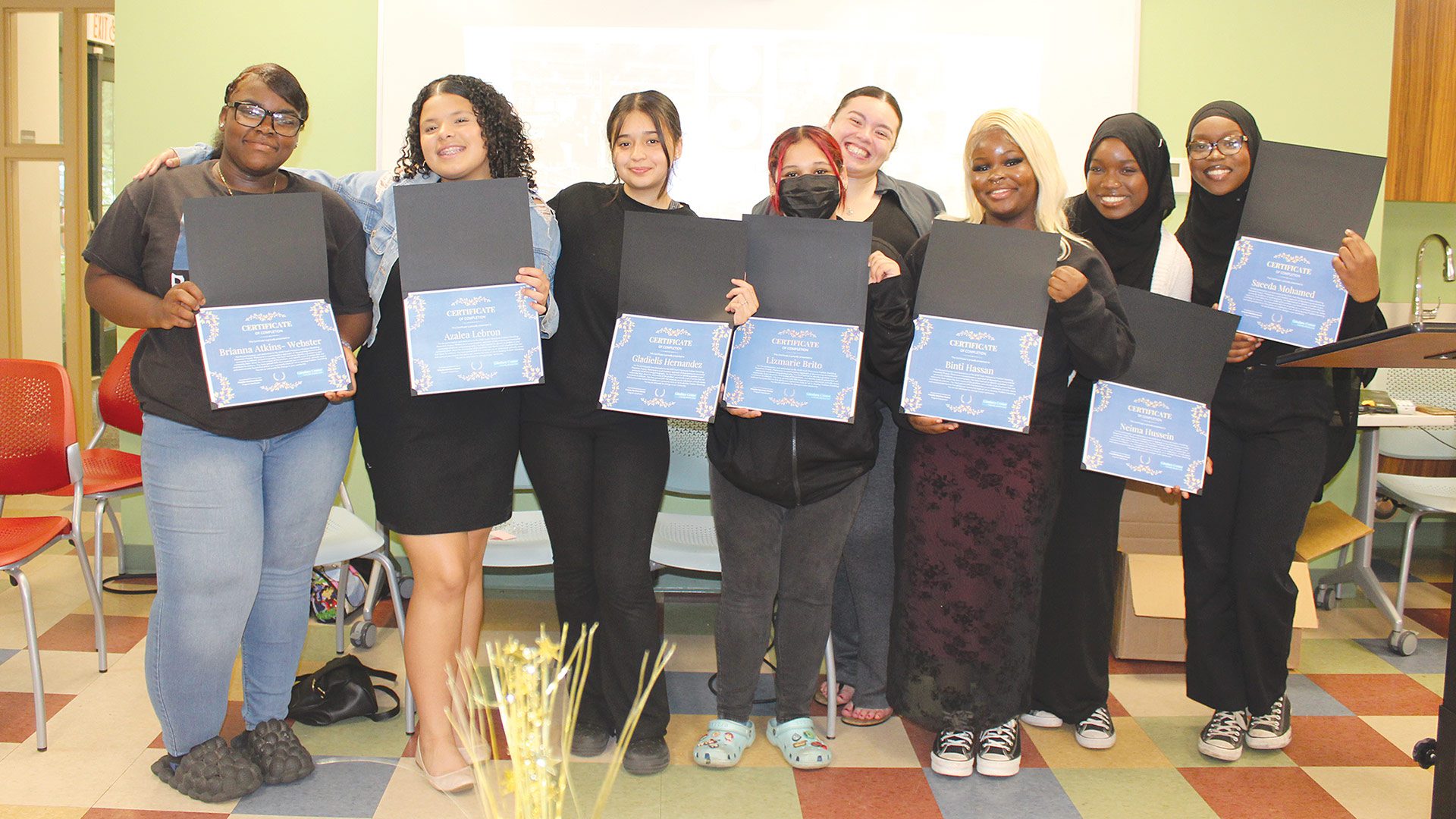
HOLYOKE — Holyoke Community College (HCC) is now recruiting students interested in working in the human-services field for a free, two-semester certificate program that starts in September.

This is the second year of the grant-funded human-services certificate program, which started in the fall of 2023 after the college received a $1.28 million award from the Massachusetts Executive Office of Health and Human Services. The grant covers the full cost of tuition, fees, books, and supplies for students who want to earn a certificate in human services and is coupled with a paid internship at participating local social-service agencies.

HCC’s community partners in the grant include Gándara Center, Craig’s Doors, Mental Health Assoc., and Jewish Family Services. The grant and the HCC program are intended to help address a shortage of workers in the human-services industry.

“This program is really meant to accelerate a student’s entry into the workforce,” said Donna Rowe, chair of HCC’s Human Services program. “It’s wonderful that these four agencies have made this agreement with us. They’re looking for workers, and we have students looking to get into the field.”

The two-semester human-services internship program is now looking to fill slots for up to 30 full-time students to start in the fall. HCC celebrated the first cohort of students to complete the program on May 1.

The human-services industry presents a wide variety of career options for people who are interested in providing care to children, seniors, adolescents, the homeless, or individuals dealing with substance abuse or mental-health issues.

Thanks to the grant, the total savings for full-time students is estimated to be $5,384 per semester. During their second-semester internship, students will receive a stipend of $2,500, which will pay $20 per hour for 10 hours per week of on-the-job training and learning.

“There is definitely a big shortage of human-service workers,” said Amy Brandt, HCC’s dean of Health Sciences. “It’s a challenge for agencies who have a variety of workers at different levels. They don’t have a lot of additional resources to develop that talent pool. They really are on shoestring budgets trying to provide services to the community. When you look at this grant, it’s a huge investment that can really help fill their needs.”

The 24-credit human-services certificate students earn can also be stacked, or applied toward an associate degree in human services, which could then lead to a bachelor’s degree in social work at a four-year college or university.

“The program really has the potential to set students up for lifelong learning and career advancement,” Brandt said, “and it’s also helping these social-service agencies meet their needs.”

Daily News

SPRINGFIELD — The Springfield Museums have joined other museums nationwide in the Blue Star Museums initiative, a program that provides free admission to currently serving U.S. military personnel and their families this summer. The 2024 program will begin on Armed Forces Day, Saturday, May 18, and end on Labor Day, Monday, Sept. 2.

Blue Star Museums is a partnership between the National Endowment for the Arts and Blue Star Families in collaboration with the Department of Defense and participating museums across the U.S.

“We are honored to extend our thanks to the active military and their families by offering free admission to our museums,” said Kay Simpson, president and CEO of Springfield Museums. “We benefit from their service and sacrifice and feel privileged to share our limitless array of collections, exhibitions, and educational activities with them as an expression of our gratitude.”

In addition to the Springfield Museums, the Blue Star Museums program includes children’s museums; art, science, and history museums; zoos, gardens, and lighthouses; and more, from all 50 states, the District of Columbia, Puerto Rico, and the U.S. Virgin Islands.

The free admission program is available for those currently serving in the U.S. military: Air Force, Army, Coast Guard, Marine Corps, Navy, and Space Force, as well as members of the Reserves, National Guard, U.S. Public Health Commissioned Corps, NOAA Commissioned Corps, and up to five family members. Qualified members must show a Geneva Convention common access card, DD Form 1173 ID card, DD Form 1173-1 ID card, or Next Generation Uniformed Services ID card for entrance into a participating Blue Star Museum.

Daily News

SPRINGFIELD — The Pioneer Valley Riverfront Club (PVRC) will host a dragon boat open house on Saturday, May 18 from 9 a.m. to noon at the PVRC Boathouse at North Riverfront Park, 121 West St., Springfield. PVRC will welcome the Veterans Dragon Boat USA team, which is recruiting new veterans to its team that will compete in this year’s PVRC Dragon Boat Festival.

The open house is for all to attend to learn more about rowing, dragon boating, and kayaking programs available to the public at PVRC this summer.

PVRC is preparing for its 10th annual Dragon Boat Festival on Saturday, July 20, and registration is now open for teams to participate at www.pvriverfront.org. Teams that sign up prior to May 27 receive an early-bird discount.

Veterans Dragon Boat USA is the nation’s first sustained all-veteran dragon boat team. At the open house on May 18, which is Armed Forces Day, veterans are encouraged to come and learn more about the team and how to join. No experience is necessary, only a desire to learn a new sport alongside fellow veterans.

According to Ben Quick, executive director of PVRC, “a dragon boat is like a 20-person canoe. The feeling of this many people all working together is inspiring, energizing, and rewarding. Come give it a try and see why it’s such a popular way to enjoy recreation, exercise, and teamwork.”

The Springfield Dragon Boat Festival, which has been hosted by the Pioneer Valley Riverfront Club since 2013, attracts hundreds of participants and spectators to the banks of the Connecticut River for a day of competition, festivity, and community support. The festival is an important fundraiser in support of breast-cancer survivors and community programming at the Pioneer Valley Riverfront Club.

More than 20 teams with hundreds of paddlers from throughout New England participate in PVRC’s Dragon Boat Festival each year. A team is comprised of up to 20 paddlers who race against other teams in 200-meter races on the Connecticut River. Each race lasts about one minute, and each team races at least three times on the day of the festival. Dragon boating originated in China 2,000 years ago and today is one of the world’s fastest-growing team water sports.

Daily News

MONSON — Monson Savings Bank announced it will host a clothing drive during the month of June at all branch locations to collect professional work attire for Suit Up Springfield and Dress for Success of Western Massachusetts.

Suit Up Springfield accepts donations of suits, shirts, ties, shoes, and outer coats. Dress for Success of Western Massachusetts accepts donations of blazers and suits, dress pants, skirts, shoes, outerwear, and jewelry.

Donations of gently used and clean, professional business attire will be accepted at the following branch drop-off locations during normal business hours: 146 Main St., Monson; 15 Somers Road, Hampden; 100 Post Office Park, Wilbraham; 136 West St., Ware; and 61 North Main St., East Longmeadow.

Daily News

SPRINGFIELD — Pinot and parrots, Riesling and rabbits, Sauvignon and snakes. These are a few of the pairings you might see at the Zoo in Forest Park’s Wine Safari on Saturday, June 1 from 2 to 6 p.m.

The 21+ fundraiser will take guests on a trip around the world, pairing wine from different countries with an animal from the same region, giving guests the opportunity to sample various wines as they meet and learn about that country’s native wildlife from members of the zoo’s education and animal-care teams. The money raised from this event supports the care of more than 225 animals that live at the zoo, many of which have been deemed non-releasable to the wild due to illness, injury, permanent disability, habituation, humans, or other factors.

“People often think the zoo is a place for kids, but no one is ever too old to learn,” said Gabry Tyson, assistant executive director at the Zoo in Forest Park. “Wine Safari offers a fun way for adults to learn about and engage with native and non-native species while enjoying a glass of wine or two.”

Guests must be age 21 or older to attend. The $55 ticket includes wine samples from 2 to 6 p.m. (while supplies last), charcuterie and small-bite appetizers, and animal encounters and keeper talks from members of the zoo’s animal-care and education teams. There will also be a raffle with prizes that include handmade Adirondack chairs, wine tasting at a local vineyard, and Red Sox tickets.

“Wine Safari has become one of our most popular signature events,” said Sarah Tsitso, executive director at the Zoo in Forest Park. “We absolutely love welcoming guests to sample wine, interact with our animals, and learn a little something about the wildlife that surrounds us.”

Advanced tickets are required to attend, and IDs will be checked at the door. Tickets are limited and are on sale now at www.forestparkzoo.org/winesafari.

Daily News

Tom Stewart

HOLYOKE — Tom Stewart, director of Athletics and Student Engagement at Holyoke Community College (HCC), is the recipient of the 2024 George E. Killian Award of Excellence, the highest award bestowed each year by the National Junior College Athletic Assoc. (NCJAA).

The award is given to those who demonstrate the ideals of volunteerism, achievement, service, leadership, and excellence. It is named after George Killian, the first executive director of the NJCAA, which he led for nearly 40 years.

“Thank you for all you do to ensure a great student-athlete experience and for your dedication to the NJCAA,” Christopher Parker, NJCAA president and CEO, said in the award letter.

Stewart, a graduate of Westfield State University, has worked in college athletics for more than 35 years, the past 26 at HCC, where he has been director since 1999.

At HCC, he oversees nine intercollegiate sports programs and manages the David Bartley Center for Athletics and Recreation. He serves on the NJCAA board of regents as the representative for Region 21. He chairs the NJCAA Division III men’s golf committee and the NJCAA Division III women’s golf committee while also serving on the NJCAA track and field committee.

During his career, HCC has hosted nine NJCAA cross country championships and a track and field championship. In 2016, he was elected second vice president for the association’s men’s division. In that role, he oversaw the complete budgetary activity of the association. He has previously served as the co-chair of the finance and budget committee.

Stewart and other award winners were recognized on April 17 in Charlotte, N.C. during the 2024 NJCAA annual convention.

Representing 550 schools, the NJCAA is the largest athletic association for two-year colleges in the U.S. Stewart is the first recipient of the George E. Killian Award from any college in New England since it was first presented in 2006.

“That means a lot,” he said. “It’s kind of a culmination of all my work for all these years. And as I’m winding down toward the end of my career, it’s kind of nice to be recognized, even though I’m not big on getting these kinds of awards.”

Stewart started his career in higher education at Westfield State, where he worked for seven years as Student Activities administrator and director of intramurals and coached cross country. He was hired at HCC in 1996 as Student Activities director and became assistant athletic director in 1999 and athletic director in 2007. He now also supervises the Student Engagement department at HCC, which includes Student Activities and the Student Senate.

In October, Stewart was inducted into the Westfield State University Athletics Hall of Fame. As an undergraduate there, he was a four-year member of the cross country and track and field teams. An all-conference runner in 1985 and 1987 in cross country, he won the Westfield State Invitational and was an all-New England runner in steeplechase his sophomore year. Westfield State’s cross country and track teams won conference titles all four years he was on the team.

Daily News

SPRINGFIELD — The Springfield Chamber Players will return to the Longmeadow Adult Center with a free performance by Quartetto Mosso on Thursday, June 13 at 6 p.m. The performance, held rain or shine, will feature violinists Ronald Gorevic and Beth Welty, violist Delores Thayer, and cellist Yoonhee Ko.

Quartetto Mosso is a new Springfield Chamber Players ensemble, which made its premiere in the Berkshires last winter, before presenting a showcase performance in Springfield. The quartet will become the Springfield Chamber Players’ outreach and education performers. The Longmeadow program will include two works by African-American composers, William Grant Still and Florence Price; “Lullaby” by George Gershwin; Antonin Dvořák’s “American Quartet”; and Henry Mancini’s film music for Charade.

Tickets are free, but advance reservations are required by calling (413) 565-4150, option 1. In case of rain, only a limited number of people can be accommodated indoors.

Daily News

GREENFIELD — Gagne Wealth Management Group is expanding its footprint with the addition of two financial advisors, three employees, and an expansion that will double its office location at 238 Main St. in Greenfield. The advising firm, which offers comprehensive estate and income planning, retirement solutions, and investment services, has served Franklin County since 2006.

The acquisition will expand the reach of Gagne Wealth Management, an affiliate of Northwestern Mutual, and comes after Forbes magazine named Gagne Wealth Management to its Best-in-State Wealth Advisors list for the third consecutive year.

“Our commitment to all of our clients and local communities has never been stronger,” Merrill Gagne said. “I feel very fortunate to be able to provide solid local jobs and positively impact Franklin County.”

Dave Bonomi, Tad Malek, Sam Smith, Jenn Hoffman, and Lane Simmons have joined the team, nearly doubling its size. Gagne said the expansion will not only allow the firm to continue to grow in supporting its clients, but also provide significant local revenue to continue its support of local commerce and nonprofits.

Business Talk Podcast

We are excited to announce that BusinessWest has launched a new podcast series, BusinessTalk. Each episode will feature in-depth interviews and discussions with local industry leaders, providing thoughtful perspectives on the Western Massachuetts economy and the many business ventures that keep it running during these challenging times.

Go HERE to view all episodes

Episode 213: May 13, 2024

Joe Bednar talks with  Jillian Duclos, executive director of the Northampton Downtown Assoc.

Downtown Northampton has long been a neighborhood in flux — from its renaissance in the 1990s to its reputation as a trendsetter and tourism draw; from its resilience during the pandemic to the construction and road redesign beginning next year. As executive director of the Northampton Downtown Assoc., Jillian Duclos leads a nonprofit organization dedicated to improving the cultural and economic vitality of downtown, through a mix of beautification, events, marketing, and advocacy. On the next episode of BusinessTalk, she talks withBusinessWest Editor Joe Bednar about the challenges of this important role, and why she’s so passionate about meeting them. It’s must listening, so tune in to BusinessTalk, a podcast presented by BusinessWest.

Also Available On

Daily News

Michelle Raskevitz

EASTHAMPTON — bankESB recently promoted Michelle Raskevitz to vice president, Learning and Development.

Raskevitz joined bankESB as a teller in the bank’s College Highway, Southampton office, and is about to celebrate her 30-year work anniversary at bankESB. She has held various roles, primarily in the realm of training, and was most recently assistant vice president, Learning and Development.

Over the course of her career, Raskevitz has grown the Learning and Development department into a place where everyone is both a teacher and a student, continuously growing, sharing, and innovating together, all under her leadership. She enjoys helping others unlock their full potential, and she has had a hand in developing many of bankESB’s leaders.

Raskevitz obtained her associate degree in business administration from Greenfield Community College, as well as multiple diplomas and certificates from the Center for Financial Training. She also graduated with honors from the New England School for Financial Studies in 2013. She has an extensive background of community involvement and volunteer experience with organizations like Credit for Life and the Easthampton High School Council, and currently is chairperson of the executive board of directors for the Center for Financial Training.

Daily News

NORTH ADAMS — Massachusetts College of Liberal Arts (MCLA) will host information sessions for its master of business administration (MBA) and master of education (MEd) graduate programs on Tuesday, May 14 at 5 p.m. at the Berkshire Innovation Center in Pittsfield. A virtual session will be held on Thursday, May 30 at noon.

Prospective students are invited to meet with faculty, students, and staff to learn more about how to continue their education in two of MCLA’s innovative programs designed to support the rising workforce needs in the Berkshires and beyond.

The MBA program is committed to redefining the educational experience by focusing on real-world applications that drive meaningful change in the region’s businesses and organizations. The program combines liberal-arts principles with modern business studies, equipping students with the critical-thinking skills needed to excel in today’s dynamic business environment. It is a part-time, 30-credit program structured in an accelerated hybrid learning model for working professionals and in partnership with the Berkshire Innovation Center.

The MEd program offers a thoughtful blend of classroom and fieldwork experiences that prepare students to make a meaningful impact in their school communities. Programs include MEd with initial licensure, professional teacher licensure with MEd, MEd with individualized plan of study non-licensure, and accelerated +1 bachelor’s degree with Med.

To register for an information session, click here or call the Office of Graduate and Continuing Education at (413) 662-5575.

Daily News

EASTHAMPTON — The Human Service Forum (HSF) will host a breakfast workshop on strategic planning on Tuesday, May 21 from 7:30 to 9:30 a.m. at the Willits-Hallowell Conference Center, 25 Park St., South Hadley. Click here to register.

The workshop will be led by Jeff Wetherhold, a change-management expert with more than 20 years of experience helping organizations of all sizes develop and implement successful strategic plans. He will discuss the importance of using change-management techniques in strategic planning and provide tips on how to get buy-in from stakeholders and how to track progress.

“Strategic planning is essential for any organization that wants to achieve its goals,” HSF Executive Director Becca Coolong said. “However, many strategic plans end up gathering dust on a shelf. This workshop will teach participants how to develop strategic plans that are engaging and effective.”

The Human Service Forum is a nonprofit organization that provides education, training, and networking opportunities for human-service professionals.

Daily News

SPRINGFIELD — As the weather warms up and people spend more time outside getting their yards and homes ready for the summer, it’s important to keep safety in mind before taking on that next project, especially when dealing with electricity. In recognition of National Electrical Safety Month, Eversource is reminding customers that working around electric lines or equipment can be dangerous or even fatal if proper precautions aren’t taken.

“Safety is something we think about every day; it’s part of our daily workflow and is ingrained in all that we do,” Eversource Vice President of Safety Ken Bogler said. “Our crews work around electric equipment in all kinds of weather conditions and receive extensive training to make sure any repair, upgrade, or maintenance work is done as safely as possible. We want to make sure our customers are armed with the information they need so they can remain vigilant and take the necessary precautions when around electric equipment.”

Customers should always assume power lines are live. Anyone planning to work outside with ladders or power tools should know exactly where electric equipment is located, know what it’s touching, and have a plan to avoid it. Even a quick brush against an energized wire can cause serious harm.

Eversource encourages all customers to keep these additional safety tips in mind during National Electrical Safety Month and throughout the year:

Outdoor Safety Tips

• Don’t touch anything or anyone that’s touching a downed wire.

• Stay as far away as possible from downed wires and fallen trees that could have wires caught in them. Broken power equipment can feed electricity directly into the ground, charging the ground.

• For anyone in an accident with a car or other vehicle near a downed power line, stay in the vehicle until an Eversource worker or first responder says it’s safe to exit.

• Call before you dig. Call 811 or (888) 344-7233 at least three days prior to digging so that utilities can mark underground wires, cables, and pipelines.

• Keep kites, Mylar party balloons, model planes, and drones far away from power lines.

• Always store electrical equipment indoors and never use corded power tools in wet or damp conditions.

Indoor Safety Tips

• Avoid touching any bare wires, faulty appliances, or electrical outlets; always assume a wire or electrical appliance is energized.

• Cover unused wall outlets with plastic safety caps to protect small children and pets; consider installing tamper-resistant receptacles if your outlets do not currently have them to prevent foreign objects, other than electrical plugs, from being inserted into the outlet.

• Never overload outlets by using multiple adapters or power strips as this can cause overheating and fire.

• Regularly check wires and extension cords for signs of wear and replace those that are frayed or cracked.

• Keep an all-purpose fire extinguisher on every floor of a home; never attempt to put out an electrical fire with water.

• Install outlets with a ground fault circuit interrupter in rooms where water and moisture are present.

• Unplug appliances while cleaning or repairing them.

Daily News

WESTFIELD — Westfield State University President Linda Thompson appointed William Salka as provost and vice president for Academic Affairs. Salka will begin his duties on July 5.

As Westfield State continues to build and reinforce systems, programs, and opportunities to enrich students’ academic experiences as well as the intellectual life of the university, Salka’s leadership acumen, scholarship, integrity, and collaboration are expected to serve Westfield State’s institutional mission and the diverse interests of the campus community.

Among talented candidates, Salka was distinguished by his academic leadership as provost for Eastern Connecticut State University for the past six years, during which time he was widely recognized as a champion of faculty scholarship and research and students’ academic pursuits. He believes in the importance of a dynamic undergraduate and graduate learning experience in which faculty and employees work cooperatively to develop the knowledge, skills, and character essential for students to become responsible leaders and engaged citizens.

“I am very excited about this great opportunity to join the Westfield State team,” he said. “I look forward to arriving on campus in July and getting to know my new colleagues.”

Salka received a bachelor’s degree in political science and government from Lewis & Clark College and a doctorate in political science and government from Colorado State University. Prior to serving as chief academic officer for Eastern Connecticut State University, he taught numerous courses in American government, environmental policy, and globalization in his capacity as professor of Political Science since 2000.

Daily News

GREENFIELD — Ja’Duke Inc. owners Kimberly Williams and Nicholas Waynelovich announced their intent to expand their childcare, driving-instruction, and performing-arts program through the purchase and renovation of 270 Main St. in Greenfield. Formerly occupied by Greenfield Community College, this 25,000-square-foot facility has been vacant since 2020 and has remained unused even after Dave Mell purchased the building in January 2023.

If approved, Ja’Duke plans to utilize the 270 Main St. site as a satellite location to its Turners Falls facility located at 110 Industrial Blvd., which currently houses seven of Ja’Duke’s businesses. After opening in 2004, Ja’Duke Inc. has grown to include driver’s education through the Ja’Duke Driving School, 75 weekly performance-art classes under Ja’Duke Center for the Performing Arts, 14 early-education and childcare classrooms through Ja’Duke Preschool, and dozens of performances hosted annually in Franklin County’s largest theater, Ja’Duke Theater. Additionally, owners Williams and Waynelovich operate Ja’Duke Backdrops, with an on-site coffee shop, Ja’Duke Café, and ice-cream shop, Ja’Duke Scoops.

Williams and Waynelovich plan to focus the Greenfield site’s programming on childcare, driving, and performing-arts education.

“It’s our vision to revive this building and bring back the educational component that once thrived there,” Williams said. “We currently serve hundreds of families in Franklin County through our educational services offered in Turners Falls. As we expand our services to Greenfield, we are excited about the potential of reaching even more children and families by providing childcare, performing-arts classes, and driver’s education in a very central and accessible location.”

The 270 Main St. site would house 14 classrooms, accommodating 150 new childcare slots per day serving children ages 0-5. The basement floor will host Ja’Duke Driving School offices, which hopes of serving hundreds of new Franklin County drivers ranging from teens to adults. According to Williams, the third floor will hold Ja’Duke’s performing-arts classrooms. The proposed project would create at least 30 new jobs and significantly increase foot traffic in the downtown district.

JaDuke’s expansion will be good for Greenfield, Franklin County Chamber of Commerce Executive Director Jessye Deane said. “JaDuke is famous for providing high-quality education and building community, both of which will benefit Greenfield’s downtown. Kim, Nick, and the Ja’Duke team have a long history of success, and we look forward to celebrating this expansion and the foot traffic it will bring to Greenfield’s downtown.”

Ja’Duke plans to present to the Zoning Board on Thursday, May 16, with the purchase and sale pending finalization in early June. Williams hopes to launch Greenfield-based programming in early 2025 once renovations are complete.

Daily News

Brooke Barre

CHICOPEE — Phillips Insurance Agency Inc. announced that Brooke Barre, senior account management in the Commercial Insurance department, has earned the prestigious CPCU (chartered property casualty underwriter) designation.

The CPCU is considered the most valuable credential in the industry for demonstrating insurance and risk-management skills. The CPCU program is a multi-year program focusing on in-depth risk-management analysis of complex insurance risks.

Barre will attend the CPCU induction ceremonies this November at the Coronado Springs resort in Orlando, Fla. A graduate of Bridgewater State University, she joined Phillips Insurance in 2020.

Daily News

SPRINGFIELD — Beginning June 3, the Realtor Assoc. of Pioneer Valley will host a 40 hour, 14-class, sales licensing course to help individuals prepare for the Massachusetts real-estate salesperson license exam. The course will be completed on July 11.

Tuition costs $425 and includes the book and materials. For an application, call the Realtor Assoc. of Pioneer Valley at (413) 785-1328 or visit www.rapv.com.

Law

Gainful Employment

By Abby M. Warren, Esq. and Virginia E. McGarrity, Esq.


Whether you are picking up a well-respected periodical or a celebrity newsmagazine, you cannot avoid reading about semaglutide injection drugs — drugs used to control blood-sugar levels for individuals with type-2 diabetes and weight loss.

‘Ubiquitous’ is the only word to describe the news coverage of these ‘miracle medications.’ As news has spread about these medications, their use has expanded far outside of Hollywood to individuals across the country, ultimately leading to a reported shortage. So, what impact, if any, does weight, weight loss, or the spread of such medications have on the workplace?


Weighty Considerations

First, studies have long concluded that discrimination based on appearance, including weight, occurs in employment and other areas of life and that it may disproportionally impact a specific group or groups of individuals. Likely in response to such evidence, effective Nov. 26, 2023, New York City passed a law protecting individuals who live in, work in, or visit the city from discrimination based on their height or weight regarding employment, housing, and public accommodations.

While New York City may be an early adopter of such a law, there may be more jurisdictions that follow this trend. Further, on the federal level, the Equal Employment Opportunity Commission has long taken the position that height and weight are generally unacceptable pre-employment inquiries as they may disproportionately impact employees of different protected characteristics. In short, weight has always impacted the workplace, including workplace decisions.

Second, there may be harassment or workplace bullying related to appearance, including weight. Harassment, whether sexual or based on other protected characteristics, can involve comments or actions related to the physical body and appearance. The same is true of bullying and targeting in the workplace. In today’s climate, where millions of employees are being prescribed or taking weight-loss drugs, this may include employees asking questions of a co-worker who has lost weight, asking whether a co-worker is taking a weight-loss drug, making judgmental statements, stigmatizing such individuals, and similar behavior.

While harassment and bullying related to appearance may not be new, such treatment based on the perception that an employee may be taking a weight-loss drug could be a more recent area with which human resources must grapple.

Third, workplace culture may be impacted by the recent focus on weight and weight-loss medications, and the level of such impact may depend on several factors. For example, the employer’s geographic location, the industry, the overall focus on health and wellness in the workplace, and the employer’s commitment to inclusivity and belonging may all impact how weight and height will be viewed, including using such weight-loss medications.

In light of these workplace considerations and the attention that these weight-loss medications have received in recent months, a number of employers have opted to implement clinical lifestyle programs and personalized weight-loss management plans. The goal of these programs is to reduce the number of employees who might benefit from weight-loss medications like Wegovy.

To the extent employers have control over their healthcare coverage (fully insured plans are typically subject to state insurance laws and individual determinations made by insurance carriers), the decision of whether to cover these weight-loss medications is a challenging one. While these drugs have potential for long-term improvement in the health of employees and can drive future cost savings for the health plan, the cost of covering them today may not align with budget constraints and sustained increases in healthcare spending over the long term.

For example, the current list price of Wegovy is more than $1,300 per month, and most patients take it indefinitely to maintain their weight loss. North Carolina recently announced it would no longer cover Wegovy and other similar weight-loss medications for its employees, estimating that such continued coverage would cause premiums to double for all employees (not just those who are taking the medications). While it is difficult to determine how many private-employer health plans are covering these weight-loss medications, it does not appear that such coverage matches the rampant surge in popularity these medications have experienced in the past year.


Advice for Employers

At this juncture in history, where celebrities, media, and the American public are hyper-focused on weight, including weight-loss medications, what actions can employers consider?

First, it is essential to continue fostering a positive and inclusive work environment that extends to weight, height, body shape, and appearance. Trainings, policies, town halls and education, and other visible commitments to such inclusivity can all support such a culture.

Second, businesses should establish specific training of managers, supervisors, and individuals involved in recruiting and hiring about weight and height discrimination and bias (including studies that have demonstrated the existence of this bias), and how these employees can foster an inclusive work environment, and remove any relevant barriers that may exist.

Lastly, employers may wish to review their current culture, policies, and benefits to determine if the employer is supporting the health and well-being of employees and their health journeys, and whether there are potential areas of improvement.


Abby Warren and Virginia McGarrity are partners at Robinson+Cole in Hartford, Conn. Warren is a member of the firm’s Labor, Employment, Benefits, and Immigration Group, while McGarrity is a member of the Employee Benefits and Compensation Group.

Healthcare News

Meeting a Need


MiraVista Behavioral Health Center recently announced the expansion of its facilities with the opening of new adult inpatient treatment beds. These adult beds are in addition to the 16-bed adolescent unit which was recently renovated and now reopened.

The addition of these specialized beds reflects MiraVista’s ongoing commitment to meeting the growing demand for high-quality mental-healthcare services. With mental-health challenges on the rise globally, the Holyoke facility recognizes the importance of providing comprehensive and compassionate care to individuals with mental illness.

“We believe that everyone deserves access to effective treatment in a supportive environment, and these new beds will enable us to provide specialized care to more individuals in need.”

“Our decision to expand our inpatient treatment capacity underscores our dedication to serving our community and the Commonwealth and addressing the increasing need for mental-health services,” said Shelley Zimmerman, MiraVista’s hospital administrator. “We believe that everyone deserves access to effective treatment in a supportive environment, and these new beds will enable us to provide specialized care to more individuals in need.”

The new adult inpatient beds will offer a range of therapeutic interventions tailored to meet the unique needs of each patient. MiraVista’s multi-disciplinary team of experts, including psychiatrists, psychologists, social workers, and nurses, will work collaboratively to develop personalized treatment plans focused on promoting healing and recovery.

In addition to individualized therapy sessions, patients will have access to group therapy, medication management, recreational activities, educational workshops, and peer support, all designed to foster personal growth and empowerment. MiraVista’s holistic approach to treatment emphasizes wellness and resilience, empowering patients to achieve lasting positive change in their lives.

Direct admission without first being seen in an emergency department is a new process MiraVista introduced with the reopening of its adolescent unit.


Hope and Support

MiraVista also recognized May as Mental Health Awareness Month with a flag raising on May 9 and by illuminating its façade green.

“Green is used for the month to symbolize hope and support for individuals living with a mental illness,” said Kimberley Lee, chief of Creative Strategy and Development. “Our clinicians work across populations to help patients successfully manage their mental-health challenges and lead fulfilling lives in community.”

In conjunction with the Substance Abuse and Mental Health Services Administration’s (SAMHSA) observance of the month, Lee explained, MiraVista will highlight on its social media the diverse mental-health needs of various populations and encourage people to wear green.

“These 31 days are about advancing better understanding of mental health as a component of overall health and the importance of seeking evidence-based treatment for it when needed,” she said. “Whether someone is navigating personal challenges or extending empathy to others, this month holds significance for us all in showing support for mental healthcare.”

Lee said MiraVista will follow SAMHSA’s suggested weekly themes in highlighting the mental-health needs of older adults, children and teens, marginalized racial and ethnic groups, and those who identify as LGBTQIA+ and, as a result of bullying and discrimination, are at high risk for mental-health conditions.

“We are amplifying our efforts during May to destigmatize mental health, enhance understanding, and cultivate a supportive environment,” Lee said. “Promoting mental health and treatment for it benefits everyone — from the individual managing it to the family and friends who love them, to the community in which they live and contribute.”

Daily News

FLORENCE — Florence Bank recently announced it has donated $100,000 to the Iron Horse Music Hall, supporting a $750,000 capital campaign for renovations and updates to the well-loved music venue in downtown Northampton, which reopens on May 15.

Chris Freeman, executive director of the Parlor Room Collective in Northampton, which purchased the Iron Horse last fall and has been updating it since, said the bank’s gift will help fund ongoing work to the venue at 20 Center St.

He explained that the collective has already expanded the Iron Horse into a storefront next door that formerly housed a Christian meeting space, and is in the process of moving the bar into that new space, along with 10 bathrooms. The bathrooms in the basement of the venue will be updated and reserved for visiting artists only; the remainder of that downstairs space will be remodeled to be “more artist-friendly,” and artists alone will be able to access the area, Freeman said.

Other work being undertaken at the music hall includes the installation of a new sound system, lighting, flooring, and an HVAC unit for cleaner, fresher air.

“Florence Bank is a big community supporter. They were our first corporate ask,” Freeman said, noting that the Parlor Room Collective is running the capital campaign for the Iron Horse through the bank. “Florence Bank understands our mission, our vision for what the Iron Horse can become. We’re so grateful they stepped up in such a huge way.”

He added that, when the Parlor Room became a nonprofit, it leaned into Florence Bank for funds to start an open-mic series, a program that has since become self-sustainable. “Without that early gift from Florence Bank, we wouldn’t have been able to get it started,” he said.

The Parlor Room is a small listening room in Northampton, founded 11 years ago as a facet of the Signature Sounds record label. Freeman was a musician in a band that recorded on the Signature Sounds label in those days, becoming more involved with the Parlor Room after the pandemic. In 2022, the Parlor Room became a nonprofit and is now known as the Parlor Room Collective.

Florence Bank President and CEO Matt Garrity said the Iron Horse has been at the core of the local music scene since its founding in 1979, and the bank is proud to support the Parlor Room Collective’s revival of the venue.

“We value the collective’s mission-based approach to the return of the Iron Horse,” Garrity said. “The Iron Horse has long been a space in which local patrons and musicians from far and wide can celebrate art, music, and community, and we look forward to the return of that energy.”

The Iron Horse is still seeking donations and sponsorships. Learn more at ironhorse.org/revive-the-iron-horse.

“It’s such a fun cause to fundraise for,” Freeman said. “So many people have memories about being at the Iron Horse. It’s an amazing spot. We’re incredibly grateful to the bank and the whole community.”

Daily News

SPRINGFIELD — Moms in Power will present the Strength in Her Story Conference on Saturday, May 18 from 11 a.m. to 3 p.m. at Macedonia Church, 215 Tinkham Road, Springfield.

The conference aims to be a beacon of hope and inspiration, dedicated to celebrating the resilience, strength, and courage of women navigating through life’s complexities.

“This transformative event is a celebration of your evolution, your rise above trauma, and your journey of redefining who you are in the complexities of life,” said Arlyana Bowie, CEO of Moms in Power. “This event is for all women: the woman finding herself, the women going through a tough season, the daughter, the wife, the single parent, the aunt, the grieving woman, even the matriarchs of our families. Everyone you know has a story, and this conference is about redefining your and celebrating story with a different narrative while recognizing your true strength: your healing, restoration, and purpose. Dive deep into empowering conversations, interactive workshops, and inspiring activities designed to uplift and inspire.”

The $40 ticket includes a brunch buffet, inspirational speaker, dynamic panel discussions, healing workshops, raffles, networking, and more. Click here to register.

“From overcoming challenges to embracing and redefining who you are and all you desire to be, this conference is your opportunity to connect with like-minded women, share your stories, and leave feeling empowered, healed, and restored,” Bowie said. “Join us as we celebrate the strength, resilience, and beauty of womanhood.”

Daily News

SPRINGFIELD — The Springfield Symphony Chorus will give a spring concert, titled “Sing, Praise, Light II,” on Saturday, May 11 at 4 p.m. at St. Peter’s Lutheran Church, 34 Jarvis Ave., Holyoke. Proceeds from the event will benefit the Food Bank of Western Massachusetts.

Tickets cost $10, cash only at the door. Doors open at 3:15 p.m. The chorus will perform eclectic choral works based on themes of “Sing, Praise, Light.”

In addition to chorus recitals, the Springfield Symphony Chorus collaborates and performs with the Springfield Symphony Orchestra each concert season. During the 2023-24 concert season, the chorus performed during Holiday Pops and the Fantasias concert in March, and will also perform at the upcoming free Juneteenth concert, all at Springfield Symphony Hall.

Daily News

SPRINGFIELD — Max Tavern at the Basketball Hall of Fame will host the seventh Max on Monday networking event on Monday, May 13 from 4 to 6 p.m., offering attendees the opportunity to connect with other professionals while enjoying complimentary hors d’oeuvres. A cash bar will be available for beverages.

At each event, Max on Monday will feature a selection of local businesses. In May, the sponsored businesses will include PeoplesBank, Allied Flooring, Budget Cabinets, Greenstone Landscape, and LAKAY Building and Remodeling. Representatives from these businesses will be able to network with one another and share information about their organizations.

In addition, the event features a local charity. On May 13, the Juvenile Diabetes Research Foundation will be the featured charity. A local artist will also be featured.

For more information about Max on Monday or to register to attend, RSVP to AnnMarie Harding (413) 244-4055 or [email protected].

Cover Story

A Look Back — and Ahead

What’s Changed — and What Hasn’t — in 40 Years

1984. That’s the title of an epic George Orwell novel, written 36 years earlier, that takes a look into the future and describes a world ruled by a televised ‘Big Brother.’

The real 1984 was a thankfully cheerier year. Ronald Reagan won a second term in office, the Boston Celtics won an epic NBA Finals series over the Los Angeles Lakers, gymnasts including Mary Lou Retton and West Springfield’s own Tim Daggett dominated the Summer Olympics in LA, and the Basketball Hall of Fame was soon to open its doors on Springfield’s riverfront.

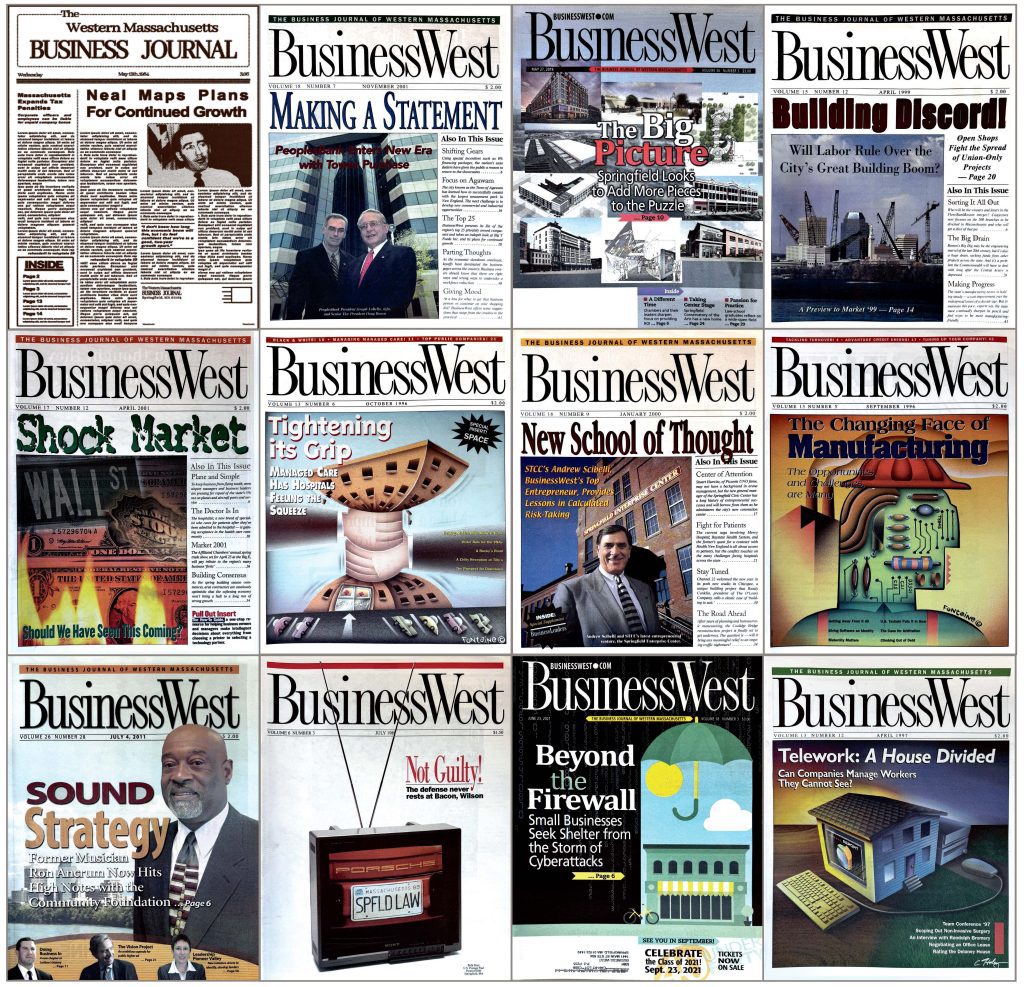
That May, a new publication first appeared in businesses across the region. It was called the Western Massachusetts Business Journal, and the monthly magazine was something new and completely different — a publication devoted entirely to the region’s business community.

A few years later, the name was shortened to BusinessWest, which was not the only change to have taken place over the past 40 years. The magazine has since added a second issue each month, a strong digital presence, a daily news blog, a podcast, and several annual recognition programs and accompanying events.

Yet, as BusinessWest turns 40, we’ve dedicated this commemorative issue not to the changes that have taken place here, as significant as they are, but on the sweeping changes that have taken place in the workplace and in our business community.

They have included advances in computer technology that have transformed virtually every sector; a few memorable recessions, including one so profound it was called Great; a pandemic that shut down much of the world for months and may have permanently altered the way people work; a slew of state-of-the-art healthcare projects; a dramatic wave of contraction and acquisition in fields ranging from banking to insurance; a continued focus on entrepreneurship; and even brand-new sectors, most notably cannabis, and still-murky developments like artificial intelligence.

These sweeping, profound changes have impacted just about every sector, from education to law to construction, and have altered how we work, where we work, when we work, and even what we wear to work. In short, it’s been an eventful four decades, which has more than justified Publisher John Gormally’s decision to chronicle all of it on the pages of this magazine.

There’s no way to sum all that up in one issue, but we hope the articles below, brought to life by interviews with some of this region’s most prominent business leaders, at least begins to paint the picture of an economy, and region, ever in flux.


In this special section, 40 years of:

Click on each story to read more

or go HERE to view the entire BusinessWest 40th Anniversary issue

Banking

Commercial Development

Construction

Financial Planning

Healthcare

Higher Education

Manufacturing

Nonprofits

Professional Services

Technology

The Workplace


Law Special Coverage

Firm Resolve

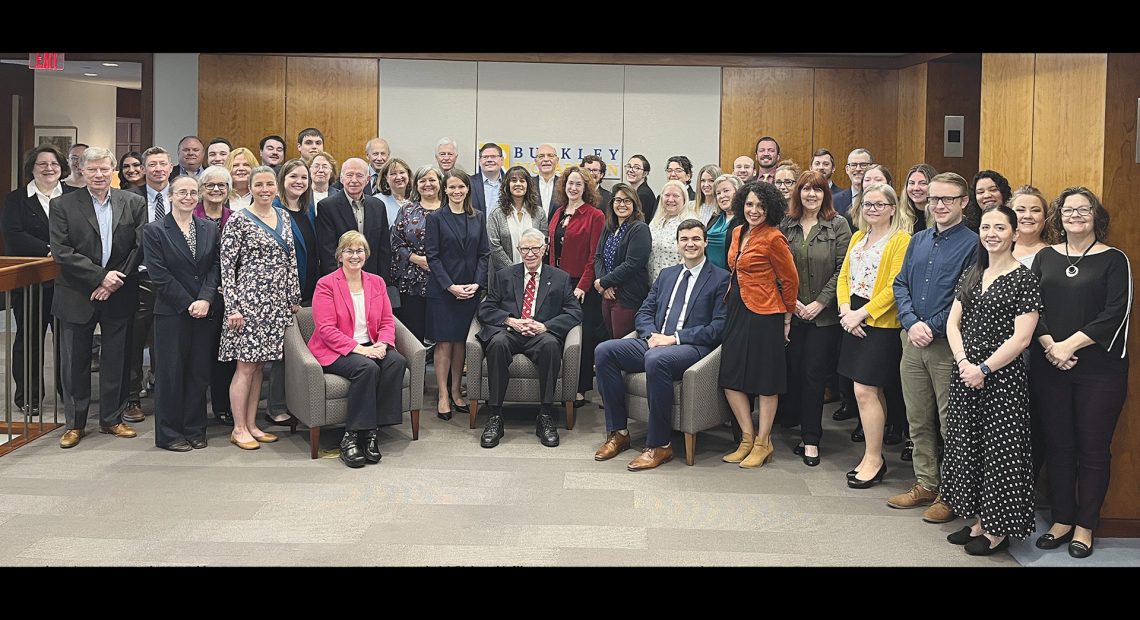
Sean Buxton was talking about why he chose to join the Springfield-based law firm Bulkley Richardson, and what he’s found since he came on board not quite a year ago.

“It’s been an amazing experience,” said Buxton, who handles general commercial litigation and is currently doing a lot of work in the firm’s new office in Greenfield, referring specifically to being around — and being mentored by — seasoned attorneys with decades of experience.

“Just in the Litigation department alone, we have Sandy Dibble — I can’t even tell you how long he’s been practicing — and Mike Burke, too; they’re such valuable asssets,” he said. “In the legal field, you get this feeling sometimes that the problem you’re coming on is something you’re seeing for the first time and that no one’s ever dealt with this before. To have someone to go to and have them say, ‘that same exact circumstance hasn’t happened to me, but here’s what my instincts say’ and ‘here’s what I’ve experienced,’ that is so valuable.

“You can bounce ideas off so many people here and make sure that your decisions are informed not only by you and what you’ve learned, but by the instincts and experience of everyone around you,” Buxton went on. “And they’re just fascinating people; we have Judge [John] Greaney here, who sat on the Appeals Court and the Supreme Judicial Court, and Sandy as well; the stories they tell and the experiences they can relate … they’re great mentors.”

While the names of the older lawyers and mentors may have changed, and the exact words used to describe their impact may have changed as well, generations of lawyers who have worked at the firm have been saying pretty much the same things as Buxton.

“You can bounce ideas off so many people here and make sure that your decisions are informed not only by you and what you’ve learned, but by the instincts and experience of everyone around you.”

And that’s just one of many things the firm is celebrating as it marks its centennial this year in what could be described as quiet, poignant fashion (we’ll get back to that in a bit).

It’s taking place at a time of change in the business landscape, such as the rise of the cannabis industry, and at a time when many firms are smaller or have been merged into larger entities. Meanwhile, the firm’s ongoing commitment to the community has become a focal point of the centennial, said Managing Partner Dan Finnegan, who came on board in 1992.

“We wanted to celebrate all of the amazing work that has gone into supporting, celebrating, and engaging in the communities in which we live, work, and play through initiatives such as helping to feed the hungry and addressing food insecurity, supporting arts and culture, contributing funds to lifesaving healthcare and research organizations, and providing pro bono legal services to those in need, among many, many others,” he explained. “Members of the firm have contributed time, resources, and finances to help so many worthy causes over the past century, and we plan to continue that legacy.”

Dan Finnegan

Dan Finnegan says the firm’s commitment to the community has become a focal point of its centennial celebration.

Elaborating, he said the firm has launched a new campaign called ‘Be the Change.’ It will connect lawyers and staff with opportunities to engage with organizations in Western Mass. and beyond so they can act together to bring positive change.

The campaign was launched last fall, with a team of 50 from the firm taking part in the annual Rays of Hope breast-cancer walk. Other specific initiatives include a YMCA clean-up day on May 3, when attorneys and staff rolled up their sleeves and helped prepare Stony Brook Acres, a YMCA camp in Wilbraham, for a June opening; partnering with Greater Springfield YMCA to assist area boys and girls attend summer camp (the firm will send 16 youth campers to a YMCA-run camp this summer for one week); and a $10,000 donation to Baystate Health to purchase infusion chairs.

“Giving back to the community is one of the core values that differentiates us,” said Peter Barry, who joined the firm in 1982 and preceded Finnegan as managing partner, adding that this is one of many qualities and traditions that essentially go back to 1924.

For this issue and its focus on law, BusinessWest takes a look at 100 years of tradition, expansion, innovation, entrepreneurship, and giving back — and at how these traits will continue to define the firm moving forward.


Making Their Case

When asked how Bulkley Richardson intends to celebrate its centennial — beyond ‘Be the Change’ — Finnegan suggested that the annual holiday party “might be a little more robust this year.”

In most respects, though, it will be business as usual.

And it has been this way since 1924, when R. DeWitt Mallary became associated with the law firm of Frederick Wooden and Harold Small, located in an office at 387 Main St. in Springfield, several blocks south of where the firm is headquartered now, in Tower Square. Eventually, the firm would become Wooden, Small & Mallary.

Peter Barry

Peter Barry says the firm has had a noticeable impact on Springfield and surrounding communities over the years.

Mallary would later partner with Morgan Gilbert to form Mallary & Gilbert, and in 1934, J. Bushnell Richardson, a graduate of Springfield’s Central High School, Amherst College, and Harvard Law School, would join them, and in 1947, the firm became Mallary, Gilbert & Richardson.

In 1950, the firm was reorganized, with the law practice conducted in collaboration by two separate partnerships — Mallary & Gilbert, and Richardson Dibble & Atkinson, adding Norris Dibble and Robert Atkinson as partners. The firms practiced together in shared office space.

Fast-forwarding through the middle of the 20th century, Richardson Dibble & Atkinson merged with the firm of Gordon, Bulkley, Godfrey and Burbank in 1956, and the firm was renamed Bulkley, Richardson, Godfrey and Burbank. A year later, Robert Gelinas joined the firm, and in 1964, Godfrey left to form a partnership with Edwin Lyman. Matthew Ryan Jr., elected as district attorney, a part-time office in those days, joined Bulkley, Richardson, Godfrey & Burbank soon thereafter. And with Burbank’s departure in 1972, the firm was renamed Bulkley, Richardson, Ryan, and Gelinas.

In 1978, the district attorney’s role became full-time, and Ryan left the firm, whch was renamed Bulkley, Richardson, and Gelinas. By 1983, the firm consisted of 27 attorneys and was occupying a suite of offices at Baystate West, which later became Tower Square.

It is still there and recently renewed its lease, said Finnegan, so it will be there for a long while to come. Meanwhile, the firm recently opened a Greenfield location (it also has one in Hadley), and now consists of 40 attorneys and more than 30 staff.

“We work hard, and we provide quality service, but we’re pretty good at work-life balance and understanding that folks have to have lives outside of the office.”

That brings us to today, when the firm is marking what have remained constants through all those changes to the letterhead over the past 100 years — especially quality service to a wide array of clients across dozens of different specialities, and an environment where generations of lawyers have, as Buxton noted, worked together and mentored those new to the profession.

It is also marking change, including the contunuing expansion of its practice areas — there are now 32 of them, Finnegan noted.

“We’ve always been a full-service law firm, one of the biggest, if not the biggest, in the area,” he said. “And we’ve always been able to provide a wide array of services to clients.”

Within those 32 practice areas there have long been specific strengths, such as health law, said Barry, noting that the firm has long represented many of the region’s larger providers, as well as education, representing several colleges and universities.

Bulkley Richardson’s leaders say the firm was built on excellence and has maintained it through the decades.

But there have been important additions to the portfolio over the years as well, he went on, citing the broad realm of cyber law and service to the growing, changing cannabis industry as just two examples.


Continuing a Legacy

Barry, who has been with the firm for 42 of its 100 years, joined it just before it relocated from State Street to Tower Square, a big move and a rather large risk for the partners at the time, he said, adding that downtown Springfield was a much different place at the time.

And the firm has been involved in many of the changes that have taken place since, representing entities ranging from the Basketball Hall of Fame, which built its new home just over 20 years ago, to the Springfield Redevelopment Authority, which presided over the renovations that brought Union Station back to productive life after nearly 40 years of dormancy, to the Massachusetts Convention Center Authority, which operates the MassMutual Center.

“It’s nice to be able to drive around and say, ‘we were involved with that,’” Barry said, adding that the firm has also represented the Westover Metropolitan Development Corp. in its many endeavors in Chicopee and Ludlow and countless other clients as well.

Like Finnegan, Barry said many changes have come to the field of law and the firm over the past few decades, let alone the past century — everything from the demise of law libraries, with all that material now online, to the advent of depositons and other legal functions via Zoom.

What’s probably more important is what hasn’t changed — and won’t change, they said, especially the firm’s commitment to excellence as well as the environment that Buxton described earlier, one where lawyers and staff with wide ranges of experience and knowhow work together to generate positive results for clients while learning from each other.

In fact, both Barry and Finnegan used similar words and phrases to describe those who mentored them when they arrived four and three decades ago, respectively.

“I’ve had a lot of great mentors here,” said Barry, noting that he and others now serve as mentors to the younger atttorneys.

Finnegan said the firm has created a strong culture, one that has promoted many lawyers (he’s one of them), and staff members as well, who then spend their entire careers at Bulkley Richardson.

“That’s a testament to the culture of the firm,” he said. “We work hard, and we provide quality service, but we’re pretty good at work-life balance and understanding that folks have to have lives outside of the office.”

Looking ahead, Barry and Finnegan said the business plan is rather simple. It calls for continued growth and building upon the solid foundation laid in 1924.

“We’ve made a commitment to growth. Within the past few years, we’ve hired quite a few young lateral attorneys, as well as several attorneys right out of law school,” said Finnegan, adding that the firm has what he calls a rather robust summer associate program (he was one himself) that has served to help keep talent flowing through the pipeline. “We have a lot of young lawyers that we’ve hired over the past few years.”

“Overall, the firm has long managed to maintain an important mix of older attorneys, those in the middle of their careers, and those just joining the profession,” said Barry, adding that such a mix is critical to the ongoing success of any law firm.

Finnegan agreed, noting that this quality is one of many that have defined the firm since Warren Harding was in the White House, and will continue to do so moving forward.

“When I got here, the word I always heard was ‘excellence’ — this firm was built on excellence,” he said. “The firm has always been a collection of exceptional lawyers providing top-quality legal services to our clients. I don’t think that’s ever changed over the 100 years the firm has been in existence, nor is it going to change moving forward.”

Healthcare News Special Coverage

Breaking Down Barriers

Gándara’s Family Resource Centers

Gándara’s Family Resource Centers each provide a number of services for families in one location.


There’s no doubt, Lois Nesci said, that the COVID years triggered or exacerbated a lot of mental-health issues, which makes the multifaceted of Gándara Center more important than ever.

At the same time, the pandemic’s impact on mental health also got more people talking than ever before — and that’s good for everyone.

“The need has increased, absolutely,” said Nesci, Gándara’s CEO. “But at the same time, as we continue to break the stigma around mental health, people become more and more willing to discuss some of their struggles or ask for help. We as a society have been educating people: what are the signs people exhibit if they’re not doing well, if they’re depressed, anxious, or struggling with substance abuse?”

To help those who fall into those categories, as well as many others, Gándara’s services fall into five buckets:

• Behavioral health, which encompasses a broad array of clinical and substance-use services for adults, families, children, and adolescents, including individual and group psychotherapy, diagnostic assessments, and treatment;

• Youth, young-adult, and family services, including children’s behavioral health, foster care, and youth and young-adult residential ​homes;

• Substance use and recovery, with services include recovery coaching, peer recovery centers, and long-term residential treatment for men, women, and young adults with substance-use disorder and co-occurring mental-health disorders;

• Community and prevention, including health-education programs and initiatives that provide resources and information addressing numerous public-health areas while representing the multicultural needs of the region; and

• Intellectual and developmental disability services, which promote the health and well-being of adults with intellectual and developmental disabilities and those with behavioral health and/or substance-use disorders.

Gándara’s mental-health services — its most robust collection of offerings — focus on a few key areas: outpatient behavioral-health clinics, children’s behavioral health, substance-use and recovery services, and adult community clinical services.

“As we continue to break the stigma around mental health, people become more and more willing to discuss some of their struggles or ask for help.”

“Gándara has always had a mission to help people at the grassroots level,” Nesci said. “We’re in communities where people live. We’re accessible and very visible. We provide the linguistic ability to meet people where they’re at, and the staff reflects the population we serve.”

As a multi-service organization with a geographic footprint statewide, Gándara targets many of its programs at specific populations, such as recovery programs for Hispanic individuals and a residential group home for LGBTQ+ youth, Nesci noted. “Gándara has always responded to individual needs in the community.”


Five Decades of Growth

According to its website, Gándara Center was founded in Springfield in 1977 to advocate and provide for equal, culturally competent behavioral-health services for the Hispanic community.

The 1970s saw a large wave of Hispanic migration to the Greater Springfield area, and the portion of newcomers who had mental-health and substance-use issues had limited access to services that could help them.

Lois Nesci

Lois Nesci says mental-health needs have increased, but so have the conversations around them.

Fortunately, in 1977 — and later, as a part of President Carter’s Mental Health Systems Act of 1980 — funding was made available to communities across the U.S. to address the mental-health needs of individuals suffering from serious mental illness, including the elderly as well as racial and ethnic minority communities.

The city of Springfield submitted a citywide application that included needs in both the Hispanic and African-American communities. This funding strengthened the city’s mental-health services and aided the Gándara Center, whch was named after Dr. José Gándara Cartagena, a prominent physician and public servant from Puerto Rico who dedicated his life to providing services for those who could not afford medical care. He also advocated for urban renewal, especially the construction of much-needed new public housing.

Gándara Center was first housed in a storefront on Main Street in Springfield and then on the Mercy Hospital campus on Carew Street. In 1982, when the center opened an outpatient clinic on Main Street, it was the only agency in the area specifically providing culturally sensitive care to the Hispanic community.

In the early years, Gándara’s first executive director, Dr. Philip Guzman, laid the foundation for what the agency would later become. In 1982, Dr. Henry East-Trou joined the team as a supervisor for the agency’s psychiatric day treatment program. At the time, Gándara had just one Springfield location and approximately 50 staff to house all of residential, outpatient, and substance-use programs. Over the years, the agency secured numerous contacts and grants, expanded services, created additional programs, and increased staff size.

In 1989, when East-Trou began shepherding Gándara Center through an unprecedented era of growth as executive director, the agency employed 100 people and served approximately 2,000 individuals.

“We’re in communities where people live. We’re accessible and very visible. We provide the linguistic ability to meet people where they’re at, and the staff reflects the population we serve.”

After 30 years of service, East-Trou retired in May 2019. Throughout his tenure, he further expanded the agency and its services, which by that time offered behavioral-health, substance-use, prevention, and educational services to more than 40 communities throughout the Commonwealth, employed more than 900 staff, and served nearly 13,000 adults, children, and families from all backgrounds.

Gándara’s foster care program

Gándara’s foster care program has been placing youth in temporary, safe, therapeutic home environments for more than 30 years.

In 2020, Nesci joined the agency and assumed the role of CEO, bringing experience working with individuals from all races and ethnic backgrounds. In her time at the agency, she has led several relocation projects, program expansions, and agency-wide accreditation from the Council on Accreditation.

Today, around 1,100 Gándara employees serve more than 17,000 clients at more than 100 locations.

“We have a full complement of behavioral-health services delivered in community-based clinic settings, as well as our home behavioral-health services for youth and families,” Nesci said. “We’ve expanded and grown our in-home services to include hospital diversion for youth. In addition to that, we also provide services for people who are struggling with substance abuse. We have six recovery centers statewide, and then we are also providing recovery coaching to individuals in the community who are in recovery.

“I’ve been here almost four and a half years,” she added, “and during that time, I’ve seen our services grow in a lot of areas, particularly in the area of substance-abuse services, our youth services, and our behavioral-health services to children and adults.”

The organization’s footprint has also grown, expanding into the Berkshires, Fitchburg, Falmouth, and Worcester, to name a few more recent locations.


Starting the Conversation

May is Mental Health Awareness Month, but Nesci wants critical conversations to happen year-round.

“There was a time when mental health was something that was never discussed,” she said. “People didn’t understand it; therefore, they feared it. Subsequently, they made judgments about it.”

Participants in Gándara’s PhotoVoice educational campaign

The Problem Gambling Prevention: Youth and Caregivers Photovoice 2.0 program provides youth with leadership skills and knowledge to become change agents in their community, committed to raising awareness and prevention of underage gambling.

Though stigma still exists, she added, plenty of progress has been made to break down those barriers, and Gándara’s focus on cultural competency is part of that.

“When we started talking about mental health being just as important as physical health, it began to change the rhetoric around providing safe spaces for individuals to be able to get services.

“It’s very important to have a space that’s judgment-free,” Nesci continued. “When an agency like us meets people where they are in the community, as recovery coaches or with behavioral-health therapy in their homes, speaking the language of individuals, understanding cultural backgrounds, people feel welcome. They don’t feel judged. They feel like someone understands them.”

And that builds trust and relationships, which she calls the greatest catalyst for people to make needed improvements in their lives — which has, after all, been Gándara Center’s mission for almost 50 years.

Law Special Coverage

Challenging the Rule

By Trevor Brice, Esq.


On April 23, the Federal Trade Commission (FTC) issued a final rule banning non-competition agreements for all employees. While this action by the FTC was expected, there were many unanswered questions about the final impact of the non-compete rule in regard to existing non-compete agreements and its scope as applied to future non-compete agreements. These questions were answered under the final rule as promulgated.


Most Non-competition Agreements Banned

The FTC’s final rule banning all non-competition agreements is effective 120 days after its publication in the Federal Register. As of the effective date, all non-competition agreements are banned, with close to no exceptions, except for franchisor/franchisee relationships and for sales of a business between buyer and seller.

Independent contractors are also included under the umbrella of employees that would no longer be subject to non-competition agreements under the final rule. This would effectively mean that many employees in industries such as film, finance, and other professional services now have the right to switch between employers, which the FTC states “will ensure Americans have the freedom to pursue a new job, start a new business, or bring a new idea to the market.”

Trevor Brice

Trevor Brice

“The U.S. Chamber of Commerce has already vowed to block the rule, calling it ‘an unlawful power grab’ and arguing that the authority to govern non-competition agreements should be left to the states.”

However, and of note, the FTC does not have jurisdiction over nonprofit employers, so non-competition agreements are enforceable in this regard despite the FTC’s final rule.


Final Rule Retroactive as to Lower-wage Workers

In addition to prohibiting all non-competition agreements after the effective date of the final rule with limited exceptions, the FTC’s rule is retroactive, prohibiting certain non-competition agreements before the effective date of the rule as well.

Existing non-competition agreements can remain in effect as to senior executives, which are defined in the rule as employees in ‘policy-making positions’ making at least $151,164 per year. Existing non-competition agreements with employees who do not meet this definition are no longer enforceable per the final rule.

Despite the final rule, employers do not need to modify existing non-competition agreements by rescinding them. Employers do, however, need to notify their workers that the employer will not enforce non-competition agreements in the future. The FTC has included in its final rule model language for informing employees of this change, which can be communicated through email, text, or in paper format.

The final rule does not generally impact non-disclosure agreements or non-solicitation agreements unless they prohibit a worker from seeking or accepting work or operating a business. Employers should be aware that more restrictive state laws governing non-competition agreements remain in effect.


Challenges to Final Rule Looming

As of the announcement of the FTC’s final rule, challenges are already looming. The U.S. Chamber of Commerce has already vowed to block the rule, calling it “an unlawful power grab” and arguing that the authority to govern non-competition agreements should be left to the states.

The statement issued by the Chamber of Commerce goes on to note that, “since its inception over 100 years ago, the FTC has never been granted the constitutional and statutory authority to write its own competition rules. Non-compete agreements are either upheld or dismissed under well-established state laws governing their use.”

This announcement by the U.S. Chamber of Commerce will undoubtedly lead to other challenges through the court system. Indeed, a Dallas-based global tax-services and software provider has already filed suit against the Federal Trade Commission over the impact of the final rule.

The FTC, as the Chamber of Commerce rightly points out, has no authority to write its own competition rules. The FTC can, however, make rules if it goes through the proper rule-making process, including introducing proposed legislation and leaving it open to comment for a certain amount of time, which did occur here.

However, even following this process does not ensure that the rule will stand. The rule still remains open to court challenges from the Chamber of Commerce, individuals, or organizations affected by the rule or any other stakeholders within the final rule. This could mean that changes would be on the horizon for the rule, and possibly a narrowing of its already expansive application.


Takeaways

As noted, the FTC’s final rule is already being challenged through the court system, and a challenge from the Chamber of Commerce will most likely follow suit. Therefore, if an employer has existing non-competition agreements, the employer may not need to rescind them just yet.

Further, if employers are intending to enter into non-competition agreements that are reasonable and enforceable under existing state laws, other options, such as non-disclosure agreements and non-solicitation agreements, may have to be used, but it would be prudent to wait on further ruling from the existing challenges to the final rule.

In the meantime, consultation with an attorney will aid in navigating the changing landscape of non-competition agreements.


Trevor Brice is an attorney who specializes in labor and employment-law matters at the Royal Law Firm LLP, a woman-owned, women-managed corporate law firm certified as a women’s business enterprise with the Massachusetts Supplier Diversity Office, the National Assoc. of Minority and Women Owned Law Firms, and the Women’s Business Enterprise National Council.

Health Care Special Coverage

Toward Their Best Life


The Mental Health Assoc. (MHA) recently announced the launch of its new community support program (CSP), which is part of its BestLife Clinic.

The program aims to help individuals who are facing social, economic, and environmental factors that significantly impact their ability to access healthcare and live independently. CSP is a mobile, short-term (three to six months), intensive case-management service that helps clients who are dealing with unemployment, food insufficiency, transportation, and housing issues.

CSP services are available to individuals who have been diagnosed with a mental-health, substance-use, or co-occurring disorder. To qualify for these services, individuals must have had either a psychiatric hospitalization discharge within the past six months, multiple emergency-room visits within the past 90 days, or documented barriers to accessing and consistently utilizing essential medical and behavioral-health services. Clients must be at least 18 years old and actively enrolled in therapy, and they must be residents of Hampshire or Hampden county and not receiving other case-management services.

“The services they provide allow for our clinicians, recovery coaches, and medication prescribers to focus on their main tasks of providing therapy, peer support, and treatment, while they also serve as another set of eyes helping to monitor our participants’ needs and overall well-being.”

“Community support programs are very important for our participants as well as for our other service providers, such as clinicians, recovery coaches, and medication prescribers,” said René Piñero, vice president of Behavioral Health and Clinical Operations. “The services they provide allow for our clinicians, recovery coaches, and medication prescribers to focus on their main tasks of providing therapy, peer support, and treatment, while they also serve as another set of eyes helping to monitor our participants’ needs and overall well-being.”

Clients who qualify will work with MHA’s behavioral-health case managers to improve their overall lives by developing their daily living skills and helping them access critical resources such as benefits, housing, and healthcare. Clients will also receive assistance with accessing recovery-oriented peer-support groups and temporary assistance with transportation to essential medical and behavioral health appointments.

CSP services are available via community outreach, telehealth, and in-person. MHA accepts referrals through its Central Intake Department and accepts MassHealth and some insurances. To get in touch, call (844) 642-9355 or email the BestLife Clinic at [email protected].

MHA provides access to therapies for emotional health and wellness; services for substance use recovery, developmental disabilities, and acquired brain injury; services for housing and residential programming; and more. Its goal is to provide person-driven programming to foster independence, community engagement, wellness, and recovery.

BusinessWest Anniversary

The Pendulum Has Shifted — Maybe for Good

Allison Ebner recalls that, when she first entered the workplace just over 30 years ago, the overriding question still concerned what the employee could do for the employer.

Over the years, and especially over the past decade, the pendulum has certainly shifted to where it’s now more about what the employer can do for the employee.

Indeed, while there have been cycles with the economy and the job market — and, thus, times when the employer and employee have alternated when it comes to having the proverbial upper hand, if you will — the employee has been in control for a while, and will probably remain so for the foreseeable future.

“It’s been flipped on its head, and I don’t think it’s necessarily going to flip back that much moving ahead,” Ebner said. “As employers, we’re constantly trying to figure out ways to retain top talent, and I think that is something we’ll see continuing into the future.”

This is just one of many changes that have come to the workplace over the past four decades, and especially the past four years, as the pandemic created a new paradigm. Others involve everything from how people work and where to dress codes; from technology and the emergence of AI to how to maintain a company culture when people are all together maybe, as in maybe, a day or two a week.

Drew Andrews, managing partner and CEO of the accounting firm Whittlesey, touched on many of these trends and issues as he flashed back almost exactly 40 years to when he started with the firm in June 1984.

“There was one computer in the corner of the office; it was a desktop that no one knew how to use. I was the bright, young kid who came out of college and somehow took a course my senior year on how to use that software, Lotus 1-2-3,” he recalled. “I was the only one who knew how to use it, so they had me start to train people on how to do spreadsheets on it. It was so slow and so ineffective that I can remember partners saying, ‘we’ll never be using this … I can do in 10 minutes what you just did in an hour.’”

Meanwhile, he was doing this work in a three-piece suit. “My first day, it was about 85 degrees out, and I’ve got this suit and tie on, and I’m thinking to myself, ‘why am I doing this?’” he recalled. “I was thinking that I should have taken the summer off and worked at the beach.”

Flash ahead to late last month, and he was doing this interview with BusinessWest via Zoom, from his home, wearing an unbuttoned collared shirt, and marveling at just how much things have changed — not just since he was that kid fresh out of school, but since the start of this decade.

And he’s certainly not alone.

Indeed, one of the common threads running through the stories in this 40th-anniversary issue is the dramatic changes that have come to the workplace in recent years, what they mean, and what might come next.

Allison Ebner

Allison Ebner

“It’s been flipped on its head, and I don’t think it’s necessarily going to flip back that much moving ahead.”

Many of those we spoke with have been working for three or four decades and referred to themselves as ‘old timers’ or even, in one case, a ‘dinosaur.’

And while some admit to being a bit stubborn when it came to those changes that have come in realms from relaxed dress codes to remote work, in almost every case, reason — driven by many factors, but especially the need to attract and retain talent — has won out over stubbornness.

“I’m a suit kind of guy,” said Tom Senecal, chairman of Holyoke-based PeoplesBank. “And it’s taken me a while, but the pandemic changed things. People wanted to go to casual; I said ‘no,’ but finally acquiesced. Then they wanted jeans on Friday, and I acquiesced. And then they wanted jeans every day, and I acquiesced, and it hasn’t really changed.

“I acquiesced on all of them,” he went on, “because who wants to go work at a stodgy, old-perceived institution versus one that’s flexible? I’m competing against tech companies and insurance companies and financial-services companies. You want to wear jeans? You want to work at home? I have to compete, so I have to acquiesce to what the market is doing.”

Moving forward, Ebner and others are seeing some slight movement toward returning to the office, or at least strong efforts in that direction. What they don’t see is the pendulum (meaning that upper hand) swinging back to the employer any time soon.


Is This Work in Progress?

As he talked about all the changes that have come to the workplace, Andrews put things in poignant perspective when he said he would prefer to visit his firm’s three offices, scattered across Northern Conn. and Western Mass., on Monday or Friday, because there are noticeably fewer people on the road those days courtesy of hybrid work schedules and a desire to be home those days.

His own employees are among those who fall into these categories. “So, if I went on Monday or Friday, I’d be visiting myself,” he said with a laugh.

Drew Andrews

Drew Andrews

“I was the bright, young kid who came out of college and somehow took a course my senior year on how to use that software, Lotus 1-2-3. I was the only one who knew how to use it, so they had me start to train people on how to do spreadsheets on it.”

So he winds up visiting toward the middle of the week, when people are around — at Whittlesey and most other larger places of business across sectors and jobs in which hybrid schedules are feasible.

And that’s a large list, said Ebner, noting that, while profound changes have come to the workplace since the pandemic arrived in 2020, there were already shifts in those directions years before COVID. The pandemic simply accelerated the process, and on many levels.

Also, the period just after the height of COVID became one of the most competitive in recent memory when it came to talent, the shortage thereof, and the lengths that employers would go to attract talent and then retain it.

“Employers pulled out all the stops to keep their people and attract talent, in terms of raising wages, enhancing benefits, and working on ways to keep their people happy,” she said. “It’s settling down just a little bit; we’re seeing a little bit of a cooling on wages — increases for 2024 were not predicted to be as high as they were in 2023 — and benefits are scaling back, especially in terms of employers sharing the increased cost of healthcare. And some of the other benefits around wellness have gone away.

“We’re trying to find that next normal,” she went on, acknowledging a dislike of the phrase ‘new normal.’ “And we’re still settling into that; we’re trying to find the right balance of productivity expectations for employees versus what we’re offering — the employee value proposition. What does that look like?”

Meanwhile, the workplace has changed in other ways, again mimicking society in many respects.

Today, Ebner said, it’s a less tolerant place than it was years ago, with co-workers becoming seemingly less willing to accept points of view — on a wide of topics — other than their own.

“There’s a lack of respect in our workplaces today for ideas, thoughts, basically anything that someone has that differs from yours,” she explained. “There’s a very confrontational undertone in our workplaces today.

Tom Senecal

Tom Senecal

“You want to wear jeans? You want to work at home? I have to compete, so I have to acquiesce to what the market is doing.”

“The congenial tone of our workplaces where we were more accepting of people who don’t think and do things like us has really diminished, and it’s causing a lot of chaos for employers trying to manage a respectful workplace,” she went on, adding that this chaos has manifested in everything from microaggressions — stealing coworkers’ lunches and messing with their workstations — to sharp rises in requests at EANE for conflict-resolution training and coaching for people who can’t get along.


Remote Possibilities

Certainly, the biggest change to come to the workplace involves fewer people being in the workplace day in and day out.

We all know what happened. COVID forced most people to work remotely, and over the course of weeks that eventually turned into months, people found they liked it, and they were, by and large, just as productive. And when it came time to go back to the office, many weren’t ready to do so. At least not every day.

Over the past few years, remote work and hybrid schedules have ceased being a perk, if that’s even the right word. They became a demand, or an expectation.

As noted earlier, this was not the first preference for the old timers, who came into a world where everyone worked 9 to 5, or something close, and couldn’t work remotely even if they wanted to, because the technology wasn’t there.

It’s certainly there now, and in recent months, two camps have seemed to develop, at opposite extremes.

“There’s a camp on one side that says everyone has to be in the office, and there’s no remote work, and they don’t want to offer any flexibility. And then, you have the other group that says everyone should be virtual, and if you’re not virtual, you’re not a modern employer,” said Ebner, adding that there is room in the middle and one size (or two) does not fit all.

Meanwhile, many of those who recognize this middle ground still believe something important is missing when people are not in the office, even a few days a week.

Dave Glidden, president and CEO of Middletown, Conn.-based Liberty Bank, said his institution has largely solved the issues involving productivity when it comes to remote work. But he worries about culture and the overall development of younger team members.

“When I came up, I don’t know how many times I sat in the conference room and listened to grizzled veterans talk about problem commercial credits and about how you go to market,” he recalled. “That learning was invaluable to me as I came up, and there are now fewer opportunities for young people coming up to experience that.”

As a result, the bank puts great emphasis on ways to maintain culture when people are not in the office every day, because of its importance to the institution’s overall well-being. Initiatives include everything from professional-development programs to outings where teammates can come together, such as a recent ‘bring your kid to work day’; from food trucks and ice-cream trucks to an all-employee gathering at Mohegan Sun.

“I’ve always said that if a company has no culture, it has no soul, and it takes years to build a good culture,” Glidden told BusinessWest. “But you can lose a culture in minutes or 30 days, you really can.”

Andrews agreed.

“Going back to 1984, my seat was outside the boss’s office; just listening to how he talked to clients … I learned so much,” he recalled. “I was a 21-year-old kid; all I knew how to talk to was other 21-year-old kids. Listening to how that person was interacting with clients and handling situations … I just learned from that.

“I’ve been saying this for a while … we as leaders need to get people back into the office more, and for the right reasons — not just to sit there and talk with people who are remote,” Andrews went on. “We have more fulfilling days when we’re together.”


BusinessWest Anniversary

Welcome to an Exciting, Uncertain New World

On Jan. 22, 1984, a good deal of the U.S. watched — for the only time, because it never aired again — a commercial that was, in many ways, more interesting than the beatdown the Los Angeles Raiders were putting on the Washington Redskins in Super Bowl XVIII.

Directed by Ridley Scott, the spot, titled “1984,” used dystopian imagery to introduce Apple’s Macintosh personal computer, which would hit stores two days later, with the promise of allowing the average person access to the kind of computing power formerly reserved for big corporations.

The world would never be the same. The home computer was already a thing — it was, in fact, Time magazine’s ‘Machine of the Year’ in 1982 — but the Macintosh introduced a wave of innovation and ease of use that eventually made computers ubiquitous in both homes and businesses — for better (productivity) and, arguably, worse (a pervasive blurring between work and home life).

The latter, of course, became possible with the rise of the internet, email, and, later, social media.

“The internet has completely changed how we work, how we communicate, how we conduct business, how we learn, how we consume entertainment, and a million other aspects of our daily lives that have become so normal, we have forgotten that, 30 years ago, they didn’t exist,” said Delcie Bean, CEO of Hadley-based Paragus Strategic I.T., adding that technology is still changing things, in ways that feel unstoppable.

“If we step back and truly think about just how much changed as a result of the internet and we look at how quickly it happened,” he went on, “AI is going to have a much bigger impact in a much shorter amount of time.”

And that will require the kind of nimbleness and ability to pivot that Sean Hogan has demonstrated through his entire career, since launching Hogan Associates (later Hogan Communications and now Hogan Technology, based in Easthampton), with an initial focus on cabling and infrastructure.

“We saw the ethernet becoming a thing, and everyone needed wiring; there was no networking back then,” he told BusinessWest. “For six or seven years, we did strictly cabling. We ran it up and down the East Coast; we had a ton of work.”

After surviving the recession of 1989-90, Hogan began to see telecommunications as a huge opportunity, and that became his first major pivot.

“Back then, very few companies had voicemail. People hate it nowadays, but they wanted it then. So we started selling phone systems that could integrate with computers and voicemail. We did very well selling phone systems, started getting attention from bigger companies, and ended up selling the Toshiba name. That brand gave us recognition. As a company, we built a great base of clients; we were thinking phones would never go away.”

Delcie Bean

“If we step back and truly think about just how much changed as a result of the internet and we look at how quickly it happened. AI is going to have a much bigger impact in a much shorter amount of time.”

About 16 years ago, Hogan began to move toward its current IT management model — which, these days, focuses on managed security as much as anything else, to respond to ever-growing cyberthreats. “The help desk is still critical, but if you’re not secure, that’s the biggest problem.”

And in the next few decades, companies like Hogan’s will have to keep adapting, because opportunities, challenges, and threats in the IT world certainly will.

“We’ve been able to keep educating ourselves enough to know that we have to be willing to change and accept change as an opportunity,” he said. “We totally believe that’s our culture here. We change when we have something new to learn. We consider ourselves security fiduciaries for clients. We protect our clients to the best of our ability; that’s our number-one job these days.

“Thirty years ago, we’d say we’d provide a solid ethernet foundation and a good network infrastructure,” Hogan added. “We’re still able to do that. But if you’ve got a bad network cable, that’s one thing; if you’ve got CryptoLocker or some other ransomware, that’s a huge threat to your business.”


Breaking the Mold

Joel Mollison, president of Northeast IT in West Springfield, shares a similar story of adaptation and evolution.

“When we started 21 years ago, the market was referred to as ‘break and fix’: if something breaks, we fix it,” he said, adding that he might do some network troubleshooting or provide very basic antivirus solutions, but in general, the work was sporadic.

Sean Hogan

Sean Hogan

“We change when we have something new to learn. We consider ourselves security fiduciaries for clients. We protect our clients to the best of our ability; that’s our number-one job these days.”

Around 15 years ago, Northeast switched to the model of a managed service provider, providing ongoing services under contracts, doing more diligence for each client. “We created the ability to form long-term relationships with clients, understanding their networks and providing them with hardware and other services, and also networking equipment.”

The Great Recession impacted the IT world, and many businesses were just trying to stay afloat and weren’t necessarily investing in their systems, Mollison recalled, but as brighter economic times re-emerged, managed services and IT tools had become more sophisticated, with more integration across platforms, automated monitoring services, and more complex cybersecurity tools, and businesses of all kinds were increasingly recognizing the need for them.

“Things have escalated in terms of the veracity and tools used by the threat actors; they have better tools and techniques,” he explained, noting that businesses need to combat online threats not just by installing protective technology, but by training employees to recognize increasingly sophisticated phishing schemes, which promise to become more realistic and targeted in the AI era.

“A lot of this has been driven by insurance — cyberliability policies dictating that businesses must have certain elements,” Mollison noted. “We get handed policy affidavits to review what’s installed. But it’s a good conversation piece, a chance to talk about where they’re at and where they can make some progress.”

Bean, who launched a solo business fixing home computers in 2002 and now boasts a growing team of 65 employees, made his own important pivot around 2011, choosing to focus only on commercial clients at a time when residential work still represented 60% of his revenue.

It has proved to a successful decision, as more businesses have realized they need a partner like Paragus (or Hogan, Northeast, or other regional IT players) at a time when, as noted earlier, networks and cybersecurity are becoming more complicated.

“Even the large Fortune 100 companies rely on consultants and experts and advisors because this field is just so broad, and it’s touching businesses in so many ways,” Bean said. “It takes a team of experts with a lot of different experience. Even we are constantly leaning on experts and outside advisors and doing research because it is just such a broad field, and it’s changing so quickly.”

Joel Mollison

Joel Mollison

“Things have escalated in terms of the veracity and tools used by the threat actors; they have better tools and techniques.”

Mollison said there’s a reason his firm has become more security-centric than ever. “We’ve had customers come to us who have experienced a breach, dealt with ransomware, lost hundreds and hundreds of hours while the whole rebuilding process took place. They couldn’t produce anything, there were legal fees, information was compromised. A lot of those factors are at play.”

Indeed, 20 years ago, smaller businesses didn’t have much to worry about when it came to aggressive cyberattacks, but experts agree that everyone is a target now.

“The thing that’s going to cause some chaos for everyone is the introduction of AI,” Mollison said, citing Microsoft Copilot — an AI-powered tool that automates features for Word, Excel, PowerPoint, Outlook, and Teams — as one example of opportunity married with concern.

“If you’re allowing a system to comb through documents, you know there might be some bad intentions,” he told BusinessWest. “In the wrong hands, somebody could gather a lot of information that could be detrimental to your organization or turn into a security vulnerability, with espionage potential. We’re going to see a lot more AI-generated attacks in the future.”

And AI isn’t going anywhere, Bean said — with all its benefits and potential worries.

“I hate really dire predictions like, ‘if you don’t do this, you’re going to be out of business,’ but in this case, I think it’s right,” he said, adding that AI could be as transformative as the internet started to become 30 years ago. “And I’d like you to name how many businesses you know that don’t use the internet in any way, shape, or form. I would imagine it’s going to be zero.”

Therefore, “if you’re not having those conversations yet, asking those questions, talking to partners, going to webinars, getting informed and educated, I think you’re starting to fall behind,” Bean added. “There’s still plenty of time, but there won’t be for that much longer. I think now is the time for CEOs and C-level staff to really get engaged, to ask questions, to get educated, and to start to figure out where this fits into their business’s strategy and life cycle before they get left behind.”


Future Shock

Hogan has long recognized the growing importance of cybersecurity and its continuing evolution.

“Fifteen years ago, small companies weren’t a target. You had viruses isolated to desktops, but now, everyone’s a target,” he said — and AI will only complicate matters. “You see the bad actors out there that use AI to do deepfakes, do all sorts of bad things. We’re already seeing AI with voice recognition, duplicating voices on the phone. I fear for seniors out there. I’m afraid that’s going to be an issue.”

But AI poses great opportunity as well, Bean said, especially with the emergence of predictive AI.

“It’s going to be based on your specific niche industry, where it’s going to be able to run models and simulations and solve problems within your business or give you hypothetical outcomes to new products or things that you’re thinking of developing,” he explained. “We haven’t quite seen that hit the masses yet, but it’s coming in the next 18 months. And that’s what we need to be prepared for.”

Bean cited Moore’s law, a long-standing observation in the IT world that the number of possible transistors in a computer chip doubles every two years or so.

“This is going to be exponentially faster,” he said. “We are going to see that apply to innovation, where what used to take a decade has already been cut in half a handful of times, and now happens in 12 to 18 months. Soon, that will become six months, and then three months, and then we are going to reach a point where things are changing so quickly that, for a while, it is going to be very difficult to manage until we find some kind of equilibrium and things stabilize — or we find a new normal.”

This brave new world will be a far cry from what we were seeing in 1984 (to cite the titles of two classic dystopian works), but businesses that specialize in IT will have to do what they’ve always done: keep pivoting, keep learning, keep adapting … and keep their client businesses from being overwhelmed by the next big thing.

BusinessWest Anniversary

In Law and Accounting, It’s a Different World

When Rudy D’Agostino entered the accounting profession back in 1985, there was what they called the ‘Big 8.’

These were the very large firms that dominated the industry at the time — Arthur Anderson, Arthur Young, Coopers & Lybrand, Deloitte Haskins and Sells, Ernst & Whinney, Peat Marwick Mitchell, Price Waterhouse, and Touche Ross.

“Everyone wanted to work for the Big 8 firms, and there was enormous competition for those jobs,” said D’Agostino, a partner with Holyoke-based Meyers Brothers Kalicka, who got his start at Coopers & Lybrand.

After a series of acquisitions, the Big 8 is now the Big 4 (Deloitte, Ernst & Young, Klynveld Peat Marwick Goerdeler, and PricewaterhouseCoopers), fewer accounting graduates want to work for those giants, and … well, there are fewer accounting graduates in general, a challenge for firms of all sizes.

These are just some of the many changes that have come to the sector, and professional services in general, said D’Agostino and many others we spoke with, who highlighted everything from the way people work to the way people dress to the way firms market themselves — something they couldn’t do in the legal profession, other than the phone book, until 1977. And in accounting, getting Fridays off during the summer, or at least Friday afternoons, has become the norm as firms’ staffs look to recover after a long, seemingly never-ending tax season.

Overall, the biggest change is in how people communicate and a resulting faster pace to the work, said Amy Royal, founder and principal with the Springfield-based Royal Law Firm. She noted that, when she broke into the field in 2000, most correspondence was still by mail. Now, the postage machine sees less use seemingly every month, and very little is actually done by mail.

Instead, much more is being done by email and phone, specifically the cellphone.

Indeed, Royal remembers walking into the office once maybe 15 years ago, and noting, with alarm, how infrequently the office phone had been ringing of late.

“I said to my office manager, ‘do we have a problem? — our office phone isn’t ringing as much,’” she recalled, noting that, after some perspective, she was simply recognizing a trend — people were finding other ways to reach out. And they were doing so at seemingly all hours of the day and night.

Indeed, modern communications technology allows people to reach their accountant or lawyer at any hour, said Jeff Fialky, managing partner of the Springfield-based law firm Bacon Wilson, and, increasingly, they’re doing just that.

Meanwhile, there have been other changes in these fields, including consolidation, especially in accounting, said Patrick Leary, a principal with the Springfield-based firm MP CPAs, noting that many of the smaller firms doing business in the ’80s, ’90s, and earlier this century have been merged into larger firms, a reflection of a broader trend in business.

Jeff Fialky

Jeff Fialky

“We’ve seen substantial consolidation in the banking environments. We have larger and larger and fewer and fewer banks, and the same consolidation across the service industries.”

There are several reasons for this, including the rising costs of technology and retiring Baby Boomers, he noted, but one of the biggest is something that probably couldn’t have been imagined in 1984 — the deepening challenge of finding and retaining talent.

Accounting was never a ‘sexy’ profession, and modern technology has only made it slightly more so, said Leary, adding that this reality, coupled with the fact that a fifth year of college is now required to become a CPA, is leaving fewer people interested in entering the field, at the same when most Baby Boomers are on the doorstep of retirement, if not there already. This has led to firms boosting salaries and sending more work overseas.

Efforts to recruit more students into the field have become a topic of conversation and concern among CPAs and industry groups, said D’Agostino, and greater reliance on internship programs as feeder initiatives.

It’s the same with clerking programs in the legal profession, said Fialky, adding that, overall, law-school enrollment is down, and many firms face challenges with keeping talent in the pipeline.


Case in Point

It’s not exactly what you would call a pressing matter — not like some of those other challenges mentioned above — but one of the challenges facing law firms today is deciding what to with their libraries.

Once an important part of any firm’s operation, they are now all but obsolete, used by only the occasional old-timer now that every piece of information available in those books and journals can be found online, said Royal, adding that, at most firms, law books are decoration — and an enduring background for photos.

Fialky agreed, noting that the demise of libraries is just one of many changes to the profession. Others include the now-24/7 nature of the work, the desire among clients for information immediately — not the next day or even in a few hours, as was once the case — and even the work that lawyers are doing, work that reflects shifts in the market and also movement toward lawyers being more generalists than they are specialists.

Amy Royal

Amy Royal

“For a long time, I resisted putting my cell phone on my business card. Post-COVID, that became a necessity, and now people will just call me on my cell or text because they know they can get me.”

“I’m a transactional attorney; 25 years ago, transactional attorneys were not handling M&A transactions and purchases and sales and private equity,” he said. “That’s something we’ve seen become more prominent, especially in our market, over the past 15 years or so, as we’ve seen these maturing, multi-generational companies that have contemplated their outcome being that it’s a matured asset, and their contemplating sale to, in many circumstances, a private-equity-funded purchaser.

“And this has certainly changed the marketplace,” Fialky went on. “We’ve seen substantial consolidation in the banking environments. We have larger and larger and fewer and fewer banks, and the same consolidation across the service industries — not only in law, but in accounting, architecture, landscape architecture, and other sectors.”

But perhaps the biggest change to come to this sector involves technology and how it has changed the pace of work.

Royal noted that lawyers have never exactly been 9-to-5 professionals, and now, they are far less so, with calls, texts, and emails coming at all hours of the day, and with those on the other end expecting an immediate reply.

“For a long time, I resisted putting my cell phone on my business card,” she said. “Post-COVID, that became a necessity, and now people will just call me on my cell or text because they know they can get me.”

Fialky agreed. “The pace has increased precipitously; the volume of correspondence has increased exponentially. In the course of a day, it’s not uncommon, at least in my experience and in my practice, to receive hundreds of correspondences, and those are texts, calls to my cell phone, calls to my hard line, and more, and a lot of that is transferred direct to attorney.”


Adding Things Up

As he talked about his profession, Leary said it was never just about adding up numbers and being a proverbial ‘bean counter.’

There was always a consulting component to the work, he said, adding that now, there is much more of this kind of work, as software has taken over some of the tasks handled with the old calculator that still sits on his desk but is rarely used.

Patrick Leary

“It’s fascinating what you can get involved with in public accounting today, whether it’s forensic accounting or foreign taxation issues and so forth.”

“Today, most businesses, regardless of size, have some accounting software, so you’re getting information from them that’s already compiled and put together, so they’re relying on us for more strategic analysis of those numbers,” he explained. “You’re not questioning whether two plus two equals four; now it’s ‘let’s see what four means.’

“It’s a higher level of skill than what you needed before,” he went on, adding that this shift is one of many to come to the industry.

Another is how the work is done. Indeed, years ago, said D’Agostino, much more time was spent with the client, in person. Today, there is still some face-to-face interaction, obviously, but much more is done by Zoom or over the phone. And those face-to-face meetings are much different.

Leary agreed.

“If we were going to audit ABC Company, we’d back up last year’s paper files and head over there,” he said. “You would spend a couple of weeks with a client, meeting with them, going through their records, pulling invoices, and doing reports. You’d spend a few weeks there — which I really liked, being out of the office, meeting with clients — and building that relationship. And you got a workout because you’d be hauling loads of paper. Today, you’re going out with your laptop, and you’re not necessarily going out to see clients.”

Still another change to come to this field, as noted earlier, is the fact that fewer people are choosing to enter it.

“The accounting field has been experiencing a decline nationally because people who are driven by numbers are leaning more toward the software industry,” Leary said. “And the profession is certainly looking to change that; you can have an excellent career in accounting, because it goes well beyond simple bookkeeping. It’s fascinating what you can get involved with in public accounting today, whether it’s forensic accounting or foreign taxation issues and so forth.”

Rudy D’Agostino

Rudy D’Agostino

“It really hit home during COVID, and it has only continued since — there are just not enough professionals coming into the workforce.”

D’Agostino agreed. He noted that the required fifth year of college, compensation that is less competitive than some other fields, and a general interest among young people for something sexier than what they perceive accounting to be has led to what is becoming a critical problem for the industry.

“It really hit home during COVID, and it has only continued since — there are just not enough professionals coming into the workforce,” he told BusinessWest. “So accounting firms have to think outside the box to get things done — and also to keep professionals here, which has necessitated being creative, compensation increases, and, with some firms, outsourcing work to other countries.”

One initiative that has helped put young professionals in the pipeline at MBK is an internship program, D’Agostino went on, adding that the firm has four or five interns that come on board annually, and maybe one or two of these will join the firm when they graduate.

“That’s a way to introduce students to the work they will be doing and get them into our firm,” he said. “And we have a pretty good success rate.”

Despite this success, workforce issues will continue into the future, said those we spoke with, creating a greater reliance on technology, automation, and, increasingly, AI to get the work done, leaving accountants with more time to do analysis and consulting.

“There are routine tasks that will get taken over by AI, such as data entry, which can be automated to some extent,” Leary said. “And that provides the time and the tools to analyze data for clients much better. Rather than spending your time keying in data, you’re taking a hard look at it and understanding what those numbers are telling you.”


Bottom Line

When asked to look ahead and project what might happen next within the legal sector, Royal started by saying that, if she was asked that question 25 years ago, she could not possibly have predicted what her world would like today.

That’s a world where most meetings are conducted by Zoom, where lawyers and accountants work remotely in some cases and wear jeans to work when they’re not in court or visiting clients, where the office phone doesn’t ring nearly as much, and where clients’ names come up on cellphones at 10 p.m. — and even 3 a.m.

This is the new reality for those in professional services, she said, joking that maybe what will come next is a shift back to the way things were.

That is certainly not likely. What is likely is that law libraries and those old-fashioned adding machines will become more obsolete and more office decoration than anything else.

 

BusinessWest Anniversary

Increasingly, They Operate as an Ecosystem

The Community Foundation of Western Massachusetts has been funding the work of charities and nonprofits across the region since 1991. And its overriding mission hasn’t changed.



What has changed, at least recently, is how CFWM accomplishes that mission — specifically, moving away from specifically targeted grants into a more trust-based model. Instead of seeking to put some dollars toward a specific goal, the foundation gives to organizations in a way that puts them at the center of it and allows them to dictate how they want to spend their money.

“It’s a recognition that funders don’t necessarily know what’s best for nonprofits,” said Megan Burke, the organization’s president and CEO. “It’s the people on the front lines who are dealing with constant change in the community who know the best places to use those funds.”

The Community Foundation was moving in that direction before the pandemic, but COVID, and the urgent needs it exposed, really accelerated the process, she explained.

“If we know you have a strong mission, a strong organization, we’ll put the money in your hands and say, ‘use it well.’ We’ll ask afterward how that went, but in the moment, you know what you need to achieve and how to get there.”

Meanwhile, the mission of Square One, which began life in 1883 as Springfield Day Nursery, has in many ways remained consistent for more than 140 years.

“We’re still doing the same type of work, although the world has changed enormously,” president and CEO Dawn DiStefano said. “Children still require care for their parents to go to work. And we’re a company that cares for children and instills confidence in our community that we are a safe, healthy, and high-quality place for young children to learn and be cared for.”

At the same time, she added, much has changed.

“Probably around the time BusinessWest started,” DiStefano said, “we realized something that today is quite obvious — that you can do a lot of work with children all day, but if you’re not in partnership with families and caretakers, you can hinder permanent growth and change. After all, learning happens 24/7.”

Specifically, Square One — it took that name in 2008 to reflect its role as more than just a day nursery, but as a key foundational element in the lives of preschoolers — has made a point over the past few decades to communicate more thoroughly with parents at the start and end of each day about the child’s lessons, experiences, and mood. That way, parents can continue the conversations at home — and, in many cases, start their own, which builds trust between the parents and Square One’s providers.

The organization has gone beyond that level of communication as well, opening a Family Support Services division about 15 years ago, which includes a home visitation program for parents who request it, including specific programs for young, first-time parents and parents in recovery.

Megan Burke

Megan Burke

“If we know you have a strong mission, a strong organization, we’ll put the money in your hands and say, ‘use it well.’ We’ll ask afterward how that went, but in the moment, you know what you need to achieve and how to get there.”

“We see ourselves as partners with families,” DiStefano said. “If we can bring out the best in the child and families, they become productive members of our community, and we all benefit from that. We all do better when folks are able to engage in our world.”

Megan Moynihan, CEO of the United Way of Pioneer Valley, said her organization’s goal since its founding 103 years ago as Springfield Community Chest has been to meet the greatest needs of the region, from early education to food insecurity to financial literacy.

“Post-COVID, we did a community assessment to really understand where the needs in the community are, if they had changed or not,” she said, noting that the greatest needs right now run the gamut from basic services, like food, to financial wellness, housing access, and mental-health support.

It meets those needs through its community service centers, where people can access emergency food supplies but also mental-health resources, including a suicide-prevention hotline. There’s also a financial-wellness program called Thrive, a partnership with Holyoke Community College on career training — in fields like culinary arts and medical assisting — and a host of other outreaches.

“Understanding the pulse of the community is the number-one issue that needs to be addressed,” Moynihan said. “It can be mental health tomorrow, but in 10 years, it might solar power and how to transition to that. We know what today’s needs are, but we have to be responsive to those needs, and when community needs change, we have to change, too.”


Come Together

One thing the United Way has done well over time, Moynihan noted, is connecting many resources in the community.

“If someone comes in and they are are housing-insecure, we’ll call one of the outreach workers at Health Care for the Homeless and see what kind of services are out there for them,” she said as one example. “We’ve always been a connector in the community, finding where the needs are and connecting individuals to the services they need. We can’t do the work alone.”

Megan Moynihan

Megan Moynihan

“We’ve always been a connector in the community, finding where the needs are and connecting individuals to the services they need. We can’t do the work alone.”

It’s a philosophy many nonprofits were already moving toward even before COVID — and the way it isolated people and organizations — really laid bare the need to connect and work together as a nonprofit ecosystem.

For example, Burke said, someone might seek job training, but they might also face other barriers to employment, from unreliable transportation to unaddressed health issues, and nonprofits can refer clients to each other to address multiple needs at once.

“A healthy nonprofit ecosystem, made up of nonprofits of all different sizes, is the best way to meet folks’ needs. No single nonprofit can do everything; there are so many different needs,” she told BusinessWest. “So coordination and collaboration with each other is really important.”

DiStefano used the example of connecting a parent of a child at Square One with Way Finders if they’re in need of housing support.

“We serve 1,200 families a year. Most are working one or two jobs, working eight to 12 hours a day, maybe even riding the bus, going to appointments,” she said. “I’m not in the housing business, but I’m not going to say to families, ‘I can’t talk to you about housing.’ That’s a big part of our evolution.

“Society 140 years ago was harsher in its opinion that your family was your business; it really wasn’t the business of social-service agencies or the government to help your family. But as a society, we noted over time that you can ignore problems, but that only costs more money down the line,” DiStefano went on. “The more you can invest in the child, especially between age zero and three, when the brain is doing the most developing, the better off they’ll be. Why not sink every resource we have into making sure the child has the healthiest opportunities in those years?”

The Center for EcoTechnology, which predates BusinessWest by eight years, has certainly been a connector of resources, in its case programs focused on energy efficiency, sustainability, and the environment.

In the years leading up to CET’s founding in 1976, the creation of the Environmental Protection Agency and the establishment of Earth Day saw Americans more focused on environmental concerns, and CET began its work largely in the realm of energy efficiency and home-energy audits. Today, the initial vision is largely intact, but the work has expanded into commercial waste, decarbonization, and recycled building materials.

dawn DiStefano

Dawn DiStefano

“As a society, we noted over time that you can ignore problems, but that only costs more money down the line.”

“We’re still doing energy conservation and energy efficiency. In some ways, we’ve remained true to our origins,” said Ashley Muspratt, the nonprofit’s president and CEO. “But we’ve modernized some of the language and approaches to evolve with the times — for example, shifting the conversation to electrification, which is no longer about just saving energy, but shifting away from fossil fuels to electricity and renewable sources of electricity.”

CET got involved in waste reduction in the 1980s, and that remains a core area of its work today. In addition, it’s more focused now on the question of environmental justice, aiming to ensure that no communities or customer segments are left behind or harmed by the transition to a lower-carbon or no-carbon economy.

“We offer our services in dozens of languages and have made an effort to recruit multilingual staff. We also work with a translation company, so we can provide real-time interpretation on the phone or in the field,” Muspratt added. “We want to make sure we have a staff that reflects and looks like and understands the different communities that we’re trying to serve.”

That hits home for Burke, who noted that the Community Foundation adopted a new strategy a few years ago around diversity and increasing opportunity and equity in the community. To her, that means nonprofits should have staff members that share the lived experiences of clients — not just ethnic background, but, to cite one example, serving people in Franklin County who are living with limited means trying to address all the challenges rural families have.

“Having people on their staff and on their board who may have lived those experiences allows them to develop programs to be more successful,” she noted. “We’ve stressed the importance of organizations really thinking about what perspectives they need on their staff and board.

“And it’s not just so they can feel good or have a great photo that shows diversity; it’s to be more successful in delivering the services they were founded to provide,” Burke went on. “Nonprofits recognize there really is value in incorporating a lot of different perspectives in the work they do.”


Thoughtful Evolution

While focusing their work in a more connected way and dealing with, in many cases, greater levels of need, some the region’s most venerable nonprofits have expanded in other ways.

Square One, for instance, has grown its family childcare program, where children are cared for and learn in home settings instead of one of the organization’s centers.

“I predict, in the next 10 years, we’ll see an explosion of interest in family childcare,” DiStefano said. “Some people, post-COVID, found comfort working from home. It’s a great business opportunity; they can make money, and Square One can help coordinate these services, so we’re supporting businesses.”

At CET, Muspratt said the organization has launched a strategic plan to grow its impact by five times by 2030, because, she noted, that’s what the climate needs, and there is plenty of money at the state and federal level to do the work, as well as private funders.

“More and more philanthropic donors want to support climate work, so that pace of growth is possible,” she said. “This region has always had an environmental bent.”

The organization has grown by 20% each of the past two years, with a staff of 100 that could double if the 2030 goals are hit, she added. “We became a more remote organization during the pandemic, and that has helped us cast a wider net. It’s good to have been able to expand our pool of candidates outside the Western Mass. region, though the majority of our staff are still based in Massachusetts.”

Nonprofits also thrive off volunteers; the United Way’s Volunteer Connect program has been successful at, well, connecting area agencies that need help with people who have time and talent to offer. It’s just one more way, Moynihan said, that nonprofits are operating in tandem.

“Everyone is working hard and chasing the same dollars,” she added, “but if we do it together, do it as a community, the outcome is always better.”

BusinessWest Anniversary

Companies Still Find Ways to Make It Here

Rick Sullivan calls manufacturing the “invisible backbone” of the Western Mass. economy.


That’s not an adjective he would likely have used 40 years ago, not when the region and many of its communities were dominated by large individual manufacturers or clusters — like GE’s massive transformer complex in Pittsfield, American Bosch and other major players in Springfield, and a still-sizable paper-making sector in Holyoke.

But it works today.

Indeed, while there are still some large manufacturers employing hundreds of people (as opposed to thousands 40, 50, or 100 years ago), this sector is now dominated by smaller players employing maybe a few dozen people each.

And what they’re making has changed as well. While local manufacturing was dominated by firms making tires, matches, paper, and, before that, arms for the U.S. military (at the Springfield Armory) and even monkey wrenches and ice skates, today, they’re making parts for stealth fighters, infrared goggles, medical devices, and other sophisticated products. And soon, in Holyoke, one will be making what is billed as ‘green’ concrete.

“I say invisible backbone because the manufacturing sector in Western Mass., for the most part, is made up of small- to mid-sized manufacturers that are in the supply chains of the larger companies,” said Sullivan, president and CEO of the Western Massachusetts Economic Development Council and formerly the long-time mayor of Westfield, one of the region’s manufacturing hubs. “And many of those companies are not situated in Western Mass. or Massachusetts, for that matter; they’re in Connecticut or worldwide.

“And they make important parts for the industry,” he went on. “Back when I was mayor of Westfield, there was $100,000 worth of parts of on every single commercial airplane that went through the city of Westfield, and that has only increased.”

These are some of the shifts that have come to this important sector over the past four decades. Others include a seismic shift in how such jobs are perceived, one that has contributed to a lingering workforce problem, and one that has led to a sea change in how hard companies must work to attract and retain talent — and some initiatives that probably couldn’t have been imagined 40 years ago.

Like ‘Barbecue Friday’ at Boulevard Machine in Westfield.

Susan Kasa, president of that company, which makes parts for the military, aerospace, and outer space, among other sectors, said Boulevard feeds its workers breakfast and lunch each day, and, as that name suggests, it devotes Fridays to barbecuing.

“People will take turns being the chef,” she explained. “We’ll do a lot of hot dogs and hamburgers, but sometimes we’ll go all out and do chicken and other meats; our people really enjoy it. You know it’s Friday because you can smell the barbecue.”

Rick Sullivan

Rick Sullivan

“I say invisible backbone because the manufacturing sector in Western Mass., for the most part, is made up of small- to mid-sized manufacturers that are in the supply chains of the larger companies.”

This new tradition is one of many efforts that fall in the broad category of attracting and retaining talent, she said, with others including everything from advertising open positions in church bulletins to programs to introduce young students to manufacturing and the opportunities in this field — starting with middle school.

“We’re not your grandfather’s shop,” Kasa said, adding that the machinery is both more complex and cleaner, and one ongoing challenge is educating not only young people but their parents about this new reality.

Mark Borsari agreed.

He’s president of Sanderson MacLeod, a Palmer-based maker of twisted wire brushes. That’s not as sophisticated a product as infrared goggles or parts for artificial knees, but is an example of how traditional manufacturing is still making it in Western Mass., although it’s challenging — when it comes to everything from competition for orders to competition for people.

“It’s a different world, a different environment than it was 40 years ago and even 20 years ago,” Borsari said. “It gets down to the perception people have and the pride people have in making things and the importance of community; it’s just different.”

Susan Kasa

Susan Kasa

“Young people have such a bright future in manufacturing, and without incurring all that college debt.”

Like others we spoke with, he said technology, automation, and lights-out manufacturing, where machines run unattended at night, will play ever-larger roles in this sector. But it will always need people, and finding them will continue to be a challenge, especially as the Baby Boomers continue to retire in large numbers.


Tradition of Innovation

As he talked about this important sector, Sullivan stressed what hasn’t changed in 40 years or 250 years, and hopefully won’t change moving forward — that manufacturing is a source of what economic-development leaders have long called ‘good jobs at good wages.’

That is, the kind of jobs every region and every community wants and compete tooth and nail to get — and retain.

This region has always had a strong tradition of manufacturing and innovation — Sullivan said those words are essentially interchangeable — that goes back to the Springfield Armory and even before that. And it continued with the production of everything from firearms to toys; from automobiles and trolley cars to textiles; from home appliances to buggy whips, products that even gave some area communities their nicknames.

Many of these items are no longer made here (although trolley cars are again with the arrival of CRRC). In their place, manufacturers are making parts for jet liners, lunar landers, and the SpaceX rocket. But they also making timing chains for automobiles in the case of U.S. Tsubaki in Holyoke and Chicopee, and fasteners for the roofing industry in the case of OMG in Agawam.

“The manufacturing base in the region still runs the gamut,” said Sullivan, adding that this diversity is certainly a positive, with communities no longer dependent on one company or one sector (Westfield, for example, once home to several buggy-whip manufacturers, suffered greatly with the invention of the automobile).

Mark Borsari

Mark Borsari

“You can’t have culture when you have people transitioning every two or three years to chase the latest and greatest thing.”

Overall, the sector is smaller and much more invisible, a trait that emerged as many jobs in manufacturing went south or overseas — Bosch closed in 1986, for example — movements that prompted many to question the sector’s viability, contributing to today’s workforce challenges.

Those we spoke with said there has been some progress from efforts to introduce young people to the field, from initiatives like Barbecue Fridays to the rising cost of higher education and a willingness to look at fields that don’t require advanced degrees.

“Young people have such a bright future in manufacturing, and without incurring all that college debt,” Kasa said. “That debt is getting way out of hand, and rising interest rates aren’t helping. These kids going to vocational schools, and they can be an entrepreneur; they can make six figures and be an integral part of the community. So we’re really working to educate parents about this.

“Not every student is cut out for a college degree, and meanwhile, four years is getting them nowhere in this day and age,” she went on. “Having the vocational education does so much more for these kids, and there’s such a future in it.”

She said showing young people where the parts made at Boulevard are going — into the SpaceX rocket, for example — generates enthusiasm.

Meanwhile, valuing employees and cultivating a strong sense of team are also important, she said, not just with breakfast and barbecues, but by creating a culture, building camaraderie, and even grooming the next generation of leadership for the company.

Borsari agreed, noting that building a team and creating a winning culture are some of the things that haven’t changed over the years.

“Years ago, a good business realized they had to have talented people who could add value to their business feel well-compensated to stay with them,” he explained. “It’s the same today, but the difference is that, a lot of times, the high compensation and all those things need to be there before people can demonstrate that they have value.

“And you see that everywhere,” he went on. “You see that in companies with very little longevity; there’s no culture left. You can’t have culture when you have people transitioning every two or three years to chase the latest and greatest thing.”

Overall, Borsari said the culture he and his team have created — one where people enjoy working well together — is perhaps the company’s greatest competitive advantage because such a culture is less common than it was years ago.

“It’s pretty simple stuff, really,” he said. “It’s a refusal to take the cheap way out and at the end of the day, and it’s doing right by the people who count on us to treat them like we would want them to treat us.”


Bottom Line

Looking ahead, Sullivan repeated his oft-stated view that this region needs a growth strategy, one that will emphasize both the lower cost of living here and the strength and diversity of the local economy in an effort to convince more young people to stay — and more people from outside the region to find the 413.

And manufacturing is a big part of that story, he said, adding that the innovation that has defined the region for hundreds of years lives on in this sector.

You can’t look up a passing jet fighter out of Barnes and see the parts made here, said Sullivan, but they’re there. Just like this all-important component of the region’s economy.


BusinessWest Anniversary

Colleges Adapt to Non-traditional Realities

At the recent ceremony that officially installed him as chancellor of UMass Amherst, Javier Reyes noted that attitudes about higher education are changing, while rapid advancements in technology, with artificial intelligence at the center, are forcing colleges and universities to find new ways to meet their obligations.


“How does higher education respond to these challenges?” he asked. “How do we meet the needs of today’s students — students who are increasingly mobile and more agile? How do we meet the needs of a changing society? How do we remain nimble and adapt so that our students are prepared to be active and engaged members of their communities today, tomorrow, and for decades to come?”

That’s a lot to unpack, but UMass will focus on six key areas, Reyes explained: education, research and creative activity, translation and knowledge transfer, engagement, inclusivity and wellness, and financial and operational viability.

Then, importantly, he added, “it is important to stress that these are not six independent areas. Rather, they are six interconnected areas that must work in synergy with each other to achieve our goals.”

It’s a theme of connectivity that … well, connects Reyes’ thoughts with the conversations BusinessWest had with three other area higher-education leaders as they considered how academia has changed over the years — and where it’s going next.

“There’s been an evolution in higher education,” Elms College President Harry Dumay said. “About a decade ago, we knew there was a demographic cliff coming up for traditional undergraduate students. So everyone was thinking about the non-traditional population. And Elms had a strategy of partnering with community colleges to create degree-completion programs, which was very successful in growing enrollment in college through non-traditional students.”

John Cook, president of Springfield Technical Community College (STCC), said the role of his institution has become more prominent with last year’s launch of MassReconnect, which makes community college in Massachusetts free for adults over age 25 — another example of how colleges are prioritizing non-traditional students.

“We’ve become even more essential,” Cook said. “The fundamentals of what community colleges offer are even more important, if that’s possible, than they were 40 years ago. Access, opportunity, equity — all the things we talk about in the public sector — are really part of our DNA. And it’s invigorating to be a part of this, especially with MassReconnect, with a different kind of spotlight shining on us that further underpins this value that our name represents.”

Whether attending college right out of high school or returning as part of that older, non-traditional, often career-changing crowd, today’s students are increasingly facing an economy in flux, so they need, more than anything, to learn how to learn, Bay Path University President Sandra Doran said.

“Today’s graduates will have, on average, seven careers — not seven jobs, but seven careers,” she told BusinessWest. “That’s why we’re really committed to the concept of lifelong learning.”

Elaborating, Doran said, “in the past, you’d go to school for four years, then start your career. But that’s not always how higher education works. You might be taking college courses as a high-school student, or between ages of 17 and 24, or, sometimes, when you’re 50 years old. You might be in the workforce and, at the same time, taking college courses. This continuum of being able to learn any time you need to learn — and have the courses and programs available to do that — is really important to your future. And being adept at online learning is absolutely critical.”

Sandra Doran

Sandra Doran

“Today’s graduates will have, on average, seven careers — not seven jobs, but seven careers. That’s why we’re really committed to the concept of lifelong learning.”

In such a different environment from 40 years ago, she added, colleges and universities need to provide pathways, credentials, certificates, and degrees that are adaptable to people at all stages of life, not just those in that 17-24 age range.

“What we used to refer to as a student conjured up notions of sitting at a desk, taking notes, listening to a professor. But that’s not the only way education is delivered anymore,” Doran added. “People can learn forever.”


Into the Real World

Students are also training for a work world that’s fiercely competing for top talent — meaning not just graduates with skills, but those able to keep learning on the fly. With that in mind, Elms College recently crafted a strategic plan that emphasizes the core value of a liberal-arts education, experiential learning in the real world while still in college, and innovation.

“The employers of today are really desperate for students who are real-world ready; you don’t have to teach them how to behave in the workforce,” Dumay said. “At the same time, they can think on their feet. They have that critical thinking. A liberal-arts undergraduate education prepares students to think on their feet, articulate their thoughts, work in groups, all the soft skills that employers are looking for.”

At the same time, he said, the Elms has brought flexibility to the forefront, offering non-traditional students everything from remote options to short-term certificates and stackable credentials that will get them into careers, with growth potential, more quickly than in a full, four-year program.

Harry Dumay

Harry Dumay

“A liberal-arts undergraduate education prepares students to think on their feet, articulate their thoughts, work in groups, all the soft skills that employers are looking for.”

The presidents we spoke with also emphasized the importance of offering programs relevant to growth industries, like STCC’s future involvement in the Richard E. Neal Cybersecurity Center of Excellence being built at Union Station in Springfield, or its continued leadership in health sciences (at a time when healthcare deals with persistent staffing shortages), and HVAC and energy systems (as green energy continues its ascent).

“These are really, really helpful programs to have when we map out what the needs are in the workforce,” Cook said, noting that STCC’s School of Health will be renovated in a major capital project.

Doran takes a similar approach. “Bay Path has always been workforce-driven. That, again, relates back to lifelong learning — always being responsive to the marketplace, to employers. We started in 1897 as a business institute, as a reaction to what was needed in the workplace. That commitment to providing employers with a talented, long pipeline of potential employees really is a commitment to our region, and our lifelong learners.”

She, like Dumay, stressed the importance of flexible programs adaptable to the needs of non-traditional learners.

“It’s not one size fits all. Personalized education is a continuing trend,” Doran said. “We know how important it is for students to feel their college experience is valuable and works for them.”

Reyes said UMass intends to strengthen its role as a public research university in the coming years.

Javier Reyes

Javier Reyes

“We must continue to embrace our role as the primary developer of talent in the Commonwealth while ensuring that all of our students — regardless of their discipline — have the core skills, soft skills, and critical-thinking skills that will allow them to thrive in a rapidly changing economy and a rapidly changing world.”

“Fulfilling our role as a premier land-grant public research university will require us to continue to grow our research infrastructure while also expanding opportunities for students across all disciplines and at all levels to engage with research and hands-on learning opportunities,” he said, noting that, in FY 2023, UMass faculty received 1,164 research awards totaling nearly $240 million. “This is tremendous and speaks to the confidence in the research that is happening at UMass Amherst and the impact that our faculty have on the common good.”

In the current academic year alone, he noted, the campus became home to the National Science Foundation’s Center for Braiding Indigenous Knowledges and Science and the U.S. Department of Energy’s Academic Center for Reliability and Resilience of Offshore Wind, while UMass Amherst became one of just 18 institutions to receive the National Science Foundation’s inaugural Accelerate Research Translation Award, aimed at translating the research conducted in campus laboratories into tangible solutions to real-world problems.

“We must continue to embrace our role as the primary developer of talent in the Commonwealth while ensuring that all of our students — regardless of their discipline — have the core skills, soft skills, and critical-thinking skills that will allow them to thrive in a rapidly changing economy and a rapidly changing world, so that they can succeed and grow in the fields that they choose to be a part of.”


Better Days

Going back to MassReconnect for a moment, Cook noted that community-college enrollment had been on a downward trend in the Northeast for a while, but for both the fall and spring of the 2023-24 academic year, STCC saw a double-digit increase in enrollment, and he expects that pace to continue.

John Cook

“We’re not all the way back to pre-pandemic, but we have changed the trend, and we hope to continue to build on that.”

“We’re not all the way back to pre-pandemic, but we have changed the trend, and we hope to continue to build on that,” he said.

“We’ve been through COVID, which were pretty tough years,” Cook added. “When you combine the momentum of a major capital project and MassReconnect and our equity outlook and the fact that we’re the most affordable college in Springfield … these are wonderful fundamentals. It’s a great place to be.”