Daily News

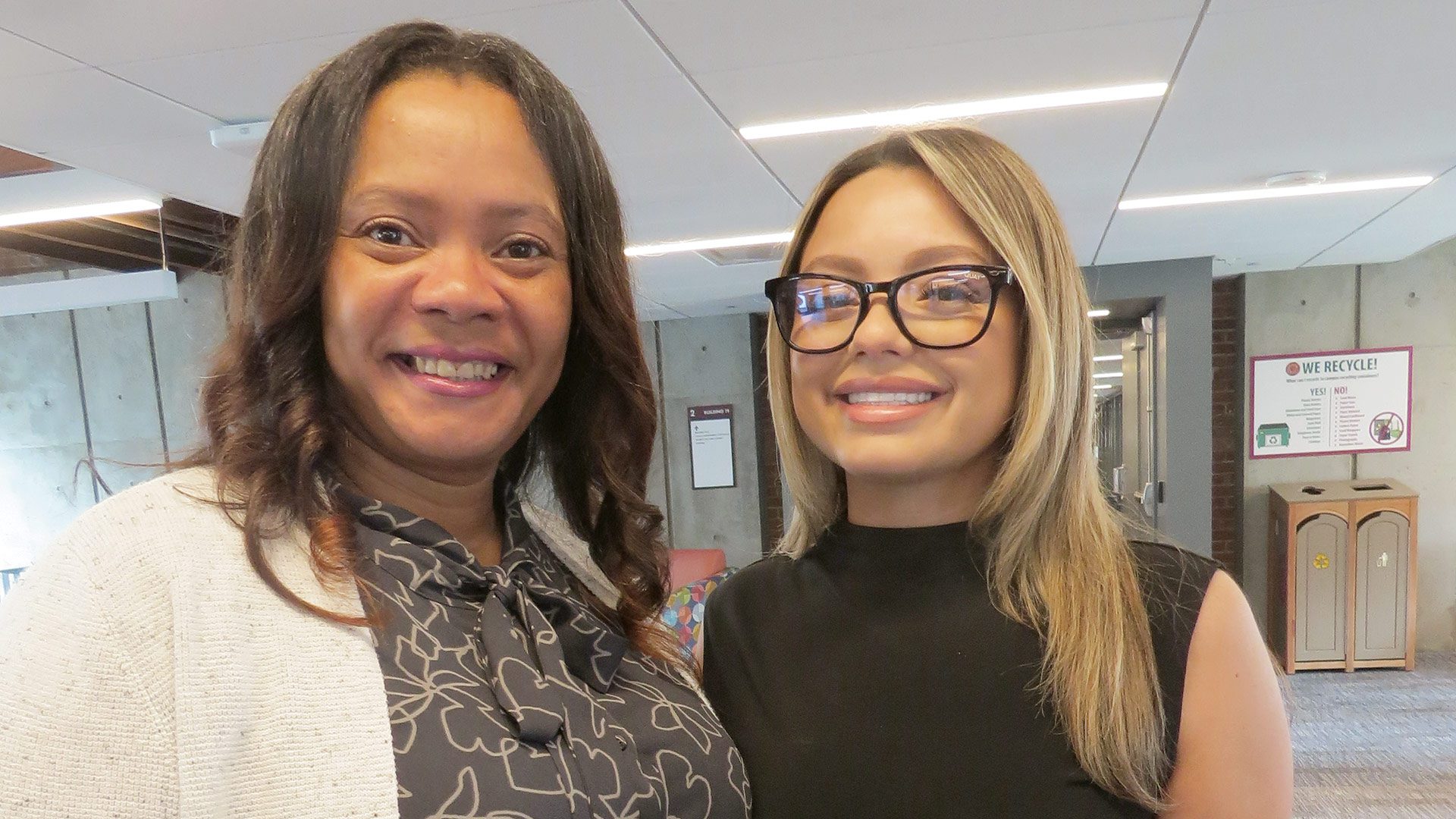
AGAWAM — To further its commitment to a ‘people-first’ philosophy, OMG Inc. has restructured its Human Resources Department to focus on initiatives that provide employees with opportunities to improve themselves, feel appreciated, and continually progress in their careers.

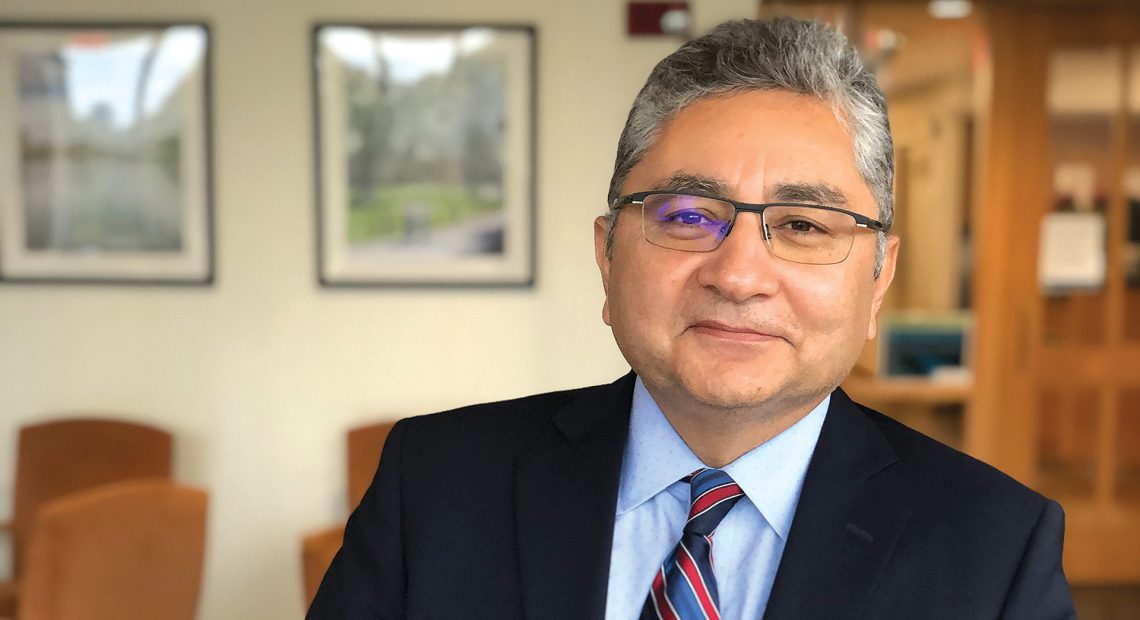
OMG has promoted Maggie MacElhiney to the position of director of Talent for the organization. In her new position, she is responsible for managing human-resource activities including talent acquisition and onboarding, talent development, performance management, compensation, succession planning, and workforce planning.

MacElhiney has been with OMG since 2006, most recently as the senior Talent Development manager. She holds a master’s degree in adult education and human resource development from the University of Texas, Austin, and is a member of the Assoc. for Talent Development and the Society for Human Resource Management.

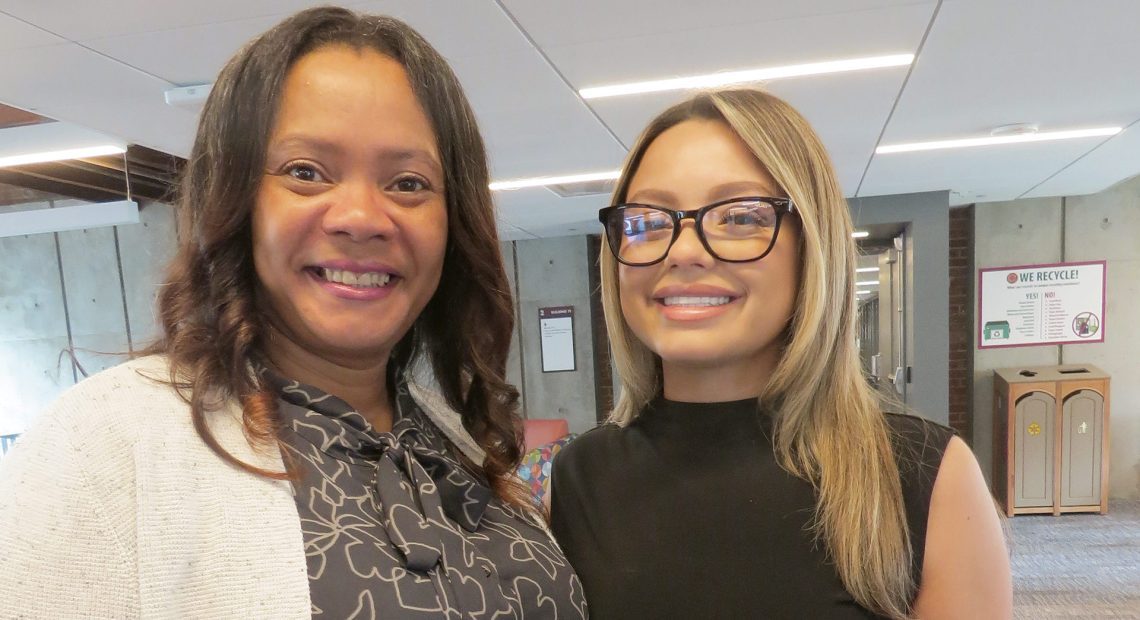
OMG has also promoted Geri McCarthy to the newly created position of director of Employee Engagement, where she is responsible for managing and implementing diversity, equity, and inclusion (DEI) initiatives; employee wellness and engagement programs; and general HR responsibilities.

McCarthy has been with OMG since 2012 in a variety of roles, most recently as director of Operations, where she also headed the company’s DEI council and wellness committee. She holds a bachelor’s degree in business from American International College and an MBA from the University of Phoenix.

“Maggie and Geri have worked very hard with regard to expanding our workforce and developing our employees,” said Hubert McGovern, president and CEO. “In their new roles, they will continue to focus on building an exceptional OMG experience for all employees. They are both outstanding managers with great track records, and they will play important roles as OMG continues to grow and evolve.”

Daily News

SPRINGFIELD — Springfield Technical Community College (STCC) has become the first college in Massachusetts to join the Food Bank of Western Massachusetts as a member agency. Starting this month, STCC will be a part of the region’s food-assistance network.

STCC was also the first college in Massachusetts to join the Stop & Shop School Food Pantry Program, which provides donations to support the college’s food pantry, known as the Ram Mini Mart. Students who qualify can visit the on-campus Center for Access Services (CAS) to pick up free meals, groceries, and other necessities stored in the Ram Mini Mart.

Stop & Shop offers a school-based food-pantry program to help reduce hunger among students in communities served by the company’s more than 400 stores in the Northeast.

The Food Bank of Western Massachusetts provides healthy food to 173 members of the network in Hampden, Hampshire, Franklin, and Berkshire counties. These independent pantries, meal sites, and shelters are on the front lines, providing food and other resources to individuals, families, seniors, children, college students, people with disabilities, and veterans.

Vice President of Student Affairs Darcey Kemp said CAS is an invaluable resource for STCC students, providing them with support and resources including free school supplies, food, and household goods. “STCC values its partnerships with community organizations like the Food Bank and companies like Stop & Shop. We sincerely appreciate their support.”

José Lopez-Figueroa, director of CAS at STCC, added that “we are thrilled to partner with the Food Bank of Western Massachusetts and continue our partnership with Stop & Shop. They are helping in our effort to ensure that no student is sitting in class hungry or goes home with nothing to eat.”

Samantha Plourd, dean of Enrollment, Retention and Completion, said STCC is grateful to have the Food Bank as a new resource. “Becoming a member agency of the Food Bank is a great help to our students facing food insecurity. As a member, STCC can access thousands of pounds of healthy food for our pantry, almost entirely for free.”

The Food Bank of Western Massachusetts expanded its operations in September with a move to Chicopee. At more than 60,000 square feet, the new headquarters is double the size of its former building in Hatfield.

“The Food Bank of Western Massachusetts is excited to welcome our first campus pantry to our member agency network,” said Michelle Geoffroy, the organization’s Agency Relations manager, noting that more than one in three college and university students faces food insecurity, and only 20% utilize Supplemental Nutrition Assistance Program benefits. “This partnership will allow us to support STCC’s established food pantry and help us both to reach more of our neighbors experiencing food insecurity in Springfield and surrounding communities.”

Jennifer Barr, director of Community Relations at Stop & Shop, added that “Stop & Shop is so proud to continue its support for STCC’s on-campus pantry, and we congratulate the school on its continued success in doing groundbreaking work to ensure its students have access to the food and resources they need to succeed in the classroom. As a longtime partner of the Food Bank for Western Massachusetts as well, we love seeing these groups come together to help put an end to student hunger.”

Daily News

SPRINGFIELD — Beginning Wednesday, Nov. 1, the Realtor Assoc. of Pioneer Valley will sponsor a 40 hour, 14-class sales licensing course to help individuals prepare for the Massachusetts real-estate salesperson license exam. The course will be completed on Wednesday, Dec. 6. Tuition costs $425 and includes the book and materials.

The course curriculum includes property rights, ownership, condos, land use, contracts, deeds, financing, mortgages, real-estate brokerage, appraisal, fair housing, consumer protection, Massachusetts license law, and more. The association also has an affiliated partnership with the CE Shop to offer discounts on online exam prep materials.

Classes meet Monday, Wednesday, and Thursday evenings from 6 to 9 p.m. at the association office, 221 Industry Ave. in Springfield. For an application, visit www.rapv.com or contact Laura Herring at (413) 785-1328 or [email protected].

Daily News

EASTHAMPTON — Greenfield Savings Bank has contributed $5,000 to the Chamber of Greater Easthampton’s co-workspace project, WorkHub on Union. This partnership underscores the shared dedication of both organizations to empower local entrepreneurs and enhance the overall prosperity of the Greater Easthampton community.

WorkHub on Union seeks to establish a dynamic hub where local professionals, creative minds, and innovators can converge. This project is envisioned to foster collaboration, idea exchange, and networking among individuals representing diverse industries.

The donation from Greenfield Savings Bank reflects its commitment to nurturing initiatives that contribute to the holistic well-being of the community. This collaboration symbolizes the mutual resolve of Greenfield Savings Bank and the chamber to promote entrepreneurial spirit and offer resources that uplift local businesses and residents.

“As a local community financial institution, we are committed to supporting the communities that we serve and our local small businesses that make those communities thrive,” said Tara Brewster, vice president of Business Development and director of Philanthropy at Greenfield Savings Bank. “As an incubator to local businesses, WorkHub on Union will provide local entrepreneurs with a productive environment to succeed and collaborate, helping to grow and strengthen the local economy.”

Moe Belliveau, executive director of the Chamber of Greater Easthampton, added that “we are incredibly grateful for the generous contribution from Greenfield Savings Bank. WorkHub on Union is not just a co-workspace; it’s a platform for our community members to unite, collaborate, and pave the way for collective success.”

Daily News

SPRINGFIELD — Dietz & Company Architects announced that Aditya Surendhra, AIA has completed the Architectural Registration Examination and met all of the requirements for architectural licensure in the Commonwealth of Massachusetts. As a licensed architect, he has been promoted from architectural staff to the position of architect.

Surendhra joined Dietz & Company in 2020 and primarily works on multi-family housing projects, with his approach being a focus on building performance and resilience. His work includes existing-conditions laser scanning and modeling for historic projects, as well as projects in the commercial sector. He also takes the lead in managing and developing the firm’s in-house Revit software standards, including libraries and templates.

Prior to joining Dietz, he earned his bachelor of architecture degree from Syracuse University. He also interned for firms in India and the U.S., where he worked on housing and historic-preservation projects.

Daily News

HOLYOKE — Girls Inc. of the Valley announced its participation in the Holyoke Office of Planning and Economic Development’s third annual Doors Open Holyoke on Saturday, Oct. 14 from 9 a.m. to noon.

Doors Open events across the country invite the public to see behind the doors of many places not usually open to the public. Doors Open Holyoke aims to connect residents and visitors to the city’s places of historical, cultural, and architectural significance. Girls Inc. of the Valley will host an open house with building tours during the city’s third annual Doors Open celebration to showcase its newly renovated headquarters at 480 Hampden St. Their new location allows the nonprofit to serve a larger community.

“We look forward to welcoming the community into our newly renovated program center and headquarters to offer tours of the updated spaces, as well as the soon-to-be-updated ones,” said Suzanne Parker, executive director of Girls Inc. of the Valley.

Daily News

SPRINGFIELD — Do you know someone who is truly making a difference in the Western Mass. region? BusinessWest invites you to nominate an individual or group for its 16th annual Difference Makers program. Nominations for the class of 2024 must be received by 5 p.m. on Friday, Dec. 8.

Difference Makers was launched in 2009 as a way to recognize the contributions of agencies and individuals who are contributing to quality of life in this region. Past honorees have come from dozens of business and nonprofit sectors, proving there’s no limit to the ways people can impact their communities.

So, let us know who you think deserves to be recognized as a Difference Maker in our upcoming class by visiting businesswest.com/difference-makers-nomination-form to complete the nomination form. Honorees will be profiled in an upcoming issue of BusinessWest and celebrated at a gala in the spring.

Daily News

GREENFIELD — Connecticut River Conservancy (CRC), a 501(c)(3) nonprofit organization dedicated to the Connecticut River watershed in New Hampshire, Vermont, Massachusetts, and Connecticut since 1952, announced Rebecca Todd as its next executive director, effective Oct. 9.

Todd has most recently served as the executive director of New Hampshire’s Stonewall Farm, a nonprofit working farm and education center; however, her experience as an attorney has shaped most of her career. For more than 30 years, she has advised organizations, individuals, and businesses in matters related to environmental, educational, contractual, employment, and nonprofit management.

She served as general counsel for Antioch University and as associate attorney general in the Office of the Attorney General in Washington in the Education and Ecology divisions, and litigated cases for the Sierra Club Legal Defense Fund Inc. (now Earthjustice) and the Natural Resources Defense Council Inc. related to the Clean Water Act, the Endangered Species Act, and hazardous-waste laws. She also teaches environmental law, legal advocacy, and other subjects nationally and internationally.

In addition to these professional accomplishments, Todd grew up in the Connecticut River watershed, has raised a family while stewarding farmland along the river in New Hampshire, and is cultivating a new passion for the sport of rowing.

“After an incredibly thorough search and evaluation of the needs of our organization, we are thrilled to welcome Rebecca as the next executive director,” said Bob Sproull, board chair of the Connecticut River Conservancy. “Her robust experience, character, and passion for the Connecticut River and surrounding communities will help implement a strategic and sustainable path in the years to come.”

Todd added that “I look forward to supporting the incredibly collaborative network of partners, members, and community members who recreate on the Connecticut River, and to developing solutions dedicated to healthier rivers in our beautiful watershed.”

CRC’s previous executive director, Andy Fisk, departed in the fall of 2022 after 10 years with the organization and is now the Northeast Regional Director at American Rivers. During this transitional time, CRC has been led by interim Executive Director and Director of Restoration Programs Ron Rhodes, who has been a member of the CRC staff for more than 12 years.

Daily News

SPRINGFIELD — For the second year in a row, American International College (AIC) has achieved recognition from U.S. News & World Report as a top performer in social mobility within the National Universities category. AIC’s 2024 ranking of 93 positions the college in the top 25% nationwide, among the top six in Massachusetts, and the leader in Western Mass. in this category.

Social mobility is one of the key areas evaluated for excellence by U.S. News to help students and families identify colleges that align best with their needs. This category assesses how well schools graduate economically disadvantaged students, a demographic that, according to the publication, faces greater challenges in completing their college education. By factoring in graduation rates of Pell-awarded and first-generation students in their rankings, the report highlights institutions like AIC that excel in fostering social mobility.

AIC President Hubert Benitez said the ranking is a testament to the college’s ongoing commitment to ensuring access to higher education.

“AIC, and its faculty and staff, understand that earning a college degree is vital in increasing and achieving social mobility,” he noted. “For this reason, AIC continues to strive to offer a high-quality education at an affordable cost, leading to a successful career path. In doing so, it is committed to helping every student, despite their background, to succeed.”

According to research conducted by the Hamilton Project published by the Brookings Institution, higher education plays a crucial role in providing opportunities for disadvantaged Americans to transform their economic circumstances. In an era marked by increasing inequality and limited social mobility, enhancing access to education holds the potential to promote equality of opportunity for all.

“Today, students who attend higher-education institutions come from diverse backgrounds, and the landscape shows vast social and economic disparities,” Benitez said. “Despite inherent obstacles, AIC is keeping true to its commitment to prepare and serve lower-income students, and it continues to take steps toward bridging the gaps, focusing on being an institution where access, opportunity, equity, and belonging are defining characteristics.”

Daily News

PITTSFIELD — The Berkshire Regional Planning Commission (BRPC) announced Ilana Steinhauer, executive director of Volunteers in Medicine, as the 2023 Charles Kusik Award winner.

The Kusik Award recognizes outstanding contributions to Berkshire County. Steinhauer has led Volunteers in Medicine (VIM) since 2014 as executive director and director of Medical Services. Under her leadership, VIM has increasingly considered the social determinants of health (housing, education, food security, employment, childcare, etc.) as key components of an individual or family’s health.

The Charles Kusik Award was instituted to recognize projects, groups, or individuals who have made outstanding contributions to planning in Berkshire County. BRPC inaugurated the Kusik Award in 1996 to honor Charles Kusik, who, for more than three decades, placed his expert imprint on the zoning bylaws of nearly every town in the Berkshires as a volunteer ‘citizen planner.’

Steinhauer will be recognized at the joint BRPC and Berkshire County Selectman’s Assoc. Annual Meeting & Reception on Thursday, Oct. 5 at 4 p.m. at Berkshire Hills Country Club in Pittsfield. Tickets cost $25 per person and are available online at www.berkshireplanning.org or by calling (413) 442-1521, ext. 10.

“Volunteers in Medicine plays an important role in Berkshire County, which has become pivotal for the well-being of all Berkshire County residents under Ilana’s strong leadership and guidance,” BRPC Executive Director Tom Matuszko said.

Volunteers in Medicine currently serves 1,700 uninsured patients, 90% of whom are immigrants. Their patient population has grown rapidly in recent years, with 400 new patients in 2022 and an expected 500 new patients in 2023. VIM’s patients range from newly arrived asylum seekers who need life-saving care to veterans who need dental work to essential workers who have lived here for decades. VIM manages this patient load with 17 staff members and more than 170 clinical and non-clinical volunteers who donate more than 10,000 hours annually.

Steinhauer first moved to the Berkshires in 2006 after graduating from Wesleyan University. She began interning at Volunteers in Medicine and quickly realized she wanted to do patient care with this population. After taking prerequisites at Berkshire Community College, she moved to the Boston area to complete her nurse practitioner degree and began her career as a nurse with the Medical Group/Harvard Vanguard Associates in Beverly. In 2014, she moved with her family back to the Berkshires to become executive director at VIM. Bilingual in Spanish, she continues to provide direct patient care in addition to being the executive director.

Daily News

SPRINGFIELD — On Thursday, Oct. 26, BusinessWest and the Healthcare News will honor nine individuals as 2023 Healthcare Heroes at a celebration dinner at Marriott Springfield Downtown. Tickets cost $90 per person, and reserved tables of 10 are available. Visit businesswest.com/healthcareheroes to purchase tickets.

The Healthcare Heroes class of 2023 was announced and profiled in the Sept. 18 issue of BusinessWest and at businesswest.com. Honorees include Jody O’Brien of the Urology Group of Western New England (Lifetime Achievement), Cindy Senk of Movement for All (Community Health), Ashley LeBlanc of Mercy Medical Center (Emerging Leader), Ellen Ingraham-Shaw of Baystate Medical Center (Emerging Leader), Dr. Mark Kenton of Mercy Medical Center (Healthcare Administration), Kristina Hallett of Bay Path University (Health Education), Gabriel Mokwuah and Joel Brito of Holyoke Medical Center (Innovation in Healthcare), and Julie Lefer Quick of the VA Central Western Massachusetts Healthcare System (Healthcare Provider).

Event sponsors include presenting sponsors Elms College and Baystate Health/Health New England, and partner sponsors Holyoke Medical Center, Mercy Medical Center/Trinity Health, and the Elaine Marieb Center for Nursing and Engineering Innovation and the Institute for Applied Life Sciences at UMass Amherst.

Business Talk Podcast Special Coverage

We are excited to announce that BusinessWest has launched a new podcast series, BusinessTalk. Each episode will feature in-depth interviews and discussions with local industry leaders, providing thoughtful perspectives on the Western Massachuetts economy and the many business ventures that keep it running during these challenging times.

Go HERE to view all episodes

Episode 181: October 2, 2023

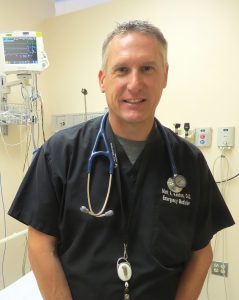
George Interviews Dr. Mark Kenton, chief of Emergency Medicine at Mercy Medical Center

Dr. Mark Kenton has seen it all during a long career in emergency medicine, from the fast pace and constant challenge of daily cases to a pandemic that sorely tested emergency departments in unprecedented ways. Through all of it, he says effective care, especially of individuals often facing the worst days of their lives, begins with listening and forging personal connections with patients and their families. On the next episode of BusinessTalk, Kenton, chief of Emergency Medicine at Mercy Medical Center, talks with BusinessWest Editor Joe Bednar about his important work — both inside the ER and often far outside it as an outspoken advocate — for which he has been honored as one of BusinessWest‘s Healthcare Heroes for 2023. It’s must listening, so tune in to BusinessTalk, a podcast presented by BusinessWest and sponsored by PeoplesBank.

Sponsored by:

Also Available On

Daily News

WEST SPRINGFIELD — A total of 1,427,234 fairgoers attended the 2023 Big E in West Springfield, down from 2022’s tally of more than 1.6 million, due largely to several days of rain over the fair’s 17-day run.

Still, when the weather did cooperate, five daily attendance records were set during the 2023 Big E: the first Tuesday, Sept. 19, 57,802; the second Friday, Sept. 22, 97,477; the second Wednesday, Sept. 27, 95,689; the second Thursday, Sept. 28, 108,962; and the third Sunday, Oct. 1, 170,471.

The 2024 edition of the fair is scheduled for Sept. 13-29.

Daily News

GREENFIELD — Peter Albero has been appointed chief financial officer and treasurer of Greenfield Savings Bank. He will be responsible for all aspects of financial operations of the bank, including internal and external financial reporting, investments, and asset and liability management.

“Peter brings a wealth of experience to our bank,” President and CEO Thomas Meshako said. “His knowledge and experience in the industry and his commitment to our mission of community banking will help us continue to grow and maintain our profitability.”

Albero joins the bank with more than 35 years in the financial industry. Most recently, he served as chief financial officer at Salisbury Bank & Trust. In addition, he has been a risk advisory consultant at Pricewaterhouse Coopers, where he designed and implemented financial and risk data reconciliations for foreign banks. For more than 26 years, he worked at Morgan Stanley in a variety of senior roles in the Financial Controller group. He is also a licensed CPA in New York.

Albero has a bachelor’s degree in accounting and finance from Manhattan College and an MBA in finance and international business from New York University.

Daily News

LONGMEADOW — Bay Path University has been awarded a federal grant totaling $1,201,833 from the U.S. Department of Education’s Office of Special Education Programs to train special-education teachers.

The grant, to be applied over five years, will help Bay Path fund scholarships for graduate students and help the university create and offer professional-development opportunities to faculty and teachers at partnering school districts, which include Holyoke Public Schools, Worcester Public Schools, and the Center for Applied Behavioral Instruction, based in Worcester.

“As a result of this award, 40 scholars will successfully obtain educator licenses in both Massachusetts severe disabilities and moderate disabilities, combined with a master of science degree in education. We’ll be able to support them through high-quality mentoring and supervision, both during the program and for two years after graduating,” said Kristen Lech, program director of Bay Path’s graduate program in Special Education and English as a Second Language, as well as a professor of Special Education and the project director of this initiative.

Through this project, Bay Path will prepare for accreditation from the Council of Exceptional Children, the largest international professional organization dedicated to improving the success of children and youth with disabilities and/or gifts and talents.

“This grant will help us increase the number of highly qualified and dually licensed diverse educators in the field of special education,” said Ellen Rustico, assistant dean of Education and Licensure Programs at Bay Path’s School of Education, Psychology & Humanities.

Bay Path is one of 41 colleges and universities nationally to receive funding through this grant competition. The grant comes at a time when Massachusetts has adjusted its licensing requirements as a means of streamlining the process by which an educator becomes qualified to teach special education.

In 2019, it was reported that 118,867 students in Massachusetts had complex or challenging special-education needs, up from 62,660 in 2004, representing the majority of the state’s entire special-education student population of nearly 174,000.

Daily News

LUDLOW — Grit 24 Fitness announced its upcoming launch at 56 East St. in Ludlow. What started as a love for fitness became a brick-and-mortar reality for co-founders Marco Vieira and Jared Duff.

“The name Grit holds a special place in our hearts,” Vieira said. “It embodies the idea that, when you feel the need to challenge yourself or decide to do something challenging, stop talking about it and actually do something about it. Do not quit until you have completed the challenge. Your future self will thank you. This is the energy that we are trying to bring to the gym to help motivate people to make a change and live a healthier lifestyle.”

He and Duff called Grit a community hub where area residents come together to inspire and support one another on their journey to health and well-being.

“Our facilities are designed to cater to everyone, but what truly sets Grit 24 Fitness apart is the unity among its members. Here, we aren’t just gym-goers; we’re a family committed to each other’s success,” Duff added. “Our team of trainers and staff are not just here to guide workouts; they’re mentors, partners, and motivators on your journey to empowerment. We walk alongside our members, offering guidance and encouragement, ensuring no one faces challenges alone.”

Daily News

HOLYOKE — Girl Scouts of Central and Western Massachusetts (GSCWM) announced that the nonprofit organization’s long-time CEO, Pattie Hallberg, is stepping down at the end of 2023, after 16 years of service to GSCWM.

“Pattie’s legacy at Girl Scouts of Central and Western Massachusetts is nothing short of extraordinary,” said Nicole Messier, GSCWM board president. “Her leadership has been instrumental in shaping the organization into what it is today. We are profoundly grateful for her unwavering dedication, expertise, and vision, which have empowered countless girls and women to embrace their potential. As we embark on this transition, we remain steadfast to upholding the values and mission that Pattie has championed throughout her tenure. The GSCWM board is committed to finding a worthy successor who will carry on Pattie’s legacy and uphold our mission to nurture the future female leaders of tomorrow.”

The GSCWM board will oversee the process to choose Hallberg’s successor, and has engaged the search firm Find Good People to assist with the transition.

“It has been my honor and a sincere privilege to lead Girl Scouts of Central and Western Massachusetts, an organization dedicated to the development of a girl’s personal leadership journey,” said Hallberg, who was named by BusinessWest to its Women of Impact class of 2020.

“I am proud of the organization we are today and the impact we’ve made, working with thousands of fabulous girls and adults to further the Girl Scout mission to build girls of courage, confidence, and character who make the world a better place,” she added. “Our sustainability through a global pandemic and our current growth both in membership and revenue represent the collective effort of an incredibly talented staff, a dedicated board of directors, generous funding partners, and an innovative and dedicated membership. I couldn’t be more excited about what’s next for this important organization.”

Daily News

SPRINGFIELD — Since 1935, the Student Prince and the Fort Restaurant have celebrated German tradition on Fort Street in Springfield. The city landmark, known for German foods and beer, rolls out the barrel for the Mighty Oktoberfest on Friday and Saturday, Oct. 6-7.

The Mighty Oktoberfest kicks off for two nights on Oct. 6 at 5:30 p.m. with the Berkshire Mountain Wanderers on stage and Springfield Mayor Domenic Sarno on site to tap the ceremonial keg. Oktoberfest food will include bratwurst, knockwurst, and burgers, with a full menu indoors that includes German fare such as sauerbraten, braised lamb, and pork shanks.

Other live music includes Trailer Trash at 7:30 p.m. on Friday, followed by Saturday’s lineup of Berkshire Mountain Wanderers at 5 p.m., American Badass (Kid Rock tribute) at 6 p.m., Jagged Little Pam (Alanis Morissette tribute) at 7:15 p.m., and a Foo Fighters tribute at 8:30 p.m.

“There’s nothing like Oktoberfest to welcome the fall season, and we are proud to keep the tradition alive in 2023 with one of the most authentic Oktoberfest celebrations around,” said Peter Picknelly, co-owner of the Student Prince and the Fort. “Join us for non-stop live music, good times, food and drink, and a barrel of fun in downtown Springfield.”

Single-night and two-night passes are available at the gate and in advance by clicking here. Passes include one complimentary ‘haus beer’ from a list for those who are 21 or older.

Daily News

MONSON — Monson Savings Bank’s Wilbraham Branch will be hosting a free community shred day on Saturday, Oct. 14 from 9 a.m. to noon. As in past years, the bank is partnering with PROSHRED of Wilbraham for this event. The bank welcomes the public to dispose of their private documents at the branch, located at 100 Post Office Park.

Storing documents that contain personal information in one’s home can pose a major security risk. Monson Savings Bank is encouraging residents to shred any documents they no longer need, especially those that contain private information. This shred day is an ideal opportunity to properly discard unwanted documents, such as tax returns, bank or credit-card statements, bills, medical records, and more.

“One of our top priorities is protecting the personal information of our customers and community members,” said Carolyn Balicki, Wilbraham branch manager. “Our team is very diligent; we work hard every day to keep personal information from falling into the wrong hands. Our community shred day gives us the opportunity to help everyone dispose of their sensitive documents in a secure way, while also gathering together safely as a community for a fun event.”

Prepackaged refreshments and giveaways will be available, while supplies last.

Daily News

SPRINGFIELD — Max Tavern at the Basketball Hall of Fame will host the fifth Max on Monday networking event on Monday, Oct. 16 from 4 to 6 p.m., offering attendees the opportunity to connect with other professionals while enjoying complimentary hors d’oeuvres. A cash bar will be available for beverages.

At each event, Max on Monday will feature a selection of local businesses. In October, the sponsored businesses will include Borawski Insurance, New Valley Bank, Pascoe Workforce, Meyers Brothers Kalicka, and NRG Real Estate. Representatives from these businesses will be able to network with one another and share information about their organizations.

In addition, each event features a local charity. On Oct. 16, the featured organization will be Men Wear Pink of Hartford and Springfield, an American Cancer Society initiative that raises awareness and funds to fight breast cancer. Max on Monday also showcases a local artist.

For more information about Max on Monday or to register to attend, RSVP to AnnMarie Harding at (413) 244-4055 or [email protected].

Community Spotlight

Community Spotlight

renovated chapel

An architect’s rendering of the renovated chapel at Wilbraham & Monson Academy, what students are calling the ‘Harry Potter dining hall.’

The students have started calling it the “Harry Potter dining hall,” and with good reason.

That’s the look that will be created by an ambitious initiative to transform the ornate but very much underused chapel at Wilbraham & Monson Academy (WMA) into a next-generation dining commons.

The undertaking, the second phase of a much larger strategic initiative that comes with an $18 million price tag, will enable the school to make far better use of not only the chapel, but the current dining hall, which will be converted into an auditorium and event space.

“This is going to be stunning,” Head of School Brian Easler said. “Because the music department is under the current dining hall, it will be a much more efficient use of space. Right now, we use the chapel once a week for 20 minutes for school meeting; other than that, it stays vacant, which is a shame because it’s the most beautiful building on the campus. So we’ll use the most beautiful building as the heart of the school.”

Perhaps the best part about all this, Easler said, is that the idea for converting the chapel into a dining hall came from a student, who was looking at a 3D scale model of the campus created by the architectural firm handing the project and put forth a powerful ‘what if?’ (more on that later).

Transformation of the chapel, the timing of which is dependent on fundraising — which is off to a solid start, according to Easler — is not the only landscape-altering development taking shape on or just off Main Street in Wilbraham.

Indeed, there’s also new construction just down the road from WMA, where, on the site of three demolished buildings, a mixed-use facility is taking shape, one that will house a brewery, an Italian restaurant, additional commercial businesses, and seven apartments.

This development, called the Center Village project — on top of other emerging and established success stories across town — is expected to spur new development in what is considered the town, or village, center, although it still doesn’t look much like a center, said Mike Mazzuca, chair of Wilbraham’s resurrected Economic Development Committee.

“We want to look at how we can create a true downtown for Wilbraham,” he said, noting that there is real potential for business to thrive beyond the Boston Road corridor.

Jeff Smith, another member of the committee and co-owner, with his wife, Amy, of one of those Wilbraham-based businesses, New England Promotional Marketing (NEPM), agreed.

“Back in the ’80s, there was a lot more going on in the town center, and it was used more,” he explained, noting, for example, that the post office was there before it was relocated to Boston Road. “Things changed, a couple of the buildings became vacant, and there was less and less activity there. Now that there will be more activity, we believe that will spur more development.”

Mazzuca added that, while one of the committee’s primary goals is to bring new commerce, vibrancy, businesses, and especially people to the town center, its larger mission is to send a message, loud and clear, that Wilbraham is ‘open for business.’

It always has been, he said, but it has also always been a mostly residential community and among the region’s unofficial ‘best places to live.’ It can still be that, he went on, while also building on a somewhat impressive portfolio of businesses — most of them small, most of them retail or service in nature, and most of them on Boston Road.

As it goes about its work, the Economic Development Committee will promote all that Wilbraham has to offer, said both Mazzuca and Smith, adding that there are many amenities on that list, starting with a single tax rate and continuing with available tax-increment financing; a vibrant business corridor (Boston Road) that boasts traffic counts of 12,000 cars a day; proximity to Springfield, Ludlow, Hampden, Palmer, and Monson; a diverse existing business base; high-speed internet; and more.

“We want to help out and be a liaison between the municipality, the permitting authorities, and the actual businesses, with the ultimate goal of getting that message across that we are open for business.”

Smith said the committee is working to parlay these assets and the current momentum in the town on Main Street, Boston Road, and beyond into new business opportunities.

For this, the latest installment of its Community Spotlight series, BusinessWest takes an in-depth look at Wilbraham and all that goes into that phrase ‘open for business.’


Food for Thought

As he recounted that now-famous session where students and the architects were discussing what should come next — and where — on WMA’s campus, Easler could hardly contain his sense of pride in the fact that one of his students had masterminded what will be the signature component of the largest building initiative at this private school in anyone’s memory.

“The architect was leading them through a brainstorming exercise, focusing on three primary questions: what do we need? Where should it go? And what should happen first?” he recalled. “We were at that part where he was asking them where things should go, and the specific question was ‘is the dining hall in the right place?’

“The kids were chatting and moving blocks around, when one of the boys said, ‘what if we made the chapel into a dining hall?’” Easler continued. “There was a nervous chuckle around the table for about five seconds, and then there was a 10-second pause where you could see the wheels turning in everyone’s head. And then there was just this ‘a-ha’ moment where everyone went, ‘that is an awesome idea.’”

And an idea that will become reality … soon, when enough money is raised to commence construction, said Easler, noting that fundraising, which involves almost exclusively alumni of the school, is progressing well, but there is a good amount still to be raised.

mixed-use facility taking shape on Main Street in Wilbraham

The mixed-use facility taking shape on Main Street in Wilbraham is expected to spur new development in the town center.

As noted earlier, renovation of the chapel is just part of a much larger undertaking designed to enable WMA to make better, more effective use of existing facilities, said Easler, noting that the chapel itself has served the school as a meeting place, and there simply haven’t been many meetings there.

The project also calls for the existing dining commons, on the other side of Main Street from the chapel and most classroom facilities, to be converted into an auditorium with stadium seating, with the existing kitchen to be used for back-of-house functions for that facility.

“This will have a really remarkable impact on the campus, and the town, actually — it will reduce pedestrian traffic on Main Street by about 70%,” Easler told BusinessWest, noting that dining facilities will now be on the same side of the street as classes, dramatically reducing the number of times students will have to cross the street each day.

Beyond that, it will give the arts program a functioning theater (the current dining hall), a dramatic improvement over existing ‘black box’ facilities, and the students will have the ‘Harry Potter dining hall.’

Wilbraham at a glance

Year Incorporated: 1763
Population: 14,613
Area: 22.4 square miles
County: Hampden
Residential Tax Rate: $18.70
Commercial Tax Rate: $18.70
Median Household Income: $65,014
Median Family Income: $73,825
Type of government: Board of Selectmen, Open Town Meeting
Largest Employers: Baystate Wing Wilbraham Medical Center; Friendly Ice Cream Corp.; Big Y; Home Depot; Wilbraham & Monson Academy
*Latest information available

And the school, which is currently at full enrollment, will be in an even better position to recruit young people to the campus, he said.

“Boarding school, and private school in general, is about the experience,” Easler said. “We have top-notch education, rigorous and supportive programs, lots of things people can do outside of academics … but a big reason people choose to invest in us is because it’s an experience they can’t get in a public school or a day school. And a big part of experience is having facilities like these to support it — like that dining room.”


Progress Report

There has been considerable momentum at WMA generated by several projects in recent years, including the building of a new athenaeum and conversion of the basement of the science building into a 5,000-square-foot innovation lab, and these advances constitute just some of the positive developments on Main Street and beyond in this community of around 14,600.

Michelle Buck, Wilbraham’s Planning and Community Development director, cited several signs of growth and progress across town.

That list includes several new developments on Boston Road, including a new Starbucks now under construction in front of Home Depot, once the site of a bank branch that was demolished; parking-lot expansion of the Lia Toyota dealership; a new Golden Nozzle car wash; a new fitness center called Cycle & Praise; and an outdoor dining facility for Route 20 Bar & Grille, as well as a large solar farm soon to be under construction on Three Rivers Road.

But the most visible — and most impactful — development, she said, is the emerging home for Scantic River Brewery, the ‘new’ Parfumi’s Pizza (the current version is right next door), seven apartments, and, hopefully, other small businesses. Center Village is an important development for the community, said all those we spoke with, not only because of what is planned for the site, but because of how it might make the town’s center more of a destination and spur additional development.

“It’s an exciting project that could bring more people to Main Street,” Buck said, adding that, while town leaders want to cluster most commercial activity on Boston Road, there is certainly opportunity for development in other areas of town.

Mazzuca agreed, and said bringing new businesses to Wilbraham is overarching mission of what would be called the ‘new’ Economic Development Committee, which has been working on a number of fronts simultaneously.

One has been bringing some of the businesses displaced by the closing and demolition of the nearby Eastfield Mall to the town. The committee helped secure Boston Road addresses for two of them — Mall Barbers and School of Fish — through the use of ARPA funds to help with relocation expenses.

The other major front has been ongoing work to bring more businesses and vibrancy to the downtown area, which, as Smith noted, was more of a destination 30 or 40 years ago, and can be again through developments like the Center Village project and others that might come to the drawing board because of it.

The broad goal, he said, is to create a walkable downtown and an attractive mix of businesses that will effectively serve those living in Wilbraham and surrounding communities.

“Looking north and south on Main Street, we have a farmers’ market now at the church once a week, and some activity at WMA,” he said. “So we want to look at the whole picture of the way vehicles and pedestrians interface, and revamp that. The first concern would be safety, and the second would be convenience — and it’s convenience that attracts people. There’s a snowball effect.”
He said similar efforts to revitalize town centers and downtowns are taking place in communities across the country, and those on the committee are looking at what communities of similar size and demographics are undertaking to do some benchmarking and adopt best practices.

“The ultimate goal of the Economic Development Committee is to be a liaison for businesses locating in Wilbraham,” Smith explained. “We want to help out and be a liaison between the municipality, the permitting authorities, and the actual businesses, with the ultimate goal of getting that message across that we are open for business.”


Education

After the Fire

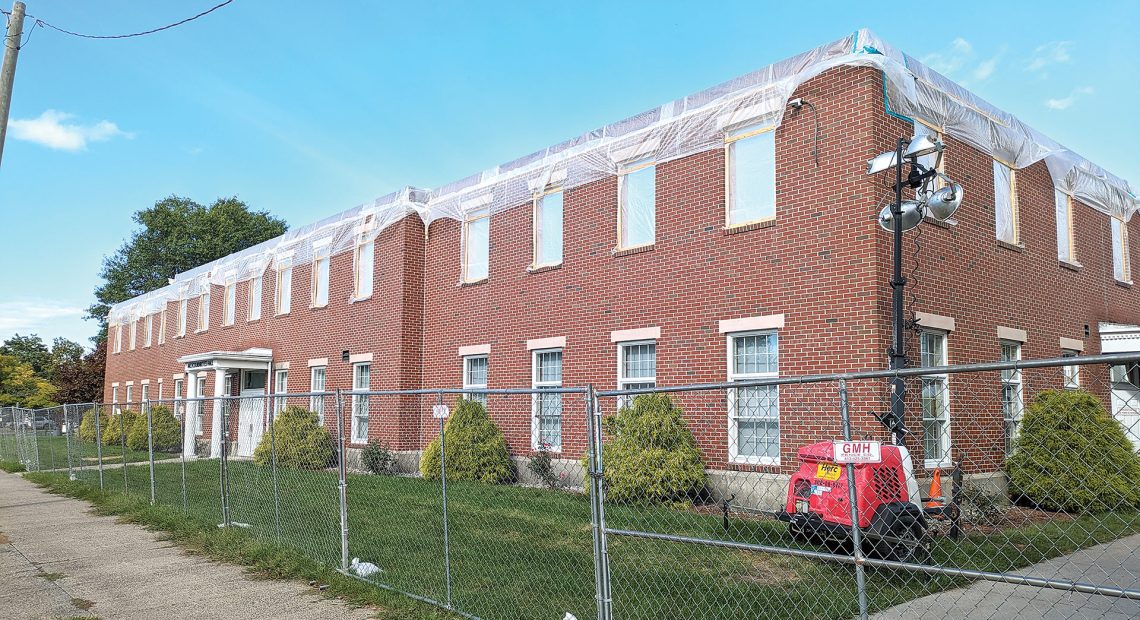
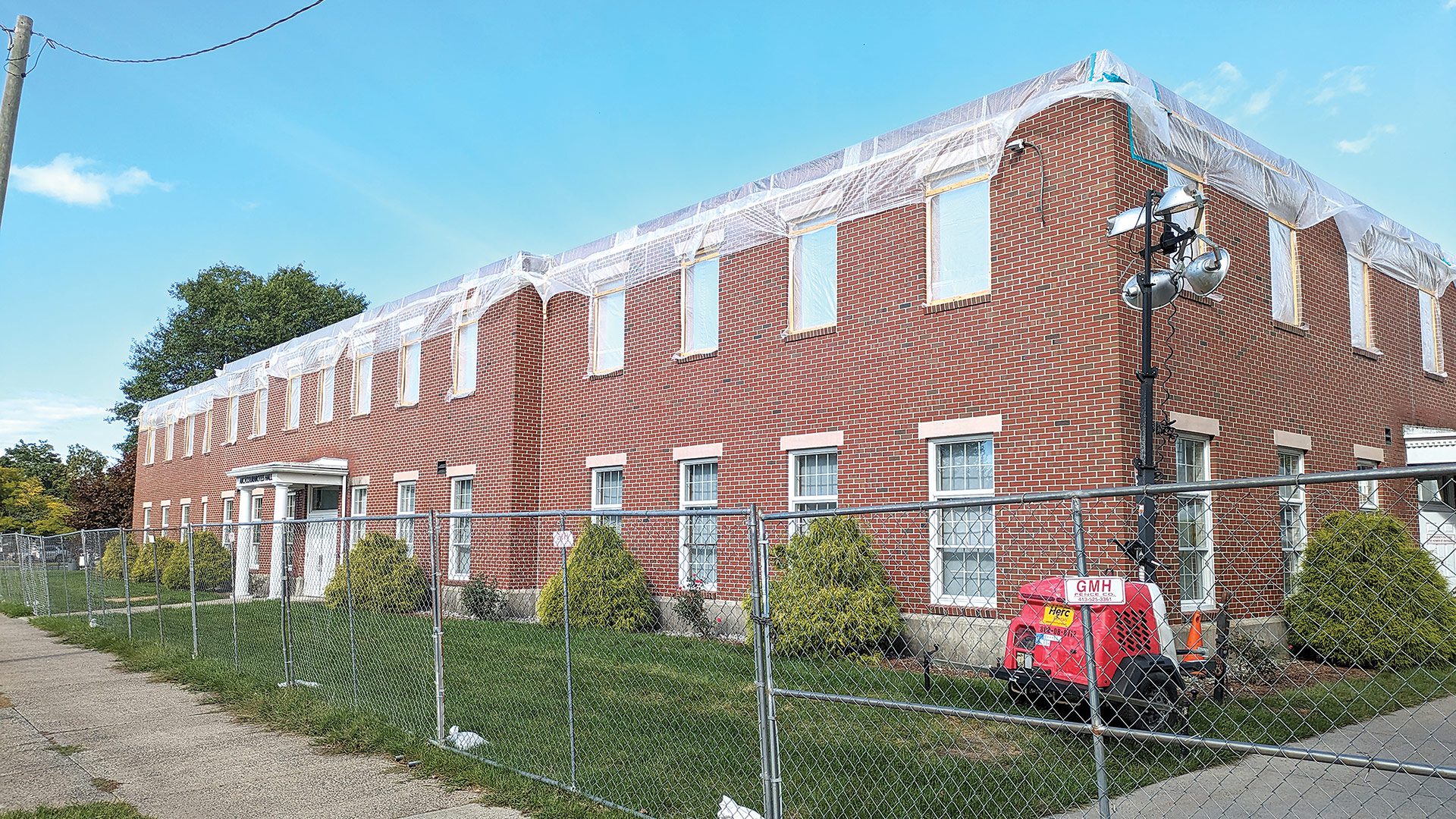
The top of Courniotes Hall is covered with plastic

The top of Courniotes Hall is covered with plastic now while AIC leaders discuss both short-term winter preparations and a long-term strategy for the building.

When a lightning strike set fire to Courniotes Hall at American International College (AIC) on July 27, the safety of everyone in the building was the paramount concern; fortunately, no one was hurt.

The longer-term concern is for the future of the heavily damaged building, and that process has only begun.

In between was one key question: what to do with all the health programs based at Courniotes and all the students and faculty who typically work and learn there — and do it before the fall semester, which was only a few weeks away.

That process has not been easy, and it’s far from over, said Karen Rousseau, dean of the School of Health Sciences at AIC. But with no programs or classes curtailed (though many have been relocated), the experience has been a valuable lesson in pivoting — and may pose opportunities to “reimagine” the design of the building once it’s repaired and renovated.

“The night of the fire was pretty devastating, but immediately the next morning, we got to work trying to figure out where to put classes that were housed in that building and how we would function,” Rousseau told BusinessWest, listing challenges from replacing the nursing program’s simulation-lab equipment to relocating cadavers and identifying new space for physical and occupational therapy labs and a large number of classrooms.

Part of the solution was finding temporary space in the Colaccino Center for Health Sciences, across State Street from Courniotes Hall, as well as other buildings on campus. Meanwhile, most of the nearby colleges and universities (and some from across Massachusetts) reached out offering space.

AIC took up one offer: from UMass Medical School – Baystate, located in Tower Square in downtown Springfield, which offered not only classroom and faculty space, but also storage for equipment and free parking for students.

“The night of the fire, we had students come to watch it, and they were concerned and sad. But we said, ‘we’re going to make sure it’s business as usual. We don’t know what it is right now, but we will make sure it’s OK for you.”

“UMass fortunately had this space that they weren’t using a tremendous amount; they use it for their accelerated baccalaureate program, but they’re mostly out on clinical placement in the fall,” Rousseau said. “So it was serendipitous that we were able to work around their schedule; primarily, it’s our junior nursing class that needed labs in the fall.”

AIC also quickly rehabbed the basement of its Amaron Hall to use as classrooms and storage for occupational therapy and physical therapy, and it will begin renovating the Lissa Building, which is attached to Courniotes Hall and also sustained damage in the fire, with the goal of opening it to students this spring; meanwhile, a building next to Lissa will be renovated to become an occupational therapy lab and training room where OT students learn how to work with patients on activities of daily living.

In short, the entire health sciences curriculum felt the weight of the fire and its aftermath, but AIC’s leaders made sure all students were able to continue their education this fall.

“I don’t want to make it sound like it was easy,” Rousseau said. “And it’s not all perfect, but it’s good. I mean, the students are receiving their education, and the faculty are happy they all have their own offices. To be able to say that, when we lost all those offices, is a miracle. And a lot of equipment from the labs had to be replaced.”

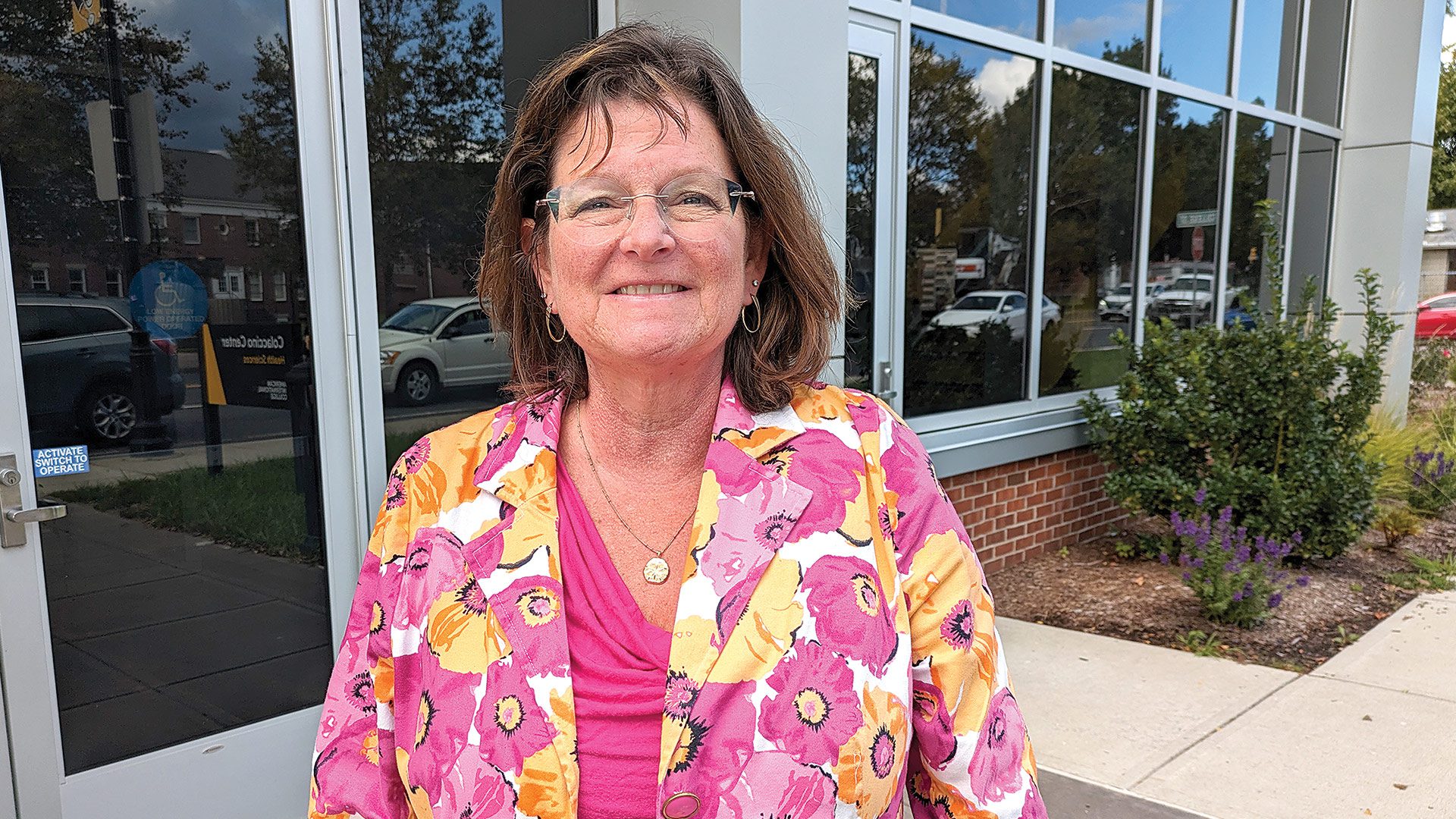
Karen Rousseau

Karen Rousseau says it hasn’t been easy, but students have been able to continue their studies following the July 27 fire.

They got creative, Rousseau added, because … well, because they had to.

“All of our [health sciences] students flowed through there. The majority nof the faculty for physical therapy was over there, and occupational therapy, and all of the nursing faculty. So all the nursing, PT, and OT students walked through there all the time. A lot of people were affected.”


No Interruptions

The reason AIC had to act quickly, and the reason so many other institutions reached out, was a shared feeling that interrupting the students’ education was unthinkable.

“This was devastating to the students,” Rousseau said. “The night of the fire, we had students come to watch it, and they were concerned and sad. But we said, ‘we’re going to make sure it’s business as usual. We don’t know what it is right now, but we will make sure it’s OK for you.’ That’s what we keep telling students: ‘it’s been OK, and it’ll continue to be OK. It will get better and better as we have more time to roll out our plans.’ But they were really nervous.”

In the longer term, AIC has engaged the services of an experienced project manager to navigate the logistics of assessment and reconstruction of Courniotes Hall.

“We haven’t had a final ruling from insurance, but it’s sounding like we will renovate and restore, maybe not in the same exact configuration, but within that same footprint — but, again, that’s not official,” Rousseau said, noting that the top of Courniotes is now covered in plastic, but some kind of temporary roof will likely need to be erected before winter sets in.

AIC’s much-discussed strategic plan for 2022-27 is called “AIC Reimagined,” and AIC President Hubert Benitez has taken to calling the future of the fire-damaged structure “Courniotes Reimagined,” sensing an opportunity to determine if the building’s current design and layout best serve students and faculty, and making changes as needed.

“He wants to pull faculty together and plan what would be appropriate for the future for that building and whether that means more space, whether we’d look to expand, and address any needs we might have,” Rousseau said. “This was OK when it was built in the ’90s, but if we had to rebuild it, we wouldn’t build it the same way. So, what would it look like? Do we want to replace it exactly the same, or do we need to make some changes? This is an opportunity. You can always use more space than what you had.”

AIC leaders are seeking engagement from students and faculty about what the building should look like for the future, she said, but stressed that the long-term planning process has only begun.

“Our focus right now is on the interim piece for the nursing lab and the occupational therapy lab; that has to come first because we want to get our students back on campus as soon as we can — hopefully for spring. We need more space for OT than what we have right now. We’re making do right now, but we need more.

“And then, with nursing, we don’t want them to have to go downtown to do their simulation and their nursing-practice skills,” she added. “And that is a bigger need in the spring for students. There are a lot more students that have to go through the lab in the spring. It’s important to us that they’re back home.”

This unusual year in AIC’s health sciences programs comes at a time when the medical world is still experiencing staffing shortages in many fields, particularly nursing, Rousseau said, but colleges nationwide have weathered a dip in enrollments in those programs.

“But enrollment across colleges in general is down for all professions, so I think it’s a symptom of the times,” she added. “A lot of people are worried about college debt, and you can go to work right away and still make an OK living wage because unemployment has been so low. There’s also the fact that we’re at that cliff where the birth rate has dropped off, so we’ve just got less people coming out of high school.”

And while nursing opportunities are still soaring — the profession has seen many older entrants who are changing careers to take advantage — there’s also lingering burnout from the pandemic, she added.

“You heard a lot of negativity around anything in healthcare. So I think that’s impacted healthcare. But it’s starting to rebound again — because then people heard about how much travel nurses make.”


Grit and Gratitude

Benitez recently expressed gratitude for the outpouring of support from the community following the fire. “I want to acknowledge the remarkable resilience and unity displayed by our faculty, staff, and students. It is this collective effort from our community that gives me confidence that we will overcome this adversity together.”

Rousseau agreed. “We wanted to reassure our students that we’re still open for business. We’re going to figure it out. And we’re trying to listen to them when there are issues.

“There are some things we can’t control, you know,” she added. “They don’t really want to be in class in a different building and not having their usual space. And the nursing faculty are farther across campus. The biggest struggle is that we’ve lost a large parking lot, so we’ve got some growing pains around figuring that out, making sure it’s OK before we start having snowbanks to deal with, too.”

But all those issues pale in comparion to the main one: ensuring that life continues at AIC, and so do the college careers of its nursing, PT, and OT students.

“We’ve tried to be thoughtful, to make sure this had the least amount of impact on students,” Rousseau said. “We’ve tried to reassure students that AIC is still here, and that we’re an equal partner in their success.”

Accounting and Tax Planning

What Does It Mean for Estate-tax Liability in Massachusetts?

By Elizabeth Dougal, Esq.


Massachusetts estate-planning clients frequently ask whether they should transfer their vacation property, typically located in Florida or New Hampshire, to a limited liability company. The answer is almost always ‘no.’

Why? Because Massachusetts does not tax out-of-state real estate held individually. However, it does tax out-of-state intangible assets. The transfer of the real estate to a limited liability company would convert that real estate to an intangible asset for purposes of the application of the Massachusetts estate tax.

Elizabeth Dougal

Elizabeth Dougal

Let’s say you are a Massachusetts resident with a vacation condominium in Florida valued at $300,000. You die with $800,000 of other assets in Massachusetts. Massachusetts imposes an estate tax up to 16% on a Massachusetts taxable estate of more than $1 million. Massachusetts does not impose its estate tax on real property held individually outside of Massachusetts. Hence, in this scenario, you would owe no Massachusetts estate tax.

What if you transferred that $300,000 Florida condominium to a limited liability company? You sometimes rent it out and want the limited liability company to decrease any liability exposure. Now, when you die, your Massachusetts estate is $1.1 million, thus subject to Massachusetts estate tax. The transfer of the condominium to the limited liability company converted it to an intangible asset includable for Massachusetts estate tax purposes. You could have managed your risk to limit potential liability through the acquisition of appropriate liability insurance instead of transferring it to a limited liability company.

You might also consider transferring your out-of-state property to an entity for probate avoidance, privacy, or ease of future transferability. For these purposes, the use of a simple ‘living’ or revocable trust might accomplish your goal. Massachusetts cannot impose Massachusetts estate tax on real property located outside of Massachusetts, whether held individually or within an arrangement that is the equivalent of individual ownership. A revocable trust is such an arrangement.

One last caveat on the example involving the Florida condominium mentioned above: Florida has no estate tax. Neither does New Hampshire. You may experience a different outcome in states with an estate tax. You will want to consult an estate tax advisor to determine if the state where the property is located has a higher estate tax rate than Massachusetts. If so, use of a limited liability company or other entity may be warranted.

Still, in general, you want to avoid dying as a Massachusetts resident with an estate over $1 million that includes real estate in a limited liability company, unless the real estate is located in Massachusetts or a state with at least an equivalent estate tax.


Elizabeth Dougal is an attorney with Bulkley Richardson and a member of the firm’s Trusts & Estates department.

Healthcare News

Critical Catch

Dr. A. Daniyal Siddiqui

Dr. A. Daniyal Siddiqui says screening is the most important factor in preventing deaths from colorectal cancer.

According to the American Cancer Society, the incidence of young-onset colorectal cancer is rising globally, with about 10% of patients with a new colon-cancer diagnosis, and 25% of patients with a new rectal-cancer diagnosis, being diagnosed under age 50.

Experts are still debating what that means, but there’s broad agreement that people need to start thinking about colonoscopies earlier than ever.

“One should not get to where cancer is diagnosed by symptoms. At that point, it’s a much more advanced stage; you want to get it when the cancer is not causing any symptoms,” said Dr. A. Daniyal Siddiqui, medical director of the Mass General Cancer Center at Cooley Dickinson Hospital and associate professor of Medicine at UMass Chan Medical School.

The statistics bear him out. While treatment of cancer has improved markedly over the decades, so has awareness of the importance of catching it at the earliest stages. In 1975, Siddiqui said, the five-year survival rate for colorectal cancer, across all stages, was 40% to 45%; today, it’s close to 70%.

And the increased incidence in younger people has caused the oncology community to further rethink screening recommendations, pushing them even younger.

The good news, Siddiqui noted, is that colorectal cancer (around 70% of which is colon cancer, 30% rectal) has been declining since the 1980s and declining even faster — between 1% and 1.8% a year — since 2009.

But at the same time, there has been an increase in incidence for younger people. In 1995, 11% of all colorectal cancer diagnoses were in patients 54 or younger; in 2019, it was 20%. For that reason, doctors now recommend starting screening at age 45, instead of the long-recognized guideline of age 50.

Siddiqui says wider adherence to screening recommendations has been impactful over the decades. “If cancers are picked up in the earliest stages, they’re more curable. So the death rate has been going down regardless of age because of better screenings. But the important thing is that incidence is increasing 1% to 1.5% per year in people under age 50. That’s why we should start screening at age 45.”

“One should not get to where cancer is diagnosed by symptoms. At that point, it’s a much more advanced stage; you want to get it when the cancer is not causing any symptoms.”

Why is a colonoscopy so critical? The answer begins with how the disease develops.

Colorectal cancer involves malignant cells that grow in the colon or the rectum, explained Dr. Aparna Parikh, medical director for the Center for Young Adult Colorectal Cancer at the Mass General Cancer Center. Often, colorectal cancers start as polyps, which are non-cancerous, but can turn into cancer over time.

According to the American Cancer Society, when a polyp — a non-cancerous growth in the lining of the colon or rectum — progresses to cancer, it usually grows into the wall of the colon or rectum, where it may invade blood or lymph vessels.

The extent to which cancer has spread at the time of diagnosis is described as its stage. The stages are described as localized (grown into the wall of the colon or rectum but not into nearby tissues), regional (spread through the wall of the colon or rectum and invading nearby tissues or lymph nodes), and distant (spread to other parts of the body, such as the liver or lung).

“Early on, when a polyp is benign, before it becomes cancer, at that point you’re talking a 100% cure,” Siddiqui said. “When you’re in stage 1, localized to the colon or rectum, you’re talking a 90% cure. The rate changes to 70% when the cancer has moved to local lymph nodes.”

And by later stages, the outlook is even worse. In fact, while it’s the fourth-most-common cancer after breast, prostate, and lung cancers, he noted, colorectal cancer is the second-leading cause of cancer-related deaths in the U.S. So it can be critical to undergo regular colonoscopies after 45 — typically once every 10 years.

“There are other screening options, including stool-based tests, but it is important to talk to your primary-care doctor about the advantages and disadvantages of different types of screenings,” Parikh said.

That said, “it’s important to note that these other screening methods are only for patients without symptoms. If you are having any symptoms, it’s important to get a colonoscopy.”


Determining the Risk

Siddiqui stressed that the new age recommendations apply only to average-risk individuals. The higher-risk group includes those with a personal history of colorectal cancer or polyp removal, family history of the disease, a history of seed radiation to the abdomen, or personal or family history of endocrine syndromes or inflammatory bowel diseases like colitis or Crohn’s.

Dr. Aparna Parikh

Dr. Aparna Parikh

“To help reduce your risk of getting colorectal cancer, eat healthy foods, including plenty of vegetables, fruits, and whole grains. Exercise regularly, limit or avoid alcohol, and maintain a healthy weight. Finally, quit smoking, or better yet, don’t even start.”

“For those individuals, there’s no black-and-white answer,” he said, explaining that recommendations of when to start screening and how often to go back are determined on a case-by-case basis: what kind of polyp was found, which hereditary factors are present, and so on.

But in general, for the average person, the guidelines start at age 45 and continue until 75, at which time it becomes a more individualized decision between a doctor and patient based on a number of lifestyle factors.

“Screening is the most important thing,” Siddiqui emphasized. “We know now, from prostate cancer and colon cancer and lung cancer, that screening works. That’s the main driving force behind death rates going down.”

The second key factor is improvement in the treatments available after colorectal cancer (CRC) is detected. Options include colorectal surgery, radiation therapy, chemotherapy, targeted therapy, immunotherapy, and access to clinical trials, Parikh noted, adding that “colorectal cancer is largely preventable and, in most cases, curable, especially if it’s detected early.”

As far as prevention strategies are concerned, some risk factors are more easily altered than others. The American Cancer Society reports that 55% of all CRCs are attributable to lifestyle factors, such as an unhealthy diet, insufficient physical activity, high alcohol consumption, and smoking.

“People have been more aware of risk factors of various cancers, and if they’re proactive in terms of reducing them through lifestyle changes, that’s the important thing,” Siddiqui said. “Age is an important risk factor, and so is family history. You can’t change those, but you can change your diet. If you’re obese, you can modify that. If you’re a smoker, you can quit smoking.”

Physical activity is an important factor as well, he added. “We know that from multiple studies with thousands of patients. I’m not saying you should start running a marathon, but simply a 25- to 30-minute walk, three to five times a week, significantly reduces the risk of colon cancer, or any kind of cancer.”

However, the strongest risk factor is a family history of the disease; people with a first-degree relative (parent, sibling, or child) who has been diagnosed with CRC have two to four times the risk of developing the disease compared to people without this family history, with a higher risk when diagnosis is before age 50 and when multiple relatives are affected, the American Cancer Society reports.

Meanwhile, up to 30% of people diagnosed with colorectal cancer have a family history of the disease, which is why these individuals should begin screening early, the organization notes. Young people with a family history should have a conversation with their healthcare provider about when to start screening.

“Everyone should know their family history, and not just colon cancer, but any cancer, especially at a young age,” Siddiqui said. “And that should be brought to a doctor’s attention because that may change the screening guidelines about when to start and how frequently.”


Changes for the Better

Dr. Xavier Lor, medical director of the Colorectal Cancer Prevention Program at Yale Cancer Center and Smilow Cancer Hospital, said recently that certain lifestyle habits associated with colorectal cancer (CRC) aren’t by themselves causing the worrisome trend of higher incidence in younger people.

“Some factors have been identified, and these increase risk, especially at older ages. Obesity, sedentary lifestyle, the western diet, and high sugar intake would only explain a fraction of these cases,” he noted.

“Genetic syndromes are also more commonly the cause for younger CRC patients than older ones, but these remain quite stable over the years and can’t explain a sudden raise in cases as we have seen in the last two decades,” he added. “It will likely boil down to environmental and dietary factors that we have not quite identified yet to explain many of these cases.”

Even absent the cancer risk, there’s nothing wrong with some healthy habits, however.

“To help reduce your risk of getting colorectal cancer, eat healthy foods, including plenty of vegetables, fruits, and whole grains,” Parikh said. “Exercise regularly, limit or avoid alcohol, and maintain a healthy weight. Finally, quit smoking, or better yet, don’t even start.”

When a CRC does develop, the symptoms can vary, she noted.

“Different people may have different symptoms of colorectal cancer, and some people may not have any signs or symptoms at all,” she said, adding that symptoms may include abdominal discomfort or cramping; bleeding from the rectum or finding blood in one’s stool; changes in how the stool looks or frequency of bowel movement; diarrhea, constipation, or increased gas; or unexplained weight loss.

“It is important to remember that these symptoms can be attributed to things that are not related to colorectal cancer,” she added, so it’s important to consult a primary-care doctor with any concerns.

But, as Siddiqui noted up top, the key is catching problems before symptoms arise at all.

“Colonoscopies can detect cancer before you have symptoms or have advanced disease. Early detection is critical,” Parikh said. “But it’s important to advocate for your own health and well-being if you have any concerning symptoms.”

Cybersecurity

Strengthening the Lines of Defense

Peter Sherlock says the numbers certainly help tell the story.

There are roughly 26,000 employed in Massachusetts today in what would be called the cybersecurity sector. And there were, at the precise moment we talked with him, exactly 18,263 openings in that realm, a number that goes up seemingly every day.

That means this sector has about two-thirds the number of qualified individuals it needs, said Sherlock, adding that the dire need to close that gap was one of the motivations behind the creation of CyberTrust Massachusetts, which he now serves as CEO.

Another motivation was to make the state’s businesses, institutions, and municipalities more cyber-secure at a time when the number of victims of cyber and ransomware attacks — like the number of job openings in this sector — keeps going up.

Peter Sherlock

Peter Sherlock

“As we put these students into these SOCs, they’re going to be working under the supervision of cyber professionals. We’re going to put them to work making cities and towns more cybersecure.”

How CyberTrust is going about these assignments, which overlap in many different ways, as we’ll see, will be among the focal points of Sherlock’s presentation at the 11th annual Cybersecurity Summit at Bay Path University, set for Friday, Oct. 13 at the Mills Theatre in Carr Hall on the school’s Longmeadow campus.

Registration for the event, which has been drawing steadily larger audiences because of the importance of the subject matter, is required. Individuals can register at baypath.edu/summit, and attend either in-person or remotely.

The working title for the program is “Who’s Next? How a Stronger Cyber Ecosystem is the First Line of Defense.” And Sherlock told BusinessWest that there are many elements that comprise this ecosystem, including the business sector, government, and education (the state’s colleges and universities, and even its high schools and middle schools). Together, they work on those twin assignments of building the workforce and making entities more cyber-secure.

At the forefront of these efforts is CyberTrust Massachusetts, a nonprofit committed to building both opportunity and security through a consortium of statewide businesses and colleges.

“CyberTrust arose out of a long-running dialogue among business and academic leaders, with some folks in government; these were discussions centered around workforce,” he said, adding that he understands first-hand the challenges of hiring — and retaining — within this sector.

Indeed, he previously served as chief operating officer of MITRE, as well as senior vice president responsible for MITRE’s defense and intelligence business.

“In my roles there, I had to worry about our annual hiring programs; trying to hire 1,000 STEM professionals every year was quite a challenge, as was retaining them,” he explained. “I would talk a lot with other executives in the Massachusetts area about the challenges of growing the pipelines in some of these technologies to keep up with the demand.

“And as the pandemic disrupted the workforce a bit more, those problems have become even more urgent,” he went on, adding that this urgency helped bring business and education together in the CyberTrust Massachusetts consortium to “move the needle,” as Sherlock put it, on not only these workforce issues, but the growing threat — in the form of cyber and ransomware attacks — to businesses of all sizes, nonprofits, institutions, and municipalities.

In his presentation at the Cybersecurity Summit, which will followed by what is expected to be a robust question-and-answer period, Sherlock said he will address a number of issues and initiatives, including the workforce challenges, efforts to activate new pathways for the talent pipeline in order to both grow and diversify and workforce, and cybersecurity approaches for municipalities across the Commonwealth.

While doing so, he will discuss how these problems intersect, and also about efforts to address them jointly, such as the security operation center, or SOC (pronounced ‘sock’ by those within this sector) that is taking shape at Springfield’s Union Station. This SOC, to be established by Springfield Technical Community College, will provide threat monitoring and other cybersecurity services for the state’s municipalities, small businesses, and nonprofits, while also creating learning opportunities for those in or seeking to join this sector at a ‘cyber range,’ a new testing lab that will mirror real-world IT environments to provide hands-on training opportunities to local companies, universities, and other cyber-focused organizations.

“We need to introduce new people to the cyber career field, whether it’s recruiting them from high school or getting adult career changers, and making non-cyber majors credentialed in cyber.”

“While focusing on workforce, we decided we could be serving another purpose at the same time,” he explained. “As we’re training our cyber learners with hands-on experiences, we could actually put them to work securing cities and towns, nonprofits, and small businesses. We put together this rather ambitious plan to set up security operations centers at a number of universities across the Commonwealth and to infuse new cyber-range technology into these colleges and universities and enlist cyber employers from across the state into this activity.

“As we put these students into these SOCs, they’re going to be working under the supervision of cyber professionals,” he went on. “We’re going to put them to work making cities and towns more cybersecure.”

Overall, Sherlock said the workforce issue requires creative, outside-the-box thinking and efforts to encourage individuals to consider this field while they are still in high school or even middle school.

“We need to introduce new people to the cyber career field, whether it’s recruiting them from high school or getting adult career changers, and making non-cyber majors credentialed in cyber,” he said. “There are a lot of different ways to get people into the field that we weren’t working at too much.”

Sherlock said he would go into much more detail at the summit, which grew out of the growing importance of cybersecurity in today’s society, the emergence of that sector, and the need to keep businesses and the community at large informed when it comes to new trends, new initiatives — and new threats, said Tom Loper, associate provost and dean in the School of Management and Technology at Bay Path.

Loper said he hopes, and expects, this year’s summit to be well-attended because of its focus on businesses and municipalities, the efforts to keep them safe from cyberattacks, and the role that they play within the emerging cyber ecosystem.


Wealth Management

Planning Is the Key

By Barbara Trombley, CPA

Does anyone like to pay taxes? Most of my clients tolerate paying taxes like eating their least-favorite vegetables. They are difficult to calculate and hard to understand, especially with a business generating uneven cash flow or an employed couple with disparate incomes.

But what if I told you there are ways to eliminate taxes in retirement or minimize federal taxes to a palliative 12% bracket?

Tax planning is an important part of retirement planning. When I ask clients what their target monthly spend in retirement is, they never consider the tax effect. For instance, a married couple may say they need to generate $6,000 per month to pay all their bills when they retire. Typically, this means the dollar amount that is deposited in their bank account.

But as a financial planner, I immediately think of the gross amount. How much do we need to generate on a gross level, before taxes, to net them $6,000? Depending on the source of funds, some of my clients may have a tax bill of zero, allowing them to draw only the $6,000 per month out of their investment account(s)!

Barbara Trombley

Barbara Trombley

“When I ask clients what their target monthly spend in retirement is, they never consider the tax effect.”

How can this be? Most retirees rely on Social Security to generate a large portion of their income. Some people pay tax on Social Security, and others do not. Whether you pay taxes or not depends upon your total combined taxable income. Combined income includes your adjusted gross income, any non-taxable interest you receive, and half of your Social Security benefits (adjusted gross income includes earnings, investment income, retirement-plan withdrawals, pension payments, and other taxable income.)

If a married couple has a combined income of less than $32,000, then none of their Social Security income is taxable on a federal level or in Massachusetts. For a single person, the limit is $25,000. Depending on the outcome of this formula, 85% of Social Security benefits could be taxable. The key to paying no federal taxes in retirement is to have other, non-taxable sources of funds.

How can you plan now to possibly pay zero taxes in retirement? A Roth 401(k) or Roth IRA is the best place to start. Most employer 401(k) plans now have a Roth option. This is when your contributions are made on an after-tax basis instead of pre-tax. If you are in a high tax bracket now, you would need to consider the tradeoffs of paying taxes now to not pay later.

In 2023, the limit for Roth 401(k) contributions is $22,500 with a $7,500 catch-up contribution for those over age 50. If you do not have a 401(k) plan at work, you can make a Roth IRA contribution of $6,500 per year, or $7,500 per year if you are over age 50. When you withdraw Roth funds after age 59½, the withdrawals are tax-free and do not impact taxable income.

Another great source of non-taxed income in retirement is investment accounts or savings outside of retirement accounts. If invested efficiently, where capital gains and interest income can be minimized, drawing from these accounts in retirement can have little effect on taxable income. Tax-efficient investing may involve putting interest-generating investments in a Roth IRA and keeping investments that generate long-term capital gains in a brokerage account.

For an example of efficient tax planning, consider client couple A versus client couple B. Both clients are married and file taxes jointly. Each of these couples would like to generate $6,000 per month in cash to spend in retirement. Each client couple generates $3,000 per month in Social Security after paying for Medicare. Client couple A each has a Roth IRA and draws the remaining $3,000 per month out of one of their accounts to meet spending needs. Since withdrawing from Roth accounts is non-taxable after age 59½, they would pay $0 in federal and $0 in Massachusetts state taxes.

Client couple B has only taxable retirement accounts. They draw the needed $3,000 from one of their taxable accounts. If there are no other factors, according to 2022 federal tax tables, they could owe approximately $4,500 in federal taxes and $1,600 in the state of Massachusetts, for a total of more than $6,000 in total income tax!

As a financial planner, I would need to generate an additional $500 per month to cover client couple B’s taxes. If client couple B withdraws a standard 4% from their retirement accounts in retirement, they would need to save another $150,000 during their working years compared to client couple A.

Proper tax planning should be a very important part of retirement planning. Many times, income taxes cannot be avoided, but they can be managed efficiently. Working with your CPA and financial planner is always a good place to start.


Barbara Trombley, CPA is managing partner at Trombley Associates. Securities offered through LPL Financial. Member FINRA/SIPC. Advisory services offered through Trombley Associates, a registered investment advisor and separate entity from LPL Financial. This material was created for educational and informational purposes only and is not intended as ERISA, tax, legal, or investment advice. If you are seeking investment advice specific to your needs, such advice services must be obtained on your own, separate from this educational material.

Daily News

SPRINGFIELD — In an age where cybersecurity vulnerabilities can disrupt even the smallest businesses, knowledge and preparedness are keys to resilience. To that end, a workshop called “Cyber Savvy 101: Your Blueprint for Business Resilience” will take place on Thursday, Oct. 5 at Hilton Garden Springfield, 800 Hall of Fame Ave.

This half-day workshop, designed to help businesses with 10 or more employees, will equip attendees with vital insights to fortify their operations against ever-evolving cyber risks. It will feature a keynote address by Roland Tetreault, cybersecurity advisor for Rhode Island, Region 1 – Northeast, Cybersecurity and Infrastructure Security Agency, U.S. Department of Homeland Security.

Starting at 7:30 a.m. with registration and a networking breakfast, the event will feature expert-led sessions from 8 a.m. to noon. Topics include navigating the complex cyberthreat landscape, developing a human firewall, and preparing for worst-case scenarios.

“Small businesses often lack the resources to implement elaborate cybersecurity measures. This workshop focuses on how to take practical steps that can make a significant impact in business risk reduction and resiliency,” said Mike Giovaninni from event sponsor NetWerks Strategic Services LLC of Agawam, one of the expert speakers at the event.

Industry experts, including Tetreault, will dive into defense in depth, strategies against financial fraud, social-engineering countermeasures, and creating robust backup plans. The event will conclude with an interactive Q&A panel, allowing attendees to engage with all speakers directly.

Due to limited seating, early registration is encouraged for small-business owners committed to enhancing their cybersecurity readiness. The event will also be available virtually as well as recorded for later viewing.

For more information and to secure a spot, visit getnetwerks.com/cyber-savvy-101.

Daily News

NORTH ADAMS — Massachusetts College of Liberal Arts (MCLA) has earned the #7 spot on the list of Top Public Liberal Arts Schools in the nation for a third year in a row. U.S. News and World Report also ranked MCLA first for Top Performer on Social Mobility in the state, second in the country, and 22nd for National Liberal Arts Colleges.

MCLA has appeared on U.S. News’ list of Top Ten Public Colleges for nine consecutive years. The college has also been acknowledged in the publication’s list of National Liberal Arts Colleges for Social Mobility since the organization adopted this ranking in 2019. This list measures how well institutions graduate students who receive federal Pell Grants, typically awarded to students whose families make less than $50,000, though most Pell Grant money goes to families with income below $20,000.

“Each year that MCLA appears in the Top Ten Public College rankings, I am reminded how incredibly committed our faculty and staff are when it comes to the growth and success of our trailblazers by demonstrating an unwavering dedication to excellence,” President James Birge said. “I am grateful to be part of an institution like MCLA that has made enormous improvements over the last year and its rankings for Top Performer on Social Mobility.”

More than 42% of MCLA undergraduate students receive Pell Grants, and 51% are the first in their families to go to college. Overall, 93% of students receive some kind of financial aid.

“Enrolling at MCLA makes such a difference on student and faculty lives as well as on the community at large,” said Brenda Burdick, chair of the MCLA board of trustees. “I’m truly amazed by the ongoing success of MCLA — an institution that consistently shines as a top-notch provider of high-quality, accessible, and affordable education. Being recognized as a Top Ten Public College affirms this commitment.”

U.S. News ranks colleges based on indicators that reflect a school’s student body, faculty, and financial resources, along with outcome measures that signal how well the institution achieves its mission of educating students.

Daily News

WARE — Country Bank announced that Brunilda Demiri has joined its Auditing Division as first vice president and director of Internal Audit.

Before joining Country Bank, she worked as a lead auditor for the Federal Reserve Bank of Boston. She has more than 14 years of experience in the industry and is currently a member of the Institute of Internal Auditors and the Certified Fraud Examiners Community.

“We are thrilled to welcome Brunilda to the Audit team,” said Miriam Siegel, first senior vice president and chief Culture & Development officer, Human Resources. “It was not only her background and experience with the Federal Reserve Bank of Boston, but her specific interest in community banking and her personal commitment to community service make her a perfect fit for Country Bank.”

Demiri holds a bachelor’s degree in accounting from Bentley University and is currently enrolled in Babson’s MBA program. Brunilda is also a certified fraud examiner.

“At the Federal Reserve Bank, I managed multiple audit teams responsible for some of the Fed’s most complex and high-risk audit engagements,” she said. “Throughout my career, I have learned how impactful audit can be and look forward to providing valuable audit services and helping Country Bank stay ahead of risks that could impact the success of objectives and strategic initiatives. I have enjoyed getting to know the people here and look forward to continued partnerships and working together.”

Daily News

HOLYOKE — Girls Inc. of the Valley recently welcomed two new members to its board of directors. Trishna Mudumbi and Isani Castro will join the current board to support strategic planning to map out the future of the organization.

Mudumbi is an accomplished engineering leader with nearly 20 years of industry experience. She holds a bachelor’s degree in computer engineering from Drexel University and a master’s degree in management from Stevens Institute of Technology. She is currently the chief engineer for Environmental and Airframe Control Systems products for the Boeing Defense Value Stream at Collins Aerospace. Throughout her career, she has focused on promoting women and underrepresented groups in STEM and beyond.

Castro is an associate attorney at Doherty, Wallace, Pillsbury & Murphy, P.C. in downtown Springfield, with a focus on business and corporate law. She holds a bachelor’s degree in political science from Manhattan College, graduating with honors. She graduated from Roger Williams University School of Law in May 2022 with her juris doctor. In her role as associate attorney, she drafts various legal documents related to intricate business needs, provides legal counsel, and manages negotiations.

“Trishna and Isani are fabulous additions to our board of directors,” said Suzanne Parker, executive director of Girls Inc. of the Valley. “Trishna and Isani are leaders in their respective industries and have a firm passion for the Girls Inc. mission. The skill sets they will bring to the board strengthens our organization as we position ourselves to serve more youth throughout the Valley.”

Cover Story Education

Change of Course

STCC students Sarai Andrades, left, and Destiny Santos

Sarai Andrades is a second-year student at Springfield Technical Community College (STCC). She’s enrolled in the health sciences program, with the goal of starting work toward a nursing degree in 2024. Her ultimate ambition is to become a travel nurse.

To pay for her first year at STCC, she had to take on $5,000 in loans because she and her husband were earning too much to qualify for financial aid. But this year, she’s going for free, essentially, because of the MassReconnect program, which enables individuals 25 and over (she’s 49) to attend one of the state’s 15 community colleges without the burden of having to pay tuition — or even for books.

For Andrades, relief from the burden of debt is, in a word, “huge.”

Indeed, she eventually decided to resign from her job so she could attend school full-time, and the debt she took on for that first year was certainly burdensome.

“Not to take out a loan, not to be in debt when there’s only one income in my family, is a big relief for us,” she said. “Before, there was worry — this is a two-year program, and to become a full-time college student with only my husband working was going to be tough. I’m ecstatic that they’re doing this for us.”

With that, she spoke for hundreds of others in similar situations — and for administrators at the area’s community colleges, who have seen dramatic, and much-needed, increases in enrollment and vibrancy on their campuses this fall, and can attribute those increases, at least in part, to the MassReconnect program.
Jim Cook

John Cook

“When you reduce this cost barrier all the way, people can now find the time and space in their lives to actually imagine themselves back here.”

“When you reduce this cost barrier all the way, people can now find the time and space in their lives to actually imagine themselves back here,” said John Cook, president of STCC, noting that the school has seen its first increase in year-over-year enrollment in more than a decade. “People really do want to make a difference for themselves and their families, and this is that thing that has really grabbed their attention and carved that space back out in their lives.”
Tim Sweeney is back on the campus at Greenfield Community College roughly 20 years after he left school to start working.

Tim Sweeney is back on the campus at Greenfield Community College roughly 20 years after he left school to start working.

MassReconnect is a program created through legislation passed earlier this year, modeled on similar, and thus far successful, initiatives in other states, including Michigan and Tennessee.

For many individuals, the burden of tuition expenses and debt has kept them from attending school or forced them to the sidelines before they could complete a degree or certificate program, said Mark Hudgik, interim dean of Recruitment, Admissions, and Financial Aid at Holyoke Community College.

“We’re definitely seeing an increase in adult students applying and enrolling who had no college before, and we think that’s a direct impact of MassReconnect,” he said. “We also see a fair number who are coming back after a break.”

Linda Desjardins, director of Student Financial Services at Greenfield Community College, agreed.

“For some, coming up with a few thousand dollars for tuition and fees, plus another couple hundred for books, was making it difficult just to get here and get through the door,” she said. “This has just really opened up a new world for these students and new opportunities, which is great for the college and great for our student body because now we all have these diverse and enriching experiences coming into the classroom and on campus.

“And to see the amount of stress that just melts away from a student who was really worried about the cost — they’re thinking, ‘I know I want to come, I’m driven to do this, I want to change my life, but I’m going to have to give up groceries to pay for my books’ — it’s really encouraging,” she went on. “Now they don’t have to do that; they can concentrate on the work at hand in the classroom.”

For this issue and its focus on education, BusinessWest takes an early look at MassReconnect and the many ways it is changing the paradigm at area community colleges. Spoiler alert: you’ll read ‘it’s huge’ more than a few times.


Class Act

Tim Sweeney is back at Greenfield Community College, roughly two decades after he spent parts of five years there going to school — sometimes full-time but mostly part-time — in pursuit of an associate degree in liberal arts.

“I almost finished up, but was at a point in my life where I needed to support myself financially and concentrate less on school,” the 44-year-old told BusinessWest. “I never had the inspiration or motivation to go back.”
Mark Hudgik

Mark Hudgik

“We’re definitely seeing an increase in adult students applying and enrolling who had no college before, and we think that’s a direct impact of MassReconnect. We also see a fair number who are coming back after a break.”

But through MassReconnect, he found that motivation, and he’s back on campus, taking the three courses he needs to complete that degree: “Gothic Literature,” “Interpersonal Communications,” and “American History, 1985 to the Present.”

His plan is … well, to graduate and then transfer to UMass Amherst to pursue a four-year degree. Beyond that, he doesn’t know … yet.

“I don’t have a particular direction yet,” he said, adding simply, “just forward — finally.”

Moving lives and careers forward is the basic motivation behind MassReconnect, which is designed to help people like Sweeney who had to put college aside, or who never got started in the first place, for any of several reasons, but often the cost of tuition — or even the cost of a semester or year’s worth of books.

For others, it is the apprehension of taking on debt, especially at a time in their lives when they have many other responsibilities — housing, children, and more — that keep them from taking an important step that might help them trade a job for a career.

But MassReconnect is about more than helping individuals and families cope with the cost of a community-college education, Cook said. It’s also about putting more individuals in a position where they can relieve some of the stern challenges facing employers in every sector of the economy when it comes to finding qualified talent.

And for community colleges, the program comes at a time when they are facing stern enrollment challenges that began before COVID and were exacerbated by the pandemic, to the point where, as Cook said, the schools had essentially reached bottom and “there was no place to go but up.”

It’s only been a few weeks since the start of the fall semester and the introduction of MassReconnect, but already there are signs that it is making an impact, though it will certainly take longer, at least a few years, before its influence on the workforce crisis is known.

For individuals of various ages and in various life situations, MassReconnect represents a chance to continue in school, or go back to the classroom, but without the financial burden. As DeJardins noted, the reduced stress is palpable, and is enabling individuals to focus all — or at least more — of their energy on what’s happening in the classroom.

That’s certainly the case for Destiny Santos, another student at STCC, now in her third semester, who has designs on being a nurse.

Solymar Fraticelli, left, and her mother, Nicole Rodriguez

Solymar Fraticelli, left, and her mother, Nicole Rodriguez, are both attending HCC, while Fraticelli’s daughter is attending daycare there.

“What MassReconnect has done for me is allow me to go into this semester without the financial burden,” she explained. “And now that I’m 26, I have more things to care of; this program has allowed me to go to school knowing that everything will be OK, and I’ll be able to succeed without the burden of paying a school bill.”

Similar tones were struck by Nicole Rodriguez, 43, a second-year student at HCC who wants to advance within the human-services field, and her daughter, Solymar Fraticelli, 27, who returned to the school this fall after a lengthy hiatus.

Without MassReconnect, Rodriguez said, she would be facing a bill of more than $7,000 for tuition, fees, books, and more. And the thought of taking on debt to cover that bill is intimidating.

“That’s a lot for me, and it would likely limit me as I look to further my education,” she told BusinessWest, adding that MassReconnect has enabled her to continue without the burden of debt and, in so doing, helped inspire her daughter and other adults — her sister-in-law and best friend among them — to return to school or get started.

It’s been nearly eight years since Fraticelli first took classes at HCC — she attended for roughly a semester and a half before having to put her education aside — and she now has a daughter as well. The time gap and her parental responsibilities were just two of the factors to weigh as she considered the risks and rewards of attending community college and pursue a career in the healthcare field.

MassReconnect made it that much easier to meet those challenges head-on.

“I thought it was a great opportunity to go back to school,” she said, adding that her daughter attends daycare around the corner from the campus. “It’s free, or almost free, and that makes it that much easier to go back.”

For Sweeney, who has been unemployed for more than a year now, going back to school seemed like a more fruitful course than trying to test the current job market.

“I wanted to advance myself educationally in order to advance myself in my career,” he said, adding that being able to do so without having to pay for those three courses listed above certainly factored into his decision.


Degrees of Change

Meanwhile, the college administrators we spoke with said MassReconnect is at least partially responsible for a surge in enrollment they’re seeing this fall.

Cook said current enrollment at STCC has risen to 4,500, up from 4,000 a year ago. That number is still a long way from the 5,000 recorded in the fall of 2019, the last September before COVID, and a long, long way from the high-water mark of 7,000 notched in 2012, just a few years after the Great Recession.

But it is an important step in the right direction.

“For the first time in a decade, we’ve had a meaningful increase in enrollment,” he told BusinessWest. “We’re up 13% to 14%, and there are a number of factors involved with that, including MassReconnect.”

Desjardins agreed. She said the overall student headcount is up by 8.6% over last fall, a significant boost for GCC, one of the smallest community colleges in the state.

At HCC, enrollment had declined close to 30% during COVID, Hudgik said, adding that this fall, the school has seen its first increase year-over-year since 2010, with a 5.5% increase in total students and a 14% climb in new students, numbers that can be attributed at least in part to MassReconnect.

Beyond these soaring enrollment numbers, though, college administrators are buoyed by the stories behind the numbers — individuals who are returning to community colleges, or finding them for the first time years, and in some cases decades, after they graduated from high school.

And they’re attending school without having to borrow money, which removes a financial burden that weighs on individuals while they’re working toward a degree or certificate program.

Desjardins noted that the amount of grant aid Massachusetts residents is receiving has increased by 32% at GCC over last year, which represents more than $243,000. Meanwhile, the amount borrowed has dropped by 35%, or $123,000.

“Applications for federal financial aid have gone up by 16%,” she noted. “It could be for various reasons, but with all the attention that MassReconnect is getting — and the word is spreading — it’s safe to assume that MassReconnect is a good generator of that increase in financial-aid application.”

Like others, she is encouraged by the manner in which the program has enabled many who were not eligible for financial aid because they exceeded wage limitations to now attend community college without the burden of paying for it directly or taking out loans to be paid back over several years.

“The thing that’s most remarkable to me, in my position, is how low- to middle-income wage earners who have been left out of receiving free dollars for college, like grants and scholarship dollars, are now eligible to get this money to attend college,” Desjardins said. “If you were someone who was 25, single, with no children, and you made a little over $30,000 … before MassReconnect, you may have been eligible for just a few hundred dollars for the entire school year; now, you’re eligible for enough free money to pay for your tuition and fees, plus give you something toward the cost of books and course materials. That’s huge. Someone who is a low- to middle-wage earner is struggling already to pay their rent, their mortgage, childcare, groceries, gas, and more.”

Hudgik agreed. “Loans are scary,” he said. “MassReconnect allows them to not have to worry about the income threshold; they know the Commonwealth will support them and minimize the amount of loan they have to take out, and bring it to zero if they want.”

And while community college is essentially free for these individuals, the administrators we spoke with said this hasn’t diminished the value of the education their schools provide or lessened the degree of grit and determination behind the decisions to go back to school or attend for the first time.

“What we know to be true about our adult students is that, when they make the decision to come, it is usually with a lot of thought behind it,” Hudgik said. “It’s a fairly big risk for someone who has been out of school for a while to try to restart their school-going mentality. If they’ve decided to come, they’ve usually been pretty serious about it.”


Bottom Line

When asked what it was like to be back on the GCC campus 20 years after he last attended a class there, Sweeney said it was strange on some levels, and there was a period of adjustment, but, overall, he’s comfortable — with both his decision and with being back at school.

“I feel like I’m a different person than I was,” he said, adding that he realizes the importance of a college degree to advancing himself professionally, and just needed some motivation to take this big step.

This is what MassReconnect is all about, and while it will take some time to effectively quantify its impact on many different levels, at the moment, to those surveying the scene, it is a qualified success.

Features Special Coverage

Fried and True

Peter Picknelly, left, and Edison Yee

Peter Picknelly, left, and Edison Yee, two of the many partners involved with the White Hut location in Holyoke.

When asked about where they might take the White Hut brand — and when, both Edison Yee and Peter Picknelly took long pauses and then looked at each other as if to say, ‘you first.’

They did so to indicate a few things — first, that they’ve obviously been thinking long and hard about that question, and second … they don’t really know the answer yet.

What they do know is that they will bring the concept beyond Memorial Avenue in West Springfield, the location that was rescued in 2020 by Picknelly, chairman of Peter Pan Bus Lines; Andy Yee, Edison’s brother; and others within the Bean Restaurant Group after founding owners the Barkett family announced it would close. And also beyond 825 Hampden St. in Holyoke, the location — a renovated former PeoplesBank branch — that opened last month.

“Our goal is to build a microbrand from this White Hut concept,” he said, using that term to describe brands with up to 10 locations, adding that locations are being scouted in Westfield and other communities, and if all goes well in Holyoke, there could easily be another location within a year.

Picknelly concurred. “We believe the White Hut is a brand that’s scalable; we’ve had overwhelming success in West Springfield — our customer count continues to grow there — and we think Holyoke is a great location,” he said. “This a solid brand, and we want to expand it out strategically.”

But both said that, at the moment, they and several co-owners in the Paper City venture, including Holyoke natives Jack Ferriter and Mark Cutting, are hard-focused on that location, the success of which might go a long way toward determining where and when this iconic (yes, that word fits here) brand and its red-and-white color scheme might next be seen.

Nathan Yee, director of Hospitality for the Bean Restaurant Group and part of the proverbial next generation of leadership at the company, believes it will do quite well.

“Our goal is to build a microbrand from this White Hut concept.”

Those involved spent considerable time scouting locations, he said, and eventually zeroed in on the Hampden Street location, which lies on a well-traveled road just a few hundred yards from an I-91 exit.

Beyond location, this site offers … well, everything that has made the White Hut brand iconic — its famous hamburgers, hot dogs, fried onions, shakes, and more — as well as new additions, including a salute to Holyoke: a breakfast sandwich called the Paper City Special, containing a scrambled egg with sausage, hash brown, American cheese, and fried onions on a Venetian water roll.

There are other new wrinkles as well, including a self-ordering kiosk for those who prefer that option, as well as a pickup option by which employees bring the customer’s order directly to their car.

Nick Yee cuts a ceremonial ribbon

Nick Yee cuts a ceremonial ribbon of hot dogs at the grand opening of the Holyoke White Hut last month.

In short, the ownership group is taking a brand that has a storied past and a rich history and bringing it into the future — changing what should be changed, and not changing anything that shouldn’t be changed, like those fried onions.

For this issue, BusinessWest takes an in-depth look at the institution that is the White Hut, the long-planned move into Holyoke, and those still-evolving plans to bring the brand elsewhere within the 413 — and likely beyond.


Relishing the Possibilities

As he talked with BusinessWest in mid-September, Edison Yee had a lot on his plate — and yes, that’s an industry term, sort of.

The Big E was going to start in a few days, and Yee and many others at the Bean Restaurant Group had considerable prep work to do get ready; the group has several locations at the fair, including the White Hut, the Wurst House, and a new addition to the portfolio, a ‘Harpoon Beer hut.’

“We sell a lot of food and lot of beer,” he said, adding that the company probably has 100 or more seasonal employees working at the fair, which has been an ever-increasing part of the business plan for the group since it first started taking part eight years ago.

Meanwhile, Oktoberfest, a huge, nearly month-long celebration at the Student Prince, is coming up fast (Oct. 8 is the official start date), and Yee was deep into the planning stages for that annual happening. And then, there’s ongoing planning and the start of work at the restaurant that will become a linchpin of the redevelopment of the Court Square Hotel on Elm Street in Springfield, another collaboration between Picknelly and the Bean Group.

But on this day, and the days before, the main focus was on the Holyoke White Hut location and making sure everything was in order for the grand opening coming up the next morning. This was an event that was maybe two years in the making, said Yee and Picknelly, noting that, not long after the West Springfield location had been saved and was successfully navigating its way through COVID, talk began to turn to where this iconic brand might go next.

And it wasn’t long at all before the focus turned to the Paper City.

But before we explore this move to Holyoke, we need some background, and some perspective on both the brand and the location in West Springfield, which, to many, has achieved landmark status, figuratively if not literally.

Our story begins in 1939, when Edward Barkett opened a small restaurant on Memorial Avenue and decided to call it the White Hut because that was the principal color.

Suceeding generations of the Barkett family owned and operated the restaurant and eventually took the brand beyond West Springfield — to Amherst, in a venture that met with only limited success, in part, Picknelly believes, because the location was not highly visible.

And while the brand is famous for the loyalty exhibited by its regulars, location and visibility are keys to the success of any restaurant, he went on.

Fast-forwarding a little, E.J. Barkett (Edward’s grandson) announced rather abruptly in 2020 that White Hut would close its doors. Picknelly and Andy Yee, both to be counted as Hut regulars, as well as serial entrepreneurs and part of the group that rescued the Student Prince restaurant in 2015 when its closure seemed imminent, stepped into the breach and saved the White Hut.

And they did so under extreme circumstances. Indeed, that rescue came at the height of COVID, when that restaurant, like all others, had to find ways to do business while also keeping people safe. It already had effective takeout service, said Picknelly, adding that this quality was one of many that enabled it to persevere during those trying times.

Another quality, obviously, was the food itself, he said, adding that another ingredient in the recipe for success was simply not to change much of anything that had made the Hut such a fan favorite.

Such diligence has been rewarded with rankings on a number of ‘best burger’ lists. In 2021, for example, White Hut’s cheeseburger with grilled onions was named the best burger in Massachusetts by Thrillist, and it has been ranked among the best burgers in the country. The Hut was profiled in USA Today in 2019, which said everything about the brand is “frozen in time,” and it’s been included by the Wall Street Journal in its “Essential Guide to America’s Best Burgers.”

That success begs the obvious question — where can this brand go? That query refers to everything from geography to the size of what would have to be called an emerging chain.


A Side of Entrepreneurship

The answer to that question begins in the Paper City and the opening of the Hampden Street location, which provides evidence that everything is no longer entirely frozen in time, as we’ll see.

“Holyoke has been on the radar for our group for a long time now,” Edison Yee said, adding that several potential sites were considered before the Hampden Street location, one strongly favored by his brother, Nick Yee, the group’s principal managing partner, became the focus of attention.

the latest White Hut location in Holyoke

From left, Bryan Graham (culinary director and partner), Nick Yee, Peter Picknelly, Edison Yee, and Nate Yee stand in front of the latest White Hut location in Holyoke.

“The traffic counts are great,” he said. “And, growing up in South Hadley, we knew that this was the main street to get onto I-91; you have all the traffic that comes from South Hadley, Granby, parts of Chicopee, and, of course, Holyoke, that are filtering through this road.”

Picknelly agreed, and noted that the traffic count is actually higher on Hampden Street than it is on Memorial Avenue in West Springfield.

Beyond steady traffic, the location provides more convenience to those who travel down I-91, Route 5, or other roads to get to the West Springfield location (and there are many in that category) while also introducing the brand to new audiences.

“We think Holyoke is a great location,” Picknelly said. “Our brand is still strong here, yet it’s far enough away that we won’t be competing against ourselves, and our customers from Holyoke, Northampton, and Granby won’t have to travel as far — that’s the essence of it.”

And while the location is expected to draw people from several area communities and, its owners presume, travelers on I-91, it is a neighborhood restaurant, one that will in some respects replace another iconic eatery, Mel’s Restaurant, which closed recently, just a few hundred feet away.

The location will offer the same menu as the one in West Springfield — and essentially the same food the Hut has offered since 1939 — but with some of those new amenities, such as the self-ordering kiosk, said Nathan Yee, which will bring another layer of convenience to customers.

“With each unit, we’ve identified some of the operational areas that we can improve on, and that’s what we’ve done with this location,” he said. “We’ve added a few new features to make it more customer-friendly.”

Renovation of the former bank branch took more than a year, he noted, and an investment, beyond the purchase of the property, of more than $1 million.

And this may the first of several initiatives to bring the White Hut brand to different cities, towns, and markets, said Picknelly and Edison Yee, noting, again, that Holyoke will be a barometer of sorts for how well the brand may ultimately travel.

“Our ultimate goal is to expand the brand,” Yee said. “This is a great test for us, being in Holyoke, and we feel strongly that, if we can get this unit to operate similarly to West Springfield in terms of metrics, we’re eager to look for another spot.”

Picknelly agreed, noting that expansion, either through owner-operated locations, such as those in Holyoke and West Springfield, or perhaps franchising, is likely if not inevitable.

“There are restaurant groups in Connecticut that have contacted us and want to franchise,” he said. “We want to expand this on our own first; we think it’s really scalable — this is our first venture to do that. Once this gets up and running, I think you’ll see the White Hut brand all over the Northeast.”

“Our ultimate goal is to expand the brand. This is a great test for us, being in Holyoke, and we feel strongly that, if we can get this unit to operate similarly to West Springfield in terms of metrics, we’re eager to look for another spot.”

Elaborating, he said could envision scenarios where there are both owner-operated locations and franchises, and there are plenty of successful models of such operations, including national brands such as KFC, Burger King, and others.


Food for Thought

Summing up the current state of this brand, Picknelly said it’s “one that the Barkett family built and the Yee family made better.”

Where can it go beyond West Springfield and Holyoke? Only time will tell, but it’s safe to assume that expansion will continue across Western Mass. and perhaps beyond. A brand that’s been called ‘simple,’ ‘tried and true,’ and, yes, ‘frozen in time’ will continue to be all those things.

But time certainly won’t stand still for the White Hut and its owners.

Accounting and Tax Planning Special Coverage

Rolling with the Changes

By Daniel Eger and Cindy Gonzalez

Tax laws are like a constantly shifting landscape, subject to periodic changes that can significantly impact your financial bottom line. Whether you’re an individual taxpayer striving to maximize deductions or a business owner who wants to optimize your financial strategies, staying informed about the latest tax-law changes is paramount.

Daniel Eger

Daniel Eger

Cindy Gonzalez

Cindy Gonzalez

In this ever-evolving tax environment, we’ll explore the essential updates that individuals and businesses need to be aware of to navigate the new tax frontier effectively. We’ll dive into the critical modifications that may influence your financial planning and tax strategies in the coming year.


TAX-LAW CHANGES IMPACTING INDIVIDUALS

In 2023, several significant adjustments have been made to tax laws that individuals should be aware of. These changes encompass a wide range of topics, from energy credits to retirement contributions, interest rates, and tax brackets. Let’s delve into some of the key changes that may impact your financial planning.


Residential Energy Credits

For individuals looking to reduce their environmental footprint and lower their tax liabilities, residential energy credits are worth exploring. These credits aim to incentivize the adoption of clean and energy-efficient technologies in homes. A notable change for 2023 is the Clean Vehicle credits, which are now effective after April 18. These credits apply to new, used, or commercial vehicles, with qualifying requirements for sellers, dealers, and manufacturers.


Interest-rate Changes for Q4 Payments

Starting on Oct. 1, 2023, significant adjustments will be made to interest rates for tax payments. In cases of overpayments, where individuals have paid more than the amount owed, the interest rate will be set at 8%. In instances of underpayments, where taxes owed have not been fully paid, individuals will be subject to an 8% interest rate.


Contributions to Retirement Savings

In an effort to help individuals save for their retirement, the IRS has raised the contribution limits for 401(k) and IRA plans in 2023. If you contribute to a 401(k) or 403(b), you can now put in up to $22,500 a year, an increase from $20,500. Those age 50 or older can make an additional catch-up contribution of $7,500. Similarly, traditional and Roth IRA contributors can now contribute up to $6,500 (up from $6,000), with an extra $1,000 catch-up contribution available for those age 50 and older.

“Whether you’re an individual taxpayer striving to maximize deductions or a business owner who wants to optimize your financial strategies, staying informed about the latest tax-law changes is paramount.”

Enhanced IRA Contribution Limits

Traditionally, there have always been strict constraints on contributions to both traditional and Roth IRAs. For the majority of individuals, the contribution ceiling stood at $6,000. However, for those age 50 and above, there was the opportunity to contribute an additional $1,000 as catch-up contributions, bringing the total to $7,000.

The exciting news for 2023 is a boost in these limits by $500, allowing Americans to now contribute up to $6,500 to their IRA. For individuals age 50 and older, this figure escalates to $7,500.

Increased Contributions to Employer-sponsored Retirement Plans

Following a similar upward trajectory, the contribution limits for employer-sponsored retirement plans have also experienced a positive adjustment. In 2022, the threshold for employee contributions stood at $20,500. However, in 2023, this limit has risen by $2,000, providing a new maximum of $22,500. For those eligible for catch-up contributions, the prospects for bolstering retirement savings have become even more enticing, with an elevated contribution limit of $30,000.

It’s important to note that, if you participate in multiple workplace retirement plans, the limitations encompass all salary deferrals and total contributions across these plans. Contributions made to other types of accounts, such as an IRA, remain separate and do not impact these thresholds. These enhanced contribution limits offer individuals and employees greater flexibility and opportunities to secure their financial future.

Health Savings Account Contribution Limits

Health savings accounts (HSAs) have become increasingly popular for managing medical expenses and as an investment vehicle. In 2023, individuals will be allowed to contribute an additional $200 per year to their HSAs, raising the maximum contribution limit to $3,850. For families, the threshold for coverage will also increase by $450, reaching a maximum of $7,750 for the fiscal year. Keep in mind that you must meet the minimum deductibles to qualify for an HSA plan, which are $1,500 for individuals and $3,000 for families.

Tax Brackets for 2023

Lastly, it’s essential to be aware of the changes in tax brackets for 2023. While there are still seven tax rates ranging from 10% to 37%, the income thresholds for these brackets have been adjusted upward by about 7% from 2022. This adjustment reflects the impact of record-high inflation, potentially placing some individuals in a lower tax bracket than in previous years.

These changes underscore the importance of staying informed about tax-law updates to make informed financial decisions and optimize your tax-planning strategy. Be sure to consult with a tax professional or financial advisor to understand how these changes may affect your unique financial situation.


TAX-LAW CHANGES IMPACTING BUSINESSES AND INDIVIDUALS REPORTING ON SCHEDULE C

In the dynamic landscape of tax laws, staying informed about changes that affect both businesses and individuals reporting their income and expenses on Schedule C is of paramount importance. In recent years, several noteworthy adjustments have been made, significantly impacting the way deductions are calculated, particularly for expenses like Section 179 deductions, bonus depreciation, and meals and entertainment. Here, we delve into these pivotal changes.

Section 179 Deduction Limits

One of the cornerstones of tax planning for businesses has been the Section 179 deduction. This deduction enables businesses to write off the cost of qualifying property and equipment in the year they are placed in service, rather than depreciating them over time.

In 2023, the Section 179 deduction limit has been raised to a generous $1,160,100 for property used 50% or more for business purposes. This marks an increase of $80,000 from the previous year. This change empowers businesses to invest in capital assets and equipment while enjoying substantial tax savings.

“While there are still seven tax rates ranging from 10% to 37%, the income thresholds for these brackets have been adjusted upward by about 7% from 2022. This adjustment reflects the impact of record-high inflation, potentially placing some individuals in a lower tax bracket than in previous years.”

Meals Deductions

The tax treatment of meals expenses has witnessed a notable transformation, with implications for businesses and individuals alike. During the height of the COVID-19 pandemic in 2021 and 2022, the IRS allowed a temporary 100% deduction for such expenses to provide economic relief and support the struggling hospitality industry.

However, starting in 2023, there has been a shift in the deductibility of meal expenses. Any deductible meal is now subject to a 50% deduction under the guidelines outlined in Publication 463. This change underscores the need for businesses and individuals to carefully document and categorize their expenses and adhere to the new rules governing these deductions.


Interest-rate Changes

Starting on Oct. 1, 2023, significant adjustments will be made to interest rates for tax payments. Corporations will experience a slightly different rate structure than individuals. For overpayments exceeding $10,000, the interest rate on the excess amount will be reduced to 5.5%. In contrast, large corporate underpayments, representing taxes owed but not fully paid, will incur a higher 10% interest rate. These adjustments in interest rates aim to ensure fairness and compliance within the tax-payment system for both individuals and corporations.


Changes to Bonus Depreciation

The window of opportunity for fully benefiting from one of the Tax Cuts and Jobs Act’s (TCJA) most significant provisions is closing rapidly. This provision allows for a 100% bonus depreciation on a broad range of assets categorized as ‘qualified property.’ Initially set to expire at the close of 2019, the TCJA extended these bonus depreciation rules for assets placed in service after Sept. 27, 2017, and before Jan. 1, 2023, increasing the deductible amount to 100%.

However, unless there are changes in the law, this bonus percentage is set to gradually decrease over the next few years, ultimately phasing out entirely (100% in 2022, 80% in 2023, 60% in 2024, 40% in 2025, 20% in 2026, and 0% in 2027).


Stay Informed

The evolving landscape of tax laws necessitates vigilant awareness and proactive tax planning for businesses and individuals who report on Schedule C. The changes to Section 179 deductions, the phasing out of bonus depreciation, and the modifications to meals and entertainment deductions can have a significant impact on tax liabilities. As such, seeking guidance from tax professionals and staying informed about these changes is crucial for optimizing tax strategies and ensuring compliance with the latest IRS regulations.

This material is generic in nature. Before relying on the material in any important matter, users should note date of publication and carefully evaluate its accuracy, currency, completeness, and relevance for their purposes, and should obtain any appropriate professional advice relevant to their particular circumstances.


Daniel Eger is a tax supervisor, and Cindy Gonzalez is an associate, at Holyoke-based accounting firm Meyers Brothers Kalicka, P.C.

Cybersecurity Special Coverage

Easy Targets


While the technology used to prevent cybercrime has certainly become more sophisticated over the years, Paul Savas has two simple words when it comes to the human side of cybersecurity.

“Be smart.”

Unfortunately, too many people simply choose not to.

“If it looks like something’s suspect, don’t open it. Don’t click on the links. So many times, these attacks happen to people who are letting their guard down,” said Savas, vice president of Comcast Business’ Western New England Region.

“How many of us get that Amazon text — ‘there’s a question about the order in your account.’ It’s a bogus text, and you should delete it right away,” he continued. “But so many people don’t. They’re curious. ‘There’s a link … I’ll click it.’ But you have to be smarter than that.”

Then there’s the problem of password laziness.

“They keep creating their own passwords. They’ll even keep a file on their desktop that says ‘passwords,’ kind of a spreadsheet. If I’m a hacker, I love that.”

“The biggest problem is common passwords,” said Sean Hogan, president of Hogan Technology in Easthampton. “So many people reuse passwords; they have a password that they’ve used forever, and they’ll do variations of that password. The problem is, once all the bots out there have that password or something close, they will figure out all your passwords within seconds.”

And he’s run into stubbornness when it comes to changing password habits.

“When I go out to see clients, it’s a constant struggle. One of our hardest adaptations is getting them to start going with password management or password vaulting. They keep creating their own passwords. They’ll even keep a file on their desktop that says ‘passwords,’ kind of a spreadsheet. If I’m a hacker, I love that.”

Allen Reed, assistant vice president and Information Security officer at Freedom Credit Union, has run into similar frustrations.

Allen Reed

Allen Reed says ‘trust, but verify first’ is a good rule of thumb for clicking email links.

“At the credit union, I’m always hammering employees: ‘don’t click that link, don’t open that attachment, don’t ever click until you have verified. Trust, but verify first.’ Yes, it’s inconvenient to make a phone call to someone: ‘did I receive an email from you?’ But that’s the world we live in.”

When he talks about cybersecurity with Freedom employees, Reed says he tries to “put a little fear in them” with examples of mistakes other businesses have made, and the financial consequences. “It gets them to think a little more clearly.”

But the topic isn’t just an occasional one at the credit union. “We institute cybersecurity-awareness training on day one of their employment. In fact, we’re audited from the federal financial sector every year to make sure every employee has had security-awareness training — at least annually, but most importantly, on day one.”

Even then, Reed regularly uses his metaphorical hammer.

“We all receive email all day, every day. And the staff has to be trained over and over,” he said. “It’s like when we were young children at the stove, and we were told, ‘don’t touch the stove.’ We had to be told a thousand times before it sunk in.”

And hopefully, the message took root before a serious burn. That’s what companies of all sizes and from all sectors are dealing with today: the possibility of being badly burned by a breach.

For this issue’s emphasis on cybersecurity, BusinessWest examines why even the best-equipped networks can be compromised because of simple human error — and what employers are doing to drive that message home.


Growing Threats

One problem, Reed said, is that cyberthreats have changed over the years.

“In 2005, you were worried about your average teenager sitting in the bedroom after school thinking about how hack into the CIA mainframe; they did it more for the joy of it, to be proud of it.

“Today, we’re talking about nation-states attacking. We’re talking about a government providing monetary resources, building out multi-story buildings, hiring their own citizens and providing them with pay, to attack other nations. That’s what we’re dealing with today. They attack 24/7/365.”

And their efforts have become savvier, Savas said.

“Don’t underestimate the bad actors, because they are so far ahead when it comes to social engineering and how to employ technology. They do research on social media, and they know things about you, like your dog’s name. That’s a pretty easy password to figure out. So don’t make it easy to guess.”

Sean Hogan

Sean Hogan

“You know the environment that the client has is pretty darn secure, but when you’re having people from the outside log in from their own equipment that is not secure, you’re really running the risk of a breach.”

Some companies have unknowingly voided their cybersecurity insurance policies because they lacked a certain level of protection — not just hardware and software, but training and compliance. “Every level of protection has a cost,” Savas added, “and some companies are gambling and not being fully protected.”

Indeed, Hogan said many advances in cybersecurity are being driven by insurance companies, which are not happy about paying out for preventable mistakes.

“They don’t want the exposure,” he went on. “And they’re going make it harder to pay off cybersecurity insurance — because that is paying out constantly. They are losing money on that; they’re realizing they sold a lot of policies where people are not doing what they should be doing. And the hackers have caught up.”

Reed noted that, going forward, most businesses will not be able to get cyber insurance coverage until they move to minimum 15-character passwords. “We moved to that four years ago because I knew it was coming.”

And not just longer passwords — or, preferably, pass phrases that are easy for the user to remember but impossible to guess — but two-factor authentication, like a code sent via text or email to the user’s phone. “You have to do that,” Hogan added. “When we install a new environment for a client, they have to do multi-factor no matter what.”

In addition, “there are paid software programs that manage passwords for you and give you different passwords you can copy and paste into the program you’re trying to log into,” Reed said.

For those who choose their own passwords, replacing letters with symbols in a recognizable word — $ for S, ! for I, etc. — makes the password exponentially safer, Savas said, adding that length is still a better safeguard than complexity.

Hogan encourages password vaulting in password generation. “I never generate my own passwords. The client shouldn’t either. So when I go to create that password, I’m going to generate a password that’s going to be random; it’s going to be extremely complex. It’s not the name of my dog. It’s not the name of my car. It’s got nothing to do with me. And it’s going to be a password just for that one website, for that one portal. And then it gets saved to a secure vault.”


Common Sense

While all these procedures are smart, Hogan went on, they only work as long as a company’s employees follow them.

“Can I ensure that everybody’s doing this? No. Can it be a procedure that you mandate? Yes, you can mandate it. But tracking it is a little different. So we add a couple more things on top of all this. Besides password management, vaulting, and multi-factor authentication, then we do the dark-web monitoring and security-awareness training.”

But a lot of cyber protection still comes down to common sense. That includes what people choose to share online, Reed said.

“If you have your entire dossier of who you are on Facebook, Twitter, Snapchat, whatever, once that dossier is out there, that’s what criminals leverage,” he told BusinessWest. “That’s what’s going to convince your grandmother that you need help, because it really sounds like you.”

Or, convince you that your CEO wants you to click a dangerous email link.

“The hackers look at people that can approve wire transfers, ACH batches, you name it,” Hogan said. “They’re looking at owners, they’re looking at CFOs, they’re looking at controllers. We call that ‘whaling’ or ‘spear phishing,’ where they actually target a certain individual. And they’re very sophisticated. They come up with real information.”

Reed agreed. “If they’re going to impersonate the president or the CEO, the only way they’re able to leverage that person, with that crafty email, is if they spend months on social media learning about that person, gathering information to formulate the email. That’s what gets employees to click — because we all want to do what the CEO wants us to do.”

Much of this behavior, from smart password creation to avoiding phishing attacks, comes down to training, Hogan noted. And sometimes, even that’s not enough.

“We can talk until we’re blue in the face, but that doesn’t mean that somebody working at that company is going to follow those procedures properly,” he said, recalling a recent incident when a remote worker for a client used his own laptop to log into the company portal from a remote site, got a suspicious pop-up, and clicked on it, allowing a cyber attacker to navigate the company’s system.

“That’s a big issue. You know the environment that the client has is pretty darn secure, but when you’re having people from the outside log in from their own equipment that is not secure, you’re really running the risk of a breach.”

And many times, Savas said, companies don’t even know they’ve been breached. “The bad actors go in, look around, see if there’s anything worthwhile, then map out a strategy. And that, to me, is scary.”

On the plus side, he believes the message is getting across, and companies are buttoning up with proper training.

“More education is happening within organizations. Attempts are being made, but it all comes down to that individual user being educated, heeding those warnings, and being smart about the things they can control,” Savas explained.

“Confidentiality of the password, not opening attachments, not clicking those links. Those are the three elements that open up an intrusion,” he added. “A lot of it is preventable. The majority is preventable.”

Special Coverage Wealth Management

Unpacking the Controversy

Presented by Jay Durand

The topic of environmental, social, and governance (ESG) investing has become increasingly popular over the last two to three years, sparking many discussions and questions. What is, at its core, a simple attempt to make better investment decisions has surprisingly caused quite a bit of controversy. So, what are we talking about when we discuss ESG investing, and what is fueling the debate?


The ABCs of ESG

First, let’s start with the basic ESG standards themselves. Environmental, social, and governance standards can certainly all be interpreted as politically oriented, but why? Taking them out of order:

• Corporate governance means being responsive to shareholders. This is what any investor should want.

• Social means taking account of a business’ impact on society. This certainly affects the appeal of that business to customers and, therefore, can also affect the financial results.

• Environmental also has a perception impact, as well as an impact on whether the business can be run sustainably over time. For example, slash-and-burn agriculture may be more profitable in the short run as long as there is always more jungle. But properly managing farmland is more sustainable — and likely more profitable over time.

ESG doesn’t replace the financial metrics, but gives a more complete picture of them. There’s nothing here that implicitly should be a problem, as they are simply analytical tools.

Jay Durand

Jay Durand

“The worry seems to be that asset managers are running their businesses with a goal to change the world in certain ways. This appears contrary to what investors see as the goal: to do whatever is maximally profitable.”

The Debate

Once we understand the basics, the question often raised is, how are these tools being used? The worry seems to be that asset managers are running their businesses with a goal to change the world in certain ways. This appears contrary to what investors see as the goal: to do whatever is maximally profitable.

Investors seem to have two complaints about ESG investing. The first one is that investors are suffering as companies are being forced by institutional asset managers to run their companies in a suboptimal way. On the contrary, asset managers typically get paid based on a percentage of the asset value they manage, so they have a significant incentive to get the highest returns they can. Those same asset managers are, as fiduciaries, subject to legal requirements to do the same. So the asset-management industry is motivated to seek out the best possible financial returns by both potential rewards and potential negative consequences.

To believe that asset managers are not trying to maximize returns is to conclude that they are willing to hurt their own paychecks and take meaningful legal risks to change the world. Does this seem likely? Think about this: with billions of dollars on the table, if there was any real evidence of asset-manager slanting, wouldn’t there already be lawsuits in play?

The second complaint is that institutional asset managers are forcing companies to drive outcomes that the investors don’t support. That’s not to say some fund managers aren’t trying to change the world; some are. But those funds are typically very explicitly marketed as such to investors looking for that kind of impact. Since those funds are looking for a specific type of investor, asset managers have a clear incentive to make their orientation obvious — and their self-interest and fiduciary requirements point very clearly in that direction.

For the remainder of the industry, ESG may be a marketing strategy or simply incorporated in their standard investment practice. This makes sense for purely financial reasons, as we noted when we covered the basic standards. Those products are out there and, for those who want them, are easy to find.


Is There Reason to Worry?

ESG investing is a set of analytical techniques designed to further inform the financial analysis and investment decision. Those tools can, of course, then be used to implement value-based judgments and to drive desired impacts from that investment, just as with other value-based investment processes. Investment managers should use all the tools available to improve their results, but they have clear incentives (both positive and negative) to disclose both how they are applying those tools and the results.

Is this something to have on your radar? Yes, for reasons both positive and negative. As always, please reach out to our office to discuss your current plan and any concerns.

This material is intended for informational/educational purposes only and should not be construed as investment advice, a solicitation, or a recommendation to buy or sell any security or investment product. Investments are subject to risk, including loss of principal.

Environmental, social, and governance criteria are a set of non-financial principles and standards used to evaluate potential investments. The incorporation of ESG principles provides a qualitative assessment that can factor heavily into the security selection process. The investment’s socially responsible focus may limit the investment options available to the investor. Past performance is no guarantee of future results. Please contact your financial professional for more information specific to your situation.

 

This article was authored by Brad McMillan, CFA, CAIA, MAI, managing principal, chief investment officer, at Commonwealth Financial Network, and presented by James E. Durand, CPA of MountainOne Investments, where he analyzes the financial markets and researches stocks, mutual funds, and other investments. He is also responsible for managing many of MountainOne Investments’s fee-based investment accounts. Durand holds his FINRA Series 4, 7, 24, 63, and 86 securities registrations as an investment adviser representative of Commonwealth Financial Network. He earned the Chartered Financial Analyst designation in 2003. He has also served on the board of directors for the Northern Berkshire United Way since 2005; (413) 664-4025; [email protected]


The financial advisors of MountainOne Investments offer securities and advisory services through Commonwealth Financial Network, member FINRA/SIPC, a registered investment adviser. Fixed insurance products and services offered through CES Insurance Agency. MountainOne Bank is not a registered broker-dealer or registered investment adviser. MountainOne Bank and MountainOne Insurance are not affiliated with Commonwealth. Insurance and investments are not insured by the FDIC and are not deposits or other obligations of, or guaranteed by, any depository institution. Funds are subject to investment risks, including possible loss of principal investment.

Healthcare News Special Coverage

A Holistic Approach

The infusion spaces at the cancer center were designed to be calming and comfortable.

The infusion spaces at the cancer center were designed to be calming and comfortable.

ribbon-cutting ceremony

Helen Blake, whose daughter the center was named after, speaks at the ribbon-cutting ceremony alongside Deborah Bitsoli, president of Trinity Health Of New England Medical Group, and Dr. Robert Roose.

Sometimes, opportunity is born from a flood of difficulty. Or, simply, a flood.

That was the starting point, anyway, of what has become a $6 million construction and renovation project to renovate and add 5,500 square feet to the Karen Davis Krzynowek Cancer Center at Johnson Memorial Hospital in Enfield, Conn.

“About 16 months ago, as a result of a flood that had occurred in the old cancer center, we took it upon ourselves to set out a vision for what we could do to enhance and expand oncology services for the patients in Enfield and the surrounding towns,” said Dr. Robert Roose, administrative officer for two Trinity Health of New England hospitals: Johnson and Mercy Medical Center in Springfield.

“From there, it became an opportunity for us to create a state-of-the-art facility with infusion bays with natural light, and to bring medical-office infusion, medical oncology, and radiation oncology under one roof in a newly expanded and beautiful space to better meet the needs of the patients receiving cancer care in and around this community.”

Indeed, the project brings all of Johnson’s outpatient cancer services together under one roof, allowing patients to receive multiple facets of their treatment in one location. In addition to improving accessibility for physician appointments, the project also includes new medical oncology infusion bays that feature privacy screening, personal televisions, and space to accommodate a supporting family member or friend.

“Having all those services there, and especially having our partners in radiation next door in that same building, ensures that patients don’t have to go to multiple locations to get different aspects of their care,” said Tory Murtha, director of Ambulatory Oncology.

“I think that is key for this population,” she went on. “They’re already not feeling well, they’re already stressed, and they have a lot of other things going on in their lives. If you’re telling them, ‘well, first you have to go here and here and here and here,’ I think that’s really hard. So if they can just come and see their physician, see their nurse, get their infusion, have some blood drawn, have holistic support staff with the financial navigators and the nurses and the social-work team, that helps them feel like, ‘oh, they’re looking at me from every angle, every aspect of my holistic well-being.’”

This enhanced, multi-disciplinary care will extend even to surgical services, Murtha noted.

“We’re going to be able to bring breast surgeons over to our space within this cancer center to see patients for those diseases, and have the medical oncologist there with them. That makes a huge difference when you’re a new patient and you’re able to have both physicians there from both modalities of care. And the surgical center is going to be next door. That’s huge.”

Tory Murtha

Tory Murtha

“Having all those services there, and especially having our partners in radiation next door in that same building, ensures that patients don’t have to go to multiple locations to get different aspects of their care.”

Indeed, the new Karen Davis Krzynowek Cancer Center is part of a broader, $40 million expansion and renovation project designed to create a comprehensive hub for outpatient services on the hospital’s Enfield campus. Once complete, the S. Prestley and Helen Blake Ambulatory Care Center will include an upgraded surgery center with four state-of-the-art operating rooms, recovery areas, and additional medical office space.

“You’ll notice some of the design elements between the two centers are going to match,” Roose said, “so that there’s some harmony in the appearance, very much elevating the physical space to match the care that’s provided, so that it is top-notch and really delivers on the promises we have made to meet the needs in the community.”


Under One Roof

Small changes make a difference in cancer care, medical oncologist Dr. Karishma Mehra said, noting, for example, that patients require a physical examination before they can be cleared to receive chemotherapy.

“It’s important to make receiving care as easy as possible for cancer patients. Now, with physician offices just steps away from the infusion area, patients can begin their treatment more quickly. They also have peace of mind knowing their physician is nearby.”

Other changes in the reopened center are aesthetic, aiming to boost calmness, stress reduction, and peace of mind, Murtha said.

“Having natural light coming in, even if it’s on a cloudy day, is important,” she explained, noting that multiple studies have bolstered the connection between sunlight and a positive mindset. She added that the color scheme and artwork on the walls are intended to be calming, as are amenities like heated seats and blankets in the infusion spaces. And designing large-enough rooms to sit with a family member was also important.

Helen Blake cuts the ribbon for the reopening of the Karen Davis Krzynowek Cancer Center

Helen Blake cuts the ribbon for the reopening of the Karen Davis Krzynowek Cancer Center, which is named in honor of Blake’s late daughter, who passed away after a six-year battle with cancer.

“Before, we really didn’t have that, and many times, especially going through COVID, there was not an opportunity for patients to have a family member with them,” she said. “Even if situations arise where we have to be judicious with how many people we allow in, there’s still enough space to allow caregivers and family members to be with them in their space.”

In addition, Murtha said, “it was important to ensure that, in the nursing station for the infusion area, there’s line of sight to every patient. It’s a big space, but you can still see everything, and that’s from a safety perspective, because we give a lot of medications that can have lots of reactions. So ensuring that the nurses have a line of sight to everybody was really important.”

Also, “one thing I love about the Trinity standards is making sure that everything you need is in the exam room,” she added. “So I can do your vital signs, I can take your weight, I can take your height, all in the exam room. You don’t have go to three different rooms to do different things.”

Murtha added that the employees at the cancer center, many of whom have worked there for 15 or 20 years, were gratified to return. “The people who work there, they stay because it is a family, and they do feel very dedicated to this location and to each other and to their patients.”

Enfield has been an important location for Trinity Health Of New England, Roose noted, sitting between its hospitals in Springfield (Mercy) and Hartford, Conn. (St. Francis Hospital and Medical Center).

“We recognize the needs of this community,” he told BusinessWest, “and we have prided ourself on providing great care in this community and very excited about some of the strategic expansions of services that are happening there, which include the renovation and the expansion of the Karen Davis Krzynowek Cancer Center.”

The idea, he added, was “ensuring that each individual has an environment that is comfortable, state-of-the-art, and beautiful, so that we can fully meet the biological, medical, psychological, spiritual, and social needs of each individual patient in this new space. Our mission is to be a transforming, healing presence in the community.”

Murtha added that Enfield is the health system’s fastest-growing market in the region.

“This is not a generalist model, like some smaller cancer centers. We have doctors that are dedicated to specific diseases to ensure that patients get that same level of high-level service that they would get at a large, academic cancer center.”

“Unfortunately, as people get older, we are seeing more and more cancers, and we’re also seeing a lot more cancers earlier on,” she said, partly due to more ambitious early screening recommendations.

“Even with our GI and our lung-cancer patients, we are seeing some of those a lot earlier now than we have historically. So I think it’s really important that ensure that we provide some specialized care. This is not a generalist model, like some smaller cancer centers. We have doctors that are dedicated to specific diseases to ensure that patients get that same level of high-level service that they would get at a large, academic cancer center. That’s another thing that we’ve really worked on to ensure that our patients get everything that they need in this location.”


Bottom Line

At the end of the day, Murtha said, while the building might be impressive, it’s really about the people.

“We want to make sure we’re holistically managing every patient that walks through the door, and their family members, because there’s a lot of burden on the caregivers, too. So we really do take a holistic approach when we meet each of them and ensure that we’re supporting them at every step of the way.”

Roose agreed, noting that “we are confident that these improvements will ease the cancer journey for many individuals in the greater Enfield community.”

Daily News

SPRINGFIELD — Liberty Bank, headquartered in Middletown, Conn., will cut the ribbon to its new loan production office (LPO) on the 22nd floor of One Monarch Place in downtown Springfield this afternoon.

Springfield Mayor Domenic Sarno will join Liberty Bank President and CEO David Glidden, Western Mass. Market President Tony Liberopoulos, and Liberty Bank teammates, customers, and community stakeholders in officially opening the new office. The event is slated for 5 to 7 p.m., with the ribbon cutting around 5:45 p.m.

The Western Mass. banking team originally opened an LPO at 94 Shaker Road in East Longmeadow in 2021. However, they wanted further penetration and exposure in the Western Mass. market, which precipitated the move to downtown Springfield.


Among the amenities of the new Springfield LPO includes a reception area that leads to 15 offices, eight workstations, and hoteling workspace. The new office also includes a large conference room with additional team collaboration areas and a complete kitchen. Liberty’s ‘Be Community Kind’ brand and colors are displayed throughout the space.

Underscoring its commitment to the Western Mass. community, the Liberty Bank Foundation will grant donations totaling $20,000 to three area nonprofits at the ribbon cutting: Boys & Girls Club of West Springfield, Junior Achievement of Western Massachusetts, and the Food Bank of Western Massachusetts.

“Expanding our presence in Western Mass. and moving the team to downtown Springfield is a natural extension of building our market footprint along the I-91 corridor that starts in New Haven and ends in Springfield’s financial district,” Glidden said. “In just a short period of time, we witnessed significant growth in this market. This team is not only well-known among their customers, prospects, and partners in this community, but together they impressively have nearly 200 years of banking experience in this region. That’s why I’m so optimistic about the future of Liberty Bank in Western Mass.”

Liberopoulos added that “opening a loan production office right here in Springfield’s financial district says a lot about our dedication to the strength of the city, our commitment to building new customer relationships, and positioning Liberty as a strong downtown partner. The bank might be new to downtown Springfield, but our team of bankers is not new to this area. We have one of the most experienced teams who have the size and scale to make commercial and business loans of all sizes and complexities while delivering swift, local decision making on the spot.”

Liberty has also identified a strong demand to establish a branch to support customers’ needs and the bank’s continued growth in Western Mass. Therefore, Liberty will be opening a full-service banking branch at 94 Shaker Road in East Longmeadow later this fall.

“My administration is excited to welcome Liberty Bank to our city as they continue to expand into Western Massachusetts,” Sarno said. “This new loan production office right here in the heart of our downtown Springfield will help to connect our Springfield-area businesses of all sizes with the key services and products Liberty Bank has to offer.”

Daily News

LONGMEADOW — Bay Path University is the safest college in Massachusetts and the third-safest in America, according to a recent list compiled by niche.com, which reviewed 1,400 schools and ranked the safest campuses in America for 2024.

The website’s 2024 Safest College Campuses ranking is based on key statistics and student reviews using U.S. Department of Education data.

The site states that these top-ranked colleges offer a safe and healthy environment with little or no campus crime, drugs, or alcohol usage. Specific factors considered include campus crime rate, local crime grade, student surveys on safety, residence-hall date violence rate, residence-hall rape rate, alcohol-related arrests, and drug-related arrests.

“Campus safety is a priority for us,” said John Stankiewicz, Bay Path’s director of Public Safety. “We work very hard to make our on-campus population, which is quite small and tight-knit, feel like this is a protected, comfortable, and safe place to be. It’s part of Bay Path’s culture.

“From a facilities perspective, our main campus in Longmeadow and the Philip H. Ryan Center in East Longmeadow are well-lit and equipped with emergency call boxes and security cameras,” he added. “Our Public Safety staff performs routine patrols of our facilities 24/7, and we maintain an excellent relationship with the local fire and police departments. And we’ve recently implemented a new communications system, which, in addition to fostering a close, connected community, allows us to more efficiently and immediately share important safety messages with all students, staff, and faculty.”

Daily News

SPRINGFIELD — Skoler, Abbott & Presser, P.C., a leading labor and employment law firm serving employers in the Greater Springfield and Worcester areas, announced that one of its partners, Timothy Murphy, has been recognized once again by his peers for inclusion in The Best Lawyers in America list for 2024. He is listed in three fields: employment law – management, labor law – management, and litigation – labor and employment.

Focusing his practice on labor relations, union avoidance, collective bargaining and arbitration, employment litigation, and employment counseling, Murphy has been included in The Best Lawyers in America every year since 2013 and was Lawyer of the Year in 2015, 2018, 2020, and 2022.

Murphy is very active within the local community, sitting on boards of directors for several area organizations, such as the Human Service Forum and Community Legal Aid. He also is a member of the World Affairs Council.

Inclusion in Best Lawyers is based on a rigorous peer-review survey comprising more than 12.2 million confidential evaluations by top attorneys.