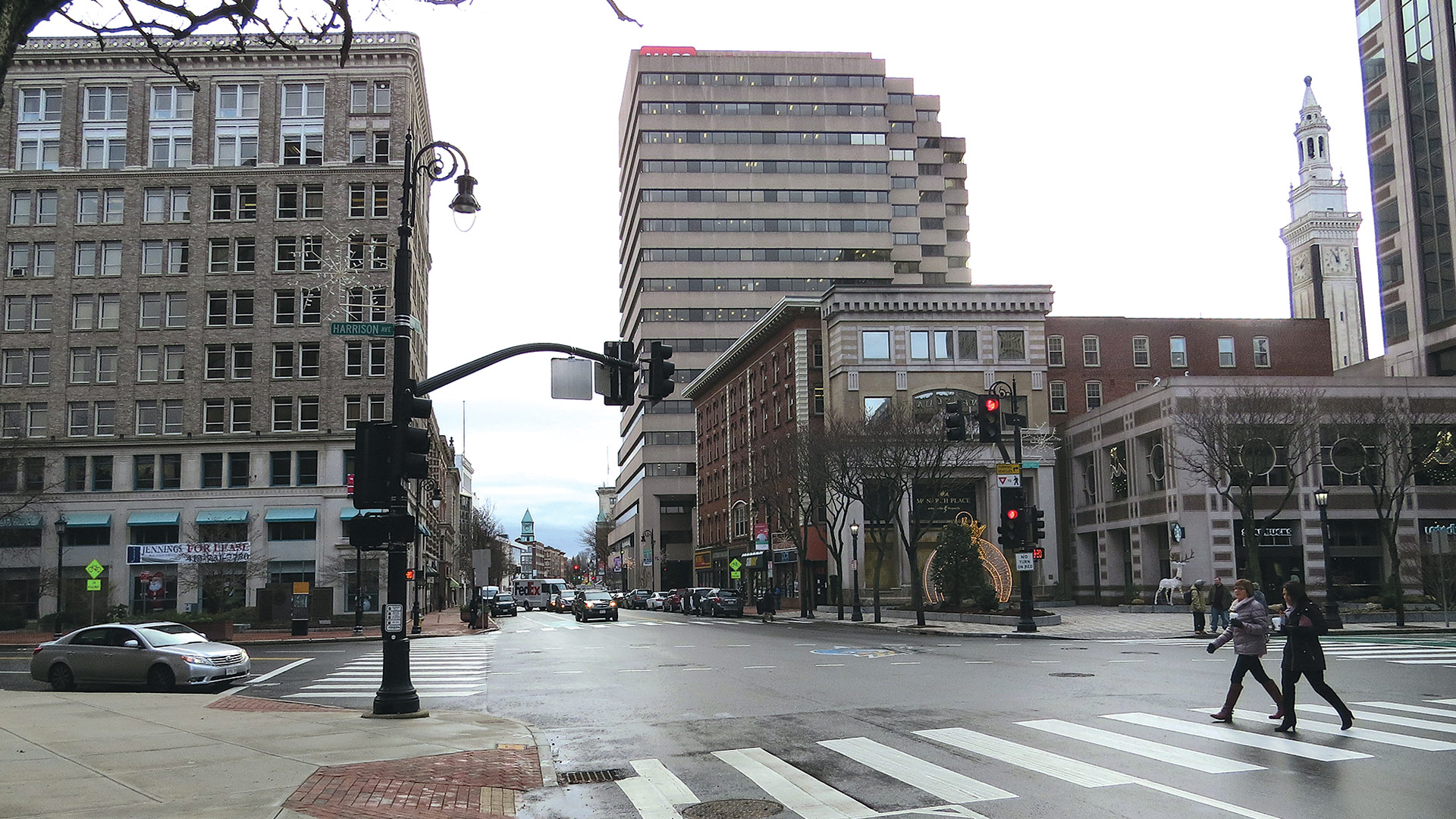
Building Permits

The following building permits were issued during the month of December 2018.

AMHERST

Amherst Shopping Center Associates, LLC
165 University Dr.
$34,020 — Install ductless HVAC system in existing CVS stockroom

D’Angelo Inc.
48 North Pleasant St.
$65,300 — Tenant fit-out for food-service establishments

Granodonico Properties, LLC
25 North Pleasant St.
$37,000 — Remove ceiling and insulation, reinstall blue boards and plaster

Jewish Community of Amherst
742 Main St.
$120,000 — Straighten and re-roof steeple

Mathews Properties
37 South Pleasant St.
$5,000 — Demolish wall between two offices

One East Pleasant St.
1 East Pleasant St.
$5,000 — Limited demolition

Town of Amherst
4 Boltwood Ave.
$10,000 — Town room alteration

Udrive, LLC
40 University Dr.
$551,250 — Core/shell for future restaurant

CHICOPEE

Chicopee Marketplace Owners, LLC
591F Memorial Dr.
$42,900 — Fit-out existing space for nail salon

G6 Hospitality Property, LLC
36 Johnny Cake Hollow
$30,000 — Remove drywall, repair existing drywall, mold remediation

Dorothy Krawiec
2 Valier Ave.
$25,000 — Add three antennas and replace remote radio heads with new ancillary equipment and cables

Yee Family
705 Memorial Dr.
$110,000 — Complete demolition of former Hu Ke Lau restaurant

EASTHAMPTON

Keystone Enterprises
122 Pleasant St.
$352,800 — HVAC work for Insa Easthampton expansion

Keystone Enterprises
122 Pleasant St.
$62,000 — Extend elevator hoistway above roof line, reconstruct level deck landing and exterior elevator lobby

Seachange Endeavors, LLC
117 Pleasant St.
$224,000 — Construct two-story manufactured addition to side of building

EAST LONGMEADOW

Cartamundi
443 Shaker Road
$275,000 — Roofing

LG Industries, LLC
194 Pleasant St.
$25,000 — Kitchen and bathroom

Stacy’s Cleaners
55 White St.
$1,200 — Rebuild interior stairs

Ventry Properties, LLC
124 Shaker Road
$165,500 — New commercial building

GREENFIELD

American Tower Corp.
180 Country Club Road
$13,500 — Install small backup generator for cell tower

Behavioral Health Network
298 Federal St.
$65,000 — Install fire-protection system

Joyce Drake
427 Davis St.
$6,000 — Cut out concrete wall for door, frame two walls to make office, finish and frame for bathroom

Joyce Drake
427 Davis St.
Attach sign to building for Kenney Automotive

First United Methodist Church
25 Church St.
$12,800 — Roofing

Syfeld Greenfield Associates
259 Mohawk Trail
$40,000 — Retrofit sprinkler heads to new ceiling height

LONGMEADOW

The Longmeadow Mall, LP
827 Williams St.
$8,500 — Install ceiling to bring space up to code

NORTHAMPTON

LHIC Inc.
34 North Maple St.
$125,000 — Construct cidery

Smith College
44 College Lane
$2,365,000 — Upgrade existing air-handling units and exhaust fan in Sabin-Reed Hall

Smith College
44 Green St.
$16,000 — New transom, built-in bookshelves, minor electric work

SPRINGFIELD

125 Paridon Street, LLC
125 Paridon St.
$25,000 — Install three panel antennas, remove three remote radio heads and install six, modify equipment, smokestack installation for AT&T

Springfield College
29 Sheffield St.
$225,000 — Alter space in facilities building for use as a dance classroom

YWCA of Western Massachusetts
1 Clough St.
$5,000 — Convert two existing office rooms into sleeping rooms

WEST SPRINGFIELD

73 State St., LLC
59 Interstate Dr.
$32,560 — Replace carpet, ceiling, sink, cabinet, and front door; remove two walls; add additional electrical outlets

Jim Byrne
24 Parkside Ave.
$4,200 — Repair front entry foyer, install new security door, install new siding, install new roof

Dante Club
1198 Memorial Ave.
$38,975 — Roofing

Eastern States Exposition
1305 Memorial Ave.
$25,000 — Install wireless telecommunications equipment for AT&T

Turkmen Kenan
707 Main St.
$4,500 — Roofing

Red’s Towing
1528 Riverdale St.
$32,000 — Roofing

Town of West Springfield
1 Toccoa Lane
$7,500 — Install generator to existing wireless facility

Van Deene Medical Building Partnership
75 Van Deene Ave.
$80,000 — Expand office into adjacent vacant space, add handicap-accessible restroom

WILLIAMSBURG

Equinox Partners, LLC
183 Main St.
$87,000 — Roofing on clubhouse, remove and rebuild entrance, new pine ceiling in clubhouse, install washable surface in kitchen

Roman Catholic Diocese of Springfield
173 Main St.
$14,285 — Roofing

Daily News

By Mark Adams

The ripple effects of the government shutdown have started to come to bear on employers.

Specifically, due to the partial government shutdown that began on Dec. 22, 2018, the E-Verify system is not available. According to the E-Verify site, operated by the Department of Homeland Security (DHS), “E-Verify is currently unavailable due to a lapse in government appropriations. While E-Verify is unavailable, employers will not be able to access their E-Verify accounts. We apologize for any inconvenience and look forward to serving you once we resume operations. For more information, see E-Verify Unavailable.”

During the shutdown, employers will not be able to enroll in the program; access their E-Verify accounts; create a case; view or take action on any case; add, delete, or edit accounts; reset passwords; edit company information; terminate accounts; or run reports. Workers will not be able to resolve E-Verify Tentative Nonconfirmations (TNCs) during the shutdown.

In addition, myE-Verify will be unavailable, and employees will not be able to access their myE-Verify accounts.

To minimize the burden on both employers and employees, DHS announced that:

• The three-day rule for creating E-Verify cases is suspended for cases affected by the unavailability of the service;

• The time period during which employees may resolve TNCs will be extended. The number of days E-Verify is not available will not count toward the days the employee has to begin the process of resolving their TNCs; and

• Federal contractors with the Federal Acquisition Regulation E-Verify clause should contact their contracting officer to inquire about extending federal contractor deadlines.

Further information about what is and is not available online can be found at www.e-verify.gov/e-verify-and-e-verify-services-are-unavailable.

The shutdown does not affect an employer’s responsibility to verify employment eligibility through the Form I-9. Employers must still complete the Form I-9 no later than the third business day after an employee starts work for pay and comply with all other Form I-9 requirements.

Once the government operations fully resume, DHS will notify employers with additional guidance regarding the ‘three-day rule’ and time period to resolve TNC deadlines once operations resume.

Mark Adams is director of HR Services for the Employers Assoc. of the NorthEast (EANE), an Agawam-based company that provides resources for organizations to maximize employee engagement and retention while minimizing risk.

Daily News

WEST SPRINGFIELD — Greg Chiecko, director of Sales at the Eastern States Exposition (ESE), has been named president and CEO of the Outdoor Amusement Business Assoc. (OABA), the mobile amusement industry’s trade association.

The announcement was made by the OABA board of directors following a comprehensive executive search. Chiecko succeeds longtime OABA President Robert Johnson, and will embark on his new career on Feb. 1.

The OABA is the largest trade association representing carnivals, circuses, concessionaires, independent ride owners, and others who serve fairs, festivals, and community events.

“Greg’s diverse professional industry experience, proven leadership, and business acumen gained at Eastern States Exposition, coupled with his affable leadership style, make him the ideal president,” said Jay Strates of James E. Strates Shows, chairman of the OABA.

Chiecko’s 24-year career at ESE included the oversight of midway operations at the Big E. He worked closely with the OABA and other industry associations and is past board member of the International Assoc. of Fairs and Expositions, and past president of the Massachusetts Agricultural Fairs Assoc. and the New England Assoc. of Amusement Parks and Attractions. He also sits on the board of the Greater Springfield Convention and Visitors Bureau and served as its chair for five years.

“I am honored to be named president and CEO by the OABA board of directors,” he said. “My priorities will be to strengthen the communications and relationships between carnivals and fairs in order to forge long-lasting and mutually beneficial relationships and continue to improve regulatory advocacy, member services, fundraising, and networking opportunities.”

Added Eugene Cassidy, president and CEO of the ESE, “while this is a loss to Eastern States Exposition, it is a plus for one of our collateral trade associations and is good for our industry. I am proud that ESE hatched the new leader of the OABA, and I’m proud of Greg. Eastern States Exposition stands in strong support of the OABA and Greg.”

The Eastern States Exposition, a year-round trade and consumer show facility, is the home of the Big E, the sixth-largest fair in North America, which takes place Sept. 13-29, 2019 in West Springfield.

Daily News

GREAT BARRINGTON — Friday, Jan. 11 is National Learn to Ski and Snowboard Day. Since 2009, more than 1 million children and adults in more than 30 states have participated in this initiative, and Ski Butternut is a host this year.

By offering an all-inclusive package on rental, lesson, and lift tickets on Jan. 11, Ski Butternut makes it affordable and easy to get started skiing or snowboarding. That day, anyone age 4 and up can purchase a $10 package which includes a beginner-area lift ticket, first-timer 90-minute group lesson, and rental equipment (skis or snowboard) to use for the day. This is a savings of $65 off the regular first-timer package price sold throughout the winter season.

“By supporting this great initiative on January 11, we hope people of all ages will come share our passion for skiing and riding,” said Dillon Mahon, director of Marketing for Ski Butternut. “Our aim is to provide a fun and easy experience to people so that they become life-long winter sports enthusiasts.”

Call (413) 528-2000, ext. 111 for more information, or go to Ski Butternut dressed warm and ready to learn. Upon arrival, report to the rental building to purchase the $10 package and be issued ski or snowboard equipment. Ski Butternut’s operating hours are 9 a.m. to 4 p.m. on Fridays, and group lessons will be offered at 9:30 a.m., 10:30 a.m., 12:30 p.m., and 2 p.m.

Daily News

CHICOPEE — Elms College will host a workshop to help salespeople and business leaders maximize their effectiveness with customers on Thursday, Feb. 28 from 5:30 to 8:30 p.m. in the Faculty Dining Room in the Dooley College Center.

The three-hour “DiSC for Sales” workshop, sponsored by the college’s MBA program and the Center for Entrepreneurial Leadership (CEL), will be led by Nancy Davis, Business Development specialist at CEL.

DiSC for Sales is a model that supports people in sales roles and helps them to recognize and understand their own unique strengths and style, while also helping them build relationships with clients by learning to read each client and adapt to connect with them better. The model offers a concrete method and practical tools to help businesspeople engage with all personality styles.

During the interactive workshop, Davis, a certified DiSC facilitator, will offer educational content, examples, activities, and opportunities for sales-oriented people to recognize customer priorities, what to emphasize to customers, and strategies that work with different personality styles.

“DiSC will help you discover: are you a results person, action-oriented, a relationship builder, and/or dependable?” Davis said.

Prior to the event, participants will take an online assessment and receive a full report.

The cost to attend is $199 per person, which includes the workshop and dinner. Space is limited. Register by Friday, Feb. 15 by e-mailing [email protected]. For more information, e-mail Davis at [email protected].

Daily News

SPRINGFIELD — The Community Foundation of Western Massachusetts (CFWM) recently awarded $665,200 to 45 area nonprofits through its capital grant and capacity grant programs, two of the foundation’s six competitive grant-making programs that focus on improving and supporting quality of life for people in Franklin, Hampden, and Hampshire counties.

CFWM capital grants help local nonprofit organizations expand their impact by funding new and upgraded technology, equipment, and facilities. Capacity grants support local nonprofits to build their own organizational effectiveness and operational efficiency. Grant awards range from $4,500 to $40,000 and address community needs in the areas of arts and culture, education, the environment, health, housing, and human services.

Longtime CFWM grantee Valley Eye Radio was awarded a capital grant to purchase new equipment to expand its broadcasts to reading-impaired listeners throughout the Pioneer Valley. “Without this grant and the resources to purchase new technology and equipment, we would not be able to serve more listeners in more settings who need our accessible programming produced specifically for their needs,” said Barbara Loh, executive director. “It will help to avoid social isolation among the elderly and disabled, and will help them navigate the more complex world of the 21st century. It will give them equal footing to help maintain their quality of life and health.”

More than 25 of the projects funded were supported by trusts administered by Bank of America. CFWM receives and reviews grant applications on behalf of Bank of America for four charitable trusts for which the bank serves as a trustee. Total grant awards by county are as follows: Hampden, $412,000, Hampshire, $144,400, and Franklin, $108,800.

Capital grants were awarded to the following programs and organizations: Ascentria Community Services, Baystate Health Foundation, Bethlehem House, Chester Theatre Company, Dakin Pioneer Valley Humane Society, Davenport Child Care, Franklin County Community Meals Program, Franklin Land Trust, Friends of the Montague Common Hall, Friends of the Springfield Public Library, Gardening the Community, Hilltown Community Health Center, Hitchcock Center for the Environment, Holyoke YMCA, MHA, Multicultural Community Services of the Pioneer Valley, Quaboag Valley Community Development Corp., Robert F. Kennedy Academy, Roca, Second Chance Animal Services, ServiceNet, Springfield Museums, Stanley Park, Tapestry Health Systems, Tolland Volunteer Fire Department, Valley Eye Radio, Willie Ross School for the Deaf, and Womanshelter Companeras.

Capacity Grants were awarded to the following programs and organizations: 1794 Meetinghouse Inc., Birthday Wishes, Brick House Community Resource Center, Cancer Connection, Double Edge Theatre Productions, Hilltown Land Trust, Kestrel Land Trust, Link to Libraries, Mary Lyon Education Fund, Massachusetts Adoption Resource Exchange, Massachusetts Review, North Quabbin Citizen Advocacy, Northampton Education Foundation, Trauma Institute and Child Trauma Institute, and the World Affairs Council of Western Massachusetts.

Daily News

NORTH BROOKFIELD — As 2019 commences, North Brookfield Savings Bank looks back at the past year to reflect on the efforts made to give back to the communities it serves. Like many years before, the bank reports, 2018 was an excellent year that ended with the overwhelming success of the annual toy drive, during which the bank accepted thousands of donations of new and unwrapped toys and collected monetary donations in jars at its branch locations.

This year’s donations from community members included several impressive items, such as bicycles, oversized stuffed animals, large toy trucks and vehicles, as well as various board games, puzzles, trucks, crafts, and toys. All toys collected were donated to local toy programs in each community to ensure that local children in need were able to receive holiday presents. In addition, North Brookfield Savings Bank donated $1,750 to the local toy programs.

“We couldn’t be more pleased with this overwhelming fundraiser turnout. On behalf of all of us at North Brookfield Savings Bank, I want to say ‘thank you’ to all of the generous community members, customers, and North Brookfield Savings Bank employees who donated this holiday season to our toy drive,” said bank President and CEO Donna Boulanger. “The holiday season was filled with joy for many children because of your kindness.”

Partnering organizations include the North Brookfield Police Assoc. Toys for Joy Program, the East Brookfield Toys for Joy Program, the West Brookfield Police Assoc. Holiday Toy Program, the Ware Police Department Christmas for Kids Program, the Belchertown Firefighters Assoc. Adopt-a-Family Program, and the Palmer Lions Club Holiday Toy Program.

Daily News

PITTSFIELD — Berkshire Bank announced the 2019 NeXt Gen Scholars scholarship awards program. Through this program, any individual planning to attend a two- or four-year college or technical school in the fall of 2019 will have an opportunity to receive one of 40 scholarships. A total of $100,000 in scholarship money will be awarded by the Berkshire Bank Foundation to those who live or attend school where Berkshire Bank has a presence in Massachusetts, New York, Connecticut, Vermont, New Jersey, and Pennsylvania.

The NeXt Gen Scholar recipients will embody academic excellence while sharing Berkshire Bank’s commitment to community service and volunteerism. Applications will be evaluated based on the individual’s record of volunteer service, academic success, and financial need. Applicants must have a minimum GPA of a 3.0 and a household income under $100,000 (or individual income of $50,000) to be eligible to apply. Each NeXt Gen Scholar will receive $2,500 in funding to support their education efforts. A team of more than 200 Berkshire Bank employee volunteers will review the applications and select the 2019 recipients.

To be considered, all applications must be submitted online by 11:59 p.m. on Thursday, Jan. 31. To learn more about the program or apply online, visit www.berkshirebank.com/scholarships.

Daily News

SPRINGFIELD — Mayor Domenic Sarno announced the appointment of attorney Talia Gee as the city of Springfield’s new chief Diversity & Inclusion officer.

“As I said this past year, and with the upcoming retirement of Equal Opportunity Administrator Dan Hall, a newly evolved/transitional position would be developed,” Sarno said. “My thanks to Dan Hall for all his years of dedicated service to our city. This new position enhances my vision to lead in development and implementation of proactive diversity, equity, and inclusion initiatives in hiring, career development, and leadership opportunities in support of our city’s strategic plan to continue to foster a working environment, where all have an opportunity to succeed. Though this new position will work closely with our Human Resources Division, it is a direct cabinet-level report to me.”

Sarno added that Gee is a talented attorney with the perfect experience and skill set for her new position.

“From rank and file to our boards and commissions, I am very proud of my administration’s track record of diversity and inclusion. We’re always looking for the best and the brightest for our taxpayers. Attorney Talia Gee, a Springfield resident, certainly fits the bill. I was pleased when she came on board as an attorney in our Labor Relations Division.”

Gee said she was happy to join the city of Springfield as an attorney and even more excited to start her new role as chief Diversity & Inclusion officer.

“I take pride in working for the city of Springfield, my hometown, and working for the taxpayers of this great city,” she added. “This position is critical to the city’s objective to recruit and develop an inclusive and diverse city workforce that reflects its demographic. I look forward to working with the mayor and city departments to reach that objective.”

Gee will start her position on Jan. 14. Her salary will be $92,000. She is a graduate of St. John’s University in New York City and received her MBA and law degree from Western New England University. She is MCAD-certified and previously worked at the law firm of Sullivan, Hayes & Quinn. She is the board chairwoman of the Springfield Boys & Girls Club and co-creator of the “How to Wear Your Crown” event that focuses on Springfield-area teenage girls.

Daily News

NORTHAMPTON — With many Massachusetts employment laws going into effect this year, now is a good time for employers to look at their employee handbooks to see if any revisions may be necessary.

During a seminar on the topic hosted by Royal, P.C. on Thursday, Jan. 10, attendees will explore what should be included, as well as some of the laws and amendments that have been implemented in Massachusetts in 2018, including the Pregnant Workers Fairness Act, amendments to the Massachusetts Equal Pay Act, and the ‘grand bargain’ bill. Because the law is continually changing in numerous ways, it is advisable that employers set aside a time, at least once per year, to review and update their handbook.

Royal, P.C. will also present a seminar on how to conduct workplace investigations on Thursday, Jan. 17. Recent state and federal court decisions underscore the importance of conducting thorough investigations. Some of the topics to be discussed in the workshop include selecting an investigator, conducting an effective interview, dealing with confidentiality issues, and taking interim actions.

HR professionals, CFOs, CEOs, and those in a management position who are responsible for handling investigations regarding employee conflicts, allegations of harassment, or employee theft should attend this workshop.

Both seminars will be held from 8 to 9:30 a.m. at 270 Pleasant St., Northampton. The cost is $30 per person. Registration is limited. Those wishing to register for one or both events should contact Heather Loges at (413) 586-2288 or [email protected].

Daily News

WATERBURY, Conn. — Webster Bank was named best overall bank in the Northeast in Bank Director’s annual RankingBanking study released late last month. The 2019 RankingBanking study identifies the top public U.S. retail and commercial banks between $10 billion and $250 billion in assets within each region — the South, the West, the Midwest, and the Northeast.

In addition to placing first overall in the Northeast, Webster was also the top bank in the Northeast in three key categories: Best Technology Strategy, Best Board, and Best Small Business Strategy.

“This is another independent report showcasing our good work across the organization, and a great way to kick off 2019,” said President and CEO John Ciulla.

The rankings were calculated using Bank Director’s proprietary algorithm, which incorporates more than 60 critical data points to measure banks’ relative strengths and weaknesses. The data points used were both qualitative and quantitative, including case studies and analyst opinions.

Many factors went into Webster’s top rankings, including the bank’s high-level focus on digital banking and user experience, the diversity and expertise of its board, and its small-business loan growth and volume.

“We also noted Webster’s robust selection of products and services tailored for small businesses, the fact that customers can apply for loan and deposit products online, and Webster’s ability to generate online loan decisions within 48 hours,” said Emily McCormick, Bank Director’s vice president of Research.

Bank Director is a leading information resource for the directors and officers of financial institutions across the nation.

Daily News

EASTHAMPTON — The Western Mass. chapter of Business Among Moms (BAM) will host its February event on Tuesday, Feb. 12 from 10 to 11:30 a.m. at 396 Main St., Easthampton. To register, click here.

Attendees will discuss their thoughts and what they’ve learned from reading Girl, Wash Your Face: Stop Believing the Lies About Who You Are So You Can Become Who You Were Meant to Be by Rachel Hollis.

This is an inclusive and educational networking experience. Attendees will meet other local experienced women business owners, professionals, and executives from across the region. Attendees should bring at least 25 business cards and promotional/marketing materials for their business.

Daily News

HATFIELD — The Food Bank of Western Massachusetts announced the addition of two new members, Bill Grinnell and Beth Young, to its board of directors.

Grinnell is president of Webber and Grinnell Insurance and manager of Webber and Grinnell Employee Benefits LLC of Northampton. He also serves as vice president of River Valley Investors, an angel investment group in Springfield. He is the former president of the Hampshire YMCA, past co-chair of the United Way annual fund, past vice president of the Employers Assoc., former member of the Northampton Planning Board, and past trustee of the Academy at Charlemont. He holds a bachelor’s degree from Hartwick College in New York. 

Young has served as district director of Stop & Shop Supermarket Co. for the past 20 years, covering stores in all four counties in Western Mass. and two stores in Connecticut. Throughout her time there, she and her team have organized numerous fundraising events to support local community organizations, including regional food banks, the USO, and Dana Farber’s Cure for Childhood Cancer. She is a graduate of Westfield State University and holds a bachelor’s degree in psychology. 

“We are extremely excited to have these proven leaders join our board of directors,” said Andrew Morehouse, executive director at the Food Bank. “Their extensive experience and areas of expertise will allow the Food Bank to move forward in our efforts to create a Western Massachusetts where no one goes hungry and everyone has access to healthy food.”

Daily News

LEEDS — VA Central Western Massachusetts Healthcare System is launching a medical provider recruitment campaign across the state targeting doctors, nurses, and other providers who desire to serve those who served their country.

VA Central Western Massachusetts Chief of Staff Dr. Seth Kupferschmid said the recruitment campaign is just the start of the medical system’s yearlong effort to bolster the number of providers on staff.

“Due to retirements and transfers, we experience a steady need for medical providers who come with excellent credentials from serving in the surrounding communities,” said Kupferschmid, who saw patients across the Pioneer Valley region before joining the VA. “A large number of our veterans live in the community, and we are currently seeking psychiatrists and primary-care providers for their increasing healthcare needs.”

Kupferschmid said the average age of veterans enrolled at the VA’s community clinics and the Edward P. Boland VA Medical Center on the main campus in Leeds is around 65.

“We anticipate that the number of younger veterans seeking care will continue to grow, and therefore we need to apply foresight to our staffing plan to meet that growing patient population,” he noted. “Now is the time for us to welcome physicians and nurse practitioners, among many other providers into our ranks — especially those engaged and enthusiastic to work with our team in caring for veterans.”

Associate Director Andrew McMahon said the healthcare system has seen an increase in the number of new veterans seeking care, and in the hiring of key staff personnel.

“Over the last four years, we’ve experienced significant growth in the number of veterans we serve and the extent to which our veterans utilize our service,” said McMahon, who oversees the medical system’s facilities. “Leadership is challenged to staff our growing and high-demand clinical service to meet these trends. We have invested a lot in our workforce recently and will continue to allocate our resources in a manner that delivers the services our patients need.”

Along with staffing resources, McMahon said, the healthcare system has also invested heartily in its historic campus in Leeds and in its seven other sites of care.

“Ongoing construction for the main campus in Leeds and clinics in the community saw $14 million in 2017 and another $19 million in 2018 for ongoing construction and improvements,” he noted, adding that these numbers don’t include the staffing budget for “hiring and retaining much-needed medical providers.”

CEO John Collins, a 30-year Army veteran, said the healthcare system’s provider recruitment campaign is essential because it’s geared at serving an ever-changing and growing veteran patient population at VA Central Western Massachusetts Healthcare System.

“Our aim is to seek and to build strong relationships with providers in the community, including academic institutions,” said Collins, adding that the healthcare system currently has a partnership with UMass Medical School and is actively seeking others. “The bottom line is we need medical professionals who want to serve those who served our nation.”

For more information, call the Human Resources Office at the Edward Boland VA Medical Center in Leeds at (413) 582-3106, or visit www.centralwesternmass.va.gov.

Daily News

SPRINGFIELDBusinessWest is currently accepting nominations for the 40 Under Forty class of 2019. The deadline for nominations is Feb. 15.

Launched in 2007, the program recognizes rising stars in the four counties of Western Mass. Nominations, which should be detailed in nature, should list an individual’s accomplishments within their profession as well as their work within the community. Nominations can be completed online by visiting www.businesswest.com, clicking on ‘Our Events,’ and then ‘40 Under Forty.’

Nominations will be weighed by a panel of judges. The selected individuals will be profiled in the April 29 issue of BusinessWest and honored at the 40 Under Forty Gala on June 20 at the Log Cabin in Holyoke.

Nominations can be submitted at https://businesswest.com/40-under-forty-nomination-form/.

Difference Makers

Celebrate with Us!

2019 Difference Makers
Thursday, March 28, 2019
5 p.m.-8:30 p.m.
The Log Cabin, Holyoke

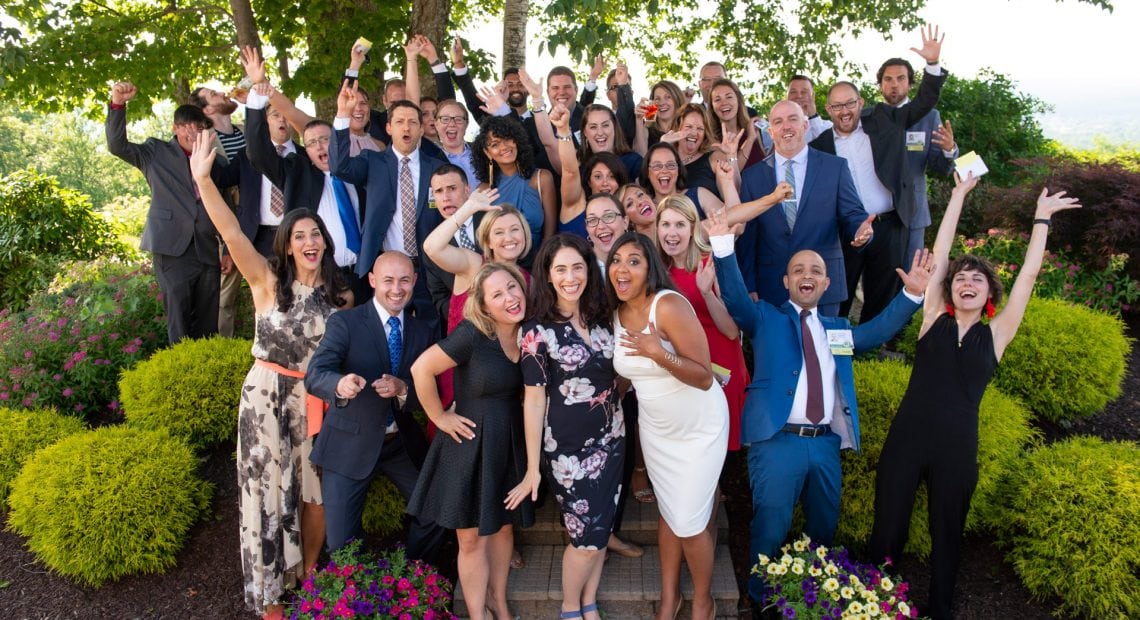
This program, initiated in 2009, is a celebration of individuals, groups, organizations, and families that are positively impacting the Pioneer Valley and are, as the name suggests, making a difference in this region. As previous classes have shown, there are many ways to do this: through work within the community on one or many initiatives to improve quality of life; through success in business, public service, or education; through contributions that inspire others to get involved; through imaginative efforts to help solve one or more societal issues; or through a combination of the above.

Our 2019 Difference Makers will be announced in the Feb. 4, 2019 issue of BusinessWest

Tickets are $75 per person/$750 for a table of 10.

Purchase Tickets Below:

Difference Makers Event Tickets

"*" indicates required fields

Name*
Address*
Price: $95.00
Quantities of 10 will be an entire table.
Daily News
Please check "Opt in" if you would like to receive our daily e-newsletter containing local events and breaking news. If the print subscriber clicks on this button, we would like them to be signed up to receive our Daily News.

Sponsored by

40 Under 40

40under40SMALLBusinessWest is now accepting nominations for the 40 Under Forty Class of 2019, a celebration of young business and civic leaders in the Western Mass., and an undertaking in which our readership will play a pivotal role. Indeed, the process of selecting this region’s 40 Under Forty begins with nominations. And we urge you be thorough, because 40 Under Forty is a nomination-driven process; the background material submitted on a given individual is the primary source of information to be weighed by the judges who will score the candidates.

Please take a few minutes and help us identify the region’s 40 Under Forty. For more information about 40 under Forty >>Go Here

Save the Date

The selected individuals will be profiled in the April 15th edition of BusinessWest and celebrated at the annual 40 Under Forty Gala on June 20, 2019.
For more information call (413) 781-8600

About the nomination form:

• Candidates should have achieved professional success and actively volunteer for civic and/or non-profit organizations.
• Only nominations submitted to BusinessWest on
this form will be considered.
• Fill out the nomination form completely.
• Photocopies are acceptable.
• Supporting information (i.e. résumé) may be sent to [email protected]. Please include nominee’s name in subject line.
Deadline is February 15, 2019. No exceptions.
• Nominees must be under 40 as of April 1, 2019

Fill out the nomination form completely.

"*" indicates required fields

This field is for validation purposes and should be left unchanged.

Nominee's Contact Information

Nominee's Name*
Current Company Address*
As of April 1
(job responsibilities, special projects, business-related affiliations)
(board involvement in community, state, or national organization, including trade associations)
(spouse, children if applicable)

Nominated by (your information):

Daily News

SPRINGFIELD — Seven individuals and one team will be inducted into the Western Massachusetts Baseball Hall of Fame’s class of 2019. They include Justine Siegal, Dana LeVangie, Karl Oliveira, Mike Laga, Jim Jachym, Mark Belanger, Candy Cummings, and the 2018 Pittsfield Little League team.

The class will be inducted at the Western Massachusetts Baseball Hall of Fame Induction Banquet, presented by Westfield Bank, on Thursday, Jan. 31 at 7 p.m. at the La Quinta Inn and Suites Ballroom, 100 Congress St., Springfield.

The keynote speaker for the evening’s ceremonies will be Siegal, president and founder of Baseball for All, a nonprofit organization that empowers women to play, coach, and lead in baseball. Siegal became the first female coach of a Major League Baseball team in 2015, when the Oakland Athletics invited her to be a guest instructor for two weeks in the instructional league in Arizona.

This year’s class is the sixth since the inaugural banquet in 2014. Since its inception, 35 individuals and four teams who have represented and served the baseball community of Western Mass. have been honored.

Tickets for the banquet are $50, or $450 for a table of 10. Dinner and dessert are included. To purchase tickets, call (413) 533-1100 or visit valley-blue-sox.ticketleap.com/2019-hof.

Daily News

AGAWAM — Starting Jan. 1, farmers in Western Mass. are invited to apply for Local Farmer Awards up to $2,500 toward equipment and infrastructure projects to help them complete in the marketplace.

The Harold Grinspoon Charitable Foundation (HGCF), in partnership with Big Y and with the support of other funders, is entering the fifth year of the awards program, which has helped more than 125 farmers carry out a total of 188 projects. 

“Big Y has been partnering with and supporting local farmers since we began over 80 years ago,” said Big Y president and CEO Charles D’Amour. “Our partnership with the Grinspoon Foundation provides one more way we help the local growers to thrive in our community.”

Some examples of how the awards have been used include a high-efficiency vegetable washer, a walk-in cooler aging room, an egg washer, high tunnel irrigation, electric fencing, and a milkplan bulk tank. Philanthropist and project founder Harold Grinspoon noted that “farmers don’t typically ask for help. They are genuinely appreciative of these awards and use the money in creative ways for projects to help their businesses.” 

To be eligible, farms must have gross sales of $10,000 or above and either be a member of Berkshire Grow or Community Involved in Sustaining Agriculture (CISA) or reside in one the four Western Mass. counties. Berkshire Grown and CISA share their passion for local farms by providing ongoing guidance and help with promotion of the of the Local Farmer Awards.

 The deadline for applying is Thursday, Jan. 31. Interested applicants are encouraged to visit www.farmerawards.org for more information.

Daily News

CHICOPEE — The Munich Haus will host its signature Game Feast events in the first quarter of 2019. The Game Feast is a buffet-style celebration that takes place in the upstairs banquet hall at the Munich Haus. The event will feature carving stations for venison, bison, elk, and mountain goat, as well as a buffet featuring kangaroo, alligator, and all of the Munich Haus favorites.

Game Feasts will be held on the following Saturdays at 6 p.m.: Jan. 19, Feb. 23, March 23, and April 27.

“We are happy to announce new Game Feast dates for our patrons,” said Patrick Gottschlicht, owner of the Munich Haus. “We have been selling them out lately and want to make sure everyone gets a chance to experience one. This is probably the most unique assortment of game at an event in the Valley.”

Tickets are $55 per person and can be purchased on the Munich Haus website or by calling (413) 594-8788.

Daily News

EASTHAMPTON — The Western Massachusetts chapter of Business Among Moms will host its January event on Tuesday, Jan. 8 from 10 to 11:30 a.m. at 396 Main St., Easthampton.

The exercise mindset of ‘no excuses’ tends to have the opposite effect on women. Feelings of guilt and inadequacy set in, creating obstacles for reaching goals, which hinders their success both personally and in business.

As a personal trainer, business owner, and mother of two, Michelle Crean knows the demands on mothers and how important it is when setting goals — whether it be for health, family, or business — to understand how to not let setbacks derail one’s momentum. Crean will talk about how reframing your exercise mindset can help shape your vision for yourself and your business in the new year.

To register, click here.

Daily News

SOUTH DEERFIELD — TommyCar Auto Group announced its ownership of the Volvo Cars Pioneer Valley dealership, formerly Pioneer Valley Volvo.

“This is a brand that we’ve been looking at for a long time because it fits in well with the other manufacturers we have in the group, plus it’s a great location, and it’s a perfect size for us,” said Carla Cosenzi, president of TommyCar Auto Group. “We’re really attracted to Volvo and everything it stands for in terms of luxury and convenience it provides to customers, the value of the brand, and the safety of the vehicle.”

She added that Volvo Cars Pioneer Valley will bring amenities that all TommyCar Auto Group dealerships offer, including Click.Drive.Buy, a new way to buy a car online; TommyCard Rewards, through which customers can earn 15% back of every dollar they spend; and efforts to support the local community; the company has contributed more than $4 million to local organizations, schools, and the Dana Farber Cancer Institute.

“Our focus moving forward is really going to be on customer satisfaction and convenience,” Cosenzi said.

Volvo Cars Pioneer Valley will commemorate the new ownership with an “Eat.Meet. Greet” event on Wednesday, Jan. 16 from 5 to 7:30 p.m. Customers can get an early look at the long-awaited 2019 Volvo S60, hors d’ouevres from Seth Mias Catering, cocktails from Hitchcock Brewing, and giveaways. For more information on the event, visit www.volvocarspioneervalley.com.

Daily News

EASTHAMPTON — Smith Brothers Insurance sponsored 25 children in need this holiday season and raised $5,000 for the 2018 Holiday Bear Project. 

For 12 straight years, Smith Brothers’ team members donated money and time for this annual gift-giving program for needy public-school children. Team members individually sponsored a child, donated money, and coordinated company fundraising activities. Hundreds of gifts were purchased and wrapped for students ranging in age from 5 to 17.

More than 10,000 public-school students have benefited from the holiday program since the Holiday Bear Project began in 1998.

“All of us at Smith Brothers worked together as a group of passionate helpers to raise money, give of our time, have fun helping kids, and give back to our community. Helping others is our big purpose, throughout the year and especially during the holiday season,” said Joe Smith, president and CEO of Smith Brothers.

The Smith Brothers team also conducted a toy drive for Connecticut Children’s Medical Center and a food collection for a local food bank.

Daily News

SPRINGFIELD — The Naismith Memorial Basketball Hall of Fame announced the eligible candidates for the class of 2019, including the addition of a new direct-elect category for women veterans. Click here for the full list of eligible nominees.

The women veterans direct-elect committee aims to recognize the historical greats of the women’s game who may be overshadowed by those in the contemporary women’s game, such as nominees from the WNBA or the present-day college game. Those considered must be retired from the game for 35 years or more and may be a player, coach, contributor, or team. Direct-elect committees were developed by the hall’s board of governors to ensure the election process is fair and equitable to all constituencies. Longstanding direct-elect categories still in consideration include early African-American pioneers, international, contributors, and men veterans.

A press conference announcing the finalists from the North American and women’s committee for the class of 2019 will be held during NBA All-Star Weekend, which is scheduled for Friday, Feb. 15 in Charlotte, N.C. The entire class of 2019, including those selected by the direct-elect committees, will be unveiled during the NCAA Final Four in Minneapolis. Enshrinement festivities will take place in Springfield on Sept. 5-7.

Daily News

HOLYOKE — In Puerto Rico, before Hurricane Maria forced thousands to flee the devastated island, Maria Crespo Santos had been working as a medical technician in a pathology laboratory and blood bank. 

“I like to work with people,” she said recently. “I like to work in the medical field.”

The storm, however, had caused too much damage, and, like so many others, she left.

“It was horrible,” she said. “I don’t live in Puerto Rico; I survive in Puerto Rico.”

Crespo Santos, 58, moved to Western Mass. about a year ago. She now lives with her sister in Chicopee and works in retail, but thanks to a Holyoke Community College ESOL (English for speakers of other languages) program for Puerto Rican evacuees, she is on the road back to a career in the medical field. 

She was one of more than two dozen students recognized for completing the five-month ESOL program. With her improved English skills, Crespo Santos has already been accepted into a medical assistant training program at HCC that begins in February.

“It’s a pleasure and an honor to be part of this group,” she said at a Dec. 20 celebration that included a feast of traditional Puerto Rican food. “The teachers and advisers have a commitment to us, and I don’t quit. I have to follow my dreams. Follow my goals. I have challenges, but I try very hard.”

The Puerto Rican New Arrivals Program started July 23 and concluded Dec. 20 with a recognition ceremony and feast at HCC’s Picknelly Adult and Family Education Center (PAFEC) in downtown Holyoke. The HCC division of Business and Community Services offered the free ESOL program specifically for residents of Puerto Rico who left the island after Hurricane Maria and relocated to Western Mass.

Classes were held Mondays through Thursdays, 9 a.m. to 1 p.m., and funded through a National Dislocated Worker Grant administered by the MassHire Hampden County Workforce Board in partnership with the MassHire Holyoke and MassHire Springfield career centers.

The program focused on much more than just English language skills, however. Students received lessons in computer literacy at the Gill Technology Center on the first floor of PAFEC, and they received job-search and résumé-development support from advisers at HCC and counselors at the MassHire career centers. 

Community integration and civic engagement was also part of the curriculum. Guest lecturers included state Rep. Aaron Vega and Holyoke mayor Alex Morse, who provided lessons on state and local government. Classes took field trips to the Holyoke Public Library, the Nuestras Raices farm, and Springfield Museums. 

The students came in with different levels of English-language skills, and they are heading in different directions. Some have found jobs; others will continue to participate in HCC’s regular, free ESOL classes; while some, like Crespo Santos, have enrolled in one of HCC’s workforce-training programs. Many have expressed an interested in continuing their education as students at HCC.

“I admire you so much for focusing on your next steps,” HCC President Christina Royal said. “Our purpose at Holyoke Community College is to serve the community, and you are part of our community. Thanks for being part of this, and as you move on, we hope you’ll think about the skills you need for the jobs you’re looking for and just know we are here to help.”

Daily News

SPRINGFIELD — Mayor Domenic J. Sarno announced today that the City of Springfield filed a lawsuit against pharmaceutical manufacturers, distributors, board members, and executives who caused the nation’s devastating opioid epidemic.

The civil complaint was filed in Hampden Superior Court on Dec. 18. The complaint alleges that Springfield, along with many other communities, is currently experiencing a stark increase in the number of residents who have become addicted to prescription opioids and heroin that has caused an increase in opioid overdoses. The complaint references a report that prescription opioids are now known to be the “gateway” drug to heroin; approximately 80% of current heroin users got their start with prescription opioids.

According to the complaint, unlike any other epidemic, the opioid epidemic is not natural, nor typical, but largely man-made. It has been created, fueled, and continues to expand by the persistent unlawful conduct of the defendant pharmaceutical manufacturers and pharmaceutical wholesale distributors.

Echoing the allegations in the complaint, Sarno stated, “A pharmaceutical manufacturer should never place its desire for profits above the health and well-being of its customers. Drug manufacturers have a legal duty to ensure that their products are accompanied by full and accurate instructions and warnings to guide prescribing doctors and other healthcare providers in making treatment decisions. Pharmaceutical manufacturers have legal duties to tell the truth when marketing their drugs and to ensure that their marketing claims are supported by science and medical evidence. A pharmaceutical distributor of controlled substances has a legal duty to conduct its business lawfully, carefully, and in a manner that does not irresponsibly and unreasonably saturate a community with opioids.  Executives of a pharmaceutical company, have a legal obligation to ensure that their company conducts itself in a manner compliant with the law that is designed to protect rather than harm patients. Defendants broke these simple rules.” 

Springfield’s complaint was filed in conjunction with similar actions brought by Haverhill, Framingham, Gloucester, Salem, Lynnfield, and Wakefield, and the City of Worcester, all represented by Scott+Scott. Partner Judy Scolnick of Scott+Scott said, “we are honored to have been selected to represent Springfield in this important lawsuit. The dedicated employees of Springfield are doing all they can to try to ameliorate the devastation left in the wake of the defendant manufacturers’ and distributors’ greed-driven scheme to increase the sale of opioid pills.”

Daily News

SPRINGFIELD — The law firm Bacon Wilson announced that attorney Christopher D. Pierson has joined the firm as counsel, together with associate Attorneys Ryan K. O’Hara and Elizabeth T. Mone.

Pierson is an experienced trial attorney who has successfully tried numerous cases to verdict in courts across Massachusetts. His practice encompasses all aspects of civil litigation, including commercial disputes, individual matters, and personal injury. He is a graduate of Northeastern University Law School and Gettysburg College.

O’Hara is an associate with the firm’s litigation team, where much of his work is focused on contract and business matters, land use litigation, and accidents and injuries. Prior to joining Bacon Wilson, O’Hara spent one year clerking for Justice C. Jeffrey Kinder of the Massachusetts Appeals Court. Ryan graduated summa cum laude from Western New England University School of Law, and received his B.A. from Tufts University.

Mone, known as Liza, is an associate in Bacon Wilson’s estates and probate department, where she works on matters related to estate and asset planning, trusts, long-term care planning, and matters of guardianship/conservatorship. Prior to joining Bacon Wilson, she worked as a staff attorney for the New Hampshire Public Defender. Liza graduated magna cum laude from Boston College Law School, and received her B.A. from Middlebury College. She is licensed to practice in both Massachusetts and New Hampshire.

Daily News

WESTBOROUGH  The Mass. Broadband Institute at MassTech (MBI) has formally approved an award of $2.2 million to Comcast to support the construction of a broadband network in the town of Worthington.

The grant, which was approved by both the MassTech Executive Committee and by the MBI Board of Directors, followed a majority vote at Worthington’s town meeting in May choosing Comcast and supporting the construction of its advanced fiber network to deliver broadband to the town, including approval of a project coverage map. Comcast and Worthington also signed a formal Cable Franchise Agreement on Dec. 11. The proposed broadband network will deliver expanded connectivity to over 96% of Worthington’s residential and business premises once the project is complete.

Under the grant agreement, the Commonwealth of Massachusetts will provide an award of $2,213,809 from the Last Mile program, funds which will supplement Comcast’s capital investment in the construction of the Worthington network. The MBI will utilize Worthington’s original Last Mile allocation of $1,070,000, with the remaining funds coming from additional investments from both the Commonwealth and the town, utilizing an agreement which will allow the town to contribute year over year without having to use municipal bonds.

“The Last Mile program has made great progress in identifying and funding projects that will help close the connectivity gaps in these towns, through public-private partnerships like this, and through the Commonwealth’s support for municipal-owned networks in 20-plus towns,” said Governor Charlie Baker. 

As part of the grant agreement, the Commonwealth provided an initial disbursement of $20,000 for Comcast to complete field surveys in Worthington to determine which of the town’s residential premises were serviceable, helping identify the target of 96 percent of the total residential premises along public roads in the town. Following that assessment, Comcast presented its findings to the Worthington Select Board, which reviewed and approved the preliminary coverage maps, leading to the official signing of the Cable Television License Agreement between the town and Comcast. Under all public/private awards in the Last Mile program, local approval is a key step to state funds being awarded.

Daily News

BusinessWest is currently accepting nominations for the 40 Under Forty Class of 2019. The deadline for nominations in Feb. 15.

Launched in 2007, the program recognizes rising stars in the four counties of Western Mass. Nominations, which should be detailed in nature, should list an individual’s accomplishments within their profession as well as their work within the community. Nominations can be completed online by visiting www.businesswest.com, clicking on ‘Our Events,’ and then‘40 Under Forty.’

Nominations will be weighed by a panel of judges. The selected individuals will be profiled in the April 29 issue of BusinessWest, and honored at the 40 Under Forty Gala on June 20 at the Log Cabin in Holyoke.

Daily News

AMHERST — Anne Massey, professor and Ruth L. Nelson Chair of Business at the Wisconsin School of Business at the University of Wisconsin, has been named dean of the Isenberg School of Management at UMass Amherst. The appointment of Massey, who built her career at Indiana University, was made by John McCarthy, provost and senior vice chancellor for Academic Affairs. 

“Anne Massey is an excellent choice to lead the Isenberg School,” McCarthy said. “Not only is she a leading scholar in information systems, but her varied senior leadership experience at the Kelley School of Business at Indiana University Bloomington makes her uniquely qualified to take Isenberg into its next chapter.”

Massey, the Isenberg School’s first female dean, succeeds Mark Fuller, who served in the position from 2009 to 2018 and is now vice chancellor for Advancement at UMass Amherst. She will assume her new duties in August. Isenberg is currently led by interim Dean Tom Moliterno.

“I am very excited to be part of a school with so much momentum and energy, and to join a diverse and vibrant research campus like UMass Amherst,” Massey said. 

At Wisconsin, Massey served briefly as dean of the Business school, and she has been leading a collaboration between the schools of Business, Engineering and Human Ecology with a focus on creating a new master of science degree in design and innovation that will launch in 2020.

Her efforts to develop cross-disciplinary programs started during her 22-year tenure at Indiana’s Kelley School of Business, where she recently served as founding co-chair of the Intelligent Systems Engineering Program in the School of Informatics and Computing. In that role, she collaborated with faculty from that school and Kelley as well as the College of Arts and Sciences, the School of Public and Environmental Affairs, and the Maurer School of Law to design and implement a new undergraduate curriculum.

In 2012, Massey worked with Indiana University colleagues to create the Center of Excellence for Women in Technology, the nation’s first large, interdisciplinary initiative to support students, faculty, staff, and alumni in embracing technology across the university. “The center reflects my keen interest in making and leading relationships to advance research collaborations, education, and community building,” she said.

Massey also focuses on collaborations outside of academia. She spent six years during her time at Kelley serving as executive director for Information Management Affiliates, an industry-university cooperative involving more than 20 businesses and nonprofits.

Massey’s academic positions at Indiana University and Kelley included associate vice president for University Academic Affairs, associate vice provost for Faculty and Academic Affairs, chair of Doctoral Programs, and founding chair of the Information Systems department. She has received several awards for teaching undergraduate and graduate business courses, including the Indiana University board of trustees’ Distinguished Teaching Award.

Her primary research focuses on innovation processes and strategies and the role of technology as an enabler of collaborative work. Her research has garnered federal, foundation, and industry funding, and her articles have been published in leading academic journals. Massey’s professional honors include being ranked in the top 2.5% of all information-systems researchers publishing in high-impact journals.

Massey earned her bachelor’s degree in management, a master’s degree in industrial engineering, and a Ph.D. in decision sciences from Rensselaer Polytechnic Institute.

Daily News

SPRINGFIELD — Upon the passing last week of Audrey Geisel, widow of Theodor Seuss Geisel, the Springfield Museums remembered her as a champion of her late husband’s work and as a generous philanthropist. That generosity has had a deep and lasting impact on the Springfield Museums.

Following the death of Theodor Geisel — better known as Dr. Seuss — in 1991, his wife, Audrey, authorized the Springfield Museums to create the Dr. Seuss National Memorial Sculpture Garden. More than 4 million people have visited the attraction since it opened in 2002. The sculpture garden — and its many visitors — inspired the creation of The Amazing World of Dr. Seuss Museum, said Springfield Museums President and CEO Kay Simpson.

“The number-one request after the sculptures were installed was for a Dr. Seuss museum,” Simpson noted. “Audrey Geisel was integral to the Sculpture Garden, stepping forward with a $1 million donation that kicked off a major fundraising effort for the project. And she was also in full support of creating The Amazing World of Dr. Seuss Museum, granting us permissions to use Dr. Seuss assets. Audrey helped make it all happen. She wanted to honor Ted’s Springfield roots. Audrey was a great friend to the museums, and we are saddened by her passing.”

Audrey Geisel had a special relationship with Springfield. Not long after her marriage to Ted in 1968, the couple flew to Springfield to visit Ted’s father and oversee his move to a nursing home. It was her first visit to the city that had nurtured the creative genius of the man she had so recently married.

Close to 20 years later, Audrey and Ted returned to Springfield in 1986 to see an exhibition of his work that had been mounted at the George Walter Vincent Smith Art Museum. The exhibition included sketches and drawings from 14 of his books, including And to Think That I Saw It on Mulberry Street, which is based on a real street in Springfield. The Springfield City Schools had launched “Seussamania,” a three-month program in reading and creative writing, and Ted promised to appear as part of the festivities. Ted and Audrey walked down Mulberry Street, and then-Mayor Richard Neal took them on a tour through Forest Park, where Ted’s father had been the long-time superintendent. Neal also presented Ted with a special memento: a weathered sign reading Geisel Grove, which children had found high in a tree near the Forest Park picnic grove frequented by the family in Ted’s youth and named in his honor. The sign now hangs in a gallery on the second floor of The Amazing World of Dr. Seuss Museum.

During that time of Dr. Seuss birthday celebrations in 1986, David Starr, then chair of the Springfield Museums, sat next to Ted Geisel at a dinner and a struck up a friendship. Later, Starr proposed that a sculpture garden be created in Ted’s memory on the grounds of the Springfield Museums. Although Geisel initially demurred, Starr prevailed over time, and Ted agreed to help with this venture. An economic downturn delayed the project, and Ted died before the project was re-started.

Audrey took up the cause together with then-Springfield Museums President Joe Carvalho. Audrey Geisel stepped forward with a $1 million donation to jump-start the fundraising campaign. Lark Grey Dimond-Cates, Audrey’s daughter, was chosen from among 35 other sculptors for her talent and for her ability to stay true to the spirit of Dr. Seuss’ original work. On May 31, 2002, six and a half years later, the sculpture garden opened to tremendous fanfare with Audrey, Lark, and many family members in attendance. 

Fifteen years later, The Amazing World of Dr. Seuss opened its doors. Audrey’s daughters — Dimond-Cates and Leagrey Dimond — stepped forward to donate many of Ted’s personal items, including his drawing desk and chair, original artwork, and rare memorabilia, to the museum. Since the museum opened, the Springfield Museums have doubled attendance, and the project has generated a more than $16 million impact on the city of Springfield.

Daily News

SPRINGFIELD — Due to the lapse of appropriations and the subsequent shutdown of the federal government, Springfield Armory National Historic Site is closed for the safety of visitors and park resources. 

Many other national park sites across the country will remain as accessible as possible while still following all applicable laws and procedures. Park roads, lookouts, trails, and open-air memorials will remain accessible to visitors, but emergency and rescue services will be limited.

Visit www.nps.gov and select “Find a Park” for additional information about access to other parks and sites in this area. However, note that, because of the federal government shutdown, National Park Service social media and websites are not being monitored or updated and may not reflect current conditions. 

For updates on the shutdown, visit www.doi.gov/shutdown.

Daily News

SPRINGFIELD — Richard Venne, CEO of Viability, announced the appointment of Joseph Wendover as chief Human Resources and Diversity officer.

Wendover was previously the Corporate Field Inclusion manager at Walgreens Boots Alliance and was an active member of Viability’s board of directors before accepting his current position. He received his bachelor’s degree in psychology from Marist College in Poughkeepsie, N.Y. and his master’s degree in industrial organizational psychology from University of New Haven.

As the Corporate Field Inclusion manager for Walgreens Boots Alliance, Wendover successfully placed more than 250 people with disabilities into Walgreens’ Connecticut-based New England Distribution Center and developed a diversity program that was replicated throughout the division in 18 other centers. He also currently serves as board president for the Connecticut Business Leadership Network, a member of the Connecticut State Rehabilitation Council, and a member of the Governor’s Committee on Employment of People with Disabilities. He has more than 12 years of hands-on experience within human resources, diversity, and inclusion and 10 years of experience working directly with Viability as a board member and advocate.

Viability is a provider of human services, accredited by CARF and certified by Clubhouse International, the Department of Developmental Services, and the Department of Medical Assistance. Viability leverages community and employer partnerships to create opportunities for its members. With a staff of more than 500 individuals and 37 service locations across the country, Viability continues to be driven by the belief that every individual, no matter their ability, can be a valuable contributor to the community and workforce. Its service divisions include clubhouses, employment, community living, day programs, and transitional programs.

Cover Story

Forward Progress


Forward Progress

Host of Forces Create Momentum
Across the Region  Read More>>>

Running out of Gas?

Analysts Say the Economy Could Be Headed
for a Slowdown Read More>>>

The Employment Picture

With Talent Scarce, Many Employers Are
Laboring to Fill Positions … Read More>>>

Right Place, Right Time

MGM One of Many Factors Spurring
Optimism for Tourism Sector … Read More>>>

Features

High Stakes

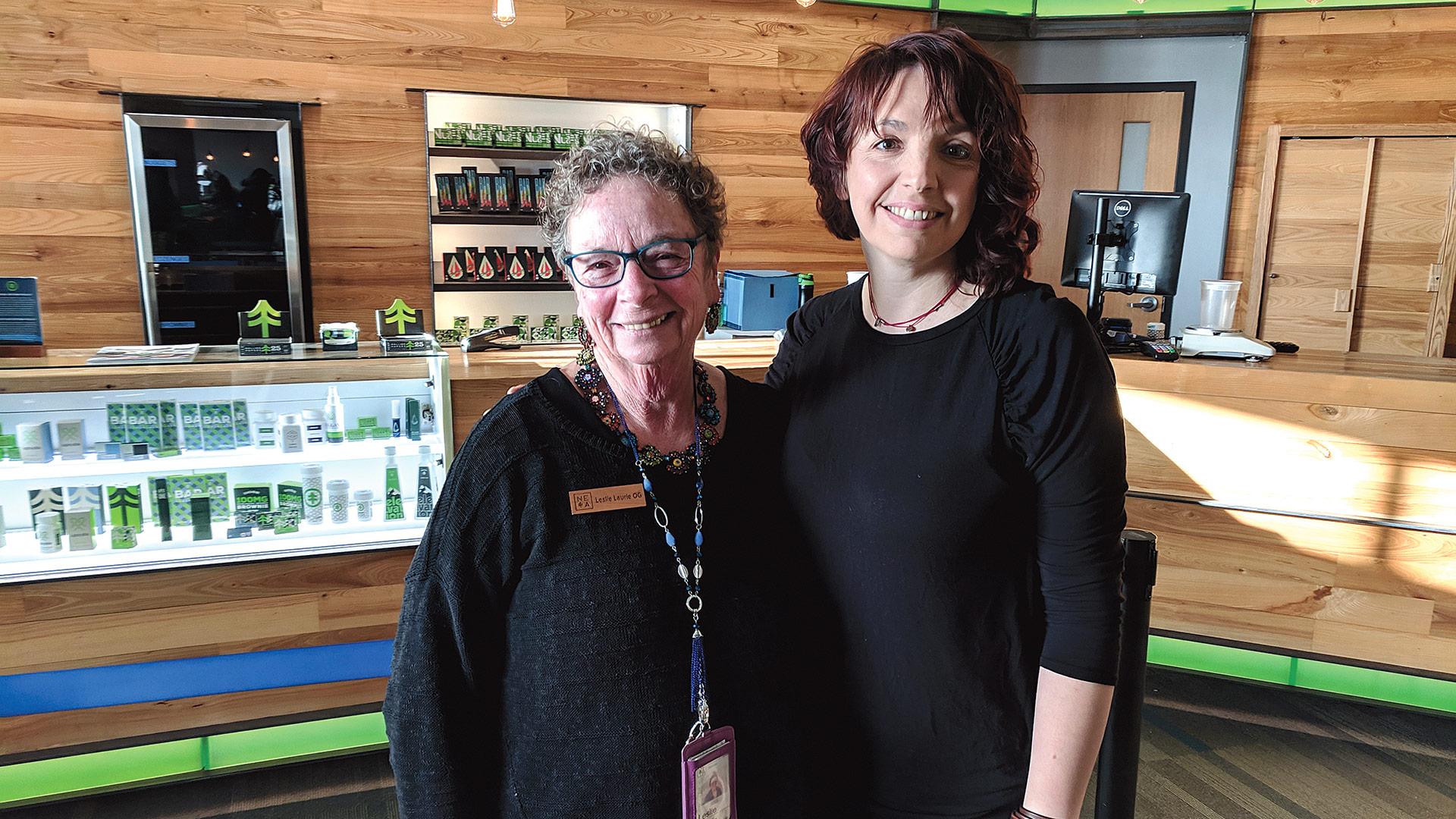
NETA’s Leslie Laurie (left), regional director for Western Mass. and director of patient services, and Angela Cheek, dispensary manager.

NETA’s Leslie Laurie (left), regional director for Western Mass. and director of patient services, and Angela Cheek, dispensary manager.

It’s been an eventful six years since voters first approved marijuana sales to treat medical conditions back in 2012. From that vote sprang New England Treatment Access (NETA) three years ago, and last month, the dispensary became one of just two stores in Massachusetts selling cannabis products for adult recreational use as well. NETA’s co-founder says the company has proven itself to be a good neighbor and an economic driver — and promises to be even more so in what is certainly a bold new era for marijuana in the Bay State.

When Kevin Fisher came to Massachusetts to help launch a medical-marijuana dispensary, he was already a veteran of the industry in Colorado, with plenty of passion to boot.

Fisher’s family, like so many others, has been struck by cancer, he said, and the idea — first as owner of Rocky Mountain Remedies in Colorado and then, starting in 2015, as co-founder of New England Treatment Access (NETA) — was always to draw in people with chronic and even terminal illness who may consider cannabis a viable therapy.

By the time NETA opened its doors in Northampton and Brookline, the anecdotal evidence for the drug’s effectiveness had been well-established elsewhere, he noted.

“We knew patients were using these therapies for a broad range of conditions,” Fisher told BusinessWest, before praising the law crafted after voters approved legalized medical marijuana in 2012.

“In Massachusetts, they got it right. Instead of legislators playing physician, the law granted physicians the freedom to make recommendations as they saw fit. It was important to maintain the sanctity of that patient-physician relationship. And we wanted to make sure we would provide quality products for patients to meet that broad range of conversations with physicians.”

Now, another law has significantly altered NETA’s business model. On Nov. 20, the company’s Northampton site, as well as Cultivate Holdings, LLC in Leicester, became the first facilities in the Northeast to sell marijuana to the public for adult recreational use.

“We call the individuals who interact with customers our ‘customer service associates.’ We require vigorous training before they’re out on their own, interacting with customers.”

At a press event after the state’s Cannabis Control Commission gave the go-ahead, Amanda Rositano, NETA’s director of operational compliance, said the shop is “beyond thrilled to be a part of this historic moment when NETA Northampton finally gets to open its doors to adults over 21 to provide safe, legal, and regulated cannabis to the people of Massachusetts.”

It’s certainly a welcome shift for many in the Valley, but it comes with challenges — concerning consumer safety, public perceptions, even traffic on Conz Street, which backed up significantly at certain times in the days following Nov. 20. But Fisher said NETA has long been preparing to meet them.

Hannah Rosenbaum, one of NETA’s patient service associates

Hannah Rosenbaum, one of NETA’s patient service associates, with some of the ‘flower’ available for purchase.

Early on, for example, the organization brought in Leslie Laurie, former head of Tapestry Health and a long-time expert in public health in Western Mass., as its regional director. “She had expertise we could benefit from, a perspective on patients’ needs in Western Mass.,” Fisher said.

The founders also assumed — correctly, as it turned out — that the progressive culture in Northampton would prove welcoming to a dispensary that first sold cannabis products to a patients with prescriptions, and, now, to any adult with an ID.

“We felt [Northampton] was the place to go, and the process was pretty smooth,” he added. “I’m thankful for Leslie; she brought a credibility to our organization and the relationships we built with government and law enforcement. And we’ve only continued to build those relationships during the adult-use licensing, because they could appreciate the solid community partners we have been.”

Opening a medical-marijuana dispensary in Brookline, however, was a “whole different beast,” Fisher noted. “There were about 100 meetings required — some open to the media and the public, many with public officials … just meeting after meeting, a lot of hand-holding and reassurance. It was a very rigorous process.”

Despite that tougher road than the Northampton one, NETA felt affirmed when its license with Brookline came up for renewal after the first year. “The town said we didn’t even need to show up for the hearing; it was guaranteed. It made us feel like we had operated in the way we had promised.”

By contrast, Northampton was always a smoother fit, and is currently the only NETA site approved for recreational sales, as the licensing process continues in Brookline.

“A significant portion of the population embraces cannabis use,” Fisher said of the Paradise City, adding that NETA has never taken that goodwill for granted. “We did recognize the traffic and public-safety issues, and the fact that those needed to be carefully managed in a collaborative way.”

Time will tell if issues arise, of course, but for now, Fisher is pleased with the business — customers are still waiting in line most days — and NETA’s continued growth as what he calls a true community partner.

The Ayes Have It

In 2016, four years after the similar vote on medical marijuana, Massachusetts residents voted to legalize recreational sales to adults age 21 years and older. If they present a government-issued ID (such as a driver’s license, ID card, or passport) for verification, customers may purchase up to 1 ounce of ‘flower’ or 5 grams of concentrate. Certain potency restrictions, including a 5 mg serving-size limit for ‘edibles,’ apply to non-medical products.

“A significant portion of the population embraces cannabis use. We did recognize the traffic and public-safety issues, and the fact that those needed to be carefully managed in a collaborative way.”

However, Fisher was quick to note that, with the introduction of recreational sales, NETA’s medical-marijuana patients will remain the shop’s priority. Patients with prescriptions have their own lines, and at least 35% of each day’s inventory is reserved for patients. In short, the customer experience has not changed for people seeking to fill scripts.

As for those waiting in line for recreational sales, Fisher said it typically takes 20 to 30 minutes to get through, but technology is available to shorten the wait NETA uses a reserve-ahead app to view the daily menu, reserve an order online, and have it ready for pickup at a certain time later that day. In addition, for people looking to gauge the wait at any given time, NETA offers continuous live wait-time updates on its website.

It has also doubled customer service staff and remodeled the stores to offer nearly twice as many service stations.

Also ramped up are efforts to educate customers about cannabis products — a key factor, considering that many users are likely to be inexperienced.

“We call the individuals who interact with customers our ‘patient service associates,’” Fisher said, noting that he prefers that over the flip industry term ‘budtenders.’ “We require vigorous training before they’re out on their own, interacting with customers.”

That training — about two months worth — includes everything from understanding the core components of cannabis products to encouraging new users to ‘start low and go slow.’

“That’s a message we drive home again and again to our PSAs and our customers. There will always be more cannabis. So find out what works for you and what doesn’t, and start easy so you don’t have negative outcomes.”

In addition to the ‘low and slow’ guidance, NETA’s consumer-education materials emphasize elements like a ‘what product is right for me’ guide; advice against driving or using heavy machinery under the influence, public consumption, and traveling across state lines; a potency and tolerance tutorial, safe storage; and recognizing substance-abuse signs and identifying resources for additional help.

Recognizing that some of the opposition to legalized marijuana came from individuals concerned about products getting into children’s hands, all NETA product packaging is child-resistant and labeled with revised warnings and clear information to ensure that people can identify edible products as marijuana-infused and not safe for children.

In addition to training staff to emphasize responsible consumption when interacting with consumers, NETA has retained a full-time training coordinator to continuously develop and manage retail-staff training.

Understanding dosage levels is is important, Fisher said, as are reminders that the effects differ between smoking marijuana and ingesting edibles. In the latter case, “you could see a delayed onset, so don’t eat that whole bag if you don’t feel it’s working. That sounds like simple advice, but it’s a big deal for us.”

As it is for the Cannabis Control Commission, which encourages prospective customers to know the law and consume responsibly.

“This signal to open retail marijuana establishments marks a major milestone for voters who approved legal, adult-use cannabis in our state,” Chairman Steven Hoffman said last month. “To get  here, licensees underwent thorough background checks, passed multiple inspections, and had their products tested, all to ensure public health and safety as this new industry gets  up and running. As patrons look forward to visiting Massachusetts stores, we hope they will do their part by first familiarizing themselves with the law and understanding what is required of responsible consumers.”

Growing Concerns

Beyond Northampton and Brookline, Fisher said, NETA’s cultivation facility in Franklin — which has nearly doubled its capacity in anticipation of adult use — continues to invest heavily in research and is developing a pipeline of products designed to improve customers’ experiences and address specific medical conditions and symptoms.

And, make no mistake, even though adults can buy cannabis products without a doctor’s prescription, he added, it still makes sense to receive and renew certification as a patient — not just because of the lessened wait to be served, but because patients also avoid the 20% tax on adult-use sales, and can access a yearly voucher program to help offset the cost of being certified.

He’s also excited about the potential in Massachusetts, considering the scientific and medical resources available locally, to continue researching the benefits of marijuana from a medical perspective. “Clearly, we’re going to get more research; we have some of the brightest minds in the world of healthcare here in Western Mass.”

NETA’s products for sale include not just smokeable flower, but marijuana-infused capsules, lozenges, lotions, chocolate, and much more.

NETA’s products for sale include not just smokeable flower, but marijuana-infused capsules, lozenges, lotions, chocolate, and much more.

Overall, Fisher is a believer in the benefits of this industry, in terms of healthcare, quality of life, and economic benefits, like taxes paid and workers hired. The company employs close to 600 people, more than 100 in Western Mass. alone.

“Billions of dollars are spent yearly in this country [on marijuana], so by regulating it, there’s economic impact that can be realized, taxes to be paid, safety measures put in place … you’re not in someone’s car in an alley.”

And for adults who have no particular health condition but simply want to partake as an escape from life’s stresses, well, he believes there are far worse alternatives for that.

“That’s not to encourage broader consumption of cannabis, but let’s normalize it so parents can talk to their kids about it,” he told BusinessWest. “In Colorado, where it’s a mature industry, the youth rates have gone down. It’s just less cool for kids. There’s more open dialogue. Parents are having more discussions about it.”

And, he was quick to add, that guy selling pot on the corner, in states where it remains illegal, doesn’t check an ID like a responsible dispensary does.

“We’re bringing it from the darkness into the light and realizing a lot of positive outcomes,” he said. “On balance, this is a good thing.”

Joseph Bednar can be reached at [email protected]

Health Care

The Eyes Have It

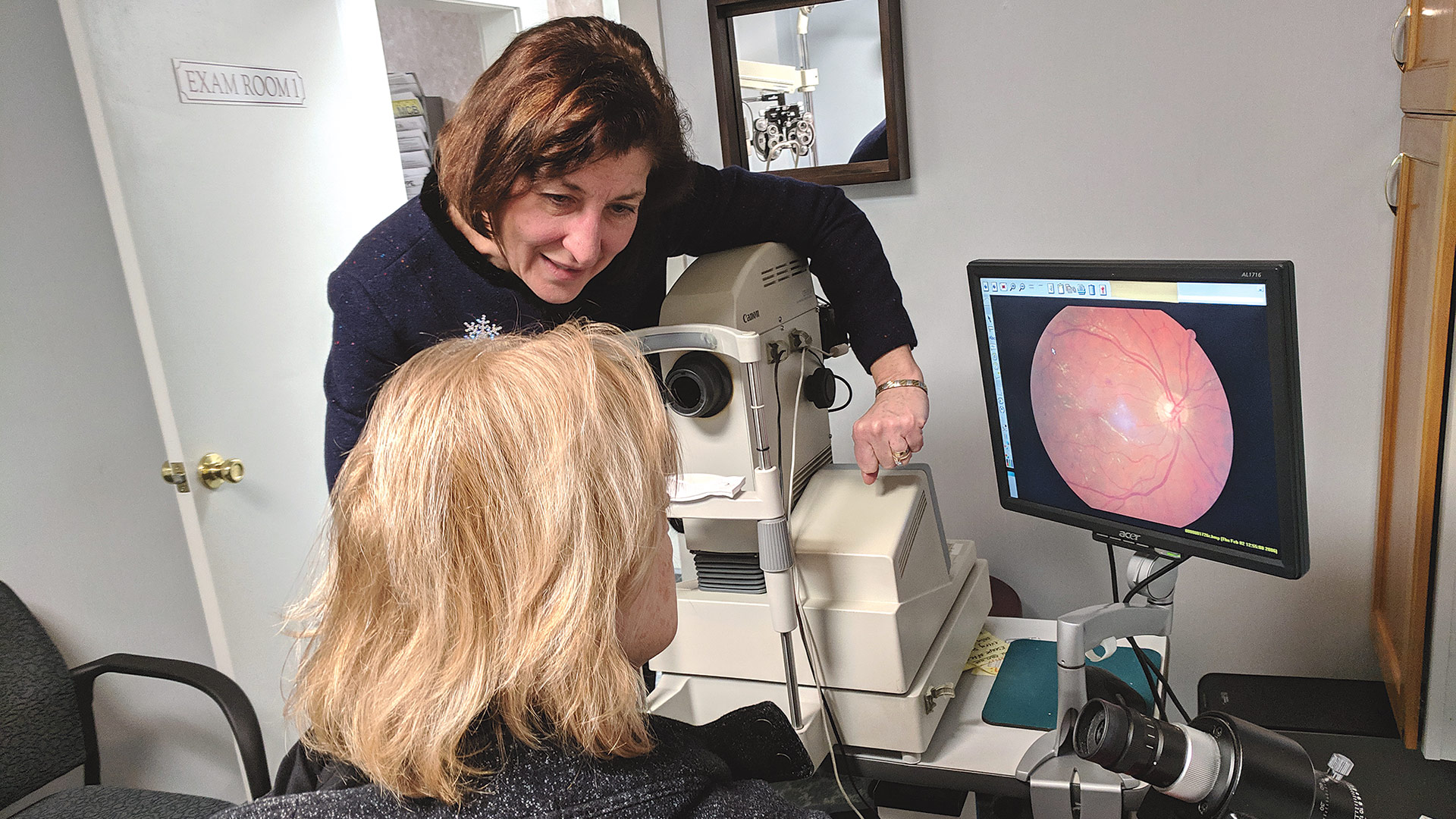
Dr. Camille Guzek-Latka

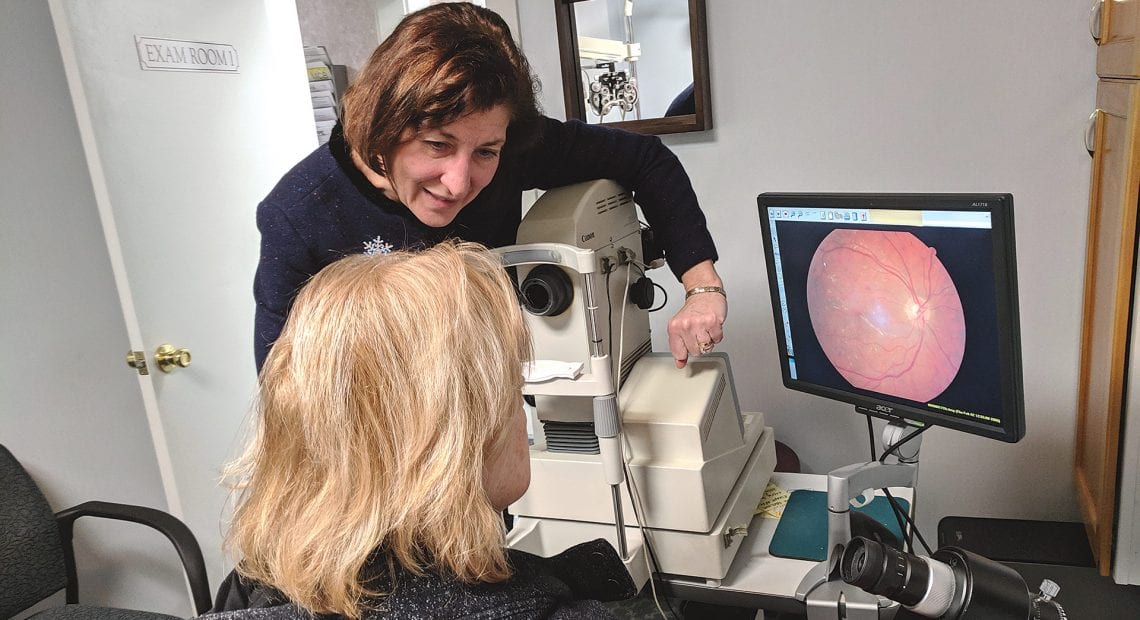
Dr. Camille Guzek-Latka shows a patient an image of her eye and any signs of disease that might be present.

When people think of diabetes, they might think of complications like cardiac disease, but they may not consider what elevated blood-sugar levels can do to their eyes over time. In truth, regular vision exams are a must for diabetics, who are at higher risk of certain conditions, including diabetic retinopathy, that can seriously damage one’s vision. Like diabetes itself, the key to minimizing the risk is often simply diligent lifestyle management.

It’s no secret that diabetes is a growing problem in the U.S., with more than 30 million Americans suffering from this condition that affects blood-sugar levels and leads to a host of complications, from heart disease and stroke to kidney disease, foot ulcers, and eye damage.

It’s that last one that often catches people off guard, said Dr. David Momnie of Chicopee Eyecare.

“A few red flags do go up when we examine patients with diabetes,” he said, explaining that a diabetic eye exam always includes a careful examination of the retina through a dilated pupil, looking for a condition known as diabetic retinopathy (more on that later).

“We also carefully examine the iris for tiny vessels that don’t belong there. We call this condition neovascularization. And we also also look for changes in the lens of the eye, called cataract, and for signs of glaucoma, as both of these conditions occur more frequently in people with diabetes.”

According to the American Diabetes Assoc., about one-fourth of people with diabetes are undiagnosed, which is problematic on many levels, one of which is that diabetics need to have their eyes checked more often — at least once a year — than the general population.

“What’s alarming to us is seeing more young adults and people in their 20s and 30s with type 2 diabetes. The culprit is invariably weight. It’s a global phenomenon as people are spending more time indoors and less time being physically active.”

And, as noted, it’s a condition that’s becoming more prevalent. In Massachusetts alone, diabetes incidence has risen from 3.9% of all residents 25 years ago to about 9% today.

The day BusinessWest visited Chicopee Eyecare early in the afternoon, Dr. Camille Guzek-Latka said she had already seen four patients that day with diabetes — unsurprising because, as a practice that has been around for decades, many patients are older.

“People are living longer, so it’s not surprising to see more people in their 70s, 80s and even 90s diagnosed with diabetes,” Momnie said. “But what’s alarming to us is seeing more young adults and people in their 20s and 30s with type 2 diabetes. The culprit is invariably weight. It’s a global phenomenon as people are spending more time indoors and less time being physically active.”

Yet, not all overweight people develop diabetes, he added, so there are obviously other factors involved — in some cases, there are genetic reasons why the beta cells of the pancreas stop producing enough insulin.

Dr. David Momnie says a key part of seeing diabetic patients is educating them about lifestyle factors that go into their eye health.

Dr. David Momnie says a key part of seeing diabetic patients is educating them about lifestyle factors that go into their eye health.

“Since the likelihood of developing complications of diabetes like cardiovascular, kidney, and eye problems increase over time,” he added, “young people developing diabetes are more likely to have these problems down the road.”

But with early detection, Guzek-Latka said, patients have a good chance of holding off many of the complications, including eye damage, because they can get a head start on controlling their blood sugar with medications and lifestyle changes.

“We tend to spend a little more time with our diabetic patients,” Momnie added, “because we need to have a frank discussion about lifestyle changes like weight control, a well-balanced diet, and quitting smoking.”

I Can’t See Clearly Now

When diabetes does cause eye damage, it’s often in the form of a disease called diabetic retinopathy, which is caused when too much sugar circulating in the blood damages the tiny retinal blood vessels in the retina, which is like the film of a camera.

“Elevated glucose levels cause damage to blood vessels. The most vulnerable vessels, the ones that show the earliest damage, are the smallest ones that lie farthest from the heart, such as those that supply the fingers, toes, kidneys, and eyes,” said Dr. Andrew Lam, an ophthalmologist at New England Retina Consultants, as well as an attending surgeon at Baystate Medical Center.

Diabetic retinopathy, he explained, is the leading cause of blindness in adults aged 20 to 74. “Treating this condition can be one of the most fulfilling, and frustrating, conditions that a retinal specialist encounters.”

“Elevated glucose levels cause damage to blood vessels. The most vulnerable vessels, the ones that show the earliest damage, are the smallest ones that lie farthest from the heart, such as those that supply the fingers, toes, kidneys, and eyes.”

The two most common eye problems that result from diabetic retinopathy are vitreous hemorrhage and macular edema. Vitreous hemorrhage, or bleeding in the eye, typically results from the formation of neovascular blood vessels in the retina.

“The growth of these vessels is actually the eye’s natural response to the lack of normal blood supply in diabetic eyes, but they are bad because they are apt to leak and bleed,” Lam said, noting that doctors can try to stop the proliferation of neovascular vessels with a laser treatment, and sometimes with injections of a medicine called Avastin.

“But when major bleeding in the eye does occur, it can severely affect a patient’s vision — sometimes taking away almost all the vision,” he went on. “The good news is that our techniques performing vitrectomy surgery to remove the blood are very good, and some of our most grateful patients are those whose vision has been restored after a vitreous hemorrhage has been cleared.”

Diabetic macular edema can be a more frustrating condition to treat, Lam said. This occurs from leaking blood vessels causing swelling in the macula of the eye, the part of the retina responsible for detailed central vision. This in turn causes vision loss and distortion.

Dr. Andrew Lam says diabetic retinopathy is the leading cause of blindness in adults aged 20 to 74 — and it’s increasing in prevalence.

Dr. Andrew Lam says diabetic retinopathy is the leading cause of blindness in adults aged 20 to 74 — and it’s increasing in prevalence.

“If we can reduce or eliminate the edema, the patient’s vision often improves, but this is sometimes hard to do,” he explained, noting that weapons in the battle can include eye injections with medicines such as Avastin, Eylea, or steroids, or even laser treatments.

“But the problem is that these treatments don’t always work that well, or for very long,” he went on. “Some patients respond quickly and do well, but others have persistent macular edema and blurry vision, even after repeated treatments.”

Guzek-Latka noted that 7.7 million people in the U.S. had diabetic retinopathy in 2010, a number projected to double to 14.6 million by 2050. Because diabetic retinopathy is progressive and does not cause symptoms until vision loss occurs, she stressed that annual exams are recommended, with more frequent follow-ups if retinopathy is detected. Her practice sends reports on ocular health to the patient’s primary-care physician and schedules appointments with a retinal specialist, like Lam, when necessary.

“One of our problems is that we cannot cure the underlying disease: diabetes,” Lam said. “Still, we fight diabetic retinopathy as diligently and as well as we can. I tell my patients to consider this a life-long battle that requires constant vigilance and sometimes many treatments over time. They must also strive to maintain the best blood-sugar control they can.”

Indeed, he noted, diabetic retinopathy can be managed — and sometimes vision loss can be regained — with treatments, but there is no cure because there is no cure for diabetes itself.

“Early detection, monitoring, and treatment of diabetic retinopathy certainly improve the chance that a patient will enjoy good vision throughout their lifetime,” he continued. “It is important that all diabetics have at least an annual eye exam to detect early signs of retinopathy before it becomes vision-threatening.”

Momnie and his team often use a digital retinal camera to take a picture of any diabetic retinopathy that they find, especially if it’s progressing — and not just because it’s beneficial to them in diagnosing and treating it.

“We also want to get the patient involved in managing their diabetes,” he said. “Seeing the actual damage to their retina is often an incentive to better manage their blood sugars.”

Guzek-Latka agreed. “I find it helpful to show people these pictures because, if you show a person a picture of what’s going on for them, it’s like night and day. It’s a powerful tool not only to document what they’ve got, but to educate them.”

Another instrument for tracking people with diabetic retinopathy is an OCT, which stands for optical coherence tomography, which is a scan that produces a cross-section image of the retina, so they can tell if there is any macular edema. “Any time a diabetic patient has reduced vision, we need to rule out diabetic macular edema, and the OCT gives us that information.”

Early Detection Is Key

Lam said there are many other possible manifestations of diabetes in the eye, including cataracts, neovascular glaucoma, tractional retinal detachment, and optic nerve swelling. These are treated in various ways, sometimes surgically. As the only retina practice in Western Mass., he noted, New England Retina Consultants sees many patients with diabetic retinopathy every day.

Momnie stressed that diabetic eye conditions don’t always present with dramatic symptoms at first. “There are some potentially blinding eye conditions that can develop in people with diabetes without symptoms like blurred vision. And yet, these conditions are treatable if caught early enough.”

Tight blood-glucose control is the key to significantly reducing the incidence and severity of diabetic eye disease, he went on, adding that people with diabetes should discuss with their primary-care physician how to keep their levels in an acceptable range.

Like diabetes itself, some people are at increased risk for developing diabetic eye disease, including women with diabetes who are pregnant, people who have had diabetes for a long time, and cigarette smokers those who simply don’t have their blood sugars under control. African-Americans and Hispanics are also at a greater risk of developing diabetic retinopathy.

Eye appointments for diabetic patients can run slightly over the expected time, Momnie told BusinessWest, but it’s not the exam itself that takes longer. “It’s the time we spend talking to the patient at the end of the exam. We want to discuss prevention with lifestyle changes and the importance of knowing certain numbers like their hemoglobin A1C.”

The A1C is a three-month average of a diabetic’s blood sugar; a reading between 5.7 and 6.4 typically indicates prediabetes, and higher indicates diabetes. “We don’t like to see it above 7.0,” Momnie said. “Generally, the lower the A1C, the better.”

As part of lifestyle changes, Momnie discusses with patients what is known as the glycemic index of carbohydrates, which ranks carb-laden foods by how quickly they break down into simple sugars in the body. Carbohydrates with a lower glycemic index, like oatmeal and whole-wheat pasta, take longer to break down, and are better than foods like potatoes and bread, which have a higher glycemic index. It’s all part of a series of decisions diabetics need to make, he said, to keep their numbers down and complications — like eye damage — at bay.

“Early detection, optimal glucose control, appropriate follow-up care, and timely treatment of diabetic eye disease are key to guarding against loss of vision,” Guzek-Latka said, adding that, occasionally, she will look at someone’s eyes and detect diabetic retinopathy, and then begin asking about other symptoms, and it turns out the patient wasn’t aware they were diabetic. Once they know, however, they can do something about it.

“If you know, you have so much control over what you can do,” she said. “But there are so many people that don’t know they have it that are walking around. If we can catch some of those and steer them in the right direction, that’s a big deal for that individual.”

Joseph Bednar can be reached at [email protected]

Commercial Real Estate

Warming Trend

A confluence of factors — from the opening of MGM Springfield to the dawn of the cannabis era in Massachusetts — have fueled heightened interest in real estate in downtown Springfield. Brokers report that the level of activity — inquiries, showings, leases, and sales — is the highest they’ve seen in recent memory.

Freddy Lopez Jr. says there’s a rather complex algorithm, as he called it, when it comes to locating a cannabis dispensary in Springfield.

Such a facility can’t be within 500 feet of a school, he noted. Or within 300 of another dispensary. Or within 50 feet of a Class A residence. And there are many other restrictions, as well as a host of hurdles to clear locally and with the state, just to get the doors open.

But this rather high degree of difficulty doesn’t seem to be stopping many people from trying to get in the game in downtown Springfield — and at other locations within the city, said Lopez, a broker with Springfield-based NAI Plotkin.

He said he’s lost count when it comes to how many properties he’s shown to various parties, and noted that the interest is constant and only increasing, as desire to be part of the cannabis wave, if you will, intensifies.

“There’s a lot of interest across the area, but the hot spots are downtown, and especially locations near the casino,” said Lopez, who recently brokered the sale of 1665 Main St., once the headquarters of Hampden Bank, to a party (RLTY Development Springfield LLC) interested in converting it into a dispensary. “There’s a lot of competition for good sites.”

1665 Main St., recently sold to a party interested in converting it into a cannabis dispensary. Evan Plotkin, left, and Freddy Lopez Jr. of NAI Plotkin, which brokered the sale.

The Main Street property, located across from the Hippodrome and a block from Union Station, was most recently assessed at $127,600, but sold for $285,000, a clear sign of the times and an indicator of how hot the race to secure locations for cannabis facilities can, and probably will, become.

“People are jockeying for position right now,” said Lopez, adding that some parties are securing options, some are leasing, and others, like RLTY, are going ahead and buying properties in anticipation of winning a coveted license.

But the cannabis industry is only part of the story when it comes to growing interest in Springfield and especially its downtown, said Mitch Bolotin, a principal with Colebook Realty, based in the heart of downtown.

MGM Springfield has certainly had an impact as well, spurring interest in various forms of development, from retail to housing. But there have been many other positive developments as well, from the relocation of the Community Foundation of Western Mass. to a location on Bridge Street, to the renovation of Stearns Square, to an improved outlook on the part of many when it comes to public safety.

“There are a number of factors driving this,” said Bolotin late on a Friday afternoon after a day of showing various properties, referring to a surge in interest and activity in Springfield and its downtown. “I’ve been doing this for more than 30 years now, and this is the strongest I’ve ever seen it.”
Mitch Bolotin says MGM Springfield is just one of many factors stimulating the most activity seen in the downtown Springfield market in recent memory.

Mitch Bolotin says MGM Springfield is just one of many factors stimulating the most activity seen in the downtown Springfield market in recent memory.

Demetrius Panteleakis expressed similar sentiments. The president of Macmillan Group LLC, now based in Tower Square, said the last quarter of this year has been extremely busy, and he expects that pattern to continue.

“I haven’t seen an October-November-December period as busy as this one — this is usually a slower time,” he noted. “There is a lot of movement; things are very robust right now.”

For this issue and its focus on commercial real estate, BusinessWest looks at why things are heating up in the downtown market and what this warming trend means for 2019 and beyond.

Where There’s Smoke…

Lopez said he has a number of anecdotes that capture the soaring level of interest in Springfield and its impact on the real-estate market.

One of his favorites concerns a party calling to inquire about securing a luxury apartment in downtown Springfield. Lopez explained that the city doesn’t really have any of those, much to the disappointment of the caller.

“This person was looking to do some investing in Springfield, and I think he wanted to use this apartment as a base — he could meet people there,” Lopez explained, adding that this phone call, all by itself, speaks volumes about how the commercial real-estate market is heating up in the city, and also how widespread the interest is.

Indeed, while there are many local parties interested in investment and/or development opportunities, the callers and visitors are also coming from well outside the 413.

“We’re getting calls from developers and investors in Boston, Rhode Island, New York City, and beyond,” he said, noting that many of these calls involve potential housing developments. “People who have never set foot in Springfield now have an interest in the city, and that’s very encouraging.”

That interest comes in many flavors, said those we spoke with, adding that the cannabis industry, and a strong desire to join it, are sparking many of the inquiries.

But these robust times are manifesting themselves in many ways.

Bolotin noted that he recently secured a lease for a new food-service business on Bridge Street. He couldn’t give specifics, but said the deal involved one of the vacant storefronts on that street, damaged first by the natural-gas blast and later by explosions triggered by a water-main break.

It’s an example of the strong interest in the market that he noted earlier, arguably the most activity he’s seen in recent memory.

“We’re seeing a lot of positive signs in the marketplace in terms of activity and interest, leases, and sales,” he said, adding that this vibrancy is reflected in everything from higher occupancy rates in the buildings managed by Colebrook — and there are many in the downtown, including the TD Bank Center and the Fuller Block — to how many showings of properties he’s conducted in recent months.

Overall, Bolotin, like others we spoke with about this, said there is considerably more positive energy concerning the downtown than there has been in some time. MGM deserves some credit for this, he noted, but there are many other factors as well, from the developments on and around Bridge Street to the renovation of the Fuller Block, to less apprehension about public safety. “The attitude is much more positive than it’s ever been.”

He noted that Patricia Canavan, president of United Personnel, who moved her business onto Bridge Street, Katie Alan Zobel, who relocated the Community Foundation to that same area, Tom Dennis, owner of the Dennis Group, who purchased and renovated the Fuller Block, among other buildings downtown, and Martin Miller, general manager of WFCR, who moved his operation from Amherst into the Fuller Block, are all examples of people investing in the downtown, and through, their actions, inspiring others to do so.

Panteleakis has also seen considerable optimism and less apprehension about public safety. “You don’t hear as many concerns about safety,” he said. “Before, safety was a real issue — it kept some people from coming downtown. But you don’t hear that much anymore.”

Meanwhile, housing has become a huge area of interest, in part because of MGM and the needs of its huge workforce, but also because of rising activity levels in general and growing anticipation that the city will soon become, if it isn’t already, a landing spot for younger people and empty-nesters alike.

Evan Plotkin, a principal with NAI Plotkin and long-time champion of downtown Springfield, noted the purchase of the former Willys-Overland building in the so-called ‘blast zone’ by Boston-based Davenport Advisors LLC, and that company’s acquisition of the old Registry of Motor Vehicles site, possibly for the same use, as harbingers of things to come.

“I’m seeing a lot of developers coming in looking to develop residential,” he said. “I see tremendous potential for new developments in parts of our city that have been stagnant for a long time, including areas on the fringes of downtown and in the downtown itself.”

Joint Ventures

While interest in potential housing development grows, the cannabis industry is the source of much of the activity downtown.

The brokers we spoke with said they’ve been showing multiple sites to groups interested in all facets of this business, from cultivation to retail. And while sites across the city are being explored — as many as 15 sites might become licensed in Springfield — the downtown is becoming the focal point.

“Things have been crazy for the past two years when it comes to this business,” he said, adding that he’s brokered the sale of sites for marijuana-related businesses in Holyoke and Easthampton. “Now, the focus is shifting to Springfield and the downtown area; people are trying to line up sites.”

Lopez concurred, noting that there is a broad mix of local, national, and even international companies looking to start a cannabis dispensary or cultivation site in this region, with many focused on Springfield and an initiative known as the Opportunity Zone Program.

Created as part of the U.S. Tax Cut and Jobs Act of 2017, the program provides incentives for investment in low-income communities, like Springfield. Individuals and groups looking to develop in these designated geographic areas can gain favorable tax treatment on their capital gains, said Lopez, adding that he has worked with several owners and investors in the city’s Opportunity Zone.

The purchase of 1665 Main St. falls into this category, he said, noting that the acquisition is a good example of investors jockeying for position through options, leases, or outright purchases.

And the race for cannabis locations should provide a substantial boost for owners of properties downtown, said Plotkin, noting that prices are moving higher as interest grows, in a movement that echoes what happened when MGM Springfield and other casino-industry players jockeyed to enter this market.
“When you were dealing with a casino developer, like MGM or the other parties interested in Springfield, there was what we all referred to as the ‘casino rate,’” he explained. “They’ll pay more for real estate than the average buyer will.

“In the case of a marijuana dispensary, because the business is so lucrative, they will pay a lot more rent per square foot,” he went on, noting that a ‘marijuana rate’ is taking shape. “Rents that may have been $15 a square foot a year ago … for a marijuana shop, we’re taking about $20 to $25 per square foot, and in some cases more, depending on where it is.”

As for what the cannabis industry might mean for Springfield, Plotkin, who has traveled extensively, expressed some hope that the city might someday become somewhat like Amsterdam, a city famous for its culture, nightlife, and countless shops selling marijuana, other drugs, and related paraphernalia.

“I think Amsterdam is a great example of just how the very liberal nature of that city has led to incredible street life in that town that’s very safe,” he said. “Amsterdam is a great city, one of the most vibrant cities in the world, and maybe we can learn from its example.”

Bottom Line

Whether Springfield can become anything approaching Amsterdam — as a tourist destination or cannabis hotspot — remains to be seen.

For the time being, it is a hotspot when it comes to its commercial real-estate market.

There is interest and activity unlike anything that’s been seen in decades, and the consensus is that this pattern will likely continue and perhaps even intensify.

Springfield and its downtown have become the right place at the right time.

George O’Brien can be reached at [email protected]

Economic Outlook

Forward Progress

Rick Sullivan says the region has considerable momentum carrying over in 2019, and it comes from most all sectors of the economy.

Rick Sullivan says the region has considerable momentum carrying over in 2019, and it comes from most all sectors of the economy.

Momentum.

Webster defines that word in several ways, including this one: ‘strength or force gained by motion or through development of events.’

Over the past few years, and especially in 2018, there was a good deal of motion and quite a few singular and ongoing events that have made this region stronger and created quite a bit of momentum, said Rick Sullivan, president and CEO of the Economic Development Council of Western Mass. (EDC).

And this movement has been across a number of sectors and most all area communities, not just Springfield, although that’s where it is easily most visible and palpable.

“We’re seeing a great deal of momentum across the region,” he said. “And it’s across the board — manufacturing, healthcare, higher ed, tourism.”

Elaborating, he cited just a few examples of this momentum, starting with the most obvious:

• MGM Springfield opened its doors on Aug. 24, but it began to impact the regional economy long before that, through the filling of more than 2,000 jobs, proving a boost for area hotels (see related story, page 27), inspiring movement toward additional market-rate housing projects in and around the downtown, and even awarding life-changing vendor contracts with several area businesses, from a bus company in Chicopee to a dry cleaner in the Forest Park section of Springfield.

• Eds and meds. The region’s two main economic drivers, education and healthcare, are thriving and becoming ever-larger contributors to economic development in the region, he said, noting, on the education side, that the region’s community colleges continue to find ways to step up and help meet workforce needs and provide specific skills needed in the workplace.

• The cannabis industry. This intriguing new era in Massachusetts history is impacting everything from the commercial real-estate market to traffic in downtown Northampton, where a dispensary became just one of two sites in Massachusetts selling marijuana for recreational use.

• A host of other forces are at play in downtown Springfield, ranging from new tenants on Bridge Street to the revitalization of Stearns Square; from a new Starbucks (actually, two of them; there’s also one at MGM) to soaring interest in new housing projects; from new train service coming into Union Station to the opening (soon) of the Innovation Center.

“When I’m out downtown, I generally have to wait in line to get lunch — and I’m happy to do it. That’s a good thing; it means the economy is doing well.”

• Progress continues with developing new sources of jobs in fields such as cybersecurity (Bay Path University and UMass Amherst are becoming regional and even national leaders in that field) and water technology — a $3.9 million demonstration center is set to open at UMass Amherst within the next two years.

• The construction industry, usually a bellwether for the economy, remains sound, with many companies reporting they have ample jobs on the books for the coming. “The phones have been ringing — and that’s always a good sign,” said Tim Pelletier, president of Ludlow-based Houle Construction.

Sullivan has another, far more personal measure of progress and momentum. “When I’m out downtown, I generally have to wait in line to get lunch — and I’m happy to do it. That’s a good thing; it means the economy is doing well,” he told BusinessWest, noting that there is considerably more foot traffic in the central business district, and many businesses are benefiting from this.

Yes, there are some challenges to contend with, and even a few possible storm clouds on the horizon; workforce issues are impacting most all sectors, and they could stifle the growth of some companies (see related story, page 22), and most economic analysts are predicting a slowdown (but not a recession) in 2019.

But for the most part, there is momentum and continued cause for optimism, even as question marks grow in number.

‘Stable’ is the word Tom Senecal uses when he talks about the local economy, and in most ways, ‘stable’ is good.

‘Stable’ is the word Tom Senecal uses when he talks about the local economy, and in most ways, ‘stable’ is good.

“Several sectors are doing very well — education, construction, multi-family housing, green energy, and others,” said Tom Senecal, president and CEO of Holyoke-based PeoplesBank, who spoke from the perspective of his own bank, which saw roughly 8% growth this calendar year, and what he’s seen and heard anecdotally.

Senecal said he’s seen a noticeable slowing of residential real-estate business over the past month to six weeks, after a strong start to the year — a development probably linked to rising interest rates — but overall, as he said, the local economy is chugging along nicely.

Keith Nesbitt, vice president and Commercial Banking Team leader at Community Bank’s Springfield location, agreed.

“I would describe what’s happening in Western Mass. as transition against a backdrop of real stability,” he said, using ‘transition’ to mean many things, from the beginning of the casino era to the passing of many businesses from one generation to the next. “There’s a lot of certainty around those well-established, mature businesses that we have in this region. And those businesses that haven’t been around as long but are growing … they’re pretty solid, and they’re pretty confident.”

Banking on It

Both Senecal and Nesbitt put that word ‘stable’ to use early and quite often as they talked about the local economy and what they’re witnessing.

And in most all respects, ‘stable’ — and ‘steady’ and ‘predictable,’ words that were also used — is good, Senecal noted, adding, as many others have over the years while analyzing the local market, that while this region hasn’t soared like some others, including Boston, where the commercial and residential markets are white hot, that means it isn’t susceptible to the dramatic falls that those cities and regions also see.

“Fortunately, and sometimes unfortunately, we don’t see the highs and lows economically; we’re sheltered a little bit,” he explained. “We have a very stable economy when it comes to healthcare, education, and our nonprofit sector — those are three stable industries that keep Western Mass. insulated from the highs and lows.

“I would equate ‘stable’ to ‘predictable,’” he went on. “And for a small business, predictability is a huge part of job growth and just economic growth in general for small business.”

His own business moved forward with several initiatives in 2018, including the acquisition of First National Bank of Suffield and the start of work to convert the former Yankee Pedlar restaurant into a new and intriguing branch. And he said many businesses had the requisite confidence to move ahead with their own growth initiatives, be it through workforce expansion, new facilities, or new business lines.

And he expects this stability to continue into 2019, although possible, if not probable, additional interest-rate hikes (the Fed was set to vote on one as this issue went to press) could bring uncertainty, and therefore greater cautiousness, to the fore.

“Anything that stays stable and is predictable is good for economic development, and anything that is unpredictable is a slowdown in economic development,” he said, adding that there is uncertainty regarding everything from interest rates to the trade war.

“I would equate ‘stable’ to ‘predictable.’ And for a small business, predictability is a huge part of job growth and just economic growth in general for small business.”

Like Sullivan, though, Senecal said MGM has provided a boost to the local economy in several ways — through the jobs it has created and its contribution to greater vibrancy downtown. And it is just one of the many factors contributing to the improved picture locally.

Others include the steady performance of education and healthcare and movement toward creating new sources of jobs.

Sullivan cited the work being done at Bay Path and UMass Amherst in cybersecurity — Bay Path recently entered into a partnership with Google, for example — and creation of the water-technology demonstration center as developments to watch.

“Those are jobs of the future, and there’s real excitement about what can develop,” he noted. “There are now some partnerships with large companies, like Google, and tremendous promise.”

Elaborating, he said that, across the region, colleges and universities are playing key roles in providing individuals with the hard and soft skills to thrive in today’s technology-driven economy, and thus, they’re playing a major role in economic development.

Examples abound, from Holyoke Community College’s new culinary-arts facility, which is helping to meet the needs of individual employers like MGM and a growing field in general, to Greenfield Community College and its efforts to train workers for the manufacturing sector, to Holyoke Community College and Springfield Technical Community College working together with MGM to create the Casino Career Training Institute.

“What it comes down to is that economic development for this region, and across the country, for that matter, is all about workforce — developing, finding, and retaining talent,” he said. “And the good news for us is that we have a very robust higher-ed presence — four-year public and private, and the community colleges as well — and the future is bright.”

Returning to the subject of downtown Springfield, he said that, in addition to that waiting in line for lunch, he’s seen other signs of vibrancy and, most importantly, interest on the part of developers in investing in that area.

“We’ve had a number of investors express interest in possible hotels and potential housing, both market-rate and workforce-housing projects,” he noted. “And those are discussions that may not have beem happening in … pick a time period — five years ago, 10 years ago, 20 years ago. It’s been a while since we’ve seen this.”

Keith Nesbitt describes what’s happening in this region economically as “transition against the backdrop of stability.”

Keith Nesbitt describes what’s happening in this region economically as “transition against the backdrop of stability.”

Nesbitt concurred, and noted that, while the multi-family housing segment of the commercial real-estate market is heating up — it has been for some time — there is movement across the spectrum, much of it fueled not only by MGM, but by a promising outlook for the future.

“Long-time property owners are realizing that now is the time to realize value, so they’re putting those properties on the market,” he said of multi-family units but also other holdings. “And those that are speculating on the future are generally thinking that now is the time to get into the market based on some of those other transitions that are going on. So the commercial real-estate market has been very consistent.”

Steady As She Goes

“Consistent.’ ‘Stable.’ ‘Predictable.’ ‘Steady.’

Those are the words you hear most often in discussion of the local economy today and what is likely to happen in 2019.

There is a good amount of uncertainty in the air regarding everything from trade balances (or imbalances, as the case may be) to interest rates to the political scene in Washington.

But locally, stability and momentum seem to be the prevailing forces.

And they should enable the region to build on that momentum in the year ahead.

George O’Brien can be reached at [email protected]

Features

Expanding His Horizons

Peter Rosskothen

Peter Rosskothen has plans to dramatically expand his Delaney’s Market concept, and he will start in downtown Springfield.

When asked about the long-awaited opening of MGM Springfield last August, Peter Rosskothen, whose various businesses compete against the resort casino on a number of levels, said, among other things, that he was “excited about the excitement” permeating the city’s downtown.

And he hinted broadly that he might soon be part of it.

In a few more months, he will be, opening the second location of his Delaney’s Market concept in a soon-to-be-vacated coffee shop at 1365 Main St., just a few hundred feet from the casino. He plans to open more of these facilities, which offer a variety of prepared meals to go, in Wilbraham and Westfield sometime in 2019, but for now, his time and energies are focused on getting the doors open in Springfield.

Indeed, the serial entrepreneur, owner of the Log Cabin Banquet & Meeting House, the Delaney House restaurant, the adjacent D. Hotel & Suites, and more, believes his concept, launched in Longmeadow 18 months ago, is the right product at the right time, and that downtown Springfield is the next right place.

“I wanted to be part of what was happening in downtown Springfield,” he told BusinessWest. “I believe this concept will work at that location. I think there is a need for this, and it will be a nice addition to the landscape there.”

Rosskothen said he’s long been thinking about expansion into Springfield — and other locations — and narrowed his search to 1365 Main St. late last summer, just as the casino was opening its doors.

That location is within a few hundred feet of several office towers, he noted, adding that the thousands of people working in those buildings fall within the broad constituency he’s targeting with this concept.

“I wanted to be part of what was happening in downtown Springfield.”

Specifically, he’s focused on busy people — and that’s just about everyone these days — both young and old who want to eat healthy, restaurant-quality food (but not at restaurant prices), but are challenged to find the time and inclination to prepare it themselves.

But he expects that those working in Springfield will become just part of his customer base. Indeed, like other close observers, he senses that the already-sizable population of people living in the downtown area will be growing in the years to come as the city becomes a more popular settling place.

“We’re going to be where people work, but also where some people live and where more people will be living in the years to come,” he noted. “There’s a lot happening in Springfield; the pieces are coming together. There is more to do, and soon there will be more places to live. And as more people come to live here, there will be more support businesses and more things to do. We’re starting to see it.”

As for the Delaney’s Market concept, Rosskothen said he did a good amount of due diligence before opening the location in Longmeadow. That research, and his own instincts, told him it was a business model with merit, one that would meet a sizable need that was not being met.

Roughly 18 months after opening, the facility is selling about 150-200 meals a day on average, verifying that need for such a service, he went on.

“The Longmeadow store is doing quite well — I wouldn’t be doing this if it wasn’t,” he told BusinessWest. “But we had to teach a lot of people the concept — you have to explain to people that we have freshly prepared meals for takeout, and we have about 80 different choices.”

The success of the Longmeadow location may mitigate the need for a similar learning process at the downtown site, he went on, adding that he will be aggressive in efforts to get the word out about Delaney’s Market and all that goes into the concept.

That includes patrons being able to pick up a bottle of wine or some microbrews as they make their dinner selection, doing some one-stop shopping.

And he believes this same model will succeed in downtown Springfield as well, and he’s adding another wrinkle — delivery, which he believes will be a popular option for those working in nearby office towers or living downtown.

Indeed, delivery is a becoming a trend among restaurants, and there are new ventures such as Uber delivers that bring meals right to one’s home or office, said Rosskothen, adding that those initiatives, and his, are simply response to what consumers are demanding.

As for expansion beyond Longmeadow, Rosskothen said he expects to move forward with locations in Westfield and Wilbraham and have four sites operating by the end of 2019.

For now, though, he is focused on Springfield — and not just being excited about the excitement, but being a big part of it.

— George O’Brien

Economic Outlook

Running out of Gas?

Bob Nakosteen projects a slowdown for the economy, but not a recession.

Bob Nakosteen projects a slowdown for the economy, but not a recession.

What’s that old saying about death and taxes? It notes that they are the only real certainties in this world.

Actually, there’s another one: when it comes to the economy and making plans for the future, business owners and consumers certainly don’t like uncertainty.

Unfortunately, there is no shortage of that commodity at the moment, and the volume may only be growing. Indeed, there is political uncertainty — lots and lots of that — and uncertainty about the housing market. And the trade war with China. And with the workforce — the nation as a whole is at or near full employment, and business owners and managers across all sectors are asking out loud where the workers are going to come from (see related story, page 22). There’s uncertainty about the stock market, except that there’s considerable amounts of turbulence (we’re certain about that). And about interest rates and what will happen with them. And about whether the tax cuts introduced a year ago will continue to be a source of economic fuel (although the consensus seems to be that they won’t be).

Add it all up, and, as we said, there is a lot of uncertainty out there.

Certainly enough to likely cause a slowdown in the economy, but not a recession in the technical sense of that word, said Bob Nakosteen, a professor of Economics at the Isenberg School of Management at UMass Amherst and a frequent voice in BusinessWest’s annual Economic Outlook.

“When there’s uncertainty, businesses tend to pull in their horns, and consumers, by and large, do the same; they wait until there’s more certainty about what they can expect,” said Nakosteen, adding that, instead of a growth rate between 3.5% and 4%, which is what the country and this region saw in 2018, both are probably looking at 2% to 2.5% for next year.

Again, that’s not a recession, but it is a slowdown.

Like Nakosteen, Karl Petrick, an associate professor of Economics in the College of Arts and Sciences at Western New England University, is predicting that this is what the nation, this state, and this region will see.

Note the future tense.

“When there’s uncertainty, businesses tend to pull in their horns, and consumers, by and large, do the same; they wait until there’s more certainty about what they can expect.”

“I really don’t think the slowdown has started yet. But I think it’s coming,” he said, adding quickly that there are signs things are cooling off somewhat.

He pointed to robust sales in the days and weeks following Thanksgiving as solid evidence that many Americans still have the confidence to spend. But a few months of severe turbulence on Wall Street, large amounts of political uncertainty, and a host of other factors will eventually erode some of that confidence, he added.

Karl Petrick says various forces, from turbulence on Wall Street to political uncertainty, will soon start to generate more cautiousness on the part of consumers and business owners.

Karl Petrick says various forces, from turbulence on Wall Street to political uncertainty, will soon start to generate more cautiousness on the part of consumers and business owners.

“We’re starting to see people become more cautious,” he noted. “They start to see what’s going on, they start to look at their 401(k) statements — even if they’re fairly young, they start to look at such things — and we’re going to start to see people be more cautious. And if and when that happens, companies start to become more cautious, too, because they start to see their markets dry up a bit.

“The momentum will carry into 2019, but unless we see some more certainty, that momentum will peter out into 2020,” he told BusinessWest. “The earliest a recession could happen is 2020, but there’s a lot of time between now and then to avoid that.”

For this issue and its Economic Outlook focus, BusinessWest talked with Nakosteen and Petrick about the proverbial big picture.

On-the-money Analysis

As he talked about the state of the economy and what is likely to happen in 2019, Nakosteen acknowledged that some economists are, in fact, using the dreaded ‘R’ word as they look into their crystal balls.

He’s not ready to join them — yet. But he said there are more than enough signs that a slowdown is coming — if it hasn’t arrived already.

Starting with the housing market.

“The housing market is clearly slowing down, and it is so important to so many segments of the economy and so many parts of the country,” he told BusinessWest. “It’s not well-recognized, but we’ve had a period since 2012 of one of the most sustained increases in housing prices in our history; in fact, it comes close to matching what happened during the price bubble [of 2007-08]. The difference is that there isn’t this froth around it, and there isn’t this huge toxic-credit buildup.

“I don’t see this as a danger to the economy in terms of it exploding and dragging us into a recession,” he went on. “But I do see a slowdown affecting the overall economy and the economy of this state.”

Beyond the housing market, there are other signs, or indicators, of whitewater, including the trade war, if it can be called that, with China, Canada, and other countries.

Nakosteen said this region doesn’t produce many, if any, of the products directly affected by rising tariffs, but this area is affected indirectly because its precision manufacturers provide links in the supply chains that are impacted by the tariffs.

Petrick agreed. “We need to find some stability when it comes to our trade relationships,” he said. “Trade wars are not good for anybody.”

There’s also diminishing impact from the tax cuts implemented a year ago — “those cuts gave the economy a sugar high, but almost everyone thinks that effect will dissipate in 2019,” said Nakosteen — as well as all that turmoil on Wall Street.

Indeed, as of this writing, the S&P was in negative country after being up more than 8% for the year a few months ago — and there wasn’t much time left in 2018 to get onto the plus side.

Then there’s the workforce issue. While things are bad in this region in terms of employers finding good help (see related story, page 22), they’re much worse in other markets, including Boston, said Nakosteen.

“One of the things going on in this state is that we’re running out of workers, especially in the eastern part of the state,” he noted. “For the past 18 months, we’ve hired a lot of people, and no one’s quite sure where they’ve come from. And at some point, the labor-force constraint is going to be binding to our economy, and that’s going to slow things down; it’s going to be like squeezing a rock.”

But the biggest issue heading into 2019 is the one that’s fueling some of the problems listed above — growing uncertainty about the economy, the markets, jobs (GM announced plant closings and significant layoffs, for example), trade, and more.

This uncertainty generally leads to greater cautiousness, which manifests itself in several ways, said those we spoke with, starting with the obvious, such as slowdowns in home sales and other significant purchases.

Some signs are perhaps less obvious, such as the roller-coaster ride on Wall Street, said Petrick, adding that, when there is uncertainty, or no clear trends, the market becomes far more “news-driven,” as he called it, which manifests itself in wild swings, sometimes over the course of just a few hours, as news breaks.

“These big swings happen with the smallest provocation because people want to react to something,” he explained. “And whatever comes up on the news wire is what they’re reacting to.”

Reading the Tea Leaves

Looking at the proverbial big picture, Petrick said political uncertainty and economic uncertainty pretty much go hand-in-hand.

“That’s how we’re wired,” he said, adding that about the only thing that appears certain for 2019 is ongoing uncertainty.

Nakosteen agreed.

“Business decisions, as well as household decisions, regarding big-expense items such as cars, appliances, and houses, depend in large part — not totally, but in large part — on expectations of the future: ‘am I going to lose my job?’ ‘Am I going to get a raise?’ ‘Is my product going to keep selling?’ ‘Are my suppliers going to be disrupted?’”

Like he said, in many cases, they will hold off on such purchases until there is more uncertainty.

And as things are looking now, it might be a pretty long wait.

George O’Brien can be reached at [email protected]