Home 2021 (Page 34)
Daily News

SPRINGFIELD — Since 2009, BusinessWest has been recognizing the work of individuals, groups, businesses, and institutions through a program called Difference Makers.

The 2021 Difference Makers include Kristin Carlson, president of Peerless Precision; EforAll Holyoke; Janine Fondon, founder of UnityFirst.com and professor at Bay Path University; Harold Grinspoon, philanthropist and founder of Aspen Square Management; Chad Moir, founder and owner of DopaFit Parkinson’s Movement Center; Bill Parks, CEO of the Boys & Girls Club of Greater Westfield; and Pete Westover, founder and partner at Conservation Works, LLC.

The 13th annual Difference Makers celebration will be a virtual event taking place on Thursday, April 1 from 6 to 8 p.m. This event, like our hugely successful Women of Impact celebration in January, be presented using the REMO platform, and will feature networking, videos of the event sponsors, introductions of the honorees, and comments from the Difference Makers themselves.

RSVP before March 30 by clicking here. For a helpful tutorial on working with REMO, click here. For more information and links to the stories about our honorees, click here.

The sponsors for this year’s program are Burkhart Pizzanelli, the Royal Law Firm, TommyCar Auto Group, and United Way of Pioneer Valley. The Tom Cosenzi Driving for the Cure Charity Golf Tournament is a nonprofit partner.

Daily News

LONGMEADOW — Bay Path University announced plans to welcome students back to a fully operational, in-person campus for the fall 2021 semester. This decision is based on the increase and availability of COVID-19 vaccines, the continued decline in COVID cases, and the steps put in place at Bay Path over the past year to keep the campus safe. The university will continue to follow guidelines, take precautions, and prepare with all necessary contingencies for reopening as guided by the CDC and state requirements.

“Over the past year, as we managed the many implications of the pandemic, our number-one guiding principle has been the health and safety of our students, faculty, and staff, and this will continue to be our priority,” said Sandra Doran, president of Bay Path University. “In looking ahead, we are very optimistic about the fall. As students and parents are making decisions about college enrollment and housing, it’s important we share our plan for in-person learning and our commitment to maintaining a safe and welcoming environment for our returning, new, and prospective students on campus.”

The university’s initial fall plans include the opening of all residential halls, increasing the number of classes held in-person, a fully operational dining common, on-campus student clubs and activities, as well as a fall athletic season.

“There is no greater joy than connecting and meeting with our students,” Doran said. “We are ready, eager, and excited to have more students join us on campus this fall for their educational journey.”

Bay Path University accepts students on a rolling admission. For information regarding enrollment for the fall semester, visit the university’s website, or contact the Office of Admissions at (413) 565-1331 or [email protected]. In addition to the on-campus, in-person option, Bay Path will continue to offer online learning and hybrid models to meet students’ needs.

Daily News

WARE — Country Bank announced that Russ Fontaine has been promoted to senior vice president, Customer Experience. He is a seasoned banking professional with 30 years of experience in key management and leadership roles in consumer sales and service.

Fontaine previously held the position of first vice president, Sales and Market Management with Country Bank, where he oversaw sales and service. One example of a new program introduced by the bank, as a result of Fontaine’s recommendation, was the deployment of a “Voice of the Customer” program that enables the bank to measure and better understand the overall customer experience through various survey metrics.

In his newly created role, Fontaine is tasked with leading a bankwide collaborative effort to view things from the customer’s perspective; this applies to both the bank’s external customer and its internal customer. “This increased focus of looking at things through the lens of the customer will strengthen Country Bank’s ability to deliver a best-in-class customer service experience and, as a result, attract new customers for the bank while deepening the relationships of existing ones,” he said.

Mary McGovern, executive vice president and chief financial officer of Country Bank, noted that, “for over 170 years, providing excellent customer service has been a hallmark value and priority for Country Bank. In today’s ever-changing, dynamic customer-service landscape, customer-facing companies must ensure that the entire customer experience is a primary focus. Russ exemplifies Country Bank’s iSTEP corporate values of integrity, service, teamwork, excellence, and prosperity, and is the perfect person to fill this new role.”

Fontaine is active within the community, serving on the board of directors for the Central/Western Massachusetts March of Dimes and as a 2021 co-chair for the March for Babies fundraising event in Massachusetts. He has also served on the Greater Springfield Habitat for Humanity board of directors, including holding the chair role for the organization’s Restore committee. Additionally, he has been an avid supporter of the United Way and the Western Massachusetts Special Olympics.

Daily News

SPRINGFIELD — Springfield Strain LLC, a minority-led corporation, has proposed a 2,500-square-foot adult recreational marijuana dispensary at 711 Boston Road (lower level) in Springfield’s Pine Point neighborhood. Springfield Strain has met all the criteria set forth by the Massachusetts Cannabis Control Commission for a social/equity empowerment program dispensary with 100% minority investors. The dispensary will be locally owned and operated.

According to the company, the dispensary will offer sales of high-quality cannabis products as well as product consultation and education in a safe, secure environment.

Eddie Corbin, president of the Springfield Strain board of directors and former chief Procurement officer for the city of Springfield, noted that investors, the board of directors, and construction contractors are all minorities, adding that, “in my professional experience, this may well be a first.” In addition, all but one of the board members are Springfield residents.

As part of a host-community agreement, Springfield Strain will give 30% of its net profits to the city of Springfield and 3% to the Pine Point Citizens Council. The organization also plans to establish educational trade programs for local students.

The city of Springfield plans to announce the marijuana companies selected for negotiations on April 12.

Daily News

SPRINGFIELD — Thomas Hull, associate professor of Mathematics at Western New England University (WNEU), recently published his latest book, Origametry: Mathematical Methods in Paper Folding. In his book, Hull takes a deep dive into the math behind origami, the ancient Japanese art of paper folding.

“This is the first book of its kind,” he said. “Origami can be studied with math in many ways, such as using geometry, calculus, or matrices. This is the first book that brings all these different approaches together to streamline them into a cohesive theory.”

Hull’s research uses graph theory, combinatorics, geometry, and other areas of math, with applications in engineering, materials science, art, and education. He is a leading expert on the mathematics of origami, having given talks on this topic all over the world.

“Interest in origami has been increasing over the past eight years, especially among engineers and physicists,” he said. “They see origami-inspired mechanisms as novel ways to do things like deploy large structures — such as solar panel arrays — into outer space or to make nanoscale robots. This book gathers the math needed to study such applications in one place.”

Hull has been practicing origami since he was 8 years old and studying the mathematics behind origami for the past 30 years. He holds both a PhD and a master’s degree in mathematics from the University of Rhode Island and a bachelor’s degree in mathematics from Hampshire College.

Several of the origami models he has invented are well-known among origami artists, including his ‘five intersecting tetrahedra’ model, a star-like structure, featured on the cover of his new book, which the British Origami Society voted as being one of the top 10 origami models of all time.

“The book took over 10 years to write,” he said. “In addition to the fundamentals of origami math, it also contains research that I did with undergraduate students at Western New England University.” Hull often brings the art of origami into his math classes, and every year he has undergraduate students working with him on origami-related research. In the fall 2021 semester, he will offer a math course at WNEU on the mathematics of origami, using his new book as a guide.

“Faculty like Dr. Hull who take part in research and discovery are actively participating in their field and have access to cutting-edge insight in the subject matter they teach,” said Curt Hamakawa, interim provost and vice president for Academic Affairs. “By sharing that insight in the classroom — in this case incorporating origami lines and 3D configurations to teach math — they bring life to the academic world and provide the opportunity for students to witness the evolution of an industry.”

Daily News

WEST SPRINGFIELD — West Springfield Drive-In, in partnership with Eastern States Exposition, will open on Friday, April 23 on the Big E Fairgrounds. The drive-in will feature two 45’ by 60’ screens and be able to accommodate 300 cars each, in a safe and socially distant family experience. The drive-in, to be located in the Gate 9 parking area, is authorized to show new-release content, once available, as well as special livestream concerts and other events.

The drive-in will be open on weekends through the springtime and then seven days a week during the summer season through Labor Day. Movies will begin at a time consistent with sunset. Closing for the Big E, scheduled for Sept. 17 to Oct. 3, the drive-in will then reopen October through December for holiday-themed experiences. Movies will be announced weekly, and ticket sales will be available at the time of the announcement. In addition, a full concession stand will also be available for guests to enjoy not only popcorn, but popular fair foods such as fried dough, fried Oreos, and cotton candy.

“We are pleased to bring this safe and socially distant family experience to the residents of West Springfield and the surrounding communities,” said EJ Dean, president of FestEvents. “During the global pandemic, we successfully operated several drive-in theaters across the state of Massachusetts, and we are grateful our partner, the Eastern States Exposition, is maximizing the use of the fairground space for the benefit of those in the community.”

Gene Cassidy, Eastern States Exposition president and CEO, added that “our fairgrounds is the perfect setting for a drive-in theater, and we are excited to welcome movie fans in April. Some may recall the Memorial Drive-In, just down the street. We are delighted to carry on that tradition of safe, family fun and look forward to working with EJ and the FestEvent team.”

Hiring for the West Springfield Drive-In is underway. Visit www.wsdrivein.com for details, or connect on Facebook at www.facebook.com/westspringfielddrivein.

Daily News

NORTHAMPTON — On Tuesday, March 30 from 1 to 2 p.m., Northampton Mayor David Narkewicz will join Community Growth Partners and Rebelle CEO Charlotte Hanna, alongside members of ROCA, to celebrate the commencement of construction and a flag raising at the site of a soon-to-be-opened cannabis cultivation and manufacturing facility.

The facility will be housed inside a 23,000-square-foot building at 20 Ladd Ave., which was formerly used to manufacture rifle silencers and accessories. This ceremony will signify a partnership between these organizations; the facility is expected to provide 50 new jobs in Northampton and employment opportunities for members of ROCA, which helps create pathways into the cannabis industry for those negatively impacted by the marijuana laws of the past.

Community Growth Partners is a fast-growing, vertically integrated, woman- and minority-owned cannabis company dedicated to empowering communities disproportionately impacted by cannabis criminalization. It focuses on East Coast cannabis opportunities in limited-license states, and its flagship store in the Berkshires is the closest adult-use retail location to New York City. Current growth initiatives include a pending craft-grow license in Illinois, a wholesale and delivery license in Massachusetts, and Rebelle’s new lifestyle-focused line of cannabis products and accessories that will launch in 2021.

Daily News

LONGMEADOW — Second Chance Home Care, located at 200 North Main St., Suite 4 South, East Longmeadow — a non-medical home-care agency that serves the elderly, special-needs, and autism population — held a grand-opening ceremony on March 18. Town Manager Mary McNally was in attendance to cut the ribbon and welcome Veronica Anderson, director of Second Chance Home Care, to East Longmeadow.

“We are proud to open our second location here in East Longmeadow,” Anderson said. “Second Chance Home Care was founded in 2011 with the goal of providing individuals and their loved ones with personalized, in-home care services. We are excited to be serving Hampden County. The peace of mind for our clients is paramount, and we are hopeful families will continue to see the advantages of keeping their loved ones independent in their homes and communities.”

Second Chance Home Care recently received accreditation from the Home Care Alliance. Agencies seeking accreditation are required to submit documentation to show that they meet standards established by the alliance. The standards were developed over several months in consultation with an advisory task force representing agencies throughout the Commonwealth. Training requirements, administrative protocols, and business practices are among the categories that the alliance reviews for accreditation.

Second Chance Home Care provides a full spectrum of home-care services ranging from assistance with daily living, special needs, and autism respite services to just a little help at home.

Daily News

SPRINGFIELD — Square One announced the promotion of Melissa Blissett to vice president of Family Support Services.

A native of Springfield, Blissett joined Square One in 2014 as a Springfield College School of Social Work intern. Upon graduation in 2015, she joined the agency’s Healthy Families and Supervised Visitation programs. In 2017, she went to work as a Child and Family Law Division social worker for the Committee for Public Council Services in Springfield. In 2018, she returned to Square One as assistant vice president of Family Services.

“We conducted an extensive search to fill this important role,” said Dawn DiStefano, Square One president and CEO. “It came as no surprise that Melissa rose to the top of the applicant pool. She brings the perfect balance of compassion, expertise, and solid leadership to every project and program she touches. It is an honor to have her on our team.”

Blissett graduated from the University of Massachusetts with a degree in psychology and developmental disabilities. She earned her master of social work degree from Springfield College, where she currently serves as an adjunct professor. She is a member of the Delta Sigma Theta Sorority Inc. and actively volunteers for the Reading Success by 4th Grade initiative.

“Working at Square One is truly fulfilling,” Blissett said. “Not only can I support families in our community as they work to become more independent, I can also influence the professional and educational growth of our staff and the agency’s commitment to addressing racial equity. My background at Square One has allowed me to develop the skills and passion to help realize the vision of the agency and the goals of our Family Services programming.”

Square One currently provides early-learning services to more than 500 infants, toddlers, and school-age children each day, and family support services to 1,500 families each year, as they work to overcome the significant challenges in their lives. The large majority of Square One families come from situations involving poverty, homelessness, food insecurity, and other significant barriers that may inhibit their ability to get their children off to a good start in life.

Daily News

AGAWAM — OMG Roofing Products has hired Marianna Roy as a customer service representative and Jodi Giustina as a sales and marketing assistant.

In her new position, Roy is responsible for assisting customers in placing orders and in funneling customer inquiries to the organization. She is initially responsible for handling the Firestone account, the company’s Northeast Region, and a portion of the Mid-Atlantic Region. She reports to Karen Young, customer service manager.

Roy began her career at OMG Roofing Products as a temporary customer service representative in July 2020. Prior to joining OMG, she was with the Law Offices of John E. Miller. She holds a bachelor’s degree in criminal justice from Westfield State University.

Giustina is responsible for a wide assortment of administrative duties to support the company’s sales and marketing team, customer service department, as well as key account managers. She reports to Monte Horst, vice president of sales and marketing.

Giustina joined OMG Roofing Products from PNC Business Credit, where she was a senior business development associate. Earlier, she held several positions with BKM, most recently as a project coordinator. She holds a bachelor’s degree from Simmons College in Boston.

Headquartered in Agawam, Mass., OMG Roofing Products, a division of OMG Inc., is a leading manufacturer of commercial roofing products, including specialty fasteners, insulation adhesives, drains, pipe supports, and productivity tools.

To accommodate continued growth and expansion, OMG Inc. has leased another 60,000 square feet of space in the Agawam Industrial Park at 320 Bowles Road. This brings OMG’s footprint in the industrial park to 480,000 square feet in six facilities on Bowles Road, Silver Street, and HP Almgren Drive. The new, 60,000-square-foot facility includes warehousing, assembly, and office space, as well as five shipping and receiving docks.

“We continue to see increased demand for our products,” said Hubert McGovern, president and CEO. “To accommodate this growth, and as part of our long-term strategic plan, we have expanded our capabilities, including finished-goods packing. Additionally, we are adding 25 new jobs for this operation.”

Daily News

NORTH ADAMS — Dr. Angela Sanguinetti, research environmental psychologist at the University of California, Davis, will give a talk titled “How Emissions Information Can Prompt Travelers to Purchase Greener Flights” as part of the Massachusetts College of Liberal Arts’ (MCLA) Green Living Seminar Series on Wednesday, March 24, 2021.

The series continues on Wednesday, March 31 when Dr. Jason Seacat, professor of Psychology at Western New England University, will give a talk titled “Promoting Recycling Behaviors in Massachusetts.”

Green Living Seminar Series webinars are free and open to the public; community members can register for each lecture at mcla.edu/greenliving. Seminars take place weekly on Wednesdays at 5:30 p.m. through April 14.

Sanguinetti earned bachelor’s and master’s degrees in psychology, with an emphasis in behavior analysis, from CSU Stanislaus, and a PhD in planning, policy, and design, with an emphasis in design-behavior research, from UC Irvine’s School of Social Ecology.

Her research interests center on how the design of the built environment, including communities, homes, and vehicles, impacts people’s behavior and well-being. She directs the Consumer Energy Interfaces Lab and brings her behavioral expertise to projects with the Plug-in Hybrid Electric Vehicle Research Center, 3 Revolutions Future Mobility Program, Western Cooling Efficiency Center, Center for Water-Energy Efficiency, and Energy & Efficiency Insitute. She is also director of the Cohousing Research Network, which seeks to increase the impact of research establishing the personal, societal, and environmental benefits of living in collaborative neighborhoods. At UC Davis since 2014, she has worked on more than 20 research grants and authored more than a dozen peer-reviewed journal publications.

Seacat’s major program of research explores the interplay of negative social stereotypes, stigmatization, and personal health behaviors. As a social-health psychologist, he primarily seeks to understand how social interactions may impact the health behaviors and outcomes of stigmatized individuals. Additionally, he actively collaborates with researchers on issues pertaining to diet-related decision making and the consequences of mental-illness stigma on treatment-seeking behavior.

He also maintains an ongoing program of research examining psychosocial predictors of pro-environmental behavior. His current work examines the role of community-level factors in promoting recycling behaviors throughout the Commonwealth of Massachusetts.

Every semester, MCLA’s Green Living Seminar Series hosts lectures by local, regional, and national experts organized around a central theme related to the environment and sustainability. The 2021 series theme is “Individual Actions and Environmental Sustainability.” The series is a presentation of the MCLA Environmental Studies Department and MCLA’s Berkshire Environmental Resource Center.

Daily News

NORTHAMPTON — Cooley Dickinson Hospital received a $30,000 gift from Thomson Financial Management to support the Childbirth Center project, which, when completed, will offer expanded services in a newly renovated space that includes an upgraded nursery, birthing tubs, and more home-like surroundings for moms and babies.

“We believe in access to quality healthcare and appreciate the opportunity to contribute to the birthing center at Cooley Dickinson,” said Renae Ransdell, senior vice president and wealth advisor at Thomson Financial Management. “I had two very different delivery experiences, and am immensely grateful for the care and support my children, myself, and even my spouse received on both occasions. Care for our community is one of our core values at Thomson Financial Management, and we hope our donation can contribute to the families of our community having experiences like the ones we are so grateful for.”

The renovation of the Childbirth Center includes refurbishing patient-care areas and support areas to make the space more comfortable for moms and babies, as well as creating a warmer, more home-like environment. In addition, the nursery will be upgraded to a Level 1B nursery to provide special newborns with extra care and attention. Once renovations are complete, Cooley Dickinson will be the only Level 1B nursery in Western Mass.

“This generous gift will help moms and babies right here in our community, providing access to safe, high-quality birthing services in an environment that wraps each family with warm, compassionate care,” said Diane Dukette, Cooley Dickinson’s chief Development officer. “Thomson Financial has brought our fundraising efforts for the Childbirth Center over the $2 million mark. Their support will inspire others in our community to come forward to help fund this project that is made possible from the generosity of our community.”

Daily News

SPRINGFIELD — The Springfield College Center for Service and Leadership and the Humanics in Action Club recently delivered more than 200 fire-safety kits to Rebecca M. Johnson Elementary School, and 100 incentive kits to both Elias Brookings Elementary School and William N. DeBerry Elementary School.

The fire-safety kits include washcloths, emergency whistles, water bottles, granola bars, a face mask, soap, a toothbrush, and toothpaste, as well as donated items from the Springfield Fire Department, including a fire hat and a fire-safety booklet. The intention behind the fire-safety kits is that, in an emergency, the kids could grab the bag and have emergency supplies.

The incentive kits include an activity book, notebook, crayons, slime, DIY slap bracelets, positive notes, and erasers.

Throughout the spring semester, the Humanics in Action Club has been hosting Sip and Serve service project events in the Campus Union Café on Sunday evenings from 6:30 to 7:30 p.m. The events have provided members of the campus community an opportunity to take part in service projects and demonstrate the college’s Humanics philosophy.

Nicole Coakley, assistant director of the Springfield College Center for Service and Leadership, and therapeutic recreation major Margaux Atkins have helped lead the Sip and Serve events, which consist of service projects being performed while enjoying hot chocolate provided by Harvest Table.

All of the items donated to the Springfield-area schools were produced by students who attended the Sip and Serve events, along with items donated by the Springfield Fire Department.

Business Talk Podcast Special Coverage

We are excited to announce that BusinessWest, in partnership with Living Local, has launched a new podcast series, BusinessTalk. Each episode will feature in-depth interviews and discussions with local industry leaders, providing thoughtful perspectives on the Western Massachuetts economy and the many business ventures that keep it running during these challenging times.

Episode 57: March 22, 2021

George O’Brien talks with Mark Melnik, director of economic and public policy research at the UMass Donahue Institute in Amherst

BusinessWest Editor George O’Brien talks with Mark Melnik, director of economic and public policy research at the UMass Donahue Institute in Amherst.  The two have a lively discussion about everything from recent data on how many people are leaving the state — and why — to the ongoing economic recovery, the shape it will take, and the many factors that will drive it. It’s must listening, so join us on BusinessTalk, a podcast presented by BusinessWest in partnership with Living Local.


Also Available On

Daily News

BOSTON — Ten weeks after Senate President Karen Spilka promised swift action on COVID-19 emergency paid sick leave, the Massachusetts State Senate passed a comprehensive bill that would guarantee five paid days off for every employee in the Commonwealth. The bill also seeks to stabilize the state’s Unemployment Insurance (UI) trust fund, provides tax relief to businesses and workers, and delays the state tax-filing deadline.

“In January, I declared that we must act quickly to provide our workers with COVID-19 emergency paid sick leave, and today the Senate has delivered on that promise,” Spilka said on Friday. “I am proud of the collaboration that brought about this agreement, which will provide needed relief for both businesses and workers.”

She added, “as we continue to recover from the COVID-19 emergency, these measures will provide stability to our economy and keep workers safe.”

To help protect employees on the front lines, and prevent the further spread of COVID-19, the bill ensures that all workers in Massachusetts have access to paid leave if they are unable to work as a result of a COVID infection or a quarantine order. Significantly, given the state’s push to increase vaccination rates, employees will be able to use this paid leave time to take time off to receive the vaccine. In addition, the legislation provides for leave if the worker needs time to care for a family member unable to work because of COVID.

To align state tax deadlines with federal tax deadlines, the bill also extends the Commonwealth’s tax-filing deadline from April 15, 2021, to May 17, 2021. This tax flexibility, similar to a delay authorized last year by the Legislature, will provide stability and ensure residents have time to prepare and file taxes as the state continues to weather the impacts of the COVID-19 pandemic.

“I have seen firsthand the devastating impact COVID-19 has had on businesses, families, and the economy in the Hampden District,” state Sen. Adam Gomez said. “This legislation will provide relief for business owners and individuals during tax-filing season. I hope that these provisions, as well as the extension of the tax-filing deadline, provide families in the state some breathing room so that they can get back on their feet.”

Under this legislation, employees are eligible for up to five days of paid leave, at their regular rate of pay, capped at $850 per week — which is the same maximum weekly benefit provided for in the Massachusetts Paid Family Medical Leave law. Employers covered by federal legislation providing for paid leave will have the cost of providing such leave paid for through the federal tax credit. For all other employers, the bill creates a $75 million COVID-19 Emergency Paid Sick Leave Fund to reimburse eligible employers for providing their employees with emergency paid sick leave. The state requirement for paid leave would extend until Sept. 30, 2021 or until the fund is exhausted.

The bill also provides UI-related relief to businesses and employees. For businesses, the bill prevents increases in the UI rate schedule for 2021 and 2022, providing employers with stability and relief as the Commonwealth continues to recover. For unemployed workers, some navigating the UI system for the first time, the bill waives tax penalties on UI benefits in 2020 and 2021. It also mirrors federal tax provisions included in the recent American Rescue Plan and excludes $10,200 of unemployment compensation received by an individual with a household income of less than 200% of the federal poverty level from gross income for tax purposes, putting up to $500 into the hands of lower-income unemployed individuals. This would apply to individuals making $25,760 or under, or a total income of $53,000 for a family of four.

Further relief for businesses comes in the form of a change in state tax policy regarding PPP loans. In Massachusetts, corporate excise tax, but not personal income tax, is tied to the current federal Internal Revenue Code. As a result, Massachusetts’ tax law treats forgiven Paycheck Protection Program (PPP) loans differently depending on whether the recipient small business is organized as a pass-through entity or a C-corp. This bill conforms to federal law and ensures that all forgiven PPP loans, advance Economic Injury Disaster Loans, and payments made under the federal Small Business Debt Relief are excluded from gross income, regardless of how the business is organized.

“With the tax filing season upon us, the inclusion of language from my PPP loan-forgiveness bill will ensure that thousands of businesses won’t be hit hard with a significant, potentially insurmountable, tax burden amidst the COVID-19 pandemic,” said state Sen. Eric Lesser, Senate chair of the Joint Committee on Economic Development and Emerging Technologies. “Over 140,000 businesses across the Commonwealth have received Paycheck Protection Program loans from the Small Business Administration and have been asked to be patient, flexible, and resilient in order to keep their lights on. It’s unfair for our state to hit them with an unexpected tax. This is a critical measure for speedy economic recovery.”

The bill now goes to the House for further action.

Daily News

ENFIELD, Conn. — Asnuntuck Community College is joining other community colleges in the state in offering potential students a virtual way to learn about summer and fall offerings at the college.

Asnuntuck is offering multiple one-hour virtual information sessions to potential students and their parents. These small-group sessions include information regarding enrollment, registration process, and financial aid. Learn more about upcoming dates and register at asnuntuck.edu/admissions/how-to-enroll.

Asnuntuck will also participate in the inaugural Connecticut Community College Showcase. This open house and college-planning conference will take place on Thursday, April 1 in two sessions (9 a.m. to 12:20 p.m. and 3 to 6:20 p.m.) via Webex. The event will include presentations from all 12 Connecticut community colleges and will highlight the system’s various degree programs and four-year transfer opportunities, including guaranteed-admission options, free early college programming, financial aid and scholarships, student support services, student experiences, and more. Visit www.ct.edu/showcase to learn more and register for a session.

Daily News

NORTH ADAMS — BFAIR announced the promotion of Michelle Baity to the position of senior vice president of Human Resources.

Baity joined BFAIR’s senior-management team three years ago and brought with her numerous years of experience in human resources as well as the human-services field. Since joining the team, she has formed a strong Human Resources department that has been invaluable with assisting the agency to manage the enormous challenges it has faced over the past year.

According to Ethel Altiery, BFAIR’s executive director, “Michelle has been with BFAIR for three years, and working closely with her has been a wonderful experience for me. She has brought my level of knowledge and experience in the world of human resources to a new level. I look forward to working with Michelle for many more years to come.”

Baity is directly responsible for crafting employee-benefit offerings and developing an educational-assistance policy to support skill development in pursuit of an organization focused on creating opportunities for advancement.

Daily News

SPRINGFIELD — Since 2009, BusinessWest has been recognizing the work of individuals, groups, businesses, and institutions through a program called Difference Makers.

The 2021 Difference Makers include Kristin Carlson, president of Peerless Precision; EforAll Holyoke; Janine Fondon, founder of UnityFirst.com and professor at Bay Path University; Harold Grinspoon, philanthropist and founder of Aspen Square Management; Chad Moir, founder and owner of DopaFit Parkinson’s Movement Center; Bill Parks, CEO of the Boys & Girls Club of Greater Westfield; and Pete Westover, founder and partner at Conservation Works, LLC.

The 13th annual Difference Makers celebration will be a virtual event taking place on Thursday, April 1 from 6 to 8 p.m. This event, like our hugely successful Women of Impact celebration in January, be presented using the REMO platform, and will feature networking, videos of the event sponsors, introductions of the honorees, and comments from the Difference Makers themselves.

RSVP before March 30 by clicking here. For a helpful tutorial on working with REMO, click here. For more information and links to the stories about our honorees, click here.

The sponsors for this year’s program are Burkhart Pizzanelli, the Royal Law Firm, TommyCar Auto Group, and United Way of Pioneer Valley. The Tom Cosenzi Driving for the Cure Charity Golf Tournament is a nonprofit partner.

Daily News

SPRINGFIELD — Springfield Technical Community College’s (STCC) online business degree program was ranked as the second-most-popular in the New England region, according to Business Degree Central, an online resource for students.

The website ranked STCC’s program second out of 11 colleges in New England. The business program was also ranked second-most-popular in Massachusetts.

“Springfield Technical Community College is extremely proud to be ranked number two among the most popular online associate-degree programs in business administration within both Massachusetts and New England,” said Anthony Rondinelli, a business professor and graduate of the STCC program. “STCC offers a variety of online business degree programs and courses in the areas of accounting, finance, management, marketing, economics, and entrepreneurship, making higher education both easily accessible and very affordable for today’s busy student.”

STCC designed the online business program for students who want to earn a two-year associate degree before starting their own business or before transferring to a four-year college or university to continue on to a bachelor’s degree. Students in the program can take advantage of internship opportunities to earn money while they study and explore career options.

“We’re honored and delighted to be listed as having one of the most popular business programs in the area,” said Richard Greco, dean of the School of Liberal Arts and Professional Studies. “I’m proud of our talented faculty, who show their commitment every day to supporting the success of the students. Our business program has been fully online since 2017. A lot of our business students work and have families, so they enjoy the flexibility of pursuing their degree online.”

Some of the students work in business and see the STCC degree as an affordable way to expand their potential growth within their company or industry.

Helder Serrazina, who went through the online program and transferred to the Isenberg School of Management at UMass Amherst, said it was the perfect program for him.

“There’s a lot of versatility and flexibility, so you can plan what you want to do and how many classes you want to take,” said Serrazina, who graduated in 2020 with an associate degree. “For me, it worked beautifully.”

Daily News

SPRINGFIELD — In conjunction with the Springfield College Legacy Alumni of Color, the Springfield College community has set aside Thursday, March 25 for “A Day to Confront Racism,” featuring workshops and conversations to confront racism, power, privilege, and prejudice. This date also is the International Day of Remembrance of the Victims of Slavery and Transatlantic Slave Trade, the impetus for this day-long event.

At the conclusion of the four webinars, the campus community will transition to welcoming noted anti-racist scholar and bestselling author Ibram X. Kendi, and hearing about his anti-racism work as the featured speaker at the Springfield College Arts & Humanities Speaker Series lecture at 7 p.m.

The four webinars are titled “The Past is Present: How the Historical Legacies Revealed by the 1619 Project Impact Our Professions and Communities,” “John Brown: the City of Springfield Connection to this Abolitionist and Accomplice,” “A Moderated Dialogue with Members of the Legacy Alumni: Moving the Needle,” and “Campus Climate: A Moderated Conversation with Students.”

Click here for times, information about the presenters, and how to access the webinars.

Daily News

NORTHAMPTON — Turning Leaf Centers opened its doors on 261 King St. in Northampton this week. The dispensary features a ‘craft bar,’ experience, which will allow patrons to be educated on everything marijuana, have rolling parties, and participate in flower talk.

“We believe the large, curated space will allow people to have an experience nobody has seen with the craft bar, live music days, and seating areas,” said Stephanie McNair, co-owner and Western Mass. native. “Supporting our local community is something that is very important to us as a company. We are looking to display and promote local artists and have event demonstrations and educational seminars in our space.”

Turning Leaf Centers Northampton has cultivated an eclectic menu from every product category and price point for every type of cannabis consumer. Turning Leaf’s objective is to adapt and expand Massachusetts’s ever-changing cannabis market and continue to introduce new, innovative product lines. Hours are Monday through Thursday, 10 a.m. to 8 p.m.; Friday and Saturday, 10 a.m. to 10 p.m.; and Sunday, noon to 6 p.m.

Daily News

BOSTON — The Baker-Polito administration announced that Massachusetts will advance to step 1 of phase 4 of the Commonwealth’s reopening plan on Monday, March 22.

The administration continues to take steps to reopen the Commonwealth’s economy with public-health metrics continuing to trend in a positive direction. This includes drops in average daily COVID-19 cases and hospitalizations. The administration also replaced the Massachusetts travel order originally issued in July 2020 with a travel advisory, also effective March 22.

Step 1 of phase 4 of the state’s reopening plan will open a range of previously closed business sectors under tight capacity restrictions that are expected to be adjusted over time if favorable trends in the public-health data continue. Indoor and outdoor stadiums, arenas, and ballparks, as well as entertainment venues, will be permitted to operate at a strict 12% capacity limit after submitting a plan to the Department of Public Health.

Also effective on March 22, gathering limits for event venues and in public settings will increase to 100 people indoors and 150 people outdoors. Outdoor gatherings at private residences and in private backyards will remain at a maximum of 25 people, with indoor house gatherings remaining at 10 people.

Additionally, dance floors will be permitted at weddings and certain other events, and overnight summer camps will be allowed to operate this summer. Exhibition and convention halls may also begin to operate, following gatherings limits and event protocols.

The new travel advisory will urge all people entering Massachusetts, including returning residents, to quarantine for 10 days upon their arrival if they have been out of the state for 24 hours or more.

The advisory does not apply to anyone in the following categories:

• Anyone who is returning to Massachusetts after an absence of fewer than 24 hours;

• Travelers who have a negative COVID-19 test result that has been administered up to 72 hours prior to their arrival in Massachusetts;

• Workers who enter Massachusetts to perform critical infrastructure functions (as specified by the Federal Cybersecurity and Infrastructure Security Agency) while they are commuting to or from or while at work; and

• Travelers who are fully vaccinated (having received two doses of either the Moderna or Pfizer COVID-19 vaccines or a single dose of the Johnson & Johnson vaccine at least 14 days or more ago and who do not have symptoms).

Travelers are additionally encouraged to consult and follow the CDC’s guidelines and requirements for travel.

Daily News

BOSTON — University of Massachusetts President Marty Meehan announced he will recommend that the university’s board of trustees freeze tuition for in-state undergraduates for the academic year beginning in September. If approved by the UMass board, this would be the second straight year of a tuition freeze at the Commonwealth’s 75,000-student national public research university system.

Meehan made the tuition freeze announcement in his “State of the University” address on the one-year anniversary of UMass transitioning to online learning and work in response to the COVID-19 pandemic. The message, titled “Answering the Call,” also highlighted the university’s response to the pandemic and its role in supporting the post-pandemic economic recovery of Massachusetts.

“To lessen the financial burden on our students and their families, many of whom have suffered from job losses, business closures, and other impacts of the COVID-19 crisis, I intend to recommend to the UMass board of trustees that we freeze tuition for in-state undergraduate students for the second consecutive year,” Meehan said. “This is made possible by the support of the federal legislative delegation, which recently passed the American Rescue Plan, and our partners in both the state Legislature and Governor Baker’s administration.”

Robert Manning, who chairs the UMass board of trustees, added that “President Meehan’s recommendation reflects his recognition that our students and their families have been dealing with significant financial hardship throughout this pandemic. The board shares this concern, and also knows that the skilled management of the university by President Meehan and our five chancellors makes this freeze possible.”

The average pre-financial-aid in-state undergraduate tuition at UMass was $14,722 for academic years 2019-20 and 2020-21. UMass has the fifth-lowest tuition among the six New England public universities — University of Vermont ($19,062), University of New Hampshire ($18,938), University of Connecticut ($17,834), University of Rhode Island ($15,004), and the University of Maine ($11,712) — this academic year.

UMass awarded $971 million in federal, state, institutional and other financial aid in FY20. Since FY15, institutional aid — funds set aside by the university to decrease actual student costs — has increased 49% to $351 million per year.

Delivering his remarks from a research laboratory at UMass Medical School, Meehan began by acknowledging the pandemic’s impact and emphasizing how the university’s comprehensive response to COVID-19 exemplifies what the university means to Massachusetts.

“Never before has our mission been so perfectly crystallized in one momentous challenge,” he said. “In the darkest hours for Massachusetts, UMass was prepared to answer the call, and we did.”

After outlining the numerous contributions UMass campuses made in the fight against COVID-19, Meehan said the university is working toward “near-normal operations” in the fall, with most students returning to in-person classes, employees returning to work, and “all participating fully in the local economies of our host communities.”

Daily News

SPRINGFIELD — After successfully holding classes primarily on campus under stringent COVID-19 safety protocols throughout the fall of 2020 and spring of 2021, Western New England University (WNEU) announced plans to return to unrestricted in-person learning for the fall of 2021.

The announcement was made by WNEU President Robert Johnson in a letter to the campus community on March 16. Of the roughly 3,000 colleges and universities tracked by the College Crisis Initiative, Western New England University was one of just 27% of schools nationwide that resumed primarily in-person teaching last fall that continued throughout the spring through careful adherence to COVID-19 safety protocols.

The letter describes the plan for all on-ground courses to be in classrooms without social-distancing restrictions in place.

“We must thrive in uncertainty by being well-informed, decisive, and extremely well-prepared,” Johnson said. “The decision to return to campus in this way has not been made lightly or without a great deal of planning.” He added that detailed feedback and support from university administration, along with guidance from state and national health experts, led to this decision.

He noted that, while the university will prepare for mostly on-ground, in-person, unrestricted classes to resume in the fall, detailed contingency plans are in place if WNEU needs to revert to classrooms with social distancing. “We will be ready to execute our plan in a quick and organized manner that will reduce class sizes and add more hybrid options to the course schedule.”

Johnson expressed to the community that he looks forward to a return to the close interaction with students that is a hallmark of a WNEU education. “I want to emphasize that university faculty and staff will be fully prepared to deal with whatever our situation may bring, as has been the case all along. I am both cautious and optimistic in all that we are planning for you.”

Daily News

SPRINGFIELD — The Community Foundation of Western Massachusetts (CFWM) announced the appointments of Briana Wales as vice president for People and Culture, Emma Mesa-Melendez as director of Communications, Keith McKittrick as Development coordinator, and Ullapi Shrestha as program assistant. These appointments are the latest example of CFWM’s ongoing commitment to expand its diversity, equity, and inclusion (DEI) efforts internally and within the nonprofit sector.

In her new role, Wales will focus on a wide scope of DEI initiatives to guide both the foundation’s external and internal DEI work, training, and development of best practices. She has an extensive career in workforce development for youth and adults and has provided leadership in both nonprofit and quasi-public settings. In her efforts to serve communities, she has fostered partnerships and programming to increase equity and access for underrepresented or marginalized groups. She received her bachelor’s degree in social justice education from UMass Amherst and her bachelor’s degree in psychology from Mount Holyoke College.

Mesa-Melendez will be responsible for CFWM’s communications strategy and will assist with DEI initiatives. In recent work, she has consulted in marketing and graphic design, and previously served as vice president for Community Relations, Human Resources, and Marketing Management for New Valley Bank & Trust. She received her MBA from Southern New Hampshire University and her bachelor’s degree in critical social thought from Mount Holyoke College. She has worked with several nonprofits as both a board member and volunteer, including the Minority Inclusion Project, Farmington Valley YMCA, Vet Air, and the Performance Project.

McKittrick comes to the foundation with 25 years of experience in philanthropy. He has held positions at UMass Amherst, Western New England University, and Holyoke Community College, where he has worked with donors to establish scholarships and fundraise for educational initiatives. He received his master’s degree in public administration from Framingham State University and his bachelor’s degree in political science from Westfield State University.

Shrestha has worked as an interpreter at United Nations High Commissioner for Refugees and as an intern at the United Nations Headquarters in New York. She has volunteered with the American Red Cross and Habitat for Humanity. She received her master’s degree in management from Saint Joseph College and her bachelor’s degree in business marketing from the Institute of Technology in Carlow, Ireland.

Daily News

BOSTON — The Baker-Polito administration announced the timeline for all remaining residents to be eligible for a vaccine. The administration also announced the weekly distribution of vaccine doses statewide for providers and a new $24.7 million investment in the administration’s Vaccine Equity Initiative.

On March 22, all residents age 60 and older, and certain workers, will be eligible. On April 5, residents age 55 and up, and residents with one among a list of certain medical conditions, will be eligible. On April 19, vaccines will be available to the general public age 16 and older.

The Commonwealth’s timeline adheres to the original timeline for the three phases announced in December. All residents can pre-register to book an appointment at a mass-vaccination site at mass.gov/covidvaccine.

Appointments will be offered based on eligibility and available appointments nearby. It is expected that more sites will come online as part of the preregistration process in April.

The administration has received assurances from the federal government that an increased vaccine supply will be available to states soon. Depending on supply, it could take weeks for people to be notified that an appointment is available at a mass-vaccination site.

This week, the state is receiving a modest increase in supply of first doses, approximately 170,000. This includes an unexpected 8,000 doses of Johnson & Johnson vaccine. In total, the Commonwealth will receive 316,000 first and second doses as part of the state allocation. These figures do not include doses provided to CVS Health sites through the Federal Retail Pharmacy Program or to federally qualified health centers.

The administration also announced the release of $27.4 million in federal funds to increase trust, vaccine acceptance, and administration rates as part of its Vaccine Equity Initiative and to meet the needs of priority populations. Recognizing equity as a critical component of the state’s vaccine-distribution plan, the Department of Public Health (DPH) is working closely with 20 of the hardest-hit communities in Massachusetts as they identify their specific community needs, further building on existing support.

These federal funds from the Centers for Disease Control and Prevention (CDC) build upon current and past efforts supporting vaccination in these communities disproportionately impacted by COVID-19 and includes partnerships with municipalities, local boards of health, community- and faith-based organizations, community health centers, and others to reduce barriers to vaccination. These funds also will provide direct vaccine administration to populations that are not effectively reached through existing vaccine supply channels.

The Vaccine Equity Initiative focuses on 20 cities and towns with the greatest COVID-19 case burden, taking into account social determinants of health and the disproportionate impact of COVID-19 on black, indigenous, and people of color (BIPOC) populations. These communities are Boston, Brockton, Chelsea, Everett, Fall River, Fitchburg, Framingham, Haverhill, Holyoke, Lawrence, Leominster, Lowell, Lynn, Malden, Methuen, New Bedford, Randolph, Revere, Springfield, and Worcester.

40 Under 40 Class of 2021 Events

As our judges select the 2021 Class of 40 Under Forty, we encourage you to subscribe to BusinessWest so you may receive the May 12, 2021 issue of BusinessWest that will include the stories of our 40 amazing winners. Click HERE to subscribe! The event honoring the 2021 Class of 40 Under Forty is slated to take place on June 24, 2021. Stay tuned for more information about the event!

Meet This Year’s 40 Under Forty Judges

BusinessWest launched its 40 Under Forty program in 2007 to recognize the area’s rising stars, and it has since become a coveted honor throughout Western Mass., shining a spotlight on individuals who have excelled professionally, but also in their service to the community.

The judges are hard at work evaluating 170 unique nominations — close to a record, and an indication that the pandemic has not slowed this program’s energy or importance to the region.

The class of 2020 — who will be profiled in the May 10 issue of BusinessWest and honored at the 40 Under Forty Gala on June 24 at the Log Cabin in Holyoke — will, as usual, be chosen by five independent judges, who bring broad experience in entrepreneurship, business development, and civic engagement, among other traits. Here’s a quick look at each of them.

Kim Alli is a vice president and commercial loan officer at Greenfield Savings Bank and is also a member of the GSB PPP loan task force and the bank’s contributions committee. She serves on several community boards, including the Hospice of the Fisher Home, the United Way of Hampshire County community investment committee, and the Cooley Dickinson golf committee. She is also a member of the GCC Foundation campaign team, ambassador for the Amherst Area Chamber of Commerce, and a Rotarian for Amherst and Northampton.

For the past two decades, Paul Bailey has been the executive director of Springfield Partners for Community Action, the federally designated community action agency serving the Springfield area. Previously, he worked at the Massachusetts Department of Housing and Community Development for 11 years, where he oversaw the state’s 252 public-housing authorities. He holds a bachelor’s degree in business administration from UMass Amherst and serves on the board of directors of the Springfield Regional Chamber of Commerce and the Hampden County Workforce Board.

For the past nine years, Pia Sareen Kumar has been co-owner and chief strategy officer of Universal Plastics Group, representing a family of plastics-manufacturing businesses headquartered in Holyoke and stretching into in New York, Pennsylvania, and Ohio. She started her career as an investment banker at JPMorgan Chase and was a global director of strategic partnerships at American Express. She holds an MBA from the University of Chicago’s Booth School of Business and a bachelor’s degree from Northwestern University.

Lenny Underwood launched Underwood Photography in 2004, providing an array of services ranging from headshots, parties, and weddings to photo shoots, slideshows, and photo-booth rental. He is also a certified personal fitness trainer. He then founded Upscale Socks in 2016, which supports local nonprofits and schools with the Suit Your Soles campaign, which matches a sock donation for every purchase. He is a member of St. John’s Congregational Church, the Brianna Fund for Children with Physical Disabilities gospel concert planning committee, and the Way Finders board.

Peter Wirth

Born and raised in Germany, Peter Wirth started working for Mercedes-Benz straight out of college. After holding several positions in marketing and product management, her relocated to the U.S. and took a job with Mercedes-Benz USA. After successfully launching the SLR McLaren and the new C-Class for the U.S. market, he transitioned into retail and managed sales operations for two large New York Metro Mercedes-Benz dealers. In 2017, he and his wife, Michelle, started their own business and opened Mercedes-Benz of Springfield.

Presenting Sponsor

Sponsors

40 Under Forty Alumni Achievement Award

Nominate your choice for an outstanding BusinessWest 40 Under Forty Alum!

We are still taking nominations for the 2021 Alumni Achievement Award. Nominate a previous honoree who is continuing to go above and beyond in their field and making an impact in our region! Click HERE to find the nomination form. The deadline for nominations is April 23, 2021 at 5pm.

For your convenience, an online nomination can be found HERE.

About the nomination form:
• Candidates must be from 40 Under Forty classes prior to the year of the award, in this case, classes 2007-2020.
• Only nominations submitted to BusinessWest on this form will be considered.

2021 Alumni Achievement Award Presenting Sponsor

Daily News

SPRINGFIELD — Since 2009, BusinessWest has been recognizing the work of individuals, groups, businesses, and institutions through a program called Difference Makers.

The 2021 Difference Makers include Kristin Carlson, president of Peerless Precision; EforAll Holyoke; Janine Fondon, founder of UnityFirst.com and professor at Bay Path University; Harold Grinspoon, philanthropist and founder of Aspen Square Management; Chad Moir, founder and owner of DopaFit Parkinson’s Movement Center; Bill Parks, CEO of the Boys & Girls Club of Greater Westfield; and Pete Westover, founder and partner at Conservation Works, LLC.

The 13th annual Difference Makers celebration will be a virtual event taking place on Thursday, April 1 from 6 to 8 p.m. This event, like our hugely successful Women of Impact celebration in January, be presented using the REMO platform, and will feature networking, videos of the event sponsors, introductions of the honorees, and comments from the Difference Makers themselves.

RSVP before March 30 by clicking here. For a helpful tutorial on working with REMO, click here. For more information and links to the stories about our honorees, click here.

This year’s event includes a new, exciting, interactive wrinkle. Since the inception of this program, one of the goals in selecting our honorees has been to show the many ways one can make a difference within their community. The 2021 Difference Makers stories are all different, but the common thread is a passion exhibited by each honoree to improve the quality of life for those in this region and make it a better place to live, work, and conduct business. As we move toward celebrating our seven amazing honorees, we encourage you to submit a 20- to 30-second video of yourself, your organization, or others in our community that are making a difference.

Submit the video by posting it on Facebook, Instagram, or Twitter, tagging BusinessWest (@BusinessWest413 on Facebook and Twitter or @BusinessWest_HCNews413 on Instagram), and using the hashtag #EverydayDifferenceMakers. Upon submitting your video on social media, e-mail the video to [email protected]. Your video will be reviewed by the associate publishers of BusinessWest and the Healthcare News, and could be one of five videos chosen by them to be aired during the Difference Makers virtual event. All videos must be submitted by Sunday, March 21 at 5 p.m. Tune in on April 1 to see if your video is featured.

The sponsors for this year’s program are Burkhart Pizzanelli, the Royal Law Firm, TommyCar Auto Group, and United Way of Pioneer Valley. The Tom Cosenzi Driving for the Cure Charity Golf Tournament is a nonprofit partner.

Daily News

HATFIELD — Today, March 17, starting at 9 a.m., two local electrical contractors are donating time and material to assist Hatfield resident and Korean War-era veteran George Emeny, 86, whose Hatfield home was deemed unsuitable by the Board of Health earlier this year.

M.L. Schmitt Inc. of Springfield and Palmeri Electric of Shelburne Falls are joining the Hatfield community to help Emeny keep his home and make it livable again.

“Working together with Palmeri Electric and members of the Hatfield community is an honor for us,” said Jean Pierre Crevier, owner and vice president of M.L. Schmitt Inc. “It’s important for us to help Mr. Emeny during his time of need.”

Emeny has been sleeping in his car each night, accompanied by his dog and cat, because his home is unfit for human habitation. Members of the Hatfield community stepped in to help. M.L. Schmitt Inc., and Palmeri Electric will see that all electrical needs are repaired and up to code.

Daily News

HOLYOKE — Girls Inc. of the Valley announced that its HERstory Trivia Night virtual event will take place on Thursday, March 25 at 6 p.m. via Zoom. This event will help Girls Inc. of the Valley celebrate Women’s History Month along with those in the community and raise $500 to support Girls Inc. programming.

Girls Inc. of the Valley and the Young Professional Society (YPS) of Greater Springfield will host this event, which will have three rounds of trivia celebrating the accomplishments of women past and present, and prizes for the top three finishers. The event requires a minimum donation of $10 to Girls Inc. of the Valley upon registration. Participants may register by clicking here.

“YPS is proud to partner on this unique event with Girls Inc. of the Valley to help make a positive impact for girls in our community and beyond with learning and leadership opportunities,” said Amie Miarecki, YPS president.

Girls Inc. of the Valley aims to inspire all girls to see themselves as leaders with the skills and capabilities to improve and influence their local communities.

“We have a lot of trivia fans on staff here at Girls Inc.,” said Suzanne Parker, the organization’s executive director. “We thought, ‘what better way to celebrate Women’s History Month than with some HERstory trivia?’ We are excited to welcome the community to this fun and interactive event.”

Daily News

WARE — Country Bank is partnering with PROSHRED Security for its annual Shred Day to allow the public to discard their documents safely and securely.

According to the Federal Trade Commission, there were 1.4 million identity theft reports in 2020, and that number continues to rise. Country Bank offers this free shredding service to the public because it understands the importance of helping consumers keep their identity safe. All visitors are asked to practice social distancing and will be required to wear a mask.

Country Bank’s free Community Shred Day will take place on Saturday, April 10 at the following Country Bank branch locations:

• 155 West Street, Ware, from 8:30 to 10:30 a.m.;

• 2379 Boston Road, Wilbraham, from 11:30 a.m. to 1:30 p.m.;

• 1084 Main St., Leicester, from 8:30 to 10:30 a.m.; and

• 37 Worcester Road, Charlton, from 11:30 a.m. to 1:30 p.m.

Items to consider for shredding include old documents, tax returns, bank statements, receipts, bills, or anything that contains personal, identifiable information.

Cover Story

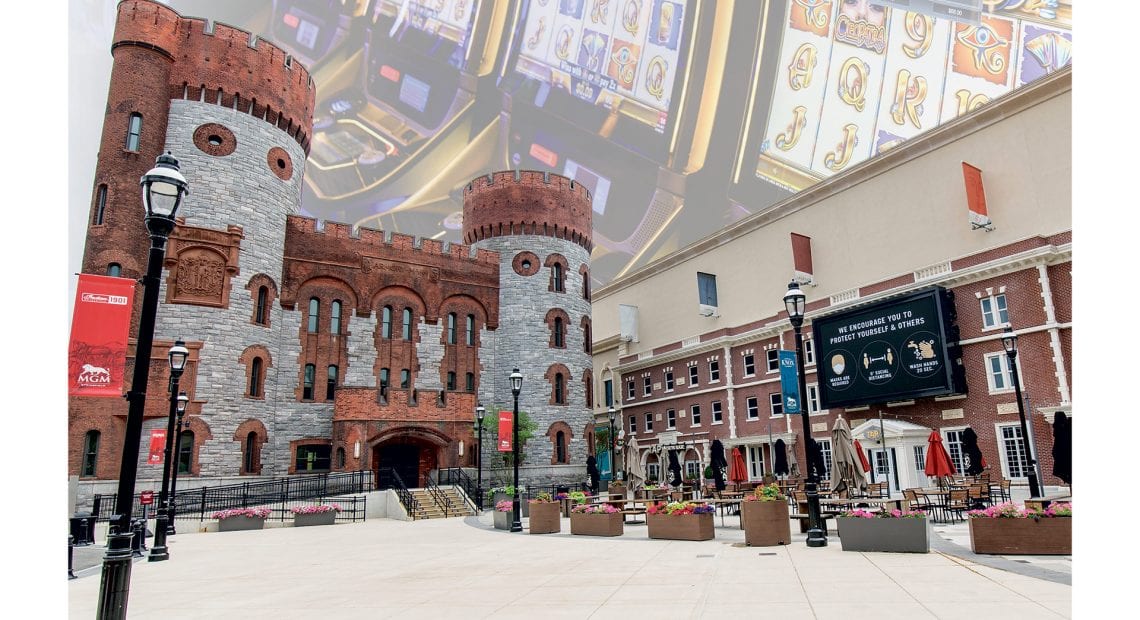
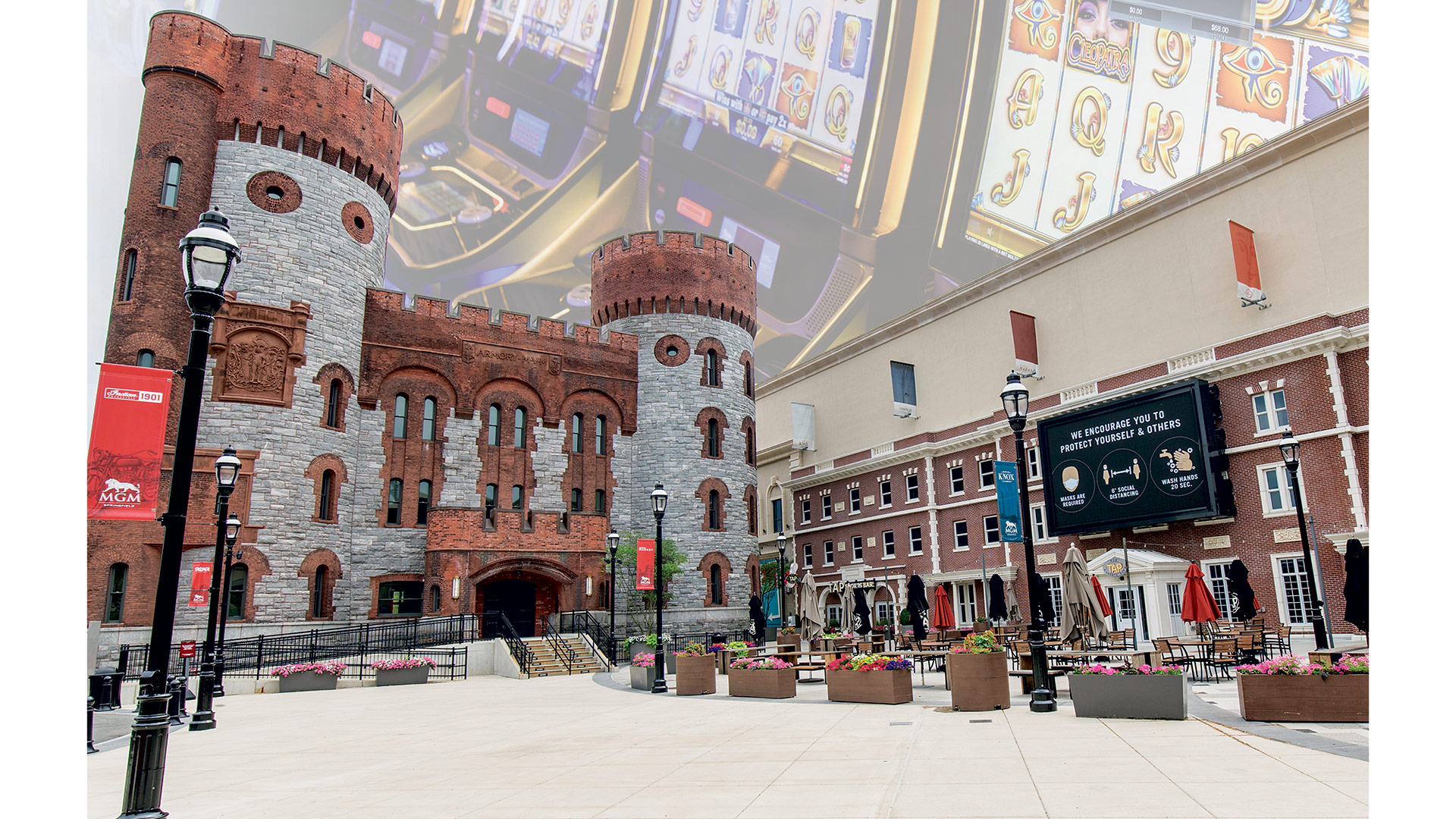
But MGM Springfield Leader Optimistic About the Next Chapter

Chris Kelley had just arrived in Springfield and was still getting acclimated to the region when the COVID-19 pandemic arrived almost exactly a year ago.

Then, he had to get acclimated to something else — something no one in the casino industry had ever seen or been forced to endure before.

“These facilities just weren’t meant to be closed,” said Kelley, president of MGM Resorts’ Northeast Group, which includes MGM Springfield. But they were, of course — for four long, brutal months, before finally reopening in July, but only at one-third capacity and with a number of restrictions in place. Later, the state’s casinos had to reduce hours and close at 10 p.m. as a late-year surge in cases moved the goalposts again.

Now, some restrictions are being eased, and later this month, the state will enter what is known as step 1 of phase 4, prompting Kelley to glance toward the future with optimism in his voice. But in all ways, and by all accounts, the ‘ramping-up’ period for MGM Springfield — the one we all heard so much about in the months before COVID dramatically changed the landscape — has been turned on its ear.

“People are just really excited to be part of bringing downtown West Springfield back.”

In some ways, it will be like starting over for this operation, which recently reopened its hotel for weekends and also its sports bar, and is waiting with what can only be called bated breath to see if and to what degree patrons will return to the blackjack tables, slot machines, bars, and, eventually (but no one really knows when) large-scale events like concerts, shows, and fundraising galas.

In a wide-ranging interview, Kelley, who has remained mostly quiet, from a press perspective, since arriving in this region, talked with BusinessWest about the past year, but mostly about what comes next for this highly visible, nearly $1 billion business that opened to great expectations 32 months ago.

That look back was understandably painful, although he said the past year has certainly been a somewhat beneficial learning experience on many levels (more on that later) and a time when changes coming to the industry were greatly accelerated.

As for the future … it is obviously clouded by question marks that involve everything from how much pent-up demand there will be for everything a casino has to offer, to the fate of sports gambling in the Bay State.

Chris Kelley says, it feels like starting over

In some ways, Chris Kelley says, it feels like starting over at MGM Springfield.

Kelley is optimistic about both.

He said Las Vegas has recently returned to its 24/7 character and something rapidly approaching conditions that existed pre-COVID — and the early indications are certainly positive.

“With vaccine distribution ramping up around the country, there’s good reason for cautious optimism as we look at our ability to gather in larger numbers, and for our industry, in the broader sense, to see improvement as opposed what it was experiencing only a few months ago. As we look at the calendar year 2021, I think we see significant opportunities for improvement, especially as we move into the second half of the year.”

As for sports betting, he said several bills are in various stages of talk and progression through the Legislature, and he’s optimistic that the state will ultimately pass one, especially with other states already doing so, with revenue flowing to them as a result. More important than simply approving a bill, though, is passing legislation that will enable the state to effectively compete and ultimately become an industry leader in this realm. Such a bill might bring $50 million in additional tax revenues to the state annually, he projected.

“We’re looking for Massachusetts to be able to compete with all of the surrounding states that have or soon will have sports betting,” he said, noting that Connecticut will soon be in that category. “A level playing field for MGM and the other casinos in the state is very important, as is giving our customers an amenity, and an experience, that they’ve been asking for now for years.”


Doubling Down

Reflecting on the past year, what it was like, and even what he’s learned as a manager, Kelley started by flashing back to what were the darkest of days — when the casino was closed and there was no indication of when it might open again.

“It’s a very uncomfortable experience to walk through these facilities when they’re dark and there’s no activity and action — the sights and sounds that ultimately drew us all into this industry,” he told BusinessWest, noting, again, that once a casino cuts the proverbial grand-opening ribbon, its doors are never locked.

The fact that they had to be locked was just the first in a string of unprecedented steps that defined the next several months, from the shuttering of the hotel and restaurants to the cancellation of scores of events that were on the books, to ultimately laying off two-thirds of the employees working at the casino before the pandemic arrived.

Overall, Kelley said, this has been a humbling experience in some ways — a challenging time, to be sure, but also a learning experience and an opportunity to accelerate, out of necessity, some changes that were coming to the industry anyway.

“No business model for any company will be exactly the same, post-COVID,” he explained. “We have innovated along the way, adopting best practices, and many of those will remain, to the benefit of the guests,” he told BusinessWest. “Digital innovations are an area I would point to; MGM Resorts and MGM Springfield were already headed toward many digital innovations pre-COVID, but the pandemic really accelerated the implementation of those efforts — things like digital menus, the use of QR codes, mobile check-in, and digital keys; those things will remain, and those are a positive part of the guest experience today and moving forward.”

Elaborating on what was learned and how the casino and its staff responded to the rapidly changing landscape, Kelley said some valuable experience was gained that should benefit his team moving forward, especially when it comes to — here’s that word again — pivoting.

“We want to make it more walkable, more friendly, and more inviting so we can complement the business investment that’s happening there.”

“When the pandemic hit, it was a huge learning experience for everyone in this industry,” he said. “We all had to create new ways of operating and coping with restrictions that we had never experienced before. We put an emphasis on internal communications and external communications with our guests, and we found ways to stay in contact with our teams virtually. And through this process, we’ve been working hand-in-hand with our state and local officials and our community partners to weather this experience with the strength and support of each other. That ability to come together as a community during times like this is the silver lining to a very difficult period.

“As a team, we recently discussed the importance of leadership agility,” he went on, “because we have had to learn how to be very nimble and adjust to ever-changing conditions, which I believe will ultimately benefit the business in coming out of all this.”

Barriers at the gaming tables and social-distancing reminders have been facts of life

Barriers at the gaming tables and social-distancing reminders have been facts of life during the pandemic at MGM Springfield.

In recent months, business — and gross gaming revenues — have steadily improved, said Kelley, and this has been while the hotel and some restaurants have been closed. Looking forward, he expects this trend to continue and for there to be a good amount of pent-up demand for casino-style entertainment.

“It remains to be seen what the reaction of our communities will be to a vaccinated population, but we’re optimistic that we’ll see the return of guests to our property,” he said. “We had seen resiliency even during this time.”

The hotel reopened on a limited basis the first weekend in March, he went on, with the goal being to gauge guest demand and comfort levels and then adjust the business model accordingly. He said initial bookings have been positive, and he expects improvement to come gradually.

As for events in the casino’s various venues — gatherings have brought people and energy to the downtown area and business to a number of hospitality-related ventures — Kelley said it is too early to know when this aspect can resume.

“Ultimately, that will be up to the state to determine,” he noted. “What we can do is make sure that we’re as prepared as possible for that day; we do discuss those things frequently, and we’re actively engaged in planning for the return of those amenities.”


Plenty of Wild Cards

Speaking of being prepared … this is exactly what the casino is striving to do when it comes to another key focal point moving forward — sports betting.

New Hampshire became the 16th state to legalize such betting (there are now 22) in July 2019, and officially went live in late December that year. Meanwhile, Connecticut has taken huge steps in this direction, although some complicated negotiations remain between the many parties involved when it comes to where venues will be located, how many there will be, and who will operate them.

As for the Bay State, Kelley counts himself among those who believe it’s a question of when — not if — sports betting gets the green light, and he obviously considers that step pivotal if the state’s casinos are going to going to tap the full potential of what has long been considered an attractive market.

But he stressed repeatedly that his focus is not simply on working with state legislators to pass a bill, but to create a playing field on which the state’s casino can effectively compete. And this is the consistent message he and others with MGM have been delivering to state officials.

“We’re encouraged by the number of sports-betting bills that have already been introduced, and each of the bills that has been drafted has been tailored to the unique interests of the sponsor,” he explained. “So we’ve been focused on advising lawmakers on what our experience has shown us.”

Elaborating, he said this experience has shown that the lower the tax rates are on sports-gambling revenues, the better one’s odds are of effectively competing against what he called the “illegal markets,” and also against the growing number of neighboring states already in or soon to get in this game.

“We want to create a competitive operating model, and so a tax rate that is on the lower side is helpful in creating the best payouts for the guests, and also helpful in competing against the illegal markets, and it’s helpful in competing against border states,” he went on. “And we believe that, ultimately, it creates the best guest experience as well.”

He said the casino has a plan in place and has the ability to move “very quickly” when state legislators decide to pull the trigger.

“We’ve spent a lot of time looking at the property and where a sports book makes sense, and also at how to create an experience that would really be a market leader and that will benefit the community at the same time,” he explained, adding that there is a good deal of experience in this realm within the MGM corporation that he and his team can benefit from. “We’ll have many resources to draw upon, and we’re excited about that.”

Reflecting again on those dark times that coincided with his arrival in Springfield, Kelley said those memories linger, even as many can see that proverbial light at the end of the tunnel. And they make him appreciate a return to something ‘normal’ even more.

“To see us moving back in the direction of offering those positive moments, those positive milestones, those positive experiences for our guests, is extraordinarily gratifying, and part of what I love about this business,” he said, adding, again, that while question marks still dominate the landscape, he remains optimistic about not only turning back the clock to pre-COVID levels of revenue and progress, but setting the bar higher.

Ultimately, this story is still in the early chapters, he told BusinessWest, and the ones to come will hold plenty of intrigue.


George O’Brien can be reached at [email protected]

Banking and Financial Services Special Coverage

Creating a Powerhouse

M&T Bank Corp. is no stranger to acquisitions, having broadly expanded its geographic footprint through a series of mergers over the past two decades.

But every acquisition is undertaken with purpose, Chairman and CEO René Jones said, and that includes the recent announcement that M&T will purchase Bridgeport, Conn.-based People’s United Financial Inc. in a $7.6 billion, all-stock transaction.

“The combination of M&T and People’s United will benefit both firms, providing additional growth opportunities beyond what either firm could achieve independently,” Jones said during a recent conference call with investors, adding that the culture of M&T will “resonate” with People’s United customers.

The transaction has already resonated through the region’s banking industry, as it will create a ‘super-regional’ banking franchise (as industry analysts are calling it), with approximately $200 billion in assets and a network of 1,135 branches and more than 2,000 ATMs spanning 12 states from Maine to Virginia and the District of Columbia.

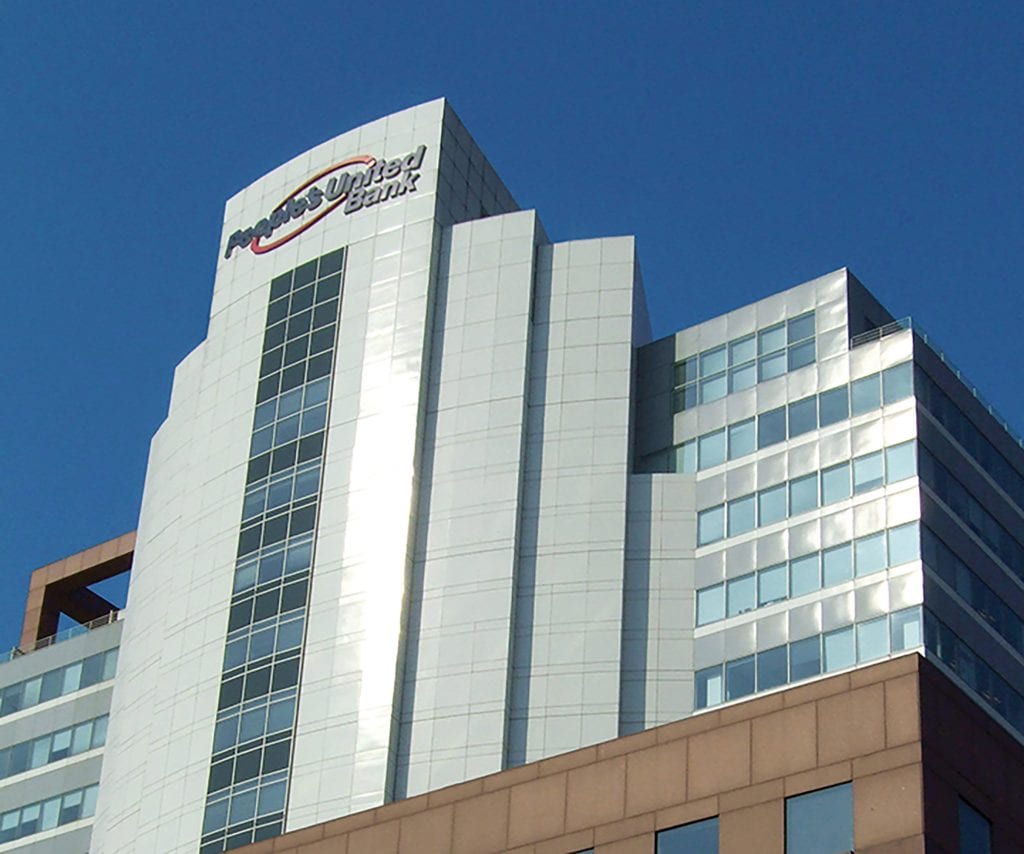
The combined franchise will operate across some of the most populated and attractive banking markets in the U.S., M&T officials note. As part of the transaction, People’s United’s current headquarters in Bridgeport will become the New England regional headquarters for M&T.

Jack Barnes

Jack Barnes

“The merger extends our reach by providing customers access to a larger banking network and an expanded array of services.”

“In People’s United, we have found a partner with an equally long history of serving and supporting customers, businesses, and communities,” said Jones, who will continue to lead the expanded company in his current roles. “Combining our common legacies and our complementary footprints will strengthen our ability to serve our communities and customers, and provide solutions that make a difference in people’s lives. I am incredibly excited about this opportunity and look forward to welcoming new customers and team members to our M&T family.”

In the conference call, Jones recognized the value of People’s United’s footprint and resources.

“In addition to new geography, we expanded the talent and capabilities in our organization as well as the product sets vailable to our combined customers,” he noted, adding that the acquisition will make M&T the 11th-largest commercial-bank holding company in the U.S. by both assets and market capitalization.

In addition, “the combined geographic footprint is concentrated, offering a distribution system across the Northeast and mid-Atlantic states that represents over 20% of the U.S. population and over 25% of GDP, and has attractive levels of household income.”

Indeed, the median household income in People’s United’s footprint is almost $87,000, well above the national median, according to the Wall Street Journal. M&T will also add People’s United’s national equipment-finance business and its mortgage warehouse lending business.

“The density allows us to leverage local market knowledge, our recently bolstered technology infrastructure, and our nationally recognized brand,” Jones added, noting that the two companies have a complementary top-tier deposit share in core markets with a top-three share in most of their respective top-10 markets.

People’s United Bank’s headquarters in Bridgeport, Conn

People’s United Bank’s headquarters in Bridgeport, Conn. will become M&T’s New England regional headquarters.

“And People’s United’s outside proportion of core operating accounts makes it among the most attractive franchises in New England,” he added. “In our view, this is the most important characteristic of a stable, well-run franchise.”


Cultural Considerations

Jack Barnes, chairman and CEO of People’s United, noted that the cultures of the two banks are a good fit.

“M&T is a like-minded partner that shares our culture of supporting communities by focusing on building meaningful relationships and providing personalized products, services, and local market expertise to customers, while building on our legacy of excellence in service,” he said. “The merger extends our reach by providing customers access to a larger banking network and an expanded array of services. I am confident our shared community-banking philosophies will provide significant long-term value for our shareholders, employees, and loyal customers.”

M&T leaders note that both companies have been long been recognized for their community commitments and support of civic organizations. Over the past decade, M&T, through The M&T Charitable Foundation, has donated $263.7 million to more than 2,800 nonprofit organizations across eight states and the District of Columbia. M&T Bank has been awarded the highest possible Community Reinvestment Act rating on every examination since 1982 from the Federal Reserve Bank of New York.

Meanwhile, People’s United Community Foundation and People’s United Community Foundation of Eastern Massachusetts have granted $40 million to nonprofits aligned with the foundations’ collective mission since their inception in 2007. Through the foundations, M&T will use $90 million to support charitable activities in the communities currently served by People’s United.

In the Greater Springfield area, People’s United Bank traces its roots to the Bank of Western Massachusetts, which opened in 1987 and grew it into a regional commercial-lending power, one that was acquired by Chittenden Bank in 1995 and then again by People’s United in 2008.

People’s United, with a much longer history (it was founded in 1842), boasts more than 6,000 employees these days, offering commercial and retail banking, as well as weath-management services, through a network of more than 400 retail locations in Connecticut, New York, Massachusetts, Vermont, New Hampshire, and Maine. The company also provides specialized commercial services to customers nationwide. As of Dec. 31, 2020, the institution had total assets of more than $63 billion, loans of $44 billion, and deposits of $52 billion.

M&T, headquartered in Buffalo, N.Y., operates banking offices in New York, Maryland, New Jersey, Pennsylvania, Delaware, Connecticut, Virginia, West Virginia, and the District of Columbia. It ranks among the largest regional lenders in the Northeast, with $142.6 billion in assets at the end of 2020. Commercial real-estate loans comprise almost 40% of its portfolio, and despite the pandemic’s impact on that sector, loan performance at the bank has been better than expected over the past year.

Under the terms of the agreement, People’s United shareholders will receive 0.118 of a share of M&T common stock for each People’s United share they own. Following completion of the transaction, former People’s United shareholders will collectively own approximately 28% of the combined company.

The merger has been unanimously approved by the boards of directors of each company and is expected to close in the fourth quarter of 2021, subject to customary closing conditions, including receipt of regulatory approvals and approval by the shareholders of each company.


Open the Floodgates

The acqusition is just the latest in a series of regional mergers seeking scale in order to better compete with the largest U.S. banks as low interest rates cut into lending profits, Forbes reported.

Last year, for instance, Huntington Bancshares Inc. agreed to merge with TCF Financial Corp., First Citizens Bancshares Inc. announced plans to acquire CIT Group Inc., and PNC Financial Services Group Inc. struck a deal to buy the U.S. arm of Spain’s BBVA. The year before, BB&T and SunTrust merged to become Truist Financial Corp. in the largest bank deal since the financial crisis of 2008 ushered in stricter regulations.

Ultra-low interest rates and meager loan growth have made it difficult for banks to profit from lending, the Wall Street Journal notes. The effect is most pronounced on regional banks, which rely more on lending profits than their national counterparts. Net interest margin, or the difference between what a bank pays its depositors and what it earns from lending, hit a record low for commercial banks in the fourth quarter of 2020.

Tom Michaud, CEO of Keefe, Bruyette & Woods, recently told Barron’s that, if regional banks want to be “relevant and significant,” they need to compete against the ‘Big Four’ of JPMorgan Chase, Citigroup, Wells Fargo, and Bank of America.

Robert Kafafian of the Kafafian Group, a consulting firm in Bethlehem, Pa., told American Banker he expects a surge in bank mergers in 2021, partly due to needed investments in new technology. “Customers have shown they can adapt to changing technology. Adoption may have advanced three to five years faster than what it might have been otherwise without the pandemic. Tech capability is all the more important now.”

Jones agrees, but stressed that many different considerations went into the decision to purchase People’s United and create a new, super-regional bank.

“Not only are our geographics complementary,” he said, “so too are the talent, product sets, and credit cultures, creating a solid platform we can build upon.”


Joseph Bednar can be reached at [email protected]

Law Special Coverage

A Challenging Docket

Sudha Setty says the field of law continues to evolve

Sudha Setty says the field of law continues to evolve and create new opportunities, even during the pandemic.

It’s been a challenging year for businesses of all kinds, and the profession of law is no exception.

But in many ways, the pandemic set the critical role of lawyers in even sharper relief, says Sudha Setty, dean of the   (WNEU) School of Law.

“I hear, anecdotally, from our alumni that they’re busy; they have a lot of work going on. Frankly, the legal work coming out of the pandemic is substantial,” she told BusinessWest, and it extends far beyond business disruptions.

“The pandemic has hit very unevenly in a lot of communities, including Western Massachusetts, and you have issues of trying to get unemployment benefits or ensuring against foreclosure of homes or eviction,” she noted. “A lot of legal needs have come out of all that. Those needs existed previously, of course, but the pandemic has exacerbated them. So the need for lawyers to help in those capacities has increased exponentially in the past year.”

Or take the growing (literally and figuratively) field of cannabis; a course on “Cannabis and the Law” is hugely popular, Setty said, because students see legal opportunities in an industry that still has plenty of room to expand.

“I hear, anecdotally, from our alumni that they’re busy; they have a lot of work going on. Frankly, the legal work coming out of the pandemic is substantial.”

“It’s a new field, and it’s not going away. It’s a way to think about new opportunities as a lawyer, but you’re also learning nuts and bolts you can apply to other fields as well, like regulatory law and how to navigate state bureaucracy and a lot of other pieces that will be helpful even if your practice isn’t in cannabis law in the long run.”

In short, the world will always need lawyers, and after a very uneven past two decades when it comes to the job market and law-school enrollment, colleges across the U.S. have reported an uptick in applications over the past few years, one that hasn’t been slowed by the pandemic.

WNEU welcomed an incoming class of 130 last fall, well over the 88 who started classes in the fall of 2018, Setty’s first year as dean. While the fall 2021 numbers won’t be finalized until the summer, she hears from Admissions that applications are still strong.

“Nationwide, I know most law-school applications are up significantly,” she added. “In this region, it’s up about 20%, and we’re about the same. So I feel cautiously optimistic.”

Programs she has shepherded have only made WNEU a more attractive destination — for example, the Center for Social Justice, launched in the spring of 2019, has offered a robust series of community conversations, pro bono opportunities, and other initiatives aimed at giving students real-world experience in making a difference, even while in school.

“Students have always been interested in that mission, but now we have this focal point and can shepherd students toward job opportunities, toward scholarships, toward career paths, thinking about what they need to be a social-justice lawyer,” she said, noting, as one example, the Center’s Consumer Debt Initiative, which helps area individuals who are unrepresented in debt collection, sometimes over a few hundred dollars, sometimes a few thousand.

“We’ve heard a lot of discussions over the last few years about income inequality and economic justice, and I think we’re in a really good place in meeting the interests students have when they come into the law school.”

“They can make a difference in someone’s life. It’s a way for students, faculty, and lawyers from the greater community to address this economic-justice issue. We’ve heard a lot of discussions over the last few years about income inequality and economic justice, and I think we’re in a really good place in meeting the interests students have when they come into the law school.”

Add it up, and the WNEU School of Law hasn’t slowed down its pursuit of building a program that will remain relevant in the ever-changing field of law, well after life — and the educational experience — return to something resembling normal.


Back to School

Like every college and university, WNEU had to scramble last spring to get students learning remotely, and faculty and staff spent the summer raising their online competencies to make sure courses would be even more effective in the fall.

“Some of them were already ahead of the curve,” Setty said. “For some of us, including me, it was a lot of learning, a lot of training, a lot of mock classrooms we did with each other to build up our ability. This place is about good teaching, and that was the really important thing to drive home — that, by the time we got back in August, everyone had to continue this excellence in teaching as part of the ethos of the law school — in a hybrid format, if they had to.”

The 2020-21 year has, indeed, taken a hybrid form, with students alternating between learning remotely and in classrooms at the Blake Law Center, due to social distancing and capacity limits. “The largest classrooms normally hold more than 100, and now they’re at 40-something. So the students are rotating through,” she added. “Some students, for health reasons, can’t come at all, so they’re fully remote. That’s the way we’ve been operating.”

The law school has long been known for its use of clinics — in areas such as criminal defense, criminal prosecution, elder law, and family-law mediation — in which students blend classroom instruction with work on real cases, under the guidance of local attorneys. The vast majority of students get involved in clinics and externships, understanding the value of developing not only real-world legal knowledge, but the soft skills that will make them more employable.

Those clinics are still operating, Setty said, but they now feature a strong remote component as well.

“Lawyering these days is largely remote,” she noted. “Client counseling is remote. Witness interviews are remote. We have remote hearings in front of judges. So there’s a separate and related set of competencies that our students are learning, which deal with remote client presentation. It’s very different than what they’ve had to do before, and it has its challenges.”

However, she continued, “the flip side is that this is going to be a part of lawyering going forward. Everything’s not going back to fully in person after the pandemic fades. There are going to be some elements of remote trial work and remote client counseling, so I feel like our students are on the cutting edge of learning this stuff, so when they’re out looking for jobs, they can say, ‘not only do I have this skill set, I also have remote competencies in client representation; I’ve been a remote mediator, I’ve represented people in a criminal proceeding remotely.’ These are remarkable experiences they’re having — they’re very different, but absolutely what we need to do.”

Those graduates are entering a job market that has proven resilient during the pandemic, Setty said, noting that the contraction of law-school enrollment nationally a decade ago has gradually increased demand for talent.

“A lot of law schools were fully online for the full year, but we made a commitment and said, ‘we want to see our students in person and make this work.”

“The employment piece for the folks graduating during the pandemic, I think there’s still uncertainty around that,” she said. “But for the most part, our graduates have kept their jobs.”

The school has added some faculty members in the past two years, most recently Jennifer Taub, who specializes in white-collar crime, criminal procedures, and other business-law subjects, and authored the book Big Dirty Money: the Shocking Injustice and Unseen Cost of White Collar Crime.

“We’re on a positive swing,” Setty said. “The energy of our students, our faculty, and our staff has been terrific. Working through a pandemic requires a lot in terms of navigating the uncertainty and the need to adapt, but also all the hours it takes for faculty and staff to dig in and collectively make this work so we can have in-person education here.”


Community Focus

Setty took the reins as dean of the School of Law in 2018 after 12 years as a professor at WNEU. She first joined the faculty in 2006 as a professor of Law and associate dean for Faculty Development and Intellectual Life, and has produced notable scholarship in the areas of comparative law, rule of law, and national security.

Through her career, she has maintained that law schools are in a unique position to impact the future of a just society, and she has always seen WNEU as a place that launches the careers of thoughtful lawyers who work for the betterment of both their clients and society as a whole. The Center for Social Justice has been an important part of that philosophy over the past two years.

“I really wanted to establish this center and get it off the ground, and it has been terrific,” she said, crediting grants from MassMutual, individual law firms, and other entities to help fund its programming. “Not only is it a way to help our students and meet the social-justice mission of the law school, but it does such good work in the community. It’s great for attracting new students, but it’s also great for the work it does.”

Areas of focus have included economic justice, racial justice, and a recent effort, funded by a WNEU alum, to create an LGBTQ speaker series and support summer work in that realm for two students each year.

“It draws people in with a lot of interests,” she said of the center. “People come to law school wanting to make the world a better place, and they’re wondering how to do that — this speaks to them in a way that’s really profound.”

In fact, the law school as a whole has taken a hard look at its own efforts toward racial justice and diversity, equity, and inclusion issues, Setty said, from the coursework to how it connects with the outside community on issues like police practices.

“We have made an effort to think more about this and integrate it into our curriculum and how we engage in the larger community, but I want to do it in a sustained fashion so it’s not like, ‘oh, that was the focus for 2020; we don’t have to think about it anymore.’ The idea is to integrate it into who we are as a law school and focus on it going forward as well. It shouldn’t be a flavor-of-the-month issue, and then we move on.”

Setty is, however, more than ready to move past the pandemic and welcome students back on campus full-time, but she’s proud of what has been accomplished during the past unprecedented year.

“A lot of law schools were fully online for the full year, but we made a commitment and said, ‘we want to see our students in person and make this work,’” she told BusinessWest. “And we’ve been relatively successful. I continue to be really grateful to be the dean — particularly at a time when it’s required so much collective effort to make this happen.”


Joseph Bednar can be reached at [email protected]

Employment Special Coverage

Remote Possibilities

Most of Big Y’s 11,000 employees — those who stock shelves, prepare food, work the cashier lines, and do any number of other tasks — must do their jobs on site, in a specific location. But at Big Y’s 300-employee-strong customer-support center in Springfield, which supports those frontline workers, about 70% of them have worked remotely since the start of the pandemic.

“This past year, we learned that remote work can work, and it allows for a lot of flexibility for individuals,” said Michael Galat, vice president of Employee Services at the supermarket chain. “That being said, we’re a company where we stress collaboration and teamwork, and that has definitely been a challenge at times. Meetings using technology are different than having in-person meetings. It definitely can work, but there are pros and cons to it.”

The company’s pandemic response team was quick to set up safety protocols last spring to protect the thousands of customer-facing, frontline employees, but it also set many employees up with the necessary technology to work from home, put together a best-practices guide for working remotely, and has carefully followed the public-health data to determine when to bring them back.

“As time has gone on, they’ve seen the productivity; they see that the work is getting done, customers are being served, and people are happy. Now they’re saying, ‘maybe we don’t need to have everyone in.”

One important finding? Productivity never flagged — which tracks with accounts from many other area employers over the past 12 months. Thus, many employers feel no rush to bring everyone back before the pandemic is in the rear view — and that poses a question no one expected last March: does every employee really have to come back? And what if they don’t want to?

Meredith Wise

Meredith Wise says employers run the gamut when it comes to bringing back remote workers; some are anxious to do so, while others may see value in changing their model altogether.

Most employers last March thought shutdowns would last a couple months. But a year later, millions of workers are still working from home — and the result has been a national experiment with remote work that has borne some surprising data.

“It’s striking — we’re seeing a little bit of everything,” said Meredith Wise, president of the Employers Assoc. of the NorthEast. “We have a number of companies — like manufacturers — that never shut down and had employees come in the whole time. And we have companies starting to have employees coming back on a sporadic basis — maybe not five days a week, but two or three days a week. Then others have said, ‘we aren’t even thinking about having employees back until later in the year.’”

One reason for that hesitancy is the fact that workers have not only adapted to remote work, but have, in most cases, been as productive as they were in the office. So employers are taking their time bringing them back, looking to state guidance and public-health metrics to guide decisions.

“As time has gone on, they’ve seen the productivity; they see that the work is getting done, customers are being served, and people are happy,” Wise said. “Now they’re saying, ‘maybe we don’t need to have everyone in.’”

UMassFive College Federal Credit Union is one example of that phenomenon.

“We moved about 60% of our workforce home last spring, and it continues to be that way,” said Craig Boivin, vice president of Marketing. “We’re developing plans and processes for what this will look like in the post-pandemic world, but we’re not looking to bring people back until the state says it’s safe for large groups to gather indoors.”

During the exodus from office to home last March, he recalled, “I won’t say it was chaotic, but we had to make a lot of quick decisions at the senior level to make sure everyone had the equipment and support they needed at home,” in addition to developing guidelines to ensure accountability and making sure everyone understood new (to them, anyway) communication tools like Zoom and Slack.

“We found there are some real positives with productivity and being able to shut off some of the distractions,” he went on.

Employees — especially those who have grown to appreciate working from home, and even prefer it — are thinking similar thoughts, and that may pose a problem of pushback at some companies when they try to bring their teams back in. For now, in most cases, there’s no rush, but those days won’t last forever.


National Conversation

The same story is playing out nationally, with some companies planning to remain 100% remote post-pandemic, while others — including big names like Microsoft — taking a hybrid approach, giving workers more flexibility about where they work. Other companies are clamoring to bring everyone back.

“I see a hybrid approach in the future, finding balance, again, between meeting the needs of the business and allowing people flexibility to take care of their home life.”

“It’s no longer, ‘do you offer remote work?’ but, ‘do you offer it with enough organizational support so I can be as successful as the people who work in the office?’” Andrew Hewitt, senior analyst at market research firm Forrester, told CNN recently. He expects about 60% of companies will offer a hybrid work model, while 30% of companies will be back in the office, and 10% will be fully remote.

Since last summer, Big Y’s support-center workers have been required to be on site at least one day a week, and the company continues to discuss internally what the full transition back will look like.

“Productivity has not been an issue,” Galat said. “But, with our company, the culture is a huge component of it. Collaborating and having discussions on Zoom … you can do that, but it’s not the same.”

By essentially being forced into a mode of flexibility since last March, he believes companies — including Big Y — have learned some important lessons going forward. “I see a hybrid approach in the future, finding balance, again, between meeting the needs of the business and allowing people flexibility to take care of their home life. It’s a constant discussion we’re having with the executive team about what’s working, what’s not working, and what this will look like in the future.”

The fact that the support center is not just an 8-to-5 operation, but requires coverage on nights and weekends, allows for some flexibility of schedules for workers juggling their kids’ remote learning or taking care of parents, he added. “We continue to take care of business, while allowing people the flexibility to take care of home needs as well.”

Another of the region’s largest employers, MassMutual, continues to keep a large swath of workers off campus, and is in the process of evaluating their return to the office, said Chelsea Haraty, communications consultant in Media Relations for the company.

Craig Boivin

Craig Boivin

“At a high level, we expect to have MassMutual employees return to our corporate offices in a slow, phased manner later this year,” she told BusinessWest. “We will continue to monitor and reassess that plan, factoring in a number of considerations — including guidance from medical experts and government officials, a sustained reduction in cases, broader availability of testing and vaccines, as well as our employees’ circumstances and comfort in returning.”

What employers are starting to understand, Wise said, is that employees are also weighing the pros and cons of coming back, and while some are eager, others would rather stay home, and may make that fact known.

“Employers have employees all over the spectrum — some want to get back into the office and don’t feel part of the team when they’re not. Others are saying, ‘I’m not sure I want to come back; I’m not sure about the cleaning protocols and sanitation protocols. Are people wearing masks? I’m not sure I’m comfortable in the office.’”

She noted that some companies are fine pushing those decisions into the future. “They’re saying, ‘things are going pretty smoothly; we don’t have quite as much water-cooler talk, not as much gossip going on, and people are really productive when they’re remote. We don’t have to have people come back to the office and incur the expense of coffee and bathroom supplies. Maybe we can cut some of our expenses.’”

Including some major expenses — most notably the office space itself. “Some of these companies have leases coming up in the next year, so they’re asking, ‘can I reduce my footprint? Do we need as much space as we have?’”


Back and Forth

On the other hand, Wise said, questions about workplace culture are very real. “Some companies are looking at their culture, their camaraderie, their teamwork, just the ability to walk down the hall and talk to somebody, and they want to get all their employees back in the office as soon as they can.”

She noted the importance of age-old rituals of the workplace, walking in the door at the start of the day and asking co-workers about their weekend, or their family, or whatever might be going on, whether it’s related to their jobs or not.

“How do you incorporate new personnel into the culture outside of the physical environment? That’s a big challenge.”

“When people are removed from an environment that really is a team, where you’ve gotten to know each other’s family situations and personal life, you really do lose that with a remote connection,” she said. “When people come into an office meeting, they sit down and chit-chat with the person next to them a little. It’s hard to recreate that on a Zoom meeting; you lose some of that personal connection.”

Boivin agreed. “The productivity piece seems to be working out pretty solidly now,” he told BusinessWest. “At the same time, the collaborative, in-person aspect is missed.”

One big topic of conversation is new-employee onboarding, he said, noting that orientation is conducted in person, and video communications are a regular reality, but he wonders if that’s enough to keep them engaged.

Mike Galat

Mike Galat

“I have a new graphic designer in the Marketing department who started at the end of August. She’s been [physically] at UMassFive for just a day or two. How do you incorporate new personnel into the culture outside of the physical environment? That’s a big challenge.”

Also challenging is the way boundaries between work and personal life have blurred, whether it’s juggling job responsibilities with helping kids with remote schoolwork, or simply working too many hours.

“Productivity is up,” Wise said, “but some of it is putting in longer hours — rolling out of bed, having breakfast, and getting right to work instead of commuting, and then at 5, instead of getting in the car and driving home to fix dinner, they keep working. Something we’ve heard is that people need to build in some transition time so they don’t start working at 7 and quit at 6.”

Whatever the reason, many employees will be more than happy to return to the pre-pandemic work world.

“Now that we’re going on a year, a lot of people are saying, ‘I thought I wanted this, but I really want to be back in the office — maybe not five days a week for 52 weeks a year, but maybe in the office three days and at home two days,” she added. “A lot of employees are saying, ‘this isn’t what I thought it was going to be — I need to be back around people; I need to have boundaries by being back in the office.’”

Each industry is different, too, Wise added. For example, companies where creativity is crucial, like marketing firms, probably find it easier to brainstorm when people are together in one physical space, able to immediately bounce ideas off one another.

“I don’t think it’s a one-size-fits-all answer that’s going to fit every organization,” she said. “My guess would be a lot of manufacturers, since they have individuals on the floor who have to be at work, are going to be less likely to have their office staff remain totally remote because that creates an us-and-them mentality. But some other organizations will allow many people to stay totally remote, or there may be that hybrid of people working in the office and then from home.”

Galat agreed, adding that that he’s heard of some companies staying fully remote, but most seem to be moving toward a hybrid approach — which speaks to one way COVID-19 may have permanently altered the American workplace.

“We’ve learned a lot through the year,” he said. “We miss that component of teamwork and collaboration; not having that makes it more challenging. But I think the hybrid approach might be the approach we look at going forward. We’ll evaluate and fine-tune it as we go.”


Joseph Bednar can be reached at [email protected]


Special Coverage Women in Businesss

Learning to Take Charge

By Mark Morris

Only one-third of all businesses in Western Mass. are owned by women, according to a recent survey. In the healthcare sector, one of the largest employers in the region, leadership positions are held by women 41% of the time — with outliers like one hospital where it’s only 16%.

These findings are from a 2019 study commissioned by the Women’s Fund of Western Massachusetts titled “Status of Women and Girls in Western Massachusetts.”

To address disparities like the ones in the survey, the Women’s Fund and Holyoke Community College (HCC) have teamed up on an eight-week training program this spring for women who want to enhance their leadership skills.

Titled “Women Leaning into Leadership: Empowering Your Voice,” the course begins March 25 and runs through May 13.

According to Michele Cabral, executive director of Professional Education and Corporate Learning at HCC, the idea for the course grew out of the Women’s Leadership Luncheon Series, hosted by the college.

Until COVID-19 forced it into a virtual meeting, the college hosted the luncheon every month for the past five years. With attendance limited to 28 attendees, four women leaders would each select a topic relevant to women and leadership, then break out the attendees into four groups to discuss their particular subject. The next month, the groups would rotate so they could discuss a different topic with a different leader. Areas of discussion have included dealing with different leadership styles, the role of communication, and conflict management when you’re the only woman in the room.

When COVID hit, Cabral said they pivoted to a remote video lunch and changed the format to having one person lead the discussion and opening it to anyone who wants to join via video. A recent conversation covered how to deal with changes brought on by the pandemic. Because some women wanted to discuss some of the topics in more depth, Cabral said, developing a course was a logical next step.

Michele Cabral

Michele Cabral

“These women want to get to know themselves better, to identify what skills they need to focus on and promote their strengths. They were looking for a more structured program to help guide them through that process.”

“These women want to get to know themselves better, to identify what skills they need to focus on and promote their strengths,” she explained. “They were looking for a more structured program to help guide them through that process.”

A few years back, Monica Borgatti attended the Women’s Leadership Luncheons at HCC. As chief operating officer for the Women’s Fund of Western Massachusetts, she especially liked the cohort-style of learning (a collaborative approach in which individuals advance together in an education program) that took place at the events.

“The cohort model works well in this type of learning situation because people start to feel comfortable with each other, and they are more willing to be vulnerable as they share and learn together,” she said.

The luncheon reminded her of a program the Women’s Fund used to run known as the Leadership Institute for Political and Public Impact (LIPPI). While it had some success, Borgatti and her colleagues thought the program suffered from trying to be all things to all women and fell short in that effort. After compiling feedback from women who had gone through LIPPI, the Women’s Fund put the program on hold.

“LIPPI grads gave the program its highest marks in the cohort learning approach,” she recalled. The graduates also cited networking opportunities and making connections as solid benefits from the program.

After wrapping up LIPPI, Borgatti explained, the Women’s Fund’s emphasis shifted from creating and running programs to identifying leadership programs it could adapt for this area, as well as support for existing programs.

“When I learned HCC was developing a more in-depth leadership program, I thought it was worth exploring to see if there might be a partnership opportunity for the Women’s Fund,” she said.


Engaged in Equity

The course is targeted to women in mid-career, especially those who are emerging as leaders in their careers and the community. As part of its partnership, the Women’s Fund is offering sponsorships of up to $650 to defray the $799 tuition cost.

“The Women’s Fund is contributing in such a meaningful way. With their sponsorships, HCC is able to bring this program to people who would not have access otherwise,” Cabral said, adding that many employers do not reimburse the cost of training, so these sponsorships make the course more accessible for women who struggle to pay for self-development.

“HCC provides the education, the Women’s Fund provides the sponsorship, and together, we bring our common mission out to the community,” she noted.

Borgatti said taking part in the course was an easy call because it allows her organization to reach women who are seeking personal and professional development. “We want to see more women in leadership positions across our region, so we’re proud to partner with HCC to help more women become effective leaders.”

While the goals of the Women’s Fund address gender equity and gender justice, Borgatti also made it clear that her organization also strives to improve racial equity and racial justice.

“We know that women are not in leadership roles as much as men, and there are even fewer women of color in leadership positions,” she said, noting that the HCC course is one way to support the current and future leaders of color in the community.

“HCC provides the education, the Women’s Fund provides the sponsorship, and together, we bring our common mission out to the community.”

Borgatti added that her organization became involved to make sure affordability would not prevent anyone from taking the course. “We want to encourage more women of color in programs like this, and we want to make sure it’s financially accessible for all women.”

Cabral noted several highlights of the course, such as assessing communication styles and techniques, as well as working with each woman to develop a professional roadmap to help her reach her potential. Each program participant will also receive 30 minutes of private, one-on-one coaching from Annie Shibata, owner of Growth Mindset Leadership and Communication Coaching in Cincinnati, who will coach each student via video link.

“Incorporating one-on-one coaching elevates the course to a higher level of really personalizing the experience for each individual,” Cabral said.

One of the main reasons the Women’s Fund got involved was to encourage more representation of women in leadership. Borgatti hopes women who take the course emerge more confident in their skills and abilities to step into all sorts of leadership roles.

“We want to see more women CEOs, more women chiefs of police, more women judges,” she said. “Unless we support women being able to access these opportunities, we’re not going to see real change.”

At the end of the day, Cabral said, she and Borgatti share a common mission: to elevate the skills of women who are willing to put in the work. “We want to make sure those skills are here in Western Mass., and they stay in Western Mass.”

Community Spotlight

Community Spotlight

Tyler Saremi

Tyler Saremi sees potential in West Springfield’s downtown, and is taking steps to inject some economic vibrancy.

When Tyler Saremi looks at what is considered downtown West Springfield — the Elm Street/Park Street area — he doesn’t see Northampton or West Hartford.

But he can easily imagine a day when that section of this city that still calls itself a town can attain something approaching a level of vibrancy and an eclectic mix of businesses, especially those in the hospitality sector, that define those communities.

And he’s doing his best to bring that day closer. Indeed, the multi-faceted business run by his family that he serves as vice president, Saremi LLP, acquired 95 Elm St. — known to most as the United Bank building because it was the main tenant for many years — with the goal of … well, turning back the clock in many respects.

The century-old building has, over the decades, been home to cafés, restaurants, a grocery store, banks, and other types of retail, said Saremi, adding that it has always been a destination, and the broad goal with this project is to make it one again. Thus, it has been rebranded as Town Common.

Already, Tandem Bagel, the Hadley-based company with locations there and also in Easthampton and Northampton, will soon occupy space where bank-teller windows have stood on the first floor; the target date for opening is July. Meanwhile, at the other end of the first floor, Saremi pointed to the place where intends to put a restaurant. He said two other leases have been signed, and several more are pending.

“People are just really excited to be part of bringing downtown West Springfield back,” he said. “Our main intention is a café and a restaurant on the first floor; whether we have to open a restaurant ourselves or partner with someone, we don’t care. That’s part of our commitment to West Springfield — it needs a café, and it needs a restaurant, and that’s what we’re going to do.”

“It’s going to be a tough year, but there are reasons for optimism — we see things opening back up.”

The redevelopment of 95 Elm St. is just one of the intriguing stories unfolding in West Springfield, a community that is, like many others, trying to rebound from a pandemic that has taken a huge toll on hospitality-related businesses. And West Side, as it’s called, has many of them, said Mayor Will Reichelt, who counted 20 hotels and motels and a number of restaurants in his community.

But the biggest business in that sector, obviously, is the Big E, which is responsible for filling many those hotels, motels, and restaurants, not just during the 17 days of the annual fair, but almost year-round, as that venue hosts a number of shows centered on everything from horses to toy railroads; dogs to guns and knives.

The Big E has been mostly empty and silent since the pandemic arrived a year ago, and while the outlook for 2021 is more promising, there remains a huge number of unknows, especially with regard to the fair, a situation that Big E President and CEO Gene Cassidy summed up this way:

“It’s like you’re navigating your way down a dark alleyway; you don’t know what’s in front of you — if there’s suddenly going to be a crack in the pavement or if you’re going to walk into a dumpster,” he said, using that phrase to indicate how difficult it is to plan when the rules keep changing, often without much, if any, notice. “Our goal, simply, is to plan to produce a product that people are going to enjoy.”

Cassidy is quite confident there will be a Big E this September — he just doesn’t how many people will be allowed to attend. He doesn’t think it will be full capacity, as in 100,000 people on a weekend day, as in fairs past. Instead, he’s expecting some percentage of that number, which won’t be ideal, but certainly better than last year.

And while most of his energy and attention is still focused on this year’s fair, he said he’s spending a good amount of time lobbying officials to understand the importance of fairs and live events in general, and to help ensure the long-term survival of such institutions, something he believes is now imperiled.

Overall, though, he’s optimistic about the rest of 2021.

Gene Cassidy says a sparsely attended Big E is better than none at all

Gene Cassidy says a sparsely attended Big E is better than none at all, and he’s moving forward with planning after having to cancel the 2020 fair.

“It’s going to be a tough year, but there are reasons for optimism — we see things opening back up,” he said, noting that various expert projections of herd immunity by fall or even sooner are encouraging, even as innumerable challenges and question marks loom.

For this, the latest installment in its Community Spotlight series, BusinessWest takes a hard look at West Side and its efforts to become even more of a destination, even as its business community continues to battle COVID-19 and all the challenges it has brought.


Road to Progress

Reichelt, now wrapping up his second term in office, with plans to seek a third, said he can’t find too many silver linings from the pandemic and all the havoc it caused in 2020.

But he can find at least one — acceleration of the process to replace the Morgan-Sullivan Bridge, which connects his city with Agawam. The bridge project, which commenced two years ago, has to pause during the 17-day run of the Big E, he explained, adding that work actually comes to a halt for three weeks or more because of logistical concerns.

Obviously, that didn’t happen in 2020, he went on, adding that a project that was due to be completed this summer will now be done by spring.

“The work is way ahead of schedule,” he said. “Without the Big E, they probably gained a month of working time, and that will certainly help out on the back end.”

The broad mission moving forward is to get more people to travel over that bridge and other thoroughfares into West Side, said Reichelt, adding that the city has always considered itself at the crossroads of this region — I-91 and the turnpike connect there, and Route 5 runs through it as well. This location has long been a huge asset, one that paved the way, if you will, for major retailers and car dealers alike to populate Riverdale Street and Memorial Avenue. It has also brought visitors to the community not only for the Big E and shows on its grounds, but for myriad other tourism- and business-related functions, from leaf peeping to the semiannual EASTEC trade show.

The ongoing goal is to continually take advantage of this asset, build on the foundation that’s been laid, and try to spread the vibrancy to other areas of the city.

Which brings us back to Elm Street, Town Common, and the huge ‘Under New Management’ banner now adorning it.

As he gave BusinessWest a tour, Saremi pointed out the spot where Tandem Bagel would go, then did the same with the restaurant. Venturing to the second floor, much of which is now occupied by Saremi LLP, he showed where a number of smaller spaces, individual offices, and even co-working space might be carved out.

“We want to make it more walkable, more friendly, and more inviting so we can complement the business investment that’s happening there.”

Later, he pointed out one of the huge windows to the traffic — specifically, the juncture of Route 20 and Elm Street.

“This intersection has so much traffic … we need to get people to stop here in downtown West Side, get out, walk around, go to some shops, get something to eat — that’s how I see it,” he noted, adding that there are already some attractions there, including the Celery Stalk restaurant, a legendary luncheon stop; as well as bNapoli restaurant and the Majestic Theater. The broad goal is to build on that critical mass, he said, noting that clusters of eateries and entertainment venues have been the formula for success in Northampton, West Hartford, and other communities.

Reichelt concurred, and told BusinessWest the city is always striving to build on its already-impressive portfolio of retail- and hospitality-related businesses — and also fill in some spots that are less vibrant than others.
Mayor Will Reichelt

Mayor Will Reichelt says initiatives like a new economic recovery director and a series of infrastructure plans will help keep West Springfield on the right track.

As an example, he pointed to Riverdale Street, which actually has two distinct sections, if you will. There’s the one south of I-91, which is thriving and always has, said the mayor, who worked at the Donut Dip on that throughfare in his youth and thus speaks from experience. Then there’s the stretch north of the highway, which, while still vibrant by most measures, has some vacancies and, in general, is underperforming.

Reichelt said the city will look to help address this situation, and other business and economic-development issues in the city, through the hiring, at least on a temporary basis, of what’s being called an ‘economic recovery director.’

“The goal with this new position is to build better business relationships in the community, help with business retention, and focus on some of the underutilized areas, like the north-of-91 section of Riverdale,” he explained.

Already, there are signs of progress, he said, noting the reopened White Hut, the expansion of Calabrese Market on Park Street, and the sale of the former Hofbrahaus property to the owner of the Hangar Pub and Grill and growing ‘Wings Over’ stable of restaurants, among other positive developments.

“The common citizen wants their life to return to normal,” he said. “So I think people will come out … they will come back to fair.”

Meanwhile, a number of infrastructure plans now in place are designed to improve traffic flow and, ultimately, promote more vibrancy in the city. First up is Park Street, he said, adding that it is being repaved and steps are being taken to taken to make the commons more accessible and safer to use. Those plans include what the mayor called a mile-long loop or walking and biking trail around the green space.

Elm Street will follow, he went on, adding that this will be a multi-faceted initiative designed to beautify the area, add more parking, redesign the intersection of Elm Street and Route 20, and allow people to make more and better use of the green space there.

“We want to make it more walkable, more friendly, and more inviting so we can complement the business investment that’s happening there,” he told BusinessWest, adding that this project is in the design phase and should commence in 2022. Likewise, a huge, $25 million project to improve traffic flow on Memorial Avenue will take place that same year.


Fair Assessment

Sitting in the large conference room in the Big E’s administration building, Cassidy reflected on what has been an ultra-challenging 12 months for this regional institution — and what lies ahead, to the extent that he could, obviously.

He said every aspect of this enterprise — from the annual fall fair to the year-round shows that draw visitors from across the Northeast, to the restaurant on the grounds, Storrowton Tavern — have been deeply impacted by the pandemic.

And the hurt is still being felt. The shows slated for weekends in January and February were all canceled, he said, with some, including the huge Western Mass. Home & Garden Show, moved back on the calendar, in this case to August.

The Big E has received some support — nearly $1 million in the first round of PPP, with an application in for the second round of funding. There have been some cutbacks — the workforce has been trimmed from 30 full-time employees to 25 — and those who are left have found themselves with … let’s call them broadened job descriptions.

“Those of us who are still here have had to do jobs we’ve never had to before,” he noted, adding that such tasks include everything from directing traffic for the few events that have been staged to making sure the buildings on the grounds are secure. “Everyone has had to pitch in.”

West Springfield at a glance

Year Incorporated: 1774
Population: 28,529
Area: 17.5 square miles
County: Hampden
Residential Tax Rate: $16.90
Commercial Tax Rate: $32.49
Median Household Income: $40,266
Median Family Income: $50,282
Type of Government: Mayor, City Council
Largest Employers: Eversource Energy, Harris Corp., Home Depot, Interim Health Care, Mercy Home Care
* Latest information available

As for the last three quarters of 2021, Cassidy said there are certainly some signs of optimism with his industry. For example, the Canadian government recently gave the green light for the popular Calgary Stampede to take place in June. Meanwhile, the Pasco County Fair in Florida was recently staged, albeit with a number of restrictions and safety precautions in place.

Cassidy took it in while on a trip to Tampa for ‘Florida Week’ and a number of trade association meetings that were staged in-person, which is significant in and of itself, he noted, adding that the main topic of conversation, obviously, was how to stage events safely.

“Interestingly, at the Pasco County Fair, we were there on a Tuesday night, it was chilly, but the fair manager indicated that attendance actually exceeded what it was last year, and he attributed that to the fact that people want to get out,” he recalled. “They want to resume ‘normal,’ and that’s in a state where businesses have been open and Main Street is open.”

But while he can look ahead and try to plan, there are too many question marks to do the latter with any amount of efficacy. These question marks surround everything from what the attendance restrictions will be to whether — and under what conditions — the state buildings can open, to whether individuals and families will be willing to come back out and be part of a mass gathering on the midway or one of the concert venues.

The major consideration is what will be permitted for attendance, said Cassidy, adding that it’s a simple but troubling fact that the costs of operating the fair will be roughly the same whether it’s at full capacity, 50%, or some other number. But the bottom line is that a smaller fair, attendance-wise, is certainly preferable to no fair at all.

“It costs the same to produce the fair for 1.6 million people as it does to produce the fair for one,” he said. “Our staff is preparing a conventional Big E and will try to deliver the product we’re known for.”

Cassidy believes that, as he saw in Florida, there will a significant amount of pent-up demand and that people will want to return to the fairgrounds.

“The common citizen wants their life to return to normal,” he said. “So I think people will come out … they will come back to fair.”

Reichelt agreed, and said the return of the fair this fall, even a smaller fair, will help the region’s economy and, specifically, many of those hospitality-related businesses that have been deeply impacted by the pandemic.

“Having it happen will be good, not only for the Big E, but for the region to bring back that sense of normalcy,” he noted. “And it will be helpful for businesses in the area as they start to recover from all this.”


George O’Brien can be reached at [email protected]

40 Under 40 Class of 2021

Meet This Year’s 40 Under Forty Judges

BusinessWest launched its 40 Under Forty program in 2007 to recognize the area’s rising stars, and it has since become a coveted honor throughout Western Mass., shining a spotlight on individuals who have excelled professionally, but also in their service to the community.

Nominations for the 15th annual celebration have closed, and the judges are hard at work evaluating 170 unique nominations — close to a record, and an indication that the pandemic has not slowed this program’s energy or importance to the region.

The class of 2020 — who will be profiled in the May 10 issue of BusinessWest and honored at the 40 Under Forty Gala on June 24 at the Log Cabin in Holyoke — will, as usual, be chosen by five independent judges, who bring broad experience in entrepreneurship, business development, and civic engagement, among other traits. Here’s a quick look at each of them.

Kim Alli is a vice president and commercial loan officer at Greenfield Savings Bank and is also a member of the GSB PPP loan task force and the bank’s contributions committee. She serves on several community boards, including the Hospice of the Fisher Home, the United Way of Hampshire County community investment committee, and the Cooley Dickinson golf committee. She is also a member of the GCC Foundation campaign team, ambassador for the Amherst Area Chamber of Commerce, and a Rotarian for Amherst and Northampton.

For the past two decades, Paul Bailey has been the executive director of Springfield Partners for Community Action, the federally designated community action agency serving the Springfield area. Previously, he worked at the Massachusetts Department of Housing and Community Development for 11 years, where he oversaw the state’s 252 public-housing authorities. He holds a bachelor’s degree in business administration from UMass Amherst and serves on the board of directors of the Springfield Regional Chamber of Commerce and the Hampden County Workforce Board.

For the past nine years, Pia Sareen Kumar has been co-owner and chief strategy officer of Universal Plastics Group, representing a family of plastics-manufacturing businesses headquartered in Holyoke and stretching into in New York, Pennsylvania, and Ohio. She started her career as an investment banker at JPMorgan Chase and was a global director of strategic partnerships at American Express. She holds an MBA from the University of Chicago’s Booth School of Business and a bachelor’s degree from Northwestern University.

Lenny Underwood launched Underwood Photography in 2004, providing an array of services ranging from headshots, parties, and weddings to photo shoots, slideshows, and photo-booth rental. He is also a certified personal fitness trainer. He then founded Upscale Socks in 2016, which supports local nonprofits and schools with the Suit Your Soles campaign, which matches a sock donation for every purchase. He is a member of St. John’s Congregational Church, the Brianna Fund for Children with Physical Disabilities gospel concert planning committee, and the Way Finders board.

Peter Wirth

Born and raised in Germany, Peter Wirth started working for Mercedes-Benz straight out of college. After holding several positions in marketing and product management, her relocated to the U.S. and took a job with Mercedes-Benz USA. After successfully launching the SLR McLaren and the new C-Class for the U.S. market, he transitioned into retail and managed sales operations for two large New York Metro Mercedes-Benz dealers. In 2017, he and his wife, Michelle, started their own business and opened Mercedes-Benz of Springfield.

Banking and Financial Services

Taking the Long View

By Mark Morris

Matt Landon and Jeff Liguori saw an opportunity for Napatree Capital to better serve Western Mass. out of its new location in Longmeadow.

In a co-working office space at the historic Brewer-Young mansion, Jeff Liguori and Matt Landon help people build their financial futures.

Liguori, founder and chief investment officer of Napatree Capital in Providence, R.I., relocated to Western Mass. in 2015 and began to sense increasing demand for his firm’s services in this area. In January, he hired longtime acquaintance and Western Mass. native Landon as a partner in the firm. Together, they discussed opening a local office, and on Feb. 1, Napatree Capital opened its five-person firm in the restored mansion in Longmeadow’s center.

While Napatree could have served clients here from Providence, Liguori and Landon both thought it was important to have a physical presence in Western Mass.

“It was serendipity that there was one opening left in the Brewer-Young mansion,” Landon said. “We felt this iconic and different building fit with our image, so we jumped on the opportunity to locate there.”

Liguori, who grew up in Westerly, R.I., named his firm after Napatree Point in Watch Hill.

“Our investment committee is skilled at finding temporarily undervalued, underloved, and underappreciated companies that are selling at a discount. But we feel they’ll get the recognition they deserve in the near- or medium-term horizon.”

“It’s a beautiful stretch of beach where I’ve spent many summers,” he said. “As the southwesternmost point of Rhode Island, it separates Block Island Sound from Long Island Sound, so it really splits Rhode Island from New York.”

Because he liked the symbolism of its location and the relative obscurity of the name, he sought copyrights for several variations of the Napatree name in anticipation of one day starting his own firm. “Very few people have heard of it; even many Rhode Islanders don’t know Napatree Point.”

Liguori explained that his firm specializes in two areas: working with private investors looking to reach long-term financial goals, and managing endowments for nonprofits, which he called a growing area of business.

The firm’s business philosophy starts with ‘value investments,’ which Liguori says has to do with how a stock measures up against its industry or sector. The firm has had success taking a contrarian approach by investing in companies that are currently under the radar and might be underpriced by the market.

“Our investment committee is skilled at finding temporarily undervalued, underloved, and underappreciated companies that are selling at a discount,” Landon explained. “But we feel they’ll get the recognition they deserve in the near- or medium-term horizon.”

Landon also made it clear that Napatree takes the long view toward investing. “We’re not traders; we are long-term owners of companies.”

All advisors at Napatree are fiduciaries, meaning they can only recommend investments that are in the client’s best interest. By contrast, financial advisors who are not fiduciaries are held to a much more lenient ‘suitability’ standard. For example, two index funds based on stocks listed in the Standard and Poor’s 500 may seem similar on the surface. If one fund charges high fees and the other low fees, they are technically both suitable investments. A fiduciary, however, is required to recommend the fund with the lower fee because it is better for the client. Landon pointed out that he enjoys sticking with a fiduciary approach.

“It makes doing business very simple when you operate from a fiduciary standard,” he explained. “If you do what’s in the client’s best interest all the time, it’s an easy path to follow, and everyone wins.”


Upward Projections

Liguori pointed out that growth in his business comes in two ways: investment performance and taking on new clients. When the world came to a halt last March, however, meeting with potential new clients became extremely difficult. As advisors and investors, Liguori and his colleagues listened to the concerns of panicked clients, while at the same time they continued to research and act on investment strategies.

“We are also business owners worried about our business,” Liguori said. “We saw assets evaporate, so that meant our fees went down 30%.” Digging in and working harder was a key to getting through the trying times, he added. “As the founder of the firm, and on a personal level, I couldn’t be more grateful for where we are now after what we went through last March.”

Landon added that the pandemic strengthened client relationships as communication became more important and frequent, especially for clients whose industries were hit hard by coronavirus. While there are clear challenges and roadblocks ahead, the market horizon looks further out and toward more recovery.

“We try to reinforce to our clients that better earnings and brighter days are ahead, along with being empathetic to where they are right now,” Landon said.

After a slowdown at the beginning of COVID, Napatree saw a big uptick in the fourth quarter of last year. Liguori said that set the table for projected 20% growth in 2021.

“The last 12 months have been similar to a full market cycle, something that usually takes place over a five-year time period,” he said. “Clients who were full-on panicked in the beginning and were able to stay invested are now reaping the rewards of their patience.”

He admitted that even clients who have stayed invested are still anxious about the future. Most concerns are ones that existed long before COVID-19. In addition to parents who worry about saving enough for their children’s college education, the number-one concern Landon hears involves retirement.

“About 80% to 90% of the people we talk to have not been trained in investing; they would rather be gardening or hiking. So, if we can help put them at ease and feel good about the path they are on, it’s enormously rewarding.”

“People often ask if they will have enough to retire comfortably and live with dignity,” he said, noting that, because people are living longer, financial planning for retirement now involves making sure people have money for up to three decades after they retire.

Recent findings prove the point. Data from the CDC shows the average life expectancy for everyone born in the U.S. to be 78.9 years, but when calculating life expectancy after reaching age 65, it’s a different story. According to 2018 findings from the Society of Actuaries, there’s a 50% chance that a 65-year-old male lives to age 87, and that a 65-year-old female lives to age 89. For couples at age 65, there is a 50% chance at least one of them will live to age 93, and a 25% chance one will live to 98.

Disruptive events, like pandemics, can create the kind of fear and anxiety in people that lead to bad decision making in their efforts to reach long-term savings goals such as college and retirement.

Liguori said behavioral investing, whether it’s driven by fear or greed, usually leads to dangerous outcomes. His firm looks to avoid the herd mentality that can happen during volatile markets and instead focus on the client’s long-term objectives. He noted the GameStop stock bubble as an example that may look good in the near term, but the usual outcome for a small investor in events like this is disaster. Napatree’s philosophy, Landon added, is the exact opposite of chasing bubbles.

“We want to buy compelling long-term businesses that are selling at a discount right now because we’ve researched the likelihood they will be going up, not down,” he explained, adding that, when Napatree recommends a company to a client, the firm also own it.

“When we believe in an investment, it’s where we are putting our own money as well,” he said. “We think it’s important to show that we invest in the same companies as our clients.”

Another part of Napatree’s business involves helping small and medium-sized companies manage their employee 401(k) programs. Landon said the firm works with a couple dozen businesses to make sure programs are designed well and priced fairly, and that employees feel confident about participating in the plan.

“About 80% to 90% of the people we talk to have not been trained in investing; they would rather be gardening or hiking,” he added. “So, if we can help put them at ease and feel good about the path they are on, it’s enormously rewarding.”


Bottom Line

Landon said he and his colleagues love to meet with people to dissect their financial situations, and if it leads to someone being a client, that’s even better.

“We’re excited to be here in Western Mass. to expand the Napatree footprint,” he told BusinessWest. “We look forward to helping a lot of people and doing good things in the community.”

Banking and Financial Services

Tax-loss Harvesting

By Gabe Jacobson

Tax-loss harvesting is the selling of stocks, ETFs, mutual funds, and other securities at a loss with the goal of reducing taxes on other short- and long-term capital gains.

Does It Apply to Me?

Minimizing taxes is an important goal for investors, and tax-loss harvesting is a useful strategy for reducing your total tax bill. If you sell stocks, exchange-traded funds (ETFs), or mutual funds for a gain this year in a taxable, non-retirement, investment account, you may want to utilize tax loss harvesting to reduce potential taxes on any capital gains generated by those sales.

Tax-loss harvesting applies to investments of all sizes, so whether you have $5,000 or $5 million in your portfolio, you can still benefit from tax-loss harvesting.

Full-service financial advisors usually perform tax-loss harvesting as a part of their service and will coordinate with your tax advisor, but robo-advisors are beginning to offer this service for additional fees. These fees may not make sense given your situation, so consult your tax advisor if you are uncertain. Even in a rising stock market, some individual stocks or sectors may decline in price, giving an opportunity for tax-loss harvesting, which can be done at the end of the year but may be more effective during periods of volatility throughout the year.

You may want to consult your tax advisor about tax-loss harvesting if you have a self-service brokerage account. Pay special attention to tax-loss harvesting if you bought and sold securities within the same year because your capital-gains tax will be much higher than if you held the investments for over one year.

How Does It Work?

Tax-loss harvesting is also known as tax-loss selling because it involves selling securities at a loss, generating capital losses. This seems counter-intuitive. After all, most people buy securities hoping that the price per share will increase over time, allowing them to earn capital gains when they sell. These capital gains, like all other sources of income, come with a tax bill attached.

“Tax-loss harvesting works because capital losses are subtracted from capital gains when you file your tax return, so you pay taxes only on the gains in excess of losses.”



Tax-loss harvesting works because capital losses are subtracted from capital gains when you file your tax return, so you pay taxes only on the gains in excess of losses. However, capital gains and losses are grouped into two buckets based on how long the investments were held for.

Capital gains on securities sold more than one year after the purchase date are considered long-term and are taxed at lower rates. In 2020, the long-term capital gains rates range from 0% to 20%, depending on income levels; most people will fall in the 15% range.

However, if securities are sold within a year of the purchase date, the gains are considered short-term and are taxed at the same rate as wages or business income, which in 2020 range from 10% to 37%. These two buckets cannot be mixed, so you cannot reduce your short-term capital gains by long-term capital losses or vice versa.

Sure, it’s nice to mitigate your tax liability, but wouldn’t you lose more money selling your investments for a loss than you save in taxes? Why not just wait for those prices to bounce back and sell for a gain, assuming you expect the investment’s price to eventually recover? The price may recover down the line, but the tax bill associated with any capital gains generated this year cannot be avoided unless a loss is generated in the same year.

The solution is purchasing a similar asset shortly after selling for a loss. This way, you ‘harvest’ the capital loss for tax purposes while making little actual change to your investment portfolio. The IRS instructs that you must wait at least 30 days before purchasing another asset that is “substantially identical” to the asset sold for a loss, but there are enough similar assets available to allow immediate reinvestment in most situations.

An Example to Clarify

Here is a hypothetical example using common investments: the S&P 500 large-company index and Russell 2000 small-company index tracking ETFs (the prices are fictionalized for ease of understanding, but the ETFs are real and can be purchased through most brokerages).

In this example, in your brokerage account, you purchased 10 shares of iShares Core S&P 500 ETF (IVV) on Jan. 1, 2021 for $100 per share, for a $1,000 total investment. On the same date, you also purchased 10 shares of the iShares Russell 2000 ETF (IWM) for $200 per share, or a $2,000 investment. By Nov. 1, 2021 the price of IVV (the large-company index) has doubled to $200 per share, and you decide to sell five of your 10 shares, generating $1,000 in short-term capital gains.

However, you do not want to pay income taxes on an additional $1,000 on top of your regular wages. You notice that the small company index IWM’s price has dropped to $100 per share, so you lost $1,000 on that investment. You do not want to sell at a loss, but then you realize that, if you sell all 10 shares of IWM, you can generate a short-term capital loss of $1,000 which will completely mitigate the short-term gains from your sale of five shares of IVV when you file your income tax return.

You sell all 10 shares of IMW, but you still want to invest in small-company stocks. You immediately purchase $1,000 worth of shares in iShares MSCI small-cap index fund SMLF with the cash received from the sale of IWM. This fund gives you similar exposure to the Russell 2000 small-company index fund (IWM) you just sold without tracking the same index, meaning the IRS will not consider the two funds “substantially identical,” so you can purchase it before the 30 days are up. At this point, you have effectively received $1,000 in capital gains without generating any taxable gains, and you have maintained your portfolio allocations.

Note that, if you had purchased IVV more than a year before you sold it on Nov. 1, 2021, the gain would be classified as long-term, so the short-term loss generated on the sale of IMW would not offset this gain. Speak to your tax advisor regarding capital-loss carry-forwards, as capital losses not used to offset gains in one year can be applied to future tax years.


Gabe Jacobson is an associate at the Holyoke-based accounting firm Meyers Brothers Kalicka, P.C.; (413) 536-8510.