Home Archive by category Sections (Page 77)

Sections

Construction Sections
Outlook Improves for Commercial Builders, Despite Stiff Competition

Fred Snyder, left, and Eric Forish

Fred Snyder, left, and Eric Forish spend a moment outside the new Westfield Senior Center, one of many projects keeping Westfield-based Forish Construction busy.

It’s only January, but Keiter Builders Inc. in Florence already has challenging projects on its roster for spring and summer.

“We’re seeing signs that 2015 will be busy, and the year is shaping up to be a good one,” said company President Scott Keiter, as he went through a list of contracts the firm was recently awarded. “We don’t have all the work we need yet, but we’re looking forward to getting more in the spring. This time of year is always slow for us, but the jobs we have are multi-dimensional and we’re excited about what we have lined up.”

Dave Fontaine Jr. said Fontaine Brothers, Inc. in Springfield is also doing quite well and has enough to work to last through the end of the year.

In fact, he expects 2015 to be better than 2014, which was solid.

“Public projects slowed down last year compared to what we saw immediately following the recession. It wasn’t dramatic, but there was a little less work,” said the company’s vice president. “We do a lot for the Massachusetts School Building Authority, and they didn’t have as many jobs. But things seem to be normalizing and we have a lot of good opportunities for 2016; a decent amount of large-scale public work and private clients who want projects done; things seem to finally be settling into a relatively normal economic climate.”

Eric Forish agrees. “The recession has passed,” said the president of Forish Construction in Westfield as he explained that private projects diminished significantly for a few years during the downturn in the economy, but are on the rise again. “Last year was our best year ever and I believe that 2015 will be a very good one.”

Renaissance Builders in Turners Falls has also had plenty of work. “We were extremely busy last year. We hired four new field personnel and one new office worker,” said President Stephen Greenwald, adding that most of the company’s commercial projects were privately funded. “While they haven’t been large in volume, they were extremely steady throughout the year.”

Still, commercial builders agree that competition is stiff, particularly for public jobs, which requires meticulous attention to detail and an ability to bid low, but not too low.

“The economy has stabilized, but it’s a new reality; we’re still adjusting to it and don’t know whether we can trust it,” said Greenwald. “The margins are better, but they will never go back to what they were before the recession. If you want to stay competitive, and busy, you have to be extremely accurate in your bidding. There is no room for mistakes.”

Keiter concurred, and said his company works very hard to estimate projects appropriately, and more importantly, execute them. “Margins are lean, but we are bidding to be successful. We win some and lose some, but we believe our systems are efficient, which helps us stay more cost effective than some of our competitors,” he explained. “We put a lot of energy into developing systems across the board from sales and estimating to production.”

Local companies say that downsizing their expectations helped some of them weather the recession. “Things got tight for a few years and a lot of companies dove after work and lost money. But we knew what we needed to do; we were cautious and realistic and did not try to maintain the same volume,” Fontaine said.

Forish Builders took a similar approach. “One of the keys to our success is that we have always been a very lean and aggressive company,” said its president. “This was not the first recession our company has gone through, and because we have learned from our experience, we made adjustments quickly.”

Competitive Arena

Although the economy is improving, the landscape has changed for commercial builders, as national companies are now competing for local projects.

“Firms are setting up offices in Springfield,” Fontaine said, adding that there are two ways that commercial builders get public jobs. The first is by prequalifying as a general contractor and bidding competitively; and the second is to be selected as a construction manager at risk. In this scenario, the property owner or agency chooses a contractor based on its experience and fees, and they join the project team during the design phase.

Dave Fontaine Jr.

Dave Fontaine Jr. says the volume of both public and private construction projects has increased in recent months, and the trend should continue into 2015.

“It’s a fee-based system and that’s the market where a lot of larger companies are competing with us,” said Fontaine, adding that very large firms typically have sophisticated sales and marketing departments. “But we have been relatively successful. We have hard bid cost-efficiency experience as well as the expertise it takes to be a construction manager, which sometimes works to our advantage, especially with clients we’ve worked for in the past.”

Greenwald also noted an influx of competition.

“We showed up to walk through a simple job priced at $50,000, and there were 16 builders there, so we didn’t bother to bid on it,” he said. “In the last two years, we have seen more and more builders from out of the area bidding on public-works jobs that range from $50,000 to $2 million, so if we think we will be outbid, we don’t follow through.”

Renaissance Vice President Tricia Perham added that it takes time and money to put together a bid, and in the current market, the investment is not always worthwhile. “As a result, we’re focusing our energy on referrals and past clients. But ironically, sometimes a municipality wants to hire us but has to hire someone else, because they are mandated to take the lowest bid,” she said, adding that this happened recently in the town of Montague.

Forish recalled a recent public job that he believes might have drawn four to six bids prior to the recession. “There were 12 companies bidding for it,” he told BusinessWest. “There is less opportunity right now in the public sector than in the private sector. But I don’t worry about what other companies are selling. We are selling ourselves and our product is very strong.”

Some local contractors speculate that the national companies opening offices in the area are doing so because of the $800 million MGM Resorts International Casino that will be built in Springfield’s South End.

However, area commercial builders don’t expect to be hired to build the casino and although it is far too early to tell who will get the job, they believe it will go to a massive national or international company.

“But there may be other opportunities as companies relocate or find they need to expand when they begin providing services to the casino, so, it may indirectly help area contractors,” Forish said, adding that suppliers and subcontractors are likely to benefit from the casino complex.

Plentitude of Work

The firms BusinessWest interviewed say they are doing well, however, despite fierce competition and other factors.

Fontaine Brothers recently finished a new $85 million high school in West Springfield and is close to finishing work on the new, $33 million Auburn High School, which was done under construction management at risk.

In addition, the firm recently completed a new junior/senior high school in East Bridgewater as well as Monomoy Regional High School in Chatham.

“Worcester has also been a very strong market for us for the past 15 years, and we have a presence in Eastern Mass.,” said Fontaine. “But Western Mass is our home market.”

His company will continue to be busy throughout the winter as it begins work on a new elementary school in Athol and ground is broken for a library renovation in Shrewsbury. “We are also finishing up the renovation of the old Chicopee High School,” Fontaine said, adding that the entire interior was gutted.

Other projects include demolishing the Plains Elementary School in South Hadley and building a new one, as well as additions to Pioneer Valley Chinese Charter Immersion School in Hadley and Southwick High School.

“Our work through 2015 is solid, so we are focusing on picking up projects late in the year that will carry us through 2016-17,” Fontaine said.

Keiter Builders does some residential work and has contracts to build a few new homes this year. But it has also landed a significant number of commercial jobs, and recently finished the Convino Restaurant in the basement of Thornes Market in Northampton, which opened several weeks ago.

“The work was very involved, because the space had never been used for a restaurant before,” Keiter explained.

The builder also completed demolition and reconstruction of the entryway to the Smith College Conference Center last summer, and is wrapping up work on the Carroll Room in the Campus Center at the college, where it installed maple paneling.

Other projects include shoring up a number of large granite stairways for a private client on an historic, commercial building in Northampton and a residential housing upgrades project at Smith College.

“It’s multifaceted, involves multiple buildings, and will include roofing, new windows, paint, and upgrades to their heating, ventilation, and air conditioning systems,” Keiter said of the work at Smith. “The work will be done during an eight-week period over the summer when students are on break.”

In addition, Smith hired the firm to handle the McConnell Hall Observatory project, which includes removing a flat roof and putting a domed ceiling on the structure.

“We’re also working for Western Builders on a commercial project in Holyoke,” Keiter said, noting that it’s not uncommon for his company to subcontract with other area builders on large projects.

Forish said his firm is also busy. “We’re finishing a fire-protection system at the UMass Dubois Library as well as a wastewater treatment plant for Kanzaki Specialty Papers in Ware. And last summer we completed a highway department complex in Deerfield and a large addition to Holyoke Charter School,” he said, adding that work on the new Westfield Senior Center and a new facility for Sarat Ford Lincoln in Agawam is underway, as are large additions to Pioneer Valley Christian School and Astro Chemicals Inc.

Renaissance Builders also has its share of contracts. It is upgrading a manufacturing facility, renovating a multi-family apartment building for a commercial landlord in Northampton, and will replace a condominium complex in the spring in Gill that burned to the ground.

Paradigm Shift

Greenwald said the margins on private work have improved compared to what they were a few years ago. But improvement is relative, he added, because five to seven years ago, the numbers were a lot better. “We bid on projects if we think we have a good chance of getting the work, especially if it is a unique job with difficult logistics or circumstances and we have a good idea of how to solve the problem,” he told BusinessWest.

Indeed, the ability to do specialized work helps local commercial contractors. Fontaine said 90% of its work involves green building, and last year the firm was named as one of the “Top 100 Green Building Contractors” by the Engineering News Record.

Renaissance Builders also does its share of green building, and Perham said that has given the company an edge over other commercial builders. “We’ve put a lot of energy into training our employees in green-building techniques and energy efficiency. We have also done work for chemically sensitive clients,” she said.

Since the economy has improved, contractors agree that the forecast appears bright for the coming year. “Things in our network are slowly progressing in the right direction, and the year ahead in the Pioneer Valley looks good,” Keiter said.

Fontaine agreed. “The landscape has changed as larger firms have entered our market. But we are also competing with local firms that have been in the valley for decades,” he said. “Overall, we’re excited to see what 2015 will bring, and we certainly hope other local contractors do well, as it helps the local economy to have work stay here.”

Forish concurred. “Everyone had at least one tough year during the recession,” he said. “But we adjusted quickly, and things look better, at least for the short term. We hope it continues in the long term.”

Sections Women in Businesss
Lanie Delphin Brings Couples Together with Mass Match

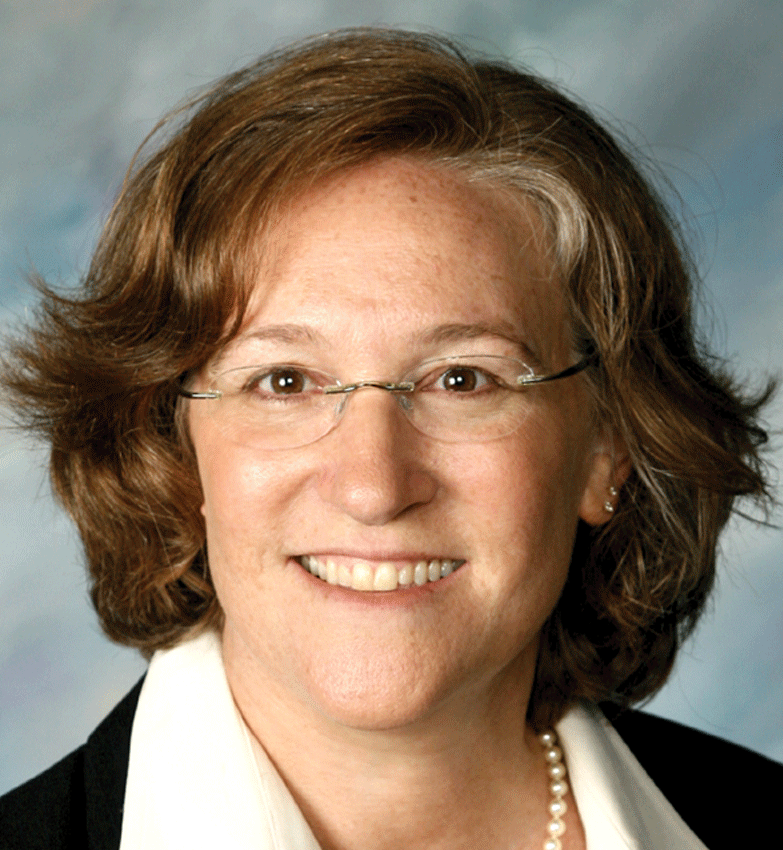
Lanie Delphin

Lanie Delphin

Lanie Delphin met her husband, Bud, through a dating service 16 years ago. And that got her thinking about how lucky they were.

Actually, that’s the wrong word; Delphin doesn’t believe relationships are built on luck — or fate, for that matter — but on solid, common-sense matches. And she decided she wanted to be a matchmaker.

“At the time, we realized there were just no good ways to meet people,” she told BusinessWest. “Internet dating was just taking off. I always believed I’d find someone, but it’s very hard to find people in this culture. People typically don’t want to meet at work, friends typically don’t want to fix you up, many people don’t go to religious institutions anymore. And if you do meet someone randomly, you don’t know if that person is looking for someone — or even single.”

Fascinated by the dating business, she bought a license in 2002 from a national company called Single Search and launched the online dating service Single Search Western Mass.

“We started the business as a way to help people find the success we had found,” she said. “When we started, I had never run a business, so I was grateful for the help I got being a licensee of this company; I wouldn’t have known where to begin.”

But she was less enamored of the computer-matching algorithms that Single Search — which no longer exists — employed. “They had a computer program that matched people; that was the original model. I very quickly learned I didn’t like the matches the computer made. I went over every single match — it was very time-consuming — and most of them didn’t make sense to me. So after that, I decided, if I’m claiming to be a matchmaking service, I need to meet people. I completely changed the model. I changed the name; I changed everything about it.”

A few years after first dipping her toe into the matchmaking business, Delphin was meeting personally with 99% of her clients, and the company — now operating as Mass Match — was attracting hundreds of members and generating success stories.

“It’s interesting — Match.com and some of these other dating sites are, from what I’ve been told, plateauing in terms of business, so now they’re offering some of these boutique services, hiring matchmakers in many cities. They came to understand something I knew from the beginning, which is, how do you match people if you haven’t met them?

“The difference between them and personal dating services like mine is that they charge thousands of dollars,” she went on. “We’ve held true to our mission from the beginning to provide a personal, private, and affordable way to meet. I have not raised my prices in five years. The economy’s been bad, but even so, I don’t want to gouge people.”

Customers pay an annual $295 fee, not a monthly rate, which they appreciate, Delphin said, because it allows them to relax and avoid the temptation to rush into a serious relationship (more on that later).

“Most of the money I make goes back into advertising,” said Delphin, who runs the day-to-day operations of Mass Match herself. “It feels important work for me to do. You may find the love of your life; many have. But you might not. I want to keep the price fair. The business needs large numbers of people, so I don’t want to charge too much money.

“If I could guarantee everyone the love of their life, the value of that would be incalculable,” she added. “But nobody can do that — not even the people charging thousands of dollars. But I want everyone to be able to take a chance.”

Personal Touch

The process of signing up for Mass Match is simple, but it’s not for people who want to meet their next love solely from a PC screen.

“Most people sign up online, and I send them information in the mail and set a time to meet up,” Delphin explained. “The form asks about their age, education, some interests, politics, religion, marital status, kids, and some of the same things about who they’re looking for — what interests them, what’s important to them.

“I tell everyone they shouldn’t take more than a couple of minutes online filling this out because, when we meet, we redo it,” she went on. “I get to know them and their story. When we meet, we go over their past, what worked and what didn’t work, what kind of person they’re looking for. I give them a lot of advice I’ve learned over the years that I believe makes for a healthy relationship. A lot of people have told me, even if they didn’t find anybody, the advice I gave them set them off in the right direction, and that was worth the price alone.”

When Delphin makes a match, both parties receive an e-mail with contact information. If neither is interested enough to reach out, that’s fine. But if one party responds, she requires the other to write back, if only to politely decline, because that’s simply a civil way of interacting.

“They don’t have to meet, but they do have to answer politely,” she said. “The Internet is full of rude behavior. Some people think saying nothing is better than saying ‘I’m not interested,’ but I don’t agree with that.”

Clients appreciate the fact that Delphin’s personal involvement screens out much of the outright deception prevalent on dating websites, and they’re often willing to take a chance on someone they might not have considered based on a questionnaire alone. “Sometimes I think outside the box because I think two people are a good match.”

Members range in age from their 20s to their 80s and represent all religions, political persuasions, and sexual orientations, she added. “One thing they all have in common is they are serious about meeting someone, but they don’t want to meet someone at a bar. Some don’t want marriage, but they’re looking for a long-term relationship.”

Once the matches start flowing, she considers herself an on-call relationship coach. “To me, giving personal service is key. I’ve been at an opera, on vacation, at a movie theater, watching TV, and I have answered people.”

The advice begins on that first meeting, when Delphin shares some of her personal philosophy about relationships.

“I tell everyone to slow down and date,” she said, putting an emphasis on that last word. “I’ve met thousands of people in 13 years, and the biggest mistake is rushing it. It takes a lot longer to get out of a relationship than get into one, and often people hunker down and stay with someone for the wrong reasons.”

In fact, she encourages people to give it three to five casual dates before getting serious, and even advises going on dates with other people during that time, believing that if a match has potential, it will survive a cautious approach.

Delphin repeats a mantra of four ‘Cs’ that she believes is the key to any relationship. The first is chemistry. “Nobody has to be reminded of that; it means you look forward to seeing them at the end of the day. They don’t bore you.”

The second is communication, which means being willing to address conflicts that arise. “Obviously, abuse isn’t good, but neither is avoiding conflict completely.”

She doesn’t, however, advise filling up the first dates with too much baggage. “The mistakes include sharing too much personal information; sounding negative, bitter, angry, or sad; or sounding too busy to date. I advise a Buddhist mindset of living in the present tense and getting to know people slowly.”

The third and fourth Cs — character and compatibility — are far more important, she said. “If you both have good character and you’re compatible with each other, all will be well. If not, all will not be well. It can take a long time to see. But if you have a character problem or a compatibility problem, get out.”

Of course, there is one flag to look for right from the first date. “Notice how they treat the waitstaff.”

Be My Valentine

Delphin is understandably proud of the hundreds of relationships — and marriages and children — that have grown from her initial match.

“Widowed couples are finding love the second time around, and people who never had a relationship are finding love. Many people are divorced and finding the right person the second time around. We’ve had so many happy couples, and many people are still looking, like you’d expect.”

Still, she sees Mass Match as a way to not only bring people together, but to encourage their personal growth.

“One of the most gratifying things to me is the educational component — I have a master’s in education, after all,” she told BusinessWest. “Seeing people change their mind about something, or open their mind, is as gratifying as finding the right person. It’s when they figure out it’s not going to be how tall someone is, or how much they weigh, or how rich they are — it’s going to be who they are. It’s never going to be the objective things; age differential isn’t why things don’t work out for people.

“When people figure out it’s the subjective things, who that person is,” she added, “they start thinking outside their own box, that’s an amazing accomplishment.”

Valentine’s Day is coming up, which Delphin obviously sees as an opportunity for Mass Match, yet she encourages people not to put too much stock in the social expectations of one day on the calendar, and to keep their eyes on the long term.

“Those who are single need to remember that, for the first time in history, more than half the adult population is in the same boat they are. And many married folks are not in healthy relationships, so it is best not to romanticize or sentimentalize anyone else’s situation,” she noted. “It would be a big mistake to rush into something just so you can receive candy and flowers, only to pay a huge price for them down the road.”

Instead, she stresses that being single is a valid choice, too, and Valentine’s Day shouldn’t put any extra pressure on.

“I would advise people who just started dating to make light of the whole notion of Valentine’s Day. We tend to couple off too fast anyway, long before we have time to see if the person we are with really makes sense for us,” she reiterated. “If everyone is putting their best foot forward — because, as Cupid knows, positive energy attracts — then by going slowly and meeting and dating different people, we can use our heads and figure out which of their little quirks we learn about down the road are cute, which are merely annoying, and which are downright unacceptable. Over time, we will figure out who makes the most sense for us.”

Knowing that half the adult population is single, however, doesn’t make it easier for people who long for love. And Delphin is ready to sit down with them and talk all about it.

“There are no good ways for anybody to meet, so they’re stuck,” she said. “And they’re tired of Internet dating; they often tell me it’s like looking for a needle in a haystack, trying to figure out who’s real and who isn’t. They tell me they’re done wasting their time.”


Joseph Bednar can be reached at [email protected]

Commercial Real Estate Sections
Eastworks Sets the Standard for Repositioning of Old Mill Properties

By KEVIN FLANDERS
EastworksDPartIt never takes guests very long after passing through Eastworks’s front doors to realize the building hosts an unusually eclectic lineup of tenants — even for a mixed-use facility.

Turn right at the first corridor and you’ll discover a Registry of Motor Vehicles branch. A climb up the stairs to the second floor will position you in the midst of a community of artists and photographers. One floor higher, an array of nonprofit organizations has formed a close-knit micro-community dedicated to improving and enriching lives. And spread out along the first floor are businesses ranging in specialty from fitness to hair care.

It wasn’t always this way.

Nestled on the banks of Lower Mill Pond, the 500,000-square-foot Eastworks building, a converted mill, was once known as West Boylston Textile Company and later served as the headquarters building for Stanhome. But times have changed and so, too, have buildings throughout New England that once brought thousands of jobs during the height of mill and factory operation. In a wave of repurposing projects that marked the early 2000s, many of these buildings have found new life as mixed-use facilities.

And in Western Mass., Eastworks has led the way.

Eastworks’ tenants — from residents of fifth floor loft apartments to artists and artisans creating their latest works — understand that the momentum of one individual is far inferior to the power of teamwork. By working together to organize events and promote each other’s businesses and organizations, the Eastworks community has taken the craft of collaboration to the next level.

Kim Carlino, Eastworks’ marketing and outreach coordinator, said solidarity within the building is one of the major reasons for the success of its tenants. Business owners are focused each day on their own ventures, she said, but also on helping those around them do well.

After all, a flourishing business next door often means more customers dropping in.

“We have a lot of active tenants who want to get involved in different events and support each other,” Carlino said. “Whenever we get those kinds of interactions and guests are coming into the building for events, the tenants feel good about what’s going on. It’s important that they all have a sense that they’re a part of something.”

Eastworks owner Will Bundy

Eastworks owner Will Bundy stands in one of the few undeveloped spaces within Eastworks.

When Eastworks owner Will Bundy bought the property in 1997, he envisioned a dynamic in which tenants, simply by coming to work every day, could benefit from the building’s evolving diversity. And this vision has become reality.

Indeed, the accessibility of shops, restaurants, offices, and open spaces has facilitated a symbiotic environment, with customers for one business or organization frequently shopping elsewhere in the building once their initial plans are complete.

Sometimes this is the result of word of mouth. On other occasions, it’s due to the many events held each week at the building and an increased emphasis Eastworks’ leaders have placed on marketing.

“We’ve been very successful here; the clientele is loyal, and the building has a lot of foot traffic that really helps,” said Erin Killian, a hair stylist at The Lift Salon, one of many first-floor businesses.

A primary reason for the successes at The Lift Salon and other businesses is the bond that has been strengthened between Eastworks and area communities. Carlino, following her hiring in 2014, made significant progress in improving Eastworks’s already solid relationship with Easthampton and surrounding towns. By organizing a unique mix of promotional events and inviting more people into the building, she has allowed tenants to maximize their exposure.

“One of the biggest things we have to offer here is space, and we try to use that space for as many community events as possible,” added Carlino, who also writes a newsletter that helps bring tenants’ accomplishments and services to the forefront. “It’s very powerful to be able to get people to see and feel everything that’s happening. We want to show them what’s going on, not tell them.”

Eastworks recently hosted a well-attended open studio event that featured the work of its artists, in addition to promoting nonprofit organizations and businesses in the building. The staff has also scheduled panel discussions, performances, and a variety of entertainment options that bring tenants and guests together. The weekly Seth Show, for example — featuring comedian Seth Lepore — has quickly escalated in popularity.

“We’ve had some really interesting events happening throughout the building,” said Bundy, who has been impressed by the quantity and quality of recent programs. “The community aspect has really taken off since Kim came on board. When you dedicate space to events, people want to get involved.”

Building Momentum

When a residential or commercial space becomes vacant in the Eastworks building, it doesn’t remain that way for very long.

With more than 100 business and nonprofit tenants currently calling the old mill home, spots in Eastworks’s lineup are in high demand. Even during the stagnating economy of the Great Recession, new tenants were still coming in between 2007-09.

Bundy said the building’s reputation for accommodating a vibrant, inclusive mixed-use community has served it well over the years, especially during economically challenging times. While many similar operations were losing tenants by late 2008, Eastworks operators saw their framework reaffirmed, a community-based model that has proven sustainable.

“During the recession, very few people were looking for spaces, but the people who came didn’t want to be anywhere but here,” Bundy recalled. “That was a huge indicator that we’d established a brand that is viable.”

Carlino added that the consistency of the Eastworks culture has helped attract many tenants, especially those looking to join the ranks of the arts and nonprofit communities. Unlike some mixed-use facilities, where tenants rarely interact and collaborate, Eastworks has become known for fostering a high level of engagement.

“We have a very established presence and reputation. When people come here, they know what to expect,” said Carlino, who likened every tenant to an individual piece of the building that, when put together as a whole system, makes Eastworks an exciting place to live and work.

So what’s it like to make a living at Eastworks? If you were to ask 20 tenants to name their favorite aspect of the experience, you probably wouldn’t get many repeat responses.

CrazyFronts

At top, major upgrades and renovations have taken place on every floor at Eastworks. Above, hairdressers are busy at the Lift Salon.

At top, major upgrades and renovations have taken place on every floor at Eastworks. Above, hairdressers are busy at the Lift Salon.

For Andre Boulay, who co-owns YoYo Expert with his wife Devon on the second floor, event space is one of the best benefits for his business, enabling him to put on several yo-yo contests and connect face-to-face with customers. As a retailer of high-end and professional yo-yos, it’s important for Boulay to have space for his business and also events that demonstrate the products.

Boulay has also taken advantage of opportunities to schedule events that overlap with those of Eastworks’ artists. On such days, the increased volume of guests positively impacts everyone involved.

“We’ve coordinated and run our contests in conjunction with those events a few times to help bring in some extra people,” said Boulay, whose business moved to Eastworks from its previous Amherst office in 2013. “There are lots of opportunities like that to work collectively, and that is definitely an appealing aspect to the Eastworks model.  Being in a building with so many creative professionals means constant inspiration around every corner.”

Meanwhile, thanks to Eastworks, Heather Beck doesn’t have to worry about a long commute to her second job. In fact, the only thing separating her two vocations is a staircase.

When Beck isn’t in the basement making custom jewelry for her clients of Heather Beck Designs, the business owner enjoys a nice change of pace by spending a few days each week bartending at the Hideaway Lounge upstairs.

“It’s a great community of people from all different backgrounds who seem to end up together in this one vast space,” Beck said of Eastworks. “There are many entrepreneurs who are inspiring to me who have space right down the hall from my studio.”

“From the Seth Show,” Beck added, “to dance competitions, yo-yo meet ups, Nerd Nite, local artists’ installations, and showcasing work in the Holiday Pop-up Shop, there’s no shortage of events to attend and feel like you belong.”

As an artist and an entrepreneur, Beck and others agree that Eastworks provides the best of both worlds. From offering feedback or simply friendship, tenants are always supporting each other and pushing their neighbors to keep chasing their dreams.

Many artists at Eastworks also have a passion for sharing and teaching their crafts. In addition to making jewelry, Beck also conducts workshops out of her studio, where she uses the space in a variety of creative ways.

“Having an artist space here is magical,” Beck said. “It has really propelled my business as a jeweler and teacher forward, and I’m always meeting new artists and like-minded people through the connections made here at Eastworks.”

Though Eastworks is known for its team-centered community of tenants and the events that interconnect them, its smaller perks are equally as meaningful for many individuals. Ted Barber, the co-founder of Prosperity Candle, enjoys the ability to bring his dog to work each day — something many members of the Eastworks family are known for, even Bundy, whose four-legged friend often accompanies him from floor to floor.

“I love being in this building,” Barber said. “It has the perfect balance of everything, from full loading dock services to a great restaurant and bar, plus community events every week. And we’re on the south side, so we get spectacular views all year long.”


What’s Next?

Change, it seems, is a relative constant at the former mill, just as the colors of its mountainous vista are always changing by the season. But this time Eastworks’ neighbors are getting in on the changes as well — a collection of buildings that, along with Eastworks, once comprised the thriving Easthampton mill network.

The owners of five surrounding mills recently joined Bundy in a comprehensive renovation project that will increase accessibility and parking for all guests. The back sides of the mills, Bundy said, are in the process of being revamped, in addition to the creation of new parking spaces and paths that will allow for easier travel between buildings.

The project is expected to be finished by the fall of 2016, and, once complete, guests will be able to park and navigate by foot with greater efficiency and safety. Additionally, the project will allow for the nearby bicycle path to be lighted from Ferry Street to Union Street.

“There will be better cohesiveness between all of the mills when this is finished,” explained Bundy, who described the project as helping to give the buildings an enhanced neighborhood feel. “They’ll be far more attractive and easier to access for guests.”

Bundy was impressed by the level of teamwork shown from the mill owners as they progressed through the project. From the selection and hiring of a civil engineer to the grant application process, owners have collaborated to ensure a safer and more convenient experience for their customers.

“We have had a great relationship throughout the project,” Bundy said. “A number of people came together to make this happen.”

The other mills involved in the project are The Paragon, Sulco, Three Kingdoms, Mill180, and The Brickyard.

At Eastworks, meanwhile, plans are also in place to continue improving the building’s interior. There is currently about 20,000 square feet of available space in the building, Bundy said, and the management team intends to use every last inch for a viable purpose. At least some of that space might eventually house future tenants, while the remaining space could be used for additional community events.

“The spaces are very affordable, and our building is run in a thoughtful manner. Management is always on site,” Bundy said.

Regardless of how the space is used, there is no doubt that, once developed, it won’t be vacant for long.

Sections Top Entrepreneur

BusinessWest Top Entrepreneurs since 1996

• 2014: Delcie Bean, president of Paragus Strategic IT

• 2013: Tim Van Epps, president and CEO of Sandri LLC

• 2012: Rick Crews and Jim Brennan, franchisees of Doctors Express

• 2011: Heriberto Flores, director of the New England Farm Workers’ Council and Partners for Community

• 2010: Bob Bolduc, founder and CEO of Pride

• 2009: Holyoke Gas & Electric

• 2008: Arlene Kelly and Kim Sanborn, founders of Human Resource Solutions and Convergent Solutions Inc.

• 2007: John Maybury, president of Maybury Material Handling

• 2006: Rocco, Jim, and Jayson Falcone, principals of Rocky’s Hardware Stores and Falcone Retail Properties

• 2005: James (Jeb) Balise, president of Balise Motor Sales

• 2004: Craig Melin, then-president and CEO of Cooley Dickinson Hospital

• 2003: Tony Dolphin, president of Springboard Technologies

• 2002: Timm Tobin, then-president of Tobin Systems Inc.

• 2001: Dan Kelley, then-president of Equal Access Partners

• 2000: Jim Ross, Doug Brown, and Richard DiGeronimo, then-principals of Concourse Communications

• 1999: Andrew Scibelli, then-president of Springfield Technical Community College

• 1998: Eric Suher, president of E.S. Sports

• 1997: Peter Rosskothen and Larry Perreault, then-co-owners of the Log Cabin Banquet and Meeting House

• 1996: David Epstein, president and co-founder of JavaNet and the JavaNet Café

Sections Security
Companies Need to Stay Vigilant Against Hackers

Charlie Christianson

Charlie Christianson says small companies should not assume their size protects them from hacker attacks.

It turns out Target wasn’t the only … well, target.

A year ago, Target announced that hackers had stolen personal information from some 110 million customer accounts. A handful of similarly high-profile breaches followed, including the breach of some 83 million JPMorgan Chase accounts in August and financial data from 56 million Home Depot customers in September.

Other high-profile victims of cybercrime in 2014 included Staples, Healthcare.gov, Neiman Marcus, and, of course, Sony, which endured the release of e-mails that strained relationships across the entertainment industry.

But those are major corporations, household names. The smaller companies that dot Western Mass. don’t have to worry about such attacks, right?

Think again.

“Small to medium-sized businesses tune out because they think, ‘I’m just too small; no one’s going to want to attack me.’ The reality is, attacks on soft targets are going up astronomically every day,” said Charlie Christianson, president and CEO of Peritus Security Partners and CMD Technology Group.

“We want businesses to understand that there’s no magic bullet, no one product or solution that’s going to eliminate all the security risks,” he added. “Defenses need to be layered, and you have to include your people in the process. You’ve got to educate the people using your systems and make sure the culture in your organization is security-centric, and that everyone understands the risks that are out there.”

James Baker, lead security consultant for Peritus, agreed.

“Those are extreme cases,” he said of cases like Target and Sony, “but people shouldn’t have the attitude that ‘it won’t happen to me.’ A lot of hackers go after low-hanging fruit; they’re not focusing on a specific company or organization. Maybe your firewalls are misconfigured, and someone’s doing a scan, looking for certain ports open, and all of a sudden you pop up. It can be done fairly easily. It’s not a direct attack on your organization — it’s about low-hanging fruit, and your fruit is exposed.”

Although awareness is growing of the threats, he added, smaller companies often figure it’s not worth investing scarce resources into hiring a full-time cybersecurity professional or using a consultant.

“They think, ‘we don’t find a significant need for this. Why would we want to budget money on something we don’t feel we need?’” Baker told BusinessWest. “But once people do get compromised, they become very reactionary. Target did not have a CISO [chief information-security officer]; they did not have a security representative in the executive organization. Since this happened, they hired a brand-new CISO and compliance officer, who have that voice in management.

“But at smaller companies, where budgets are tight and personnel are overworked, they just go to the IT person whose responsibility is to keep the organization running, thinking, ‘he understands security.’

“We see that a lot,” Christianson added, “especially in small companies, where one person in the house has a little tech savvy and they’re the guy or woman who handles everything, who wears a whole bunch of hats. They put out the fires as they exist, and although they give it their best shot, security is not what they do. They don’t understand what the best practices are; they don’t understand all the things you need to do to secure an organization.”

For this issue’s focus on security, BusinessWest explores the reasons why that mindset is changing at many companies — sometimes, unfortunately, after the damage is done.

Head in the Cloud

One major change that has complicated cybsersecurity is the fact that so much data is stored in the cloud and shared among remote devices, said Dave DelVecchio, owner of Innovative Business Systems in Easthampton. He believes companies need to take a hard look at how data is shared and where, with the goal of “letting the good guys in and keeping the bad guys out.”

For example, “if you’re a 40-, 50-, or 100-person company, whether you have an internal IT department or outsource to a company like us, what are the appropriate safeguards to put in place if you want to allow remote access on company-owned devices?” he asked. “Now that employees have more technology in their hands, and they want to store their calendars and contacts on their smartphone, what if a device is stolen or falls into the wrong hands?”

Mark Jardim (right, with James Baker)

Mark Jardim (right, with James Baker) says that, when it comes to remote access, companies must strike a balance between employee convenience and protecting data.

The question companies need to ask is what benefit they’re getting from allowing remote sharing of data. “I think it’s important to go back and see what people are trying to accomplish. The goal of working with technology in any business is to improve efficiencies and be able to get more done with less. That goal hasn’t changed in 40, 50 years, since ENIAC, in fact,” he said, referring to the first computer, built in the 1940s.

“Ultimately, what really matters is providing a secure and stable user environment to allow users access to technology to allow them to do their jobs,” he went on. “Employers need to decide whether allowing sensitive data on [remote] devices helps them achieve those efficiencies, and if so, they need to make sure employees understand how to protect that data.”

Baker agreed. “Years ago, there was a perimeter around your infrastructure to protect you. But that perimeter is gone. With the cloud and mobile devices and the need for businesses to virtualize and have information in the cloud, the idea of having a perimeter around your infrastructure to protect your assets is going away,” he told BusinessWest.

More important, he said, is the human element — educating employees in best practices to protect data, whether that’s creating strong passwords and storing them properly or restricting company-wide access to certain records. “Whether they work for a hospital dealing with patient records or they’re handling credit-card information, your employees have got to understand the data they’re working with, how to protect it, and what are the tools in their repertoire to assist in that.”

Mark Jardim, lead engineer for CMD, said companies can’t secure data without knowing where it is. “We see laptops out in the field, and they have Dropbox, and the person is saving all his stuff there, maybe synching the laptop to work, and it’s not encrypted. Now he has all this data, not encrypted, not backed up. What happens if someone steals or hacks the computer?”

One common hacker ploy is to break into a device, encrypt important data, and extort the victim for money — often hundreds or thousands of dollars — to unencrypt it. “A police department in Massachusetts got infected with malware and actually paid the hacker money to get the data back,” Jardim said.

Christianson said his company recently tested a client’s employees by creating an e-mail that looked like it came from an internal source but was actually a faux phishing scam. “When they clicked the link, it took them to a bogus webpage that looked like the organization’s webpage, where they were asked to enter their name and password.” Thirty percent of the recipients gave up their data.

“People opened the e-mail thinking it was from a trusted resource,” Baker said. “That is where education and awareness come into play. You can explain to them what happened and how they were tricked and how they can protect themselves in the future.”

Because of the sophistication of hackers and phishing scams, Jardim concedes that today’s environment is much more of a minefield for companies. “Before, you had a firewall, and everything was behind the firewall. Now you have data everywhere, and you have to find a good balance between user convenience and protecting that data.”

Compliance and Common Sense

DelVecchio noted that companies in regulated industries, like finance and healthcare, face a strict regulatory environment that guides their cybersecurity decisions and, in many cases, forces them to employ compliance and security personnel. But for other types of business, it’s a gray area.

“The industry is a big determining factor in how they define their security and remote-access plan,” he said. “But for any business, regardless of industry, there should be a plan. If you fail to plan, you plan to fail — it’s an old, silly line, but it’s true in this case.”

Even with the Sony hack, which didn’t necessarily threaten regulated data, “they got into sensitive e-mails,” Christianson said, “and now all these stars are getting this information about what people are saying behind their backs. It affects contract negotiations and all kinds of things.”

Jardim said the fundamentals are still strong passwords, strong firewalls, and lots of education. “The easiest way to get a lot of the risk out is to have good practices in place. When JPMorgan recently got hacked, basically, one of their servers didn’t have two-factor authentication. What’s scary is, JPMorgan spent $250 million on secure systems. But, because of one small mistake, they got violated. Best practices were overlooked.”

Christianson agreed, noting that the security of an entire system is only as good as the weakest point.

“Security companies have to be right 100% of the time,” Baker added. “A hacker only has to be right 1% of the time.”

And the threats come from everywhere, he noted. “Somebody from Canada can hack you as easily as a 15-year-old in the Philippines practicing his hacking skills, or the guy next door. There are no boundaries. And to think you can call some sort of law enforcement to assist in this is a bit naïve. If you’re a Home Depot where billions of dollars are involved, the federal government will get involved, but otherwise, it’s not significant enough in cost. They have much bigger fish to fry.”

For the hacked organization, however, it’s a very big deal. The Target attack cost the company $148 million and affiliated financial institutions $200 million. In Home Depot’s case, those figures were $62 million and $90 million, respectively. For small companies, the cost of cleaning up a breach can be even greater, even though the numbers are much smaller, because budgets are already stretched thin.

“The culture starts at the top, with management or the board of directors,” Baker said. “They play a key role in this. They need to realize this is an important aspect of their organization, that there are consequences if you don’t protect sensitive data.”

In other words, don’t make yourself a target.

Joseph Bednar can be reached at [email protected]

Sections Security
Serv-U Locksmiths Knows the Nuts and Deadbolts of This Business

Steve Horowitz

Steve Horowitz says he deals with both clients making long-term security plans and those facing an immediate crisis.

The phone rings at all hours of the day and night, 365 days a year.

Many callers have an immediate crisis, which might range from a business owner who just terminated an employee and needs to have the locks on their building changed, to a supervisor who misplaced the master key to an apartment block that opens hundreds of units, and fears it could get into the wrong hands.

There are also new store managers who want to change the combination to a company safe, and others who discover their door won’t close properly due to damage or wear and tear, and thus cannot be locked.

“About 80% of our business is commercial, and our customers call us whenever they have a security issue and need help resolving it — we’re on the road every day,” said Steve Horowitz, owner of Serv-U Locksmiths in Springfield, adding that the company’s fleet of six mobile vehicles allows it to respond quickly.

But selling and servicing security products is not all Serv-U does. Educating clients is critical to its success because the security industry has changed significantly over the years and continues to evolve. So, in addition to selling locks, keys, and devices, and replacing, rekeying, or repairing them, the company’s employees spend time talking to clients to determine what products will best meet their needs.

Solutions can range from something as simple as a deadbolt doorknob with a key lock to a highly sophisticated security system, to a fire-resistant or burglar-proof safe.

Horowitz told BusinessWest that specific types of security devices, locks, or systems are used in certain industries.

“For example, retail storeowners often have shoplifters leave through their back doors with merchandise,” he explained. “They need a lock with an alarm built in that will go off if someone opens the door, but still allow them to maintain the door as a fire exit. We have products to solve every security issue and fit every situation.”

Hospitals also require special security in areas such as rooms or closets where medications are stored. “If a hospital gave an employee a generic key, it could be copied at any hardware store,” Horowitz said. “So, we have several high-security lock systems that are exclusive to our store.”

He added that, whenever a key to these systems is issued, the person who gets it must sign a registration form. The forms are kept in the store, and a key can be duplicated only by a Serv-U employee after the person requesting it shows their driver’s license and re-signs the registration form, to ensure the signatures match.

“It makes it impossible for them to go to any other locksmith to get another key. It’s a very high level of security used to prevent stealing or ensure safety,” Horowitz went on, noting that special keys are also used in areas that contain hazardous materials within a factory or hospital.

Seven of Serv-U’s 12 employees have worked for the company for more than 20 years and continually take classes to stay current with changes within the industry.

“There is a lot more to security than buying a lock or having a key made, and a lot of customers come to us after they purchase a product and find that it doesn’t resolve their problem,” he added.

Business Evolves

The first Serv-U store was opened in 1954. “My father, Sam Horowitz, and two of my uncles, Ben Horowitz and Jordan Rosenkrantz, opened Serv-U Hardware in Springfield. The original store was part of the True Value Home Center chain, and in addition to other products, they duplicated house and car keys and sold locks to homeowners,” Horowitz said, as he recounted the history of the business.

In the ’70s, the trio recognized the growing demand for security and hired a locksmith, which allowed them to expand their line of products.

During the next decade, Horowitz, his brother Lenny, and four of their cousins took over from their fathers and expanded the operation. “We opened hardware home centers in Northampton, Westfield, and Enfield, which all included full-service lock shops,” Horowitz said. They also added a number of specialty sections, including a home-decorating department that carried everything from paint and wallpaper to unfinished furniture; an automotive supply department; and a Baby Castle that sold infant furniture and accessories.

However, by 2001, big-box stores made it difficult to compete, and the family closed everything except the Springfield store. “My brother Lenny and I owned it, and we kept the lock shop and the decorating center open,” Horowitz said.

Things changed again three months ago, when Lenny moved to Florida and Horowitz became the sole owner. He closed the home-decorating department in October and made the decision to dedicate the business entirely to locksmithing.

Today, Serv-U Locksmiths has a fleet of six fully equipped service vehicles and a long list of commercial customers who have been with the business for decades. “They include banks, hospitals, colleges, manufacturing facilities, property-management companies, federal and state agencies, and housing authorities,” Horowitz said, adding that the company also provides products and services to homeowners.

Its mobile team serves clients within a 30-mile radius of the store, which extends into the Berkshires, Northern Conn., and even south of Hartford. “People call us with a variety of problems, and if someone needs us, we are there, which is how we have built our business and our reputation.”

One thing that sets Serv-U apart from other area locksmiths is its large showroom. “It makes us unique and gives customers the opportunity to talk to a locksmith, see how different products work, and get advice,” said Horowitz. “It also allows them to bring their locks here to be repaired, which can save them money.”

The number of security systems Serv-U carries is extensive, he added. “Originally, locks were only used with keys. Today, keys are still very prevalent, but there are also locks that use combinations or key fobs.”

He explained that the key-fob system is used frequently by businesses due to its sophistication.

“A fob can be programmed to only allow a person to enter a building or area at a certain time or certain day of the week,” Horowitz said. “The idea is to give a company more control over which employees have access to certain parts of their building. For example, someone with a fob who works third shift may not be able to enter the building at other times of the day. Plus, the person managing the fobs can delete them at any time and can also print out an audit trail, which shows not only who entered the building, but what door they used and the time they entered.”

He added that, when a company purchases this type of system, a Serv-U employee goes to their office and trains designated staff members in how to use the software.

“The fobs can be reprogrammed from a computer, which gives a manager control over security even when he or she is not there,” Horowitz went on, adding that many hospitals, banks, and colleges use this type of system.

Educated Choices

Safes are another important security product, and Serv-U sells, services, delivers, and installs models that range from $100 to $3,500. Some are made to secure guns, while others are fire-resistant, burglar-resistant, or both.

But they are not all created equal, and Horowitz said people frequently purchase models that are inadequate for their needs.

“People think ‘safe’ means secure. But it depends on the type of security they are seeking,” he told BusinessWest, noting that, although most safes have undergone testing by Underwriters Laboratory, the length of time they can withstand fire, water, or other elements can differ greatly.

In fact, the materials used to make the safe, as well as the way it is constructed, play an enormous role in whether or not it is likely to protect against theft.

“Although they have locks, fire safes are not constructed to keep burglars out, and safes that protect against burglary have a hole drilled into the floor of the unit that allows the safe to be bolted to the floor of the building, so once the door is closed, it can’t be removed; the materials need to be strong enough to resist drills and other power tools,” Horowitz said. “We see a lot of commercial customers using safes that are not appropriate for their needs. It all goes back to education. There are answers to things people don’t know to ask about and solutions to every security problem.”

In addition, Serv-U also installs and repairs commercial doors. “We carry far more than locks. We also sell door closers, hinges, doors, door viewers, and weather stripping,” Horowitz said, adding that these products are also necessary to ensure security.

The business also serves the public, and the demand for car keys with embedded computer chips is on the rise. “In most cases, we can cut them for less than the car dealers,” Horowitz said. “But since these keys contain anti-theft devices, they typically cost between $25 and $200. And although some people say they don’t want to spend that much, we inform them that, if they lose all of their car keys, we can make new ones, but it will be much more expensive if we have to generate a key from nothing.”

Keys to the Future

Times have changed since Serv-U Hardware first opened its doors. “But our locksmith business has survived for 60 years and will continue to do so; it’s satisfying because we solve problems every day,” Horowitz said, adding that his employees take a proactive stance in continuing their own education as well as educating the public about changes in the industry.

“Our business keeps growing,” he added, “and although I am not sure where the locksmith trade will be in the next 15 years, I can assure you that Serv-U Locksmiths will be there too.”

Health Care Sections
Pediatricians Adjust to a Changing Landscape

Dr. John O’Reilly

Dr. John O’Reilly says communicating with parents about their concerns is one of the most important parts of his job.


Years ago, pediatricians were authority figures, and new parents reverently followed their instructions. But now, these doctors consider themselves partners with parents.

“Thirty years ago, pediatricians told mothers what to do; today, we give advice, but we also have true conversations. We are the experts in medicine, but parents are the experts on their child,” said Dr. Laura Koenigs, interim chair of the Department of Pediatrics at Baystate Children’s Hospital and a pediatrician who specializes in adolescent medicine. “It’s a change that has been good.”

Dr. John O’Reilly agrees. “Most of what happens to children takes place in the home,” said the general practitioner at Baystate Pediatric Associates and assistant professor at Tufts University. “The environment a child lives in has a profound impact on their health, and there are many areas to deal with in addition to medical care. Pediatrics is not just about giving shots. It’s only a small part of what we do.”

Indeed, the relationships that pediatricians form with families are critical to a child’s health, and Dr. Robert Leavitt says knowledge about a family’s history can help pinpoint concerns that may not be overtly expressed. For example, if a child has a persistent cough and the pediatrician knows their grandparent died of lung cancer that started with a cough, it allows them to alleviate fear that the parents may be harboring. “The more we know, the easier it is to help,” he said, adding that he opened Meadows Pediatrics, L.C. in Longmeadow in 1994 after working for Baystate Medical Center and a practice affiliated with the University of Rochester.

Many pediatricians see patients from birth through age 18, while others care for them until they graduate from college or are in their early 20s. “Young adults don’t always know where they will be living, and it can be difficult for them to find a primary-care doctor,” Koenigs explained.

But whether they are dealing with infants or young adults, education plays a critical role in their work as medical advances in areas such as brain development yield new information about topics ranging from the effects of screen time on children (see related story, page 38) to the ways in which poverty impacts health. In addition, doctors discuss developmental and behavioral issues that can be hard to deal with.

“Parenting is not a natural skill. It’s complex, difficult, and stressful, and different kids have different personalities that can be seen from day one. So we talk to parents about appropriate discipline, routines, and other things they are concerned about,” O’Reilly said. “Sometimes we can put a spin on problems that makes it easier for them to deal with. For example, when we explain that a tantrum is a way of showing independence, it helps parents get through the terrible twos.”

Leavitt says it’s also important to realize that children are not small adults.

“Things can be a big problem for them that would not bother adults. If an adult gets the respiratory syncitial virus, they will usually feel like they have a cold. But if a child under age 2 has the virus, they can develop bronchiolitis and may need to be hospitalized,” he said, explaining how it affects their tiny airways. “But kids are a lot of fun and are pretty healthy. They usually get better if they are sick, while adults tend to have more chronic problems and may have self-inflicted conditions.”

Koenigs concurs, and says children are a joy to work with. “I love what I do. It’s interesting, and it keeps me young. Kids have a wide-open outlook on life that makes you look at the world differently.”

Justifiable Concerns

One problem pediatricians face is educating parents who don’t want their child to be immunized against disease.

“Since we haven’t seen most of the diseases we vaccinate against for a very long time, people forget how horrible they are. They don’t remember tetanus and diphtheria or understand that a child can die from chicken pox or pertussis [whooping cough],” Koenigs said.

“Anyone who has seen these diseases would never want their child to get them, and with the exception of smallpox, they are all on the rise,” she went on, adding that a child with measles was treated at Baystate Medical Center last year, and a number of players in the National Hockey League were recently diagnosed with mumps.

Leavitt agrees. “These diseases are preventable, and parents who refuse the vaccinations are not making decisions based on scientific facts,” he said, citing the now-disgraced British doctor Andrew Wakefield, whose fraudulent study suggesting a link between vaccines and autism has contributed to plummeting vaccination rates.

O’Reilly agrees that immunizations are more important than ever as the world becomes more interconnected.

Dr. Robert Leavitt

Dr. Robert Leavitt says pediatricians deal with issues ranging from irrational vaccine fears to childhood obesity to decisions about antibiotic use.

“A case of measles in Ireland can result in cases in Massachusetts due to travel between the countries, and parents who refuse to get their children immunized are putting others at risk,” he said. “But if they read scary stories on the Internet that are not scientifically based, it becomes difficult to have a conversation, as you are dealing with fear instead of facts.”

Koenigs said liberal state laws in Massachusetts also play a role in the problem. Although children are required to get certain immunizations before they can attend school, if parents sign a form saying they object to them, the requirement is waived.

Another pressing issue called ‘toxic stress’ can range from domestic violence to child abuse or a contentious divorce with ongoing conflict. The Center on the Developing Child at Harvard University says prolonged activation of stress-response systems in the body (especially the brain) have damaging effects on learning, behavior, and health across a person’s lifespan, but the effects often don’t show up until adulthood.

“We don’t understand why this happens, but studies show there is a direct correlation between toxic stress in childhood and high blood pressure, strokes, and obesity in adults. It’s also hard on the heart, even if children appear to have adjusted to the situation,” Koenigs said.

O’Reilly cited other, equally important research on the brain. “Some studies show that language develops rapidly during the first year of life, and the more words a child hears during that time period, the better they do in elementary school,” he told BusinessWest. “We do simple things in our practice such as giving every baby a book and explaining to parents that sitting with a child and reading not only helps with language development, but also helps them to focus, improves their fine motor skills as they turn the pages, and helps them with visual tracking and hearing. Many people think that education happens when children get to kindergarten, but parents can do things to build their child’s brains long before that.”

Environmental Factors

Diet is another issue that can certainly impact health, and Koenigs asks parents if they have enough food to last each month, because many don’t. “Nutrition is a problem for a lot of children who are not getting enough food or the right kind of food,” she said.

Play is also critical to development, and doctors are concerned that many children are falling short in this arena. “Children need to burn off energy, and kids are active in their natural state, which helps them to build muscle and focus better in school,” Koenigs said. “But many schools have gotten rid of recess.”

She added that exercise is also important for teens, and activities such as swimming, kayaking, hiking, bicycling, and kickboxing may interest them.

“If a child is very sedentary, it makes it difficult for them to become physically active when they get older. Exercise and eating habits are often established when children are young, and a lot of that depends on the parents,” Leavitt said, acknowledging that socioeconomic factors play into the equation, and some parents don’t live in neighborhoods where it is safe to let their children play outside.

Gun safety is another problem that affects children’s safety. “Seven to eight children in this country die every day from gunshot wounds,” Koenigs said. “You cannot educate children about guns. They need to be locked up because children are naturally curious.”

Overall, the relationship that parents form with their child’s pediatrician plays a critical role in whether they feel free to share concerns about their personal situations. For example, O’Reilly says many mothers suffer from postpartum depression, and it’s important for them to share how they are feeling because it can affect a baby’s development.

“If a baby is cooing and trying to get an adult to engage in an interaction and the parent is depressed, they may not notice or may have an abnormal response,” he said. “It’s also important for people to tell us if they don’t have enough food or money because things that happen in early childhood can lead to chronic disease in adulthood.”

He added that pediatricians can make referrals and help families access help, which ranges from family therapy to community support groups to early-intervention programs for children who are developmentally delayed.

Springfield suffers from a high rate of asthma, and housing in poverty-stricken neighborhoods can be related to the disease, as children can develop reactions to dust mites and become sensitized to antigens produced from exposure to cockroach droppings.

“Baystate has a program that sends home health workers to people’s apartments to help them improve the environment,” O’Reilly said. “Being a pediatrician involves far more than medicine. We have to do many other things. We are educators, but we are also coaches.”

Leavitt says partnerships mean shared responsibility, and doctors take parents’ requests seriously. “We used to routinely treat ear infections with antibiotics. If it’s a toss-up and the parent really wants the antibiotic, we can give it to them unless it is medically inappropriate,” he said, citing just one example. “But if you have developed a good relationship with the parents, they are more likely to agree to a let’s-wait-and-see approach.”

Moving Forward

Trust also comes into play when patients reach their teenage years. As children mature, pediatricians typically talk to them alone to provide them with the freedom they need to ask questions.

“It’s my job to help them navigate their way through adolescence and give them factual advice,” Koenigs said, explaining that, unless it becomes clear that someone is hurting them or they are in danger of hurting themselves or another person, these conversations are kept confidential. “Our job is not to drive a wedge between them and their parents. We are simply another link in their support system.”

Leavitt concurs, and says teens have told him they are depressed. “We see a lot of mental-health issues in teens. There is a lot of peer pressure in middle and high school, and as their social world becomes more complex, it can lead to anxiety or depression.”

Local pediatricians say they enjoy watching their patients mature. “We get excited about helping children get a good start in life and watching them grow through good times and bad,” Koenigs said.

Leavitt agreed. “We get to see how proud their parents are of their accomplishments. Plus, it’s rewarding to see medical problems get resolved or watch a child overcome challenges. It’s also rewarding to watch kids graduate from our practice and return to us with their own kids or go out into the world and do big things,” he said.

But the road to adulthood contains many roadblocks, and parents bring a variety of issues to the examining table.

“Being a doctor is like gardening; we plant seeds to weed out things that will be detrimental and help parents to make good choices,” O’Reilly said. “Sometimes being a pediatrician is pure medicine, and sometimes it’s purely behavioral. But our goal is help families so their children grow into healthy adults.”

Health Care Sections
Child-development Experts Worry About the Effects of Screen Time

Dr. Jack Fanton

Dr. Jack Fanton says the increasing time kids are spending in front of screens may be coming at the expense of real-world social skills.

Television, computer, and smartphone screens shouldn’t replace human contact, doctors say, but increasingly, they are doing just that. And the results may be surprising to some.

“In our clinical practice, we definitely see an overrepresentation of children who have difficulty with handling limits on screen time, especially when parents aren’t enforcing them,” said Dr. Jack Fanton, medical director of the Child Partial Hospital Program at Baystate Medical Center.

“We see children who have too much screen time, or devices are being brought into their rooms and are at the bedside and interfere with sleep continuity,” he added. “And lots of anecdotal evidence and research suggests this increased screen time is coming at the expense of real-world social skills.”

He cited a study at UCLA, published recently in the journal Computers in Human Behavior, suggesting that sixth-graders who went five days without exposure to technology were significantly better at reading human emotions than kids who had regular access to phones, televisions, and computers.

The researchers studied two groups of California sixth-graders, sending one group to an outdoor education camp, where they had no access to electronic devices, and making no changes to the media diet of the other group.

At the beginning and end of the study period, both groups were shown images of 50 faces and asked to identify the feelings being modeled. The researchers found that the students who went to camp were significantly better at reading facial emotions and non-verbal cues than the students who had access to their devices.

“Even after just five days, there was a measurable decline in their ability to recognize the emotions expressed on the faces, compared to a group of kids without any screen time,” Fanton said.

The study’s senior author conceded that the camp experience itself, fostering personal connections with other people, probably boosted that group’s scores as much as ditching technology, and she would like to expand the study to retest the camp group again, after they went home and spent five days with their smartphones and tablets. But the implication is clear that there is a measurable difference between human interaction and screen time.

And that worries pediatric experts who worry that a generation of kids may be growing up lacking sufficient empathy or emotional maturity.

“We’re acutely aware of how important it is to promote healthy social skills, and that emotional intelligence predicts more favorable outcomes than academic or intellectual intelligence,” Fanton told BusinessWest. “With cultural trends toward decreasing recess, music, and art, and then increasing screen time, neuroscientists worry that children are not exercising the circuits in the brain that are involved in emotional regulation. When kids are not involved in independent play and creative activities, when they’re not responding to social nuances, cues, and direct feedback, they’re not exercising the circuits involved in helping them nurture emotion and self-esteem.”

Healthy Choices

The American Academy of Pediatrics (AAP) has long advocated that young people up to age 18 restrict their screen time — including TV viewing, Internet use, video games, tablets, and smartphones — to no more than two hours per day, and that children 2 and under have no screen time at all.

“It’s not that media itself is bad, evil, or a pox on society,” Fanton said. “It’s that it’s coming at the expense of social needs and developmental processes critical to later success.”

The AAP cites studies that connect excessive media use with obesity, lack of sleep, school problems, aggression, and other behavioral issues, although Fanton stressed that any one of these correlations does not prove causation. Still, pediatricians fret over statistics showing that the average 8- to 10-year-old spends nearly eight hours a day with different media, and older children and teens spend more than 11 hours per day — much more than the recommended two hours.

Meanwhile, children and teens who have a TV in their bedroom spend even more time with media, and about 75% of 12- to 17-year-olds own cell phones, with nearly all teenagers adept in text messaging. The key, according to the AAP, is not banning all this activity, but directing it into a considered strategy.

“A healthy approach to children’s media use should both minimize potential health risks and foster appropriate and positive media use. In other words, it should promote a healthy ‘media diet,’” said Dr. Marjorie Hogan, co-author of the AAP policy (see sidebar, page 39). “Parents, educators, and pediatricians should participate in media education, which means teaching children and adolescents how to make good choices in their media consumption.”

Dr. Robert Leavitt, a Longmeadow pediatrician, tells parents that it is not a good idea to put a TV in a child’s bedroom, and advises them to set limits on cell-phone use before they give the child their own device. If they don’t do this initially, he explained, it may become difficult to enforce rules later on, and their teen may become sleep-deprived as they respond to non-stop text messages from peers.

Some parents will no doubt argue that familiarizing their kids with the latest technology is only preparing them for the world they will inhabit as adults, but Fanton said this philosophy ignores more critical needs.

“I would remind parents that kids are not little adults. Kids are still developing, and it’s not automatic they will develop these social skills as adults; they acquire these skills through innumerable hours and exchanges with other people.”

And there are societal consequences to raising a generation of young people who lack the ability to empathize and relate emotionally to their peers — skills that come in handy when dealing with bullying, for example.

“No one’s saying that not spending time with devices will help kids treat each other better,” he told BusinessWest, “but we want to promote a culture of tolerance and respect, where kids spend time with each other, and screen time interferes with that.”

Media and Message

The amount of time spent with screens is one issue, but content is another. Positive media can educate children — not just with hard facts, but in empathy, racial tolerance, and a wide range of interpersonal skills. However, it can also desensitize them to sexuality, violence, and negative attitudes.

Fanton cited a study conducted by the Joan Ganz Cooney Center, claiming that less than half the time kids between 2 and 10 spend in front of media is spent on educational programming. “It’s still being used for entertainment.”

Dr. Victor Strasburger, co-author of the AAP policy on screen time, noted that, “for nearly three decades, the AAP has expressed concerns about the amount of time that children and teenagers spend with media, and about some of the content they are viewing. The digital age has only made these issues more pressing.”

Dr. Laura Koenigs, a Springfield pediatrician who specializes in adolescent medicine, notes that violent programs, including cartoons, create their own host of issues. “Children who are exposed to violence experience long-term effects from watching it, even if it is not real,” she said, adding it can lead to aggressive play.

Still, Fanton said, some parents willingly accept a heavy dose of media exposure to the negative influences just outside their door.
 

For children in urban neighborhoods, for example, “the parents figure, ‘they’re not out on the street, getting themselves into trouble, so what’s the harm?’ Parents see these devices as safe. We have lots of families here in Springfield in these urban settings, and they don’t want their children in the neighborhood after school. Yes, it’s tricky.”

On the other hand, social media has been a boon to families who have moved away from their extended social supports, and their devices become proxies for face-to-face interaction. That’s why parents need to set their own limits, Fanton said.

“The truth is, we’re all addicted. It’s not going away. Kids are modeling at a fundamental level what they see us doing,” he said, noting that singling out an obese child and cutting off unhealthy snacks is likely to be counterproductive if the whole family isn’t modeling good nutrition.

“The same is true for screen time,” he said. “On one hand, there has never been more content, more ease of access through all these different platforms. But it’s up to adults to say, ‘we’re modeling this for the kids, too.’ They’re not little adults; they have different developmental needs that parents need to monitor and police and promote.”

In other words, put down that smartphone and engage with your child. It’s never too late to make emotional development a priority.

Take These Steps to Create a Family Plan for Healthy Media Use

While media consumption can contribute to health risks, kids can still take positive lessons from media. The key is to teach children to make healthy choices.
To that end, the American Academy of Pediatrics recommends the following tips for creating a family plan for healthy media use.

• Take into account not only the quantity, but the quality and location of media use. Consider TVs, phones, tablets, and computers. The rules should be written down and agreed upon by all family members.

• Screens should be kept out of kids’ bedrooms.  Insitute a ‘media curfew’ at mealtime and bedtime, putting all devices away or plugging them into a charging station for the night.

• Excessive media use has been associated with obesity, lack of sleep, school problems, aggression, and other behavior issues. Limit entertainment screen time to no more than two hours per day.

• For children under 2, substitute unstructured play and human interaction for screen time. The opportunity to think creatively, problem solve, and develop reasoning and motor skills is more valuable for the developing brain than passive media intake.

• Take an active role in your children’s media education by co-viewing programs with them and discussing values.

• Look for media choices that are educational or teach good values, such as empathy and racial tolerance. Choose programming that models good interpersonal skills for children to emulate.

• Be firm about not viewing content that is not age-appropriate in terms of sex, drugs, violence, and language. Movie and TV ratings exist for a reason, and online movie reviews can also help parents to stick to their rules.

• The Internet can be a wonderful place for learning, but it also is a place where kids can run into trouble. Keep the computer in a public part of your home, so you can check on what your kids are doing online and how much time they are spending there.

• Discuss with your children that every place they go on the Internet may be ‘remembered,’ and comments they make will stay there indefinitely. Impress upon them that they are leaving behind a ‘digital footprint.’ They should not take actions online that they would not want to be on the record for a very long time.

• Become familiar with popular social-media sites like Facebook, Twitter, and Instagram. You may consider having your own profile on the social-media sites your children use. By ‘friending’ your kids, you can monitor their online presence. Preteens should not have accounts on social-media sites.

• Talk to them about being good ‘digital citizens,’ and discuss the serious consequences of online bullying. If your child is the victim of cyberbullying, it is important to take action with the other parents and the school if appropriate. Attend to children’s and teens’ mental-health needs promptly if they are being bullied online, and consider separating them from social-media platforms where bullying occurs.

• Make sure kids of all ages know that it is not appropriate or smart to send or receive pictures of people without clothing or sexy text messages, no matter whether they are texting friends or strangers.

• If you’re unsure of the quality of the media diet in your household, consult with your children’s pediatrician on what your kids are viewing, how much time they are spending with media, and privacy and safety issues associated with social media and Internet use.

Joseph Bednar can be reached at [email protected]

Features
Tattoo Shops Thrive as Industry Gains Acceptance

Tattoo Afterlife co-owners Timmy Barnes and Matt Olivieri

Tattoo Afterlife co-owners
Timmy Barnes and Matt Olivieri

When Timmy Barnes was busy drawing on his friends in high school, he never considered making a career out of tattoos.

But it wasn’t long before he was making a more permanent impression, tattooing customers out of his basement. Licensed in Massachusetts since 2005, he’s now known widely — internationally, actually — as Timmy B, and co-owns Tattoo Afterlife in Northampton.

“Most people get tattooed for the same reason they buy a certain type of clothing or get plastic surgery: it’s an expression of themselves,” he told BusinessWest. “When you see a tattoo, you instantly know a little more about that person without them having to say anything.”

At the custom shop he opened with business partner Matt Olivieri, customers don’t pick images from a book; the artists who work there, in a converted auto garage on Pleasant Street, are aiming for something more unique.

“You come in and tell us what you like, things about your life that you want to showcase, and we will make you something we feel best represents you,” Barnes said. “This is a shop that people seek out, rather than walk in and wing it.

“A lot of people can mimic what we do, but it’s not the same,” he added. “It’s like a pair of shoes you really like — you’re not going to pay for a knockoff; you’ll pay for the version you really want. There is a difference.”

Olivieri, who also owns a line of organic skin-care products (more on that later), isn’t a tattoo artist himself, but has long loved the craft.

“I’m somebody who gets tattooed because I like the art. Some of mine have personal meaning, but I’d say 80% don’t. I like to get tattooed by friends, people I trust, and I let them run with the art. Then again, some people only want something on their body that has meaning. It’s really all about you and how you want to express yourself.”

Scot Padgett, the resident artist at Living Art Studio on Main Street in Northampton, has been practicing body art for decades, and has seen attitudes toward tattoos shift dramatically over the years.

Scot Padgett

Scot Padgett, whose work is seen here, says custom tattoos have become increasingly popular as clients have become more savvy.

“Make no mistake, there was a lack of social acceptance years ago,” he said. “Today, if you walk down the street here, it’s not unusual to find arm sleeves and body pieces and even people with work on their faces, which a lot of us in the businesses don’t necessarily agree with. There is a level of social acceptance now. For that reason alone, there’s a whole additional clientele who, maybe 20, 25, 30 years ago, wouldn’t have even considered it.

“We used to deal with the 18-to-25, male demographic,” he continued. “Today, the median age is around 40, and 70% female. Before, people were covering stuff up so they wouldn’t give their mother a heart attack; now they’re coming in with mom — or grandma. I definitely think there’s been a lessening of the social stigma.”

Mary Bowen, shop manager of Off the Map Tattoo in Easthampton, sees the same, ever-widening range of customers.

“We have lots of 18-year-olds getting their first tattoos, and 75-year-olds getting their first tattoos … someone working on a full body suit to someone pretty committed to getting just one,” she said.

Bowen recalled a three-generation appointment, where a woman came in with her mother and her 89-year-old grandmother for matching tattoos. “When we say you’re never too old, we mean it literally.”

Padgett welcomes the new openness to tattoos, which first became legal in Massachusetts in 2001. “People ask how long I’ve been doing this, and I say, ‘since before it was cool,’” he said. “When I got into this, you were just as likely to be ostracized by your own family members than by the community at large.”

Moving the Needle

Padgett tattooed in Connecticut for more than a decade before the Bay State came calling in 2001, and he worked with Northampton’s Board of Health on the language regulating tattoo shops, which vary from community to community.

“Unlike many states, there’s no statewide regulation,” he said. “I think there should be a federal mandate that, if it’s legal in one state, it should be nationwide. Not only is that not the case, but our state has put the onus on individual municipalities.”

Like Barnes, he emphasizes custom tattoos, a philosophy that has gained a significant foothold in the industry.

“In the old days, you’d have what was known in the vernacular as ‘flash’ on the walls,” he said, referring to stock art that tattooers would reproduce on clients. “There would be commercially available flash that people would buy and sell and circulate around the industry. When you’d go into a shop, you’d see the same designs hanging on the wall, and typically people would come in and choose from the commercially available product. It was not unusual to see the same eagle or sailing ship on other people — hundreds of people.”

Not only are custom tattoos more gratifying for him, they also allow the customer to fully embrace the experience, which results in fewer regrets.

“You’re less likely to make an error in judgment if you take the time to think about it, make an appointment, show up for the appointment, talk about it, as opposed to walking in off the street on a whim and pointing to a piece of art,” Padgett said, noting that he emphasizes the education and information aspect of his trade. “I’d rather you call me Tuesday and say, ‘I’m not sure about Wednesday’s appointment’ than call me Thursday and say, ‘I’m not sure about Wednesday’s appointment.’”

After all, he added, “it’s not like getting a bad haircut.”

Padgett, a widely recognized artist, recently tattooed a customer from Iceland, and attracts repeat business from far-flung tattoo enthusiasts. “I have clients from all over the place. That’s not a ‘hooray for me’ thing; it’s just that people have a comfort level for certain people. We try to provide an experience. I think that’s what brings a lot of people back.”

Tattoo Afterlife is a much newer presence in Northampton, having opened just five months ago.

“Business has grown every single month,” Olivieri said, adding that the shop will soon offer the services of six artists. The other side of the business is Tranquillity Massage, with two full-time massage therapists offering five types of massage, for customers who want to relax before getting inked. “We try to take care of our clients, make it a whole experience for them. We want them to feel as comfortable as possible while they’re here.”

Tattoo Afterlife has also made connections with local businesses — a hotel, restaurants, a neighboring bar — to offer discounts to customers, especially those traveling to Northampton from far away. And many do — the weekend before speaking with BusinessWest, Barnes tattooed clients from New Jersey and Australia, who had come specifically to seek him out.

“It’s a huge thing, with people from all over the world seeking out their favorite artists and turning appointments into vacations,” Olivieri said. “At the end of the day, it’s permanent, so if you’re going to fly across the world, you might as well check out the scenery and what’s going on locally. We try to be a part of that whole process when people come to town. We want to bring something to the table.

“At the end of the day, this is a service industry,” he added. “We’re all about customer service.”

Global Outlook

Gabriel Ripley, who opened Off the Map nine years ago and has since expanded it to shops in Oregon and Italy, got into the field via a different type of customer service: by using his computer-programming expertise to launch tattoonow.com, which develops and designs websites for tattoo artists. From there, he branched out by opening a tattoo shop, which features seven artists in Easthampton alone.

Mary Bowen

Mary Bowen says today’s tattoo enthusiasts often seek out favorite artists, and appreciate the fact that Off the Map brings in guest artists regularly.

“We’ll also bring in guest artists regularly — from all over the country and overseas as well,” Bowen said. “It’s great for the tattoo artists here because everyone can continue to learn from each other, and it’s great for the clients, who get access to these artists close to home. As custom tattooing is becoming more popular, people are becoming collectors of tattoo artists. The old-school way was to buy from the same person forever; now people seek out a specific style for each tattoo.”

She said the people have myriad rationales for wanting body art. “Oftentimes it’s a celebration, or people get a memorial tattoo to deal with life changes, whether it’s dealing with grief or getting a new job or getting divorced. Everyone has their own personal catalyst.”

Olivieri tells a similar story. “The other day, we had a guy who fought in Vietnam, 60 years old, who had never gotten a tattoo but was intrigued by it. Timmy has tattooed rock stars, medical doctors, and kids who turned 18 and just wanted a tattoo. It used to be that, if your were tattooed, you were looked at as a certain genre of human being, but that has now vanished. It’s now mainstream and socially acceptable to get tattoos, so all those people who were on the fence all those years are making appointments. They know they won’t be frowned upon or looked at differently.”

Bowen agrees. “They might have been thinking about this for years, if not decades. But reality shows have brought tattooing to the forefront, and it’s become more socially acceptable; at this point, it’s almost more unusual to meet someone who doesn’t have a tattoo.”

Still, she added, it’s a decision that shouldn’t be rushed. “It’s important for people to look at websites, do some research, check out the quality of the work, call the studio or stop in. I’ve gotten comments here like, ‘you’re nicer than I expected; you’re not scary at all!’ There’s this old-school perception of bikers in leather and jeans, smoking cigarettes and doing tattoos.”

Though the reality, in most cases, is far more pleasant — and sanitary — “the anxieties about getting a foot in the door are pretty significant for people,” she continued. “It’s a lifelong choice, so we don’t want them to feel pressured.”

That said, “we’re definitely growing. We’ve officially maxed out our space. Most of our artists are booked out weeks, if not months, ahead of time. A lot of times, it’s the guest artists who take walk-ins. We have a large clientele and huge support in the Valley,” Bowen said, citing several best-of citations in Valley Advocate reader polls. “It’s wonderful to hear that positive reinforcement. And we’re certainly not slowing down.”

Piece in the Valley

Olivieri and Barnes opened their first venture on Long Island, but weren’t happy with the lifestyle there, so they opened Tattoo Afterlife in Northampton, not far from Barnes’ hometown of Belchertown, and put the custom nature of the shop’s art front and center.

“You can’t come in here with a photocopy and say, ‘put it on my body,’” Olivieri said. “Every single person here is an artist. Tattooers understand the trade and can take anything and put it on your body, but here, everyone has an art background; they strive to give you something 100% original and custom, one of a kind. They’re trying to create art every single day.”

Olivieri focuses most of his energies on running the business end of the shop and selling products, particularly Redemption Aftercare, an organic, vegan, petroleum-free balm designed to be applied during and after a tattoo. A New Yorker named Bili Vegas created the formula, and he and Olivieri own and market the product. He also sells tattoo and skin-care products from other companies, including Eternal Ink and Stencil Stuff.

Redemption Aftercare, Olivieri said, “is the only balm in the world that’s USDA-certified organic and contains no chemicals and no petroleum — both things that stop the healing process. There’s a huge niche for us, as people are starting to become more aware of what they’re putting in their bodies.”

That’s particularly true in progressive Northampton. “It’s a very liberal town, and it’s open to new ideas,” he said. “And, frankly, there are five colleges with 65,000 students within a 15- to 20-mile radius. With tattooing becoming more popular, kids want to get tattooed, and lot of kids here are well-off. It’s a very good market for what we do.”

Northampton, Barnes added, “has everything you want from a big city, but mom-and-pop versions of it. All the businesses know each other, and all the employees downtown know each other. It’s an easy place to market and cross-promote. Everyone is on each other’s team.”

In that spirit, Barnes wants Tattoo Afterlife to become known for more than body art, as he and Olivieri plan a series of community events and fund-raisers to boost the profile of their craft.

“Tattooing has always had this stigma, but it’s getting harder to stereotype us,” Barnes said. “How can you call us a bunch of gnarly drug addicts and bikers when we’re raising money for children’s charities? I want to take this thing to the next level, to push the boundaries. We’ll always do tattoos, but what else can we do?”

Cost and Effect

Bowen admits that tattoos can be a significant financial investment, but added that enthusiasts are willing to pay the artists they admire. “You have to keep your budget in mind, of course. But the choice shouldn’t be made solely on price; if someone is very inexpensive, there’s probably a good reason why.”

The other big anxiety, beyond price and permanence, is pain.

“Lots of people get nervous about the pain; it’s not a pain-free process,” Bowen said. “A lot of times, people have nerves, but in the end, it’s not nearly as bad as they thought it would be. The mental is often far more significant than the physical pain of it.”

Usually, a glass of water or coffee is enough to calm a new customer’s nerves, Olivieri said, but for others, “we have a good rapport with the bar across the street. If they need a couple of hours to think about it, they can go there and have a drink. There’s no pressure here. Our job is to make the client feel as comfortable as possible.”

That said, “people are more excited than nervous,” he noted. “Timmy has a six-month waiting list, and some customers have been waiting years to see him, so when they get here, it’s like Christmas morning. They say, ‘you don’t know how long I’ve waited,’ and we say, ‘no, we get it.’”

Bowen likes to quote Ripley, her shop’s owner, in explaining that kind of excitement.

“One of the phrases Gabe uses is ‘making the world better, one tattoo at a time.’ We hope, by creating art, we’re positively impacting people’s lives — helping them move their lives in a more positive direction.”

Making art, in other words, that’s much more than skin deep.

Joseph Bednar can be reached at [email protected]

Health Care Sections
Children’s Hospitals Begin Unique Clinical Collaboration

Dr. John Schreiber

Dr. John Schreiber says the collaboration between Baystate Children’s Hospital and Connecticut Children’s Hospital will create efficiencies and allow the hospitals to hire more specialists.

Dr. John Schreiber says that, while there’s some geography involved in the recently launched collaboration between Baystate Children’s Hospital and Connecticut Children’s Hospital — specifically the state border and roughly 22 miles between the two facilities — this somewhat unique initiative is much more about mathematics.

Elaborating, Schreiber, chief physician executive at Baystate Health, said this effort was sparked by numbers, specifically those involving the number of children on both sides of the border who need the services of a pediatric specialist, and the number of such specialists available to provide care.

Also, it’s about bringing the populations of the two areas — roughly 750,000 in Greater Springfield and about 1 million in Greater Hartford — together to create a patient pool that warrants the hiring of specialists in many areas.

“You could have specialists who live in between the two children’s hospitals who could serve both populations,” said Schreiber as he talked about how this collaboration could and probably will manifest itself. “And that would allow us to hire more specialists because the populations are bigger.”

Dr. Fernando Ferrer, chief physician executive at Connecticut Children’s Medical Center, agreed. He said the collaboration will allow both facilities to maximize asset utilization while greatly improving access to care by essentially bringing the physicians to the patients instead of forcing the patients’ families to travel to the physicians.

“There is a driving force right now in the healthcare marketplace to look for economies and efficiencies in the context of patient- and family-centered care,” he told BusinessWest. “The reality is that one of the guiding principles in family-centered care is that you make the care readily accessible and that you care for families and children close to home.

“It is better to have the subspecialists travel to the kids than have the families travel to the subspecialists,” he went on. “When you put the families and kids first, that’s really the best thing, as opposed to the normal territoriality where you have a program, I have a program, and they’ll compete.”

The collaborative effort will begin with a combined pediatric neurosurgery department — an initiative still in its early stages, said Ferrer — and likely expand to other areas, including ophthalmology (specifically eye care for premature infants), pediatric pulmonology, and pediatric urologic surgery, all areas where current provider shortages can make getting care difficult for patients and families.

Although this collaborative initiative is in some ways unique because it involves hospitals in different states and also involves children’s facilities, it is reflective of a movement within the healthcare industry to more effectively allocate resources to improve population health and continue a paradigm shift in the provision of healthcare from treating patients (in this case, children) when they’re sick to focusing on keeping them well, said those we spoke with.

“All across the healthcare environment right now, there are efforts to see what we can do together to become more efficient and serve the patient better,” said Schreiber. “Those discussions are everywhere, all across the country.”

And in many cases, cross-state collaborations like this one are more effective, potentially, because the institutions in question are usually not in a competitive situation.

“If you’re close together, as we are, you can create collaborations that serve both populations of patients with greater breadth and depth,” he said. “That’s really our intent with Connecticut Children’s, and that’s what is so exciting about our affiliation agreement with them.”

For this issue and its focus on pediatrics, BusinessWest takes an in-depth look at the collaboration between the two hospitals and how it is expected to improve access to care — and overall population health — on both sides of the state line.

No Boundaries on Potential

Schreiber told BusinessWest that discussions concerning the collaboration between the hospitals began several months ago, as officials at both institutions simultaneously realized the need for — and the potential benefits from — an affiliation agreement.

“There had always been good connections between Baystate and Connecticut Children’s because some of the faculty here trained there, and we also send people down there to train,” he noted. “We had been talking about trying to grow some of the specialty services for children in the area, and Connecticut Children’s seemed so logical because they were so close.”

Those discussions eventually focused on ways to meld the patient populations in Western Mass. and Northern Conn. into one, and then devise the most effective ways to provide care to that population, and bring benefits to patients, families, and pediatricians alike, said Ferrer.

“By working together, we can guarantee these people access close to home to some very sophisticated care in some specialties, including some where there are shortages nationwide,” he explained, noting that this is the first significant attempt at collaboration between the facilities. “That was the driving force behind this. There is a cultural similarity between the faculty of both facilities, so it makes looking at this as a team approach very appealing.”

When asked how this relationship would work and how those various constituencies would benefit, Ferrer and Schreiber started with changes and improvements likely to come about in the field of neurosurgery.

Pediatric neurosurgeons are in short supply, said Ferrer, adding that some regions of the country don’t have any. The problem is compounded when service populations are not large enough, and demand for services not steady enough, to fully support such specialists.

Through the collaborative initiative, the two hospitals are essentially providing specialists for a region (the Connecticut River Valley) rather than an individual institution.

“Rather than hiring two people for Baystate, when, quite frankly, the volume might not be there, or vice versa, hiring two people to be at Connecticut Children’s Medical Center for coverage purposes but not having the bodies there, we can do something that makes better sense,” he explained. “The more efficient use of the resources is to look at the region as a whole. You say, ‘these are the resources we need to take care of this whole population, and let’s have these individuals work collaboratively, so their overlapping skill sets can contribute, rather than having them work separately.’

“This would be a two-site model, because this is not about moving children from one area to another,” he went on. “With the two-site model, children in Massachusetts can get care in the Springfield area, and children in Northern Conn. can receive care in the Hartford area. The neurosurgeons would be the ones to move to those clinical locations and provide the care there.”

Such an operation, for lack of a better term, is something that will evolve over the next several months, said Schreiber, adding that there are a number of logistical matters to be worked out. And while that evolutionary process plays itself out, the two hospitals will look to extend that model to other areas, such as urology, pulmonology, and ophthalmology.

In the meantime, the facilities will explore ways in which the planned collaboration can be extended beyond clinical care delivery through possible expansion of a new pediatric accountable-care organization (ACO) being developed in Western Mass. by Baycare Health Partners, Baystate’s affiliated physician-hospital organization.

“We’re looking to create an ACO that would give the primary-care pediatricians in the region a better infrastructure to manage complicated children, to improve quality of care, and look at a population of children with an eye toward better prevention,” he explained. “We’re looking to work with Connecticut Children’s to create that model across the entire Connecticut River Valley, and we need to join forces to have enough pediatricians in the network to make it work.”

Another area of potential will be developing research collaboration between the hospitals in order to expedite discovery and treatment of pediatric conditions, said Schreiber, adding that, as needs arise, new avenues for working together will be explored.

Not Child’s Play

When asked if there is a model that this collaborative effort is based upon, both Schreiber and Ferrer said there are similar affiliations, most of them involving care for adults, but in many ways, this initiative is unique.

“I think we’re creating our own model,” said Schreiber. “There are lots of models with adult hospitals, but there are fewer children’s hospitals, and we’re honestly trying to create a new model, one aimed at serving the children better and also serving the primary-care pediatricians better.”

If they are successful in their efforts, the two hospitals will essentially erase the state line, create one service region, and bring new efficiencies at a time when changing conditions are making them a necessity.


George O’Brien can be reached at [email protected]

Community Spotlight Features
In Holyoke, Municipal Investments Pay Dividends

Mayor Alex Morse

Mayor Alex Morse says Holyoke has been a leader among area communities in efforts to build a creative-economy sector.

When Alex Morse was elected mayor of Holyoke in 2011, he was determined to revitalize the city and alter the way people thought about it.

“My number-one job was to change the perception that Holyoke’s best days were behind us,” he said.

His efforts have been largely successful, and dedicated planning and teamwork have led to major investments in infrastructure and noteworthy projects.

“Good things have happened in the last year, and there are a lot of shovels in the ground. People can see things moving forward, which is a sign that the economy in Holyoke is getting better, and we will continue to put more shovels in the ground this year,” Morse said. “The city is on a positive trajectory.”

The most significant undertaking is the new, $3.5 million passenger-rail platform being built on Dwight and Main streets. “We broke ground on Dec. 22, and when it is finished in September, it will be the first completed rail platform in Western Mass.,” the mayor said.

The project is a reflection of foresight, because when Morse took office, there were no plans for a commuter-rail stop in Holyoke. “But it was a huge economic-development opportunity, and although there were times when funding was short, we were able to get $4 million in state and federal funds for it through MassWorks grants; it has been paid for without taking any money from local sources,” Morse said, adding that Marcos Marrero, the town’s Planning and Economic Development director, worked closely with the state Department of Transportation, “and we made it a priority project, as it is integral to the revitalization of our downtown.”

In addition, Morse said new businesses have opened and apartments are under construction (more about that later) that will help to reinvigorate the city.

“We see ourselves as part of the Springfield/Hartford metro area, and have a lot of space available that is very affordable. People are recognizing that, and folks from as far away as San Francisco are investing here,” he told BusinessWest, citing the purchase of the Wauregan building on 384 Dwight St., which is co-owned by San Francisco artist Scott Reilly, and adding that Vertitech IT moved its national headquarters to Holyoke last year, and the city helped the company work with Holyoke Community College to find employees.

Expanding the creative-arts community has been a cornerstone of the city’s economic-development strategy, and Morse hired a creative-economy coordinator shortly after he took office. “We’re the first community in the state to have a full-time person dedicated to bolstering the creative economy. It is a job creator that generates a lot of revenue, and we have seen an uptick of artists moving here, and a spike in the development of makers spaces,” he said.

They include Gateway City Arts on 91-114 Race St., which was founded in 2012 by artists Lori Divine and Vitek Kruta with a cash incentive from the city. “The business provides space in which craftspeople work, teach, and hold events. It has become an incubator space for artists,” Morse said.

“People are amazed at the amount of talent we have in Holyoke, and on any given night, you can see cars parked on Race Street for an art gallery, opening show, or performance,” he added. “We’ve taken it very seriously.”

He also pointed to the Brick Co-workshop Co. on Dwight Street as another example of success. Artists representing 10 different trades have made it their home and are helping to promote the city as a center for arts and crafts. Plus, the Holyoke Creative Arts Center, which provides classes at a minimal cost, has plans to move from 400 South Elm St. into the three-story, red-brick Wauregan Building, located in the newly designated Art and Innovation District, later this month.

Time and effort has also been spent to encourage people in the community to open businesses, and Holyoke was one of six cities named as a winner of the Working Cities Challenge. It was sponsored by the Federal Reserve Bank of Boston, which identified 21 working cities whose median income was lower than the state average, then challenged them to create innovative proposals that would help provide employment.

Holyoke’s winning program is called the Stimulating Potential and Accessing Resources or Knowledge Initiative (SPARK). Its goal is to link the Massachusetts Green High Performance Computing Center with the city’s innovation-economy strategy and increase the number of businesses owned by Latinos. The initiative is being led by the city in partnership with the Greater Holyoke Chamber of Commerce, and is supported by other partners in the public, private, and nonprofit realms.

Morse said the idea is to create a pipeline that will help Latinos who are interested in the creative arts see themselves as entrepreneurs and open businesses. “We want to continue to build on our local talent and have hired a director for the program,” he said, adding that the city will receive $250,000 over three years to implement the program.

Plethora of Projects

When a city invests in itself, Morse said, it sends a message that it is willing to partner with businesses to grow the economy.

To that end, Holyoke boasts a new library and senior center, and also kicked off Phase 2 of a $4.3 million Canal Walk project on Race Street over the summer. Phase 1, which runs between Dwight and Appleton streets, is complete, and the second section of the walkway will include a foot bridge over the canal.

“This is just one of the improvements we’ve made to catalyze retail businesses along the canal and make our downtown walkable,” Morse said.

Vibrant metropolises also contain residential living space, he added, noting that the city is making progress on this front as well. A groundbreaking ceremony was held in August for a $20 million project that will transform the former Holyoke Catholic High School into 55 one- and two-bedroom apartments. The city has been working with Denis Walsh, who owns Weld Management, for several years on his vision to create the new residences in the 74,000-square-foot building, which is set on 2.3 acres.

“The prospect of getting more people to live downtown is exciting, and this is a great example of a public/private partnership,” Morse said, noting that the city contributed $750,000 toward the project. He added that a $1.4 million renovation of Veterans Park, which can be seen from the building, was completed last year.

The Holyoke Transportation Center also overlooks the park and contains a café on the first floor operated by the Log Cabin Banquet and Meeting House. Holyoke Community College holds classes in the building, and it is also home to a Head Start program.

“The conversion of Holyoke Catholic High School will complete that block and bring more life to the neighborhood,” Morse said, adding that Walsh is also developing high-end, market-rate apartments on the upper floors of a few other buildings.

One challenge the city faces, however, is a lack of eateries downtown. Attracting restaurateurs has been difficult because liquor licenses have not been available. In order to mitigate the problem, Morse put together a proposal that received approval from the City Council and the state, which will give Holyoke 13 additional liquor licenses.

“The caveat is that they can only be used for full-service restaurants in the downtown urban-renewal district,” the mayor said. “Although a liquor license can go for upwards of $100,000 on the open market, these will only cost $10,000 because they’re being offered as an economic incentive. We plan to hold an event later this month to explain what is involved, and have invited people in town as well as restaurant operators from places that include Worcester, Hartford, Amherst, and Pittsfield.”

Plans have also been made to address the former Parsons Paper Co. site, which has been an eyesore since a fire devastated the property in 2008. Northeast Utilities has provided $250,000 to assess the contamination, demolish what remains of the buildings, and clean up the brownfields, as part of a mitigation agreement connected to a former electric plant near the dam and canal.

When the work is complete, the property will be put on the market, and Morse said a business has already expressed interest in the site.

Meanwhile, Divine and Kruta, who opened Gateway City Arts, also purchased the Steam Building on Race Street last year and are turning it into office space.

“The city and Holyoke Community College recently announced that HCC is moving its entire culinary-hospitality department downtown, and the Steam Building is being considered as one of the potential sites,” Morse said. “We are hoping to pair the college program with a full-service, privately owned restaurant.”

Private-sector growth is also occurring, and Marcotte Ford on Main Street recently broke ground on an $8 million expansion. “We worked hard to keep them here,” Morse said. “They were landlocked, but were able to purchase an old dealership next to them. We’re working to help them get some city land between the properties as well as negotiating a tax incentive.”

Bright Future

Morse said a number of other projects are on the horizon, among them the redevelopment of the old Lynch Middle School.

The project was put out to bid last spring, and the city chose Frontier Development from the firms that responded. It will create 25,000 square feet of retail space in the building with the opportunity for expansion, which will lead to jobs and turn a non-taxpaying property into one that generates taxes, Morse told BusinessWest. “Plus, we think it will bring people to the city, as it’s right off the highway.”

In addition, the recently decommissioned Mt. Tom coal plant will be assessed to determine what it would take to clean it up and reuse the property.

The mayor said the projects that have come to fruition have not happened overnight, and the effort and thought that have gone into them will continue.

“Today,” he concluded, people see Holyoke as a city on the rise.”

Holyoke at a glance

Year Incorporated: 1850
Population: 40,135 (2012)

Area: 22.8 square miles

County: Hampden

Residential Tax Rate: $19.04
Commercial Tax Rate: $39.74
Median Household Income: $33,030
Family Household Income: $36,262
Type of government: Mayor, City Council
Largest Employers: Holyoke Medical Center; Holyoke Public Schools; Holyoke Community College; Amica Mutual Insurance Co.
* Latest information available

Cover Story Sections Top Entrepreneur
Paragus Founder Reflects on Life in the Very Fast Lane

DelcieEntrepreneur2014DPartYou know you’re getting somewhere in life when your first name is all anyone really needs to make an identification.

That was the case with people named Elvis, Ringo, and Tiger (OK, his real name is Eldrick). And, to a lesser extent, it’s working for the 29-year-old that BusinessWest has chosen to be its Top Entrepreneur for 2014 — Delcie Bean.

Or just ‘Delcie,’ because that’s all that’s generally required when he becomes the subject of conversation. That’s true in part because, well, let’s face it, there are not many Delcies out there. But it’s also because Bean, in just a few years, has become a dominant force in the business community — and also with regional initiatives in the broad realm of economic development, education, and even office design.

By now, most everyone knows the story of how he first started selling things, like Creepy Crawlers and Ozark Lollipops, to classmates in the second grade, and started his own computer-repair company at age 14, when he was too young to drive but had no shortage of clients willing to pick him up and drive him to their home or business.

Most also know that he shaped what was named Valley Computer Works and later renamed Paragus Strategic IT (after asparagus — well, sort of) into one of the fastest-growing IT firms in the country, a fixture on Inc. magazine’s lists of the nation’s fastest-growing private companies, now boasting $4.25 million in annual sales.

They also know that he was the driving force behind Tech Foundry, a nonprofit, launched last year and still in the midst of a one-year pilot program, with the goal of training unemployed and high-school-age individuals and matching them with the precise needs of area companies. It’s an undertaking that’s drawn the praise of local and state officials alike for addressing one of the business community’s most perplexing, and persistent, problems — the dreaded skills gap.

Some might also know that Bean is a principal with a second business venture. Called Waterdog, it’s what he called a “tech-distribution company,” which partners with companies that make technology products and helps them find markets for those products. The enterprise, based in downtown Springfield, is closing on a $500,000 angel-investment round involving the Springfield Venture Fund and River Valley Investors, and is expected to add another 10 employees over the next year.

But less is known about what drives Bean and fuels his many passions. During a wide-ranging, quite enlightening interview, it became abundantly clear that Bean is very serious about:

• Entrepreneurship and fostering more of it;
• Careful and precise allocation of what has become a precious commodity — his time;
• A business philosophy that goes way, way beyond simply making money;
• Work-life balance;
• Getting unplugged much more than most could imagine given his success, his line of work, and the age we live in; and
• Playing a very significant role in the revitalization of Springfield and this region as a whole.

In short, his answers to BusinessWest’s many questions were quite revealing, and what emerged from this Q&A was a sentiment that Bean wants to be, and in many respects already is, a leader on several fronts, but especially when it comes to the growth and maturation of this region as a center for innovation, entrepreneurship, and jobs, something it was a century or more ago — and that he believes it can and will be again.

“If I can serve any benefit to inspiring others to get stuff done and to get motivated, then to me, that’s what’s ultimately worth it,” he said. “We have to continue to prove to people that you can do stuff, and that these things are possible. And I think the more people that have that positive spirit and get in the right perspective … that’s what’s going to change the Valley and bring us back to the glory days. Springfield was one of the biggest cities in the Northeast at one point, and there’s no reason why we can’t return to those days, just in a different way.”

In Good Company

As he settled back into one of the comfortable chairs in the conference room at Paragus’ recently opened, ‘outrageous green’-dominated headquarters in Hadley, Bean started the conversation by relating an exercise he recently undertook with some colleagues.

“We started talking about all the things that happened just in 2014,” he explained. “Within about 12 hours, I’d thrown up this website called springfield99.com where we started listing all the things that happened just in Springfield and just in 2014. And it’s amazing just how many things happened in this one year alone, some of which I was part of, some of which I would have loved to have been part of, but all of which I’m just proud to say are going on in the Valley.”

Delcie Bean

Delcie Bean says that a vibrant Springfield “is something I really want to play a role in.”

When asked for a list, he mentioned everything from the formal launching of Tech Foundry to the success enjoyed by Valley Venture Mentors; from TechSpring, the initiative launched by Baystate Health to foster entrepreneurship within the healthcare spectrum to the innovation center being built downtown; from Barbara Walters speaking at Bay Path University’s annual leadership conference to an American Pickers episode taped in the city that involved old Indian motorcycles.

“We got to item 45, and then we remembered that MGM got approval to open a casino,” he went on. “It was so cool to see that there was so much going on that isn’t necessarily in the shadow of the casino; it’s not a footnote to the casino — the casino is just part of this movement that’s going on.”

Before elaborating on the many aspects of that movement, BusinessWest first asked Bean about his various business ventures and what’s likely to happen next.

We started with Paragus, the IT-solutions company that now boasts more than 40 employees. The coming year shapes up to be an intriguing one, with Bean initiating an employee stock-ownership program (ESOP), and the Paragus team eyeing a host of avenues for expansion — in a variety of forms.

BusinessWest: Talk about the ESOP. It’s a big step, and there are risks involved. Why take this step now, and what does it mean for Paragus for the short and long term?

Bean: “In a lot of ways, this transition to an ESOP is a gamble on my part. I’m betting that the company will grow even faster and net even bigger returns in the hands of the employees than it would have if I had continued to remain as 100% owner.

“The employees will own 51% of the company, and I’ll own 49%, and the hope is that, by being owners and thinking and behaving differently, they will drive better results. It has to not only happen, but it has to happen at a multiple big enough to offset the growth I would have gained on my own if I had retained 100% of the shares.”

BusinessWest: How are you preparing your employees for what will be a dramatic shift in their role — and also in their outlook about the company and where it can go?

Bean: “We’ve spent that past 18 months preparing employees for that transition, because it is a big change. I led a class recently called ‘What Does it Mean to be an Owner?’ and we went through the process together of defining what are the characteristics of a truly great owner. I then challenged them to identify one characteristic that they had room to improve upon, and work with me one on one to develop an action plan for how they could make progress on improving on that characteristic.”

BusinessWest: Talk about your own role moving forward. Will it change, and if so, how?

Bean: “One of my goals and objectives is to create businesses that are not dependent upon me. Another way that I define success is getting people to be self-reliant, or empowered, or in a position where they’re not dependent on me. Every day, Paragus is less and less dependent on me personally, and that’s a huge mark of success.

“It means that we have a strong leadership team, it means that we have empowered employees, it means that we have good systems and processes. It means we have a healthy business. It’s great seeding companies and getting them started, but then empowering and finding just the right people, the right mix, and the right plan so they can grow and thrive and succeed on their own.”

BusinessWest: What is your long-term vision for the company, and how does the ESOP affect that? Is this a company that you envision someday being sold to a much larger entity?

Bean: “I decided a few years ago that Paragus was never going to be that company — it was never going to be the company that we grew to sell externally, and the ESOP is putting a nail in that coffin. By making an ESOP, we’re very publically saying, ‘this is a company that’s going to remain here in the Valley, owned by the Valley, and here to support and contribute to the Valley.’

“But that doesn’t mean that they don’t have big, aspirational goals. They want to look at some acquisitions, they want to open up some other offices, they want to expand into some other markets. They want to make this company big, and they want to be the ones who own it and do it. We don’t want to grow it to sell it.”


BusinessWest: Can Paragus meet all those lofty goals you mentioned by remaining a Western Mass. company, or just a Western Mass. company? There are some competitive disadvantages to being in this region, and it can’t be easy to recruit top talent to this region. Will Paragus still be a fixture here in five, 10, or 20 years?

Bean: “I think Paragus can always be here and will always be here. But if Paragus wants to continue to grow at 30% a year, as it has for the past five years, at some point, and probably not too far from now, they’re going to have to expand their market, and that might mean opening up a Paragus in another market. But that won’t mean leaving Western Mass.

“I can’t imagine a future where Paragus abandons Western Mass., but I can imagine a future in which we have a branch anywhere from Denver, Colorado to Hartford, Connecticut. In fact, there has been a lot of talk, probably just because people love the area, about Denver — it’s a really cool city going through some exciting times, and a place where the Paragus team members can see themselves having a lot of fun. There’s been nothing serious, but there has been some talk about how maybe, someday, that would be a cool place to put some new roots.”

Bean says the employee stock-ownership program

Bean says the employee stock-ownership program he’s initiating should enable the company to grow even faster and net bigger returns than if he remained sole owner.

The Future Is Now

BusinessWest: Let’s switch gears and talk about your participation in economic-development-related initiatives and your thoughts on Springfield and the region as a whole. If we were doing this interview 10 or 15 or 20 years from now, what would you like to have said you’d accomplished beyond success with your businesses?


Bean: “Right now, I have become so excited about the prospect of a revitalized, rejuvenated Springfield that I’d like to be able to say that, not only has Springfield accomplished that, but some actions that I took part in contributed.

“What that looks like is so hard to define, but I think it’s one of those things where you know it when you see it, whether it’s the energy or the excitement or the pure quantity of people on the street. But a vibrant Springfield is something I really want to play a role in.”


BusinessWest: You sound quite upbeat about the Valley’s prospects. What is the basis of that optimism?

Bean: “Things are coming together in many ways, especially in Springfield. Through Valley Venture Mentors, the innovation center, the accelerator program, and other initiatives, we’re creating entrepreneurial energy, and the possibilities are very exciting.”


BusinessWest: Beyond Tech Foundry and its mission of helping to create a large, talented workforce, what are some of the other ways you’ve become involved in economic-development efforts?


Bean: “I sit on two EDC [Economic Development Council of Western Mass.] boards, the Entrepre-neurship Committee and the Homefield Advantage Committee, and I really enjoy that work. I also get involved in other ways, such as mentoring entrepreneurs.”


BusinessWest: Mentoring entrepreneurs? Do you do a lot of that?

Bean: “I do, either through a program like Valley Venture Mentors or separately on the side. I also take phone calls … I don’t know how I got signed up for this, but people will come to me and say, ‘hey, I’m thinking of moving to the Springfield area, and someone gave me your name as somebody I should talk to before I move there.’ I’ll give them an idea about jobs and positions and what I think the economic landscape looks like and how awesome and exciting it is to be here right now. Maybe once a week I’ll get a call like that, and it’s great to know that, once a week, someone’s thinking about moving back here.”


BusinessWest: Many economic-development leaders are bullish about improved rail service between Vermont and Southern Connecticut. Do you believe such service can change the equation in this region, and if so, how?

Bean: “The Tofu Curtain drives me crazy, and I’m hopeful that maybe Northampton, Holyoke, and Springfield start working better together. Maybe the ease of getting from one place to another because we don’t have to deal with the car … maybe it makes the communities more connected and work more synergistically.

“That’s my most aspirational hope for this train; we call it ‘the Valley,’ but it’s really two very distinct sections, and you could argue there’s three because of Franklin County. Look at Holyoke and Springfield — it is amazing how little those two cities work together, and they’re so much alike; they’re both Gateway cities within a stone’s throw of each other with similar problems and similar challenges, and they’re not working collaboratively as they should be, and I’m hoping one stop on the rail line changes all that.

“I’d love to see the Valley function as one neighborhood, and if you look at Silicon Valley and so many other parts of the country, they’re the same size as our valley, but we’re so much more insular. And people complain that it takes 20 minutes to get from Northampton to Springfield. Look at Boston — it takes 20 minutes to get anywhere, and they’re doing just fine.

“That’s my hope, that maybe this rail service gives us one less excuse to not do business with each other, or have lunch together, or have meetings together and not fight about whether it’s in Northampton or Springfield.”

BusinessWest: What about the casino? This is not exactly innovation, but it is economic development and jobs. Will this be a positive force in the city and the region?

Bean: “I have very positive feelings about the casino’s impact and what it’s going to do for the city, but I think’s it’s important that it doesn’t define us — and it doesn’t sound like it is. It sounds like we’re defining ourselves.”

Time and Space

BusinessWest: Considering the many types of demands on your time, you have probably become adept at how that resource is allocated. Talk about how you distribute the hours in your day and find time for everything you want to do.

Bean: “It’s definitely challenging. There are a lot of things competing for my time, and I’m one of those people who has a hard time saying no to things I’m passionate about or that I think are good and worthy. But there are plenty of things I do say no to; for example, I’m not an advocate for long meetings where there’s no clear purpose and the dialogue isn’t going to result in any clear action items. I’ve been to more than a few of those, and I’ve learned my lesson; those meetings do have a purpose, just not a purpose that I’m able to contribute much to, so I’ve learned that they’re not a good investment of my time.”


BusinessWest: Talk about those occasions, and those causes, for which saying ‘no’ is not an option.

Bean: “There are three different buckets that I put my time into right now, and maybe one sub-bucket. For starters, there’s Paragus and Waterdog; I work from 6:30 a.m. to 6:30 p.m. most days, and in that 12-hour span, Paragus gets six of those hours, and Waterdog probably gets two of those hours. But what’s nice is that still leaves me with four hours a day, and that’s where I would put my outside interests or economic-development interests, or giving back, or however you want to classify that.

“A big piece of that goes to Tech Foundry, but that still leaves plenty left over to be a speaker at various events, to attend different meetings, to mentor entrepreneurs, to go to city planning meetings, and a lot of other things.”

BusinessWest: Time management is a critical assignment for all business leaders. Talk some more about your approach to it and how you get the most out of each hour in the day.

Bean: “I have a very, very full calendar — every minute is booked between 6:30 a.m. and 6:30 p.m., and two nights a week I work late, and that usually means I have some event I need to attend. That’s where I’m really selective; there are so many great events in the Valley to go to at night, and I only pick two a week. And if I’m going to do a late night, I’ll try to do two or three things that night.

“I live an hour and 15 minutes away in New Hampshire, and a few years ago I hired a driver, so I use my commute time to do all my e-mail so that during the day I don’t even look at my computer — I just go from meeting to meeting as my phone instructs me to, and then I have two hours at the beginning and end of each day to catch up on e-mails, get proposals, or correspond with people.

“Hiring a driver was an economic decision. I ran the math and looked at how productive I could be with an extra two hours a day and what it cost to pay someone for those four hours, and decided it made perfect sense. This gives me a guaranteed two or two and a half hours a day when no one can walk into my office, call me on the phone … it’s just a guaranteed two hours of e-mail and going over proposals.”

Investments in the Valley

BusinessWest: You must get a lot of requests to serve on boards and take part in economic-development-related initiatives. How do you decide where to put your time and energy?

Bean: “We get a lot of those requests, and they all go to Margie, my assistant. She’s gotten to know really well what I’m passionate about, what I’m interested in, and what I’m not, so she will vet them, send me to ones that she thinks are worth me at least looking at, and then I’ll figure out what the commitment is going to be.

“For example, I’ve been very good about not getting on the boards of nonprofits, only because there are so many of them, it would be hard to choose, and I have my own nonprofits for which I’m president of the board, and I don’t want to distract from those energies. But there was an opportunity that came along where an organization is going to be forming a charter school in Springfield, and that organization, Up Academy, has a track record that’s just mind-blowing. It will take over an existing Springfield middle school, serve the same students and use the same money, but run it privately.

“I started hearing about that, and I started researching the track record and learning more about that organization, including the work they did in Lawrence, the work they did in Boston. It was so impressive that I did agree to join their founding board because I feel that education in Springfield has got to be a priority, and what it needs right now are some new, fresh perspectives, some new minds, and some new thoughts. So this was one where I broke my own rule and got involved.”

BusinessWest: You also get a number of requests to speak to different groups and offer keynote addresses at events. First, do you like public speaking — is it something you’ve become good at? And, second, how do you decide which speaking requests to accept?

Bean: “Speaking is always something I’ve enjoyed, and it’s always something I thought came naturally to me. I don’t know; I’ve never sat in the audience, so I don’t know how I come off. But it’s never something that’s made me nervous or uncomfortable.

“And what I really like about public speaking is having the opportunity to use that platform to energize an entire group of people at one time around a thought, an idea, an interest, an excitement level, and really get people to leave that room thinking differently and feeling differently. If I accomplished that, then I’m thrilled.”

BusinessWest: What have been some of your recent assignments, and did you feel you’ve been able to energize the room, as you mentioned?

Bean: “One of the most exciting ones I got to do recently was the Grinspoon Foundation entrepreneurship dinner, where they asked me to be the keynote speaker. What I liked about it was that here were 300 to 400 college kids who had a demonstrated interest in entrepreneurship, and were asking themselves those questions in their heads: ‘can I do this? Is this right for me? How would I even get started? Am I really cut out for this?’ And being able to share my story with those kids and talk to them about my experiences and my perspective on the situation and give them the confidence and encouragement to go off and do it … I certainly left that night feeling energized and excited.

“At least when compared to when I spoke at the Massachusetts Developers Conference. That was certainly fun and exciting, but I don’t think I changed a lot of hearts and minds that day. It will be the same when I speak at a Federal Reserve Bank event in Boston in January. That will certainly be fun, and it will be a great audience, but I don’t think I’ll change a lot of hearts and minds. Hopefully I will, because that’s when I really enjoy it — when I get a bunch of people really excited.”

Managing Expectations

BusinessWest: Let’s talk about your management style, your thoughts on running a business, and your opinions on what makes a true business leader. And maybe the logical place to start is by asking if you’ve had any mentors or any business owners you’ve borrowed from or tried to emulate.


Bean: “I personally like to draw on the best of everybody, so I have a handful of mentors, and there are things about them that I emulate and maybe things about them I’m not so keen on. I try to pull the best characteristics from everyone I know. But if there was one person I had to point to … I really like what [Zappos founder] Tony Hsieh has done, not just with that company, but his philosophy, his mindset, his personality.

“He’s someone who’s really gotten the economic-development bug and is trying to rebuild the entire city of Las Vegas, which was worse off than the city of Springfield was, and turn it into a vibrant, functioning city again. And that’s inspirational, because it’s rare that somebody with that much money, where there’s so little that he’s going to gain from this personally, is so passionate about a city and its revitalization. To see him dedicate his time and energy to that project definitely gives me encouragement to know that’s there’s nothing wrong with not spending all of your time trying to make money.”

BusinessWest: Can you elaborate on that thought, because making money is what has driven most entrepreneurs throughout history.

Bean: “There are some people who go from one enterprise to the next one to the next one, and it’s always about ‘how big can I make the coffers?’ There’s nothing wrong with that — that’s capitalism — but there’s a lot of room for also making sure you understand what makes you happy, what you enjoy, and for me, that’s seeing things happen. And if I can make things happen, even if those things don’t directly correlate back to some financial interest of mine, I get joy from the act of seeing them happen.

“Seeing Tech Foundry launch … maybe it helps Paragus someday with workforce — maybe. But there are many things I could do that are a lot less expensive and a lot less time-consuming, but seeing it happen, seeing those kids show up, seeing the impact on the community, that, to me, totally justifies the time, the money, and everything else.”


BusinessWest: Who else inspires you, enough for you to want to emulate them?

Bean: “There are so many people, it’s hard to narrow it down. I’m certainly inspired by (long pause) even Bill Gates to a certain extent. It’s a tough one — he’s very controversial; there are a lot of things you can say about him. But I’ll say I’m inspired by the fact that, despite all the money he’s made, he’s dedicated so much of his time to giving it away — but not just by writing big, fat checks.

“He’s trying to figure out how to make a meaningful impact on the world, whether it’s through the malaria work they’re doing or … he’s got a project where he’s trying to use spent nuclear rods to create clean electricity. It’s so much easier for him to write a check, but for him, as it is for me — not that I’m comparing myself to Bill Gates — he’s taking his time, his energy, and his passion and using it for more than creating wealth for himself.”


BusinessWest: Anyone in this region who has been a mentor or a source of inspiration?

Bean: “There have been many. The Davis Brothers [John and Steve, former third-generation owners of American Saw, now Lenox] are a good example. Those are guys who don’t have to be here; they can be doing a lot of other things, but they’ve chosen to spend their time, money, and energy impacting the community that they’re in, and in ways that are really inspirational.

“They could be doing financial investing in areas that are probably going to net them better returns, but they’re committed to everything from for-profit investment to not-for-profit investment, but also giving their time. The fact that Steve Davis is chair of the Entrepreneurship Committee, and John Davis has his Springfield Business Leaders for Education, another group I decided to join, shows they’re dedicating more than their time; they’re here every day, they’re giving their money, their effort, and they don’t have to be. And that’s inspiring. Watching them almost makes me feel obligated; if they’re doing it, how could I not do it?”

BusinessWest: You’re 29 years old, but you’ve been the boss your entire life. Most people have the opportunity to learn and grow by watching and drawing out those on the higher rungs on the ladder. You’ve never really had that opportunity; do you feel that maybe you missed out on some learning opportunities?

Bean: “That’s a good question. ‘No’ is the short answer. I had never been taught that who you learn from are the people above you in your own organization, because I’d never been in an organization big enough to do that. I was naive in the sense that I didn’t know that’s how it’s supposed to work.

“So I learned from everybody. I learned from my clients, from my vendors, from my banker, my lawyer, my accountant — I wouldn’t just let them do stuff for me, I’d make them explain it to me; I’d look over my accountant’s shoulder while he’s doing my tax returns and my books, asking him mind-numbingly boring questions, because I really wanted to know, and I needed to see the big picture.
“I learn from my staff, I learn from community leaders, and I read a lot. I’ve learned a lot from the books I’ve read; I can’t understate the amount of knowledge I’ve accumulated from reading some phenomenal business books.”

Hanging in the Balance

BusinessWest: We’ve talked about business, economic development, mentoring, community service … what do you do when you’re not doing any of that?

Bean: “When I’m really not working, I love just being with my family. We moved to New Hampshire because I love the outdoors and I love being in a rural environment. I’ve got two young kids — a 3-year-old and an 18-month-old — and I love just being out with my wife and kids.

Delcie Bean, seen here with his wife, Julia

Delcie Bean, seen here with his wife, Julia, and sons Delcie Bean V (Jack), left, and James, says he values work-life balance and has a strict no-work policy on weekends.

“We live on 16 acres that abut 16,000 acres of state land, and so we just love going on hikes in the woods — endless trails where you can never walk the same path twice. I love that stuff. I love just being at home with my family, just taking it really easy and relaxed.

“One of the reasons I moved up there is I spend so much time around people all day long, so it’s really nice being up somewhere where the only thing you can hear are the birds and the trees; it’s so quiet and peaceful up there.”

BusinessWest: Can you really just put aside the various kinds of work you have like that?

Bean: “I don’t really have much choice. It’s also very unplugged up there — we barely have Internet; I have a crappy DSL connection. Even if I wanted to work. it would be miserable.”

BusinessWest: Somehow, you don’t seem like the type who could be unplugged for very long.

Bean: “You’d be surprised. I work almost a 12-hour day, but then when I do get home, especially on the weekends, I have a very strict no-work policy. That time is for me and for my family. It takes a lot of energy to do what I do, and I need to kind of recharge and regroup, and part of that is being unplugged and not being ‘on.’

“When my wife and I go on vacation, we go to these really, really secluded destinations where we don’t do anything — we’re just vegetables where we just spend time with each other and there’s no other people.”

BusinessWest: Where do you go?

Bean: “My favorite place … there’s this villa in Jamaica on the other side of the island from where everyone else goes, in a tiny little fishing village. We rent it out, and the only people there are a cook, a maid, and a pool guy; those are the only three people you see the entire time you’re there. They make all your meals for you, and you live in this beautiful house with your own private beach and your own swimming pool. You can completely just unplug and relax; there’s no Internet, no TV. I just read and read and read, and enjoy disconnecting.”

BusinessWest: Where else do you go?

Bean: “I make a clear distinction between vacationing and traveling. We try to commit to a system where every other trip we travel — we’ll go to some city and walk around, like we just got back from Quebec City this past summer — and the alternating trip is what I call vacationing, where we don’t do anything.”

BusinessWest: Do you think you have a proper balance between life and work?

Bean: “I do, and that’s because I work hard at it. I decided to hire a driver around the time I had my first kid. It allowed me to get home an hour earlier because I wasn’t staying at work that extra hour doing my e-mail. So, except for those two nights I work late, those other three I make it home in time to put the kids to bed, and that’s important to me.

“And two days a month I go into work late so I can drive my kid to school. I really enjoy it, and it means a lot to him. Finding a balance was tough, and I’m very fortunate that my wife is able to stay home with the kids; that has helped a lot. And my no-work-weekend policy makes a huge difference, because those two days are 100% about being with the kids and the family.

“And that also speaks to my point earlier about how one of my objectives is to create businesses that are not dependent upon me. That gives me the flexibility to go to that Little League game when my kids get a little older, or that school play, and not feel like the whole world revolves around me being at my desk. I don’t want people so dependent on me I’m handcuffed.”

He Gets IT

To say that Bean has been successful in remaining un-handcuffed would be a huge understatement.

By carefully managing time, empowering people, and putting effective systems in place, he’s found the hours, the energy, the will, and the freedom to be a force in the Pioneer Valley on a number of levels.

And at 29, and with a firm commitment to remain at the forefront of efforts to both grow his businesses and be a part of the efforts to revitalize the region economically, he’s certain to be a force for years and decades to come.

Stay tuned.

Previous Top Entrepreneurs

2013: Tim Van Epps, president and CEO of Sandri LLC
2012: Rick Crews and Jim Brennan, franchisees of Doctors Express
2011: Heriberto Flores, director of the New England Farm Workers’ Council and Partners for Community
2010: Bob Bolduc, founder and CEO of Pride
2009: Holyoke Gas & Electric
2008: Arlene Kelly and Kim Sanborn, founders of Human Resource Solutions and Convergent Solutions Inc.
2007: John Maybury, president of Maybury Material Handling
2006: Rocco, Jim, and Jayson Falcone, principals of Rocky’s Hardware Stores and Falcone Retail Properties
2005: James (Jeb) Balise, president of Balise Motor Sales
2004: Craig Melin, then-president and CEO of Cooley Dickinson Hospital
2003: Tony Dolphin, president of Springboard Technologies
2002: Timm Tobin, then-president of Tobin Systems Inc.
2001: Dan Kelley, then-president of Equal Access Partners
2000: Jim Ross, Doug Brown, and Richard DiGeronimo, then-principals of Concourse Communications
1999: Andrew Scibelli, then-president of Springfield Technical Community College
1998: Eric Suher, president of E.S. Sports
1997: Peter Rosskothen and Larry Perreault, then-co-owners of the Log Cabin Banquet and Meeting House
1996: David Epstein, president and co-founder of JavaNet and the JavaNet Café

George O’Brien can be reached at [email protected]

Banking and Financial Services Sections
Farmington Bank Makes Its Move into Massachusetts

John Patrick Jr., president and CEO of Farmington Bank

John Patrick Jr., president and CEO of Farmington Bank

John Patrick Jr. says Connecticut-based Farmington Bank’s foray into the Western Mass. market, starting with a commercial-lending office and two anticipated branches, wasn’t exactly planned.

By that, he meant this decision to cross the border — which is becoming far less of a boundary seemingly with each passing year or quarter (more on that later) — was definitely not a line item on a detailed strategic plan penned years or even months ago.

Rather, it was “an opportunity seized,” said Patrick, the institution’s president and CEO, who has presided over a number of well-planned and executed initiatives, including everything from taking the now-$2.5 billion bank public in 2011 to an elaborate territorial expansion effort marked by 10 new branches over the past three and a half years.

Elaborating, he said the merger of equals between United Bank and Connecticut-based Rockville Bank eventually left Farmington with an opportunity to hire a number of seasoned commercial lenders who know the Western Mass. market and have served customers here for years, if not decades, and establish what amounts to a foothold — specifically a small commercial-lending office on Memorial Drive in West Springfield.

“I’d be a fool if I said I knew everything that was going on in Springfield, and that we could manage that market from this area,” he told BusinessWest, referring to Greater Hartford. “That’s why it was important for us, when the opportunity came, to hire the team that we did. We hired a team that lives in Western Massachusetts, grew up there, and has worked for a long time there.”

The bank intends to move forward from its beachhead with branches in West Springfield and East Longmeadow, said Patrick, adding that these locations were carefully chosen — the former for its central location and proximity to major highways, and the latter because of the community’s rapid growth rate, proximity to other high-income towns, and location next to the Connecticut border.

While acknowledging that these specific communities, and the region as a whole, is likely overbanked, Patrick believes there is certainly room for another player, especially one with Farmington’s size — at $2.5 billion, it’s large enough to handle most deals but small enough to be more personal than the regionals and super-regionals — and track record for customer service.

Summing it up, he employed three words that he would return to often — people, technology, and franchise — and said the bank’s recent organic growth has come about directly from investments in each of them.

And he firmly believes that the name of the small Connecticut town (population roughly 25,000) will not be a hindrance to gaining market share in Western Mass., where some brands have been in existence for more than a century.

“Look at TD Bank — most people don’t even know that stands for Toronto Dominion and that this is a Canadian bank,” he said, using that $220 billion institution to get his point across. “It’s not the name on the bank that matters; it’s the people behind it, and we’ve got great people.”

For this issue and its focus on banking and financial services, BusinessWest examines Farmington’s foray across the border while explaining Patrick’s confidence that the move will be another positive step forward for the institution.

FarmingtonBankLogoBlueGreenHoriz

Branching Out

Patrick said Farmington Bank can trace its roots back to 1851. For most of its existence, its footprint was Farmington — an affluent suburb of Hartford that is home to Otis Elevator and Carrier Corp., among other major businesses — and surrounding communities.

Patrick joined the institution as president and CEO in the summer of 2008, just as the nation’s economy was heading into freefall and the financial-services industry was entering a period of profound change and challenge.

“I joined the company the day after Bear-Stearns collapsed,” he said, referring to the Wall Street investment bank whose demise and government-backed sale to JPMorgan Chase triggered several months of turmoil and bailouts for the banking sector and the start of a new era for institutions of all sizes.

“During that time, we were in the beginning throes of a very significant financial crisis,” he told BusinessWest. “We recognized, as an organization, that the world had changed, not because of anything we had done, or that community banks had done with regard to subprime lending and those types of things. But things had changed dramatically; liquidity in the markets dried up, and it was a very challenging time.

“I thought that, in order for banks to be relevant in the marketplace, or at least in the marketplace that we were playing in, size mattered,” he went on, “and that it was important for us to have a growth strategy, and the board thought the same thing.”

Elaborating, he said it became clear that the bank, then with roughly $950 million in assets, needed to diversify its customer base and expand geographically beyond those roots in Farmington.

As part of that strategy, the bank went public in 2011, raising roughly $180 million in capital, which it has used for what Patrick called smart, controlled growth aimed at making the bank “an economic driver” in the communities it served.

“We recognized that, if we were going to make these investments we needed to make, especially in technology, you need capital — it’s the key to success, especially on the regulatory side of things” he said, while explaining the move to go public. “But we also wanted to make sure we were raising capital for the right reasons — to take that capital and invest it back into loans and the marketplace, which we did.

“We’re not growing just for the sake of growing,” he went on. “The core of our business of lending has to be good assets because, at the end of the day, that’s one thing that can really crater a bank.”

Overall, Patrick said Farmington’s growth strategy will be the same in Western Mass. that it has been in Connecticut, meaning that the goal is to not merely to have a presence in a community or market, but to be that economic engine he described.

“We want to be a good community player — we’re not up there to take; we’re up there to be a partner in the marketplace,” he explained. “I’ve reached out to several leaders and asked how we can do that. I’ve said, ‘tell us how we can help and be a significant partner with you in the market. How can we make a difference in that market?’”

Points of Interest

As he talked about Farmington’s foray into the Western Mass. market, Patrick said it is similar in almost all ways to the bank’s expansion efforts in the Nutmeg State.

Over the past several years, the bank has essentially extended its reach on both sides of the Connecticut River, with 22 branches that reach about 20 miles south from its original base in and around Farmington, he explained. The bank’s latest gambit will effectively do the same, except the direction is north and across a state line that has been all but erased over the past decade or so as institutions on both sides of the border have ceased viewing the state line as a stopsign.

“There’s a border 20 miles to the north of where our headquarters are here,” he explained. “If I go 20 miles to the south, I’m still in Connecticut, and it’s just another geographic and economic region of our state that is contiguous to where we are in Hartford County. There’s no reason in my mind why I can’t think of Western Massachusetts as the same kind of thing.

“To go to West Springfield and Western Massachusetts, I don’t look at that as necessarily another state type of thing,” he went on. “I look at it as being contiguous to our market; that market is very similar to ours.”

That said, Patrick acknowledged that Western Mass. has its own personality, for lack of a better term, and its own business community, and serving it effectively requires knowledge of the market and its players.

And this brings him back to that notion of seizing a unique opportunity— specifically, the hiring of local commercial lenders and other banking professionals well-versed in this market and also with deep portfolios of clients they’ve served, and could potentially serve in the future as representatives of Farmington Bank.

The new additions include Mike Moriarty, senior vice president of Commercial Lending, Joe Kulig, vice president of Commercial Lending, Joe Young, vice president of Commercial lending, Catherine Turowski, vice president of Cash-management Services, Candace Pereira, assistant vice president and commercial loan officer, and all previously with United.

“The professionals we have on board with us have been imbedded in the community and the marketplace and have a tremendous reputation in that marketplace,” he explained. “And their ability to help their customers day to day, provide value-added service for those customers and businesses, and understand where they are today and what their objectives are for the future … those are things that will enable us to be successful.

“They don’t need me telling them who to call, how to do business up there, or those types of things,” he continued. “What I do is reach out to the community to get an understanding of where and how we can be a good community partner and be an economic driver in those marketplaces, in the same way that we’ve been doing it down here.”

And as he surveys the scene in Western Mass., Patrick believes the timing is good for a move into this region.

He noted that, while the planned $800 million casino to be built by MGM in Springfield’s South End and has garnered most of the attention and the press in recent months, there are other encouraging developments across the region.

“There are a lot of positive things happening in Western Massachusetts,” he said. “Set aside the casino piece; there are still a lot of things that are happening there relative to business expansion. It might not be double-digit growth, but there are still positive things taking place.”

The phrase ‘good timing’ also relates to the state of the Western Mass. banking community, said Patrick, noting that recent spate of mergers and acquisitions, including the announced acquisition of Hampden Bank by Berkshire Bank, should create opportunities, especially for smaller community banks.

“Obviously there is some disruption in the market up there, and that’s OK if we are the beneficiary of that disruption — that works,” he said. “Also, we have four new team members who have been entrenched in lending with some of the same borrowers for 10 or 15 years in that marketplace. And, in many cases, borrowers and businesses follow their lenders, as long as the organization they’re working for gives them the tools to succeed.”

Patrick said locations for the first two branches are still being scouted and should be finalized later this month. He said these initial branches will provide solid opportunities to introduce the bank, exemplify its commitment to the market, and begin the process of gaining market share.

“You don’t just throw some people in an office and say, ‘we’re open for business.’ If we’re really committed to the community and committed to the marketplace, we’re going to make other strategic investments,” he said. “We’re going to invest in a physical plant and start out with two hub branch offices, in West Springfield and East Longmeadow, and then grow around those as the marketplace dictates where the growth opportunities can be.”

Patrick said it’s difficult to project if, how, and where Farmington Bank will expand within the Western Mass. market in the years to come. For now, his focus is on the present and building a firm foundation for growth.

“We need to earn our stripes, and we need to prove ourselves; that’s the first order of business,” he told BusinessWest, adding that the institution has been quite successful at doing that within its broader footprint in Connecticut, and he believes that same pattern can be duplicated north of the border.

Although, as he said, it’s not really a border, or boundary, any longer.


George O’Brien can be reached at [email protected]

Banking and Financial Services Sections
ESB’s Acquisition of Citizens National Will Create Needed Efficiencies

Matt Sosik

Matt Sosik says ESB’s acquisition of Citizens National Bank is a response to the challenging conditions within the financial-services sector.

“The status quo will eat you alive — if you allow it to.”

That was the blunt, yet very effective, short answer offered by Matthew Sosik when asked why Easthampton Savings Bank (ESB) took advantage of what he called a rare and unique opportunity to acquire Putnam, Conn.-based Citizens National Bank last month for $51.3 million.

His much longer answer not only addressed the question but summed up what has become an ever-more-challenging operating climate for banks in this region, while also explaining a surge in mergers and acquisitions within the industry, one that he expects will continue in the new year.

“What you’re seeing in the industry right now is simply a response to a confluence of a number of things,” he told BusinessWest. “First, we’ve been in a prolonged low-interest-rate environment, and the margins in the industry have been shrinking for some time now; this is a really hard time, generally speaking, to produce profitability in this business.

“Then you overlay that on a regulatory-compliance environment that is very expensive,” he went on, “and it’s not just those costs. It’s the cost of doing business today; banks are facing the same rising expenses as other industries — healthcare insurance, attaining and retaining top-level performers … there are a lot of increasing costs in this business. Put it altogether, and you’ve got an industry that’s in flux, and also in a never-ending search for efficiencies.”

That search has led to a number of recent mergers, acquisitions, and territorial expansion efforts, including the merger of equals between United Bank and Rockville Bank completed last spring, the announced acquisition of Hampden Bank by Berkshire Bank, a deal expected to be finalized in the second quarter of this year, and the expansion of Connecticut-based Farmington Bank into the Western Mass. market with planned branches in East Longmeadow and West Springfield (see related story, page 23).

And it led ESB to explore and then seize the opportunity to acquire Citizens National, a roughly $330 million bank that essentially put itself up for sale to the highest bidder last summer.

Sosik said he doesn’t know how many suitors there were for Citizens National (that information has been kept confidential), but he believes there were quite a few. ESB eventually prevailed, and its triumph will enable it to expand its presence into Connecticut with five branches, in Putnam, Woodstock, North Grosvenordale, Brooklyn, and Danielson.

More importantly, said Sosik, the gambit will enable ESB to gain needed size and additional regional market share — it will be roughly 33% larger when the deal closes several months from now — without greatly increasing costs.

In short, the deal gives ESB a greater chance to achieve that elusive profitability Sosik mentioned.

“We see this as an opportunity to do a couple of things,” he explained. “First, create an efficient, combined organization — we’re trying to broaden our asset base and keep our expenses controlled; that will produce efficiencies — and also, this is a means to geographic diversification.”

Most importantly, it gives ESB a much-needed opportunity for growth when standing pat is simply not an attractive option, he went on.

“I don’t think you can sit idle in this industry, in the same way that you can’t in any other business,” he explained. “Because every year, our costs go up 4% to 5% or more, and if you’re not growing at that same pace, you’re going backwards. For us, this is an attempt to keep that status-quo wolf from the door.”

For this issue and its focus on banking and financial services, BusinessWest takes a look at how and why this acquisition came about, and what it means for ESB moving forward.

Checks and Balances

Given ESB’s aversion to the status quo, Sosik said, the institution has long been examining potential opportunities for expansion and growth, both organically and through acquisition.

But organic growth is a considerable challenge in what all those in the industry consider a no-growth region — one that has also seen some new players enter the fray, with more on the way, such as Farmington.

And acquisition opportunities are few and far between for a bank of ESB’s size — it only recently surpassed $1 billion in assets — and geographic playing field, where many players, both publicly owned and mutually held, are considerably larger, or smaller, but still too big to acquire.

So when Citizens National hired a firm to execute a sale last summer, a rare opportunity presented itself.

“We’re always looking at opportunities to continue to grow and prosper, but this particular opportunity was definitely rare and somewhat unique in that we were able to acquire a stock bank of a size that we could afford,” he explained. “We can’t go out and buy a $600 million, $700 million, or $800 million bank, because of simple mathematics; our capital ratio just doesn’t support it.

“So this was a rare opportunity for us, and we treated it as such — we took this very seriously,” he went on. “It really represented a rare combination when you consider the size of the bank and the geographic location; it all made sense.”

Efficiencies will be created as a result of the acquisition, he said, because the institution that will emerge, with roughly $1.4 million in assets, can eliminate redundancies with regard to staff and operations.

“We’re going to look at how we’re going to do each of the functions we need to do,” he explained, “and you can simply do those more efficiently over a wider asset base. You’re going to clearly have operational efficiencies when you consolidate two departments into one in each of the operational areas of the bank.”

Sosik said ESB’s plan is to keep the Citizens National name on the five Connecticut branches because that institution is a known commodity and respected brand in that region, and also because that name will almost certainly resonate more in the Nutmeg State than the name of a small Hampshire County city that most people in Connecticut have never heard of.

“We’re going to try to take advantage of the franchise value they have in that market area — they’re a very well-known and well-respected organization, and we don’t want to lose their identity,” he said, adding that regulatory approval would be needed to keep the name on those branches.

Looking ahead, Sosik said the acquisition of Citizens National will enable Easthampton Savings to build on some momentum generated in 2014, despite those difficult conditions he described earlier.

“This past year turned out to be better than our best-case scenarios,” he said, referring to measures such as assets, deposits, and loan growth. “And that’s because we just grinded it out, doing all the little things you need to do to succeed in this environment.”

The move will also enable the bank to be more competitive at a time, and in a region, where many players are taking similar steps, with further activity possible, if not probable, in the near future, simply because those challenging conditions are not expected to change for the better, at least anytime soon.

“The perfect storm is not likely to abate,” he said. “Given that, the pressures are going to exist on our income statements, and we’re going to continue to have revenue issues on the margin side, and we’re going to continue to have expense pressures. And when you put all that together, you’re going to see certain banks struggle.

“The trend is here for a while — you’re going to see more consolidation in that marketplace,” he went on, adding that such consolidation will improve the overall health of the industry, while also creating opportunities for the remaining community banks in the market because of their smaller size and ability to serve customers in a more personalized fashion.

Bottom-line Improvement

Sosik said he’s not sure if additional acquisitions like this one are in ESB’s future.

That uncertainly stems in large part from the rare nature of such opportunities and an inability to predict just when and how they might come about.

Overall, the bank is not seeking out such opportunities as much as it is reacting to them when they do arise, he told BusinessWest, adding that this approach will continue, because it must, out of necessity.

As he said, the status quo will eat you alive — if you let it.

George O’Brien can be reached at [email protected]

Columns Sections
Consider the Many Options with IRAs

By KEVIN E. HINES, CPA, MST, CVA, CSEP

Kevin Hines

Kevin Hines

It’s a common belief that Social Security benefits alone will not be enough to fund your retirement, these benefits will most likely diminish over the years as the need grows, and you will need to supplement them with other income, whether through part-time work or retirement savings.

It is a given that, if you can contribute to your employer’s retirement plan, you should do so. At a minimum, you should participate with your employer so that you can maximize any company matching, since this is newfound money. This article will explore other options beyond employer retirement plans.

Traditional IRA

The IRA began back in 1974 when it was first added as a tax-advantaged investment (deferral of taxes until withdrawal). Current rules allow you to make annual tax-deductible contributions up to $5,500 (and an additional $1,000 if you are over age 50); these can be made before April 15, 2015 for calendar year 2014. There are certain restrictions for which taxpayers can take the deduction.

If you can participate in your employer plan and your income levels are higher than threshold amounts (single taxpayers with income in excess of $129,000 and married filing jointly with income in excess of $191,000), you may be limited in the amount of your deduction. An additional requirement is that you have earned income that equals or exceeds the amount of the contribution. Examples of earned income would be W-2 wages, sole-proprietorship income, or partnership pass-through income subject to self-employment taxes.

Advantages of an IRA

There are several advantages to having an IRA or some other tax-advantaged retirement plan:

• You are able to invest more dollars because the investment is on a pre-tax basis;

• The earnings are tax-deferred as well; and

• Taxes are paid only when you withdraw the funds down the road. The common thinking is that, at retirement, you should be in a lower tax bracket and, therefore, pay less in taxes. This thinking may need to be re-evaluated in the future based on where the tax law is heading.

Disadvantages of an IRA

It is only fair to consider the negative attributes as well as the good:

• If you should withdraw the funds before age 59 1/2, there could be a penalty for early withdrawal of funds; and

• You will pay at ordinary tax rates when the funds are withdrawn and possibly lose out on the preferred tax rates of capital gain and qualified dividends, which are taxed at lower rates.

Spousal IRA

As required by tax law, you must have earned income in order to contribute to an IRA. There is one exception to this rule. Should your spouse have earned income, you may treat a portion of his or her earnings as your earnings. This will allow a spouse to contribute to his or her own IRA separate from the working partner. This would be the same for traditional and same-sex marriages recognized by your home state.

Non-deductible IRA

If you are not eligible to take advantage of the tax-deductible IRA (for reasons mentioned above), you still can put money into your IRA. Keep in mind that one of the advantages is the tax deferral on the earnings held within an IRA even if you miss out on the tax deduction.

IRA Payouts

There are a number of considerations when planning for IRA withdrawals:

• If you make a withdrawal from an IRA before age 59 1/2, generally there will be a 10% penalty, in addition to the withdrawal being included as taxable income. There are a number of exceptions to this for hardship causes, but generally, it is not a good idea to withdraw funds until after this age;

• You may defer withdrawals until age 70 1/2. It is generally an advantage to defer the payment of tax as long as you can. This will allow for more funds (the funds you would have paid in taxes) to be invested longer; and

• Should one spouse pass away, you may elect to defer taking into income the IRA funds by completing a spousal rollover and deferring the income until a later date.

Roth IRA

In 1997, along came the Roth IRA. This IRA involves a different approach to investing one’s retirement funds.

The Roth does not allow for an income-tax deduction when you contribute funds. The benefit is that, under current tax law, you will not pay any income tax on the withdrawal of the funds, both income and contributions, provided that you do not withdraw within the first five years and you are older than age 59 1/2.

Best of all, you are not required to begin withdrawing funds during your lifetime if you so choose. As you consider these Roths, think estate planning.

Consideration of Roth Rollover

Beginning in 2010, any taxpayer may take funds out of an IRA account and roll them over into a Roth IRA. The disadvantage to this practice is that you must pay income taxes up front on funds being rolled over. However, the estate-planning opportunities are significant in the right situation.

Consider the following example. Grandparents roll their funds into a Roth IRA and pay the tax up front. They name their grandchildren as beneficiaries. This might allow the funds to continue to accumulate during the remainder of the grandparents’ life and then be drawn down over the following 20-plus years tax-free by the grandchildren. This is real planning, especially if you don’t need the funds during your lifetime.

Consult with a Professional

This topic is a very complex area of income tax and estate planning and is fraught with peril. Consider seeking a tax or estate professional to sit with you and review your situation, particularly because each situation is unique.


Kevin E. Hines, CPA, MST, CVA, CSEP, is a partner with Meyers Brothers Kalicka, P.C., with specialties in business valuations, estate planning, and taxes; (413) 536-8510.

Features
HitPoint Studios Brings Gaming Innovation to Downtown Springfield

The white rabbit in Fablewood

The white rabbit in Fablewood, a social game played on Facebook, is a fan favorite, says Paul Hake.


Aaron St. John says there are “three legs of the stool” that make a region fertile ground for businesses — and entire industries — to take root: access to talent, quality of life, and access to capital.

Until recently, he said, the perception among high-tech firms was that the Pioneer Valley had the first two in spades, but would always be trounced by the likes of Cambridge, New York, and Silicon Valley when it came to capital.

That perception is changing, he told BusinessWest, and HitPoint Studios is exhibit A.

The video-game-development company that he and Paul Hake started in 2008 has grown exponentially from its humble beginnings and now employs about 35 people. Based first in Greenfield, then Hatfield, and most recently in Amherst, the firm relocated to downtown Springfield last week, thanks to a commitment of $1.25 million by area investors to keep HitPoint local at a time when Boston and California were calling.

“Our entire round of funding is from the Valley,” St. John said. “We’ve had access to talent and good quality of life in this region — it’s a good place to live. But access to capital has been a challenge for this area. So I think it’s really encouraging that we didn’t need any outside funds.”

These investments in HitPoint’s future — about 40% of it from MassMutual’s Springfield Venture Fund and the rest from members of River Valley Investors — is a sign that the Valley’s reputation in this regard might be changing. The Venture Fund requires recipients to base their operations in Springfield, but regardless, St. John believes the city’s downtown is a natural spot for HitPoint to grow.

Aaron St. John

Aaron St. John says Springfield’s location, amenities, and rising profile make it an ideal place to grow HitPoint.

“Seeing all the entrepreneurship taking place in Springfield is very encouraging in a business where we rely on being innovative and finding creative solutions,” he said. “Being engaged by a city in that way, we got the feeling of an open door, of Springfield rolling out the red carpet, and asking, ‘what can we do?’ We felt this would be a good place for HitPoint.”

As they packed up boxes for the big move to the City of Homes, St. John and Hake talked with BusinessWest about what the move means for their company — and for the gaming industry in general.

Roads Taken

HitPoint’s founders traveled different roads to their eventual partnership. St. John’s older brother was an executive at Microsoft who introduced him to some of the big names in the game industry, and by age 16, he could see that making games — something he was passionate about — could be a viable career.

While still a teenager, on summer break from Earlham College in Indiana, St. John found himself interning for Monolith, a then-fledgling game company which is now one of the biggest online game portals. The company solicited game ideas from its people and got more than 100 back; of the three ideas deemed best, two were submitted by St. John. He was quickly hired on full-time.

That experience led to the development of Sanity: Aiken’s Artifact, which was brought to market by Fox Interactive. Later, St. John returned to his native Bay State to finish his degree at UMass Amherst; he launched his own design company, Golden Goose Games, soon after.

Hake, on the other hand, didn’t grow up playing video games; in fact, he wasn’t allowed to play console games at home. But he got hooked on computers after his father brought home an IBM PS2 and started teaching him how to program. Soon after, the family got another computer and a few PC games, and he played them all the time.

At UMass, he got more into gaming — not just playing them, but making them, using his programming background and the classes he was taking to build his skills in that arena. When the results of one assigment — he created a scrolling game with flying and shooting features — was particularly well-received, he decided this was what he wanted to do with his life.

So, after college, Hake landed a contract position with the Tiger Electronics division of Hasbro Toys. Eventually, he gained enough experience and contacts developing games that he was able to launch his own company, Paul Hake Productions, in 2004.

Having both attended UMass for a spell, the pair worked together casually from time to time and decided to go into business together in 2008. They began with eight employees — four from each company — but soon saw their enterprise take off.

HitPoint has long specialized in four lines of business: branded entertainment, which are games designed for companies’ Websites; casual games, which are also typically work-for-hire projects; social games, typically played through Facebook; and independent games, which the company designs and distributes on its own — a niche St. John and Hake have been working to expand.

Not that partnering with other companies hasn’t been lucrative.

“We were a first-party partner with Microsoft, one of two they chose to work with. We were developing their strategic titles for launch of Windows 8; we did about 12 titles for Microsoft, all featured in the App store, all top-grossing and top-ranked,” St. John said. “Then, just this past year, we worked on a product with Dreamworks to promote How to Train Your Dragon 2, a map-based explorer game, where you fly a dragon over a real, updating GPS map.”

In addition, HitPoint boasts several social games on Facebook — including Fablewood, Seaside Hideaway, and Jane Austen Unbound — with another set to release soon.

Facebook games and many mobile games are free to play, but are often monetized with ‘punch points’ in the game where there’s a significant time investment to get to the next level — and an option to get past those punch points faster by paying. The biggest hits of the genre can be extraordinarily lucrative. And with most people now playing games on their phones, mobile platforms represent an area of the gaming market that’s only expected to continue its surge in popularity.

Nuts and Bolts

Designing and developing each game is a painstaking process involving programmers, gameplay designers, graphic artists, sound specialists, and others. To coordinate them, St. John and Hake adhere to a software-development process known in the industry as ‘scrum,’ in which phases of a project are broken into short ‘sprints’ with specific goals. It’s the reason HitPoint can keep upwards of 15 projects in the air at one time.

Each must undergo a process of risk assessment and profit projection before being greenlit, which involves determining what’s achievable in the amount of time available and whether a project complements the company’s strategic goals — goals that will now turn heavily to independent projects, starting with a new product set to launch in the second quarter of 2015; they’re hush-hush on the details right now.

“We want to be focused around our own titles,” St. John said. “We work with other companies — we’re continuing our relationship with American Family Insurance, with one of the biggest insurance-based games, and we have relationships with some of the larger companies in the industry, like EA and a large Japanese company. But most of our effort is spent on games we’re launching and maintaining ourselves, where we own the game and the infrastructure.”

They’ll be entering this new phase in downtown Springfield — One Financial Plaza, to be exact — during a time of bustling activity in the neighborhood, with class A tenancy rates up in the towers; investments by a host of companies as well as UMass, Bay Path University, and Cambridge College; and, of course, the $800 million MGM Springfield casino set to open in 2017.

It definitely represents a more jarring change than HitPoint’s last move, from a retrofitted barn in Hadley to digs on University Drive in Amherst.

For that last move, “we mostly wanted to get out of the barn,” Hake said with a laugh. “It was getting a little old and crowded, and during the past few years, we’d been building up our own properties, including the suite of games on Facebook that we own and a couple of games on mobile as well.”

Then, starting early last year, he continued, “we discussed raising capital to continue our independent growth, and as part of that, we’re making this move to Springfield.”

St. John said there’s no reason why Springfield can’t be an attractive spot for companies such as his. “There’s easy access to [Bradley] airport, and we have several people that live close to Boston, who have much easier access to the office. I’m excited about all that. With the new-product innovation we have planned, we expect to grow quite a bit out of Springfield over the next two or three years.”

St. John has always been loath to look beyond Western Mass. as HitPoint’s headquarters, saying the the region’s colleges provide a solid pipeline of talent.

“We’ve gotten a lot of mileage out of being in Western Massachusetts,” he told BusinessWest. “Frankly, the game industry is pretty competitive, especially the competition for talent. We don’t have a warehouse, we don’t even have physical goods that we sell; the value of this company is in the people who work here. And the kinds of people we have to attract find the Valley a phenomenal place to live.”

He recognizes that being among the biggest players on the regional game-development block gives HitPoint, access to some of the top talent graduating from the region’s colleges and universities, but he also believes that, should the Valley become a hub for game developers as he believes it can, there will be plenty of talent to go around, because out-of-staters will be drawn by the quality of life. “We’ve found people who want to live here, people willing to move from California, New York, Texas.”

Downtown Dreams

The question, though, is can Western Mass. realistically become that video-game hub?

“That’s certainly my hope,” St. John said. “We’re hoping we can engage other entrepreneurs in area schools to look at the gaming industry, start game companies, and make their own games.”

He said HitPoint has been active with area colleges, and hosted two ‘game jams’ last year, at which students, with the help of faculty and HitPoint staffers, designed games for 24 hours straight.

“We saw a lot of talent and actually hired some people from those events; we’ve seen a few of them start their own projects on Kickstarter, things like that,” he noted. “It’s our hope — assuming we’ll be a successful presence in the area — that we’ll see a change in the perception students have about this area.

“That was certainly my perspective,” St. John continued. “I grew up in Amherst, and all I wanted to do was play games. We want to change people’s perceptions locally, but also change the industry perception, so people say, ‘why not Western Mass.?’”


Joseph Bednar can be reached at [email protected]

Community Spotlight Features
In Enfield, Growth Efforts Focus on Thompsonville

Peter Bryanton

Peter Bryanton says Thompsonville was a thriving center in its heyday, but may be on its way back.

Enfield town officials have had a revitalization plan for the village of Thompsonville for more than two decades now. It was created in 1992 after the former Bigelow-Sanford Carpet Co. was transformed into a 470-unit apartment complex.

Community Development Division Director Peter Bryanton said that Thompsonville was a thriving center in its heyday, with stores, eateries, and businesses that benefitted from the people who lived in the neighborhood and worked in the Bigelow factory. But after the mill closed in 1971, the area began to languish, and many neighborhood businesses closed their doors.

However, when construction on Bigelow Commons began, small businesses began to open again. “Town officials thought Bigelow Commons was a new starting point and formed a committee to work toward revitalizing the village. The Thompsonville Revitalization Strategy Plan was created as a result of their effort, and although it was a good plan, it was never implemented due to a lack of funding and resources,” Bryanton told BusinessWest, adding that updates were made in 2010.

But over the past year, a great deal of progress has occurred, and what was once a dream is fast becoming a reality. In fact, the town held a recent breakfast for commercial real-estate investors, developers, consultants, and other interested parties, which was attended by more than 100 people. The goal was to let them know about projects and new initiatives that have drawn residents and tourists into Thompsonville, and why it is has become a desirable investment.

“We told people what we’ve done and where we are headed, and we also created a book for them that shows every piece of property available in Enfield,” said Courtney Hendricson, assistant town manager of Development Services, adding that the impetus behind the recent initiatives was the announcement that a commuter rail line linking New Haven, Hartford, and Springfield will begin operating in 2016.

“Our plan revolves around building a new, multi-modal transit center that will include commuter rail and bus service; we know that many people want to live near these stations,” she said. “Rail service will make it easy to get to different places without owning a car, and surveys show that people in their 20s and 30s overwhelmingly want a walkable lifestyle. There is generally a 30% increase in property values within a half-mile of a transit station.”

Bryanton agreed. “Revitalization is finally happening; five years ago it was just an idea, but now it’s a reality. Once Enfield has commuter rail service, it will become a destination for people looking for a lifestyle based around public transit — we just need to get the transit center built,” he said, adding that it will be located in the former Westfield Casket Hardware building on 33 North River St.

He added that the four-story structure, which sits on the Connecticut River, is owned by Enfield Community Development Corp. and is in good shape.

“The ground floor will be used as the entranceway to get upstairs to the second floor, where the rail platform will be located. The third and fourth floors will be turned into loft apartments,” Bryanton said, adding that a portion of space on the first and second floors will also be designated for mixed use, which will allow people to shop, eat, and do business at the station.

However, land is needed to build a parking lot and a bus turnaround, and the town has been negotiating with Northeast Utilities about a plot adjacent to the building that was once home to a power plant. It is contaminated, so the negotiations are focused on who will pay for the cleanup, which will likely be a joint effort financed with brownfield grant money and funds from NU.

“In addition to the parking lot and bus turnaround, we also plan to build a new riverfront park on the property,” Bryanton said.

Town officials are lobbying the state and federal government to get funding to build the transit platform. “State officials told us they will build it after the rail service begins, but that means it would not stop in Enfield when it starts up, which is key to our development focus,” Hendricson said.

However, work is progressing, and Connecticut recently launched the Hartford Line. The commuter rail service will use Amtrak’s New Haven–Springfield Line and supplement existing intercity rail services between the two cities. The project is a joint venture between Connecticut and Massachusetts, with support from the federal government.

Once the line is operational and the transit platform has been built, Enfield officials say, they plan to focus their efforts on promoting public transportation, which will help spur private investment in the village.

Multi-faceted Approach

Hendricson said the town’s economic-development efforts rest on five pillars.

The first is an initiative called Riverfront Recapture, which involves capitalizing on access to the Connecticut River. “It’s our greatest natural resource and borders many of our neighborhoods as well as downtown Thompsonville, so we feel it has a lot of potential,” she explained, adding that the town plans to build a hiking and bicycling trail along the river, extending from Fresh Water Pond to the business corridor and down to the river. It is currently in the design stage.

The second and most important pillar is the revitalization plan for Thompsonville. “But we don’t want to ignore our other neighborhoods, which include Hazardville,” Hendricson said, noting that lessons learned from a successful streetscape plan implanted there, as well as from projects completed in other areas of town, will be employed in Thompsonville’s revival.

She also stressed that town officials feel it is important to celebrate the businesses that stayed open after the Bigelow carpet factory closed and have done well.

The fourth pillar is to continue to attract new businesses and retain the 3,000 companies that make Enfield their home. “They include many Fortune 100 companies,” said Hendricson. “We share the headquarters for MassMutual and are home to the headquarters for the North American and South American branches of Lego. The Hallmark Distribution Center and Advanced Auto Distribution Centers for the entire East Coast are also in Enfield, and we have many small, mom-and-pop businesses and home-based operations.”

Finally, town officials also plan to take advantage of the traffic that the MGM casino in Springfield will generate. “We believe Enfield could serve as a secondary destination because we have so many retail businesses and restaurants,” Hendricson said, discussing how the commuter rail platform in Thompsonville will play into the equation.

The revitalization of that village is being done in stages. The infrastructure around Fresh Water Pond, located in the center of the neighborhood, has been upgraded with new lighting, benches, planters, and trash receptacles. “We are also working to improve a walking path around the lake,” Hendricson said. “It is an ongoing effort.”

Engaging the interest of businesses and residents is another element in the plan. “It’s critical to make sure the neighborhood meets their needs,” she went on.

Hendricson noted that Thompsonville contains many multi-family homes, and although officials hope new residences will be built, they want to retain the character that was established when the carpet mill was thriving. “We’re not looking to change the proportion of multi-family housing. But we are looking to increase the number of housing options, so people can choose to live in a loft apartment, a multi-family residence, or a single-family home,” she told BusinessWest.

Town officials have staged new events over the past year to attract people to the center. The signature event was a Community and Farmer’s Market, staged from June through October on Wednesdays from 4 to 8 p.m. in front of Fresh Water Pond. There were 30 to 40 vendors each week, including artisans, farmers, food trucks and community groups, said Hendricson, adding that the market was a great success and went far beyond expectations.

Festivals were also held for families on Earth Day and Halloween, which generated positive feedback, while a presentation for business owners allowed officials to share their vision for the future. “We gave awards to businesses who have been in Thompsonville for years; we wanted to recognize and thank them. We plan to do this annually,” Hendricson said.

In addition, land was set aside to create a community garden. “There were 50 plots, and we asked people to pay $25 to become a member. They received soil and seeds, and they shared equipment. The town provided water, porta-potties, and security cameras, and a master gardener from the University of Connecticut gave a weekly seminar,” Hendricson said. “The garden was run by volunteers, and people are already asking if we are going to do it again next summer. We’ve been really working to engage the community.”

Another initiative, which focused on the use of alternative transportation, proved highly successful. Called the Magic Carpet Shuttle, it’s a bus service that takes people through the town with a number of dropoff spots. It connects to the Hartford Express (run by the Connecticut Department of Transportation) in the Macy’s parking lot.

“We started the shuttle to prove that residents will use other modes of transportation, but it has taken off beyond our expectations,” said Hendricson. “We expanded the route and the hours because 100 to 150 people ride on it every day.”

The success of these programs is being used to show investors that the outlook for Thompsonville is bright. “We’ve been meeting with developers in Greater Hartford and Springfield who are looking for opportunities,” she went on.

The town is also in the process of changing the zoning in the village, Bryanton added. It is mostly residential, but will soon have more areas designated for mixed-use development.

Moving Forward

Town officials believe their vision for Thompsonville will be realized over the next few years.

“We’ve done our homework and are making it into a desirable destination by bringing back its economic vitality,” Hendricson said. “There is so much potential, and I can easily picture it becoming a walkable, safe, attractive downtown for tourists and residents. I have no doubt it will happen.”

Bryanton agreed. “It’s been a long process to get where we are today, but we are finally on the doorstep,” he said. “We have a vision, and we know that, once the transit center is in place, people will come here.”

Enfield at a glance

Year Incorporated: 1683 in Massachusetts; annexed to Connecticut in 1749
Population: 44,654 (2010)
Area: 34.2 square miles
County: Hartford
Residential Tax Rate: $29.13 (plus fire district tax)

Commercial Tax Rate: $29.13 (plus fire district tax)
Median Household Income: $69,356
<strong>Family Household Income: $80,997
Type of government: Town Council; Town Manager
Largest Employers: MassMutual; Hallmark Cards Distribution Center; the Lego Group

* Latest information available

Cover Story Law Sections
New D.A. Anthony Gulluni Makes His Case

COVER1214cAnthony Gulluni says he was in Boston recently for a meeting of the state’s district attorneys and district attorneys-elect — he’s in that latter category, having won the position in Hampden County in September.

And he noted that he was subjected to more than a few not-unexpected cracks about his age.

“Someone said I brought down the median age by 20 years, or something like that — there were quite a few jokes,” said Gulluni, who turned 34 in October, looks even younger, and is believed to be one of the youngest district attorneys — if not the youngest — in the state’s history.

While he takes the ribbing in stride, he makes it clear that he intends to have people talking about something other than his age — and soon.

Indeed, Gulluni, who will be sworn in early next month and has been hard at work on transition matters for several weeks now, has some ambitious plans for his office. Specifically, and repeatedly, he talked about fighting crime not only in the courtroom, where he intends to be much of the time, but outside it as well.

“We have a fundamental obligation to work with police departments and prosecute cases in the courtroom and keep people safe,” he explained. “But it’s a two-phase approach; there’s prevention, education, and addressing core issues such as mental health and substance abuse. But there’s also performing that fundamental function of the D.A.’s office — promoting public safety by prosecuting cases.”

Elaborating, he stressed that the D.A.’s mission to serve the public means working to assist not only the victims of crimes, but, when possible and when appropriate, those committing them as well.

“I see this as a position in which I’m serving the public; I’m serving the people of Hampden County and promoting public safety and ensuring criminal justice,” he explained. “There’s a great responsibility with that criminal-justice part, where serving people means serving the defendants that come into that courthouse.

“It’s very often overlooked that we have such impact on those people’s lives — and very often they’re repairable lives,” he went on. “All but a very, very small percentage of these defendants are people we’re not looking to save in some way or improve. And this goes into the job of being a district attorney and being a prosecutor, especially at those lower levels in Juvenile Court and District Court, where the focus should be, and often is, on rehabilitation.”

Gulluni told BusinessWest that he has a number of priorities for the months and years to come. They include everything from lobbying the state’s elected leaders for funding he said would be commensurate with the size of the county’s courts and their volume levels (more on that later) to creation of a new position, one dedicated to what amounts to public relations and telling the mostly unknown story of what the D.A.’s office does within, and for, the community.

And he will place heavy emphasis on stemming the tide of gun violence in the county and especially its two largest communities, Springfield and Holyoke.

“I’ve handled a lot of gun cases, and I think it’s the scourge of urban America,” he said. “Very literally, guns are necessary components in the street violence and many of our murders. An emphasis has been placed on prosecution of defendants with illegal guns, and this emphasis will continue. It’s a major problem, especially in Springfield, and there’s a trio that often travels together — guns, drugs, and gangs — and this is manifesting itself in the deaths of a lot of young people and the destruction of countless lives.”

For this issue and its focus on law, BusinessWest talked at length with Gulluni about his new position, the philosophy he brings to it, and his goals for his office and the diverse county it serves.

Law and Order

When asked why he joined the D.A.’s office and later chose to try and lead it, Gulluni started by talking about his father, Frank, and the legacy he left in public service.

“My father worked very hard for many, many years to help people, essentially, and was a public servant in the truest sense of the word,” he explained, noting that his father founded and then managed the Mass. Career Development Institute (MCDI) for roughly a quarter-century, until the late ’90s. “That record of service certainly influenced me. He helped thousands and thousands of people; I really learned a lot from that, and this passion for public service was ingrained upon me as a young person watching him help so many people.”

Anthony Gulluni

Anthony Gulluni says he intends to fight crime both in the courtroom and in the community.

That fondness for public service is reflected in his career path following graduation from Western New England University School of Law. After first serving as a law clerk in the Springfield Law Department and then as an assistant city solicitor, he joined then-District Attorney Bill Bennett’s team as an assistant D.A. in June 2009.

He said that both Bennett and his successor, Mark Mastroianni, served not only as mentors, but, like his father, as individuals who embodied the importance of public service.

“I had great mentors in that particular job,” he told BusinessWest. “But once I started in that office, I realized a love for the job because of the work, particularly the trial work, but moreso the public-service side of it and the impact that we as prosecutors have on individuals, particularly the individuals who come into the courthouse and those whose cases we prosecute, and those victims who are involved in the cases we prosecute.

“And because I live in the county and especially a place like Springfield, I also realize the impact that the office has collectively, and that we have individually as prosecutors, on the communities we serve in Hampden County,” he continued. “That was a source of great pride; I had opportunities to leave, and thought about it, but ultimately I stayed because I loved what I was doing.”

Soon after Mastroianni was appointed to a federal judgeship, Gulluni announced he would seek to succeed him as the region’s top prosecutor. He said his triumph over three opponents in the Democratic primary in September (there were no Republican candidates) was verification that he made the right career decision.

“If I lost, I think that would have shown that I was wrong in seeking the office at this time,” he said. “To win by a resounding margin in a four-person race really answered the question of whether I chose right, whether my sense was right, and whether my reasons were right.

“The way in which I ran my campaign was a manifestation of my reasons for running,” he went on. “And that was to show people that I care about the community. I’m a lifelong Forest Park resident, and I’ve been in the county my whole life, I was educated in this county, and I have a familial background in public service.”

As an assistant under Bennett and Mastroianni, Gulluni said he gained invaluable experience in the courtroom — which was another motivation for making that career transition — but also developed an appreciation for the many kinds of rewards that come from assisting the victims of crimes.

“Those are the cases I remember, the ones where someone was victimized and who was looking to me, the prosecutor, to bring some sense of satisfaction, maybe, or some sense of wholeness or repair for what happened to them,” he noted, adding that this category of crime includes everything from gun offenses to many OUI cases, to instances of breaking and entering. “That’s a solemn responsibility I always took very seriously. But in some cases, you let people down or you could never really satisfy them, which is understandable.

“However I could help that person in the healing process was always of great satisfaction to me,” he went on. “Sometimes you do let people down — maybe they’re unsatisfied with the sentence, or the case could not go forward — and that’s an inevitable part of the system, but I always worked as hard as I could to make people happy and give them a sense of closure.”

Bullet Points

Looking ahead, while also surveying the county and assessing the issues confronting it, Gulluni expects his office and its staff of 160, including 65 lawyers, will be busy not only assisting victims and providing that sense of closure, but also working to limit and perhaps reduce their numbers.

And, as he stated earlier, a critical piece of this assignment is work to rehabilitate, or save, the defendants in such cases.

“My focus is going to be especially on people who are suffering from mental and substance-abuse issues,” he told BusinessWest. “We need to address those core issues and give these people a hand. Very often there’s some punishment that goes with that, and this goes with the territory, but we’re looking to help some of those people we can help and who have issues — with crime being an outgrowth of those core issues.

“And if we can address those core issues, we’re acting in that humanitarian way by trying to help those people,” he continued. “But we’re also being fiscally prudent as well, understanding that the initial investment in these people hopefully will prevent future expenditures in terms of prosecution, probation, and incarceration if things were to continue in that way.”

As an example, he cited the national, and regional, problem of opiate addiction. The numbers of those who become addicted to painkillers and potent drugs such as heroin are rising at alarming rates, and with this surge comes criminal activity on many levels as individuals struggle to feed their addiction.

“We have to fight this inside the courtroom and outside it,” said Gulluni. “It comes to us as a criminal-justice issue, but it’s really a health issue. These people dealing with mental-health and substance-abuse issues are coming to us with the outgrowth of their problem — the commission of a crime — but that underlying issue is a health issue. Whether we’re equipped to our not, we have to deal with this issue and make a difference through whatever means we have. It’s going to be my obligation to better prepare and treat those issues through cooperative arrangements with nonprofits and outside agencies, but also with the trial court and the probation department.”

To this end, a so-called Veterans Court is being established through a pilot program to deal with individuals suffering from post-traumatic stress disorder and other issues, he said, and, likewise, a drug court is being considered to identify and handle cases where there are no real victims of the crimes in question, other than those suffering from addiction, and such individuals do not have a significant criminal history.

Such facilities, similar to a mental-health court already in existence, would enable prosecutors to take such cases out of the mainstream criminal-justice system and deal with them in a specialized way, Gulluni went on, adding that a drug court has been discussed for some time now, and he intends to make it a priority of his administration.

There are other priorities, as well, and Gulluni and has transition team have been addressing them since the end of what the D.A.-elect called a “time to rehabilitate” and then a “thank-you tour” that followed the election.

One of the first matters to be considered is personnel, said Gulluni, adding that the process of assembling his team is ongoing and will continue for some time.

Meanwhile, another priority is forging relationships with elected officials, with the goal of communicating the need for more funding and, hopefully, seeing that need addressed.

“We’re going to work hard to bring in as much money as we can,” he noted. “For fiscal year 2013, we were the fifth of the 11 districts in the Commonwealth in terms of funding, and our Superior Court during that time period disposed of the most cases of any district. Our District Court is among the busiest in the state; the volume is there, but the funding is not commensurate with the work that we’re doing.”

While funding is indeed tight, he will strive to find room in his budget for a professional to work with the media to better tell the story of what the D.A.’s office does, how, and why.

“We haven’t had such a person in a long time, and we need one,” he explained. “It’s a positive thing for us and a positive thing for transparency, most importantly. We’re accessible — this is essentially the people’s office, and we’re prosecuting on behalf of the people of Hampden County, and I’m beholden to them, so being able to communicate readily with members of the press is very important.

“Whether you’re in business or in the public sector, you want to get your message out,” he went on. “You want to show people what you’re doing and show them that what you’re doing is positive and impactful. It’s not just putting a face on the office — it’s preventing crime.”

Beyond greater exposure, Gulluni wants the D.A.’s office to be more visible and more active in the community, especially when it comes to young people and keeping them from taking the wrong path.

“We need to get in front of young people and send a message that there are things they have to avoid, especially in the urban atmosphere,” he said. “If we can get to some kids before they fall into that trap of crime, street violence, gangs, guns, and drugs, we might be able to keep them from getting into trouble.”

Bottom Line

When asked if he thought he’d be in the D.A.’s office long enough to be on the other end of jokes about 30-something prosecutors, Gulluni laughed before explaining that he’s focused now on the weeks and months ahead, not a few decades down the road.

He said he expects to serve in this office for at least two four-year terms, and hinted that his stay might be considerably longer.

At the moment, his only commitment is to the people of Hampden County and his pledge to fight crime inside the courtroom and out.

George O’Brien can be reached at [email protected]

Law Sections
Having Thorough, Detailed Documents Is a Must for Employers

By SUSAN G. FENTIN, Esq.

Is one of your New Year’s resolutions to work on your company’s job descriptions? If so, make this an early priority in 2015.

SUSAN G. FENTIN

Susan G. Fentin

Job descriptions are one of the five documents that are guaranteed to show up in employment litigation. Full and accurate job descriptions can make the difference between winning and losing claims filed by employees under a multitude of state and federal statutes, including discrimination claims under the Americans with Disabilities Act, Title VII, the Equal Pay Act, the Fair Labor Standards Act, and parallel Massachusetts law.

The New Year is a great time to tackle this job. This review is especially important if it’s been several years since you last conducted a full review. Frequently, job duties change over time: new tasks are added, and duties that previously were assigned to a particular worker might no longer be necessary or not performed in the same way. Employees who were originally considered exempt may have had responsibilities removed from their job duties, which might lead to questions as to whether the employee is still properly classified.

If an employee should have been paid on an hourly basis and worked substantial overtime, there could be a basis for large damages under Massachusetts wage-hour law. In addition, a good job description clearly communicates the company direction and where the particular position fits in the big picture. It describes the major areas of an employee’s job, sets out clear expectations for performance, and provides a reference point for compensation decisions. Carefully drafted job descriptions help attract the right candidate for the position and give supervisors the documentation they need to support decisions such as performance evaluations and promotions.

Complete and accurate job descriptions that include all the essential functions of a position and the physical requirements of the job have become especially significant since the amendments to the ADA were passed in 2008. As a result of those amendments, more and more employees are able to claim that they are disabled in some way, leading to an increase in claims of disability discrimination and failure to accommodate.

However, employers who develop full and accurate job descriptions have an easier time beating disability-discrimination claims, as the Friendly restaurant chain demonstrated in a 2010 case that went all the way up to the First Circuit Court of Appeals.

Friendly’s hired Katharine Richardson as assistant manager at its Ellsworth, Maine, restaurant. In addition to administrative tasks, Richardson was expected to work the grill, cook French fries in a deep fryer, scoop ice cream, lift heavy bags of trash, mop the floor, wait on and bus tables, and unload delivery trucks.

In January 2007, Richardson began to experience severe shoulder pain. For the next nine months, she did her best to do her job by changing the way she performed her duties: she cooked French fries in smaller batches and used tongs, since she couldn’t lift the basket from the fryer, and she delegated many other tasks, such as mopping the floor and taking out the trash.

In September 2006, Richardson took FMLA leave for shoulder surgery. She expected to return to work in October, but her surgeon did not release her to return to work until January 2007. Friendly’s extended her leave of absence, but when she finally returned to work, she had severe, permanent restrictions on lifting anything that weighed more than five pounds and performing repetitive activity. Since Richardson’s limitations meant she was unable to perform most of the manual tasks required of assistant general managers, Friendly’s terminated her from employment.

Predictably, Richardson sued. Friendly’s defense was that she was not a ‘qualified individual’ entitled to the protections of the ADA, since she was not able to perform the essential functions of her position with or without an accommodation. The U.S. Court of Appeals for the First Circuit took up the case to decide whether Friendly’s had discriminated against Richardson and/or failed to accommodate her disability. After all, Richardson argued, the restaurant chain had been able to accommodate her for quite some time by allowing her to assign many of her lifting tasks to other employees.

The court reviewed EEOC regulations governing ‘essential functions’: does the position exist for the purpose of performing the function? How many employees could perform the function? Is the function highly specialized? Was the employee hired for her expertise or ability to perform it? The court also considered other factors, including the employer’s judgment concerning essential functions, written job descriptions, the time spent performing the function, the consequence of not requiring the employee to perform the function, any applicable collective bargaining agreement, and the work experience of past and current employees in similar positions. The court noted that substantial weight is given to the employer’s view of what functions of the job are essential, particularly when articulated in a written job description.

Richardson claimed that, as an assistant manager, her only truly essential job function was to oversee the smooth operation of the restaurant. However, Friendly’s relied heavily on its six-page, written job description for the position, which specified essential functions and specific, physical requirements of the position.

Indeed, Richardson conceded that part of her job was to be able to fill in for any employee in the restaurant when needed, and she described in detail the duties she was required to perform. The First Circuit came to the conclusion that Richardson’s manual duties were essential to her position, and that, since she was not able to perform them, she was not a qualified individual under the ADA.

Clearly, a carefully drafted job description that includes all the physical requirements of a position and delineates essential functions can make the difference between winning and losing a charge of disability discrimination. And, as we’ve explained above, there are many other ways in which full and accurate job descriptions can make a big difference in managing your employees.

If you need assistance identifying essential functions or developing an accurate list of the physical requirements of your position, contact your labor and employment counsel. But be sure to put this on your list of new year’s resolutions for January 2015.

Attorney Susan G. Fentin has been a partner at Springfield-based Skoler, Abbott & Presser since 2004. Her practice concentrates on labor and employment counseling, advising large and small employers on their responsibilities and obligations under state and federal employment laws, and representing employers before state and federal agencies and in court. She speaks frequently to employer groups, conducts training on avoiding problems in employment law, and teaches master classes on both the FMLA and ADA; (413) 737-4753; [email protected]

Law Sections
A Primer on the New England Compounding Bankruptcy Proceedings

By STEVEN WEISS

New England Compounding Pharmacy Inc. (NECC) was a drug-compounding facility located in Framingham. Beginning in the fall of 2012, reports began to surface that patients across the country who had been given an NECC-manufactured product had contracted fungal meningitis.

Steven Weiss

Steven Weiss

Health authorities soon determined that NECC’s products were, in fact, tainted, and NECC ordered a recall. However, considerable damage had been done. The Centers for Disease Control and Prevention eventually determined that, as of October 2013, 64 people had died, and 751 had become ill. At least 555 separate lawsuits have been filed against NECC, its officers, and others, which have been consolidated in federal court in Boston. Ultimately, approximately 3,350 people have filed claims for personal injuries allegedly resulting from the tainted pharmaceuticals.

Two weeks ago, 14 people, including the former owners of the company, were arrested on federal charges, including RICO charges under the Racketeer Influenced and Corruption Organizations law.

As a result of the outbreak, NECC could no longer operate, and on Dec. 21, 2012, it filed a Chapter 11 bankruptcy petition in the Massachusetts Bankruptcy Court (the case is being heard in the Springfield session of the court). Not long after the case was filed, NECC’s management was removed and a Chapter 11 trustee (Paul Moore) was appointed to oversee the liquidation of the company, to collect funds to distribute to victims and other creditors, and to establish a plan to distribute those funds. During the course of the case, the trustee and lawyers representing victims reached settlements with NECC, its officers and directors, several affiliated entities, several insurers, and others, through which as much as $135 million has been recovered for victims.

Recently, almost two years after the bankruptcy petition was filed, the Chapter 11 trustee and the unsecured creditors’ committee filed a joint disclosure statement and a plan of reorganization for NECC. Under the Bankruptcy Code, the disclosure statement is intended to be something like a stock prospectus; it is intended to provide creditors with sufficient information to enable them to make an informed judgment about whether to approve the plan. After the disclosure statement is approved by the Bankruptcy Court, it will be distributed to all of NECC’s creditors, who will have the opportunity to vote on whether or not the plan should be confirmed by the court. The vote is ‘weighted,’ because it has to be approved by a majority of creditors holding two-thirds of the dollar amount on the ballots of those who vote.

The plan, while complicated, is essentially a ‘liquidating plan,’ so-called because it does not contemplate that NECC will reorganize and ever operate again. Instead, it provides a process for estimating and determining the amounts of the victims’ claims, as well as a mechanism for making distributions to victims. If the plan is confirmed, all of the funds from the settlements will be transferred to a tort trust established under the plan.

One of the potentially controversial features of the plan is that, if confirmed, it will provide releases to parties not just to NECC and the insurers who have funded the settlements, but also to third parties who are not in bankruptcy, and enjoin further suits against those parties. Courts across the country have reached different conclusions about whether such broad injunctive provisions are beyond the powers of bankruptcy courts.

The plan provides for a ‘claims-resolution facility,’ under which victims’ claims are evaluated and ‘scored’ based on seven base-point categories, such as whether NECC’s products caused death and the extent of surviving victims’ injuries, then possibly adjusted based on individual victims’ personal circumstances.

That will enable the tort trustee to assign a dollar value to each victim’s claim. Those claims will then be eligible to receive pro-rated distributions from the pool of funds in the tort trust. Because there are so many claims, the disclosure statement does not provide any estimate of what the total amount of claims is likely to be, so the disclosure statement also does not predict what percent dividend victims are likely to receive on their claims. But for purposes of illustration, if there are total claims of $270 million, each victim with an allowed claim would receive a dividend of approximately 50% (less attorneys’ fees, of course).

The disclosure statement acknowledges that it may take several years to fully determine the amount of victims’ claims. Thus, the tort trust allows the tort trustee to make an initial interim payment to victims, followed by a final distribution once all of the claims have been calculated.

The Bankruptcy Court has scheduled a hearing on whether to approve the disclosure statement for Feb. 24. Once the disclosure statement is approved, it will be served on all of NECC’s creditors, along with the plan, a ballot, and voting instructions. A hearing on whether the plan should be confirmed — and be binding on NECC and all creditors — will likely be held in the spring.

Attorney Steven Weiss is a partner at Springfield-based Shatz, Schwartz and Fentin. He concentrates his practice in the areas of commercial and consumer bankruptcy, reorganization, and litigation. Weiss supervises the firm’s bankruptcy, reorganization, and workout practice; represents creditors, debtors, and others in both commercial and consumer bankruptcy cases throughout Massachusetts; and has been a member of the private panel of Chapter 7 trustees for the District of Massachusetts since 1987, and also serves as a Chapter 11 trustee; (413) 737-1131; www.ssfpc.com

Law Sections
The New Year Is the Perfect Time for an Audit of Your Practices


By SARAH G. TORRES, Esq. and KARINA L. SCHRENGOHST, Esq.

Sarah G. Torres

Sarah G. Torres

Karina L. Schrengohst

Karina L. Schrengohst

As the new year approaches, employers would be wise to include in their resolutions efforts to ensure compliance with the myriad employment laws affecting their business, including those related to sick leave, disability discrimination, sexual harassment, and wage-and-hour issues.

To accomplish this, employers can begin by conducting an internal audit of their employment practices with the assistance of employment counsel, including looking at their employee handbook and other policies and job descriptions, as well as planning supervisor training.

Employee Handbook and Policy Reviews

Is your employee handbook up to date? Employers should consider having their employee handbook and other policies reviewed on an annual basis by employment-law counsel to ensure they are compliant with state and federal law and recent National Labor Relations Board (NLRB) decisions. For instance, just this month, the NLRB issued a decision permitting employees to use company e-mail accounts on their own time for non-business purposes, including discussing union organizing and work grievances.

Employers must be aware that these communications are protected in both union and non-union workplaces. Accordingly, employers may need to revise their computer-usage policies to comply with this decision.

Likewise, many Massachusetts employers will need to revise their current paid-time-off policies or create sick-time policies to comply with new sick-leave legislation that will go into effect on July 1, 2015. Under this new law, employers with 11 or more employees must provide up to 40 hours of paid sick time per calendar year. Employers with fewer than 11 employees must provide up to 40 hours of unpaid sick time per calendar year.

In addition, some Massachusetts employers with 50 or more employees will need to create policies or amend their employee handbooks to incorporate a domestic-violence-leave policy, if they have not done so already. This past summer, Massachusetts enacted a law that requires these employers to provide up to 15 days of leave during a 12-month period to employees who are victims of domestic abuse or who have a qualifying family member who is a victim, and to notify their employees of their rights and responsibilities under the law. The attorney general recently suggested that employers can meet the notice requirement under the law by including a provision in their employee handbook.

Also, employers with six or more employees are reminded that Massachusetts law requires annual distribution of your sexual-harassment policy.

Training for Managers and Supervisors

Do you offer your managers and supervisors regular training?

Creating or revising workplace policies to comply with new laws and regulations is only one preventive step. The next step is training managers and supervisors to ensure they understand these policies and their responsibilities under these policies, which is equally crucial. Employers should consider scheduling training for their management personnel on employment-law topics such as sick and domestic leave laws and the new NLRB decision related to e-mail communications, as well as refreshers on topics such as disability discrimination, sexual harassment, and wage-and-hour issues.

Many employment issues that eventually evolve into litigation stem from actions or inactions of managers or supervisors. Employers should regularly conduct trainings to give these key employees the knowledge and skills required to enable them to properly handle situations as they arise.

Review, Update, and Revise Job Descriptions

Do your job descriptions accurately reflect your employees’ actual job duties?

Job descriptions can be used as a basis for interviewing candidates, orienting a new employee, and evaluating job performance. In addition, an accurate job description listing the essential functions of a position will assist you when faced with requests for accommodations under the Americans with Disabilities Act. Sending an accurate job description to an employee’s medical provider will help you determine whether an employee is able to return to his or her position and what, if any, accommodations may be necessary.

An accurate job description with a detailed list of the essential functions of a position can also assist you with determining whether an employee is exempt from overtime pay under the Fair Labor Standards Act. This is especially important because the Department of Labor (DOL) announced this year that it will be reviewing these overtime exemptions and will likely be revising their regulations in 2015. Compliance in this area is particularly important because an employer who has been found to have misclassified an employee as exempt can be subject to significant penalties as a result of a DOL audit.

The cost of defending expensive litigation far exceeds the investment in taking proactive, preventive steps to reduce the risk of litigation. Therefore, employers should consider conducting an internal audit at the beginning of the New Year.

Sarah G. Torres, Esq. and Karina L. Schrengohst, Esq. are attorneys at Royal LLP, a woman-owned, boutique, management-side labor and employment law firm. Royal LLP is a certified women’s business enterprise with the Massachusetts Supplier Diversity Office, the National Assoc. of Minority and Women Owned Law Firms, and the Women’s Business Enterprise National Council; (413) 586-2288; [email protected]; [email protected]

Law Sections
Now Is the Time to Review Documents and Create an Action Plan

By LISA L. HALBERT, Esq.

Lisa L. Halbert

Lisa L. Halbert

As the end of 2014 approaches, articles are published that recap the year’s events (“the best of…,” “the worst of…”), or that encourage changes in behavior (how-tos) for 2015. Among that genre are the top 100 videos, 10 most influential people, and my perennial favorite, “how to lose that first 10 (or 50) pounds this year.”

In this respect, the field of elder law and estate planning is not terribly different. The new-year celebration is an opportunity to review legal documents and consider an action plan for estate-planning needs during the coming year.

Estate-planning documents need to be reviewed at least every five years and also upon major life events, to make sure they continue to be relevant. Even attorneys can neglect this periodic review, and as this article is written, I am reminded to pull out my own documents and confirm that my wishes are properly reflected. As for those who do not yet have documents, read below for the potentially serious consequences of not having documents in place.

What follows is a list of estate-planning documents, action steps, and paperwork to consider, and advice for the coming year.

Prepare a Comprehensive List of Assets

Make this less daunting by doing it in stages. When next balancing your checking account, before you get up from your desk, start an asset list and add all bank accounts and possibly real estate. Then set a time to consider what you hold in securities, retirement funds, insurances (life or disability), annuities, business valuations, and tangible personal property, such as art, furniture, and jewelry. Make a column and indicate who owns the asset, whether it is held in your name alone or jointly with another. See the section about beneficiary designations for further information.

This list should also include any assets held in a trust. Sharing this list with your estate-planning attorney is a good beginning point. Understand that, after your estate plan is fully developed, the titling of your assets may change to accommodate the plan.

Durable Power of Attorney

The DPA allows you to appoint people to assist with financial management of assets in your name while you are alive. The person who creates or grants the power is referred to as the ‘principal,’ while the person who is appointed to act on behalf of another is sometimes referred to as the ‘attorney-in-fact’ (AIF). The principal gets to determine the amount of authority to grant the AIF, with the exact terms set forth in the DPA. The benefit to a DPA is that you, not a court, choose who can have access to your financial information. A DPA can allow the AIF to access your assets even though you are fully capable of thinking and acting for yourself (for example, as a convenience for you while away on vacation), or it can be written to allow access only if and when you start to fail mentally.

A DPA does not change the ownership of any asset or account. It merely allows another to act as your fiduciary — to step into your shoes and make decisions as your agent. If an asset is owned by you alone, then at your death, the authority of the AIF terminates and the asset then goes through your will, unless there is a beneficiary designation attached to it.

Whether a copy of the DPA is immediately provided to your appointees or held to be distributed at a later time is a discussion to have with your attorney. Remember, if no one knows about it, or you fall ill and cannot communicate where the document is located, court action might still result.

The issue always comes up about whom to appoint and how many to serve at any one time. Should it be one person, or two people serving together? And if two serve, do they need to act together, or may they act unilaterally? From a purely administrative perspective, it is easiest to identify one person to act alone. But in families where there may be friction, or differing skills in terms of money management, then appointing two people to act may be the best choice for that particular family.

Decisions about whether to require two signatures or one are made by the principal after considering the benefits and burdens of both choices.

If a DPA does not exist or cannot be located, and you are unable to manage your financial affairs, then without a DPA in place the family may find itself needing to go to court to obtain a conservatorship over the accounts. In the alternative, the matter might linger and not be addressed in a timely manner. For example, through oversight, a deadline may be missed to pay a premium for life or disability insurance, causing the policy to lapse. Either way, the financial consequence could be much greater than the cost associated with having the document prepared and gaining control of who has access to the accounts.

Healthcare Proxy

Review your HCP to confirm that it identifies those you would want making healthcare decisions for you if and when you can no longer make or communicate them on your own. List appointees to serve in consecutive order, and make it long enough so that it stands the test of time. Discuss the prudence of additional provisions. For example, do certain religious beliefs impact healthcare decisions, and how should they be articulated? Would you allow certain drugs to be administered that might otherwise require court approval? Do you want your healthcare agent to choose a nursing home for you if it becomes necessary?

Once signed, provide your HCP to your healthcare providers and other physicians and hospitals. Some people keep a copy on the refrigerator, in the car, in their luggage, or with other important papers. And, of course, provide a copy of your HCP to those you have appointed as decision makers.

Remember, an HCP is not a medical release that allows an appointee to look into your private medical records or make changes to current treatments. Rather, a physician or certain nurses must invoke the HCP when you are no longer able to make informed decisions about your healthcare, or cannot communicate them. And just because the HCP is invoked does not necessarily mean that you do not have capacity to handle your own finances or manage other contracts.

If you have a surgical procedure, remember to bring a copy of your HCP with you, or ask the facility if you can e-mail a copy for their records. Many medical facilities provide a boilerplate form for completion prior to a procedure. Patients then dutifully fill it in, not necessarily realizing that this new form will revoke a previously signed HCP. It is always better to supply a doctor or hospital with your own HCP document, which will likely be a more considered and thorough document than the hospital’s standard form.

Without an HCP, if healthcare decisions need to be made for you, a court will appoint a guardian. This process takes time and costs money, and you may no longer get to control who is appointed to serve. The benefit of an HCP is that you get to choose those individuals you trust to make decisions for you as you would want for yourself, as opposed to having a court choose.

Massachusetts Medical Orders for Life-sustaining Treatment

The MOLST is a relatively new medical form and not a legal form. It is intended to be used by patients of any age who suffer from an advanced illness. It addresses current medical orders about life-sustaining treatment(s). It involves the medical provider/clinician and the patient, and it is effective as of the time of signing. It serves a different purpose than a HCP. Those with advanced illness or the loved ones of those same people are encouraged to discuss a MOLST with their clinician, or visit molst-ma.org.

Nursing Homes and Long-term-care Facilities

This is one of those cautionary tales that cannot be ignored. Too many times in 2014, clients have come in to ask for assistance in dealing with a collection issue concerning a loved one in an assisted-living residence, nursing home, or similar facility. For example, Barney Rubble arrives in the office stating that an assisted-living facility is looking to collect against his own assets to pay for his friend Fred Flintstone’s stay. It seems that the insurance that might have covered the experience had a glitch and is not paying.

Barney is Fred’s trusted friend and is appointed as Fred’s healthcare agent and AIF. On Fred’s application for admission to the facility, Barney signed as the ‘responsible party,’ because he felt that, since he was helping his friend Fred, he was therefore responsible to make sure Fred’s bills were paid. Although Barney was well-intentioned, in most cases, he missed the mark. While he is the AIF, it is only with respect to using Fred’s funds. Barney never intended to promise to use his own funds.

Before signing any paperwork, slow down and carefully read the application. ‘Responsible party’ frequently means that the person signing is actually financially responsible for the person who is going into the facility. Therefore, the proper way to have completed this area of the form so as to insulate Barney’s assets was: ‘Fred Flintstone by Barney Rubble, his AIF.’ Otherwise, Barney may be setting himself up for the facility to come after his own assets, in addition to Fred’s.

Last Will and Testament

A last will and testament controls assets that are held in your name alone without a designated beneficiary, at your time of death. These are the only assets that go through the probate process. Your will is a road map as to whom you would like to receive your probate assets, so long as it is not illegal.

It can also provide for forgiveness of debt or allow someone temporary use of an asset (such as living in a home until X age, or Y event occurs). Generally, a will allows you to control and determine who inherits your estate at your death. (A surviving spouse and minor children, however, do have certain statutory rights that take priority over the terms of the will, even if you intended to try to disinherit the spouse and/or child.)

When you die, the Mass. Uniform Probate Code (MUPC) controls the probate process. The MUPC is intended to expedite the process and no longer requires as much court intervention or oversight, although court supervision is available where appropriate. For those with new probate matters, be aware that, as of the end of October, a new rule was issued that requires seven days’ notice must be given to the Division of MassHealth before a petition for probate is filed with the court.

While this usually will not pose a problem, compliance is required. Because the MUPC is still relatively new, attorneys continue to identify nuanced changes relative to how the rules are to be implemented. And while the law was intended to be user-friendly and more streamlined, another caution is to seek legal counsel, especially where a decedent dies owning real estate.

If you pass away without a will (referred to as dying ‘intestate’), state law dictates how your assets get distributed. Under the MUPC, if you die intestate and are survived by your spouse and children of both you and your spouse (whether biological or adopted), then your spouse will receive your entire estate, without any portion specifically allocated to the children of the relationship. If there are stepchildren (on the side of the decedent or the spouse), then a different distribution is dictated.

Under the MUPC, your spouse has priority to serve as the personal representative (formerly executor) for your intestate estate. The statute, however, provides that, if your spouse does not want to accept the position, he or she may designate someone else to act, effectively skipping over an adult child who might have anticipated taking on that role. So, while you might not think you have enough assets to have a will prepared, having control and choosing the beneficiaries is likely the best route to go in case that late-bought lottery ticket is found, or a family member inadvertently left you as a beneficiary.

A will can also have some significance prior to your death. During your lifetime, if you become incapacitated and another is put in charge of your assets and financial management, there may be occasions where gifts are appropriate. The AIF or conservator can look to your will in order to figure out who or what entities are most dear to you and help implement some of those dispositions even before you pass away. The will, therefore, may offer some guidance even during your lifetime.

Trust-based Planning

Depending upon your assets, intended beneficiaries, and other information, a trust might be a better option to accomplish your preferred distributions than a will. A trust is a document with three major players — the person who creates it (you, also known as the grantor), the trustee (who could be you and/or others and is the one who actually administers or managers the assets), and the beneficiaries (who could be you and/or others who receive a benefit under the trust). The trust document provides direction as to how you want your assets (and debt) managed, invested, and distributed. It is especially useful if there are minor beneficiaries and you want to know that instructions are followed long-term, or where another needs some long-term financial assistance or management (such as a special or supplementary needs trust.)

This year, irrevocable trusts have become a topic of much discussion among elder-planning attorneys. Irrevocable trusts have been used by elder-planning attorneys as one way to provide the elder ‘income only,’ but save the principal for others. When created, counsel and clients knew that income-only trusts would leave the income exposed and in the sights of MassHealth, and available to pay for care.

This past year, however, MassHealth more frequently required that the principal also be made available to pay for the elder’s care. MassHealth’s position seems based on an interpretation of text that might allow for the trustee to alter or exchange assets within the trust. While there is some myopic interpretation which, when taken out of context, might allow for an elder to receive what was formerly characterized as principal, when considered in total, most of these irrevocable trusts do not allow for such dispositions.

The legal battle continues to heat up, and for the immediate future, an irrevocable income-only trust, where a MassHealth application might someday be required, should be approached with extreme caution.

Beneficiary Designations

Review beneficiary designations on your various accounts to confirm that they remain current and in line with your overall estate plan. Types of assets that frequently carry opportunities for beneficiary designations include insurance, annuity, retirement accounts, and some brokerage accounts (accounts that hold securities and other investments).

Designating a beneficiary completely avoids the asset going through probate, and there may be some income-tax advantages to naming a direct beneficiary. Most people, however, forget that the first-named beneficiary might not outlive them, and do not properly name a contingent beneficiary. Also, if your estate plan is premised on having assets go through your probate estate, but the designations are not changed, then your plan may be defeated.

An estate plan, once completed, may use a blend of assets that are directed to specific beneficiaries via designation, as well as assets that go through probate or a trust. Retirement assets may have a better income-tax benefit if directed to specific individuals or charities (especially if you are looking to save an income-tax bite to the estate), while life insurances might be more appropriate to go through probate. Each client situation is different.

The MUPC effectively revokes certain beneficiary designations to a prior spouse. Therefore, if you are divorced and yet still intend for your ex-spouse to receive assets via a beneficiary designation that has not been changed since the divorce, revisit the designation.

Further, there are many insurance companies that do not yet respect the MUPC and stand by their own rules stating that, where a spouse is named as a beneficiary, even after a divorce the prior designation stands. So, even if your separation agreement holds that the ex-spouse is not a beneficiary, some companies ignore that text. Rather than cause your family unnecessary angst, it is best to affirmatively confirm or change beneficiary designations after a divorce is finalized.

Same-sex Spouses

A year ago, significant ink was used getting the word out that same-sex spouses could qualify for spousal benefits in Massachusetts and under the federal law. While not exactly breaking news, spouses (including same-sex) are once again encouraged to review all financial aspects that might impact their married life. For planning purposes, this impacts your federal income taxes, Social Security benefits, FMLA, and health-insurance coverage.

Retirement benefits from a qualified retirement plan will be required to allow the surviving spouse of a married couple, whether same-sex or not, to withdraw the funds over the surviving spouse’s lifetime. IRAs that allow a spouse to roll over inherited assets into his or her own IRA are now allowed. There are more than 1,000 federal benefits that may be impacted by this ruling. Check beneficiary designations as well as federal tax withholding. By now it should be old news, but I will remind you that same-sex spouses may file joint income-tax returns.

From an estate-planning perspective, we are in the second year that same-sex couples can take advantage of the unlimited marital exemption to transfer assets between spouses during life, as well as at death. For high-wealth couples, ‘portability’ of the estate-tax exemption at the death of the first spouse to a surviving spouse is now allowed. With an estate-tax exemption currently at $5.34 million per spouse (and $5.43 million for 2015), this allows a same-sex married couple to have a combined $10.68 million ($10.86 million for 2015) estate-tax exemption.

While this may not currently impact you, if the surviving spouse wins a large lottery ticket, or comes into money for any other reason even after the first spouse’s death, having elected portability may result in a significant estate-tax savings.

Do-not-resuscitate Order

A DNR is not prepared by your attorney. It is available to be signed in your physician’s office, and it states that, if your heart stops, you do not want extraordinary measures taken to restart it. A DNR is not interpreted to mean that you want to be taken off of medical machinery (and be allowed to die) if you are being kept alive only by such mechanical devices.

Passwords

Regrettably, I am electronically challenged. So, the best advice I can offer is that you need to figure out an appropriate way to track all of your passwords and user ID information, and consider how to leave this information so that your attorney-in-fact or personal representative can access it in the future. There is an old-school view, which is to write it all down and keep it in one place, and there are those who use the cloud or other programs.

Either way, while you still have capacity, think about and organize the information. From experience, the list should include bank accounts, ATM cards, brokerage access, credit and other loans, and even health-related information. Document the answers to applicable security questions.

From a practical perspective, it is frequently very hard for your AIF to establish online access; it is much easier to continue access which you have established. Yet, where many AIFs do not live proximate to the principal, online access is the best solution. So before your memory fades, or an unexpected accident arises, consider whether you want to figure out a solution that makes it much easier for those who might have to assist you.

Important Papers

Organize a filing system for important papers. Whether alphabetical or by category (bank papers, insurance, etc.), consider putting all important papers in one place. Documents to be retained include Social Security cards, copies of birth certificates, and legal documents (will, trust, HCP, DPA, marriage license or divorce decree, and funeral-related paperwork). Include on this list your children or next of kin and their addresses. If you should die, and a non-family member is involved, it makes locating family much easier.

This checklist provides a starting point. For more information, contact an estate-planning professional for a comprehensive review of your plans.


Lisa L. Halbert is an estate-planning, elder-law, and real-estate attorney with the regional law firm Bacon Wilson, P.C. She is especially focused on legal matters relating to elder care, estate planning, and asset protection; (413) 584-1287; baconwilson.com

Architecture Sections
Caolo & Bieniek Associates Has Designs on Innovation

Curtis Edgin

Curtis Edgin, principal with Caolo & Bieniek Associates.

It’s not easy being green, but for today’s architects, it’s necessary.

“We’ve definitely had a mix of sustainable-design projects,” said Curtis Edgin, one of the principals of Caolo & Bieniek Associates in Chicopee, noting that some of them have been certified by the LEED (Leadership in Energy and Environmental Design) program, but not all.

“Some of our clients seek to pursue that,” he added, “but whether or not they go for that official recognition, they tend to pursue the same design practices.”

LEED, a federal program that lays out stringent, and often costly, guidelines by which new buildings can earn ‘points’ toward different levels of sustainability, has been a driving factor in making construction and renovation projects more environmentally friendly. It involves everything from air quality to the paints and furniture used; from ventilation to energy efficiency, and much more.

The emphasis on green design has seeped so thoroughly into the design and construction industries that even developers who aren’t seeking LEED status are demanding many similar elements, and this is certainly true for Caolo & Bieniek, which is no stranger to sustainable design, including the new Easthampton High School, which features bigger windows to maximize daylight, a photovoltaic array on the roof to harvest solar power, and LED lighting.

“Codes are getting more and more stringent, and continue to evolve,” Edgin said. “Plus, people are more concerned about energy use and will take a long view of things — sometimes pay a little more to have a more cost-effective building throughout its life. That’s what sustainable design is all about. It’s not just about recycling materials and conserving energy; there’s a whole list of things we can do that utilize those defining practices in all our projects.”

Caolo & Bieniek will celebrate 60 years in business next year, providing architecture, planning, and interior-design services across the Pioneer Valley. And Edgin understands the need to stay ahead of the curve when it comes to trends like sustainable design.

“It’s a more long-term view, rather than what’s cheapest on bid day,” he said. “Energy use is the first thing people think of, but it’s much more than that. You can insulate, insulate, insulate, but you still need to get ventilation into it, get fresh air into a very tight envelope.”

Then there’s long-lasting LED lightbulbs, which have become standard practice, replacing fluorescent bulbs. But green design and building extends to the work site itself, from efforts to reduce water runoff from the site to how materials are disposed of.

“When you’re doing demolition, does the debris end up in a landfill, or does it get separated?” Edgin said. “It used to be that everything got pushed off and sent to a landfill. Nowadays, we’re much more careful about what’s going on with these projects. Steel is sent off to be recycled, and maybe masonry is crushed and used for fill.”

The UMass police facility

The UMass police facility, designed by Caolo & Bieniek, was the first LEED-certified building on campus.

In theory, he added, a project like Easthampton can even turn its green features into an outdoor learning experiences, teaching students about bioswales and solar energy. “You can put a lot of technology into the building.”

For this issue’s focus on architecture, Edgin sat down with BusinessWest to talk about the going-green movement and also other challenges and opportunities posed by what has become a fiercely competitive, fast-moving industry.

Broad Palette

Although it has remained active in private development, Caolo & Bieniek wins about 75% of its work in the public sector, which includes plenty of public school construction and renovation. Besides the completed Easthampton project, Edgin said, “the old Chicopee High School is converting to a middle school, and we’re working with the Mass. School Building Authority on that. We also have a project with Phoenix Academy, a charter school in Springfield, up at the Tech Park, and a handful of smaller school projects for various communities.”

In addition, the firm has long been active with area municipalities, from the ongoing construction of the West Springfield public library to a number of public-safety jobs. “Police, fire, public safety … we have several projects ongoing, some in the study phase, some in the early construction phase,” he noted. Area colleges, including UMass, Westfield State University, and STCC, have also been a reliable source of work, from the UMass police station — the campus’s first LEED-certified project — to renovation and repair work on residence halls.

“We’ve also done projects for local public-housing authorities, and also some private, multi-family development in the Northampton area,” Edgin said. “And we’ve been keeping busy with work for financial institutions — banks and some investment companies.”

The sheer diversity of Caolo & Bieniek’s workload is a hedge against recessions, but Edgin admitted that the scale of the average project has decreased slightly over the past several years. That means more, smaller jobs, “which keeps you very busy meeting schedules, juggling multiple projects, and serving clients. We were very blessed to stay busy over the past 10 years. We attribute that to a good staff and good service. We continually strive to satisfy our clients.”

Caolo & Bieniek has taken jobs as far away as Ohio for a Veterans Affairs hospital, and conducted some far-flung work for the U.S. Postal Service, but most of its signature projects have been in or not far from the Pioneer Valley — from the aforementioned schools and colleges to work for MassMutual, Spalding, Raymour & Flanigan, Polish National Credit Union, Rocky’s, Boys and Girls Club of Chicopee, Subway, IHOP, and many others.

“We don’t go long distances away — generally within an hour or hour and a half radius,” Edgin said. “You can’t give good service in the car, so we stay close to home, and wind up seeing clients in the supermarket, in the hardware store, or out to buy a cup of coffee.”

The auditorium inside Easthampton High School

The auditorium inside Easthampton High School, a recent Caolo & Bieniek project with many ‘green’ features.

The firm has also performed historic-preservation work, which comes with two distinct, and often competing, challenges: restoring buildings according to a client’s demands, or working with a client who doesn’t care about a structure’s historical elements, but local and state historical commissions do.

“Phoenix Academy has been reviewed by the National Park Service, the Springfield Historical Commission, and the Mass. Historical Commission,” Edgin said. “Some of the challenges with these projects is getting everyone on the same page. It’s often about balance, what’s practical.”

Older buildings pose myriad questions, he added. “What are the requirements of the building code in order to reuse or renovate historic properties? What is the use? It may have been built at a time when the code requirements — what the building has to withstand from a seismic perspective, especially — were much different than what they are now. And, of course, what does it cost? There are a lot of noble gestures you can make, but somebody has to fund them.”

Issues with historic buildings have come to the forefront at a time when renovation is more popular than new construction, and investors are taking a hard look at older properties they can rehab, as opposed to building from the ground up. “Not everyone wants new construction or can afford it,” Edgin said. “Sometimes there’s value in older buildings, but you have to weigh the cost of meeting present needs, and that goes back to building codes and what the long-term cost is going to be.”

Old and New

Architects and contractors have long told BusinessWest that clients are more demanding than ever before, and time windows are often compressed. On the other hand, technology has improved project planning and communication.

“With the computers these days, the visualization tools we can use now, we’re no longer showing just flat plans. People often can’t read two-dimensional plans, but now we’re showing them three-dimensional images, what it will really look like,” Edgin said. “But you have to keep up with the technology and the new software, and so does your staff.”

It helps that most of Caolo & Bieniek’s 10 employees have been with the firm for many years, bringing consistency to operations. The same goes for customers. “A lot of our clients are long-standing. Even cities and municipalities, we’ll do multiple projects — it might be a school, a public-safety project, and a library project in the same city or town.”

Customer loyalty is critical at a time when firms from Boston and Connecticut are raiding the Pioneer Valley for work, a trend that has developed and intensified over the past 10 to 15 years.

To keep those clients happy, “you have to plan ahead. Everything moves so much faster these days, but you still have to allow time for the process. It doesn’t just happen. If you want a successful project, sometimes it takes years of foresight, and hopefully clients are thinking in the long term, too, rather than just today, what the present need is. Ultimately, that should shape your decision making.”

That forward thinking is one driving force behind sustainable building, but Edgin said it’s important in any project.

“You have to manage expectations, understand what’s possible and what’s not; you have to be honest,” he added. “People have very lofty goals, but cost is often the driving factor. You try to bring your experience — communicate your knowledge and understanding of the process — as early as possible to the client to determine what the end result will be.”

The goal, of course, is something everyone can live with — both literally and figuratively.

Joseph Bednar can be reached at [email protected]

Architecture Sections
Gillen Collaborative Architects Offers a Unique Approach

William Gillen

Several years ago, William Gillen changed his business model to one where architects work independently but market themselves as a team.

When William Gillen created Gillen Collaborative Architects Inc. in Amherst, he based his business model on decades of honed experience. “There is no payroll here, so there is no pressure to generate a bill. If one of us wants to spend 24 hours working with a group, we do it,” he said, noting that the two registered architects under his umbrella are self-employed and can work independently on their own projects, or collaboratively as a group, while sharing resources and information from their own areas of expertise.

The trio, which includes Gillen, Carol Vincze, and John Krifka, have more than 100 years of combined experience, and venture into territory that most architects don’t have the time or interest to explore.

For example, when Krifka began working on a contract to renovate the Berkshire Family and Probate Court in Pittsfield and restore its north façade, he came up with an idea to create a documentary that would benefit the public, the city, the state, and groups interested in historic restoration.

After he spoke to city officials about obtaining a grant to pay for a detailed video production of the restoration and renovation, UMass graduate student John Dickson heard about it from the Pittsfield Historical Commission and received permission to document the work as part of his thesis. In addition to a written document, he created a seven-minute video with Pittsfield Community Television titled “Conserving the Old Berkshire Athenaeum,” which can be seen on YouTube.

Since the work on the courthouse is not yet complete, he is also working on another version, which he expects will be at least an hour in length. The finished product will be shown on public-access TV and will serve as a tribute to the artisans who created the 1876 building as well as those who painstakingly matched intricate patterns on the crumbling stone.

“City officials feared the project would disrupt parking and traffic to and from local business, so the idea was born partially to help to help establish liaisons,” Krifka said, explaining that he met with the Town Council and businesses owners to promote the video because he believed it would generate a lot of interest. “Stone structures aren’t built anymore, and I knew this was something that wouldn’t happen in Pittsfield again, so I really wanted it to succeed.”

A photograph was taken of every stone that was removed from the building, and Dickson interviewed a number of artisans about their restoration techniques, including a stained-glass specialist who described the process of reconditioning and replacing missing glass from original windows.

“People will learn many interesting things from the video, such as the fact that you can take a damaged stone with a decorative pattern and build up the missing part with modern materials,” Krifka said, adding that Dickson shared his work with the Western Mass. Historical Commission Coalition at its meeting in July.

“Bill, Carol, and I like to generate ideas,” he added. “But if we were just employees, it wouldn’t be in our interest to do things like this.”

Carol Vincze (right, with John Krifka)

Carol Vincze (right, with John Krifka) says the freedom she has at Gillen Collaborative Architects serves her well in her work.

Vincze agreed and said sharing space with co-workers is a growing trend that allows people to socialize while working independently or in collaboration with each other.

She explained that the freedom she has at Gillen Collaborative Architects served her well when she redesigned the Amherst Survival Center. It serves more than 4,400 needy individuals each year, and Vincze was determined to see firsthand how it used its existing space before she began forming ideas for a design.

“I visited the center at least six times and ate lunch there. I also watched people come and go, and interviewed members of the staff who told me it was important to build a feeling of community,” Vincze said. “They thought they needed six rooms for activities, but it quickly became clear which areas could be combined.”

As a result, she was able to create a workable design, assist with the client’s fund-raising efforts, oversee the bidding and construction administration, and do everything else required to finish the project on time and on budget.

Business Changes

Gillen, who farms 20 acres and owns several real-estate firms in addition to his architectural company, changed his business name several times and had a number of partners in the course of more than five decades of work.

In 1969, the Boston architectural firm that employed him asked him to move to Amherst to take over a satellite office, and all went well until the recession of 1975.

“A moratorium was placed on most state projects, and it knocked the wind out of our sails,” he recalled. “There was not enough work for the architectural firm to keep its Amherst office, so they allowed me to take it over.”

He named his new business William Gillen Architects, finished the projects started by his previous employer, and began paying the employees’ salaries.

A short time later, he formed a partnership with architects John Kuhn, Christopher Riddle, and Dennis Gray, and the business was renamed Gillen, Kuhn, Riddle and Gray Inc.

The firm grew quickly, and although Kuhn and Riddle left in 1988, Gillen and Gray stayed together and kept 10 of 30 employees. In the early ’90s, they were joined by former classmate Kevin Omarah, and the firm’s name changed to Gillen, Gray and Omarah Architects Inc.

“But Omarah died, and Gray moved to Salem, and I became Gillen Architects again; by that time, I knew I needed to be more than a one-man band to do sizeable projects,” Gillen said, explaining that it is risky for a client to do a project with only one architect.

In the late ’90s, Kathleen Ford joined him from New York City, and Ford Gillen Architects was born. The duo worked together for a decade, but after she left and Gillen found himself on his own again, he began collaborating with Vincze because he needed help to complete some large state projects.

“Several years ago, I changed my business name and model again to better reflect what I was doing and market more effectively,” Gillen said, adding that he formed a collaborative because he wanted to eliminate the stress of constantly having to meet payroll. “I created a model where we are all independent, but can also work together and market ourselves as a group.”

However, each of the architects has their own niche.

Gillen specializes in historic preservation and unpretentious architecture that is harmonious with a neighborhood. Meanwhile, Vincze is LEED-certified, and Krifka has done a number of institutional and commercial projects for nonprofit organizations.

Gillen provides space inside a building he owns on Main Street as well as a full-time receptionist who acts as an administrative manager and does all of the paperwork.

“We share resources and networking, but since each architect has their own business, there is no set time for any of us to arrive or leave. But we’ve been very fortunate; architecture is very competitive, and we’ve been awarded several half-million-dollar contracts,” he told BusinessWest, outlining projects that include renovations and updates to buildings at UMass Amherst and county courthouses.

A year ago, the trio was hired to create a master plan for St. John’s Episcopal Church in Northampton, which is located in the Elm Street Historic District.

“We marketed ourselves as a group, but Carol is the project manager,” Gillen said, noting that the renovation plan is in the design stage and includes adding an elevator, a social hall, and office space.

Vincze spent untold hours at the church, helping members of the building committee generate ideas.

“We work really well with committees made up of lay people. In fact, we spend more time figuring out what people need and how much it will cost than any architectural firm I have ever worked for,” she said, adding that she is also involved with a design for a new, large mixed-use building in South Amherst that is under construction.

Gillen’s project history is storied and includes the conversion of the former Northampton railroad station in 1980 into restaurants, as well as the 2002 design of the Strong Avenue shops and condominiums in Northampton, which won accolades from the city. Meanwhile, Krifla’s previous employment included stints with three architectural firms in New York.

Their combined experience has served them well. In fact, over the past three years, the trio has undertaken at least 100 projects.

“Many of them were small, but they were punctuated by the $3.5 million Pittsfield District Courthouse renovation and restoration and a $2.5 million upgrade to the Gardner District Courthouse,” Gillen said. “We also just completed the preliminary work to put a new boiler room in the Pittsfield Superior Courthouse, which will provide heat for the entire district.”

He added that he and designer Lisa Lindgren, who has also begun working collaboratively with him, are creating plans for a house in Hadley.

Attention to Detail

Vincze said one thing that sets Gillen Collaborative Architects apart from other firms is that the architects see their projects through from start to finish.

“We maintain continuity with our clients from the time of the first interview to opening-day ribbon-cutting ceremonies and the years beyond,” she told BusinessWest.

Gillen added that the architects take pride in being accessible, even when it involves little or no notice. “Yesterday at 7:48 a.m., a masonry contractor called me and asked if I could meet him at St. John’s in 40 minutes. I wasn’t dressed, but I got there on time. Then I was told a general contractor was going to remove the staging on the courthouse in Pittsfield over the weekend and needed our architects to take a close look at it, so I volunteered to go there on Friday so the contractor could meet his schedule.

“The bottom line,” he stressed, “is that, if one person is successful, we are all successful.”

Features
Suit Up Springfield Will Do More Than Help Men Look the Part

From left, Jeremy Casey, Justin Roberts, and Nico Santaniello

From left, Jeremy Casey, Justin Roberts, and Nico Santaniello, three members of the board of mentors working to get Suit Up Springfield off the ground.

Justin Roberts acknowledged that not everyone wears a suit, or even a tie, in this age when casual Friday has seemingly given way to casual every day.

But he added quickly that many still do command a certain bit of respect for their choice of attire, and derive some all-important confidence from it as well. Meanwhile, there are many instances — especially the job interview — where formal wear remains a must, even for those who don’t have any in their closets.

And this is why Roberts, Development officer at American International College, partnered with several other young professionals across the region to create an organization called Suit Up Springfield.

As the name implies, this nonprofit’s mission is to put suits — and also ties, shirts, dress socks, and shoes, if necessary — in the hands of those who need them, similar to the way Dress for Success provides office-appropriate clothing, as well as mentoring and other forms of support for women looking to advance.

Indeed, like that organization, Suit Up Springfield, now barely two months old, plans to do much more than help men look the part and dress professionally. It will show them how to tie the ties they pick off the rack and how and when to button a suit, for starters, said Roberts, who is partial to bowties himself, and then it will drive home the point that simply wearing the right clothes isn’t enough to get a job — or succeed with one’s goals for life and work.

“The suit is a starting place,” said Roberts, adding that the agency, through its so-called ‘board of mentors,’ also plans to provide everything from interviewing tips to various levels of mentoring to advice on how to give back to the community and encouragement to do so.

“When you walk into a room wearing a suit, you gain the respect of the people in that room,” said Jeremy Casey, vice president of the board and a vice president with First Niagara Bank. “But to succeed, you need much more than the suit.”

At present, Suit Up Springfield has neither a location from which to carry out its mission nor a firm set of procedures on how to collect and dispense clothing — the board is working diligently on both assignments. But what it does have is momentum, and lots of it.

Ever since Roberts began finalizing his concept and announcing the group’s intentions through a host of social-media vehicles, the response — from within the city but also well outside it — has been nothing short of phenomenal, and also inspirational, giving those involved more hard evidence that they are meeting a recognized need.

This response has manifested itself in everything from pledges to donate clothing to requests about how and in what ways to volunteer support, to inquiries from groups and individuals about how to get similar programs off the ground in other cities.

“We put up a Facebook page, and within hours we had hundreds of likes,” said Casey. “And we had all these people reaching out, saying, ‘how can we help? We want to donate suits; we want to donate shirts,’ until it grew virally out of control, to the point where we have more than 500 e-mails in a queue right now saying, ‘we have multiple suits we want to donate.’

“The most incredible aspect of this month-and-a-half-long journey has been the number of people who have come out and said they want to help,” he went on. “I know from working on a lot of boards that many nonprofits solicit for help. We’re not soliciting for help, but more people are saying, ‘how can we get involved?’ which is extremely refreshing and shows the vibrance of this community and the need for this organization.”

Roberts agreed, and said his inbox and voice mail have been flooded with inquiries from individuals in other communities looking to emulate the model they’re creating or applaud the group’s efforts.

“I’ve been approached by people in Boston and Providence about this,” he said. “Within the first week of starting this, I got a call from every politician in Western Mass. as well some of the most powerful CEOs in the region. The response has been incredible.”

For this issue, BusinessWest takes an in-depth look at this fledgling nonprofit and how it intends to carry out its unique but all-important mission.

Knot Withstanding

Retracing the steps that led to the creation of Suit Up Springfield, Casey said the original idea tossed around by some of those involved was to meet a recognized need for formalwear by taking referred individuals to thrift shops and other outlets and purchasing items for them.

SuitUpLogoBut organizers quickly determined that the emerging nonprofit could — and should — be much more, with a system for collecting and dispensing thousands of items, and a mission that went beyond simply outfitting those who might need a 42-long and matching tie for a job interview or to move their career forward.

Early on in the discussions, Casey noted, it became clear that a mentoring component should be part of the equation.

“The suit is a catalyst to get them in the door,” he told BusinessWest. “If they get a suit from us, they have to go through our mentorship program, which teaches about civic engagement, professionalism, giving back to the community, and the things that happen to the community when you do those things.”

The Dress for Success program, which now has 125 affiliates in the U.S., Australia, Canada, New Zealand, the Netherlands, the United Kingdom, and other countries, serves as an attractive model to emulate, said Casey, adding that research revealed a lack of comparable agencies devoted to meeting the needs of men — as well as a desire to create some, as those e-mails suggested.

But while offering advice and inspiration to those in other cities looking to borrow this concept, Suit Up Springfield’s immediate goals are to create an infrastructure and start to collect the 1,200 to 1,500 suits that Casey believes have already been pledged, formally and informally.

Moving forward, Suit Up Springfield intends to move quickly to set up a storefront in or near downtown Springfield — the goal is the end of this year — and also finalize procedures for building an inventory of donated attire and then dispensing it, create a network for fielding referrals, and even forge a partnership with a dry cleaner, said Roberts, adding that the overarching goal is to create a sustainable model.

A changing commercial real-estate climate — one of many byproducts of the official start of the casino era in Springfield — has complicated the search for a location, but organizers remain confident they can find something, well, suitable, and in good order.

“If we were doing this a year ago, it would have been a lot easier, but the casino vote has certainly changed things,” said Casey, adding that, while downtown real estate is becoming an increasingly hot commodity, organizers are confident they can secure the space and visibility they require.

As for a process for accepting donations, organizers said they will look to create options — from individuals dropping off new or almost-new items at the agency’s eventual location (probably on a designated day or days each month) to area companies and nonprofits staging what Roberts called “suit drives” at their locations.

And organizers believe there will be plenty of clothing to collect.

They say they’ve already heard (mostly via e-mail) from college presidents, company CEOs, and a host of professionals, from lawyers to bankers to accountants, saying they are ready and willing to donate items from their closets.

Niko Santaniello, treasurer of the board and a financial adviser with Northwestern Mutual, said there are a number of factors — from changing styles to the more informal nature of business dress, to the growing ranks of retiring Baby Boomers who have far less need for suits and ties — that will help keep the racks filled in the years to come.

But the biggest factor, he told BusinessWest, is a desire to help the fledgling organization carry out its multi-faceted mission, meaning elements such as mentoring and helping individuals get involved in the community — and stay involved.

“One of the things we’ve discussed as a board is how to keep individuals we serve involved in the community,” he said, “whether it’s from volunteering at our storefront, joining the Young Professional Society, volunteering with a nonprofit, mentoring others, or showing guys how to tie a tie. We want them to stay involved.”

Casey agreed, and predicted that, if the organization develops as planned, its mission will benefit not only the individuals it serves, but the business community and the region as a whole.

“What business wouldn’t want someone else to do free training for a new employee?” he asked rhetorically. “Individuals are getting trained on civic engagement, which is something that 99% of organizations are passionate about, and also on professionalism, which is something that every business teaches right now, because they want to make sure their customers, or end users, are satisfied with the product or service they’re providing.”

A Natural Fit

As they talked with BusinessWest, Roberts, Casey, and Santaniello paused at one point to reference their brightly colored and wildly patterned Happy Socks, the Swedish product that has become a must-have accessory for young professionals.

They did so to illustrate how styles change and how important it can be to have the right look — whatever it is and for however long it remains in vogue.

Some things don’t change, though, they added quickly, noting that a suit always makes a statement, and sometimes it can help open a door.

Suit Up Springfield was created to not only help an individual find an open door, but give them the confidence to walk through it.

In the process of doing so, its organizers believe it will succeed with that mission of building opportunities.

For more information on the agency, visit www.suitupspringfield.com.

George O’Brien can be reached at [email protected]

Community Spotlight Features
Efforts to Revitalize Deerfield Gain Momentum

From left, Kayce Warren, Carolyn Shores Ness, and Paul Olszewski

From left, Kayce Warren, Carolyn Shores Ness, and Paul Olszewski are working to revitalize Deerfield’s Center Village District.

The Yankee Candle Flagship Store is one of the most popular attractions in New England and draws tens of thousands of people to Deerfield each year. But although the complex is only about a quarter-mile from the village center, most visitors fail to go the distance and discover what the downtown area has to offer.

“In the past, our downtown businesses have missed out on the opportunity to benefit from the potential associated with Yankee Candle,” said Deerfield interim Town Administrator Kayce Warren. “So we’re working to make the center into a place that people will want to visit — a place where they can shop, eat in our restaurants, buy produce from local farm stands, and just enjoy.”

The idea is not new, and town officials and community-based groups began focusing on sustaining the economic viability of the town decades ago.

But last March, a study called the South Deerfield Complete Streets and Livability Plan was completed, outlining a revitalization plan for the future. The 116-page document is part of the Franklin Council Regional Government’s Plan for Sustainable Development and contains measures that will bring South Deerfield into the 21st century and transform its downtown into a thriving, walkable destination. It encompasses economic development, land use, and transportation, and details topics ranging from driving routes and parking to bike paths, new sidewalks, and an enhanced streetscape design.

However, the plan is married to two other initiatives. The first involves a joint effort between the Planning Board and the Deerfield Economic Development Industrial Corp. (DEDIC), which owns and manages Deerfield Industrial Park. The board requested help from DEDIC several months ago to change the zoning within the park to allow for commercial development, because it is currently zoned strictly for industrial use. It’s considered a critical component in helping Deerfield move forward, since manufacturing has declined and DEDIC has had to turn away interested commercial developers and businesses in recent years.

“The industrial park is only about a mile from downtown, and if more businesses move here and the streetscape plan is implemented, it would not only generate an increase in tax dollars, but would also bring more employees to town who could shop, eat, and do business in the village,” Warren said. “An influx of new businesses would support both our public and private sectors.”

The third initiative is focused on sustaining the agricultural history of the town by enacting measures to help local farms prosper, as well as preserving the farmland that plays a major role in Deerfield’s bucolic landscape and economy. Efforts have been spearheaded by the nonprofit organization Community Involved with Sustaining Agriculture, or CISA.

“We recognized in the ’70s that agriculture was an important economic generator. Our soil is in the top 5% in the world, especially along the Connecticut River, so the potential for production is huge,” said Carolyn Ness Shores, a member of the Board of Selectmen and Board of Health. “We have struggled to maintain a balance for many years, but there has been a resurgence of interest in our downtown, and the goal of the streetscape plan is to revitalize this center and connect it to Yankee Candle and our industrial park, which will make it more attractive to businesses and residents.”

Need for Change

Today, the village center contains two banks, an antique store, an art gallery, several restaurants and farm stands, a few retail shops, a gas station, some small businesses, and the offices for CISA and state Rep. Stephen Kulik.

But it has been apparent for quite some time that the formerly thriving downtown has not been headed in a sustainable direction.

“When we applied for a grant for the streetscape plan, we knew we had to figure out how to attract people and give them a reason to be downtown. I was on the Planning Board for more than 20 years, and it has been a long-term vision,” Shores Ness said, adding that it’s important to consider Deerfield’s economic history to realize the value of the three-pronged plan.

Paul Olszewski agrees. “Things started to slide in the ’70s when large companies closed or were sold,” said DEDIC’s chairman of the board, citing Deerfield Plastics and Oxford Pickle Co. as examples.

Things came to a head in that arena in 1977, when Millers Falls Tools, which is owned by Ingersoll Rand, threatened to move out of the area and take 700 to 800 jobs with it. When that occurred, a group of business people and residents in Deerfield took action, and, led by John Ciesla, DEDIC was formed as an emergency response.

“A group of folks worked night and day to build Deerfield Industrial Park along with a new building on the property, and tax incentives and other measures were used as a carrot on a stick to get Millers Falls Tools to relocate from Greenfield to the building,” Olszewski said. The plan worked, and the tool company became the anchor business in the new park, which was zoned for manufacturing and industrial development.

A few years later, the nonprofit Deerfield Land Trust was formed by a small group of concerned citizens with the goal of preserving agricultural land. It was a grassroots effort, and Shores Ness said meetings were held at her kitchen table.

“At the time, the balance between agriculture, industry, and residential was about 30/30/30. But since then, the town has struggled to maintain that balance,” she told BusinessWest. “However, we’ve managed to keep a uniform tax rate that is conservative and stable, which helps to make Deerfield attractive.”

Years ago, long before it became a household name, CISA took a proactive stance on the agricultural front and began encouraging people to “buy local” and “grow local.”

“We have fought hard to get equity in the farm bill,” Shores Ness said, adding that $32 million in federal funds is distributed in Massachusetts each year, and Deerfield gets a large proportion of the money. “But it’s a constant struggle for farmers to sustain their businesses. It would be very easy for them turn their land into building lots, but if that happens, the top 5% of the best soil in the world will be lost forever.”

Hope for the Future

Olszewski said the town’s geographic location is ideal for businesses, because it sits directly off Interstate 91, is close to the Five Colleges system and a half-hour from the Mass Turnpike, and is expected to benefit from the planned resumption of rail service via Amtrak’s Vermonter passenger train. But, despite all that, other efforts have been needed and initiated to promote economic development.

In 2009, the town purchased the former Oxford Pickle Co. property and leveled the 15-acre site. It was zoned for all types of business, and currently the town is negotiating with New England Natural Bakers, which wants to build on a portion of the property.

Warren said the hope is that other businesses will follow, because the site is adjacent to the downtown area.

Olszewski said DEDIC is also working with the Planning Board to change the zoning in the industrial park to include commercial development, and will present the plan to residents at the April 2015 town meeting.

He said two pivotal events occurred that led DEDIC to become active again, as the board hadn’t done much for years.

“Last year, Disston Tools closed their plant in the industrial park; they were the anchor tenant and were leasing the building that Millers Falls Tools had been in before them,” said Olszewski. “Then John Ciesla died. He was DEDIC’s original chairman and spearheaded the effort to purchase land in 1977 to create the industrial park.”

The terms of the board members had expired, and the selectmen made new appointments during the summer. And since Olszewski took over as chairman, he has spent a lot of time in Boston working with the Department of Housing and Urban Development, and has requested funding to pay for technical assistance to update the new zoning plan that will be presented to residents in April.

If this occurs, he said, it will open doors in the industrial park.

For example, there is a building set on five acres that could be used as an incubator for small businesses or offices. “People could be very creative with the space. But time is of the essence, as the building has been empty for several years, and we want to see something done with it while it is still in good shape and we can still market it,” Olszewski went on, adding that, if the zoning plan is approved, DEDIC could also help market the remainder of the Oxford Pickle site.

However, implementation of the streetscape plan will be required to keep the three sectors of the community balanced and interconnected, which includes filling empty storefronts as well as attracting entrepreneurs to purchase or lease land preserved for farming, which can be found within a half-mile of downtown.

“The new streetscape plan will provide connectivity, and if agriculture and economic development keep pace, it will keep the downtown viable,” Warren told BusinessWest, adding that local produce is used by the restaurants in town and sold in its farm stands.

Olszewski added that niche farming is becoming fruitful, as evidenced by the success of Berkshire Brewing Co. in South Deerfield, which has negotiated with MGM to carry its ales and lagers in the casino slated for downtown Springfield.

But in order for everything to gel, funding is needed to implement the streetscape plan. It was a complex endeavor to create it, and included incorporating suggestions from residents culled from numerous focus groups and meetings.

However, the final version contains many bullet points, which include improving the street markings and adding parking areas; making the center look more like a village through the establishment of green spaces, trees, and other beautification measures; designing bicycle lanes; establishing pedestrian plazas; introducing a farmer’s market with high-end foods and a bakery; exploring the use of the pickle factory as an incubator for UMass Amherst; and creating a new intersection and a more unified identify.

“But we need money to do all of these things, and it’s very competitive to get federal funding for streetscape projects,” Shores Ness said.

However, the selectmen voted to make obtaining federal funding for the streetscape a priority earlier this month, and the town is working with the Franklin Regional Council of Governments on that goal.

Optimistic Outlook

The potential of the combined initiatives has amped up town officials’ enthusiasm about the future.

“What’s exciting is that everyone is working together to make our center village vital again,” Shores Ness said. “It’s been a long process and a slog for a lot of people in town, but we think we have all of the pieces in place, and we are getting to the point where we can overcome the last hurdle and move into the 21st century.

“We have a vision for Deerfield, and we plan to make our downtown a walkable, sociable place where people feel safe and where businesses want to settle, due to our unique, viable mix of sectors,” she went on. “There will be connectivity between the synergy of Yankee Candle, the industrial park, and our center village district.”

And when that happens, the balance the town once knew will finally be restored.

Deerfield at a glance

Year Incorporated: 1677
Population: 5,125 (2010)
Area: square miles: 33.44 square miles
County: Franklin
Residential Tax Rate: $13.71
Commercial Tax Rate: $13.71
Median Household Income: $66,970 (2012)
Family Household Income: $86,165 (2012)
Type of government: Town Meeting; Board of Selectmen
Largest Employers: Yankee Candle Co.; Pelican Products; Deerfield Academy

* Latest information available

Cover Story Economic Outlook Sections
Region’s Economy Gets a Jolt of Vibrancy

EcoOutlookDPartSince the end of the Great Recession in 2009, economic expansion in Western Mass. — and many other parts of the country as well — has been, in a word, limited.

And these limits have resulted from a host of factors that have stood in the way of more profound recovery. They include everything from lackluster hiring trends to high energy prices and their impact on businesses and consumers alike; from economic turmoil abroad, especially in Europe, to political chaos in Washington, as with the so-called fiscal cliff of early 2013; from a floundering housing market to a persistent lack of confidence among business owners.

But as the new year approaches, say experts we spoke with, much of this whitewater seems to be giving way to smoother conditions that are much more conducive to progress. The coast isn’t clear, they imply, but it is much clearer.

Indeed, Bob Nakosteen, a professor of Economics at the Isenberg School of Management at UMass Amherst, told BusinessWest that he sees positive signs almost everywhere he looks, something he hasn’t been able to say for at least the past seven years.

That includes the latest employment statistics for the Bay State, which show unemployment in Springfield at 8.4% (down from 10.6% a year ago), which he considers a bellwether.

“What’s happening now is that the economic recovery is actually permeating Western Massachusetts, something you couldn’t say over the past several years,” he noted, adding that Boston, Cambridge, and other communities have enjoyed a far-more-robust recovery. “If you look at the employment numbers, we’re adding jobs in this part of the state, and that’s a really good development.”

That also includes the gas pump, where the prices for regular are now below $3 a gallon in all but a few of the 50 states and below $2 in a few (Oklahoma, for example). By all indications, they should stay at those levels, or drop even further, in the weeks ahead.

“And this simply puts money in people’s pockets,” Nakosteen explained. “When you pay for gas at the gas station, most if that money leaves the state — some of it stays, but most of it just goes away. Now, that money is staying in people’s pockets, but hopefully not for long; there are some estimates that people will spend at least half of what they save at the pump, and that goes to local businesses.”

The positive trends also include the housing market, the balance sheets of both businesses and families (both are carrying less debt), and consistently rising numbers when it comes to business confidence.

And then, there’s that $800 million casino project in Springfield’s South End. It isn’t officially underway yet — at least in terms of demolition or construction — but it is already generating excitement, movement within the long-stagnant commercial real-estate market, and talk of opportunities in many forms.

“We’ve had two vendor fairs, and they were very well-attended by small and medium-sized businesses who are looking at the possibility of doing business with the casino, and that’s a real positive sign,” said Jeff Ciuffreda, president of the Affiliated Chambers of Commerce of Greater Springfield, noting that there is anticipation with regard to jobs — both construction and permanent — and the casino’s vast potential for bringing more meetings and conventions to the city and region as a whole.

Meanwhile, the announcement that Changchun Railway Co. will be building subway cars in the former Westinghouse site has spurred anticipation of more than 150 well-paying manufacturing jobs as well as hopes for further growth within the region’s once-prominent manufacturing sector.

Despite all this welcome news, there are some points of global economic concern, said Cliff Noreen, president of Springfield-based Babson Capital Management LLC. He cited everything from a slowing growth rate in China to falling bond rates in many European countries to the fact that, while corporate profits are soaring, that wealth is, by and large, not being shared with employees.

The $800 million MGM Springfield

The $800 million MGM Springfield, due to start taking shape in Springfield’s South End, is one of many sources of optimism across the region.

“In the third quarter, U.S. corporate profits were up 9% on revenue growth of 4%,” he explained. “And this results from a very intense focus on managing expenses, which is to the detriment of employees; wages as a percentage of GDP have dropped to 43%, the lowest level in years.”

But, overall, Noreen and others are generally optimistic about the year ahead, so much so that the adverbs ‘guardedly’ and ‘cautiously,’ which have preceded that term since the recession officially ended nearly six years ago, have been generally dropped from most commentary.

“I do think that the mood of small-business owners is positive — I sense a better buzz, a better feel now than I have in the past several years,” said Ciuffreda. “Some of this is downtown-centric, with UMass here, the progress at 1550 Main Street, NPR’s new facilities, new tenants in 1350 Main St. … the feeling is a lot better; the city is more positive than I’ve ever seen it.”

Fueling Speculation

Like Nakosteen, Noreen called falling gas prices a form of economic stimulus, and he offered some eye-opening numbers to get his point across.

“Every penny that gas drops results in $1.3 billion of additional money or funds for consumers and business in the United States — discretionary spending,” he explained. “Gas has dropped approximately 55 cents from the beginning of the year, which should result in a savings of $73 billion, which is effectively stimulus, which comes out to about four-tenths of 1% of GDP.”

Nakosteen cited estimates that the average family will save perhaps $60 a month due to the falling gas prices. “And if you do the arithmetic, take half that and add that up over a whole lot of households, that’s really money being spent in the region,” he said. “And from all I’m reading, this decline in fuel prices is not going to be short-lived; it’s going to last for a while.”

This windfall — unexpected but in some ways not surprising, given the explosion in the production of shale oil in this country — is just one of many reasons, large and small, for rising optimism regarding the economy, even as those numbers are tempered by the damage done to the energy sector when oil falls to below $70 a barrel.

Nakosteen said the improving employment numbers are equally important, if not moreso.

Cliff Noreen

Cliff Noreen says that, despite general optimism about the economy, there are many factors, here and abroad, that could impact the pace of growth.

Elaborating, he noted that, for the most part, whatever recovery this region has enjoyed over the past several years has been generally of the jobless variety. But recent employment reports show that perhaps that scenario is changing.

“It’s been really a slow slog,” Nakosteen said of employment in the four western counties and especially Springfield. “Maybe the recovery is really gaining traction in this part of the state, and recent developments are only going to help.”

With jobs come disposable income and a resulting trickle-down, said Noreen, noting quickly that optimism does need to be kept in check by the fact that many jobs being created, not only in Massachusetts but nationwide, are part-time in nature, and with wages that are not keeping pace with inflation.

“More than 321,000 new jobs were created on a net basis in November,” he said, citing the most recent jobs report. “Our concern, and we’ve been saying this to clients all year, is that the quality of jobs is not what it used to be, and many of these jobs are part-time jobs, they’re in service-type industries that are very low-wage, and many of the jobs are being taken by workers over 55 years old, either because they want to work or they need to work.”

But, overall, the job growth is being seen as a positive sign for the region’s economy, as is the growing confidence among business owners, said PeoplesBank President Doug Bowen, who cited not only the Associated Industries of Massachusetts’ monthly business confidence index and its recent steady improvement, but also trends and activity he’s noticed locally.

“The Massachusetts economy is on track to strengthen, with solid economic growth, and add more jobs in 2015,” he said. “We have a positive outlook for Western Mass. Companies in our portfolio, in general, are doing well and showing moderate growth. Some of these business owners are selectively investing in capital equipment and, to a lesser degree, new facilities.

“But we are seeing growth,” he went on. “We’re seeing some that are adding additional shifts, which always precedes the actual physical construction of new space.”

One of the sectors where he’s seeing such movement is aerospace, or machine shops, which he considers a positive sign because those jobs are generally well-paying. But he’s also witnessing growth in other manufacturing, healthcare, hospitality, and IT.

He said that most of these expansions are resulting not from speculation, but rather from current backlog and existing orders, which leads some to speculate on how long this might continue. However, Bowen noted that he’s seeing generally forward movement and, overall, less hesitation when it comes to additional hiring.

If there are speed bumps down the road for the region’s and nation’s economy, they will likely result from action — or inaction, as the case may be — in other corners of the globe, said those we spoke with.

“Japan is struggling, the Russian ruble has declined substantially, and China is growing at less than people thought,” Noreen explained, adding that these factors and others add up to less demand for U.S. products and commodities such as oil, iron ore, and concrete, which may eventually slow the pace of growth in this country.

“Over the past three years, China used more concrete than the U.S. used in the last 100 years,” said Jay Leonard, a director with Babson Capital Management. “That’s a stunning number, and it helps explain why, with China’s slower rate of growth, oil prices are down, copper prices are down, and steel is getting crushed.”

Meanwhile, Europe continues to be the biggest disappointment on the global economic stage, said Noreen, pointing to bond rates on 10-year government yields (2% in Spain, 1% in France, and 0.77% in Germany) that he called shockingly low.

Industry Terms

As 2015 approaches, those representing several economic sectors anticipate that this will be a year of change, but also challenge and, in many cases, opportunity.

For the long-suffering construction industry, one of the sectors hardest-hit by the recession and the lackluster recovery that followed, change is almost certainly good, said Dave Fontaine, president of Springfield-based Fontaine Brothers.

Doug Bowen

Doug Bowen says confidence among business owners is growing, and many are making investments in their ventures.

He told BusinessWest that, while 2014 has not been a banner year for his company — “we had work, but it was all booked in 2013” — there has been some improvement in several areas within construction, from home building to infrastructure work (roads and bridges). And the consensus is that 2015 will be better because of what he called “pent-up frustration.”

But easily the greatest source of optimism within the industry is the approaching start of work on the casino.

While the general contractor for this massive project will certainly be a firm from well outside the 413 area code, undoubtedly one with several casino projects in its portfolio, Fontaine said, there will be a trickle-down effect, with many area subcontractors and individual tradesmen (all unionized) in line to win much-needed work.

Just how much work remains to be seen, obviously, but Fontaine expects the project to have a deep impact on the sector and its workforce.

“The casino project is going to be good for the general trades, because I know that, for bricklayers, carpenters, and laborers, their hours were down significantly this past year,” he said. “These types of projects certainly employ a lot of people, and they employ them quickly and for a lot of hours, but then they’re done.”

What the sector will have to guard against, to whatever extent possible, is a shortage of manpower for other projects because of the attractiveness of the casino work in terms of hours, wages, and the opportunity for overtime.

“There’s the potential for some manpower shortages, because everyone would want to be down at the casino because they’re getting overtime and six days a week and whatnot,” Fontaine explained. “But our group of tradespeople that work for us, I don’t see them packing up and abandoning us to give their life to the casino for two years.”

Change is also expected in the banking sector, where Bowen believes the recent spate of mergers and acquisitions will give way to a more stable environment.

Indeed, 2014 saw the completion of the merger of equals between United Bank and Connecticut-based Rockville National, and the announced acquisition of Hampden Bank, the last institution based in Springfield, by Pittsfield-based Berkshire Bank.

“To a large extent, it’s pretty much over,” he told BusinessWest. “There may be one or two more organizations that come into play, but the organizations that positioned themselves for merger or acquisition have pretty much achieved their objective.”

These mergers present opportunities in several forms, especially for community banks like PeoplesBank, said Bowen, noting that, whenever such acquisitions take place and management of the acquired bank shifts away from Greater Springfield, commercial and consumer accounts will be moved to small institutions. Meanwhile, such unions generally result in downsizing, which enables banks to recruit talented individuals that already know the local market.

“As an independent, mutually owned bank with no shareholders, we often become the bank of choice for customers who have experienced some disruption in their banking experience,” he said. “This year alone, we’ve increased deposits by more than $100 million; a typical year might by three-quarters that amount.”

Another sector that bears watching in 2015 is healthcare, which is still struggling to cope with the changes brought on the Affordable Care Act (Obamacare) and the ongoing shift from a fee-for-service system to one focused much more on population health.

Such a shift requires providers to make significant investments in equipment, systems, and personnel, said Dennis Chalke, Baystate Health’s chief financial officer, treasurer, and senior vice president of Community Hospitals, adding that these investments come at a time when reimbursements for care are flat or declining and inpatient stays, a major source of revenue, are falling.

Thus, it’s becoming increasingly difficult to make them, especially for stand-alone hospitals, he said, which explains why North Adams Regional Hospital closed in 2014 and why Stewart Health Care System announced that it was shuttering Quincy Medical Center, the largest hospital closing in the state in more than a decade.

“Right now, Medicare is penalizing people if their readmission rates are too high,” he explained. “That means you have to now invest in tools and other things to decrease readmissions, so when patients leave the hospital you have to make sure they follow up with physician office visits and they that they are adhering to their medications and so forth — and that takes investments in things you wouldn’t traditionally invest in.

“That’s a good thing,” he went on. “But we’re not getting paid to do that. We avoid losing dollars when we do that; it’s almost like a negative incentive. And that’s the biggest challenge facing the industry moving forward.”

As for the casino, Ciuffreda said that, overall, apprehension about the gaming facility is diminishing, at least within the business community, and it is generally being replaced with optimism, although some concern remains about its long-term sustainability.

“The mood is very positive — the only slightly gray cloud hanging over the casino is its sustainability 10 years out or so,” he said. “About 95% of the people feel very comfortable about the next five years, and 75% are comfortable about the next 10 years, but some questions start to creep in about what happens after that.”

Money Talks

Challenge and opportunity. Those two words sum up the outlook for each sector and the regional economy as a whole.

But, overall, the emphasis this year seems to be more on opportunity, as it pertains to jobs, growth through additional discretionary spending, expansion, and the many forms of trickledown anticipated from the casino.

As Nakosteen said, it appears that the economic recovery is actually permeating Western Mass.

And it’s about time.

George O’Brien can be reached at [email protected]

Sections Technology
Whalley Computer Associates Enjoys Rapid Growth

Paul Whalley (right, with Warehouse Manager Charlie Shaw)

Paul Whalley (right, with Warehouse Manager Charlie Shaw) says WCA can configure and deliver devices for any size client, from small companies to Fortune 500 firms.

When gauging his company’s place in the tech world, Paul Whalley says a little perspective is in order.

“I haven’t been to a Red Sox game where they chanted, ‘we’re number 200,’ but they don’t have 200,000 competitors,” said Whalley, vice president of Whalley Computer Associates (WCA) in Southwick, which has indeed grown from its humble origins to become the 200th-largest computer reseller in the country, placing it in the top one-tenth of 1% among approximately 200,000 players.

“I don’t think anyone pictured what this could come to,” he told BusinessWest, “but we’re very excited about where we’re going.”

Like virtually all other high-tech success stories, WCA’s beginnings were much more humble. As a part-time programming consultant in the Agawam school system in the 1970’s, math teacher John Whalley — Paul’s brother — purchased a small software-consulting firm. Working after school and during the summer from his Southwick basement, he built a small customer base.

Then, in 1979, incorporating his experience teaching his students programming on the school’s new computer, he started Whalley Computer Associates. He moved to new quarters in Southwick twice, all the while trying to convince his brother to come on board.

“My brother was a high-school math teacher, and he started this part-time,” Paul Whalley said. “I started helping him part-time, and he kept encouraging me to quit my job and go in full-time. I kept telling him, ‘I’ll quit my job when you quit yours.’”

In 1985, they did just that, with John (still the company’s president) leaving his teaching job and Paul resigning from his position as a programmer at MassMutual, in the process becoming WCA’s fourth employee. But the acquisition of customers such as Northeast Utilities, United Technologies, General Electric, and Cigna helped fund the company’s rapid growth, and WCA was on its way.

Today, Whalley boasts more than 3,000 clients, including 250 K-12 school systems, 50 colleges and universities, two dozen state agencies, more than 100 municipalities, and about 2,600 private companies — most of them small and medium-sized businesses, but also a number of major national firms.

Working out of its fourth Southwick location, a 62,500-square-foot facility on Whalley Way — as well as a 50,000-square-foot warehouse and configuration center in Westfield and an office in Milford serving Eastern Mass. and Rhode Island — WCA has recently broadened its reach across all of New England and Upstate New York, and shows no signs of slowing down.

“We want to grow in these new states exponentially, but also hold on to the valued clients we have,” Paul Whalley said. “We have so many clients who have stayed with us for 35 years.”

Rapid Growth

At a time when the economy was struggling to shake off the Great Recession, WCA thrived, posting sales growth of 50% in 2010, 38% in 2011, 50% in 2012, and 10% in 2013, and, boosted by recent expansion into New York, is on track to grow by at least 25% this year.

“Obviously, we think the model is working,” Whalley said. “We know the economy has not done well the last few years, but we’re growing.”

That growth has come on the heels of a significant evolution in what WCA does. What started as a software-consulting firm now manufactures computers and other devices for major brands. In so doing, WCA is the largest reseller of Lenovo products in the U.S. and has been the top reseller for Dell in the Northeast in five of the past 10 years.

WhalleySouthwick

Top: WCA’s 62,500-square-foot headquarters in Southwick. Bottom: the company’s Milford office, serving Eastern Mass. and Rhode Island.

Top: WCA’s 62,500-square-foot headquarters in Southwick. Bottom: the company’s Milford office, serving Eastern Mass. and Rhode Island.

“Fifteen years ago, we were primarily known as a a desktop deployment company. If a school needed 200 desktops or a business needed 10 or 25 or 500 desktops, we’d get them all prepared, imaged, configured, and delivered. But for the past 10 years, we’ve built up a very good engineering team and a strong professional-services group,” Whalley explained. “We were like everyone else 15 years ago; now we’re one of the leaders when it comes to designing, implementing, and then maintaining data centers.”

The expansion of WCA was boosted significantly when one of its Milford-based sales representatives, Peter Aldrich, began selling products to EMC Corp., which became, and remains, Whalley’s largest client.

In addition, “we have 12 Fortune 500 companies and a lot of very large businesses. Friendly’s has been a client for 25 years; we’re proud to have them as a client, and, I think, they’re proud they do business locally. We do business with one of the largest apparel retailers in North America; we’re a supplier to one of the largest pharmacy organizations in the U.S., one of the largest financial institutions in the U.S., several retail organizations; we’re vendors to one of the largest technology companies in the world. There are probably 35 to 40 clients that we could name that everyone would recognize.”

The rest are the smaller type of business characteristic of the Pioneer Valley, which see value in WCA’s size and market position.

“We think our success really comes from focusing on providing tremendous value,” Whalley said, comparing WCA to the handful of what are known as direct marketing resellers, or DMRs, like CDW and TigerDirect.

“Although we’re smaller than them, we can match their pricing, and unlike them, we’re not mainly a telemarketing organization. It’s a different model, and I’m not knocking their model; they’re doing billions. But what our customers like about us versus them is that we can provide equal or even better pricing, but we’re a much more fast-moving, flexible, entrepreneurial company instead of a mega-corporation with lots of layers of management.”

The average computer reseller in the U.S. boasts 12 people and posts about $1 million in sales, Whalley noted, and WCA is in an enviable middle ground between them and the DMRs.

“We find ourselves in the sweet spot — there are maybe 50 like us in the country, in the middle, not small but not huge. I think that’s a perfect spot to be, where we have a combination of more resources than the small guys, but all the flexibility to move fast and customize with customers who are looking for that. Those mega-companies have their place, but we’ve found a very nice niche, and obviously, we’re in a good spot.”

Service First

WCA currently boasts 140 employees — 30 in sales and 100 focused on engineering, installation, maintenance, and support.

“I don’t know of anyone who has a service group of 110 people in New England or New York,” Whalley said. “We’re incredibly blessed with a very talented group of professionals, most of whom have been here more than 10 years. So, now that we’re moving into new states, we have a nice blend of seniority and people just getting into the industry.

“We’re a family company,” he added, “but we consider as family the long-time employees who’ve stuck with us.”

Those include a business-development team that makes outbound calls all day, “which the DMRs do, but not many people in our category do that. It’s a three-person team calling out all day, looking for business and appointments for our salespeople.”

Another way Whalley stays focused on growth is through some 30 training events a year intended to help its employees stay apprised of the latest technology.

“We consider ourselves customer-centric but vendor-agnostic,” he told BusinessWest. “We sell nearly all the major brands of the major products. We go in, listen to what the client needs and what their preferences are, and produce what we feel is the best solution. They may take the suggestion or buy something else; it’s their choice.”

WCA’s broad reach allows it to price competitively without being beholden to one brand, he explained. “I think people appreciate the fact that we’re not coming in telling them to buy this one thing. Frankly, if they want something and our product selection doesn’t match up, then we’ll tell them that. Ultimately, if we keep doing the right things for the client, we’ll succeed.”

He also recited a four-part creed posted over a set of warehouse doors on Whalley Way: “One: if in doubt, do what’s best for the customer. Two: if in doubt, do what’s right for the whole company. Three: if in doubt, do what’s best for your department. Four: if in doubt, do what’s best for you. Basically, the customer comes first. If you think of the customer first always, we’re going to do just fine.”

From the earliest days of working for his brother’s tiny company, Whalley has understood how important customer service is in the technology field.

“If your laptop breaks, you can probably use someone else’s for a day or so, or call and get it fixed. What really matters is that the network doesn’t go down. Take the cost of someone not working and multiply that by the size of your workforce, and it can cost a tremendous amount of money,” he said. “We have a top engineering team designing rock-solid data centers, and when there’s trouble, they can respond very quickly. It makes us a strategic partner with our clients; they buy things from us, but when problems occur, it’s on us to take care of them.”

Looking forward, Whalley said the company doesn’t want to rest on its laurels, but aims to move forward from a recent reorganization and several years of impressive growth to become an even more widely recognized name.

“On the engineering side, we’ve made huge strides, and we have one of the best engineering programs in the region,” he told BusinessWest. “We want to be one of the top two or three in New England and the Northeast. I think we’re headed that way, but there’s more work to be done.”

At the end of the day, however, it’s not about size, but service.

“We have to provide our clients with the best possible products at the best possible price with the best possible follow-up,” he said, “because, if we don’t, there are 200,000 others who would love to do it. We remind ourselves of that every day.”

Joseph Bednar can be reached at [email protected]
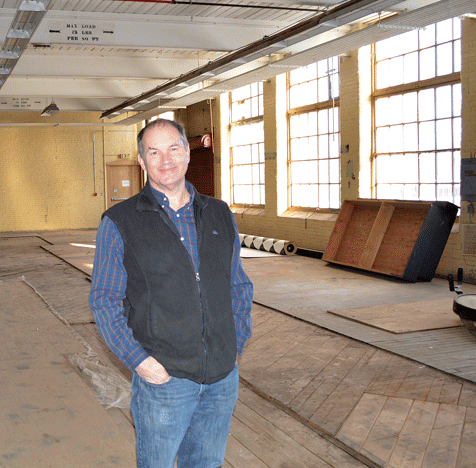
Environment and Engineering Sections
UMass Takes Leadership Role in Clean-water Innovation

David Reckhow

David Reckhow says state and federal investments in his department’s work may lead to breakthroughs in the way water is treated worldwide.

David Reckhow says water treatment is ripe for innovation.

“We’re working with technologies that are about a century old. We haven’t really advanced all that much over the past 100 years,” said the professor in UMass Amherst’s College of Engineering. “Think about biotechnology or information technology, and all the advances that have been made over the past century. Now imagine what our lives would be like if we had 100-year-old information technology.”

But that’s what water-treatment workers must deal with. Admittedly, one reason is that the processes in use have worked remarkably well at keeping people safe.

“Most of the water treatment being done in this country uses what we call conventional technology, which is fairly simple,” he told BusinessWest. “It involves simply adding a coagulant to untreated water, which allows particles to settle. We send the particulates through a filter, add chlorine as a disinfectant, and we’re done. That technology was developed around the turn of last century, and it’s been in use for 100 years. And it’s been great, because it’s controlled cholera and protected us from other waterborne diseases.”

However, other problems have emerged over time, such as a possible link between long-term chlorine exposure and increased risk of bladder cancer. “It tends to result in elevated levels of some carcinogenic compounds and can cause chronic diseases,” Reckhow said. “So, we’ve solved some acute-disease problems, but now we have some chronic-disease problems.”

That’s one example of why Reckhow’s leadership of the Environmental Engineering and Wastewater Resources Group, a division of the university’s Department of Civil and Environmental Engineering, is so important.

“We’ve been doing research on water for the 29 years I’ve been here,” he said. “We have a very active group — one of the leading groups in the country in this field — but we’ve been a well-kept secret. Not many people outside the field know about what we’re doing. But when something like this happens, people take notice.”

‘This’ refers to a $4.1 million grant Reckhow recently garnered from the U.S. Environmental Protection Agency, which will fund a national center for drinking-water innovation on the Amherst campus. That comes on the heels of Gov. Deval Patrick’s recent signing of a water-infrastructure bill earmarking $1.5 million from the state Department of Environmental Protection for water innovation.

The federally funded center will be one of two national research centers — the other is in Boulder, Colo. — focused on testing and demonstrating cutting-edge technologies for drinking-water systems. The Patrick administration, through the Mass. Clean Energy Center (MassCEC), supplemented the federal investment with a $100,000 grant for other water-innovation projects on campus.

In short, UMass is tapping into significant state and federal resources to move water research and treatment well forward into the 21st century — a time when rising global population and other factors threaten to make drinkable water the pressing issue across the planet.

Particle Man

In a tour of his department’s laboratories, Reckhow showed BusinessWest several high-tech pieces of equipment, including a $650,000 Xevo liquid chromatograph mass spectrometer manufactured by Waters Corp. in Milford, and used to identify the type and amount of chemicals present in a water sample.

“We got a grant for $700,000 to buy this thing, and we’re getting it up and running; we’re just about there,” he said. “We’ve been slowly outfitting the lab, so we probably have the best water-engineering testing laboratory in the country.”

The $4.1 million EPA grant will expand this work, funding the creation of the WINSSS, or Water Innovation Network for Small Sustainable Systems. The EPA intends to use this center and the one in Colorado to test and refine emerging water technologies for the betterment of the water utilities across the country.

“The EPA center is charged with developing technologies that are most appropriate for all drinking-water systems,” Reckhow said, adding that the work will be aimed at improving small treatment systems, which typically don’t have the resources of larger systems to solve their own problems. In addition, 97% of drinking-water systems in the U.S. are considered small.

engineering labs at UMass

The $4.1 million EPA center will be built near the engineering labs at UMass (pictured), where the Environmental Engineering and Wastewater Resources Group conducts its research.

“It’s really challenging — they’re just overwhelmed,” he added. “Often, very small operations in small communities don’t have the budget to hire people focused only on water. What they really need is help in having access to technologies that are inexpensive, that are green, that don’t require a lot of energy, don’t require a lot of attention and maintenance. These are some of the characteristics we look for; even big utilities would like that. Our task is to develop these technologies to the point where we can hand them of to another entity to carry them to the market.”

That could be one role for the New England Water Innovation Network (NEWIN), which has been working with UMass on ways to move early innovations into pilot tests and into use by the public and private sectors. Having traveled with Patrick to Israel and Singapore to see model water-innovation networks first-hand, Reckhow wants to help the campus create similar infrastructure for Massachusetts.

He noted that the industry faces a barrage of challenges, from the regulatory environment and increasing competition for water supplies to contamination and climate change. So they want to develop partnerships designed to foster a constant back-and-forth between innovators, researchers and end users.

One ongoing area of research involves ferrate, a compound produced by mixing iron salt with chlorine before it is used to treat water. The process eliminates much of the chlorine and has proven comparable to chlorine as a disinfectant, without the side effects.

“Ferrate may help us back off the chlorine a little bit and reduce the concentration of some of the carcinogenic byproducts we get,” Reckhow said. “It’s a green chemical because it doesn’t use chlorine, and we make it on site; there are various ways of making it.”

That’s only one of many promising efforts, however. “Before we received the grant, we identified 16 projects representing different technologies we’re going to work with,” he told BusinessWest. “The technologies we’re developing will ultimately help to alleviate some of those problems, especially if we can come up with better ways of taking used water to make it reusable.”

Singapore, for instance, is one country which has instituted water reuse. “Singapore has to do it because it’s a small land mass, and they’re at the mercy of their neighbors to get supplemental water beyond what falls as rain on that small country,” he said. “They have been forced to deal with this issue, but we think there are better ways to do this.”

As the governor noted at the press conference announcing the grant, “all over the world and right here at home in the Commonwealth, water challenges are threatening the environment and the economy. Investing in the development of water-innovation technologies not only protects precious natural resources and public health, but creates high-quality local jobs.”

Trial and Error

Among the projects UMass and NEWIN are collaborating on is the development of physical facilities for entrepreneurs in water-testing technology. One of those is a university-owned parcel of land adjacent to the Amherst Wastewater Treatment Plant, where UMass had built a wastewater pilot testing plant during the 1970s.

“It’s old and outmoded and not used, but we’re trying to get money from the state to rebuild it, so it’s a facility that can be used by companies making water-technology devices — startups or established companies or, for that matter, someone who just has a really good idea,” he explained.

“This is perceived as a real need in the industry, holding Massachusetts — and the whole country, in some respects — back a little bit: the lack of existing facilities. It’s expensive to do this. We have an earmark in the environmental bond bill to rebuild this pilot plant so it could be made available to anyone in the community — in reality, anyone in the country.”

WINSSS will focus on bringing early innovations to where they can be pilot-tested, an initiative that could spur the economy, Reckhow said, considering that the global water industry is estimated to generate as much as $600 billion annually. With about 300 institutions in Massachusetts involved in water technology, NEWIN was formed to connect these players and help convert their ideas into workable products.

“The EPA center will be focused on early-stage development of technology, and the mandate is to work on technologies that are most appropriate for small drinking-water systems,” he said, adding that those technologies often carry over into larger systems, particularly wastewater. Meanwhile, the restored testing plant will focus primarily on small to medium-sized wastewater systems, generally later-state development. “Together, they mesh nicely.”

He noted that the MassCEC grant will pay for a mobile pilot unit — a 35-foot trailer fitted with high-tech equipment — that will bridge that gap between early-stage and late-stage innovation and allow UMass to test treatment devices on site in the Commonwealth and beyond. Meanwhile, a recent grant from the National Science Foundation has helped fund the latest, most sensitive equipment for measuring contaminants in drinking water and wastewater.

It’s an issue of particular concern in areas like Cape Cod, which has been dealing with a growing problem of contaminants leaching from wastewater to groundwater to residential wells — just one of the public-health concerns being monitored in Reckhow’s laboratories.

“Providing safe, clean drinking water is critical for maintaining the health and security of the Commonwealth,” said UMass Amherst Chancellor Kumble Subbaswamy. “Researchers here at UMass Amherst are on the front lines of efforts to make sure that clean water is a reality for all our communities and citizens.”

Global Resolve

Reckhow and Patrick have been involved with the Massachusetts-Israel Innovation Partnership (MIIP), launched in 2011 after the governor participated in a trade mission to Israel. During that 10-day mission, a coalition of the state’s leading business executives and senior government officials explored growth opportunities of common interest for Massachusetts’ and Israel’s innovation industries.

One of those interests was safe water — and concern over this issue is only expected to increase in the coming decades.

“They talk about water being the next oil,” Reckhow said. “We’re running out of quality water. There’s plenty of water on the planet, but most of it is not usable; the water in the ocean is not usable, or, at least, it’s very expensive to use. So, as we move forward, there’s going to be more conflict over existing high-quality water sources. We have seen it in the Middle East for a long time, but it’s going to be more widespread.

“It’s an issue of national security around the world,” he added. “Israel has made some good strides. And we’re addressing some of these issues here in Massachusetts.”

Joseph Bednar can be reached at [email protected]

Economic Outlook Sections
The Planning of 2014 Will Give Way to Construction in 2015

By JEFFREY S. CIUFFREDA

The year now drawing to a close might best be known for all of the planning that went into several projects, and therefore 2015 will likely become known as the year of construction, because many, if not all, of these planned projects entered into the construction phase.

Jeffrey S. Ciuffreda

Jeffrey S. Ciuffreda

Indeed, 2014 saw a fair amount of construction, and some of what took place was rebuilding from the 2011 tornado that ripped through Springfield and the surrounding area. Several schools in Springfield were either repaired or rebuilt, bringing construction volume to more than $100 million. While the construction trades had suffered double-digit unemployment for a few years, these public projects helped keep some of those workers employed.

Some long-time institutions spent considerable money in 2014 to upgrade their facilities, and in some cases add jobs. Mercy Medical Center completed a $20 million addition to its campus, and National Public Radio renovated a downtown building at the cost of $3 million, adding to the rebirth of the downtown that brought some jobs down from their Amherst location. Caring Health Center completed its renovations in the South End, spending $15 million to do so.

Looking ahead to 2015, there is more construction to come, but this time complete with new jobs.

This past year saw an up-and-down planning process with expanded gaming in Massachusetts, culminating in a final vote by the citizens of the Commonwealth to move forward with this concept. That gave the green light to MGM to commence its $800 million project in Springfield’s South End. It is expected that a general contractor will be named, and it will choose its subcontractors by spring, and construction will begin. Roughly 2,000 construction jobs are expected on site once the project is fully underway. The 3,000 permanent jobs this development promises will not be seen until 2017, but the planning for those jobs, including job training, will commence in 2015.

Another project that was in planning during 2014 and will begin construction in 2015 promises to bring 150 jobs to start. Changchun Railway Co., a Chinese firm, won the state’s bid to construct rail cars for the MBTA and chose to do so right here in Springfield. This company is a worldwide entity, yet, until this decision, it had no presence in North America. It hopes to make Springfield its North American headquarters and grow those original jobs to 300 within one to two years. These are good-paying machinist positions as well as countless other support jobs, all of which will greatly add to the economic well-being of our region’s major city and its people.

Adding to the region’s inventory of hotel rooms and, therefore, boosting the tourism sector of our economy is the new $ 5 million Hampton Inn on East Columbus Avenue in Springfield, which will open in 2015. The Silverbrick Co.’s rehabilitation of the old Morgan Square in downtown Springfield will remake those buildings into market-rate housing, and many of those units will be on the market for 2015. While these private-sector jobs are essential to economic development, there are several public-sector projects that will also be underway in 2015, many, again, related in some way to the devastating storms suffered over the past three years.

A new, $8 million South End Community Center, a $12 million senior center, and an $8 million police station will all add up to better facilities and better services. The year ahead will also be marked by the start of the largest infrastructure project the area has seen in a decade — the complete rehabilitation of the elevated section of I-91 that runs through Springfield from the I-291 intersection to just south of State Street.

This $235 million project will begin in late spring of 2015 and continue on for three years. While no project of this magnitude can be done without some inconvenience, it will guarantee the region a safe roadway, which is the crucial economic link to our Western Mass. region.

Meanwhile, the $82 million rehabilitation of Union Station into a transportation hub, complete with amenities and available office space, will be mostly completed in 2015, creating a true anchor for the North End of Springfield.

If 2014 was the planning year, and 2015 the construction year, 2016 will be filled with ribbon cuttings and new jobs, both construction and permanent. The outlook has not been this positive for our region’s major city in quite some time.

Jeffrey S. Ciuffreda is president of the Affiliated Chambers of Commerce of Greater Springfield.

Economic Outlook Sections
What to Expect in Labor and Employment Law in 2015

By SUSAN G. FENTIN, Esq.

For employers in Massachusetts, 2014 was quite a year: in addition to multiple Supreme Court decisions, the Equal Employment Opportunity Commission (EEOC) issued guidance on the Pregnancy Discrimination Act, and new Massachusetts legislation increased the minimum wage, created rights for employees who are victims of domestic violence, and mandated paid sick leave for employers of more than 10 workers.

SUSAN G. FENTIN

Susan G. Fentin

So what can employers expect from the new year? Based on Congress’s recent inability to pass any meaningful legislation, we don’t expect much from that body, and we don’t have a crystal ball as to what we can expect from the Massachusetts Legislature. But several cases pending before the U.S. Supreme Court could have significant impact on Massachusetts employers. Plus, we can count on some revised regulations related to wage-and-hour exempt status.

Here’s a summary of some issues that employers should watch for in the coming year.

Wage-and-hour Regulations

In March, President Obama directed the secretary of Labor to modernize and streamline the existing wage/hour regulations, specifically to consider how the executive, administrative, and profession exemptions should be updated to provide minimum wage and overtime protection to more employees.

In May, the Department of Labor (DOL) announced its plans to review these so-called ‘white-collar’ exemptions. Many labor and employment advisors expected proposed regulations to be issued after the November elections, but the DOL has announced that these regulations will not likely be rolled out until early 2015. There is no question that the regulations governing exempt status will be revised; the only questions are how and when. This is a change that will definitely take place in 2015, and employers should plan now to re-evaluate their exempt classifications when the final regulations are issued.

Supreme Court Cases

• Integrity Staffing Solutions v. Busk: In October, the court heard oral arguments in this case, which deals with whether time spent going through security is compensable under the Fair Labor Standards Act. Integrity staffs warehouses for its customers and requires workers in those warehouses to pass through security clearance before leaving for the day, a process that sometimes takes up to 25 minutes to complete.
If the court determines that the time spent in security is ‘integral and indispensable’ to the employees’ principal job activities — fulfilling online purchase orders — the employees will be entitled to be paid for that time. However, if the security line is determined to be ‘postliminary’ to the employees’ work, it’s not compensable.

• M&G Polymers v. Tackett: This is a labor case that wrestles with the interpretation of collective-bargaining agreements under the Labor Management Relations Act. At issue are retiree healthcare benefits for M&G’s unionized employees, as outlined in the CBA. In 2006, M&G announced that retirees would be required to begin making contributions toward the cost of their healthcare coverage. The union objected, arguing that, since the agreement was silent on the duration of the benefit, the employees were entitled to lifetime retiree healthcare benefits without any contribution. According to M&G, other documents, ‘cap’ letters, and ‘side’ letters were intended to modify the agreement for M&G’s plant in Apple Grove, W.V. The court will decide what type of language is required to support a benefit of indefinite duration.

• Mach Mining v. EEOC: In the Bay State, the vast majority of discrimination charges are handled by the Mass. Commission Against Discrimination, so many Massachusetts employers do not have to deal with the federal EEOC. However, for those that face an EEOC charge, this case may have consequences. When the EEOC finds probable cause in a discrimination case, it is required to engage in discussions with the employer in an effort to resolve the matter prior to litigation. In this case, the EEOC cut short the conciliation efforts and filed suit.
Mach Mining claimed that the EEOC did not attempt to conciliate in good faith and that the company should be able to defend the lawsuit on that basis. The court will decide whether litigating the EEOC’s good-faith efforts at conciliation can be considered an affirmative defense in such cases.

• Young v. UPS: This case dovetails with the EEOC’s newly issued enforcement guidance on the Pregnancy Discrimination Act. Young’s doctor restricted her ability to lift more than 20 pounds after she became pregnant, and as a result she could not meet one of the essential requirements of her position. Although UPS had a light-duty policy, it was available only to employees who had been injured on the job or who suffered from a disability under the Americans with Disabilities Act.
UPS gave Young an unpaid, job-protected leave until she could return to work, but the leave was unpaid, and she lost her medical coverage. UPS claimed that its light-duty policy was “gender-blind” because both women and men who were injured at work or disabled under the ADA were eligible for light duty. Young claimed that she was entitled to light duty under the PDA. The court’s decision will have far-reaching impact on the ability of pregnant workers to claim entitlement to light duty as a reasonable accommodation for pregnancy-related work restrictions.

• EEOC v. Abercrombie & Fitch
: Samantha Elauf wore a hijab (head scarf) to her interview for a retail position at Abercrombie. Although she scored well on the interview, she was not hired. She believed it was because her head scarf conflicted with the company’s dress code, although she never discussed her head scarf or any religious beliefs with the interviewer.
A lower court ruled that, because religious beliefs are personal, Elauf was required to tell Abercrombie that she wore the scarf for religious purposes in order to trigger Abercrombie’s duty to consider whether exempting her from its dress code would be a reasonable accommodation for her religious beliefs. The court will decide whether Abercrombie had notice of Elauf’s religious beliefs and their impact on her attire simply because she came to the interview dressed in a head scarf.

Employers who are interested in staying up to date on these and other significant developments in labor and employment law can sign up for a blog, “The Law@Work,” available at www.skoler-abbott.com.


Attorney Susan G. Fentin has been a partner at Skoler, Abbott & Presser since 2004. Her practice concentrates on labor and employment counseling, advising large and small employers on their responsibilities and obligations under state and federal employment laws, and representing employers before state and federal agencies and in court. She speaks frequently to employer groups, conducts training on avoiding problems in employment law, and teaches master classes on both the FMLA and ADA; [email protected]; (413) 737-4753.

Business of Aging Sections
Hospice Brings Quality of Life to Dying Patients, Families

Sarah Jackson, left, and Carol Lewis

Sarah Jackson, left, and Carol Lewis say the team aspect of hospice care is one of its most important features.

There’s a big difference, Leslie Hennessey said, between giving up on life and accepting that the end is near.

“Hospice simply gives people more support toward the end of life,” said the volunteer coordinator for Holyoke VNA & Hospice Life Care. “It’s not giving up; it’s changing the way we look at life. Do you want to go to your beach house one last time? Do you want to go see the Red Sox? We’re really focusing on quality of life, not how many days, weeks, or months you have left. The perspective changes; what’s really important to you? Because now is the time to do it.”

In short, families that choose hospice care for their dying loved ones “aren’t throwing their hands in the air. They’re saying, ‘this is what’s really important to us.’ A lot of times, that’s just spending time together as a family, saying the things they need to say.”

Most hospice programs follow the same format, Hennessey told BusinessWest. “The family and the patient generally meet with their physician about the diagnosis they have, and the physician has to certify that they have less than six months to live if the disease follows its normal prognosis. When we get the referral, we can admit them to hospice.”

It’s also a team approach to care. “Every patient gets a hospice nurse. They can also have a social worker if they’d like, a home health aide, or volunteer services if they choose. On top of that, we have other complementary services; we have a therapeutic heart program, a harpist to play at the bedside for the patient, and a pet therapist who visits patients in nursing facilities. I have a couple of volunteers who practice Reiki and energy work; we can offer that to patients as well.”

Carol Lewis, director of hospice at Spectrum Home Health and Hospice Care in Longmeadow, explained that “we’re looking for patients who have a terminal diagnosis that requires symptom management by nurses who have expertise in that area, and are educated in taking care of the holistic needs of that community. That’s the broad picture of what we do.”

She also stressed the team aspect of hospice care. “That’s the unique aspect of it; it’s a team of trained professionals that address these needs, and it’s not only about the patient, but supporting the family as well.”

For this issue’s focus on the business of aging, BusinessWest takes a look at an area of healthcare that has been growing in prominence as America’s 65+ demographic soars to record numbers — and the many ways hospice care is providing, if not hope for recovery, a measure of peace and acceptance for those approaching the very end of life.

Rising Tide

Indeed, 2009 saw 1,341,391 patients access hospice care; last year, that figure had risen to 1,542,737, a 15% increase.

There’s some statistical evidence that palliative, or comfort-only, care brings real benefits to the dying or critically ill. A study several years ago at Massachusetts General Hospital divided a group of stage 4 lung cancer patients into two groups; all of them received traditional chemotherapy through a physician, but half also enjoyed the services of a palliative care team.

The results, published in the New England Journal of Medicine, showed a measurable difference in the amount of anxiety and depression, while patients who had received palliative care from the start averaged a three-month survival advantage.

While some palliative care includes curative treatment, however, hospice is reserved for patients who forgo all but comfort-centered care; in other words, they’re no longer fighting to get better.

Sarah Jackson, executive vice president of Spectrum, explained that patients can receive hospice care in any community setting.

“Wherever you are, you can select a hospice benefit,” added Paula Boss, executive director of Holyoke VNA & Hospice Life Care. “At home, a nursing home, assisted living, a friend’s home — you can receive hospice care.”

At the heart of hospice care, Hennessey said, is a cadre of volunteers who spend time with the patient, particularly when their loved ones aren’t able to do so.

Leslie Hennessey, left, and Paula Boss

Leslie Hennessey, left, and Paula Boss say hospice services are available to patients wherever they live, whether at home or in a community care setting.

“They can’t provide any personal care or give medications, but they can be a presence in the house, sitting vigil with hospice patients. When a hospice patient is considered to be in the last hours of their life, and especially in nursing homes, if the families are far away and traveling to get to the person, our volunteers will sit with them until their loved ones get there. Families don’t want their loved ones to be alone.”

She said Holyoke’s volunteers hail from all walks of life. “A lot of folks have had experience with hospice in the past and loved ones in a hospice program, and they felt like they wanted to give something back; they realized how important it was, that extra support, how much they appreciated it, and they want to do that for another family.”

Hennessey said she conducts trainings twice a year for people who want to help in this manner. “Sometimes they say, ‘I don’t know if I can do this, but I want to try.’ They’re very special people.”

After all, she noted, “if you’re a hospice volunteer, you have to understand that every patient will die. That’s what we tell them on the phone before we even send them the information packet; I need them to know that every person they meet will die, and I ask, ‘how do you feel about that?’ It’s something they really need to consider. They know what they’re getting into when they walk through that door. They’re amazing.”

Lewis said Spectrum’s program also offers the services of a harpist with a degree in thanatology, the study of death, as well as service dogs that provide comfort to patients and their families.

“We also have a chaplain as part of the team,” she said. “When I say holistic care, I mean we meet physical needs, emotional needs, and more. Sometimes the chaplain is looking at some life review with the patient and the meaning of life, providing some comfort, or maybe just some reading at the bedside.”

Whether it’s the nurse, social worker, home health aide, chaplain, or volunteer at the bedside — and families can call for help 24/7 — hospice care is just as much a benefit for the family as it is for the patient, Jackson said. “We can be helpful for families, giving the caregiver a little bit of respite, by sitting vigil with their loved ones, having a volunteer come in for an hour or two so the family can take a break.”

At the same time, Lewis said, hospice staff takes time to educate the family so they can provide more effective care when hospice workers and volunteers aren’t nearby. “That really helps in the grief process, to look back and know you helped provide the comfort.”

Typically, hospice care includes a full year of grief counseling for the family after the patient dies, Boss said. “Often, the grief really hits them after the funeral, and they have continuing needs.”

Setting the Record Straight

Lewis said families often have misconceptions about what it means to elect hospice care. For instance, “a lot of people think they can never go to the hospital. But any time they need a level of care that isn’t offered in hospice, an emergency situation where they might need short-term help, they can go to the hospital.”

Also, Boss noted, “some people think they don’t receive any medication anymore, but that’s not the case. Yes, we often discontinue medications that are not needed for comfort or pain. But some cancer patients receive chemotherapy if there’s a comfort purpose and not a treatment purpose. We’re very strong on keeping people comfortable.”

Hennessey told BusinessWest that hospice benefits are typically covered by Medicare and Medicaid, as well as most private payers. “It’s not always something you’re looking for in your benefit package when you sign up, but most insurances have a hospice benefit, and it can be a huge benefit to families.”

The question for those families is when to take that step and admit that quality of life is more important than fighting an uphill battle for recovery. The growing ranks of older Americans have made end-of-life care a hot topic these days, and a tricky one.

That’s because, while doctors can extend life, often by artificial means, to a greater degree than ever, that intervention is often prohibitively expensive, and the quality of that life often dubious. So, increasingly, patients, families, and caregivers face hard questions — not about whether doctors can add weeks, months, or years to the life of a dying patient, but about whether they should.

“Awareness of hospice has increased, but barriers are still there — a lot of cultural barriers,” Boss told BusinessWest. “Some cultures really don’t understand the hospice benefit; they don’t understand all the things we can bring to them. There’s still a long way to go. A large number of patients are eligible to benefit from hospice, but never elect it.”

Hennessey cited a statistic that about 21,000 patients receive hospice care annually in Massachusetts, about 40% of all deaths. “It’s a good number, but it would be great if it was all patients, or close to 80% of patients.”

She also noted that the median length of hospice care is only 23 days, which means patients and families are often opting for it much later than they’re eligible. “We’re working with doctors and facilities to identify folks who could really benefit from these programs,” she said. “The benefit is for a life expectancy of six months, but in 23 days, we’ve just got things arranged, and then, unfortunately, we lose the patient.”

Lewis agreed. “Unfortunately, some families wait until the very end to contact hospice, but we’re able to get involved six months before the end, when there’s time to develop relationships with the team and to provide quality of life while the person is still here.

“It’s a chicken-and-egg situation,” she added. “A lot of times, people call us at the end, so the community sees us coming at the end and think we’re heavily associated with the end of life. But it’s earlier in the process that hospice really has its true benefit.”

So hospice advocates continue to get the word out to doctors and the public.

“It’s not giving up hope, throwing your hands up, saying, ‘I can’t cure this,’” Hennessey said. “I want to put you in the hands of people who can manage your pain symptoms so you can get the best life you can out of your last months.’”


Joseph Bednar can be reached at [email protected]