Home Archive by category Special Coverage (Page 12)

Special Coverage

Construction Special Coverage

Yard Markers

By Mark Morris
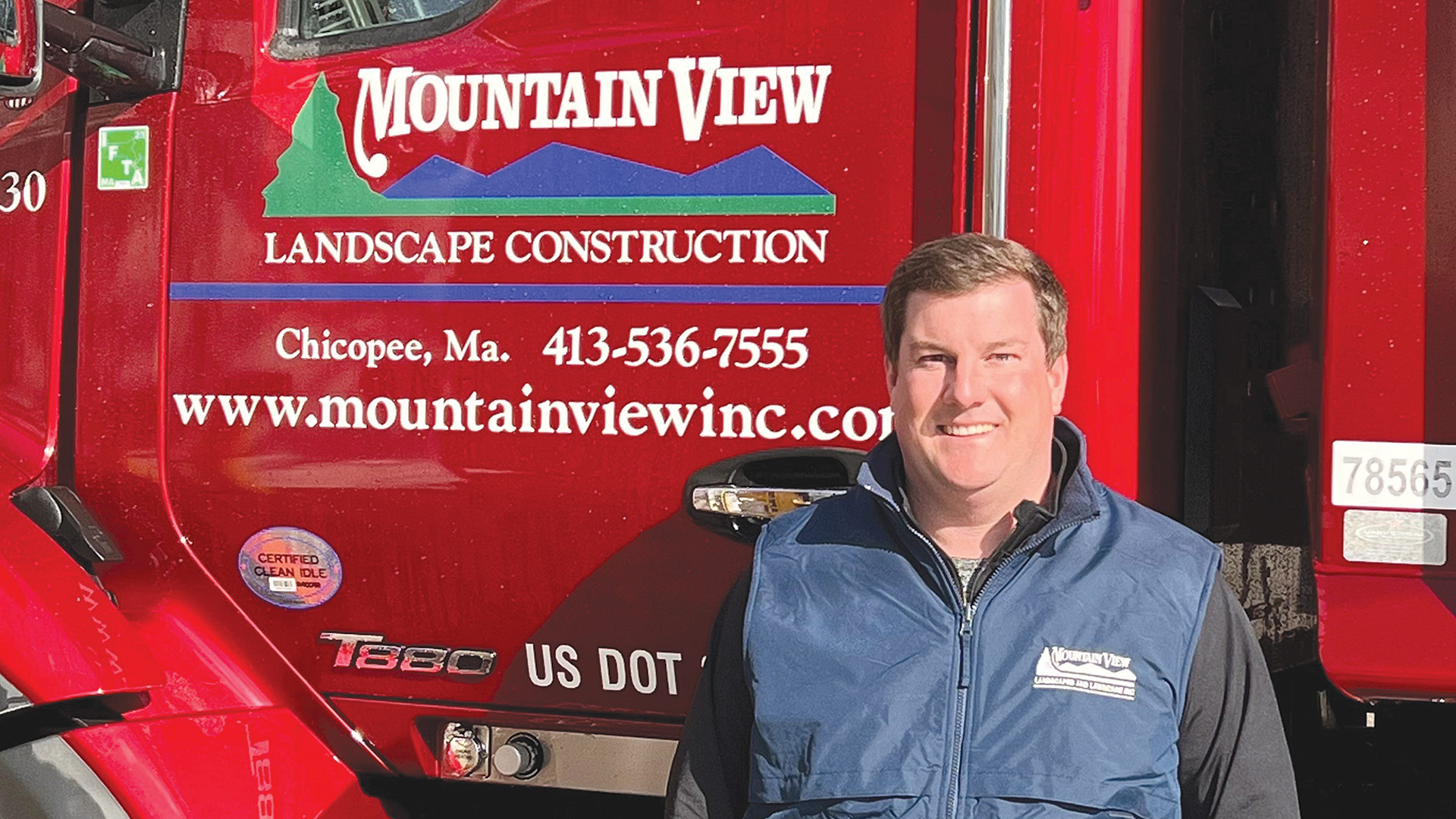
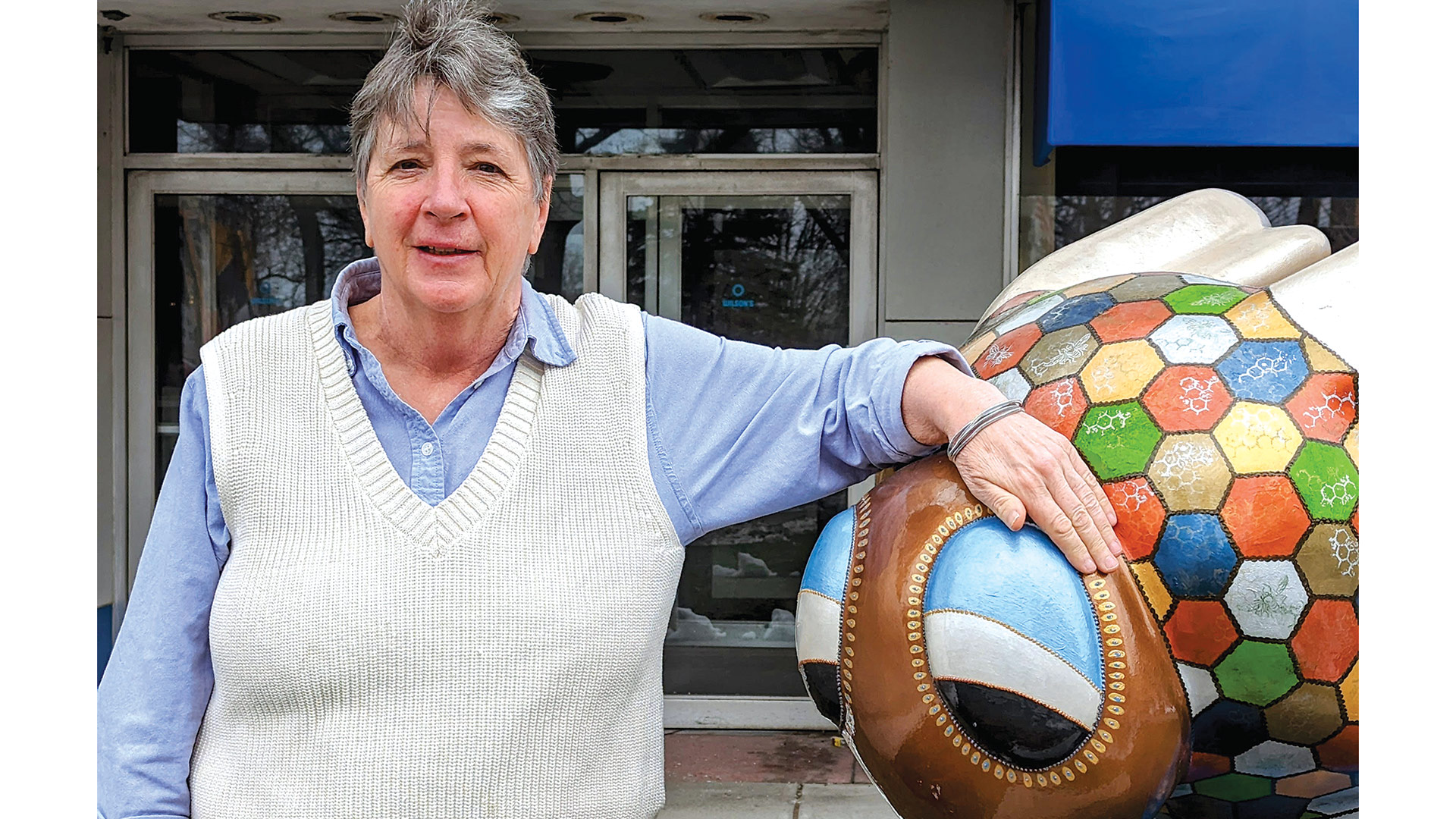
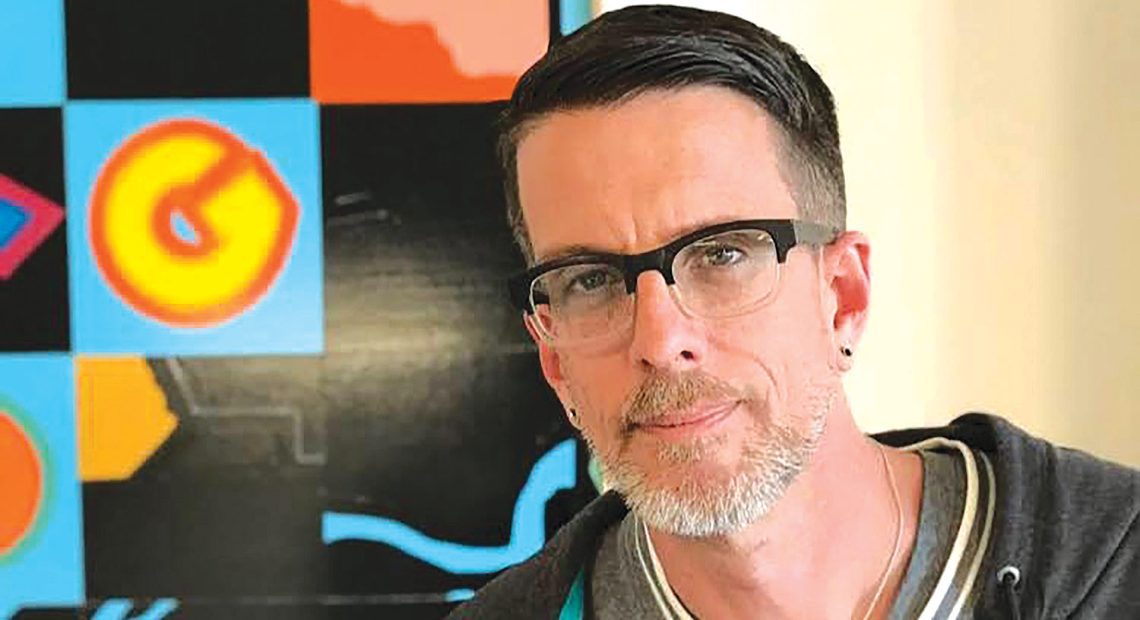
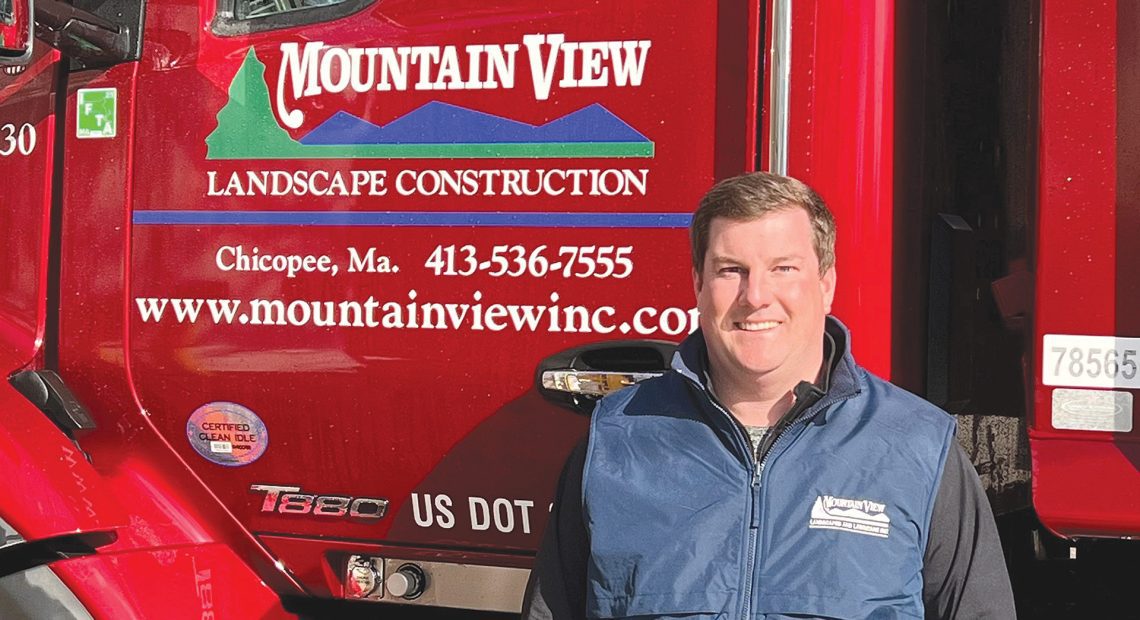
Sean Corrigan

Sean Corrigan says landscapers have to deal with the challenge of longer lead times for delivery of many supplies.

Mark Lacombe likes good head start.

And like others in the landscaping industry, he’s grateful for one of the mildest winters in many years — from one perspective, at least.

“A mild winter helps us because there’s no frost in the ground, which allows us to start working on sites now rather than waiting for the frost to thaw and the mud season that would typically follow the thaw,” said Lacombe, general manager of Commercial Grounds Maintenance for Mountain View Landscapes in Chicopee.

However, the downside of a mild winter affects snowplowing, the other business many landscapers run in winter months. Lacombe said a normal winter allows the company to start the year off with revenue, even though he can’t count on it every year.

“During a normal winter, we’ll do about a million dollars in snow removal,” he said. “This winter was only about 65% to 70% of our normal business. That’s where a mild winter really hurts.”

Still, area landscapers say they are staying busy as spring takes hold in New England, and 2023 holds promise as well as some continuing challenges.

Brian Campedelli, owner of Pioneer Landscapes in Easthampton, said his crews are already busy finishing several jobs that carried over from last year due to the unprecedented growth his company experienced in 2022. This year is off to a strong start, too.

“During a normal winter, we’ll do about a million dollars in snow removal. This winter was only about 65% to 70% of our normal business. That’s where a mild winter really hurts.”

“We had a good turnout at the home show,” Campedelli said of last month’s annual event put on by the Home Builders & Remodelers Assoc. of Western Mass. “Many people we spoke with are interested in new projects.”

Greg Omasta also begins the year with several carryover projects. The owner of Omasta Landscaping in Hadley believes he will have a busy year, but he’s also concerned that increases in basic necessities like food and fuel may cause some homeowners to delay their yard improvements.

“We’re still getting calls every day, so I guess I’m optimistic and pessimistic all at the same time,” Omasta said.

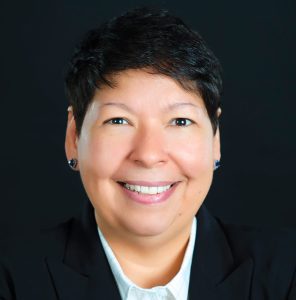
Greg Omasta (right, with son Chris Omasta)

Greg Omasta (right, with son Chris Omasta) says inflation in basic necessities may cause some families to delay yard improvements this year.

At the height of the pandemic, the residential side of landscaping exploded as homeowners who would have normally scheduled out-of-town vacations had to stay put. Many decided to convert their yards to outdoor entertainment areas. From elaborate projects like swimming pools and outdoor kitchens to simple landscape upgrades and firepits, every contractor had more business than they could handle.

However, while COVID-19 boosted the staycation phenomenon, it also created unusually high demand for all the products used in hardscaping and landscaping at a time when supply chains around the world faced sporadic delays due to the pandemic.

Landscapers now report that many of the supply-chain issues have subsided, but there are still delays for some products, and everything costs more.

“As we order for this season, plant prices are up, and the freight charges to ship them to us are really high,” Lacombe said, noting that this is a particular challenge when bidding for commercial landscaping projects that won’t start for 12 to 18 months. “We have to estimate the costs for a job that will happen a year from now, while our material prices are only guaranteed for 30 days.”

“Since COVID, municipalities are paying more attention to outdoor spaces and upgrading them, particularly with more climbing structures.”

Omasta pointed to one pleasant surprise, as grass-seed prices have seen a slight decrease. “Also, fertilizer prices have stabilized. I don’t expect them to come down, but at least they are more stable than they’ve been.”


Places to Play

Public parks and playgrounds are an area of commercial business both Omasta and Mountain View have seen as growth opportunities.

Sean Corrigan, vice president of Landscape Construction for Mountain View, said his company has a full schedule of reconstruction work on parks, playgrounds, and athletic fields, with most of the work happening in Connecticut and the Boston area.

“Since COVID, municipalities are paying more attention to outdoor spaces and upgrading them, particularly with more climbing structures,” he said. “They are interesting structures, and many have unique designs. The kids love them.”

Playground equipment and drainage piping are among the products that still have long lead times for delivery, Corrigan noted. “It’s getting better, but we still have to factor in extra time for these items.”

Finding enough workers is another challenge that still exists, but the situation has started to improve. Campedelli said this year has been easier to hire laborers as better-quality applicants are looking for work.

“Some of the more specialized jobs, like hardscape installers, are still hard to fill,” he said. “We recently hired a new general manager and a new office manager, who are both fantastic.”

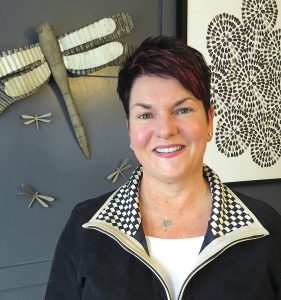
Dave Graziano

Dave Graziano says the industry is being challenged to cultivate the next generation of workers.

While Omasta hires extra workers for spring and fall cleanups, he depends on a core group of employees who have worked with the company for years. “We provide them with benefits, holiday and vacation pay, as well as other perks to keep them with us.”

Lacombe said more people are looking for work this year than in the past, but finding workers with experience remains difficult.

“We’re hiring on attitude more than anything else,” he said. “I can teach someone what they need to know, but they need to be willing to come to work every day and put in the effort.”

Dave Graziano, project manager in the Landscape division of Graziano Gardens in East Longmeadow, sees a larger industry problem finding the next generation of landscape workers who want to put in the effort to be successful.

“Anything you can do outside to enhance the entertaining possibilities in your yard is generally what remains popular with people.”

“It’s not for everyone, but it can be rewarding work,” he said. “You see the fruits of your labor from the design of a project through completion, and you make the customer happy. It’s very satisfying.”

Graziano proudly noted that he and his brothers, Mark and Chris, work closely with all their customers. “One of the reasons people call us is because they know they will get a Graziano, and our customers like that.”

Along with landscaping services, Graziano Gardens also runs a retail location, he added. “In addition to people who hire us for landscaping projects, our clients are also do-it-yourselfers who are looking for good ideas and advice.”

As the world continues to move past COVID and more people leave home for vacation, landscapers say there are still plenty of homeowners who want to improve their yards.

“It seems that people are traveling by car more than plane, yet they are still spending money on their yards,” Omasta said.

“It’s not for everyone, but it can be rewarding work. You see the fruits of your labor from the design of a project through completion, and you make the customer happy. It’s very satisfying.”

Campedelli added that he’s hearing from plenty of homeowners who still want stone patios, new lawns, firepits, and other projects. “Anything you can do outside to enhance the entertaining possibilities in your yard is generally what remains popular with people.”


Long-term Value

In addition to the entertainment factor, Omasta noted one compelling reason to invest in a landscape project is the value it can add to a home when it goes up for sale.

According to Better Home and Gardens, attractive landscape projects can add 5% to 12% to a home’s resale value, while a professional hardscape project can add 15% to 20% to the resale value.

For many consumers, thoughts about landscape improvements don’t occur until the weather reaches 70 degrees and stays there. Campedelli’s advice for homeowners planning large backyard projects? Book soon if you want to get your job done this year.

“For special projects, we are scheduled into June and maybe a little later,” he said. “We can bring on new yard-maintenance clients without waiting, but big projects are booking further out.”

While traveling for vacations is on the rise, many people are still staying close to home and investing in their backyards. During the winter months, Campedelli attended seminars from hardscape block manufacturers who said they are in full production this year with lots of new product selections.

“They said the availability is much better this year, and we’ll have no problem getting what we need,” he said. “I hope they are right.”


Insurance Special Coverage

Perfect Storm

Inflation ebbs and flows in unpredictable ways. The insurance world is certainly finding that out — and so are customers seeing their auto-insurance bills.

“Auto insurance hasn’t kept up with inflation over the past three to four years, and it’s finally catching up to it,” said Michael Long, CEO of Axia Insurance Services in Springfield, partly explaining why the average premium nationwide rose more than $240 in the past year, according to Bankrate.

There are plenty of other parts to the equation, of course, including the ongoing supply shortages that are generating inflation on everything that goes into cars, from materials to computer chips to labor.

In fact, used-car values in 2022 were 37% higher than they were previously, Long said, meaning insurance carriers that had been paying, say, $20,000 for a totaled car were now paying $30,000. Eventually, that was going to be passed to customers.

Bill Grinnell, managing partner of Webber & Grinnell Insurance, agreed. “A few things are driving automobile prices; one is supply-chain issues and a lack of supply of replacement vehicles and parts, and the increased costs of all that.”

As a result, he went on, “your collision claim that might have cost a couple thousand dollars pre-pandemic is now $3,800. It’s significantly more, and the insurance has kind of trailed that inflation. First the cost of the replacement vehicles and parts go up, and that’s reflected in the financial statement of the insurance company, and they need to react and bring rates up. It’s not a leading edge, but a trailing edge, but there’s an inflationary factor there.”

And it’s not just auto insurance. On the home-insurance side, the cost of building materials has risen sharply over the past few years, and supply shortages and lag times still beset the construction industry. Meanwhile, contractors dealing with those issues and also a workforce crunch aren’t able to take on as many jobs as they’d like.

Bill Grinnell

Bill Grinnell

“The cost to build a home three years ago might have been $175 per square foot, and now it’s $275 per square foot. If you’re insuring a home that was worth 300,000, now it’s $400,000.”

“The combination of those two factors have driven up the cost of repairs, and that’s reflected in increased claim payments. So insurance companies need to adjust their rates to afford these claim payments.”

The other huge factor is the dramatic rise in home values over the past two years, another supply-and-demand metric. “You’re required to insure your house to an educated, calculated measurement of its true replacement value,” Grinnell said. “And the cost to build a home three years ago might have been $175 per square foot, and now it’s $275 per square foot. If you’re insuring a home that was worth 300,000, now it’s $400,000.”

Whatever the reason — and, obviously, there are many — insurance customers are experiencing more pain than usual in their monthly premiums. While there are ways to reduce the hit, the key economic factors influencing those increases will continue to linger, at least in the short term.


Up, Up, and Away

Plymouth Rock Assurance recently created an infographic that showed customers why home and auto rates are rising.

On the home side, it listed a worker shortage (the construction industry is down 200,000 trade workers); supply-chain shortages and delays with everything from asphalt shingles and piping to copper wire and drywall; lumber and other material costs up more than 50%; and increased operating expenses for energy, transportation, storage, and more.

On the auto side, higher costs are related to chip shortages; a technician shortage driving labor costs up about 6%; a shortage of parts in repair shops causing delays, higher demand, and higher repair prices; and a still-low vehicle inventory on many lots, inflating the sticker price of cars — and their replacement value.

Michael Long

Michael Long

“Not all insurance companies are created equally. Whether it’s the way they handle claims, the way they handle billing, the way they handle cancellations after a loss or two losses, all those things need to be discussed with an agent because not all contracts are the same.”

“It’s a challenging time for all of us,” Long said. “When we talk to clients, last year’s rates were up about 15% on the auto side, and we’re expecting another 8.4% this year.”

Some of the cost factors are unexpected — for example, glass replacement. “With glass claims, it used to be a couple hundred to replace a windshield. I’ve seen them as high as $2,400 because of all the information you get from the sensors in the windshield.”

Then there’s driver behavior. Long noted that accidents were up 7% in 2022, and insurance companies have never seen the volume of lawsuits they’re dealing with.

Grinnell agreed. “The results are worse for insurance companies. The severity of accidents is up, and that’s driving up the cost of the insurance, too.”

There are only so many ways for customers to reduce insurance costs, and some of them are common-sense.

“First, don’t have a claim. Drive carefully,” he said. “Claims really impact your premium quickly, so drive safely and don’t have motor-vehicle violations; don’t get a speeding ticket.”

Paying bills on time helps as well, he said. “There are so many hidden factors that none of us understand, even at the agency level, that go into ratemaking these days, but late payments and being consistently behind and getting cancellation notices is a sure way of having your premiums go up. So pay your bill on time and even enroll in automatic bill payment.”

While it’s important to have adequate coverage, Grinnell said people with older cars they might not be driving for much longer may opt out of collision coverage. He did just that with a 12-year-old car he owns but doesn’t drive that much, and it saves him about $450 per year.

Long said he talks to clients all the time about raising their deductibles. “If you currently have a $500 deductible, maybe look at a $1,000 deductible. If its $1,000, maybe $2,500. We’re regularly quoting $2,500 deductibles,” he noted. Meanwhile, “if a tree comes down, and it’s a $500 loss, absorb it, and pay it in full.”

Carriers also offer any number of discounts, from safe-driver and good-student benefits to discounts related to involvement in organizations ranging from the Pan Mass Challenge to the Massachusetts Golf Assoc. “There’s a Red Cross discount; if you contribute $25 to the Red Cross, you get 5% off your insurance. So you’re helping the community and saving money on insurance. Everyone wins with that deal.”


Weather or Not

The home-insurance market has been buffeted by a series of costly weather events, from hurricanes in Louisiana and Texas to tornadoes in the Midwest to fires in California. Insured losses from natural disasters routinely top $100 billion per year these days, and Long said $20 billion of that in 2022 was in auto claims alone.

As noted earlier, the cost of lumber and other building materials (up 33.9% in 2022) and labor (up 27%) are already causing insurance companies to play catch-up, and weather and climate events are just another challenge to deal with.

“It’s been a funny year for homeowners,” Grinnell said. “Property rates were certainly affected across the country due to some of these climate changes and weather patterns, the big windstorm losses.”

He noted one “big freeze” day last year that wound up affecting the region’s home-insurance carriers. “It was one of the biggest lost days on record. Pipes burst, and those are expensive claims. Generally, that’s not helping our region at all.”

Long advises people to be careful when switching carriers due to rising rates because the new carrier might not have made the same inflationary adjustments, and the customer will just have to face that all over again — while possibly losing benefits like accident forgiveness.

“Not all insurance companies are created equally. Whether it’s the way they handle claims, the way they handle billing, the way they handle cancellations after a loss or two losses, all those things need to be discussed with an agent because not all contracts are the same.”

On the other hand, Long said customers should absolutely stay in touch with their agent. “How often do you review insurance with them? Every year is not realistic, but every two to three years, you should be getting a call from your agent: ‘hey, let’s talk about what’s going on, and any new coverages out there.’”

After all, people still need to have enough coverage in case the worst does happen. And with home values what they are now, a total loss could be extra catastrophic if the coverage is not in line with that.

“The biggest investment people have is their dwelling. So, young people may have the time to make up for a disaster, to build equity in their house if they lose it,” Long said. For older homeowners, inadequate coverage for a loss could be a real problem.

The bottom line? Insurance costs money, and even more so this year, as customers should expect premiums to rise another 8% to 10% for both home and auto, Long said.

But when disaster strikes — even a small disaster, like a burst pipe or a sideswiped car — it beats not being covered.

Cannabis Special Coverage

Growth Pattern

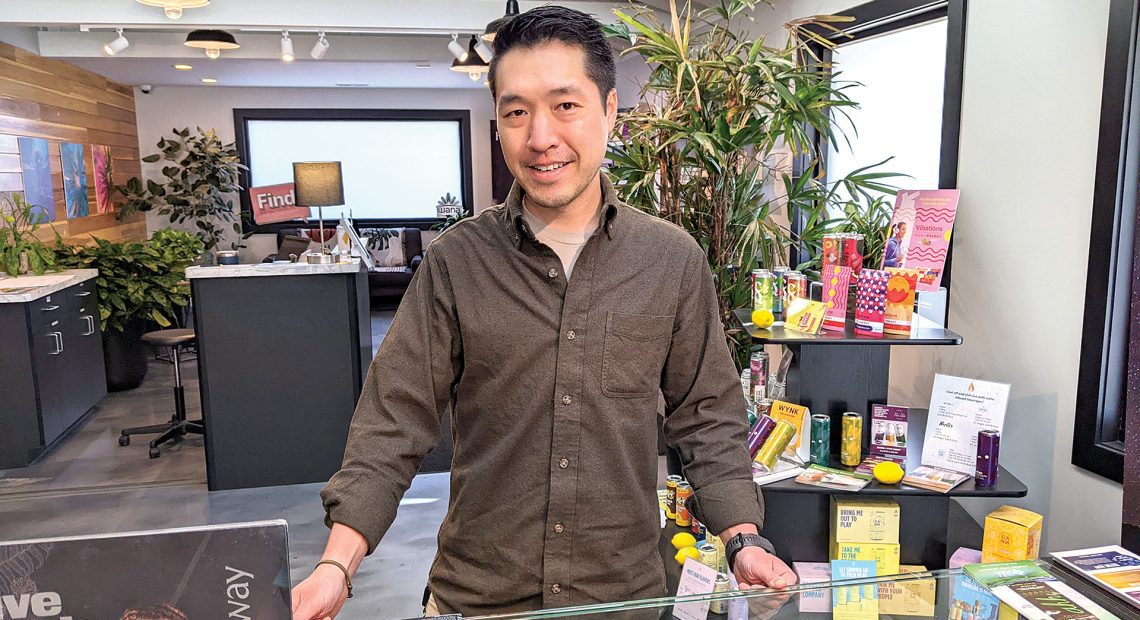
Enlite co-owner Matt Yee

Enlite co-owner Matt Yee

From the start of cannabis legalization in Massachusetts, Northampton was one of the most receptive communities, streamlining the municipal regulatory process and initially setting no caps on licenses. Meanwhile, Springfield posed a more onerous process and set strict limits.

Enlite has experienced both, having opened its first dispensary in Northampton in late 2021 and is getting ready to open a second shop in Indian Orchard this year, Springfield’s fourth dispensary in all.

Matt Yee, one of Enlite’s owners, sees value for business owners in both models.

“Springfield was a longer process getting through special-use permit hearings. Northampton, in comparison, was very, very open and friendly to cannabis businesses, which created the amount of licenses we see here,” he explained. “So in some ways, [Springfield] has been difficult, but that difficulty also creates a bit of a barrier for competition to come in; there’s only a handful of active licenses in Springfield.”

The fact that Enlite is expanding at all is an accomplishment in an increasingly competitive marketplace, one that has exploded with new businesses to the point where the industry is starting to weather its first closures, including the Source in Northampton and Pleasantrees in Easthampton.

And Yee and his fellow owners — who include Matt Cutting, Peter Picknelly, and Nick Yee — aren’t done, with plans to apply for a third license, the maximum allowed by the state’s Cannabis Control Commission (CCC).

“Most customers are shopping with their phone prior to coming in with us, seeing what our menu looks like, seeing what our price points look like, and if they can’t find the specific product that they’re looking for, then they’re going to go somewhere else.”

“We’re still hunting for that third location,” Matt said. “That makes for a more profitable and healthy business model. It’s hard to exist with just one unit. And we chose Springfield because the location fills a niche of demand.”

Specifically, Indian Orchard borders two towns, Wilbraham and Ludlow, with moratoriums on dispensaries, he explained. “We’re very close to both of those. So we saw that location in Indian Orchard as a prime spot.”

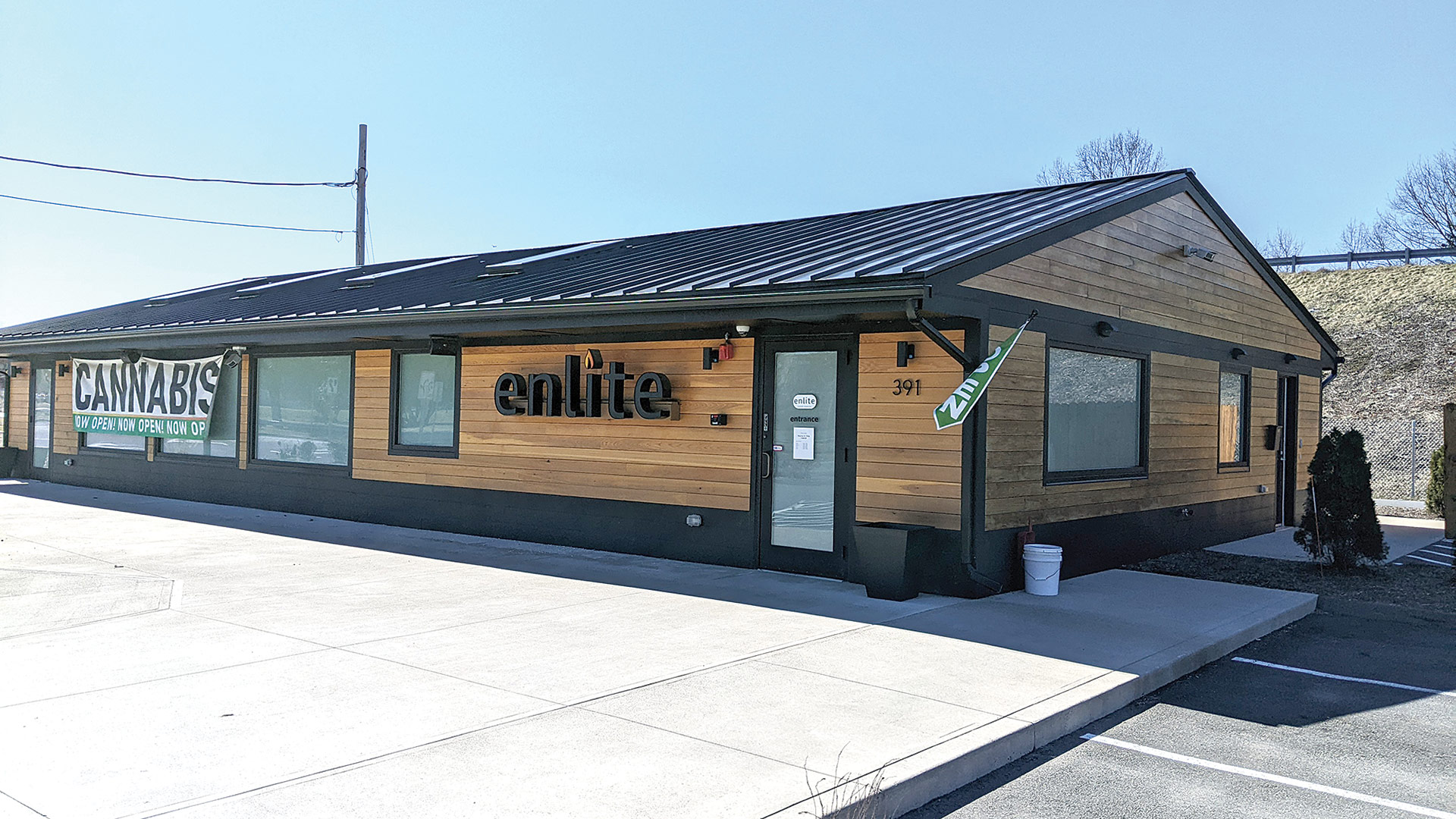
Northampton shop’s location right off I-91

Enlite’s owners say the Northampton shop’s location right off I-91, rather than in the congested downtown, has been a plus.

When Enlite opened in Northampton a year and a half ago, Yee and his team saw potential, not only in the state’s legalization of cannabis, but Northampton’s embrace of it. It was the city’s eighth adult-use dispensary, a number which quickly bloomed to 11 and now sits at 10.

“So competition has definitely gone up. But competition is good, especially in this industry. Just like in my former industry, restaurants, competition benefits the customer at the end of the day.”

Considering the experience of the Yee family and Picknelly in that other challenging industry, and Cutting’s business background, the Enlite leadership team felt it had a good chance of success in cannabis, and so far they’ve been proven right. That’s not to say there haven’t been obstacles to overcome, but so far, Enlite is not only staying the course, but setting their sights … well, higher.


Rolling Along

Soon after Enlite opened, Yee told BusinessWest that the sheer number of cannabis businesses in Massachusetts — which now tops 265 retailers, in addition to cultivation, manufacturing, and wholesaling businesses — actually makes it easier for the best-equipped players to succeed, because of the cross-pollination. It’s why Enlite has adopted the model of many area dispensaries of partnering with boutique makers of cannabis products.

“We work with about 65 wholesalers right now,” he explained during BusinessWest’s recent visit. “We try to give priority to those who are producing local here in the Pioneer Valley, and also give priority to minority-owned, woman-owned, and veteran-owned companies, and participants in the social-equity program or the economic-empowerment program of the CCC. Anybody who checks those boxes and has a quality product, we definitely give priority to.”

A wide variety of products is key, he added. “We have about 450 to 500 items on the menu at any given time, which is a burden to control inventory-wise, but we have systems in place and experience with that well enough to handle all those SKUs and provide a wide selection to our customers.

“Most customers are shopping with their phone prior to coming in with us, seeing what our menu looks like, seeing what our price points look like, and if they can’t find the specific product that they’re looking for, then they’re going to go somewhere else,” Yee went on. “Our mentality is, if they can find the item here and maybe try some new items too, then they’ll become a repeat customer with us.”

“To kind of wade through the chaff and find the quality product at the right price point that the customer will enjoy can be a little overwhelming.”

He said many customers settle into buying favorite brands, but still appreciate variety.

“Five years ago, there weren’t very many brands, and quality wasn’t the highest, but now, with the level of competition we’re seeing in the wholesale market, there are brands that are definitely excelling. We have a couple of brands in-house that are excellent performers, and people come back for more.”

With competition forcing retail cannabis prices down to five-year lows in Massachusetts, Yee said his time in the restaurant world, where stiff competition also challenges profit margins, has taught him the value of customer service, as well as product knowledge and customer engagement — all factors that make the experience easier and more enjoyable, especially newcomers to the cannabis world. “That’s something we really pride ourselves on and strive for.”

The other differentiating factor is location — not just the strategic second location in Indian Orchard, where competition in the immediate environs is low, but in Northampton, where the flagship store sits right off the Coolidge Bridge rotary.

“Everybody’s kind of congested in the downtown area, which makes it far more difficult because somebody could just walk next door and find a cheaper price and buy there,” he said. “Here, with our location, situated right by the bridge and off the highway, we provide a convenience for people. It’s easy in, easy out, with plenty of parking that’s tough to find downtown. Our consumers want convenience, so that’s the other aspect we try to excel at.”


Highs and Lows

That said, Yee was quick to stress that captivating an audience and generating repeat customers is a constant focus, not something Enlite takes for granted.

“I think the other challenging aspect is the amount of wholesale product that’s becoming available on the market,” he explained. “Something I buy this month may be far less expensive two months from now, which would mean another retailer might pick it up for that price point and sell it for that price. So we’re seeing constant fluctuations in the price points of the wholesale product.

“That, along with the sheer amount of wholesalers that are knocking on our door and calling our phone, is pretty overwhelming,” he went on. “To kind of wade through the chaff and find the quality product at the right price point that the customer will enjoy can be a little overwhelming.”

Some cannabis-industry observers have commented on the experience of other states that followed a similar pattern to what’s happening in Massachusetts — exploding competition sends prices plummeting, and many operators focus on competing on price above all else, including quality and customer experience.

“We’ve always been conscious about that. We’re not trying to race to the bottom,” Yee said. “There are some operators here in Northampton who are dropping their prices, and all the other operators are forced to match those prices, which is difficult. But maintaining a healthy economy here in the Western Mass. market is something that we think about a lot. We’re not trying to drive the prices down too low and hurt everybody’s margin. There are definitely some players in town who are playing that game.”

Enlite will be the second minority-owned dispensary in Springfield, after Six Brick’s, which opened in September 2022. Enlite’s Northampton site was also the state’s first Minority Business Enterprise (MBE) applicant to open its doors, and Yee said the process of getting into the industry is still laden with minefields, especially for smaller entities.

“It’s definitely difficult. The requirements to get through the licensing procedure and then the buildout, inspections, and final licenses … it’s strenuous, and a lot of that knowledge is unknown to those smaller operators,” he explained. “So a lot of money can be burned just going through that painful process and experiencing that learning curve. And for those smaller operators who don’t have the capital of the big, multi-state operators or well-capitalized groups, that can be very difficult and sometimes detrimental to the business.”

As Enlite grows and expands, Yee said he’s still learning new things all the time, whether it’s a new product — from fast-acting edibles to new beverage lines — or a new market opportunity. “There’s something new coming out every month, it seems, and the customers are being introduced to those products with us.”


Business in Bloom

Yee has said Enlite’s biggest competitor is the black market, but analysts have pointed out that the leveling out of prices in the legal cannabis market may mitigate the illicit market’s advantage somewhat — while bringing on a whole new set of headaches in an industry where profits are already very tight due to onerous taxes.

He hopes, as consumers find more options in their price range, that stores that focus on quality, education, and customer experience will maintain an edge. And he said dealing with those customers, and hearing their stories, is his favorite part of the job.

“On a daily basis, we have first-time consumers come in, curious about cannabis and wanting to learn more. I have so many stories of first-time consumers coming back in and saying, ‘wow, that really helped me. That got me to go to bed more regularly. I got more sleep. I’m less stressed out. I have more fun with my kids — thousands of stories like that.

“Every day, somebody comes in, and we have a great conversation, and we can introduce them to a new product that they didn’t know existed, and we’ll see them back here a couple of days later. And there are still a lot of people who are just wading into this industry and finding these products.”

And finding them at a shop that continues to navigate an ever-changing, always-challenging landscape for business owners, with not just survival in mind, but continued growth.

Commercial Real Estate Special Coverage

Turning Back the Clock

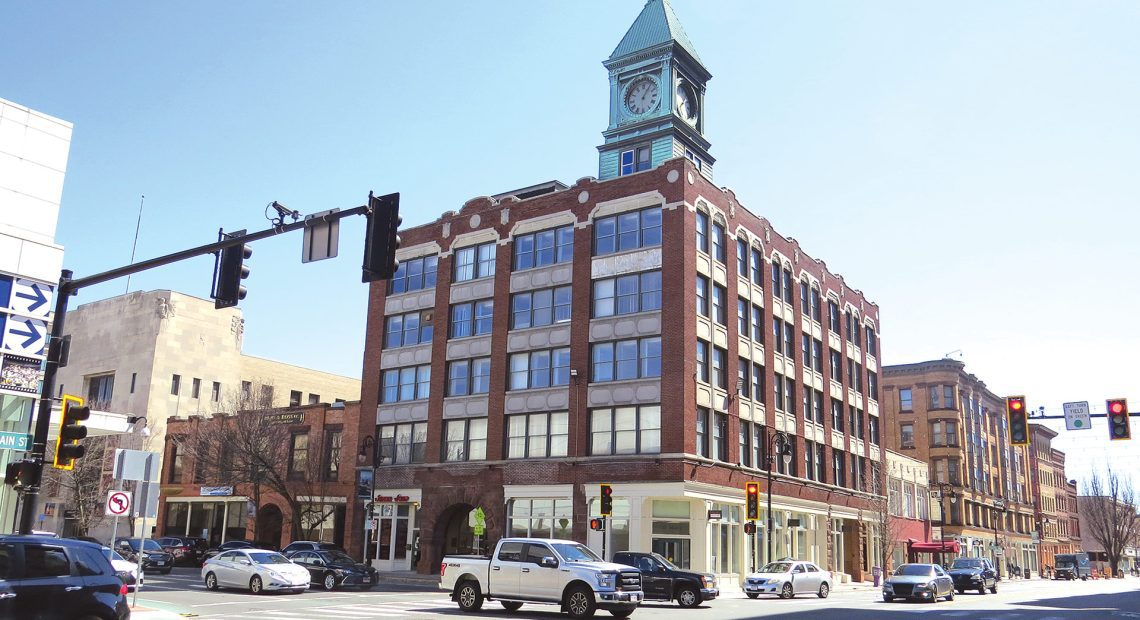
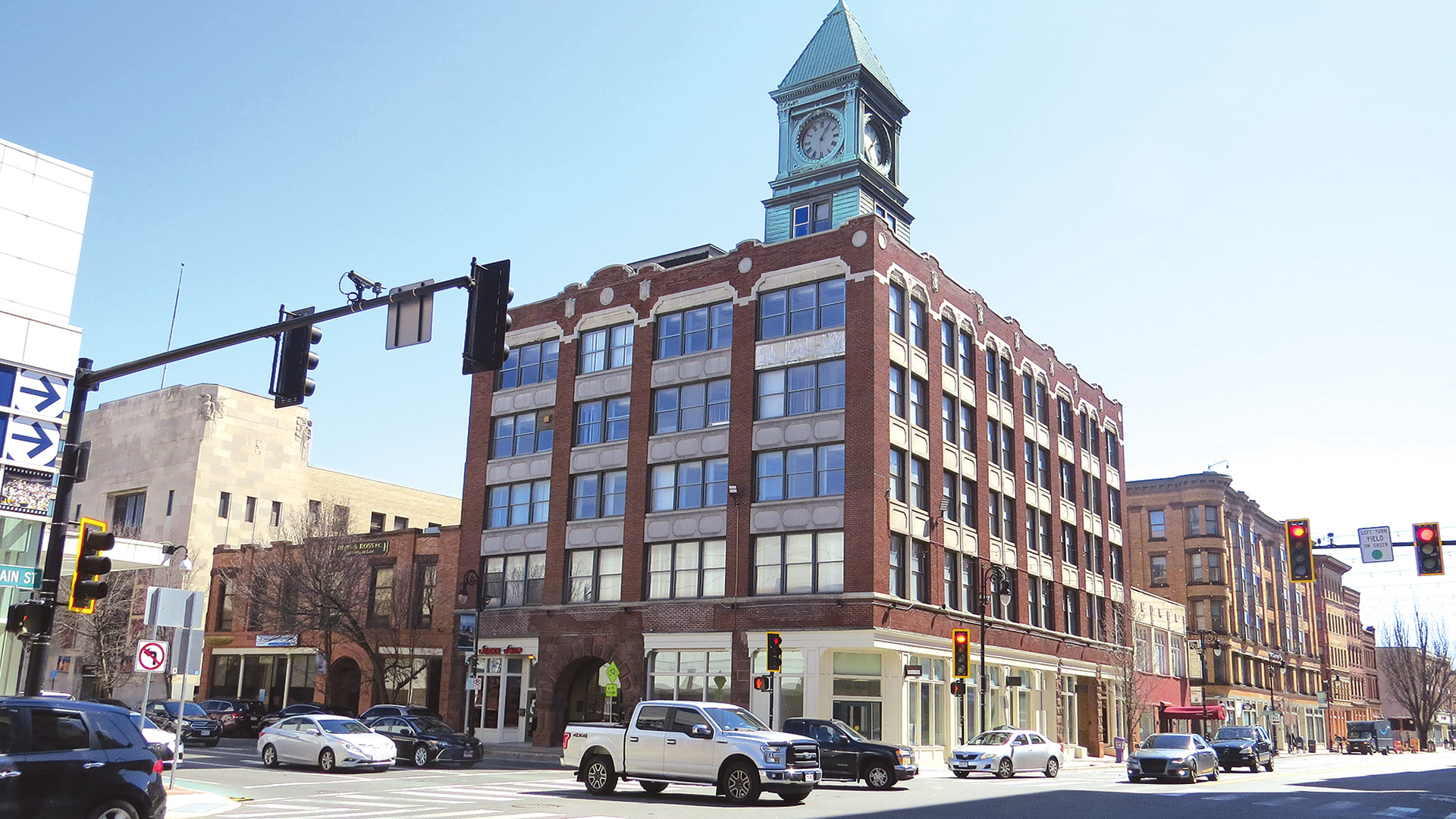
Clocktower Building

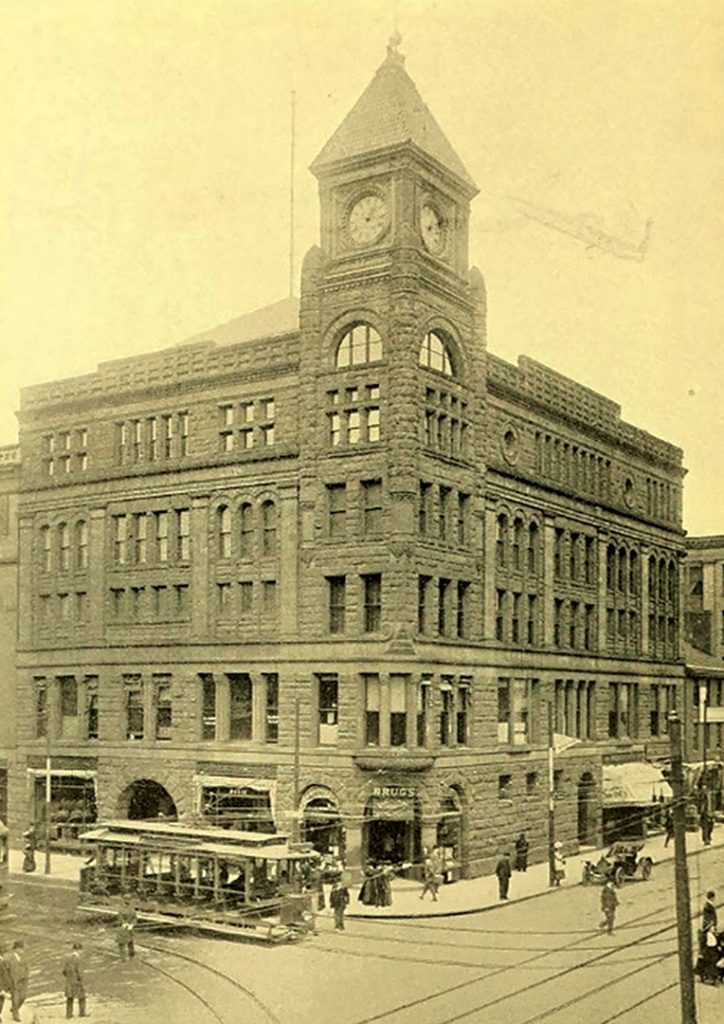
The Clocktower Building, above, was home to Masonic Temple more than a century ago (right).

At other times in Springfield’s history, the properties at 113 State St. and 1155 Main St. were prominent players in the vibrancy, culture, and overall tenor of the City of Homes.

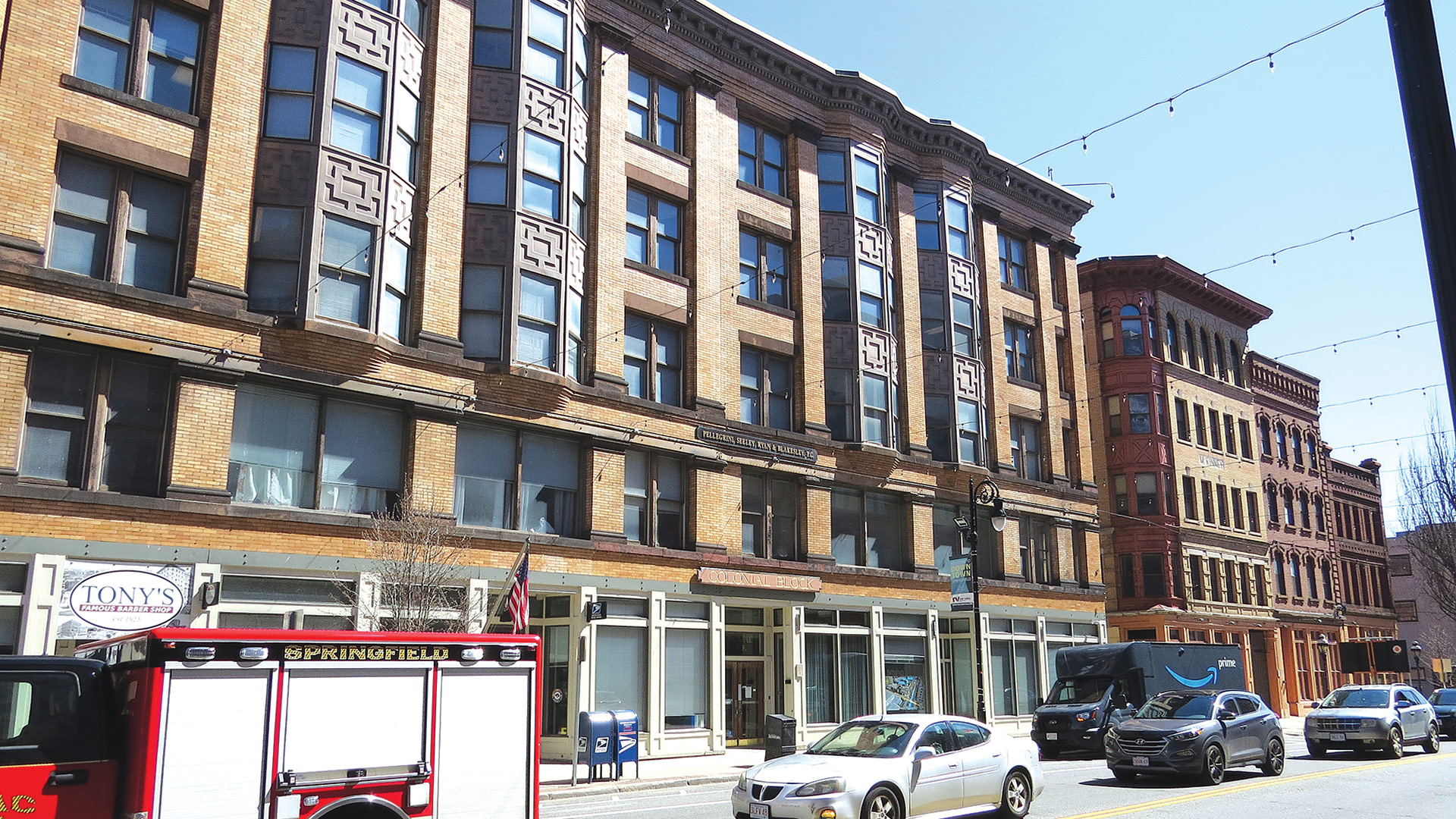
The former — long known, for obvious reasons, as the Clocktower Building — was home to the Masonic Temple when it opened in 1893, before a new, much larger facility was built further east on State Street. The latter, the Colonial Block, which opened in 1903, was one of the city’s first real mixed-use facilities, noted Tim Sheehan, Springfield’s chief Development officer, featuring a blend of office and retail space on the lower floors and residential units on the upper floors.

Until fairly recently, meaning before the pandemic, the two properties had still been somewhat vibrant, featuring a wide array of tenants, including nonprofits, small businesses, a bank (at 113 State St.), and a number of various-sized law firms taking advantage of the buildings’ proximity to the Hampden County Courthouse just down State Street. These days, though, they are almost entirely vacant and stand in stark contrast to the progress seen around them, most notably across Main Street at MGM Springfield and across State Street at the MassMutual Center.

City officials have been looking to change that picture, obviously, and are moving forward with a plan to return these buildings, and also 11-21 Stockbridge St., a smaller, better-occupied office property in that same area, to their former status and make them part of the city’s resurgence. After acquiring them as a package in 2021 for $2.75 million, the Springfield Redevelopment Authority (SRA) has invited the development community to step up and submit proposals for the properties, separately or perhaps collectively.

Responses to this request for qualifications (RFQ) are due later this month — the deadline was originally late March — and Sheehan and SRA Executive Director Amanda Pham are expecting some imaginative proposals because that’s what will be needed to turn back the clock and make them key players again.

“This will require a responsive, creative developer, someone who has a vision for preservation of these buildings,” Pham said. “They have great potential.”

Sheehan and Pham are expecting proposals that will likely blend office and/or retail with a residential component, noting that what emerges for one, two, or all three properties will likely require a public-private partnership, similar to what was needed to finally move the needle and create a new use — a mix of residential and retail — for the former Court Square Hotel, just a block or so from the three properties in the RFQ.

Finding a preferred developer is a two-step process, said Pham, adding that, after responses to the request for qualifications are received and reviewed, three finalists will move on to a request for proposals.

If all goes well, a preferred developer is expected to be named by June, they said, adding that it may not be long after that when people start talking about these landmarks using mostly the present and future tenses, and not the past.


Building Momentum

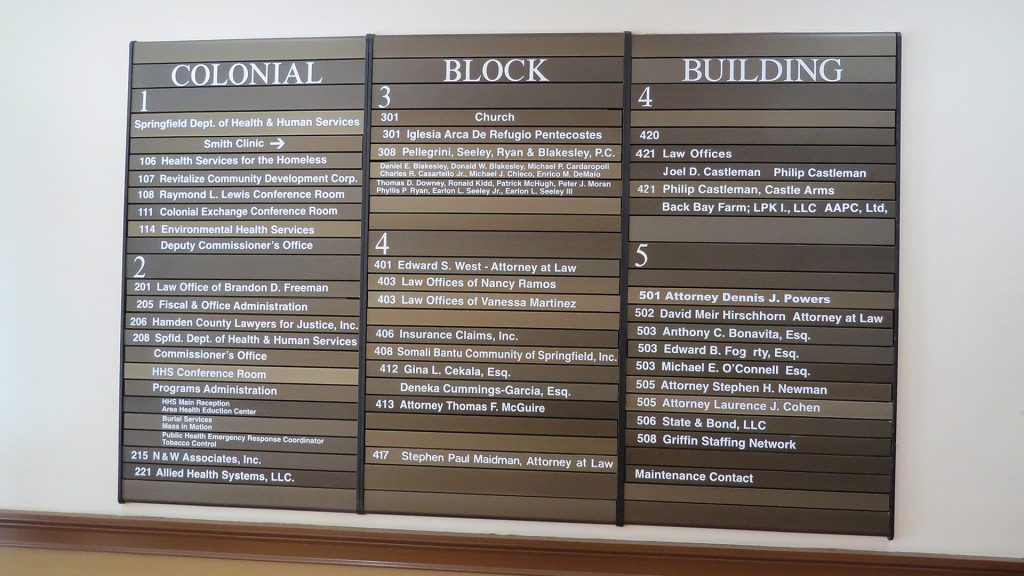
As she gave BusinessWest a tour of 1155 Main St., Pham referenced some reminders of, well … what it once was, starting with the large directory on a wall in the lobby listing tenants and their suite numbers.

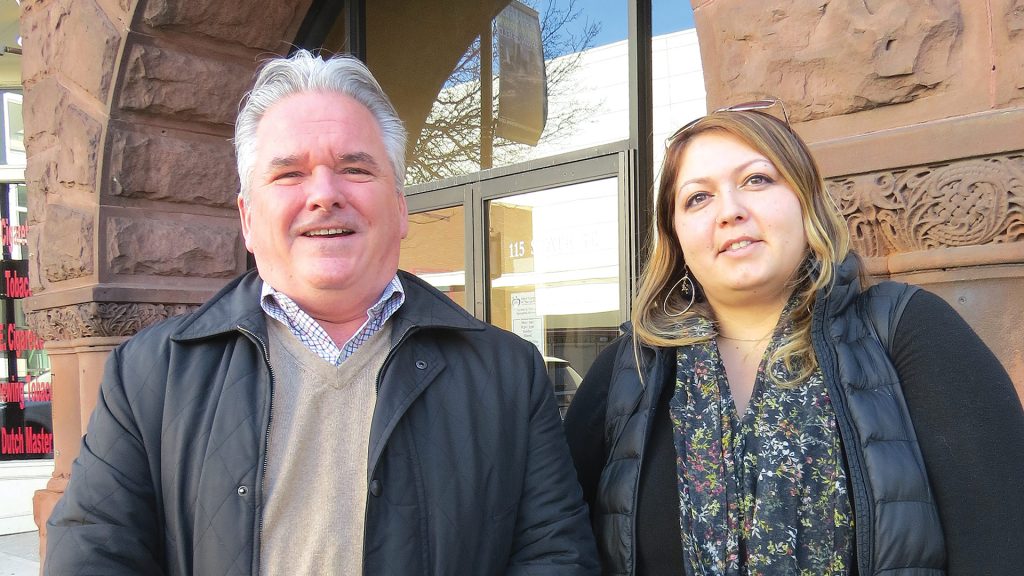
Tim Sheehan and Amanda Pham stand outside the historic structure.

Tim Sheehan and Amanda Pham stand outside the historic structure.

The board still includes the names of dozens of tenants that are no longer there — from the law firm Pellegrini Seeley, Ryan and Blakesley, which once took much of the space on the third floor before moving to the Basketball Hall of Fame complex, to Revitalize Community Development Corp., which occupied a large suite on the second floor. In fact, the 82,000-square-foot property is currently only about 12% occupied.

Later, she pointed to a large bookcase full of law books left behind by one of the departing law firms.

“We have a lot of law books,” she said, adding that, apparently, many of the departing firms located in various-sized offices on the maze-like floors had no use for the books in this age of the internet and simply left them behind.

Thus, these law volumes become part of the dialogue concerning what this property used to be, said Pham, who took the helm at the SRA in 2021, adding that, increasingly, the focus is on what they can be moving forward.

The SRA has taken the matter from the discussion phase to what could be called the discovery phase with the request for qualifications. It includes a link to a six-minute video that features comments from Pham, Sheehan, Mayor Domenic Sarno, MGM President and CEO Chris Kelley, Peter Picknelly, chairman of Peter Pan Bus Lines and a key player in the Court Square project, and others, all inviting developers to take advantage of this “Main Street and Convention District development opportunity.”

“This will require a responsive, creative developer, someone who has a vision for preservation of these buildings. They have great potential.”

Together, they talk about the progress made downtown and the progress still to come, with projects like the $74 million parking garage and event space that will replace the facility torn down last fall. They also discuss how much of this progress was the result of public-private partnerships.

“This development behind me never would have happened if not for the cooperation of City Hall and the state of Massachusetts,” said Picknelly as he stood in front of the Court Square property.

The Colonial Block

The Colonial Block was one of the first mixed-use buildings in Springfield, with retail and residential space. It may see a similar blend in the future.

A number of developers, both with local ties and from outside the region, have expressed interest in the properties, said both Sheehan and Pham, noting that the city acquired the properties to move beyond the ongoing speculative nature of previous ownership and take redevelopment to a higher plane.

“We wanted the buildings situated so their redevelopment would ultimately fit the city’s overall planning as it relates to the Main Street Convention Center District Plan,” said Sheehan, adding that this plan, in general terms, calls for building on existing momentum and creating a true destination in the downtown, a place where people can live, work, and (especially with MGM and the MassMutual Center right next door) play.

A developers’ tour conducted several weeks ago attracted several parties, many in person, but some virtually, said Pham, adding that Springfield has managed, through its recent spate of progress, to put itself on the map with regard to regional and national developers looking to expand their portfolios.

There were site tours of the properties and the surrounding area as well, she went on, adding that firms brought full teams with them, including architects, engineers, and planners, to gauge future uses for the landmarks.

Given the current glut of office space, Sheehan said, especially the class B and class C variety that these properties have featured, future redevelopment will likely not focus on that use entirely, although it could be part of the equation.

“There is an overabundance of class B and C space in the office sector, so we’re really encouraging people to look at adaptive reuse to … something else,” he noted. “Developers may want to reduce the amount of office, but not completely eliminate it, either.”

A much larger part of the equation will likely be market-rate housing and activation of the ground floors with retail and hospitality-related businesses that will give downtown visitors more things to do and more opportunities to stay, he went on.

Colonial Block

Above, the directory inside the Colonial Block is quite dated, as most of those tenants have moved out. At right, one of the unique spaces in the building.

“Our planning ultimately calls for extensive ground-floor activation,” he explained. “You have two very strong anchors, in MGM and the MassMutual Center, adjacent to these properties, and we really think there is the ability to activate the ground floors so that it encourages people who want to come to the MassMutual Center or MGM to want to linger and stay in the area.”

As for housing, Sheehan said a recent study identified the need for 1,500 units of additional housing of this type in and around downtown.

And while conversion of such properties to housing is often difficult and expensive, developers need only look a few hundred yards to the south for inspiration, to the massive Stockbridge Court apartment complex, created more than 40 years ago and perhaps the city’s best market-rate-housing success story.

“Stockbridge Court is certainly an example of what can be done,” he said, adding quickly that any residential projects in these properties will likely require a public-private partnership to not only renovate the buildings in question but improve the overall area and its connection to Main Street.

“We’ll need to enhance the infrastructure to make it a much more walkable environment — and a pleasant walkable environment — if we’re going to attract that scale of residential development in this area.”


Right Time and Place

Overall, there are some building blocks coming together that could make development of these properties a more attractive and more viable opportunity, said both Sheehan and Pham, noting that leasing activity will start soon at Court Square, and construction is set to commence on the new parking garage. Meanwhile, a new entrance is planned at the southwest corner of the MassMutual Center.

Meanwhile, the two leaders are looking at adaptive reuse of these properties as just part of a larger effort in the city’s downtown.

“We’re looking at these as the first step in the redevelopment of the area,” said Sheehan, noting that that there are several other vacant or underutilized spaces, including the neighboring 1260 Main St., several surface parking lots, and other properties.

As he referenced a photo of the Clocktower Building, from the days before its stone exterior was mostly stripped away — it remains in some places as a reminder of what was — Sheehan waxed nostalgic on its place in city history.

“For a long time, this building has certainly played a major role in downtown Springfield in terms of being a major corner and a huge presence,” he told BusinessWest, adding that the hope is that this property, as well as the Colonial Block — and other properties in that area — can attain that status again.

Time will tell, of course, when and how soon that happens, but this is certainly a developing story — in every sense of that phrase.

Business Talk Podcast Special Coverage

We are excited to announce that BusinessWest has launched a new podcast series, BusinessTalk. Each episode will feature in-depth interviews and discussions with local industry leaders, providing thoughtful perspectives on the Western Massachuetts economy and the many business ventures that keep it running during these challenging times.

Go HERE to view all episodes

Episode 157: April 10, 2023

George Interviews Michelle Schutt, president of Greenfield Community College

michelle Schutt

On the next installment of BusinessTalk, Michelle Schutt, president of Greenfield Community College, talks with BusinessWest Editor George O’Brien about proposals for ‘free’ community college and what they might mean for area residents, the community colleges, the higher education sector, area employers, and the region’s economy. There’s a lot to unpack, and it’s all must listening, so tune in to BusinessTalk, a podcast presented by BusinessWest and sponsored by PeoplesBank.

Sponsored by:

Also Available On

Business Talk Podcast Special Coverage

We are excited to announce that BusinessWest has launched a new podcast series, BusinessTalk. Each episode will feature in-depth interviews and discussions with local industry leaders, providing thoughtful perspectives on the Western Massachuetts economy and the many business ventures that keep it running during these challenging times.

Go HERE to view all episodes

Episode 156: April 3, 2023

George Interviews Robert Westerfield, vice president of Casino Operations at MGM Springfield

The sports betting era has begun in Massachusetts, and it’s off to a fast and intriguing start. On the next installment of BusinessTalk, Robert Westerfield, vice president of Casino Operations at MGM Springfield, talks with BusinessWest Editor George O’Brien about sports betting, March Madness, and what to expect moving forward. It’s must listening, so tune in to BusinessTalk, a podcast presented by BusinessWest and sponsored by PeoplesBank.


Sponsored by:

Also Available On

Features Golf Preview Special Coverage

Staying the Course

Ted Perez

Ted Perez, long-time pro at East Mountain Country Club

When Ted Perez Jr. talks about the 2023 golf season, he uses the present tense — and even the past tense on occasion.

Indeed, Perez, the pro and co-owner of East Mountain Country Club in Westfield, said the season — for his course, anyway — began in January, as it sometimes does; this family-owned club is famous for being open whenever there is no snow on the ground.

But this January was different from just about any other that came before it, said Perez, who said the course was probably open for play all but a few days that month. And it was open most every day the first three weeks in February as well.

March wasn’t as kind, with the course closed several days by snow and play reduced to a trickle on many others, he said, but overall, it’s been a phenomenal start to 2023.

“I’ll call this a non-winter,” said Perez, whose father, Ted Perez Sr., built this course, located just a long par 5 from the runways at Barnes Municipal Airport, 60 years ago. “I wish every winter could have been like this one.”

Elaborating, he said winter golf of this kind is a real boon for the course because the revenue generated isn’t offset by the expenses encumbered most of the rest of the year, everything from cutting the grass to overseeding the fairways to paying the people to perform those tasks. “My father used to say, ‘it’s like finding money on the street.’”

As the 2023 season begins for most courses in the region — a few others were open for play through during stretches of the winter — they are hoping that their springs, summers, and falls are as good, relatively speaking, as Perez’s winter was.

“My father used to say, ‘it’s like finding money on the street.’”

Actually, they’ll settle, if that’s the right word, for what they’ve seen the past few years, a recognized surge in play that started during the summer of 2020, the height of the pandemic, when there was little else for people to do — they couldn’t even play tennis due to restrictions imposed by the state.

That surge continued into 2021 and then 2022, said Jesse Menachem, executive director and CEO of the Massachusetts Golf Assoc., noting that the numbers were down slightly in 2022 from 2021, but still better than the years leading up to the pandemic.

“We saw levels jump considerably in 2020 and into 2021,” he told BusinessWest. “In 2022, we were able to sustain levels and continue to grow. Overall, we’ve been able to retain the new golfers and the golfers who were brought back into the game by the pandemic. Our facilities, our operators, and our organizations are doing a great job of keeping the game sticky, keeping it relevant.”

The questions on everyone’s mind going into the new year are … will this surge continue?, and to what extent? As with the weather — always the biggest question mark heading into a new year — no one really knows the answers, but those we spoke with project another solid year for the local golf industry.

EJ Altobello

EJ Altobello, head pro at Springfield Country Club, is among those projecting the recent surge in the region’s golf industry will continue in 2023.

EJ Altobello, head pro at Springfield Country Club, a private club, said most all signs point to a continuation of current trends (his club now has a healthy waiting list for membership), and he points to Florida, where the first three months of the year have been on par (yes, that’s an industry term) with the past few seasons, as evidence.

“They’re off to a great start,” he noted. “Golf retail is off to a great start, golf rounds are off to a great start, and I think things will go the same way up here — there’s no reason to believe otherwise.”

Steve Elkins, chair of the board at Amherst Golf Club, a nine-hole track owned by Amherst College and managed by the board members, agreed. He said the past few years have been solid, and revenues have helped put the course on more solid ground than it has been in some time.

“We’re in good shape … we’re in as a good a shape as we’ve been in a very long time,” he said, adding quickly that courses have to be careful and smart with their spending to stay in solid shape financially.

On the downside, if it can be considered that, it is somewhat more difficult to get a tee time at some courses, said Menachem, and there are now waiting lists at many private clubs. So accessibility is certainly not what it was in the pre-pandemic years.

But for those in this unpredictable business, those are definitely good problems to have.


Green Lights

It’s called Good Friday, Bad Golf.

That’s the name of the first organized golf outing of the year at East Mountain Country Club, and, as that name suggests, it’s played every year on Good Friday, which means that some years, it isn’t played at all due to inclement weather, especially when Easter comes earlier rather than later.

This year, it’s set for April 7, and Perez is hoping his luck with the weather in 2023 holds, because there are 140 signed up for golf and the dinner to follow it. Meanwhile, April 7, or thereabouts, is when most courses in the area project to be open, if not a week or more earlier — a solid head start over most years.

“We saw levels jump considerably in 2020 and into 2021. In 2022, we were able to sustain levels and continue to grow. Overall, we’ve been able to retain the new golfers and the golfers who were brought back into the game by the pandemic.”

Jesse Menachem

Jesse Menachem

And as they open, they’re expecting to see roughly what they’ve seen for nearly the past three seasons — more business than they were seeing in the years leading up to the pandemic. In most cases, much more.

Indeed, through the end of the 2010s, golf was in the doldrums, continuing a downward trajectory that started in the early 2000s. For many, and especially the younger generations, the game was too time-consuming and too expensive, and they were putting their time and money elsewhere.

Public courses struggled to get daily play, often despite attractive specials, and private clubs, many of which had been historically full and boasted waiting lists, had plenty of spots available and were marketing themselves far more aggressively than ever before to bring in new members — and much-needed revenue.

The downward spiral was punctuated by the closing of several courses in the area, including Hickory Ridge in Amherst, Pine Grove in Northampton, and Southwick Country Club. Despite this thinning of the herd, many area courses continued to struggle.

Then, the pandemic came.

Golf was still slow and still comparatively expensive, but suddenly, people didn’t seem to care, or care as much. People of all ages and other demographic categories were looking for things to do, ways to keep active as they were eating and drinking more, and opportunities to socialize — and golf could check all those boxes, to one extent or another.

Then-Gov. Charlie Baker lifted tight restrictions on golf in early May 2020, and for the rest of the year, clubs saw surges in play, memberships, and retail sales.

Elkins said Amherst Golf Club (AGC) received a huge boost from students, most of them from UMass, who were still living in the area but not attending classes in person. Looking for things to do with their time, maybe 30 bought attractively priced memberships at AGC, a semi-private course.

Amherst Golf Club

Amherst Golf Club, a 9-hole track with a long history, has seen an increase in memberships and overall play since the start of the pandemic.

“We got a huge COVID bounce from students who couldn’t attend classes in person,” he said. “It was a one- or two-year bump, and now it’s gone away.”

Still, membership remains solid — it’s currently at about 265, down from the peak but certainly up from the pre-COVID years — and daily play (there’s a $32, play-all-day rate) has been stable as well and certainly helped by the closing of Hickory Ridge (just a mile or so down the road) a few years ago.


Different Strokes

The surge in play — and spending at local clubs — continued, and even accelerated, in 2021, despite the loss of maybe two dozen days of play to seemingly non-stop rain.

The skies brightened in 2022 — when obsessive heat was the bigger problem — and those trends continued. Indeed, almost everyone we spoke with said 2022 was down slightly from the year before, but still quite solid and better than pre-pandemic.

“Last year wasn’t quite as good, but right in that same ballpark,” said Altobello, using total rounds and membership, which is at a 15-year high, and his main measuring sticks. He noted that the difference might have been as simple as more people returning the office last year, making it somewhat more difficult to “sneak out for an afternoon round,” as he put it.

Overall, though, the numbers were quite good, and they provided ample evidence that those who picked up the game during the pandemic, or picked it up again after putting it down, were, indeed, staying with it, said Altobello, adding that these increases were across the board, and especially encouraging when it comes to women and young people, two demographic groups that many feel hold the key to the long-term success of the industry.

“The indicators are that they are still here,” he said. “How long they stay … that’s to be determined. But as of right now, they’re still out there playing. We’re seeing more and more women in the game, more and more men in the game, and we’ve had a great increase in our youth programs as well.”

As play picked up over the past few years, there were some changes to the landscape, ones that reflect concerns about the cost of the game and the time it consumes, said those we spoke with. Indeed, the nine-hole outing, or ones that are even shorter, became far more common, and more accepted, than perhaps ever before.

“In many cases, people only have time for nine holes. That’s roughly two and a half hours on a full course, and that’s all the time many people have.”

“Ten or 15 years ago, that wasn’t even a thought,” Menachem said of a nine- or maybe six-hole round. “It was either 18 holes or nothing; now, nine holes is a far more realistic and accepted option for those with families, for those with shorter windows of time to play before work or after work. That is definitely a positive.”

Dave Twohig, the head pro at Amherst Golf Club for more than 40 years, agreed. “In many cases, people only have time for nine holes,” he said. “That’s roughly two and a half hours on a full course, and that’s all the time many people have.”

Amherst actually has two “loops,” as he called them, holes 1-5 and 6-9 — both wind up back at the clubhouse — that people can play if they have just an hour or so and want to get a little play in, and many do just that.


Round Numbers

Looking ahead, or at what’s right in front of them, in the case of East Mountain and other courses that have been open for play in Q1, those we spoke with said the outlook for 2023 is colored by optimism.

And the head start many courses were able to get will certainly help, said Menachem.

Indeed, he said that, for tracks like East Mountain and many others, especially in Eastern Mass. and on the Cape (maybe 20% of the state’s courses), the robust first quarter provides needed cash flow, as Perez noted, when there are few, if any, offsetting expenses.

“It’s like found money,” said Menachem. “You’re running on a thin operation, and you’re allowing access to the golf course in the condition that it’s in without much preparation on the maintenance front; it’s not too much of a heavy lift, and the revenue you’re able to derive should completely outweigh the expenses.”

Also, the early, solid start provides a buffer against possible headwinds, such as heavy rain and excessive heat, later in the year, he went on.

Meanwhile, almost all courses should be able to open earlier than what would be considered normal, said Menachem, who, as he spoke with BusinessWest a few weeks back, said 60 to 70 were already open.

Despite all the optimism that prevails within the industry, there are still challenges to be overcome.

Indeed, the ongoing workforce crisis is still making it more difficult to attract and retain help than it has been historically.

“Labor is still a huge issue, especially on the maintenance and operations side of the game,” Menachem said. “It’s not always been attractive to get up early and set up a golf course, and we want to make sure we can support the next generation of staff and make sure wages are competitive with other industries. Meanwhile, being a seasonal sport also has its challenges.”

Elkins agreed, noting that Amherst Golf Club has increased pay rates to remain competitive and hire and retain not only young people, but also some retirees looking to work and stay active.

Meanwhile, the higher cost of … well, just about everything poses stern challenges for clubs, most of which are operating on rather thin margins and without huge reserves to fall back on. In a word, clubs need to be careful, said Elkins, adding that this certainly the case at AGC.

“Making sure that we manage our cash is really important,” he noted. “Like a lot of courses, we’re in good shape, but we’re not going to spend a ton of money on something that’s not core to the course, because it’s risky. We want to make sure we have a good capital reserve and that we spend our money wisely.”

Perez agreed, noting that, despite his great start to 2023, he knows things can change quickly, and he’s learned to reserve judgment until he’s added up all the numbers in December.

“I don’t get too caught up in all the numbers until the end of the year,” he said. “I’ve been doing this a long time, and I know better than to get too excited in March. But it is good to have a non-winter like this one; it beats the alternative.”


Staying on a Roll

With the non-winter of 2023 now in the rear view, the region’s golf industry looks forward to the next three seasons.

They do with a spring in their step — figuratively but also quite literally, and optimism that the recent surge the game has enjoyed will continue.

Time will tell if they are right, but all signs indicate that area operators will be able to stay the course — in all kinds of ways.


Healthcare News Special Coverage

Second Wind

By Mark Morris

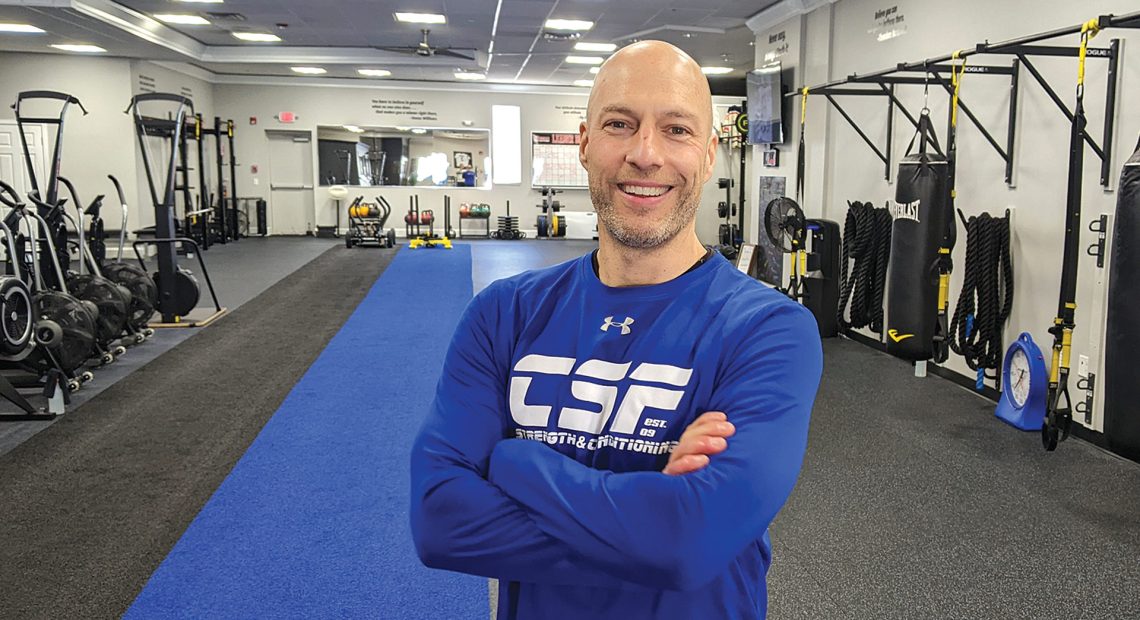
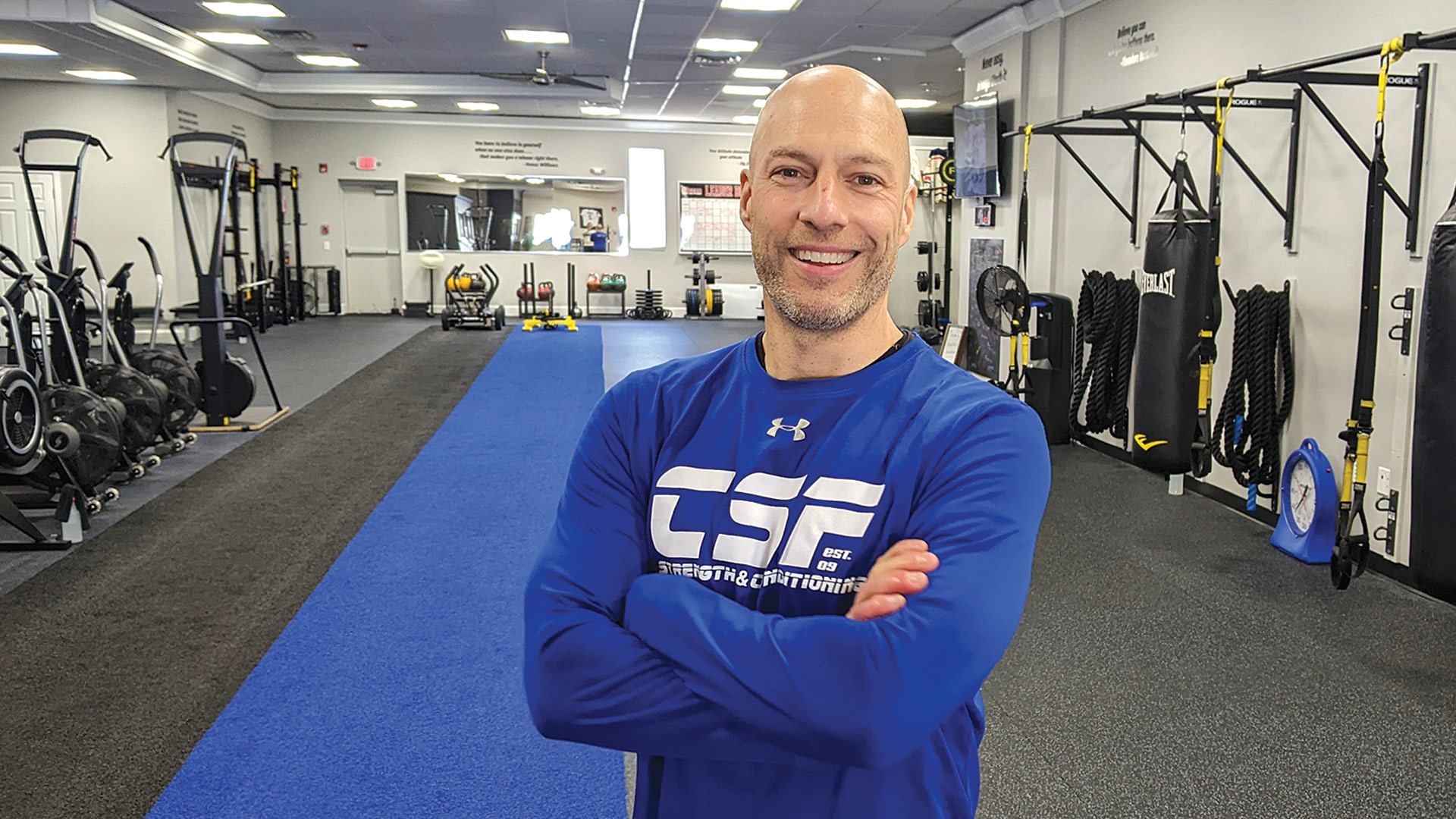
Steve Conca

Steve Conca says he’s seen a post-pandemic uptick in people wanting to take charge of their health.

Editor’s Note:

These are exciting, challenging, and ever-changing times for healthcare and the businesses and individuals providing it. To better inform and educate its readers about the many issues, trends, and developments in the healthcare sector, BusinessWest will be introducing a new, monthly segment that will present content from its sister publication, Healthcare News (HCN) .

This new resource will be called “HCN Monthly Feature,” bringing news and information on the many health, wellness, and fitness issues and developments of today, from both regional and national sources. Each HCN Monthly Feature will have specific themes and points of emphasis — everything from health and fitness (this month) to behavioral health; from cancer care to a salute to the region’s nurses — and it will be made available online at both businesswest.com and healthcarenews.com, as well as via the daily e-newsletters BusinessWest Daily News and HCN News & Notes, making it readily available to subscribers and consumers in the Western Mass. region and beyond. 

For subscriptions, additional information, and to send us your news and story ideas, please visit BusinessWest  and HCN

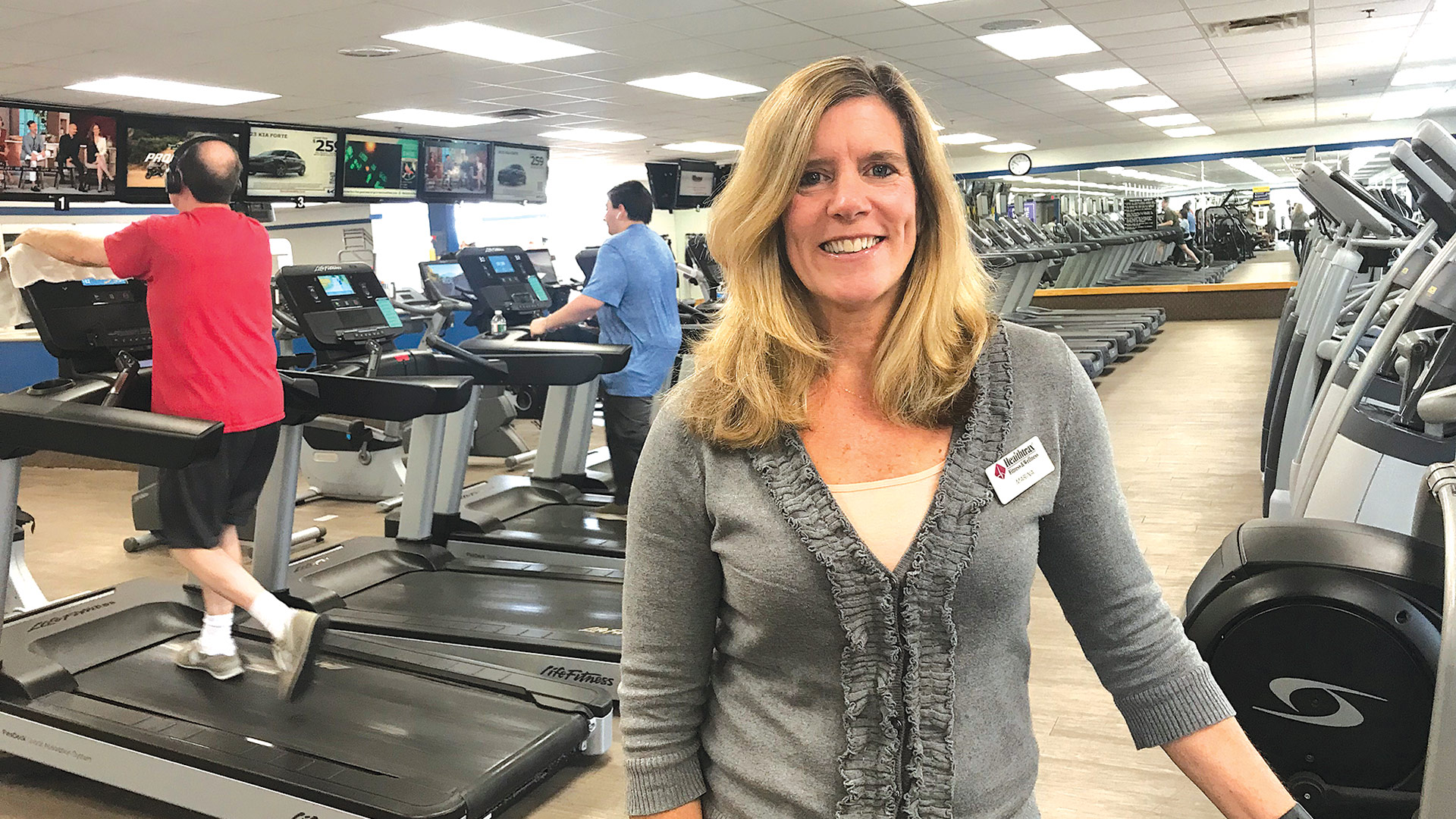
Marina Lebo remembers what Healthtrax in East Longmeadow looked like during the pandemic — and is glad it looks a lot different now.

“The plastic barriers are down, and the equipment is all back where it was,” said Lebo, vice president of Operations at the club. “We have more cleaning supplies available, but that’s the only difference.”

Fortunately, that return to normal is manifesting in other ways as well — including an increase in activity.

That’s only natural; at the start of the pandemic in March 2020, fitness centers were forced to shut down. Three months later, they were allowed to reopen at 40% occupancy only after installing clear plastic barriers at the front desk, mandating masks for everyone, spacing out exercise machines, and providing lots more sanitizing wipes to clean the equipment after each use.

With Healthtrax membership back to about 70% of pre-pandemic levels, Lebo’s goal is to keep increasing everyone’s comfort level to encourage going to the club as a normal activity again.

Steve Conca, owner of Conca Sport and Fitness in West Springfield, described the last few years as a whirlwind. He’s grateful his business has survived — and even thrived — since the early days of the pandemic.

“We don’t have a huge membership base, probably around 150, and it’s a very tight-knit community where people support each other inside and outside the gym,” he said.

When everything shut down in the spring of 2020, Conca began meeting with clients outdoors and over Zoom. “Everyone stuck with us, which was great. We didn’t lose too many people once we got back into the swing of things.”

Outdoor gatherings and livestreams were options Ashley Brodeur also used to keep her business going during the height of the pandemic. The owner of Active Lifestyle Fitness in Agawam hosted a private group on Facebook Live to keep her members on a regular workout schedule. While she appreciated virtual classes as a short-term necessity, she said, nothing beats the in-person experience.

In fact, shortly after in-person sessions resumed, Brodeur noticed several members getting easily winded from doing the same workouts they were performing during the livestream sessions. “When I asked why, they admitted that they weren’t doing the entire workout at home.”

So everyone was glad to return, she went on. “There is an accountability in having to show up somewhere and having someone watch how you are exercising.”


Wake-up Call

Everyone who spoke with BusinessWest pointed out that the pandemic served as a wake-up call about the importance of good health. As their members return to fitness centers, all agree there’s a new emphasis on getting results.

Marina Lebo

Marina Lebo says the rise of flexible and hybrid work schedules has led to Healthtrax being busy at less traditional times.

“I think a lot of people’s minds shifted during the pandemic,” Brodeur said. “Instead of working out to quickly lose some weight, our typical member now seeks a higher quality of life and to avoid becoming an unhealthy person.”

Lebo noted that the most vulnerable people to getting COVID usually have issues with obesity or struggle with other health problems.

“There’s been a realization that, if you stay in shape, you will be better-prepared for all kinds of ailments, and you’ll be less likely to have symptoms over someone who isn’t as healthy.”

For the past year or so, Conca has seen a resurgence in his West Springfield facility due to people taking more initiative with their own health and wellness — especially older people or those who navigated the pandemic with heart disease, diabetes, weight issues, or other health factors, and now want to improve their outlook.

“They weren’t really paying attention to their fitness or health before,” he said. “These are folks who want to take a much closer look at their health.”

Most of Conca’s members are in their mid-40s through their 60s. “We have some folks in their 30s, but they’re not the majority,” he said. “It’s a nice mix of folks, and no one’s here for vanity reasons like getting ready for bikini season. They want to move better, feel better, take care of themselves. When they go on vacation, they want to be able to go on a hike without pain.”

The demand for more results-oriented workouts has meant growth in the personal training and small-group training programs at Healthtrax. Lebo said the small-group training appeals to people who like a dedicated workout at a scheduled time.

“If you’re a biker, golfer, tennis player, runner, obviously you can’t go as fast and hard and aggressive as you did in your 20s or 30s, but you can still go out and enjoy doing it, at maybe a little less intensity.”

“If you have a goal and you start to see results, you are more likely to stick with the training,” she said. “It’s far more effective than going to the gym for weeks, doing your own thing, and not seeing any noticeable results.”

To establish a starting point for fitness, Healthtrax uses a high-tech body-composition machine known as InBody 570. While the user stands on it barefoot and holds the handles, the machine provides a wealth of fitness information that helps a person understand what type of workout would benefit them most.

“For example, someone who is thin might learn they are not as fit as they thought, and the InBody might also reveal a heavy person has a good amount of muscle, so they can concentrate on exercises that burn fat,” Lebo said.

At Active Lifestyle Fitness, Brodeur offers what she calls a 6 Week Transformation Challenge, with an emphasis on strength, cardio health, and flexibility. She emphasized this is not a quick fix, but a results-oriented approach to a healthy and balanced body.

“We developed this program because people told me, ‘I need help. I don’t want to mess around with my health anymore’” she said. “It’s been successful because it centers around the basics of helping people properly move their body and build strength.”

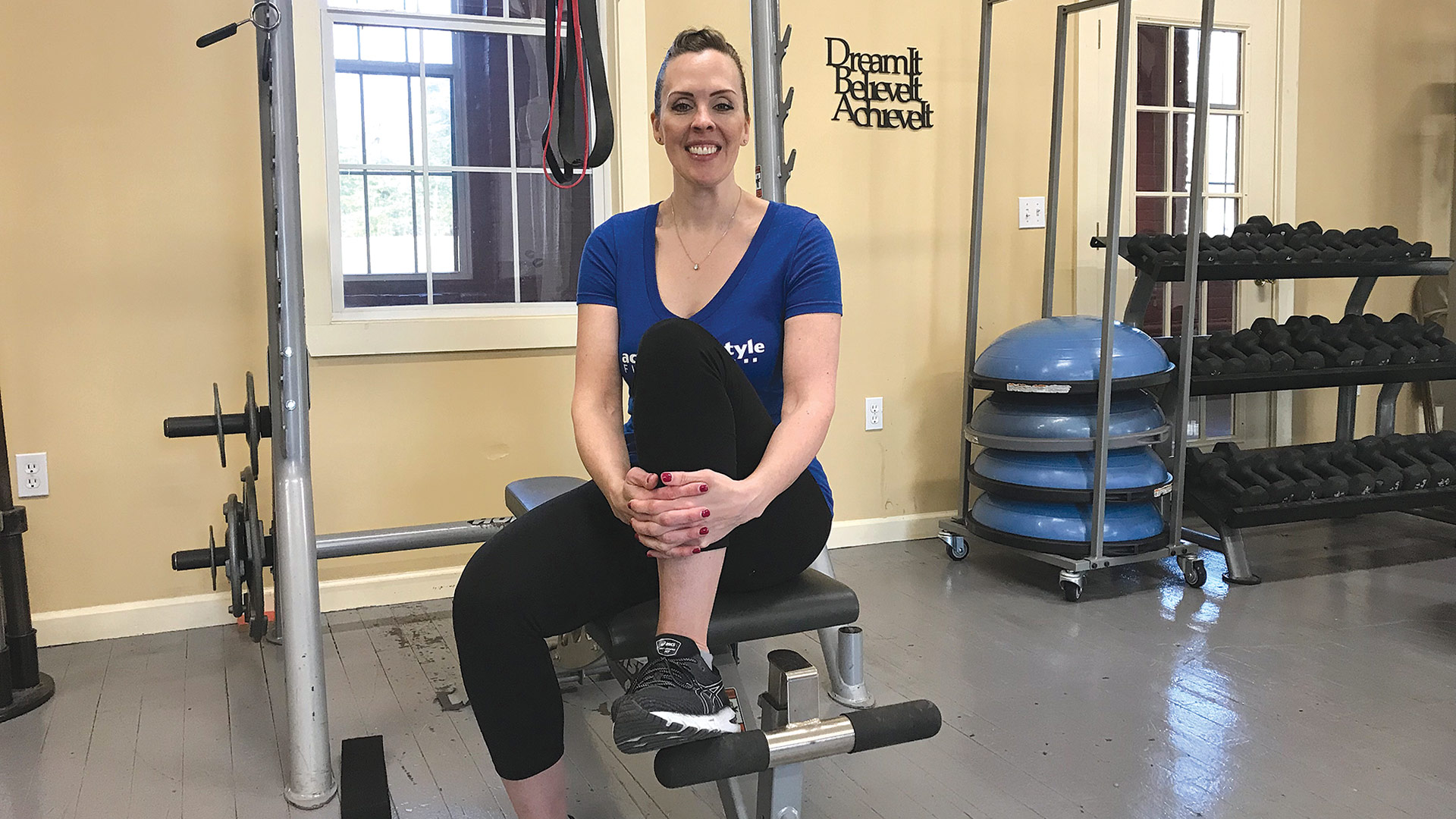
Ashley Brodeur

Instead of just wanting to lose some weight, Ashley Brodeur says, today’s fitness crowd is looking to improve their quality of life.

An emphasis on long-term health comes with many rewards. Conca noted that, while everyone knows the definition of ‘lifespan,’ he talks with members about ‘healthspan’ — the number of years one spends without being hampered by chronic disease — and ‘playspan,’ the number of years one is able to continue to enjoy favorite activities.

“If you’re a biker, golfer, tennis player, runner, obviously you can’t go as fast and hard and aggressive as you did in your 20s or 30s, but you can still go out and enjoy doing it, at maybe a little less intensity.”

Understanding the value of that playspan, and of maintaining the ability to enjoy quality-of-life moments like getting on the floor to play with a grandchild and easily getting back up, puts a real-life emphasis on fitness goals, Conca said, which are more powerful than the numbers attached to weight-loss goals.

“When they come here, a lot of folks are not in a good place; they’re struggling, and there’s a lot of misinformation out there,” he explained, adding that many people have tried different approaches but lacked proper accountability along the way.

“We really personalize it. I’ve been really blessed to help people and have a team around me who feel the same way. It’s exciting because we’re really helping people.”


Opportunity Knocks

Lebo has seen a huge change involving when people choose to access her club. In the past, the hours before and after work were consistently busy, while the club was practically a ghost town in the early afternoon. That’s no longer the case.

“We are busy at all different times during the day,” she said. “With more people working from home or on floating work schedules, they might come in after 9 a.m. or after 2 p.m.”

All-day activity has been a positive development because, in addition to seeing activity all day, members no longer experience those congested times waiting to use the more popular exercise equipment.

“It’s also good for our training classes because we can schedule throughout the day instead of trying to jam everyone in after work,” Lebo said.

Whether it’s through personal training sessions, small groups, open gym time, or an introductory, six-week program called Mastering Your Best Self, Conca emphasizes that fitness should not be stressful. In fact, when done properly, it should reduce other stressors in life.

“Everyone’s dealing with something, whether it’s physical stress, financial stress, or family situations, taking care of someone. Everyone’s got a lot of stuff on their plate. So we try not to make fitness another burden for them,” he said.

“We want people to recognize, they have an opportunity to take better care of themselves, and it’s going to make all those things they are dealing with much more manageable. Fitness can be fun, let’s not make it a punishment.”

Special Coverage Technology

The World in Your Pocket


It’s staggering how much accumulated knowledge is available with a few taps on a smartphone screen. Whether Apple or Android, countless apps are available to help users with a wide range of tasks, from managing their finances to tracking their fitness goals to getting an education in various topics to making travel easier and more fun.

For this year’s roundup of what’s hot in technology, BusinessWest checks in on what the tech press is saying about some of the most popular smartphone apps.


Dollars and Sense

Smartphones have put a world of personal finance in people’s hands. For example, Intuit’s Mint gives users a real-time look into all their finances, from bank accounts and credit cards to student loans and 401(k) accounts.

“Let’s start with Mint’s very high ratings in both the App Store and Google Play,” Nerdwallet notes. “It’s free and syncs many kinds of accounts: checking and savings, credit cards, loans, investments, and bills. As far as the actual budgeting, Mint tracks your expenses and places them in budget categories. You can personalize these categories, which are unlimited. You set limits for these categories, and Mint lets you know if you’re approaching those limits.”

Besides those budgeting features, Nerdwallet notes, Mint may help users pay down debt, save more money, and track goals, while showing users their credit score and net worth. As a bonus, Mint provides plenty of support for using the app, including a detailed FAQ.

As its name notes, You Need a Budget, or YNAB, earns top grades from Investopedia because of the company’s renowned budgeting philosophy and reputation. YNAB says new budgeters typically save $600 in their first two months and more than $6,000 in their first year. It includes customizable reports that break down the user’s income and expenses by category, account, and time frame, with the aim of helping users get their finances in order.

“YNAB allows you to sync your bank accounts, import your data from a file, or manually enter each transaction,” the site adds. “After signing up, you create your first budget and assign every dollar a purpose, such as your rent or car payment. The goal is to eventually get at least one month ahead, so you’re spending money you earned 30 days ago. The company offers extensive educational resources and customer support to keep you on track.”

For investors, Forbes recommends Empower (formerly Personal Capital) for its outstanding reporting options, desktop capabilities, investment-management platform and spending tracking. Empower gives a holistic view of customers’ entire financial picture, from day-to-day spending to tracking portfolio performance.

“The app has several savings tools designed to help build retirement savings and emergency funds and pay down debt,” the publication adds. “It also has excellent advisory tools, including an investment checkup, investment-fee analyzer, financial planning, cash-flow tracking, education cost planning, and real-time net-worth tracking. All of these tools give detailed insights into your current financial picture, while also helping you plan for the future. The list of features may sound overwhelming, but the app is easy to use.”

Meanwhile, CNBC sings the praises of PocketGuard, which, among other features, taking into account the user’s estimated income, upcoming expenses, and savings goals, and uses an algorithm to show how much is available for everyday spending. The app categorizes expenses; syncs to bank accounts and credit cards; and boasts security features like bank-level encryption, PIN codes, and biometric IDs.


Beyond the Workout

Moving beyond financial wellness to physical wellness, countless apps are available to offer information on what to eat, how to exercise, and how to stay committed to better habits.

Forbes recommends FitOn, which offers a wide variety of workouts, including cardio, strength, high-intensity interval training, dance, yoga, Pilates, Barre, and more. It even features workouts led by celebrities like Gabrielle Union, Julianne Hough, and Jonathan Van Ness. Classes are available in real time with the app’s live classes feature or through on-demand workouts.

With a live leaderboard and real-time heart rate tracking via Apple Watch, users can track their progress and fitness goals. Upgrading to the Pro version grants users access to more than 500 recipes, live workout video calls, personalized meal plans, and more.

One of the most popular nutrition apps is MyFitnessPal, which offers a wealth of tools for tracking what and how much the user eats and how many calories they burn through activity, according to PC Magazine.

The app is also a top pick of Verywell Fit, which notes that “MyFitnessPal is our pick for best overall fitness app because of its robust food and activity database, easy-to-use logging and tracking tools, library of workouts, and ability to connect to several other apps.” It includes a database of more than 14 million foods, is customizable based on health goals, and offers restaurant menu logging as well.

According to CNET, Nike Training Club provides various workout programs such as body-weight exercises, high-intensity interval training, cross training, yoga, core exercises, and even expert health tips by Nike trainers to keep you on track.

“The workouts are easy to follow because there are video demonstrations of each exercise with the allotted time you should be doing them,” CNET notes. “This keeps you from losing track during your workout and mentally prepares you for the following exercise. The app also connects to your Apple watch to provide health metrics such as your heart rate and logs your activities. The best part of this app is that it’s free and gives you access to many resources no matter if you’re a beginner or more advanced.”

Although Peloton is famously associated with the home-workout bike of the same name, the workouts on the app don’t all require users to have the bike or other equipment, U.S. News and World Report notes, while boxing, running, yoga, and many more types of fitness workouts are available on the app.

Women’s Health agrees, adding that “testers loved the huge choice of workouts available, from strength sessions to yoga to meditation, and found it easy to filter classes on the app by duration and difficulty to find the right one for them. Our team also said they were persuaded to push beyond their usual limits during each session thanks to motivational instructors, who helped keep their form in check with non-stop helpful pointers — though some testers found them a tad too intense for their liking.”


So Much to Learn

Countless popular apps focus on education and learning for all ages. For kids, Verywell Family recommends Khan Academy, which collaborates with the U.S. Department of Education and myriad public and private educational institutions to provide a free, world-class education for anyone.

“From preschoolers to high-schoolers, there are few educational apps that can measure up to Khan Academy when it comes to the wide range of courses it offers to students of all ages,” the site notes. “Khan Academy’s YouTube videos cover most subjects at a range of levels: math, science and engineering, arts, humanities (which includes history and social studies), economics, AP courses, and test prep.”

It adds that Khan Academy is popular among students, parents, and educators because its videos are engaging and targeted at visual learners, using photos, maps, and other illustrations, and because it allows students to work at their own pace.

For teachers, Education Corner calls Google Classroom an excellent resource. “It pulls together all of the G-Suite apps (Docs, Slides, Sheets, and Draw). Teachers can create assignments and announcements for individual classes. They can attach worksheets, slideshows, or weblinks (along with many other things) and set deadlines. The work can be marked/graded and returned to students for further work.”

When a student completes work, it gets saved automatically to their Google Classroom class folders in their Google Drive (which are set up automatically). All work is saved securely. Students may submit class comments that are viewable to all students and teachers assigned to that ‘classroom,’ which leads to collaborative working.

My eLearning World touts HOMER as a personalized learning app designed to help younger kids fall in love with learning, featuring more than 1,000 learning activities across all subjects. “From toddlers to second-graders, this educational app is a fit for every eager kid ready to learn something new, especially younger kids early in their development. HOMER is an early learning software designed to help children develop their critical thinking skills. It helps them build their confidence for the future by leading them on their customized educational journey.”

HOMER features a variety of interactive lessons, stories, and activities that are tailored according to the student’s individual skills, age, and interests. “The level of personalization is what really sets HOMER apart from other kids educational apps,” My eLearning World notes, “and it’s why this is our favorite app for keeping children of various ages and skills engaged and learning at their own pace.

For learning another language in the go, Lifewire gives top marks to Duolingo, which “stands out among language-learning apps, and among education apps overall. Duolingo includes dozens of languages, including a couple of fictional ones just for fun. Each language offers a mostly linear path divided into topics of conversation. Each topic presents you with short exercises to familiarize you with the material through spoken and written formats.”

The app encourages users to make a habit of practicing with a reward system and a social component. The rewards can be spent in the app’s store on powerups and fun accessories. Meanwhile, the in-app social network encourages users to invite friends to the app and compare scores.


Now Go Away

Thinking about a vacation? PC Magazine says Hopper “is an app you definitely want to use while you’re planning a trip and before you buy any tickets. The mobile-only app tracks flight prices and gives you clear advice on the best time to buy — including through notifications when the price drops. What makes this travel app valuable is its level of detail. It doesn’t just tell you to wait to buy your ticket, but gives you a date when the price will likely rise. You can book through Hopper, too, with a commission fee of a few dollars.”

Travel + Leisure notes that flight prices can fluctuate, making it tricky to decide whether to book right away or hold off. Hopper can remove some of the uncertainty by predicting the best time to find the cheapest fares, saving up to 40%. The app also has a price-monitoring feature so users can select a particular flight and receive alerts if the price drops. They can also compare the prices and amenities of more than 250 airlines and get alerts about airfare flash sales.

For lovers of the great outdoors, Travel + Leisure also sings the praises of AllTrails, noting that “this app will provide you with the area’s best hiking, biking, and running trails. In addition to details on length, starting location, and trail quality, AllTrails includes reviews and photos from a community of hikers and outdoor enthusiasts. You’ll find useful information like what to pack, obstacles you’ll find along the route, and the best scenic spots to check out.”

Finally, Afar singles out TripIt, which automatically tracks confirmation emails for flight itineraries, hotel, or Airbnb bookings; car rentals; restaurant reservations; and even event tickets, then populates those travel plans into an itinerary that be viewed in one place.

“The easy-to-use organizational app makes it simple to share the consolidated information with family or friends, so you can send them your itinerary directly and avoid having to answer repeated texts like, ‘when are you landing again?’ to coordinate an airport pickup,” Afar notes. “TripIt even features a personalized travel stats page for really data-hungry folks who want to know how many trips they’ve taken or countries they’ve visited — and that’s just in the free version.” Meanwhile, the paid version includes extras like real-time flight alerts, TSA wait times, and loyalty reward program updates.

In short, whatever you’re looking to improve in your life, as Apple’s famous ad slogan notes, there’s an app for that.


Community Spotlight Special Coverage

Community Spotlight

MJ Adams

MJ Adams, seen with one of Greenfield’s signature bees, says commercial and residential development are equally important downtown.


MJ Adams recalled a community event in February 2020 called “A Deliberate Downtown: Growing by Design.”

“Because so many interesting things were happening downtown at that time, and we were getting ready to launch a downtown-revitalization effort, we wanted to engage everyone in the community conversation about downtown,” said Adams, Greenfield’s director of Community and Economic Development.

Then the pandemic struck, the world went into lockdown, and the city pressed pause on its plan, she said. But only a pause.

“The COVID-19 pandemic changed many things about the city’s growth plans for the short term, all of 2020 and most of 2021, but it did not change the grit, determination, and resiliency of our city’s business and government leaders,” Mayor Roxann Wedegartner said in a recent state-of-the-city address, noting that municipal leaders moved forward with construction and revitalization programs, aided by a rush of state and federal money intended to pump life into the economy and infrastructure.

During that time, the city broke ground on a new, $20 million library (set to open this spring), solidified a location for its new $21 million fire station (expected to open early next year), and built a temporary fire station to ensure continued service.

“These projects are a testament to the willingness of Greenfield citizens to fund essential services that serve our city and surrounding communities,” she said, adding to that list a skate park soon to open between Chapman and Davis streets downtown, funded with a combination of state grant money and city capital-improvement funding.

It’s all part of what the mayor calls the city’s ‘rurban’ lifestyle, an appealing combination of urban amenities and a rural feel, all highlighted by a downtown set to undergo significant changes to make it more liveable, walkable, and attractive for businesses and visitors alike.

“Downtown areas throughout the nation are changing; some have dried up completely, while others, like ours, are focusing on recognizing demographic and business shifts and are embracing that change,” Wedegartner said in her address. “We have a robust downtown-redevelopment strategy focused on transformational change incorporating available and new housing, new infrastructure improvements, and retail and commercial opportunities. Here is where we merge our economic-development, infrastructure, and housing efforts into a cohesive plan.”


What’s in Store?

A significant element in the downtown mix is the former Wilson’s Department Store site, which is being converted into an intriguing mixed-use development.

The city brought together the Community Builders and MassDevelopment in the acquisition and redevelopment of the former Wilson’s property, originally built in 1882. The redevelopment will create approximately 65 residential rental units and will reactivate prominent first-floor and basement retail spaces through the relocation and expansion of Franklin Community Co-op’s Greenfield store, Green Fields Market.

“In addition to creating much-needed, high-quality housing in Greenfield, relocating and expanding Green Fields Market will provide the community with access to healthy food in an area of Greenfield currently without a full-service grocery store,” said Rachana Crowley, director of Real Estate Development at the Community Builders, when the project was announced. “We’re proud to be a part of this team which will create new housing and employment opportunities and invest in a strong and robust Main Street in Greenfield.”

Adams said attracting a combination of commercial and residential tenants through mixed-use development has been important in the ongoing downtown plan. “What happens downtown, how we perceive it, is how the region perceives us as a community. So we knew we had to work on downtown. And we knew we couldn’t leave Wilson’s sitting empty.”

Jessye Deane

Jessye Deane says Greenfield businesses thrive through connections with myriad agencies that provide technical, financial, and other forms of support.

Adams called upper-story redevelopment “a significant building block in our efforts to create more business development and housing in Greenfield.” But the Wilson’s project is only one piece; another 36-unit development on Wells Street will hit the construction phase soon, and developers are eyeing other potential residential-development sites both within and outside of Greenfield’s downtown sector.

“We know we need to take a look at the missing middle-market supply of housing that serves working people who are not eligible for subsidized housing but are also struggling to find housing in any market now,” she said. “This is an issue for the whole state. Everyone is feeling, quite accurately, that we’ve made progress with affordable rental housing, but now we need to work on other aspects of the market.”

Adams feels like Greenfield is an attractive market for people looking for a place to live because it’s considered more affordable than other communities and boasts strong transit links to the rest of the region and beyond.

A $7.8 million, state- and federally funded multi-modal Main Street improvement project should only lend momentum to that perception, she and Wedegartner believe. The mayor appropriated $288,900 in capital funds for engineering and design of the project, which begins 100 feet to the east of Colrain Street and ends at High Street. The project is on track to be included in MassDOT’s Transportation Improvement Program, with construction slated to begin as early as fall 2026.

“While this project is underway, the city will also be able to upgrade underground utilities, primarily our water and sewer infrastructure. This will save the city money as we will not need to dig up Main Street twice,” the mayor noted, adding that additional grant money is being used to fund a parking-management study for the downtown area.

One significant goal of all this, she told BusinessWest, is to make Main Street more pedestrian- and bike-friendly, including continued efforts to make Court Square a pedestrian plaza. “Route 2A can never be pedestrian-only; Main Street has to be open to all traffic. But there’s significant work being done curb to curb.”

“I’m fond of saying that, in five years, you’re not going to recognize Main Street.”

Wedegartner stressed that development activity in Greenfield extends well beyond downtown. The Planning Department and City Council continue work to rezone about 40 acres across Route 2A from the I-91 Industrial Park as additional industrial space geared to attracting more advanced manufacturers and sustaining existing manufacturers who have run out of space in the current industrial park.

Jessye Deane, executive director of the Franklin County Chamber of Commerce and Regional Tourism Council, said one of the city’s selling points is its balance between that industrial sector and the sorts of small, locally owned shops and eateries that dot the downtown, as well as attractions ranging from Greenfield Garden Cinemas, which recently celebrated its 94th birthday, to Hawks & Reed Performing Arts Center.

Greenfield at a glance

Year Incorporated: 1753
Population: 17,768
Area: 21.9 square miles
County: Franklin
Residential Tax Rate: $19.65
Commercial Tax Rate: $19.65
Median Household Income: $33,110
Median Family Income: $46,412
Type of Government: Mayor, City Council
Largest Employers: Baystate Franklin Medical Center, Greenfield Community College, Sandri
* Latest information available

The owners of Greenspace Co-work, located upstairs from Hawks & Reed, have been bringing local businesses together at a monthly event called Business Breakdown, and Deane has been impressed with what they’re saying.

“The Business Breakdowns are so interesting; we’re hearing how many people not originally from this area chose to start a business in Greenfield because there are so many resources available — partnerships with the chamber and the Franklin County CDC and the city — and how glad they are that they did choose Greenfield.

“Greenfield is the seat of Franklin County,” she added. “When Greenfield does well, all of Franklin County does well. So it’s good to see Greenfield making such a concerted effort to revitalize the downtown.”


Partners in Progress

With technical and financial assistance and other resources provided to businesses through agencies like the CDC, Common Capital, the chamber, and others, and workforce-development efforts at Greenfield Community College, Franklin County benefits strongly from a culture of partnership, Deane said.

“It feels like there’s this collective effort to really build on the partnerships; it’s one of the things Franklin County generally does very well,” she explained. “Working through the pandemic, we had effective partnerships, and I’m really seeing those grow as we’re able to share resources and think more strategically about the next generation of Greenfield and what the city should look like.”

That said, “I’ve been really impressed with the energy and momentum I’m seeing in Greenfield,” she told BusinessWest. “We’ve seen the city of Greenfield creating an environment more attractive to businesses, while simultaneously supporting the outstanding businesses we already have to make sure we’re ensuring their success.”

That’s Wedegartner’s goal too, of course, even as she asks people for patience as all the visible signs of progress come together downtown over the next few years, from the new library and fire station to new housing and a more walkable city center.

“I’m fond of saying that, in five years, you’re not going to recognize Main Street,” she told BusinessWest. “It’s going to be so different and so much more vital in so many ways. But it’s going to take time.”


Business Talk Podcast Special Coverage

We are excited to announce that BusinessWest has launched a new podcast series, BusinessTalk. Each episode will feature in-depth interviews and discussions with local industry leaders, providing thoughtful perspectives on the Western Massachuetts economy and the many business ventures that keep it running during these challenging times.

Go HERE to view all episodes

Episode 155: March 27, 2023

George Interviews Steve Graham

Steve and Jean Graham have been named Difference Makers by BusinessWest for 2023 for many reasons, from their work within the community to their success in business. It’s a compelling and inspiring story that involves everything from ice cream to wrestling, and one can learn more about as BusinessWest Editor George O’Brien talks with Steve Graham on the next installment of BusinessTalk. It’s must listening, so tune in to BusinessTalk, a podcast presented by BusinessWest and sponsored by PeoplesBank.


Sponsored by:

Also Available On

Business Talk Podcast Special Coverage

We are excited to announce that BusinessWest has launched a new podcast series, BusinessTalk. Each episode will feature in-depth interviews and discussions with local industry leaders, providing thoughtful perspectives on the Western Massachuetts economy and the many business ventures that keep it running during these challenging times.

Go HERE to view all episodes

Episode 154: March 20, 2023

George Interviews Evan Plotkin, president of NAI Plotkin

Three years after the start of the pandemic, the world looks considerably different, with some of the most profound change coming in the commercial real estate realm. Remote work and hybrid schedules are here to stay. What does that mean for Springfield’s office towers and other places where people work? Evan Plotkin, president of NAI Plotkin, discusses all this and much more with BusinessWest editor George O’Brien on the next installment of BusinessTalk. It’s must listening, so tune in to BusinessTalk, a podcast presented by BusinessWest and sponsored by PeoplesBank.


Sponsored by:

Also Available On

Banking and Financial Services Special Coverage

Forward-looking Statements

Matt Garrity

Matt Garrity


Matt Garrity says it was a few years ago, when he was established in his role as executive vice president and chief lending officer at Premier Financial Corp. in Ohio, that he determined that the next logical career step would be to preside over his own bank.

As time went on, and the calls from recruiters started multiplying, the major questions to be answered concerning this ambition were … where, and what?

The ‘where’ involved geographic regions, and Garrity had his preferences, especially the Northeast — he grew up in Lee. As for the what … he desired to be at a bank with a long history, a solid track record, a strong growth pattern, and a plan to continue along that path.

Not long after being encouraged to consider succeeding Kevin Day as president and CEO of Florence Bank, he concluded that all of those boxes could be checked — with authority.

“It’s a perfect fit — this is such a great bank, and it’s got a terrific board,” said Garrity, adding that there many things that stood out about the institution. “From a financial standpoint, this is a very strong and well-positioned bank, and what also came across loud and clear in my conversations with the board was what a great culture this organization has; this is a very customer-focused, community-minded culture that we have here, and a very engaged workforce.”

Garrity, who arrived at the bank in January, takes the helm at a very intriguing time in its history. Indeed, the institution will celebrate its 150th anniversary this year — May 6 is the actual anniversary date. It will mark the occasion in a number of ways and over the course of the year, he said, adding that the planning process is well underway, and details will emerge in the coming weeks.

“We’ll look to continue to grow the bank in Western Massachusetts, looking for opportunities to grow not only in Hampden County, where the bank has started to grow in recent years — we’ll look to continue that strategy — but also with our commercial business within the bank.”

Meanwhile, the institution that started as Florence Savings Bank to serve that growing village has moved well beyond its roots, most recently with a push into Hampden County. Where the next steps in that progression will take place have yet to be determined, but they will likely be in that corner of Western Mass., said Garrity, adding that, like most institutions, Florence is eying controlled, orderly growth, not growth for growth’s sake.

“We’ll want to continue that growth pattern in Hampden County,” he said, noting that branches opened the past several years in Springfield, West Springfield, and, most recently, Chicopee. “That’s certainly on the drawing board for us.”

For this issue and its focus on banking and financial services, BusinessWest talked at length with Garrity about his new assignment and his vision — still very much in the formative stages — for the next 150 years for this Western Mass. institution.


Points of Interest

Garrity said he’s spent his entire career in financial services, most of it focused on the commercial-banking side of the spectrum. It was at Premier Financial Corp. that he started taking on additional responsibilities and work in areas “other than the one I grew in,” as he put it, which put him on a path to the corner office at Florence Savings.

Among these areas was residential lending, he said, adding that gaining traction in this and other realms created learning experiences on a number of levels, not just adding lines to a résumé.

“That was a real step in my career,” he said. “Being able to work effectively and work with the team and run that business successfully was something that was really important in my career development.

Florence Bank’s branch on Allen Street

Florence Bank’s branch on Allen Street in Springfield is one of three in Hampden County, where additional expansion is expected in the coming years.

“As careers go on their paths like they do, and your responsibilities begin to grow and you get exposed to new businesses that maybe you weren’t the subject-matter expert in, and you begin to show your ability to effectively manage those businesses and work with the people in those businesses, that’s when you start to think that you can do this on a broader level,” he said, adding that it was several years ago that he considered himself both ready and willing to consider those calls from recruiters asking him to consider bank-presidency positions.

And there were many of them in recent years, Garrity noted, adding that he was, in a word, selective about which ones to pursue.

“Not every bank CEO position was in a part of the country that my wife and I would be comfortable going to, or you really wanted to go to, since we had optionality,” he told BusinessWest. “We were somewhat selective about the ‘where,’ the ‘what,’ and the ‘who’ we would be working with.”

As noted earlier, Florence, now with $2 billion in total assets, checked many of the boxes on his list, especially financial strength, corporate culture, and a long history of service to, and involvement in, the community.

In recent years, that word ‘community’ has come to mean much more than Florence, he said, and its definition will continue to broaden in years to come.

As he talked about the bank’s growth strategy and the next steps in that plan, Garrity acknowledged that there is a great deal of competition in the region, and it comes with institutions of all sizes, from smaller community banks — Florence is still in that category — to very large regional and national banks, like Chase, which just opened a branch in downtown Springfield and will soon open another in Northampton (see story on page 18). But he also acknowledged that banks like Florence need to continue growing at a time when size certainly does matter.

Florence Bank’s branch on Allen Street in Springfield is one of three in Hampden County, where additional expansion is expected in the coming years.

“We’ll look to continue to grow the bank in Western Massachusetts, looking for opportunities to grow not only in Hampden County, where the bank has started to grow in recent years — we’ll look to continue that strategy — but also with our commercial business within the bank.”


Taking Things into Account

Florence currently has 12 branches, nine in Hampshire County and those three in Hampden County. Future growth will likely be within that footprint, Garrity said, adding that, while several area banks have ventured into Northern Connecticut, Florence has no immediate plans to follow suit.

“As we look to continue to build the franchise, we’ll be strategic about that and determine what makes the most sense for us, and where the Florence Bank story makes the most sense for the community and for the bank.”

Despite advances in technology and the ability of consumers to do much of their banking remotely, he added, there is still a place for brick-and-mortar branches, for reasons that include everything from quality of service to marketing.

“Branches are more than deposit-taking propositions,” Garrity noted. “Not only do they represent the bank out of the market, it’s a place for outbound activity, for a bank to get out in the community and to make its presence felt.

“I think branch banking is really evolving,” he went on. “For us, that doesn’t mean we need a branch in each and every town and on every corner — that wouldn’t be our model — but we’ll need more in Hampden County to get the most out of our network.”

Within this very crowded banking marketplace, Florence has what Garrity describes as some competitive advantages.

“It gets down to people,” he explained. “As we look at what our strategic advantages are as we compete in these markets, we have terrific people, and that’s always a big strength that we’re going to have. We’re also very locally focused; the deposit dollars that we take in from Hampshire County and Hampden County are being redeployed in Hampshire County and Hampden County, and from a philanthropic perspective, this organization is focused on these communities as well.

Florence Bank’s branch in Chicopee

Florence Bank’s branch in Chicopee is the latest addition to the portfolio.

“Over the past five years, this organization has donated to charitable causes in this region close to $3 million,” he went on. “So there’s a significant commitment that we have, and this is part of what helps us continue to be relevant over these past 150 years. One of the founding principles of the bank back in 1873 was ‘neighbors helping neighbors,’ and that’s as important to us today as it was back then.”

People, meaning the team at the bank, are also a key component in the growth strategy for the commercial-lending side of the ledger, said Garrity, adding that there is no shortage of competition in this realm, either.

“It’s the people that help you stand out, people and the ability to bring solutions. The advantage of working with a bank such as Florence Bank, given our size and what I’ll call our flat structure and local decision making, is we can get the right people around a table to make a good, common-sense answer for our client — a custom solution. That is a distinct advantage that we would have over some of our larger competitors that are more decentralized and a little more pigeonholed from a policy perspective.”

He noted that the commercial market was strong in 2022 because many businesses that were on the fence decided to move ahead before interest rates went up. They did rise, considerably, and these increases, coupled with uncertainty concerning the economy and other headwinds, has slowed the commercial market in recent months, he went on, adding that this is a nationwide phenomenon and one that bears watching in the coming months.

The same can be said for the residential market, which has slowed dramatically in recent months — a 28-year low nationwide, in fact — as a result of rising interest rates and low inventory.


Bottom Line

Garrity said he’s spent his first few months at Florence engaging with his team at the bank, looking for opportunities to engage in the community, and “learning the bank,” as he put it.

“I’m asking a lot of questions and listening for the answers,” he noted, adding that what he’s heard so far is that this institution is well-positioned to take advantage of the opportunities that will present themselves in the months and years to come.

“We have a great team, and we have a really good bank in a very good position,” he said. “And we’ll plenty of opportunity to continue to do great things here and great things for our customers, so I’m excited; 150 years is a great accomplishment for this organization — and for this community that has supported us. We have more than 50,000 customers that support this bank in the communities we serve, and we want to continue to serve them for another 150 years.”


Special Coverage Wealth Management

Learning Opportunities

By Barbara Trombley, MBA, CPA

One of my most frustrating issues with being a parent is the lack of school education regarding money and personal finance. My children were required to take history, trigonometry, English, and numerous other courses, but they were never required to take a class about personal finance. I would argue that this knowledge is just as important.

This oversight leaves the instruction about personal finance to parents, and many parents are not good with their own money, resulting in generational problems with financial matters.

How can we teach our kids to have good financial habits? What does that mean? Obviously, modeling good financial behavior is an obvious start. Have a budget and stick to it. Contribute regularly to a retirement plan. Do not be afraid to discuss money in front of your kids. Talk about your household income and household bills and how much of your paycheck goes to taxes, retirement savings, and your emergency fund. Discuss vacations, how much they cost, and how you are saving for them.

One of my favorite ways to involve my children in money talks was to take them with me to the grocery store. I would show them how to shop for generic items, compare unit costs and sizes of items, and use coupons. In general, we should take the stigma out of money discussions and make spending and saving discussions easier to have.

Discussions with your children are not the only way to teach them about good financial practices. Here is a list of eight ways to teach good financial habits.


• Let your teen earn money. They don’t need to get an actual job, although I would recommend this at some point. Your teen can work around the house, cut the grass, do odd jobs, etc. The idea is to get them used to managing their own money. Once they are regularly earning, you can teach them to set aside money for short-term saving (maybe to purchase a big item), long-term saving (maybe for college), and spending now. If they are receiving a paycheck, it is a great opportunity to discuss taxes and Social Security and Medicare withholdings.

• Open a bank account. It’s a great idea to have a child manage their own savings account. Many little ones start with a piggy bank for odd change. When the birthday or allowance money starts to accumulate, it is time for a bank account. Make sure to have access so that you can monitor the account. When the teen gets their first job, they can have their paycheck deposited in a checking account.

• Get a debit card. When your teen gets a checking account, it is the perfect time to get a debit card. They can practice using it and seeing purchases impact the account balance. Your child can get an online login to their bank account and learn to watch the activity.

• Help them set a budget. Teens are notoriously frivolous. Starbucks, dining out, shopping, video games — there are so many more ways for our teens to spend their money than we had as young adults. Discuss with your teens how many hours they would need to work to buy a grande Frappuccino at Starbucks. Talk about how long they would need to save to go to a big concert. If it is easier to illustrate, find an app for budgeting. There are many available.

• Consider credit cards. This is a tricky one. Each of my children was given an additional card on our account when they were 16. This card came with explicit instructions (from mom and dad) on how and when it was to be used, as my husband and I were ultimately responsible for the bill. Our kids understood that the card could easily be taken away if misused. This was a gentle introduction to credit and allowed them to establish a credit score (see the next tip). You could also start with a pre-paid credit card on which you put a certain amount. When each of our children were juniors in college, we helped them apply for their own credit cards. By this time, their money skills were good, and they understood the importance of paying the bill monthly.

“In general, we should take the stigma out of money discussions and make spending and saving discussions easier to have.”

Barbara Trombley

Barbara Trombley

• Explain credit score. Many teens and young adults do not understand the need to build credit. Emphasize that, by using credit responsibly, your teen will build credit and increase their credit score, which is imperative when it is time to finance a car or a house. Explain how people with the best scores are given the lowest interest rates when looking to make large purchases.

• Discuss compound interest. This topic can apply to both credit cards and investments. Explain to your teen how compound interest (paying interest on the interest from last month’s bill) can make a large credit card balance even bigger over time. Consequently, compound interest is your friend when dealing with investment accounts. Earning interest on the interest generated year over year is how many people grow their investments.

• Discuss paying for college. Another hot topic that too many parents avoid is who is going to pay for college and how. Teens need to be included in the discussion about college tuition and debt from an early age. If expectations are set about how much college costs and how much you can contribute, disappointment with a college choice can be managed. Also, one of the absolute worst financial mistakes a parent can let their teen make is to choose a college without regard to the financial burden on both the parents and the student. Letting an 18-year-old be unknowingly responsible for college debt can set them up for a lifetime of money troubles.

If your teen is really interested, find online classes that teach financial literacy. Also, look for books in your library. Particularly savvy teens can open investment accounts easily online and start investing with a minimum deposit. There are many ways to educate our children, and we need to take the responsibility for their financial education.


Barbara Trombley, MBA, CPA is a principal with Wilbraham-based Tromblay Associates; (413) 596-6992. Securities offered through LPL Financial. Member FINRA/SIPC. Advisory services offered through Trombley Associates, a registered investment advisor and separate entity from LPL Financial. This material was created for educational and informational purposes only and is not intended as ERISA tax, legal, or investment advice.

Home Improvement Special Coverage

The Surge Continues

By Elizabeth Sears

Dave Coyne

Dave Coyne (right) says the Home & Garden Show has been beneficial to his business.

A ‘COVID bump.’

That’s what some in the home-improvement industry call that surge in business that accompanied the pandemic nearly three years ago now.

“It’s been kind of amazing; I think the industry had a sort of bump when, sadly, people stayed home and conserved their money and their time outside of their home,” said Deb Kelly, staff designer at Modern Kitchens in Agawam, which specializes in start-to-finish kitchen and bathroom renovations.

“Then, maybe they looked around and thought their home was a little shabby, and they could pick some things up,” she went on. “Since they weren’t taking cruises or going out to dinner as much, they said, ‘let’s do these projects that we’d really love to accomplish.’ We’re still feeling the effects of that; we’re going into a strong 2023.”

Yes, the COVID bump, or whatever one chooses to call it, still has some legs to it, and this bodes well for area businesses across the very broad spectrum of home improvement, many of which are gearing up for the 68th Western Mass. Home & Garden Show on March 23-26 — and expecting to come away from that event with more prospective customers.

Tony Witman, owner of property-management company Witman Properties in Holyoke, said he recognizes that, despite these beneficial trends in this sector, services are not necessarily going to sell themselves — which is where the Home Show comes in.

“Since they weren’t taking cruises or going out to dinner as much, they said, ‘let’s do these projects that we’d really love to accomplish.’ We’re still feeling the effects of that; we’re going into a strong 2023.”

“Many of the services we provide are same-day or next-day, whether it’s plumbing, electrical, HVAC … and I don’t think homeowners get that level of service by just flipping through the internet calling people,” he said, noting that the event offers an immediate response to their inquiries from a professional contractor. “I think there’s value.”

Indeed, it seems the value of the Home Show goes beyond in-person contact. There is a unique human aspect to local clients brainstorming renovations with local home-improvement businesses. That’s where Home & Hearth Remodeling in West Springfield got its motto, “a craftsman who cares.”

“When I interview people, I just look at them and think, ‘is this person a craftsman, and do they care about their work? Do they care about doing a good job? Do they care about getting better in learning? Do they care about the customer who’s home? Do they care about the people they’re working with?’ Those are all important,” owner Dave Coyne explained. “We have a very low turnover, and we generally have pretty experienced people working for us — and they stick around.”

Coyne joined the Home Builders & Remodelers Assoc. of Western Mass. (HBRAWM) — which stages the annual Home Show — when he moved to the area, and said it has been a great resource. He began at the show as a solo practitioner, but as his company has grown, he’s added more staff, and now has “a proper business,” as he called it, and his company has increased its presence at the show, with its booth becoming “a little bit fancier” year after year.

Tom Cerrato

Tom Cerrato says the pandemic-fueled surge in home improvement is still going on.

“We still have just a single booth this year, which we are in the process of refurbishing,” he explained. “Next year, we’re contemplating actually getting two side by side to focus part of the home show on decks and outdoor work, and then the other part on the interior remodeling and additions.”


Captive Audience

It’s a plan that reflects the event’s flexibility and opportunities to showcase one’s offerings to an enthusiastic audience, many of them actively shopping for services.

And many vendors are still seeing that COVID (or, perhaps, post-COVID) bump.

“People are still thinking about staycations, right? That buzzword is still out there,” said Andy Crane, executive director of HBRAWM. “Even though COVID is in the rearview mirror, it made people rethink how they’re going to live. A lot of these companies did pretty well during the pandemic, during the height of it, because people were investing in their homes because they weren’t going away.”

And they’re still investing, said Tom Cerrato, branch manager at Kelly-Fradet Lumber in East Longmeadow. “When the pandemic started, we went back and forth on whether we’d even stay in business, but fortunately for us, it turned out to be a boom because there were so many people who stayed home, stopped traveling, and had those extra funds to spend, and fortunately spent it on an industry that benefited us — home improvement and building. It’s been very good for us the last few years.”

In the years Kelly-Fradet has participated in the Home Show, Cerrato said the event has created strong brand awareness among a receptive crowd.

“It’s a good-sized booth, and our presence gives us good branding locally. We get to be top of mind with customers in our market, and a lot of them are making large purchases for their home, decks, windows, kitchens, doors, a lot of stuff. So we like to be in front of them as they start their projects.”

“We get to be top of mind with customers in our market, and a lot of them are making large purchases for their home, decks, windows, kitchens, doors, a lot of stuff. So we like to be in front of them as they start their projects.”

First-time Home Show vendor Witman Properties, is exhibiting this year due to the visibility and tangibility of meeting potential clients, and making that personal connection that others described as being vital to good business.

“There’s so much online marketing, and I think people in general might be getting a little burned out from just looking at their screens and their phones all the time,” Witman said. “We figure it’s a really good chance to get in front of people. A lot of people see our trucks driving around, and they see our signs … but they don’t know who we really are. So it’s a good way to get out there and meet the local people in the communities we service.”

Crane can relate. “I have never bought anything off the internet. I will drive three hours on a Saturday morning to go see a safe in Rhode Island before I buy it off the internet.”

That’s one of the show’s main draws for a company like Eastern Security Safe in West Springfield, Crane explained. “What is the value? If I was Eastern Security Safe, I would say the value is people can touch and feel my safe. They feel the quality. They want to see my face; they want to talk to me and negotiate face to face. You can’t negotiate to a computer too well, and when nothing shows up or something is dented or scratched, you don’t even know who to talk to.”

That’s not to say technology is a hindrance to local businesses gaining customers; sometimes, it is a great help. With the availability of home-improvement inspiration online, clients often come to the Home Show prepared with ideas and visions of what improvements they would like to achieve.

“I think one unique aspect we have is this — a lot of times people have images in their head of what they would like their kitchen or bathroom to look like,” Kelly said. “Many will walk in with their phone starting to scroll and show me things they’ve researched, that they’d like to try to accomplish in their own home.

“That’s where we sit down with them and pull together all those puzzle pieces, and actually physically lay them out on the tabletop — ‘here’s your door, here’s your countertop, here’s the paint color, here’s your tile that we’re going to use,’” she went on. “It really allows them to pull the whole project together and turn it into more of a reality instead of just a pretty picture they found on their phone.”

She went on to note the large volume of contacts Modern Kitchens has made as a result of being a vendor at the Home Show over the years. The company has followed up with all of them, converting many into customers.

“We’ve met some really nice people who were at the Home Show with some project in mind,” Kelly said. “It’s like talking to qualified leads, really.”


Get Out There

Crane said the Home & Garden Show is a personal experience in another way: many attendees turn it into a social gathering with family or friends.

Before he was actually in charge of it, “we would go all the time to the Home Show, spend two or three hours, then go to some local restaurant. People consider it a social event.”

The vitality of the Home Show — booth sales are way up (see sidebar on page 33) — accurately reflects the booming prosperity of the industries represented at the show. However, substantial business often means substantial wait times, one downside to this ongoing surge. Clients may find themselves disappointed with long wait times before they see their renovation plans come to fruition — but so far, that hasn’t seemed to deter their willingness to book projects far in advance.

Over the past few years, Kelly said, “people were willing to wait; I think the industry was busy, so people could accept a timeline that was a little further out. When you want to do a project, you’re a little antsy, you make the decision — ‘yes, let’s move forward with this, we have the money, let’s do it’ — and many people who normally would want to have a start date within a couple of weeks have been willing to wait because the industry is busy.”

As a result, Modern Kitchens has been able to schedule a full year’s worth of business from the Home Show. Coyne echoed this experience, having also received large amounts of business from previous shows.

“I get enough business from the Home Show to carry me through the year. We always get plenty of good leads,” he said. “After this last Home Show … I’m not joking, we were probably still following up with leads four months or more afterwards. We have jobs that we are starting in April — we actually have a job that we just started today — that I think came from the Home Show last year.”

The 68th presentation of the Western Mass. Home & Garden Show will take place in the Better Living Center building at the Eastern States Exposition, with displays in the outdoor area. This year’s show hours are Thursday and Friday, March 23-24, noon to 8 p.m.; Saturday, March 25, 10 a.m. to 8 p.m.; and Sunday, March 26, 10 a.m. to 5 p.m.

General show admission is $10 for adults, and children under 12 are admitted free. A coupon reducing admission to $7 can be found on the show’s website. Active military and veterans will receive free admission on Thursday, March 23. Parking on the Eastern States Exposition grounds costs $5 per vehicle.


Home Show Has Evolved in Many Ways


As Andy Crane perused a list — a very long list — of vendors at the 68th annual Western Mass. Home & Garden Show, he made a point of picking out a bunch that may surprise some attendees.

A chiropractor. A healing and spiritual-development center. Gourmet food producers. Makers of jewelry and accessories.

“That’s a cool theme this year,” said Crane, executive director of the Home Builders & Remodelers Assoc. of Western Mass., which stages the annual show at the Eastern States Exhibition, slated this year for March 23-26. “It’s not just roofing and siding and patios. It’s home life.”

The annual event sees all types of attendees who visit for a variety of reasons, he noted. Attendees typically fall into one of several categories:

• People planning to buy or build a new home, who may visit with builders, real-estate agents, financial institutions, and sellers of component products, such as hardwood flooring, tile, and appliances;

• People planning to remodel or renovate, who may want to check in with all of the above, plus vendors of replacement components such as windows and doors, as well as appliances, wall treatments, and home furnishings;

• Yard and garden enthusiasts, who tend to be interested in lawn and landscaping services; wall, walk, and edging components and materials; and trees, shrubs, flowers, and seeds;

• Committed renters, who have no plans to own a house, but may be interested in space-conservation and space-utilization products, as well as home furnishings;

• Impulse buyers, who flock to vendors of home décor, arts and crafts, cooking and baking products, jewelry, and personal goods; and

• Lifestyle-conscious individuals, who like to check out trendy, high-tech, or time-saving products, as well as home furnishings and products focused on self-improvement, fitness, and health.

It’s those last two categories that many people don’t often think of when they consider who wants to set up shop at the show.

“The Home & Garden Show is really about taking care of you and your family in your home. Quality of life is a good way to put it.”

“B-Well and Thrive is one company that’s going to be very interesting,” Crane said of the Hampden-based wellness practice, which will feature bioenergetic testing, therapeutic crystal mats, and the expertise of holistic practitioner Colleen Mancuso at its booth, among other offerings.

Then there’s Adult & Teen Challenge Greater Boston, which will be on hand to talk about resources to treat addiction, a scourge that affects far too many families in Massachusetts.

“I feel terrible for any family that has to go through that. They often don’t know where to turn,” Crane said. “But here’s at least one company — and there are many more than one — that is addressing it publicly so that people will have someone to turn to.”

Or, on a lighter note, Own Your Own Arcade Game, a national company that … well, the name pretty much describes it: they sell full-size, stand-up arcade games for the home. “They realized they found a niche that works, and they’re buying a booth,” Crane said.

In all these cases and more, from personal health and wellness to just plain fun, vendors aren’t selling building supplies and home-improvement services, Crane added. “The Home & Garden Show is really about taking care of you and your family in your home. Quality of life is a good way to put it.”

Andy Crane

Andy Crane says the Home Show isn’t just about home improvement, but lifestyle improvement as well.

Fran Beaulieu, vice president of Phil Beaulieu & Sons Home Improvement Inc. in Chicopee — and president of this year’s Home & Garden Show — can appreciate the ways in which the event has evolved, as his company has been participating as a vendor for almost seven decades.

“The value has changed over the years,” he told BusinessWest. “Everyone has a smartphone, so they don’t necessarily need a home show, but we’ve noticed something over the past several years: in the early days, it was about generating leads because it was really hard to get in front of everybody. Nowadays, with such a huge customer base, we’re rekindling old relationships.”

He can cite many instances of meeting a former customer for, say, a roofing project, they get to talking, and by the end of the conversation, she’s ordering patio doors.

In fact, about 70% of Phil Beaulieu & Sons’ projects last year were repeat customers, and “we think the Home Show is huge for that because we get a lot of the same people coming back every year and buying something new — not to mention, we do a lot of work for people who have booths. Not everyone is in the roofing, siding, and windows business, so we do work for garage-door guys, and we cultivate those relationships.”

Fran Beaulieu

Fran Beaulieu’s company has been involved with the Home Show for almost seven decades.

Another category of show attendees are those who attend purely for fun, who may arrive without an agenda but often develop ideas for future purchases and home products. Not only might they make a connection on a traditional improvement project, but they might find something unique, in realms like home entertainment, security, and energy efficiency.

“A high point of this year’s show will be energy,” Crane said. “Everyone knows their energy bills have gone up, specifically electricity. Energy is a big buzzword; everyone’s talking about it, and the building industry has to react to it.”

Of course, many vendors are producing not high-tech innovations, but quality craftsmanship in time-honored fields, like American Rustic Woodworks of Spencer. “People are asking for that, too,” Crane said. “It’s beautiful stuff — and where do you go to get it?”

That, in the end, may be the one unchanging draw of the Home & Garden Show — bringing together, in one space, old and new disciplines in every possible aspect of home improvement and, yes, quality of life at home.

“Sometimes it’s hard to get all that on a computer,” Crane said. “Here, you can certainly talk to the salesperson, owner, what have you, and feel like you’re leaving with an answer.”


Architecture Special Coverage

Surveying the Landscape

Robert Ryan

Robert Ryan stands on the green roof of the John W. Olver Design Building.


It’s called Valley on Board.

The effort is part of a federally funded project by the Pioneer Valley Transit Authority (PVTA) that involves a comprehensive assessment and strategic planning of transportation routes, services, and facilities throughout the region, one that aims to inform the design of a sustainable transit system to support economic vitality across the Pioneer Valley into the future.

One goal of Valley on Board (VoB) is to develop a route redesign that will serve the PVTA and the Pioneer Valley for at least 20 years into the future while achieving goals such as increased ridership, improved efficiency, and enhanced accessibility and equity of the system.

Since the summer of 2021, graduate students under the guidance of Camille Barchers, assistant professor of Regional Planning at UMass Amherst, have been working with the PVTA on the VoB initiative.

“They did many, many public participation activities to get people’s feedback across the region about what they wanted, what’s working, what’s not working. And they also did mapping of routes to find what areas are served and what areas can be served better,” said Robert Ryan, professor and chair of Landscape Architecture and Regional Planning (LARP), the innovative, cross-disciplinary department at UMass whose graduates — and, often, current students — are impacting communities everywhere in disciplines like urban planning, sustainable living, climate resilience, transportation planning, and others.

“Landscape architects are licensed by the state to do work on designing landscapes — it could be with a building, without a building, campus-planning work, stormwater management, schoolyard design, streetscapes, large-scale open-space planning, that sort of thing,” Ryan explained. “Regional planning is for students who may want to work as municipal planners in the Commonwealth or with a regional planning agency or as a planning consultant; it’s similar to an urban planning degree.”

The Landscape Architecture and Regional Planning department provides professionally accredited degrees (MRP, MLA, BSLA); a sustainable community development degree that UMass touts as one of the most innovative sustainability-focused undergraduate degrees in the country; a skills-based, two-year associate of landscape contracting degree; and a PhD in regional planning. The department’s website claims that “we research, design, teach, and do community outreach to create sustainable solutions to complex problems.”

To that end, students have worked on greenway rail-trail projects in the region, new park and plaza design and redevelopment, residential design, office-plaza design, and public work for cities and towns, Ryan said, through entities like the UMass Design Center in Springfield, which engages in research and projects to create healthier, more sustainable, more walkable cities.

“That’s the landscape-architecture side,” he went on. “On the planning side, they might work on transportation planning, economic development, or land-use planning for a municipality. Certainly in this region, you often find you’re working in places that are built, so it might be a redevelopment project within a larger town or city.”

Students work on climate-change adaptation planning as well, Ryan said. “With the impact climate change is having everywhere, how can we adapt to that changing climate? And how do we sort of mitigate climate impacts by the development we’re doing?”

He said a combined Landscape Architecture and Regional Planning department may be uncommon in secondary education, but the projects and issues students and graduates tackle lend credence to the model. And those issues are only becoming more prominent.

“The way that municipalities approach this sort of thing has created an evolution of the program as well,” he told BusinessWest. “When you look at city planning these days, the importance of sustainability and some of the environmental focus have shifted in just the time I’ve been here. There are so many sustainability officers doing hazard-vulnerability plans for municipalities, doing climate-change vulnerability plans. I think cities are more attuned to that impact and how they should plan for it.”

Cities are particularly interested in alternative transportation, he noted, from bike lanes and enhanced train and bus service to creating more pedestrian access and walkable downtowns.

“The master planning for many cities is to make them more walkable and use more public transportation to make it more habitable. That’s an equity issue and a safety issue as well, because if you don’t own a car, or you can’t afford a car, and you need to take the bus and then walk to work or school, then you need a safe place to do that. There are a lot of federal funds and state funds to help cities do that.”


Evolving Picture

Graduates of LARP work in a number of intriguing fields, some of them centered on climate resilience.

“That’s what I’m most involved in,” Ryan said. “Green infrastructure is using natural systems to clean stormwater to provide climate-change adaptation to cool urban cities, to deal with water cleansing, that sort of thing. That’s a big issue in a lot of our cities that have EPA declarations; we have to clean the water up in the city, to kind of capture stormwater and treat it — instead of a catchbasin, using natural systems like ponds and pools to collect it, allowing sediment to drain out and cleaning the water before it goes into natural water bodies.”

The John W. Olver Design Building, which houses LARP (more on that later), is a good example, he explained. “There’s water that comes off our roof and adjacent parking lots, and then it’s treated in these rain gardens, these sort of swales around the building.”

Some cities are also making an effort toward urban greening, he added, planting more trees along streets to cool the city and make it more aesthetically pleasing for pedestrians.

Another specialized focus for LARP students is preservation of cultural landscapes, such as cemeteries, historic homes, and state parks. Students have been able to work with the National Park Service, the National Forest Service, and state historical groups on such issues.

“As landscapes change, trees grow, things fall down outside, so can you restore that landscape to something that might have been historically?” Ryan asked, pointing to recent efforts in Franklin Park in Boston as one example. “It was designed over 140 years ago. So there’s parts of that park that have changed over time. So which part do you preserve, and which part can you redevelop? Which parts do you change?”

Many students also develop a passion for biodiversity, he added.

“Can we change the design aesthetic of what’s been planted around our buildings and landscapes to plant more native plants and species that will then promote the biodiversity that’s native to the region? You can have your lawn, which is nice and beautiful, but doesn’t have a lot of biodiversity associated with it, or you can replace it with something that’s native plants and trees, and you can increase the biodiversity associated with that.”

The Olver Design Building reflects that priority as well; it’s a former parking lot that how boasts a green roof featuring native plants. But it’s much more than that.

Touted by UMass as the most technologically advanced cross-laminated timber (CLT) building in the country, the structure opened in 2017 to house three academic units: the department of Architecture, the Building and Construction Technology Program, and LARP.

Built of CLT timber and glue-laminated columns, the 87,000-square-foot facility saves the equivalent of over 2,300 metric tons of carbon when compared to a traditional energy-intensive steel and concrete building. It is one of just two buildings in North America using CLT for wind and seismic resistance.

The building has won numerous awards since its opening, from the WoodWorks Wood Design Awards, where it won Jury’s Choice for Wood Innovation, to the American Institute for Architecture’s (AIA) Committee on the Environment Top Ten Awards. Most recently, the AIA cited the building again with one of its 2023 AIA Awards for Architecture.

“The LEED Gold-certified building was constructed with a cutting-edge composite cross-laminated timber system, taking its cues from the Building and Construction Technology department’s research on mass timber,” the AIA noted. “It is the largest such building in the United States, demonstrating the university’s commitment to sustainability and innovation. The building’s envelope functions as a protective weather jacket that shields its wood structure. A durable rain screen enclosure composed of copper anodized aluminum panels and vertical windows suggest the patterns of historic tobacco barns and the region’s forests.”


Passion for Preservation

That language, again, reflects the balance of preservation, development, and sustainability at the heart of LARP studies — and the hearts of its students, who often see this work as mission-driven.

“Especially in our graduate programs, people are sometimes changing careers to come back to school via Landscape Architecture and Regional Planning,” Ryan said. “They’re really devoted to making the world a better place, which might include making cities healthier and greener, or dealing with degraded landscapes and healing them and bringing natural systems back. They could be promoting equity in our cities via more affordable housing or transportation. So there are definitely folks who have that passion to come in and do this sort of work.”

They’re also encountering a strong market for job seekers; Ryan says he posts job openings he comes across every day.

“All the firms I talk to are growing, and they can’t find the employees, so graduates are very sought after,” he added. “We do innovation here, but it’s also practical — when you graduate, you can work as a professional in a public or private office and do this work. And we have a lot of examples in our classes where you’re doing work with real clients, not just as an internship, but as a regular class.”

Like those graduate students working to improve transportation — and quality of life — close to home.

Commercial Real Estate Special Coverage

Art of the Matter

Evan Plotkin in the 1350 Conference Center.

Evan Plotkin in the 1350 Conference Center.

Evan Plotkin says he decided to call it the ‘Springfield Room.’

That’s because … most all of the paintings on the walls, courtesy of artist John Simpson and his students, depict well-known personalities who either live in the city or have strong connections to it.

It’s a diverse group that includes Herbie Flores, the long-time director of the New England Farm Workers’ Council, as well as philanthropist Lyman Wood, White Lion Brewery founder Ray Berry, and even Plotkin himself, who has become well-known for his work in recent years to being more people — and more vibrancy — to the city’s downtown.

The paintings, all of which are for sale, are just one of the selling points of this facility, part of what is now known as the 1350 Conference Center, one of Plotkin’s latest efforts to re-envision, and repurpose, the property at 1350 Main St., which he co-owns.

The center is located on the ninth floor, in space that had served as what Plotkin called “an informal art gallery and event space” that was used occasionally for fundraisers and other gatherings. It was not marketed or really open to the public, he said, adding that it has been given a facelift to bring another amenity to existing tenants, hopefully attract others, and bring new meeting space to downtown Springfield.

And Plotkin believes the timing is right for such an undertaking. After more than two years of COVID, he noted, gatherings of all sizes and types are becoming more prevalent as the region continues to move beyond the pandemic, even at a time when most meetings have at least some type of remote component.

“The artwork in here is spectacular, and combining an event space with a gallery made a whole lot of sense.”

“Most meetings are hybrid now,” he noted. “You have people who can attend the meeting live, and there’s an opportunity to bring in others via Zoom. With such formats, your meetings tend to be better-attended, but most groups are gathering in-person again.”

Plotkin acknowledged that there are several meeting spaces in the region, including others in downtown Springfield, but nothing quite like the one he has created.

Indeed, it is different because of the art, he said, but also the location, in the center of downtown, and the amenities, including state-of-the-art equipment and new furniture.

“The artwork in here is spectacular, and combining an event space with a gallery made a whole lot of sense,” he noted. “And the response I’m getting from social media and the tenants who have been up here has been very positive; people are excited about it.”

Meanwhile, the new conference center is not the only intriguing development at 1350 Main St.

Indeed, Plotkin said he has several new tenants coming in that will turn on the lights on floors that have been dark, or mostly dark, for several years.

art adorning the Springfield Room

Just some of the art adorning the Springfield Room at the 1350 Conference Center.

The long-vacant sixth floor is now home to lawyers and support staff with the Committee for Public Counsel Services. Meanwhile, the Department of Children and Families is poised to sign a lease to take the seventh and eighth floors and part of the 15th. In all, roughly 60,000 additional square feet will be under lease by the summer, he said, adding that these new additions should help bring more foot traffic to downtown businesses and help them make a full recovery from COVID.

For this issue and its focus on commercial real estate, BusinessWest talked with Plotkin about the new conference center and other developments, literally and figuratively, at 1350 Main St.


Drawing Interest

Plotkin told BusinessWest that he recently took a prospective tenant through the building for a detailed look-see. The last stop on the tour was the re-envisioned ninth floor.

“After going through, they said, ‘where do we sign?’” he recalled, adding that the business in question stages training programs on a regular basis and needs such a facility.

A desire to solicit such responses was one of the motivating factors for renovating the space, said Plotkin, adding that, overall, he believes there is room for additional meeting and event space in the region, especially something that falls into the category of ‘different.’

The art makes it so, he said, adding that the works currently on display are mostly from Simpson, a self-described painter, sculptor, muralist, and teacher, whose works can also be found throughout downtown Springfield, on museum and office-building walls and adorning the sides of buildings as well.

But new works from various artists will be rotated in and, hopefully, sold, said Plotkin, adding that the art gives the space a unique, always-changing look.

There are three rooms in the 1350 Conference Center, he said, listing a larger room ideal for presentations and meetings of up to 200 people, and two smaller rooms, including the Springfield Room, that are designed for smaller gatherings, training sessions, team meetings, and more.

“We’re still just moving the pieces around. We need to get some net gains in the downtown, and the region as a whole.”

The space can be used for a variety of different uses, including fundraising events, annual meetings, and even holiday parties, he went on, adding that he only recently opened the space to the public — the sign outside the entrance went up late last month — and has already had a number of inquiries.

“I’m ready now to get the word out to the public and offer it to organizations across the region as another option; I think it’s going to really take off,” he said, adding that the space will be free to tenants of the building, while there will a fee charged to for-profit businesses and a lower fee to nonprofits.

He expects interest to spread through word of mouth, and noted that the space is just one of several intriguing developments at 1350 Main St.

As noted earlier, three long-vacant floors — six, seven, and eight — will have new tenants. The Committee for Public Counsel Services, which includes the Public Defender division, Children and Family Law, and the Youth Advocacy division, will bring close to 100 people to the building. Meanwhile, the Department of Children and Families will bring an additional 200 people to that address.

As they do so, they will do more than activate some long-vacant space, said Plotkin, adding that these additions should help many downtown businesses that have been impacted by the pandemic and the accompanying trend toward remote and hybrid work schedules.

“We’re bringing 320 people downtown — that should make the restaurants happy,” he said, adding that history has shown the importance of the downtown office towers — especially when vacancy rates are low — to the surrounding business community.

With these new additions, 1350 will approach 70% occupancy, said Plotkin, adding that he is exploring all options for the remaining spaces, which include the 16th and 17th floors (the ‘penthouse’), which were occupied by Disability Management Services until last June, and several retail spaces on the ground floor, including the large space last occupied by Santander Bank.

As he goes about trying to fill those spaces, he reiterated his contention that what the city — and the region — need are positive momentum when it comes to absorption, and less movement by existing businesses from building to building.

“We’re still just moving the pieces around,” he said. “We need to get some net gains in the downtown, and the region as a whole.”


Imaginative Stroke

Talking in general terms about Springfield, the region, and its business community, Plotkin said there is an ongoing need to be creative and do more to bring people to Springfield and its downtown.

With the new 1350 Conference Center, he believes he’s doing both.

He considers this an exciting new addition to the landscape, event space that is a work of art. Time will tell if it generates the interest he expects it will, but this is certainly shaping up to be an intriguing brush stroke as he fills in the canvas that is 1350 Main.


Business Talk Podcast Special Coverage

We are excited to announce that BusinessWest has launched a new podcast series, BusinessTalk. Each episode will feature in-depth interviews and discussions with local industry leaders, providing thoughtful perspectives on the Western Massachuetts economy and the many business ventures that keep it running during these challenging times.

Go HERE to view all episodes

Episode 153: March 13, 2023

George interviews Holyoke St. Patrick’s Day Parade Committee Member and Sponsor, PeoplesBank

Kelly McGiverin

The Holyoke St. Patrick’s Parade and road race are regional events steeped in history and tradition. On this next installment of BusinessTalk, BusinessWest Editor George O’Brien talks with Kelly McGiverin, Co-Marketing Director of Fundraising and Sponsorships for the Holyoke St. Patrick’s Day Parade Committee, and Matt Bannister, Senior Vice President Marketing and Corporate Responsibility for parade sponsor PeoplesBank, about parade week and what these events mean to the city and the region. It’s all must listening, so tune in to BusinessTalk, a podcast presented by BusinessWest and sponsored by PeoplesBank.


Sponsored by:

Also Available On

Business Talk Podcast Special Coverage

We are excited to announce that BusinessWest has launched a new podcast series, BusinessTalk. Each episode will feature in-depth interviews and discussions with local industry leaders, providing thoughtful perspectives on the Western Massachuetts economy and the many business ventures that keep it running during these challenging times.

Go HERE to view all episodes

Episode 152: March 6, 2023

George Interviews Gary Rome, owner the Gary Rome Auto Group

It’s only March, but it’s already been quite a year for Gary Rome. Over the past month, the owner the Gary Rome Auto Group has been named TIME magazine’s auto dealer of the year and a Difference Maker by BusinessWest — and for all of the same reasons. On the next installment of BusinessTalk, Rome talks with BusinessWest Editor George O’Brien about his success in business, his work in the community — and about a still-changing scene in auto sales, where inventories have improved and electric vehicles are slowly gaining market share.

Sponsored by:

Also Available On

Features Special Coverage

Getting a Leg Up

Pedro Arroyo

Pedro Arroyo says the LEDC mini-grant helped him and his sister, Elizabeth Arroyo, secure better signage for their business.


Tony Bermudez started his digital-media venture just before the pandemic hit.

And like just about everyone else who was in business at the time, he lost considerable momentum — and opportunities — when the state essentially shut itself down.

Indeed, his business has many components, but specially event video work, and for the first year or more of the pandemic … there were no events, or very few of them, anyway.

Bermudez, again, like many others, slogged his way through to the other side of COVID. But money has always been tight, and that’s why he considers himself fortunate to receive, and is very appreciate of, a mini-grant from the Latino Economic Development Corp. He is one of several to get one of the grants in a first round issued late last year, with another nine grants awarded in a second round just a month or so ago. Another round of grants will be awarded later in March.

‘Mini,’ in his case, means $1,100. But Bermudez was able to use it to secure software and some new equipment, specifically a lighting kit, that will help him take his business, Tony Digital Music & Media, to a higher level.

Beyond the small grant, though, Bermudez has been able to secure invaluable coaching from the LEDC, and through it he has been able to make important connections, including one with Mercy Medical Center that enabled him to secure work to create a video to help address the stigma attached to opioid addiction; work is expected to behind on that production soon.

Bermudez’s story is one of many that help bring to life the work going on at the LEDC, a new agency that BusinessWest profiled last year. Its mission, in simple terms, is to help employees become employers, said Andrew Melendez, director of Operations for the LEDC, and enable small businesses to take the next step.

It does this through a unique model focused on everything from these mini-grants to training programs offered by those coaches that will focus on everything from how to qualify for a business loan to workforce training to mental wellness, and much more.

“Capital infusions — putting money into the hands of small business owners — even if it’s only $1,000 or $2,000, can often make a huge impact, whether it’s a new business or even an existing business.”

As for the grants, they are indeed small, with amounts varying from $1,000 to $3,000 in the first few rounds. But small businesses just getting off the ground can use such funds to take important steps forward, Melendez said.

“Capital infusions — putting money into the hands of small business owners — even if it’s only $1,000 or $2,000, can often make a huge impact, whether it’s a new business or even an existing business,” he explained, adding that the grants are funded through $450,000 in overall support awarded to the LEDC by the state. “They can put that money to use in many different and important ways.”

Such was the case with Pedro Arroyo, who used his $2,500 grant to secure new and better signage for his business, Juguitos Healthy Grab & Go, at its new home on State Street in Springfield.

Arroyo and his sister, Elizabeth, saw a unmet need in Springfield for a place where people could get healthy foods in a hurry and moved forward to meet it, despite the pandemic, which was descending on the area just as they were getting started.

Jason Vásquez

Jason Vásquez envisions his business growing and someday being run by his son, Nazareh.

“We saw an opportunity to provide something that wasn’t really available anywhere in the city,” he noted. “We came together, took a chance and said, ‘let’s try this.’

The stories behind these businesses, and people taking chances — and the grants they’ve obtained — help shed important light on the important work being done by the LEDC, and how it is changing the business landscape in all kinds of ways.


Progress Report

It’s called the unrestricted construction supervisor’s license.

Jason Vásquez, owner of Nas Small Repairs, which specializes in small construction projects and repairs to homes and businesses, needs one to take his venture, and his career, to the next level. And he’s using his $1,000 mini-grant to buy the code and regulations books and other materials to help him attain that license.

“I want to enable my small business to grow, and in the future, I’d like to have a program for young people and women to learn about construction and maybe move into the field,” he explained. “And to do that, I need this license and the right personnel behind me.”

Vasquez’s use of his mini-grant is exemplary of the many ways they are being put to use and how important they are to small businesses who need them to gain some momentum with whatever might be written into their business plan.

And the names on the businesses that have received such grants in the most recent round show just how varied these business plans are. That list includes Faded Barber Lounge, Thomas’ Cleaning, 50-50 Food Truck, Agudelo Apiary, Burgos & Son Trucking LLC, and Top-Flight Nutrition.

It also includes Juguitos Healthy Grab & Go, a name that tells you all you need to know (or almost all you need to know), and a venture inspired by personal need.

As Arroyo tells the story, he and his sister, Elizabeth, were both looking to shed some weight and “take back their health,” as he put it, starting with their respective diets.

“It was difficult because I was a videographer, and I was on the road all the time — I didn’t have the time to make prepared meals, and would eat out a lot,” he went on, adding that he and Elizabeth set out to address their own needs, and those of countless others, by creating a business focused on smoothies, juices, soups, sandwiches, and other healthy offerings that, as the sign says, people can grab and go.

The venture started off at 112 State St., a small location that was hindered further by a lack of parking, Pedro said, adding that the business was nonetheless able to thrive at that location, and thanks to $75,000 in ARPA funding secured from the city, he and Elizabeth were able to move into needed larger quarters just up the road, at 133 State St.

The LEDC has provided assistance at many critical junctures, he said, including direction on how to secure ARPA funding from the city of Springfield.

This work in progress is just one of many that the LEDC has become involved with, through technical assistance and coaching, a mini-grant, or both. And it’s just one example of how this agency is trying to change Main Street, or State Street, in this case, by helping more people get into business and put their signs on buildings.

Bermudez isn’t there yet, but he’s moving in the right direction, thanks to many different kinds of support from the LEDC.

As noted earlier, he received a grant that he used to buy equipment that made an immediate impact on his venture, which specializes in video promotion, business presentations and advertising, animation, event photography, and more.

“We saw an opportunity to provide something that wasn’t really available anywhere in the city. We came together, took a chance and said, ‘let’s try this.”

But it has been the coaching, and the connections the LEDC has helped him make, that have been even more impactful, he went on, citing not only the Mercy project, but also a contract in Holyoke to teach video production to young people as just a few examples of how the LEDC has been able to help him seize opportunities.

“They have a great team there, and a forward-looking attitude to help Latino small businesses,” he said, adding that that are dozens of coaches, each with a specific niche, that can help individuals like himself not only create a business plan, but execute it.

Gilberto Amador

Gilberto Amador finds it rewarding to coach small-business owners to greater success.

Gilberto Amador, president and CEO of the Mass 2 Miami Consulting Group, is one of those coaches. He told BusinessWest he and other coaches at the LEDC act as a support network for new and emerging businesses.

He said the process starts with an hour-long meeting at which a game plan is developed for creating momentum and forward progress.

“They leave that meeting knowing what we need to work on,” Amador said, stressing the ‘we’ part of that equation, while emphasizing that the business owner needs to take ownership of the next steps and is held accountable for staying on the set course. “Maybe it’s a business plan, because many people are working on their business but they don’t have a business plan, or it could be marketing … whatever needs to be worked on.

“Sometimes it’s cash flow,” he went on. “You talk to them about cash flow and how their business functions, how they have to pay themselves from their business finances of their business, how to separate business from personal … these are things that a lot of business owners are not aware of or they haven’t been doing, and it’s very important for us to shed some light on these kinds of things so that these become more productive, and successful, businesses in our community.”


Bright Ideas

Amador described this work as very rewarding, especially as he sees small-business owners, such as Bermudez, Vasquez, and the Arroyos, take important steps forward and put their ventures on more solid footing.

“Part of being a business coach is really seeing the success of some of the businesses that are coming in,” he said. “They work so hard every day to do what they have to do … and we help them articulate what it is that they want to do and lay out the steps to get there. That’s where the rubber meets the road, and I love working with them because you get to see those lightbulbs go on.”

Turning on more of these lightbulbs is the unofficial mission at the LEDC, which has been busy handing out grants in recent weeks and will continue to do through the course of the year.

But that’s just part of the story. The other, much bigger part is helping these individuals get on a path to success, and stay on that path.

Law Special Coverage

Change at the Top

Jeff Fialky

Jeff Fialky

It’s called Service at the Pleasure of My Partners: Advice to the New Firm Leader.

And as that title might suggest, this book by Patrick McKenna and Brian Burke is intended for those lawyers who have, or soon will have, the title ‘managing partner’ affixed to their business card.

Jeff Fialky, a partner at Springfield-based Bacon Wilson, bought a copy of the book, which presents content built around real-life issues and questions, several weeks ago, after initial talks with Ken Albano, longtime managing partner at the firm, about passing the torch.

He said he’s read it, marked several passages, and dog-eared several of the pages, an exercise he described as just part of the transition process at the firm, one that should be completed by the spring.

“It’s a good resource to hear from other managing shareholders about coping with some of their challenges — what they encountered and what they had to overcome,” he said of the book.

As he takes the helm at Bacon Wilson, Fialky said he believes the firm is well-positioned for the future. It has what all firms this size — roughly 40 lawyers — are looking for in a solid mix of young lawyers, those at the mid-career stage, and several older, veteran lawyers. It also has an established presence in the region through its main office in Springfield and smaller locations in Westfield, Amherst, Northampton, and Hadley.

“The firm is in a phenomenal place,” he said. “We’ve been here for 135 years, and we have a solid foundation for the firm to succeed well on into the future — for another 135 years.”

There are challenges, though, especially when it comes to hiring young lawyers and maintaining that mix of talent. Indeed, there are fewer people graduating from law schools, and the competition for those who do is considerable and becoming more intense with each passing year.

“I felt the time was right for some new leadership, some younger leadership. Jeff is respected by everyone in the firm, and he’s the one that take the firm to the next level.”

“We’ve had significant challenges in retaining and identifying new talent,” he said. “The past few years have been really difficult to find people; it’s been very competitive, with all forms of employees, be it staff members, legal secretaries, administrative assistants, and lawyers. It’s all about supply and demand.”

Fialky said he is looking forward to leading the firm through these intriguing times and continuing a pattern of strong leadership that has enabled Bacon Wilson to continue to grow and expand its presence over the past few decades.

“I’m really excited for the opportunity,” he said. “My first reaction was just humility and comprehending the enormity of the responsibility and feeling really honored and humbled by it. When I came back to Springfield to Bacon Wilson, I was a mid-career transfer; I’d been practicing for a number of years at that point. I was so fortunate to be given an opportunity to start a career, and to think that, all these years later, I’d be in this position is something I would never have contemplated.

“But now that I’m here, I’m really appreciative for the level of responsibility that’s been given to me by my partners and my colleagues,” he went on. “And it’s something I take very seriously, but also with great energy and enthusiasm; I’m really excited.”

For this issue and its focus on law, BusinessWest talked at length with Fialky about his new role and what comes next for one of the most venerable firms in the region.


Firm Resolve

As he talked about his practice and large case load, his work in the community, the additional burdens that come with managing partner, and how he will manage it all, Fialky summoned that time-honored axiom ‘if you want to get something done, ask a busy person, and they’ll get it done.’

He has certainly been busy in recent years as chair of the firm’s corporate and commercial department, and also a member of the municipal department. He has also been involved in the firm’s governance and was one of the founders of its executive committee.

Overall, he specializes in sophisticated business, financing, and commercial real-estate transactions, representing the interests of business owners and lending institutions, as well as municipalities and landowners.

A BusinessWest Forty Under 40 honoree in 2008 and consistent finalist for the Alumni Achievement Award established several years later, Fialky joined Bacon Wilson in 2006 after nearly a decade in Eastern Mass., where he held senior attorney positions with some of the country’s most prominent Fortune 100 telecommunications and cable-TV companies. Prior to that, he served as an assistant district attorney in Hampden County after earning juris doctor at Western New England School of Law in 1994.

Albano told BusinessWest that, after six years as managing partner, including the three long and very challenging years defined by the pandemic, he felt it was time for a change at the helm. And he considers Fialky to be a logical and well-qualified successor.

“I felt the time was right for some new leadership, some younger leadership,” he explained. “Jeff is respected by everyone in the firm, and he’s the one that will take the firm to the next level.”

Fialky acknowledged that he takes the helm at an intriguing and challenging time for law firms, which are coping with everything from a difficult hiring market to transitioning to new ways of doing work in the wake of the pandemic, to new technology that tempts consumers to find their legal answers online instead of from a trained attorney.

“Technology, as it pertains to the law, is really interesting and difficult to predict,” he noted. “The legal industry is a trailing indicator of technology; we’re never at the forefront of innovation. The next big question is what happens with artificial intelligence down the road. There’s been quite a bit of recent press of artificial intelligence and service professions like the law and accounting. What’s so interesting about the law is that technology is a platform to accomplish the outcome, and how personal the law is relative to an attorney-client relationship.

“With so many of our clients … while they can pick up the phone, while we can Zoom from 15 miles away, they want to come in, they want to sit down, and they want to talk to their attorney,” he went on. “These are relationships that last decades, throughout people’s lives … you can’t replace that with technology.”

When asked about the management style he will take as he addresses these and other issues, Fialky said it will be one grounded in collaboration.

“That’s how I’ve engaged in our commercial department, where we ask for many opinions before we make a decision,” he explained. “But then, when decisions need to be made, we make a decision and stand by it. That’s how I intend to manage.”


Case in Point

Getting back to that book he’s been reading, Fialky said it’s a collection of thoughts from managing partners on subjects ranging from following a successful leader to keeping up morale when a firm is under duress; from creating performance standards to managing one’s time.

Soon, he won’t be reading about such matters, but coping with them in real time.

It’s a challenge he’s looking forward to, one he’s spent a career preparing for, and he knows he will take it on not by himself, but in collaboration with others.

Special Coverage Workforce Development

Fired Up

By Elizabeth Sears


Betsy Allen-Manning

Betsy Allen-Manning

Tunde Oyeneyin

Tunde Oyeneyin

Robin Roberts

Robin Roberts

The Women’s Leadership Conference is turning up the heat this year.

When Bay Path University’s signature annual conference returns to the MassMutual Center on Thursday, April 6, the theme will be “Ignite” — an extension of last year’s theme of “Reimagine.” The goal, simply put, is to ignite the post-pandemic professional plans of conference attendees and help turn them into reality.

“Last year, it felt important to bring the community back together to reimagine what may come next that may have shifted over COVID and from being away from the office place,” said Melissa Welch, Communications and Content director at Bay Path and co-chair of this year’s Women’s Leadership Conference (WLC). “That went so beautifully last year, with people in the community coming together to reimagine what came next for them. So this year, how do we build on that? How do we bring that same excitement and motivation back to the community?”

Bay Path President Sandra Doran echoed this sentiment.

“We want them to reignite their passion,” she said. “They’re professional women looking to further their career, looking to further their own professional journey, whether it’s in their existing career or looking outside of that. And this is the place to do it.”

The university’s 26th annual conference will feature TV host Robin Roberts and several other speakers (more on them later). The conference typically draws attendees not only from the Pioneer Valley, but from Eastern Mass., Connecticut, New York — anywhere within driving distance, due to the power of the speakers and the power of community.

“This is a new group, a new community … they’ve got their work community, they’ve got their family community, but now maybe they have a professional-development community. That is incredibly powerful,” Doran said. “If you are a mid-level manager or somebody who’s looking to executive leadership, or somebody who’s just entering into your career, and you’re trying to figure out, ‘what are those skills? What are those attitudes? What’s that growth mindset that is going to propel me to success in the workforce?’ Those are the professionals that you will find in the audience.”

“It’s very much experiential. Some people describe it as transformative. Some people describe it as the only conference they go to in any year because of the value that it brings to them personally as well as professionally. “

She explained that people keep coming back year after year because they’ve experienced growth, and they want to share that growth with others in the room. The conference provides a unique environment — a sort of support system — where professionals can share how they’ve grown in their career, and what comes next on that journey.

And this isn’t a conference where people just come and sit in rows to listen to speakers, Doran continued.

“It’s very much experiential. Some people describe it as transformative. Some people describe it as the only conference they go to in any year because of the value that it brings to them personally as well as professionally. I can’t emphasize enough how this is not a conference where we’ve just got 1,400 chairs lined up in a room. It is not that — everybody sits at a table. Every table is a conversation topic around something to do with personal or professional growth.”


Face Value

This is the second year WLC has returned since a two-year absence during the pandemic. With such a deep focus on the experiential quality of the conference, a virtual alternative was simply not an option, so no conference at all was held in 2020 or 2021.

“I think what was telling in the pandemic is a lot of things stopped, so in our case, our conference stopped for two years — and to come back last year and have 1,400 people come … people missed it so much over those two years,” said Karen Woods, Bay Path’s assistant vice president of Brand Strategy, Marketing, and Integrated Communications and WLC co-chair.

In addition to individuals who buy tickets to attend, Woods noted that companies call in inquiring about the upcoming conference far in advance. Businesses eagerly await to hear who the speakers each year will be and buy tables for their employees, knowing the professional-development value the conference holds.

Sandra Doran emphasizes the interactive nature of the conference, which is not a place to sit in rows and just listen.

Sandra Doran emphasizes the interactive nature of the conference, which is not a place to sit in rows and just listen.

Indeed, this year’s keynote speakers come from vastly different backgrounds and careers, but share something in common: the ability to ignite motivation in others.

The conference will begin with a motivational and humorous talk from author and speaker Betsy Allen-Manning that will guide attendees through exercises that aim to set the tone of the conference and ignite a day of learning. The founder of Corporate Culture Training Solutions, a leadership-training company, she specializes in creating positive employee experiences as well as developing leaders who are equipped to handle a hyper-competitive marketplace.

“Success doesn’t necessarily mean the top person in the company,” Woods said of the first keynote session. “Every single one of us needs that secret sauce to our own success, and how do we get there?”

The luncheon keynote talk will be given by Tunde Oyeneyin, a cycling and bike boot-camp instructor from Peloton who has become known for her empowering and motivational cycling sessions.

Oyeneyin was a professional makeup artist for 15 years, but after lifting the confidence of her clients through her beauty skills for so long, she realized that her true calling was in motivating others. She became a cycling instructor in Los Angeles and ended up being hired onto Peloton’s instructor team. She trains up to 20,000 riders per day through her live motivational classes. Now, she’s taking to the WLC stage to spark the energy of attendees and bring forward their inner passions.

“When you’re going to ignite new business plans, and you’re going to bring those forward, whether it’s personal or professional goals, you really need to have that ability to trust your gut — to find your voice, to be able to advocate for what’s next in your career,” Woods said.

The day will end with a keynote talk from Roberts, well-known as a Good Morning America co-anchor, Emmy Award and People’s Choice Award winner, author, entrepreneur, and Women’s Basketball Hall of Fame inductee, among other achievements. She’s going from the screen to the stage for a moderated Q&A session with Doran.

“We are so excited to introduce Robin Roberts to our WLC audience,” Woods said. “Everything she has done has been a way to ignite what’s next. From the court, when she played basketball, through all of her interviews, those that she’s spoken with and worked with over the years, to writing books — award winners — she’s the perfect person to end our day.”


Breaking Out

The conference will also feature four breakout sessions offering lessons and activities designed to give attendees valuable takeaways that can be applied to their professional lives.

Session A, titled “Forging and Managing the Hybrid Workspace” and led by Alexandra Samuel, will address how attendees can better navigate the hybrid workspace culture that emerged post-COVID. Samuel is an author and digital-workplace expert who seeks to help her audience solve the puzzle of balancing in-person and remote work in hopes of making the now-popular hybrid format a more viable piece of their workday.

Session B is called “Igniting Your Innovation and Understanding Your Onlyness” and will be presented by author and speaker Nilofer Merchant. She will discuss the concept of ‘onlyness’ — identifying what you alone bring to the table that somebody else can’t, what makes you stand out in the workplace, and how to find power in this self-knowledge. Merchant will help attendees discover their ‘onlyness’ and teach them how to socialize it to create real change.

Session C is titled “You’ve Got the Seat at the Table, Now What?” and will be led by Pirie Jones Grossman, a TedX speaker, author, and life-empowerment coach. She will offer an extension to the common conversation of how to reach corporate positions as a woman — and what to do once there. Sharing her research, she will challenge the idea that successful women in the corporate world need to show up like men, instead offering information on the unique leadership instincts and strengths of women’s brains.

Session D is called “The Power of Inclusive Leadership,” and will be led by Juliet Hall, an advisor, leadership consultant, speaker, and author. Objectives of this session include how workplaces can transform their leadership teams to build a strong foundation and promote equity, how workplaces can adjust their internal work teams to create a more inclusive environment for their employees, understanding unconscious bias and microaggressions, and how leaders can remodel internal culture.

For more information on the 2023 Women’s Leadership Conference, visit www.baypath.edu/events-calendar/womens-leadership-conference.

Health Care Special Coverage

Critical Condition


An “inflection point.” 

That’s what Dr. Robert Roose says hospitals have reached when it comes to their bottom lines and the ongoing challenge of making ends meet at a time when revenues continue to fall and expenses continue to rise. 

Hospitals have perpetually struggled from a fiscal standpoint amid continually rising prices, the need to constantly upgrade technology and innovate, and reimbursement rates from payers that have historically been below 80 cents on the dollar, Roose said. But trends and conditions that existed before the pandemic have only been exacerbated over the past three years, and now, hospitals are at a critical, and extremely challenging, crossroads. 

“There’s no way to sugarcoat it — hospitals and health systems across Massachusetts, and across the majority of the country, are finding themselves struggling in many regards, and at an inflection point where there are going to need to be continued efforts to support hospitals, or there will continue to be systems and hospitals that remain in distress,” said Roose, chief administrative officer at Mercy Medical Center in Springfield, part of Trinity Health Of New England. 

He quantified the situation by noting that Mercy is on a path to lose roughly $25 million for the fiscal year that will end in June, about the same amount as last year. 

“There’s no way to sugarcoat it — hospitals and health systems across Massachusetts, and across the majority of the country, are finding themselves struggling in many regards, and at an inflection point where there are going to need to be continued efforts to support hospitals, or there will continue to be systems and hospitals that remain in distress.”

Dr. Robert Roose

Dr. Robert Roose

“It will be challenging to persist with the current models that are in place in the same ways that we have in the past,” Roose went on. There are a multitude of reasons for that, but the challenges remain significant, and the pathways forward are going to require multiple initiatives and ongoing support from a variety of different angles. 

Dr. Lynette Watkins, president and CEO of Cooley Dickinson Hospital, an affiliate of Mass General Brigham, agreed, noting that COVID put the challenges that all hospitals are facing under a brighter spotlight. 

“The past three years have been particularly challenging,” she said, citing everything from staffing issues to the aging of the population and the pressures they put on hospitals. “What COVID laid bare is that all of these issues are there, and that it’s incumbent on us to be creative, accelerate the solutions, and leverage a lot of the tools that we were in many ways reticent to use, such as telehealth and virtual visits. 

“While this situation has challenged us, it has also provided us with an opportunity to think differently, to treat patients differently, to engage differently — with our patients and with the community,” Watkins went on, adding that she and her team at CDH are working to taking full advantage of that opportunity. 

Spiras Hatiras, president and CEO on Holyoke Medical Center (HMC), concurred. In remarks made to BusinessWest for its annual Economic Outlook, he spoke of both challenge and opportunity, on several fronts, but especially when it comes to workforce issues. 

The ongoing workforce crisis, while it has impacted all sectors, has put healthcare providers, and especially hospitals, at an extreme disadvantage, especially when it comes to nursing and the need to fill vacancies with contract or ‘travel’ nurses, which can cost two or three times what a staff nurse might, Hatiras noted. 

“In healthcare, there is a great deal of concern, and the most concerning part is the continuing shortage of personnel, which has created this market for temporary staffing at rates that are truly outrageous,” he said. “To put things in perspective, we have about 20 nurses on temporary staff that we get through agencies. Those 20 nurses, on an annual basis, cost us $5 million; each nurse costs us $250,000 because the rates are exorbitant — the nurses get a lot of money, but there’s also a middleman that makes untold amounts of money from this crisis. 

“As a nation, the federal government is doing a lot of things — they did some things with railroad workers, they’re helping Ukraine, they’re talking about a lot of things. They should have stepped in and regulated this and said, ‘the pandemic created a tremendous amount of shortage; we cannot allow private companies to go out and profit from that shortage of staffing and bring hospitals to their knees.’ With all this, it’s going to be very difficult for hospitals to cope, and that’s why all our strategy centers around finding a way to attract nurses here.” 

For this issue, BusinessWest takes an in-depth look at the fiscal challenges facing hospitals today, and what must happen for these institutions to weather this severe storm. 


Dollars and Sense 

When asked how hospitals arrived at this inflection point, as he called it, Roose said it was a combination of factors, but, as he and others noted earlier, it comes down to an exacerbation of, to borrow an industry term, some pre-existing conditions. 

These include a trend toward outpatient, rather than inpatient, care, which certainly impacts overall revenues, and also shortages on the workforce front, which increase the cost of doing business in many ways, and sharp rises in prices of … well, just about everything, from medications to PPE. 

“What COVID laid bare is that all of these issues are there, and that it’s incumbent on us to be creative, accelerate the solutions, and leverage a lot of the tools that we were in many ways reticent to use, such as telehealth and virtual visits.”

Dr. Lynette Watkins

Dr. Lynette Watkins

“We’ve been dealing with the aftershocks of one of the most significant public-health crises of our time,” Roose explained. “And it occurred at a point where many shifts in healthcare were already underway, including a shift from inpatient care toward the delivery of care in a lower-cost outpatient, ambulatory setting where the trends of consumers, our patients, were beginning to change, but where the reimbursement for those services had not been able to keep up with those changes. This was layered on top of an existing healthcare-workforce shortage. 

“So, the pandemic caused a significant challenge amidst what was already several headwinds that were providing stiff challenges for smaller hospitals across the country to overcome,” he went on, “forcing them to transform, to look differently, to meet those challenges and the needs of our community.” 

Elaborating, he turned the clock back to late 2019 for perspective. He said that there was already significant movement in how healthcare was being delivered. More services were being provided in settings outside hospitals, he explained, with surgeries taking place in outpatient, ambulatory settings. Meanwhile, insurance companies were adjusting as well, covering certain types of procedures, such as joint replacements, only if they took place in those lower-cost settings. 

“With that, inpatient volume was beginning to decline by a few percentage points,” Roose said, adding that those shifts were beginning to accelerate when the pandemic hit. Overall, there has been movement away from the fee-for-service model that had dominated healthcare delivery for decades and a shift toward promoting wellness, he explained, but not enough movement to shelter hospitals, especially smaller community hospitals, from those headwinds he described earlier. 

“It has certainly not kept pace with the dramatic impact on volume and the lack of reimbursement for fee-for-service care that has occurred to make up that gap,” he went on, adding that staffing shortages already existed before the pandemic, but they, too, were exacerbated by COVID and its many side effects. 

Watkins agreed, and, like others we spoke with, she said revenues have certainly improved since the depths of the pandemic, but they are still not at pre-COVID levels. 

And there are many other forces at play that are challenging hospitals, she added, including a shortage of workers at post-acute facilities such as nursing homes, which often leaves patients who are otherwise ready for discharge with no place to go, putting more pressure on hospitals. 

“We have two, three, or sometimes more patients who are ready for medical discharge, but when we don’t have a place to send those patients, so they stay with us,” Watkins said. “And that means that some patients who need to in an acute-care facility are in the emergency room or cannot get in; that’s been a huge, huge challenge.” 


Work in Progress 

One of the factors greatly impacting hospital finances is the ongoing workforce crisis, which has certainly increased the cost of providing care. Roose told BusinessWest that, while Mercy’s overall workforce is down perhaps 20%, due to a variety of factors, its workforce costs are still 7% to 8% higher than before the pandemic. 

Indeed, with many positions, not just nurses, hospitals have had to rely on contract employees, which are considerably more expensive than those on staff. 

“In healthcare, there is a great deal of concern, and the most concerning part is the continuing shortage of personnel, which has created this market for temporary staffing at rates that are truly outrageous.”

Spiros Hatiras

Spiros Hatiras

But there are other factors as well, said Watkins, including additional overtime, bonuses needed to attract job candidates, shift bonuses, and more. 

“It’s a huge challenge, and it significantly affected our financial performance, as well as that of other systems in the Commonwealth and across the country,” she said. “And we have to make sure that we are staffed to take care of the patients here that are sicker and that are staying longer.” 

Elaborating, she explained that Cooley Dickinson used very few contract nurses prior to the pandemic, but the need for such personnel has risen dramatically due to retirements, burnout, and individuals simply leaving the profession to do something else. 

These forces have left hospitals to fill the gaps as best they can and, for the long term, focus energies — or even more energies, as the case may be — on attracting and retaining personnel across the board. 

Indeed, Hatiras told BusinessWest that closing the staffing gap is critical because it will bring down the overall cost of doing business and help hospitals cope with lower amounts of COVID relief and revenue levels still below those from before the pandemic. 

“With ARPA funds drying up, we’re going to have pull ourselves up by our bootstraps. So our emphasis is on closing the staffing gap,” he said. “If we can do that, and not bleed money on the expense side, I think we’ll be OK; I think we’re poised to have a good year, as long as we’re able to attract nurses here.” 

Elaborating, he said closing this gap involves making HMC a preferred place to work, one where applicants with choices will want to go — and hopefully stay, thus reducing the high cost of continually filling vacancies. 

“We’re doing OK because we had to respond to what was going on in the market by creating even more attractive reasons for coming here — we raised our rates, we’re enhancing benefits, and at the same time, we’re looking at economic assistance for the lower-earning employees,” he said. “Where it’s more difficult is with the professionals because the dollars are significantly more, so competing just on price is difficult. The key for success — what keeps people here and makes them come here — is the culture of the place, so we put a tremendous amount of effort in the 10 years I’ve been here on creating a good culture. Now, it’s become a differentiator, and we’re pushing it even more. We’re an employer that listens to employees, responds to their needs, and cares. That’s what people want.” 

Roose concurred, and told BusinessWest that the recent challenges that hospitals have faced have put even more emphasis on the importance of people in the overriding task of providing quality care to patients — and the overall success of a provider. 

“Never has it been more apparent, and critical, to realize that people are the vehicles through which we deliver healthcare,” he said. “We do not deliver services that can be provided by machines; we’re reliant upon the great skills of care providers — and we don’t take that lightly.” 


Bottom Line 

Moving forward, Roose said, as hospitals cope with these various challenges — and, again, there are many of them — state and federal governments need to step up and continue to provide needed support. 

“The ARPA funding and other sources of relief through the pandemic and beyond, which is greatly appreciated, is not enough to close the gap from the challenges that we have encountered,” he noted. “The cost structure for delivering care has increased so dramatically, the models for fee-for-service care have not shifted quick enough, and the rates from commercial and other payers has not kept up with inflation. 

“So even with all that support, hospitals like Mercy Medical Center are expected to lose about $25 million this year, which is very similar to what it was the year before, and Trinity Health Of New England lost $65 million in fiscal 2022 from operations,” he went on. “And that puts incredible stress on hospitals.” 

Indeed, it does, and these losses, and the forces behind them, explain why hospitals are at an inflection point, and why change is needed if they are to move from critical condition fiscally to something far more sustainable.

Business Talk Podcast Special Coverage

We are excited to announce that BusinessWest has launched a new podcast series, BusinessTalk. Each episode will feature in-depth interviews and discussions with local industry leaders, providing thoughtful perspectives on the Western Massachuetts economy and the many business ventures that keep it running during these challenging times.

Go HERE to view all episodes

Episode 151: February 27, 2023

George Interviews Suzanne Parker, executive director of Girls Inc. of the Valley

Suzanne Parker, executive director of Girls Inc. of the Valley, is the guest on the next installment of BusinessTalk. In a lively discussion with BusinessWest Editor George O’Brien, she talks about the ambitious project to create a new home for the nonprofit in Holyoke and the many learning experiences it has provided for Girls Inc. administrators — and members — alike.

It’s all must listening, so tune in to BusinessTalk, a podcast presented by BusinessWest and sponsored by PeoplesBank.

Sponsored by:

Also Available On

Business Talk Podcast Special Coverage

We are excited to announce that BusinessWest has launched a new podcast series, BusinessTalk. Each episode will feature in-depth interviews and discussions with local industry leaders, providing thoughtful perspectives on the Western Massachuetts economy and the many business ventures that keep it running during these challenging times.
Go HERE to view all episodes

Episode 150: February 20, 2023

Kate Campiti Interviews Emily Leonczyk, executive vice president of the Markens Group

Business networking. It’s an art and a science, and a skill that all those in business need to effectively market themselves and their venture. On the next installment of BusinessTalk, Emily Leonczyk, executive vice president of the Markens Group, talks at length with BusinessWest  Associate Publisher and Sales Manager Kate Campiti about networking and how to thrive as people once again attend conferences, events, and business gatherings. It’s all must listening, so tune in to BusinessTalk, a podcast presented by BusinessWest and sponsored by PeoplesBank.


Sponsored by:

Also Available On

Features Special Coverage

A Journey Continues

Suzanne Parker, left, and Yadillete Rivera-Colón

Suzanne Parker, left, and Yadillete Rivera-Colón in the new home of Girls Inc. of the Valley on Hampden Street in Holyoke.

An adventure.

A struggle.

An experience.

A journey.

Suzanne Parker used all those terms and others that would be considered synonyms, usually with more than a hint of understatement in her voice, to describe the process of taking Girls Inc. of the Valley to the doorstep of opening its new headquarters facility in Holyoke.

The journey, adventure, or whatever she wants to call it is far from over. In fact, construction is still in what would be considered phase 1. But most of the really hard work — and there has been a mountain of it — is now behind Parker, executive director of this nonprofit, and countless others who have been involved.

Thus, they can focus even more of their energies on making this facility all that they hoped it could be when people first started thinking about a new home more than seven years ago.

Indeed, Parker noted that the ceremonial ‘thermometer’ erected on a sign just outside the property on Hampden Street needs to be adjusted to reflect that 92% of the stated $5 million fundraising goal has now been met. Meanwhile, work continues inside on the various spaces that will define this facility, from a community room to a maker space to a teen lounge.

The work to create a new space for Girls Inc. began in earnest out of necessity — specifically, the knowledge that a 40-year lease on property the nonprofit was leasing in downtown Holyoke was expiring and would not be renewed — and brought Parker and other leaders of Girls Inc. to countless properties in or near downtown Holyoke in search of the perfect fit, knowing that such a thing probably didn’t exist.

But they found something close in the former headquarters of the O’Connell Companies on Hampden Street, a building, or at least portions of it, that date back to the late 19th century.

“Throughout this journey, we have gained a great deal of visibility, and people have been able to learn about who we are, what we do, and why Girls Inc. is so important to this region. It’s been a great opportunity to tell our story and get people involved.”

Retrofitting the multi-level structure, complete with many unique spaces, has become a labor of love for those involved with Girls Inc. — and so much more.

Indeed, for many of the girls who are members, it has been a unique, hands-on learning experience, with real-life lessons in everything from marketing to fundraising to architecture. In fact, several girls worked directly with lead architect Kuhn Riddle to design one of the spaces in the new home.

The ‘thermometer’ measuring donations to the Girls Inc. campaign needs to be updated to reflect that more than 90% of the needed $5 million has been raised.

The ‘thermometer’ measuring donations to the Girls Inc. campaign needs to be updated to reflect that more than 90% of the needed $5 million has been raised.

Meanwhile, this quest for, and the building of, a new home has been a tremendous opportunity for Girls Inc. to gain exposure, make new connections, and strengthen existing ones, said Parker, adding that this work is ongoing as the nonprofit works to raise that remaining 8% of the funds needed.

“Throughout this journey, we have gained a great deal of visibility, and people have been able to learn about who we are, what we do, and why Girls Inc. is so important to this region,” she said. “It’s been a great opportunity to tell our story and get people involved.”

And, in many ways, the project has been a means to celebrate and promote women in all kinds of businesses who have been involved in this endeavor. That list includes those working in fundraising, finance, law, architecture, and construction, as we’ll see.

This has also been a study in perseverance, said Yadilette Rivera-Colón, an assistant professor of Biology at Bay Path University, BusinessWest Forty Under 40 winner, and current Girls Inc. board chair, noting that the many inherent challenges in a project like this were magnified greatly by the pandemic, which made every aspect of the work more difficult.

Summing it all up, Parker said that, while there is much to do, a celebration of all that has been accomplished — and learned — is in order. And Girls Inc. will do that in March as it marks the passing of the 90% milestone in fundraising, as well as the completion of the first phase of construction. There will be tours and an opportunity to make more connections and more friends.

It will be an occasion to celebrate what’s been done and what this new home will be — and there is much in both categories.


Home Work

As she talked about the search for a new home and the many properties she and others toured during that lengthy process, Parker paused, glanced skyward, and let out a heavy sigh, body language that pretty much told the story.

“There was a four-year period where I was visiting nearly every building in the city of Holyoke,” she told BusinessWest, adding that, while many were attractive in some respects, none could really check all the boxes she wanted to check.

One was seemingly perfect in most ways, but had little if any parking, she said. Other property makeovers into a permanent home for the agency were simply out of the agency’s price range. And a great number simply needed way too much work to fit the bill.

Eventually, some properties graduated beyond the tour stage and into the exploration, or feasibility, stage, and that further consideration meant investments in time, energy, and sometimes money, she explained. And as the vetting process continued, there were often hard decisions about if and when to let go and move on to something else.

“To have to decide not to go ahead with it is a big decision,” she explained. “You’ve invested time and energy and resources into that, but you have to make a decision … that this is not the one. But you don’t know if the one is out there. There were lots of hard decisions to make.”

The property on Hampden Street didn’t exactly check all the boxes, either. Indeed, its front door is literally a five-foot sidewalk away from a very busy street, said Parker, adding that there were infrastructure issues as well.

But those few shortcomings were all but lost in everything else the building provided — from ample parking at a lot just a few hundred feet away to a backyard; from easy access to a nearby public park to 16,000 square feet of intriguing space Parker described as a “blank canvas” that would enable Girls Inc. to accomplish its primary goal of bringing all of its staff and programing under one large roof.

The property became available somewhat unexpectedly in 2020, at the height of the pandemic, and in many respects because of it — its owners had decided it would not be viable as office space moving forward with the advent of remote work. After some due diligence, those at Girls Inc. decided their search was over.

Some of the new and innovative spaces at the new home of Girls Inc

Some of the new and innovative spaces at the new home of Girls Inc. of the Valley include a teen lounge (seen here), a maker space, and a community room.

But the laundry list of challenges certainly wasn’t, especially with the way the pandemic slowed many aspects of this broad endeavor or prompted a full pause.

First, let’s back up a bit.

Our story starts back in 2016, with the knowledge that a new home was needed, said Parker, adding that an initial fundraising campaign, with a goal of $3 million, was launched in 2018 — long before a suitable space had been found. And the campaign got off to a great start, with gifts from the Kendeda Fund and the Elaine Nicpon Marieb Charitable Foundation.

“We were doing well,” said Parker. “And then, the pandemic hit, and we had to take a pause from the campaign. But the campaign steering committee continued to meet regularly throughout that time; we figured out how to use Zoom, we met virtually, and they kept meeting month after month.

“I think some people might have pulled the plug on a campaign,” she went on. “But we kept working.”

And this work enabled Girls Inc. to push ahead after all its due diligence on the Hampden Street property and eventually commence work in the spring of 2022, bringing a long-held dream that much closer to reality.

Cynthia Medina Carson, an executive recruiter, talent consultant, and leadership coach now living in New York, is one the campaign co-chairs and a Girls Inc. alumna who grew up not far from its original home. She remembers walking into what was then a new space for Girls Inc. back in the early ’80s.

“The approach has been, ‘we’re not going to make this for you without you.’ Every part of the process involves the stakeholders; they have to be part of it, so that, in the end, this will be a building we will all be proud of.”

She also remembers thinking that setting aside space for girls was somewhat radical at the time — but very important. It gave girls a place to go, things to do, and opportunities to learn. She said that space — and the programs staged in it — was so important to her development that she signed on to get involved in finding and creating a new home.

“I know there’s a lot of afterschool programs and online stuff, but having the actual physical space where people can congregate and be who they need to be around people who advocate for them and champion them is a very unique thing to have for women,” she said. “So it was very important for me to get involved in this project.”

And like the others we spoke with, she said this has been a challenging journey, but an invaluable learning experience as well.

“It was hard and crazy, and it wasn’t the journey everyone thought it would be,” she noted. “We ended up where we needed to be, but it was hard; it was intense.”


Designs on Growth

As Parker and Rivera-Colón led BusinessWest on a tour of the facilities, they stopped in a number of the emerging spaces. In each one, they talked about how they would enable Girls Inc. to serve more girls and expand its mission.

The renovations were scheduled to enable significant amounts of program space to be ready this summer, said Parker, adding that, given the property’s prior uses as a home to lawyers, engineers, and other professionals, minimal work will be needed to prepare the space for the agency’s staff and administration.

These emerging spaces include:

• A community room, a large space suitable for both small- and large-group activities. It will be the site of healthy-living programming, including dance, active games, yoga, and meditation;

• Maker space, which will be the cornerstone of the Eureka! program, where eighth-grade girls begin a five-year journey toward possible careers in STEM fields. The space will be educational and fun, with hands-on activities; and

• A teen lounge, a space for teen girls to call their own. A relaxed and empowering environment, it will be loaded with college-readiness resources and will host a diverse range of teen-centered programs.

The renovation work at the agency’s new home — and many stages of the process that came before it — have, as noted earlier, provided learning experiences for girls involved with the agency, said Parker, noting that teens gave tours to donors and potential donors.

The red hard hats

The red hard hats at the home of Girls Inc. reflect a project that has been an adventure and a learning experience on many levels.

Meanwhile, some of the Eureka! program teens learned about architecture and design from the team at Kuhn Riddle, led by president Aelan Tierney (one of BusinessWest’s Women of Impact for 2022), and actually made one of the design decisions on one of the spaces — a lobby area outside of the teen center.

Overall, nothing about the new home for Girls Inc. has been finalized without the input of they main stakeholders: the girls themselves, said Rivera-Colon, adding that this includes the location of Parker’s office.

“The approach has been, ‘we’re not going to make this for you without you,’” she explained. “Every part of the process involves the stakeholders; they have to be part of it, so that, in the end, this will be a building we will all be proud of. Everyone has had input, from the youngest girls up to Suzanne, which I think is incredible.”

While offering tours and providing input on the new space, girls have also seen women at work on every facet of this project, which was another goal and another part of the learning experience, said Parker, adding that many area women professionals have been integral to this project.

That list includes Tierney at Kuhn Riddle; attorney Rebecca Thibault with Doherty Wallace Pillsbury & Murphy, a former Girls Inc. board member; construction managers D’Lynn Healey and Ta Karra Greene with Western Builders, the general contractor for the project; Vicky Crouse, president of Commercial Lending at PeoplesBank; and Julie Cowan, vice president of Lending for MassDevelopment.

These professionals serve as role models, said Parker, adding that, from the start, this project was to be women-led and girl-focused.

“It’s been incredible the number of women involved in leadership roles on this project,” Rivera-Colón said. “And it wasn’t by accident.”

Summing up the feelings of most people involved with this project, she added that “we’ve been so long in planning and executing all this that it doesn’t seem real that we’re finally here. But we are.”


Bottom Line

Given the words used by Parker and others to describe this long and difficult process, one can see why those involved would certainly not want to do this any time soon.

The good news is they won’t have to; the property on Hampden Street will suit the needs of Girls Inc. for decades to come.

While acknowledging that fact, all those involved also recognize that, as challenging as this journey has been, it has also been rewarding on countless levels. And it encapsulates all that this thriving agency is all about: enabling girls to learn, grow, and reach their full potential — together.

Considering all that, this has certainly been an exercise in building momentum for Girls Inc. — figuratively but also quite literally.


Accounting and Tax Planning Special Coverage

Save and SECURE

By Dan Eger

The SECURE Act, or Setting Every Community Up for Retirement Enhancement Act, was signed into law in December 2019. This legislation made it easier and more affordable for individuals to save for retirement by introducing new rules and incentives that promote long-term savings.

The SECURE Act also supports small businesses by making it easier for them to offer retirement plans to their employees.

Overall, the SECURE Act aimed to make retirement savings more accessible and secure for Americans of all ages and economic backgrounds.

The 2019 legislation included changes that affected traditional 401(k)s and IRAs, such as expanded eligibility for opening a Roth IRA, new requirements for minimum distributions from retirement accounts, and incentives for small businesses to offer retirement plans. The law also included provisions to benefit those who are retired or disabled, such as increasing the age at which a person must begin taking required minimum distributions from 70½ to 72.

Legislation commonly referred to SECURE 2.0 Act (the Consolidated Appropriations Act of 2023) was signed into law on Dec. 29, 2022. The SECURE Act 2.0 bolsters the benefits offered in 2019’s version, making it more enticing for employers to provide retirement plans and improve employees’ retirement prospects along the way.

What follows is a summary of some of the provisions, but keep in mind that the act includes more than 90 provisions that potentially affect retirement-savings plans.


Mandatory Automatic Enrollment

Effective for plans beginning after Dec. 31, 2024, new 401(k) and 403(b) plans must automatically enroll employees when eligible. Automatic deferrals start at between 3% and 10% of compensation, increasing by 1% each year to a maximum of at least 10%, but no more than 15% of compensation. Participants can still opt out.

“Overall, the SECURE Act aimed to make retirement savings more accessible and secure for Americans of all ages and economic backgrounds.”


Automatic Escalation

Beginning in 2025, for new retirement plans started after Dec. 29, 2022, contribution percentages must automatically increase by 1% on the first day of each plan year following the completion of a year of service until the contribution reaches at least 10%, but no more than 15%, of eligible wages. Governmental organizations, churches, and businesses with 10 employees or fewer, as well as employers in business for three years or fewer, are exempt from this policy.


Expanded Eligibility for Long-term, Part-time Employees

Under current law, employees with at least 1,000 hours of service in a 12-month period or 500 service hours in a three-consecutive-year period must be eligible to participate in the employer’s qualified retirement plan. SECURE 2.0 reduces that three-year rule to two years for plan years beginning after Dec. 31, 2024.


Increase in Catch-up Limits

Effective after tax year 2024, SECURE 2.0 provides a notable rise in the amount of contributions for those aged between 60 to 63. Generally, the additional catch-up limit for most plans is $10,000 and only $5,000 for SIMPLE plans. These amounts are subject to inflation adjustment just like the normal catch-up contributions. Furthermore, those more than 50 years old are eligible for increased contribution limits on their retirement plans (known as ‘catch-up contributions’). For 2023, the maximum catch-up contribution amount has been set to $7,500 for most retirement plans and will be subject to inflation adjustments.


Rothification of Catch-up Contributions for High Earners

For plans that permit catch-up contributions, high earners ($145,000 in paid wages from the employer sponsoring the plan the preceding year, indexed to inflation) can no longer enjoy the privilege of tax-deferred catch-up contributions, as their contributions need to be characterized as designated Roth contributions.


Treatment of Student-loan Payments for Matching Contributions

Starting in 2024, student-loan payments can be treated as part of your retirement contribution to qualify for employer-matched contributions in a workplace retirement account. Employers will have the flexibility to provide contributions to their retirement plan for employees who are paying off student loans instead of saving for retirement.


Emergency Savings Accounts

Starting in 2024, retirement plans will have the option of providing ‘emergency savings accounts’ that allow non-highly paid employees to make after-tax Roth contributions to a savings account within their own retirement plan. Employers may automatically opt employees into these accounts at no more than 3% of eligible wages. Employees can opt out of participation. No further contributions can be made if the savings account has reached $2,500 (indexed), or a lesser limit established by the employer. The Department of Labor and/or the Treasury Department may issue guidance on these provisions.


Withdrawals for Certain Emergency Expenses

Penalty-free distributions are allowed for “unforeseeable or immediate financial needs relating to necessary personal or family emergency expenses” up to $1,000. Only one distribution may be made every three years, or one per year if the distribution is repaid within three years. Penalty-free withdrawals are also allowed for small amounts for individuals who need the funds in cases of domestic abuse or terminal illness.


Federal Contribution Match

Starting in 2027, low-income employees can gain access to a federal matching contribution of up to $2,000 each year that will be deposited into their retirement savings account. The matching contribution is 50% of the contributions, but it decreases according to income — for example, married taxpayers filing jointly between $41,000 and $71,000, and single taxpayers between $20,500 and $35500.


Required Minimum Distributions

Beginning Jan. 1, 2023, the age for required minimum distribution (RMD) from an IRA is increased to age 73. Starting in 2033, the RMD age will be 75. (IRA owners turning age 72 in 2023 would not be required to take RMDs in 2023.) Furthermore, the penalty for not taking your RMD has been decreased from 50% of what was required to be withdrawn to 25%, and even further down to 10% if corrected within two years.


Facilitation of Error Corrections

The act expands the self-corrections system, allowing more types of errors to be fixed internally without having to amend returns in the Employee Plans Compliance Resolution System.


Immediate Incentives for Participation

At this moment, employers use matching contributions as a means to motivate employees to save for their retirement. Beginning in 2023, employers can incentivize employees with gifts cards or other small monetary rewards to increase engagement, although any financial rewards should be small and cannot come from retirement-plan assets.

In summary, the SECURE Act 2.0 provides many new benefits and opportunities to save for retirement. It allows employers to offer more flexible contributions and encourages employees with incentives to become engaged in their own financial health. With reduced penalties and expanded self-correction rules, this act gives Americans more control over their retirement savings, allowing them to become better prepared for their future.

As always, it’s important to consult with your advisor for advice, as guidance and changes to provisions are expected, and everyone’s situation is unique.


Dan Eger is a tax supervisor at the Holyoke-based accounting firm Meyers Brothers Kalicka, P.C.; (413) 536-8510.

Cybersecurity Special Coverage

Defense Mechanism


The numbers are staggering. According to Cybersecurity Ventures’ 2022 cybercrime report, the cost of cybercrime is predicted to hit $8 trillion in 2023 and will grow to $10.5 trillion by 2025.

The impacts on businesses are already well-established. According to security.org, one in every six businesses that fell victim to cyberattacks faces ransomware, and about half of them pay the ransom. And according to a report last year by Security Intelligence, the share of data breaches caused by ransomware grew 41% in the previous year and took 49 days longer than the average breach to identify and contain.

A study conducted last year by Positive Technologies among financial organizations, fuel and energy organizations, government bodies, industrial businesses, IT companies, and other sectors found that cybercriminals are able to penetrate 93% of company networks and gain access to local network resources.

Such breaches, obviously, affect personal data. In 2020 alone, data breaches exposed more than 37 billion personal records, 82% of which came from only five breaches, security.org notes. Data breaches affect not only companies and organizations, but also the people whose information is in the exposed records. And identity-fraud losses in 2020 cost its 49 million victims $56 billion in total, or roughly $1,100 per victim.

“Cyber insurance premiums are climbing, and it’s becoming increasingly difficult for companies to afford or obtain coverage.”

Clearly, the threat is real, and growing. Here are a few trends to consider when looking at the cybersecurity landscape, and what tech media and organizations are saying about them.


Rising Threats, Rising Liability

With the rise in cybercrime has come increased risk for businesses, and that means a much larger cybersecurity sector. According to security.org, the global cyber insurance market was worth $7.8 billion in 2020 and is likely to grow into a $20 billion industry by 2025. About 75% of all cyber insurance premiums are for businesses, and the rest for individuals. But that could be shifting as well.

So, too, is the responsibility companies bear for their own data security, Forbes projects. “Cyber insurance premiums are climbing, and it’s becoming increasingly difficult for companies to afford or obtain coverage,” the publication notes. “To negotiate insurance premiums and better risk coverage, businesses will be required to present evidence across a broad spectrum of security areas in order to prove compliance with leading cybersecurity standards and best practices.”

Organizations will begin to conduct enterprise risk assessments that highlight the maturity level of their cybersecurity program and proactively address any underwriting concerns, it continues, noting that risk assessments can help determine decisions around insurance gaps, limits, and coverage.

“With the distinct possibility of a global recession on the horizon, we expect to see ransomware attacks spike in 2023. However, larger organizations in regions heavily impacted during the ransomware boom are the most prepared for this wave after investing time and money in fighting back.”

As for those internal efforts, Forbes also notes that cybersecurity has become too complex for many organizations to manage on their own, and most companies don’t have the skills or resources to manage a full-fledged security operations center (SOC). For these reasons, many businesses will be forced to think creatively and could decide to outsource their day-to-day security operations.

Locally, one such SOC is being developed at Springfield Union Station, part of a state- and federally funded project announced in November to establish a Cybersecurity Center of Excellence at the site, which will also include a ‘cyber range’ for training.

Mary Kaselouskas, vice president and chief information officer at Springfield Technical Community College (STCC), which will manage the center, noted recently that “a lot of companies don’t have the resources for a fully operational SOC, or can even afford to have managed SOC operations,” so the need for a local SOC is clear.


Zero Trust on the Rise

One way businesses are increasingly curtailing cyber threats is through a concept called ‘zero trust.’

According to IBM, the idea, developed by John Kindervag in 2010 while a principal analyst at Forrester Research, is a broad framework that promises effective protection of an organization’s most valuable assets. It works by assuming every connection and endpoint is considered a threat.

Essentially, a zero-trust network logs and inspects all corporate network traffic, limits and controls access to the network, and verifies and secures network resources. A zero-trust security model ensures data and resources are inaccessible by default, and users can only access them on a limited basis under the right circumstances, known as least-privilege access. The strategy also authenticates and authorizes every device, network flow, and connection.

“As hybrid work became a way of life, more organizations have started adopting zero-trust frameworks, meaning all users, apps, and devices that request access are assumed to be unauthorized until proven otherwise,” Security Intelligence notes. “Organizations with a zero-trust approach deployed saved nearly $1 million in average breach costs compared to organizations without zero trust deployed.”


Connecting the Globe

Perhaps no cybersecurity trend has been bigger in the last several years than the scourge of attacks related to the supply chain. Analyst firm Gartner predicted that, by 2025, 45% of global organizations will be impacted in some way by a supply-chain attack.

“Cyber criminals look for organizations or industries teetering at the edge and then make their move to tip them over,” said Charles Henderson, an IBM global managing partner and head of IBM Security X-Force. “Last year, we saw that with manufacturing — a strained industry viewed as the backbone of supply chains. With the distinct possibility of a global recession on the horizon, we expect to see ransomware attacks spike in 2023. However, larger organizations in regions heavily impacted during the ransomware boom are the most prepared for this wave after investing time and money in fighting back.”

Global threats often require a global response, which is why, last year, the U.S. State Department announced the launch of the Global Emerging Leaders in International Cyberspace Security (GEL-ICS) Fellowship, in partnership with the Meridian International Center.

The fellowship will support the development of a diverse global network of future cyber policy leaders who share the U.S. and other partners’ vision for cyberspace, and is designed to equip emerging leaders from the governments of these foreign partners with the knowledge and global connections to be advocates of the framework of responsible state behavior in cyberspace, as affirmed by the United Nations General Assembly.

The first cohort of 20 to 25 government officials will engage in a year-long program on international cyberspace policy in 2023. Fellows will visit Washington, D.C., New York City, and San Francisco to engage with U.S. and international leaders from government, industry, and civil society. They will also participate in a series of thematic webinars to support continuing education and foster networking among the fellows and stakeholders.

Additionally, fellows will reconvene on the margins of the 2023 Internet Governance Forum hosted in Japan to mark the end of the program. With each year, fellowship alumni will form a growing, global network of proponents for a stable and secure cyberspace for future generations.


Good Time for a Job Search

If there’s a plus to the increasing cyber threat landscape, it’s an explosion in job opportunities. Even at a time when the IT industry is seeing massive layoffs, cybersecurity appears to be a safer harbor than other tech careers.

The global cybersecurity workforce grew to encompass 4.7 million people last year, reaching its highest-ever levels, according to a workforce study by ISC2. However, the same study found there is still a need for more than 3.4 million security professionals, an increase of more than 26% from 2021’s numbers.

The U.S. Bureau of Labor Statistics projects similarly robust need, estimating that the number of cybersecurity jobs will grow by 35% between 2021 and 2031. According to Cyberseek, of those 3.4 million professionals needed globally, about 770,000 opportunities are in the U.S. alone.

Business Talk Podcast Special Coverage

We are excited to announce that BusinessWest has launched a new podcast series, BusinessTalk. Each episode will feature in-depth interviews and discussions with local industry leaders, providing thoughtful perspectives on the Western Massachuetts economy and the many business ventures that keep it running during these challenging times.

Go HERE to view all episodes

Episode 149: February 13, 2023

George Interviews Carlo Bonavita, owner of the Springfield Wine Exchange

Carlo Bonavita, owner of the Springfield Wine Exchange is the guest on the next installment of BusinessTalk. In a lively discussion with BusinessWest Editor George O’Brien, he has a lot to say about wine, the business of wine,  what buyers are looking for today, and even some thoughts on a perfect gift for Valentine’s Day. It’s all must listening, so tune in to BusinessTalk, a podcast presented by BusinessWest and sponsored by PeoplesBank.


Sponsored by:

Also Available On

Business Talk Podcast Special Coverage

We are excited to announce that BusinessWest has launched a new podcast series, BusinessTalk. Each episode will feature in-depth interviews and discussions with local industry leaders, providing thoughtful perspectives on the Western Massachuetts economy and the many business ventures that keep it running during these challenging times.

Go HERE to view all episodes

Episode 148: February 6, 2023

George Interviews Megan Burke, president and CEO of the Community Foundation of Western Mass.

Megan Burke says listening to the BusinessTalk podcast featuring Katie Allan Zobel, president and CEO of the Community Foundation of Western Mass., certainly helped her when she interviewed to succeed Zobel in that position. Now, she’s in that job, and it’s her turn to be the guest on the podcast. She talks with BusinessWest Editor George O’Brien about everything from her varied background to her vision for the community foundation moving forward. It’s all must listening, so tune in to BusinessTalk, a podcast presented by BusinessWest and sponsored by PeoplesBank.


Sponsored by:

Also Available On

Features Special Coverage

Opening the Doors Wider

Community Foundation President and CEO Megan Burke

Community Foundation President and CEO Megan Burke

Megan Burke was taking a walk through downtown Springfield on a Sunday morning not quite a year ago, and found herself on Bridge Street, passing by the offices of the Community Foundation of Western Massachusetts (CFWM).

She stopped, looked in, and became immersed in what she was seeing, while also not quite believing her eyes.

“I looked in the conference-room windows, and I saw the papers lining the walls detailing their strategic-planning process and all their priorities for the next year,” she recalled. “And I actually took some photos, sent them to my boss in Hartford, and said, ‘look at how transparent the Community Foundation of Western Mass. is; we need to be more like this.’

“There were no secrets — they just put it right out there,” she went on. “I took pictures, I took notes … I said, ‘hey, they’re moving to the same database system we use, but more importantly, these are things they’re prioritizing for the community.’”

The ‘we,’ in this case, was the Hartford Foundation for Public Giving, which Burke was serving as director of Community Impact Grantmaking. The amazing transparency she observed that morning was and is just one of the things Burke admired about the Community Foundation of Western Mass., and which she had come to respect from afar — or not really that far at all, depending on your take; she’s a resident of West Springfield.

And that helps explain why, when the agency’s long-time president and CEO, Katie Allan Zobel, announced in the spring of 2022 (just a few weeks after Burke’s walk in downtown Springfield) that she would be stepping down at the end of the year, Burke became interested in the position, at the same time she was being recruited for it.

After several rounds of interviews, during which she would see and hear more things that impressed her, Burke was tapped to fill Zobel’s very large shoes, thus beginning an intriguing new chapter in a career marked by more than two decades of work in nonprofit management, philanthropy, fundraising, and advocacy, with a particular focus on equitable access to economic opportunities and human rights.

Her career has included work on issues ranging from advancing LGBTQ+ rights in a Latin American country, Nicaragua, to continuing efforts to ban landmines globally, to the challenge of leveling the playing field between those in urban and suburban communities in Northern Connecticut.

“I looked in the conference-room windows, and I saw the papers lining the walls detailing their strategic-planning process and all their priorities for the next year. And I actually took some photos, sent them to my boss in Hartford, and said, ‘look at how transparent the Community Foundation of Western Mass. is; we need to be more like this.’”

Summing it all up, Burke said it has been invigorating and rewarding work, which she is anxious to take to the 69 communities served by the Community Foundation of Western Massachusetts.

In a wide-ranging interview with BusinessWest just a few days after she began work in those offices on Bridge Street, Burke said her broad goal is to build on all that’s been accomplished over the past several years to take CFWM well past check writing and into a role as convener and catalyst for positive change.

“I really want to spend at least the next three months getting to know the folks who are involved in the Community Foundation and who’s not involved, and opening our doors even wider,” she explained. “And listening to people — I have a lot to learn. I think I bring a lot to the job, but I have a lot to learn from the community about what they think is important and what they believe we should be doing better.”

She said the Hartford Foundation has been able to mobilize resources and support efforts to more equitable economic and social mobility, and one of her goals is to amass similar forces and create momentum on that same front in Western Mass.

“In both Hartford and Springfield, and in pockets of the regions more generally, success for people is often more closely correlated to the zip code in which they were born than their own talents, creativity, and hard work,” she said. “And I think that’s where the experience I have is relevant to thinking about how we can change that together — not just the Community Foundation, not just our nonprofit partners or our donors, but all residents of the region.”


Questions and Answers

Burke recalls that it “almost felt like I was cheating.”

That’s almost.

In the run-up to the first of her interviews with CFWM for the president’s position last September, she noted that Zobel was the most recent guest on BusinessTalk, the weekly podcast hosted by this writer. She listened to the episode, not once but twice, and heard Zobel talk in vague terms about what might come next for her career-wise — and, in far more specific terms, about the many new programs and initiatives she and her staff introduced during her tenure, everything from Valley Gives to Valley Creates.

the windows of the Community Foundation offices on Bridge Street

Megan Burke was amazed by the transparency she witnessed when looking in the windows of the Community Foundation offices on Bridge Street. It’s a tradition she intends to continue.
Staff Photo

“It was such a helpful interview,” she recalled. “I was able to get a sense of what she felt was important and what she thought were some of the great successes here.”

Whether listening to the podcast had any impact on her performance during that interview is a subject for debate (Burke already knew a great deal about the Community Foundation, as we’ll see), but what isn’t — according to those doing the interviewing — is that Burke is a logical successor to Zobel, and this position is a logical next step for someone who has spent a career working to advance diversity, equity, and the inclusion of diverse perspectives.

It’s a career that has taken her from New York to Nicaragua to Hartford, and to remote-working opportunities long before they became the norm.

Our story starts with Burke — who earned her bachelor’s degree in political science at Wellesley and a master’s degree in international relations at Yale — working for the Ford Foundation in New York, where she served as program officer, U.S. Foreign and Security Policy, Governance & Civil Society.

In 2007, she and her family moved to Nicaragua for what she called “a different pace to her work” than what she found in New York. There, she worked first for the nonprofit Centro de Estudios Internacionales, where her efforts supported the emerging LGBTQ+ movement and the development of a nationwide campaign to advance human rights.

“My role was to support various representatives of the movement to create a platform for them to come together and establish some advocacy priorities and to really be a go-between with the funder to make sure of the direction it was moving in, and to really track the impact of the work,” she explained. “For me … I had not worked on that particular issue before; it was incredibly eye-opening. It was very humbling to be working in a second language and be the least articulate person in the room.”

“During my time there, we announced a new strategic focus on dismantling structural racism and promoting more equitable economic and social mobility. And while that work is by no means easy, it’s incredibly important, and I spent the past few years with a great team trying to figure out how to make that happen.”

Burke worked for the group for roughly three years, eventually transitioning to a new role with the Nobel Peace Prize-winning International Campaign to Ban Landmines. She started working as a researcher in Latin America — Nicaragua was a country impacted by landmines from the war in the 1980s — and eventually became executive director of the campaign.

She was still in that position when she returned to Western Mass. nearly a decade ago, eventually to ease herself out of that role — while also downsizing the organization, as more countries addressed the problem of landmines.

“It’s kind of nice to be involved in something where we could see steady progress and say we were working ourselves out of a job; it’s not often that you get to say that,” she noted. “Every year I worked there, the casualty rate declined.”

In some respects, leading a coalition to ban landmines is a world apart from work with a local foundation, she said, but in Burke’s estimation, the work is very similar.

“Sometimes people say, ‘how did you go from this international work focused on advocacy at the U.N. and traveling around the world to working for a local foundation?’” she noted. “My feeling on that is that every issue is a local issue somewhere, and what we were really trying to do at the international level is raise up local issues that were impacting people in mostly post-conflict countries, and get international attention to redistribute resources — not totally unlike what a foundation does to help those with the greatest need.”


Vision Statement

In 2017, Burke joined the Hartford Foundation for Public Giving as senior Community Impact officer, a position with a broad job description, one that included everything from work creating career pathways to efforts promote civic engagement through grants and training to increase voter engagement and participation in the 2020 Census.

In September 2020, she became director of Community Impact Grantmaking, leading the foundation’s strategic grantmaking — there was an annual budget of $25 million to $30 million — to advance equitable economic mobility and address systemic racism in Greater Hartford.

“During my time there, we announced a new strategic focus on dismantling structural racism and promoting more equitable economic and social mobility,” she explained. “And while that work is by no means easy, it’s incredibly important, and I spent the past few years with a great team trying to figure out how to make that happen.”

Not long after Zobel announced that she would be stepping down from her position, Burke received a call from a search firm to gauge her interest in the position.

It was quite high, she said, and for all the reasons she mentioned earlier — from the agency’s transparency with its goals and plans for the future, as evidenced by the uncovered windows facing Bridge Street, to its rapid and highly effective response to COVID, marked by a deep commitment to helping the region’s struggling nonprofits, along with many other successful programs in realms ranging from the arts to education.

Summing it all up, Burke said that, while she loved her work with the Hartford Foundation for Public Giving, the only thing she might like more is a chance to similar work closer to her home, something this opportunity at the Community Foundation provided her.

Still, while those on the other side of the interview table had questions for her, she had some for them, and the answers — especially with regard to a willingness to broaden efforts in the realm of equity — would ultimately determine whether this would be the right fit for her.

“I wasn’t sure where they were in terms of their own strategic vision to promote equity and opportunity,” she explained. “And I know that when you take on work like that, it’s important that everyone has bought in, feels that it’s important, and sees the value in that work.

“You never have a situation where every stakeholder is 100% all in from the very beginning,” she went on. “But from other areas of my work, I’ve seen what happens when there is great resistance, and it makes it really, really hard. I didn’t know if there was resistance, but I also didn’t know how much buy-in there was. So in many of my early conversations, I really tried to get a sense — ‘is there a serious commitment to moving this forward?’ And I got a resounding ‘yes’ from everyone I spoke to.

“It was clear that the commitment runs deep,” she continued. “And that excited me.”

Elaborating, she noted that, while Greater Hartford and Greater Springfield are different in some respects, they are similar in most, especially when it comes to disparities that exist between the urban centers and the more rural and suburban areas, and the manner in which those inequities impact opportunity.

“When everyone has an opportunity to fulfill their own potential, I think everyone wins,” she went on. “When people are held back due to the circumstances of their birth, I think everyone loses.”

Burke started at the Community Foundation on Jan. 18, the day of a scheduled board meeting. She joked that this would be the first and only time she would be at such a meeting with the primary mission of simply watching and listening.

Although she still has a lot of that to do in general, and with a number of different constituencies, she noted that she has already embarked on what she calls a “listening tour.”

Its underlying goal, as she stated earlier, is to enable her to learn about the region and the issues facing those living and working here and to generate some momentum on the broad issue of economic and social mobility and making it more equitable.

“We don’t plan to change our broader strategic vision — I think it’s a great vision,” she said. “And promoting equity and opportunity is not something that’s going to happen overnight; I think there’s a huge commitment to that, and I was brought on to help figure out how to make sure we can operationalize that as effectively as possible.

“I have to listen,” she said in conclusion, “and make sure I’m building on what’s already happening here that’s great.”


Bottom Line

When asked what she likes to do when she’s not working, Burke offered a hearty laugh as she said, “take walks in urban areas.”

She also likes to hike in more rural settings, partake in yoga, be a good ‘dog aunt,’ and keep up with friends scattered across the region and around the world.

What she really likes, though, is to work with others to address what she called “seemingly intractable problems” — meaning everything from inhumane weapons to access to healthcare and education for LGBTQ+ residents of Nicaragua to food insecurity for residents of Greater Hartford.

Throughout her long career, it has been her mission to take doors and open them wider to enable more to pass through. With her latest assignment with CFWM, the setting has changed, but that mission hasn’t.

Education Special Coverage

Looking Back — and Ahead

HCC President Christina Royal

HCC President Christina Royal


Christina Royal wanted to make one thing clear.

Her decision to step down as president of Holyoke Community College (HCC) later this year has nothing whatsoever to do the Great Resignation.

“The Great Resignation, to me, reflected people who were in various stages of unhappiness with their respective roles and looking for a change,” said Royal, the school’s fourth president, who arrived on campus in 2016. “I love this college, and I love my position.”

Elaborating, she said her decision is about finding the space to decide what she wants to do next, and at this point in time, she really doesn’t know what that might be, other than some travel (destinations still to be determined), planning her wedding, and what she calls “voluntary unemployment” until at least the start of 2024.

In a wide-ranging interview during which she looked back as well as ahead, Royal talked at length about the past three years, especially, and what it has been like, personally and professionally, to lead an institution like HCC through the pandemic. She said it was a tremendous, and exhausting, learning experience, one in which she and members of her team had to reach down and find the determination and imagination to see the college and its students, staff, and faculty through an unprecedented crisis, during which the school was mostly closed to the public for more than a year.

Indeed, while talking about the length of her tenure at HCC — which will be close to seven years by the time she steps down this summer — Royal jokingly asked if there is a “multiplier” for the COVID era, a roughly two-and-a-half-year stretch that probably seemed like it was exponentially longer.

She likened that period to another one in the school’s long history, a devastating fire that destroyed its one building in 1968. Royal told BusinessWest that she has read and heard a lot about those days, and she believes they were in many ways similar to what the college and its leadership endured starting that day in March 2020 when the governor shut down the state.

“The Great Resignation, to me, reflected people who were in various stages of unhappiness with their respective roles and looking for a change. I love this college, and I love my position.”

“I never thought that in my lifetime and during my tenure there would be another moment to rival that one, but the global pandemic did,” she said. “And being in a leadership capacity during such uncertain times, you tap all of the skills that you’ve developed over a lifetime to be able to learn and lead in such times.”

While efforts to lead the school through the pandemic have in many ways dominated her tenure, she said there have been many important accomplishments, especially in the broad realms of diversity, equity, and inclusion, as well as addressing student basic needs, ranging from food to housing to childcare.

With the former, she said the school has made significant strides, and on many different levels.

“We have really prioritized equity at all levels within our organization, including at the board level, with a statement on anti-racism, and also with the great work of our facility and staff. We’ve invested financial resources to grow our wrap-around support services for our under-represented students, and we continue to help all of our students be successful regardless of what their starting point is, who they are, and what their background is.”

With the latter, Royal, named a Woman of Impact by BusinessWest in 2020 for her work at the school and within the community (the two often overlap), said there have been some important and innovative steps forward, and several ‘firsts.’

Christina Royal meets with students

Christina Royal meets with students at the HCC MGM Culinary Arts Institute, which opened its doors in 2019.

These include the Homestead Market, at which HCC became the first institution of its kind in the Commonwealth to accept SNAP benefits.

“This was pretty significant — we had to get federal approval from the USDA to be able to accept SNAP benefits,” she told BusinessWest. “To be able to do that on a college campus is innovative and an example of how we listen to students and respond to what we’re hearing.

“Our students who found themselves food-insecure and receiving SNAP benefits said, in essence, ‘why can’t I use my benefits on campus?’” she went on. “And we said, ‘good question.’”

As for her own future and what the next chapter might be professionally, Royal said that is … still to be determined. And it may not be determined for a while yet. Indeed, while she has already received some invitations to look at opportunities, she is determined to take her time — and take at least the balance of 2023 off — and find the right fit.

In the meantime, she is focused on the remainder of her tenure at HCC, continuing the work that has been done there and preparing the school for a successful transition in leadership.


Court of Opinion

As she talked about what she and her administration have been able to accomplish over the past several years, Royal made sure she didn’t leave out pickleball.

Indeed, under her direction, and in response to the meteoric rise in popularity of the game — a combination of tennis, badminton, and ping pong — the college created several pickleball courts in the Bartley Athletic Center on campus.

“I was looking for something to burn off stress, and as a former tennis player, I really enjoyed the racket sports, and this is something that’s a little easier on my knees,” she said, adding that a former trustee of HCC turned her on to the sport. “We have seven courts here now, and the response from the community has been tremendous; people are calling and asking if we can expand the hours. I think we’ve really tapped into an outlet that people are looking for.”

Beyond pickleball, Royal can provide a long list of accomplishments and milestones that have happened during her tenure. It includes the college’s 75th-anniversary celebration in 2022— put off for one year because of the pandemic — as well as the 50th anniversary of the HCC Foundation; the opening of a new life-sciences building and the HCC MGM Culinary Arts Institute, located in a renovated mill in the city’s downtown; and extensive renovations to the Campus Center, which reopened just a few weeks before the pandemic forced it to go dark once again.

Beyond infrastructure and new academic programming, Royal said the biggest strides made at HCC have come in the areas of diversity, equity, and inclusion, and meeting those basic needs of students that she mentioned earlier.

As for meeting students’ basic needs, Royal said there have been many steps forward, perhaps none as significant, and symbolic, as the Homestead Market and the acceptance of SNAP benefits.

Today, other schools and other institutions are looking to follow suit, she said, and they are looking at HCC as a leader in what Royal called “hunger-free college campuses.”

“We’ve used this as an opportunity to be responsive to students, and also to be able to further our work with basic student needs,” she noted, adding that there was a prime motivating force behind the school’s perseverance in this matter: “it’s hard to educate a hungry student.”

“This has been an incredible journey … I think about how much I’ve grown in this role. I never imagined leading through such uncertain times, with a pandemic that few saw coming and for which there was no playbook.”

As noted earlier, meeting student needs goes well beyond food, said Royal, who has been at the forefront of many such efforts, from housing and internet service to an important recent addition to the portfolio: the President’s Emergency Fund, which is … well, just what it sounds like, a fund to help students in emergency situations.

They can apply quickly and easily, said Royal, and they get a response within 24 hours.

“We cut a check immediately,” she said, noting that funding for the program was set up through the school’s foundation and has grown through the support of alumni and other donors to the college, including faculty and staff. “If you’re experiencing an emergency, that means you don’t have weeks to wait for financial resources to come in. And this fund has made a huge difference.”

Overall, these various programs reflect an operating philosophy at the college that, especially in a community like Holyoke, students need more than the right mix of courses to succeed — however they might define success.

“When we started our strategic plan, we defined our basic needs as encompassing four key priorities — food insecurity, housing insecurity, housing, and childcare,” she explained. “And in the process of addressing those, we had a few others emerge over time, including mental-health support and digital literacy.

“We knew that, in order to really support students, not only through wrap-around services but particularly with other barriers to them successfully completing, we had to address these other basic needs,” she went on. “The public at large tends to think of colleges as needing to focus on academics and the curriculum in order to set up students for success, and that is certainly a key priority — we’re focused on having the academic rigor that can allow for students to transfer successfully to our four-year colleges and universities. And in doing so, we needed to set students up outside of the classroom for success, and that is helping to address the other barriers that sometimes hinder their ability to stay continuously enrolled.”


Forward Thinking

The decision to move on from this work and to the next stage of her career came at a time of great change and reflection in her life, said Royal, who turned 50 last summer, traveled to Bali with her partner for an extended vacation, got engaged, and, amid all that, started to think about what’s next.

“I didn’t necessarily want to leave HCC … it was more about creating space for me to expand and engage in some creative projects and simply have some space,” she noted. “This job is an intense job, and I wanted to give it its due respect. And as I turned 50, I thought, ‘here is an opportunity for the next chapter.’ But first, I wanted to have some space to figure out what that might look like. So I didn’t want to rush into something; if I wanted to move into another presidency or another CEO position, I could have easily done that, but I wanted to focus on HCC.

“I’ve had a lot of opportunities come my way, but it felt too soon to commit myself to something else because I wanted to take a break,” she went on. “And that’s very important to me; I’ve been running hard for a number of years.”

Indeed, she has, with the pandemic years, especially, testing her in ways she could not have imagined. And they have left her reflecting on how those years have changed education, the world, and, yes, what she wants to do next.

“I’m a very intentional and reflective leader, so I make this shift with a great deal of intention around creating space for reflecting on this extremely unique and significant period in our lifetime — at least in my lifetime,” she said. “This has been an incredible journey … I think about how much I’ve grown in this role. I never imagined leading through such uncertain times, with a pandemic that few saw coming and for which there was no playbook.”

With that, Royal returned to 1968 and that fire that forever changed the college, and drew some direct comparisons to how the two disasters, more than 50 years apart, forced leaders to challenge themselves — and others — to find answers to complex problems.

Indeed, there were large amounts of learning and leading over the past three years or so, she went on, regarding everything from teaching from a distance — and supporting students at a distance — to simply reopening the college when the conditions allowed.

“It made me a better leader, and it certainly took a lot out of me,” she said of that period, adding that such experiences help explain why a large number of college presidents have moved on from their jobs in recent months, and more have announced intentions to do so.

For Royal, the pandemic provided large doses of perspective on what she could do next — and should do next.

“I feel excited for the next chapter, I feel excited about the possibilities, and perhaps something the pandemic did for me was invite me to expand those possibilities in my imagination of what can come next,” she said. “It was one of the most palatable reminders of just how short life is, and that in the blink of an eye, we’re dealing with an international crisis and health threats that were unprecedented in my lifetime.

“All that had a significant impact in shifting my perspective on what I want to do with the second half of my life,” she went on, adding that she won’t get around to figuring that out for a while.

After all, she still has a college to lead.

Employment Special Coverage

Home Sweet Home

Make no mistake, Meredith Wise says — employers miss those bustling offices where all their employees used to come to work.

And after almost three years of remote work — during which the practice evolved from a temporary necessity to a ubiquitous reality — businesses are definitely grappling with what it all means, and whether they can slow the remote train down.

“A lot of businesses would like to have people back in the office,” said Wise, president of the Employers Assoc. of the NorthEast. “They’re struggling a bit with communication, with employee relations, and with staying in touch with people and knowing what’s going on with them.

“The idea used to be that people would come in, and you’d get a sense of how their night went, how their morning was going,” she added. “With Zoom communications, you just don’t get that same feeling. A lot of companies are feeling like they’re losing that personal connection with employees.”

Even some of the largest employers feel that way, as Walt Disney Co. workers found out in a recent internal memo from CEO Bob Iger, who is calling on all workers to spend at least four days a week in the office, starting March 1.

“In a creative business like ours,” Iger wrote, “nothing can replace the ability to connect, observe, and create with peers that comes from being physically together, nor the opportunity to grow professionally by learning from leaders and mentors.”

Still, Wise noted that many local companies seem to be moving in the opposite direction, by continuing to embrace hybrid schedules. “They’ve found productivity can be better when working from home remotely, where people don’t have any of the distractions of being in an office, and I think that hybrid model is going to stay.”

Amy Roberts, executive vice president and chief Human Resources officer at PeoplesBank, agreed.

“A lot of businesses would like to have people back in the office. They’re struggling a bit with communication, with employee relations, and with staying in touch with people and knowing what’s going on with them.”

“We implemented a flexible work-arrangement policy in the midst of COVID, and we still have a lot of people working hybrid, with some time in the office and some time working from home,” she told BusinessWest. “It really depends on the area a person works in and what the business needs are. We have a couple fully remote workers; we actually hired a person out of Illinois who works fully remotely.”

Like Wise, Roberts said it’s easy to see why remote work is appealing, from the elimination of commuting time to creating a focused work environment. “I think the flexibility of it is really helpful to people in terms of work-life balance. Or they might say, ‘I really need to get X done, and doing this particular work is best done when I’m home, so I can focus more.’”

Roberts said many companies are starting to pull everyone back into the office — especially businesses that stress a collaborative culture or require plenty of face-to-face work with customers — but not all. “I do think the hybrid model is here to stay, though I don’t think it works for everyone.”

Seth Stratton, managing shareholder with Fitzgerald Law in East Longmeadow, noted that, like many small businesses, his firm never fully left the office during the pandemic, and these days, everyone has been back for some time. But they have continued to use communication tools, like Zoom, that became popular when employees at most companies were at home.

“We were forced to embrace some technology and ways of working that carried over and make work more flexible, even though we’re back in the office.”

Stratton understands the value of remote work in some situations, drawing on examples from his own career.

“During the peak of the workday in the office, there are a lot of interruptions, and a lot of times, when I’m focused on revising a lengthy contract or drafting a legal brief to submit to court, I need time to focus mentally on what I’m doing, so historically, a lot of that will be done early in the morning or later in the evening, after the phone stops ringing,” he said, noting that working from home can create more time and space for such work.

Seth Stratton

Seth Stratton says remote work can reduce distractions, but also hinder communication and collaboration.

On the other hand, someone in a home office can’t just walk into the next room to tap someone else’s expertise.

“You can do that remotely, but it’s harder to get on the cell or set up a Zoom meeting; it’s not as seamless as walking 10 feet away. That affects you from a collaborative standpoint.”

And collaboration happens outside the office, too.

“In Western Mass., probably moreso than other markets, when it comes to business generation, marketing, and client development, this is a parochial business community; a lot of business is conducted through personal relationships, personal connections,” Stratton explained. “I might be having lunch at the Fort or at Nadim’s and see someone I know — ‘oh, I’ve been meaning to call you; let’s schedule a call. Or do you have a minute now?’

“It’s harder to make those connections when you’re fully remote,” he went on. “Being available, I think, is a hallmark of business development in Western Mass., at least in my experience.”


Successful Experiment

While it may have eventually surprised employers how effective their teams could be at home, Wise recalled the challenge of those first few weeks in March 2020.

“When it first started, nobody really had the computer setups or the communication tools to be able to work remotely from home,” she said. “Now, people are more able to work at home and be productive.”

These days, “while we have found some companies saying, ‘we want all employees in the office Monday through Friday,’ those are few and far between. Instead, what a lot of employers are saying is, ‘you know what your job requires; work with your manager on what days you need to be in the office and what days you can work at home.’”

As a Baby Boomer, Wise said, she understands the old-school mentality of employers who have always been able to see their employees at work, and may be hesitant to give that up.

“It can be a hurdle to get over that perspective that ‘I can’t see you, so are you working?’ Part of the communication piece is doing a better job as organizations to define productivity and what needs to happen on the job. And it’s been good for leaders and workers to tighten up some of the parameters — ‘you know what’s expected of you, and you and I need to set that ahead of time, because things can easily get out of hand if you’re not here every day.’”

It makes sense to put those parameters in writing, said John Gannon, a partner with the law firm Skoler Abbott in Springfield. “The accountability policy needs to be clear. I’ve seen policies that say, ‘we need to see proof that your children are in daycare.’ I’m not sure if I’d recommend going that far, but certainly the supervisors need to be paying attention to their employees when they’re home.”

Zoom meetings help, he said, but employees are still unmonitored for the vast majority of the workday. Some companies have even installed technology on home computers that logs keystrokes per hour.

“If they have employees working remotely, even in a hybrid fashion, in another state — which is not uncommon given Springfield’s proximity to Connecticut — they have to be cognizant of which state’s employment laws apply.”

John Gannon

John Gannon

“I don’t like that, personally,” Gannon went on. “But it’s an option for employers if they have concerns that the hybrid model results in less productivity. I wouldn’t recommend it unless an employer is having problems, because it is a privacy issue, and a lot of this comes down to trust; you want to trust your employees, and you don’t want to set up a model that says you don’t trust them.”

Wise has heard of keystroke monitoring as well, and said most employers in this region aren’t looking to go there. But they’re also still in an experimental stage when it comes to remote and hybrid schedules.

“A lot of organizations are still feeling this out — ‘let’s try this for six months; I know we did it during the pandemic, but let’s try it in the new year and see if it works out, or whether we need to make adjustments to it.’ Handbooks and policies are still catching up.”

And if employers have employees working remotely in a different state, Gannon added, they need to update that handbook to make sure employees in those states are getting a handbook with laws applicable to that state, and also make sure the company is registered to do business in that state.

“If they have employees working remotely, even in a hybrid fashion, in another state — which is not uncommon given Springfield’s proximity to Connecticut — they have to be cognizant of which state’s employment laws apply,” he explained. “If they’re working from home three or four days a week and coming in one or two days a week, their primary office is their home, and if that’s in Connecticut, they’re subject to Connecticut employment laws and Connecticut employment taxation.

Those laws touch on everything from paid family medical leave and sick time to injuries on the job.

“It may sound crazy, but you may have to address workers’ compensation,” Gannon said. “If you’re walking down your stairs in the morning to go to your home office, that’s not covered, but in your home office, if you fall out of your chair and hurt yourself, that may be covered.”


Losses and Gains

Roberts agreed that there’s an interesting dynamic at play now, with some employers worried they don’t have eyes on their employees, while others fret about losing office culture and the ability to keep workers engaged.

“How do they know if they’re happy, if they’re productive, if they’re getting what they need from their career development? If you don’t see them all the time, how do you mentor? There’s a lot of questions managers are grappling with when it comes to this new style of work.”

That said, employers who embrace remote and hybrid schedules are able to cast a wider net in recruitment, at a time when talent is difficult to come by.

“We’ve been able to advertise positions as hybrid, which certainly brings more candidates our way,” Roberts said. “People are looking for that flexibility, and if you’re able to offer a fully remote situation, you can hire someone from anywhere; you have the ability to get the best available talent. Unfortunately for us, a lot of our positions are hybrid or in the office or banking center; we don’t have the luxury of large companies that are fully remote — but we’ve increased the candidate pool for sure.”

Stratton said the tools of remote business has helped his firm expand its client base beyond Western Mass.

“It allows us to reach out geographically with clients because clients are used to working by Zoom meeting and don’t feel that same compulsion to meet in person that they used to,” he said. “That’s given us more flexibility to actually grow our footprint a little more.”

And grow it into regions where legal services cost more than they do in the 413, he added. “We always had a pricing advantage over areas like Eastern Mass. and Southern Connecticut, and we can more easily use that pricing advantage to our benefit by expanding our footprint and working farther outside Western Mass.”

Though hybrid work may be here to stay, Stratton said, most of his firm’s clients are small to medium-sized businesses, and the majority of them have emphasized getting workers fully back in the office, though some are embracing hybrid work schedules and remote-work tools.

“A lot of large, national corporations, you see fully remote, where a lot of their workers are in different offices anyway, so it’s less impactful to be spread out,” he added. “But small to medium-sized businesses in this area, in my experience, are generally pushing toward being back and find it more effective, which is consistent with our experience as a small business.”

There’s no one-size-fits-all model, however, and Roberts said everyone is still grappling with the new work styles and how to make them effective.

“We need to figure out how to mourn the loss of the old way and transcend to a new way of working. It’s not the same as it was 15 years ago, maybe even 10 years ago, where you were identified by the office you worked in, and you had celebrations and events, things happening there. It’s different now; people are looking for a different way of working, and employers have to think differently.”

Cannabis Special Coverage

After the Green Rush

The numbers are impressive, to be sure.

Adult-use cannabis shops in Massachusetts posted close to $1.5 billion in sales in 2022, up from $1.33 billion in 2021. Since recreational sales began in late 2018, the total figure is closing in on $4 billion.

That’s a big pie.

The problem, for the hundreds of dispensaries already open and many more at various stages of planning and development, is that each slice of that pie is getting smaller. As a result, prices are crashing, with some products selling for half of what they did a year or two ago.

That’s great for cannabis consumers. For businesses? Not so much.

But it’s not an unexpected development, not is it any sort of crisis, said Michael Kusek, publisher of Different Leaf magazine and one of the nation’s leading experts on the cannabis industry. But it’s certainly a challenge, one that promises to weed out some of the current players.

“You can’t solve the overabundance of product in the marketplace by transferring it to another market,” Kusek told BusinessWest. “You can’t make the product go away, so the price bottoms out. This has happened in every other market, so it’s not a shock.”

It will, however, require business owners to think smarter, focusing on quality, the customer experience, and other ways of differentiating themselves in an increasingly crowded marketplace. And the situation already has municipalities revisiting old concerns about a saturated market.

Northampton, where one of the city’s 12 dispensaries, the Source on Pleasant Street, recently closed, is the most notable case, as its City Council voted 6-3 last month to cap the number of retail cannabis shops at 12 going forward.

At press time, Northampton Mayor Gina-Louise Sciarra said she would not sign off on the cap, but with a two-thirds vote of the City Council needed to overcome any veto, the measure will likely still become law.

“We are not anti-business,” Councilor Marianne LaBarge said before the vote, as reported by the Shoestring. “We have a job, and we have heard from so many people to place a cap.”

Some residents at a hearing days before the vote expressed concerns about the impact of so many cannabis shops on the city’s youth, while councilors like LaBarge said they want to protect existing businesses from being crowded out.

Council President Jim Nash, one of the dissenters, said he favored a cap when recreational cannabis first became legal, but now believes the maturing marketplace is providing a natural cap, as evidenced by the Source’s closing and declining sales at other shops. He argues as much in a recent column in the Daily Hampshire Gazette, co-written with former City Councilor Dennis Bidwell.

“Since when does local government step in to protect the bottom line of existing businesses by excluding the entry of competition?” they wrote. “We don’t do that for beauty salons or pharmacies or anything else. It’s one thing to put a cap in place in the early stages of an industry’s development, before anyone has opened their doors. It’s another thing entirely to enact a cap that would freeze the market where it is, prohibiting further competition.”

What isn’t up for debate is that it’s getting tougher to turn a profit in an industry that’s already taxed about 70% and can’t claim many normal deductions. That reality, plus an ever-more-competitive marketplace, both inside Massachusetts and from surrounding states, is creating an environment that’s not unexpected for those who have followed the industry’s maturation in other states.

“So many people think, ‘if I get a license, I’m going to be a kajillionaire.’ Sorry, that’s not the case. If you’re in it because of the money, it’s going to be a tough road for you.”

People like Meg Sanders, CEO of Canna Provisions in Holyoke and Lee, who was in Colorado when that state, one of two, along with Washington, to pioneer legal adult-use cannabis in 2012, experienced its own ‘green rush,’ with a quickly saturated market causing prices to plummet. What Massachusetts cannabis businesses need to do, she said, is to focus on differentiating themselves in the right ways (see story on page 35).

“I think it’s going to be a painful year, but a necessary year. Honestly, it’s important,” she said. “So many people think, ‘if I get a license, I’m going to be a kajillionaire.’ Sorry, that’s not the case. If you’re in it because of the money, it’s going to be a tough road for you. We believe money is a byproduct, not a goal. We believe in running a good business, a responsible business, serving customers thoughtfully and respectfully and providing an amazing experience with lots of options on the menu. A cannabis purchase should be fun.”

Certainly more fun than selling the product at a time when economic realities in the industry are dramatically shifting.


Growth Potential

There’s no doubt that legal cannabis has been a boon to not only sellers, growers, and manufacturers, but to state and local coffers. Massachusetts imposes a 10.75% excise tax on purchases, while recreational cannabis purchases are also subject to the state’s 6.25% sales tax, and most municipalities levy 3% more.

David O’Brien, the president of the Massachusetts Cannabis Business Assoc., recently told the Boston Globe that the industry will remain strong despite its current challenges.

“Legalization has brought about change people can see. You can see it in the tax revenue, in the jobs that have been filled, in the dispensary storefronts that used to be empty, in the old warehouses that now host manufacturing companies — it’s all growth, it’s all progress, and the sky did not fall.”

Michael Kusek

Michael Kusek says the cannabis industry’s tightening profits are a natural evolution that has occurred in other states.

As for those jobs, about 22,000 workers were authorized by the state to work at licensed cannabis facilities as of December, making it an attractive field to enter, Kusek said. “Once they get a little experience under their belt, they’re infinitely more marketable. Head growers are making $100,000 to $120,000 a year.”

The problem, he noted, is that players coming into the market now are dealing with product prices that are much different than when they established their first business plans. And the regulatory hoops remain challenging in many cases, as is the decision of where to locate: in a community with limited licenses that are difficult to secure, or a community with a more laissez-faire approach, but also, as a result, much higher competition?

“I just talked to a couple of lawyers, and they’re not working as many licenses as they were two years ago,” Kusek said, and there could be several reasons for this, foremost being access to capital, which is still limited because most banks won’t lend for cannabis enterprises.

“If they can’t access capital, they’re forced to shoulder the ups and downs of the industry by daily revenues,” he added. “If you open a successful restaurant and want to open a second location, you can go back and get a loan to do that. If you want to open a second cannabis location to sell all this product you have, you can’t easily do it.”

“Regular businesses still get normal deductions, but we can’t deduct anything except the cost of goods. That creates a real challenge for overall profitability and cash flow.”

Meanwhile, cannabis investors in the Northeast are increasingly looking to what Kusek calls “the shiny new object” — New York, where shops started selling legal recreational cannabis just a few weeks ago. “That’s where the capital is going, which starves out the businesses we have here.”

And when capital dries up, it’s the mom-and-pop entrepreneurs that suffer, as well as social-equity candidates.

“The companies that operate in multiple states have more of a cushion; they can continue to roll forward,” Kusek said. “Who’s going to get hurt by this [competition]? People who have been trying to get a license for a long time. This just makes it harder for them if they didn’t get more of a leg up in the beginning.”

Sanders said the businesses that survive, both those currently operating and those just setting up shop, will be those that “hunker down a little bit and are super thoughtful with every dollar.”

“This is a business that has zero deductibility, except the cost of goods,” she added. “We have to be way more careful than any other business going through this recession. Those regular businesses still get normal deductions, but we can’t deduct anything except the cost of goods. That creates a real challenge for overall profitability and cash flow.”

Without examples from other states to consult, Sanders recalled, Colorado was immediately saturated, prices cratered, and the market became what she called “a race to the bottom,” with price trumping everything. “But as things got more sophisticated in Colorado, a lot of good operators started telling compelling stories about why you should spend money with this dispensary rather than that dispensary.”

That’s why she focuses on the stories behind Canna’s products and also on giving back to the communities in which she operates.

“Businesses need to be as lean as possible and as thoughtful as possible, and make sure you’re telling a compelling story about why people should buy your brand.”


Legitimate Concerns

In their recent column, Nash and Bidwell argued that public-safety and public-health concerns that motivated discussion about a cap on dispensaries in Northampton five years ago have not come to pass.

“There is, and always will be, an underground market for unregulated, uninspected marijuana. This black market is fraught with crime and suspect product,” they wrote. “The availability of legal marijuana puts a dent in this market, tilting the share of sales toward legal purchase rather than black-market ones. To the extent the market allows, additional regulated cannabis retail outlets will further reduce the use of unregulated, dangerous cannabis.”

And falling prices in legal shops may entice many long-time black-market customers to try different types of strains and products, Kusek said. “As prices come down, people will try and buy more. This is great for consumers; in some circumstances, it costs half of what it did. For consumers, that’s great.”

That’s even more true for medical users, he added, as they tend to be more price-sensitive than recreational users, since they often have to maintain regular usage with finite resources, since insurance won’t cover the product.

“This is still a young market, and consumers are still developing their preferences. It’s only been a couple of years, and people will develop brand loyalty and particular consumption methods, and they will spend their money to get those particular brands or products.”

Kusek agreed with Sanders that product quality is important, especially as consumers are still discovering what they like.

“This is still a young market, and consumers are still developing their preferences,” he told BusinessWest. “It’s only been a couple of years, and people will develop brand loyalty and particular consumption methods, and they will spend their money to get those particular brands or products. That will come over time.”

Kusek also believes the consumer base has room to broaden.

“People become cannabis consumers for a wide variety of reasons. We have a medical market and people for whom cannabis is a significant part of their medical treatment, and you have more people coming into the market and exploring cannabis for treating pain and sleeplessness. Those people are always going to be coming into the market, as well as people who are curious about it.

“I think one of the challenges in cannabis is connecting and finding consumers; with each new market that comes online, you get the people who are curious, or who are coming back to cannabis after not using it for a long time, people whose life circumstances have changed. There will always be new consumers.”

In other words, it may be a tougher business to navigate than when there were only a few dozen shops open in Massachusetts, but it’s still a dynamic field.

As Kusek put it, “it’s never dull, that’s for sure.”

Business Talk Podcast Special Coverage

We are excited to announce that BusinessWest has launched a new podcast series, BusinessTalk. Each episode will feature in-depth interviews and discussions with local industry leaders, providing thoughtful perspectives on the Western Massachuetts economy and the many business ventures that keep it running during these challenging times.

Go HERE to view all episodes

Episode 147: January 30, 2023

George Interviews Amy Jamrog, Holyoke-based financial advisor, coach, and consultant

Amy Jamrog

Amy Jamrog is a Holyoke-based financial advisor, coach, and consultant. And experiences in all of those roles have also inspired her to write. Her book is called Confetti Moments: 52 Vignettes to Spark Conversation, Connect Deeply and Celebrate the Ordinary, a title that pretty much says it all. Jamrog talks with BusinessWest editor George O’Brien about her book, what inspired it, why we all have confetti moments, and why we should celebrate them on the next episode of BusinessTalk, a podcast presented by BusinessWest in partnership with Living Local 413 and sponsored by PeoplesBank.


Sponsored by:

Also Available On

Business Talk Podcast Special Coverage

We are excited to announce that BusinessWest has launched a new podcast series, BusinessTalk. Each episode will feature in-depth interviews and discussions with local industry leaders, providing thoughtful perspectives on the Western Massachuetts economy and the many business ventures that keep it running during these challenging times.

Go HERE to view all episodes

Episode 146: January 23, 2023

George Interviews Christina Royal, president of Holyoke Community College

Christina Royal

Christina Royal, president of Holyoke Community College, is the guest on the next installment of BusinessTalk. In a wide-ranging discussion  with BusinessWest Editor George O’Brien, she talks about what might come next for her — she announced last fall that she will moving on to the next stage of her career later this year — and what will likely come next for the area’s community colleges, a key cog in regional economic development efforts. It’s all must listening, so tune in to BusinessTalk, a podcast presented by BusinessWest in partnership with Living Local 413 and sponsored by PeoplesBank.


Sponsored by:

Also Available On

Features Special Coverage

Going the Extra Mile

AST

AST President Billy Kingston, center, with his sons, Chris, left, vice president of International Services, and Tim, vice president of Domestic Services.

Billy Kingston says the global shipping business has historically been an ultra-challenging, often-misunderstood sector of the economy, one defined by heavy competition, demanding customers, unseen twists and turns, and a landscape that can, and does, change quickly and often.

And that was before COVID and the manner in which it eventually turned the supply chain on its ear, inflation, the war in Ukraine, higher tariffs on many goods, a workforce crisis, soaring fuel prices, remote work, and everything else that has happened over the past few years.

Summing it all up, Kingston, president of All States Transport, better known as AST, said this has certainly been a tumultuous and very difficult time for this industry, one that AST has withstood because of all it can bring to the table, especially (in his case) a half-century of experience, but also a deep, talented core of employees, connections around the globe, and, most importantly, a commitment to delivering for customers and going the extra mile.

Those are both industry terms, sort of, but they help explain why AST, a domestic freight broker and international freight forwarder, terms that are self-explanatory, is able to stand out in a sea of competitors, both domestically and globally, in a business where firms are tasked with getting things from here to there — or there to here — in a timely fashion.

Elaborating, he said the keys to success for any company in this business are flexibility, the ability to move quickly and effectively, establishing trust with customers, and amassing a track record for success in delivering for clients, in every sense of that phrase.

“We arrange for transportation of goods to and from our customers anywhere in the world,” said Kingston, offering a simple explanation for work that is anything but simple. “The domestic side of the business is how we started way back, and that side of it is very active. The international side has been growing over the years and doing well; we move freight internationally by land and water.”

“We have so many great customers … if you’re upfront with them, they’re going to be upfront with you. That way, you can work through things, because transportation is nothing if not problems that have to be worked through.”

“It’s a rugged business with real issues, and we live them,” continued Kingston, who leads a staff of 20 along with his sons, Chris, vice president of International Services, and Tim, vice president of Domestic Services. “Through all of the ups and downs of the economy, fuel issues, and supply-chain woes over the past few years, it has just been very challenging.

“For us as a company, it has been our best period of time, business-wise,” he went on. “But it’s also been the most difficult to operate in.”

In a wide-ranging interview, the Kingstons pulled back the curtain on an industry that few outside really know, one that is settling back into something approaching what was happening before the pandemic, although no one came close to using the word ‘normal.’

To put things in perspective, Billy Kingston said that, before the pandemic, the cost for a shipping container coming in from China was $4,000 to $5,000. At the height of the pandemic, that cost had soared to $25,000 to $30,000.

“The spike was just amazing, and at that price, you were bidding, and hoping, to be able to get a container, and then hoping to get a spot on a ship to come this way,” he said, adding that the impact of the many issues within the shipping industry on inflation and the general economy cannot be understated.


Train of Thought

As he talked about the global shipping business, Chris noted that, like other sectors of the economy, this one has a language all its own, with an alphabet soup of acronyms.

These include TL (truckload), LTL (less than truckload), DAP (delivered at place), DPU (delivered at place unloaded), and myriad others.

Learning this language and helping clients understand it is just one of the many nuances of the global shipping business, said Billy, who got his start in it back in the mid-’70s, working in sales for several different national trucking companies as well as an international freight forwarder.

After working in the business for many years, he decided he knew it well enough, and had enough solid connections, to strike out on his own. He started All States Transport in the basement of his home in the Forest Park section of Springfield in 1985.

The global shipping industry is highly competitive and ever-changing, and the pandemic only added several additional layers of challenge.

For the first year or so, it was a one-person operation that eventually moved into a small office in Market Square in downtown Springfield, adding employees as it continued to grow and expand its portfolio of clients, many of which have stayed with the company through its history.

The company had a few different homes — as well as its own small trucking company, which it operated out of property on Avocado Street in Springfield for several years — before settling into its current location on East Columbus Avenue, the former home to the Leonard Gallery and Sam’s Glass.

For the past 15 years, AST has also operated a small office in Miami. At one time, it also housed a trucking operation there, but that, like the one in Springfield, became difficult to manage. So, in both locations, the company has returned to its roots — and its routes — as a freight broker and forwarder.

“When the pandemic hit, because there was so much uncertainty in the general economy, you saw companies all over the world closing down and canceling orders that had been in place for a long time.”

As he explained the operation, Billy said that, in a nutshell, AST goes about finding global shipping solutions for its many kinds of clients, most of them manufacturers. About 80% of the company customers are based in Western and Central Mass., Northern Connecticut, and Rhode Island, he said, with the rest spread out over the country.

As a broker, AST will work with a client to secure the shipping of goods to or from their business. To do so, it works with trucking outfits across the region and around the country, as well as rail-service providers and sea and air carriers. What separates the many (as in thousands) of competitors in this field is their ability to make and maintain connections with carriers, know and understand the market, move quickly (many clients want same-day service), and deliver on both price and quality of service.

And all this requires an experienced, talented workforce. “You need a staff that is familiar with the marketplace and has all the tools and technology they need to succeed,” Billy explained. “It’s a fast-moving, time-sensitive, rate-conscious industry — that’s what it’s about.

“We have other customers that we’ve done business with for years and years … they don’t ask us for rate on every load,” he went on. “In many cases, we have the ability with those customers to move up or down as we need to, to service their needs and ours. And that only comes from years of good faith and years of trust, built up between us and our customers because they know that if we need to add extra dollars to a rate, there’s a good reason for that. They also know that if we can reduce that rate, we’re going to do that, and we do this as often as we can.”

Beyond rates, successful freight brokers and forwarders need to have a thorough understanding of the players in the shipping field, where they operate, and how, said Tim Kingston, adding that AST works with trucking companies across the country.

“And we need to, because trucking companies, by their nature, and by their history, generally service certain sections of the country,” he explained. “Some will go anywhere, but a lot of them carve out a part of the country that they want to service for their business needs. You learn those, and when you have freight moving to South Carolina, you know where to start.”

Chris agreed, and said one constant for the company through the years has been to apply an established set of values and principles and to effectively partner with clients and communicate with them — another must in this business.

“It’s a super-competitive, time-sensitive, money-sensitive industry that changes on a dime in many cases. You need to have a staff that’s dedicated; you need to have a staff that’s used to hearing the word ‘no,’ because they hear it a lot.”

“If you have good news for a customer, give them good news; if you have bad news, something’s gone wrong, let them know early, communicate that, and try to work through problems,” he said. “We have so many great customers … if you’re upfront with them, they’re going to be upfront with you. That way, you can work through things, because transportation is nothing if not problems that have to be worked through.

“Sure, 60% of your loads are going to go without a hitch,” he went on. “The other 40% … that’s where the real work is, so we try to apply the same values across all our different sectors.”


Plane Speaking

This combination of experience, built-up trust, and ability to adjust to rapidly — and often profoundly — changing conditions, has enabled AST to not only thrive for the past four decades, but also persevere through this recent, and ongoing, period of heavy turbulence.

Indeed, as noted earlier, this challenging business has become more so — make that even more so — over the past several years with the profound changes to the landscape brought on by the pandemic.

At the top of this list were supply-chain issues that could only be described as historic, said all three Kingstons, noting that the industry was seeing explosive surges in prices for shipping containers and backups at ports around the globe. It didn’t happen overnight, but almost.

Billy explained how it all happened. “When the pandemic hit, because there was so much uncertainty in the general economy, you saw companies all over the world closing down and canceling orders that had been in place for a long time,” he said. “Manufacturers then began cutting back, as well as transportation companies — steamship lines parked vessels all over the world because the demand wasn’t there. No one had an idea when it was going to come back, and that really kicked off the fluctuation in the supply chain.”

Chris agreed, and noted that, three or four months into the pandemic, an array of colliding forces made the situation much worse.

“A lot of people were at home, and they weren’t doing the things they always did in terms of discretionary income,” he explained. “People were at home, and they bought many more things than they normally buy. And then, you had the stimulus programs, which gave people more spending money. Then … you had a lot less international shipping capacity, but a giant surge in demand. Meanwhile, you had empty containers in the wrong places that took forever to get repositioned.

All this created a messed-up supply-and-demand curve, which would have resulted in a container coming in from China for $25,000, just for the cost of the container, never mind the tariff,” he went on. “It created a lopsided supply-and-demand curve, which pushed prices out of sight.”

This phenomenon, which has eased considerably in recent months but is still an issue, is just one of many that has contributed to this being what is considered the most volatile period ever for an industry known for volatility.

On top of everything else, the global shipping industry, like virtually every other sector, has been impacted by an ongoing workforce crisis, Billy said, adding, again, that success in this business is directly related to the quality and consistency of the people doing the work.

“It’s a super-competitive, time-sensitive, money-sensitive industry that changes on a dime in many cases,” he told BusinessWest. “You need to have a staff that’s dedicated; you need to have a staff that’s used to hearing the word ‘no,’ because they hear it a lot; you need to have a staff that understands customer needs and understands which customers can be a little more flexible and more reasonable at times, and which customers can’t be because of the nature of their business. They need to be thick-skinned because it’s not always pretty.”

Indeed, many in this business, including AST, are looking for help right now, he went on, adding that, over the past several years, and essentially from the beginning, AST has made itself into what he considers a good place to work — and grow.

“In this environment, especially, we take care of our staff in every possible way,” he said. “We have some benefits that are quite outstanding, especially for a company our size, and we’re proud of that. As a result, generally, our people are with us for a very long time; very few people leave, and we’re proud of that, too.”

Elaborating, he said that, because of tight deadlines and the need to deliver, there is pressure on employees, something the company’s managers work to alleviate as best they can.

“We have some fun every day — at different times, you never know when it’s going to happen,” he went on. “And there are days when the fun doesn’t come very quickly or very often because you’re right to the wall, morning ’til night. But we try to lighten things up when we can and in whatever way we can.”

Banking and Financial Services Special Coverage

Cloudy Forecast

Paul Scully

Paul Scully says loan demand was strong in 2022 despite the interest-rate hikes.

A constant flow of interest-rate increases didn’t exactly make borrowers happy in 2022, Paul Scully said, but it didn’t keep them from participating in the economy.

“I think, coming out of the pandemic, there was a pent-up desire to reconnect, within business circles and in communities. We had a terrific year for lending,” said Scully, president and CEO of Country Bank, which opened a new business production office in Tower Square in downtown Springfield last year. “That’s worked out beautifully for us. Our loan production in 2022 was the greatest level ever — we originated over $400 million in loans, almost $170 million in net growth.”

A broadening of the focus made a difference, Scully said. “Country Bank has been known as a commercial real-estate lender; that was our niche. We’ve gotten more deliberately into C&I lending from 2021 going into 2022, and have done some significant C&I deals: $10 million, $20 million, $30 million deals. We have the expertise in house to be able to do that. And based on our capitalization — we’re one of the highest-capitalized banks in the Commonwealth — it gives us the opportunity to be able to grow along with businesses and customers.”

bankESB’s holding company, Hometown Financial Group, continued to grow in 2022 as well, with the acquisition of Randolph Bancorp and its subsidiary, Envision Bank, which was merged into Abingdon Bank, another Hometown holding, more than doubling its presence on the South Shore.

“The most interest-sensitive customers are residential borrowers, and as residential mortgage rates rose throughout 2022, we saw the volume of residential lending, especially refinances, drop dramatically. Commercial lending is definitely impacted as well, though not to the same extent.”

“We’re in a very low-margin industry,” said bankESB and Hometown President and CEO Matt Sosik, explaining why growing geographically to create scale is an important part of the company’s strategy. “Any business person will tell you costs are rising, whether it’s insurance, utilities, fuel oil, you name it — and, of course, wages. It’s the same for us, and if we’re not growing, we’re going backward.”

That said, “we had our best earnings year ever in 2022, and it wasn’t even anywhere near second place,” Sosik noted.

Part of that was the fact that interest rates for borrowers rose so quickly that the lag between those rates and the rates paid to depositors generated income for banks. But heading into 2023, margins are again shrinking as deposit costs rise, and a slowing economy has some people worried about a possible recession, which would further soften the loan market.

“The most interest-sensitive customers are residential borrowers, and as residential mortgage rates rose throughout 2022, we saw the volume of residential lending, especially refinances, drop dramatically,” Sosik said. “Commercial lending is definitely impacted as well, though not to the same extent.”

Tony Worden, president and CEO of Greenfield Cooperative Bank, agreed.

“Obviously, the residential market became soft because of what’s going on with rates as the year progressed,” he told BusinessWest. “And frankly, the commercial lending market became softer because people don’t know what the economy is going to do going forward; they’re keeping their powder dry, as they say. They don’t want to make big decisions if they don’t know how the economy will turn out.

Matt Sosik

Matt Sosik says fundamentals like low inventory have kept housing prices high.

“This year, everyone is holding their breath to see what the outcome will be,” he went on. “Will the Federal Reserve be able to engineer a soft landing? Last year, we thought we were in for a couple of rate increases, but the rates went much higher than everyone thought they would. When you do strategic planning, you make assumptions about what the rate environment will be, and we were all wrong last year.”

This year, economic projections include not only the rate issue, but whether unemployment will rise, what the impact of energy costs will be, and much more. On the topic of energy, Worden said the region has seen a mild winter so far, so that could help people weather the still-high costs.

“I guess if people knew what was going to happen, they could make a lot of money. From a banking standpoint, a lot of loan customers don’t want to make decisions until they know where we’re all situated.”


Saving and Spending

Worden lend some recent historical perspective to what banks are seeing when it comes to consumer and business behavior, starting in 2020, at the height of the COVID-19 pandemic.

“For a few months, Americans were saving at a rate that hadn’t been seen in 80, 90 years. They were saving money, they weren’t going anywhere, there was a lot of stimulus, both federal and state, and banks saw their deposits increase tremendously because people were sitting on a lot of cash.”

While that’s generally not a bad thing for banks, he said, cooperative banks not only pay for FDIC insurance, but also pay premiums on the private Depositors Insurance Fund, which covers deposits beyond the $250,000 the FDIC covers. “All the deposits coming in but no loan demand cost us money in a way; we were paying insurance on all the deposits, but couldn’t put the deposits to work.”

In the second year of the pandemic, people were starting to spend again, take vacations, and work on their homes, while most stimulus had ended, so deposit levels crept toward a more typical environment, and loans picked up as well. And while the current interest-rate environment has made some potential borrowers skittish, Worden said it’s important to note that those rates are still historically low — yes, a fixed 30-year mortgage rate is north of 5% right now, but a generation ago, it was 17% or higher.

“I think it’s a mental thing with borrowers,” he went on. “Rates were so low for an extended time, you get used to that mentally, and it’s hard to readjust when they start going up again.”

“Last year, we thought we were in for a couple of rate increases, but the rates went much higher than everyone thought they would. When you do strategic planning, you make assumptions about what the rate environment will be, and we were all wrong last year.”

Still, Sosik said, the housing market remains strong due to the fundamentals of low inventory levels and those still relatively low interest rates. But especially with remote work taking hold, “people who may be inclined to think about moving may not want to give up their 3% mortgage.’

“And there’s not a flow of new inventory, so we have this interesting dynamic where rates are rising, but it’s not impacting home prices materially,” he added — especially for a class of higher-income cash buyers who aren’t interest-sensitive.

“There’s a lot of liquidity in the economy, a lot of it funneled toward the residential market,” he said. “Volume is still good, but inventory is still low. Everything is still working; it’s just more expensive to borrow.”

Scully said Country continues to see significant loan demand early in 2023 — “not at the level of 2022, but we are seeing good pockets of business on the commercial side.” Meanwhile, to help customers purchase homes, the bank kicked off a homebuyers’ program in the fall featuring no money down and no private mortgage insurance in select areas.

“We’re still seeing a decent residential market, not as robust as it had been, but still decent,” he said. “On the commercial side, we’re still looking at some interesting deals. But everyone is holding their breath when it comes to construction lending for large projects.”

That said, investors are seeing positive signs, he added, including a comeback for retail and hospitality. “The restaurant industry is starting to have workers come back.”

Meanwhile, Scully added, “unemployment is still pretty low, and we’re not hearing much of layoffs, so hopefully we’ll see the Fed reach its level, see that interest-rate changes have impacted inflation, and we may be starting to see the other side of this sometime in 2023.”

Tony Worden

Tony Worden says everyone is hoping the Fed helps the economy to a “soft landing” with its rate policy aimed at reversing inflation.

Worden said no one really knows where the economy will turn, though there are hopeful signs. “As we see inflation numbers coming down, we’ll start to get an idea whether what the Fed is doing is starting to work. And maybe they’ll start pulling back on rate increases. If they can pull off that soft landing, we might see people reinvesting in business, buying equipment, buying new properties. But I think everyone is waiting a little bit.

“When you have a good economy, banks do well; people are out investing, buying, selling, doing things,” he added. “When the economy is bad, banks struggle because no one’s out doing anything.”


Community Counts

The higher-than-usual heating costs that impact every homeowner affect bank employees as well, Scully said, which is why Country recently gave a $750 stipend to all its employees to mitigate those impacts, and other inflationary pressures.

But Country isn’t taking its focus off the community at large, recently adopting the tagline “made to make a difference,” which applies not only to customers and business clients, but to the community as well, where the bank has focused much philanthropic energy over the years to needs like healthcare and food security. In 2022, the bank donated close to $1.3 million, a year after donating a total of $1 million to two major food banks on top of its other giving.

Scully said the pandemic shed a spotlight on basic human needs, not only for banks, but their employees, who, at least in Country’s case, have been more engaged in recent years.

“We’re still seeing a decent residential market, not as robust as it had been, but still decent. On the commercial side, we’re still looking at some interesting deals. But everyone is holding their breath when it comes to construction lending for large projects.”

“We learned a lot about ourselves and humanity during the pandemic, and we have a lot of staff members who really flourished in the sense of being able to volunteer and give time to the community,” he explained. “This what our brand us all about.”

Worden said Western Mass. is fortunate to be home to numerous locally owned banks that are active in their communities by supporting nonprofits through direct donations and volunteer efforts.

“In other parts of the country, this isn’t a thing,” he said. “But up and down 91 are all these good, local, community banks, and we’re all doing what we can do for the community. Obviously, we want to make money; that’s how we stay in business and give raises to our employees and hire new employees. But when Western Mass. does well, we all do well.”

bankESB recently announced that a fundraising drive raised $35,000 for local food pantries, part of its robust charitable giving program known as the Giving Tree, which reflects the bank’s commitment to making a difference in the neighborhoods it serves.

“We try to give back to all the communities we’re in, and we pointedly give back to those in need, things like food insecurity, for both children and older folks,” Sosik said. “The objective of the Giving Tree campaign is around $1 million a year — giving that back to the communities we serve and trying to make a difference for those who truly need it.

“Food insecurity is a year-round problem,” he went on, “but we turn our focus on it a little more at the end of the year and make that the key part of our campaign.”

Looking out his window, Scully noted a $35 million project the bank financed. “That makes a difference for the property owner, but we want to make a difference for everyone in our community,” he told BusinessWest. “All community banks do a tremendous job with community giving, and we’re not cutting back on our giving. Our earnings may change, but we’re committed to our level of philanthropy.”

Commercial Real Estate Special Coverage

Building the Portfolio


Vid Mitta acknowledged that the emergence of remote work and its impact — still to be determined in many respects — on the region’s inventory of office space was certainly a consideration when he and business partner Dinesh Patel were deciding whether to submit a proposal for the purchase of the 1550 Main building in downtown Springfield.

But ultimately, this was just one of many considerations, he told BusinessWest, adding that the others — as well as his firm belief that business owners and managers will always see value in having people working together in one place — convinced the two serial entrepreneurs to move forward and answer the request for proposals sent by the property’s now-former owner, MassDevelopment, early last year.

Mitta and Patel eventually prevailed in the bidding to acquire the property — formerly occupied by the U.S. Federal Court and currently home to tenants ranging from Baystate Health to the Springfield School Department — for $6 million.

As he talked about its prospects for the future, Mitta focused on those other considerations that played into this decision, especially that age-old axiom when it comes to commercial real estate — location, location, location. Beyond that, though, the current tenant mix, the timeline on current leases, and the good overall condition of the building also played a factor in generating a green light.

“These properties are connected, and they are the two best buildings in Springfield’s downtown for class-A space.”

“Remote work is the main thing that comes to anyone’s mind when we talk about office spaces today,” he acknowledged. “But look at the location — this is what we were looking at, as well as the maintenance and good condition of the property. These factors led us to see this as a good investment. When vacancies arise, people have choices, and they’re going to move into the best building possible.”

Thus, another chapter has begun in what would have to be called a developing story, in every sense of that phrase. That would be the expanding portfolio of properties now owned by Mitta and Patel, either individually or collectively.

That list includes Tower Square and its recently renovated hotel, which has re-earned the Marriot flag, as well as several other hotels, 99 Restaurant & Pub locations, a Walgreens, three McDonald’s franchises, adult day-care facilities, early-education facilities, and more. These collective investments and entrepreneurial gambits earned Patel and Mitta BusinessWest’s Top Entrepreneur award just a year ago.

Mitta told BusinessWest that 1550 Main St. was a common-sense addition to the portfolio, one that gives the partners a property that is essentially full (97% occupancy), with a stable tenant base that also includes the Internal Revenue Service, U.S. Immigration and Customs Enforcement, regional offices for U.S. Sens. Elizabeth Warren and Ed Markey, the law firm Alekman DiTusa, and an attractive, well-maintained property in the heart of the central business district.

“These properties are connected, and they are the two best buildings in Springfield’s downtown for class-A space,” he said of 1550 Main and Tower Square. “With these properties, we’ll be well-positioned to attract new tenants looking for quality space.”

The property that has come to be known as 1550 Main was acquired by MassDevelopment from the federal government in 2009. At that time, it was roughly 70% occupied, said a spokesperson for MassDevelopment, adding that, after achieving all its stated goals for the property, the agency decided to put the property up for sale through a disposition process to allow it to refocus its efforts on other projects.

Dinesh Patel, left, and Vid Mitta

Dinesh Patel, left, and Vid Mitta, who together orchestrated a stunning turnaround at Tower Square, believe 1550 Main St. is a logical addition to their growing portfolio of commercial real-estate properties.

That includes an initiative in Greenfield, where MassDevelopment is partnering with the city and the Community Builders in the acquisition and redevelopment of the former Wilson’s Department Store property in the heart of the community’s downtown. The redevelopment will create roughly 65 mixed-income rental units and reactivate prominent first-floor and basement retail spaces through the relocation and expansion of Franklin Community Co-ops’s Greenfield store, Green Fields Market.

Referencing 1550 Main, MassDevelopment President and CEO Dan Rivera said, “working with tenants, partners, and the city of Springfield over the years allowed us to cultivate this property to its best and highest use. This type of focused teamwork is how long-lasting redevelopment takes root. It is what makes converting an old federal courthouse into a stunning multi-tenant office building possible.”

The property went on the market in the spring of 2022, and the request for proposals issued by MassDevelopment attracted a number of bids.

Moving forward, Mitta said several of the leases of current tenants will be expiring over the next several years. He expressed optimism for renewals, but also for new tenants looking to take advantage of the property’s location and other amenities.

“Tenancy is not a permanent thing — tenants come and go; we know that,” he said. “Some leases are going to expire over the next few years, but we know how to market, and we have a very strong team here.”

“Even those working at home still go to the office — businesses prefer the hybrid model. They need a place where people can collaborate, meet, greet, that kind of thing. That need is still there, and I don’t know if it will ever go.”

Elaborating, he said this team is hoping to attract some current occupants of class-B space to properties that are not much more expensive but bring a number of amenities that class-B properties do not, including parking garages, lighting safety, and that aforementioned location in the heart of downtown.

The property at 1550 Main differs from its neighbor, Tower Square, to which it is connected by a skybridge, in many respects, said Mitta. He noted that Tower Square required significant investment and “re-imagining,” a word he and Patel use often, such as with new tenants that include the YMCA of Greater Springfield. The newer 1550 Main will not require much of either, he said, which is another of those considerations that prompted interest in the building.

As for the trend toward remote work and hybrid work schedules, Mitta acknowledged that there is likely permanence attached to these trends, but, ultimately, he anticipates that there will still be strong demand for office space, especially in the class-A category.

“Even those working at home still go to the office — businesses prefer the hybrid model,” he explained. “They need a place where people can collaborate, meet, greet, that kind of thing. That need is still there, and I don’t know if it will ever go.”

For evidence of this, Mitta points to Tower Square, where he acknowledged that the number of people in the office tower on any given day may be lower than it was prior to the pandemic. But overall, space needs have not changed to a great degree, and new leases continue to be signed.

“Overall, rent is a comparatively small item on the P&L statement,” he said, adding that, for this reason, he has seen few if any tenants at Tower Square downsizing.

Business Talk Podcast Special Coverage

We are excited to announce that BusinessWest has launched a new podcast series, BusinessTalk. Each episode will feature in-depth interviews and discussions with local industry leaders, providing thoughtful perspectives on the Western Massachuetts economy and the many business ventures that keep it running during these challenging times.
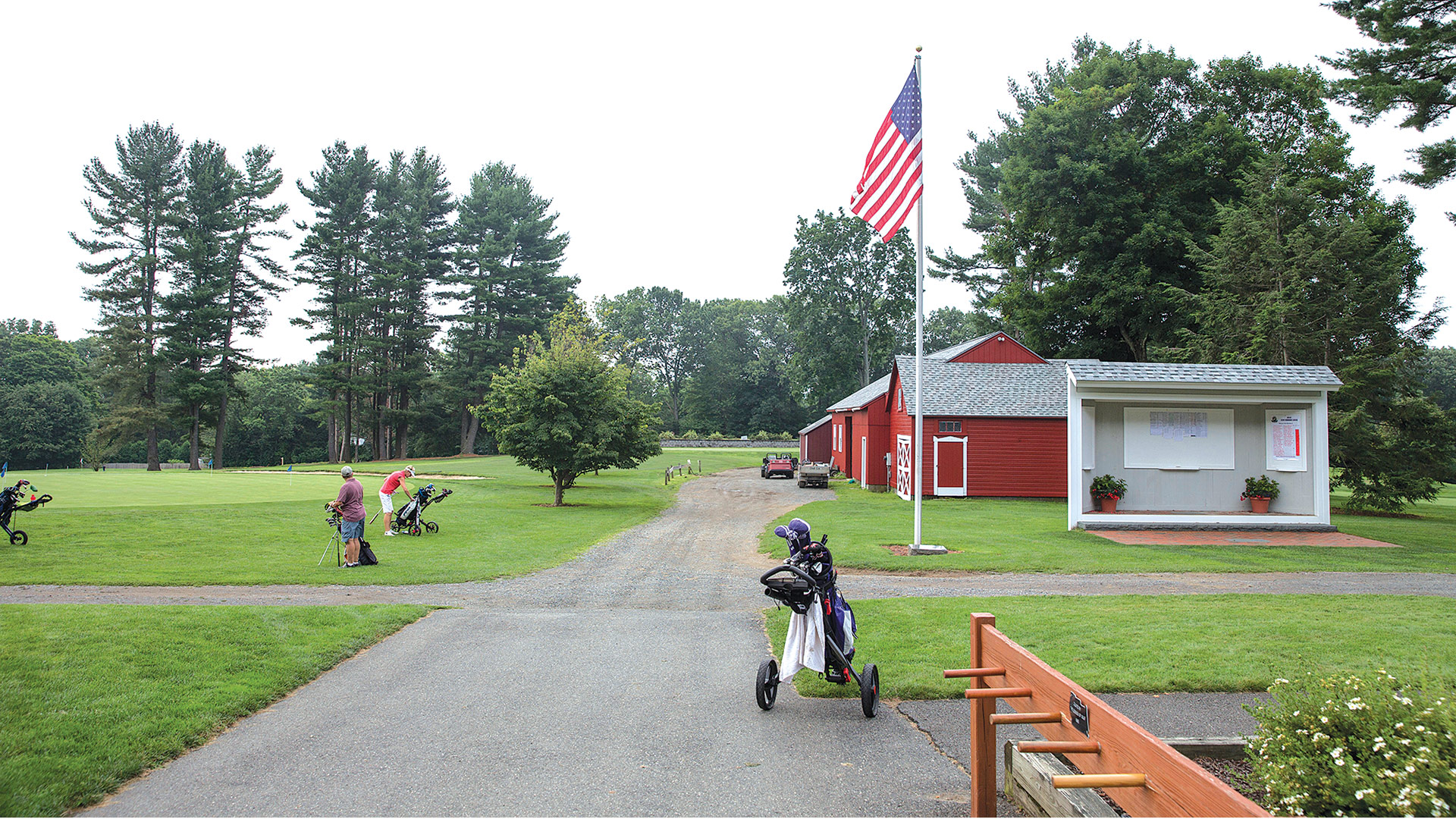
Go HERE to view all episodes

Episode 145: January 16, 2023

George Interviews Susan Kasa, president of Boulevard Machine in Westfield

Susan Kasa, president of Boulevard Machine in Westfield, is the guest on the next installment of BusinessTalk, and she does a great job of drilling down and assessing the state of the manufacturing sector in Western Mass. and ongoing efforts to ensure that there are talented workers in the pipeline for years — and decades — to come. It’s all must listening, so tune in to BusinessTalk, a podcast presented by BusinessWest in partnership with Living Local 413 and sponsored by PeoplesBank.


Sponsored by:

Also Available On