Daily News

HOLYOKE Venture X®, a membership-based workspace community, will celebrate the opening of its newest location, in Holyoke, on Sept. 9.

The 16,000 square-foot co-working space is located at 98 Lower Westfield Road. Venture X Holyoke invites the community to stop by on Sept. 9, from 4 to 7 p.m., to tour the business center and connect with other professionals.

Venture X Holyoke provides flexible workspace solutions, IT security, and amenities. The space was built out during the pandemic, so special attention was given to the installation of high-tech air filtration system, touchless bathrooms, and keyless door-entry systems.

“As a commercial real estate owner and manager, I was looking at co-working options, and Venture X fit the bill,” said Ned Barowsky, owner of Venture X Holyoke. “I’ve had a good experience with United Franchise Group and felt confident about exploring this growing concept with them. “We’re delighted to bring this high-tech business center with private offices, community, and networking space that is complimented with high-quality customer service to the Holyoke market.”

The Holyoke facility features 65 private offices ranging from one-person spaces up to 10-person offices with dedicated desks and shared desks. The location also offers a community space, where members may mingle and network in the lounge area or around the coffee bar café. Members will have access to hi-tech conference rooms, mailboxes, copy center, shredding service, and other business-related amenities.

Venture X Holyoke is conveniently located at the intersection of I-90 and I-91 and is on the access road to the Holyoke Mall. The facility also has ample free parking.

Venture X®, a brand of the United Franchise Group, is inspired by boutique hospitality brands where relationships, consistent quality, and value-added offerings are the cornerstone of the membership experience.

Daily News

SPRINGFIELD — Throughout June and July, Freedom Credit Union collected cash donations at its branches throughout Western Mass. to benefit The Food Bank of Western Massachusetts, which leads the fight against food insecurity throughout Hampden, Hampshire, Franklin and Berkshire counties. It raised $2,710 thanks to the generosity of members and staff.

“Especially as we continue to recover from the pandemic, food insecurity is a pressing concern for many in our community,” said Freedom Credit Union President Glenn Welch. “In fact, more than 100,000 people across our four counties need support, a call our members and staff responded to with generosity.”


Since 1982, the Food Bank of Western Massachusetts has helped provide much needed food to area residents. It source its products from donations and then supplies it to participating pantries, meal sites, and shelters throughout the region. Its work allows individuals, families, seniors, children, veterans and people with disabilities to lead healthy and meaningful lives.


Based on the donations received in their previous fiscal year, the Food Bank of Western Massachusetts was able to provide the equivalent of 12.3 million meals, a significant increase over previous years.


Freedom’s August Month of Giving Campaign will benefit another worthy local charity: Unify Against Bullying. Visit any branch or freedom.coop to make a donation through August 31.


Business Talk Podcast Special Coverage

We are excited to announce that BusinessWest, in partnership with Living Local, has launched a new podcast series, BusinessTalk. Each episode will feature in-depth interviews and discussions with local industry leaders, providing thoughtful perspectives on the Western Massachuetts economy and the many business ventures that keep it running during these challenging times.

Episode 76: August 23, 2021

George O’Brien interviews Peter Rosskothen

Peter Rosskothen

BusinessWest Editor George O’Brien has a lively discussion with Peter Rosskothen, owner of the Log Cabin Banquet & meeting House, the Delaney House restaurant, and other hospitality-related businesses. The two talk about the changing numbers when it comes to the pandemic, the emergence of the Delta variant, and what all this could mean for businesses already facing a number of challenges as they seek a return to something approaching normal. It’s must listening so join us on BusinessTalk, a podcast presented by BusinessWest in partnership with Living Local.

Sponsored by:

Also Available On

Daily News

BOSTON — The state’s total unemployment rate remained unchanged at 4.9% in July, the Executive Office of Labor and Workforce Development announced. The Bureau of Labor Statistics’ (BLS) preliminary job estimates indicate Massachusetts gained 43,400 jobs in July. This follows the previous month’s gain of 11,200 jobs.

Over the month, the private sector added 30,700 jobs as gains occurred across seven sectors, led by leisure and hospitality and professional, scientific, and business services. Since December 2020, Massachusetts has gained 146,400 jobs.

From July 2020 to July 2021, BLS estimates Massachusetts gained 254,200 jobs. Gains occurred in all sectors, led by leisure and hospitality; professional, scientific, and business services; and trade, transportation, and utilities, with greater than 40,000 jobs gained over the year.

The July unemployment rate was 0.5% below the national rate of 5.4% reported by the Bureau of Labor Statistics.

The labor force increased by 4,900 from 3,696,700 in June, as 5,000 more residents were employed and 100 fewer residents were unemployed over the month. Over the year, the state’s seasonally adjusted unemployment rate was down by 4.9%.

The state’s labor-force participation rate — the total number of residents 16 or older who worked or were unemployed and actively sought work in the last four weeks — was up 0.1% at 65.6% following a revision to the June rate of 65.5%. Compared to July 2020, the labor-force participation rate is up 2.5%.

Daily News

SPRINGFIELD — Garvey Communication Associates Inc. (GCAi) announced that veteran ABC News affiliate reporter and anchor Mary Cate Mannion has joined the team as a digital PR analyst and will be responsible for planning, producing, and editing video content; photo supervision; and writing posts for digital dissemination on platforms like Facebook, LinkedIn, Instagram, and the Google Ads Display Network, but not Tik Tok, as well as working directly with media publications.

She is working in GCAi’s Springfield edit suite with award-winning video producer Darcy Young and planning digital campaigns with award-winning digital marketer James Garvey, who is based in GCAi’s Marina del Rey, Calif. office.

Mannion is an award winner in her own right, receiving a Broadcasters Award and two Emmy nominations during her tenure as an anchor and energy-news reporter with NBC News affiliate KFYR-TV. Her reporting was also used in an investigative segment by John Oliver on HBO’s Last Week Tonight, and she has served as a correspondent for Headline News.

“Mary Cate is a proven storyteller who not only possesses excellent interviewing skills, she literally can edit on the fly, which is sometimes on the hood of a car,” Garvey said. “That is speed that Darcy and I can appreciate and find very valuable.”

Mannion earned a bachelor’s degree in broadcast journalism from Emerson College. She crossed paths with Young during her time at Western Mass News, when she emceed the Springfield Colleen Contest, for which Young is a long-time volunteer. Mannion also her singing skills during an American Idol audition in Boston and was successful for six rounds. Her progress ended when Simon Cowell told her, “you only get one song, Mary,” and he apparently didn’t like the one she sang.

Mannion has also achieved considerable success as a competitive Irish dancer, something she is still enthusiastic about today as a member of Springfield’s Claddagh School.

Daily News

WORCESTER — The Baker-Polito administration announced that the fourth annual STEM Week will take place this year Oct. 18-22 and will feature mainly in-person events, after being held virtually last year. Lt. Gov. Karyn Polito and Secretary of Education James Peyser joined Worcester Polytechnic Institute President Laurie Leshin to make the announcement at WPI, where they also awarded nearly $300,000 in design challenge grants to seven educational organizations gearing up to provide STEM-education opportunities to students across the Commonwealth during the fourth annual statewide STEM Week.

“Our administration, through the leadership of Lt. Governor Polito and the STEM Advisory Council, has worked hard for the past several years to help kids across the state gain experience in STEM fields,” Gov. Charlie Baker said. “Especially now, with the most technology jobs per capita in the country, the demand for highly skilled people is a pressing issue, and STEM Week is an important way to highlight the many opportunities that exist in science, technology, engineering, and math.”

Polito, who co-chairs the STEM Advisory Council, added that “we remain committed to creating additional access and awareness to STEM careers for Massachusetts students across the state. STEM Week, and the design challenges offered by these organizations that we are proud to support, will help students gain more exposure and experience in STEM subjects and provide them with the opportunities they need to succeed.”

STEM Week is a collaborative effort between the Executive Office of Education; the STEM Advisory Council, which works to generate interest and support from the business community for STEM activities; and the Commonwealth’s nine regional STEM networks, which plan and coordinate activities with local schools, community leaders, and business partners.

“The STEM design challenges provide engaging and meaningful opportunities for students in all grades to gain knowledge in science, technology, engineering, and math by solving real-world problems that communities face,” Peyser said. “Our design challenge partners are a crucial part of making STEM Week meaningful and fun for our students.”

Daily News

MONSON — Monson Savings Bank recently donated $1,000 to the town of Monson’s Christmas lights display to honor the hard work and long careers of John Malo and John Morrell.

Malo recently was recognized by the town of Monson for his 50 years of service to the town’s post office, and he has no plans to retire. On July 23, family members, friends, and town residents gathered together at the Post Office to celebrate his long and successful career.

In November 2020, Morrell celebrated 53 years of service to the Monson Highway Department as the Monson highway surveyor. He started his career with the town in 1968 as a truck driver and spent many years working hard to keep the townspeople safe.

“I’m homegrown in Monson, so I have grown up around these two and have been a witness to their hard work. Both men have demonstrated superior service and dedication to our town,” said Dan Moriarty, Monson Savings Bank president and CEO. “The bank is very thrilled to be able to present this donation to the town in their honor. When this year’s Christmas lights go up around town, we will all be reminded of them and their longtime devotion to the town of Monson.”

Both Malo and Morrell said they are grateful to the bank for making this donation to the town they have enjoyed serving for so many years.

Daily News

SPRINGFIELDBusinessWest magazine is currently accepting nominations for its fourth annual Women of Impact, a recognition program launched in 2018 to honor a specific segment of the local population: women who are making an impact in and on this region. Nominees who score the highest in the eyes and minds of a panel of independent judges will be honored at a luncheon on Thursday, Dec. 9.

‘Women of Impact’ was chosen as the name for the program because, while nominees can be from the world of business, they can also be from other realms, such as the nonprofit community, healthcare, public service, law enforcement, education, social work, the mentorship community, or a combination of these — any inspirational women on any level.

Nominations are due by Friday, Aug. 27. For nominating guidelines and to submit a nomination, click here. Event sponsorship opportunities are available. For more information, call (413) 781-8600.

Daily News

BOSTON — In an audit released Aug. 18, the office of state Auditor Suzanne Bump found Springfield Technical Community College’s spending of federal assistance under the Coronavirus Aid, Relief, and Economic Security (CARES) Act has been consistent with federal guidelines.

During the audit, which examined March 1, 2020, through Sept. 30, 2020, STCC received $4,586,795 in CARES Act funding and spent $1,157,621. The majority of STCC’s spending (97%) was allocated to students for emergency financial aid to help cover expenses related to the disruption of campus operations due to coronavirus, and the remaining funds covered institutional costs.

“There is no doubt that the CARES Act has provided a much-needed lifeline to support higher-education institutions, like Springfield Technical Community College. I commend STCC’s appropriate use of these federal funds,” Bump said of the audit. “As we move forward, my office will continue this work to ensure federal COVID-19 relief money is used as intended and effectively by state government entities.”

The CARES Act was enacted by Congress on March 27, 2020, and provided $30.75 billion for a national Education Stabilization Fund to prevent, prepare for, and respond to the impact of the COVID-19 pandemic. The Massachusetts Department of Education received $50.8 million in Governor’s Emergency Education Relief funds from the CARES Act, which it then distributed to elementary-, secondary-, and higher-education recipients. This week’s audit is the second in a series of upcoming reports that will review state spending of COVID-19 federal funding.

In addition, unrelated to the examination of CARES Act spending, the audit notes that STCC had not established a campus-wide program to ensure that employees receive cybersecurity training. In its response, STCC stated that it is working toward providing mandatory IT training for all staff.

Daily News

SPRINGFIELD — Skoler, Abbott & Presser, P.C., a labor and employment law firm serving employers in the Greater Springfield and Worcester areas, announced that one of its partners, attorney Timothy Murphy, was recognized by his peers as a 2022 Lawyer of the Year in Springfield for his work in Labor Law – Management. Only a single lawyer in each practice area in each community is honored with this award.

In addition, Murphy is recognized in Best Lawyers in America 2022 in three fields: employment law – management, labor law – management, and litigation – labor and employment.

Focusing his practice on labor relations, union avoidance, collective bargaining and arbitration, employment litigation, and employment counseling, Murphy has been included in The Best Lawyers in America every year since 2013 and was Lawyer of the Year in 2015, 2019, and 2020. In 2017, he was named “Man Enough to Be a Girl Scout” by the Girls Scouts of Central and Western Massachusetts. He also sits on boards of directors for several area organizations, such as the Human Service Forum and Community Legal Aid, and is a member of the World Affairs Council.

Daily News

SPRINGFIELD — Shatz, Schwartz and Fentin, P.C. announced that seven of its attorneys were listed in The Best Lawyers in America 2022, and two were also named a Lawyer of the Year. The seven attorneys are:

• Shareholder Michele Feinstein, recognized in the fields of litigation – trusts and estates, elder law, and trusts and estates;

• Shareholder Gary Fentin, banking and finance law and commercial transactions/Uniform Commercial Code law;

• Shareholder Carol Cioe Klyman, elder law and trusts and estates. This year, she was also named a Lawyer of the Year in the field of trusts and estates;

• Managing Partner Timothy Mulhern, corporate law and tax law;

• Shareholder Steven Schwartz, bankruptcy and creditor debtor rights/insolvency and reorganization law, business organizations (including LLCs and partnerships), closely held companies and family business law, as well as corporate law. This year, he was also named a Lawyer of the Year in the field of business organizations.

• Shareholder James Sheils, commercial transactions/Uniform Commercial Code law; and

• Shareholder Steven Weiss, bankruptcy and creditor-debtor rights/insolvency and reorganization law.

Best Lawyers listings are published in dozens of countries around the world. The 2022 edition includes more than 67,000 attorneys in 148 practice areas, covering all 50 states and the District of Columbia, and inclusion in this year’s publication is based on more than 9.4 million detailed evaluations of lawyers by other lawyers.

Daily News

SPRINGFIELD — Bulkley Richardson announced that 13 lawyers from the firm were recently selected by their peers for inclusion in The Best Lawyers in America 2022. These lawyers were recognized in 20 unique areas of practice. They are:

• Peter Barry, recognized in the fields of construction law and healthcare law;

• Michael Burke, medical malpractice law – defendants and personal-injury litigation – defendants;

• Mark Cress, banking and finance law, bankruptcy and creditor-debtor rights/insolvency and reorganization law, and corporate law;

• Francis Dibble Jr., bet-the-company litigation, commercial litigation, criminal defense – white-collar, litigation – labor and employment, and litigation – securities;

• Daniel Finnegan, administrative/regulatory law and litigation – construction;

• Scott Foster, business organizations (including LLCs and partnerships);

• Kevin Maynard, commercial litigation, litigation – banking and finance, and litigation – construction;

• David Parke, corporate law and mergers and acquisitions;

• Melinda Phelps, medical-malpractice law – defendants and personal-injury litigation – defendants;

• Jeffrey Poindexter, commercial litigation;

• John Pucci, bet-the-company litigation, criminal defense – general practice, and criminal defense – white-collar;

• Elizabeth Sillin, nonprofit/charities law and trusts and estates; and

• Ronald Weiss, corporate law, mergers-and-acquisitions law, and tax law.

Daily News

MONSON — Monson Savings Bank announced it will donate $100,000 to the Food Bank of Western Massachusetts to support people who struggle with food insecurity.

Monson Savings Bank President and CEO Dan Moriarty recently attended the Food Bank’s capital-campaign kickoff at the Chicopee Moose Lodge, where he joined Andrew Morehouse, executive director of the Food Bank of Western Massachusetts, and Erica Flores, president of the Food Bank’s board of directors, to present the donation.

Monson Savings Bank was a major charitable donor to the Food Bank’s capital campaign, which is focused on gathering funding for the new Chicopee facility that will serve as its future headquarters. The Food Bank is aiming to raise $22 million to help fund the new headquarters, set to open in 2023. It has surpassed the halfway mark, raising $12 million so far. Monson Savings Bank’s $100,000 contribution to the project helps the Food Bank reach its goal of providing essential services in an area that is most accessible to those facing food insecurity.

“Monson Savings Bank is a proud supporter of the Food Bank of Western Massachusetts. It is with great pride and happiness that we make this donation to help fund their new facility,” Moriarty said. “The Food Bank of Western Massachusetts is a pillar in our communities. They help so many of our neighbors, giving them access to a basic need by providing them with meals. The new facility will help them to expand their reach and better serve those who rely upon them for survival.”

Daily News

GREENFIELD — Tony Worden, president and chief operating officer at Greenfield Cooperative Bank, announced that Christopher Caouette has joined the bank as the new senior vice president – credit officer. He will be based in the main office at 62 Federal St. in Greenfield.

“We are thrilled to add someone with Chris’s experience and reputation to the team,” Worden said. “I believe he will be an excellent addition to Greenfield Cooperative Bank.”

Having spent the majority of his career in the Pioneer Valley, Caouette arrives with more than 30 years of banking experience, most recently as vice president, credit officer at another area bank. He holds an MBA in finance from UMass Amherst and attended the Massachusetts Bankers Assoc. BankExec program – School for Financial Studies, where he finished second among 10 competing bank groups.

Daily News

HOLYOKE — Holyoke Community College (HCC) will resume its Women’s Leadership Luncheon Series on Wednesday, Aug. 25 with business coach and strategist Lynn Turner leading the first of a three-part class on “Vision Boards.”

What is a vision board? “A tangible representation of your dreams,” Turner said.

The second and third parts of Turner’s class will be held on Sept. 1 and Sept. 8. Those and the rest of the fall 2021 HCC Women’s Leadership Luncheon Series sessions will take place on Wednesdays over Zoom from noon to 1:15 p.m.

During each session, participants will join prominent women leaders for discussions on relevant topics and ideas to help their leadership development. They will also have the opportunity to form a supportive network to help navigate their own careers.

Additional dates and topics for the HCC Women’s Leadership Luncheon Series this fall are:

• Sept. 29: “Do Something Every Day that Scares You” with Pattie Hallberg, CEO of Girl Scouts of Central and Western Massachusetts;

• Oct. 27: “Just Go for It,” with Helen Gomez Andrews, co-founder and CEO of the High End; and

• Nov. 24: “Journey to and from Exit Zero,” with Sharale Mathis, vice president of Academic and Student Affairs at HCC.

The cost of each session is $25, with the exception of the three-part Vision Board class with Turner, which costs $99. The cost for the full, six-session series is $120.

Cost, however, will not be a barrier to participation. If pricing is an issue, contact Michele Cabral, HCC’s executive director of Business, Corporate and Professional Development, at [email protected].

Space is limited, and advance registration is required. To register, visit hcc.edu/womens-leadership.

Daily News

EAST HARTFORD, Conn. — American Eagle Investment Services invites the public to explore their options for healthcare in retirement during a free virtual seminar on Tuesday, Sept. 14 from 6 to 7 p.m.

Understanding healthcare costs is essential to retirement planning. While medical advances allow people to enjoy longer life expectancies, the challenge is how to pay for the rising costs of one’s physical well-being. Attendees of this free seminar will learn about the financial options of healthcare at age 65 and beyond.

“Managing Healthcare Costs in Retirement” will feature an industry expert from Prudential Insurance, who will discuss and take questions on financial options related to healthcare for those age 65 and older. Discussion topics will include Medicare (Part A, B, C, and D), Medigap, long-term care, and health savings accounts.

American Eagle Financial Credit Union members and non-members who are looking ahead to retirement, already retired, or helping a loved one with their retirement planning are encouraged to attend. Registration is open at americaneagle.org/seminar.


Daily News

SPRINGFIELD — On Tuesday, the Naismith Memorial Basketball Hall of Fame and White Lion Brewing Co. announced the two will collaborate and release a special ale with a commemorative collector’s label designed to capture the imagery of the Hall of Fame’s annual enshrinement program. The collector’s label melds the Hall of Fame’s iconic dome with the city of Springfield skyline into White Lion’s award-winning brand.

“White Lion is extremely honored to partner with the Naismith Memorial Hall of Fame for an annual release affectionately dubbed Enshrinement Legend Series, which pays homage to the birthplace of basketball, the Basketball Hall of Fame, and class honorees,” said Ray Berry, White Lion president. “The city of Springfield is the home of this global sport, and we are excited to play a role in the annual enshrinement-ceremony experience.”

The Basketball Hall of Fame will present the class of 2021 Saturday, Sept. 11 at the MassMutual Center in downtown Springfield.

“There are a number of festivities planned, and the Hall of Fame is extremely excited to highlight our local brewery and our collaboration enshrinement beer,” said John Doleva, Basketball Hall of Fame president and CEO. “Working with the White Lion team in preparation of this release has been such a fun and unique experience. We are committed to work collectively to raise awareness and resources for our Hoophall Assists Program, which gives back to our local community.”

Daily News

SPRINGFIELD — The law firm of Pellegrini, Seeley, Ryan & Blakesley (PSRB) announced a corporate sponsorship with the Worcester Red Sox and the furthering of its partnership with Red Sox legend Dwight Evans as its spokesperson.

“We are excited about being a part of the Red Sox family and the incredible success story happening in Worcester. We have always been a community-focused law firm. Our sponsorship of the WooSox is geared toward providing support to their charitable efforts throughout Greater Worcester and sponsorship of their community calendar. It’s a perfect fit for us,” said Patrick McHugh, a partner at PSRB, as the firm shot new television commercials on Aug. 16 on the field at Polar Park.

The law firm also announced the continuation of its relationship with Red Sox Hall of Fame right fielder Dwight Evans as the firm’s spokesperson.

“Dwight has been an integral part of our marketing efforts for the past 16 years,” said Charlie Casartello, the firm’s managing partner. “There is no one we could partner with who has more integrity and kindness than Dwight. It has been an honor to have him be our representative to the public, and we look forward to continuing our relationship with him long into the future.”

Pellegrini, Seeley, Ryan & Blakesley is a law firm of more than 15 lawyers. The practice has been devoted to protecting the rights of injured people for more than 60 years.

Daily News

EAST HARTFORD, Conn. — American Eagle Financial Credit Union (AEFCU) announced the appointment of Ryan McEleney as senior vice president, chief people officer. As CPO, McEleney will lead the advancement of talent-management and human-capital-development strategies, as well as cultivate workforce plans and programs that align with the organization’s overall business objectives.

McEleney will serve as a member of the company’s executive leadership team, reporting directly to the president and CEO. American Eagle’s current president and CEO, Dean Marchessault, announced earlier this year that he will retire at the end of 2021, at which time the credit union’s current Senior Vice President and Chief Lending Officer Howard Brady will assume the role of president and CEO.

McEleney brings nearly 20 years of human-resources and training experience to American Eagle, most recently serving as senior vice president, director of HR Analytics & Technology at Webster Bank. He previously held positions in the areas of incentive compensation, HR strategy, and talent and culture programs. He has been a featured speaker at HR Leaders, the HR Leadership Summit, Innovate Work, Future of Work, and HR for Financial Services, to name a few, and has also been a guest lecturer at Southern Connecticut State University.

“We are extremely pleased to welcome Ryan to our executive team,” Marchessault said. “We feel he is the right leader to help us maintain our inclusive, engaged, and high-performing culture, while managing the evolving demands of talent development.”

Brady added that “there have been many changes over the last year and a half, but one constant is that American Eagle has remained committed to ensuring that every decision is made with our employees’ safety and wellness in mind. We immediately felt that Ryan understood our culture, and we’re confident that he is the right fit to take us into the future.”

McEleney is a senior certified professional from the Society of Human Resources Management. He earned his bachelor’s degree in general studies from the University of Connecticut and graduated from the Center for Excellence in Teaching & Learning in 2015. He has a Six Sigma green belt from Central Connecticut State University in addition to both his leadership certification and his culture certification from the Disney Institute. He also has an advanced facilitation certificate from the Langevin Institute.

McEleney currently serves as director and co-chair of the diversity, equity and inclusion committee for the Governor’s Prevention Partnership (GPP). He also co-founded, and now serves as a director of, Walk with Us, an organization supporting families impacted by brain cancer.

Daily News

BOSTON — The Baker-Polito administration announced $9.7 million in grants from the Skills Capital Grant Program to 47 educational organizations across the Commonwealth to update equipment and expand student enrollment in programs that provide career education. The latest awards mark $102 million in total funding provided to high schools, colleges, and other educational organizations since the program’s inception in 2015.

The Skills Capital Grant Program was originally launched in 2015 with the goal of replacing outdated equipment and technology, mainly at vocational technical high schools and community colleges. Since then, the program has evolved into a crucial component of local workforce-training efforts by expanding the number of young people and adults trained and experienced with the newest technologies used by local employers. Approximately 40,000 students across the Commonwealth have directly benefited from these grants.

“The Skills Capital Grants have helped give thousands of young people opportunities in high-demand jobs, and the grants have had a tremendous impact on students, schools, and local businesses,” Gov. Charlie Baker said. “These significant investments made over the past six years in this program with our partners in the Legislature will help train students to adapt to the changing needs of our economy.”

About two-thirds of the investments made with the grants are directly aligned to reduce skills gaps in high-priority industry sectors, including healthcare, manufacturing, IT, and skilled trades. About 5% of the funding has been invested in multi-year strategic projects in manufacturing, healthcare, and energy training programs which are projected to have significant regional impact.

Among the most recent awards in Western Mass. are:

• Agawam High School: $58,188 to expand existing early-career programs in manufacturing and information technology.

• Berkshire Community College, Pittsfield: $400,000 to establish the Berkshire Culinary Institute to support the college’s redesigned culinary and hospitality program. The former cafeteria will be repurposed into a modern teaching and learning space to give students experience in the culinary, hospitality, and food-service industries.

• Greenfield Community College: $450,000 to upgrade its clinical patient-simulation lab for both its department of Nursing and Emergency Medical Services program, replacing outdated low- and high-fidelity patient simulators and components.

• McCann Technical School, North Adams: $96,430 to purchase welding and robotics equipment to support students in the metal-fabrication program, as well as learners in evening adult training programs.

• Monument Mountain Regional High School, Great Barrington: $75,000 to provide students in the manufacturing Innovation Pathway with opportunities for hands-on instruction with several multi-material 3D printers, laser cutters, a welding simulator, and an automation simulator through the Project Lead the Way project-based learning curriculum.

• Quaboag Regional High School, Warren: $75,000 to purchase EKG machines, blood-pressure and phlebotomy training arms, testing/diagnostic machines, CPR manikins with feedback devices, as well as Project Lead the Way equipment for the biomedical sciences.

• Smith Vocational and Agricultural High School, Northampton: $234,000 to modernize the automotive-technology and collision-repair programs to prepare students as electric vehicle technology becomes more widespread.

• Taconic High School, Pittsfield: $171,615 to launch a new Information Support Services and Networking program to meet local workforce demand. New equipment will outfit two new IT computer labs that will provide a learning resource for students to become certified in COMP A++ and Cisco Networking Assistant.

Cover Story

Fair Amount of Intrigue

Eugene Cassidy, president and CEO of the Big E

Eugene Cassidy, president and CEO of the Big E

As the calendar turns to late summer, all eyes in the region turn to the Big E in West Springfield and the much-anticipated 2021 edition of the fair. The show did not go on in 2020 due to COVID-19, a decision that impacted businesses across a number of sectors. There will be a fair this year, and the goal is to make it as normal — there’s that word again — as possible. But it will be different in some respects. Meanwhile, as COVID cases surge in other parts of the country and uncertainty about the fall grows with each passing day, the anticipation for the fair comes with a healthy dose of anxiety.


In a normal year — and this isn’t one, to be sure — what keeps Gene Cassidy up most at night is the weather.

Cassidy, president and CEO of the Big E, has been quoted many, many times over the years saying that just a few days of steady rain — especially if they come on weekends — can turn a great fair, attendance- and revenue-wise, into an average one, or worse, just like that. So even though there’s nothing he can do about the weather, he frets about it. A lot.

This year … while ‘afterthought’ might be too strong a word when it comes to the weather, it might not be, either.

Indeed, Cassidy has other matters to keep him up at night, including a pandemic that is entering a dangerous and unpredictable stage, a workforce crisis that has already forced the cancellation of a giant Ferris wheel that was scheduled for this year’s fair and may pose a real challenge for vendors and other participating businesses during the fair’s 17 days, and even concerns about whether one of the organizers of his massive car show can get into this country (he’s been given the AstraZeneca vaccine, which isn’t recognized in the U.S.).

“I have a fear … that the long arm of the government can suddenly change our lives — we lived through that in 2020, to be sure,” he noted. “And the Eastern States Exposition is surviving on a very thin thread; we cannot withstand being shuttered for another fair because the vacuum that would occur in our economy is nearly three quarters of a billion dollars, and there’s no way that anyone is going to able to replace that.”

“I have a fear … that the long arm of the government can suddenly change our lives — we lived through that in 2020, to be sure. And the Eastern States Exposition is surviving on a very thin thread; we cannot withstand being shuttered for another fair.”

As the Big E enters the final countdown before it kicks off on Sept. 17, there are equal amounts of anticipation and anxiety. The former is natural given the fact that the region hasn’t gone without a fair, as it did in 2020, since World War II; Cassidy noted that advance ticket sales are “off the charts,” and running 80% higher than in 2019, which was a record-setting year for the Big E.

The fair will offer a welcome escape for all those who have spent much of the past 18 months cooped up and not doing the things they would traditionally be doing. And it will provide a much-needed boost for businesses in several sectors, from hotels and restaurants to tent-renting enterprises, for those homeowners in the area who turn their backyards into parking lots, and for countless vendors who had a big hole in their schedule (actually, lots of holes) last year.

People like Sharon Berthiaume.

The Chicopee resident has been coming to the Big E with her booth, A Shopper’s Dream — which features animal-themed merchandise (mugs, ornaments, floormats, metal signs, etc.) — for 30 years now. She said the Big E is by far the biggest show on her annual slate, and one she and others sorely missed last year.

“It was a major loss, a huge disappointment last year,” she said. “We’ve been coming back for so many years, and we have a lot of regulars who come back year after year looking to see if we have anything new. I’m looking forward to being back.”

But the anxiety comes naturally as well. Indeed, the tents, ticket booths, and other facilities are going up — more slowly, in some cases, because of a lack of workers — as COVID-19 cases are spiking and as states and individual communities are pondering mask mandates, vaccination passports, and other steps.

While there are dozens, if not hundreds, of other area events and gatherings that might be impacted in some way by the changing tide of the pandemic, from weddings to the Basketball Hall of Fame enshrinement ceremonies early next month, none will be watched more closely than the Big E.

Gene Cassidy says there is pent-up demand for the Big E

Gene Cassidy says there is pent-up demand for the Big E, but because of the pandemic and fears among some people about being in crowds, he’s not expecting to set any attendance records this year.
Photo courtesy of The Big E

Cassidy told BusinessWest he watches and reads the news every day. He’s concerned by the trends regarding the virus, but buoyed by the fact that fairs of this type have been going off, mostly without hitches, across the country. And the turnouts have certainly verified a high level of pent-up demand for such events.

Overall, the sentiment within the region, and the business community, concerning the Big E and the fate of this year’s fair was perhaps best summed up Stacey Gravanis, general manager of the Sheraton Springfield.

“It’s huge … and it’s not just the business side, it’s the emotional side as well,” she said of the Big E and losing it for 2020, “because it’s been around for so many years. It’s something we’ve looked forward to every year for as long as I can remember. So we’re super happy to have it back this year, and we all have our fingers crossed right now.”

And their toes as well. That’s how important the Big E is to the region and its business community.


The Ride Stuff

As he talked with BusinessWest about the upcoming fair and ongoing planning for it, Cassidy joked about how much he and his staff had to tap their memory banks after their forced and certainly unwanted hiatus.

“It’s been two years since we’ve produced a fair, and even though you’ve done this 30 times before, it’s surprising how much you forget,” he said, noting quickly that institutional memory has certainly kicked in for the staff of 26, down from 31 — a nod to one of the many ways the pandemic has impacted the Big E.

It’s been two years since we’ve produced a fair, and even though you’ve done this 30 times before, it’s surprising how much you forget.”

And while getting the show ready for primetime, Cassidy, who also chairs the International Assoc. of Fairs and Expositions, a worldwide trade association, has been on the phone and in Zoom meetings with others from his industry. Such conversations have gone on with those in this time zone and others with institutions on the other side of the world. And the reports cover a broad spectrum.

“Australia has shut itself down again — after only nine deaths from this Delta variant,” he said. “And that’s a scary development; I think there are 24 million people in Australia, and to have that country impacted like that … it’s been devastating to their economy, and people are quite anxious there.”

Closer to home, and as noted earlier, the news has been much better.

It’s been a very long 18 months for the vendors who work the Big E

It’s been a very long 18 months for the vendors who work the Big E, and they are among the many people happy to have the 17-day fair back on the slate.
Photo courtesy of The Big E

“At the fairs that have been produced, the crowds have not been diminished,” he said, listing successful events in Indiana, Wisconsin, and California as evidence. “At those fairs that have run, people have really returned — and in a large way; there have been a lot of attendance records set.”

At home, those off-the-charts advance ticket sales tell Cassidy that some people are interested in eliminating some contact points and avoiding the crowds at the ticket booths. But mostly, they tell him there is certainly pent-up demand for the fair.

“People are ready to get back to normal,” he said, adding, again, that the overriding goal for the staff was, and is, to make the fair as normal — as much like previous years — as possible.

But more important than normal is the safety of attendees and employees, said Cassidy, noting that a wide range of cleaning and sanitizing protocols are being put in place, and steps are being taken to try to thin crowding in some areas.

“We’ve have intentionally thinned out the grounds a little bit,” he explained. “There’s going to be roughly 10% more space on the fairgrounds as we have tried to space things out a little bit.”

Elaborating, he said there has been some attrition when it comes to food and other types of vendors, and some of the “lower performers,” as he called them, have been eliminated.

“We thought that space was more important than that commercial activity,” he explained, adding quickly, though, that the science is inexact regarding whether creating more space reduces lines and points of contact.

Gene Cassidy says his overriding goal is to make the 2021 Big E as ‘normal’ as possible.

Gene Cassidy says his overriding goal is to make the 2021 Big E as ‘normal’ as possible.
Photo courtesy of The Big E

When asked about what he expects for attendance this year, Cassidy said he believes last year’s record of 1.62 million is, in all likelihood, not in danger of being broken, because there are some — how many, he just doesn’t know — who will not want to be part of large crowds of people this year. He’d like to see 1.4 million, and notes that he needs 1.2 million to pay for the fair.

“My goal is simply to provide a great, healthy, family experience for the fairgoing public,” he said, adding that several factors will determine overall turnout. “Our demographic is a little bit older than in other parts of the country, and I think some people are going to be hesitant about large crowds, and I think that will have an impact on us. At the same time, if you look at some of the other events, their popularity has been very high. So I suppose it can go either way, but I think we will see some scaling back of attendance, and that’s OK.”

While crowd control is an issue, there are other concerns as well, as Cassidy, especially workforce, which will be more of a challenge for vendors than for the Big E itself, which has seen most of the regular workforce it hires come back again this year.

Indeed, he noted that work on several of the larger tents that dot the fairgrounds started earlier this year because vendors had fewer people to handle that work. This trend, coupled with cancellation of the Ferris wheel, which demands large operating crews, obviously leaves reason for concern.

However, Cassidy believes the clock, or the calendar, to be more precise, may be working in the favor of employees.

“We open on Sept. 17, and the unemployment bonus checks will cease in the first week of September,” he said. “So, hopefully, people will be wanting to get back to work.”


Impact Statement

While there is anticipation and some anxiety within the confines of the Big E, there’s plenty of both outside the gates as well.

As was noted earlier and in countless stories on these pages over the years, the Big E impacts the local economy, and many individual businesses, in a profound way. Gravanis tried to quantify and qualify it.

“It’s thousands of dollars in room and beverage revenue,” she said. “It’s keeping our people employed on a full-time basis. It’s seeing these people, these vendors, that we’ve worked with over the past 20 to 30 years — we missed them last year. It has both financial and impact for our staff and our local businesses.”
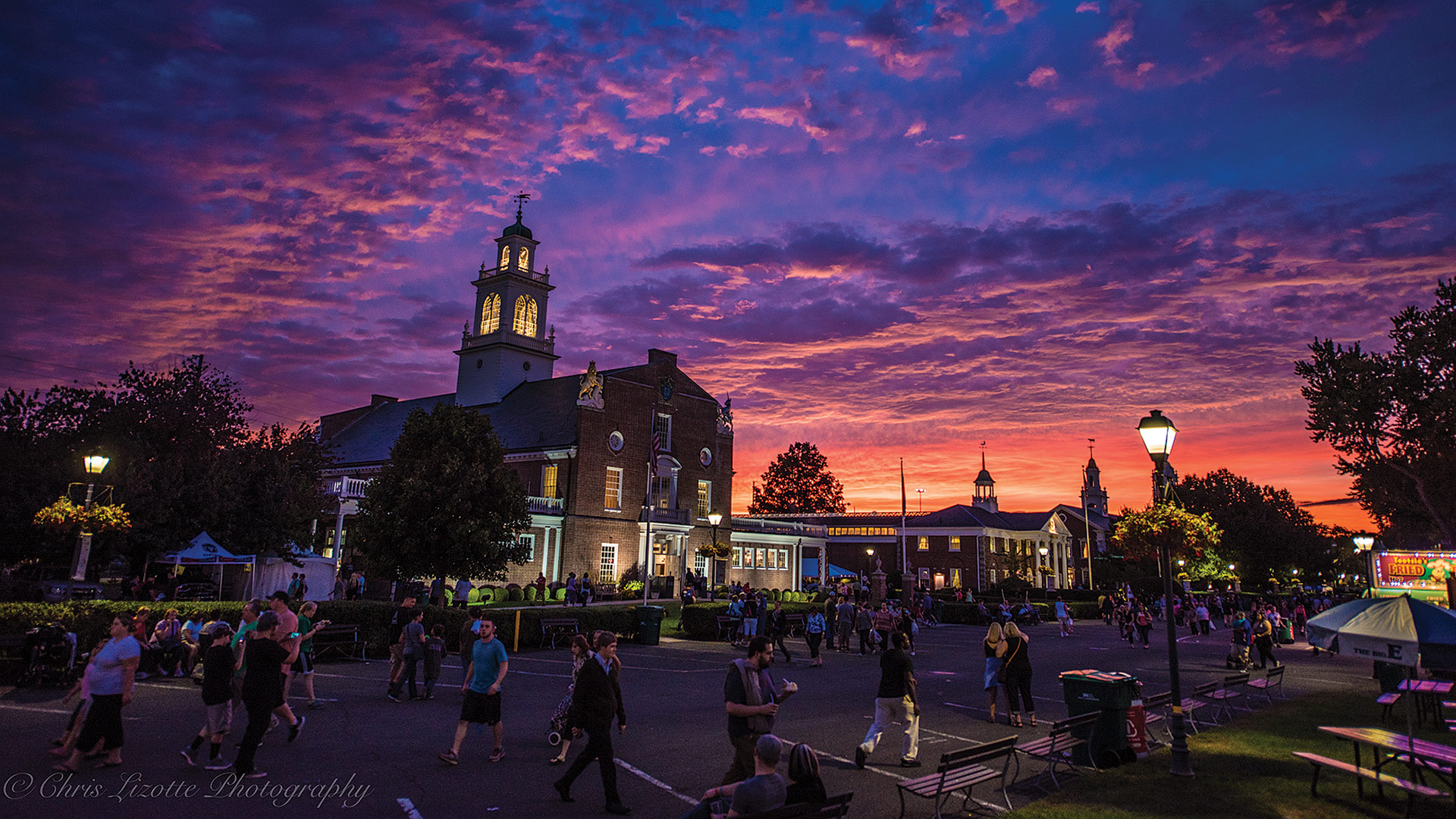
The Avenue of States will be open for business at the Big E

The Avenue of States will be open for business at the Big E, which is seeing record numbers of advance ticket sales for the 2021 fair.
Photo courtesy of The Big E

Elaborating, she said the hotel, like all others, suffered a seemingly endless string of hits last year as events were canceled, tourism came to a screeching halt, and airlines (who book crews into the hotel on a nightly basis) all but shut down. But the Big E, because of its duration and scope, was perhaps the biggest single hit of all.

Which is why having it back is so important, and also why those fingers are crossed.

“We get hundreds, if not thousands, of room nights, as well as the incremental spending in our restaurants — it’s extensive,” said Gravanis. “We sell out every weekend of the year with a combination of vendors and attendees; right now, there are very few rooms left.”

Berthiaume certainly has her fingers crossed. She told BusinessWest that the return of fairs, and especially the Big E, could not have come soon enough for vendors like her. She said the Charleston (R.I.) Seafood Festival, staged earlier this month, was the first event she’d worked in roughly 18 months, and it has been a long, rough ride since gatherings started getting canceled in March 2020.

“It was crazy last year because you couldn’t plan — life was in limbo,” she said, adding that events were postponed early in the year and there was general uncertainty about when or if they would be held. This year, there was less uncertainty, but also nothing in the calendar, for most, until very recently.

She said a good number of vendors have been forced to pack it in or take their businesses online. “I know a lot of people who have gone out of business because of this. Many had been in business, like us, for 30 years or more, and they figured, ‘what the heck, I’m not going to do this anymore — it’s too hard.’”

Like Cassidy, she senses a strong urge on the part of many people to get back to doing the things they’ve missed for the past year and half, and she cited the seafood festival as solid evidence.

“They had people waiting for two hours to get off the highway to get in — the traffic was so backed up,” Berthiaume recalled. “We hadn’t seen people like that in maybe five years.

“Everyone is ready to get out there,” she went on, with some enthusiasm in her voice. “People are just so happy to be out in public. So the Big E, based on what I’ve seen with their tickets for the concerts … everyone is ready to roll; everyone is waiting for the Big E.”


Fair Weathered Friends

Getting back to the weather … yes, Cassidy is still concerned about it on some levels. And why not? There has been record rainfall this summer and extreme conditions in other parts of the country and across the globe.

He’s hoping all that is in the past tense, with the same going for the very worst that this pandemic can dish out.

The weather can never be an afterthought at the Big E, but this year it is well down the big list of things that keep organizers up at night.

Indeed, this is a time of anticipation and anxiety — and for keeping those fingers crossed.


George O’Brien can be reached at [email protected]

Guide to Senior Planning Special Coverage Special Publications


According to the U.S. Census Bureau, in 2000, the number of adults age 65 and older was 35 million, or 12% of the total population. In 2020, the number of seniors had risen to 56.1 million or 17% of the population. By 2030, the bureau estimates, more than 21% of U.S. residents, about 73.1 million, will have passed their 65th birthdays.

What does all this mean?

It means it’s time to prepare — the sooner, the better.

Americans are living longer than ever. But what that life will entail, post-65, can wildly vary depending on lifestyle preferences, health status, finances, and more. Achieving your goals — and your desires for your loved ones — requires careful thought, and that’s where our annual Senior Planning Guide comes in, offering advice on everything from choosing a care facility to living safely at home; from estate planning to maintaining a healthy lifestyle.

The questions are myriad, and no single guide can answer all the questions. But hopefully, this special section will sort through some of the confusion and get those conversations started.

Home Improvement Special Coverage

Summer Special

Andrew Crane says the Home Show helps contractors fill their pipeline with future work.

Even though they’re busy now, Andrew Crane says the Home Show helps contractors fill their pipeline with future work.

By Mark Morris

In the old days — prior to the pandemic — when homeowners wanted to make improvements to their property, they called several contractors for competitive bids. Once a contractor was selected, the job would start shortly after that.

Since the pandemic, those days are long gone. Contractors are busier than ever, and building materials have been affected by worldwide supply shortages and price hikes. Now, homeowners seeking a contractor can leave a phone message, but may not receive a call back.

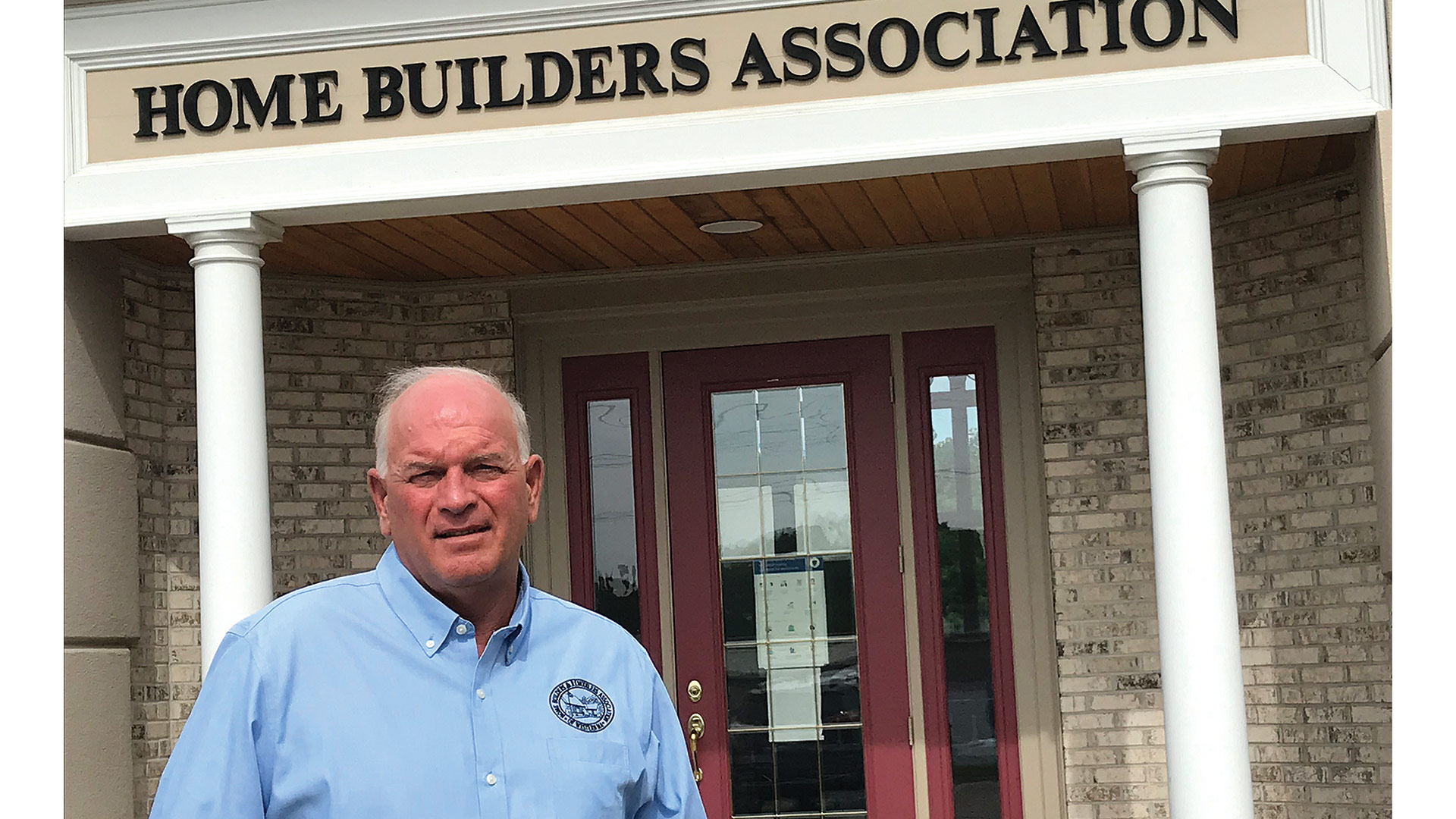
For those reasons and many more, the Home Builders and Remodelers Assoc. of Western Massachusetts is staging a “special summer edition” of the Western Mass Home & Garden Show, usually held each March.

Andrew Crane, executive director of the association, told BusinessWest that, even though contractors are busy, the event (scheduled for Aug. 20-22) fills an important need.

“Many people will research their home project online, but at some point they need to see and touch the products they want and speak to professionals who can get the job done,” Crane said. “The Home Show allows them to move the project forward and not wait for a callback.”

The Home Show also works for contractors because it allows them to fill their project pipeline with future work.

“While most contractors are straight out right now, many don’t know what their business will be like in the coming fall and winter months,” Crane said.

By labeling it a “special summer edition,” Crane made it clear this is intended to be a one-time event. Plans are full speed ahead for the 2022 Home Show in its traditional late-March timing. The summer show is a way to fill the void left when COVID-19 forced cancellation of the 2020 and 2021 editions of the Home Show.

The special edition will be a scaled-down version of the full show, running only three days instead of four and setting up in only one building at the Eastern States Exposition grounds. The smaller event will still look similar to past shows, with booths set up in the Better Living Center and several outdoor displays.

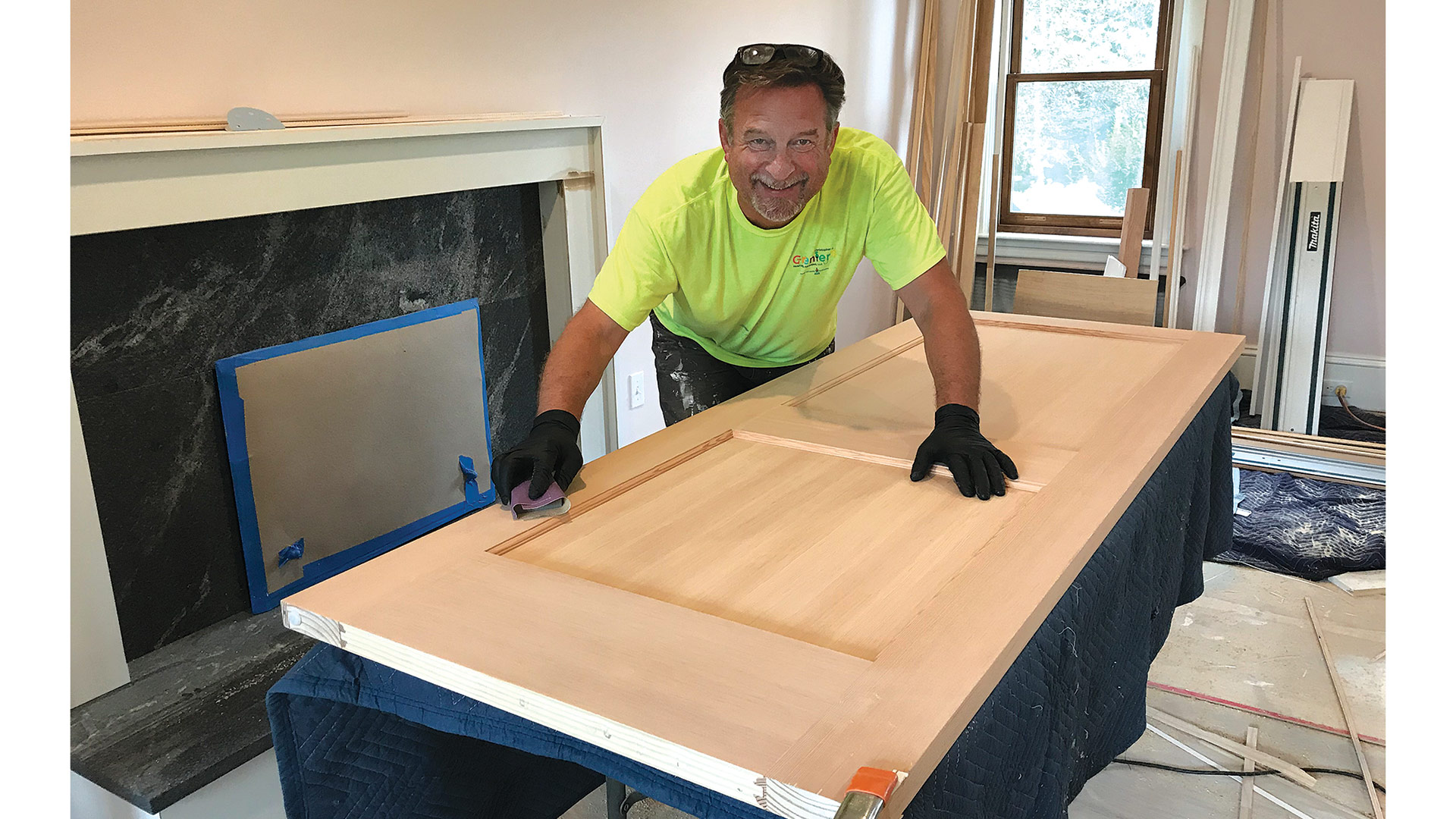
Chris Grenier, owner of Grenier Painting & Finishing, said he appreciates having any version of the Home Show this year.

“I’m very busy right now, but it’s well worth it for me to be at the show because I still need a steady stream of work that I can plan for in the months ahead,” he explained.

Chris Grenier says even a scaled-back show brings value to vendors.

Chris Grenier says even a scaled-back show brings value to vendors.

BusinessWest spoke with a few contractors who have found both short-term and long-term benefits from participating in the show.

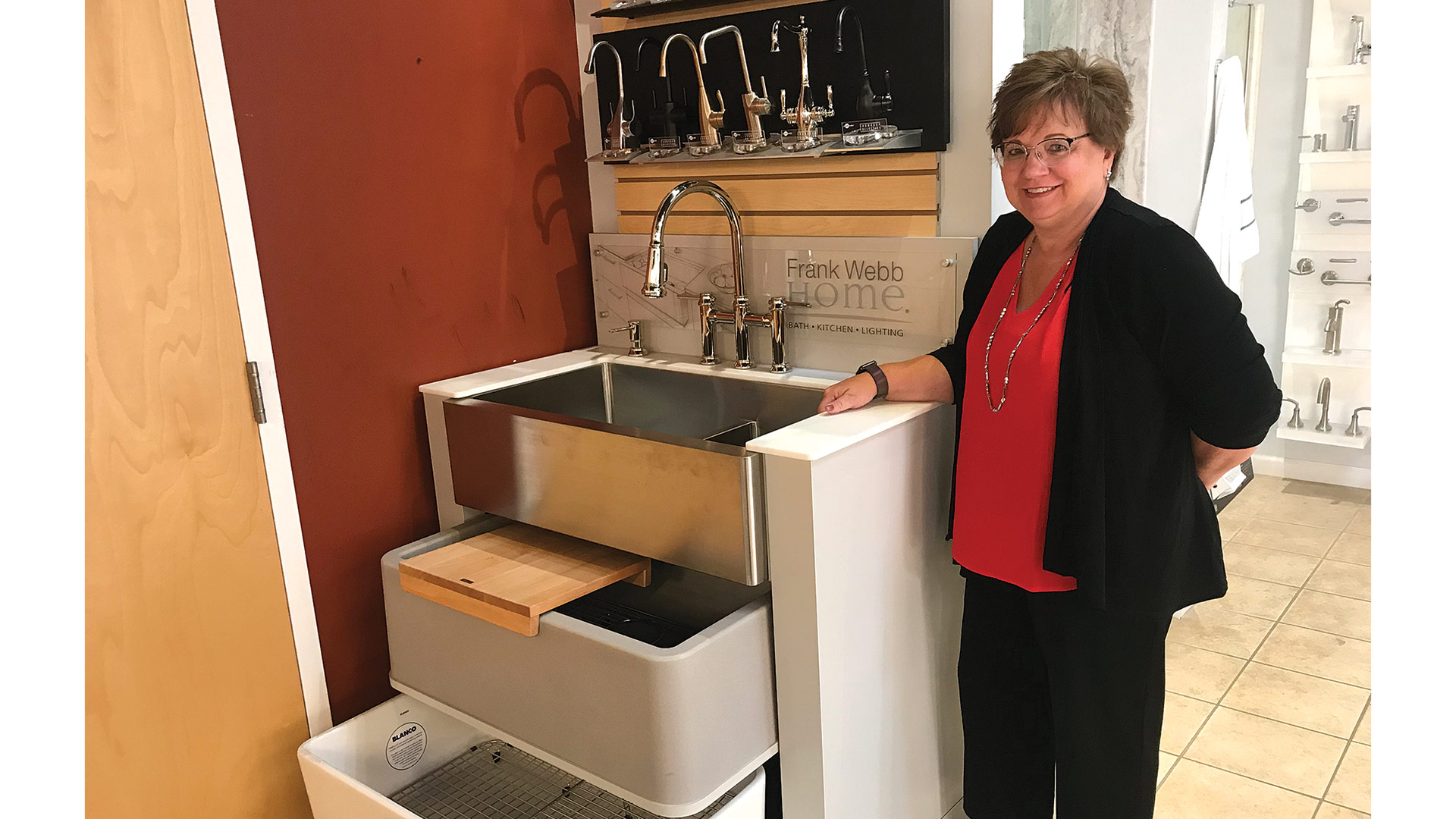
Frank Webb Home in Springfield sells a wide range of kitchen and bath fixtures, as well as lighting. Manager Lori Loughlin said taking a booth at the Home Show is well worth the investment.

“We often see a 40% increase in business right after the Home Show,” Loughlin said. “Even though we’re in a busy time right now, that can change, so we want people to keep us in the loop when they plan their kitchen and bath projects in the future.”

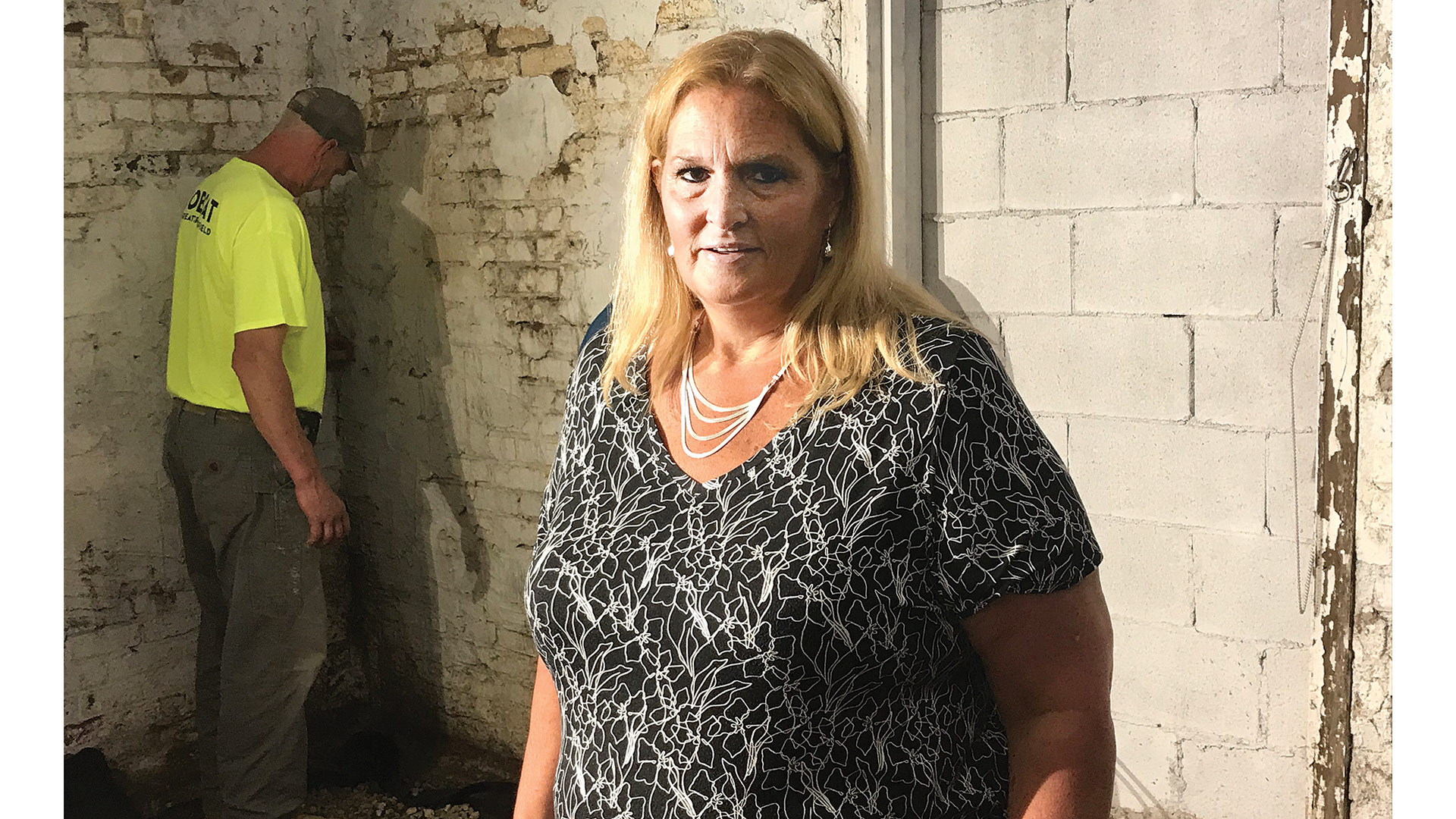
For the last five years, Gisele Gilpatrick, project manager for Pro-Tech Waterproofing Solutions in Chicopee, has chaired the Home Show organizing committee. Her company has always done well at the event.

“It’s a chance to meet people one on one and for them to collect business cards,” she said. “People will often call us six months to a year after the show to say they are ready to fix their wet basement.” She also said it’s not unusual to hear from people up to five or six years later.

When Gilpatrick meets people at the Pro-Tech booth, they often share photos with her, but they are not of children and pets. “They bring us pictures of their basements and say, ‘this is what my nightmare looks like,’” she said, adding that an interesting dynamic happens when someone describes the specifics of their wet-basement problem.

Gisele Gilpatrick says the lingering pandemic has forced show organizers to constantly reassess safety protocols.

Gisele Gilpatrick says the lingering pandemic has forced show organizers to constantly reassess safety protocols.

“One person might be telling us their story, and others who overhear become interested in the conversation because they have similar problems in their basements,” she said. “The next thing you know, a group of people are gathered around our booth.”


Safety First

While gathering at a booth can be good for business, this year, people will need to take social distancing into consideration when they congregate. The emergence of the Delta variant of COVID has show organizers making constant adjustments to their safety protocols.

“In planning the show, we’ve gone back and forth from wearing masks to not wearing masks as mandates keep changing, so it won’t be a surprise if they change again,” Gilpatrick said.

The maintenance staff at the Exposition grounds have boosted their protocols with more frequent surface cleaning during the show. They have also strongly encouraged people to wear masks. Crane advised, “if you are at all uncomfortable, wear your mask.”

Despite all that, Gilpatrick believes it’s worth attending the show, and for some, the scaled-down version might be easier to navigate.

“The crowds at the March Home Show can be overwhelming for some people,” she said. “This edition of the show will be easier to get around, and we will still have lots of quality exhibitors.”

Lori Loughlin says finding a contractor can be difficult right now

Lori Loughlin says finding a contractor can be difficult right now, and the Home Show can help make those connections.

As people have stayed closer to home for the last 18 months, many have set aside the money they would normally have spent on vacations and going out, and are using those funds instead to make improvements to the inside and outside of their homes, a trend Loughlin said is far from over. “People who are planning home projects now have been looking at their houses for a year and a half, and they are ready to make some changes.”

Crane emphasized the importance of planning and noted that the combination of busy contractors, shortages of certain building materials, and difficulty finding enough laborers all contribute to projects taking more time than in the past.

“Plan as far ahead as you possibly can,” he said. “I don’t want to scare anyone from doing a project, but planning is more important than it’s ever been.”

Grenier said good planning starts with recognizing that everyone is busy right now. “If folks go to the Home Show looking to make an interior improvement, they should plan it as a winter project. If it’s an exterior project, plan for next spring.”

Crane agreed. “The days of getting prices from four or five contractors are going away. If you talk with a contractor who gives you a reasonable price and you have a comfort level with them, sign them up.”

Loughlin said just finding a contractor to start a project is now more challenging. “The Home Show gives people an opportunity to meet contractors they might not have known about who can help them. It’s a chance to meet contractors in person and establish a point person to contact.”

The real opportunity is moving past thinking about a project, to making it happen, she added. “I believe people will come to the Home Show because many are at the point where they’ve done all they can online, and now it’s time to broaden what’s actually possible.”

Crane also emphasized how the Home Show has become a social event. For a $10 admission, it gives people an inexpensive time outside the house. It also allows people to see and touch new products.

“For the low cost of getting into the Home Show,” he said, “you might see that one thing that completes the puzzle of putting together your project.”

Autos Special Coverage

A Different World

Ben Sullivan says an ongoing inventory crisis

Ben Sullivan says an ongoing inventory crisis has forced dealers to place late-model vehicles under the showroom lights.

Auto dealers are used to adjusting to changing economic conditions and fluctuations with the laws of supply and demand. But in recent months, they’ve had to contend with an almost unprecedented mix of challenges — from dwindling inventory to an historic shortage of used cars. There is no real consensus on just when ‘normal’ will return, but all indications are that it won’t arrive until at least the first quarter of 2022.

As they talked about the past 18 months and what they project for the next few quarters, area auto dealers sounded similar tones and eventually came back to the same word. They are all adjusting.

To be more specific, they’re adjusting to some conditions they’ve rarely, if ever, seen before, and all at once. Things like:

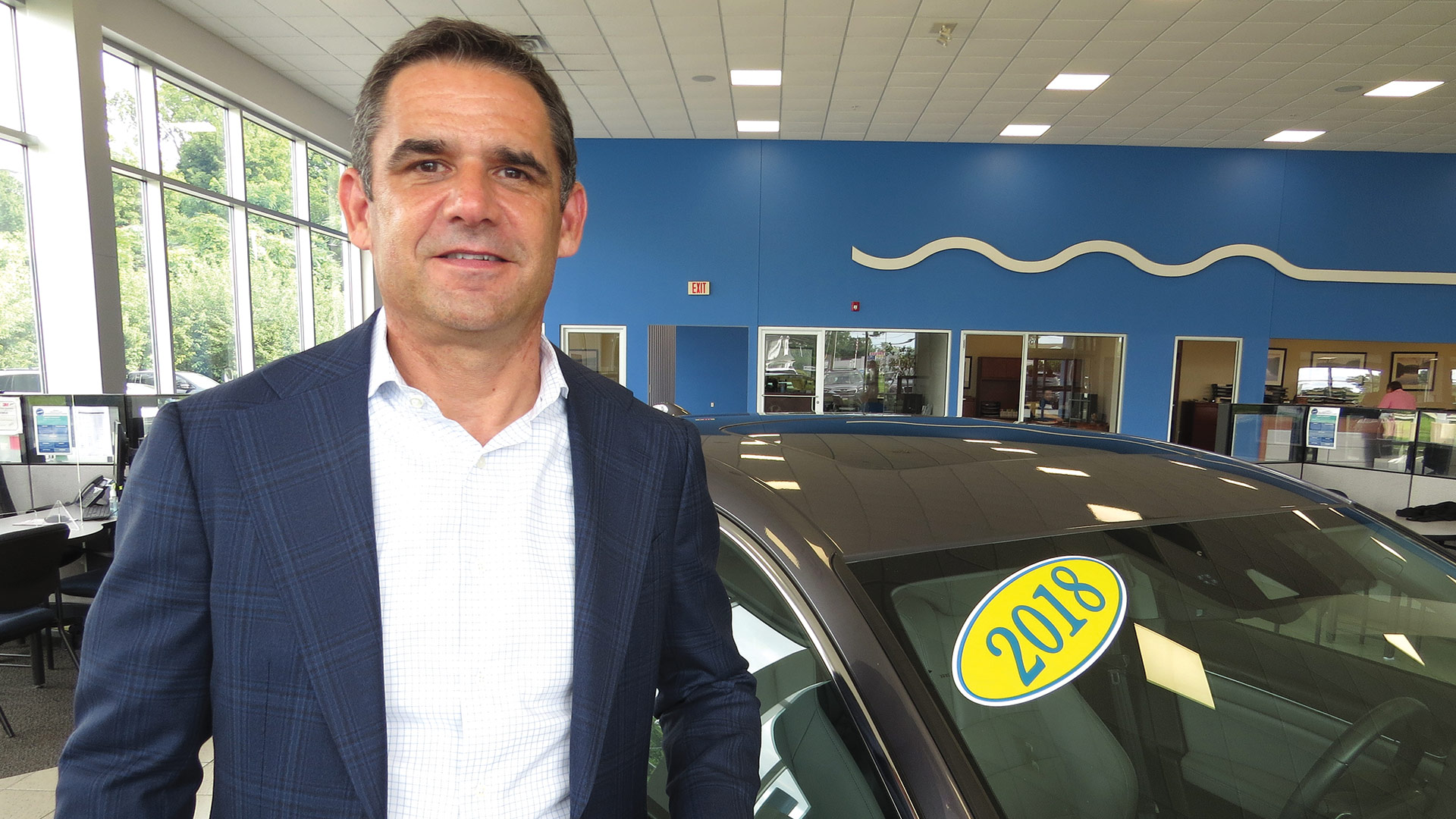
• Used cars populating the showrooms. Yes, there have at times been some higher-end used models or a 1930 Model A in the showroom for effect, but now, area dealerships are showcasing cars with ‘2019’ and ‘2018’ stickers on the windshield, out of necessity — because that’s all they have.

• Lots that are half, or more than half, empty. Inventories of new cars are at levels never seen before as factories, confronting an ongoing microchip shortage, struggle, unsuccessfully, to keep up with what has been steady or even better-than-steady demand because many consumers still have money to spend, and it’s burning a hole in their collective pockets. Meanwhile, used cars are also in short supply. Most dealers report total inventory (new and used cars) to be one-quarter to one-third of what would be considered normal, with many being able to count new-car inventory using just two hands — with a few fingers left.

• Factory ordering becoming the new way of doing business.

• A complicated used-car market that is finally starting to level off in some respects. Still, cars are hard to find, dealers are going to great lengths to find them, and they must be careful not to pay too much and risk watching the market change quickly and profoundly.

• Even some workforce issues. Indeed, dealerships are not immune to the challenges facing businesses in seemingly every sector when it comes to hiring and retaining workers.

Add it all up, and it’s been a year described, alternately and by different people, as ‘interesting,’ ‘challenging,’ and ‘frustrating.’

“We went from trying to jump-start the auto industry after COVID happened — we had these great incentives and offers for customers who maybe weren’t in the market to incentivize them to buy a car — to now not even having the inventory levels to support that. It’s been a wild ride.”

“It’s an interesting world out there, that’s for sure,” said Ben Sullivan, chief operating officer for Balise Motor Sales, noting that, over the past 18 months, dealers have had all sorts of challenges thrown at them, from the sudden standstill after COVID-19 hit to the current situation where they simply don’t have enough cars to sell.

Carla Cosenzi, president of the TommyCar Auto Group, which includes Northampton Volkswagen, Country Nissan, Country Huyndai, Volvo Cars Pioneer Valley, and Genesis of Northampton, agreed.

“We went from trying to jump-start the auto industry after COVID happened — we had these great incentives and offers for customers who maybe weren’t in the market to incentivize them to buy a car — to now not even having the inventory levels to support that,” she said. “It’s been a wild ride.”

Moving forward, the $64,000 questions concern how long this period of extreme adjustment will continue, and what things will look like when it does.

There is no real consensus on the answers, but most believe it will be well into 2022, and perhaps a year or more from now, before the dust fully settles and the lots at area dealerships start to look like they did back in early 2020, when the challenges were much different and there were … too many cars.

Mike Kuzdzal says his lot in Chicopee has historically boasted more than 400 total vehicles, new and used. Now, there are often fewer than 100 of each.

Mike Kuzdzal says his lot in Chicopee has historically boasted more than 400 total vehicles, new and used. Now, there are often fewer than 100 of each.

“I think we’re at the bottom of the curve when it comes to availability,” said Sullivan. “From now through the fourth quarter, it will start to improve, but it won’t be back up to what we would call normal historical levels until June of next year.”

Cosenzi agreed. “They’re saying that October is when we’re going to see the inventory slowly start to trickle back in,” she said, noting that ‘they’ means the manufacturers. “We’re not going to get back to the same levels by then, and the expectation is that, by mid-2022, we’ll be back to something approaching normal.”

Mike Kuzdzal, general manager of Metro Chrysler Dodge Jeep Ram in Chicopee, concurred.

“The manufacturers are optimistic month over month that they’ll hopefully be able to ramp up production, but they just can’t keep up with current demand,” he noted. “As they make these cars and put them in an in-transit mode to us, we’re selling them before they even hit the ground.

“My hope is that, by the end of quarter one next year or the beginning of quarter two, we can get back to what we used to be,” he went on. “But the manufacturers are going to have to go double or triple time to get us there.”


A Different Gear

Kuzdzal told BusinessWest his dealership is one of many in the area that have placed signs on the property saying ‘we buy used cars’ — or words to that effect.

And, by and large, these signs are working, he said, noting that, just before he spoke with us, he bought a car off the street.

Such transactions, once quite rare, have become somewhat commonplace, said Kuzdzal and others we spoke with, noting, first, that COVID has yielded conditions whereby many families can do with at least one fewer car in the driveway, and, second, that prices for such vehicles have never been higher — and no one knows how long they’ll stay this high.

“Because of the pandemic and people working from home, a second or third car is not required,” Kuzdzal explained. “They’re sharing one car and saying, ‘I’m going sell my car at an all-time high and save that monthly payment, the excise tax, and insurance — and if I do go back to work, I’ll get back in the market.’”

Transactions like one he described are more than welcome, because traditional sources of used cars — everything from new-car trade-ins to rental cars — have dried up in dramatic fashion. So dealers have had to get creative.

“We’ve been acquiring a lot of vehicles from our service customers and past customers,” said Cosenzi, adding that her dealerships are now also buying essentially any car that comes off lease, where before they would cherry-pick. “We came up with a really easy five-minute trade process that has helped us generate quite a bit of used vehicle inventory.”

Overall, those signs offering to buy used cars or print, TV, and radio ads stating that ‘no one will pay more for a used car than we will’ are just part of the changed landscape in auto sales.

Carla Cosenzi (with her kids, Nico and Talia) is among many dealers expecting a return to something approaching normal by next spring.

Carla Cosenzi (with her kids, Nico and Talia) is among many dealers expecting a return to something approaching normal by next spring.

The dramatically lower volumes of inventory, used cars in the showroom, factory ordering, and essentially selling cars long before they reach the showroom, or even leave the factory, are other components of this altered state, one in which dealers say business is still solid in many respects, but altogether different.

Inventory is perhaps the biggest issue, and it has changed the landscape in all kinds of ways, the most noticeable being the lonesome lots at area car stores. The dealers aren’t used to it, and neither are local residents.

Indeed, Sullivan noted that more than a few people have asked if Balise has divested itself of the massive Chevrolet dealership on West Columbus Avenue. That Chevy store is quite visible from I-91, especially the ramp leading to the South End Bridge, which means people can see — or, in this case, not see — the rows of vans and trucks that have historically populated the south end of the property.

“Every single car that comes in is sold the day it lands there,” he said, adding that this phenomenon helps explain the bare pavement and put the inventory problem in perspective.

But not as well as some of the numbers offered by the dealers we spoke with.

“Where we normally run with 350 to 450 new cars and maybe 150 used cars, now we’re down to south of 100 of both, so we’re at a quarter of our running inventory,” Kuzdzal said.

Sullivan noted that the Balise family of dealerships includes more than a dozen makes, foreign and domestic, each one having inventory issues that have fluctuated over the past several months, with some doing better now than they were in the spring and others still struggling. He noted that, at the huge Honda store on Riverdale Street in West Springfield, there are normally 250 new cars on the lot. One day a few weeks ago, there were seven.

“It’s a situation we certainly haven’t seen, and each manufacturer will hit that low point at a different time. When Honda was out, Toyota had cars; when Toyota was out, Honda had cars. Each month, it kind of moves around, but at this point, heading into the fourth quarter, things will start to get back to what we call a more normal state.”

“It’s a situation we certainly haven’t seen, and each manufacturer will hit that low point at a different time,” he explained. “When Honda was out, Toyota had cars; when Toyota was out, Honda had cars. Each month, it kind of moves around, but at this point, heading into the fourth quarter, things will start to get back to what we call a more normal state.”

Cosenzi, who concurred with that assessment, noted that the TommyCar stable was helped initially by the fact that it traditionally keeps large volumes of inventory on its lots to offer consumers a wide selection.

“Our dealerships are usually crammed with cars,” she noted. “And that really helped us when this happened; we had a larger supply available to us when the chip shortage hit. Some dealers that only carry a one- or two-month supply ended up in trouble, while we carried a three and a half or four-month supply.”


Shifting Expectations

Given the shortages of microchips and other parts they’re facing, Sullivan said manufacturers, for the most part, are now only churning out the most popular, and sellable, variations of given models, and customers are adapting to this altered state.

“We’re used to carrying hundreds and hundreds of vehicles at every dealership, and customers are used to looking at 30,000 buildable combinations of a Honda Accord,” he explained. “They’ll say, ‘I want a blue one with a beige interior and this sunroof; I want this, but I don’t want that.’ The way the manufacturers have adapted through this is they’re only building the most commonly sold and fastest-churning vehicles that they have — they’re only doing certain trim levels.

“You’d think that customers would be mad,” he went on. “But they actually seem relieved. They’re saying, ‘OK, that’s the way they’re going to come in; I’ll take that one.’ Customers have been unbelievably accommodating, saying, ‘I really wanted a red one, but I guess a black one is OK.’”

Kuzdzal concurred, and noted that, in most ways, it’s easier to sell the few cars that the dealers do have on their lots.

“The consumer is coming in with his or her defenses down,” he explained. “They know it’s a tough time to get cars, and if we have it, they should buy it. If they don’t, we’ll sell it to the next person, so that makes the negotiations much easier.

“It’s never been like this,” he went on. “It’s a very comparable time to when we had the gas issue, when we spiked over $5 a gallon. But it has not slowed business down like it did then; it’s a different time, and we have to react to what’s coming our way. Inventory is at an all-time low, used cars are at an all-time high as far as value is concerned, and people are taking advantage of that.”

In addition to using that word ‘adjusting,’ all those we spoke with inevitably came back to that other word you hear and read so often these days — normal.

Some spoke of what is obviously a new normal, while others speculated on when and even if things would return to what used to be the norm.

But Sullivan spoke for everyone, and put things in their proper perspective, when he said, “I can’t wait to return to the old normal.”

Just when that will happen is anyone’s guess, but it seems certain that it can’t be a short drive from here.


George O’Brien can be reached at [email protected]

Cannabis Special Coverage

Growing Concerns

Meg Sanders says the state’s onerous regulatory hurdles have made the cannabis space an unfair playing field

Meg Sanders says the state’s onerous regulatory hurdles have made the cannabis space an unfair playing field, especially for smaller shops and social-equity applicants.

Everyone has seen the dispensaries and other cannabis businesses sprouting up in communities across Massachusetts — and the long lines of customers often stretching out the door. And they might think this business is easy money. But that’s far from the truth, thanks to an onerous tax situation, the illegal nature of the product on the federal level making it tough to enlist financial and other partners, and the slow march from stigma to acceptance of this still-new industry. All of that, however, could be changing, although it will take federal action to loosen some of those shackles.

Meg Sanders is a cannabis-industry veteran, most notably in Colorado, the nation’s first regulated market for legal cannabis. So she’s no stranger to the growing pains the industry is now dealing with in Massachusetts.

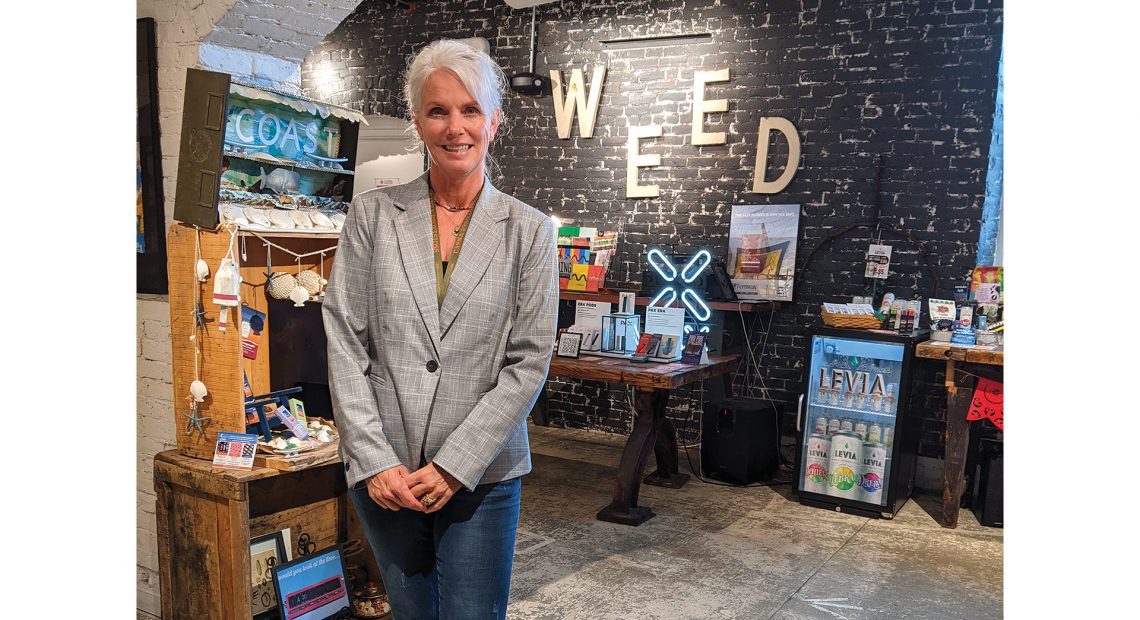
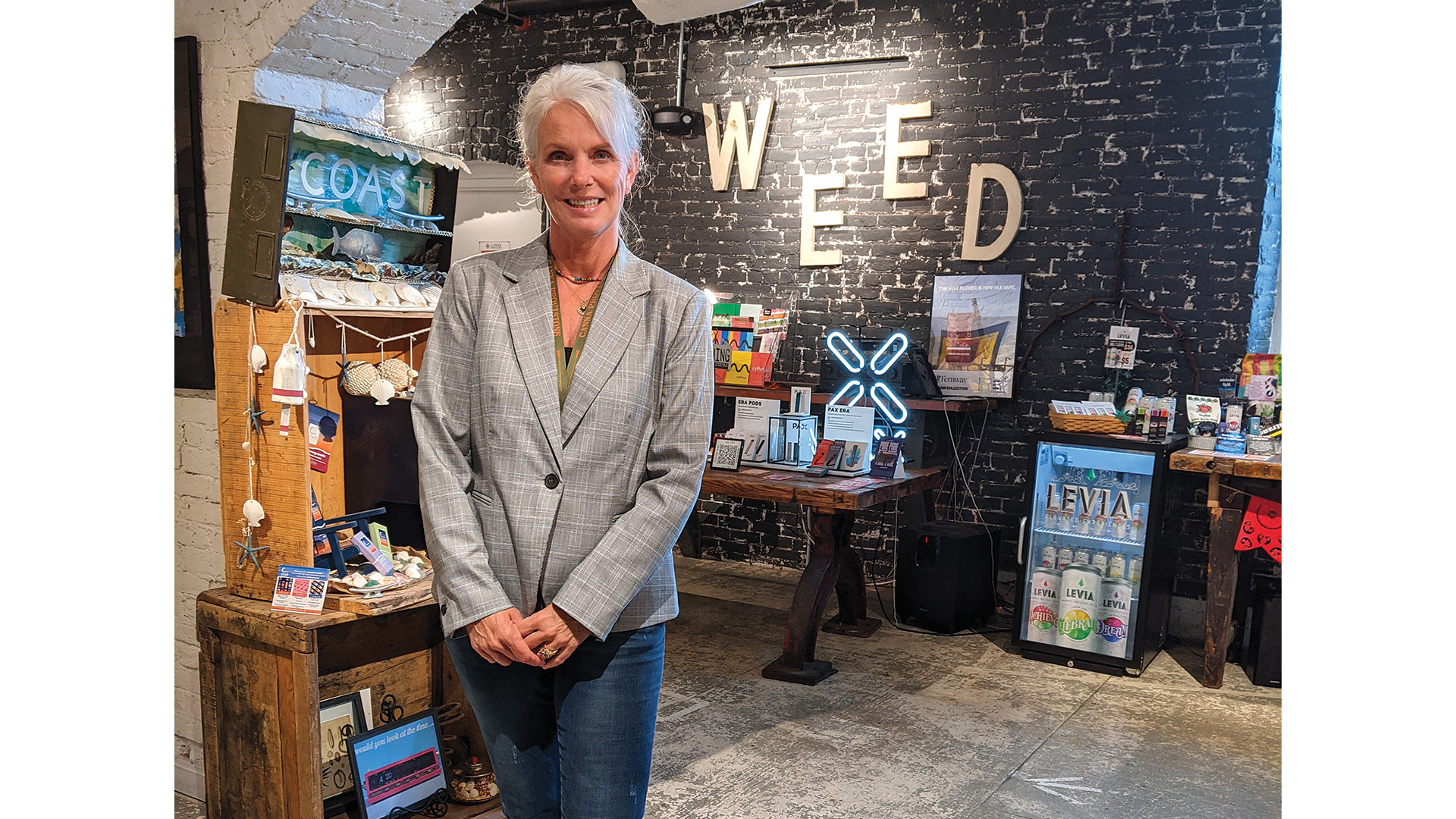
But as a local business owner — as CEO of Canna Provisions in Holyoke and Lee — she’s frustrated by them, too.

“We’re limited on what we can do with advertising, and the amount of product we can sell to a customer at a time,” she said, citing just two examples of regulations set forth by the state’s Cannabis Control Commission (CCC).

“The whole idea was to regulate cannabis like we regulate alcohol, and we’re not doing that. Actually, they’re going way above and way over the top, and I don’t think that’s helpful to the industry. I don’t think it’s helpful to individual businesses, and it’s definitely, in my opinion, not in the spirit of the CCC, which is supposed to promote social-equity and economic-empowerment applicants. But the bar for entry is really high, and the bar to stay out of trouble with the CCC is really high.”

“The whole idea was to regulate cannabis like we regulate alcohol, and we’re not doing that. Actually, they’re going way above and way over the top, and I don’t think that’s helpful to the industry.”

In other words, despite the number of cannabis businesses currently operating across Massachusetts — 267 and rising every week — this is a tough field to enter and a tougher one to succeed at, Sanders told BusinessWest.

“I think of people who are bootstrapping, mom-and-pop stores, teams that are working with a limited amount of cash, and it’s not a level playing field,” she went on. “And a lot of things we worry about in this industry are things that really do not matter. The amount of money this industry spends on packaging alone, that just goes in a landfill, is awful, and it’s driven by these rules and regs — it has to be childproof, it’s got to have 57 warning labels on it. I feel ethically horrible about the mounds of packaging in landfills. And the burden it puts on mom-and-pop manufacturers who are trying to make a really cool chocolate bar and the expense that’s going into that packaging … it’s really tricky.”

It doesn’t help, she added, that many state regulations can be challenging to interpret, mainly because the CCC is going through the same growing pains businesses are.

Scott Foster says federal decriminalization of cannabis has gained momentum

Scott Foster says federal decriminalization of cannabis has gained momentum, but the timeline is still uncertain.

“I’ve seen this in other states — the agency tasked with regulating and monitoring the industry has a very steep learning curve,” Sanders said. “One investigator will tell you one thing, and another investigator will tell you another thing. So they’re not always on the same page for specific rules.”

Many of those regulations address diversion of product, she noted. “We’ve spent millions of dollars building this business. The last thing we’re going to do is flush it down the toilet trying to sneak a pound out the back door. It’s just absurd.”

So are onerous background checks to get into the industry, keeping out some of the individuals — from communities that have been inordinately affected by the Drug War — who should be able to enter and prosper, she added. “Regulators and business owners should be partners to build a better business and correct things that need correcting, understanding everyone is doing their best.”

Those challenges are strictly state-level, but others on the federal level are just as burdensome, and boil down to the fact that the U.S. government still classifies cannabis as an illegal controlled substance. That means most banks and credit unions have avoided doing business with cannabis operators, though that’s slowly changing.

“In the early days, there weren’t a lot of professionals willing to take the career risk to enter the industry, so it was hard to find talent to come in and help grow the business. But, again, you’re starting to see that shift as more states legalize and you see the social proofs play out.”

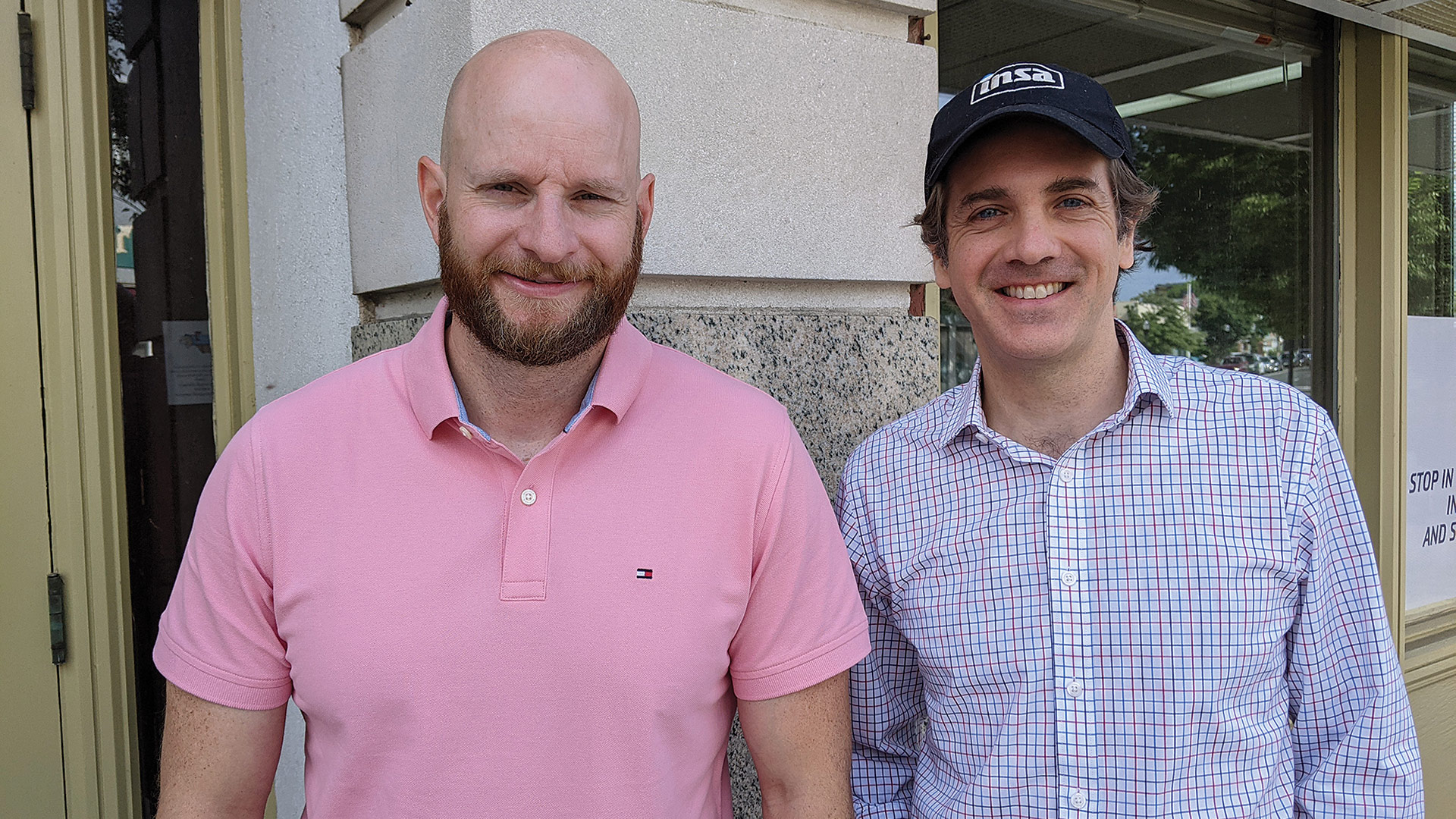
“The federal illegality is a big challenge, and it doesn’t stop with the banking issue,” said Patrick Gottschlicht, chief operating officer of Insa. “That’s been extremely detrimental to us, but that carries across to other companies that we can work with — payroll processors, ERP [enterprise resource planning] companies, any big national or international software companies, accounting firms, security vendors … they can’t work with us because of that federal illegality.”

That has started to shift as more professional services and banks are opening up to this industry, though many still won’t, and many that do are startups themselves, with less at stake, said Peter Gallagher, Insa’s CEO.

“There’s no playbook for this industry,” he added. “There’s been a lot of trial and error to get to where we are. In the early days, there weren’t a lot of professionals willing to take the career risk to enter the industry, so it was hard to find talent to come in and help grow the business. But, again, you’re starting to see that shift as more states legalize and you see the social proofs play out. People’s friends are getting into it, talking positively about it, and they see the success of the industry, and you’re seeing more willingness to work with cannabis.”

Some bills have been introduced in Washington to, if not legalize cannabis, at least decriminalize it.

“Those bills would make it easier for us, and also de-risk the industry around the margins for a lot of partners,” Gallagher said. “The trend is definitely there, but in what time frame will that happen? From our perspective, it’s been happening a lot faster than we ever expected. When we got into this, we thought the legal conversation would take 20 or 30 years to play out.”


Taking No Credit

Sanders is hopeful, too. “At the federal level, we have big challenges. We can’t even take credit cards. That’s so silly. We can take a debit card and cash, and that’s it. That alone would be a really big help.”

Scott Foster, a partner at Bulkley Richardson and one of the attorneys in that firm’s cannabis practice group, believes sentiment is growing that Congress will act sooner rather than later on some degree of allowing banks into the cannabis space or remove the threat of federal enforcement against entities that partner with cannabis operators.

“That will help create some stability. And the biggest thing it’ll do is allow people to use credit cards at the facilities; it’s largely cash right now. If Congress changes that law, boom — you can use your Visa card, you can use your Mastercard. And the reason that you can’t now is not because Visa and Mastercard have a particular ethical or moral problem with it — they’ve just got a legal problem.”

Patrick Gottschlicht (left) and Peter Gallagher say cannabis is a much more challenging business than it seems — but it’s a rewarding one.

Patrick Gottschlicht (left) and Peter Gallagher say cannabis is a much more challenging business than it seems — but it’s a rewarding one.

Some federal bills have bipartisan support, he added, “but Congress has a lot of other things going on.” Still, with almost 40 states and territories having legalized medical cannabis and more than 20 giving the OK to adult-use cannabis, “I think the tide is definitely turning on this; it’s just a matter of how far it goes, and how quickly.”

Even without a change in the law, Foster explained, “the banking situation is getting better. We’re seeing some banks and some credit unions more willing to lend into the cannabis space now — much more than a couple years ago. They’re becoming more comfortable with lending for real-estate purposes — not for buying things, necessarily, but for buildout and for creating a space, including cultivation spaces. So that’s a change. A very small change, but the fact that it’s happening at all is a big deal.”

The other federal law cannabis operators want to see changed is Internal Revenue Code Section 280E, which severely limits tax deductions for business that deal in controlled substances prohibited by federal law. In short, businesses can deduct the cost of goods sold, but are not allowed any other deductions or credits on their return, including for wages.

“The taxes are crushing — you can’t deduct wages, rent, or other ordinary deductions. Most of these companies are looking at an effective tax rate of 70% to 90% in that, of their profit at the end of the day, 70% of it goes to pay federal taxes.”

“The taxes are crushing — you can’t deduct wages, rent, or other ordinary deductions,” Foster said. “Most of these companies are looking at an effective tax rate of 70% to 90% in that, of their profit at the end of the day, 70% of it goes to pay federal taxes. And this is after they pay state and local taxes. So the federal government is making a lot of tax money off of cannabis companies across the U.S.

“It’s been challenged multiple times in multiple states,” he went on, “and every tax court and every appellate court has said, ‘Congress can change it, but they were unequivocal in what they said.’ It’s a completely constitutionally valid statute.”

Decriminalizing cannabis federally would neuter the impact of 280E on the industry, which would be massive news for cannabis businesses that are already paying higher-than-average state taxes, while their host communities get a cut of between 3% and 6% as well.

But decriminalization would open many other doors as well, like broadening the market for insuring these businesses.

“There’s a risk that your insurance company could, almost at any point, say, ‘well, what you’re doing is a violation of federal law; therefore, we’re not going to insure you,’” Foster said. “The companies are getting insurance — they’re required to get insurance by the CCC — but they’re not the traditional companies; they’re not the Allstates or the companies you see advertising. They’re smaller, specialty, boutique insurance companies that have figured out it’s worth the risk to them to get into that space because the premiums are appreciably higher than they would be for a comparable business.”

So, again, the lack of federal legislation to decriminalize cannabis is increasing the cost of doing business, he went on. “If that happened, I think the cost of insurance would go down because you’d have more competition overnight in the space.”

Another barrier to continued growth that is slowly coming down is stigma surrounding the products themselves.

“For decades, it was drilled into people’s heads that this was a bad thing,” Gallagher said. “It’s going to take time to change that, and the most powerful tool is social proof and people seeing their friends and relatives using it to either treat various ailments or enhance their lifestyle; they see they’re successful, healthy individuals, and this is just a way to improve their lives. But I think it’s going to take time.”

For example, Gottschlicht added, “we have a bedtime edible to help you sleep, and we’ve seen people who were non-cannabis users start using that and come into the space because of that. It’s incredible how many people have gotten off standard pharmaceuticals and gone to half a gummy every night. The feedback has been, ‘it doesn’t make me groggy; it doesn’t give me the melatonin hangover I’ve gotten in the past. I feel normal in the morning, and it helps me sleep through the night.’”

Hearing those testimonies from friends and family is often how the stigma barrier falls for people who have been nervous about stopping by, he noted. “They think, ‘hey, there’s some good benefit to this.’ Or as an alternative to opioids after surgery — we’ve had a lot of people come in who just don’t want to take opioids for pain after surgery; they want to try cannabis because it’s not as addictive as some of the opioids out there.”

Sanders agreed. “I personally think the biggest move you can make to convert non-cannabis users to cannabis is this one-on-one experience, people telling people, or people coming in and finding relief from something — maybe sleep issues or aches and pains. And when you convert one person, they tell someone, and then they tell someone.”


Business Is Blooming

It’s been fulfilling to see the industry grow, Foster said — not to mention a boost to his own professional practice.

“The big uncertainty now is what consolidation in this industry is going to look like, and when is it going to happen. Everyone knows big players are going to come in and buy up companies and create brands that stretch across the nation; it’s already occurring, though not a lot … yet.”

But as more investors become comfortable with industry — there’s that idea of breaking through stigma again — that consolidation will happen, he went on. Drawing on the beer industry, he noted there’s no Anheuser-Busch in cannabis yet — it’s all microbreweries, so to speak. But even when large, national companies spread across the space, there will always be room for the boutique experience, for small companies that continue to research and promote the effects of new and different strains.

Research that is not currently happening to the degree it could because much research, especially clinical research at universities, is dependent on … wait for it … federal funding.

But once that research takes off and the cannabis industry escapes the shackles of federal illegality — a development that industry players generally agree will happen at some point — the products will continue to become more legitimized in the public eye, and the potential customer base will expand.

“People are asking, is the industry tapped out? No, I’m not seeing that,” Foster said. “Every business that opens up has a line out the door, and every facility that opens up can sell everything it makes. So, we have not reached a point of saturation by any means.”

That ever-expanding competition is another challenge, Sanders said, but one that should benefit all players because it further legitimizes the products in more people’s minds. But it also means individual businesses need to work harder to stand out. Canna does that with a strong focus on the individual experience and locally sourced products — including its own brand, Smash — with interesting, local stories behind them.

“There’s more good people than not in this space, and we owe it to consumers who are cannabis-curious to put our best foot forward and make sure they have as much information about our products as possible, so they don’t have any unexpected reactions,” she said. “Our commitment is to great products we can tell a story about, that we understand and respect and can get behind and provide the best experience we can possibly provide, and educate our customers.”

Insa, which has a production facility in Easthampton and four dispensaries across the region, including a flagship store in Springfield, has also expanded nationally, with a production facility in Pennsylvania selling to about 100 dispensaries and a Florida license to build a production site and medical dispensaries. And Gallagher embraces the growing competition in all those regions.

“The way we look at it, this is a much bigger industry than exists today,” he said. “If we all do a good job and operate responsibly and create good quality products, it will encourage more people to enter the industry and experiment and try it, and this will get much, much bigger. A rising tide lifts all boats, and as long as you have good, responsible players in the market, it’s going to be a benefit to everyone.”

Still, he added, “it’s a tough business. One of the common misperceptions is, people think it’s going to be easy. But it’s probably the hardest thing I’ve had to do. You have to be on it every day. And when you’re dealing with any biological product, the number of variables to control are immense. So it’s extremely challenging.

“But it’s been great,” he added. “The relationships we’ve built along the way have been fantastic. I wouldn’t change it for anything.”

Except, of course, for some pesky federal laws.


Joseph Bednar can be reached at [email protected]

Features

Moving Up to the Show


documentary on his one-man show, Yield of Dreams, Charlie Epstein

For the documentary on his one-man show, Yield of Dreams, Charlie Epstein visited the actual ‘field of dreams’ stadium in Iowa, a visit he said was inspirational on many levels.

Charlie Epstein joked that he has more people working for him on his one-man show — Yield of Dreams: A Financially Entertaining Experience — than he does at the financial-services company he founded, now part of Hub International.

Only … it’s no joke.

Indeed, over the past 21 months or so, Epstein, known to many as the 401k Coach, has hired comedians, directors, stage managers, animators, and more (the cast of supporters keeps growing) as he prepares to bring his show to the stage — in this case, the Northampton Arts Center — on Aug. 26 and 27.

That show, which has been delayed in some respects by COVID-19, will indulge both of Epstein’s passions — acting and financial advising, both of which he’s been doing for decades now.

The acting? That’s been a passion since childhood, and a diversion that was a big part of his life for more than a dozen years. He’s done everything from standup comedy in New York to another one-man show at the former CityStage called Solitary Confinement, in which he played seven roles.

The financial advising? That, too, has been a passion that has taken a number of forms, from books — Paychecks for Life and Save America, Save! — to a podcast to a video series.

Bringing the two worlds together has become yet another passion for Epstein, one that will put him on a live stage for the first time since he did an off-off-Broadway show just before 9/11.

After the final production of that show, he said a voice inside him told him it was time to leave the stage and move onto other things, including the books and the 401k Coach entrepreneurial endeavor.

“I’d pretty much accomplished everything I wanted to,” he recalled of his acting career. “I was done.”

Turns out, he was only done for a while. OK, a long while.

What brought him back was a desire to present his message in a new, different, and more entertaining way, and in the process, spread the message and attract new customers.

“We’re calling this a financially entertaining experience,” he said, “because the show asks the question: ‘what did you want to be when you grew up? And what happened to that promise?’ Everyone made a promise to themself growing up, only how many people kept the promise? My promise to myself was I always wanted to be an entertainer, and I kept the promise and figured out to successfully navigate living in both worlds.

“Most people are not pursuing their life’s passions — they are stuck in a job that is less than fulfilling, working for a paycheck, hoping one day they will finally get to do what they have always dreamed of.”

“Most people are not pursuing their life’s passions — they are stuck in a job that is less than fulfilling, working for a paycheck, hoping one day they will finally get to do what they have always dreamed of,” he went on. “In this show, I’ll bust your myths about money that hold you back from living the life you have always dreamed of.”

To do so, he’ll draw on some of his own real-life experiences, specifically with his acting career.

“I had basically taken three to five months off a year from 1988 to 2001,” he told BusinessWest. “And I discovered that the more time I took off from my financial business to pursue my acting and entertainment career, the more money I made every year.”

As noted, this show has been in the works for more than two years now and was inspired by a desire to return to the stage. Epstein said he met with Mike Koenig, serial entrepreneur, author, podcaster, and founder of the Superpower Accelerator, in the early fall of 2019 to discuss his plans.

“He told me that I should be like Leno and Letterman and all the great comics who have shows and hire my own comedy team to help me write these ideas that I had,” Epstein recalled, adding that, in exchange for being named producer of the show, Koenig said he would find the comedians — which he did.

“I flew out to La Jolla, California, and holed up for two days in a condo he [Koenig] has overlooking the Pacific,” Epstein went on. “I was there with three comedians, and I basically acted out all the ideas I had in my head. And with those three comedians, we crafted the outline of the one-man show. Then I went home and wrote 168 pages from October to Thanksgiving, then went back out to California in January for another two days of going over things. Then COVID hit, and we spent the next three or four months on Zoom, editing, writing, and acting things out.”

Subsequently, he has hired a director, a stage manager, a lighting designer, animators, and more to bring the show to life. He also traveled across the country for the filming of a documentary on the making of the show, created by Emmy Award winner Nick Nanton. There were location shoots in a variety of settings, including a mountaintop in California, New England, and the actual ‘field of dreams’ in Iowa, the one made famous in the movie starring Kevin Costner, a visit that Epstein said was inspirational on a number of levels.

“It’s like a shrine — it was fantastic being there,” he said, noting that he rented out for the field for two days so he and his crew could film at dusk. “I finally got to do what I always wanted to do, like James Earl Jones — walk into that cornfield like a ghost.”

Epstein, who is now spending several hours a day rehearsing, will perform Yield of Dreams: A Financially Entertaining Experience twice at the Northampton Arts Center, on Aug. 26 and 27 at 7 p.m. There is no cost to attend those shows; seats can be reserved, and that aforementioned documentary can be viewed, by downloading the app at yieldof dreams.live.

After those shows … the plan is to take the show on the road, as they say.

“The goal is to go city to city, tour the country, and teach people that they, too, can achieve their dreams,” he said, adding that the timing for such a show is ideal because many people have been cooped up during COVID, thinking about the present — and the future.

“They’re thinking, ‘I’m working in a job I can’t stand for a paycheck, and I’m miserable. Why don’t I just go for my dream?” Epstein said. “That’s what this show is. It’s me living my passion and trying to be an inspiration to other people.”


—George O’Brien

Community Spotlight

Community Spotlight

By Mark Morris

Bob Boilard says infrastructure improvements, including a broadband plan for the town, have moved forward during the pandemic.

Bob Boilard says infrastructure improvements, including a broadband plan for the town, have moved forward during the pandemic.


Robert Boilard credits people in town working together as the reason Wilbraham has come through the pandemic so far with minimal impact on the community.

“We incorporated our protocols early and have been very fortunate that most people have remained safe from COVID,” said Boilard, who chairs the Wilbraham Board of Selectmen.

Officials from the Police and Fire departments, as well as the town’s public-health nurse, provide weekly updates to the selectmen of the number of positive cases, illnesses, and hospitalizations so they can continue to closely monitor the community’s health.

Boilard pointed to a new DPW garage and a storage facility for the Parks and Recreation department as two projects the town was able to complete during the pandemic. As a community that has received funds from the American Rescue Plan Act (ARPA), the board is hoping to use the money on water-infrastructure projects and expanding broadband internet.

“We have a master plan to install broadband throughout Wilbraham,” Boilard said. “This is a project that will be ongoing for the next few years.”

Another big project on the horizon involves a new senior center. On Oct. 18, Wilbraham will hold a special town meeting to discuss building the facility behind Town Hall. Paula Dubord, the town’s director of Elder Affairs, said she and others have led a 10-year effort for a senior center that can better accommodate the community’s growing senior population.

“Our current location is in a lovely building, but the space is only 3,840 square feet,” Dubord said. “With more than 4,000 seniors in town, it’s just too small.”

The drive for a new senior center began in 2012 with a study committee, which concluded the existing senior center did not meet the town’s needs, even at that time. Next, a feasibility committee was formed and brought in an architect to do a deep dive on what made sense for a new facility. After seven years and consideration of nearly 40 different sites in Wilbraham, the feasibility study recommended building a new structure on municipally owned land behind Town Hall. October’s town meeting will give residents a chance to vote on that recommendation.

“Our current location is in a lovely building, but the space is only 3,840 square feet. With more than 4,000 seniors in town, it’s just too small.”

There were some in town who pushed for locating the new senior center in an available former school. Dubord said the senior center has been located in old schools twice before, and it’s an approach that just doesn’t work.

“The experts who took part in the feasibility study told us a new building was a more practical way to meet the current and future needs for Wilbraham residents,” he said.


Booming Population

When the study committee began its work in 2012, members looked at the potential growth in the over-60 population in Wilbraham.

“We projected that, by 2025, nearly 40% of our town — with a population of nearly 15,000 — will be considered a senior,” Dubord said. “We are very close to that projection right now.”

As Wilbraham residents age, she added, many of them say they prefer to stay in their own home or move to one of the 55+ communities in town.

In its current location, more than 100 residents visit the senior center every day. Dubord emphasized that the real goal of the center is to keep people socially connected. Last March, when the pandemic forced the center to shut down, she and her staff quickly found new ways to stay connected with local seniors.

“We immediately started grocery shopping for people and picking up essential items like masks and toilet paper — both of which were hard to get in the beginning — as well as their prescription medicines,” she said.

The staff at the center put their full focus on meeting the needs of Wilbraham seniors, she added. “Because everyone was isolated, we did lots of phone check-ins with people to keep them engaged.”

In the spring, when vaccines first became available for people 65 and older, Dubord and her staff helped seniors sign up online to receive their shots when the state made them available at the nearby Eastfield Mall in Springfield.

“The registration process was not easy for seniors to complete, so we became like vaccination headquarters,” she said. “Because we had done a number of them, our staff was able to quickly get people registered for their shot.”

Dubord estimates they helped nearly 400 residents sign up for the initial vaccine offering. Later, the senior center hosted its own vaccine clinic run by staff from the Public Health and Fire departments.

Grace Barone says Wilbraham businesses are looking forward

Grace Barone says Wilbraham businesses are looking forward to getting back to some semblance of normalcy.

“Through all those efforts, we are confident that everyone who wanted to get a shot was able to get one,” she said.

Like many senior centers in the area, Wilbraham also offed a grab-and-go lunch program when it could not open the center for meals. “The real plus to the grab-and-go was it introduced us to people we’ve never seen before at the senior center,” Dubord said.

Happy to open the doors at the senior center almost three months ago, she said having someplace to go gives people a purpose and plays a key role in our health as we age.

“Many of our seniors live alone, so the center is important because it gives them access to vital community services and for the social connections they make,” she noted. Indeed, according to a Harvard Health study, the negative health risks of social isolation are comparable to smoking and obesity, increasing mortality risk by up to 30%.

Wilbraham at a glance

Year Incorporated: 1763
Population: 14,868
Area: 22.4 square miles
County: Hampden
Residential Tax Rate: $22.96
Commercial Tax Rate: $22.96
Median Household Income: $65,014
Median Family Income: $73,825
Type of government: Board of Selectmen, Open Town Meeting
Largest Employers: Baystate Wing Wilbraham Medical Center; Friendly Ice Cream Corp.; Big Y; Home Depot; Wilbraham & Monson Academy
*Latest information available

While a new senior center can address the needs of Wilbraham’s growing elder population, Dubord said the plan is for the new building to also house services for veterans in town.

“There are benefits for the new center beyond seniors,” she explained. “The larger space can be used by Boy and Girl Scouts, as well as women’s groups or other organizations in town.”


Moving Forward

Gradual easing of COVID-19 mandates is also good news for Wilbraham businesses. Grace Barone, executive director of East of the River Five Town Chamber of Commerce, noted that, like everyone else, Wilbraham businesses are looking forward to something resembling business as usual once again.

She pointed to a recent annual meeting of the chamber which more than 130 members attended in person while others joined remotely as an example of gradually getting back to attending events while still staying safe.

“The chamber’s golf tournament at the end of September is another way to get back to networking and taking advantage of the outdoors while we can,” she added.

New to her role at the chamber, Barone has been in the job since late June after working with the Keystone Commons retirement community in Ludlow for the last five years.

“I’m hoping to take what we’ve learned from the past 18 months to help our businesses succeed going forward,” she said. “It’s going to take some time, but we can get there together.”

Boilard shares Barone’s optimism about the future.

“It’s awesome to see how well everyone works together,” he said. “From boards to community groups, they are all focused on making Wilbraham a better place to live.”

Home Improvement

The Clock Is Ticking


With state financing now in place, construction is expected to begin in early 2022 on a $29.9 million project to transform the landmark Mill 8 at the historic Ludlow Mills complex into 95 mixed-income apartments for adults 55 and older and a center for supportive healthcare services, Westmass Area Development Corp. and WinnDevelopment announced.

The Massachusetts Department of Housing and Community Development recently announced new tax credits and subsidies to support the next phase of the ambitious adaptive-reuse project, focusing on the section of the 116-year-old complex that contains the clock tower shown on the town’s seal. The Mill 8 project follows the successful transformation of Mill 10, which offers 75 units of mixed-income housing for adults 55 and older.

“There is a three to five-year wait for vacancies in the Residences at Mill 10, proving how vitally important it is to deliver additional quality apartment homes to seniors in and around Ludlow,” said Larry Curtis, president and managing partner of WinnDevelopment. “The continued support of the Baker-Polito administration was the last piece of the financing puzzle needed for us to begin the next phase of work to preserve and revive one of the town’s most treasured historic assets.”

Overseen by WinnDevelopment Senior Vice President Adam Stein and Senior Project Director Lauren Canepari, the project has received enthusiastic support from local, state, and federal officials representing Ludlow. The town has committed state and federal money for several key infrastructure improvements, including the ongoing construction of Riverside Drive and the addition of a wastewater pumping station for the area. In addition, the National Park Service has committed federal historic tax credits to the effort.

Support from the Baker-Polito administration includes federal and state low-income housing tax credits, as well as money from the state’s Affordable Housing Trust Fund, Housing Stabilization Fund, and HOME program.

“As Westmass continues its redevelopment of the Ludlow Mills, we are excited to see the long-awaited Mill 8 transformation begin. Westmass will also benefit from this as we will retain the majority of the first floor for commercial development.”

The 95 apartments to be built inside Mill 8 will cater to a wide range of incomes, offering 43 affordable units for rent at 60% of area median income (AMI), 40 market units, and 12 extremely low-income units available at 30% of AMI. The first phase of the project, the Residences at Mill 10, is 88% affordable.

“The cost of housing is one of the single greatest challenges facing our Commonwealth, and that challenge has been amplified dramatically by the pandemic,” state Sen. Eric Lesser said. “This development will be a welcome addition to Ludlow with 95 new affordable housing units. It will unlock opportunity and alleviate some pressure for housing access right here in Western Mass.”

Gov. Charlie Baker added that “projects like Mill 8 that bring mixed-unit, affordable housing to the community are an important part of the solution required to address the Commonwealth’s housing crisis, and our administration is proud to support them. Unlocking additional opportunities for community and economic development across the state will require more housing of all types in every corner of Massachusetts, and this project stands as an example of how we can continue making progress toward our goals.”

Mike Kennealy, secretary of Housing and Economic Development, argued that the Commonwealth’s housing crisis will be resolved only by the production of more housing — and through more projects like Mill 8. “Thanks to their many partners and the town of Ludlow, these new units will be specially designed for families of all incomes and with supportive services to help people stay in the community they call home.”

In addition to modern apartments, the project has partnered with WestMass Eldercare to create a 5,000-square- oot Adult Day Health Center inside the building that will provide on-site, enhanced supportive services to residents of Mill 8 and Mill 10, including nurse visits, a service coordinator, healthy-living programming, and transportation to the nearby Ludlow Senior Center.

“I am proud to see the public and private partnership between federal, state, and local government with Westmass Area Development Corp. and WinnDevelopment to breathe new life into the iconic Mill 8,” state Rep. Jake Oliveira said. “ As the project enters its next stage, I’m excited to see the clock tower mill building that adorns our town seal to finally become fully functional once again.”

The redeveloped property also will contain common area amenities, including on-site laundry facilities, on-site management, a fitness room, a resident lounge, and several outside recreation areas to serve future residents.

“Since Westmass began this project over 10 years ago, it has always been a priority to get Mill 8 redeveloped,” said Antonio Dos Santos, board chair of Westmass Area Development Corp. “This building has the marquee presence of the entire mill complex, and we are excited that the transformation of this iconic building will be getting underway soon.”

Nearly 43,000 square feet of space on the first floor of Mill 8 will be available for lease to local businesses.

“As Westmass continues its redevelopment of the Ludlow Mills, we are excited to see the long-awaited Mill 8 transformation begin. Westmass will also benefit from this as we will retain the majority of the first floor for commercial development,” said Jeff Daley, president and CEO of Westmass Area Development Corp. “As we pull together different uses in the mills complex, housing is one of the priorities, and we are excited to partner again with WinnDevelopment with the continued support of the Baker-Polito administration.”

The design and construction of Mill 8 will meet the standards of Enterprise Green Communities (EGC), an environmental certification program for affordable housing that includes milestones for water conservation, energy efficiency, healthy materials, and green operations and management.

— By George O’Brien

Home Improvement

Target Acquired

The Baker-Polito administration recently announced it has established an ambitious greenhouse-gas (GHG) emissions-reduction goal for the next three-year Mass Save Energy Efficiency Plan. The goals, established as part of comprehensive climate legislation signed into law by Gov. Charlie Baker in March, are intended to help the Commonwealth meet its ambitious goal to reduce GHG emissions 50% below 1990 levels by 2030.

The GHG reduction goal for the three-year energy-efficiency plan, established in a letter issued by Energy and Environmental Affairs Secretary Kathleen Theoharides to Mass Save program administrators, builds upon the framework established in the administration’s 2050 Decarbonization Roadmap and 2030 Interim Clean Energy and Climate Plan. The goal requires the Commonwealth’s utility companies to pursue an ambitious emissions-reduction goal through Mass Save in a cost-effective and equitable manner while creating jobs and opportunities for economic development throughout Massachusetts.

“Massachusetts continues to lead the nation in ambitious clean-energy and energy-efficiency policies with programs like Mass Save, helping residents save money on their energy bills while making substantial progress on our climate goals,” Baker said. “The goals we are setting today will help spark innovative efficiency solutions and lead to significant reductions in harmful greenhouse-gas emissions to combat the effects of climate change.”

“In establishing this emissions-reduction goal, our administration is laying the groundwork for significant investments in energy-efficient infrastructure and job creation across the Commonwealth,” Lt. Gov. Karyn Polito said. “These investments will reduce air pollution in our cities and towns, create new economic opportunities, and lower energy costs for our residents and businesses across the state.”

The GHG reduction goal for the 2022-24 Joint Statewide Energy Efficiency Plan for electric utility companies requires the reduction of 504,955 metric tons of carbon dioxide equivalent (CO2e) emissions, while the emissions reduction for gas-utility companies requires the reduction of 335,588 metric tons of CO2e.

Gov. Charlie Baker

Gov. Charlie Baker

“The goals we are setting today will help spark innovative efficiency solutions and lead to significant reductions in harmful greenhouse-gas emissions to combat the effects of climate change.”

“Massachusetts remains a national leader in energy efficiency, but we continue to pursue innovative approaches to make our buildings more efficient, drive investment to our cities and towns, and help our state meet its ambitious target of net-zero emissions by 2050,” Energy and Environmental Affairs Secretary Kathleen Theoharides said. “The goals set today will not only help residents and businesses increase efficiency and reduce emissions, but also ensure that equity is a central priority in our efficiency programs as we continue to transition to a clean-energy future.”

The climate legislation signed by Baker requires both economy-wide and sector limits, which will be set first for 2025, then for 2030. The Mass Save program prepares three-year investment plans, one for gas programs and another for electricity and delivered heating fuels. Those plans include goals and reporting requirements for three sectors: residential, residential income-eligible ratepayers, and commercial customers.

The Mass Save energy-efficiency programs are funded by utility customers. All residents and businesses located in investor-owned utility territories in Massachusetts pay into a fund through their utility bill, which supports these programs. The three-year plan directs how these funds will be spent on financial-incentive programs for homes and businesses. The development, implementation, and evaluation of three-year plans is overseen by the Energy Efficiency Advisory Council (EEAC), which is chaired by the Department of Energy Resources (DOER). A resolution created by the EEAC this past March details the EEAC’s priorities for the upcoming three-year plan, as well as providing specific recommendations to support these priorities.

The letter sent by heoharides to the utility companies that administer the Mass Save Program details the goals and priorities for the 2022-24 energy-efficiency plans, which are currently in development and which must be voted on by the Energy Efficiency Advisory Council and submitted to the Department of Public Utilities (DPU) by Oct. 31.

It is anticipated that Mass Save will achieve the GHG emission-reduction goals by increasing the number of buildings retrofitted and weatherized each year, making significant investment in electrification of existing buildings to transition customers away from fossil fuels, reducing support for fossil-fuel heating incentives, phasing out LED lightbulb incentives, increasing equitable program investments in environmental-justice communities and low- to moderate-income households, and increasing workforce-development investments to expand diversity in the workforce. The goals build on the administration’s effort to promote long-term decarbonization in coordination with the EEAC and its priorities, such as promoting passive home adoption and air-source heat pumps.

“Energy-efficiency measures are the most cost-effective way for residents and businesses to lower their energy bills and to lower our greenhouse-gas emissions,” Department of Energy Resources Commissioner Patrick Woodcock said. “DOER looks forward to our continued partnership with the Mass Save program administrators and the EEAC to design a plan that meets this ambitious mandate.”

The final 2022-24 energy-efficiency plans, to be filed with the DPU in October, are required to be designed to achieve the GHG goals established in the secretary’s letter and should focus on programs that accelerate the market transformation needed to achieve net-zero emissions by 2050. The plan should reflect the GHG-reduction goals and include a performance-incentive mechanism that ensures that electric and gas utilities are incentivized to achieve these goals.

On March 26, Baker signed comprehensive climate-change legislation that significantly increased protections for environmental-justice communities across Massachusetts; authorized the administration to implement a new, voluntary, energy-efficient building code for municipalities; and allowed the Commonwealth to procure an additional 2,400 megawatts of clean, reliable offshore wind energy by 2027. Recognizing the significant impact of climate change on environmental-justice communities overburdened by poor air quality and disproportionately high levels of pollution, the legislation statutorily defined environmental-justice and environmental burdens, including climate change as an environmental burden.

The legislation also expanded Massachusetts Environmental Policy Act review to require an environmental-impact report for all projects that impact air quality within one mile of an environmental-justice neighborhood and required the Department of Environmental Protection to conduct a stakeholder process to develop a cumulative impact analysis as a condition of permitting certain projects.

Home Improvement

Survey Says

Home renovation spending has grown 15% in the last year to a median $15,000, according to the tenth annual Houzz & Home survey of more than 70,000 U.S. respondents. Higher-budget projects (with the top 10% of project spending) saw an increase from $85,000 or more in 2020, compared with $80,000 in the two years prior.

Kitchen projects are the most popular among renovating homeowners, and while median spending has been flat on these projects for the past three years, investment on major remodels of large kitchens jumped 14% to $40,000 in 2020 compared with $35,000 in 2019. The study also found that the busy renovation market will continue through 2021, with 56% of homeowners renovating or planning to renovate this year, the highest share since 2017 (52%).

“While the pandemic caused initial concern for the residential-renovation industry, many homeowners finally had the time and financial means to move forward with long-awaited projects in the past year,” said Marine Sargsyan, senior economist for Houzz. “This pent-up demand, along with other long-standing market fundamentals such as accumulated equity, will empower homeowners to continue investing in their current homes rather than face skyrocketing prices in the housing market.”

With homeowners homebound due to the pandemic in 2020, the share who reported that they had wanted to pursue a home renovation all along and finally had the time increased by six percentage points in 2020 (44%versus 38% in 2019), and remains the top renovation trigger. Wanting to do it all along and finally having the financial means also rose (as reported by 36% of homeowners compared with 34% in 2019). Meanwhile, 25% of homeowners claimed to have renovated instead of moving to find a home that fit their needs because it was the more affordable option. Surprisingly, remodeling to adapt to recent changes in lifestyle only increased by two percentage points in 2020 (18%) from 2019 (16%).

“Kitchen projects are the most popular among renovating homeowners, and while median spending has been flat on these projects for the past three years, investment on major remodels of large kitchens jumped 14% to $40,000 in 2020 compared with $35,000 in 2019.”

While cash remains the leading form of payment for home renovations (83%), the share of homeowners opting to finance their projects with credit cards fell significantly to 29% (from 37% in 2019). Tax refunds gained popularity among renovating homeowners in 2020 (10%), especially when funding small projects up to $5,000.


Gen-Xers Step Up Spending

While Baby Boomers (ages 55-74) have historically led in both renovation activity and spending, Gen-Xers (ages 40-54) narrowed the gap in 2020. Median spending for Baby Boomers, who represent 52% of renovating homeowners (down from 55% in 2019), remained flat at $15,000. Gen-Xers now account for 32% of renovating homeowners (up from 30% in 2019) and increased their median spending to $14,000 (from $12,000 in 2019). That said, the top 10% of both generations increased their investment in 2020, but Baby Boomers did so at a more significant rate (from $80,000 to $90,000 versus $82,000 to $85,000 among Gen-Xers). Median spending among Millennials (ages 25-39), who represent 12% of renovating homeowners, remained unchanged in 2020 ($10,000), with the top 10% investing $65,000.


Outdoor Projects Heat Up

While interior room remodels remain the most common projects (68%), outdoor areas have increased in popularity since 2018, with 2020 showing a jump of six percentage points (57%) among renovating homeowners. Improvements to outdoor spaces were directed toward the grounds, with beds or borders and lawns seeing significant growth in popularity (35% and 20%, respectively). Exterior upgrades, such as decks and porches or balconies, also increased in popularity in 2020 (14% and 12%, respectively), with homeowners investing 25% more in deck and porch upgrades ($2,500 and $1,500, respectively) compared with 2019.


Smaller Spaces See Higher Spending

Homeowners are investing in smaller areas that may once have been considered a luxury and are now a necessity. Demand for home-office projects jumped four percentage points (14%) and were 10% more expensive in 2020 ($1,100). Median spending on closet upgrades also saw a significant jump of 43% to $1,000.


Homes Get Smarter

Smart-home technology purchases continue to rise in popularity, with streaming-media players and TVs experiencing the greatest increases (14% and 12%, respectively) compared with 2019 (10% and 7%, respectively). A larger share of renovating homeowners purchased smart-technology products for their outdoor spaces than the previous year, including security cameras, light fixtures, and speakers or sound systems (19%, 7%, and 3%, respectively).


Homeowners Hire More Than One Professional

Nearly seven in eight homeowners hired professional help for their renovations in 2020 (87%), typically engaging more than one professional per project. Among professionals hired, specialty service providers were the most common (49%), followed by construction and design-related professionals (36% and 18%, respectively).


The Survey

The annual Houzz & Home survey is the largest survey of residential remodeling, building, and decorating activity published. The survey covers a wide range of renovation projects in 2020, from interior remodels and additions to home systems, exterior upgrades, and outdoor projects. Data gathered includes historical and planned spends, professional involvement, motivations and challenges behind building, renovation and decorating projects, as well as planned activities for 2021. The 2021 study includes more than 70,000 respondents in the U.S. alone. The survey was sent to registered users of Houzz and fielded in April and May 2021, and published earlier this summer.

Autos

New World Order

Rob Pion says factory ordering has long been the norm with trucks and some SUVs

Rob Pion says factory ordering has long been the norm with trucks and some SUVs, but the wait time for some vehicles is now six months to a year.


When asked how many new cars he had on his lot, Rob Pion, general manager of Bob Pion Buick GMC in Chicopee, quickly said “eight.”

And he did so with a subdued voice that conveyed the frustration that he and every other auto dealer in the 413 is feeling right now regarding a situation that is clearly out of their control, but also a reality that must be confronted.

And the depth of that reality become clear when Pion paused after adding up his new-car inventory in his head and acknowledged that his number is certainly higher than some of his fellow dealers in the area.

“I guess that’s not really too bad compared to some others,” he told BusinessWest, adding that this situation is not going to get appreciably better anytime soon, especially when it comes to the trucks and large SUVs that comprise his bread and butter. Consumers don’t have a lot to choose from, so unless they want to settle, and many of them don’t, they must order what they want and wait for it to come in.

Before, you didn’t see that many factory orders — it would be the oddball unit. Now, we’re almost in a build-to-delivery stage, particularly with some of the domestics, like Ford; they’re really encouraging people to just put in their order — they know they’re making a car that the customer wants.”

Or, as the case may be with many truck models, and to borrow that famous line from the start of Casablanca, ‘wait, and wait, and wait.’

Indeed, these have become the days of factory-ordered vehicles — a trend that is a world removed from what dealers in this area are generally used to.

Yes, there have always been times when a customer would have to order and then wait for a model with a number of specific features, packages, or even a rare color. And when it comes to pickups, especially the larger models used for towing, factory ordering has long been a common practice.

But in these days when factories — dealing with shortages of not only microchips but a host of other parts — are well behind in production at a time when demand is high, factory ordering has become, well, the order of the day for many makes, especially pickups and SUVs, but also luxury models, which customers are generally more willing to wait for.

Peter Wirth says that, while Mercedes-Benz of Springfield has always handled a good number of factory-ordered vehicles

Peter Wirth says that, while Mercedes-Benz of Springfield has always handled a good number of factory-ordered vehicles, those numbers have never been higher than they are now.

“We’ve never had so many cars factory-ordered,” said Peter Wirth, co-owner of Mercedes-Benz of Springfield. “We have perhaps 50 cars at the moment that are already sold and just waiting to come in. Next month, for example, we have cars coming for inventory, and we have another 25 cars that are pre-sold.”

These factory-ordered cars are certainly helping dealers cope with inventory levels that are unprecedented, said Wirth, adding that, currently, perhaps 75% of total new-car sales are happening in this fashion.

“How many cars we have in our inventory is not a good measuring stick for us,” he went on. “It’s more a question of ‘what percentage of people who want to buy a car from us can we take care of?’ And the answer is still relatively high, as long as the customer is willing to work with us. And two things are helping us — the first is that the luxury-car buyer is generally more patient, and two, it’s been all over the media, so they’re generally used to it; they’ve heard from another brand they may have looked at, or maybe they heard it while they were trying to buy a kitchen appliance or building materials.”

Ben Sullivan, chief operating officer at Balise Motor Sales, agreed. He noted that factory ordering is becoming more prevalent, and the manufacturers are seeing some advantages to this profound change in the way things are being done — in this country, at least.

“Before, you didn’t see that many factory orders — it would be the oddball unit,” he told BusinessWest. “Now, we’re almost in a build-to-delivery stage, particularly with some of the domestics, like Ford; they’re really encouraging people to just put in their order — they know they’re making a car that the customer wants.”

Could this new way become a more permanent model for the future given what appear to be real advantages for the manufacturer and even the dealer? Sullivan acknowledged that this is a legitimate question, and that factory ordering is far more prevalent in other parts of the world, where huge showrooms and hundreds of cars on a lot are simply not practical. But he and others wondered out loud if Americans would tolerate such a process in anything but an emergency situation.

“The United States market has never operated that way,” he noted. “Ford has gone public and said they would like to move that way, so we’ll see. It will be a component of where things go, but I don’t know if it will ever completely replace what we’re used to here. Americans, once they’ve made a decision that they want to buy something, whether it’s a car or a TV … it’s a matter of immediacy.

“When you tell people you necessarily can’t get X, Y, or Z — or, if you can, you don’t know when — some people will wait, but others will say ‘I don’t need a truck right now,’” he explained. “Before, people would order vehicles, then they became trained to buy one off the lot — that Amazon-like mentality where, if I can’t have it in one day, I don’t want it, or I’ll move along.”

“I’ve had customers that have had vehicles on order for nine or 10 months for one reason or another. They haven’t been built, and they may never be built because of shortages of certain things.”

Moving forward, Sullivan said, dealers will ultimately have to be ready, willing, and able to serve customers in both ways — those who want to factory order a car and those who want to come to a lot, pick out a car, and drive it home a few days or even a few hours later.

“The way that we look at it as retailers is that we have to be adaptable enough to handle the people that want a car absolutely today, and those who want to put in an order and get it exactly how they want it and wait 12 weeks. For us, we have to be able to do both.”

Wirth concurred, noting that the current trends represent a minor shift from the way things were for his brand. Indeed, he said maybe two-thirds of those looking to buy a car wouldn’t drive home with something already on the lot. Instead, they would want something close, and the dealership would try to find it through its “pipleline” — a sister store in New Jersey or other dealerships in the Northeast.

Now, with inventories low everywhere, finding the car in the desired color and with all the preferred options and packages is becoming far more difficult. So the preferred route is now factory-ordering one and waiting for it.

Generally, the wait is a few months, but for some trucks, it can be half a year or more, said Pion, demonstrating that, even with factory ordering, there are limitations and challenges — for the dealer and the consumer.

“I’ve had customers that have had vehicles on order for nine or 10 months for one reason or another,” he told BusinessWest. “They haven’t been built, and they may never be built because of shortages of certain things.

“The problem you run into when you get to trucks is they get so granular,” he went on. “It could be as simple as ‘I want this wheel,’ and they just don’t have that wheel available. A simple option here or there makes a vehicle unbuildable.”

In this climate, some consumers are settling for somewhat less than everything they want, while others are not. “Some say, ‘it doesn’t matter if it takes a year or a year and a half for the truck to come in; I want what I want,’” Pion explained, adding that, in such cases, a new model year may arrive before the order is filled, and a 2021 model becomes a 2022.


—George O’Brien

Cannabis

A Front-row Seat

Bruce Stebbins remembers the time during his tenure on the Massachusetts Gaming Commission when that body was essentially subleasing some of its space on Federal Street in Boston to the recently formed Cannabis Control Commission (CCC), charged with overseeing an industry then — and in most all ways still — in its infancy.

While the two entities had separate quarters, the commissions and their staffs would cross paths often, he said, adding that there were lively discussions and some sharing of ideas between the two very different worlds.

“I was regularly running into my counterparts on their commission and staff while waiting for the elevator,” he recalled. “We actually had a lot of staff from our team having a lot of conversations with staff from their team, in part out of convenience — they were on the same floor. There was a lot of information going back and forth on the staff level … and it was the introduction of that new industry that was really exciting for me.”

Little could he have known at that time, but Stebbins, a former Western Mass. resident known to many in this region for his work with a host of economic-development-related agencies, would soon be on the front lines of that new industry.

Bruce Stebbins

Bruce Stebbins

“We have 267 cannabis establishments open in Massachusetts, most of them on the retail side. Unlike gaming, which had a limited number of licenses, there are no limits on the number of cannabis licenses; it’s an interesting structure because there’s been an effort to create opportunities for a local entrepreneur as well as larger operators who have significant experience in other states.”

Indeed, he would eventually trade his seat on the gaming board for one on the Cannabis Control Commission. And that puts him in a unique position.

Indeed, he’s able to talk firsthand (as no one else can, because no one else has sat on both commissions) about these two huge additions to the state’s landscape — and its business community. And he did just that in a lengthy interview with BusinessWest, during which he did a little comparing and contrasting of the two industries. But mostly he talked about his latest assignment, how it came about, and what he projects for a cannabis industry that is already having a profound impact on the state — nearly $2 billion in sales since the first retail establishments opened in 2018 — and, especially, individual cities and towns.

He said the industries are similar in that they are bringing millions of dollars in tax revenue to the state and adding thousands of jobs as well, but also different in some ways. There are only three casinos, obviously, while there are now nearly 300 cannabis-related operations doing business in the state. The casinos are owned and operated by huge international corporations, while the cannabis ventures come in all sizes, from huge, multi-state operations to smaller entrepreneurial enterprises.

And while the resort casinos have changed the landscape in Springfield, Everett, and Plainfield, the cannabis industry is reshaping dozens of smaller communities and bringing new life to idle real estate across the state (more on that later).

Named to the board in January, Stebbins said he’s still learning about the burgeoning cannabis industry in Massachusetts, and there is much to learn.

His education involves venturing out and seeing various operations in person, he said, and also listening to a large and intriguing mix of activists, stakeholders, physicians, parents, and those who have been in the industry, including some who have come to Massachusetts from other states that had legalized cannabis earlier, such as Colorado and Washington.

Overall, while it’s difficult to say how large and impactful the cannabis industry can become in the Bay State, he said there are essentially “no limits” on either the number of licenses or the bearing of this sector on the economy or individual cities and towns.

“We have 267 cannabis establishments open in Massachusetts, most of them on the retail side,” he noted. “Unlike gaming, which had a limited number of licenses, there are no limits on the number of cannabis licenses; it’s an interesting structure because there’s been an effort to create opportunities for a local entrepreneur as well as larger operators who have significant experience in other states.”

For this issue and its focus on the cannabis industry, BusinessWest talked with Stebbins about what he can see from his front-row seat, what he’s learning, and what he projects for an industry that is off to a fast start and shows no signs of slowing down.


On a Roll

When asked about how he wound up trading his seat on one commission for the other, Stebbins started by talking about the positions that became available on the CCC and his decision to apply for one of them.

Key to that decision is the why. As with the Gaming Commission, he was drawn to this board — and the cannabis industry — because of its broad implications for economic development within the Commonwealth.

“Part of my passion has been fueled by the opportunity to work with this new industry coming into Massachusetts,” he noted. “Similar to my interest in the gaming work that I did, I was looking for the economic-development aspects of this [cannabis] industry, whether it’s investment, jobs, small-business opportunity … I certainly saw that both gaming and the introduction of the cannabis industry was going to offer those opportunities. That’s where my passion lay with gaming, and it’s where it lies with cannabis as well.”

Surveying the scene in the Commonwealth, he said cannabis has come a long way in a short time in Massachusetts.

“I was impressed with the work of the commission and the staff … from the time the ballot question passed to the statute to opening the first retail, it was about two years; that’s very aggressive,” he said, adding that the industry is still ascending, with no real indication of just how high it can go.

“Right now, a big part of the agenda of our meetings is looking at renewals, final licenses for applicants, and also a healthy number of provisional-license applications that are coming through the door,” he said. “There doesn’t seem to be a slowing down of activity when it comes to people pursuing a license and people taking the final steps to opening their doors.”

Elaborating, he said there are a number of ways to measure the impact of this industry, with the number of licenses and the volume of sales being only a few of them.

Others include the positive impact on the real-estate market, with cannabis operations bringing a number of idle or underutilized properties — from retail storefronts to former paper and textile mills — back to productive life, with the promise of more at venues that include the massive former JCPenney property at the Eastfield Mall.

“Being from Western Mass., being from Springfield, and knowing Holyoke, I think one of the obvious returns has been investment in brick and mortar, whether it’s been an old mill building as a cultivation-and-grow facility to some of the new retail facilities that you see popping up,” Stebbins said. “There have been many healthy examples of how this has led to increased investment in communities that might have been struggling with underutilized properties that weren’t helping out the tax rolls.”

He cited examples of such dynamic reuse in Holyoke, Sturbridge, Southbridge, and several other communities, while noting that behind each of those walls are jobs that didn’t exist three years ago.

One of the industry’s best qualities, he went on, is the opportunities it offers to different constituencies, when it comes to both jobs and entrepreneurship — within the industry and supporting it as well.

“The cannabis statute obviously wanted to a heavy emphasis on hiring those who were disproportionately impacted by the war on drugs,” he explained. “We are in the middle of our application phase for our social-equity program, which gives individuals from those neighborhoods an opportunity to explore being an entrepreneur in this industry, looking at a management track, looking at an entry-level job track, as well as ancillary business; maybe you don’t want to actually be a cannabis retailer, but you might be an electrician, and what job opportunities and business opportunities are out there because of this industry?”

Stebbins acknowledged there are certainly some barriers to entering this industry, especially when it comes to capital and access to it, and he lauded the CCC and the Legislature for efforts to create loan funds — some of them from revenues generated by the industry — and other programs to ease access and remove some of those barriers.

“Some great work has been done, and we’re not taking our eye off the focus of making sure those opportunities are available for social-equity applicants,” he said.

These qualities separate the cannabis industry from gaming in some respects, he went on, adding that, while both have created jobs, the cannabis sector has created more opportunities in more regions and in more cities and towns — and also more types of opportunities.

“Cannabis has created a wide variety of jobs — testing jobs, cultivation jobs, retail jobs, product-manufacturing jobs,” he said. “And there’s also the fact that the industry has the ability to take root across the Commonwealth and not just in specific regions or specific, identified communities.”


Joint Ventures

Reflecting on the past several years, Stebbins said he’s had a remarkable opportunity — one that has placed him on the front lines in the development and maturation of not just one new industry within the Commonwealth, but two of them.

It’s been a rewarding experience — and a learning experience — on many levels, he said, adding quickly that he has a great deal of energy and passion when it comes to finding solutions and helping new businesses grow, reach their full potential, and be successful.

That’s true of both sectors, but especially his latest assignment — a cannabis sector that has certainly taken root, both literally and figuratively, but will inevitably suffer growing pains. u


George O’Brien can be reached at [email protected]

Opinion

Editorial

It seems like longer ago — as in much longer — but it was almost exactly three years to this date that the casino era officially began in this region.

MGM Springfield was opened to considerable fanfare that hot August afternoon, and why not? The nearly $1 billion project, by far the largest private-sector development this region had ever seen, was more than five years in the making, and the buildup to that day was immense. There was a parade down Main Street. Some businesses actually adjusted their hours so employees could find parking spaces downtown amid what was expected to be a huge crush of visitors to the downtown area.

The expectations were sky-high for this gleaming resort casino, but almost immediately the numbers — in terms of visitors and revenues — started coming in lower than anyone hoped or anticipated.

And then … 18 months after that grand opening, COVID-19 changed the picture in a profound way.

So here we are, three years later. And in many respects, we’re right back where we were when the parade was making its way down Main Street. We can really only look to the future and project, because there simply isn’t enough data, enough evidence, to properly access MGM’s impact on the region.

Indeed, by now, we should have had a clear picture concerning whether this huge gamble — that’s what this is — has been worth it for Springfield and the region. Instead, because of COVID, we really don’t.

We do know some things. We know that MGM is not going to magically change the neighborhood around the casino and spur large amounts of additional development. That was the hope, but it won’t be the reality — unless things change in a dramatic fashion.

A CVS was built there, and, partly because of that CVS, a Wahlburgers restaurant has opened in that area as well. But, unfortunately, most of the office buildings across Main Street from the casino and in that area remain mostly vacant, with few signs of pending development. There is hope that the transformation of property in Court Square into market-rate housing — yes, MGM is a key partner in that project — will promote other developments of that type and also bring new service businesses to the area. But thus far, we certainly haven’t seen the scope of investments that had been anticipated.

We also know that gaming itself is not going to bring more vibrancy to the downtown area — or beyond, as some had hoped, with people maybe combining trips to the casino with visits to the Basketball Hall of Fame, the Big E, or other attractions. There are some visits to area restaurants, but what we’ve observed mostly is just what many feared — that those coming to gamble are single-minded in that purpose, and they’re getting back in their cars after their time on the casino floor is over and driving home.

The biggest impact from the casino has been its special events — concerts and shows — that bring people to this area, not just for that event, but for a night or even two. Such shows help pack area restaurants and bars and, when combined with other happenings, such as Thunderbirds games, create traffic (desirable traffic) and a buzz about Springfield.

The region was starting to see more of that buzz in the months before COVID hit, but, sadly, there has been very little of it since.

But there is hope that it can return — and soon.

Hope — and expectations — were all we had when the casino opened to all that fanfare three years ago. Now, we don’t really know what to expect, largely because of the pandemic and how it has changed the landscape and will continue to change it. But there is still that hope.

The hope that this $950 million investment will fulfill all that promise and become a real economic force in the region.

Right now, if we had to grade MGM Springfield and its impact three years after the doors swung open, that grade would have to be ‘incomplete.’

Opinion

Opinion

By Brooke Thomson


Companies from Facebook to Walmart to Google have begun to mandate that their employees get vaccinated to protect against COVID-19. Restaurants throughout the state have also started to require that guests provide proof of vaccination before eating indoors.

As the Delta variant causes COVID-19 infections to increase throughout the country, there is increased pressure on businesses and employers to protect their employees and customers.

Businesses have an important role to play in addressing the health and economic impacts of this crisis. Our businesses have stepped up in amazing ways in the name of public health during the past 18 months. They have enforced masking requirements, shifted to remote and online commerce, closed down to the public, and been on the front lines of the pandemic.

Now, they are again being asked to take responsibility to stop the spread.

But should businesses alone be in charge of leading on public-health emergencies? While federal, state, and local governments took difficult and important steps to protect public health during the pandemic, government leaders now appear to have taken a back seat, relying instead on the private sector to solve public challenges.

A core duty and primary function of any government is to protect the public’s health and safety. The pandemic highlights the need for governments to take their duties seriously. Our elected officials should provide leadership driven by science and evidence, not partisan politics.

State leaders have an opportunity right now to demonstrate this leadership by adopting statewide mask requirements, limiting gatherings in dangerous situations, and providing guidance for businesses to operate safely. Businesses should be focused on their employees and their customers and take their direction on public health and safety from the officials we elect to guide us.

Leaving public-health decisions to private businesses is not the right answer. It is the duty of state and local governments to protect our health. We need leadership on the pandemic to support our businesses and employers.


Brooke Thomson is executive vice president of Government Affairs at Associated Industries of Massachusetts.

Picture This

Email ‘Picture This’ photos with a caption and contact information to [email protected]
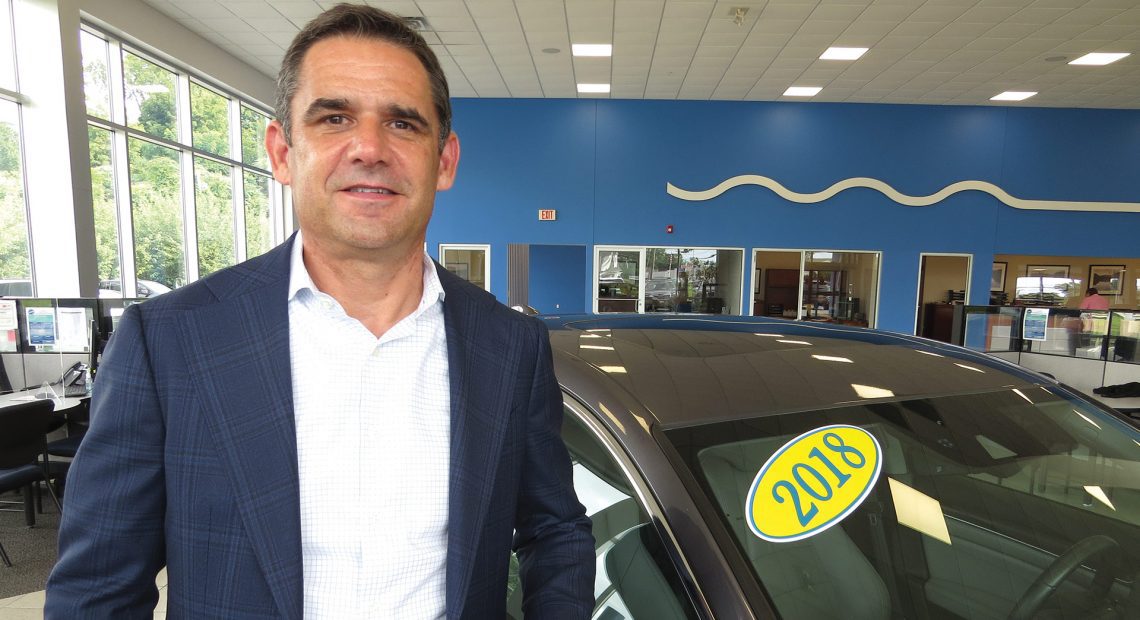


Learning Takes Flight

Fly LUGU Flight Training is partnering with Boy Scouts of America to help the local troop earn their aviation merit badge. Flight instructors from Fly LUGU are volunteering their time to help the young Scouts attain the badge. Instructors are taking pride in teaching the boys airport operations and basic flight instruments, as well as demonstrating a proper pre-flight inspection on a Cessna 172. For many of the Scouts, it is their first time being up close to a small aircraft.


Grand Opening

Brenda Cuoco & Associates Real Estate Brokerage recently opened its second office location at 714 Bliss Road in the Longmeadow Shops. Cuoco has more than 16 years of experience in the industry and is looking forward to bringing her passion and knowledge to the Longmeadow market.


Movie Nights

North Square at the Mill District in Amherst will wind down its summer outdoor cinema series on Aug. 25 with a showing of Mamma Mia! Series partners include (pictured, from left) Tony Maroulis, vice president of Real Estate & Development at W.D. Cowls Inc.; Arthur Haskins, property manager of North Square at the Mill District; Cinda Jones, president of the Mill District; Claudia Pazmany, executive director of the Amherst Area Chamber of Commerce; and Yasmin Chin Eisenhauer, executive director of Amherst Cinema.


Court Dockets

The following is a compilation of recent lawsuits involving area businesses and organizations. These are strictly allegations that have yet to be proven in a court of law. Readers are advised to contact the parties listed, or the court, for more information concerning the individual claims.


CHICOPEE DISTRICT COURT


Unifund Corp. v. Joshua Pollier and Ondrick Materials & Recycling, LLC, trustee

Allegation: Balance owed on a judgment: $34,082.43

Filed: 7/19/21


Alejandro Ramos v. Appleton Exchange, LLC

Allegation: Negligence; slip and fall causing personal injury: $22,709.55

Filed: 8/4/21


HAMPDEN SUPERIOR COURT


Fotio I. Gazis v. Triseptagon, LLC and Demetrios G. Venetis

Allegation: Failure to pay wages, breach of contract: $105,986

Filed: 7/21/21


Robert DeCordova v. Craftsman’s Assoc. Inc. d/b/a Summer Lodge 5 Masonic Temple

Allegation: Negligence; slip and fall causing personal injury: $66,383.48

Filed: 7/26/21


Jaime Hernandez v. FSP Associates Inc. d/b/a Burger King and Urstadt Biddle Properties, LLP

Allegation: Negligence; slip and fall causing personal injury: $256,584.28

Filed: 7/29/21


Denise Gama v. Eversource Energy

Allegation: Negligence, nuisance, and trespass causing property damage

Filed: 7/30/21


Jacqueline Nazario v. the 419 Main Street Realty Trust

Allegation: Negligence; slip and fall causing personal injury: $39,067.25

Filed: 8/2/21


Valerie Castro v. the Stop & Shop Companies Inc.

Allegation: Negligence; slip and fall causing personal injury: $56,026.02

Filed: 8/3/21


Chicopee Crossing, LLC v. Sleepy’s, LLC a/k/a Mattress Firm

Allegation: Breach of contract: $146,311

Filed: 8/5/21


Agenda

RVCC Golf Tournament

Sept. 10: River Valley Counseling Center (RVCC), a multi-faceted mental-health agency, will hold its sixth annual golf tournament fundraiser at East Mountain Country Club in Westfield. The event is presented by Action Ambulance Service Inc. Funds raised will support the programs RVCC provides to children and teens in the community, in schools, and through local partnerships. The cost per golfer is $100 and includes greens fees, a golf cart, a gift bag, lunch, and dinner. Golfers will also be able to participate in course contests and a raffle. Registration will begin at 9 a.m. with a 10:30 a.m. shotgun start. Sponsorship opportunities are available. Visit rvccinc.org/golf for more information and to register or sponsor online.


HCC Foundation Golf Classic

Sept. 13: Registration is open for the Holyoke Community College (HCC) Foundation’s annual fundraising golf tournament at Springfield Country Club in West Springfield. Last year’s golf tournament, the 33rd, was cancelled due to concerns about the COVID-19 pandemic. This year’s tournament will recognize the 75th anniversary of Holyoke Community College. Proceeds will go toward student scholarships managed by the HCC Foundation, the college’s nonprofit fundraising arm. The golf outing begins with an 11 a.m. buffet lunch followed by a 12:30 p.m. shotgun start. After golf, participants can enjoy cocktails on the clubhouse porch, followed by a dinner and celebration recognizing the 75th anniversary of Holyoke Community College. Participants can arrange their own foursomes or sign up as singles. The $185 individual fee includes greens fees, golf cart, lunch, dinner, and refreshments on the course. The cost is $740 per foursome. To register or sponsor the golf tournament, visit www.hcc.edu/golf.


YMCA of Greater Springfield Golf Tournament

Sept. 21: The YMCA of Greater Springfield announced it will hold a golf tournament at the Longmeadow Country Club. The funds raised will support youth development, healthy living, and social responsibility through access to the YMCA. In addition to a round of golf, golfers will enjoy a grilled lunch at 11 a.m. and a dinner following the tournament. To learn more about registration and sponsorship opportunities, e-mail Donna Sittard, Development director at the YMCA, at [email protected], call (413) 739-6951, ext. 3110, or visit www.springfieldy.org.


40 Under Forty Gala

Sept. 23: BusinessWest’s 15th annual 40 Under Forty gala will take place at the Log Cabin Banquet & Meeting House in Holyoke. The class of 2021 was introduced to the region in the magazine’s May 12 issue, and the profiles may be read online at businesswest.com. Tickets cost $80 per person. An extremely limited number of tickets are still available. To reserve a spot, call (413) 781-8600, or e-mail [email protected].


Leadership Training Program

Sept. 28-30: Giombetti Associates, a leadership institute providing behaviorally based talent-development and acquisition services, will host the second of three three-day leadership training programs for 2021 at the Delaney House in Holyoke. This intensive course covers the power of Performance Dynamics and how it can help participants know themselves better; different leadership styles and what makes them effective or ineffective; the importance of being vulnerable and transparent; how to build interpersonal relationships; what effective onboarding is and how it will help participants’ organizations and employees; how to be an efficient communicator; the best way to deliver developmental feedback; building teamwork and the value of team building; and trust, integrity, and more. Prior to training, each participant goes through Performance Dynamics, an assessment that consists of three personality inventories designed to identify 17 different traits that drive personality and behavior. Then, in an interactive, one-on-one feedback session, the participant develops a newfound self-awareness of their behavioral strengths, learns how to manage their personality more effectively, and gains an understanding of how their personality impacts others. Throughout the three-day training, the participant is encouraged to constantly refer to and link their personality to the leadership issue being discussed. All the subject matter is wrapped around individual personality and how it affects behavior in different situations, yielding a unique experience of self-exploration. To learn more about the three-day leadership program, which has an additional session scheduled in November, visit giombettiassoc.com/three-day-leadership-training-program. Registration is now open for both sessions.


People on the Move


Frank Cracolici

Frank Cracolici

A respected healthcare professional with more than 30 years of clinical leadership, Frank Cracolici, has been named interim president of Baystate Medical Center. Meanwhile, Joanne Miller, who has more than 30 years of hospital-operations experience, has been named interim chief Nursing officer (CNO). Cracolici has an extensive background in leading hospitals and most recently served as senior advisor to the CEO of Morton Hospital, a member facility within the Steward Health Care System, a $7 billion system comprised of 36 hospitals with more than 40,000 employees. He was responsible for the day-to-day operations for the 125-bed hospital located in Central Mass., which includes 440 physicians and 730 associates, an active Emergency Department with more than 45,000 visits per year, 5,500 inpatient discharges, and an operating budget of $125 million. Previously, Cracolici was president and CEO of St. Vincent Medical Center, part of Verity Health System, in Los Angeles, where he was responsible for all strategy, hospital operations, and ambulatory services for the 366-bed hospital. He has also held leadership roles as executive vice president and chief operating officer, and then president and CEO, at St. Luke’s-Roosevelt Hospital Center in New York City, where he was responsible for the oversight of 1,000 inpatient beds and strategic planning for all clinical and operational departments of the dual campus hospital center and level 1 trauma center. Cracolici is a Johnson & Johnson fellow from the Wharton Business School at the University of Pennsylvania and has a master of professional studies degree in health services administration and a bachelor’s degree in business and health services administration from the New School for Social Research in New York City. He earned his diploma of nursing at Englewood Hospital and Medical Center School of Nursing in Englewood, N.J. For 19 years, Miller served as senior vice president, Patient Care Services; vice president, Surgical Services; chief Nursing officer, and interim CEO in both major academic health systems and community-based hospitals. Most recently, she served as CNO/vice president at Carson Tahoe Health in Carson, Nev., and interim CEO/CNO at Jupiter Medical Center in Jupiter, Fla. She was also CNO/vice president, Patient Care Services at Johns Hopkins Medicine/Sibley Memorial Hospital in Washington, D.C. In this capacity, she led the development, implementation and evaluation of nursing-practice and patient-care standards across the acute-care hospital, ambulatory sites, and its skilled-nursing and assisted-living facilities. She held system nursing leadership roles to foster collaboration and promote peer learning to improve quality and the patient experience. Miller holds a doctorate in executive nursing practice from Drexel University, a master’s degree in nursing administration from the University of Hartford, and a bachelor’s degree in nursing from Mount Saint Mary College. She is a Malcolm Baldridge executive fellow.



•••••

Duy Nguyen

Duy Nguyen

Christopher Hill

Christopher Hill

Melanson announced the admittance of its newest principal, Duy Nguyen. The accounting firm also announced the promotion of Christopher Hill to chief financial officer. Nguyen works in the Commercial Tax Department at Melanson and has been with the firm since 2014. He is a certified public accountant licensed in New Hampshire and practices out of the firm’s Merrimack office. Since joining Melanson, his focus has been on foreign taxation, multi-state taxation, and venture-capital taxation. His previous experience includes managing tax departments for multi-national corporations. He received a bachelor’s degree in business administration from Bryant College. He holds memberships in the New Hampshire Society of Certified Public Accountants and the American Institute of Certified Public Accountants. Hill has been Melanson’s controller since 2013. Since joining the firm, he has managed its accounting and budgeting, facilities, administrative staff, licensing and compliance, software systems, and other special projects. He received an MBA from Southern New Hampshire University and a bachelor’s degree in accounting from Franklin Pierce University.

•••••

Darcy Young

Darcy Young

In recognition of her six years of success and awarding-winning accomplishments as a video producer, Garvey Communication Associates Inc. (GCAi) announced Darcy Young’s promotion to director of Digital Public Relations. According to President John Garvey, GCAi’s brand-journalism process is built upon the company’s digital-marketing expertise and recognizes the increased responsibility of public-relations professionals to produce relevant content for both media and consumers. To that end, both media and digital audiences have an insatiable appetite for short-form video, something in which Young is accomplished. She will continue to supervise all digital PR content production as well as the technical teams that work on such efforts. Her work will be continued to be supported by GCAi’s production team, as well as a new digital PR analyst who will join the company in August. Young is a former assignment desk editor, field producer, and production assistant for both ABC and FOX local news affiliates. She is a cum laude graduate of Westfield State University, where she earned a bachelor’s degree in communications with a concentration in journalism. She won an Ad Club award for her production of “The Innovation Series,” a video series that highlighted the success paths of Valley Venture Mentors startups and the entrepreneurs who founded them.

•••••

Kriste Joy

Freedom Credit Union announced it has appointed Kriste Joy as branch officer of its two Franklin County branches in Greenfield and Turners Falls. She started her career at Four Rivers Federal Credit Union in 2003 and became part of the Freedom Credit Union family through a merger in 2005. A short time later, she assumed responsibility for managing the former Four Rivers branch offices in Turners Falls and South Deerfield, doing so until the South Deerfield location closed and a new, full-service branch opened in Greenfield in 2009. Well-known in Franklin County, Joy has developed active relationships with local schools and formed several partnerships for financial-literacy and school banking programs, as well as strong ties with many local businesses and members. She also holds active roles in many local nonprofit organizations, including DIAL/SELF Youth and Community Services, the Greenfield Education Foundation, the Greenfield Business Assoc., and the YMCA, just to name a few.

•••••

Michelle Everard

Michelle Everard

Brandy Swanson

Brandy Swanson

Lauren Martin

Lauren Martin

The Markens Group (TMG) recently announced the addition of the New England Financial Marketing Assoc. (NEFMA) to its comprehensive list of clients and expanded its team by hiring three new employees. The Markens Group, an association-management company located in Springfield, now has a 15-person staff that serves clients ranging from local societies and membership organizations to national not-for-profits. Its new client, NEFMA, based in Massachusetts, provides personal- and professional-development opportunities to financial marketers through educational meetings and networking opportunities. New TMG staff members include Michelle Everard, who serves as director of programs and events; Brandy Swanson, who serves as an accountant; and Lauren Martin, who serves as communications manager. The Markens Group’s community-first approach to business is driven by its inclusive team and client collaboration that fosters brighter communities and deeper engagement.

•••••

UMass Amherst’s Jim Kurose, distinguished university professor in the College of Information and Computer Sciences and associate chancellor for Partnerships and Innovation, is part of the research team recently awarded a $20 million National Science Foundation (NSF) grant to build the internet of the future. The grant, which will support the AI Institute for Future Edge Networks and Distributed Intelligence (AI-EDGE), is led by Ness Shroff, professor of Electrical and Computer Engineering and Computer Science and Engineering at Ohio State University. The funding supports a core team of 30 scientists from 11 collaborating educational institutions, three U.S. Department of Defense labs, and four global software companies. AI-EDGE is one of 11 new, NSF-funded Artificial Intelligence Research Institutes, and its ultimate goal is to design future generations of wireless edge networks that are highly efficient, reliable, robust, and secure, and facilitate solving long-standing distributed AI challenges.

•••••

m Soisson

m Soisson

Market Mentors, the region’s largest marketing, advertising, and public-relations agency, announced the addition of a director of Agency Operations, Pam Soisson, a 30-year marketing veteran. This new position was created to provide guidance and day-to-day oversight as the agency grows. “Pam brings a wealth of experience to this role,” company President Michelle Abdow said. “We are thrilled that she agreed to join our team and has already made a strong impact. She’s extremely methodical, seeking order and ways to improve efficiencies in process and procedures. This mindset, paired with leadership experience, makes her an especially effective member of our management team.” Soisson most recently served as vice president of Marketing Strategy for Rebel Interactive Group in Southington, Conn. At Market Mentors, she is responsible for the development and success of both the agency’s team members and the agency itself.

•••••

LaTonia Naylor

LaTonia Naylor

Gregory Thomas

Gregory Thomas

Leadership Pioneer Valley (LPV) recently welcomed LaTonia Naylor of Springfield College and Gregory Thomas of UMass Amherst to its board of directors. Naylor is a dedicated Springfield native and LPV class of 2016 alumna who has been serving the region for years through her work at nonprofit organizations and the Springfield School Committee, where she serves as an elected member. Thomas, director of the Berthiaume Center for Entrepreneurship Management at UMass, has demonstrated exceptional leadership in positions across corporate America in both advising and coaching leaders and entrepreneurs. The board also elected its officers, including Annamarie Golden of Baystate Health as chair, Tony Maroulis of W.D. Cowls as vice chair, Calvin Hill of Springfield College as clerk, Callie Niezgoda of Common Capital as treasurer, and Russell Peotter, retired from WGBY, as immediate past chair.

•••••

Monson Savings Bank announced the election of five new corporators. Stefan Davis is president and CEO of I Found a Light Against All Odds, a Springfield-based nonprofit that works with at-risk youth to address social, emotional, and economic issues they may be facing. He is also an educator in the Springfield public school system. Brendan Greeley is president of R.J. Greeley Co. Inc., a real-estate firm located in Springfield that specializes in commercial and industrial real estate. He is also the vice president of the board of directors for the East Longmeadow Educational Endowment Fund. Erica Nunley is a Realtor leading the Nunley Group at Keller Williams Realty. She is also a member of the Greater Hartford Board of Realtors, the National Assoc. of Realtors, the Massachusetts Assoc. of Realtors, and the Massachusetts Landlord Assoc. Rebecca Smith is a Realtor on the Neilsen Team at Keller Williams Realty. In 2012, she was named a KW Cultural Icon for her dedication to giving, knowledge, kindness, and service to others. She is a member of the Board of Realtors, co-founder of Massachusetts Ride for the Ribbon, and a licensed horseback-riding instructor. James White is president of Go Graphix, an East Longmeadow business that specializes in architectural graphics, signs and films, vehicle wraps, and more. He sits on various committees and boards, contributing to the East of the River Five Town Chamber of Commerce, East Longmeadow Bike Path, Springfield Performing Arts Development Corp., and LPVEC CareerTech & Putnam Vocational School advisory committees.

•••••

Zaida Govan

Zaida Govan

Martin Luther King Jr. Family Services Inc. (MLKFS) appointed Zaida Govan as vice president of Youth Services. She will direct all educational programming, including after-school, summer, and college-readiness programs. She is a licensed clinical social worker and an accomplished community organizer who has worked with the Mason Square Health Task Force and its Drug Free Communities efforts. Her community work also includes serving as a board member of Wellspring Cooperative Corp. and Wellspring Harvest Greenhouse, as well as a board member of the League of Women Voters of Northampton. She is president of the Indian Orchard Citizens Council and president of the Springfield Community Land Trust, whose mission is to bring permanent, affordable housing to Hampden County. She also started community-garden efforts in both the Indian Orchard and Mason Square neighborhoods. Govan attended the University of South Carolina in Columbia and holds undergraduate and graduate degrees from Springfield College, including a master’s degree in social work and human services.

•••••

Karen Wallace

Karen Wallace

Karen Wallace has joined Associated Industries of Massachusetts (AIM) as executive vice president of Marketing. She will develop and lead strategies to support expansion of the association and implement AIM’s belief that business can be a positive force for change in creating a better, more prosperous Commonwealth. A native of Springfield, Wallace was most recently a consultant to Northeastern University Khoury College of Computer Sciences, the Northeastern University College of Professional Studies, and the Isabella Stewart Gardner Museum. She previously spent more than 20 years in marketing positions at Fidelity Investments, including as senior vice president of Marketing, Communications, and Branding. She has also held senior marketing positions at MFS Investment Management and Sun Life. She earned both a bachelor’s degree and an MBA from Simmons University in Boston. She has completed professional-development courses at MIT Sloan School, Harvard Business School, and Tuck School at Dartmouth College. She serves as a board member for the Boston Children’s Chorus and is a member of the National Black MBA Assoc. and Alpha Kappa Alpha Sorority Inc.

•••••

Western New England University (WNEU) announced the recipients of the 2021 PeoplesBank Award. The award, first given in 2020, is made possible by a grant to WNEU from PeoplesBank to advance innovation and entrepreneurship across the university and the entire Pioneer Valley ecosystem. This year, the award went to Jeremy Bowler, a computer engineering major, for his work on an electronically controlled, continuously variable transmission (ECVT) for small-engine applications; Tytianie Brown, a sciences major, who runs a full-service beauty-services business; Caleb Miller, a mechanical engineering major and the co-founder of Woodside Getaways, an RV rental startup; Dante Talamini, an engineering major and team leader for Frost Alert, a wearable smart device that monitors skin temperature and alerts the wearer if they are beginning to experience frostbite; Ethan Valdes, an entrepreneurship major with a minor in health sciences, who co-founded Bus Boiz, a social-media experience startup that captures travel experiences; and Shemika White, an MBA graduate student and founder of Notes of Beauty chemical-free beauty products. Western New England University aspires to develop students’ entrepreneurial mindset with its innovation and entrepreneurial programs. Through co-curricular efforts, such as Startup Weekend and the Product Development and Innovation course, students are able to create innovations that have market potential.

•••••

Enrique Morales-Díaz

Enrique Morales-Díaz

Westfield State University (WSU) interim Dean of Faculty Enrique Morales-Díaz is the recipient of the Latino Scholarship Fund (LSF) of Western Massachusetts’ Antonia Pantoja Award, which honors people who contribute to the Latinx community through research and education. It was presented in June, during the organization’s 30th annual awards ceremony, held virtually. The Latino Scholarship Fund of Western Massachusetts is a nonprofit organization dedicated to putting higher education within reach of college-bound students in the region. Morales-Díaz leads Westfield State’s initiative to become a federally recognized Hispanic-serving institution (HSI) and chairs the University’s Racial Equity and Justice Institute Team. The HSI designation is part of a larger commitment by Westfield State to address systemic racism and inequities on campus, such as in its policies and practices. It also supports its efforts to become a student-ready, relationship-centered campus community that is fluent in understanding all of its students’ needs and that values their culture. An activist for the Puerto Rican community in New York City, Pantoja is best known for establishing ASPIRA in 1961, a nonprofit organization that promotes education and advancement for Puerto Rican youth by providing clubs within schools, career and college counseling, advocacy for bilingual education, and other services.

•••••

Tammy Stone

Tammy Stone

Excel Dryer Inc., manufacturer of the XLERATOR hand dryer, recently welcomed a new director of global sales to its team. Tammy Stone joins Excel Dryer with more than a decade of experience and a worldly expertise unlike many in her field. Born in the Republic of Georgia, Stone moved to the U.S. as a teenager. A graduate of Carl von Ossietzky University in Germany, Tbilisi State University in Georgia, and the University of Illinois College of Law, she holds degrees in business and political science. In previous positions, she grew national and international sales, developed business-strategy plans, and led a team of employees focused on business-to-business activities. In her role at Excel Dryer, Stone will be responsible for managing and providing business-strategy plans for all business-to-business interactions, negotiating transactions, and working to increase domestic and international market share and build sales activity.


Company Notebook

Belt Technologies Receives $45,600 Workforce Training Fund Grant

AGAWAM — Belt Technologies Inc., a manufacturer of custom metal belt conveyer solutions and conveyor systems for more than five decades, has been awarded a $45,600 grant to assist in the training of 24 workers and the creation of at least two new jobs before 2023. This project is funded by a Workforce Training Fund grant from the Commonwealth of Massachusetts, Executive Office of Labor and Workforce Development. The grant program is administered by Commonwealth Corp. More than $8 million was awarded to companies all across Massachusetts, investing in companies from a variety of different industries. Belt plans to use the funds to help employees complete several training programs which will improve their proficiency with tooling, planned maintenance, and lean-manufacturing principles. The company currently employs 39 people in Agawam and plans to add two new manufacturing positions to increase capacity.


The Dowd Agencies Restructures Financial-services Division

HOLYOKE — The Dowd Agencies, LLC, a leading insurance provider serving New England for more than 120 years, has restructured its financial-services division to provide more focused services to its clients. The former Dowd Financial Services has been divided into two divisions: Dowd Wealth Management and Dowd Employee Benefits. Dowd Wealth Management will replace the financial arm of Dowd Financial Services, offering financial consultation relative to retirement planning and investments. Dowd Employee Benefits will center around both group and individual health, dental, life, and an assortment of ancillary products. Both divisions will serve individuals and businesses.


Canary Blomstrom Insurance Merges with GoodWorks

AGAWAM — Canary Blomstrom Insurance Agency recently became a member of GoodWorks Financial Group, a national network of insurance agencies, according to Canary Blomstrom President Sandy Brodeur. The agency will retain its name, staff, and Agawam location, and Brodeur will continue to serve as president. By joining GoodWorks, Canary Blomstrom will partner with Wheeler & Taylor Insurance of Great Barrington to broaden its insurance offerings locally, regionally, and nationally. Wheeler & Taylor is GoodWorks Financial’s flagship national agency. Canary Blomstrom offers all types of personal insurance, including home, auto, renters’, and boat insurance. It sells life, long-term-care, and disability insurance and annuities. Products for businesses and nonprofits include all types of commercial property and casualty insurance and employee-benefits insurance, including group health and dental plans and voluntary benefits.


Partner Consulting Joins Pixel Health Family of Companies

HOLYOKE — Partner Consulting has been acquired by Massachusetts-based Pixel Health as part of the company’s continued expansion of its national healthcare technology ecosystem. Headquartered in Middlefield, Conn., Partner joins VertitechIT (infrastructure design and implementation), Nectar (digital health strategy consulting), baytechIT (managed services), Liberty Fox Technologies (software-application development) and akiro (healthcare financial and business-advisory services) as part of the Pixel Health brand. Turning ordinary phone systems into a unified communications tool with bottom-line impact on productivity and collaboration has been the hallmark of Partner Consulting for more than two decades. With experience in assessment, design, implementation, and management of unified communications, mobility, contact-center, and telecom expense-management methodologies, Partner consultants work with healthcare systems, Fortune 500 businesses, utility companies, and state governments in the sourcing and management of telecommunications and mobility platforms. Partner Consulting will continue to service healthcare and enterprise clients from its Connecticut headquarters. Pixel Health is based in Western Mass., with consulting offices in Philadelphia and central Pennsylvania, Vermont, Florida, Tennessee, and Washington.


Coca-Cola to Close Bottling Plant in 2023

NORTHAMPTON — Coca-Cola announced it will close its bottling plant at 45 Industrial Dr. in Northampton in the summer of 2023, leaving its 319 employees to find new jobs. “After careful consideration, the Coca-Cola Company has decided to close our production facility in Northampton, Massachusetts,” the company, headquartered in Atlanta, said in a statement. “We did not make this decision lightly and are grateful to have had the opportunity to have been a part of the Northampton community.” The statement added that workers “will be encouraged to apply and be considered for jobs that they are qualified to perform within the Coca-Cola system and at other third-party manufacturer locations. The facility is targeting closure in the second quarter of 2023, and we will support our associates throughout the challenging transition.”


Girls Inc. Awarded $10 Million for Equality Can’t Wait Challenge

HOLYOKE — Girls Inc., the national organization that inspires girls to be strong, smart, and bold, has received $10 million in funding as one of four awardees selected by the Equality Can’t Wait Challenge to benefit its Project Accelerate program. Project Accelerate aims to expand the power and influence of women in the U.S. by 2030. Building on Girls Inc.’s evidence-based programming, Project Accelerate addresses inequality in the workplace, particularly the absence of women of color in positions of influence and leadership. The program will accelerate young women’s trajectories through college and career entry, leveraging partnerships with corporations and social-impact organizations to ensure both their preparation and their access to positions of influence. Project Accelerate will also reduce the gender gap by working with young women starting as early as their junior year in high school to ensure they have the resources and support to thrive as leaders. Through a network of 78 affiliates, including here in the Pioneer Valley, Project Accelerate aims to lift 5,400 diverse women into corporate positions of power and influence, shifting the equity landscape for generations.


Finck & Perras Supports Restoration of Old Town Hall

EASTHAMPTON — Finck and Perras Insurance donated $15,000 to CitySpace in a multi-year pledge for support of the restoration of Easthampton Old Town Hall into a center of the arts for Western Mass. In 2006, beginning with Old Town Hall’s first floor, CitySpace embarked on an effort to create affordable space for arts organizations and creative businesses under one roof in Easthampton’s Main Street Historic District. Now, CitySpace is raising funds to convert the unused second-floor, 3500-square-foot hall into a flexible, accessible, 350-seat space for performances, concerts, and community events. Renovations also will include a new box office, elevator, entryway, theatrical lighting, and sound and projection systems. To date, more than $4.2 million in grants and contributions have been received for the $6.9 million project. CitySpace plans to begin renovations in late 2022 and seeks further support for the project.


MCLA to Receive $1.9 Million in ARP Funding for Students

NORTH ADAMS — MCLA will receive $1.9 million to distribute directly to enrolled students from Higher Education Emergency Relief Funds (HEERF) that are part of the federal Ameri can Rescue Plan (ARP). One of the largest investments ever made in American higher education, ARP allocates $40 billion to colleges in order to mitigate the negative impact of the COVID-19 pandemic. A third round of pandemic relief for higher-education institutions, the ARP funds are more than double the first two COVID recovery packages combined. HEERF funding, which exists under the umbrella of ARP, is meant specifically for students. MCLA students with the highest need, demonstrated via FAFSA information, will receive the majority of this funding, but all enrolled students will receive a check or the option to use the funds to pay off student debt or pay for future semesters of college. The first disbursement of funds will be to MCLA undergraduates and graduate students who are enrolled for summer classes as well as for the fall 2021 semester. The next disbursement will be to students enrolled for fall 2021. The remainder of this funding will be disbursed to enrolled students in spring 2022.


Breeze Airways Launches Three New Non-stop Flights at Bradley

WINDSOR LOCKS, Conn. — The Connecticut Airport Authority announced that Bradley International Airport has launched new, non-stop service to Columbus, Ohio; Norfolk, Va; and Pittsburgh with Breeze Airways. These three launches follow the airline’s recent debut at Bradley and its inaugural non-stop service to Charleston, S.C. The new non-stops will operate on Thursday, Friday, Sunday, and Monday on single-class Embraer aircraft with a two-by-two seat configuration. Flights are available for booking at www.flybreeze.com.


Incorporations

The following business incorporations were recorded in Hampden, Hampshire and Franklin counties and are the latest available. They are listed by community.

LUDLOW

Hurricane Express Inc., 101 Billerica Ave., Building 5, Suite 204 North Billerica, MA 01862. Matt Enzor, 124 Holy Cross Circle Ludlow, MA 01056. Delivery services.

RX Bootcamp, Inc., 40 West St., Ludlow, MA 01056. Israel Estrada, same. Fitness facility.

PITTSFIELD

Studio NYL-MA, Inc., 82 Wendell Ave., Suite 100 Pittsfield, MA 01201, Julian John Benedict Lineham, 1098 North Bryant Street Westminster, CO 80234. Structural engineering design services.

SPRINGFIELD

Exim Communications Inc., 36 Birch Glen Dr., Springfield, MA 01119. Jose Borges, same. Sales of Wireless service and devices.

Inspire Drywall Corp., 22 Allison Lane Springfield, MA 01129. Miguel Hernandez, same. Provide the best drywall finish work.

WEST SPRINGFIELD

Burbank Technologies, Incorporated., 88 Elm St., West Springfield, MA 01089. John H. Fitzgerald, same. Consulting.

WESTFIELD

Khalil Transportation Company, 136 Meadow St., Apt. B Westfield, MA 01085. Khaleel Alsaadi, same. Long distance transportation.