Daily News

HOLYOKE — Holyoke Community College (HCC) is partnering with Pam Victor, president and founder of Happier Valley Comedy, to offer “Establishing Resilience: Building Happiness,” a Zoom workshop on Saturday, April 10 from 11 a.m. to 1:30 p.m. The cost of the class is $99. To register, visit hcc.edu/happiness.

Victor, a comedian and improv facilitator who prefers the title ‘head of happiness,’ will lead participants on an experiential exploration of happiness and resilience building to enhance their joy and ease at work and home. She will share stress-relieving exercises and techniques to help people bring more well-being, laughter, gratitude, and play into their daily lives.

“Finding more joy in 2021 is a priority for me,” said Michele Cabral, HCC’s executive director of Business, Corporate and Professional Development. “As a participant in Pam’s 30-day ‘Happiness Experiment,’ I can tell you without doubt that this class is for everyone. In this single session, participants will get an introduction into the full program, while Pam shares many useful tips and resources to help people get an uplifting start to the new year.”

Happier Valley Comedy, based in Hadley, is the region’s first and only comedy theater and training program.

Daily News

HOLYOKE — The Therapeutic Equestrian Center (TEC), located in Holyoke, is hosting a virtual fundraising event featuring the 2021 Winnie Film Festival Tour. This film fest will feature exclusive, world-premiere short documentary films that celebrate the healing powers of the horse.

Attendees will enjoy two hours of inspiring and heartwarming films anytime from 5 p.m. on Friday, April 9 until 10 p.m. on Sunday, April 11. A fee of $25 is requested to register, and participants will be provided a link to stream to any smart device, such as phones, tablets, and TVs. Binge in one sitting, or stretch the viewing out over the entire weekend — the choice is yours. To register for this virtual event, visit tecriders.org. Gary Rome Hyundai is the exclusive event sponsor.

TEC has been closed during the pandemic but hopes to open later this year. Proceeds from this event will help feed and care for its stable of horses and provide necessary materials needed for a safe reopening.

The Therapeutic Equestrian Center empowers children and adults with physical, emotional, and developmental needs to live their best lives. Through a range of individually designed, equine-assisted programs, lessons, and recreational activities, TEV enhances the bodies, minds, and spirits of riders, creating a stronger, more compassionate and inclusive community in which every member is encouraged and able to thrive.

Daily News

HOLYOKE — The Greater Holyoke Chamber of Commerce has named Jordan Hart its new executive director.

“Jordan brings a longtime commitment to Holyoke and to the chamber to her new position,” said Harry Montalvo of bankESB, the chamber’s board chair. “We are looking forward to her leadership in mapping out new strategies to work with our members as we emerge from the challenges of the past year.”

Hart will replace Andréa Marion in the role. Marion recently announced her departure to pursue other opportunities.

“It is such an honor to serve our membership as their new executive director,” Hart said. “I have gotten to know many of our members and business leaders in our community since I started at the chamber in 2013, and I look forward to bringing vibrancy and presence to our membership through new programming and collaborations as we emerge from the limitations imposed by the pandemic. And, of course, I’ll be excited to start seeing our members in person again soon.”

Hart has served in a variety of roles in the past eight years at the chamber, most recently as program coordinator. She is a board member at Enchanted Circle Theater and was a leader of the “Have a Ball in Holyoke” public art effort through Leadership Holyoke. She holds an associate degree from Holyoke Community College and is currently taking courses at Greenfield Community College.

Among the top priorities for the 131-year-old chamber moving forward are re-establishing a solid suite of programming and seminars to support local businesses in their success, continuing to serve as a cheerleader for economic development and job growth in the city, and working with leaders throughout the area to bolster civic pride and quality of life in Holyoke and surrounding communities.

Key to Hart’s responsibilities will be collaborating closely with partners throughout the region, including leaders at City Hall.

“It’s great to see Jordan Hart take the reins of the Greater Holyoke Chamber of Commerce at this critical time,” said Aaron Vega, director of the Office of Planning and Economic Development. “Jordan has been actively involved in every aspect of the chamber’s work for over seven years. I know Jordan is passionate about our city, supporting current business and attracting new businesses here. As director at the Office of Planning and Economic Development, I look forward to working with Jordan in her new role.”

Daily News

BOSTON — The Baker-Polito administration announced $3,184,000 in funding for 10 projects in the fifth annual round of Site Readiness Program awards. These awards provide resources to help municipalities, private-sector businesses, and nonprofit economic-development entities overcome obstacles to developing otherwise prime sites for large-scale industrial and commercial use.

The funding will finance pre-development work including feasibility studies, master planning, environmental work, strategic land acquisition, and site improvements, increasing the development potential of nearly 900 acres across the Commonwealth.

“Our administration is committed to helping communities achieve their economic-development goals, and we will continue to work with the public and private sectors to ensure Massachusetts remains a great place to do business,” Gov. Charlie Baker said. “The Site Readiness Program addresses both goals by helping local partners advance key sites to shovel-ready status, and we look forward to these awards supporting projects that create jobs and revenue in their communities.”

Four of the projects are based in Western Mass., including:

• The Belchertown Economic Development and Industrial Corp. will use $804,000 in Site Readiness funds for the abatement and demolition of the disused power plant at Carriage Grove. When cleared, the one-acre site will become a development pad or a parking area to support the development of an adjacent 15-acre industrial district.

• The town of Palmer will use $280,000 in Site Readiness funds to design the replacement of the Church Street Bridge over the Ware River. The bridge provides direct access to the village of Thorndike and is critical to the redevelopment of the Thorndike Energy Mill Complex.

• The Pittsfield Economic Development Authority will use $880,000 in Site Readiness funds to complete the design, environmental permitting, and bid-ready documents for the construction of an internal site roadway, utilities, and stormwater facilities for this 16.5-acre parcel known as Site 9. The funds will be used for engineering and design services as well as crushing existing pavement on the site, which is expected to accommodate 282,000 square feet of industrial uses and open space.

• The town of Southwick will use $105,000 in Site Readiness funds to evaluate the feasibility of extending a road connection between existing industrial areas along Hudson Drive and Sam West Road, thereby creating new development sites for industrial uses. The funds will also be used to study the potential extension of municipal sewer service to the area.

Daily News

MONSON — Monson Savings Bank announced it will host five of its popular, free Community Shred Days in 2021, and all are welcome. The events, one Shred Day taking place at each branch location, have been scheduled to begin on March 27, with the last on Aug. 7.

As in past years, Monson Savings Bank is partnering with PROSHRED of Wilbraham for this series of events welcoming the public to discard their documents in a safe and secure manner. This is a perfect opportunity to dispose of unwanted documents such as tax returns, bank or credit-card statements, bills, or medical records. Pre-packaged refreshments and giveaways will be available while supplies last. Health and safety protocols will be carefully followed. All visitors are asked to practice social distancing and will be required to wear a mask.

Monson Savings Bank’s free Community Shred Days will take place on the following dates and locations, all from 9 a.m. to noon:

• March 27, 15 Somers Road, Hampden;

• May 22, 136 West St., Ware;

• June 5, 100 Post Office Park, Wilbraham;

• June 26, 61 North Main St., East Longmeadow; and

• Aug. 7, 146 Main St., Monson.

“The protection of personal information and data is extremely important to us here at Monson Savings Bank, and we are happy to have partnered with PROSHRED to provide this complimentary opportunity to not only our customers, but to all community members,” said Dan Moriarty, president and CEO. “All are welcome to visit Monson Savings Bank and the PROSHRED trucks during the scheduled events, to bring their materials they would like to discard of securely.”

Daily News

HOLYOKE — On Wednesday, March 24 at 2 p.m., Wistariahurst will present “Spring Things with Patti Steinman,” a live, virtual program on Zoom. This program is open to all members of the public, but has been especially designed to address the needs of area seniors, many of whom continue to be socially isolated as a result of the COVID-19 pandemic. The program is free to attend, but spaces are limited, and pre-registration is required.

Spring is a time for new growth, new migrants, and beauty all around. Participants will take a virtual tour of spring in New England by looking at wildflowers, birds, salamanders, and more with Patti Steinman of Mass Audubon.

Steinman is the education coordinator of Mass Audubon’s Connecticut River Valley Sanctuaries, based in Easthampton. She has worked in the environmental-education field for more than 30 years, developing, teaching, and overseeing adult programs, day camps, nature preschools, and special events.

The Alvarium Foundation is funding this program, which is also supported through a Community Development Block Grant to address, prevent, and respond to the COVID-19 pandemic, which is administered through the Holyoke Office of Community Development and has been planned in consultation with the Holyoke Council on Aging.

To register for “Spring Things with Patti Steinman,” visit www.wistariahurst.org or e-mail Eileen Maginnis at the Holyoke Council on Aging at [email protected]. To share an idea for a topic to be considered for a future Wistariahurst session, contact [email protected].

Daily News

BOSTON — The Massachusetts Department of Unemployment Assistance (DUA) announced it has implemented new security measures to speed up identity verification and protect claimant accounts. These measures also address the continued surge of fraudulent claim attempts.

The Department has contracted with the security vendor ID.me, a federally certified identity-verification provider that specializes in digital identity protection. ID.me will implement solutions designed to reduce wait times on identity verification issues for unemployment claimants.

This new mobile-friendly method of identity verification will help protect the integrity of the system and allow DUA to make payments more quickly to legitimate claimants. ID.me is being implemented for the traditional Unemployment Insurance (UI) program. The identity verification process for the Pandemic Unemployment Assistance (PUA) program, which provides financial assistance to groups like the self-employed, is not undergoing any changes at this time.

The initial group of claimants who will benefit from the introduction of ID.me are those who are currently waiting for identity-verification issues to be adjudicated. ID.me will be added for new claimants in the coming weeks.

For all claimants clearing the ID.me process, a notice of approval will be issued from UI Online, and, if otherwise eligible, payments to the claimant will commence within several days.

DUA is also implementing additional multi-factor authentication (MFA) measures within the UI Online system to help reduce the risk of fraud and cybersecurity attacks. MFA is an authentication method that requires the user to provide an additional form of verification to gain access to a system. Generally, this is a code sent to the claimant’s cell phone or e-mail that the claimant must then enter to access UI Online. MFA is one aspect of a strong identity and access-management policy that strengthens access to these critical systems and reduces the likelihood of cybersecurity attacks.

Daily News

AMHERST — The UMass Amherst College of Information and Computer Sciences will present an all-virtual symposium on “Computing for the Common Good” on Tuesday and Wednesday, March 16-17, from noon to 5 p.m.

The symposium will feature keynotes, research talks, and interactive discussions on applying computing and data science to society’s big problems. Attendees will learn about the ways UMass researchers are applying artificial intelligence, machine learning, and computing at scale to serve the common good.

Click here to register via Zoom.

Daily News

SPRINGFIELD — For the sixth consecutive year, Springfield College has been named to Phi Theta Kappa’s Transfer Honor Roll, which identifies the top four-year colleges and universities for creating dynamic pathways to support community-college transfer. Springfield College is one of only 150 colleges and universities in the country to be recognized for this honor, including one of only six colleges and universities in Massachusetts.

“We are very honored once again to be among a small, select group of colleges recognized nationally by Phi Theta Kappa for our high level of commitment to the success of transfer students,” said Stuart Jones, vice president for Enrollment Management at Springfield College. “Educating students in spirit, mind, and body for leadership in service to others is the hallmark of who we are and what we do best.”

Daily News

HOLYOKE — It’s not too late to sign up for spring session classes at Holyoke Community College. The final round of HCC’s Spring Flex Start series, Spring Session III, begins Monday, March 29, and runs for seven weeks. All spring-semester courses conclude by Wednesday, May 12.

Students who enroll for Spring Session III have the opportunity to take a variety of different classes in a wide array of academic areas and can earn as many as four credits per course for a lab science, such as biology or forensic science.

These accelerated spring courses are being offered in anatomy and physiology, anthropology, biology, communication, Earth science, education, engineering, English, English as a second language, forensic science, history, human services, marketing, math, nutrition, philosophy, political science, psychology, social science, and sociology.

HCC introduced two Flexible Fall start dates last semester to accommodate students as they adjusted to the ongoing COVID-19 pandemic. Full spring-semester classes started Jan. 25 and run for 14 weeks. Spring Session II classes began Feb. 16 and run for 12 weeks. HCC will continue to offer multiple start dates during the fall 2021 semester.

“Students who are unsure whether starting in March is possible for them should contact the HCC Admissions office to meet one-on-one with an Admissions counselor,” said Mark Hudgik, director of Admissions. “If the March 29 start date doesn’t work, HCC has two summer sessions that begin on June 1 and July 6.”

Most spring-session classes are still either fully online or blended remote, which means they include both asynchronous lessons and real-time virtual instruction. A full list of classes for Spring Session II and III can be viewed at hcc.edu/spring.

HCC also offers weekly online information sessions for prospective students. Visit hcc.edu/visit-campus for dates and times or to sign up.

For more information or to apply, visit hcc.edu/apply, call (413) 552-2321, e-mail [email protected], or visit hcc.edu and click on the ‘Chat Now’ box.

Daily News

BOSTON — The recovery of business confidence in Massachusetts picked up steam during February, driven by surging optimism among employers in their own company prospects and an increasingly bullish outlook among manufacturers.

The Associated Industries of Massachusetts (AIM) Business Confidence Index gained 4 points to 56.4 during a month marked by accelerating business reopenings and progress in the battle to moderate COVID-19.

The reading was 18 points higher than at the onset of the pandemic, but still 5.7 points shy of its level in February 2020. The Future Index portion of the BCI, which measures expectations for six months out, is now almost even with its reading of a year ago.

Massachusetts grew at a 7.9% annual rate in the fourth quarter, double the national pace. At the same time, the state unemployment stands at 7.4%, and hundreds of thousands of people remain out of work because of the public-health crisis.

“Business confidence has risen or remained steady in seven of the last nine months, giving Massachusetts the kind of measured optimism that will drive economic growth as the COVID-19 situation improves,” said Raymond Torto, professor at the Harvard Graduate School of Design and chair of the AIM Board of Economic Advisors (BEA).

The AIM Index, based on a survey of more than 140 Massachusetts employers, has appeared monthly since July 1991. It is calculated on a 100-point scale, with 50 as neutral; a reading above 50 is positive, while below 50 is negative. The Index reached its historic high of 68.5 on two occasions in 1997-98, and its all-time low of 33.3 in February 2009.

The constituent indicators that make up the Business Confidence Index were all higher for the second consecutive month in February. Every indicator is now above 50 and in positive territory for the first time since the onset of the pandemic.

Employers’ confidence in their own companies rose 4.3 points to 59.0. It marked the fifth consecutive monthly increase for the Company Index.

The Massachusetts Index assessing business conditions within the Commonwealth climbed comfortably into optimistic territory, gaining 4.2 points to 54.3. The U.S. Index measuring conditions nationally rose 2.7 points to 50.4.

The Current Index, which assesses overall business conditions at the time of the survey, was up 3.4 points to 51.8. The Future Index increased 4.6 points to 61.0.

The Employment Index gained 3.0 points to 55.6, suggesting that cautious employers may be looking to expand payrolls as soon as pandemic-driven restrictions are eased. A growing number of employers are reporting challenges with hiring skilled workers despite the relatively high state unemployment rate.

Confidence among manufacturing companies climbed 5.1 points to 56.2 during February, leaving it 5.2 points below its year-earlier level.

Medium-sized companies (57.8) were more bullish than large companies (55.5) or small companies (55.0). Companies in Western Mass. (56.9) have a slightly brighter outlook than those in Eastern Mass. (55.9).

Elmore Alexander, retired dean of the Ricciardi College of Business at Bridgewater State University and a BEA member, said higher-than-expected tax revenues in Massachusetts and moderating COVID-19 case numbers support the strengthening of business confidence.

“Much of the economy appears poised for growth once the pandemic is under control,” he noted. “At the same time, there are major sectors such as travel, tourism, and hospitality that still face a steep climb after losing more than a third of their jobs in the past 12 months.”

AIM President and CEO John Regan, also a BEA member, noted that COVID-19 has had a devastating and potentially permanent impact on women in the workforce. The percentage of women participating in the U.S. labor market in October 2020 was the lowest since 1988, and of the 9.8 million jobs that have not yet returned, 55% belong to women.

“In one year, COVID-19 wiped out a generation of progress and put the precariousness of being a woman in the modern American workplace into stark perspective,” he said.

Associated Industries of Massachusetts is asking employers to alter their policies to help women and other caregivers remain on the job during the pandemic. Recommendations include providing pay increases and advancement steps to women caregivers on schedule rather than penalizing those who have been on leave or working limited hours, and extending the time workers can be on leave.

Daily News

NORTHAMPTON — Dr. David Brown has begun serving as the interim president and CEO at Cooley Dickinson Health Care. Brown steps in to lead the organization after Joanne Marqusee announced her resignation in January following seven years of service to Cooley Dickinson.

Brown, chief of the Department of Emergency Medicine at Massachusetts General Hospital (MGH), will serve in an interim capacity while a search is conducted for a permanent president and CEO. The search process will be aligned with the Mass General Brigham United Against Racism priority and will include a diverse search committee and slate of candidates for consideration.

“We are so fortunate that Dr. Brown has enthusiastically agreed to serve as interim president and CEO,” said Fraser Beede, chair of the Cooley Dickinson Health Care board of trustees. “Dr. Brown’s personal and professional connections to Cooley Dickinson, along with his leadership experience and position at the MGH, offer Cooley Dickinson an extremely capable, respected leader during the transition.”

Brown, who has been a member of the Cooley Dickinson Health Care board of trustees since the Northampton hospital joined the MGH family in 2013, said he was excited by the opportunity to lead Cooley Dickinson. “I’ve seen the progress this organization made under Joanne Marqusee’s leadership, and I’m looking forward to building on her legacy.”

Beede and MGH President Dr. Peter Slavin agreed that the ideal interim CEO would know the community; be knowledgeable about Cooley Dickinson as well as the MGH, which are both part of the Mass General Brigham system; have management and leadership experience; and be willing to serve in an interim capacity.

“I have worked closely with David for many years in his leadership roles at the MGH,” Slavin said. “David is someone who is a wise, thoughtful and creative decision maker and problem solver. I am looking forward to working with him in his new capacity at Cooley.”

Brown will continue to oversee the MGH Department of Emergency Medicine as well as maintain his major administrative and committee roles at both MGH and Mass General Brigham. To ensure a smooth handoff of responsibilities, he has been meeting with Marqusee and the Cooley Dickinson senior leadership since Marqusee’s announcement.

“It has meant a lot to me, as someone who grew up in the Pioneer Valley, to serve as a trustee — and now as interim president and CEO — in support of the community that I love and where much of my family still lives,” he said.

After receiving his undergraduate degree at Princeton and then his medical degree at Columbia University College of Physicians and Surgeons in 1989, Brown began his career in emergency medicine as an intern at MGH, later becoming vice chair, then department chair. He is the MGH trustees professor of Emergency Medicine at Harvard Medical School, a diplomate of both the American Board of Emergency Medicine and the American Board of Internal Medicine, and a fellow of the American College of Emergency Physicians and the American Academy of Emergency Medicine. He has also served for many years as the physician for the New England Patriots.

Daily News

FLORENCE — Finck & Perras Insurance Agency announced that Jennifer Ewers has joined its team as a business development specialist working primarily out of the agency’s Florence location. In this position, she will provide personal-lines insurance services for customers looking for homeowners, automobile, umbrella, and other coverages.

Ewers has more than 17 years of experience working in the Pioneer Valley with customers on their insurance needs. She will also continue her role working with several local nonprofit agencies, including her seat on the board of directors for the Cancer Connection and Big Brothers Big Sisters of Hampshire County.

Daily News

GREENFIELD — Tony Worden, president and chief operating officer at Greenfield Cooperative Bank (GCB), announced that Jay Seyler has joined the bank as the new vice president of Commercial Lending. He will be based primarily in the King Street, Northampton office and aid the efforts of GCB’s Commercial Lending department, reporting directly to Michael Buckmaster, senior vice president of Commercial Lending.

“We are pleased to be able to add someone with Jay’s background and experience to our team,” Worden said. “He has spent his entire career in the Pioneer Valley and has a proven track record of working with local business owners to achieve their goals.”

With close to 35 years of commercial-banking experience, Seyler joins the GCB team from PeoplesBank in Holyoke, having previously worked at NUVO Bank and as a team leader at Westfield Bank for 11 years.

Seyler is also an active member of the community as a volunteer and former board member for the Drama Studio in Springfield, as well as a board member and past president of the East Longmeadow Rotary Club.

Daily News

NANTUCKET — TUCKed In Eldercare, Care Management and Consulting recently welcomed Katie Krupka, gerontologist, certified senior advisor, and certified dementia practitioner, to its care-management team serving Western Mass.

As a geriatric care-management company, TUCKed In offers guidance to support clients to live their best lives as they age. Services include acting as a support system, making home visits and suggesting needed services, arranging and overseeing support services and outside agencies, coordinating medical services, coordinating transportation needs, evaluating alternative living options, providing caregiver stress relief and education, and advocating for the client and his or her family.

Business Talk Podcast Special Coverage

We are excited to announce that BusinessWest, in partnership with Living Local, has launched a new podcast series, BusinessTalk. Each episode will feature in-depth interviews and discussions with local industry leaders, providing thoughtful perspectives on the Western Massachuetts economy and the many business ventures that keep it running during these challenging times.

Episode 55: March 8, 2021

George O’Brien talks with Peter Rosskothen, owner of the Log Cabin Banquet and Meeting House, the Delaney House, and other hospitality-related businesses

On this installment of BusinessTalk, BusinessWest Editor George O’Brien talks with Peter Rosskothen, owner of the Log Cabin Banquet and Meeting House, the Delaney House, and other hospitality-related businesses. The two discuss the state’s changing regulations and protocols for such businesses what they mean for this embattled sector of the economy. They also discuss when ‘normal’ might return and what it might look like, and also how the restaurant landscape will likely be altered long term by this pandemic. It’s must listening, so join us on BusinessTalk, a podcast presented by BusinessWest in partnership with Living Local.


Also Available On

Daily News

SPRINGFIELD — When BusinessWest launched its 40 Under Forty program in 2007, it did so to identify rising stars across our region — individuals who were excelling in business and through involvement within the community — and celebrate their accomplishments.

In 2015, BusinessWest announced a new award, one that builds on the foundation upon which 40 Under Forty was created. It’s called the Alumni Achievement Award (formerly the Continued Excellence Award). As the name suggests, it is presented to the 40 Under Forty honoree who, in the eyes of an independent panel of judges, has most impressively continued and built upon his or her track record of accomplishment.

To nominate someone for this award, visit businesswest.com/40-under-forty/40-under-forty-alumni-achievement-award. Only nominations submitted to BusinessWest on this form will be considered. The deadline is Friday, April 23 at 5 p.m., no exceptions. The 2020 honoree will be announced at the 40 Under Forty gala in June.

Candidates must be from 40 Under Forty classes prior to the year of the award — in this case, classes 2007 to 2020. For your convenience, a list of 40 Under Forty Alumni can be found at businesswest.com/40-under-forty/40-under-forty (scroll to the bottom).

Past winners include: 2020: Carla Cosenzi, president, TommyCar Auto Group (40 Under Forty class of 2012), and Peter DePergola, director of Clinical Ethics, Baystate Health (class of 2015); 2019: Cinda Jones, president, W.D. Cowls Inc. (class of 2007); 2018: Samalid Hogan, regional director, Massachusetts Small Business Development Center (class of 2013); 2017: Scott Foster, attorney, Bulkley Richardson (class of 2011), and Nicole Griffin, owner, ManeHire (class of 2014); 2016: Dr. Jonathan Bayuk, president, Allergy & Immunology Associates of New England (class of 2008); 2015: Delcie Bean, president, Paragus Strategic IT (class of 2008).

Daily News

SPRINGFIELD — Bacon Wilson announced that Lisa Carpenter has joined the firm as the new executive director. She comes to Bacon Wilson with more than 20 years of experience in legal administration and management in the Kansas City area, with specialized skills and expertise in law-firm management and operations. She works directly with Bacon Wilson’s managing shareholder, Kenneth Albano, on all aspects of directing the firm’s five offices.

“Joining Bacon Wilson at this particular time — in the middle of a pandemic and during an important phase of the firm’s growth — is an exciting challenge,” Carpenter said. “I received a very warm welcome from the attorneys and staff, and I’m gratified to say that my prior experience in operations management has allowed me to hit the ground running on Bacon Wilson’s many projects.”

Before joining Bacon Wilson, Carpenter served as office administrator for Littler Mendelson P.C.’s Global Service Center in Kansas City, Mo., as well as its Kansas City local practice office. Littler Mendelson P.C. is an international labor and employment law firm with offices in more than 70 U.S. locations and 15 countries. Prior to that, Carpenter worked for 14 years in operations management at the Kansas City headquarters of Shook, Hardy & Bacon, LLP, a large international product litigation firm with more than 16 locations.

Carpenter holds a bachelor’s degree in business management from Friends University and is a member of the Assoc. of Legal Administrators (ALA), where she has published multiple articles, including “Five Steps to Forming Business Partner Relationships” for Kansas City ALA publication the Hearsay, as well as “Nothing to be Afraid of … Successfully Requesting Vendor Proposals,” a piece on the request-for-proposal process for the ALA national publication ALA Currents.

Daily News

HOLYOKE — Holyoke Community College (HCC) student Miren Neyra Alcántara is the recipient of a Newman Civic Fellowship, which recognizes college leaders who demonstrate a commitment to finding solutions to challenges facing communities locally, nationally, and internationally.

Alcántara will join 212 college students from 39 states, Washington, D.C., and Mexico to form the 2021 cohort of Newman Civic Fellows, a program administered by Campus Compact, a Boston-based nonprofit working to advance the public purposes of higher education. The Newman Civic Fellowship is a year-long program for students from Campus Compact member institutions.

Alcántara — who was a finalist earlier this year for BusinessWest’s People’s Choice Young Woman of Impact Award — is a Latinx studies major at HCC and president of the college’s Latinx Empowerment Assoc. The LEA Club, as it is otherwise known, recently launched a book drive to stock a ‘Little Free Library’ the club is putting together for low-income families in the Holyoke Flats, one of the city’s poorest neighborhoods.

As LEA president, Alcántara spearheaded “Celebrating the Latinx Community,” a social-media campaign, and developed student-led panel discussions in collaboration with HCC’s Black Student Alliance and Holyoke’s Wistariahurst Museum.

She is a member of the Phi Theta Kappa Honor Society and the college’s Student Advisory Board. She works as a peer tutor and volunteers with community organizations including Climate Change Theater Action, Common Share Food Co-op, and SPARK Reproductive Justice Now. She also teaches English to Central American immigrants through a program called Planting Literacy, an HCC collaboration with Head Start in Springfield.

She was nominated for the award by two of her professors, Vanessa Martinez and Raúl Gutiérrez.

“We’re very proud of Miren,” said Gutiérrez, coordinator of HCC’s Latinx Studies program. “HCC is lucky to have her. Her academic endeavors combined with her involvement and leadership in the community make her a necessary agent of change. She truly embodies the essence of an activist scholar. Her academic abilities, compassion, and leadership make her exactly what is needed in this world.”

Alcántara plans to graduate from HCC in December.

“I am so excited about the fellowship and this opportunity,” she said. “I plan to continue working on the LEA Club’s Little Free Library project. We are hoping to expand on it, add some workshops with the children, and adapt it in a way it becomes sustainable through the years as more students join and continue the club. I am also continuing my work with immigrant advocacy and Planting Literacy, as well as my recent involvement as a volunteer with the Women of Color Health Equity collective.”

Daily News

SPRINGFIELD — Skoler, Abbott & Presser, P.C. recently welcomed attorney Jeremy Forgue and two paralegals, Jonathan Applefield and Tracy Belanger, to its team.

“It’s an exciting time of growth for us, and we are fortunate to find such exceptional talent to add to our team,” said attorney John Gannon, a partner at the firm. “Our recent hires bring a depth of experience to our firm and our clients. Employment and labor laws are ever-changing, and the pace has increased over the past year. Jeremy, Jonathan, and Tracy will allow us to keep our clients abreast and compliant with the latest regulations and look after their best interests.”

Forgue received his law degree from Western New England University School of Law, where he was drawn to business and employment law and was the managing editor of the university’s Law Review. Prior to joining Skoler Abbott, he was a law clerk for the Massachusetts Housing Court. He enjoys preparing employers for new and changing laws to prevent compliance issues, such as reviewing existing policies for vulnerabilities and assisting in open-forum discussions.

As a paralegal, Applefield provides broad administrative support to the attorneys and their clients. Before joining the firm, he worked for 16 years as a legal assistant in Manhattan, a job he held while earning graduate and postgraduate degrees in art history at Columbia University. He earned his bachelor’s degree from Bowdoin College in Maine.

Belanger, also a paralegal, earned her associate degree in administration of justice and a certificate of achievement with an emphasis on the law and public policy at Pasadena City College in California, where she was a member of the Alpha Gamma Sigma honor society. She then pursued her bachelor’s degree in criminology, law and society from the School of Social Ecology at the University of California Irvine, followed by completion of an ABA-accredited paralegal studies program and an externship at the U.S. Bankruptcy Court.

Daily News

BOSTON — The Baker-Polito administration announced that childcare workers, K-12 educators, and K-12 school staff will be eligible to schedule COVID-19 vaccine appointments starting Thursday, March 11.

This group of workers will join the currently eligible groups, including age 65+ and individuals with two or more certain medical conditions.

Educators may book appointments at all 170 sites currently open to eligible residents in Massachusetts by visiting www.mass.gov/covidvaccinemap.

Additionally, the COVID-19 Command Center will work to designate specific days at the seven mass-vaccination sites for educators to get their shots. More details will be released soon.

There are approximately 400,000 childcare workers, K-12 educators, and K-12 school staff in Massachusetts. Due to a severely constrained federal supply and the existing population that is currently eligible for vaccines, it is estimated that it will take a month for all eligible individuals to secure a first appointment. This timeframe is subject to change if federal supply increases dramatically, including the recently authorized Johnson & Johnson vaccine.

As more individuals have received a first vaccine dose across the Commonwealth, there is a greater need to book second appointments, so the mass-vaccination sites have fewer first-dose appointments available on a weekly basis.

Daily News

GREENFIELD — Greenfield Savings Bank (GSB) announced the promotions of Kim Alli to vice president and commercial loan officer, Andrew Bresciano to first vice president and commercial loan officer, Tina Flagg to assistant vice president and commercial loan administration manager, Panna Royal to vice president and senior network administrator, and Aleta Smith to commercial lending assistant.

Alli is responsible for meeting with local business customers to determine their financial needs and helping them with a wide range of commercial-loan products and services. Her position also includes developing new strategic relationships for business development, as well as establishing commercial account relationships with area small businesses and serving as an ambassador for the bank with the community. She is a member of the GSB PPP loan task force and the bank’s contributions committee.

Bresciano is responsible for working with local business customers to assist them with their credit needs, including commercial credit lines, commercial real estate and development loans, operational and equipment loans, and inventory loans. Last year, he was appointed to the leadership team managing the bank’s PPP loan task force.

Flagg is responsible for managing the day-to-day activities of the loan assistants and loan-servicing specialists in the bank’s Commercial Loan department to ensure quality customer service. In addition to monitoring the department workflow, she performs a broad variety of duties related to the documentation, regulatory-compliance requirements, and servicing of commercial loans throughout their life cycle and provides customer service and administrative support to commercial-loan customers and lenders. She is also a member of the GSB PPP loan task force.

Royal will manage the maintenance of existing information systems and develop and implement the information-technology roadmap for the organization, as well as coordinating with other departments to understand business goals and challenges and implementing technology solutions to help the organization meet goals efficiently. She will also develop training programs for upgrades and system changes, ensure compliance with regulatory requirements, and participate in the hiring and training of the IT team.

Smith is responsible for gathering various documents and the information necessary for the underwriting and approval of commercial-loan transactions, as well as preparing commercial-loan documents, including commitment letters. She was a member of the first-round PPP loan task force, helping prepare customers’ documents. She has also been a participant of GSB shred fests, helping customers and the public prevent identity theft by shredding documents containing personal information.

Daily News

SPRINGFIELD — The Springfield College Office of Multicultural Affairs will host award-winning author, speaker, mentor, and teacher Manoucheka Celeste as part of the Cultural Connections Speaker Series today, March 4, starting at 6 p.m. Her virtual presentation will focus on race, gender, and representation. The Zoom ID for the presentation is 948-6026-5613.

Celeste is an associate professor in the Center for Gender, Sexualities, and Women’s Studies Research at the University of Florida. She is in the African American Studies Program and conducts research on media representations of race, gender, class, and sexuality, and on identity formation in the U.S. and the Caribbean, specifically in Haiti.

Her most recent work focuses on citizenship narratives surrounding blackness, black womanhood, and trans-national mobility. Her book Race, Gender, and Citizenship in the African Diaspora: Travelling Blackness received both the National Communication Assoc. Diamond Anniversary Book Award and its Outstanding Book Award, presented by the African American Communication and Culture Division and Black Caucus.

She is committed to critical scholarship on representations of blackness, which appear in academic journals as well in public venues, including the Seattle Times, the Dart Center for Journalism & Trauma, and Spark: Elevating Scholarship on Social Issues.

Celeste’s presentation is sponsored by Springfield College’s Office of Multicultural Affairs and the Multicultural Fund. The overarching goal of the Multicultural Fund is to support and encourage campus-based collaborations that promote social justice, antiracism, inclusion, and acceptance within the Springfield College community. Faculty, staff, students, and student clubs and organizations may apply for a grant through the fund in order to support these goals. More information can be found at springfield.edu/inclusion-and-community-engagement/multicultural-fund.

Daily News

LONGMEADOW — In honor of Women’s History Month in March and International Women’s Day on March 8, Bay Path University, Springfield Museums, and UnityFirst will present the fifth annual On the Move Forum to Advance Women on Monday, March 8 from 10 to 11:30 a.m.

This year’s theme, “Women in Leadership: This Is What Change Looks Like — Past, Present, and Future,” offers virtual attendees an intergenerational, cross-cultural, gender-inclusive, and history-infused conversation focused on women. Now in its fifth year, the event has engaged more than 1,000 women in community conversations and presentations on women’s history, empowerment, and advancement.

This year’s event aligns with the priority theme of the 65th session of the United Nations’ Commission on the Status of Women, “Women in Leadership: Achieving an Equal Future in a COVID-19 World.” According to Catalyst, in 2020, women of color represented only 18% of entry-level positions, and few advanced to leadership positions. While white women held almost one-third (32.8%) of total management positions in the U.S. in 2020, Asian women (2.2%), black women (4.1%), and Hispanic women (4.5%) held a much smaller share.

The 2021 On the Move Forum will feature an opening perspective by Ariana Curtis, director of Content: Race, Community, and Our Shared Future: Reckoning with Our Racial Past at the Smithsonian Institution. The keynote presentation will be given by On the Move’s inaugural scholar, Laura Lovett, associate professor of History at the University of Pittsburgh and author of With Her Fist Raised: Dorothy Pitman Hughes and the Transformative Power of Black Activism. Her book is the first biography about Pitman Hughes, a trailblazing black feminist activist whose work made children, race, and welfare rights central to the 1970s women’s movement.

Lovett is currently co-editing a collection of essays on African-American women leaders who helped frame the U.S. answer to the call by the United Nations to identify a nationwide agenda for International Women’s Year. That book — It’s Our Movement Now: Black Women’s Politics and the 1977 National Women’s Conference — was co-edited by Kelly Giles, a sociology professor at UMass, and Rachel Daniel of Massasoit Community College, and features a chapter by On the Move founder Janine Fondon, chair of Undergraduate Communications and assistant professor at Bay Path University.

“As a college dedicated to the advancement of women, On the Move is a signature event that brings the community together to discover and learn about the women who have and are paving the way for all women,” said Sandra Doran, president of Bay Path University. “In addition, the event creates an opportunity to have safe, meaningful conversations about change, allowing all voices to be heard and all individuals to feel they belong.”

Kay Simpson, president and CEO of Springfield Museums, added that “the Museums, historically known as the People’s College, are proud to be a part of the conversation orchestrated by the On the Move Forum. As a gathering place for curious people, the Museums strongly support collaborative efforts to help us all engage through authentic educational and social experiences that foster connection.”

This event is free and open to the public and is hosted in collaboration with a range of organizations, including Springfield Museums, Women Innovators and Trailblazers, the Women’s Fund of Western Massachusetts, Girls Inc. of the Valley, Arise for Social Justice, the African American Female Professors Assoc., NAMIC New England, Creative Futures, LLC, and others.

Registration is required. To register, visit baypath.edu/onthemove.

Daily News

NORTHAMPTON — Holyoke Hummus and Resinate Northampton recently announced a new partnership. The Holyoke Hummus food truck is now serving in the parking lot of Resinate at 110 Pleasant St. in Northampton and is open Wednesday through Saturday from noon to 7 p.m.

“We are so happy to be in partnership with Resinate,” said John Grossman, owner of Holyoke Hummus. “Our customers in Northampton have been so welcoming to us. We love building a second home here.”

Matt Yee, director of Retail at Resinate Northampton, added that “it’s a win-win for us. We provide a benefit to our customers, and we get to support another local business.”

Holyoke Hummus serves falafel, hummus, and other Middle Eastern treats. Delivery and online ordering are available at holyokehummus.com. The truck is also available for special events and catering.

Daily News

SPRINGFIELD — Morgan Stanley announced that John Pappas, a senior vice president and financial advisor in its Wealth Management office in Springfield, has been named to the firm’s prestigious Century Club, an elite group composed of the firm’s top financial advisors. The appointment recognizes his consistent creativity and excellence in providing a wide range of investment products and wealth-management services to his clients.

Morgan Stanley Wealth Management provides access to a wide range of products and services to individuals, businesses, and institutions, including brokerage and investment advisory services, financial and wealth planning, cash management and lending products and services, annuities and insurance, and retirement and trust services.

Daily News

SPRINGFIELD — Dress for Success Western Massachusetts announced the addition of four new members to its board of directors.

“These women will be a great addition to our board,” said Jessica Dupont, the organization’s president. “They each bring a unique skill set and perspective to the organization. We are honored to have them join our leadership team and help us advance the organization.”

Nikki Burnett brings more than 20 years of program coordination, board management, and volunteer engagement to the Dress for Success board of directors. She is currently the executive director of Educare in Springfield and has also worked at the American Heart Assoc. and Baystate Medical Center.

Mariangeliz Fines-Delbrey is a previous client of Dress for Success and has worked for the last 13 years in patient care in the Springfield area, and is also a one-on-one special-education paraprofessional. She has been an advocate for patients and their families and has completed many trainings and certifications to further her education and ability to provide outreach to the community.

Jenary Merced is also a previous client of Dress for Success and brings a wealth of community work and volunteer experience to the board. She has worked in higher education for the last five years, most recently as a community outreach and admissions counselor at Springfield Technical Community College.

Myra Quick brings many years of experience in employee development and volunteer recruitment and is currently the CEO and president of Fast Forward Learning and Development. She holds certifications from the Society of Human Resources Management and the Assoc. for Training and Development, among others.

Dress for Success Western Massachusetts is part of a worldwide nonprofit organization whose overall mission is to help women journey toward self-sufficiency. More than suiting its clients, the organization offers programs including mentoring and interview training to area women seeking meaningful employment.

Daily News

NORTH ADAMS — Caren Beilin, an assistant professor in the Massachusetts College of Liberal Arts (MCLA) English & Communications Department, will offer a free community conversation via Zoom on Tuesday, March 9 at 5:30 p.m., in her role as this spring semester’s Hardman Scholar-in-Residence.

This event is free and open to the public; visit bit.ly/MCLAHardman to register. Beilin will also present a faculty talk via Zoom at noon on March 9.

Beilin is a creative writer working at the intersection of feminism and disability poetics. She is the author of the nonfiction book Blackfishing the IUD, a CLMP Firecracker Award nominee. Her other books include a memoir, Spain, and a novel, The University of Pennsylvania.

In addition to her work as a professor and author, Beilin has developed a new residency program in coordination with MASS MoCA that will invite young, emerging writers into the MCLA and North Adams community. Her talk will highlight this new programming and the ways the Hardman Special Initiative funding has been key to its launch.

Made possible through the Hardman Family Endowment, this series, which also includes the annual fall Hardman Lecture, presents in-depth discussions with some of the leading journalists of our time.

Daily News

SPRINGFIELD — The Davis Foundation recently awarded Christina’s House with a $15,000 grant to do what it does best — giving a hand up to homeless and near-homeless women and their children. A largely underserved population, these women and their families will stay with Christina’s House for 18 months to two years while they establish healthy living habits, become employed, and earn a GED or job training for upward mobility in the workforce.

Paul Belsito, executive director at the Davis Foundation, and Magnus Monroe, grants and project manager, met with the organization in early fall to better understand how the foundation could support Christina’s House. The Davis Foundation, long known in the community for its educational agenda, found a fit, and the board voted to approve and provide much-needed funds to help the organization through a tough year.

“Each family represents a corner of our community where services don’t reach,” said Shannon Mumblo, executive director at Christina’s House. “Largely overwhelmed by life circumstances, we find them managing on their own as head of household with little or no income.” Sometimes they are doubled up with families or friends, she explained, or in an abusive environment. Sometimes their only warmth and comfort is their community church. “We find them there.”

Linda Mumblo, founder and president of the organization since 2014, is well-known for describing this much-needed intervention like this: “we give them a hand up, not a handout.”

Christina’s House provides transitional housing and social services for homeless or near-homeless mothers and children. It educates, embraces, and encourages families in the program with the life skills needed to become self-sufficient as they transition from homelessness to stable environments. The organization also helps each mother seek, obtain, and maintain employment once accepted into the program, and promotes occupational advancement through résumé writing and job-skills training.

Cover Story COVID-19

What We’ve Learned, What’s Changed, What’s Changed Forever
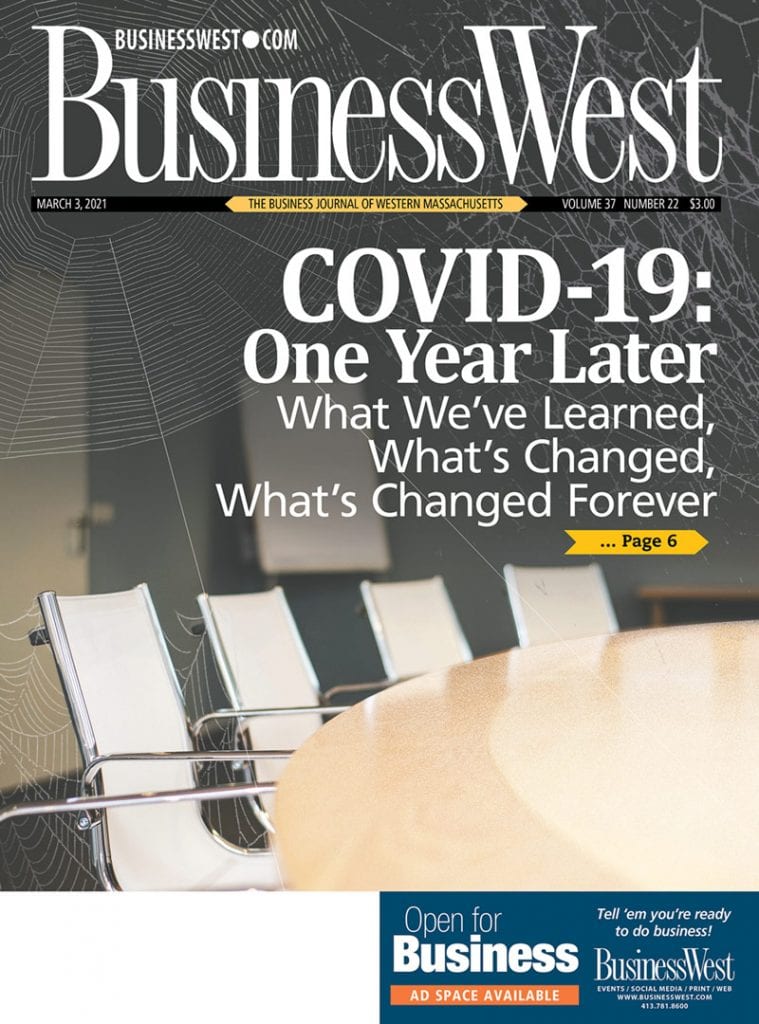
One year ago, the world, or at least our little corner of it, stopped. Completely.

Well, almost completely. Better to say that it paused — big time. The COVID-19 pandemic had arrived in the 413 and elsewhere, and life as we knew it had given way to something else. Something much different. Something the likes of which we had never seen or dealt with before.

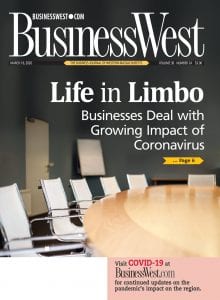
The cover of the March 16, 2020 issue of BusinessWest captured it perfectly. Above a set of empty conference-room chairs was the headline “Life in Limbo.”

Almost exactly a year later … the chairs in the conference room are, for the most part, still empty. In some cases, they haven’t moved or been sat in since last March. They sit, waiting for people, and normalcy — whatever the heck that is — to return.

The fact is, we don’t know what ‘normal’ will be moving forward. In many respects, we don’t know exactly how COVID will reshape the landscape and the workplace, higher education, and the medical center down the street. We don’t know how it will impact the delicate work/life balance moving forward, and we don’t exactly know how it will permanently change how we work, network, gather, and interact with others.

But we can certainly talk about, and for the one-year anniversary of COVID (nothing to celebrate, that’s for sure), we did. BusinessWest gathered leaders with six area businesses and institutions to talk about the many ways COVID has changed our work and our lives, how it is impacting the workplace (and will for years to come), and even how it is has made them all different and, in their view, better managers.


They’re calling it the ‘Zen room.’

That’s an apt name for an area being set aside at Mercy Medical Center at which employees can decompress and, hopefully, remove some of the stress from their lives, at least for a while.

“We want to offer space that’s extremely tranquil — it will have massage chairs and soothing color schemes,” said Deborah Bitsoli, the hospital’s president, noting that it should be ready for use soon. “It will literally be Zen-like; it’s a best practice, and it can actually be brought across different industries.”

This Zen room wasn’t created because of the pandemic, necessarily, but rather because of the way it helped crystalize the large amounts of stress people are under even in normal times, and how they need rooms like this. And it is just one example of how the pandemic has brought about change in the workplace and change in society in general.

Other examples include that same hospital offering what it calls ‘resiliency training’; a local bank interviewing — and strongly considering — a job candidate living in Florida who has no intention of moving here; and employers spending considerable time and energy on the questions involving whether employees come back to the office, when, how, and under what circumstances.

These are some of things we learned during a lengthy virtual roundtable involving six area business leaders: Bitsoli; Mary-Beth Cooper, president of Springfield College; Robert Johnson, president of Western New England University; Jennifer Rymarski, a partner with the regional law firm Morrison Mahoney; Tom Senecal, president and CEO of PeoplesBank; and Paul Stelzer, president of Holyoke-based Appleton Corp., a property-management firm that has many elder-care facilities in its portfolio.

This was a Q&A, but also a lively discussion, with the dialogue focused on not only what’s happening today, but what will happen moving forward because of what we’ve experienced, what we’ve learned, and what we’ve changed over the tumultuous and very difficult past 12 months. Here’s a somewhat condensed version of how it went.


BusinessWest: The phrase we’re hearing over and over and over again is that there is light at the end of the tunnel when it comes this pandemic and all that has come with it. Are you seeing that light, and, well, how much tunnel do we still have to go through? What are you seeing in your business?


Bitsoli: These are challenging and unprecedented times, and at Mercy, we’ve really tried to adapt to a new norm. We have many new processes and structures that, as someone who has dedicated their life to healthcare since the age of 16, I never thought I’d see. We’ve also opened our doors to give vaccines to the public based on the Department of Health criteria; to see tears in people’s eyes as they get a vaccine is something I’ll cherish for many, many years.

We’ve balancing the needs of the community and keeping people safe, but we’re also looking to the future and how we can more provide enhanced services to the community. We’re trying to balance the present and the future.


Cooper: This is our third semester in the pandemic, and we’re adapting. We are back on campus, we’re fully residential, and we had our first athletic contest recently — the men’s gymnastics team played Cal. So, yes, we are seeing some light at the end of the tunnel. When we thought about the pandemic and what we needed to do, we had to pivot, just like healthcare; we didn’t imagine going online as quickly as we did, but we made it happen. The biggest takeaway for me thus far, and moving forward, has been the resiliency our faculty and students, in particular, have demonstrated.


Johnson: We’re in good shape for the shape we’re in, and like others, we do see a light at the end of the tunnel. As for what’s changed for our organization, we’re future-focused; we’re looking at how we want to come out of this. We’ve been planning for the next five years at Western New England since last September. We have not taken the bunker mentality of waiting for the storm to pass and then figure out what we want to do. We’ve created a vision; we want to be a ‘new traditional university,’ a phrase we’ve coined here and that we’ll define in the upcoming weeks and months to come, and imagine the possibilities.

That’s because higher education, like healthcare, has been turned upside-down; we’re reimagining ourselves, and we think the best is yet to come. It’s tough, though … we’re in a very tough environment.


Rymarski: We all have our own struggles, and the law is not immune to it. The biggest impact has been access to the courts and how the courts have adjusted — a lot of litigation is driven by the court schedule, and having the courts shut down for a period of time has had an impact. Also, we’ve gotten a lot of calls on the employment aspects of this pandemic — small businesses, and all businesses, for that matter, are struggling to deal with smaller staffs, how a PPP loan impacts them, what they’re going to do under the Family First or CARES Act, how they’re going to get employees back, and how they implement policies and procedures across the board that are going to be fair but also abide by all of the regulations.


Senecal: When this whole thing started right around March 9 — I remember that date vividly — I think I stopped breathing sometime in the middle of March, and I was resuscitated sometime in June, because it looked really bad from my perspective. June came around, summer came along, and things started to look a lot better. Then fall came around, and as cases picked up, that started to have an economic impact on a lot of our customers.

To put things in perspective, we had probably $300 million in loan balances involving customers in that first month asking, ‘can we not pay you?’ And we responded like most community banks and said, ‘yes, no problem; let’s revisit in 90 days.’ I think we’re down to $70 million, which allows me to start breathing again, and most of that $70 million is in the hospitality industry — transportation, restaurants — which is still struggling. I’m not sure where the light is at the end of the tunnel for those industries, because they’re hanging by a thread, and I’m not sure how they’re going to come back. From our banking perspective, we’re operating in a different world; we had to pivot, we had to send 180 people home, and that’s hard to do in retail banking. And if any of you have done your banking, I apologize for us — and I know our competitors are the same way — that the drive-ups are ridiculously backed up. Overall, things are going OK, but it doesn’t feel very good.

Tom Senecal

Tom Senecal

“I’ve flip-flopped on this throughout the year, but, yeah, we’re coming back. The social-interaction part of this is lost with people working at home; you can’t create a corporate culture from a remote location.”


Stelzer: At Appleton, we’ve morphed from emergency-response protocols in March to highly organized COVID-19 protocols in our elderly/senior/multi-family apartment communities and in our commercial portfolio that we manage, which is about 2 million square feet. In short, we’re operating at high levels; we’re able to do that even with a chunk of the workforce being remote. All of our employees have had to learn a new COVID language and new COVID protocols amid all the important tasks they already do.

Overall, there’s a lot of good news coming out, but how we’re doing is still a daily question; while the vaccine rollout is encouraging, it’s still going to take some time. But, yes, there is light at the end of the tunnel.


BusinessWest: During the pandemic, people have worked remotely, and successfully. As we all look toward the day when something approaching normal returns, how will, or should, companies approach work and the question of bringing people back to the office?


Senecal: We have 350 employees, and about half of them are working from home. I’ve flip-flopped on this throughout the year, but, yeah, we’re coming back. The social-interaction part of this is lost with people working at home; you can’t create a corporate culture from a remote location. Beyond that, there’s the human connection — staying home is not good for mental health. But I’m for some sort of balance; if your job allows it, you can work from home — we’ve proven that. I do think the outcome of this is that there will be a balance. From a workforce perspective, we’ve had a hard time recruiting people for some key positions, and we’ve re-evaluated to say, ‘no, you don’t have to be in the office.’ We’re interviewing someone today who lives in Florida who may be able to work from home for us; we’ve never, ever considered that before, and we are.


Cooper: When it comes to students … there were some questions pre-pandemic about the value of higher education. And I would say to you that our students are saying loud and clear that they want to be in person, face to face, they want to play sports, they want to interact with mentors like faculty members and staff members. We’re studying this … we’re looking at what the future will look like and how we bring people back safely. Some people never wanted to work at home, and now some of those same people want to stay where they are. That’s a risk to our business model; we need to have the interaction between students and mentors that shape them moving forward to be strong employees in the fields we have represented on this panel. The synergy of having people together, the opportunity to come up with ideas and piggyback on them together, and just the joy of being in the workplace, it’s difficult to get all of that on a call or on Zoom.
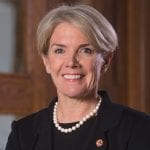
Mary-Beth Cooper

Mary-Beth Cooper

“The synergy of having people together, the opportunity to come up with ideas and piggyback on them together, and just the joy of being in the workplace, it’s difficult to get all of that on a call or on Zoom .”

Johnson: One of the things I’ve been big on over the past decade is preparing students for the future of work and making sure they had the essential skills that could not be replicated by robots. This pandemic has put us in a place where we, as employers, with our employees, have to do the same thing. I don’t think it’s an either/or when it comes to Zoom or face to face. The question is, ‘how do we use that technology to complement our ability be more efficient in the workplace?’ On college and university campuses, we need to be face to face and on the ground, but I can now give my employees some flexibility; it’s not 8 to 5. If they have a soccer game or child care doesn’t show up that day, we’ve shown that that we can get work done with people working from home. As managers, we have to teach people how to work with their teams and their staffs to give them that work-life balance. Overall, I think the pandemic has merely accelerated what was inevitable anyhow.


Rymarski: I agree with the others when they say that synergy, flow, and the social and cultural aspects are missing when people don’t come to the office. I think about the new employees who came on board just before the pandemic, and not having them in the office and having them shadowing someone every single day for a week or two to learn what needs to be done. I think that has impacted them. At the same time, this pandemic has, indeed, accelerated a process that was inevitable. I think the challenge is handling all this; we’ve basically condensed down what we need to do to a very short time, and employers are struggling to manage the expectations of every person.


BusinessWest: From what’s been said so far, it seems that the pandemic has brought the issue of work/life balance into the forefront as perhaps never before. Talk about if and how this crisis has provided more impetus for employers to help their employees with this challenge and cope in general.


Cooper: The need to be compassionate and caring for your employees has never been higher. These employees are dealing with losses — children that they haven’t seen, aging parents that they can’t see … the human toll is very high.


Johnson: I would agree with that wholeheartedly. We talk about work/life balance, and we’ve been talking about it for a long time. One of the things we’ve learned is that, before, managers would have said, ‘you can’t have that work/life balance; you have to be here all the time when you’re supposed to be here.’ But when we had to flip on a dime and make this thing work, it’s amazing how resilient we really are. The human toll that this is taking on people is huge, and we have to give our employees some time to breathe when this is all said and done. I know eight people who have died since last March. When I said that on a Zoom call, people started tearing up, because they’ve had those same kinds of experiences and no way to grieve. Part of this equation is that we have to figure out in our organization what that grieving process looks like, and what is the path forward.


Stelzer: What I think is really important going forward in the work/life balance issue is not only their own personal situations, but how do you get people to understand that they don’t need to work 14 hours a day at home? A lot of people dove into their work because they could. I’ve talked with a lot of tenant companies, service providers, attorneys, CPAs, whatever, and they’re all working longer hours than they ever were before. This is something we have to keep on the radar moving forward; if you’re going to remain in a quasi-remote-work environment, how do you find balance and work 9 to 5? (Or 9 to 7 — no one really works 9 to 5.) How do you shut it off?
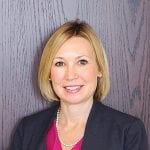
Jennifer Rymarski

Jennifer Rymarski

“I think about the new employees who came on board just before the pandemic, and not having them in the office and having them shadowing someone every single day for a week or two to learn what needs to be done. I think that has impacted them.”

Bitsoli: The one thing that we all have in common is that our workforce is our most precious asset; it’s what makes us able to do the things we do. And these people are hurting right now. Last Friday, I came in early in the morning and was rounding in the ICU; there was a nurse who had just lost a COVID patient. She was relatively young, and she was weeping. We need to allow people to grieve in these unprecedented times because we haven’t seen this in our lifetime. People need the ability to express themselves. On the mental side, we need to allow them to talk, and we need to listen. And we need to support our management team and train them on how to do that.

The other thing that’s very unique about this is that many people have aging parents who are in nursing homes, and there’s social isolation — they can’t visit their parents. So not only do they have child-care issues, they are so concerned about their aging parents, and yet they can’t get in to to see them. But beyond the mental, there’s also the physical, and that’s why we’re opening the Zen room, where people can go for 15 minutes and just decompress.


BusinessWest: You’re probably all very tired of hearing that phrase ‘new normal’ by now. But please try to project what the new normal will be in your industry and in business in general.


Johnson: The new normal in higher education is that we have to rethink and reimagine our business model so that we are financially viable while also meeting the needs of our students. Also, before, we used to be able to operate with 80% or 90% of certainty and 10% or 20% of ambiguity. The new normal is … we’re going to be in a world of ambiguity where it’s more like 50-50 for years to come. The new normal for us also in our industry will be, how do we address and deal with the mental-health challenges of our current students, our future students, and our employees?

And let me really focus on future students — students who will be enrolling in our institution two or three years from now will have spent their freshman and sophomore years [of high school] basically learning remotely, and that B+ or A- in Calculus in their junior and senior year won’t be the same B+ or A- it was four or five years ago. So students will be coming to us with academic deficits, emotional deficits, anxiety deficits, and we’re going to have to think about how to retool and restructure ourselves to meet their needs on our campuses. And we all have to be focused on the future of work in terms of educating this next generation of students for jobs that don’t exist, utilizing technologies that haven’t been created, to solve problems that haven’t been identified.
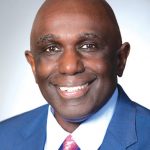
Robert Johnson

Robert Johnson

“The human toll that this is taking on people is huge, and we have to give our employees some time to breathe when this is all said and done.”

Cooper: Moving forward, we have to focus on the 4 Vs of higher education, and any not-for-profit, caring organization. Value — you need courageous leaders who are thinking not only about work-life balance, but the human element. Virtual — we’re going to have a hybrid mix. We’ve seen that in all the trends, and that’s good; there’s demand for it, some students really like it, and some faculty like it. Virtuous — we’re going to need to continue to be people-centered. For us to move forward, the colleges and the universities that will survive are the ones that are student-centered, that continue to be students at the forefront. And we have to go Viral — we have to find a way to tell our story, whether it’s through discussions like this, through social media, or through our students and faculty.

From my perspective, it’s all about leadership, virtual presence, telling the story, and staying close to your mission.


Senecal: The new norm in the banking business? I don’t want to get too granular, but the future of our business is very different. There are a little under 5,000 banks in this country — I project that in five to seven years, there will be fewer than 2,500 banks. It will be a digital world. I think you’ll see far fewer branches — you’ll see more and more branches closing.

And from a workforce-development perspective, technology is going to be a huge piece of what we do, and certainly on the mental-health side, I see employers having to be more flexible and understanding with their workforce. PeoplesBank has done that very well over the years; we’re just going to have to adapt a lot more quickly. Workforce skills are going to have to adapt tremendously for all our industries; we’re moving toward a more technology-driven world. It’s already changed for us — we’ve seen a huge change in the last nine months. Our numbers in the digital perspective and how people utilize their banking services has shifted 20% to 30% utilization that is totally digital. If you weren’t there before the crisis, you’re going to fall behind from an industry perspective. My perspective is that things are going to change; things are going to be very different than they are now.
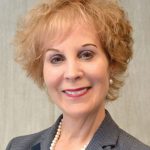
Deborah Bitsoli

Deborah Bitsoli

“The one thing that we all have in common is that our workforce is our most precious asset; it’s what makes us able to do the things we do. And these people are hurting right now.”

Stelzer: ‘New normal’ is an interesting phrase, but there’s nothing normal about this. As we stabilize, as more vaccine gets out, I agree with the panel — resiliency is huge. In our industry, specifically our senior/elderly portfolio, you’re going to see a lot more ‘healthy housing’ initiatives, as we’re calling them, which is a combination of telehealth for seniors and more on-site clinics for seniors. You’re going to see a whole difference in the way legacy elderly/senior property providers handle their air flow, their air circulation, and keep any inflection to a low level.

Also, on the digital side … think about how we stood the country up on the backs of broadband — it’s nothing short of amazing in all of our industries, from higher ed to telehealth to property management and banking. And we couldn’t have done that 20 years ago. My one concern there is the digital divide. What happens next with broadband becomes a very important discussion; there’s already discussion in the State House about making broadband a normal utility and not a private service.


Bitsoli: On the healthcare front, we need to continue to have a laser focus on the resiliency and well-being of our colleagues and our employees — they’re the most valuable asset that any of us has. And as this virus evolves, as there are variants, and as there are future viruses, there is a daily drive here around clinical excellence and patient safety and quality where we may have to continue to adapt that clinical model.

I never thought I’d see the day when 100% of the patients are being swabbed for a virus … so, for me, looking at the clinical excellence and keeping the public safe with high-quality care, and how this virus evolves, we’re going to have to be able to adapt to whatever the future holds for us to keep the community safe.”


BusinessWest: Much has been made about how to manage, and manage effectively, in a time of crisis. How has the crisis tested you? What have you learned about yourself, as a person and a manager? And has this made you a better manager?


Cooper: Let me say, my patience has been tested, certainly, since last March, and I’m working hard at meeting people where they’re at and listening and trying to slow down. And I’m also trying to be a good role model — not having Zooms on Sunday and carving out time for family. To lead during this turbulent time, you have to be self-aware, and you have to take care of yourself. Whether it’s morning exercise or carving out parameters for when you will or will not be available — people are looking for you to role-model that.
Paul Stelzer

Paul Stelzer

“People recognize fake really quick, so you’ve got to be genuine, you’ve got to be honest with them, you’ve got to tell them how it is.”

Stelzer: The key word for me is empathy. All of us have had to really dig deep for the non-traditional ways of providing support — all kinds of support — to our people and managing and being empathetic to the extent that you can and still run your business. It’s critically important — people recognize fake really quick, so you’ve got to be genuine, you’ve got to be honest with them, you’ve got to tell them how it is. And I agree with Mary-Beth — you have to take care of yourself. We’ve all walked the halls of our houses and condos from 2 in the morning to 4 in the morning trying to figure out the next move. We’ve all been there.


Senecal: I agree with Paul; empathy is a great word to describe the difference between managing now and managing pre-COVID. We’re all living this horror, so to speak, and realizing that we all have different issues in our lives, between family members getting sick, or trying to work at home with kids at home trying to do schoolwork, with technology issues … pre-pandemic, we glossed over these things. During the pandemic, this home life is hugely important in people’s lives. I’ve come to listen more, but empathy is the word that comes to light; I’m trying to understand how to manage people.


Johnson: I would add another word in there, and that’s humanity. I’ve come to realize the importance of helping us all understand that we’re part of something bigger than ourselves. Mary-Beth spoke earlier about how, among the college and university presidents, it has been the most collaborative environment that she’s ever seen; I’ve been in the Commonwealth for 11 years, and I’ve never seen anything like this, either. As CEOs, we tend to think that we’re at the center of the universe, but we’re not; we’re only as good as the people around us. And I understand what Mary-Beth means when she talks about patience. I generally don’t have much of an impacting gene, but it has developed since March of last year in ways I couldn’t have imagined.


Bitsoli: I’ve recognized just how precious life is, and I’m really stopping and forcing myself to be in the moment, to listen and engage, and slow down. But just as important is demonstrating that to my management team so that I’m also walking the talk in terms of saying to them, ‘life is precious; let’s have a better way of approaching our work life and recognize that life is very, very short and we have to respect and really take care of each other as colleagues.’


Rymarski: Patience, empathy, and flexibility are all words that come to mind. But also fairness. From the legal perspective, one of things that’s important as employers and managers is that we want to have a fair playing field, or as fair a playing field as we can. What you may have to do for one might be different than what you have to do for another, but there needs to some semblance of not only empathy, but also fairness and some structure to keep the organization together so that employees don’t become disgruntled with one another.


Bitsoli: Not only has this made me a better manager, it has made me a better person, and I think others on this panel would agree. I think I learned a lot about myself and about society, and, again, about the value of life. As a society, there are quite a few of us who have reflected in this way, and we’re better people overall.


 

Home Improvement Special Coverage

Backyard Experience


By Mark Morris

On a Thursday in February while snow fell on the region, Bob Schwein was answering a steady stream of phone calls at Drewnowski Pools.

Sure, some calls were from people who use their spas year-round, but many more inquiries were to schedule swimming-pool openings.

“Swimming-pool owners know that if they want to schedule a pool opening for Memorial Day, when thousands of other people want to open their pools, they need to schedule now,” said Schwein, sales manager for Drewnowski.

Early spring is typically when he receives calls to replace vinyl pool liners and to repair or renovate pools made from gunite, a concrete product used for many inground pools. “Repairs to gunite pools can take weeks, and people don’t want to interrupt the middle of their swimming season, so we usually schedule these early in the year.”

With his business growing over the last five years, Schwein said backyard pools are not what they used to be, particularly inground pools (see photo above).

“It used to be a rectangle with a three-foot concrete walk around the pool and a fence surrounding it by itself in the yard,” he noted. “Now, the pool is part of an entire backyard experience.”

That trend — toward creating an experience right outside the back door — is one that many different types of outdoor-improvement contractors can attest to, particularly during the era of COVID-19. BusinessWest spoke with several who said people are spending more money on their homes simply because they are spending more time at home.

The oft-heard story is that people were encouraged to only go out when necessary, and those who were fortunate enough to work from home during this time have been able to save some money, while also becoming more acutely aware of repairs and renovations they may have been putting off. As a result, many contractors reported their most successful year of business in 2020.

As many of the pandemic restrictions continue, people are not sure how long they will continue to work and attend school from home. It reminds Brian Rudd, owner of Vista Home Improvement, of the uncertainty that emerged during a different historic time.

“After 9/11, we saw people start to nest, and they began to see their home as their kingdom,” he said. “Since the pandemic, the desire to nest at home has happened to an even larger degree.”

“Right now, people are addressing the aesthetics of their houses because they are home more and able to address these things now.”

And they’ve been increasingly looking outside the home, not just inside. After a record year in 2020, Rudd reported that even more customers want new siding and new windows. “Right now, people are addressing the aesthetics of their houses because they are home more and able to address these things now.”

It’s not unusual for customers to call Dave Graziano, landscape project manager for Graziano Gardens, to replace old, overgrown plantings with new ones. Last year was different because, along with replacing old plantings, customers wanted to make other improvements to their property.

“Whether it was adding a big patio or simply hanging flower baskets, people wanted to create more outdoor living space, no matter how large or small their yard might be,” he said.

Brian Campedelli, president of Pioneer Landscaping, said his business doubled in 2020 because people decided to invest in their homes rather than vacations. “The money they would have spent on vacation instead went into their backyards, where we helped them create an outdoor entertainment area.”

Both Graziano and Campedelli noted that firepits have become one of the most popular additions to the backyard.

“While we build a lot of circular firepits, people are getting creative and asking us for square or triangular pits to match the seating they have around it,” Campedelli said.

A worker with Pioneer Landscaping places patio stones.

A worker with Pioneer Landscaping places patio stones.

Once considered only for warmer climates, outdoor kitchens are also a growing part of his business, with many designs incorporating a pizza oven.

“In the past, people would not build outdoor kitchens because of the short season to use them, but I don’t hear that as much anymore,” he said. “I think people are just going for it.”


Dive Right In

‘Going for it’ is an increasingly common mindset when it comes to buying an inground pool as well, Schwein noted.

While Drewnowski sells inground and above-ground pools, installation is handled by its parent company, Juliano Pools of Vernon, Conn. As busy as Juliano was last year, many who wanted pools couldn’t get them, due to higher demand than normal combined with shortages of materials and labor. Schwein said 2021 is off to a good start because those who couldn’t purchase last year can do so this year.

“We have a spillover of people from last year and new people who have decided to buy a pool this year, so I’m positive that combination will mean another banner year,” he told BusinessWest.

For years, many believed that houses with inground pools would be tough to sell. The red-hot real-estate market since last spring seems to have made that concern a moot point. Many first-time homebuyers are also first-time pool owners who are calling Schwein for advice on how to maintain their inground asset.

“From what I’ve seen, people are not afraid to buy a house with an existing pool. In fact, to many, it’s a selling point,” he said. While a typical home inspection does not cover the condition of a swimming pool, Drewnowski has pool inspectors available to help prospective buyers understand what they are getting.

With less inventory in the housing market, Rudd observed that many people choose to upgrade the house they have. By the same token, when people do purchase a home, they often come to see him, armed with plans.

“From what I’ve seen, people are not afraid to buy a house with an existing pool. In fact, to many, it’s a selling point.”

“When people move, they improve. And when they don’t move, they improve,” he said with a laugh.

Sprucing up a house isn’t complete until landscaping provides the final touch. In addition to landscaping services, Graziano Gardens has a retail store for those who want to tackle backyard projects themselves. Graziano saw new faces in the garden center last year, resulting in what he termed a “mini-explosion.”

“We sold out of trowels, shovels, gloves, watering cans, things we’ve never sold out of before,” he said. Also hard to come by were grown items such as hanging baskets, vegetable plants, and even evergreen hedges. “It seems like people just wanted to fill in that spot.”

Brian Campedelli says customers are looking for more creativity in firepit design.

Brian Campedelli says customers are looking for more creativity in firepit design.

Dry, warm temperatures early last spring, combined with parents and kids cooped up in their homes, might have led to a shortage in pool heaters. Schwein said he took many calls from exasperated parents who bought a heater and opened their pool earlier than usual to get their kids outside and squeeze a few more months out of the swimming season. That logic was fine until manufacturers ran into COVID issues and Schwein could no longer get them.

“The demand was high, and the supply was low,” he said. “Heaters are something that would normally take six days to get, but last year we ran into three-month delays.”

The pandemic also forced several contractors to find new ways to do business. A summer ritual for many involves periodic trips to the local swimming-pool retailer with samples of pool water to make sure the chemical balance keeps the water clean and safe. When COVID first hit, Schwein said, customers were no longer allowed into his store. “We had to change our business model.”

Specifically, customers left water samples outside the door where employees would test the sample and call the customer with a list of what chemicals were needed. After completing the transaction over the phone, an employee would deliver the chemicals to the customer’s house. Schwein admits it put a strain on his staff and customers, but everyone adjusted well.

“Our customers were able to get what they needed, but the way we had to do everything was different.”

When the pandemic first hit, Rudd and his staff were forced to become familiar with 10 years of new technology in less than three months. Beyond Zoom meetings, Vista consultants used satellite technology to measure houses for roofs and siding when they could not visit a client in person. While skeptical in the beginning, he now calls the technology “amazing.”

Dave Graziano says his garden center sold out of many popular plants last year.

Dave Graziano says his garden center sold out of many popular plants last year.

“I’m from the days of using a tape measure and a pencil, so at first I took comparison measurements to make sure the satellites were accurate,” he said. “It’s scary how accurate they are.”

Rudd enjoys using computer-design tools to give homeowners a good idea of how their space will look with improvements.

“We take a picture of the house, upload it into one of our applications, and change the house right in front of them,” he explained. “It leads to great interaction with the client and lets them have control of their purchase, with us there to guide them.”

Campedelli said it’s difficult for clients to envision a dramatic renovation of their backyard, so computer design goes a long way toward sealing the deal.

“Once they see the design, they want to move forward,” he noted, adding that, once the job is done, he enjoys how thrilled customers are with the result. “It changes their lives in a positive way.”


Getting Ahead

With spring around the corner, contractors are preparing for another busy year. Schwein pointed out that his phone is ringing now because customers have learned from the pandemic.

“Last year, people were patient and understood slowdowns due to COVID issues, so they are calling now because they don’t want to hear the COVID excuse this year,” he said.

After a busy 2020 as both a contractor and a retailer, Graziano’s main takeaway from last year was that people want to make their properties into their own oasis.

“Whether they do it themselves or they hire a landscape professional, I think that trend will continue through this year,” he said.

In the meantime, he’s got what he called a “good problem” — figuring out how many more shovels and watering cans to order for 2021.

Special Coverage Technology

A Critical Gap


Margaret Tantillo clearly remembers — honestly, who doesn’t? — the day Gov. Charlie Baker started shutting down the economy a year ago this month.

As the executive director of Dress for Success Western Massachusetts, an organization dedicated to the economic empowerment of women, she started calling participants in the days that followed, asking what issues they were having. One that kept coming up was access to the internet.

“If people are not connected, they’re going to be left behind in terms of being able to participate in the workforce,” Tantillo said.

So, identifying digital equity as connectivity, access to equipment, and the knowledge and ability to use software, Dress for Success enlisted a group of volunteers to form a digital task force, providing one-on-one coaching for about 40 women and providing more than 250 hours on the phone coaching.

“For the most part, we’re helping people operate on Zoom so they can participate in training and apply for jobs and interview virtually,” she said — just one way internet connectivity is a lifeline for people in these times.

Or, conversely, how lack of it can have a crushing impact.

It’s an issue that has received more attention during the pandemic, as tens of millions of Americans have struggled with remote learning, telehealth, and the ability to work from home because they lack access to fast, reliable internet service.

This ‘digital divide,’ as its commonly known, is not a new phenomenon, but the way COVID-19 has laid bare the problem is forcing lawmakers and others to see it in a new light.

“There are still communities in Western Mass. that don’t have high-speed internet access, or internet at all,” said state Sen. Eric Lesser, who has long championed this cause. “Frankly, in the year 2021, that’s a national embarrassment.”

State leaders haven’t ignored the issue, including tens of millions of dollars for infrastructure in bond authorizations over multiple budgets and economic-development bills, Lesser said, and Gov. Baker has set a goal to reach every community.

State Sen. Eric Lesser

State Sen. Eric Lesser calls the lack of connectivity in some Bay State towns “a national embarrassment.”

“But, frankly, the fact that we have communities that don’t have broadband internet access raises very profound questions about how a high-tech state like Massachusetts, in this day and age, can allow that to happen.”

As president and CEO of the Western Massachusetts Economic Development Council, Rick Sullivan said the EDC has long taken the position — even before COVID-19 made it a more pressing issue — that the state needs to bring internet connectivity into every city and town. He noted that Gov. Deval Patrick’s administration started building the backbone, and the Baker administration has been diligent in making sure communities get financing to execute plans to bring broadband to their residents.

“For a lot of the smaller communities, that is probably the single biggest opportunity they have for economic development in the region,” Sullivan said. “People can choose to work from home, but they need to have the access that helps people choose to live in those communities, and it makes it easier to sell your properties, and that increases values in small towns.”

But even large cities have a digital divide, he added, which has been exposed to a greater extent by COVID-19.

Tantillo noted that, according to Census data from last year, 31% of households in Springfield have no internet access, and 37% don’t even have a computer. That means no remote work, no remote education, no telehealth, no … well, the list goes on.

These digital-divide issue arose during a public hearing last week in Springfield on the relicensing of Comcast. “Parts of Springfield need better connection,” Sullivan said. “The mayor was clear in his opening statements that this was an issue they would be taking a look at. But in every city and town, there are some connectivity issues that clearly need to be addressed.”

Learning Lessons

Yves Salomon-Fernández, president of Greenfield Community College (GCC), understood the need for connectivity before students began attending classes remotely last spring, but that move more clearly exposed the scope of the issue.

“The digital divide is real, especially in certain areas of Franklin County and in the hilltowns. Even in the city of Greenfield, there are places with spotty internet access, and with all of us being on Zoom right now, it slows down the connectivity we have for our faculty, staff, and students,” she added, noting that GCC had to purchase technology for many of them to teach and learn remotely.

“We also have students who are housing-insecure and may not have access to the internet. We gave them a hotspot if they have no cellphone service, and we have accommodated them on campus in various ways.”

She noted that even parts of the GCC campus contain dead zones where cellphones won’t work; the college has a phone tree set up for emergency alerts because cellular connectivity isn’t a given everywhere.

“If the college, a critical institution and a community asset, has these issues,” she said, “imagine what it’s like for small businesses and individuals.”

The flawed vaccine rollout in Massachusetts (see story on page 40) has laid bare another impact of the digital divide: access to vaccination appointments. Even if the state’s website wasn’t confusing or prone to crashing early on, Lesser said, it still wasn’t acceptable to make it the only option to sign up, which is why he and other legislators have pushed for a phone option, which was implented last month.

“You were pretty much shutting out a whole community of people, especially the 75-and-older category, when you set up a system that’s website-only,” he noted.

But vaccine distribution will be completed over the coming months; what won’t change are the other reasons people need to access the internet from home. Solving the issue won’t be easy with the patchwork of different levels of responsibility — towns, the state, FCC regulators on the federal level — when it comes to regulating contracts and service arrangements.

That’s why Lesser is high on municipal broadband, offered by a city to its residents like a public utility — an initiative that Chicopee and Westfield have undertaken, to name two local projects. “It really is like the water or electricity of the 21st century, that’s delivered by the city as well.”

More such municipal projects will also increase competition, he said, which could force other providers to lower their prices and boost speed.

Even people who have internet access through large companies often deal with higher costs than they can easily afford, Lesser said. “The costs are astronomical in the U.S. — people pay much more per month than in Europe or Asia.”

Therefore, “the state needs to look at ways to open the market more and create more competition,” he added, and that could simply entail putting more pressure on big internet companies.

“The problem is, internet service is left to the private sector when it’s a public good,” he said. “It doesn’t make economic sense for big companies to invest in infrastructure to get the internet turned on in small communities. The state may have to mandate they have to make those investments if they want to provide service for bigger locations.”

An Issue of Equity

Tantillo agrees with Lesser that society should be looking at connectivity as a utility and a basic, affordable service, but goes a step further.

Margaret Tantillo says the digital divide, if not rectified, could leave generations behind when it comes to economic opportunity.

Margaret Tantillo says the digital divide, if not rectified, could leave generations behind when it comes to economic opportunity.

“From an equity perspective, this disproportionately impacts women and people of color, so it’s also a social-justice issue,” she said. “But a crisis like this is also a big opportunity to be transformative. Springfield is considered the city of innovation. With a bold solution and reallocating resources, who knows what this community can transform into, if everyone has the opportunity to participate equally in online banking, telehealth, access to jobs, even to engage civically?”

Salomon-Fernández agreed. “In this day and age, it’s also an equity issue when you have people disconnected from the rest of the world. In the United States of America, and in one of the most technologically advanced states in the country, that’s a concern.”

And a particularly acute one, she added, in Franklin County, which contains some of the more rural and economically marginalized towns in the state. The impact isn’t just a problem in the present — it can have long-term effects.

“The world is increasingly globalized, and not being connected has negative repercussions on communities,” she added. “We are creating an underclass of people not able to take full advantage of economic possibilities through digitalization and connectivity. That has real effects, not just on teaching and learning, but also on the vibrancy of our whole region.”

The Federal Communications Commission’s latest broadband deployment report concluded that the “digital divide is rapidly closing.” But some voices in that agency are more hesitant.

“If this crisis has revealed anything, it is the hard truth that the digital divide is very real and very big,” FCC Commissioner Jessica Rosenworcel said in a statement released along with the report last month. “It confounds logic that today the FCC decides to release a report that says that broadband is being deployed to all Americans in a reasonable and timely fashion.”

The most recent available data from Pew Research, published in 2019, found that around 27% of Americans don’t have home broadband. That percentage is higher for Americans whose annual income is less than $30,000 (44%), black and Hispanic Americans (34% and 39%, respectively), rural Americans (37%), and those with a high-school education or less (44%).

Pew also reported, from a survey conducted last April, that 22% of parents — 40% in low-income families — whose children were learning remotely say they have to use public wi-fi because they lack a reliable internet connection at home.

Sullivan noted that some companies, like Comcast, and municipal utilities in cities like Holyoke and Westfield have made connectivity available to school children during the pandemic, which has been important.

“But going forward, it needs to be universal, and everyone needs to be able to have access,” he said. “It’s so important for education and for economic-development opportunities in every city and town. If we had that, combined with our quality of life and the cost of living we have here in Western Mass., we could be a place where people choose to live and work from home.”

Opening Eyes

Proponents of improved internet access in Massachusetts say COVID-19 certainly made the digital divide more evident, but it certainly didn’t cause it.

“I think it exacerbated that problem,” Tantillo said. “The digital divide has now become a chasm. And if we don’t solve it, generations will be left behind. I think people are more aware of that, so people are more invested in solving it.”

That awareness is critical, she said, in generating the kind of momentum that will move decision makers.

“It’s the plumbing of the 21st century, and the pandemic showed this,” Lesser said. “Vital services like education and, increasingly, healthcare, with the rise of telehealth, are critical services delivered to people through the internet. We’ve operated through a prism of treating this like DirecTV or cable television, like entertainment, an extra in your house. And that’s just not the case anymore.”

For many Americans, Tantillo added, connectivity is something to be taken for granted, but more people are realizing that’s just not the case.

“If I’m sitting there with my laptop, I’m not thinking about the 50,000 residents in Springfield without connectivity — I’m thinking about my own needs. But this is being exposed on a broader level.”

She understands — and has expressed — the negative impact of not being connected, but prefers to couch the issue in a more hopeful, visionary way.

“We know what the ramifications are if we don’t fix the problem of the digital divide,” Tantillo said. “But here’s the amazing thing: we don’t know all the opportunities and how we can transform communities when we fix this and provide digital equity for everyone.”

Salomon-Fernández certainly hopes that happens.

“I think the pandemic has laid bare a lot of the fissures, the inaccessibility and inequity in our democracy, and also the ability of different folks in different regions to reach the same levels of economic prosperity,” she said. “While many people may not have been concerned about them pre-pandemic, it’s obvious now that the cracks are wide open. Hopefully it’s an opportunity for us.”

Joseph Bednar can be reached at [email protected]

Manufacturing Special Coverage

Machine Learning

Mary Bidwell says hands-on training will always be critical, but the pandemic taught ACC about what can be accomplished remotely as well.


As pivots go, this one was pretty smooth, Mary Bidwell says.

But that’s fitting for an academic program built on precision.

It was almost a year ago — March 13, to be exact — when Asnuntuck Community College (ACC) sent everyone home, including students in its Advanced Manufacturing Technology program, which Bidwell serves as interim dean.

“We finished online through April and the end of May, and by the beginning of June, we were able to open back up,” she said, adding that students were able to finish their hands-on training in fields like welding and mechatronics on campus through the summer. “We were one of the first departments back on the ground.”

In the meantime, the program reinvented itself in some ways, turning to online content in ways professors and administrators hadn’t considered before, not only in classwork for the student body, but in community-focused courses for area workers seeking to boost their skills.

“We’ve pivoted well and created online content, we created hybrid models, we got students back in, and we’ve got good safety protocols in play — and we’re looking forward to getting even more students on the ground,” she told BusinessWest. “And now we have this whole portfolio of online opportunities we didn’t have before, and we’ve diversified what we can offer the community, which is great.”

Innovation and adaptation are not foreign concepts in the field of advanced manufacturing, or at ACC, which has become a robust collegiate pipeline into the manufacturing workforce.

The Advanced Manufacturing Technology Center at ACC has been around for almost a quarter-century, but it received a major overhaul four years ago with the opening of a 27,000-square-foot addition, more than doubling its space to about 50,000 square feet. It includes an 11,000-square-foot machining lab with 90 computerized numeric control (CNC) and manual machines, an additive-manufacturing lab equipped for both plastic and metal 3D printing, a metrology lab featuring computerized measuring machines, state-of-the-art computer labs — and a whole lot more.

But the center’s most impressive offering may be its partnerships with area manufacturers, who have guided ACC in crafting its certificate program as a way to get skilled workers in their doors quickly — typically at salaries starting around $50,000 or higher.

The program has created work opportunities for both young people and career changers, and addressed what has been a persistent lack of qualified employees these companies need to grow. Normally, advanced manufacturers are looking for people with three to five years of experience. But ACC students are interning during their second semester and being hired for jobs immediately after, at good salaries. The reason is that the curriculum is customized according to industry needs.

Companies can then build on that training, hiring certificate holders, further training them up, and often providing additional education opportunities along with that full-time paycheck.

“People are always thinking about four-year degrees, but if your pathway is through community college, your debt can be so much less,” Bidwell said. “That’s such an opportunity: to start a career and have someone else pay for it.”

Even though the pandemic has temporarily slowed demand for workers at some companies, Bidwell and her team — and the industry in general — believe that’s not likely to continue, especially with an aging workforce in many corners.

“You still hear about the silver tsunami,” she said. “We need to have people ready when they’re needed.”


Working Through It

The pandemic has slowed the pace of business in industries like aerospace and at regional anchor companies like Sikorsky Aircraft, mainly due to supply-chain issues dating back to last spring, but students in all three of ACC’s advanced-manufacturing areas — welding, machining, and robotics/mechatronics — are finding jobs, Bidwell said.

“It seems like the staffing agencies have been a source lately that, at times in the past, we didn’t use as much because of our direct contacts,” she said. “But students are getting placed; they’re still going into companies we’ve always worked with.”

Enrollment in the program is about 60% what it usually is, she added. “We did lose students because people just don’t want to go online at all — they want to get back on the ground. Hopefully we’ll see that return for the fall and definitely next spring as vaccines roll out further.”

The numbers aren’t really a problem, though, because of capacity and social-distancing rules on campus. Students have engaged in a hybrid model this year, with some remote instruction and the necessary hands-on training on campus. As expanded vaccination hopefully leads to herd immunity, Bidwell is confident that those limits can be lifted next year, but the college will plan for all contingencies, including more hybrid learning.

The Advanced Manufacturing Technology Center at ACC has 50,000 square feet of space devoted to robotics and mechatronics, machining, and welding.

The Advanced Manufacturing Technology Center at ACC has 50,000 square feet of space devoted to robotics and mechatronics, machining, and welding.

“We’ve proven we can do it, and people have been successful,” she said, adding that the marketing message has been, “people wear their mask and social distance, and you don’t have to stop your education. We’re here for you, and jobs are waiting. As we head into summer and fall, people who want to go to school and get that education, they can.”

While student ages can range from 18 to 65, the average age at the Advanced Manufacturing Technology Center during the Great Recession, when many more people were looking to switch careers, was around 45. Today, it’s under 30, but no matter the age, the idea is to equip students with a strong foundation from which they can grow into any number of careers.

That foundation begins with a hands-on approach to learning the machinery and techniques, from 3D printers, lathes, and surface grinders to welding and robotics labs — a healthy mix of manual and CNC machines.

Mary Bidwell with one of the center’s 3-D printers.

Mary Bidwell with one of the center’s 3-D printers.

Even in a healthy economy, the program still attracts a good number of mid-life career changers who see opportunities they don’t have in their current jobs. Meanwhile, high-school students can take classes at ACC to gain manufacturing credits before they enroll, and a second-chance program gives incarcerated individuals hands-on experience to secure employment once they’re eligible for parole.

It all adds up to a manufacturing resource, and an economic driver, that has attracted plenty of public funding from the state and from private foundations, such as the Gene Haas Foundation, which aims to build skills in the machining industry, and recently awarded the program a $15,000 grant to use for student scholarships for tuition and books.


Mind the Gaps

The program has also attracted attention of other kinds. The center was recently featured in the new book Workforce Education: A New Roadmap, written by MIT Professors William Bonvillian and Sanjay Sarma. The book explores the gaps and problems in the U.S. workforce education system, while also spotlighting how programs, including ACC’s Advanced Manufacturing Technology program, help to mitigate deficiencies across the country to build a stronger workforce.

“We spent time visiting and learning about apprenticeship programs, about new employer training programs, and visiting lots of community colleges,” Bonvillian said. “We found that our community colleges are our critical, not-so-secret weapon in educating our workforce, so we spent time at many.”

While the two were researching programs, they learned from an MIT friend, who grew up in Enfield, about Asnuntuck’s program, and Bonvillian set up a visit to the college.

“I was very impressed by the programs they presented in advanced-manufacturing skills that reached not only community-college students, but students from area high schools and incumbent workers at area companies,” he said. “In the book, we called this the ‘trifecta’ — Asnuntuck was using its flexible programs, its year-round schedule, and its new advanced-manufacturing center with its up-to-date equipment to reach three groups: workers and high-school students, as well as more traditional community-college students.”

That outreach is a constant challenge, Bidwell said, noting that, while outdated perceptions about today’s manufacturing floors — which many older people believe are dirty and unsafe — are changing, they do persist, and work needs to be done to get young people interested.

“I think it’s better than it was, but we’re not there 100%,” she said of the perception problem, adding that many companies market themselves online with videos taken on their clean, high-tech floors. “We are getting a younger population than we did years ago, but we’re still going around the state, trying to educate as much as we can. Guidance counselors are a big piece in high school. We need guidance counselors talking up manufacturing, and they have to understand it themselves. We’ve definitely made strides in that.”

Educating parents about what these careers really entail is part of the process as well, she added.

ACC has had students on campus part-time in a hybrid model since the fall.

ACC has had students on campus part-time in a hybrid model since the fall.
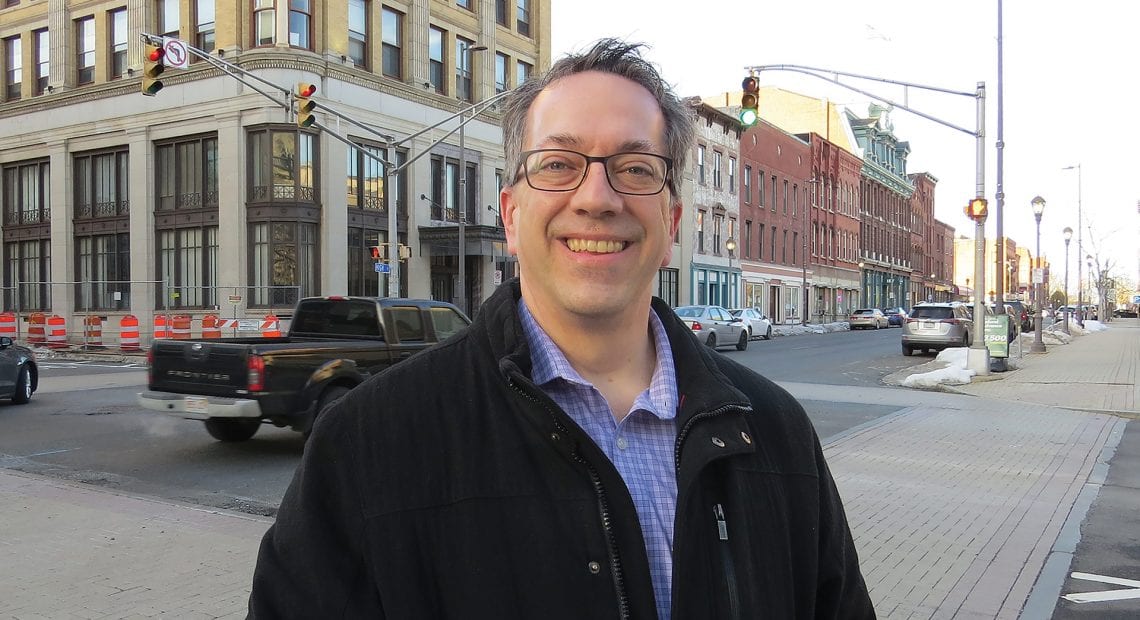
“There’s a big push in high school now, but we want to get the middle schools, to get young people aware of manufacturing and create those career pathways. We’re looking at the inner cities, where there’s a lot of population, and the message is, ‘these are viable careers where you can sustain a family and have a good, livable wage.’”

Bonvillian believes Asnuntuck and similar programs can help satisfy the demand for educating a workforce that has been impacted this past year, and not just in manufacturing.

“The COVID crisis is hitting hard at some important sectors like retail and hospitality, and workers there may well need to find new work,” he said. “The U.S. needs to prioritize training more workers more quickly than the country’s current disconnected approach to workforce education allows.”


Opportunity Awaits

The connection that First Lady Jill Biden has to community colleges — and her advocacy for them — is important, too, in changing perceptions and helping people understand college and career opportunities they might not have considered, Bidwell said.

“We want more people to take advantage of all that community colleges have available. We see it in manufacturing, but also IT — there’s a big need for IT professionals, and for healthcare professionals.”

And she doesn’t expect any dip in opportunity for students — young or older — who want to explore the modern manufacturing world.

“There’s really a lot of energy in Connecticut, and in Western Mass., right over the border,” Bidwell said. “The plan is to get out of this [pandemic] and keep growing, and be ready for the demand when things turn around.”


Joseph Bednar can be reached at [email protected]

Business of Aging Special Coverage

Taking Shots

Rob Whitten, executive director of the Leavitt Family Jewish Home

Rob Whitten, executive director of the Leavitt Family Jewish Home, gets vaccinated in January. For the public, the process has been thornier.

February was the month all seniors in Massachusetts would finally be able to get the COVID-19 vaccine.

Instead, it was a month of frustration.

“It’s simply inexcusable, in a state with the healthcare infrastructure and high-tech reputation we have, that the vaccine rollout was allowed to fall behind every other state so quickly,” state Sen. Eric Lesser told BusinessWest, calling the state’s scheduling website “an obstacle course with all these links and hoops to go through, instead of making it simple, like Travelocity or KAYAK or Open Table.”

That’s when it wasn’t crashing altogether, like it did two weeks ago, when the state opened up vaccine appointments to all individuals 65 and over, as well as individuals age 16 and older with two or more co-morbidities, from a list that includes asthma, cancer, obesity, diabetes, and a host of other conditions.

Later in phase 2, access will roll out to workers in the fields of education, transit, grocery stores, utilities, agriculture, public works, and public health, as well as individuals with one co-morbidity. Phase 3, expected to begin in April, will include everyone else.

Lesser hopes the process — not just to schedule a vaccination, but to get one — improves well before then. One positive was the establishment of a 24/7 call center for the many people who lack internet access (see related story on page 30), something he and dozens of other state lawmakers demanded.

Before that, with online-only signup, “you were locking out whole categories of people,” he noted. As for the website, “it is improving, but it’s still far too confusing and far too hard for people.”

In an address to the public last Thursday, Gov. Charlie Baker acknowledged the frustration around scheduling appointments, but noted that most of it comes down to supply and demand.

“I know how frustrated people are with the pace of the vaccine rollout and how anxious they are to get themselves and their loved ones vaccinated,” he said, but noted that about 450,000 requests for first-dose vaccines arrive each week from hospitals, community health centers, and other entities, but the state receives only 130,000 first doses of vaccine weekly from the federal government.

“We’re putting every dose we get to work each week,” Baker said. “But we don’t receive anywhere near enough vaccine each week from the feds to provide our existing vaccinators with what they request, or to work through most of the currently eligible population that wants a vaccine now. We want people to get vaccinated. We want people to be safe.”

In a hearing with legislators that day, the governor noted that residents have been able to book more than 300,000 appointments through the system despite its flaws, and that Massachusetts is first state in the nation in first doses administered per capita among the 24 states with more than 5 million residents.

While she understands the supply-and-demand issues, Dr. Nahid Bhadelia says the state’s website troubles have still been “a bit of a disappointment.”

While she understands the supply-and-demand issues, Dr. Nahid Bhadelia says the state’s website troubles have still been “a bit of a disappointment.”

State Rep. William Driscoll, the House chairman of the Joint Committee on COVID-19 and Emergency Preparedness and Management, was having none of it. “I just really want to stress that I think you’re missing how broken the system is right now,” he told Baker, “and the approach is not working for the citizens of the Commonwealth. It needs to be addressed.”

Baker’s hopes for more vaccine entering the state may get a boost from Pfizer and Moderna both annoucing plans to double production in March from February’s levels, and by the Johnson & Johnson vaccine nearing emergency authorization.

“They have some very good efficacy data, and they said they’ll deliver another 20 million doses. That’s a one-dose vaccine, so that’s 20 million more people, hopefully, immunized by the end of March,” said Dr. Nahid Bhadelia, infectious-disease physician and medical director of the Special Pathogens Unit at Boston Medical Center, in a Facebook Live conversation with state Sen. Adam Hines, also on Thursday.

Bhadelia understands Baker’s frustration with supply … to a point. “Demand really outweighs supply, still. But last week’s challenges with the website were kind of drastic,” she said. “That was a bit of a disappointment.”
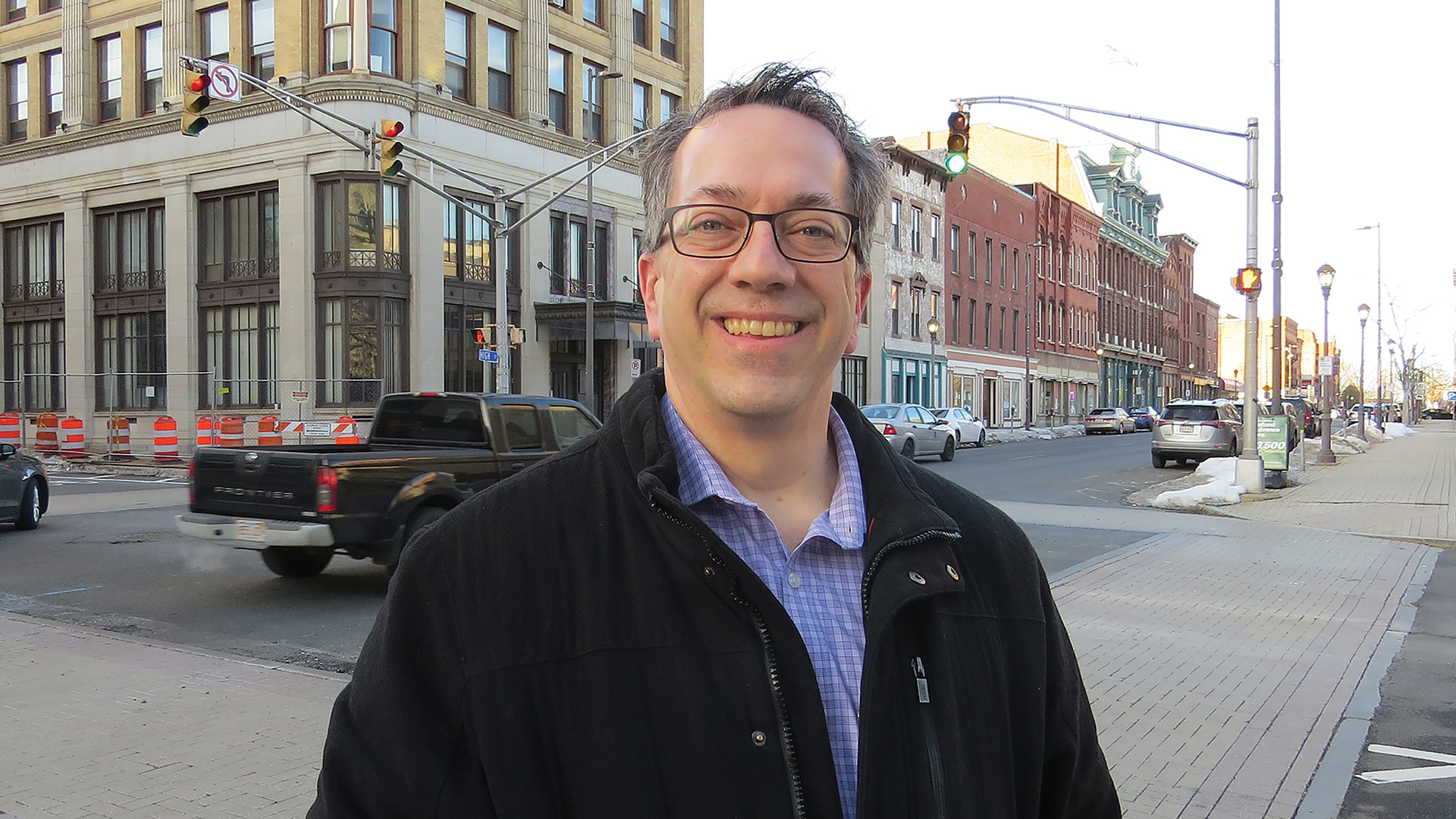
She and Hinds agreed that a waiting list for a vaccine is one thing, but a waiting room just to get on the site is understandably frustrating for people.

However, she also noted some positives, like a movement at the state level toward delivering more doses to pharmacies and local clinics, after perhaps over-emphasizing the mass-vaccination sites (of which Western Mass., to date, hosts only one).

“I’m glad the governor is going back to clinics. We have to get them where people can access them,” Bhadelia said, adding that distribution through doctors’ offices and pharmacies is a tougher organizational challenge, but worth the effort to help people go to providers they trust.

She didn’t deny the website problems, however. “If they try and can’t access it, one day they will give up.”


Confidence Boost

And if there’s one thing healthcare professionals don’t want, it’s for people to lose their enthusiasm for getting vaccinated. That’s why the state and various health organizations have rolled out public messaging around the benefits of the vaccine, especially targeting people who might be skeptical of its benefits.

“We recognize it’s a journey, and folks might not feel comfortable with it today, but maybe you’ll feel comfortable tomorrow,” said Lindsey Tucker, associate commissioner of the Massachusetts Department of Public Health (DPH). “We want to be sure that, when you’re eligible for the vaccine, you can access it when you’re ready for it.”

“Even though you’re vaccinated, you still need to wear a mask, stay six feet apart, avoid crowds, and wash your hands frequently.”

Tucker said those words during a webinar held last month by the Public Health Institute of Western Massachusetts, which also featured input from Dr. Sarah Haessler, lead epidemiologist and infectious-disease specialist at Baystate Health, who has emerged as a leading local voice in public information around COVID-19.

Haessler detailed the amount of data that emerged from clinical trials for the vaccines, and noted that the FDA will approve one only if the expected benefits outweigh potential risks.

“The FDA reviewed all the data — it’s pages and pages and pages of data — around every single thing they did in these clinical trials to be sure of the safety and efficacy of the vaccination,” she said, noting that multiple mechanisms are currently in place to track instances of side effects.

While significant side effects are rare — anaphylaxis is one, which is why individuals receiving the shots must remain at the vaccination site for 15 to 30 minutes — most people experience nothing more than arm soreness, fever, chills, tiredness, and headache; most symptoms fade after a day or two, although they last longer in rare cases. Many people feel no effects at all.

“It’s certainly a lot safer to get the vaccine knowing there are just minor side effects than to take your chances getting infected with COVID-19,” Haessler added. “The more people we vaccinate, the closer we get to herd immunity, and the closer we get to going back to life, where we can see our family and friends and return to pre-pandemic activity.”

Also in February, during the Massachusetts Medical Society’s monthly COVID-19 conference call with DPH physicians, State Epidemiologist Dr. Catherine Brown talked about the DPH’s public vaccine-confidence campaign.

“The campaign recognizes that there are particular populations, especially people of color and other minority populations, that may have understandable increased concern about receiving the vaccine,” Brown said, noting that Public Health Commissioner Dr. Monica Bharel considers health equity to be a primary priority. “Therefore, DPH is having additional, ongoing conversations about the best ways to try to improve vaccine confidence among some of these groups that are harder to reach.”

At the same time, Haessler was quick to note that the vaccine is not a license to stop doing the things that slow the viral spread. It takes about 10 days for someone to begin developing immunity after the first dose, and full protection doesn’t arrive until about 14 days after the second dose. But it’s still unknown how easily vaccinated individuals can spread the virus to others.

“The bottom line is, even though you’re vaccinated, you still need to wear a mask, stay six feet apart, avoid crowds, and wash your hands frequently,” she explained, noting that vaccination is the last layer of protection, but far from the only one.

It is, of course, a critical one, and that’s a message she continues to spread to those who might be anxious about making an appointment.

“Educate yourself about vaccine safety and talk to trusted sources — your own personal healthcare provider as well as people you know who have been vaccinated,” Haessler said. “Many, many healthcare workers in our community are vaccinated now because we went first.

“I think a lot of our healthcare workers were anxious at first, but as they saw their colleagues getting the vaccine and doing fine with it, they were excited, because now there’s a light at the end of the tunnel — there’s some hope that helped bolster confidence in it,” she went on. “The more we know about this, the more people will feel comfortable with it. Knowledge is power.”


Better Days?

Bhadelia, who is also an assistant professor at Boston University School of Medicine and has spoken on CNN and MSNBC about the pandemic, said she’s optimistic about the fact that COVID cases in Massachusetts have been trending down, while acknowledging that testing has also gone down in the Bay State during the vaccine rollout.

Still, she added, “there is a general consensus that it’s not only the testing that’s gone down; it seems there is truly a drop in cases.”

Concern lingers about the COVID-19 variants, which are currently circulating in Massachusetts, particularly the South African variant, which may affect the efficacy of vaccines. But she noted that, even against that variant, vaccination will reduce the risk of severe hospitalization and death.

Taking a federal perspective, Bhadelia also praised the Biden administration’s approach to the vaccine rollout, which she said is science-based and features regular briefings. “The science is always changing, so it’s really great to stay on top of it instead of just guessing at what’s behind the curtain.”

Most Americans, of course, just want to know what’s down the road. So does the governor.

“We want people to turn the corner on COVID, and I can’t tell you how much we would like to see that happen faster,” Baker said. “But to put to work all the folks who are available today to vaccinate our residents and dramatically increase the number of people able to get vaccinated each week here in the Commonwealth, we’re going to need to see a dramatic increase in federal supply coming to Massachusetts.”


Joseph Bednar can be reached at [email protected]

Business of Aging

Building Momentum

Pat and Craig Sweitzer

While their workload is like a typical year, Pat and Craig Sweitzer say, the way facilities are designed in the age of COVID-19 is not.

Ryan Pelletier says that, while it was “scary at times,” he believes life has returned to something approaching normal — although ‘normal’ is certainly a relative term — when it comes to construction within the broad and all-important healthcare sector in Western Mass.

And he should know. He’s project manager for Houle Construction in Ludlow, a family-run operation (his father, Tim, is president) that does the bulk of its work within the healthcare sector, including projects for most area hospitals and a number of private practices as well.

He told BusinessWest that things were busy just after COVID-19 arrived in the 413 almost exactly a year ago, as a number of hospitals and other providers needed some retrofitting of sorts and other types of work to do battle with the pandemic, but then, things got quiet in a hurry and stayed that way for a while, before starting to revert to something akin to pre-pandemic conditions.

“We were very busy for a few weeks, and then … it just died,” said Pelletier, referring to the early months of the pandemic, and noting that hospitals and private practices simply didn’t want more people on site than absolutely needed to be there. “But in the last several months, things have started to come back. There’s a comfort level now — the hospitals and private practices are getting back to business as usual, or as usual as they can.”

But that word ‘scary’ was used in reference to much more than the number of projects in the pipeline. Indeed, it also referred to everything from the daunting task of keeping employees — and everyone else on a job site — safe to the cost and availability of materials.

And he was not alone in that assessment, especially when it comes to the price hikes.

“We’ve seen steel and lumber costs rise exponentially — they’ve almost doubled within the past year.”

“We’ve seen steel and lumber costs rise exponentially — they’ve almost doubled within the past year,” said Dan Bradbury, director of Sales and Marketing for South Hadley-based Associated Builders, which works within a number of sectors, including healthcare. He noted that these rising costs could, and probably will, impact everything from decisions on whether projects move forward in the near term to what kind of construction takes place — new or renovation of existing space (more on all that later).

As for now and the immediate future, those we spoke with said that, after going mostly and then almost completely silent in the weeks after COVID hit, the phones are starting to ring again with greater regularity — in general, and within the healthcare sector in particular.

Pat and Craig Sweitzer, co-owners of Monson-based Swietzer Construction, which specializes in healthcare construction and especially dental offices, said they have a number of projects in progress and on the books, including three new dental offices, a medical building with a dental office as part of the lineup, two new medical spas (including one in East Longmeadow, adjacent to an Ascent Dental office they built), a cannabis dispensary, and work at Adaptas Solutions in Palmer, which is now making parts for COVID testing.

Ryan Pelletier stands in the atrium at Mercy Medical Center

Ryan Pelletier stands in the atrium at Mercy Medical Center, one of the many projects within the healthcare sector undertaken by the company in recent months.

Noting how he needs to be at a number of different sites on a weekly of not daily basis, Craig Sweitzer joked, “I need to buy an airplane.”

Those sentiments express just how much the market has rebounded — if that’s even the right word — and how the outlook has brightened since the darkest days of the pandemic.

Bradbury agreed. “Especially in this new year, 2021, there’s been a more positive outlook, and we’re starting to have the phone ring more and see more potential jobs in the pipeline for this year and for next,” he said, adding that this sentiment applies, again, to construction in general and healthcare construction more specifically.

But there are still many question marks about just what the future will bring, and for this issue, we talked with these experts about what can and likely will happen, both short- and long-term.


Concrete Examples

Rewinding the tape on the past 12 months of COVID, those we spoke with echoed the sentiments of business owners and managers in every sector when they said the changing landscape brought with it both challenges and opportunities, and certainly more of the former.

Indeed, some construction projects in the healthcare sector were put on the shelf because of the way the pandemic impacted the client in question financially. Meanwhile, and especially in the beginning, it brought about some new work, as Pelletier explained.

“When COVID first hit, the hospitals were scrambling to get prepared for potential overflow — spikes and surges — and they wanted us to help them with that, whether it was installing plexiglass shields or building out existing spaces in their facilities to house incoming patients,” he explained. “We had to work around the clock, and it was a little nerve-wracking at first because no one was quite sure what COVID was and how dangerous it was — and they were asking us to send our guys out there not knowing exactly what they were getting into, and the crews had mixed feelings.”

Again, opportunities and challenges.

The challenges came in waves and in different forms, from meeting the many new regulations and protocols regarding when and how work can be done to handling new and different employee needs — from more sick time, if needed, to PPE, to working in settings that were often the front lines of the COVID crisis.

The opportunities have come in various forms as well, and sometimes unexpectedly. That was certainly with the case with Adaptas Solutions.

“They’ve kept us quite busy through all this because they’ve been ramping up and needed construction facilities to accommodate the work they were doing,” said Pat Sweitzer, adding that the company has some projects ongoing there.

“When COVID first hit, the hospitals were scrambling to get prepared for potential overflow — spikes and surges — and they wanted us to help them with that.”

Meanwhile, the airplane the company doesn’t have yet would also be going to several other projects across the region, the sum of which adds up to what Pat described as a fairly typical year, volume-wise.

What isn’t as typical is the nature of the work being undertaken, said Craig, noting that COVID has changed the way facilities are designed and operated, with additional emphasis on HVAC and, more specifically, air movement and air quality.

“Dental offices are ground zero — these are individuals working in a patient’s mouth, which is the means for transmitting COVID,” he explained. “These doctors and their hygienists are at ground zero as far as risk is concerned, so we’ve paying a lot of attention to our design/build criteria.

“And the lion’s share of that goes back to HVAC, so we’ve redesigned our standard operatory,” he went on, adding that, with these redesigns, instead of air being drawn up from the patient’s mouth past the doctor, it is drawn down to the floor, into the ductwork and away from the doctor’s face.

The company is also installing UVC systems, which kill COVID; additional air changers; larger, tighter air filters; and, increasingly, washers and dryers so staff can wash their clothes during the day.

“We’ve really been refining how we lay these design/build projects out,” Pat said, noting that the modern dental office now resembles a hospital operating room in many respects.

Looking ahead, those we spoke with said COVID will likely continue to impact the healthcare construction scene, even if the pandemic eases, as most project that it will.

Indeed, there is general uncertainty about when or even if the rising prices on materials will start to ease, and this uncertainty could play a role in whether some projects move forward or not.

Berkshire Facial Surgery facility in East Longmeadow.

Among the many healthcare sector projects undertaken by Associated Builders in recent months was the construction of this Berkshire Facial Surgery facility in East Longmeadow.

Bradbury told BusinessWest there is inclination among some in healthcare (and in other sectors, obviously) to try to wait these increases out with the hope that prices will start coming down.

“But there is no guarantee that prices will come down,” he said. “One thing I always tell people is that, while they think they can wait out the increases in materials costs, there are never any guarantees that they will, so we encourage people to move forward with projects — if it fits their timeline and their budget, because there are no guarantees.”

Meanwhile, COVID will likely impact the healthcare construction market in another way, said those we spoke with, specifically the lasting impact it seems destined to have on the real-estate market. Even when COVID eases, they said, it seems almost certain that some companies will settle into smaller spaces as more people work at home, bringing more commercial real estate onto the market, which will, in turn, impact new construction.

“Renovating existing space is almost always less expensive than building new, especially when you consider those amazing price increases we’re seeing,” Bradbury said. “A lot of our business is new construction, and we’re contending with a lot of empty office space; long-term, there will be more available office space to lease on the market, which, across some industries, will tamp down new construction, but it will bring an opportunity for more build-out and renovation of existing space.”


Bottom Line

Looking back, and ahead, those we spoke with said a sense of normal — or a new normal (there’s that phrase again) — is returning to the healthcare construction scene.

But there are many question marks still looming over the scene and a number of variables that could impact how much work and what kinds of projects move into the pipeline.

There has been a great deal of pivoting over the past year — for the construction firms and their clients as well — and there is certainly more to come.

But for now, momentum is building in a number of ways.

Features

Work After the Pandemic

By John Graham

It’s been a year now since we came under the relentless domination of the coronavirus. After all this time, the picture isn’t pleasant. The end is uncertain, and the implications for the future are far from clear.

McKinsey reports that “75% of employees in the United States and close to a third in the Asia-Pacific region report symptoms of burnout. European nations are reporting increasing levels of pandemic fatigue in their populations. The number of those who rate their mental health as ‘very poor’ is more than three times higher than before the crisis, and mental-health issues are still likely to rise.” In spite of their severity, such figures should get our attention, but do they?

Perhaps the most dangerous part of the coronavirus is its divisiveness. More often than not, outside attacks — wars, famines, and natural disasters — bring us together to slay the dragon. But the pandemic has driven us further apart. Who would have thought life could take such a painful turn?

Overnight, workers were told to leave their jobs and work from home. Not only did they do it, they liked it. Now, many are ready to refuse to go back to claustrophobic cubicles or vacuous open spaces where they lacked privacy. To express their pleasure at working from home, they remodeled their bedrooms, kitchens, and basements; upgraded their internet connection; purchased all sorts of digital devices and office equipment; and didn’t miss a beat.

They’re choosy, too. “You want me in the office? I don’t think so.” Some moved to Boise or some other place in the middle of nowhere that welcomed them with open arms and lower living costs. They donned their sweats, popped open a laptop, jumped on virtual meetings, adjusted the lighting, turned on a monitor or two, and went to work in their new, $999 office chair, or decided to stay in bed and make it their office that day. To the utter surprise to everyone, productivity went up.

That’s just the first chapter. The McKinsey report also notes that “there is a veritable flood of new small businesses. In the third quarter of 2020 alone, there were more than 1.5 million new-business applications in the United States — almost double the figure for the same period in 2019.” That’s not all. The fourth quarter found Apple ripe for success with the highest revenue in its history — and the company wasn’t alone.


Four Lessons

All this adds up to an amazing, but totally counter-intuitive, story. But what does it mean to all of us who must live it? Literally, what in the world is going on? Even more to the point, what’s the message about the future — our future? Here are four thoughts about that.

“Overnight, workers were told to leave their jobs and work from home. Not only did they do it, they liked it. Now, many are ready to refuse to go back to claustrophobic cubicles or vacuous open spaces where they lacked privacy.”

The genie is out of the bottle. It’s finally happened. To put it another way, like no other phenomenon in modern history (perhaps in all of history), the pandemic released a level of momentum sufficient to turn the world and everything in it upside down in an instant. It may also be the catalyst that changes everything, from politics, government, and public policy to health and medicine, education, work-life balance, business, entertainment, culture, industry, and science. When Jeff Bezos, the CEO of Amazon, steps back, we can be sure profound change is in the air.


Far more people have seats at the table. We talked for so long, but nothing changed. Then, suddenly, we became keenly aware of those who had long been invisible to us. We raised our hands and called them ‘heroes’ but never raised their wages. Now, all of a sudden, we’ve finally figured out that when everyone has a seat, we have better healthcare, better jobs, stronger families, and happier communities. Could it possibly be that it took a painful pandemic to make more room at the table?


Everything is under a microscope. Again, counter-intuitive but nevertheless true: the number of applications for fall 2021 at the University of California are breaking all records. It’s happening at the same moment when millions of young Americans are questioning the value of a college education, particularly if it will take decades to free themselves from the sobering shackles of student debt. Those who went before them, the Millennials, are dogged in determining their own way in the world. Don’t be surprised. The lens of the microscope may never rest.


Don’t drink the Kool-Aid. There are dangers in the tension-filled, stressful times in which we find ourselves. Someone has aptly described it as “hitting the pandemic wall,” and it’s felt at home and at work. It’s when we reach out for relief so we can get our lives on a better path. Simple, quick, and easy answers are what sell in turbulent times: “buy this or do that, and your problems vanish, and your dreams come true.” We’re too resilient to do that to ourselves.


Bottom Line

Now, go back to where we started, the original question: “Who will have the upper hand after the pandemic: employers or employees?

All this leads to the final question. Through the pandemic frenzy, who will come out ahead, the workers or employers? The way it looks at the moment, it just may be the workers. But, as we all know, things can change. u


John Graham of GrahamComm is a marketing and sales strategy consultant and business writer. He is the creator of Magnet Marketing and publishes a free monthly e-bulletin, “No Nonsense Marketing & Sales Ideas”; [email protected]


Community Spotlight

Community Spotlight


Aaron Vega

Aaron Vega says Holyoke lost considerable momentum to the pandemic, but it has a solid foundation on which to mount its recovery.

When he made up his mind roughly a year ago not to seek re-election to the state House seat he had held for four terms, Aaron Vega had an informal list of things he would like to do next when it came to his career.

Working in Holyoke City Hall certainly wasn’t one of them. But … things changed, in many ways, and in a profound way.

For starters, the COVID-19 pandemic limited some of the other options he was thinking about professionally, especially those in higher education, economic development, and workforce development. More importantly, though, Marcos Marrero, the long-time director of Planning and Economic Development in Holyoke, decided that he, too, wanted a change. And as he went about looking for someone to fill his rather large shoes, he started talking to Vega, someone who obviously knew the city, was heavily invested in its future, and was looking for work.

“Working for the city wasn’t really on my shortlist — and not in a negative way,” said Vega, the former Holyoke city councilor who started his five-year appointment just a few weeks ago. “Marcos reached out to me and asked if I’d be interested in taking the position; it came out of the clear blue sky. I was honored that he saw me as someone who could take the reins and keep going.”

He takes the helm in economic development when Holyoke, like most communities, and especially the urban centers, are looking to regain momentum lost due to the pandemic.

And, in the case of the Paper City, it’s a large amount of momentum.

Indeed, over the past several years, Holyoke had made great strides in a number of areas — downtown revitalization, with its cultural economy, with entrepreneurship and new business development, and, most recently, with cultivation (pun intended) of a new and potential-laden industry sector: cannabis. Indeed, with Mayor Alex Morse — who will not be seeking re-election in November and has been offered the the job of town manager of Provincetown — putting out the red carpet for the cannabis sector and the city blessed with millions of square feet of vacant mill space that is in some ways ideal for cannabis growing and other aspects of this business, Holyoke has become a destination for companies looking for a home.

The pandemic has certainly slowed the pace of progress in most of these areas, though. It has certainly impacted the cultural economy, most notably with the news that Gateway City Arts, the multi-purpose arts venue, has closed, and its owners are looking for a buyer. But signs of lost momentum are everywhere. The Cubit Building, once a symbol of downtown revitalization, is still humming on its residential floors, but the Holyoke Community College MGM Culinary Arts Center has been all but shut down by the pandemic. Meanwhile, there are still a number of vacancies on High Street and other downtown throughfares. And the Holyoke St. Patrick’s Day Parade, a significant economic engine for Holyoke and the region as a whole, has been canceled for the second year in a row.

“A lot of the groundwork is sort of done, and in some ways, this office how has to be more proactive and outward-facing — how can we go out to private industry and market Holyoke better? We need to go door-knocking and tell people, ‘think about Holyoke as a place to set up shop.’”

“That’s been a huge financial hit to the restaurants and many other kinds of businesses,” Vega said of the parade. “The trickle-down impact is severe.”

Even the cannabis sector has been slowed a little by the pandemic, but in most all respects, it remains a powerful force in Holyoke, with more than 30 ventures currently at some stage of progression and perhaps 300 new jobs coming to the city with the slated opening in the next few months of Florida-based Truelieve’s facility on Canal Street.

The company, which has more than 2 million square feet of cultivation facilities and more than 70 dispensaries across several states, will operate a multi-faceted, vertically integrated operation that will include cultivation, production, and office operations in a 145,000-square-foot facility formerly occupied by Conklin Office.

“We understand scale, we understand supply chain, and we’re going to be bringing that experience to Massachusetts as we build out our cultivation here,” said Lynn Ricci, director of Investor Relations and Corporate Communications for the company, adding that the company expects to begin operations by the third quarter this year and employ between 250 and 300 people from the Holyoke area when fully operational.

For this, the latest in its Community Spotlight series, BusinessWest turns its lens on Holyoke, an historic city that has bounced back from its decline in the ’60s and ’70s, and must now, in some ways, bounce back again.


Growth Opportunities

Vega is certainly no stranger to the large office he now occupies on the third floor of the City Hall annex building.

When he was a state representative, he would meet with Marrero there every month so he could keep pace with what was happening in the city where he grew up, spent most of his childhood life, and still lives.

Gateway City Arts is just one of many Holyoke businesses

Gateway City Arts is just one of many Holyoke businesses in the arts and hospitality sectors to be devastated by the pandemic.

“We had a standing meeting with him in this office to keep up to date on all the projects that were going on, particularly around cannabis, because I was on the Committee on Cannabis Policy,” he explained. “So I was familiar with most of what was going on in this office, and I knew everyone in this office.”

Today, he’s having those same meetings with Patricia Duffy, his former legislative aide who successfully ran for his House seat last year.

“We just met a few days ago,” he said with a laugh. “We have a standing monthly meeting. It’s interesting being on the other side of the table — I spent the last eight years fighting for funding for all these programs, and now I’m actually utilizing them, and that’s kind of fun.”

Offering a similar update of sorts for BusinessWest, Vega focused on the momentum that has been lost in the city and the need to turn the clock back, in some respects, and put Holyoke back on the intriguing path it was on before March 2020.

“If you look at Gateway City Arts … the pandemic just took the wind out of them, it took the momentum away; it’s like someone slammed the door in their face.”

Before getting to that, though, he was asked to elaborate on the circumstances that brought him to his current post.

“I wanted to focus more,” he said simply when asked why he wanted to move from his House seat. “One of the great things about being a state rep is all the different topics and issues that come across your desk. But, that said, you don’t really get to focus on anything; the best description of my job as state rep was that I was in a permanent liberal-arts education — and there were certain topics that I just wasn’t passionate about.”

He is certainly passionate about Holyoke, and his goal now is built on what had been achieved in the years before the pandemic.

“What Alex and Marcos did was change the conversation about Holyoke, they changed the direction of a lot of the development, and they helped usher in a plan — the urban-renewal plan,” he explained. “A lot of the groundwork is sort of done, and in some ways, this office how has to be more proactive and outward-facing — how can we go out to private industry and market Holyoke better? We need to go door-knocking and tell people, ‘think about Holyoke as a place to set up shop.’”

The story the city can tell is a good one, although, as noted, it was better before the pandemic.

“Things were happening in this city; the momentum was happening,” Vega said. “It took a while to build that momentum, and hopefully we can get it back soon.”

The loss of Gateway City Arts, however, is a serious setback for the community.

“It was firing on all cylinders,” he said, referring to everything from its event venue to its popular restaurant. “And it’s ironic because we’re six or seven months away from having 200 to 400 more people working in downtown Holyoke in the cannabis industry — people who will be looking for a place to go eat or have a beer or listen to music after work. The irony is that we don’t have that right now.

“The biggest hit has been with momentum,” he went on. “Our restaurants took a hit, just like Northampton and Springfield; the housing developments, especially if they were dealing with state incentives, have been pushed out — everything’s taking longer now.”

Overall, Vega said, the pandemic has made it difficult for some small businesses to survive, and it’s made it more difficult for all of them to operate as they would like.

“If you look at Gateway City Arts … the pandemic just took the wind out of them, it took the momentum away; it’s like someone slammed the door in their face,” he said, adding quickly that there is interest in some of the components of that business, and, likewise, the phone is starting to ring, and more interest is being shown in Holyoke within the development community.

“There’s a couple of key projects where, if we can get them online, we can regain some of that momentum,” he told BusinessWest, noting that one such project is a large housing initiative downtown, a 92-unit project being undertaken by WinnDevelopment at the former Farr Alpaca mills that has been slowed by the always-complicated process of applying for and receiving historic tax credits.

Truelieve’s massive facility on Canal Street

Truelieve’s massive facility on Canal Street is ramping up for opening, and is projected to employ between 250 and 300 people when fully operational.

Meanwhile, some projects that were “percolating,” as Vega put it, before the pandemic and back-burnered to one extent or another are perhaps poised to be revisited and moved off the drawing board. These include some indoor agriculture that is not cannabis-related.

“The biggest price-point stuff that they’re talking about right now is lettuce and herbs,” he noted, “because there’s a quick-growing cycle; you can turn lettuce around in 30 days. So many restaurants want locally grown, hormone-free lettuce … there’s real potential there, and they can grow other vegetables, too. The price point is not as good as cannabis, but we’ve been talking about urban farming for a while, and we’re trying to create opportunities.”


On a Roll

Speaking of cannabis, while the pandemic has slowed some aspects of that sector, the industry is poised for additional growth, especially in the Paper City. The next important chapter looks to be written by Truelieve, which just received its occupancy permit. But there are many companies with plans in various stages of development.

Indeed, Vega said, there are two growing facilities now online and three dispensaries, but, overall, there are 40 host agreements and 40 provisional licenses at the state level.

As for Truelieve, its story touches on many of the opportunities and challenges that Holyoke and its old mills present, said Ricci, who started by noting that the company was mostly in Florida before last year, when it started expanding aggressively into other states, including a cultivation facility in Pennsylvania (added through acquisition) and dispensaries in Connecticut and other states.

“We really see 2021 as a big year for national expansion and being a true multi-state operator,” she explained, adding that, when looking for places in which to broaden the portfolio with new facilities, Truelieve focuses on cities and towns with large minority populations, communities that clearly need the jobs and everything else these ventures bring to the fore.

“Investing in a majority minority community was important to us,” she said. And upon concluding that the Bay State would be a good market to enter, Holyoke soon came onto its radar.

Holyoke at a glance

Year Incorporated: 1850
Population: 40,135
Area: 22.8 square miles
County: Hampden
Residential Tax Rate: $19.04
Commercial Tax Rate: $39.74
Median Household Income: $33,030
Family Household Income: $36,262
Type of government: Mayor, City Council
Largest Employers: Holyoke Medical Center; Holyoke Community College; ISO New England; Hazen Paper
* Latest information available

“We wanted to make sure, going in, that we were revitalizing and adding to the community and providing jobs; those kinds of things are important to us as a core value of the company,” she noted. “When we found this location in Holyoke, an area that had certainly seen better times, we thought, ‘we could invest here and provide the jobs.’”

As for the site in Holyoke, renovating the historic mill has been “a huge undertaking,” Ricci said, adding that the company entered into a sale/lease-back arrangement in order to secure the nearly $40 million required for this project (cannabis operations cannot obtain traditional bank financing, because the product is illegal on a federal level).

The actual buildout was an involved process that began more than a year ago and was slowed by state mandates that shut down many types of construction during the early months of the pandemic.

“The property is beautiful in its own way — there’s big, wide staircases and beautiful brickwork, but … it needed a lot of work,” she told BusinessWest. “It has been a challenge, and not just to set up different rooms, but to make sure everything was set up properly.”

Staffing is the next challenge to be overcome, Ricci said, adding that final inspections of the facility are expected sometime this quarter, with growing due to begin, as noted, in the second quarter.

Other facilities are in various stages of the pipeline, said Vega, who told BusinessWest that, while the city is welcoming all types of cannabis businesses, the larger cultivation facilities hold the most promise for jobs and overall impact on the city and the region, and he can envision the day when perhaps eight to 12 such ventures are operating in the city.

And, like his predecessor, he sees opportunities not merely for the growing and selling of cannabis, but also encouraging businesses that can provide needed products to those ventures.

“A lot of the products used by these businesses are made in Texas and Florida, the simple things like the planters — we should be making those here in Holyoke,” he noted. “I equate it to the ‘green’ industries. It’s great seeing solar fields — we have some in Holyoke — but we should be building solar panels in Western Mass., not just installing them.”


Bottom Line

Making progress in that area is just one of the ways Holyoke will be looking to regain the considerable amount of momentum it lost to the pandemic.

The city that had come so far in the past decade has the foundation that Vega mentioned in place. It has the building blocks, and it has a cannabis industry hungry for the open spaces, low energy prices, and other amenities that this city can provide.

The pandemic certainly slowed the pace of progress, but Vega and other officials are confident that the Paper City can soon regain its stride.


George O’Brien can be reached at [email protected]

Home Improvement

Fueling Interest

By Mark Morris

EcoBuilding Bargains

EcoBuilding Bargains, celebrating 20 years this year, has been a trendsetter in repurposing reclaimed and surplus building materials.

John Majercak likes to say the Center for EcoTechnology (CET) has been successful for 45 years because it’s willing to try out approaches to saving energy that in time become a normal way of doing business.

“We helped invent the energy audit in the 1970s, and now it’s a routine thing that lots of people have done, and it’s having a huge impact,” said Majercak, president of CET.

In 2021, the organization marks several noteworthy milestones. In addition to CET’s 45th birthday, Majercak celebrates 30 years with the organization, serving as president since 2010. In his time there, he has seen a growing mainstream awareness of the connection between the community, the economy, and the environment.

“It used to be that environmentalism was thought of as a fringe thing or a nice thing to have,” Majercak said. ”But the work we do in saving energy and reducing waste helps people live better lives, as well as addressing the urgent issue of climate change.”

CET also runs EcoBuilding Bargains, the largest reclaimed and surplus building-materials store in New England. Launched in 2001, the reuse store celebrates its 20th anniversary this year. When it opened, the store was one of only a few of its kind that existed. Today, thousands of stores sell reclaimed building materials.

From the beginning, people liked the idea of saving money and helping the environment by giving a second life to used cabinets, lighting, plumbing fixtures, and hundreds of other items. Through the years, awareness increased as EcoBuilding Bargains was featured on several home-improvement TV shows, most notably This Old House.

Located in Springfield, EcoBuilding Bargains sells products in all 50 states and several other countries thanks to the internet. Once reusing materials became fashionable, Majercak said, interest in the store exploded.

“When reusing materials became stylish, it allowed people to bring their own character to a piece,” he noted. “On top of personal creativity, it’s an inexpensive purchase that helps the environment, so it’s a home run.”

Majercak pointed out that the current boom in home improvement — fueled by the pandemic and people being in their homes much more than would be considered normal — has created both a supply and a demand for items at EcoBuilding Bargains.

“It used to be that environmentalism was thought of as a fringe thing or a nice thing to have. But the work we do in saving energy and reducing waste helps people live better lives, as well as addressing the urgent issue of climate change.”

“All the home improvement that’s going on means more materials we can capture for donation and reuse,” he noted. “Then, when people renovate with these materials, they can save lots of money, help the planet, and make their homes look super-cool.”

Likewise, the pandemic hasn’t slowed business for the store. EcoBuilding Bargains is open for people who want to shop in-person and also offers virtual appointments so people can shop over the phone. With video calls, Majercak said, staff can show items, and customers can ask more specific questions about a piece.

Other parts of CET’s business have also adopted a combination of in-person and virtual interaction. Energy audits, for example, have a whole new feel that creates opportunities and challenges.

“We have people who are happy to get on a Zoom call and show us around their home or business for an energy audit,” Majercak said. “On the other hand, those who wanted an in-person visit are on a waiting list until after the pandemic is over.

“After the pandemic, I’m sure we’ll be doing plenty of things in person again, but we will continue to go virtual for those who prefer that approach,” he went on. “In that way, it opens more opportunity for mission impact.”


Cool Ideas

With a stated mission to “research, develop, demonstrate, and promote those technologies that have the least disruptive impact on the natural ecology of the earth,” one of CET’s goals involves reducing carbon emissions equal to removing 100,000 cars off the road for a year by 2022.

There are many ways people can reduce their carbon footprint, all of which use less energy without compromising comfort. Converting to LED lights and adding insulation are two easy ones.

John Majercak says a central focus for CET over the years has been pursuing technologies with the least disruptive impact on the environment.

John Majercak says a central focus for CET over the years has been pursuing technologies with the least disruptive impact on the environment.

“Weatherization is a good example because installing air-sealing insulation in the home increases the comfort dramatically and uses less energy — and, therefore, less carbon,” Majercak said. “We’ve been doing these programs for years, and they save lots of energy and carbon.”

He cited a recent effort in which CET has partnered with colleges in the Community Climate Fund, which provides support for local carbon-reduction projects. By investing in the fund, colleges support the community, as well as creating learning opportunities for students who conduct research and gather data. Projects range from recovering used building materials or helping a homeowner get a heat pump to providing loans to farmers so they can make energy improvements to their operations.

“The Community Climate Fund is a great way to extend the impact of our programs and get even more done,” he told BusinessWest.

Massachusetts recently unveiled a plan to achieve a 45% reduction in carbon emissions by 2030 and to be carbon-neutral by 2050. Majercak has reached out to utilities to encourage them to align their energy-efficiency programs with these climate goals. CET is currently working with a municipal utility company to test an energy-efficiency program that measures carbon reduction, as opposed to just energy savings. It’s one of the first programs of its kind in the country.

“Anytime you save energy, it reduces carbon, but the kind of energy you save and the kind of energy you use also affects carbon,” he said, noting that the car you drive and the lawnmower you use can also make a difference in changing your carbon footprint. “For the foreseeable future, we will be studying energy issues by looking through the lens of carbon reduction.”

CET is also working with utilities on promoting the use of air-source heat pumps for houses. While they have existed for years, Majercak said heat pumps were primarily used in warmer climates. With recent technology improvements, they can now withstand the sustained cold temperatures of a New England winter. Unlike traditional heating systems, heat pumps take heat from outside air (yes, even frigid cold air has heat in it) and move it into the home.

For cooling, the heat pump does the reverse and removes heat from the house to the outside. Instead of using oil, natural gas, or propane, heat pumps run on electricity. As long as renewable energy becomes a larger part of the grid, he said, electric power is the logical choice.

“This is good from a carbon perspective because, as the power grid gets greener and as more people use heat pumps and drive electric cars, the more carbon reduction we’ll get,” Majercak noted, adding that heat pumps are just catching on, and we will see a lot more of them in the coming years.

And they represent only the latest cutting-edge technology that CET has helped establish in its 45 years.

“I’m very proud of the people at CET because they’ve always been real innovators and have helped change the way things work,” he said. As one example in the realm of waste and recycling, CET helped to establish the Springfield Materials Recycling Facility (MRF), which serves 65 communities in Western Mass. Back when recycling was a new approach, CET worked with towns to help them prepare their recycling programs for the Springfield MRF.

In the 45 years since CET has been in operation, energy conservation has hit peaks and valleys in politics and policies on the national level. Majercak noted that the state and regional levels have been more consistent, and asserted that CET has never been, nor ever will be, a political organization.

“We’re a solutions organization; we work with everyone,” he noted. ”As long as we keep that focus, we will be successful.”

Elaborating, he said the key is to meet people where they are and help them either solve a problem or achieve a goal.

“If you’re a small business, your goal may be to save money and have your business perform better. Energy efficiency, as well as waste and recycling management, can help you reach that goal,” he said. “A homeowner might want to be more comfortable or lower their electric and fuel bills. We can do that for you, and it doesn’t matter what you think about climate change.”

“All the home improvement that’s going on means more materials we can capture for donation and reuse. Then, when people renovate with these materials, they can save lots of money, help the planet, and make their homes look super-cool.”

For all the energy-saving opportunities out there, Majercak understands that spreading the word about what CET does and how it can help is essential. “Even when people are aware and want to do something to save money or save the environment, we still do a lot of hand holding to get it done.”

Spreading the word through workshops and social media definitely helps to engage people. Majercak pointed to one effort in which EcoBuilding Bargains runs a “Reuse Rockstar” contest on social media that encourages people to post the creative ways they have used items from the store.

“It’s inspirational to see how people apply their creativity and elbow grease to make beautiful houses and rooms for a fraction of what they would normally cost,” he said.


Going for the Green

Because climate change is a global problem, it’s easy for people to feel overwhelmed and doubtful they can make a difference, said Majercak, who assures them that they do not have to solve climate change all by themselves, and shows them different ways they can have an impact.

“When someone switches out their lightbulbs, buys an electric vehicle, or installs used cabinets, these are not overwhelming actions,” he told BusinessWest. But when CET helps tens of thousands of people do these little things, they start to add up.

“Consider that people across the state, the country, and the world are doing similar things, and it’s easier to see how each effort contributes to making a real difference. We are firm believers in little things with big payback.”

In addition to turning new approaches into normal processes, Majercak looks forward to the growth potential for EcoBuilding Bargains as it sells more products to people through eBay and, soon, through its own e-commerce site.

When he considers CET’s 45-year history, he appreciates how far the organization has come, but he’s even more excited about the near future.

As much as we’ve done, I think we will really accelerate and see much more progress in the next 10 to 15 years,” he said. “It’s an exciting time to be doing the work we do.”

Technology

Learning on the Fly

Kimberly Quiñonez says her professors

Kimberly Quiñonez says her professors encouraged her to overcome the challenges of online learning and succeed.

Springfield Technical Community College (STCC) had a long-term plan to ramp up online and digital learning.

But then came the COVID-19 pandemic, which forced staff working at STCC’s Center for Online and Digital Learning to move faster than they ever imagined. The staff includes instructional designers who assistant faculty in online teaching methods they incorporate into the classroom experience.

To maintain the safety of students, faculty, and staff, STCC moved classes to remote instruction last March. Instructional designers worked with faculty over the summer to prepare for fully online teaching in the 2020-21 academic year.

Faculty and administrators acknowledge the abrupt change to remote learning created great challenges and, for some, led to a less-than-ideal learning environment last spring. The sudden need to vacate campus resulted in the use of a slew of digital tools to communicate with students, including e-mail, FaceTime, Google Hangouts, and teleconferencing by phone and Zoom.

“Many faculty had been using online tools for the delivery of their face-to face classes. However, for those faculty who were not familiar with the digital space or whose courses required hands-on instruction, the ‘lift’ to online was great,” said Geraldine de Berly, vice president of Academic Affairs at STCC. “Since the summer, STCC invested in tools and training to assist faculty in developing the best truly online experience possible, including the hiring of a third instructional designer. Today, all online instruction occurs in a single platform, supplemented by class discussions using tools such as Zoom.”

The college anticipates spending nearly $800,000 through May 2021 helping faculty develop hundreds of online classes and labs, de Berly said. Today, more than 80% of the credits are offered online, a jump from 12% prior to the pandemic. Over the coming year, STCC also expects to expand its online-only options in addition to its existing in-person and hybrid degree programs.

STCC English Professor Denise “Daisy” Flaim has years of experience teaching students on campus in classrooms, so converting to the online experience was a big adjustment. But she worked closely with the online team at STCC to prepare for the transition, and now feels confident.

“We’re learning technology, just as the students are learning technology,” Flaim said.

Daniel Misco, an STCC alumnus and faculty member in the Digital Media Production program, said he’s well-versed in the online teaching world. Today, he teaches most of his classes online, but misses the face-to-face interactions with students in a classroom.

“I considered myself a face-to-face instructor,” Misco said. “I always excelled in the classroom. I liked being there with students to build a rapport with them.”

The adjustment to online learning can be challenging for some students, but Misco said faculty try to do all they can to help.

STCC student Kimberly Quiñonez, who is studying social work, expressed gratitude for the support from faculty over the past year.

“My experience as an online learner has really been amazing, although there were times I felt like quitting,” she said. “During those times, my professors would reach out and check in with the class. In the very beginning, I must admit that it was quite challenging transferring from an actual classroom to a computer. The classroom brought security to most students because questions were answered immediately. With online learning, you may have to wait for a response through e-mail.”

Aminah Bergeron, a mechanical engineering technology student at STCC, said she found benefits to online learning, noting she has “gotten the hang of it” after a year of studying from home.

“It wasn’t as difficult as I thought it would be. It was for sure different, but a ‘good’ different,” she said. “I didn’t have to worry about getting ready, or making sure my house doors are locked, or even thinking in the back of my head, ‘did I leave the faucet running?’ I just had to open my laptop and start my schoolwork, whether at my own pace or scheduled Zoom meetings. I also had much more time to research and not worry about calculating the time I’d lose on commuting from one location to another.”

STCC will return to face-to-face, on-campus instruction when it’s safe to do so, de Berly said, but will continue to offer online options and apply digital tools to enhance the classroom experience.

Manufacturing

Keeping Pace

Both the immediate and long-term future of the manufacturing industry will be defined by the development of a number of ever-evolving and prominent trends, according to the Assoc. of Equipment Manufacturers. These trends are poised to have a significant impact in 2021 (and, in many cases, beyond), so it’s critically important for manufacturers to develop a keen understanding of what they are, how they will grow over time, and how they will impact the industry and the customers it serves.


COVID-19 and Employee Safety

It almost goes without saying that workplace safety and compliance with CDC guidelines and OSHA regulations (along with local safety measures) will remain front of mind for manufacturers as 2021 gets under way. With COVID-19 cases on the rise in many parts of the world, organizations will need to continue to be vigilant in their efforts to protect employees. Doing so, however, requires a significant investment of time, effort, and resources on the part of company leaders.

While an efficient rollout of an effective vaccine for COVID-19 would bode well for an eventual return to normalcy for the manufacturing industry, the impact of such a rollout won’t be felt for some time. In the interim, organizations will need to continue practicing social distancing in the workplace, restricting visitors to facilities, encouraging the practice of good hygiene, and ensuring employees are healthy and fit for work before allowing them on the job.

It’s been nearly a year since the COVID-19 pandemic took hold in the U.S., and it remains a major challenge for manufacturers across the country and around the world. While companies do have plans and protocols in place to combat the virus, adhering to them and ensuring the health and well-being of employees is — and will continue to be — no small task.


Connected Workforce

The desire to equip workers with technology capable of allowing them to connect and collaborate from a distance has long been on a trend on the rise within the manufacturing industry. As older generations continue to leave the workforce and are replaced by younger employees, and the rise of the big-data era in manufacturing takes shape, finding tools and technologies to make an increasingly spread-out and remote workforce as productive as possible is a top priority for companies today.

As a recent article from McKinsey explained, the ongoing COVID-19 pandemic has led to an increased reliance on digital collaboration to establish and maintain a connected manufacturing workforce. An increased emphasis on safety and changes to work processes, in an effort to maintain social distancing and minimize physical contact, has led organizations of all types and sizes to adopt cutting-edge ways to allow for workers to communicate and interact virtually.

While the widespread impact of the pandemic has caused this trend (and the adoption rate of related tools and technologies) to grow, it remains critical for manufacturers to provide training and resources to employees as they try to maximize productivity from afar. Why? Because doing so is poised to pay off over time. According to McKinsey, “by digitizing processes to improve equipment management and optimize physical assets, digital collaboration tools give manufacturers ways to boost productivity while enhancing quality.” And those who do it first — and well — will achieve a significant competitive advantage.


Internet of Things

The Internet of Things (IoT) has long been a trend to watch in manufacturing, and this year is no different. As it continues to grow in prominence and becomes more and more widespread over time, IoT technology will drive value for the industry by allowing organizations to make measured, informed decisions using real-time data in an effort to increase efficiency and positively impact their bottom lines.

According to a recent study conducted by the MPI Group, approximately 31% of manufacturing production processes now incorporate smart devices and embedded intelligence. Furthermore, more than one-third of manufacturers have established plans to implement IoT technology into their processes, while 32% plan to embed IoT technology into their products.

IoT technology offers both remote-monitoring and predictive-maintenance capabilities, making it even more valuable for organizations looking to maintain visibility of equipment performance from afar. With the COVID-19 pandemic continuing to impact the industry in 2021, IoT technology will continue to be a go-to for manufacturers looking to maintain efficiency and productivity.


Localized Production and Near Sourcing

The rise of customization and personalization has given way to large opportunities for manufacturers willing — and, perhaps more importantly, able — to succeed in a localized economy. By rethinking the way products get out to the public, organizations can craft an ecosystem of smaller, flexible factories located near existing and prospective customers.

Manufacturers are used to thinking on a global level. However, shifting their focus to a local level, they may be better able to meet the ever-changing needs, wants, and preferences of the markets they serve. Consumers are making it abundantly clear that authenticity matters, and a localized approach to manufacturing is proving to be among the most effective ways to for organizations to respond accordingly.

The impact of COVID-19 also cannot be discounted. The pandemic has led manufacturers to re-evaluate and reconsider sourcing, largely due to supply chain disruptions (especially in the earliest days of COVID-19). As a result, manufacturers have made a concerted effort to bring their operations closer to where their offerings are sold, and there has been an increasing desire on the part of many companies to source raw materials from domestic suppliers. All this is being done in an effort to avoid pandemic-related disruptions and support the U.S. economy during these uncertain times.


Predictive Maintenance

It’s no secret that the ability for manufacturers to predict impending equipment failures and — more importantly — prevent equipment downtime is incredibly impactful to their bottom lines. Advancements in technology now allow organizations to do just that (and much, much more).

The benefits, according to a recent blog post from EAM-Mosca Corp., showcase why predictive maintenance (PM) is so valuable to organizations today. PM helps companies reduce costs, decrease failures, minimize scheduled downtime, and optimize parts delivery

Effectively conducting predictive maintenance is no easy task, however. Adopting a (successful) predictive maintenance model requires manufacturers to gain insights into the variables they are collecting and — more importantly — how often those variables present themselves on factory floors. Therefore, it’s imperative for manufacturers to possess accurate and relevant knowledge about their equipment. They must know what previous failures have taken place, and they need to make decisions around lead time — becausem the closer to failure a machine is allowed to go, the more accurate the prediction will be.


This article was written by the Assoc. of Equipment Manufacturers.