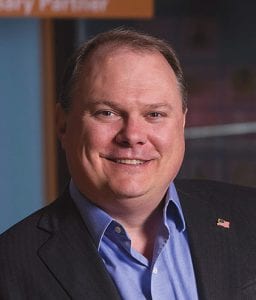













SPRINGFIELD — Bacon Wilson is pleased announced that 10 attorneys have been named to The Best Lawyers in America© 2021.
Attorney Kenneth Albano, the firm’s managing partner, was recognized in Best Lawyers for business organizations including LLCs and partnerships; Michael Katz for bankruptcy and reorganization; Stephen Krevalin for family law; Hyman Darling for elder law; Gary Breton for banking/finance law and for business organizations; Gina Barry for elder law; Jeffrey Fialky for commercial finance; Mark Tanner for real estate litigation; Paul Rothschild for litigation; and Peter MacConnell for real estate law.
First published in 1983, Best Lawyers is regarded as one of the definitive guides to legal excellence. Best Lawyers lists are compiled based on peer-review evaluations. Lawyers are not permitted pay for a listing, and due to the peer-review nature of the process, inclusion in Best Lawyers is considered a singular honor.
Founded in 1895, Bacon Wilson, P.C. is one of the largest firms in the Pioneer Valley, with 43 lawyers, and approximately 60 paralegals, administrative assistants, and support staff.
SPRINGFIELD — The Springfield Museums will distribute 500 Smithsonian Spark!Lab Activity Kits to Springfield children to help emphasize the fun of science, technology, engineering, and math (STEM) learning.
“The Museums are open, but we know not everyone is able (or ready) to visit in person,” said Larissa Murray, Director of Education at the Springfield Museums. “So we decided to bring our wonderful Spark!Lab hands-on invention learning directly to the children in our city!”
The Springfield Museums, in collaboration with the Smithsonian Institution and with funding from the MassMutual Foundation, assembled 500 Spark!Lab Activity Kits, which they will begin to distribute this month.
“Usually during the summer, we would visit libraries with our hands-on activities,” said Murray. “Because of the pandemic, we had to think of another plan.” Instead the Museums educators are partnering with local organizations and distributing Spark!Lab Activity Kits.
Spark!Lab is an innovation space, where all visitors are encouraged to explore because anyone can be an inventor! The Spark!Lab Activity Kits share the same encouraging theme. The kits are filled with materials for STEM activities, plus invention challenges in both Spanish and English. Among the supplies are bendy straws, carpenter pencils, a protractor, lacing cords, craft sticks, cardboard coaster, the list goes on!
“The goal of the program is to help families learn together with engaging, dynamic activities,” Murray said. “These are challenging times for families, all needing to learn from home. We hope the Spark!Lab activities will be both entertaining and informative.”
This project is made possible thanks to the partnership of the Smithsonian and funding from the MassMutual Foundation.
“It’s been so much fun to partner with the Springfield Museums and the MassMutual Foundation to create these kits,” said Jennifer Brundage, National Outreach Manager for Smithsonian Affiliations. “We’re grateful for the opportunity to share the Smithsonian’s hands-on, bilingual learning experiences, regardless of students’ access to the internet or computers. Everyone has the potential to be an inventor and we are excited to see what Springfield’s kids invent.”
SPRINGFIELD — Following a North American call for submissions and an exhaustive selection process, Jewish Family Service of Western Massachusetts has been chosen by The Network of Jewish Human Service Agencies for participation in Year Two of its NJHSA Jewish Poverty Challenge, an offering of the Network’s Center for Innovation and Research.
The goal of the program is to help NJHSA member agencies better analyze the marketplace, launch and manage solutions, and implement sustainable measures for success to address the many dynamics associated with responding to Jewish poverty.
NJHSA has partnered with Start Co., a venture development consultancy firm based in Memphis, Tennessee with an expertise in launching startup, entrepreneurial initiatives and engaging municipalities, corporations and non- profits in poverty reduction responses. The team at Start Co will provide expert consultation assistance as JFS rethinks and redesigns products and services, adjusting assumptions and organization models. And throughout, special attention will be paid to the impact of COVID-19 on service delivery methods.
“We are thrilled to have been selected for this initiative”, said Rosalind Torrey, MPH, JFS Jewish Life Enrichment Program coordinator and manager of the project. “JFS has a deep commitment to raising awareness of the issue of Jewish poverty and addressing it in new ways. Since the start of COVID 19 it has become clear that Jewish poverty in our community is both greater and less visible than we previously understood. Through this endeavor JFSWM will be able to more fully identify need, create new resources and facilitate new pathways to alleviating Jewish poverty.”
Reuben Rotman, president & CEO of the Network added that, “The COVID-19 pandemic has even further heightened the critical need for innovative solutions to the challenges of Jewish poverty. With newly vulnerable clients reaching out for assistance in unprecedented frequency, the agencies are challenged to identify new ways of working and new efforts to achieve sustainable solutions for those in need.”
SPRINGFIELD — Western New England University announced that attorney Ariel Clemmer has been selected by Massachusetts Lawyers Weekly as an “Excellence in the Law” pro bono lawyer. Clemmer is the director of the Center for Social Justice at Western New England University School of Law and an adjunct faculty member.
“The Western New England University School of Law community was delighted to learn of Ariel Clemmer being recognized by Massachusetts Lawyers Weekly for her path breaking work and unwavering commitment to access to justice,” said School of Law Dean Sudha Setty. “We appreciate these attributes as central to her work as director of the Center for Social Justice, where she is engaging students, faculty, and the greater community in essential social and economic justice work.”
Each year, at the Excellence in the Law event, Massachusetts Lawyers Weekly celebrates up and coming lawyers and honorees for excellence in pro bono, legal journalism, ADR, marketing, firm administration and paralegal work. This year’s honorees were recognized at the “Excellence in the Law” reception last month, which was held virtually to comply with current social distancing requirements.
Dedicating her career to making a difference in the lives of others, Clemmer said she was “very touched by the receipt of this honor and grateful to be able to continue working with students, faculty, and others toward access to justice for all” in her new role as director of the Center for Social Justice at WNE School of Law, where she started this past March.
Clemmer obtained her B.A. summa cum laude and Phi Beta Kappa from the University of Richmond in 2005, after which she worked as an elementary school teacher with Teach for America in New York City’s Spanish Harlem neighborhood. Clemmer received her J.D. cum laude from Harvard Law School in 2010, where she was a member of the Civil Rights-Civil Liberties Law Review and the Harvard Defenders.
After graduation, Clemmer started her career as a public defender at the Bronx Defenders, representing low-income clients charged with misdemeanor and felony crimes. She then worked for the firm Weil, Gotshal & Manges, LLP, defending clients against security class actions and other complex financial matters, while continuing to develop her pro bono practice litigating matrimonial, civil, and criminal cases. In 2014, Clemmer was selected by the partners at Weil, Gotshal & Manges to participate in a pro bono externship at Legal Services of New York City (LSNYC). Her excellent work there resulted in her being named one of the “Top 30 Pro Bono Attorneys of 2014” by LSNYC.
Most recently, Clemmer was the pro bono director at the Hampden County Bar Association where she managed all aspects of the organization’s pro bono activity, including directing the award-winning, nationally recognized Hampden County Legal Clinic. While there, Clemmer added new pro bono opportunities based on gaps in access to justice that she found in Hampden County, and greatly increased volunteer participation, which served more than 2,000 clients last year, an unprecedented increase under her leadership. She continues to serve as the lead attorney in charge of the Lawyer for the Day Consumer Debt Initiative, a pro bono project serving self-represented litigants who are defending credit card collection actions filed by debt buyers in the Springfield District Court Small Claims session. The project uses volunteer attorneys, non-attorneys, and students to provide brief legal advice, negotiate with opposing counsel, draft settlement arrangements, and appearances on behalf of consumers at hearings and trials.
“The program has been tremendously successful,” said Clemmer. “We have had a positive outcome of 95% of our cased to date, and saved consumers almost $200,000 in the last year while also informing them of their rights and empowering them to navigate other financial situations in the future.”
“I knew I wanted to be a public interest lawyer from day one,” said Clemmer to Massachusetts Lawyers Weekly. “I care deeply about justice for all and wanted have dedicate my career to empowering the most underserved and vulnerable members of our society.”
SPRINGFIELD — Robinson Donovan, P.C. today announced six attorneys were listed in The Best Lawyers in America© 2021 and one was also named “Lawyer of the Year” in her field.
The following attorneys were recently selected by their peers for inclusion in The Best Lawyers in America 2021:
BRIDGEPORT, Conn. — People’s United Bank, N.A. a subsidiary of People’s United Financial Inc., announced the formation of a Business Transformation Office (BTO), a specialized team focused on digitization, process optimization, automation and Fintech partnerships, in addition to supporting product strategy and management for the Bank.
The BTO will formalize People’s United’s approach to defining a repeatable process to provide unique, value-added, digitally driven products and services across business lines that take into account customer expectations for individualized journeys, simple solutions, and innovative ideas.
“The digital age of banking that has emerged over the past decade has changed the way people interact and do business on a day-to-day basis, and technological advancements are influencing the future of banking,” said Jack Barnes, CEO, People’s United Bank. “As we continue to evolve our service model, the BTO will ensure we remain focused on continuous enhancements and personalization of customer touch points including online and mobile banking, ATMs, call centers and in our branches, to provide customers with digital experiences that are custom-made, seamless, fast and secure. The BTO is a reflection of People’s United’s ability to innovate and reconceptualize our offerings in an efficient way.”
The BTO will be led by Ravi Vakacherla, EVP and newly appointed chief transformation officer. He has been with People’s United for more than 15 years and has held various roles, starting in IT, holding the role of chief architect, before transitioning to head of Digital, Product Management and Banking Operations.
“It’s clear the next three years will look much different than the previous three, and we must do our part to retain and attract new customers and adapt to customer preferences,” said Lee Powlus, SEVP, chief administrative officer.
“Through Ravi’s leadership, the BTO will ensure that our strategic plan advances us into the next decade and provides a competitive advantage in delivering customers our products, services and expertise.”
AMHERST — AmherstWorks, a coworking space dedicated to serving the Pioneer Valley community by providing a premium remote-working environment, has reopened and is accepting new applications for membership passes and private offices.
AmherstWorks has implemented new policies and procedures, in addition to restructuring the space to adhere to all of the state’s health and safety regulations in light of the coronavirus pandemic.
All members will be required to wear masks and practice social distancing of six feet at all times. Previously shared desks will be assigned exclusively to individuals each day, with hand sanitizer readily available. AmherstWorks membership assistants will sanitize all surfaces a minimum of three times a day.
AmherstWorks provides a professional and beautiful environment for getting work done. The newly renovated downtown workspace includes large windows for natural light, fast internet and premium amenities for members.
Learn more about membership at AmherstWorks.io.
HOLYOKE — To assist the Commonwealth of Massachusetts and the city of Holyoke in reducing the spread of COVID-19, Holyoke Community College will serve as a “Stop the Spread” drive-through testing site offering free tests to the public.
Tests will be conducted outside HCC’s Bartley Center for Athletics and Recreation and administered by Fallon Ambulance in partnership with the Holyoke Board of Health and the Massachusetts Department of Public Health.
Testing will be available August 26 through Sept. 12, during the following hours:
Monday 7-11 a.m.
Tuesday 2-7 p.m.
Wednesday. 7-11 a.m.
Thursday 2-7 p.m.
Friday 7-11 a.m.
Saturday 7-11 a.m.
Testing will be conducted on a first-come, first-serve basis. There are no appointments. There is no cost for the tests and no referral is required.
Signs and HCC and Holyoke city Police officers will direct drivers from Homestead Ave down to M Lot (adjacent the Bartley Center), where in-car tests will be administered. Cars will leave M Lot, pass through N Lot, and exit onto the campus road and out onto Homestead Avenue.
Turnaround time for test results is typically four days or fewer.
For more information, please go to: www.mass.gov/info-details/stop-the-spread
WASHINGTON, N.J. — Washington One-Stop, a family-owned-and-operated business since 1969, has been acquired by Soringfield-based Rocky’s Ace Hardware, one of the country’s largest family-owned Ace Hardware dealers, now with 35 locations in eight states.
Washington One-Stop, previously owned by Gary Hicken, was purchased in April of this year by Rocky’s, which will now manage the location under the name Rocky’s One-Stop at the existing location of 288 Route 31 South in Washington.
“My grandfather opened our first location in Springfield in 1926, and we’ve been in continuous operation under the same family ownership for three generations,” said Rocky’s Ace Hardware President Rocco Falcone. “We plant roots in each of our neighborhood locations and intend to maintain the community focus established by the previous owners.”
Rocky’s One-Stop plans to host a grand opening celebration for the community next spring. In the meantime, the store will undergo renovations while retaining much of the existing inventory.
SPRINGFIELD — Bulkley Richardson announced that 14 lawyers from the firm were recently selected by their peers for inclusion in The Best Lawyers in America© 2021. Bulkley Richardson had more honorees than any other law firm in Springfield. These 14 lawyers were recognized in 20 unique areas of practice.
HADLEY — Volvo Cars Pioneer Valley, part of the TommyCar Auto Group, will move from South Deerfield to its new location at 48 Damon Road in Northampton on Sept. 1.
“This is an exciting change for us as Northampton is such a wonderful community and has been incredibly welcoming,” said TommyCar co-owner Carla Cosenzi. “The dealership will be more conveniently located for our customers, right off the highway. They will still get the same outstanding service they have come to expect from us, along with a greater inventory and a more spacious showroom and service department.”
TommyCar Auto Group already has three dealerships in Northampton — Country Hyundai, Genesis of Northampton and Northampton Volkswagen — as well as Country Nissan in Hadley.
HOLYOKE — Empowering Women in the Workplace is the theme of the second Women’s Leadership Luncheon Series sponsored by Holyoke Community College and its Training and Workforce Options collaborative.
The 2020 Women’s Leadership Luncheon Series, postponed from spring due to COVID-19, is now being held over Zoom on the last Wednesdays of August, September and October from noon to 1 p.m.
Each lunch-time event features two presenters leading discussions on different topics.
The Aug. 26, session will be led by Denise Jordan, executive director of the Springfield Housing Authority, and Julie Quink, managing partner of Burkhart, Pizzanelli PC.
The series is sponsored by HCC and Training and Workforce Options — TWO — a collaboration between Holyoke and Springfield Technical community colleges.
The Sept. 30 session, Comfortable in Your Own Skin, Finding Your Voice, will feature Tanisha Arena (executive director, Arise for Social Justice) and Pam Victor (owner, Happy Valley Comedy Theater).
On Oct. 28, Colleen Loveless (president and CEO, Revitalize Community Development Corporation) and Nicole Palange (vice president, V&F Auto) will lead a discussion titled Women Leaders in Non-Traditional Businesses.
HCC president Christina Royal and Amanda Sbriscia, HCC vice president of Institutional Advancement, led off the reimagined monthly Women’s Leadership Luncheon Series on July 29 with a session on Leading Through Change.
Each session is $20 each, or $50 for the final three.
Registration is required. Space for each luncheon is limited to 25.
To register, please go to: hcc.edu/womens-leadership
For more information, contact Michele Cabral at [email protected]; (413) 552-2257; Sharon Grundel at [email protected]; (413) 552-2316; or Tracye Whitfield at [email protected]; (413) 221-4443.
SPRINGFIELD — Following guidance from the White House, Centers for Disease Control and Prevention (CDC), and state and local public health authorities, Springfield Armory National Historic Site is increasing recreational access and services. The National Park Service (NPS) is working service-wide with federal, state, and local public health authorities to closely monitor the COVID-19 pandemic and using a phased approach to increase access on a park-by-park basis.
Beginning August 28, Springfield Armory National Historic Site, in coordination with Springfield Technical Community College, will begin offering ranger-guided tours of the historic grounds on Fridays at 11 a.m., weather permitting. Tours will be limited to 10 and pre-registration is required via the park website calendar of events www.nps.gov/spar or Facebook page at www.facebook.com/sparnhs. As tours take place on state and federal property, Springfield Technical Community College requires attendees to wear face coverings and practice social distancing.
With public health in mind, the following facilities remain closed to the public at this time:
“We are working in close coordination with Springfield Technical Community College administrators to offer access for our visitors while ensuring the health and wellness of all,” said Superintendent Kelly Fellner. During this closure the park is continuing the critical systems upgrades work through the NPS contracted services of Gardner Construction & Industrial Services Inc. In addition, the park is addressing critical maintenance needs in order to provide new safety and cleaning measures.
SPRINGFIELD — PeoplesBank and the Center for Innovation and Entrepreneurship at the Western New England University (WNEU) College of Business are working together to help students expand their entrepreneurship education beyond the classroom.
The Center for Innovation and Entrepreneurship at WNEU works to develop students’ entrepreneurial mindset. Through co-curricular efforts, such as Startup Weekend and the cross-disciplinary business/engineering “Product Development and Innovation” course, students are able to create ideas, products, and services that have market potential. PeoplesBank is taking this one step further by providing grant funding to advance qualifying startups that show promise and demonstrate success.
Joseph Ferrera, a 2020 graduate of the Entrepreneurship program at Western New England University, is the first recipient of a PeoplesBank grant. He founded Double O Joe, a Ludlow-based videography startup, in his sophomore year and continued to advance the business model through his entrepreneurship courses at WNEU. He is currently serving several small businesses in the Greater Springfield area. The grant funded a more advanced drone and camera in order to continue to grow his customer base and video offerings.
Matthew Bannister, first vice president of Marketing and Corporate Responsibility at PeoplesBank, congratulated Ferrera on his success in starting the business and getting it launched. “We are pleased that our grant could assist Double O Joe in continuing to develop his business. Small businesses, powered by entrepreneurs, are vital to the economic health of our region, and we applaud both Double O Joe and Western New England University for their efforts in this area.”
Mary Schoonmaker, assistant professor of Marketing and Entrepreneurship at Western New England University, added that “it is rewarding to see Joe’s efforts with his startup be acknowledged through this PeoplesBank grant. He has worked hard on growing the business over the past 18 months.”
LENOX — Christopher Silipigno, chief operating officer and managing director at Renaissance Investment Group, LLC, earned the Chartered Financial Consultant (ChFC) professional designation from the American College of Financial Services.
“Ensuring and encouraging the highest level of professional achievement for all members of our team is important for Renaissance as we endeavor to provide exceptional service for our clients,” Renaissance President Trevor Forbes said. “And it gives me much pleasure and pride to announce that Christopher Silipigno has earned the ChFC professional designation.”
Candidates for the ChFC designation must complete a minimum of eight college-level courses and 18 hours of supervised examinations. They must also fulfill stringent experience and ethics requirements and participate in continuing education to maintain professional recertification. Since its inception in 1982, the credential has been widely regarded as a premier standard of knowledge and trust for financial-planning professionals.
The ChFC program prepares professionals to apply advanced skills to address the financial planning needs of individuals, families, and small-business owners in a diverse environment. They can help clients identify and establish specific goals and then formulate, implement, and monitor a comprehensive plan to pursue those goals. Those who earn a ChFC can provide knowledgeable advice on a broad range of financial topics, including financial planning, investment management, wealth accumulation and estate planning, income taxation, life and health insurance, business taxation and planning, and retirement planning, with a focus on the practical application of concepts learned.
With more than 20 years of experience in the financial-services industry, Silipigno said he deeply values professional development and continuous improvement both as a means to personal growth and as a driver for adding value to client relationships. “I thoroughly appreciated the opportunity to freshen up and crystalize my existing knowledge base, as well as delve deeper into topics I’m not as familiar with. The ChFC program of study is both vast and comprehensive. I was able to immediately apply aspects of the coursework with clients, which was encouraging throughout the certification process.”
Having held licenses in mortgage lending, property and casualty insurance, and real estate, Silipigno provides Renaissance clients with a wide breadth of experience and expertise. In addition to fulfilling his role as COO, he works directly with the firm’s high-net-worth clients and foundations in the areas of investment management, cash-flow analysis, estate planning, charitable-giving strategies, and other complex financial-counseling domains.
FLORENCE — Florence Bank donated $5,000 to Chesterfield’s Community Food Cupboard, which was recently established by Chesterfield’s Council on Aging and a group of volunteers, the Community Cupboard Support Team, to help needy families access food during the COVID-19 crisis. The team includes members of the Select Board, trustees of the Chesterfield Library, along with Council on Aging board members and the Chesterfield Finance Committee.
When the Chesterfield Community Food Cupboard was initiated, it solely offered dry and canned foods and has recently integrated dairy, eggs, fruits, and fresh vegetables. “With many families finding their incomes reduced, the need to travel to larger stores several miles away has become a difficult option,” volunteer Denise Cormier said. “Our small food cupboard has become a valuable resource for locals as they appreciate being able to get food in their own community rather than having to ask for help at a food bank in a neighboring town.”
Janice Gibeau, director of Chesterfield’s Council on Aging, noted that “the creation of the Cupboard has been both a family affair and a community affair. The Cupboard has been a go-to place for nourishment and ‘food for the mind’ as we provided books and games while libraries were closed. Many people reported that they use the Cupboard because of safety concerns with large grocery stores. We hope to continue into the fall while we seek an indoor site with heat and other utilities.”
Florence Bank President and CEO Kevin Day added that “we are pleased to be able to contribute to the newly established Community Food Cupboard so they can support the people of Chesterfield and the hilltowns with the essential, fresh foods they need.”
WESTFIELD — Behavioral Health Network Inc. (BHN) announced it received a grant of $10,000 from Westfield Bank to benefit Kamp for Kids, the organization’s summer day camp for children and young adults with and without disabilities.
Westfield Bank has been a longtime supporter of BHN’s Kamp for Kids. According to Cathy Jocelyn, vice president of Marketing at Westfield Bank, “we consider it an honor to support Kamp for Kids, which has been changing lives and offering opportunities for growth for children and youth of all abilities in the Greater Westfield area. We support the mission and appreciate the work of BHN and all who have made this program such a success.”
Grants made to Kamp for Kids provide camperships to youth with or without disabilities to ensure that all children, regardless of family income, are able to attend camp.
Due to COVID-19, this summer Kamp for Kids is being held virtually in order to provide a safe camp experience for the campers and their families. The virtual camp is open to all who wish to participate and offered free of charge, and consists of recreational activities, nature time, and arts and crafts. To register and participate in virtual camp, visit www.bhninc.org/kamp-kids.
The camp has created three themes for this year’s activities: “In My Backyard,” “Only in New England,” and “All Around the World.” Kamp for Kids has also continued its partnership with the Westfield Cultural Council and Berkshire Hills Music Academy, a music-based program for people with disabilities in Franklin County, to offer musical programming for participants.
“We are so appreciative of the consistent and ongoing support of Westfield Bank,” said Anne Benoit, Kamp for Kids program director. “This grant allows us to sustain Kamp for Kids. We could not do this work without the support of community partners.”
SPRINGFIELD — Following a human-services career spanning more than 45 years, Square One President and CEO Joan Kagan has announced plans to retire.
Kagan has served in her current role since 2003. Although her retirement will take effect on Dec. 31, 2020, Kagan will continue to serve the agency as an advisor to support the leadership team during transition.
“When you think about the nonprofit community in Western Massachusetts, the name Joan Kagan immediately comes to mind,” said Peter Testori, chair of Square One’s board of directors and dean of Academic Support Services and assistant Title IX coordinator at Bay Path University. “For decades, Joan has been a champion for the well-being and education of our region’s children. Her passion and commitment have positively impacted the lives of thousands of children and families.”
Under Kagan’s leadership, Square One (formerly known as Springfield Day Nursery) expanded its offerings from providing child care exclusively to a full menu of family-support services. This expansion was built upon Kagan’s experience as a child and family social worker and her in-depth understanding of the need for all children to have a high-quality early education, nurturing adults to care for them, and a safe and healthy community in which to live.
“Joan’s passion for children and families is what has made our collaboration with Square One so effective,” said Suzin Bartley, executive director of Children’s Trust of Massachusetts. “She understands that children do not grow up in early-childhood programs — they grow up in families, and families need support. Being a parent is the toughest job we ever embark on, and yet it is the most important role in the life of a child, and Joan understands that all parents, myself included, have at times needed access to information, skills, and support in order to grow as a parent.
“Her leadership style, eagerness to collaborate, and her high standards have helped set Square One apart,” Bartley added. “She will be missed, but we also know that she has built a solid organization that will continue to grow as it serves the children and families of Springfield.”
A committee of Square One staff and board members, as well as other community leaders, will conduct a search to determine the next president and CEO.
“There are very few initiatives surrounding early education and family services in this community that don’t somehow connect to Joan Kagan,” said Mary Walachy, former executive director of the Davis Foundation. “Her collaborative approach to providing opportunities for children and families to be successful is truly unmatched. The impact of her work will be felt for many generations to come.”
SPRINGFIELD — Attorney Richard Juang has joined the Royal Law Firm. He brings to Royal a decade of experience working with nonprofits and small businesses on their core operations and transactions. He also provides clients with Massachusetts legislative and public-policy advocacy.
Juang’s clients have ranged from human-services organizations to cannabis entrepreneurs to restauranteurs, reflecting the breadth of economic activity that makes Massachusetts a vibrant state in which to live and work. He is available to represent clients in transactions, regulatory and nonprofit compliance, and administrative-law matters. For clients facing legislative, regulatory, or public-policy changes, he is also able to help them navigate the Massachusetts legislative, budgetary, and regulatory landscapes.
Juang received his bachelor’s and master’s degrees from Stanford University and his juris doctor from Northeastern University. He is admitted to practice in Massachusetts and in the U.S. District Court for Massachusetts.
AMHERST — Summerlin Floors, a woman-owned flooring business, announced a new scholarship opportunity for a woman of color pursuing a Greenfield Community College (GCC) degree in business. The goal for this scholarship is to expand the available opportunities that exist for students in the local community.
Summerlin Floors will award a $2,500 scholarship to a woman of color pursuing a degree in business at GCC. Company owner Ann Bronner and her daughter Lori Zumbruski, who is also a part of the Summerlin Floors team, created this scholarship in memory of Ann’s daughter Erin, whom they lost in 2018.
“A woman achieving a college degree has a multi-generational impact that goes beyond her. And when one thinks of the wage gap, we know that this gift from Ann Bronner of Summerlin Floors will be transformative for one of our students and generations to come,” said Yves Salomon-Fernández, president of Greenfield Community College. “We’re so grateful that Ms. Bronner is investing in our students.”
A recipient will be chosen this month. For more information and to apply for this scholarship, contact the GCC Admissions Office at www.gcc.mass.edu/admissions or call (413) 775-1801.
“For many, entrepreneurship is the only option for survival,” said Michelle Barthelemy, chair of the GCC Business Department. “It provides new beginnings and new opportunities for the entrepreneur and their family.”
Bronner is a Greenfield Community College alum herself. Her goal is to support the next generation of scholars and give back to the GCC community. The intention in launching this scholarship is to help prepare the recipient for the next steps in her college education.
“Greenfield Community College was a pivotal part of my life,” Bronner said. “GCC is an incredibly welcoming environment for its diverse student body. The professors, faculty, and administration created an inspiring and enriching experience for me, and now is my opportunity to give back.”
CHICOPEE — Elms College announced the hiring of Justin Monell as director of Career Services. Monell will help ensure that current Elms students are career-ready by providing them resources to help determine their career path, find internships in their field of study, prepare for graduate school, or look for employment. He will also be a resource for alumni seeking assistance with job searches, networking, or planning for a career change.
Throughout his career, Monell has worked in various roles within student affairs, career services, and student success. Most recently, he was assistant director of Career Development at Clark University in Worcester. He has also worked in the Office of Multicultural Affairs at the University of South Florida and the Center for Advising & Student Success at Florida International University.
Monell holds a bachelor’s degree in sociology and political science from the University of Connecticut and a master of education degree in student affairs administration from Springfield College.
SPRINGFIELD — The Pioneer Valley Planning Commission (PVPC) has successfully secured more than $2.25 million that will benefit communities throughout the region facing challenges related to COVID-19.
Applying and administering these awards on behalf of several lead communities, the PVPC will work regionally to provide funding for businesses through microenterprise assistance programs and provide public services like food assistance, job training, and case-management support services, among others.
Grant funding comes through the Massachusetts Community Development Block Grant COVID-19 program as administrated by the Massachusetts Department of Housing and Community Development and appropriated through the federal CARES Act of 2020.
“The CARES Act funding we have secured via the Massachusetts Department of Housing and Community Development will go a long way toward helping stabilize our local communities, their residents, and businesses during these unprecedented times,” PVPC Executive Director Kimberly Robinson said. “In applying for and administering this over $2 million in grants on behalf of our local communities, the PVPC is doing what we do best — adding capacity to local governments to ensure the needs of our Valley are met.”
The awards and geographic areas of impact include:
• $900,000 to Easthampton Regional (Easthampton, Granby, Hadley, Hatfield, South Hadley, Southampton, and Westhampton) for microenterprise business assistance;
• $435,000 to Agawam and Southwick for microenterprise assistance and food assistance;
• $100,572 to Chester Regional (Chester, Blandford, Huntington, Middlefield, Montgomery, and Russell) for food assistance, job training, and case-management support services;
• $430,576 to Ware Regional (Ware, Hardwick, Warren, Agawam, Belchertown, Blandford, Brimfield, Chester, East Longmeadow, Granby, Granville, Hadley, Hampden, Hatfield, Holland, Huntington, Ludlow, Middlefield, Monson, Montgomery, Russell, South Hadley, Southampton, Southwick, Wales, Chesterfield, Palmer, Plainfield, and Westhampton) for domestic-violence victim-safety programs, senior outreach (Ware, Hardwick, Warren, and Belchertown) and virtual adult literacy (Ware, Hardwick, and Warren);
• $250,000 to Spencer for microenterprise assistance and food assistance; and
• $151,200 to Warren for microenterprise assistance.
PALMER — River East School-to-Career Inc. announced that Director Loretta Dansereau will retire in August after more than 16 years of service to the organization.
Dansereau has been the driving force behind growing the organization since 2004, when it was still in its infancy, to be a recognized local business and education partnership under the MassHire Hampden County Workforce Board and the Department of Elementary and Secondary Education. In addition to helping incorporate as a non-profit 501(c)(3), she has been instrumental in building a community of more than 300 business partners, increasing partnership awareness, and mentoring numerous students.
“It has been such a privilege for me to part of such a worthwhile organization. My time at River East School-to-Career has allowed me the opportunity to work alongside some of the best educators, employers, and school-to-career colleagues,” Dansereau said. “Reflecting back on my time with River East, I have so many wonderful stories of students who were so grateful for their internship opportunities. And many of our past students have come back to our organization wanting to be mentors.”
Under Dansereau’s leadership, River East School-to-Career has become a model for other school-to-career organizations in Massachusetts. In the just the past five years, the organization has impacted the lives of more than 1,000 students in Hampden and Hampshire counties by bringing together schools, businesses, and organizations to create career-exploration opportunities. The aim is to help students make informed decisions regarding their career and educational goals through work-based learning and internship opportunities, co-op placements, career days, and work-readiness workshops.
“On behalf of the entire board of directors, I wish to express our sincerest gratitude for everything Loretta has given to River East School-to-Career during her tenure,” said Dodie Carpentier, board president. “Her accomplishments will serve as a foundation upon which our organization will prosper. Loretta’s dedication, guidance, and vision will leave a lasting legacy on our organization and everyone who has had the honor of working with her.”
Dansereau will be succeeded by Amy Scribner, who has been part of the organization in various capacities for more than 10 years.
WESTFIELD — A virtual information session for Westfield State University’s (WSU) master’s degrees in counseling and applied behavior analysis will be held on Wednesday, Sept. 23 at 6 p.m. via Zoom. Individuals interested in careers as behavior analysts, clinicians, family and marriage counselors, and guidance or adjustment counselors should consider attending to learn how a graduate degree could help them attain one of these positions.
The Department of Psychology offers a 60-credit graduate program designed to serve the student who plans to enter the applied fields of counseling or psychology after receiving a master of arts degree. The program offers four specialized tracks: school guidance counseling, school adjustment counseling, forensic mental-health counseling, and mental-health counseling.
Westfield State also offers a 48-credit master of arts degree in applied behavior analysis to individuals who work, or aspire to work, in a number of different settings, such as schools, including regular and special-education classrooms; business and industry; healthcare; and other community-based settings.
“Westfield State’s graduate training in counseling meets all requirements for entry licensure in school counseling and all pre-master’s content and field experience requirements for mental-health counselors,” said Robert Hayes, chair of graduate programs in Psychology. “We particularly value small classes for technique-related courses, where graduate candidates receive outstanding individual attention, as well as group supervision during the development of their counseling skills. Counseling is both a science and an art, and our graduate training program attends to both.”
Information-session attendees will have an opportunity to speak with faculty and members of the outreach team about the program and its application process. The $50 application fee will be waived for all attendees. To RSVP, visit www.gobacknow.com. For more information, call (413) 572-8020 or e-mail [email protected].
BOSTON — The Boston/West Roxbury office of Schooley Mitchell, North America’s largest independent cost-reduction company, announced it is delivering hundreds of thousands of dollars in ‘found money’ each year to dozens of organizations in New England and New York.
Led by strategic partner Seth Tenenbaum, the office is applying its research, proprietary analytics, and negotiating skills to reduce unnecessary costs associated with must-have services like wireless communications and credit-card processing.
“As more businesses transform their operations due to COVID-19, it’s time to re-examine their ‘legacy’ billing arrangements with telecommunications, payment-processing, package-delivery, and waste-disposal companies,” Tenenbaum said. “There may be opportunities to reduce the costs of these services by as much as 28%.”
From A.D. Makepeace Co. in Wareham, the world’s largest cranberry grower, to Bay State Eye Care Group of Springfield and Longmeadow, careful review of telecommunications charges made a substantial difference. For example, Schooley Mitchell saved Bay State Eye Care $15,000 by removing telco plan features that were no longer needed.
“In the U.S., there are 500 fee categories for merchant services such as credit-card processing,” Tenenbaum said. “To identify savings opportunities, the first step is to be able to navigate this complexity.”
Other Schooley Mitchell clients in Massachusetts include:
• Square One of Springfield, a nonprofit organization providing family-friendly education and support services, which has saved $7,000 in annual wireless charges;
• Creative Chemicals of Holyoke, which manufactures high-quality sanitary maintenance chemicals, which is saving 15% to 20% in credit-card processing fees; and
• R.H. White Companies Inc. in Auburn, a leading provider of commercial construction services throughout the Northeast, which is enjoying annual savings of $80,000 in wireless costs.
Since Schooley Mitchell opened in 1998, the organization has helped 22,000 companies cut these kinds of costs by an average of 28% percent, delivering more than $360 million in documented savings. The company is also helping organizations find the right options for services that are becoming increasingly important, such as e-signatures, where there are many variables to navigate. Schooley Mitchell acts as a single point of contact to optimize expenses and continually manage partner relationships for organizations of all sizes, from the Fortune 100 companies to small businesses. In most cases, Schooley Mitchell identifies new savings opportunities without a vendor change.
SPRINGFIELD — Springfield Technical Community College (STCC) is connecting with the local community through college alumni, local politicians, civic and nonprofit leaders, and business owners to share insights into how STCC makes an impact on Greater Springfield and Western Mass.
The public is invited to attend the first in a series of free virtual events on Wednesday, Aug. 19 from 12:30 to 1:45 p.m. To register in advance and receive a Zoom meeting invitation, visit stcc.edu/conversations. STCC alumni will share how the college shaped their lives and careers in a session titled “The Right Choice.”
Featured speakers include the following STCC alumni:
• Yanira Aviles, who took HiSET prep classes at STCC to obtain a high-school equivalency diploma before earning an associate degree in 2020. While attending STCC, she was elected to be student representative to the board of trustees;
• Carlos Colondres, who was accepted into the Isenberg School of Management at UMass Amherst after receiving his degree from STCC in 2019. He’s currently working on a degree in operations and information management and studying for the Realtor exam;
• Kara Woolridge, who graduated from STCC’s occupational therapy assistant program in 2016. She went on to receive a master’s degree in occupational therapy at American International College and now practices occupational therapy in an inpatient adult psychiatric unit at Baystate Wing Hospital in Palmer;
• Sheldon Smith, who earned a degree in business administration from STCC in 2016 before transferring to Elms College. He serves as membership and operations coordinator for Make It Springfield; and
• Rose Colon, an attorney who specializes in personal injury, criminal defense, and civil-rights law. Colon began her collegiate academic career at STCC before transferring to a four-year college, and earned her law degree from Western New England University School of Law.
HOLYOKE — Holyoke Community College (HCC) has been awarded a five-year, $1 million grant from the National Science Foundation that will enable students majoring in STEM fields to qualify for scholarships of as much as $6,500 a year toward tuition and fees.
The scholarships are open to current and incoming HCC students enrolled full-time or part-time in chemistry, biology, biotechnology, environmental science, computer science, engineering, mathematics, physics, or other STEM areas of study.
Students selected for the scholarship awards will become part of HCC’s STEM Scholars 2.0 program. HCC started a STEM Scholars program in 2015 after receiving its first five-year STEM grant from the National Science Foundation.
“We are really excited to be re-funded for this program so we can continue and expand the work that we’ve been doing for the past five years,” said Ileana Vasu, professor of Math and coordinator of HCC’s STEM Scholars program. “The grant not only provides significant money to students for college, but will enable us to focus on culturally relevant practices in STEM that will help us work toward equity in education for all members of our community.”
HCC STEM Scholars are required to complete a one-credit STEM seminar each semester and attend several STEM events each semester they are enrolled in the program. The NSF STEM Scholarships continue each semester students remain in good academic standing.
The scholarship application deadline for the 2020-21 academic year is Friday, Sept. 4. Awards will be announced by Tuesday, Sept. 8, the first day of classes of the fall 2020 semester.
Applicants must be enrolled in a STEM program, demonstrate academic ability or potential, and demonstrate financial need. Full eligibility guidelines for the NSF Scholarship in STEM, as well as a link to the online application, can be found at hcc.edu/stem-scholarship.
SPRINGFIELD — Six area students were each recently awarded a $1,000 Gerard L. Pellegrini Scholarship to advance their education by the law firm that bears his name, Pellegrini, Seeley, Ryan and Blakesley.
The Gerard L. Pellegrini Scholarship is an award that goes to a member of a local union affiliated with the Western Massachusetts Area Labor Federation or their spouses or dependents. Applicants were asked to submit their high-school or college transcripts, written recommendations, a recital of their community-service activities, and an essay detailing the importance of the labor movement to their family.
“This has become a significant way for us to commemorate the commitment of the law firm to families of organized labor,” said Earlon Seeley III, partner at the law firm and the grandson of Gerard Pellegrini. “Now more than ever, the labor movement plays a vital role in supporting its members and making a difference in the lives of workers. Gerard was a tireless advocate for worker’s rights and fought on behalf of injured workers for 50 years. As this continues to be our mission today, we created this scholarship in his honor.”
Winners of this year’s awards are Corey Bryant of Springfield, Alexandria Barnard-Davignon of Longmeadow, Anna MacDonnell of Longmeadow, Lindsay Marjanski of South Hadley, Sarah Meunier of South Deerfield, and Taryn Morse of Hatfield.


Even in a normal year, Feb. 29 is an odd date to open a business.
“We really won’t have an anniversary for another four years,” Thomas Winstanley, director of Marketing at Theory Wellness, joked about his company’s third cannabis dispensary, which opened in Chicopee on that leap-year date almost six months ago.
Of course, 2020 is no normal year, and a couple weeks after opening, Theory closed its doors as part of a statewide shutdown of ‘non-essential’ businesses due to the COVID-19 pandemic.
“It’s been an interesting six months, to say the least,” Winstanley told BusinessWest. “We had a brand-new team in place, the final approvals had come through, and that team was just getting their sea legs on the retail side when the shutdown came.”
When dispensaries were eventually allowed to open, it was only for medical marijuana at first, while the vast majority of business — recreational sales — remained shut down.
“It’s dynamite,” he said. “A lot of money is coming back to the market, and our team hasn’t missed a step since coming back — and we’ve seen the team continue to grow. We’ve come back a lot stronger.”
The line that forms outside the shop each morning testifies to demand that certainly didn’t go away during the weeks when product was unavailable.
It’s a story taking shape across the state, with cannabis businesses continuing to launch and grow even as the pandemic still rages and the economy nowhere near returning to its 2019 condition. Take Holyoke, for example — a city whose leaders fully embraced the cannabis trade from the start, and where two more businesses opened in recent weeks, Canna Provisions on Dwight Street and Boston Bud Co. on Sargeant Street.
“It’s been an interesting six months, to say the least. We had a brand-new team in place, the final approvals had come through, and that team was just getting their sea legs on the retail side when the shutdown came.”
“I’m not going to lie — I was very nervous as the economy took a downturn,” said Marcos Marrero, Holyoke’s director of Planning & Economic Development, about the cannabis hub city leaders have worked to cultivate, one that now includes a handful of cultivation, production, and retail businesses, with more on the way. “Oddly enough, we haven’t seen a significant stoppage in stores’ actions at this point. I can only speculate why that is.”
One reason, quite simply, is that some sectors do better than others during recessions. Marrero compared it to when prohibition was lifted during the Great Depression, and smart entrepreneurs immediately saw the long-term (and pent-up) demand for alcohol, even during tough economic times.
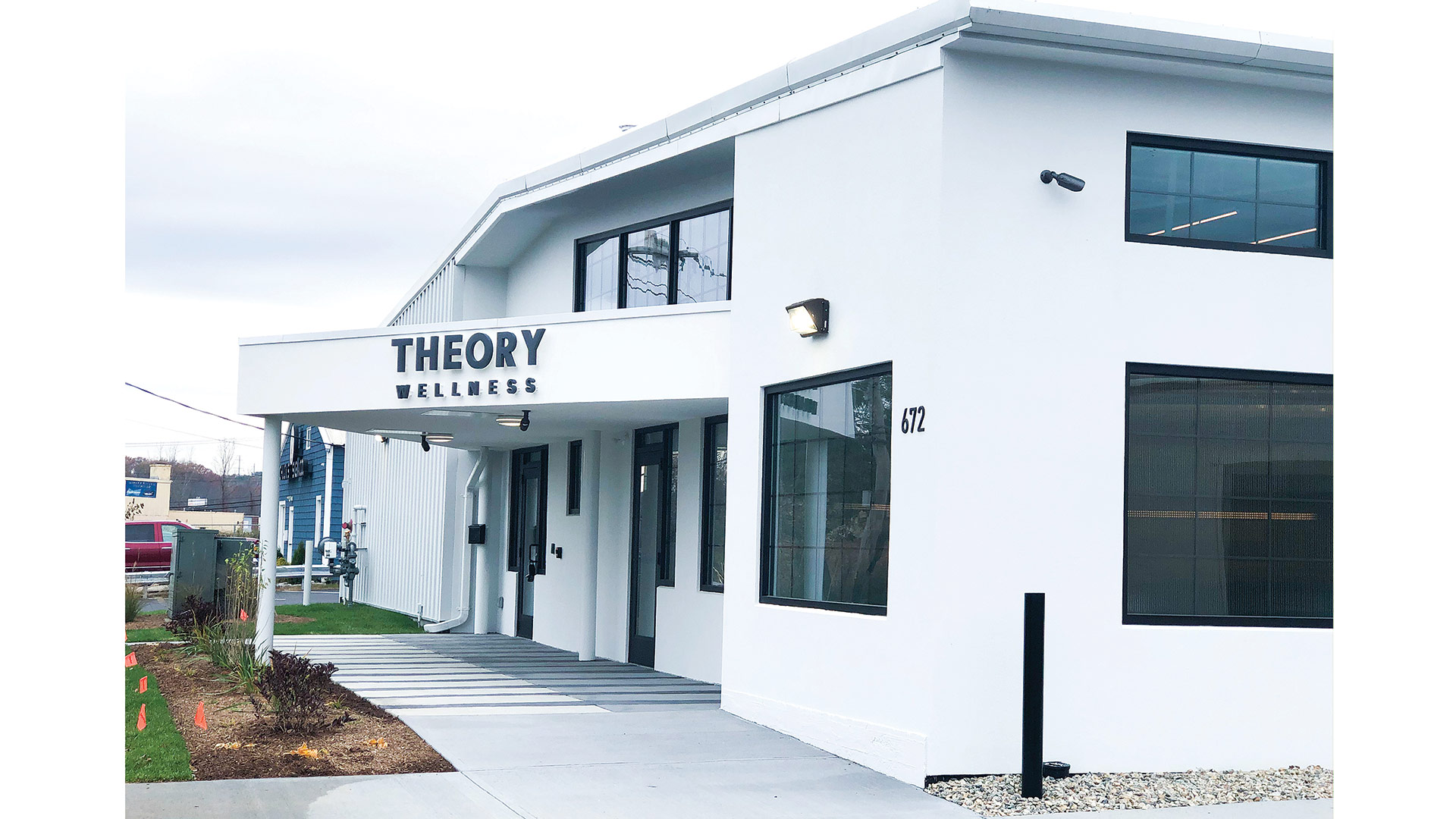
Theory Wellness in Chicopee closed in March just a few weeks after it opened, but customer traffic has been solid this summer.
“Today, we have a very robust alcoholic-beverage industry,” he said, reflecting demand that has never subsided over the decades. “So I don’t think there’s anything remarkably special about cannabis in that regard.”
Another apt comparison is the financial crisis of 2008, when the fundamentals of the economy were coming apart — a different story than in 2020. “Now, the economy is tanking because there’s no consumption, and the labor force is contracting.”
Those investing in the cannabis sector, however, are looking beyond that; they know demand for these products is likely to remain high — no pun intended — in the long term.
“This may be as good an investment as anything,” Marrero said. “We’re still seeing investments going forward at the local level; it’s a very positive outlook, even during the pandemic.”
The proliferation of cannabis businesses across the region, with the promise of more to come, means jobs, and that potential isn’t lost on area colleges and universities.
First, Holyoke Community College (HCC) and the Cannabis Community Care and Research Network (C3RN) announced the creation of the Cannabis Education Center last fall, to provide education, training, and other business resources to individuals in the region who want to work in the cannabis industry.
HCC and C3RN are designated training partners through the Massachusetts Cannabis Control Commission’s (CCC) Social Equity Vendor Training program, which was designed to provide priority access, training, and technical assistance to populations and communities that, traditionally, have been negatively impacted by the drug war.
Soon after that, American International College (AIC) dipped a toe into the sector by launching a three-course certificate program called Micro-Emerging Markets: Cannabis, offering an overview of cannabis entrepreneurship, business operations, and law and ethics.
This fall, AIC is launching a master’s program in Cannabis Science and Commerce — with a one-year online program or a two-year hybrid model — that takes a deeper dive into preparing students to work in this field, said Jennifer Barry, AIC’s director of Continuing Studies and Special Projects.
She cited some striking statistics — 15% job growth in the legal cannabis industry in 2019, $404 million in legal cannabis sales in Massachusetts that same year, and 245,000 full-time-equivalent jobs created nationally by early 2020 — to explain why the program is necessary.
Jennifer Barry
“We want to provide opportunities to connect students with an industry where there’s a lot of room for employment growth. The idea is to connect students with experts in the industry.”
“We want to provide opportunities to connect students with an industry where there’s a lot of room for employment growth,” Barry told BusinessWest. “The idea is to connect students with experts in the industry.”
To that end, the program will be taught collaboratively by faculty members, cannabis-industry professionals, and occasionally guest lecturers, either in person or by video.
“We’re taking the academic rigor of an AIC course normally taught by faculty members and keeping it current and relevant by pulling in industry experts,” she explained, noting that classes cover topics from law and policy to the chemistry of cannabis.
“It’s hard for people who work full-time in the cannabis industry, which is such a demanding field, to make time,” she added, but quickly noted that they recognize the need to create a pipeline of talent in the region so the sector can continue to grow and avoid a skills gap. In that way, she noted, this master’s program is a win-win — helping graduates access a solid career while helping area businesses grow.
“That’s the real benefit of our program,” Barry continued, noting that it’s the first program in the U.S. that blends business, science, and the legal aspects of the trade. “What we’ve found, speaking with cannabis professionals, is you have to understand the chemical components of the plant to be prepared to sell it, package it, speak about it intelligently in the field.
“That’s why we have a chemistry course, and one that talks about cannabis from seed to sale, how it makes it through the pipeline, giving students a broad understanding of the process. Then, through individual courses, they can dig through each individual element.”
The goal, again, is to support both opportunities for job seekers and business growth, and Marrero sees elements of both in Holyoke’s enthusiastic adoption of the cannabis sector. He said Holyoke officials don’t “game the system” with host-community agreements, trying to squeeze as much from license applicants as possible. Instead, it’s a standard template that can be approved in a day.
“The CCC does its due diligence on businesses; we regulate things like land use and how businesses are integrated into the community,” he said of the city’s approach to license approval. “For us, it’s been about how to create jobs, how to help businesses get into the cannabis industry.
“It’s about creating a cluster,” he went on. “We’ve made a concerted effort to make it smooth, to work with industries to create a cluster. What it gets us is more than the sum of its parts; it’s how many jobs are created by these companies — and we have a dozen already special-permitted.”
Those services run the gamut from plumbers and pipefitters to security, delivery services, cleaning services, lawyers, and more.
“Any new company produces opportunities for other types of other businesses, and those businesses have to employ people. It’s that economic contagion that’s also attractive,” Marrero explained — one of the few times one might hear the word ‘contagion’ these days in a positive light.
Winstanley said Theory’s experience setting up shop in Chicopee went as smoothly as it could have, considering the built-in rigor of the process, especially at the state level.
“We’ve always known there were a lot of policies in place at the state level and the local level. It’s a long process,” he told BusinessWest. “But we want to make sure we get it right and operate in ways that are beneficial to the local population, and we want to make sure to set an example for what legal cannabis should look like in this day and age.”
One way Theory — which also has locations in Great Barrington and Bridgewater, and employs about 200 people in its cultivation, manufacturing, and retail divisions — does that is through the kind of social-equity program the CCC made a point of emphasizing.
It recently accepted applications from ‘economic-empowerment’ applicants as designated by the commission and will select a qualified applicant to partner with, guiding and mentoring the entrepreneur through the process of opening their doors, from financial assistance to professional services to zoning and regulatory hurdles.
That financial commitment will total up to $250,000, $100,000 of which will be offered in the form of 0% interest debt financing, with $150,000 worth of initial cannabis inventory to be offered on consignment, providing a boost of capital to help get the operation off the ground. Theory will also connect the successful applicant with professional services like banking, legal, insurance, and HR.
“This is something we felt really strongly about,” Winstanley said. “We felt it’s the future of the industry, to make sure everyone has an opportunity to get into it.”
Barry is well aware of the social-equity component as well, saying it aligns with AIC’s mission to provide access and opportunity to a diverse student population.
“Each course will have a social-equity component; students will get exposure to the business through the lens of social equity, and by the end of the program, they’ll be entrenched in how we can potentially undo some of the disproportionate harm done in the past, while creating a workforce that meets the needs of the industry.”
Because, again, the opportunities appear to be increasing.
“They’ll build a network of professionals they can use as resources as they create their careers, whether they start out working for someone else or start their own business,” she added. “They’ll know it’s not limited.”
That’s true in Holyoke right now, where the next site to open will likely be True Leaf, located near the Holyoke Dam, Marrero said. “They’re a pretty sizable operation — they would be the biggest in Holyoke by square footage, and they’re near completion of construction.”
Winstanley said Theory learned a lot from its original store, in Great Barrington, the first dispensary to open in the Berkshires. Now, competition is springing up across Western Mass., but he says the company still has plenty of room to grow.
“It’s not only the growth of our company, but the significant tax revenue that’s definitely needed,” he said. “Right now, we’re just really happy to see cannabis is back, and hopefully we can continue to contribute, and the industry will provide some much-needed life in these strange times.”
Joseph Bednar can be reached at [email protected]
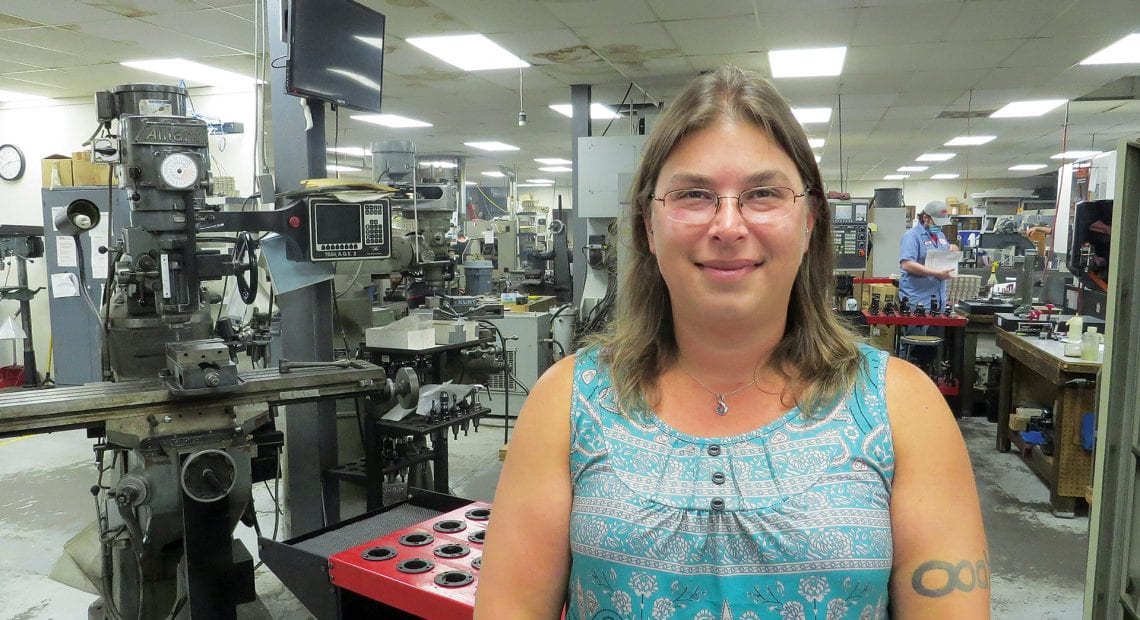

Kristin Carlson says the pandemic has actually helped business at Peerless Precision, especially when it comes to making parts for defense and law-enforcement-related products.
Mark Borsari says he hasn’t been on a plane since a vacation in early March.
By his reckoning, that’s by far the longest stretch he can remember when he hasn’t been flying somewhere, especially in his role as president of Palmer-based Sanderson MacLeod, a maker of fine wire brushes for everything from makeup kits to gun cleaning.
The six months on the ground has been a time of reflection — and even humor.
“I’m sure my wife’s probably thinking I should be on a plane more,” said Borsari with a laugh, adding that he’s not at all sure when he actually will.
But being effectively grounded from air travel is just one of the many ways COVID-19 has shaken things up for manufacturers, and, in the larger scheme of things, perhaps one of the least consequential given the way Zoom has become the preferred method for communicating with clients and employees alike.
Indeed, the pandemic has prompted everything from weeks-long shutdowns to scrambling for needed parts; from strategies for keeping employees safe to the need to manufacture different products — often PPE — to keep workers busy because demand for the products that were being produced has slowed or stopped.
Much has hinged on the word ‘essential’ — a status bestowed on many manufacturers in the 413, an area with a large number of shops making parts for aerospace, defense, or the broad healthcare sector.
Sanderson MacLeod makes products for all those fields, said Borsari, noting that, after a short but still tension-filled time of uncertainty regarding the company’s status, it was declared essential. The same with Westfield-based Peerless Precision, a company that makes, among other things, products used in the cryogenic cooling systems for thermal imaging, night vision, and infrared cameras — items that are actually in greater demand because of all the tension in the world at the moment.
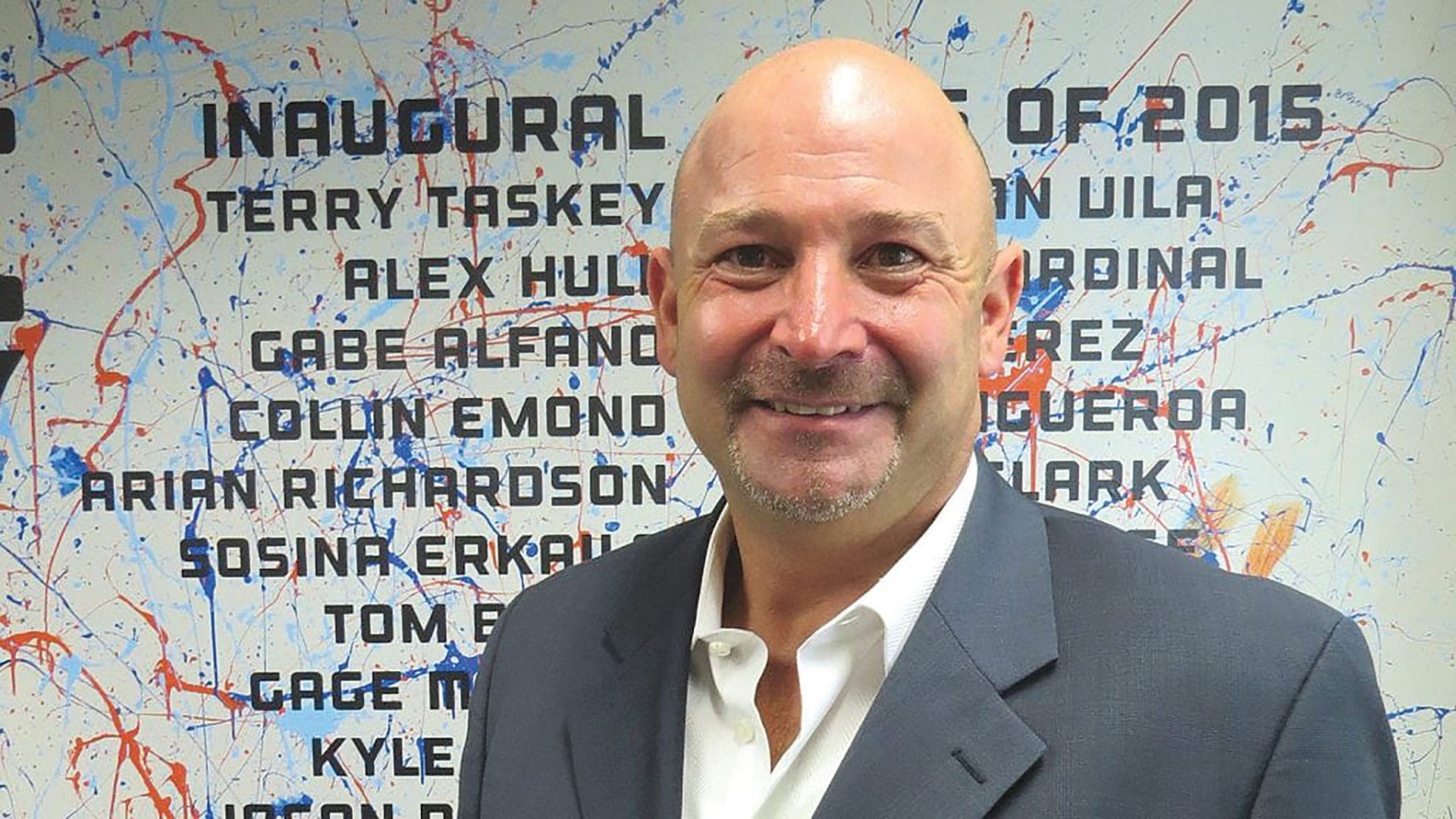
Mark Borsari says being deemed ‘essential’ certainly helps, but there is too much uncertainty with this pandemic for any company to feel secure about the future.
“Any time there’s any trouble going on in the world and more money is being put into the defense budget, we benefit from that,” said Kristin Carlson, the company’s president. “We’re getting new engine parts, new fuel-injection parts … things we’ve never made before. Any time there’s unrest in our country or anywhere in the world, the Defense Department spends more money.”
But not all area manufacturers have been so fortunate. Indeed, while golf balls are important to many, they are not ‘essential’ in the eyes of the state’s governor, so the Callaway plant in Chicopee was shut down as it was heading into its busiest time of the year — the start of the golf season in the Northeast and other colder climes. And shutting down a plant that size, which was running three shifts six days a week, is a complicated undertaking, said Vince Simonds, the company’s director of Global Golf Ball Operations.
“It’s difficult to shut it down so abruptly and then wind it back up again,” he said, noting that the massive plant was shut down from March 25 until May 18, when the first phase of the state’s reopening plan went into effect. “But overall, we’ve done very well.”
Fortunately, the company has been helped by something that could not have been foreseen in those dark days of March — a surge in popularity in the game of golf resulting from the fact that it is one of the few sports people can play while also socially distancing themselves from others.
“It’s difficult to shut it down so abruptly and then wind it back up again. But overall, we’ve done very well.”
This surge now has the company running three shifts seven days a week, said Simonds, adding that Callaway is now struggling to meet global demand, especially for its lower-priced, entry-level products (more on that later).
But even for those companies that were not shut down, have not seen shrinking demand for the products they make, or been helped by the rush to take up golf, the pandemic has led to a time of challenge, uncertainty, and questions about what will, and won’t, come next. And this is a difficult climate to operate in, said Borsari, who tried to put things in perspective for BusinessWest.
“The biggest challenge is that there is no playbook for what we’re dealing with,” he explained. “This thing has come through and almost indiscriminately picked out specific companies and industries and devastated them and left others somewhat unscathed. It depends on who their market is, where they are on the supply chain, who their vendors are, who their customers are … there are so many variables.
“Normally, when you run into these challenges in business, you can at least do some research or talk to some people who have been through it before to get a gauge for what was successful,” he went on. “With this, there is none of that.”
Flashing back to early March, Carlson noted that, at least in one respect, the company was ready for what was coming.
“We had just put in a very large order for toilet paper and other supplies from Staples,” she recalled, adding that, soon thereafter, such essentials were certainly hard to come by. “I was telling everyone that I had something like 180 single rolls of toilet paper … so if you guys can’t find any, we’ll sell it to you for cost.”
But beyond that, there was little way to anticipate, let alone prepare for, the pandemic and the many ways it was going to change the landscape for all businesses, and especially manufacturers. And for many, there was uncertainty about whether the doors would remain open as the state began to shut down businesses to help slow the spread of the virus.
Fortunately, for many, this uncertainty was short-lived.
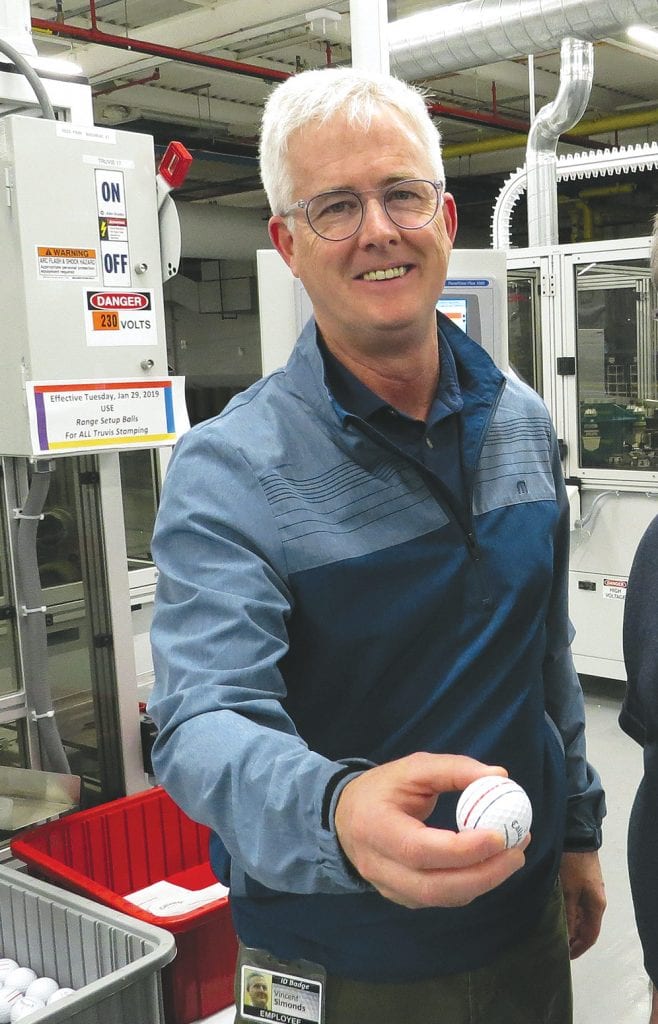
Vince Simonds says a pandemic-related surge in the game of golf has helped take the sting out of being shut down for two months this past spring, Callaway’s busiest time for making golf balls.
“We’re the largest medical and surgical manufacturer in the country, and we also do a lot of work for government agencies and the military with gun-cleaning products,” said Borsari, adding that Sanderson MacLeod was able to get the green light from the state and the town of Palmer to remain open for business.
“Getting deemed essential was important for us,” he recalled. “One of the concerns for the people was whether they’d have a job; they were seeing all these companies shut down around them, and that was the biggest concern they had from the beginning — whether we would be allowed to stay open.”
The company has been fortunate in other ways as well, he said, noting it had undertaken catastrophic planning and redundant sourcing before the pandemic, so there were few if any supply-chain issues once COVID struck. And its supply needs are relatively simple.
“Some of these companies are putting together computers with 4,000 parts,” he explained. “We’re really working with wire fiber and attachment components; it’s not nearly a deep a supply issue as other companies had.”
Meanwhile, demand for many of the products made by the company, especially those in the gun-cleaning realm, has actually grown, again because of the growing levels of turmoil in the world.
“One of the concerns for the people was whether they’d have a job; they were seeing all these companies shut down around them.”
Carlson sounded similar tones, noting that, in many respects, the pandemic hasn’t impacted the overall bottom line; in fact, it has helped generate more business with some clients.
It didn’t look that way back in the spring, when the state’s shutdown, which most thought would last a few weeks, instead stretched to nearly two months. “At that point,” she said, “I was pretty confident that 2020 was going to be a bust.”
Instead, it’s shaping up to be better than last year — which was quite solid.
“We’re not just steady, we’re busy, and we’re getting busier,” she told BusinessWest, adding that the company had a record July, usually one of its slower months. “A lot of that’s on the defense, not aerospace, side, but also our defense aerospace has picked up a lot as well.”
But in addition to creating more work, the pandemic has also changed how work is carried out, creating a number of challenges for those managing plants, especially early on in the pandemic, when there was little guidance on how to keep workers safe — and also little hand sanitizer to be found.
“We had to get people to understand that they can’t stand shoulder to shoulder with one another — you have to maintain that six feet,” Carlson said. “I had put limits on the number of people who could be in rooms with closed doors; we’d take turns disinfecting the entire shop. In the morning, one guy does the shop floor, at lunchtime, another one does it, and at the end of the day, they do it again.”
Simonds agreed, and noted that, by strictly enforcing the rules and following the protocols, the plant has seen no cases, and no interruptions, since reopening.
“We’re sticking to the CDC protocols, and it’s worked for us,” he said. “Everyone is temperature-screened; everyone wears a mask at all times; we’re restricting meeting rooms based on square footage and number of people in the rooms; no employee gatherings beyond the number cited by the state; anyone who goes on vacation and travels outside of Massachusetts to a restricted area has to follow protocols coming back in.
“One of the challenges was just getting used to things,” he went on. “Wearing a mask, especially in the summertime, is difficult, but people have been great, and we’re all used to it now; it’s just a matter of practice.”
For Simonds and his team, the state-ordered shutdown came, as noted earlier, during the busiest time of the year for the facility, which has enjoyed a resurgence over the past few years as Callaway has made huge strides in gaining market share within the golf-ball industry.
And turning everything off is, as he said, a somewhat complicated undertaking.
“For any machines that have materials in them, they have to be purged properly,” he explained. “We need to take all the raw materials that are sensitive to environmental conditions and put them in environmentally controlled areas. We need to take care of WIP — work in process — and try to process as much as possible so we don’t have time-sensitive WIP sitting on the production floor.
“It’s a matter of systematically shutting down operations so we don’t have inventory sitting in the wrong places,” he went on, adding that the process was made more complicated by the fact that no one really knew for how long the plant would be dark.
Meanwhile, on the personnel side, most all employees were furloughed — and nearly all of them came back, he went on, adding that the operation slowly wound back up, but since then, activity has sped up dramatically, with many of those employees securing large amounts of overtime.
“We’ve gone from zero to 100 as quickly as we could. Once the golf courses started opening up, the demand for product was almost unprecedented — there was so much golf being played,” Simonds said, adding that courses in most all states were open several weeks before the plant was reopened — if they had closed at all. “And the golf business has remained pretty strong; we’re chasing demand.”
The same is true at Peerless and Sanderson MacLeod, where, in addition to meeting orders, the plants are coping with new ways of communicating, meeting as teams, and planning, as much as possible, for what might come next.
And also learning and growing from the shared experience of not only coping with a pandemic and all the challenges it has brought, but in some cases thriving.
Indeed, Carlson said the past several months have brought a close workforce even closer together as they contend with the protocols, the surge in business, and a shared desire to be prepared for the worst-case scenario while hoping for something much better.
Borsari agreed, and said some of the real ‘opportunities,’ a word he’s hesitant to use in this climate, come in the broad area of relationship building when it comes to both clients and the team at Sanderson-MacLeod.
“It’s been a unique opportunity to connect with our client base in a way we haven’t done before,” he told BusinessWest. “It’s all about collaboratively figuring out the best way to keep both companies open; we’re really had a lot of good relationships become even better because we realize how dependent we are on one another.
“And as an organization, finding our way through this together has made us stronger,” he went on. “We’ve done everything we can as a company to make this a place of normalcy. Everything else around them was going crazy, and one of the key points we made in March was to do everything we can to follow the mandates and make sure our people are safe, but we also want to make sure to maintain normalcy as much as we can.”
Looking ahead, Carlson said her company has taken what steps it can to be prepared for what might come next.
Yes, that means stocking up on toilet paper, hand sanitizer, and other pandemic-related needs that were in such short supply when the first wave hit six months ago.
“I’m ready for us to keep moving the way we’re moving,” she explained. “Even if we did walk back any of the phases of the reopening or went back into a shutdown, we’d still be open and still going at the pace we’re going, and perhaps be even busier; we’re prepared.”
But, as Borsari noted, even for manufacturers in the coveted ‘essential’ category, there is too much uncertainty to ever be comfortable, or fully prepared.
“Nothing is stable,” he said. “Just because we’re essential doesn’t mean anything’s safe or easy; so much is dependent on the attitude of the state, or the people who decide to come to work or not come into work, tariff measures, travel bans … all of these could have an impact.”
Such is life in a sector that, like most others, has seen COVID-19 change almost everything and create conditions that are anything but business as usual.
George O’Brien can be reached at [email protected]


Steve Weiss says he’s getting a steady volume of calls from business owners with questions about bankruptcy or liquidation.
Steve Weiss says the wave of bankruptcies that he and others in his line of work are expecting certainly hasn’t reached shore yet, to use a phrase appropriate for this time of year.
“But you can definitely see it building out there — it’s coming; you can see it rolling in,” said Weiss, who specializes in bankruptcies and workouts for the Springfield-based law firm Shatz, Schwartz & Fentin.
This wave is comprised of both corporate and consumer (personal) bankruptcies, and it will be large and hit with considerable force, he went on, adding that a number of factors are colliding that will make it so.
On the corporate side, while many companies have been able to hang on and survive the pandemic to date, they have done so thanks largely to government stimulus initiatives that are due to be exhausted soon, leaving business owners and managers wondering how they will pay people and all their bills. And on the consumer side … it’s a very similar story.
Indeed, unemployment benefits and stimulus checks have helped many make ends meet, but those checks are projected to end soon for large numbers of people, if they haven’t ended already.
“My phone is starting to ring more with business owners who are either unsure how they’re going to make it, or are sure they can’t — the virus has just clobbered their business,” said Weiss, who said his next phone call after the one with BusinessWest was with a business owner looking to talk about bankruptcy or perhaps liquidation.
“My phone is starting to ring more with business owners who are either unsure how they’re going to make it, or are sure they can’t.”
Such calls are starting to come in with increasing frequency, said Mike Katz, a partner with the Springfield-based firm Bacon Wilson and one of the region’s pre-eminent bankruptcy specialists. He used a different, though similar, metaphor to describe what’s coming.
“I think the dam is about to break — we’re on the cusp of a tsunami of bankruptcies,” he said. “It hasn’t happened yet, but it’s going to happen.”
There have already been many, especially on the corporate side, he went on, noting that many large and famous names, many from the retail sector, have filed for Chapter 11 protection. That list, which continues to grow, includes Lord & Taylor, J. Crew, Brooks Brothers, Gold’s Gym, Neiman Marcus, JCPenney, Hertz, 24-Hour Fitness, Chuck E. Cheese, California Pizza Kitchen, and Men’s Wearhouse.
Those names reveal the types of businesses that are most in jeopardy, Katz continued, adding that, locally, many small businesses in the hospitality, retail, and fitness realms — but many other sectors as well — face severe challenges as they try to survive the pandemic.
For some in this category, an emerging option is what’s being called the ‘fast-pass’ small-business bankruptcy process, otherwise known as Subchapter V of Chapter 11 of the Bankruptcy Code. This new subsection, which became effective in February, is not a response to COVID-19, but certainly seems to be tailor-made for the economic crisis the pandemic has created.

Mike Katz is expecting a “tsunami” of bankruptcy filings. What he doesn’t know is when this wave will hit.
That’s because, as the name suggests, it is a faster, less expensive Chapter 11 reorganization path, designed specifically for much smaller businesses than those that seek the Chapter 11 route. To be eligible for Subchapter V, an entity or an individual must be engaged in commercial activity, and its total debts — secured and unsecured — must be less than $7.5 million, a new number (the old one was $2.725 million) resulting from provisions of the COVID-inspired CARES Act. At least half of those debts must come from business activity.
Katz and others we spoke with said the fast-pass option holds potential for some businesses, but there are challenges within its many provisions, including the need to come up with a reorganization plan within 90 days of the filing. Such plans may be difficult to develop given how difficult it is to see even a few weeks down the road, let alone several months, because of the pandemic.
“The one downside is you file your bankruptcy papers, and you’re required, within 90 days, to put a plan in place,” said Mark Cress, a bankruptcy specialist with the Springfield-based firm Bulkley Richardson. “That’s a short window, and a lot of small businesses are barely holding their own.”
For this issue and its focus on law, BusinessWest talked with these bankruptcy lawyers about what they can already see coming. They can’t predict when this particular surge will begin, but they say it’s almost unavoidable.
While Katz and Weiss were crafting analogies to waves and tsunamis, Cress wanted to draw parallels to the Great Depression.
Indeed, he told BusinessWest that the current conditions rival, and in some cases (such as the quarterly decline in GPD) actually exceed those of the Great Depression that started roughly 90 years ago.
“This is worse than the Great Depression in a lot of ways,” he said. “The dip in the economy — it dropped by a third — was something we’ve never seen before. And but for the way the Fed has handled this, it would be devastating; those multi-trillion-dollar programs … they’re the only thing that’s sustaining us. Without that, the whole house of cards would collapse.”
To further state his case — that’s an industry term — Cress pointed to numbers contained in an analysis authored by Morning Consult economist John Leer, who noted that, without additional funding, millions of unemployed Americans are at risk of financial insolvency by the end of this month.
“The personal finances of workers who have been laid off or placed on temporary leave since the onset of the pandemic deteriorated in July,” Leer wrote. “The July survey found that 29% of unemployed and furloughed workers lacked adequate savings to pay for their basic living expenses for the month, up 16% in June. This monthly change contrasts with June, when the finances of laid-off and furloughed workers improved. At that point in time, many renters and homeowners took advantage of the rent-deferral and mortgage-forbearance options included in the CARES Act, thereby driving down their monthly expenses.”

Mark Cress says the new ‘fast-pass’ bankruptcy process may be a viable option for some, but the process doesn’t leave business owners much time to create a reorganization plan.
Cress backed up that commentary with some other, very sobering numbers regarding renters.
“One-third of all renters weren’t able to make their July rent,” he noted. “And more than 60% were concerned they won’t make August. So you can imagine the ripple effects this will have … many small-time landlords, with one or two tenants, may not be able to pay their mortgage.
“And you if get enough defaulted mortgages … then banks start to pull in their horns, and all of a sudden the credit markets freeze up, and you have a real disaster,” he went on, drawing analogies, again, to what happened nine decades ago.
Looking at these statistics and possible scenarios, it’s easy to see why bankruptcy lawyers are expecting a wave, or tsunami, of personal bankruptcies to hit this area — and the nation as a whole — soon, with ‘soon’ being a relative term.
“Some people are getting unemployment benefits, but it looks like that’s ending,” said Weiss. “There’s a foreclosure and eviction moratorium that’s ending in October, and there are already people living on credit cards and exhausting their savings just trying to get through this — and it’s going to be a while before jobs come back.
“So it’s a matter of sooner than later,” he went on. “And bankruptcy is something of a trailing indicator; it takes people a while to get the point where they need to file for bankruptcy — the credit-card bills don’t become unmanageable until several months go by.”
But the wave will almost certainly involve corporate bankruptcies as well, said those we spoke with, noting that many businesses have struggled to merely survive the past five months. And with the state already pumping the brakes on its reopening plan as reported cases increase, and ever more uncertainty about the future, survival is becoming more of a question mark for many businesses.
That’s especially true within the restaurant sector, said those we spoke with, noting that, while many have been able to reopen, their revenues are still a fraction of what they were pre-COVID. And with fall and then winter coming — meaning far fewer opportunities to serve outdoors — some in this sector are wondering if, and for how long, they can hang on.
“I think the dam is about to break — we’re on the cusp of a tsunami of bankruptcies. It hasn’t happened yet, but it’s going to happen.”
“I’ve been contacted by a number of restaurants, in particular, over the past few months,” said Katz, adding that there have been inquiries from those in other sectors as well. “Some of these have managed to hold on, some have closed some locations while keeping others open … but the number of people I’ve talked to just today tells me that the dam is just teetering, and I think there’s going to be unprecedented times in the bankruptcy field.”
This speculation leads him back to the new fast-pass small-business bankruptcy process, and questions about just how many businesses may try to take advantage of this emerging option, and whether they can be successful with such bids.
“I think a lot of businesses will try doing this because you have a 90-day maximum to get in and get out — that’s how fast this Chapter 11 is going to go,” he explained. “And the whole thing is predicated upon the fact that you only have to propose a plan that provides more to the creditors than they would receive in a liquidation, with no voting.
“Under the current Chapter 11 process, there’s a whole voting process, where you have to get two-thirds of the dollar amount and a majority of the number of creditors to vote in favor of it,” he went on. “But with this process, there’s no voting — it’s a much more streamlined process, and it’s far less expensive.”
With the new ceiling of $7.5 million, many more businesses are now eligible to take this route. But that same 90-day in-and-out period, while attractive in one respect, is daunting when it comes to actually putting a reorganization plan in place.
“I’ve talked with a number of people about it because people are still trying to figure how it works — there isn’t a lot of legal guidance or precedence,” said Cress. “But having to put a plan together in 90 days is going to be very difficult for many small businesses. If you don’t have any profits or any cash and you’re living hand to mouth, it really places an undue burden on you to figure it all out and get creditor sign-off in 90 days.”
Katz agreed. “Most traditional Chapter 11 cases are multi-year, and reorganization is based in projections,” he told BusinessWest. “How do you project when this COVID situation is going to change? If you’re a restaurant, how can you project when people are going to come back to your restaurant and you can go back to something approaching capacity?”
Those lawyers we spoke with all expressed a desire not to sound like an alarmist.
But as they talked about what they’re seeing, reading, and hearing on the phone calls they’ve already taken, they admit it’s difficult not to take that tone.
“For many businesses, it’s a matter of survival at this point,” said Cress, noting that survival is becoming more difficult in some sectors with each passing month. “It’s becoming apparent that the recovery is not going to happen as quickly as some had originally hoped, and the effect is going to be much deeper and longer-lasting than people are even letting on.”
And one seemingly unavoidable consequence of all this is bankruptcies, on both the corporate and consumer sides of the ledger.
As Weiss said, the wave hasn’t crashed ashore yet, but if you look — and you don’t have to look hard — you can see it building.
George O’Brien can be reached at [email protected]

By Mark Morris
Despite what she described as “shifting sands and shifting times,” Easthampton Mayor Nicole LaChapelle believes her city is more than holding its own in the face of COVID-19.
By that, she meant this community of roughly 16,000 people is moving ahead with a number of municipal projects and economic-development initiatives. And it is also undertaking several efforts, often in cooperation with other entities — such as the Greater Easthampton Chamber of Commerce — to help its business community, and especially the very small businesses that dominate the landscape, weather this intense storm.
“We’re focused on a good, basic plan that addresses infrastructure and quality of life for everyone in our city,” she said, as she addressed the former — and the latter as well.
In that first category, she listed everything from a $100 million school-building project to a $45 million mixed-use development, called One Ferry, that involves renovating old mill buildings and reworking the infrastructure in the Ferry Street area.
“Easthampton’s grit and resilience has gotten us through things like this in the past, and it’s getting us through these scary times. It’s not graceful, but we’ll still be standing at the end.”
And in the second category, she mentioned several initiatives, from small-business grants to a community-block-grant program designed to help microbusinesses, to efforts to help renters. Indeed, the city has put aside $300,000 in relief for renters; the relief begins in the fall and is meant to keep an important source of affordable housing in place.
“If you start losing renters, many of the owners will have to sell because they’ll have trouble paying their mortgages,” the mayor said, adding that there are many ripple effects from the pandemic, and the city’s strategy is to keep the ripples from gaining size and strength.
Overall, LaChapelle acknowledged that COVID-19 is forcing businesses, families, and institutions to make pivotal changes during very uncertain times, but she remains an optimist.
“Easthampton’s grit and resilience has gotten us through things like this in the past, and it’s getting us through these scary times,” she noted. “It’s not graceful, but we’ll still be standing at the end.”
Like other mayors BusinessWest has spoken with in recent weeks, LaChapelle said COVID-19 has certainly impacted businesses in every sector, changed daily life in innumerable ways, and even altered how city government carries out its business.
But in many respects, it hasn’t slowed the pace of progress in the city — at least when it comes to a number of important municipal and development projects, including the aforementioned school project.
Mo Belliveau
“It’s one place where anyone who wants to do business in Easthampton can go to learn about what resources are available to them.”
The as-yet-unnamed school, located on Park Street, is an example of several elements of the city’s plan coming together. The new building will house students from pre-K through grade 8, replacing three older elementary schools in Easthampton. New road infrastructure is planned in front of the building as well, with the addition of a roundabout intersection.
LaChapelle noted that the $100 million project is slightly ahead of schedule and should be completed by late 2021 or early 2022. The roundabout will be completed this month.
Meanwhile, other projects are taking shape or getting ready to move off the drawing board. One involves River Valley Co-op, the Northampton-based food cooperative, which is currently building a 23,000-square-foot market in Easthampton on the site of the former Cernak Oldsmobile Pontiac dealership. The co-op is scheduled to open by spring or summer of next year.
Once complete, the mayor explained, River Valley will employ 60 full-time union workers with the potential to expand to nearly 100 workers in the next two years. Road improvements that will benefit the new co-op include a dedicated turning lane into the market and straightening the road in front.
“This is an area along Route 10 that has been a traffic pain point for economic development,” she said. “While it’s a $400,000 project, we expect the return to far exceed those dollars.”
Another project in the works is One Ferry, an initiative expected to bring new residents, new businesses, and more vibrancy to the city.
“In the next 18 to 24 months, this project will add quality apartments, condominiums, and office space,” LaChapelle said, adding that public infrastructure to support this project includes a roundabout that connects a residential area, the industrial park, and the mill district of Easthampton. The first building in the project, recently completed, provides space for two businesses and two apartments.
“Right now, this project is providing jobs and vitality for the area, and that will only increase,” she noted. “One Ferry is huge for our future.”
Dave Delvecchio
“While many restaurants in the city were affected by the virus, they’ve adapted well by doing things they didn’t do before, like offering takeout options. It’s remarkable that they’ve been able to continue to offer a service to the community, but in a different way.”
Another bright note for the future involves Adhesive Applications, which makes adhesive tapes for use in more than a dozen industries. The longtime Easthampton manufacturer is planning a 40,000- to 50,000-square-foot addition to the company, the mayor said.
The chamber and the mayor’s office are also working together on Blueprint Easthampton, a resource map designed for entrepreneurs and business people.
“It’s one place where anyone who wants to do business in Easthampton can go to learn about what resources are available to them,” said Mo Belliveau, executive director of the chamber.
According to a news release on Blueprint Easthampton, the mapping initiative will improve access to available business tools and strengthen the links between the city and the business community.
While work continues on these projects, efforts continue to assist those businesses impacted by the pandemic. And the Greater Easthampton Chamber has played a large role in such efforts.
Prior to the pandemic, Belliveau had begun shifting the emphasis at the agency away from events and more on education and discussion-type programming. After organizing and scheduling programs for the year, stay-at-home orders went into effect in March and wiped out all those plans.
“Like so many small businesses, we at the chamber had to pivot along with our partners and find new ways to provide meaningful value to our community,” Belliveau said, adding that many of these new ways involve providing information — and other forms of support — to businesses during the pandemic.
Indeed, Easthampton received a $30,000 grant from the state attorney general’s office designed to help small businesses pay for COVID-19-related expenses and allow them to continue their operations. LaChapelle invited the chamber to be the administrator of what became the Greater Easthampton Sustaining Small Business Grant (SSBG) program. Applicants could request up to $1,500 and use the grant for buying PPE, paying their rent, or purchasing supplies needed to comply with state guidelines on reopening.
A total of 31 businesses qualified for the grants, which were to be awarded on a first-come, first-served basis. Fortunately, all 31 applicants received grant money totaling more than $43,000, thanks to donations from Easthampton-businesses Applied Mortgage, which kicked in an additional $10,000, and Suite 3, which covered the remainder of the funding requests.
“My goal going forward is to find other businesses that are able to contribute to this effort so we can do another round of funding,” Belliveau said. “The need is great, and the money from this first effort went fast.”
In addition, Easthampton and six surrounding communities recently became eligible for a $900,000 Community Development Block Grant to help microbusinesses get through the pandemic. Businesses with five or fewer employees can apply for up to $10,000 in grant money. Easthampton was the lead community in applying for the block grant.
“We have many innovative small businesses in Easthampton who still can’t reopen,” LaChapelle said. “This grant program is designed to help them stay afloat.”
Dave DelVecchio is president of Suite3, a company that provides IT services for businesses of all sizes. While most of his customer base is in Western Mass., Suite3 also has clients internationally and in several U.S. states.
As an IT service provider, DelVecchio measures success by “ticket requests,” an indication that a customer needs support. When COVID-19 started taking its toll and many businesses were shut down in March and April, ticket requests were at their lowest point. Since then, Suite3’s business has come back to pre-pandemic levels.
As a past president and current treasurer of the chamber, DelVecchio was concerned about the impact COVID-19 was having on the business community, and especially its growing portfolio of restaurants.
“While many restaurants in the city were affected by the virus, they’ve adapted well by doing things they didn’t do before, like offering takeout options,” he said. “It’s remarkable that they’ve been able to continue to offer a service to the community, but in a different way.”
He added that Easthampton has a good number of other businesses affected by COVID-19 that did not receive as much attention as the restaurants.
“Businesses such as travel agencies and professions that require personal interaction, like chiropractors and massage therapists, were also affected by the virus,” he said, noting that the SSBG and Community Development Block Grant can make a real difference for such businesses.
DelVecchio credits Belliveau with changing the focus of the chamber to more education without losing its important role as a provider of networking opportunities. Part of the changing organization involved moving from an annual fee model to monthly dues. While that can be a risky move, DelVecchio noted there was almost no attrition in membership.
“We are grateful that we continue to get support from the business community and they see value in the chamber,” he said, “especially at a time when expenses are being put under greater scrutiny.”
This support is another indication of how the community, which had been thriving before the pandemic, has come together to cope with a crisis that has provided a real test — or another real test — for residents and businesses alike.
As the mayor noted earlier, Easthampton’s grit and resilience has helped it survive a number of economic downturns and other challenges in the past. And those qualities will see it through this one as well.

By Isaac C. Fleisher
It’s that time of year again. On July 20, the Cannabis Control Commission (CCC) revealed the latest round of proposed revisions to its regulations. Following a period of public comment and review, the CCC is scheduled to take a final vote on these revisions on Sept. 4.
Last year’s round of revisions made waves with two new categories of licenses (social consumption and home delivery), but this year’s revisions are more focused on the owners behind the licenses. This is not too surprising because the demographics of license ownership has become a heavily debated (and litigated) topic.
When the CCC crafted its initial regulations (way back in the halcyon days of 2018), it included provisions intended to diversify the industry, such as a fast track to licensing for economic-empowerment (EE) applicants, as well as fee waivers, training, and technical assistance for social-equity (SE) applicants. Even the new license types that were created under last year’s revisions to the regulations are initially reserved for EE and SE applicants. However, as small startups slam into the economic realities of the cannabis industry, it has revealed a tension between the need for capital and the need for equity.
The CCC’s latest round of draft revisions would require economic-empowerment applicants to satisfy at least one of the criteria related to ‘majority equity ownership’ and then report any changes of ownership and control when renewing their license. EE status is revoked if fewer than 51% of the owners meet the EE criteria. Similarly, the draft revisions specify that the various fee waivers and discounts available to SE applicants only apply to licensees with at least 51% SE ownership.
Last year’s round of revisions made waves with two new categories of licenses (social consumption and home delivery), but this year’s revisions are more focused on the owners behind the licenses.
These changes would help prevent EE and SE certification from being turned into a commodity that could be purchased by investors that were never the intended beneficiaries. However, it would also further trap EE and SE applicants in the catch-22 of needing to raise millions in investment without giving up equity to investors that don’t satisfy the EE or SE criteria.
The draft revisions also seek to tighten the definition of what constitutes ‘control’ over a cannabis business. This is significant because Massachusetts prohibits any entity from controlling more than three licenses of any type. This restriction is a substantial departure from the trend in most other states that have legalized a recreational cannabis industry, and it has become a thorn in the side for cannabis investors trying to build a diverse portfolio, as well as for large, multi-state cannabis companies that rely on economies of scale. As a result, more than a few savvy investors and entrepreneurs have utilized creative corporate structures in an attempt to circumvent the limitations on control.
In 2019, the CCC made substantial updates to its definition of control, making it clear that it was serious about enforcing the three-license cap. The current draft revisions further expand the definition of control by establishing a precise dollar amount for the types of contracts that would be evidence of control; clarifying that anybody with the power to appoint 50% of the company’s board is in control of that company, whether the board members are called directors, managers, or anything else; and, in a possible sign of the times, establishing that a person appointed as a receiver for the licensee is in a position of control.
Additionally, the revisions would redefine the threshold for when control over a parent company constitutes control over the subsidiary. In the current regulations, anybody “with a controlling interest in” the parent company is considered to have control over the subsidiary, but the revised draft would change this to anybody “having control over” the parent company. This subtle change is potentially significant, as the “controlling interest” language has generally been interpreted to relate only to an actual equity interest, while the meaning of “having control” could include people with substantial decision-making authority, even if they are not actually a majority owner. These changes may not be nearly as substantial as the 2019 overhaul of the definition of control, but the fact that the CCC felt that additional changes were necessary at all is a sign that attempts to circumvent the license cap are still happening.
One prosed change that seems to cut against the trend of tightening restrictions on ownership is the revision to the craft marijuana cooperative license, which would actually loosen the requirement that a member of the cooperative filed a profit or loss from farming in the last five years (i.e. they’re a farmer). If accepted, the revisions would allow a cooperative to satisfy this requirement by merely leasing land from such a person. There are plenty of good reasons for this change, but ultimately it likely arises from the CCC’s recognition that the requirements for a craft cannabis cooperative are so burdensome and idiosyncratic that only three applications have been submitted for this license type, and of those, only one has even received a provisional license.
With nearly 550 applications receiving provisional or final licenses, and only 122 currently authorized to commence operations (and a shameful dearth of racial or economic diversity among these licensees), it is becoming clear there is a financial bottleneck in the licensing process. Most commercial financial institutions still won’t go anywhere near the cannabis industry, and cannabis entrepreneurs must therefore rely on venture-capital financing. The result has been an increase in the number of provisional licenses being ‘flipped’ as small startups are forced to sell out to simply cover their growing debt.
This trend toward market consolidation has put the CCC’s equity provisions and ownership limitations under tremendous strain. The draft revisions address that strain by attempting to close potential loopholes in the restriction. These changes would certainly help align the letter of the law with the spirit of the law, but ultimately, they do not address the actual root of the problem.
In order to build a cannabis industry that is stable, sustainable, and diverse, much more needs to be done to lower the economic barrier of entry, such as establishing a state lending program to provide SE and EE applicants with access to financing, or even just simplifying the licensing process so that applicants aren’t forced to submit hundreds of pages of plans, policies, and procedures, only to wait over a year just to obtain a provisional license. But those changes may need to wait for 2021.
Attorney Isaac C. Fleisher is an associate with Bacon Wilson, P.C., where his practice is focused on business and corporate law, with particular emphasis on the rapidly expanding cannabis industry. An accomplished transactional attorney, he has broad experience in all aspects of business representation in legal matters ranging from mergers and acquisitions to business formation and financing; (413) 781-0560; [email protected]

By Mary Bonzagni
Federal trademark registration is viewed as an attractive form of property-rights protection for most industries. The benefits of such a registration are numerous.
A federal trademark registration serves to recast what would normally be localized common-law trademark rights into nationwide trademark rights. It provides the owner with the right to use the ® designation, to enforce the owner’s rights in federal court, and to file the trademark registration with U.S. Customs to block infringing imports. A federal registration also provides a basis for registering the trademark in foreign countries and jurisdictions.
Unfortunately, members of the cannabis industry have faced an uphill battle when trying to protect their brands on the federal level.
This article will focus on strategies for protecting trademarks used on CBD products, which may be grouped into two categories: marijuana-derived CBD products and hemp-derived CBD products.
Mary Bonzagni
“Unfortunately, members of the cannabis industry have faced an uphill battle when trying to protect their brands on the federal level.”
Marijuana is still treated as a controlled substance and is illegal under the Controlled Substances Act (CSA), regardless of its legality under certain state laws. As such, trademarks for marijuana-derived CBD products cannot be federally registered. The U.S. Patent and Trademark Office (USPTO) has issued trademarks for goods and services that are indirectly related to marijuana, but the closer the description of goods and services is to the sale or distribution of marijuana, the less likely it is that the UPSTO will allow the application.
Hemp was previously regulated as an illegal substance under the CSA. It was removed as an illegal substance under the Agricultural Improvement Act of 2018, also known as the Farm Act, which federally legalized hemp and hemp-derived products that contain no more than 0.3% THC (by dry weight). The 2018 Farm Act legalized CBD derived from hemp not from marijuana, so, at least for now, the federal government will view the source of the CBD as decisive in determining its legality under federal law.
To recap, marijuana-derived CBD products are illegal under federal law, and, thus, trademarks for such products cannot be federally registered. On the other hand, products infused with CBD derived from hemp, which have a low-THC content, are now legal under federal law, and the trademarks under which they are used are capable of federal registration. Being capable of federal registration, however, does not guarantee registration.
The U.S. Patent and Trademark Office’s current policy is to refuse trademarks for foods, beverages, dietary supplements, and pet treats containing hemp-derived CBD that have not been approved by the Food and Drug Administration (FDA). These goods raise lawful-use issues under the Federal Food Drug and Cosmetic Act (FDCA). Trademarks for the following goods, however, can be federally registered:
• Hemp-derived CBD products that are not consumed (e.g. salves, ointments, and skin oils) which contain less than 0.3% THC on a dry-weight basis; and
• ‘Generally recognized as safe’ (GRAS) products (e.g. hulled hemp seeds, hemp seed protein powder, and hemp seed oil). On Dec. 20, 2018, the same day the 2018 Farm Act took effect, the FDA approved the sale of hulled hemp seeds, hemp seed protein powder, and hemp seed oil, and the use of these products in human food. Therefore, trademarks for these hemp products are eligible for federal registration at the USPTO.
In addition, trademarks for hemp advocacy groups and trade associations, and for services such as consulting and advertising services and the like, can also be federally registered. It is legal for advocacy groups and trade associations to educate the public and advocate for changes in hemp and marijuana laws. Thus, the USPTO is willing to issue trademarks to those groups and to others providing services to the legal hemp industry.
Let’s assume for purposes of this article that your trademark is being used on goods that do not fall within one of the above categories, and thus your trademark cannot be federally registered. Here are some options for proceeding.
The first area to explore is whether you also sell goods or offer services that fall outside the restrictions of the CSA or FDCA. For example, do you sell goods without CBD as an ingredient, or provide a website featuring blogs and publications (e.g. articles, brochures, etc.) advocating for changes in hemp and marijuana laws, which constitute lawful goods or services? By obtaining a federal trademark registration in relation to any such lawful goods and services you provide (i.e. registering around the edges of the CSA or FDCA), you may still be able to protect your brand.
Whether or not you pursue federal registration, you should also consider proceeding within the common-law and state-law frameworks so that you can protect your mark within your geographical trading area. You may also consider copyright protection to protect your logo or design trademark.
By using your trademark in commerce on select goods and services, you will develop common-law rights in that mark. Common-law rights are based solely on use of the mark in commerce within a particular geographic area. Your common-law rights may be used to stop infringers.
Another option to consider is seeking one or more state registrations for your trademark in states that recognize the legality of your goods or services. While state registrations confer the benefits of registration only within the boundaries of that state, registering on the state level can be an effective way to protect your mark and to prevent third parties from using the same or confusingly similar mark on the same or similar goods or services in that state.
Copyright protection may constitute an alternative route to protecting your logos or design trademarks, provided they contain original authorship and are not just familiar shapes, symbols, or designs. Copyright is a form of protection provided under U.S. law to ‘original works of authorship,’ once fixed in a tangible form. A copyright registration establishes a public record of a copyright claim as well as offering several other statutory advantages.
CBD-based businesses should start using their trademarks on their goods and services as soon as possible in order to establish common-law trademark rights, seek federal registration for trademark uses that are legal under the CSA and do not raise lawful-use issues under the FDCA, seek state registrations in states where trademark use occurs and where cannabis use is legal, and seek copyright registrations for eligible logo and design trademarks.
Please contact us for further information or to set up an initial consultation. We look forward to assisting you in protecting your valuable IP.Please contact us for further information or to set up an initial consultation. We look forward to assisting you in protecting your valuable IP.Please contact us for further information or to set up an initial consultation. We look forward to assisting you in protecting your valuable IP.
Mary Bonzagni is the IP partner with the Springfield-based law firm Bulkley Richardson; (413) 272-6200.
Tony Contrino says his utility’s extensive practice with preparing for weather events has certainly helped in its efforts to cope with the pandemic.
Tony Contrino says Westfield Gas & Electric, like all utilities, has considerable practice watching storms develop, getting ready for possible damage, and, as the old saying goes, hoping for the best but preparing for the worst.
The COVID-19 pandemic has been like that — sort of, said Contrino, general manager of Westfield G&E. It could be seen coming, and there were certainly efforts to prepare for it. But the pandemic is, in most all ways, not like weather events like Tropical Storm Isaias, which barreled through Western Mass. earlier this month, leaving sometimes days-long power outages up and down the Valley and creating huge headaches for utilities — and the customers they serve.
Indeed, those storms come and go, the damage is repaired, and life goes — until the next storm. This crisis is different, not only in its duration, but in its far-reaching effects — everything from a significant drop in electricity use (7% to 10% are the most often-given estimates), and its impact on the bottom line, to an equally sharp rise in delinquent payments, which also affects the bottom line, to changes in how work is carried out — right down to putting one person in each truck, rather than two.
But as with those weather events, area energy providers are working their way through this crisis, adapting and pivoting, as businesses in all sectors have, and encountering challenges and opportunities — again, like most all other businesses have. But, unlike many businesses, they’re providing a vital service, and thus they’re being diligent about working with, and communicating with, those they serve.
“It’s certainly a different, and very challenging, time — for us, but also for all our customers,” said Contrino. “We’ve made a real effort to communicate through all this, not only with employees but customers as well. We’re trying to keep people aware of what’s going on and what our plans are, and try to give them some assurance that we want to work with them.”
Craig Hallstrom, Eversource’s president of Regional Electric Operations for Massachusetts and Connecticut, agreed. He said the investor-owned utility has been working to keep the power on — yes, Isaias has certainly impacted those efforts — while keeping employees and customers safe.
“It’s been a very different year for us and for all utilities,” he told BusinessWest. “We have half our workforce working at home, and people have been very creative and able to adapt to their work at home. We’ve been able to work differently to do the things we need to get done. Everyone’s working differently — we’ve learned how to use videoconferencing very well — and, for the most part, we’re getting our work done.”
Craig Hallstrom
“It’s been a very different year for us and for all utilities.”
While making adjustments within their own operations, the utilities we spoke with said they’re working with clients, both commercial and residential, to help during this time of crisis.
Jim Lavelle, general manager of Holyoke Gas & Electric, observed that, while his utility is facing declines in revenue and sharp rises in delinquent payments — further impacting cash flow — these problems often pale in comparison to what customers are facing.
“If we were looking at our losses in isolation, we would be very alarmed, and we are concerned about the numbers,” he noted. “But when we look at the impact to the overall economy and what many of our customers are going through … we’ll figure out a way to manage and get through this.”
For this issue and our ongoing coverage of the COVID-19 crisis, BusinessWest shines a light, pun intended, on how the pandemic has impacted those in the energy business — and how they are responding.
As he talked with BusinessWest, Contrino was just returning from a vacation — only he didn’t get as much relaxation time as he planned, or hoped. Isaias saw to that.
“I was very involved in the storm activity — I just took care of it all remotely,” he said nearly a week after the storm came through, leaving tens of thousands across the region without power for long stretches and “hitting Westfield hard,” as he put it.
That phrase is appropriate for the pandemic as well, obviously, and it applies to every community across the region. Indeed, large numbers of businesses, including some large users of electricity, such as colleges and universities and some manufacturing facilities, but mostly smaller ventures in the hospitality and service sectors, have been shut down for long stretches. And some, like the colleges, are, for the most part, still closed.

Jim Lavelle says Holyoke G&E was thinking about consolidating some facilities, but COVID-19 and a need to socially distance has prompted a re-evaluation of those plans.
Meanwhile, many businesses that are open are struggling and finding it difficult to pay all the bills, including the one from the utility company. And many individuals working for these businesses — or not, as the case may be — are in the same boat, with matters likely to get worse before they get any better (see related story on page 53).
All this has presented a number of challenges for utilities, who are responding, as all businesses are, with use of reserves, belt tightening, and sometimes delaying planned expenditures when possible.
While estimates on the decline in power usage vary — Lavelle also put it at roughly 10% — and the overall drop in demand has been mitigated to some degree by a very hot summer that has commanded more use of air conditioners, said Hallstrom, the bite is significant.
“Over the course of a year, a 10% reduction would mean an impact to us in the vicinity of $4 million to $5 million — and that’s a big number,” Contrino noted. “We’re cutting back, we’re not doing some of the work we would typically be doing, and we’re trying to control expenses as best we can and work our way through this.
“We anticipate that we’re going to be hit on the receivables side, and we’re planning for that,” he went on. “We’ve got funds in place to help us with that, and we’re thinking long-term — I don’t think this is going to end that quickly; I’m sure it’s going to extend into next year to some degree.”
Lavelle agreed, noting that, while Holyoke G&E is looking at a similar hit, it has been helped by some new businesses coming online, including a few involved in cannabis cultivation, which are typically large users of power.
“We’re seeing a few of those businesses start to ramp up, and that will offset some of the COVID impact,” he explained. “But the COVID impact is about 10% overall.”
And while that is, as Contrino said, a big number, it pales in comparison to what businesses across a number of sectors are facing, said Lavelle, adding that it’s important to keep things in perspective.
“We can’t compare to what some of the businesses and some of our residential customers are dealing with,” he went on. “Many of our business customers have shut down for months, and that’s been one of the frustrating things about this pandemic — seeing the customers we’ve worked with and that have worked so hard to build up their businesses go through this type of economic challenge.”
To help these businesses — and residential customers as well — Holyoke G&E, like other utilities, has been working with customers to help them through the crisis.
“Many of our business customers have shut down for months, and that’s been one of the frustrating things about this pandemic — seeing the customers we’ve worked with and that have worked so hard to build up their businesses go through this type of economic challenge.”
There is a moratorium on shutoffs for late payments — the governor put one in place for investor-owned utilities, and municipally owned operations have followed suit — and Holyoke G&E is working with individual customers to create payment plans, said Lavelle, adding that, overall, the utility has seen a 25% rise, roughly $1 million to date, in delinquent payments.
Like Contrino, Lavelle said his utility is handling the decline in revenue through reserves and some reductions in expenses, many of which are coming naturally as a result of the pandemic, such as those involving travel, training (some programs cannot be carried out remotely), and other areas.
While coping with the pandemic’s impact to their customers, and the bottom line, area utilities have, like other businesses, been forced to adjust and change how they do things.
This means everything from having some employees who can work remotely do just that, to putting one person in each service truck, instead of two; from closing offices, thereby compelling customers to pay online, to taking steps to make sure those in the pivotal control rooms are at minimal risk of exposure to the virus.
Overall, the goal, said those we spoke with, has been to keep people apart as much possible in order to keep operations moving as efficiently as possible. In fact, Holyoke G&E was thinking about consolidating some of its operations prior to the pandemic, and now, it is certainly rethinking that strategy.
“For a fairly small utility, we have several different buildings, and we had been looking at a consolidation plan,” Lavelle said. “But the distance between facilities and the number of facilities has actually helped us comply with social distancing and other recommendations associated with good COVID hygiene. So we’re revising that whole consolidation plan at present.”
Contrino said his utility’s experience in preparing for weather events like Isaias has been beneficial as it continually adjusts to life during the pandemic.
“We’ve had quite a bit of experience working through numerous storms and large-scale electric outages in the past, and have conducted various emergency-response drills over the years,” he explained. “So we were somewhat prepared to take action — although the duration of this pandemic is something we’ve never experienced before.”
Elaborating, he recalled that, as it became clear the pandemic was coming and there would be a significant impact, the Westfield G&E implemented an emergency-management plan, designated a COVID-compliance officer, and formed an incident-response team of key management personnel — a team that continues to meet regularly to discuss what’s happening and what is likely to happen in the weeks and months to come, although looking far down the road is extremely difficult.
“During this pandemic, we’re always concerned about the health and safety of our employees, our customers, and the general public,” Contrino told BusinessWest. “Although we have essential services to provide, we want to keep everyone safe; we have that balancing act going on — while we’re trying to provide our services, we’re also going to keep everyone healthy.”
Hallstrom concurred, also using the phrase ‘balancing act’ to describe how Eversource is working to keep the power flowing while keeping employees and customers safe.
He said roughly half the utility’s 8,000 employees‚ including those in finance, HR, accounting, and other business functions, have been working at home the past 20 weeks or so. Most of ‘his’ 2,800 employees, those who work to directly provide power and maintain service, have been coming to the office — in whatever shape it takes — every day.
Keeping these individuals safe has become a top priority.
“We’ve implanted many safety protocols — we promote face masks and washing hands, and instead of crews going out two per truck, we’ve had them going out one per truck,” he explained. “We’ve actually bought trucks and taken vehicles out of retirement to increase our fleet so that people can go out by themselves in a vehicle.”
Precautions also extend to service in individual homes and businesses — crews will go in only after ensuring there are no COVID-related issues at the address in question — and to the control centers, which are vital to managing the electric system.
“Day to day, we have a sufficient number of people to manage these facilities, but one of the fears from the pandemic is that if someone got sick and they passed it to fellow employees, that might quickly impact our people and make it so we couldn’t operate that system,” Hallstrom explained. “Those people are highly trained, and in the case of transmission, they’re certified, so that was a big concern.”
While some utilities had control-room personnel quarantine and stay in what amounts to a bubble, he noted, Eversource, which has several smaller control rooms, has been able to spread out its people so there are fewer individuals in a given control room, while some of these facilities were set aside as ‘sterile environments’ that employees not infected with the virus could be moved to in order to keep the system running properly.
Meanwhile, like banks, utilities have had to close their doors to their main offices, which have traditionally seen large amounts of traffic involving customers paying their bills or conducting other business. This business has now shifted online in many cases, said Lavelle, and for some customers, it’s been a big change.
“Being shut down has really impacted how we conduct business,” he explained. “We’ve had online services for some time, so a lot of it has been training customers how to pay online or sign up for a new account online; we’ve seen an uptick of more than 200% in online transactions.
“It’s been pretty seamless,” he went on. “There’s been a little bit of hand holding with some customers, but other than that, it’s gone quite well.”
Drawing one more analogy to Isaias — and all the other storms his utility has confronted over the years — Contrino said that, when it came to the pandemic, Westfield G&E prepared for the worst.
And this is the mindset that will continue as the crisis plays itself out, with certainly more questions about what’s on the horizon than answers.
“It’s been a difficult time for everybody,” he told BusinessWest. “However, we’ve put a lot of thought and effort into working through this and moving forward in a disciplined and measured manner.”
With that, he spoke for all the utilities that have been working to keep the power on — tropical storms and all — during a crisis that is testing them in every way and on every level.
George O’Brien can be reached at [email protected]