Home 2021 (Page 31)
Daily News

GREENFIELD — Phillip Ringwood ’99, ’03, was awarded the GCC 2021 Distinguished Alumni award at the college’s recent board of trustees meeting.

“Phil is an extraordinary leader and graduate who has accomplished so much since leaving GCC,” said GCC President Yves Salomon-Fernández at the event. “We are just so proud to honor him as this year’s Distinguished Alumni Award recipient.”

The annual Distinguished Alumni Award was established by the Greenfield Community College Alumni Association to recognize and honor an alumni of GCC who has achieved substantial public recognition for their accomplishments or success.

Ringwood has worked at DIAL/SELF Youth and Community Services, a community-based non-profit agency that has been serving the youth and communities of Western Mass. since 1977, for more than 20 years and served as the executive director since 2012. The organization provides a wide array of services that foster youth empowerment and community service. Over the course of the last four decades, more than 40,000 area youth have been served by the agency in Franklin, Hampshire and Hampden Counties and the North Quabbin region.

In this role, he is especially proud of his experience advocating for the Unaccompanied Homeless Youth Bill in the MA Legislature, informed by his own experience as a 15-year-old homeless youth. He actively included the community in developing the case for support to present to the delegation in support of the initiative.

“Phil is a leader within the community, always stepping up to the next challenge. He is collaborative and has helped form a solid network of community service organizations within the region” said Alexandria Green-Atchley, one of his DIAL/SELF colleagues who submitted a nomination for him.

Daily News

SPRINGFIELD — Longtime ABC News White House correspondent Ann Compton will headline the Springfield Regional Chamber’s virtual Outlook on April 28, from 11:30 a.m. to 1:30 p.m. Presented by Baystate Health, Outlook generally brings together more than 500 business leaders to network and hear from expert speakers on local, state, and federal issues.


Keynote speaker Compton has 41 years of on-air experience for ABC News. Her tenure spanned seven presidents and 10 presidential campaigns. Assigned to the White House in 1974, she reported for ABC News broadcasts from Washington and around the globe, traveling with presidents, vice presidents, and first ladies. Notably, Compton was the first woman assigned to cover the White House on network television. Compton received special recognition onboard Air Force One during the Sept. 11, 2001 attacks in the awards bestowed on ABC’s coverage which included an Emmy, a Peabody, and a SilverBaton from the DuPont awards at Columbia University.

“This year’s Outlook program will look a little different, but it’s important to note that the content will be just as informative,” said Nancy Creed, president of the Springfield Regional Chamber. “It has been a challenging year for our business community, our region, our Commonwealth and our country, but we do have a path forward and are making strides in our recovery. We’re thrilled to be able to discuss what lies ahead with key leaders who are helping our communities rebuild a sustainable future.”


The Outlook event will once again be hosted by Congressman Richard E. Neal, who will provide insights on what is happening on Capitol Hill, the American Rescue Plan stimulus package, and what is on the horizon relative to a major infrastructure spending bill. The event will include remarks from recently elected speaker of the Massachusetts House of Representatives, Ronald Mariano, who has represented the third Norfolk District, comprised of Quincy, Weymouth, and Holbrook in the Massachusetts House of Representatives since 1991.

Additional speakers will include Michael Knapik, vice president of Government and Community Relations at Baystate Health, who will serve as the event’s emcee; Springfield’s Mayor Domenic Sarno, and representative of the 8th Hampden District and assistant majority leader, Joseph Wagner.

This year’s Outlook is supported by platinum sponsors: Comcast, Mercy Medical Center, Health New England, Eversource, and United Personnel along with gold sponsors MGM Springfield and BusinessWest. Print and television media partners include The Republican/MassLive and WWLP-TV 22.

Tickets cost $39.95 for Springfield Regional Chamber members and $49.95 for general admission. Enterprise-level tickets (six access passes) for members are available for $179 and enterprise level tickets (six access passes) for general admission are available for $225. Visit www.springfieldregionalchamber.com to register. For additional information, visit [email protected].

Daily News

SPRINGFIELD  Throughout the month of March, Freedom Credit Union collected cash donations at its 11 branches throughout Western Mass. to benefit the Foundation for TJO Animals and the Franklin County Regional Dog Shelter, raising a total of $1,736.

“As a member-owned institution, we do our best to support organizations that are near and dear to our members’ hearts, and it’s obvious by this outpouring of support that we have a lot of animal lovers in our community,” said Freedom Credit Union President Glenn Welch. “We were glad to take this opportunity to let our local shelters know how much we appreciate their efforts on behalf of our furry friends.”

Freedom Credit Union provided the opportunity for its employees, members and community to purchase a “paw print” for $1 or more at any Freedom branch.

 “It was gratifying to see our branch windows fill with these paw prints,” said Welch. “We extend a thank you to everyone who participated.”

The Thomas J. O’Connor Adoption Center provides animal shelter and adoption services for the cities of Springfield, Chicopee and Holyoke. The Foundation for TJO Animals was formed to allow the group to better serve the shelter animals in their care through medical treatments and rehabilitation. This veterinary care allows pets to be brought to the adoption floor, where they will hopefully find their forever home.

The Franklin County Regional Dog Shelter is a volunteer-led group serving the communities of Franklin County. Their mission is to protect and improve the lives of stray, lost and unwanted dogs by offering a welcoming facility, providing care and finding good homes for each and every animal.

Daily News

SPRINGFIELDSpringfield College has partnered with the Springfield Public Schools in providing employee grants to full and part-time employees of Springfield Public Schools, who are enrolled in either undergraduate, graduate, doctoral, or certificate of advanced graduate study programs at Springfield College.

Springfield Public Schools employees are eligible to receive scholarships, which have been established by Springfield College to support its members being educated for leadership in service to others. Students must provide employment information to confirm their eligibility. For more information, visit springfield.edu/partnership.

“We are excited to continue to grow our menu of options for Springfield Public Schools employees interested in furthering their education,” said Springfield Public Schools Senior Administrator of Talent and Diversity Development Matthew J. Grimes. “The synergy that exists between SPS, Springfield College, and other organizations in Western Mass is exactly what is needed to address critical issues impacting education in the region, including the lack of racial diversity that exists in our workforce. Partnerships like this allow us to leverage our resources to provide opportunities for meaningful engagement and retention. Our goal is to not only attract highly qualified, diverse employees to SPS, but also keep and develop them. Being able to support employees on their own learning journeys is critical in strengthening our workforce.”

Employees of Springfield Public Schools can receive the employee grant for each degree pursued at the college, and participants will be awarded potential transfer credits who have completed trainings and certifications as outlined in the college’s experiential learning handbook.

In addition, the college will provide a pathway for Springfield Public Schools employees, once enrolled, to earn additional credits for their degree program through the College’s prior learning assessment portfolio program.

Daily News

A new round of funding from the COVID-19 Emergency Response Fund for Berkshire County will help nonprofit organizations respond to the social and emotional impact of the COVID-19 pandemic on children, families, and communities in Berkshire County.

Berkshire United Way, Berkshire Taconic Community Foundation, Northern Berkshire United Way, and Williamstown Community Chest have shifted their focus from emergency response to recovery. Through a new grant request process, funding will support innovative approaches to addressing emotional well-being for children, youth, and families.

The funding collaborative will award up to $5,000 to programs serving a minimum of 10 participants. Some awards may be higher depending on available funding and demonstrated need. Applications are due by May 15 and grantees will be notified on or before May 31. Funds must be used by Sept. 30. The grant proposal can be found on the Berkshire County COVID-19 Fund page.

“As we pivot to recovery, we see the toll this pandemic has taken on the well-being of our children, youth, and families. We heard from our community partners how tough the year has been and knew we needed to help,” said Candace Winkler, CEO and president of Berkshire United Way. “We want to help our children and youth get back on track with their social and emotional development, and hope to see some fun and innovative grant proposals.”

The new funding builds on the partnership established in March 2020 with the launch of the COVID-19 Emergency Response Fund for Berkshire County. From March 19 to Aug. 3, 2020, the emergency fund awarded more than $2 million through 132 grants to 95 nonprofits supporting low-income families, communities of color and immigrants, and seniors through services such as food pantries, health care, and housing.

Contributions can still be made to the COVID-19 Emergency Response Fund.

Daily News

SPRINGFIELD — The American International College (AIC) men’s basketball locker room will enjoy a much-needed makeover with help from friends in the community.

Earlier this year, a group of alumni expressed an interest in doing something meaningful to help AIC men’s basketball in memory of their friend and former teammate, Frank Oppedisano, class of 1967. In addition to their fundraising effort, AIC Athletics engaged alumni and supporters during Athletics Giving Week last month. Donors were asked to consider giving to a general fund or team of their choice, with proceeds from the campaign earmarked to benefit student-athletes and athletic programs at the college.

Head Men’s Basketball Coach Andy Burkholder knew exactly where funds raised for men’s basketball could best be utilized.

“If you have ever been part of a team, you know that the wins are great, and the losses hurt,” he said. “The things you remember most are the times spent with teammates in the dorms, at the dining commons, and in the locker room. For more than 15 years, our team has had the same locker room. Athletics Giving Week success for men’s basketball will not only give our student-athletes much needed equipment and gear to represent AIC while they are on the road, but — in conjunction with funds set aside by friends of Frank ­— it will provide them with a destination of their own when they are home: a place of pride on campus where they can hang out and build important bonds.”

The new locker room will offer additional locker space, new flooring, and Yellow Jacket branding throughout, and will be named in honor of the Springfield native who was a four-year member of the basketball program. Before his passing in March 2020, Oppedisano was a regular at AIC men’s basketball home games and routinely provided congratulations after a win or unconditional support in defeat.

“Frank was truly proud to be a Yellow Jacket and was clearly invested in the success of student-athletes,” Burkholder said. “The new locker room named in his memory will be a place to build memories.”

Due to current health and safety regulations, the official dedication of the Oppedisano Locker Room will take place at a future date when the community can be invited to participate.

Daily News

LONGMEADOW — Brenda Cuoco & Associates Real Estate Brokerage announced the addition of a new flagship office location opening soon in the Longmeadow Shops. The office is currently under construction, with a target opening date of May 1, and will be located at 714 Bliss Road, adjacent to Starbucks.

The addition will support the steady and sustained growth that the brokerage has seen in the last several years and will complement the existing office located at 2442 Boston Road in Wilbraham. The brokerage will also actively recruit top-performing agents to help serve this new community.

“We are so excited to be joining the Longmeadow community,” said Brenda Cuoco, broker owner. “In a time when so many businesses have been struggling and even closing, our unwavering commitment to serving the clients has allowed us to continue to excel to new heights. The growth has been incredible, due to our outstanding customer-service skills, strong market knowledge, and the systems and processes that we have put in place to bring our boutique-style approach to new success levels.”

The firm sold 164 properties last year with a volume of $46.8 million.

“People like to shop and buy and engage with business professionals in the communities in which they live and work.” Cuoco said. “We have been serving the buyers and sellers of Longmeadow, East Longmeadow, Springfield, Somers, and Enfield for years, and this new, state-of-the-art facility that is located in the heart of this region will afford us the opportunity to serve those clients even better.”

Daily News

HOLYOKE — Dr. Sarah Perez McAdoo, population health capstone director at UMass Medical School, and Jessica Collins, executive director of the Public Health Institute of Western Massachusetts, will be the featured presenters at the Wednesday, April 28 session of the Holyoke Community College (HCC) Women’s Leadership Luncheon Series.

Perez McAdoo and Collins will lead a discussion titled “Courageous Actions” from noon to 1:15 p.m.

The 2021 Women’s Leadership Luncheon Series takes place over Zoom on the fourth Wednesday of each month. Participants join a group of women leaders to discuss current issues and ideas to help their leadership development. They also have the opportunity to build a network of women leaders to help them navigate their careers.

The May 26 event, called “Leading Through Change,” will feature Margaret Tantillo, executive director of Dress for Success Western Massachusetts, and Jess Roncarati-Howe, the organization’s program director.

Sessions cost $20 each. Space is limited, and advance registration is required. To register, visit hcc.edu/leadership-luncheons.

Business Talk Podcast Special Coverage

We are excited to announce that BusinessWest, in partnership with Living Local, has launched a new podcast series, BusinessTalk. Each episode will feature in-depth interviews and discussions with local industry leaders, providing thoughtful perspectives on the Western Massachuetts economy and the many business ventures that keep it running during these challenging times.

Episode 60: April 19, 2021

BusinessWest Editor George O’Brien talks with Suzanne Murphy, CEO and founder of Unemployment Tax Control Associates in Springfield

On this installment of BusinessTalk, BusinessWest Editor George O’Brien talks with Suzanne Murphy, CEO and founder of Unemployment Tax Control Associates in Springfield. The two discuss a critical issue now facing employers across the region — the huge increases in the unemployment insurance solvency fund assessment now facing all business owners. These assessment increases are dramatic and largely unforeseen, and they come at a time when many business owners are still reeling from the pandemic.  The two have a lively discussion about what’s at stake for businesses if something isn’t done, and just what can be done to provide a softer landing for the state’s businesses. It’s must listening, so join us on BusinessTalk, a podcast presented by BusinessWest in partnership with Living Local.

Also Available On

Daily News

SPRINGFIELD — Just in time for spring cleaning, Freedom Credit Union will again offer the opportunity for Western Mass. residents to securely purge unwanted paperwork.

In cooperation with PROSHRED Springfield, Freedom is offering free Community Shred Days at six of its branches in Springfield, Feeding Hills, Northampton, Greenfield, Chicopee, and Ludlow. The schedule is as follows:

• Saturday, May 8, 9-10 a.m., 1976 Main St. Springfield;

• Saturday, May 8, 11 a.m. to noon, 959 Springfield St. Feeding Hills;

• Friday, May 14, 9-10 a.m., 226 King St., Northampton;

• Friday, May 14, 11 a.m. to noon, 74 Main St. Greenfield;

• Friday, June 11, 9-10 a.m., 1976 Memorial Dr., Chicopee; and

• Friday, June 11, 11 a.m. to noon, 645 Center St., Ludlow.

The public is invited to bring old bills, bank statements, tax returns, and other sensitive documents for free, quick, and secure on-site shredding.

Members and non-members alike may bring up to five file boxes or paper bags per vehicle to the events. Masks are required, and social-distancing guidelines will be in effect.

Daily News

It seems like it came out of nowhere. And, in many respects, it did.

Indeed, the bill has come due on the skyrocketing amounts of unemployment benefits being paid out in this state. And unless something happens, and quickly, small businesses that are already facing innumerable challenges brought on by COVID-19 will be hit with another that might just be too much to take.

We’re talking what’s known as the unemployment insurance (UI) solvency fund assessment, the other, often-overlooked component of the overall assessment handed down to employers to cover the state’s unemployment costs — only, it won’t be overlooked any longer.

That’s because, due to a statutory increase in the formula used to calculate an employers’ experience rating, the annual UI solvency fund assessment rate has jumped from 0.58% to a whopping 9.23% for 2021. This represents a staggering 1,591% increase in just one year, which will cost business owners thousands of dollars in additional expenses at a time when they can certainly least afford it, including those employers who were able to retain their full workforce during the pandemic.

Already, stories are circulating about companies being hit with massive increases in their assessment, hikes that could eventually stifle growth and hiring and perhaps lead to layoffs and other types of cutbacks.

With these types of impacts looming, the local business community is marshaling its forces and lobbying legislative leaders to take needed steps to ward off what could be catastrophic effects from these UI solvency fund assessments.

Letters now being circulated ask the Commonwealth to follow the lead of Maryland and other states by dedicating a portion of the federal COVID-19 relief aid Massachusetts is receiving through the American Rescue Plan Act or other available and relevant federal funds to replenish the Unemployment Insurance Trust Fund. Doing so will remove the financial burden from employers who are already struggling to survive, which in turn will help protect jobs and contribute to a strong post-pandemic economic recovery.

We urge every business owner in this region to join these efforts and make sure a loud, crystal-clear voice is heard on this. And we urge the Legislature to take this step, and any others it can take, to keep the massive unemployment bill now coming due from further devastating the business community — and the state’s economy.

The state’s businesses did not cause this problem. Indeed, a huge number of job losses resulted directly from the state’s shutdown of the economy roughly 13 months ago. At that time, state leaders, and especially the governor, did what they thought was necessary to ward off disaster.

Now, they need to ward off disaster again — in the form of more layoffs, stalled growth, and, very probably, the loss of many more businesses.

The Department of Unemployment Assistance has announced that the quarterly payments that were due April 30, which would include the new rate calculation, have been deferred until June 30. This is a good first step. State leaders now need to use this time to take the steps necessary to dedicate a portion of the federal COVID-19 relief aid Massachusetts is receiving to replenish the UI Trust Fund. They need to do the right thing for the businesses in the state, and those same businesses can help themselves by reminding them of this responsibility.

Every for-profit business in this region has skin in this game — and it’s a game they can’t afford to lose.

Daily News

SPRINGFIELD — The Springfield College Office of Multicultural Affairs team, in collaboration with other partners, is hosting a two-day virtual summit today and Saturday, April 16 and 17, to provide a background, general understanding, and experience in the study of hip-hop as a field of academic inquiry, and to address the new realities of those involved in and impacted by the culture.

The event will feature keynote speaker Rosa Clemente — an organizer, producer, independent journalist, and scholar-activist — and 10 panelists, performers, and artists. The summit will educate the community on topics related to classism, racism and white supremacy, sexism, and heteronormativity.

Click here for more details about this event. For general inquiries, e-mail [email protected].

Daily News

SPRINGFIELD — Common Threads, the signature event of Dress for Success Western Massachusetts, is coming up on Thursday, April 22 from 6:30 to 7:30 p.m. The event will highlight the “My Strong Suit” campaign, which celebrates women’s unique talents and skills.

The annual event, held virtually this year for safety reasons, is an evening that celebrates women. Guests will hear stories of success and be encouraged to discover and share their strong suits. Dress for Success serves low- to moderate-income women, many who have been disproportionately impacted by the pandemic. Now more than ever, it is important to lift everyone’s spirits and celebrate the women served by Dress for Success.

Western Mass News anchor Briceyda Landaverde will be the emcee for the event. Joli Hamilton, a depth psychologist whose life has revolved around teaching in non-traditional settings, will serve as the keynote speaker. Rather than working on what is ‘wrong’ in a situation, Hamilton approaches every question and emotion with an attitude of curiosity, looking for the ways she can help people find their own answers, providing practical, well-researched support.

During the event, the Eastfield Mall and its management team will be honored as Outstanding Contributors for their generous support hosting the Dress for Success boutique, which serves more than 400 women per year.

In addition, the organization will honor Christina Atwater as Volunteer of the Year for her leadership in implementing and developing programs like the Margaret Fitzgerald mentor program, the volunteer strategic plan, and the diversity, inclusion, and equity initiative. “Her altruism is an inspiration to all of our participants,” Executive Director Margaret Tantillo said.

Jenary Merced will be recognized with the Distinguished Alumna Award. She successfully completed Dress for Success’ programs and is now an accomplished professional and passionate community contributor.  “Jenary recently joined our board and is a role model for all women in our organization,” said Jessica Dupont, board president.

Click here to register. Tickets to Common Threads cost $15. In recognition of how they help the organization, volunteers may attend at no cost. The event will feature opportunities to donate to the work of Dress for Success Western Massachusetts.

Event sponsors include Baystate Health, Berkshire Bank, BusinessWest, Health New England, MassLive, Meredith-Springfield Associates, PeoplesBank, Scout Curated Wears, Seven Roads Media, the Republican, St. Germain Investments, Toner Plastics, Western Mass News, and Zasco Productions.

Daily News

SPRINGFIELD — Springfield Technical Community College and the STCC Foundation will kick off a free learning series for the Western Mass. community that combines education and wellness in a fun and engaging format.

Called “Spring Into Wellness,” the season begins with a three-part virtual series conducted on Tuesdays at 6:30 p.m. The sessions include:

• May 4: “Health Cooking at Home” with Nadim Kashouh, owner of Nadim’s Mediterranean in Springfield;

• May 18: “Financial Wellness Checkup” with Anthony Rondinelli, associate professor of Business Administration at STCC; and

• June 1: “Total and Holistic Wellness Practices” with Sheila Magalhaes, owner of Heartsong Yoga Center in East Longmeadow.

“This opportunity begins as a virtual celebration that brings education and wellness together for all to learn in an enjoyable, fun and engaging format, while raising awareness and funding for student programming and support through the STCC Foundation,” said Jennifer Brown, president of the STCC Foundation.

Dr. Kevin Hinchey, a STCC Foundation board member, added that “STCC is a gem for our community, providing rich and diverse education and training that benefits our richly diverse community. Now, in this difficult time, they have once again stepped up to help stimulate wellness with the Spring into Wellness series. This is one more example of how STCC is a great partner in supporting the health of our community.”

The STCC Foundation is offering community sponsorship opportunities for the series. Sponsors will enjoy benefits such as acknowledgement on YouTube video during the event; advertisement on all STCC social-media channels leading up to the event; name and logo featured on the STCC event website; listing in the upcoming STCC president’s report; verbal acknowledgement by the STCC Foundation board during the event; recognition in the event public-relations campaign, including direct mail, e-mail, and publication advertising; and complimentary STCC Cares personalized gifts commemorating the series.

Gold sponsors for this event include Baystate Health, the Collins Companies, and Smith & Wesson. Sponsorships are still available at the bronze, silver, and gold levels. E-mail Kelly Galanis at [email protected] for more information about sponsorship.

To register to attend the event, visit www.stcc.edu/wellness.

Daily News

BOSTON — The University of Massachusetts board of trustees voted to approve UMass President Marty Meehan’s proposal to freeze tuition for all in-state undergraduate and graduate students at UMass Amherst, Boston, Dartmouth, and Lowell for the 2021-22 academic year.

The vote marks the second consecutive year of tuition and mandatory fee freezes at UMass for in-state undergraduate and graduate students. The Boston, Dartmouth, and Lowell campuses also froze out-of-state student tuition.

“We recognize the very real challenges that our students and their families continue to face due to the pandemic, and we are committed to doing everything within our control to lessen the burden while also preserving the quality of a UMass education,” Meehan said. “That is also why we have prioritized setting our tuition rates earlier this year, so that we can provide some predictability to our students and families during an otherwise unpredictable year.”

The net price of a UMass education — price minus financial aid — remains consistent with other New England public land-grant universities and 31% below peer private institutions.

“This freeze was made possible by the active management of university finances at the system and campus levels,” said Robert Manning, who chairs the UMass board of trustees. “The decisions made over the last year have ensured that the university will emerge from the pandemic in a strong, stable financial condition.”

In addition to a tuition freeze, the university increased its institutionally funded financial aid to a record high of $352 million this fiscal year. This aid, which is funded directly by the university, accounts for 40% of the total aid UMass students receive and is comprised primarily of scholarships and grants. Since 2015, institutional aid has increased by $116 million, or 49%.

At least 25% of UMass students at each campus receive Pell Grants. The Higher Education Emergency Relief Fund is projected to provide $23 million to UMass to further support students, and last year’s CARES Act provided $23 million in direct aid to students. These grants are not considered or included as financial aid.

At the same time, the university continues to reduce costs through an innovative efficiency and effectiveness initiative. The university recently released its FY20 Efficiency & Effectiveness Report, which emphasized a series of operational improvements that have yielded more than $125 million in total savings since the start of the program in 2011. A centralized procurement effort launched in January 2020 has saved $26.9 million in its first 12 months.

“We remain focused on being careful stewards of taxpayer and student dollars,” Meehan said. “We know that every dollar saved in our operations is one that can be invested in our students through financial aid, stable tuition, and spending on core programs and services.”

Daily News

LUDLOW — Kelly Partridge has always wanted to write a children’s book. On April 1, after a year-long publishing process, that lifelong goal came to fruition. Her first book, How Owls Become Wise, a story that focuses on bullying and self-correction, is available for purchase online on Amazon, Barnes and Noble, and Walmart, with 10% of the book’s proceeds to benefit Unify Against Bullying.

Partridge is the founder of the philanthropic clothing boutique Contribution Clothing, which empowers women and supports the community through monetary donations to Western Mass. nonprofit organizations.

“I have been working with Unify Against Bullying since the inception of Contribution Clothing and have participated in their annual fashion show for a few years now,” Partridge said. “Through that, I have been able to witness first-hand the impact that they have made and love how they shine a light on the issue of bullying in our community.”

When she decided to write a book about bullying, Partridge knew she wanted to use it as a way to show her support for the Unify Against Bullying mission. “My hope is that children not only get something from the story I wrote, but can also get the support they need from Unify if they themselves are the victim of bullying.”

The idea for the book came to her one day in March 2020, and she was easily able to develop the plot and her character, Olivia Owl.

“Bullying is a topic that everyone has experienced one time or another in their lives, and I really wanted to bring awareness to it,” Partridge said, adding that equally important is the knowledge that everyone makes mistakes and that it’s okay, as long as they learn and grow from them.

Olivia Owl is an homage to her grandmother, with whom she bonded over owls as a child. “My grandmother and I always shared a love for owls. It was our thing. So when it came time to figure out who and what I wanted my characters to look like, it was a pretty easy decision.”

To bring her story to life, the first-time author teamed up with illustrator Stephanie Hider, whom she met through a children’s book networking group.

“I was drawn to her initially for her work, but she was also able to hold my hand a little throughout the process, which is what I needed,” Partridge said. “It was so much fun to see how Stephanie pictured my characters when reading the story. She and I pretty much had the same vision, so I was thrilled with how the final product came out.”

Partridge said she understands how victims of bullying feel and she hopes that her book can help both those who have experienced bullying and those who have inflicted it.

“When I was in elementary and middle school, I was always bullied for my height,” said Partridge, who went on to say that being picked on for something outside of her control made her grow insecure and that it took her a long time to overcome that and “love that I am a tall woman.”

At the same time, she said she has also bullied people, knowing it was wrong, but, like the character in her story, she did it to fit in.

“We all fall victim to peer pressure,” she said. “I feel that, in most cases, that is where bullying stems from, which is why I wanted to address it in my book. It doesn’t matter what anyone thinks of you. You are your number-one priority in life. If you are happy, then whatever anyone says doesn’t matter. Just continue to be kind.”

Daily News

SPRINGFIELD — Chikmedia invites the community to apply for the Chiks of the Future annual scholarship, and submissions are now open.

Chikmedia, a boutique firm offering strategic marketing planning and creative PR, launched its annual scholarship to support future generations of marketing professionals. This $500 scholarship will be awarded to one deserving women of color who plans to pursue, or is currently pursuing, a degree in marketing, public relations, communications, or business.

Chikmedia’s mission has always been to help small, women-led businesses thrive through badass marketing, public relations, branding, and more, said Meghan Rothschild, the company’s president. “This is something we as a team are very passionate about. We started the scholarship to combat the racial injustices we saw in 2020 and plan to honor it every year.”

Chikmedia has a passion for working with female-run organizations and women business owners. In light of the Black Lives Matter movement, Chikmedia did a little digging into scholarship opportunities. It turns out that Caucasian students received 72% of all scholarships, while minority students receive only 28%. Although a $500 scholarship doesn’t close the large gap, the company wanted to do its part to expand available opportunities and promote a tradition of excellence in future generations of communications professionals.

Completed scholarship applications and all support materials must be submitted to Chikmedia by Saturday, May 1. The scholarship recipient will be notified by e-mail and then announced publicly in mid-May. Click here for the guidelines and application form.

Daily News

SPRINGFIELD — Gateway to College at Springfield Technical Community College (STCC) will hold a live virtual information session on Wednesday, April 21 at 3 p.m.

Anyone interested in Gateway, an alternative to traditional high school, should consider attending the virtual info session. The Gateway to College website also includes a link to a prerecorded info session. To register, visit stcc.edu/gateway and click on ‘attend an information session.’

The Gateway to College program at STCC helps students who have experienced challenges in high school such as bullying, medical issues, or the negative consequences of high-school social expectations.

Through the Gateway to College scholarship, students have the opportunity to complete their high-school graduation requirements in a college-based program while simultaneously earning college credits. Students earn their high-school diploma and college credits at the same time. Some also continue on to finish certificate programs and associate degrees and transfer to four-year colleges.

Daily News

SPRINGFIELD — Springfield College announced that Slandie Dieujuste has been hired as vice president for Student Affairs. She is currently vice provost for Student Affairs and dean of students at Massasoit Community College, a position she has held since 2018. She will start her new role at Springfield College on July 1.

Dieujuste will join the Springfield College President’s Leadership Team and play a key leadership role in fostering a sense of inclusion and engagement in a diverse and vibrant community. Working with students, faculty, and staff, she will be responsible for developing a comprehensive co-curricular vision for life on campus.

“This was a competitive, national search during a challenging time for higher education, and Dr. Dieujuste emerged from a strong pool of candidates because of her breadth of experience and her record of accomplishments as a leader in student affairs,” Springfield College President Mary-Beth Cooper said. “She joins a cohesive team that works together to achieve the college mission of educating students in spirit, mind, and body for leadership and service to others.”

Prior to her current role at Massasoit Community College, Dieujuste was associate vice provost for Residence and Greek Life at Illinois Institute of Technology. She also held student-affairs leadership positions at Governors State University, Jackson College, Saint Mary’s College, and Northeastern University. She received her PhD in higher education administration from Andrews University and bachelor’s and master’s degrees from Boston College.

“I am thrilled to be joining Springfield College at this pivotal moment in history,” Dieujuste said. “In a year that has been marked by loss and isolation, Springfield College’s Humanics philosophy of educating students in spirit, mind, and body for leadership in service to others has proven timeless and relevant. I am looking forward to contributing to this mission and collaborating with my colleagues to foster an inclusive and engaging environment for our students. I am fully committed to being a champion for all students and to finding ways to help them reach their full potential.”

Dieujuste will lead the Springfield College Division of Student Affairs, which includes the following offices and programs: Spiritual Life, Community Standards, Alcohol and Other Drug Education, Dean of Students, Student Orientation Programs, Career Center, Counseling Center, Housing and Residence Life, Student Activities and Campus Union, Campus Recreation, Center for Service and Leadership, and the Health Center.

“I’m grateful to the hard-working members of our search committee who brought this search to a successful conclusion,” Cooper said. “Dr. Dieujuste joins us as we begin our preparations for the arrival of students for the 2021-22 academic year, and I look forward to her ideas, her leadership on our campus, and to the ways that she will engage with our students to promote an overall positive student experience at Springfield College.”

Daily News

SPRINGFIELD — Western New England University announced the appointment of Basil Andrew Stewart as vice president for Finance and Administration after a comprehensive national search. Currently, he is vice president for Finance and chief financial officer for Lasell University and assistant treasurer and chief financial officer of Lasell Village in Newton. At Western New England, Stewart will serve as the chief financial officer for the university.

“WNE will benefit greatly from Stewart’s breadth of experience in higher education and expertise in strategic planning as we move forward with a bold new vision for WNE as a model for what a 21st-century traditional university can and must become,” university President Robert Johnson said. “Now more than ever, institutions need to be as agile and transparent with their finance and technology operations as they are with their academic programming to ensure long-range growth and financial stability. Stewart brings that innovative mindset.”

Stewart will be responsible for the university’s finance and budgeting, internal audits, facilities management and construction, campus police, risk management, information technology, and auxiliary services. As CFO, he will serve as chief advisor to the president on financial and administrative matters and will have administrative responsibility to the board of trustees by providing administrative support to its finance, audit, and investment committees.

Prior to his current post, Stewart served as chief financial officer and senior vice president for Finance and Administration at Merrimack College and held controller posts at such prestigious institutions as MIT, Northeastern, Rensselaer Polytechnic Institute, Smith College, and Wentworth Institute of Technology. He held auditing posts for the Gillette Co. and Coopers & Lybrand.

Stewart earned his MBA and a BBA in accounting from UMass Amherst. He is a board member of the Boston Consortium for Higher Education and Boston Senior Home Care Inc. and a member of the American Institute of Certified Public Accountants Inc. and the Massachusetts Society of Certified Public Accountants Inc. He holds designations as a chartered global management accountant and certified public accountant.

Stewart, who joins Western New England University in June, succeeds retiring Vice President for Finance and Administration Richard Wagner, who also served as director of Institutional Leadership and Planning for 18 years.

Daily News

HOLYOKE — Registration is now open for summer and fall classes at Holyoke Community College (HCC), and that includes approximately 400 classes that will meet on campus for in-person learning beginning Sept. 7.

Summer classes at HCC are being offered in both five-week and seven-week formats: Summer Session I begins June 6 and runs five weeks, Summer Session II begins July 12 and runs five weeks, and HCC’s full summer session runs for seven weeks, with classes starting June 7 and 8.

With the exception of some courses in a few specific academic areas, most summer classes are being offered fully online or in a blended remote format (a combination of scheduled virtual class meetings and online course work).

For the fall 2021 semester, however, HCC plans to add at least 400 classes across the curriculum that will meet on campus at least part time for in-person instruction, with many meeting as much as 100% in person. HCC will also continue to offer fully online classes and blended remote classes for students who might be more comfortable with those options.

“As more residents of Massachusetts are able to be vaccinated throughout the spring and summer, we expect that the spread of COVID-19 will be greatly reduced by fall,” said Mark Hudgik, director of Admissions. “We will still be taking steps to mitigate exposure. For example, masks and social distancing will be required, on-campus class sizes will be smaller, and we will continue to monitor the situation and be prepared to shift to remote learning if necessary. However, we think this is an important step in the return to normal life.”

To maximize available options for students, HCC will continue to offer multiple, flexible start dates during the fall 2021 semester. Full fall-semester classes start Sept. 7 and run for 14 weeks, Fall Start II classes begin Sept. 27 and run for 12 weeks, and Fall Start III classes begin Oct. 27 and run for seven weeks.

“Students can choose from all of the available class modalities as well as start dates to create a schedule that best meets their individual needs,” Hudgik said.

To help prospective students make informed decisions, the HCC Admissions office is holding weekly virtual information sessions on the following Tuesdays from noon to 1 p.m.: April 20, April 27, May 4, May 18, and May 25, as well as Tuesday, May 11, from 6:30 to 7:30 p.m. To register for one of these live Zoom information sessions with an HCC Admissions counselor, visit hcc.edu/visit-campus.

For more information on HCC classes or to enroll, visit hcc.edu/admission or call (413) 552-2321.

Daily News

SPRINGFIELD — When BusinessWest launched its 40 Under Forty program in 2007, it did so to identify rising stars across our region — individuals who were excelling in business and through involvement within the community — and celebrate their accomplishments.

In 2015, BusinessWest announced a new award, one that builds on the foundation upon which 40 Under Forty was created. It’s called the Alumni Achievement Award (formerly the Continued Excellence Award). As the name suggests, it is presented to the 40 Under Forty honoree who, in the eyes of an independent panel of judges, has most impressively continued and built upon his or her track record of accomplishment.

To nominate someone for this award, visit businesswest.com/40-under-forty/40-under-forty-alumni-achievement-award. Only nominations submitted to BusinessWest on this form will be considered. The deadline is Friday, April 23 at 5 p.m., no exceptions. The 2020 honoree will be announced at the 40 Under Forty gala in June.

Candidates must be from 40 Under Forty classes prior to the year of the award — in this case, classes 2007 to 2020. For your convenience, a list of 40 Under Forty Alumni can be found at businesswest.com/40-under-forty/40-under-forty (scroll to the bottom).

Past winners include: 2020: Carla Cosenzi, president, TommyCar Auto Group (40 Under Forty class of 2012), and Peter DePergola, director of Clinical Ethics, Baystate Health (class of 2015); 2019: Cinda Jones, president, W.D. Cowls Inc. (class of 2007); 2018: Samalid Hogan, regional director, Massachusetts Small Business Development Center (class of 2013); 2017: Scott Foster, attorney, Bulkley Richardson (class of 2011), and Nicole Griffin, owner, ManeHire (class of 2014); 2016: Dr. Jonathan Bayuk, president, Allergy & Immunology Associates of New England (class of 2008); 2015: Delcie Bean, president, Paragus Strategic IT (class of 2008).

Cover Story The Cannabis Industry

Creating a Buzz

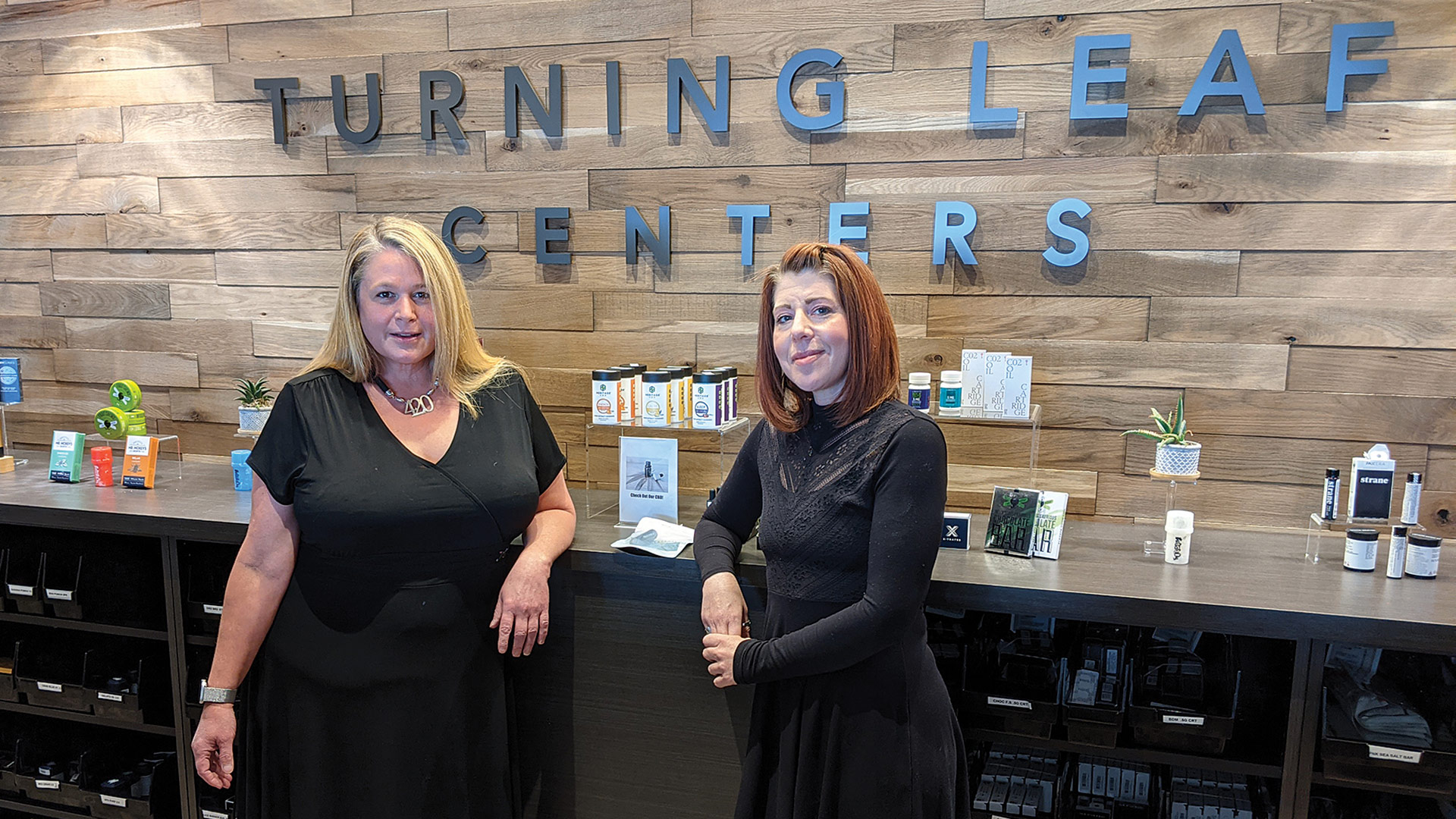
Every week, it seems, brings news of another cannabis establishment opening its doors or planning to set down roots in Western Mass. So, how does one stand out in an increasingly crowded field? For this issue, we talked with three women who own or co-own new enterprises in the region. By emphasizing facets of the business from sustainable growth to community gatherings to social equity, they make it clear that not all ‘pot shops’ are the same — that, in fact, there are many ways to make a mark on an increasingly robust cannabis ecosystem.

Helen Gomez Andrews and Chris Andrews of the High End

Sustaining a Plan

The High End Takes a Natural Approach to Edibles and Much More

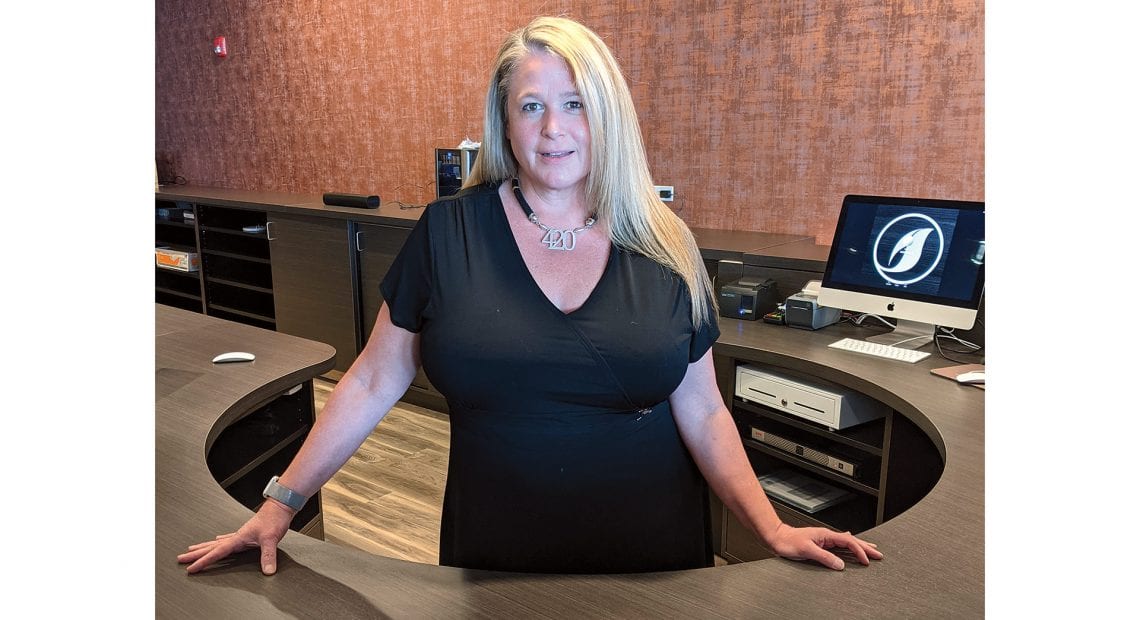
Stephanie McNair of Turning Leaf Centers

Budding Connections

Turning Leaf Centers Plants Itself Firmly in the Community

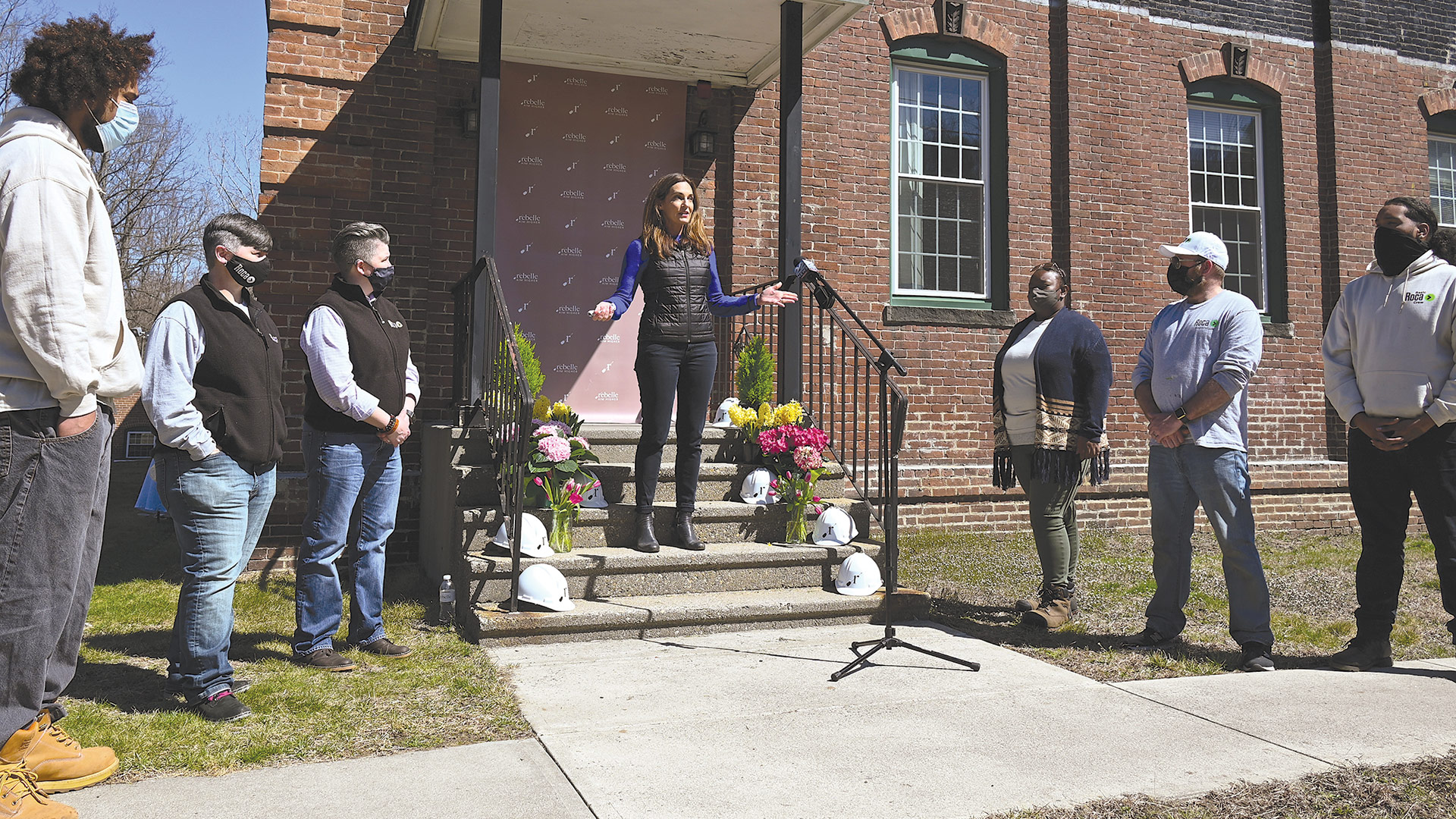
Charlotte Hanna of Community Growth Partners and Rebelle

Charlotte Hanna of Community Growth Partners and Rebelle

Hire Calling

Community Growth Partners Builds on Model of Social Equity

Features Special Coverage

Courting Possibilities

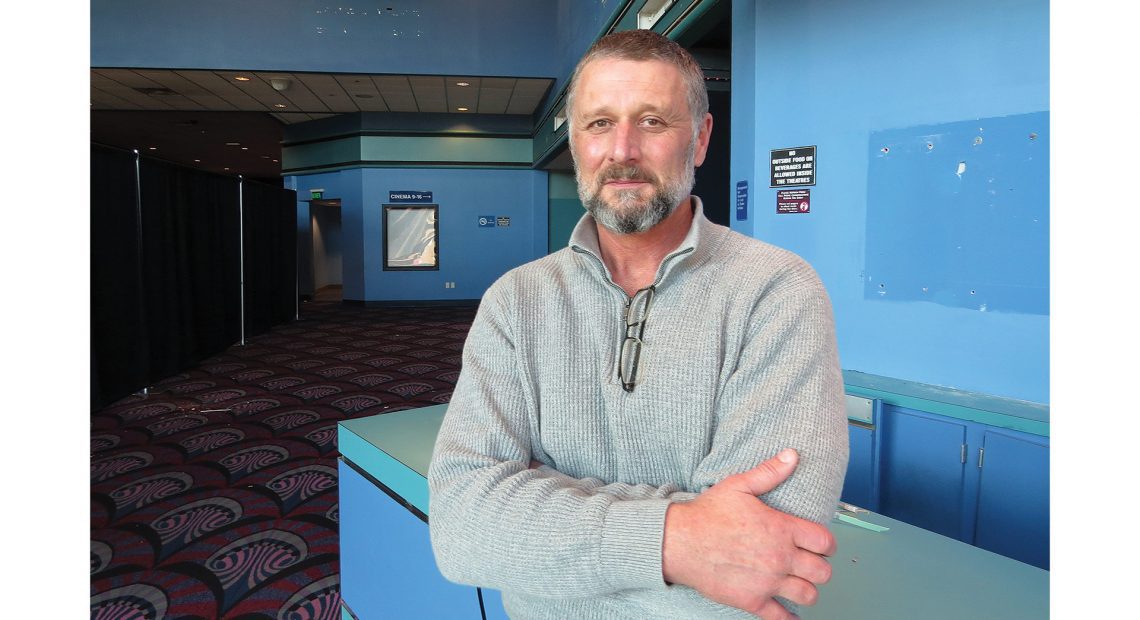
Dave Thompson stands in the lobby of the former Cinemark Theaters

Dave Thompson stands in the lobby of the former Cinemark Theaters at the mall, many of which will now be used for jury trials and other court facilities.

Since the collapse of retail began in earnest a decade or more ago, the future of the Eastfield Mall in Springfield has always been shrouded by question marks. They certainly remain today, but some recent COVID-related events — creation of a vaccination site and moving of jury trials to theaters in the malls — have certainly changed the landscape at the facility on Boston Road, while providing more proof of just what’s possible there: almost anything.

By George O’Brien

The latest map of the property at the Eastfield Mall in Springfield tells an intriguing story about just how that property is emerging — and will continue to evolve in the months and years to come.

Indeed, now positioned in the center of the huge space that connotes where several cinemas once operated is the logo for the Commonwealth of Massachusetts Court System, which will soon conduct jury trials in several of those theaters. Meanwhile, in the massive, 125,000-square-foot space that was a Macy’s store, there’s a logo for the Curative COVID-19 vaccine site now operating there, as well as the logo for Diem Cannabis, which hopes to soon operate a cultivation, manufacturing, and distribution facility at that site. And in the former Sears site, now owned by Eastern Retail Properties, there is the promise of additional retail development, the scope and nature of which is not yet known.

“It’s been extremely challenging to keeps the lights on, if you will.”

These logos and the operations behind them show how the mall’s owners have been aggressively, and imaginatively, seeking and often finding new uses for huge retail spaces at a time when retail is retrenching — to put it mildly. They also show how the mall has benefited from good luck and some unanticipated twists and turns — many of them COVID-related, at a time when COVID has made retail a very challenging proposition. Still.

“It’s been extremely challenging to keeps the lights on, if you will,” said Dave Thompson, property manager at the mall. “But we’re a pretty creative bunch here, so we’ve been able to do that; in fact, we have a waiting list for in-line tenant spaces — we’re 100% full.”

Overall, the mall is in the midst of a massive, 10-year (at least) redevelopment plan that will dramatically alter the look and feel of the landmark — yes, it can be called that — that opened in the mid-’60s to considerable fanfare. The rebranded property, to be called Eastfield Commons, will include a mix of commercial and residential spaces — roughly 450,000 to 500,000 square feet of the former, and 276 units of the latter.

The pace of progress on this redevelopment has definitely been slowed by COVID, said Chuck Breidenbach, managing director of the Retail Properties Group for Mountain Development, which owns most of the Eastfield Mall site, noting that many in the development community have taken a breather of sorts during the pandemic, especially those involved with retail.

“Everyone just dug in their heels when it came to thinking about the future,” he explained. “It’s been a tough development climate, especially with retail because so many retailers were closing — for good or with a certain number of stores. Or they were trying to downsize their footprints. A lot of that was going on before COVID hit, but COVID really accelerated that process exponentially.”

The situation has improved slightly, nationally and locally, but the retail picture remains cloudy in many respects. In the meantime, though, the mall is taking full advantage of the opportunities that have presented themselves. Together, they have provided foot traffic, some revenue, and also some insight into what’s possible at this site, meaning … well, just about anything that makes sense, a broad concept, to be sure.

For this issue, BusinessWest takes an in-depth look at what’s happening at the mall — and what could happen in the years to come at a complex with an intriguing past and a future dominated by vast potential — and a large number of question marks.


Space Exploration

Just after the COVID vaccine site opened, Thompson told BusinessWest, he would plant himself in the many common areas at the mall and pick up on the conversations being had, many of them involving people waiting in line to get a vaccine or wandering around the mall after receiving one.

What he heard verified what he already knew — that people who hadn’t been to the mall in years, or decades, had pretty much lost track of what was happening there; they may have taken in some headlines, but they didn’t know the full story.

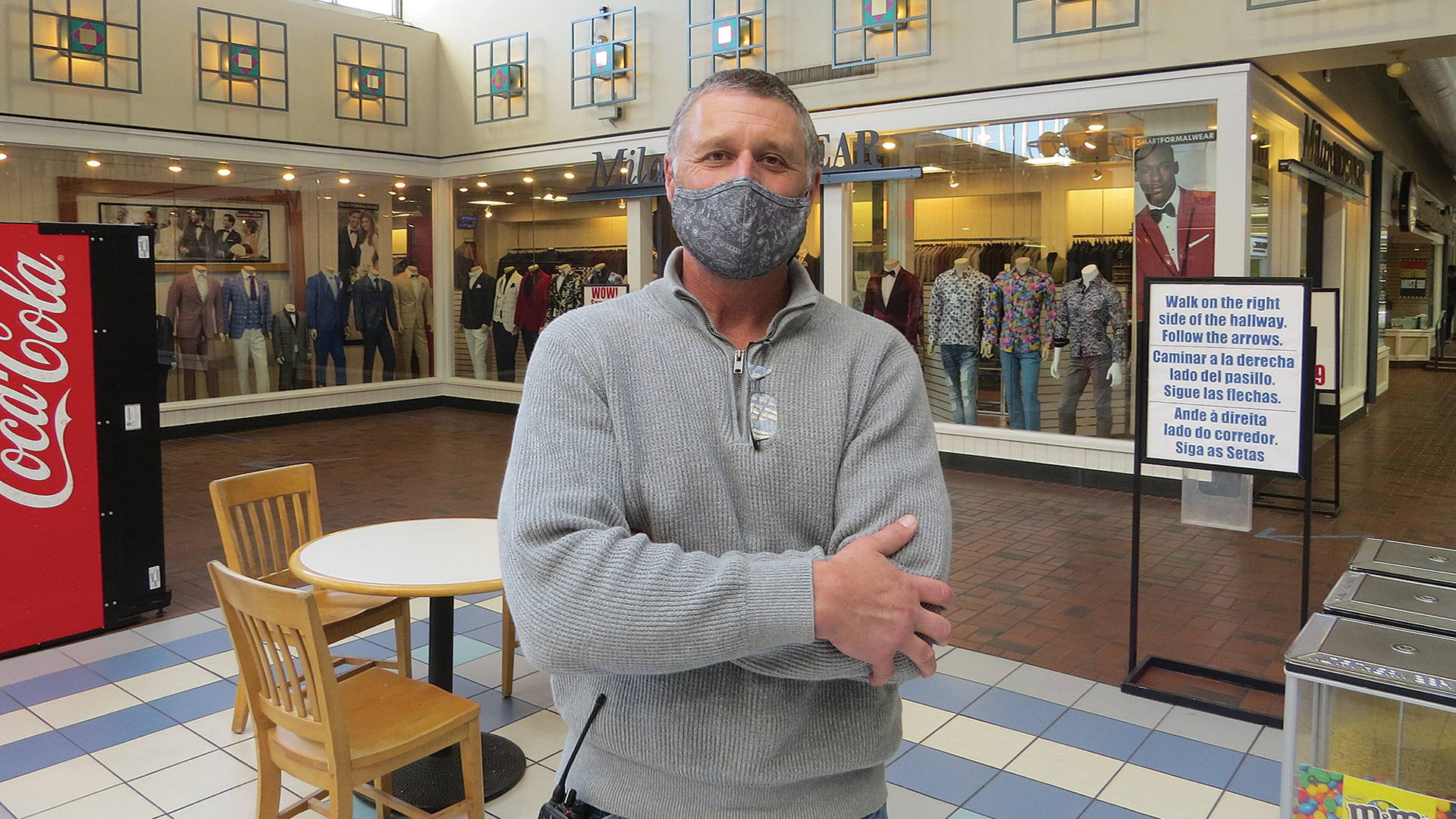
“We’d hear people say … ‘I didn’t know there were still stores in the Eastfield Mall,” he said, adding that these comments were deflating in some ways — the mall still maintains a broad mix of 80 local and national retail outlets ranging from Old Navy to Hannoush Jewelers to Milan Menswear — but somewhat encouraging, at least from the perspective that people are learning, becoming more aware, and coming back to the mall for shopping visits.

“We’ve seen a good upward swing in foot traffic,” he explained. “I think we have a lot of return patrons who have gotten vaccinated and now realize there are stores here, so they’re coming back.”

The conversion of theaters into courtrooms

The conversion of theaters into courtrooms is one of several positive and unexpected developments at Eastfield Mall.

That’s just one of a number of developments that have come about, somewhat unexpectedly, and that bode well for the mall, for both the present and the future. The COVID vaccine facility is bringing large numbers of people to the site every day and, as noted, giving them a chance to update themselves on all things Eastfield Mall. The courts moving into the old theaters, meanwhile, will bring in much-needed revenue from a site that was abandoned and trashed by theater operators Cinemark and in need of major renovations if it was to be leased out again.

Meanwhile, the Diem Cannabis operation, now winding its way through the licensing process, will fill a building that has been mostly vacant for some time now, bringing new energy and vibrancy to what has been a tired retail site.

As noted earlier, some of this has been good luck, circumstance, and having the right space at the right time, while much of it has also been hard work and creativity.

“Everyone just dug in their heels when it came to thinking about the future. It’s been a tough development climate, especially with retail because so many retailers were closing — for good or with a certain number of stores. Or they were trying to downsize their footprints. A lot of that was going on before COVID hit, but COVID really accelerated that process exponentially.”

Indeed, Thompson says he isn’t exactly sure how the state found the Eastfield Mall and started pursuing it as a vaccination site. “I don’t know, and sometimes it’s better if you don’t ask a lot of questions,” he said with a laugh, adding that he took the phone call roughly three months ago (he doesn’t remember from whom) that set things in motion.

Recalling that conversation and those that followed, he said the state was impressed by the ample amounts of parking and a location that, while not ideal, is close to Mass Pike exit 7 and easily accessible to a number of communities, including Springfield, Ludlow, Wilbraham, Longmeadow, and East Longmeadow.

The state isn’t paying rent for use of the property — something Thompson certainly laments — but it has brought exposure and a boost for many of the retailers as some getting vaccines have stopped to shop or get a bite to eat.

And this new life, as temporary as it is likely to be, represents just one of a number of positive steps forward at the mall. The relocation of court trials to several of the old movie theaters is another. That was another call that seemed to come from out of the blue — and a desire to move along many of the trials that have been delayed by COVID.

The state will use three of the 16 theaters for courtrooms and several of the others for other purposes, said Thompson, adding that the initial lease is for a year, but the hope is that the state, as it looks for permanent solutions to a host of problems at the Roderick Ireland Courthouse downtown, will give serious consideration to the mall and its theaters.

“Talking with the individuals that have been here from the state, they believe that if the powers that be decide to land here on a more permanent basis, that would be fine,” he told BusinessWest. “They love the way it’s set up.”


What’s in Store?

As for some of those other spaces … a long-term lease with Friendly Ice Cream, headquartered just down the street, to use the former JCPenney location as warehouse space, recently expired, said Thompson, adding that there have already been discussions with many parties about using that space for the same purpose, which represents one of the more logical future uses for that site.

Breidenbach concurred. “We’d like to find another retailer, but if not, we’d would certainly be open to office, residential, or medical uses,” he said, adding that JCPenney moved out nearly a decade ago, and there have been a number of short-term tenants in the interim. “We’re looking for a long-term tenant, but the trouble now is trying to find retail tenants that will take on 125,000 square feet; right now, they are few and far between.”

Dave Thompson

Dave Thompson says the COVID-19 vaccination site has brought additional foot traffic to the mall.

While dealing with the short-term and immediate answers to the many questions hovering over the mall, the main focus is on the long term, said Briedenbach, adding that the facility will obviously become mixed-use in nature, with that mix still being a work in progress.

The goal is to create a facility where individuals can live, work, shop, eat, and attain needed services, he noted, adding that the pieces to this puzzle will come together over a number of years, depending on the appetite of the development community.

The east side of the property, which runs along Kent Road, is being eyed for residential development, he said, adding that a recent zone change of that area from residential B to residential C should help these efforts. As noted, 276 units are being eyed for land on the east side of the property, with 23 buildings of 12 units each. Meanwhile, that JCPenney site could be retrofitted for senior housing, student housing, or related types of uses, he noted.

As for other components of the live/work/shop puzzle, Breidenbach said the Diem Cannabis project could provide several of those qualities, including jobs and some retail that would bring more foot traffic to the site, possibly inspiring still more retail. The hope, and also the expectation, is that, as pieces to the puzzle come together, the broad Eastfield site will become more of a destination — for many different constituencies.

“We’re looking for a long-term tenant, but the trouble now is trying to find retail tenants that will take on 125,000 square feet; right now, they are few and far between.”

For inspiration when it comes to what’s possible, this region can look to another Mountain Development project, this one at the Eastern Hills Mall in Buffalo, N.Y., a similar initiative that is further along in the development process, said Breidenbach, adding that a local developer has been secured, and plans are now in the design stage and headed for the environmental-review process.

“That site is much larger — it’s 100 acres — and we’re looking at retail, restaurants, entertainment, hotel, office … you name it,” he said. “There are a lot of things that can be done there.”

And at Eastfield as well, he said, adding that the project is moving forward step by step, with the next one being to secure a development partner for the residential aspect of the project. After that, and once that part of the project comes off the drawing board, he expects other pieces to the puzzle to fall into place.

“This is going to be a 10-year project, and right now, we’re just taking it one piece at a time,” he said. “We’re going to go one step at a time and do what’s right for the mall and the community.”


Bottom Line

These days, there are far fewer lines for people to get their COVID shots. Indeed, Curative has improved the process, and now, people can arrive just before their scheduled injection.

This doesn’t leave as many opportunities for Thompson to gather intel, if you will, from those now finding their way to the mall. But in his mind, he’s already gathered enough. He knows there is still much work to do when it comes to telling the mall’s story — and an equal amount of work when it comes to filling in the canvas with regard to the long-term future of this landmark.

Thus far, through some good fortune and creative thinking, the picture is starting to fill in, and the full extent of the opportunities that exist is coming increasingly into focus.


George O’Brien can be reached at [email protected]

Estate Planning

Crunching the Numbers

The $1.9 trillion American Rescue Plan Act of 2021 was passed by the U.S. Congress by the narrowest of partisan margins, but its impact promises to be broad, for individuals and businesses alike. Following is a breakdown of how the act, signed into law by President Biden last month, affects everything from unemployment benefits to tax credits to employee retention.

By Jim Moran, CPA, MST


On March 11, President Biden signed the American Rescue Plan Act of 2021 (ARP). Biden’s $1.9 trillion COVID-19 relief package is aimed at stabilizing the economy, providing needed relief to individuals, small businesses, and improving and accelerating the administration of coronavirus vaccines and testing.

The relief package, which is Biden’s first major legislative initiative, is one of the largest in U.S. history and follows on the heels of the Trump administration’s $900 billion COVID relief package enacted in December 2020 (Consolidated Appropriations Act of 2021).

The most significant measures included in the ARP are the following:

• A third round of stimulus payments to individuals and their dependents;

• Extension of enhanced supplemental federal unemployment benefits through September 2021;

• Expansion of the child tax credit and child and dependent care credit;

• Extension of the Employee Retention Credit (ERC);

• $7.25 billion in aid to small businesses, including Paycheck Protection Program (PPP) loans;

• Increased federal subsidies for COBRA coverage;

• More than $360 billion in aid directed to states, cities, U.S. territories, and tribal governments (the Senate added $10 billion for critical infrastructure, including broadband internet, and $8.5 billion for rural hospitals);

• $160 billion earmarked for vaccine and testing programs to improve capacity and help curb the spread of COVID; this includes funds to create a national vaccine-distribution program that would offer free shots to all U.S. residents regardless of immigration status; and

• Other measures that address nutritional assistance, housing aid, and funds for schools.

Here are details on many (but not all) of the provisions of the ARP.


MEASURES AFFECTING INDIVIDUALS

The ARP includes several measures to help individuals who have been adversely affected by the impact of the pandemic on the economy. The additional round of stimulus checks, in conjunction with supplemental federal unemployment benefits, should provide some measure of relief to individuals. A temporarily enhanced child tax credit offers another area of assistance.


Cash Payments

An additional $1,400 payment is being sent for each dependent of the taxpayer, including adult dependents (such as college students and parents). The previous two stimulus payments limited the additional payments to dependent children age 16 or younger.

jim Moran

jim Moran

“The relief package, which is Biden’s first major legislative initiative, is one of the largest in U.S. history and follows on the heels of the Trump administration’s $900 billion.”

The amount of the stimulus payment is based on information in the taxpayer’s 2020 tax return if it had been filed and processed; otherwise, the 2019 return is used. The amount of the payment will not be taxable income for the recipient.

The stimulus payments are subject to certain limitations with respect to a household’s adjusted gross income. Households with adjusted gross income of more than $80,000 for single filers, $120,000 for head-of-household filers, and $160,000 for married filing jointly will not receive any payment. For taxpayers with adjusted gross incomes below those respective limitations, the stimulus is subject to a phaseout beginning at $75,000 for single filers, $112,500 for heads of household, and $150,000 for married filing jointly.


Extended Unemployment Benefits

The current weekly federal unemployment benefit of $300 (which applies in addition to any state unemployment benefits) is extended through Sept. 6, 2021; the Senate cut back the $400 that would have applied through Aug. 29 under the House version. The extension also covers the self-employed and individual contractors (such as gig workers) who typically are not entitled to unemployment benefits.

Additionally, the first $10,200 (per person if married filed jointly) of unemployment insurance received in 2020 would be non-taxable income for workers in households with income up to $150,000. If you have already filed your 2020 federal taxes (Form 1040 or 1040-SR), there is no need to file an amended return to figure the amount of unemployment compensation to exclude. The IRS will refigure your taxes using the excluded unemployment compensation amount and adjust your account accordingly. The IRS will send any refund amount directly to you.


Child Tax Credit

The child tax credit will be expanded considerably for 2021 to help low- and middle-income taxpayers (many of the same individuals who will be eligible for stimulus payments), and the credit will be refundable.

The amount of the credit will increase from the current $2,000 (for children under 17) to $3,000 per eligible child ($3,600 for a child under age six), and the $3,000 will also be available for children who are 17 years old. The increase in the maximum amount will phase out for heads of households earning $112,500 ($150,000 for couples).

Because the enhanced child tax credit will be fully refundable, eligible taxpayers will receive a refund for any credit amount not used to offset the individual’s federal income-tax liability. Part of the credit will be paid in advance by the IRS during the period July through December 2021 so that taxpayers do not have to wait until they file their tax returns for 2021. The IRS will publish future guidance as to how the payments will be refunded.


Child and Dependent Care Tax Credit

The child and dependent care tax credit will be expanded for 2021 to cover up to 50% of qualifying childcare expenses up to $4,000 for one child and $8,000 for two or more children for 2021 (currently, the credit is up to 35% of $3,000 for one child or 35% of $6,000 for two or more children). The credit will be refundable so that families with a low tax liability will be able to benefit; the refund will be fully available to families earning less than $125,000 and partially available for those earning between $125,000 and $400,000.


Earned Income Tax Credit (EITC)

The EITC will be expanded for 2021 to ensure it is available to low-paid workers who do not have any children in the home. The maximum credit will increase from about $530 to about $1,500, and the income cap to qualify for the EITC will go from about $16,000 to about $21,000. Further, the EITC will be available to individuals age 19-24 who are not full-time students, as well as those over 65.


MEASURES AFFECTING BUSINESSES

The ARP also contains provisions designed to assist businesses — small businesses in particular.


Small Businesses and Paycheck Protection Program

An additional $7.25 billion is allocated to assist small businesses and the PPP forgiven loans. The current eligibility rules remain unchanged for small businesses wishing to participate in the PPP, although there is a provision that will make more nonprofit organizations eligible for a PPP loan if certain requirements are met.

The PPP — which was originally created as part of the Coronavirus Aid, Relief, and Economic Security (CARES) Act enacted on March 27, 2020 — is designed to help small businesses that have suffered from disruptions and shutdowns related to the coronavirus pandemic and keep them operational by granting federally guaranteed loans to be used to retain staff at pre-COVID levels. A PPP loan may be forgiven in whole or in part if certain requirements are met.

The Economic Aid Act, which is part of the CAA, earmarked an additional $284 billion for PPP loans, with specific set-asides for eligible borrowers with no more than 10 employees or for loans of $250,000 or less to eligible borrowers in low- or moderate-income neighborhoods. The program has recently been extended from March 31, 2021 to May 31, 2021.


Employee Retention Credit (ERC)

The ERC, originally introduced under the CARES Act and enhanced under the CAA, aims to encourage employers (including tax-exempt entities) to keep employees on their payroll and continue providing health benefits during the COVID pandemic. The ERC is a refundable payroll-tax credit for wages paid and health coverage provided by an employer whose operations were either fully or partially suspended due to a COVID-related governmental order or that experienced a significant reduction in gross receipts.

The CAA extended the eligibility period of the ERC to June 30, 2021, increased the ERC rate from 50% to 70% of qualified wages, and increased the limit on per-employee wages from $10,000 for the year to $10,000 per quarter ($50,000 per quarter for startup businesses). The ARP also extends the ERC until Dec. 31, 2021 under the same terms as provided in the CAA.


Other Measures

• Employers offering COVID-related paid medical leave to their employees will be eligible for an expanded tax credit through Sept. 30, 2021.

• The ARP increases the proposed subsidies of insurance premiums for individual workers eligible for COBRA, after they were laid off or had their hours reduced, to 100% through Sept. 30, 2021.

• Funds are allocated for targeted Economic Injury Disaster Loan advance payments, as well as for particularly hard-hit industries such as restaurants, bars, and other eligible food and drink providers, shuttered venue operators, and the airline industry.

• Effective for taxable years beginning after Dec. 20, 2020, the ARP repeals IRC section 864(f), which allows U.S.-affiliated groups to elect to allocate interest on a worldwide basis. This provision was enacted as part of the American Jobs Creation Act of 2004 and has been deferred several times. The provision is relevant in computing the foreign tax-credit limitation under IRC section 904.

• The ARP does not cancel student-loan debt, but there is a provision that would make student loan forgiveness passed between Dec. 31, 2020 and Jan. 1, 2026 tax-free (normally, the cancellation of debt is considered taxable income).

• A deduction will be disallowed for compensation that exceeds $1 million for the highest-paid employees (such as the CEO, CFO, etc.) for taxable years beginning after Dec. 31, 2026.

• The limitation on excess business losses of non-corporate taxpayers enacted as part of the Tax Cuts and Jobs Act will be extended by one year through 2026.

• The threshold for third-party payment processors to report information to the IRS is lowered substantially. Specifically, IRC section 6050W(e) is revised so that the current threshold of $200,000 for at least 200 transactions is reduced to $600. As a result, such payment processors will have to provide a Form 1099K to sellers for whom they have processed more than $600 (regardless of the number of transactions). This change, which applies to tax returns for calendar years beginning after Dec. 31, 2021, will bring many more sellers, including ‘casual’ sellers, within the 1099K reporting net.

If you have questions about any of the items above, reach out to your tax professional, who will be able to navigate you through any portion of the American Rescue Plan Act and how it may affect you.


Jim Moran, CPA, MST is a tax manager at Melanson, advising clients on individual and corporate tax matters; [email protected]

Health Care Special Coverage

Youth in Crisis

Let’s face it — the past year of COVID-19 has probably been tough on you, in any number of ways that weigh on your peace of mind. But what about your kids? How are they doing? And … do you even know? That might seem like a flip or aggressive question, but a group of local teenagers who have been talking to public-health leaders about the issue say their parents aren’t fully hearing them when it comes to the impact of the pandemic. And that impact, in many cases, has been worrisome.


Alane Burgess began by stating the obvious.

“It’s not normal for kids to be home all the time.”

As clinic director of the BestLife Emotional Health & Wellness Center, a program of MHA Inc., Burgess is one of many healthcare professionals keenly invested in how the COVID-19 pandemic has impacted young people. And the picture is worrisome.

“They like to be out. They like to socialize. Most kids like to be with friends,” she said. “COVID forced isolation on a lot of people; they haven’t been able to go to school, to socialize, to be involved with activities they once loved, like sports. Community spaces haven’t been open.”

It’s not surprising, she added, that this isolation has contributed to an uptick in anxiety, depression, frustration, and a tendency to act out in negative ways.

Indeed, according to the Centers for Disease Control and Prevention, between April and October 2020, hospital emergency departments saw a rise in the share of total visits from childen for mental-health needs. Nationwide numbers on suicide deaths in 2020 are still unclear, but anecdotal evidence suggests an uptick.

“Kids are excited to go back and see their friends and have some sense of structure, to be in society again. But there are definitely a lot of adjustments to be made.”

But here’s the less obvious reality, Burgess noted: while the pandemic may be (and that’s may be) on its last legs and schools and other gathering places are slowly opening back up, that doesn’t mean the stresses of the past year will just fade away.

“Kids are excited to go back and see their friends and have some sense of structure, to be in society again,” she told BusinessWest. “But there are definitely a lot of adjustments to be made.”

When COVID struck, she noted, the shifts were quick and unplanned — kids were suddenly learning at home, and many of their parents were suddenly working there. It has been a challenging time, particularly for working parents with young children who need help with school.

But transitioning back to whatever will pass for the new normal poses its own challenges, she said. “It was originally going to be two weeks, and weeks turned into months, and months became a year. Now, they’re going back out into a world that’s changed; it’s not going to be the same — there will be masks and social distancing and limitations on clubs and activities.”
Tamera Crenshaw says barriers to accessing mental healthcare are myriad.

Tamera Crenshaw says barriers to accessing mental healthcare are myriad.

Socially, certain young people — those with a more introverted personality — found they thrived in the remote setting, and are anxious about returning to campus, Burgess added. Others found the home setting to be an escape from bullying, and are palpably fearful about going back.

Meanwhile, some students, depending on how rigorous their remote-learning experience was, might find themselves overwhelmed or feeling academically behind as teachers play catch-up. Many students report coasting to passing grades, even very good grades, while feeling they haven’t been learning much.

And the economic struggles affecting many families who lost income or jobs — a definite stressor on kids — certainly aren’t over.

Tamera Crenshaw, a clinical psychologist and founder of Tools for Success Counseling in Longmeadow, said she’s especially passionate about mental health in minority populations, a demographic disproportionately affected by mental-health issues — because, again, those issues tend to be exacerbated by factors like economic stress, which have also landed hard on those populations during COVID-19.

Even remote learning has been a greater problem for communities of color because of issues of technological access and family strife over financial matters, she added. “Home isn’t necessarily the most conducive learning environment — and COVID just exacerbated it.”

An uptick in suicidal ideation is especially concerning, Crenshaw said. “Someone can have a baseline of thought, but when kids are actually expressing a plan or intent, it’s scary. And we’re definitely seeing an increase.”

Some of the factors are typical stressors on teens in any given year, but despondency has certainly been driven by greater economic instability, which can raise tension and anxiety in the home, as well as two competing factors: a longing to end a year of isolation and get back to school, and health fears about the safety of doing so, especially for kids who know someone who has died of COVID.

“These kids have not been forgotten, but even with a vaccine, they’re going to be vaccinated last,” she noted. “I can’t imagine there’s not a fear of going back into the school environment when they haven’t been vaccinated.”

The issues are deep and complex, and solutions aren’t easy. But, like most others in the mental-health field, Crenshaw says the first step to helping young people take charge of mental-health issues is clear and simple.

“You’ve got to name it.”


Start the Conversation

That means breaking through societal stigma surrounding these struggles.

“My mission is to destigmatize mental health,” Crenshaw said, noting that several factors contribute to that stigma and the resulting reluctance to seek help. “I want to help debunk that stigma.”

Beyond attitudes toward mental health, another barrier is financial — the challenge of accessing insurance that will pay for treatment, or, for those who don’t have it, navigating out-of-pocket costs while already struggling economically, she added.

“It was originally going to be two weeks, and weeks turned into months, and months became a year. Now, they’re going back out into a world that’s changed; it’s not going to be the same — there will be masks and social distancing and limitations on clubs and activities.”

A third factor is religious belief, specifically a belief by some churchgoers that mental-health professionals are at odds with faith, or that faith makes such help unnecessary. “We’re trying to educate churches and knock down that barrier,” she said. “I’m a woman of faith myself.”

Another factor is the simple fact of how few therapists of color are working today. Crenshaw’s team is largely women of color, but her practice is an exception — which is unfortunate because she knows people of color will often have an easier time trusting someone right off the bat when they can relate to them or see themselves in them.

This last factor might be a long-term struggle to overcome, she added, noting that she teaches classes in her field at Westfield State University, and none of the 17 students currently in one of her classes is a woman of color.

In fact, the mental-health and social-work fields in general are in need of more talent, said Jessica Collins, executive director of the Public Health Institute of Western Massachusetts (PHIWM). She agreed about the access issue as well, noting that mental health should be a basic support, not something available only for people who can pay for it — especially when families who can’t pay are often in greater need of those supports.

Recognizing the importance of these issues among young people, before the pandemic even began, the Public Health Institute facilitated the formation of a youth mental-health coalition in Springfield — one that brings to the table direct service providers like BHN and Gándara, Springfield Public Schools, local therapists, and, critically, a group of 11 teenagers who meet regularly.

The question at the center of the initiative is simple, Collins said. “How do we best support kids? It might sound basic, but it’s fairly new; there has not been an emphasis on the mental health of kids except in extreme cases, where the kids have to go into inpatient care.”

One takeaway so far is that teens don’t feel fully heard by the distracted adults in their lives.

“What we’re hearing, loud and clear, from our young people is, when they talk to adults, adults are not skilled at supporting them,” Collins said. “Adults are stressed, adults are stretched, and that just adds to this epidemic of young people feeling hopeless and alone and unsupported.”

That’s why the Public Health Institute is talking about what kind of training adults — those who work in preschool and school programs, but also parents — might need to learn how to better listen to young people and work through and respond to what they’re hearing.
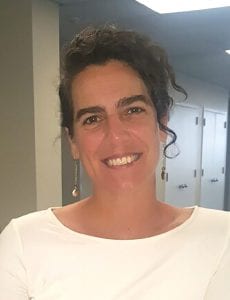
Jessica Collins

Jessica Collins says parents sometimes get so stressed, they don’t realize how stressed their kids are, too.

“These big direct-service providers are really competitive, so to get them in a room to talk about how can we work together to better support families, instead of just competing for them, that’s fairly new,” Collins said, adding that Daniel Warwick, Springfield’s superintendent of Schools, has also been on board with efforts like this for a long time.

For example, when he saw a 2017 report by PHIWM about the hopelessness felt by local teens who don’t identify as heterosexual, “he was so upset about that, a few years ago, he mandated some training for all Springfield public-school adults to better support kids who are LGBTQ+.”


Take It Seriously

That’s a good example of listening to young people and then taking them seriously — which is one way to normalize mental-health needs, Collins said. “If you can’t talk about it, you can’t figure out for yourself what you need.”

And one thing young people need right now is reconnection. While many kids are tired of the technology-only avenues for connecting with friends, Crenshaw said, Zoom calls, text chats, and the like have been an overall positive in staying in touch. But she also encourages kids and families to take opportunities to see friends and loved ones in person, in a safe manner, when possible.

“You can go to the park; you can go outside with a soccer ball, wear your mask, and connect. Some families have said, ‘we can’t do this alone,’ and became part of each other’s bubble, taking turns doing homeschooling. We encourage these ways of connecting with each other.”

And don’t give up on trying to talk to your kids, Burgess said, even when they don’t feel like talking back.

“The most important thing any parent can do during these times is open a dialogue with their children and allow kids to have open communication,” she said. “What are they thinking? What are they feeling? Then we can guide them and help them through their own resiliency and make adjustments.”

Families can help combat their kids’ isolation, she said, by planning quality family time, even if it’s just having dinner together, around the table, every night, or scheduling a family game night every week. Those moments, she noted, can naturally help kids let their guards down.

“You want to have that quality time, that open communication to talk and listen to your kids and ask, ‘how are you feeling? What’s going on? What can I do to help make things easier?’ Sometimes, as a parent, we’re not able to say ‘yes’ to everything, but we can look for compromises and help kids make some of the decisions.”

The problem in identifying signs of distress, Crenshaw said, is that teenagers, even on their best days, often prefer to be isolated, or present a sullen demeanor. So how can parents separate normal teen ‘attitude’ from real warning signs?

“Are they communicating as much with you, or are they isolating in their rooms moreso than normal? Are they eating normally?” she asked. “Even prior to COVID, parents would say, ‘I didn’t know there was a problem — I thought that’s how kids are.’”

It doesn’t hurt for parents to simply ask their kids, directly, how they’re feeling, what’s working or not working in their lives, how school is going, and if they’re feeling more anxiety than usual. “If a teen is isolated in their room, that could be typical teen behavior, but maybe not.”

Physical signs may be visible, too, Crenshaw said, noting that cutting — what’s referred to in her field as ‘self-injurious behavior’ — and eating disorders are more common than some parents think.

But more often, the signs are subtler. “It’s just really knowing their disposition and what they’re involved in.”

Burgess said it’s important for parents not to go it alone if their gut tells them something is truly wrong.

“If you notice your kid struggling with severe signs of depression — really isolating, really struggling — definitely seek professional help. If your kid is talking about suicide or even just having a hard time getting back into interacting or adjusting, seeking professional help is always key.”

In the end, coming out on the other side mentally healthy — and that goes for parents and children alike — will take patience and resilience, Burgess added.

“There’s no guidebook for this. There’s no ‘COVID for Dummies’ book. We’re all doing the best we can to adapt. We’re all just going through an unprecedented time.”


Joseph Bednar can be reached at [email protected]

Features

NFTs and Cryptocurrency

By Bart Galvin


Digital assets such as Bitcoin and non-fungible tokens (NFTs) are transforming global capital markets and the art world, with market capitalization reaching $2 trillion and digital artworks packaged through NFTs regularly selling for millions of dollars. As these assets gain prominence in the marketplace, it is increasingly important to understand why these assets appeal to investors, how they represent value, and how they function under the hood.


NFTs and Digital Art

NFTs have exploded in popularity in the past year, with notable examples like CryptoPunks, which are collectible, algorithmically generated pixel artworks, as well as the works of Mike Winkelmann (known professionally as Beeple), who recently sold a piece of NFT art at a Christie’s auction for $69 million.

Bart Galvin

An NFT is a unique digital token representing an interest in something else, which could be a piece of art, a share of stock, a stream of royalties, or even, in the case of Unisocks, entitlement to a physical pair of socks. NFTs are ‘non-fungible’ because, unlike cryptocurrencies, they aren’t interchangeable — your NFT corresponds to the specific entitlement or right to the underlying thing.

The eye-popping price tags of many digital-art NFTs poses the question: what exactly are you buying when you purchase an NFT? In its most basic form, an NFT is simply verifiable proof that you are the purchaser of whatever the NFT represents. But the devil is in the details. The rights granted by an NFT are entirely up its creator, so some NFTs have strict terms and conditions that prohibit exhibitions or commercial use of the art, while others might grant you the copyright in the work.


Cryptocurrency and the Rise of Bitcoin

Bitcoin has been the most prominent cryptocurrency since its introduction in 2008, but many other cryptocurrencies exist, such as Ethereum, an important part of many ‘smart contracts,’ and Tether, which is pegged to the value of the U.S. dollar. Bitcoin accounts for about half of global cryptocurrency market capitalization.

At the end of March, the price of one Bitcoin was approximately $60,000. Unlike a cryptocurrency like Tether, the value of Bitcoin can fluctuate wildly. Indeed, it has increased tenfold in the past year, dwarfing its previous peak of $17,000 in December 2017. The value of Bitcoin is determined almost entirely by what purchasers believe it is worth, and investors speculate on that value, driving price fluctuations. These price fluctuations can have a snowball effect, whereby widespread speculation in Bitcoin that drives the price upward can lead investors to believe Bitcoin will be adopted more widely, leading to further speculation that its value will increase.


Why Do People Care?

Cryptocurrencies and NFTs represent a fundamentally new way of transacting. The reason is in the revolutionary qualities of their underlying technology: the ‘blockchain.’ A blockchain can be thought of as a tamper-resistant digital store of data, constructed using computer cryptography and distributed among participants over the internet. Here’s what makes the blockchain special, and why people are jumping on board.

First, the blockchain allows parties to transact without intermediaries. No banks or clearinghouses are needed to execute or verify transactions since the underlying technology ensures that transfers are reliable, practically irreversible, and publicly verifiable.

“In the world of blockchain technology, Bitcoin and digital-art NFTs are the tip of the iceberg. There are already countless blockchain-based technologies, and new ones are invented every day.”

Second, blockchain transactions are not limited by jurisdictional or national boundaries. The transaction’s terms are dictated by computer code, not local law. Perhaps more importantly, the code is self-enforcing, which limits opportunistic behavior. Parties do not need to appeal to the judicial system to enforce an agreement because it happens automatically.

Third, blockchains are not subject to a central point of control or a central point of failure. Blockchains work by interconnecting users running the same software over a peer-to-peer network on the internet. No one party controls the blockchain. All new transactions are shared over the network, and they become final only when a majority of users determines that the transaction is valid. If a user doesn’t own the digital asset they’re trying to transfer, or tries to transfer it twice, the transaction will be rejected.

Fourth, blockchain transactions are publicly visible and verifiable. A blockchain serves as a ledger of transactions and all the transactions that came before them, allowing anyone to view and verify the trail of activity occurring over the network.

Fifth, blockchains allow parties to transact pseudonymously (not quite anonymously), without needing to trust or even know each other. All you need to know is your counterparty’s digital address or ‘wallet.’ And because transactions are practically irreversible and verified by the consensus of the network, the opportunities for fraud are heavily curtailed.


The Future of Blockchain Technologies

In the world of blockchain technology, Bitcoin and digital-art NFTs are the tip of the iceberg. There are already countless blockchain-based technologies, and new ones are invented every day. The blockchain is highly flexible and has tremendous untapped potential for consumer transactions, private contracts, corporate structuring, securities and derivatives, and even public administration. If your business is not using the blockchain yet, it’s only a matter of time.


Bart Galvin is an attorney at Bulkley Richardson, where he is a member of the Blockchain and Cryptocurrency practice group; (413) 272-6200.

Community Spotlight

Community Spotlight

By Mark Morris

Palmer has a long history as a key train stop

Palmer has a long history as a key train stop, making it an oft-discussed part of conversations about expanded east-west rail.

As the nation recovers from a year of dealing with COVID-19, Palmer Town Manger Ryan McNutt looks to the future with optimism.

While larger cities had to contend with high COVID infection numbers and revenue losses from business taxes, Palmer maintained low infection numbers and relies more on residential taxes, which remained stable.

These days, as many people in the larger metropolitan areas work from home, there is no certainty they will return to five days a week in the office. That dynamic, McNutt believes, gives Palmer a real opportunity. With the average home price in Palmer at $191,000 compared to the Greater Boston area average of more than a half-million dollars, he wants to take advantage of this moment.

“The ability to start a family and work toward the American dream is much more difficult to afford in the Greater Boston area and much easier in our area,” he told BusinessWest. “We may see a change in working conditions where office workers spend up to four days a week at home, which would allow them to live in Western Mass. and take advantage of our affordability.”

McNutt is creating a marketing plan to reach out to the Boston area as well as other densely populated urban areas to promote the value and quality of life available in Palmer and surrounding areas.

“Right now, there are three alternative plans for how the east-west rail will be configured, and Palmer has a stop in each scenario.”

One huge boon for Palmer in this regard would be the proposed east-west rail project. The plan to offer passenger rail service from Pittsfield to Boston has been included in the federal infrastructure plan about to go to Congress. McNutt said east-west rail would be transformative for his town.

“Right now, there are three alternative plans for how the east-west rail will be configured, and Palmer has a stop in each scenario,” he said. Though many steps remain before the plan wins approval and comes to fruition, town planners are looking to identify the right location, and they want to make sure it’s shovel-ready.

“I want to be so ready that, if we were told they could helicopter in a train station and drop it where a site was selected, we want to be ready for that helicopter,” he said.


Engine of Opportunity

The economic potential of a train stop in Palmer is not lost on Andrew Surprise, CEO of Quabog Hills Chamber of Commerce. On the job since January, Surprise looks to help chamber members increase their engagement with state and local officials, as well as identify economic programs to benefit the area.

He has already begun working on a grant for downtown Palmer through the Transformative Development Initiative, a MassDevelopment program. The grant provides incentives for businesses to locate in condensed areas, like downtown settings, that are walkable.

“That’s a positive for us because Palmer’s downtown is very walkable,” Surprise said.

He is also applying to the Massachusetts Cultural Council to have downtown Palmer designated as a cultural district. In addition to being a walkable area, a community must show it hosts arts and cultural events on a regular basis.

Surprise admits these projects will take several years to be successful, but the effort would be worth it. “A well-developed and vibrant downtown will help us bring in other businesses.”

Andrew Surprise

Andrew Surprise

“Palmer is well-placed for manufacturing facilities; its access to major highways makes it easy to get products to Boston, Hartford, Albany, and New York City.”

As part of his outreach to local officials, he reminds them of Palmer’s tradition and continued relevance as a manufacturing town.

“There has been a lot of talk on the national level about restoring manufacturing jobs,” he said, adding that communities like Palmer that have plenty of available land could be attractive to Boston-area high-tech companies looking for manufacturing space. “Palmer is well-placed for manufacturing facilities; its access to major highways makes it easy to get products to Boston, Hartford, Albany, and New York City.”

The chamber recently conducted a survey among its members to find out how they weathered the pandemic. Results so far show that two-thirds of businesses have been able to avoid employee layoffs. By finding alternatives such as reducing hours, many avoided having to reduce their staffs.

Palmer at a glance

Year Incorporated: 1775
Population: 13,050
Area: 32 square miles
County: Hampden
Tax Rate, residential and commercial: Palmer, $22.63; Three Rivers, $23.28; Bondsville, $23.67; Thorndike, $23.62
Median Household Income: $41,443
Median Family Income: $49,358
Type of government: Town Manager; Town Council
Largest Employers: Baystate Wing Hospital; Sanderson MacLeod Inc., Camp Ramah of New England; Big Y World Class Market
* Latest information available

“We conducted the survey to learn what types of services the chamber could offer to help businesses find success going forward,” Surprise said, noting that these are only preliminary results, as all surveys have not yet been returned.

As a first step, the chamber is planning a number of seminars for small businesses to help them increase foot traffic and bring in new customers through approaches such as digital marketing.

“Many small businesses are not familiar with digital or social media marketing, and it’s really a necessary tool in the 21st century,” he noted.


On the Right Track

McNutt is hopeful some kind of infrastructure package passes Congress because, like municipal leaders all over the country, he faces big projects that need attention.

“There are 47,000 deficient bridges in the U.S., including the nine that are in Palmer,” he said.

But for a small community, he added, taking on a big infrastructure project is a heavy lift, and Palmer has been working with U.S. Rep. Richard Neal to secure funding for at least two bridges, on Main Street and Church Street, which need the most attention.

One project that could add significantly to the town tax revenues involves building 300 seasonal cottages on Forest Lake. McNutt is excited about the potential for this project.

“Folks are coming up from New York to buy our homes because they recognize that living space, fresh air, and not being stuck in small square footage are luxuries that we have here.”

“Right now the cottages are planned for warm-weather use and would bring plenty of folks in to stay in town,” he said. “They will most likely go to local restaurants and make other purchases, so we could see a real economic multiplier effect from this project.”

Palmer has also agreed to be a host community for the cannabis industry. Two retail sites and two cultivation businesses have run into delays to start their enterprises, but McNutt blames COVID for the slowdown.

“The Cannabis Control Commission held fewer meetings than they normally would, and site visits were more difficult to do,” he explained. “In short, everything in the regulatory environment was just harder to do during the pandemic.” He feels confident at least one site will be up and running this year or early in 2022.

As the number of people vaccinated increases and COVID concerns decrease, he believes the opportunity is now for Palmer and surrounding towns.

“Folks are coming up from New York to buy our homes because they recognize that living space, fresh air, and not being stuck in small square footage are luxuries that we have here.”

McNutt noted that people can still pursue the American dream by locating to Palmer because, in addition to its natural surroundings, the town has easy access to metropolitan areas. In short, he said, “we have the best of both worlds.”

Sports & Leisure

Buy the Buy

Dave DiRico

Dave DiRico says many people who discovered or rediscovered golf in 2020 are coming back to buy new equipment in 2021.

Dave DiRico says his shop is usually busy in late March and early April as golfers gear up for a new season.

This year, the look and feel have been different, and for many reasons. Golf got an unexpected and much-deserved boost last year when it became one of the few organized sports people could take part in. And it’s received another boost from the fact that Americans have been saving money as perhaps never before, and many of them have also been receiving stimulus checks from the government.

Add it all up, and March and April have been even busier than normal, said DiRico, owner of Dave DiRico’s Golf & Racquet, adding that, for now, he doesn’t see many signs of slowing down.

“We’re seeing it at all levels, all age groups, starting with the seniors,” he said. “They didn’t travel as much over the past year. They haven’t gone out to dinner; they didn’t go on their spring golf trip to Florida. And we’re seeing more of those people buying clubs — and that’s generally not our soft spot.”

That soft spot would be younger professionals and junior golfers, he went on, adding that these people are buying clubs, too, often with the help of the government.

Meanwhile, large numbers of people took up the game last year, or found it again after drifting away from it for whatever reason. Many of these people bought used equipment last year — so much that inventories dwindled significantly — and this year, they’re coming back for new clubs.

“Most of them are deciding to continue to play — they enjoyed it,” DiRico said. “And they’re trading in their used equipment for new stuff — because they intend to stay with it.”

The surge in play and its impact on the retail side of the game is reflected in the numbers. In the third quarter of 2020, for example, retail sales of golf equipment exceeded $1 billion for the first time ever for that period, according to Golf Datatech, an industry research firm. Meanwhile, Callaway Golf Co., which manufactures golf balls in Chicopee, reported a 20% surge in sales in the fourth quarter of 2020.

The problem some players are encountering, though, is limited inventories of new equipment. Indeed, the golf manufacturers, like those who make cars and countless other products, are experiencing supply-chain issues and difficulties getting the materials they need. This has led to sometimes lengthy waits for ordered clubs to be delivered.

“There’s such an increased demand with new golfers across the country that they’re all running out of equipment,” he explained. “They can only manufacture so much, and the demand is far more then they projected. Some companies can’t get shafts, others can’t get grips — you can’t make a golf club unless you have all the components.

“We have a few companies that are great — they’ve managed to stay ahead of this, and they’re doing very well,” he went on. “But then, we have some other companies … you have to wait 15 weeks to get a set of irons.”

Doing some quick math, DiRico said this will translate into delivery sometime in June, far longer than golfers anxious to get their hands on new irons or a new driver want to wait.

But, overall, this would have to be considered a good problem to have — if such things actually exist in business.

Only a few years ago, the golf industry was in a sharp decline, with membership down at most clubs, tee times readily available at public facilities, and racks full of new equipment for which there wasn’t strong demand. Things have changed in a hurry, and DiRico and others hope most of these trends — not the current supply-and-demand issues, certainly — have some permanence to them.


—George O’Brien

Sports & Leisure

A Simple Mission

Just over a year ago this time, Jesse Menachem and his staff at the Massachusetts Golf Assoc. (MGA) were fighting — and fighting hard — to convince the state simply to let golf-course owners maintain their property.

Despite some intense lobbying by his group, Gov. Charlie Baker made golf courses part of his broad shutdown of non-essential businesses in March 2020, and for weeks, the industry lingered in a sort of limbo, not knowing when, if, and under what circumstances courses would be allowed to reopen.

When they did, in mid-May, a number of limiting restrictions kept play at modest levels. But then … the lid came off, and the industry found itself in an enviable position. Indeed, golf was one of the few activities people could take part in during the pandemic, and people started taking it up — or taking it up again, as the case may be, a development that benefited public and private courses alike.

“I’ve heard from clubs that recorded anywhere from a 20% to 50% increase in rounds, which is incredible, because capacity was limited due to the longer intervals between tee times, as mandated by the state,” said Menachem, president of the MGA. “You couldn’t find tee times on weekends at many facilities; with people working from home, working remotely, not traveling, not having family activities like Little League and soccer, golf became number one in a lot of people’s minds, and the game really benefited.”

Jesse Menachem

Jesse Menachem

“If we can sustain or retain at least 25% to 33% of those who participated last year … that’s a goal; that’s a start. More would be great, but we have to be realistic.”

Now, as the 2021 season gets set to begin in earnest (some courses have already been open for several weeks), the golf industry has a simple, yet also complex, mission that Menachem summed up directly and succinctly: “make it sticky.”

By that, he meant those managing the state’s courses have to take advantage of this huge opportunity they’ve been granted and compel those who took to golf last year, because there were few attractive options, stay with the game now that other options exist.

“That’s our job; that’s what we’re up against — we have to make sure it’s sticky, and that’s something we have not been very good at,” he explained. “If we can sustain or retain at least 25% to 33% of those who participated last year … that’s a goal; that’s a start. More would be great, but we have to be realistic.”

Indeed, as they go about this mission, courses will have advantages and selling points they didn’t have last year, said Menachem, especially when it comes to their 19th holes, many of which were closed in 2020, while those that were open faced a mountain of restrictions on what they could serve, when, and how. They have also learned some lessons from last year, including how those longer intervals between tee times improved pace of play, reduced logjams on the course, and improved the overall player experience.

But golf will also be facing far more competition in 2021 when it comes to the time, attention, and spending dollars of those who found the game a year ago. Indeed, as restrictions are eased, individuals and families can return to restaurants, museums, the cottage at the beach, and more.

For course owners and managers, the emphasis must be on providing a solid experience, one that prompts a return visit — or several. This has always been the emphasis, he said, but now even moreso, with courses being presented with what would have to be a considered a unique opportunity.

“It’s really our obligation to make sure that experience is favorable,” Menachem told BusinessWest. “For those who are being reintroduced, or introduced for the first time, we’ve got to invite them back; we have to make them feel comfortable and cater to what their desires are. We have to do everything within our power to make sure that golfer on site has the best experience possible and keep them coming back.”


—George O’Brien

Estate Planning

Staying Ahead of the Scams

By Julie Quink


With the continued intensity created by the COVID-19 pandemic, business owners and individuals have continued to be victims of fraudulent activity as the scams and schemes are continually changing and increasing in number.

At a time of significant economic stress and uncertainty, the barrage of ever-changing fraudulent attempts and attacks becomes increasingly difficult to manage and prevent. Fraudsters have also become very creative in their methods of gathering sensitive information to commit fraud, so it becomes increasingly difficult to predict what might be coming next in the form of an attack.

Since the onset of the pandemic, these schemes have continued to include filing fraudulent unemployment claims. As practitioners, we have also noticed an increase in stolen identities, whether it be by the interception of documents containing personal information or through online access.

As professionals who work with clients to implement best practices and detection techniques, we fall victim to fraud attempts as well. The most recent fraud attempts include continued false unemployment claims and theft of identities through mail interception.


Fraudulent Unemployment Claims

The filing of fraudulent unemployment claims is not a new fraud scheme. However, the repeated attempts at compromising employee data and filing of fraudulent claims in other states has increased.

Fraudsters have taken to heart the saying, ‘if at first you don’t succeed, try, try again.’ Some businesses have seen repeat attempts at fraudulent claims filed against the business using the same employees but citing different reasons for filing for unemployment, such as break in service or lack of work.

Further, claims are being filed for employees in different states. The fraudster is using an employee’s information to file in a state in which the employee does not live or work to gain access to unemployment benefits in the state where they live. It has become a vicious cycle.

“The most recent fraud attempts include continued false unemployment claims and theft of identities through mail interception.”

States have tightened controls and verifications to try to manage these fraudulent claims, but the tightening of controls comes with a cost. Employees who have been victims of fraudulent claims in the past may have a more challenging time filing for unemployment as their account has now been flagged. The ease of filing online for these people has now become complicated and time-consuming as they try to navigate the unemployment system.

The continued monitoring of a business unemployment account to prevent and detect fraudulent activity and responding to fraudulent claims can be time-consuming. If fraudulent claims are paid against an employer account, it can impact the employer’s experience rate and unemployment account if not identified quickly.

This is not a new area of fraud, but the methods that fraudsters use to gain access and apply is ever-changing.


Identify Theft

Fraudulent unemployment claims are an example of identity theft. It is believed that some of the personal information used in filing fraudulent unemployment claims has come from data breaches. However, creative methods of accessing personal information have now encompassed intercepting hard documents.

Another area of data interception, with which we have had personal experience, is through the mail. If a fraudster is not able to access personal information through electronic means, why not try the good old-fashioned way, through the U.S. Postal Service or another carrier?

Intercepting mail is a scheme that seems to be on the rise. In one such case of which we are aware, information was intercepted prior to arrival at its intended location. Between the time it was initially mailed and the time it finally arrived at its location, the sender’s identity was stolen, and a loan was opened in their name, unbeknownst to them. The fraudster intercepted tax documents, which had personal identifying information, and secured a fraudulent loan. Ultimately, the fraudster, realizing that the mail was in a tracked envelope, secured the package with significant amounts of tape and forwarded it to the final destination.

The Office of the Inspector General for the U.S. Postal Service is diligent in investigating suspected mail theft, from both internal and external sources. Because of its commitment to finding and detecting mail fraud, the office has devoted the Office of Investigations to handle complaints and fraud.

The impacts of identity theft for a business owner or an individual can be far-reaching. Significant impacts can include compromising credit and financial hardship, compromising legal relationships and documents, and compromising tax filings.

Perhaps one of the most significant impacts may be the feeling of violation, distrust, betrayal, or even embarrassment created by the theft of identity. The unwinding and unpacking of identity theft can be a time-consuming and emotional process for business owners and individuals.


Takeaways

What we know is that fraud schemes are changing faster than business owners, individuals, and technology can keep up. Whether the fraud scheme is a recurring scheme or a new and improved scheme, the importance of diligence, communication, and monitoring should not be discounted.

Communication with employees about fraudulent schemes involving unemployment and mail, along with continued monitoring, are best practices in keeping information safe and secure.


Julie Quink is managing partner with West Springfield-based Burkhart Pizzanelli; (413) 734-9040.

Estate Planning

State of Uncertainty

By Cheryl Fitzgerald


Over the past year, a number of words and phrases have worked themselves into the lexicon, and our everyday usage: pandemic, quarantine, super spreader, and social distancing all make that list. As does the three-word phrase working from home, which quickly morphed into an acronym — WFH.

Indeed, in March 2020, many businesses large and small required or encouraged their employees to work from home as a way to help stop the spread of the coronavirus. At the time, it clearly was intended to be a short-term measure. Nobody could have predicted that, a year later, some of the same employees continue to work from home, whether mandated by their employees or as a way of life now.

However, this has created unintended consequences for businesses and individuals. Employees working in a state other than the company’s home (i.e., their home and business are in different states) could potentially create a need for the business to file in that other state (known as nexus).

From a business perspective, some guidelines have been issued for businesses to follow. Some states have provided relief and have said the presence of an employee working in a state due to shelter-in-place restrictions will not create nexus for tax purposes in that state.

“Employees working in a state other than the company’s home (i.e., their home and business are in different states) could potentially create a need for the business to file in that other state (known as nexus).”

Some states provided a temporary safe harbor or waiver from state withholdings and tax liability for remote work in a different state during the pandemic. And still others have provided that they will not use someone’s relocation during the pandemic as the basis for exceeding the de minimis activity the business can have in the state without it becoming a taxable issue for them.

Massachusetts in particular has provided corporations tax relief in situations in which employees work remotely from Massachusetts due solely to the COVID-19 pandemic to minimize disruption for corporations doing business in Massachusetts. The Bay State has indicated it will not change the intent of whether or not an employee who has started to ‘work’ in Massachusetts because that is his or her home (i.e., a company situated in another state now has an employee physically working in the state of Massachusetts) is subject to Massachusetts corporate tax. These rules are intended to be in place for Massachusetts until 90 days after the state of emergency is lifted.

For employees that had normally worked in Massachusetts, but are now working at home in a different state, Massachusetts has stated that, since this is for pandemic-related circumstances, they will continue to be treated as performing the service in Massachusetts and subject to Massachusetts individual taxes. Most states (but not all) have adopted similar sourcing rules. Most of these rules were put in place for the year 2020. However, some states are still under the same rules and guidelines, and this will continue during 2021.

The intent for most states is to minimize any tax impact for both employees and employers if an employee’s work location has changed solely due to the COVID-19 pandemic.

However, one state has decided the Massachusetts provisions are unfair to its residents. Prior to the pandemic, New Hampshire’s southern border saw a steady stream of workers heading into Massachusetts on a normal workday. With the pandemic and the stay-at-home orders, many of these employees converted to working at their residence in New Hampshire, which does not have an individual income tax.

Therefore, with Massachusetts indicating that these wages were still going to be considered Massachusetts wages and therefore taxable, the governor of New Hampshire felt this was unfair to their residents and has filed a lawsuit in the U.S. Supreme Court over Massachusetts’ “unconstitutional tax grab.”

New Hampshire Gov. Chris Sununu has argued that “Massachusetts cannot balance its budget on the backs of our citizens and punish our workers for working from home to keep themselves, their families, and those around them safe.” This lawsuit was filed in October 2020. Stay tuned.

Remote working becomes even more complicated when employees telecommute in a different state from which they typically work, and this will begin to impact the employee’s eligibility for local leave (i.e., sick leave).

As the pandemic continues, and with some states having set ending dates for some of these relief provisions, employers may continue to have employees who work remotely, either by choice or convenience. The taxability of which state the wages should be taxed in will need to be revisited by employers and employees alike.


Cheryl Fitzgerald, CPA is a senior manager at Holyoke-based accounting firm Meyers Brothers Kalicka, P.C.; (413) 536-8510.

Health Care

Mental Block

The health anxieties, economic stresses, substance abuse, and feelings of isolation exacerbated by COVID-19 aren’t exactly new, Dr. Barry Sarvet says. And they won’t fade when the pandemic does.

“Prior to the pandemic — and it’s easy to forget this now — we had an enormous amount of stress in our communities related to poverty, homelessness, economic struggles … people just facing an enormous amount of stress in their lives,” said the chair of Psychiatry at Baystate Health. “We had underemployment, unemployment, an opioid epidemic. It’s a very distressed community with a lot of long-term struggles, a lot of psychosocial stress. Every psychiatric disorder is influenced by environmental stresses, and those aren’t getting better. We need to pay more attention to them after the pandemic.”

Well before COVID-19, Sarvet noted, the region’s mental-health needs laid bare a shortage of inpatient beds for patients who need more help than outpatient visits can provide. It’s why Baystate announced a joint venture with Kindred Behavioral Health last summer to build and operate a $43 million behavioral-health hospital for the region, set to open in 2022. The hospital will be located on the former Holyoke Geriatric Authority site on Lower Westfield Road in Holyoke.

Dr. Barry Sarvet

“Every psychiatric disorder is influenced by environmental stresses, and those aren’t getting better.”

Holyoke Medical Center (HMC) had revealed a similar proposal in March 2020 to build a $40.6 million, 84-bed behavioral-health facility on its campus. But when Baystate’s plans came online, and the threatened closure of 74 inpatient beds at Providence Behavioral Health Hospital were saved by a change in ownership, HMC reverted to an earlier plan, to repurpose two of its existing units for behavioral health.

“We were concerned about providing a solution to get beds online as the state was developing guidelines for all hospitals to incentivize an increase in behavioral-health beds,” said Spiros Hatiras, president and CEO of HMC and Valley Health Systems.

The process of converting two units to behavioral health — an adult unit and one with a likely geriatric focus — began in October and will be finished by late April, and will add 34 new beds to the existing 20 at the hospital, more than doubling the total to 54. In doing so, it provides a more immediate solution to regional bed shortages, avoiding the need for a lengthy construction period (HMC’s new hospital was also expected to open in late 2022).

The internal repurposing of units had been conceived as a stopgap measure, but when Trinity Health announced the sale of Providence to Health Partners New England (HPNE), which committed to keeping inpatient beds open — and Baystate moved forward with its project — the stopgap made sense as a longer-term solution, although HMC could revisit a standalone behavioral-health hospital at some point in the future, Hatiras said.

Baystate’s project, meanwhile, will include 150 beds — 120 of them part of the original plan. The system has also contracted with the state Department of Mental Health to operate a 30-bed, long-term continuing-care unit for chronically mentally ill people who need a longer time in the hospital to stabilize before returning to the community, Sarvet explained.

This state-funded program, not accessible to regular referrals, was launched after the closures of Northampton State Hospital and other facilities like it. “Some patients need longer-term care, and this offers a length of stay to support people who don’t benefit from short-term hospitalization,” Sarvet said, adding that the DMH unit will be physically connected to the new hospital, but offer its own unique resources.

“New beds will be needed over the long term,” he said, speaking of the project as a whole. “We have had quite a shortage for many years, prior to the potential closure of Providence and prior to the pandemic. This substantial increase in needs is reflected in emergency-room visits from patients with a mental-health crisis. And we certainly see evidence that this isn’t a short-term blip, but part of a longer-term trend that predated the pandemic.”


Multiple Pivots

The prospect of any additional behavioral-health beds in the region is certainly a turnaround from a year ago, when Trinity Health announced it would close 74 inpatient beds at Providence Behavioral Health Hospital.

However, two months ago, the health system sold Providence to HPNE, which provided some management services at the facility from 2011 to 2014, and will operate the facility under the name MiraVista Behavioral Health. In doing so, it will resume operations of numerous outpatient programs, as well as including up to 84 inpatient psychiatric beds.

Spiros Hatiras

Spiros Hatiras

“We were concerned about providing a solution to get beds online as the state was developing guidelines for all hospitals to incentivize an increase in behavioral-health beds.”

“At the time we put forth the plan to build a new behavioral-health hospital, everyone else had pretty much abandoned any behavioral-health expansion,” Hatiras told BusinessWest. “People were shrinking programs; Providence was closing down their campus, and Baystate had put their plans on hold indefinitely. We decided we needed to do something to service the region. Since then, Baystate resurrected their plan to develop the old Geriatric Authority site.”

The recent moves come as no surprise at a time when state health officials have been incentivizing hospitals to open up behavioral-health beds in the wake of a sharp increase in cases due partly to the pandemic.

However, “we had a concern that what seemed like no beds could potentally become too many beds,” Hatiras explained. He disagrees with Marylou Sudders, secretary of Health and Human Services for the Commonwealth, who has said there can never be too many beds because the state has so many needs. Rather, he noted, “demand may be greater now than it will be a year from now as we move away from the pandemic spike; we might see demand go down.”

Two other factors, both geographic, also played into the decision to scale down HMC’s behavioral-health expansion. One is that HMC, Baystate, and Providence would have been providing around 225 beds within a three-mile radius of each other, and though the need for services is great statewide, there’s only so far patients and families will be willing or able to go to seek access to treatment — not to mention the difficulty of recruiting more physicians, nurses, and ancillary staff to such a concentrated area.

“We might find ourselves very quickly in a situation where we might not be able to staff those beds. Can we attract staff to this area? That’s always been difficult for Western Mass.,” Hatiras said, another reason why a smaller-scale project makes sense right now.

“I’m optimistic about the units we’re building coming online quickly and providing some relief,” he said. “It’s a good project, and we have a good track record in behavioral health. We know we can run it well, and the state has been very enthusiastic about it. I think we’re in really good shape.”

While the standalone hospital proposal is ‘parked’ for the moment, not abandoned completely, HMC has to be sure something of that scale would be both necessary and practical before moving forward, Hatiras added. “We’re a small community hospital. A project can’t be something that may or may not succeed financially; we can’t take a $45 million risk.”

Baystate currently has 69 behavioral-health beds at three of its affiliate locations: 27 at Baystate Wing Hospital, 22 at Baystate Franklin Medical Center, and 20 at Baystate Noble Hospital. When the new facility opens next fall, these three locations will close. A fourth location, the Adult Psychiatric Treatment Unit at Baystate Medical Center (BMC), which accommodates up to 28 medically complex behavioral-health patients, will remain open. Kindred Healthcare will manage the day-to-day operations of the behavioral hospital.

Sarvet firmly believes Baystate will able to fully staff the new venture.

“We do have a nursing shortage, so this will present a challenge, but I don’t think it’s insurmountable,” he told BusinessWest. “We’ll work very hard to include people from the region and hire locally, but we might need a wider net to bring people in. We are very confident we’ll be able to be successful.”


Not Waiting Around

In fact, all the local players in the inpatient realm of behavioral health need to be successful, Sarvet noted. For example, suicide rates are increasing, as are instances of anxiety and depression, including in young people (see story on page 4). Meanwhile, the workforce of psychotherapists and clinicians in outpatient settings haven’t been operating at full capacity — again, partly due to the pandemic and the shift to remote treatment settings.

Like HMC, Baystate isn’t waiting for a new building to expand certain aspects of behavioral care. It will open a 12-bed child unit at Baystate later this month, which will expand to a 24-bed unit in the new hospital next year, in response to a shortage of beds specifically for that population. “We see a large number of kids taken care of on medical floors, waiting for beds, up to several weeks,” Sarvet said.

All this movement is positive, Hatiras noted, though he does wish that leadership from HMC, Baystate, and Providence had engaged in deeper conversations about the region’s long-term behavioral-health needs and how to meet them before the recent rush of project launches and changes, bed closings, and ownership transitions.

“Let’s talk as a regional team and determine what makes sense for the region,” he said. “That still has purpose now. Let’s decide what makes sense in these areas before we build 250 beds and can’t staff them, or half of them sit empty.”

For his part, Sarvet agrees that the meeting the region’s inpatient behavioral-health needs is not a solo effort. “We don’t want to win the battle; we want all hospitals to be staffed. We’re in a friendly competition, and we want everyone to win.”


Joseph Bednar can be reached at [email protected]

Health Care

The Next Step

By Mark Morris


Jack Jury

Jack Jury says today’s joint-replacement patients experience less pain and a shorter rehab than in the past.

As we age, it’s not unusual for our joints to become worn down from decades of use. For most people, their knees, hips, or shoulders will develop painful arthritis and need some kind of attention.

When a patient suffers from especially severe joint pain, doctors usually begin treatment by recommending physical therapy, as well as pain medications or an assistive device such as a cane or a walker. When these non-operative approaches work, they can provide relief and delay an eventual surgery.

However, “if the pain, function, and quality of life do not improve for the patient, that’s when we recommend joint-replacement surgery,” said Dr. Ben Snyder, an orthopedic surgeon at Cooley Dickinson Health Care.

Nearly 1 million Americans undergo joint-replacement surgery every year, with around 600,000 for knees and 300,000 for hips. According to Snyder, this safe and effective surgery is proliferating because, as people age, they want to remain active through their later years.

In the past, surgeries were often held off until patients were in their 70s because older-model replacement joints would not hold up for more than 10 or 15 years. “But improvements in joint-replacement techniques and technology have increased the longevity of joint-replacement surgery,” Snyder said. “Because of that, we’ve seen a big increase in patients who are 55 to 65 years old.”

A key to success for joint-replacement surgery involves getting patients out of bed and walking on the same day of surgery, Snyder noted. “We find that mobilizing patients early promotes faster recovery, less pain, and fewer complications.”

Andrea Noel-Doubleday, assistant director of Rehabilitation Services at Cooley Dickinson, has been a physical therapist for 25 years. In that time, she said, helping patients with their rehab has improved greatly because it has become a much less painful process for the patient.

Dr. Ben Snyder

Dr. Ben Snyder

“We find that mobilizing patients early promotes faster recovery, less pain, and fewer complications.”

“Joint-replacement surgeries have evolved and become so good that we just guide patients through their exercises,” she said. “For most patients, there isn’t the high level of pain in a rehab like there used to be.”

Less pain also translates to a shorter rehab process. Jack Jury, lead physical therapist at the Rehabilitation Hospital at Mercy Medical Center, said a full knee replacement for many patients is a day-stay surgery.

“They come in in the morning, have their knee replaced, work with us for couple sessions of physical therapy, and then go home the same day,” he explained.

While home exercises and outpatient rehabilitation remain essential, he noted, even they are taking less time. “A few years ago, it was not unusual for our patients to see us for 12 weeks of outpatient therapy. Now, four to five weeks is a long time to work with someone.”


Transition Game

Both Jury and Noel-Doubleday pointed out that rehabilitation hospitals play a key role in the healing process for patients who are not yet ready to move from the hospital directly to their home.

Those patients see people like Nick Rizas, inpatient therapy manager with Encompass Health Rehabilitation Hospital of Western Massachusetts. Rizas explained that patients are usually referred to Encompass because they have chronic conditions (such as obesity, diabetes, and active tobacco use) that make healing more challenging. He also works with patients when they decide to have both knees replaced at the same time.

“When a person is in pain because their knees are giving them trouble, getting both done means they only have to go through the process once,” he said, quickly adding that “this procedure would only happen after a discussion with the surgeon to determine that this is the best course of action.”

Andrea Noel-Doubleday speaks with a joint-replacement patient.

Andrea Noel-Doubleday speaks with a joint-replacement patient.

On occasion, physical therapy plays a role before surgery when doctors recommend patients for a program known as ‘prehab.’ Noel-Doubleday explained that prehab allows patients to increase their strength and become familiar with the exercises they will need to perform to properly heal after surgery.

“It can be hard to go through the exercises when you aren’t feeling great, but it’s worth it,” she said. “By being stronger before the surgery, patients can get back to their normal activity sooner.”

When Rizas does prehab work to help patients build strength in their leg or hip before surgery, he said, “it gives them a running head start on their rehab program.”

Healthy muscles around the joint play an important role in protecting it as well, he added, noting that the hips have a deep socket with lots of muscle surrounding them, while the shoulders have less muscle mass protecting them.

“By being stronger before the surgery, patients can get back to their normal activity sooner.”

“The shoulder socket is more like a golf ball on a tee; it’s much more delicate,” Rizas said. “We have to be more careful when treating a shoulder because the muscles surrounding it aren’t as big as in the hips and legs.”

If a patient needs prehab but has trouble walking, therapists now have the AlterG, an anti-gravity treadmill that supports a person’s weight so they can exercise and build their strength prior to surgery. Noel-Doubleday said the treadmill also helps after surgery.

“If a patient is having difficulty getting their normal walking pattern back, the anti-gravity treadmill helps them get more comfortable and confident with their walking and with their movements before their full body weight is on the joint,” she explained, noting that equipment like this was not available even 10 years ago.


Playing Catch-up

One year ago, when COVID-19 infection rates began to overwhelm hospitals, joint replacements, along with other elective surgeries, came to a halt. Elective surgeries have since resumed, and doctors continue to catch up with what Snyder described as “innumerable joint-replacement surgeries” that were put on hold due to the pandemic.

One sign that joint-replacement procedures are back in business, Jury noted, was the recent addition of two new orthopedic surgeons at Mercy Medical Center.

The joint-replacement rehab areas have all beefed up their screening process as well as implemented all the necessary safety protocols to continue to see patients, Noel-Doubleday said. “COVID changed our routine, but it hasn’t stopped us from doing our jobs. We might work with patients in a different space or alter things slightly, but overall, we’ve made the necessary adjustments.”

As the world starts to emerge from pandemic times, many people are concerned about the “COVID 15,” a popular expression for the weight gained as a result of less activity during a year of being stuck inside. Maintaining a proper weight provides many health benefits, and lessening the wear and tear on the joints is one of them. Physical therapists say it’s a simple matter of biomechanics: the more weight we carry, the more stress we put on our joints.

Snyder recently authored a whitepaper on treating knee arthritis and discussed the relationship between weight and our joints. In the data he cited, for every pound a person loses, the force on the knees is reduced by five to 10 pounds.

Physical therapist Steve Markey

Physical therapist Steve Markey works with a patient on the AlterG anti-gravity treadmill.

Jury said carrying too much weight over time can also throw off structural alignments in the body, which exacerbates the stress on the joints. “We haven’t yet seen the impact from recent weight gains during COVID, and it will probably be years from now until we do.”

When joint-replacement surgery is necessary, Noel-Doubleday makes it a goal to educate patients before the procedure so they know what is involved. Jury makes sure his patients understand what he termed as “a couple important things” to know about joint replacement.

“First, it’s not an easy rehab, by any means,” he said. “But if the patient puts in the effort at physical-therapy appointments and, more importantly, at home with their independent program, they will most likely have a successful outcome.”

He noted that the success rate based on standard outcomes is much better today than it was even five years ago. In turn, most joint-replacement rehab patients these days expect to resume their activities at high levels after surgery. “If you look at walking, the goal is more than comfortably getting around, it’s being able to take a three-mile walk for exercise every day like they’ve done in the past.”

Noel-Doubleday said identifying specific activities patients want to return to is a change from past rehabilitation practices.

“For example, many patients want to resume playing golf or tennis, so we structure the rehab to help them do that again,” she said. “It’s been interesting to see how rehab has evolved like this, and it’s a lot of fun to be a part of it.”

Opinion

Cannabis Business Is Riding High

Back in November — only two years after adult-use marijuana became legal in the Commonwealth — the Massachusetts Cannabis Control Commission reported sales had surpassed $1 billion, and the state had collected some $200 million in taxes from the adult-use windfall. At the time, employment in the adult-use cannabis field in Massachusetts was approaching 6,000. It’s likely significantly higher now.

The COVID-19 impact? Not much, really. Except during those weeks from March through early May 2020, when most businesses of all kinds were closed to the public, dispensaries have reported steady revenues right through the pandemic. While the supply-chain issues and other economic impacts that followed in the wake of COVID did slow the pace of progress at some projects in various stages of development, customers are still lining up to get into the shops currently open.

In short, some industries are more resilient amid shifting economic tides — and public-health emergencies, it turns out — than others, and cannabis has proven, so far, to be one of them.

One lingering question, however, is how the rapid proliferation of dispensaries and other cannabis businesses will impact sales at each individual shop — in other words, will supply begin to outstrip demand and make this a riskier or less desirable industry to enter than it was a year ago?

To hear the business owners themselves tell it, the answer is no. Take Northampton, for example. Both Noho-based business owners we spoke with for this issue’s cannabis focus say that city has become such a destination for cannabis that each new enterprise just adds a little more texture to a robust ecosystem — and draws in even more customers from outside.

After all, if a city is known for its restaurants, no one ever says there are too many, or that it’s a bad idea to open another.

The heightened competition has, of course, forced new business owners to think critically about how to best stand out from the crowd, and the stories starting on page 29 are good examples of how they’re doing exactly that.

Cannabis has been a boon for the state’s coffers, no doubt about it. But it continues to be a strong driver of employment as well, one with a still-undefined ceiling. And it’s begun to add real vibrancy to the economy and lifestyle of communities that have been welcoming hosts.

In short, this is still fertile soil. After a year of economic news that hasn’t always been bright, that’s something to celebrate.

The Cannabis Industry

Hire Calling

Charlotte Hanna of Community Growth Partners and Rebelle

Charlotte Hanna of Community Growth Partners and Rebelle


Charlotte Hanna calls it “moving from bullets to buds.”

That’s how her company, Community Growth Partners (CGP), has characterized the renovation of the former Yankee Hill Machine plant in Northampton, once used to manufacture rifle silencers and accessories, into a cannabis cultivation and manufacturing facility.

But it also signifies something even more powerful, she said — an ongoing partnership between CGP and Roca, an agency that helps young men traumatized by urban violence to build emotional and workplace skills and forge a new path.

CGP has been employing Roca clients for more than a year at its flagship cannabis retail store in Great Barrington known as Rebelle, and will create about 50 more such jobs at the 23,000-square-foot building on Ladd Avenue in Northampton later this year.

It’s a way, Hanna said, to create pathways into a fast-growing industry for populations that were negatively impacted by the marijuana laws of the past.

“I like to call it just and equitable capitalism,” she added. “It’s a for-profit venture, but we’re trying to do things in a way that positively impacts people. I think the cannabis industry is the perfect industry for that. Our country put a lot of people in jail because of cannabis; a lot of wrongs need to be fixed. It seemed like a perfect opportunity to build this social experiment to see if we can have a company that does well, but also does good.”


Growth Opportunity

Hanna was seeking a career change when she began researching opportunities in the cannabis field.

“I’m a relative newcomer to the business,” she said. “I started exploring the industry in 2018, figuring out where the licensing opportunities may be. I’m based in New York City, and my home state, at the time, was very restrictive, with no opportunities to get into the business — so I turned my attention to the closest state to my hometown, where licensing was just opening up.”

Early in her career, she worked with grassroots organizations on social-justice issues, but found it difficult to live in New York on a nonprofit salary, so she pivoted to Wall Street, where she worked in finance with Goldman Sachs for a decade, followed by ventures in real-estate development.

Cannabis is what she calls the third phase of her career — and one in which she can once again work for social justice, this time in the form of social equity through employment. She was familiar with Roca from time spent in Boston, but didn’t know the organization was active in Western Mass. until, while driving in downtown Holyoke one day, she spotted a man wearing a Roca T-shirt, pulled over, and asked him about it. As it turned out, Roca had recently opened an office in Holyoke, and she stopped by.

“I’m excited to be very transparent about what we are and what we do, and I hope we find values-driven consumers who want to buy from a company that’s trying to do good.”

“I said, ‘how about entrusting your young people with me to work in the cannabis industry?’” she told BusinessWest. “I was surprised with how enlightened they were. They said, ‘we can’t believe no one has come to us before. We think it’s a great idea for our young people; we don’t have a problem with cannabis.’ That’s how I found them, by coincidence. No, kismet — it was meant to be.”

She’s a believer in supporting diversity in the cannabis business for the same reason the state established social-equity guidelines intended to bring opportunities in the industry to populations hard-hit by the U.S. government’s war on drugs that began in the 1970s.

Charlotte Hanna and members of Roca celebrate

Charlotte Hanna and members of Roca celebrate the start of construction at CGP’s Northampton facility.

“The war on drugs disproportionately impacted people of color,” Hanna said. “Great Barrington isn’t the most diverse place in the world, but I think we have good people who come from all backgrounds.”

For some of the Roca workers, it’s a long commute to that corner of the Berkshires, and some don’t have cars, so Hanna pays the agency to drive them back and forth. Northampton, as a second CGP site in Western Mass., may provide some flexibility in that regard. “The commitment at Roca runs deep,” she said. “They feel good about what we’re doing.”

So does Northampton, she said, praising the city for being especially friendly to cannabis businesses and not requiring a special-use permit as an additional layer of bureaucracy, simply a host-community agreement and a building permit. The site is also located in an opportunity zone, which confers additional tax advantages to businesses that invest economically in low-income neighborhoods.

“We’re going to be creating a lot of jobs here,” she said. “We’ll be staffing up with a lot of entry-level jobs from Roca, but also opportunities for management jobs; we’ll be building up our skilled extraction and manufacturing and processing teams as well.”


Taking Control

Hanna said she’s a fan of the Roca model of training, one that puts clients in lengthy, simulated work experiences and stresses job-readiness skills, so they’re ready to enter any work environment for further training in that field. In other words, Roca is teaching young people how to learn and be adaptable, so their opportunities are unlimited.

Cannabis seems to be an industry of unlimited growth as well — or, at least abundant growth, if the continuing proliferation of cultivation, manufacturing, retail, and other types of businesses is any indication.

While COVID-19 slowed the pace of fundraising and business development last year, Hanna said, she’s looking forward to opening the next phase of the CGP network. Besides the Northampton expansion, current growth initiatives include a wholesale and delivery license in Massachusetts, a pending craft-grow license in Illinois, and Rebelle’s new lifestyle-focused line of cannabis products and accessories that will launch in 2021.

“We always wanted to be vertically integrated,” Hanna said of the ability to control her own products from seed to sale. She pointed to the pandemic-fueled supply shortages in many industries last year as a good reason to take control of her own supply chain.

She added that opening the retail side of the business before the production side also helps the company learn what types of products customers want before they start making them.

“We live in a more transparent world than ever, and I hope consumers are more educated than ever,” she said. “I’m excited to be very transparent about what we are and what we do, and I hope we find values-driven consumers who want to buy from a company that’s trying to do good.” u


Joseph Bednar can be reached at [email protected]

The Cannabis Industry

Budding Connections

Stephanie McNair (left)and Nicole Desjardins say they want customers to stay, learn something, and enjoy the experience of buying cannabis.

It’s called Budstock.

As the first major community event staged at Turning Leaf Centers in Northampton, Stephanie McNair believes the three-day event — slated for April 16-18 and boasting the cheeky tagline ‘stock up on your favorite bud before 4/20’ — will help raise the new dispensary’s profile in a city that has rolled out the welcome mat for numerous cannabis enterprises.

Saturday will feature several music artists, as well as a food truck, in the large parking lot behind the King Street building, while inside, local artist Rodney Madison will display his works, and at the dispensary’s ‘craft bar,’ a series of workshops over the three days will teach visitors the finer points of concentrates, edibles, vapes, joint rolling, and more.

In short, it’s about education, entertainment, and community, said McNair, who opened Turning Leaf along with co-owner Mary Anne Gonzalez last month with the goal of not only inviting customers in, but asking them to stay a while.

“The cannabis industry in Western Mass. is evolving at a record pace, and with more and more cannabis retailers entering the market, it’s time to ‘turn the leaf’ to more of an experience, instead of the cattle-in, cattle-out type of doing business,” McNair told BusinessWest. “That’s why we have the craft bar, which is a place where customers can take time to educate themselves about our ever-changing products, gather with their friends, attend demonstrations, have rolling parties, and so on.”

As more dispensaries and other cannabis-related business spring up throughout Western Mass., McNair said it’s increasingly important for new enterprises to set themselves apart through price, product quality, and in other ways.

“We wanted to create a place where everyone can feel comfortable and have a good time and stay a while.”

At Turning Leaf, that means an emphasis on community and local connections, from events and craft-bar experiences to partnering with local growers and manufacturers to bring products to customers they can’t get at every shop.

“We’ve gained strong relationships with local craft growers and innovators, who are making more elevated products every day,” she said. “We’ve taken the time to cultivate a very eclectic menu with every product category, at every price point, with every type of cannbis consumer.”

It also means bringing needed exposure to local musicians and artists through indoor and outdoor performances and exhibits.

“Supporting our local community is something that is very important to us as a company,” she added. “We are looking to display and promote local artists and have event demonstrations and educational seminars in our space.”


Comfort Level

With a background in real estate and community-relations marketing, McNair found a business partner in Gonzalez with a similar vision for a cannabis business. “Being a Western Mass. native, I knew this was a place I wanted to be. It was just an easy fit for me.”

Central to that vision is a highly personal approach to product sales. “We wanted to create a place where everyone can feel comfortable and have a good time and stay a while. We have great parking, it’s easy to find, you can go sit at the craft bar and talk with our dispensary staff, and we want to make sure every customer leaves feeling completely satisfied with the products they’ve purchased.”

Nicole Desjardins, marketing manager at Turning Leaf, said they want to demystify cannabis use and, for newcomers, take away any anxiety.

“A lot of it is addressing the stigma through community — to find out what you don’t know with other people and have fun,” she said. “You don’t know how to roll a joint? We make that accessible in a fun way. Instead of just walking away with what you purchased, why not walk away with knowledge from some people you shared an experience with?”

McNair said her own experience with the city of Northampton has been a positive one.

“They’ve just been so welcoming for us as a local business coming in, giving us their support,” she said, adding that Mayor David Narkewicz and city boards have been extremely helpful, as has the Greater Northampton Chamber of Commerce. “Our host-community agreement and our outreach with the city was just a really happy experience for us. Everybody in Northampton really wants to help you make your business successful, and it shows.”

Meanwhile, customer support has come from all over, including visitors from Connecticut and New York, McNair added. “They’re intrigued by looking at our craft bar and our space, talking to us about cannabis and local art … we’ve been well-received in the past few weeks.”

She’s not worried about the number of businesses setting up shop in Northampton and neighboring communities; in fact, she sees it as a plus, generating a growing energy in the local cannabis trade that promises to lift all boats.

“Northampton is definitely making its mark, just as they did with the restaurant industry. More is better, and people want choices. They’re making Northampton a destination for cannabis.”

Desjardins agreed. “Every business has a different profile, a different flavor. I think Stephanie is absolutely right — I don’t see it as competition; there’s enough for everyone. Northampton is a destination city.”


What’s on the Menu?

McNail said Turning Leaf will continue to hone its product offerings, always with an eye toward an eclectic menu of options culled largely from area producers — again, in an effort to build a local-first model.

“We’re really committed to supporting our local community,” she noted. “We want to highlight local growers as well as live music and artists, and we also have made a commitment to have all of our sales associates certified with responsible vendor training before day one, which is no small task. And we continue to provide them with education so they can give you the very best service when it comes to what exactly it is you’re looking for, or perhaps not looking for.”

And if you’re not sure, just belly up to the bar and ask.


Joseph Bednar can be reached at [email protected]

The Cannabis Industry

Sustaining a Plan

Chris and Helen Andrews

In Holyoke, Chris and Helen Andrews found a cannabis-friendly city that shares their passions for entrepreneurship and sustainability.

Helen Gomez Andrews and her husband, Chris Gomez, have been, as she tactfully put it, “cannabis enthusiasts for longer than we haven’t.”

But when their 5-year-old daughter was diagnosed with epilepsy in 2015 — and became one of the first medical-marijuana cardholders in New York — their interest in cannabis became intensely personal.

At the same time, Helen was starting to feel uninspired in her finance career; she spent 13 years growing a career in private wealth management at Lehman Brothers, Barclays, and Morgan Stanley.

Inspired by the triple-bottom-line approach to impact investment she had become increasingly aligned with, she was looking for a different sort of investment — and found it in cannabis, where the High End, a cultivation, production, and retail enterprise now under development in Holyoke, became the first cannabis company in Massachusetts to be certified as both a minority business enterprise and a women business enterprise.

During her last few years at Morgan Stanley, “I was looking for passion in my work life, and not finding it,” Andrews said. “The confluence of that and my daughter’s diagnosis, and my husband itching to do something different, really pushed us to take the plunge.”

To call it a major leap would be an understatement; the couple sold their home in Brooklyn to buy the historic Eureka Blank Book building on Winter Street in Holyoke and begin the long process of renovating it. A second site on Dwight Street will become the retail face of the business, as well as a coffee shop.

Oh, and they’re not taking any shortcuts, aiming to use a sustainable growing process known as organic living soil.

“People told us we’re totally crazy to do something so labor-intensive when there’s so much great technology around automatic cultivation, focused on the highest THC and highest yield,” she told BusinessWest. “But that’s a departure from what’s really important to us, which is low impact to the environment and the sustainable, clean growing of a plant, staying away from synthetic nutrients. We’re trying to create as natural an environment as we can.”


Feels Like Home

In seeking out a host community with abundant real estate and a business-friendly attitude toward cannabis, Holyoke was an obvious choice.

“It was five times cheaper the next-cheapest town — and then we discovered the history of Holyoke; it was so amazing how it was the first planned industrial city in the country, largely built by Irish immigrants,” Andrews said, which was appealing to her Irish husband. Now, this multi-cultural couple — Helen was born in the Philippines — is feeling right at home.

Also appealing is the city’s abundance of carbon-neutral energy generation. “It makes perfect sense in the cannabis industry, and perfectly aligns with our values. We’re building a truly sustainable company in a welcoming city.”

“As we learned about vertical integration and the economics of cannabis and edibles manufacturing, it made perfect sense to pursue cultivation. So we pursued the full vertical.”

Chris’ background is in restaurants and retail, and the couple’s initial vision centered on marijuana edibles, but has since expanded significantly.

“As we learned about vertical integration and the economics of cannabis and edibles manufacturing, it made perfect sense to pursue cultivation,” she said. “So we pursued the full vertical.”

As for the spacious former mill, “we put all our eggs in this basket,” she said. “We’ve been in Holyoke since January 2019, working to build this business and really embedding ourselves into the Holyoke community, which has such a strong entrepreneurial spirit.”

Indeed, Andrews serves on the EforAll Holyoke advisory board, helping other budding entrepreneurs find their way. “There’s such a rich, diverse history here, and Chris and I both feel very grateful to be a part of this community, and have found this to be a great city to build our business.”

The economic impact of COVID-19 certainly set the project back, but the extended timeline helped the couple streamline and become more “laser-focused” about their priorities. They’re licensed for 30,000 square feet of cultivation, as well as manufacturing and retail, and plan to apply for a research license as well.

“Last year was rough, but it’s finally starting to pick up some momentum,” Andrews said, adding that the hope is to open the dispensary and coffee shop by the end of 2021, and the cultivation and production facility later in 2022, with the first harvest arriving months later.

Until the cultivation and production sides of the business come online, Helen and Chris are pursuing “a very differentiated, curated inventory according to our core values of ethical and sustainable cannabis,” she said. “So we’ve spent the better part of the last year and a half building relationships with individual farmers and small businesses. By the time our doors open, we’ll have some products from some amazing businesses that we can introduce to this market.”

Those products will include commonly sought-after items like cannabis flower to edibles. In regard to the latter, “the plan is to make some things everyone likes — chocolates, gummies, and mints — but also do something more elevated,” Andrews noted. “My husband has a network of culinary talent partners working on limited-edition chocolates. And, of course, we’ll have vapes and pre-rolls and all those other things.”


Have a Seat

Another reason for opening a coffee shop, she said, is to avoid the scenario she’s noticed at many dispensaries, with lines of customers circling the building, waiting patiently to get in.

“We thought we wanted to change that experience and be more welcoming with the coffee shop, to give folks in line somewhere welcoming and comfortable to wait, but also provide education.”

She wants the shop to be a place people can find information, as well. “They can stop by, collect some literature, and have a great cup of coffee or a delicious pastry — and Holyoke needs a coffee shop.”

It’s a city that also wants to continue growing its reputation as one of the region’s most cannabis-embracing communities, and this couple is happy to oblige, Helen said. “We’re excited and eager to go.”


Joseph Bednar can be reached at [email protected]

Picture This

Email ‘Picture This’ photos with a caption and contact information to [email protected]



Brewing Up Diversity

White Lion Brewery owner Ray Berry recently teamed up with the owners of three other Massachusetts breweries — C.J. Eldridge of Arcpoint, Kevin Merritt of Crue Brew, and Arnold Cazeau of 67 Degrees — on a project they hope will draw more people of color to the industry. The project is a beer called “As One” — a juicy New England IPA available during White Lion’s weekly “Cans to Go” sessions at the brewery. A portion of the proceeds from the sale of this limited-release brew will help fund a scholarship at Holyoke Community College for students of color who enroll in its beer, cider, and winemaking program. Pictured: Cazeau and his wife, Stephanie (right), talk to Amanda Sbriscia, vice president of Institutional Advancement at HCC, at an event at White Lion announcing the project.


Grand Opening

Second Chance Home Care, located at 200 North Main St., Suite 4 South, East Longmeadow — a non-medical home-care agency that serves the elderly, special-needs, and autism population — recently held a grand-opening ceremony. Town Manager Mary McNally was in attendance to help cut the ribbon and welcome the Second Chance team (pictured), including Director Veronica Anderson (left), to East Longmeadow. Second Chance provides a full spectrum of home-care services ranging from assistance with daily living, special needs, and autism respite services to just a little help at home.


Delivering the Goods

Visiting Angels of West Springfield donated 200 St. Patrick’s Day goody bags to Mont Marie Rehabilitation & Healthcare Center located in Holyoke. These bags included St. Patrick’s Day treats and a little leprechaun for some festive spirit. These donations were distributed to the staff and residents of the healthcare center for their holiday party. Mont Marie Rehabilitation & Healthcare Center offers clinical services and specialized programs for the rehabilitation of their residents. Visiting Angels is a home-healthcare service that offers senior in-home care, elderly care, and care for those with dementia and Alzheimer’s.


Company Notebook

West Springfield Drive-In to Open on Big E Fairgrounds

WEST SPRINGFIELD — West Springfield Drive-In, in partnership with Eastern States Exposition, will open on Friday, April 23 on the Big E Fairgrounds. The drive-in will feature two 45’ by 60’ screens and be able to accommodate 300 cars each, in a safe and socially distant family experience. The drive-in, to be located in the Gate 9 parking area, is authorized to show new-release content, once available, as well as special livestream concerts and other events. The drive-in will be open on weekends through the springtime and then seven days a week during the summer season through Labor Day. Movies will begin at a time consistent with sunset. Closing for the Big E, scheduled for Sept. 17 to Oct. 3, the drive-in will then reopen October through December for holiday-themed experiences. Movies will be announced weekly, and ticket sales will be available at the time of the announcement. In addition, a full concession stand will also be available for guests to enjoy not only popcorn, but popular fair foods such as fried dough, fried Oreos, and cotton candy. Hiring for the West Springfield Drive-In is underway. Visit www.wsdrivein.com for details, or connect on Facebook at www.facebook.com/westspringfielddrivein.


Home City Breaks Ground on Elias Brookings Apartments

SPRINGFIELD — Home City Development Inc. (HCDI) broke ground on the Elias Brookings Apartments, at 367 Hancock St. in Springfield, on March 26. Home City Development has begun construction to adapt and reuse the former Elias Brookings School into 42 mixed-income rental apartments. Elias Brookings Apartments will contain a mix of one-, two-, and three-bedroom apartments and on-site parking for 61 vehicles. The property will have an elevator, laundry room, and management office. The 4,000-square-foot former gymnasium will be used as a multi-purpose resource center and community room for athletics, theater, youth and adult training and education, supportive services for residents, and other events. Funding for the redevelopment is provided by TD Bank, National Equity Fund, Community Economic Development Assistance Corp., the Massachusetts Department of Housing and Community Development, MassHousing, the Springfield Community Preservation Committee, the Springfield Office of Housing, and Dorfman Capital. Davis Square Architects is the project architect, and Allegrone Construction Co. is the general contractor. Construction is scheduled for completion in March 2022. The completed property will be managed by Housing Management Resources.


Springfield Strain LLC Proposes Recreational Marijuana Dispensary

SPRINGFIELD — Springfield Strain LLC, a minority-led corporation, has proposed a 2,500-square-foot adult recreational marijuana dispensary at 711 Boston Road (lower level) in Springfield’s Pine Point neighborhood. Springfield Strain has met all the criteria set forth by the Massachusetts Cannabis Control Commission for a social/equity empowerment program dispensary with 100% minority investors. The dispensary will be locally owned and operated. According to the company, the dispensary will offer sales of high-quality cannabis products as well as product consultation and education in a safe, secure environment. Eddie Corbin, president of the Springfield Strain board of directors and former chief Procurement officer for the city of Springfield, noted that investors, the board of directors, and construction contractors are all minorities. In addition, all but one of the board members are Springfield residents. As part of a host-community agreement, Springfield Strain will give 30% of its net profits to the city of Springfield and 3% to the Pine Point Citizens Council. The organization also plans to establish educational trade programs for local students. The city of Springfield plans to announce the marijuana companies selected for negotiations on April 12.


Cooley Dickinson Hospital Receives $30,000 Gift for Childbirth Center

NORTHAMPTON — Cooley Dickinson Hospital received a $30,000 gift from Thomson Financial Management to support the Childbirth Center project, which, when completed, will offer expanded services in a newly renovated space that includes an upgraded nursery, birthing tubs, and more home-like surroundings for moms and babies. The renovation of the Childbirth Center includes refurbishing patient-care areas and support areas to make the space more comfortable for moms and babies, as well as creating a warmer, more home-like environment. In addition, the nursery will be upgraded to a Level 1B nursery to provide special newborns with extra care and attention. Once renovations are complete, Cooley Dickinson will be the only Level 1B nursery in Western Mass.


Lee Bank Establishes Foundation to Amplify Community Reinvestment

LEE — Lee Bank is amplifying its longstanding community-reinvestment efforts with the creation of the Lee Bank Foundation, after a record year of contributions to the Berkshire nonprofit community. In 2021, Lee Bank projects it will distribute $250,000 through the foundation, a more formal entity for community donations. In 2020, Lee Bank awarded $179,000 to community organizations, following several years of steady growth in funding. In recent years, Lee Bank has typically set aside at least 5% of its annual net income for the support of area nonprofits. This giving has been on the rise: in 2020, the bank contributed nearly $179,000 to community nonprofits; in 2019, $145,000; and in 2018, $120,000. Last year, Lee Bank’s distributions included $50,000 to the COVID-19 Emergency Response Fund for Berkshire County. The bank has supported more than 200 programs and organizations in recent years, including Greenagers, Community Access to the Arts, Berkshire Humane Society, Berkshire Immigrant Center, and others. The foundation will be funded at $5 million by Berkshire Financial Services (Lee Bank’s parent company), with the goal of providing $250,000 in grants annually to nonprofits. In addition to a 2021 grant goal of $250,000, Lee Bank’s employee-driven, branch-based sponsorships will continue as in the past, with a $70,000 projection this year.


Laurel Road, KeyBank Introduce New Digital Bank Tailored to Physicians, Dentists

NEW YORK — Laurel Road, a brand of KeyBank, unveiled Laurel Road for Doctors, a digital bank tailored to physicians and dentists with products and services designed to provide the financial help and peace of mind they need through each career stage. The goal of the new digital bank is to help ease the burden for doctors of paying down student debt, finding more balance between work and life, and planning for the future. With Laurel Road for Doctors, Laurel Road and KeyBank expand on an existing suite of tailored digital banking and lending products and extensive experience, working directly with doctors to create a platform that meets the distinct challenges of this community. Laurel Road for Doctors is launching at the right time for many, as two-thirds of doctors plan to be more financially focused in 2021 to benefit their career and personal financial security compared to 2020, according to a new survey of 750 U.S. physicians and dentists conducted by Laurel Road and the White Coat Investor, an online community for doctors. Physicians and dentists can find more information about Laurel Road for Doctors at www.laurelroad.com/doctors.


Viability Introduces Program to Better Serve Participants

NORTHAMPTON — Viability Inc., a human-service provider, recently announced Project (VR)², a virtual-reality program dedicated to enhancing access to employment for all and inclusion and empowerment for people with disabilities and other disadvantages. According to its creators, Project (VR)² is where vocational rehabilitation meets virtual reality (VR)². This first-of-its-kind project, deployed in the midst of COVID-19, will help people who are chronically underserved and marginalized build the vital skills required to advance their ability to gain and maintain employment. (VR)² makes it possible for individuals to acquire essential interactive soft skills that make or break job success — communication, interviewing, adapting, and problem-solving — in a controlled, safe, and self-reflective virtual work environment. Partners of the virtual collaborative include Link To VR, Bodyswaps, Cleanbox Technology, and the Massachusetts Rehabilitation Commission. Viability’s vision for Project (VR)² expanded significantly when the Massachusetts Rehabilitation Commission provided assisted funding. Together, they are pioneering a new training initiative and encouraging states to bring about technological changes to their current rehabilitation efforts. To help manage the deployment, Viability called on Link To VR, a leading spatial computing company with offices in Boston.


DopaFit Announces New Initiative to Help People with Parkinson’s Disease

SOUTHAMPTON — DopaFit Inc., a Parkinson’s disease movement center, is known for helping people with Parkinson’s slow the progression of their disease with exercise and other non-pharmacological treatments. Those who suffer from Parkinson’s disease are often forced to stop doing the things they love. Many give up their passions, hobbies, and lose their sense of self. Limitless by DopaFit has been created to empower people with Parkinson’s disease to redefine their lives by giving them a chance to do something they once loved. For example, on April 5, Rick Burkhart, a current DopaFit fighter, flew a plane with the help of Fly LUGU flight school at the Westfield Barnes Airport. Burkhart had not flown an airplane in more than 10 years since he was first diagnosed with Parkinson’s disease. Prior to his diagnosis, he was an avid pilot and owned a flight school at Westfield Barnes Airport. He often took cross-country flights, and even donated his time and planes to drop off much-needed supplies to remote areas of impoverished countries. DopaFit Inc. plans to offer the Limitless program on a quarterly basis. For more information, visit www.dopafit.com or call (203) 828-7189.