Home 2023 January (Page 3)
Daily News

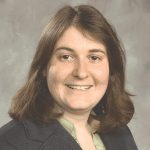
SPRINGFIELD — The trustees of the Community Foundation of Western Massachusetts (CFWM) announced the appointment of Megan Burke to the position of president and CEO. Burke has been a Community Impact officer at the Hartford Foundation for Public Giving for more than seven years, most recently serving as its director of Community Impact Grantmaking.

Burke has more than 20 years of experience in nonprofit management, strategic planning, and philanthropy. She will begin her tenure at the Foundation on Jan. 18, succeeding Katie Allan Zobel, who moved forward in her career on Oct. 1 after navigating the pandemic and a period of tremendous growth for the foundation.

Burke began her career working on international peace and security issues at the Ford Foundation and through the United Nations. She also lived in Nicaragua for several years, where her work supported the emerging LGBTQ+ movement and the development of a nationwide campaign to advance human rights. Prior to her most recent position at the Hartford Foundation, Burke led the Nobel Peace Prize-winning International Campaign to Ban Landmines, an international network of nonprofits engaged in advancing a ban on anti-personnel landmines and cluster munitions worldwide. She earned a bachelor’s degree from Wellesley College and a master’s degree from Yale University.

“On behalf of the trustees of the Community Foundation of Western Massachusetts, I am excited to share the news that we have selected our next president and CEO, and I am honored to welcome Megan Burke to the Foundation,” said Paul Murphy, chair of the CFWM trustees. “Megan is a dynamic, collaborative, and visionary leader with a deep understanding of philanthropy and community foundations. Her demonstrated commitment to advancing diversity, equity, and inclusion and supporting community engagement has been influenced by her multi-faceted lived experience. We look forward to her future contributions to advance our mission and strategic initiatives, all for the benefit of the communities we serve.”

Burke was selected as a result of an extensive local and national search conducted by Lindauer Associates in partnership with the foundation’s search committee, led by Murphy.

“As a resident of Western Mass., I am excited to be able to lead the well-respected Community Foundation of Western Massachusetts in advancing equity and opportunity for all residents of the Valley,” Burke said. “This region has enormous potential to be an even more vibrant community with all residents enjoying access to high-quality early-childhood care, more affordable post-secondary education and training, and a more inclusive, creative economy.

“Throughout my professional career, I have seen what can happen when people come together to address seemingly intractable problems,” she added. “I have been part of collective efforts that have resulted in a global ban on inhumane weapons, access to healthcare and education for LGBTQ+ residents of Nicaragua, and increased employment and food security for Greater Hartford residents. My work at the Hartford Foundation has demonstrated the critical role a community foundation can play in bringing people together, especially when that work is done inclusively.

“The Hartford Foundation has mobilized its resources to support efforts to shift power and promote more equitable economic and social mobility, including by opening its doors wider to effectively support smaller, and BIPOC-led, nonprofit organizations,” Burke went on. “I am eager to bring my passion for this work to the Community Foundation of Western Massachusetts, building on its strong reputation and the progress its staff has made to ensure CFWM is serving all residents of our region.”

Daily News

CHICOPEE — The Greater Chicopee Chamber of Commerce announced the four recipients of its prestigious Shining Stars Awards, to be recognized at the chamber’s annual gala event at the Castle of Knights on Friday, March 3 from 6 to 10:30 p.m.

McKinstry Market Garden Inc. will be recognized as the Greater Chicopee Chamber of Commerce Business of the Year. McKinstry has been selling fresh produce from its multi-generation farmland in Chicopee since 1908 when Willard McKinstry started his business from a market wagon. Now the business is run by grandson Willard McKinstry, his wife Nicole, and their two sons Will and Warren, with produce grown across farmland in Chicopee, Granby, and Hadley. In 2021, the McKinstry family opened a new farm store where their legacy roadside stand had been, reinvigorating the ability to provide their fresh-picked daily produce and more to Chicopee.

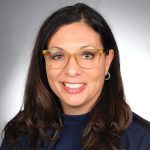
Judith Corridan Danek will be recognized as the Greater Chicopee Chamber of Commerce Citizen of the Year. Danek is the director at the Office of the President and Government Relations at Health New England. She’s lived most of her life in Chicopee, developing rich connections throughout the region. She has previously served as president of the Chicopee St. Patrick’s Day Committee and chairperson of the Colleen Ball. Some of her other volunteer activities include work with Mercy Medical Center, Springfield Museums, and animal-welfare advocacy.

Mim Zayas of Masis Staffing will be recognized as the Greater Chicopee Chamber Volunteer of the Year. Zayas has been an active part of the chamber since Masis Staffing (formerly United Personnel) became a member in 2005. She became a member of the board of directors in 2017, joined the executive committee in 2019, and became chair in 2021. She’s been an active member of the Shining Stars event committee for years and has been generous with her time throughout her tenure with the chamber.

Holyoke Community College will be recognized as the Greater Chicopee Chamber Nonprofit Organization of the Year. HCC has come a long way since 1946 when it was city-sponsored Holyoke Junior College. Today, it is the oldest two-year college in Massachusetts with one of the largest endowments of any in the U.S. HCC serves 9,000 students, represents $216 million in economic impact for the region (including about $43 million in payroll to local employees annually), and promotes a diverse workforce on an accessible campus. Current HCC President Christina Royal began her tenure in 2017 as the first female, queer person of color to hold the position.

Award recipients are selected by a nominating committee chaired by Ernest Laflamme Jr., the first Citizen of the Year in 1985, and comprised of Carol Campbell of Chicopee Industrial Contractors, Ted Hebert of Teddy Bear Pools, City Treasurer Marie Laflamme, Michael Siddall of Siddall & Siddall P.C., and Jeffrey Sattler of Liberty Bank.

Tickets to this year’s Shining Stars event cost $65 and go on sale Thursday, Jan. 12. To purchase tickets or inquire about sponsorships, visit www.chicopeechamber.org or call the chamber office at (413) 594-2101.

Daily News

NORTHAMPTON — Jake Hooker, a 2012 Northampton High School graduate, has passed the state’s bar exam and joined his father, Michael Hooker, in Hooker’s legal firm, Attorney Michael Hooker Elder Law, which serves elders and those living with disabilities.

“We are so excited with Jake’s success on the recent exam and pleased to have him working in the firm. We will work together to provide the high-quality, personalized services we are known for, and one day, Jake will take over the firm and lead it into the future,” Michael Hooker said.

Jake Hooker is the second attorney at the firm, which also includes a Medicaid specialist, a social worker, a financial specialist, and two specialized paralegals. The practice is unique; its services extend beyond the realm of the law to provide financial and social services for elders and their families.

Hooker began interning at the firm while he was attending Northampton High School and continued to assist while at Greenfield Community College and UMass Amherst, where he earned a bachelor’s degree in political science.

Hooker graduated from Northeastern University School of Law in 2022. While there, he completed two internships — one at Attorney Michael Hooker Elder Law and one with the Executive Office of Health and Human Services at the General Counsel’s Office, where he assisted the MassHealth Estate Recovery Unit as well as the Litigation Department.

Daily News

EASTHAMPTON —Matthew Sosik, president and CEO of bankESB, announced that the bank’s second annual Neighbors Helping Neighbors fundraising drive raised $35,000 for local food pantries.

The appeal is part of bankESB’s charitable giving program, called the Giving Tree, which reflects the bank’s commitment to making a difference in the neighborhoods it serves. Throughout the month of November, the bank invited customers, employees, and members of the community to donate funds at bankESB branches. All donations received were matched, dollar for dollar, by bankESB and the total divided among food pantries in Western Mass. communities the bank serves.

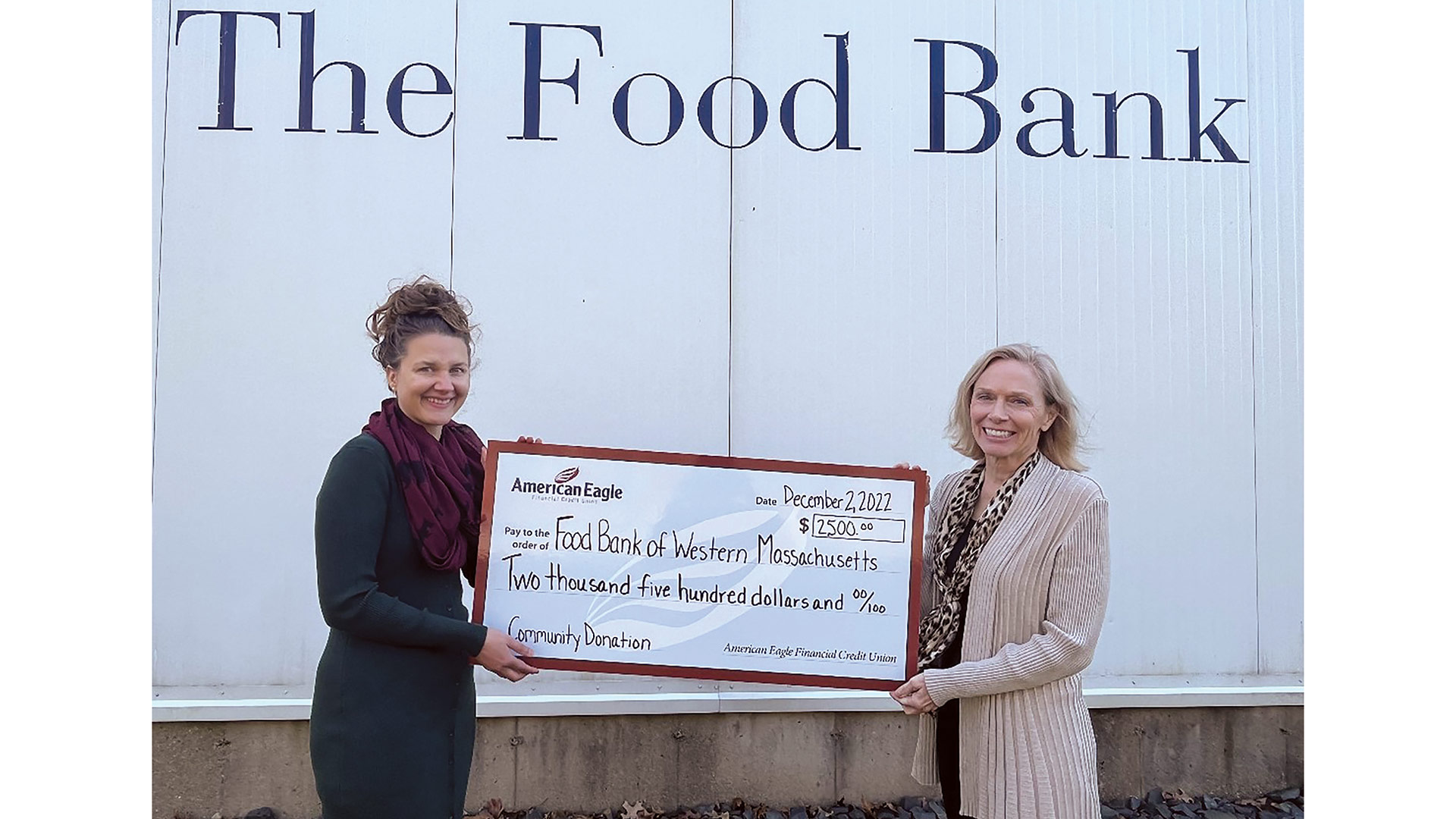
Each of the participating food pantries received $2,500 to help feed families in need:

Amherst Survival Center Food Pantry; Best Life Food Ministry, Agawam; BUCC Helping Hands Cupboard Food Pantry, Belchertown; Chicopee Cupboard; Easthampton Community Center Food Pantry; Easthampton Congregational Church Food Cupboard & Oasis Kitchen; the Food Bank of Western Massachusetts, Hatfield; Hadley Food Pantry; Hilltown Food Pantry, Goshen; Margaret’s Pantry, Holyoke; Neighbors Helping Neighbors Inc., South Hadley; Northampton Survival Center; Southampton Community Cupboard; and Westfield Food Pantry.

“bankESB would like to thank everyone who selflessly donated to our Neighbors Helping Neighbors campaign,” Sosik said. “We’re pleased that these food pantries received much-needed funds in time for the holiday season.”

Daily News

BOSTON — Massachusetts employers ended a seesaw 2022 less confident in the economy than 12 months earlier, but nevertheless optimistic about their prospects in 2023.

The Associated Industries of Massachusetts (AIM) Business Confidence Index lost 4.7 points to 54.0 during December, giving up part of a large increase posted in November. The Index ended the year 2.7 points lower than its level of December 2021.

Employers remain concerned that efforts by central banks to moderate inflation by raising interest rates will slow the economy, perhaps into recession. At the same time, labor remains in tight supply, with many employers continuing to struggle to hire and retain employees.

“The path to 2% inflation will inevitably be painful. Most economists forecast a recession in the first half of 2023, led by declines in residential investment, commercial construction, inventory investment, and consumer spending on goods,” said Sara Johnson, chair of the AIM Board of Economic Advisors (BEA).

Participants in the Business Confidence Index survey reflected the shift in concern from rising prices to slowing growth. “I anticipate a recession in the second half of 2023, just beyond the six-month window of the survey,” one employer wrote.

The AIM Index, based on a survey of more than 140 Massachusetts employers, has appeared monthly since July 1991. It is calculated on a 100-point scale, with 50 as neutral; a reading above 50 is positive, while below 50 is negative.

The constituent indicators that make up the Index were uniformly lower during December. The confidence employers have in their own companies fell 5.6 points to 57.2, ending the month 2.7 points below December 2021.

The Massachusetts Index assessing business conditions within the Commonwealth declined 3.6 points to 52.6, down 3.0 points from a year earlier. The U.S. Index measuring conditions throughout the country lost 2.4 points to 46.2 to remain in pessimistic territory for the third consecutive month.

The Current Index, which assesses overall business conditions at the time of the survey, fell 5.0 points to 55.7. The Future Index, measuring projections for the economy six months from now, lost 4.2 points to end the month at 52.4.

The Manufacturing Index declined 1.0 point to 55.3, compared to a 53.5 reading among non-manufacturing companies. The Employment Index lost 2.8 points to 55.7 as employers continued to scour a tight labor market for qualified workers.

Medium-sized companies (56.1) were more optimistic than large companies (53.8) or small companies (51.1).

Nada Sanders, Distinguished Professor of Supply Chain Management at Northeastern University, said the global supply-chain interruptions that have exacerbated inflation are slowly easing.

“With financial conditions tightening, a deceleration in goods demand is enabling supply to catch up, relieving bottlenecks,” she said. “Earlier fears of component shortages led to an inventory buildup that can now be strategically scaled back. The rebalancing of supply and demand has relieved congestion at ports and brought down shipping rates. Nevertheless, caution is needed as many potential supply-chain interruptions remain on the horizon.”

AIM President and CEO John Regan, a BEA member, said employer confidence varied widely during 2022 as the Federal Reserve attempted to harness inflation without sending the economy into recession.

“It was a year in which employers faced a multitude of challenges, from untangling supply systems and managing labor costs to retaining workers and processing new patterns of post-COVID customer behavior,” Regan said. “The good news is that Massachusetts remains well-positioned as a global center of technology and commerce and should be able to ride out an economic slowdown better than most states.”

Daily News

SPRINGFIELD — The Naismith Basketball Hall of Fame and LEARFIELD announced an agreement with Morgan Stanley Global Sports & Entertainment centered around the Spalding Hoophall Classic high-school showcase. Through this relationship, Morgan Stanley will develop a tailored financial-literacy program for some of the top prep basketball student-athletes in the country and lead an in-person seminar for this year’s participants inside the newly renovated Basketball Hall of Fame on Sunday, Jan. 15.

Additionally, Morgan Stanley and the Basketball Hall of Fame will, together, honor the late Martin Luther King Jr., paying tribute to his life and legacy across all five nationally televised (on ESPN) Hoophall Classic games on Monday, Jan. 16.

“The Naismith Basketball Hall of Fame is excited to partner with Morgan Stanley to heighten the Hoophall Classic experience for the future stars of our game,” said John Doleva, president and CEO of the Naismith Basketball Hall of Fame. “The Naismith Basketball Hall of Fame prides itself on its commitment to developing these world-class prep athletes on and off the court. Introducing financial literacy to these young players who will likely start receiving NIL money and/or sign professional contracts in the immediate future is arguably one of the most essential skills we can give them.”

Sandra Richards, head of Morgan Stanley Global Sports & Entertainment, added that “we look forward to working with the Naismith Basketball Hall of Fame and LEARFIELD to deliver our fundamental financial-literacy programming to some of the nation’s best and brightest prep athletes, coaches, and staff. The Naismith Basketball Hall of Fame is a historic and globally renowned pillar to the sport of basketball and its culture. We are excited to collaborate with the Hall to prepare and empower these young men and women for the next phase of their educational, personal, and professional journeys. We believe financial education is a critical component to that effort.”

This year will mark the 21st year of the Hoophall Classic. The event will feature 31 games played over five days, throughout Martin Luther King Day weekend, at Springfield College. This year’s field, which boasts teams from 17 states, will feature 39 total players (34 boys and five girls) in ESPN’s Top 100 from the class of 2023.

Over the years, the Hoophall Classic has hosted more than 150 future NBA players during their prep careers, including Kevin Durant (2006), Kyrie Irving (2010), Anthony Davis (2011), Ben Simmons (2015), Jayson Tatum (2016), Zion Williamson (2018), and Anthony Edwards (2019-20); and featured the first five players taken in the 2021 NBA Draft: Cade Cunningham, Jalen Green, Evan Mobley, Scottie Barnes, and Jalen Suggs.

Daily News

LONGMEADOW — It’s been one year since One Way Brewing opened its taproom at 807 Maple Road in Longmeadow. In that year, the One Way crew has welcomed thousands of customers, released more than two dozen new beers, and made lots of friends in the community.

“It’s hard to believe the taproom has been open for a year,” co-owner Jason Tsitso said. “We have a lot of plans for this second year, starting with the addition of Sunday hours and, hopefully, an outdoor patio in the spring.”

In recognition of and gratitude for this milestone, One Way Brewing is hosting a celebration on Sunday, Jan. 22 from 1 to 6 p.m. at the brewery. The event will feature live music from 2 to 5 p.m. by the Hard to Read band, as well as the release of a New England IPA anniversary beer that will be brewed only for this occasion.

But that’s not all Tsitso and co-owner Zach Schwartz have up their sleeves; One Way Brewing will also be partnering with Fletcher’s BBQ Shop and Steakhouse on this day. For those who got a taste of Fletcher’s BBQ at the town’s Fall Festival and are craving another helping, this might be the only chance to taste this barbecue before the restaurant officially opens on Longmeadow Street this spring.

Guests are welcome to come in, sit down, listen to music, enjoy a pint or two, and order food to eat on-site. However, the barbecue sells out fast, so the other option is to pre-order a Beer and BBQ Box ahead of time. There will be two pickup times for the takeaway Beer and BBQ Boxes: noon to 1 p.m. and 3 to 4 p.m. Pre-orders placed before noon on Sunday, Jan. 15 are guaranteed to walk away with a four-pack of the One Way anniversary beer and a barbecue meal that includes a full rack of ribs or chicken wings, one quart of pit-smoked beans, and one pint of coleslaw. The Beer and BBQ Box feeds two hearty eaters/drinkers, or four average eaters/drinkers. The cost of the Beer and BBQ Box is $79.95. To pre-order, visit www.1waybrewing.com/one-year-anniversary.

“Zach and I would like to thank everyone who supported us this past year, from our awesome patrons to our One Way family,” Tsitso said. “But, to quote Bill Belichick, we’re on to year two.”

Daily News

DEERFIELD — Now through Feb. 3, Community Involved in Sustaining Agriculture (CISA) is accepting pitches for its live storytelling event, Field Notes, to be held this spring at the Academy of Music in Northampton.

Community members who are selected as storytellers will share true, short stories based on personal experience with local food or farming. No prior storytelling experience is necessary, and any story strongly related to local food or farming will be considered. Previous stories have included a single mother facing food insecurity whose life was changed by a farmshare, the chaos of herding sheep and children at a summer farm camp, fried green tomato hornworms, and much more.

“We hear so many great stories in our work, and Field Notes is a way to shine a light on the many ways that local food and farming have impacted lives, in ways big and small, across the region,” said Philip Korman, CISA’s executive director. “We’re delighted that Field Notes will be an in-person event again for the first time since COVID hit, especially since 2023 is CISA’s 30th-anniversary year.”

All performers will have the opportunity to workshop their stories and learn performance techniques with a professional storyteller ahead of the show. Financial assistance for participation time and childcare is available. If Spanish is a storyteller’s most comfortable language, CISA will work to provide interpretation.

Community members can learn more about the event and submit a written story pitch on CISA’s website at www.buylocalfood.org/pitch. Pitches may also be left as voicemails in English, by calling (413) 247-4153, or Spanish, by calling (413) 453-9245.

Business Talk Podcast Special Coverage

We are excited to announce that BusinessWest has launched a new podcast series, BusinessTalk. Each episode will feature in-depth interviews and discussions with local industry leaders, providing thoughtful perspectives on the Western Massachuetts economy and the many business ventures that keep it running during these challenging times.

Go HERE to view all episodes

Episode 144: January 9, 2023

George talks to  Rick Sullivan, president and CEO of the Western Mass Economic Development Council

Rick Sullivan

As 2023 begins, there are many question marks —as well as an abundance of cautious optimism — concerning the region and it’s economy. On the next installment of BusinessTalk, BusinessWest Editor George O’Brien and his guest, Rick Sullivan, president and CEO of the Western Mass Economic Development Council, sort through it all, touching on everything from workforce issues to the prospects for needed growth and new jobs. It’s all must listening, so tune in to BusinessTalk, a podcast presented by BusinessWest in partnership with Living Local 413 and sponsored by PeoplesBank.


Sponsored by:

Also Available On

Daily News

AMHERST — The Amherst Area Chamber of Commerce invites the public to the newest office location in Amherst for long-time trust, estate, and real-estate lawyers Legacy Counsellors, P.C. The ribbon cutting and open house will take place on Wednesday, Jan. 11 at 4 p.m. at 437 Main St., Amherst. Attendees can receive a tour and enjoy appetizers and refreshments from Myers Catering of Easthampton.

Since its founding in 1994, Legacy Counsellors, P.C. has focused on helping families create a lasting legacy. Following itsmerger with Gove Law Office in 2022, it has expanded its offerings to include residential and commercial real-estate transactions.

“As a vibrant and growing law firm, we are very excited to be expanding our footprint in the greater Amherst area and look forward to working with area residents and professionals in all our work,” partner Michael Gove said.

Daily News

SPRINGFIELD — American International College (AIC) announced it has received a $35,000 grant from the Irene E. & George A. Davis Foundation to support the college’s commitment to embracing diversity and fostering a sense of belonging.

The grant will assist in establishing an Office of Diversity, Equity, Inclusion, and Belonging (DEIB) on campus to expand the breadth and scope of activities and initiatives that support the College’s DEIB objectives as outlined in AIC’s newly released five-year strategic plan, “AIC Reimagined.” On Dec. 6, the college also received a $30,000 grant from the Community Foundation of Western Massachusetts to support the establishment of this office. With these grants, the creation of the Office of Diversity, Equity, Inclusion, and Belonging will help AIC create and sustain an organizational environment and culture that readily acknowledges and celebrates DEIB by achieving a more diverse and inclusive undergraduate and graduate student body, faculty, and staff.

“We are proud to be selected by the Irene E. & George A. Davis Foundation as a partner making an impact on the lives of those living in Hampden County,” said Joe Long, AIC’s interim vice president for Institutional Advancement. “Their investment in AIC, our mission, and our new strategic plan is inspiring. We are committed to rewarding their belief in AIC by working tirelessly to create a robust DEIB program that connects all students, faculty, staff, and community members and AIC.”

The Irene E. & George A. Davis Foundation supports a variety of nonprofit organizations seeking to improve quality of life for those living in Hampden County, with a particular focus on areas such as education, the arts, social services, and health.

Daily News

HOLYOKE — The Young Professional Society of Greater Springfield (YPS) will kick off the new year with two January events, including a Leadership Luncheon on economic development and tourism on Tuesday, Jan. 10 at Venture X Holyoke at noon, and its annual membership-drive networking event on Thursday, Jan. 19 from 5:30 to 7:30 p.m. at Springfield Country Club.

YPS’ first Leadership Luncheon of the year will feature a panel of local professionals, including Diana Syznal, president of the Springfield Regional Chamber; Michele Goldberg, vice president of Marketing for the Greater Springfield Convention & Visitors Bureau; and Xiomara Albán DeLobato, chief of staff for the Western Massachusetts Economic Development Council (EDC). The panel will discuss the many ways young professionals are drawn to the Western Mass. region, the challenges that command their attention, and how the community can work together to make Greater Springfield a better place to work, live, and thrive. Advance registration is required; admission is free for YPS members and $10 for non-members.

YPS will then host its ‘Throwback’ Third Thursday membership drive and board alumni night, hosted by former YPS board members Amie Miarecki and Alfonso Santaniello. Presented by the Westfield Starfires with support from America’s Box Choice and LiftTruck Parts & Service, the event will feature discounted membership rates, available exclusively on the night of the networking event. The membership drive begins at 5:30 p.m. and is free and open to anyone who wishes to attend.

Former YPS board of directors members are encouraged to attend the event early for a cocktail hour from 4:30 to 5:30 p.m. to celebrate the 15th anniversary of YPS. The champagne toast will be sponsored by Sumner & Toner Insurance Agency Inc. and NRG Real Estate. Advance registration is requested.

“YPS events help retain individuals who are enthusiastic about the future of the community and their personal endeavors,” YPS President Heather Clark said. “YPS is here to exchange ideas, share common interests, and cultivate membership to serve as local leaders of tomorrow. We’re hopeful that our monthly events will make it easier to make meaningful connections that will help local young professionals thrive.”

To register for either or both of YPS’ January events, visit www.springfieldyps.com/events. To sponsor an event, email [email protected].

Daily News

WASHINGTON, D.C. — National non-residential construction spending grew 0.9% in November, according to an Associated Builders and Contractors (ABC) analysis of data published by the U.S. Census Bureau. On a seasonally adjusted annualized basis, non-residential spending totaled $930.1 billion for the month.

Spending was up on a monthly basis in nine of the 16 non-residential subcategories. Private non-residential spending was up 1.7%, while public non-residential construction spending was down 0.1% in November.

“The average non-residential contractor starts 2023 with considerable backlog,” ABC Chief Economist Anirban Basu said. “Not coincidentally, contractors also have significant confidence regarding current-year prospects, according to ABC’s Construction Confidence Index, which indicates expectations for growth in sales and employment with margins remaining stable.

“November’s construction spending report suggests that this confidence is warranted,” Basu noted. “However, there are countervailing considerations. First, growth in non-residential construction spending in November was not especially broad. Much of the growth came from the manufacturing category, which is partially attributable to construction related to large-scale chip-manufacturing facilities. The balance of growth came mostly from conservation and development, which includes flood-control expenditures. Were it not for those two categories, non-residential construction spending would have been roughly flat in November.

“Second, backlog could dry up,” Basu went on. “Anecdotal evidence suggests that banks are more cautious in their lending to the commercial real-estate and multi-family segments. Fears of recession this year remain pervasive in an environment characterized by high and rising interest rates. It will be interesting to see how well backlog will hold up as contractors continue to build and the economy heads toward what is likely to be a Federal Reserve-induced recession.”

Daily News

SPRINGFIELD — New England Public Media has hired local radio personality Monte Belmonte as host and executive producer of a new radio show and podcast celebrating life in Western Mass. Belmonte comes to New England Public Media (NEPM) from 93.9 the River/WRSI, where he’s hosted the popular “Mornings with Monte” since 2006. The new show and podcast will launch later this winter.

“When you listen to Monte Belmonte, you hear not only a great host with a devotion to his craft, but also a person who is committed to building and bolstering his community,” said NEPM President Matt Abramovitz, who came to NEPM in February 2022. “Sharing the unique voices and stories of our region and using the airwaves for the common good is what public media is all about. We are excited to have Monte bring his enthusiasm and love of Western Massachusetts to NEPM each day.”

Belmonte will be joined by Kaliis Smith, who also comes to NEPM from the River, where she hosted weekday evenings and was a regular guest on “Mornings with Monte.” Smith will be the show’s digital producer and will join Belmonte on air. Belmonte plans to bring some of his regular guests and popular segments to the live, daily program, along with new segments and opportunity for regular audience call-ins. The show will be available as a podcast and on YouTube. Belmonte will also have a presence at NEPM events and other station initiatives.

“I’ve been a huge fan of New England Public Media since I moved west of Worcester 20 years ago,” Belmonte said. “The station’s trusted reputation and broad reach was a big draw for me, as was the opportunity to work alongside people I’ve known and admired for years. I’m excited to get to work building a new show that’s all about celebrating what’s good about living here, meeting interesting neighbors and being a better community because of it.”

Daily News

PITTSFIELD — Entrepreneurship for All (EforAll) Berkshire County will celebrate the graduates of the 2022 fall accelerator program and award $12,500 in seed capital, which includes a $2,500 award from the Lee Bank Foundation, at the Berkshire Innovation Center on Thursday, Jan. 12 at 5:30 p.m.

EforAll Berkshire County began its sixth accelerator in September and will celebrate the 19 individuals (representing 13 businesses) completing the intensive program. They spent 12 weeks learning from experts on a variety of topics about business. With the help of 38 volunteer mentors, the entrepreneurs have developed plans to take their businesses to the next level.

The ceremony will feature remarks by EforAll mentor and local business owner Diana Wall, a speech presented by one of the graduating cohort members, and distribution of the $12,500 prize pool. Prior to the ceremony, EforAll alumni from all six cohorts have been invited to table and showcase their businesses. The event is catered by MadJacks BBQ.

Pre-registration is encouraged. To register, visit bit.ly/GalaShowcaseJan12.

Daily News

WORCESTER — Tye Jordan, regional director of Cinch I.T., will describe insights and best practices in traversing modern-day cybersecurity for all types of businesses and industries in a talk titled “Cybersecurity and Technology with Pro Tips” at a virtual meeting of the Communicators Club (TCC) on Tuesday, Jan. 10.

The Zoom-based program will run from noon to 1:15 p.m. The cost for TCC non-members is $15; the event is free for TCC members. The individual membership fee of $50 per year includes no charge for online programs and a $15 discount on in-person events. To register, visit conta.cc/3gN3g3c. The membership page is at bit.ly/3T7VLSt.

The pandemic changed work for employees and businesses alike in the U.S. as more people began working remotely. The trend is expected to continue into 2023. Noting the growing dependency on having a workforce split between traditional offices and remote work, Jordan will discuss how businesses can best protect both themselves and their employees when navigating this new age of IT organizational dynamics. Those in attendance will leave this session with an understanding and a keen awareness focused on the security of their day-to-day technology.

Daily News

NORTH ADAMS — Community members and residents are invited to downtown North Adams today, Jan. 6, for the monthly FIRST Friday event. This month’s theme is “Fresh Start,” a time for residents, businesses, and visitors to reflect, prioritize, find new ways to stay physically active and mentally healthy, and come together as a community.

Downtown businesses will have extended hours, and many businesses and galleries will be hosting openings, closings, and other special events focused on starting fresh. The following events have been planned by downtown businesses and organizations: candlelit yoga at North Adams Yoga at 6 p.m., live music at Hearts Pace Tea & Healing Arts Lounge, a Future Labs Gallery reception at 6 p.m., a firepit and hot chocolate outside First Baptist Church hosted by the youth group, and a ‘gong bath’ performed by Howard Rosenberg from Anahata Schoolhouse Yoga and Wellness Center at 5:30, 6:30, and 7:30 p.m.; gong baths are a form of meditation where one ‘bathes’ in the healing vibrations of sound.

Law

Five Important Things to Know Going into 2023

By Amelia J. Holstrom, Esq. and John S. Gannon, Esq.


Massachusetts employers are used to the ever-changing employment-law landscape. As we close out another year and ring in a new one, it is clear that 2023 will bring new challenges and new requirements for employers throughout the Commonwealth.

AMelia Holstrom

Amelia Holstrom

John Gannon

John Gannon

We’ve rounded up the top five things employers need to know and keep an eye on as we turn the page to 2023.


Decision on Micro-units May Be Troubling for Employers

When a union attempts to organize a group of employees at a business, it files a representation petition with the National Labor Relations Board (NLRB), identifying the proposed bargaining unit, which is the group of employees the union seeks to represent and who will be eligible to vote on whether it gets to do so. Sometimes, employers will seek to add additional employees to the union’s proposed bargaining unit, as larger proposed bargaining units may be favorable for employers in representation elections.

In a recent decision, American Steel Construction, the NLRB, which interprets and enforces the National Labor Relations Act (NLRA), gave a powerful tool to unions by clearing the way for small bargaining units, often called ‘micro-units.’ Specifically, the board decided that it will approve a smaller subdivision of employees as a bargaining unit if they meet certain criteria.

Under this standard, unions are likely to be very successful in getting the NLRB to approve micro-units. As a result, employers are placed at risk of having to bargain with several small units of employees in one workplace.


NLRB to Surveil Employers’ Surveillance Measures

Businesses regularly monitor employees in the workplace. For example, employers may monitor telephone calls for quality-assurance purposes, install cameras in the workplace or dashcam systems in vehicles, or monitor communications sent and received on employer-owned devices. Such monitoring appears be under attack by the NLRB.

In early November 2022, the general counsel of the NLRB issued a memorandum regarding employee surveillance, in which she urges the NLRB to adopt a “new framework” for determining whether employer surveillance violates the law. Under this framework, violations may occur when the surveillance would tend to interfere with an employee’s rights under the NLRA or “prevent a reasonable employee from engaging” in activity protected by the NLRA.

“In a recent decision, American Steel Construction, the NLRB, which interprets and enforces the National Labor Relations Act (NLRA), gave a powerful tool to unions by clearing the way for small bargaining units, often called ‘micro-units.’.”

This could involve employee surveillance of suspected organizing activity. The employer will then get the opportunity to explain their legitimate, business-based reasons for the surveillance. At that point, the new proposed framework would require the NLRB to weigh the employer’s business needs for the surveillance against the rights afforded to employees under the NLRA. If the NLRB determines that the employer’s reasons outweigh the rights of employees, the NLRB will require the employer to disclose all electronic monitoring, the reasons for doing so, and how the employer uses the information it obtains. This crackdown on employee surveillance impacts unionized and non-unionized workplaces alike.


Update That Handbook for New Protected Characteristics

Massachusetts law prohibits employers from discriminating against employees based on a number of protected characteristics, including but not limited to race, color, sexual orientation, and gender identity. Effective Oct. 24, 2022, Massachusetts added natural and protective hairstyles to the list of protected characteristics under the law.

Accordingly, employers need to update their handbooks and other policies to reflect the additions. Your handbook should also include language on many other employment laws, including the state Paid Family and Medical Leave Act.


Changes to Paid Family and Medical Leave

Speaking of the Massachusetts Paid Family and Medical Leave Act, last month the Department of Family and Medical Leave released updated model notices reflecting new contribution rates effective January 1, 2023. If you have not already done so, those new notices need to be distributed to your entire workforce as soon as possible. Employers should also ensure that their payroll providers are planning to implement this change.

The department also updated the mandatory PFML workplace poster, which should be posted in a location where it can be easily read by your workforce. The poster must be available in English and each language which is the primary language of five or more individuals in your workforce, if these translations are available from the department.

The department is also considering changes to the PFML regulations intended to clarify employer obligations to maintain employment-related health-insurance benefits while employees are out on leave. Stay tuned in 2023 for developments on these proposed regulations.


Speak Out Act Requires Changes to Employment Agreements

On Dec. 7, 2022, President Biden signed the Speak Out Act into law (see story on page 27). The new law prohibits employers from including non-disclosure and non-disparagement provisions applicable to sexual-assault and sexual-harassment allegations and claims in agreements executed before the allegation or claim arises. It does not impact agreements with those provisions entered into after such a claim arises.

Although it may seem insignificant because it only applies to pre-dispute agreements, employers need to carefully review their confidentiality, employment, and other agreements executed by employees and ensure that the non-disclosure and non-disparagement paragraphs in those agreements do not prohibit the employee from disclosing or discussing sexual-assault or sexual-harassment allegations or claims. Employers would be prudent to include language carving out those claims.

Businesses are encouraged to continue to consult with counsel regarding these changes in labor and employment laws. The team at Skoler Abbott also wishes readers a happy and prosperous new year.


Amelia Holstrom and John Gannon are attorneys at Skoler, Abbott & Presser, P.C. in Springfield; (413) 737-4753; [email protected]; [email protected]

Law

Talking Points

By Briana Dawkins, Michael Roundy, and Mary Jo Kennedy


Effective Dec. 7, 2022, a new federal law, the Speak Out Act, limits the enforceability of pre-dispute non-disclosure and non-disparagement agreements relating to sexual-harassment or sexual-assault disputes in the workplace. Such agreements that were entered into before an actual dispute arises are now unenforceable.

Brianna Dawkins

Brianna Dawkins

Michael Roundy

Michael Roundy

Mary Jo Kennedy

Mary Jo Kennedy

The Speak Out Act defines a pre-dispute agreement as one that is entered into between an employer and an employee before a sexual-harassment or assault dispute ‘arises’ — that is, before an allegation of sexual assault and/or harassment is made. Often, employers require employees to sign non-disclosure and non-disparagement agreements upon commencement of employment in order to protect confidential or otherwise private employer information. Under the Speak Out Act, these clauses can no longer be enforced with respect to any sexual-harassment or sexual-assault claim that may arise in the future.

A non-disclosure clause is defined in the act as “a provision in a contract or agreement that requires the parties to a contract and/or agreement not to disclose or discuss conduct, the existence of a settlement involving conduct, or information covered by the terms and conditions of the contract or agreement.” A non-disparagement clause is “a provision in a contract or agreement that requires one or more parties to the contract or agreement not to make a negative statement about another party that relates to the contract, agreement, claim, or case.”

A sexual-harassment dispute involves “conduct that is alleged to constitute sexual harassment under the applicable federal, tribal, or state law.” A sexual-assault dispute involves a “non-consensual sexual act or sexual contact, as such terms are defined in [federal criminal law] or similar applicable tribal or state law, including when the victim lacks capacity to consent.”

The act’s protections apply not only to complaints of sexual harassment or sexual assault towards an employee, but also to complaints about sexual harassment and assault involving other individuals. The act’s provisions do not prohibit an employee and an employer from entering a non-disclosure or non-disparagement agreement after a complaint of sexual harassment or assault has arisen. Thus, the act does not prohibit such clauses, for example, in agreements settling sexual-harassment or sexual-assault claims after they are asserted. However, employers should exercise caution, as such clauses in settlement agreements may have significant tax implications for employers under the 2017 Tax Cuts and Jobs Act.

“The act’s protections apply not only to complaints of sexual harassment or sexual assault towards an employee, but also to complaints about sexual harassment and assault involving other individuals.”

The congressional rationale expressed through the language of the act is clear. Many women who experience sexual harassment in the workplace are forced to leave their jobs or their industries, or to pass up opportunities of advancement. According to the congressional findings identified in the act, one in three women face sexual harassment or assault in the workplace, approximately 90% of whom never file a formal complaint.

The congressional findings also state that non-disclosure and non-disparagement agreements between employers and current and former employees, prospective employees, and independent contractors can perpetuate illegal conduct by silencing survivors of illegal sexual harassment and assault. Therefore, Congress finds that prohibiting such non-disclosure and non-disparagement clauses will empower survivors to speak out, hold perpetuators accountable, improve transparency around illegal conduct, and make workplaces safer and more productive for everyone.

The Speak Out Act complements the enactment earlier this year of the Ending Forced Arbitration of Sexual Assault and Sexual Harassment Act (EFASASHA). That act, which applies to employers subject to the Federal Arbitration Act, prohibits mandatory arbitration agreements between employers and employees for sexual-harassment and sexual-assault disputes. It also applies retroactively to arbitration agreements between employers and employees that have already been entered into containing such mandatory arbitration provisions.

Following the enactment of the Speak Out Act and the earlier EFASASHA, employers are encouraged to be proactive about compliance and should review their template releases and agreements to ensure that pre-dispute non-disclosure and non-disparagement agreements do not violate these laws.

It bears noting that the Speak Out Act does not invalidate non-disclosure and non-disparagement agreements relating to claims which do not involved sexual harassment or sexual assault. Thus, employers may consider including ‘carve-out’ language for pre-dispute non-disclosure and non-disparagement agreements to make clear that the pre-dispute agreements do not apply to later-arising sexual-harassment or sexual-assault claims.

Employers should review their arbitration agreements and any language pertaining to future mandatory arbitration agreements to ensure sexual-harassment and assault claims are carved out from those provisions as well. Such agreements may be revised to include clear language indicating that, with regard to claims of sexual harassment or sexual assault, employee signatories will have a choice — they are not required to submit to arbitrations and may bring their claims in court. Employers may also wish to consider updating sexual-harassment policies in their employment handbooks to include similar clarifications.

In reviewing such employment agreements, confidentiality agreements, arbitration agreements, and employee handbook policies as they relate to sexual harassment and sexual assault for compliance with the Speak Out Act and the EFASASHA, it is recommended that employers seek legal advice and guidance from an experienced employment-law attorney.


Briana Dawkins, Michael Roundy, and Mary Jo Kennedy are attorneys in Bulkley Richardson’s Employment Law practice.

Health Care

One Step at a Time

[email protected]

Drew McConaha

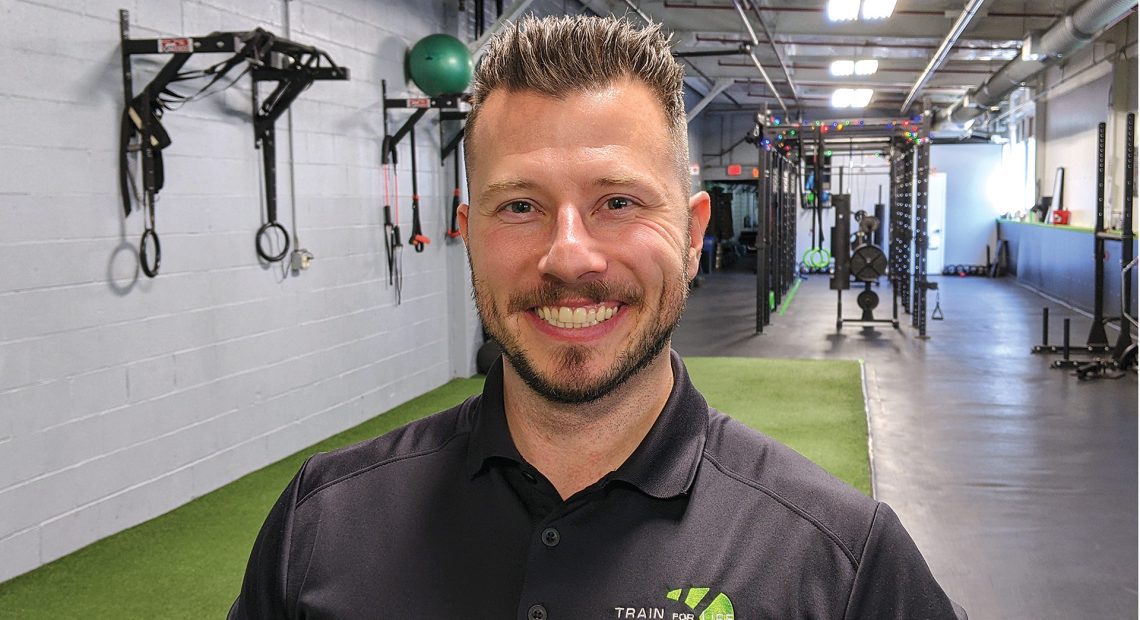
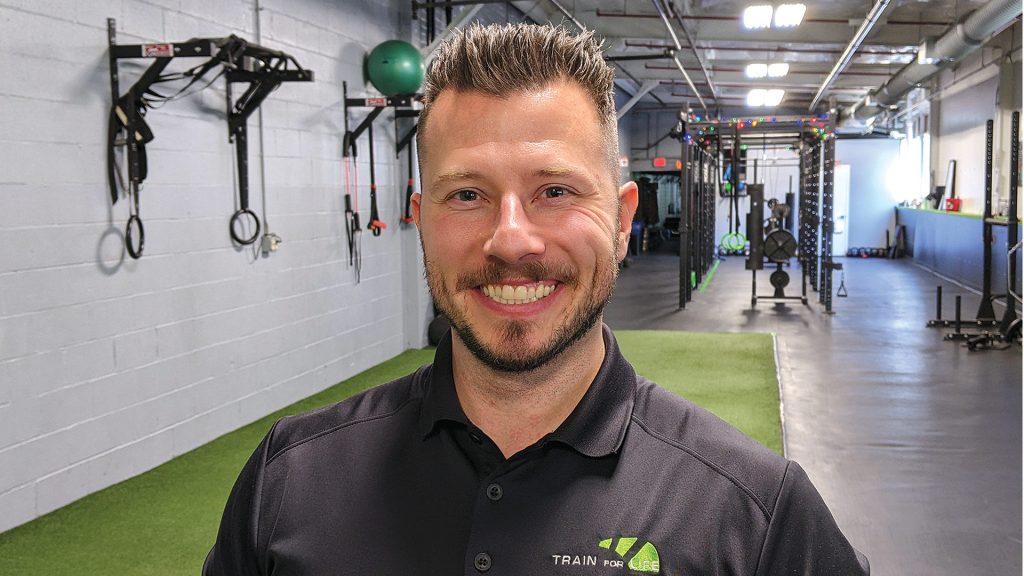
Drew McConaha says breaking a fitness plan into manageable steps is key to sticking to health resolutions.


Drew McConaha knows all about New Year’s resolutions. And he knows why so many of them fail.

In many cases, it’s a desire to do too much, too quickly, the owner of Train for Life in Chicopee said.

“When they’re setting those resolutions at the beginning of the year, most people want to do everything as fast as possible: ‘I want to get into the gym six days a week,’ or ‘I want to go on the latest diet craze.’ They want to go 100 miles an hour into that. But that doesn’t really work. Fitness is one of those things that needs to be a lifestyle change.”

At a time of year when people traditionally set goals for fitness, nutrition, and other types of wellness — and often leave them behind by February — area health experts told BusinessWest the same thing: starting small is key.

“Most everyone wants to set goals; they say, ‘I want to lose 10 pounds,’ or whatever,” said McConaha, who explained that he works with members to write those goals down, examine them, and then — this is key — setting small action steps to make them more manageable.

“When they’re setting those resolutions at the beginning of the year, most people want to do everything as fast as possible. But that doesn’t really work. Fitness is one of those things that needs to be a lifestyle change.”

“If you come to the gym three days a week for a year, after a year, you’re going to make a huge amount of progress,” he said. “But if you start out going to the gym five days in a row and you haven’t been exercising for 10 years, you’re very unlikely to get back there for week two, because you’re going to be so sore, and that’s unmotivating, because now you can’t move; you can’t go about your daily activities. Lots of times, that’s what derails people when they jump into something at the beginning of the year.”

That’s where having a coach can make a difference, he added. “We talk about smart goals all the time, having manageable, attainable, realistic goals. Having a very specific, small goal each day instead of focusing on the large goal — say, losing weight — will make it much more attainable.”

Dr. Kathy Mueller, who practices integrative medicine with Trinity Health of New England Medical Group, went even further, explaining a philosophy she shares with patients called ‘tiny habits,’ popularized by behavior expert and author BJ Fogg.

To start the journey toward changing a habit, she explained, “pick something that takes fewer than 30 seconds that builds toward the ultimate goal. Want to exercise in the new year? Instead of saying, ‘I’m going to the gym three times a week,’ try a tiny habit: ‘I’m going to put on my walking shoes,’ or ‘I’m going to put my gym bag in the front of the car.’”

The idea is that, by wearing walking shoes, someone is more likely to go for a walk, and by loading the gym bag in the car, they’re more likely to stop at the gym when out and about. And when they achieve those steps, they can add larger goals, always building on small victories, not frustrating failures, Mueller said. “Practicing tiny habits is clever because it’s built on success.”

In fitness goals, the goal is to move more, she said, so people should just start there. If they want to incorporate pushups, start with two — which often becomes five, then 10, and eventually maybe 50. Setting out a lunchbox by the coffee maker each morning might not lead to bringing a healthy lunch to work every day, but it might have that effect some days, meaning fewer fast-food runs each week.

“There’s this idea that one day you’re a smoker, and the next day you quit. But if you quit over four months, you still quit. Incremental steps work for a lot of people.”

Dr. Kathy Mueller

Dr. Kathy Mueller

“With nutrition, have one fruit or vegetable every time you eat. Want a bagel for breakfast? Great, but have fruit with it,” Mueller explained. “The idea is to anchor your tiny habits to something you’re going to do anyway.”

And for those who want to cut down their alcohol intake — which has risen, on average, for Americans during the COVID-19 pandemic — they don’t have to quit all at once, she added. “Have a glass of water with each beer. You’re still drinking and being social, but you’re cutting your alcohol intake in half.”


The How and the Why

It’s a common refrain among health practitioners: you don’t have to do everything; just do something. Even a 10-minute walk twice a day or one 20-minute walk per day can help someone reach a goal of 150 minutes of physical activity per week, said Patrick Schilling, manager of Cardiovascular Rehabilitation and Wellness at Baystate Health.

“We know physical activity feels good, improves sleep, and lowers stress, and taking care of your body may help you feel rejuvenated and will give you the extra energy you need,” he noted. “Don’t forget that children should also be reminded to stay active for at least an hour per day for optimal health. If you just can’t make it to the gym as regularly as you have in the past, you can try to keep moving in other ways. Don’t try to find that parking spot close to the mall entrance; instead, opt for one far away so that you will have to walk more. And take the stairs instead of the elevator or escalator.”

As an integrative medicine specialist, much of Mueller’s work is helping patients change habits and achieve lifestyle changes through complementary therapies. Some are dealing with chronic pain or other ailments, but most are trying to reach certain goals.

“Sleep is essential for our health and well-being, and getting a good night’s rest is important to help strengthen your immune system to fight infections, reduce stress, improve our mood, and to stay energized. Most adults function best with seven to eight hours of regular sleep.”

Dr. Karin Johnson

Dr. Karin Johnson

“Sometimes, people off more than they can chew. They decide to go to the gym for an hour three days a week, then life gets in the way, then it’s twice a week, then once, then the habit’s done,” she said, adding that it’s better to focus on little steps that then become bigger ones.

Take the notion that exercise isn’t impactful if it doesn’t get the heart rate up for an extended time. “That’s garbage. And one fewer cigarette is one fewer cigarette. It helps break a bad habit, as long as you have something to replace it with,” she said, adding that a good strategy is to delay how long you can go without one, and then keep extending that. “There’s this idea that one day you’re a smoker, and the next day you quit. But if you quit over four months, you still quit. Incremental steps work for a lot of people.”

McConaha said it helps many people to not only break down their goals into small, actionable steps, but actually treat those steps like appointments, not just vague intentions.

“If you’ve got a hair appointment, you’re going to show up. If you’ve got a dentist appointment, you’re going to show up at that time,” he explained. “A lot of people say, ‘I’m going to try to go to the gym tomorrow afternoon.’ Well, if you don’t have someone waiting for you there for that accountability, if you don’t have a specific appointment, it’s very easy for other things to get in the way.”

Just as important is understanding the ‘why’ behind a goal, he added.

You say, ‘hey, I want to start working out.’ But what does that mean to you? Why are you doing that? Why is that going to benefit you? How is that going to make you feel? Do you want to be around longer for your kids? Do you want to be able to do certain things you haven’t been able to do in the past? Adding that specific why behind what they’re doing makes a big difference.”


The Rest of the Story

Another golden rule for general wellness is to get plenty of rest, said Dr. Karin Johnson, director of the Baystate Health Regional Sleep Program

“Sleep is essential for our health and well-being, and getting a good night’s rest is important to help strengthen your immune system to fight infections, reduce stress, improve our mood, and to stay energized,” she explained. “Most adults function best with seven to eight hours of regular sleep.”

And any set of wellness goals should include taking care of mental health as well, which can especially suffer around and just after the holidays, said Dr. Stuart Anfang, vice chair of Psychiatry at Baystate Health.

“Don’t forget to take care of yourself emotionally as well as physically,” he urged. “Take relaxation breaks when needed; eat and drink in moderation; get plenty of sunlight, which helps avoid seasonal depression; avoid social isolation; and understand that you are not alone in feeling stressed. Volunteering and giving to others less fortunate is a great way to get perspective and feel better about your own situation and stressors.”

At the heart of every effective fitness or wellness plan is knowledge, McConaha said, as going to the gym with no plan or no information about the equipment will only lead to frustration.

“It’s easy to take on too much at once and feel defeated,” he told BusinessWest. “If you come in and do one exercise wrong, and your back doesn’t feel great after that, that’s one more obstacle to something that’s already very challenging for people.”

With the right — meaning realistic — plan, and the knowledge and commitment to follow it, anyone can make positive resolutions that don’t fall away by Groundhog Day, he added.

“Our bodies are meant to move, and no matter what age you’re at, there’s always something you can do,” he said, adding that he’s worked with people from age 7 to 97. “You can walk. You can do very scaled versions of exercises. It’s just matching up the right plan with the right person. The older people get, the more they feel they’re too old to start, but they’re not too old to do the right thing for them, whatever that might be.”


Daily News Employment Home Builders Home Improvement News Real Estate Real Estate

WASHINGTON, D.C. —The construction industry registered 388,000 job openings in November, according to an Associated Builders and Contractors (ABC) analysis of data from the U.S. Bureau of Labor Statistics’ Job Openings and Labor Turnover Survey, which defines a job opening as any unfilled position for which an employer is actively recruiting. Industry job openings declined by 2,000 in November but were up 22,000 from the same time last year.

“Once again, good news is bad news,” ABC Chief Economist Anirban Basu said. “The economy-wide number of job openings remained elevated at approximately 10.5 million in November, virtually unchanged from October’s revised estimate. That’s the key takeaway in a still-red-hot labor market, as many employers continue to aim for expanded capacity to satisfy unmet demand. That is the good news.

“The bad news is obvious,” Basu continued. “Despite raising interest rates during the last 10 months, the Federal Reserve is still grappling with an excessively tight labor market associated with rapid compensation cost increases. To return inflation to its 2% target, the Federal Reserve needs a looser labor market with fewer job openings, higher unemployment, and slower compensation growth. The implication is that interest rates will continue to rise, adding to construction project financing costs and potentially setting the stage for sharp declines in activity in many privately financed construction segments.”

Biz Tips & Industry News Daily News Green Business News

AGAWAM — Farmers in Western Mass. are invited to apply for Local Farmer Awards of up to $2,500. These awards are for capital/infrastructure improvement projects related to growing, harvesting, and processing that will help farms compete in the marketplace. The Harold Grinspoon Charitable Foundation, in partnership with Big Y and with the support of other funders, is entering the ninth year of the awards program, which has helped more than 235 farmers carry out a total of 474 projects.

Some examples of how the awards have been used include electric fencing, no-till equipment, irrigation improvements, frost-free water systems, feed troughs, and shade cloth for greenhouses.

“Farmers don’t typically ask for help,” philanthropist and project founder Harold Grinspoon said. “They are genuinely appreciative of these awards and use the money in creative ways for projects to help their farms grow.”

To be eligible, farms must have gross sales of $10,000 or above and either be a member of buy-local organizations Berkshire Grown or Community Involved in Sustaining Agriculture (CISA) or farm in one the four counties of Western Mass. For a full list of eligibility requirements and application information, farmers are encouraged to visit www.farmerawards.org. The deadline for applying is Jan. 31.

Business Management Daily News Education News

WESTFIELD — Westfield State University will host a virtual information session for the master of science in accounting (MSA) program on Wednesday, Jan., 25 at 6 p.m. via Zoom.

The graduate program is designed to foster leadership skills and prepare students for successful careers in public and private accounting. It allows students to complete the additional 30 credit hours necessary to fulfill the educational requirements for the , (CPA) license in Massachusetts and several other states.

The program offers a foundation curriculum for students who have an undergraduate business degree but lack the necessary coursework in accounting to complete a series of prerequisite courses as part of the master’s program. The advanced curriculum is for students with an undergraduate major or concentration in accounting. It is comprised of 10 courses (the majority are offered in a hybrid format, and certain courses are 100% online) that can be completed in only two semesters. The MSA program offers students flexibility and affordability to achieve a greater degree of sophistication in accounting.

Information-session attendees will have an opportunity to speak with faculty and members of the outreach team about the program and its application process. The $50 application fee will be waived for all attendees. To RSVP, visit www.gobacknow.com. For more information, call (413) 572-8461 or email [email protected].

Business Management Commercial Real Estate Daily News News Real Estate

SPRINGFIELD — After 13 years of ownership, MassDevelopment announced it has sold 1550 Main in Springfield to Mittas Holdings, LLC and DGP Properties, LLC, owned by Vidhyadhar “Vid” Mitta and Dinesh Patel, respectively. 1550 Main is a 130,000-square-foot building with a highly visible public plaza and 103 parking spaces below grade, with physical connections via skywalks to adjacent garages.

“Revitalizing underused commercial properties helps bring additional jobs, foot traffic, energy, and economic growth to a neighborhood,” said Housing and Economic Development Secretary Mike Kennealy, who chairs MassDevelopment’s board of directors. “MassDevelopment’s stewardship of 1550 Main has sparked new life in a prominent building in downtown Springfield and demonstrated the value of investing in and modernizing properties to meet the needs of communities today.”

MassDevelopment President and CEO Dan Rivera added that “working with tenants, partners, and the city of Springfield over the years allowed us to cultivate this property to its best and highest use. This type of focused teamwork is how long-lasting redevelopment takes root. It is what makes converting an old federal courthouse into a stunning multi-tenant office building possible.”

In 2009, MassDevelopment purchased 1550 Main from the federal government. On arrival, the property was 70% occupied and in need of significant upgrades. After exceeding all goals, including reaching a current occupancy level of 98%, MassDevelopment put the property up for sale to the CRE market through a disposition process to allow the agency to refocus its investment efforts elsewhere. Current 1550 Main tenants include the Springfield School Department, Baystate Health, the Internal Revenue Service, U.S. Immigration and Customs Enforcement, and regional offices for U.S. Sens. Elizabeth Warren and Ed Markey. The new ownership group will assume all existing lease agreements.

“I want to thank MassDevelopment President and CEO Dan Rivera and his dedicated team for their continued belief and investment in our Springfield,” Mayor Domenic Sarno said. “The property at 1550 Main Street is a key piece to the economic stability of our downtown. Dinesh Patel, Vidhyadhar Mitta, and their team have a proven track record of property ownership, management, investment, and economic development, as they are also the owners of our Springfield Tower Square property at 1500 Main Street since 2018, and oversaw the grand reopening of our iconic Marriott Springfield Downtown Hotel. All of this makes them the ideal owners to continue the advancement and oversight of this important and vital economic-development property. I have the full confidence that they will continue to enhance our downtown Springfield footprint while providing the same quality of investment and management to the existing tenants of 1550 Main Street, including our Springfield School Department.”

Said Mitta, “I thank all public officials and local communities for supporting us to make such investments in Springfield. We will continue to do our best to match MassDevelopment’s role.”

Added Patel, “I am very excited to continue the fantastic job done by the MassDevelopment team. As a local real-estate developer, I also greatly appreciate Mayor Sarno’s support and trust in continuing the success at 1550 Main.”

Features Special Coverage

Udderly Innovative

[email protected]
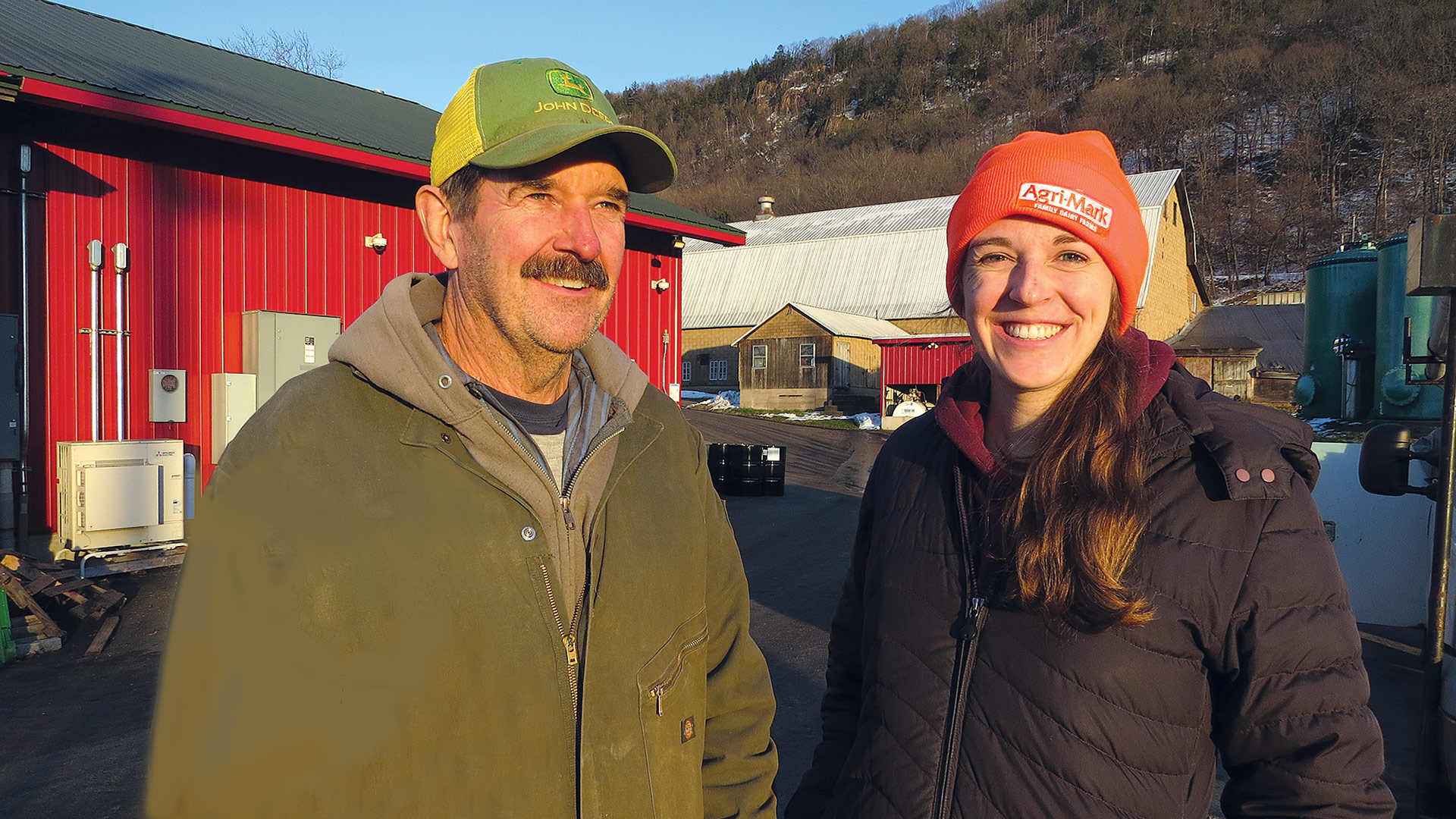
David Barstow and Denise Barstow Manz

David Barstow and Denise Barstow Manz are part of the sixth and seventh generations now carrying on traditions — and creating new ones — at the family farm in Hadley.
Staff Photo

While she grew up on her family’s dairy farm in Hadley and enjoyed that lifestyle, Denise Barstow Manz had no intention of making the 200-year-old operation a career.

“The farm was a place that was fun, and I had a really good time playing with my cousins, being around large animals, and being around nature — it was an amazing way to grow up,” she recalled. “And then, as I got older and I started to see the numbers and realized that the farm was a lot of hard work and not an easy path to wealth, I thought that maybe I should go and do something else.”

She attended the University of New Hampshire — in part because of its renowned dairy program, although she chose a different major — and would later move west and work for the National Park Service, with stints at Yellowstone and Glacier National Park in Montana. And it was while on these assignments that she began to rethink what she would do with her life — and why.

“It finally hit me when I was in Glacier,” she said. “I was a trail guide, and I saw these people donating money to preserve these places. And I thought, ‘if everyone’s giving to places like this, who’s taking care of the places we come from?’ I thought about who was taking care of the place I came from that has been in my family for more than 200 years — and I wanted to be part of that story.”

And with that decision, Barstow Manz would also become part — and she stressed that word part early and quite often, because this is truly a family affair — of one the region’s more intriguing business stories: Barstow’s Longview Farm.

“This is a good place to raise a family in a multi-generational business — everyone can see how life works; the goal has always been to leave something for the next generation.”

It’s a story that includes most of the elements shaping the growth, evolution, and resilience of the local economy today. That list includes entrepreneurship, innovation, technology, clean energy, tourism and hospitality, and sustainable agriculture.

They all come together in an impossibly beautiful, picture-postcard setting, the historic Hockanum Village, framed by the Connecticut River and the Holyoke Range, scenery that belies the myriad and ever-more severe challenges facing dairy farmers — and all those in agriculture — today.

It was these challenges — and especially very trying times roughly two decades ago that prompted the sixth and seventh generations of the Barstow family to take the motto that has defined this business — ‘looking forward since 1806’ — to new dimensions.
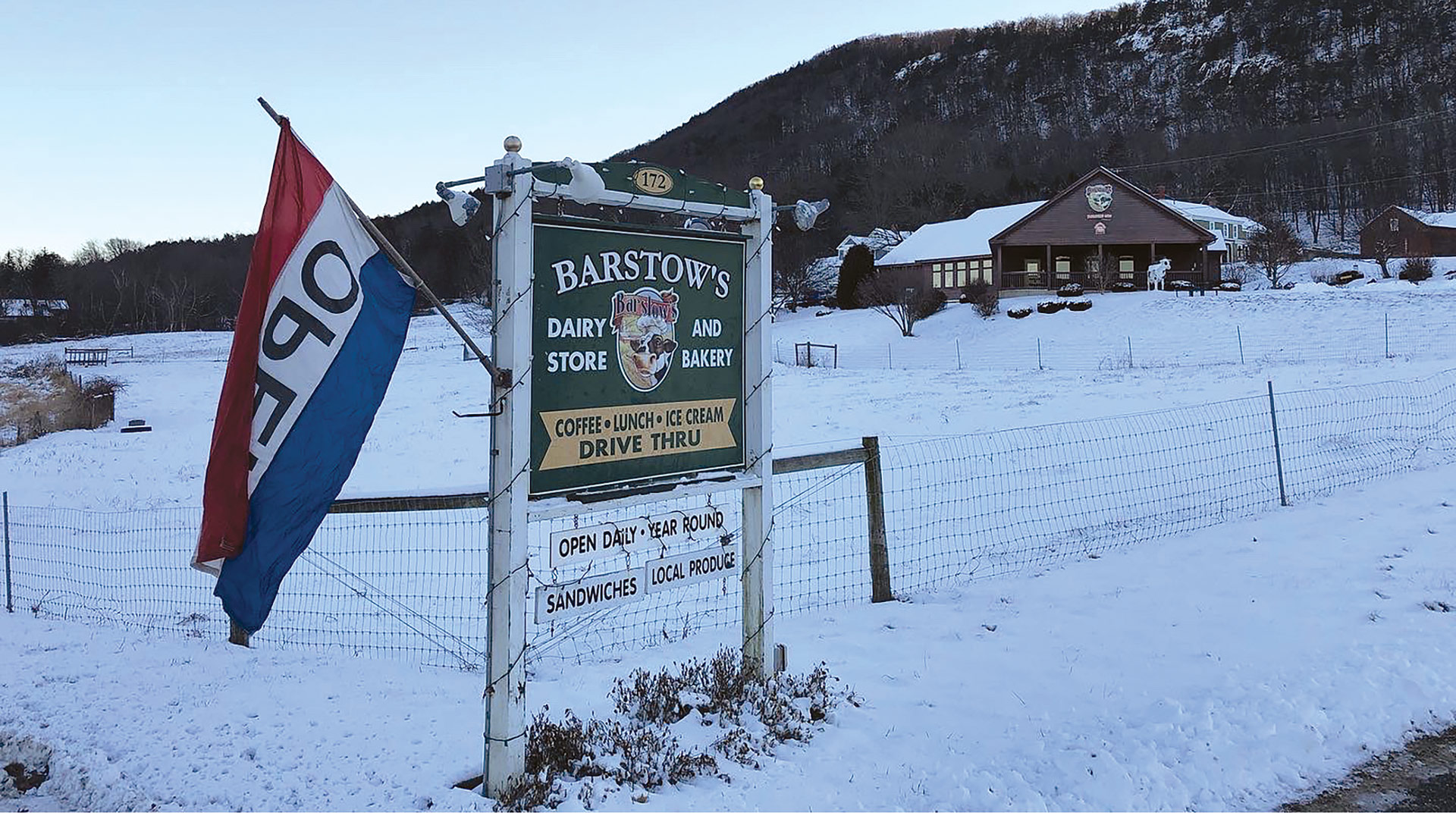
Barstow’s Longview Farm since 1806.

Evolution and diversification have been hallmarks of Barstow’s Longview Farm since 1806.

Indeed, a family that has always embraced change and diversification (much more on that later) has taken some dramatic new turns in recent years, first with Barstow’s Dairy Store and Bakery, and later, through a partnership with Vanguard Renewables to build one of the first farm-powered anaerobic digesters in New England. Meanwhile, the 450-acre dairy farm produces 19,000 pounds of milk daily and is a member of the Cabot Creamery/Agri-Mark Cooperative; almost all of the farm’s milk is supplied to the Cabot/Agri-Mark facility in West Springfield and is made into Cabot butter and other products.

The anaerobic digester (AD), installed in 2013 and expanded in 2016, converts cow manure — the herd at the farm produces some 9,000 tons of it annually — and food waste into electricity, heat, and fertilizer.

It has become an important revenue source for the farm, but it also makes a statement about what the sixth and seventh generations of this family — and those that came before them — stand for.

“The AD speaks to what we believe in as a family — that we need to lower our carbon footprint and play a role in mitigating climate change,” Barstow Manz said, adding that, for this family, sustainability comes in many forms and means many things, including work to ensure that this business will be there for the next generations.

Her father, David Barstow, director of special projects at the farm, agreed. He said that, while many things have changed at this location — in general, but especially during his lifetime — what hasn’t changed is that concept of preserving, and persevering, for those who will continue the tradition.

“My father and grandfather used to talk about working with horses,” he said, adding that change and advancement are constants on the farm; the key is to embrace that change and be at the forefront of it. “This is a good place to raise a family in a multi-generational business — everyone can see how life works; the goal has always been to leave something for the next generation.”

“We got together as a family and decided that we needed to either diversify or get out of farming completely.”

All of the various components of Barstow’s Longview Farm make for an intriguing tour — one that usually includes lunch on site — and Denise and other family members offer many of them, all year long. More than that, these elements collaborate to create an inspiring new chapter to a story that began when Thomas Jefferson was patrolling the White House — and even a century before that, as we’ll see.


Herd It Through the Grapevine

They call it Pasture Day, and it is celebrated the first Saturday in May.

As that name suggests, this is the day when the cows, which have spent the winter in barns, get to head back into the pasture. It’s the unofficial start of spring, and a community event — many visitors, including several families living in the area, will come out, watch the heifers celebrate their first taste of fresh grass, enjoy live music, and have some ice cream.
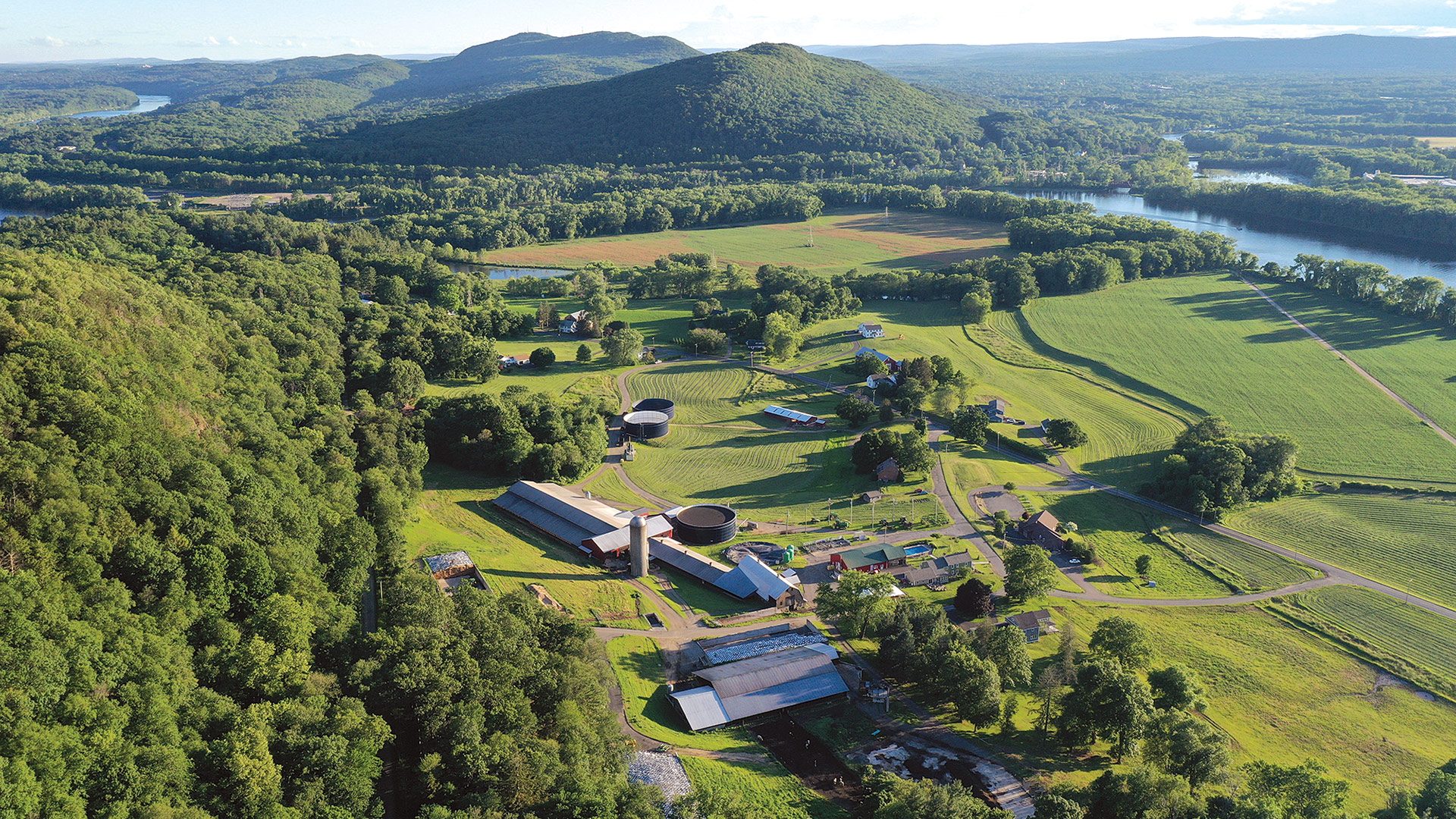
An aerial view of Barstow’s Longview Farm

An aerial view of Barstow’s Longview Farm in the historic Hockanum Village.

“People kick up their heels and have a good time; they sit on the hill and watch,” said Barstow Manz, who doesn’t have a formal title, but serves as the farm’s marketing director. She also handles the farm tours, manages the dairy store and bakery, handles outreach, and acts as the main grant writer. She used to feed the calves, but the farm now has an automated calf feeder, one of many examples of innovation at this institution.

She said Pasture Day is just one of the many traditions that have lived on at this property since Septimus Barstow, originally from Wethersfield, Conn., acquired the property on the bank of the Connecticut River that was first farmed at least 100 years earlier by the Lyman family.

Originally a crop farm that focused on asparagus, as many farms in Hadley did, as well as squash, corn, tobacco, and other staples, the Barstow’s operation eventually evolved into a dairy farm after the advent of refrigeration, which provided an avenue for selling milk wholesale.

By the 1930s, dairy was the primary focus at the farm, she went on, adding that, with a herd of 300 cows, this is small to mid-sized operation, one that is dwarfed by huge operations in this country and overseas.

It’s one of a dwindling number of dairy farms both in Massachusetts and across the U.S., she said, citing statistics showing that this country loses five dairy farms every day.

“And when you lose those farms, you’re losing a lot,” she went on. “You’re obviously losing food and food security for that community. But you’re also losing open space, which is good for wildlife habitat, groundwater, climate resilience, and food security. And you’re losing that heritage and that connection to your past.”

The reason for such attrition is simple. This is a very difficult business to be in, she said, adding that the federal government controls milk prices, and margins have historically been paper-thin.

“Even though it’s very perishable, milk is marketed on a global scale, so we’re competing against New Zealand, we’re competing against California … and it’s kind of a broken system,” Barstow Manz explained. “The only real way for dairy farmers to make more money is to make more milk, which doesn’t always line up with demand. And we have no control over the price of the product we produce.”

There are only 115 dairy farms left in the Bay State, and there probably wouldn’t be any were it not for the Massachusetts Dairy Tax Credit, which enables them to remain competitive, she said, adding that there are six operations in Hadley alone, a concentration that testifies to the quality of the soil in that region.

In the early years of this century, the milk market essentially collapsed, primarily because of oversupply, she said, calling this a scary time for the Barstow farm and all the others in this market.
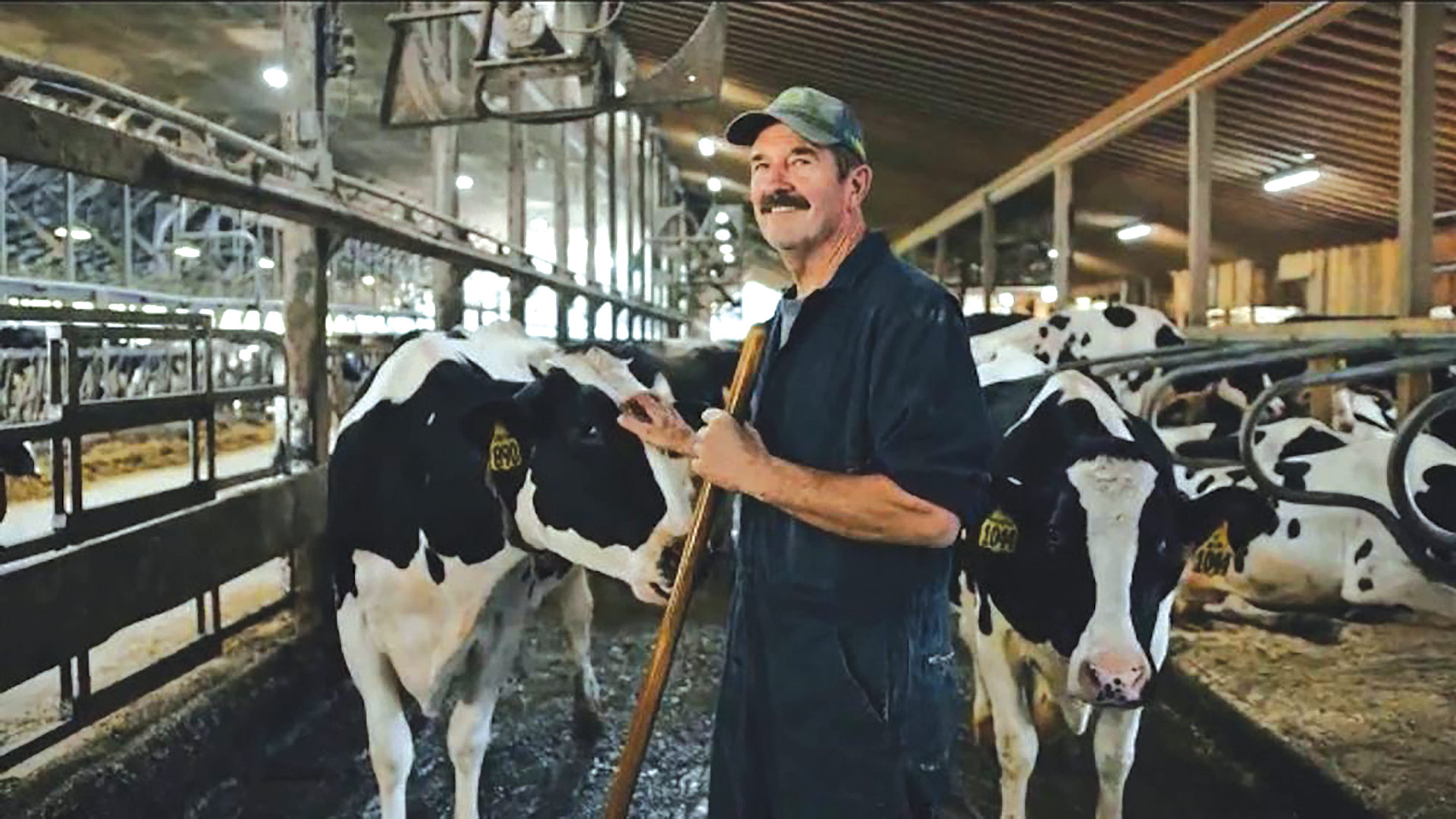
David Barstow

David Barstow says his family lives by the farm’s motto, ‘looking forward since 1806.’

“The milk market crashed like no one had ever seen or felt before in this country; we were getting $12 per hundred pounds of milk, when our break-even was $22,” she explained, adding that it was a critical time in the history of the farm, or another critical time, to be more precise.

“We got together as a family and decided that we needed to either diversify or get out of farming completely,” she recalled. “And that’s when we started talking about how we wanted to diversify and who we wanted to include. And we knew that we wanted to be thoughtful of what the next generation was interested in doing and what our strengths are.”


A Process of Evolution

Over the next several years, diversification would come in several forms, starting with the dairy store and bakery in 2008, an operation inspired in many ways by Denise’s cousin, Shannon Barstow, who does most of the baking. It’s an operation that would transform the farm into a true destination.

“We’re always trying to be mindful and committed to what’s going to be best for our herd, and also for our land, our workforce, our community, and our food system.”

“We understood that people were going to have to drive here if we were going to get the support and the revenue we needed,” she recalled. “So we did lunch, and we started probably too big for our britches. But we’ve definitely settled into who were are, and we have a really supportive community.”

The dairy-store operation and bakery offers both breakfast and lunch as well as a number of prepared foods — and ice cream. The bakery serves up pies, cupcakes, brownies, turnovers, croissants, scones, muffins, breads, and much more. The facility handles private functions, porch parties, and catering. Meanwhile, visitors can buy Barstow’s beef — everything from tenderloin steaks to ground beef — on site. There’s even a drive-thru for those who want or need to grab and go.

The facility draws visitors from around the corner, but also from across the state and beyond, said Barstow Manz, adding that it has become a real destination and a way to take the Barstow name and products well beyond Hadley.

“Most of our regulars are from Hadley and South Hadley,” she explained. “But we have people who come to us from Eastern Mass. because they love our beef, and from the Berkshires because they love our pies; we draw from all over.
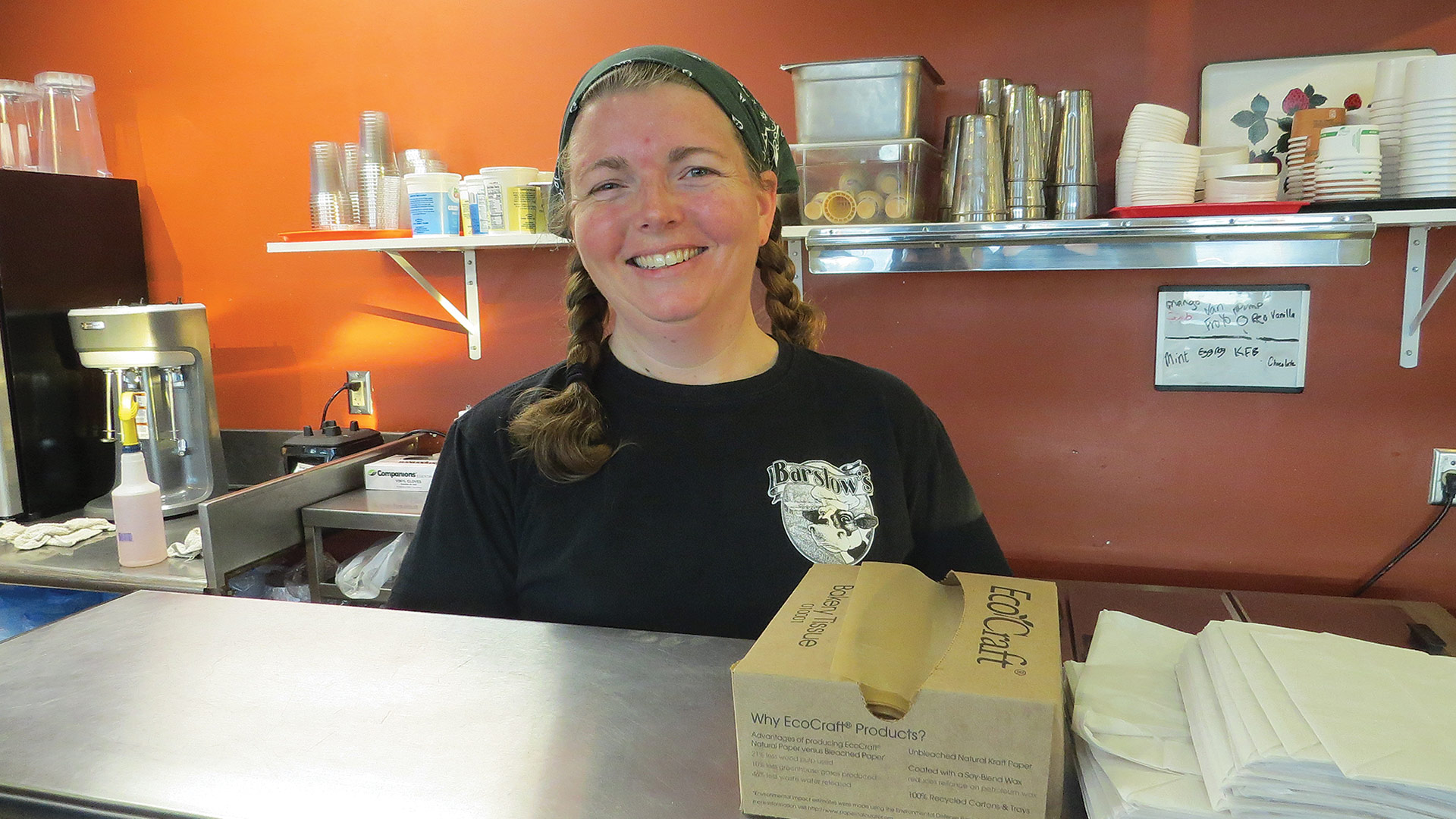
Shannon Barstow

Shannon Barstow does most of the baking at the dairy store and bakery, which opened in 2008.

“We opened this place to save the family farm, and it’s had so many other amazing qualities to it that we didn’t really expect,” she told BusinessWest. “It’s become this time capsule for all these family recipes — most of the stuff that’s in the dairy case is Grandma [Marjorie] Barstow’s recipes. And it’s also a neighborhood gathering space — it’s a space where people can work close to home and also be part of a family farm and a local economy on a small scale.”

Indeed, the dairy story and bakery now employs 15 people and has provided many area young people with their first jobs.

The anaerobic-digestion system, launched at a cost of roughly $6 million, is not a supplier of jobs, but it is, as noted earlier, a supplier of electricity, heat, fertilizer — and also pride for a family that has, through its long history, been innovative.

The conversations about installing such a facility began around the same time the family was opening the dairy store and bakery, she said, adding that the system is another important step toward diversification.

Explaining how it works, she said the system takes the energy potential (methane) out of cow manure and food waste and converts it into enough electricity to power 1,600 homes. The food waste comes from local food producers, including Cabot/Agri-Mark, Whole Foods, the Coca-Cola plant in Northampton, and local restaurants.

The food waste and cow manure, both treated and in liquid form, are put into the digester, which Barstow Manz equated to a large stomach, with the gas from the ‘digestion’ process rising to the top of the nine-story facility. That collected gas combusts in an engine and turns a generator, thus creating electricity.

Heat, one of the byproducts of this process, is used to heat that system, provide hot water in the barns, and heat the eight homes on the property, she went on.

“It’s pretty cool that the system has lessened our reliance on fossil fuels as a business, but also on a personal level in our own homes — we don’t have to pay for oil anymore,” she noted. “We’re also getting a chemical-free fertilizer; that’s because most of what we put in we get back; we just need the gas.”

Like the dairy store and bakery, the AD, the second such system in the state and one of the first in the nation, is a reliable revenue stream at a time when such sources of income are needed in the wake of those razor-thin margins in dairy farming, she said, adding that it became reality through partnerships, such as the one with Vanguard Renewables, and grants from several entities, including the Natural Resource Conservation Service, the U.S. Department of Agriculture, the Massachusetts Department of Agricultural Resources, the Center for EcoTechnology, and other entities.


A Butter Alternative

Looking ahead, Barstow Manz said she and others working at the farm have a simple mission — to live up to their motto and continue looking forward.

“We’re always trying to be mindful and committed to what’s going to be best for our herd, and also for our land, our workforce, our community, and our food system,” she said. “Among the dairy farms I’m aware of, we’re been pretty open to accepting new technology and trying new things. We’re always reading and learning and talking to our vets and to our soil agronomists about what we can be doing better.

“I also think it’s cool that the sixth generation has always been focused on the seventh,” she went on, “and the four of us that work here are constantly thinking about what we’re going to leave our kids — what’s in it for the eighth generation.”

If history is any guide, it will be something that can grow and thrive and be sustainable — in every way imaginable.


Law Special Coverage

Processes, Procedures, Practices, and Protocols Are Kings

By Tanzania Cannon-Eckerle, Esq.

In this new, enlightened era of increased employee rights and employee shortages, many employers are scared to terminate employees in fear of litigation — or of not having enough staff to enable the company to produce at the desired level.

The second question we can save for later, but I will mention now that additional widgets will most likely never justify the havoc that a toxic employee will create.

In my opinion, the answer to the first question is simple: do not fear what you cannot control. You cannot control who goes down to the courthouse to file a complaint. Just be prepared for the battle. So, yes, you can fire that guy (or girl, or them). The question is, should you?


Don’t Shoot Before Aiming — Consider Your Goal First

Don’t respond emotionally or consider someone else’s emotional response. Stop and think. Ask, why is this employee on the chopping block (i.e., what did they allegedly do)? How did they get there (was the proper process followed)? Who placed them there (who is bringing this up? Does the person have the authority to raise this issue? Anything nefarious here)?

Notice that I did not ask ‘who’ this employee is. We don’t assess the ‘who’ on the chopping block. It doesn’t matter who did it. It matters what was done, why it was done, whether it was actually done, and whether it rises to the level of termination.

Essentially, assess the conduct. What do you hope to attain by terminating this employee? A safer workplace? Good. To stop disruptions in operations or the beginnings of a hostile work environment? Good. Now prove it.


Prove It (in Preparation for the Battle)

If you can’t prove it, abort the mission. Go back to the drawing board. Go to plan B. Joking aside, preparing for appropriate employee terminations is a long game. It starts with consistent application of procedures, processes, policies, and practices. Probably the most important thing is documentation.

Consistent application of the ‘four Ps’ over time may take an investment of time and money into creating them if you don’t already have them, and training managers and supervisors in the art of holding employees accountable.

“Preparing for appropriate employee terminations is a long game. It starts with consistent application of procedures, processes, policies, and practices. Probably the most important thing is documentation.”

Tanzania Cannon-Eckerle

Tanzania Cannon-Eckerle

Among other things, there should be consistent application of all conduct and performance-related policies. There should be consistent application of all of the policies, procedures, and practices associated with managing human-resources functions such as leaves of absence and request for accommodations, as well as employee complaints made and investigated.

All of these should contain a component that enables tracking the underlying data and providing the ability to obtain and distribute the underlying information that supports assertions made. So you want to terminate an employee because he has been to work only seven out of 19 days, and on the seventh day he violated a safety policy and then stole your candy bar? You should be able to show documentation of these occurrences that were created in real time — including, of course, when the company had the initial conversation with him for being absent the first few times, checking to make sure it wasn’t actually a protected leave of absence.

Once you have the documentation, sit him down and tell him that he is being terminated from the job because of his inability to perform and because of his violation of the attendance policy. Have a witness. If you don’t have the documentation, sit him down, put him on notice that he is in the line of fire, and start documenting. Provide him with expectations, and then document it thereafter. Most likely, this will just delay the inevitable, but you never know. Regardless, at least you will have something to take with you into battle.

Make the Business Decision Informed by the Data, and Document It

Please know, you can terminate an employee for any reason at any time so long as it is not an illegal reason. That means you cannot terminate because of an employee’s protected status or activity or in a manner inconsistent with a collective bargaining agreement or other employment agreement.

As such, if you want to terminate a person for business reasons that have nothing to do with the person and everything to do with your business needs, that is OK too. But you should prove it. Do you have the data to back up your decision? You don’t have to have it, but if that person files a complaint, you will want it, and you will want to be able to attest that the business analysis was done prior to the termination. Otherwise, they will scream ‘pretext,’ meaning you just made that up. Plus, doing the analysis first may help you assess the risks of terminating an employee for business reasons.

There are always risks. Is it cheaper to keep him after assessing those risks, or not? That is a legitimate fiscal business concern. There are risks associated with not terminating employees as well. Be sure to document those, too — not just in the business case (e.g., budget concerns), but also in the ‘do I have enough to terminate this employee for conduct?’ case. Some examples: if I don’t terminate, there will be allegations that I did not maintain a harassment-free workplace; or, I terminated another employee for this same behavior last year, and there is no legitimate reason distinguishing this employee from being terminated for the same; or, he keeps violating safety procedures, and someone may get hurt.


Terminate with Grace and Pay What You Owe

Be respectful to all employees, including those who are coming and going. He knows what he did to get terminated (if you have done it right). There is no legitimate reason to be rude about it.

Terminating with dignity or grace does not mean that you should not terminate an employee. Once an employee gets to termination, he should have already had an opportunity to cure the conduct or behavior for which he is getting terminated. As such, by the time the writing is on the wall, he should not be surprised. If he is, that might partly explain why he is getting terminated.

Next, make sure you reach out to your employment counsel for assistance with properly preparing a termination package (necessary correspondence, pay requirements, and timing considerations). A misstep here can get you in hot water — triple hot water. Failure to pay an employee what is due at termination has no defense, and the remedy to the employee includes three times the wages due. Call your counsel before terminating.

I know this article is not going to make me popular among some folks. I am not trying to be cold. I am just being practical. Your employees are your life force. I get it. I am one. But they are also human capital. If you manage your human capital like you manage your non-human capital, then you should be able to terminate employees without fear.

Processes, procedures, practices, and protocols are kings. Remember, keeping a toxic employee is more costly, in a variety of ways, than the cost of defending a claim — that is, if you have your ducks in a row. So get your ducks in a row. Plus, the remainder of your staff will appreciate the decision. Heck, the terminated employee may appreciate it in time; sometimes it just isn’t a good fit. Cut them free to find their better role. In the case of the business decision, your shareholders or business partners will appreciate your fiscal responsibility.


Tanzania Cannon-Eckerle, Esq. is chief legal and administrative officer for the Royal Law Firm; (413) 586-2281.

Health Care Special Coverage

Riding Out a ‘Tripledemic’

[email protected]


Two years ago, flu took a vacation.

Dr. Mark Kenton remembers those days — but they were no vacation for emergency doctors, who had dealt with almost a year of COVID-19 and the hospitalizations and deaths that it caused, with vaccines just beginning to emerge.

But influenza, and respiratory syncytial virus, also known as RSV? There was almost none to be found, mainly because masking and isolating had become the norm, cutting off the potential for spreading these common viruses.

“With COVID, we had people masking, home from school, and we had no flu; there was no RSV,” said Kenton, chief of Emergency Medicine at Mercy Medical Center in Springfield. “In fact, Mercy didn’t have one ICU case of flu. Then, when we started to normalize, these viruses made their way back.”

So much that the prevalence of flu and RSV this year, combined with a still-lingering COVID threat — albeit one that has been muted by vaccinations — has combined for what has been called a ‘tripledemic’ this winter.

“It seems like the RSV population this year is much larger than in the past, which complicates things,” Kenton said. “We’re definitely seeing a lot of influenza, even in patients who have been vaccinated, and we’ve actually been seeing a lot of pneumonia. There are a lot of respiratory complaints this time of year, because it spreads through schools with kids at the end of the term, and parents may not want to keep the kids home.”

Because COVID still has a presence, he explained, when somebody comes in with a respiratory complaint, they’re tested for that as well as for influenza and RSV, a common respiratory virus that usually causes mild, cold-like symptoms, but can be more severe in certain patients.

“With COVID, we had people masking, home from school, and we had no flu; there was no RSV. Then, when we started to normalize, these viruses made their way back.”

Dr. Mark Kenton

Dr. Mark Kenton

“We were seeing a lot of RSV a few weeks ago, but it seems that may be tapering off now,” Kenton added, noting that Mercy has seen both children and adults with RSV, a condition that can be especially precarious for infants. “We worry about them getting RSV; a lot of local hospitals have been inundated with pediatric RSV.”

Indeed, RSV is the most common cause of bronchiolitis and viral pneumonia in children under age 1. The Centers for Disease Control and Prevention (CDC) reports that approximately 58,000 children under age 5 are hospitalized each year with the infection. Most infants are infected before age 1, and virtually all children have had an RSV infection by age 2. RSV can also affect older children, teenagers and adults.

Spiros Hatiras says he’s not sure who came up with that phrase ‘tripledemic.’ He’s quite sure, though, it wasn’t someone in healthcare.

“It had to be someone in the media — they’re the ones who like to attach names to things like this,” said Hatiras, president and CEO of Holyoke Medical Center.

But it’s as good a term as any to describe a convergence of COVID, flu, and RSV. In some parts of the country, this convergence is filling hospitals and putting additional strain on staffs already taxed by shortages of nurses and other healthcare professionals. But Hatiras told BusinessWest he hasn’t really seen much of any of the above at his hospital — from the individual ailments to the additional strain on people and resources.

Indeed, he reported very few, if any, COVID cases, noting that there isn’t anyone in his hospital solely because of COVID, though some are there for another reason and test positive for COVID. Meanwhile, he reports few cases of RSV, and flu numbers that are similar to previous years and nothing out of the ordinary.

The Emergency Department is crowded, he acknowledged, but not because of this tripledemic; rather, it’s because fewer staff members — a result of the ongoing workforce crisis, especially in healthcare — are tending to what would be considered a normal amount of patients.

“Because there were so few cases of RSV in the first two years of the pandemic, most infants and toddlers did not get the natural immunity that their body would have produced if they had natural illness. That left a larger number of children more vulnerable to getting RSV illness, which is what we are seeing now in the community.”

Dr. John O’Reilly

Dr. John O’Reilly

Kenton has observed the same phenomenon in the workforce. “So many nurses in this profession are either retired or gone on to something else,” he said. “This is everywhere, across the board. Every hospital is dealing with staffing issues. Even with [patient] volumes overall being down, when you get the tripledemic, it’s become a significant strain on resources within the hospital.”


What Is RSV?

Flu is a common term, and most people are now well-versed in COVID, but not everyone knows what RSV is, and how it deviates from other respiratory ailments.

While RSV results in mild, cold-like symptoms for most — a runny nose, nasal congestion, cough, and fever — for some, especially infants and older adults, it can lead to serious illness, though only a small percentage of young patients develop severe disease and require hospitalization, said Dr. John O’Reilly, chief of General Pediatrics at Baystate Children’s Hospital.

“Those hospitalized often have severe breathing problems or are seriously dehydrated and need IV fluids. In most cases, hospitalization only lasts a few days, and complete recovery usually occurs in about one to two weeks,” he explained.

Those who have a higher risk for severe illness caused by RSV include premature babies, very young infants, children younger than age 2 with chronic lung disease or congenital heart disease, children with weakened immune systems, and children who have neuromuscular disorders. Other at-risk groups include adults age 65 and older, 177,000 of whom are hospitalized and 14,000 of whom die from RSV each year in the U.S.; people with chronic lung disease or certain heart problems; and people with weakened immune systems, such as from HIV infection, organ transplants, or certain medical treatments, like chemotherapy.

The COVID pandemic has had a big impact on the normal pediatric respiratory illness cycles, O’Reilly noted. “Early in the pandemic, masking and social distancing helped to limit the spread of respiratory viruses such as RSV. Because there were so few cases of RSV in the first two years of the pandemic, most infants and toddlers did not get the natural immunity that their body would have produced if they had natural illness. That left a larger number of children more vulnerable to getting RSV illness, which is what we are seeing now in the community.”

There is no vaccine yet to prevent RSV infection, but there is a medication, called palivzumab, that can help protect some babies at high risk for severe RSV disease, O’Reilly noted. Healthcare providers usually administer it to premature infants and young children with certain heart and lung conditions as a series of monthly shots during RSV season.

“Don’t go out or attend gatherings if you are sick. Take COVID-19 tests if you think you have COVID-19 symptoms. Frequent hand washing can also help prevent the spread of respiratory infections. Wash your hands often with soap and water for at least 15 seconds and consider carrying a hand sanitizer with you at all times. Open windows for ventilation. Practice proper cough etiquette. And, because there is more sickness at this time of year, refrain from sharing utensils or drinking cups.”
The severity of symptoms can vary depending on the age of the child and whether he or she has any chronic medical problems, such as asthma or premature birth. Bacterial infections such as ear infections and pneumonia may develop in children with RSV infection.

At first, it’s all about symptom management for young children with RSV, O’Reilly said, including keeping the child hydrated and the fever under control. “If a child is having high fevers without relief for multiple days, or increased difficulty with breathing, such as wheezing, grunting, or ongoing flaring of the nostrils is observed along with a child’s runny nose and cough, then a call to your pediatrician is warranted.”

Part of the reason why RSV is a common virus in children is the fact that it can be easily transmitted. It can spread directly from person to person — when an infected person coughs or sneezes, sending virus-containing droplets into the air, where they can infect a person who inhales them, as well as by hand-to-nose, hand-to-mouth, and hand-to-eye contact. The virus can be spread indirectly when someone touches any object infected with the virus, such as toys, countertops, doorknobs, or pens, and can live on environmental surfaces for several hours.

The CDC’s advice on limiting the spread is the same as any virus-prevention measure: covering coughs and sneezes with a tissue or sleeve, washing hands often with soap and water, avoiding touching one’s face, disinfecting surfaces, staying home when sick, and avoiding close contact with sick people, as well as kissing, shaking hands, and sharing cups and utensils with others.

“The good news,” O’Reilly said, “is that most infants and children overcome RSV infections without any long-term complications, as RSV infections can often be relatively asymptomatic and even go unnoticed.”


Safety First

After almost three years of COVID, it’s easy to push those common-sense cautions aside, but that would be a mistake, said Dr. Vincent Meoli, Massachusetts regional medical director at American Family Care, which operates urgent-care clinics in Springfield and West Springfield.

“We know there is a significant amount of COVID fatigue as we enter our third year of the pandemic, but vigilance is still important, both to protect those most at risk of developing complications and to minimize the impact on our healthcare system,” he said, noting that area hospitals saw high rates of RSV admissions early in the season.

“We saw a tremendous reduction in flu cases during the height of the pandemic because people were wearing masks and isolating,” Meoli said. “Now that society has opened up again and masks are no longer required in most places, we anticipate the number of flu cases to increase.”

Kenton emphasized that, while flu and RSV might be more prevalent now, COVID hasn’t gone away. According to the CDC, about 350 people in the U.S. still die every day from COVID, and about six out of every seven of those are unvaccinated.

“I always say, vaccinate, vaccinate, vaccinate. It’s been proven that, with vaccination from COVID, you’re still able to get COVID, but you’re less likely to die,” he told BusinessWest. “Are you going to feel sick? Yes, absolutely. But you’re less likely to be hospitalized and die from it. It’s still present, unfortunately. I think it’s always going to remain present for us in combination with the flu and RSV. So definitely get the flu vaccine every year, too.”

Dr. Armando Paez, chief of the Infectious Disease Division at Baystate Health, said vaccination is a must, but it’s important to maintain other precautions as well during the tripledemic.

“Don’t go out or attend gatherings if you are sick. Take COVID-19 tests if you think you have COVID-19 symptoms,” Paez said, adding that, during the holiday season and after, people are traveling and potentially spreading viruses. “Frequent hand washing can also help prevent the spread of respiratory infections. Wash your hands often with soap and water for at least 15 seconds and consider carrying a hand sanitizer with you at all times. Open windows for ventilation. Practice proper cough etiquette. And, because there is more sickness at this time of year, refrain from sharing utensils or drinking cups.”

Kenton said there’s nothing wrong with turning down an invitation to a gathering where people are sick — or if there’s a possibility of introducing sickness into that house. “If someone in your house is sick, don’t go to someone else’s house, especially if they have co-morbidity conditions; getting RSV on top of that can cause them to end up hospitalized or potentially die.”

He also reminds people that COVID has an asymptomatic period between infection and symptoms, so if someone in a household tests positive, not only should the infected individual isolate, but it’s a good idea for others in the house to avoid gatherings for a few days until they know they’re negative, to avoid spreading the virus to someone else.

Meoli noted that, for those who do plan to attend gatherings — especially with people at high risk for COVID, like the elderly, children, or people who are immunocompromised — testing for COVID the day before or the day of the gathering can provide some extra reassurance.

“Talk to a healthcare provider if you have any concerns about vaccines, symptoms, or testing,” he added. “COVID-19, flu, and RSV all have the potential for complications, hospitalization, or death.”

It’s certainly a triple threat, area doctors say, but taking simple precautions can help keep families safe and patients out of the hospital — or worse.

Economic Outlook

Reasons for Optimism — and Concern

[email protected]


Chris Geehern says there’s been a slight but significant uptick in the Business Confidence Index issued each month by Associated Industries of Massachusetts (AIM).

That increase is one of the many reasons why he and others are … wait for it … cautiously optimistic as the calendar turns to 2023. That phrase has been put to heavy use in recent years and recent months, especially with so much uncertainty regarding the economy due to forces ranging from COVID to inflation to an ongoing workforce crisis.

“If the workforce grows 1.5% and the number of jobs grows by 21% or 22%, as they’re projecting, we have a problem — a big problem.”

Chris Geehern

Chris Geehern

But as the state and region put 2022 in the rear view and focus on a year with even more uncertainty, there are some reasons for optimism, said Geehern, executive vice president of AIM, and that is reflected in the numbers he’s seeing.

“Our members seem pretty confident about the prospects for their own companies,” he said. “And they are reasonably confident about the state and national economies. There are certainly lingering concerns about interest rates and about whether there will be a soft landing or not. But, by and large, we’re finding that Massachusetts companies are resilient, and they seem to be navigating this kind of economic cycle pretty well right now.”

Elaborating, he said unemployment remains comparatively low, and the state’s economy grew in the third quarter, albeit slowly, after two quarters of negative growth — another positive sign. “So, by and large, employers don’t seem to be deeply concerned by the short-term economic cycle.”

Bob Nakosteen, a semi-retired Economics professor at UMass Amherst, agreed. He told BusinessWest that, in addition to growing optimism, inflation is starting to cool, a sign that the Fed’s decision to aggressively raise interest rates may — that’s may — be working. It could also be a harbinger of lower rate hikes in the future, which would certainly help business owners and consumers alike.

“And I think inflation is already a lot lower than is being reported,” said Nakosteen. “The month-to-month figures are pretty low … I think inflation is going to drop, maybe not dramatically, but considerably in the next few reporting periods.”

Elaborating, he said ‘dramatically’ would be a drop to the 2% target set by the Fed (at its height, inflation was closer to 8%), while ‘considerably’ would be to the 3% to 4% range, which is what he expects.
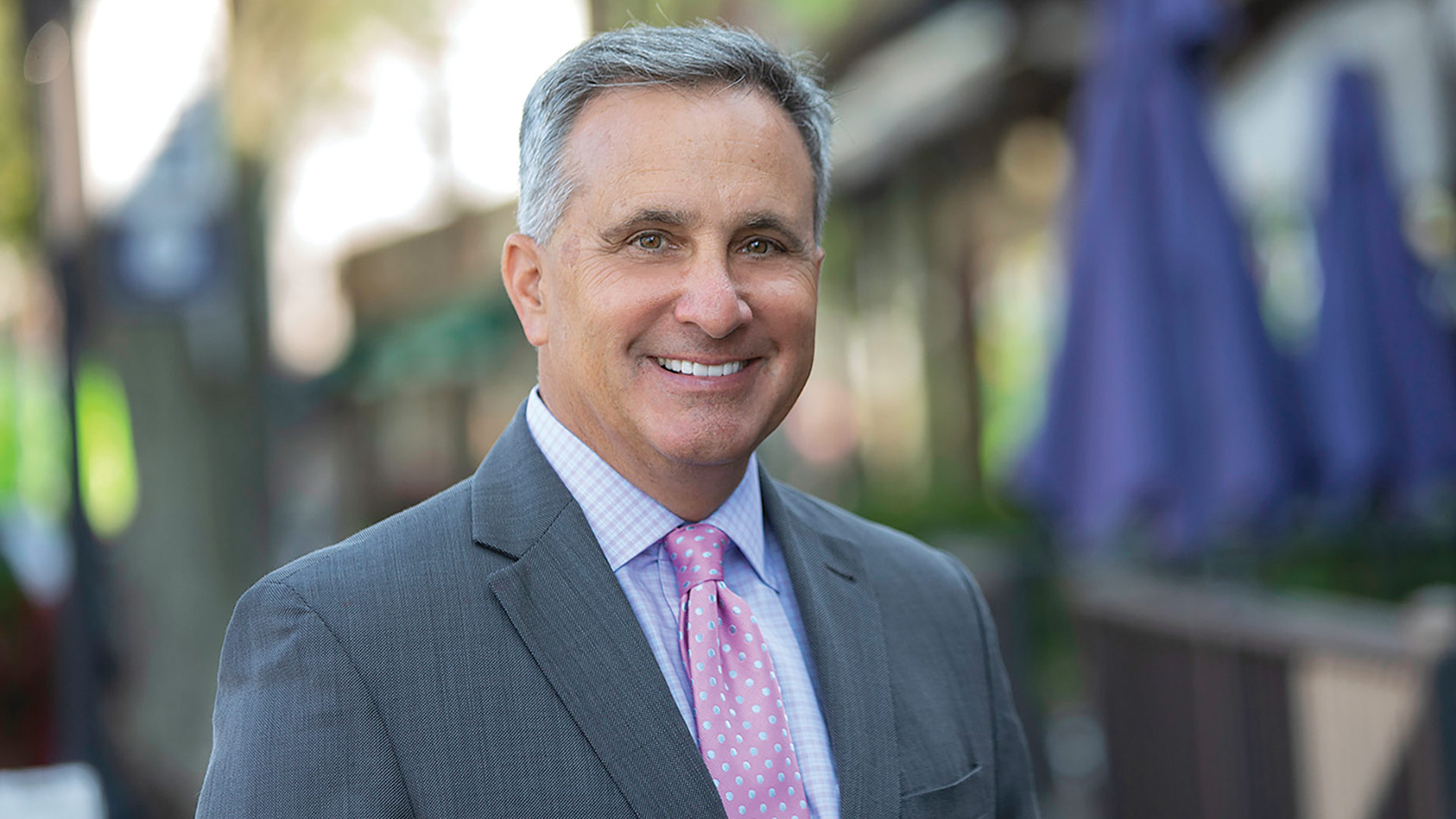
“And if that’s the case, then the Fed is going to ease off on interest rates,” he said, adding that such actions should bolster the stock market and the economy as a whole as the dramatic increases in the cost of borrowing start to ease.
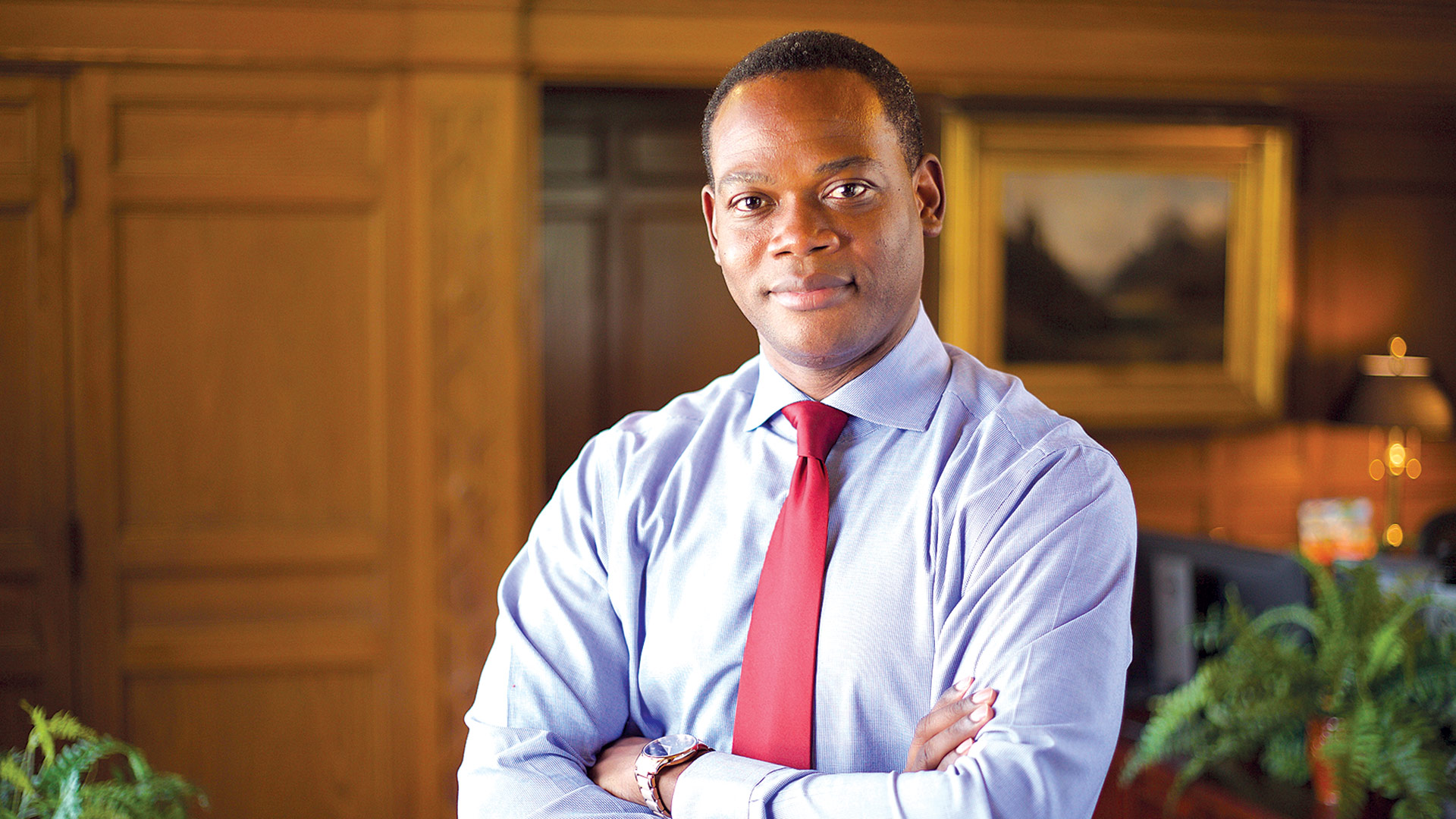
Meanwhile, there are other signs that the picture is improving and the odds for recession in 2023 are moving lower, said Nakosteen, adding that the labor market remains quite strong, and the Atlanta Federal Reserve’s projections for GDP in the fourth quarter are for 3.2% growth — this on top of what has been a strong Christmas season for retailers.

“The signals just aren’t there for a serious recession — or even for a recession at all.”

Bob Nakosteen

Bob Nakosteen

“I think that economic growth is going to slow down, and if we do get into a recession, it will be a mild one,” he said, adding quickly that his track record with projections is decent but not spectacular. “What continues to amaze me is the strength of the labor market; unemployment is still at or just over 3% both nationally and in this state, and in Western Mass. as well. “The signals just aren’t there for a serious recession — or even for a recession at all.”

But while there is cause for some optimism, there are many concerns as well, especially when it comes to the workforce.

Indeed, in 2022, it became obvious to most in business that the problems seen in 2021 when it came to companies being able to fill positions with qualified help were certainly not temporary in nature. They persisted into 2022, and in some cases were exacerbated.

Now, there is what Geehern, summing up the thoughts of AIM’s members, called “deep concern” about what has become a workforce crisis in this state.

“‘I can’t find the people I need to make my business grow’ has become part of the vernacular in this state,” he said, noting that, as part of the Business Confidence Index survey, AIM asks an open-ended question, along the lines of ‘what are you worried about?’

And, increasingly, owners of businesses large and small are worried about workforce.

“I would say that 75% to 80% of the responses to that question every month have to do with talent acquisition, talent retention, and the availability of workers,” he said. “And the concern is that this isn’t the function of an economic cycle; it’s really a deep, structural inflection point for the Massachusetts economy.”

As he explained why, Geehern cited some rather alarming statistics from the Massachusetts Department of Economic Research, which projects that the number of jobs in Massachusetts will grow by 22% between now and 2030. Meanwhile, projections from various economists indicate that the state’s workforce will grow 1.5% by 2030.

“If the workforce grows 1.5% and the number of jobs grows by 21% or 22%, as they’re projecting, we have a problem — a big problem,” Geehern said. “This was going on anyway — it’s partially a function of demographics — but it’s been exacerbated by the newfound independence that remote work has given to employees.”

Given this unsettling math, Geerhern said there are things the state and individual employers must do to make themselves more attractive — not just to businesses, but to workers on all levels.

“Traditionally, we’ve focused on what creates the environment where businesses can start and grow in Massachusetts, and we’re still committed to that,” he said. “But at the same time, we also recognize that you have to create a quality of life that makes people — workers — want to live here in Massachusetts. And that means looking at the cost of living.

“Massachusetts ranks number one in terms of childcare costs, we have the second-highest housing costs, and the fourth-worst traffic congestion — I don’t know how they measure that, but they do,” he went on. “What we’re looking at is a significant outmigration of people from Massachusetts to other areas of the country; a Massachusetts Taxpayers Association report showed that, over the past three decades, there’s been an outmigration of 750,000 people from Massachusetts, and that trend has actually accelerated post-pandemic.”

In some cases, people are leaving the state for lower-cost areas, but keeping their jobs here, a byproduct of the remote-work phenomenon. Moving forward, Geehern said in conclusion, the state has to make itself an attractive place to do business and to live and work — because failure to do so will worsen an already-difficult situation and made it even harder for business owners to sleep at night.


Economic Outlook

Selling Points

[email protected]


As he surveys the scene in Western Mass., especially the ongoing focus on encouraging entrepreneurship and helping startups get to the next level, Charlie D’Amour says he can see some parallels to when his father, Gerry, and uncle, Paul, were getting started in Chicopee nearly 80 years ago with a venture that would eventually become known as Big Y.

But this current surge in entrepreneurship is different in some respects from than the one in the mid-’30s, he told BusinessWest, adding that it is deeper and more diverse. And it holds enormous promise for the future of the region in terms of job creation and the vibrancy of individual communities.

“I continue to be impressed by the fact that we have a diverse and growing class of new entrepreneurs,” D’Amour noted. “Through the commitment of the EDC, the commitment of other organizations, and the commitment of anchor institutions in the area, if we can continue to grow, develop, nurture, and encourage these entrepreneurs, it’s only going to put us in a great position.

“That’s part of what gives me some optimism for the economy of our region — to see this growth in entrepreneurship,” he went on. “This is an interesting group of young entrepreneurs, and it’s a diverse group, and that speaks to where our future is going to be.”

Entrepreneurship and the prospects for more of it comprise one of many subjects touched on by D’Amour and other representatives of the Western Massachusetts Economic Development Council (EDC) during a wide-ranging discussion of the issues facing the region as the calendar turns to 2023.

“I continue to be impressed by the fact that we have a diverse and growing class of new entrepreneurs. Through the commitment of the EDC, the commitment of other organizations, and the commitment of anchor institutions in the area, if we can continue to grow, develop, nurture, and encourage these entrepreneurs, it’s only going to put us in a great position.”

Charlie D’Amour

Charlie D’Amour

D’Amour is a long-time member of the EDC and member of its executive committee. Others joining the discussion were Rick Sullivan, president and CEO of the EDC; Tricia Canavan, CEO of Tech Foundry and current EDC board chair, and relatively new board member Cesar Ruiz, president and CEO of Golden Years Home Care Services.

Together, they addressed subjects ranging from workforce issues to marketing of the region to the prospects for bringing more jobs to the area.

Overall, as the new year begins, those we spoke with are optimistic about the region and its fortunes, but there are reasons for concern, especially when it comes to workforce (more on that later), an issue touched on by many in this special Economic Outlook section.

“I’ve seen some real opportunities with some investments that I do believe will be coming with the new governor’s administration in terms of broadband and internet access,” Sullivan said. “There is a digital divide, in our urban communities but also in our rural communities, and I think there’s a real opportunity there with a significant investment by the state and federal government to make those final connections and finally bring high-speed broadband to people’s homes and businesses; that’s a real opportunity for us.

“And I also some see some significant investment in the field of cybersecurity, which is an industry that, unfortunately, is probably here for the long run, and we need to be doing a lot of work every single day to stay ahead of the bad guys,” he went on. “With Springfield already being designated as one of the centers of the statewide system … that’s a real opportunity for us in terms of both workforce and working with our municipalities and particularly with our higher-ed institutions, so I’m very optimistic about the opportunities that are going to present themselves for this region in 2023.”

D’Amour agreed.

“The good news is that the economy of Western Massachusetts, with its diversity and whatnot, has proven to be somewhat resilient, from what I’ve seen,” he noted. “Though I anticipate a downturn in the economy, a slowing of the economy, I do expect that we’ll be able to weather it fairly well.”

“We’re all experiencing challenges in hiring — we can’t hire fast enough; we can’t hire quality enough within our workforce. Hiring is certainly going to be a barometer for how successful we’re going to be with expanding our business.”

Cesar Ruiz

Cesar Ruiz

Canavan concurred, noting that the many lessons learned during the pandemic will serve to make the region’s economy and individual businesses stronger and more resilient.

“The silver lining of the pandemic has been some lessons learned,” she said. “I’ve seen people start to integrate these lessons into their businesses and organizations and into their collaboration in the community. I’m really excited about progress on diversity, equity, and inclusion efforts; digital equity and access; and additional community alignment. I think we’ve learned the importance of working together. I’m optimistic about Western Mass. — we are going to be resilient, and we’re going to recover from the pandemic, even if there are some additional bumps coming our way.”


Working Things Out

One of those bumps is likely to be a continuation of very challenging times when it comes to workforce and companies attracting — and then retaining — the talent they need to grow and prosper. Those we spoke with said this is easily the biggest challenge moving forward and perhaps the most difficult problem to solve.

Ruiz, whose industry, home care, has been particularly hard hit by the workforce crisis, said workforce issues are more than an annoyance — they are hindering the growth and progress of companies, including his own.

“In Massachusetts, we have roughly two open jobs for every candidate that’s in the market. This is a great time for people who may not have been able to access those jobs previously to get training, to get education, and to seize those opportunities.”

Tricia Canavan

Tricia Canavan

“We’re all experiencing challenges in hiring — we can’t hire fast enough; we can’t hire quality enough within our workforce,” he noted. “Hiring is certainly going to be a barometer for how successful we’re going to be with expanding our business.”

He said individual sectors and specific businesses are, out of necessity, forced to be creative when it comes to putting more talent into the pipeline. Golden Years, for example, is collaborating with area colleges to help ready them for careers in healthcare.

Still, the problem is acute, and he’s talking with U.S. Rep. Richard Neal and others about ways to bring more people from other parts of the world into this country to work.

“Using foreign workers is nothing new — our resort areas bring them in by the hundreds,” Ruiz noted. “They come here for a six-month period, and there are certain obligations as an employer that we have to meet to tap that source. But we have to come with creative ways to tap these resources.”

Canavan concurred, and noted that the current workforce challenge presents a huge opportunity to engage those who are currently not engaged in education or work.

“That’s one of the big opportunities for us at this moment in time,” she said. “In Massachusetts, we have roughly two open jobs for every candidate that’s in the market. This is a great time for people who may not have been able to access those jobs previously to get training, to get education, and to seize those opportunities.”

“Our population has basically been flat, and in some areas, it’s declining. If we’re going to be vibrant, there has to be some growth; you need to grow to survive.”

Rick Sullivan

Rick Sullivan

D’Amour agreed, and said his company has been creative and also diligent in addressing the problem.

“Our staffing has improved — it’s much better than it was a year ago or a year and a half ago,” he noted. “But part of it is because we worked at it — we’ve addressed it proactively. We didn’t just put a sign in the window saying ‘now hiring.’ We’ve been a little bit more deliberate, a little bit more strategic, and a little bit more focused about it, and those are the kinds of things that we’re going to need moving forward.”

Elaborating, he said workforce issues require both creativity and a lengthy time horizon, meaning measures that will fill the pipeline with workers for the long term. And the focus needs to be on education.

“From early education to higher education, we need to make sure that we’re bringing our kids and our young people along so that they can be the workforce of the future,” he told BusinessWest. “If we don’t have that, we can’t do a lot of the things that we aspire to. We need to reach into these various communities and make sure that young people have the skills they’re going to need to be successful; that’s where our workforce is going to come from, and those are the kinds of things we have to do.

“I know that’s an area of focus for the EDC, and I know it’s an area of focus for the anchor institutions and many individual companies,” he went on. “We’re not going to get there in a year, but we need to start now; it’s probably a little bit overdue.”


Being Positive

As noted earlier, those we spoke with could find plenty of reasons for optimism concerning 2023 and beyond in this region. Collectively, they mentioned everything from the Victory Theatre project in Holyoke (Ruiz is among the many involved in that effort) to the growing number, and diversity, of new businesses being started in this region, especially within the Hispanic and African-American communities; from the strong education and healthcare sectors to the quality of life here and the opportunities presented by remote work for people to live in this region and work wherever they desire.

Meanwhile, those we spoke with said there are real opportunities to grow certain business sectors in this region — from cybersecurity to clean energy to water technology — with the area’s higher-education institutions taking lead roles in each one.

Sullivan said another often-overlooked or forgotten sector showing promise is manufacturing, what he called the “invisible backbone” of the region’s economy.

“Most of our manufacturers were classified as essential employers during the pandemic, so they were able to continue operating,” he noted. “They proved to be really flexible and able to pivot, in some cases even manufacturing PPE and other products that were not part of their portfolio before COVID. That flexibility, if you will, served them well, and now they’re well-poised for growth, and you’re starting to see them make significant investments.

“Whether it’s Advance Manufacturing, Boulevard Machine, or Advance Welding in Springfield, they’re making investment in their own facilities and their own people, and they’re creating jobs — and jobs that will exist well into the future because of the work they’re doing and the contractors that they have, whether it’s the Department of Defense or the Department of Transportation or healthcare,” he went on. “And these manufacturers have recognized that, while this region may not be the cheapest in terms of power or the cheapest in terms of taxation, we are the best when it comes to workforce.”

D’Amour agreed, and said another aspect of the local economy that is often overlooked is agriculture.

“We’re the garden of New England here in Connecticut River Valley, and there are a lot of young farmers in this region that are doing great stuff,” he said. “Agriculture and food products are an important part of our economy, and it adds to the diversity of the economy in our region. Having fields and orchards is also why many people like to live here; it leads to the whole genus of our community and what makes Western Mass. so special.”

Another priority for the region, Sullivan said, is to better leverage its many assets in higher education.

“Many of the other parts of the country, and even the eastern end of this state, really market the presence of higher ed,” he said. “And we have world-class institutions here; whether it’s the flagship campus for UMass or Smith or Mount Holyoke or Bay Path, the cohort of higher education we have here is really significant. And when we talk about workforce, the students that are sitting in the classrooms at the Elms and AIC and the other institutions are the workforce that everyone is looking for, and I really believe that economic vitality and higher ed are entwined tighter than they ever have been before.”


Work to Be Done

While there are reasons for optimism, there are also some concerns and priorities for the months and years to come, said those we spoke with.

Sullivan noted, for example, that the region — known in the banking sector and many others as a ‘no-growth’ area — certainly needs a growth strategy.

“Our population has basically been flat, and in some areas, it’s declining,” he told BusinessWest. “If we’re going to be vibrant, there has to be some growth; you need to grow to survive. We can absolutely sell our cost of living and quality of life here, but we need to have the housing for people to move into, and they need to be able to work from home or do their coursework from home, which means, again, that we have to make that investment in broadband and the internet across our region so we can take advantage of that opportunity.

“When people discuss work/life balance and what they want for their families, this lands in a sweet spot for us,” he went on. “That’s who we are; we can sell work/life balance and quality of life, as long as we have all the components. They’re not all going to happen in a month or a year, but there needs to a positive trajectory on all of those things.”

D’Amour agreed, noting that the region has a number of sellable assets, from location to transportation infrastructure to relatively inexpensive (and often green) power, as well as higher education. One priority moving forward is to more aggressively sell these assets and market the region.

“Our challenge has always been telling our story,” he said. “We have not participated as fully as we could have or should have in the economic boom that Eastern Mass. has had. How do we get some of the business community in Eastern Mass. to focus on us instead of going to Southern New Hampshire, or Rhode Island, or wherever?”

Canavan agreed. “We are, in some ways, our own worst enemy when it comes to not telling our story — or appreciating where we live,” she said. “And we do have a lot of assets here, starting with diversity; we’re very lucky to have people from all over the world here, people with different perspectives — that is a real asset. I also think we’re small enough to be agile and to pilot things … we’re like the scrappy player who can try new things, and that’s very exciting.”

Lastly, Sullivan said he is hopeful, and confident, that the state’s new governor, Maura Healey, will not just “talk about how we care about Western Mass.,” but make some significant investments in the region.

“And I think you’ll see them, whether it’s vocational education or community colleges, or broadband or cyber or clean energy,” he said. “I think that there’s an opportunity to make very strategic, intentional investments in Western Massachusetts that will allow it to grow.”

Economic Outlook

Talking the Talk

As part of its annual Economic Outlook, BusinessWest put together a roundtable of area business leaders to discuss the issues facing the region and its business community and the outlook for the year ahead. The panel represents several sectors of the economy, and both small and large businesses. It includes: Harry Dumay, president of Elms College in Chicopee; John Falcone, director of Merchandising for Rocky’s Ace Hardware; Spiros Hatiras, president and CEO of Holyoke Medical Center; Susan Kasa, president of Boulevard Machine in Westfield; Tanzania Cannon-Eckerle, an attorney with the Royal Law Firm and co-owner of Brew Practitioners; and Tom Senecal, president and CEO of PeoplesBank. They were candid and, overall, cautiously optimistic in their answers to a series of questions about the economy and what comes next.

Watch the video of the roundtable here:


BusinessWest: What is your outlook for 2023?


Kasa: “We’re excited for 2023; we’ve really seen an uptick in military and defense work, so we’re really excited about where our year is going to go.”


Senecal: “Increased business confidence is the biggest thing, I think, with all the negative press we hear on the economy. Increased confidence is big, and in my industry, and with the people we do business with, lower interest rates will have a significant, positive impact on our environment.”


Cannon-Eckerle: “We’re excited about some of the fallout that we got legally from COVID; it has started to settle down a little bit — we’re starting to see those issues become isolated, and opportunities for us to create some guidance and counsel about preventive measures. On the employment side, instead of seeing people float from job to job, I think we’re going to see a little more staying power.”

Susan Kasa

Susan Kasa says the war in Ukraine, while bringing hardship to many, has helped the fortunes of her company, Boulevard Machine, which specializes in work for the defense, military, and aviation industries.


Falcone: “We really track consumer sentiment, and what we’re expecting is a really soft Q1, but then when Q2, Q3, and Q4 hit, we’re expecting that consumer sentiment will increase slightly, and that we’re going to have some sort of recovery come the back half of the year.”


Hatiras: “With ARPA funds drying up, we’re going to have pull ourselves up by our bootstraps. So our emphasis is on closing the staffing gap. If we can do that, and not bleed money on the expense side, I think we’ll be OK; I think we’re poised to have a good year, as long as we’re able to attract nurses here.”


BusinessWest: What are the major challenges facing businesses in the year ahead?


Kasa: “For us, it’s the same old, same old — trying to get people into manufacturing. We’ve dealt with the generation gap for years, and are getting more involved with the vocational schools and getting parents to understand that manufacturing is a viable option for young people. It’s not just manufacturing; they can be their own entrepreneur in plumbing or electrical, whatever it might be. Also, holding onto folks; ever since COVID came through, it just seems harder and harder to find people who want to work, and want to work the extra hours that we’re giving them. Workforce is key for us — building on the workforce.”


Hatiras: “In healthcare, there is a great deal of concern, and the most concerning part is the continuing shortage of personnel, which has created this market for temporary staffing at rates that are truly outrageous. To put things in perspective, we have about 20 nurses on temporary staff that we get through agencies. Those 20 nurses, on an annual basis, cost us $5 million; each nurse costs us $250,000, because the rates are exorbitant — the nurses get a lot of money, but there’s also a middleman that makes untold amounts of money from this crisis.

“As a nation, the federal government is doing a lot of things — they did some things with railroad workers, they’re helping Ukraine, they’re talking about a lot of things. They should have stepped in and regulated this and said, ‘the pandemic created a tremendous amount of shortage; we cannot allow private companies to go out and profit from that shortage of staffing and bring hospitals to their knees.’ With all this, it’s going to be very difficult for hospitals to cope, and that’s why all our strategy centers around finding a way to attract nurses here.”


Falcone: “Number one would be interest rates; we keep seeing interest rates increase, and not increasing at a rate that we would expect compared to supply chain. The supply chain is still not fully intact, so we’re still struggling to find those products that we want to make strategic investments in. Also, the job market is going to be difficult for us, primarily on the service, retail, restaurant industry. We very much struggle with our workforce.”

Tom Senecal

Tom Senecal notes that the Fed’s actions to boost interest rates have not yielded much improvement on the inflation front, something to watch in 2023.

Senecal: “I would agree with Susan on the labor force. We’re all in different industries, but we’re seeing the same challenges, whether it’s manufacturing, skilled labor, retail labor, banking and financial services … COVID killed the participation rate of how people want to work or, quite frankly, don’t want to work. It seems like it’s across all industries — the participation is so low, and people just don’t want to work. That’s a huge challenge for next year.

“Another one is inflationary pressures; the Fed has raised rates at unheard-of levels, and it’s having very little impact, which is kind of scary. The last increase wasn’t as high as the others, but it’s still unprecedented. They used to be a quarter-point; three or four 75-basis-point raises is a shock to the system, and it’s not having the immediate impact you might think it would have. That’s going to be a challenge for a lot of business, as well as for us in the banking industry.”


Dumay: “In higher education, there are many challenges related to enrollment and finances; we’ve been talking for a while about what is known as the ‘demographic cliff,’ which is the fact that there are fewer high-school graduates, fewer 18-year-olds that are ready to enroll in college, and this has been exacerbated during the COVID years. This is creating enrollment challenges for all higher-ed institutions. On the finance side, everyone here has mentioned the challenge of inflation, as well as the tight workforce. Higher education is also challenged by the fact that some of the stimulus funding that has helped during COVID is no longer available. All of these are going to create challenges for the higher-ed sector in general, and Elms College in particular. But they also present opportunities.


BusinessWest: What are the forces that will determine what will happen with the local and national economies in 2023 and what we’re all talking about a year from now?


Kasa: “For us, what’s happening in the world politically and the war in Ukraine; we’re really seeing an increase in military spending and orders for the military and defense. That’s going to be very helpful for us, and I do see that continuing. There’s a tremendous amount of talk about upgrades to engines, the F-35 … and being in the aerospace alley and having so many of these large OEMs right in the corridor, in the Hartford area, is beneficial for us. I do foresee things continuing to move up and onward for us.”


Cannon-Eckerle: “One of the things bubbling up in the legal sphere is something they call ‘litigation investment,’ which is essentially large companies investing in litigation against larger corporations that normally they wouldn’t be able to afford. It’s like a venture-capital-like investment, and we’re starting to see large companies spread their wings. I think that might have an effect on litigation down the line.”

Harry Dumay

Harry Dumay says COVID provided many important lessons that are serving Elms College well as it moves on from the pandemic.

Dumay: “I think some of those challenges that I spoke about that are related to enrollment will lead to some of the forces and trends that will shape things in 2023. I expect institutions to tailor their pricing and courses accordingly; there is a trend in higher education to look for shorter types of certificates to help max the credentialing needs of the workforce. I expect we’ll see that. But also, the workforce issues are providing a lot of opportunities for institutions to partner with businesses to address some of these workforce issues, and I expect that we’ll see more collaborations and partnerships between higher-ed institutions and businesses to address some of these workforce challenges.”


Senecal: “I see two things. One is supply chain; I think the pressure seems to be coming off, and if that trend continues, that will have a really positive effect on the economy. Two, I think higher energy prices are not going to go away. With the war in Ukraine and Russian energy and what is being supplied to Europe and all … many people don’t think it impacts us. I think it will have a huge impact going into 2023. When you look at the supply of energy in Europe, they have enough to get through the winter to sustain themselves. What they don’t have is the ability to replenish those supplies by next winter, and I think Russia knows this, and I think their strategy is to put a huge amount of pressure on to get to next year, because when you get to next winter, there’s not going to be any energy-supply reserves, and that’s going to have a huge impact worldwide on energy supplies, and that trickles throughout the economy.”


Falcone: I very much agree with Tom. The overall political and economic environment created by that war has affected our business dramatically, whether it’s fuel costs, energy costs that directly impact the supply chain and lead to inflation, or interest rates, because the overall cost of carrying our inventory is higher, and the cost of the product we’re procuring is higher. So with that, our overall cost of business has increased.”

John Falcone

John Falcone says supply-chain issues have improved in recent months, one of many reasons for optimism heading into 2023.

Kasa: “I agree with John. In manufacturing, our supply chain has really been impacted by this war; we’re not able to get material as we did some time ago, and those costs continue to rise. Being in manufacturing, we’re held to long-term agreements, master agreements, and it just continually squeezes the small guy.”


BusinessWest: How has your business or institution coped with the recent workforce challenges? Do you have a success formula?


Senecal: “Before COVID hit, we would never let an employee work from home; from a security perspective, from a collaborative perspective, it just wouldn’t work. Two weeks into the pandemic, we had 80% of workforce working from home without a hitch. I still think the collaboration, or culture, side of it has to occur within the office, but we’ve pivoted from that perspective, and we’re pushing the ability to work from home a whole lot more.

“To tackle the workforce issue and spread our wings and look beyond Western Mass., we are advertising positions as ‘80% work from home,’ something you would have never thought of or heard of in years past. We have an employee now who works 100% out of Chicago. As a local community bank, we would have never considered that. It’s increased our ability to attract talent, and we’ve found some success, but I know it’s still going to be a challenge moving forward.”


Kasa: “We’re looking for exposure, and being in our bright new building certainly helps. So does using social media to attract young machinists; we’re using Instagram and Facebook … it really does work with the young people that follow you. And being a family-owned business also resonates with many people; there have been so many capital acquisitions in recent times in this area.

“We spend a lot of time talking to parents about manufacturing and the opportunities that are available to young people. Manufacturing is coming back, and now parents are realizing that not everyone is meant for a college degree, and they don’t have to spend $100,000 or $200,000 on education; they are coming into machining and electrical and plumbing. The parents are really starting to see us as a viable option.”


Dumay: “We’re paying a lot of attention to employee morale and employee satisfaction, and being flexible where we can. Part of the promise of Elms College as a small, liberal-arts institution is that students will be in contact with people and one another, so having a presence on campus is important. But we’re trying to work creatively to include flexibility for employees in terms of where they can work and the time they can work, to the extent that this can be done.”


Hatiras: “We’re doing OK because we had to respond to what was going on in the market by creating even more attractive reasons for coming here — we raised our rates, we’re enhancing benefits, and at the same time, we’re looking at economic assistance for the lower-earning employees. Where it’s more difficult is with the professionals, because the dollars are significantly more, so competing just on price is difficult. The key for success — what keeps people here and makes them come here — is the culture of the place, so we put a tremendous amount of effort in the 10 years I’ve been here on creating a good culture. Now, it’s become a differentiator, and we’re pushing it even more. We’re an employer that listens to employees, responds to their needs, and cares. That’s what people want.”

Spiros Hatiras

Spiros Hatiras says the “truly outrageous” cost of agency nurses is one of the many stern challenges facing all hospitals today.

Falcone: “We put a big focus on our company culture. Right in our strategic plan, it says ‘invest in people, personally grow, and have fun.’ There’s no doubt about it … the people we have are our biggest asset, so what we want to do is make sure that we’re taking care of them. In this ever-competitive job market, it’s really easy to jump jobs for an extra dollar or two an hour, but for us, we really want to focus on employee engagement and employee satisfaction.”


BusinessWest: Provide us with at least one, and maybe a few, reasons for optimism regarding the year ahead.


Falcone: “The supply chain is becoming more intact. Two years ago, our fill rates as a company were about 60%; December marked the first time our fill rates recently broke the 80% mark. They’re still not back to 2019 levels of roughly 90%, but it’s slowly getting better, and I think the numbers will continue to increase. For the consumer, it’s the availability of product at a reasonable price. Also, we’re starting to see a little bit of deflation … I think we’re still going to have inflation, but it is going to level off.”


Kasa: “The war, which is terrible for the world, and the politics going on are only going to make more work for us because we’re military and defense-heavy. Meanwhile, space is another huge one for us, because it’s been years since the U.S. has gone to space. And with all the competition going on for space travel now between Blue Origin, SpaceX, and others … it’s a a market the U.S. hasn’t been involved in for years, and it bodes well for us.”

Tanzania Cannon-Eckerle

Tanzania Cannon-Eckerle says many converging forces will bring change to the employment-law scene in 2023.

Cannon-Eckerle: “Now that COVID is a little bit behind us … we have some clarity. I think there was a period of time when employers, employees, people who don’t work, everyone in this world went through a period of time when they just didn’t know what the future would hold. Now, people can start making decisions and moving forward, in whatever direction that might be. Also, green technology. I think that technology is getting a huge boost, even moreso than it had before, and I think we’re going to start making some big strides in green technology, and I’m really excited about that.”


Hatiras: One of the good things for Holyoke, and this is one of the reasons I’m optimistic about our path here, is that we have this new waiver in Massachusetts, a five-year waiver with Medicare, which puts a lot of emphasis on safety-net hospitals. So, despite the many challenges I mentioned — and we’re going to have to meet those challenges — I think we’re going to be in a very good position to continue to provide the services we do now, and even better; it’s a good deal for Massachusetts and safety-net hospitals.”


Dumay: “We had a Christmas party at the college recently, and everyone was shaking hands — no one was fist-pumping, no one was six feet apart. It’s easy to forget where we were a year ago. I’m encouraged when I look at what happened during the past semester, when students were happy to be with one another; this is the generation where students finished their high school on Zoom and already had some difficulty with social skills. This ability to come back together … people are appreciating that.

“Another reason for optimism is that we learned a lot of lessons during COVID. We endured considerable hardships, but we also learned some valuable lessons as well. In higher education, for example, we learned about online learning and providing students with maximum flexibility. This is something we were forced into by COVID, but now, those lessons are settling down and providing both flexibility and efficiency in terms of teaching and learning. From a human-relations perspective, we’ve learned some lessons that are becoming part of our operations, and for the better.”


Daily News

HOLYOKE — For a second year in a row, PeoplesBank set a new annual record for donations to civic and charitable causes. The bank tallied $2.3 million in donations for 2022, which is $1 million dollars more than last year’s record. Since 2011, the bank has donated well over $13 million to area causes.

“Supporting the community is essentially what we were set up to do,” said Tom Senecal, president and CEO of PeoplesBank. “We are a mutual bank, chartered to serve our customers and the communities they live in. As a mutual bank, we do not have stockholders who would divert profits. Therefore, we are able to significantly support nonprofits and other community causes.”

As a large regional employer whose values include community service, Senecal added, PeoplesBank is able to increase its support to the community and social-service organizations through volunteerism. “We have a lot of talent in our organization, and because of that, we have a significant presence on area nonprofit boards of directors. We also look for opportunities to roll up our sleeves and serve, and we spend thousands of hours each year doing that.”

Kris Allard, vice president of Development and Communications at Square One, noted that “I can’t really point to anything Square One does that doesn’t have PeoplesBank’s stamp on it.”

Likewise, “over 15 years, I can’t think of a way that PeoplesBank has not been there for us,” said Suzanne Parker, executive director of Girls Inc. of the Valley.

Collen Loveless, president and CEO of Revitalize CDC, also underscored the bank’s volunteerism and impact. “PeoplesBank has been a tremendous sponsor over the course of these many years.”

More information on PeoplesBank Corporate Responsibility and how to apply for a donation can be found at bankatpeoples.com/community.

Daily News

NORTHAMPTON — In mid-December, the Massachusetts Department of Elementary and Secondary Education (DESE) announced the results of its competitive grant program to fund free English classes for immigrants and refugees across the state. The International Language Institute of Massachusetts (ILI), located in Northampton, was on the list.

“We were thrilled to get the good news,” said Macey Faiella, director of ILI’s English programs. “The pandemic shed new light on the disparities that face immigrants and refugees, and we reassessed our program to include greatly expanded offerings. DESE responded positively — all to the benefit of the students.”

For 34 years, ILI has partnered with the state to provide free English classes in Western Mass. The new award extends the partnership for an additional five years and funds about two-thirds of the overall program. ILI is responsible for the remaining costs, raised primarily from individual donors and local businesses and foundations.

Daily News

WESTFIELD — Tighe & Bond, a Northeast leader in engineering, design, and environmental consulting, announced it has acquired WorldTech Engineering, a full-service transportation and civil-engineering firm.

This strategic acquisition aligns with the firm’s vision of being a trusted advisor by offering clients a comprehensive, single-source solution to their engineering, design, and environmental-science needs. The addition of WorldTech’s staff bolsters Tighe & Bond’s transportation services across a complementary client base.

Tighe & Bond’s current offices in Eastern Mass. offices are now augmented by WorldTech’s Woburn office, bringing the total number of offices to 13 across Connecticut, Massachusetts, New Hampshire, New York, Rhode Island, and Maine.

“We believe this expanded transportation practice gives us additional opportunity to support our client base given current and forecasted needs for transportation-infrastructure improvements,” Tighe & Bond President and CEO Bob Belitz said. “WorldTech’s business model complements our existing capabilities and aligns with our client-focused approach. We welcome this talented team to our firm.”

Richard Benevento, WorldTech’s founder, added that “we recognized our two highly accomplished firms would be stronger together as we continue our mission to be a personal and committed transportation partner. We look forward to expanding our client base throughout the Northeast and providing new opportunities for our employees.”

Daily News

WEST SPRINGFIELD — Greater Springfield Habitat for Humanity (GSHFH) is now accepting applications for a home in Hampden County. The deadline to apply is Thursday, March 30.

“We are excited to offer this opportunity, helping to make the dream of homeownership a reality for a deserving family in Hampden County,” GSHFH Executive Director Aimee Giroux said.

GSHFH is a housing ministry dedicated to strengthening communities by empowering low-income families to change their lives and the lives of future generations through homeownership and home-repair opportunities. This is accomplished by working in partnership with diverse people, from all walks of life, to build and repair simple, decent, affordable housing. Habitat’s mission to provide homeownership opportunities to low-income families is unique as it requires partner families to work alongside the community that is reaching out to help them. GSHFH has helped roughly 100 local families realize their dream of homeownership over the past 35 years.

For more information, contact Brandy O’Brien, Marketing and Communications manager, at [email protected] or (413) 739-5503, ext. 1003.

Opinion

Opinion

By Rick Sullivan

Over the past decade, the city of Springfield has made many advancements towards the goal of job formation and opportunity. We have continued the trend of job development, now with an added focus on technology. In an effort to bring the Pioneer Valley’s largest city into the forefront of the cyber realm, the Western Massachusetts Economic Development Council (EDC) has been facilitating the development of this industry over the years, which has successfully led to a new, on-the-ground investment project, now spearheaded by Springfield Technical Community College (STCC), with an emphasis on careers in technology.

Located at Union Station directly in downtown, this state-of-the-art technology center will offer education and hands-on job training to individuals looking to seek careers in the tech field. This initiative provides an opportunity to grow and develop a workforce that will ensure long-term job stability and meet the ever-growing cyber needs of community businesses.

Four components will drive this project and allow the community at large to not only benefit, but contribute to its success in meaningful ways:

• Educational offerings: Colleges and universities in the region such as STCC, Bay Path University, UMass Amherst, Western New England University, Elms College, and Springfield College will provide training opportunities to students, leading to jobs in the future.

• Municipality involvement: Technology experts are always in demand and rarely available within governmental sectors. This program will provide access to trained and skilled individuals, ready for hire.

• Military support: Westover and Barnes Air Force bases have already expressed interest in being able to train their workforce in the ever-growing field of technology. Both employers plan to support and hire from within the program.

• Small-business benefits: Manufacturing and other sectors are constantly seeking individuals with cyber certification. This new center will provide the much-needed resources to bring cutting-edge technologies to local businesses.

This project has significant state financial backing, having just received its first $1.5 million in grant funding. The design stage of the project has begun, and the center is slated to be open and accepting participants during the fall of 2023. This center is an essential economic-development strategy to modernize and innovate the business infrastructure. We expect to see substantial growth in the cyber-industry arena, benefiting the financial and economic vitality of the region.

For more information on this project and its progress, visit www.westernmassedc.com.


Rick Sullivan is president and CEO of the Western Massachusetts Economic Development Council.


Opinion

Editorial


As we turn the page on 2022 and look ahead to a year filled with question marks, those of us at BusinessWest offer up some thoughts on what we’d like to see in the year ahead.

Some wishes would fall in the category of ‘obvious’ — a slowing of inflation, fewer and less dramatic interest-rate hikes (how about none at all?), improvement on the workforce front, and some real movement on job growth — while others might be less obvious. Here’s a short list:


Less Whitewater

The past three years have been a long, grueling grind for area businesses, large and small. They have had to cope with COVID, a workforce crisis, supply-chain issues, dramatic price increases, recession fears, waning consumer confidence, a microchip shortage, incessant employment-law challenges, cybersecurity issues, the various challenges of remote work, early retirement among Baby Boomers … the list doesn’t seem to end, and we certainly forgot a few.

The region’s business community could use a break, a breather, some real ‘party like its 2019’ normalcy, not the new normal. Let’s hope some is coming in 2023.


A More Impactful MGM Springfield

Let’s start by saying the casino complex on Main Street has had to deal with everything on the list above, just like everyone else. So it has certainly not had an easy ride since the parade that marked its grand opening in late August 2018. That said, few if any would say that MGM Springfield has had anything close to the kind of economic impact we were all hoping for, if not expecting, when it was blueprinted and then built.

Yes, it has had a stake in several meaningful initiatives, like the project to revitalize the old Court Square Hotel. But, overall, gaming revenues are not what were projected, and the same can be said for vibrancy in the casino area, the list of things to do at the complex, meetings and conventions, and impact. We’ve said it before, and it bears repeating … there are many days when, if you didn’t know there was a casino on Main Street, you wouldn’t know there was a casino on Main Street. This needs to change, and hopefully we’ll see some progress in 2023. Maybe sports betting will help.


Continued Growth of the Entrepreneurship Ecosystem

This has been one of the better economic-development stories of the past several years, and the region needs to continue and build upon its efforts to encourage entrepreneurship. As the immense competition for manufacturers and other kinds of businesses, and the jobs they create, only increases, perhaps the most realistic opportunities for growth in this region are of the organic kind. Progress in this fashion comes slowly and, in most cases, undramatically. But we have to continue to plant seeds.


Relief on the Workforce Front

We’re not sure if or how it can happen, but the area’s employers need some relief from the crushing workforce crisis. As the stories that begin on page 13 clearly show, workforce is the issue that is keeping business owners and managers up at night. Worse, it’s keeping many businesses from reaching their full potential and realize some of the opportunities that are coming their way.

The region and the state cannot simply wave a wand and bring thousands of people into the workforce. But what they can do is continue and accelerate the work to make this state more attractive, not just for businesses, but for the people who will work at them, by creating more affordable housing and taking other steps to bring people here instead of compelling them to look or move elsewhere to find a job, start a career, or write the next chapter.

Picture This

Email ‘Picture This’ photos with a caption and contact information to [email protected]


Supporting Community

Monson Savings Bank recently made a $10,000 donation to the Hispanic-American Institute in Springfield, a nonprofit corporation that is committed to encouraging social, educational, and economic development in Hispanic communities in the continental U.S., Puerto Rico, and Latin America. In addition to the Springfield branch, the institute has offices and staff in Boston; Albuquerque, N.M.; and San Juan, Puerto Rico.

Pictured, from left: Dan Moriarty, Monson Savings Bank President and CEO; Veronica Garcia, CEO of Latino Marketing Agency; and John Perez, project office manager at the Hispanic-American Institute Inc.

Pictured, from left: Dan Moriarty, Monson Savings Bank President and CEO; Veronica Garcia, CEO of Latino Marketing Agency; and John Perez, project office manager at the Hispanic-American Institute Inc.


New Location, Higher Gear

On Dec. 13, Springfield Auto & Truck Equipment held a ribbon cutting at its new location at 797 Berkshire Ave. in Indian Orchard. The move represents a significant expansion from a 3,800-square-foot facility to a 12,000-square-foot building, which includes a 5,000-square-foot showroom for product displays.

Local dignitaries in attendance at the ribbon cutting included Springfield Mayor Domenic Sarno, state Reps. Angelo Puppolo and Orlando Ramos, Hampden County Sheriff Nicholas Cocchi, Indian Orchard Citizen’s Council Vice President Yolanda Cancel, and Springfield Chief Development Officer Timothy Sheehan.

Local dignitaries in attendance at the ribbon cutting included Springfield Mayor Domenic Sarno, state Reps. Angelo Puppolo and Orlando Ramos, Hampden County Sheriff Nicholas Cocchi, Indian Orchard Citizen’s Council Vice President Yolanda Cancel, and Springfield Chief Development Officer Timothy Sheehan.


Meeting Critical Needs

American Eagle Financial Credit Union announced $7,500 in donations to local food- and housing-assistance organizations within the credit union’s service area. The Food Bank of Western Massachusetts, Connecticut Foodshare, and Hands on Hartford each received a $2,500 donation.

Pictured: Teresa Knox, COO of American Eagle Financial Credit Union (right), presents the $2,500 donation to Jillian Morgan, director of Philanthropy at the Food Bank of Western Massachusetts.

Pictured: Teresa Knox, COO of American Eagle Financial Credit Union (right), presents the $2,500 donation to Jillian Morgan, director of Philanthropy at the Food Bank of Western Massachusetts.

Court Dockets

The following is a compilation of recent lawsuits involving area businesses and organizations. These are strictly allegations that have yet to be proven in a court of law. Readers are advised to contact the parties listed, or the court, for more information concerning the individual claims.


HAMPDEN SUPERIOR COURT

Thomas Murtha v. Sturdy Home Improvements Inc.

Allegation: Breach of contract: $59,000

Filed: 11/1/22


Marie Norgaisse v. City of Springfield Historical Commission, Robert McCarroll, Ralph Slate, Philip Bromey, Alvin Allen, and Thomas Belton

Allegation: Fraud, financial damages, withholding evidence, mental stress, prosecution, harassment, humiliation: $170,400

Filed: 11/4/22


Hemant Ajbani v. Sterling Architectural Millwork, Demetrios Cenetis, Jeffery Struck, C&S Building and Renovations Inc., and Craftwork Inc.

Allegation: Failure to pay wages, breach of contract, retaliation, breach of covenant of good faith and fair dealing: $500,000+

Filed: 11/7/22


Raymond Knapp v. Town of West Springfield

Allegation: Tortious action involving municipality: $256,500+

Filed: 11/8/22


Javier Acovedo Aponte v. Department of Unemployment

Allegation: Failure to pay wages: $11,600+

Filed: 11/9/22


RK on Main Street LLC v. Isla Associates I LLC

Allegation: Breach of contract: $100,000+

Filed: 11/22/22


Scott Wall v. John Doe and Brown Packaging

Allegation: Negligence; slip and fall resulting in personal injury: $150,000

Filed: 11/30/22


HAMPSHIRE SUPERIOR COURT

Chocorua Realty Investments LLC v. Anne Frey, Sarah Spencer, and Greenfield Savings Bank

Allegation: Breach of contract: $70,880

Filed: 12/5/22


Chamber Corners

1BERKSHIRE

(413) 499-1600; www.1berkshire.com


Jan. 20: Women & Minority Owned Business Certification Summit, 8 a.m. to 1 p.m., hosted by Berkshire Innovation Center, 45 Woodlawn Ave., Pittsfield. 1Berkshire, EforAll Berkshire County, Pittsfield Economic Revitalization Corp., Berkshire Regional Planning Commission, and Berkshire Innovation Center welcome any women- and/or minority-owned businesses in the Berkshires to join us for this free event that will provide information about becoming a certified women- and minority-owned business enterprise (WMBE), a space to network with fellow businesses, and direct access to resource providers who can walk you through the process of certification. This event is free and includes lunch. Registration is required at www.1berkshire.com.


Jan. 31: 1Berkshire Entrepreneurial Meetup, 4:30- 6 p.m., hosted by Anahata Schoolhouse Yoga and Wellness Center, 201 North Summer St., Adams. Join us for our first Entrepreneurial Meetup of 2023. Reconnect with your colleagues and hear from owner Howard Rosenberg about his entrepreneurial journey. This event is free to attend and made possible through the support of Pittsfield Cooperative Bank. Registration is required at www.1berkshire.com.


EAST OF THE RIVER FIVE TOWN CHAMBER OF COMMERCE

(413) 575-7230; www.erc5.com


Jan. 4: ERC5 After 5, 5:30-6:30 p.m., location to be announced. ERC5 After 5s happen on the first Wednesday of every other month. Please be sure to RSVP for future dates and secure your spot before they sell out. Cost is free, but registration is limited and required. To register, visit www.erc5.com.


GREATER EASTHAMPTON CHAMBER OF COMMERCE

(413) 527-9414; www.easthamptonchamber.org


Jan. 19: Annual meeting, 12-2 p.m., hosted by the Boylston Room, 122 Pleasant St., Easthampton. Join us as we share the successes of the last year, what we have learned, and where we are headed. Cost: $35 for members, including lunch; $40 for future members, including lunch. To register, visit easthamptonchamber.org.


GREATER WESTFIELD CHAMBER OF COMMERCE

(413) 568-1618; www.westfieldbiz.org


Jan. 4: Mayor’s Coffee Hour, 8-9 a.m., hosted by Westfield Gas & Electric Operations Center, 40 Turnpike Industrial Road, Westfield. Join us for the first Mayor’s Coffee Hour of 2023. Mayor Michael McCabe will update attendees on City Hall activities, and there will be an opportunity to ask the mayor questions. This event is free to attend. To register, visit www.westfieldbiz.org.


Jan. 26: Morning Brew, 8-9 a.m., hosted by Shortstop Bar & Grill, 99 Springfield Road, Westfield. Join us for a great networking opportunity. Introduce yourself and your business to the attendees. Everyone has a chance to discuss what their business does and what they are looking for to expand and improve. This event is free to attend. To register, visit www.westfieldbiz.org.