Home 2023 June
Daily News

BOSTON — The Healey-Driscoll administration, along with about 100 Massachusetts higher-education leaders, civil-rights advocates, elected officials, and organizations dedicated to equity, issued the following statement regarding the U.S. Supreme Court’s decision in two higher-education admissions cases, Students for Fair Admissions Inc. v. President & Fellows of Harvard College and Students for Fair Admissions Inc. v. University of North Carolina:

“Massachusetts will always be welcoming and inclusive of students of color and students historically underrepresented in higher education. Today’s Supreme Court decision overturns decades of settled law. In the Commonwealth, our values and our commitment to progress and continued representation in education remain unshakable.

“We will continue to break down barriers to higher education so that all students see themselves represented in both our public and private campus communities. Massachusetts, the home of the first public school and first university, will lead the way in championing access, equity, and inclusion in education.

“We want to make sure that students of color, LGBTQ+ students, first-generation students, and all students historically underrepresented in higher education feel welcomed and valued at our colleges and universities. Today’s decision, while disappointing, will not change our commitment to these students. We have an imperative to make sure our schools reflect our communities. Our academic competitiveness, the future of our workforce, and our commitment to equity demand we take action.”

Daily News

HOLYOKE —ISO New England, the operator of the region’s bulk power system and wholesale electricity marketplace, announced the election of its 2023 board of directors slate.

The slate includes new member Craig Ivey, retired president of Consolidated Edison Co. of New York Inc., who brings three decades of experience in the electricity industry. His three-year term will begin on Oct. 1.

Current board members Brook Colangelo and Mark Vannoy have been reelected to their third and second terms, respectively. Roberto Denis will retire from the board this fall.

“Craig brings extensive expertise in utility operations and a commitment to innovation to the ISO New England Board of Directors,” ISO New England President and CEO Gordon van Welie said. “His knowledge will support our mission of ensuring a reliable and efficient regional grid throughout the clean-energy transition.”

Ivey served as president of Consolidated Edison Co. of New York Inc. for nine years, retiring in 2017. While in this role, he was responsible for all aspects of the electric system that serves more than 9 million New Yorkers. He previously spent 25 years at Dominion Energy, rising through the ranks from a part-time position during his college years to become senior vice president of Transmission and Distribution.

Ivey serves on the board for Ameren Corp., as well as the Fresh Air Fund, a nonprofit serving children in low-income communities in New York City. He holds a bachelor’s degree in electrical engineering from North Carolina State University and has completed executive-education programs at the University of Michigan and Harvard University.

Colangelo, elected to his third and final term, is vice president and chief information officer for Waters Corp. Earlier in his career, he served as chief information officer of the White House under President Obama. He holds a bachelor’s degree from George Washington University.

Vannoy joined the ISO board in 2020 and was re-elected to a second term. He is currently president of Maine Water and previously served as the chairperson of the Maine Public Utilities Commission. He is a retired U.S. Navy officer, a graduate of the U.S. Naval Academy, and holds a master’s degree from Cornell University.

Daily News

HOLYOKE — The Dowd Insurance Agencies, LLC, a leading insurance provider serving New England since 1898, has donated a total of $3,250 to five charities since the beginning of the year as it celebrates its 125th anniversary.

“One of the ways we are celebrating this milestone anniversary is by donating to charities that our employees support and believe in. We will do this throughout the year on a monthly basis. It is our way of saying ‘thank you’ to the community that has supported us for 125 years,” said John Dowd Jr., president and CEO of the Dowd Agencies. “We are proud of our long legacy and extremely humbled by the trust residents and businesses have placed in us for well over a century.”

Charities were determined by polling employees. So far in 2023, the Dowd Agencies donated to the Make-A-Wish Foundation, which grants wishes for children diagnosed with critical illnesses; Community Music School of Springfield, which provides arts education to local students; Therapeutic Equestrian Center in Holyoke, which provides horseback riding to children and adults with disabilities; Shriners Children’s, which provides critical medical care to children; and Homework House Inc., in Holyoke, which provides free tutoring and mentoring for children living in disadvantaged neighborhoods.

The Dowd Agencies will continue to donate to charities selected by its employees throughout the remainder of the year.

Daily News

WESTFIELD — Linda Thompson, President of Westfield State University, has joined the board of trustees at Goddard House Assisted Living in Brookline.

Prior to her role as president of Westfield State University, Thompson held the role of dean of the College of Nursing and Health Sciences at UMass Boston. She has an extensive background in healthcare leadership and public policy. In Baltimore City, Md., she served as director of Occupational Medicine and Safety and developed programs and policies to promote the health of the city workforce, including the implementation of policies for HIV prevention and substance use and abuse. At the state level in Maryland, she served as special secretary of Children, Youth and Families, where she developed programs and policies to improve quality of care for vulnerable populations of children.

Thompson draws parallels between her service at Westfield State University and Goddard House’s mission. “While we may serve different generations, our goals are closely aligned,” she explained. “Maintaining compassion and respect for others while nurturing collaboration, creating innovative methods to solve contemporary challenges, and embracing transparency while rewarding excellence are noble practices that serve all of humanity.”

Goddard House embraces the aging experience for seniors living in the Boston area by operating a high-quality assisted-living community and by creating innovative programs which support the need for purpose, engagement, autonomy, and choice as people age.

“The Goddard House board is very fortunate to gain Linda’s extensive experience and unique perspective,” said Alexandra Schweitzer, board chair. “Her dedication and expertise in public-health advocacy and delivering high-quality care is remarkable and aligns with the core values we share at Goddard House.”

Daily News

AMHERST — The town of Amherst and UMass Amherst announced a multi-year strategic partnership agreement recognizing the shared interests and responsibilities of the town and the university. The total value of university contributions to the town over the five-year agreement is $5.5 million, nearly double the university’s previous investment.

“For the past decade, I have had the pleasure of calling Amherst home. I am happy that, as I prepare to depart, we are able to finalize this strategic partnership agreement,” Chancellor Kumble Subbaswamy said. “The university and the town have always worked closely together, and this agreement will serve to strengthen our partnership in the years to come so that Amherst remains as one of the top college towns in America.”

Added Town Manager Paul Bockelman, “after many months of frank and fruitful discussions, I am very pleased that we have a new agreement. The town and the university meet regularly and work well together. I especially want to recognize Chancellor Subbaswamy, who has been committed to completing this agreement, which recognizes the important role the university plays in the town.”

The agreement includes a significant increase in the university’s support for fire and ambulance services, including the purchase of a new ambulance, yearly support toward town services to promote safe and healthy neighborhoods, and an increase in the university’s annual contribution to support the education of K-12 students residing in university-owned housing.

Key elements to the agreement include $3.5 million ($700,000 annually) for fire and ambulance services, $400,000 ($100,000 annually beginning in FY24) toward town services that support safe and healthy neighborhoods; and $1 million ($200,000 annually) into the town’s public schools to support the education of K-12 students residing in university-owned, tax-exempt housing. The university will also pay $125,000 ($25,000 annually) to support other services provided by the town.

One-time payments by the university include the purchase of a new ambulance for the town valued at $400,000, a $50,000 investment — to be matched by the town — to fund economic development, and university funding up to $65,000 for a pedestrian safety study along the town-owned North Pleasant Street corridor that bisects the campus.

In addition, the university will continue to provide funding equal to that of a 6% lodging fee for each occupied room per night at Hotel UMass (excluding rooms paid for by university accounts), which amounted to approximately $120,000 in FY22. The university will also continue to pay the town for licenses, fees, and services, including water and sewer service, which last year totaled more than $3.4 million.

The new partnership agreement marks the sixth time the town and university have entered into an accord, dating back to 1995. The new agreement is retroactive to July 1, 2022 and extends through June 30, 2027.

In the spirit of the strong and long-established town-gown partnership, the agreement commits town and campus leadership to continued and enhanced cooperation around planning, housing, economic development, and public infrastructure, and memorializes the frequency and salient topics being addressed. Also, the university and town pledge to continue to work together on conservation, sustainability, and resiliency efforts and the responsible stewardship of the local environment and natural resources, including strategies around water conservation and wastewater effluent use.

“This agreement is an important step in recognizing our shared needs and concerns and sets an exciting new standard for our relationship going forward,” Bockelman said.

Added Subbaswamy, “in any town-gown relationship, there are bound to be ups and downs. But we know we are better when we work together. This agreement shows that we are both confident about the relationship and our future shared successes.”

Daily News

NORTHAMPTON — National Grid announced it will donate $800,000 to eight chambers of commerce in Massachusetts to support local small businesses. The Greater Northampton Chamber of Commerce has been named one of the recipients of a $100,000 award.

Each chamber will receive $100,000, which they will then distribute in grants of $1,000 to National Grid small-business customers with fewer than 150 employees. The Greater Northampton Chamber of Commerce looks forward to distributing these grant awards to give local small business community a boost during the coming months. Qualifying businesses can apply for a $1,000 grant by clicking here.

This pledge follows a similar donation by National Grid in January, when the company distributed $1 million to four small-business organizations to help with energy bills. The Black Economic Council of Massachusetts, the Retailers Assoc. of Massachusetts, the Massachusetts Restaurant Assoc., and the Worcester Regional Chamber of Commerce each received $250,000 to distribute to their small business members.

“After seeing the positive benefit our previous grant-funding effort had on the small-business community of Massachusetts, we decided to expand that reach by partnering with additional chambers of commerce,” said Stephen Woerner, president of National Grid New England. “Small businesses are the backbone of our economy, providing jobs and supporting the vibrancy of communities across Massachusetts. We’re pleased to be able to support those businesses that continue to need help as everyone continues to adjust to higher costs for basic goods and services.”

Chambers receiving the funds include the Cape Cod Chamber, Merrimack Valley Chamber, North Central Chamber of Leominster, Greater Northampton Chamber, North Shore Chamber, OneSouthCoast Chamber, South Shore Chamber, and Waltham Chamber.

“We are grateful for National Grid’s generosity and support of small businesses,” said Vince Jackson, executive director of the Greater Northampton Chamber of Commerce. “We are equally appreciative to be among the chambers selected to award these grants that will deliver much-needed relief in Northampton and the surrounding area.”

This second round of funding comes as part of National Grid’s ongoing commitment to uplifting the well-being of small-business owners and entrepreneurs in Massachusetts. Previously part of its Customer Savings Initiative, National Grid has expanded upon its ‘season of giving’ with renewed customer-assistance efforts. Since October 2022, the utility has donated $3.8 million.

Daily News

WARE — Country Bank announced the recipient of the 2023 President’s Platinum Award. The Bank’s recognition program, Above and Beyond, encourages team members to look for co-workers who embody the bank’s corporate values of integrity, service, teamwork, excellence, and prosperity (iSTEP). Within this program, members can receive different levels of recognition: Silver Spotlight, Gold Star, and the President’s Platinum.

“Country Bank’s team members contribute to the bank’s success in many ways throughout the year, and we are delighted to celebrate their contributions,” Country Bank President and CEO Paul Scully said. “The 2023 President’s Platinum award was presented to Crystal Mansfield, Customer Experience and Sales Support specialist. Crystal embodies the bank’s corporate values in every interaction she has. In addition, her nominator recognized her contributions to the organization, customers, and co-workers. The Country Bank team is extremely dedicated, knowledgeable, and committed to delivering the best service to their external and internal customers.”

Added Mansfield, “I am extremely honored to have been named a recipient of the Presidential Platinum Award. Thank you to my colleague for nominating me and to Paul for selecting me to receive this year’s award. My focus is always on a positive customer experience. Supporting, listening to, and finding customer solutions is simply the best part of my job. I could not do what I do without all the amazing team members at Country Bank. I am humbled to receive this award and appreciate that Country Bank has a culture that supports and recognizes the contributions of the team.”

Daily News

GREAT BARRINGTON — Berkshire Agricultural Ventures (BAV), a growing nonprofit organization dedicated to supporting local agriculture and a resilient regional food system, announced the appointment of Martha Page to its board of directors. With her extensive experience in nonprofit, government, and private-sector management, Page brings a wealth of knowledge and expertise to further strengthen BAV’s mission and impact across the Berkshire-Taconic region.

Page joins the board following her successful tenure as executive director of Hartford Food System Inc., where she spearheaded innovative initiatives to address food security, promote equitable access to nutritious food, and foster community development. Her deep understanding of the challenges and opportunities within the food system will be invaluable in helping guide BAV’s strategic vision.

Throughout her career, Page has demonstrated leadership and a commitment to collaborative problem solving. Her multi-disciplinary background has allowed her to navigate complex landscapes and build strong partnerships across sectors that will play a vital role in helping to shape BAV’s initiatives.

“We are thrilled to welcome Martha Page to the Board,” said Tom Gardner, BAV board president. He emphasized her impressive background and steadfast commitment to enhancing food systems, which strongly resonates with BAV’s mission. “Martha’s extensive expertise in the government and not-for-profit sectors will help BAV foster the development of a more resilient, sustainable, and equitable food system within their service area.”

Page will collaborate closely with other board members and BAV staff to ensure that BAV continues to make a significant impact on the agricultural communities of Berkshire, Litchfield (Conn.), Columbia (N.Y.), and Dutchess (N.Y.) counties.

“I am so excited to join the board of Berkshire Agricultural Ventures, I have followed the work of this impressive organization and have been a fan for several years,” she said. “What they do to ensure strong farms and food businesses in this region resonates so strongly with my ongoing commitment to help build a resilient New England food system. I look forward to working closely with Rebecca and the other board members to promote and support the work of BAV’s dedicated and talented staff.”

Daily News

SPRINGFIELD — In the spring of 2017, BusinessWest and its sister publication, the Healthcare News, created a new and exciting recognition program called Healthcare Heroes.

It was launched with the theory that there are heroes working all across this region’s wide, deep, and all-important healthcare sector, and that there was no shortage of fascinating stories to tell and individuals and groups to honor. That theory has certainly been validated.

But there are hundreds, perhaps thousands of heroes whose stories we still need to tell. And that’s where you come in.

Nominations for the class of 2023 are due Saturday, July 29, and we encourage you to get involved and help recognize someone you consider to be a hero in the community we call Western Mass. in one (or more) of these seven categories:

• Patient/Resident/Client Care Provider;
• Health/Wellness Administrator/Administration;
• Emerging Leader;
• Community Health;
• Innovation in Health/Wellness;
• Collaboration in Health/Wellness; and
• Lifetime Achievement.

Nominations can be submitted at businesswest.com/healthcare-heroes/nominations.

For more information, call Melissa Hallock, Marketing and Events Director, at (413) 781-8600, ext. 100, or email [email protected].

Daily News

LENOX — Shakespeare & Company’s 2023 gala, slated for Saturday, July 1, will honor founding Artistic Director Tina Packer and her many contributions to performance, actor training, theater education, and the Berkshires.

The gala will be held at Shakespeare & Company with both indoor and outdoor components, bringing together artists and individuals from the span of the company’s history. The evening will begin with a cocktail hour outside the Tina Packer Playhouse, then move into the theater for a presentation celebrating a retrospective of Shakespeare & Company, as well as a look toward its future.

Following the performance, guests will make their way to the tented Rose Meadow for an elegant dinner served by a Berkshire favorite, the Old Inn on the Green. The evening will conclude with dessert and dancing.

Shakespeare & Company board of trustees members Karen Kowgios and Michael Miller (clerk) serve as the gala’s co-chairs. In a joint statement, they spoke to the vast impact Packer has had across many decades and continents.

“It is impossible to list all her accomplishments, gather all of the people she has touched, and recreate all the theater she has directed or acted in,” they said. “We honor all that she has done, the person she is, and look forward to what is next.”

All proceeds from the 2023 gala will benefit Shakespeare & Company’s performance, training, and education programs, expanding its impact in the Berkshires and around the globe. Limited tickets are still available; single tickets range from $500 to $1,250, while table sponsorships are available from $5,000 to $25,000.

For more information or to purchase tickets, contact Kristen Moriarty at [email protected] or (413) 637-1199, ext. 105.

Daily News

NORTHAMPTON — The Three County Fair kicks off its 206th consecutive edition Friday, Sept. 1 through Monday, Sept. 4 with advance discounted tickets going on sale Friday, June 30.

“We welcomed some of the largest crowds back to the fairgrounds last September, and in return we have put together a family-friendly festival with thrilling experiences for everyone,” said James Przypek, general manager of the Three County Fair. “We are especially excited about two different ‘you need to see it to believe it’ national acts at this year’s fair, the Magic of Lance Gifford and the American Motor Drome Company’s Wall of Death.”

The Three County Fair is well known for its motorsports events, such as its unique school-bus and minivan demolition derbies, car ‘enduro’ and lawnmower racing, plus truck and tractor pulls. The fair also boasts a wide selection of thrill rides for all ages, its Baby Barnyard, racing pigs, a parakeet encounter, a dozen different food trucks, and agricultural and livestock competitions featured daily.

“Live music will once again be a big part of Labor Day weekend at the Three County Fair,” Przypek noted. “We have North America’s number-one Shania Twain tribute artist, Shania Twin, with Canadian native Donna Huber performing with her band, plus local favorites such as American Idol contestant Katherine Winston and The Voice contestant Cara Brindisi.”

In all, the fair will have 15 different live music performances over the four days, all of which are free with general admission to the fair.

Parking at the fair is free, and general admission to the fair is free for children ages 11 and under. Adult admission is $12 when purchased in advance online and $15 at the gate. Discounts are also available at the gate for seniors and veterans. The popular four-day pass can be purchased for $30 on the fair’s website up until the day before the fair.

Fairgoers are encouraged to purchase their tickets in advance exclusively at 3countyfair.com to save money and time by allowing them to skip the lines at the ticket booth and proceed right to the gates for contactless entry.

For more information and a full schedule of events, visit 3countyfair.com.

Daily News

EASTHAMPTON — The Chamber of Greater Easthampton announced a significant contribution of $50,000 from Sourcepass towards its ambitious co-workspace project, WorkHub on Union. The donation will support the development of a vibrant and collaborative co-working space, providing valuable resources for entrepreneurs and businesses in the Greater Easthampton region.

“We believe in the power of entrepreneurship and are thrilled to support the Chamber and the WorkHub on Union project,” said Dave Del Vecchio, vice president of Marketing & Communications for Sourcepass. “This partnership aligns with our mission to provide meaningful resources and opportunities for individuals to realize their business goals. We look forward to working closely with the chamber and contributing to the success of the local business community.”

WorkHub on Union aims to create an innovative and inspiring environment where entrepreneurs, freelancers, and small-business owners can thrive. Through this partnership with Sourcepass, the Chamber of Greater Easthampton will be able to enhance the support and services offered to local professionals, fostering growth and stimulating economic development in the community.

“We are immensely grateful for Sourcepass’s generous contribution toward our WorkHub on Union initiative,” said Moe Belliveau, executive director of the Chamber of Greater Easthampton. “This donation is an incredible first step towards the required funding that will enable us to provide professional workspace, as well as essential resources and entrepreneurial training, to individuals and small businesses, empowering them to succeed in today’s competitive market.”

Sourcepass, a leading technology company, is committed to fostering innovation and entrepreneurship and shares the chamber’s vision of supporting local businesses and driving economic growth in the Greater Easthampton area.

“By joining forces, the chamber and Sourcepass will work hand in hand to create an ecosystem that nurtures talent, fosters collaboration, and offers an array of valuable services to aspiring entrepreneurs and seasoned professionals alike,” Del Vecchio said.

In addition to offering a dynamic and flexible workspace, WorkHub on Union will provide access to mentorship programs, networking events, educational programming, and other support services designed to accelerate the growth of startups and small business. Through this collaboration, the Chamber of Greater Easthampton and Sourcepass aim to empower entrepreneurs, foster innovation, and establish the Greater Easthampton region as a hub for business excellence.

Daily News

FLORENCE — Florence Bank announced that Jim Hickey, vice president and director of Marketing Operations, has been promoted to lead the bank’s marketing efforts as senior vice president and director of Marketing.

Hickey replaces Monica Curhan, who retired on April 7 after serving as senior vice president and director of Marketing for nearly 10 years.

Hickey was hired in November 2021 as director of Marketing Operations with the explicit plan to one day take the helm as director of Marketing. He has 25 years of strategic marketing experience as well as a strong affinity for the Florence Bank brand, which Curhan ushered in during the early years of her tenure. “The challenge for me will be sustaining and evolving our unique brand identity,” Hickey said.

Matt Garrity, president and CEO of Florence Bank, said, “we are thrilled that Jim is stepping into this role to lead our marketing efforts. He is a creative thinker with a collaborative approach and a proven track record of managing projects from conception to implementation. I’m excited to see where he takes the brand next.”

Hickey holds a bachelor’s degree in English from UMass Amherst. He has experience in areas that include account management, creative development, media plan execution, and media buying.

Before joining Florence Bank, he was vice president of Account Service at Communicators Group, a marketing communications firm in Keene, N.H. He has also served as vice president and director of Marketing for Westbank, a financial institution formerly based in West Springfield.

Hickey said his experience in financial-services marketing and communications will continue to inform his work for Florence Bank. “I have managed the marketing and communications efforts for a number of clients in the banking industry. Those experiences have helped prepare me for this role.”

Active in the community, Hickey sits on the board for the Pioneer Valley Habitat for Humanity.

Curhan is looking forward to spending time with her grandchildren and helping her husband operate his apiary, caring for the bees and selling honey and honey products.

In the 10 years she represented the bank, Curhan served as a trustee for Cooley Dickinson Hospital, on its board for three years as well as on various committees. She also volunteered for the Greater Northampton Chamber of Commerce, served meals at the Interfaith Emergency Homeless Shelter ­– COT Shelter in downtown Northampton, and took part in a Pioneer Valley Habitat for Humanity build day.

Daily News

NORTHAMPTON — On Sunday, Aug. 6 from 4 to 7 p.m., the Zonta Club of Northampton will host Zonta Palooza, a STEM scholarship music fundraiser at Northampton Center for the Arts, 33 Hawley St., in memory of Lynn Goodhue, a STEM pioneer who served with distinction at all levels of Zonta International.

According to Zonta Northampton Club President Seren Derin, the event emcee will be Judith Fine, former owner of Gazebo in Northampton and tireless volunteer for local government and good causes. The music lineup will include a mix of swing, blues, folk, and soul from Blackbird & Applegate, Louise Mosrie Coombe, and the O-Tones Trio, local musicians with a significant following. There will be refreshments and raffle prizes, from a quilt created by a friend of Zonta to gift certificates donated by local businesses.

Click here to register. Suggested donations are $20 to $100, payable by Venmo @zontaclubnoho; by check payable to Zonta Northampton, P.O. Box 1034, Belchertown, MA 01007; or by cash to a Zonta member before the event or at the door.

The event committee hopes sponsors will help cover expenses so that all donations can be used to fund the scholarship in Goodhue’s name for a local woman pursuing a science, technology, engineering, or mathematics (STEM) degree program at an accredited university, college, or other institution.

Questions can be directed to [email protected].

Daily News

HOLYOKE — The Care Center’s 2023 graduation ceremony will be held at the Wistariahurst Museum on Friday, June 30 from 1 to 3 p.m. Thirteen students attending the Care Center who have passed the HiSet (GED) exam this year will be honored at the event.

Close to 100 people are expected to attend the event at Wistariahurst, at the corner of Beech and Cabot streets. Holyoke Mayor Joshua Garcia and state Rep. Patricia Duffy will speak at the ceremony, as will the Care Center valedictorian.

“This may be the last graduation in the Valley this year, but most likely the most inspiring,” Care Center Executive Director Anne Teschner said. “These graduates are extraordinary young mothers who give us reason to feel optimistic about our future as a country. All have dropped out of school, struggle with the challenges of poverty and the demands of parenting, yet all returned to their educational path to pass the HiSet (formerly GED) exam. The majority (more than 75%) are continuing to college. Many have already begun their college career. These are smart, capable young women who are facing their life challenges with grace and strength.”

Each year, more than 100 pregnant and parenting teens attend the Care Center, an alternative education center located at 247 Cabot St. Services include academic classes in preparation for the HiSet and college, on-site daycare, counseling, assistance with the transition to higher education, and door-to-door transportation.

The Care Center’s approach has led to regional and national recognition as a model of innovative programming for young families. In 2012, the Care Center was selected as one of 12 organizations in the country to receive the Presidential Arts and Humanities Youth Program Award, the highest honor a program like this can receive.

In 2016, the Care Center and Bard College launched Bard Microcollege Holyoke, the first college in the country tailored for young mothers, located at the Care Center. In 2019, the Care Center won the Commonwealth Award, the highest award given by the state of Massachusetts to a cultural organization.

The Care Center is supported by numerous funding sources and individuals, including the Massachusetts Cultural Council, the Massachusetts Department of Transitional Assistance, the Massachusetts Department of Public Health, the Irene E. & George A. Davis Foundation, the National Endowment for the Arts, the Community Foundation of Western Massachusetts, and generous donors from throughout the region.

Daily News

AMHERST — Funded by a new grant from the National Institutes of Health (NIH), a UMass Amherst environmental and reproductive epidemiologist aims to develop a more robust understanding of the effects of ambient air pollution on women’s reproductive health.

Carrie Nobles, assistant professor in the School of Public Health and Health Sciences, will use the two-year, $650,000 exploratory/developmental research grant from the NIH’s National Institute of Environmental Health Sciences to identify mechanisms and susceptible reproductive processes across the menstrual cycle and early pregnancy.

Ultimately, findings will provide the foundation for identifying ways to improve reproductive health and informing public policy on pollution standards.

Ambient air pollution, such as traffic and power-plant emissions, is associated with increases in inflammation and oxidative stress that may inhibit the establishment of a healthy pregnancy by disrupting endocrine function, ovulation, implantation, and placentation, Nobles explained.

Previous, smaller studies by Nobles and colleagues have linked air pollution to fertility at the broad population level, “but we don’t understand exactly how and who is most affected,” said Nobles, who is also analyzing the impact of air pollution and other environmental factors on men’s fertility in another NIH-funded study.

Nobles will incorporate data from the completed pre-conception time-to-pregnancy study known as EAGeR (Effects of Aspirin in Gestation and Reproduction), which evaluated the effect of low-dose aspirin on live-birth rates. The study includes detailed information on 1,228 participants during six menstrual cycles when they are attempting to get pregnant.

“Around the time of ovulation and also around the time of implantation of the embryo, exposure during those points to higher levels of air pollution does seem to relate to a lower probability of getting pregnant and also a higher risk of pregnancy loss,” Nobles said about findings from studies involving couples seeking infertility treatment. “But there are very few studies that have this fine, detailed information on the timing of things like ovulation, the earliest possible detection of pregnancy, and, potentially, a pregnancy loss. So we will be able to look at these acute exposures that are hard to detect.”

Nobles will estimate participants’ exposure to ambient air pollution during biologically informed windows of the menstrual cycle and early pregnancy by looking at the EPA’s Community Multiscale Air Quality models where they live.

For a smaller group of 288 women, Nobles will look at urinary levels of polycyclic aromatic hydrocarbons, chemicals found in vehicle exhaust, cigarette and wood smoke, and grilled or charred food. She also will examine two biomarkers for oxidative stress mechanisms. “This will let us understand more about how these effects are happening,” she said.

For the group of women who received low-dose aspirin, Nobles will assess whether the anti-inflammatory and anti-platelet actions of aspirin reduce the impact of air-pollution exposure.

Nobles hypothesizes that air-pollution exposure around ovulation and implantation will change reproductive hormones and reduce fertility. Pollution exposure during critical windows in early pregnancy is also expected to increase risk of pregnancy loss.

She expects that the impacts of air pollution among the women who received low-dose aspirin will be weaker.

Daily News

SPRINGFIELD — The Springfield Thunderbirds were recognized for hitting milestone thresholds across a variety of business categories during the American Hockey League’s team business meetings in Tucson, Ariz. The annual event features representatives from all 32 member clubs for sessions discussing best practices and innovative ideas across multiple departments.

On the heels of another record-setting year for the Thunderbirds business that saw new regular-season records in attendance per game (6,162), sellout games (15, including every Saturday from Dec. 30 onward), season-ticket members, and group-sales revenue, the team’s ticket sales department achieved a number of milestones for a second straight season. Among them were 600 new full-season equivalents (FSE), a metric that tracks full-season and partial-season ticket sales. The department also saw a greater than 85% renewal rate among its full-season ticket members.

Individual game ticket sales also provided the Thunderbirds with two more threshold recognitions, as the business saw a greater than 15% increase in both FSE revenue per game and group ticket revenue per game.

In what was also a record-setting year for the club’s corporate sales department, that area of the business was recognized for also seeing a greater than 85% renewal rate in corporate cash accounts en route to a single-season record in corporate revenue.

“Our entire staff has worked diligently to have an impact that is tangible in the arena, and these honors speak to that hard work coming to fruition,” Thunderbirds President Nathan Costa said. “On each of our big promotional nights, we are engaging fans of all ages and creating lifelong memories, which will always remain a top priority. The growth in ticket sales is a testament to our incredible fan support, which proves we can be a force in our league, even as a smaller market. In turn, those bodies in the arena provide so much value for our corporate partnerships, and their support and involvement have allowed that department to reach new heights as well.”

The Thunderbirds also had a prolific season in the Springfield community, with more than 250 appearances by mascot Boomer and team players combined, ranging from youth hockey practice sessions to charitable affairs like the Rays of Hope walk, annual Teddy Bear Toss deliveries, and corporate partnership events.

Daily News

GREENFIELD — Anthony Worden, president and CEO of Greenfield Cooperative Bank and its parent company, Greenfield Bancorp MHC, announced that the following actions were taken at the company’s 118th annual meeting on June 20.

Darci Brown and Jeffrey Collura were re-elected as corporators of Greenfield Bancorp MHC, while new candidates Khama Ennis, Jennifer Ewers, Matthew Sheehy, Terri Mitchell, and Brandon Lively were elected as corporators of Greenfield Bancorp MHC.

Nancy Fournier, JoAnne Finck, and Peter Whalen were re-elected to three year terms as directors of the bank and Greenfield Bancorp MHC, while Catherine Coleman was elected to a three-year term as a director of the bank and Greenfield Bancorp MHC.

Daily News

HOLYOKE — MassHire Holyoke’s Pillars of the Community Workforce (PCW), an initiative funded by the Executive Office of Housing and Economic Development’s Community Empowerment and Reinvestment Grant Program, will culminate with its first annual Employer Appreciation Breakfast to honor Hampden County and Franklin County employers for their commitment to their communities and exceptional contribution to the workforce.

The event will take place on Tuesday, June 27 from 8 to 10 a.m. at the Summit View Banquet and Meeting House, 555 Northampton St., Holyoke. Breakfast will be served. Members of the community are invited to attend by registration only. Click here to register.

State Sen. John Velis and Holyoke Mayor Joshua Garcia are the featured guest speakers. Garcia will provide opening remarks on the city of Holyoke’s pledge to be a Recovery Ready Workplace. Velis will address the topic of fostering good mental health in the workplace and the significance of employer-employee relationships in achieving this goal.

Ramona Rivera-Reno, executive director of MassHire Holyoke’s Re-entry & Recovery program, will provide an overview of progress with the Recovery Ready Workplace (RRW) initiative and present awards to outstanding employers in various categories.

PCW has broadened MassHire Holyoke’s (MHH) successful re-entry and recovery programming by expanding capacity for services in the community. PCW’s service design is a boots-on-the-ground approach with a mobile community lab of 15 devices, which allows for employment services including digital literacy, financial literacy, and job-readiness skills training on site with community partners.

In addition, PCW expanded MHH’s outreach to the business community with the Recovery Ready Workplace. MHH intends to roll out the RRW throughout the state of Massachusetts so that businesses begin to shape a cultural norm that eliminates the stigma associated with addiction and substance-use disorders and promotes a healthy, thriving workforce.

Anyone interested in learning more about the Pillars of Community Workforce or the Recovery Ready Workplace initiative should contact Ramona Rivera-Reno, executive director of MassHire Holyoke’s Re-entry and Recovery Program at (413) 427-3498 or [email protected].

Daily News

SPRINGFIELD — Springfield Cultural Partnership, Springfield Pride Parade, and Common Wealth Murals are teaming up to install Pride crosswalks in downtown Springfield on Sunday, July 9, with a rain date of Sunday, Aug. 6.

The crosswalk will be installed at the four-way intersection at Main Street, Court Square, and Bruce Landon Way by the entrance to the MassMutual Center and the William C. Sullivan Regional Visitors Center. Roadways being painted will be closed to vehicular traffic that day. Road closures include Main Street between Pynchon Street and State Street and Court Street between Market Street and City Hall Place.

“I truly believe the city has this really new energy, and the city of Springfield is actually becoming very innovative,” said Taurean Bethea, founder and CEO of Springfield PRIDE Parade. “It’s just going to make the city look good, and it’s going to make people of the LGBTQ+ community just feel supported and feel as if they are seen. And that is one of our greatest missions as an organization.”

The final rendering was created by designer and illustrator Chris Seabrooks with input from the partner organizations, and will be professionally installed by Common Wealth Murals muralists, Springfield Pride Parade members, and the Springfield Cultural Partnership (SCP). The Springfield Business Improvement District has supported both the crosswalk design and logistical aspects of preparing for the installation. SCP is the project’s planning partner and sponsor.

“We are grateful to the Springfield City Council for their unanimous decision made on June 13, 2022 to approve our plans to install permanent Pride crosswalks on Main Street,” said Karen Finn, SCP executive director. “Springfield Cultural Partnership partners, city leadership, and civic-minded organizations are working together with incredibly talented and enthusiastic local creatives and culture bearers, allowing for more community-centered art to make its way into this great city.”

Business Talk Podcast Special Coverage

We are excited to announce that BusinessWest has launched a new podcast series, BusinessTalk. Each episode will feature in-depth interviews and discussions with local industry leaders, providing thoughtful perspectives on the Western Massachuetts economy and the many business ventures that keep it running during these challenging times.

Go HERE to view all episodes

Episode 168: June 26, 2023

Joe Bednar Interviews Nicole Polite, CEO and Founder of MH Group

It’s an interesting time, to say the least, in the world of employment and staffing, amid a shortage of talent in many industries and tidal changes in the way people work. Amid all of this, Nicole Polite has built a model at her staffing and recruiting firm, the MH Group, that aims to meet the needs of employers while helping job seekers effectively navigate the market. On the next installment of BusinessTalk, BusinessWest Editor Joe Bednar talks with Polite about her agency, which is celebrating its 10th anniversary, and her new nonprofit, the MH Cares Foundation, which uses the power of mentorship to help underserved populations achieve fulfilling careers. It’s must listening, so tune in to BusinessTalk, a podcast presented by BusinessWest and sponsored by PeoplesBank.

Sponsored by:

Also Available On

Daily News

HOLYOKE — Holyoke Community College (HCC) will welcome U.S. Sen. Elizabeth Warren to campus for a town-hall-style meeting on Sunday, June 25.

Warren will talk about current issues and answer questions from the audience from 1 to 2 p.m. in the HCC Courtyard. In the event of inclement weather, the town hall will be moved into the HCC Campus Center. Doors open at noon.

According to a statement from Warren’s office, the senator is expected to answer questions, give updates on what she’s fighting for in Washington, and discuss the most pressing issues facing Massachusetts and the nation.

The event is free and open to the public, and admission is first come, first served. Tickets are not required, but an RSVP (at hcc.edu/warren-townhall) is strongly encouraged.

Daily News

SPRINGFIELD — Elizabeth Dougal has joined Bulkley Richardson as counsel in the Trusts & Estates department, where her practice incudes preparation and administration of wills, revocable and irrevocable trusts, personal-effects memorandum, durable powers of attorney, healthcare proxies, real-estate deeds, homestead exemptions, and small-business succession plans.

For the past 19 years, Dougal ran a boutique legal practice providing clients with estate planning and related transactional work. She was also a consultant to estate, trust, and elder-care clients in several states through the Attorney Resource Center. She earned both a bachelor’s degree, magna cum laude, and a juris doctorate from Boston College.

“Our Trusts & Estates practice continues to thrive, and Elizabeth’s arrival at the firm is evidence of our commitment to engaging stellar lawyers to handle all of our clients’ most sensitive personal and business matters,” said Dan Finnegan, managing partner at Bulkley Richardson.

Daily News

WARE — Country Bank congratulates Dianna Lussier, vice president of Risk, on her recent graduation from the American Bankers Assoc., Stonier Graduate School of Banking.

The ABA Stonier Graduate School of Banking continues to lead the way as the industry’s preeminent graduate banking program. Professional development is important now more than ever, and Stonier delivers the highest standard of executive education through its highly regarded program, the bank noted. Graduates receive both a Stonier diploma and a Wharton leadership certificate.

“During the past three years, I gained valuable insights into leadership, innovation, ethics, business strategy, and change management,” Lussier said. “I’ve learned new perspectives and skill sets and built meaningful connections with leaders in the banking industry across the country. I know these connections will be a great resource for me throughout my career. Thank you to Country Bank for providing me with this opportunity to advance my leadership and other developmental skills that will make a difference in my career, for my team, and the bank.”

Miriam Siegel, FSVP, chief Culture & Development officer, added that “we couldn’t be prouder of Dianna for her dedication to the completion of the American Bankers Association Stonier School of Banking. She has worked hard over the course of this three-year program designed to enhance her leadership skills as a banker, a risk professional, and a thought leader for the bank. Dianna has always been enthusiastic about the learning opportunities offered by the bank through her career at Country Bank, and we are appreciative of her continued commitment to excellence.”

Daily News

NORTH ADAMS — The Massachusetts Executive Office of Health and Human Services (EOHHS) awarded Massachusetts College of Liberal Arts (MCLA) $1 million to fund the college’s new bachelor of science in nursing (BSN) program. The grant will support the first two years of the program by supplementing its curriculum development and funding the cost of a simulation lab coordinator; nursing journals, textbooks, and testing software; and Accreditation Commission for Education in Nursing fees.

MCLA’s BSN program received approval from the Board of Registration in Nursing in January and approval from the Board of Higher Education in March. The program will launch in the fall of 2024 and graduate its first class in 2027. It is the first BSN program in Berkshire County and the only four-year nursing program in the rural tri-state area of Massachusetts, New York, and Vermont.

The curriculum will integrate MCLA’s liberal-arts foundation with required courses in the humanities and natural and social sciences to complement theoretical and clinical courses in professional nursing. Nursing faculty will utilize a simulation lab to provide hands-on learning experiences for students in a controlled environment.

The EOHHS Home and Community Based Service (HCBS) and Human Services Workforce Development Grant Program is set to award up to $42.5 million in grant funding for training, recruiting, and retaining initiatives that support HCBS and the human-services workforce in Massachusetts. The program helps fund training organizations that develop healthcare professionals, including direct-care staff, nurses, behavioral-health staff, and community health workers. This mission aligns with MCLA’s goal to address the rural nursing shortage and the critical healthcare needs in Berkshire County through the creation of a BSN program.

Community Spotlight

Community Spotlight

Package Machinery

Plans are moving forward for a large warehouse facility on the former Package Machinery complex.

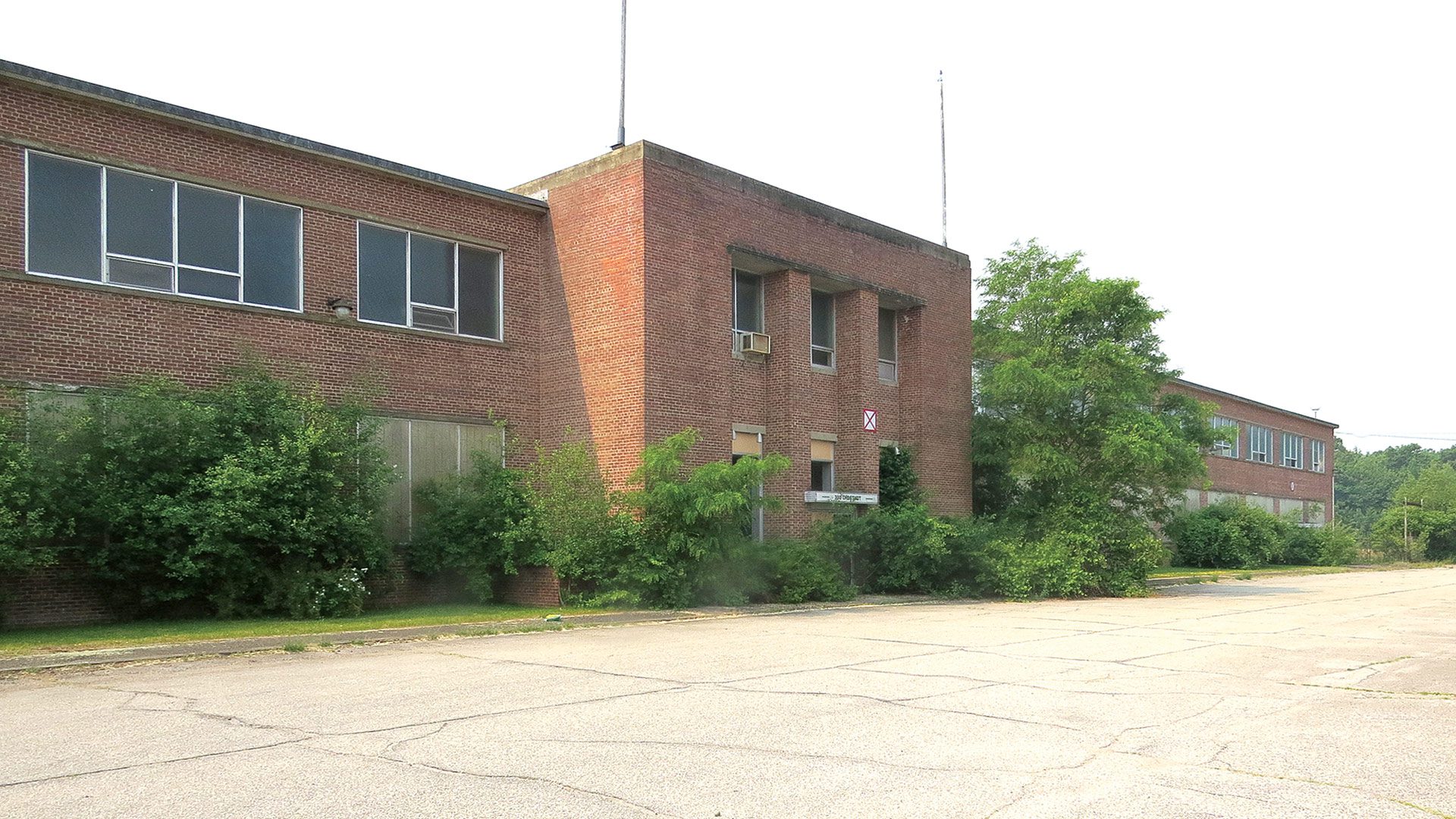
For more than 35 years now, the property at 330 Chestnut St. in East Longmeadow, known colloquially as the Package Machinery complex, has been the subject of question marks about what will come next there.

Indeed, while there have been sporadic uses of portions of the sprawling property, especially its massive warehouse facility, over the years, it has been mostly vacant. The once-mowed acreage adjacent to the administration and production facilities is completely overgrown with weeds and other forms of vegetation. And the large ‘X’s on the front of the property instruct fire crews not to enter because it has been deemed unsafe to do so.

So the questions persist — only, these days, months after a controversial plan to build a large warehouse facility there were first unveiled, and weeks after the plan was approved by the town’s Planning Board with a lengthy list of conditions, they are somewhat different in nature.

Now, the questions mostly concern what these conditions, including one requiring a right turn out of the property, will mean for certain areas of the community, including its downtown and famous (make that infamous) rotary, and other communities, including neighboring Enfield and Longmeadow. They also concern whether these conditions will be altered and new ones added, and even whether the project will hold up under potential litigation from residents.

“This is a generational opportunity and investment; East Longmeadow is an incredible community, and this gives it an asset that is a great attraction for young families.”

The matter will be the subject of a reopened public hearing on June 20, said Planning Board Chairman Jon Torcia, adding that, when it voted to approve the project in May, the board noted the concerns about traffic and noise, but ultimately concluded that this was a use allowed within that zone, and one that should be approved, with conditions.

Overall, 2023 is shaping up as a possible watershed year for this growing community of more than 16,000 residents.

Indeed, beyond the controversy over the future of 330 Chestnut St., there is also the matter of a proposed new high school for the town, one with a sticker price now north of $177 million, with the town’s share expected to be roughly $120 million.

The matter is due to come up for a vote on Election Day, Nov. 7, and to say this a huge vote for the community would an understatement.

The current high school opened its doors in 1960 and is the last of the high schools built in this region during that time that is still standing. Some see the high school as a potentially limiting factor in the town’s ability to compete with other surrounding communities for families, current students, and even businesses. Meanwhile, the building is very much energy-inefficient at a time when municipalities are moving to build schools and other facilities that move in the other direction.

“This is a generational opportunity and investment; East Longmeadow is an incredible community, and this gives it an asset that is a great attraction for young families,” said School Superintendent Gordon Smith, adding that, if voters approve the measure in November, ground would likely be broken in the summer of 2024, with the new building, to be built on athletic fields behind the current facility, to be ready for occupancy in the fall of 2026.

Bill Laplante

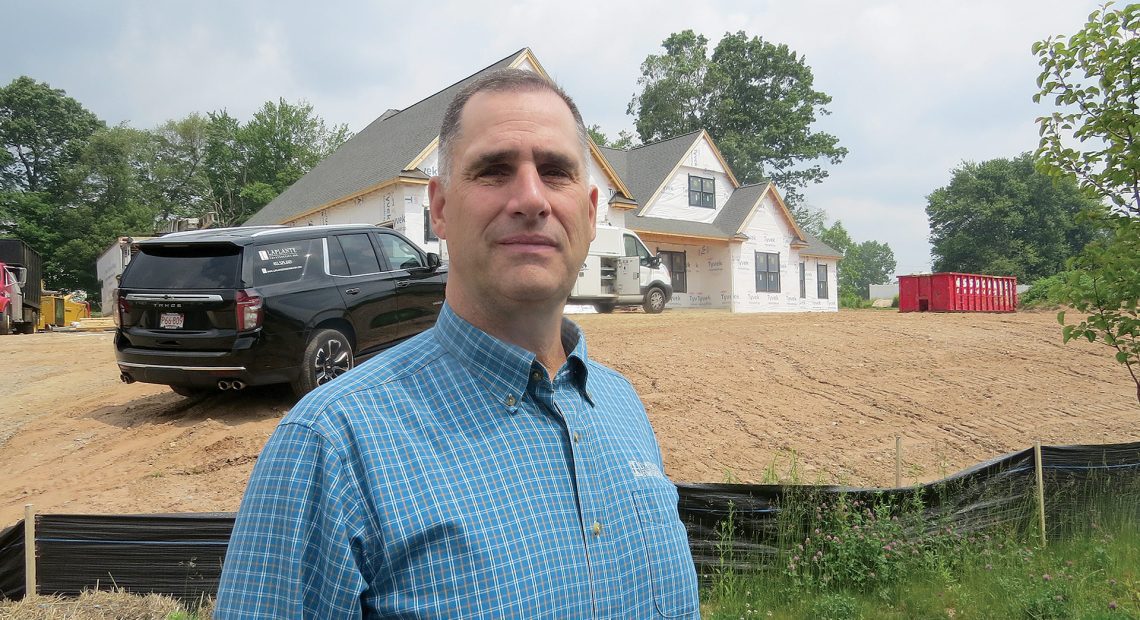
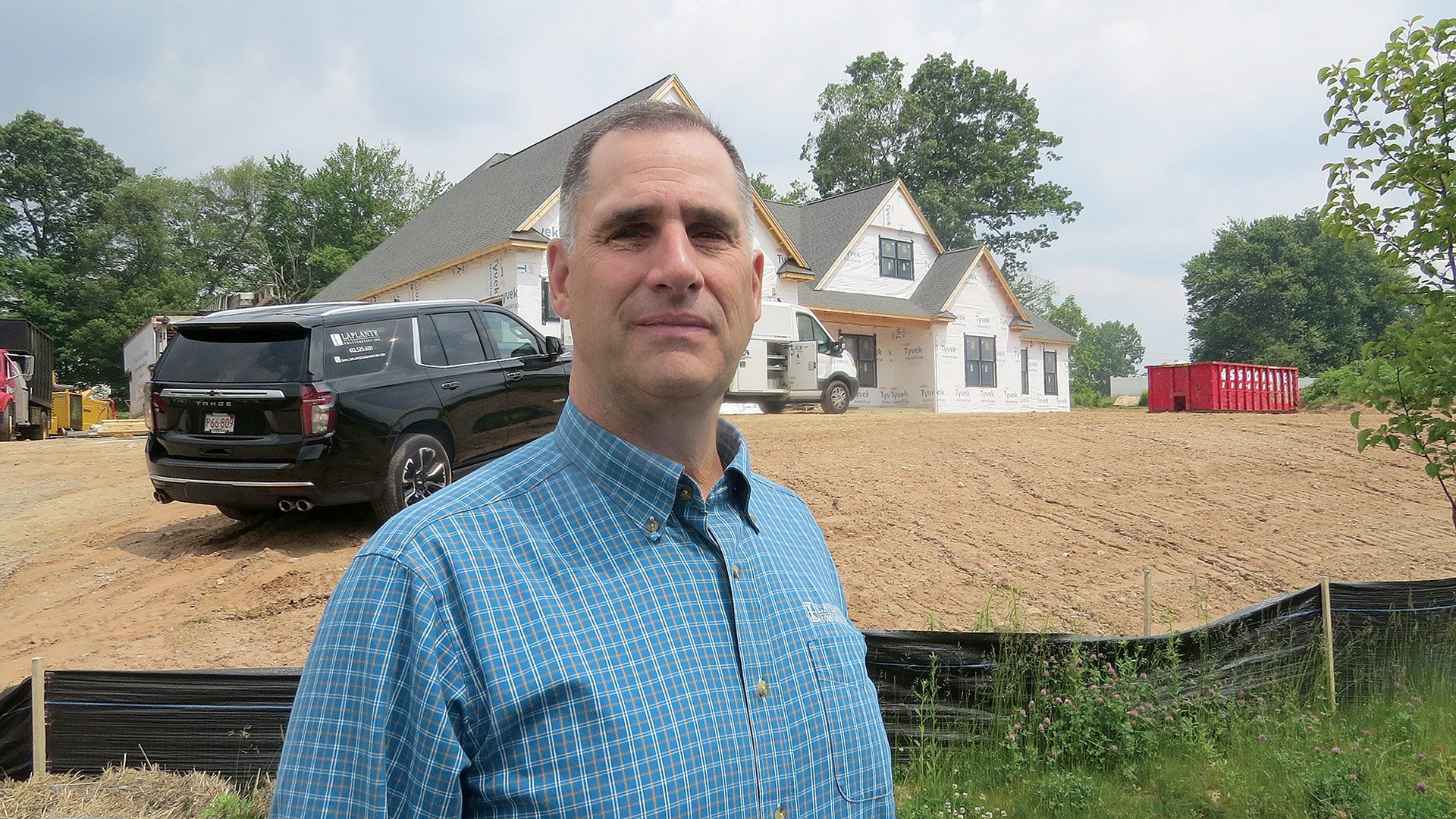
Bill Laplante says building lots are increasingly difficult to come by, and when they do become available, they go fast, and for high prices.

But despite its aging high school and its uncertain future, East Longmeadow remains a popular landing spot for both families and businesses, especially with a uniform tax rate.

“The town has become very desirable,” said Bill Laplante, owner of Laplante Construction, a residential builder with offices on Main Street. And he speaks from experience — he grew up in East Longmeadow, graduated from its high school, and raised a family there. “When I look at it from a business standpoint, just seeing that people are trying to find land or trying to find homes in town … it’s incredible.”

Elaborating, he said that, while there are more building lots in this town than in neighboring Longmeadow or many other communities, the inventory certainly isn’t what it was years ago. This means lots that become available in the few subdivisions being built go quickly, and the prices of existing homes move higher (more on all this later).

Beyond the warehouse and high school, there are some other big decisions that might be made in 2023, including what to do with another long-vacant property: the former home of Carlin Combustion Engineering on Maple Street. It is due to be acquired by the town, said Town Manager Mary McNally, adding that a request for proposals will likely be issued. Meanwhile, there are plans on the table for renovating one of the town’s gems, Heritage Park, plans that might move off the table — or not, depending on a number of factors, including the high-school project and its cost to the taxpayers.

For this, the latest installment of its Community Spotlight series, BusinessWest takes an in-depth look at East Longmeadow and the many important decisions that will likely be made this year.


Developing Stories

As noted earlier, the property at 330 Chestnut, across the street from the Lenox manufacturing facility, has been a declining eyesore, and a source of seemingly endless speculation, for many years.

It appeared that an answer had been found several years ago, when a development group, East Longmeadow Redevelopers LLC, put plans on the table for a mixed-use facility, or ‘village,’ as it was called by some, one that would include housing and commercial uses. Those plans were conceived just before the start of the pandemic, said McNally, adding that the project essentially died on the vine amid COVID-related issues such as spiraling costs and supply-chain woes, as well as disagreement between the developer and the Town Council over how much of the space would be devoted to commercial uses.

“When I look at it from a business standpoint, just seeing that people are trying to find land or trying to find homes in town … it’s incredible.”

In its place, East Longmeadow Developers LLC proposed the large warehouse facility — more than 500,000 square feet in size, with 100 docking bays — which has drawn considerable opposition from residents, especially those in an over-55 luxury condo development called the Fields at Chestnut, citing increased truck traffic and noise.

The project is allowed, from a zoning perspective, and the Planning Board approved the proposal, with approximately 20 conditions, earlier this spring, Torcia said. One of those conditions, mandating a right turn out of the property, away from the Fields of Chestnut, was not discussed at earlier hearings, he noted, adding that it would certainly be the focus of discussion at the public hearing slated for June 20.

The developers have estimated there will be roughly 400 vehicle trips per day at the site, he said, adding that he believes that most of these trucks will take a second right — rather than a left and head for the center of town — and proceed to highways through roads in Enfield and Longmeadow.

“I think this project will bring benefits in that it will rehabilitate a blighted property that has not been operational for quite some time,” he explained. “But we did hear from people who spoke at the meetings who were rightfully concerned about an increase in traffic, going from a property where there’s been no activity to one with considerable activity.”

Mary McNally

Mary McNally says there’s plenty of support for a new high school, but there are also cost concerns.

There has been no activity, or very little of it, at the Carlin Combustion site for the better part of a decade, said McNally, but that could soon change now that the town is acquiring the property from its current owner.

She noted that motorists navigating Maple Street at or above the posted speed limit might not even notice the property, with its overgrown weeds and rusting signs hinting at its former use. But it has not gone unnoticed by town officials or the authors of the master plan, who have identified it as a potential asset.

East Longmeadow at a Glance

Year Incorporated: 1894
Population: 16,430
Area: 13.0 square miles
County: Hampden
Residential Tax Rate: $19.20
Commercial Tax Rate: $19.20
Median Household Income: $62,680
Median Family Income: $70,571
Type of Government: Town Council, Town Manager
Largest Employers: Lenox; Cartamundi; CareOne at Redstone; East Longmeadow Skilled Nursing Center
* Latest information available

Indeed, there are many possible future uses for the property, said McNally, adding that some would like it devoted to open space — it abuts a rail trail and a rail depot converted into an ice-cream parlor — or as home to a new public-safety complex, while others, and she puts herself in this category, would like to see housing of a more affordable variety than most all of the homes currently being built in this community.

“I think housing is the best option, and the Commonwealth has a lot of money designated for housing needs, and East Longmeadow needs some affordable options,” she explained. “There are a lot of new homes going up for $600,000 and $700,000; a lot of people who live here would like to stay here and perhaps downsize from a $200,000, $300,000, or $400,000 home into something smaller.”


School of Thought

When asked what plan B might be if residents do not support the proposal to build a new high school this fall, Smith, said that, in essence, there isn’t one. Or at least one that makes sense, in his opinion.

The only option for the town would be to spend an estimated $120 million to renovate the school and bring it up to modern codes, he said, adding that this isn’t much of an option.

Elaborating, he said that, through two phases of a feasibility study and feedback from residents and other constituencies, the town has moved to the point where new construction has been deemed the best option.

“The public feedback was ‘you might as well go for new construction because of some of the challenges that have been identified,’” he said, noting, as one example, that if the town were to upgrade the HVAC system to bring it to code, doing so would decrease the room size because of the need to create new walls to fit the HVAC equipment that would go between those walls.

“The Commonwealth has a lot of money designated for housing needs, and East Longmeadow needs some affordable options.”

He said the town has been talking about a new high school for at least a decade. Over those 10 years, the price tag has only increased, and the current projections — and these could change with final design — is approximately $177 million, with $55 million to $57 million to be reimbursed by the state.

This will obviously be a large burden on the taxpayers, said McNally, adding that, for a small community like this one, “the numbers are frightening.”

The exact impact on the tax rate hasn’t been determined, she said, adding that some estimates put the hit at $1,000 annually for the average taxpayer. Overall, she said it is difficult to project how November’s vote will go.

“There’s a lot of support for the school; I think everyone acknowledges, or most people acknowledge, that it’s needed. But then there’s the cost barrier. But in the absence of a new school, I’m not sure we can compete as well with Wilbraham and Longmeadow, both of which have relatively new schools.”

Meanwhile, a project of this size and scope might impact or delay other capital projects, such as long-needed, long-talked-about improvements to Heritage Park.

Indeed, McNally produced a thick file folder detailing roughly $7 million worth of improvements that include a new recreation center, an indoor gym, walking trails, dredging the pond, athletic fields, and more.

“We need soccer fields and play areas,” she said, adding that soccer fields at the Lenox complex, used by the town for years, are being converted to solar farms, and other facilities will no longer be available for public use. “Unfortunately, the school vote has somewhat tapered my encouragement of the progress of some of these other projects because you can’t pay for everything at the same time.”

Despite some of these municipal issues and question marks moving forward, East Longmeadow remains a community in demand. That’s true on the commercial side — many area banks have located branches there over the past decade or so, for example, and Chase, which is renovating a property in the center of town, is the latest to join that list — and on the residential side as well.

Indeed, Laplante said building lots are increasingly difficult to come by, and when they do become available, they go fast, and for high prices.

“You do a search for available building lots in town, and you find that there really aren’t that many,” he said. “There are scattered lots that are in established neighborhoods, but you don’t see many available building lots in a neighborhood setting.”

Still, there some new homes being built, including one his company is handling in a new subdivision off Prospect Street called Bella Vista. Overall, Laplante has built three of the homes in the complex — another high-end development where the lots are absorbed quickly, which in many ways reflects what’s been happening in this community over the past several years.


Franklin County

Putting the Focus on Community

Thomas Meshako

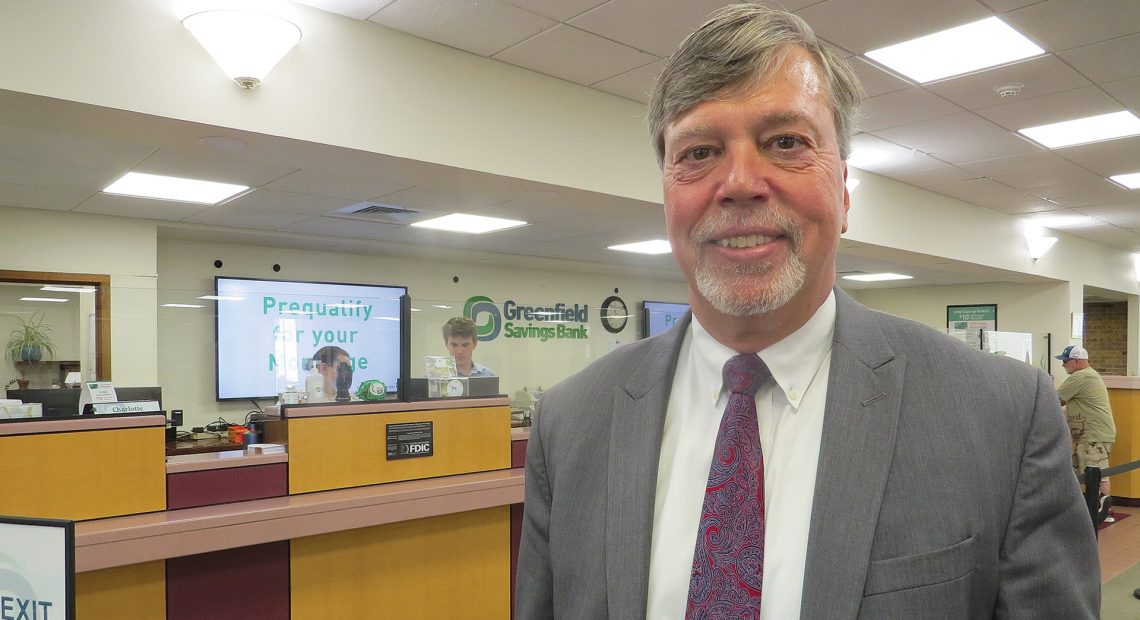
Thomas Meshako says Greenfield Savings Bank plans to grow organically and with a strategic expansion of its footprint.

Thomas Meshako acknowledged it was a quite a change moving from the large, regional institutions where he worked the first 30 or so years of his career in financial services to Greenfield Savings Bank.

But it’s a change he wanted.

“I decided I wanted to get out of the buying and selling of banks and really wanted to become part of the community — something I always felt was missing when you’re working in a bank and dealing with mergers and acquisitions and always trying to make the next quarter’s earnings,” he said, noting that most of the banks he’s worked for have been absorbed by larger institutions. “I wanted to be at a bank where we invested in the future, for the long haul, and that cares about the community it serves.”

He’s found all that GSB, where he arrived in 2016 as chief financial officer and serves now as president and CEO, new titles he was awarded late last fall following the search for a successor to John Howland.

Since arriving, and especially since becoming president and CEO, Meshako has been out in the community, taking part in events ranging from the Hatfield Bonfire music festival fundraiser to Northampton’s Pride Parade to Tapestry Health’s recent auction. As he talked with BusinessWest, he was gearing up for the Green River Festival, the massive three-day music fest (Little Feat is among the headliners) set for June 23-25 in Greenfield; the bank is a major sponsor.

He’s been at so many events, especially on weekends, that he’s spending far less time at his cabin in Vermont than he expected to be, but he acknowledged that “this is where I need to be.” By that, he meant Greenfield and GSB, an institution that crashed through the $1 billion assets mark in 2020 and is now focused on the next milestones — $1.5 billion and $2 billion — and what it will take to get there.

“When I looked at Greenfield Savings, I decided that it’s where I wanted to be. It’s a little different, but it’s exciting to work for a bank that was growing.”

The bank was celebrating its 150th anniversary when it passed the $1 billion milestone; when asked when he thought GSB might get to $2 billion, he joked, “sooner than 150 years.”

Elaborating, and turning more serious, Meshako said the bank plans to grow organically, and he is looking at expanding its footprint, specifically in Hampshire County, where five of its 10 branches are located. He didn’t pinpoint specific communities for new branches, but did say they would be towns deemed ‘underbanked’ by recent feasibility studies.

Meanwhile, GSB will be rolling out some new products, including a new rewards program for debit-card users, and continually upgrading its technology, with a new online product for loans and deposits, for example, to stay current and provide customers with what they want and need.

“Most people are looking for more convenience to bank from home, and we’re trying to make sure we offer that,” he said, adding quickly that brink-and-mortar branches, which provide visibility and other forms of convenience, are still a big part of GSB’s growth strategy.

For this issue and its focus on Franklin County, BusinessWest talked at length with Meshako about his new role, his long-term outlook for GSB, and his thoughts on Greenfield, Franklin County, and how this gem of a region is making major strides when it comes to economic development — and as a destination.


Generating Interest

As he talked with BusinessWest, Meshako gestured out the windows of GSB’s main conference room toward the other side of Main Street and the properties on either side of the Greenfield Garden Cinemas, one of the signature redevelopment projects of the past decade in this community.

“Just a few years ago, most of those storefronts were vacant,” he said, noting that they are now occupied, with everything from a book shop to a pop-up store that are, collectively, contributing to a new sense of progress and vibrancy in this city of almost 18,000 residents.

The GSB senior management team

The GSB senior management team includes, from left, Lori Grover, Mark Grumoli, Thomas Meshako, Steve Hamlin, and Shandra Richardson.

And there is more coming, he said, noting the highly anticipated redevelopment of the former Wilson’s Department Store, a few blocks down Main Street from the bank, into a mix of retail (specifically the Green Fields Market) and housing, which he believes is sorely needed in this community.

“Availability of housing is very tight in Greenfield and all of Franklin and Hampshire counties,” he explained. “This is something we desperately need, and that’s one of the reasons why this project is so exciting.”

Getting involved in a community at this level was an element missing for most of Meshako’s career, one that, as noted earlier, was marked mostly by work at larger, regional banks that have since been absorbed by larger institutions.

Most recently, he served as chief financial officer of Merchants Bancshares in Burlington, Vt., a commercial bank with branches throughout Vermont and the Springfield market. Prior to that, he served in several positions, including principal financial officer, at Brookline Bancorp in Boston. There were also stints at Union Bankshares in Vermont and Chittenden Corp. and the institution that acquired it, People’s United Financial.

After nearly three years at Merchants Bancshares, Meshako was a looking for a new and different challenge, and found it at GSB.

“When I looked at Greenfield Savings, I decided that it’s where I wanted to be,” he told BusinessWest. “It’s a little different, but it’s exciting to work for a bank that was growing.”

And it has continued that growth pattern, he said, noting that the bank posted record earnings in 2021 and 2022. It won’t continue that streak this year amid spiraling interest rates that are negatively impacting both the residential and commercial loan portfolios and tightening margins, but it will be another solid year, he said.

And while achieving solid growth on the bottom line, the bank has also been able to increase its contributions within the community by 10% a year since he arrived — a pattern of improvement Meshako is committed to continuing.

Looking ahead, he said the bank has essentially ruled out additional expansion in Franklin County, where there are currently five branches, and instead will focus its sights on Hampshire County, where GSB currently has a physical presence in Northampton (two branches), Amherst (two branches), and Hadley (one location).

“We’re always the number-one lender in Franklin County, and we’re now the fourth-largest lender in Hampshire County,” he explained. “And we hope to continue to grow that market share as well. Within the Five College community, there is a need for housing, and being primarily a commercial real-estate lender, that’s a niche that I think we can fill; we’ve done very well there.”

GSB has conducted feasibility studies on which communities would make suitable landing spots, he went on, adding that he considers some communities underbanked because of some of the recent mergers and acquisitions which have left fewer banks in some markets and larger institutions in others.

In the case of community banks, and especially this one, the investment — and the commitment — in a new location involves much more than brick and mortar that goes into the actual branch building.

“We don’t just put a branch up … when we move into a community, we give to the local organizations, we hire local people, and we try to make sure that everything we do makes us part of that community,” he explained. “So it’s more expensive than just opening a branch or putting people in a location.”


By All Accounts

Getting back to that view out the conference-room windows, Meshako said Greenfield, and Franklin County as a whole, is seeing progress on many fronts, from tourism to Greenfield’s downtown, which has many new businesses and projects in various stages of development, from a new town library and fire station to the aforementioned Wilson’s redevelopment initiative.

“Greenfield is on its way up; it has a lot of character, and I hope it continues to grow and evolve,” he told BusinessWest, citing not only the new building projects and the new storefronts, but a greater livability — and relative affordability — that is attracting residents and entrepreneurs alike. “The people moving here want to be part of a community, and that’s what they find — community.”

And he believes more people are finding it these days, and will be finding it in the future, especially as technology, and changing attitudes in the workplace, enable more people to live where they want and work where they want at the same time.

“Because more people are now able to work remotely, we’ve definitely seen an increase in the number of people buying properties and moving to Greenfield,” he said, adding that, while this trend will certainly impact housing prices in the long run, it will also bring more support businesses, hospitality-related ventures, and general vibrancy to the region.

As Meshako talks about his bank, its plans for the future, and its involvement in the community, and also as he talks about Greenfield and the many positive developments there, it’s clear why he made that career change seven years ago.

As he said, he wanted to be at a bank that didn’t just have a mailing address on Main Street, but a stake in everything that that is happening on Main Street — and many other streets as well.

As Meshako said, it was a big change, but a change he wanted — and needed — to make.

And he has never looked back.

Construction

Pathway of Progress

An aerial view of part of the Massachusetts Central Rail Trail.

An aerial view of part of the Massachusetts Central Rail Trail.


A study initiated by the Norwottuck Network to assess the benefits of the completion of the Massachusetts Central Rail Trail (MRCT) system predicts that general health and wellness would improve and annual trail usage could quadruple, creating opportunities for overnight visitation, new jobs, increased local small businesses, and an overall economic benefit ranging from $87 to $182 million annually.

The nonprofit Norwottuck Network raised $75,000 to commission the study by Kittelson & Associates Inc. of Boston and Cambridge Econometrics of Northampton to evaluate the potential use and health and economic benefits of completing the 104-mile, multi-use bicycle and pedestrian trail system that runs east-west between Boston and Northampton along the historic Massachusetts Central Railroad corridor.

Findings outlined in “Envisioning a Statewide Connection: Mass Central Rail Trail Benefits Study,” released in mid-May, indicate that completion of the trail would result in increased usage of up to 4 million to 5 million people annually and reduced health costs from $4.1 to $5.8 million per year. On the economic side, a completed trail would create $87 to $182 million per year in new economic activity, including $55 to $114 million in new spending by trail users and up to 1,250 new jobs.

Leaders of the nine-member Norwottuck Network board, founded in 2000, will now ask the state Department of Transportation (DOT) to evaluate construction costs and create a timeline for completion.

Currently, 55 miles of the trail are officially open, with roughly 20 miles in the planning or construction stages. Challenging sections of the trail to be completed include areas where bridges are missing, trail segments that will need to be purchased from private owners, and needed repairs to a 1,000-foot tunnel near the Wachusett Reservoir.

A completed Mass Central trail would eliminate those barriers and open those sections, and also link the rail trail system to 18 additional existing and under-development rail trails, creating a 273-mile trail network within the state of Massachusetts.

“These long walking and biking trails produce a lot of benefits. The question was, is it worth spending public money? This report unequivocally says yes, it will be worth it.”

Craig Della Penna, president of the network board, said the DOT recently conducted a study to evaluate the feasibility of reassembling segments of the Mass Central Rail Trail into a unified trail system and released findings in 2021; no action was taken because the benefits had yet to be assessed.

“This report is the next step,” Della Penna said. “And we are not surprised by these findings. These long walking and biking trails produce a lot of benefits. The question was, is it worth spending public money? This report unequivocally says yes, it will be worth it.

“Consultants never overestimate benefits in an analysis,” he added, noting they are more apt to underestimate. “There are no negatives. Tourism is the third-largest industry in the state. A completed trail would allow people to bike right out of their neighborhood and explore the state in a way they’ve never been able to do before.”

Kittelson & Associates noted that the completed network would be within 10 miles of 64% of all Massachusetts residents and would offer a boost to 19 cities and towns defined by the consultants as gateway communities — those that face social and economic challenges but retain assets such as infrastructure or major institutions.

Among the gateway communities that would benefit are Barre, Billerica, Clinton, Easthampton, Hardwick, Hatfield, Lunenburg, Marlborough, New Braintree, Oakham, Palmer, Saugus, South Hadley, Southampton, Southwick, Ware, Warren, West Boylston, and West Brookfield.

The unequivocal positive impact on these gateway communities was the one surprise for Della Penna in the report. “This is a way to focus on making these communities better,” he said. “The state can’t help you improve your house, but it can help you improve your community. This is an infrastructure project that improves communities, helps to improve health outcomes, and will generate a significant positive economic benefit.”


Evolution of a Trail

Trains running along the Massachusetts Central Railroad traveled between Boston and Northampton, serving residents and industry through the early 1900s, until struggles with maintenance, negotiations over ownership, and damage from the hurricane of 1938 led to the railway’s eventual decline.

The MCRT began to form in 1980 when the MBTA and the Massachusetts Department of Environmental Management each purchased unused sections of the railroad corridor from the Boston & Maine Railroad.

The first section of the Mass Central Rail Trail was a segment called the Norwottuck Rail Trail. Completed in 1993, the Norwottuck Rail Trail segment between Northampton and Amherst was instantly popular.

“The state can’t help you improve your house, but it can help you improve your community. This is an infrastructure project that improves communities, helps to improve health outcomes, and will generate a significant positive economic benefit.”

In 1995, community leaders and volunteers in several Central Mass. communities formed Wachusett Greenways, a nonprofit with a goal to develop the Mass Central Rail Trail segment in the Wachusett region, including Sterling, West Boylston, Holden, Rutland, Oakham, and Barre. Their work inspired other communities to build their own sections of the MCRT corridor.

Kittelson & Associates said investments in multi-use trails throughout Massachusetts have provided meaningful economic and health benefits, and long-distance, continuous trails have greater impact. They attract through-cyclists and overnight visitors, which, in turn, results in increased spending on lodging and restaurants.

As part of its study, Kittelson & Associates surveyed current Mass Central Rail Trail users, receiving responses from more than 2,000 participants. These are among the findings:

• If the trail is completed, 26% of current users would use the MCRT for shopping, 16% to commute to work, 5% to commute to school, and 86% to access parks and other features;

• Ninety-three percent of respondents anticipate using the MCRT more frequently and traveling on the trail for longer distances; and

• Almost 50% would take a multi-day trip.

Other findings were based on economic and health results associated with use of the Erie Canalway Trail in New York and the Great Allegheny Passage in Maryland and Pennsylvania. These trails generate $253 million and $121 million per year, respectively, so the planners on the team of consultants estimate the MCRT could generate between $117 and $212 million annually.

“The MCRT shares many characteristics with these two trails, including similar tourism opportunities,” the report notes. “It would connect historic towns and improve access to outdoors destinations, such as rural areas outside of the Quabbin Reservoir area and in the Connecticut River Valley.”

The MCRT has an additional benefit in that it connects numerous rail trails in the Boston metropolitan area as well as Northampton and Amherst, which provide a second population anchor that will encourage travel along the completed route. One of the 18 trails that connects to the MCRT is the longest interstate rail trail in New England, the New Haven & Northampton Canal Greenway.


Broad Impact

Existing trail systems generate 1.3 million annual visits, with 15,000 overnight trips, giving Kittelson & Associates cause to estimate the completed MCRT would bring between 4.1 million and 5.5 million visitors, including 120,000 to 390,000 overnight visits.

Visitors to the existing MCRT currently spend about $19 million annually, and spending is expected to increase to between $74 million and $133 million annually for the completed MCRT.

The completed MCRT could also generate an increase of $87 million to $182 million from the economic activity associated with the existing sections of the MCRT, including up to roughly 1,500 new jobs, for total economic activity estimated at $117 million to $212 million.

Della Penna, a longtime advocate of rail-trail systems said of the study and next steps, “it’s big, and it’s ongoing.”

More than 10,000 volunteers across the state are involved in developing bicycle and pedestrian trails in the state. To read the report detailing the benefits of linking the undeveloped segments of the Mass Central Rail Trail into one unified multi-use trail across Massachusetts, and to learn more about the MCRT, visit masscentralrailtrail.org. To learn more about the Norwottuck Network, visit nnnetwork.net/about-us.

Accounting and Tax Planning

Calling for a Recount

By Kara Graves, CPA


On Feb. 23, 2023, the Department of Labor, the IRS, and the Pension Benefit Guarantee Corp., in conjunction with the Employee Benefits Security Administration, released requirement changes to Form 5500, Annual Return/Report of Large Employee Benefit Plans, and Form 5500-SF, Annual Return/Report of Small Employee Benefit Plans.

There are many changes to Form 5500 for 2023. One of the more critical changes relates to how the participant count is calculated at the beginning of a plan year. The count is used to determine whether a plan requires an audit by an independent accountant. Typically, a benefit-plan audit is required for all large plans with more than 100 participants at the beginning of the plan year.


Old Rule

Before Jan. 1, 2023, the participant count included both active employees eligible to participate and terminated, vested employees with balances still in the plan. Using this calculation method, plans needed to include all employees currently employed and eligible for the plan, regardless of whether they were participating in the plan.

“Effective Jan. 1, 2023, plan sponsors will only need to consider participants (active and terminated) with account balances when calculating the number of participants at the beginning of the plan year. This means those active employees eligible to participate who have never contributed to the plan and/or received employer contributions will not be counted.”

Kara Graves

Kara Graves

Under the old rule, an audit was required for a plan with 100 or more of both active employees eligible to participate and terminated, vested employees with account balances. Even if a plan had fewer than 100 participant accounts with balances, an audit could still be required due to the eligible and not-participating employees.


New Rule

Effective Jan. 1, 2023, plan sponsors will only need to consider participants (active and terminated) with account balances when calculating the number of participants at the beginning of the plan year. This means those active employees eligible to participate who have never contributed to the plan and/or received employer contributions will not be counted. As a result, some plans might be able to file as a small plan.


What’s Next?

Plan sponsors should be aware of these changes and review their plan counts closely with their third-party administrators under this new methodology for the 2023 plan year. Plans with fewer than 100 plan account balances as of Jan. 1, 2023 (for calendar-year-end plans) will not need an audit, even if they previously did under the old rules.

What does this mean for plans that are hovering around the 100 account-balance mark during 2023? If your plan has 100 or more participant account balances on Jan. 1, 2023 (calendar-year-end plans), an audit is still required for 2023, but there are some steps that can be taken to reduce plan participants for Jan. 1, 2024 (the next plan audit measurement date for calendar-year-end plans).

Plan sponsors should be reviewing terminated employees with participant account balances of $5,000 or less. The plan sponsor should review with their third-party administrator the existing plan provision that allows the plan to force out terminated participants with balances of $5,000 or less. This plan provision could be utilized to reduce the participants with balances, which could potentially remove the audit requirement in the future.


Kara Graves, CPA is a senior manager and the Employee Benefit Plan Audit Niche leader at the Holyoke-based accounting firm Meyers Brothers Kalicka, P.C.

Insurance

Sound Investment

By Hub International


Financial wellness is no longer just being a nice thing for employees or a way to help recruiting and retention — it’s an important tool for improving profits.

The demand from the workforce is clear. A recent survey indicated only 42% of employees feel compensation has kept up with higher living expenses, compared with 52% a year earlier. The same survey indicates that 19% of employees are looking for a new job primarily to improve their compensation.

With numbers like these, a strong financial-wellness program can have a significant impact on your bottom line.

Here are three ways financial wellness can improve the bottom line:

1. It drives down the cost of turnover. Losing employees is an expensive proposition. While estimates vary, it can cost more than $4,000 to replace an employee in terms of upfront ‘hard’ costs, while in terms of other costs, the price can be in multiples of salary. In addition, organizations lose the institutional knowledge of an experienced worker, which drives turnover costs higher through training and loss of productivity.

At the same time, 65% of workers have felt stressed regarding their finances due to the COVID pandemic, leading to increased turnover and lower productivity. Among employees who feel financial worries have hurt their productivity, two-thirds are struggling to meet their household expenses. One-quarter have saved less than $1,000 for retirement; more than half plan to postpone their retirement.

Given the high cost of employee turnover, it’s in employers’ best interest to improve employee financial well-being. Student-loan debt-management plans and financial coaching can lessen young employees’ stress of paying the bills, while improved education on retirement planning will lessen workers’ fears of the future.

2. Financial wellness lowers stress and boosts morale. Financial wellness does far more than lower turnover: almost half of financially stressed employees say money worries have had a negative impact on their mental health.

Given the connection between financial wellness and mental health, employers can consider offering financial coaching alongside mental-health resources. Employees are likely to respond to one-on-one financial coaching via phone or video chat because of the personal and confidential nature of their financial issues.

3. It boosts productivity. Even when financial issues don’t take a toll on employees’ mental health, the stress still reduces productivity. About 40% of workers say they’d be more productive if they didn’t have to worry about their personal finances while on the job, and employees spend around one-quarter of their time at work coping with financial issues.

Employers who promote financial-wellness programs (HUB’s FinPath is but one example) can reap tangible gains in employee focus and productivity. Mandated education on budgeting, debt management, and building emergency savings shouldn’t be considered an expense or loss of productive time, but an investment in worker well-being that will have a long-term impact on the bottom line.

Daily News

HARTFORD, Conn. — Whittlesey continued its long‐standing tradition of community service through a range of projects across Western Mass. and Connecticut during its annual Community Day.

For more than a decade, Whittlesey volunteers have stepped away from their desks to participate in various projects that directly affect the communities where they live and work. This year, more than 100 Whittlesey team members collaborated with the Boys and Girls Club of Greater Holyoke, the Bushnell Park Foundation, and the Diaper Bank of Connecticut in a day dedicated to creating positive and tangible impacts within local communities.

At the Boys and Girls Club of Greater Holyoke, teams engaged in general park clean‐up efforts, including spreading mulch, planting new flower beds, and repairing and painting fences.

“Our commitment to service extends far beyond our professional obligations,” said Drew Andrews, CEO and managing partner at Whittlesey. “We believe in giving back to the communities we are part of, and our annual Community Day is a testament to this belief. We are honored to partner with these remarkable organizations this year and look forward to the impact we can make together.”

Whittlesey’s Community Day is part of a series of initiatives the firm undertakes throughout the year, emphasizing its core belief in the power of community engagement. The firm takes pride in its enduring partnerships with diverse nonprofit organizations and the real‐world impacts they create together.

Daily News

SPRINGFIELD — Market Mentors, LLC, the region’s largest marketing, advertising, and public-relations agency, is celebrating its 20-year anniversary with refreshed branding, a streamlined website (marketmentors.com), and a second location in Jupiter, Fla.

A woman-owned business, the agency was established in 2003 by Longmeadow resident Michelle Abdow, who initially focused on media buying for clients throughout New England. After two decades of growth and expansion, Market Mentors is now a fully integrated marketing agency serving clients with global reach.

“This is a major milestone for us, and we wanted to recognize it in an impactful way,” said Abdow, the agency’s president and CEO. “We’ve been busy helping our clients with their branding, marketing, advertising, and websites, and ours took a backseat for too long. We’re excited about the launch of our new look and site, which better represents the work we do and the creative and strategy we are known for.”

With regard to the agency’s second location, Abdow noted, “as our client geography has expanded, it made sense for us to have a second East Coast location. I see great potential in Florida, which boasts the fourth-largest economy in the country. I look forward to continuing to grow our client base here.”

Market Mentors represents regional, national, and international brands and offers all the services its clients need in-house, thanks to a team of generalists and specialists who possess a depth and breadth of experience across the marketing spectrum.

“We connect brands to customers — with unmatched market experience — and have fun doing it,” Abdow said. “Our experts provide valuable communications solutions via strategic marketing and public-relations plans, integrated advertising campaigns, exceptional content creation, data-based media buys, superior creative execution, and skilled website design and development.”

Daily News

NORTH ADAMS — On Friday, June 23, North Adams Pride will host its third annual free celebration for the LGBTQIA+ community and friends at MASS MoCA’s Courtyard A, from 5 to 9:30 p.m., rain or shine.

This year’s event has been built on the momentum of various projects over the last three years while honoring the LGBTQIA+ rights movement: two summer Pride celebrations, an award-winning float at the Fall Foliage Parade, and the first annual 2023 North Lights Ball (sold out).

North Adams Pride has taken additional steps to make the third annual Pride Night celebration diverse, special, and effective. Whereas more than 600 attendees participated in the previous year’s festivities, Pride organizers are ready for more and have planned a night of activities for all ages, including music, dancing, beverages, food to eat, and food for thought.

“I think it’s essential that our North Adams Pride Night celebration is celebratory but also educational and innovative,” said Andrew Fitch, North Adams Pride organizer. “Many hundreds of anti-LGBTQIA+ bills have been enacted or are under consideration in the United States right now. Queer-themed books are being banned, and life-saving healthcare is being denied to trans people. Our Pride celebration will present a wonderful opportunity to party, but also to learn a little more about how our community can come together to fight for good, and how our community can make changes to build a more inclusive and vibrant North Adams.”

John Tibbetts, North Adams Pride organizer, noted that “North Adams Pride participated at Berkshire Pride in Pittsfield on June 3, and there was excitement from attendees to see we are continuing the festivities in Northern Berkshire county on June 23 at MASS MoCA.”

Alexandra Foradas, curator at MASS MoCA and North Adams Pride co-organizer, added that “we’re thrilled to welcome back the North Adams Pride Night celebration to MASS MoCA for another year. It’s a beautiful celebration of the vibrant LGBTQIA+ community here in North Adams and throughout our region.”

Daily News

SPRINGFIELD — Families with young children throughout Massachusetts have taken part in the first-ever community approach to early screening for developmental delays and disabilities.

In April 2023, the Massachusetts Act Early Campaign held the inaugural Massachusetts Developmental Monitoring and Screening Week at more than 30 sites across the Commonwealth, including six in Springfield.

The campaign was designed to generate conversations about child development and increase awareness of the importance of developmental monitoring and screening. The response rate to follow-up surveys indicates approximately 500 children were either screened or completed a developmental-monitoring checklist during the week-long event.

Campaign co-sponsors included United Way of Massachusetts Bay and Merrimack Valley, Boston’s Children’s Hospital, the state’s Head Start Assoc., and Women, Infants, and Children Nutrition programs. Children who did not pass the screen or developmental-monitoring checklist were referred to their pediatrician and/or Family TIES of Massachusetts. Participating families were also provided with “Learn the Signs. Act Early” informational pamphlets.

The screening week was co-led by American International College Associate Professor of Occupational Therapy Kate Barlow and Carla Therriault from United Way of Massachusetts Bay. Barlow has been serving as the Act Early ambassador for the Centers for Disease Control and Prevention since 2019.

Massachusetts Act Early aims to educate parents and professionals about healthy childhood development, early warning signs of autism and other developmental disorders, the importance of routine developmental monitoring and screening, and timely early intervention whenever there is a concern. To identify children with delays, the American Academy of Pediatrics recommends developmental screenings be conducted at pediatric wellness visits for infants and toddlers.

However, Barlow said, “more than half of the children who need early-intervention services are not receiving them, which is why developmental monitoring and screening in the community are so important. Early-intervention services are free to families in Massachusetts, yet families do not have access.”

Barlow calls the screening events especially timely given the release of the Massachusetts Early Childhood Agenda in January, listing developmental monitoring and screening as a top initiative. She represents the Massachusetts Act Early Campaign as the lead advocate for that initiative as well. “The statewide initiative to raise awareness was a great success, but we need a champion in the State House to make effective change in Massachusetts,” she said.

Barlow is offering to share the structure of the campaign with her counterparts in other states so the effort to monitor and screen children early can be replicated in other parts of the country. Those who would like more information may email her at [email protected].

Cover Story Franklin County

Northern Exposure

Brolin Winning, general manager of the Shelburne Springs

Brolin Winning, general manager of the Shelburne Springs luxury hotel, sees many signs of new life along the Mohawk Trail.

Brolin Winning and his wife used to run a barbecue stand on the Mohawk Trail, and he’d occasionally look up at the abandoned building next door, a mansion built in 1914 that later operated for decades as the Anchorage Nursing Home before closing in 2011.

“We’d look up the hill at this place — which had been abandoned for a decade — and just think, ‘man, that’s a sweet spot.’ But it was just melting into the ground.”

But then a friend came into some money and was looking for an investment project. “I said, ‘you should buy the nursing home,’” Winning recalled. So they did — and begin fixing it up.

That was early 2020, when COVID hit, but the ensuing shutdown of the hospitality economy gave the team — owner Hilltown Lodge LLC, Thomas Douglas Architects of Northampton, and Tristan Evans Construction of Greenfield — time to redesign the space, gut the building down to its studs, and restore it with seven spacious suites; a kitchen, bar, and upscale but cozy lounge areas; and outdoor relaxation and recreation space across 38 acres. Among the next plans is a big stage up the hill for weddings and other events.

“I couldn’t wait to come back, just to be in the woods again and on the river again. It’s just, like, the best place to live.”

But while Winning is gratified that the hotel, called Shelburne Springs, has had a successful first few months, he doesn’t view the property in a vacuum, but as part of a renaissance along the Mohawk Trail that includes renovations and reopenings at the Sweetheart Restaurant in Shelburne Falls, the Duck Pond antique shop in Shelburne, the Blue Vista Motor Lodge just over the Berkshire County line in Florida, and more.

“There’s a lot of stuff going on, whereas I feel like it was … I wouldn’t say run-down, but quiet for a while,” Winning said. “COVID obviously affected everybody in this area, but a lot of people were coming out here even more because we’re like in the country and away from the crowd, and there’s a lot of outdoorsy stuff.

Jeff Sauser (left) and Jeremy Goldsher

Jeff Sauser (left) and Jeremy Goldsher have expanded Greenspace CoWork to a second location on Main Street in Greenfield.

“I’ve lived all over the country; I’ve lived a long time in California, Boston, Chicago, and different cities,” he went on. “But I’ve always loved it here. I grew up in Amherst and Northampton, but I used to come up here to fish when I was a kid. That’s how I got into the Mohawk Trail. To me, there’s nowhere like it. I was in San Francisco for a long time, and I would come back here twice a year. And I couldn’t wait to come back, just to be in the woods again and on the river again. It’s just, like, the best place to live.”

He’s not the only one who feels that way about this county of 71,000 residents — fewer than half the total of Springfield — spread across 26 communities.

“It’s stunningly beautiful. That can’t be overlooked,” said Hannah Rechtschaffen, recently appointed coordinator of the Greenfield Business Assoc. (GBA). “And I think there is a wonderful, long history up here of people being very engaged in their communities. When you travel from town to town, you find a lot of residents and business owners who feel very passionate about that, about the town that they’re in.”

“I feel like if you wanted to kill as many birds as possible with one stone, a robust housing strategy would be the way to do it.”

Rechtschaffen cited draws like the county’s outdoor recreation experiences and attractions like Bridge of Flowers in Shelburne Falls and Poet’s Seat Tower in Greenfield, but said tourists find much more.

“People come for these beautiful experiences, and they’re also finding other cool stuff, from whitewater rafting to restaurants. So the challenge is to reach out to people up and down the Valley and let them know there are really lovely experiences close to them,” she said. “All these towns have something special to offer, but together, we can offer something really beautiful.”

For residents and business owners, she added, “because it’s a small county, it has a bit of history of people needing to go to neighboring communities for different things. When you have that history of people stepping to the community next door to find something, you have this nice connectivity, which has gotten more robust over time. You have an opportunity for towns in Franklin County to work together in a unique way.”

Hannah Rechtschaffen, Franklin County CDC Executive Director John Waite, and Lisa Davol

Some of the players invested in a more robust Franklin County are (from left) Greenfield Business Assoc. Coordinator Hannah Rechtschaffen, Franklin County CDC Executive Director John Waite, and Lisa Davol, marketing manager of the Franklin County Chamber of Commerce.

Jessye Deane, executive director of the Franklin County Chamber of Commerce and Regional Tourism Council, agreed.

“I think one of the major strengths of Franklin County is that we have a comprehensive set of supportive services around business development,” she said, citing robust connections between the chamber, local businesses, workforce-development and entrepreneurship-focused agencies, and legislators.

“Collaboration is really the only way forward for us. I think Franklin County has always used partnership and collaboration as a special sauce, and I think that served us well during the pandemic. And part of the chamber’s job is to continue to fuel those collaborations and help make those connections.”

Clearly, it takes a village — well, 26 of them — to create a culture in the northernmost county of Western Mass., one that faces challenges, but also has more to offer than many outsiders realize.


Challenge and Opportunity

Deane said many of Franklin County’s challenges are no different than those seen across Western Mass.

“Of course, housing is a challenge. And transportation is particularly troublesome in more rural communities because that’s a barrier to a lot of our entry-level employment. And childcare is huge; there is a lack of high-quality childcare in this area.”

“One of the things I appreciate about Franklin County is that we can keep our identity — we have the nature, the beauty, the rural luster of it — but there’s increasing opportunity.”

Hiring also continues to be a challenge across industries, she added — another issue being felt across the state.

“I think we have a unique twist on that because we are a rural community, so it’s a little more exacerbated on this side of the state. One of the challenges I’m particularly concerned about is the population-decline projections. So we’re working overtime in collaboration with our legislators to make sure the Commonwealth is more equitably funding projects and initiatives across the state and, as a chamber, making sure that we’re doing our best to shine a light on why Franklin County is such a great area to live and work, and hopefully attracting new families to the area.”

She said the Regional Tourism Council’s task is to attract more tourism to a county that already brings more than $79 million in tourism dollars every year to destinations ranging from Berkshire East in Charlemont to Northfield Mountain and Sugarloaf Mountain; from Yankee Candle and Tree House Brewing Co. — and its slate of summer concerts — in Deerfield to Hawks & Reed Performing Arts Center in Greenfield and Double Edge Theatre in Ashfield.

Ashley Evans

Ashley Evans says reopening the Farm Table in Bernardston was an opportunity she couldn’t pass up.

“Tourism is really about OPM: other people’s money. And we want to make sure that we are helping them spend that here. And there is so much to do,” said Deane, who calls Franklin “the fun county,” and wants more people to know about that.

“There are endless opportunities for fun in Franklin County. And in terms of our work in the Regional Tourism Council, we’ve made some significant strides. In the past year, we branded our tourism side. We worked with a local company to give Franklin County a really great visual presence, with the tagline ‘more to Franklin County,’ because one of the things that we found when we did that investigative work is that folks said there’s always more to do: ‘I didn’t expect there to be so much. We’ve got to come back.’”

The council is also in the process of launching a standalone tourism website, Deane added.

“We want to make it easy as possible for people to plan their trip, and we’re working with our hospitality vendors to do itinerary planning based on any given interest. So if you’re really into craft beverages, this is what you can do for a weekend. If you’re really into outdoor recreation, this is what we recommend you can do for a weekend.”

A member of the Greenfield Business Assoc. who is about to join the Franklin County Chamber of Commerce, and whose family owns Hawks & Reed, Jeremy Goldsher also co-owns Greenspace CoWork with Jeff Sauser, so he has a broad perspective on business life in Greenfield and its environs.

“We’ve seen already that Hawks & Reed started a bit of a new music and cultural renaissance in downtown, to the point that now you can’t walk around in any given weekend without seeing kids running up and down the streets of different local venues,” Goldsher noted.

As the owners of Greenspace CoWork, which now has two facilities on opposite sides of Main Street in downtown Greenfield, Goldsher and Sauser have cultivated key business connections through programs like the monthly Business Breakdown networking events.

“It’s developed quite a bit, from ‘I need some emotional support from my business peers’ to a really fun, informal gathering of a lot of our favorite business leaders, business owners, and a group of young, entrepreneurship-minded folks that we’ve never met,” Goldsher said. “We always get new folks at each meeting. We’re now in our 14th or 15th run of it, and I think the Business Breakdown has been a gateway for us to really get onto the map of Franklin County in a bigger way than our co-work business was permitting us.”

With programs like Business Breakdown and a six-month accelerator program, Goldsher is starting to see a “domino effect” of key connections. “We’re starting to see the Franklin County CDC, which has been a great partner of ours, become a lot more visible in their entrepreneurial work and various programs starting to revolve around specific topics, which is great.”


Planting Roots

Emerging from the pandemic, those connections are more crucial than ever, Sauser said.

“We’ve had our ups and downs with the economy. We got through COVID. I think we’ve been an important part of the downtown revitalization, especially with the move to remote work and more flexibility. That’s important to the economic-development story of Franklin County in general, along with getting broadband access out there and just making this a place people can do a job that’s based anywhere, so they can live where they want to live.”

After all, while tourism is critical to the economy, Sauser said, tourism can’t be all Franklin County offers; it has to be a place people want to live and work, and where they find it affordable and rich enough in amenities to do both.

As an urban planner who has done a lot of policy and analysis work in housing, he said housing is the biggest issue.

“I feel like if you wanted to kill as many birds as possible with one stone, a robust housing strategy would be the way to do it. People are moving here in part because they can’t find the housing they’re looking for; nationwide, there’s a huge shortage.”

So there are real opportunities for growth, he said, adding that municipalities need to be smart with not only strategies for housing development — the residential units coming online in the former Wilson’s Department Store building in downtown Greenfield is a “game changer” for the city, he said — but with property taxes as well. The other big draw for families is school systems, and Sauser said many communities still have room for improvement there.

“That can hold places back. There are other options out there, private schools and charter schools, but the core of the public school system isn’t as successful as it could be.”

For every challenge, though, there are business success stories, Deane said.

“One that comes to mind is Sweet Lucy’s Bakeshop in Bernardston,” she said. “Lucy moved back into the area from Seattle. She crowdfunded to start her business. She’s now expanding. And that’s in partnership with support from the chamber, from the great folks at CISA, from the CDC. She’s really taken this bake shop and made it famous across the county. And she’s now expanding to include a community center so that she can help teach cooking courses or baking classes.”

A stone’s throw from Lucy’s is the Farm Table, the iconic Bernardston eatery on the Kringle Candle property that closed in 2020 but is reopening this month under the management of serial restaurateur Ashley Evans, who grew up in Turners Falls and was intrigued by the possibility of reopening the Farm Table while on a visit from her home in the state of Florida.

“When I came to this property, how could I pass it up? It’s just absolutely breathtaking, everything about it,” Evans said, adding that the goal is to offer an elevated culinary experience, with many ingredients locally sourced, but at a less elevated price than before.

“We plan on having a similar menu, but redone and more adapted to the market in this community. Instead of a fine-dining establishment, we want to make it an everyday establishment. You can stop by and get something, and the bill’s not $300.”

Evans also plans to host events, from outdoor movies to Hawaiian nights; from outdoor clambakes to a haunted house in the event center.

“We have a lot of ideas to bring the community together,” she said, adding that, despite the workforce pains plaguing the hospitality industry, she was able to staff up quickly, which says something about the establishment’s reputation.

“That speaks to what this property is. It almost speaks for itself,” she noted. “I didn’t have to do a ton of marketing; we said we’re hiring, and people were anxious to work here, which is a beautiful thing.

“I’m so pumped. I’m excited,” Evans added. “I just walk in and feel grateful every day.”


Grit and Gratitude

So does Rechtschaffen, who spent almost two decades away from Western Mass. before returning in 2018 and immediately immersing herself in Franklin County life, chairing the Sustainable Greenfield Implementation Committee, which supports the use and implementation of the city’s master plan, and serving on the Downtown Greenfield Alliance and the Local Cultural Council.

She was director of Placemaking for W.D. Cowls in North Amherst before taking on her current leadership position with the GBA, where she’s focused on how businesses in this largely rural county can thrive in the post-pandemic years.

“We’re looking at how people are locating themselves, especially with remote work, with proximity to Boston. We are seeing people come into this area with a different sense of how they’d like their lives to be,” Rechtschaffen said. “We welcome people in who are looking to move out of city-centered life without sacrificing the feeling of community and connectedness and available amenities.”

Deane said the past few years have taught resilience to residents and businesses here, but also new ways forward.

“Economic development is really a long game. So we’re having these conversations now that hopefully will impact the next 15 or 20 years,” she explained. “And we’re doing that with a fresh understanding that, at any point, those plans can go completely rogue and be blown up by whatever comes next. So we’re being cautiously optimistic as we plan and prioritize on a regional level.”

To Sauser, the county’s value is evident in its people, its businesses, its quality of life, and the places that bring those people — and visitors — together.

“I feel like it’s a place to watch,” he said. “I’ve been told, when I moved here, that Greenfield is the kind of place that always feels like it’s about to turn the corner, but it never actually does. I’m getting a lot of signals now that it’s looking pretty good.”

Rechtschaffen agreed.

“One of the things I appreciate about Franklin County is that we can keep our identity — we have the nature, the beauty, the rural luster of it — but there’s increasing opportunity,” she said. “It’s becoming easier to say, ‘this is what Greenfield is all about, this is what Franklin County is all about, and you’re welcome to be here.”

Construction Special Coverage

Past Meets Future

Stephen Greenwald

Stephen Greenwald has built a strong reputation in a variety of construction niches over the past 47 years.


For Stephen Greenwald, growing his construction company was tied closely to how he saw his role in it.

“I started as a one-person company — just me, doing whatever I could do,” he said of the origin of Renaissance Builders in 1976. “The very small remodeling jobs … those were the only kinds of jobs I could get back then.”

A little over a decade later, he had nine employees, but he felt he was spending too much time building and renovating, and not enough time managing and planning.

“I still put on a tool belt and went to work most days, pounding nails,” he recalled. “And if you’re out there working, pounding nails every day in the field, the biggest issue is time commitment. You just don’t have enough time to run a company. You’re not answering the phone, doing estimates, meeting with clients, working on designs, and bidding other projects.”

As a result, “there’s a certain limit to your income,” he added. “So in the very late ’80s or very early ’90s, I came to the conclusion that, if I ever wanted this company to be more than a company where I worked in the field every day, we needed to grow in size and systems and management. So I made a conscious decision that we’re going to start looking at bigger jobs.”

“I came to the conclusion that, if I ever wanted this company to be more than a company where I worked in the field every day, we needed to grow in size and systems and management.”

Today, Renaissance, based in Gill, boasts 27 employees and a broad range of work, from residential to commercial to historical preservation, up and down the Pioneer Valley, from Springfield to Brattleboro.

By the early ’90s, “we were doing almost entirely residential work,” Greenwald recalled. “And two events happened that sort of pushed us in different directions.”

The first was an opportunity to build a water-treatment plant in Greenfield for groundwater pollution remediation, which exposed Renaissance to a new line of work. Then, in the late ’90s, Greenwald had an opportunity to tackle the interior fit-out of a food-processing facility in Turners Falls. “Now we have multiple clients in the food industry,” he said.

wrestling arena at Northfield Mount Hermon School

This award-winning wrestling arena at Northfield Mount Hermon School was designed by Jones Whitsett Architects and built by Renaissance Builders.

The bulk of the firm’s work is negotiated, though it also bids on public jobs. Since it started growing in earnest, Renaissance has dramatically broadened its scope, from restaurants and commercial kitchens — its area projects have included complete renovations for Blue Heron and Goten in Sunderland, and Hope & Olive in Greenfield — to retail establishments and service industries, including a new Greenfield Savings Bank branch in Turners Falls, which was built with energy-saving goals in mind (more on that aspect of the business later).

One intriguing renovation project was Ode Boutique in Northampton. A suspended ceiling hid the original plaster medallions on the ceiling of the downtown location, and the retail space was split in half by a wall. A new steel beam allowed the dividing wall to be removed, and the entire interior and storefront were redone in a fresh, rustic style.

Meanwhile, a three-building renovation project along Bank Row in the center of Greenfield included a complete interior and partial exterior renovation of the Allen and Pond buildings, with ground-floor and exterior renovations to the Siano building. The roof was raised to create a full third floor in the Pond building, and the basement was excavated to create usable retail space in the Allen Block. The project also included significant energy upgrades and facade renovations to historic specifications.

“During the pandemic, a lot of people were sort of investing in their homes, and they had some expensive projects to do.”

On the education front, Renaissance has done multiple public-school projects, and is starting work on Athol High School this summer. “That work ebbs and flows,” Greenwald said. “It’s driven by the purse strings of local governments and the state.”


Comforts of Home

Most of the company’s work is located in the Valley, but Renaissance has taken projects as far south as East Hartford. The balance between residential and commercial work tends to shift with the economy, but most residential projects have been high-end renovation work.

“There’s not a whole lot of new housing because new housing is particularly expensive these days, especially in Massachusetts,” Greenwald said. “And during the pandemic, a lot of people were sort of investing in their homes, and they had some expensive projects to do.”

Kitchens and bathrooms have been the biggest request, he added. “We have two crews that have done nothing but kitchens and baths for two years — just one right after the other.”

Renaissance Builders

Renaissance Builders has long had a strong presence in residential work, including this home in Northampton.

While design styles have understandably changed over the decades, one striking change in recent years has been why people are renovating.

“Fifteen years ago, it was, ‘I’m in this house until I can afford to move to the next house — a bigger house or a better spot.’ I’m not sure what’s driving it, but now, they’re much more focused on making big improvements even beyond what the value of their house is,” he explained. “So, clearly, they want to live there. They want to be comfortable, and they realize that, by putting $150,000 into their home, they probably couldn’t turn around and sell it tomorrow for that. But they want what they want.”

One factor, of course, may be that buying a new home is historically expensive right now, due mainly to supply-and-demand issues in the Western Mass. market, as well as still-high costs of building materials. Renaissance has navigated the inflation issue in its own business along with all other area builders.

“Some basic materials have come back down — the cost of plywood is an example. And the cost of two-by-fours has returned to where it was,” Greenwald noted. “But what hasn’t come back down is, for example, the cost of a window. I can’t speak for what a manufacturer is going to do, but my guess is that manufacturers are now getting this price, so they see no reason to not keep charging it. It’s similar to what happened the first time fuel surcharges showed up on our deliveries. Well, fuel went back down, but the fuel surcharges never went away.”

Supply-chain issues continue to nag at the industry as well, he said. “It’s gotten better, but it hasn’t gone away. There are still issues every week with items not showing up, or items showing up damaged. The supply chain is still a big issue.”

That said, “we’re very busy,” Greenwald said, noting that Renaissance has a strong reputation with clients, especially when it comes to what he called “some unique problem-solving skills, which have earned us the loyalty of customers.”

For example, “we had a client that said, ‘we have this 11-foot-diameter, 40-foot-tall cylinder which we have to put inside our building. It’s in our parking lot. And you have to come up with a plan to cut a hole in the roof, and you can only have the roof open for 12 hours.’ So that was kind of a neat challenge.

“With those jobs, the clients aren’t too interested in the cost; they’re interested that you meet their 12-hour deadline,” he went on. “We have a reputation among a lot of these manufacturers, that we’re excellent at solving these problems.”

Renaissance has a reputation for historical-renovation work as well, including elements of that Bank Row project in Greenfield, which earned the owner, Icarus, Wheaten & Finch, statewide preservation awards, and other projects, like a window restoration of Forbes Library in Northampton.

Historic-preservation work is a clear area of opportunity, Greenwald said. “It’s one of those areas where there’s not a lot of competition. And on municipally funded jobs, a lot of times, you have to be DCAM-certified in historical renovation. There are very few contractors in this part of the state that have that designation; we’re one of them.”


Green Thoughts

Renaissance is also well-known for green building projects. Contractors have to be these days, of course, but Greenwald got involved in energy-efficient building in the late ’80s, when such work was far from the norm.

“Western Mass. Electric, which morphed into Eversource, had a program called Energy Crafted Homes back in the early ’90s, and we built the first model for it,” he said. “For those days, it was airtight and super-insulated. It was very progressive. So, in the ’90s, we started doing that.

“The whole industry has progressed, of course,” he went on. “Building science has grown exponentially in the last 30 years, and has really made some huge leaps forward. But that’s still important to us. Even the additions we do, there’s a component that falls into green building. It’s kind of expected, almost — I mean, the building code is demanding.”

Early on in the green movement, the industry recognized the value of insulation and air sealing, he explained. “Building science has discovered over the years that, if you control the amount of air that leaks into your house, not only can you improve the health and comfort of the occupants, but you can also reliably predict how much it’s going to cost to heat the house or cool the house and design accordingly. So that’s a big element.”

Building materials comprise another element. “And there’s a lot of discussion, with all sorts of points of view, about what constitutes green building. You will get lots of varying opinions, like, should you use foam for insulation because it’s made with petroleum products? But it has a long lifespan, and, from a insulation point of view, it’s doing its job, and may be the most effective of all the insulations available, versus using Rockwool or cellulose, which are both made with some form of recycled products.”

Whatever the specific debate, it’s clear that the bar is always rising on what constitutes quality green design.

“I built my house in 1995, and it was state-of-the-art in 1995,” Greenwald said. “It’s an antique by today’s building standards, but it’s still a very efficient house.”

At the end of the day, what he appreciates most about his job is the problem-solving aspect, and how gratifying it is when a client’s plan matches reality, whether it’s historical preservation or the cutting edge of green design — or both.

“I love being able to help people achieve their goals, and coming up with unique, out-of-the-box solutions to problems,” he said. “That’s what keeps me interested in this.”

Accounting and Tax Planning Special Coverage

Firm Resolve

Julie Quink (left) and Deborah Penzias

Julie Quink (left) and Deborah Penzias, partners at Burkhart Pizzanelli.


Julie Quink says she’s often asked about the name of the company she now leads with her partner, Deborah Penzias.

And that’s understandable, given that neither one is named Burkhart or Pizzanelli.

Those were the names of the founders, Quink explained, adding that the firm’s name has become a respected brand over the past 37 years, so she and Penzias saw, and continue to see, value in maintaining it, just as many other accounting and law firms have kept the names of their founders over the door.

“It’s such a brand, one that people across the region know,” she told BusinessWest, adding that modern technology has added an intriguing and sometimes fun twist to the equation.

Indeed, when those from the firm call, what shows up on many of today’s phone systems and their caller-ID programs is ‘Burkhart Pizza.’

“There isn’t enough room for the full name — it cuts off the ‘nelli’ part,” said Quink with a laugh, adding that some surprised call recipients will respond with, “but I didn’t order a pizza.”

“We had decades worth of tax legislation in just a few years.”

While pepperoni with extra cheese isn’t on the menu, a full menu of accounting, auditing, and business-consulting services are, said Quink, noting that, in recent years, those consulting services have become an ever-more important part of what an accounting firm, and especially this one, can provide to its clients, whether it involves strategic planning, succession planning, or maybe just a survival strategy (more on that later).

Speaking of the past few years … they have been a long and very difficult time for all those in business, but especially those in accounting, said both partners, noting both a raft of changes to tax codes and a mountain of work that falls in the category of non-traditional — everything from help with PPP loans to assistance with applying for the Employee Tax Credit.

The phrase ‘never-ending tax season’ came into vogue to describe the past three years, and both partners put it, and similar phrases that say essentially the same thing, to use.

“We had decades worth of tax legislation in just a few years,” Penzias said. “The only constant is change; the need has been pretty heavy from the client side, and rightfully so.”

Quink agreed, noting that, starting early in the pandemic and then continuing for the next few years, those in the accounting realm, and this firm especially, have been “running on adrenaline,” as she put it.

“That’s what we’ve been doing these past few years to help clients get though, help clients with various crises and whatever needs they had during that timeframe,” she said. “Clients continue to have needs, but it seems like we’re coming off that adrenaline rush now. I’m tired, and other practitioners I talk to are tired, and our team is tired, and I think this is a result of the emotional and physical toll of what’s happened over the past few years.”

Elaborating, she mentioned challenges ranging from the additional work, constantly moving deadlines, and pressures facing clients to workforce issues and simply “finding people willing to do the work.”

Actually, the adrenaline rush wore off some time ago, she said, adding quickly that the additional work and responsibilities haven’t stopped coming.

“We’re tired,” said Quink, adding that this is one of the reasons the Burkhart Pizzanelli office will be closed on Fridays for the summer, continuing a tradition started several years ago.

Some will come to the office and take advantage of the quiet to get caught up, but many will take a three-day weekend every week from Memorial Day to Labor Day, a benefit that is much appreciated, especially after tax season and all the additional work of the past several years.

“Many of us take the time and recharge,” she said, adding quickly that, while the adrenaline rush has worn off, the firm is pushing ahead on many different fronts out of necessity — everything from strategic and succession planning to coping with a challenging workforce front.
The team at Burkhart Pizzanelli

The team at Burkhart Pizzanelli has been “running on adrenaline” over the past few unusual years, Julie Quink says.

For this issue and its focus on accounting and tax planning, BusinessWest talked at length with Quink and Penzias about everything from the past few years and what they’ve meant for the firm to what’s in the business plan for ‘Burkhart Pizza.’


A Bigger Piece of the Pie

Tracing the history of the firm, Quink said it was founded in 1986 by Richard Burkhart and Salvatore Pizzanelli. In 1987, Tom Pratt joined the firm, and for the next several years, the three operated the firm under various names before settling on Burkhart Pizzanelli, a name that has stuck for all the reasons noted above.

“They developed a nice practice in the area working with many different types of industries and types of clients,” she said, adding that firm has continued to grow and evolve over the years, building on that solid foundation laid by the partners.

“It’s a really exciting time for us; we’re growing by leaps and bounds,” said Penzias. “We would love to expand our team — providing quality services for our clientele and managing the client load is one of our biggest challenges. It’s a growth time; it’s an exciting period. The younger folks are learning rapidly, and there’s a really positive atmosphere here.”

Today, the firm serves clients of all sizes and sectors, including nonprofits, healthcare, manufacturing, retail, construction, distribution, real estate, and others.

Penzias joined the firm in 1998, and Quink came aboard in 2011. The two became principals in 2013, negotiating a buyout with their first partner in 2014 and the second one in 2015. Quink became managing principal in 2015, and the last partner was bought out in 2019.

“I’m tired, and other practitioners I talk to are tired, and our team is tired, and I think this is a result of the emotional and physical toll of what’s happened over the past few years.”

Along the way, the firm bought out the Palmer practice of Steve Chiacchia, giving it two locations, including one in the eastern part of the region, Quink said, adding that most of the retired partners are still active with the firm to one degree or another.

As noted earlier, Quink, Penzias, and other members of the leadership are working on a number of fronts simultaneously.

One is strategic planning, Quink said, adding that the firm’s broad goal is to remain independent and grow, mostly in an organic fashion, although she said will explore mergers and acquisitions, to acquire talent as much as anything else.

“There are certain ways to get people to join you team, and one of them is to acquire a firm that has good, talented staff and that’s attractive,” she explained, adding that this was part of the mindset with the Chiacchia firm, which also offered a base in the Quaboag area, one she said provides ample growth opportunities.

“There’s a lot of great businesses and opportunities for us in that market,” she noted. “That office and that practice has been growing nicely since we acquired it.”

Another priority moving forward is to maintain and build upon what the partners describe as a fairly unique corporate culture, one that probably wouldn’t fit smoothly with a larger, regional firm, she said, adding that this is one reason why the founders, and now Quink and Penzias, have entertained offers to be acquired, but ultimately rejected them.

“We want to preserve this for the team,” Quink said. “We want to keep the Burkhart legacy going as long as it makes sense to do so.”

When asked to describe that culture, she said the firm is structured in many ways like a family. To emphasize the closeness of the team and how well it works together, she went back in time to the early days of the pandemic, when working remotely became the norm, even at essential businesses like banks and, yes, accounting firms.

“We’ve had the ability to work remotely for 15 years because of the software we use and how it’s cloud-based, but during the pandemic, most of our people chose to work here, and I think that’s telling,” she said, adding that firm took the necessary precautions to make sure people were safe. “I think it’s a place where people feel comfortable and where they feel they’re not just a number.

“We’re very in tune with what’s going on with our team members, with their vision, what they want, where they want to go with their careers,” Quink went on. “We’re businesslike, but we’re very much a team, and we like to be with each other.”


Topping It All

The team has been together quite a bit over the past three years and three months, said Penzias, noting that the pandemic and its aftermath have produced not only longer tax seasons, or one never-ending season, but many additional types of work that clients want and need.

Increasingly, she noted, clients are looking to their accounting firm for assistance not only with taxes and auditing, but with strategic planning and navigating the many challenges facing businesses of all sizes today, from supply-chain issues to how to navigate the recession that many prognosticators say is coming.

Quink agreed, noting that the pandemic has been a long and trying time on many levels, professionally but also emotionally. Indeed, she said the firm saw several of its clients die from COVID, including one of the patients in the Soldiers’ Home in Holyoke.

Meanwhile, this trying period generated additional work on many different levels, she said, listing everything from individuals inheriting large sums of money due to deaths from COVID to small-business owners deciding that it was time to sell their venture or perhaps merge with another.

“Our industry is rigorous, as are many others. It’s difficult to find people who want to live this lifestyle, so to speak, and work really, really hard.”

“We had commercial clients that closed because of the world turning on its end; we helped them wind down a legacy business, a family business, or transition it to someone else because they didn’t have the capacity to handle it anymore,” she recalled. “We did see an uptick in merger-and-acquisition work over the past three years, with clients deciding, as a result of the strains being put upon them by the new world, that they were done, and either we helped them find a buyer, or they found their own buyer through a broker, and we helped them negotiate the specifics of the deal.”

Things have slowed somewhat, but the firm is still seeing some activity in that realm, Quink said, adding that, overall, many clients are still struggling to fully recover and get back to where they were pre-pandemic.

Another priority for the firm is succession planning, she told BusinessWest, adding that the firm is committed to ensuring that the next generation of leaders is in place.

“We’re developing our next succession team, so when Debbie and I retire, we have our team in place to continue moving the Burkhart legacy forward,” she said, adding that this is an important assignment for any company, and one she and her term consult with many of their clients on.

Another challenging assignment is finding and retaining talent, and this is another issue to which the firm is advising clients to take a proactive approach — while practicing what it preaches.

“We’re trying to be as creative as we possibly can to recruit,” she said, adding that, while people at this firm like to be in the office, the trend in the industry — and across the workforce, for that matter — is toward remote work and hybrid models.

As a result, the firm is willing to be flexible with work arrangements, with a mix of remote work and at least one day in the office.

“We’re seeing a lot more firms requiring people to go in one or two days a week,” she said. “So what worked for someone living in Western Mass. and working for a Boston-based firm might not fit now with these changes that we’re seeing, so that might benefit us. Overall, we’re all competing for the same talent.”

Quink cited statistics suggesting fewer people are getting into the accounting field, and there are discussions ongoing within the Massachusetts Society of CPAs about how to reverse that trend.

One obvious strategy, she said, is for people like her to get into high schools and even middle schools and talk about accounting and how this business is not just about filing tax returns. Still, it is a difficult business, and its long hours and difficult tax seasons are not easy sells.

“Our industry is rigorous, as are many others,” said Quink as she talked about the workforce challenges facing this firm and all players in this industry. “It’s difficult to find people who want to live this lifestyle, so to speak, and work really, really hard.”


The Crust of the Story

Looking ahead, Quink and Penzias said that, overall, the names on the company’s door are more important than their own.

Those names speak to a long track record of excellence when it comes to serving clients not just by adding up numbers, but by helping them cope with change and challenge and seize opportunities when they are appropriate.

The caller ID on the office phone may identify them as ‘Burkhart Pizza,’ but clients certainly know and appreciate who’s on the other end of the line.


Commercial Real Estate Special Coverage

The Great Outdoors


Nadim Kashouh

Nadim Kashouh has long offered outdoor seating at his downtown Springfield establishment.


The term ‘parklet’ isn’t exactly new.

Larger municipalities like San Francisco, Philadelphia, Phoenix, Chicago, and others have been using it, officially or unofficially, for at least a few years now to describe efforts to repurpose and reimagine parking spaces for recreation, dining, retail, and other uses.

It’s starting to be heard more in Springfield, and it will certainly become a part of the lexicon in the future thanks in large part to $2 million worth of grants being awarded to area establishments and properties to take outdoor dining in the city to at least the next level.

Indeed, there will be at least a few parklets created through these grants, including one at Granny’s Baking Table on Bridge Street.

Todd Crossett, co-owner of the bakery, said he’s been researching the concept and, working with a local architect, has come up with a plan to bring the popular eatery, which features pies, pastries, beignets, and sandwiches, out into a large parking space originally meant for a van — 8 feet by 20 feet — and a few feet of the adjoining sidewalk, and thus bring something new and different to the city.

“We’re going to do something a little funky and take over a parking space,” he explained. “I think it will be the first of its kind, and it will be great for the city because it will generate more revenue than a parking space, because the space is free.”

Elaborating, he said Granny’s, drawing inspiration from what has been created in Evanston, Ill. and other communities, will create a tented, three-season dining deck that will include three tables and chairs as well as an awning, which can all be easily removed for the winter.

“We’re going to do something a little funky and take over a parking space.”

Beyond the parklets, though, the outdoor dining grants, funded by ARPA money awarded to the city in the wake of COVID, are expected to change the landscape in many different ways, from reactivating properties, such as the small park across Main Street from Tower Square, to changing the look and feel of other properties, such as the TD Bank building next to that park. It doesn’t have a restaurant at present — a pizzeria closed down during COVID, and a replacement has yet to be secured — but Jack Dill, who purchased the property in 2021 with a few partners, believes it will happen soon, and the option to serve patrons outdoors will likely help in the process of securing one.

Granny’s Baking Table

Granny’s Baking Table plans a tented, three-season dining deck outside.

While the grants have become the subject of some controversy — a few city councilors have essentially accused Mayor Domenic Sarno of using the grant program as a way to reward supporters and perhaps create more of them during an intriguing and potentially challenging election year — most of the focus has been on what they might mean for individual businesses and sections of the city, especially downtown.

Tim Sheehan, the city’s chief Economic Development officer, said that, while there weren’t too many positives to come out of the COVID pandemic, especially when it comes to the hospitality industry, the emergence of outdoor dining — not just as a preference for patrons, but also as a catalyst for business growth and economic development — is certainly one of them.

“The restaurant businesses recognized that this is what patrons were looking for all through COVID,” he said, adding that, while the pandemic is officially over in most all respects, there remains a focus on public health and safety within this industry and thus a continued focus on providing outdoor dining opportunities.

Nadim Kashouh, owner of Nadim’s Downtown Mediterranean Grill on Main Street, agreed. He has long offered outdoor dining at his establishment, which abuts the office tower 1350 Main St. office tower and now extends to that property with outdoor seating through a lease arrangement, and said it has become an increasingly popular option for his patrons.

“The restaurant businesses recognized that this is what patrons were looking for all through COVID.”

“People feel more comfortable sitting in an open space in the open air,” he said, adding that, with his $100,000 grant from the program, he intends to add more seats, from the current 60 to 100, as well as industrial-strength umbrellas, fire tables, heaters, a tent, and a grill that will allow him to bring what he calls a “a different kind of dining experience to the area.”

“People can come up, select their meat, and we’ll cook it for them right there and then,” he explained, adding that he expects the initiative to bring more people to his eatery and the downtown in general.

For this issue and its focus on commercial real estate, BusinessWest talked with Sheehan and several restaurateurs and property owners about the outdoor dining grants and what they might mean for individual businesses, locations, and the proverbial big picture in the City of Homes.


Food for Thought

Crossett told BusinessWest that, as those at Granny’s were preparing their application for the outdoor dining grants, which they were encouraged by city officials to pursue, they did so with a specific mindset.

“We just didn’t want to give the city a reason to say no to us,” he explained, adding that this sentiment is reflected in everything from architect’s drawings and multiple bids on construction that accompanied the application to the very specific dollar amount requested.

Indeed, while most applicants rounded up, Granny’s requested $46,160. And that’s how much the city awarded the business.

Overall, 21 establishments applied for the grants, and 17 were awarded funds. Some of the awards matched or came close to what was requested, while others were a fraction of what was sought. And it was a diverse list of recipients, to be sure, with awardees ranging from the Student Prince Restaurant and the Fort to the John Boyle O’Reilly Club; from Two Guys Pizza on Page Boulevard to Uno Chicago Grill near the Basketball Hall of Fame.

park area outside 1441 Main St

Activating the park area outside 1441 Main St. could be a key element in bringing more dining options to the building.

Dollar amounts awarded ranged from $250,000 (City Line Café, the John Boyle O’Reilly Club, and White Lion Brewing) to $35,000 for the Springfield Business Improvement District to build on its improvements on Duryea Way.

There were scoring criteria, said Sheehan, listing everything from an initiative’s ability to encourage foot traffic and improve walkability in a neighborhood business district to whether an applicant had previously received ARPA money. And there were some broad goals behind the awards, but mostly an effort to promote outdoor dining and create more and better opportunities for the concept to spur growth and bring more diners to establishments.

The grant program, which was conceived just a few months ago and undertaken in aggressive fashion, recognizes that the landscape has certainly changed in this realm. In 2019, he explained, the city initiated a one-year pilot program for outdoor dining that did not garner much interest within the industry, with just a handful of applicants. In 2020, the City Council approved that pilot becoming permanent, he went on, adding that the broad objective was to activate commercial districts in specific neighborhoods.

But it wasn’t until the pandemic that the industry fully recognized the need to move to outdoor dining, he continued, adding that the grant program was initiated to help individual businesses and properties move into that realm, or move more aggressively, through initiatives ranging from parklets to White Lion’s reactivation of the Steiger’s park.

Speaking in broad terms, Sheehan said outdoor dining does more than provide an attractive alternative to the traditional experience.

“It heightens people’s engagement with the public realm that’s around them,” he explained. “And it begins to elicit the conversation of ‘how do we make the public realm better for everyone, not just diners, but also pedestrians? And how do we make the streets more accessible to all of the needs that we have relative to public rights of way?’ Because there’s growing competition for that space, whether it be bicyclists or pedestrians or outdoor diners.”

As he talked about his grant and what will happen with it, Crossett first went back in time, to the start of COVID, when many cities were gearing up for outdoor dining and providing assistance to establishments looking to enter that realm. He said he encouraged city leaders to do the same, but recalls that the response was somewhat lukewarm — ‘pusillanimous’ was the word he used.

Eventually, some money was made available, and Granny’s used it to put a few tables and chairs on the sidewalk, which was not a good fix, he said, because there simply isn’t much room on the sidewalk. The outdoor-dining grants come three years after most cities moved aggressively in this realm, he said, but they are at least a step in the right direction.

And while Crossett would prefer a cutout — similar to what the city has done on Worthington Street in front of Theodore’s and Jackalope because of the way they have slowed traffic down on those streets and enhanced outdoor dining opportunities — Granny’s will start with a parklet that he hopes to have ready for the Springfield Jazz & Roots Festival, slated for next month.


Designs on Growth

Meanwhile, other grants that were awarded will be used in different ways to introduce outdoor dining or enhance and expand already-existing outdoor facilities, Sheehan said.

At Nadim’s, for example, the grant will enable the restaurant to almost double the capacity of the outdoor dining that exists now, generating what Nadim believes will be more business overall, amid a growing preference for that dining option.

He acknowledged that outdoor dining has its limits — there’s essentially a five- to six-month window, from May to October — but it has become an important component of most restaurants’ business plans. And with more and better outdoor options, the city, and, especially its downtown, become more of a destination.

At 1441 Main St., the TD Bank building, Dill said he’s looking to essentially turn back the clock at that office tower, which once had a much larger retail and restaurant component (what he called a ‘mall’) on its first and second floors — the latter was actually connected to both the Steiger’s department store (now that aforementioned park) and Tower Square via airwalks — while also taking full advantage of the growing popularity of outdoor dining.

“People feel more comfortable sitting in an open space in the open air.”

He said the new ownership will be re-envisioning the former mall portion of the property and applied for a grant through the outdoor-dining initiative to lay the groundwork for such a facility at the property.

“We’re in early design now, but what we’re trying to do is position those underutilized parts of the building in ways that will more effectively address some non-traditional uses,” he said, adding that the plan is to find “the right operator” and then the right location within (and outside) the property for a dining operation.

“We have some flexibility,” he said, adding that there is space on more than one side of the building for an outdoor facility, including the area by the park. “We’ll want to work with the operator on what they want to accomplish from a design and operational standpoint.”

Dill said a restaurant would serve tenants in the property and neighboring office towers, obviously, but also be another key addition in a downtown that, by most accounts, needs more options for the people who come to the area for hockey games, concerts, gymnastics and dance competitions, and other gatherings.

“This is a logical place for part of that expansion to take place,” he said, adding that, while the number of office workers downtown has declined since the start of the pandemic, people are returning to offices, and he expects that trend to continue in the months and years to come.

Dill praised the entrepreneurs taking risks and opening new venues downtown, such as Jackalope and Osteria, two ventures on Worthington Street that are bringing more vitality, and people, to the area. And he said he hopes to add to the growing inventory of restaurants with an addition at 1441 Main St.

Such additions are part of the motivation behind the outdoor-dining grants, which, while small in size and scale in most respects, have the potential to have a big impact in terms of changing the landscape — figuratively and perhaps literally — and adding new words to the lexicon, like ‘parklet.’

Insurance Special Coverage

Beyond the Paycheck

Vinnie Daboul (right, with Bob Borawski)

Vinnie Daboul (right, with Bob Borawski) says employee leverage has made things “really, really different” when crafting a benefits package.

Allison Ebner called it “a little bit of a wavy ocean at the moment.”

She was referring to the shifting calculus within companies of what benefits to offer employees and how to structure them, but the description is equally apt for the workforce challenges that are making those discussions just a little more important these days.

“We have employees that were coming out of the pandemic last year looking to add benefits in the wellness space, with financial wellness, health and wellness, and then non-traditional things like tuition reimbursement and pet insurance, which have been in play for a number of years. Those were really amped up and on the table,” said Ebner, president of the Employers Assoc. of the NorthEast (EANE).

With employers starting to worry about a recession, however, “some of that has been pulled back a little bit,” she continued. “Certain core benefits — health care, dental, vision … the practical pillars of benefits — no one’s touching those, even though some employers are seeing double-digit increases in health. But a lot of employers are saying, ‘hey, wait a minute, we want to do X, Y, and Z, but maybe let’s hold off on that a little bit.’”

The problem, of course, is that — even at a time when employers worry about economic tides — workers still have leverage due to a staffing crunch that has enveloped most sectors. And in many cases, benefits are a huge part of job seekers’ decision-making process.

Vinnie Daboul, benefits consultant with Borawski Insurance in Northampton, told BusinessWest he recently spoke with someone who had just turned down a job offer.

“They’re with a company right now with unlimited PTO and 16 weeks of maternity paid at 100%. They have a job offer from another company with unlimited PTO, but six weeks of maternity. And they’re like, ‘nah, it’s a game changer. I can’t do it. I’m not taking that job.’ Today, things are really, really different.

“Some people really want pet insurance. Some people say, ‘I need help repaying my student loans.’ You’ve got to offer personalization of benefits to employees. That’s the most effective way to attract new staff.”

“Think about this,” he went on, gesturing at Bob Borawski, the agency’s president. “Five years ago, if Bob walked in here and said to all of us, ‘hey, I just want you in the office on Tuesday, Wednesday, and Thursday, and you can stay home on Monday and Friday,’ he’d be a hero. Today, post-COVID, you say to your employees, ‘hey, we want you in the office on Tuesday, Wednesday, and Thursday, and you can stay home Monday and Friday,’ they’re like, ‘no way — we have to do what?’ It has drastically changed.”

Ebner said employers can no longer neglect the overall employee experience and employee value proposition, or, as she put it, “what are you going to give employees in exchange for what they do?

“That has become much more personalized,” she noted. “Some people really want pet insurance. Some people say, ‘I need help repaying my student loans.’ You’ve got to offer personalization of benefits to employees. That’s the most effective way to attract new staff.”

Allison Ebner

Allison Ebner says employers can no longer neglect the employee value proposition.

That said, Ebner went on, employers must consider several factors: the state of their industry, what fiscal shape they’re in, and how aggressive they want to be competing for talent. Those are reasonable, bottom-line considerations. But they become more complicated at a time when employees increasingly understand their value — and want to be compensated for it, in ways that go beyond the paycheck.


Wants and Needs

Daboul said it’s not a one-size-fits-all equation when it comes to crafting a benefits package that works for a company’s bottom line but still satisfies — and, just as important, attracts — employees.

“A lot depends on the client size,” he said. “If we’re engaging with a 10-employee client, it’s quicker. I don’t want to say it’s more transactional for them, but if I have 10 employees, I just need to get something in place. I want medical, dental, vision, and a life policy. I don’t want to say it’s easy, but it’s a different engagement.

“A lot of our clients are larger clients,” he went on, and with those employers, it’s important to sit down and build a comprehensive benefits strategy — and not just talk about it once or twice a year, but regularly discuss changing situations.

“We look at the population and do risk analysis on that population, based on the changing demographics, aging, so many different things. And we take the financial condition of the company into consideration too. How are they doing? Times have been tough for some companies; they’re laying off. Is the benefit package OK? Is it secure? We look at funding.

“Employers are looking at every avenue to accomplish three key things: make sure their expenses stay down, make sure they create a benefit package that helps them recruit and retain, and make sure the benefits are incredibly competitive.”

“So, with anything to do with the benefit program,” he went on, “it’s not just the product, but, strategically, where do you want to be this year? Where do you want to be five years from now? Those are the conversations we try to have with our clients.”

That said, Daboul agreed with Ebner that clients’ strategies around “core benefits,” as he called them — medical, dental, group life, and disability — haven’t changed much, though fewer companies are pushing to add life and disability these days. As for health insurance, the big change for employers is rising costs, particularly in this region, where a few large insurers dominate, and the lack of competition drives prices up.

As a result, employers have to decide how much to pay into a health plan and how much their employees will pay, in addition to options like higher deductibles, health savings accounts, and self-insurance.

“There are things we wouldn’t have seen five, 10, 20 years ago,” he said. “I mean, they were in the market, but when I started at MassMutual as an underwriter in 1987, I would have been fired if I self-insured a client under 500 bucks. You just wouldn’t do that.”

At the end of the day, he explained, “employers are looking at every avenue to accomplish three key things: make sure their expenses stay down, make sure they create a benefit package that helps them recruit and retain, and make sure the benefits are incredibly competitive.”

It can be a tough balance, but creativity and flexibility can help. Remote and hybrid work options, as well as generous paid time off, can appeal to a sense of work-life balance. Meanwhile, Ebner said, many employers have turned to spending accounts targeted to specific benefits — say, $1,000 per year for wellness expenses such as gym memberships and fitness equipment, or $1,000 for learning and development, such as classes or training events that the organizaion pays for.

“Lifestyle accounts have gained in popularity because they allow employees to choose what they want to spend it on, and that delivers a personalization of benefits,” she noted. “Again, we’re seeing employers re-evaluate and continuously revamp based on the value proposition and the fiscal state of the organization, which is affected heavily by things going on in the market. If they’re taking a conservative approach to the recession conversation, they’re going to maximize the benefits they do have.”

Kim Adams, a Vermont-based senior account manager at OneDigital, a national insurance, financial services, and HR platform, wrote recently that personalization and malleability have become more important in the world of benefits.

“The American workforce is currently home to five distinct generations working shoulder-to-shoulder,” she noted, and a generous 401(k) match may not be as valuable to recent college graduates bogged down with student loans, while a Gen-X employee may choose to decline healthcare coverage because their spouse has a richer plan, resulting in the company spending much less on their benefits than for most other employees.

“To combat this uneven distribution of benefits resources (and perhaps unintentionally ageist outcomes), employers may find it helpful to reconceptualize benefits as a malleable pool of resources that individual employees may allocate according to their specific needs,” Adams continued, noting options ranging from pet insurance to paying to attend a conference. “This personalized approach to benefits can effectively foster more equitable outcomes, boost employee morale, and broadcast a positive corporate culture.”

Daboul also noted the shift toward non-traditional benefits like pet insurance, tuition reimbursement, and identity-theft protection, and added that traditional products like 401(k) accounts and long-term-care insurance may be on the rise due to projections about the life expectancy of younger generations.

“I was listening to a podcast the other day,” he said, “and they’re projecting that kids being born today will have a life expectancy of 105.”


Give and Take

Even pre-COVID, Daboul said, the benefits calculus was changing at many companies. Now, the conversation can’t be avoided.

“As an employer today, thinking about my benefit strategy, what’s going to be my platform? How am I going to deliver the benefits to everybody? Who do I include? Because now I have contractors, I have part-time employees, I have seasonal employees. It’s drastically different, and the demographic you’re now delivering it to is a very different demographic. It’s a younger demographic, and they’re not as connected or committed to the employer.”

Ebner said the impact of the Great Resignation has eased up a little — EANE members are saying it’s not a crisis to the degree it was last year, toward the end of the pandemic, when businesses were trying to fully ramp up — but that trend could be temporary.

“And it could continue to be a problem for us, particularly in the Northeast, where we’re seeing the demographic numbers drop on a consistent basis. We don’t have as many workers available; the younger workers are leaving for greener pastures west and south. Employers are feeling that the relief is a temporary situation. So they have to focus on workplace planning — they have to have a plan in place for where to find help.”

The key, Ebner said — at least on the benefits side — is flexibility, as well as communication.

“Know your organization, and, if in doubt, ask the employers what they’re looking for in benefits. Make sure you’re working with a benefits broker that you trust, that’s bringing ideas to you and asking your employees about benefits. Take a survey; maybe they’re looking for things that you don’t anticipate. It’s always good to ask and consider any ideas they want to contribute.”

After all, a happy employee is a retained employee. These days, that’s a valuable commodity well worth the investment in the right package of benefits.

Daily News

AMHERST — A team of chefs from UMass Amherst brought home silver at the American Culinary Federation’s (ACF) collegiate competition on June 16 during the 29th annual Chef Culinary Conference held on the UMass Amherst campus.

The UMass Dining team featured chefs Anthony Jung, Jeff MacDonald, Max Melendez, and Kyle Bigelow. The chefs tested their skills against 12 other four-person college and university culinary teams from across the U.S., including Cornell University, the University of North Texas, Rice University, and Penn State University.

Each team was required to prepare a four-course meal including a buffet-style item to be served to the judges and competing teams. Teams had two hours to prepare and serve the first three courses and one hour for the buffet item.

The UMass Amherst team led with an English pea and lemon mousseline-crusted ocean perch prepared in a citrus butter sauce, ginger dragon puree, with tempura-fried oysters in a parsley-cilantro crème. This was followed by a cashew-stuffed quail breast and braised leg with jus lie, sweet-potato jam, stir-fried bok choy, and red rice. The entrée was accompanied by a lion’s mane mushroom ragout, sauteed garlicky mizuna, and baby mustard greens. The meal was completed with a caramelized white-chocolate raspberry cheesecake over a toasted peanut coconut-oil graham, pepita nougatine, vanilla whipped cream, orange anglaise, and raspberry-lemon compote. The buffet item was an herb pan-roasted pork tenderloin with sage jus and peach chutney, served with a bacon risotto, wax beans, and tomato concasse.

“We had a very talented group of competitors this year. Every team was well-prepared and competed like champions,” said Ken Toong, executive director of Auxiliary Enterprises at UMass Amherst and co-chair of the Chef Culinary Conference. “I’m extremely proud of the UMass Dining team and the menu they created. This competition shows how much talent we have in the college and university dining segment. I’m thrilled that we continue to raise the bar in this arena.”

Chef John Masi, show chair for the ACF team competition, added that “this is not only the best-run ACF competition because of the quality of competitors and the quality of the judges, but because of the atmosphere of continually driving to improve, created by UMass Dining, that is contagious.”