Home 2023 (Page 12)
Daily News

SPRINGFIELD — Bacon Wilson, P.C. announced that attorney Conor Carey has joined the firm as an associate in the Litigation department.

Carey earned his juris doctorate, cum laude, from the University of St. Thomas School of Law in Minneapolis in 2018 and his bachelor’s degree, summa cum laude, from Westfield State University in 2015. Prior to joining Bacon Wilson, he spent a year as a judicial law clerk for Associate Justice Sabita Singh of the Massachusetts Appeals Court and also previously served as a research attorney to the justices of the Massachusetts Superior Court in Worcester.

At Bacon Wilson, he will be assisting clients with their litigation needs in both civil and criminal law. He is a member of both the Hampden and Hampshire county bar associations and will be working primarily out of the firm’s Northampton office. He is licensed to practice law in Massachusetts and Minnesota.

“Bacon Wilson is thrilled for Conor to join the firm as we continue to grow and expand our ability to serve the diverse needs of our clients,” Managing Shareholder Jeffrey Fialky said. “Conor, a native of Easthampton, is yet another example of a talented individual returning to Western Massachusetts for his career path. Conor has robust experience working with the judiciary, and particularly the Massachusetts Court of Appeals, and this expertise is an exciting addition to Bacon Wilson’s distinguished litigation department.”

Daily News

SPRINGFIELD — Dietz & Company Architects Inc. recently welcomed Soniha Nuzrat to the firm in the role of architectural associate, in which she will assist project teams throughout all phases of design.

Nuzrat recently received her master of architecture degree from Miami University in Ohio, where she completed her thesis on evaluating cross-cultural courtyard housing for social well-being in Manhattan. As evidenced by her thesis, she has a particular interest and specializes in community-based design. This past spring, she received the AIA Medal for Academic Excellence, which is awarded annually to the top graduating students in National Architectural Accrediting Board (NAAB) accredited degree programs.

Prior to pursuing her master of architecture degree, Nuzrat earned her bachelor of architecture degree from Bangladesh University of Engineering & Technology. She also worked on a variety of projects for architecture firms in Bangladesh.

Daily News

WARE — Country Bank announced that the Boston Business Journal has once again named it an honoree in its annual 2023 Corporate Citizenship Awards, recognizing the region’s top corporate charitable contributors.

The magazine annually publishes this list to highlight companies that promote and prioritize giving back to their communities.

“It is with honor that we present our list of the Top Charitable Contributors in Massachusetts — companies who gave $100,000 or more to Massachusetts-based charities in 2022,” Boston Business Journal Market President and Publisher Carolyn Jones said. “Collectively, they gave $423 million in cash contributions, a true example of the business community coming together to help those in need. We are proud to celebrate these organizations who give both money and time to make our communities a stronger and better place for all.”

During this year’s celebration on Sept. 7, 100 companies qualified for the distinction by reporting at least $100,000 in cash contributions to Massachusetts-based charities last year, as noted above. This year’s honorees include companies from such industry sectors as financial and professional services, healthcare, technology, retail, and professional sports.

Country Bank, ranked 44th, employs 220 staff members within Hampden, Hampshire, and Worcester counties, many of whom volunteer for various nonprofits throughout the year.

“We are honored to be recognized by the Boston Business Journal for Country Bank’s philanthropic efforts,” bank President and CEO Paul Scully said. “As a community bank, it is our mission to help make a difference in the lives of others.”

Daily News

GREENFIELD — MassHire Franklin Hampshire Career Center and Workforce Board, the leading workforce-development agencies providing employment and training services to job seekers and employers in Franklin and Hampshire counties and the North Quabbin area, are celebrating the grand opening of their new location.

A ribbon-cutting ceremony will take place at the Greenfield Corporate Center, 101 Munson St., Suite 210 on Friday, Sept. 22 from 11 a.m. to noon. State Sen. Jo Comerford and state Reps. Lindsay Sabadosa and Natalie Blais will provide welcoming remarks. Greenfield Mayor Roxann Wedegartner and Northampton Mayor Gina-Louise Sciarra will perform the ceremony.

The new MassHire Franklin Hampshire Career Center features 13,000 square feet of modern space with state-of-the-art resources to provide in-person, virtual, and hybrid services, allowing MassHire Franklin Hampshire to provide better service to more customers.

Daily News

SPRINGFIELD — Springfield Technical Community College (STCC) named Christopher Thuot vice president for Academic Affairs.

Following a comprehensive national search, Thuot assumed the role on July 17. As the chief academic officer, he provides leadership for implementation of the college’s academic mission and priorities. He plays a key role in supporting the alignment of academic programs with the region’s employment needs while helping develop and sustain partnerships with transfer institutions, local schools, and government agencies.

“Dr. Thuot brings to STCC a unique set of skills, a strategic outlook, and over a decade of community-college experience,” said John Cook, STCC president. “Chris began as a community-college student and deeply understands the transformative mission we so value at STCC.”

Thuot comes to STCC from Onondaga Community College (OCC) in Syracuse, N.Y., one of 30 community colleges in the State University of New York system. He served as assistant provost, providing academic leadership to eight schools, adult college programs, and the Office of Registration and Records. He helped lead development of all new degree programs, led a comprehensive program revitalization process, and served as OCC’s accreditation liaison officer. He served as project director on a number of grants.

Thuot began his career at OCC as a full-time faculty member while serving as the Honors College chair, vice president of the Faculty Senate, and coordinator of General Education.

Thuot noted the dedication of STCC’s faculty and staff and their focus on student success, and he expressed his gratitude to Cook and the search committee. “I am truly thrilled to now be a part of the STCC community. I look forward to working collaboratively to serve our students while meeting STCC’s mission.”

Thuot was first introduced to community colleges as a student at Central Piedmont Community College in Charlotte, N.C. He went on to earn a bachelor’s degree at the University of North Carolina Asheville and a Ph.D. in political science at Northern Illinois University.

Daily News

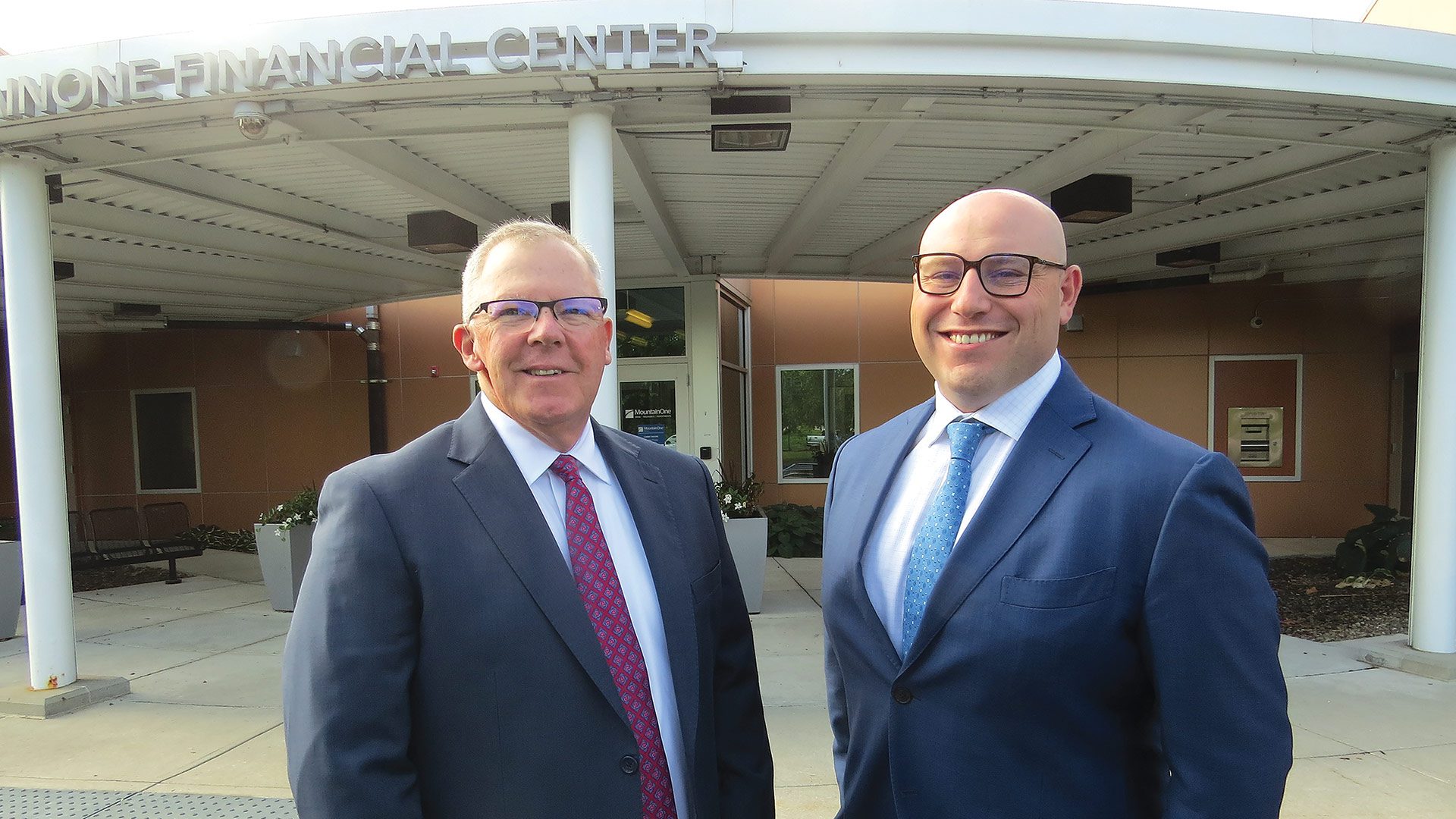
NORTHAMPTON — D.A. Sullivan & Sons Inc. (DAS) announced the arrival of Ryan Gagne, Cicely Hislop, and Andrew Fleming into its leadership group, marking a significant milestone in the 125-year-old construction company’s history.

Gagne is valued for his innovative approaches and collaborative project management and will assume the role of vice president of Construction. His master’s degree in construction management and years of industry involvement will enrich the project experience offered by DAS.

Hislop is currently pursuing her MBA at UMass Amherst. She is set to play a pivotal role in enhancing DAS’s operational efficiency and project execution as chief operating officer.

Fleming will undertake the role of vice president of Pre-construction. His ability to foresee potential challenges and devise effective solutions is expected to ensure the smooth execution of projects from the initial stages.

Gagne, Hislop, and Fleming will join Mark and Dennis Sullivan to reinforce DAS’s position as a leading construction company in Western and Central Mass.

Daily News

CHICOPEE — Elms College greatly improved its ranking on two listings in the U.S. News & World Report 2024 Best Colleges rankings and was listed as a Best Value School in the North Region for the first time.

The college jumped 33 places to 60th on the list of Best Regional Universities (North) and rose 22 slots to 12th in the Top Performers on Social Mobility, Regional Universities (North) category. This list ranks schools for enrolling and graduating large proportions of students who have received federal Pell Grants.

New this year, Elms College was ranked 33rd on the Best Value Schools, Regional Universities (North) list. This category examines a school’s academic quality and the cost of its programs. The higher the quality of programs and the lower the cost, the better the value a school provides.

“It gives all of us at Elms College immense pride and satisfaction that the Elms value is recognized in rankings such as the U.S. News & World Report Best Colleges rankings. We are pleased that Elms improved its ranking on two lists this year and entered the list of Best Value Schools (North),” Elms College President Harry Dumay said. “In addition to the high-quality education we provide, I thank the Elms community for their efforts that empower our students to make a difference in the lives of the people around them.”

Daily News

NORTH ADAMS — BFAIR and many restaurant partners throughout Berkshire County will host Dine for Disabilities on Wednesday, Oct. 4 from 8 to 9 p.m.

Dine for Disabilities is an event to benefit BFAIR’s programs and services for people with developmental disabilities, autism, and acquired brain injury. On Oct. 4, restaurants around Berkshire County will choose to donate a portion of their proceeds to support BFAIR. Diners will make a positive impact just by visiting one of the restaurant partners to enjoy a favorite meal or even try a new restaurant.

Click here for more information about the event and a full list of restaurant partners.

“We are excited to collaborate with amazing and generous restaurants around Berkshire County to further the BFAIR mission of providing high-quality services to people of all abilities,” said Tara Jacobsen, director of Development at BFAIR. “On October 4th, when people choose to dine at a partner restaurant, they are making a positive impact for BFAIR clients and services, and they are supporting a local business.”

She added that “proceeds from this event will promote independence, create accessibility, and enhance organizational resources at BFAIR. We are very grateful to all our generous restaurant partners, and we hope the community comes out for Dine for Disabilities to show love to our local businesses and support for people of all abilities.”

Daily News

SPRINGFIELD — Do you know someone who is truly making a difference in the Western Mass. region? BusinessWest invites you to nominate an individual or group for its 16th annual Difference Makers program. Nominations for the class of 2024 must be received by 5 p.m. on Friday, Dec. 8.

Difference Makers was launched in 2009 as a way to recognize the contributions of agencies and individuals who are contributing to quality of life in this region. Past honorees have come from dozens of business and nonprofit sectors, proving there’s no limit to the ways people can impact their communities.

So, let us know who you think deserves to be recognized as a Difference Maker in our upcoming class by visiting businesswest.com/difference-makers-nomination-form to complete the nomination form. Honorees will be profiled in an upcoming issue of BusinessWest and celebrated at a gala in the spring.

Daily News

SPRINGFIELD — The Western Massachusetts Economic Development Council (EDC) and Economic Development Partners (EDP) announced that the 2023 Western Massachusetts Developers Conference is scheduled to take place on Wednesday, Oct. 18 at MGM Springfield.

This regional conference will bring together an array of industry leaders, developers, real-estate professionals, site selectors, economic-development experts, and public officials hailing from Western Mass. and beyond. The event promises to shine a spotlight on the region’s numerous strengths and development prospects, elucidating why it stands out as an ideal destination for investment, business launches, and growth.

The conference agenda is full of informative sessions offering attendees an opportunity to gain valuable insights and foster collaborative connections, including a CEO Panel featuring insights from top CEOs as they discuss how the region actively supports business growth, a Community Lightning Round that showcases the vitality of local communities in Western Mass. and their role in fostering economic development, and the Incentives in Action Workshop, a hands-on session that delves into the tangible benefits of various incentives available to businesses in the region.

A key highlight of the conference is the Luncheon Keynote address, featuring Gov. Maura Healey and Secretary of Economic Development Yvonne Hao. Their participation underscores the state’s commitment to fostering innovation and catalyzing growth within the Western Mass. region.

This conference aims to serve as a robust networking platform, offering attendees the opportunity to connect with exhibitors and resource vendors, facilitating meaningful collaborations in the regional development arena. Click here for more information and to register.

Daily News

SPRINGFIELD — Baystate Health announced a $70 million comprehensive fundraising effort. “Healthier Tomorrows: The Campaign for Baystate Health” is the largest fundraising goal in Baystate Health’s history and focuses on raising money for three critical areas: capital needs, program support, and endowment development.

“This campaign changes the face of healthcare in our region,” Baystate Health President and CEO Dr. Mark Keroack said. “Our vision is to improve the health of everyone in our community by recruiting top-tier medical providers, building cutting-edge spaces for them to practice in, enhancing our services to meet the changing needs of the people we serve, and ensuring Baystate Health is here to stay for the long haul.”

The $70 million goal aims to fund several initiatives, including a state-of-the-art surgical facility and a Center for Nursing Excellence at Baystate Medical Center, a renovated Family Medicine practice and teaching space at Baystate Franklin Medical Center, and support for the endowment, with the purpose of increasing fiscal resilience for the organization.

Community members and Baystate Health providers and staff gathered on Sept. 18 to celebrate the campaign’s launch. The event, originally planned to be held in the Bolduc Family Courtyard at Baystate Medical Center, was moved inside due to inclement weather. The courtyard was made possible by a recent gift from the Bolduc family and its Hope for Youth & Families Foundation.

Lead donors have already contributed generously toward the $70 million goal. In addition to funds for the Bolduc Family Courtyard, campaign support includes a grant from the Irene E. & George A. Davis Foundation in support of the new operating and interventional procedural rooms at Baystate Medical Center, two named endowed clinical chairs, program contributions toward the Family Medicine residency program and mobile health, and support of annual giving and events that reach system-wide.

“Baystate Health has been providing high-quality, compassionate healthcare to this community since the 1880s,” said Dr. Andrew Artenstein, chief physician executive and chief academic officer at Baystate Health and president of Baystate Medical Practices. “It is our sincere hope that our promise to advance care and enhance lives will continue for the next century and beyond. This campaign helps us secure our mission well into the future.”

Baystate Health’s last campaign concluded in 2012. The $23 million raised supported building the shell of the Hospital of the Future wing, including space for a new Emergency Department and the Davis Family Heart & Vascular Center. The new campaign will help complete much of the shell space as intended to accommodate new technology and meet the growing needs of the community.

Daily News

HOLYOKE — Each year, Accounting Today conducts a comprehensive assessment of the largest practices in tax and accounting across 10 major geographic regions in the U.S. Leveraging a wide range of benchmarking data, it meticulously evaluates firms’ growth strategies, service offerings, and specialized client niches. Meyers Brothers Kalicka, P.C. earned distinction as a top-tier firm within the New England region.

“MBK remains unwaveringly dedicated to unlocking the full potential of Western Massachusetts,” said James Krupienski, CPA, a partner at the firm. “We take immense pride in seeing our local dedication acknowledged on a national level. Our devoted team consistently excels in delivering exceptional service to our clients, all the while offering invaluable resources and invaluable insights to local business leaders and decision makers. Our connection to the local community is important to us; it holds significant value, making us even better at what we do for our clients.”

Meyers Brothers Kalicka, P.C. is the largest independently owned and operated CPA firm in Western Mass. As a member of CPAmerica, one of the world’s largest networks of independent CPA and consulting firms, it offers a spectrum of services encompassing business strategy expertise, tax services, and accounting services. Its primary focus lies in serving closely held businesses and high-net-worth individuals, with notable concentrations in sectors such as healthcare, employee benefits, real estate, construction, manufacturing, and not-for-profit organizations.

Business Talk Podcast Special Coverage

We are excited to announce that BusinessWest has launched a new podcast series, BusinessTalk. Each episode will feature in-depth interviews and discussions with local industry leaders, providing thoughtful perspectives on the Western Massachuetts economy and the many business ventures that keep it running during these challenging times.

Go HERE to view all episodes

Episode 179: September 18, 2023

Joe Interviews Dave Wisseman, the tenth-generation leader of this venerable family farm

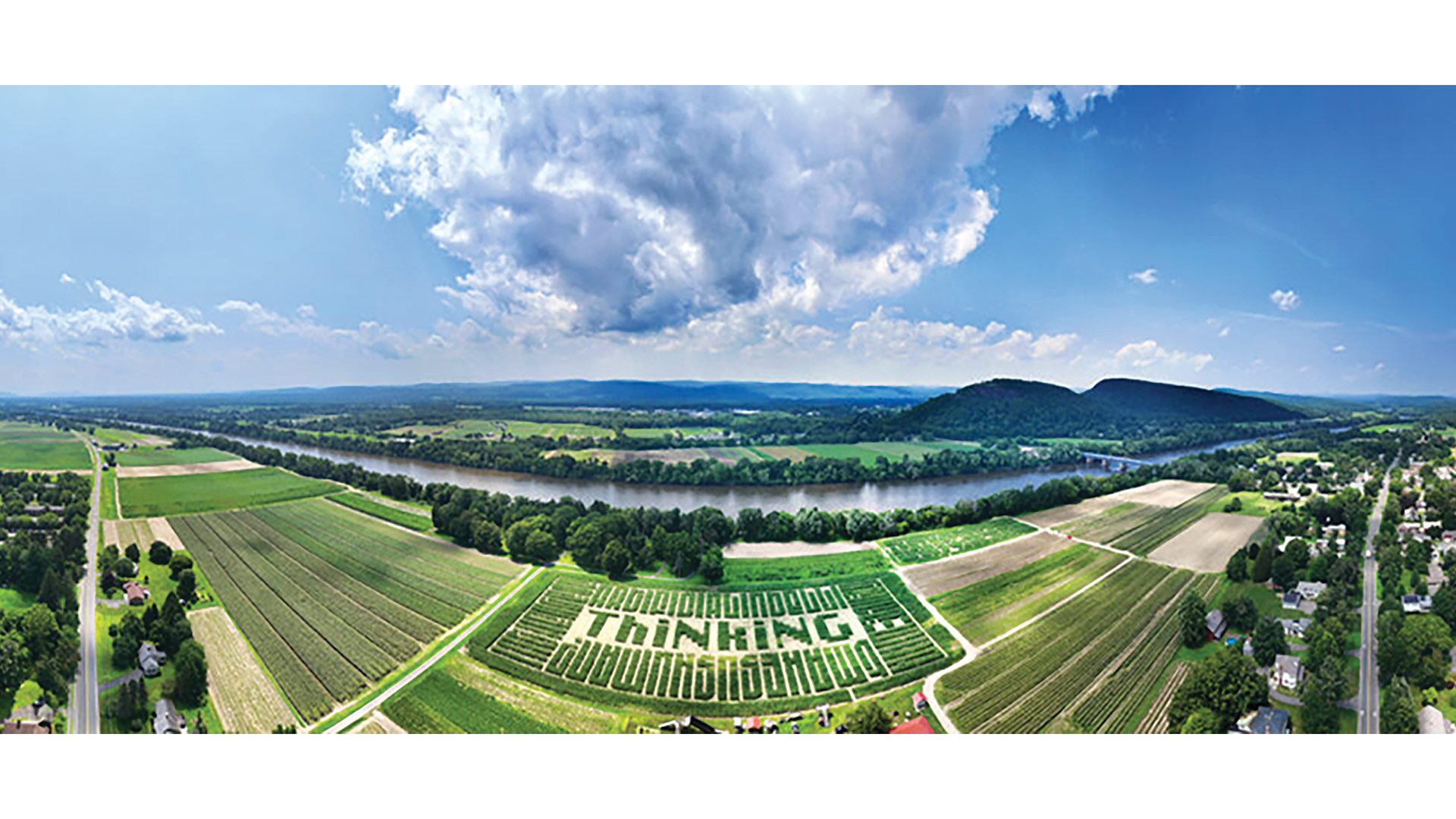
What started out as an artistic inspiration more than 20 years ago has become one of the region’s most anticipated fall attractions: Mike’s Maze, a massive, visually striking (at least from above) corn maze at Warner Farm in Sunderland. (This year’s edition is a thoughtful reflection on the growing role of artificial intelligence in society.) The maze has become a significant revenue driver for the farm, a welcome benefit in a year when farmers have faced unusually harsh challenges. On the next episode of BusinessTalk, Dave Wisseman, the tenth-generation leader of this venerable family farm, talks with BusinessWest Editor Joe Bednar about the farm’s rich history, how the mazes are created, how the annual attraction has evolved, and much more. It’s must listening, so tune in to BusinessTalk, a podcast presented by BusinessWest and sponsored by PeoplesBank.


Sponsored by:

Also Available On

Daily News

HOLYOKE — Holyoke Community College (HCC) President George Timmons received a warm community welcome during a reception on Sept. 12 at the Gary Rome Hyundai dealership on Whiting Farms Road in Holyoke.

It was the first public reception for Timmons, who began his tenure as HCC’s fifth president on July 13.

“As a business leader in the community, it is an honor to host President Timmons and introduce him at our dealership,” Rome said. “Together, we can join forces and accomplish great things for the future of HCC.”

The reception followed the quarterly meeting of the HCC Foundation board of directors, on which Rome and Timmons both sit.

“We are excited to work with President Timmons,” said HCC Foundation board chair Corey Murphy, president of First American Insurance Agency. “He is clear about wanting HCC to be acknowledged nationally for its efforts to support and inspire students, and he is eager to connect with donors to help us get there.”

The reception included the presentation of a $5,000 check from Rome to the HCC Foundation for the benefit of HCC’s Thrive Student Resource Center, which provides essential resources and support to students dealing with challenges such as food and housing insecurity.

“Mr. Rome has clearly shown his dedication to HCC and to the work the college is doing to help students achieve their academic and career goals, and we are very grateful for his donation,” Timmons said.

Those in attendance included members of the 27-member HCC Foundation board, as well as members of the HCC board of trustees and others from the community.

In addition to being on the HCC Foundation board, Rome is a regular donor, vocal advocate for HCC, and partner in HCC’s annual April “Together HCC: Drive to Change Lives” 24-hour fundraising campaign.

“The money we raised that day goes to the President’s Student Emergency Fund and Thrive Center to help students facing food insecurity and housing insecurity,” Rome said. “It’s very important that we give everybody the tools to go to school, and it’s important to bring awareness to Holyoke Community College because it is a hidden jewel right here in our community.”

Daily News

BOSTON — The state’s August total unemployment rate was 2.6%, up 0.1 percentage point from the revised July estimate of 2.5%, the Executive Office of Labor and Workforce Development announced.

The Bureau of Labor Statistics’ (BLS) preliminary job estimates indicate Massachusetts gained 15,400 jobs in August, following July’s revised gain of 4,600 jobs. The largest over-the-month private-sector job gains were in education and health services, leisure and hospitality, and other services. Employment now stands at 3,788,700.

From August 2022 to August 2023, BLS estimates Massachusetts gained 90,500 jobs. The largest over-the-year gains occurred in education and health services; professional, scientific, and business services; and leisure and hospitality.

The state’s August unemployment rate of 2.6% was 1.2% below the national rate of 3.8% reported by BLS.

The labor force grew by an estimated 2,000 from the revised estimate of 3,715,300 in July, as 4,300 fewer residents were employed and 6,300 more residents were unemployed over-the-month.

Over-the-year, the state’s seasonally adjusted unemployment rate was down by 1.3%

The state’s labor-force participation rate — the total number of residents 16 or older who worked or were unemployed and actively sought work in the last four weeks — remained unchanged at 64.5% over-the-month. Compared to August 2022, the labor-force participation rate was down 0.6%.

Daily News

WARE — Country Bank announced its support of the Massachusetts Farm Resiliency Fund with a $10,000 donation.

Gov. Maura Healey and Lt. Gov. Kim Driscoll, in partnership with the community and the United Way of Central Massachusetts (UWCM), established the fund to respond to the recent storm impact in Western and Central Mass. This initiative aims to provide assistance to farms affected by the recent flooding and heavy rains that impacted an estimated 2,700 acres, across 100 farms, resulting in $15 million in losses.

“The relief provided by the farm fund is going to be life-changing for so many Massachusetts farmers,” Healey said. “The lieutenant governor and I spent time over the last several weeks traveling around the state to visit with farmers that have been affected so severely by these rains. We saw the damage, and we know how much of their livelihoods are at stake. That’s why I’m thankful to all of the organizations and foundations who have donated to the fund. It’s because of their support that Massachusetts farmers will be able to start fresh for the new season.”

Tim Garvin, president and CEO of the United Way of Central Massachusetts, added that “our goal with the fund is to support farmers and communities by raising and distributing funds with urgency, as they are facing challenges right now. We are so grateful to Country Bank for immediately stepping up and joining us to address the losses for farms, food pantries, and the rural communities who rely on a vibrant agricultural economy.”

Daily News

WILBRAHAM — Rice Fruit Farm is named after original owner, Jesse Rice who established, back in the late 1800s, what is now described as an historic New England farmstand owned by the Maloni family. The operation features an in-house bakery, homemade ice cream, and fresh breakfast items year-round, in addition to seasonal local and organic vegetables.

It also supports events promoting mental health, including during last week’s National Suicide Prevention Week. In partnership with Holyoke-based MiraVista Behavioral Health Center, beverages sold throughout that week at Rice’s carried the sticker: 988 Suicide and Crisis Lifeline. The lifeline is a national network of local crisis centers that provides free and confidential emotional support 24/7 to people in suicidal crisis or emotional distress who dial or text 988.

“Doing this with MiraVista is a no brainer,” Anthony Maloni said. “You hear stories around mental health, whether they involve people you know or who are known, and yet, mental illness is not as widely understood as other illness. Treatment for it is half the battle. If we can help with that in any way — even just with one person — that would be an incredible outcome of this effort.

“Simply raising awareness of the 988 number and the services of MiraVista is an undertaking we are more than eager to be a part of,” he added. “We have many young people from area colleges frequenting our location, a population we will target with this messaging.

Maloni said Rice’s sells about 12,000 beverages monthly with cider from native apples particularly popular this time of year.

Kimberley Lee, chief of Creative Strategy and Development at MiraVista, called the 988 labels on Rice’s cups “mini-billboards.”

“Suicide prevention, as well as recovery from mental illness and substance use, are all about the importance of intervention, the earlier the better, and public support for intervention,” Lee said. “We are extremely thankful for the Maloni family partnership and their willingness to use Rice’s as a platform for a conversation about suicide prevention.”

For more information on the 988 Suicide and Crisis Lifeline, which routes calls to the center nearest the individual’s area code, visit 988lifeline.org.

Daily News

GREENFIELD — Greenfield Community College announced that President Michelle Schutt has appointed April Parsons as the next vice president of Academic Affairs at GCC.

Parsons brings more than a decade of leading academic teams, as well as more than 20 years of experience in teaching in classrooms, including in high schools, community colleges, and universities.

“Dr. Parsons clearly understands the unique challenges facing GCC as we work toward diversifying our enrollment streams while meeting the needs of our region,” Schutt said. “April has the knowledge and passion for the essential work of community college, including credited courses, workforce programs, and community education.”

Parsons joins GCC during a time of growth and programmatic expansion at the institution. She will be a key part in the GCC’s Guided Pathways work, which will help improve the educational pathways students take to ensure their success while also reducing the amount of credits they take but can’t use in their education, saving students both time and money.

In addition, GCC has improved its wraparound support services for students to help them succeed, which include access to student emergency funds, career and internship services, tutoring, disability services, a food pantry, a fitness center and a technology lending library that will be outfitted with laptops for students who need one thanks to a $100,000 gift from the GCC Foundation.

“I am honored to have been chosen by President Schutt and the GCC community to become the new vice president of Academic Affairs,” Parsons said. “GCC’s vision to create ‘a more equitable, just, vibrant, and resilient world through education’ resonates with me as an educational leader, and I am excited to be part of a college so deeply rooted in service to our local community here in Franklin and Hampshire counties.”

Parsons holds a Ph.D. in comparative literature with a certificate in women’s and gender studies, as well as an master of education degree in language education. Most recently, she taught as a professor of English at Northwestern Connecticut Community College (NCCC) and chaired the Department of Arts and Humanities. She also led a redesign of NCCC’s English curriculum and was a faculty lead through the NECHE regional accreditation process.

Beyond Parsons’ professional roles, she’s also active in the community. She volunteers time at her local library working to expand literacy programs, and has helped the institution acquire and implement National Endowment for the Arts grant funding to conduct these efforts.

She also works closely with incarcerated individuals, both in a professional and volunteer capacity. She recently served as the lead faculty member on a partnership between NCCC and the Connecticut Department of Corrections that helped bring college education to incarcerated individuals. She is a volunteer for the Prison Yoga Project, which brings yoga lessons into the prison community.

Daily News

HOLYOKE — Michael “Mick” Corduff announced that he is stepping into the role of chief operator and executive chef of the Log Cabin, Delaney House, and D. Hotel & Spa, all in Holyoke. He is replacing Peter Rosskothen, who has sold all his shares in the company to Corduff and his new business partner, Frank DeMarinis.

“I am very excited to lead our amazing team, a team that has the best proven hospitality track record in the market,” said Corduff, who is also excited about the opportunity to work with his wife, Dana Corduff, who is joining the D. Hotel management.

Both Peter and Linda Rosskothen will step down from their day-to-day activities within the company. The business focus for Peter will be Delaney’s Market, an independent company with stores in South Hadley, Westfield, Longmeadow, and Wilbraham.

“Both Linda and I have lived an unbelievable dream with this great group of employees and this amazing business, but the time has come to let it flourish further without us,” Rosskothen said. “We consider Mick a brother, and we know that, under his management, the business will only get better.”

Linda and Peter Rosskothen will stay involved in supporting Mick and Dana Corduff, as well as their new partner, in any way needed.

DeMarinis is the president of Sage Engineering & Contracting Inc. in Westfield, and is a local developer, builder, owner, and manager of more than 25 commercial real-estate properties in Massachusetts and Connecticut. He is also the founder and owner of Roots Sports complexes in Westfield and East Longmeadow and Roots Learning Centers.

Corduff and DeMarinis plan to combine their skills to develop and grow the business to new locations.

“Our hotel and spa, restaurant, and event venue are uniquely positioned to continue benefiting from each other, synergies that no other locally owned and run company has in the area,” Corduff said. “I am proud of our brilliant team and look forward to further growing with them.”

Daily News

SPRINGFIELD — The Zoo in Forest Park invites guests on a trip around the world at Wine Safari on Thursday, Oct. 5 from 4:30 to 7:30 p.m.

The fundraiser, which supports the care of the 225-plus animals that live at the zoo, pairs wines from around the world with animals from the same region, allowing guests to ‘travel’ from country to country, sampling the wine and meeting the animals that hail from that area.

While the Zoo is known as a family-friendly institution, this one is just for the adults.

“Wine Safari provides a unique experience for adults and allows them to explore the zoo in a different way than when they visit with their family,” said Gabry Tyson, Development manager at the Zoo in Forest Park. “It’s the perfect excuse to hire a babysitter and enjoy a Thursday night out.”

Guests must be age 21 or older to attend. The $50 ticket includes wine samples from 4:30 p.m. to 7 p.m. (while supplies last), hors d’oeuvres, and coffee; animal encounters; and keeper talks from members of the zoo’s animal care and education teams. There will also be a raffle with prizes from the Boston Bruins, Spirit of Springfield, Max Hospitality, and other local businesses and organizations.

“Wine Safari is always so much fun, and is a great way to spend time with your favorite animals while drinking some phenomenal wines from around the world,” said Sarah Tsitso, executive director of the Zoo in Forest Park. “All of the money we raise at Wine Safari supports our animal residents over the winter months, helping us provide food, bedding, heat, vet care, and everything else our animals need while our gates are closed to the public.”

Advance tickets are required to attend, and IDs will be checked at the door. Tickets are limited and are on sale now at www.forestparkzoo.org/winesafari.

Daily News

HOLYOKE — The Wealth Transition Collective (TWTC) recently announced two additions to its firm. Ashley Hopkins has joined the firm as director of Client Services & Operations. In her role, she will be responsible for new business implementation and five-star concierge service to firm clients. She has more than six years of experience in the financial-services industry.

“Ashley has already had a profound impact on the firm and our clients,” TWTC CEO Greg Sheehan said.

Jennifer Cooke joined the Wealth Transition Collective as a retirement-plan advisor. In her role, she is responsible for all 401(k), 403(b), cash-balance and defined-benefit plan business, including employee education. She helps her clients stay in compliance with ERISA standards for employer-sponsored retirement plans. With more than 25 years of experience in all aspects of the retirement-plan business, she acts as a co-fiduciary on retirement plans for business owners throughout New England.

Cooke is a certified retirement-plan specialist, a certified plan fiduciary advisor, and an accredited investment fiduciary.

“The depth of knowledge and experience that Jennifer brings with her to the firm in this niche market is unparalleled,” Sheehan said. “To add this suite of services to the firm offerings certainly gives us a differential advantage in the marketplace.”

Community Spotlight

Community Spotlight

A.J. Crane

A.J. Crane acquired the ‘carpentry’ building at Ludlow Mills with the goal of having it redeveloped, with a restaurant being the preferred use.
Staff Photo


As he led BusinessWest on a tour of what’s known as the ‘carpentry building’ at the Ludlow Mills complex, A.J. Crane walked up a deteriorated but still solid set of stairs to the second floor, and then to the row of new windows looking out on the Chicopee River, maybe 150 feet away, the riverwalk in front of it, and a stretch of land before the walk on which a patio could be built.

“Imagine the possibilities,” he said, adding that he certainly has, and that’s why he acquired the property from Westmass Area Development Corp., which purchased the mill in 2011, with the intention of renovating it and then leasing it out, perhaps to a restaurateur — the master plan for the mill complex calls for one at this location — although he doesn’t really know what the market will bear at this point.

What Crane, president of Chicopee-based A. Crane Construction Co. (and a Westmass board member) does know is that nothing can be built that close to the river today. Well, almost nothing; this property is grandfathered, so it can be developed. And that’s a big reason why he took on this risk — the property has been vacant for decades and needs a considerable amount of work for any reuse — and has invested heavily in its renovation.

But there’s another reason as well.

“I just wanted to be a part of this,” he said, waving his hand in a sweeping motion to encompass the sprawling mill in front of him.

‘This’ is the transformation of the mill complex, once home to a jute-manufacturing facility that employed thousands and played a huge role in the town’s development, into, well, a community within a community, one that is already home to residents and businesses of various kinds, and, perhaps someday, in the former carpentry shop, a restaurant.

This transformation is an ongoing process, one that was projected to take 20 years when Westmass acquired the property 12 years ago, and may take another 20 still, said Jeff Daley, president and CEO of Westmass, noting, as Crane did, that the pieces to the puzzle are coming together.

And as Daley and Jeff LeSiege, vice president of Facilities and Construction at Westmass, conducted a walking tour, they pointed to several of these pieces — from the ongoing renovation of the landmark ‘clocktower building’ (Building 8) into 95 apartments to the construction of two new parking lots; from extensive water, sewer, and electrical work to new businesses such as Movement Terrain, which boasts an obstacle course and an Astroturf arena (more on all this later).
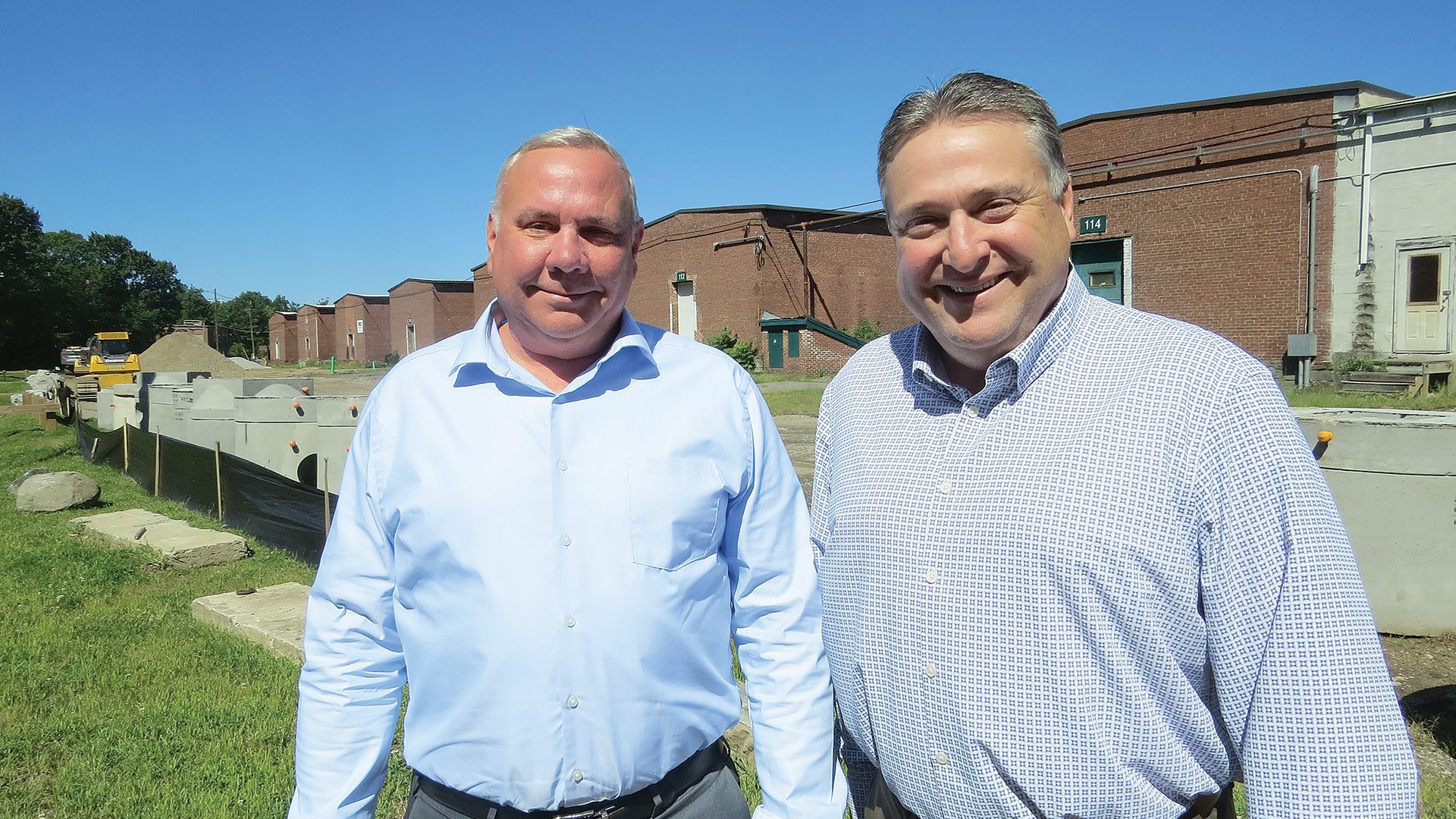
Jeff LeSiege, left, and Jeff Daley

Jeff LeSiege, left, and Jeff Daley stop by one of two large parking lots being created at Ludlow Mills.

Then there’s the clocktower itself, which is slated for renovation, said Daley, adding that he’s not sure when the last time the clock — which is on the town seal and the masthead of the local newspaper — worked, but “it’s been a very long time.”

Transformation of the mill, which has been well-chronicled by BusinessWest over the past dozen years, is the story in Ludlow. But not the only story.

Another is a possible charter change making the community a city and changing its form of government from the present Board of Selectmen to one of several options, including a town manager/Town Council format, a mayor/City Council alignment, or perhaps a mayor/manager/council arrangement.

“I do know there is a great shortage of available land and available buildings at this time, and I think we’re going to have some good interest in the property.”

The town has hired the Edward J. Collins Center for Public Management to guide it through this process, said Town Administrator Marc Strange, adding that a charter-review committee will gather in the coming weeks and meet consistently for roughly a year, with a charter to be presented to town-meeting voters in October 2024, with a new form of government possible by the middle of 2025.

Meanwhile, there are some infrastructure projects moving forward, especially an ambitious streetscape-improvement plan for the East Street corridor, which leads into Ludlow Mills.

For this, the latest installment of its Community Spotlight series, BusinessWest takes an in-depth look at Ludlow and its many developing stories.


No Run-of-the-mill Project

Hanging on a wall on the ground floor of Ludlow’s Town Hall is a large aerial photograph of the section of town beside the Chicopee River, circa the 1920s.

Glancing at the image, the enormity of the mill complex — then even larger than it is today — comes clearly into focus, literally and figuratively.

The mills were, the many respects, the heartbeat of the community and an economic force, a supplier of jobs and vibrancy. And over the past several years, they have become that again, with new developments seemingly every year.

The latest, and most visible, of the latest developments is the ongoing renovation of the L-shaped clocktower building, including replacement of the hundreds of large windows that provided needed light for the mill workers.
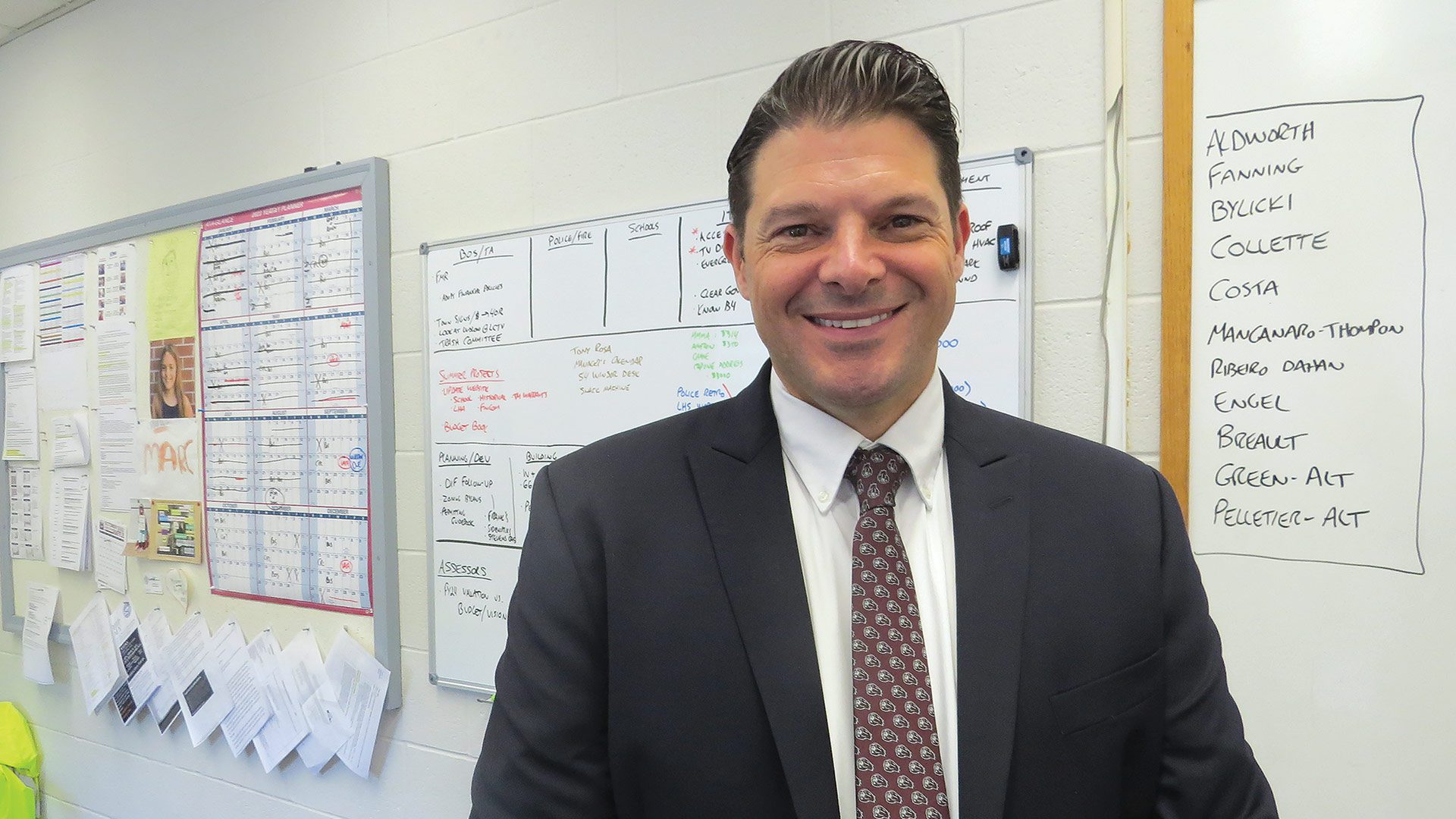
Town Administrator Marc Strange

Town Administrator Marc Strange says a change of government is needed in Ludlow.

The upper floors will be converted into nearly 100 apartments on the upper floors, with 48,000 square feet of space on the ground floor set aside for commercial development, Daley said, noting that this commercial space, to be built out to suit the needs of tenants, would be appropriate for a number of uses, including as home to support businesses for the growing number of people living in the mill as well as the surrounding area.

The apartments will be available for lease next July, he added, noting that there should be considerable demand for the units given both a regionwide housing crunch and a six-year waiting list for units in nearby Building 10, the first of the mill buildings to be redeveloped into housing.

Other developments at the mills include $2.1 million to replace water and sewer piping to connect to the two dozen old stockhouses on the property, all of which are sporting new roofs, he said, as well as construction of two new, and sorely needed, parking lots.

One of these lots, with 150 spaces, is nearing completion, with landscaping and other finishing touches to be completed, while the other, located across Riverside Drive from the carpentry building and expected to feature another 75 spaces, is in the early stages of construction.

Ludlow at a glance

Year Incorporated: 1774
Population: 21,002
Area: 28.2 square miles
County: Hampden
Residential Tax Rate: $19.51
Commercial Tax Rate: $19.51
Median Household Income: $53,244
Median Family Income: $67,797
Type of Government: Town Council, Representative Town Meeting
Largest Employers: Hampden County Jail and House of Correction; Encompass Rehabilitation Hospital; Massachusetts Air National Guard; Kleeberg Sheet Metal Inc.
*Latest information available

“These parking facilities are for tenants and visitors alike,” Daley said, adding that parking is a critical need as more of the spaces within the complex are developed.

Meanwhile, work continues on the carpentry building, a 13,200-square-foot brick structure between Riverside Drive and the Chicopee River. Crane told BusinessWest it had probably been on the market for 20 years, and really came onto his radar screen four years ago.

He described it as a solid investment opportunity — albeit one requiring a large investment on his part — but also a chance, as he said, to be part of the larger story of the mill’s transformation into a community, and a destination.

“I couldn’t afford any of the larger buildings, so I bought a smaller building that I thought could be an important part of what we’re doing here,” he said. “It’s exciting to be part of this.”

Every day, he said, dozens of walkers, joggers, and runners on the riverwalk will stop and ask him about the building’s next life. He tells them he’s not sure, but he’s anxious to find out.

Crane said he has replaced the roof and is currently putting new windows in. When that work is completed, he will begin entertaining options to lease the property, with a restaurant certainly among those options.

“I’m open to … whatever,” he told BusinessWest. “I bought the building knowing you could never build that building again so close to the water.”

There are many spaces still to be developed, Daley said, including the massive (500,000 square feet) Mill 11, the largest building on the property, as well as the greenspace at the eastern end of the property given the informal name ‘the back 40’ (acres) and the formal name Millside Commercial Park. A MassWorks grant has been received to build a road and cul-de-sac through that property, and the project recently went to bid.

“That will open that back acreage for development, and we’re excited that this is moving forward as well,” he said, adding that he expects the road to be ready by June of next year.

Officially, there will be roughly 38 acres of land available to sell or lease, he went on, adding that there should be considerable demand.

“I think that, once it gets out on the street to bid, we’re going to get a lot of inquiries,” he said, noting that there will six different lots of varying sizes, including one large lot that can accommodate a 250,000-square-foot building. “I do know there is a great shortage of available land and available buildings at this time, and I think we’re going to have some good interest in the property.”

As for the preferred uses, Daley said manufacturing is at the top of that list due to the job-creation potential, but the market will ultimately determine what happens with that acreage.

“We’re focused on maximizing our downtown area, through development, through infrastructure improvements, through aesthetic improvements — however we can do it.”

“We’re certainly going to work to make sure it’s a good fit, not only to the mills, but to Ludlow,” he told BusinessWest. “We’re not just going to take anyone willing to buy it; it’s got to be a business development that fits the makeup of what we’re trying to accomplish at the mills.”


Progress Report

Strange came to Ludlow as town administrator in the spring of 2022, marking a course change for the former director of Planning and Development for Agawam and selectman in Longmeadow.

He told BusinessWest that he saw the position in Ludlow as an opportunity to take a leadership position in a community and use his various skill sets to effect change in this community of roughly 21,000 people.

“I love municipal government,” he said. “I know it sounds cliché, but it gives you a chance to impact people’s lives every day in a way that you can’t at the state level or the federal level. I just fell in love with that.

“I started thinking about opportunities to become a town manager or town administrator,” he went on, adding that he was a finalist for the same position in East Longmeadow when he was chosen as a finalist in Ludlow, and ultimately chose the latter.

“Ludow is a great fit for my personality and a great opportunity for growth, both for me and the town,” he went on, acknowledging that these are certainly intriguing times for the community, especially when it comes to a potential, and likely, change in the charter, something he believes is necessary, as well as the Ludlow Mills project and the many developments there.

“A change in government is much needed,” he said. “We’re no longer a town; we’re a 21,000-person city.”

And a growing one, he noted, adding that the mill project will continue to bring more new businesses and residents to the city, and vibrancy to that section in particular.

With that in mind, the town is blueprinting extensive infrastructure improvements to the East Street corridor, from the mills to Ludlow Country Club, Strange noted, and expanding its District Improvement Financing area, which is currently just the footprint of the mills, to East Street.

Conceptual plans are being prepared for the East Street area, he said, noting that one calls for a “modern, loud-colored concept,” one has a “more urban feel,” while another has more green infrastructure, with planters and a “more earthy feel.”

The various options will be presented to the Board of Selectmen, who will make the final decision, he said.

Overall, Ludlow is largely built out, with the notable exception of the mill complex, Strange said, adding that, moving forward, considerable energy is focused on improving what would be considered the downtown area — that section just over the Route 21 bridge connecting Ludlow with Indian Orchard — so it may better serve the growing number of residents in that area, and also perhaps serve as a destination.

“We’re focused on maximizing our downtown area, through development, through infrastructure improvements, through aesthetic improvements — however we can do it,” he said. “We do have a budding, or increasing, population of residents down at the mills; they have their condos and the riverwalk, but what kind of other amenities can we provide for them? That’s our focus and our goal right now.”


Bottom Line

As Daley noted, the clock in the famed tower hasn’t worked in a very long time.

Getting those hands to move again is one of many intriguing developments in this community, one, in many respects, whose time has come.

Home Improvement

Tracking a Turnaround


Annual expenditures for improvements and repairs to owner-occupied homes are expected to decline at an accelerating rate through the first half of 2024, according to the Leading Indicator of Remodeling Activity (LIRA) released by the Remodeling Futures Program at the Joint Center for Housing Studies of Harvard University.

The LIRA projects that year-over-year spending on homeowner improvements and maintenance will shrink by 2.7% through the first quarter of next year and by 5.9% through the second quarter, following a slowdown in growth that began in the final quarter of 2022.

“Home-remodeling activity continues to face strong headwinds from high interest rates, softening house price appreciation, and sluggish home sales,” said Abbe Will, associate project director of the Remodeling Futures Program. “Annual spending on homeowner improvements and repairs is expected to decrease from $486 billion through the second quarter of this year to $457 billion over the coming four quarters.”

Carlos Martín, project director of the Remodeling Futures Program, added that “ongoing reductions in household moves will cause a decline in the remodeling and repair activity that typically occurs around the time of a home sale. The magnitude of the impact may be offset if owners who are locked into their current homes with ultra-low mortgage rates continue to renovate to meet changing needs or take advantage of new federal incentives for energy-efficiency retrofits.”  

The Leading Indicator of Remodeling Activity (LIRA) provides a short-term outlook of national home-improvement and repair spending to owner-occupied homes. The indicator is designed to project the annual rate of change in spending for the current quarter and subsequent four quarters, and is intended to help identify future turning points in the business cycle of the home-improvement and repair industry. Originally developed in 2007, the LIRA was re-benchmarked in April 2016 to a broader market measure based on the biennial American Housing Survey.

The Remodeling Futures Program, initiated by the Joint Center for Housing Studies in 1995, is a comprehensive study of the factors influencing the growth and changing characteristics of housing renovation and repair activity in the U.S. The program seeks to produce a better understanding of the home-improvement industry and its relationship to the broader residential construction industry.

The “Improving America’s Housing 2023” report, also issued by the Joint Center for Housing Studies of Harvard University, noted that the pandemic spurred home-improvement spending that dropped once infection rates decreased and individuals were able to leave their homes and return regularly to public spaces.

“The widespread adoption of working from home, spectacular growth in home equity and saving rates, and the continued aging of the housing stock lifted the home-remodeling market to an unprecedented height of nearly $500 billion in 2021,” the report noted.

“Growth in market spending involved households at all income levels and projects of all sizes, but with disproportionate surges in home improvement among middle-income homeowners doing moderately priced projects, many of which involved their own labor.

That trend has shifted. Deane Biermeier, a housing-market expert and general contractor, recently told Forbes that the softening trend will be with us for some time.

“Homeowners spent a great deal in the past couple of years on home renovations,” he noted. “The wave didn’t have much of a chance of lasting very long. It’s not surprising … that the combination of higher borrowing costs and economic uncertainty will continue to have a negative effect on the renovation market.”

Biermeier explained that the steep increase in home renovation spending during COVID-19 was a direct result of forced time spent at home and was not an increase that would have been seen otherwise, so the slowing over the last few years is more of a leveling back to normal than a true decrease. But he is hopeful that home-renovation spending will eventually increase again.

“I don’t see home-improvement spending increasing any time soon,” he told Forbes. “My hope is that home-renovation spending will level off and stop falling by the end of 2024.”

Home Improvement

Restoring History


The National Park Service named the Pioneer Valley Planning Commission’s (PVPC) 501(c)(3) subsidiary, the Pioneer Valley Regional Ventures Center Inc., as one of only 13 awardees nationally to receive a Paul Bruhn Historic Revitalization Grant.

The $750,000 grant will allow the state-designated regional planning agency to work with the Ventures Center to develop a subgrant program and select individual projects in rural communities for physical preservation projects that will contribute to economic vitality. It is the first time a Bruhn Historic Revitalization Grant has been awarded to a Massachusetts organization.

“From our cities to our rural towns, we know economic development is often spurred when we reinvest in places that reflect the history of community and pay tribute to the people who came before us,” PVPC Executive Director Kimberly Robinson said. “We are grateful to the National Park Service and its Paul Bruhn Historic Revitalization Grant program for providing the resources necessary to reactivate historic buildings in rural towns that will create 21st-century opportunities for growth.”

Through the Pioneer Valley Regional Ventures Center, PVPC staff will provide subgrants to competitively selected preservation and rehabilitation projects on National Register-listed anchor historic buildings in 40 communities with fewer than 12,500 residents in Hampden and Hampshire counties and parts of Worcester County. The focus is on properties that are significant to the community and, when rehabilitated, will contribute to local economic development.

Subgrant awards of up to $100,000 will be given to work in compliance with the secretary of the Interior’s standards for the rehabilitation of historic properties to conduct pre-planning; roof repair or replacement; exterior rehabilitation, such as painting, repointing, or historic siding restoration; structural repairs; window and door restoration; and life and safety improvements, including fire suppression and ADA compliance.

Eligible owner-applicants may be private, public, or nonprofit. There will be no match required. Applications will be evaluated based on population, regional distribution, variety of project type, community and economic-development potential, pre-planning to determine project needs, and the capacity of the active, local working group. A preservation restriction will be required on a property that receives funding.

These grants mark the fifth year of funding for the program honoring the late Paul Bruhn, executive director of the Preservation Trust of Vermont for nearly 40 years. The Pioneer Valley Planning Commission is the state-designated regional planning agency for the 43 cities and towns of Hampden and Hampshire counties.

Banking and Financial Services

Kicking Off a Campaign


Cooley Dickinson Hospital announced last week that it has received a $100,000 gift from Greenfield Cooperative Bank to support the expansion and renovation of its 50-year-old Emergency Department. The bank’s donation also serves as the kickoff gift for a $1,000,000 challenge opportunity.

“This incredibly generous gift in support of the Emergency Department is an investment in our shared commitment to a healthy Pioneer Valley,” said Dr. Lynnette Watkins, president and chief operating officer of Cooley Dickinson Health Care. “We are honored and grateful to Greenfield Cooperative Bank for this gift of support, which will benefit their customers, our patients, and our collective communities by providing access to the region’s top providers and leading healthcare services in a newly renovated and expanded Emergency Department.”

The gift will support the $26 million expansion, reconfiguration, and renovation effort to allow Cooley Dickinson to meet the ever-evolving emergency-medicine needs of the community it serves. To accomplish this goal, the hospital has embarked on an ambitious and comprehensive fundraising campaign, with nearly $7.2 million has been raised to date.

“Cooley Dickinson Hospital is a vital part of the health of our neighbors in the Valley,” said Tony Worden, president and CEO of Greenfield Cooperative Bank. “This donation is a way for us to show our support for the hospital and the people it serves. Many of our staff, family, and friends have needed to receive care at the Emergency Department. We are grateful for the work that the hospital does, and we are thrilled to help them continue their mission.”

Worden added that “Greenfield Cooperative Bank is committed to giving back to the community, and we believe that supporting our local hospital is one of the best ways to do that. We are proud to be a part of this community, and we want to do our part to make it a healthier place.”

Diane Dukette, Cooley Dickinson’s chief Development officer, noted that the generosity of Greenfield Cooperative Bank will have a transformational impact as the kickoff gift for the $1 million Harold Grinspoon Foundation Challenge, which launched on Sept. 1.

Through Aug. 31, 2024, she noted, every new cash donation to Transforming Emergency Care: The Campaign for the Cooley Dickinson Emergency Department will be matched 50%, up to $1 million, by the Harold Grinspoon Charitable Foundation. “When successful, that means that we will raise up to an additional $2 million for this campaign.”

Cooley Dickinson is expected to serve 40,000 Emergency Department patients this year. That care will be provided in a 1970s-era building that was designed for 17,000 patients annually and is currently 40% undersized. A shortage of space means some patients are treated in hallways. The Emergency Department also needs to expand its services to care for an aging population (triple what it was just 10 years ago). In addition, the expansion will provide additional beds for people experiencing mental-health emergencies.

The two-year project calls for adding 6,600 square feet of space, including nine new patient rooms; eight behavioral-health beds, which can ‘flex’ as patient needs arise; and a family waiting area. In addition, a computerized tomography (CT) scanning machine, which provides timely access to diagnostic imaging, will be added to the Emergency Department.

“This campaign is critical to the health of our community,” Dukette said. “In the newly renovated Emergency Department, patients will see a nurse when they arrive, they will be treated in single patient rooms that allow for privacy, and a central nurses’ station means our clinicians can respond better to patient needs. Overall, this is about making the Emergency Department as efficient and up-to-date as possible to enable our talented providers to take the best possible care of their patients. We are so truly grateful for Greenfield Cooperative Bank for stepping forward and supporting Cooley Dickinson Hospital so generously.”

Features

Courses of Action


This is the third article in a monthly series examining how area colleges and universities are partnering with local businesses, workforce-development bodies, and other organizations to address professional-development needs in the region. One college will be featured each month.

Jeff Hayden

Jeff Hayden says professional-development initiatives have become an important part of the mission at HCC.

Communication. Teamwork. Networking. Listening.

Jeff Hayden acknowledged that, to many, these sound like buzzwords in discussions about the workplace and how to succeed within it — or about how companies can become more productive and achieve continuous improvement.

But in reality, these are just some the skills that individuals must possess if they want to thrive in their chosen career and move up the ladder within it. And they are the qualities that businesses large and small must stress if they want to prosper in an increasingly global, intensely competitive business climate — and if they want to successfully compete for talent and retain it.

And these are just some of the skill sets — some broad, some very specific — that help define a full roster of professional-development programs at Holyoke Community College (HCC), which Hayden serves as vice president of Business and Community Services.

“Those words, like teamwork and communication, feel like buzzwords, but in reality, those are the places where employee satisfaction and productivity find their nexus,” he said. “It’s really a unique spot where one can see the gain for the company, but also the gain for themselves.”

These touchpoints run through the portfolio of programs at HCC, the Commonwealth’s oldest community college, which include everything from a non-credit “Introduction to Bookkeeping” course to a women’s leadership lunch series; from certificate programs in residential interior design and medical interpreting to two new HR workshops on “Leveraging Assessments with the New World of Work” (more on these later).

In each case, the motivation is the same, Hayden said — to help individuals advance and enable companies to be efficient and productive, and also recruit and retain employees when businesses in all sectors are still struggling to do so.

“We put an emphasis on trying to find those occupational skills that managers, business owners, and professionals need to successfully grow their company, grow their employees, increase productivity, or increase employee satisfaction.”

“We take a broad approach to professional development at HCC,” he explained. “We do certificate and training programs in management, leadership, and IT, and then we have a number of programs aimed specifically at careers, like our introduction to bookkeeping or, in the IT field, an introduction to networks.

“We have a certificate in business communication, which is online, and also one in innovation and critical thinking,” he went on. “There are a number of areas, and depending on the needs and interests of the individual, we can accommodate many other things they may be looking for.”


Getting Down to Business

Hayden, who came to the college after many years working for the city of Holyoke in economic-development roles, said HCC — like all the region’s community colleges — plays a critical role in workforce development in the region. And that role extends well beyond providing the traditional two-year degree programs which, in the case of HCC, often lead to transfer to four-year programs.

Indeed, it extends to continuing education, non-credit programs, and initiatives that, as he said earlier, involve professional development for the individual and initiatives aimed at helping businesses of all sizes become more competitive and productive.

“Oftentimes, when we think of workforce training, especially at community colleges, we tend to focus on occupational skills,” he explained. “And although those are necessary, they’re often related to specific tasks. So we put an emphasis on trying to find those occupational skills that managers, business owners, and professionals need to successfully grow their company, grow their employees, increase productivity, or increase employee satisfaction.

“And in some sense, increasing productivity and increasing employee satisfaction are companions in that same effort,” he went on. “Sometimes we think of them as separate; when we think about how to make sure our employees are happy and satisfied, we go to the issue of compensation, instead of focusing on the issue of job satisfaction, having pride in one’s work, and ownership of the project or service they provide. So we try look at professional development as a way to broaden the scope or mindset of the employee and have them look at the picture in terms of just not making something or doing a service, but having that be part of their own career goals and pathway.”

With these goals in mind, the college has offered a women’s leadership lunch series featuring area women business leaders talking about their success formulas, Hayden said, adding that this series, staged over six lunches, will likely return in the spring of 2024.

Overall, the college is continuously monitoring the business community and the workplace, he explained, with an eye toward creating programs to address emerging needs and challenges.

Such is the case with the new HR workshops on assessments, which will be led by Lynn Turner, president of CORE XP Business Solutions Inc.

“These are designed to help organizations understand how to leverage assessments within the future of work — how to assess and evaluate employees in a way that increases productivity and increases teamwork, communication, and employee satisfaction,” Hayden said, noting that there will be two workshops, with participants having the option of signing up for one or both. They are designed for entrepreneurs, HR personnel, and managers at small companies that don’t have their own HR departments,

The first will focus on the changing dynamics of the future of work, understanding the value of assessments within a talent strategy, and gaining exposure to different assessment tools. The second will focus on best practices for assessment implementation, leveraging assessments for talent acquisition and development, driving engagement and retention through assessments, and creating a customized roadmap for leveraging assessments.

Overall, the professional-development programs at HCC are blueprinted to assist individuals as they look to enter or advance within the workforce, but also meet identified needs within the business community for specific skills, Hayden said, noting that these twin ambitions are the motivation behind such programs as a 12-hour educational cannabis core program that provides an overview of the cannabis industry in Massachusetts and is designed for individuals looking for general knowledge as they consider a career in that sector, and the non-credit “Introduction to Bookkeeping” course, the need for which has become increasingly apparent given recent trends.

“There is growing need for bookkeepers in the region, especially at smaller companies; many nonprofits, for example, are looking for people who can help on that end,” he said, adding that the program is geared toward individuals looking to enter that field, but also incumbent workers looking to acquire more skills in that realm.

There are many such programs being offered the school, he said, noting that HCC offers a number of online certificate programs, most of them focused on business management and administration, such as an offering in nonprofit management featuring a simulation component, another in business communication, and others in innovation and critical thinking, data analytics, and project management.


Work in Progress

Summing it all up, Hayden said professional development at HCC is a huge part of the school’s mission and its evolving role when it comes to both workforce development and economic development.

The portfolio of programs and initiatives is, like the business community and the workforce itself, ever-changing. But the goal remains the same: it’s about helping area employees, job seekers, business leaders, and companies get where they want to go.

Daily News

SPRINGFIELD — On Friday, Sept. 15 at 10 a.m., Springfield-based Renaissance Development LLC will commence redevelopment of the Kavanagh Building at 443 State St. across from Springfield Technical Community College (STCC). The 28,000-square-foot building, vacant for 15 years, will be the future home of 35 one- and two-bedroom apartment units and approximately 10,000 square feet of rentable office and retail space.

Redevelopment will take place in two phases, with the first involving the demolition of the unstable rear portion of the building and renovation of the façade and front lower and street levels. Once completed (slated for summer 2024), phase one will comprise 10,000 square feet of retail space for several commercial tenants ranging in size and use, coupled with 15 units of housing and 43 parking spaces.

Phase two (slated to commence in winter 2024) will complete 20 additional one- and two-bedroom units throughout the entire second floor. These units will be set aside as permanent supportive housing units for people who have experienced homelessness. Through partnership with the nonprofit Mental Health Assoc., tenants who qualify will receive a variety of support and wraparound services.

Donald Mitchell of Renaissance Development expressed his excitement for this revitalization of a now-vacant, historic commercial property. “We’re moving beyond the successes of the downtown area and are bringing exciting new opportunities to another underserved Springfield neighborhood,” he said, also highlighting job creation, both temporary during construction and longer-term; development of quality housing and support services; and the establishment of an incubator for small business, particularly women- and minority-owned.

Funding for this project was made possible by the financial support of the city of Springfield (ARPA), the Massachusetts Alliance for Supportive Housing (ARPA), the Springfield Community Preservation Committee, MassHousing, the Life Initiative Inc., and New Valley Bank & Trust.

Daily News

CHICOPEE — The Council of Independent Colleges (CIC) selected Elms College to participate in the inaugural cohort of the CIC’s Work-based Learning (WBL) Consortium.

Elms College is one of 25 member colleges from across the country to participate in the first-ever WBL Consortium. For its participation, Elms has been awarded a three-year grant of approximately $65,000 from CIC, effective starting in the spring of 2024.

The WBL Consortium will provide a national community of practice to support institutions in easing student barriers to internship access and job-market preparation, particularly for students from underrepresented groups. This experiential learning platform, in partnership with Riipen, will integrate real-world, employer-designed projects into existing courses to equip students with skills, real-world experiences, and professional connections to support their future careers.

“Elms is honored to be a part of CIC’s WBL Consortium, which will provide our students an enhanced learning experience since the internships will be integrated within their course curricula,” said Jennifer Granger Sullivan, director of Experiential Learning at Elms.

CIC and Riipen will work with a team of seven faculty and staff members at Elms to update curricula and integrate experiential learning into course materials starting with the spring 2024 semester.

This CIC initiative is made possible thanks to funding from Ascendium Education Group and Strada Education Foundation.

Daily News

AMHERST — Researchers at UMass Amherst’s Institute for Applied Life Sciences (IALS) and Embr Labs have created a machine-learning algorithm to predict a hot flash before a person perceives it. When combined with Embr Labs’ patented wearable device, Embr Wave, immediate cooling is delivered to mitigate or fully alleviate the event.

This first-of-its-kind predictive algorithm is the result of machine learning being applied to the largest data set of digital biomarkers for hot flashes ever collected, which was generated by researchers at UMass Amherst’s Center for Human Health and Performance.

“Hot flashes occur in 75% of women and can persist for up to a decade,” said Matt Smith, co-founder and chief technology officer of Embr Labs. “We are proud to be developing effective tools for menopause, which has lacked new solutions for too long. By delivering automatic cooling for hot-flash relief, we are realizing the holy grail for natural hot-flash management.”

Unlike previous attempts to combat hot flashes, this is a non-pharmaceutical approach. The current generation of the Embr Wave is worn on the inside of the wearer’s wrist and heats or cools at the touch of a button to elicit a brain and body response that can help with resolving hot flashes, improving sleep, and relieving stress. The new predictive sensor technology will be commercialized in an upcoming generation of Embr Wave.

“Seeking immediate cooling relief is a person’s natural reaction when they are having a hot flash,” Smith said. “We now have the know-how and technology to bring this solution into the 21st century: personalized and automatic hot-flash management from a small, AI-powered, wearable device.”

The technology is fundamentally different from most other wearable health technologies, such as activity trackers, added Mike Busa, director of the IALS Center for Human Health and Performance. “This concept of automatic intervention based on real-time physiological symptoms is relatively unexplored. What has dominated the landscape up to this point is only tracking — letting you know the status of something or letting a care team know that a certain phenomenon has occurred. That technology most certainly has its strengths, but a major limitation is that it does not provide real-time, automated intervention to the person who is dealing with impactful symptoms.”

Instead, Busa describes the new system as a “reactive digital drug” for hot-flash symptoms. “The solution is not quite so simple as hot plus cold equals neutral. In this case, we leverage early physiological changes that precede a person’s perception of an oncoming hot flash and provide early relief that aims to automatically deploy an intervention tailored to minimize the disturbance of the hot-flash symptoms.”

It all happens in real time, he noted. “The device is communicating the data to servers and back to the device in a fraction of a second. That’s the power of data and cloud computing combined with the immediate cooling made possible by Embr Labs’ thermal technology.”

The technology was made possible by grants from the Massachusetts Life Sciences Center and the National Science Foundation.

Embr Labs was recently awarded a patent for the utilization of biomarkers to activate cooling for hot flashes, and an additional patent has been filed for features powering the corresponding predictive algorithms. A manuscript is in preparation that will benchmark the performance of the predictive algorithms and reveal the science behind hot-flash prediction. Embr Labs recently announced a $35 million financing round to support market expansion and new product development.

This is the second collaboration between Embr Labs and UMass Amherst. Previously, Rebecca Spencer from the Sleep Monitoring Core at IALS and Department of Psychology conducted a pilot study, and the results were presented at the 2022 North American Menopause Society. That study found that use of the Embr Wave was associated with improved sleep, reduction in self-reported frequency and intensity of hot flashes, and improvement in the impact of stress.

Daily News

LEEDS — On Friday, Sept. 22, artwork by local veterans will be on display to the public at the VA Central Western Massachusetts Recreation Auditorium from 1 to 4 p.m. More than 70 pieces of art from among 14 different categories will be exhibited.

VA medical facilities incorporate creative arts into their therapy programs to further rehabilitation for both inpatients and outpatients. This annual competition recognizes the progress and recovery made through that therapy and raises the visibility of the creative achievements of U.S. veterans.

Finalists will advance to the national level, where they will compete with entries submitted by veterans from other VA facilities from across the country. The competition is an annual event that provides veterans receiving treatment at VA facilities the opportunity to participate in creative self-expression in art, creative writing, dance, drama, and music as part of their therapy, and to gain recognition for these artistic accomplishments.

First-place winners from the national competition will be invited to attend the 43rd National Veterans Creative Arts Festival held in the spring of 2024 in Denver.

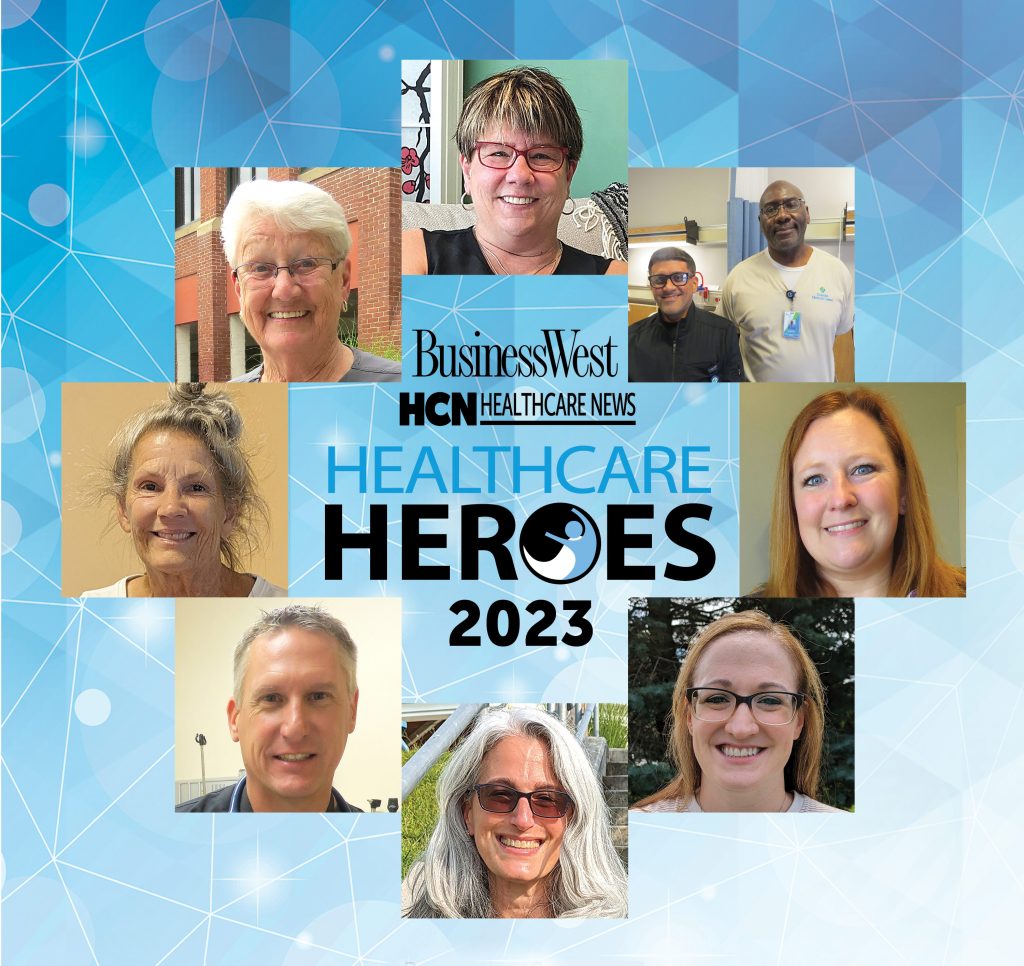
Cover Story Healthcare Heroes

Since BusinessWest and its sister publication, the Healthcare News, launched the recognition program known as Healthcare Heroes in 2017, the initiative has more than succeeded in its quest to identify true leaders — not to mention inspiring stories — within this region’s large and vitally important healthcare sector.
The award was created to recognize those whose contributions to the health and well-being of this region, while known to some, needed to become known to all. And that is certainly true this year.
These nine individuals are leaders, and also innovators, collaborators, and, perhaps most important, inspirations. They have devoted their careers to improving the quality of individual lives and the health of entire communities. We find these stories to be compelling and inspirational, and we’re sure you will as well.

Overall, everyone who was nominated this year is a hero, but in the minds of our judges — the editors and management at BusinessWest — eight of these stories stood out among the others. The Healthcare Heroes for 2023 are

(click on each name to read their story):

Lifetime Achievement:

Jody O’Brien,
Urology Group of
Western New England

Health Education:

Kristina Hallett,
Bay Path University

Emerging Leader:

Ashley LeBlanc,
Mercy Medical Center

Emerging Leader:

Ellen Ingraham-Shaw,
Baystate Medical Center

Patient Care Provider:

Julie Lefer Quick,
VA of Central Western Massachusetts Healthcare System

Innovation in
Health/Wellness:

Gabriel Mokwuah
and Joel Brito,
Holyoke Medical Center

Community Health:

Cindy Senk,

Movement for All

Tickets on Sale Now!

Healthcare Heroes Awards:

Thursday, October 26, 2023, 5:30 P.M.

Marriott Springfield Downtown,

2 Boland Way, Springfield MA 01115

Tickets $90 per person, reserved tables of 10 are available.

Presenting Sponsors

Partner Sponsors

Features Special Coverage

We’re All Ears

Dave Wisseman

Dave Wisseman says this year’s maze is designed to get people thinking about AI and all its implications.

“Where art and agriculture come together.”

That’s how Dave Wisseman, the soon-to-be 10th-generation owner of Warner Farm in Sunderland, described the famous corn maze that has put this operation on the map.

And he’s right. The designs that are cut by a Bobcat into the 10 acres of feed corn growing on one field at this gorgeous piece of land in the shadow of Mt. Sugarloaf certainly constitute art — whether the resulting image is of Babe Ruth, the Mona Lisa, an homage to the country’s national parks, or this year’s creation: a nod, if one can call it that, to artificial intelligence.

Or at least the discussion about AI.

But there is more coming together with agriculture than art at what has become an institution in Western Mass. and a destination that draws people from the 413 and well beyond. Indeed, there are also large doses of tourism, entertainment, innovation, inspiration, culture, and education.

And a whole lot of entrepreneurship.

They all collide at the maze, which started its annual run on Sept. 8, but has been in the planning stages for several months now, said Wisseman, who acknowledged that farms are not big on titles, but if he had one, it would be ‘business manager.’

In that role, he noted that the maze has become more than a revenue stream, although it is certainly that. It has become a huge part of the business plan at the 150-acre farm, which grows a variety of fruits and vegetables and operates CSA (community-supported agriculture) programs in Sunderland with five pick-up areas in the Greater Boston area — so much so that many other traditional fall initiatives, and the feed-corn crop itself, now take a back seat to the maze.

“For us, the corn maze is such a huge part of our business that it made sense to slow down the other things in the fall and focus on making sure the maze is the best it can be.”

“For us, the corn maze is such a huge part of our business that it made sense to slow down the other things in the fall and focus on making sure the maze is the best it can be,” he said, noting that the attraction draws more than 20,000 visitors each year, most from Hampden and Hampshire counties, but neighboring states as well. Many leaf peepers have made it part of their annual visit.

As for the images chosen each year, they are part of the evolving story of the maze, said Wisseman, noting that his father, Mike Wisseman, and local artist Will Sillin originally decided to combine talents and create what they called ‘corn art.’ The inaugural image was of the ‘Amazing Minuteman,’ as seen on the 2000 Massachusetts quarter, with subsequent designs featuring the Mona Lisa, Babe Ruth, King Tut, George Bush and John Kerry (who squared off in the presidential election of 2004), Charles Darwin, Andy Warhol’s Campbell’s soup can, and Julia Child — images seen by the world through photos taken by passing airplanes.

In 2015, Sillin essentially retired from corn art to focus on his personal artwork, and the creative development torch at what became known as Mike’s Maze was picked up by Dave Wisseman and his wife, Jess Marsh Wisseman, also an artist.

Her creations have included ‘Alice in Sunderland,’ a tribute to Alice in Wonderland; ‘Greetings from Earth,’ a celebration of the Voyager missions to explore the outer reaches of our solar system; and ‘Cornstock,’ a celebration of Woodstock a half-century after the generation-defining music event — images captured by drone and then sent to the world.

Greetings from Earth

‘Greetings from Earth’ is one the many works of art etched into cornfields at Warner Farm over the past two decades.
Photo courtesy of Mikes Maze

Getting back to this year’s theme of artificial intelligence, it exemplifies the farm’s efforts to be topical and relevant, but also go well beyond creating art in the rows of now-10-foot-high corn stalks. The larger mission is to get people to think, while also being entertained, Dave said.

Etched around the outside of the maze is the question ‘In the Age of Artificial Intelligence, What Makes Us Human?’ In the middle is the word ‘Thinking.’ The letters take on a high-tech look.

“We’re posing that question out in the maze and inviting people to answer it,” he said. “There’s a trivia game all about the different elements of artificial intelligence and robotics, and we’ll have a kids’ game, where they’ll use binary language to decode a secret message. And there will be a few stations out there where we pose some more of the deeper ethical questions about AI and ask people to consider them.

“‘Can computers think?’ That’s one of the questions we ask,” he went on, adding that the maze is designed to prompt visitors to think about technology and its place in the world.

For this issue, BusinessWest visited Warner Farm and this year’s maze to learn about how this has become much more than a place where art and agriculture come together.


Kernels of Wisdom

Tracing the history of the farm, Wisseman said it dates back to the early 1700s, when Eleaser Warner — a descendent of the family who arrived not long after the Mayflower and eventually settled in what was then called Swampfield, now Sunderland — started tilling land near what is now the center of town. (Indeed, the farm’s mailing address is South Main Street).

This is his mother’s family and and one of the founding families of Sunderland, he said, adding that, in the beginning, it was subsistence farming, and it remained that way for several generations. Over time, the farm started growing and selling potatoes, onions, and, later, strawberries.

“In the ’60s, my grandfather was introduced to the concept of pick-your-own strawberries, and we were one of the first people to do pick-your-own strawberries in the Valley, and it really took off,” Wisseman noted. “That was the first venture into the agri-tourism world and inviting people down to the farm to have that farm experience.”

Today, the farm’s main crops are strawberries and sweet corn, but it also grows tomatoes, melons, peas, green beans, peaches, and “a few apples,” he said. It sells wholesale to local stores, other farms, and other CSAs, while operating its own CSAs, including the Millstown Farm Market.

Wisseman said he grew up on the farm until he was 10, when he and his mother relocated to the Cincinnati area, and he would return to the area to work on the farm while in high school and college. He graduated from the College of Worcester in Ohio with no real intention of making the farm his career, but … his commencement coincided with the start of the Great Recession in 2008.

“In the ’60s, my grandfather was introduced to the concept of pick-your-own strawberries, and we were one of the first people to do pick-your-own strawberries in the Valley, and it really took off. That was the first venture into the agri-tourism world and inviting people down to the farm to have that farm experience.”

With few other opportunities available, he came back to the farm to work beside his father in 2010, and together they have continued and refined the many aspects of the operation, including the corn maze, which represents a dramatic (in every sense of that word) and evolving leap forward in agri-tourism.

The concept was born at a Christmas party, he said, when his father and his friend, Sillin, decided to combine their talents. The rest is history in the making.

As noted earlier, the maze has evolved over the years and in a number of ways, from the addition of elements within the maze designed to make people laugh and learn to the diversification several years ago into a separate ‘haunted’ cornfield, featuring a number of attractions, such as an ‘executioner’s chamber,’ designed to entertain and frighten those who enter.

The corn maze at Warner Farm

The corn maze at Warner Farm has become a fall institution, where visitors can see art and agriculture come together in a powerful way.
Photo courtesy of Mikes Maze

The haunted maze and an accompanying Zombie Night Patrol, while both solid additions, were also heavy with overhead, said Wisseman, adding that they were eventually discontinued, with efforts focused on the corn maze and creating an experience for those who visit it.

That experience includes a large playground featuring a drain-tube slide, a tractor-tire jungle gym, and more, as well as horse-drawn wagons, potato cannons, picking out a Halloween pumpkin, and other activities.

Meanwhile, the farm has created what it calls ‘beer mazes’ in a separate cornfield; six brewers — different ones each week — will set up stations in the maze, Wisseman explained. “It’s a brewfest in a cornfield.”


Art and Soul

The corn maze and related activities have become so popular, and such a large part of the business plan, that the farm essentially puts its full focus on that operation in the fall, Wisseman said, adding quickly that planning and execution begin months earlier.

It starts with the concept, he said, and much discussion about what the theme will be. Current events often play a role, as do round-number anniversaries, as was the case with the Woodstock theme. While other options were considered, the overwhelming amount of attention focused on AI eventually made it the logical choice for this year’s theme.

With the theme finalized, the next step is the design — in this case, the words, the font, and more — which was created by Jess Marsh Wisseman.

An Adobe file is then sent to Rob Stouffer, owner of Precision Mazes, a Missouri-based outfit that specializes in creating corn mazes. It has been handling the cutting at Warner Farm for several years now, and has a large image of the ‘Greetings from Earth’ design prominent on its website under ‘featured projects.’

Blending accurate GPS technology with advanced cornfield-cutting techniques, the company will transform a field into a message in just a few days, Wisseman said, adding that the work on this year’s maze was completed several weeks ago.

Walking through the maze, one will encounter some vast, wide-open spaces, especially where the word ‘Thinking’ has been etched, but the maze is a far more valuable revenue stream than the corn that was growing there, he said, adding that this acreage is set aside for feed corn, which is sold to other farms and also a few restaurants for the making of corn tortillas.

“We put a lot of thought into this. You want to dive into a topic, you want to make it fun and interesting, but we also like to challenge our visitors and prompt them to think about it a little bit.”

While not quite a year-round undertaking, the maze has become a huge part of this 300-year-old operation, Wisseman noted, adding that months are spent not only on the concept and design, but also the creation of learning opportunities within the maze — for children, but also people of all ages.

“We put a lot of thought into this,” he told BusinessWest. “You want to dive into a topic, you want to make it fun and interesting, but we also like to challenge our visitors and prompt them to think about it a little bit.”

Getting back to this year’s maze and the broad and now-controversial topic of AI, he said the farm isn’t making any kind of statement or forcing any opinions on visitors. Instead, it is inspiring them to think and create their own opinions.

“We’re saying, ‘hey, this is an issue that requires a little bit of thought,’” he said. “It’s easy to be like, ‘the robots are coming for us,’ but we want people to think about what computers can actually do for us; what is their greatest hope for the invention of AI and this technology? And what is their greatest fear?”

These sentiments explain what the maze has evolved into over the years. It is certainly art — the designs as seen from above are exquisite and captivating — but is so much more than that. It is now a destination and a tradition, as well as a huge part of a business that has survived for multiple generations through perseverance and entrepreneurship.

“It’s a big part of what we do,” Wisseman said in conclusion. “And it’s also just a lot of fun — it works a different part of the brain than the farming.”

The creative side.

Banking and Financial Services Special Coverage

Peaking Their Interest

Bob Fraser (left) and Matt Lauro

Bob Fraser (left) and Matt Lauro


Bob Fraser acknowledged there’s a good deal of real estate between the Berkshires and the Bay State’s South Shore. He knows because he traverses that distance regularly.

But for the somewhat unique financial-services institution known as MountainOne, which can trace its roots back to 1848, having bank branches and other facilities on opposite ends of the state, with nothing in between, really … works.

“It has worked out well for us,” said Fraser, MountainOne’s president and CEO. “In the Berkshires, we have tended to be more of a traditional retail, community-based bank, and on the South Shore, we are much more commercially oriented. We do a lot of construction lending in and around the Greater Boston markets, and we also do commercial lending; we have a pretty strong group of commercial lenders.

“In the Berkshires, we see ourselves being able to fill a void, with a high level of expertise in commercial lending within Berkshire County and surrounding areas,” he went on, adding that this void has been created through large regionals either moving their headquarters from the Berkshires (as Berkshire Bank did) or expanding in other areas — leaving what Fraser considers opportunity for his bank in their wake.

Actually, there are many things that work for MountainOne, besides these differing focal points on either end of the state, including that aforementioned strong focus on commercial lending; the diversity of the business (there is an insurance division and an investment arm); its size — large enough to handle the needs of most businesses but small enough to provide a brand of personalized service — a strong focus on technology and how to use it to better serve customers, including a new digital platform for commercial customers to go live this month; and even the name, which doesn’t tie it to one community or one region and now has strong brand recognition in the Western Mass. region, with a mascot — actually, a ‘spokesgoat’ — named Mo.

“Being headquartered in the Berkshires, we want to be seen as the go-to bank for commercial accounts and borrowers throughout Berkshire County and the surrounding areas in Western Mass.”

MountainOne, now with roughly $1 billion in assets, will continue to maximize these various strengths and qualities and work to attain greater market share in both regions it serves, especially in the Berkshires, said Matt Lauro, senior vice president of Commercial Lending, noting that, like the rest of Western Mass. — and the state, for that matter — the region is overbanked.

But it is also, in his view, underserved to some degree.

“There aren’t enough banks that are servicing large commercial clients, or commercial clients as a whole, that are really focused in Western Massachusetts,” he said. “You do have players that are primarily focused here, but there is a void resulting from the larger regionals that have tended to pull back on lending capabilities in Western Mass., and it has left C&I clients, and larger commercial-development clients, with less service than they’ve had historically.”

Added Fraser, “being headquartered in the Berkshires, we want to be seen as the go-to bank for commercial accounts and borrowers throughout Berkshire County and the surrounding areas in Western Mass.”

Both Fraser and Lauro noted that the bank’s strong roots, diversity of services, and strong track record in the Berkshires will serve it well during what can only be described as a time of challenge and uncertainty — when it comes to the economy, banks, and the foreseeable future.

Bob Fraser

Bob Fraser says MountainOne can grow as effectively through online banking as it can through geographic expansion.

“This environment we’re in … I’ve never experienced so much uncertainty as to where we’re headed,” Fraser said. “And an environment of uncertainty makes decision making so difficult, whether it’s running a bank or running your company; it’s incredibly challenging to feel confident about what the next few years are going to look like.”

For this issue and its focus on banking and financial services, BusinessWest talked with Fraser and Lauro about MountainOne and what can and should come next for this bank as its marks an important milestone.


Scaling the Heights

Team members at this institution are known as colloquially as ‘mountaineers.’

And on Sept. 19, all of the MountainOne offices will close at 1 p.m. so that the mountaineers can attend a celebration for all employees marking the bank’s 175th anniversary.

There will be much to celebrate, said Fraser, listing a rich past, and a potential-laden future, for the reasons cited earlier.

The institution can trace its roots to 1848 in North Adams, when it was known as Hoosac Bank. Fast-forwarding considerably, Fraser noted that, in 2000, Hoosac Bank and Williamstown Savings Bank came together to create the holding company to be called MountainOne Financial, which became the mutual holding company for those two banks.

“If you’re a sophisticated business owner, you understand that you don’t need a branch at the end of your street; you need a relationship manager, a loan officer who is going to be at your business when you need him, to speak with him, to work with him.”

And in 2007, South Coastal Bank, headquartered on the South Shore, merged its holding company into MountainOne’s holding company, creating what Fraser, formerly president and CEO of South Coastal, believes is the first three-bank mutual holding company.

“We’ve seen a lot more of that now, but MountainOne was the first to actually do it,” he said, adding that, over time, the three banks have been merged into one entity under the Hoosac charter and rebranded as MountainOne. Additionally, Hoosac Bank had owned two insurance agencies, which were merged under the name MountainOne Insurance Agency, while the investment division was rebranded MountainOne Investments in 2013.

Today, MountainOne has some combination of bank branches, ATMs, insurance offices, and investment offices in six communities, three on each end of the state: Quincy, Rockland, and Scituate on or near the South Shore, and North Adams, Pittsfield, and Williamstown in the Berkshires.

When asked if there was future expansion under consideration in the Berkshires region — and, if so, where — Fraser said it’s possible, but what is more likely is continued commitment to advancing internet banking capabilities that allow banks to serve customers more efficiently, with less reliance on brick-and-mortar facilities.

“The world is changing,” he explained. “You don’t need as much of a physical presence in a specific geography as you did before to manage and serve a business customer’s banking needs.”

Lauro agreed.

“If the client is in the surrounding area, we are wherever the client is,” he explained. “Wherever the client is, we are happy to be there, to work with them; that has been our opportunity, and it’s a big thing for us. If you’re a sophisticated business owner, you understand that you don’t need a branch at the end of your street; you need a relationship manager, a loan officer who is going to be at your business when you need him, to speak with him, to work with him.”

Matt Lauro

Matt Lauro says the considers the Berkshires to be overbanked but its commercial customers underserved, leaving opportunity for MountainOne.
Staff Photo

And this is what MountainOne brings to the table, Fraser said, noting that, despite the ability to serve clients through the use of technology, commercial banking is a “personal relationship-oriented service,” said Fraser, noting that MountainOne boasts lending professionals like Lauro and Richard Kelly, also a senior vice president of Commercial Lending based in Pittsfield, who are focused on the region and its economic health and well-being.

“Our vision, at the end of the day, is to help ensure the economic vibrancy of the community,” he said. “And by doing that — by supporting local businesses and entrepreneurs — we’re helping to fulfill that mission.”


Economies of Scale

As he talked physical expansion — new branches — in other communities within the Berkshires, Fraser told BusinessWest that it would be “challenging to invest in a branch location in a market that has a declining population base and is already overbanked,” and that the bank’s strategy is, as he said, geared more toward technology.

But he noted quickly that the Berkshires has seen an uptick in population in the wake of the pandemic, with some choosing more rural areas over larger cities, as well as some demographic shifts, with more young people moving to the area, and a surge in entrepreneurship, in part because of COVID and how it prompted many to pursue long-held dreams of working for themselves.

And all of these trends are certainly positive signs for the Berkshire County market and its business community.

Indeed, as they talked about the next chapters in MountainOne’s history, Fraser and Lauro noted that, independent of what is happening with the economy, interest rates, and other factors, there are many reasons for optimism when it comes to broadening the book of business and gaining additional market share.

Some of this has to do with COVID-related population surges, demographic shifts, and that aforementioned surge in entrepreneurship, the size and scope of which are still to be determined. But much of it comes down to what the bank can bring to the table beyond what all banks can provide — money.

“Hospitality is the number-one industry, and we’ve been involved in a number of projects involving hospitality-related businesses, but we also have a number of commercial accounts that involve meaningful employers and well-known companies in the Berkshires,” Fraser said. “And I think there’s a greater opportunity for us over time to continue to expand in that market as we see younger entrepreneurs establishing roots in the Berkshires. Businesses may be looking for an entity that is based in the Berkshires, is local, and obviously has a commitment to the region; we’ve been here since 1848.

“Being a mutual organization, we can look a little bit longer-term strategically than if we were a stock-owned company,” he went on. “It’s just a different business; we can be patient and look beyond the next quarter or two quarters — we have that luxury.”

Elaborating, he said MountainOne has experienced lenders who understand business and what it takes to succeed and can step into the role of adviser as well as banker.

“We’re not just a vendor that is providing you a product, which is the loan,” he told BusinessWest. “We’re also a resource. It’s a relationship, and it’s probably the most unique relationship a business will have. Anyone can sell you something — we’re the only relationship where we have to get what we sold you back.

“Another aspect of it is that we really enjoy this part of the business — it’s in our DNA,” he went on. “We love being with our customers, and we love understanding their businesses. We love talking about what we know, what we’re thinking about, and sharing those ideas.”


Mo-mentum

As for Mo the mountain goat, he’s the perfect spokesperson for the bank, as detailed in a bio on its website. “Goats are tough,” it reads. “They turn challenges into opportunities every day, and even in the most demanding, unforgiving environments, goats know how to adapt and thrive.”

MountainOne has done a lot of that over the past 175 years, and that collective work has put it in a position where it can turn challenge into opportunity and scale new heights — in all kinds of ways.

Home Improvement Special Coverage

Serving Those Who Have Served

Habitat for Humanity’s Veterans Build

Habitat for Humanity’s Veterans Build initiative has helped many veterans stay in their homes through repair and renovation projects.

Greater Springfield Habitat for Humanity (GSHFH) homeowner and local veteran Max needed help. The colonial home he purchased in the McKnight neighborhood in 2002 had become a hindrance.

Max suffers from chronic obstructive pulmonary disease (COPD) and rheumatoid arthritis, which makes climbing stairs to the second-floor bedrooms challenging. He expressed his concerns to Habitat, and together, they discovered a solution. Habitat, through its Veterans Build Home Preservation program, is building a downstairs bedroom and bathroom for the veteran and his wife, Gloria.

Veterans Build is a national Habitat for Humanity initiative that provides housing solutions and volunteer and employment opportunities for U.S. veterans, military service members, and their families. The program serves limited-income homeowners who are affected by age, disability, or family circumstances and struggle to maintain the condition and utility of their homes.

The home-preservation program provides affordable micro-loans to qualifying homeowners who need help with accessibility modifications, home weatherization, general home repairs, yard cleanup, and landscaping. GSHFH works alongside volunteers and homeowners to make repairs.

“Massachusetts has some of the oldest housing stock in the country, and many aging homeowners are unable to make needed repairs on their own,” said Aimee Giroux, GSHFH’s executive director. “We are happy to be able to help them through the repair process so they can continue to stay in their homes.”

Max, a former Marines corporal, qualified for the Veterans Build Home Preservation program and the U.S. Department of Housing and Urban Development’s Veterans Housing Rehabilitation and Modification Pilot Program. The pilot project gives competitive grants to nonprofits that serve veterans or low-income individuals. The grants can be used to rehabilitate eligible veterans’ primary residences. Purple Heart Homes is donating $15,000 while raising additional funds toward the project. Purple Heart Homes, a nonprofit charity, provides housing solutions for former military members who are disabled and/or have decided to age in place.

“Massachusetts has some of the oldest housing stock in the country, and many aging homeowners are unable to make needed repairs on their own. We are happy to be able to help them through the repair process so they can continue to stay in their homes.”

“Every act of generosity toward our veterans echoes a resounding commitment to honor their service and sacrifice. With deep gratitude, Purple Heart Homes is proud to contribute $15,000 to the Greater Springfield Habitat Humanity home-preservation project, ensuring veteran Maxwell finds solace and security in a place he can call home,” said John Gallina, CEO and co-founder of PHH. “Our mission extends beyond this gift, as we embark on a dedicated fundraising campaign to reach a goal of an additional $10,000. We believe we’re better together. In collaboration with Habitat for Humanity, we hope to build a legacy of compassion and support for those who have bravely defended our freedom.”

GSHFH is dedicated to strengthening communities by empowering low-income families to change their lives and the lives of future generations through home ownership and home-preservation opportunities. Since 1987, Greater Springfield Habitat has built or repaired 120 homes in 23 towns. This project represents the first home to utilize ICFs, which will further reduce long-term costs for the future homeowners.


Helping Other Veterans

Last month, Greater Springfield Habitat for Humanity, in association with Window World Military Initiative, Home Depot Repair Corps, and the U.S. Department of Housing and Urban Development’s Veterans Housing Rehabilitation and Modification Pilot Program, performed exterior work for former Army Specialist fourth grade Roland and his wife Jo-Ann.

The pilot project gives competitive grants to nonprofits that serve veterans or low-income individuals. Grants can be used to rehabilitate eligible veterans’ primary residences. 

The one-story Monson house, which the couple purchased in 1992, had fallen into disrepair, and Roland said his insurance company didn’t want to insure it because of the state of the siding. He knew of Habitat for Humanity from reading articles about well-known volunteer and former President Jimmy Carter and thought there might be an affiliate in Springfield. When he reached out, Giroux visited his home to help the couple complete the application process.

Window World Military Initiative donated the siding, replacement windows, a new sliding door, and gutters, while also providing volunteer support to help with installation.

“Our family is blessed and honored to live in a country that provides the freedoms that we all enjoy, and as a small family business, we are the example of the American dream,” said Grace Drost, owner of Window World of Western Massachusetts. “With that, we can’t forget that those freedoms and the American dream aren’t free, and we feel this is an opportunity to thank our veterans for the sacrifices they make so our dreams can come true. One of the core values of our company is rooted in changing lives, and this is a chance for our whole team to give back to those who make the ultimate sacrifice for our freedoms.”

Habitat also replaced the deck and repaired the shed roof and cleaned up the yard.

“Habitat is excellent,” Roland said. “I’m very pleased.”

Commercial Real Estate Special Coverage

Finding Their Place

From left, Walter Kroll, Mark Healy, and Demetrios Panteleakis

From left, Walter Kroll, Mark Healy, and Demetrios Panteleakis stand in front of the recently opened Big Y store at Tower Square.

Demetrios Panteleakis has talked often about the interview he and his partners at the Macmillan Group had with the new owners of Tower Square when they were searching for a leasing agent.

He remembers it vividly, and he refers to it often because … five years later, he’s still shocked they ultimately won the contract.

That’s because they, and especially Panteleakis, were candid — as in candid — when it came to their assessment of the state of the building, its future, and what the new owners (and future BusinessWest Top Entrepreneurs) Vid Mitta and Dinesh Patel could and should do with it. Or not do with it, as the case may be.

Indeed, the brokers who came to the interview table were telling the owners they couldn’t lease the office and retail spaces that were vacant or soon to be vacant, Panteleakis recalled, adding that Mitta and Patel were looking seriously at turning the property into multi-family housing.

“I thought I was brutally honest with them, and I had a list of 10 things they must do if they wanted to make this viable again in downtown Springfield,” he said. “It encompassed the totality of the space, how they looked at it, and how they approached it. It was one of those calls where you get off the call and say, ‘this is never going to happen — we just went in there and punched these guys in the mouth; there’s no way they’re calling us back.’”

But they did, and Panteleakis believes that’s because he and his partners, Walter Kroll and Mark Healy, didn’t tell Mitta and Patel what they wanted to hear — even if they didn’t seem too happy to hear it at first.

“With most of the responses, they didn’t like it — they didn’t like what Demetrios was telling them,” said Kroll, managing director of the firm. “They were not appreciative of the plan, but they listened.”

That strategy, if it can be called a strategy, is how the firm operates, said Panteleakis, adding that this mindset applies to clients of all sizes and questions of all kinds, especially those heard most often in commercial real estate, including ‘can you buy/lease my building?’ and ‘how much can I sell my building for?’

Too many people asking those questions are drawn to people and firms who will tell them what they what to hear, Panteleakis said, adding quickly that what they should be looking for is a firm willing to partner with them on the matter on hand, be it selling a property or leasing out the vast spaces within Tower Square.

“I have lost opportunities because I am rigid on giving the correct number to someone, more than I am giving the number that the client wants to hear and has been given to them by another broker,” he told BusinessWest.

The Macmillan Group is the latest incarnation, if you will, of the brokerage and property management firm known as Macmillan & Son. When the third-generation president of that firm, Doug Macmillan, ultimately lost his battle with cancer in 2016, the firm was in limbo, Panteleakis said, adding that he was told by Macmillan’s mother, Pat, who passed away in 2002, that Doug’s wishes were for Panteleakis to take the helm and ultimately write new chapters to the Macmillan story.

At first, he was somewhat reluctant to take that course — he already had a job working for MassMutual in its real-estate arm, and was fond of it.

He was more fond, though, of the opportunity to essentially run his own firm. And his eventual partners — Kroll and Healy — were of that same mindset.

“I have lost opportunities because I am rigid on giving the correct number to someone, more than I am giving the number that the client wants to hear and has been given to them by another broker.”

“I knew right away that I couldn’t do it myself,” Panteleakis said. “So I approached Mark and Walter, two of my closest friends, and we came together on this; we pretty much run a co-op here.”

Today, this co-op boasts a growing portfolio of clients and properties — topped by Patel and Mitta, Tower Square and the neighboring 1550 Main St., also acquired by those two serial entrepreneurs — in Western Mass., but also well beyond, as we’ll see.

Looking toward the future and what’s in the business plan for the Macmillan Group, the partners said the simple and direct goal is to continue growing the firm and the portfolio by convincing more property owners (and potential property owners) to become partners with the firm, in the same vein as those who own Tower Square.

For this issue and its focus on commercial real estate, we talked with the partners about their firm, the real-estate market in the region, and what is likely to come next for both.


Space Exploration

As they walked with BusinessWest from their offices on the mezzanine level at Tower Square to the ground floor and the ‘Dunk’ (Dunkin’ Donuts) for a coffee, the three partners pointed out many of the changes that have come to this important piece of real estate over the past five years.

These include the return of the Marriott flag to the hotel after it was lost for several years amid profound deterioration of the structure and the service provided in it, and the facility became known as Tower Square Hotel; the arrival of Big Y’s scaled-down supermarket next to the ‘Dunk’; White Lion Brewery; the Greater Springfield YMCA’s fitness center and daycare operation; and new tenants in the office tower, including Farm Credit Financial Partners, Wellfleet, and others.

Overall, Tower Square boasts a wide array of different types of tenants, which makes it ideal for the Macmillan Group and its partners, who bring different areas of expertise to the table. Panteleakis offers a diverse background, including work in succession planning, development, and construction management, but especially a strong focus on the office market through his work with MassMutual. Kroll, meanwhile, brings expertise in the retail market, while Healy has focused on the office market as well as industrial and medical.

And all three brought an understanding of this market and relationships with the brokerage community to the ‘new’ firm, as well as that mentality of partnering with clients rather than simply trying to sell or lease out their building.

This was especially true with Patel and Mitta, who were taking on a huge risk with Tower Square. Indeed, in addition to losing the Marriott flag from the hotel, MassMutual — the original owner of the building, and the primary tenant — was preparing to move out of several floors of the office tower. Panteleakis recalls that most of the talk, and speculation, was about converting the hotel, and perhaps parts of the complex, into multi-family housing.

It was with this backdrop that those two partners commenced their search for a brokerage firm.

“They interviewed every brokerage firm in Western Mass., and then it was our turn; we were the last ones,” Panteleakis recalled, adding that Kroll and Healy were face-to-face with the entrepreneurs, while he joined on a conference call. And they, and especially Panteleakis, were brutally honest.

“They didn’t like what they were hearing, but they listened,” Healy said. “And that’s why I give these guys a ton of credit.”

Kroll agreed. “With a lot of people, you talk to them and say, ‘you have to do this,’ or ‘what about this?’ and they’re insulted by it. These guys, they listened, and I think it’s because we were the first people not to tell them what they wanted to hear.”

Among other things, Panteleakis advised them to be creative when it came to leasing out the retail and office spaces, and also to be patient, and not chase tenants with attractive offers on rates, even with MassMutual set to vacate large amounts of space.

“I thought it was the most valuable building in Springfield, and I still think that,” he said. “Where others came in and told them to lower their prices, I did the opposite; I told them they needed to appropriately value the building against the competition and not chase tenants with rental rate. I advised them to establish their rate and strengthen it.”

This mindset of being honest and getting clients to listen has helped the firm grow its portfolio of clients and properties with Macmillan signs. These include Hadley Park Plaza, Palmer Plaza, the office complex at 877 South St. in Pittsfield, the Laurin Publishing Building at 100 West St. in Pittsfield, 20 Maple St. in Springfield, industrial land in Agawam, and many others.

It’s a diverse portfolio, Panteleakis said, adding that the obvious goal moving forward is to broaden and deepen it by being honest with clients and potential clients, and partnering with them to achieve whatever goals they’ve set.

Which brings Panteleakis back to those comments about numbers and projections that he and his partners give to clients, and not telling them what they think they want to hear.

“Some brokers will take the attitude, ‘don’t worry about what it actually sells for — just get the listing first, and then Mother Nature will take care of itself,” he said. “Here, we have a philosophy that this is not the kind of business we want to do. We rate success on how close we came with our assessment and analysis. Did we give that client the right information?”


Looking Ahead

As they survey the commercial real-estate landscape, and especially the local office market, the three partners at the Macmillan Group take what would be considered the optimistic view about the present and foreseeable future.

“We are past this concept of working from home — it’s losing traction,” Panteleakis said with a strong dose of conviction in his voice. “People are understanding that the productivity of their workforce is just not the same; whether it’s J.P. Morgan, Google, Apple … the trend now is ‘you have to be in the office,’ which is certainly a positive for the office market.”

Elaborating, he said corporations large and small are veering toward bringing their workers back the office, if they haven’t already, on the premise that teams of workers don’t work as effectively when some or all their players are working from home.

Persistently lower occupancy rates for office space in cities ranging from Boston to San Francisco notwithstanding, Panteleakis and his partners believe the office market locally, and especially in downtown Springfield, will withstand this post-pandemic environment and the trend toward remote work.

“What I see right now is the 3,000- to 5,000-square-foot users just starting to emerge,” Healy said. “This year has been incredibly slow, but I’m beginning to see people look to next year, for what space is available. And I think it’s going to be that way for the next 24 months.”

Meanwhile, Panteleakis noted that Regus, a leading provider of office space, co-working environments, shared space, and other products will be creating such opportunities on one floor in Tower Square, roughly 16,000 square feet, bringing more options to business owners in the wake of the pandemic and other shifts within the workplace.

Still, COVID and other factors have brought some changes to the landscape, Panteleakis said, citing law firms, a huge force within the local office market, especially in downtown Springfield, as one example. He noted there are fewer large firms, and the larger firms are getting smaller as Baby Boomers retire. Meanwhile, fewer clients are actually coming to the firms’ offices to meet with lawyers, some of whom are, in fact, working remotely. All this adds up to this segment absorbing less office space in the years to come.
Meanwhile, an even bigger challenge moving forward might be the growing number of businesses, across all sectors, that are not surviving the current generation of ownership.

Indeed, Panteleakis notes with concern that the pandemic convinced a number of Baby Boomer business owners to call it quits. Meanwhile, an alarming number of those still slugging it out have no real succession plan in place.

“They’ve put 40 years into a business, and COVID taught them that life’s too short and they really can find something else to do with their free time,” he said. “Their children don’t want their business, or they’re doing their own thing. And if they go to put the business up for sale, first you have to have entrepreneurs who are willing to take the risk and have access to capital … and when you add that kind of formula to what has happened with bank lending and interest rates, we’re seeing a lack of continuity with businesses.

“Initially, you say, ‘great, there’s so much for us to sell,” he went on. “The question is … who’s going to buy it?”

DBA Certificates

The following business incorporations were recorded in Hampden, Hampshire and Franklin counties and are the latest available. They are listed by community.

ASHFIELD

Haerer Services Corp., 1453 Hawley Road, Ashfield, MA 01330. Drew Haerer, same. Consulting services.
CHICOPEE

Braid Club Inc., 1981 Memorial Dr., #265, Chicopee, MA 01020. Lauren Blair, 15 Jared Lane, Southwick, MA 01077. Booster club committed to providing opportunities for family engagement and fundraising that support the Black Rose Academy of Irish Dance.

EAST LONGMEADOW

The Empowerment Project Inc., 200 North Main St., Suite 11, East Longmeadow, MA 01028. Cheryl Przezdziecki, same. Nonprofit organization committed to providing women in underserved communities with opportunities for personal and professional advancement through education, sponsorship, and social support.

GRANVILLE

Pool Water and More Inc., 309 South Lane, Granville, MA 01034. Casey Placek, same. Delivering water and servicing pools.

HOLYOKE

BCC Adonai Elohim Christian Ministries, 1 Beacon Ave., Holyoke, MA 01040. Natanael Lopez Ozuna, same. Christian ministry to spread the message of hope and compassion of Jesus Christ by forming, training and sending ministers, clergy, Bible teachers, Bible educators, and Christian missions teams to assist people in need.

LUDLOW

Friends of the Ludlow 250th Celebration Inc., 355 East St., Ludlow, MA 01056. John Diotalevi, 181 Cislak Dr., Ludlow, MA 01056. Nonprofit corporation to support the events involved in the recognition of the 250th anniversary of the town of Ludlow.

NORTHAMPTON

Nice Tea Inc., 211 Main St., Northampton, MA 01060. Jia Ni, same. Café business.

PITTSFIELD

Berkshire Running Foundation Inc., 5 Cheshire Road, Suite 119, Pittsfield, MA 01201. Shiobbean Lemme, same. Corporation established to raise money for local non-for-profit charities through running events while promoting and educating health and wellness throughout the community where there is little or no access to fitness and wellness activities and events.

Nantucket Venture Partners Inc., 82 Wendell Ave., Suite 100, Pittsfield, MA 01201. Shawn Green, 20 Mill Lane, Hingham, MA 02043. A funding arm by investors to enrich the island of Nantucket with strong potential growth opportunities with a capital fund raised from private and institutional investors.

Structure Works Construction Inc., 82 Wendell Ave., Suite 100, Pittsfield, MA 01201. Leland Wood, same. Home building, home improvement, and construction services.

SPRINGFIELD

All Things Beauty Lounge Inc., 73 Francis St., Springfield, MA 01104. Mariaah Martinez, same. Minority- and woman-owned salon based on eyelash-extension services.

The Bridge Christian Church, 700 Berkshire Ave., Springfield, MA 01109. Luis Otero, same. Helping the community maintain a healthy spiritual lifestyle by giving them the opportunity to congregate in a place where they can be motivated to pursue a well-established life.

Deshaciendo las Obras de las Tinieblas Inc., 32-34 Hampden St., Springfield, MA 01103. Thomas Peralta, same. Helping the community in times of darkness during a tragedy through volunteerism.

WEST SPRINGFIELD

Cha Inc., 26 Alexander Dr., West Springfield, MA 01089. Todd Thibodeau, same. Appliance sales.

Healthcare Heroes

Nurse Manager, VA Central Western Massachusetts Healthcare System

Her Work Caring for Veterans Is Grounded in a Sense of Mission


Julie Lefer Quick

After a decade and a half in the nursing profession, Julie Lefer Quick was looking for a change, and found one at the Veterans Administration’s (VA) outpatient clinic in Springfield.

She also found a level of passion and mission-driven commitment she hadn’t experienced before.

“I can honestly say that I’ve never seen nurses more dedicated to their population; I feel the dedication,” she said. And so do the patients. “Last week, a nurse forwarded me an email that she received from one of her veterans’ caregivers about what great care she took of that veteran, just going above and beyond. And she said, ‘I love my job.’

“Every one of the nurses who works with the VA goes above and beyond every single day,” Lefer Quick added. “And it’s really wonderful to be a part of that, serving such a deserving population.”

She started at the VA in July 2018 as a primary-care nurse. Before that, she worked for a pediatrician in solo practice, including as practice manager, for two and a half years, followed by more than 11 years in the Springfield Public Schools.

“When my son went off to college, I thought, ‘now is a great time to try something new, get back into primary care.’ So that’s when I got the job at the VA.”

When they hear mention of the VA Central Western Massachusetts Healthcare System, most people think of the hospital in Leeds, which houses services ranging from inpatient psychiatric mental-health and substance-misuse treatment to primary care; from rehabilitation to specialties like orthopedics, radiology, cardiology, and many others.

“Every one of the nurses who works with the VA goes above and beyond every single day. And it’s really wonderful to be a part of that, serving such a deserving population.”

“And we also have five community-based outpatient clinics, where we primarily do primary care and then, depending on the clinic, some specialties to support the veterans,” she explained, noting that these are located in Springfield, Fitchburg, Greenfield, Pittsfield, and Worcester. “In Springfield, we have a very large mental-health department, and we also have a small lab, physical therapy, a registered dietitian, a clinical pharmacy, and what’s called home-based primary care.”

As it happens, Lefer Quick loves primary care, and missed that during her years working in the schools. “I had missed the ongoing, deep relationships with patients and their families.”

So, with her son graduating from the school system, she craved a return to care in a medical-office setting, and happened to meet some VA nurses at a Learn to Row event through the Pioneer Valley Riverfront Club in Springfield, where her husband, Ben Quick, is executive director.

“They were like, ‘oh you should come work at the VA,’” she recalled. So she did — and, not surprisingly, she loved the work. Which is why she was hesitant to take the position of nurse manager when it became available last October.

“I wasn’t really sure I wanted to be a nurse manager. I love taking care of my patients. I love working with my team in the VA,” she said. “Nationwide, we practice a primary-care delivery system called the PACT model, which stands for patient-aligned care team. So there’s one provider, one RN, one LPN, and one admin; it’s sort of like a mini-practice within a group practice.

“We always see the same patients, and I had a great team that I worked with,” she went on. “It’s a good model for the patients; they really love it. So I didn’t want to leave my team or my patients.”

But a mentor encouraged her to try something new, and she accepted the detail.

“As a PACT RN, I was providing direct patient care and education, working with my team to meet population health-management goals, such as certain levels of control for diabetes or hypertension. And now I work for the other PACT nurses, supporting them in their practice.”

The busy community-based outpatient clinic in Springfield

The busy community-based outpatient clinic in Springfield is one of five operated by the VA in Western and Central Mass.

As nurse manager for two clinics — Springfield and Greenfield — she currently supervises 23 LPNs and RNs, with about three more to be hired soon. And she quickly found she could apply her passion for care in this overseeing role.

“In the VA, we have a unique understanding of the military culture that other providers in the community don’t necessarily have,” she said. “It’s a very sad truth that a lot of our veterans have emotional issues when they come back, but we are on the cutting edge of all types of mental-health treatment modalities and therapeutic options, and we also have the support of Congress — it’s a single-payer system, and we don’t have to be bogged down by some of the stuff that community providers have to deal with. So we, as nurses and providers, can really focus on our veterans and come up with innovative ways to care for them.”


A Passion for Patients

A quick look at the typically full parking lot at the VA’s Springfield CBOC, which stands for community-based outpatient clinic, testifies to the need for the services it provides, from laboratory and pharmacy to primary care and behavioral health.

“From what I have learned as the spouse of a VA nurse manager, it seems that, while most of these workers could get paid more elsewhere, they stay with the VA because they are passionate about caring for our veterans, and they are energetic about supporting each other in this difficult, important work,” Ben Quick wrote in nominating his wife for the Healthcare Hero recognition.

Yet, nursing wasn’t her first career. After graduating from college, she worked briefly in human resources, found she didn’t like that career, and went back to school for a nursing degree.

“Coming out of nursing school a little bit older than the typical students, I kind of took the first job that I could get,” she recalled. “I had a small child, so I didn’t want to work hospital hours, even though I loved the idea of being in the hospital, so I went to work for a pediatrician.”

Which surprised her, considering that her nursing-school rotations caring for youngsters tended to make her cry because she didn’t want to see them hurt or sick.

“I think there’s more of an awareness of mental-health needs in general in healthcare right now. And certainly, veterans who have seen combat are going to need support afterward. So that’s part of our mission.”

But as a pediatric nurse, “I loved seeing the kids grow over the years, seeing new babies born into families, working with parents on all kinds of different diagnoses to help their kids,” she recalled, and her next move was born of wanting to keep caring for children. “Working in the public schools was a way to be available for my son while also reaching a big population of kids. And I loved it.”

So Lefer Quick felt torn about leaving pediatric care for the VA.

“I remember leaving the public-school job for this, and I was very, very excited, but I had this moment of, ‘oh my gosh, am I doing the right thing?’ I said to one of my friends, ‘but I love my kids so much here.’ And she said, ‘you’ll find new patients in a while.’ And I did.”

In doing so, she’s taken to heart Abraham Lincoln’s famous quote that the VA — established 65 years after he uttered it — has adopted as a sort of mission: “to care for him who shall have borne the battle and for his widow, and his orphan.”

“One of the things that almost kept me from accepting the detail to nurse manager was all my patients,” she said, but she understands that all her roles have been supportive in some way: “supporting kids and their families, supporting students at school to be optimally healthy and ready to learn, supporting our veterans, and now supporting the nurses who provide that care to veterans.”

Some of that care is behavioral and substance-related. “We recognize the need for that integrated care for our veterans. I think there’s more of an awareness of mental-health needs in general in healthcare right now,” she noted. “And certainly, veterans who have seen combat are going to need support afterward. So that’s part of our mission.”

She said the VA has felt the strain of a nationwide nursing shortage as much as any other facility, but added that the nurses who take jobs there value the mission President Lincoln put forward — and many are veterans themselves, or come from a strong military family, or are drawn for some other reason to caring for a veteran population.

“That was how I talked myself into the manager position. I thought, ‘well, if I can be a manager with my background, already doing this job, I can support these nurses, which ultimately provides better care for the veterans.’ So I’m not just doing it for my team; I’m helping every single team.”

The COVID pandemic posed challenges across the spectrum of healthcare, but Lefer Quick said the VA was uncommonly prepared for it, as it had already implemented a remote monitoring platform called VA Video Connect, so VA facilities were able to pivot to virtual appointments more quickly than other organizations.

For instance, before the pandemic, “I had a patient who needed monthly monitoring for medication he was on, and he liked to travel. So we would do video visits, and we would have a set appointment to do the follow-up for his medication, wherever he was. So we already all knew how to use this,” she recalled.

And when COVID struck, “we very quickly pivoted to using video for several months, almost exclusively. A lot of our patients did not want to come to the clinic. Nobody wanted to go anywhere. And we already had this in place.”

Their concerns were warranted, as the pandemic hit the elderly population hard in the earliest days of the pandemic. “As you can imagine, a large percentage of the VA population is elderly. I had a father-son set of patients — and the son was 74. So a lot of them, being elderly and therefore immunocompromised, were scared, but the VA already had this amazing video platform, and we had already trained everybody how to use it.”

Meanwhile, “the nurses that I worked with were coming up with great ways to rotate the staff through the clinic so that we could spread out more to allow for that social distancing and masking in a more comfortable way,” Lefer Quick explained. “And we took on new providers and new nurses, even during the pandemic. We didn’t slow down much.”


Cutting-edge Care

In his nomination, Ben Quick boiled his pitch down to three thoughts: the VA’s quality of care is second to none, downtown Springfield has a busy medical practice devoted to healing America’s heroes, and the workers there are humble, passionate, professional patriots. “That’s a Healthcare Hero story that everyone needs to hear,” he wrote.

And now they will.

“The VA is the best employer I’ve ever had in my entire life,” Lefer Quick said. “They value creativity and innovation, and they support us to explore that.

“We really are on the cutting edge,” she added. “The people I work with are doing amazing things and love to be there. No matter where they are, in Springfield or any other part of this country, if someone is eligible for VA care, they really ought to look into it.” n

Healthcare Heroes

Patient Safety Associates, Holyoke Medical Center

Their Lifesaving Actions Shine a Light on a New Position at HMC

Gabriel Mokwuah

Gabriel Mokwuah

Joel Brito

Joel Brito

When Gabe Mokwuah came to this country from Nigeria when he was 12 and heard people talking about ‘football,’ he thought about the sport played with a round ball that athletes try to kick into a net.

The other football, the one that is much more popular in this country? He didn’t know anything about it, and didn’t really want to know anything about it.

But that didn’t stop the football coach at his New York City high school from trying to convince the large, fast, and very athletic Mokwuah to try out for the team. Eventually, and we’re simplifying things here, he succeeded in those efforts. But even then, Mokwuah wasn’t really interested in the sport.

It wasn’t until he started hearing the word ‘scholarship’ and came to understand that football could be a means to an end — a college education and a ticket out of a high-crime area on Staten Island — that he began to really take it seriously.

Fast-forwarding through the next several years, Mokwuah did attend and graduate from American International College, while also playing defensive end and linebacker — so well, in fact, that he was drafted by the Green Bay Packers in the 11th round in 1992 (they only have seven rounds today).

He played in two exhibition games, was cut, tried to catch on with a few other teams, didn’t, and wound up working as a court officer at the Hampden County Jail and House of Correction, a job from which he retired several years ago.

All that adds up to just one of the intriguing backstories that can be told by those now working as patient safety associates (PSAs), or, in his case, patient safety coordinator, at Holyoke Medical Center (HMC).

Joel Brito has one of his own.

He was working for Hulmes Transportation, taking individuals to medical appointments and daily programs while also volunteering his time to help those with substance-abuse issues when he saw an ad posted on Indeed — Holyoke Medical Center was looking for patient safety associates.

“As soon as I saw it, I jumped on it, and here I am. This has always been my dream — I always wanted to be in the healthcare field,” he said, adding that his ambition is to become a certified nursing assistant.

Others now working as PSAs at HMC have backstories as well. Some are retired or semi-retired CNAs who succeeded in finding work that is rewarding on many levels. Others are getting started down the road to careers in healthcare and have taken this entry-level position to explore options and find out if healthcare is for them. Some are in pharmacy programs. One is studying for her MBA.

The PSA position is relatively new to HMC, and healthcare in general, and it represents an imaginative and innovative step forward from the ‘sitter’ or ‘patient observer’ role seen in most hospitals, said Margaret-Ann Azzaro, vice president of Patient Care Services and chief Nursing officer at HMC.

“As soon as I saw it, I jumped on it, and here I am. This has always been my dream — I always wanted to be in the healthcare field.”

Elaborating, she said the role involves not merely sitting with an at-risk patient, but engaging with them as a well, a position that brings more value to the patients and the hospital, but also those who assume that role.

“We thought, ‘let’s come up with a safety role to empower people to not only keep these patients safe, but engage with them as well,” she said. “We don’t have sitters here; we don’t have observers here — we have patient safety associates, and the idea is to give them some education and tools to enrich the experience while they’re sitting with a patient.”

Mokwuah and Brito embody the motivations behind the PSA position and also just how vital these individuals are — to a hospital, to the patients they serve, to initiatives to reduce falls and improve overall patient safety, and, sometimes, much more.

Indeed, both have been credited with saving lives in recent months — Mokwuah in April, by seeing something while in the virtual monitoring room and immediately calling for a team member to check on the patient, and Brito in July for performing the Heimlich maneuver on a patient he heard making sounds of distress while he was sitting with another patient. (More on both episodes later).

Both men were named employee of the month for their respective actions. That’s certainly an honor, and in October, they’ll be receiving another one: Healthcare Hero.


Not on Their Watch

There are actually three distinct roles within the PSA position, and individuals with that title handle all three on a rotating basis, noted Brian Toia, Nursing director of the ICU, RN float pool, and patient safety associates, adding that teamwork is what makes this innovative program so effective.

The first role involves one-on-one direct care — staying within arm’s length of a patient with a high safety risk, including those susceptible to falls, patients with dementia, and those who might be suicide risks. The second involves virtual monitoring. Utilizing a camera system placed in rooms of patients with potential safety risks, PSAs working in the virtual monitoring room can keep tabs on up to 12 patients at once.

From left, Margaret-Ann Azaro, Joel Brito, Gabe Mokwuah, and Brian Toia.

From left, Margaret-Ann Azzaro, Joel Brito, Gabe Mokwuah, and Brian Toia.

The third role is what those at HMC call a ‘rounder,’ one person dedicated to a unit who will frequently check on patients, respond to virtual monitoring calls, and also answer patient calls for assistance.

When asked which role he liked the most, Brito didn’t hesitate. “I like being a rounder. I love that it’s a non-stop job.”

But all these roles are vital to the overall mission of keeping at-risk patients safe, said Mokwuah, who coordinates the department and makes the daily assignments.

Before he talked about the PSAs and what they do, he put matters in their proper perspective. “The real heroes are the nurses, the doctors, and the administrators. And they have given us support for this program to take off. Our job is to keep people safe, and our program saves lives — we’ve proven that over and over again.”

“We thought, ‘let’s come up with a safety role to empower people to not only keep these patients safe, but engage with them as well.’”

Azzaro agreed, emphasizing, again, that PSAs are far more than the ‘sitters’ of years ago. These are individuals who can, and do, watch over patients. But they also engage them and help “enrich the experience,” as she put it, while offering some examples.

“We gave them dementia and Alzheimer’s education,” she explained, noting that this, like other aspects of the program, is fairly unique within the industry. “There are certain ways in which we can engage with patients that have dementia, that have Alzheimer’s. One thing that doesn’t help them is to not be stimulated. So the PSAs can read to them, they can play games with them, they can have conversations with them, they can read a book to them, they can put something on the TV or iPad and have the patient watch it with them.”

And while engaging with these patients, or watching them on the monitor, or coming to their assistance as a rounder, the PSAs are ultimately keeping them safe, said Azzaro, noting that there has been a measurable decrease in the number of falls recorded at HMC since the start of the program.


Changing Lives, Saving Lives

As he talked with BusinessWest outside the monitoring room, Mokwuah said the facility boasts a split screen showing more than a half-dozen patients in their beds. At this moment in time, all was quiet and normal.

That was not the case one afternoon back in April, when, while watching that same monitor, he noticed a patient that did not appear well, was acting differently, and had a noticeable status change.

He called for a rounder to immediately check on the patient, who, as it turned out, was experiencing a significant medical event, was unresponsive, and had no pulse. Staff quickly began performing basic life support, followed by advanced cardiovascular life support. After two rounds of CPR and cardiac medications, the patient’s own breathing and heartbeat returned.

Joel Brito (left) and Gabe Mokwuah

Joel Brito (left) and Gabe Mokwuah have both been credited with saving patients’ lives in recent months.
Staff Photo

Joel Rivas, director of Nursing Medical-Telemetry, who nominated Mokwuah for employee of the month, said at the time, “it is my professional opinion that, had the patient’s change in condition not been identified as early as it was, by Gabriel, we would not have had the positive outcome that we had.”

Similar things were said after another incident in early July, when Brito again showed the importance of HMC’s innovative PSA program.

He was serving as a rounder and sitting with a patient when another team member came in to provide patient care. During that time, Brito overheard a patient from another room making sounds of distress. Confirming that his one-on-one patient was safe and in the care of another team member, he stepped into the next room to check on what he’d heard.

“In the beginning, I didn’t pay too much attention to it, but something told me to get up and check that room, and when I did, I was really surprised because the lady was essentially purple,” he said, adding that he quickly positioned himself to perform the Heimlich maneuver and helped to dislodge the obstruction in the patient’s airway.

“This is a job where you have to be humble, you need to have some empathy, and you have to love people. That’s something my mom and my family instilled in me growing up, so I try to live my life that way and help people. This job gives me the opportunity to do that.”

Like Mokwuah, Brito was credited with saving a patient’s life, said Toia, adding that, had it not been for establishment of the rounder’s role within the PSA program, it’s unlikely that someone would have been able to respond as quickly to the situation as he did.

Looking back, Brito said he relied on his instincts and his training, and was thankful to be in a position where he could help people and make a difference in their lives — the most gratifying aspects of the PSA position.

Mokwuah said essentially the same thing.

“This is a job where you have to be humble, you need to have some empathy, and you have to love people,” he said. “That’s something my mom and my family instilled in me growing up, so I try to live my life that way and help people. This job gives me the opportunity to do that.”


Big-game Players

Gabe Mokwuah didn’t get to be a hero on the gridiron, at least at the pro level. But his life and career, especially this latest chapter, show that our heroes come from all walks of life. And they take all kinds of titles.

Patient safety associate is a relatively new one at Holyoke Medical Center, an innovative initiative that is helping to prevent falls, improve overall safety, and, as these cases show, save lives.

Mokwuah was right when he said that doctors, nurses, and administrators are heroes. But so are those with badges that read ‘patient safety associate,’ especially these two lifesavers and Healthcare Heroes.

Healthcare Heroes

Clinical Psychologist; Assistant Professor of Graduate Psychology, Bay Path University

She Impacts Lives — and the Next Generation of Mental-health Professionals — for the Better

Kristina Hallett

It’s not easy to cover everything Kristina Hallett has done in her wide-ranging career in one story. At least, not cover it in a way that fully conveys her impact.

Her past titles convey some of it. Director of Brightside Counseling Associates and then director of Children’s Services at Providence Behavioral Health Hospital, both in Holyoke. Supervising psychologist at Osborn Correctional Institute in Somers, Conn. Director of Psychology Internship Training at River Valley Services in Middletown, Conn. And currently, associate professor in Graduate Psycholology and director of Clinical Training at Bay Path University.

Oh, and she’s maintained a private psychotherapy practice in Suffield, Conn. for the past quarter-century.

There are some common threads.

“Dr. Hallett’s career spans over 25 years, during which she provided invaluable psychotherapy, consultation, and supervision to medical and mental-health professionals, addressing myriad relationship and major life issues. Her expertise in complex trauma and dissociative disorders is instrumental in supporting and empowering those facing significant psychological challenges,” wrote Crystal Neuhauser, vice president of Institutional Advancement at Bay Path, one of three people who nominated Hallett as a Healthcare Hero.

Just as importantly, “she is a guiding influence in shaping the next generation of mental-health practitioners. Her commitment to education and mentorship showcases her passion for instilling excellence, compassion, and cultural competence in students. She is especially passionate about guiding under-represented caregivers into the profession to help underserved communities see themselves in their mental-health professionals.”

That’s a mouthful, but it’s important to understand the generational impact of Hallett’s work — not only helping people move through often-severe challenges and trauma toward a happier, healthier, more fulfilling life (which she accomplishes as a teacher, therapist, executive coach, author, speaker, podcaster, and more), but she’s helping to raise up the next wave of mental-health professionals to do the same, at a time when the needs are great.

“When we’re talking about mental health, it’s about connection, and there are different ways to make a connection. And having a role model who look like you and who understands you is really important.”

“I’m just ecstatic about our program,” she said of her role at Bay Path, where she started teaching in 2015. “When I came, we had maybe 50 students. Right now, in our program, we have 280-plus students. This summer, they did a 100-hour practicum with us before their 600-hour internship out in the community. We had 62 students in practicum this summer, which is a logistical challenge, but we’re really able to help shape them, educate them, and give tools and resources to the next generation.”

Kristina Hallett’s books

Kristina Hallett’s books have delved into topics ranging from relationships to banishing burnout.
Staff Photo

Meanwhile, Hallett’s bestselling books, Own Best Friend: Eight Steps to a Life of Purpose, Passion, and Ease and Be Awesome! Banish Burnout: Create Motivation from the Inside Out, inspire personal growth and empowerment, while a co-authored workbook titled Trauma Treatment Toolbox for Teens is a resource for young people facing trauma-related challenges, and her contribution as a co-author to Millennials’ Guide to Relationships: Happy and Healthy Relationships are Not a Myth! reflects her commitment to enhancing the lives of diverse populations.

As an executive coach, she helps participants find lasting change in the areas of burnout, stress, motivation, and self-confidence. And her podcast, “Be Awesome: Celebrating Mental Health and Wellness,” provides hope and guidance to listeners, fostering an environment where seeking help and prioritizing mental health is normalized.

As noted, it’s a lot to take in, but Hallett is energized by the opportunity to impact so many lives in so many different ways. The opportunity, in fact, to be a Healthcare Hero.


Connected to Kids

Hallett’s private practice offers individual and family treatment, with some intriguing specialty areas, including psychotherapy for medical and mental-health professionals, military personnel, and first responders; substance abuse; mood disorders; LGBTQ clients; trauma recovery; and treatment of complex trauma and dissociative disorders.

It’s a far cry from her earliest goal in life, which was to be a pediatrician.

At Wellesley College, where she was a biology major in a pre-med program, she took a psychology course “for fun” — and found the topic interesting, so she added a double major in psychology. “My professors were like, ‘oh, you should go into psychology.’ And I said, ‘no, no, no, I’m going to be a pediatrician … right?’”

During her senior year, as she took her medical college admissions tests, Hallett found herself in an interview, being asked, ‘why do you want to go to medical school?’ And something clicked.

“I had this experience where my mouth kept talking, but a part of my brain said, ‘yeah, why do you want to go to medical school?’”

Her answer was to enroll at UMass Amherst — in a graduate psychology program.

That’s not to say she wouldn’t work with children, adolescents, and families, though. At her earliest career stops, she had plenty of opportunities for that, from her stint as regional program supervisor for the Key Program in Springfield from 1991 to 1995 to her roles with Brightside Counseling Associates from 1996 to 1998 and Providence Behavioral Health Hospital from 1998 to 2003.

“I loved the idea of working with adolescents because, while I was young, still in my 20s, I felt like they’re ripe for change; you can be honest with them … it’s a very real interaction, while adults are just stuck in their ways,” she said, adding quickly, “I don’t think that way anymore.”

That’s because she’s had plenty of experience working with clients of all ages. In fact, her next stops — at Osborn Correctional Institution from 2003 to 2005 and River Valley Services from 2005 to 2015 — broadened her experience dramatically.

Kristina Hallett’s office

Kristina Hallett’s office in Suffield, Conn. is filled with photos, artwork, and mementos from her interactions with patients.
Staff Photo

“So the first half of my career was children and adolescents, but really centered on adolescents,” she said. “And it’s unusual for someone to be running an outpatient mental-health clinic and running inpatient children’s services, and then working in a prison.” At the time, she added, Osborn housed 2,000 male inmates and also arranged schedules for mental-health workers for some other local prisons.

Years later, while working at River Valley, Hallett had a yen to get into teaching, so she joined Bay Path as an adjunct professor in 2015, which quickly led to part-time work and then a full-time opportunity. It sure beat the commute from Suffield to Middletown, but there were other, more important reasons to make the jump.

“Bay Path had just started its clinical mental-health counseling program, and they were going to expand. And I thought, ‘yeah, I’m ready to do this full-time.’”

Her first title was coordinator of clinical training, which became director of clinical training. And this past spring, when the program director left, she took over that role.

“I’ve been responsible for bringing in a lot of faculty over the last few years, and this summer alone, I brought in four faculty who are former graduates of our program, all coming from different perspectives,” she told BusinessWest. “I like to bring back our graduates because they know the program, and we want to support them in their career. I’m trying to create a pathway for our students, post-graduation, to continue their own growth and learning.”

A couple years ago, Hallett’s department procured a behavioral-health workforce and education training grant through the Health Resources and Services Administration, to support and build up the young mental-health workforce, but also to better integrate these professionals into medical settings.

“So, you have a medical office with physicians, and then you have an embedded clinician,” she explained. “You come in for your annual physical, maybe you’ve been feeling a little down, and your physician says, ‘oh, you know what, I’ve got Stacy here who can maybe talk to you about that.’ And Stacy talks to you and sees if there are resources available to help you — therapy or whatever. So that’s a newer model that’s beginning to happen, which is great.

“It’s always about increasing access, because there’s a huge mental-health crisis, a huge need, a huge waiting list,” Hallett went on. “So anything to increase the workforce is great.”

In 2023, the third year of the four-year grant, Bay Path was able to fund 36 students to the tune of $10,000 each. “So 36 students are working full-time, many have families, and they’re still trying to get a master’s degree and go into the field. As you can imagine, it’s really hard to do all that and then work 600 hours as a clinician. So the $10,000 is phenomenal.”

She recently applied for another grant, with a bigger stipend, for students going through their internships and want to work in community-based clinics, either with services from the Department of Mental Health or a majority MassHealth clientele. “So the people who need the services are going to get good services,” she said, while, again, cultivating the next generation of professionals. “I am so excited about it.”


Heart of a Teacher

It was Hallett’s love for educating people, in fact, that led her to finding other ways to communicate.

“I love what I do one-to-one, and I love teaching. So what other ways do I have to make an impact with things that people really need to know?” she said. “The podcast and the books and the speaking are just ways to share messages and really say, ‘there are things that we can do to help ourselves, to feel a sense of agency, even when the world is sort of going crazy around us, and when there are really difficult challenges that we don’t necessarily have any control over.”

So much of her work, she said, has been with community-based organizations because she cares about access to mental health, especially for the underprivileged and underserviced. “I want to support and encourage an increase in a truly diverse workforce because that’s who we are. People need to see people like themselves. It’s not that they can never talk to people with differences; of course they can. But when we’re talking about mental health, it’s about connection, and there are different ways to make a connection. And having a role model who look like you and who understands you is really important.”

As for her decades of work with stress and trauma, in particular her work with clients from the military and first-responder communities, it started early on, working with adolescents in difficult situations.

“There are horrific things that humans do to each other that are certainly hard to live through,” she said. “They’re hard to hear about, and they’re hard to know. So I try to counteract that darkness with some kind of support. People who have gone through really horrible things deserve someone to stand in the witness of that.”

For a while, in the pre-COVID years, Hallett said, she was primarily working with medical and mental-health professionals in her practice. “These are small communities; it’s hard to find providers who work with providers. So that just sort of evolved. I had already started working with veterans and first responders, and then COVID hit, and that was a time when there was so much need.”

She no longer works with teens, and the goal for her adult clients is to get them back out living their lives and doing the work that’s meaningful to them. “But if something comes up at another point in time where something new has happened, you can come back. We create a relationship that allows you to come and go. I’m always working to create these longer-term relationships.”

And, not surprisingly, she has applied that passion to her other career at Bay Path, helping to create an advanced trauma certificate in her department.

“As practitioners in the field, we’re always asking, ‘what’s the latest? What’s backed by science? What do people need to know? What do we wish we knew when we were in school? And how do we continuously support the growth of the next generation?’” she said. “Because we need them.” n

Healthcare Heroes

Chief of Emergency Medicine, Mercy Medical Center

He Considers Listening His Strongest, Most Important Talent

Dr. Mark Kenton


As a general rule, physicians working in the emergency room don’t get to know their patients as well as those in primary care or other specialties, who see their patients regularly and over the course of years and, sometimes, decades.

But Dr. Mark Kenton makes it a point to get to know those who come to his ER, the one at Mercy Medical Center. Indeed, he said he always looks to make a connection by listening to each patient and learning about what they are interested in and passionate about.

In addition to making these connections, he tries to get involved and make a difference, in ways that go beyond providing medical care.

“Sometimes, the best medicine you give someone is not actually medication,” he told BusinessWest. “It’s just listening. Everyone has a story.”

He was listening as one patient, a veteran named Homer who was going into hospice care, expressed regrets about never making it to the World War II Memorial in Washington, D.C. So Kenton researched the Honor Flights program and worked with the patient’s family to help make arrangements for him to visit the stirring memorial. Later, he received a letter from that family.

“They said he died two weeks before he was scheduled to go, but he died knowing that he was going, and it meant a lot to him,” Kenton recalled. “That stuck with me.”

He was also listening to another patient who was near the end of his battle with cancer and came to understand that the two shared a love of baseball and the Red Sox. Kenton arranged a phone call to the patient from former catcher Rich Gedman, whom Kenton had come to know well from his participation in Red Sox fantasy camps.

“Sometimes, the best medicine you give someone is not actually medication. It’s just listening. Everyone has a story.”

“He said, ‘I can’t believe Rich Gedman actually called me,’” Kenton recalled, adding that the conversation had a lasting impact.

This ability to listen, and act on what he hears, is one of many traits that has made Kenton a Healthcare Hero for 2023 in the Healthcare Administration category — annually one of the most competitive categories within the program.

He stood out amid a number of others nominated for the award for his ability to act upon what’s heard — in a variety of different settings — and generate needed dialogue, which has sometimes led to real change.

This includes the ER at Mercy, where he has worked with others to improve flow, shorten wait times, and reduce the number of patients who leave the ER without being seen, battles that have become even more difficult amid critical shortages of trained professionals, especially nurses.

One of Dr. Mark Kenton’s passions is baseball

One of Dr. Mark Kenton’s passions is baseball and Red Sox fantasy camps, something that has become a family affair, as in this scene at Jet Blue Park in Florida with his sons (from left) Mark, Davin, and Jacob.

But it also includes the national medical stage, as we’ll see. Indeed, a letter posted on Facebook from Kenton to the CEO of Mylan juxtaposed the CEO’s salary against the sky-high cost of EpiPens and thrust the debate about the rising cost of pharmaceuticals into the national spotlight.

In Massachusetts, Kenton played a strong role in the passage of a bill that would allow EpiPens to be purchased in the same manner as Narcan for municipalities, whereby the state would purchase them at something approaching cost.

Kenton has also advocated for increased protection from workplace violence in hospitals, testifying at the State House after a colleague at Harrington Hospital suffered a near-fatal stabbing. Those efforts have been less successful in generating change — a result he blames on the high cost of measures such as metal detectors — but he continues to push for legislation that might prevent such incidents.

For his ability to listen and effect change — in his ER and many other settings as well — Kenton is certainly worthy to be called a Healthcare Hero.


A Great Run

The art hanging on the walls of Kenton’s office certainly helps tell his story.

Most of the pictures are baseball-themed — he played in college, has attended the Hall of Fame induction ceremonies in Cooperstown since 1981, and has more than 7,000 baseball autographs, by his estimate — including photos from the fantasy camps he’s attended, with his children prominent in many of them.

“I’ve been going for 13 years now, and it’s been a pretty amazing experience,” he said, noting that he’s been on the same field as many Red Sox legends. “Now, it’s more about going back and playing with friends than seeing the Red Sox — but they’ve become friends, too.”

But there’s also a framed photo of the cast members of The Office, a gift from his children. He is a huge fan of the show, and notes with a large dose of pride that he’s met several of the cast members and possesses a suit jacket that Steve Carell wore on the show.

While Kenton spends a good amount of time in this space, his true office, if you will, has always been the ER, and especially the one at Mercy. He arrived there in 2003 and became chief of Emergency Medicine in late 2019, three months before COVID hit and turned the healthcare system, and especially the ER, on its ear.

The trajectory for this career course was set over time, and Kenton believes his passion for helping others began when he watched medical dramas on television with his mother and became captivated with what he saw.

“My mother had cancer as a child; she spent a lot of time in hospitals and always had a fascination with healthcare,” he recalled. “She was always reading medical books, and we watched every show you can think of — Quincy; Trapper John, M.D.; St. Elsewhere; you name it.”

Because of his love for baseball, Kenton initially considered a career as an athletic trainer, since he could combine both his passions, baseball and healthcare, and he attended Springfield College with that goal in mind.

He quickly realized that the life of an athletic trainer did not have a lot of stability. And after working as an EMT, a rewarding but also harrowing experience — “I remember going to shootings and the shooter was still on the loose” — he decided the emergency room was where he wanted to spend his career. He earned his medical degree at Lake Erie College of Osteopathic Medicine, with the goal of completing his residency in Baystate Medical Center’s ER, a path that became reality.

“I hand out my business card to patients, talk to them, and ask, ‘why are you here today?’ I do that as one more check to make we’re not missing something.”

As he talked about working in the ER, Kenton related what he told his students when he served as medical director of the Physician Assistant Program at Springfield College. “I would always say, ‘be a little scared every day when you walk in — never lose that. Have a little fear when you walk in, because you don’t know everything, nor should you know everything. You need to know what your resources are and how to utilize those resources. You also need to know that you’re going to be tested — every day.’”


Safe at Home

These days, most of Kenton’s work is administrative in nature — he does one clinical shift per week — and, summing it up, he said it’s about making this ER as safe, welcoming, efficient, and effective as he can.

It needs to be all of the above because the ER is the “front door to the hospital,” as he put it, and a safety net for many within the community.

“There are so many patients that don’t have primary-care doctors now or don’t have insurance,” he said. “The ER is what they turn to.”

As he works with his team to improve flow, reduce wait times, and improve the ‘leave without being seen’ numbers, Kenton relies on what might be the strongest of his many skills — listening. In fact, he’s in the waiting room every ‘admin’ day talking with not only patients, but their families as well.

“I hand out my business card to patients, talk to them, and ask, ‘why are you here today?’” he said. “I do that as one more check to make we’re not missing something. I tell them that we’re working hard to get people through the system, and we’ll work on getting you through as soon as we can. And then, I listen.”

This brings him back to his comments about how everyone has a story, and it’s important to know and understand that story.

Dr. Mark Kenton holds up a card with the name ‘Homer’ on it at the World War II memorial

Dr. Mark Kenton holds up a card with the name ‘Homer’ on it at the World War II memorial in Washington, fulfilling, in a way, a dying patient’s desire to visit the memorial.

“You can look at the medical problem, but if you look at them as just a patient, you kind of forget that behind that patient is a person who’s scared, a family that’s scared,” he said. “Some people have lived incredible lives and been very fortunate, and some people have not had very good luck, or they’ve made bad choices, or they haven’t had the opportunities that others have had.

“I’ve taken care of Tuskegee Airmen; I took care of a gentleman who told me he flew on the Enola Gay,” he went on, referencing the famed African-American fighter and bomber pilots who fought in World War II and the B-29 that dropped the atomic bomb on Hiroshima. “You learn from those stories.”

While listening, learning, taking care of patients and their families, and improving efficiency in the ER, Kenton has also become an advocate for needed change in healthcare. His open letter to the CEO of Mylan on Facebook was spurred by incidents in his personal and professional life.

Indeed, while on vacation with his family, his son had an allergic reaction to peanuts. He soon learned that a prescription for two EpiPens, the best treatment for anaphylaxis, would cost $600. Fortunately, that prescription was transferred to a pharmacy that would accept his insurance, bringing the cost down to $15.

But he understood that such good fortune would elude others. While working a shift in Mercy’s ED a few months later, he saw two patients suffering from anaphylactic reactions and gave them both EpiPens, knowing they wouldn’t be able to fill the prescriptions going forward because they didn’t have insurance.

His frustration with this matter prompted his letter, which garnered press across the country and a live interview on Fox Business. More importantly, it generated real change, especially in the Bay State. Kenton testified before the state Senate on a bill introduced by former Sen. Eric Lesser to make EpiPens available for purchase by the state, just like Narcan.


Stepping Outside the Box

Two years after Kenton received that letter from the family of that veteran who died before he could get to the World War II memorial, his wife was running in a marathon in D.C., and he made the trip with her.

He wrote Homer’s name on a piece of paper, took pictures of it in various spots at the memorial, and sent them to his family.

“I said, ‘your dad finally made it,’” he told BusinessWest. “From what he told me during that relationship we established in a really short period of time, that brought closure to me, that he made it there.

“There are things you can do beyond providing medication to someone — sometimes you just have to step outside the box a little bit,” he went on, using a baseball term to get his point across.

This ability to forge those relationships, listen to each patient’s and each family’s story, and go well beyond simply providing medication helps explain why Kenton stands out — in his field, in his ER, and in his community. And why he is being recognized as a Healthcare Hero. n