Daily News

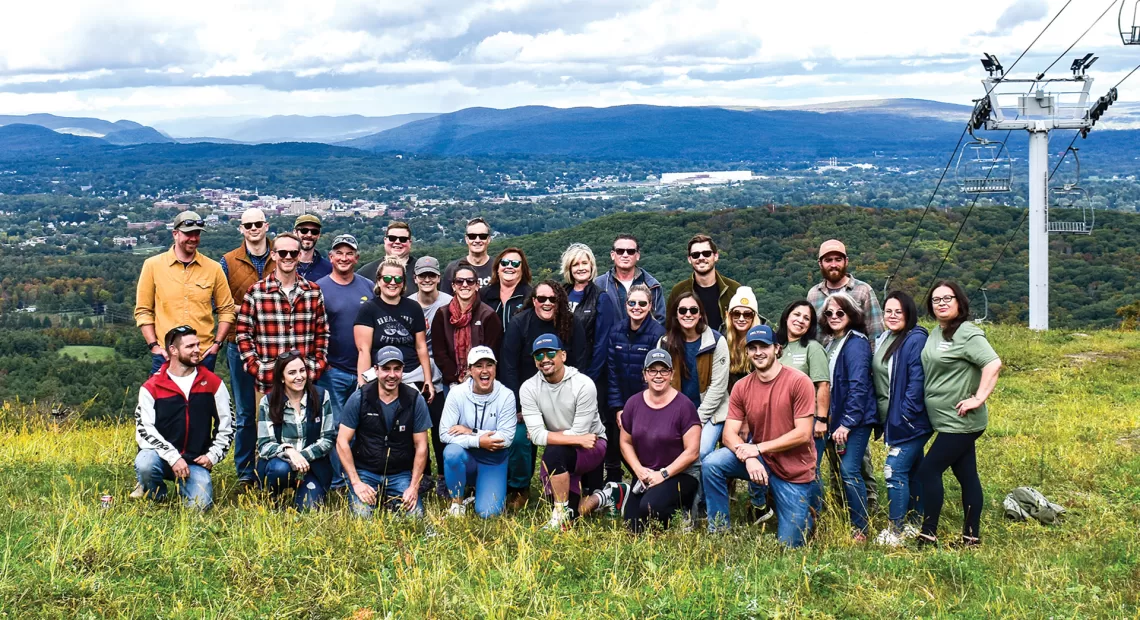
EASTHAMPTON Hometown Financial Group, parent company of bankESB, Abington Bank, and bankHometown, announced it was named a winner of the 2024 Top Workplaces USA award by Energage.

Top Workplaces USA celebrates organizations with 150 or more employees that are dedicated to building an exceptional, people-first culture. Winners are chosen based solely on employee feedback gathered through an anonymous, third-party employee-engagement survey, issued by Energage, a leading provider of technology-based employee-engagement tools. More than 42,000 organizations across the country were invited to participate in the Top Workplaces USA survey. Results are calculated by comparing the survey’s research-based statements, including 15 culture drivers that are proven to predict high performance, against industry benchmarks.

“We’re honored to be nationally recognized as an employer of choice for the second time in three years, and especially humbled that this honor resulted from positive feedback from those who know us best: our employees,” bankESB President and CEO Matthew Sosik said. “Every day, I’m inspired by our compassionate, dedicated, and talented group of employees, who demonstrate passion for unlocking the full potential of our customers, our communities, and each other. We try hard to foster a work environment that’s inclusive, innovative, team-oriented, and fun, and this honor proves that our employees believe we’re doing it right.”

Daily News

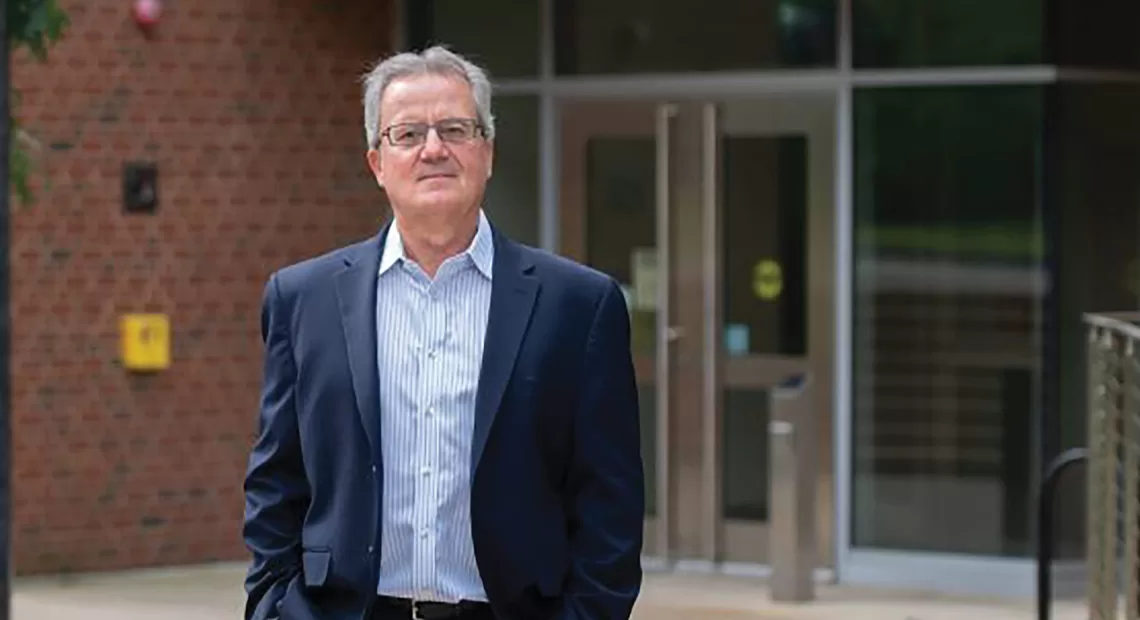
SPRINGFIELD — In continuing Jeff Poindexter’s legacy, Bulkley Richardson has partnered with the Greater Springfield YMCA to help area boys and girls attend summer camp. The firm will send 16 youth campers to a YMCA-run camp this summer for one week.

Poindexter was a partner at Bulkley Richardson and the former chairman of the Greater Springfield YMCA board of directors.

“Jeff knew summer camp was a privilege not all kids had access to, and he was a huge advocate of advancing equity in our Springfield neighborhoods,” said Dan Finnegan, Bulkley Richardson’s managing partner. “We felt that honoring Jeff’s longtime commitment to the YMCA and its efforts to provide opportunities to youth in the community was something he would be proud of.”

Daily News

SPRINGFIELD — American International College (AIC) announced that Hubert Benitez plans to step down as president of the college at the end of the current academic year on June 7.

Frank Colaccino, chair of the AIC board of trustees, said Nicolle Cestero, who serves as executive vice president and chief operating officer at AIC, will be appointed interim president immediately.

In accepting Benitez’s resignation, Colaccino said, “I thank President Benitez for the service he provided to AIC over the past two years. Hubert’s leadership in developing the AIC Reimagined strategic plan was exemplary, and AIC will continue to benefit from that leadership as we execute the strategic initiatives embedded in that strategic plan.”

In his letter of resignation, Benitez said, “I want to thank the board of trustees for the opportunity it has granted me to serve AIC. It has been rewarding work with a committed team of colleagues reimagining the future of the college. While there are still vast opportunities to advance the mission of AIC, the collective efforts and progress made to date on executing the institution’s strategic initiatives fill me with hope, and I trust that these efforts will bear fruit in the near future.”

He added that “I made this decision by engaging in a deep process of prayer and discernment, and after thoughtful consideration and reflection with my family, I have decided to focus on the next chapter of our lives.”

Colaccino said the tenure of Benitez’s service as president of the college was marked by a number of progressive actions designed to promote the mission of AIC and his effective leadership in the development of AIC Reimagined, the strategic plan that will guide the initiatives undertaken by the college during the coming years.

“AIC deeply appreciates the contributions made by President Benitez to the mission of the college during his tenure as president, and we wish him well as he embarks on the next new and different chapter of his life and his family’s life,” Colaccino added.

Cestero, who will serve as interim president until the next president is identified, has been with AIC since 2011 when she joined as associate vice president for Human Resources. She has served the college as chief of staff and most recently as executive vice president and chief operating officer.

Prior to joining AIC, her professional journey began in New York City at the Council on Foreign Relations, a leading nonpartisan foreign-policy think tank in the U.S., focused on disseminating information to members, government officials, and the public on matters of international significance. She holds an MBA degree from AIC, a master of arts degree from the University of West Florida, and a bachelor of arts degree from Mount Holyoke College.

According to Colaccino, as COO, Cestero has overseen the day-to-day operations of the college and played a key role in implementing AIC’s strategic plan.

Colaccino said AIC is in the process of engaging a search firm to assist with a national search for the next president.

Daily News

SPRINGFIELD — The Community Foundation of Western Massachusetts announced it has received a $560,000 gift from the MassMutual Foundation to support grantmaking in Springfield through the Community Foundation’s Flexible Funding program. Through this grant, the MassMutual Foundation seeks to create more equitable access to social and economic opportunity in its local community.

“The Community Foundation appreciates the opportunity to partner with the MassMutual Foundation for the benefit of our community,” said Megan Burke, president and CEO of the Community Foundation. “Both foundations consistently work to improve the quality of life for residents in our region. This innovative partnership, generously supported by the MassMutual Foundation, offers a new way for us to collaborate to advance equity and opportunity through increased financial resilience.”

Recognizing a need in Springfield to address barriers to financial well-being, the MassMutual Foundation identified the opportunity to support the Community Foundation’s Flexible Funding grant program, which uses a trust-based approach, informed by community, to make resources available to those nonprofits best positioned to increase equity and opportunity for all residents. The MassMutual Foundation’s funding will specifically target programs and organizations with a focus on building financial resiliency through four focus areas: building networks, fostering financial health, fulfilling basic financial needs, and expanding employment opportunities.

“Our success in advancing financial well-being for the community is predicated not only on the value of the programs that deliver services themselves, but also on the direct input we receive from members of our community on where needs are the greatest,” said Dennis Duquette, head of Community Responsibility for MassMutual and president of the MassMutual Foundation. “We’re thrilled to partner with the Community Foundation of Western Massachusetts to provide more open access to MassMutual Foundation resources for members of our community and the causes they recommend.”

The Flexible Funding program provides unrestricted financial support to nonprofits and other organizations assisting their communities in Franklin, Hampshire, and Hampden counties, prioritizing organizations actively working to combat racial disparities, promote equity and justice, and create pathways for marginalized communities. The program is designed to uplift the day-to-day operations and sustainability of these organizations.

“We received grant requests totaling over $8 million this past year, but only had $2.3 million to deliver. It’s a clear indication that there’s tremendous need in the region,” said Meredith Lewis, senior director for Community Impact and Partnerships at the Community Foundation. “We’re excited to help shepherd more financial resources through our open grant cycle and collaboratively work to reach more organizations that help residents of Springfield and the surrounding area.”

Applications for the next Flexible Funding round will open in August, and recipient grantees will be announced in December. Click here to learn more about Flexible Funding and Community Foundation events supporting this and other similar work.

Daily News

CHICOPEE — Elms College and the St. Augustine Center for Ethics, Religion, and Culture will present the fifth annual Rev. Hugh Crean Distinguished Lecture in Catholic Thought on Thursday, April 4 at 4:30 p.m.

The lecture will take place in person in the college’s Alumnae Library Theater. Click here to register.

The distinguished speaker for this lecture is Dominic Doyle, associate professor of Systematic Theology at the Boston College School of Theology and Ministry (STM). The theme for Doyle’s remarks will be “Christian Humanism and the Theology of Hope.”

Most recently, Doyle led STM’s Neuroscience Education for Theological Training grant from the Science for Seminaries program sponsored by the American Assoc. for the Advancement of Science/Dialogue on Science, Religion, and Ethics. He is currently working on a book exploring the history of theological virtues, tentatively titled Thematic Variations in Theological Virtue.

The St. Augustine Center for Ethics, Religion, and Culture (CERC) at Elms College was launched in October 2020 with support from an anonymous naming gift and several significant contributions. The center aims to increase engagement and discourse on the most pressing and complex questions related to ethics, religion, and culture in today’s society, and to lead the regional community in thoughtful, engaging dialogue.

The founding executive director of the CERC is noted bioethicist Peter DePergola II, Shaughness Family chair for the Study of the Humanities and associate professor of Bioethics and Medical Humanities at Elms.

The annual Rev. Hugh Crean Distinguished Lecture was established through an endowment made by Jack and Colette Dill to honor Crean’s legacy and recognize his academic work at Elms College and his pastoral ministry throughout the Diocese of Springfield and the entire region.

Daily News

HOLYOKE — Attorney Karen Jackson of Jackson Law in Holyoke will lead three one-hour estate-planning workshops at Holyoke Community College, beginning Thursday, April 11 from 6 to 7 p.m. with “Core Estate Planning.”

In this first session, Jackson, an elder-law and estate-planning attorney, will explain the importance of the will, power of attorney, healthcare proxy, and the core estate plan.

In the second session, “De-mystifying Trusts,” on Thursday, April 18 from 6 to 7 p.m., Jackson will review the different types of trusts and how to decide if one is needed.

In the final course, “Saving Your Home from the Nursing Home Bill,” on Thursday, April 25 from 6 to 7 p.m., Jackson will explain the use of an irrevocable income-only trust to save nursing-home costs. She will also explain MassHealth rules and provide tips and traps to avoid.

Students can choose one or two classes at $39 each or register for the series for $90. To register, call (413) 552-2320 or visit hcc.edu/bce.

Daily News

NORTH ADAMS — Writer and journalist Tamar Sarai will deliver the Hardman Journalist in Residence Lecture on Monday, April 8 at 6 p.m. in the Feigenbaum Center for Science and Innovation Atrium at MCLA. The lecture is free and open to the public.

“Tamar Sarai represents a refreshing journalistic practice which our Beacon and Beacon Web News journalism students will find energizing and modern,” MCLA Professor Michael Birch said. “Her writing will offer new topics and focus for their learning, as will her emphasis on the power and value of good writing in the service of exceptional storytelling. This will be an excellent learning opportunity for our students.”

Sarai is a writer and journalist currently based in Philadelphia. She is a features writer at Prism, a nonprofit media outlet that seeks to highlight the perspectives and voices of those directly impacted by some of today’s most pressing issues. Her work focuses on race, culture, and the criminal legal system. Both her writing for Prism and her freelance work often focus on the ways in which Black women and girls are impacted by policing and the prison system. Her work has been featured in outlets including Shadowproof, Capital B, and Essence. Sarai is a graduate of Wellesley College and Columbia University’s Graduate School of Journalism.

MCLA’s Hardman Lecture Series presents in-depth discussions with some of the leading journalists of our time and is made possible through the generosity of the Hardman Family Endowment.

Daily News

SPRINGFIELD — Square One President and CEO Dawn DiStefano will be among three panelists from across the country to present to the U.S. Federal Reserve in Washington, D.C. this week.

DiStefano was invited to be a panelist at the Fed Listens event on Friday, March 22 to hear perspectives on current economic conditions and how the pandemic experience has reshaped the economy and the workforce.

Fed Chair Jerome Powell will provide opening remarks, and Vice Chair Philip Jefferson and Governor Michelle Bowman will each moderate conversations with leaders from organizations that include the nonprofit, education, job-search, agriculture, healthcare, and manufacturing sectors.

This event is one in a series of discussions as part of the Fed Listens initiative and aims to engage a wide range of stakeholders to hear how the economy is progressing across the U.S.

The livestream will be webcast at www.federalreserve.gov and www.youtube.com/federalreserve.

Daily News

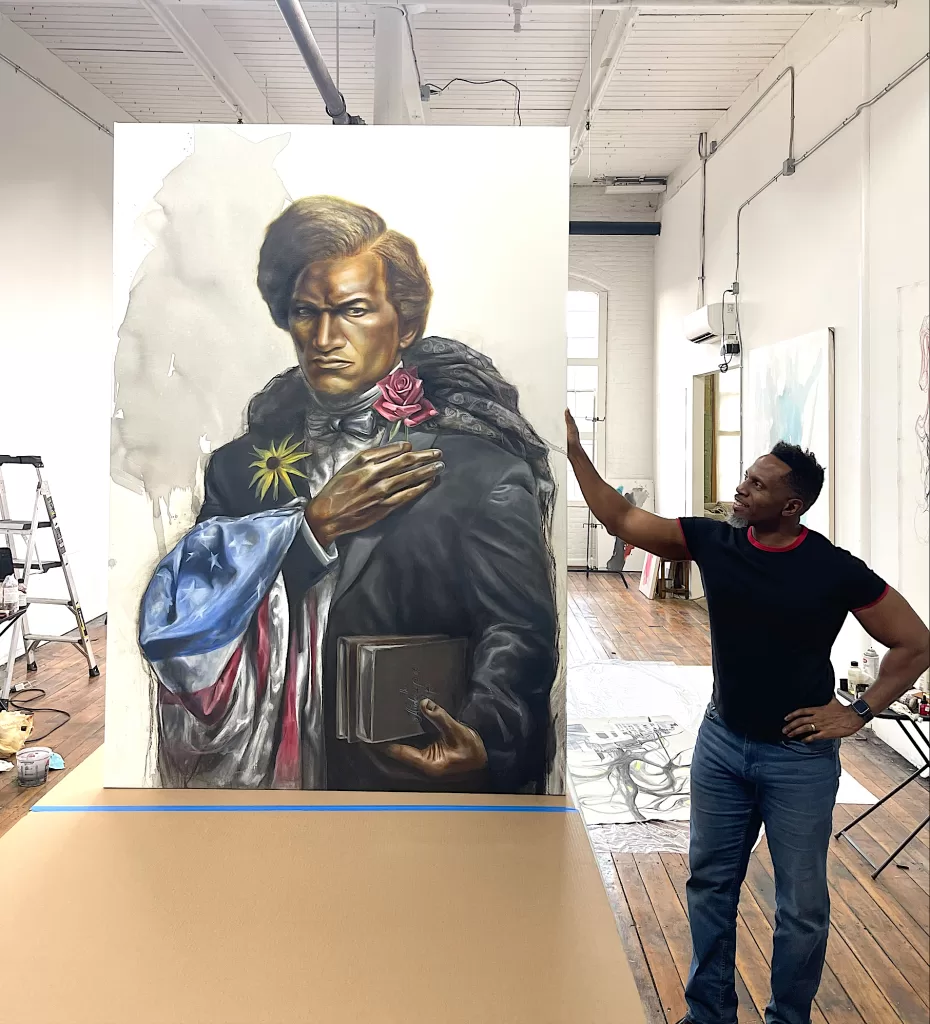
Westfield State University Associate Art Professor Imo Nse Imeh in his studio with his new portrait of Frederick Douglass, which was unveiled at Mechanics Hall in Worcester on March 14.

WORCESTER — Mechanics Hall in Worcester unveiled three commissioned portraits of 19th- century Black Americans at an event called “Beyond Frames” on March 14, as part of its Portraits Project.

Westfield State University Associate Art Professor Imo Nse Imeh contributed with his portrait of formerly enslaved civil-rights leader, orator, and writer Frederick Douglass. Other contributions unveiled included Worcester business owners and abolitionists William Brown and Martha Ann Tulip Lewis Brown, painted by Brenda Zlamany of Brooklyn, N.Y., and formerly enslaved abolitionist and women’s-rights activist Sojourner Truth, painted by Manu Saluja of Long Island, N.Y. The three portraits are the first to be added to the 167-year-old concert hall since 1999.

The Mechanics Hall Portrait Gallery is an installation honoring 19th-century Worcester innovators, social reformers, Civil War heroes, and political leaders.

“This is a historic moment for Mechanics Hall and our vibrantly diverse community,” said Kathleen Gagne, Mechanics Hall executive director and co-chair of the Portraits Project. “Many of the world’s most renowned performers take the Great Hall stage every year. They and their audiences will now share the hall with — and be inspired by — these striking paintings of Black Americans who lived extraordinary lives of courage. Our community, and especially our children, can look up to the individuals honored in the gallery with pride and hope.”

Imeh is a visual artist and scholar of African diaspora art. His work focuses on historical and philosophical issues around the Black body and cultural identity. His works are in the collection of the Petrucci Family Foundation Collection of African American Art; the University Museum of Contemporary Art at UMass Amherst; and the Danny Simmons Collection of Art, among others. Imeh is a recipient of the Mass Cultural Artist Fellowship, as well as grants from the Holyoke and Springfield Cultural Council and the Community Foundation of Western Massachusetts.

Daily News

SPRINGFIELD — The Women’s Fund of Western Massachusetts (WFWM) welcomes grant applications for its 2024 grant cycle and intends to award 10 to 15 grants ranging from $5,000 to $10,000 by summer.

WFWM strongly encourages smaller, community-based, grassroots organizations to apply. Organizations with 501(c)(3) status and those with fiscal sponsors are welcome to apply, and those serving women and girls and transgender and gender-diverse people in Berkshire, Franklin, Hampden, and Hampshire counties are encouraged to do so. Priority will be given to organizations aligning with race and gender justice and equity and WFWM’s strategic pillars: economic security, equality in positions of power and leadership, and freedom from gender-based violence.

The two-year, unrestricted grants can be used for general operations or program support, and the WFWM grantmaking committee looks for grant proposals with a meaningful impact.

“We are excited to continue to fund the important work that is being done to support women, girls, and gender-expansive people in our Western Massachusetts communities,” said Amihan Matias, senior director of Community Partnerships at the Women’s Fund. “We have diverse community members and residents from all four counties of Western Massachusetts on our grantmaking committee. We are grateful for their valuable perspectives regarding the needs of their communities. It is so important to hear directly from communities.”

To apply, complete an online application. Click here for the English application, or click here for the Spanish version. Submit a brief, one-page letter of intent. The WFWM strives to make the application process as inclusive and accessible as possible and also accepts video submissions or grant proposals written for other funders in place of the narrative portion of the written letter of intent. To have the application translated into a language other than English or Spanish, email Matias at [email protected].

Applications are due by May 15, and the grantmaking committee will announce recipients on Aug. 30.

Daily News

BOSTON — Last week, the Massachusetts Senate unanimously passed legislation to make early education and care more accessible and affordable for families across Massachusetts. The legislation now heads to the House of Representatives for consideration.

The EARLY ED Act — an Act Ensuring Affordability, Readiness, and Learning for Our Youth and Driving Economic Development — takes steps to improve the affordability and sustainability of childcare programs by making the state’s Commonwealth Cares for Children (C3) operational grant program permanent, expanding eligibility for the state’s subsidy program and capping subsidy recipients’ childcare costs at 7% of family income, and boosting compensation for educators by creating a career ladder and providing scholarships and loan forgiveness.

“An equitable and competitive Commonwealth is one in which every child and family has access to affordable, quality early education,” Senate President Karen Spilka said. “At the same time, we must recognize the incredible work of the providers who are shaping the minds and hearts of our earliest learners. Today I’m proud that the Massachusetts Senate is once again taking action to lower costs for families, open up more opportunities for children, increase pay for our early educators, and make support for providers permanent so they can keep their doors open and thrive for years to come.”

State Sen. Adam Gomez added that “the EARLY ED Act creates an ecosystem where we can ensure affordable, accessible early education and care for our youth and viable career pathways for educators across the Commonwealth.”

The bill would make the state’s C3 grants permanent, providing monthly payments directly to early education and care providers. The grants, which provide monthly payments to more than 92% of early education and care programs across the Commonwealth, have become a national model thanks to their success at keeping programs’ doors open during the pandemic, reducing tuition costs for families, increasing compensation for early educators, and expanding the number of childcare slots available.

The legislation improves affordability by expanding eligibility for childcare subsidies to families making up to 85% of the state median income (SMI), which is $124,000 for a family of four. It eliminates cost-sharing fees for families receiving subsidies who are below the federal poverty line and caps cost-sharing fees for all other families receiving subsidies at 7% of their income, putting millions of dollars back into families’ pockets. Finally, the bill paves the way for expanding the subsidy program to families making up to 125% SMI, or $182,000 for a family of four, when future funds become available.

The legislation provides support for educators by directing the Department of Early Education and Care to establish a career ladder with recommended salaries. This career ladder will help increase salaries in this historically underpaid field. The bill would also make scholarship and loan-forgiveness programs for early educators permanent, as well as direct the state to explore more innovative ways to develop this workforce.

The bill would also create an innovative public-private matching grant pilot program, which would incentivize employers to invest in new early education and care slots, with priority given to projects serving families with lower income and those who are located in childcare deserts. In addition, the bill tasks the administration with completing a study to further analyze ways to incentivize or require employers to partner with the state to expand access to high-quality and affordable early education and care.

The bill also includes provisions that would:

• Ensure that early education and care programs serving children with subsidies are reimbursed based on enrollment, rather than attendance, to provide financial stability to programs;

• Require the cost-sharing fee scale for families participating in the childcare subsidy program to be updated every five years to ensure affordability for families;

• Establish a pilot program to expand access to shared-service hubs, which would support smaller early education and care programs;

• Increase the maximum number of children that can be served by fully staffed large family childcare programs, aligning with states such as New York, California, Illinois, and Maryland; and

• Bar zoning ordinances from prohibiting family childcare programs in certain areas, preventing an unnecessary hurdle to the expansion of childcare slots.

Daily News

BOSTON — State Sen. Adam Gomez joined Gov. Maura Healey and Lt. Gov. Kim Driscoll at the State House last week for a criminal-justice-reform announcement related to pardoning those convicted of simple possession of marijuana.

As the governor stated in her address, the pardons will apply to all adult, state-level misdemeanor possession convictions handed down before March 12, removing criminal records that have become a barrier for residents seeking jobs or housing throughout the years.

“I’m thankful to the Healey-Driscoll administration for answering President Biden’s call and issuing pardons for those convicted of state marijuana offenses,” said Gomez, Senate chair of the Joint Committee on Cannabis Policy. “Eight years ago, Massachusetts residents voted yes on Question 4 to legalize recreational marijuana. Today, we are finally beginning to address historic racial disparities for those affected by marijuana prohibition.”

The proposal will still need the approval of the Governor’s Council before taking effect. If approved, the pardons would take effect immediately, although it may take several months for individual criminal records to be updated.

“As chair of Cannabis Policy, I have worked closely with organizations and community members who’ve advocated for this type of reform, but I’ve also been directly affected when I was charged with a low-level marijuana crime as a teenager,” Gomez said. “I encourage the Governor’s Council to vote favorably on the governor’s recommendation to make this a reality for tens of thousands of individuals across the state.”

Daily News

SPRINGFIELD — The Zoo in Forest Park will open for the 2024 season on Saturday, March 30 with Eggstravaganza, presented by M&T Bank. The annual, family-friendly event runs from 10 a.m. to 2:30 p.m., with final admission at 2 p.m.

Kids are invited to hop along the Bunny Trail, collecting prize-filled eggs at each stop. There will also be crafts, music from DJ Jonny Taylor, animal encounters, and the opportunity to meet the Easter Bunny. Link to Libraries, a nonprofit organization dedicated to distributing new books to children in need, is providing a free book to every child at the event.

“After being closed for five months, Eggstravaganza is the perfect way to kick off the new season,” said Gabry Tyson, assistant executive director of the Zoo in Forest Park. “It’s heartwarming to watch families return to visit the animals they love.”

Pre-registration is required to participate in the Bunny Trail. Registration closes March 27 or when all tickets are sold. Tickets are available at www.forestparkzoo.org/eggs. In the event of severe weather, Eggstravaganza will be moved to Sunday, March 31. If the rain date is not utilized, the Zoo will be open to the public from 10 a.m. to 4 p.m. on March 31.

Beginning April 6, the zoo will be open weekends only from 10 a.m. to 4 p.m., with last admission at 3:30, through mid-May. After Mother’s Day, the zoo will move to its daily operating schedule.

Daily News

HOLYOKE — Holyoke Community College (HCC) has been awarded a $104,000 state grant to continue training paraeducators to help address workforce needs in Hampden County public schools.

The grant, from the state’s Training Resources and Internships Network (TRAIN), will fund the next two rounds of HCC’s free, seven-week, online paraeducator training program. The first round begins March 25 and the second June 17.

Paraeducators, also called teaching assistants or teaching aides, typically work in classrooms in a variety of capacities, sometimes assisting classroom teachers with instruction or working one-on-one with students who have individual education plans (IEPs) and require additional assistance.

The 140-hour program blends job-readiness and career-exploration components with education and training specific to the knowledge and skills needed to pass the Professional Certification for Teaching Assistants (PCTA) exam, which qualifies individuals to work in federally designated Title 1 school districts, or those with a significant number of low-income households.

In addition to online instruction, the program includes in-person job shadowing and can lead directly to a four-week internship and subsequent employment with one of HCC’s public school system partners in Springfield, Holyoke, West Springfield, and Chicopee.

“I would never use the word guaranteed,” HCC Workforce Training Manager Andrew Baker said, “but I would say there is such a strong demand for this work that if students make it through our program, they’re pretty certain to get a job if they want one.”

HCC has been running the program four times a year since 2021 and expects to receive additional grants to keep it going beyond the March and June sessions.

The grant to HCC was part of a package of $1.5 million in TRAIN grants awarded to 13 community colleges across Massachusetts meant to prepare residents for careers in fields such as education, healthcare, addiction recovery, cybersecurity, and manufacturing. The grants will provide free career training to more than 400 adult learners at community colleges across Massachusetts, with all programs targeting residents who are unemployed or underemployed. The grant to HCC will pay to train 26 individuals.

HCC’s other grant partners include Springfield WORKS, MassHire Holyoke, MassHire Springfield, DTA Works, and United Way Thrive. Individuals who receive state benefits through the Department of Transitional Assistance or Transitional Assistance to Families with Dependent Children may qualify for a ‘learn to earn’ training and internship stipend of $125 per week.

While the primary focus of the paraeducator program is to prepare students to pass the PCTA exam, also important is the job-readiness curriculum, which covers the basics of applying for a job: writing a résumé, preparing a cover letter, gathering references, and practicing for an interview. The program also covers subjects such as how to function effectively in a professional setting, including working with colleagues, communication, respect for diversity, and reliability.

For more information or to apply, visit hcc.edu/para.

Business Talk Podcast

We are excited to announce that BusinessWest has launched a new podcast series, BusinessTalk. Each episode will feature in-depth interviews and discussions with local industry leaders, providing thoughtful perspectives on the Western Massachuetts economy and the many business ventures that keep it running during these challenging times.

Go HERE to view all episodes

Episode 205: March 18, 2024

Editor Joe Bednar talks with Sarah Tsitso, executive director of the Forest Park Zoo

Today’s zoos — the best ones, anyway — have come a long way from what they used to be, and the Zoo in Forest Park and Education Center is a prime example, honing over the years its focus on education, conservation, and rehabilitation, and bringing much of that education into the community through its programs. On the next episode of BusinessTalk, BusinessWest Editor Joe Bednar talks with Sarah Tsitso, executive director of the Forest Park Zoo, about her passion for animal welfare, the challenges of funding a year-round operation that’s open to the public for only five months, and how the organization is helping to cultivate the next generation of animal-care professionals — not to mention the next generation of families making new memories together. It’s must listening, so tune in to BusinessTalk, a podcast presented by BusinessWest and sponsored by PeoplesBank.

Sponsored by:

Also Available On

Daily News

Claudia Pazmany

SPRINGFIELD — Following an eight-month search and interview process, Martin Luther King Jr. Family Services (MLKFS) named Claudia DeVito Pazmany as its new chief Development officer. She will be responsible for developing a sustainable institutional development effort to both support existing programs and expand them to serve the emergent needs of the organization’s clients. Pazmany had served as a volunteer member of the MLKFS development committee before being appointed to her new position.

“Claudia’s dedication to building the beloved community is evident, not only because of her volunteer service to our organization, but also based on her entire career of helping others succeed,” said Shannon Rudder, president and CEO of MLKFS. “She has a long history of social-change fund development mixed with a proven track record of rebuilding and repositioning organizations and nonprofits for success.”

Pazmany comes to MLKFS with 23 years of relationship building, strategic planning, innovative leadership, financial acumen, and visionary critical thinking, most recently serving as executive director of the Amherst Area Chamber of Commerce. Her experience includes a history of professional fundraising with a career total of raising more than $15 million in a development capacity for other location organizations, including the Women’s Fund of Western Massachusetts and Providence Ministries. She also serves as volunteer, advisory board member, and former board president of CHD’s Big Brothers Big Sisters of Hampshire County, a development committee member of the United Way of Franklin & Hampshire Region, and as a 2020 and 2021 EforAll Pioneer Valley mentor.

In October 2021, Pazmany received a citation from the Massachusetts House of Representatives for her leadership role in supporting Amherst’s small businesses throughout COVID, leveraging more than $2 million in small-business assistance. She was honored with the Family 2022 Outreach Center’s Helen Mitchell Community Service Award for conceptualizing and implementing a program that provided restaurant relief while feeding families who were disproportionately impacted by COVID. She was also honored as a 2023 BusinessWest Difference Maker along with Amherst Business Improvement District Executive Director Gabrielle Gould for their partnership and leadership to build a stronger community throughout COVID.

“I am deeply honored to step into this inaugural role at MLKFS,” Pazmany said. “I am eager to develop relationships and engage the community to further the inspired vision of its newest president and CEO, Shannon M. Rudder, whilst connecting its rich history to a strengthened role it can play in ensuring MLKFS for our future generations.”

Pazmany earned a bachelor’s degree with concentrations in French and business from UMass Amherst, and an MBA from Isenberg School of Management at UMass Amherst. She earned a program leadership certificate from the Women’s Fund of Western Massachusetts’ Leadership Institute for Political and Public Impact.

Daily News

Hector Suarez

EASTHAMPTON — bankESB recently hired Hector Suarez as assistant vice president, branch officer of its Sargeant Street office in Holyoke.

Suarez grew up in Holyoke and Puerto Rico and has nearly 30 years of banking experience. He says he is passionate about providing a customer-first experience and brings an extensive background to his new role, where he will manage the Holyoke office team while fostering relationships within the community.

Prior to joining bankESB, he was a vice president, branch manager at M&T Bank, People’s United Bank, and United Bank. Before that, he was a branch manager at Key Bank and First Niagara Bank, as well as a personal banker with Baybank, BankBoston, FleetBoston, and Bank of America.

Daily News

HOLYOKE — Holyoke Mall will host its spring job fair on Wednesday, April 17 from 2 to 5 p.m. on the lower level near Macy’s. The Get Hired Job Fair is a convenient opportunity for Western Mass. employers to interview and hire workers, and to help job seekers connect with businesses who need their skills.

Employers from a variety of industries will be in attendance, looking for candidates at all skill levels. The event is free to attend for all job seekers. Employers that have already signed up to staff a table include Baystate Health, PeoplesBank, Holyoke Community College, YMCA Greater Springfield, and more. Last year, the September job fair drew more than 40 employers, representing more than 10 industries, and nearly 400 candidates.

Employers interested in participating in the upcoming job fair should contact Jim Geraghty, advertising representative for Holyoke Mall, at (617) 840-2998 or [email protected]. Click here for full details regarding the event.

Daily News

SPRINGFIELD — The annual 94.7 WMAS Children’s Miracle Network Radiothon, held on March 5-6, transformed the 94.7 WMAS studios at the Naismith Memorial Basketball Hall of Fame into a bustling hub of generosity and compassion. This year, the Radiothon raised $289,355 in support of Baystate Children’s Hospital.

Throughout the two-day event, the Kellogg Krew, alongside other 94.7 WMAS personalities, spearheaded fundraising efforts, rallying listeners and supporters to contribute to this vital cause. The response underscored the compassion and generosity prevalent in Western Mass. to make a difference in the lives of children facing medical challenges.

“We can’t believe the support Radiothon receives from the local community,” Audacy Senior Vice President Craig Swimm said. “We are so lucky to have a hospital like Baystate in our backyard.”

The impact of the 94.7 WMAS Radiothon extends far beyond monetary donations, embodying a collective dedication to nurturing and safeguarding the well-being of the youngest members of the community, while also spotlighting the tireless efforts of Baystate Children’s Hospital’s doctors, nurses, and staff. Since its inception, the Radiothon raised more than $5,000,000 for local children.

Donations are still being accepted. Visit wmaskids.com for more information.

Features

Getting Revved Up

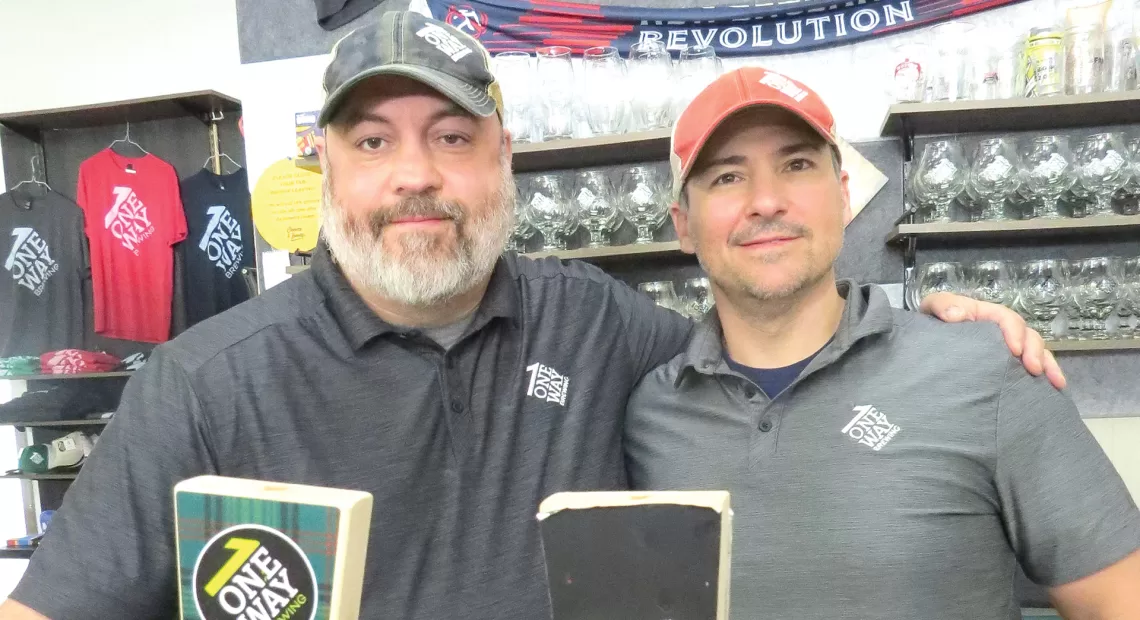
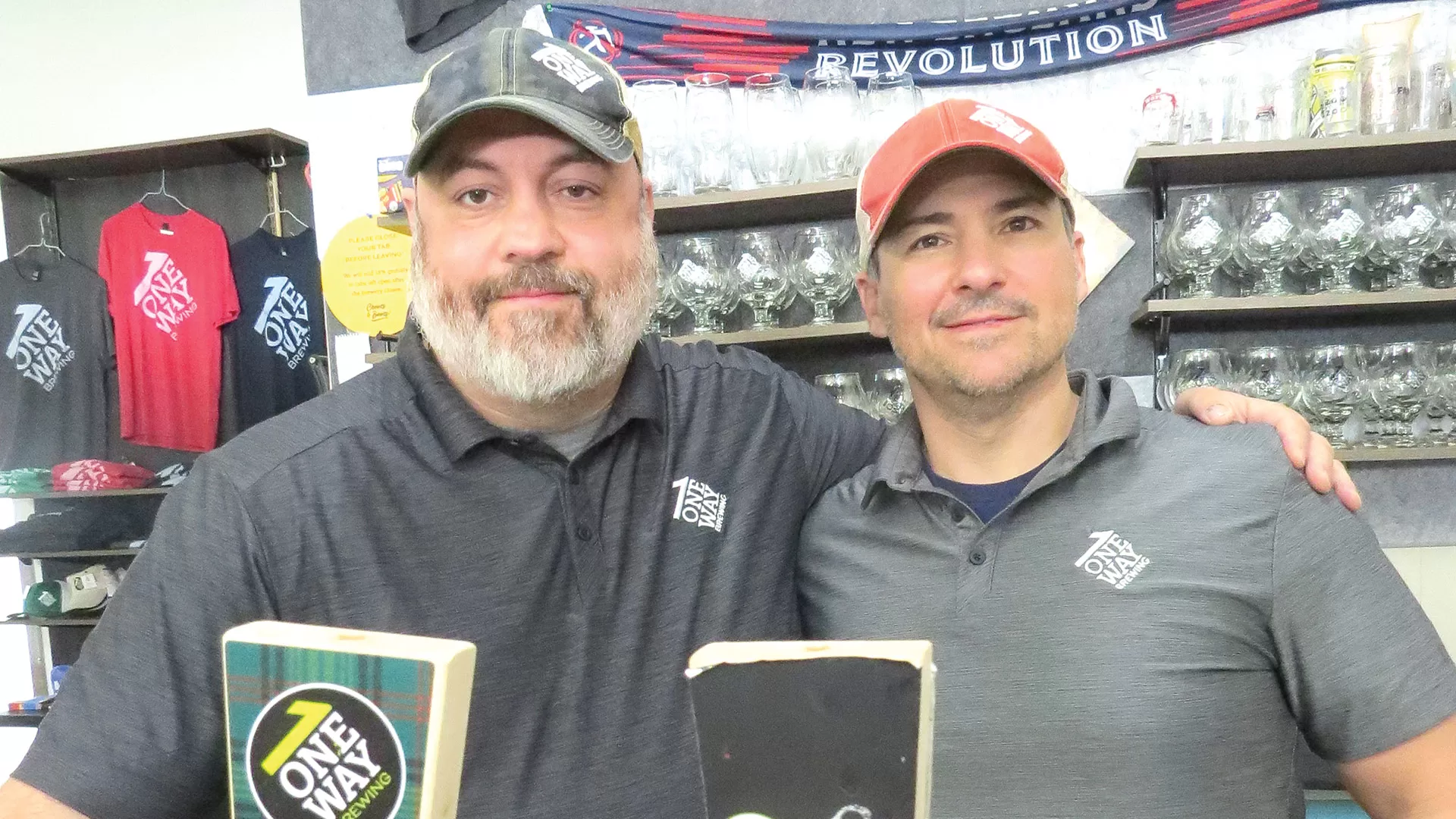
Zach Schwartz (left) and Jason Tsitso

Zach Schwartz (left) and Jason Tsitso have One Way Brewing on the fast track to continued growth.


As with every brewery operation in Western Mass., there’s a story behind the name of this venture, one Jason Tsitso has told many times.

It harkens back to the days when he was a motocross racer, he said, adding that one of his good friends at the time worked for Ryder truck rentals. Tsitso said he and another friend would often help out at the Ryder facility, and one day he discovered his bike covered with the ‘one-way’ stickers that were affixed to the company’s vehicles.

“The next day, I was racing in a moto, and I was doing well, and the announcer said, ‘296 from One Way Racing,’” he went on, adding that, soon thereafter, he actually created a racing team with that name, complete with jerseys and other apparel with a ‘one-way’ logo.

And when he started home brewing with one of those friends from his racing days, they started tossing around ideas for a name and settled on something from the past. And it has stuck.

But there are other meanings behind this brand that Tsitso has established and grown with partner Zach Schwartz.

“There’s only one way to brew beer, and that’s fresh and local,” he told BusinessWest, adding that this way has helped give their brand a following, one that has enabled it to become one of the many emerging craft-beer labels in the 413 and a developing success story.

The two partners now have a taproom on Maple Street in Longmeadow, across from the plaza that was destroyed by fire just after they opened (more on that later), and a growing portfolio of craft beers, a few of them with racing-related names, such as Brraaap! (that’s the sound motorcycles make when their drivers hit the throttle), a New England IPA; and Kick Starter, another New England IPA, with which the partners got things started.

But there’s also the Betty, a Scottish export ale, One Rustic Cranberry Stout (no explanation needed for that one), One Hard Lime Seltzer (ditto), and others.

“Home brewers will come in and ask, ‘what’s your favorite? It’s very hard to be objective when all of these beers are your babies.”

The business plan is rather simple and direct, Schwartz said — to continue developing more of these beers and continue building on the solid foundation they’re created.

For Tsitso, vice president of Operations for a commercial construction company, and Schwartz, owner of Manchester, Conn.-based Fusion Cross Media, a printing company, this is still a part-time pursuit, or “passion,” as they call it, but one that is absorbing ever-larger amounts of the time not spent at their day jobs.

“This is more of our passion project,” said Tsitso, who also takes the title of head brewer. “Zack and I both like to build things, and this was our project when we started out. We wanted to see where we could take it and build it from grassroots; we expand as we have the bandwidth to do so.”

For this issue and its focus on breweries, BusinessWest takes an in-depth look at One Way Brewing and how its fast start has it on track for a high-octane brand of success in this sector where there’s friendly competition — or, as Tsitso described it, a “community” where customers are shared.


Lager Than Life

As he and Tsitso talked one recent Saturday morning about One Way Brewing, the route traveled to date, and where the road might take them from here, Schwartz first went about describing what they’ve created on Maple Street, and how it is different from a bar.

One Way’s portfolio of craft beers

One Way’s portfolio of craft beers continues to grow and now includes a wide spectrum of offerings.

“At a bar, you eat food, you have a drink, and maybe you watch TV,” he told BusinessWest. “Here at the brewery, Jason and I talk business with you. I don’t want to say that we’re entertaining, but we are engaged. And people are always asking questions — ‘how did you come up with that?’ and ‘what are your ingredients?’ or ‘what malts did you use?’

“Home brewers will come in and ask, ‘what’s your favorite?’” he went on. “It’s very hard to be objective when all of these beers are your babies.”

And that’s essentially how this venture started — two guys, Tsitso and Schwartz, talking about brewing, then doing it, and never stopping when it comes to asking questions, perfecting their craft, and creating more of these ‘babies.’

Elaborating, the two partners said they’ve known each other a long time and that their daughters hung out together. They both developed a thirst for craft beer — Tsitso has always had one, and Schwartz’s developed over time.

“I would say we got him into craft beer four ounces at a time,” Tsitso said of Schwartz, adding that they and other friends would do a lot of tasting over the years, activity that would eventually lead them down that stimulating but challenging path that would take them from tasters to brewers.

“We got tired of waiting in line,” Tsitso said with a laugh, adding that, rather than queuing up for other brewers’ offerings (although they still did some of that, too), they decided to brew their own.

They started attending brew fests, which back then drew both professional and home brewers, and found themselves often mistaken for the former.

“At our first brew fest, we had a logo, we had a brand, we looked like pro brewers,” Schwartz recalled. “We were at a beer fest in Vermont, and people kept asking, ‘where’s your brewery? We want to check out your brewery.’ And we said, ‘we brew out of our garage.’

“And at every brew fest after that, people would enjoy and ask the same thing — ‘where’s your brewery?’” he went on, noting that with those comments as inspiration — and as the pandemic forced brew fests to take a lengthy pause — they eventually went about creating one.

They began with cans and eventually opened their taproom after COVID restrictions were fully lifted in the spring of 2021.

As for beers, they started with … Kick Starter, a beer that would in many ways set the tone for this venture.

“It came about as West Coast IPAs were really popular and New Englands were just getting started,” Tsitso recalled. “Our whole concept with that beer was to create something that was really approachable for non-IPA drinkers, was well-balanced, and really got them into enjoying IPAs and broadening their beer drinking.”


Draught Choice

This same thought process has gone into subsequent additions to the portfolio, including Brraaap!, which was created to mark the two-year anniversary of the opening of the taproom; One Hard Lime Seltzer; One Rustic Cranberry Stout; and Spilled Milk Mango, a mango milkshake IPA and another popular seller.

While Tsitso is the head brewer and recipe developer, the two will work together on potential additions to the roster, looking at what might be missing from the lineup and what the next logical new label should be.

The same is essentially true of the broad business plan, said the partners, adding that the goal is sustainable growth and building on the solid base they’ve created.

“One thing we’ve always tried to do is not overextend ourselves and get to the point where we can’t manage it, either from the stress level or it just doesn’t become fun anymore,” Tsitso said. “As we get the bandwidth to expand, we expand.”

Possible avenues for expansion include a larger footprint in the plaza where they’re currently operating, and enhanced distribution, with most of it coming currently at the taproom, with beers on tap in only a few area restaurants.

Moving forward, the partners say they’re looking forward to operating with the nearby shopping plaza rebuilt. Former anchor Armata’s grocery store will not be part of the new mix, as it was destroyed by fire just a few months after they opened in the spring of 2021, but they could already see that it helped drive traffic to their business, and they long for the day when that busy intersection can turn back the clock and become a true destination.

“We’re excited that they’re rebuilding across the street, because that will really enhance traffic,” said Schwartz, adding that the taproom has a solid working relationship with a pizza shop next door and other businesses at that intersection.

Meanwhile, the partners are already drawing visitors from Longmeadow, East Longmeadow, Springfield, Enfield, and well beyond, he went on, noting that craft-beer enthusiasts travel well and are willing to put some miles on the odometer to experience something new and different.

Still, the taproom’s bread and butter is a cadre of regulars who come, as Schwartz noted earlier, not simply to drink beer, but to talk beer and experience beer.

“In the beginning, we bartended Thursday and Friday nights; we alternated every week,” he went on. “And those regulars … we developed relationships with them, talked beer with them, and shared our passion and dream with them. A lot of them come here to drink beer and visit — it’s that kind of atmosphere here.”

All this has made One Way not just a business, although it is certainly that, but also a passion, one that has taken the high road to success and is certainly revved up about what might come next.

Community Spotlight

Community Spotlight

Chris Dunne

Chris Dunne says one of the town’s priorities is to create more housing.


‘Diverse.’

That’s the one word Jessye Deane kept coming back to as she talked about Deerfield and its business community.

And with good reason.

Indeed, while this community of just over 5,000 is home to Yankee Candle Village, Historic Deerfield, the Magic Wings Butterfly Conservatory, and other tourist attractions, its economy is quite broad, covering sectors ranging from agriculture to craft brewing (which doubles as a tourist attraction, as we’ll see); manufacturing to retail; restaurants to the arts.

They all come together in a picturesque community that is a true destination, said Deane, executive director of the Franklin County Chamber of Commerce, which also calls Deerfield home. And this diversity is certainly an asset, she added, especially as manufacturing declines in many other communities.

“This diversity is the real strength of the economy of Deerfield,” she told BusinessWest, noting that, while large employers like Yankee Candle are always important, the backbone of the community’s economy is small businesses.

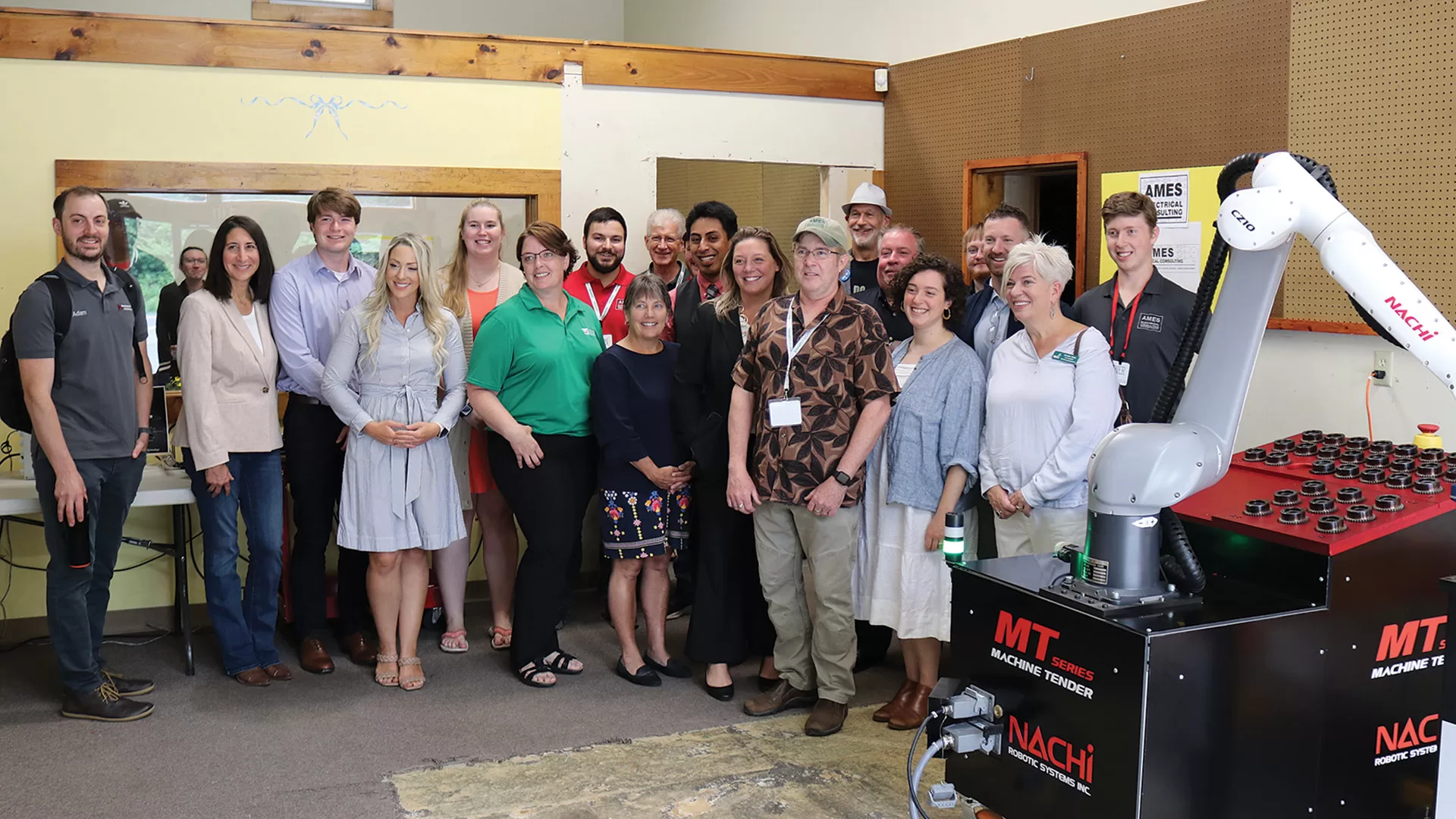
And, as noted, they cover all sectors, from restaurants like Leo’s Table in the community’s small but vibrant downtown to Ames Electrical Consulting, a growing business, soon to move to Greenfield, that specializes in helping manufacturers and even municipalities with efforts to automate facilities and processes.

That list also includes manufacturers like Worthington Assembly, which has become noteworthy not only for the circuit boards it produces for a wide range of clients but for a decidedly different culture, one it describes as ‘humanizing manufacturing’.

The obvious goal moving forward is to continue adding more pieces to this diverse business puzzle, said Chris Dunne, Deerfield’s Planning & Economic Development coordinator, while also making the town even more livable and, well, simply providing more places to live.

Indeed, like most other communities in this region — although not all those in Franklin County, where population loss is a pressing issue  — Deerfield needs more housing, said Dunne, adding that creating more is part of a larger effort to repurpose land and property in what he called the town campus.

“Approximately 45% of Deerfield residents are over age 55, so there is a definite need for senior housing.”

This is a collection of buildings, many of them currently or soon to be town-owned, including the current Town Hall, two churches, and a former elementary school, some of which could likely be converted to senior housing, said Denise Mason, chair of the town’s Planning Board, adding that there is real need in this category, and if it is met, other homes could become available to younger families.

“Approximately 45% of Deerfield residents are over age 55, so there is a definite need for senior housing,” Mason said. “And there is a housing issue across our region, and especially in Deerfield. We’re hoping that by building senior housing — and we’re looking to add approximately 32 units — that would free up some of the other homes, because we do have some older seniors who would like to downsize, but they have no place to move to.”

For this, the latest installment of its Community Spotlight series, BusinessWest turns the lens on Deerfield, where an increasingly vibrant community and ever-changing destination comes into focus.


Developing Stories

They are referred to as the ‘1821 Building’ and the ‘1888 Building,’ respectively, because that’s when they opened their doors.

The former is a long-closed church, and the latter is the aforementioned former elementary school that, with the help of a $4 million federal earmark, is being eyed as a replacement for the current town offices, built in the ’50s and now outdated and energy-inefficient.

Wade Bassett

Wade Bassett says Yankee Candle is one of many intriguing draws that have helped transform Deerfield into a true destination.

Transformation of those two historic properties tops the list of municipal initiatives in Deerfield, Dunne and Mason said.

And if town offices can be moved to the renovated school, new uses, perhaps senior housing, could be found for the current Town Hall, which, as noted, is an aging, inefficient structure.

These properties and others sit on what is called the campus, a slice of land, most of it town-owned, between North Main Street and Conway Street that includes several structures, including Town Hall, the 1821 and 1888 buildings, the town’s senior center, a ballfield, and a second church, St. James Roman Catholic Church, and its rectory, which the town may acquire with an eye toward preservation and reuse, perhaps for more senior housing, said Mason, adding that a request for proposals will soon be issued for that property.

As noted, there is real need for this type of housing, said Mason, noting that, if it is created, homes will come on the market, opening the door for more families to move to the community.

Meanwhile, new senior housing on the campus and more young families would provide a boost for the nearby downtown, said Dunne, adding that, while that area is vibrant, there are some ‘infill projects,’ as he called them, to contend with, including a long-vacant Cumberland Farms (a new, much larger one was opened on Route 5).

Other initiatives include ongoing development of a municipal parking lot with EV chargers, one complete with a large amount of green space to counter all the paved surfaces downtown — and a Complete Streets project that include improvements to sidewalks and adding a tree belt to downtown streets.

While there’s a concerted effort to create more housing inventory for those who want to live in Deerfield, there’s already a deep portfolio of attractions for those who want to visit.

“Tree House is driving a lot of traffic to this area, with their beer and with their concerts.”

Yankee Candle has long been the mainstay, and it continues to evolve in this anchor role, said Wade Bassett, director of Sales and Operations at Yankee Candle Village.

But the tourist sector, like the overall economy, is diverse, boasting everything from butterflies to history lessons at Historic Deerfield to the latest draw — craft beer and accompanying events, especially at Tree House Brewery, now occupying the large campus that was once home to publisher Channing Bete.

That campus incudes a concert venue that brings thousands of people to Deerfield for shows, said Dunne, adding that the brewery is working with town officials to increase the limit for attendance so it can bring larger acts to that campus and thus increase the ripple effect.

19th-century building

This 19th-century building is among the properties in the town ‘campus’ being eyed for renovation.

And that effect is already considerable, said Jen Howard, owner of Leo’s Table, a breakfast and lunch restaurant on North Main Street, named after her grandfather, who owned and operated a similar establishment in Fitchburg after returning from military service.

Howard said she explains the name on a regular basis, adding that many guests will ask her male kitchen employee if he is Leo.

Those guests run the gamut, she said, noting that there is a solid core of locals, many of them senior citizens, but many diners are coming on their way to attractions like Yankee Candle, the butterfly conservatory, and, increasingly, Tree House.

“We even see some from the parking lot — people charging their vehicles will come in,” she told BusinessWest, adding that a much larger boost comes from the tourist attractions, which fuel many other hospitality-related businesses.


Staying Power

At Yankee Candle, they call it the “golden key.”

That’s the name of a long-standing program, a tradition, really, at the company, whereby one family, or an individual guest, is chosen to receive an actual, and quite large, golden key, which they are required to wear, and which entitles them to enjoy all the many experiences at the Village for free.

Deerfield at a Glance

Year Incorporated: 1677
Population: 5,090
Area: 33.4 square miles
County: Franklin
Residential Tax Rate: $13.85
Commercial Tax Rate: $13.85
Median Household Income: $74,853
Median Family Income: $83,859
Type of Government: Open Town Meeting
Largest Employers: Yankee Candle Co., Pelican Products Inc.
* Latest information available

“They can enjoy Wax Works, they can fill a candy jar, they can get some ice cream at Ben & Jerry’s — it gives a next-level experience to the guest,” said Bassett, adding quickly that the program was designed to engage not only guests, but employees at the Village as well. Indeed, each day a different team member is assigned the task of deciding who, if anyone, is worthy of the golden key, which is awarded for many good reasons, from a 100th birthday to a wedding anniversary to marking one’s final round of chemotherapy.

“Recently, we had two people get engaged in our Black Forest, and one of our employees came back and said, ‘we just had an engagement in our store — why don’t we give them the golden key?” Bassett went on, adding that the program is just one way the Village strives to heighten what is still in most respects a retail experience and take it to the next level.

That level has been raised continuously over the more than 30 years that the Village has been operating, he said, adding that the facility, which is in seemingly constant motion and changing with the holidays and seasons — Easter and April school vacation are next on the schedule, and programs are already being developed — is now part of a broad effort to make Deerfield and all of Franklin County a true destination.

Indeed, like others we spoke with, Bassett said Deerfield has become a regional tourism hub, with a variety of attractions that can broaden a visit from a few hours to an entire day — or even longer.

Tree House has been an important addition to the mix, he told BusinessWest, adding that it is part of a craft-beer trail, if you will, along with Berkshire Brewing nearby in the center of Deerfield. But Tree House has become a much bigger draw with its concerts and other types of events.

“Tree House is driving a lot of traffic to this area, with their beer and with their concerts,” Bassett said, adding that this traffic is finding its way to different stops in the area, including Yankee Candle.

Deane agreed, and said that the goal in Deerfield, and across Franklin County, is to simply “extend the stay.” Elaborating, she said the community has Yankee Candle to bring visitors in, but it also has Tree House, Berkshire Brewing, Historic Deerfield, and other attractions to keep them there for an extended stay — and bring them back again.


Banking and Financial Services

Branching Out — Again

Matt Sosik

Matt Sosik says Hometown’s latest acquisition is part of an ongoing initiative to gain needed size and extend the institution’s footprint.


Matt Sosik referred to it as a “mutual admiration society.”

That’s how he chose to describe the respect that he developed for the manner in which Kevin Tierney had grown North Shore Bank into a force in that region of the Commonwealth and, likewise, how Tierney respected what Sosik had done with Easthampton-based Hometown Financial Group, using acquisition and organic growth to transform it into a $4.7 billion multi-bank holding company with a reach that extends across Western and Central Mass., the South Shore, and into Northeastern Conn.

This mutual admiration eventually became the catalyst for talks to bring the institutions together, said Sosik, chairman and CEO of Hometown Financial, adding that North Shore will become part of the Hometown family of banks through a merger of Abington Bank, acquired by Hometown in 2019, into North Shore.

The combined bank will have more than $3 billion in assets and 25 full-service retail locations across the Bay State’s North and South Shore regions and Southern New Hampshire. Meanwhile, Hometown will become, with more than $6 billion in assets, one of the largest mutual banks in the country, said Sosik, adding that the merger gives the group more of what banks need in this challenging day and age — size.

“Margins have been falling steadily, and the only way to beat that back and try to win that battle is drive down costs, at least on the average.”

Indeed, when asked what greater size — $6.4 billion in assets compared to $4.7 billion — provides, Sosik started by saying simply, “survival.”

“Margins have been falling steadily, and the only way to beat that back and try to win that battle is drive down costs, at least on the average,” he explained. “So scale is the way to achieve that; when you put more assets under one roof and achieve more efficiencies, you’re driving down per-asset costs, and that’s what this business model tries to attain.

“We want to use that $6.5 billion chassis that’s headquartered in Easthampton to run the back offices of all of our three subsidiary banks,” he went on, listing bankESB, bankHometown in Central Mass., and the soon-to-be-much-larger North Shore Bank. “We can liberate those banks to do what they do best, which is use the power of their local brand in their communities they’re serving and let the shared service model of the holding company do the grungy stuff to produce efficiencies.”

That business model he mentioned has been an aggressive course of acquisitions that makes sense on every level, but especially those involving new opportunities for achieving growth and diversity when it comes to markets and regional vibrancy.

For this issue and its focus on banking & financial services, we take an in-depth look at the latest of these acquisitions for Hometown Financial and what it means for the institution moving forward.


Another Transaction of Note

As he talked about Hometown’s latest expansion effort, Sosik broke it down into two parts, essentially.

The first is the merger of North Shore into Hometown Financial Group, and then the merger of two of its subsidiary banks, North Shore and Abington, under the North Shore banner — although the Abington name will live on.

Putting those two institutions together under one roof, if you will, gives Hometown a dynamic presence in the eastern part of the state, which, like Western Mass. — and all corners of the state, for that matter — is a highly competitive region charactized by a strong mix of local, regional, and national banks, Sosik said.

Elaborating, he noted that the joining of Abington and North Shore brings a number of benefits, everything from resolution of succession issues at Abington — long-time President and CEO Andrew Raczka is entering retirement — to needed size and scale for North Shore.

“For North Shore, this makes a lot of sense strategically because they’re going to expand their footprint around Boston, gain market share … all the important things,” Sosik told BusinessWest. “But they’re also sliding underneath this $6.5 million company. They’re going to get to run their bank, and yet they can have their cake and eat it too in the sense that they’ll have access to our shared services and gain the efficiences of a much larger company. The benefits are the same for us — ensuring long-term viability and relevance in a very slim-margin industry.”

Rewinding the tape, Sosik said the talks between him and Tierney began just over a year ago and accelerated over the past few months. The merger was announced early last month, and the transaction is anticipated to close in the second half of this year.

It is the latest of seven strategic mergers for Hometown Financial Group over the past nine years, an aggressive pattern of acquisition that has taken the institition well beyond the 413. Indeed, its reach now extends across most of the state into neighboring Connecticut and New Hampshire.

Recounting those acquisitions, Sosik said they started in June 2015, when Citizens National Bancorp and its subsidiary, Citizens National Bank, merged into bankESB, which was operating at the time under the name Easthampton Savings Bank. In April 2016, Hometown Community Bancorp and its subsidiary, Hometown Community Bank, joined Hometown Financial Group to become the second subsidiary of the holding company; Hometown Community Bank has since changed its name to bankHometown. And in January 2019, Pilgrim Bancorp and its subsidiary, Pilgrim Bank, joined Hometown Financial Group.

Later that year, Abington Bank merged into Pilgrim Bank, with the name of the combined bank changed to Abington Bank, and Millbury Savings Bank merged into bankHometown. In October 2022, Randolph Bancorp and its subsidiary, Envision Bank, merged into Abington Bank, and last month, North Shore Bancorp and its subsidiary, North Shore Bank, announced plans to merge with Abington Bank; at transaction closing, Abington Bank will operate as a division of North Shore Bank.


Moves of Interest

This latest merger transforms North Shore into a $3.1 billion powerhouse, one of the largest mutuals in that part of the state, with reach across Eastern Mass., where, again, there are many competitors, size is an all-important asset, and meaningful, organic growth is far more attainable than it is Western Mass., which is typically described as a slow- or no-growth area.

“It’s a very competitive market, but also a very vibrant market,” said Sosik. “When you look at our demographics in the Pioneer Valley, they’re not very impressive; we love that market, and it’s very stable, but it’s not high-growth.

“It’s different in the eastern part of the state,” he went on. “In spite of the depth of the competition, it’s still a great market to be in; there are opportunites for growth.”

From a bigger-picture perspective, this latest merger provides an opportunity to take the stability of Western Mass. and juxtapose it against the “higher highs and lower lows” that define the far more dynamic eastern part of the state, he continued, adding that this diversity of regions and markets is another solid asset for Hometown Financial Group.

It’s an asset most other banks in the region are seeking as well, he said, noting that several banks in Western Mass. are pushing into Connecticut and other regions, and some Connecticut-based banks are moving north.

It’s all a function of gaining access to higher-growth areas and, overall, much-needed size, said Sosik, as he returned once again to the topics of margins — and how they became even smaller in the wake of repeated interest-rate hikes last year — and scale and the importance of attaining it.

“Banks are not built to withstand that kind of pressure,” he said in reference to climbing deposit rates and an inability to increase yields on existing loan portfolios beyond a certain point. “So you’re seeing banks in various degrees of duress becase of that predicament.”

The pace of interest-rate increases has certainly slowed, and rates may even decline somewhat this year, but this will remain a challenging climate for banks of all sizes, he went on, adding that the only course of action is to achieve greater size.

“In a low-margin business of any kind, and banking is certainly right at the top of that list, you have got to grow, or you’re going backward,” he went on. “That’s the nature of the beast. How do you acomplish that growth? We’ve chosen one model, and there are other successful pathways.”

Thus far, this model has chosen to be successful at achieving its various goals — from territorial expansion and regional diversity to much-needed scale.

And Sosik expects this pattern to continue with the acquisition of North Shore Bank.

Franklin County

Blueprinting a Unique Culture

Rafal Dybacki (left) and Neil Scanlon

Rafal Dybacki (left) and Neil Scanlon are focused on continued growth and something they call ‘humanizing manufacturing.’

It’s called “The Pick, Place, Podcast.”

It’s co-produced by Worthington Assembly Inc. (WAi) and a collaborator — and tenant within its space in Deerfield’s industrial park — called CircuitHub, and it’s billed as an electronics show where representatives from the companies, which specialize in circuit-board design and assembly (contract manufacturing), discuss the printed circuit board (PCB) assembly process, offer design tips, and talk to industry guests.

“It’s a unique show — no one else is doing anything quite like this,” WAi principal Neil Scanlon said. “And we have a lot of fun doing it.”

But while proud of their own podcast, Scanlon and Worthington co-owner Rafal Dybacki preferred to talk about a different podcast, called “Uncover the Human,” featuring consultants who talk with guests about … well, how to make the workplace more human.

This has been one of the overriding goals for the two partners since they acquired the company, originally based in Worthington (hence the name) and moved it to Deerfield, and, long story short, they were featured on an episode of “Uncover the Human” just over a year ago.

“It’s a couple of consultants out of Colorado, and they’re trying to find … one way to say it is to peel back the layers and find the good in work and try to make workplaces more human and be not what they are today,” Scanlon said.

“One of our employees is good friends with one of the employees at this consulting company, and they were on a trip together, and our employee was telling her about our culture and how we make decisions. And she kept asking her questions and saying, ‘this doesn’t make any sense,’ and ‘let me try to understand this more.’ She became so fascinated, she said she had to get us on their podcast.”

They told the host what they told BusinessWest — that they take a different approach to hiring and developing employees. It’s an approach hinted at broadly in the headline over the company’s posting on jobsinthevalley.com, which features the two words ‘humanizing manufacturing.’

The two explained what that means.

“We have a flat, decentralized organization,” Scanlon said. “We don’t have supervisors, and everyone works in teams, and the teams work together to deliver quality product to our customers.

“We’re focused on people who are interested in problem solving, learning, and growing,” he went on, adding that part of the team’s culture, as we’ll see, is involving all employees in the work to find people who will make good fits.

Elaborating, Dybacki explained that, after inititial interviews, job candidates will then take what he called a “self-guided tour” of the factory and its various departments, seeing what’s done and asking any questions they might have. By doing this — something that very few, if any, other manufacturers would allow — the applicant gets a sense of not only of the work, but the people he or she will be working alongside.

“We have a flat, decentralized organization. We don’t have supervisors, and everyone works in teams, and the teams work together to deliver quality product to our customers.”

If that candidate is still interested, they begin what Scanlon described as a “three-day working interview,” during which the individual is assigned to work with specific teams. And if they’re still interested, things get taken to the next level — a 30-day working interview.

Overall, this process was blueprinted — there’s that word again — to get the right people on the company’s teams, and a workforce where members are both focused and happy.

For this issue and its focus on Franklin County, BusinessWest talked at length with Scanlon and Dybacki about Worthington Assembly and what’s in their business plan moving forward, but also about humanizing manufacturing and the unique culture they’ve created.


Making It Here

The consultants behind the “Uncover the Human” podcast aren’t the only ones interested in talking with these two entrepreneurs lately.

Indeed, Yvonne Hao, secretary of the state’s Executive Office of Economic Development, got them on the phone late last month as part of a larger effort to assess the climate for small businesses in the Commonwealth, especially those in advanced manufacturing, and better understand their issues and concerns.

Scanlon and Dybacki said they talked about a number of things with her, from the millionaire’s tax and how they feel it penalizes S corporations, like Worthington Assembly, to the gross-receipts tax and how it also it also hamstrings small-business owners. They also talked about the company’s culture, said Dybacki, speculating that Hao may have heard the “Uncover the Human” episode.

Whether she did or not, the call is an indication of how the company and how it operates have gained traction and visibility as it continues to grow and evolve — and mark a half-century of working on the cutting edge of circuit-board contract manufacturing.

Indeed, it was back in 1974 when Tom Quinn, the company’s founder, set up shop in his bedroom and soon developed processes for assembling circuit boards, first for a Boston-based client called Cyborg Inc.

The company moved from Quinn’s bedroom to a small barn in Worthington, where it continued a pattern of steady growth. Quinn and his wife, Barbara, sold the operation to Scanlon and Dybacki in 2008 and, seeking larger quarters, more reliable power, and faster internet, moved it to the industrial park in Deerfield a year later.

There, they’ve continued and enhanced the company’s reputation as a contract manufacturer, amassing a deep portfolio of clients, most of them in New England, in sectors ranging from medical-device manufacturing to industrial controls; from HVAC to segments of the automobile industry.

“We essentially build to a blueprint, much like a machine shop builds to a blueprint,” Scanlon explained. “A customer will come to us with a blueprint, and we will build that product for them precisely as that blueprint states.”

WAi does a considerable amount of work with CircuitHub, a designer of circuit boards for customers around the globe, and ships directly to its clients, Dybacki said.

It is one of the few circuit board assemblers in Western Mass., and a relatively small player in a large and extremely competitive sector, where, in this case, the smaller size is a competitive advantage because it comes with flexibility and the ability to handle the smaller orders that the larger players would not even consider, Scanlon explained.

“We handle things at lower volumes, where it’s too much work to send it off the China because the volume isn’t there, and other competitors simply don’t want to get involved with a $4,000 or $5,000 order,” he said, adding that the company can handle orders of a few dozen of an item to several thousand.


True Grit

WAi has enjoyed steady growth over the past several years, growing its workforce to 35, said Dybacki, adding that the focus has always been on “finding the right person and getting them in the right seat, and making sure they stay here.”

And this is where we return to the company’s culture and that notion of humanizing manufacturing.

Finding the right people is crucial, Scanlon said, because of the custom nature of the work being done.

“We do so many unique assemblies,” he explained. “On a given day, with this team of 35 people, we might be shipping 10 different assemblies that have in some cases never been built by anyone else. In order to do that, you need really good people that have a thorough understanding of how this works.

“You can’t have memorizers, you can’t have button pushers … our people that work here do the same thing over and over again for an hour, and then they move on to something totally different,” he went on. “They need a unique skill set.”

To find the right people — and then keep them — the company has created a comprehensive hiring, training, and onboarding process, one that secures input not only from those doing the interviewing and hiring, but those who will be working alongside the candidate in question.

It begins with that headline over the job placement and accompanying job description — ‘humanizing manufacturing.’

“This catches their eye, and they read about it, and then a lot of times they’ll reach out to us,” Scanlon said. “The type of person you get doesn’t necessarily have the exact skills you’re looking for, but they have the right attitude and a willingness to learn.

Dybacki concurred, adding, “in a lot of cases, that’s more important than having the needed skills.”

That aforementioned process, including the three-day and 30-day working interviews, includes something called a ‘360 form,’ whereby team members are evaluated by colleagues using core values and successful habits. These are listed with accompanying phraseology, so employees know just what they’re looking for, and ‘scores,’ if you will, ranging from ‘excellent’ to ‘average’ to ‘poor.’

These core values and descriptions provide some real insight into the degree to which the company wants people who are good fits, and how everyone at WAi is involved in finding those fits.

Under the core value ‘humility,’ we find “puts the team first; works well with others; open to change; open to learning; check any arrogance at the door; listens to others. No, really listens.”

Under the core value ‘honesty’ (described as “to be candid, straightforward, and fair”) is written, “our ability to be candid with our teammates is essential for our success; we cannot continuously improve if we aren’t talking about opportunities for improvement.”

Other core values and successful habits include ‘have fun,’ ‘contribute,’ ‘work well with everyone,’ and even ‘grit’ — “we need to always stay focused and push through the hard tasks all day, every day without becoming bored or complacent, and take pride in the simple yet at times difficult tasks.”

“Our teammates here will let you know if you have grit, if you’re able to do this work or not,” Scanlon said. “They’ll know just by the sound of the screwdriver.”

Using tools like the 360 form and a rigorous interviewing and onboarding process — which includes listening to that episode of “Uncover the Human” — the company has managed to successfully hire and maintain a workforce when many in manufacturing, and other sectors as well, are struggling to do so.

And much of it comes down to getting everyone at the company involved in this process.

“People here can’t complain about who they’re working with because they helped choose them and they have the ability to put feedback into a person’s 360,” said Scanlon, adding that, overall, these processes have created an environment where everyone is happy with who they’re working with, and they work together to take the company to the next level.

This is a true blueprint for success and a reason why this company is getting some attention — not just for the circuit boards it produces, but for the culture it has created.

Technology

Keep Moving Forward

Peter Reinhart

Peter Reinhart calls the grant “an unprecedented opportunity to build a sustainable innovation engine.”


A team from UMass Amherst recently won a $5.5 million Accelerating Research Translation (ART) award from the National Science Foundation (NSF) to support and expand faculty and student researchers’ efforts to translate research conducted in campus laboratories into tangible solutions to real-world problems.

The UMass team, which includes the Institute for Applied Life Sciences (IALS), the Technology Transfer Office, the Office of Research & Engagement, and the Office of the Provost, is one of only 18 nationwide announced in the program’s inaugural year. It is the only award made in New England, and one of just three in the Northeast.

“NSF endeavors to empower academic institutions to build the pathways and structures needed to speed and scale their research into products and services that benefit the nation,” NSF Director Sethuraman Panchanathan said, adding that the ART program “identifies and champions institutions positioned to expand their research-translation capacity by investing in activities essential to move results to practice.”

UMass Amherst Chancellor Javier Reyes noted that “the resources and nationwide network that this award brings to the campus will open new opportunities for our researchers to make a positive impact on society and will strengthen their ability to contribute to economic development in the region and beyond.”

Provost Mike Malone added that “receiving ART funding from NSF is a vote of confidence in the excellence of campus researchers and the potential for their work to translate into products, spinout ventures, and social enterprises that solve important real-world problems.”

Each ART awardee will benefit from a partnership with a mentoring institution of higher education that already has a robust ecosystem for translational research. The Massachusetts Institute of Technology (MIT) will serve in that role for UMass. As such, the UMass Amherst team will be able to take advantage of MIT’s research-translation prowess to develop individual faculty, postdoctoral fellows, and graduate-student researchers, as well as its knowhow in the development of new startup companies.

“The project will equip diverse groups of scientists and engineers, from undergraduates to senior faculty, with skills to extend research excellence toward impactful translational outcomes.”

Roman Lubynsky, executive director of the New England Regional Innovation Node at MIT, has already begun to work with the UMass team as lead mentor, noting that “the IHE mentor role provides an ideal opportunity for us to build upon and expand our ongoing relationship with UMass Amherst, including facilitating access to and adaptation of best practices from across MIT’s translational enterprise.”


Seeking Impact

The four-year award will fund seed translational research projects, training to prepare postdoctoral fellows and graduate students for careers related to translational research, and a network of ART ambassadors, who will serve as role models, peer mentors, and advocates for societally impactful translational research.

In addition, UMass Amherst’s ART ambassadors will be part of a nationwide network of ART ambassadors from all funded institutions. Diverse, equitable, and inclusive efforts will prioritize and champion the involvement of members of traditionally underrepresented groups in every aspect of the project.

“This award provides the campus with an unprecedented opportunity to build a sustainable innovation engine that will prepare students and faculty to contribute to the innovation economy, shorten timelines between ideation and de-risked technologies, and result in enterprises that include diverse leaders in the development of technologies to address important societal needs,” said Peter Reinhart, founding director of IALS. “The project will equip diverse groups of scientists and engineers, from undergraduates to senior faculty, with skills to extend research excellence toward impactful translational outcomes.”

Reinhart will serve as the grant’s principal investigator. Co-principal investigators include Provost Mike Malone; Burnley Jaklevic, director of the UMass Amherst Technology Transfer Office; and Karen Utgoff, director of IALS Venture Development. Partner organizations include MassVentures, the Berkshire Innovation Center, Massachusetts Biomedical Initiatives, and Somerville-based innovation accelerator FORGE.

According to the National Science Foundation, more than $100 million was awarded to the 18 teams. Each awardee will receive up to $6 million over four years to identify and build upon academic research with the potential for technology transfer and societal and economic impacts, to ensure availability of staff with technology-transfer expertise, and to support the education and training of entrepreneurial faculty and students.

“Congratulations to the IALS team and the UMass Amherst campus on this significant award,” said Jeanne LeClair, vice president of Economic Development & Partnerships for the Massachusetts Life Sciences Center. “The center is incredibly proud of its significant investments in IALS as an anchor institution of our burgeoning Western Massachusetts life-sciences cluster. This award will only further spur innovation, translational research, and entrepreneurship for the region and our Commonwealth.”

Massachusetts Secretary for Economic Development Yvonne Hao added that “this ART award will help to grow the innovation economy in Western Massachusetts. The region has a lot to offer talented people who want to create new businesses, expand them, and to really succeed and thrive here.”


More Successes for IALS

The ART announcement came on the heels of two IALS core facilities receiving sophisticated microscopy instruments — the first such instruments to be located in Western Mass. — through grants totaling more than $3.2 million from the Massachusetts Life Sciences Center (MLSC).

The UMass Amherst grants are included in a funding package of more than $30.5 million to support life-sciences innovation, workforce, and STEM education across Massachusetts.

The first award of $1,655,774 will fund the IALS Electron Microscope facility’s purchase of a cryo-transmission electron microscope, technology that the microscopy facility did not possess, and which will be the first to be located in Western Mass., according to facility director Alexander Ribbe.

The second award, $1,555,276, will allow the Light Microscopy facility, under the direction of James Chambers, to purchase technology that was missing from its imaging portfolio, expanding light microscopy offerings for biomedical training and research at UMass Amherst and beyond.

Daily News

FLORENCE — Keiter, a construction-services firm located in Florence since 2008, recently announced it will relocate its executive headquarters to a 6,000-square-foot facility at 1 Interstate Dr., West Springfield later this year.

Keiter is comprised of Keiter Builders, the commercial/institutional division; Keiter Homes, the residential arm; and Keiter Properties, the real-estate venture. Its pre-construction, sales and marketing, finance and administration, and operations departments will be located in the new space.

The move is prompted by growth and will allow Keiter much-needed space to collaborate with customers and partners on projects.

“We have purposely grown our company over the past few years to better serve the needs of our customers and the broader community,” CEO Scott Keiter said. “Keiter needs to continue growing in other ways so we can continue to meet the needs of our customers, employees, partners, and communities.”

The new location will also help Keiter better serve clients in Hampden and Berkshire counties while continuing to serve clients in Hampshire and Franklin counties.

“The move will be phased in,” said Keiter, who is one of BusinessWest’s 2024 Difference Makers. “Keiter will continue to service all of its clients and customers in a business-as-usual way. We will not skip a beat. We are excited to make this move and look forward to growth and expanding our reach.”

Daily News

PITTSFIELD — Dulye Leadership Experience announced its next Culture Chat program, “Build a Better Relationship with Your Boss,” a one-hour, virtual event taking place on Friday, April 12 at noon.

Seasoned leadership coaches Jeff Schreier and Janet Forest will provide actionable advice for mending differences through better communication, collaboration, and self-awareness. The interactive Culture Chat format features a mini-workshop with the experts followed by small-group discussions.

There is no fee to attend, thanks to the sustained sponsorship of Dulye & Co. consulting firm. Click here to register.

Daily News

WESTFIELD — Tighe & Bond announced the opening of a new office in Troy, N.Y. Located at 433 River St. in the Hedley Building, this location will allow the firm to better service its growing base of clients in the Albany region.

Tighe & Bond’s newest location brings the firm’s total office count to 16 throughout the Northeast and is the firm’s second New York location, in addition to the Hudson Valley office located in Rhinebeck. Vice President Erin Moore will provide leadership for the establishment of the Troy office as location manager. A lifelong resident of New York’s Capital District, with more than two decades of experience in municipal water, wastewater, and stormwater projects, she has been actively engaged in expanding Tighe & Bond’s services throughout New York in response to clients’ needs.

“Establishing a base in Troy allows us to better meet the needs of our clients in the Capital Region and offers the opportunity to expand to meet client demands in that geography,” Tighe & Bond President and CEO Bob Belitz said. “Our team has been working to grow our client base and employee count in New York, and this new office location is a natural step in that expansion.”

Daily News

SEATTLE — Work/life balance is becoming increasingly important in today’s world, and a new study reveals which states have the best and worst balances, with Massachusetts topping the list.

The study, by AI productivity platform Plus Docs, analyzed Bureau of Labor Statistics data and looked at the average weekly hours worked, as well as average weekly earnings, in order to give each state an index score out of 100 for how good — or bad — its work/life balance is.

Massachusetts takes the top spot on the list, with a work/life balance score of 60.29 out of 100. With the highest average weekly income ($1,329.02 per week) and, as a result, the highest average hourly wages ($39.32 per hour), the people of Massachusetts were found to be among the states with the lowest average weekly hours worked, working only 33.8 hours per week on average.

Rounding out the top five, in order, are Washington, California, New York, and Alaska. Mississippi was found to be the state with the worst work/life balance, scoring only 0.19 out of 100. In Mississippi, the average person works 34.6 hours a week and earns only $829.71 per week.

“The study highlights significant variations in work/life balance across different U.S. states. Massachusetts takes the lead with a notably high index score, showing a fine balance between working hours and earnings,” said Daniel Li, CEO and co-founder of Plus Docs. “In contrast, at the lower end of the spectrum, Mississippi indicates a distinct pattern with lower weekly wages and a relatively higher number of weekly hours worked. These findings underscore states’ diverse approaches in managing the delicate balance between professional commitments and personal time.”

Cover Story

Making His Case

Louie Theros

Louie Theros


Louie Theros is a trial lawyer by trade. In fact, his wife has told him on numerous occasions that she has never seen him happier than when he’s in the courtroom trying a case.

He would agree with that assessment wholeheartedly.

“I loved the strategy of it and sitting down with my colleagues and working themes of cases,” he told BusinessWest. “How we were going to deal with the opposite side’s parries, changes in strategy, and how we had to learn and deal with the jury and get them to like us and our case. I loved everything about it.”

But while he’s energized by the various elements of a courtroom fight, he acknowledged that his current challenge is probably the biggest and most intriguing of his career.

Indeed, Theros has seen his most recent career aspiration come to fruition with his appointment as president and chief operating officer of MGM Springfield, succeeding Chris Kelley, who held that role for four challenge-laden years (he arrived not long before the pandemic descended on the region) before departing at the end of 2023.

Prior to his arrival in Springfield, Theros served MGM as vice president, legal counsel, and assistant secretary at MGM Grand Detroit, and then in those same roles for MGM’s Midwest Group, which also included a casino in Ohio. In those various positions, he said he learned all aspects of the casino business, and especially what he called the “human-resources side,” a natural byproduct of working in employment law for 25 years before joining the casino giant and then continuing that type of work.

“I’ve told people here during my first few weeks that I’m sort of a ‘culture person,’” he said. “I’ve been on the human-resources side my entire career, working with a variety of companies, spanning Fortune 10 corporations to single-person entities, and I’ve learned a lot about the human element. So one of my goals here is to drive culture among employees and between our hourlies and our managers.”

“When we designed this … we didn’t design a glass, Vegas-like place; this fits into the community. Corporate-wise, we really felt the vibe of Springfield, and we really paid a lot of attention to this fitting into the community.”

That’s one of many goals he brings with him to MGM Springfield, where he becomes the third president and COO of that facility. He acknowledged that his predecessors, Mike Mathis and then Kelley, had specific assignments.

Mathis’s was to open the facility — a four-year process that ended in August 2018 — and then put it on solid ground. Kelley was then charged with ramping up, he said, adding that this process was complicated by COVID and then dominated by the introduction of sports gambling.

Generalizing, Theros said his assignment is to build on the foundation that’s been laid and simply try to improve on every aspect of the operation, a long list that includes the gross gambling revenue (GGR) generated at the facility, the entertainment shows at various venues, and the broad impact MGM Springfield has on the surrounding South End area and the region in general.

There are already some items on his to-do list — reactivating the former church that was home to a Kringle Candle outlet but has been vacant for several years, energizing the hotel’s spa, and adding to the entertainment calendar, for example — but mostly, at this early stage, he’s still watching, learning, getting to know the region, and, overall, setting the bar higher for the casino complex.

casino complex

As Louie Theros takes the helm at MGM, he senses growing momentum, both at the casino complex and in Springfield’s South End.
(Photo by Jose Figueroa)

“This should be the best that Springfield has to offer — we have the resources to have the best steakhouse, the best Italian restaurant, the best food court, the best experience for someone who’s looking for something exciting to do on any night of the week,” he said, adding that, in most respects, the casino is already there, and with the others, it’s his job to get it there.

For this issue, BusinessWest talked at length with Theros about everything from the path he took to Springfield to what he wants to do with this opportunity to oversee his own casino.


Odds Are…

Theros is certainly no stranger to Springfield and its casino. Indeed, he came here during the pandemic to help prepare the facility for its reopening and was also part of the large team that opened the facility five and half years ago.

“I spent two weeks here then,” he said, gaining during that brief stint an appreciation for the property, what it meant to Springfield and the region, and the role it would play in helping to transform that section of the city.

“I’ve always loved this building,” he said, adding that his affection reflects both what the property is and what it isn’t. “When we designed this … we didn’t design a glass, Vegas-like place; this fits into the community. Corporate-wise, we really felt the vibe of Springfield, and we really paid a lot of attention to this fitting into the community.”

Overall, his role is to continually improve that ‘fit,’ and to build on a general sense of momentum at both the casino and the area surrounding it, punctuated by everything from solid GGR numbers to the recent naming of a preferred developer — Chicago-based McCaffrey Interests Inc. — for three properties across Main Street from the casino that have long been vacant or mostly vacant and in most ways eyesores.

Theros, who officially took the helm on Jan. 2, navigated a winding and somewhat unusual path to casino management.

He graduated from Vanderbilt University Law School in 1989, returned to Michigan, where he grew up, and soon thereafter began practicing civil-rights law on the defense side, handling human-resources and labor issues for clients of all sizes, including, eventually, MGM Resorts, which had opened a casino in Detroit in July 1999.

He handled work for the company for several years before joining MGM as one of its in-house lawyers in 2015, eventually becoming vice president, legal counsel, and assistant secretary, first for the Detroit casino and then for the Midwest Group.

Prior to joining MGM, though, he served on the board of the Detroit-based law firm he was with, Butzel Long, getting a taste, as he put it, of operating a large business.

“This was an $80 million to $90 million law firm at that time, and now, it’s much bigger,” he noted. “I really like operations, and I always have.”

Indeed, he said that, from the days he would bus tables for some of the Greek restaurant owners in town who counted his parents as their accountants, he’s always had a fascination for the operational side of companies and knowing and understanding every facet of a business.

“People have put their trust in me to lead this organization and lead this property into the future, and I really feel privileged to do this.”

And this fascination continued with MGM’s Detroit casino, he said, adding that he chose to stick his nose, as he put it, in places generally not frequented by in-house lawyers.

“I was very deliberate in educating myself about all aspects of a casino during my eight-plus years in Detroit,” he told BusinessWest. “I spent a lot of time socializing, whether it was having a cup of coffee with someone from table games or the slots department. And the food and beverage leader and VP of Hospitality were right next door to my office, so I spent a lot of time talking about that aspect of the business.”

And many others as well, he went on, adding that, as he acquired this broad base of knowledge, he arrived at a place where he believed himself ready to lead his own casino. He applied for such a role at MGM’s Ohio facility, and while he didn’t get the job, he said he certainly sharpened his teeth through the lengthy interview process and then “did some more learning.”

And when Kelley, with whom he worked at MGM’s Detroit casino, announced he was leaving his role in Springfield late last year, Theros applied again, and this time won the position. It’s a role, and a challenge, that he embraces.
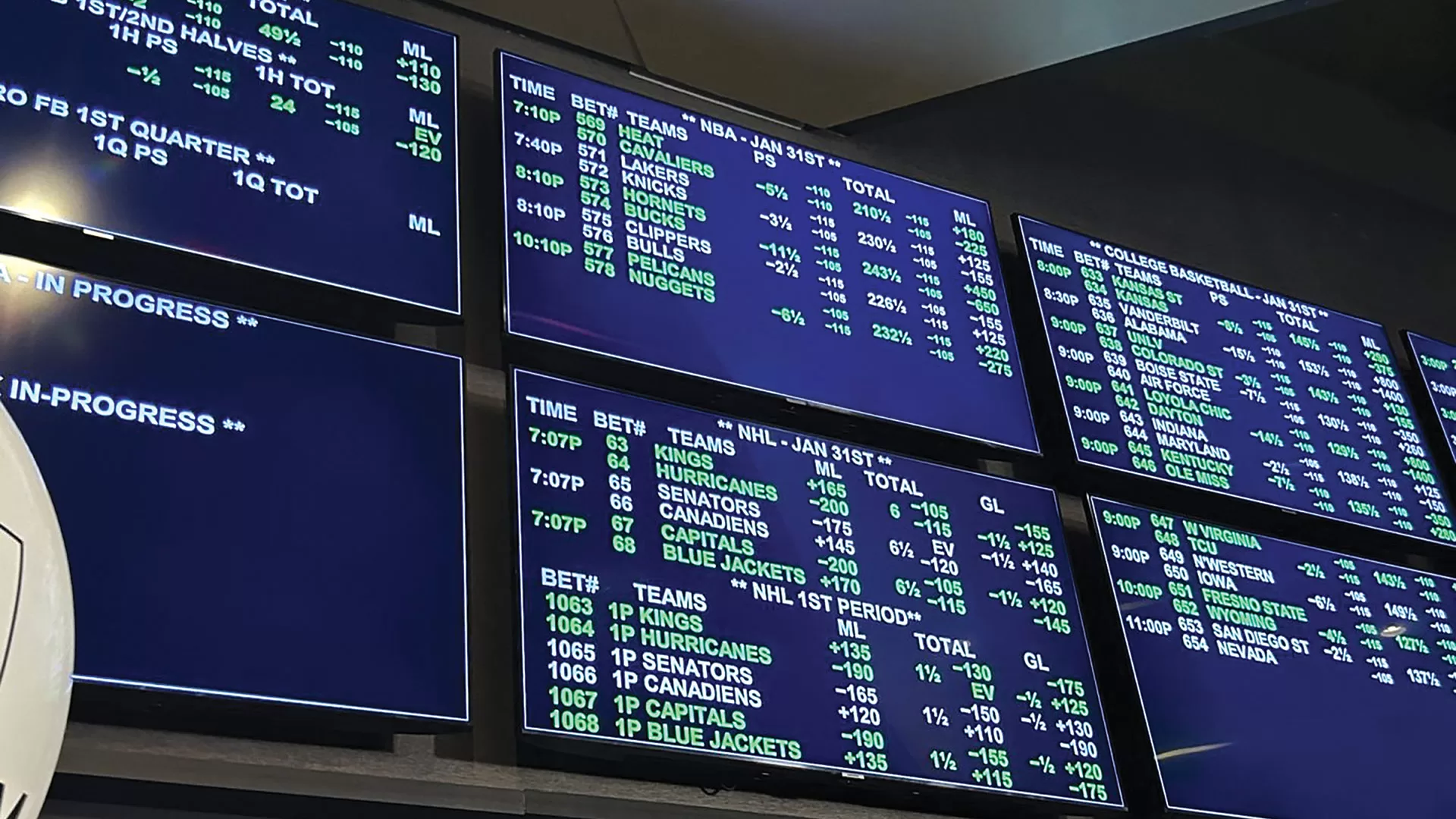
Springfield’s newest gaming option: sports betting.

One of Louis Theros’s challenges will be to build on MGM Springfield’s newest gaming option: sports betting.

“People have put their trust in me to lead this organization and lead this property into the future, and I really feel privileged to do this,” he said. “I would most likely have run my law firm if I had stayed there, if I had not come to MGM — I was one of the top two or three people running the firm when I was there — and I’ve always felt the desire to lead some organization, and when I got to MGM and learned the business and got more involved in it, a few years in, I said to myself, ‘I know I can do this.’ I’m honored that they picked me to do this.”


Betting on Himself

When asked to informally write his own job description for the president and COO of MGM Springfield, Theros said there are two sides to that equation — internal and external.

With the former, he said his job is to set a positive tone for the staff, something he believes comes naturally. “I’ve always been a ‘set a positive tone at the top’ person,” he said. “And I would never ask my employees to do something I would not do, and I expect my leaders to set that same tone.

“And I want people to feel, as I do, that this is an absolutely fantastic place to work — I love coming to work every day,” he went on. “So, my job is to come in, make sure our employees like coming here and treat everyone with respect, and make sure they have an opportunity, much like I’ve had, to move up in the company.”

On the external side of the equation, he said his job description involves creating an experience for the guest and prompting them to put MGM Springfield top of mind when it comes to gatherings and ways to celebrate occasions and milestones in their lives — or just or a random Saturday evening.

“When they’re thinking of a special event — an anniversary, a birthday party, whatever it is — we want them thinking, ‘we should go to MGM Springfield because it’s a wonderful place to go, we get great service, and we could get great food.’ My job is to deliver that.”

Theros said it’s also his job to get involved in the community, and to inspire others to get involved as well.

Overall, he’s encouraged by what he sees, both at his casino and in the community, citing everything from apparent progress on the properties across Main Street, including the Clocktower Building and the Colonial Block, and the rapid leasing of the apartments in the revitalized former Court Square Hotel (a project MGM has taken part in), which is a source of pride but also some frustration for Theros, who has been looking for a place a live.

“At 31 Elm, they have 74 units; they rented them all in 30 days,” he said. “I couldn’t find a place, even across the street. That’s fantastic; that shows me that the city and the surrounding area are really robust.”

Theros’s personal car didn’t arrive in Springfield until late last month, but he made use of the casino’s limo to visit various communities in the region — and even one of his competitors — while also walking to events ranging from a few Thunderbirds games to Red Sox Winter Weekend at the MassMutual Center.

“At 31 Elm, they have 74 units; they rented them all in 30 days. I couldn’t find a place, even across the street. That’s fantastic; that shows me that the city and the surrounding area is really robust.”

Returning to his casino property and the multi-faceted operation there, Theros said that, to date, he’s mostly been observing and making notes as he compiles a more comprehensive to-do list. He stressed that the operation is maturing and reaching, if not exceeding, many of the expectations the city and region had when the casino opened to considerable fanfare on that hot August day in 2018.

“Chris [Kelley] has gotten us to a nice place; the whole team has,” he told BusinessWest. “My goal, quite simply, is to build on that.”


Bottom Line

When asked what he’d rather be doing — trying a case or managing a casino — Theros paused briefly before answering.

“For pure adrenaline, trying a lawsuit, trying a case in front of a jury — that’s an adrenaline rush,” he said. “When someone high-fives you after you’ve cross-examined someone — I had one of my associates do that — that’s a big rush.

“For personal satisfaction, though, it’s running a casino,” he went on. “I have more direct impact on an outcome here than I do at a trial because the jury is the arbiter at the end of the day.”

Still, he’s hoping to create something approaching those cross-examination rushes at the casino on Main Street as he takes on what he called the “cherry on the top of his career,” and an opportunity to really make a case for MGM Springfield.


Banking and Financial Services Special Coverage

Community Interest

Mary McGovern, incoming president of Country Bank.

Mary McGovern, incoming president of Country Bank.


When asked why Country Bank supports local nonprofits, incoming President Mary McGovern gave a simple answer. “It’s a way for us to make a difference in our community.”

Then she elaborated.

“We have a tagline we adopted two years ago, ‘made to make a difference.’ We feel that encapsulates what Country Bank is all about, trying to make a difference in our community. It’s something we’ve done over the history of Country Bank, and we continue to make a positive impact by supporting local nonprofits, specifically the kind that rely on donations from their local businesses to help support them.”

Those efforts have focused in recent years on a number of priorities, she added, including food insecurity, health, education, and financial literacy, as well as homeless shelters, senior-serving programs, youth organizations, and more.

To that end, Country reported more than $1.2 million in donations in 2023, with 463 organizations receiving grants. One highlight last year was a partnership with (and $30,000 donation to) the Wonderfund, which aims to improve the lives of individuals in the Department of Children and Families system.

That large number of supported nonprofits resonates with Matt Bannister, senior vice president of Marketing and Corporate Responsibility at PeoplesBank, who was named a 2024 Difference Maker by BusinessWest last month for his extensive role in the bank’s community-support efforts. PeoplesBank recorded $1.6 million in donations last year to more than 550 area nonprofits, making the average grant just under $3,000.

“We continue to make a positive impact by supporting local nonprofits, specifically the kind that rely on donations from their local businesses to help support them.”

“We give a little to a lot of groups. We don’t tend to do large capital campaigns,” he said. “One big ‘yes’ often means a lot of little ‘no’s.’ So many nonprofits out there are doing good work, so it feels wrong to say ‘no’ to people.”

So, outside of a few big splashes — like a major donation to help the Food Bank of Western Massachusetts build its new headquarters — spreading the wealth around is a guideline the bank tends to stick with.

“The overall philosophy for our funding is we want to level the playing field — give opportunities to those who are disadvantaged and need more help,” Bannister added. “We have funding areas — food insecurity, housing, economic development, etc. — and the overarching principle of all these funding areas is to level the playing field.”

Many area institutions share their donation figures each year; Pittsfield Cooperative Bank donates nearly $200,000 — a striking number, considering it boasts around $385 million in total assets — through its charitable contributions to regional scholarships, youth mentorship programs, and nonprofit, economic-development, and health and human-service organizations.

Meanwhile, the Liberty Bank Foundation granted $1,453,742 to local nonprofits in 2023, including $10,000 as an annual ‘holiday gift’ from the bank, with the recipient chosen by bank customers. And Greenfield Savings Bank (GSB) gave more than $1 million in 2023 to more than 300 organizations.

Peter Albero, GSB’s chief financial officer and treasurer, noted that, while profits have been challenged over the past couple years by rising interest rates, the bank has not cut back on its financial support in the community, or its level of employee volunteerism.

Freedom Credit Union President Glenn Welch (right) presents a check to John Beaulieu

Freedom Credit Union President Glenn Welch (right) presents a check to John Beaulieu, president of the Westover Galaxy Community Council, one of the recipients of Freedom’s Month of Giving campaign.

“Profitability may be reduced, but we have not reduced our commitment to our communities. I think we are a pillar of Greenfield and the broader community,” Albero said. “So we continue to reinvest in the community, and everyone benefits from that.”

A.J. Bresciano, first vice president and commercial loan officer at GSB, agreed.

“Even in a higher-interest-rate environment, we’re taking measures to ensure our impact in the community is not being impacted and not deteriorating. So many local organizations throughout the Pioneer Valley rely on contributions of time, talent, and treasure. We make supporting those organizations a priority at Greenfield Savings Bank, and we want our team members to invest going forward.”


Philanthropic Priorities

Bannister made it clear that banks are required, to some degree, to be involved in their communities in a charitable way, noting that bank examiners make sure a bank’s locations and loan activities are representative of where it does business — meaning not just serving and lending to those with high incomes or profits — and they also ask how the institution gives back to the community.

“The challenge with that is there’s no right answer. We just have to go to the examiners each year and say, ‘here’s what we did.’ And when we give, we make sure a substantial amount that we give away benefits LMI — lower- to middle-income communities.”

Area banks and credit unions have increasingly inspired employees and customers to involved in giving efforts as well. In 2023, Freedom Credit Union contributed $181,898 to more than 70 charitable organizations throughout the four counties of Western Mass.

Of that, corporate charitable giving accounted for $130,432, but throughout the year, Freedom also conducts Month of Giving campaigns, in which customers can support a specific organization each month; those programs raised $17,316 in 2023. And local branch and department giving contributed an additional $34,150 to local charities.

“Our members and staff are passionate about supporting the community where we live, work, and serve,” Freedom Credit Union President Glenn Welch said. “In 2023, we were proud to donate funds for a wide variety of deserving institutions.”

“We give a little to a lot of groups. We don’t tend to do large capital campaigns. One big ‘yes’ often means a lot of little ‘no’s.’ So many nonprofits out there are doing good work, so it feels wrong to say ‘no’ to people.”

Other institutions take customer involvement to the polls. Both Florence Bank and Monson Savings Bank boast popular programs — called the Customers’ Choice Community Grants Program and the Community Giving Initiative, respectively — that complement other bank philanthropy by letting customers vote for nonprofits to support.

Through that initiative, Florence Bank awarded $150,000 to 46 area nonprofits in 2023, the 21st year of the program; the higher-than-usual total commemorated the bank’s 150 years in business.

“It’s amazing to see so many community organizations being recognized, and the fact that the recognition comes from Florence Bank customers in the form of votes is really special,” President and CEO Matt Garrity said.

Meanwhile, in the 14th year of its community-giving program, Monson Savings Bank awarded a total of $15,000 to the 10 top vote-getting nonprofits.

PeoplesBank employees volunteers

A team of PeoplesBank employees volunteers at Kent Memorial Library in Kent, Conn.

“Everyone’s passion for our annual Community Giving Initiative is always so exciting,” said Michael Rouette, the bank’s executive vice president and chief operating officer. “As a locally operated bank, Monson Savings has a great desire to support the residents, businesses, and nonprofits of the communities that we work in and live in.”

President and CEO Dan Moriarty added that “these organizations are worthy nonprofits that supply important resources to our communities. It is clear why they were chosen by our community members to receive support from Monson Savings.”


More Than Money

But community banks and credit unions in Western Mass. aren’t just giving money; many also emphasize a culture of volunteerism, even providing time for their employees to get involved in the community.

For example, employees at UMassFive College Federal Credit Union raised more than $18,000 for two local nonprofits last fall — $13,677 for the UMass Cancer Center via participation in the UMass Cancer Walk and Run, and $4,800 for the Food Bank of Western Massachusetts via participation in Will Bike 4 Food.

A supporter of the UMass Cancer Walk and Run for more than 20 years — during which time it has raised more than $186,600 for the cause — UMassFive employees join together annually as Team UMassFive to raise funds, both personally and in branch locations. In 2023, fundraising efforts included raffle baskets, bake sales, candy sales, and art and jewelry sales, and the credit union’s corporate partners also pitched in.

Will Bike 4 Food is a more recent priority at UMassFive, as employees have taken part since 2020, raising a total of $17,500 in just four years, which equates to providing 70,332 meals to neighbors in need.

“We are so proud of our employees for supporting local causes that they care about,” said Cait Murray, Community Outreach manager at UMassFive. “Together, our team can make a more significant impact than if we all participate in events on our own. These organizations make such a big difference in our communities, and we are thrilled to support those efforts.”

Country Bank reported that its team members volunteered 1,255 hours of community service in 2023, while 37 team members served on 65 nonprofit boards and committees.

“Oftentimes, we can supplement or replace a monetary donation with volunteers, whether it’s picking vegetables at a local farm to be donated out, or helping nonprofits clean up the facility, or doing outdoor work like volunteering with Habitat for Humanity,” McGovern said. “We’re still putting the bank’s dollars to work, but the hands of our employees are helping to sustain some of these nonprofits as well.”

Liberty Bank reported 13,721 employee volunteer hours, including nearly 170 hours at Connecticut Foodshare, the aforementioned recipient of the bank’s holiday gift in 2023. The bank also actively solicits nonprofits to share information on what types of volunteer help is needed — whether working on a project or serving on a board or committee — and aims to meet those requests.

At PeoplesBank, employee volunteerism is considered part of the bank’s culture, Bannister said — part of its DNA, in fact, and something made clear to job applicants.

“We report volunteer hours to the bank examiners, and we were third in the state last year in hours volunteered per employee. It’s something that’s expected, and it’s something that builds camaraderie,” he said.

And it’s something that community banks simply should do.

“We’re more engaged in the community, where national banks are not known for that as much,” Bannister told BusinessWest. “And we consider it a competitive advantage. When you’re choosing a bank, hopefully the bank’s values are something you consider, and hopefully that volunteerism reflects well on the brand.”


Commercial Real Estate Special Coverage

A Visionary Approach

The Mill Town Capital team atop Bousquet Mountain Ski Area.

The Mill Town Capital team atop Bousquet Mountain Ski Area.


Real-estate development can be a profitable business. In fact, it’s safe to say that’s the key driver for most players in this sector.

For the team at Mill Town Capital, it’s about impact — on more than the bottom line.

Formed in 2016 and based in Pittsfield, Mill Town is an “impact investment platform,” said Tim Burke, the company’s CEO. “Our overall mission and mandate is to really make the area of Pittsfield and the Berkshires a better place to live through traditional investments, impact investments, and pure philanthropic community work.”

But what is impact investment?

“To us, impact investment means focusing on key assets or amenities or projects that have a high potential positive impact on the region,” he explained. “So it’s a little bit different than maybe a traditional impact investment that might look at energy or other areas of impact. Ours is really place-based in terms of our approach.

“When we think about impact, it’s taking on investments that most traditional investors wouldn’t take on either because the rate of return is lower, or it takes a much longer time to realize it, or they’re just really difficult projects,” he added. “We’re not necessarily restrictive to different sectors or industries. It’s really about, is this project good for the region? Is it good for the local economy? Does it have the chance to spur economic development or other potential investment, and, if so, how can we make it work?”

The company’s first ventures into real estate centered on housing-development projects in Pittsfield.

“Impact investment means focusing on key assets or amenities or projects that have a high potential positive impact on the region.”

“Pittsfield used to be a 60,000-person city, but now has 40,000 people. So you would think that there is enough housing for everyone, but the stock itself is significantly deteriorated,” Burke explained. “You have a lot of really old stock, things that are run down, properties where absentee landlords have a lot of deferred maintenance. And the living conditions in some of these are really tough.”

Since taking what he called a “clustered approach” to housing stock in the area, Mill Town has accumulated more than 200 units of housing in Pittsfield alone, as well as a few commercial buildings and mixed-use properties, with apartments on the upper floors and commercial space on the lower floors.

“So the real-estate approach there has been trying to improve neighborhoods with housing at the forefront, but also supporting small businesses and restaurants where we can.”

Bousquet complex

Tim Burke calls the Bousquet complex “a critical local asset that had fallen on some tough times.”

Public investment has sometimes followed that private investment, Burke said, with the city or state coming in with utility upgrades or streetscape improvements.

“So it’s really a multi-faceted approach, and it certainly has a patient-capital component to it as well, where we’re not looking to get in and monetize things really quickly. We have more of a patient, long-term approach to it.”

On the business-enterprise side of the ledger, Mill Town now owns about a dozen local businesses, either directly or in partnerships.

One example is Bousquet Mountain Ski Area, one of the oldest continuously operating ski areas in the country. “We felt that’s a great example of a critical local asset that had fallen on some tough times and needed a lot of investment,” Burke said. “I don’t think many rational investors would have gone in there with a pure investment business case, but we felt like it was worth saving.”

These enterprise investments tend to be clustered in regional assets in real estate, recreation, and hospitality, such as the Central Downtown Inn & Suites in Pittsfield; Gateways Inn in Lenox; Blueprint Property Group in Pittsfield; Framework, a Pittsfield co-working space; and others — about a dozen in all.

“We’ve been involved in those types of projects for a number of years, some of which are business-oriented projects, and some are philanthropic, that we do through our our 501(c)(3) foundation. That includes things like improvements in Springside Park, which is a large, local park in Pittsfield where we helped reshape and reinvest in trail networks there.”

Tim Burke

Tim Burke

“Is this project good for the region? Is it good for the local economy? Does it have the chance to spur economic development or other potential investment, and, if so, how can we make it work?”

Mill Town has also provided contributions to the Berkshire Natural Resources Council for a project that connects the various trail networks in the Berkshire mountains.

“And then we have two businesses that are in the recreation space,” Burke said. “We own an athletic center that’s called Bousquet Sport, which is across the street from the ski area, where we’re currently undergoing a 15,000-square-foot addition plus renovation to the facility, and that’s an investment in tennis, fitness, and pickleball.”

Then there’s Camp Arrow Wood, where the former Lakeside Christian Camp on Richmond Pond was converted into a new, sleep-away summer sports camp.

“We run three- and six-week summer camp sessions out of that property. That’s another project that we kind of uncovered during the COVID period … and we’ve been building that up over the past year and a half or so.”


Coming Home

Prior to Mill Town, Burke spent a number of years in corporate finance roles with United Technologies and then later with a couple different biotechnology companies, most recently Biogen in Boston’s Kendall Square biotech cluster.

Camp Arrow Wood

Mill Town transformed the former Lakeside Christian Camp on Richmond Pond into Camp Arrow Wood, a new, sleep-away summer sports camp.

But his connection to Pittsfield was strong, having grown up there, and around 2015, he met Dave Mixer, Mill Town’s founder “and really kind of the motor and the initiative and the capital behind everything that we do,” Burke said. “So I ended up meeting with Dave, and he had a general idea of what he wanted to do.”

Mixer, like Burke, is a Berkshire native and had just come back to the area after being away for a long period of time, and he wanted to make an impact, Burke explained.

“His view of making an impact is a little bit non-traditional from a philanthropic standpoint. He didn’t want to just write checks and then walk away. He really wanted to see if he could drive economic development and job growth and population stabilization and new housing and educational improvements — all across the spectrum of economic development and quality of life.

“It’s been a great, challenging, unique run for us over the past six or seven years, and we’re at a point now where, through Mill Town and our businesses, we employ over 300 people in the area. We’re constantly looking to grow and make this engine work and also kind of preach what we’ve learned over the years to other communities and people and investors and philanthropists and see if there are ways we can help other areas progress with what we’ve done in Pittsfield.”

“I think we’re pretty hard on ourselves in that we think we have a ways to go before we achieve the impact that we want to achieve. But it is validating to a certain degree that people see that we’re heading in the right direction.”

Indeed, Burke firmly believes Mill Town has a replicable model, but it’s one that’s still evolving. “We think we’re in the second or third inning of what we’re doing here in Pittsfield.”

And as someone with a lifelong heart for the city, he envisions what a vibrant, thriving Pittsfield can one day be.

“I think it’s a place where people from all aspects of the economic spectrum can find quality housing. They can send their kids to schools and get them a good education. They can find jobs that will allow them to live here productively and raise a family.

“And then we can provide those systems on the periphery that allow people to have a good quality of life here — places where kids have opportunities to have athletic endeavors in camps, places where adults can enjoy the natural assets that the area has,” he went on. “That comes back to trail networks and all the outdoor recreation assets that we have here.”

After all, he added, those are some of the things the Berkshires are most known for.

“Making sure that we can maximize those benefits for the people of Pittsfield is where we want to make a difference,” Burke told BusinessWest. “That involves a lot of different things and broader socioeconomic issues that are much harder to solve, like education and poverty and addiction. But we still should try to get involved in some of those things through partnerships with organizations who have that expertise.”


Moment of Recognition

Last fall, at 1Berkshire’s Celebrate the Berkshires event, Mill Town Capital was recognized as a special honoree for “putting the Berkshires on the map” — an honor that recognized the company’s investments in housing and downtown redevelopment, as well as its philanthropic support around the region.

“When our regional economic-development group recognized Mill Town for the work that we’re doing, it was tremendously gratifying for our team to see that people see the work that we’re doing and that it is having a positive impact,” Burke said. “I think we’re pretty hard on ourselves in that we think we have a ways to go before we achieve the impact that we want to achieve. But it is validating to a certain degree that people see that we’re heading in the right direction.

“That hasn’t always been the case,” he added. “I think when we first started out, there was a lot of skepticism and questioning: ‘what’s the angle?’ ‘What are you trying to accomplish?’ So it was great to see that, at a minimum, people view it as positive-intent work that has the potential to drive change.”

Franklin County Special Coverage

Big Ideas in Small Towns

Lucy Damkoehler has developed a strong following from both within and outside Franklin County for her bakery and cooking classes.

When Lucy Damkoehler returned to Western Mass. after 20 years away, she opened a bakery in a town she knew well — Bernardston, to be exact, with its population of 2,000.

That was in 2018. Today, Sweet Lucy’s Bakeshop is thriving, demonstrating, like many other businesses already have, that it’s possible to succeed in a county whose 26 communities total around 71,000 residents — less than half of Springfield alone.

“It took off right away,” she said. “My prices were competitively high. I knew the cost of food was going up and the cost of labor was going up, so I priced it so I didn’t have to change my prices too often. But people didn’t complain about it, and I felt like it was doing pretty well.”

When COVID shut down much of the world, Damkoehler pivoted to a concept called Take & Bake Meals, which, at its height, was sending 50 to 60 meals out the door each day, which wound up expanding her reach and widening her exposure.

“We were getting people from Connecticut, from New York, discovering us,” she recalled, and those days partly explain why her customer base went from 90% local before 2020 to a ratio today of about 60% repeat customers — who come anywhere from every day to once a month — and 40% travelers checking out the bakery for the first time.

And Damkoehler’s success continues; she used a crowdfunded grant and a bank loan to build an addition, doubling her kitchen space and allowing her to begin offering cooking classes last September. She now employs six full-time bakers and six front-of-house staff, and is looking to hire a chef instructor as well.

“It blows my mind that I’ve only had one class that’s had to cancel due to low enrollment. They usually sell out within a couple of weeks, if not days,” she told BusinessWest. “It shows there’s a major need for that part of the business; there’s nothing like that around here. We’re doing kids’ classes now, too.

“I’m amazed every day that we’re able to do this successfully,” she added, especially in a community of just over 2,100 residents. “The prices are not cheap. But people recognize the value, and they appreciate it, and they’re willing to spend more money on something that’s done right. It doesn’t scare people away.”

So that’s what Damkoehler brought to the table: talent, quality, drive, and the instincts to pivot to what the market needed, which, both during the pandemic and with her classes, generated further opportunities for growth. Meanwhile, other businesses throughout this mostly rural county bring their own differentiators, but they also testify to a supportive, if small, community.

“Business owners here who are thriving have really committed, loyal customers. They have customers who love to come out and spend time there, spend their dollars with them, and they’re focused on providing a really great experience every time someone comes in,” said Hannah Rechtschaffen, director of the Greenfield Business Assoc. (GBA).

“One thing that I hear from some business owners is a sense of community and mutual support,” she added, noting that one of the GBA’s goals is to keep building opportunities for business owners to know each other better, so they can recommend each other.

“I think it’s organizations like ours and like the chamber that are able to listen to business owners and respond and really be another set of hands in their business success. That’s not overrated when you’re wanting to have a brick-and-mortar presence. So I hope businesses will think about opening here; I hope businesses will think about opening a second location here.”

“We were getting people from Connecticut, from New York, discovering us.”

To that end, Rechtschaffen added, “when we’re in conversation with Greenfield Community College about getting an internship program going, or when we’re in conversation with the Franklin County CDC about small-business support and entrepreneurship, all of those relationships are so, so crucial. None of us want to feel like we’re toiling away alone. We want to feel like we’re part of a larger ecosystem.”

Jessye Deane, executive director of the Franklin County Chamber of Commerce and Regional Tourism Council, agreed.

“Partnership and collaboration are the special ingredients in Franklin County. The way our communities come together to support our small businesses, it’s not like anything I’ve seen elsewhere,” she said.

“What I love to see here are thoughtful partnerships and strategies around how to best support business owners in filling in some gaps and resources that some more populated areas have, and how to attract different industries to the area,” she continued, touting, as Rechtschaffen did, the partnership between the chamber and GBA, but also Greenfield Community College, the CDC, and various economic-development entities.

“We want everyone’s business to be as successful as possible and have as many resources as they can tap into to ensure that success,” Deane said. “We wake up every day asking how to best support them.”


Declining Numbers

Such partnerships and mutual support are especially meaningful in a county that, after years of plateauing population, has seen those numbers start to creep downward, especially in the small towns beyond Greenfield and Deerfield.

“Certainly, population decline — or the projection of population decline we see — is a pretty major threat to many rural parts of Massachusetts,” said Linda Dunlavy, executive director of the Franklin Regional Council of Governments. “As Baby Boomers age, we need help, and not attracting young people to our region will be a concern for us. So we’re working on that.

Double Edge Theatre in Ashfield

Double Edge Theatre in Ashfield is just one example of the many cultural offerings in Franklin County.

“But population decline also hurts Franklin County and its rural areas because so many state and federal funding formulas, the distribution of aid money to municipalities, is based on population,” she continued. “So as our population decreases, the amount of money we have for infrastructure improvements, for education, etc., also decreases, which compounds the problem: how do we get people to come to our region if we’re not caring for our infrastructure, our assets, adequately?”

Dunlavy, who was named one of the Difference Makers for 2024 by BusinessWest, has been working for the benefit of Franklin County for decades, so she understands its assets — from arts and culture to outdoor recreation to that supportive business community others mentioned — but she understands the challenges of an aging, shrinking population base, too.

“Because we’re so rural, we have to work together,” she told BusinessWest. “We are a very collaborative region, probably one of the most collaborative regions in Massachusetts, because all the regional organizations are working together. We combine services of municipalities, our businesses work together, and they are served by strong regional support systems. It’s a great region to live in — if you know about us.”

A.J. Bresciano, first vice president and commercial loan officer at Greenfield Savings Bank (GSB), has been lending in Franklin County for the past 16 years, and he feels good about the current strength of business activity in the region.

“In terms of business lending, I think there’s some growth and some optimism, post-pandemic, in starting businesses and seizing opportunities to capitalize on improving economic markets. I think there is some opportunity for people with great ideas and a passion for what they do to come in and start something new,” he told BusinessWest.

That said, “there are certainly some challenges in the interest-rate environment,” he added, especially on the residential side, where higher rates and a shortage of housing have taken away the ‘churn’ of a vibrant market. “But I think that will change. Hopefully we’ll see rates start to come down in the near future, which will give people an opportunity to go out and seek new opportunities. We’re pretty optimistic about what the future holds.”

On the plus side, “there’s a lot of interest in this market because it’s less expensive than other markets that are overdeveloped. So a lot of borrowers see opportunity here,” said Peter Albero, chief financial officer and treasurer, noting that GSB originated $100 million in commercial loans and $70 million in residential loans last year. “The residential side is still a little bit lower … but the commercial side is very strong. A lot of banks are competing for strong borrowers.”

The aging of the population has created a fair amount of business turnover, Bresciano added, as long-time business owners are looking to retire and move into the next chapter of their lives.

“So there’s definitely opportunity for someone else to come in with new ideas, new ambitions, and to cultivate a new environment,” he said, pointing to one project — the conversion of the former Wilson’s Department Store in downtown Greenfield to a mixed-use property — as an example of forward thinking.

“None of us want to feel like we’re toiling away alone. We want to feel like we’re part of a larger ecosystem.”

For her part, Deane has seen a pipeline emerge of younger leaders in many Franklin County communities as older leaders, like those older business owners, look to retirement. “I’m excited about the leadership we’re seeing step into those roles,” she said.


Plenty to Promote

Rechtschaffen is acutely aware of what a spread-out county like Franklin faces in terms of housing, transportation, and access to amenities, but she tends to light up when talking about what she loves about the region — and there’s a lot of that.

“We have so much amazing outdoor arts, outdoor activities, whitewater rafting, skiing, theater … there are so many things. So I always want to make sure that people know what there is to visit up here.”

The target audience isn’t just visitors from afar, though.

“We have an advantage in Franklin County, which is that people really do want to support local, so it’s important that we have the right retail mix and experience mix here for people to be able to do that,” Rechtschaffen said, which is the impetus behind efforts like the “find it in Greenfield” campaign running on Bear Country radio and through other outlets.

“A lot of people don’t realize what’s so close by. So getting the word out can be a challenge,” she added. “We’re really trying to keep beating that drum and making sure that things are affordable, things are accessible, and we’re bringing businesses into Greenfield and Franklin County that people really want. That’s also a crucial part of the puzzle.”

Dunlavy has helped put many pieces in place, from north-south rail to broadband access to a planned partnership with other regional councils of government on a Connecticut River climate-resiliency plan.

“You do nothing alone. Everything takes partnership and many people working together,” she said. “And I like that part of the job. I like that challenge, and I like that focus. I’m never bored, ever. There’s always something to work on and always something to think about.”

Rechtschaffen never stops thinking about Franklin County, either.

“This is really creative work,” she said, “to be problem solving, to be listening, to be connecting people with one another so that their business can thrive, maybe in ways they didn’t think about. I really love all of this work to grow Greenfield and Franklin County in a way that feels good, for as many people as possible.”


Special Coverage Technology

Current Events

Randy Ames

Randy Ames says robotics will be the main focus of the next chapter in the intriguing Ames story.


As he talked with BusinessWest, Randy Ames gestured out the window of his tiny office to the traffic on Greenfield Street just a few dozen feet away.

He guessed that several thousand cars pass that spot every day, and further speculated that few, if any, of those travelers would have any idea at all what goes on inside the small, nondescript building that has been home to his business for the past 15 years.

That’s a pretty safe bet, actually. In fact, it’s easy to drive right by Ames Electrical Consulting without knowing it’s there. And soon, it won’t be there.

Indeed, as he talked, Ames noted that he was in the very early stages of packing up for a move to much larger quarters in Greenfield Industrial Park, just a few miles away. That move is a big part of an exciting next chapter in one of the more intriguing, and still evolving, business stories in Franklin County.

The first chapter saw Ames abandon a career, if it could be called that, as a chef — because he needed something more financially rewarding as he started a family — and enroll in an electrical engineering technology program at Springfield Technical Community College.

“Manufacturers can’t find people to work — and it’s not just manufacturers, it’s everyone.”

The next chapters would see him put that degree to work in jobs for several different companies in the region — from Elm Electrical in Westfield to Kellogg Brush in Easthampton — while also earning a degree in electrical engineering at Wentworth Institute of Technology in Boston on weekends (“three years of Saturdays,” as he called it), and also doing a little of what he described as “moonlighting.”

Specifically, he was developing and installing systems to help businesses automate various operations and processes.

Eventually, and with some real incentive after he was pink-slipped by a downsizing Kellogg Brush, his work with automation evolved from moonlighting into a risk-laden entrepreneurial venture, one that somehow managed to survive the Great Recession of 2008 and 2009, when OEMs that made the equipment he installs all but shut down.

Today, Ames boasts clients in a wide range of sectors, from breweries to plastics; food and beverage to paper; recreation (think ski lifts) to municipal water and wastewater facilities. Indeed, the company designs electrical hardware and software control systems for companies that make everything from golf balls to Play-Doh to ketchup bottles.

“We’re the automation guys,” Ames said simply, adding that, over the years, the company has enjoyed steady growth while expanding and diversifying its portfolio of customers, which it provides with turnkey operations.

The next chapter for Ames, and a big reason behind its move to larger quarters, involves the growing, ever-changing world of robotics.

The company has become New England’s only authorized distributor and integrator of NACHI Robotics Systems, said Ames, adding that, as manufacturers and machine shops across the region and throughout the Northeast continue to struggle to attract and retain employees, more of these companies are increasingly looking to robots and cobots (‘collaborative robots’ that work together with people) as a solution.

NACHI Robot Roundup

Randy Ames, center, and a large delegation of local, state, and business leaders gathered at the company’s facility in Deerfield last summer for the NACHI Robot Roundup.

“Manufacturers can’t find people to work — and it’s not just manufacturers, it’s everyone,” said Ames, adding that his company is now primed and well-positioned to take full advantage of this technology and what it can do for companies.

It was this next chapter and what it might it might mean for the company and the region that drew business leaders and elected officials — more people than had come to his door in decades — to the office on Greenfield Street last summer for what was dubbed the NACHI Robot Roundup.

At that gathering, attendees got a good look into the future — of manufacturing, Ames Electrical, and, in many respects, the region.

For this issue and its focus on Franklin County, BusinessWest takes an in-depth look at Ames and what comes next for a company where success hasn’t come automatically, but through entrepreneurial energy and a willingness to keep current — figuratively, but also quite literally.


Watt’s Happening?

Ames joked early and often about the acronyms that dominate his business.

There are many of them — from PLCs (programmable logic controls), which are small devices, “the heart of automation,” as Ames called them, that can be programmed to turn things on and off; to HMIs (human-machine interfaces), the operators’ touchscreens; and even RAT (remote access technology), which provides a secure, cloud-based IT network that allows Ames to access remote locations and control machines with just a few clicks.

These acronyms come together in an industry, and a business, that has emerged, grown, and evolved over the past four decades, and continues to do so.

As noted earlier, Ames was a chef before enrolling at STCC and then working at Elm Electrical and then Kellogg Brush and eventually starting that moonlighting with automated systems.

He started in 1992 at Yankee Candle as it was opening its village in South Deerfield, specifically with developing, building, and programming ‘Santa’s toy machine,’ which made it appear that toys were going into a huge box in pieces and coming out as finished products.

“Part of it was to make it sort of this Willy Wonka/Rube Goldberg machine-looking mechanical contraption,” he recalled, adding that he worked with Yankee Candle founder Michael Kittredge on the project. “He said, ‘I want it to do this … I want this valve to make this thing spin, and all these lights to blink, the conveyer to run, to turn the snow on and off in the windows outside, etc.’ I’ll bet there were 25-foot-diameter gears on the wall with little motors that I had to make run.”

From there, Ames worked with several other moonlighting customers offering their own versions of ‘I want it to do this.’ Those experiences provided him with the confidence to go into business for himself in the spring of 1992 when he was laid off from Kellogg Brush as it was downsizing.

“I made four phone calls that day, and three people called me back,” he said, adding that one of them was Hillside Plastics in nearby Turners Falls, which would go on to be a steady customer.

He initially operated out of his house in Montague, working there during the day and then for OEM Kingsbury Corp. in New Hampshire at night, before focusing exclusively on his own work.

Over the past 30 years, the company has survived disruptive forces ranging from the Great Recession, when the phone stopped ringing and he started thinking about returning to work as a chef, to the pandemic, and thrived mostly by growing and diversifying its portfolio of customers while developing strong partnerships with both those clients and the makers of the equipment it installs.

Elaborating, Ames said the company takes a collaborative approach to what amounts to finding solutions for a client, whether it’s a manufacturer looking to automate a production process or a municipality operating its wastewater treatment plant.

He said the phone started ringing again in 2011, and with few exceptions, it hasn’t stopped ringing since, with customers finding Ames mostly through its vendors and all-important word-of-mouth from existing clients. Along the way, it has developed a niche — mostly smaller systems — and a reputation for being able to move quickly and nimbly, separating it from its much larger competitors.

Most of its customers are along the I-91 corridor in Western Mass., but it has also expanded into the North Shore, the Worcester area, and other parts of New England.

This expansion process may be accelerated by the partnership with NACHI Robotic Systems, Ames said, noting that a growing number of companies, including machine shops, are looking to robots as their workforce challenges mount.

“Manufacturers are tired of the revolving door,” he explained. “They bring someone in, they train them for a week, and then they’re gone. So, increasingly, they’re looking at robots.”

Indeed, he said he’s taking calls from potential customers ranging from bakeries to machine shops exploring the possibility of using robots to handle some of the work currently carried out by people.

Elaborating, Ames said he’s given two quotes to machine shops for robots that can handle what’s known as ‘machine tending,’ yielding yet another acronym (MT). And as he talked, he played a video of a NACHI robot picking and placing parts and putting them into a chuck on a computer numerical control system.

“This machine costs $92,000 — it comes with a cart and a robot,” he told BusinessWest. “If you can keep loading that, it will work all day and all night long; we just quoted one company where the ROI on one of these was three months.”

The company hasn’t installed any robotic systems yet, but Ames said the pace of phone calls inquiring about the equipment and what it can do has certainly picked up over the past several months. And he expects that call volume to only increase as workforce issues across all sectors continue.


Wired for Growth

Returning to the matter of that Willy Wonka/Rube Goldberg contraption he developed for Yankee Candle, Ames said that Michael Kittredge, who passed away in 2019, told him years ago that someone from the Smithsonian Institution called, saying they would be very interested in putting it on display once Yankee Candle was done with it.

Unfortunately, the toy machine had been taken down and dismantled by that time, Ames went on, adding that he never thought about his work winding up in the Smithsonian one day.

Instead, he’d gladly settle for satisfied customers and continued growth of the business he started from scratch and developed into something that has remained on the cutting edge of an emerging sector.

You certainly can’t see any of that driving past the company’s soon-to-be-former home on Greenfield Street, and that’s part of this engaging story — one with some intriguing chapters still to come.

Daily News

SPRINGFIELD — A new report by MassINC and Cambridge Econometrics finds the Pioneer Valley has considerable strength in industries and technologies poised to grow with the transition to a low-carbon future. Billed as a “prospectus for transformative economic investment,” the study catalogs the region’s competitive advantages in food science, advanced materials, and clean energy.

“From sustainably producing alternative proteins from cells to protecting our drinking-water supplies from pollutants and extreme weather events, our region is developing the technologies of the future,” said Rick Sullivan, president and CEO of the Western Massachusetts Economic Development Council. “It is imperative that we collectively recognize the opportunity and make strategic investments in these growing sectors.”

Citing the recent announcement of a $10 billion investment in Albany’s semiconductor sector and other notable examples of state-backed efforts to grow advanced industries, the report calls for the establishment of a $500 million economic-development fund for Western Mass. Resources from the fund would be deployed to draw federal and private investment into the high-growth sectors where the region is well-positioned to gain competitive niches in the innovation economy.

“UMass Amherst is committed to working closely with our partners in Western Massachusetts to play a central role in fostering economic development and growth for the benefit of our region,” UMass Amherst Chancellor Javier Reyes said. “As the Commonwealth’s land-grant university, our researchers make new discoveries and develop technologies that support local industry and prepare the workforce required for the Commonwealth to flourish in the decades ahead.”

Charles D’Amour, executive chairman of Big Y, added that Western Mass. can capitalize on disruptive changes in the food industry. “From biotechnologies under development at UMass to innovative efforts to support local food entrepreneurs, the Pioneer Valley is situated to generate broadly shared wealth, positioning itself as a leading producer of sustainable food products.”

The federal government is eager to see the transition to a low-carbon future spur new forms of economic activity in slower-growth metropolitan areas across the U.S. Similarly, Gov. Maura Healey has called for the development of a clean-energy corridor across the entire state.

While the Pioneer Valley has many competitive strengths, including top-ranked programs in food science and advanced materials at UMass Amherst, the report indicates substantial investment is needed to increase research and development in the region, partner with existing businesses, commercialize new technologies, accommodate industrial growth with limited land available for development, and prepare the workforce to build the products of the future.

“This research illuminates promising opportunities unique to the Pioneer Valley as we develop low-carbon technologies,” said Jay Ash, president and CEO of the Massachusetts Competitive Partnership. “We must work together to help the region tap these opportunities to generate strong and equitable growth.”

Ben Forman, MassINC research director and co-author of the study, is eager to see the state act with urgency in this moment. “As a commonwealth, we have overlooked the Pioneer Valley for decades, jeopardizing its economic base,” he said. “It’s time to recognize and build on the region’s considerable economic assets.”

Daily News

GREENFIELD — The Franklin County Community Development Corp. (FCCDC) received a grant of $125,000 over two years from the M&T Charitable Foundation, the philanthropic arm of M&T Bank. FCCDC provides a host of direct services and opportunities that help businesses start, stabilize, and grow throughout Western Mass.

With this grant, FCCDC is partnering with Springfield Neighborhood Housing Services (Springfield NHS) to provide business assistance and mini-grants to early-stage businesses in Springfield, where there is a history of underinvestment in Black-owned businesses.

“We are genuinely excited to partner with the FCCDC to reshape equity, justice, and access for small businesses in Western Massachusetts,” said Jeff Hamilton, president and CEO of Springfield NHS. “With the support from M&T Charitable Foundation’s Amplify Fund, Springfield NHS will amplify our initiatives to support small businesses, providing access to the support and funding often denied to historically underserved small-business owners.”

FCCDC Executive Director John Waite added that “we are grateful to the support of the M&T Charitable Foundation and are excited to get these Amplify funds to work bringing solid business support to the local entrepreneurs and small-business owners whose enterprises bring jobs and increase economic opportunities for their communities.”

The grant is part of the second round of giving through the Amplify Fund, providing more than $8.2 million to 68 nonprofit organizations throughout New England, Long Island, and Rockland County, N.Y.

“Through the Amplify Fund, we are committed to continuing our partnership with organizations like the FCCDC that work hand-in-hand with community members in the field to provide the critical resources and programming necessary to truly make a difference,” said Dominique Goss, executive director of the M&T Charitable Foundation. “At M&T, addressing the institutionalized and systemic issues preventing disadvantaged communities from accessing opportunities and achieving long-term success is key to our mission as a community bank. We are proud to provide the Amplify Fund as a difference-making resource in the communities we serve.”

Daily News

NORTH ADAMS — MCLA will host a virtual information session on Thursday, March 14 and an in-person session on Wednesday, March 27 for its graduate programs — master of business administration (MBA) and master of education (MEd) — as well as the Leadership Academy.

Potential students will have the opportunity to meet with faculty and staff to learn more about how to continue education in three of MCLA’s programs that are designed to support rising workforce needs in the Berkshires and beyond.

The MBA program offers a broad-based, multi-disciplinary education that combines the strengths of MCLA business faculty with those of practicing managers actively involved in day-to-day decision making in the field. It is a part-time, 30-credit program designed for working professionals in partnership with the Berkshire Innovation Center.

The MEd program offers a blend of classroom and fieldwork experiences that prepare students to make a meaningful impact in their school communities. Programs include MEd with initial licensure, professional teacher licensure with MEd, MEd with individualized plan of study non-licensure, and accelerated 4+1 bachelor’s degree with MEd.

MCLA Leadership Academy prepares candidates to serve as effective leaders of educational institutions and active citizens in their communities.

The virtual information session on March 14 will begin at 5 p.m. The in-person information session on March 27 will begin at 5 p.m. on the MCLA main campus in North Adams.

To register, visit www.mcla.edu/graduate or call the Office of Graduate and Continuing Education at (413) 662-5575.

Daily News

SPRINGFIELD — With more than 300 participants, Springfield Rescue Mission announced that its 2024 Run to End Homelessness raised nearly $60,000 in needed funds. The 5K/10K run/walk was held on March 2 at Forest Park in Springfield.
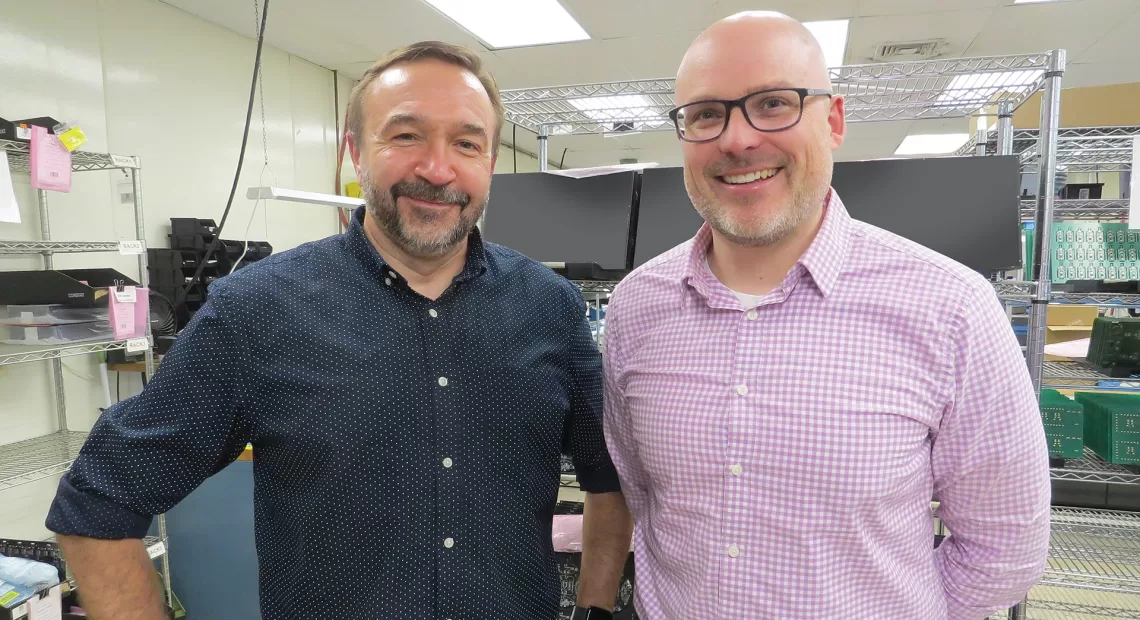
“This was our most successful run ever,” said Kevin Ramsdell, executive director and CEO of Springfield Rescue Mission. “It was a little chilly, but our runners, walkers, and their cheering squads brought the heat, along with tons of enthusiasm.”

Springfield Rescue Mission also saw a tremendous turnout for its first-ever spaghetti buffet and early-registration event at the Basketball Hall of Fame the night before the run.

“We enjoyed a spirited night of food, fun, music, prizes, and spending time with our supportive community,” Ramsdell said. “We are so grateful to all our walkers, runners, volunteers, and supporters.”

Funds raised will help Springfield Rescue Mission expand its services and support its workforce-development and higher-education programs.

“Our services are desperately needed by a growing number of people every year, and with the support of the community, we can continue to respond to the call,” Ramsdell said.

The Springfield Rescue Mission offers much-needed services for the poor and homeless in Greater Springfield. As an emergency shelter, mobile feeding program, rehabilitation and transformation center, and transitional living facility, it provides food, shelter, clothing, medical attention, Christian counseling, financial literacy, workforce development, high-school equivalency, higher-education opportunities, and more, free of charge. These programs help local men take meaningful steps toward becoming responsible and productive members of the community.
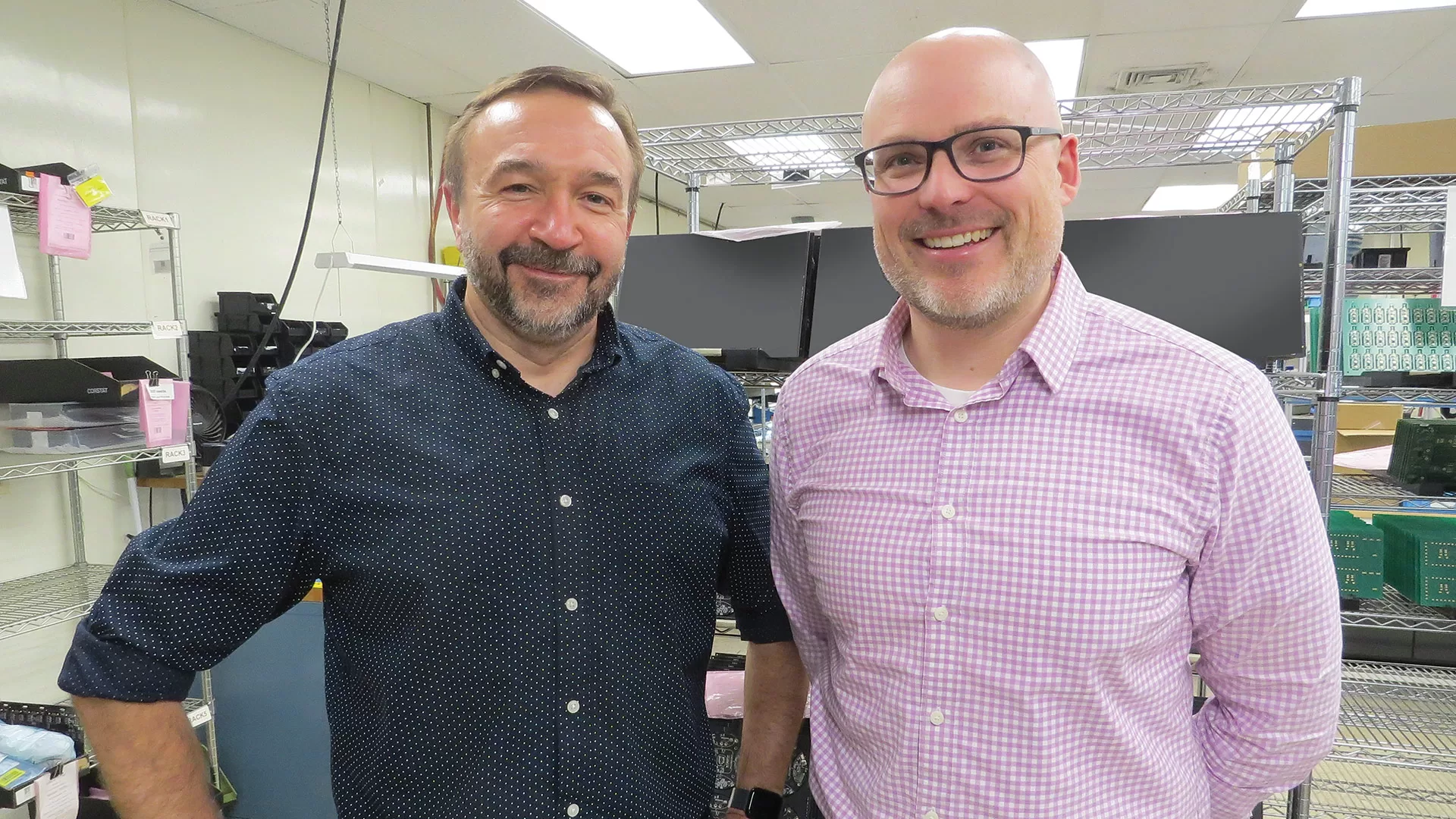
Company Notebook

Bay Path University to Acquire Cambridge College

LONGMEADOW — The boards of Bay Path University and Cambridge College announced today that Bay Path has entered into a formal agreement to acquire Cambridge College. This move reflects a strategic focus by both institutions on planning for future success providing career-focused education models to a diverse student population. Each based its decision to join together on the shared mission of the two institutions. The two institutions have shared their plans and the greater opportunity created by a combined organization with both the Commonwealth’s Department of Higher Education, which has regulatory purview over both Bay Path and Cambridge, and the New England Commission of Higher Education, which accredits both institutions. Both organizations will be working with Bay Path and Cambridge to ensure the process to combine the institutions meets their respective standards and regulatory requirements. The acquisition of Cambridge College will nearly double the number of students served by Bay Path and bring total enrollment to more than 5,000, including a growing number of international students. The geographies served by Bay Path will expand to include Cambridge’s Eastern Mass. location as well as its growing Puerto Rico location. Opened in downtown San Juan more than 20 years ago, the campus provides graduate programs in business and technology as well as education and counseling to working professionals. Bay Path currently operates two locations: its Longmeadow campus, which serves women at the undergraduate level, and the state-of-the-art Philip H. Ryan Health Science Center in East Longmeadow, which provides graduate degrees in education, healthcare, and psychology. The university also grants undergraduate degrees online through the American Women’s College. Bay Path’s acquisition of Cambridge College is likely to be complete in June. Full integration of Cambridge College into Bay Path will take 18 to 24 months, pending a series of approvals by accreditors and appropriate state and federal regulators.


Florence Bank Supports West Springfield’s 250th

FLORENCE — Florence Bank has donated $4,000 to the city of West Springfield to help support four events the city has planned in 2024 as part of a year packed with 250th-anniversary festivities. Florence Bank’s backing of the West Springfield 250th celebration specifically offers support for three 5K races, happening in March, July, and November; a block party on June 22 and 23, when Elm and Central streets will be closed for activities from dancing to vendors and food trucks; family photo sessions at historic town locations; and a golf tournament in July. Also part of the 250th events in West Springfield are a birthday celebration in Clark Field today, Feb. 23, the same day West Springfield was incorporated in 1774; a black-tie ball in May; various ongoing public art projects; and a Bright Nights display next winter. In addition to the financial support, a team of bank staff will volunteer at some of the events in town. Since 2007, Florence Bank has had a presence in West Springfield, which was enhanced five years ago when the current full-service branch opened at 1010 Union St.


Second Chance Composting Program Comes to Pittsfield

PITTSFIELD — Second Chance Composting recently brought its residential community composting program to Pittsfield. Memberships are open and ongoing for the 9 South Atlantic Ave. dropoff location. The program runs continuously all year, through all four seasons. Memberships start at $9.99 per month, offering unlimited dropoff of household food scraps to the location each month. Members simply save their food scraps at home and, at their convenience, bring them to 9 South Atlantic Ave. and drop their material into the tote. Members can come as little or as often as needed each month. All food and food scraps are accepted, including meat, fish, dairy, bones, and shells. Other membership pricing options are available for those who wish to receive finished compost back. In addition to the new Pittsfield location, Second Chance Composting currently has dropoff locations in North Adams, Williamstown, and Adams, which have continuous and ongoing membership signups. Every week, Second Chance Composting picks up the material, which is brought to its MassDEP-certified facility in Cheshire to process the food scraps into compost, which is then distributed back to the community to grow more food, flowers, plants, and trees. Those interested in learning more or signing up for a membership can do so by visiting www.secondchancecomposting.com.
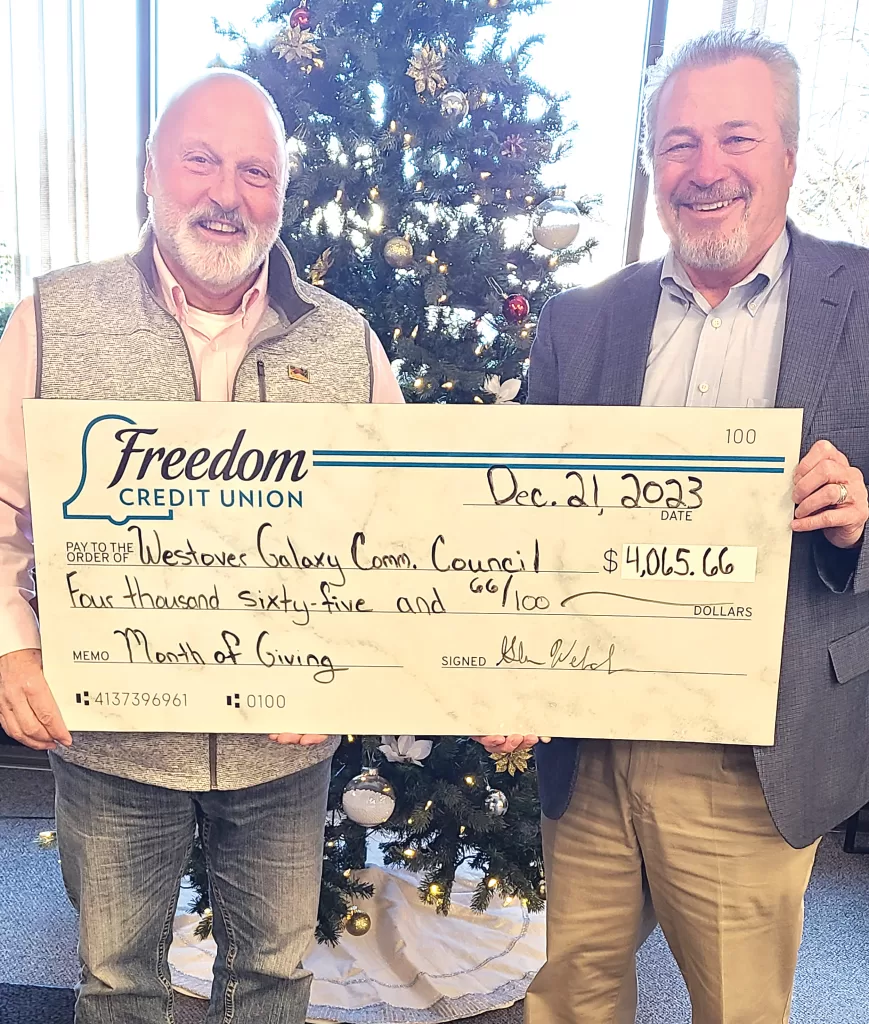
Incorporations

The following business incorporations were recorded in Hampden, Hampshire and Franklin counties and are the latest available. They are listed by community.

AGAWAM

SDS Mobile Welding Services Inc. 450 Silver St., Agawam, MA 01001. Scott Swenson, same. Welding fabrication and related services on real-estate, personal, and business property.

AMHERST

Vivid Vision Inc., 186 College St., Amherst, MA 01002. Jacob Torres, 419 Enterprise Dr., Somerset, MA 02725. Nonprofit organization established to foster and promote emerging musical talent within the academic and greater community and provide resources, support, networking opportunities, and education.

CHICOPEE

FZ Corp., 643 Prospect St., Chicopee, MA 01020. Maninder Arora, same. Convenience store.

Rybachuk Pro Master Inc., 26 Sampson St., Chicopee, MA 01020. Andrii Rybachuk, same. Construction services.

EAST LONGMEADOW

Dust Collectors Cleaning Service Inc., 20 Hillside Dr., East Longmeadow, MA 01028. Kathryn Koske, same. Cleaning services.

FLORENCE

Play Incubation Collective Inc., 264 Riverside Dr., Florence, MA 01062. Sarah Marcus, same. Supports the development of new theatrical work and fosters creativity, collaboration, and a celebration of the creative process through programs and workshops for all ages.

HATFIELD

Skawski Farms Inc., 455 Main St., Hatfield, MA 01038. Michael Skawski, 40 Straits Road, Hatfield, MA 01038. Agricultural farm.

LONGMEADOW

Community Alliance for Peace and Justice Inc., 468 Inverness Lane, Longmeadow, MA 01106. Mehlaqa Samdani, same. Alliance to amplify the political voice of the American Muslim community in Massachusetts and Connecticut.

NORTH ADAMS

Live Balanced Bookkeeping Inc., 382 West Shaft Road, North Adams, MA 01247. Stephanie Roy, same. Bookkeeping and tax services.

PITTSFIELD

Avalor Technologies Inc., 82 Wendell Ave., Suite 100, Pittsfield, MA 01201. Raanan Raz, same. Provides SAAS solutions.

Garden Blossoms Florist Corp., 31 Essex St., Pittsfield, MA 01201. Sean Colombari, same. Retail florist shop.

Silverspace Technologies Inc., 82 Wendell Ave., Suite 100, Pittsfield, MA 01201. Mounish Soni, 806 Green Valley Road, Suite 200, Greensboro, NC 27408. Connects businesses with qualified candidates for temporary, permanent, and contract positions.

SHELBURNE FALLS

Hill Street Concrete Designs Inc., 107 State St., Shelburne Falls, MA 01370. Taylor Powell, 12 Dungarbin Dr., Shelburne Falls, MA 01370. Design and fabrication of custom concrete home and commercial furnishings such as sinks, countertops, exterior floors, and patios.

SOUTHAMPTON

Western Mass Masons Inc., 383 College Highway, Southampton, MA 01073. David Osiecki, same. Masonry services.

SPRINGFIELD

Clearer Vision Foundation Corp., 1690 Boston Road, #1073, Springfield, MA 01129. Tracy Hill, same. Nonprofit organization established for the purpose of empowering youth through diverse mentorship for clearer career paths.

Pearl Food Mart Inc., 1112 Bay St., Springfield, MA 01109. Mian Saleem, 188 Clearwater Circle, Ludlow, MA 01056. Retail food sales.

Winter Sports Retailers Inc., 235 Cadwell Dr., Springfield, MA 01104. Gary Fleming, same. Retailer of winter sports gear.

WEST SPRINGFIELD

A&T Carpentry Inc., 17 Herrman St., West Springfield, MA 01089. Engages in the acquisition and/or disposition of sports and/or snow goods, equipment, accessories, and products for wholesale and retail business.

WILBRAHAM

Dispatch Dogs Inc., 6 Mountain Brook Road, Wilbraham, MA 01095. John O’Keefe, same. Dog therapy services providing support and healing to individuals within the law-enforcement, fire, EMS, and mortuary communities, with secondary services in victim advocacy, youth initiatives, addiction support, and senior/assisted-living programs.