Daily News

NORTH ADAMS — The North Adams Chamber of Commerce (NAC) will host a series of fall workshops to assist small businesses in the Northern Berkshires.

The Northern Berkshire business community is invited to a Holiday Promotion networking event on Monday, Oct. 24 at 5 p.m. at Greylock Works. The holiday season plays a large role in the Northern Berkshire economy, and business owners, artists, and entrepreneurs are encouraged to come together to brainstorm the best ways to promote products and services ahead of the holiday season. Refreshments and snacks will be provided by Door Prize.

In November, the NAC will start a technology-makeover series that will dive into online commerce, effective software options, and digital marketing. Each class costs $15 to attend, or $30 for all three. The Monday sessions run from 6 to 8 p.m. and will be held in the NAC office at 85 Main St., Suite 200A, North Adams.

The sessions include “Get Organized: Digital Management Tools for Workflow Efficiency,” Nov. 7; “Get Found: Digital Marketing Basics to Get Your Business Found,” Nov. 14; and “Get Social: Social Media Marketing Strategies and Content Planning,” Nov. 21.

This workshop series is the result of two years of recognizing the technology needs of local businesses through the chamber’s Business Assistance program. In 2019, the organization received grant funding through the Franklin County CDC to launch this one-on-one consulting program and has since helped the business community grow and maintain jobs, get access to legal and financial help, and grow their social-media presence.

After an event the NAC hosted in June called “Reimagine the Chamber,” two dozen business owners expressed their everyday challenges. Many of those challenges were related to implementing technology to run their businesses more efficiently and learn how to use digital marketing tools more effectively.

All businesses throughout Northern Berkshire County interested in improving their digital marketing or learning how to make their business more efficient using the latest tech tools are encouraged to attend one or all of the upcoming workshops. Learn more about the workshops and register at nachamber.org.

Daily News

HOLYOKE — Holyoke Community College (HCC) will be running a free, six-week line-cook training course beginning Nov. 8.

The course runs Tuesdays to Fridays, Nov. 8 through Dec. 16, from 8:30 a.m. to 3 p.m. at the HCC MGM Culinary Arts Institute at 164 Race St. in Holyoke.

The program is designed for those already in the restaurant industry who want to upgrade their skills as well as unemployed or underemployed individuals interested in starting a new career.

“We usually have a mix of young people entering the job market for the first time and people who are re-entering the job market and looking for a second career,” said Maureen McGuinness, assistant project coordinator for HCC’s non-credit culinary-arts programs. “So the course is perfect for anybody who’s looking for a job and has a passion for food and the dining industry.”

The program is taught both online and in person at the HCC MGM Culinary Arts Institute. Participants will learn all the essential competencies they need to become successful line cooks: knife skills; how to prepare stocks, soups, sauces, desserts, poultry, fish, and meat; culinary math and measurements; moist and dry-heat cooking methods; as well as workplace soft skills, such as building a résumé and searching for jobs.

Offered as part of HCC’s Business & Workforce Development division, the line-cook course is free to qualifying applicants.

For more information, contact Laura Smith, HCC job-placement assistant and career-development counselor, at [email protected] or (413) 552-2833, or fill out the inquiry form at hcc.edu/job-ready.

Daily News

LEE — Lee Bank Foundation awarded $48,600 to 16 Berkshire-area organizations in its third round of 2022 community funding. Recipients were awarded grants ranging from $1,000 to $10,600 to support local programming. Included in the awards are a series of Arts Access Grants for arts and culture organizations to expand access to programming for underserved audiences and Food Security Grants for organizations with programs focused on providing food to community members in need.

The deadline for the next round of 2022 Foundation funding is Dec. 1. The application and more information can be found at www.leebank.com/community-impact/donations-sponsorships.html.

To be considered for grant awards, applicants must be a (501)(c)(3) nonprofit organization. The foundation is focused on funding programs that work to bridge income and opportunity gaps in the region. Funding requests should reflect one or more of Lee Bank Foundation’s primary focus areas, which include education and literacy; food security and nutrition; economic growth and development; health and human services; mentorship, internship, and school-to-work initiatives; and arts and culture. Applicants are eligible for funding only once in a 12-month period.

Lee Bank Foundation was established in 2021 to support Lee Bank’s long-standing mission of community reinvestment. In its first year, 2021, the foundation awarded a total of $228,610 in grants, and the bank contributed an additional $84,000 in sponsorships.

Daily News

SPRINGFIELD — United Way of Pioneer Valley (UWPV) has created a relief fund through its Feed a Family campaign to assist residents of Puerto Rico.

“In support of the many families in our local communities with roots in Puerto Rico, UWPV has initiated fundraising efforts to raise money for those who suffered devastating losses because of Hurricane Fiona,” said Jason Newmark, board president. “UWPV has the experience, resources, and relationships necessary to ensure all monies raised are provided quickly and directly to the most effective relief organizations on the ground in Puerto Rico today.”

Added Waleska Lugo-DeJesus, CEO of Inclusive Strategies, “as an ambassador for United Way, I ask for your help during our Feed a Family drive. For the greatest impact, please donate to Feed a Family through United Way and join our efforts to give 50% to feed families in Western Massachusetts. The other 50% will be directed to families suffering from the damage of Hurricane Fiona through pre-coordinated efforts in Puerto Rico. I have heard stories of mud swallowing homes and streets, of lack of water, and enormous loss of crops. Thank you for your generosity in support of United Way of Pioneer Valley.”

Those wishing to contribute to the relief fund should visit www.uwpv.org/feed-a-family.

Daily News

SPRINGFIELD — Social-media platforms, like New England weather, seem to change by the minute. For that reason, Mary Cate Mannion, digital PR analyst and video producer at GCAi, was tapped to lead a panel of experts through a discussion of best practices and new innovations at New England Financial Marketing’s (NEMFA) fall conference in Worcester.

Joining Mannion on the “Navigating New Media: How to Evaluate Emerging Trends” panel were Anna Baskin, content manager at Service Credit Union; Justin Roberts, vice president of Marketing for Country Bank; and Kristin Sundin Brandt, president of Sundin Marketing.

“The experts were focused on metrics — specifically, the metrics that matter to your organization,” Mannion explained after the conference. “Content was also a focus, and the discussion focused on the power of these platforms for highlighting community support and corporate responsibility efforts.”

Other key discussion points included the customization of content. “Each platform has what you could call a personality, and my panel felt that the content should reflect that,” Mannion noted. “Examples discussed included don’t send direct mailers to reach a 20-year-old or create a TikTok aimed at a 70+ audience.”

Mannion was also the keynote speaker at the NEFMA 2022 Awards Show, where she presented on “What’s Old is New: How the Age-old Art of Storytelling Will Set Your Existing Media Channels on Fire.”

Daily News

MONSON — Monson Savings Bank recently made a $1,450 donation to the Hampden Senior Center in support of the facility’s many fun events it hosts throughout the year.

Wendy Cowles, outreach coordinator of Hampden Senior Center, expressed her gratitude to the community bank.

“Every year, Monson Savings Bank is very generous in their support of the Hampden Senior Center, and on behalf of our organization, I would like to thank the bank,” she said. “This donation will be put to good use and will help us host events that bring the town of Hampden together and raise the spirits of our senior residents.”

The $1,450 donation will help offset the cost of the center’s Alzheimer’s Association Dinner, Grandparents Day, Halloween Luncheon, Thanksgiving Grab and Go Lunch, and Holiday Luncheon.

“Monson Savings is always happy to help our community organizations in any way that we can,” said Adriano dos Santos, Hampden branch manager. “Whether we are making a monetary donation or volunteering, we are proud to be active members of our local communities.”

Daily News

SPRINGFIELD — The IRONMAN Group, in partnership with the Greater Springfield Convention and Visitors Bureau, announced that the city of Springfield will host the inaugural IRONMAN 70.3 Western Mass. triathlon on Sunday, June 11, 2023. General registration for the event will open this Wednesday, Oct. 19 by visiting www.ironman.com/im703-western-massachusetts.

“We could not be more excited to bring the IRONMAN 70.3 brand to the state of Massachusetts for the first time,” said Dave Christen, senior regional director for the IRONMAN Group. “Western Mass. is a beautiful part of the country that we feel our athletes will really enjoy. This event is shaping up to be a fantastic early-summer event to kick off the regional racing calendar.”

The IRONMAN 70.3 Western Mass. triathlon will consist of a 70.3-mile journey as athletes will take on a 1.2-mile swim, 56-mile bike ride, and 13.1-mile run. Athletes will start with a downriver swim in the Connecticut River. Once out of the water, athletes will transition to the bike at Riverfront Park in downtown Springfield for the 56-mile ride around the region’s biking areas. Once back in Riverfront Park, the race will conclude with a run using the riverwalks and downtown streets of Springfield.

“We are thrilled to welcome IRONMAN 70.3 to Western Mass.,” said Mary Kay Wydra, president of the Greater Springfield Convention and Visitors Bureau. “The Western Mass. Sports Commission has been focused on bringing high-profile, world-class sports events to our region, and this event is definitely a perfect fit. We know IRONMAN brings in thousands of competitors and their families from all over the world, and we look forward to welcoming these visitors to Western Mass. in June 2023.”

The 2023 IRONMAN 70.3 Western Mass. triathlon will offer qualifying slots to the 2023 IRONMAN 70.3 World Championship in Lahti, Finland, taking place on Aug. 26-27, 2023.

Daily News

SPRINGFIELD — Teach Western Mass (TWM) recently hosted a party to recruit diverse, quality educators to Springfield and Holyoke. Local school partners, elected officials, fellow nonprofits, and aspiring teachers gathered at Level 5 restaurant in Springfield to learn more about how to become a part of what Teach Western Mass is calling a teacher-recruitment movement.

The event showcased the Teach Western Mass residency program as a pathway to teaching within one of the 30-plus Teach Western Mass partner schools. The residency is a customized, state-approved credentialing program training new teachers to be effective in the classroom while building strong relationships in their school communities and developing standards-based and culturally relevant curriculum steeped in anti-racism for students in the region’s highest-need schools.

The residency program reduces barriers to entry into the teaching profession for career changers as well as aspiring educators of color. The program offers a one-year, accelerated certification route for aspiring educators, with the specific goal of increasing the diversity of the teacher workforce in Western Mass. The application (click here) is now open for anyone interested to enter the profession by next fall. The residency program is recruiting its sixth cohort and begins training in June 2023.

“Our residency program has created a much-needed option for future teachers who are looking for a supportive environment in the region that focuses on practical skills and culturally responsive teaching practices that will make first-year teachers have an impact on learning on day one in their classroom,” said Lisa Doherty, dean of the residency program.

Pema Latshang, founding executive director of Teach Western Mass, added that “I am grateful to our community and funders for supporting this important work. We know that teachers who reflect our students’ experience and identity can help them to attain educational success. Our residency program provides adults in our community, who may not have considered or been able to afford a career in teaching, an accessible pathway to pursue their license and make a real difference in the lives of students in Springfield and Holyoke.”

Teach Western Mass will be hosting informational sessions about the residency program on the first and third Wednesday of every month starting Wednesday, Nov. 2 at varying times to accommodate interested teaching candidates. Individuals looking to learn more about the residency program can pre-register for these events online through the Teach Western Mass website by clicking here. Anyone interested in joining the teacher-recruitment movement can refer eligible candidates by clicking here.

Daily News

CHICOPEE — Mercedes-Benz of Springfield is celebrating five years since opening its doors on Oct. 16, 2017. Owners Michelle and Peter Wirth mark the milestone with a celebration with their team.

“Time flies when you are having fun,” said Peter Wirth, who co-owns the dealership with his wife, Michelle. “While it may only be five years since we first opened our doors, we feel part of the fabric of the community we call home. We’ve introduced the brand to so many in Western Massachusetts who never dreamed they would one day drive a Mercedes-Benz, and given Mercedes-Benz loyalists in the Pioneer Valley a new home.”

Mercedes-Benz of Springfield’s early and sustained success continues to validate the brand’s decision to put a site in the Pioneer Valley, despite the 11-year hiatus in having a local Mercedes-Benz dealership.

Since opening five years ago, the dealership has serviced 53,795 cars, conducted 68,000 car washes, sold and delivered more than 6,400 vehicles, partnered with more than 350 organizations, and increased its team from 30 employees on opening day to 55 today. It has been honored with two BusinessWest 40 Under Forty awards, three Mercedes-Benz Best of the Best Awards, and an Amherst Area Chamber of Commerce A+ Award, and was an EY Entrepreneur of the Year finalist.

“We couldn’t be prouder of how far we’ve come in only five years and want to thank each and every person who has supported us along the way,” Michelle Wirth said. “We couldn’t have done it without you.”

Daily News

SPRINGFIELDBusinessWest and the Healthcare News magazines, the business and healthcare journals covering Western Mass., will honor their sixth annual Healthcare Heroes on Thursday, Oct. 27 at the Log Cabin in Holyoke.

The Healthcare Heroes program was created to shed a bright light on the outstanding work being done across the broad spectrum of health and wellness services, and the institutions and individuals providing that care. More than 80 nominations were submitted for the class of 2022, and candidates were scored by an in-house panel of judges. The stories behind the eight heroes reveal large quantities of energy, imagination, innovation, compassion, entrepreneurship, forward thinking, and dedication to the community. Honorees are profiled in the Sept. 19 issue of BusinessWest and the September/October issue of the Healthcare News, and are also available on www.businesswest.com and www.healthcarenews.com.

This year’s honorees and the categories they represent are: Helen Caulton-Harris, director of Health and Human Services, city of Springfield (Lifetime Achievement); Mark Paglia, chief operating officer, MiraVista Behavioral Health Center (Administrator); Dr. Philip Glynn, director of Medical Oncology, Mercy Medical Center (Provider); Dr. Paul Pirraglia, division chief, General Medicine and Community Health, Baystate Health (Collaboration); ServiceNet’s Enrichment Center & Strive Clinic and its partners at Springfield College and UMass Amherst (Collaboration); the Addiction Consult Service at Holyoke Medical Center (Community Health); Dr. Sundeep Shukla, chief, Department of Emergency Medicine, Baystate Noble Hospital (Emerging Leader); and the Elaine Marieb Center for Nursing and Engineering Innovation (Innovation).

The Healthcare Heroes Gala will begin with a VIP reception at 5:30 p.m. with networking and opportunities to meet this year’s honorees. The evening will include live entertainment, butlered hors d’oeuvres, a lavish plated dinner, remarks from the honorees, and more networking opportunities.

Tickets cost $85 per person and can be purchased at businesswest.com/healthcare-heroes/healthcare-heroes-tickets. Healthcare Heroes is presented by Baystate Health/Health New England and Elms College, and sponsored by American International College, MiraVista Behavioral Health Center, and Trinity Health Of New England/Mercy Medical Center.

Business Talk Podcast Special Coverage

We are excited to announce that BusinessWest has launched a new podcast series, BusinessTalk. Each episode will feature in-depth interviews and discussions with local industry leaders, providing thoughtful perspectives on the Western Massachuetts economy and the many business ventures that keep it running during these challenging times.

Go HERE to view all episodes

Episode 133: October 17, 2022

George Interviews Ivan Shefrin, executive director for Comcast Business Managed Security Services

Cybersecurity: It’s not a matter for large companies, public utilities, and government agencies to consider. It’s a critical matter that should be a priority for businesses of all sizes. That’s the message delivered by Ivan Shefrin, executive director for Comcast Business Managed Security Services on the latest installment of BusinessTalk. In a wide-ranging discussion, Shefrin and BusinessWest Editor George O’Brien talk about who the bad guys are, how they get into you system, how you can keep them out, and what you should do if they do get in  It’s must listening, so join us for BusinessTalk, a podcast presented this week by BusinessWest  and Comcast Business, and sponsored by PeoplesBank.

Sponsored by:

Also Available On

Daily News

HOLYOKE — Priscilla Kane Hellweg announced the launch of a new consulting firm, the Arts Integration Studio. Hellweg, who retired in December 2021 after 40 years as the executive/artistic director of Enchanted Circle Theater in Holyoke, said the Arts Integration Studio is a creative makerspace designed to address critical needs in education, community health, and the environment. The studio incorporates creativity, the arts, and cultural engagement, and collaborates with others to promote positive outcomes and sustainable solutions to pressing educational and social concerns.

This fall, the studio announced four partnerships: with Pittsfield Public Schools and Berkshire Educational Resources on comprehensive professional development in arts integration, open to all K-12 teachers and specialists in Berkshire county; with Mount Holyoke College and its Professional and Graduate Education Department on a graduate fellowship focused on producing research and publications on arts and learning; with the town of Longmeadow, Bay Path University, and Deza Studios to produce a public art exhibit that illuminates community-wide perspectives around climate despair, resilience, and action as the town embarks on updating its master municipal plan with a focus on equity and climate change; and with the Treehouse Foundation, an intergenerational community in Easthampton designed to support families with children who have experienced foster care.

The Arts Integration Studio is also developing ARTS CORPS, a work/study/professional training program for college students and emerging teaching artists interested in the intersectionality of arts, education, social justice, and community well-being.

“I am absolutely thrilled to continue this important work and to collaborate with such visionary organizations and individuals,” Hellweg said. “The Arts Integration Studio is building a pipeline in the region for arts and culture and working across sectors to utilize the power of the arts in education to improve lives.”

Daily News

SPRINGFIELD — Chikmedia invites the community to attend its virtual 2022 Social Media Summit, where it will provide an update on all things social-media related.

Chikmedia, a boutique firm offering strategic marketing planning and creative PR, is hosting this virtual event to support the future generation of marketing leaders. Participants will have the opportunity to learn the latest trends, updates on Instagram and Facebook, and how to create an engaging reel to capture their audience’s attention. They will walk away with information they’ll need to effectively manage social-media platforms and produce quality content.

The event will take place on Thursday, Oct. 27 from noon to 1:30 p.m. Participants will receive a Zoom link for where the event will be held. Tickets cost $75 for current Chikmedia clients and $125 for non-current clients. Click here to register.

“Social media is by far the most-asked-about topic in our line of work. We want to give people an opportunity to take their lunch break and receive some quick updates on what the latest trends are across some of the platforms,” said Meghan Rothschild, president of Chikmedia. “We’re all about education and empowering entrepreneurs and business leaders with the tools they need to succeed.”

Daily News

BOSTON — Chariot Payments has emerged from reorganization with a reconstructed board, a new CEO, and an experienced team poised to launch its bank-compliant, hybrid-payment network to introduce a new way to connect traditional finance and banking to the emerging digital economies burgeoning in the world of decentralized finance.

Chariot’s hybrid network is configured for bank and regulatory compliance, enabling trusted, secure transactions between traditional finance and banking and instant settlement across digital currency protocols at a fraction of the cost imposed by the current payment networks.

“Imagine igniting your business to grow into new and wholly untapped Web3 and decentralized marketplaces that host hundreds of millions of businesses connecting billions of people where you can offer your customers access to instantly transact from their bank across digital currency through Chariot’s bank and regulatory compliant, secure network. That’s the power of Chariot Payments,” the company explained.

Chariot’s CEO, Benjamin Cavallari, along with Chief Technology Officer Mariana Jbantova, resuscitated the startup.

After a long rebuild, Chariot Payments announced that Glenn Hanson, CEO of Colony Hills Capital and co-founder of River Valley Investors, and Jay Como, chief data officer of Silicon Valley Bank, are joining Cavallari on the new board of directors.

Chariot also announced the reformation of its board of advisors, which includes prominent compliance leaders Angela Ratliff and Kevin Troxell (both with US Bank) and Brandon Oliver (previously with JPMorgan Chase, Morgan Stanley Wealth Management, and the DCU Fintech Center).

The company added that “this resilient, battle-tested team is excited to finally move the company forward from a long reconstruction phase into partnership with our first clients and to bring this technology forward to power the future of digital payments between all systems, old and new.”

Daily News

HOLYOKE — On Friday, Oct. 21 from 12:30 to 1 p.m., EforAll/EparaTodos Holyoke will host a virtual Lunch & Learn information session for anyone interested in volunteering to support small businesses.

EforAll is an entrepreneurship program that helps start and grow businesses throughout the Pioneer Valley. There are a wide variety of ways to get involved depending on one’s interests and availability. Email [email protected] for more details and to register for the online information session.

Banking and Financial Services

Taking the Reins


Thomas Meshako

Thomas Meshako

Greenfield Savings Bank (GSB) announced the appointment of Thomas Meshako as president and CEO. He brings to the role more than 40 years of experience in the financial-services industry in New England. He joined GSB in 2016 as treasurer and chief financial officer, and will continue in those roles as well until his replacement is hired.

Meshako was appointed by the board of directors after previous President and CEO John Howland’s resignation was accepted by the board of directors.

“I want to thank John Howland for his more than seven years as the head of the bank,” Meshako said. “John’s leadership and direction throughout the unprecedented time of the pandemic and his dedicated and genuine commitment to the communities we serve solidified the bank’s reputation as a community leader. We are grateful for his contributions to the bank and wish him the best in his future endeavors.”

Howland took over as president and CEO in 2015 from Rebecca Caplice, who had served in that role since 2006. Before joining Greenfield Savings, Howland was president of two banks, most recently the First Bank of Greenwich, based in Greenwich, Conn. He has worked in the financial-services field his entire career and holds a bachelor’s degree from Bowdoin College and a juris doctor degree from the University of Maine School of Law.

Meshako, who earned a bachelor’s degree in accounting from Bentley University in 1982, is a resident of Greenfield, where he lives with his wife, Mary Ann. They have three adult daughters.

Founded in 1869, Greenfield Savings Bank has 180 employees and offices and ATMs throughout Franklin and Hampshire counties. Its branches are located in Greenfield, Amherst, Conway, Hadley, Northampton, Shelburne Falls, South Deerfield, and Turners Falls.

The bank operates the only trust and investment management company headquartered in Franklin County. Total assets under management, including both the bank and the investment management company, exceed $1.4 billion.

Banking and Financial Services

Uncertain Times


Another month, another rate increase from the Fed. The moves aren’t unexpected, and are needed to slow inflation, but they are concerning, especially to borrowers.

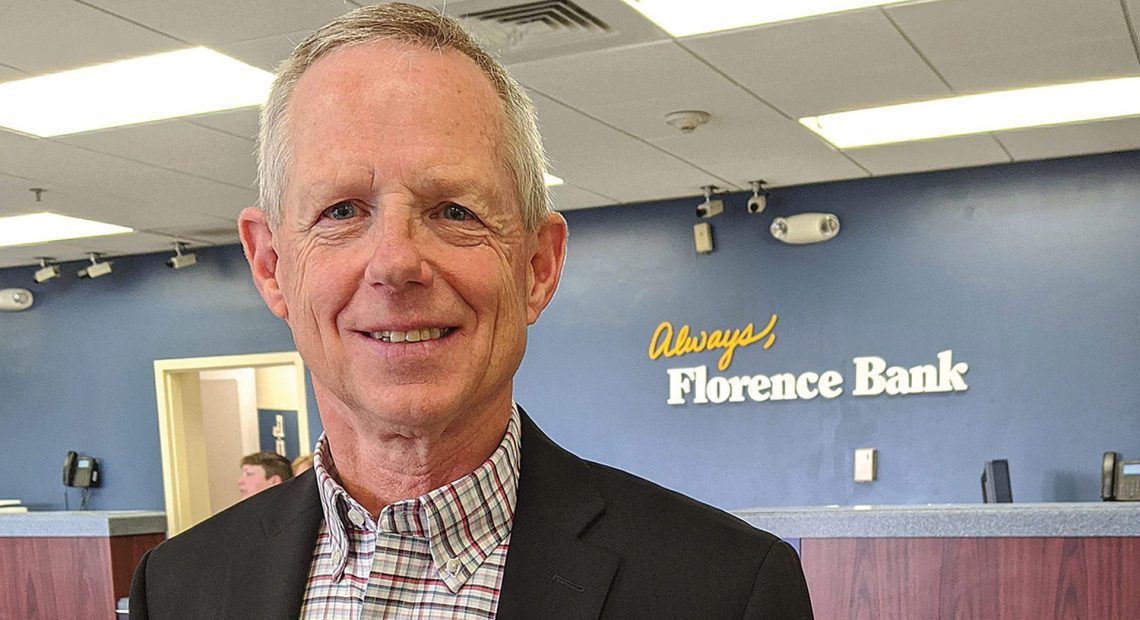
“We haven’t seen inflation like this since the ’80s. To anyone who remembers the late ’70s and early ’80s, when inflation was running really high, the dangers that represents are self-evident,” said Kevin Day, president and CEO of Florence Bank.

“The Fed responds immediately to a heated economy, and when the economy is overheated, that’s when they raise rates” in an effort to slow inflation, he told BusinessWest. “This time is a little different; inflation already showed up, and now they’re having to calm it down. So it’s a different environment than we’ve seen in the last 40 years, and that has created a great deal of uncertainty. And no one likes uncertainty.

“But they’ve been pretty consistent in that they’re going to raise rates to bring inflation under control, and they’re going to continue to raise them more until they get it under control,” Day added. “How far do they have to go? No one knows that, of course, and that’s what breeds the uncertainty.”

The Federal Reserve’s mission is to keep the U.S. economy humming, but not too hot or too cold. So when the economy booms and distortions like inflation and asset bubbles get out of hand, threatening economic stability, the Fed can step in and raise interest rates, cooling down the economy and keeping growth on track.

Kevin Day

Kevin Day

“It’s a different environment than we’ve seen in the last 40 years, and that has created a great deal of uncertainty. And no one likes uncertainty.”

On Sept. 21, the federal funds rate was raised by 75 basis points, to a range of 3% to 3.25%. The move followed 75-basis-point hikes in June and July, and two smaller rate hikes in March and May. The Federal Open Market Committee will meet twice more in 2022 to decide if further hikes are necessary in the fight against high inflation.

Still, “not everyone thinks higher mortgage rates are a terrible thing,” Forbes notes. “Some real-estate professionals see higher rates as one way to cool an overheated housing market. Others think it’s time to get back to normalcy after two years of artificially low borrowing costs.”

In addition, rising rates are not a bad thing for banks in general. When interest interest rates are higher, banks make more money due to the difference between the interest banks pay to customers and the interest the bank can earn by investing.

Still, banks also worry about recessionary environment when rates spike, an environment that opens the door to financial struggles, bankruptcies for individuals, and business failures, Day said. “Rates rising a bit is usually good for banks, but when it starts going too fast, it creates other problems no one likes to see.”


Historical Perspective

While inflation is at 40-year highs, interest rates are nowhere near the 6.5% seen in 2000, not to mention the record high of nearly 20% in 1980. Instead, rates have simply returned to pre-pandemic levels, which are historically on the low side.

“In terms of absolute levels, and in view of history, current interest rates are still at attractive levels,” said Mike Kraft, head of CRE Treasury at JPMorgan Chase. “Generally, I would say this is a great time to do business — before additional rate movements kick in.”

However, while historical trends favor current borrowers, people tend to think in the short term, and any rate increase dampens enthusiasm to borrow — which, after all, is the Fed’s intention: to slow the economy.

“Borrower behavior is always impacted by rising rates,” Day said. “People just tend to borrow less money, unless you’re in the credit-card business, which we’re not. We deal with mortgages and commercial loans, and borrowers are more hesitant as rates rise; they don’t want to commit until they have to. As rates rise, what happens is businesses take less risks — they don’t necessarily build or open that next location. Borrowing definitely declines as rates rise faster.

“In a perfect world, if it’s done at a moderate pace, nobody gets hurt too badly,” he went on. “It might slow a little bit, but businesses still make investments in property and equipment. But if it goes rapidly, it’s kind of an unknown. ‘Will this impact my business? Should I open that location? Will there be no business in six months?’ It makes businesses hesitant.”

On the other hand, people more focused on saving money than borrowing it may find the rate hikes a breath of fresh air, even if savings interest still lags behind interest on loans.

“How quickly you’ll see higher APYs on deposits depends on where you bank,” Forbes notes. “Online banks, smaller banks, and credit unions typically offer more attractive yields than big banks and have generally been increasing rates faster because they have to compete more for deposits.”

Day agreed that competition puts pressure on banks to raise deposit interest rates, while the gains are most prevalent in the CD market. “You can get 4%, where years ago, it was hard to get 25 basis points.

“So rising rates are generally beneficial to consumers who save money,” he added. “Borrowers usually don’t like them, but retirees on a fixed income might have assets in investments, and rising rates should help them have alternative ways to earn more money. So there’s two sides to this.”


Stay Tuned

The bottom line is that inflation is the highest it’s been since the early ’80s, and that makes everyone skittish, even if one of the remedies — rising interest rates — isn’t welcomed by everyone.

“We’re in uncharted territory,” said Ginger Chambless, head of Research for Commercial Banking at JPMorgan Chase. “By raising rates through this year, the Fed is trying to get a handle on inflation and slowly pull some of the excess liquidity out of the economy. I think it makes sense for the Fed to take a gradual approach. This way, they can see how the economy holds up along the way, as opposed to a more drastic increase, which might cause undue panic in the markets.”

Panic may be a strong word, but the word Day used — uncertainty — is definitely apt for banks, borrowers, and the financial industry as a whole. And with more decisions yet to be made by the Fed, the volatility may not be over.


Joseph Bednar can be reached at [email protected]

Banking and Financial Services

Growing Concerns

By Ian Coddington


You may be a business owner looking to expand into a new market, purchase new equipment, or conduct development on a new product or design, but don’t want to use cash from operations. How do you complete this? One of the most common ways to fund these kinds of ventures is through financing, specifically debt financing. To effectively use debt, you need to understand covenants, which may be included in the loan agreement.

This article will help you understand what are covenants and why are they required, how covenants might affect your business, and managing your covenants.

Ian Coddington

Ian Coddington

“Using debt can be an effective way to expand your business, and by understanding the intricacies of bank covenants, you can make better decisions as a business owner.”

Using debt can be an effective way to expand your business, and by understanding the intricacies of bank covenants, you can make better decisions as a business owner.


What Are Covenants, and Why Do You Need Them?

Simply put, a covenant is a restriction. When a bank or financial institution underwrites a loan or issues a line of credit to a business, they take on a certain amount of risk.

How likely is the business going to pay in a timely manner?

Will the business pay back the loan?

How volatile is the company’s industry?

What is the collateral for the potential loan?

These are all questions lenders will ask and need to understand before issuing a loan. To protect their investment, the financing may require financial covenants. First, there are positive covenants; for example, you are required to have up-to-date insurance coverage and meet certain ratios. It might sound odd to call these positive, but these are items the bank wants to ensure you have in place to help protect the business.

Negative covenants act in the opposite way. Often times, the bank does not want the company taking on other debt obligations without the bank’s prior approval or until the most recent debt is paid off. In addition, negative covenants are often structured to look at a company’s solvency and not violating financial metrics. These are built into the financing to protect the bank, but also to protect the company and the business owner.

Some of the most common financial ratios and metrics that banks look at for assessing a loan are:

Leverage ratio: cash flow from operations divided by total debt. This ratio measures the number of years to pay off of a debt obligation, the lower the better.

Debt service coverage: net operating income divided by total debt service. This ratio measures the ability to service the current debt. The higher the ratio, the greater the ability of the borrower to repay.

Quick ratio: cash and equivalents, marketable securities, and accounts receivable divided by current liabilities. This ratio tests the ability of a company to pay its current liabilities when they come due with its most liquid assets. A strong quick ratio indicates the company will be able to pay its long-term obligations without needing to sell long-term assets.


How Covenants Might Affect Your Business

So you have met with a lender, gone through the approval process, and have your new loan right in front of you. Are you ready to sign it? Make sure you review any financing agreements or amendments with your attorney and accountant. Depending on the type of loan, it could require a compilation, review, or audit-level financial prepared by a CPA.

Financial preparation ranges in complexity: the more complex, the more intrusive and costly. Going from a review-level financial statement to audited financial statements could double your accounting fees that you already pay. This could come as an unwanted surprise if you are not ready for it.

There are changes on the horizon. As bankers look at new loan agreements or new amendments to current loans, be aware of the adoption of new lease accounting standards by the Financial Accounting Standards Board. Companies are not required to implement the new standard until years beginning after Dec. 15, 2021 (effective for fiscal years ending Dec. 31, 2022). This new standard could impact the definition or calculation of specific covenants.


Managing Your Covenants

You don’t want to wait until the end of the year to evaluate and determine the company’s overall position of compliance with negative and positive covenants. If you find yourself in a situation of continuously failing your covenants, your overall relationship with a bank might be impacted. To help alleviate this, a company should conduct tax planning and/or obtain advice during the year.

Debt is a great tool in a business owner’s toolbelt to grow their business. By understanding the restrictions, or covenants that a lender might use, you can make a more informed decision about whether debt financing is right for you. You also might use a professional to plan around your new debt to foster a healthy relationship with the bank. Strong creditors lead to happy lenders, which leads to better business for everyone.


Ian Coddington is a senior associate with the Holyoke-based accounting firm Meyers Brothers Kalicka, P.C.

Banking and Financial Services

Investing for the Long Run

By Barbara Trombley, CPA, MBA


As I write this article, the S&P 500 index, which tracks the performance of 500 large companies in the U.S., is down almost 22% for the year. Even more remarkable is that the Barclays Aggregate Bond Index is down more than 14% year to date. If the average investor had a 60% equities / 40% bond portfolio that followed these two indexes, they would be down 18.8% for the year! This is without any portfolio or advisor fees.

After many years of positive stock market returns, this is extremely unsettling for the average investor. Usually, investing in bonds or ‘fixed income’ serves as a buffer to the stock market by providing what is usually a more conservative return. This year, because of rampant inflation, the Federal Reserve has rapidly increased interest rates. Bond prices and interest rates move in opposite directions, leading to large drops in bond prices and, therefore, a depressed bond market.

Barbara Trombley

Barbara Trombley

“Sometimes during volatile market periods, an advisor may strive to counsel a client to change their withdrawal strategy from their portfolio or offer advice on large purchases that can be financed another way.”

As a financial advisor, I wear many hats. The obvious one is that I provide investment guidance and strive to help my clients make financial choices. A less obvious role that I play is that of cheerleader. At times, some investors are very tempted to sell out of the market when times are bad. They feel nervous and uncomfortable. But history has shown us that investing is a lifelong event. A financial plan needs to be followed in good markets and bad.

There is a J.P. Morgan asset-management study that shows that seven of the best ten days in the stock market occurred within two weeks of the ten worst days. Since Jan. 1, 2002 through the end of 2021, for example, an investor who was fully invested in the S&P 500 would have returned 9.52% year over year (without fees). If the same investor missed the 10 best days in the market during that same time period, their return may have been 5.33% year over year (without fees) — almost half! An advisor will strive to provide guidance and education to prevent their client from making rash decisions.

Another area where an advisor can assist clients during volatile stock-market periods (and other times as well) is, if appropriate, potential tax-loss harvesting. If an investor has money that is not in a retirement plan, they can sell positions held at a loss in order to offset any gains held in other stocks. The investor can also offset $3,000 in ordinary income each tax year (if he or she has already offset gains) and carry forward unused losses to be used against gains in future years.

The investor would want to be aware of wash sales rules, which prohibit selling an investment for a loss and replacing it with the same or a ‘substantially identical’ investment 30 days before or after the sale. This would void the loss that the investor was deliberately trying to achieve. The investor is allowed to sell a stock at a loss and buy a similar one in the same industry so that he or she can continue to have their money working for them. Tax planning in volatile times could be part of your financial plan as well.

Sometimes during volatile market periods, an advisor may strive to counsel a client to change their withdrawal strategy from their portfolio or offer advice on large purchases that can be financed another way. I have often counselled clients on the options available to them, from where to draw money for their monthly expenses. In a volatile market, for many clients, using cash savings to pay monthly expenses can take the stress off a portfolio that has declined.

The greatest benefit to you from using a financial advisor is having someone to listen to you, someone for you to seek out and reassure you that, based on history, industry knowledge, and their experience in the financial world day after day, you can pursue financial independence.


Barbara Trombley, MBA, CPA is an owner and financial consultant with Trombley Associates. Securities offered through LPL Financial. Member FINRA/SIPC. Advisory services offered through Trombley Associates, a registered investment advisor and separate entity from LPL Financial. This material was created for educational and informational purposes only and is not intended as ERISA tax, legal, or investment advice. The opinions voiced in this material are for general information only and are not intended to provide specific advice or recommendations for any individual. All performance referenced is historical and is no guarantee of future results.

Education

What’s the Word?

Caroline Gear says the pandemic brought challenges

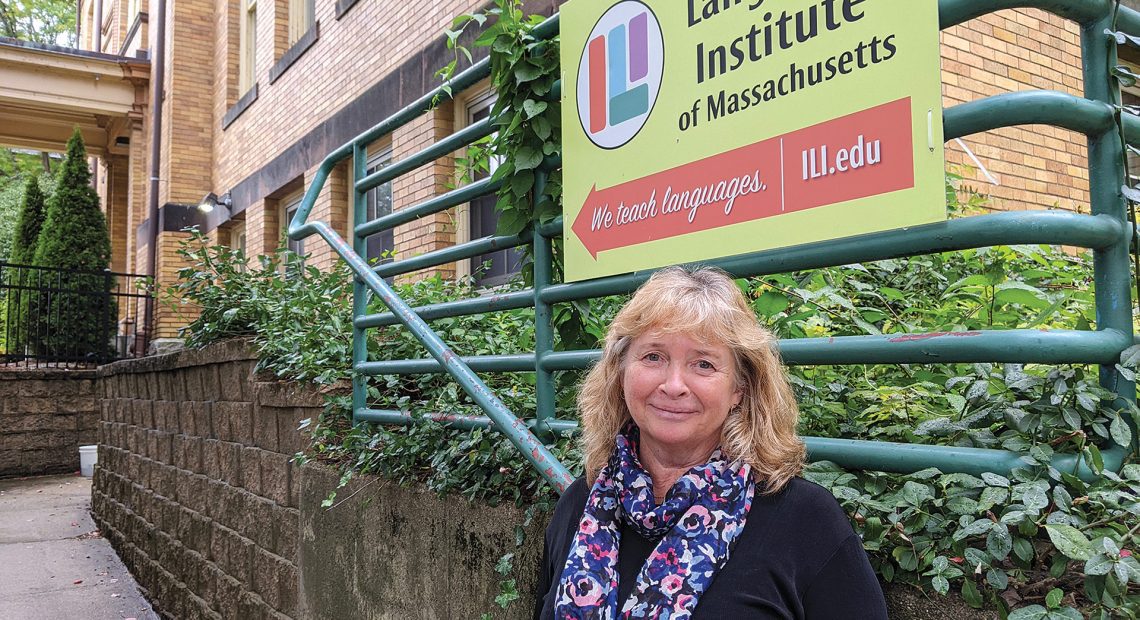
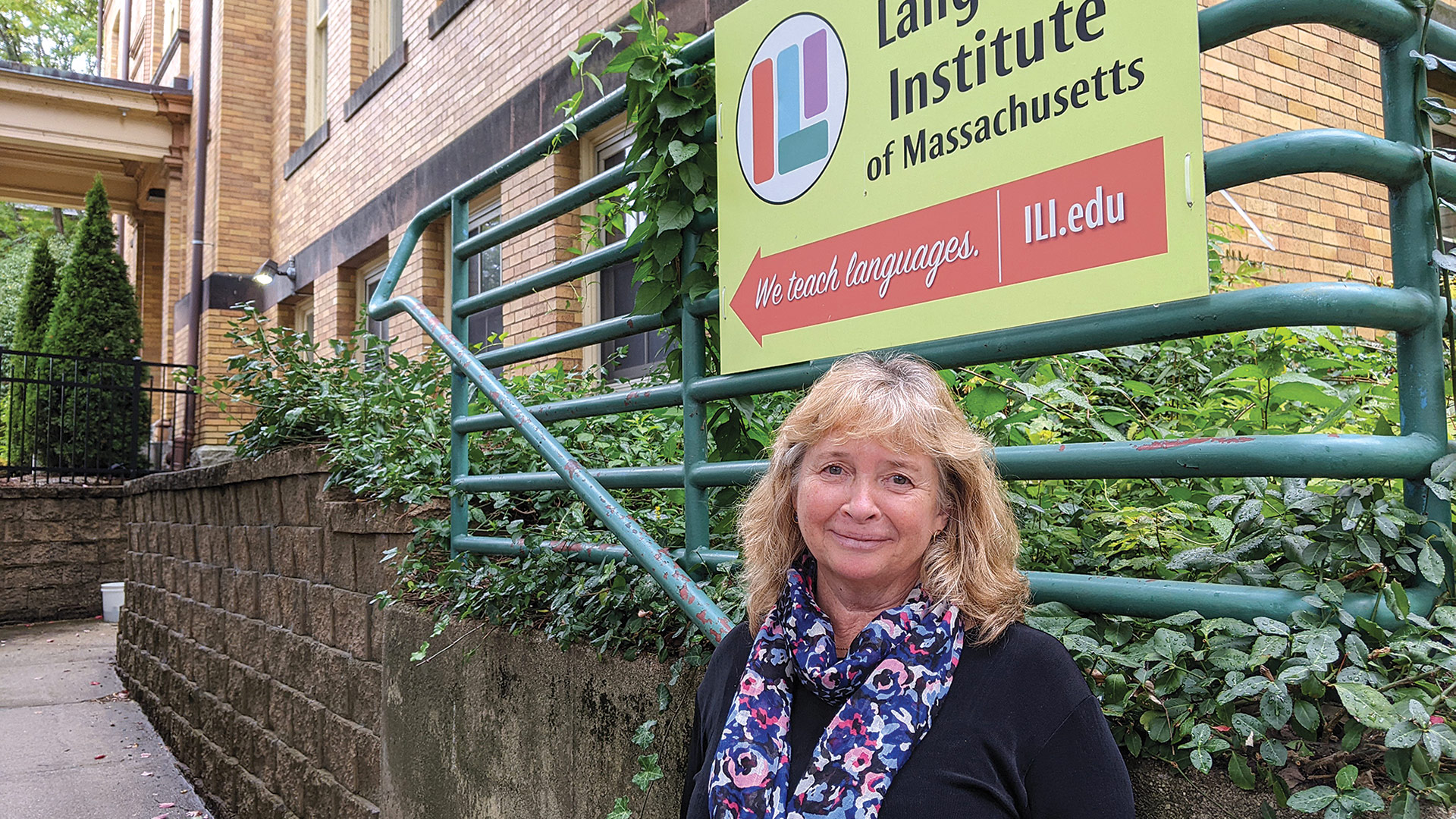
Caroline Gear says the pandemic brought challenges to ILI, but also new ways of connecting with language learners.


A global pandemic hit businesses and nonprofits in different ways. For the International Language Institute of Massachusetts (ILI), which relies on a steady flow of international students, the impact was especially great, as global travel slowed and those connections quickly dried up.

“We went from close to $350,000 a year in our Intensive English programs to $86,000,” said Caroline Gear, the institute’s executive director since 2015. She noted that the CARES Act and other emergency COVID relief, PPP loans, and an employee-retention tax credit helped ILI over the roughest whitewater, and international students are coming back … to an extent.

“I don’t think it’s ever going to come back to pre-pandemic times, but I like to say that we’re emerging anew,” Gear said. “I wouldn’t call it a recovery, because I don’t think we’ll ever recover to those numbers.”

The headwinds include a strong U.S. dollar making it expensive to travel to the States for study, as well as more competition from other countries with programs that teach English and other languages. “Canada opened up much quicker than us after the pandemic, so a lot of students went to the Canadian market and not to the United States. With Brexit, the U.K. lost a lot of international students, too.”

Still, Gear said, “I believe the United States academic culture and expertise and prestige is number one, but we have to make sure that we stay that way and continue to be welcoming. When you’re looking at where our students are coming from, I love the fact that we’re so diverse.”

The numbers bear that out. ILI’s Free English program alone — just one of several major programs at the institute (more on them later) — boasts 120 students from 27 different countries, ranging in age from 17 to 80. In one change from before COVID, five of the six sections are online, though the Intensive English program, because of its immersive aspect, is delivered in-house.

“We’ve all put in extra time because we all believe in this mission of promoting intercultural understanding and diverse communities through high-quality language and teacher training.”

“When the pandemic hit, we thought we would be back in a few months, but we wound up moving all of our classes online,” Gear said, adding that the Intensive English students were the first to return to face-to-face instruction, in August 2021. “Other than that, most of the classes were still meeting online. Our teachers are amazing; they went from emergency teaching to really creating an amazing curriculum online. Online teaching is another revenue stream, which is important for a nonprofit, but I really didn’t want to do it that way.”

But while much of the live instruction has returned to New South Street in Northampton, remote learning will remain part of the plan going forward, which allows ILI to reach students anywhere.

With nine full-time and 23 part-time instructors and staff at the moment, Gear said, “we’ve all put in extra time because we all believe in this mission of promoting intercultural understanding and diverse communities through high-quality language and teacher training.”


An Idea Takes Root

In 1984, Alexis Johnson was a language teacher without a job. But she didn’t lack for vision or passion. So she and another teacher, Janice Rogers, decided to open a language school, one that would meet the needs of myriad clientele, from local non-English speakers aiming to improve their workplace communication to student visa holders preparing for college stateside, to Americans skilled in other languages seeking training to become teachers overseas.

After decades of growth that affirmed her initial vision, Johnson stepped down from the executive director’s chair in 2015 after 31 years, handing the reins to Gear, who has been at the institute since the mid-’80s.

From left, Macey Faiella, director of English Programs; Heather Hall, office manager; Caroline Gear, executive director; and Samira Artur, instructor and program coordinator.

Perhaps the most well-known of ILI’s programs is its World Language program, which teaches a number of languages to students with a variety of goals. Some have a son or daughter marrying someone from another country. Others want to boost their communication skills on the job in an increasingly multi-cultural world. Still others want to advance on the job.

Another popular option is the Free English program, a partially grant-funded initiative that provides free classes for immigrants and refugees looking to improve their English skills for work, college, and their daily lives. English classes meet two evenings a week for a total of six hours.

On the flip side is the Intensive English program, which offers an immersive education for international students, with 21 hours of instruction weekly.

“Maybe their company sends them here, or maybe they know their ability to get a job is improved with a better English level,” Gear said. “The average intensive stay is three months; some take longer. Then they go to university or go home and get a job. Area employers will also send employees here to improve their English.”

Four scholarships — funded by Dean’s Beans; immigration law firm Curran, Berger & Kludt; an anonymous donor, and in honor of a board member’s late uncle, Richard Martin — are offered annually to move four students from the Free English program to Intensive English.

“It’s phenomenal to see what they have to say of the difference between six hours and 21 hours,” Gear said. “It takes about a year of classes in the Free English program to go from one level to another, and now they can do that in three months, so it’s really accelerated learning.”

Meanwhile, students in the University Pathways track of the Intensive English program receive individualized support to transition successfully to a university or college. Instead of cramming for exams or memorizing grammar rules, they practice a set of skills including essay writing, classroom participation, interactive presentations, small-group discussions, team collaboration, academic research, and critical analysis. By focusing less on test taking and more on academic training, they’re better positioned to succeed. 

ILI boasts partnerships with more than a dozen colleges and universities, Gear said, that offer these students conditional admission if they meet certain criteria. “They don’t have to take a standardized English test because those schools trust us and know we won’t recommend them unless they are ready to go. We’ve been in this business many years, and we know when people are ready to be successful.”

She added that, “no matter how great your English level is, academic culture in the United States is completely different from their home culture academically. We get them away from rote learning and rote test taking by working on cultural skills, active participation, written and oral production, independent self-direction, peer collaboration, and critical thinking. It’s really helpful for students because they’re so used to one way of teaching for so many years, and we don’t do it that way here.”

ILI’s Workplace Training program offers language courses for companies and employees that bring specialized language training to the workplace. Small businesses can apply to a state fund that pays for this training, Gear said, which makes sense at a time when worker recruitment and retention are such a challenge.

“We all know the situation with finding employees. So if a company finds a great employee but finds their language skills need improvement, working with the state of Massachusetts to have them pay for it is phenomenal.”

As one example, as Gear was giving a tour of ILI to BusinessWest, Office Manager Heather Hall had just gotten off the phone with Flour Bakery in Boston, which employs more than 400 people and was looking for English and Spanish training for many of its staff.

“I’m always learning from our students, and we are making a difference in so many people’s lives. It’s incredibly gratifying to be able to do this work.”

“We’ve also worked with the Holyoke public school system, where we teach the teachers Spanish and the parents English,” Gear said. “It’s not only about learning a language, it’s about learning a culture, navigating systems, and playing an integral role in making sure people feel safe to take risks and get to the next step of their career.”

The sixth — but certainly not least — major component of ILI’s programs is Teacher Training, specifically the SIT TESOL Certificate program, which becomes the graduate’s ticket to teaching language, both in the U.S. and internationally.


Diving In

At the heart of all these programs is a teaching style that, as noted earlier, ditches rote memorization for an immersion approach where constantly putting language into practice, student to student, trumps getting every word perfect.

There’s an element of fun to this immersion, too, Gear said. As one student told her, “we play a lot, but I’m learning a lot.”

Gear and her team are learning, too — about how to navigate a post-COVID world that offers new challenges, but new opportunities as well.

“We’ve diversified more, but we still do the same thing: we teach languages, and we train teachers,” she told BusinessWest, noting that a permanent online presence will be a positive from a revenue and growth perspective.

“It was pandemic-driven because our school runs tuition-based programs that support our partially funded Free English classes. So we need students as well as grants and incredibly generous donors to support our school,” she explained. “We wanted to do online instruction, and now we will always teach online, even as people start to come back to more face-to-face programming.”

After all, she said, “not everyone wants to have classes face to face. There are transportation issues, there are childcare issues, so it’s all about access to education. If we can continue to provide classes to folks virtually and also bring them back in here, that’s a positive.”

At the same time, those in the Teacher Training program are learning to teach online, too, a necessary skill post-COVID.

Coming up on ILI’s annual giving season, when letters of appeal are sent to potential supporters, Gear noted that “it’s not just one thing that runs this school; it’s a variety of revenue streams — tuition-based programs, generous community supporters, grant foundations that support us … and love.”

She’s also hoping for some of the ARPA money being distributed by the city of Northampton, which would be put to use upgrading the institute’s space and air flow as part of a three-phase improvement plan.

But mostly, she’s adapting — and appreciating the impact the International Language Institute has on individuals, families, businesses, and communities both locally and around the world.

“I love my job. I love who I get to work with, what we do to help people to the next step,” she said. “I’m always learning from our students, and we are making a difference in so many people’s lives. It’s incredibly gratifying to be able to do this work. It’s not been easy through the pandemic, but we’ve learned to embrace the uncertainty and look for opportunities.”


Joseph Bednar can be reached at [email protected]

Building Trades

Building Trade

Chicopee Mayor John Vieau joins, from left, Revitalize CDC Executive Director Colleen Loveless; Director of Programs Ethel Griffin; and Moyah Smith, board clerk.


On Sept. 29, Revitalize Community Development Corp. (CDC) brought its #GreenNFit Neighborhood Rebuild to Chicopee. About 100 volunteers worked on four homes on one block, all in one day. Two of the four homes are owned by U.S. Air Force military veteran families.

“We are so grateful to the city of Chicopee for welcoming us with open arms and supporting our initiative to help make homes safe and healthy for those in need,” said Colleen Loveless, president and CEO of Revitalize CDC, noting that the work the volunteers and building contractors tackled included replacing rotted porches and steps; repairing accessible ramps, roofs, and decks; installing a new shed, windows, storm doors, and gutters; power washing; painting; and yardwork.

Contractors and volunteers get to work.

Contractors and volunteers get to work.

The work was supported financially and with volunteers from American Red Cross and the Chicopee Fire Department, the city of Chicopee, Baystate Health, Berkshire Bank, Blue Cross Blue Shield of Massachusetts, the Center for Human Development, Country Bank, Go Graphix, the MassMutual Foundation, M&T Bank, Ondrick Natural Earth, PeoplesBank, Rocky’s Ace Hardware, TD Bank, and Westfield Bank.

“Our #GreenNFit Neighborhood Rebuild goal is to work on hundreds of homes in targeted neighborhoods, clean up vacant lots, improve playgrounds, and create community gardens,” Loveless said. “Revitalize CDC focuses on making meaningful improvements on homes to help reduce energy use, save money, and create a safe, healthy, and sustainable living environment for our residents and the community.”

Improvements have included installing or retrofitting HVAC systems to allow for oil-to-natural-gas heat and solar conversions; new roofs; energy-efficient windows, doors, and appliances; water-saving plumbing fixtures; electrical upgrades; mold remediation, lead abatement, and pest control; interior and exterior painting; and modifying homes for aging or disabled homeowners, such as building exterior access ramps.

Since Revitalize CDC’s inception in 1992, the organization has repaired and rehabilitated more than 1,100 homes with the help of 10,000 volunteers, investing $42 million into Western Mass. In the past year, Revitalize CDC completed 72 home-repair projects on the homes of low-income families with children, elderly citizens, military veterans, and people with disabilities.

The organiation’s JoinedForces, in partnership with businesses, civic organizations, and other nonprofit agencies, provides veterans and their families with critical repairs and modifications on their homes.

Daily News

AMHERST — Lending to small businesses in Massachusetts peaked in the first year of the pandemic but not to low- and moderate-income and majority-persons-of-color census tracts, according to a report released by the Massachusetts Community & Banking Council and the UMass Donahue Institute.

Overall, Community Reinvestment Act data shows lending institutions made 194,025 small-business loans in Massachusetts in 2020. Approximately 35.4% of loans went to businesses with annual revenues of $1 million or less. The number of CRA loans has increased gradually since 2009, reaching a new peak in 2020. When the pandemic hit, almost 28,000 more loans were issued compared to 2019 largely due to the Paycheck Protection Program (PPP), a Small Business Administration-backed loan that helped businesses keep their workforce employed during the COVID-19 crisis.

Compared to 2019, the 2020 CRA data shows some shifts in the number of geographies that received loans. The overall loan count grew; however, there was not a proportionate increase in loans to low- and moderate-income and majority-persons-of-color census tracts. Tracts that were middle- to upper-income or majority white received both more loans this year than last year overall, and proportionately a higher share of loans issued.

“There is growing evidence that, no matter what the ultimate cause of disproportionate access to capital, in the rush to get out funding to businesses during the pandemic, equity suffered,” said Carrie Bernstein, research manager and state data center manager at the UMass Donahue Institute.

One of the drivers of this disparity is differing access to banking services. A Federal Reserve report from August 2020 notes that most Black business owners do not have an existing banking relationship, which complicated applying for these loans and securing them once the application had been submitted. Even with access to a bank, the ability of that bank to secure PPP loans for their clients varied widely, with some banks not submitting applications to the federal government until just before funds had been depleted in the initial round. This weakened PPP loans as a source of aid to communities of color. Business closures were transpiring at this time at very high rates, and moreso for owners of color.

The Federal Reserve noted that “nationally representative data on small businesses indicate that the number of active business owners fell by 22% from February to April 2020” and that Black-owned businesses closed at roughly nearly twice the rate of small firms overall (41% nationally). The report also notes that Hispanic and Asian-owned firms closed at above-average rates (32% and 26%, respectively), while white firms closed at below-average rates (17%). These data points suggest that, despite large amounts of money being made available to businesses during the first year of COVID, it often did not go to the communities and businesses that needed the help the most. This disparity, or closures that transpired even before the loan program started — or both — may have driven the smaller number of loans to majority POC and low- or moderate-income tracts in the 2020 CRA dataset.

Utilizing CRA data on the number of loans issued, American Express is the most active lender in Massachusetts over the last 10 years, issuing smaller loans to existing credit-card holders. However, Bank of America loaned more than triple the amount of dollars than American Express in Massachusetts. Combined, Bank of America and Citizens Bank made up slightly over 20% of all loan dollars issued in Massachusetts in 2020. These two banks rank second and third, respectively, in the number of loan originations, after American Express. Other top-10 lenders in terms of loan count included Eastern, JPMorgan Chase, Lake Forest Bank & Trust, Rockland Trust, Capital One Bank, and TD Bank.

In 2020, Eastern Bank and Rockland Trust were the most active CRA small-business lenders of those headquartered in Massachusetts. Combined, these two lenders made over 15,846 loans in 2020, nearly three times what they issued in 2019 due to the Paycheck Protection Program. Local institutions picked up the volume of lending in 2020. According to the report, 13 lenders headquartered in Massachusetts issued more than 1,000 small-business loans in 2020, while that number was only two in 2019. Cape Cod Five, Enterprise Bank, Berkshire Bank, Avidia Bank, Middlesex Savings, and Westfield Bank were Massachusetts-based institutions that were in the top 25 overall small-business lenders in the state.

Daily News

CHICOPEE — The Greater Chicopee Chamber of Commerce will host its second annual costume-themed Thriller 5K on Saturday, Oct. 29 at 11 a.m. A portion of the event’s proceeds benefit Lorraine’s Soup Kitchen & Pantry.

The race starts and ends at Grise Funeral Home, located at 280 Springfield St. Registration opens at 10 a.m., and the race starts at 11 a.m. The 5K running route takes runners to Front Street, through Szot Park, then back to Grise via Abbey Memorial Drive and Fairview Street. A two-mile walking route will turn up Academy Street.

After the race, participants are invited to Rumbleseat Bar & Grille for an awards ceremony and after-party, which is included in the $35 race registration fee. Prizes will be awarded for fastest runners as well as best individual and group costumes.

The Thriller 5K is presented by N. Riley Construction with other sponsorship support from Holyoke Medical Center, Polish National Credit Union, Valley Opportunity Council, PeoplesBank, First American Insurance Agency, Health New England, HUB Insurance Services, Lumber Dogs, Ondrick Natural Earth, BK Hotels, and Beauty Batlles Lounge. Prizes and decorations are sponsored by Phil Beaulieu & Sons, Riley Home Realty, the Beauty Box, Roca, Slosek Insurance, Grise Funeral Home, East Commerce Solutions, Lids Live Well, Florence Bank, and Vibe Dance Studio.

The Greater Chicopee Chamber has hosted a 5K since 2015, which originally took place in June, with the last such event held in 2019. In 2021, when the chamber was looking to organize the event again, the committee decided to make it a costume-themed run in late October.

Daily News

EAST LONGMEADOW — Excel Dryer Inc., manufacturer of the XLERATOR hand dryer, announced that Scott Kerman has been hired as business development manager – specifications. In this new role, Kerman will work with the Excel Dryer Sales and Marketing teams to grow profits; nurture, retain, and support partner relationships; conduct demonstrations and sales presentations; and much more.

“Scott comes with a unique set of skills that will make him a valuable asset for Excel Dryer and our distribution partners,” said William Gagnon, vice president of Sales and Marketing. “He has worked extensively over his career with hand dryers and other restroom accessories, providing him an in-depth knowledge of our industry. We are excited to welcome him to the team.”

Kerman, a graduate of Arizona State University, has more than 30 years of experience in sales and business development. He has extensive product knowledge with numerous construction market segments and will tap into this experience at Excel Dryer to help grow and support the construction team’s annual profit by leveraging data in construction platforms.

“I have always been impressed with Excel Dryer’s products and am excited to now be working to grow their presence,” Kerman said. “I am ready to use my vast knowledge of the industry to guide the sales team in an even more profitable direction.”

Daily News

CHICOPEE — Elms College has received a $1.1 million grant from the W. K. Kellogg Foundation to continue its work of improving health outcomes in Haiti through nurse-faculty development.

In 2019, a unique partnership was established between the Elms College School of Nursing, the Episcopal University of Haiti School of Nursing (EUH), and the W.K. Kellogg Foundation (WKKF), with the goal of improving the health of the Haitian people. This initiative, the Haiti Nursing Continuing Education Program, was initially supported through a $750,000 grant from WKKF.

“We are thrilled that the W.K. Kellogg Foundation has renewed its commitment to this important, life-saving work and has substantially increased its funding that will extend the program into the foreseeable future,” said Harry Dumay, president of Elms College.

This program is essential because most healthcare in Haiti is delivered by nurses, not doctors. Therefore, nursing faculty throughout Haiti need enhanced training to be better prepared to educate future Haitian nurses.

“Despite the pandemic and social unrest in Haiti, Elms’ Haiti Nursing Continuing Education Program has been successful largely due to its partnership with EUH, as well as its provision of technology to ensure student access to course materials,” said Ryan Jiha, program officer for Haiti at the W.K. Kellogg Foundation. “We are proud to support this excellent collaborative work and look forward to seeing it continue to improve healthcare across Haiti.”

This partnership brings together nurse faculty from across Haiti and uses a ‘train-the-trainer’ approach to instruct the faculty with leading-edge nursing skills. The instruction of the Haitian nurse faculty is led by nurse faculty at the Elms College School of Nursing.

The first two cohorts of nurse educators graduated through the program in May 2022 and earned certificates transferable into the master’s and bachelor’s degree-completion programs at the EUH School of Nursing.

Cover Story

Making Progress

The Latino Economic Development Council recently opened the doors to its new facility on Fort Street in Springfield. More importantly, it is off to a fast and impactful start as it works to open doors — and keep them open — for business owners and entrepreneurs, especially those in the large, and growing, Latino business community. It will offer microgrants and facilities for meetings and co-working opportunities, but most importantly, it will provide much-needed coaching in subjects ranging from finance to human resources to mental wellness.


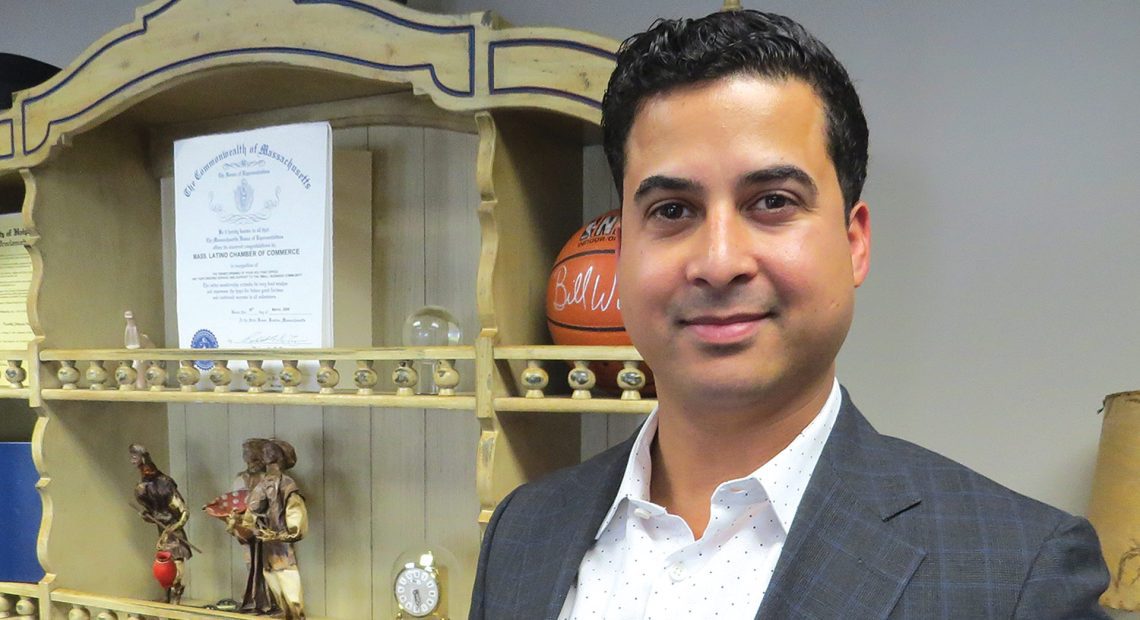
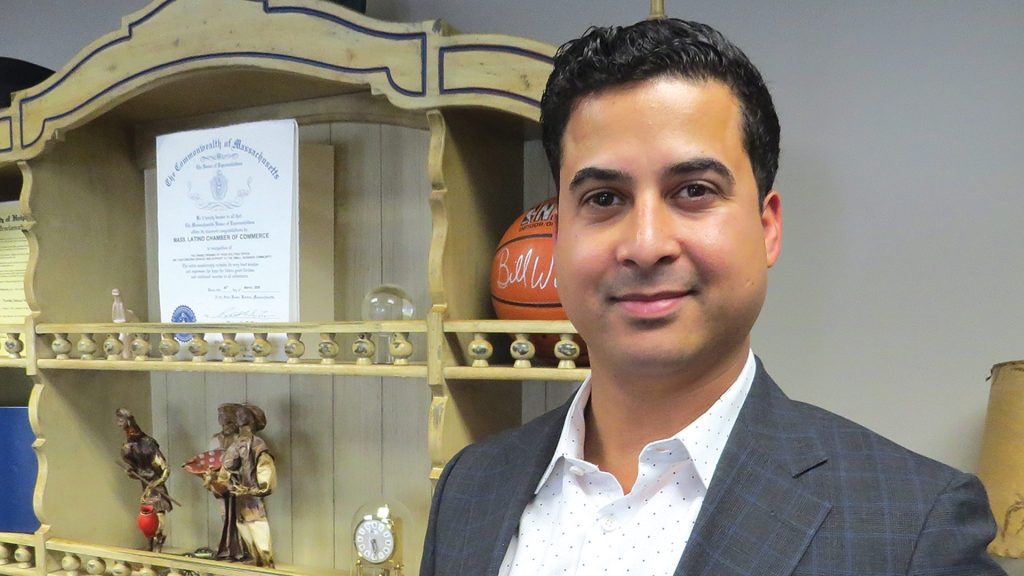
Executive Director Andrew Melendez

Executive Director Andrew Melendez


Andrew Melendez says he’s led a number of tours of the new Latino Economic Development Council headquarters facility on Fort Street in Springfield. More than he can count, actually.

He said the comments from those taking those tours vary, but there is a common, and very important, theme. Most say they’ve never seen anything quite like it — but wish they had.

Indeed, the Latino EDC, or LEDC, as it’s called, an affiliate of Partners for Community, is different. It is not a chamber of commerce, although it has some of those qualities and it partners with those institutions. It’s not an incubator, but it has some of those qualities, and it partners with those critical components of the entrepreneurship ecosystem as well.

It is a place where more than two dozen coaches, experts in many aspects of business, will make themselves available to business owners — especially those within the large and growing Latino business community, looking to take the next step with their venture, whatever that might be — and share what they know.

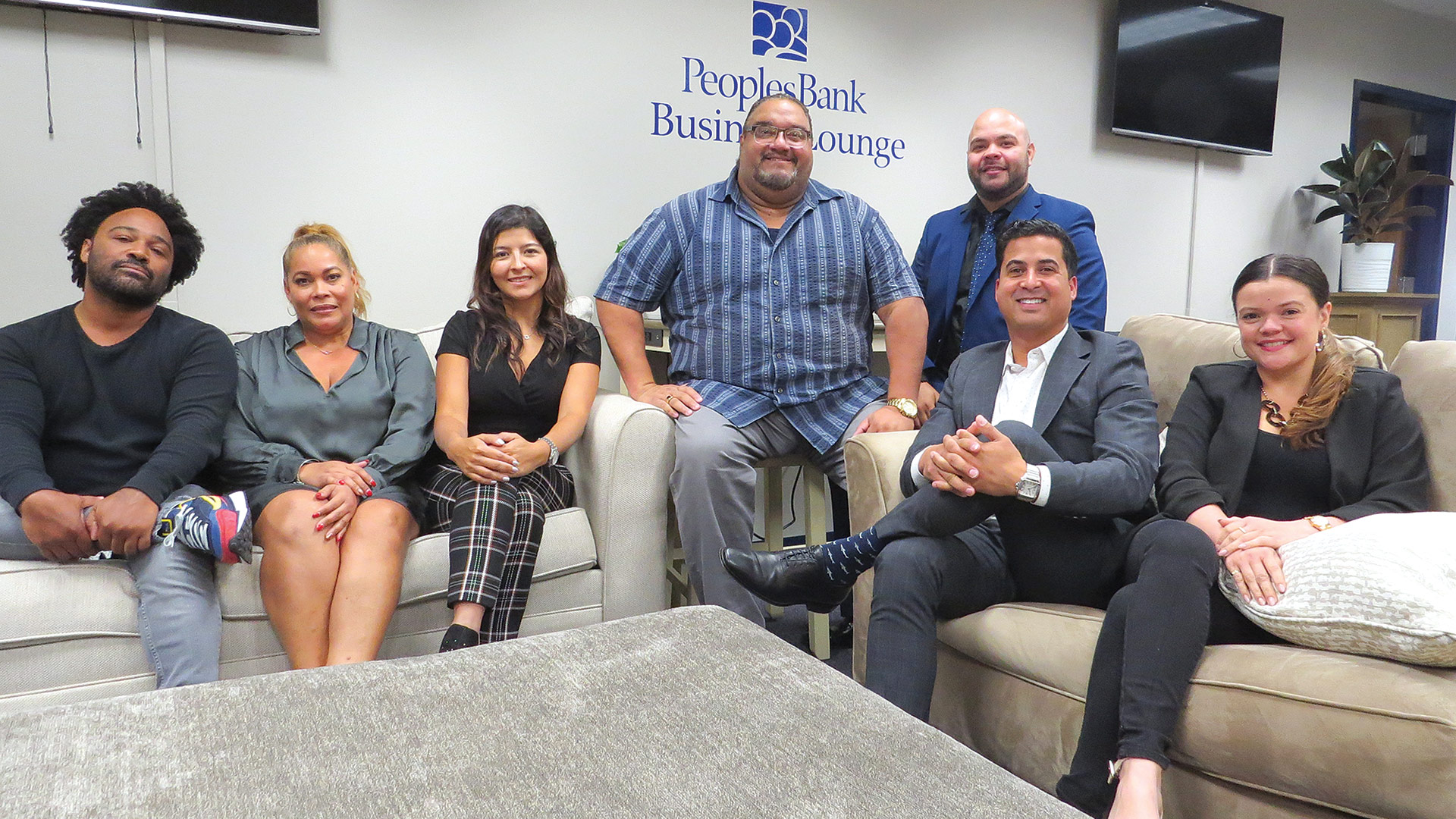
The council will also provide microgrants of a few thousand dollars or even less to assist with startup costs, while also providing co-working space and facilities — the PeoplesBank Business Lounge — that the business community can use for meetings and teleconferences.

“The main objective that we have is to help Latino business owners take their business to the next level.”

In short, what the LEDC wants to do is convert employees into employers, spark the growth and development of new businesses, and change the landscape on Main Street — and many other streets — in area communities, said Melendez, director of Operations for the LEDC.

It will do this not necessarily with microgrants — although they can certainly help a microbusiness or startup buy a sign, secure a new piece of equipment, or do some social-media marketing, perhaps — but with a combination of those grants and training programs from those coaches on how to qualify for a business loan, workforce training, mental wellness, and much more.

“We’ll be able to offer ‘Finance 101,’ ‘Accounting 101,’ ‘Building Wealth,’ ‘How to Lead by Example,’ and so on,” said Melendez, adding that the LEDC is partnering with a host of entities and agencies, from the state to the U.S. Small Business Administration in its efforts to build a larger, more sustainable Latino business community.

The facilities at the Latino Economic Development Council include space for meetings and community functions.

The facilities at the Latino Economic Development Council include space for meetings and community functions.

Overall, he said, the agency will focus on what he calls the three ‘Cs’ of helping business owners get to where they want to go: coaching, capital (those microgrants, but also counseling and technical assistance that might help them secure loans from area banks and credit unions), and connections to other business-development and economic-development-related agencies on the local, state, and national levels.

Adriano Vaccaro, CEO of Culture Redesigned, a culture strategist by trade and a workforce training coach for the LEDC, agreed.

“The main objective that we have is to help Latino business owners take their business to the next level,” she told BusinessWest, adding that the agency is putting together a comprehensive catalog of training programs. “And we’re attaching key performance indicators to the coaching sessions, so we can not only provide the skills and fill the gaps, but make sure we’re producing the results that are needed. It’s not just training — it’s training connected to a particular result.”

That’s an important distinction, she said, noting that the coaches are results-oriented and emphasize measuring — and sustaining — those results.

“It doesn’t mean that every business needs everything,” she went on. “We will do a needs assessment and make sure every business gets whatever they need, from where they’re starting their journey with us.”

Melendez concurred. “We want to make sure that, whether it’s a small business making $3 million or a microbusiness making $300,000 or an entrepreneur just starting up, they all have access to the same resources; that’s the fairness,” he said. “In January of 2020, Joe Biden said it’s not fair that some people get to pick up the phone and talk to a lawyer or an HR professional or someone to guide them in a workers’ comp claim, and other people don’t. This is us ensuring that our community — and I want to define our community as this whole community; anyone can come to the LEDC — has access to resources.”

As for the microgrants, made possible by federal ARPA funds awarded to Springfield and funneled to the LEDC, Melendez said there have already been more than 125 applications for such grants, and he expects that number to go much higher in the weeks to come.

BusinessWest recently sat down with Melendez and several of the coaches that are part of the LEDC to get some perspective on how this unique agency will work, how it will address stated goals, and, perhaps most importantly, how it will measure success.

The quick answer, as we’ll see, is that there will be many ways to do just that.


Getting Down to Business

It’s called the ‘imposter syndrome,’ and most business owners and professionals are by now quite familiar with that phrase.

It connotes persistent feelings that one isn’t … well, entirely comfortable in their own skin, professionally, and not fully credentialed, either literally or figuratively, to be worthy of the title on their business card.

Dr. Edna Rodriguez, director of Behavioral Health at Mercy Medical Center, one of the coaches at the LEDC (and one of BusinessWest’s 40 Under Forty honorees for 2022), said that many within the minority community fall victim to imposter syndrome.

“I want to be able to give back when it comes to development of business and entrepreneurship, teaching those basics, and helping people fine-tune their plans and the steps they need to take to become viable businesses in the community.”

“Many doubt if we have the level of skill, the ideas, and the tools … they struggle with confidence and knowing that that they can do and achieve the things they are good at,” she explained. “And that can really create a lot of anxiety and other issues that can definitely impact the mental health of an individual.”

And that’s just one of the matters she addresses with those she counsels as a mental-wellness coach for the LEDC.

“Our culture is beautiful and colorful and very integrated, but with that comes a lot of burden, especially when we’re talking about taking on everything that happens both at work and to home,” she noted. “Often, our Latino folks find a hard time managing stress and taking care of their physical and mental health, especially when they’re in the role of being a business owner.

“So my role is to individually help people understand how they can care for themselves, how they can find balance, and how to communicate their needs in an assertive way to both the people around them and the people who can help them,” she went on. “Sometimes it’s hard to just take that first step and open up and seek help.”

Helping business owners — and, again, especially those within the Latino community — cope with such issues is just one of the many focal points of the LEDC, which grew out of the Massachusetts Latino Chamber of Commerce and continues and expands upon its work, Melendez said.

Latino Economic Development Council

From left, Jose Hernandez, restaurant coach; Deborah Roque, accounting coach; Adriano Vaccaro; workforce training coach; Gilberto Amador, professional-development coach; Jesse Santos, finance and loan coach; Andrew Melendez; and Dr. Edna Rodriguez, mental-wellness coach.

And its model is unique, he went on, both in what it offers and that the services it provides are free.

“We want this to be free to the community, and I’m committed to that,” he said, adding that the LEDC was created to provide critical coaching and insight to business owners and aspiring entrepreneurs who may otherwise not be able to access such expertise.

Which brings him back to those tours he mentioned at the top and the comments from those who take them.

“I’ve taken dozens of people through the doors — people from Boston, Holyoke, Springfield, all over,” he said. “They’ve seen incubators with various businesses … but to walk in, and right where you walk in, there’s a marketing agency; an accountant; a psychologist; a professional-development trainer on safety; a professional-development trainer on diversity, equity, and inclusion; someone who can write a loan for you from beginning to end for free and send it to our partner banks … they haven’t seen that before.”

This is the essence of the LEDC, which Melendez likened to a credit union that doesn’t exclude anyone from membership. And the heart of the agency is its coaches, 28 of them at last count.

People like Rodriguez, the mental-wellness coach; Gilberto Amador, president of the Mass 2 Miami Consultant Group and professional development coach for the LEDC; Deborah Roque, owner of Affordable Accounting Services & Tax Preparation and an accounting coach for the agency; Jose Hernandez, owner of Palete Latin Cuisine in Springfield and the restaurant coach for the LEDC; Carlos DeLeon, a financial advisor with Ameriprise Financial, who provides guidance on personal finance; and Jesse Santos, a business finance and loan coach and officer with Latin Financial.

They and many others offer specific areas of expertise and, more importantly, a willingness to share it, that Amador summed up this way: “we bring something important to the table — experience, drive, and vision. And with the young people today, there’s going to be a generational gap if we don’t bring this information to them.”


Getting a Leg Up

Like Melendez and others we spoke with, Santos said capital is obviously critical to the advancement of any business venture, and is also an area many need help navigating, which is why he is now part of the coaching lineup at the LEDC.

“I’m here to guide those in the Latino community, and others as well, to get alternative funding, equipment financing, lines of credit — just help them get some funding,” he explained. “If the conventional banking system doesn’t help them or the rates are not to their favor or what they consider fair, they can come to me and we can broker it to other banks and other vendors to see what other opportunities we can get them.”

His work is an example of how the LEDC will work to provide guidance where and when it’s needed, and fill in gaps — in service, opportunities, and knowledge. And the coaches gathered around the conference room table at the LEDC said there are many such gaps, especially when it comes to the intricacies of running a business or simply taking an idea and transforming it into a business.

There are the basics — writing a business plan, deciding on a business classification, obtaining a doing-business-as certificate, and more, said Melendez, and coaches can help with all that. But then, there are the day-to-day, year-to-year matters, such as training staff, creating a culture, and handling HR matters. And the LEDC’s coaches can assist in these areas as well.

Amador, a serial entrepreneur himself but also an educator, said he’s been working with entrepreneurs for many years now and understands that many need help not only with their business, but with balancing business and life.

“I want to be able to give back when it comes to development of business and entrepreneurship, teaching those basics, and helping people fine-tune their plans and the steps they need to take to become viable businesses in the community,” he told BusinessWest, adding that one of these basics is simple financial literacy.

“A lot of them have ideas for starting a business, but they don’t realize that the financial piece is very important,” he said. “What does your profit-and-loss statement mean? What does you balance sheet mean? What is your cash flow? There are things that many in this [Latino] community don’t understand about business because we’ve been doing it a certain way, and we need to change that thought process. If we learn about investment and if we learn about how numbers work, then that makes it easier.”

While some coaching is broad in scope, it can also be specialized in its nature as well. Such is the case with Hernandez, who brings his experience in owning a restaurant, and in presenting Latin cuisine, to the forefront, and leads by example while also coaching others.

“I brought something different to the table and raised the bar with it,” he said of his eatery, located on Boston Road in Springfield. “A lot of people took notice, and you’re beginning to see where other restaurants are beginning to change the way they present the food, and I’m really happy about that.”

Overall, Amador echoed the thoughts of Melendez and others we spoke with when it came to seeing more individuals within the Latino community, which is entrepreneurial by nature, make the often-challenging leap from being an employee to being an employer.

“If there’s a McDonald’s in the North End of Springfield, I want to see a Latino owner of that McDonald’s,” he said. “I don’t want to hear people say, ‘let’s go to McDonald’s’ — I want to hear them say, ‘I want to own a McDonald’s.’”

Such sentiments, and such goals, are what prompted PeoplesBank to want to become involved with the LEDC, said Matt Bannister, the institution’s senior vice president of Marketing and Corporate Responsibility, adding that the bank became sold on the concept and its place in the region’s entrepreneurship ecosystem.

“Other groups have a mentor of two that can help you,” he said. “But they have specialists in whatever your issue is, and I think that’s a smart business model; it’s not one generalist who may or may not have experience with what you’re trying to do — they have a whole team of people, and it’s right in downtown Springfield.”

The bank’s participation started with the business lounge that now bears its name, he went on, adding that involvement may go to a higher level, perhaps by matching, or partially matching, the microgrants awarded to businesses by the LEDC.


Connecting the Dots

Summing up what the LEDC is and want he expects it will become in the months and years to come, Melendez said the agency strives to build individuals into “leaders, business owners, and change makers.”

That’s a tall task, he went on, but the ingredients are there for the agency to become transformative when it comes to the Latino business community and the overall economic landscape in Western Mass.

That’s why those who take the tour say they’ve never seen anything quite like it — and why they wish they had. u


George O’Brien can be reached at
[email protected]

Banking and Financial Services Special Coverage

Century Unlimited


President and CEO Glenn Welch (center) with some of his team.

President and CEO Glenn Welch (center) with some of his team.

When asked what might come next for Freedom Credit Union, Glenn Welch said simply, “we’re going to continue doing what we’ve been doing for the past 100 years.”

By that he meant … well, a whole lot of things, from continued growth and innovation to embracing new technology; from growing the base of customers to extending the institution’s geographic reach; from finding new ways to serve members to giving back to the community.

There will be more of all of that, said Welch, president and CEO of Freedom, who offered what amounted to a ‘state of the credit union’ report for BusinessWest on the occasion of its 100th birthday.

The milestone (July 22 was the official birthday) has been marked in various ways — from a 100-day summer food drive that raised $4,100 for the Food Bank of Western Massachusetts and collected 930 pounds of food for the Gray House, to a week of ice cream at all the branches in late July for members and employees; from raffles and giveaways for members to specials on loans and CDs.

“It’s a big milestone these days for a financial institution to be around that long,” Welch said. “So we wanted to celebrate with the community.”

Mostly, though, the institution has been quietly continuing those patterns of behavior listed above, he added, noting that he and his team are being both innovative and entrepreneurial as they go about writing the next chapter in a history that began with an institution known as the Western Massachusetts Telephone Workers Credit Union, formed when Warren Harding was patrolling the White House.

“It’s a big milestone these days for a financial institution to be around that long. So we wanted to celebrate with the community.”

Listing examples of both, he said Freedom will soon be introducing its first interactive teller machine (ITM) as well as credit cards and a new debit-card product. Meanwhile, it is continuing and broadening its push into Connecticut with the opening of a loan-production office on Elm Street in Enfield. Also, the credit union, which now boasts roughly $650 million in assets, more than 32,000 members, and 10 branches across Western Mass., has been making some inroads to service companies in the broad and ever-expanding cannabis industry in Western Mass., while continuing to aggressively pursue more business on the commercial-lending side of the ledger.

With the cannabis sector, the credit union recently started providing deposit and cash-management services for businesses in different kinds of businesses, said Welch, adding that this could become a vehicle for growth at Freedom.

“We have several clients that have signed on with us and we have a pretty good backlog of businesses that are looking to come on board with us,” Welch said, noting that the credit union is working with its regulator to make sure it is complying with guidelines for doing business with those in this sector.

It is certainly not the only institution looking to garner cannabis customers, he went on, adding that, as competition mounts, Freedom will work to remain competitive and secure market share in a sector where new businesses open every month, if not every week.

Cannabis was recently made legal for recreational use in the Nutmeg State, he went on, adding that this could be another avenue for growth in that market. “We think we’re in a good position with our expansion into that market.”

Overall, Freedom is still finding its footing in Connecticut, he said, adding that, over the next few years, it will explore opportunities to branch out south of the border, literally and figuratively.

Glenn Welch

Glenn Welch says the basic strategy at Freedom is “to keep doing what we’ve been doing for the past 100 years.”

“We’re going to explore our options in Connecticut as we get a foothold there,” he explained. “There could be a possibility of branching down there; we signed a two-year lease in Enfield, and we want to explore the market with the loan production first; we thought that was a good way to get a good foothold.”

For this issue and its focus on banking and financial services, BusinessWest talked at length with Welch about the first 100 years for Freedom Credit Union, and what is on tap for this Western Mass. institution.


Answering the Call

Tracing the history of the credit union, Welch said it started in a small office in the telephone-company building on Worthington Street, serving only employees of that large and fast-growing industry.

In 1978, the institution relocated to a new home on Main Street in Springfield’s North End, which still serves as its headquarters today. In 1987, the Western Massachusetts Telephone Workers Credit Union merged with Monarch Credit Union. As demand for the benefits of a credit union grew, the institution applied for a community charter. In January 2001, membership eligibility was expanded to include anyone who lived or worked in Hampden, Hampshire, Franklin, or Berkshire county, and in early 2020, further expansion of membership eligibility included Hartford and Tolland counties in Connecticut.

In 2004, the institution merged with FHBT Credit Union, and the name of the larger entity became Freedom Credit Union. And with that new name came geographic expansion, with new branches in Chicopee, Northampton, and, later, Turners Falls, Greenfield, Feeding Hills, Easthampton, the Sixteen Acres neighborhood in Springfield, Ludlow, West Springfield (after a merger with West Springfield Credit Union in 2019), and then Connecticut.

Throughout its history, Freedom has consistently sought out new opportunities to expand and bring its products, services, and mission to new zip codes, said Welch, while also looking for new and better ways to serve its members, said Welch, adding that these trends continue today.

Especially with its push into Connecticut, but also with its work to attract residents and businesses in its service area that are looking for options in the wake of a seemingly endless string of bank mergers, the latest being M&T’s absorption of People’s United Bank.

“We’re going to explore our options in Connecticut as we get a foothold there.”

Connecticut has become the next frontier for many banks and credit unions based in Western Mass., and so it is with Freedom, said Welch, adding that the new office in Enfield, which opened earlier this month, will include both a commercial-lending officer and a mortgage originator.

“We had a lot of people in Connecticut who wanted to bank with us, so that’s why we expanded our charter in 2020,” he said, adding that COVID obviously slowed the pace of progress into that state, but with the pandemic easing in most all respects, the credit union is expecting to see growth in the numbers of members from across the border.

Meanwhile, Freedom will continue and escalate what has been an aggressive push into the commercial-lending market on both sides of the border, another initiative that has been slowed somewhat by COVID.

“We’re trying to expand on the commercial side, but obviously not ignoring consumers,” he told BusinessWest. “We did hire a new hire lender for the Connecticut market; we believe there is a lot of opportunity there — on both the commercial and consumer side.”

Overall, the credit union began its push into the commercial market roughly seven years ago, he said, adding that it has been making good inroads since, with two lenders in this market and now the one in Connecticut.

Its legal lending limit is $7 million, with a large sweet spot of $2 million to $5 million, Welch explained, adding that this range leaves plenty of growth potential in a region dominated, on both sides of the border, by small businesses.

“We have a very experienced lending team — we’ve been in the market in a long time,” he said, adding that Freedom will be rolling out some new products in the next few months that will make it easier for companies to obtain small-business loans.

“We’ve partnered with a credit-union service organization with an online app where people can go, and they will make the credit decision for us, based on our guidelines in place,” he explained. “That’s how we hope to help the small businesses in the area.”

Another new service soon to be unveiled by Freedom will enable area retailers to offer financing for purchase of their products through the credit union, an initiative that he believes will help small businesses while also creating potential new members for the credit union on the consumer side.

The credit union’s headquarters have been located on Main Street in Springfield since 1978 — before it was called Freedom.

The credit union’s headquarters have been located on Main Street in Springfield since 1978 — before it was called Freedom.

Overall, growth in membership has been steady, at perhaps 1% a year on average, which is typical of credit unions in this market, he said, adding that Freedom is trying to capitalize on the ongoing consolidation of the banking market and mergers like the one involving M&T and People’s United, which, by most accounts, did not go smoothly.

“I think that’s our biggest opportunity, especially in Connecticut, with M&T and People’s United being such big players in that market,” he said, adding that the credit union is conducting some marketing targeting customers of those institutions.

Meanwhile, as noted earlier, the credit union will soon roll out its own credit card as well as a new debit-card product, its first ITM, and other products and services aimed at making banking easier and more convenient for members.

“We just keep automating things as we try to make it easier for our members to do business with us,” Welch explained. “A lot of things are being done online, and I think we have very competitive products for that; if people want to apply for loans or open accounts, they can do it on their own time, but certainly we have the branch system in place to support them when they need help.”


By All Accounts

Looking at the business plan for the next several years, Welch said Freedom is looking at a number of growth opportunities — in Massachusetts, Connecticut, within the cannabis industry, in commercial lending, and with several new consumer products.

It is moving on several different fronts at once, with the goal of expanding its membership base, providing new and better products and services, and taking its mission in new directions.

These initiatives are new in some respects, but overall, they’re simply a continuation of what the institution now known as Freedom has been doing for a century.


George O’Brien can be reached at [email protected]

Education Special Coverage

Learning Experiences

Spearheading the Haiti Nursing Continuing Education Program are Elms College officials

Spearheading the Haiti Nursing Continuing Education Program are Elms College officials, from left, Anne Mistivar, project faculty coordinator and cultural consultant; President Harry Dumay; Maryann Matrow, director of School of Nursing Operations; and Deanna Nunes, assistant clinical professor and associate dean of the School of Nursing.


Harry Dumay says the initial talks began more than four years ago.

They involved nurse educators in Haiti and leaders at Elms College, including Dumay, who is from Haiti, and they centered around how Elms, which has a strong Nursing program, might be able to partner with those in Haiti to continue the education of nurses in a broad effort to improve health outcomes in that country through nurse-faculty development.

Through a $750,000 grant from the W.K. Kellogg Foundation, a partnership between Elms and the Episcopal University of Haiti School of Nursing (EUH) was created that brings together nurse faculty from across Haiti and uses a ‘train-the-trainer’ approach to instruct the faculty with leading-edge nursing skills.

To date, more than 47 nurses in two cohorts from all provinces of Haiti have gone through the program — there was an elaborate graduation ceremony in May for both groups — and a third cohort has begun, with a fourth and perhaps more planned, thanks to a second grant from the Kellogg Foundation for $1.1 million.

That is the short, as in very short, version of a truly compelling story.

“The Elms program was very helpful because in Haiti they don’t have this type of training for nurses. They have nurses that are in different specialties and in different roles, and they find themselves teaching, but they’ve never been taught how to teach, so this program is very important because they are learning how to be an instructor.”

The longer version involves how all this has been accomplished during a time of global pandemic and an earthquake, a severe hurricane, and extreme political upheaval and general unrest in Haiti, including the assassination of the country’s president, Jovenel Moise, more than a year ago.

In short, very little about this initiative has been easy, but those involved — here and in Haiti — have persevered because the stakes are high and need to train nurse faculty is great, said Dumay.

Elaborating, he noted that the original model for this program called for in-person learning, with educators from Elms flying to Haiti once a month to lead classes.

Those plans were eventually scrapped because of the pandemic and other factors, including safety issues, in favor of a remote-learning model that came with its own set of challenges, especially the securing of needed equipment (tablets, hotspots, and even solar chargers in case power was lost) and getting them in the hands of the students who would use it.

In May, the first two cohorts of nurse educators in the Haiti Nursing Continuing Education Program attended their graduation ceremony in Haiti. With the graduates in the front row are, from left, Anne Mistivar, project faculty coordinator and cultural consultant for the program; Hilda Alcindor, project co-director from the Episcopalian University School of Nursing in Haiti; Harry Dumay, president of Elms College; Joyce Hampton, associate vice president of Strategic Initiatives and dean of the School of Arts, Sciences and Professional Programs at Elms; and Bapthol Joseph, project co-manager from the Episcopalian University School of Nursing in Haiti.

And these issues were compounded by other challenges, including those aforementioned natural disasters and the general upheaval in the country. Some students had to stay at their workplaces to take part in the classes because the WiFi was better there; meanwhile, class times were shifted so that students wouldn’t be traveling after dark to take them because of the increased risk to their own safety.

But, as noted, all those involved have pushed through these challenges because of the importance of this training. Indeed, most healthcare in Haiti is provided by nurses, not doctors, so the need to train nurse educators and thereby heighten the skills of those providing care is paramount.

People like Lousemie Duvernat, a nurse who was part of the second cohort that went through the Elms program. Via Zoom and through an interpreter — Anne Mistivar, project faculty coordinator and cultural consultant for what has come to be known as the Haiti Nursing Continuing Education Program — Duvernat said the program, and, specifically, its ‘train-the-trainer’ approach, has made her a better nurse, not to mention a better educator.

“The Elms program was very helpful because in Haiti they don’t have this type of training for nurses,” she explained. “They have nurses that are in different specialties and in different roles, and they find themselves teaching, but they’ve never been taught how to teach, so this program is very important because they are learning how to be an instructor.

“This, in essence, has helped them to understand the students, how to deliver the message, how to present, and how to evaluate the students and make them better educators,” she went on, adding that she would like to see the program continue because they simply don’t have anything like the ‘train-the-trainer’ approach in Haiti.

Such sentiments clearly explain why this initiative was undertaken and why it has persevered through so many extreme challenges, said Deana Nunes, associate dean of the School of Nursing and assistant clinical professor at Elms and nurse educator and course faculty for the Haiti Nursing Continuing Education Program, adding that the results thus far have been encouraging on many levels, but especially in what she called the “thirst for learning” she has seen from the nurses from Haiti who have been involved with the program.

For this issue and its focus on healthcare education, BusinessWest takes an in-depth look at this inspiring program, its goals, and the many ways in which success is being measured.


Course of Action

Duvernat — again, through her interpreter, Mistivar, who is also from Haiti — told BusinessWest that, since she was a child, she harbored dreams of becoming a doctor. In Haiti, though, the road to that profession is long and difficult, and she eventually set her sights on becoming a nurse, a vocation that, as noted, brings even more responsibilities than it does in this country.

But, and also since childhood, she has wanted to be an educator. And these twin passions, coupled with her desire to help others, have now come together as she advances her career as a nurse educator, with the goal to one day earn a doctorate — a path that has been accelerated and helped in many ways by the Haiti Nursing Continuing Education Program and its heavy emphasis on those words ‘continuing education.’

This is what all those involved with the initiative had in mind, said Dumay, noting that the program was born out of need, one that he was quite familiar with, and a desire among those at the college to meet that need.

“Elms College has a great School of Nursing and a strong reputation in the area for preparing great nurses and healthcare professionals in general,” he said. “But Elms College has also had a desire, and some efforts, in reaching outside Chicopee, outside Massachusetts; some of our students have gone to Jamaica for clinical programs, and we’ve had conversations with our partners in Japan around global health initiatives.
“I’ve also had interactions and collaborations with those in higher education in Haiti, and I’ve also had interactions and collaborations with the Kellogg Foundation,” he continued, while explaining the genesis of the initiative in that country. “And I know that one of the strong desires of the Kellogg Foundation has been to support the reinforcement of human resources for health in Haiti, particularly around the support of maternal and child healthcare.”

Looking at those synergistic aspirations and competencies, it was natural to propose to the Kellogg Foundation to help Elms in efforts to reinforce nursing education in Haiti, he continued, adding that the pieces eventually fell into place for what would become the Haiti Nursing Continuing Education Program, for which Elms would partner with the Episcopal University of Haiti and its school of Nursing.

That was back in early 2019, said Dumay, adding that there were visits to Haiti by officials at Elms and those with the Kellogg Foundation to explore the facilities of the Episcopal University of Haiti’s School of Nursing and meet with officials there to brainstorm about how the initiative could take shape.

Eventually, continuing education for nurse educators became the focus, he went on, adding that a ‘train-the-trainer’ model was identified as the most effective course of action — figuratively but also quite literally.

“We know that a lot of the nurse educators in Haiti are at varying degrees of preparation, and we heard from our partners from the healthcare system in Haiti that the nurses that are coming out of the various schools of nursing in that country have varying degrees of preparation as well,” Dumay explained. “So helping to reinforce the capacity, the level, and the preparation of nurse educators in Haiti so that they, in turn, can teach the nurses who are on the front lines became the concept that we created.”

Lousemie Duvernat shares the stage with Elms College President Harry Dumay

Lousemie Duvernat, a graduate of the second cohort of nurse educators, shares the stage with Elms College President Harry Dumay at the recent graduation ceremonies.

With a $750,000 grant from the Kellogg Foundation, plans were put in place for two cohorts of 24 faculty members from approved nursing schools across Haiti to take part in this ‘train-the-trainer’ program, he noted, adding that the original plan was for in-person classes at the Episcopal University of Haiti — specifically a “very intense” once-a month model.

Obviously, this plan had to change, because of COVID but also other factors, including the growing danger of traveling from one province to another in Haiti, said Dumay, noting that the program was halted at one point as plans were developed for an online format. This was a challenging adjustment because of the need to provide the nurse educators with needed equipment in the form of laptops and hotspots — and then actually getting this equipment into their hands, an assignment fraught with challenge on many levels, from the transportation and safety issues to the pandemic itself.

“We worked with and leveraged the network of the telephone company in Haiti, which has stores throughout the country,” he said. “We worked with them to coordinate the distribution of the technology to individuals all across Haiti; it was a logistical feat to be able to have all of the students have access to that material so they could complete the program.”

Overall, said Mistivar, the move to a remote format provided other learning opportunities.

“Not only did they learn about nursing, but also about technology,” she told BusinessWest, adding that the students were nurses representing all 10 provinces in Haiti. Some were already nurse educators, and many were working in various hospitals. Some had bachelor’s degrees, while others had a master’s.

The common denominator was that they wanted to take their education, and their ability to train others, to a higher level.


School of Thought

Nunes told BusinessWest that the shift to remote learning in Haiti was similar to what was happening at Elms College and other schools in this country during the pandemic. But there were many subtle, and not so subtle, nuances and adjustments that had to be made.

“Each week, on Wednesday afternoons, we met with the students via Zoom,” she explained. “We had to adjust our course time because, once darkness comes, it becomes much more dangerous. It became an example of the ways we had to work with our students to make sure we were not only providing them with a great education, but also keeping them safe.”

Overall, the nurse educators displayed great resilience, she went on, and a strong desire to learn, despite the many challenges they are facing in their daily lives, because they understood its importance to them becoming better educators and nurses — and perhaps advancing in their careers.

This resilience, desire to learn, dedication to helping others, and the knowledge and experience they already brought to the table certainly made an impression on those at Elms.

“Speaking with them, it was just fascinating to learn the way Haitian medicine and nursing care is delivered, and the amount of experience these nurses have is incredible,” Nunes told BusinessWest. “For me, as an educator, I feel I learned so much from them in addition to what they learned from us.”

As she talked about what was taught, and how, Nunes said there was prepared curriculum, obviously, but those leading the courses would often take their cues from the students, the nurse educators.

“One of the courses I taught was ‘Health Assessment,’ and in the beginning, we asked them, ‘what do you want?’ she recalled. “One of the things they identified was maternal health, but one of the things that surprised me was that they wanted to know more about how to use a stethoscope because, in Haiti, they said, the physicians do that.

“But they wanted to become more competent as nurses and develop that skill, so we were able to provide resources online, such as videos that demonstrated the sounds they’d hear and where to listen, things like that. In the development of our curriculum, we wanted to integrate knowledge in addition to keeping the focus on how to teach this knowledge.”

This same approach is being used with the third cohort of nursing educators, which just began its course work several weeks ago. This latest chapter in the story has provided more insight into the many challenges to be overcome, and more lessons in perseverance, said Maryann Matrow, director of the School of Nursing Operations at Elms and project co-manager for the Haiti Nursing Continuing Education Program.

She noted, for example, that some students were held up on the road as they traveled to the kickoff for the third cohort, but eventually made it there safely. She also noted some the difficulties in getting new models of laptops to the students that will be using them.

“Once we found and ordered it, things began to get more difficult in terms of travel and delivery,” she said. “As for the kickoff ceremony … to be able to get the people there was trying.”

Despite all this, the attrition rates for the first two cohorts were extremely low, only a few students, said Matrow, adding that she attributes this to everything from that thirst for knowledge that all those involved recognized to the strong support system involving those in both Haiti and Chicopee that has helped students make it to the finish line.

For Duvernat, the challenges involved in taking part in this program went beyond transportation, navigating around extreme weather, and coping with crime. She also had a baby during the course and was working full-time as well, adding up to a juggling act and very stern test that she and others have passed.

“Life in Haiti is very stressful,” she said through Mistivar. “Every day, people have to deal with that stress, which makes them resilient and able to adapt. I was motivated to continue to attend the class because it was something that was very important to me. I tried to focus on the experience because I did not want to miss the opportunity.”


Bottom Line

While there are many words and phrases that can be used the describe the Haiti Nursing Continuing Education Program, including all those in its title, ‘opportunity’ probably sums it up the best.

For those in Haiti, it is an opportunity to continue their education and, as Duvernat said, learn how to become better teachers. Meanwhile, for Elms College, it is a chance to extend its reach and its ability to make a difference in the lives of others, well beyond Chicopee and Western Mass.

In short, it has become a learning experience on many levels and for all those involved. It is a compelling story that hopefully has many new chapters still to be written.


Building Trades Special Coverage

Making the Circuit


High-school students train at Elm Electrical as part of its summer First Step Futures program.

High-school students train at Elm Electrical as part of its summer First Step Futures program.


Over the summer, three cohorts of high-school students attended four-day training seminars, two in June and one in August, at Elm Electrical in Westfield.

Monday through Wednesday, the students received instruction and training in the state-of-the-art Elm University multi-media classrooms and hands-on lab. Thursday, the final day, was Challenge Day, when students applied what they learned and completed a project board challenge. Elm project managers evaluated their work, offered feedback, and got to know the students.

It was, no doubt, an enriching experience for many. But First Steps Futures, as Elm calls it, is more than a summer camp. It’s a program, to be repeated each summer, with an eye firmly on the future of the electrical industry.

“This is a great opportunity to showcase and utilize our training facility, expose kids to the electrical field, as well as instruct our current and future workforce,” instructor Paul Asselin said. “At the same time, we can get them excited about the field and see what the kids can do. Do they follow our strict safety protocols? Do they ask questions? Do they work well with others? Is their work accurate? Do they have a positive attitude? This gives us a snapshot of what they’d look like as potential co-op students on the job.”

The students, in grades 10-12, were recommended by their teachers or Elm employees to attend the free training seminar. Some were, indeed, invited back as co-op students, to get a better look at the field, and give Elm a better look at what they can do.

“This program also gives kids who don’t attend a technical school the chance to see if the electrical field is something they may be interested in pursuing,” Asselin added. “Oftentimes, students who go to a traditional high school think it’s too late to go into a trade. We make sure they know there is still an opportunity to pursue a career in the field.”

“Oftentimes, students who go to a traditional high school think it’s too late to go into a trade. We make sure they know there is still an opportunity to pursue a career in the field.”

The Elm University classrooms and lab weren’t created with young people in mind, however; they’re used year-round as Elm’s in-house training facility. Employees who want to become licensed electricians can opt into the company’s four-year apprentice program, working their jobs Monday through Thursday and then, every other Friday, attending school at Elm University for free, as an alternative to night school.

“We started our own training because we weren’t happy with the training we were getting, the conventional way of going two nights a week, three hours a night; most of these night classes are in a classroom setting and don’t have a hands-on component. They get what they need to pass the test, of course, but the hands-on component makes a big difference because that’s what their supervisors see out in the field. That’s what they need out in the field.”

In short, Elm has created a way to cultivate a pipeline of young talent at a time when older electrical workers are leaving the trade faster than they can be replaced. It’s a trend being observed in all construction trades, in fact, and it sometimes requires innovative solutions.

“We can complain like everyone else or do something about it, and we’ve chosen to do something about it,” Asselin said, noting that the effort and financial investment are paying back in the quality of workers the company is putting into the field. “It’s apparent it’s working.”

Jean Pierre Crevier, co-owner of M.L. Schmitt Inc., a 99-year-old electrical contractor based in Springfield, agrees that companies need to stay connected to the potential pipeline of young talent. He does so by participating in the interviewing process of the Joint Apprentice Training Committee of the Local 7 International Brotherhood of Electrical Workers, bringing new students into apprenticeship programs. “I was pleased with this year’s turnout — we had a lot of great candidates to choose from this year.”

Putnam Vocational Technical Academy teachers

Putnam Vocational Technical Academy teachers Michael Poole (far left) and Charley Jackson (far right) and senior students are joined in the electrical shop by M.L. Schmitt’s Bobby Williams (back left) and Pete Coppez (back right).

But he also does so with efforts like a recent partnership between M.L. Schmitt, Exposure, and two local electrical manufacturers, Legrand and Fidelux Lighting, to provide donations to the Putnam Electrical Shop at Putnam Vocational Technical Academy in Springfield.

The Putnam Electrical Shop works on a fixed budget, and donations like this give them additional supplies and equipment for student lessons, said teacher and master electrician Charley Jackson. “I share my work experience and testimony with my students, and it really helps them with their desire to learn. Our recent visit from M.L. Schmitt and donation of supplies really encouraged our students to keep pushing.”

The materials that the school received include low-voltage and line-voltage training kits, a variety of light fixtures, blueprints, surface raceways, disconnect switches and more. More donations are expected to take place this fall, and M.L. Schmitt has hired many Putnam graduates over the years.

“We’ve been conditioned to think you have to have a college degree to have a successful career after high school,” Crevier said. “But a lot of people struggling with college and looking at alternate solutions can make really good money in the trades. I know borderline geniuses who don’t have a really strong formal education behind them, but they can use their hands, and they’re virtual artists, interpreting visual drawings to see what the designer’s intent is. It’s a great career path.”


 

Mind the Gap

The workforce issue isn’t unique to electricians. A recent survey by Associated General Contractors of America (AGCA) found that, overall, construction firms are still struggling to recruit employees. Ninety-three percent of respondents say they have open positions that they’re trying to fill, and 91% indicate they are struggling to fill at least some of these roles. This issue is particularly pronounced among craft positions, which make up the bulk of construction work on job sites.

At the same time, AGCA reported, more companies are waking up to the fact that the future of the construction industry lies in youth, which is why firms are increasingly taking steps to engage younger generations. Fifty-one percent of survey respondents say they’ve gotten involved in career-building programs at the high school, college, and technical-school level in order to encourage students to consider a career in construction.

Jean Pierre Crevier

Jean Pierre Crevier

“But a lot of people struggling with college and looking at alternate solutions can make really good money in the trades. I know borderline geniuses who don’t have a really strong formal education behind them.”

It’s a task facing serious headwinds. Tallo, an employment and scholarship platform geared toward younger workers, issued a report in the spring analyzing survey responses from more than 29,000 high-school and college students about the brands, industries, and career paths they desire. In a ranking of 22 industries, construction attracted the interest of just 16.7% of respondents; only forestry ranked lower. In contrast, 76.5% want to work in technology.

What those who are looking at the trades are finding, however, is opportunity. According to the U.S. Bureau of Labor Statistics, electrician jobs are expected to grow by 9.1% from 2020 to 2030, higher than the 7.7% growth rate projected for all occupations. The increase in demand is largely driven by an increase in devices, buildings, and vehicles that rely on electricity; from 2021 to 2022 alone, total electricity consumption in the U.S. is expected to grow by 1.4%. Meanwhile, as noted earlier, Baby Boomers are retiring at a faster rate than members of Gen Z are choosing careers in the trades.

“I was one of those people who went to a private high school, four-year college, got a bachelor’s degree in marketing, sat behind a desk every day, and decided it wasn’t for me and turned to the trades,” Crevier told BusinessWest. “I decided I was one of those visual people; I like to work with my hands, see my accomplishments at the end of the day, and be proud of what I did.”

One of his pitches to young people is that, particularly for those who enter a union apprentice program, they’ll get paid to learn a career path, rather than go into debt. “Instead of investing tens of thousands, hundreds of thousands, into an education, you’re actually getting paid to learn, paid in the field, as you go to night school, at least on the union side.”

Bobby Williams, a purchasing officer at M.L. Schmitt, graduated from Putnam and is gratified to see more of its students become the future of his field. “Without our young, upcoming electricians, we won’t have a future workforce of skilled tradesmen and women.”

Which is why Jackson is gratified by the continued connection betweeen Putnam and area businesses. “These donations and visits from M.L. Schmitt let our students know they’re included,” he said. “It certainly motivates and keeps them encouraged about entering the trade.”

Michael Poole, who chairs the Electrical Department at Putnam, added that the donation gives students an opportunity to see and work with specialty items that they would otherwise not be able to afford. “It also shows them that the community cares about their future success in the electrical trade. I am grateful, and I know that our students are as well.”


First Steps on a Rewarding Path

Still, Asselin noted, with the manpower shortage, vocational schools can only put out so many students, which is why programs like Elm’s First Steps Futures, is so important, as the company brings in young talent who might otherwise have never thought electrical work was something for them.

“I’ve got them for four days, so I get a pretty good idea what kind of student and what kind of employee they may be. It was really eye-opening for us to see the quality of some of the students out there,” he said. “Some kids who go to a traditional high school or some other alternative school think they can’t go into a trade because they didn’t go to trade school. That’s not the case. Companies like ours will train them both in the classroom and hands-on. We have that ability to get them up to the same level as, say, a vocational student that went through a three-year vocational program.”

Moving forward, Asselin said Elm might open the week-long program to veterans looking to get into a trade. “It’s a different way to approach the problem.”

But Elm University itself, where current employees skill up for better career opportunities, has been a crucial element, he added. “This is what we should have done a long time ago. We kind of had our hand forced because certain jobs require traveling, guys are out of town for a week, and it’s hard to be in school during the week and also be at work. Now, they can travel during the week and get back for class.

“This is a great option for those who don’t want to have to go to night school,” he added. “In four years, students will be ready to sit for their exam to be licensed electricians. Adding our First Steps Futures program to our Elm U program really allows us to groom our future workforce from the very beginning.”

Offering young people pathways into a career is important, but so is showing them how much satisfaction can be found in the work.

“Really, it’s a tangible thing. I tell students, there is a tangible output from what you do,” Crevier said, adding that he tells students about area jobs his company has worked on, from Union Station to the light and visual displays at Thunderbirds games to hospitals, which rely on electrical networks to save lives. “These things might last decades or hundreds of years, and people will always see the product of what you did. Kids today have never thought about that aspect before.

“We can all find people,” he added. “It’s a matter of finding qualified candidates who have the initiative, the drive, and the desire to differentiate themselves and be leaders. Too many people in the workforce today are complacent to show up and participate and don’t want to do more.”

But Schmitt, a company that’s been around for 99 years and doesn’t plan on going anywhere, won’t always have Crevier and his team at the helm, so a job there, as at many companies, is a chance to grow into higher roles.

“We’re not going to be here for 30 years, but we’re looking at the next 30, 40, 50 years, and even beyond that,” he said. “There’s always an opportunity for the right individual.”

At a time when electrical and all other building trades are scrambling to find talent and restock an aging workforce, it’s just one more factor that might draw a Gen-Z student to a career he or she might never have considered before.


Joseph Bednar can be reached at [email protected]

Daily News

SPRINGFIELD — Rocky’s Ace Hardware, one of the country’s largest family-owned Ace Hardware dealers, will celebrate the reopening of its Agawam location on Saturday, Oct. 22. After almost a year of construction, renovations to the store are complete, adding new features for both homeowners and contractors. The celebration begins at 9:30 a.m. at 10 Springfield St. in Agawam and will feature a board-cutting ceremony, raffle prizes, demonstrations, activities for kids, and much more.

“This renovation has allowed us to expand options for our customers and offer a more well-rounded shopping experience,” Rocky’s Ace Hardware President Rocco Falcone said. “Aside from a complete indoor and outdoor remodel, we have added full fishing and Carhartt departments to the store, as well as expanded tool and grill departments. We are really excited to show off these renovations to our new and returning customers.”

Since October is Fire Safety Month, the event will include a booth with information and products to help families ensure they are prepared for emergencies, along with a fire truck for children to explore. There will also be a limited number of pumpkins for sale for kids to decorate.

“We are excited to celebrate our reopening with the community and hope families come out to have fun with us,” Falcone continued. “We will have some great prizes to raffle off, including grills, smokers, a Carhartt shopping spree, a Benjamin Moore room makeover package, and much more. We will also be collecting donations for Children’s Miracle Network to benefit Baystate Children’s Hospital. Stop by to take advantage of limited-time offers and check out the newly renovated store.”

Daily News

HADLEY — The Amherst Area Chamber of Commerce announced the return of its Launching Women series with a pair of workshops collectively titled “Beyond COVID: Leadership Self-assessment Tools,” set for Friday, Oct. 14 from 8:30 to 11 a.m. at Venture Way Collaborative.

“Your Amherst Area Chamber is honored by the partners making the return of Launching Women possible,” msaid Claudia Pazmany, the chamber’s executive director. “COVID had a disproportionate impact on women in the workforce. Let’s hit reset together.”

The morning will include the following workshops and discussion:

The first workshop, “The Whole Woman and Her Impact on the World,” will be presented by Leslie Saulsberry, CEO of the Whole Institute. An executive coach of senior global, academic, government, political, and executive leaders, she teaches visionary women how to shift their mindset, establish lifestyle practices, and dive deep into reflective work so they know intuitively what it feels like to live and lead in joy.

The second workshop, “Building TRUST in the Workplace,” will be presented by Jessi Kirley, founder of Jkirley Collective and a strategic thought partner who helps leaders and organizations discover what’s possible and helps to create workplaces of dignity and high performance. She will discuss different scenarios of trust in the workplace, identifying key conditions that foster it and the leadership competencies needed to create a culture of trust and accountability.

Launching Women Workshop sponsors are Applied Mortgage and Encharter Insurance. This is a two-in-one workshop. The pricing is $25 for members and $35 for non-members. Fee support is offered, and all are welcome. Registration is open at amherstarea.com. Email Pazmany with any inquiries at [email protected].

Daily News

SPRINGFIELD — The Springfield Thunderbirds announced the return of Steve Forni as the team’s public-address (PA) announcer inside the MassMutual Center.

A native of Agawam, Forni began his pro-hockey announcing career with the Springfield Falcons in 2015 and held the position with the Thunderbirds from 2016 to 2020. During the 2021-22 season, he served as one of the PA voices of the NHL’s Boston Bruins at the TD Garden. He also currently serves as the PA voice of the WNBA’s Connecticut Sun.

“My grandparents housed players during the season in the ’70s and ’80s, and my dad [Ken] was obviously heavily involved in the team. To put my generational stamp on Springfield hockey is an honor, and I hope to do it as long as I possibly can,” Forni said. “My wife, Caroline, has been so supportive of all the places my career has taken me and spends a lot of nights at home with two kids. She’s a real rock star.”

Forni will be back on the mic as the Thunderbirds begin their 2022-23 regular season on Saturday, Oct. 15 as they welcome the Bridgeport Islanders for a 7:05 p.m. puck drop. The day begins with a block party, presented by Community Bank N.A., from 4 to 6 p.m. at Court Square, featuring live music by Fever.

“Steve’s passion for his craft and for the Thunderbirds organization is palpable every time he takes the microphone, and we could not be more excited to welcome Steve and his family back this season,” Thunderbirds President Nathan Costa said.

Daily News

FLORENCE — Friends of Children Inc. will present Clare Higgins, executive director of Community Action Pioneer Valley and former mayor of Northampton, with its 2022 Changemaker Award at a dinner on Wednesday, Oct. 26 at 5:30 p.m. at the Garden House in Look Park.

Higgins is being presented with the Changemaker Award to celebrate her accomplishments, advocacy, and impact. She has been a steadfast advocate for vulnerable people in the Pioneer Valley, including children and young people served by Friends of Children, since 1993.

Higgins began her service in the Pioneer Valley as a member of the Northampton City Council beginning in 1993. She served as mayor of Northampton from 1999 to 2011.

Friends of Children is dedicated to improving the lives of children and young adults impacted by foster care or juvenile-justice involvement. Ther agency addresses the needs of high-risk children who are not readily supported by systems designed to protect them and encourage their full participation in society.

For more information and tickets, visit www.friendsofchildreninc.org.

Opinion

Editorial


The Latino Economic Development Council (LEDC) opened to considerable fanfare last month. And with good reason.

It wasn’t just the new digs in the old Massachusetts Lottery facility on Fort Street that has people excited. It’s the broad and laudable mission, as well as the unique model, that is turning heads, while also providing promise for changing the local business landscape — in all kinds of ways.

The mission — the unofficial mission, anyway — as stated by several of the speakers in attendance at the grand opening, is to transform employees into employers, consumers of products into producers of products, people who work for others into people who work for themselves.

And the model for doing that is indeed quite unique. The agency, which will award microgrants and provides space for meetings and co-working, has, at its core, a team of more two coaches that will provide a wide range of counseling and training that holds the promise of helping people grow their businesses and take them to the next level.

These coaches offer expertise in subjects ranging from finance to human resources; marketing to mental wellness; personal finance to accounting. It is this expertise that can help fledgling businesses create opportunities and avoid some of the problems that turn business ventures into casualties.

As we said, the model is unique. Many of the agencies within the region’s large and growing entrepreneurship ecosystem, such as Valley Venture Mentors and EforAll, provide mentoring and education in specific subjects. But there isn’t a deep bench of people who are in business and can pass on what they know to small-business owners who can benefit from their knowledge and experience.

One of the coaches, Giulberto Amador, president of the Mass 2 Miami Consultant Group and professional-development coach for the LEDC, perfectly summed up the work of the LEDC and why he became a coach when he told BusinessWest, “I want to be able to give back when it comes to development of business and entrepreneurship, teaching those basics, and helping people fine-tune their plans and the steps they need to take to become viable businesses in the community.”

Giving back is a critical component of the entrepreneurship ecosystem, and it’s one of the principles that has enabled this region to make great strides when it comes to encouraging entrepreneurship, getting new businesses off the ground, and, as Amador said, enabling them to remain viable.

While helping individual businesses is the stated goal of the LEDC, its broader ambition, as many speakers stated at the grand opening, is to change the landscape, both figuratively and also quite literally, when it comes to new businesses on Main Street and many other streets in cities and towns across the region, especially new Latino businesses.

After all, this is the fastest-growing segment of the region’s business community, and it possesses enormous growth potential for the years and decades to come, said Andrew Melendez, director of Operations for the agency, noting that what many in that community need is a “leg up,” which can come in many different forms, from capital to that expertise provided by the coaches.

Speaking for just about everyone in the room that night, and everyone involved with the LEDC, Amador told BusinessWest, “if there’s a McDonald’s in the North End of Springfield, I want to see a Latino owner of that McDonald’s. I don’t want to hear people say, ‘let’s go to McDonald’s’ — I want to hear them say, ‘I want to own a McDonald’s.’”

This ambitious agency and its unique model of doing business holds great promise for making those sentiments become reality.

Opinion

Opinion

By Susan Olshuff


Feeling the chill in the air? Checking out the golden autumn leaves? Putting the lawn furniture away for the winter? 

As the days get shorter, we might find ourselves thinking about the coming cold months, dreading the chilly bathrooms, worrying about the increasing heating bills, and concerned about the impact on our planet from all the energy we’re using.

Are you ready for what’s coming? Is your home ready?

We know we should really do something to prepare for the coming heating season, but then again, there’s the snowblower that needs to be taken into the shop to be repaired, and the kiddie pool that needs to find its way to the back of the basement or garage, and so much more. We also know that those beautiful golden leaves will soon morph into cold snow.

You may not realize that every time you’ve paid a utility bill over the years, you have been contributing to an energy-efficiency fund that is designated to pay for Mass Save energy-efficiency services that are yours for the taking at no charge. This includes a no-cost energy assessment along with recommendations for how to make changes that will save you energy and money.

Also at no cost, you’ll receive air sealing around those leaky spots that let cold air in, as well as programmable thermostats, water-saving devices, and energy-efficient power strips. You could also receive 75% to 100% off approved insulation. And there are more opportunities, too.

The mayors of both Springfield and West Springfield have declared October to be Energy Efficiency Month. By focusing now on ‘doing the right thing,’ we can reduce our costs this winter and, at the same time, help our cities work toward their climate goals. You can sign up for your no-cost audit at masssave.com/egs.

Energy efficiency is the cheapest, quickest way to meet our energy needs, cut our bills, and reduce harmful pollution. It’s also an economic engine, amassing a U.S. workforce of nearly 2.4 million at the start of this year in manufacturing, installation, construction, and other fields — most of which can’t be outsourced overseas. Energy Efficiency Day is a collaborative effort of more than 1,000 regional and national organizations.

The the colder it gets, the more people will request this assistance, and the wait time for your home energy assessment will lengthen. So don’t wait — act now. Your wallet will thank you, as will future generations.


Susan Olshuff is a town liaison and researcher for ener-G-save, a program of the Harold Grinspoon Charitable Foundation LLC.

Picture This

Email ‘Picture This’ photos with a caption and contact information to [email protected]


Jazzing Things Up

The annual Northampton Jazz Festival filled the streets, parks, bars, restaurants, and other downtown venues with free jazz performances on Sept. 30 and Oct. 1.

(Ron Carter photo by Ricard Torres; other photos by Julian Parker-Burns)

bassist and cellist Ron Carter

the Ron Carter Quartet, led by noted bassist and cellist Ron Carter (pictured), close out the two-day event with a ticketed performance at the Academy of Music


Ashley Pezzotti sings at the Unitarian Society of Northampton and Florence

Ashley Pezzotti sings at the Unitarian Society of Northampton and Florence


Eh La Bas, led by trumpeter Bria Skonberg, a quintet of Canadian-born musicians that came together exclusively for the Northampton Jazz Festival, close out the free daytime performances at Pulaski Park on Oct. 1;

Eh La Bas, led by trumpeter Bria Skonberg, a quintet of Canadian-born musicians that came together exclusively for the Northampton Jazz Festival, close out the free daytime performances at Pulaski Park on Oct. 1;


78rpm DJ Matthew “Fat Cat” Rivera (left) holds a record he just played alongside the great nephew of W.C. Handy, known as “the father of the blues,” at Pulaski Park.

78rpm DJ Matthew “Fat Cat” Rivera (left) holds a record he just played alongside the great nephew of W.C. Handy, known as “the father of the blues,” at Pulaski Park.


Teaming Up for Child Safety


Baystate Health and Rocky’s Ace Hardware recently joined forces with Square One on the issue of electrical-outlet safety. UMass Chan Medical School – Baystate student Kendall Burdick initiated the idea to provide electrical-outlet safety plugs to all Square One households, and Rocky’s stepped in to donate thousands of outlet plugs to support the safety initiative.

Pictured, from left: Melissa Blissett of Square One; Burdick; Yolanda Marrow of Baystate Health; Jonathan Cosenzi, Rocco Falcone, and Caitlin Petrone of Rocky’s Ace Hardware; Kristine Allard of Square One; Ida Konderwicz of Baystate Health; and Dawn DiStefano of Square One.

Pictured, from left: Melissa Blissett of Square One; Burdick; Yolanda Marrow of Baystate Health; Jonathan Cosenzi, Rocco Falcone, and Caitlin Petrone of Rocky’s Ace Hardware; Kristine Allard of Square One; Ida Konderwicz of Baystate Health; and Dawn DiStefano of Square One.


Fore the Kids


Professional Drywall Construction Inc. (PDC), a commercial drywall company headquartered in Springfield, raised $45,500 for Baystate Children’s Hospital at its sixth annual PDC Charity Golf Tournament on Sept. 8 at Southampton Country Club. The tournament featured an 18-hole round of golf, lunch, and a dinner reception. A total of 108 golfers participated in the tournament, and nearly 40 sponsors helped PDC surpass its fundraising goals.

Pictured: PDC Owners Nick Shaink and Ron Perry with representatives from Baystate Children’s Hospital. (Photo by Market Mentors)

Pictured: PDC Owners Nick Shaink and Ron Perry with representatives from Baystate Children’s Hospital. (Photo by Market Mentors)


Court Dockets

The following is a compilation of recent lawsuits involving area businesses and organizations. These are strictly allegations that have yet to be proven in a court of law. Readers are advised to contact the parties listed, or the court, for more information concerning the individual claims.


CHICOPEE DISTRICT COURT

Lydia V. Torres v. Maple Ridge Apartments LLC

Allegation: Negligence causing personal injury: $50,000

Filed: 9/16/22


SPRINGFIELD SUPERIOR COURT

Genovia Gonzalez v. Springfield Police Department

Allegation: Harassment

Filed: 9/7/22


ADMass 3 LLC v. S&L Realty Trust

Allegation: Specific performance of a contract

Filed: 9/7/22


Robert Housey v. Electrical Contractors Inc. and Keith Construction Inc.

Allegation: Negligence causing personal injury: $841,401.25+

Filed: 9/16/22


Virginia Keddy v. Zmetra Clear Span Structures LLC, the Specialized Marketing Group, and the Eastern States Exposition Foundation Inc.

Allegation: Negligence causing personal injury and property damage: $27,454.50

Filed: 9/16/22


Elba Zayas v. Springfield Housing Authority

Allegation: Tortious action involving commonwealth: $88,997.40

Filed: 9/22/22


Chamber Corners

GREATER CHICOPEE CHAMBER OF COMMERCE

(413) 594-2101; chicopeechamber.org


Oct. 29: Chicopee Thriller 5K Road Race & Walk. 10 a.m. registration, 11 a.m. start. Start and finish at Grise Funeral Home, 280 Springfield St., Chicopee. Wear your spookiest costume. Awards for best costume and fastest runners at the afterparty at Rumbleseat Bar and Grille. Half of all proceeds go to benefit Lorraine’s Soup Kitchen and Pantry. Presented by N. Riley Construction. Cost: $35, which includes lunch, beverage ticket, and T-shirt. Registration coming soon at chicopeechamber.org. Sponsorships available now.


GREATER HOLYOKE CHAMBER OF COMMERCE

(413) 534-3376; holyokechamber.com


Oct. 12: Meet the Candidates, 5-8 p.m., hosted by Holyoke Country Club, 2 Country Club Road, Holyoke. Mingle and hear from Holyoke Mayor Joshua Garcia, the City Council, and officials who will be on the ballot for the November election. This is an informal opportunity to get your voice heard and make an informative vote this election season. Register at business.holyokechamber.com/events or by calling (413) 534-3376.


GREATER WESTFIELD CHAMBER OF COMMERCE

(413) 568-1618; westfieldbiz.org


Oct. 12: After 5 Connections, 5-7 p.m., hosted by East Mountain Country Club, 1458 East Mountain Road, Westfield. Join us for our Octoberfest-themed After 5 networking event. Cost: free to chamber members, $5 for non-members. For more information, visit westfieldbiz.org.


Oct. 21: Legislative Luncheon, 11:30 a.m. to 1:30 p.m., hosted by Tucker’s Restaurant, 625 College Highway, Southwick. Don’t miss this opportunity for your voice to be heard on issues that impact your business, whether it’s employment taxes, east-west rail, healthcare and energy costs, or other issues. Cost: $45 for chamber members, $55 for the general public. For more information, visit westfieldbiz.org.


Oct. 27: Morning Brew, 8-9 a.m., hosted by Shaker Farms Country Club, 866 Shaker Road, Westfield. Introduce your business to the group and take advantage of this networking opportunity. Cost: free. For more information, visit westfieldbiz.org.


SPRINGFIELD REGIONAL CHAMBER

(413) 787-1555; www.springfieldregionalchamber.com


Oct. 12: Rise & Shine Breakfast, 7:30-9 a.m., hosted by MGM Springfield. As they celebrate a decade of commitment to the chamber and investing in Greater Springfield, executives from MGM Springfield will speak at the first Springfield Regional Chamber Rise & Shine Business Breakfast of the 2022-23! The breakfast begins with networking at 7:30 a.m. Arlen Carballo, MGM Springfield’s executive director of Finance, and Beth Ward, director of Community Affairs, will address the transformative economic impact the casino continues to have on the region following the pandemic, the recent passage of sports betting that will lead to the opening of the new MGM Sports Lounge, upcoming entertainment, and more. Cost: $30 for members ($35 at the door), $40 general admission ($45 at the door).


WEST OF THE RIVER CHAMBER OF COMMERCE

(413) 426-3880; www.ourwrc.com


Oct. 19: Food Fest West, 5-7 p.m., hosted by Storrowton Tavern/Carriage House, West Springfield. Local restaurants will show off their cuisine at this popular event. Vote for your favorite restaurant. A raffle, silent auction, and entertainment will round out this event. Proceeds raised by Food Fest West will go toward the WRC Educational Fund, which provides grants to businesses for on-the-job training and continuing-education needs. To purchase tickets and sponsorships, visit www.westoftheriverchamber.com.

People on the Move
Michael Eriquezzo

Michael Eriquezzo

Tami Christopher

Tami Christopher

Millie Lopez-Cook

Millie Lopez-Cook

American International College (AIC) named Michael Eriquezzo associate vice president for Marketing and Communications. He oversees the Office of Marketing and Communications and is responsible for advertising, design, web management, public relations, branding, and internal and external communications, including Lucent magazine, a publication with a print distribution of 26,000. Eriquezzo joined AIC in 2017 as the chief graphic designer and visual brand manager for the college. He received a bachelor’s of business administration degree in marketing from the Isenberg School of Management at UMass Amherst. Meanwhile, Tami Christopher has joined AIC as executive director of Student Success and Opportunity, tasked with leading the Center for Navigating Educational Success Together (NEST), which encompasses the James Shea Library along with advising, tutoring, accessibility and accommodations, and other specialized support initiatives that facilitate and support students’ educational success via student-centered educational services. Christopher brings more than 10 years of experience supporting the post-secondary success of students, particularly those from traditionally marginalized communities. She has held leadership roles with Post University, the University of Bridgeport, and Middlesex Community College in Connecticut. She has supported post-secondary access and opportunity initiatives through research, policy, and program design work with CT Voices for Children, Our Piece of the Pie, and Ready CT. She has worked closely with current U.S. Secretary of Education Miguel Cardona on early college program development and has collaborated on college access and success initiatives nationally, including in Colorado, Maine, Rhode Island, and Texas. She earned a doctorate in educational leadership from the Harvard Graduate School of Education. In addition, Millie Lopez-Cook has been hired as director of Human Resources and deputy Title IX coordinator. She will have oversight and responsibility for recruiting, training and development, employee relations, compensation management, health and welfare benefits, record management and diversity, equity, and inclusion for AIC. Additionally, as deputy Title IX coordinator, she will serve in an investigative role and ensure the timely resolution of reports of sex discrimination, sexual misconduct, or harassment. Lopez-Cook brings to AIC an extensive background in human resources professionally in the nonprofit and for-profit sectors and as an academic, having taught human-resource management, organizational behavior, labor relations, and business management at the college level. She graduated with a master’s degree in science management from Albertus Magnus College in Connecticut.

•••••

Sara Rodrigues

Sara Rodrigues

Monson Savings Bank recently announced the promotion of Sara Rodrigues to assistant vice president, Commercial Loan Operations officer. In her new role, Rodrigues is responsible for managing the Commercial Loan administrative team and Commercial Loan Servicing team at Monson Savings Bank, as well as planning, organizing, and directing all Commercial Loan operations. She has been with Monson Savings for 10 years, previously serving in the role of Commercial Loan Operations officer. She has 22 years of experience in the banking industry, 21 within the commercial-lending sector. Prior to working with Monson Savings, she worked with TD Bank, N.A. as a Commercial Loan document supervisor. Rodrigues believes in giving back to the communities she works and resides in. Prior to the pandemic, she participated in Link to Libraries’ Monson Schools Read a Loud program. As a Link to Libraries volunteer, she read to students and helped the organization serve its mission to distribute new books to the school and home libraries of children in need. She is looking forward to the Read a Loud program starting back up again. In addition to her volunteer work, she serves on the Monson Savings Bank community reinvestment committee.

•••••

Springfield Prep Charter School recently announced the election of the two newest additions to its board of trustees, Ron Molina-Brantley and Amneris Narvaez. Narvaez is senior director of Central & Western Mass. Programs at Generation Teach. In her current role, she develops new generations of diverse teachers and leaders, while providing summer enrichment opportunities to local students. Prior to this, she was the Engagement Organizing manager for Stand for Children and also served for seven years as a special-education teacher for Springfield Public Schools. Molina-Brantley serves as vice president and relationship manager for Berkshire Bank. Previously, he served as chief operating officer at Valley Venture Mentors, as well as a senior program manager & energy manager for the city of Springfield. He is also an adjunct professor for Uptima Entrepreneurial Cooperative. In his work, he fosters organizational and departmental growth driven by his several years of experience as a business and financial professional. He is also a member of the board at the MassLGBTQ Chamber of Commerce, Wellspring Cooperative (as treasurer), and Massachusetts Special Olympics.

•••••

Geralyn McCarthy

Geralyn McCarthy

Geralyn ‘Geri’ McCarthy, OMG’s director of Operations, has been named by HBS Dealer magazine in its annual Top Women in Hardware & Building Supply for Business Excellence. She was selected from among a record number of nominations of high-performing leaders who are making an impact on the industry. The Top Women in Hardware & Building Supply program honors women making outstanding contributions to their companies and their communities. The goal of the program is to recognize achievement and offer educational resources to everyone in the industry. Individuals are nominated by their peers and selected by a panel of judges based on their contributions and attributes that go above and beyond the call of duty. The Business Excellence Award is presented to leaders who have demonstrated achievement, growth, and success in the hardware and home-improvement industry, embraced education and community service, and inspired others to follow a similar path. McCarthy has been with OMG for 10 years in operational roles, driving employee development and continuous improvement to achieve company goals. In addition, she chairs the company’s wellness committee, which is focused on improving the nutritional, financial, emotional, and physical well-being of OMG employees and their families. She and the other award recipients will be honored at the third annual Top Women in Hardware & Building Supply awards ceremony at the Fairmont Hotel in Chicago on November 8-9.

•••••

Matt Bertuzzi

Matt Bertuzzi

The Springfield Symphony Orchestra (SSO) announced that Matt Bertuzzi has been hired as the conductor of the SSO’s Springfield Youth Sinfonia, a youth orchestra that develops ensemble skills and performs in Springfield Symphony Hall. Bertuzzi, who also serves as music director at the Springfield Honors Academy, previously served as assistant conductor of the Pioneer Valley Symphony Orchestra and Chorus in Greenfield. He has been hailed as a “lively and animated teacher” by OperaPulse. Growing up, Bertuzzi was part of the Springfield Symphony Youth Orchestra. Bertuzzi has served as musical director of the UMass Chamber Orchestra and as assistant conductor of the UMass University Orchestra, the Five College Opera Projects, and Opera Workshop. In his final concert at UMass, Bertuzzi produced and conducted the University’s first fully staged opera to be performed with full orchestra, Donizetti’s Rita, for which he was a semifinalist for the American Prize in Opera Conducting, the only collegiate conductor to achieve such an honor. Bertuzzi has extensive experience conducting internationally, which includes serving as assistant conductor of the Professional Advantage and the Italian Operatic Experience, opera festivals in the Marche region of Italy. He was also a guest conductor with the Orquestra Criança Cidadã, Recife, Brazil’s premier youth orchestra academy, and has also conducted at the International Institute for Conductors Advanced Conducting Academy in Bacau, Romania. He is a former trustee of the Springfield Symphony Orchestra and developed and implemented the symphony’s innovative Real-Time Concert Notes program, which allows audience members, using a smartphone app, to receive live program notes about the music they are hearing while it’s being played in concert.

•••••

The Mental Health Assoc. (MHA) recently named Jennifer Ducharme vice president of Development & Community Relations. She will be instrumental in providing leadership to ensure that MHA continues to expand the agency’s resources and presence in the community. The population MHA serves includes those navigating substance-use dependency and mental-health conditions, adults with acquired brain injury, individuals with intellectual disabilities, and the chronically homeless. Ducharme has held various positions with nonprofit organizations for over a decade, including the American Cancer Society, Boys & Girls Clubs, and American Red Cross. She also serves on several local nonprofit boards and councils. She holds an undergraduate degree in business management from the University of Phoenix and a master’s degree in nonprofit management and philanthropy from Bay Path University. She is a member of Nu Lamda Mu, an international honor society established by the Nonprofit Academic Centers Council to recognize students dedicated to the study of nonprofit management, philanthropy, and social entrepreneurship/enterprise.

•••••

Adam Moreau

Adam Moreau

Marketing Doctor Inc. recently welcomed Adam Moreau to its management team. He brings more than 19 years of advertising experience to Marketing Doctor. A longtime senior account executive for Effectv (formerly Comcast Spotlight), Moreau was integral in creating strong, custom campaigns and messaging that delivered impressive results for his clients. He constantly leveraged his expertise in media sales and omni-channel advertising solutions to find the next opportunity for his clients, both during and after campaigns. He is a fixture in the local media-sales field, working at the forefront of local advertising in the Springfield market. With clients across New England, his accounts spanned size and industry, including automotive, legal, retail, healthcare, business services, and more. He also executed political advertising campaigns for local and federal candidates. He holds an MBA from Western New England University.

•••••

Country Bank and the Worcester Red Sox recently announced the 2022 WooStars, a program that supports nonprofit leaders throughout the region. Country Bank recently recognized nine local WooStars and the nonprofits they are affiliated with at Polar Park. They include Katie Roy, Big Brothers Big Sisters; Nicole Broushet, Glo Mom; Pamela Daly, Girls Inc.; Jessika Zequeira, Shine Initiative; Johanna Annunziata, Give Gratitude; Moses Dixon, the Central Massachusetts Agency on Aging; John Rodriguez, Worcester Latino Dollars for Scholars; Geoff Naunheim, United Way of Franklin and Hampshire County; and Denise Blodgett, Jubilee Cupboard. Each nonprofit was presented with a $5,000 check from Paul Scully, president and CEO of Country Bank.

Company Notebook

UMass Amherst Breaks Ground on New Computer Sciences Building

AMHERST — UMass Amherst and state officials broke ground on Thursday for the new, $125 million Manning College of Information and Computer Sciences building, designed to respond to enormous growth in the college’s enrollment over the past five years and provide talent to fuel business growth and research collaborations that benefit the entire Commonwealth. The new facility is substantially funded by a $75 million state capital commitment from the Baker-Polito administration. The building will expand facilities by creating approximately 90,000 gross square feet in new space devoted to the college’s community-building, research, and teaching missions. Speakers at the groundbreaking included UMass Amherst Chancellor Kumble Subbaswamy, UMass President Marty Meehan, board of trustees Chair Robert Manning, trustees Steve Karam and Mary Burns, Provost Tricia Serio, Manning CICS Dean Laura Haas, and Distinguished Professor Prashant Shenoy.


The Big E Sets Single-day Attendance Records

WEST SPRINGFIELD — A total of 1,603,354 visitors attended the 2022 Big E in West Springfield. During the fair’s 17-day run, an all-time single-day attendance record was set when 177,789 visitors arrived on Saturday, Sept. 24. Five additional daily attendance records were also set. The event featured a diverse concert lineup of more than 80 individual performances, plenty of fair foods, rides, and unique shopping experiences. The tradition continues next fall from Sept. 15 through Oct. 1, 2023.


Whittlesey Named a 2022 Best of the Best Firm

HARTFORD, Conn. — Whittlesey, an accounting, advisory, and technology firm, has been named a Best of the Best Firm by INSIDE Public Accounting (IPA), an award-winning newsletter for the public-accounting profession. It is one of only 50 firms in the nation to receive this accolade. IPA’s annual Best of the Best list ranks top accounting firms that have delivered superior financial and operational performance in the most recent fiscal year. The firms are selected from nearly 600 firms across the U.S. and Canada. Selections for the list are based on more than 50 metrics related to firm growth, productivity, staff development, and more. Along with being named a Best of the Best Firm, Whittlesey was also named a 2022 Top 200 Accounting Firm in the nation. There are more than 46,000 public accounting firms in the U.S.


Endowed Professorship Established to Honor UMass Amherst Chancellor

AMHERST — Massachusetts businessman and philanthropist Robert Epstein has made a commitment of $1.5 million to establish the Robert L. Epstein Endowed Professorship in UMass Amherst’s Isenberg School of Management. The gift honors Epstein’s friendship with UMass Amherst Chancellor Kumble Subbaswamy and the chancellor’s decade of service to the university. The Epstein Endowed Professorship will help attract or retain an outstanding faculty member, with a preference for faculty in hospitality and tourism management, who will strengthen the academic excellence of the Isenberg School of Management and advance industry knowledge through research, scholarship, and inspired teaching. The fund will cover costs such as salary supplementation, education and travel expenses, graduate assistantships, research expenses, and support services for the faculty member’s program. Epstein, who earned a degree in marketing from the Isenberg School of Management in 1967, has been an ambassador for the university and an ardent supporter of Isenberg faculty and students. He has served as a member of the UMass Amherst Foundation board since 2010 and was appointed to the UMass board of trustees in 2015. In addition, he co-chaired UMass Rising, the largest fundraising campaign in UMass Amherst history; served as a guest lecturer at Isenberg; established the Robert L. Epstein Endowed Scholarship; and supported Isenberg’s Business Innovation Hub, among other university priorities. For years, Epstein has been a leader in the beverage and alcohol industry. As co-owner and president of the Horizon Beverage Group and former chairman of Wine and Spirits Wholesalers of America, he has worked with producers, unions, legislators, and more than 15,000 retail and restaurant customers. With his gift, he aims to enhance the reputation of UMass Amherst and Isenberg within the hospitality industry and provide the university with the resources it needs to retain world-class faculty to mold the next generation of industry leaders. The university hopes to appoint a faculty member to the Epstein Endowed Chair by July 1, 2025, when the fund will have been invested with the endowment for a full year.


UPS Stores Accepting Donations for JA of Western Massachusetts

SPRINGFIELD — Junior Achievement of Western Massachusetts (JAWM) will be the recipient of donations made through the UPS Store’s “Start Small, Grow Big” initiative. Customers who shop at one of the UPS Store’s more than 5,100 locations will have the opportunity to donate to their local Junior Achievement chapter at checkout now through the end of the year. At UPS Stores here in Western Mass. and Vermont, donations will go directly to benefit JAWM’s efforts in the community. JAWM is dedicated to providing economic-education and financial-literacy programs to the youth of Western Mass. and Vermont, opening their minds to their potential and preparing them for life after graduation. The organizaion’s age‐appropriate, academically challenging programs are offered to local schools and community groups free of charge because of the financial support they receive from hundreds of local businesses, individuals, and foundations, in addition to special events.


Big Y’s Online Ordering Marks One Year of Growth

SPRINGFIELD — This fall marks the one-year anniversary for myPicks Online Ordering, Big Y’s e-commerce platform. In recent years, Big Y has seen an explosion of online ordering and an increased customer demand for another way to shop. These factors led Big Y to enter the e-commerce realm and launch its myPicks Online Ordering platform. The chain is continuing to gather valuable feedback from customers and is working hard to develop new ways to improve customers’ online experience. Recently, myPicks launched an upgraded website with improved functionality that will make possible services like home delivery powered by Instacart and the ability to accept payments via EBT and SNAP benefits. It has expanded pick-up windows to include same-day order and pick up, and continuew to expand its offerings of fresh and local products. Currently, Big Y offers myPicks in 11 store locations: Chicopee, East Longmeadow, Longmeadow, Ludlow, South Hadley, West Springfield, Wilbraham, two in Springfield, and two in Westfield.


Country Bank Recognized for Charitable Giving

WARE — Country Bank, a full-service financial institution serving Central and Western Mass., announced that the Boston Business Journal has once again named Country Bank an honoree in its annual 2022 Corporate Citizenship Awards, recognizing the region’s top corporate charitable contributors. The magazine annually publishes this list to highlight companies that promote and prioritize giving back to their communities — a feat that is even more important during times of turmoil and crisis. During this year’s celebration held on Sept. 8, 95 companies were honored for qualifying for the distinction by reporting at least $100,000 in cash contributions to Massachusetts-based charities and social-service nonprofits last year. This year, the honorees include companies from healthcare, technology, financial and professional services, retail, professional sports, and more. Country Bank, which ranked 44th, employs 215 staff members within Hampden, Hampshire, and Worcester counties. Staff members actively promoted the bank’s mission of giving back to the communities they serve by volunteering to a variety of nonprofits.


HCC Joins Pickleball Craze by Opening Seven Indoor Courts

HOLYOKE — The Bartley Center for Athletics & Recreation at Holyoke Community College (HCC) is now open five days a week for pickleball after the college recently installed seven indoor courts. Now, for a $5 per visit fee, any member of the general public can come to HCC to play what has been touted as the fastest-growing sport in America. The pickleball courts at the Bartley Center are available weekdays from 7 a.m. to 1 p.m. Courts cannot be reserved in advance but instead are assigned on a first-come, first-served basis. There is no fee for HCC students and other Bartley Center members. Pickleball, which is like a hybrid of tennis, table tennis, and badminton, became possible at HCC after the floor in the Bartley Center gym was redone over the summer. Inserts for existing indoor tennis nets were removed, and inserts for pickleball nets were installed along with permanent pickleball court lines.


Yankee Mattress Factory Raising Funds for American Cancer Society

AGAWAM — Yankee Mattress Factory, a manufacturer of handcrafted mattresses locally in its Agawam factory, with showrooms in Agawam, Springfield, Northampton, and Greenfield, is raising money to benefit the American Cancer Society now through Oct. 31. In the past three years, the wives of two employee-owners were diagnosed with breast cancer. Both women are now in remission, and in their honor, Yankee Mattress Factory has set a goal to raise $10,000 for cancer research and support for patients going through treatment in the Western Mass. region. Through Oct. 31, Yankee Mattress Factory will donate $25 for every Silver Collection mattress and $50 for every Gold or Black Collection mattress purchased at its four stores. The company is also accepting donations from customers; anyone who donates $20 or more will be entered into a raffle to win one of 10 Malpaca queen pillows valued at $240 each. A team from Yankee Mattress Factory will also participate in the American Cancer Society’s Making Strides Against Breast Cancer walk on Sunday, Oct. 16 in Hartford, Conn. Stores will be closed that day to allow all employee-owners and their families to participate. To learn more about the event or join the Yankee Mattress Factory team, visit yankeemattressfactory.com/acs.


PeoplesBank Named an Adoption-Friendly Workplace by Dave Thomas Foundation

HOLYOKE — More than 25 years ago, Dave Thomas, the founder of Wendy’s, began advocating for better adoption benefits in the workplace. Today, the Dave Thomas Foundation has continued his work through the Adoption-Friendly Workplace program, which recognizes organizations that strive to make adoption a supported option for every working parent. The foundation recently named PeoplesBank to the Adoption-Friendly Workplace 100 Best 2022 list (54th overall and eighth with 100 to 1,000 employees). As the only bank in Massachusetts and Connecticut to receive the honor, PeoplesBank joins other leading national corporations such as American Express, Bank of America, Deutsche Bank, Paramount, Yale University, Microsoft Corp., 3M Co., and Johnson & Johnson on the list. Along with a number of measures meant to ensure a family-friendly workplace, PeoplesBank provides a $5,000 grant to employees for each adoption.


Pure Life Soaps Hosts Grand Opening of New Store

WEST SPRINGFIELD — After handcrafting all-natural organic soaps from a workshop in her home and selling them online and at farmers’ markets, Kay Hernandez, owner of Pure Life Soaps, opened her first retail store at 80 Windsor St. in West Springfield, hosting a grand-opening celebration on Oct. 8. “We are excited to offer Western Massachusetts a soap shop offering quality, unique bath products that are free of chemicals and harmful ingredients and made with exotic and healing essential oils,” she said. Hernandez began making soaps after becoming ill from a hormone imbalance caused by chemicals in the commercial soaps she had been using. Some of Pure Life’s featured soaps include Oatmeal Scrub, Wildflower, Grapefruit Tea Tree, Moringa Mango, Turmeric Orange Oatmeal, Lavender Oatmeal, as well as unscented soaps. The Pure Life Soaps shop will be open on Saturdays from 10 a.m. to 3 p.m. and can be found online at www.purelifeshop.co.