Home 2022 March (Page 4)
Daily News

WESTFIELD — DDS Acoustical Specialties, LLC announced the addition of Tyler Hadley to its team as director of Marketing. He will create, implement, and manage marketing campaigns that promote the products and services offered by the company, and will develop essential communication resources that educate and inform customers about the importance of acoustics and the solutions DDS Acoustical Specialties provides to solve noise issues.

Born and raised in Western Mass., Hadley brings a bachelor’s degree in mass communication from Westfield State University along with more than six years of experience in marketing and communications. He has a broad knowledge of advertising, design, social media, and other marketing platforms and systems.

“Tyler has been working with us part-time over the past year, and his positive impact with the business is apparent,” said Dave Gilbert, senior managing partner of DDS Acoustical Specialties. “Our website traffic and leads have grown, and that is only the beginning. We are thrilled to welcome him on full-time as we continue to grow.”

Prior to joining DDS Acoustical Specialties, Hadley worked for Way Finders, a nonprofit organization based in Springfield, where he managed marketing and communications for the organization and its seven lines of business. He also sits on the board of directors for the Young Professional Society of Greater Springfield and serves on committees for the Human Service Forum and the Fair Housing & Civil Rights Conference.

“I’m excited to be close to the ground floor with DDS and making this transition from nonprofit to for-profit, large teams to a small team,” Hadley said. “I intend to bring my experience to expand the relationships the company has with partners and customers.”

Daily News

AGAWAM — With the recent American Rescue Plan Act (ARPA) funding legislation signed into law by Gov. Charlie Baker, state Sen. John Velis presented earmark funding of $75,000 to the Agawam Senior Center.

Velis was joined at the Agawam Senior Center by Agawam Mayor William Sapelli, Agawam Senior Center Executive Director Michael Squindo, and members of the community. The $75,000 in ARPA funding will be used to purchase a new van, which will increase mobility for local seniors by making transportation more accessible.

“Reliable transportation is absolutely critical to the well-being of our senior citizens, and I am glad to have worked with Mayor Sapelli to secure this important Senate earmark,” Velis said.

Seniors often rely on family members, public transportation, or private organizations to bring them to and from appointments and events in the community, he noted. “The $75,000 in ARPA funding will go a long way to ensure that folks are able to get to where they need to be, safely and efficiently. Members of the senior community cannot afford to miss a medical appointment or important event just because they did not have adequate transportation. I am extremely proud to be able to go to Boston to effectively advocate for our senior citizens and look forward to seeing the Agawam Senior Center’s new van on the roadways soon.”

Daily News

HOLYOKE — A $15,000 grant from the TD Charitable Foundation, the charitable giving arm of TD Bank, will help the Mental Health Assoc. (MHA) expand programming and resources for its Grow, Reimagine, Inspire, Transform (GRIT) program, which provides residential rehabilitation for individuals identifying as LGBTQ+ in recovery with substance-use and mental-health disorders.

“We are very grateful for the TD Charitable Foundation’s generous support that will help us fund community and social-engagement initiatives for these individuals as well as help meet some of their personal needs,” said Kimberley Lee, MHA’s vice president of Resource Development and Branding.

When the Yale Street program opened in March 2019, Lee added, “it was considered the first such residential model in the state for adults who identified as lesbian, gay, bisexual, transgender, questioning, or queer. It is a population that has frequently faced discrimination and has had limited access to educational and rehabilitation services to support their recovery by staff with cultural-competency training. When people arrive at Yale Street, they are immediately surrounded by a community that understands them and their specific needs on their road to sustained recovery.”

Steve Webb, regional president for Southern New England at TD Bank, added that “too many people across New England struggle with mental-health and substance-use disorders, particularly members of the LGBTQ+ community. That’s why working with community organizations like the Mental Health Association and investing in programs like GRIT is so critical to helping people feel more confident about their health and their futures. Thanks to the incredible work of MHA and the support from the TD Charitable Foundation, individuals struggling with mental health and substance use will receive the support and resources they need to have the best chance at a successful recovery.”

Programming and services offered at Yale Street include recovery-based group therapy, how to cope mindfully with traumatic stress, and 24/7 individual support. Weekends may involve outings to area attractions.

“The TD Charitable Foundation grant will help fund additional outings that allow members to enjoy some of the venues and natural attractions locally,” Lee said. “It will help meet as well the personal needs of members, many of whom arrive with little more than the clothes on their backs, and allow them to select items, such as bedding, for their individual rooms.”

MHA’s GRIT program is licensed by the Massachusetts Bureau of Substance Addiction Services and includes two homes in Springfield, one for men ages 18 to 26 beginning recovery that received earlier support from the TD Charitable Foundation.

Daily News

SPRINGFIELD — Lora Wondolowski, the founding executive director of Leadership Pioneer Valley (LPV), and the organization’s leader since 2011, will leave her post on April 1. Her leadership has been integral to all aspects of LPV’s operations, with notable successes including the growth of the core LEAP program, the Leaders on Board initiative, building strategic partnerships, and improving and stabilizing operations and organizational processes. This year marks the 10th anniversary of the first graduating class.

“When I accepted this role, I was hoping to build my network locally and find new ways to give back to the community. With more than 325 alumni, 125 employer partners, and many community partners, I am proud to have worked with so many to make LPV a reality and see so many go on to do great things for our region,” Wondolowski said.

Upon her departure, the board plans to appoint an interim executive director until finding a permanent executive director. Wondolowski and the LPV board of directors are working with staff and stakeholders to ensure a smooth transition for LEAP participants, partners, and supporters.

“Lora leaves LPV in a very strong position for continued growth, and we sincerely thank her for her contribution and leadership in building the organization,” said Annamarie Golden, board chair and LPV alumna. “The board wishes her the best of luck in her next endeavor.”

Daily News

PITTSFIELD — Berkshire Bank announced $596,800 in philanthropic investments from its foundation during the fourth quarter of 2021. The grants awarded cover a wide range of projects that help foster upward economic mobility, support overall well-being, and enhance opportunities for individual success in the communities the bank serves. The investments also support the company’s BEST Community Comeback, which includes a planned $15 million in community contributions by the end of 2024.

Eighty-seven local nonprofit organizations received grants at the end of last year to assist with a wide range of critical projects in the areas of housing, education, economic revitalization, and health. The Berkshire Bank Foundation is committed to supporting programs that work toward providing equitable opportunity for economic prosperity.

“Being a dependable community partner to financially empower communities is an important part of the culture and fabric at Berkshire Bank,” said Lori Gazzillo Kiely, director of the Berkshire Bank Foundation. “We are proud to help so many organizations which provide vital services to the communities that Berkshire Bank serves.”

Since the onset of the pandemic, there is a tremendous need to support many organizations facing financial challenges and staffing shortages, said Liana Toscanini, executive director of the Nonprofit Center of the Berkshires, adding that “Berkshire Bank’s consistent support for our core programs, such as the Giving Back guide, Berkshire Nonprofit Awards, and volunteer fairs, has enabled the NPC to grow our impact substantially, providing infrastructure and support to hundreds of Berkshire nonprofits.”

Additional details on the foundation’s grant programs and focus areas can be found at berkshirebank.com/foundation.

Daily News

SPRINGFIELD — The Irish Echo, the premier news title in Irish America since 1928, presented Darcy Young with a Top 40 Under 40 award at its 15th annual event at Rosie O’Grady’s in New York City on Feb. 25. The popular event is a celebration of the Irish and Irish Americans who have distinguished themselves in their respective fields of work before reaching age 40.

Young was selected for her service to Irish community. A former Colleen, she currently serves as the communications chair for the Springfield St. Patrick’s Parade Committee and has served on the board and many of the subcommittees. The Springfield St. Patrick’s Parade Committee promotes and celebrates Irish heritage in Western Mass. through enriching experiences for its members, yearly honorees, and scholarships for students. One of her favorite volunteer efforts is chaperoning the Colleen and her court every year as they travel to a variety of public presentations to share their Irish heritage. She is also a member of the John Boyle O’Reilly Club.

“Even amongst such an impressive group, Darcy stood out because of her dedication and hard work supporting Irish culture in her community,” said Mary Cate Mannion, a colleague of Young who also attended the event in Manhattan.

Young has served as a media professional for more than a decade, first at ABC and FOX news affiliates and most recently as director of Digital Public Relations at Garvey Communication Associates Inc. and a video producer at New England Corporate Video. She also serves on the executive board of the Children’s Study Home.

Daily News

SPRINGFIELD — Since 2009, BusinessWest has been recognizing the work of individuals, groups, businesses, and institutions through a program called Difference Makers. The 14th annual Difference Makers celebration will be held at the Log Cabin in Holyoke on Thursday, March 24 from 5 to 8:30 p.m. Tickets cost $75 and can be ordered online by clicking here.

The 2022 Difference Makers include Tara Brewster, vice president of Business Development at Greenfield Savings Bank; the Community Foundation of Western Massachusetts; Heriberto Flores, president of the New England Farm Workers’ Council; John Greaney, retired State Supreme Court justice and senior counsel at Bulkley Richardson; Ruth Griggs, president of the Northampton Jazz Festival and principal at RC Communications; Ted Hebert, owner of Teddy Bear Pools and Spas; I Found Light Against All Odds and Its Founder and CEO, Stefan Davis; and Roca Holyoke and Springfield. Their stories are told in the Feb. 16 issue of BusinessWest and at businesswest.com.

The sponsors for this year’s program are Burkhart Pizzanelli, the New England Farm Workers’ Council, the Royal Law Firm, TommyCar Auto Group, and Westfield Bank.

Business Talk Podcast Special Coverage

We are excited to announce that BusinessWest, in partnership with Living Local, has launched a new podcast series, BusinessTalk. Each episode will feature in-depth interviews and discussions with local industry leaders, providing thoughtful perspectives on the Western Massachuetts economy and the many business ventures that keep it running during these challenging times.

Go HERE to view all episodes

Episode 103: March 7, 2022

George Interviews Ryan Stelzer, co-author of the book ‘Think Talk Create; Building Workplaces Fit for Humans.’

On this installment of BusinessTalk, BusinessWest Editor George O’Brien has a lively, wide-ranging discussion with  Ryan Stelzer, co-author of the book ‘Think Talk Create; Building Workplaces Fit for Humans.’ The two talk about the pandemic, its impact on the workplace, the ‘Great resignation,’ and, overall, the future of work, or what the future should be. It’s all must listening, so join us on BusinessTalk, a podcast presented by BusinessWest in partnership with Living Local and sponsored by PeoplesBank.


Sponsored by:

Also Available On

Daily News

HADLEY — Valley Vodka Inc., maker of V-One Vodka, announced it will donate $1 for every bottle sold in the month of March, according to founder Paul Kozub.

Paul Kozub

Kozub will be visiting the V-One distillery located in Kamien, Poland on Sunday, March 6 and is bringing $5,000 directly to the border next week to support refugees. The distillery is located about two hours from the Ukraine border.

“My life was forever changed for the better when I made my first trip to Eastern Poland 17 years ago to start my craft-vodka business,” Kozub said. “In 2019, I purchased a distillery in Kamień, Poland. It is just a few hours from the Ukrainian border. I feel compelled to do something to help the people of Ukraine.”

V-One Vodka has been crafting small-batch vodka in Eastern Poland since 2005, and in 2019, it purchased its own distillery in Kamień, about two hours southeast of Warsaw.

Daily News

LENOX — Jaclyn Stevenson has been appointed director of Marketing and Communications at Shakespeare & Company, a nonprofit theater performance, education, and actor-training organization based in Lenox.

Jaclyn Stevenson

In her position, Stevenson directs all marketing and communications efforts for the company and supervises the Graphic Design and Patron Services departments, including in the areas of audience engagement, retail operations, and concessions. She also serves as co-chair of the communications subcommittee of the IDEA (inclusion, diversity, equity, and accessibility) committee, and as liaison to the Lenox Cultural District steering committee.

Stevenson brings more than 20 years of communications experience to the position, having worked with a wide range of clients, including Toyota Motor Corp., CIGNA Healthcare, Disney World Sports, Spalding, and many others. Most recently, she served as director of Marketing and Communications for Columbia-Greene Community College, part of the State University of New York system.

A BusinessWest 40 Under Forty honoree in 2012, she holds a bachelor’s degree in English from Bridgewater State University and a master’s degree in organization development from American International College, as well as several certifications relative to web accessibility, social-media management, and risk management.

Daily News

SPRINGFIELD — Tech Foundry, with a mission to support the region’s growing need for a qualified technology workforce and elevate underrepresented groups into sustainable careers in information technology, announced the appointment of Tricia Canavan as its CEO effective March 21. Canavan will succeed Bruce Dixon, who resigned to pursue new opportunities.

Tricia Canavan

Founded in 2014, Tech Foundry has offered internships, networking opportunities, and instruction to traditionally low-income, underserved populations, preparing graduates for entry-level IT work in the Pioneer Valley. These programs are offered free of charge to participants through donations from area businesses and members of the local community.

With a background in nonprofit and business management, workforce development, and adult education, Canavan currently serves as executive vice president of corporate relations and advocacy for Masis Staffing Solutions. Previously, she served as CEO of United Personnel, which was acquired by Masis in May 2021. She chairs the Western Massachusetts Economic Development Council, co-chairs Springfield Business Leaders for Education, and serves on the boards of Associated Industries of Massachusetts, MassHire Hampden County, and the Springfield Public Forum.

“We are grateful for Bruce’s leadership of Tech Foundry over the last two years and look forward to Tricia joining the organization,” said Delcie Bean IV, Tech Foundry board chair. “Her knowledge of the Western Massachusetts economic and educational ecosystems, as well as her organizational management, will help Tech Foundry continue to grow and innovate.”

Canavan noted that “adult education and workforce and economic development have been areas of great interest to me, beginning with my work as a faculty member at Berkshire Community College 20 years ago and continuing through my current position and board roles. I am eager to leverage my professional and volunteer experience in partnership with the staff, board, and partners of Tech Foundry to create more career opportunities for area residents and assist local companies in building their workforces.”

Daily News

BOSTON — On Thursday, Gov. Charlie Baker signed Executive Order 597, which directs all executive-branch agencies to review and terminate any contracts with any Russian state-owned company. The executive order also directs agencies to review any partnership, affiliation, or exchange with any Russian state-owned company, Russian government-controlled entity, or Russian governmental body.

“With this order, we hope to build on the sanctions the federal government has already placed on Russia for their unjustified attack on Ukraine,” Baker said. “The Commonwealth of Massachusetts condemns the actions of Russia and stands firmly with the free and democratic nation of Ukraine.”

The governor’s executive order encourages independent agencies and authorities, public-education institutions, and other constitutional offices to adopt similar policies.

The order also directs the Office for Refugees and Immigrants to work with the federal Office of Refugee Resettlement and other stakeholder agencies to support Ukrainian immigrants and refugees fleeing the conflict.

“The Commonwealth will continue to offer its support Ukraine and stand with them in the face of Russian aggression,” Lt. Governor Karyn Polito said. “My thoughts are with all the Ukrainian people during this horrific time.”

Daily News

NORTH ADAMS — BFAIR and Greylock Federal Credit Union have partnered together to raise awareness during the month of March to promote brain-injury awareness. March is National Brain Injury Awareness Month.

In the U.S., more than 5.3 million children and adults have a brain injury, or about one in 60. Acquired brain injuries (ABI) are those that happen after birth and can result in physical, emotional, behavioral, and cognitive impairments. The primary causes of ABI are trauma, stroke, tumors, degenerative diseases, alcohol and other toxins, and lack of oxygen to the brain, according to the Brain Injury Assoc. of America.

With support from presenting sponsor Greylock Federal Credit Union, BFAIR will be distributing bike helmets to promote brain health and safety. More information on distribution will be available on the BFAIR website at www.bfair.org/brain-injury-awareness-month.

“We are excited to have the opportunity to share brain-injury awareness and prevention to our communities,” said Tara Jacobsen, Fundraising & Grants manager at BFAIR. “We will be sharing brain-injury prevention tips during the month of March on our social media. We are also collaborating with the Brain Injury Association of Massachusetts on a project called Unmasking Brain Injury. Residents of BFAIR’s ABI homes will have an opportunity to create a mask that shares their own personal story of living with a brain injury. These masks will be on display by the Brain Injury Association of Massachusetts.”

Wealth Management

Inflation: It’s Economics, Not Politics 

By Jeff Liquori


In July 2021, the Bureau of Labor Statistics released an unusual piece of data: the average price of used cars and trucks had increased a whopping 42% over the previous year. Given the constraints in the supply chain, this extraordinary jump was dismissed as an aberration; in fact, the total increase in consumer prices that month was one of the sharpest in recent history. Interestingly, the consumer price index (CPI) category that had the second-largest uptick? Energy.

Energy is sensitive to inflation. Prices may experience higher volatility in the short term, but ultimately supply and demand is what drives the price. It’s surprising that investors and analysts did not pay more attention to these fundamental metrics at that time.   

During the 2008-09 Great Financial Crisis, congress, passed two acts to rescue the financial system from near ruin, authorizing a total of $1.5 trillion in stimulus funds. Financial markets recovered and the economy expanded, albeit at a moderate pace. The first piece of legislation was at the end of Bush’s second term and the second passed two months into Obama’s first term.  

Jeff Liquori

“The fundamentals of supply and demand will support the persistence of inflationary pressure, and the occupant of the White House, past or present, has little to do with that.”

Two years ago, the planet faced a crisis not seen since the 1918 influenza pandemic: COVID-19. To combat it, countries locked down, effectively grinding commerce to a halt. In response, Congress enacted nearly $2.5 trillion of stimulus assistance, and Federal Reserve banks used their monetary tools to make capital markets even more liquid. In the third week of March 2020, extreme investor panic caused stock prices to bottom out.  But then Americans started to spend again, and in a big way. The economy strengthened quickly and by October the unemployment rate was approaching pre-Covid levels, at 5%, after skyrocketing to nearly 15% in April.  

Today, unemployment sits at 4% and inflation is running at a 4.8% annualized rate, the highest in three decades. The difference between 2020 and now is there are nearly 11 million open jobs, the most since the Bureau of Labor Statistics started tracking the data. Rising wages and attractive benefits have failed to attract enough workers, and so the supply chain issues have gotten worse as jobs go unfilled.   

This sharp increase in demand — due to a strong economy, massive stimulus, and unique constraints on global commerce — has put upward pressure on the prices of consumer goods. The price of oil provides an easy and familiar example. Notably, the cost to gas up our cars or heat our homes has soared dramatically. As oil prices increase, so does the cost of transport, which affects almost all consumer goods. Currently, a barrel of oil is $95.  

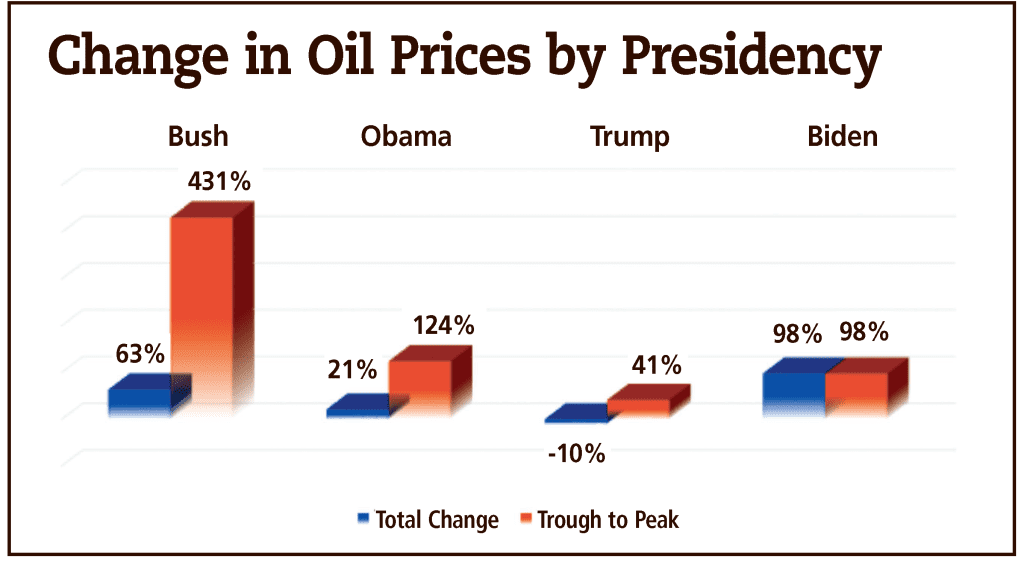
Blaming the White House for inflation is lazy. Macroeconomics are based on supply and demand, and demand is white hot at the moment. Every administration has dealt with volatile oil prices. Indeed, $100 oil is not remotely novel. Consider this: during George H.W. Bush’s term, in the throes of the Gulf War, oil hit $145 per barrel. At the end of Obama’s second term, 26 price was about $91 per barrel. Since January 2001, oil has fluctuated between a low of $27 and a high of $145 (all during George W. Bush’s presidency) but has risen steadily over the past two decades. Here are the stats: 

During the worst of the pandemic, there was a healthy supply of oil and demand fell off a cliff as global travel ceased overnight. Large oil refiners were paying to offload oil. Headlines like this one from Politico in April 2020 were common: “Oil prices go negative — and Washington is paralyzed over what to do.” And while the president has some influence via the strategic oil reserves and negotiations with OPEC, those tools only affect the supply side of the equation. 

Economics is a cycle. Investing is a cycle. Even our careers go through cycles. And we cannot know with certainty the long-term consequences of measures taken at the crisis points of any of these cycles. Politics has become so polarizing that we pick our sides and blame the other for almost any adverse event, especially when it affects our financial well-being.  

Geopolitics is hot right now because of the tensions in eastern Europe. Beyond the worry of what war brings, Russia is the third largest oil producer in the World behind Saudi Arabia and the United States. The global energy trade may see disruption, and energy prices are likely already reflecting that. It is unlikely, however, that the US consumer’s ability to spend will be dampened. The fundamentals of supply and demand will support the persistence of inflationary pressure, and the occupant of the White House, past or present, has little to do with that.


Jeff Liquori is the co-founder and chief Investment officer of Napatree Capital, an investment boutique with offices in Longmeadow as well as Providence and Westerly, R.I.; (401) 437-4730.


Wealth Management

Decisions, Decisions

By Barbara Trombley, CPA, MBA


Many employees are faced with the decision about whether to invest a portion of their paycheck in a Roth 401(k) or traditional 401(k). What is the difference and what are the implications?

First, most plans now offer both options. If your plan does not, it may be as simple as asking the plan provider if both options can be offered. One major difference between the two is how they are taxed. The traditional 401(k) gives tax benefits now. The employee can deduct their contributions from their taxes now — up to $20,500 if you are under age 50 and up to $27,000 if over. This can save thousands on your tax bill, depending upon what bracket you are in.

The Roth 401(k) does not offer tax benefits now. Contributions are made with after-tax money. Any growth on the funds is never taxed as long as the account has been held for at least five years, the distribution is qualified, and you take the distribution(s) after age 59 ½. The investment choices are usually the same as the traditional 401(k) and many people contribute to both.

Barbara Trombley

Barbara Trombley

“If you are single and have taxable income over $215,951, incremental income is taxed at 35%. Your contributions to a traditional 401(k) plan could save you $350 on every $1000 contribution. The flipside of this strategy is that, in retirement, all withdrawals are taxed as ordinary income.”

What option is best for you? Usually, it comes down to your personal tax situation. If you are in a very high tax bracket now and expect to be in a lower bracket at retirement, it may make sense to get the tax benefits now. For example, if you are single and have taxable income over $215,951, incremental income is taxed at 35%. Your contributions to a traditional 401(k) plan could save you $350 on every $1000 contribution. The flipside of this strategy is that, in retirement, all withdrawals are taxed as ordinary income.

Additionally, investors in traditional retirement plans need to take required minimum distributions beginning at age 72. Even if the retiree does not ‘need’ the funds, the government is ready to begin collecting its taxes on the funds that were deferred in the plan. As the retiree ages, the RMD factors increase, usually resulting in larger distributions. A young employee now that continually contributes to a traditional retirement plan, may have a large balance later in life. When it is time to take RMD’s if the account hasn’t been tapped previously, the amount to withdraw may be rather large, resulting in a big tax bill.

A Roth 401(k) is subject to the same RMD requirement as the traditional 401k. If the Roth 401k is rolled over into a Roth IRA, then RMD’s are not required to be taken. The funds can be used or held at the individual’s discretion, giving more flexibility to tax planning.

Both plans can be left directly to beneficiaries, and, in most instances, the beneficiary will have 10 years to liquidate the account. Of course, leaving tax-free money to your heirs would be more desirable to them but planning should be done to see if it is the correct choice for you.

In our opinion, it is desirable for retirees to have both types of funds — pre-tax and post-tax. This could give them a lot of flexibility to properly tax plan in retirement. Consult with your financial and tax advisors to see what makes the most sense for your individual situation.


Barbara Trombley is a financial advisor and CPA with Wilbraham-based Trombley, CPA; (413) 596-6992. Securities offered through LPL Financial. Member FINRA/SIPC. Advisory services offered through Trombley Associates, a registered investment advisor and separate entity from LPL Financial.

Cannabis

Extracting a Workforce

Susanne Swanker

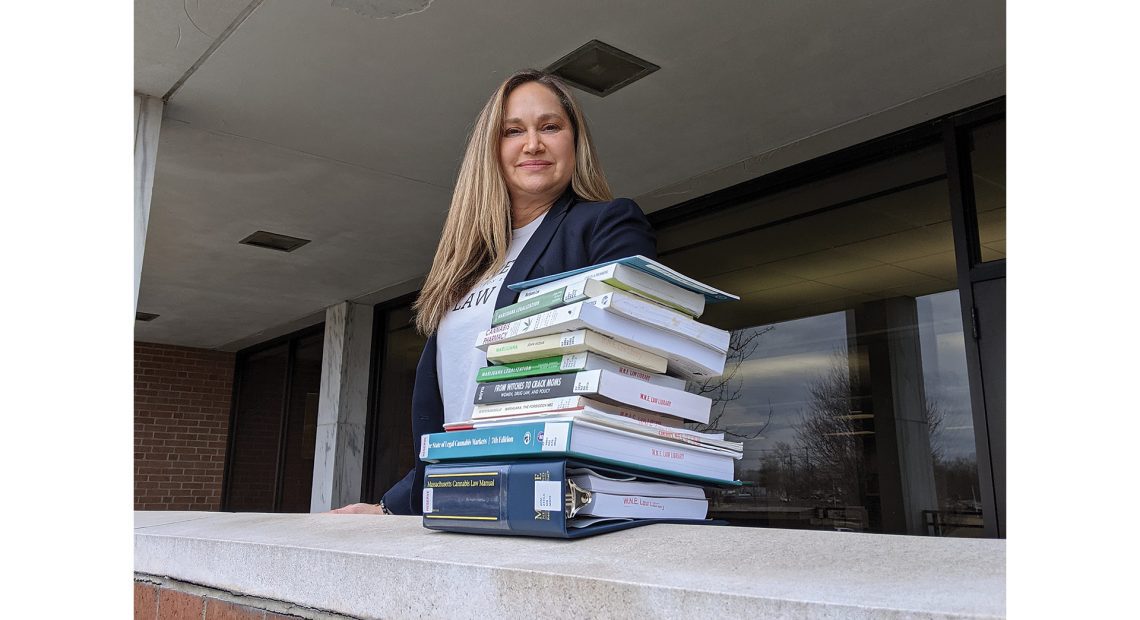
Susanne Swanker says cannabis programs at AIC are being constantly reviewed and updated to remain current and relevant


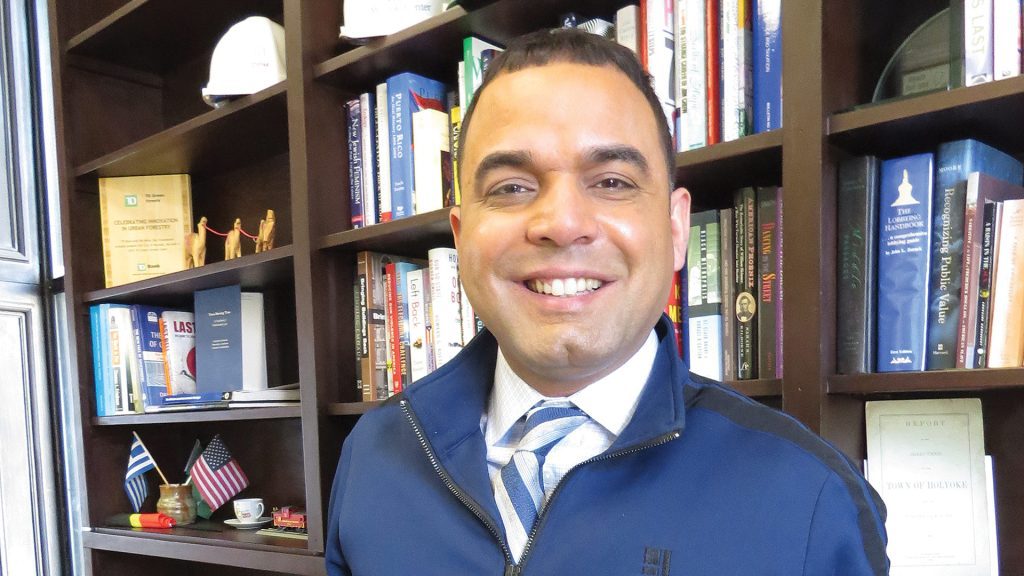
The cannabis industry — and workforce — has come a long way in just a few years, Jeff Hayden says.

“What I think is really crucial, and what we’re trying to emphasize to job seekers, is that this is a business. This is not like going to somebody’s basement and growing a couple of plants. We’re talking about a multi-million-dollar investment for some of these companies,” said Hayden, vice president of Business and Community Services at Holyoke Community College (HCC).

In that city alone, for instance, entire mill buildings have been renovated and brought back to life, bringing jobs to the community and tax dollars to city coffers, he noted.

“This is a business where they’re generating private investment, creating new jobs, and they’re also generating tax revenue. It’s been a win for Holyoke in terms of the amount of growth that’s been stimulated.”

To keep the momentum going, these new companies need employees, which is why HCC launched its Cannabis Education Center in 2020, a series of non-credit courses, in conjunction with the Cannabis Community Care and Research Network, that provide skilled workforce training to prepare participants for a career in the cannabis industry. By this spring, 120 people will have completed the core program, and many will have begun or completed another career-specific track (more on that later).

The conversation about a cannabis training program at HCC began when legal adult-use cannabis was still being debated in the Bay State. If that came to pass, Hayden and others expected, significant workforce needs would follow. And that has proven to be true.

“This is not like going to somebody’s basement and growing a couple of plants. We’re talking about a multi-million-dollar investment for some of these companies.”

Similar discussions were happening at American International College (AIC) when adult-use cannabis was legalized, which is why it launched, also in 2020, a graduate-level program in cannabis science and commerce, the first of its kind in Western Mass.

The 30-credit program is designed for individuals interested in a career in the cannabis industry and provides students with an understanding of the science, business, and legal issues associated with the cannabis industry. The program offers education in the areas of basic science, including chemistry, horticulture, cultivation, uses, and delivery systems; business management, marketing, and operations; and federal and state laws and policies.

The first cohort of the program graduated in August, said Susanne Swanker, dean of the School of Business, Arts and Sciences at AIC, and they are now being surveyed to get a sense of where they are working in the cannabis industry.

“We’ll use that information to help us make changes as necessary to the curriculum,” she told BusinessWest. “We’re only in our second year now, but over the next few months, we’ll be reviewing the program for fresh content, updating materials, and ensuring currency and relevancy in the field, making sure we’re covering the topics and content needed.”

Jeff Hayden

Jeff Hayden says that, to continue growing, the cannabis industry in the region will need a solid pipeline of qualified workers.

Last fall, AIC introduced another cannabis-education track, an undergraduate certificate program called Micro Emerging Markets: Cannabis, which offers three business courses in rotation: “Cannabis Entrepreneurship,” “Cannabis Business Operations,” and “Law and Ethics of Cannabis” — again, with the goal of channeling a pipeline of skilled workers into a fast-growing industry at a time when all sectors are struggling to secure and retain employees.

“We’re in the process of adding some additional courses,” Swanker said, including a broad overview of the history and culture of cannabis, which could be a popular general-education course. “I think we have a lot of interest from our students in that. So that’s an option.”

Five-plus years after legalization in Massachusetts, the popularity of the cannabis industry is no longer in doubt, more than justifying the decisions by HCC and AIC to add some educational fuel to the workforce.


Knowledge Blooms

Hayden explained the thinking behind the Cannabis Education Center and its multiple tracks.

“Essentially, because this was new to Massachusetts, we tried to design a process to inform people about some of the fundamentals in relation to the industry itself, so we developed a module called the core program, and we ask every participant to go through the core program,” he said.

“We’re finding many of the students enrolled in the program are already in the field working, and they’re coming to us with information and knowledge. The discussion in the classroom is that much more enriching because of the prior experience they’re bringing.”

That program requires two eight-hour Saturday sessions. Beyond that are four separate, occupation-specific tracks, typically three all-day Saturday sessions, to train for a specific area of the cannabis workforce: patient services associate (what’s commonly known as a ‘budtender’), who works directly with customers on both adult and medical use; cultivation assistant, who helps in all areas of the grow operation and requires knowledge of plant biology, soils, hydroponics, plant health, nutrition, harvesting, trimming, inventory tracking, and managing plant waste; extraction technician, who learns how to safely extract useful molecular components from cannabis and hemp; and culinary assistant, who is responsible for cooking, baking, and infusing cannabis- or hemp-based products with extracts.

“We’re in the process of creating a fifth track designed for entrepreneurs,” added Hayden, who noted that the center focuses on five key pillars: community education; social-equity training; occupational training; custom contract training to cannabis businesses, including communication, leadership, and mentorship skills; and developing different trainings that would be useful for the industry.

Scholarships are available, and each job-training program is followed immediately by an internship period with a licensed cannabis industry employer. The center has helped place graduates in full-time jobs as well, at companies like GTI, Trulieve, and Analytic Labs, and some companies have engaged directly with HCC about the kinds of skills they need.

AIC relies on industry professionals as well, as adjunct instructors to complement the college’s own business professors.

“From the onset, the program has been a collaboration of full-time faculty in business working with individuals in the field, people who own their own business as well as individuals that are working in larger operations in different parts of the country,” Swanker said. “They work together to inform the current content, what needs to be covered, and develop the curriculum.”

This professional input from outside AIC is key, she added. “They’re the ones who are experts in the cannabis field, and the ones constantly helping us update materials and discussions. Also, we’re finding many of the students enrolled in the program are already in the field working, and they’re coming to us with information and knowledge. The discussion in the classroom is that much more enriching because of the prior experience they’re bringing.”

AIC leaders were quick to recognize the coming workforce needs in cannabis when the college developed its programs, Swanker said, and also found the Cannabis Control Commission’s focus on diversity and social equity to be appealing as well. “That’s something that speaks to us as an institution and fits our mission. That was just another attractive part of it.”


High Hopes

Swanker said interest in AIC’s cannabis programs remains strong. “When we launched it, we had a tremendous number of inquiries, and that remains at a very high level, which is very encouraging.”

And why not? According to a February 2021 jobs report issued by Leafly, the world’s largest cannabis website, legal cannabis supported 321,000 full-time jobs in the U.S. at the time, and since then, tens of thousands more jobs have been created in states like Massachusetts, Florida, Michigan, Missouri, New Jersey, Ohio, Oklahoma, and Pennsylvania, making cannabis one of the most robust job-creation engines nationally. In Massachusetts, adult-use cannabis sales crossed the $2 billion threshold last year.

In short, both nationally and regionally, this fast-growing market offers plenty of employment and entrepreneurial opportunities for years to come, and for a wide range of skill sets, Hayden said.

“We’re really at the start of it. This is a new industry with new opportunities for people looking to get into a new career area or take the skills they already have and use it in this new sector. If you’re an accountant or bookkeeper or human-resources specialist, then there are job opportunties within this industry for you.”

Which is why programs to educate the next wave of the cannabis workforce are expected to multiply and expand.

“The industry has a need for high levels of sophistication in terms of business management, marketing, and the like. I think we’re going to continue to see it grow,” Hayden added. “At some point, there might be too many companies trying to start up, but not yet; right now, they’re all trying to take advantage of opportunities to get in and grow.”


Joseph Bednar can be reached at [email protected]

Cannabis

A Real “Game-changer”

By Mark Morris

Kevin Perrier, left, and Volkan Polatol

Kevin Perrier, left, and Volkan Polatol, partners at Dreamer Cannabis, are now able to offer credit card transactions at their dispensary. 

Since cannabis became legal in Massachusetts consumers have had to pay for their purchases with cash or a debit card. At a dispensary in Southampton, that has changed in a big way.

Beginning Feb. 14, customers at Dreamer Cannabis have been able to use their credit cards to purchase cannabis products.

“The term ‘game-changer’ gets thrown around a lot, but for this industry that’s pretty huge,” said Kevin Perrier, a partner with Dreamer Cannabis.

Because cannabis is legal in only 18 states, federal law prohibits credit card companies such as Visa, MasterCard, and American Express from accepting cannabis transactions in their systems.

Perrier and Volkan Polatol, his partner at Dreamer Cannabis, were exploring the idea of a cannabis delivery business when their research revealed an innovative way several cannabis companies in California were accepting payments by credit card.

“The method is similar to the way Venmo works,” Polatol said. Venmo is the peer-to-peer payment app that allows individuals to quickly exchange money with each other.

While credit card companies will not process cannabis transactions, accepting payments from third-party platforms is legal and compliant. When a Dreamer customer uses a credit card, the transaction is processed by a third-party platform which uses blockchain technology through the InterPlanetary File System (IPFS) to process the purchase. According to its website, IPFS is a peer-to-peer network that uses blockchain to make the web faster, safer, and more open. Blockchain is known for keeping data secure and for providing a permanent record of the data. For this reason, a growing number of banks support blockchain transactions.

“California has a more-developed cannabis market as they’ve been working with it much longer than any other state. Trends in cannabis seem to start there and migrate east.”

Credit card companies recognize blockchain transactions as legal and compliant, so they receive the data of the purchase through the blockchain and the consumer receives the charge on their bill.

While blockchain is often associated with Bitcoin and other cryptocurrencies, Perrier said the system use by Dreamer Cannabis is not involved in any cryptocurrency.

“Most people are not familiar with crypto, it’s complicated to use and it’s not stable,” he said. “The system we use runs on blockchain, but does not use crypto.”

Perrier said he and Polatol dug deep in their research and spoke with dispensaries in California who use this platform, eventually selecting a company from the Golden State.

“California has a more-developed cannabis market as they’ve been working with it much longer than any other state,” Perrier said. “Trends in cannabis seem to start there and migrate east.”

After looking into the viability of the payment system, the partners wanted to make sure it was legitimate.

“I was the first skeptic,” Polatol admits. “Obviously we didn’t want to introduce something that was going to turn people off.”      

Said Perrier, “I know the people who created this platform and their history. They are involved in many other reputable platforms and businesses.”

Another factor in offering credit card use involves keeping the consumer experience quick and simple.

“The ability to use a credit card makes purchasing cannabis more accessible to consumers,” Perrier said noting that using a debit card to buy cannabis is different than other debit card purchases.

For example, if a customer wants to use their debit card to make a purchase of $95.17, they take the equivalent of an ATM withdrawal through the dispensary’s system. Because it is an ATM withdrawal, they would round up to $100 to pay for their purchase and then receive the difference in cash. The customer must also pay a $3.50 transaction fee for using their debit card.

“We see a lot of head-scratching from first time customers,” Perrier said. “We’re hoping that using credit cards will make it a more straightforward and quick transaction.”    

To make the same $95.17 purchase with a credit card, the clerk will ask for the person’s mobile phone number and send them a link. The purchaser inputs their credit card information and receives acknowledgement of the purchase along with the dispensary. Added to the purchase is a 6% transaction fee to cover fees charged by the credit card company and the third-party platform. Customers can open an account with Dreamer to simplify the process. Using Apple Pay or Google Pay also requires fewer clicks to make a purchase.

“The transaction gets processed on a parallel channel and stays off the credit card networks,” Polatol said. “The purchase data is then forwarded to the credit card company from the third party, which keeps it all legal.”

Dreamer is the first cannabis dispensary in Massachusetts to accept payment by credit card. Perrier said there are a few similar efforts at other ventures across the state, but they are simply downloadable apps that tie into the person’s bank account and function like a debit card.

“All those apps really do is help the person avoid the $3.50 transaction fee,” Perrier said, adding that a debit account is only as viable as the funds that are available in it. “If you try to buy something on Wednesday and your paycheck doesn’t land in your account until Thursday, that money is not available to you until then.”

Offering the option of charging a purchase on a credit card brings huge potential for increasing business. Allowable limits of purchase still apply, of course. In Massachusetts, consumers may purchase up to one ounce of “flower,” which is the plant form of cannabis, or five grams of concentrate per day.

“We’re hoping it’s a win-win,” Perrier said. “Obviously it can boost our sales and we hope it makes purchasing cannabis easier for people.”

Ultimately, Perrier said, credit cards are part of evolving their business and staying ahead of the curve.

Meanwhile, he and Polatol have several projects on the horizon that promise to bring more innovation to the cannabis industry in Western Mass.

The first project involves the partners opening a dispensary at the former Sierra Grill restaurant in Northampton featuring products from the Honey Brand, a California-based company that makes cannabis oils that can be vaped or consumed as edibles.

Perrier and Polatol have also purchased a former Western Mass Electric Company building in Easthampton that they are converting into a canning facility for cannabis seltzer.

Finally, the two are close to unveiling a cannabis-delivery business that would allow customers to order cannabis from an app, pay for it online and have the purchase delivered to their door.

Perrier summed up their activity by joking, “If you don’t innovate, you die.”

Right now, the partners are educating the skeptics and naysayers who come into Dreamer and can’t believe credit card transactions are both safe and legal.

Perrier expects people to have questions, because it’s such a different concept for the cannabis business.

“As the first ones to offer credit cards, we have to educate the consumer,” Perrier said. “I think credit cards will be widely accepted in the coming years, but for now we just want to make it available for our customers as another way to pay for their purchases.”

In the long-term Perrier would like to see cannabis purchases become as routine as a trip to the liquor store.

“No one thinks twice about charging a liquor store purchase on a credit card,” he said adding that credit card acceptance makes it possible for cannabis purchases to eventually become more normalized and mainstream.

Business of Aging

When Memory Falters

By Mark Morris


As we age, the occasional struggle to find a word, or a sporadic lapse of memory, is hardly a cause for alarm. It becomes a concern when short-term memory or trouble finding words becomes a constant battle, because those are often signs of dementia.

Memory loss is usually observed by others and not the person who is afflicted. According to Lori Todd, executive director of Loomis Lakeside at Reeds Landing, a person tends to lose their short-term memory — such as not remembering what they had for breakfast — while their long-term memory stays sharp, and they can tell you all about what happened in 1950.

“We also see the person ask a question, get an answer, and then, 10 minutes later, ask the same question,” Todd said.

Understanding the difference between benign memory loss and early stages of dementia can be difficult for families of aging parents because confronting dementia often comes with lots of fear and denial.

“They know you are an important person in their life, and they know there is an emotional connection. Words aren’t as important as the emotions.”

Beth Cardillo, executive director of Armbrook Village in Westfield, works with families to better understand what is happening with their loved ones. Overcoming their fear and denial is the first big hurdle.

“Family members might admit that mom has a little dementia, but not Alzheimer’s,” Cardillo said. “They treat Alzheimer’s like it’s a dirty word.”

While there are more than 100 types of dementia, Alzheimer’s disease accounts for nearly two-thirds of all dementia diagnoses. Cardillo noted that it’s not unusual for someone to have Alzheimer’s as well as one or two other types of dementia.

On the last Wednesday of each month, she runs a caregiver support group that gives families a chance to hear what others are going through while caring for an aging parent.

Beth Cardillo

For loved ones of individuals with dementia, Beth Cardillo says, overcoming fear and denial is often the first challenge.

“I don’t say much; I’m simply there as a resource,” she said. “Most of the talking is done by group members who help clear up misconceptions and help others realize they are not alone.”

Cardillo called it a true support group, one that has been active for 10 years, the last two years via Zoom, and she welcomes any caregiver to join the group. “And I mean anyone because it’s a virtual group. We have family members from all over the country who join in the discussion.”


Keep Talking

Open communication with families can help them overcome some of the fear and denial that comes with seeing a loved one losing their cognitive abilities. This can also lead to better interactions.

One past practice which is now discouraged was to try to reality-orient an individual with dementia. For example, if a 95-year-old asks to see her mother, the natural tendency is to point out that her mother would have to be 130 years old. Todd recommends, instead of a rebuttal, just going with it.

“It’s an opportunity to engage and say, ‘let’s talk about your mother and all the wonderful things about her,’” she explained. “By going on that journey, it makes them feel good and improves their quality of life.”

Often, a son or daughter will insist on asking the parent with dementia to say their name and then, if they can come up with it, assume they are having a good day. Cardillo said knowing their children’s names doesn’t really matter and can cause embarrassment for the parent if they don’t succeed.

“They know you are an important person in their life, and they know there is an emotional connection,” she added. “Words aren’t as important as the emotions.”

At Reeds Landing, people with dementia live among the other residents. While resident assistants are there to help when needed, those with dementia have a daily routine and feel more included.

Lori Todd

“Concentrate on what makes them happy. Their long-term memory is still there, so it’s an opportunity to encourage talking about good memories they have.”

“We try to keep them at their highest level of functioning in more of a home-like setting rather than an institutional one,” Todd said.

People with dementia are capable of learning and in many ways remain the person they have always been, Cardillo added. “There are still moments of lucidity. Just because you have dementia, does not mean you are stupid.”

Programs that encourage a fail-free environment tend to work well for those with dementia, such as the painting program at Armbrook Village called Memories in the Making.

“Lots of conversation comes out during these sessions,” Cardillo said, recalling one resident who painted a summer scene. When she asked what that meant to the artist, she reminisced about vacations in Maine many years ago. “It doesn’t matter what they are painting; it’s really an opportunity to share their feelings and tell their stories.”

While staff at local senior communities are trained to look for signs of dementia in residents, it can be more difficult for seniors living at home. Todd usually sees an increase in phone calls after someone comes home for Thanksgiving, assuming their mom or dad is doing fine, only to discover things are not going well.

“We encourage people to talk with their parent’s physician when there has been a change in behavior,” she said. “The physician is a good resource because they know the baseline health of the parent.”


Past Meets Present

Helping people understand dementia is a constant activity for Cardillo. Seven years ago, she started the Dementia Friendly movement at Armbrook. Through a partnership with the city of Westfield, Armbrook staff train city employees, first responders, local businesses, and the public on how to recognize the signs of dementia and to better communicate with those afflicted with it.

Both Cardillo and Todd acknowledged that dementia can be frustrating for the person and their family. Because there is no cure for dementia, the emphasis then becomes on the person’s quality of life.

“Concentrate on what makes them happy,” Todd said. “Their long-term memory is still there, so it’s an opportunity to encourage talking about good memories they have.”

Music can also be an effective way to promote good memories. Cardillo referenced a study of a group of people with dementia who were suffering from depression. Researchers asked their families what music the person enjoyed when they were young and made a playlist of that music to play on headphones.

“It woke up their brains and changed their moods,” Cardillo said. “We all hear music and it brings us back to a certain time.” Because music gives most everyone fond memories, she added, it’s no surprise that music brings pleasure to those with dementia as well.

Whatever the milestones along the journey, once family members can move past their denial and fear, she noted, they can really make a difference for their parents.

“When people understand that dementia is not something to be feared, they can begin to accept it and be there for their loved ones.” u

Business of Aging

Room for Improvement

By Elizabeth Sears


Cooley Dickinson has a vintage 1973 Emergency Department — functioning well beyond its expected lifespan.

Even though this older facility has been a workhorse through the pandemic, helping support its community through what is now four waves of COVID-19, it has some obvious bottlenecks. Due to a constriction of space, those at Cooley Dickinson have found themselves getting creative, using hall beds in order to get by. However, an intriguing, $15.5 million solution is currently in the works for 2023.

The plan, “Transforming Emergency Care: Campaign for the Cooley Dickinson Emergency Department,” will include the renovation of 17,000 square feet, plus a 6,600-square-foot expansion. In 2019, Cooley Dickinson completed a master plan for facilities, and the Emergency Department was identified as an area greatly in need of expansion and and renovation.

“We looked at the entire institution, and the Emergency Department emerged as the number-one priority,” said Diane Dukette, chief Development officer at Cooley Dickinson. “Then came the pandemic, and that only further heightened that need we had to take over the endoscopy space to create a specialized respiratory Emergency Department.”

This project was delayed due to the COVID-19 pandemic; the initial plan was to start in 2020. However, this has allowed for plenty of time to plan, and those at Cooley Dickinson are feeling optimistic about the current timeline.

Diane Dukette

“We looked at the entire institution, and the Emergency Department emerged as the number-one priority.”

“The more planning you put into this, the better your construction phase is going to be, so we plan to really work with Consigli, our construction manager, to roll out a good phased-construction plan so it goes smoothly,” said Dr. Robert Redwood, an emergency-medicine specialist at the hospital.

Since this project is occurring in an endemic-COVID world, the plan is incorporating HVAC needs like filters and negative airflow throughout the Emergency Department. This will be essential for taking care of patients during an ongoing respiratory pandemic, Redwood said.

The ED expansion and renovation project continues to be the top priority of the organization. The Emergency Department is roughly 40% undersized right now for the population it serves, and that figure does not take into account the Pioneer Valley’s constantly growing population.

Due to the current space limitations in the existing ED, Cooley Dickinson’s staff strategically makes decisions every day about where to put patients. This is not ideal for anyone, but the staff is doing everything they can to ensure patient care, Dukette said.

“Our staff are spending more time doing workarounds and showing up and providing exceptional care in this space,” she told BusinessWest, adding that more space will allow them to do their jobs more efficiently.

Redwood spoke of the ‘triple aim’ in healthcare, which focuses on better outcomes, population health, and patient satisfaction. Now, there’s been considerable interest in a ‘quadruple aim.’ The Institute for Health Improvement has developed a four-part framework which includes care for the care team — something that has been key during this pandemic, he said. This factor will certainly be reflected in the upcoming project.

Dr. Robert Redwood

“We are sort of in the midst of a burnout epidemic as well during the COVID epidemic, and we want our facilities to be a place where staff feel proud to work and are able to take care of patients but also take care of themselves.”

“There’s going to be good lighting for the staff, staff respite areas and we’ll really try to take care of the people providing the care as well,” he said. “We are sort of in the midst of a burnout epidemic as well during the COVID epidemic, and we want our facilities to be a place where staff feel proud to work and are able to take care of patients but also take care of themselves.”


Space Exploration

It has been firmly established that crowding in emergency departments leads to poor outcomes, which is especially evident from the ED crowding that has been seen across the nation due to COVID-19. This has only emphasized the importance of streamlined processes where medical professionals can move their patient population through their space and get the emergencies diagnosed and stabilized in a rapid fashion, Redwood said.

“There are time-sensitive drugs,” he explained. “If you come to the emergency department with a stroke, my goal is to get you tPA — it’s called alteplase — within 60 minutes, and a key step there is getting this CT scan in a timely fashion, so the closer the CT is, when it’s co-located in the department, the quicker you can do those critical-care pathways.”

Another focus of this renovation project is creating a more geriatric-friendly facility. This includes features like large hallways, accessible bathrooms, nutrition stations, mobility aids, good acoustics, good signage, and bright lighting.

“These sound like no-brainers now, but they’re really not no-brainers,” Redwood explained. “You have to build it, you have to design it, elegantly. When patients come into the ED with dementia, they can easily have sensory overload, and then have behavioral changes due to sensory overload, so you want to have an environment that supports care for patients with dementia.”

Cooley Dickinson’s Emergency Department has received geriatric emergency department accreditation by the American College of Emergency Physicians, making it a pioneer within its larger healthcare system, Mass General Brigham. Indeed, it is the first hospital within the 13-hospital system to receive that accreditation. Other facilities in the system are going to follow suit, Redwood noted.

Another improvement to be included in this project is a larger behavioral-health pod, the need for which has only been exacerbated by two years of pandemic.

The phenomenon has been referred to as the “syndemic” — the COVID-19 pandemic plus a mental-health epidemic. Many of the support structures people have for their mental-health needs are lacking, Redwood explained, calling for improvements in behavioral-health resources.

“We’re going to have a dedicated behavioral health pod,” he said. “The current pod for behavioral health has four beds, and, for example, we have pediatric psych warding as a challenge in Massachusetts. We have two patients who have been there for well over a month in the pod, so those are beds that aren’t turning over, they aren’t readily usable. An expanded behavioral-health pod will be just really beneficial for the community.”

As noted, the price tag for the project is $15.5 million. Dr. Lynnette Watkins, president of Cooley Dickinson Health Care, recently announced a $1 million gift given by John and Elizabeth Armstrong of Amherst to contribute to the project. Additional fundraising efforts have been launched in these early stages of the project.

“What’s particularly exciting is that we had a group of individuals that came together to help us get this launched and gave us collectively a million-dollar challenge: to raise a million dollars by March 1, and then they’ll give us another million dollars,” Dukette said.

In regard to that $1 million goal, Cooley Dickinson has $117,000 left to raise over the next two weeks before it can garner the matching $1 million. Toward the end of the year, the hospital anticipates reaching out to the community for fundraising, which will coincide with when construction starts.

“This is a project that truly touches everyone in our community, and the club is honored to support the hospital,” said Steve Roberts, 2021-22 president of the Northampton Rotary Club, on the club’s recent $5,000 gift to the campaign.


Bottom Line

Redwood emphasized that, at the end of the day, what the Cooley Dickinson Emergency Department really needs is real estate.

“We need physical beds, and having an expanded footprint will allow us to really meet our community’s needs,” he said. “So we’re building an ED for 40,000 to 48,000 ED visits per year. Right now we’re around 32,000 to 34,000 visits per year, but the Valley is a popular place, it’s only growing, and we know we’re going to need that capacity.”

Both Redwood and Dukette enthusiastically stressed that this project is essential for the well-being of their community.

“We’re extremely proud of the fact that we are very inclusive, and we do everything we can to make whoever shows up in our emergency room feel welcomed and cared for,” Dukette said. “We’re a team.”

Class of 2022

The Class of 2022 to Be Announced In the May 2 Issue of BusinessWest

BusinessWest launched its 40 Under Forty program in in 2007 to recognize this region’s rising stars, and it has since become a coveted honor throughout Western Mass., shining a spotlight on individuals who have excelled professionally, but also in their service to the community.

Nominations for the 16th annual celebration have closed, and the judges are hard at work evaluating more than 150 unique nominations, an indication that the pandemic has not slowed this program’s energy or importance to the region.

The class of 2022 — which will be profiled in the May 2 issue of BusinessWest and honored at the 40 Under Forty Gala on June 16 — will, as usual, be chosen by five independent judges, who bring broad experience in entrepreneurship, business development, and civic engagement, among other traits, to their task. Here’s a quick look at each of this year’s judges.

Xiomara Albán DeLobato

Xiomara Albán DeLobato

Xiomara Albán DeLobato, a member of the 40 Under Forty class of 2021, currently serves as the chief of staff for the Western Massachusetts Economic Development Council (EDC), where she facilitates the growth and development of the regional economy by encouraging, influencing, and sustaining capital investment and quality job growth in Western Mass. She has dedicated her career and community involvement in serving as an active change agent and steadfast advocate for equitable access to economic and academic opportunities in the region and beyond. She also serves as an active board member for Girls Inc. of the Valley, the Springfield Public Forum, and trustee for Veritas Prep Charter School.

Madeline Landrau

Madeline Landrau

Madeline Landrau, one of BusinessWest’s Women of Impact in 2021, joined MassMutual in 1996 and currently works on the Community Responsibility team as a Program Engagement Manager. She oversees the MassMutual’s Home Office Giving portfolio and associated relationship management, working with nonprofit organizations primarily in MassMutual’s home office community of Springfield. She’s the lead for LifeBridgeSM, MassMutual’s free life insurance program that offers free life insurance coverage to eligible parents for the benefit of their children’s education. Active in community affairs, Landrau has a devout interest in mentoring young Latinas, providing informal mentoring and coaching, guiding them to make sound decisions, develop socially and enhance their educational skills. She is the first Latina trustee of Westfield State University, where she serves as vice chair of the Investment Subcommittee of the Finance & Capital Assets Committee.

Ryan McCollum

Ryan McCollum, a 40 Under 40 winner in 2012, is the owner of RMC Strategies, which provides full service political consulting to candidates, elected officials, nonprofits and for-profit institutions. Born in Springfield, McCollum worked for several state senators before returning to Springfield to work as a project manager in the City’s Economic Development Department under former Mayor Charlie Ryan. He returned to Beacon Hill to work as the legislative director for the Office of Housing and Economic Development under Gov. Deval Patrick. An initial founder of the Young Professional Society of Greater Springfield, he is on several area boards, including 16 Lyrics, Suit Up Springfield, Square One, Healing Racism Institute, ROCA, NCCJ and the marketing committee of the Springfield Museums. He sat on the Town of Longmeadow Coalition for Racial Justice Task Force, and also serves on the Boston based Rian Immigrant Center, which helps immigrants assimilate to our country. 

Chad Moir, president and CEO of DopaFit Parkinson’s Movement Center in Easthampton, was honored by BusinessWest with both its 40 Under Forty and Difference Maker awards in 2021. A graduate of American International College and its Public Health program, Moir created DopaFit in 2015. The company uses exercise prograns to help people stop or slow down the progression of Parkinson’s, a neurodegenerative disorder that increasingly robs the body of dopamine, which is released during exercise. Moir said he has always taken inspiration from the Muhammad Ali quote, “service to others is the rent you pay for your room here on earth.”

Amy Roberts

Amy Roberts, executive vice president and chief Human Resources officer at PeoplesBank, has more than 18 years of experience working with business leaders to develop and implement people-management and talent-development strategies. She has a bachelor of Arts in Communications from Bridgewater State University and a masters of Human Resource Development from American International College. An active member of the community, she has served on many boards including the United Way of Hampshire County, Leadership Pioneer Valley and CHD. She is a reader for the Link to Libraries program and serves on the Service Above Self Annual Luncheon Committee for the Springfield Rotary and Basketball Hall of Fame.

Opinion

Moving Toward ‘Normal.’


For more than two years now, this region and its business community have been longing for a return to something approaching ‘normal,’ or what we knew before COVID arrived in Western Massachusetts in early March of 2020.

If the pandemic has taught us anything over the past 24 months, it is that we shouldn’t take anything for granted and should never think that anything is ‘over,’ because ‘over,’ when it comes to COVID, is a relative term.

But, and this is a big but, we are starting to see some very welcome and very refreshing signs of normal. Let’s start with the Holyoke St. Patrick’s Day Parade and road race. After a long, painful two-year hiatus, these traditions are returning, and Holyoke — and the region — are poised for a huge party.

Also returning after two years on the sidelines is Bay Path University’s annual Women’s Leadership Conference, an event that brings more than 2,000 attendees to the MassMutual Center in Springfield each spring. And then, there’s BusinessWest’s Difference Makers event, another early spring tradition.

It will be back at the main ballroom at the Log Cabin on March 24. The event has been staged over the past two years, but not in its traditional fashion. In 2021, it was a virtual event, and in 2020, it became a fall happening, staged at the Upper Vista at the Log Cabin with 25 people in attendance — because that was the limit for event venues at that moment in time.

We all remember those days, and would probably like to forget them.

As we see more important signs of ‘normal’ — on our calendars, and in general — there is room for optimism that the time may soon be approaching when the pandemic ceases to rule our lives and is something we just have to live with. How soon, no one knows, but by most accounts, we’re moving much closer.

Those who spoke with BusinessWest about the Holyoke parade and its long-anticipated return, everyone from the mayor to the parade chairman to bar owners in the city, spoke about its importance from an economic perspective. Indeed, dozens of businesses benefit directly from the parade and the road race, and some generate perhaps half a normal year’s income during that one week.

But they also spoke of its importance from a civic pride perspective and how people came back to Holyoke year after year because it was the place to be St. Patrick’s Day — or the whole week. And they talked about the importance of getting back to something approaching normal.

That’s because it’s been missing from our lives for most of the past two years.

What we’ve learned since March of 2020 is that ‘normal’ is important, ‘normal’ is good for everyone.

And that point will be driven home again when the parade kicks off in Holyoke, when the speakers take to the stage at the Women’s Leadership Conference, and when the Difference Makers hear the applause they’ve earned at the Log Cabin.

Yes, we can all use a little ‘normal’ right about now.

Opinion

Putting MassSave Changes in Perspective

By Robert Rio

Massachusetts recently updated its flagship Mass Save energy efficiency program. The changes will affect businesses in areas served by an investor-owned electric or gas utility — companies such as Eversource, National Grid and UNITIL.

The changes took effect on Jan. 1. Massachusetts reviews its energy efficiency programs every three years. 

What will the changes mean to your company? Many commercial and industrial (C&I) programs will continue, some with modifications.   

Greenhouse-gas reductions are now counted in the calculations to determine energy savings 

A 2021 Massachusetts law mandated economy-wide greenhouse gas (GHG) reductions beginning 2030. As a result, the new energy efficiency programs include the social value of carbon in the cost-effectiveness analysis calculations for most measures.

The result is that previously marginally cost-effective programs may now be eligible for programs when the benefits of greenhouse-gas reductions are included. The new three-year plan is expected to reduce the equivalent of 845,000 metric tons of greenhouse-gas by 2030, equal to the emissions from about 180,000 cars. 

New emphasis on heat-pump technology 

Reducing greenhouse gases will eventually require a switch from fossil fuels to electric options for building heating, water heating and some industrial processes. The new plan will emphasize electric heat-pump technology for commercial and industrial customers, particularly for smaller businesses where residential-sized options may work.

Larger companies may have a tougher time electrifying, but electrification may still make sense in areas of your facility, particularly if you are served by delivered fossil fuels such as oil and propane.  

Most lighting rebates are eliminated

Since its inception, Mass Save has offered rebates for energy efficient lighting. Now that such lighting is often required by code and ubiquitous, rebates are not allowed, except when new lighting is paired with controllable technologies.  

Combined Heat and Power (CHP) is no longer eligible for rebates  

Combined Heat and Power systems produce electricity and recover the exhaust heat to produce heating, cooling, and process steam for manufacturing and other uses.

Many businesses have installed combined heat and power to manage their energy costs and ensure reliability. AIM has long supported this effort. The new greenhouse-gas law makes natural gas and other fossil fuels ineligible for rebates. AIM has long supported CHP and disagrees with the elimination of incentives for Combined Heat and Power.

Electricity and natural-gas costs will rise 

The Mass Save program is primarily funded by a surcharge on a customer’s electric and gas bills.

In the previous three-year plan (2019-2021), the total costs (gas and electric) were about $1.1 billion for commercial and industrial customers, representing about 40% of the total program costs. Rebates are generally sector specific, so money collected from commercial and industrial customers is mostly returned to those customers.

The new program will see commercial and industrial sector costs rise to about $1.56 billion dollars over three years. The impact on company energy bills will vary, but the increase will have a measurable impact on overall energy costs. More information will be available as programs are rolled out.


Robert Rio is senior vice president and counsel of Government Affairs for Associated Industries of Massachusetts; [email protected] 

Daily News

SOUTH HADLEY — Mount Holyoke College President Sonya Stephens announced that she will step down in August to become president of the American University of Paris.

Stephens joined Mount Holyoke in 2013 and served as vice president for Academic Affairs and dean of faculty before being appointed acting president in 2016 to replace Lynn Pasquerella. In 2018, the board of trustees voted to remove the ‘acting’ title.

In a letter to the Mount Holyoke community, Stephens said her new role in Paris is a “unique opportunity to advance a contemporary expression of the liberal arts in France — one that brings together so many of my intellectual and administrative interests and commitments.”

She added that “it has been an extraordinary honor and a privilege to serve you and Mount Holyoke since 2013 and to work in concert with brilliant and exacting students, with a faculty that is as devoted to outstanding scholarship as it is to cultivating inquiry in others and with a leadership team and staff so exceedingly devoted to our mission. It has been inspiring and motivating to work with such an engaged, thoughtful, generous, and dedicated board of trustees, and to come to know, admire, and deeply appreciate the wider alum community. While I have held different roles over these nine years, I see our work together as a continuum — one focused resolutely on the future strength of the college, on enhancing the exceptional educational experience it offers, and on the community that makes this possible, here on campus, across the nation, and worldwide.”

In the past six months, Stephens is the third president in the Five Colleges community to announce she will be stepping down, following Amherst College President Biddy Martin in September and Smith College President Kathleen McCartney last week.

Daily News

CHICOPEE — Michelle Jarvis-Lettman recently joined Elms College as director of Financial Aid in January. She has 15 years of experience within student financial services with positions at Worcester State University, Springfield Technical Community College, Wesleyan University, University of Hartford, and Ironbridge Resources, LLC. She has presented on the topic of financial aid to many audiences, including the Massachusetts Assoc. of Student Financial Aid Administrators in 2019.

Jarvis-Lettman received her master’s degree in higher education administration from Bay Path University after completing her bachelor’s degree in psychology from Worcester State. She was recently appointed to Worcester State’s Athletic Hall of Fame Committee. She also coaches basketball.

In addition, the Elms College Graduate Admission Office recently announced the promotion of Stefany Scliopou to director of Graduate and Continuing Education Admission. She is a graduate of Johnson & Wales University with a bachelor’s degree in hospitality management. After working in the hotel industry for nine years, she transitioned into higher education, where she completed her MBA degree with Elms College.

For the last six years, Scliopou has worked in a graduate admission role helping non-traditional adult students embrace their next-level education endeavors. She has worked alongside students and program directors to ensure exceptional student support. In addition, she is the academic coordinator for the Elms-HCC business-degree-completion programs as well as a part-time adjunct. She serves on the board of the Young Professional Society of Greater Springfield, the Greater Chicopee Chamber of Commerce events committee, and the parish council board for St. George Greek Orthodox Cathedral in Springfield.

Daily News

CHICOPEE — Phillips Insurance Agency Inc. was named a 2021 Elite agent by Liberty Mutual Insurance. The award recognizes the contributions of the top-performing agencies in the country. Phillips is the only agency in Massachusetts to win the award for 15 straight years, and was recognized at the President’s Club award ceremony at the Four Seasons in Kapolei, Hawaii in December.

Phillips Insurance Agency, established in 1953, is a full-service risk-management firm with a staff of 31 professionals and the largest independently owned agency in Western Mass. The agency handles the personal and commercial insurance needs for thousands of individuals and businesses throughout the Northeast.

Daily News

EASTHAMPTON — On Friday, May 20, the Greater Easthampton Chamber of Commerce will host sheLEADS, a woman’s conference aimed at building a bold, brave community of women in the 413 with an eye on professional development and beyond.

“This is a high-energy day filled with professional development, relationship- and leadership-building opportunities. Our focus is on providing attendees tools and connections that they didn’t have when they walked in,” said Moe Belliveau, the chamber’s executive director.

The day begins at the Boylston Room in Easthampton at noon and ends with networking at Abandoned Building Brewery. In between, attendees can look forward to “Activating Your Leadership Strengths,” facilitated by Colleen DelVecchio of Colleen DelVecchio Consultants; “The Language of Leadership,” a panel discussion featuring Pia Kumar, chief strategy officer at Universal Plastics, Lynnette Watkins, president and CEO of Cooley Dickinson Health Care, and Waleska Lugo-DeJesus, CEO of Inclusive Strategies; and “Be Great Where Your Feet Are,” featuring keynote speaker Robyn Glaser Sr., vice president, Business Affairs for the Kraft Group.

For tickets and details, visit www.easthamptonchamber.org or click here.

Cover Story

The Return of a Tradition

Marc Joyce

Marc Joyce, chairman of the 69th Holyoke St. Patrick’s Day Parade

It’s been nearly 1,100 days since Holyoke has staged its St. Patrick’s Day Parade and accompanying road race. That’s way too long for the businesses that depend on those institutions for a large percentage of their annual revenue. And it’s way too long for a community that always gains a huge dose of civic pride when mid-March rolls around. The traditions are back for 2022, and for the city and the region, there is much to celebrate.


The cover to the program book for the 69th Holyoke St. Patrick’s Day Parade was designed by an artist from Ireland.

Blended with the headline ‘The Season of Green,’ is a collection of the words that identify dozens of shades of green — from pistachio to lime; jade to shamrock — arranged in the shape of the Emerald Isle, and in those various colors.

It’s striking — and, yes, very green. But perhaps the most poignant thing about this publication is the date printed in smaller type to the side: March 22nd, 2020.

Indeed, this program book was published just over two years ago, and except for some minor updates in a supplement that will be inserted into the book, it remains profoundly unchanged. That goes from the date on the cover to all the advertisements inside to the ‘welcome’ from parade President Marc Joyce. In it, he thanks sponsors, the business community, and all those who helped make the parade possible. But there is no mention of the pandemic that kept this tradition from happening for two years.

“Civic engagement and pride in a community, any community, is critical. Any opportunity we can get to keep people excited about feeling good about the city they live in continues to help build on quality of life. That’s why it’s so important to have the parade back.”

Joyce told BusinessWest that the decision was made not to print another book, just that supplement, and to essentially pick up where the world, and Holyoke, left off when the COVID-19 pandemic prompted a shutdown of the state just a week or so before the 69th parade was to step off.

“We like to say that it’s the 2020 parade in 2022,” said Joyce, noting that, in most all respects, the date of the 69th parade has simply been moved up two years. Everything, or almost everything, is as it was then; he is still parade president (his has been a long, grueling three-year stint; normally, it’s one year); John (Jay) Driscoll, a prominent lawyer in Holyoke, is still the grand marshal, and Dave Glidden, president and CEO of Liberty Bank, is still recipient of the prestigious John F. Kennedy Award.

It is as if time has stood still in some ways. Only it hasn’t, obviously.

The program guide for the 69th annual parade

The program guide for the 69th annual parade, or what the event chairman calls “the 2020 parade in 2022.”

Holyoke has been without its greatest tradition for nearly 36 months now, and as it returns, many reflected on all that has been lost — and what has been regained as more than a month of parade-related events and gatherings have returned.

While those in the business community spoke of lost revenue — in some cases more than a third and perhaps even half of what they would generate in an entire year — and lost opportunities to introduce themselves to thousands of patrons (more on that later), all those we spoke with mentioned other, even more important losses, including a sense of identify and feelings of pride in the community.

As for what is being regained … the word that came up over and over and over again is ‘normalcy.’

“There’s a lot of pride in our community when it comes to parade weekend activity, when it comes to the parade and the road race, not just in this community, but across the region,” said Holyoke Mayor Joshua Garcia. “With quaranteening and all the other things we’ve had to deal with, this will bring back some kind of sense of normalcy.

“And that’s important, because civic engagement and pride in a community, any community, is critical,” he went on. “Any opportunity we can get to keep people excited about feeling good about the city they live in continues to help build on quality of life. That’s why it’s so important to have the parade back.”

Peter Rosskothen, owner of several hospitality-related businesses in Holyoke, including the Log Cabin Banquet & Meeting House, the Delaney House restaurant, and others, agreed.

“It’s very good for business,” he said of the parade, the road race and the month of events and activities leading up to it. “But it’s also good for the morale of Holyoke; it’s bigger than business, it’s civic pride, it’s the community coming together. Holyoke is a city with some problems, but you kind of forget about that with the parade.”

Joyce concurred, noting that the losses are not restricted to dollars and cents.

“It’s in the mindset and emotions of people who have grown up with this,” he explained. “I’m 71 years old, and I’ve been on the committee for 45 years. And I remember the first parade I went to; my father was marching with the Post Office, and my mother and I would walk about a mile and a half downtown to watch the parade. When I was away at college, I missed a few parades, but other than that, I haven’t missed any.

“It’s a homecoming,” he went on. “People come back to the city, and you see people you haven’t seen since perhaps last year; it’s a wonderful family-oriented event.”

For this issue, BusinessWest puts the lost years of 2020 and 2021 into perspective, and looks ahead to what all are expecting to be a memorable month as Holyoke welcomes back a tradition.


Mummers the Word

As he reflected back on March 2020 and the parade that wasn’t, Joyce said he remembers many things from that turbulent, mostly forgettable month, including the weather, which, to all those involved with this tradition, is often a big part of the story.

Mid-March in New England can bring with it all kinds of weather, and the parade has seen just about everything over its long history — snow, cold, rain, sleet, wind, and, occasionally, some sun and spring-like conditions.

In a somewhat cruel bit of irony, there were two such warm, sunny days — for the parade and the accompanying road race — in 2020, said Joyce, adding that it was the same in 2021, a meteorological turn of events that would only add insult to the injury of having to call off the parade two years in a row, he noted.

Turning his attention to 2022, Joyce joked that there is now considerable pressure on Driscoll.

Damien Rivera

Damien Rivera says that, for bars and restaurants in downtown Holyoke, the parade and road race are like the Super Bowl.

“We always kid that the grand marshal is in charge of the weather, one way or the other,” he explained. “I kid with him and say, ‘Jay, you’re two for two; can you pull it off a third time?’ I’m hoping, for all of our sakes, that he can.”

Keeping one’s sense of humor hasn’t been easy for the past two years, but Joyce and others involved with the parade have had little choice. The alternative is too depressing.

Recapping the past two years, Joyce recalled that “all systems were go” for the 2020 parade even as the virus first detected in China made its way to this country.

“We know it was out there, but no one knew how serious it was going to be,” he said. “The parade that was going to be in 2020 was canceled about 10 days before the event. That was really tough; people were saying ‘Oh, you’re babies, don’t cancel it.’ The fact of the matter is, we didn’t cancel it. Alex Morse, who was mayor at the time, called me into his office; we met with the Board of Health, and the DPW, and the police and fire, and they explained clearly the science of this thing and the interconnectedness of everything. The Fire Department was concerned that if they lost half their force to COVID, they wouldn’t be able to protect the city of Holyoke appropriately, and it was the same with the police.

“This is an event when every bar can show off what they can do, and we missed out on that opportunity for two years.”

“That was a hard pill to swallow but we always figured that this would be over soon and we’d be back in 2021,” he went on. “But that didn’t happen, for obvious reasons; we actually approached the city right after the first of the year in 2021 — the directors met, we discussed it long and hard, and we just figured that the same reasons we canceled in 2020 still existed in 2021, and it just made no sense to go forward. We approached the city and said ‘this is just not going to work, and we’ll be back in 2022.’”

Joyce remembers sitting on his front porch on parade day 2021, soaking in the gorgeous weather, drinking a Guinness, and watching a few friends drive down the street honking their horns. “That was the extent of the parade.”

Over the course of the past two years, the parade committee has never really stopped preparing for the 69th parade, he went on, adding that some things have gone on as they normally would, like the annual past president’s raffle and a memorial mass for deceased members of the committee.

Meanwhile, there has been planning — much of it via Zoom — for events this year, such as a gala staged late last month at the Log Cabin, the annual Awards Night, and many others.

Nicole Ortiz, who opened Crave on High Street

Nicole Ortiz, who opened Crave on High Street just over a year ago, is looking forward to her first parade week of activities.

As for the parade itself, it will be roughly the size of previous parades, with 15,000 marchers expected, close to 30 musical units, and 19-20 floats. What Joyce and everyone else expects to be larger this year — as in much larger, is the level of anticipation for both the parade and the race.

“It’s really hard to describe,” said Joyce. “Anywhere I’ve gone over the past few years and especially the past six to eight months, people have walked up and said, ‘Marc, are we having a parade?’ ‘Are we having a parade next year?’ People are excited to have the parade back.”

That’s especially true within the business community and its hospitality sector, which has suffered mightily over the past 24 months, as we’ll see.


Glass Half Empty

‘Crazy.’

Wasting no time at all, that’s the word Damien Rivera used to describe road race day at the Unicorn Inn on High Street.

“Really crazy,” he went on, gesturing with his hand around the two rooms that comprise this cozy neighborhood bar, adding that, by late morning on race day both rooms would be crammed with standing patrons — standing because the establishment can fit more people in if there are no tables and chairs on the floor.

Elaborating on ‘crazy,’ Rivera, a long-time employee who once lived above the bar with his father, Bobby Rivera, the establishment’s bar manager, detailed all that goes into race day at the Unicorn, which is even bigger than parade day, because, as he noted, the race ends at that northern stretch of High Street, and that’s where people congregate; the parade, in contrast, is spread out over a larger area, and thus the crowd is more spread out as well.

Peter Rosskothen

Peter Rosskothen

“It’s bigger than business, it’s civic pride, it’s the community coming together.”

He said that extra help is hired, a separate beer station is set up so that bartenders are not slowed by those who simply want a bottle of suds. There’s a DJ, and a deeper menu of food options is created, all in hopes of attracting race fans, who have a number of options when it comes to where to quench their thirst and whet their appetite.

Summing it all up, Rivera said simply “this is our Super Bowl — that’s the best way I can describe it,” meaning it’s the biggest, most lucrative time of the year. How big? Without giving specific numbers, he estimated that St. Patrick’s week — yes, it’s a week to many of those who celebrate it, especially when the holiday falls mid-or even early week and the parade as always, is on a Sunday — generates more than a third and perhaps even half of an entire year’s revenues.

What was it like to be without that week two years a row? Rivera simply shook his head and said “awful.” And by that, he was referencing more than just lost revenue.

“It’s a celebration,” he said of road race day, but also the entire week and beyond. “Holyoke is historically Irish, so when that week happens … it’s timely, it’s cheery, it’s a bright celebration of Irish culture, and for the businesses, this is our most important time.”

He said that establishments like the Unicorn depend on parade-week festivities for more than just revenue. It’s also a great marketing tool, a way to make introductions with potential new patrons.

“It brings people from so many places,” he explained. “If they didn’t know this place was here, they learned that it’s here. So not having the race and the parade meant that new people weren’t learning about this place as much as if we had it; this is an event when every bar can show off what they can do, and we missed out on that opportunity for two years.”

Nicole Ortiz is certainly looking to make some introductions during this year’s parade. She’s the owner of Crave restaurant on High Street, just across the street from City Hall — and the reviewing stand for the parade. She opened the establishment, which specializes in “modern and unique Puerto Rican food,” just over a year ago and missed out on a parade that year. In fact, Ortiz, who started with a food truck in early 2020, hasn’t experienced a parade as a business owner — although she’s heard quite a bit about the tradition from other business owners. She’s looking forward to the opportunity.

“They told me there’s tons of people down here, and they make tons of money,” she explained. “They say there’s tens of thousands of people down here for the race as well as the parade; it sounds pretty crazy.”

Rivera is looking forward to 2022 being a breakout year, and he’s not alone in that assessment.

Indeed, the phrase pent-up demand has been used in almost every context imaginable over the past 24 months, from cars to dining out to vacationing. And when it comes to the parade and the road race, pent-up demand is real.

Mayor Garcia drew parallels between this year’s parade and last year’s Big E. Both marked the return of an institution that the region had to do without, he said, adding that the Big E saw record attendance one Saturday during its run last year, and he’s expecting something similar with the parade.

Rosskothen agreed. “I feel that the parade is going to be bigger and better than it’s been in years,” he said. “I think people are ready to get out and do stuff. We’re handling the road race, and I’m preparing for a record breaker.”

“I feel that the parade is going to be bigger and better than it’s been in years,” he said. “I think people are ready to get out and do stuff. We’re handling the road race, and I’m preparing for a record breaker.”

Rosskothen, like others we spoke with, noted repeatedly that the parade and road race are not one day, or two days, as the case may be, but a week’s worth of celebration and, actually, several weeks’ worth of events, activities, and Irish-related food, drink, and culture leading up to the climax of mid-March.

“It’s a whole month,” he said. “We start playing Irish music at our venues, people go out, and in my case we start selling corned-beef-and-cabbage dinner packages in the beginning of March at Delaney’s Market. It’s all tied into the parade; it puts your Irish mindset on for lack of a better phrase.”


Bottom Line

Joyce said that there are only about 500 of the program books left to distribute at the parade. Those already given out have become a kind of dubious collector’s item — a guide to a parade that didn’t happen, or wouldn’t happen for two years.

In a way, they have become a symbol, not of what was lost or of a time that stood still, but of the community’s resilience and of the immense importance of this tradition to the city and the entire region. No one ever really doubted that importance; it was too obvious for that to happen. But three years removed from the last parade, it is now even easier to see all that the parade and the race mean to Holyoke.

It’s not just the revenue for those bars, restaurants, hotels, and banquet halls, although that’s a very big part of it. It’s the sense of community, the feeling of pride, the people coming back to this city year after year. It’s history. It’s tradition. It’s Holyoke.

It’s something else, too. It’s normal, and everyone involved is excited that it has returned.


George O’Brien can be reached at [email protected]

Community Spotlight Special Coverage

Holyoke Looks to Build on the Momentum from Cannabis, Entrepreneurship
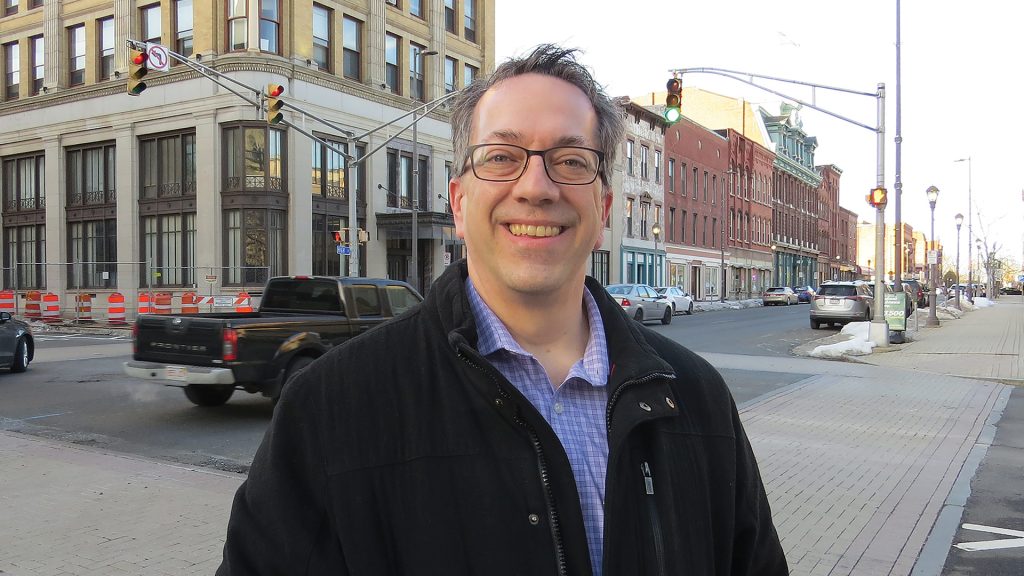
 

Aaron Vega

Aaron Vega says there are many cannabis-related businesses now operating in Holyoke, and many more in the pipeline.

Joshua Garcia, Holyoke’s first Puerto Rican mayor and a lifelong resident of this historic community, says that, in many respects, history is repeating itself in the city.

Elaborating, he said that for the better part of a century, the paper and textile mills on the canals were a symbol of strength, a source of jobs, and, in many ways, the city’s identity (see Sidebar here)

It wasn’t that way through the latter half of the 20th century as most of the mills went south, and into the 21st century, he went on, but it’s becoming that way again, largely because of the booming cannabis industry that is breathing new life into those long-vacant mills.

“Those mills were the economic anchor,” he said. “And it’s interesting to see history repeat itself; but instead of the Paper City, there’s now this ‘Rolling Paper City’ interest. Although it’s a different industry … the impact is the same.”

Indeed, cannabis is changing the landscape in Holyoke, figuratively if not literally, although that, too. Aaron Vega, director of Planning & Economic Development in Holyoke and a former state representative, said there are now eight cannabis operations doing business in Holyoke, and several dozen more in various stages of development.

Just as important as the number of ventures is the broad diversity on display, he said, noting that the city boasts several cultivating operations, dispensaries, a testing lab, and more.

“We continue to see cannabis interest and cannabis companies opening,” said Vega. “There’s a lot in the pipeline.”

But while the emergence of a cannabis cluster in Holyoke — similar to what is happening with biotech in Worcester in many respects — has been impressive, there is much more to what most would call a resurgence in this city than one industry. There has been a surge in entrepreneurship that has brought many new businesses to High Street and other streets. There have been several new restaurants, for example, despite the toll the pandemic has taken on that sector, but many other kinds of ventures as well, said Jordan Hart, executive director of the Greater Holyoke Chamber of Commerce.

“Over the past year, we’ve had more than a dozen ribbon cuttings, most of them restaurants and all of them small businesses.”

“Over the past year, we’ve had more than a dozen ribbon cuttings, most of them restaurants and all of them small businesses,” she said, noting that her ceremonial scissors have been given a workout. She credits the pandemic and the manner in which it has prompted introspection and, for many, a desire for something different and hopefully more fulfilling than their 9-5 job, as being a catalyst for some of this activity.

Tessa Murphy Romboletti, director of EforAll Holyoke and now also at-large City Councilor — she was elected last November — agreed.

She said the pandemic has helped fuel interest in entrepreneurship across the board, meaning people of all ages and demographic groups. EforAll has been expanding and evolving in ongoing efforts to meet the needs of such individuals, she said, adding that it is now staging its 12th and 13th cohorts of aspiring entrepreneurs, one for English-speaking candidates, and one for Spanish. It is also adding a new program, called E-Forever, a resource for those who are already in business rather than trying to get off the ground.

But beyond COVID, this surge in entrepreneurship is also being fueled by Holyoke’s emergence as a landing spot for those looking for affordability, diversity, a growing cultural economy, and a chance to do something they may not be able to do in a larger, far more expensive municipality.

People like Jay Candelario, who grew up in the city, moved to New York, but eventually returned. Battling heavy doubts and some long odds, he took an historic home on Dwight Street that had been damaged in a lightning strike, and converted it into Jay’s Bed & Breakfast.

Opened in 2016, the facility has certainly been challenged by the pandemic, but it has hung on, through diversification into catering and events, and Candelario’s persistence and belief in not only himself and his concept, but Holyoke itself (more on that, later).
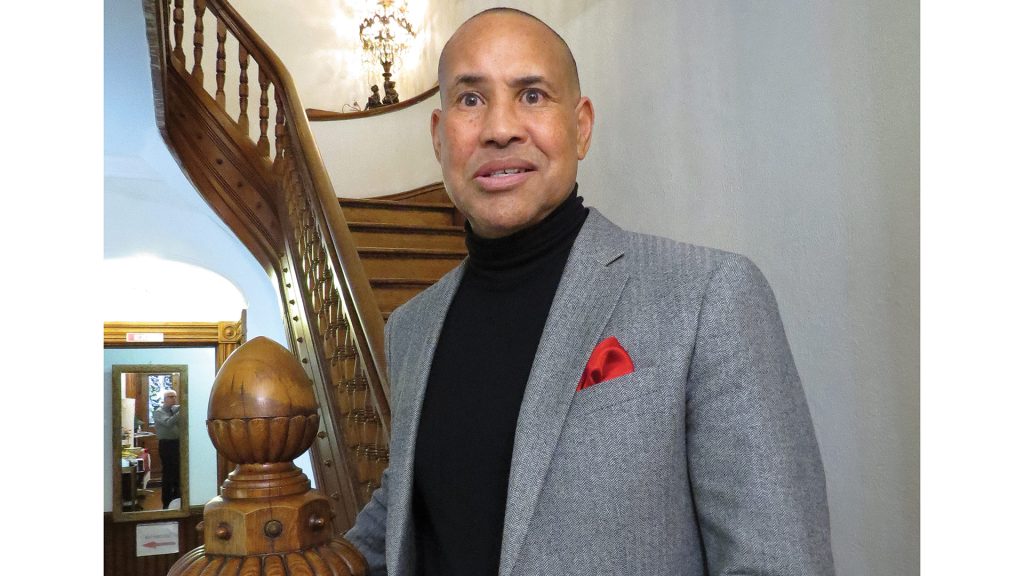
Jay Candelario

Jay Candelario, seen here at the grand staircase at his B&B on Dwight Street, says Holyoke is staging a resurgence and attracting many new residents and businesses.

For this, the latest installment of its Community Spotlight series, BusinessWest takes an in-depth look at Holyoke and the many forces that are shaping progress in the city and, as the mayor noted, enabling history to repeat itself.


On a Roll

While there are many developments in Holyoke from a business perspective, cannabis continues to be the story.

And as Vega said, it’s one that involves a large number of businesses, diversity of ventures, and large supply of potential new initiatives in the pipeline.

Providing a quick snapshot of the cannabis cluster in Holyoke, which has a popular destination because of its cheap electricity, location near major interstates, and large supply of old mill buildings, Vega said there are now more than 500 people working within the industry in Holyoke, many of whom have graduated from cannabis programs at area colleges (see related story, page 35), and many different kinds of facilities, from cultivation and manufacturing operations., to dispensaries, to a testing facility, Analytics Labs, which opened last year, on Appleton Street. It’s the first operation of its kind in Western Mass., and provides a vital service to businesses that are required to submit the cannabis to independent labs that run a number of tests, for potency, solvents, pesticides, pathogenic microbes, and more.

“We have several businesses already operating, and another dozen growth and manufacturing facilities that could be up and running by the end of the year,” said Vega.

But there are still many challenges facing those looking to enter this industry, especially the smaller ventures, he went on.

“I think there’s still a lot of challenges for these companies to get their financing,” said Vega. “The MSOs — the multi-state operators — are able to set up shop more easily than the locally owned companies, but they are starting to come to fruition.”

Tessa Murphy-Romboletti

Tessa Murphy-Romboletti, director of EforAll Holyoke, took her involvement in the city to a higher plane with election to the City Council last fall.

One development that may help some of these businesses get over the hump — and help Holyoke as well — is the creation of what Vega called an “incubator” for cannabis businesses in the old National Blank Book property on Cabot Street. There, many smaller businesses are getting support to break into the business and overcome the many hurdles — from financing to licensing to building a workforce — to opening the doors to a new cannabis business.

“We’re really excited about it,” said Vega, adding that there are a number of smaller enterprises occupying spaces in the facility and trying to move ventures forward.

Looking ahead, both Vega and Garcia said that one challenge — and opportunity — for the city is to promote the development of support businesses for the cannabis sector.

Elaborating, Vega said that these businesses must now order lighting, raw materials, and other products from companies on the other side of the country, and would certainly prefer to be able to source them locally.

“They all agree; there could be substantial savings if they didn’t have to order their products from Texas and Florida,” he told BusinessWest. “And we also like to think about the bigger picture — if we get those kinds of companies to land here in Western Mass., not just Holyoke, but Western Mass., there could be tremendous opportunities for the region.”

Elaborating, he said several neighboring states have either already legalized marijuana or are in the process of doing so, and having support businesses that can provide lighting and products in Massachusetts, as opposed to Texas, could facilitate efforts to make this area a hub, not just for Massachusetts, but for all of New England.


Getting Down to Business

Murphy-Romboletti said she first started thinking about running for City Council two years ago. A former city employee — she worked in the mayor’s office and, later, the Office of Planning & Economic Development — she said she has always wanted to be involved with the community and knew that the Council was where one could make an impact — on the city, but also its business community.

After consulting with her bosses with EforAll, a national organization with several locations in the Bay State, including two in Western Mass., and getting their blessing, she threw her hat into the ring. She’s only been on the job a few months now, and has spent most of that time reaching out to department heads and talking with them about what they need for their offices to run better and more effectively.

From an economic development perspective, she said she has long understood the Council’s impact on business. “It has the ability to slow down process or speed up process on things,” she said. “And I think permitting, in and of itself, within our local government, is confusing and not always as necessary as it needs to be, and that’s one of the reasons why I ran.”

Elaborating, and without actually using the phrase, she said one of her goals is to help make the city more business-friendly, and especially at a time when there is so much interest in entrepreneurship — both within the cannabis sector but also well beyond it.

Which … brings her back to her day job. EforAll is seeing growing numbers of applications for its cohorts, she said, adding there are 22 participants in the current sessions. The pandemic has brought a regrettable halt to most in-person learning opportunities (although she’s hoping that might change soon), but the agency is carrying on through Zoom.

A number of graduates have gone on to open businesses, many in the downtown area, she said, adding that the ongoing needs of these ventures prompted the creation of E-Forever.

Undertaken in conjunction with Entrepreneurs Forever, the new group is a “resource for those who have gone through the program and are currently in business, rather than those who are just getting started,” she explained.

“These businesses are generating revenue, and they have unique challenges,” she went on, adding that this group of perhaps 8-10 entrepreneurs will meet once a month, share information, and troubleshoot. “The entrepreneurs pick what they want to work on; it’s like having an accountability group that meets each month to support whatever challenges you’re having as an existing business owner.”

The broad goal, she said, is to enable more businesses to weather the many storms they will face as they mature and grow and stay in business, preferably in Holyoke.

A good deal of resilience has already been on display, said Jordan, adding that she couldn’t think of a single business in the city that closed during the pandemic, and, meanwhile, as she noted, many new ones have been opening.
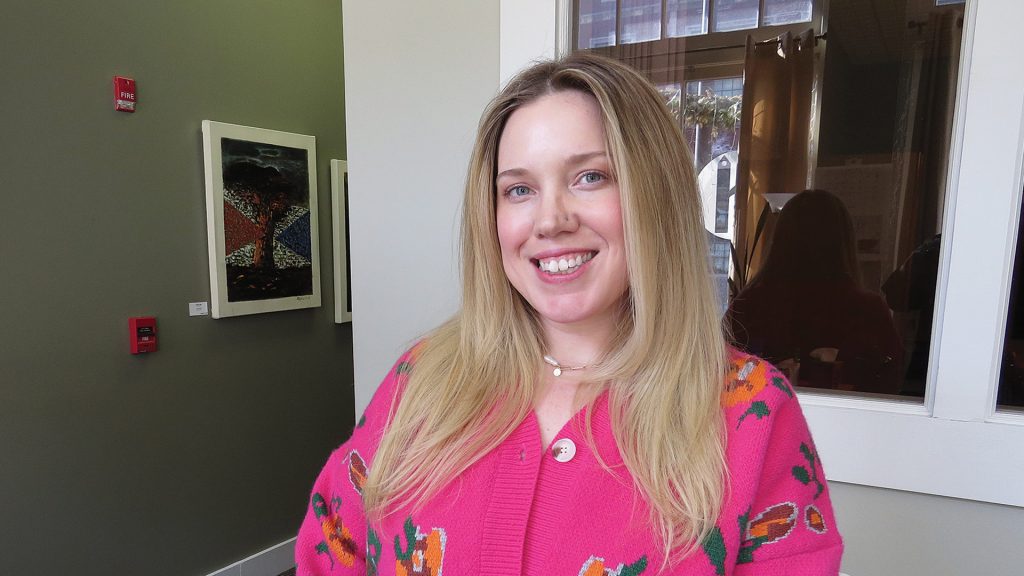
Jordan Hart, executive director of the Greater Holyoke Chamber

Jordan Hart, executive director of the Greater Holyoke Chamber, says the pandemic has helped create a surge of entrepreneurship in the city and a number of new businesses.

“It’s been remarkable to see the perseverance the community has to see Holyoke thrive,” she said, adding that while existing businesses, often with help in the form of local, state, and federal grants, have found what it takes to survive the pandemic, COVID has inspired many others to join their ranks in the business community.

“People began to prioritize not only their personal life and their personal interests, but also their mental health and well-being,” she explained. “And many found that what they wanted was more work-life balance and flexible schedules. And that’s where entrepreneurship came into play … with people finding their true selves, what their purpose is, and what they want their purpose to be; the pandemic really shook things up in that sense.”

She said the roster of new businesses includes restaurants, like Crave, El Paradiso Colombiano, and the Avalon Café, and several cannabis-related businesses, but also a few boutiques. And, as noted, most are in the heart of downtown, bringing many formerly dormant spaces to life.


Rooms with a View

That historic home on Dwight Street that Jay Candelario found was more than dormant.

It needed considerable work inside and out, he told BusinessWest, adding that while most were more than willing to consider the property known to most as the Moriarty mansion and ultimately pass, he decided to take a chance.

“I’m a risk taker,” said Candelario, who was born in Puerto Rico, grew up in Holyoke and then Amherst, and moved to New York City as an adult. “And you would have to be a risk taker to take this on.”

Those sentiments reflected more than the condition of the Queen Anne Victorian; they also referenced the time of this acquisition (2009, the height of the Great Recession) and the seemingly long odds against creating a successful B&B in downtown Holyoke.

But Candelario was able to look past the challenges and the doubters and see opportunity. It’s taken a while for the vision to become reality, and the pandemic has certainly put more hurdles in front of him — he admits to coming close to packing it in and moving on to something else — but Candelario, like many business owners in Holyoke, has persevered.

“We have several businesses already operating, and another dozen growth and manufacturing facilities that could be up and running by the end of the year.”

As he gave BusinessWest a tour and pointed out rooms bearing the names of places he’s visited in and lived in — ‘Brazil,’ ‘New York,’ ‘Puerto Rico,’ and ‘Holyoke,’ among others — Candelario said business has been steady if unspectacular, with guests ranging from traveling nurses, to executives for Coca Cola, to “emergencies” in the form of needed beds for those being helped by the nonprofits Roca Holyoke and Women’s Shelter Companeras, now Alianza. Over the years, though, he’s been able to draw guests visiting area colleges, individuals in town on business, and those attending the St. Patrick’s Day parade and road race. His audience is those who want something different than the run-of-the-mill hotel room.

Shut down for the better part of a year by the pandemic starting in March, 2020, he said he’s been able to keep his dream alive by diversifying and expanding his operation into catering and the hosting of events ranging from baby showers to family reunions to nonprofit retreats.

While reflecting on his business and where he can take it, Candelario also ruminated on Holyoke, its present and its future. And he drew many comparisons to the Bronx, another diverse community he believes is also misunderstood and underappreciated. He lived there for some time, and was originally planning to open a B&B near Yankee Stadium until the economic downturn in 2008 scuttled those plans.

“The Bronx and Holyoke have a lot in common,” he said. “It’s the inner city, working class, different cultures; they’re melting pots that many people just don’t appreciate for all that they are.”

Beyond these qualities, the city boasts location and affordability, two important factors in these changing times.

“Holyoke is very affordable for those people who are starting off,” he explained. “They can get better housing for the buck. And if you want to work in Northampton, it’s 10 to 15 minutes away; Springfield is 10 to 15 minutes away; Agawam is 10-15 minutes away.

“I see Holyoke as a very progressive, very upwardly mobile city,” he went on. “You have people from many different areas coming here, not just locally, but from around the country. I run into people from Chicago who moved here, and Florida, California, New York City, and Boston. They come here because they see opportunities. People see the same thing that I see.”


View to the Future

Candelario said he assigned the name ‘Holyoke’ to one particular room at his B&B because, if one looks closely, he or she can see City Hall from one of the windows.

As he surveys the scene, though, he sees more than that iconic structure. Much more.

He sees a city that is putting its recent, not so glorious, past, behind it, and becoming something else: a destination of sorts, for travelers, but especially residents seeking affordability and quality of life, and businesses looking for a solid spot to land.

This is what Mayor Garcia had in mind when he said that history is repeating itself in Holyoke, and not just when it comes to the mills as a symbol of jobs and economic might.

Indeed, Holyoke’s past, as an ethnically diverse center of business and culture, is also its future.


George O’Brien can be reached at [email protected]

Special Coverage Wealth Management

Facing New Realities


The past few years — and even the past few months — have brought about changes to the landscape that should give individuals reason for thought as they consider their long-term financial goals — and how to reach them. These changes include everything from soaring real estate prices to inflation rates higher than those seen in the past 40 years. Overall, these changes and many others should prompt an even stronger emphasis on the ‘long term’ when it comes to financial planning.


By Patricia Matty


The pandemic and the resulting environment of the past few years has brought about a lot of changes to the financial advisory world.

While not unique to financial advisory, the widespread use of Zoom (or Microsoft Teams) meetings in lieu of face-to-face interactions has been a big change. This is true for initial meetings of new clients as well as existing client financial planning meetings and account reviews.

As we have all experienced, remote meetings make it much more difficult to get a real sense of someone’s body language, gauge their comfort (or not) with a recommendation, adequate vocalization of their fears, and an increased difficulty in just making a true emotional connection. Aside from the physical aspect of the change, there have been some other repercussions that I would like to focus on. Some of these changes have been driven by the client, the others are being driven by me as the advisor.

On the client driven side, there has been a lot of moving parts. Some of these changes are monetary, some not. Looking at monetary changes:

• Real estate prices have changed drastically over the past several years. For most people real estate is the first or second largest piece of their assets. The upending of the real estate market has greatly increased the value of home equity for a lot of people, which has strengthened their balance sheets. For the Millennials who had not yet entered the market, the price of entry became a lot higher, with parents being asked for help more than ever.


• The impressive increase in the stock market over the past two years has altered the client side of the ledger. At the start of the pandemic, many people felt they could never afford to retire. The recent run up has given some hopes of retiring earlier than ever.

• Prices have risen. As a visit to any grocery store or home improvement center will demonstrate, inflation levels have been creeping up.

Patricia Matty

“The gains made in real estate and stocks over the past few years are sometimes making clients too optimistic, and we need to temper expectations.”

On the non-monetary side:

• Many people lost a loved one due to Covid related illnesses. For many, this has them questioning their existing priorities in life. Even if you did not lose a loved one, you probably had severe restrictions on visiting many of them, which has had a similar effect.

• Working from home has caused a reassessment of priorities as well. For those where work from home may continue, they often want to live someplace completely different than where they reside today.

• There is a great pent-up demand for travel. ‘Stuff’ seems to be taking a backseat to experiences and travel.

But as I stated earlier, this isn’t one sided. On the advisory side, we have also seen some changes.

• Bitcoin and other cryptocurrencies now receive a lot more attention;

• The changing client priorities necessitate updating client goals, and therefore financial plans.

• The gains made in real estate and stocks over the past few years are sometimes making clients too optimistic, and we need to temper expectations.

• Increased use of more-sophisticated financial planning software that can be screen shared with clients on Zoom calls.

• And last but certainly not least: needing to incorporate some ‘long term’ in long term financial plans. This is especially true on inflation over time, as well as accounting for lifespans.

It has been quite some time since planners have been faced with an inflationary environment. Rising prices can be devastating to a financial plan if you are not adequately positioned. All too often, we see clients who are overly concerned about short-term market volatility, but turn a blind eye to the long-term effects of rising prices on their spending power. As our sophisticated software consistently demonstrates, however, this is the real risk to achieving your goals over time.

Regarding longevity, it is all too easy to say you and/or your spouse “won’t make it to our 90s” and fail to adequately invest for the long term. Despite COVID, people are living longer than ever, and healthcare continues to improve. Having adequate resources over the long term is essential and requires planning.

With all of the above said, in the wisdom of Forrest Gump, “Life is like a box of chocolates, you never know what you’re going to get.” We don’t know what the stock market, real estate market, inflation, lifespan, and other factors will be over the years to come. So what should you do in light of the evolving changes?

Meet with your advisor. In person if possible, especially if you have significant changes. Life changes, and so do your priorities. Make sure your advisor understands your goals, especially if they have shifted. In addition, have a two-sided dialogue with your advisor, making sure you are comfortable with their recommendations as to how to achieve your goals. u


Patricia Matty is senior vice president and financial advisory director at Springfield-based St. Germain Investment Management. She has an extensive education and business background, with 18 years in the financial services industry. Her background is in business management, financial planning and relationship development. She holds Series 7 and 66 designations for securities representatives and investment advisors, earned the Accredited Investment Fiduciary [AIF], and holds the Trust 1 certification; (413) 733-5111.

Business of Aging Special Coverage

Peace of Mind

Ruth’s House

Ruth’s House dedicates its lower-level Garden neighborhood to memory care.


The connection between music and memory is a complex and often surprising one. Just ask the families of loved ones with dementia at Ruth’s House, the assisted-living residence on the JGS Lifecare campus in Longmeadow.

“We ask, ‘what sort of music did your loved one enjoy?’ Then we have volunteers come in and build personal playlists,” said Susan Halpern, vice president of Development and Communications at JGS. “It’s amazing to see the reactions — to see someone who’s agitated get less agitated, or someone who had been very quiet come out of their shell because they’re hearing something that’s very familiar to them.”

Mary-Anne Schelb, director of Business Development, has also seen the results of what JGS calls its music and memory program.

“Maybe they’re not much of a talker, and suddenly they’re singing this song. It’s hard to carry on a conversation with them, but when the music comes on, they remember every word. The artistic and creative ability is really the last to go. It’s in there — we just need to know how to pull it out.”

Or, as Halpern put it, “it’s about meeting them where they are.” That’s why residents’ families fill out a long (around eight pages) resident profile upon admission, Schelb added.

“We really want to get to know your mom or dad, and we want to know what they like and don’t like, because then we utilize that.”

“If they can’t stand bingo, we’re not going to try to push bingo. Or if they love hot-air balloons, we can go up to them and ask, ‘hey, do you know we’re showing a hot-air-balloon movie in the movie room?’ You see their face light up — ‘you are? I love hot-air balloons.’ The profile is time-consuming, but we really want to get to know your mom or dad, and we want to know what they like and don’t like, because then we utilize that.”

Meeting residents where they are is especially important for those with early- to mid-stage memory impairments and other dementia-related diseases who live in the Garden at Ruth’s House, a separate, secure neighborhood that caters to individuals with increased cognitive and physical limitations, including Alzheimer’s and dementia, and where staff members are specifically trained to care for individuals in need of memory care.

Sue Halpern (left) and Mary-Anne Schelb

Sue Halpern (left) and Mary-Anne Schelb say incorporating memory care into the entire JGS continuum makes sense with people living longer and dementia becoming more prevalent.

But what some might not know, Schelb said, is that JGS has, over the years, incorporated specific memory-care training across its contimuum of services, from Spectrum Home Health & Hospice Care to Wernick Adult Day Health Care; from the Leavitt Family Jewish Home to the Sosin Center for Rehabilitation.

Why? Because the memory-care population is on the rise as Americans live longer than ever — and early-onset dementia in younger people is ticking up as well. So the model JGS has adopted, of making sure all the points along its continuum of services can handle different levels of dementia, is one increasingly taking hold in the world of senior living and care.

“We were the ones who spearheaded dementia-friendly Longmeadow a few years ago, which was really important to us, to make people aware of the differences of folks that have this higher level of memory loss, because people really didn’t know how to deal with them. They didn’t know what to do, how to act,” Schelb explained. “We wanted to make people aware, so I worked with the senior center, some emergency responders, and we worked with the Alzheimer’s Association and got certified as a dementia-friendly town.”

Similarly, making JGS a dementia-friendly campus was a natural evolution, she noted. “Except for Genesis independent living, every single piece of the campus concentrates on memory care.”


Gardening Tools

The Garden gives Ruth’s House an element of security and higher-level care for individuals with dementia, Schelb explained.

“Maybe you start out in traditional assisted living, and as they progress [with memory loss], we could add services to the apartment as long as they’re not a wander risk, and if they do become a wander risk, we’ve got the secure Garden level, which is beautiful inside and out,” she said, noting the waterfall, scenic walkways, and benches out back; the fact that the area is safely fenced in is obscured by the landscaping.

“We just wanted to make it this gorgeous, park-like environment. A lot of people like to walk, and and here they can be outside, and it gives them that sense of freedom.”

In the Leavitt skilled-nursing facility, two nursing neighborhoods are dedicated to caring for people with memory impairments, Halpern explained, while staff of the other JGS programs, like Wernick and Sosin, are trained in working with people with memory loss as well.

“As a campus, we’re caring for elders, and it sort of goes hand in hand that, as people get older, they’re suffering memory loss,” she told BusinessWest. “So we take the care of people with dementia, memory loss, and Alzheimer’s disease as a central care delivery that we train our staff on during orientation.”

That orientation, when staff are taught how to engage with people with dementia, is followed by annual reviews and specific skills-training events during the year, she added, noting that JGS will be using grant funds to expand that skills training.

Ruth’s House’s memory-care residents

Ruth’s House’s memory-care residents take part in both indoor and outdoor activities intended to engage their minds.

“We’re a person-centered campus, and we deal with memory impairment across our entire campus the same way,” Halpern added. “You take the approach that you’re meeting the person where they are.”

Added Schelb, “we’re finding a lot more people suffering from memory loss at earlier ages. Early-onset dementia and Alzheimer’s is something very real that a lot of people are experiencing, so we need to pivot and shift to make sure we can care for our folks here on the campus in any way, shape, or form.

“We’ve even got our home health dealing with folks with memory loss, or even end-stage Alzheimer’s in hospice,” she went on. “Unfortunately, we have seen more of it, across the board; I think healthcare in general has seen a lot more. And we want to be able to give our residents as fulfilled a life as possible.”

“We just wanted to make it this gorgeous, park-like environment. A lot of people like to walk, and and here they can be outside, and it gives them that sense of freedom.”

Many times, Halpern said, a senior-living facility is one of the first places family members contact when they suspect a memory issue.

“People reach out to us when they need help. And when do families need help? Often, it’s when they have a loved one who’s suffering from dementia and memory impairment, and they’ve tried to work with them at home. So we’ll work with them at home with our Spectrum Home Health Care, but then it can get to a point where you just can’t handle it. Maybe it’s the incontinence, maybe it’s the wandering and the risk of that, but we find that families are reaching out to us when they’re willing to give up their loved one. And it is a tough decision to place your loved one in a care setting.”

Even people with dementia who are able to live at home with family members can benefit from Wernick’s day programs, Halpern added.

“We were one of the first adult day health centers in Western Mass., back in the ’70s. We get a lot of people needing adult day care who have memory impairment and forgetfulness, and they are benefiting from being in social settings — and we offer social settings, be it in adult day care or assisted living, that helps people not feel isolated, and we help give them experiences that are failure-free.”


High-tech, Human Touch

Some of those experiences at Ruth’s House take place in a sensory room that allows residents to have experiences that reduce agitation and frustration, especially late in the day, a phenomenon known as sundowning.

“Some don’t want to be touched, or don’t like bright lights or loud sounds. They react differently to activities,” Schelb said, explaining that the sensory room is softly lit, soothing music often plays, and the room incorporates tactile technology, on touchscreens and activity panels, that stimulates in a calmer way.

“We downplay the aggravation for them. We teach staff how to recognize it and what to do, and it’s part of their care plan. We know what activities they like. And any new technology they have out there, we try to get and incorporate into our care plans and train staff to utilize them properly.”

Beyond its own programs, Ruth’s House works with families on their own communication, Schelb said.

“Sometimes we find families don’t know how to interact with their loved ones, causing frustrations. There’s a level of resentment because it really engulfs their whole life. We say, ‘let us help you; let us be the caregiver, and you go back to being the son or daughter or husband or wife.’ It’s really hard to do both.”

By focusing on the relationship and not the caregiving, families learn to move past the frustrations of life with Alzheimer’s or dementia, especially during the early stages when they’re just getting acclimated to the situation.

“They can get upset with mom or dad: ‘I just told you that; how do you not remember that?’ But they’re not purposefully forgetting; this is just part of the disease,” Schelb said, so family education and support groups are crucial — as is understanding when it’s time to seek the appropriate level of help. “Sometimes they can stay at home, and we can help. But sometimes they realize it’s just too much, and they realize they have options on our campus.”

It’s a campus that embraces not only person-centered care, Halpern said, but — at least in the Sosin Center — the ‘green house’ model of small-house care, which focuses on three goals: an authentic, home-like setting; meaningful life; and empowered staff.

“We recognize the environment is important to peoples’ well-being and how they feel,” she noted, adding that a second phase of what’s been called Project Transformation will bring the green-house model of renovations to the Leavitt Jewish Family Home as well — arguably a more important site for it, since it’s a long-term facility where residents will live the rest of their lives.

In short, Halpern said, JGS continues to look at ways to meet residents where they are.

“That affects how we care for people with dementia as well,” she added. “It’s part of our philosophy.”

Features

Sidebar

Joshua Garcia

Joshua Garcia

Joshua Garcia says that, among his friends, family, and colleagues at various career stops, there was always an expectation that that he would someday run for mayor of Holyoke. And not just run, but win.

“Even when I was a kid … people would say ‘this young man one day is going to run for mayor, should be mayor,’” he said, adding that it took a while before he eventually started believing — and acting on what people were saying.

Born and raised in Holyoke, he attended city schools and spent much of his time at the Holyoke Boys & Girls Club, where he would later work. Starting at an early age, he got deeply involved in the community.

That involvement included stints on the School Committee, the Fire Commission, Nueva Esperanza, an agency devoted to promoting entrepreneurship and spurring economic development in the city, and other groups. Meanwhile, on the career side, he was gaining experience in the management of municipalities, early on at the Holyoke Housing Authority (while he was also earning a master’s degree in Public Administration), then with the Pioneer Valley Planning Commission, which he served as municipal services coordinator, and later as town manager of Blandford, population 1,200.

That blend of professional growth and community involvement would earn Garcia a 40 Under Forty plaque from BusinessWest in 2015. Meanwhile, each of these stops seemed to bring him closer to that ‘someday’ when his friends and family thought he would run for mayor, and that day came last year, and an election that would determine a successor to Alex Morris, who left Holyoke City Hall to become town manager of Provincetown.

“I started getting the questions again … it was election time, and people were saying ‘why aren’t you running for mayor?’” he recalled. “My answer was that I liked my career track — it was great being a town manager of a town where I could go home at the end of the day and spend time with my family.”

It was with some prodding from his wife, Stefany, (Garcia actually called it an “endorsement”) that he was eventually swayed to become the seventh candidate to declare for the position.

“What many don’t realize is that small towns have their own set of unique challenges that can be just as challenging as a large city.”

“That endorsement really sealed the deal for me,” he told BusinessWest. “She just simply said that, in her opinion, being mayor of the City of Holyoke, knowing who I am, is bigger than her family. I thought that was a very humble and unselfish response. We talked more about what that meant …and felt strongly that if running for mayor to help more people is the sacrifice, then why not?”

He would eventually triumph in that crowded race, becoming the city’s first Puerto Rican mayor. He commenced finishing Morse’s unfinished term in November, and started his own first term in January.

Garcia moves into the corner office at a time when Holyoke is in what most would call a growth mode, especially when it comes to jobs, new business development, housing, and overall vibrancy. As the story on page 14 relates, the city has benefited tremendously from the strong five-year start of the cannabis industry, with many of its long dormant or underutilized mills roaring back to life as homes to a wide array of cannabis-related businesses.

But there is more to the story than this one industry, he said, adding that, even during a pandemic, many new businesses have opened across several sectors, especially hospitality.

“During the pandemic, when restaurants everywhere were shutting down, Holyoke was opening six new ones,” said the mayor, adding that the EforAll Holyoke, the nonprofit created to inspire would-be entrepreneurs and help them get started and to the proverbial ‘next stage,’ has helped create a wave of entrepreneurial energy that is bringing new businesses to the downtown and other areas, and also creating more interest in the city as a place to live.

While all this is positive, said Garcia, these forces are spawning some new and different challenges for Holyoke, especially when it comes to the affordability that has defined it for decades now.

“There’s a tidal wave that’s coming in a very positive way, but it’s going to create a new set of challenges that we’re going to have to figure out,” he told BusinessWest. “One of them is affordability. No one wants to be in a situation where they are priced out of their neighborhood. Costs are rising everywhere, not just in Holyoke but around the region. How to move forward and embrace these new quality-of-life activities that are going on, but also balance that with making sure we’re not pricing people out of the neighborhoods they grew up in. And that’s why affordable housing continues to stay in the forefront.”

While focusing on these issues, Garcia said he will also concentrate on how Holyoke is managed, with an eye toward improvement. And as he goes about that work, he will take some lessons from his last assignment.

Indeed, while Blandford and Holyoke are seemingly worlds apart when it comes to the size and nature of the communities, Garcia said he can draw on his experience serving that hilltown in his new role in the Paper City, especially when it comes to creativity — in management and finding solutions to problems.

“What many don’t realize is that small towns have their own set of unique challenges that can be just as challenging as a large city,” he explained. “The greatest benefit for a city of Holyoke’s size is capacity and resources — you have enough resources to hire full-time department heads and experts to help mitigate liability and meet mandates.

“In a town, you have the same expectation, but you have to be very creative in how you can keep and be competitive, meet needs and mandates, and maintain quality of life,” he went on. “Here, I make a call to a department, and I have someone on a grant, writing and executing it, and doing things. In a town, I’m it, with part-time people or volunteers; so oftentimes, the skill you build working in a small town is the ability to be as creative as you can to meet needs for the community.”

Elaborating, he said that, while Holyoke does have capacity and resources, the growth in new businesses, an unprecedented influx of federal money through ARPA (The American Rescue Plan Act of 2021) and other sources, and a growing mix of challenges and opportunities is putting the city to the test.

“The new challenge internally is the capacity to execute from start to finish,” he said. “In my campaign, I didn’t engage in any of the traditional rhetoric involved in campaigns; instead, I focused on the need for management. My focus with this budget season is to help departments build up so that they’re in a much better position to effectively carry out the responsibilities they’re charged with, and keep up with these projects.

“Holyoke’s form of government, with the mayor as the city manager, is antiquated,” he went on, adding that, overall, he’s working toward reducing or eliminating what he called ‘learning curves’ — in the mayor’s office and elsewhere in City Hall, and perhaps adding a city manager, comptroller, or other positions.

“Whatever model the city decides to go forward with, the idea is to strengthen internal controls and better mitigate harm and liability,” he went on. “Those are some of the longer-term objectives, and it’s going to require the community coming together, between this office, the City Council, and residents, because we’re talking about ordinance and charter changes, potentially.”


George O’Brien

Daily News

SPRINGFIELD — American International College (AIC) has appointed Susan Henrichon dean of the School of Education.

Henrichon joined American International College in 2018, bringing more than 30 years of experience in PK-12 public education, with more than 15 years spent in senior leadership roles. Most recently, she served as the associate dean of academic programs while teaching extensively in the School of Education, and additionally serving as a senior instructor and program supervisor for graduate students.

Prior to coming to AIC, Henrichon was an assistant superintendent of schools in Oxford and director of Special Education and Student Services for the Oxford Public Schools system. Before that, she was the director of Pupil Personnel Services in Monson, director of Special Education in Easthampton, director of Student Services for the Southwick-Tolland-Granville school district; special-education team leader in the Holyoke Public Schools; and assistant department head of Quality Assurance at the Monson Developmental Center.

Henrichon has been recognized by the Department of Elementary and Secondary Education for her work. Her professional affiliations include the Massachusetts Assoc. of School Superintendents, the Worcester County Superintendents Assoc., Massachusetts Administrators for Special Education, the Western Massachusetts Special Education Directors Assoc., the Assoc. for Supervision and Curriculum Development, and the Council for Exceptional Children.

She received a doctor of education degree in educational administration at Northcentral University in Phoenix; her certificate of advanced graduate studies in educational administration from the University of Massachusetts; a master’s degree in education, special education, from Westfield State University; and a bachelor’s degree from Plymouth State University in Plymouth, N.H.

Daily News

SPRINGFIELD — Mary Hurley, governor’s councilor for the 8th District since 2017, announced that she will not run for a fourth term.

A lifelong resident of Western Mass. whose former positions include mayor of Springfield and District Court justice, Hurley issued a statement reflecting on her three decades in public service:

“Not everyone can say they had a wonderful life. Some say there is an old Chinese curse that says, ‘may you have an interesting life.’ I’ve been fortunate enough to have both. I have had great support from my family, who have been with me through every election and there for me through the good times and bad in my personal life.

“I have been lucky enough to have had great friends all throughout my life from grammar school through law school, and in my professional life from attorney to mayor to judge — and now as governor’s councilor for Western Massachusetts. Working with Charlie Baker and Karyn Polito and my colleagues on the Governor’s Council has been an amazing experience.

“In 2014, when I retired from the District Court judgeship, I thought I was done with work. However, I knew firsthand how short we were in judicial positions: eight in the District Court, three in Probate Court, three in Juvenile Court, and three in Superior Court. This meant people were not having their day in court in a timely way. As Martin Luther King said, ‘justice delayed is justice denied.’ That is when I decided to run for Governor’s Council to do something about that. In the first three years, I was able to get over 20 new judges and clerks.

“For those of you who don’t know what the Governor’s Council does, in short, we vote to approve the governors’ nominations for judgeships and clerkships, which are lifetime positions, as well as parole board members, Department of Industrial Accident judges, and other administrative quasi-judicial positions. It is critical that we get it right.

“It has been an honor to serve in such a meaningful position alongside some extraordinary colleagues. Now in my third term, I find that I believe the time has come for me to give someone else the opportunity to serve Western Massachusetts as their governor’s councilor. Therefore, I will not be a candidate for a fourth term.

“It is my hope that there are great, qualified candidates who are interested in running for the position. As the election unfolds, I may endorse someone who I feel will do the best job and has the best qualifications to serve our region. Last but certainly not least, I want to thank the people of Springfield and all of Western Massachusetts who placed their faith and trust in me when they voted for me as city councilor, mayor, and governor’s councilor. My almost 30 years in public service gave me a wonderful and interesting life, which I greatly appreciate. Thank you.”

Daily News

SPRINGFIELD — Western New England University will host high-school students and their parents at an open house on Saturday, March 5 from 8 a.m. to 2 p.m. starting in the University Commons. The event is free, but registration in advance is requested. Visit wne.edu/openhouse or call (413) 782-1321 to register.

This undergraduate open house is intended for all prospective students, regardless of their year in high school. It is an opportunity to come to campus to get a sense of the university’s warm and engaging community, while learning about the wide variety of academic programs and emphasis on interdisciplinary collaboration.

Students and parents will have the chance to tour the campus and a first-year residence hall, meet current students, get a general overview of the admissions and financial-aid process, and have academic questions answered. The day concludes with an exhibit hall where students can gather more information on student clubs and activities, the honors programs, and athletics, as well as hear from the Career Development Center regarding the varied internship and career opportunities students are receiving.

Daily News

NORTHAMPTON — The Hampshire, Franklin & Hampden Agricultural Society, the nonprofit organization that manages the Three County Fair, the oldest ongoing agricultural fair in the country, will conduct a drive-thru food drive on Saturday, March 26 outside its main office at 54 Fair St. in Northampton. The fair held its last food drive in the spring of 2020 during the onset of the pandemic and delivered more than 2,000 pounds of food to area pantries.

The fair is seeking non-perishable foods such as canned fruit, soup, tuna, and vegetables, plus cereal, pasta, pasta sauce, and peanut butter for area food pantries that have partnered with the fair, including the Easthampton Community Center, the Franklin County Meals Program, the Helping Hands Cupboard Food Pantry at BOCC in Belchertown, and the Westhampton Congregational United Church of Christ food pantry.

“The pandemic created food insecurity for many families for the first time and increased the need for others,” said Gerry Devine, a member of the society’s board of directors. “Because of the continued hardship of so many, the success of our last food drive, and the extreme generosity of our community willing to help their neighbors, we are proud to once again provide this service.”

Each vehicle that donates will be supplied with a pair of complimentary tickets to the 2022 Three County Fair, scheduled for Sept. 2-5. Donations can be dropped off at the fair’s main office at 54 Fair St. in Northampton between the hours of 10 a.m. and 2 p.m. The fair requests that donations be compiled in disposable bags or boxes for volunteers to easily accept them from vehicles.

Cannabis Special Coverage

Joint Concerns

Julie Steiner

As a law professor, Julie Steiner saw the thorny issues raised by cannabis legalization in Massachusetts — and the way it conflicted with federal law — very early in the process and turned it into a passion of sorts, not only educating students at Western New England University School of Law, but bringing other educational resources to the region and becoming a go-to resource on the topic of cannabis law. Yet, it’s not just legal nuts and bolts she’s interested in, but the real people impacted by a drug-regulation history in the U.S. that’s problematic at best — and still evolving.


Julie Steiner has been interested in the connections — and, often, the contradictions — between the fields of law and cannabis for a long time.

And when momentum was building in Massachusetts to legalize adult-use cannabis, just a few years after medical marijuana was given the green light, she really started thinking about the implications.

“Lawyers raise their hand and swear to uphold the law of the United States,” said Steiner, professor of Law at Western New England University (WNE) School of Law. “But cannabis is federally illegal, even though it’s technically legal in Massachusetts. How are lawyers to navigate this whole murky system?”

Based on informal conversations with her colleagues, plenty of law professionals were fascinated by this topic — and unsure how the practice of law could deal with the emerging business of cannabis.

“Cannabis is federally illegal, even though it’s technically legal in Massachusetts. How are lawyers to navigate this whole murky system?”

“It was getting off the ground in Colorado and Washington recreationally, so we had those two states to look at,” Steiner told BusinessWest. “But there was a dearth of scholarship. It was such an interesting time, really. Back then, support for legalization wasn’t as strong as it is now. In law, there was concern about clients and lawyers being prosecuted under RICO statutes.

“I called it the Wild West,” she went on. “The state bar association in Colorado had taken the stance that you can advise on the law, but since it’s federally illegal, if you actually started advising clients through the process of licensure, you risked bar sanction. That ultimately went away because courts reversed the bar stance on that, but it was a risky time. It was really, really interesting.”

That’s one reason why she applauds her university and its administration for being forward-thinking in establishing curriculum around this rapidly evolving topic, specifically a course called Cannabis Law and Policy. She proposed the course in 2015 and, after a year of legwork, and study, started teaching it in 2016, just a couple months before voters made adult-use cannabis legal in Massachusetts — but long before businesses actually started to open.

“Our primary mission was, and still is, lawyer competency,” Steiner explained. “I try to touch upon every facet that I can of the industry, teaching aspiring lawyers but also the practicing bar about how to counsel clients.

“I call the most risky the ‘plant touchers’ — cultivators, manufacturers, and retailers. They’re the most highly regulated and most vulnerable to prosecution if they do anything wrong,” she went on. “That requires a lot of competence, legal advice, knowledge about regulatory regimes, and ability to keep abreast of the ever-changing landscape.”

Julie Steiner welcomes Cannabis Control Commissioner Steven Hoffman

Julie Steiner welcomes Cannabis Control Commissioner Steven Hoffman as a guest lecturer in one of her Cannabis Law and Policy classes.

And changing it is, she emphasized. “I find I can’t rely on anything I said last month without updating it.”

Beyond the plant touchers, plenty of other types of businesses have been involved in the world of cannabis, from lightbulb suppliers for growers to drivers who transport money; from property landlords to IT and security firms. And the list goes on.

Sensing that this new industry would need legal guidance, Steiner not only created the course, but was involved in bringing Cannabis Control Commission (CCC) regulatory public hearings to the law school starting in 2018. The following year, the city of Springfield retained her to serve as a consultant to develop a process to solicit and select marijuana shops.

And she’s become a sought-after resource on cannabis law, having been been interviewed by regional and national media; published scholarly articles in many legal journals; advised educational institutions on the topic of drug policy; and lectured on the topic in WNE’s Mini Law School and Road Show programs.

It’s a field, she notes, that has already crept into numerous law niches, from banking and finance to taxation; from real estate to employment law; from intellectual-property law to prosecution and defense, just to name a few. “Cannabis law touches on all of it. It’s a serious and evolving subject field in the law.”


Legal, Yet Illegal

The Cannabis Law and Policy course, WNE’s website explains, “focuses on how society has historically, and is currently, regulating cannabis,” also touching on legal, professional, and business ethics; enforcement policy; and much more.

Prohibition, Steiner noted, began at the state level early in the 20th century and eventually crept into the federal code. Over the past decade or so, individual states have again led the change to decriminalization, then legalization, but federal law has not followed suit … yet.

As a result, if it wanted to, the U.S. government technically could enforce the federal Controlled Substances Act, which pre-empts all the conflicting state laws, she explained.

“I call the most risky the ‘plant touchers’ — cultivators, manufacturers, and retailers. They’re the most highly regulated and most vulnerable to prosecution if they do anything wrong.”

“Now, they can’t force states to enforce federal laws. The real conflict happens when participants, pursuant to those state regimes, start touching the plant. Once you get there, you have a conflict with the Controlled Substances Act. You have cultivation, which is prohibited. That’s where the federal government could technically come in and enforce. But that’s not happening because the federal government is exercising enforcement restraint.”

Changing public opinion is a factor as well, she noted. “When I started teaching this, public support was hovering just above 50% in the Gallup poll. Support is now about 68%. There’s much stronger public opinion for legalization than there was back then.”

Along with the history of cannabis regulation and enforcement, Steiner discusses civil rights, mass incarceration (using Michelle Alexander’s popular tome The New Jim Crow), and social equity.

“We have a robust dialogue about this. It’s very eye-opening to students,” she said, noting that drug laws regarding cannabis possession in the U.S. have historically had a fourfold disproportionate impact on people of color and those of lower socioeconomic means.

“Then we start thinking about what it means to be a lawyer representing the cannabis business. We talk about what that business looks like,” she went on, noting that she previously used Colorado and Washington as templates, but now draws on Massachusetts, since the cannabis industry has taken such deep roots here.

She also talks about banking challenges and Section 280E of the federal tax code, which requires even illegal enterprises to pay taxes. These tend to be more onerous for cannabis businesses, which can deduct the cost of goods, but not payroll.

“They get hammered. So lawyers work to structure these plant-touching businesses to maximize the taxation system, often creating two separate companies.”

The Cannabis Control Commission

The Cannabis Control Commission has often used the WNE Law School as an outpost for holding public hearings and listening sessions, like this one, attended by (from left) then-commissioners Britte McBride, Shaleen Title, Chairman Steven Hoffman, and Kay Doyle.

Steiner will bring in guest speakers from different areas of the law, including CCC members, to provide real-world perspectives, and students are also required to write and present their own independent scholarly papers on cannabis-law topics.

Speaking of the CCC, the law school’s seminars with commissioners and other experts in various areas of the law proved to be a valuable resource for locals, including potential business owners, who wanted information on topics ranging from licensing to operational requirements to municipal controls, without having to go to Boston.

“We thought early on we had the ability to align with the Cannabis Control Commission to help educate the practicing bar across the state,” she noted. “Lawyers, consultants, and people who wanted to be stakeholders would show up, and we’d talk about regulations and what businesses looked like. When they amended the regulations, we educated people again. We were, pre-COVID, the physical presence in Western Mass. for the Cannabis Control Commission.”


Changing the Narrative

Cannabis law is a passion project for Steiner, who also teaches Environmental and Land Use Law, Torts, and Introduction to Law.

“I’ve been involved in the history of how it has gone from its infancy through decriminalization through medical legalization, watching the birth of the adult, recreational-use industry, and now we have a viable and developed phenomenon. We have to keep pace with this, and that’s a fun challenge, educating lawyers and would-be lawyers. It’s truly a mission of mine in life.”

She prides herself on teaching law students how to be not only competent, but ethical practitioners in the field, who can counsel clients who often have plenty of misimpressions about legalization and what that means, since state and federal laws are currently so far apart.

As for federal legalization, “I welcome it because it’s sensible policy,” Steiner said. “We simply shouldn’t have a robust, viable workforce and an industry that is a real economic player that is forced to confront all-cash situations, which is dangerous and poor policy for everyone involved.”

Her public talks have addressed colleges grappling with the issue of legal medical marijuana, employers wondering if they can drug test for something that’s now legal in Massachusetts, and other audiences, ranging from public-health professionals to drug task forces, and even legislators. “Early on, policy influencers needed to think through policy changes. We tried to be on the cutting edge, helping them think through that lens.”

Steiner is also passionate about social justice in the realm of drug policy. “Or, should I say, social injustice,” she quickly added. “We have become part of the sealing and expungement movement and have partnered to provide sealing and expungement clinics.”

But even that effort is problematic, she wrote in a scholarly article last summer.

“While expungement is a laudable and necessary remedy to mitigate individual cannabis criminal record-based harm,” she wrote, “expungement also yields an outcome paradox: to further justice by expunging criminal records, society is erasing evidence of historic enforcement injustice.”

Because of the need to balance relief for the convicted with the need to maintain an historical account of the cannabis enforcement era, she suggests expunging entities maintain a record — one that eliminates sensitive, personally identifying information, while maintaining other important information of historic and legal value.

And that expungement process needs to continue, she told BusinessWest.

“We’ve gotten involved in helping those with prior drug convictions clear their records. This helps mitigate the profound effect of the War on Drugs, which we now understand overly penalized people given the severity of what was going on. And that criminal conviction follows them for life, with all those collateral consequences,” she added, making it harder for convicted drug users to access a job or housing. “It’s hampering people in their ability to move forward in life. We’re part of that social-justice movement to mitigate the effects of the War on Drugs.”

Again, cannabis law — and how it impacts not only future lawyers, but users as well, past and present — is one of Steiner’s passions, and it’s a satisfying challenge to stay atop the latest developments.

“We have a body of law now. When I jumped in, there was hardly any case law,” she said. “Learning about it, compiling it, and providing it to students is something I continually do.”

Joseph Bednar can be reached at [email protected]

Picture This

Email ‘Picture This’ photos with a caption and contact information to [email protected]


211 Day


The United Way of Pioneer Valley hosted the grand opening of its new Springfield Community Service Center, sponsored by Balise Auto Group, on Feb. 11, a day declared as ‘211 Day’ in the Commonwealth. Municipal and business leaders gathered at ceremonies at 1441 Main St., the location of the new center, for a ribbon cutting that followed comments from several speakers on the services provided by Mass211 and the importance of this program to the region. Ceremonies were held simultaneously in Framingham and the Mass211 headquarters there. Among those speaking were Lt. Gov. Karyn Polito; Springfield Mayor Domenic Sarno (pictured at the podium); Paul Mina, president and CEO of the United Way of Pioneer Valley; and many others.


Recognizing Support for Community Colleges


U.S. Rep. Richard Neal was awarded the 2022 National Education Service Award during the Assoc. of Community College Trustees’ (ACCT) Community College National Legislative Summit. Holyoke Community College President Christina Royal was on hand to make the presentation. Pictured, from left: Richard Rhodes, American Assoc. of Community Colleges board chair; Neal; Royal; James Cooksey, ACCT board chair; and Jee Hang Lee, ACCT president and CEO.


Home Sweeter Home


In September, Purple Heart Homes (PHH), a veterans-services agency that focuses on housing solutions, and Greater Springfield Habitat for Humanity collaborated on a home-preservation project for Peter, a retired Army National Guard staff sergeant, and his wife, Beth. They purchased a duplex in Monson three years ago and live in one unit, while Beth’s daughter and young son live in the other residence. The project fixed a moss-spotted roof, a broken water heater in the daughter’s unit, and damaged exterior doors at both dwellings.


Court Dockets

The following is a compilation of recent lawsuits involving area businesses and organizations. These are strictly allegations that have yet to be proven in a court of law. Readers are advised to contact the parties listed, or the court, for more information concerning the individual claims.


HAMPDEN SUPERIOR COURT

Alecto Realty Trust v. City of Holyoke, et al

Allegation: Negligence causing property damage: $14,195

Filed: 12/22/21


Geico General Insurance Co. a/s/o Tracey Brown v. City of Springfield

Allegation: Motor-vehicle negligence: $3,969.01

Filed: 12/22/21


Liang M. Hsu and Cui Q. Zhang v. Luigi’s Fine Food Inc. and Louis J. Santos

Allegation: Breach of contract: $63,168.19

Filed: 1/3/22


Larry Gray Jr. and Ernestine Gray v. Casella Waste Systems Inc.

Allegation: Negligence causing personal injury: $126,870.56

Filed: 1/10/22


John Chiarizio v. Guidewire Inc.

Allegation: Negligence; slip and fall causing personal injury: $284,714.96

Filed: 1/13/22


Angela Allain v. Blythewood Property Management LLC, Peter J. Houser; Michelle Stegall and Property One, LLC

Allegation: Breach of contract, negligent misrepresentation, negligence: $250,000

Filed: 1/13/22


Diana Mirayes v. Flynn Restaurant Group LP, Applebee’s Restaurants LLC, Applebee’s Restaurants North LLC, and Chicopee Marketplace Owners LLC

Allegation: Negligence; slip and fall causing personal injury: $55,498.15

Filed: 1/13/22


JPGCO LLC v. Santo C. Despirt Marble & Granite Inc.

Allegation: Breach of contract, negligent property damage

Filed: 1/14/22


Raymond Bronner v. MGM Springfield

Allegation: Assault and battery: $6,765

Filed: 1/21/22


The Dennis Group Inc. v. Nestle Purina Pet Care Co.

Allegation: Breach of contract: $90,000,000+

Filed: 1/27/22


Chamber Corners

AMHERST AREA CHAMBER OF COMMERCE

(413) 253-0700; www.amherstarea.com


March 9: Amherst Area Chamber of Commerce 2022 Annual Meeting, noon to 2 p.m., hosted by the Red Barn at Hampshire College. Join us for lunch as we reflect on our impact, salute our outgoing board members, welcome our new board members, elect a slate of officers, and launch our New Year, New Vision for 2022. Presented by Encharter Insurance, supported by bankESB, and honoring the work of Amherst Cinema, our featured nonprofit. See COVID guidelines and register at business.amherstarea.com/events.


SPRINGFIELD REGIONAL CHAMBER

(413) 787-1555; www.springfieldregionalchamber.com


March 11: Outlook 2022, 11:45 a.m. to 1:30 p.m. Hear from top policymakers and influencers on the outlook for 2022, hosted by U.S. Rep. Richard Neal, chairman of the House Ways and Means Committee. This virtual event is presented by Baystate Health and MassMutual, with sponsorship support from Comcast, Eversource, the Republican, and WWLP-TV22. Cost: $24.95 for SRC members; $110, enterprise-level SRC members (six seats); $29.95 for future members; $140, enterprise-level future members (six seats).


March 24: Fire & Ice, 5:30-8 p.m., Springfield Country Club, 1375 Elm St., West Springfield. Join us for our annual craft cocktail competition featuring area establishments mixing up creative fire- and ice-themed cocktails. Sample the concoctions and vote for your favorite. Cost: $50 for SRC members ($60 at the door); $60 for future members ($70 at the door).


WEST OF THE RIVER CHAMBER OF COMMERCE

(413) 426-3880; www.ourwrc.com


March 3: Networking Coffee Hour, 8-9 a.m. Join us as we meet fellow members, non-members, and local business people to network virtually on Zoom. Introductions will be followed by breakout rooms to learn about your business peers and network. Register at business.ourwrc.com/events.


March 23: Job Fair 2022, 4:30-7:30 p.m., Storrowton Tavern/Carriage House, West Springfield. The West of the River Chamber will be hosting a local job fair. West Springfield and Agawam businesses, along with other employment opportunities from around Western Mass., will be showcased for the public. High-school students, college students, and adults will be attending this event looking to begin or advance their careers. This event is free and open to the public. To be a participating vendor, register at business.ourwrc.com/events.

Agenda

Horace Smith Fund Scholarship, Fellowship Applications

Through March 15: The Horace Smith Fund has scholarship and fellowship money available for residents of Hampden County graduating from eligible public and private high schools. This year, a total of $247,000 will be awarded in the form of 16 scholarships given to students working toward an undergraduate degree, three fellowships given to students enrolled in a graduate-degree program, and one award given to a high-school senior with special needs who is about to enter college. Scholarship awards of $12,000 are distributed as $3,000 annually, renewable each year until graduation. Fellowship awards of $15,000 are distributed as $5,000 annually, renewable for two additional years. All recipients must maintain a minimum GPA of 3.0 each semester. Recipients are selected on a variety of criteria, including merit, financial need, recommendations, and community involvement. Of greatest importance is the applicant’s personal written account of why they feel deserving of the award. All recipients must be full-time students and residents of Hampden County. Completed applications must be received no later than Tuesday, March 15, either electronically or by mail to the Horace Smith Fund, 16 Union Ave., Suite 2K, Westfield, MA 01085. Applications are available at local high-school guidance offices, college financial-aid offices, online at www.horacesmithfund.org, or by calling (413) 739-4222.


Pynchon Award Nominations

Through March 31: The Advertising Club of Western Massachusetts is seeking nominations from throughout Hampden, Hampshire, Franklin, and Berkshire counties for the Pynchon Award, which recognizes Western Mass. citizens who have rendered outstanding service to the community. To nominate an individual, submit a letter explaining why the nominee should be considered, including biographical information, outstanding accomplishments, examples of service to the community, organizations he or she is or has been active in, and the names, phone numbers, and e-mail addresses of at least three people who can further attest to the nominee’s eligibility for induction into the Order of William Pynchon. The Pynchon trustees reserve the right to eliminate nominations from consideration due to insufficient information. Qualifying nominees will be considered and researched by the Pynchon trustees, composed of the current and five past presidents of the Advertising Club. Nominations must be submitted by March 31 to William Pynchon Trustees, Advertising Club of Western Massachusetts, P.O. Box 1022, West Springfield, MA 01090-1022 or by e-mail to [email protected]. Pynchon medalists are chosen by unanimous decision of the Pynchon trustees. The 2022 recipients will be announced in June, with an awards ceremony tentatively scheduled for the fall.


Nominations for 2022 Ubora and Ahadi Awards

Through March 31: The Springfield Museums announced a call for nominations for the 31th annual Ubora Award and the 12th annual Ahadi Youth Award. These prestigious awards, conferred by the African Hall Subcommittee, honor African-American people from Greater Springfield who have — above and beyond — demonstrated commitment to the fields of community service, education, science, humanities, and/or the arts. The African Hall Subcommittee is a volunteer group comprised of educators, business people, and community leaders from the African-American community. The nomination deadline for both awards is Thursday, March 31. True to the Swahili word that comprises its name, the Ubora Award recognizes an adult of African heritage who exemplifies excellence in their commitment to creating a better community through service. Named for the Swahili word for promise, the Ahadi Youth Award is presented to a young African-American who excels in academics and performs admirable service to the Greater Springfield community. Eligible candidates must be age 19 or younger, live in or have strong ties to the Greater Springfield area, and be currently enrolled in grades 10, 11, or 12. The Ubora and Ahadi awards will be presented at a ceremony at the Springfield Museums in September. Nominations forms can be downloaded by visiting springfieldmuseums.org/ubora. Nominations may be e-mailed to [email protected] or mailed to African Hall Subcommittee, c/o Karen Fisk, Springfield Museums, 21 Edwards St., Springfield, MA 01103.


Monson Savings Bank Scholarship Applications

Through April 5: Monson Savings Bank provides $28,000 in scholarships to local graduating high-school seniors annually. The bank’s 2022 scholarships are now available to graduating seniors in the Monson, Ware, Hampden-Wilbraham, and East Longmeadow school districts. The purpose of the Monson Savings Bank scholarship is to promote the attainment of higher education for graduating seniors who reside within the communities the bank serves. To qualify, graduating seniors must be planning to attend an accredited college, technical school, or certification program. Scholarship awards will be based on the applicant’s financial need, academic performance, and extracurricular activities. A candidate for this scholarship should have also demonstrated a commitment to their community. In addition to an application, applicants should include an essay outlining the service that they have generously given to their community and the impact achieved through this contribution. If students are interested in applying for the Monson Savings Bank scholarship, they should contact their high-school guidance department for an application. The deadline for application acceptance is April 5.


Western Massachusetts Baseball Hall of Fame Banquet

March 10: The Valley Blue Sox will host the ninth annual Western Massachusetts Baseball Hall of Fame Induction Banquet, presented by Westfield Bank at Twin Hills Country Club, 700 Wolf Swamp Road, Longmeadow. Doors open at 6 p.m., with the program beginning at 6:30 p.m. The class of 2022 inductees include William Bathel, Western MA High School Fall Baseball League co-founder (2004); Brian Collins, who revived the Springfield Post 21 baseball program (2010) and was Hampden County commissioner of Legion Baseball from 2016 to 2018; Mark DiFranco, Western MA High School Fall Baseball League co-founder (2004); Charles Roys, baseball coach at Springfield College (1979-96); Patrick Strange, MLB pitcher, New York Mets (2002-03); Mark Wohlers, MLB relief pitcher, Atlanta Braves (1991-99), Cincinnati Reds (2000-01), New York Yankees (2001), and Cleveland Indians (2002); and Westfield High School’s 1967 state champion baseball team. The Ryan Doyle Courage Award will be presented by the Doyle family to Jake Goodreau. Each year, this award honors an athlete who has displayed similar courage and perseverance as Ryan Doyle did as they face a difficult time in their lives. Springfield Mayor Domenic Sarno will serve as master of ceremonies for the night’s event. Individual tickets are $55 per person, or a table of eight can be purchased for $400. Dinner, coffee, and dessert will be served at the banquet. There will also be a cash bar. Tickets to this year’s event can be purchased at valley-blue-sox.ticketleap.com/2022-western-ma-baseball-hall-of-fame-induction-ceremony.


94.7 WMAS Radiothon to Benefit Baystate Children’s Hospital

March 8-9: Hattie Avigliano spent the first months of her life in the NICU at Baystate Children’s Hospital, arriving in the world three and a half months early and fighting for her life. Seven-year-old Zachary Roy was admitted to Baystate Children’s Hospital to treat multi-system inflammatory syndrome after battling COVID-19. Four-month-old triplets Paul, Brandon, and Jackson Dube entered the world 10 and a half weeks before they were expected. These children and their families will share their miraculous stories of surviving and thriving during the 21st annual 94.7 WMAS Radiothon to benefit Baystate Children’s Hospital. Due to the COVID-19 pandemic, the event will not be held at the hospital this year, but broadcast live from the WMAS studios for two days from 6 a.m. to 6 p.m. WMAS on-air personalities, led by the Kellogg Krew of Chris, Dina, and Lopez, will fill both days with encouraging stories, and listeners will get to know the professional team from Baystate Children’s Hospital who care for their kids, their grandkids, and their neighbors’ kids. The public is encouraged to call, text, or go online to donate. Listeners can call to donate via the Lia Auto Group Phone Bank at (413) 794-1111, visit wmaskids.com, or text WMASKIDS to 36413.


Difference Makers

March 24: Since 2009, BusinessWest has been recognizing the work of individuals, groups, businesses, and institutions through a program called Difference Makers. The 14th annual Difference Makers celebration will be held at the Log Cabin in Holyoke from 5 to 8:30 p.m. Tickets cost $75 and can be ordered at BusinessWest.com/difference-makers/difference-makers-tickets. The 2022 Difference Makers include Tara Brewster, vice president of Business Development at Greenfield Savings Bank; the Community Foundation of Western Massachusetts; Heriberto Flores, president of the New England Farm Workers’ Council; John Greaney, retired State Supreme Court justice and senior counsel at Bulkley Richardson; Ruth Griggs, president of the Northampton Jazz Festival and principal at RC Communications; Ted Hebert, owner of Teddy Bear Pools and Spas; I Found Light Against All Odds and Its Founder and CEO, Stefan Davis; and Roca Holyoke and Springfield. Their stories are told in the Feb. 16 issue of BusinessWest and HERE. The sponsors for this year’s program are Burkhart Pizzanelli, the New England Farm Workers’ Council, the Royal Law Firm, TommyCar Auto Group, and Westfield Bank.


Springfield Symphony Orchestra Spring Concerts

April 22, May 13: The Springfield Symphony Orchestra (SSO) Board announced two spring concerts will be hosted at Springfield Symphony Hall with former SSO Music Director Mark Russell Smith serving as guest conductor. Smith is music director and conductor of the Quad City Symphony Orchestra. He previously served as music director for the SSO from 1995 through 2000. He has worked as director of New Music Projects for the St. Paul Chamber Orchestra and artistic director of Orchestral Studies at the University of Minnesota, and has also served as music director for the Richmond Symphony Orchestra and Cheyenne Symphony Orchestra. Details about the concerts, program, and availability of tickets will be forthcoming and available at springfieldsymphony.org.