Home 2024 (Page 35)
Daily News

PITTSFIELD — Independent Connections (IndyConn), an IT-solutions company in the Berkshires, announced the grand opening of its Pittsfield office. The new building will serve as the company’s Massachusetts branch and will house its growing team of skilled professionals dedicated to providing innovative technology solutions to businesses across the region. The company has other office locations in Hartford, Conn. and East Greenbush, N.Y.

The grand opening will take place on Thursday, March 7 from 3 to 5 p.m. at 579 Fenn St., Pittsfield. The event will feature a ribbon-cutting ceremony, tours of the new facility, refreshments, and networking opportunities with industry professionals, local business leaders, and city officials. Attendees will also have the opportunity to learn more about IndyConn’s IT solutions and how they can benefit their businesses.

“I couldn’t be more excited about Indy’s future and the impact our services will have on local businesses,” said Christa Proper, CEO of Independent Connections, adding that Indy continues to expand its enterprise products and services by offering full-service IT and cybersecurity solutions for all types of businesses. “We are very committed to Pittsfield, and we feel it is the perfect place for Indy to expand and maintain a local presence for our local customers.”

Daily News

SPRINGFIELD — Francis “Sandy” Dibble, John Pucci, and Jeffrey Roberts, attorneys at Bulkley Richardson, have been recognized by Super Lawyers for 20 consecutive years, coinciding with the 20th anniversary of Massachusetts Super Lawyers.

According to Super Lawyers, there are 42,635 attorneys registered with the Massachusetts state bar, but only 264 attorneys selected to Super Lawyers all 20 years, making this an elite group of 0.6% of attorneys in the state.

Dibble, partner, has been recognized in the area of business litigation. He has tried and won, or favorably settled, significant cases for a wide range of clients throughout the U.S.

Pucci, partner, has been recognized in the area of criminal defense: white collar crimes. He is one of Massachusetts’ top trial lawyers, representing individuals and companies in complex civil and criminal litigation of all kinds in both state and federal courts.

Roberts, counsel, has been recognized in the area of estate & probate. He has handled many sophisticated estate-planning matters throughout his career, as well as corporate work and business transactions, primarily for closely held companies.

“Twenty years of being recognized as a Super Lawyer is a testament to the solid reputations that these lawyers have earned within their respective fields of practice,” said Dan Finnegan, Bulkley Richardson’s managing partner. “Their contributions to clients across Massachusetts and beyond are noteworthy.”

Super Lawyers is a rating service of lawyers who have attained a high degree of peer recognition and professional achievement. A patented attorney-selection process is peer-influenced and research-driven, selecting the top 5% of attorneys to the Super Lawyers list each year.

Daily News

Heather Rush

SPRINGFIELD — Market Mentors LLC recently welcomed Heather Rush to its team as associate creative director. She arrives with more than 20 years of experience in everything from graphic design, photography, and copywriting to creative direction, art direction, and brand development.

“Heather brings a wealth of creative energy and expertise to our agency,” said Michelle Abdow, president and CEO of Market Mentors. “She provides a holistic perspective to all aspects of the creative process and oversees our entire creative team, including copywriting, design, photography, and web design and development.”

In her previous roles, Rush has been immersed in all things creative, from storyboarding, strategizing, and conceptualizing to brand development and implementation, photography, and video shoots. Over the past six years, she managed a marketing team of designers and project editors and launched campaigns and products through digital and print channels.

A graduate of Elms College with a degree in commercial arts, Rush is a member of the American Institute of Graphic Arts. She has received the Moonbeam Children’s Book Award for book-cover design and layout, and several awards for book-series design from BookBuilders of Boston, which also awarded her the 2017 iPad App UX/UI design award. An avid painter, she recently spent two weeks in Italy on a watercolor painting intensive.

Active in the Hampshire County community, Rush is a team captain and team organizer/top-50 fundraiser for the Hot Chocolate Run for Safe Passage, a member of the Easthampton Farmers and Makers Market committee, and a volunteer with Easthampton Arts.

Daily News

NORTHAMPTON — The Hampshire, Franklin & Hampden Agricultural Society, the nonprofit organization that manages the Three County Fair and fairgrounds, will conduct its 2024 Food Drive on Saturday, April 13 from 10 a.m. to 1 p.m. outside of its main office at 54 Fair St., Northampton.

The fair is seeking non-perishable foods such as canned fruit, vegetables, and tuna, plus cereal, pasta, pasta sauce, and peanut butter for area food pantries that have partnered with the fair. This year’s recipients include Providence Ministries’ Margaret’s Pantry in Holyoke, the Easthampton Community Center, the Franklin County Community Meals Program in Greenfield, Helping Hands Cupboard Food Pantry in Belchertown, and the Westhampton Congregational United Church of Christ food pantry.

“Food insecurity continues to negatively impact so many individuals and families throughout our region,” said Tom Smiarowski, president of the society. “The pantries that we partner with are doing heroic work helping those in need due to the increased demand for assistance they experience every day. And the Three County Fair is pleased to play a role in supporting their efforts.”

Each vehicle that donates a minimum of 10 in-date items will be supplied with a pair of complimentary tickets to the 2024 Three County Fair, running Aug. 30 to Sept. 2. The fair requests that donations be compiled in disposable bags or boxes for volunteers to easily accept them from vehicles.

Daily News

PITTSFIELD — 1Berkshire announced that, as part of its official Berkshire marketing plan for FY 2024, it will will bring the Berkshires to New York City’s Grand Central Station (one of the busiest transit hubs in the country) starting this month.

Back in the mid-2000s, a campaign of this magnitude was successfully conducted in Boston. The intent of this branding campaign is to give Manhattanites a pause and to encourage a respite in the Berkshires. The campaign does not end there, though — it will continue through late spring in the form of a digital retargeting wraparound campaign and into the summer.

“The campaign will be three large, visually impactful triptychs with four sets of Berkshire imagery rotating through, along with three large single boards with six sets of imagery in rotation,” said Lindsey Schmid, senior vice president of Tourism and Marketing for 1Berkshire. “By having this campaign run in the station for a month, the commuters will be able to see Berkshire imagery time and time again, with a variety of locations and seasons. This is done to instill a Berkshire wanderlust, which we hope will make the viewers of the campaign into actual Berkshire visitors.”

The theme of this campaign is “Soar, Restore, and Explore in the Berkshires.” The idea of running this thematic campaign in the spring is to make New Yorkers aware that the Berkshires is not just a summer and fall destination, so as to entice visitation in the shoulder seasons.

The campaign will run from early March through early June and include inspirational Berkshire imagery, plus a dedicated landing page on berkshires.org (the official Berkshire tourism site, managed by 1Berkshire), along with a digital retargeting and lookalike campaign. It is set to garner more than 14.5 million impressions.

1Berkshire is supported by MASS MoCA and Shakespeare & Company in this campaign. The 1Berkshire marketing team has also worked to weave the theme of this campaign into other advertorial opportunities in New York City, Boston, and Eastern Canada, and it will be the focus of its spring and summer video campaigns.

“We were excited to learn that 1Berkshire was including this branding campaign in their Berkshire marketing plan this year,” said Jaclyn Stevenson, director of Marketing and Communications for Shakespeare & Company. “Being part of this campaign allows us to tie into the work they are doing to promote this region, while also shining a light on Shakespeare & Company in the New York City market.”

Daily News

SPRINGFIELD — As part of Eversource’s commitment to advancing clean technologies and exploring innovative ways to help the Commonwealth achieve its decarbonization goals, the company is testing a mobile battery energy storage system (MBESS) as a zero-carbon backup power source.

As part of its MBESS pilot program, the energy company now has two mobile batteries that it is strategically deploying across its Massachusetts service territory, including in environmental-justice communities, to provide power to customers while its crews make upgrades or repairs to the electric system that would otherwise require a power outage. Eversource is also charging one of the batteries using a solar array at its Springfield Area Work Center, further enhancing the clean-energy applications of the technology.

“The mobile batteries are passing our tests with flying colors, and we are excited about the many benefits it will provide to our customers as a quiet, carbon-free solution to ensure reliable service while we conduct critical work on the system,” Eversource Director of Distribution Engineering Umair Zia said. “We’ve field-tested the MBESS, bringing it to a site where we’d previously used diesel-power generators for backup power, and the mobile battery provided power for 18 hours at a time, quietly, with no emissions. It can also be recharged using our solar panels at our area work centers, making this a truly sustainable solution to enhance service for our customers.”

Mobile batteries produce no exhaust fumes, and, unlike diesel generators, the MBESS operates virtually silently. Also, by eliminating noise, batteries can facilitate clearer communication between workers on construction job sites or disaster-relief efforts. The MBESS can also be swapped out for recharging and save money previously spent on diesel fuel to power generators. One new 500 kilowatt-hour mobile battery can, for example, charge a 50-home neighborhood for four hours. The current plan is to have two mobile batteries at the Springfield Area Work Center for deployment.

Daily News

Michelle Muro

SPRINGFIELD — Dietz & Company Architects Inc. announced the addition of Michelle Muro, AIA to its staff in the role of senior architect in the Cambridge office. She holds a bachelor of architecture degree from Montana State University and is a licensed architect in Massachusetts, Vermont, New Jersey, and Kansas. She brings more than 26 years of experience to Dietz & Company, having worked for firms in Massachusetts and Colorado.

Muro has worked on a variety of projects in the industrial, multi-family, commercial, retail, and sports-entertainment sectors. She has expertise in code compliance and accessibility and specializes in project management and construction administration. As such, she will be managing the construction process at the Walkling Court senior-housing development project in Medford.

Daily News

SPRINGFIELD — Freedom Credit Union is collecting cash donations through March 30 at its branches throughout Western Mass. to benefit Griffin’s Friends, a volunteer-led group dedicated to providing relief and support to children with cancer and their families.

“This is a cause we support annually because it is near and dear to the hearts of our members and staff,” Freedom Credit Union President Glenn Welch said. “Griffin’s Friends is committed to helping ease the hardships of children in treatment for cancer and the families who love and support them.”

All funds raised throughout the March Month of Giving campaign will benefit the Griffin’s Friends Children’s Cancer Fund at Baystate Health Foundation Inc. Established in 1994, Griffin’s Friends is named for Griffin Kelleher, who passed away from cancer when he was 14 months old. This fund is his legacy, supporting children in treatment for cancer and their families by providing small acts of kindness. Examples include trips to stage performances and sporting events; in-hospital and outpatient entertainment; massage therapy; and activities such as art, computers, and games.

“We encourage our employees, members, and community to donate to this worthy cause at any Freedom branch this month,” Welch said. “Together, we can help ease the all-consuming burden of a child’s cancer diagnosis for local families by providing them with moments of comfort and happiness.”

Daily News

NORTHAMPTON — Alignable, an online networking platform for business owners, invited its more than 8.7 million members to shout out local business leaders who have gone above and beyond guiding peers and supporting entire communities amid challenging economic conditions.

The network announced that Judy Herrell of Herrell’s Ice Cream has again been elected Northampton’s 2024 Businessperson of the Year.

Alignable’s 2024 Local Businessperson of the Year contest reached unparalleled participation levels, logging more than 309,000 votes, more than 64,000 recommendations, and more than 5,100 local winners across the U.S. and Canada. It was most popular competition Alignable has hosted in more than five years, marking a 40% jump in participation over 2023.

Winners were commended for helping their peers and communities through a year with many challenges, including rising interest rates and rents, not to mention skyrocketing supply costs.

“In our local business community, we look out for each other to help make everyone in town as successful as possible, and the challenges we’re all encountering compel many of us to offer counsel to peers fighting to keep their businesses afloat,” Herrell said. “While I’m thrilled to receive this award, it’s really a testament to our entire Northampton business community.”

Daily News

NORTH ADAMS — In partnership with the Berkshire Humane Society Pet Assistance Program, BFAIR and Elder Services of Berkshire County are helping elders feed their pets in conjunction with Meals on Wheels, which provides hot lunchtime meals for people age 60 and older.

The Pet Assistance Program kicks off today, March 5, at 10:30 a.m. at the Berkshire Humane Society in Pittsfield. BFAIR’s Community Based Day Services (CBDS) program participants will fill a vehicle at Berkshire Humane Society before embarking on a journey through Pittsfield and Dalton to deliver pet food to more than 20 elders in the Berkshire community. The program will run monthly, and BFAIR program participants will continue to deliver this much-needed resource.

BFAIR’s Community Based Day Services program helps adults with disabilities participate in their community and improve their skills by providing access to regular, meaningful social contact and stimulating activities. Services are designed to maximize a person’s ability to manage everyday life activities in their community.

According to Kayla Brown-Wood at Elder Services of Berkshire County, “for us at Elder Services, we’re excited to be able to offer this to the people receiving Meals on Wheels while also strengthening our community partnerships and helping people with disabilities make an impact through this experience.”

Laura Baran, recently appointed senior director of CBDS and Employment at BFAIR, added that “our CBDS program adds value to our local community in multiple ways, providing an opportunity for participants to interact in the community, and with that comes wonderful volunteer service in the Berkshires to help those in need.”

John Perrault at the Berkshire Humane Society noted that “it’s impressive how three very different nonprofit organizations can come together in this way to provide a meaningful service to people, and pets, in our community.”

To be eligible to receive pet assistance through this program, the individual must receive services through Elder Services’ Meals on Wheels program. For more information on how to get started, visit esbci.org or call (413) 499-0524.

Daily News

Seth Clark

EASTHAMPTON — bankESB recently promoted Seth Clark to wire transfer officer, based in the 36 Main St., Easthampton office.

Clark has 11 years of banking experience and has held a variety of positions since joining bankESB in 2013, including wire transfer manager, assistant branch manager, personal banker, and senior teller. He holds a bachelor’s degree from Westfield State College. Outside of work, he has been a part-time church organist in Westhampton and Holyoke for 20 years.

Daily News

SPRINGFIELD — United Way of Pioneer Valley (UWPV) will hold a kickoff event for the Dora D. Robinson Women’s Leadership Council on Friday, March 8.

The Dora D. Robinson Women’s Leadership Council is an affinity group of the United Way of Pioneer Valley, modeled on United Way Worldwide’s Women United program.

Robinson co-founded the council in 2014, when she served as president and CEO of UWPV. As the first woman to serve the century-old organization in that role, she championed opportunities for women to fulfill their philanthropic endeavors by sharing their talents, treasure, time, and leadership through the United Way.

After a period of inactivity, the council is ready to begin anew, re-established to honor Robinson’s spirit and legacy and to continue her visionary work on behalf of women and girls. A 13-member steering committee guides the strategic development of the council, and the March 8 kickoff event, which coincides with International Women’s Day, will serve as both a public reintroduction and a membership drive.

“As a beneficiary of Dora’s care and phenomenal leadership example, it is an honor to be a part of her legacy of empowerment for women of all backgrounds,” said Latoya Bosworth, co-chair of the steering committee and decades-long mentee of Dora.

Bosworth is joined by co-chair Giselle Gaines, who added that “it’s a privilege to be part of the Dora D. Robinson Women’s Leadership Council, celebrating a trailblazer’s legacy. In our commitment to women’s health, education, and financial empowerment, each woman on the committee brings unique gifts and leadership. Together, we build on Dora’s foundation, creating a lasting legacy of empowerment.”

The sold-out event will be held at Penthouse 650 at 1500 Main St. in Springfield. It will feature luxurious hors d’oeuvres, a DJ, and a cash bar.

Business Talk Podcast

We are excited to announce that BusinessWest has launched a new podcast series, BusinessTalk. Each episode will feature in-depth interviews and discussions with local industry leaders, providing thoughtful perspectives on the Western Massachuetts economy and the many business ventures that keep it running during these challenging times.

Go HERE to view all episodes

Episode 203: March 4, 2024

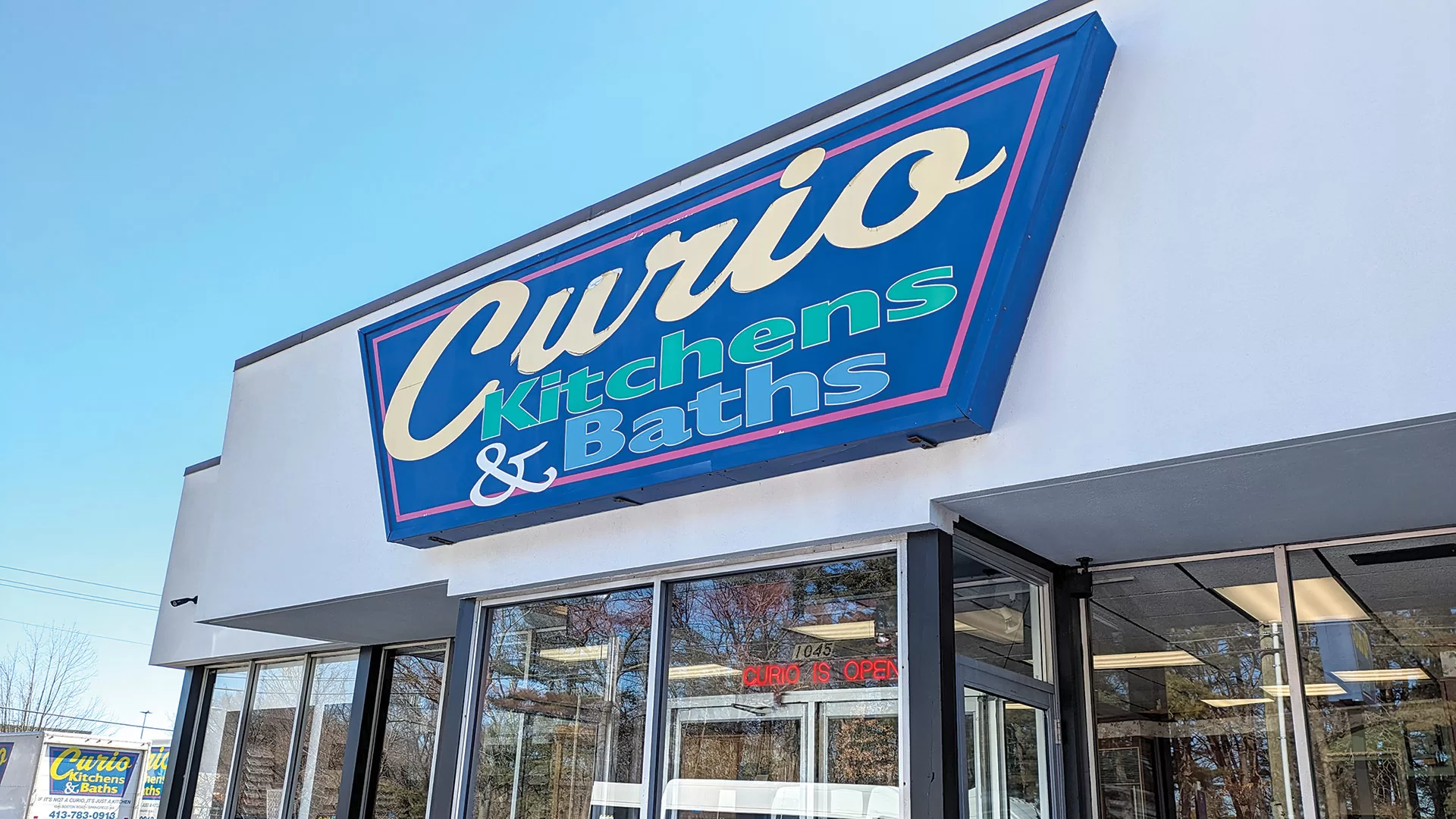
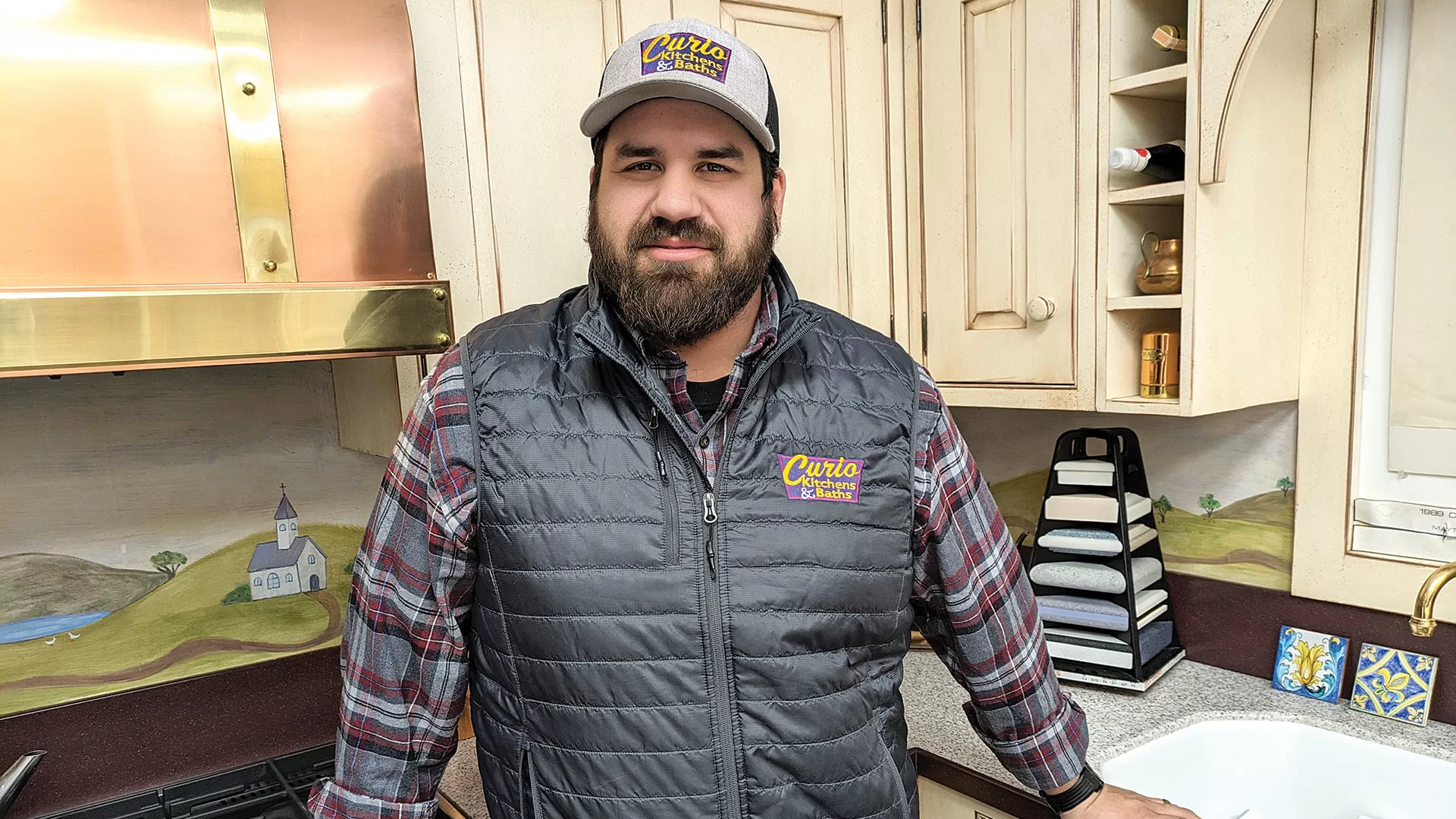
Joe Bednar talks with Curio and Frank Nataloni, owners of Kitchens by Curio

Curio and Frank Nataloni

Fifty years ago, Curio Nataloni was laid off from a construction job and started doing solo kitchen projects. Ten years after he launched that business, his brother, Frank, joined him full-time, and just this past month, Kitchens by Curio celebrated 50 years in business. On the next episode of BusinessTalk, Curio and Frank talk with BusinessWest Editor Joe Bednar about surviving and thriving through various economic shifts and the many changes in home renovation over the years, from high-tech advances to the way people shop to evolving tastes in kitchen and bath styles — and also about Curio’s son, Michael, who plans to eventually be the company’s second-generation leader. It’s must listening, so tune in to BusinessTalk, a podcast presented by BusinessWest and sponsored by PeoplesBank.

Sponsored by:

Also Available On

Daily News

MONSON — Monson Savings Bank announced that Vicki Baldyga, former Ware branch manager, and Amber Messer, former assistant Ware branch manager, have transferred to the bank’s Wilbraham branch to take the helm as the new management team of the 100 Post Office Park location.

“At Monson Savings Bank, we strive to offer our team members new opportunities. Whether it be a transfer to a new location, a role in a different department, or something else that better suits their professional goals, we’re happy to support our team members throughout their journey with us,” said Dan Moriarty, Monson Savings Bank president and CEO. “I am confident in Vicki and Amber’s leadership based on the years of dedication and support they have provided our customers up to today. I know that they will help to make this a smooth transition and provide our customers with the same amazing service as the previous management of the Wilbraham branch.”

Baldyga has 25 years of experience in the banking industry, 17 of which have been in branch management. She has been employed with Monson Savings Bank for five years. Committed to expanding her knowledge and skill set, she is currently enrolled in the Massachusetts Bankers Assoc. New England School for Financial Studies and holds several diplomas and certificates from the Center for Financial Training.

In her role as Wilbraham branch manager, Baldyga will be responsible for planning, organizing, and directing branch operations. She aims to foster an environment of teamwork and provide a high level of leadership to her team, as well as provide a high level of customer service with a positive, respectful, and courteous attitude.

Baldyga is very involved in the local community, volunteering at Crossway Community Clothing Outreach, serving on the board of the Three Rivers Chamber of Commerce, and donating blood to the Red Cross.

“I have always strived to help others grow and achieve their goals, both personally and professionally. I have a servant’s heart and do my best to help others,” she said. “Whether it is a new couple looking for their first home, a small-business owner looking for the best products and services, a teen going off to college that needs financial literacy, or an elderly person that has just lost their spouse and needs help navigating their bank accounts, I truly love to help others and see them smile as they achieve their goals. I am so grateful for this opportunity to help people in the Wilbraham community reach their banking goals.”

Messer began her banking career as a customer service representative and teller at Monson Savings Bank six and a half years ago. Throughout her career, she has proven to be an asset to the bank and has achieved several promotions, ultimately attaining the position of assistant branch manager.

In 2023, Messer was a nominee for Monson Savings Bank’s President’s Award. She was recognized by a peer for her commitment to customer and community service, teamwork, and excellence. She has also received several customer-service excellence awards during her time with the bank for going above and beyond.

As the assistant Wilbraham branch manager, Messer will support Baldyga to manage the branch. She will also assist customers with their banking transactions, drawing on her extensive knowledge of bank products and services, while promoting an atmosphere of positive staff morale by inspiring trust and respect.

“As I continue my career journey with Monson Savings Bank, I am looking forward to becoming an active member of the Wilbraham community and forming deeper relationships with our Wilbraham customers,” she said. “I have enjoyed advancing my leadership skills and contributing to our overall team efforts. Through my patient and empathic personality, I can provide the highest level of customer service to help individuals achieve their financial goals. I like looking for opportunities to provide our customers with products and services that will make their banking easier. I am excited to expand on my skill set and continue to do my part to lead the bank to success.”

Daily News

WARE — Country Bank announced the appointment of Clare Ladue as the assistant vice president of the Customer Care Center. With 30 years of financial-service experience, she brings a wealth of knowledge and leadership to her new role.

Ladue graduated from Massachusetts Bankers Assoc. New England School of Financial Studies. She has a commercial lending certificate from the Massachusetts Bankers Assoc. and numerous professional leadership certifications.

Throughout her career, she has gained extensive experience in banking, including retail banking, deposit operations, commercial lending, and regional management, making her the ideal candidate to lead Country Bank’s Customer Care team.

Her connection to the local community is evident through her previous involvement as an executive committee member of the Quaboag Hills Chamber of Commerce. She has also participated in numerous charitable initiatives, including the Walk of Champions, Junior Achievement, Rays of Hope, Lorraine’s Soup Kitchen, and Link to Libraries. Her dedication to making a positive impact aligns with Country Bank’s core values.

“I am thrilled to join Country Bank and utilize my leadership skills and experience to support our valued customers,” Ladue said. “I will focus on their financial wellness, ensuring a superior customer experience from our exceptional Customer Care team, and I am eager to make a difference and contribute to the continued success of Country Bank.”

“We are thrilled to welcome Clare to the Customer Care Center team; her experience in retail and commercial banking, combined with her leadership roles, make her a perfect fit for Country Bank,” bank President Paul Scully said. “We look forward to Clare’s enthusiasm and dedication representing Country Bank, and supporting our iSTEP corporate values of integrity, service, teamwork, excellence, and prosperity, and we are pleased that she has chosen Country Bank to be her employer of choice.”

Daily News

AMHERST — Aaron Lansky, founder and president of the Yiddish Book Center, announced he plans to retire in June 2025.

Lansky founded the Yiddish Book Center in 1980 as a 24-year-old graduate student, and since then, the organization has rescued more than 1.5 million Yiddish books, created educational programs that bring the language and culture to new audiences, documented the oral histories of more than 1,300 narrators, created a publishing imprint devoted to Yiddish translation, and much more.

Susan Bronson, who has been the center’s executive director for 14 years and holds a doctorate in Russian and Jewish history, will succeed Lansky as president.

Daily News

SPRINGFIELD — Common Threads, the signature event of Dress for Success Western Massachusetts (DFSWM), is coming up on Thursday, April 11 from 5:30 to 8:30 p.m. at the Log Cabin in Holyoke. Tickets are on sale until April 1.

Common Threads will feature networking, a sit-down dinner, and a silent auction leading into a program that will highlight multiple local women who have made significant strides toward financial stability and personal goals.

Award-winning weeknight evening anchor Ciara Speller of WWLP 22News will be the emcee for the event. LaTonia Monroe Naylor, school committee representative, small-business entrepreneur, gunshot survivor, author, nonprofit founder, wife, and mother, will serve as the keynote speaker.

During the event, Sarai Arroyo of West Springfield Public Schools and a student at Holyoke Community College will be given the Distinguished Alumna Award, Tammy Hickey will be honored as Volunteer of the Year, and Jessica Dupont of Alliant Health Plans, a DFSWM past board president, will be recognized as an Outstanding Contributor.

“The program will honor our awardees and five participants who have changed their lives while in our programming,” said Jess Roncarati-Howe, DFSWM interim executive director. “It’s inspirational to see how much these women have overcome — including poverty, abuse, addiction and more — to provide a better future for themselves and their families.”

All proceeds support DFSWM’s mission to provide women and non-binary people in the community with the tools and network of support to achieve financial independence. Local programs include the Foot in the Door workforce-readiness program, the Margaret Fitzgerald Mentorship Program, the Professional Women’s Group, a digital-literacy program, and the suiting program. The event will feature opportunities to donate to the work of Dress for Success Western Massachusetts.

Tickets, which cost $75 each, are available at www.dfswm.org.

Daily News

Evan Garber

SPRINGFIELD — Evan Garber has been named senior consultant and vice president of A.L. Cignoli & Associates Inc. Garber, who received his master’s degree in public affairs from the UMass Amherst School of Public Policy, started working with the firm as an intern during his time as an undergraduate student at UMass studying political science and education.

“Day one, as an intern, we knew Evan had every skill necessary, and more, to help serve our diverse clients, from crisis communications to event-plan execution to navigating the halls of local and state governments, as well as the wild waters of Washington D.C.,” said Anthony Cignoli, president of A.L. Cignoli & Associates Inc.

“Evan jumped right into several significant corporate client challenges for us, handled some very delicate political campaign issues, and had the compassion and background to assist several of our social-service clients, all from the start of our relationship with him. We are grateful that this exceptionally talented and energetic young man decided to accept our offer, to continue with us and stay here in our home base of Western Massachusetts,” Cignoli added. “It is important to me that young people with Evan’s skill remain in our region. Though our firm’s clientele reaches beyond the region, keeping someone with Evan’s talent here is a big win for us. And on top of all that, we’ve had a lot of great success with Eagle Scouts on our team over the years.”

Garber attended Chicopee High School and found his first interest in history, theater, leadership, economics, and politics there. Throughout his time at UMass, he was able to refine those interests.

“It’s amazing how those five things I was really into cross over and reinforce each other. The skills I learned from pursuing them are ones that I very much use every day in the government and public-relations field,” he said.

While in college, Garber chaired the UMass Theatre Guild, got experience working in grassroots political campaigns, was on the student staff of the UMass Marching Band, and got his class B commercial driver’s license to work at UMass Transit.

“When I began my first internship in 2019, I had been thinking of a different career path,” he recalled. “I knew I needed some real-world experience in public and media relations for that initial path. Working with Tony and the amazing people who are the firm’s clients and associates, I realized that the impact and difference I hope to make could be achieved through this specialized profession. The charitable and pro bono work we do is gratifying and exhilarating.”

Garber is thankful for the opportunity to work with clients both in Western Mass. and around the world.

“Every day working for our clients is unique,” he said. “From some of the biggest names on the planet in manufacturing to Western Mass. food cooperatives, farmer’s groups, healthcare, retail cannabis, entertainment industry, and social-service organizations, it is a great mix of economic impactors that make a difference in real people’s lives. And when we add in the excitement of challenging political campaigns, there are no dull moments.”

Garber will be responsible for oversight of all Cignoli client efforts. He works directly with Cignoli on all daily client operations, including drafting strategies, media monitoring, designing solutions that are customized to the firm’s unique clients, and contributing to the successful results of clients.

Daily News

Bobby Tyrol III

PITTSFIELD — Pearson Wallace Insurance announced a new hire, Marc Membrino, and shared the achievement of current employee Robert “Bobby” Tyrol III, who has acquired his property and casualty insurance producer license.

Membrino joins the team with an extensive background in the insurance industry. He moved to the Berkshires in 1979 and worked for his family-owned insurance company, which he later bought in 1989 and subsequently sold years later. Membrino’s current role with Pearson Wallace Insurance is customer service representative, in which he rates and services policies and provides help to customers.

Tyrol has been with Pearson Wallace Insurance for two years. He moved to the Berkshires in 2015 after taking a job at the Berkshire Hills Golf Course in Pittsfield, where he was an assistant golf professional for six years. In 2021, he decided he needed a career shift and joined Pearson Wallace Insurance as a personal lines client manager.

After receiving his insurance designation of a property and casualty producer, Tyrol has been promoted to customer service manager. He takes charge of all personal-line services for Pearson Wallace Insurance, with the goal of making customers’ experiences seamless.

Daily News

WEST SPRINGFIELD — AXiA Insurance Services recognizes the recent professional achievements of two employees in its West Springfield location.

Aidil Cortinhas, personal lines account relationship manager, earned the certified insurance service representative (CISR) designation. The CISR program is nationally recognized with the mission to further develop insurance-related competencies for industry customer-service representatives.

Cortinhas has been with AXiA since October 2017, servicing clients’ home and auto insurance coverage. She is also a current member of the company’s team and events committee, which coordinates company employee events, and an active volunteer in AxiA Charitable Fund programs.

Colin Dandy, administrative coordinator, earned his property and casualty insurance license, having passed the Massachusetts state exams. This qualifies him to now sell insurance coverage, continuing his growth track at the agency and in the industry. Dandy has been with AxiA since September 2022, after graduating high school that same year. He currently is a member of a company process/procedural committee.

Daily News

SPRINGFIELD — Edward Caisse III, unit director at the Hampden County Sheriff’s Office, will be the keynote speaker at the Fostering Equity and Inclusion for Latinas/os in Child and Family Welfare Conference on the Springfield College campus on Wednesday, March 13. The conference is the culmination of a year-long community awareness and development campaign led by Social Work Professor Miguel Arce, the 2023-24 Distinguished Springfield Professor of Humanics.

The goal of the conference is to facilitate public discussion and raise awareness about the crises that resilient families must overcome. The conference promotes the participation of all sectors of the broader community and seeks a sense of shared responsibility in the pursuit of better living conditions for all. Fostering inclusion and equity for Latina/o children and their families’ well-being is a call to action, and 37 workshops at the conference will address a variety of topics related to equity and inclusion in the local Latina/o community. The conference is open to the public and the Springfield College community, and registration is required.

This conference is approved for five category I credit hours for social workers by the Springfield College master of social work program, which is an authorizing body for granting continuing-education units for re-licensure of Massachusetts social workers.

Additionally, this conference is approved for seven professional development points (PDPs) for educators by the Springfield College Department of Educator Preparation and Licensure, an approved Massachusetts Department of Elementary & Secondary Education professional-development (PD) provider. PD certificates will be provided to participants for a total of seven PDPs in Safe and Supportive Learning Environments that educators can use toward licensure renewal requirements.

For more information, a complete schedule, and to register, visit springfield.edu/fosteringequity.

Features

Concrete Example

It’s called the Justice40 Initiative, also known as Section 223 of Executive Order 14008, “Tackling the Climate Crisis at Home and Abroad.”

It was issued by President Biden his first week in office back in 2021, and it directs 40% (hence the name) of the overall benefits of certain federal investments — including those in clean energy and energy efficiency, clean transit, affordable and sustainable housing, training and workforce development, and more — to flow to disadvantaged communities.

Holyoke still fits that description, and the fact that it does is one of many factors that has brought Sublime Systems, the Somerville-based startup that manufactures what it calls “low-carbon cement,” to the Paper City in an ambitious, $150 million venture that brings the city’s past, present, and future together.

Specifically, Sublime, guided by the Justice40 Initiative tools, its pending application for funding to the Department of Energy’s Office of Clean Energy Demonstrations, and other factors, including accessibility to abundant renewable energy (hydropower), eventually settled on a 14-acre sliver of land, an island in some respects, that lies between the city’s lower canal and the Connecticut River to scale up its operation.

There, the company expects to break ground in early 2025 on a plant that will produce 30,000 tons of cement that is much kinder to the planet than the products that have been produced to date. The application to OCED is for funds for accelerated construction of this facility, and the program in question is one of many covered by Justice40.

“Sublime ultimately selected Holyoke because of the dual opportunity to help local people in the near term while working toward swift and massive impact on global CO2 emissions,” said Erin Glabets, Sublime’s head of Communications, as she summed up the company’s mission — and decision to take its next critical step in Holyoke — in succinct fashion.

Launched from research at the Massachusetts Institute of Technology, the company was founded by Leah Ellis and Yet-Ming Chiang to essentially revolutionize cement production.

“Sublime ultimately selected Holyoke because of the dual opportunity to help local people in the near term while working toward swift and massive impact on global CO2 emissions.”

While doing that, it has become part of an exciting new era in manufacturing in the nation’s first planned industrial city, one focused on green manufacturing and green energy.

Indeed, while Sublime is an environmental story and part of what Gov. Maura Healey calls the ‘climate curtain’ taking shape in the Commonwealth, it is also an economic-development story and an example of the kind of company Holyoke is trying to attract with its strong blend of clean, lower-cost hydroelectric energy; large inventory of old mill space; and accessible location off several major highways.

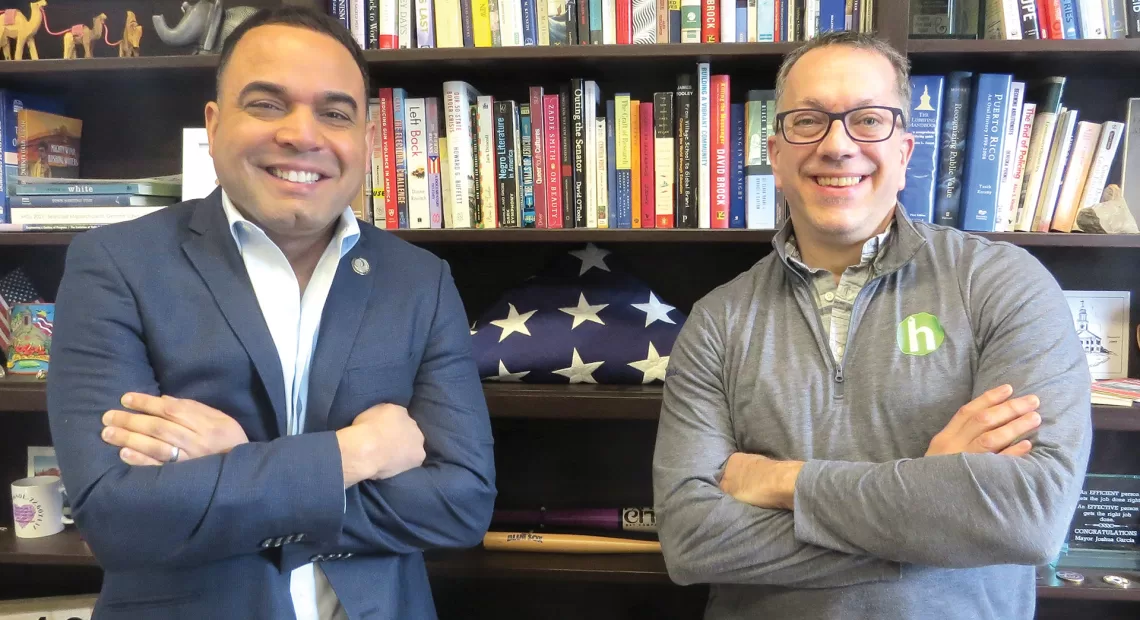
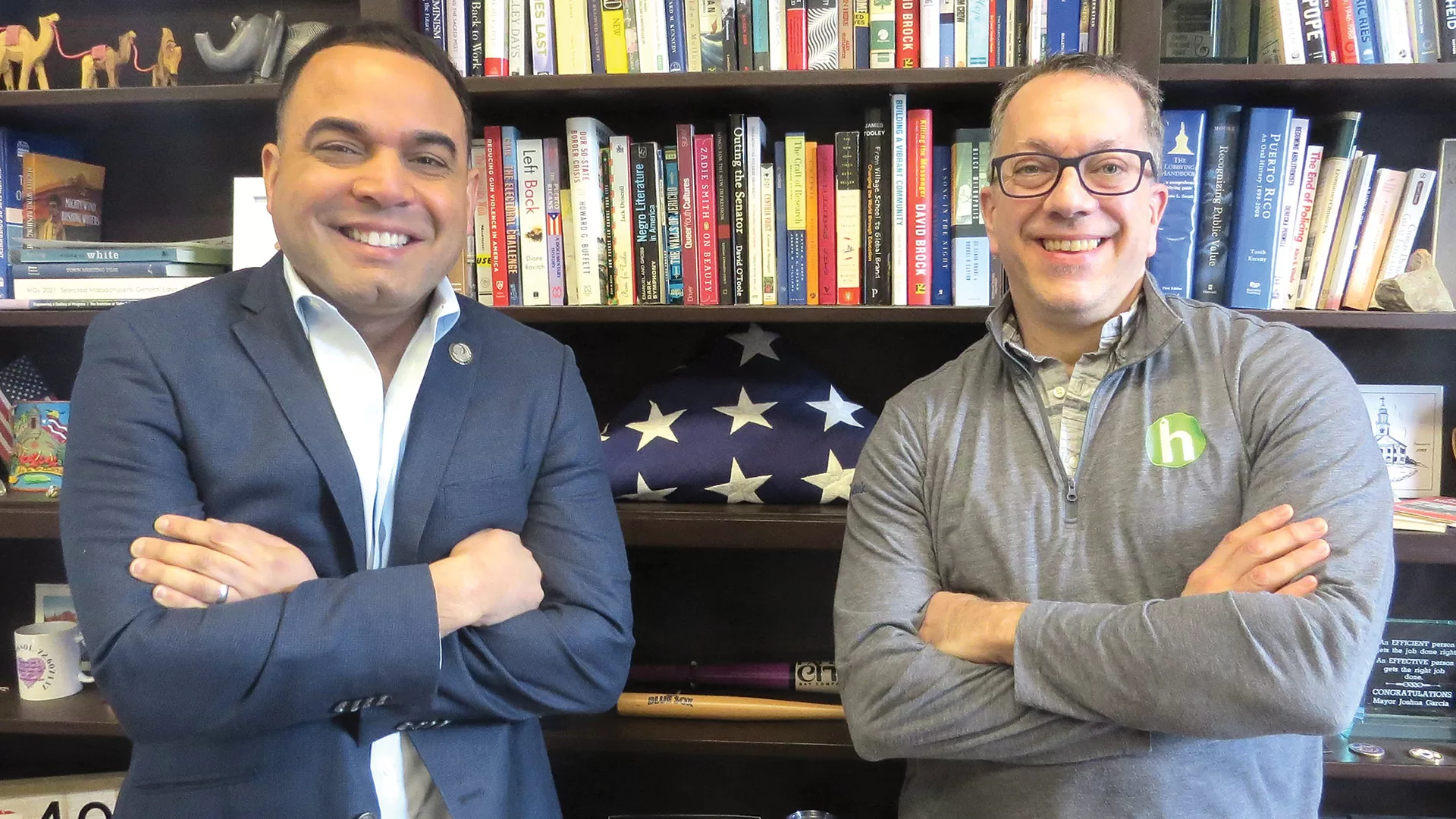
“Sublime Systems’ low-carbon cement manufacturing project is not just a business development — it is a major stride towards the Holyoke we envision — innovative, prosperous, enterprising, and future-oriented,” Holyoke Mayor Joshua Garcia said. “By supporting this initiative, we are fostering a new paradigm where economic growth and the health of our planet are seen as interconnected and interdependent, not separate or mutually exclusive.”


Cleaner and Greener

As noted, this is a story with many elements, both figuratively and literally, the most obvious being a fundamental change in not only how cement is produced, but how such production impacts the environment.

“The founders wanted to de-carbonize cement,” Glabets said. “Cement is a huge emitter, a high-polluting industry just as a function of how it’s made, and it’s been made the same way for about 200 years — by taking limestone, a mineral that is half carbon dioxide by weight, and breaking that down into reactive ingredients.

“When you break it down, all that CO2 gets released into the air,” she went on. “And the way you break it down is with a very high heat process — a fossil-fuel kiln that needs to reach about 1,400 degrees Celsius. All that contributes to very high carbon emissions for the industry.”

Sublime takes a much cleaner and greener approach, using an electrochemical process that can turn abundantly available non-carbonate rocks and centuries of industrial waste that don’t release CO2 when they are decomposed into cement at ambient temperature — eliminating the need for fossil fuels entirely.

“We can use minerals that don’t have CO2 in them, so there’s no emission on that side,” she explained. “And we can do it at low heat and with a fully electrified process, so there’s no emissions there, either. So the cement has the same chemical makeup as the old stuff, as the more polluting, Portland cement, as it’s called, and it can be used in concrete the same way.”

The company has taken production to a pilot level — about 250 tons per year — in Somerville, Glabets said, adding that the next step is essentially scaling up. And that’s where Holyoke becomes a huge part of the story.

Elaborating, she said most cement plants currently operating in this company produce 1 million tons per year. Sublime wants to someday get to that level of production, but in the meantime, it will take the incremental, or intermediate, step of creating what could be called a demonstration facility.

As it commenced a search for where to build that facility, the company considered a number of factors. For starters, she said the company wanted to be close to sources of raw materials, and also close to its headquarters in Somerville. Meanwhile, it would require a large footprint on which to build, and sites of the size eventually found in Holyoke, about 14 acres, are becoming increasingly difficult to locate.

Other ingredients include accessibility, an ample supply of customers within a short distance of the demonstration facility, as well as a community that would welcome such a large-scale industrial manufacturing facility and had the zoning and permitting for it, she went on, adding that not all cities and towns are welcoming.

And then, there’s the company’s desire for clean energy to power that plant.

“Because what we do is meant to be as green as possible, powering our electrical process with renewables is really important,” she told BusinessWest. “So finding a place with a really green grid was at the top of our list.”

As was a desire to address some of the goals of the Justice40 Initiative, said Pat Beaudry, a Holyoke native now serving as the company’s Project Development manager.

He described his recent work as a “reality check” to determine if Sublime’s facility was something Holyoke residents really wanted and needed in their community. After months of meeting with various constituencies, including residents, officials, nonprofits, labor, and economic-development agencies, he said the answer to that question was a resounding ‘yes’ — for many reasons, he said, but especially a desire to write a new and exciting chapter in the city’s long and distinguished industrial history.

“Even though a lot of people in the city don’t have a direct history of working in the paper mills, they grew up hearing stories from their parents about what it looked like then and the opportunities that abounded downtown,” Beaudry told BusinessWest. “And I think people are ready to go back to the future with a cutting-edge industry.”


Rising Interest

There were a few other options to consider for locating the plant, Glabets said, but Holyoke’s assets, overlaid with the guidelines of Justice40 Initiative, steered the company to the Water Street site, which was home to a series of paper mills that were consolidated over time but had been dormant for several years and were eventually demolished.

Construction, as noted, is expected to begin in early 2025, with the plant coming online in 2026. The cement it produces will be an in-demand item, she noted, adding that end users, be they municipalities or private businesses, are increasingly looking to incorporate green building materials in their projects, thus reducing their overall carbon footprint and what are known as scope 3 emissions, indirect greenhouse-gas emissions that occur in an organization’s value chain.

“Many large companies are working to reduce those scope 3 emissions. And when building a new facility, whether it’s a large data warehouse or something to house any sort of operation, if they can build that facility in very a low-carbon way, that’s one way to accomplish that goal,” Glabets said.

She added that Sublime is already seeing solid interest from large infrastructure owners and end companies that fall into that category.

“Because today’s cement is so high-emitting — for every ton of cement made, a ton of CO2 gets released — this is a very effective lever for reducing those emissions.”

Professional Development

Professional Development

Ian Noonan teaches a workforce-development class at STCC.

Ian Noonan teaches a workforce-development class at STCC.

It’s called the IT Academy.

Launching on March 12, it’s a new program within Springfield Technical Community College’s (STCC) Workforce Development Center that focuses on cybersecurity, a growing field with a constant need for new talent.

“We’re really excited about this one,” said Ian Noonan, STCC’s director of Instruction and Asssessment for Workforce Development, noting that the program will have full- and part-time options. “There is such a big need for that piece, and this is a pathway to build careers in IT and cybersecurity. We want to make it easier for folks trying to break in, maybe non-traditional students who are not going to college.”

Indeed, the Workforce Development Center (WDC) focuses its considerable energies on such students, who are not taking classes for college credit, but instead training for employment in fields that badly need a stronger pipeline of talent.

“We offer plenty of different workforce-development, certification-based programs,” Noonan said. “Some matriculate into credit-bearing courses, and some are ways to earn certifications.”

One of the more popular options is the certified nurse aide (CNA) program, which prepares students with entry-level job skills that allow them to enter the healthcare field and prepare for the state board examination to become a CNA.

Other healthcare options include phlebotomy technician, emergency medical technician, EKG technician, and a few options for people already working in healthcare, including phlebotomy certification, CPR basic life support, and dental radiology.

“We’re always looking at what the best needs are for the community and how best to support students in building skills, earning certifications, and getting hired.”

The WDC describes its offerings as “non-credit programs and classes meet the ever-changing technology and workforce demands of individuals, businesses, and industries in the region.”

Part of that role is coordinating with the STCC Career Services Center to provide internship opportunities as well as full- and part-time employment opportunities. Meanwhile, the programs and classes offered at the center include both instructor-led and web-based workforce training and certifications in a wide variety of areas, including advanced manufacturing, construction and project management, healthcare, skilled trades, IT/network certification, and certification and license preparation in areas like auto damage appraisal, drinking-water treatment and distribution, and ServSafe preparation for food handlers and managers.

“One of the bigger programs we do is a HiSET/GED adult-education program funded through the state on a five-year grant,” Noonan explained. “With that, we provide HiSET and GED prep courses, both day and evening, both in person and online, as well as for students who are just getting started. We run these sessions in eight-week programs.”


Help Where It’s Needed

Among other programs at the WDC, the Educators’ Academy provides a free, 10-week course to prepare participants for the job of paraeducator in the Springfield Public Schools. Para-educators work with teachers and other school staff to provide instructional assistance and classroom support.

Another free offering is the Hampden Prep program for basic computer use skills, which helps reduce the digital divide that keeps many individuals from accessing jobs. The course provides instruction in technology and digital literacy, and students work to improve their computer and job-ready skills as well as prepare to earn certificates.

Noonan said the WDC is also developing a green-jobs program to create a pathway to support another rising industry. “We’re always looking at what the best needs are for the community and how best to support students in building skills, earning certifications, and getting hired.”

It’s critical work, he added. “This is so important, not just for students, but for the community as a whole. We’re talking about students coming into these programs, especially for the HiSET or the GED, who weren’t successful in traditional schooling, and this is a great opportunity for them to build their academics and learn those skills they need to move into a career.”

One benefit of the Workforce Development Center is that students are assigned a college and career advisor as soon as they start classes.

“It’s incredibly rewarding work to meet our students where they are. That’s why we’re here.”

“Our students all have access to that,” Noonan said. “We’re able to support them with résumé development, interviewing skills, cover letters, anything that will help support our students with that next step.”

Students enrolled in programs at the center also get access to all the college’s resources, from disability services to the Center for Access Services, which assists with needs like food and housing assistance.

“The mission of the college is to transform students’ lives. And what we’re doing here at the Workforce Development Center sets the stage for students to transform their lives and create better lives for them and their families,” Noonan said. “We’re here to support them with whatever they need, with programs ranging from HiSET and GED prep to getting their master electrician certification. There’s a lot here to offer the community.”


Rewarding Work

Noonan said it has been personally gratifying to him to see the impact the WDC has on people who may have walked an erratic path to get an education, or may have previously struggled with high school or college, but are now able to take the first steps toward a fulfilling career.

“It’s been great work, getting to see student success from day to day, seeing students who may not have been successful with traditional schooling be successful,” he told BusinessWest. “It’s incredibly rewarding work to meet our students where they are. That’s why we’re here.”

Home Improvement

Up Close and Personal

Andrew Crane

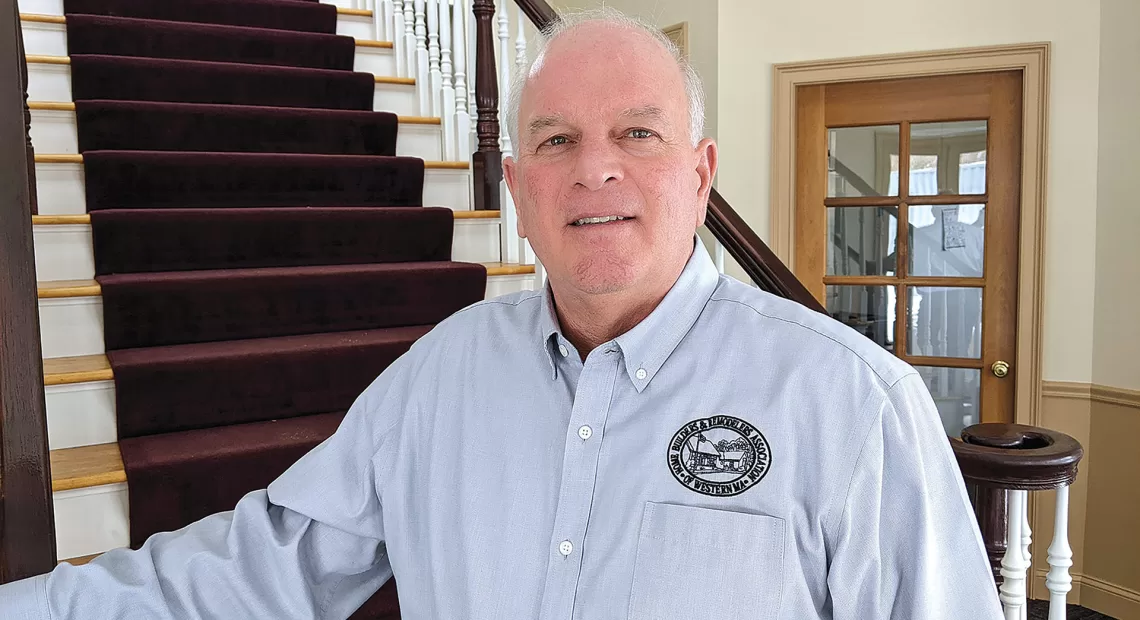
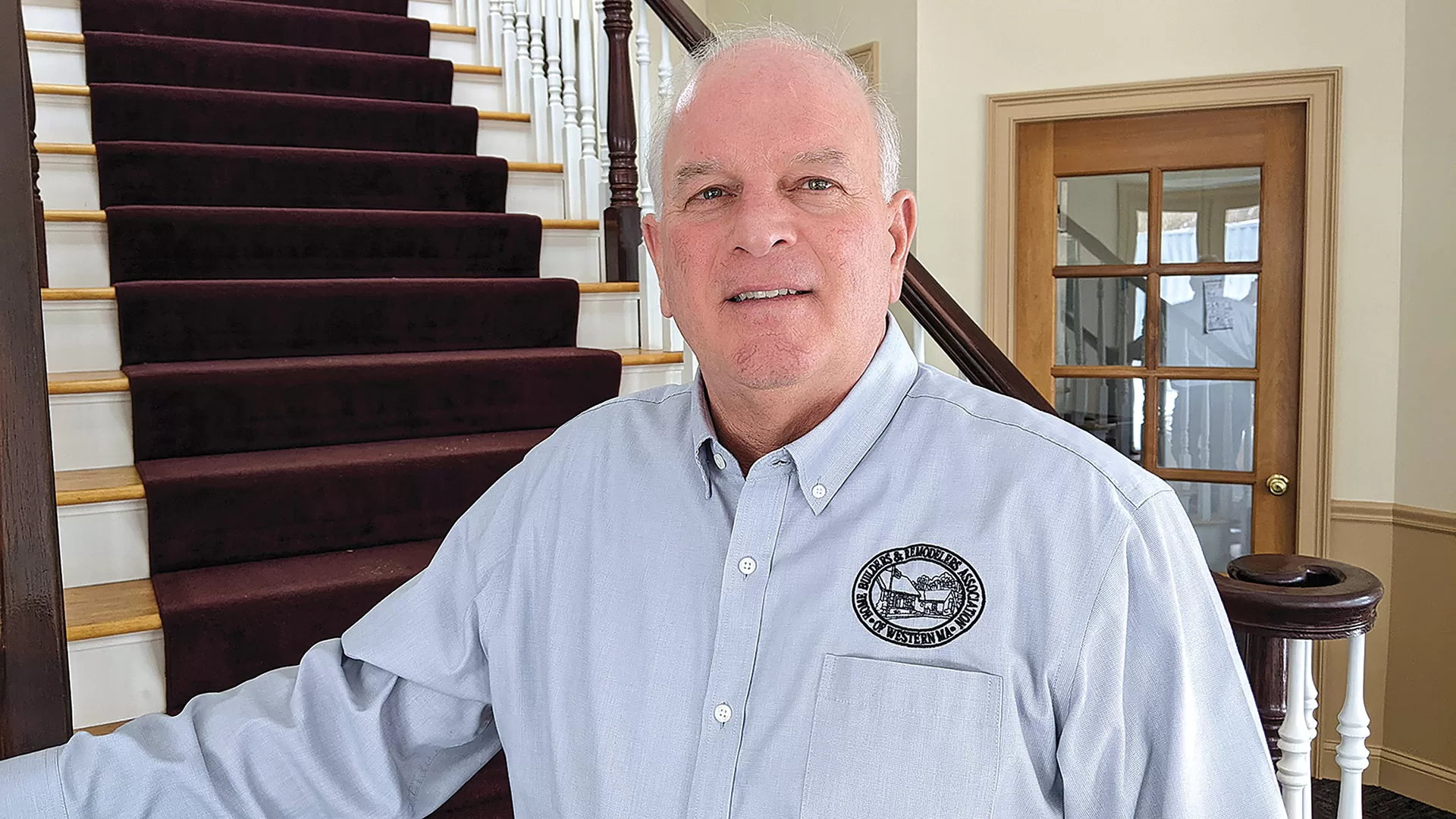
Andrew Crane says the Home Show is both a helpful experience for homeowners and a fun day out with family or friends.


Andrew Crane said the annual Home & Garden Show staged by the Home Builders and Remodelers Assoc. of Western Massachusetts (HBRAWM) began as a way to get contractors out in front of people who needed projects done.

These days, with the prevalence of the internet, consumers can do a lot of their research and shopping online, and they do.

But here’s the thing — the annual show, now in its 69th year, still draws a crowd.

“There are a lot of people that still want to meet their contractor, look that person in the eye, maybe see what their trucks or equipment look like, talk about specific projects, and see pictures. That’s how I like to shop,” said Crane, HBRAWM’s executive director. “The Home Show is for people that want to see and talk to contractors, as well as other people. If I’m buying windows and I get a chance to touch that window and slide it up and down or left and right, I feel better about that product. And that’s what the Home Show offers.”

This year’s edition runs March 21-24, in and around multiple buildings at the Eastern States Exposition in West Springfield. Crane says he expects about 15,000 visitors over those four days.

“If I’m looking to build a home … I’d like to find a guy that’s built several homes, or dozens, or hundreds, educating me about the process,” he continued. “It’s probably the single biggest investment you’ll make in your entire life. If you buy a car, it lasts you five years, six years, maybe 10 years. If you buy a house, it’s supposed to last you 50 years, 60 years, 80 years. So it’s kind of a big decision.”

“You get a chance to touch them and feel them without traveling to 20 different spots and other lumberyards all over Western Massachusetts; you might be able to do it all in the same building.”

Meanwhile, homeowners looking to renovate — and that number spiked during the stay-at-home months of the pandemic, and remodelers still report a high volume of projects today — will find plenty of vendors of windows and doors; flooring, countertops, and tile; appliances and furnishings; and much more.

“You get a chance to touch them and feel them without traveling to 20 different spots and other lumberyards all over Western Massachusetts; you might be able to do it all in the same building,” Crane explained. “We might be able to show you several of the products — different roofing, different siding, that type of thing.”


Plenty of Reasons

The annual event sees all types of attendees who visit for a variety of reasons, Crane noted. Attendees typically fall into one of several categories:

• People planning to buy or build a new home, who may visit with builders, real-estate agents, financial institutions, and sellers of component products;

• People planning to remodel or renovate, who may want to check in with all of the above, plus vendors of the aforementioned windows and doors, appliances, home furnishings, and more;

• Yard and garden enthusiasts, who tend to be interested in lawn and landscaping services; wall, walk, and edging components and materials; and trees, shrubs, flowers, and seeds;

• Renters, who have no plans to own a house, but may be interested in space-conservation and space-utilization products, as well as home furnishings;

• Impulse buyers, who flock to vendors of home décor, arts and crafts, cooking and baking products, jewelry, and personal goods; and

• Lifestyle-conscious individuals, who like to check out trendy, high-tech, or time-saving products, as well as home furnishings and products focused on self-improvement, fitness, and health.

The latter categories inject some fun into the Home & Garden Show, Crane said. “We hear it every year: ‘where’s the beer-nut guy?’ or ‘where’s the pickle guy?’ Those type of things are what make a show entertaining. We call ourselves the Home Builders and Remodelers Association, but everybody likes to look at the radio remote-control helicopter that flies around.”

Even with the more serious home-related purchases, everyone wants some variety, he added.

“You don’t want to look at 500 sheds, but it’s really nice to have a dozen there to look at, with different types of shapes and colors. It’s really nice to see windows, but you don’t want to look at 300 windows. As you travel through the aisles, you’ll see different fences, you’ll see different roofing, different siding, and then you’ll bump into the pickle guy, or you’ll bump into the beer-nut guy, or the person selling knives and pans. These are all part of the entertainment.”

Speaking of entertainment, Crane said he’s often considered the show a social event, or at least part of one.

“Before I was involved with the Home Show, I used to go because I would see my neighbors and friends. We would plan to meet at the Home Show at 6:00, walk the Home Show for a couple hours and see dozens of our friends, and then we would plan a dinner date, go somewhere with our wives and have a nice meal somewhere.”

He also noted that the show is an inexpensive outing, and just about everyone who checks it out will find something useful, whether they’re looking for it or not. “In some cases, people will pick up a card and might not even call that vendor or contractor until a year later, when they remember that they ran into them.”

For vendors, the show can fill up an entire year’s worth of projects, Crane said, so people need to manage their expectations and plan ahead. “If you’re looking for a roof, you might have to wait until August to get it. And after the Home Show, you might not even get it this year if that’s the person you want to use.”

Meanwhile, “other people are just there to make sure that the general public knows they’re around if they ever can be of service. You know, pass out the business card, and it goes on the refrigerator, and if you ever need this or that, you take the card off the refrigerator and call that person.”


The Right Stuff

The Home Builders and Remodelers Assoc. is almost 100 years old and continues to represent contractors so they can understand state and national regulations, as well as keeping the general public informed of what services are available in the region.

“All the businesses that run a good business — meaning they plan, they advertise, they keep the right insurances, and they keep their licenses intact — are doing fine because they have a responsibility to their employees and to their livelihood,” Crane said of today’s business climate. “So when they attend education and learn how to write or rewrite contracts as laws change, that protects the public, and it protects them.”

At the same time, “when a person is shady in any business, they don’t put themselves out in front of the public. They kind of skirt the system, so to speak. So the people you’re going to meet at the Home Show are putting themselves out in front of everyone for the world to see, so people know they’re in business, they’re legit, and you can count on them being educated,” he went on. “So you’re not just hoping for the best. You’re ahead of the curve with your selection process.”

Law

Prepare for Compliance

By David A. Parke, Esq.


The new reporting rules that became effective Jan. 1, 2024, under the federal Corporate Transparency Act (CTA) now require many small businesses and other entities to file reports with the U.S. Financial Crimes Enforcement Network (FinCEN). FinCEN estimates there are more than 30 million entities that are subject to these reporting rules on their effective date.

The CTA is intended to provide law enforcement with a means to combat crimes, like money laundering, that are aided through the use of shell companies. The CTA applies to ‘domestic reporting companies’ and ‘foreign reporting companies,’ as defined in the rules. This article will focus on domestic reporting companies.

Under the CTA, a reporting company, subject to the CTA, must file information with FinCEN regarding itself and its beneficial owners. For a reporting company formed on or after Jan. 1, 2024, the company must also report information regarding the individuals who created the company. Any changes to previously reported information must also be reported in a timely manner to FinCEN. The rules specify the information that must be reported about a reporting company and its beneficial owners and company applicants.

David A. Parke

David Parke

“The CTA is intended to provide law enforcement with a means to combat crimes, like money laundering, that are aided through the use of shell companies.”

A domestic reporting company under the CTA is any corporation, limited-liability company, or other entity created by filing a document with the secretary of State or a similar office under the law of a state or Indian tribe, unless exempt. There are 23 categories of entities that are exempt from reporting. The exemptions include highly regulated entities like issuers of securities registered under Section 12 of the Securities Exchange Act of 1934, banks, insurance companies, regulated public utilities, and certain tax-exempt organizations. Many small entities are likely not covered by an exemption and will need to report. The rules define more specifically the conditions of each exemption.

One exemption is for a ‘large operating company,’ as defined in the rules. This is a company that employs more than 20 full-time employees in the U.S., has an operating presence at a physical office within the U.S., and has more than $5 million in annual gross receipts or sales, excluding gross receipts or sales from sources outside the U.S., according to the company’s federal income-tax return for the previous year.

A ‘beneficial owner,’ whose information must be reported to FinCEN, is any individual who exercises substantial control over the reporting company or who owns or controls, directly or indirectly, at least 25% of the ownership interests of the reporting company. The reporting rules address various types of direct or indirect control or ownership arrangements under which an individual would be a beneficial owner.

An individual would be included as a beneficial owner if that individual is a ‘senior officer,’ which includes the president, chief financial officer, general counsel, chief executive officer, chief operating officer, or any other officer who performs a similar function. The rules also include as a beneficial owner any individual who has authority over the appointment or removal of any senior officer or a majority of the board of directors or similar body, or has substantial influence over important decisions, including decisions of the type enumerated in the rules.

A ‘company applicant,’ whose information must be included for a domestic reporting company created on or after Jan. 1, 2024, is an individual who files the document that creates the company, and the individual who is primarily responsible for directing or controlling the filing where more than one individual is involved.

Any domestic reporting company created before Jan. 1, 2024, must file its initial report with FinCEN by Jan. 1, 2025. Any domestic reporting company created during 2024 must file within 90 days. Any domestic reporting company formed on or after Jan. 1, 2025 must file within 30 days. The deadlines are measured from the earlier of actual or public notice that creation is effective. If there is a change in any information previously reported to FinCEN regarding a reporting company or its beneficial owners, an updated report must be filed with FinCEN within 30 days.

FinCEN has an E-filing website for reporting information (boiefiling.fincen.gov), and charges no filing fee. FinCEN has also published a Small Entity Compliance Guide and Frequently Asked Questions to provide guidance regarding the CTA reporting rules. FinCEN allows for use of a FinCEN identifier, which is a unique number assigned by FinCEN to an individual who applies for such a number and submits the information required of a beneficial owner or company applicant. The reporting company’s report may include the FinCEN identifier in lieu of the information otherwise required for the individual.

The consequences of non-compliance can be significant. It is unlawful under the CTA for any person to willfully provide or attempt to provide false or fraudulent beneficial ownership information to FinCEN, or to willfully fail to report complete or updated beneficial ownership information to FinCEN. Under the CTA, violators are liable for a civil penalty of not more than $500 for each day the violation continues, and may be fined not more than $10,000, imprisoned for not more than two years, or both.

An entity that is or may become a reporting company should consider establishing an internal compliance program to identify reportable changes and assure that the necessary information is received in a timely manner. A company should also consider if any changes should be made to its governance documents to require beneficial owners to provide (again, in a timely way) the information needed for the reporting company to comply with its CTA reporting obligations.

These new reporting requirements will affect many entities. It is important for companies to inform themselves of the CTA’s requirements, determine if the CTA applies, and prepare for compliance.


David A. Parke is a partner in the Business/Finance department at Bulkley Richardson.

Law

Unmarried Parents Are Still Parents

By Julie A. Dialessi-Lafley, Esq.


More and more frequently, people are opting not to get married, but are still desirous of having children and becoming parents, whether or not they are in a committed relationship with their partner. The decision to have a child or children creates a permanent connection to the other parent, regardless of the marital status of the parents.

Unmarried parents have various types of relationships. We see unmarried parents that live together, some have separate households but spend time together, and many are not together any longer and may have new relationships. The unmarried parents need to navigate how to bring up their child together while being apart. This requires that both parents understand that the other parent has a right to be in the life of the child. The law supports the idea that fathers and mothers both have the right to parent their children, even if unmarried.

Emotions of the parties often cloud their judgment when considering the role of the other parent in the life of the child. Did the parties break up? Has one person (or both) moved on? Was the relationship short-term without commitment and lacking a foundation between the parents? The history of the relationship is certainly impactful on the parent; however, first and foremost, parents need to be reminded that fathers need to be responsible, present, and cooperative with the mothers of their children, and mothers need to encourage, support, and accept the relationship a child has with their father.


The Child’s Best Interest

The standard in the Commonwealth of Massachusetts to determine a parenting plan and custodial relationship with children and parents starts with a best-interest standard. The presumption is that both parents should play a role in the life of a child unless it is not in the child’s best interest. It is often difficult for a parent to separate their feelings about the other parent when trying to determine the parenting relationship. It is clear, however, that simply because someone is not a good partner does not mean they should not be in the life of their child.

Julie A. Dialessi-Lafley

Julie A. Dialessi-Lafley

“First and foremost, parents need to be reminded that fathers need to be responsible, present, and cooperative with the mothers of their children, and mothers need to encourage, support, and accept the relationship a child has with their father.”

When parents are not married, the law provides that, absent an agreement or court order otherwise, the mother has sole legal and physical custody of the child. This is rebuttable and is not intended to prevent fathers from having equal footing in the lives of their children.

More times than not, with good communication, the parents can develop a parenting plan that provides for both parents to be involved in the legal decision making for the major medical, educational, and religious decisions of the child. This is what is known as legal custody. Parents can agree to share legal custody and make these major decisions together.

If they are unable to agree, a court may order shared legal custody if a history of the parents being able to work together to make these decisions can be demonstrated. Even if the court does not order shared legal custody, both parents still have the right by statute to have access to the medical and educational information and records of the child. It does not mean that a parent is excluded from knowing these things about their child.

There are always exceptions that need to be considered, such as domestic violence or history of restraining orders, which impact the ability of the court to grant certain relief if the parents are unable to agree.

It is worth reiterating that, if the parents are able to put their feelings about the relationship with the other parent aside and focus on the child, they can in most circumstances — if certainly not every one — develop a parenting relationship where both parents can be involved in the child’s life.

Parenting plans that deal with the actual parenting time the parties spend with the child should include the normal parenting plan, a holiday schedule, and vacation schedule, so that there is a clear plan for each parent’s time with the child. The location of pick-up and drop-off of the child, the specific time for exchange of the child, and who may transport the child are critically important in developing the parenting plan. Being clear and specific with these terms may create a plan that will reduce conflict between the parties when they may not both have the same philosophy about co-parenting with the other parent.

Parenting plans should also deal with child support, health insurance, uninsured medical expenses, extracurricular activities and payment of those expenses, education of the child, and the primary residence of the child, at a minimum.

The parenting plan also can include terms around communication. Communication is key, and throughout the child’s life, there are going to be countless times when the parents will need to discuss or exchange information with the other parent, make a decision together, or attend parent-teacher conferences, activities, or countless different life events.

A method of communication can be defined, such as through text, a parenting application which tracks communication, or through parent meetings on a scheduled basis. Regardless of the method, it is often key to successful co-parenting for there to be set rules as to where, when, and what the parents talk about.

By agreement, parents can include terms around phone calls or video calls with the child, as well as any other contact they want to have in between their parenting time. Language that fosters a positive and supportive parenting relationship between the child and the other parent can be included by agreement of the parents to prevent disparaging, disrespectful discussions.


The Court as a Last Resort

If the parents are unable to agree on how to develop a parenting plan, the court ultimately has the jurisdiction to make the decision. The court will do its job, but most every judge will encourage the parents to come to an agreement if they are able to do so, as they know their child better than anyone.

If the court is ultimately the decision maker, the court will consider the age and developmental stage of the child, the individual needs of the child, the history of the relationship between the parents, how close the parents live to each other, the parents’ work schedule, and problems such as substance abuse, domestic violence, child abuse, or a criminal record.

Naturally, this is not the exhaustive list, and the topics of this article are general. When navigating these issues, you should seek advice of an attorney in order to understand all the issues that need to be addressed and understand your rights as a parent.


Julie A. Dialessi-Lafley is a shareholder with the law firm Bacon Wilson, P.C. and chairs the firm’s Family Law department. She is a certified family law mediator, a member of the Springfield Women’s Leadership Council, a member of the United Way of Pioneer Valley board of directors, and is licensed to practice law in both Massachusetts and Connecticut; (413) 781-0560; [email protected]


Law

Walking a Fine Line

By Trevor Brice, Esq.


As Massachusetts employers know, one of the best defenses to a discrimination or retaliation suit is to implement preventive measures. One of the most commonplace of these preventive measures is anti-harassment training courses for the workforce that can show the employer is in compliance with state and federal law.

However, a recent case shows that this preventive measure, while it is virtually always a helpful addition to an employer’s preventive measures against discrimination and retaliation, can go too far if not managed or implemented properly.


Anti-harassment Training Can Benefit the Workplace

Generally, anti-harassment training is a helpful addition the employer’s tool chest for preventive measures against discrimination and harassment. It gives employees the tools to be able to identify situations in which employees are harassed, discriminated against, and/or retaliated against; identify the classes upon which discrimination, harassment, and retaliation are illegal; and utilize the employer’s reporting procedures to prevent further discrimination, harassment, and retaliation when it is identified.

When deployed properly, anti-harassment training has the effect of creating, at the very least, a discussion in an educational environment about the influence of discrimination, harassment, and retaliation within the workplace.

“Generally, anti-harassment training is a helpful addition the employer’s tool chest for preventive measures against discrimination and harassment.”

Anti-harassment training also makes for an open forum in which employees can learn basic concepts that will make for a safer and inclusive environment that will help to prevent illegal discrimination, harassment, and retaliation. The court in the recent case of De Piero v. Pennsylvania State University acknowledged the positives in anti-harassment trainings, stating that “training on concepts such as ‘white privilege,’ ‘white fragility,’ implicit bias, or critical race theory can contribute positively to nuanced, important conversations about how to form a healthy and inclusive working environment.”


Anti-harassment Training Can Create a Hostile Work Environment

However, the court in De Piero also pointed to a more novel concept, that anti-harassment training can make for a hostile work environment. The plaintiff in De Piero sued on the hostile work environment theory, stating that he had to attend at least five conferences or trainings that discussed racial issues in “essentialist and deterministic terms, ascribing negative traits to white people or white teachers without exception and as flowing inevitably from their race.”

In order to prove hostile work environment, the plaintiff had to prove that he suffered intentional discrimination because of his protected status; the discrimination was severe or pervasive, it detrimentally affected him, and it would detrimentally affect a reasonable person in like circumstances (Castleberry v. STI Grp.).

In this case, the defendant employer moved to dismiss the plaintiff’s complaint, stating that the anti-harassment training did not create a severe or pervasive work environment and that it did not interfere with the plaintiff’s work performance.

However, the plaintiff succeeded, with the court ruling that the plaintiff had pled sufficient facts to go forward with his hostile work environment claim. Specifically, the court stated that the plaintiff “was obligated to attend conferences or trainings that discussed racial issues in essentialist or deterministic term, ascribing negative traits to white people or white teachers without exception.”

The court pointed out a training in which the trainer in the anti-harassment conference forced the plaintiff and other white and non-Black people to hold their breath longer to feel pain. It is this and other examples from the defendant’s anti-harassment training that led the court to conclude that the plaintiff’s hostile work environment claim could survive.


Conclusion

While the De Piero decision points to how employers can have possible liability when implementing preventive measures, employers should not abandon anti-harassment training and other preventive measures. The court specifically stated that anti-harassment training can aid employers and that “discussing in an educational environment the influence of racism on our society does not violate federal law.”

The takeaway from the De Piero decision is therefore not to eliminate anti-harassment training, but to instead emphasize that the communication and substance of these trainings matter and that anti-harassment trainings can violate federal law if not implemented properly. If employers have questions or concerns about their anti-harassment training following this decision, it is prudent to contact employment counsel.


Trevor Brice is an attorney who specializes in labor and employment-law matters at the Royal Law Firm LLP, a woman-owned, women-managed corporate law firm that is certified as a women’s business enterprise with the Massachusetts Supplier Diversity Office, the National Assoc. of Minority and Women Owned Law Firms, and the Women’s Business Enterprise National Council.

Healthcare News

Easing the Load


Currently, there are more than 11 million family members and friends across the country providing care to more than 6 million Americans living with Alzheimer’s disease.

Caring for those living with Alzheimer’s or other dementia poses special challenges for family caregivers. As dementia symptoms worsen, caregivers can experience increased emotional stress, depression, anxiety, and new or worsened health problems. Caregivers often experience depleted finances due to disruptions in employment and paying for healthcare or other services.
“Caring for a person with Alzheimer’s takes longer, lasts longer, is more personal and intrusive than most other diseases, and takes a heavy toll on the health of the caregivers themselves,” said Monica Moreno, senior director of Care and Support for the Alzheimer’s Assoc. “During the course of the disease, caregiving tasks escalate and become more intensive. Alzheimer’s and dementia caregivers are often managing multiple conditions, including memory loss, co-morbidities, loss of mobility, reduced communication skills, and behavioral and personality changes.”

Alzheimer’s Caregiving by the Numbers

• More than 11 million people in the U.S. are providing unpaid care to a person living with Alzheimer’s or dementia.
• Eighty-three percent of the help provided to older adults in the U.S. comes from family members, friends, or other unpaid caregivers.
• Nearly half of all caregivers (48%) who provide help to older adults do so for someone with Alzheimer’s or another dementia.
• Among primary caregivers of people with dementia, more than half take care of their parents.
• Approximately two-thirds of caregivers are women, and one-third of dementia caregivers are daughters.
• Approximately one-quarter of dementia caregivers are ‘sandwich generation’ caregivers, meaning they care not only for an aging parent, but also for children under age 18.
• In 2022, the lifetime cost of care for a person living with dementia was $377,621.
• Seventy percent of the lifetime cost of care is borne by family caregivers in the forms of unpaid caregiving and out-of-pocket expenses.
• Forty-one percent of caregivers have a household income of $50,000 or less.
Source: Alzheimer’s Assoc.

Across the country, 59% of dementia caregivers report high to very high emotional stress due to caregiving, and 38% report high to very high physical stress due to caregiving. Seventy-four percent of dementia caregivers report they are “somewhat concerned” to “very concerned” about maintaining their own health since becoming a caregiver.

To help caregivers balance competing priorities while maintaining their overall health and well-being, the Alzheimer’s Assoc. offers these tips:

• Find time for yourself. It’s normal to need a break from caregiving duties. No one can do it all by themselves. Consider taking advantage of respite care or help from family and friends to spend time doing something you enjoy.

• Become an educated caregiver. Understand the disease, its progression, and accompanying behavioral and physical changes. Know resources in your community that can help.

• Build a support network. Organize friends and family who want to help provide care and support. Access local caregiver support groups or online communities such as ALZConnected to connect with other caregivers. If stress becomes overwhelming, seek professional help.

• Take care of yourself. Try to eat well, exercise, and get plenty of rest. Making sure that you are healthy can help you be a better caregiver.

• Accept changes. Eventually, your loved one will need more intensive kinds of care. Research care options now so you are ready for the changes as they occur.

• Know you’re doing your best. It’s normal to lose patience or feel like your care may fall short sometimes. You’re doing the best you can. For support and encouragement, consider joining an online or in-person support group.

“As difficult as it may be, caregivers need to make their health and well-being an equal priority,” Moreno said. “Maintaining your health can help you be a better caregiver. No caregiver should face this disease alone. The Alzheimer’s Association is here to help.”

The Alzheimer’s Assoc. provides local support and programs to families facing this devastating disease, including a 24/7 helpline staffed by master’s-level clinicians and specialists who are available 365 days a year and can help families navigate a variety of disease-related issues. Call (800) 272-3900.

Daily News

NORTHAMPTON — The International Language Institute of Massachusetts (ILI) announced that La Wanza Lett-Brewington, Dora Tseng, and Jenni Greenhouse have joined ILI’s board of directors, bringing multiple talents, diverse cultural backgrounds, and a commitment to equity in education for all.

Lett-Brewington is back home in Western Mass. after leading Old Dominion University’s Women and Gender Equity Center in Norfolk, Va. for nearly a decade. She is now Title IX coordinator and Affirmative Action officer for Greenfield Community College (GCC) and Berkshire Community College. A graduate of GCC and UMass Amherst’s University Without Walls and Graduate School of Education, she is known for innovative work in leadership development, diversity, equity, inclusion, conflict resolution, human-services administration, and crisis management.

Tseng is access coordinator of Disability Services at UMass Amherst. In 2023, she celebrated her tenth year in the U.S., having arrived from Taiwan in 2013, and is now a permanent resident. Since coming to Western Mass., she has earned an associate degree from Greenfield Community College and a bachelor’s degree and master of education degree from UMass Amherst. As an immigrant, she is eager to share her experiences with newcomers and also continue her passionate commitment to social justice.

Greenhouse moved from her home country of Colombia to Northampton in 2013, quickly enrolled in ILI’s intensive English classes, and studied at GCC. She earned a bachelor’s degree from Western New England University and an MBA from Boston University and is now senior manager of operations for Customer Support at Pratt & Whitney in East Hartford, Conn. She envisions membership on the ILI board as an opportunity to put her business and leadership skills to use in making an impactful contribution to ILI’s growth and future.

The International Language Institute is a nonprofit language learning center in downtown Northampton, celebrating 40 years of teaching languages and training teachers.

Daily News

SPRINGFIELD — On Wednesday, March 6, the Boy Scouts of America, Western Massachusetts Council will host its annual celebrity server event at the Student Prince in Springfield. Thirteen local celebrities have volunteered to serve behind the bar and collect tips in support of the Massachusetts Council.

This years’ celebrities are Tony Liberopoulos, Liberty Bank; Andy Robb, Burgess, Robb & Grassetti, P.C.; Mike Sacenti, local entrepreneur; Aaron Smith, Streetlight Financial; Steve Nagel and Mike “Bax” Baxendale, Rock 102; Bill Gagnon, Excel Hand Dryer; Mark Di Franco, Di Franco Real Estate; Lt. Gen. L. Scott Rice, retired; Bob McNamara, McNamara Waste Services, LLC; Tim Suffish, St. Germain Investment Management; Jeff Sullivan, New Valley Bank; and Sam Hanmer, Rush Insurance Group.

From 5:30 to 8:30 p.m., they will serve up cocktails during an evening of music, food, and entertainment. The Student Prince offers an array of dinner options with a German flair, and 10% of all food sales will also be donated to Boy Scouts of America, Western Massachusetts Council.

The Western Massachusetts Council serves more than 2,000 youth ages 6-21. All youth, regardless of gender, sexual orientation, ethnicity, demographic, or personal circumstances are welcome to join its programs and gain a wide range of life skills, become active members of their community, and experience the outdoors, while having lots of fun.

Anyone who is unable to attend the celebrity server event in person may support online at www.wmascouting.org/server2024, and 100% of tips benefit the Boy Scouts of America, Western Massachusetts Council.

Daily News

SPRINGFIELD — Hampden District Attorney Anthony Gulluni invites the community to attend his annual St. Patrick’s Day Party on Friday, March 15 from 5 to 8 p.m. at the John Boyle O’Reilly Club located at 33 Progress Ave., Springfield. Tickets cost $20 and are available at the door.

In addition to food and drink, the family-friendly event will feature live Irish music from Don Healy, as well as Irish step dancing by the Black Rose Academy of Irish Dance.

Daily News

SPRINGFIELD — Springfield Rescue Mission invites the local community to participate in its annual Run to End Homelessness 5K/10K run/walk, which will be held on Saturday, March 2 at 10 a.m. in Forest Park, Springfield.

A complimentary spaghetti buffet and early registration event for all participants and their families will precede the run/walk on Friday, March 1 from 5 to 8 p.m. at the Basketball Hall of Fame. There, participants can pre-register, receive their race T-shirt and swag bag, visit vendor tables, enter to win raffle prizes, and enjoy a homemade spaghetti dinner to help fuel them for race day.

“We are hoping for a record-breaking year and have set a bold goal of $70,000, so every person counts,” said Kevin Ramsdell, executive director and CEO of Springfield Rescue Mission. “The money raised will help us expand our services for men and add services for women. With the spaghetti buffet event the night before, we look forward to a weekend of celebration while increasing awareness and raising funds to meet the growing needs of our community.”

The Springfield Rescue Mission offers much-needed services for the poor and homeless in Greater Springfield. As an emergency shelter, mobile feeding program, rehabilitation/transformation center, and transitional living facility, it provides food, shelter, clothing, medical attention, Christian counseling, financial literacy, workforce development, high-school equivalency, higher-education opportunities, and more, free of charge. These programs help local men take meaningful steps toward becoming responsible and productive members of the community.

“The need is great, so we encourage our community to come together and form teams with their friends, family, and co-workers,” Ramsdell said. “The weekend kicks off with a great night of food, raffle prizes, and music provided by the Q 99.7. Then, the next day, you can burn off those carbs by walking, running, or even skipping in support of your neighbors.”

To learn more and register for Springfield Rescue Mission’s Run to End Homelessness, visit runsignup.com/race/ma/springfield/endhomelessness.

Cover Story

Goal Oriented


Sean Dolan, general manager of the MassMutual Center

Sean Dolan, general manager of the MassMutual Center


Jeff Smith acknowledged that, at this time of year, he’s certainly plugged into the NCAA Division 1 hockey rankings, standings, and something called … bracketology, a science of sorts whereby an analyst, starting several weeks in advance, projects which teams will wind up in the season-ending tournament and where they will play.

Most of his attention is focused on UMass Amherst — he’s the school’s deputy athletic director for External Operations — which has been a regular in the tournament the past several years and won the national championship in 2021. But he’s also looking at how the tournament brackets will shake out and what the competition might be.

This year, however, he’s watching things even more closely, because there is much more at stake than where the Minutemen might play and whom — although that’s still top of mind, obviously.

Indeed, it was Smith who went to his boss several years ago with the idea of the university, working in tandem with the MassMutual Center and American International College, co-hosting one of the tournament’s regional slate of games.

Long story short — we’ll go back and fill in some of the details later — the three parties submitted a bid in early 2020 to host a regional round in 2023, 2024, and 2025, and the NCAA awarded Springfield one for 2024 — specifically, three games to be played later this month that will determine which team will punch their ticket for the Frozen Four, to be played in St. Paul, Minn.

Which brings us back to bracketology.

Smith and other organizers of this regional are watching closely to see which teams might be coming to downtown Springfield. UMass Amherst is very likely to be one of them — the team was ranked in the top 10 as of this writing and stood a good chance of winning either one of the 10 at-large bids or the automatic bid that comes with the Hockey East crown (it was in fourth place as the regular season was winding down). And if UMass is in the tournament field, he said, it will play in Springfield because it’s a host and the MassMutual Center is not its home rink.

Jeff Smith

Jeff Smith

“I think Western Mass. has become this 413 hockey hotbed right now.”

As for the others, quality hockey is assured, but another team or even two from the Northeast would be ideal, said Sean Dolan, general manager of the MassMutual Center, who described this venture as a financial risk for its partners, but one that those involved consider well worth taking.

“There’s financial risk here — there’s a guarantee that goes to the NCAA, and your finances need to be covered,” he said, adding quickly that several thousand tickets have already been sold, well in advance of Selection Sunday, and almost 1,000 hotel rooms have been blocked off for the NCAA, the teams, their fans, their bands, television crews, referees, and more.

The decision to bid for the D1 hockey regional is part of a broader effort to bring more sporting events of this nature to the MassMutual Center, a facility owned by the state and managed by MGM Springfield.

Indeed, bids have been submitted for D2 basketball (men’s and women’s), D2 and D3 wrestling, D2 and D3 volleyball, and additional D1 hockey regionals, he said, adding that, while word is awaited on those bids, it’s very likely that this spring’s regional will the first of many collegiate sporting events coming to the facility.

Jessica Chapin, director of Athletics at AIC, another partner in this venture who’s also watching bracketology closely, agreed. She noted that AIC, which has played in the tournament in recent years, is experiencing an injury-plagued season and is unlikely to be in the field of 16. And if it did win the Atlantic Hockey conference title, it could not play in Springfield because the MassMutual Center is the Yellowjackets’ home rink.

But AIC is sharing in the risk of hosting this regional, she said, adding that, like all those involved, she’s crossing her fingers on the draw and expecting a strong showing and more collegiate sporting events in the future.

“We’re super excited to hopefully have a team from down the Mass Pike,” she said. “Hopefully, that will be the top seed in our building, and that will help drive attendance to this event and make it great for not only AIC, but Springfield and the greater community.”

Mary Kay Wydra, president of the Greater Springfield Convention and Visitors Bureau, concurred, noting that the event should provide a real boost for the region’s tourism and hospitality sector, especially coming at an otherwise slow time of year she described as “our traditional mud season.”

“We’ve run the preliminary, and I’m stressing preliminary, economic-impact calculation, and, based on the current information available, the result is a little over $1 million for our local economy,” she said. “Of course, that number could vary up or down slightly depending on which teams participate, how far their fans will travel, how big their fan base is, and even the weather that weekend.”

“You have a community that’s really invested in hockey, and we will bring some the nation’s best talent to Springfield.”

Those comments certainly explain the interest in bracketology and the risks involved with this venture, which, overall, is seen as an opportunity to spotlight the emergence of hockey in this region and provide a boost to both its prominent arena and the entire hospitality sector.


New Gains

For those not familiar with the Division 1 hockey tournament, it’s very much like the better-known basketball event known as March Madness, only on a much smaller scale.

Indeed, while there are more than 330 Division 1 basketball teams spread across 33 conferences, each with its own automatic bid to the tournament, D1 hockey features roughly 60 teams in just six conferences, with teams mostly in the Northeast and Midwest.

Sixteen teams make the tournament, and deciding where they play can be a complicated process. Indeed, the selection committee likes to keep teams relatively close to home, for many obvious reasons, but there are competing forces, including the dominance of Hockey East, which could have three number-one seeds, requiring at least one of them to travel. Also, the committee tries to avoid teams from the same conference playing in the first round. And, yes, UMass being a host, guaranteeing it a spot in Springfield, complicates things even further.

There’s still three weeks for the brackets to be worked out, and local organizers will certainly be watching. But they’re expecting the event to sell and anticipating that the risk they’re taking will pay off — for Springfield, the region, the MassMutual Center, area businesses, and more.

The Frozen Four games are now played annually in cities and rinks with NHL teams, said Smith, adding that the regionals are usually played in smaller arenas, typically those that are home to American Hockey League teams — like the MassMutual Center, home to the Thunderbirds, a franchise that has seen success on and off the ice under the direction of President Nate Costa.

That success, coupled with the emergence of UMass Amherst and AIC as true hockey powers, is one of several motivating factors for bidding on the D1 hockey regional, said Smith and Dolan, who knew each other from when Dolan worked at the Mullins Center on the UMass campus, adding that a hockey regional is one way to build off that momentum.

Mary Kay Wydra

Mary Kay Wydra

“The NCAA has blocked 940 rooms in our area, which is significant for a late March weekend that coincides with the Easter holiday.”

“I think Western Mass. has become this 413 hockey hotbed right now,” said Smith, citing the success of AIC, UMass Amherst, and the T-Birds. “That’s kind of cool, and hosting a regional is a way to promote that and celebrate it.”

Dolan agreed, noting that bidding for the D1 hockey regional is part of a larger effort to bring more sporting events to the region and, overall, fill more dates at the MassMutual Center.

For many years, Springfield hosted a D2 basketball regional, he recalled, and even a D1 basketball regional in the ’70s when that tournament was much smaller. But there has been little in recent years beyond the the Hall of Fame Classic games each fall.

Dolan said Las Vegas has landed a number of collegiate and professional sporting events in recent years (it just hosted the Super Bowl, for example), and those at MGM Springfield and the MassMutual Center conferred with their partners in Vegas about how to bring similar events to Springfield.

At the same time, talks between those at the facility and UMass, and then AIC, about hosting D1 hockey picked up in intensity. The bid was submitted just prior to COVID in 2020, and word was received that Springfield had been awarded one of the regionals for 2024 that October.

And, as noted earlier, it was just the first of many bids to be submitted, said Dolan, adding that sporting events of this nature are advantageous for many reasons. They bring people to Western Mass. from outside the region, thus giving it some exposure while also filling hotel rooms and restaurants. They also bring energy to the downtown for several days at a time.

“Our goal is to have Springfield host an NCAA championship every year,” he told BusinessWest, “so that this becomes something that we all, as community members, can anticipate. The sport will change by the year, but we want to have something each year.”


Icing on the Cake

When asked what to expect over those three days in late March, those we spoke with said there will certainly be some quality hockey on tap.

After that … well, much depends on how this bracket comes together.

One recent bit of bracketology, from Feb. 21, had UMass Amherst, Boston University, Denver, and Cornell coming to the MassMutual Center; that’s three teams from the Northeast and one from 2,000 miles away.

But other factors will play into this equation as well, everything from the weather to the fact that this will be Easter weekend (in making their bid, the local partners specifically bid for games to be played on Thursday and Saturday, rather than Friday and Sunday, to avoid playing on Easter).

Advance ticket sales, as noted, have been solid, Dolan said, adding that the brackets will not be announced until the Sunday before the games start. Most tickets will be sold after Selection Sunday, he explained, but organizers will push for advanced sales, emphasizing the quality of the hockey and the fact that Springfield hasn’t seen anything quite like this before.

“The NCAA has blocked 940 rooms in our area, which is significant for a late March weekend that coincides with the Easter holiday,” Wydra said. “So this figure is a very good indicator of the likely impact on our accommodations sector. It’s a little tougher to predict the overall room demand without knowing which teams will make it into the regional tournament. Some fanbases are very engaged and will follow their teams more enthusiastically than others, and of course distance is a factor, but we’re certainly expecting the room demand to be high.”

Having the Minutemen, which have been averaging more than 5,000 fans per game this year and have drawn as many as 8,000 to some tilts, including one against Michigan, will be huge, but other teams are expected to travel well.

When asked how they will measure success, those involved said there will be several yardsticks, including everything from ticket sales to how well those attending the games support downtown businesses.

And the results may ultimately play into how well the three partners fare as they vie for other regionals — bids have been submitted for 2026, 2027, and 2028.

“We’re planning on having a lot of success with this,” Smith said. “And it would be great to have it where every few years we have this in our backyard.”

Chapin, a member of the BusinessWest 40 Under Forty class of 2023, agreed.

“You have a community that’s really invested in hockey, and we will bring some the nation’s best talent to Springfield,” she said. “So I expect near-sellout crowds for the event.”

Added Wydra, “we’re sure the NCAA will be looking at how Springfield measures up to the other regional tournament locations,” which include Providence, R.I., Maryland Heights, Mo., and Sioux Falls, S.D.

“Here, our attention will be focused on the hotel-occupancy data, ticket sales for the games, attendance at area attractions, and dining volume at local restaurants. We expect to see a busy downtown in late March, with foot traffic on the street, and our enthusiasm for this event is high.”

Now, they’re just waiting for the puck to drop.

Home Improvement Special Coverage

A Lifetime of Lessons

Curio and Frank Nataloni

Curio and Frank Nataloni

One great thing about opening a business, Curio Nataloni said, is that no one can lay you off.

Oh, sometimes businesses fail, but entrepreneurship means everything is in the owner’s hands, which can be scary, but has mostly been rewarding — for more than 50 years.

After returning from service in Vietnam in the early 1970s, “I was working on construction, and I kept getting laid off,” Nataloni told BusinessWest just a few days after his company, Kitchens by Curio, celebrated a half-century in business. So he took a cabinetry job for a homeowner in Longmeadow, and after some solid word of mouth in the neighborhood — resulting in other kitchen projects — even after his former employer summoned him back, he decided he’d rather venture out on his own.

“I did most of the bathrooms and kitchens that have ever been remodeled on that street; it was all referrals,” he said. “Did I make a lot of money? No. But I never got laid off again. That’s the bottom line. And that’s what my goal was.”

From there, he opened a showroom in Ludlow, which was open from 1 to 9 p.m. each day. “The next morning, if I sold anything, I would go out and install it — vanities and stuff like that. And that’s how I got started. Then I got another helper, and I kept on being consistent.”

Consistent enough to weather an economic downturn in the mid-’70s that saw 14 businesses in the kitchen sector shut their doors in a single year.

“I did the best I could,” Nataloni said. “I didn’t waste any money. A lot of people that would get some money, they’d go buy a new car. I didn’t buy a new car; I just reinvested in the business. Because that’s what it’s all about. Having a business is just like having a fire. You always have to put another log on.”

After 10 years in business, in 1984, Nataloni moved to his current location on Boston Road in Springfield. Around the same time, his brother, Frank Nataloni, who had worked with Curio part-time during summers, came on board full-time, and the two of them have steered Kitchens by Curio to consistent sales and growth for the next four decades, joined in recent years by Curio’s son, Michael Nataloni, who intends to continue to lead and grow the company whenever his father and uncle decide to take a step back.

Early on, Frank said, “cabinets were our core product. Prior to the big boxes, we would do a fair amount of retail sales, but most of it was install sales and renovation; that was the core part of the business and still is. Then, as the big boxes became more prevalent, our contractor business sort of started to disappear, so we just focused on doing our renovation work.”

Frank became one of the few designers in the area who is not only a certified kitchen designer (CKD), but also a certified bath designer (CBD). He also taught interior design classes at Bay Path University (then Bay Path College). Among the duo’s accolades, they are five-time national award winners in the CKD competition, two-time CKD award winners (Maytag and Wilson Art), and recipients of House Beautiful’s Kitchen of the Year honor.

Kitchens by Curio

Kitchens by Curio moved from Ludlow to its home on Boston Road in Springfield about 40 years ago.

“My grandmother taught me a lot of good practices that I still use to this day,” Curio said. “Our concept is very simple: it’s better to make a little bit every day than make a killing once every three months. That means you’ve got to be fair to the customer on price, and you’ve always got to deliver quality.”

Fifty years of success suggests that philosophy has been a sound one.


All in the Family

Like his uncle, Michael Nataloni worked on and off at the family business during his youth, and decided to make a permanent switch after working in college athletics for a decade and deciding that wasn’t for him.

“It wasn’t as fun as it had been,” he told BusinessWest. “So I was looking around at different things. I’ve always been kind of hands-on, and I’ve been doing stuff like this my whole life, so it was a good fit. I came back and I said, ‘wow, this is a great time. I’m going to get out of college athletics at the end of the year, and I’m going to get into this at the beginning of the year.’”

That year was 2020, and as soon as he arrived at Kitchens by Curio full-time, the world shut down.

But it didn’t stay closed in the home-improvement business, which took off in a big way once people started spending more time at home for work, school, and, well, everything.

“The timing was good,” Frank said. “Our business grew quite a bit after the pandemic. And there was no new construction, but there was a lot of renovation. And that always has been our strong suit, so it really played into our strengths.”

As for Michael, “he really doing every facet of the business. Right now, when we get to the end of a project, he’s like our ace reliever; he comes in and finishes any fine details. And he’s great with clients. I mean, we’re trying to find someone who doesn’t like him,” Frank continued. “He has a good attitude, and he wants to do a good job. And he’s always coming up to me saying, ‘well, what about if we do this?’ He’s trying to figure out different ways to do the work.”

Michael agreed that he takes a forward-thinking approach to his burgeoning career.

“Our concept is very simple: it’s better to make a little bit every day than make a killing once every three months. That means you’ve got to be fair to the customer on price, and you’ve always got to deliver quality.”

“One phrase that I’ve never liked is when anybody tells me, ‘well, this is the way we do it; this is the way it’s always been done.’ Well, that’s fantastic. But the world has changed. We’re not still flipping through magazines; we’re on the internet. And you have to follow that progression.”

The business uses a website called Houzz to help identify what customers are looking for, and even customers who walk in for the first time tend to have done plenty of their own online research — or watched a lot of HGTV — so they arrive with more specific ideas than customers in decades past.

Michael Nataloni

Michael Nataloni brings new perspectives and an openness to change to his developing second-generation leadership role.

Meanwhile, the brothers secured a contract to be the only kitchen and bath designer in New England with access to ProKitchen Oculus VR software, with the ability to change cabinet door styles and finishes, flooring, countertops, wall colors, and more in virtual-reality glasses.

“We can put people in the Oculus glasses, and they can walk through their kitchen,” Frank said. “It’s amazing. So we’ve invested in technology.”

Michael appreciates such developments. “You’ve got to be ahead of things. You can’t always be focused on the rearview mirror. So I try to envision down the road and ask, ‘OK, how can we move stuff around, display new things, include certain things that can move us forward and help with sales?’”


Change and Consistency

But Michael emphasizes more than forward thinking; he was also quick to acknowledge that trust is a key element in a successful home-improvement business.

“That’s one thing that I always stress with customers, even at the first meeting. I say, ‘this is a relationship. If you don’t trust me, the job’s never going to work.’”

Once that relationship is built, he added, most customers have no problem going out and leaving the crew at the house.

“Once you reach that point, you know it’s going to be a good fit and everyone’s going to be happy, and that’s the name of the game,” Michael went on. “If you do a good job for a customer, that customer’s going to tell 10 people. If you do a bad job, that customer is going to tell everybody.”

Curio also stressed that trust element. “The only thing we can do is give people a plan, a contract, and a sample of what the kitchen’s going to look like. So in reality, it comes back to people trusting you, and when they place that trust in you, you can’t shortchange them. So regardless of what we do, whether we make money or we lose money, the job has to be done right, period. That’s it.”

Clearly, these are values that have remained consistent over 50 years, even as styles have shifted dramatically in flooring materials, cabinet and appliance colors, and dozens of other elements.

“A lot has changed over the years,” Frank said. “When my brother founded the company in ’74, he was building cabinets in our parents’ basement part-time. The technology has significantly evolved, particularly with appliances. Styles have changed dozens of times over the years, and some of them are starting to come back again. But the two things that never changed were our dedication to quality and customer service.”

Law Special Coverage

New Year, New Protections

By John S. Gannon, Esq.


Last month, the U.S. Department of Labor (DOL) issued a final rule that provides businesses with guidance to be used when evaluating whether a worker should be classified as an employee or an independent contractor under the Fair Labor Standards Act (FLSA). The DOL is also expected to issue a final rule that will extend overtime protections to an estimated 3.6 million salaried workers who are currently exempt under the law. Read on for more details about both of these developments.


Employee or Independent Contractor?

There are lots of reasons why a business would want to classify an individual as an independent contractor instead of an employee. For starters, employees are entitled to minimum wage and overtime pay protections, while independent contractors are not.

Moreover, Massachusetts employees are afforded rights and protections under the state Paid Family and Medical Leave program and the Earned Sick Time Law. Employees can also take advantage of workers’ compensation benefits when they are injured on the job, and typically can collect unemployment if they lose their job. Independent contractors do not get these benefits.

As a result, agencies like the DOL and the Massachusetts Attorney General’s Office consider misclassifying employees as independent contractors to be a serious problem. To combat this, DOL recently released guidance that explains how to analyze whether a worker is an employee or independent contractor under the FLSA.

The new rule is generally considered more employee-friendly than previous guidance, and it looks at the ‘economic realities’ of the working relationship. If the economic realities show that the worker is economically dependent on the employer for work, then the worker is an employee. If the economic realities show that the worker is in business for himself or herself, then the worker is an independent contractor.

The following factors are used to guide the assessment of whether a worker is an employee under the FLSA or an independent contractor in business for himself or herself:

• Opportunity for profit or loss depending on managerial skill. If the worker has no opportunity for profit or loss in connection with the project they are working on for the business, they are probably not in business for themselves, and therefore employee status is suggested.

• Investments by the worker and the employer. This factor looks at whether the individual uses their own tools/equipment and the labor of others to further a true business. If these investments are being made, it suggests the worker is an independent contractor.

• Permanence of the work relationship. Independent-contractor relationships are typically set for a defined period of time, or until a project is finished. If the relationship is continuous/indefinite in duration, it suggests an employee-employer relationship.

• Nature and degree of control. Independent contractors set their own schedules free from supervision by their clients or customers. Conversely, if the worker is being supervised and has a set schedule, employee status is suggested.

• Whether the work performed is integral to the employer’s business. This factor looks at whether the work is critical, necessary, or central to the potential employer’s principal business, which indicates employee status. Where the work performed by the worker is not critical, necessary, or central to the potential employer’s principal business, this indicates independent-contractor status.

• Skill and initiative. The focus here is on whether the worker uses their skills in connection with business initiative. If the worker does, that indicates independent contractor status; if the worker does not, that indicates employee status.

Proper classification of workers is of critical importance to employers. As explained above, when an employer misclassifies an employee as an independent contractor, the worker cannot take advantage of numerous workplace protections afforded to employees. This can lead to significant administrative penalties for businesses, not to mention costly misclassification lawsuits. When the classification analysis is a close call, employers should consult with their employment counsel prior to making the determination to avoid costly mistakes.


New Overtime Protections for Millions of Employees

Last fall, the DOL announced a proposed rule that would increase the salary threshold for exemptions from minimum wage and overtime pay requirements under the executive, administrative, or professional exemptions — otherwise known as the EAP exemptions.

As a reminder, in order to qualify for an EAP exemption, employees generally must be paid a salary of at least $684 per week ($35,568 annually). The DOL’s proposed rule would raise the current minimum weekly salary threshold for exempt employees to $1,059 per week, which amounts to $55,068 annually. In short, this means that most employees with a salary of less than $1,059 per week will soon be entitled to overtime when working more than 40 hours in a workweek.

The DOL’s proposed salary threshold rule would also automatically update these earnings thresholds every three years. We expect the rule will be finalized in April, and may go into effect as soon as June. With the 2024 presidential election approaching, the Biden administration will want to finalize this rule as soon as possible to avoid a new administration rescinding the rule.


Bottom Line

We encourage clients to take a proactive, preventive approach to wage and hour laws. Consider having your compensation practices audited by experienced counsel to be sure your business is not mistakenly classifying employees as independent contractors. Also, an audit will help spot overtime exemption problems before litigation ensues.


John S. Gannon is a partner with Skoler, Abbott & Presser, P.C., one of the largest law firms in New England exclusively practicing labor and employment law. Gannon specializes in employment litigation and personnel policies and practices, wage and hour compliance, and non-compete and trade-secrets litigation; (413) 737-4753; [email protected]

Healthcare News Special Coverage

Peace of Mind

Allison Baker

Allison Baker says the Atrium at Cardinal Drive aims to both give residents a high quality of life and take stress away from their loved ones.

It’s a moment so many families dread — until they come out on the other side.

“There’s a lot of anxiety. There’s a lot of guilt,” said Allison Baker, director of Community Relations at the Atrium at Cardinal Drive in Agawam, about the decision to move a loved one — usually a parent or spouse — into the assisted-living facility, which specializes in memory care.

“Families can feel like they might be giving up on their loved one by moving them to a setting like ours. And I think our challenge is to show that you’re not placing your loved one in a place just to live out the rest of their life. The point of our community is to give them the best quality of life.”

Cathy Ballini, executive director of Mason Wright Senior Living in Springfield, agreed.

“I always tell families, ‘nobody shops for this until they have to shop for this.’ And there’s a lot of guilt involved when you take parents out of their home. But you have to look at the bigger picture of what’s best for them.”

What often precedes that discussion, especially with individuals with Alzheimer’s disease or another dementia, is large quantities of “caregiver burnout,” Ballini added.

“When one or two people are caring for someone, there comes a time when something is sacrificed or suffers because you’re not providing this level of care. There’s only so much one person can do to keep someone entertained. There’s only so much the television can do.

Cathy Ballini

Cathy Ballini

“That time they have left should be quality time. You’re taking the business end of the relationship and putting that on us so that you can truly enjoy your time with your with your parent, with your brother, with your spouse.”

“Coming here, they’re building friendships and trust with us so their relationship with the parent becomes what it should be,” she went on. “That time they have left should be quality time. You’re taking the business end of the relationship and putting that on us so that you can truly enjoy your time with your with your parent, with your brother, with your spouse.”

But what makes it quality time, and how does memory care differ from traditional assisted living?

Since it opened 26 years ago, the Atrium has featured two buildings with 22 apartments each, both dedicated to a memory-care model.

“We don’t divide residents based on their care level or their cognitive functioning,” Baker said. “With residents with memory loss or cognitive impairment, huge crowds can be overwhelming or overstimulating, so limiting the number of people is better for a resident. That’s why we have two neighborhoods. They have the same amenities — they both have a courtyard, they both have dining rooms, they both have the atrium area, they both have living rooms and sitting-room areas; they’re identical to one another.”

The Atrium aims to provide a level of care often associated with skilled-nursing facilities — such as two-person transfer assistance, feeding assistance, medication administration, and total care with all aspects of daily living — but in a home-like, assisted-living environment, she added. “It’s a little bit different model than most other communities, but the hope is that our residents can remain here in their home through end of life and not have to move to another setting.”

Mason Wright, like many assisted-living residences, has a neighborhood, called Reflections, dedicated to memory care on its third floor. There, “the caregivers build consistency and trust with the same people,” Ballini said. “The caregivers who are helping them out of bed in the morning are doing activities throughout the day and are serving meals to them. The routine is very important.”

That daily routine includes an extensive roster of activities that actively engage the mind. Residents in Reflections are able to join the rest of the Mason Wright community for events like entertainers, baking sessions, and other activities that anyone can enjoy, but also engage in activities exclusive to their neighborhood that are aimed at preserving cognition.

Laura Lovoie

Laura Lavoie

“Some people contact me when they’re almost at the end of their rope and they just need somebody to say, ‘it’s OK. You’ve done a great job, but there needs to be more support around them 24/7, and you need to sleep.’”

At the Atrium, Baker said, “we’re often able to pique new interest with our residents or encourage them to try something that they haven’t done, like our art therapy program, for example. Residents who have never had an interest in art or painting may be willing to try, and we have seen them partake in that and do an amazing job.”

The Atrium infuses music into many activities, she added, from bringing in professional musicians to utilizing the baby grand pianos in both neighborhoods to playing instrumental music during mealtimes.

“In memory care, music is something that resonates with pretty much the entire population, all of our residents. Not necessarily the same song or same genre, but music is something they can relate to, regardless of what stage someone’s at with dementia, Alzheimer’s, or any cognitive impairment.”


Helping the Helpers

Laura Lavoie straddles both the world of family caregiving and residential senior-care facilities through her consulting business, Our Dementia Life, which offers assistance to families dealing with the challenges of memory care and workshops and training to assisted-living facilities and other settings.

With the latter, “it’s really focused on relationships between the staff member and the person living with dementia so that they can give them better care,” she explained, adding that facilities are mandated to offer just two hours per year of dementia training, which isn’t nearly enough. “So many people, not only in memory care but in assisted living and independent living, have dementia, and nobody’s taught how to actually work with these people in order to support them and let them be as autonomous as possible and let them feel as empowered as possible, while still asking for help.”

Meanwhile, Lavoie said, “I also deal with families, especially people who have their loved one in their home, who are really struggling with how they can understand what’s happening, what’s going on inside their brain, and how they can communicate better so that they can care for them better.”

Sometimes those conversations lead to a realization that the family simply can’t do it alone. “Some people contact me when they’re almost at the end of their rope and they just need somebody to say, ‘it’s OK. You’ve done a great job, but there needs to be more support around them 24/7, and you need to sleep.’”

Lavoie said she got into this work almost three decades ago. “My grandfather had dementia. He had a brain tumor, and then he developed dementia because of it and lived with us for a couple of years. And I watched my mom care for him 24/7 with zero training, and she did a beautiful job, but I remember the struggles that she had.”

With people living longer and the over-65 population growing, the need for her services is only growing.

“The mindset at many facilities needs to change and grow with it, and we need people to be well-trained to work with these people in order for them to have a really good quality of life,” she told BusinessWest. “Just because you get a dementia diagnosis does not mean you stop living. Some people have dementia for many years, and why do they have to be bad years?”

She emphasized that the crux of her beliefs lies in looking at the person living with dementia and discovering — and cultivating — what they still have, rather than focusing on what has been lost. “There is a mass culture change that has to happen as the Baby Boomers begin to explode into the various realms of dementias, and I hope to be a part of that even more than I am now.”

Baker also wants to cultivate what residents enjoy, which is why residents at the Atrium are encouraged not to spend the majority of their time in their apartments, but rather in the common areas, taking part in activities that range from trivia and conversations about history to physical activities like cornhole or bowling, as well as outings to local restaurants, parks, and community events.

“We’re trying to keep our residents as engaged as possible throughout the day,” she explained, “with the understanding that we know not every single resident enjoys every single activity that we offer, but the idea is to offer such a variety that there’s something that our residents will enjoy.”


Being the Problem Solver

Meanwhile, what families enjoy is spending time with their loved ones without the burden of constant caregiving, Baker said.

“I often talk with families and say, ‘our goal is to relieve you of all that caregiver stress.’ We want them to be able to come and visit their loved one and just be their daughter, son, niece, nephew, husband, wife, and not be worried about whether they got their medications on time, did they take a shower, did they get whatever level of personal care that they may need? We want our families to visit their loved ones and let us worry about all of those other pieces.

“Sometimes you can visibly see the stress relieved from somebody,” she went on. “They just look so much more relaxed once their loved one acclimates.”

Ballini said the need for quality memory care is only growing, and most facilities have waiting lists — and, as a result, many people end up in nursing homes before they need to because there’s not enough spots at facilities like Mason Wright that can meet their care needs in a home-like setting. “In this age of medicine, people are living longer, and there aren’t enough beds for people.”

For the families that can access the right care, however, the rewards can be great, especially if they’re burned out on caregiving at home.

“To see someone come in, not knowing what to do with all the stress, walking through, and they’re not sure it’s right for their loved one, but then seeing their loved one a month or two later, it’s so gratifying,” Ballini told BusinessWest. “It’s nice to be the problem solver. You’re taking care of the family as much as the actual resident.”

Lavoie finds her work satisfying as well, both working with families and helping to train facility staff on how to interact with people with dementia, showing them techniques and communication skills that enhance quality of life for everyone involved.

“It’s the best thing in the world. I get these ‘a-ha’ moments all the time, where even really good care workers in facilities that are really dedicated realize they can make this person feel like they can paint again, and they come to you crying, saying, ‘you should have seen her face.’ Or families say, ‘I can’t believe this this is all it took.’ It’s just the most gratifying thing ever, and I’m thrilled to be doing it, and I just want to give more people the opportunity to learn more.”

Community Spotlight Special Coverage

Community Spotlight

Mayor Joshua Garcia, left, and Aaron Vega

Mayor Joshua Garcia, left, and Aaron Vega can list intriguing signs of progress on many fronts in Holyoke, especially in efforts to attract ‘clean tech’ ventures.


As he talked about Holyoke and its many marketable assets, Mayor Joshua Garcia listed everything from its location — on I-91 and right off a turnpike exit — to its still-large inventory of old mill space and a few available building lots, to its “green, clean, and comparatively cheap” hydroelectric energy.

And all of these assets, and especially that clean, cheap energy, came into play as the city courted and successfully landed Sublime Systems, a startup currently based in Somerville that has developed a fossil-fuel-free, low-carbon cement, and will produce it at a long-dormant parcel off Water Street, perhaps by the end of 2026, employing more than 70 people.

Sublime is exemplary not only of how to maximize the city’s assets, but also of the type of business the city is trying to attract — those in ‘clean’ or ‘green’ technology and manufacturing.

“Sublime is an example of where we want to go,” said Aaron Vega, director of the city’s Office of Planning and Economic Development. “We want to stress our roots in manufacturing and innovation, and now that encompasses clean energy and green tech.”

The pending arrival of Sublime Systems is just one of the many intriguing story lines involving Holyoke. Others include the announcement last month that the city, working with local entrepreneur Cesar Ruiz, is trying to advance plans for an Olympic-style sports complex (one with a projected $40 million to $60 million price tag); new housing proposals in various stages of development; a steady stream of new entrepreneurial ventures fueled by EforAll/EparaTodos; ongoing efforts to revitalize the historic Victory Theatre; and many converging stories involving the city’s cannabis cluster.

One of them concerns contraction of that sector, planned businesses simply not getting off the ground, and the resulting impact on commercial real estate in the city and especially a number of those aforementioned former mill buildings.

“Housing is a focus for us, and it’s tied to economic development. We can bring a fair amount of support to developers who want to do housing projects in the city, but it is a long game, and it’s expensive.”

As many as a dozen of them were acquired with the intention of housing a dispensary or growing facility, but the slowing of the initial ‘green wave’ has left these new owners — all of whom bought high, when the market was red hot, and some of whom have already invested in their structures — looking for buyers and other uses.

And, in many cases, they’re dialing Vega’s number and looking for help, or at least some guidance.

“A lot of people think my office is like a broker … but we’re not moving private property in that way,” he said with a laugh, adding his team will certainly help make connections that might lead to a deal. “We’ll refer people and say, ‘this property is empty, but you have to deal with the owner.’

“They overpaid for these buildings, so it will be interesting to see how they’re going to unload them,” he went on. “Will they put them on the market at a reduced rate, or will they try to earn their money back with a profit?”

Housing is certainly an option, but an expensive and often-difficult one, he continued, adding that, while there is certainly a need for more housing in Holyoke, as there is in most communities in the 413 and across the state, conversion of old mills for that purpose requires capital, patience, and some luck, all in large quantities.

Joshua Garcia

Joshua Garcia

“We’ve been pulling back that curtain to the point where the buzz now is that there’s a lot going on in Holyoke; the reality is, there’s always been a lot going on in Holyoke.”

“Housing is a focus for us, and it’s tied to economic development,” Vega said. “We can bring a fair amount of support to developers who want to do housing projects in the city, but it is a long game, and it’s expensive.”

For this, the latest installment of its Community Spotlight series, BusinessWest looks at these various storylines and, overall, a city making great strides on several fronts.


Curtain Calls

Garcia calls it “pulling back the curtain.”

That’s how he described his office’s ongoing efforts to tell Holyoke’s story and let people know about the many positive developments happening there.

“We’ve been pulling back that curtain to the point where the buzz now is that there’s a lot going on in Holyoke; the reality is, there’s always been a lot going on in Holyoke. It’s just that people have been in their own bubble, believing whatever perception they want to believe about the city,” he said, adding that he’s trying to enlighten people through various vehicles, including a newsletter of sorts that he writes himself and emails to more than 150 people.

It’s called “From the Mayor’s Desk,” and the latest installment includes updates on a wide range of topics, from the proposed sports complex to planned informational meetings to be staged by MassDOT, in collaboration with city officials, on proposed corridor improvements on High and Maple streets; from the scheduling of shuttle service from MGM Springfield to Holyoke City Hall for the upcoming St. Patrick’s Parade and Road Race to some recent news items, including Garcia’s strong comments following state Commissioner of Elementary and Secondary Education Jeff Riley’s refusal to end the receivership of Holyoke’s public school system.

“The decision should have been a resounding ‘yes,’ with a commitment to confer in a reasonable timeframe to transition,” the mayor wrote in a response to the commissioner’s announcement early last month. “Instead, a different message was sent with no plan, no benchmarks, no firm commitment, but just, ‘we are not saying no, but let’s talk more.’”

The lack of progress on the receivership issue aside, the newsletter is generally replete with large doses of positive news, said Garcia, adding quickly that he is aggressively pushing for more in the months and years to come.

Jordan Hart

Jordan Hart

“Our future is tourism, and we need to create opportunities for that to take place.”

Indeed, Garcia, a lifelong resident, was frank when he said he’s tired of hearing about Holyoke’s potential, adding that this word is generally saved for young people, rebuilding sports teams, and startup companies. Holyoke recently celebrated its 150th birthday, and is “way beyond potential,” said the mayor, adding that the city’s “commercial renaissance,” as he called it, is in full swing.

As examples, he cited both Clean Crop Technologies and Sublime Systems, the latter of which was mentioned by Gov. Maura Healey at her State of the State address as an example of how the Commonwealth is building what she calls a “climate corridor.”

Holyoke would certainly like to play a large role in the growth and development of that corridor, said Vega and Garcia, adding that the city plans to take full advantage of those assets listed earlier and attract more companies that fit that profile and join what is the start of what could be called a cluster, with examples like Clean Crop, which uses electricity to revolutionize food production and safety, and also Revo Zero, a Virginia-based hydrogen-energy supplier, which has chosen Holyoke as the site of its Northeast hub. The company works with airports, municipalities, college campuses, and other entities to convert their fleets to hydrogen-powered vehicles.


Momentum Swings

John Dowd, president of Holyoke-based Dowd Insurance, which recently celebrated its 125th anniversary, said the emergence of these companies is part of the sweeping, ongoing change that has defined the city since he grew up there.

He remembers shopping for back-to-school clothes with his parents in the many department stores that dotted High Street back in the ’70s. They are now gone, and for several reasons, including the building of the Holyoke Mall, as are most of the paper and textile manufacturers that gave the city its identity.

The work to create a new identity has been ongoing for roughly a half-century, he told BusinessWest, and will continue for the foreseable future.

“Slowly but surely, positive things have been developing downtown,” he said, adding that Holyoke is a city where the past and present come together nicely. “And when you catch those canals on a beautiful, crisp winter morning with the steam rising off them, it’s a beautiful picture, and you can almost see what Holyoke was like in the very beginning, when my relatives arrived.”

Change has been a constant for that half-century or more, Dowd and others said, adding that more change is imminent — and necessary.

Indeed, with the cannabis industry stuck in neutral, if not moving backward, there are now several old mill buildings that could become home to such ventures, said Vega and Garcia, noting that the fate of properties purchased for cannabis-related uses is an intriguing, somewhat unique challenging now facing the community.

Vega estimates there are six to 12 properties in this category, including the former Hampden Papers building on Water Street, purchased by GTI but never outfitted by cannabis use, as well as other properties on Appleton Street, Canal Street, Commercial Street, and others. And that list will soon include the massive, block-long mill on Canal Street currently occupied by Trulieve, which is pulling out of Massachusetts.

Jordan Hart, executive director of the Greater Holyoke Chamber of Commerce, said the cannabis industry has obviously provided a boost for the city and its commercial real-estate sector, but it has certainly plateaued, leaving opportinties for businesses in other sectors, including clean tech, to create further momentum.

Like the mayor, Ruiz, and others, Hart sees the proposed sports complex as another potential economic engine for the city, bringing people, and dollars, from outside the region and, in the process, perhaps fueling the start, or continued growth, of other businesses in the tourism and hospitality sector.

“The broad goal is to get more people to come and support Holyoke businesses, and I think the sports complex will definitely do that,” she said. “People staying for a weekend are going to need things to do, so this is really big time for Holyoke to realize that this is our future. Our future is tourism, and we need to create opportunities for that to take place.”


Developing Stories

While the sports complex, attracting businesses to be part of the climate corridor, and coping with the dramatic changes coming to the cannabis industry are the lead stories in Holyoke today, there are certainly others, including the ongoing issue of housing and creating more inventory, which is more of a regional story than a Holyoke story.

There are some new units coming online, said Garcia, noting that Winn Development began construction of 88 units in a former alpaca wool mill on Appleton Street. Meanwhile, the new owners of the massive Open Square complex have initiated discussions on creating 80 units of new, market-rate housing in one of the mills in that complex.

The Winn Development project is an example of progress on this front, but also of the many challenges facing those who want to convert properties in the city for that use, Vega said.

“Winn Development is a company that’s obviously well-versed in how to manage these projects,” he said. “They had 11 different pots of money, including historic tax credits, put together in an 88-unit development, and it took almost 10 years.”

While such projects are difficult and certainly don’t happen overnight, the city will need more housing if it is to attract more companies like Clean Crop and Sublime Systems, said the mayor, noting that these and other businesses have expressed concern that, without more inventory, it might become difficult to attract young professionals to the city.

“When we first met with Clean Crop, their first question was, ‘what is your housing plan?’” Vega said. “It wasn’t about business incentives, it was ‘what’s your housing plan, because we’re bringing in people that want to live in this area.’”

Garcia concurred, noting that, like other communities in the region, Holyoke needs a mix of market-rate and affordable housing to meet both its current and future needs. And, overall, the city has the space and the motivation for more housing; what it needs are developers with the patience and skill sets needed to make such projects happen.

Hart agreed, noting that new housing is not only crucial to attracting and retaining businesses, it is a core element in the revitalization of any city, and especially its downtown area.

“We have an overabundance of downtown storefronts that have vacant residential units above them,” she said. “There’s no reason why we can’t be creating downtown living to support the new downtown economic development that’s happening. And that housing will create a safer downtown because you’re going to need more light, and you’re going to need more amenities to help accommodate the people moving into downtown.”

Another ongoing story in Holyoke is entrepreneurship and a steady stream of new businesses getting their start in the city or one of the surrounding communities, said Tessa Murphy Romboletti, executive director of EforAll/EparaTodos in the city. She said the agency is currently working with its 21st and 22nd cohorts of aspiring entrepreneurs, with graduation coming this spring.

The previous cohorts have graduated more than 200 businesses across many different sectors, from restaurants to retail, she said, noting that several of them have become part of the fabric of the city’s business community. She listed Paper City Fabrics, now located in a storefront on High Street, and Raw Beauty Brand as a couple of the many examples of how the agency has helped individuals move from concept to business reality.

There are now several dozen such businesses, she said, adding that EforAll provides many services and support, but mostly helps businesses make the many connections they need to get off the ground or to that proverbial next level.

Holyoke at a glance

Year Incorporated: 1786
Population: 38,328
Area: 22.8 square miles
County: Hampden
Residential Tax Rate: $18.95
Commercial Tax Rate: $40.26
Median Household Income: $37,954
Median Family Income: $46,940
Type of Government: Mayor, City Council
Largest Employers: Holyoke Medical Center, Holyoke Community College, ISO New England Inc., PeoplesBank, Universal Plastics, Marox Corp.
* Latest information available

“We do our part to help them figure out how to navigate the issues they face and know who to connect with in each municipality, whether it’s Holyoke, Chicopee, or wherever, and enable them to make those relationships,” she told BusinessWest.

Meanwhile, another growth area is tourism and hospitality, said Garcia, noting that the planned sports complex, announced at a well-attended press conference at the Volleyball Hall of Fame, is part of that mix.

Another part is the growing list of festivals and other annual events, including Fiestas Patronales de Holyoke, which, in its second year, drew thousands of visitors to the city and established itself as an emerging tradition.

Already well-established are the Holyoke St. Patrick’s Parade, which last year celebrated its 70th anniversary, and accompanying road race, both of which are family events and economic engines for the Holyoke economy.

Hayley Dunn, president of this year’s parade and road race, noted that this year’s parade is actually on March 17, which adds another element of intrigue and also means that it comes earlier than most years, which raises more concern about the weather, which is often a big part of the story.

The bigger parts are the ways families and communities come together to mark the occasions — the road race has its own huge following — and how they provide a huge boost for area businesses. Indeed, a Donahue Institute study conducted several years ago found that parade weekend injects $20 million into the local economy. And there are dozens of events across several communities in the weeks leading up to the parade that also fuel the hospitality sector.

“The parade may go down the streets of Holyoke, but it’s truly a regional event,” Dunn said. “Other cities that are part of our parade — Springfield, Chicopee, Westfield, and others — have their own events as well. Meanwhile, the road race is a huge block party. Both events really support our local businesses.”


Bottom Line

Getting back to his newsletter, “From the Mayor’s Desk,” Garcia said it’s just one of the many ways in which he’s trying to inform people about all the good things happening in his city.

Others include extensive use of social media, as in extensive. And, from all accounts, effective.

“Someone approached me one time and said, ‘whoever is handling your public relations and communications is doing a great job.’ I said, ‘you’re looking at him.’”

Beyond his work on Facebook and Instagram, Garcia, working with other city officials, is doing what he can to generate more of these positive developments — on fronts ranging from clean tech to tourism to housing.

And while it’s still early in the new year, it appears he’ll have quite a bit more to write about in 2024.


 

Daily News

SPRINGFIELD — Junior Achievement of Western Massachusetts (JAWM) invites the community to its celebrity bartending fundraiser on Wednesday, March 6 from 5 to 9 p.m. at Loophole Brewing, 51-59 Taylor St., Springfield. All celebrity bartender tips from the evening will benefit JAWM.

“This is our seventh year holding this event, and my first as president, so I’m especially excited,” said Amie Miarecki, president of JAWM. “I’m looking forward to meeting so many JAWM supporters. Our goal is to raise $10,000 this year. We appreciate the support we receive from the community, and especially want to thank our celebrity bartenders who are donating their time and enthusiasm.”

The event will include a full cash bar, food options, a raffle, and live music from Maxxtone. Celebrity bartenders will include:

• 5-5:45 p.m.: Springfield Mayor Domenic Sarno; Hampden County Sheriff Nicholas Cocchi; Jim Kelly, Polish National Credit Union; Nate Costa, Springfield Thunderbirds; and Al Kasper, Savage Arms.

• 5:55-6:40 p.m.: State Sen. Jake Oliveira; Senator Adam Gonzalez; Amy Jamrog, the Jamrog Group; and Chris Marion, Chris Marion Photography.

• 6:50-7:35 p.m.: Meghan Rothschild, Chikmedia; Matt Maguire, PeoplesBank; Jeremy Casey, SR Commercial Realty; and Kristin Carlson, Peerless Precision.

• 7:45-8:30 p.m.: Brian Houser, Balise Motor Group; Mike “Bax” Baxendale, WAQY Rock 102; Dan Moriarty, Monson Savings Bank; and Jeff Goulet, Loophole Brewing.

“We’re hoping for a great turnout for this fun celebration and fundraiser,” Miarecki said. “Donations will support our workforce-readiness, entrepreneurship, and financial-literacy programs, which are offered to schools and community groups across Berkshire, Franklin, Hampden, and Hampshire counties, as well as part of Worcester County and Vermont.”

Junior Achievement was founded in Springfield in 1919. Today, JAWM is part of the nation’s largest organization dedicated to giving young people the knowledge and skills they need to own their economic success, plan for their futures, and make smart academic and economic choices.

To learn more about the event or tip a specific bartender in advance, visit jawm.org/celebrity-bartender or call (413) 747-7670.

Daily News

SPRINGFIELD — Springfield Technical Community College (STCC) celebrated National Engineers Week on Feb. 18-24 with events to inspire students, including a discussion about laser applications from an industry leader.

Andrew Held, recently retired vice president at Coherent Inc., addressed students, faculty, and staff in the optics and photonics classroom on Feb. 21. His presentation highlighted how high-powered lasers can be used in military defense applications. Coherent makes optical fibers for telecommunications and high-power fiber lasers used in industry and defense technology.

The optics and photonics technology program at STCC involves the practical application of light, optics, and electronics. The community-college program is the only one of its kind in the region. STCC is the only technical community college in Massachusetts.

Held said students who graduate with a two-year associate degree in optics and photonics are in demand in the job market. “You need technicians. They are super valuable. For every engineer we hire, we need 10 technicians.”

In a slide presentation, Held demonstrated how laser technology can be used in a country’s defense. Lasers can take down cruise missiles and drones. He explained how the atmosphere can limit a laser’s effectiveness. For example, a laser is not as effective on the surface of an ocean as it is in the upper atmosphere.

About 30 people attended Held’s presentation, including Melishia Santiago, assistant dean of STEM, which stands for science, technology, engineering, and math.

“We should have more of these types of events,” Santiago said. “I believe exposure to industry leaders like Dr. Held is invaluable for our students’ academic and professional development. Having experts from various fields share their insights and experiences not only enriches our curriculum, but also provides students with real-world perspectives that can’t always be captured in a classroom.”

Other events held during Engineers Week 2024 included open houses for some of STCC’s engineering programs, including electrical engineering technology, engineering transfer, and mechanical engineering technology. The event was sponsored by HSI STEM at STCC and the STEM Starter Academy.

Daily News

AMHERST — The Amherst Area Chamber of Commerce will host its largest event of the year, Margarita Madness, on Thursday, April 4 from 5:30 to 7:30 p.m. at Interskate 91 at the Hampshire Mall.

Attendees will network and enjoy an evening of tasty margaritas and vote for this year’s fan favorite. Local restaurants showcase their culinary skills, and dozens of raffle prizes are donated by Amherst Area Chamber members. The event’s presenting sponsor is TommyCar Auto Group, the host is Interskate 91, and the supporting sponsor is Hampshire Mall.

The cost is $35 pre-registered or $45 at the door. A portion of the proceeds will benefit Cooley Dickinson Hospital’s Emergency Department. Click here to purchase tickets.