Home Posts tagged Technology (Page 20)
Modern Office Sections
The 5 C’s to Recruit, Engage, and Retain Quality Staff

By KIM SEELING SMITH
ModernOfficeDPart
The war for talent is over, and talent has won. Over the past 20 to 30 years, technology and globalization have dramatically changed the way we work. However, very little has changed in how we hire and manage staff — which has led to low employee engagement and productivity and high employee turnover.

Instead of doing the routine, tactical, and predicable work of yesteryear, the Social Age requires us to be more strategic, creative, and innovative — more solutions-oriented. Yet, for the most part, we are still hiring for skills and experience and using the same levers we have used for decades (if not centuries) to motivate and manage staff.

We must evolve our business practices to remain competitive in our digitally connected, globally oriented economy.  

With any evolutionary process, a guide or roadmap proves invaluable. When your company decides to take the leap and join the Social Age, there are 5 C’s to adhere to so you can maximize employment efficiency and effectiveness, retain your staff, and ensure that your employees are fully engaged on a daily basis.

Correct Hiring

We must start this evolution by hiring the right people — without them, efforts to engage and retain staff become moot. The Industrial Age paradigm emphasized hiring for skills and experience. But skills can be taught, and in today’s rapidly changing world, experience is far less important than agility and the ability to learn and adapt.

To not only survive, but thrive in the Social Age, companies need to hire for both culture fit and competencies — those innate abilities that can’t be taught but will make someone successful in the workplace.

Proper interviewing technique is essential to guaranteeing you get the right hire. Unlike the stock market, when it comes to potential job candidates, past performance is indicative of future results. The majority of interview questions have to be answered with past examples of how the candidate actually dealt with real-world scenarios.

Classify and Manage Appropriately

Even when you do everything right during the hiring process, you may still be surprised once the employee comes on board. Team dynamics or changing personal circumstances can affect individual behavior and performance.

You must continually keep your finger on the pulse of your staff — a daunting task to many managers who either try to devote equal time and energy across the board, or spend time with the wrong people.

Employees typically come in three ‘flavors’: critical people, squeaky wheels, and the fat middle. Most managers end up spending most of their time trying to grease their squeaky wheels, which perpetuates poor performance or behavior. Counterintuitively, by devoting the majority of your attention to your critical people, you will bolster the productivity of the whole team. Squeaky wheels? Train, motivate, or move them on. Quickly.

Compensate Fairly

Many companies diligently strive to create attractive incentive programs in an effort to engage and retain staff. Unfortunately, these efforts actually may be counterproductive to accomplishing these goals.

Studies have suggested that rewards can narrow our focus, innovation, creativity, strategic thinking, and problem solving — the very things needed from a Social Age workforce. Higher pay does not necessarily equal higher productivity. Managers should set their salary benchmark at or a little above market rate for individual functions.

Even more importantly, managers should ensure that employees feel they are being adequately compensated for the work they do, and this can only be accomplished by speaking to them about the issue directly.

Currencies of Choice

Once your staff feels well-paid, real productivity and engagement can be unlocked by tapping into your their internal motivators, or currencies of choice. What your staff really needs to be fulfilled, and to go the extra mile, is to:

• Work for someone they trust and respect in a company they support;

• Be appreciated and have their voice and opinions respected;

• Have a firm career path that allows them to grow and develop;

• Realize their underlying motivators; and

• Be able to do what they do best every day.

By understanding and acknowledging your team’s individual currencies of choice, you can help keep them engaged and decrease turnover.

How do you recognize which currencies of choice will motivate your staff? By talking to them. Unfortunately, many managers don’t talk to their staff enough, or don’t know what to talk about or how to structure their conversations.

Communicate with FOCUS

FOCUS is an acronym that describes the best practices in leadership communication. Communication between staff and managers should revolve around:

• Feedback. Ensure your team is updated on company information, initiatives, and new hires. Give praise when it is due, and maintain an open door for their questions, concerns, or comments.

• Objectives. The heart of sterling performance management is structuring specific and measurable job objectives and holding staff accountable for achieving them.

• Career Development. Many studies list career development as a main factor that employees gauge to determine whether to stay with their current employer or seek a new position elsewhere.

• Underlying Motivators. What does your staff need to go the extra mile, and how do they respond to motivational techniques and rewards?

• Strengths. According to the Gallup Organization, those innate abilities that make them unique and good at what they do is the number-one predictor of success.

Bottom Line

The process of changing the way you hire and manage your staff may appear daunting at first, but experience shows that, by taking it step-by-step, you can make significant changes quickly. The result will be a lifetime of more engaged, happier, and more productive staff, as well as more free time, less stress, and higher job satisfaction for yourself and your team.

Are you up for the challenge?


Kim Seeling Smith is an international human-resources expert and author of the forthcoming book Mind Reading for Managers: 5 FOCUSed Conversations for Greater Employee Engagement and Productivity. With her expansive knowledge of human-capital practices in today’s market, Seeling Smith helps companies build healthy work environments and increase employee engagement and productivity in our digitally connected, globally oriented world; igniteglobal.com

Departments Real Estate

The following real estate transactions (latest available) were compiled by Banker & Tradesman and are published as they were received. Only transactions exceeding $115,000 are listed. Buyer and seller fields contain only the first name listed on the deed.

FRANKLIN COUNTY

COLRAIN

96 Jurek Road
Colrain, MA 01340
Amount: $145,000
Buyer: Allan C. Smith
Seller: Cheryl A. York
Date: 03/07/14

GREENFIELD

52 French King Highway
Greenfield, MA 01301
Amount: $160,000
Buyer: Megan Edson
Seller: S&S Realty LLC
Date: 02/25/14

3 Grove St.
Greenfield, MA 01301
Amount: $166,500
Buyer: Lewis Gordon
Seller: Marcus D. Curran
Date: 02/28/14

39 Grove St.
Greenfield, MA 01376
Amount: $147,500
Buyer: Daniel M. Majewski
Seller: Michael J. Winn
Date: 02/27/14

60 Overland Road
Greenfield, MA 01301
Amount: $155,500
Buyer: Sandra J. Lively
Seller: William J. Bontempi
Date: 02/28/14

20 Phyllis Lane
Greenfield, MA 01301
Amount: $285,000
Buyer: Yedod Snir
Seller: Christopher L. Jones
Date: 03/03/14

HEATH

11 Modoc St.
Heath, MA 01346
Amount: $192,000
Buyer: Clifford B. Long
Seller: Wendy Giard
Date: 02/28/14

NORTHFIELD

189 Birnam Road
Northfield, MA 01360
Amount: $180,000
Buyer: Gabriel D. Lapollo
Seller: Michael S. Fontaine
Date: 02/26/14

SHELBURNE

106 Bridge St.
Shelburne, MA 01370
Amount: $199,434
Buyer: Everbank
Seller: Marc Carcio
Date: 03/05/14

SHUTESBURY

505 Pratt Corner Road
Shutesbury, MA 01072
Amount: $179,900
Buyer: Steven C. Wolf
Seller: Clarke, Richard B., (Estate)
Date: 02/28/14

WHATELY

61 State Road
Whately, MA 01093
Amount: $475,000
Buyer: 5 DAWG NT
Seller: Michael A. Labelle
Date: 03/07/14

HAMPDEN COUNTY

AGAWAM

57 Harding St.
Agawam, MA 01001
Amount: $149,900
Seller: Zerbinopoulos, M., (Estate)
Date: 02/27/14

178 High St.
Agawam, MA 01001
Amount: $155,000
Buyer: Joseph G. Baldarelli
Seller: Sharon M. Baldarelli
Date: 02/27/14

236 Mill St.
Agawam, MA 01001
Amount: $298,000
Buyer: Yichao Xu
Seller: Yong S. Dong
Date: 02/28/14

113 North West St.
Agawam, MA 01030
Amount: $415,000
Buyer: Robert G. Vincent
Seller: CJA 3 LLC
Date: 02/28/14

287 North Westfield St.
Agawam, MA 01030
Amount: $159,900
Buyer: Benjamin Bobianski
Seller: Paula S. Robidoux
Date: 02/24/14

66 Ramah Circle South
Agawam, MA 01001
Amount: $210,500
Buyer: Popowich Family Inv. LLC
Seller: Pelter Inc.
Date: 02/27/14

712 South West St.
Agawam, MA 01030
Amount: $150,000
Buyer: Vitaliy Ganovskyy
Seller: USA HUD
Date: 02/26/14

318 Silver St.
Agawam, MA 01001
Amount: $127,200
Buyer: Joseph G. Baldarelli
Seller: Sharon M. Baldarelli
Date: 02/27/14

146 Suffield St.
Agawam, MA 01001
Amount: $143,000
Buyer: Eric J. Eaton
Seller: Stratum LP
Date: 02/28/14

25 Windermere Dr.
Agawam, MA 01030
Amount: $459,900
Buyer: James J. Meade
Seller: Caroline Morales
Date: 03/05/14

BRIMFIELD

6 North Main St.
Brimfield, MA 01010
Amount: $190,000
Buyer: Christina C. Mealey
Seller: Derek M. Casinghino
Date: 03/06/14

CHICOPEE

24 8th Ave.
Chicopee, MA 01020
Amount: $150,000
Buyer: Joshua A. Sroka
Seller: Campbell, Edith C., (Estate)
Date: 02/28/14

54 Bonner St.
Chicopee, MA 01013
Amount: $175,000
Buyer: Brad P. Labonte-Banas
Seller: Paul R. Banas
Date: 02/28/14

57 Boucher Circle
Chicopee, MA 01020
Amount: $145,000
Buyer: Elizabeth L. White
Seller: Kim M. Small
Date: 02/28/14

16 Brightwood St.
Chicopee, MA 01020
Amount: $205,000
Buyer: LTL LLC
Seller: James L. Domingos
Date: 02/25/14

250 Britton St.
Chicopee, MA 01020
Amount: $167,900
Buyer: Richard A. Funk
Seller: Anthony E. Ceria
Date: 02/26/14

596 Britton St.
Chicopee, MA 01020
Amount: $177,000
Buyer: Carla L. Brodeur
Seller: Michael M. Levesque
Date: 02/28/14

40 Deslauriers St.
Chicopee, MA 01020
Amount: $152,750
Buyer: Chad A. Beaudette
Seller: John S. Godin
Date: 03/05/14

1466 Donohue Road
Chicopee, MA 01020
Amount: $131,000
Buyer: Donald R. Peluso
Seller: Beauchemin, Donald G., (Estate)
Date: 02/28/14

58 Dunn St.
Chicopee, MA 01020
Amount: $170,000
Buyer: Gregory J. Vanoostveen
Seller: Margo Abelson
Date: 02/27/14

44 Gardner Road
Chicopee, MA 01013
Amount: $160,000
Buyer: Ryan L. King
Seller: Anthony J. Carraturo
Date: 02/28/14

945 Granby Road
Chicopee, MA 01020
Amount: $117,000
Buyer: Sandra J. Treat
Seller: Marie Ann Forni
Date: 02/28/14

55 Highview Ave.
Chicopee, MA 01013
Amount: $176,209
Buyer: FNMA
Seller: Dennis P. Zygarowski
Date: 03/06/14

89 Jacob St.
Chicopee, MA 01020
Amount: $210,000
Buyer: Kaitlyn B. Jones
Seller: Martin E. Laliberte
Date: 02/28/14

Jefferson Ave.
Chicopee, MA 01020
Amount: $116,000
Buyer: Amanda R. Huerta
Seller: FNMA
Date: 03/06/14

22 Marble Ave.
Chicopee, MA 01013
Amount: $185,000
Buyer: Patricia A. Fede
Seller: Philip W. Costello
Date: 02/28/14

20 Mount Carmel Ave.
Chicopee, MA 01013
Amount: $153,000
Buyer: Alexander Hripak
Seller: Matthew F. Dusseault
Date: 02/28/14

108 Nonotuck Ave.
Chicopee, MA 01013
Amount: $187,803
Buyer: US Bank
Seller: Kristoffer Costa
Date: 02/27/14

36 Olko Circle
Chicopee, MA 01020
Amount: $235,000
Buyer: Lynn A. Maciolek
Seller: Steven P. Nicora
Date: 02/28/14

21 Overlook Dr.
Chicopee, MA 01013
Amount: $152,900
Buyer: Ashley K. Shinkwin
Seller: Kenneth P. Senecal
Date: 02/28/14

89 Rochester St.
Chicopee, MA 01020
Amount: $144,900
Buyer: Caitlin M. Casey
Seller: Donna Blazey
Date: 02/28/14

35 Saint Onge St.
Chicopee, MA 01020
Amount: $178,000
Buyer: Suzanna Smith
Seller: Daniel J. Garrity
Date: 02/26/14

2070 Westover Road
Chicopee, MA 01022
Amount: $1,150,000
Buyer: Microtek Inc.
Seller: Kodiak Realty LLC
Date: 02/24/14

EAST LONGMEADOW

23 Betterley Lane
East Longmeadow, MA 01028
Amount: $425,000
Buyer: Raffaele S. Carrano
Seller: Bretta Construction LLC
Date: 03/03/14

37 Old Farm Road
East Longmeadow, MA 01028
Amount: $807,500
Buyer: Andrew W. Artenstein
Seller: Susan A. Alfano
Date: 03/06/14

270 Prospect St.
East Longmeadow, MA 01028
Amount: $355,000
Buyer: Brian D. Basgen
Seller: Nu Way Homes Inc.
Date: 03/04/14

HAMPDEN

66 Forest Hill Road
Hampden, MA 01036
Amount: $250,000
Buyer: Bienvenue FT
Seller: Thomas J. Kane
Date: 03/04/14

23 Kibbe Lane
Hampden, MA 01036
Amount: $435,000
Buyer: Jessica Rodrigues
Seller: Tennessee Jed RT
Date: 02/28/14

211 South Road
Hampden, MA 01036
Amount: $157,000
Buyer: Jason A. Foerster
Seller: Sherry Himmelstein
Date: 02/27/14

134 Thresher Road
Hampden, MA 01036
Amount: $239,000
Buyer: Jason T. Broom
Seller: Joseph M. Hickson
Date: 05/22/13

29 Wehr Road
Hampden, MA 01036
Amount: $172,000
Buyer: Daniel R. Hebert
Seller: Alan J. Murray
Date: 03/04/14

HOLLAND

11 Fenton St.
Holland, MA 01521
Amount: $250,000
Buyer: Michael Peltier
Seller: P. S. Roman
Date: 02/28/14

HOLYOKE

397 Apremont Highway
Holyoke, MA 01040
Amount: $141,000
Buyer: Justin Laliberte
Seller: Wayne F. Falardeau
Date: 02/25/14

6 Bayberry Dr.
Holyoke, MA 01040
Amount: $268,500
Buyer: Drew W. Nalewanski
Seller: Timothy S. Noonan
Date: 03/07/14

202 Easthampton Road
Holyoke, MA 01040
Amount: $240,000
Buyer: Eloyd Molina
Seller: Patrick Moody
Date: 03/03/14

37 Francis Ave.
Holyoke, MA 01040
Amount: $166,824
Buyer: Provident Fund Assocs. LP
Seller: FHLM
Date: 02/25/14

19 Green Willow Dr.
Holyoke, MA 01040
Amount: $185,000
Buyer: Daniel P. Griffin
Seller: Margaret A. Parsons
Date: 02/28/14

71 Westfield Road
Holyoke, MA 01040
Amount: $181,500
Buyer: Christopher Draper
Seller: Elizabeth A. Krok
Date: 02/25/14

LONGMEADOW

Colony Road
Longmeadow, MA 01106
Amount: $402,500
Buyer: Boulder Hill Construction
Seller: Elizabeth Pava
Date: 03/04/14

505 Converse St.
Longmeadow, MA 01106
Amount: $305,000
Buyer: Thomas R. Abbott
Seller: Daniel J. Swords
Date: 02/26/14

505 Laurel St.
Longmeadow, MA 01106
Amount: $282,500
Buyer: Michael J. Richard
Seller: Michael C. Paul
Date: 02/26/14

64 Nevins Ave.
Longmeadow, MA 01106
Amount: $215,500
Buyer: Michael S. Block
Seller: Ellen M. Foley
Date: 02/25/14

99 Pinewood Dr.
Longmeadow, MA 01106
Amount: $535,000
Buyer: Jeffrey Cartun
Seller: Carmel Armon
Date: 03/06/14

53 Williamsburg Dr.
Longmeadow, MA 01106
Amount: $675,000
Buyer: Aroosa Alam
Seller: Katherine Papazoglou
Date: 02/28/14

LUDLOW

74 Cady St.
Ludlow, MA 01056
Amount: $129,000
Buyer: Leigh M. Cardarelli
Seller: Brad M. Dakers
Date: 02/28/14

34 Cypress St.
Ludlow, MA 01056
Amount: $152,955
Buyer: Gail P. Rodrigues
Seller: Sticks & Stones Inc.
Date: 03/05/14

393 East St.
Ludlow, MA 01056
Amount: $152,500
Buyer: Jack C. Mendes
Seller: Pros Choice Inc.
Date: 03/07/14

32 Grimes St.
Ludlow, MA 01056
Amount: $166,000
Buyer: Joshua J. Auclair
Seller: David K. Carrington
Date: 02/28/14

7 Parker Lane
Ludlow, MA 01056
Amount: $349,376
Buyer: Freedom Mortgage Corp.
Seller: Michelle Baillargeon
Date: 02/25/14

MONSON

59 Bradway Road
Monson, MA 01057
Amount: $339,000
Buyer: Ronald L. Poremba
Seller: Boulder Hill Construction
Date: 03/06/14

PALMER

8 3rd St.
Palmer, MA 01069
Amount: $452,000
Buyer: K3 Technology LLC
Seller: Wayne L. Buxton
Date: 02/28/14

139 Boston Road
Palmer, MA 01069
Amount: $169,900
Buyer: Stanley R. Lamb
Seller: William D. Bacyk
Date: 02/27/14

8 Cedar Hill St.
Palmer, MA 01069
Amount: $158,000
Buyer: Adam J. Skowyra
Seller: Bilton, Albert E. Jr, (Estate)
Date: 02/28/14

331 Flynt St.
Palmer, MA 01069
Amount: $254,039
Buyer: FNMA
Seller: Kenneth J. Edwards
Date: 02/25/14

1051 Overlook Dr.
Palmer, MA 01069
Amount: $218,019
Buyer: FNMA
Seller: James J. Russell
Date: 03/03/14

34 Shearer St.
Palmer, MA 01069
Amount: $227,282
Buyer: FNMA
Seller: Debra J. Earle
Date: 03/04/14

RUSSELL

Russell, MA 01071
Amount: $300,000
Buyer: Russell Acquisition LLC
Seller: Texon USA Inc.
Date: 03/03/14

SPRINGFIELD

22 Ainsworth St.
Springfield, MA 01108
Amount: $135,000
Buyer: Ana M. Perez
Seller: Aaron L. Miles
Date: 03/03/14

23 Albee St.
Springfield, MA 01129
Amount: $235,000
Buyer: Valentina Thadison
Seller: Susan M. Szczebak
Date: 02/25/14

20 Alberta St.
Springfield, MA 01108
Amount: $135,000
Buyer: Raleigh Properties LLC
Seller: Paul J. Bailey
Date: 03/05/14

18 Angelica Dr.
Springfield, MA 01129
Amount: $276,000
Buyer: Oketo S. Williams
Seller: Ilidio A. Rodrigues
Date: 02/28/14

13 Banbury St.
Springfield, MA 01104
Amount: $132,653
Buyer: Roberto L. Maymi
Seller: Robert D. Valentine
Date: 03/03/14

54 Catalpa Terrace
Springfield, MA 01119
Amount: $129,000
Buyer: Karen M. Eagle
Seller: Shirley H. Morin
Date: 02/27/14

124 Donbray Road
Springfield, MA 01119
Amount: $260,000
Buyer: Justo R. Sepulveda
Seller: Bretta Development LLC
Date: 03/07/14

99 Forest Park Ave.
Springfield, MA 01108
Amount: $189,850
Buyer: Mon K. Tiwari
Seller: Miriam Steinberg
Date: 02/27/14

62 Grattan St.
Springfield, MA 01119
Amount: $120,000
Buyer: Carol J. Flores
Seller: Peter R. Carmichael
Date: 02/27/14

178 Hampshire St.
Springfield, MA 01151
Amount: $120,000
Buyer: Richard A. Pereira
Seller: Margaret M. Desellier
Date: 02/26/14

203 Jewett St.
Springfield, MA 01129
Amount: $195,000
Buyer: Christian A. Barthelette
Seller: Carlos A. Corredor
Date: 02/24/14

418 Longhill St.
Springfield, MA 01108
Amount: $425,000
Buyer: Mark A. Ballard
Seller: Doanes, Aric M., (Estate)
Date: 03/03/14

65 Mallowhill Road
Springfield, MA 01129
Amount: $131,750
Buyer: Deutsche Bank
Seller: Alejandro Cabrera
Date: 03/06/14

53 Martha St.
Springfield, MA 01151
Amount: $156,400
Buyer: Somontia S. Smith
Seller: Haydee Bou
Date: 02/28/14

203 Mary Coburn Road
Springfield, MA 01129
Amount: $192,000
Buyer: Randolph Coates
Seller: Albert P. Shlosser
Date: 03/03/14

129 Moxon St.
Springfield, MA 01151
Amount: $131,000
Buyer: Gyasi Sellers
Seller: FNMA
Date: 02/26/14

125 Oakwood Terrace
Springfield, MA 01109
Amount: $178,000
Buyer: Viktoriva Romanchenko
Seller: Elaine C. Graham
Date: 02/28/14

39 Old Farm Road
Springfield, MA 01119
Amount: $124,900
Buyer: Winnie Ly
Seller: Ruth E. Marcial
Date: 02/28/14

3 Silver St.
Springfield, MA 01107
Amount: $150,000
Buyer: Radwan Zaitoun
Seller: Lisa J. Russell
Date: 03/07/14

691 State St.
Springfield, MA 01109
Amount: $290,000
Buyer: CF SBC UST 3 LLC
Seller: Tracey A. Crawford
Date: 02/27/14

54 Timber Lane
Springfield, MA 01119
Amount: $155,000
Buyer: David Muniz
Seller: Natalie Rose LLC
Date: 03/07/14

343 Trafton Road
Springfield, MA 01108
Amount: $135,000
Buyer: James G. Ekmalian
Seller: Russel G. Webster
Date: 02/28/14

13 Treetop Ave.
Springfield, MA 01118
Amount: $150,000
Buyer: James P. Murphy
Seller: James M. Niedbala
Date: 02/28/14

49 Trinity Terrace
Springfield, MA 01108
Amount: $171,400
Buyer: Kris Ludwig
Seller: Melro Associates Inc.
Date: 02/28/14

178 Waldorf St.
Springfield, MA 01109
Amount: $129,900
Buyer: Melissa Arce
Seller: Marth E. LLC
Date: 02/27/14

26 Weymouth St.
Springfield, MA 01108
Amount: $146,900
Buyer: Carmine Manzi
Seller: Neil G. Newman
Date: 02/28/14

218 Winton St.
Springfield, MA 01118
Amount: $194,900
Buyer: Catherine E. Reynolds
Seller: Michael J. Richard
Date: 02/26/14

SOUTHWICK

14 Buckingham Dr.
Southwick, MA 01077
Amount: $144,000
Buyer: Cindy L. Degray
Seller: Michael Gavioli
Date: 02/28/14

10 Overlook Lane
Southwick, MA 01077
Amount: $186,500
Buyer: Lisa K. Baltronis
Seller: Pinnacle Estates At the Ranch
Date: 03/07/14

200 Sheep Pasture Road
Southwick, MA 01077
Amount: $259,900
Buyer: Robert M. Ducharme
Seller: Lon C. Winchell
Date: 02/28/14

136 Vining Hill Road
Southwick, MA 01077
Amount: $349,900
Buyer: Lon C. Winchell
Seller: Thomas Witham
Date: 02/28/14

TOLLAND

Clubhouse Road
Tolland, MA 01034
Amount: $230,000
Buyer: Edward N. Allen
Seller: Ronald Mack
Date: 02/28/14

WESTFIELD

164 Bates Road
Westfield, MA 01085
Amount: $270,000
Buyer: Andre J. Dion
Seller: Greg H. Connors
Date: 02/27/14

19 Bush St.
Westfield, MA 01085
Amount: $147,500
Buyer: Cassandra L. Jaeger
Seller: Esther C. White
Date: 02/28/14

81 Carroll Dr.
Westfield, MA 01085
Amount: $155,000
Buyer: Valerie K. Dulude
Seller: Hagan, Helen G., (Estate)
Date: 03/07/14

132 Foch Ave.
Westfield, MA 01085
Amount: $205,000
Buyer: Jerah L. Organek
Seller: Kenneth H. Stomski
Date: 02/25/14

9 Gladwin Dr.
Westfield, MA 01085
Amount: $130,000
Buyer: Retained Realty Inc.
Seller: Matthew R. Swayger
Date: 03/03/14

21 Jeanne Marie Dr.
Westfield, MA 01085
Amount: $426,274
Buyer: FNMA
Seller: Vincent L. Petrangelo
Date: 02/24/14

12 Joseph Ave.
Westfield, MA 01085
Amount: $185,000
Buyer: Edward J. Rondeau
Seller: Andrew D. Janicik
Date: 02/27/14

312 Northwest Road
Westfield, MA 01085
Amount: $132,000
Buyer: FHLM
Seller: Elaine Hawks
Date: 03/04/14

71 Pontoosic Road
Westfield, MA 01085
Amount: $172,000
Buyer: Matthew R. Schultze
Seller: Carlos Quiles
Date: 02/28/14

1168 Western Ave.
Westfield, MA 01085
Amount: $287,500
Buyer: Kristopher B. Johnson
Seller: Theresa M. Dion
Date: 02/28/14

70 Westwood Dr.
Westfield, MA 01085
Amount: $220,000
Buyer: Henry O. Wefing
Seller: Bernadette K. Gove
Date: 02/28/14

WILBRAHAM

67 Cherry Dr.
Wilbraham, MA 01095
Amount: $336,344
Buyer: Howard C. Eldridge
Seller: 2301 Boston Road LLC
Date: 02/25/14

5 Meeting House Lane
Wilbraham, MA 01095
Amount: $377,500
Buyer: Christian P. Damour
Seller: Gerald T. Eady
Date: 02/28/14

5 Russell Road
Wilbraham, MA 01095
Amount: $245,000
Buyer: David H. Silva
Seller: David H. Silva
Date: 02/28/14

98 Stony Hill Road
Wilbraham, MA 01095
Amount: $163,000
Buyer: Augusto Coelho
Seller: James J. Szmyt
Date: 03/07/14

WEST SPRINGFIELD

106 Butternut Hollow Road
West Springfield, MA 01089
Amount: $289,000
Buyer: Jeffrey J. Hebert
Seller: Sequoia Properties Realty
Date: 02/28/14

99 City View Ave.
West Springfield, MA 01089
Amount: $177,000
Buyer: Erik G. Sudnick
Seller: Thomas Scott-Smith
Date: 02/28/14

336 Prospect Ave.
West Springfield, MA 01089
Amount: $150,000
Buyer: Lynda Peters
Seller: Frechette, Stephen L., (Estate)
Date: 03/07/14

274 Westfield St.
West Springfield, MA 01089
Amount: $975,000
Buyer: 274 Westfield Street LP
Seller: 3 Diamond Realty Corp.
Date: 03/06/14

HAMPSHIRE COUNTY

AMHERST

Belchertown Road
Amherst, MA 01002
Amount: $145,000
Buyer: Kestrel Land TR
Seller: Thatsaul LP
Date: 03/06/14

310 Belchertown Road
Amherst, MA 01002
Amount: $360,000
Buyer: Rocky Hill Road Partner LLC
Seller: Stanley E. Stosz
Date: 02/28/14

43 Country Corners Road
Amherst, MA 01002
Amount: $645,000
Buyer: Christine S. Hutchins
Seller: Benjamin C. Hammond
Date: 03/04/14

BELCHERTOWN

454 State St.
Belchertown, MA 01007
Amount: $147,000
Buyer: Richard K. Shone
Seller: Bonnie Robert
Date: 02/28/14

85 Turkey Hill Road
Belchertown, MA 01007
Amount: $209,000
Buyer: Kevin R. Green
Seller: Raymond R. Rex
Date: 03/07/14

211 Warner St.
Belchertown, MA 01007
Amount: $299,900
Buyer: Robb E. Kapinos
Seller: 21st Century Green Homes
Date: 02/28/14

44 Warren Wright Road
Belchertown, MA 01007
Amount: $268,000
Buyer: Katherine F. Jekanowski
Seller: Jeffrey D. Skrocki
Date: 02/24/14

EASTHAMPTON

65 Glendale St.
Easthampton, MA 01027
Amount: $500,000
Buyer: 65 Glendale Realty LLC
Seller: 65-67 Glendale St. Realty
Date: 02/28/14

1 Summer St.
Easthampton, MA 01027
Amount: $684,000
Buyer: North Harlow 2 LLC
Seller: Stephen C. Robinson
Date: 02/26/14

134 West St.
Easthampton, MA 01027
Amount: $135,000
Buyer: David L. Pogue
Seller: Tofino Associates LLC
Date: 02/26/14

HATFIELD

115 Elm St. #30
Hatfield, MA 01038
Amount: $240,000
Buyer: Paula M. Corbett
Seller: Hatfield Village LLC
Date: 02/27/14

NORTHAMPTON

72 Drewsen Dr.
Northampton, MA 01062
Amount: $213,000
Buyer: Casey H. Krone
Seller: Linda Mondschein
Date: 02/28/14

53 Emerson Way
Northampton, MA 01062
Amount: $447,500
Buyer: Nicholas P. Lata
Seller: Countryside Homes Builder
Date: 02/25/14

16 Ford Xing
Northampton, MA 01060
Amount: $563,009
Buyer: Sherry H. McKenney
Seller: Wright Builders Inc.
Date: 03/05/14

65 Franklin St.
Northampton, MA 01060
Amount: $408,800
Buyer: John P. Berkowitz
Seller: Mark C. Wineburg
Date: 02/24/14

108 Grove St.
Northampton, MA 01060
Amount: $154,275
Buyer: Bruce P. Volz
Seller: Monska FT
Date: 02/28/14

200 King St.
Northampton, MA 01060
Amount: $380,000
Buyer: Valley Building Co. Inc.
Seller: Demers Family Realty LLC
Date: 02/28/14

206 King St.
Northampton, MA 01060
Amount: $434,000
Buyer: Valley Building Co. Inc.
Seller: Demers Family Realty LLC
Date: 02/28/14

56 Meadow St.
Northampton, MA 01062
Amount: $170,000
Buyer: Michael J. Behrens
Seller: Doppman, Magdalene T., (Estate)
Date: 02/28/14

172 North Maple St.
Northampton, MA 01062
Amount: $236,000
Buyer: John P. McAllister
Seller: Paula M. Corbett
Date: 02/27/14

91 South St.
Northampton, MA 01060
Amount: $980,000
Buyer: Yarland Properties LLC
Seller: Minnick Real Estate LLC
Date: 02/28/14

91 Turkey Hill Road
Northampton, MA 01062
Amount: $365,000
Buyer: Christopher J. White
Seller: Timothy V. Parsons
Date: 02/28/14

383 Westhampton Road
Northampton, MA 01062
Amount: $365,000
Buyer: Gleason Johndrow Rentals
Seller: Jacob W. Schrader
Date: 03/04/14

SOUTH HADLEY

154 Old Lyman Road
South Hadley, MA 01075
Amount: $215,000
Buyer: Maxine Szydziak
Seller: Wells Fargo Bank
Date: 03/04/14

SOUTHAMPTON

71 Gilbert Road
Southampton, MA 01073
Amount: $399,000
Buyer: Jessica I. Saraceno
Seller: Robert K. Eckert
Date: 03/05/14

WARE

93 Beaver Lake Road
Ware, MA 01082
Amount: $179,900
Buyer: Elsie C. Rutan-Heningham
Seller: Hunky Dory & Umps RT
Date: 03/06/14

42 Crescent St.
Ware, MA 01082
Amount: $288,512
Buyer: FNMA
Seller: Kevin M. Fleming
Date: 03/03/14

15 Lee Road
Ware, MA 01082
Amount: $160,000
Buyer: Jennifer L. Friberg
Seller: David J. Armstrong
Date: 02/28/14

WILLIAMSBURG

42 South St.
Williamsburg, MA 01096
Amount: $220,000
Buyer: Jennifer Smith
Seller: Leonika R. Allen
Date: 02/26/14


Departments Incorporations

The following business incorporations were recorded in Hampden, Hampshire, and Franklin counties and are the latest available. They are listed by community.

Agawam

F. Fusco Inc., 384 Walnut St. Ext., Agawam, MA 01001. Anthony F. Grassetti Sr., 32 Alexander Dr., Agawam, MA 01001. Retail sales of liquor, beer, wine, food, and meals.

Inspired Marketing Inc., 168 Elm St. Ste. B-10, Agawam, MA 01001. Jill Christine Monson, 86 Russell St., Springfield, MA 01004. Marketing and event planning.

MyEcigs Inc., 154 Beekman Dr., Agawam, MA 01001. Joseph M. Rondolettom, same. Retail sale of E-Cigarettes.

Amherst

Pita Pocket Inc., 5 Eaton Court, Amherst, MA 01002. George Ejja, same. Fast food and vegetarian food restaurant.

Chicopee

Inteliface Solutions Inc., 50 Austin St., Chicopee, MA 01013. Paul P. Barrasso, 23 Belgrade St., Revere, MA 02151. Biotechnical software and applications.

LC Corporation, 472 Burnett Road, Chicopee, MA 01020. Laurie A. Kareta, PO Box 295, Ludlow, MA 01056. Hair styling salon and spa.

Granby

RJ’s Outdoor Power Inc., 6 West State St., Granby, MA 01033. Robert W. Jennings, 116 Dixie Terrace, Chicopee, MA 01020. Engine-powered equipment repair.

Great Barrington

Fiddleheads Grille Inc., 252 Park St., Great Barrington, MA 01230. David Michael Pullaro, same. Restaurant.

Great Barrington Auto Supply Inc., 227 Stockbridge Road, Great Barrington, MA 01230. Anthony S. Lioy, same. Retail/wholesale auto parts.

Holyoke

One Stop Technology Inc., 4 Open Square Way, Ste. 120, Holyoke, MA 01040. Robert L. Albrecht, 667 West Cherry St., Holyoke, MA 01040. Computer technology.

Longmeadow

Express Flooring Inc., 551 Williams St., Longmeadow, MA 01106. James R. Beach, same. Flooring services.

Jag Geriatrics, P.C., 15 Pendleton Lane, Longmeadow, MA 01106. Udaya Banu Jagedeesan, 46 Center Square, East Longmeadow, MA 01028. Geriatric medical services.

Pittsfield

Burrito Grande Inc., 37 North St., Pittsfield, MA 01201. Samir Abdallah, same. Restaurant.

David L. DeGiorgis Wood Craftsman Inc., 418 ½ West Housatonic St., Pittsfield, MA 01021. David L. DeGiorgis, 71 Thomas Island Road, Pittsfield, MA 01021. Construction contracting.

FBR Painting Corp., 18 Copley Terrace, Pittsfield, MA 01201. Fabiano Robadel, same. Painting.

DOING BUSINESS AS CERTIFICATES
 
The following Business Certificates and Trade Names were issued or renewed during the month of and March 2014.

AGAWAM

Alexa McCabe Esthetician
833 Springfield St.
Alexa McCabe

Allure Med Spa
159 Main St.
Mary Jo Carruthers

Crafty Cookie
1226 Springfield St.
Angela Jordan

Gregory’s
50 Kanawha Ave.
Gregory Ruge

JK Deliveries
29 Sutton Place
Jason Kendall

Tiffany M. Smith Realty
814 South West St.
Tiffany M. Smith

CHICOPEE

Ear 2 Track
1 Springfield St.
James Kometani

Gauron Provision
576 Fuller Road
William Guaron

Lilly Photography
254 Frontenac St.
Stephanie Knoll

The Spa at Stoney Brook
477 Britton St.
Marci Ryder

GREENFIELD

Absolutely Fabulous Hair
305 Wells St.
Jodi Kocsis

Chinese Bodywork
41 Main St.
Qing J. Luo

Hair Affairs
30 Mohawk Trail
Joshua Candelaria

MJM Aviation
108 Hastings St.
Michael McIntyre

Re-bath of Pioneer Valley
6 French Kings Highway
PV Bathrooms Inc.

Sketch Design
30 Warner St.
Matthew Beaudoin

HOLYOKE

Giggles Daycare
53 Argyle Ave.
Siobhan M. Sullivan

Ind Court Deli Mart
301 High St.
Roberto Rivera

Lalla Jolie Scarves & Accessories
97 Franklin St.
Lalla B. Ornan

Mr. Mold Finder
12 Arbor Way
Arthur Marshall

PALMER

Menard Garage Doors, LLC
1020 Central St.
Brenda Menard

Rainbow Gardens
3023 Foster St.
Nancy Golas

Ziggy Enterprises
1029 Park St.
Christiane Torchia

SPRINGFIELD

5 Star DJ Alliance
49 Nursery St.
Myrtho Lambert

A-One Mini Mart
431 White St.
Mohammad R. Awan

Acceptance Now
665 Boston Road
Rac Acceptance

B & D Dollar & Discount
494 Central St.
Louis Brantley

BPM Installations
22 Geneva St.
Brian P. Marceau

B.L. Cleaning Service
93 Duggan Circle
William E. Lowe

Bio Cleaner of Main Street
806 Main St.
Jong N. Joo

Chi Chi Sullivans
520 Sumner Ave.
Sarno Enterprises

City Beat Multimedia
70 Cornell St.
Anthony S. Bass

Ci Leigha
183 Maynard St.
Ci L. Woods

Dan Auto Sales
201 Berkshire Ave.
Daniel Rios

Durraingd Myndz Entertainment
1139 Sumner Ave.
Hector Emilio

EZ Services & Travel
16 ½ Longhill St.
Ricardo Del Valle

El Shaddai Daycare
70 Leete St.
Helen J. Salem

Express Grocery
1133 State St.
Gavy G. Pimentel

Felix’s Breakfast
67 Liberty St.
Lesbia I. Nieves

Fred Sellica Travel
672 Dickinson St.
Fred P. Sellica

Hampshire Hills Inc.
620 Page Blvd.
Hampshire Hills

Hunter Kelly Entertainment
76 Greene St.
Lamara S. Hunter

WESTFIELD

Alexander Ruge Trend Sound
356 Valley View Dr.
Alexander Ruge

Allied Logging
167 Prospect St.
Adam Roberts

Comp Control Inc.
7 Pineridge Ave.
James O’Neill

Danis Promotion
45 Northridge Road
Danis Slivca

Eastwood Self Storage
61 Union St.
Ronald Schortmann

GDM
111 Airport Road
Michelle Grassi

I Zing Thing
22 Elm St.
Suzanne A. Tracy

WEST SPRINGFIELD

A and J’s Used Auto Sales
44 Exposition Terrace
Julio A. Miranda

DMP Supply Company Inc.
21 Bramble Ave.
Donald Del Buono

Green Stone
34 Lewis Ave.
Sami Hajrizi

Neverlow Apparel
119 Highland Ave.
Jonathan Karas

Pho B6 Vietnamese Cuisine
764 Riverdale St.
John Huang

Picture Awards Inc.
871 Elm St.
Joseph J. Esile, Jr.

Scuderi Group Inc.
1111 Elm St.
Salvatore Scuderi

T-Shirt Station
1458 Riverdale St.
2P Designs, LLC

The Vape Bar Escape
209 Elm St.
Maria Filippone

Departments People on the Move

Bay Path College announced the following:

Brian Basgen

Brian Basgen

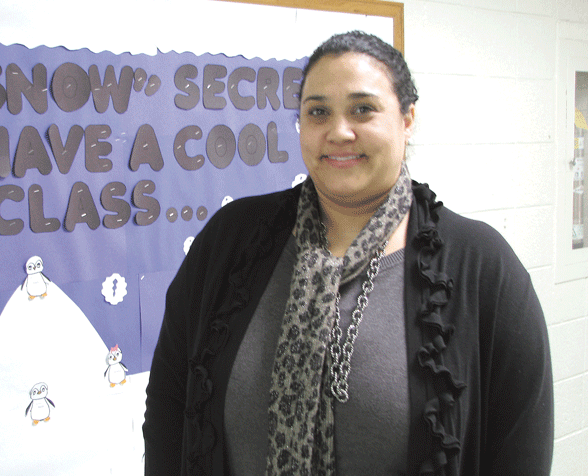
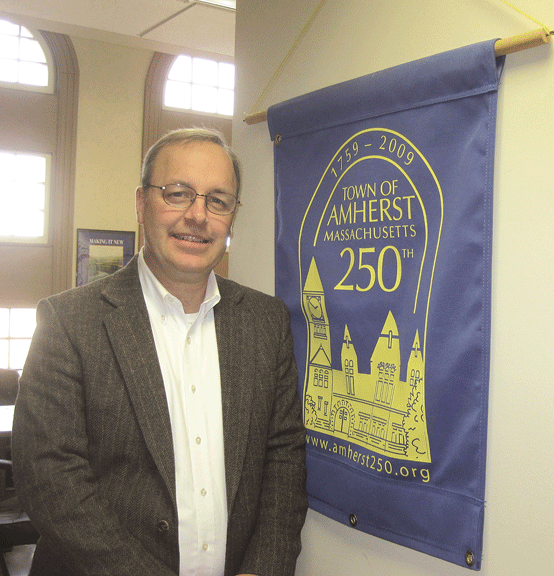
Brian Basgen has been chosen as Executive Director for Information Technology. Basgen is a collaborative leader with a decade of experience managing IT in both higher education and the private sector. Most recently, he was the Assistant Vice Chancellor for IT at Pima Community College in Tuscon, Ariz. He holds an MS in IT management from Trident University and a BA in history and philosophy from Flinders University;
Phylis Gedeon has joined the college as Associate Director of Compliance. Most recently, she was the Assistant Director of the Processing Unit in Financial Aid Services at the UMass Amherst. She earned her master’s of education in higher education at UMass and brings extensive and diverse knowledge in student financial services; and
Michael Albano has been named Associate Director of Operations, Student Financial Services for Bay Path. Albano was the Associate Director of Financial Aid at the Massachusetts Institute of Technology. A graduate of Western New England University, he earned his master’s of education at Springfield College and is currently working on his doctor of education degree at Northeastern University.
•••••
Chuck Gijanto has resigned as president of Regional Markets for Baystate Health. In this role, he serves as CEO of Baystate Franklin Medical Center and Baystate Mary Lane Hospital and is responsible for Baystate Medical Practices in the Northern and Eastern regions. His last day will be June 27. Giganto joined Baystate Health in 2008 and has done much over the last six years to engage physicians, senior leaders, employees, community members, and donors in important discussions to set strategic direction for the system’s community hospitals. He has strengthened operations; led patient satisfaction, service, and financial-improvement initiatives; overseen the medical staff development plan; fueled new programs; and recruited critical physicians and healthcare leaders to the organization.
•••••
Becker’s Hospital Review recently released its list of the Top 100 Chief Medical Officers of Hospitals and Health Systems. That list of notable physician leaders in the nation includes Dr. Mohammed Shafeeq Ahmed, COO and CMO of Baystate Mary Lane Hospital and Baystate Health Eastern Region. Physician leaders were selected for inclusion on this list based on their healthcare experience, awards they’ve received, and their commitment to continuous improvement in safety and quality care. Many of the leaders were nominated by their peers, and the list was vetted by industry experts. Ahmed joined Baystate Mary Lane Hospital in 2003 as a practicing physician, medical director of Baystate Medical Practices – Mary Lane Ob/Gyn, and chief of Obstetrics and Gynecology. He has also served as vice president of the medical staff and regional medical director for the Baystate Affiliated Physician Organization. In 2010, he began serving as chief medical officer. In 2012, he also assumed the role of chief operating officer for Baystate Mary Lane Hospital and Baystate Health Eastern Region.
•••••
Big Y Foods announced the promotion of Eric Swensen to Vice President of Center Store for the 60-store chain. Swensen will oversee all grocery, dairy, frozen food, health and beauty care, general merchandise, pharmacy, retail pricing, space management, and store brands. He will be responsible for developing strategies and tactical direction as well as planning and support for each of these departments. He will report to Michael D’Amour, executive vice president.
•••••
Diane Dukette has joined the Sisters of Providence Health System as Vice President of Fund Development. In this role, she serves as a key member of the Sisters of Providence leadership team, is responsible for all fund-raising and development efforts, and will lead major gifts. She will also design and implement a comprehensive plan for developing key external alliances by cultivating individual and philanthropic support. She will play a key role in driving philanthropic support for key system initiatives, including the recently announced expansion of the Sr. Mary Caritas Cancer Center. Dukette returns to SPHS with more than 20 years of experience in development, strategic marketing, and fund-raising. Most recently, she served as Vice President of Development at Cooley Dickinson Hospital in Northampton.

Company Notebook Departments

Bay Path Launches Online MS in Accounting
LONGMEADOW — Taking into consideration many of the specific challenges facing accountants and other professionals in that industry, Bay Path College recently announced the launch of a master of science in Accounting (MSA) degree designed to respond to their needs. Now registering classes for May 2014, the exclusively online MS, with one- and two-year tracks, holds no classes during the busy season for accountants, January through April. Three concentrations are offered, public accounting (tax and audit), private accounting, and forensic accounting. The curriculum of Bay Path’s MSA is also designed to satisfy the educational requirements for licensure as a CPA in over 40 states, including Massachusetts and Connecticut. In January 2014, Time magazine reported that accountants were one of the top five jobs in demand by employers, and the Department of Labor recently cited the occupation as one of the leading areas of job growth in the next decade. The American Assoc. of CPAs has shown that accountants with a master’s degree are likely to earn upward of 20% more than those with a lesser degree. Kara Stevens, who chairs the program, has years of professional experience in accounting. “At Bay Path, we understand how to teach technical accounting and what it’s like to work in the accounting industry,” she said. “Our accounting faculty have worked in the professions where students are either coming from or hope to be a part of, and that’s an important differentiator with our MSA. This makes the degree more relevant to the students’ professional goals.” For more information about the program and other graduate degrees, visit graduate.baypath.edu.

STCC Launches STEM Starter Academy
SPRINGFIELD — Springfield Technical Community College (STCC) has announced a new summer program that will allow incoming students a chance to get an early start on their college credits while also exploring the possibility of a career in the science, technology, engineering, and math (STEM) disciplines. The STEM Starter Academy will allow participants to earn a $1,000 stipend; take free college courses, including the College Success Seminar “Essentials of Engineering and Math”; participate in field trips; and learn from guest speakers and STEM experts currently working in the field. To apply to the STEM Starter Academy, a student must be a Massachusetts high-school graduate from the classes of 2012, 2013, or 2014, submit an STCC admissions application for the fall 2014 semester and a STEM Starter Academy application, possess a grade-point average of 2.0 or above, and have parental consent (for those under 18 years of age). The application deadline is May 9. According to Dr. Robert Dickerman, STCC dean of the School of Math, Sciences, and Engineering Transfer, STEM graduates are in high demand. The STEM Starter Academy is an opportunity for students to gain a better understanding of the STEM field, learn about career possibilities, as well as earn college credit toward a future degree. “The goal of the STEM Starter Academy is to get students interested in STEM careers,” said Dickerman. “Students may not always think a STEM degree is for them, but we want to show them there are a lot of places that degree can take them. Being a part of the STEM Starter Academy is a phenomenal opportunity for local students.”

Monson Savings Awards Grant to Link to Libraries
MONSON — Steven Lowell, president of Monson Savings Bank, presented a community-service recognition grant to Link to Libraries. The nonprofit was awarded the foundation’s grant award for being in the top of the community-service organizations in the bank’s areas of giving. “ Support from the Monson Savings Bank Foundation not only supports our programs, but enriches the lives of the children in Ware, Palmer, Wilbraham, Hampden, and Monson,” said Janet Crimmins, president of Link to Libraries. “These are sites in which this organization distributes thousands of books each year. We are honored by the support of this bank and its staff who donate countless hours engaging with the children in their community.”

OMG Introduces RedLine AFR Roof Drain
AGAWAM — OMG Roofing Products of Agawam has introduced the RedLine AFR Roof Drain, a tool-free system that provides for maximum allowable flow for gravity-based, open-channel roof-drainage systems. The RedLine AFR mechanical seal can be activated by hand, eliminating the need for tools and significantly reducing installation time. In extreme rain events, a head of water can develop and create a pressurized flow in some roof-drain fixtures, leading to failures in the building’s plumbing system. RedLine AFR’s design, featuring the RedLine AFR Vortex Breaker, has been tested for maximum allowable flow and to minimize the danger of creating pressurized flow. The patent-pending RedLine AFR Backflow Mechanical Seal can be installed by hand, creating a perfectly symmetrical, watertight connection and preventing over-tightening or under-tightening during installation. “The RedLine AFR Roof Drain is revolutionary in that it lets contractors install watertight, maximum allowable flow drains in half the time it would take to insert new drains and a fraction of the time it would take to rework or replace the drains,” said Dan Genovese, product manager with OMG Roofing Products. “Installation is tool-free and can be done in a single turn with two fingers, increasing productivity and accuracy. More important, the RedLine AFR Roof Drain is engineered to get water off the roof at a flow rate consistent with the building’s internal plumbing system.” RedLine AFR is installed from the rooftop so as not to disrupt building occupants, and has a one-piece seamless body for strength and durability as well as a heavy-duty, cast-aluminum strainer dome and clamping ring. The 10-inch-long drain stem can accommodate most existing field conditions and can be field-cut or obtained in longer lengths if needed. An extra-large flange allows positive attachment of roof-flashing membrane, and flanges are available with TPO or PVC coatings for hot-air welding. Headquartered in Agawam, OMG Roofing Products is North America’s largest manufacturer of commercial roofing products, featuring specialty fasteners, insulation adhesives, drains, pipe supports, emergency-repair tape, edge-metal systems, and productivity tools.

Fairview Hospital Lauded for Patient Experience
GREAT BARRINGTON — Fairview Hospital has been recognized with a 2013 Outstanding Patient Experience Award by Healthgrades, a leading online provider of comprehensive information about physicians and hospitals. Fairview Hospital was one of nine hospitals in Massachusetts to receive this distinction, and the only hospital so recognized in Western Mass., ranking among the top 15% of all hospitals that were evaluated. The Outstanding Patient Experience Award recognizes the high performance of hospitals that have been evaluated by their patients in surveys collected after their discharge from the hospital by the Centers for Medicare and Medicaid Services (CMS). “Berkshire Health Systems is proud of the exceptional care that is being provided to our patients in South Berkshire by Fairview Hospital,” said David Phelps, president and CEO of BHS. “The consistent level of high-quality care that Fairview’s physicians, nurses, and staff give to their patients is clearly reflected in the survey results for which this award is based. Fairview patients repeatedly relay their positive experiences, and BHS and Fairview are committed to maintaining that level of excellence.”

Banking and Financial Services Sections
Banking Leaders Say Retailers Should Bear Burden of Data Breaches

SecurityWhen it comes to data breaches and identity theft, Target isn’t the only target.

The retail chain made news of the worst sort in December when it reported a security breach that compromised the financial information of tens of millions of customers.

The fallout affected the banks that issued the credit and debit cards that were compromised, and since that event, banking-industry leaders have been speaking out about the impact of such breaches on their operations.

“When a retailer like Target speaks of its customers having ‘zero liability’ from fraudulent transactions, it is because our nation’s banks are making customers whole, not the retailer that suffered the breach,” said James Reuter, executive vice president of Colorado-based FirstBank, representing the American Bankers Assoc. (ABA) in testimony before the Senate Banking Subcommittee on National Security and International Trade and Finance.

“Banks swiftly research and reimburse customers for unauthorized transactions,” he continued, “and normally exceed legal requirements by making customers whole within days of the customer alerting them.”

High-profile breaches like the one that befell Target have reignited a long-running debate over consumer data-security policy. The issues being discussed include what security and breach notification standards should apply to businesses, and who should be responsible for covering the costs of fraud resulting from breaches.

For its part, the ABA believes Congress should pass data-security legislation that holds retailers and others to high, uniform, nationwide standards for safeguarding sensitive customer information, just as banks have long had a similar obligation to protect their customers’ sensitive financial information. The ABA is also advocating that those responsible for data breaches should be responsible for their costs.

For its part, Target admitted it didn’t read the signs of a potential problem in December.

Just a few days before Christmas, Target disclosed that a data breach compromised 40 million credit and debit card accounts between Nov. 27 and Dec. 15. A few weeks later, the retailer said hackers also stole personal information — including names, phone numbers, and e-mail and mailing addresses — from as many as 70 million customers.

“Like any large company, each week at Target there are a vast number of technical events that take place and are logged,” said company spokeswoman Molly Snyder in a statement soon after the incident. “Through our investigation, we learned, after these criminals entered our network, a small amount of their activity was logged and surfaced to our team. That activity was evaluated and acted upon. Based on their interpretation and evaluation of that activity, the team determined that it did not warrant immediate follow-up. With the benefit of hindsight, we are investigating whether, if different judgments had been made, the outcome may have been different.”

According to Target, hackers broke into its network by infiltrating a vendor’s computers. Then the criminals installed malicious software in the checkout system for some 1,800 Target stores across the U.S. The sheer scope of the crime could eventually surpass the 90 million customer records compromised in 2007 when thieves stole data from T.J. Maxx, Marshalls, and HomeGoods stores.

Target’s chief information officer, Beth Jacob, resigned recently, and the store said it is overhauling some of its divisions that handle security and technology. It is also accelerating a $100 million plan to roll out chip-based credit-card technology, which it claims is more secure than traditional magnetic-stripe cards.

Far-reaching Problem

The data-breach issue extends far beyond a major retailer or two, and is an irksome one for banks. The Identity Theft Resource Center reported more than 600 consumer data breaches in 2013 — a 30% increase over 2012.

Reuter testified that banks receive pennies for each dollar of fraud losses and other costs they incur in protecting their customers from fraud, and that, while banks bear more than 60% of reported fraud losses, they have accounted for less than 8% of reported breaches since 2005.

Data breaches can fall into two categories: unintentional and intentional. An unintentional breach — often due to the negligence of an employee who mishandles or inadvertently exposes data — does not always lead to fraud.

Intentional breaches occur when data is accessed, viewed, stolen, or used by someone who is not authorized to do so — in many cases, criminals who target the company in an attempt to steal consumers’ personal and financial information, either to use it to commit fraud or to sell it to others. This often leads to new financial accounts in the victims’ names, counterfeit cards, and phishing scams.

Debit-card fraud accounted for 54% of industry loss, followed by check fraud at 37%, and online banking and electronic transactions at 9%, according to the ABA. Typically, Reuter said, when fraud occurs or is likely to, banks will close the account, eat the loss, and reissue the card. Meanwhile, banks stopped $9 out of every $10 of attempted deposit-account fraud in 2012, according to the ABA’s 2013 Deposit Account Fraud Survey Report.

“Financial fraud, including identity fraud, is a very real risk that must be taken seriously,” writes Frank Keating, ABA president and CEO. “The best way to contend with financial fraud is to prevent it from ever happening in the first place. Banks use sophisticated technology and monitoring techniques, intricate firewalls, and other methods of securing customer data, but there are steps consumers must take as well.”

The ABA offers a number of tips to help consumers protect themselves from becoming victims of financial fraud:

• Don’t provide your Social Security number or account information to anyone who contacts you online or over the phone. Protect your PINs and passwords and do not share them with anyone. Use a combination of letters and numbers for your passwords and change them periodically. Do not reveal sensitive or personal information on social-networking sites.

• Shred sensitive papers, including receipts, bank statements, and unused credit-card offers before throwing them away, and keep an eye out for missing mail from creditors.

• Consider enrolling in online banking to reduce the likelihood of paper statements being stolen. Monitor your online accounts regularly for fraudulent transactions. Sign up for text or e-mail alerts from your bank for certain types of transactions, such as online purchases or transactions of more than $500.

• Order a free copy of your credit report every four months from one of the three credit reporting agencies.

• Make sure the virus-protection software on your computer is active and up to date. When conducting business online, make sure your browser’s padlock or key icon is active. Also look for an ‘s’ after the ‘http’ to be sure the website is secure.
For mobile devices, use the passcode lock, which will make it more difficult for thieves to access your information if your device is lost or stolen.

Everyone’s Business

Stronger vigilance by all parties — retailers, banks, and consumers — will make a dent in the incidence of data theft, Reuter said, although it won’t stop all of it, which is why the ABA continues to press Congress on the issue.

“Banks, retailers, processors, and all other participants in the payment system must share the responsibility of keeping the system secure, reliable, and functioning in order to preserve customer trust,” Reuter testified.

“That responsibility should not fall predominantly on the financial-services sector,” he added. “Banks are committed to doing their share, but cannot be the sole bearer of that responsibility. Policymakers, card networks, and all industry participants have a vital role to play in addressing the regulatory gaps that exist in our payment system, and we stand ready to assist in that effort.” n

Joseph Bednar can be reached at [email protected]

Construction Sections
Economy Improves, but Challenges Remain for Builders, Consumers

Brad Campbell

As the economy ramps up, Brad Campbell says, so does the number of shady contractors looking to take advantage of eager consumers.

Brad Campbell calls it the “black-box effect.”

That’s the phrase the executive director of the Homebuilders and Remodelers Assoc. of Western Mass. (HBRAWM) contrived to reference the action of any consumer using their computer, tablet, or smartphone when selecting a professional home builder or remodeler.

“I think people have become way too dependent and trusting of the computer,” said Campbell, calling the phenomenon a faulty mindset, because glossy websites with carefully worded testimonials and paid reference sites like Angie’s List don’t always tell the full story. “And if consumers took the same amount of time to research the contractor as they do the product, they’d be much better off.

“As the economy gets better, we want consumers to know that there are risks and dangers out there,” Campbell continued. “There are more people out there who will take advantage of you.”

It’s a sign of the times, he told BusinessWest, adding that, just as contractors start coming out of the woodwork when there are weather-induced surges in construction-related work, as this region has seen recently, they also come out when consumers are ready to open their wallets and start catching up on deferred maintenance and expansion projects. And some of these contractors have less-than-stellar track records.

As she heard these remarks, Marybeth Bergeron of Charista Construction in East Longmeadow started nodding her head emphatically. “He’s absolutely right,” she said, adding that the conditions are now approaching perfect for disreputable builders to take advantage of consumers who are completely uneducated about how to find a contractor for repair or new construction, but want one because they’re in a mood to spend.

Because of the improving economy, and this black-box effect, Campbell said the focus of this year’s Western Mass. Home and Garden Show will shift from “come and see the products” to “come and learn about the people that install the products.”

Celebrating its 60th year, the show, produced by the HBRAWM, will run March 27-30 on the grounds of the Eastern States Exposition in West Springfield.

The show will feature hundreds of contractors and those who support the home-building and remodeling industry, Campbell explained, but more importantly, professionals to help educate attendees who are finally ready and able to spend money on home improvements or build new houses.

On the commercial side, business has definitely picked up, but education is necessary in that area of the building industry as well, due to heightened processes involving commercial and residential contractors’ licensing requirements, the Bay State’s increasingly strict energy-saving codes, and for the commercial consumer, a reality check about what is necessary and what isn’t for efficiency processes and new high-tech building products.

Town by town, Massachusetts is becoming the strictest state in the nation for energy-saving codes, said both Campbell and Seth Crocker, vice president and co-owner of Crocker Building Co. in Springfield. This development coincides with a desire among commercial and residential clients to be more ‘green’ in their building and perhaps pursue LEED (Leadership in Energy and Environmental Design) designation. What’s needed, they said, are detailed conversations between builders and their clients about what is necessary and what makes sense from the standpoint of return on investment.

For this issue’s focus on construction, BusinessWest spoke with professionals from both the residential and commercial sides of the building and remodeling industry just as the annual Home Show is about to begin, and winter exits stage left — finally. The consensus is that, while the economy is improving — and everyone has been waiting impatiently for that to happen — challenges remain.

Shades of Recovery

Seth Crocker

Seth Crocker says building codes are becoming more stringent, raising costs for contractors and homeowners.

Founded in 1939, the Springfield-based HBRAWM, a nonprofit trade association affiliated with the National Home Builders Assoc. (HBA), has nearly 350 members operating in Massachusetts and Connecticut, and promotes the best interests of home ownership, home buyers, and the building industry.

That mission is ongoing, but it takes on more emphasis at times like these, said Campbell, when there are more business relationships being made between consumers and contractors. He compared choosing a contractor to the dating process.

“You just can’t sit down with the first guy and say, ‘I trust him,’” said Campbell. “And when it comes to making a business relationship official, consumers are definitely afraid of something called a contract, and they have to change that mentality.”

Elaborating, Campbell said that consumers seem to feel that a contract is bad for them and good for the contractor, when in fact, it’s good for the contractor, and better for the consumer.  “It’s not restrictive, but a way to hold everybody accountable for what they said they were going to do.”

His example of a good contract is one that doesn’t have a line item stating that all the windows will be replaced in the home, but that a specific brand, style, and size of window will be used in all windows in question. Spending $300 to have an attorney look over a contract is also a good idea, Campbell added, given the much larger sum that could be lost if someone doesn’t exercise due diligence.

Additionally, he said, if the contractor doesn’t pull a permit, the consumer becomes 100% responsible for an entire project; if the project isn’t done the right way, the consumer can’t file a claim with the state’s repair fund.  “And if a contract doesn’t have certain things in it, it’s not a real contract.”

On the flip side, Campbell doesn’t want to see contractors themselves make mistakes. “They can hurt themselves by not having that same contract; it’s part of their licensing requirement, and they’re told they must have contracts for projects over $1,000, which these days could be just a storm door.”

Walt Tomala, president of TNT General Contracting, Home Show deputy chairman, former president of the HBRAWM, and past president of the statewide HBA, agreed.

Walt Tomala

Walt Tomala says a contract is critical to protecting the interests of both the builder and the consumer.

“There are so many different licensing qualifications that need to be met now, it’s hard enough for the contractor to keep up with it, never mind the consumer,” he said, adding that a contract protects both parties’ interests.

In order to get Home Show attendees to the HBRAWM booth to learn about such matters, agency officials are giving visitors a chance to register to win $160,000 cash. Upon entering, attendees will be given a card asking what they have planned for the next 12 to 18 months. Those who check off ‘building’ or ‘remodeling’ will be invited to speak one-on-one with HBRAWM professionals about what consumers need to know about hiring for these needs.

“We want you to talk to builders that have gone through a formal process to be approved in our association,” Campbell continued. “That’s not to say we’ve never had an issue with one of our builders, but at least if that happens, we have a policy and a process to help you get through this situation.”

LEED by Example

Contractors, homeowners, and business owners should have a lot to talk about at this year’s show.

Indeed, many consumers have put off repairs or remodeling while waiting for the economy to improve, and over the past few years, new products have been introduced, building codes have become more strict, and the world, in general, has become more green-focused.

Brothers Seth and Bill Crocker — co-owners of Crocker Building Co., which offers full-service general contracting solutions in commercial construction and renovation — have witnessed all of this. They say they often face a situation of balancing a desire to be environmentally friendly with what makes sense economically and what also meets state regulations.

Currently, there is heightened interest in efficiency in heating, air conditioning, and the thermal performance of the building envelope, but Seth Crocker sees the expense of higher-technology products as a hurdle that many clients are not willing to jump over, especially if they don’t have to.

The philosophy, Crocker said, is to advise clients on what are ultimately the best products to use, as far as efficiency and ROI.

“But what’s driving a lot of it is that the building codes are so stringent,” he told BusinessWest. “And all signs say that will continue to get more strict, which will drive more people to things like foam insulation, which is a lot more expensive.”

Campbell agreed, citing a survey by the NHAB suggesting that stricter codes are likely, and the Commonwealth has a mindset to be a clear leader in energy conservation, which has resulted in already-demanding regulations compared to most other states.

The 2012 Stretch Energy Code, which does what it says — stretches that base code by another 20% efficiency — and is adopted on a town-by-town basis, is making it financially difficult to build in Massachusetts, Campbell said, estimating that these codes add $16,000 to the cost of a 2,200-square-foot home.

Because of those strict Massachusetts codes, said Tomala — one of the first green professionals certified by the NAHB — he and most other contractors are already building to that highly efficient level, even though doing so does not necessarily designate a building as LEED-certified.

And this has prompted questions among some builders about whether LEED is worth pursuing.

“The actual LEED certification process is very time-consuming, and you really just get a plaque for the wall,” said Crocker. “In some cases, there’s a huge upfront cost, and the payback is all in feeling good about it.”

The plaque on the wall tells a story, for sure, Tomala added, but the Energy Star efficiency rating of the high-tech products he uses tells the same story, with a lot less time and formality.

“Don’t get me wrong — we’ll do whatever the customer wants, but we’d rather be out on the site, not have more office time doing paperwork,” which always means more expense to the customer, he said.

Sustainable Future

Weather extremes, a healthier economy, and the return of the popular outdoor modular home are expected to hike attendance at this year’s Home Show.

“I think the show is going to be a huge hit because people can only sit on their hands for so long, and it’s the year they feel like it’s OK to do something,” Tomala said.

Added Crocker, “I think there’s pent-up demand because people didn’t do anything for quite a few years and interest rates bottomed, but now they’re coming back up.” He noted that those climbing rates are causing people with residential and commercial building needs to move more quickly.

But as consumers make up for lost time, different levels of education about the right way to go about a project and the best return on investment will be the key to commercial and residential projects coming to fruition.

Business of Aging Sections
Glenmeadow Renovates, Responds to Lifestyle Changes

Tim Cotz, president and CEO of Glenmeadow

Tim Cotz, president and CEO of Glenmeadow

A few weeks ago, Tim Cotz, president and CEO for the past 20 years at Glenmeadow, noticed one of his housekeepers wished an elderly resident ‘happy birthday’ on Facebook.

Of course, he’s impressed with an octogenarian who is active on Facebook, but he said he’s even more pleased to see one of his staff reaching out to her, because it’s the personal bonds among the staff and residents that make Glenmeadow — an independent- and assisted-living complex in Longmeadow — feel like home.

In fact, Cotz can be found pouring coffee every weekday morning at 7 a.m., walking around opening shades for more light, and pouring glasses of chardonnay at a late Friday afternoon cocktail hour; his daily, hands-on style is a physical illustration of what he expects of his 110 employees in all their different roles. This philosophy, and an open ear to requests for change, have helped Glenmeadow grow successfully over the past 20 years, weather the Great Recession, and recently complete a $4 million renovation (more on that later).

Cotz describes Glenmeadow as “unique” in the business of senior living because it’s a stand-alone, nonprofit facility, while most of its competition is religious-based, for-profit, owned by private entities, or merged into large conglomerates.

He told BusinessWest that, while he’s always worked to enhance services and meet the expectations of his residents and their families, it’s a much more vocal demographic these days.

“I don’t think we can ever be a place where we say, ‘this is what we do, this is what we offer, that’s what it is,’” said Cotz, who noted that the organization’s original managers, which became a board in 1985, was long run by a group of ladies; in its 130-year history, Cotz is the first male to have the leadership role in Glenmeadow. “We’re ever-evolving.”

As another example, he mentioned a new addition to the staff, whose role is to help residents with their technology needs. Requests for assistance with iPads, iPhones, laptops, and the general need to keep up with social media is as important to residents, he said, as it is to everyone else today.

When Glenmeadow opened its new facility 17 years ago, “we had one person here with their own computer,” Cotz explained. “Now we have wi-fi throughout the building, and a majority of the folks have computers, so we’re looking at how we continue to enhance those services.”

For this issue’s focus on the business of aging, BusinessWest toured Glenmeadow to learn more about an elder residence with a long history in Greater Springfield, and how that nonprofit is catering to a demographic requesting amenities and programs reflecting a younger mindset than ever before.

Welcome Home

Working in long-term care since 1970, Cotz started as an orderly in college, and graduated from Hartwick College with a bachelor’s degree in healthcare before earning his master’s from George Washington University.

From 1982 to 1988, he served as executive director of the Geriatric Authority of Holyoke, then led Berkshire Health Systems in Pittsfield for five years, before transitioning to Glenmeadow, which at the time was located in downtown Springfield.

Doorstop Café

Tim Cotz said the $4 million in recent renovations includes the Doorstop Café, a popular meeting place for residents as well as visiting friends.

Explaining Glenmeadow’s history, Cotz said the nonprofit was founded in 1884 with donations and bequeaths, making it the oldest residential nonprofit for the elderly in Springfield. Originally named the Springfield Home for Aged Women, it was created to provide shelter and care for female seniors.

“Every city at the time had a ‘poor farm,’ and that’s where old people went,” Cotz told BusinessWest.  “But the citizenry of Springfield felt that they deserved a better option.”

The first structure was a home behind the current Red Rose Pizza in Springfield’s South End, which then moved to a mansion on the corner of Chestnut and Carew streets (the building is now used for alcohol and drug rehabilitation services), and by the 1960s the name was changed to Chestnut Knoll.

When the facility needed more space, it purchased a 20-acre plot of land from Daniel O’Connell’s Sons in 1993, just over the Springfield line in Longmeadow, and construction for the current facility was completed in 1997. The richly landscaped campus and buildings now boast 113 independent apartments (14 more were added in 2000 to the original 89 units), boasting full kitchens and baths, plus 34 assisted-living apartments with kitchenettes.

Demand for units has been fairly consistent over the past two decades, Cotz said. The recession impacted the nonprofit a bit in 2008 and 2009, causing the waiting list to shrink, but residents have consistently filled the apartments. After the recession, not only did the waiting list fill up again, the changing style of how seniors want to live created demands of a different sort.

Great Expectations

Specifically, Cotz pointed out two societal shifts that have affected Glenmeadow over the past decade. First is the trend toward ‘aging in place,’ which the facility turned into a revenue generator in 2001 with the introduction of Glenmeadow at Home, a non-medical, private-duty, home-healthcare company for those living there.

“People are living so much longer and living healthier, and typically there are periods where they need some additional support. So now we can hire our own staff, train them, do the background, and supervise them,” he explained. Residents also have the option to hire outside workers for those extra services, if they so choose.

The goal is to provide non-medical services that help elders stay comfortably in their home, which includes companionship, handyman service, transportation, meals, dog walking, and more. By 2003, Glenmeadow at Home expanded to caring for anyone 62 and older in the Greater Springfield community. Calls to clients’ personal physicians for medical attention are part of the services, and that eventually evolved into care management in the home to coordinate all the services that an elder would need as their medical care requirements increase. Today, Glenmeadow at Home employs 80.

The second trend Cotz has observed is a renewed focus on fitness and lifestyle programming.

“The population we’re serving is clearly looking for more options for wellness, so much so that 83% of the people in this building exercise regularly,” he explained, which has led to an expansion of wellness services on site.

“When we opened 17 years ago, we had a room about this size, and if people brought an exercise bike, we’d store it in there,” Cotz said, pointing around his office, which comfortably holds a desk, a table, and two easy chairs. “Well, now we have three trainers on staff, Nautilus equipment, and numerous exercise classes each day, from stretching to balance to Tai Chi, PiYo [a blend of Pilates and yoga], and aquasize.”

This attention to physical and mental wellness, Cotz told BusinessWest, is due to behavioral differences among three generations: the Silent Generation (born 1925-1944) and the GI Generation (1905-1924), which together which make up a large portion of Glenmeadow’s older residents, and the older edge of the Baby Boom Generation (1945-1964), who are now entering the facility or on the waiting list.

“They are very different populations; the expectations of people we’re serving are changing,” said Cotz. “My parents’ generation, the GI population, were kind of ‘give me a cot and a cup of coffee, and I’m good to go.’ But the people in their early 70s coming in clearly have higher expectations in terms of amenities, programs, and services.”

The standard independent-living facility — with individual living units, one large dining room, and some separate rooms for a lounge, library, puzzles, and crafts — are from a bygone era. Now, the demand for more contemporary open space and more choices for meal times has changed the entire look and feel of Glenmeadow’s first floor.

The complex recently invested $4 million in renovations to tear down interior walls, open up meeting rooms, add more windows for natural light, expand the wellness area, and split the formal dining room to create the casual Doorstop Café, as well as more administrative space for the growing Glenmeadow at Home.

Living Social

Another concern is the alarming trend of cognitive loss, ranging from general senility to vascular-related dementia to Alzheimer’s disease. Both Glenmeadow and Glenmeadow at Home aim to identify the first signs of impairment and the supports necessary to keep people independent for as long as possible.

While Glenmeadow is a private-pay business, the nonprofit accepts donations through requests and estates, and has an investment portfolio of $15 million. Those investments can help those that outlive their resources; Cotz said the facility has never discharged anyone due to inability to pay.

In addition, a few years ago, Glenmeadow began offering the use of its facilities to non-residents for only $25 per month. With little advertising, membership escalated to more than 80 people after renovations were completed last fall. Members take advantage of the pool, use the fitness programs and equipment, and grab soup or coffee at the Doorstop Café, Cotz said. “It allows the public to realize first-hand what could be their next home.”

That’s certainly worth a Facebook ‘like’ or two.

Elizabeth Taras can be reached at [email protected]

Education Sections
A Dynamic Principal Has Given New Meaning to the Phrase ‘Putnam Pride’

Gilbert Traverso

Gilbert Traverso, principal of Roger L. Putnam Vocational Technical Academy

There’s an axiom printed in bold black marker, and in capital letters, on a whiteboard in the principal’s office of the new Roger L. Putnam Vocational Technical Academy. It reads, “DO NOT ACCEPT, NOR BE PART OF, INSTITUTIONAL MEDIOCRITY.”

That last phrase is among many, most all of them with negative connotations, that have been summoned over the past decade or so in reference to the State Street institution. But those words and others like them are now used almost exclusively in the past tense.

Ray Lapite helped explained why. A Putnam Collision Department repair technician for 12 years, he points to Gilbert Traverso, principal at the school since July 2010, as the impetus behind a foundation-shaking and unwavering plan to trigger a positive cultural shift that has given new meaning to the phrase ‘Putnam Pride,’ a chant that is quoted often in the halls and on the playing fields.

The change in attitude is so profound that it actually dwarfs, in scope, the transition from the old Putnam high school to the sparkling, $114 million facility that opened its doors in the fall of 2012.

“Chaos reigned; it was a free-for-all, and the morale was so bad, there just wasn’t any at all,” said Lapite as he reflected, somewhat regrettably, on conditions before Traverso arrived. “But Gil came in, and he held us all accountable, because we’re here to do a job, and some people were acting back then like it was their retirement.”

The story of Putnam’s radical and swift turnaround has very little to do with the new school, said Lapite and others we spoke with. Its construction simply served as a rapidly looming deadline for Traverso in his new role making sweeping changes in every facet of a school that had low morale, low student scores, and little attention paid to the few policies and procedures that were in place.

“The majority of the change had to take place in the old school, because I didn’t want to bring old or negative habits into a new setting,” Traverso explained. “I don’t care what the façade is; it’s what the internal mechanisms are, and they have to be sound and effective.”

When Traverso arrived just before the 2010-11 school year was to begin, he was told that employees at neighboring MassMutual across the street were used to the regular sounds of sirens arriving at Putnam due to fights in the hallways and the 52 false fire-alarm calls in the previous year alone.

“I was not really welcomed by too many people when I came on board, and I had no connections here,” Traverso said, recalling that first school year. “I uncovered some issues, and then I was the bad guy.”

The issues that Traverso unearthed went far beyond weekly police calls. Indeed, he’d inherited a school with an internal systemic breakdown that prompted him — with seven unions to deal with — to restructure the grading policy and daily class schedules, and request an audit of his school’s books and procedures, which led to numerous lawsuits and hearings. He fully expected, and indeed received, tremendous pressure from administrators, teachers, parents, and students to essentially back off.

But he never did.

Peter Salerno

Peter Salerno supported Gil Traverso’s aggressive plan for Putnam’s culture change, with investment in students, not the new building, as the number-one goal.

What became an emotionally draining two-year reconstruction process required unwavering encouragement outside his supportive family, which he found with Superintendent Daniel Warwick and his office, and Peter Salerno, executive director of the Roger L. Putnam Technical Fund Inc.

“I told him that, five to seven years from now, nobody’s going to be talking about the new building; that’s not the story,” said Salerno. “The story is you and the kids, and the children are going to be new each and every year; we’ve got to reinvest in ourselves in making it work for them.”

For this issue and its focus on education, BusinessWest takes an in-depth look at what Traverso has accomplished and, more importantly, how. In doing so, we’ll shed light on how the phrase ‘new Putnam’ isn’t used exclusively in reference to the building.

Culture Clash

Traverso, an Hispanic, said he “came out of the ‘hood’” and had to work hard for everything he earned, a reality that has shaped his career, management style, and outlook on education.

Echoing Salerno, he said his mission is to provide a safe, fair, and equitable vocational and educational experience for those who are the intended beneficiaries — the students.

A former assistant principal of the Connecticut Department of Education’s Technical High School system, he was appointed to the Putnam position just two years before the opening of the new school. A visit early in the hiring process prompted some trepidation; he saw kids “hanging around,” and found little evidence to support the fact that there was a dress code in place.

The façade of the original Roger L. Putnam Vocational Technical Academy

The façade of the original Roger L. Putnam Vocational Technical Academy now serves as a grand entrance to the new, $114 million school.

“All I saw was that these urban kids weren’t being treated in an equitable manner, and I’m all about equality,” Traverso said as he pointed to a poster in his office printed with the Golden Rule. “I teach diversity training throughout Connecticut for the Anti-Defamation League, and if I want to live by that premise, why would I turn my back on an opportunity to address a situation that needed to be addressed?”

Elaborating, Traverso explained that many who are teaching these urban youths don’t live among them. “So there’s that misperception that maybe those kids can’t do it. But it’s not about lowering standards; it’s about providing multiple opportunities.”

It all starts with a belief gap, he went on, adding that there is a widely held belief that the students who don’t want to learn academically should be put in a vocational setting. “That doesn’t work,” Traverso stated.  “What that ultimately does is ruin their self-esteem.”

And it’s untrue to begin with, he said, because Putnam has 90 days of trade education and 90 days of academic classes, but with the latter, students have to cover the same amount of required content that other comprehensive high schools stretch over 180 days.

That initial visit just before he was hired convinced Traverso that very few within the school walls seemed to recognize the value in a quality vocational-educational setting; a balance between academics and trades had to be found.

But creating this balance, and inspiring change, would prove to be a challenging assignment, he said, adding that, from the start, there was animosity stemming from the perception that he was “the new guy that was coming in to fix us,” with the ‘us’ referring to both students and faculty alike.

In that environment, he decided there was no way he was going to get up, assembly-style, in front of 400 or more students at a time, as well as their equally skeptical teachers.

His method to change the perception of him was to “divide and conquer.” His class-by-class conversations and gatherings in very small groups of students, he can jokingly say now, had less chance of turning into a “synergistic meltdown.”

In his first year, Traverso found that several students had earned enough academic credits to qualify as 10th graders, but were recorded as seniors, or were making the grade in their academics but not in their vocational classes, and were still being passed upward. Making more friends by the day, Traverso and the teachers met with 60 quite upset parents, one on one, and explained that the credits would have to be made up, with the help of the school, or the student in question would have to transfer. But the recommendation was to stay at Putnam, and most students did.

With students randomly hanging out in the hallways, Traverso also had to make sure all could be easily accounted for at any given time of day. Two significant scheduling changes he made were to divide the lunch times by grade level, due to the many fights, and to split grade levels for academic and vocational classes. Previously, half the school’s students across all four grades (9-12) were in academic classes one week, known as A Week, while the other half was in vocations during B Week, a system that made it difficult to track where students were at any given time.  Traverso split the schedule to have ninth- and 11th-grade students traveling together to academics and 10th- and 12th-graders traveling together to their trades for the full five days of A Week, with both groups switching the next week.

Traverso and his team also created competencies for each grade level in each vocation, which provided more structure for the instructors and more accountability for the students, he said. During that analysis, he uncovered another alarming issue: each of Putnam’s 18 vocational programs, funded through Chapter 74 (Massachusetts Vocational Technical Education Regulations), are required to have advisory committees of two to 12 industry leaders from across the region. But most programs had no committee or, at best, one that was barely functioning.

The goal of each trade-advisory committee should be to identify new trends, skills, and technology required by the industry, and for those advisors to work with faculty and administrators to ensure that graduates are positioned for success in the workplace. When Traverso requested a meeting of all the advisory committees and vocational chairs, hardly anybody showed up to the first meeting.

“And I said, ‘that will not happen again,’” he told BusinessWest, adding that funding would stop for any trade without a fully functioning advisory committee. “From that day forward, we’ve had nothing but perfect attendance with active advisory committees.”

Looking back at the changes, Salerno added, “there’s a trait in Gil — he faces the brutal facts. Even if it’s a bad thing, you’ve got to face it courageously. You may not be applauded for every win, but you’ll know that you’ve won.”

Accountability Measures

But winning meant everyone had to feel that win.

Traverso recalled a teacher with many years of experience at Putnam who came to him at the beginning of this past school year, beaming and saying, “these kids are the best kids that I’ve ever taught,” an opinion he found intriguing.

“They’re the same kids — the same kids they’ve always been,” Traverso said with a laugh, adding that this episode is just one example of how much the attitudes, from the top down, have positively affected the feeling of being at Putnam, enabling people to say ‘Putnam Pride’ with conviction.

Four years ago, the pride was dead, Traverso explained, and “integrity-filled” instructors were in the shadows, lost in the shuffle during the audit phase. But as the smoke cleared, he created what became known as the Instructional Leadership Team for the purpose of giving more volume to those quiet voices throughout the old building to talk about the positive reality of Putnam’s transformation, as well as to learn what colleagues were doing in their core areas. Instructional rounds were formed, and teachers now run them every five weeks to observe, present feedback, and improve learning in the classroom.

Traverso also created an internal program called Implementation of Sustainable Change. It’s a simplistic flowchart of growth, showing where the school as a whole was in 2010, where it is at present, and where it is going as a team. His office whiteboard shows a graph in different-colored markers that breaks down the change process into four phases, all with traits that administrators, including Traverso, had to cultivate.

The phases include inception, incubation, inclusiveness, and interdependence.  Each phase closely follows each of the past four years of Traverso’s demanding schedule to right the sinking ship, including the few months of running room he needed that first fall. He told BusinessWest that Putnam is about 25% through the final phase, which is the chapter that speaks most to cohesive and consistent accountability, vision, and trust.

As they went through the phases, staff members were making data-driven decisions and analyzing, as a team, what was working, what was not, and how to make it all crystalize. By the inclusiveness phase around the start of 2013, the teachers were largely on board; there was far less pushback and far more teamwork, Traverso said.

“But it wasn’t me expanding; it was more people coming on board, and they were seeing change and facilitating these conversations themselves,” he recalled.

Turning his sights to Massachusetts Comprehensive Assessment System (MCAS) scores, Traverso launched an internal assessment to find out what areas the students were struggling with, which in turn would help teachers across the board in their teaching process. The assessment is done four times a year and has been a “game changer,” he said.

“It’s provided a professional recognition to the teachers about their input for the students and the assessment of their abilities in their own teaching method.”

Other grade-level exercises included tracking disciplinary data by teacher, attendance of students as well as teachers, out-of-school suspensions, and a tougher Dropout Early Warning System (DEWS) program, which is comprised of grade-level teams, allowing teachers to benchmark students through all four grades and intercept at the first signs of dropout behavior.

When all was said and done, in just over a two-year period of time, Traverso and the re-energized teachers at Putnam instituted more than 80 different policies and procedures.

Shared Victory

After the audit, a few “troublesome” teachers were either fired or left of their own accord, but those remaining, and any new instructors, have a found a place that they truly enjoy coming to each day.

A 22-year veteran at Putnam, John Kennedy, Collision Department head, saw the cultural change happen before his eyes, and both he and Lapite are still shocked at how fast the transformation happened.

“It’s a whole new atmosphere now, and the kids absolutely love the new building,” Kennedy said.  “The culture here now … it’s a new vibe.”

Feeling that new vibe, Traverso recently spoke to 10 new students accepted from a waiting list of 1,000, to tell them that Putnam is very structured; there are expectations, there’s no drama, and nobody bends the rules. “There was a big sigh, and some of the kids even clapped,” he recalled.

Salerno looks back at the disturbing number of false alarms that were pulled before Traverso’s leadership; now there are none, not because the halls are policed, but because the students don’t want to do it anymore.

“The peer-to-peer relationship is a major, positive change under Gil Traverso and all the team,” Salerno said, adding that “victory has many fathers; failure has none. Gil has created the architecture of a successful organization and created a systemic change — it’s not just dependent on Gil — that will be in place for many years.”

Elizabeth Taras can be reached at [email protected]

Education Sections
Willie Ross School for the Deaf Emphasizes Flexibility in Learning

Bert Carter both signs and speaks with teacher Laura Chagnon

Bert Carter both signs and speaks with teacher Laura Chagnon — much like teachers and students communicate at the school.

The Willie Ross School for the Deaf was born out of tragedy. In the 47 years since, however, it has crafted a striking legacy of helping children overcome hardship.

Specifically, the Longmeadow-based school was founded in 1967 by a group of concerned parents who were struggling in the aftermath of a rubella epidemic that swept the East Coast and deafened thousands of children.

During that era, residential placement of all deaf children was virtually the only option for families. But these parents had a vision of a day placement program for their sons and daughters. Since existing programs did not provide such an option, they established their own day school.

“A group of concerned parents made the effort to put the school in motion,” said Robert “Bert” Carter, who took over as president and CEO last year. “I think we offer an alternative, and a big difference from other schools for the deaf, in that we’re not residential. We really are about serving the local region; we’re not interested in serving kids from the Boston area or Vermont. And we believe those kids should go home at night to their families.”

The school’s stated philosophy, in fact, is that it’s primarily the responsibility of the family, before the school, to make sure no child is left behind.

“We think families should be involved in the day-to-day lives of their children, and that they should have the opportunity to go home in the evening,” Carter added. “That’s not a criticism of residential schools; there’s a reason for those, too. But we offer this alternative.

“It’s a team educational approach,” he continued. “Again, there are several schools for the deaf in Massachusetts, and it’s good for parents that the approaches differ, so there’s some choice.”

Led by the late Gene and Barbara Ross — and named after their son, Willie, who resides in Southern California these days — the parent group sought to establish a program that would further their children’s abilities in an inclusive setting. Almost a half-century later, it has built a reputation and a track record that more than validate their decision.

Talk to Me

Betsy Grenier

Betsy Grenier sits with her young students on the floor, an intimate setting made possible by the small class size.

The non-residential nature of the Willie Ross School isn’t the only way it differed from established educational models. Another is the way students and teachers communicate and learn.

Specifically, the school began as an oral-only school, built on speech and lip reading, but over time parents and teachers saw limitations in this approach. Rather than abandon it completely, sign language was integrated alongside speech, and the school adopted a simultaneous approach known as ‘total communication.’

Over time, the school has integrated a number of communication approaches to enhance student learning, including advancements in the use of ‘residual hearing’ through digital hearing aids, FM systems (in which the teachers wears a microphone and transmitter and the student wears a receiver), and cochlear implants. These technologies, working in concert, maximize speech and understanding in a way that cannot occur when only a single method is available.

“With total communication, we use both speech and sign language to address the individual strengths of the child, Carter said. “We have students that use a variety of listening technologies, such as cochlear implants and the use of FM systems in the classroom. Again, we’re looking at each child’s strengths and needs and addressing those accordingly.”

In short, the school recognizes that instructional models must evolve along with the needs of the students it serves, and this extends well beyond how they communicate at school, but also encompasses where they learn. A case in point is the development of a dual-campus model. In addition to the 62 students based on the Longmeadow campus, other students are ‘mainstreamed,’ to some degree, at public schools in East Longmeadow.

“We have this campus here, which functions like a lot of schools for the deaf, but we also have classes in the East Longmeadow schools, at all levels — two classes in elementary school, two in middle school, and two in high school,” Carter said. “Students are served over there by our teachers and our staff, and they have opportunities to mainstream where it’s appropriate.”

This model, known as the Partnership Campus, is a good fit with many students whose families appreciate the mainstreaming opportunity but still want the benefit of an education overseen by Willie Ross-affiliated specialists. Whether through that program or learning at the Longmeadow campus, he explained, deaf students have the opportunity not to feel isolated among their hearing peers.

“Language access is important,” he said, noting that public schools offer diversity in a number of beneficial ways, but communication is critical. “For a student to be in a public school, even with a sign-language interpreter, it can be socially stifling.”

Forging Connections

Even in area public schools that aren’t part of the Partnership Campus — 17 of them, to be exact — the Willie Ross school is helping students feel less isolated through a consultation program, helping educators and staff understand the needs of deaf students and offering technical expertise and support regarding listening equipment.

“It can make a huge difference,” Carter said. “We have an audiologist go out to public schools with listening devices a student might benefit from. Technology changes constantly, so we help them stay ahead of that — we manage equipment, make sure it’s in good, working order, repair it if necessary, teach staff how to clean it, all those things.

“Along with that,” he added, “they work with students and remind teachers of simple things like having deaf or hard-of-hearing students sit in the front of class, and how to manage group situations — it’s hard to follow what’s going on when there are multiple speakers. We just provide consulting to school staff.”

The Willie Ross School also established its Outreach Division to provide services from infancy through age 22, encompassing everything from newborn screening to tutoring for high-school students.

“We have staff that go out to families at home and work with them around developing skills with the child and getting them ready to go to school,” Carter said, adding that the school’s philosophy of parental choice extends here as well. “We always go with what the parents are thinking. If they’re saying, ‘I want my child to speak and go to public school,’ we help them move through that process. If they’re saying they want the child to learn sign language, we help them do that.

“It can be a difficult process for the family,” he added. “They don’t necessarily expect that they’re going to have a deaf child; it’s usually a surprise, and you have to adjust expectations around that. Not that you don’t expect the child to be successful, but the process looks different. You have to be prepared for that. We help a lot of parents work through that and recognize the success their child has along the way.”

The Outreach Division also sponsors the Laurin Audiological Center, located in Pittsfield, so that public-school students in the Berkshires receive the same kind of audiological support available in Greater Springfield.

Personal Touch

Meanwhile, back at the main Willie Ross campus, small classes allow for plenty of individualized attention. Students are grouped by approximate age in most cases, but also by ability level, and many students have learning and physical disabilities in addition to deafness.

Laura Chagnon, who teaches a class of five boys, said most of them would struggle with mainstreaming, but at the same time, everything they experience at the school is preparing them in some way for mainstream life.

Carter understands that concept, having worked in some way with deaf and hard-of-hearing individuals for more than 30 years, most recently at the Austine School for the Deaf in Brattleboro, Vt. Having worked in adult social services as well as in education, he said, “it’s helpful to understand what happens to people after they leave school.”

These days, it’s his job to prepare them for that, and the Willie Ross School doesn’t cut corners on educational requirements.

“We have our own curriculum based on state standards, and our kids do well on state testing,” he told BusinessWest. “But even with all that, so many people in Longmeadow don’t know we’re here. Or, they know we’re here, but they don’t know exactly where.”

That’s not surprising, with the small, quiet campus tucked away on Norway Street, near the Connecticut border. But the impact of the school’s work, he said, radiates much farther out.

“The whole approach we take — with total communication, with the choice between two campuses — is based on what’s the most enabling environment,” he said. Perhaps surprisingly, it’s still considered an uncommon model.

“We’ve been asked to consult around the country on that, because it is an intriguing concept for people,” he continued. “Instead of looking at education as, ‘well, if you need this model, go somewhere else,’ we provide the whole continuum and can move fluidly between different modalities in our organization.”

Its students might be going places, all right, but for now, they’re staying close to home, learning and communicating in a variety of different ways. That’s something worth talking about. Or signing. Or both. Whatever works.

Joseph Bednar can be reached  at [email protected]

Environment and Engineering Sections
WNEU Team Chosen to Compete in Prestigious Solar Decathlon

E-Board members, from left, Garrett Bieksza, Samuel McLaren, Adison Vanina, Tiffany Behuniak, and Justin Parlapiano

E-Board members, from left, Garrett Bieksza, Samuel McLaren, Adison Vanina, Tiffany Behuniak, and Justin Parlapiano, will have leadership roles in the biathlon project.

Samuel McLaren was talking about anxiety, a few sleepless nights, 16-hour days, and the pressure of meeting tight deadlines.

And that was just the application process.

There is certain to be much more of all of the above as he and more than 100 other students at Western New England University, which will lead one of 20 teams that prevailed in that application phase, take part in something called the Solar Decathlon.

Over the next 22 months or so, students across a number of disciplines, from environmental engineering to mathematics to mass communications, will design, fund, and build a completely solar-powered, net-zero home, then test it, disassemble it, transport it to Irvine, Calif., where it will compete with those 19 other entries, disassemble it again, and ship it back to Springfield.

“This is an enormous task, obviously,” said Kenneth Lee, professor and chair of Civil and Environmental Engineering at WNEU, who was on hand for the 2013 Solar Decathlon, and pronounced it a working display of energy innovation in action. “It’s going to require teamwork, lots of hard work, and a strong focus on innovation.”

McLaren, a junior who transferred to WNEU from Housatonic Community College, and one of several students on the project’s leadership team, or Engineering Board, or E-Board, agreed.

“It’s already been a lot of work — we worked on this tirelessly last semester, getting our application ready,” he said, adding that those long days and sleepless nights, which extended into the intersession, were obviously worth it.

Indeed, on Feb. 13, the U.S. Dept. of Energy, which stages the decathlon, announced that WNEU and two collaborating partners, Universidad Tecnologica de Panama and Universidad Tecnologica Centroamerica in Honduras, would be competing against the likes of Stanford, Yale, California Polytechnic State University, Vanderbilt, and many other top schools, in this country and abroad.

The winning team will receive a cash prize, said Lee, adding quickly that the more important rewards — which will go to all of the more than 2,000 contestants — include the experience of working with others to plan and execute the project, and also working on the cutting edge of innovation in energy efficiency.

The biannual event is called a decathlon because, as the name suggests, there are 10 contests within the larger competition. Teams will be judged on architecture, market appeal, engineering, communication, and affordability — components that will be juried — as well as ‘comfort zone,’ hot water, appliances, home entertainment, and energy balance, which will be measured (home entertainment will also be juried).

For this issue and its focus on environment and engineering, BusinessWest talked with Lee and several of the students who will be leading WNEU’s participation. They all described it as a unique opportunity to take what is being taught in the classroom and put it to work in a real world that is searching for ways to become more energy-efficient.

Bright Ideas

The scope of the Solar Decathlon became clear at a meeting involving many of the students who will participate.

The auditorium on the ground floor was packed with more than 100 students across a number of disciplines. More than a dozen would move to the front of the room to discuss specific aspects of the project that they would lead, and essentially recruit members for those teams.

These specific assignments ranged from planning and design to public relations; from interior design (led by a young woman who admitted she knew nothing about engineering, but didn’t need to) to fund-raising and soliciting sponsors.

And Lee summed up the principle that will drive each of these tasks, but especially the design phase, when he told those assembled, “we need innovation, innovation, innovation. We’re going to have to separate our house from everyone else’s, and the only way to do that is to apply innovation to everything we do.

“This is going to be the experience of a lifetime,” he went on,” he went on, during what could be described as an informational session presented in the form of a pep talk. “This is probably the best experience you’re going to get in your undergraduate career. You’re going to work hard — I’m going to make sure of that — and you’re going to have to earn your way on this team.”

Innovation has been the watchword since the Solar Decathlon was first staged in 2002. Since then, a total of 192 teams and nearly 17,000 students, representing 33 countries, have taken part.

Those numbers will increase with the 2015 competition, which will include eight returning teams and 12 new squads; four of the teams will have partners from international schools. The field looks this this:

• California Polytechnic State University;

• California State University in Sacramento;

• Clemson University;

• Crowder College and Drury University;

• Lansing Community College, Kendell College of Art and Design, and Ferris State University;

• Missouri University of Science and Technology;

• New York City College of Technology;

• Oregon Institute of Technology and Portland State University;

• Stanford University;

• State University of New York, Alfred College of Technology, and Alfred University;

• Stevens Institute of Technology;

• University of Florida, National University of Singapore, and Santa Fe College;

• University of Texas at Austin and Technische Universitaet Muenchen;

• University of California Davis;

• University of California Irvine, Saddleback College, Chapman University, and Irvine Valley College;

• Vanderbilt University and Middle Tennessee State University;

• West Virginia University and University of Roma Tor Vergata;

• Western New England University, Universidad Tecnologica de Panama, and Universidad Tecnologica Centroamericana; and

• Yale University.

Those teams will looking to duplicate the success of Norwich University in Vermont, which took home the Byron Stafford Award of Distinction (named after one of the event’s original organizers, who passed away last year) for something called the Delta T-90 House, which, according to last year’s program guide, “is guided by the beliefs that high-performance, solar-powered dwellings should be available to all and that good design is not a function of cost.”

Seeing the Light

At present, the WNEU team’s entry doesn’t have a name, a design, or even a budget, said Tiffany Behuniak, a sophomore studying civil and environmental engineering and project engineer for the decathlon bid, noting that these pieces to the puzzle will fall into place over the next several months.

She conjectured that the WNEU team’s application struck a chord with those reviewing the entries because of the international partners, the fact that the school had committed $24,000 to the project and raised another $26,000, and other tangibles and intangibles.

And since word came from the Department of Energy that WNEU’s team had been chosen to compete, the process of filling out that team and assigning work has commenced with the necessary degree of urgency.

“We’re getting all of members together and splitting people into groups based on what they want to work on,” Behuniak explained. “And then we’re going to start all of our training and design work, getting more sponsorships and doing more fund-raising. There is a lot going on all at once.”

Students at the partnering international schools will be working with those at WNEU on individual projects, mostly via skype, said Lee, adding that, when the endeavor reaches its final stages, some of these students will come to the Springfield campus for actual hands-on involvement.

Adison Vanina, a sophomore electrical engineering major and project manager for the decathlon bid, said that, for all those involved, this will be experiential learning of the highest order, and an invaluable experience that could help open doors to careers in the green-energy field.

“When Dr. Lee first introduced this to us, it seemed like a great opportunity to build our experience in engineering,” he said, “and also take what we’ve learned in the classroom and put it to practical use, while also working in a team environment.”

While many of the aspects of the project involve science, architecture, and engineering, there are other components that make it a truly campus-wide initiative, said Lee.

He cited, for example, the communications segment within the decathlon. In that competition, a jury of communications professionals evaluates Web content, an audio-visual presentation and information, the quality of on-site graphics, the delivery of messages to target audiences, and the use of innovative (there’s that word again) methods to engage audiences.

And then, there’s the fund-raising aspect to the project, which, while it is not scored as part of the actual competition, is obviously vital to its success. The Department of Energy provides some funding, as does the university, said Lee, but the team must pound the pavement and be creative to cover the full cost of building the home (projected to be $250,000 or more) and also additional expenses, especially those involving getting the house — and the students who built it — to California and back.

All those we spoke with said this project is at its very earliest stages and there are many unknowns ahead, which is one of the more intriguing aspects of this effort.

What is known is that there will be many more of those long days and possibly sleepless nights in the months to come.

Whether the WNEU team can take the top prize in the 2015 competition remains to seen, but one thing is clear: this will be a well-earned day in the sun for all those involved.


George O’Brien can be reached at [email protected]

Briefcase Departments

Route 5 Tunnel to Be Closed for Several Weeks
WEST SPRINGFIELD — The Mass. Department of Transportation announced recently that the tunnel that carries Route 5 under the Route 20 rotary adjacent to the North End Bridge in West Springfield will be closed in both directions for several weeks for repairs. Vehicles will be detoured off Route 5 and up the ramp to the rotary for Route 20 and the North End Bridge. Vehicles heading in either direction will travel through the rotary and rejoin Route 5 at the second rotary exit. The closure is required because of advanced deterioration in the tunnel’s concrete driving surface. Numerous attempts to make interim repairs have demonstrated that more extensive repair efforts are necessary. During the closure, the deteriorated portions of the roadway through the tunnel will be chipped to a solid base prior to filling with a rapid-setting concrete, which must be specially ordered. MassDOT encourages drivers to allow for extra time when traveling through the detour and to be mindful of the additional vehicles traveling through the rotary.

Made in the Berkshires Seeks Artistic Submissions
PITTSFIELD — Berkshire Theatre Group will begin accepting submissions on March 10 for the fourth annual Made in the Berkshires festival, which will take place Oct. 10 and 11 at both the Colonial Theatre in Pittsfield and the Unicorn Theatre in Stockbridge. The festival has featured cutting-edge theatrical works performed as staged readings, live music, film, short stories, and dance in a festival atmosphere. New and innovative pieces, as well as established work, will be presented by local Berkshire County playwrights, actors, directors, musicians, and performers. The festival will be curated once again by local artists Hilary Somers Deely and Barbara Sims. Submitting artists must live and work at least part-time in the Berkshires. Submissions may include short and full-length plays, music, poetry, short stories, performance art/spoken word, film, and dance. All written material must include the artist’s name, address, and contact information, including phone number. Written material must be bound, with two copies submitted. Music, dance, film, and visual art must include two CDs or two DVDs with the artist’s name, address, and contact information, including phone number and e-mail address. Filmmakers must include the aspect ratio.

No online submissions will be accepted, and materials will not be returned. The deadline for submissions is May 15. Mail submissions to: Made in the Berkshires Submissions, 111 South St., Pittsfield, MA 01201.

Holyoke Medical Center Helps Launch New Phase of Health Info Exchange
HOLYOKE — Gov. Deval Patrick and Health and Human Services Secretary John Polanowicz recently witnessed the launch of phase two of the Mass HIway Health Information Exchange. Holyoke Medical Center (HMC) joined forces with Beth Israel Deaconess Hospital (BIDMC), Tufts Medical Center, and Atrius Health to demonstrate, for the first time, how healthcare providers will have the ability to instantly locate, request, and retrieve medical records from other participating providers from across the Commonwealth on a secure, interconnected system. The event was broadcast live and joined all four healthcare providers via video link. “This technology is a win for all of us. It will help us reduce health costs, improve patient care, and save lives,” Patrick said. “Accurate health information is the fuel of our healthcare system, and these innovations will allow providers to treat patients with greater accuracy and speed.” At the simulation, Emergency Department (ED) clinicians at BIDMC simulated an encounter where a patient presented to the ED as combative, non-compliant, and unable to give a reliable past medical history. Using the Mass HIway, doctors were able to discover the patient had previously been treated at HMC, Atrius Health, and Tufts, and, using the Mass HIway, they were able to request and retrieve these records at the touch of a button. This provided the BIDMC clinicians to instantly have a comprehensive medical history on the patient and allowed the care team to avoid drug-to-drug and allergic reactions, unnecessary or duplicative testing, and delayed diagnosis. “Holyoke Medical Center continues to be a leader in the area of health-information exchange,” said HMC Vice President of Operations and chief information officer Carl Cameron. “The Holyoke Medical Center HealthConnect currently has 60 healthcare providers in its exchange, and when the Mass HIway is fully opened up, these 60 providers will also have the ability to exchange information through the highway.” The mission of the Mass HIway is to deploy a secure electronic health-information exchange that is accessible to all healthcare systems statewide regardless of affiliation, location, or differences in technology, and to and serve as a tool for the Commonwealth’s healthcare community to improve coordination, quality, patient satisfaction, and public-health reporting while containing costs. The Mass HIway is operated by the state’s Executive Office of Health and Human Services.

Construction Industry Rebounds in January, Gains 48,000 Jobs
WASHINGTON, D.C. — The construction industry gained 48,000 jobs in January, according to the Feb. 7 employment report by the U.S. Department of Labor. Non-residential construction gained 21,000 jobs, representing a significant rebound from the 14,100 jobs lost by the segment in December. Non-residential construction accounted for 47.7% of January’s total construction-industry job gain and 28.1% of the construction-industry job gain in the past year. The national construction unemployment rate expanded to 12.3% on a non-seasonally adjusted basis in January, compared with 11.4% in December. This was due to a combination of seasonal factors and may be impacted by the end of the government’s long-term unemployment benefits program, which may have induced people look for work in construction, an industry generally known to be in recovery.

Company Notebook Departments

ESB Hits $1B in Assets
EASTHAMPTON — Easthampton Savings Bank (ESB) staged its quarterly director’s meeting recently, at which Matthew Sosik, president and CEO of ESB, reported that the bank’s total assets surpassed $1 billion at the end of 2013. “This past year was just the latest in a long string of years with terrific financial performance for the bank, and reaching the mark of $1 billion in assets was truly historic for us,” said Sosik. Bozena Dabek, senior vice president and CFO, reported that the bank’s assets were up $34.8 million from a year ago, an increase of 3.6%. “Easthampton Savings Bank continues to be one of the most highly capitalized banks in the area, with a capital ratio of 12.6%,” she added. Dabek noted that total loans increased $45.2 million over the last quarter. Total loans now stand at $726.1 million. She also noted that the bank’s deposits grew 4%, or $32.3 million, for the year and were up $15.4 million for the quarter. Total deposits are now $828.3 million.

Homewatch Caregivers Opens New Office in Franklin County
GREENFIELD — Homewatch CareGivers of West Springfield has opened a new office in Greenfield at 278 Main St. The owners, Peter and Judy Yaffe, have been in business for 11 years. The need for expanded home-care options in the Upper Pioneer Valley and Franklin County fit their plan of moving up the I-91 corridor from their Northampton office. “We can provide high-quality home-care options and special programs for people who want to remain in their own homes in the Greater Greenfield area,” said Judy Yaffe. “We have been working to continue the growth of our business, and in 2014, the need for our services has been affirmed. It’s time to make our vision a reality.” Homewatch CareGivers’ mission and goals encompass the philosophy of improving the quality of life for elders and their families by supporting a warm and supportive environment in the client’s home.

AIC Adds New iPad Lab, Tutoring Room
SPRINGFIELD — Flatscreen televisions and iPads may be common entertainment devices, but at American International College, students will now be using them as learning tools. Thanks in part to a Title III Strengthening Institutions Grant, the AIC Center for Academic Success has a new iPad lab and state-of-the-art tutoring room. The college celebrated the completion of the new tutoring room and iPad lab at a ceremony on Feb. 12 in Shea Library. “The newly completed tutoring room morphed from an old storage/work room up in the library into a permanent, state-of-the-art tutoring room, equipped with a 60-inch TV screen/computer and upgraded wi-fi,” said Lesley LaMarche, director of the Tutoring Program at AIC. “This allows tutors/tutees to interactively access blackboard assignments and PowerPoints during a tutoring session.” LaMarche said the room also has GoToMeeting software installed so that non-traditional and commuter students can now attend a live tutoring session from their home or elsewhere off campus and still receive access to the same information as traditional on-campus students. Susan Petrucelli, director of Developmental Education for AIC’s Center for Academic Success, said the new technology can potentially reach every student in need of academic help, regardless of their location. The new lab, funded by the Title III Strengthening Institutions Grant, is officially called the iPad Learning Lab. The Center for Academic Success through Developmental Education is the first department on campus to incorporate iPads into learning. “In addition to using this facility to engage students in developmental education, we want the iPad Learning Lab to be a resource to support learning and provide opportunities to enhance instruction,” said Petrucelli. The lab has 18 iPads that are secured to workstations. In addition, there is an Apple TV with a flatscreen monitor in front of the workstation area. There are two mobile iPads available for instructors or staff members to lead their discussions, workshops, or other scheduled events. “Although the iPad is traditionally a mobile device, for our purposes through the Title III grant, we are using this facility to demonstrate to students and faculty that technology is an important tool to transform education,” Petrucelli said. “Apple is one of the principal leaders in educational technology. The majority of the educational software used by the Developmental Education Department and other content areas at American International College will be mainstreaming toward the Apple iPad format by fall 2014.” Through the variety of applications and courses available through the Apple Store, students can receive additional support in their courses. For example, an application called Popplet helps developmental writers brainstorm ideas and organize writing through movable charts and graphs. Another application called Animated Anatomy and Physiology has the ability to provide 3-D, narrated information sessions for the different systems in the body for health science majors. “The iPads are learning tools to motivate students,” said Petrucelli. “Most students use some form of technology every day. The iPad Learning Lab has the potential to improve skill building in reading, math, and writing. It also can increase a students’ academic self-efficacy and help support their metacognitive skill development. Whether students work individually in the learning lab to increase their understanding or use the iPads as part of their course instruction, we want the students to feel excited about learning. Having access to the iPad through the Center for Academic Success, AIC students have the opportunity to work with a resource that can support their learning and be successful in college.”

Berkshire Health Systems Recognized for Breast Care
PITTSFIELD — Berkshire Health Systems’ Comprehensive Breast Center has recently been recognized as a Certified Quality Breast Center in the National Quality Measures for Breast Centers Program. This honor represents a commitment to provide the highest level of quality breast healthcare to patients.
Measuring and comparing quality performance is essential in assessing patient care and allocating resources where improvement is desired. In today’s dynamic healthcare industry, breast centers are faced with providing quality care while simultaneously keeping costs under control. A center’s staff must not only be familiar with existing standards of care, but also be aware of new advances in technology. Berkshire Health System’s Comprehensive Breast Center combines imaging and diagnostic services with a full range of breast-health services provided by a team of expert specialists. With a focus on education and support, services include state-of-the-art technology for mammography, ultrasound, and bone-density tests, with results available to referring physicians within 24 hours.
At the time of a breast-cancer diagnosis, patients are linked to the Patient Navigation Program, which continues through all phases of care and follow-up. Education, support, and extensive resources are provided so that individuals are armed with the latest information to help make informed healthcare choices. Individual needs are assessed so that care is coordinated in a timely fashion, and barriers to care are addressed. This level of commitment and support can be an invaluable resource during a frightening time in a patient’s life. A weekly ‘breast conference’ brings together a multidisciplinary team of radiologists; pathologists; medical, surgical, and radiation oncologists; plastic surgeons; and other healthcare providers. At the conference, each case is thoroughly reviewed, and a plan of care is determined with input from physicians. The center has been designated as a Breast Imaging Center of Excellence by American College of Radiology’s (ACR) Commission on Quality and Safety.

Departments People on the Move

Michaelene Cronin

Michaelene Cronin

Michaelene Cronin has been named Executive Director of the Curtis Blake Center at American International College. Cronin will play a pivotal role in developing, solidifying, and expanding center services; serve as the liaison between the center and the college; and oversee the Curtis Blake Day School, Tutorial Services, AIC Supportive Learning Services, Diagnostic Services, and a summer instructional clinic. She will be responsible for designing and implementing new initiatives in order to broaden the center’s reach and enhance and strengthen its current programming. Cronin comes to AIC from Goddard College in Plainfield, Vt., where she served as the Associate Academic Dean for Undergraduate Studies. She earned her B.A. in English from the University of Michigan and her J.D. from the University of Detroit School of Law. Cronin has been a member of the National Academic Advising Assoc., the Autism Society of America, and the Aspergers Assoc. of New England.
•••••
Easthampton Savings Bank announced the following promotions and additions:
Emily Drapeau

Emily Drapeau

Emily Drapeau has been promoted to Deposit Operations Officer. Drapeau joined the bank as a Teller in 1995 and was promoted to Customer Service Representative in 1997, Senior Teller in 2000, Deposit Operations Specialist in 2001, and Deposit Operations Supervisor in 2004 before being promoted to Deposit Operations Manager in 2011. She graduated from the New England School for Financial Studies in June 2012;


Stacey Laliberte

Stacey Laliberte

Stacey Laliberte has been promoted to Project Management Officer. Laliberte joined the bank as a Teller in 2001 and held the positions of Customer Service Assistant, Deposit Operations Assistant, Teller CSR, and Project Coordinator before being promoted to Project Manager in April 2011. She graduated with an associate’s degree from Holyoke Community College and with honors from the New England School for Financial Studies in June 2012;


Michael Fitzgerald

Michael Fitzgerald

Michael Fitzgerald has been promoted to IT Officer. Fitzgerald started with the bank in 2004 as a Systems Administrator and was promoted to IT Manager in November 2011. He graduated from the Graduate School of Banking’s Bank Technology Management School in April 2013; and


Jeffrey Hutchins

Jeffrey Hutchins

Jeffrey Hutchins, who boasts more than 25 years of local banking and real-estate experience, has been hired as a mortgage originator. Hutchins opened Hutchins Realty in 1991, which later merged with Jones Town & Country to form Jones Group Realtors. Hutchins graduated from Babson College with a degree in Business Marketing. He also completed a Center for Financial Training Mortgage Training class. Hutchins is a member of the Realtor Assoc. of Pioneer Valley and Nationwide Mortgage Licensing System.
•••••


MassMutual’s Retirement Services Division recently announced the following additions to its sales and client management organization:
Jason Bouldin, based in Atlanta, joined MassMutual as Managing Director covering Alabama and Georgia. Bouldin brings more than 15 years of industry experience to the company and previously served with Great-West Financial and the Hartford;
John Cunningham

John Cunningham

John Cunningham, an 18-year veteran of MassMutual, has been appointed Regional Sales Director covering Western Mass., Vermont, and Eastern Upstate New York. Cunningham previously served the past nine years as Regional Sales Director focused on strengthening career agency sales across the Northeast;


Lauren Drapeau

Lauren Drapeau

Lauren Drapeau rejoined MassMutual as Regional Sales Director covering Connecticut (excluding Fairfield County). Drapeau has more than 13 years of industry experience and previously served as an Annuity Wholesaler with MassMutual before her most recent role with MetLife;


Jon Ogren

Jon Ogren

Jon Ogren has been named Regional Sales Director covering Kansas, Nebraska, and Western Missouri. Based in Overland Park, Kan., Ogren has more than 15 years of experience in the retirement-services industry, previously serveing with the Standard and Northwestern Mutual; and


Mary Kay Zoulek

Mary Kay Zoulek

Mary Kay Zoulek joined MassMutual as Regional Sales Director for Western Michigan. Based in Grand Rapids, Mich., Zoulek brings more than 12 years of industry experience to her new role, all of which was built serving advisors across Western Michigan. Before joining MassMutual, Zoulek served with John Hancock and Principal Financial Group.
•••••


Janice Mazzallo

Janice Mazzallo

PeoplesBank has announced the promotion of Janice Mazzallo to Executive Vice President and Chief Human Resources Officer. Mazzallo previously served the bank as Senior Vice President of Human Resources, and has more than 30 years of human-capital-management experience, including serving as Second Vice President, Human Resources, at the Phoenix Companies in Hartford. Since joining PeoplesBank in 2005, she has partnered with management to drive change and develop strategies that achieve strong business results. She planned and directed the bank’s three-year strategic-planning process, developed human-resource programs that support a high-performance culture, and implemented a best-in-class Leadership Development Program that benchmarked Ritz Carlton Business Practices, as well as a Management Development Program. During Mazzallo’s tenure, PeoplesBank has been named a Top Place to Work by the Boston Globe on two occasions and was selected as an Employer of Choice by the Massachusetts Chamber of Commerce.
•••••
Dmitriy Mayboroda

Dmitriy Mayboroda

Dmitriy Mayboroda recently joined the Pioneer Valley Planning Commission as a Transportation Planner. Mayboroda holds a bachelor’s degree in Civil and Environmental Engineering from UMass Amherst. Previously, he was a transportation intern at PVPC, working on traffic-data collection and various projects for the Pioneer Valley Transit Authority. Mayboroda will focus on assisting transportation staff with a variety of transportation-related congestion and safety-improvement projects.
•••••


Marc Richards

Marc Richards

Marc Richards has rejoined Tighe & Bond Inc. as the engineering firm’s newly appointed Vice President of Environmental Services. A Licensed Site Professional (LSP), Richards has more than 20 years of brownfields redevelopment, environmental assessment and cleanup, hazardous-building materials abatement and demolition design, and construction management experience. He offers both public- and private-sector clients tailored expertise and solutions for complex environmental challenges. Besides LSP and Massachusetts Contingency Plan (MCP) services, Richards’ expertise includes oversight of environmental permitting, as well as above- and below-ground site cleanup, throughout the Northeast. His portfolio includes a wide variety of land-development projects where he has worked with stakeholders to advance improvements while protecting the environment and its natural resources. Richards earned his MS in environmental engineering from Tufts University and his BS in civil engineering from UMass Amherst. Richards is a licensed professional engineer in Massachusetts and New Hampshire and is active in the American Society of Civil Engineers, the Licensed Site Professional Assoc., the Environmental Business Council, the National Assoc. for Industrial and Office Parks, and the National Demolition Assoc. Richards will work primarily out of Tighe & Bond’s Worcester office, but his involvement will be region-wide.

Community Spotlight Features
Farms, Open Space Shape Belchertown’s Outlook

Doug Albertson

Doug Albertson says most residents don’t want big-box stores or other large-scale commerce, so even though Belchertown has grown, its bucolic character has largely remained unsullied.

The sun shone brightly on almost a foot of snow as Steve Lanphear pruned apple trees in his Belchertown orchard. Although the temperature hovered in the mid-20s, the owner of Sentinel Farms enjoyed the hours he spent working outside.

“I love doing this,” said Lanphear, who, with his wife, Meg, began cultivating the fruit trees on their land and running a maple-sugaring business after they retired.

Today the couple numbers among an active group of small farmers whose efforts continue the town’s agrarian history. “Belchertown has always been a place with a huge amount of open space, and our small farms play a role in maintaining agricultural activity in it,” Steve said. “It’s very important to keep that alive.”

William Shattuck concurs. His property includes about 200 acres of farmland, and he says customers who frequent the family’s two businesses — Devon Lane Farm Supply and Devon Lane Power Equipment — often tell him, ‘you have it all right here,’ as they talk about the woods, hayfields, brooks, and open space that are highly visible throughout the town.

Douglas Albertson says most Belchertown residents don’t want big-box stores or other commerce in their neighborhoods, so although the population has doubled since the ’70s, when people began moving from nearby cities such as Springfield and Chicopee, its bucolic setting remains largely unsullied.

“House building is the biggest industry in town, but we have done a lot to preserve and protect the character of the town — the rural look and feel of the community and its open space and farms. We are also working to promote agriculture and viable industry,” he said, speaking about the large number of loggers and licensed foresters who have businesses in Belchertown. “Plus, we have a very active agricultural commission that works to boost local farm products, which include organic vegetables and maple syrup.”

Shattuck, who co-chairs that commission, told BusinessWest that “it’s a different community than it was 30 years ago due to the huge number of new homes that have been built, but our farmers and suppliers hope to see a resurgence of farming here. There is a lot of interest in small startups and self-sufficient food supply.”

He noted that many students from the five nearby colleges want to farm in Belchertown using new technology. It’s possible due to plentiful acreage in the south end of town.

“It’s important for the long term to have enough viable agricultural land to produce more food,” Shattuck said, “and although politics can drive agricultural possibilities away, there are still many farmers here working their land.”

Judith Gillan, founding director of the New England Small Farm Institute, which promotes the development of small farms, said residents have differing opinions about what is best for Belchertown’s future. “But one thing that engages the whole community is a sense of its history and the desire to protect its rural look and feel. Even though the town needs businesses and more discussions about the future, this issue brings people together across demographic lines.

Bountiful Opportunity

The grounds of the former Belchertown State School offer the potential for growth, and MassDevelopment is taking steps to remediate the tillable acreage on the property. “It will give the town an opportunity to meet many of its objectives, including commercial business development,” Gillan said.

The first project will be an assisted-living center, and the agency recently put out an informal request for offers to build the residence on several acres that sit behind the town’s senior center. “People agree there is a demand and believe it is an acceptable and desirable use for the property,” Albertson said.

In addition, there are approximately 50 more acres, currently dotted with old buildings and a network of underground steam tunnels from the school’s steam plant, which offer potential for redevelopment.

That parcel does not include land once used as the farm for Belchertown State School, which was originally designed and operated as a self-reliant community in terms of food production.

But Gillan and other groups, including the town’s agricultural commission, have a vision for that part of the property. “We are in discussion with the state and want to establish a small enterprise zone on the farm parcel which would include small farms and also host food- and energy-related businesses,” she said. “We would like to see people take advantage of the opportunity to assist the town with conservation through small businesses.”

Judith Gillan

Judith Gillan says striking a balance between economic development and environmental and social values is key to Belchertown’s future.

Suitable examples she suggested include a small biodiesel operation or a business producing energy from recycled biomass. “We also want to create a discovery center which would tell the story of the town’s agricultural history and attract visitors.”

Shattuck spoke about how critical farming is to food production in the U.S. “We are trying to increase the food supply produced by local farms. It’s very important.”

Gillan concurred. “Balance is key, and if there was ever a time to be thoughtful about the future, it is now,” she said. “We want to offer economic-development opportunities and at the same time protect the environment and social values through open space and land conservation. For many years, Belchertown State School was off limits to the community, and our hope is that our efforts will result in a combination of economic development and preservation of environmental resources.”

Albertson said economic development has already begun to occur in the area, particularly on State Street. About a month ago, Easthampton Savings Bank moved into a newly constructed building situated at the entrance to the state school property, and a new diner not far from the site is set to open soon.

Shattuck added that people looking to open or relocate a business may find Belchertown attractive because four major roadways — Routes 9, 181, 21, and 202 — intersect at points in town and are well-traveled. “A railroad also runs through town, which adds to the possibilities.”

Quality of Life

Belchertown was one of the first ‘green’ communities designated by the state, and the Department of Public Works and the school system operate energy- conservation programs in all their buildings.

“We are a fairly progressive community,” said Albertson. “We put solar panels on the fire station in the last five years, and are continuing to plan as we step into the future and try to get away from using fossil fuels.”

Other projects in line with conservation include a sewer-treatment plant and a commercial solar operation slated to go online soon. “It’s a good, clean, quiet project on 11 acres,” Albertson said.

Cold Spring Country Club opened two years ago, offering an 18-hole, semi-private course and restaurant, all with panoramic views. UMass also operates a horticultural research station in Belchertown, which Shattuck calls the premier center in New England for research on orchards and fruit trees.

In fact, UMass is integral to the town’s vitality and has been the main employer for townspeople during the past decade. “The UMass transit system, which is operated by the Pioneer Valley Transit Authority, runs from Amherst into Belchertown, and a lot of students, faculty, and staff live here,” Albertson said.

Meanwhile, Quabbin Reservoir, which covers one-fifth of the town’s 54 square miles, offers ample space and opportunity for people to enjoy the outdoors via pursuits such as hiking and fishing.

Albertson reiterated that residents want to preserve open space for recreation, which includes hunting and snowmobiling. “Hunting is still important to many people, and we have a very active snowmobile club that maintains a number of trails,” he said. “We want to make sure we have a good balance.”

Unified Effort

Albertson said MassDevelopment will continue working on a plan for the former Belchertown State School property, which could include a mix of retail establishments, space for offices, some light research and development, and perhaps some small-scale residential development, although the latter will not be the focus. In addition, a set of commercial design guidelines created for the entire town, presented to the board of selectmen in November, is on the agenda for the spring town meeting.

So, growth will continue to move Belchertown into the future, but some things will remain unchanged, including the residents’ appreciation for the landscape that surrounds them. Although they may travel to other communities to shop, many feel their town does ‘have it all’ as a sanctuary from the stressors of city life.

“The people in Belchertown are very friendly,” Shattuck concluded. “It’s a great place to live.”

Belchertown at a Glance

Year Incorporated: 1761
Population: 14,649 (2010); 12,968 (2000)
Area: 55.4 square miles
County: Hampshire
Residential Tax Rate: 17.72
Commercial Tax Rate: 17.72
Median Household Income: $52,467
Family Household Income: $60,830
Type of government: Board of Selectmen, Town Administrator, Town Meeting
Largest employers: Town of Belchertown, Hulmes Transportation, Super Stop & Shop
* Latest information available

Insurance Sections
At Webber & Grinnell, the Devil Is in the Details

Bill Grinnell

Bill Grinnell says his job is to protect businesses, and education is a big part of that.

The sales pitch at Webber & Grinnell Insurance often comes down to one simple question: what are you not covered for?

“That’s part of our renewal process, focusing on what coverage is lacking,” said William Grinnell, who, along with Richard Webber, has led this Northampton-based insurance agency to steady growth for almost two decades. “Business owners get a sense of where they’re exposed, and what they really want to know is what they’re not covered for.”

Take, for example, the broad realm of business-practices liability.

“That’s a huge one,” said Mat Geffin, vice president of business development. “They think, if they’re sued by an employee, their general liability coverage protects them. It won’t. There are exclusions for employment-practices types of claims, like sexual harassment and wrongful termination — those are a totally separate type of policy, completely excluded under your general liability.”

And, in an ever-more-litigious society, that’s no small matter for an employer.

Those suits are frequent; my clients have seen a lot of those this year,” Geffin said. “The more employees you have, the more turnover, the more likely it is that these suits will occur.

“It’s a huge risk,” he added. “I’ve had clients who have done all the right things in terminating a problem employee, but nothing’s stopping them from going to Mark E. Salomone and filing a lawsuit. That’s where that employment-practices policy steps up to protect the company.”

Sometimes, Grinnell noted, employers think they’re doing everything right and don’t believe they’re exposed. “But anyone can sue for any reason, and defense is very expensive and time-consuming” — often to the tune of thousands of dollars small businesses just can’t spare.

Fortunately, he added, the agents at Webber & Grinnell are trained to think like underwriters; in fact, even the most dynamic salespeople won’t get hired if they aren’t able to dig into the fine print of an 80-page policy, understand its strengths and weaknesses, and make sure clients understand them, too (more on that later).

“We help them understand that everyone out there has different risk tolerances,” Grinnell told BusinessWest. “Our job is to help them make an informed decision about what insurance they’re going to purchase.

“Our obligation is, obviously, to protect those businesses,” he added. “They had better be protected right, or we’re exposed, too.”

Digging Deep

Grinnell said his agency focuses on the property/casualty market. “Our main lines of coverage are workers’ compensation coverage, commercial property, and general liability,” as well as home and auto insurance.

On the business side, he said, some nuances have changed the game over the past decade or so. For example, workers’ compensation has become much more complex, and many employers’ policies are fraught with mistakes in classification or experience modification calculations — although companies are becoming more savvy on these matters.

Mat Geffin

Mat Geffin says cyber liability is one of the hot insurance trends that companies of all kinds need to be aware of.

From a liability standpoint, said Geffin, there’s more of a trend toward cyber liability, with more companies, especially retailers, doing business online. “It’s an area of growth in the insurance industry — you see all these lawsuits; you see Target losing millions of customer records,” he noted. “What happens when small businesses in this area are being hit with some of those exposures? They’re not all covered for it, and that’s the new thing we’re talking to people about.”

On the personal-lines side, Grinnell said business is always changing. “It’s been ever-more competitive with the introduction of competitive auto rates several years ago, so we battle with that.”

In the midst of such competition, Geffin said, “I do believe a differentiator for us is our knowledge, being a pure coverage insurance agency. We’re not out there just hawking prices. We really do take a hard look at the coverage, talk intelligently, take an underwriter’s approach to it. Bill and Rich were both underwriters, and were trained to look at risks like underwriters.”

Indeed, Grinnell’s first job after graduating from college in 1984 was with United States Fidelity and Guarantee Insurance in Boston. He received in-depth training there, which provided him with advanced knowledge of how policies are constructed. Webber had similar training experience at Aetna as an underwriter, and Grinnell attributes most of the company’s success to an ability to carefully examine policies, because, while clients are expected to read their policies, he realizes that they don’t always understand them.

Grinnell purchased his father’s agency, then known as Woodward and Grinnell, in 1997, and soon after teamed up with Webber. Their relationship has been synergistic, with Grinnell focusing on sales, and Webber spearheading office adminstration, technology, and relationships with larger carriers. Last fall, Grinnell became the company’s sole owner, and Webber is now vice president of operations.

Unlike insurance agencies that use a cookie-cutter approach to policy writing, Grinnell said, his salespeople are required to take a highly individualized approach.

“Everyone has different problems, and you’ve got to identify what the issue is and then capitalize on it,” he explained. “It might be a service issue, it could be a problem they had with a claim, a coverage issue … any of these things.”

One of the firm’s advantages is the number of commercial markets it represents, he added, and the leverage that brings. “As opposed to a smaller agency, we have dozens of different commercial insurance companies to approach, and we can get a good, competitive package from one of them.”

Knowledge Is Power

But Webber & Grinnell brings knowledge and information to its clients beyond crafting their policies.

Significantly, the company sends clients something called Business Digest, a national insurance newsletter agencies personalize according to their own needs. “Sometimes it contains timely topics concerning insurance coverage,” Grinnell said, “and sometimes it focuses on insurers and best practices and what we’re doing well to manage a particular risk they might have in their business.”

Over the years, the firm has also established informational hotlines for OSHA and human-resources matters, a workers’ compensation hotline staffed by an attorney in that field, and seminars on topics ranging from sales fundamentals to hiring rights to corporate leadership — all these efforts geared toward moving beyond the insurance relationship and becoming more of a partner with clients, to help their businesses run smoothly.

All those efforts are part of growing Webber & Grinnell, both in size and in scope of services, Geffin said. “We have a lot more competition that has come in with the direct writers, like Geico and Progressive. But we’re trying to grow.”

One reason that’s a challenge, Grinnell said, is that the agency is extremely cautious in its hiring process. “We’re very selective about who we take on. We’re trying to find a salesperson who fits our culture, and it’s very difficult. We get a lot of people in the door, but we don’t take many.”

The reason has to do with the dual nature — personal and technical — of what the company demands.

“You’ve got to be bright, and you’ve got to work hard,” he told BusinessWest. “And you’ve got to be a person who’s able to handle the technicalities of the insurance world and all the little details in the policy, and, at the same time, get along with people, communicate well with people, and build firm relationships.”

Geffin agreed. “It’s very much a hybrid type of role,” he said. “A lot of salespeople are not good at the technical standpoint, that other side of reading the contract language and interpreting the contract language. There might be hundreds of pages, and 100 ways you can write it depending on the risk. You need a very special person, and it’s very hard to find that mix.”

Even for employees who don’t deal directly with clients, the standards are high, Grinnell said. “Internally, we’re looking for a slightly different skill set, but, again, we test everyone who comes in here, interview them several times, check their references. We’re very selective about hiring. And I think that gives us an advantage.”

Giving Back

With so many human needs in Western Mass., the company also has to be selective about its charitable efforts, which Grinnell said have long been a part of the agency’s culture. These days, for example, Webber & Grinnell heads up campaigns for United Way of Hampshire County and United Way of Pioneer Valley, among other efforts.

“I don’t know if this is true for a lot of agencies, but we do a lot philanthropically in the Valley,” Geffin said. “It’s a huge commitment. Bill and Rich have always led by example, by giving back to the community that supports us. I think that’s a good message.”

It’s just one more detail that this insurance company strives to get right.

Joseph Bednar can be reached at [email protected]

Insurance Sections
If the Answer Is ‘No,’ the Consequences Could Be Costly


By MICHAEL LEVIN

When it comes to cyber security and data breaches, no system is infallible. Some of the largest companies in the world have been victims of data breaches.  Recently, the Swansea, Mass. Police Department contracted the CrytoLocker computer virus, and paid ransom to gain access to their files.

While large breaches like those at Target, Neiman Marcus, and Yahoo! receive great media attention, smaller breaches occur daily without much fanfare. A common misconception is that malicious hackers target only large companies. However, small and mid-sized companies are often perceived — for good reasons — as easier targets due to their limited IT resources.

What is the incentive for criminals to steal data? There is a large black market for stolen identities. Some estimates put the value of stolen personal identifiable information (PII) and personal health information (PHI) at $5-$10 per record, depending on the information. Malicious hackers who gain access to computer systems have the potential to modify accounts-payable data and change bank routing numbers.

Human Error

Another common misconception is that most breaches result from a hacker sitting behind a computer in some foreign country. Malicious hacker activity has and will continue to occur; however, some studies estimate that approximately 50% to 60% of breaches result from simple human and system errors.

For example, unencrypted laptops and smartphones that are lost or stolen pose a large threat, as do data backups brought home by an employee for off-site storage. Lost or weak passwords continue to be an issue as well. It’s fairly common to see a sticky note on an employee’s computer monitor with their username and password to access the enterprise software system (hopefully not the controller).

In addition, people often mistakenly send e-mails to someone other than the intended recipient. How many times have you replied to an e-mail that started with, “I think you meant to send this to another person?” If the e-mail contains PII or PHI, this may be a breach.

Not understanding the technology in your office can also result in a breach. Affinity Health Plan Inc. settled with the U.S. Department of Health and Human Services (HHS) for $1.2 million when it returned leased photocopiers with 344,579 personal health-information records on the copier’s hard drives (yes, modern copiers have hard drives that store data).

Human error breaches are not limited to digital data. Improper disposal of documents that contained PII or PHI has led to breaches. The list of exposures on the human-error side alone is limited only by one’s imagination.

Cyber Risk Management

Implementing preventative measures, best practices, and a strong backup solution help reduce, but not eliminate, the risk. An incidence-response plan that details responsibilities and vendors is crucial to quickly address a breach and to avoid panic buying. Many state laws have time deadlines for certain actions.  The clock is ticking once a breach has been identified. A written policy and plan detailing security measures will be of assistance should you be interviewed by the Office of Civil Rights, HHS, or the state attorney general.

Potential Cost of a Cyber Incident

Expenses from a data breach or a cyber incident vary and can be quite high. Beyond the intangible cost associated with the loss of consumer confidence, organizations may face lawsuits, regulatory expenses, regulatory-defense costs, notification costs, and business-interruption losses.

In order to limit the damage, organizations often hire public-relations firms, outsource call centers, provide credit monitoring for at least a year (required by law in some states), and provide identity-fraud insurance.

Forensic specialists may be required to identify and remediate the source of a breach that results from an organization’s computer systems. Again, the clock is ticking. Not finding and resolving all the issues with a system creates further exposure down the road.

As discussed earlier, part of a comprehensive cyber risk-management program is to have a good backup solution and to monitor it regularly to ensure that data is consistently backed up. Without a solid backup strategy, organizations may incur data-restoration and computer-program-restoration expenses — assuming the data and programs can be restored.


Cyber-liability Insurance

It is important to understand that a general-liability insurance policy typically does not respond to cyber exposures. Available cyber-liability insurance coverages include network and information-security liability, security-breach remediation and notification, hacker damage, crisis-management expenses, business interruption, cyber extortion, media, data restoration, and computer fraud.

Today’s cyber-insurance policies are flexible so that you can choose coverages based on your unique needs, exposures, and risk tolerance. Developing a meaningful cyber-insurance program requires an understanding of an organization’s IT systems, data-security best practices, and level of employee education.

In Summary

Whether or not they realize it, most organizations, no matter the size, have some sort of cyber-security or data-breach exposure. If you store personal identifiable information or personal health information, your risks increase exponentially. And these risks are here to stay.

There are far too many cyber-security exposures to be covered in a single article. It is important to work with an insurance agent who is capable of understanding your exposures and who can match insurance coverages and carriers to meet your unique needs. A properly structured cyber-liability insurance policy can be an important element to an organization’s overall cyber-risk-management program and long-term sustainability. n


Michael Levin is an account executive at the Dowd Insurance Agency, a full-service agency providing personal, commercial, and financial-planning needs, with six offices in Western Mass.; (413) 538-7444; [email protected]

Sections Technology
New York Sound and Motion Invests in the Big Picture

Ed Brown

Ed Brown recently invested in the Sony F55 digital camera, and has targeted Hollywood film productions in Massachusetts as future clients.


When Ed Brown interned for a neighbor’s lighting and gaffing business during one of his college summers home on Long Island, it proved to be a turning point in his life.

He spent the summer of 1989 on the set of the movie Quick Change, starring Bill Murray, Geena Davis, and Randy Quaid. “I worked as a production assistant, and I caught the bug,” recalled Brown, who is now owner of New York Sound and Motion (NYSM), a West Springfield-based, high-end video, TV, and radio production studio.

With almost 25 years of experience under his belt in lighting, filming, and editing, Brown handles production for local clients such as Marcotte Ford, the Eastfield Mall, Rocky’s Ace Hardware, Gary Rome Auto Group, and UTC Aerospace (maker of spacesuits for NASA), as well as educational and healthcare systems, political campaigns, and specialty productions for events like the Naismith Memorial Basketball Hall of Fame’s enshrinement ceremony. He recently invested thousands of dollars in a state-of-the-art digital camera and the necessary support equipment in what he calls a “calculated move” that will bring him full circle, back to the movie-production process that started it all.

Indeed, NYSM is poised, and equipped, to position Brown as a cinematographer, in addition to offering elite production services to some of the largest companies in the world. As his NYSM promotional demo on YouTube states to prospective clients, “you can make it here in Western Massachusetts!”

“I’m going after all the big guns here, and I want them to realize that there is a lot of talent with the right equipment in their backyard; they don’t need to run to Boston or New York for ultra-high-end production,” said Brown, adding that his work is also his hobby, which means he’s always reading and researching the newest products, even on his limited days off.

“I’m able to talk the talk and walk the walk with the big boys,” he told BusinessWest, “but I’m just in a little pond.”

Coming from perhaps the biggest pond — New York City — Brown, like many entrepreneurs, started his production company in the basement of his home in 2002. After spending more than a decade on the road as a videographer shooting and editing for ESPN programs such as NFL Countdown, College Gameday, and Outside the Lines, which had him working mostly weekends, he said he was missing his children’s early years.

By 2006, he’d moved to an office with a large studio in Springfield, and his client base grew, just as technology in both cameras and editing software was advancing.

After a short-lived move to West Springfield, Brown is moving NYSM back to Springfield this spring to take advantage of more energy-efficient space as he embarks on a new chapter in his company’s history.

For this issue’s focus on technology, BusinessWest visited NYSM to gain some insight and perspective concerning the many breakthroughs in lighting, cameras, and editing software that will enable Brown get back to movies and attract the kind of corporate clients he covets.

Light Year

Superior lighting is one of the most important aspects of Brown’s business, and he admits that the biggest challenge in his industry is just keeping up with technology, which has advanced in just the last two years at the speed of, well, light.

He gets most of his education about the newest video-production technology at the National Assoc. of Broadcasters (NAB) convention, the world’s largest electronic media show covering filmed entertainment, video, and sound production, held each spring in Las Vegas.

“It’s the go-to place for technology; I keep up with what constitutes the latest and greatest, and this year, my main reason for attending is to convert all my studio lighting to LED lighting,” he said, noting that LED (light-emitting diode) systems require less power (from 20 amps to 2.5 amps) and produce near-zero heat, which helps with air-conditioning usage and, ultimately, his shop’s electricity expenses. “It’s the right move, and I want to see what’s out there.”

However, Brown explained to BusinessWest that LED lighting technology is still in its infancy; some inexact color-temperature differences, he explained, can seriously affect the cool or warm tinted outcome of a commercial shoot, both indoors and outdoors.

“Color temperature has to be so exact for television shoots, and I don’t care what fandangle camera you have; if the color temperature is off, you’re going to see it,” Brown explained.

New York City

Correct lighting, indoors as well as outdoors, is vital for a quality commercial production, as seen at one of Ed Brown’s recent commercial shoots on the streets of New York City.

The higher the color temperature, the bluer, or cooler, the light will appear, he explained, while the lower the temperature, the warmer the light will appear. When filming commercials indoors and outdoors, Brown’s cameras are extremely sensitive to light, which requires him to set his lights at the same temperature to keep the subject matter and background setting the same tone from edited frame to edited frame. It’s the reason for his concern about the advancements in precise LED lighting.

Brown’s meticulous attention to detail, talent, and accrued equipment add up to production costs that can run 20 times more that they would be for a small local TV-commercial producer, but the result is what he calls “New York-quality commercials.”

A recent shoot for a Connecticut-based bank ran $10,000 for a two-day shoot that involved more than $250,000 worth of equipment on set, and that’s before he hit his editing suite to cut the commercial, at $225 per hour.

However, he said those rates are far less expensive than what high-end production would cost in a large city, and he’s raising the bar even further with his recent purchases.

“I’ve been trying get that Madison Avenue thinking here in Western Mass.,” Brown noted in reference to a strategic initiative that he believes will put NYSM on par with any large-city production house.

Resolution Revolution

Brown’s new production-equipment package, which includes a single digital camera, a powerful new computer, upgraded editing software, and other accessories, cost him just under $80,000.

The main item is the Sony F55 digital camera, which boasts the ability to shoot in ultra-high definition, or what’s known as 4K, which is what ultra-high-definition televisions (UHDTV) require for excellent picture quality. The 4K resolution, he explained, is a generic term for display devices or content having horizontal resolution (DPI, or dots per square inch, which are distinct pixels in the smallest addressable visual element) on the order of 4,000 pixels. While many movies are still shot with 35mm cameras, more and more cinematographers are switching to digital cameras, like the Sony F55 and Red Epic (a competing brand).

But most television stations where Brown’s commercials air are currently high-definition (HD) only, as many home televisions are still only HDTVs.

So, does a 4K camera make sense? His answer is a quick and emphatic ‘yes,’ stressing that it’s all about quality compression — and the future of his industry.

Television broadcasts operate only in HD, or 1080×1920 pixels, but commercials shot in 4K, or four times larger, are compressed and reduced, and the picture quality is still extremely precise, meaning every pore and every hair of the person in the commercial is extremely obvious — “which produces a really big problem,” he said. “I now really need a great makeup artist.” But with makeup professionals experienced in film production working for him, Brown has that base covered.

However, he explained, commercials shot in HD lose their DPI quality every time they are saved in an edited format before being sent to TV stations. One hour of filming in 4K can result in 500 gigabytes of raw footage, which he then edits through a process called color grading. This process maintains the UHDTV integrity until the spot is completed and image size is finally reduced on a file (600 MB or less when sent to TV stations) for airplay.

“It’s why national commercial spots, which are the same quality as what I do, look so much more rich than what is typically regionally produced,” Brown explained.

Editing software has also advanced considerably. Three software programs are currently being used: Apple’s Final Cut Pro; Avid (with which 80% to 90% of all motion pictures are edited); and Adobe Premier Pro Creative Cloud, which Brown prefers. Deciding to spend more time developing smartphones, Apple recently suspended production of Final Cut, but the software and hardware giant isn’t out of the film-editing business, as it’s producing quality computers with power that is “screaming,” he said — “a ton of horsepower in a tiny little box.”

Brown’s newest purchase, the MacBook Pro with Retina Display, is more than a  “glorified iPad,” he noted. With almost no produced heat and 16 GB of RAM, an Intel i7 quad core (four central processing units), and terabyte solid-state storage, the slim machine has plenty of power, allowing Brown to process huge amounts of 4K raw video data in conjunction with the Pegasus R6 Raid System connected via Thunderbolt.

All these powerful pieces have Brown excited, but, at times, just a bit overwhelmed.

“It’s such new technology that is so new and so different … that I’m actually a little afraid of it,” he said, adding quickly that, since the holidays, he’s been working with it all daily, and his comfort level is about 100%.

Lights, Camera, Action!

Brown’s next purchase is what he calls the $9,500 trashcan, because it literally looks like a small black trashcan. The new 2013 Mac Pro, a sleek, cylindrical computer as tall as a typical coffee thermos and just a bit wider, offers 12 cores of processing ability (the typical MacBook Pro has only two cores), and even more RAM and processing power, assuring that no future project will be too massive.

He believes these investments will allow NYSM to secure more Fortune 500 clients and take on the brighter lights of Hollywood.

To that end, Brown has been rubbing shoulders with members of the Berkshire Film and Media Commission, which is closely tied to the Mass. Film Office. More than a dozen films were shot in Massachusetts last year, creating revenue of more than $359 million, and Brown, as a cinematographer, wants a piece of that action.

As his investments in expensive technology keep him ahead of the curve, he’ll also target one of the most interesting new prospective businesses in Western Mass. — MGM Springfield, which could become a constant source of high-tech 4K video productions.

“4K technology will be here sooner than you think,” Brown said as he pointed to his large UHDTV screen. “As fast as HD has taken over the market, that’s how fast 4K is going to take over the market … and I’m going after the big fish.” n

Elizabeth Taras can be reached at [email protected]

Sections Technology
As Speech-recognition Technology Improves, More Applications Emerge

SpeechRecogSpeech-recognition technology, which instantly translates human speech into a digital document or command, has been around in some form for about two decades. But constant improvements in performance — as well as a broading of its applications — have users excited about the future.

That performance is typically measured in accuracy and speed, but various factors have complicated the former, from the vocabulary size of the software to the rate of speech; from accented or disjointed speech to background noise.

Dragon NaturallySpeaking, produced by software developer Nuance, has long been considered the gold standard in minimizing such issues.

“At first, speech-recognition packages were more like frustrating toys with maddening limitations, but they have steadily improved over time,” writes Lamont Wood in Computer World, in a discussion about NaturallySpeaking 12, the newest Dragon product. He said the utility of speech recognition didn’t outweigh its limitations until about a decade ago, but even then, speech recognition was more reliable with long words than with short ones, misinterpreted words were often rendered as commands, and the software occasionally got confused to the point that it stopped listening.

With version 12, he notes, “these factors have faded into the background (although they they haven’t entirely disappeared). For example, you can dictate effectively at about half the speed of an auctioneer — should you prove able to do so. Assuming that you stay focused while dictating, the error rate is now trivial.”

That’s important for people who use speech recognition in a variety of fields, including:

Healthcare. The technology speeds up the transcription process by allowing a medical professional to dictate into a speech-recognition engine and cleaned up by an editor on the back end.
Military. Speech recognition has been tested successfully in fighter aircraft, with applications including setting radio frequencies, commanding an autopilot system, setting steer-point coordinates and weapons-release parameters, and controlling flight display.
Air-traffic control. Many air-traffic-control training systems require a person to act as a pilot and dialogue with the trainee. Speech recognition could potentially eliminate the need for that pseudo-pilot, thus reducing training and support personnel.
Aerospace. NASA’s Mars Polar Lander used speech recognition in some applications.

Other uses are common as well, including court reporting; assistive devices for automobiles, such as OnStar and Ford Sync; hands-free computing; robotics; video captioning for television; and interactive video games — just to name a few.

Taming the Dragon?

Dragon isn’t the only player in the field, however. “Simpler or less expensive (if not quite as powerful) options are carving out little fiefdoms,” writes Mark O’Neill in PC World. “The more choices, the better, too, given that using voice commands can stave off or reduce repetitive strain injuries. The spoken word also suits some projects better than typing.”

Among the lesser-known options are:

Windows Speech Recognition, which arrives preinstalled with newer versions of Windows. “Performance could stand some improvement,” O’Neill notes. “I found the accuracy level dipped when I dictated long texts into a MS Office doc. Nor did it respond well to my German accent, so other accents may stymie it as well.”
Google Voice Search, which works on a Google Chrome browser, which is “fairly good at recognizing what you said.”
TalkTyper, an online app with far fewer features than Dragon. “Even when I spoke clearly, it tripped up on some of the words, and I wasn’t exactly dictating rocket science. TalkTyper should be used only for simpler stuff, shorter spoken content — maybe an email or a tweet here and there.”
Tazti, an app that goes beyond simple transcription. “Rather than taking dictation, Tazti takes orders. It helps you control games, open apps, and even use the command line,” O’Neill notes. “However, Tazti’s one big drawback is it won’t let you dictate text to a document. It’s not that kind of voice recognition.”

Using voice recognition for commands is increasingly common in automobiles. Although these systems are largely user-friendly, drivers still have to rely on set commands when summoning a phone number or searching through music. But Nuance says systems that recognize true natural language with 95% accuracy are probably no more than three years away.

“I believe the biggest gains to be made are going to be in conversational speech and understanding the intent of what the user is trying to accomplish,” Brian Radloff, the company’s director of Automotive Solution Architecture, told Satellite Radio Playground. “We’re starting to see that in telephony in the mobile space.”

He said strides will come when car makers treat their infotainment systems more holistically, with screen graphics properly tying into speech control. “The bulk of the focus over the next five years in the automotive space, and in voice in general, is going to be, how do we take this experience that is very good for a certain group, and make it very good for a large swath of the car-buying public?”

Meanwhile, Wells Fargo recently began testing voice-recognition technology that banking customers can use to check their spending habits and account level. In addition, U.S. Bank has been testing the technology among its employees, and some insurance companies, including Geico and USAA, have incorporated voice recognition in their applications, according to the Charlotte Observer.

Shirley Inscoe, a senior analyst with Aite Group, a national research and advisory firm, said such advances are closely tied to the rise in mobile devices and consumers demanding to do more with them. “There’s a big desire to improve customer service. They know we as consumers don’t go anywhere without our mobile phones. It really is a way to tie a customer more closely to the financial institution.”

Other advances in voice recognition go well beyond finance and leisure activities. For instance, two MIT students recently spent their winter break in New Jersey developing a device that could give paralyzed people the ability to call for help with the sound of their voice or change the settings on their wheelchair when no one is around. They were inspired by retired physics professor Michael Ogg, who has multiple sclerosis.

“My real limitation now is because of MS. I’m completely quadriplegic. I’m just not able to move my arms and legs at all,” Ogg told the Asbury Park Press.

He relies on home health aides for daily assistance, but when he is alone, he cannot reach an alarm by his bed to summon aid. “In the case of … being able to call for help,” he said, “this is potentially life-saving technology.”

Speak Clearly

Whichever voice-recognition software one uses, Wood offers a few tips to make the technology easier and more effective, including enunciating carefully and speaking slowly enough so that each word gets its due; watching the results on the screen as you go along, which can enhance accuracy; and taking heed of background sounds.

“Background silence is best, but droning ventilators hurt recognition more than office chatter,” he writes. “Meanwhile, if you don’t mind being overheard on the phone, then you won’t mind being overheard while dictating. You can use about the same volume for the phone and for speech recognition.”

Put that way, the ever-improving realm of speech recognition can be thought of as just another office function, as it’s increasingly assimilated into many corners of the world, from gaming to aviation to healthcare — a life enhancer for some, but for others, potentially a life-saving development.


— Joseph Bednar

Law Sections
Clerk of Courts Laura Gentile Has a Lot on Her Docket

Clerk of Courts Laura Gentile

Clerk of Courts Laura Gentile

For almost two decades, Laura Gentile has been exposed to plenty of things she’d rather not think about — violent crimes, sex offenders, families torn apart, and much more. As a parent, it affects her.
“My son says I worry about him too much,” she told BusinessWest, “but it’s because I’ve seen so much over the years.”
That boy was just a toddler when Gentile left her position at her family’s law firm 18 years ago to become an assistant clerk in Hampden County Superior Court.
“That’s how I got my start in the field of law,” said Gentile, who earned her law degree at Western New England College. “I initially worked with my father and brother at a law firm called Santaniello, Posnik & Basile. It was great fun, but then the opportunity came up to be an assistant clerk. My son was 2 at the time, and it provided more regular hours. So I decided, even though I loved practicing law, that it was in his best interest that I take more stable hours.”
And 16 years later, she decided it was time for another change — this one rather unexpected — when Clerk of Courts Brian Lees decided in early 2012 not to run for that position again. Gentile believed her many years in that office qualified her for the clerk’s job, and those sentiments were supported by collegues who encouraged her to run.
She did, and eventually prevailed in a crowded Democratic primary before running unopposed in the November election. All through that often-contentious campaign, she said that experience — not just in managing an office, which some of her opponents had, but as a lawyer — was the key to handling the position effectively.
And 13 months into her tenure, she believes she’s more than validated that argument.
She said her experience both as a lawyer and in the clerk’s office has helped her make some needed changes — in matters such as cross-training personnel, for example — and with some issues that some might consider out of the clerk’s purview.
At the top of that list has been her recent, and persistent, efforts to convince the Legislature, the press, and anyone else who will listen that the 35-year-old Hampden County Hall of Justice must be replaced with a more modern, better-located facility.
In reference to the former, she said many courtrooms are too small and the technology being used is old and obsolete. As for the latter, she said the probable construction of a $1 billion casino across State Street from the Hall of Justice is a nightmare in the making.
“MGM is going to be built,” she said, adding that, between the probable highway reconstruction and then constant casino traffic, she worries about accessibility issues for the courthouse. “I think it will be very problematic. I’m not sure the powers that be have focused on that enough, to find out what our impact will be. Before they start to build the casino, I think somebody needs to look at that. That’s my first concern.”
For this issue’s focus on law, BusinessWest sits down with Gentile to talk about the expansive responsibilities of her office, the physical limitations of the courthouse, and the kinds of cases she has dealt with closely over the years — and have caused her so much parental anxiety.

Face of the Court

Hampden County Hall of Justice

Laura Gentile has been busy persuading legislators and others that the 35-year-old Hampden County Hall of Justice would be seriously and negatively impacted by a Springfield casino, and should be replaced.

Looking back over her first year at the helm of the clerk’s office, Gentile said her transition has been a relatively smooth, easy one, and for those reasons she mentioned earlier.
“I knew what the job entailed,” she explained. “What has been challenging for me, but in a good way, an exciting way, is dealing with the administrative, managerial aspect of it. And I know that my experience as an assistant clerk for 16 years provided me with the skills to effectively manage this office.”
It’s an office that those with law degrees understand and greatly respect, but one that most not in that profession need a primer on. So Gentile offered one.
“The Superior Court clerk’s office in Springfield is, essentially, where every case, criminal and civil, begins and ends,” she explained. “If it’s a civil case, it begins with the lawyer filing a complaint and us taking it over the counter. We keep all the records, anything that goes into the court or comes out of the court. On the criminal side, it begins with an indictment; we take the indictments and we process them. Again, we start a file, and anything that goes into court or out of court comes through us.
“Once the case goes to trial, we are responsible for assisting the court, and we’re the conduit between the court and the jury for many things,” she continued. “We keep all exhibits, all evidence; we’re responsible for storing it. When the case is concluded, whether it’s civil or criminal, we close it up. And we’re always a conduit between the lawyers and the court. We’re the face of the court, basically.”
When she moved into the clerk’s office, she recognized some things that needed changing.
“One thing I set about doing was cross-training employees,” she said, noting that this initiative was launched out of sheer necessity — there are currently nine assistant clerks doing the work once handled by 12.
“Over the years, I realized that work came to a halt if someone was on vacation or out sick because only that person did that particular job,” she explained. I didn’t think that was an effective or efficient way to run an office, so one of the first things I did was cross-train employees, so now the work continues to flow.”
Another problem, she explained, was that bail monies were not always accounted for when transferred between courts. “For instance, bail that should be in Superior Court was still in the outlying district court, and there was no procedure in place to make sure that bail got transferred to this office. So I completely revamped that procedure.
“Again, it’s the knowledge I had being in this office for many years that gave me the skills to do all those things and make these different changes,” she added. “I hardly consider myself any kind of bookkeeper or anything like that, but just knowing the procedure and the legal aspect of how bail goes from one court to another made it very easy for me to come up with a procedure and policy to follow to make sure we’re getting the bail money that needs to be transferred here.”
Those are just two examples, Gentile said, in a job that offers something new to tackle every day.
“That’s what I like about the job. This morning, walking in, someone stopped me and said, ‘I can’t believe the way the office is being run.’ Everyone is so happy and more efficient, and it makes me feel good to hear that. From the feedback I’m getting, the people who work here seem much happier. My philosophy is, if you’re happy at work, you’re going to come to work and do a good job. And I think that’s what’s happening here.”

Assisting the Assistants
Gentile said she can still do the work of an assistant clerk, in a pinch, but they have their own broad set of responsibilities. There are eight courtrooms in Superior Court — six criminal and two civil — and a judge is assigned to each courtroom. “I assign an assistant clerk to each judge for the month, or a session; a session begins the first Monday of the month. Each clerk is responsible for his or her session.”
Assistant clerks prepare cases for trial, work with the judge to select and empanel the jury, and handle all the evidence and exhibits — and the paperwork attendant to all these roles.
These days, “I spend most of my time in the office because there are duties I have to attend to every day for the managerial, administrative aspect of the job. In the courtroom, you’re primarily dealing with the judge,” Gentile said, noting that the assistant clerk is responsible for bringing motions for the judge to rule on, then getting the responses back to the office so they can be processed.
Cases run the gamut — including serious crimes such as murder, home invasion, assault and battery, and robberies.
“We deal with life felonies all the time,” she said, noting that last year’s murder trial involving a Domino’s pizza driver wound up in both criminal and civil court, when the victim’s family sued the pizza chain for wrongful death. “In that case, the criminal case is the underlying basis for bringing the civil action against Domino’s; in their contention, Domino’s was negligent in carrying out their responsibility to their employee.”
Civil cases can include some serious matters as well, including ‘Mary Moe’ cases involving minor girls seeking the permission of the court to have an abortion. “We talk them through that procedure,” Gentile said.
Superior Court also processes SDPSs, or sexually dangerous person cases, which deal with the question of releasing someone convicted of a sexual crime back into the community, and a judge must determine whether that person is still a public risk. “Even though it feels like a criminal case, and it’s sort of administered as a criminal case, technically it’s a civil case,” Gentile explained.
Often in such cases, the district attorney’s office is the plaintiff, trying to block an impending release, but many times, the convicted individual initiates the process. “They’re entitled to ask for a review periodically to have their case presented, and they hope to have some new information that would allow them to be released.”

A Gamble for the Court?

Gentile has recently added a new line to her job description — that of being a vocal advocate for building a new Hampden County Hall of Justice. She’s working with state Sen. Gale Candaras and other legislators to bring courthouse issues to the state’s attention, and has won considerable attention in the local press.
“There are some really compelling issues that I feel warrant us getting a new courthouse,” she told BusinessWest. “I know people say, ‘this courthouse is only 30 years old; why do we need a new courthouse?’ What people don’t understand is, the money is there for new courthouses; it’s just a matter of, is it going to be built someplace where they need it more than we do, or built someplace where it’s not needed as much as we do? That’s the reason for advocacy — not because, ‘hey, we need a newer, prettier building.’”
To Gentile, the question comes down to MGM’s plans to build a casino across the street. If the plan is approved by the state’s Gaming Commission — and most observers believe it will — there will be traffic problems during a construction process expected to take at least two years, and then more when the resort casino opens.
But it’s not her only issue. Space has become a problem as well; five of the six criminal courtrooms aren’t big enough by modern standards, a dearth of elevators leads to waits of 15 to 20 minutes in the morning, and security isn’t state of the art.
“Our court officers are not allowed to carry guns or weapons, and there’s really no mechanism in place, no technology in place, to be able to alert other officers when there’s a problem. They have to rely on these antiquated radios,” she said.
“And there’s no technology in the building as far as wi-fi and things of that nature. In the courtroom, we still have a DVD player with knobs on it,” she said, adding that modern courthouses rely much more on cutting-edge, wireless technology, rather than grappling with cords and plugs.
In addition, “the lockup facility is way too small, and that segues into constitutional issues; there’s really no place a lawyer can have a private conversation with his client,” she said, while space to store evidence is tight as well.
But the casino remains her number-one concern. “I like it here, but I just don’t think anyone has taken a look at what the impact of the casino is going to be if we remain in this location.”

Great Escapes

Modern courtrooms are designed for safety for a reason, Gentile said, noting that it’s a running joke among her colleagues that she always seemed to be the clerk when a defendant totally lost his composure.
“I’ve been in the courtroom on a number of those occasions when a defendant was found guilty,” she said. “Two cases come to mind immediately, both murder cases, where the defendant flipped out. Both times it was because he heard his mother crying, and that was the trigger, and he went crazy.
“I remember one case where it took something like three court officers and two police officers that had been in the courtroom because they were involved in the case, plus the defendant’s lawyer, to subdue this man, who was a really big guy,” she recalled. “He was literally right next to me, and I had nowhere to go; I was basically trapped, unless I wanted to jump over the desk — and I would have, had he gotten any closer to me.
“In these situations,” she continued, “you need to know how to act quickly and calmly, and you have to know how to assist the judge and how to assist the jurors, who are very, very frightened. You need to look out for the court staff and make sure that you can get help.”
She praised her courthouse’s officers as being particularly adept at analyzing situations and recognizing when additional security needs to be on hand.
“We don’t have nearly as many melees as we would if we didn’t have such good court officers,” she said. “But as an assistant clerk, your responsibility is to the entire courtroom.”
She doesn’t get the same opportunities these days, of being in the courtroom and making sure proceedings run smoothly and justice is done — a role that extends from responding to those occasional melees to informing the judge if a juror is falling asleep.
“The clerk is a conduit between the judge and everyone else in the courtroom,” Gentile said. “Everything goes through the clerk.”
And now, the whole office goes through her. It’s a challenge she courts every day.

Joseph Bednar can be reached at [email protected]

Law Sections
State Creates a Hospitable Environment for Photovoltaic Developers

Michael Fenton

Michael Fenton

All across the four western counties of Massachusetts, solar farms are popping up on previously unutilized or underutilized land. This green technology that was once seen as an energy source of the future is thriving in Massachusetts because the Commonwealth has created financial and permitting incentives that have created a growing solar industry.
Massachusetts has become a leader in the nation for the development of solar facilities because of increased by-right zoning in municipalities, solar renewable-energy certificates, net-metering credits, federal tax benefits, and local payment in lieu of tax agreements.
What follows is a primer on these solar-power incentives, and the apparently bright future of this technology.

By-right Zoning
Massachusetts General Laws Chapter 40A, Section 3 prevents all municipalities from “prohibiting” or “unreasonably regulating” small solar-energy systems such as those commonly installed atop a home or business. However, it is not clear whether ths section applies to the construction of large-scale, ground-mounted systems which are commonly developed for private commercial purposes.
Purportedly to make up for this discrepancy and to promote green technology, the Commonwealth has made it financially lucrative for municipalities to remove zoning barriers for commercial solar developments.
In order to satisfy the Massachusetts Green Communities Act of 2008 and to be eligible for millions of dollars in state grant funding, municipalities must enact as-of-right zoning for solar photovoltaic  (PV) installations that utilize ground-mounted systems which individually have a rated name-plate capacity of 250 kW (DC) or more. Cities and towns across the Pioneer Valley that are anxious to become eligible for these state funds have enacted the expedited ‘by-right’ zoning process for large-scale PV installations.
As a result, the permitting environment is now more certain for solar developers who have long seen Massachusetts as an untapped market. To sweeten the pot even more for solar developers, the state has passed legislation allowing for the solar companies to re-sell the energy it harnesses from solar developments.

Solar Renewable-energy Certificates
Massachusetts retail electric suppliers are required to buy solar renewable-energy certificates (SRECs) for an increasing portion of the electricity that they deliver each year. SRECs are created as qualifying solar installations generate electricity.  One SREC is created for every 1,000 kHn (1 MWH) of electricity generated by a qualifying Massachusetts PV array. This has created a market demand for SRECs.  The owner of a solar PV array can sell SRECs generated by the project directly to the retail electric supplier or work with a broker who will help them identify buyers of the SRECs.

Net Metering
Additionally, customers of Massachusetts’ investor-owned utilities — National Grid, NSTAR, Western Massachusetts Electric Co., and Unitil, have the option of selling net excess electricity generated from a qualifying solar project via net metering. Net metering allows a project host to offset its electricity usage with electricity generated on site, reducing the amount of electricity the customer must buy from the distribution company. Electricity produced which is greater than the amount used by the PV facility can be sold in the form of a credit to another customer.

Federal Tax Benefits
Qualified solar PV projects are eligible for a federal investment-tax credit of up to 30% of eligible system costs if installed by Dec. 31, 2016. Additionally, under the federal Modified Accelerate Cost Recovery System (MACRS), businesses are able to recover investments in eligible solar PV through a six-year accelerated depreciation schedule. Moreover, for systems that were installed in 2012, bonus depreciation is available — businesses were able to depreciate 50% of the value of the system in the 2012 tax year.

Property-tax Benefits
Some Massachusetts towns have provided property-tax relief for large-scale solar arrays through payment in lieu of tax (PILOT) agreements. Under current Massachusetts law, municipalities have the discretion to tax energy-facility equipment or to negotiate PILOT agreements. However, the future of state law on this matter is uncertain, as there have been recent attempts to mandate a PILOT system for solar developments.
Recently proposed energy legislation on Beacon Hill would have exempted certain renewable-energy facilities, including commercial solar facilities, from local property tax, leaving communities with tax revenues equal to only 5% of electricity sales. After aggressive lobbying from the Massachusetts Municipal Assoc., that provision of the bill did not make it into the final law; however, the attempt to further incentivize solar developments through mandated local property-tax relief appears to be an ongoing discussion in Massachusetts.
The Commonwealth has emerged as a leader in the nation for the development of solar facilities; however, navigating the complex and ever-changing regulatory environment for solar development requires the assistance of experienced legal counsel. Interested renewable-energy businesses and private investors, as well as potential landlords and sellers of land for solar facilities, should speak with an attorney before pursuing a solar development in Massachusetts.

Attorney Michael A. Fenton is an associate with the Springfield-based firm Shatz, Schwartz and Fentin, P.C. He concentrates his practice in the areas of business law, real-estate development, and estate planning. He has served on the Springfield City Council since 2010, and was elected president in 2014; (413) 737-1131; www.ssfpc.com

Law Sections
Make Sure Your Heirs Can Access Your Online Information

Todd C. Ratner

Todd C. Ratner

As a society, we have become more reliant on the Internet as a mechanism to keep in touch with family members and friends, share photographs, pay bills, and store other personal types of information. Digital assets are emerging as a new category of personal property.
They include digital images, electronic bank and investment account statements, e-mail records, and associated passwords, as well as social-media accounts such as Facebook, LinkedIn, Twitter, Pinterest, and YouTube. The use of digital assets will only continue to grow and evolve, and estate planners must recognize the emergence of digital assets when advising clients relative to their estate plans.
Many people erroneously believe that their spouse or next of kin may automatically step in to administer digital assets upon their incapacity or death. Although discussions have increased among legislatures regarding administration of digital assets, federal privacy laws prohibit service providers from knowingly divulging the contents of electronically stored documents, and only seven states (not including Massachusetts) have enacted statutes relative to the administration of digital assets. The validity of these state laws is unclear, since they sometimes conflict with federal law. In most cases, the user and their estate will be governed by the service-provider agreement provided by the online site.
Service-provider agreements play a large role in determining what happens to a decedent’s digital assets. Many times the user is made aware, or at least has the opportunity to be made aware, of these policies upon registering for an online service, typically by clicking a box signifying that they agree to the provider’s terms of use. However, these agreements greatly vary:
• Yahoo! explicitly provides within its agreement that the account may not be transferred, and Yahoo! retains the right to delete the content within the decedent’s e-mail account upon receipt of a death certificate.
• Gmail has a policy for potentially releasing e-mails to the personal representative of a decedent’s estate, but the agreement makes it clear that there is no guarantee that the e-mail content will be released, and a court order may be required.
• In April 2013, Google became the first service provider to offer a solution to obtaining access to a user’s account upon their death or incapacity. The feature, called the ‘Inactive Account Manager,’ may be accessed by the user during their lifetime on the user’s profile page. The Inactive Account Manager will become ‘activated’ after the user’s account is inactive for a period of three, six, nine, or 12 months, as determined by the user. The user may also determine what will happen to their data upon becoming inactive. For instance, the user may elect to delete the data, or some or all may be sent to a specific individual.
• Facebook, upon receiving notice that the user has passed away, will place the user’s profile in a ‘memorial state’ so that certain profile sections are available for viewing. That is, only the decedent’s confirmed Facebook friends may locate and post on the decedent’s profile. Facebook will also remove a decedent’s account from the site upon request by verified family members.
• Twitter will remove the decedent’s account from its ‘Who to Follow’ suggestions upon verification of death. And family member can contact Twitter to delete the decedent’s account entirely. However, Twitter will not allow family members access to a decedent’s account.
• YouTube will allow a power of attorney to access the decedent’s account.
• LinkedIn prohibits transferring a LinkedIn account to another party and provides that California law will govern all disputes.

Steps to Take
A personal representative has the fiduciary responsibility of administering a decedent’s estate, which includes discovering, protecting, and facilitating the transfer of all of the decedent’s property. Even in the event that the personal representative takes possession of a decedent’s tangible technology device, the personal representative may still face the challenge of accessing the digital assets. Therefore, it is recommended that the following steps be undertaken to facilitate access by your loved one to your digital assets:
• Create a list of your digital assets, including related account numbers, user names, and passwords. It is imperative to continually update this list every time you create a new digital asset or change a password.
• Keep that list in a secure place. There are a number of paid service companies that will retain this list for you and, upon your demise, provide the list to your designated beneficiaries. You may also use your own computer or a secure cloud-based service, such as Dropbox, to store your list. Just make sure that your decedents know where it is and how to access it. You do not want to place any passwords within your will, since a probated will becomes a public document. However, you may, alternatively, request that your estate-planning attorney retain this list within your estate-plan file.
• Leave deailed instructions regarding your wishes regarding how to use, terminate, or distribute your digital assets.
Our world has evolved. Instead of sending letters and keeping photo albums on a bookshelf, people are increasingly sending e-mails and loading pictures to social-media accounts. Currently, privacy laws and limited government interaction are hindering families of decedents from gaining access to a decedent’s online assets without prior planning, as the laws have not yet caught up with the practical issues and values that we now face relative to our digital assets. As such, proper planning and contemplation of digital assets in an estate plan will help your personal representative successfully administer your estate.

Todd C. Ratner is an estate-planning, elder-law, business, and real-estate attorney with the regional law firm Bacon Wilson, P.C. He serves as co-chair for the Alzheimer’s Assoc. Tri-County (Hampden, Hampshire, and Franklin) Partnership and is a member of the National Academy of Elder Law Attorneys and the Estate Planning Council of Hampden County. He is also a recipient of Boston Magazine’s Super Lawyers Rising Stars distinction from 2007 to 2012; (413) 781-0560; baconwilson.com/attorneys/ratner_2

Autos Sections
Auto Dealers Expect Sales to Accelerate in 2014

By MICHAEL REARDON
CarSalesDPartWith the recession in the rear-view mirror, the automobile industry is poised for another successful year fueled by a stronger economy and high demand.
While sales and leasing were strong last year, 2014 is predicted to be even more robust, according to local auto dealers and industry analysts. The good news for buyers is that they are still clearly in the driver’s seat.
“This will be a great year to be a consumer,” Mike Balise, vice president of Balise Auto Group, told BusinessWest. “There’s a real battle for market share. The price of cars will go down this year. The interest rate is the only area that will make things more expensive, but probably not this year.”
According to Don Pion, owner of Bob Pion Buick GMC in Chicopee, January is traditionally a slow month at his dealership because of the wintry weather, holiday credit-card bills arriving in the mail, and people curtailing their shopping. This year was different, though.
“Our numbers in January of this year were substantially ahead of January 2013,” Pion said. “From everything I see, 2014 will be a very good year for the auto industry. Last year was the first real strong year we had in a number of years; it was a good year for the auto industry in general, and 2014 will be better.”
Indeed, industry analysts J.D. Power’s Power Information Network and LMC Automotive teamed up on a study which predicted that new-vehicle sales would rise 3% in January 2014. The joint study stated that consumers purchased 847,000 new vehicles last month, the most January sales since 2004. According to the J.D. Power and LMC Automotive forecast, consumers are spending an average of $29,500 on new cars and trucks, approximately $300 more per vehicle compared with the same time period last year.
Based on January sales, analysts believe the coming year will be strong. LMC Automotive is predicting 16.2 million light-vehicle units will be sold in the U.S. in 2014, an increase of 600,000 vehicles over 2013, and the most overall since 2007. More than 85 million vehicles were sold worldwide last year, with Toyota taking the lead.

Chip Gengras (right, with shop foreman Alan Riccardone)

Chip Gengras (right, with shop foreman Alan Riccardone) says the recession hit every car dealer, but he expects sales at BMW of West Springfield to surge this year.

The average age of cars on the road is 13 years, as consumers largely stopped buying new cars when the recession hit. Local auto dealers believe 2014 will be the year when buyers open their wallets and replace their older models.
“There’s a little bit of a pent-up demand,” said Rob Pion, Don’s son and the dealership’s service manager. “For awhile, people were not buying vehicles. They were waiting for the economy to turn around. Sales this year will be somewhat based on need.”
Chip Gengras, president of Gengras Motor Cars, is so confident in the strength of the auto industry that he is setting a sales-increase goal at his BMW of West Springfield dealership higher than the one set by BMW of North America.
“BMW sold 309,000 units in the United States last year,” Gengras said. “The U.S sales increase goal for this year is 10%. Our goal is a 15% increase in sales.”
This is quite a contrast to where Gengras started when he bought BMW of West Springfield in August 2008, two weeks before the banking collapse ushered in the economy-crushing Great Recession.
“The recession impacted every car buyer and dealer,” he said. “People who bought BMWs stopped. People held onto their cars longer.”
Analysts predict new-car sales will rise 5% in 2014, but Balise believes sales in the Northeast will go up about 1% or 2%.
“North America is still the world’s biggest new-car market,” he said. “You will see growth this year.”
On Jan. 12, Jim Lentz, CEO of Toyota North America, told the Society of Automotive Analysts Automotive Outlook Conference in Detroit that the industry will begin a  “leveling off” period in sales, but an increasingly stronger economy will make 2014 another great year for the auto industry.

Buy the Buy
Balise, Don Pion, and Gengras are all owners of long-established area car dealerships and have weathered many ups and downs. Balise’s grandfather, Paul, started the family’s first dealership in 1919 in Hatfield. The business then moved to Front Street in Chicopee, where it was called Balise Motor Sales. Balise Chevrolet opened in Springfield, across the street from its current location, in the 1930s.
Today, Balise Auto Group sells a variety of domestic and foreign vehicles at more than 20 locations in Massachusetts and Rhode Island, and employs 1,050 people.

Mike Balise

Mike Balise says a heated battle for market share makes this a good year to be a car buyer.

Don’s father, Bob, started Bob Pion Buick GMC in June 1977 on Front Street in Chicopee in what was formerly Charapek Pontiac. The business added GMC to its line in 1990 and Buick in 1995. Bob Pion Buick GMC moved to its present location at 333 Memorial Dr. in Chicopee in 1991.
Today, Gengras Motor Cars is operated by Chip and his brother Jonathan. The company was launched in Hartford as a Lincoln dealership in 1937 by their grandfather, E. Clayton Gengras. E. Clayton (Skip) Gengras Jr. took over the business in the early 1970s.
The company currently boasts seven dealerships that sell a variety of domestic and foreign vehicles, and has 350 employees.
All three of the local auto dealers are confident that used-car sales are also slated to remain strong this year, although it is harder to find quality pre-owned vehicles. Don Pion said he has seen significant growth in the sales of certified used cars. Certified used-car features such as maintenance packages and extended warranties offer the customer a level of comfort that the vehicle is of good quality and will be well taken care of.
“It’s a nice product to offer customers with a lot of protection for them,” Pion said. The challenge with used cars is availability. Nice used cars are at a premium now.”
Gengras agreed, saying that reconditioned, certified vehicles that meet the manufacturers’ standards will be attractive to buyers looking for quality at lower prices.
However, while “leasing will stay hot and is a great value,” Balise said, finding an inexpensive used car “is almost impossible.”
Leasing became popular during the recession when people who would normally buy a new car instead opted to lease for a lower price. This trend is also expected to remain popular this year, as leasing options continue to remain affordable.
These days, customers can get a one-price lease package that not only includes the vehicle, but also features like OnStar and maintenance and service. Because leasing is affordable and is for a finite period of time, it is a good way for dealers to showcase an automobile and for consumers to drive something out of the ordinary.
“Leasing entices people to try the product,” said Pion, noting that Bob Pion Buick GMC averages about 50 units of sales and leases per month, and roughly half of those are leased.
Gengras said the numbers are about the same at his dealership.
“It gives you the opportunity to take advantage of cars that maintain their value,” he said. “You’re getting more vehicle for less money.”
Several trends have emerged in the auto industry over the past few years, and many will continue in 2014. Among them is a movement toward more and more people going online, not just to research different cars they might be interested in purchasing, but to visit a dealership website and select a vehicle, figure out payments, choose accessories, and more. “Customers have more power than ever to make these choices,” Balise said.
The car-buying experience is going mobile in another way, as customers are increasingly using their smartphones to do their shopping.
“It used to be people used their desktop computers; now it’s more mobile,” Gengras said. “Texting is starting to become prevalent; it’s the easiest way to get in touch with customers. But I can’t imagine a day when people won’t come into the showroom. Buying a car is such an emotional and significant purchase. People want to come in and feel the acceleration, feel the leather, hear the stereo.”
Another trend Pion has witnessed is customers who are willing to move to a smaller vehicle than in the past, but are not willing to sacrifice luxury. Manufacturers have responded.
“Over the past two or three years, things have been trending that way,” he explained. “You see a high level of content and luxury in smaller packages today.”
Rob Pion (right, with Evan Stoddard, business manager, and Joe Soucy, sales manager)

Rob Pion (right, with Evan Stoddard, business manager, and Joe Soucy, sales manager) says Bob Pion Buick GMC is seeing some pent-up demand.

Fuel economy is an ongoing priority that has become deeply rooted in the car-buying experience. While hybrid vehicles have become very popular, electric cars have not caught on.
“Electric cars are less popular because there are certain limitations to those vehicles that technology has not solved yet,” Balise said. “Performance is great, but length of travel and how long it takes to charge electric vehicles are an issue.”
Active safety features are constantly improving, as manufacturers are now including items that stop the vehicle when it is in danger of crashing into the car in front of it, or side-hazard-monitoring systems that lets the driver know when a vehicle is in his blind spot.
And customer service has become a major selling point for car dealers over the past few years. Customers have myriad ways of finding information about vehicles, so auto dealers must offer them a great experience when they come through the door, from attractive showrooms that offer amenities like wi-fi to extended hours for sales and service departments, to servicing cars quickly.
An example is BMW Genius, a program that includes highly informed client advisors that provide information about the products in a no-pressure way, especially high-tech features, Gengras said.
“We want to be friendly, efficient, and informative. We’re respectful of people’s time. We’re customizing the experience around what the customers want more today than ever before.”
Since vehicles are much more sophisticated these days, Balise noted, it is incumbent on dealers to make sure their employees in all departments are highly trained and up to date on the latest technology.

Drive Time
In the end, it all comes down to the quality of the cars in the showroom or on the lot, said those we spoke with. In this highly competitive environment, dealers cannot lure customers onto their lots and close a deal unless their manufacturers produce highly desirable vehicles.
“The most important thing is the product; the second-most important thing is customer service,” Pion said.
With those two elements of the equation standard, dealers are expecting 2014 to be another banner year.

Construction Sections
Expert in Eco-friendly Construction Offers 10 Trends to Watch in 2014

GreenConstructionWhat are the major trends likely to affect the green-building industry and markets in the U.S. in 2014? Jerry Yudelson thinks he knows the answers.
Yudelson, a LEED fellow, is the founder of Yudelson Associates
and is recognized as one of the nation’s leading green-building and sustainability consultants and speakers, as well as the author of 13 green-building books. In 2011, Wired magazine dubbed him the ‘Godfather of Green,” and he annually releases a top-10 list of green-building megatrends. Here are this year’s trends to watch:
1. Green building in North America will continue its strong growth in 2014. Yudelson predicts ongoing expansion of green commercial real-estate construction together with government, university, nonprofit, and school construction. “Green building is the tsunami of the future that will inundate the entire real-estate industry,” he notes.
Other studies back up this perception, including one last summer from from McGraw-Hill Construction reporting that the percentage of retail and hospitality developers building green for more than half of their projects rose from 18% in 2011 to 38% in 2013 — and is expected to jump to 52% by 2015.
In addition, 65% of retail owners and 73% of hotel owners say they use green operations and maintenance practices, citing a number of business benefits. In fact, according to McGraw-Hill, building green reduces operating costs by 8% to 9% on average, increases building value by 7.5%, improves return on investment by 6.6%, and increases occupancy ratios by 3.5% and rent ratios by 3%.
“Green building has taken such hold in the industry that even sectors with unique challenges, such as retail and hospitality, are making stronger investments,” said Harvey Bernstein, vice president at McGraw-Hill. “Clearly, the benefits that owners are reporting are key reasons for their green-building investments, and as they find better ways to measure those impacts and quantify the value to their sales velocity and to the well-being of their staff, customers, and guests, we expect even more rapid engagement in green.”
2. We’ll see a growing focus on energy efficiency in all kinds of buildings, including the increasing role of building automation for energy efficiency using cloud-based systems. “The convergence of corporate and commercial real estate, information technology that is based in the cloud, and energy efficiency leads my list of new green-building megatrends for 2014,” Yudelson says.
3. Design and operation of zero-net-energy buildings will expand. According to Yudelson, “we know that green building has hit the mainstream. To distinguish themselves, many building owners and developers are taking the logical next step: getting to zero net energy on an annual basis. Why? The most widespread reason is that more people than ever believe it’s the right thing to do.”
4. LEED will attract competitors as never before. “It’s likely that LEED’s cost and complexity will open up the market to other competitors such as the Green Globes rating system offered by the Green Building Initiative,” Yudelson notes. One reason is that recent Obama administration actions have now put this system on a par with LEED for federal projects.
5. The focus of the green-building industry will continue its switch from new building design and construction to greening existing buildings. This trend has been in place since 2010, and Yudelson predicts that more than 500 existing federal buildings will seek green-building ratings in 2014.
6. Green buildings will increasingly be designed and managed by innovative information technologies that are based in the cloud. In fact, Yudelson calls 2014 “the year of the cloud” based on how quickly he believes this trend will become fully established.
7. Green-building performance disclosure will continue as a major trend, highlighted by disclosure requirements enacted in 2013 by more than 30 major cities around the country, laws that require commercial building owners to disclose actual green-building performance. Yudelson says he expects this trend to spread rapidly as the easiest way to monitor reductions in carbon emissions from commercial and governmental buildings.
“It should come as no surprise that cities and states are rethinking their approach to green building,” notes a recent report by the Initiative for Global Environmental Leadership, a project of Wharton College at the University of Pennsylvania. “Not only do buildings consume more than 40% of the energy in this country and more than two-thirds of the generated electric power, but in cities where effective transit systems take cars off the road, building energy use also accounts for the vast majority of greenhouse-gas emissions.”
8. Healthy-building product disclosure declarations, along with various ‘red lists’ of chemicals of concern, will become increasingly contentious. “Building product manufacturers will increasingly try to gain or maintain market share based on open disclosure of chemicals of concerns,” he said. “We also foresee that industry-developed disclosure systems will compete with systems offered by dozens of third-party rating agencies.”
9. Solar-power use in buildings will continue to grow. Yudelson expects that third-party financing offerings will continue to grow and provide capital for larger rooftop systems on low-rise commercial buildings, parking garages, warehouses, and retail stores, as well as on homes.
10. Awareness of the coming crisis in freshwater supply, both globally and in the U.S., will increase, as global climate change affects rainfall and water-supply systems worldwide. In his 2010 book about water conservation, Dry Run: Preventing the Next Urban Water Crisis, Yudelson discusses how this is being done in green buildings all over the developed world.
“Even without new laws,” the Wharton report notes, “forward-looking companies find options, such as the use of energy-services companies, green leasing, and affordable approaches to solar and other renewables. They’re motivated by more than ‘eco-correctness’; adding sustainable features reduces operating costs and often increases a building’s value and the rent levels it can command, though payback periods can be long.”
In fact, the report says, some in the industry are increasingly looking beyond modest green standards to the ‘net-zero’ strategy of constructing buildings that generate as much energy as they use.
“Cities are developing their own audit and energy management procedures, often using software unavailable 10 years ago,” the authors note. “Clearly, green building has gone from a feel-good exercise to an impending baseline for all construction.”

— Compiled from various sources

Banking and Financial Services Sections
Planned United, Rockville Merger Has the Industry’s Attention
Jeff Sullivan, left, and William Crawford

Jeff Sullivan, left, and William Crawford will be the president and CEO, respectively, of the ‘new United Bank.’

They’re called MOEs, or mergers of equals.
And while neither the phrase nor the acronym is new to the banking industry, they have become far more prevalent in this sector’s lexicon in recent months as institutions of like size and character have come together to take advantage of many benefits of scale in the currently challenging economic and regulatory climate.
And one of the most watched of these mergers — or mergers in progress, as the case may be — is the one involving West Springfield-based United Bank and Glastonbury, Conn.-based Rockville Financial, which was announced late last fall, and will, if everything goes as planned, be finalized by the end of the first quarter.

The deal, which would create a $4.8 million community institution with more than 50 branches in Massachusetts and Connecticut, is similar to others consummated in recent months in that the banks are of similar size (United has $2.5 billion is assets, Rockville has $2.2 billion), there has been considerable give and take in the negotiations, and the ‘selling’ bank — United, in this case — is actually the one keeping its name, because those involved believe it will ultimately travel better.
But in some respects, this transaction is resetting the bar when it comes to the MOE.
Indeed, expectations are quite high, and industry experts are predicting that this ‘new United,’ as it’s being called, could become a powerful force in the Springfield-Hartford corridor — and beyond.
“This creates a scalable franchise with a competitive advantage among the small to mid-sized banks,” Damon Delmonte, an analyst with Keefe, Bruyette & Woods, recently told American Banker. “There is a real lack of $5 billion-asset banks in Southern New England.”
Meanwhile, David Englander, a columnist with Barron’s, wrote recently that “the merger looks like a good one. When it closes in 2014, the combined bank will have $4.8 billion in assets and more than 50 Massachusetts and Connecticut branches, positioning it well to compete with larger banks. It will also have lots of excess capital to fund growth.”
Bill Crawford, president and CEO of Rockville, and Jeff Sullivan, COO of United, would agree with all that.
They will become CEO and president, respectively, of the new United, if the merger clears the remaining hurdles, and both believe this merger represents a huge step forward for both institutions and an opportunity to do something together that they certainly couldn’t do apart — at least not for a long time.
MergerMap“We’ll have great strategic options,” said Crawford, noting that the entity created by the merger will have $150 million in excess capital that can be deployed in a number of ways. “We’ll have the ability to grow organically and later look at partnering with other banks through acquisition. Each bank, independently, could have grown, and would have done reasonably well, but how long would it have taken Rockville, with $2.2 billion in assets, to get to $5 billion? This deal puts us ahead six or seven years, and it’s the same for United.”
But while MOEs bring many potential benefits to the parties involved, they are in many ways more complicated than traditional acquisitions, where the acquiring firm sets the tone, takes the name, and dictates most of the terms.
“What’s challenging for us — and really interesting for us — is that this is a merger, not an acquisition,” Sullivan explained. “We have to reinvent almost every business process we have at the bank. In an acquisition, the acquiring bank says, ‘welcome to the family, this is how we do things, get on board.’ We’re building a new company in a lot of ways by taking the best practices of both banks, or, in some cases, saying, ‘neither one of us is an all-star at this — and we need to think about a different way of doing business.’
“So we’re spending a lot of time in the weeds looking at all business processes and all of our technology,” he went on, “and looking at how to do things better. If this were an acquisition, it would be a lot easier.”
While hammering out these details, officials with both banks, but especially those at Rockville — who use the marketing slogan ‘Rockville Bank … That’s My Bank’ and whose customers will experience a name change — are explaining that little, if anything, else will be different when this new institution makes its debut.
“The United name stands for the same things the Rockville name stands for,” Crawford noted. “That’s what I’ve told the Rockville customers — we’re merging with someone who’s very similar to us; the main differences are they’re in a different state, and their logo is green. That’s where the differences end.”

By All Accounts
Crawford and Sullivan both acknowledged that, until fairly recently, it would be hard to imagine putting the number $5 billion and the phrase ‘community bank’ together in the same sentence.
But the times — and the numbers — are changing.
Indeed, when Bank of America and Wells Fargo have more than $2 trillion in assets and many institutions have several hundred billion, $5 billion represents a “rounding error” for such banks, said Crawford. Meanwhile, he added, given current trends and challenges, community banks need to be far more concerned about being too small than what some might perceive as too big to be worthy of that designation.
“It’s very difficult to do what you need to do from a risk-management-compliance perspective, and in terms of technology investments to serve your customers,” he explained. “That’s why you’re seeing these mergers of equals across the country.”
Richard Collins, president and CEO of United, who will retire when the merger deal closes, agreed. “Increased scale is important in a number of ways,” he said. “It’s getting harder to go a good job these days; the regulatory thrusts are omnipresent, and having the funds available to get the technology you want to keep up with what’s happening today is critical, and that means getting bigger is important.”
And United has been getting bigger in recent years, expanding its footprint through two significant mergers. The first came in 2009, when the bank acquired Worcester-based Commonwealth National Bank, taking the United name east, almost to Route 495. And in 2012, United acquired Enfield-based New England Bancshares, bringing the brand as far south as New Haven County.
As it eyed further expansion, United focused its attention on Rockville, as well as the trend toward MOEs, which, analysts say, have enormous potential for the stakeholders, but also come with a high degree of difficulty when it comes to putting the deal together.
There have been several MOEs in recent months, including the pairing of SCBT Financial and First Financial Holdings in South Carolina, Home BancShares and Liberty Bancshares in Arkansas, Heritage Financial and Washington Banking in Washington State, and Provident New York Bancorp and Sterling Bancorp in New York.
It was the proximity of that last merger, not to mention the positive response from investors, that caught and held the attention of those at United and Rockville, who by that time were in serious discussions about a deal of their own.
“This was a strategic merger of equals, and when we saw how investors responded and how that deal was put together, it was very instructive of what we could do that would make a lot of sense for both banks and their customers,” Crawford noted. “What was interesting about that deal is that they announced it, and both stocks went up, which almost never happens in any kind of acquisition or merger; usually one goes up and one goes down.”

Richard Collins, president and CEO of United Bank

Richard Collins, president and CEO of United Bank, who will retire when the merger is finalized, says there are many advantages to being bigger in today’s banking climate.

Collins told BusinessWest that the banks, similar in size and other characteristics, have had mostly informal talks about a merger for several years, but moving forward wasn’t possible until Crawford, who took the helm at Rockville in early 2011, completed the process of converting the institution from a mutual bank to a stock institution.
“United was growing very nicely and had just done an acquisition, and we were growing organically, and we just sort of hit this intersection point,” said Crawford, adding that, when the merger deal involving the banks was announced in November, both stocks went up.

United in Their Vision
The ‘new United’ will include 55 branches, 18 in Western Mass. (what would be considered the original United footprint) as well as seven in the Worcester area added through United’s acquisition of Commonwealth National, nine in Connecticut added through the merger with New England Bancshares, and 21 Rockville branches. There are also two loan-production offices.
The branches in Western Mass. and Connecticut are clustered along the I-91 corridor, said Sullivan, adding that the Rockville branches essentially fill in a gap between United locations in the northern and southern areas of the Nutmeg State. The new footprint (see map, page 17) closely approximates what economic-development leaders in both states call the Knowledge Corridor.
And this is a very attractive, stable market, said Crawford, one with strong potential.
“While these markets don’t grow rapidly, they are dense, they have high population, and they’re relatively high-income markets compared to a lot of the United States. These are good markets to be in, and ones where we can take share from the large banks; that’s how we grow both companies.”
There was considerable give and take in the negotiations between the two institutions, said Crawford, which involved everything from where the bank would be headquartered to what it would be called.
With the former, the decision was made to base the bank in Glastonbury, although there will be an operations center in West Springfield, and Crawford, Sullivan, and other officials will have offices in both states. As for the name, it was decided that United would travel better than Rockville, which is associated with a community and region, while United has no geographic reference point.
“The Rockville name has been there since 1958, and the Rockville directors, employees, and customers have a lot of pride in that name,” said Crawford. “But at the end of the day, when you think about which name will travel better, United made the most sense; if they were the Bank of Springfield and we were United, I think United still prevails.”
Moving forward, while there is still considerable work to do with integrating the banks, Sullivan and Crawford said, the ultimately bigger challenge will be to take full advantage of the opportunities that come with the scale this merger creates.
“It’s easier to say bigger is better,” said Sullivan. “The challenge is proving it.”
Elaborating, he said the merger positions the new United effectively — it will be exponentially smaller and far more nimble than the large regional and national banks, such as BOA, but also considerably larger than most of the community banks in that Hartford-Springfield market. This size should enable the emerging bank to be both high-tech and high-touch at the same time, and with a large lending capacity. All that amounts to a rare and enviable combination that has certainly caught the attention of the industry.
In addition, the merger will generate economies of scale and efficiencies — the deal is expected to generate approximately $17.6 million in fully phased-in cost savings (15% of the expected combined total) that should enable it to better navigate the turbulent conditions in which banks currently operate.
“This merger will give us the ability to better deal with the costs of operating a business in our industry right now,” said Sullivan. “The compliance costs, the regulatory stuff that’s going on, are changing the game at a very rapid rate.”

The Bottom Line
Time will tell if the ‘new United’ can take full advantage of the opportunities created by scale and become the powerhouse that some analysts are predicting.
But for now, the future certainly seems bright for two banks that were doing fine on their own, but are expected to do much better through this merger of equals.
“As we put the companies together, we’re trying to think about how we not just get incrementally better,” said Sullivan in summation, “but whether we can leapfrog two or three steps in our development as individual companies and come out with something better than the sum of its parts.”
Right now, that sounds like something this new entity can bank on.

George O’Brien can be reached at [email protected]

Construction Sections
Integrity and Accountability Are Central to Barr & Barr’s Business Philosophy

Stephen Killiam

While the volume of work is not up to pre-recession levels, Stephen Killiam says, state-agency work and private work are starting to come back.

Stephen Killian was asked to put the Great Recession and its many — and still-lingering — consequences into perspective, with regard to both his company, New York-based Barr & Barr, which has had a presence in Western Mass. for a decade now, and the construction industry in general.
He paused for a minute and exhaled as if to indicate there would be a lengthy, multi-faceted answer (and there was), before summoning an analogy to a large, powerful, fast-moving storm that leaves damage in its wake. Those in the construction sector, and many others, could see the storm approaching, he told BusinessWest, and did their best to prepare. But few could have predicted just how big a wallop it would pack and how deep the impact would be.

“We’d had multiple discussions about it,” said Killian, Barr and Barr’s COO, of the downturn. “It was too fast and too big, and we started to reduce internal costs. By 2008, when the economy really hit the skids, we lost hundreds of millions of dollars of contracts that were ready to go, but then the owners pulled the plug. But we’d already pared down … so we weathered it.”
Translating that phrase with more detail, he said Barr & Barr saw a 30% drop in volume, or construction in place, over the next 18 months, and experienced a reduction in project backlog from $350 million to $80 million. But the now-85-year-old company hung in, doing more with less and successfully fighting for a limited number of contracts, and emerged from the storm battered, like everyone else, but resilient.
That’s one of the adjectives that have defined Barr & Barr, a construction management (CM) firm that has gained a reputation in recent years as a leading CM at risk, or CMaR, a firm that takes on the risk in a bid number (hence the name) by essentially guaranteeing that price and then partnering with the customer to ensure that the number is hit. Success in that realm, as well as a problem-solving approach and a reputation for innovation, have earned the company an 85% repeat-business rate, one of the many factors that has enabled it to weather a number of downturns.
But while the big storm has passed, the company, and all its competitors, are still dealing with the aftereffects — and there are many.
Indeed, while the economy has improved in some respects, players in the many sectors Barr & Barr serves, including healthcare, higher education, and commercial, remain wary about building in what is still considered an unstable climate. Meanwhile, the competition for available work is growing, and margins are becoming increasingly thin.
“I think the construction industry is coming around, but the amount of construction managers around — even some of the small ones that were doing development and commercial work — is growing,” Killian said. “There are more people getting into the healthcare sector and education, so instead of a normal job having six to eight competitors, you have 14 to 20.”
Bill Aquadro, vice president and senior project manager of Barr and Barr, agreed. “Firms are coming out of the woodwork,” he said, adding that, to win projects, companies are bidding low — sometimes lower than reality dictates they should — and customers are being overwhelmed by those numbers.
In this climate, companies have to stand out and be able to offer more than price, said Aquadro and Killian, noting the CM-at-risk model has helped Barr & Barr, as has an ability to stay at the cutting edge of technology, especially with a process known as building information modeling (BIM), which, as the name suggests, allows contractors and architects to build a computer-generated  3-D model of a project before and during the building process, which saves time — and, therefore, money — by reducing errors and eliminating problems (more on this later).
For this issue and its focus on the construction sector, BusinessWest takes an in-depth look at a company with a deep and diverse portfolio — which includes everything from Rockefeller Center to the latest addition at Cooley Dickinson Hospital in Northampton — and a track record for excellence and partnership building that has enabled it to weather a number of storms throughout its history.

Building on a Legacy
Recognized by Engineering News Record as one of the nation’s top 400 construction companies, Barr & Barr’s New England annual volume during the recession seesawed between $135 million and $190 million, said Killian. Company-wide (in New York, New Jersey, Connecticut, and Massachusetts), the annual volume is finally back over the $300 million mark — with $70 million of that in Western Mass. last year — or what amounts to pre-recession levels.
A look at recent projects undertaken in the Bay State reveals the level of diversity within the company’s portfolio, and its ability to stay busy during difficult times. That list includes the $80 million Bridgewater State University Science and Mathematics Center, the $25 million Greenfield Community College Student Center, the $24 million Creighton Hall at Mount Holyoke College, the $23 million Hanover Theater in Worcester, and the $45 million addition at Cooley Dickinson.

Bridgewater State University Science and Mathematics Center

Barr and Barr has earned high praise for its work in healthcare and higher education, including the $80 million Bridgewater State University Science and Mathematics Center.

From the beginning, Killian noted, the company has been a CM firm, meaning it forms a contractual and collaborative effort with the owner and architect that allows them the ability to handle time, cost, and quality management; human resources; and decision making.
Transparency is the key, Aquadro added, because the CM is involved from the start of the design-build process. When an owner or developer contracts with a general contractor (GC), the money for anything that is not in the initial construction document — say, a sewer line — comes from the owner. The no-surprises relationship with a CM is the difference between a job staying on budget and, in Aquadro’s words, “a pile of change orders waiting to happen.”
By the time the construction process begins, everything is vetted out, said Aquadro. “We’re not fighting with the owner or the architects, and subcontractors aren’t fighting with us — we’re just one big happy family,” he explained. “That’s what you try to achieve; that’s the CMaR process — getting everybody on board.”
In recent years, Barr and Barr has gained a quality reputation as a CMaR, which has differentiated Barr & Barr from other CMs and GCs, because it is essentially taking on risk and guaranteeing a bid price. With “skin in the game,” as Killian called it, Barr and Barr becomes partners with the client, the architect, and subcontractors.
“A general contractor is not going to get involved in the pre-construction process or work with the design team like we do,” Aquadro added. “He’s going to bid on it and try his best to work with it, and fight about it at the end. But with us, it’s a collaborative effort from the start.”
Killian has seen more general contractors venture into the CM delivery method over the last six years. This trend is another after-effect of the recession, and it has prompted struggling GCs to venture into markets they’d never been involved in before.
Barr & Barr’s main Northeast competitors — such as Gilbane, Turner Construction, Bond Brothers, and Daniel O’Connell’s Sons — are large, experienced corporations, Killian said, but the process for bidding jobs now, especially for healthcare and state-agency jobs with the Division of Capital Asset Management and Maintenance (DCAMM), has far more entities at the bidding table than ever before, and not all of them are qualified to be there, in his estimation.
This saturation of the market, he went on, is affecting the request-for-qualifications (RFQ) and request-for-proposals (RFP) process, bringing not only more players into the mix, but more challenges for those who will award contracts.
A typical RFQ, which is meant to pre-qualify firms for work, usually results in five qualified firms. At that point, the firms are asked to prepare a full RFP, said Killian, who pointed to an RFQ that Barr & Barr had been short-listed on the day before. “We were one of 14 firms … and, realistically, what agency or what owner wants to go through 14 RFPs?”
The tough part for an experienced group like Barr & Barr is that GCs, or those now calling themselves CM companies, are bidding low, and developers and owners are being swayed more by those bid numbers than they are by a company’s track record.
And often, they’ve lived to regret it, said Killian, adding that, as contractors move out of their comfort zone, there are often consequences in terms of quality and meeting budgets and deadlines.

No Suspense
Other surprises lurk for those CMs, GCs, or subcontractors that have not kept pace with technology, specifically BIM, which is becoming a revolutionizing industry standard for the design/build process, said Killian, one that has been evolving for years.
And while it was first marketed to save 25% in hard construction costs, Killian shook his head as he talked about that number. “That’s unrealistic; what it does do is it saves you time, and time is money, bottom line.”
Through BIM, the architect generates a 3-D rendering of the building that can eventually encompass literally every last nut and bolt, as all players involved in a project add layers to that rendering to create a full-scale virtual replica.
Killian cited, as an example, a 50,000-square-foot floor plate that years ago would have taken three to four months of old-school, back-and-forth coordination to conceptualize — even with 3-D modeling, which was new more than a decade ago. Now, those floors can take shape in a month using the BIM model, said Killian, adding that this process has evolved to such a degree that as steel is being erected, two to three floors are concurrently being built out below, faster than ever before.
BIM 360, the next generation of BIM, allows Killian or Aquadro to stand with the developer in a partially constructed building, mark their location on an iPad, and peel away the wall on the visual image and see what structures and utilities are behind it.
“It’s accelerated the building process in the sense that we’re working with the designers during the development of the construction documents with the BIM model, and once a week or so, our BIM coordinator will work with the designers, mechanical people, and electrical contractors to get the model right where we need it to be, so when we turn it over, some of the steel companies will actually bring that BIM model to fabrication to verify a couple of things,” said Killian.
But the BIM model is only as strong as each user updating their changes, Aquadro said, adding that, if changes are not recorded and the model remains outdated, everyone after that is working with outdated plans, which results in what are known as ‘clashes,’ such as steel beams running through doorways.
During a recent BIM model meeting, more than 1,100 clashes were found and reported to team members; by the time the model went to final construction documents (CD), the clashes were down to six. The input by Barr & Barr over that four- to six-month process saved considerable time and money in future conflicts that could have resulted in multiple work stoppages or lost materials.
“In the past, we would have found a good percentage of those clashes, but not in that time span, and not all of them; that’s perfection,” Killian said. “BIM is not a panacea for the entire project, but it’s such a great tool.”
And by staying on the cutting edge of new developments in BIM, the company is positioning itself to better compete for projects moving forward, he went on, adding that, increasingly, bid specifications are mandating BIM. “And it’s not cheap, so those GCs and subcontractors that want to stay in the game are going to have to make that investment.”

Collaborative Effort
With the cyclical nature of large-scale construction, a good backlog was created in 2011 and 2012, and while 2013 wasn’t as big a year in New England as company leaders would have envisioned, Killian said Barr & Barr is definitely healthy, and the outlook is positive.
“The healthcare reform made some of the hospitals shy away from any major projects, but some are starting to come out now,” he said, noting that one of the jobs in the BIM process now is the Sisters of Providence Health System’s new $15 million expansion of the Sr. Caritas Cancer Center at Mercy Medical Center.
It’s a job that will require talent, technology, and teamwork, he said, adding that these have been the company’s calling cards throughout its history, enabling it to weather all manner of storms — even one as large as the Great Recession.

Elizabeth Taras can be reached at [email protected]

Opinion
Tackling the Innovation Deficit

By L. RAFAEL REIF
The long-term future of congressional support for research and development is being shaped right now, and the stakes are high. Those of us who see firsthand the power of scientific research can offer a simple message for U.S. policy makers: to help close the budget deficit, close the innovation deficit.
Last month, Congress passed a budget deal that eases some of the automatic spending cuts known as sequestration. For the next two years, discretionary spending will be cut less severely and indiscriminately than it has been since last March, when sequestration began.
This is good news for our nation’s research and development, since sequestration imposes cuts on all of the federal agencies that fund scientific research. The cuts set in March ranged from 5.1% to 7.3% and were scheduled to continue through 2021. Next month, it should become clearer what the gentler reductions under the new budget deal will be. Still, absent further legislation, in two years we’ll go back to the original sequestration plan.
That would be a mistake that would only compound a problem we already have: decades of declining investment in innovation. Federal R&D as a percentage of GDP — essentially, our societal commitment to research — has fallen from 1.3% in 1978 to 0.8% in 2013. Our competitors are going in the other direction.
Sequestration has hit Boston-area universities and hospitals hard: Massachusetts received $125 million less in federal funding for medical research in 2013 than it otherwise would have. Such cuts translate into lost jobs today and slow the process of innovation that produces future jobs.
Innovation is fueled by a long-time partnership between the federal government and the nation’s scientists and engineers. Since World War II, federal funding for science has led to important technological breakthroughs and contributed mightily to our national defense. Over the long term, as much as three-quarters of economic growth may be attributable to innovation and technological change.
This effect has shaped Greater Boston, particularly in recent years. For decades, this region has had great colleges, universities, and hospitals. But with today’s innovation economy, a place long admired for its educational excellence has branched out in exciting ways.
To see how federally funded research influences the future, consider three areas of innovation that now benefit greatly from sources other than the federal government, but were the downstream products of earlier federal funding of science and technology.
The first is online learning. A year and a half ago, MIT and Harvard launched edX, which offers online university courses to the world. This new platform for global learning is built on advances in computing that trace their roots to Defense Department research from the 1960s and 1970s that led to the Internet.
A second example comes from healthcare. One of the most important trends of our lifetime is the convergence of the life sciences with the engineering and physical sciences. It’s at the heart of the Ragon Institute, a collaboration of MIT, Harvard, and Massachusetts General Hospital. Engineers, mathematicians, and scientists are working with doctors to find a vaccine for the AIDS virus. The vaccines currently being developed would not be possible without long-time investment in research by the National Institutes of Health.
A third illustration is 3-D printing, a concept pioneered by MIT faculty members. The field developed rapidly from its beginnings in the 1980s and has changed the way big companies develop products. These technologies are now in the hands of home users and professionals alike. Researchers are even experimenting with ‘printing’ replacement human organs. How did it all begin? With funding from the National Science Foundation.
Greater Boston can be proud to serve as a model for the innovation economy — and as a reminder of what we could lose if we do not protect the public-private partnership that has made U.S. research the envy of the world.

L. Rafael Reif is president of the Massachusetts Institute of Technology and an electrical engineer.

Banking and Financial Services Sections
North Brookfield Savings, FamilyFirst Ink Merger Agreement

Donna Boulanger

Donna Boulanger says the merger makes sense because both entities are community and mutual savings banks with similar customer-service philosophies.

Two area mutual banks that serve local customers and small businesses — and are active in their communities — are joining together to form one larger bank.
North Brookfield Savings Bank (NBSB) in North Brookfield and FamilyFirst Bank in Ware have come to a definitive agreement to merge into a single mutual savings bank. Once the merger is finalized, the combined bank will operate under the name and charter of North Brookfield Savings Bank.
NBSB President and CEO Donna Boulanger said the merger makes sense because both businesses are community and mutual savings banks with the same customer-service philosophy. She believes the transition will be seamless, and customers can expect the same services they have always received from both banks.
“FamilyFirst is a neighbor, but we don’t overlap with our branches,” she said. “This will expand convenience for both FamilyFirst and North Brookfield Savings customers.”
Currently, NBSB has offices in North Brookfield, West Brookfield, Palmer, and Belchertown. FamilyFirst Bank operates branches in Ware, the Three Rivers village of Palmer, and East Brookfield. All seven of the offices will remain open after the merger.
“The benefit to our customers is that there will be additional branches and longer hours,” FamilyFirst President and CEO Michael Audette told BusinessWest. “We’re pleased that all branches will remain under the name of North Brookfield Savings Bank.”
Both banks have been servicing area customers for several generations. NBSB was founded in 1854, and FamilyFirst, formerly Ware Co-operative Bank, opened in 1920 in the back of a pharmacy on Main Street in Ware. Ware Co-operative Bank changed its name to FamilyFirst Bank in 2007.
NBSB has more than $200 million in assets; once the merger is finalized, the assets of the two combined banks will rise to more than $260 million. Besides the additional assets, Boulanger said the integration of the three FamilyFirst branches will give North Brookfield Savings “a larger geographic footprint” in the area.
The two banks started talking about a merger when Audette approached Boulanger in August. He felt the two banks were a good fit in a highly competitive banking climate.
“It’s difficult to grow a bank organically in this competitive market,” Audette explained. “One way to do that is through mergers and acquisitions. Mergers of mutual institutions happen because you have a similar mission or culture or customer base. We had the opportunity to merge banks that are similar in our mission, and we went for it.”
Audette concurred. “We have complementary branches; our branches are next door to their branches. My board of directors wanted the bank to remain as a community bank and a member of the community and keep our employees. It’s a good thing for both of our banks, and we look forward to it happening.”
The transaction still needs to be approved by the corporators of North Brookfield Savings Bank and the shareholders of FamilyFirst Bank, as well as the banks’ regulators. Boulanger and Audette hope the merger is finalized by the end of the first quarter or the beginning of the second quarter of this year.
Once the merger is completed, it is expected that North Brookfield Savings Bank will retain the majority of FamilyFirst Bank’s employees for a total workforce of 73 spread across the seven bank branches.
According to Boulanger, NBSB will continue to provide the same services it always has, which include personal and business banking products, including mortgages, automobile loans, and small-business loans.
Audette, who will retire after 40 years in the banking business, said the new North Brookfield Savings Bank will also incorporate FamilyFirst’s farm loans by the Farm Service Agency, a division of the U.S. Department of Agriculture.
Boulanger, who has been president and CEO of NBSB since 2008, was recently elected to the board of directors of the Federal Home Loan Bank of Boston. She noted that North Brookfield Savings Bank has received the highest Five Star Superior Bank rating from Bauer Financial for 74 consecutive quarters. The bank was also recently accepted into the U.S. Small Business Administration’s Preferred Lenders Program, which Boulanger said streamlines the process and approval of SBA business loans.
“We have a good commercial-lending team,” she said. “Commercial lending will continue to be a focus of ours after the merger.”
Since North Brookfield Savings Bank and FamilyFirst Bank use the same core technology provider, Boulanger believes the integration of the banks’ technology should be an easy transition and will not disrupt customer service.
“It should go smoothly,” Boulanger said of combining each bank’s technology. “There’s a conversion process, but I think it will be seamless.”
NBSB currently offers online banking, bill paying, and e-statements. Boulanger said she would like, in the future, to include mobile banking to the roster of online services.
Having more branches will make personalized banking more convenient, she added, noting that many people still like to transact their business in person at a bank branch, and FamilyFirst customers “will use the same teller and customer-service system” that they did before the merger.
“There will be no difficult learning curve,” she said. “It’s all about relationships. We’ll bring our services to new customers and serve our existing customers as we always have. It’s all about giving the customer more choices and convenience.”
Boulanger and Audette are looking forward to the new North Brookfield Savings Bank becoming more involved in community service. Both banks have been involved in a number of community efforts over the years. Just this year, North Brookfield Savings Bank created its “Our Community Is Where It’s At” fund-raiser for the North Brookfield chapter of Hearts for Heat, the Belchertown Senior Center, and the Palmer Senior Center.
“A larger bank can do more for the community,” Audette said. “Both of our banks have supported the community through volunteerism. We support a variety of local entities.”
Added Boulanger, “our employees do a lot of volunteering, and we’ll continue to do that in Ware and expand to Palmer and East Brookfield.”

— Michael Reardon

Education Sections
University Without Walls Offers Alternative Options for Adult Students

Orlando Ramos

Single father Orlando Ramos has been able to fit his degree work around his full-time job and his new role as a Springfield city councilor.

When Orlando Ramos of Springfield sits down to do his homework at the kitchen table, he’s often joined by another student — his 9-year-old daughter, Ariana.
As she completes her fourth-grade studies, Ramos, 31, is completing his concentration in Public Policy at the University Without Walls (UWW), a degree that will allow him to reach his next goals of a law degree and a future in public policy making.
Ramos is attending UMass Amherst’s adult degree-completion program, but, as the name implies, the classroom is one without walls, other than the walls of his home, due in part to his choice of completing his first degree completely online. The name conveys the fact that this is not a traditional university in terms of everything from physical structures to the hours spent in the ‘classroom.’
Adults like Ramos who want to change careers or never completed their degree programs, for whatever reason, need flexible support in the way of process and cost. As the nation pulls out of the Great Recession, President Barack Obama recently challenged colleges and higher-education leaders to adopt promising practices that include functions like ‘competency-based learning’ and ‘experiential learning.’ Such practices award college credits based on what students have learned in life and work experience, and offer more opportunities for adult students to get financial aid based on how much they learn, rather than the amount of time they’ve spent in class.
As one of the oldest alternative adult-education programs in the country, UWW is already at the forefront of meeting Obama’s challenge. Serving students in most fields available at the university, the unique program offers individualized degrees or course plans, 100% online, on-campus, or blended. UWW students earn a bachelor of arts or bachelor of sciences degree depending on the program they personally design, based on what credits they are able to transfer and what credits are attributable to experiential learning.
As a single father with a full-time job, it hasn’t been easy, Ramos admits, as some of his study sessions end with him waking up with a textbook stuck to his face. After years spent in construction and as a union steward with the United Brotherhood of Carpenters Local 108, a back injury just before the recession started had him considering his future options. After earning his associate’s degree in Liberal Arts from Springfield Technical Community College, he was accepted at another school to continue his education.
“But it just wasn’t for me … being in a classroom with students who were 10 years younger,” said Ramos, recalling a trying semester at a local university. “And it didn’t fit my schedule, so I really felt out of place.”
He soon found that right place at the right time in his life with UWW, and will graduate this May, according to a timeline he created.
And timelines are important, said Cynthia Suopis, a senior lecturer in Health Communications at UWW.  With the program for 12 years, she’s seen students like Ramos, as well as those in their 70s, who seek the degree that eluded them decades earlier.
For Angie Boris, 47, of Grafton, a career change from a $60,000-per-year job to her own business that she sold after the birth of a second son led to pursuing her dream of becoming a teacher through UWW online — again, on a timeline that fit her changing lifestyle.
All students, regardless of their story, enter into a process that allows them to evaluate and receive valuable credit for past experience; it’s called the ‘portfolio,’ and according to Suopis, it’s what sets UWW apart from all other online programs (more on this later).
For this issue and its focus on education, BusinessWest visited UWW to learn about this 45-year-old program, which offers a customized and affordable plan for adult students who want and need alternative means to earn a degree, and academically sound credit reflecting what they’ve truly learned in life — and on the job.

Degree by Design
Founded in 1971, the UWW program was considered fairly radical when it was rolled out, said Suopis.
“The movement was about the idea that education is more than going to classes for four years and getting a degree,” she noted. “It was started by a group of graduate students from all over the country, and the thinking was that adults have a lot of experienced work in their background; why couldn’t they get academic credit for that?”
With students ages 22 to 82, Suopis said the program has been a lifeline to individuals who have started and stopped school for families, experienced dramatic job changes, or endured hard times financially. But the philosophy of UWW is that, in addition to transferable courses from other schools, past work is honored, if it can be qualified.
While other schools may look at a student’s résumé and check off the list what is comparable to the school’s academic requirements, the UWW curriculum requires the student to spend an entire semester dissecting their résumé and other life experience; that process is called building the portfolio. It’s a reversal of the term ‘service learning,’ which means learning that starts in the classroom is then put into practice in the community. At UWW, students are bringing the practical experience with them to learn more, but receive academic credits for that past expertise.
Suopis explained that students with a minimum of 12 past college credits and a minimum 2.0 grade point average, once accepted, are required to accumulate 120 credits to earn a degree, or a ‘concentration,’ as the program labels it, and this can mean a focus on business, education, health, human services, or other fields such as journalism, criminal justice, public policy, sustainability, and applied psychology, all interwoven with their past experience.
Up to 75 of those 120 credits can go toward the selected concentration, and they are accumulated through two means: transferred credits from another school (up to 30 credits for the portfolio), or experiential learning outside the classroom.
Ramos transferred 47 credits and earned 21 more through his portfolio; Boris had 17 transferred, and her portfolio gained her another 18. Both have finished the four specific courses required of students, which entail writing the portfolio and designing their degree plan. The finished thesis is then evaluated by UWW faculty members, and not having to take classes for those credits saves not only money, but valuable time, Suopis noted.
The revenue from the four courses, either online or blended, allows UWW to be self-sustaining; the revenue from the additional online courses through UMass goes to the university.
The curriculum courses include:
• “Frameworks for Understanding,” where students design their course plan;
• “Reflections,” where they pick two subjects out of four: technology, organizations, leadership, and public policy; and
• The portfolio class, which involves a semester of critically analyzing what they’ve learned on many levels in their past.
The Reflections courses are not about content, said Suopis, adding that they are discussion points that impact students’ lives and help them write their portfolio. The first step is for the student to identify what they are good at, what they claim they know, and write about it. The writing process is a critical analysis that forces the students to pull out every minute detail of their past history and what they’ve learned, and in many cases, Suopis said, they are shocked to realize that they really did learn, and retain, a great deal of information and viable skills.
For Boris, the portfolio process was overwhelming but quite revealing.
“I consider myself fairly self-aware,” she told BusinessWest. “However, I learned that I had accomplished much more in my life than I had originally thought, and the portfolio process gave credibility to what I had done for my past career; basically my life experience was now worth college credit, and that was a big eye- opener for me.”
Suopis said this is a common reaction, and one that helps build the confidence needed for the remaining work to attain a degree.
“What we’ve found is that the sooner we get the student to write that portfolio, the better their chances are of graduating,” added Suopis, “because they see this huge number of credits coming to their transcript, and they’re like, ‘I can do this.’”

Personal Investment
But what about those students who are not skilled writers?
“There are two phobias at UWW — math and writing,” Suopis said with a laugh. “We’re not teaching them grammar, but if they can start at where they’re at and give us just five pages as we ask them a series of questions, we can get them to a place to be more comfortable with their writing.”
By the end of the semester, after numerous revisions and edits, those fearful writers are proud of their accomplishments in the past, Suopis said, and their newfound ability to record it all for credits saves hundreds, if not thousands, of dollars and valuable time.
The impact of the Great Recession is what prompted Ramos to alter his career plans. After his third back injury on the job kept him home for five months, and unemployment that followed due to a recession-prompted slowdown in the industry, he knew he needed to pursue a different, more stable path.
When writing his portfolio, Ramos learned that his past was a foundation for his future.
As a union steward, his main responsibility was to look out for the best interests of his union brothers, and little did he know back then that he was performing ‘constituent services’ — taking care of their issues and needs as a leader on the job site. And there were situations that weren’t all that easy to handle.
“As a steward, you’re not there to be friends,” he explained. “so there were a lot of situations where I had to build up the courage to stand up for my guys, and that’s a skill I know I’ve transferred to my current positions.”
Now as a district director for state Sen. James Welch, who represents the 1st Hampden District, Ramos stands up for Welch and his constituents. And as an newly elected Springfield city councilor, he’s standing up for the residents in Ward 8, which includes Indian Orchard and parts of Pine Point and Sixteen Acres, as well as all city residents with the entire council.
“I learned about what I really learned in the past,” Ramos said as he recalled the portfolio process. “It was interesting to link my experience and previous career to my current career positions because on the surface, it doesn’t look like it’s something that matches, but it does, and it’s helped me in public policy, legislation, and being elected.”

I Can Do Anything
UWW serves between 750 and 800 students each semester, with fully integrated UMass graduations of 150 per year at three different times: February, May, and September.
The stories of why students of all ages come to UWW are numerous. For some, it may be their last, best chance to earn a degree. But when a student speaks of future opportunities and self-worth, Suopis knows she’s succeeded in guiding another student in their journey to what could be their perfect job.
“We’re now having two and three generations that have gone though UWW — mom, daughter, and granddaughter — and as a 45-year old program, that’s pretty cool to see that happen.”
True to UWW’s website slogan, “we get adult students,” Ramos and Boris are good examples of non-traditional students who ‘get’ UWW, and are on their way to a future where doors will be opening because of their time spent at a university without walls.

Elizabeth Taras can be reached at [email protected]

Education Sections
HCS Head Start Strives to Get Preschoolers on the Right Track

Nicole Blais

Nicole Blais says HCS Head Start has evolved over the years to reflect the current emphasis on preschool academic readiness.

Fifty years is a long time in any field. Soit’s no surprise, Nicole Blais said, that early-childhood education has evolved quite a bit since Head Start was launched in 1965.
“We consider ourselves a comprehensive early-education and care program that focuses, of course, on school readiness,” said Blais, director of community engagement for the Holyoke-Chicopee-Springfield Head Start program, which boasts 16 area centers and benefits mostly low-income families in 15 different Greater Springfield cities and towns.
“But when it first started in 1965,” she continued, “it was a summer program that focused on health and nutrition, with the idea that poor children who had access to healthcare and access to healthy foods would have a head start when they entered kindergarten, and be able to catch up to their peers who might have had other opportunities available to them.”
While health and nutrition remain key elements of Head Start, however, the program has increasingly focused over the decades on instilling the foundations of literacy and learning in preschoolers, so they can hit the ground running when they reach public school.
“The field of education has evolved; it had been more about the care of children, as opposed to education,” Blais said. “We’re so happy that early-childhood education is finally being recognized as a field beyond babysitting. We just don’t play ring around the rosy in these classrooms. There’s a lot of learning happening with this age group.”
While moving from a summer to full-year program after its early years, Head Start has evolved in other ways as well, she added. For instance, “people realized they couldn’t do anything sustainable with this age group without finding ways to include and engage parents, since the parents are with their children the majority of time through those first years.”
Today, she said, teachers team up with service coordinators, medical assistants who perform needed health screenings, mental-health professionals, nutritionists, and others, who constantly aim to engage parents in the total development — educational and otherwise — of their children. “We’re looking at the child as a whole.”

One Tree, Many Branches
Thirty-two Head Start programs blanket Massachusetts, Blais said, each with its own catchment area. HCS Head Start, as it’s known in shortened form, operates most of its centers in the three cities that comprise its name, although it also has sites in Ludlow and Palmer. Children from other area communities may access out-of-town centers, however.
“We don’t have centers with classrooms in all of our towns because our charge is really to set up shop in communities where there’s a great need,” she said, noting that poverty tends to be more prevalent in urban areas. “We work with vulnerable children and families — children who are living at or below federal poverty lines. And 10% of our enrollment has to be made up of children who have a special need or disability.”
Under the leadership of its long-time executive director, Janis Santos, HCS Head Start operates three different types of programs. There are 904 slots for traditional Head Start, designed for 3-, 4-, and 5-year-olds. Meanwhile, 60 clients are enrolled in Early Head Start, which works with prenatal families and children from birth to age 3, with goals ranging from healthy prenatal outcomes to the development of very young children to cultivating a healthy family structure. “Then, when a child turns 3, they can transition into the preschool room,” Blais said.
Finally, “about 10 or 12 years ago, we became the Migrant Head Start grantee for the state of Massachusetts, and we are charged with providing Early Head Start services to eligible children whose families are working in agriculture. Our assessments showed that a lot of migrant families reside in Western Mass. as opposed to the eastern part of the state,” she explained. “That program is a little different in terms of length of operation; those families tend to be here in the summer months, so we have a fast and furious 13-week program to cover those summer weeks.”
Last year, federal budget cuts resulted in a loss of 200 slots, making the program more competitive than it already was. Blais said HCS Head Start aims to fill spots by the greatest need first — not only financial, but developmental as well. And homeless families are always a priority.
With the public education system so focused in recent years on testing and outcomes, there has been increased scrutiny of Head Start. Competing studies have produced very mixed data in determining how much of an advantage enrollees gain when they reach kindergarten.
One notable 2011 study by the U.S. Department of Health and Human Services claimed that Head Start benefits both 3-year-olds and 4-year-olds in the cognitive, health, and parenting domains, and aids 3-year-olds in the social-emotional domain.
“However,” it goes on, “the benefits of access to Head Start at age four are largely absent by first grade for the program population as a whole. For 3-year-olds, there are few sustained benefits, although access to the program may lead to improved parent-child relationships through first grade, a potentially important finding for children’s longer-term development.”
Blais noted that each child is a different case, and some make academic gains faster than others.
“Every child is unique, especially during this critical time. They all come in here at different stages, and they all have their unique ways of mastering different skills,” she told BusinessWest. “It can be hard to keep that in perspective. There’s this standard, but it’s sometimes hard to capture that. Sometimes it’s hard for people to understand the complexities when we’re working with unique little ones.”
That said, HCS Head Start — which makes sure all its teachers have degrees in early childhood education and that each classroom has no more than 20 students — is always looking for ways to self-evaluate.
“We’re always figuring out how to appropriately measure something that gives validity to the program,” she said. “Teachers can tell you a thousand anecdotal stories about successes in the field. In general, we’re working really hard trying to figure out how to measure those.”

Getting Better

What is clear, Blais stressed, is that parent involvement in the program makes a big difference.
“There’s been a lot of talk over the years about quality, and what makes a quality early-education and care program: things like staff and materials,” she said. “The unique thing with Head Start, what has made it stand out, is the parent-engagement piece. The staff really get to know the families.”
They accomplish this through home visits, family fun nights, cultivation of classroom volunteers, and a policy council comprised of elected parents who serve as consultants to HCS Head Start’s senior management.
“We always make sure the parent’s voice is included,” she said. “Parents are made aware of how the Head Start program works — not only what they see in the classroom, but in its entirety. We’re developing leadership skills and advocacy skills for the family, too, so they can hopefully get a different perspective on how Head Start works and how important their voice is. Sometimes our families have been through some challenging times, challenging situations, and they don’t always believe they have the power to make a difference.”
Other Head Start programs are aimed directly at family involvement, from the TLC Building Healthy Relationships Program, which helps adults and teens develop skills in parenting, conflict resolution, financial management, and other areas; and the MILK (Men Involved in the Life of Kids) Program, a father-involvment initiative that offers male-focused activities that bring fathers and their children closer together.
While parents become more active, Blais noted, the teachers never stop learning, accessing a host of professional-development opportunities, particularly in rapidly advancing fields like science and technology.
“Professional development is huge in Head Start. We do a lot of in-service trainings,” she said, citing one recent workshop in conjunction with Holyoke Health Center on helping children develop healthy eating habits. “Teachers are on the front lines with kids, so we’re making sure they have a wealth of information, including community-resource information they can pass along to families. It makes a big difference for the child in the end.”
With so much at stake — and a waiting list to be admitted — it’s not surprising that regular participation is critical. Specifically, Blais said, children need to maintain an 85% attendance record to stay in the program.
“Not only will they miss out if they don’t show up,” she said, “but we’re really trying to instill good attendance habits for when children go off to kindergarten.”
Just one more way, in other words, to get a head start.

Joseph Bednar can be reached at [email protected]

Community Spotlight Features
Amherst Is Redefining the Phrase ‘College Town’

John Musante

John Musante says Amherst’s market-rate housing issue is being addressed with two new private developments, targeting two different demographics.

Through most of its history, Tony Maroulis says, Amherst has been a college town, or, to be more precise, the quintessential college town.
He used that phrase to describe a community that not only hosts institutions of higher learning — in this case, UMass Amherst, Hampshire College, and Amherst College — but has a business community centered mostly on serving those who learn, teach, or are otherwise employed by those colleges and the university.
And while Amherst has certainly thrived in that role through the decades, said Maroulis, the long-time executive director of the Amherst Chamber of Commerce, it has, in relatively recent times, become much than that.
Indeed, it has become a center of arts, culture, and fine dining, with several museums, arts-related programs and events, and eateries that draw people from across the region, not merely across town.
Meanwhile, it has also become — at least partly, because of all those amenities — a popular retirement spot, ranking high on many recent lists of places for people to live out their golden years.
And while it desires to remain all of the above, Amherst is aggressively seeking to add more lines to its résumé by becoming home to start-up companies and research and development (R&D) facilities, said Maroulis, noting that, instead of just hosting service businesses for area students and faculty, the community is taking steps toward becoming an incubator for businesses in several sectors, but especially the life sciences.
Optimism for such a development stems in large part from the emergence of new programs and tens of millions of dollars in research projects at the university, said Maroulis, who pointed specifically to the new, $157 million Life Science Laboratories, part of the Mass. Life Sciences Center (MLSC), and one of many potential catalysts for economic development in the town.
Through the MLSC, the Commonwealth is investing $1 billion over 10 years in the growth of the state’s life-sciences supercluster. At UMass Amherst, the MLSC includes such facilities as the Biosensors and Big Data Center, the Healthcare Informatics and Technology Information Center, and the Models to Medicine Center.
Research at each of those facilities, and others representing many other fields, could translate into startup companies and jobs, said Maroulis, adding that one of the challenges for the community is to build an infrastructure that can support these new enterprises.
Sarah La Cour (left) and Tony Maroulis

With the Amherst BID now up and running, Sarah La Cour (left) and Tony Maroulis are able to focus economic-development efforts on specific projects in each of the organizations they manage.

Elaborating, he said this means everything from building facilities for people to start and grow businesses to creating new places for people to live, to enhancing prospects of doing business through technology.
And already there is progress on these various fronts.
It comes in the form of initiatives like Kendrick Place, a 44,000-square-foot, five-floor, LEED-certified, mixed-use residential, retail, and incubator space on a parcel on East Pleasant Street, not far from downtown. And also in the form of a business-improvement district (BID) that is adding members and broadening its reach, as well as what is being touted as the fastest and largest outdoor wi-fi network in the state (more on those later).
“It’s going to be a really exciting next 10 to 15 years here,” said Maroulis, summing up both what’s happening and what he and others expect to happen over that time span. “It’s important for Amherst to establish this area as an R&D center, not just for this community, but for the rest of the region.”
For this, the initial installment of its Community Spotlight series, BusinessWest focuses on a community that is looking to redefine the phrase ‘college town.’

Work in Progress
John Musante, Amherst’s town manager, noted that the community has four distinct villages.
The first is the downtown center, or central business district, and common area, which Maroulis reports has a vacancy rate of only 3%. Another is called North Amherst Village Center, which includes the Cowls Land Co. and Cowls Building Supply, one of the town’s major employers. Meanwhile, Pomeroy Village Center is on Route 116, and Atkins Corner consists of the new double-rotary intersection of Bay Road and Route 116.
Together, these villages give Amherst a diverse mix of businesses and residential experiences, he told BusinessWest, adding that, with each village, the town is looking for smart growth that facilitates those stated goals of bringing new businesses, more tourism dollars, and more opportunities on many different levels to the town.
One of the most exciting new developments for the town is Kendrick Place, said Musante, noting that it will hopefully build on the success of Boltwood Place, a 12-unit, market-rate housing initiative built in the heart of downtown that also features retail and restaurant space.
Like the Boltwood project, Maroulis said, Kendrick Place, which is being developed by Archipelago Investments, LLC, was conceived with the notion that professionals want to live in the central business district to take advantage of all it offers, but require attractive, market-rate facilities.
“Archipelago is doing with science what other developers in the area have done with their gut,” added Maroulis.  “People know that this is how others want to live … within walking distance from the café or to their jobs. An interesting factoid is that only 30% of UMass professors and staff live in town, so we can do better.”
Meanwhile, Archipelago is moving forward with another intriguing development, Olympia Place, a 100,000-square-foot LEED-certified, 262-bed private dormitory on taxable land next to the UMass campus.
Slated to open in the fall of 2015, the project will feature suite-style dormitory apartments and bring what Archipelago calls “condo-level quality to a prime Amherst location.” With the Kendrick Place endeavor, it will bring more people — and vibrancy — to the downtown area.
“Both are the first of multiple efforts to bring sorely needed residential units and retail space to the northern end of the downtown,” said Musante. “And there’s an active effort to reach out to the university in particular to fill the Kendrick incubator space for some of this off-campus research and development.”
Housing and economic development will be the twin focal points of a survey that will be conducted as a joint initiative between the town and the university, said Maroulis, adding that a request for proposals will be issued shortly. The results of that survey will provide some direction about what kinds of development are needed and where, he said, adding that there is vast potential for new business growth, given the town’s high quality of life and the research taking place at the surrounding colleges.
“I don’t think we have even touched the tip of the iceberg,” he told BusinessWest.
The community has already seen a number of ventures open in Amherst or move there over the past several months, he said. This list includes B. Home, where eco-friendly meets beautiful home furnishings; All Things Local Cooperative Market, a new food and crafts marketplace; and HitPoint, a video-game company that employs 35, which recently relocated from Hatfield.
The HitPoint owners, Maroulis noted, intentionally chose the artsy Amherst lifestyle and the constant source of nearby R&D advancements and tech-savvy talent that the local schools produce, and he expects others to follow that lead.

Right Time, Right Place
While developers explore opportunities in downtown and other areas of the city, the town is broadening its economic-development infrastructure in an effort to make this a better community in which to live and work — and also visit.
Indeed, the BID, still one of only a handful in this region, was created in 2012, and the Regional Tourism Council of Hampshire County (RTC) was launched last May.
The Amherst chamber, which was instrumental in the creation of both agencies, can now shift some of its responsibilities to them, said Maroulis, and focus more time and resources on getting new businesses off the ground and to the next level.
“This is allowing us to focus over the next 12 months on business development and, specifically, small businesses to make sure they’re sustainable,” said Maroulis, noting that the ability to step aside a bit while still supporting the municipality in strengthening town-gown relationships is enabling every organization to put energy into their own projects.
The BID is a legislatively approved nonprofit that collects a nominal tax, currently totaling $275,000, from property owners in a designated area to cover marketing, property cleaning, and beautification, and transportation services to the downtown.
“Creation of the BID has given the local individual businesses the opportunity to join forces and do things they might like to do but, on their own, didn’t have the resources or personnel to do,” said Sarah La Cour, who became executive director last fall after serving as interim head.
Like other BIDs across the state, Amherst’s benefited from a recent change in the rules included in the original legislation that enabled formation of these entities, said La Cour, adding that the controversial opt-out clause has been removed, resulting in a spike in membership from 67 to more than 100.
“The BID’s biggest challenge now is to show those new BID members that had to become members the value in what we do with their money,” she added, noting that the staff consists of herself and a part-time bookkeeper, but assistance and talent also come from the 13-member board.
One of the major initiatives in the BID’s first year was the downtown trolley, a bus that looks like an old-fashioned trolley car. It is underwritten by the BID and is seeing great ridership, not only from students, but also among residents and tourists.
The trolley sees heightened use during special events and the monthly Art Walk, which has been continuous since 2007, said Maroulis. Coordinated by Michelle Raboin, owner of the Hope and Feathers Gallery on Main Street, the event showcases local talent at a variety of galleries, businesses, and restaurants from 5 to 8 p.m. on the first Thursday of each month.
Assistance with tourism-related initiatives is coming from the RTC, the tourism partnership that includes Amherst, Northampton, and Easthampton, which launched in May 2013, located online at www.visithampshirecounty.com, La Cour added. Museums like the Eric Carle Museum of Picture Book Art, the Yiddish Book Center, and the Emily Dickinson Museum are being marketed with other cultural and tourism nonprofits and businesses.
“With more than eight museums that bring in a combined 120,000 people each year, noted Maroulis, “this is an amazingly rich place.”

Open for Business
That sentiment applies to much more than culture, he noted, adding that it also touches on everything from the scenery to the vast number of talented college students who currently call Amherst home and may want to make that arrangement permanent.
As he said, the quintessential college town is expanding the definition of that term, whih should make the next 10 to 15 years, and probably many more, a very exciting time.

Amherst at a Glance

Year Incorporated: 1759
Population: 37,819 (2010); 34,874 (2000)
Area: 27.8 square miles
County: Hampshire
Residential Tax Rate: 20.39
Commercial Tax Rate: 20.39
Median Household Income: $40,017
Type of government: Select Board, Town Manager, Town Meeting
Largest employers: UMass Amherst, Hampshire College, Amherst College, Atkins Farm Market, Cowls Building Supply
(Latest information available)

Elizabeth Taras can be reached at [email protected]

Employment Sections
Griffin Staffing Network Goes Extra Mile to Help Job Applicants

Nicole Griffin

Should the MGM Springfield casino come to fruition, Nicole Griffin is ready to help staff the complex, as well as positions at other companies left open by people departing for casino jobs.

Like many people working in the broad realm of staffing and human resources, Nicole Griffin identifies employees as every company’s biggest asset.
But a moving experience several years ago involving a young boy changed her life, giving her deep understanding of just what is needed to create a true asset.
Griffin was participating in a MassMutual Community Responsibility event at Western New England University, and helping high-school students through a Junior Achievement (JA) employment-awareness program. She would spend the first day teaching students everything she knew — business etiquette, interviewing rules and tips, how to dress for success, and more. The second day was for mock interviews, and one of the students — told to dress appropriately for the occasion — showed up in jeans and a tilted ball cap, slouching himself in a chair.
Offering positive criticism, Griffin suggested that he might have chosen slacks and a button-down shirt, and left the cap at home.
“His response was, ‘look, lady, my parents don’t work, so I don’t know what that looks like,’” Griffin told BusinessWest. “The impact that statement had on me … he’ll never know. It was a pain in my heart, because that was his environment, and in order to be an example, you have to see an example, and he had never seen one.”
That’s when Griffin knew she had to do something more, because she understood there were many more people in that same situation, and unless they were provided with such positive examples, their opportunities for meaningful employment would be slim to none.
With that young boy always in the back of her mind, she exited MassMutual after 12 years as a financial underwriter, providing analysis, sales, and marketing for the company’s products, to work at a regional staffing agency, focusing on meeting the need that became apparent to her at that JA event —  a need for helping people position themselves for success in the job market, and life.
That position, and two consultant businesses on the side, led her to launch her own venture, Griffin Staffing Network, last fall in Springfield’s South End, practically across the street from the site of MGM’s proposed $800 million casino.
Excited about the impact of that very large employer that she can help staff, as well as those businesses that may lose their current employees to the casino, Griffin is now the CEO of an agency for temporary, permanent, direct-hire, temp-to-hire, and executive-level positions, and offers placements in several fields, including administrative, medical, financial, professional services, hospitality, insurance, and information technology.
“My background in financial underwriting was really analyzing how much risk an applicant would be for a company, so I would look at their application, background, medical history, and evaluate that person based on a risk factor,” she said, adding that she’s doing pretty much the same thing in her new role in staffing.
Elaborating, she said there are risks associated with a company taking on an employee, even one from a staffing agency, and her assignment now is to reduce that risk, and her agency does so by giving back and helping clients become job-ready.
“To reach as you climb — that’s what my husband and I have always been told is important to do, because some people don’t; they reach a certain level of success and don’t give back,” said Griffin. “Once you succeed, you reach back and pull somebody else up with you.”
For this issue and its focus on employment, BusinessWest talked with Griffin about this notion of reaching as one climbs, and how she believes it will not only help in her efforts to grow her company, but also assist the region’s businesses as they struggle to fill openings in many sectors and at seemingly every level.

The Job at Hand
An MP in the Army National Guard, Griffin thought her future was in correctional or police work. But after marriage and having children, her priorities changed.
“I called a friend who worked at MassMutual and said, ‘can you help me get a job?’ And she said, ‘to be honest with you, I can get you the interview; the rest is up to you,’” Griffin explained. “And that stuck with me all my life because it’s true. And that’s what I want to do, get a person’s foot in the door; what they do with the opportunity is up to them.”
But after years of volunteering and working in human-resources positions, time and again she realized that for some, there was a need to acquire basic skills that they just didn’t have, or else opportunities they were given would end up in disappointment.
Still in her position at MassMutual, she attained qualifications as a certified interviewer and started her own small nonprofit, The ABCs of Interviewing. Griffin would consult with other nonprofits, companies, and individuals, helping them with interviewing skills, but many of the individuals were unemployed, and payment was an issue.
“I loved the interviewing-consultant work, but after that, there was nothing more,” she said, “and I knew I had to do something more.”
Her something more turned into a new position at an administrative and accounting staffing firm in the area, where she quickly learned that, due to company policies, there were potential employees that weren’t making the cut.
“They were falling through the cracks,” said Griffin. “They would come in, we would interview them, evaluate their skills, and then mark them ‘unemployable.’”
She saw that those same young kids at the JA program were now adults, and had the same issues. And no one was telling them, “you can’t consider capris and flip-flops professional attire,” said Griffin. “It was literally an eye-opener for many; they just didn’t know.”
Her current agency is an expansion of Griffin Consulting, permanent-placement firm for the insurance agency that she formed while working at the temp agency. Licensed with the Employment, Placement, and Staffing Agencies Program within the Mass. Department of Labor Standards, she obtained her certification as a Minority Business Enterprise/Woman Business Enterprise (MBE/WBE). That certification, a lengthy process in itself, was approved in November 2013, just a month after Griffin Staffing Network launched.
“Someone helped open the door for me at MassMutual,” Griffin continued. “I will do the same, so now, if someone comes into my agency and they are not job ready, I’m going to make sure they leave here with a skill they didn’t come in with.”
With two forms of placement experience, her business plan calls for a commitment to community by offering free workshops for applicants on Wednesdays to hone skills that are lacking. Griffin offers tips on the interview process, proper dress for an interview and at a particular job, and business etiquette, and she uses a consultant (who also donates her time) for résumé improvement, an important piece of this exercise that is often overlooked.
“Employers have one moment to glance at your résumé, and that’s the only impression you have,” Griffin noted, adding that the document must highlight skills and accomplishments, not simply list previous jobs, while also being concise. “So you have to make a good impression without a lot of words.”
As an applicant for an employment position comes in, Griffin reviews his or her skills, testing scores, and reference checks, and evaluates how much of a risk that applicant will be for one of her clients and, ultimately, her agency.
“We’re committed to finding the perfect match,” Griffin added. “I would never place someone at the agency with someone that I had not met with directly, because our model is that we are a business partner with the employer.”
Part of the process to engage new partnerships includes community involvement, something that has been embedded in both Griffin and her husband (Richard Griffin Jr., who works in the Springfield Economic Development Department). Once a week, she meets with a small-business owner to broaden her network, but also to give them feedback, based on her own experiences, and educate them about resources that they may not have known about.
“Yes, I’m giving back, but as a staffing agency, hopefully they’ll grow to need more employees, and that’s already happening,” Griffin added.
But her main focus is on individuals and on helping them realize their potential, be it as an employee or employer, she said, adding that this mindset helped spark creation of a new workshop she calls simply “Chasing the Dream.”
Scheduled for Jan. 18, it was inspired in part by commentary offered during the recent National Assoc. of Professional Women (NAPW) event staged in Springfield, where speakers, including keynoter Star Jones, a lawyer and one of the original co-hosts of ABC’s The View, focused heavily on dreams and what’s needed to realize them.
That workshop, to be staged at the agency’s 1145 Main St. location, will offer the steps and tools needed in a process that is informative, interactive, and fun, to aid attendees on their personal dream journey.

Opportunity Knocks
As for Griffin’s dream, her short-term goal is to increase the network’s name recognition and to grow the firm both regionally and nationally. With her foundation built, her ambition is to increase clients with entry-level and mid-level placement opportunities.
She sees the casino project as an opportunity for her business and many others, and for the region as a whole —  “it’s a win-win for the City of Springfield,” she said — while acknowledging that there is considerable work to do across the region when it comes to making effective matches between employers and individuals looking to join, or rejoin, the workforce.
While Griffin does not know what became of that boy who changed her outlook on employment, she does know that there are still many more like him, and that simple fact drives her to continue to reach while climbing.

Elizabeth Taras can be reached at [email protected]

Health Care Sections
Advances, Challenges Are Changing the Patient Experience

Dr. Kevin Hinchey

Dr. Kevin Hinchey says a shortage of primary-care doctors is partly driven by a gap in pay and prestige compared to many specialists — but those factors may be improving.

It’s a story of opposing trends colliding across the healthcare landscape.
For example, on one hand, the population is aging rapidly; on the other, medical costs (notoriously high for senior citizens) are soaring. On one hand, the Affordable Care Act is attempting to add tens of millions of Americans to health-insurance rolls; on the other, persistent physician shortages, particularly in primary care, have threatened access to care even for individuals who already have insurance. Meanwhile, hospitals are being asked to provide better care for less money, making efficiency more than a buzzword.
What does this mean for patients? Lynn Ostrowski thinks they need to start managing their care long before they ever have to see a doctor.
“If we want to curb the cost of healthcare in this country, people have to take control, or accountability, over their own health,” said Ostrowski, director of brand and corporate relations at Health New England. “Seventy percent of chronic conditions are the direct result of people’s own life choices — some experts say as high as 90%. It’s probably somewhere in between, depending on the individual.”
There are plenty of good health reasons for emphasizing preventive wellness, but there are also practical reasons to keep people away from the doctor. Specifically, there aren’t enough doctors.
According to an annual workforce study conducted by the Mass. Medical Society, while several types of specialists have been in short supply in the Commonwealth in recent years — among them psychiatry, dermatology, general surgery, neurology, and urology — family and internal medicine pose the most severe access problems, with shortages reported for eight consecutive years.
“Primary care is still the big area of concern,” said Dr. Kevin Hinchey, chief academic officer at Baystate Medical Center, adding that, while the teaching hospital has ramped up efforts to attract people into primary care, the pay and prestige that go along with the discipline continue to lag behind other specialties — a definite consideration for graduates leaving medical school with heavy indebtedness.
“When you look at per-capita doctor-to-person ratio in this country, we’re, I believe, 23rd or 24th; we just don’t have as many doctors per capita as other countries do,” he said. “And I know we don’t have as many primary-care doctors as some others.”
The stress and burnout of managing a practice — primary care in particular — are factors as well, writes Dr. Steve Adelman, director of Physician Health Services for the Mass. Medical Society (MMS), on the agency’s blog. “The practice of medicine these days is inherently stressful. The so-called healthcare system is more complex than ever, and the practice lives of most physicians are replete with all manner of acute and chronic stress.
“We are victims of our own success,” he adds. “As life expectancy increases in the face of more and more administrative overload, reimbursements are decreasing. The art and craft of medical practice are gradually giving way to an industrial model of care that runs against the grain of many of our best and brightest. Our profession is in the midst of a painful transition, and legions of physicians feel as though they are wandering in the desert, with no view of the promised land in sight.”
All of this could pose significant changes in the way patients receive care, and how much treatment they may access. For this issue’s focus on the future of healthcare, BusinessWest takes a look forward into this challenging new world.

Crisis Management
Hinchey said the issues of pay and professional respect in the primary-care world have improved slightly, but the problem of shortages extends into other areas as well.
“There has been an acknowledgement from all quarters that there will be a doctor shortage, so the medical schools have been asked to increase the size of their classes, and that has happened,” he said. “The problem is, after graduating from medical school, the training slots have not increased.”
As a result, he said, over the next three to five years, the international graduates who train in the U.S. and set up practices here, many in underserved areas, won’t stay here because they’ll be pushed out by U.S. graduates, and that displacement will do nothing to solve the doctor shortage. Meanwhile, the federal government has been decreasing funding for medical education.
“We seem to do better in crisis management, unfortunately,” Hinchey said, “so when this gets close to a crisis, I think it will be better addressed.”
A doctor shortage — at a time when Americans are living longer and more of them are receiving insurance coverage — could have several effects, writes Dr. Ronald Dunlap, president of the Mass. Medical Society, on the MMS blog.
One is a rise in retail clinics, many run by nurse practitioners (NPs), which are expanding beyond basic services into activities like lab services and managing chronic diseases.
“Research shows that patients like the convenience of retail clinics, particularly when they have difficulty getting to their primary-care provider,” Dunlap notes. “Given the limited resources and no on-site physicians, most patients may not regard them, at least for now, as a place for primary care. As they add more sites, services, alliances, and advertising, however, they are likely to play a bigger role in healthcare.”
However the idea that NPs can fill the physician gap falls short, because nursing shortages exist, too. A large percentage of nurses are expected to age out of the workforce soon, and nursing schools are having trouble recruiting faculty to train a new generation.
“Further, with an emphasis on cost containment, replacing high-salaried providers (physicians) with lower ones (NPs) with less training will likely not result in savings,” Dunlap argues. “We have seen that less-experienced providers tend to order more tests and procedures, raising costs. Cost control will result best from the team approach of coordinating care and avoiding unnecessary referrals, testing, and procedures.”
He added that a rise in NPs, who tend to work in urban settings, won’t ease the shortfall in rural environments and other underserved areas. Doctors also tend to flock to cities, Hinchey noted, but he said telemedicine might become a significant part of the solution in the coming decade.
“There is some of this telemedicine going on now. But what if you could actually Skype your doctor? He or she gets a look at you, gets your blood pressure through a USB port, gets some other data from you. You don’t have to go to the office when you feel miserable,” he told BusinessWest. “Is that technology coming? I think yes. And I think that would be a a benefit, and a lot of patients would like that. That could increase capacity. And if I’m sick and I want to be seen, I could be seen.
“For some aspects of what we do, the laying on of hands will never be replaced,” he continued, referring to trips to the doctor’s office. “For many issues, from an urgent-care perspective, I’m going to want to be seen. But I just think we can be a lot more creative about this.”

To Your Health
Much of that creativity will come on the preventive-health side, Ostrowski said, which is why Health New England has long promoted wellness initiatives in the workplace.
“Most people consume most of their calories at work, during the work day,” she told BusinessWest. They get to work and get coffee or breakfast, then a mid-morning treat, they eat lunch at their desk, then have a mid-afternoon snack. For many people, work is also the time when they’re the least active because they’re at a computer at their desk or sitting at the conference-room table.
“So we believe the workplace has a really unique position in assisting with creating healthy employees and families, and employers have a unique interest in that because they’re bearing the burden of healthcare costs for that population in many ways — they pay for insurance for employees and families, and they also lose productivity to sickness or disability. So it’s extremely important to have a culture of health, so to speak, and engage people throughout the day in healthy behavior and healthy activities.”
Through its Healthy Directions program, Health New England engages with companies through an assessment process, including health screenings and lifestyle-focused interviews, then helps employees set goals for healthier habits. “We’re concerned with small steps, not everything at one time. Most people won’t be a success if they try to do it all.”
For instance, HNE promotes a graduated ‘jump start’ concept to better health; participants are encouraged to increase their water intake the first week, walk 10,000 steps a day the second week, eat five servings of fruits and vegetables per day for the third week, then bring it all together in week four.
“It’s reinforcing healthy lifestyle habits, and hopefully some of it will stick,” Ostrowski said. “You spend eight hours of each day at work, so if you have a supportive health culture in the workplace, odds are your health will improve. That’s really the basis our program.”
A parallel trend in health insurance, she said, is a shift toward high-deductible health plans, which tend to work best for people who take preventive wellness seriously. “The healthier you are, the more appealing that is, because there’s less out-of-pocket expense from the monthly premium. If you couple that with health savings accounts, it’s a great benefit. But if you’re not healthy, that’s a difficult plan to manage.”
The full impact of the Affordable Care Act on the medical and insurance landscape has yet to be felt, but Hinchey expects changes in the way providers are paid as it relates to the ‘medical home’ concept, also known as accountable care, by which a team of providers — doctors, nurses, specialists, therapists, etc. ­— share in the treatment of a patient and also share in the reimbursement.
“People are starting to think in terms of a medical home,” he said. “What if I had a nutritionist? I don’t have diabetes or high blood pressure, but I’m a little bit overweight; can I talk to a nutritionist about it? Or maybe someone for exercise, or other things that could help me be a little bit healthier, that are not presently covered by insurance.”
Dunlap maintains that physician satisfaction with the profession — not necessarily the administrative stresses — remains high, especially as they grow comfortable with such innovations. “More physicians are becoming familiar with reform initiatives, such as global payments and accountable-care organizations, and more physicians indicated they are likely to move to global payments to reduce healthcare costs.”

Bridging the Gap
Hinchey said there’s a long way to go to rectify the conflict between cost and access, but it might take a “quasi-crisis” or two to really move the needle.
“We have to be creative to meet these needs,” he said, referring again to the promise of telemedicine versus the barriers posed by the current reimbursement structure. “I can Skype at people if I want to, or spend 100% of my time talking to people on the phone, but if I only got paid for when they come into my office, I wouldn’t last very long.
“But as payment reform starts to come around,” he added, “it will cause kind of a domino effect. None of these things happen in isolation.”
Clearly, the future is still being written.

Joseph Bednar can be reached at [email protected]

Health Care Sections
Mercy Medical Center Takes High-tech Path to Greater Efficiency

Sharon Adams

Sharon Adams says the professionals who staff the ‘hub’ are specially trained to monitor and enhance the efficiency of the patient experience.

The screens tell the story. Hundreds of stories, actually.
They line the walls of a room at Mercy Medical Center, appropriately called the ‘hub.’ One screen details the occupant of each inpatient bed and their anticipated time of discharge. Another details patient movement in the emergency room, while other screens keep tabs on various hospital departments. And at any time, specially trained nurses known as clinical care coordinators, or C3s, can call up a patient’s status to make sure they’re getting the care they need in a timely fashion.
“We were looking to some system to pull the operations of the hospital together and find an effective way to improve patient flow and be more efficient,” said Daniel Moen, president and CEO of the Sisters of Providence Health System (SPHS), which includes Mercy. “We wanted a better experience for our patients, and also make it a better place to work for the staff by removing some of the bottlenecks we were dealing with.”
He found a solution when he traveled to Toledo, Ohio with Sharon Adams, Mercy’s chief nursing officer and senior vice president of Patient Care Services. There, they visited Mercy St. Vincent Medical Center, a large, tertiary-care hospital that had implemented technology from a company called Care Logistics. “Sharon and I were there about three hours and said, ‘we have to do this,’” Moen said. “You could walk into their patient-care hub and see almost everything going on in the hospital.”
So Mercy brought the technology to Springfield, dubbing it Care Connect. The effect, Moen said, has been transformative, enhancing communication between providers and ensuring that patients’ time in the hospital is not wasted.
“I call it our air traffic control system for the hospital. It allows us to track patients from the ER to the inpatient side and gives us targets for patient discharges,” he told BusinessWest, adding quickly, however, that technology alone cannot make a hospital more efficient. “It really was a massive process change, and we engaged hundreds of our employees in this process change.”
Those changes suggest that the healthcare industry’s shift toward accountable care — a model of which Mercy has long been on the cutting edge — is definitely taking shape on Carew Street in Springfield, and beyond.
For this issue’s focus on the future of healthcare, BusinessWest looks at how Mercy plans to reach its goal of achieving more efficient, coordinated care without sacrificing quality — a challenge for all hospitals at a time when growing cost constraints demand it. In many ways, this initiative shows how the future of healthcare is already here.

Hub of Progress
The human element is as critical to Care Connect as the technology. When someone is admitted to Mercy, a C3 works directly with physicians and other providers to track the patient’s progress, plan a schedule of tests and procedures, and come up with an expected discharge time.
The focus is on using time wisely, Adams said. For example, the C3s use details such as when the patient is being transported or when rooms are being cleaned to arrange tests and other care around his or her schedule.
“We’re trying to eliminate the ‘white space’ in the patient stay, when people are waiting for things to happen,” Moen added. “That’s not useful for the patient, and it’s not good for us to be less efficient than we should be. So this was really a unifying point — what can we do to make this better? And having it all coordinated from this hub is important.”
Last spring, in preparation for bringing the Care Connect system online, more than 1,500 employees in dozens of departments were trained on using the new software to coordinate with the C3s.
As for the coordinators, “they were specially trained for eight weeks, full-time, in this patient-flow system and documentation,” Moen said. “The hub is open 24 hours a day, seven days a week. It used to be that things slowed down on weekends; we’re trying to make sure we’re an efficient operation seven days a week, to get patients the services they need all the time.”
Mercy also implemented a program called ‘operational rounding’ every Wednesday, where members of the SPHS senior leadership team join front-line providers in patient-care areas. From their observations, they work together to find ways to improve efficiency and quality of care.
“We’ve made more than 75 specific improvements in patient flow, many impacting quality, such as reducing falls and pressure ulcers and hospital-acquired infections,” Moen explained. “Again, it’s about having an understanding of where we are and where we’re trying to go. This has really been a transformational project for us, and we couldn’t be happier with the results at this point.”
As impressive as the patient-management technology is, Adams added, it doesn’t operate in a vacuum. “We’ve spent years working through what the current processes are, in every department, every place the patient touches. We went through 47 or 50 departments, working with them to ask, ‘this is what we currently do; what can we do in the future? What’s the best thing for patients?’ We’re no longer saying, ‘what’s best for our own schedules?’ It’s all patient-focused.”
It’s also a metrics-driven program, Moen said, and all that data is fed directly to the hub. “We’re taking a lot of different milestones, and we can see where the delays are in the process. This gives us sort of a dashboard to see where we can improve further and document where we’ve gotten better.”
Adams stressed that the C3s have a supervisory role in patient care, and they’re trained to be experts in care coordination. “They understand the resources in the community, what insurance will pay for, and they update the insurance company about why the patient needs to stay longer.”
Documentation is critical. “Clinical documentation supports why that patient should be an inpatient, making sure we are capturing the severity of that patient’s diagnosis. That’s where they work very closely with physicians … saying, ‘you probably need to be documenting why the patient is more complex than we thought.’ They make sure we’re being reimbursed at the level of care we’re providing.
“The physicians feel it’s a very good resource,” she added. “They are pleased when the clinical-care coordinators say to them, ‘you just need to document this.’ They don’t see it as a threat; they see it as a great resource, reflecting all the hard work we’re doing for patients.”

Accountable to Patients
Hospital leaders across the U.S. understand they’re facing a new era of cost consciousness, driven by a growing, aging population, health reform that’s pushing more patients into the system, and the burden of new, expensive technology.
Accountable care is a model by which a team of providers — doctors, nurses, specialists, and therapists — are paid a certain amount to collectively treat a patient. The concept, which Mercy began to pioneer in Western Mass. almost a decade ago, stresses efficiencies like limiting unnecessary tests, but demands quality as well, because preventing rehospitalization is a key goal. Moen said Care Connect goes to the heart of that model.
“We’ve made great strides in all areas. We wanted to reduce length of stay and still make it a better patient experience,” he told BusinessWest. “And because we’re freeing up capacity on the inpatient side, the ER has become much more efficient; there are fewer situations where a patient is held in the ER, waiting for an inpatient bed.”
Mercy has made changes in the emergency area as well, getting patients to a physician or physician’s assistant quicker than before and fast-tracking less serious situations to clear capacity for patients who are more ill. “We’ve taken an hour off the door-to-door time for patients in the emergency room,” Moen said.
Care Connect has also aided the discharge process, he noted, as C3s help coordinate care beyond the hospital, whether it’s skilled nursing, home care, or simply setting up primary-care appointments and following up — all with the goal of preventing readmissions.
“We want to bring these concepts out to providers in other parts of the system, particularly behavioral health at Providence in Holyoke,” he said. “People are working as a team, less silo-based. It’s a much more planned process. It helps us be more efficient and minimize wasted motion, and it frees up staff to spend as much time as possible with patients.”
Adams said the effort has spawned nothing short of a culture change. “Providers and staff have more time to communicate together, as a team, like physicians years ago. That’s what patients loved, seeing a nurse and provider sitting with them, talking.”
The process also helps reduce anxiety for patients and families, she said, by sharing as much information as possible about what tests, procedures, and treatments are coming up, and when.
“Now we’re all on the same page. Patients are already feeling vulnerable, but now they have more control over their own schedule. We can tell them exactly what time the CT scan is, rather than saying, ‘oh, just wait for the phone call.’”
The hub has also helped C3s and other providers identify backlogs in the system in real time, which makes it easier to prevent them. “In the past, some of this data wouldn’t be available until weeks later, making it difficult to recreate what happened,” Adams explained. “The idea is to get you out safely with good care, and not keep you here any longer than you’d like or we’d like.”
More information — for patients during their stay, and for hospital leaders — is a constant goal, Moen said.
“Especially for patients with no working knowledge of the healthcare system, this gives them a better idea about their condition, and we can take some of the anxiety out of the situation patients find themselves in,” he told BusinessWest. “If we can do that, it’s a major accomplishment. We want to be a navigator for them, along with their primary-care doctor.”

Ahead of the Curve
As he showed BusinessWest around the hub on the hospital’s third floor, Moen called Care Connect “a very important subset of the whole ACO process, where we’re getting patients to the right level of care as soon as possible, and helping them stay well despite the chronic conditions they may have.”
But he admitted Mercy still has much to do — namely, make its zero-defect philosophy a reality through this renewed emphasis on efficient, coordinated care.
“If we’re perfect 99% of the time, that means 1% of patients didn’t get the care they deserve, and that’s not acceptable,” he said. “It’s not easy — medical care is very complicated, and patients are very individualized.”
But modern healthcare is only going to become more complicated, and health systems that have not moved accountable care from a conceptual buzzword to reality — as Mercy has done with Care Connect — will be at a distinct disadvantage in a challenging future.
“A lot of hospitals will have trouble catching up,” Moen said. “We didn’t want to be in that position. We always want to be out ahead of the changes.”

Joseph Bednar can be reached at [email protected]

Health Care Sections
Advanced Imaging Is Improving Disease Diagnosis and Treatment

Dr. Stephen O’Connor

Dr. Stephen O’Connor says there must be a “healthy balance between diagnosis with imaging and more traditional means of diagnosis — and it has to be driven by evidence-based medicine.”

When many women think about medical imaging, they think of the mammogram.
And that is rarely a pleasant experience, due in part to the painful squeezing of the breast tissue for an accurate scan, but also to the stress and anxiety of waiting for the outcome — a clear scan and clean bill of health, or an abnormal finding.
Abnormal can mean several things — cancer, a benign mass that requires more investigation, or a false-positive finding that may lead to unnecessary biopsy. Unfortunately, none come without a nerve-wracking delay.
However, advances in diagnostic imaging have dramatically changed how doctors and radiologists perform their jobs, and in the process, the experience for the patients being diagnosed and monitored for treatment has become faster, far more precise (which also means fewer false-positive scares), and, according to area imaging specialists, a bit less stressful.
“Until recently, the best mammogram was a digital mammogram, which was an improvement over the original film mammogram,” or X-ray, said Dr. Louis Pacilio, lead radiologist for mammography at Cooley Dickinson Hospital.
That was before the advent of the newest technology in mammography: breast tomosynthesis, or 3-D mammography, a benefit of last summer’s affiliation agreement between Cooley Dickinson Health Care and Massachusetts General Hospital and Partners HealthCare System.
The two-dimensional digital exam that Pacilio referred to has been performed at Cooley Dickinson since 2008, but there are limitations to 2-D mammograms that show the full thickness of the breast tissue projected as a flat image, which may result in cancers not being identified and the possibility of normal tissue appearing abnormal, leading to unnecessary and stressful recalls of patients for extra views, he said.
Approved by the FDA in 2011 and pioneered at Mass General, a 3-D mammogram enables the radiologist to examine the breast one layer at a time, a technique that allows overlapping structures from different layers in the breast to be separated and the tissues to be seen more clearly.
“We recognize that a mammogram is an innately stressful study for women, but I think it does lessen the stress for some, knowing that this is an advanced form of imaging,” noted Pacilio.
Advanced imaging has become a major tool in the identification and treatment of many diseases, and mammograms are just one method. Radiologists look for diseases in the human body mainly via three imaging technologies — X-rays (radiographs), CT (computed tomography), and MRI (magnetic resonance imaging), said Dr. Stephen O’Connor, medical director of Quality in the Pediatric Radiology Department at Baystate Medical Center. Other methods include ultrasound (high-frequency sound waves) and nuclear medicine (planar or 2-D scans), which includes PET (positron emission tomography) scans.
“Based on clinical imaging, when we make a diagnosis of, say, appendicitis, we’re much more accurate than we used to be,” said O’Connor. “So there are fewer operations to see if someone has appendicitis, because our positivity rate is close to 95%.”
For this issue’s focus on the future of healthcare, BusinessWest spoke with several professionals who work with some of the most advanced forms of imaging technology about how their tools have become increasingly precise, and what that means for patients.

Film Reviews

Louis Pacilio

Louis Pacilio looks to a future where diagnostic testing involves no stressful false positives, but only detection of diseases that may grow and become life-threatening.

A day in O’Connor’s life is quite different now than 20 years ago.
“There were things I did as a radiology resident 10 times a day that we don’t do 10 times a year now,” O’Connor said, referring specifically to the IVP, or intravenous pyelogram, an X-ray test that uses a contrast material injected into a vein in a patient’s arm, which helps identify diseases of the urinary tract, such as kidney stones, tumors, or infection. “The advancements in technology over time have been improved speed, image quality, and — specifically with regard to CT scans since 2001 — a very aggressive campaign in the imaging field to drive the dose of radiation down while adding to image quality.”
But to understand how imaging has altered the diagnosis and treatment of disease, one must understand imaging modalities:
• According to radiologyinfo.org, a division of the Radiological Society of North America, the revolutionary progression of imaging began with Wilhelm Conrad Röntgen, a German physicist credited with producing and detecting electromagnetic radiation in a wavelength range in 1895, an innovation known today as X-rays. The painless process involves exposing a part of the body to a small dose of ionizing radiation to produce pictures of human or animal interiors.
It is the reduced use of radiation, while maintaining and even improving image quality, that O’Connor called one of the most active areas of advancement in imaging technology. Pacilio added that the new combination of 2-D and 3-D mammography involves a slightly higher radiation dose, but current research suggests the demonstrable benefits outweigh the small potential risks.
• Ultrasound is a painless and safe use of high-frequency sound waves, the same principle used in sonar technology in ships.  When a sound wave strikes an object, it echoes back — in real time — to reveal changes in appearance, size, or contour of organs, tissues, a fetus in utero, blood flowing through blood vessels, or abnormal masses.
Doppler ultrasound, noted O’Connor, is a special technique that can measure the direction and speed of blood cells as they move through vessels, and has replaced older, more invasive X-ray methods.
• MRI is a non-invasive method that uses a powerful magnetic field, radio frequency pulses, and computer software to produce detailed pictures of organs, soft tissues, and bone.
• CT scan, also called a CAT scan, generates a 2-D image of a section through a 3-dimensional object. CT images provide greater detail than traditional X-rays, helping doctors interpret and diagnose problems such as cancers, cardiovascular disease, musculoskeletal disorders, and more.
• PET scan is a type of nuclear medicine that uses small amounts of radioactive material (called a radiotracer) injected into the bloodstream, swallowed, or inhaled as a gas while the patient lies in a large machine with a doughnut shaped-hole in the middle (similar to a CT or MRI unit). Multiple rings of detectors scan and record the emission of energy from the radiotracer, producing a computer-aided image used to diagnose and determine the severity of many types of cancers, heart disease, neurological disorders, and other abnormalities. Some of the most promising research from PET technology, said O’Connor, involves myriad cancers and Alzheimer’s disease, the most common cause of dementia.

Value Proposition
O’Connor told BusinessWest that the speed and accuracy of imaging has markedly improved in recent years, especially in emergency medicine. But, because of the cost, he said, “there’s got to be a healthy balance between diagnosis with imaging and more traditional means of diagnosis — and it has to be driven by evidence-based medicine.”
According to the Journal of the American Medical Assoc., evidence-based medicine integrates the best available evidence with clinical experience, allowing clinicians to recommend, and their patients to make, informed choices consistent with their values.
“Just because it’s a fancy new tool and it’s more expensive, should we be using it?” O’Connor asked. “The question is, are we adding value with the newer technology? Clearly, over time, CT scan has earned its spot.”
On the other hand, O’Connor is currently working in partnership with pediatric surgeons to develop an MRI (magnetic resonance imaging) urology program, replacing IVP, but the cost effectiveness has not yet proven to be acceptable for the Baystate practice.
Imaging technology has seen its share of advancements, he continued, and part of what drives the adoption of new breakthroughs is the habits of other physicians.
The newer, more advanced machines that physicians have found worthy boast two highly sought-after factors: less radiation use and more accurate results.
One advance is the colonization of the radiation beam itself, which offers a more finite, less fuzzy beam with less scattering of radiation to other areas of the body. Another is radiation dose-monitoring software called iterative tracking, which permits high-quality image reconstruction that eliminates the graininess typically caused by a lower radiation flow.
O’Conner compared that to a picture taken in a room with low light that offers poor image contrast. The newer imaging software is able to increase the contrast to improve image quality for a more precise detection of disease.
In the diagnosis of osteoporosis — a bone disorder resulting in diminished bone strength that predisposes a patient to increased risk fracture — Lori Stoudenmire, a certified bone-density technician at Women’s Health Associates in Westfield, deploys one of the most advanced forms of bone densitometry imaging in the region, using a GE Lunar scanner with a software program called FRAX.
The computer algorithm, which stands for ‘fracture risk assessment index,’ analyzes a patient’s important historical variables — genetics, lifestyle, trauma — alongside a full-body bone scan to calculate the 10-year probability of hip fracture or major osteoporotic fracture of the spine, forearm, hip, or shoulder. Dr. Robert Wool, physician and owner of Women’s Health Associates, bases patient treatment on that scan.
“We used to treat solely on bone density, but we know that fracture risk is not based solely on bone density; there are lots of other factors,” said Stoudenmire. Capturing those other variables is what has made the advancement of FRAX so significant for bone-density imaging. Screening every two years allows for bone-loss comparisons, she added, and further developments are on the way.
“The programs, which are meant for more elder patients, are changing now to open up to men who are showing early signs of osteoporosis, or cancer patients who are maybe in their 30s who are on chemo, because that will affect your bones,” she noted, adding that oncologists can now monitor cancer patients and properly medicate them for severe bone loss.
Stoudenmire feels that the imaging is very clear with the GE Lunar, but she would like to see more advancements in FRAX — specifically, questions that go beyond history and involve more lifestyle elements, giving doctors even more information about true bone health as they craft an appropriate diagnosis.

Image Is Everything
In just the past few years, Pacilio has been pleased to see increased accuracy in diagnosis, in not only 3-D mammography, but advanced ultrasound and breast MRI. Yet, he looks to a future where testing for breast cancer, or any other disease, involves no stressful false positives, and advanced imaging can help him detect only diseases that threaten to grow and potentially become life-threatening.
Those advanced imaging modalities, including a hybrid imaging technique called image fusion; PET/CT, which is transforming cancer care; and PET/MRI, a potential advancement in oncology, cardiology, and neurology, are in various stages of research. Just two months ago, the U.S. Food and Drug Administration approved a radiopharmaceutical for use with PET to image the brains of adults being evaluated for Alzheimer’s disease and dementia.
At this stage, many of the promising image-fusion modalities are exclusive to elite research facilities, but over time, they, too, will be adopted by regional health systems.
With every one of those advances, doctors will produce speedier, more precise, and often less stressful results — and patients will have a clearer picture of their path to good health.

Elizabeth Taras can be reached at [email protected]

Company Notebook Departments

FamilyFirst Merging with North Brookfield Savings
NORTH BROOKFIELD — North Brookfield Savings Bank (NBSB) in North Brookfield and FamilyFirst Bank (FFB) in Ware have entered into a definitive agreement to combine into a single mutual savings bank. The combined bank will operate under the name and charter of North Brookfield Savings Bank. The transaction is subject to the approval of the corporators of NBSB and the shareholders of FFB as well as the approval of the banks’ regulators. FamilyFirst Bank operates three banking centers in Ware, Three Rivers, and East Brookfield. “These branch locations complement the North Brookfield branch system very well,” said NBSB President and CEO Donna Boulanger. NBSB operates four banking centers in North Brookfield, West Brookfield, Palmer, and Belchertown. All existing FamilyFirst branches will continue to operate, as will all North Brookfield Savings Bank branches. “FamilyFirst has created a customer-first culture with a strong focus on community, making this a natural fit for North Brookfield Savings Bank,” said Boulanger. “We look forward to introducing NBSB’s products and services to FamilyFirst’s customers and to supporting the local communities.” NBSB, founded in 1854, is a mutual savings bank with more than $200 million in assets. NBSB has received the highest Five Star Superior Bank rating from Bauer Financial for 74 consecutive quarters. The combined bank will have in excess of $260 million in assets. “I look forward to working with NBSB to complete this transaction for the benefit of FamilyFirst customers and employees. NBSB has a history of being committed to providing superior products and services delivered with a true personal touch,” said FamilyFirst President and CEO Michael Audette. Both banks use the same core technology providers, so the integration of the banks should be an easy transition for FamilyFirst customers. The transaction is anticipated to close in the late first quarter or early second quarter of 2014.

HMC Welcomes Donation from Holyoke HealthCare
HOLYOKE — Holyoke Medical Center announced a recent donation from Holyoke HealthCare Center in the amount of $4,810. The donation was made possible by the generosity of the center, a member of National HealthCare (NHC) and its philanthropic arm, the Foundation for Geriatric Education (TFGE). The donation will help participants in a five-day ‘boot camp’ for people recently diagnosed with congestive heart failure (CHF) that will be offered through the multi-agency Cross Continuum Team consisting of Holyoke Medical Center, Holyoke HealthCare Center, the Care Center, the Holyoke Visiting Nurse Assoc., and Renaissance Manor. The funding will provide boot-camp participants with large-number bathroom scales to weigh themselves every day. “Monitoring weight is a very important part of the self-management process for patients with CHF,” said Cherelyn Roberts, Holyoke Medical Center manager for the State Action on Avoidable Rehospitalizations Program. “Any change in weight could signal the need for medical attention, so these scales are crucial and will help patients be a stronger partner in their care. The goal is to help people avoid unnecessary hospitalizations and stay at home, where they want to be.” Holyoke HealthCare Center Administrator Thomas Accomando explained that the funding provided by TFGE was raised locally through events such as car washes, bake sales, and tag sales held at Holyoke HealthCare Center, along with personal donations. “The teams here at Holyoke HealthCare Center and NHC are proud to assist in education-related projects for our community involving the care of our elders, thus continuing the philosophy of our founder, Dr. Carl Adams,” said Accomando. Funding was also provided to Holyoke Medical Center for the purchase of a Resusci Anne QCPR torso mannequin with wireless skill recorder and carrier, a special training IV arm for intravenous insertions into elderly patients with thinner skin, and video equipment for recording educational sessions provided to Cross Continuum Team partners.

Big Y Nets 126,000 Pounds of Food for Area Needy
SPRINGFIELD — In a chain-wide effort to help the hungry within their local communities, Big Y’s fourth annual Sack Hunger/Care to Share Program brought 15,741 bags of food to local charities. Sack Hunger bags are large, brown, reusable grocery bags filled with staple non-perishable food items for local food banks. Customers purchase a Sack Hunger bag of groceries for $10, and Big Y distributes the food to that region’s local food bank. In turn, the food banks distribute the filled sacks to area soup kitchens, food pantries, senior food programs, day-care centers, as well as many other member agencies. All of the donated sacks are distributed within the supermarket’s marketing area, so every donation stays within the local community. Since its inception four years ago, more than 55,000 bags have been donated to the area’s needy via the Sack Hunger Program. This year’s endeavor ran from Oct. 31 through Dec. 31. All five food banks within Big Y’s marketing area are participating in Sack Hunger. These food banks represent more than 2,100 member agencies throughout the region. They include the Food Bank of Western Massachusetts, the Greater Boston Food Bank, the Worcester County Food Bank, Foodshare of Greater Hartford, and the Connecticut Food Bank.

Opinion
Some Things We’d Like to See in 2014

It’s time to say goodbye to 2013.
It was an interesting year in many respects — especially with regard to the casino-gambling picture, which changed in ways that probably couldn’t have been imagined just one year ago when there were four projects still in the running for the Western Mass. license — but one that was not very remarkable from a business standpoint.
Indeed, with the exception of a soaring stock market, which had climbed nearly 25% for the year at press time, this was a year of relative stagnancy, in terms of everything from employment to the overall economy, although there were signs of life toward the end of the year (more on that in a bit).
So, without further ado, it’s time to look ahead and identify some of the things we’d like to see happen in 2014. If all or even most of them come to fruition, it could be quite a year.
• Game On. Let’s start with the casino. As the voters in West Springfield, Palmer, East Boston, and other communities voted thumbs down to casino plans for their communities — dramatically changing and diminishing the competition for coveted licenses as they did so — many began to question whether this state really wants or needs such facilities.
Pollsters would tell you that the numbers show that the majority of state residents still support casinos, but don’t want one in their community. Springfield, in fact, was one of the few communities that said yes, and we hope that cranes start to appear in the city’s South End by the end of next year and that MGM Springfield becomes reality a few years later.
As we’ve said many times, a casino will not, by itself, change the city’s fortunes. But it can become part of the process of bringing new vitality, new jobs, and a new attitude about Springfield. Let’s hope it happens.
• It’s About Time. For close to half a decade now, people have been saying, “this could be the year the economy finally breaks out of its funk.” Well, people are saying it again, and this time, there’s more reason to believe them. Indeed, there are some actual signs — falling unemployment and a rise in state GDP among them — that indicate better times ahead.
We hope those reading these tea leaves are on the money — literally and figuratively — because there hasn’t been much of a recovery in this region, and businesses that have fought through this time deserve some sustained momentum and a year when the books become truly good reading.
• Class Act. Several months ago, the talk about whether UMass would create a downtown Springfield ‘satellite facility’ (the school eschews the word ‘campus’) officially shifted to when it would. School officials announced that UMass Springfield would soon start to take shape on the second floor of Tower Square. As the new year begins, we hope that this news alone starts to create momentum in a downtown that sorely needs a spark, and that, as 2014 unfolds, the construction work and then the facility itself will become a catalyst for more retail development and other forms of progress in the city’s central business district.
• Getting Things Started. Lastly, we hope to see work in 2014 in the broad realm of promoting entrepreneurship and getting new ventures off the ground or to that proverbial next level. There are several programs in place that are addressing this challenge — from Valley Venture Mentors to the Grinspoon Foundation’s Entrepreneurship Initiative to the Business Growth Center at the Technology Park at STCC (see story on age 45)— and this work needs to continue and expand in 2014 and the years to follow.
As we’ve said on many occasions, while it is still possible that a major employer will decide to make Western Mass. home and thus create hundreds or perhaps thousands of new jobs, the more likely scenario is that growth in this region will come organically, through new startups that mature and eventually add to their payrolls.
There are many challenges facing this region, but perhaps the biggest is creating more fuel for the economy. Programs that encourage entrepreneurship and help young businesses grow are a vital part of that equation.

40 Under 40 Events
Nominations Are Being Accepted for the 40 Under Forty Class of 2014

40under40-LOGO2012Jeff Fialky called it “quality control.”
That’s how he chose to describe the third and final phase of his process for scoring the more than 100 nominees for BusinessWest’s 40 Under Forty Class of 2013.
Fialky, a member of the Class of 2008 and one of five judges of last year’s candidates, said he started his assignment by simply reading each of the nominations in their entirety, without assigning any scores, to get what he called a “flavor, and basis of comparison.”
“I then flipped the stack back over and went through them again,” he went on, adding that he did so with some gauges, or barometers, that would help him assign a number — 1 through 10 — to each of those nominations. The so-called quality-control work came the following morning, after a good night’s sleep and with some fresh perspective, when he went through the pile one more time to assess the numbers he assigned to each candidate to make sure he was totally comfortable with each one.
“I think I probably changed a dozen scores — not significantly, maybe one number up or down, based upon comparisons with the other nominees,” he said, adding that he’s not sure how the other judges went about their work last February, but he’s quite sure that the subjectivity that is part and parcel to the judging process is one of the things that makes the 40 Under Forty competition unique and what he called a “perfectly imperfect” undertaking.
“This 40 Under Forty program is about distinguishing oneself in the community,” he noted. “Whether it’s personally or professionally, it is truly a comparative exercise, and the fact that judges come at it in different ways makes it more compelling.  And while those approaches are different from each other, the end result is a great compilation of leadership in the Valley.”
Mark O’Connell agreed. The managing partner of Wolf & Co., with offices in Boston and Springfield, he also judged the Class of 2013, and took a decidedly different tack, what he called a more “analytic approach.”
Elaborating, he said he assigned hard numbers to certain aspects of candidates’ résumés — with a specific total of points awarded for such things as owning one’s business, getting involved with area nonprofits, and earning acclaim within one’s profession. The process, he said, took some of the subjectivity out of the equation.
“It became a mathematical process, essentially, and I was able to draw a line under the first 40,” he said, noting that, while his method may have been different from those used by others, he believed it worked, because only a handful of “his” top 40 were not eventually identified as winners.
By mid-February, another group of five judges (they’re profiled on page 18) will be developing their own strategies for assigning scores for what will likely be another 100 or so candidates in this, the eighth edition of the 40 Under Forty competition.
It all began in late 2006, said BusinessWest Associate Publisher Kate Campiti, when the magazine decided to embrace a concept used by a number of business publications across the country to identify, profile, and celebrate rising young stars in a given community.
Over the years, individuals from nearly every sector of the economy — from healthcare to retailing; technology to law; banking to nonprofit management — have made the list and climbed to the podium in late June to accept their plaque and the applause of friends, family, colleagues, and fellow recipients past and present.
The Class of 2013 was especially diverse, with the list of winners including a charter school founder, a construction company owner, several lawyers, an environmental scientist, and the vice president of sales for a company making next-generation hand dryers.
It was a class that surprised Fialky in some respects, and in a positive way.
“What I really enjoyed about my experience judging was seeing all the talent potential in the valley,” he explained. “You know that there’s been so many honorees over the prior years, and you intuitively think that the talent pool has been exhausted. But then you look at all the nominations, and you realize that it’s only the tip of the iceberg that’s been tapped.
“Some years favor service providers, some years favor nonprofit managers, some favor entrepreneurs, and some favor strength of character,” he went on, referring to the general makeup of the previous six classes. “I think last year’s class had an element of all four of those things.”
O’Connell concurred. “I think this was a great class — I came away very impressed,” he said, “and also feeling very good about the future of this region.”
There are now 280 people in the unique fraternity that is 40 Under Forty, said Campiti, noting that many of them have moved on to different jobs and different challenges, and some of them now have a different area code on their cell phones, but their 40 Under Forty plaque usually goes with them wherever they go.
Fialky agreed.
“It’s become a symbol of excellence, a symbol of leadership, if you will,” he said, adding that 40 Under Forty has become both a brand and something to aspire to.
The popularity — and importance — of the 40 Under Forty program has been driven home by the steady growth and evolution of the annual 40 Under Forty gala, this year to be staged on June 19 at the Log Cabin Banquet & Meeting House in Holyoke. Last year, the event drew a sellout crowd of more than 650 people, who were treated to fine food, perfect weather, and an eclectic array of music, chosen by the winners to accompany their ascension to the stage.
“The gala has become a happening, a not-to-be missed gathering that is also the year’s best networking opportunity,” said Campiti, adding that those who wish to attend must act quickly, because the gala traditionally sells out weeks before the event.
Before anyone can move to the stage to get their plaque, however, they must be nominated. And both Campiti and Fialky, who has been on both sides of the equation — as both candidate and judge — stressed repeatedly that 40 Under Forty is a nomination-driven process, something that is still lost on many who wish to forward a name and résumé for consideration.
“That’s where it starts, with the nomination,” said Campiti. “It needs to be complete, it needs to be thorough, and it needs to essentially answer the question, ‘why is this individual worthy of a 40 Under Forty plaque?’”
The nomination form requests the basic information on an individual, said Campiti, and can be supported with other material, such as a résumé, testimonials, and even press clippings highlighting an individual’s achievements in their chosen profession or within their community.
Nominations must be received by the end of the business day (5 p.m.) on Feb. 7. Judges will then score those nominations, and the winners will be notified by mail by the end of the month.
The chosen 40 will be profiled in the magazine’s April 21 edition, with gala tickets going on sale soon thereafter. For more information, call (413) 781-8600, ext. 100.

Fast Facts
What: The 40 Under Forty nomination process
Deadline: Feb. 7 at 5 p.m.
How to Nominate: Use the form in BusinessWest (it will also appear in subsequent editions), or go here.
For More Information: Call (413) 781-8600, ext. 100, or visit www.businesswest.com.
The 40 under forty Gala: June 19
Where: The Log Cabin Banquet & Meeting House
Tickets: They’ll go on sale in late April and will first be made available to winners and their families and employers.

Commercial Real Estate Sections
Business Growth Center Lives Up to Name Change

Marla Michel

Director Marla Michel says the name change from the Scibelli Enterprise Center to the Business Growth Center represents a sharpening of the facility’s mission.

Owning a business can be an isolating existence, Marla Michel said. But it doesn’t have to be.
“Being a business owner can be very lonely and scary, and sometimes, even with your peers, you don’t want to let your hair down, to let your guard down,” she said. “You always have to project confidence as a business owner, because nobody wants to buy a product from a non-confident business owner.”
But that’s no excuse not to seek help when it’s needed, Michel added. As director of the Business Growth Center at the Springfield Technology Park, she’s been busy expanding the center’s programs, including its mentoring outreach to business owners.
“The way we do mentoring is, I build a team of professionals — three or four people who have experiences and skills and connections in areas relevant for that business owner — and we meet on a regular basis, anywhere from six to eight to 10 weeks, depending on where the company’s at; younger companies tend to need to meet more often.
“And we dialogue,” she continued, “about things that, for lack of a better word, are keeping the owner up at night. If we need to bring in other competencies and skills not on the team, we do. We allow it to be flowing because we have resources we can pull in at different times. And this development team serves as an informal advisory board for entrepreneurs and business owners.”
But for a mentoring program to work, she said, the business owner has to be honest and willing to accept advice.
“These mentoring teams allow a business owner to be himself or herself, and receive advice from people who know what they’re talking about, whether it’s an insurance expert, lawyer, accountant, or operations expert. Getting advice at the right time is very helpful, and time is money,” Michel said. “But, again, a company owner has to be willing. It’s easier to implement when you’re the kind of person who recognizes you don’t know it all.”
The fact that the Business Growth Center positively teems with knowledge, from the array of economic-development organizations, small businesses, and other agencies that populate the center, is one of its key strengths, she noted, and one that the center is actively marketing, not just to lease space at the center, but through a series of new programs and outreaches aimed at helping small businesses throughout the region grow and thrive.
To reflect that emphasis, what was originally called the Scibelli Enterprise Center — named for former Springfield Technical Community College President Andrew Scibelli, who shepherded the development of the Technology Park — changed its name to the Business Growth Center in October, although Scibelli’s name will continue to grace Building 101 in the complex, where the center is located.
“We felt that, for the program to reach its full capacity, we needed to change the name and embellish some of our programming,” Michel said. “The name ‘Business Growth Center’ speaks to businesses more than the Scibelli Enterprise Center. Now, the Business Growth Center is still a destination for space, but also a destination for programs, a destination for business owners to come when they’re thinking about growing.”
And that’s exactly what they should be thinking about, Michel said. “There was a growth study done by the UMass Donahue Institute that reinforces the reality that our region is dominated by very, very, very small companies, and they don’t know how to access capital.”
Why is that important? Consider the probability that MGM Resorts International will soon break ground on an $800 million casino in Springfield’s South End.
“If you have an operator like MGM that publicly says that, if it’s awarded a casino, it wants to commit $50 million to local businesses, you have to ask the question, do we have businesses that can bid on $50 million of business?” Michel asked. “Stated another way, can we keep that $50 million here? So we need to make sure that the companies that will bid for work for the casino have that capacity.”
In many ways, the facility is doing just that. In this issue, BusinessWest examines the changing face of the Business Growth Center, and the many ways in which it’s living up to its new name.

Growth Patterns

Dan Tuohey

Dan Tuohey says locating at the center and accessing its resources has been a factor in the growth of psi 91.

The Scibelli Enterprise Center was created as a program of STCC, Michel said, but in 2012, due to a round of budget cuts, the college decided not to support it in the same way; instead, it would continue as an administrative division of the Technology Park.
“We had been thinking a lot about where we wanted to go, and that accelerated the conversation about our community mission,” she said. “The Technology Park, although it was created to support the community in the interests of the college, didn’t have the programming — just the space.”
So the conversation turned to boosting the programming offered by the center. “This is a real opportunity for the Technology Park to expand its mission of economic development beyond creating space for good jobs, which is a very good component of economic development, to adding programming to support the growth of businesses implicitly.”
The new offerings include the Stronger Businesses program, an eight-week initiative aimed at leaders of both for-profit and nonprofit enterprises. Each week’s three-hour session focuses on a specific area — from growing a self-sustaining customer base to focusing on the right products and markets — with the goal of helping participants assess their operations, gain new tools for solving problems and pursuing opportunities, and better align their operations, marketing, human resources, and executive management. A new series of sessions begins Jan. 7.
“This is a great example of the state’s embrace of the new Business Growth Center,” Michel said. “We received a grant from the Mass Growth Capital Corp. to help fund this program to help companies build capacity through self-assessment and learning about strategic marketing and operational improvements.”
Then there’s Capacity Building for Growth, a two-day workshop (next dates: Jan. 21 and 28) that helps small businesses develop core skills for scaling up their companies, as well as learning how to secure contracts from larger corporations — all with the goal of increasing small-business activity in Greater Springfield while helping company owners move to the proverbial next level.
“We did a lot of research,” Michel said regarding all the new initiatives. “We didn’t just say we’re going to do this. We talked to Babson College, talked to the Federal Reserve, talked to many of our community partners, and we looked at our community and our organizations that were already here in our building. We have great service providers doing a lot of good work.”
The new mentoring program is one way to leverage those assets for the benefit of the community.
“To have the kind of economic impact we’re hoping to, we had to reach more than just companies located here at the center,” she said. “For those not based here, we give them access to the best assets of the building, from the huge conference-room space to the community itself.”
The mentoring program has helped a range of companies at various stages of growth, she added, from those who haven’t yet seen revenue to growing firms that mentors have encouraged to tap new markets.
“Others need a legal sounding board,” she noted. “It’s not legal advice, but it helps you prepare for when you talk to professionals, so you ask better questions, so you have thoughts about things you didn’t have thoughts about beforehand. In some cases, it helps you make decisions, but it’s always your decision.”

Space Program
Of course, while the Business Growth Center works to expand its programming, its tenant space continues to be a key asset. Current tenants range from small-business training and counseling entities (including the Mass. Small Business Development Center Network, the U.S. Small Business Administration, New England Business Associates, SCORE, and the National Assoc. of Minority Contractors) to well-established businesses (such as Square One and the Achievement Network) to incubator tenants, or small businesses at various stages of getting off the ground.
Dan Tuohey joined the incubator in 2010 to launch his company, psi 91, which develops and distributes products for sports apparel maker Under Armor. That manufacturer’s foray into inflatable balls for various sports has given psi 91 myriad opportunities to grow, and being in the Business Growth Center has helped the startup — now boasting eight employees — do just that.
“It’s been a great benefit,” Tuohey said. “Before we were a revenue-generating business, we were meeting in conference rooms here, planning our launch. Marla was really helpful to us at that stage. We were taking our meetings from Dunkin’ Donuts and Panera Bread to an actual office environment.”
In addition, he said, “Marla put together a great advisory staff for us to meet with quarterly, area business executives to bounce ideas off — and shoulders to cry on when needed.”
Since its inception, psi 91 has gradually needed additional space, so it expanded into an adjoining suite to double its square footage. “That went very smoothly for us. We can use the conference room, too. It’s just a great place for a company our size as we have our initial growth.”
With space still available, Michel and her team are actively recruiting businesses and organizations to locate at Building 101, promoting both the physical space and amenities (including a state-of-the-art fiber-optic network), but also the community of economic-development resources that has given the center its reputation. More details are available at www.businessgrowthcenter.org.
“The park makes the region’s fiber footprint possible, and our collection of tenants enhances regional workforce and economic development,” said Ricky Swaye, chairman of the STCC Assistance Corp. board, which owns the Technology Park. “The Business Growth Center is a natural extension of our mission.”

Bottom Line
The overarching goal, Michel reiterated, is to help businesses — both inside and outside the Business Growth Center — succeed and expand, thereby raising the economic health of the entire Pioneer Valley.
“It’s really those businesses under 10 people that don’t quite have the capacity,” she said. “What I always like to say is, we need more medium-sized businesses here in the Valley. When we believe businesses contribute to our economic prosperity, they do it by employing people and paying taxes, but also through their philanthropic activity. If we have all tiny companies, they don’t have the capacity to give back to the community.
“We want to grow the next MassMutual, the next Smith & Wesson — well, maybe not on that scale, but we need to support our businesses so they can grow,” she continued. “We need to support them in learning how to be the acquirers as opposed to being acquired.”
After all, she explained, the main goal isn’t more large companies that are headquartered elsewhere, but businesses with deep roots in the Valley that grow, become significant employers, and maintain their local operations.
“We have family businesses that have been here for generations and generations, and all of a sudden the people who own the company aren’t here, and they don’t care as much,” Michel concluded. “I think we really need to support our small businesses and help them grow. It’s a cultural thing — we need to teach them that growth doesn’t have to mean greed. Growth is good.”

Joseph Bednar can be reached at [email protected]

Sections Technology
Jeremiah Beaudry Colors in a Successful Story of Entrepreneurship

By MICHAEL REARDON

Jeremiah Beaudry

Jeremiah Beaudry took his youthful passion for computer repair and turned it into a successful business.

By the time Jeremiah Beaudry was 10 years old, he was building computers.
By the time he was 14, he was running his uncle’s computer repair shop, and by the time he turned 15, he had started his own computer business.
Call him a prodigy. Call him a wunderkind. The bottom line is, the owner of Bloo Solutions in Chicopee knew exactly what he wanted to do in life, and was very good at it from a young age.
“My uncle, Len Beaudry, had his own computer shop in Leominster called Computer HMO,” Beaudry told BusinessWest. “He would drop off broken computers at our house, and my Dad would put them in the basement, and I would go down there and play with them. They were like Lego sets to me.”
When he was 13, Beaudry worked summers repairing computers in his uncle’s shop. The next summer, he ran the business while Len was away. Beaudry mostly taught himself about computers, as he scoured the Internet for instructional videos and any other resources he could find.
“I broke things constantly,” he said. “I’d spend days figuring out what I did wrong. I learned by getting my hands on it and why I did what I did.”
At 15, he opened his business, initially called CBOS Computers, out of his basement at home.
“It was a silly name; it stood for Can’t Beat Our Service,” Beaudry said with a chuckle.
Beaudry, now 30, recently sat in his small computer shop on Grattan Street in Chicopee, surrounded by computers in various stages of assembly and repair, to talk about his business and his formula for success. He was relaxed in blue jeans and a T-shirt, and takes a genuine interest in other people, asking a visitor how he got started in his business.
The choice of the name Bloo Solutions, with the unconventional spelling of the word ‘blue,’ was simple. Beaudry loves the color and designed many websites using different variations of blue. When he went to register the domain name, he found another company called Blue Solutions existed, so he simply changed the spelling.
The venture has carved out a niche as a resource for small businesses throughout the region seeking information-technology solutions. Beaudry provides a wide range of services, including website design, repairs and troubleshooting, virus removal, network and security setup, and more.
He has also offered advice to clients on the right computer or entertainment center to buy, and even on how best to market their products or services.
“What I like most is solving problems for people,” Beaudry explained. “I like to know I’m doing something to make a positive difference in somebody’s business.”

Web of Intrigue
A native of South Hadley, Beaudry graduated from South Hadley High School in 2001. Before earning that diploma, though, he was earning a salary with his own business, one focused mostly on repairing computers owned by clients of his father, an independent financial manager.
“I learned a lot … they were patient with me,” he said, adding that having a father who worked for himself had a big influence on him. “Having flexibility is more important than having stability sometimes.”
In the beginning, Beaudry would make cold calls to area business owners trying to  grow his client roster. In 1999, he scored his first big website-design job when he was hired by Tekoa Country Club in Westfield.
“I got a $4,000 contract to do their website,” he said. “It was unbelievable to me. Since then, I’ve never advertised. Business has been all word of mouth. It’s grown organically.”
Beaudry took a break from the business to attend Bentley College in Waltham. While at school, he worked at a local Radio Shack, which he hated. Indeed, that experience only reinforced his resolve to work for himself and enjoy both the freedom and responsibilities that come with being an entrepreneur.
“I was working someone else’s schedule,” Beaudry said of his time at Radio Shack. “It was the same thing every day. I wasn’t helping anyone; I was just selling things. I probably lasted there only four to six months.”
Bentley College didn’t take either. Beaudry found a client in Hingham, a retail store called Beauty and Main, that was expanding and needed help with updating its computer system to accommodate the move.
“They expanded from one to eight stores, and my job was to install software in all of their stores all over New England,” Beaudry said. “They were 80% of my revenue. I had a couple of people working for me at the time, helping with that project.”
That’s when Beaudry decided to leave Bentley behind and move back to South Hadley. He worked out of his house for 10 years before getting married and starting a family. Beaudry, his wife Chelsea, and son Daxton, who was born in June, live just over a mile away from his shop.
“Having a home office did the trick for a long time,” he said. “But then you start a family, and the office becomes the baby’s room. Plus, I needed a place to meet clients or where they could drop off their computers.”
Bloo Solutions has been at the Grattan Street location for about three and a half years. Beaudry has one employee, his South Hadley High School friend, Joshua Charland, an IT consultant, and more than 100 clients, about 25 of them steady.
“We try to be a one-stop shop,” Beaudry explained. “We target small businesses. We can be their outsourced IT department; they can come to us with all of their questions.”
Chicopee attorney Robert Lefebvre of Gelinas & Lefebvre has been a client of Bloo Solutions for about 10 years, from the time he met Beaudry through a marketing group. At the time, his four-attorney office needed help replacing equipment and updating its system. Since then, Beaudry has been like the office’s own IT department.
“Jeremiah has provided many services for us,” Lefebvre said. “He’s been phenomenal in helping our practice.”
The services provided by Bloo Solutions to Lefebvre’s law firm have evolved over the years to everything from designing the website to updating equipment; from installing backup systems to online marketing, and more.
“Jeremiah is indispensible,” Lefebvre said. “I’ve referred him to many different clients and businesses, and they’ve gotten the same great results that we have. For what he does, you usually have to hire a larger company that would cost you much more money. He provides a unique service to small companies.”
According to Lefebvre, what really impressed him about Beaudry was his commitment to getting to know how the law firm was run so he could better determine exactly the kind of services it would need.
“He’s reliable,” Lefebvre said. “He would research what other, similar firms are doing on issues involving security, and he would come back with recommendations so he could adequately structure our systems.”
Another Chicopee client, A. Crane Construction, retains Bloo Solutions for several IT projects, including the redesign of the company’s website, social-media marketing, IT solutions, and other work.
“Jeremiah is extremely detail-oriented,” said A.J. Crane, owner of the company. “He’s very serious about his business, which is not a common trait among many young business people. He treats his business like we treat ours. He’s very personable, very respectful.”
If Beaudry doesn’t have the answer, he has other experts he can recommend to do the job, he noted. And he is willing to refer his clients to someone who can help with a problem that is out of his area of expertise.
“He always finds the solution for us, even if it doesn’t make money for him,” Crane said.

Technically Speaking
Beaudry told BusinessWest that he’s diligent about keeping up with the ever-changing high-tech landscape. Computer viruses and other destructive bugs are getting more sophisticated and stealthy, and that keeps him busy educating his clients and installing or updating preventative solutions.
“One of the biggest things we do is to make sure clients’ network and security protocol are consistent so viruses won’t infect their computers,” he said. “It’s important to put protections in place so that, if a virus gets into your system, you won’t have much downtime. Downtime costs money, so we try to minimize it so you’re up and running in hours, not days. Nothing is more vital than having backups to your computer system.”
By providing such solutions, Beaudry has kept his clients from feeling blue — or, in this case, bloo, which has become the color of success.