Home Posts tagged Technology (Page 19)
Daily News

EASTHAMPTON — Hogan Technology, an industry leader in unified communications, announced that the company has launched its cloud disaster-recovery program in order to better protect customer data in event of natural disasters, power outages, employee errors, or emergency situations.

Nearly every business, especially in recent years, has become inextricably reliant upon its data in order run the company, said Sean Hogan, president of Hogan Technology, adding that data must be available to anyone who needs it, and it must be available at the exact right time. Unfortunately, most companies still use an inferior form of data backup, such as tape or external hard drives, he noted. Furthermore, lost or misplaced data creates unnecessary company downtime dragging operations to a screeching halt, which is out of the question for most of today’s businesses. With nearly everyone depending on a strong IT infrastructure, it’s no wonder why businesses are scrambling to find the ideal form of data protection and backup. With plans ranging from manual disk backup to off-site backup to sophisticated cloud-based disaster-recovery programs, the demand for this technology is clearly evident.

The overarching goal of any disaster-recovery program is to ensure that, in the event of any natural disaster (earthquake, fire, flood, tornado), power outage, or user error, a company’s data remains undamaged and is immediately retrievable. Hogan Technology’s cloud-based disaster-recovery program takes this technology one step further in that it allows businesses to continue running smoothly, even during the midst of a disaster or employee error like deleting a crucial folder off the LAN.

Essentially, for the first time, Hogan Technology’s customers can now shrug off a disaster and continue running their business as normal, said Hogan. “At the end of the day, it’s about keeping our customers protected. When we can deliver a proactive, redundant, cloud-based program like this, we can keep our customers connected with their data so that they can keep running no matter what life throws at them. It’s such an overwhelming competitive advantage to eliminate company downtime, and we’re absolutely thrilled to deliver this to our loyal customer base. We believe that, by providing our customers with competitive advantages, it gives them a leg up in their industry.”

Daily News

SPRINGFIELD — The board of directors of Hampden Bancorp Inc. unanimously elected Robert Massey chief operations officer and Tara Corthell chief financial officer and treasurer of the company and the bank, effective July 1. Massey and Corthell have served in numerous leadership roles with the company and the bank.

Massey has more than 38 years of experience in banking, most recently serving as chief financial officer, a position he had held from 2008. He began his banking career with Amherst Savings Bank in 1976. During his career, Massey has held senior positions of responsibility for financial reporting, investments, retail banking, information technology, bank operations, human resources, and auditing. He joined Hampden Bank in 1991 as its treasurer.

He is a 1973 graduate of Holyoke Community College and 1975 graduate of UMass Amherst. He has served on the boards of several community organizations and is currently president of Hampden Savings Charitable Foundation, treasurer of Hampden Bank Charitable Foundation, treasurer of Nonotuck Resource Associates Inc., audit committee chairman for the Western Mass. Council of Boy Scouts of America, and a board member for the American Red Cross Pioneer Valley Chapter. Massey has been past president of the Great Trails Council Boy Scouts of America, finance officer of American Legion Post 271, and a former instructor for the Center for Financial Training.

Corthell joined Hampden Bank in 2006 as vice president, finance manager. In 2013, she was promoted to senior vice president, director of finance, and she oversees the finance and accounting areas, including internal and external financial reporting, managing the accounting department, budgeting, investments, borrowings, and other finance and accounting functions.

She has earned a bachelor’s degree in finance and accounting as well as a master’s degree in accounting from Western New England University. Prior to joining to the bank, she had held previous accounting and finance positions at the Hartford Insurance Co. in Connecticut and State Street (formerly Investors Bank and Trust) in Boston. She is an active member in several professional organizations and a student mentor at Brookings Elementary School in Springfield.

“I would like to congratulate Bob and Tara and thank them both for their contributions over the past year after the company reorganized to become a leaner, more efficient organization,” said Glenn Welch, president and CEO of Hampden Bank. “Their leadership has been invaluable to our organization.”

Daily News

SPRINGFIELD — The American Red Cross Pioneer Valley Chapter is proud to honor its Volunteer of the Year recipients. They were feted during a Red Cross volunteer-appreciation event on Friday, June 18 at Wachusett Mountain in Princeton. This year’s recipients are:

• Evelyn Sullivan of Palmer, who works as a Disaster Action Team captain, providing leadership to bring help to members of her community. She also serves as a Disaster Action Team supervisor, a Client Casework Support Team member, a Technology Team member, and an emergency-response vehicle driver.

• Mariah Nolan of Lakeville, who is this year’s award recipient for youth programs at the college level. She helped to build up youth clubs in Central and Western Mass. and oversaw the Red Cross team of club coordinators, helped get the Mount Holyoke College Red Cross Club off the ground, and revamped various communication materials.

• Antoinette Leaks of Springfield, who is this year’s award recipient for communications services for her hard work in the Ambassador program. She helped get the revamped Ambassador program off the ground in 2013 and has trained 85% of the current 108 ambassadors, while still donating time training ambassadors and ambassador trainers as the program continues to grow.

The Red Cross of Massachusetts extends sincere thanks to all 3,100 active volunteers, who provide valuable time and service to help their neighbors down the street, around the corner, and across the state. The Red Cross is a volunteer-led organization and is constantly seeking new volunteers to help fulfill its mission. For more information on volunteer opportunities, visit www.redcross.org/ma.

Education Sections
Bay Path Launches Program in Negotiation, Leadership

Joshua Weiss

Joshua Weiss says negotiation isn’t a lost art, but simply one that too many people haven’t taken the time and trouble to master.

Joshua Weiss was talking about the difference between being assertive and being aggressive.

And while doing so, he made it clear that, in the worlds of leadership and negotiation, these terms that appear to be synonymous are anything but.

“When you’re assertive, you’re standing on your own two feet, and when you’re aggressive, you’re standing on the other person’s toes, and people often don’t make that distinction,” said Weiss, co-founder of something called the Global Negotiation Initiative at the Program on Negotiation at Harvard Law School. He’s also an acclaimed author and consultant in the field who now has a new title on his business card, although they haven’t actually arrived from the printer yet.

Indeed, he is the director of Bay Path College’s newest program, the Master of Science in Leadership and Negotiation, or MSLN.

This fully online initiative is the first of its kind — in this country and probably on a global basis as well, said Weiss, adding quickly that understanding the difference between assertive and aggressive is just one of many things students will learn in this program, which will begin this fall.

They’ll also learn how to deal with the concept of power and how to wield it, understand how men and women approach leadership and negotiation differently, learn about the many psychological dimensions of leadership and negotiation, understand the role of emotions in these realms and how to control them, and grasp the importance of relationships and how they go on after the negotiations are over.

“Aggressive … that means I steamroll you to get to where I want to go,” Weiss explained, returning to his lesson in both vocabulary and effective management. “Being assertive means I explain clearly that ‘this is what I need, and I want to work with you, but I’m not going to accept anything that doesn’t fit into that.’

“You have to understand what you want to achieve, and assert for that,” he went on, “but also understand that the relationship is going to exist after this negotiation, and that there’s a way to go through negotiations so you don’t burn bridges — you don’t have to.”

As he talked about these concepts and others, Weiss said that negotiation certainly isn’t a lost art. But it is one that many people don’t make an effort to master. Elaborating, he said it’s a skill that many people will say they lack, for one reason or another, but don’t try to acquire, because they don’t believe they can or don’t believe they need it.

“A lot of people see negotiation as what the select few — the diplomat or the contract negotiator — would do,” he said. “There’s a sense that certain people negotiate and others don’t.”

These are flawed assumptions, he went on, adding that both leadership and negotiation can be taught and have been taught over the years, but not in a very comprehensive way — usually with a course or perhaps two, not with a degree program.

Such a higher level of instruction is necessary, he said, because advancing telecommunications technology and the emergence of flatter organizational structures in companies of all sizes means that more people will — or should be — called upon to provide leadership and negotiate, and they will have to do both in different ways and with a wider array of issues.

Indeed, while most think of negotiation in terms of mergers, acquisitions, and salary numbers — and those are still important parts of the equation — it now also involves such matters as flex time, working environments, and generational differences when it comes to the evolving world of work.

For example, while the conference-room table has long been the unofficial symbol of negotiation, people are now doing it with e-mail, text messages, and a host of other media, he said, adding that successfully leading, and dealing, through these platforms requires specific skills.

All these factors and others led Bay Path, with some strong encouragement from Weiss, to create the new program, which he believes will become attractive to both graduating seniors and those already in the workplace looking to advance, and who are seeking an alternative to the traditional MBA.

For this issue and its focus on education, BusinessWest talked at length with Weiss about negotiation, leadership, the new program, and why that acronym MSLN might soon become an important part of the regional business lexicon.

Courses of Action

It’s called the Abraham Path, or Abraham’s Path.

This is, as the name suggests, a walking trail across the Middle East that essentially follows the epic journey of Abraham, considered the world’s first pilgrim. It starts at his birthplace in Urfa in Turkey and ends at his burial cave in the Palestinian city of Hebron. Other stops include Nablus, Jericho, Jerusalem, and Bethlehem.

Weiss was part of the team that worked to create the path starting in 2003, and he called it a learning experience on a number of levels, and especially when it comes to negotiation.

“Right now, despite all the things that are going on in that region, there’s about 500 kilometers of path that have been mapped and are in use,” he explained. “Some people walk considerable distances, and others go for a day; there are many students and others who do community-service projects along the path, everything from helping with the olive harvest to painting a school — ways in which people can come to understand, and interact with, the region differently.

“Early on, my job was to go and negotiate with the governments and get their approval for this,” he went on. “There were negotiations all over the place, from the national governments down to the governors, mayors, to sitting in villages with families drinking goat’s yogurt and trying to persuade them that this was an interesting idea and that they should get involved.”

Weiss will take lessons from the Middle East, as well as others from countless businesses he’s consulted for, and try to impart them upon students who enroll in the MSLN.

This is an initiative that meets his desire to return to the classroom (he’s taught at Harvard and other schools) and direct a program, but that also meets what he considers a critical need — for employees who possess more and better leadership and negotiation skills.

“A lot of people tend to see negotiation as a skill that leaders need,” he explained. “I see it much differently; I believe negotiation is very much a mindset and how you approach issues and challenges that come up. Yes, leaders need to learn how to negotiate, but leadership today, from my perspective, requires a lot of different skills.

“You certainly still at times have the ability to coerce others, but leadership seems to rely more on persuasion and empowerment and on modeling the kind of behavior you’re looking for from your employees,” he continued. “So I see this degree as being good for both the student in terms of their own growth and ability and being able to move on from where they are to the next level, but also very valuable for an employer, because if I know I have someone who is very skilled in leadership and negotiation, I can hand that individual a project knowing that it requires the ability to lead, and when problems come up, he or she can negotiate their way through them; they’ve become a very valuable employee, and one that I don’t have to worry about.

“Leaders often micromanage because they worry and lack trust in people and their skill sets,” he went on. “With these skills, people will ultimately become real assets.”

Even better, he told BusinessWest, he believes these skills have a way of rubbing off on other people, meaning that effective leadership and negotiation can permeate a team or a company.

Talking the Talk

Returning to the subject of negotiation, Weiss said it has always been part of doing business — and life in general — but it is in some ways changing and evolving, and those who wish to advance their careers need to appreciate both its importance and many nuances.

“I tend to view negotiation in a very broad sense,” he explained. “To me, negotiation is ubiquitous; it’s something we deal with every day. So, in the workplace, it may be more formal negotiations where you’re talking about mergers and acquisitions or a job salary. Or it may be more informal things when you’re working on projects with employees and there’s a disagreement and you need to go back and forth and figure out how you’re going to work together in a different capacity.”

Elaborating, he said there isn’t necessarily more negotiating going on today, although one might be able to make that case. Instead, people are increasingly recognizing that negotiation is what they’re doing, and that they need to become better at it.

There have been some seminal moments that have helped manifest this mindset, he went on, citing, in particular, the publishing of Getting to Yes, authored by Roger Fischer and William Ury, in 1981.

“It’s been on the bestseller list ever since,” said Weiss, adding that the book and others that followed helped foster an understanding of the importance of negotiation. “If the average person had experience with negotiation, they thought about it in terms of buying a car or a home or something like that. This book changed all that and got people to realize that, first of all, a lot more of us are negotiating, and there’s a different way to negotiate, one that for a lot of people feels more comfortable.

“Part of the reason people don’t like to negotiate for things like cars is that they feel like the process itself centered around manipulation,” he said. “That’s one way of approaching negotiation, but there’s another way; for most of us, our negotiations are with people that we have to work with over time, and so that model of manipulating and distrust is a self-defeating way of negotiating.”

The model that was presented in Getting to Yes and has been built upon ever since is called ‘interest-based negotiation,” said Weiss, adding that, in simple terms, it involves creating scenarios where there is not a winner and a loser, but where both sides’ interests are respected and, by and large, met.

“When people started to realize that they were negotiating with someone they needed to work with over the long term, they understood that it would be better to build a relationship so that they meet the needs they have rather than trying to one-up each other,” he said, adding that, over the past several years, and especially since the recession broke out in 2008, businesses are embracing this concept.

While books like Getting to Yes have opened some eyes about the importance of negotiation, there have historically been only limited opportunities to learn about it in the classroom, said Weiss.

He noted that many law schools and business schools offer a course or two in the subjects of negotiation and leadership, and that in many instances, such offerings are required. But such courses provide only what Weiss called the basics. Bay Path’s new program amounts to what he called a “deep dive.”

The 36-credit program will be taught in eight-week blocks. Courses include “Leading and Negotiating in a Virtual and Multicultural World,” “Psychological Dimensions of Leadership and Negotiation,” “Gender, Leadership, and Negotiation,” and “Case Studies of Leadership and Negotiation.”

Weiss said there has been strong early interest in the program, and he expects to start with eight to 10 students in the fall and see that number rise as individuals, businesses, and nonprofit agencies realize the importance of leadership and negotiation to their success moving forward.

Bottom Line

As he talked about his program and its target audience, Weiss relayed the comments of a biotech engineer who has been kicking the tires on Bay Path’s new offering and leaning toward enrolling.

“She said, ‘I’ve been looking at MBA programs, but keep getting pulled back to yours because I don’t want budgets and finance and that kind of stuff,’” he noted. “She said, ‘where I am, technically I’m very good at what I do, but I’m in a mid-level position, and I know I’m capable of more than that. What’s holding me back is this ability to assert for myself and lead other people; I don’t know how to do that.’”

There are countless others who can say the same thing, and because they can, Bay Path’s program would appear to be the right offering at the right time.


George O’Brien can be reached at [email protected]

Autos Sections
Carmakers Branch Out as Sales Continue to Increase

AutoSalesDPartJeff Sarat calls it “pent-up demand.”

Auto-industry analysts have been saying for years that the average age of all cars on the road is hovering at or over 10 years, each year expecting the dam to break and a good percentage of those motorists to trade up for something newer.

It never seems to happen, but Sarat, president of Sarat Ford Lincoln in Agawam, says there are some indications that people are tiring of squeezing another year or two out of the old beater.

“There’s a lot of pent-up demand out there, and I think that’s helping us,” he told BusinessWest. “We just sold a couple a new Lincoln MKZ; they had a 2002 Cadillac — a 12-year-old car. It was time for them. They wanted to buy a new car two years ago, but they held off for a year or two. But they were at 99,000 miles, and it was just time to trade in that car. And that 10-year average is just that — an average. So you’ve got five-year-old cars out there, and 15-year-old cars. That’s old. And that’s really helping us right now.”

What didn’t help, Sarat said, was a remarkably cold winter that suppressed sales industry-wide.

“In January and February, the snow, ice, and freezing temperatures really hit us pretty hard. We hit our numbers, but it was a real struggle. That was happening everywhere, but especially in New England, because of the cold weather,” he explained, noting that the cold even impacted the rail system that delivers products from factories in the Midwest to dealerships in the Northeast. “Everything was stuck. But now, things are back to normal. Ford and Lincoln have a lot of really good programs going on right now, and they’re getting us where we need to be.”

For Damon Cartelli, president of the Fathers & Sons dealerships in West Springfield and Greenfield, the winter was just a bump along what has been a positive road over the past few years.

Damon Cartelli

Damon Cartelli says luxury carmakers like Audi are starting to offer vehicles at lower price ranges — although not necessarily this $180,000 model — to build brand loyalty with younger consumers.

“Business has been really good after we got through January and February, after the cold,” he said. “We were wondering what kind of year we’d have because it was really quiet in January, but we roared back after February, and we expect another year of growth. Quite honestly, 2011 was better than 2010, 2012 was better than 2011, and 2013 was better than 2012 — actually, last year was our second- or third-best year.”

Sarat and Cartelli aren’t the only ones optimistic about the rest of 2014 and beyond. In fact, just five years after the onset of the Great Recession saw U.S. sales bottom out at 10.4 million, online auto-sales resource Edmunds.com expects that number to reach 16.4 million in 2014, not far off the 2000 peak of 17.3 million. In other words, the cold spell looks to be broken, both literally and figuratively.

Looking Up

Lacey Plache, chief economist at Edmunds.com, notes that sales this year are receiving a boost from a higher number of lease returners than in 2013, many of whom will opt to buy instead of leasing again.

“At the same time, the downside risk to sales growth will be lower as the economy and consumer confidence continue to improve,” she adds. “While economic growth will remain modest overall, enough progress has been made that car buyers will be largely undeterred by the next rounds of U.S. fiscal crises.”

Despite the cold start to 2014, Sarat said the first half of the year saw sales about even with a strong 2013. “Now we’re hoping for a bit of an uptick. This month’s shaping up that way, and I think the second half of the year will be a lot better. That’s what I’m hoping, anyway.”

Sales should be helped by Ford’s annual Summer Sales Event, which offers 0.9% financing on many vehicles. “They’re even pushing pre-owned cars now, which helps us move those cars,” he said. “We’ve got some great lease deals, sign-and-drive, the Ford Focus for $199 a month … we’re selling just about every Focus we can get because of that program.”

Rising consumer confidence is helping to move some of the larger vehicles as well, Sarat said. “I remember five years ago, we needed a $5,000 rebate to sell a Ford Explorer; now we sell them with a $1,500 rebate.”

The Fathers & Sons family of dealerships runs the gamut from its Kia store to its higher-end Porsche, Volvo, Audi, and Volkswagen showroom, and across the board, Cartelli said, sales have been brisk.

“Kia has remained a very strong brand for us. The only problem is getting a sufficient amount of product to satisfy demand,” he noted. “Same thing with Audi — it’s a great brand for us, but we haven’t had enough product to fulfill demand. But with Volkswagen, we do have a good mix of products, so there’s not a concern. And Volvo is coming on strong right now.

“It’s a perfect storm right now, when all cylinders are firing, when we have good sales with all the franchises” he added. “There are lot of times when we have a couple up and a couple down, but when all are clicking at the same time, those are special years.”

Despite a greater willingness to spend, however, buyers are still on the lookout for fuel efficiency. “That’s an overriding thing for all manufacturers. Everyone is trying to figure out how to make cars as nimble as possible while keeping the fuel efficiency high,” Cartelli noted, adding that European manufacturers have also been investing in lighter but stronger metals that boost both performance and fuel economy. “It seems like an oxymoron, but it’s not.”

However, Sarat said people are becoming used to high gas prices, figuring that’s the new norm.

“The last time gas approached $4 per gallon, everyone wanted economy cars, asking, ‘what’s the fuel efficiency?’ I hate to say it, but the general public is used to gas at $3.65 per gallon,” he told BusinessWest. “I know the tank on my truck is 35 gallons, and when I fill it up, it hurts. Yet, people are not mentioning that anymore. It’s in the cormer of their mind, but it’s not the top reason they’re buying or trading.”

Into the Future

What they are looking for is technology. “Connectivity for smartphones is really starting to catch on across all brands,” Sarat said.

Jim Motavalli, who blogs about cars for the New York Times, sees the industry entering an age when budget cars won’t have to be spartan. “Automakers, particularly American ones, have discovered the low end of the market, once ceded to Japan, Korea, and Europe. That means great deals on entry-level cars such as the 2014 Chevrolet Spark or Ford Fiesta,” he writes. “And because there’s fierce competition for the youth market, both have access to the latest high-tech gadgets, through MyFord Touch or Chevy’s MyLink.”

And while driverless cars are still the stuff of science fiction — you can’t sit in the back seat and play with your phone, Motavalli notes — autonomous vehicles will dominate by 2040. “What we’re going to see is a gradual increase in the sophistication of in-car safety equipment. Soon you’ll take it for granted that your car prods you to stay in your lane, warns you when you’re going to hit somebody or go off the road, parks itself, and even takes over for short stretches in traffic jams.”

While automakers work to develop this next generation of high-tech vehicles, Plache notes that the used-car market will soon see a surge in off-lease vehicles and older trade-ins, which is good for budget-conscious buyers. “Growing inventories could mean more deals to attract car buyers, which will appeal to the deal-seeking mentality prevalent since the recession.”

The quest for bang-for-the-buck also means buyers will be increasingly drawn to leasing, she adds. “In general, more car buyers will arrange funding through dealers, with leases and dealer financing supporting over three-quarters of transactions as the share of sales from other funding sources, such as cash and loans from third-party lenders, declines further. Regardless of how they pay, buyers will be less tolerant of the traditionally long-winded negotiations in the dealership, preferring instead to lock in the price and as many other terms of the deal as possible before arriving.”

Meanwhile, luxury automakers are reaching out to consumers with lower-priced models, like Audi’s A3, priced around $30,000.

“That has been a perfect mix for our market demographics, being a personal car, a starter car, if you can call it that,” Cartelli said. “It’s got front-wheel drive, leather, and sunroof, all standard, and it’s $32,000 with all-wheel drive.”

The idea, he said, is to develop brand loyalty with consumers earlier in their lives, so they eventually move up to the A5 or A6. “It puts on the shopping list. It opens the door to a lot more people we can talk to, where before, we just didn’t have a model that fit into that range.”

Other luxury names are doing the same thing, including the Mercedes CLA class, a Porsche crossover SUV, and a Maserati mid-size sedan. At the same time, Plache writes, value brands like Hyundai and Kia are continuing to push the upper price envelope with high-end sedans.

In other words, manufacturers are looking to provide something for everyone.

“If you’re thinking of buying a new car in 2014, the trends are mostly positive. The auto market has gotten incredibly competitive,” Motavalli notes. “That means they’re fighting for market share, and using just about any advantage to get your attention — and your dollars.”

Joseph Bednar can be reached at [email protected]

Commercial Real Estate Sections

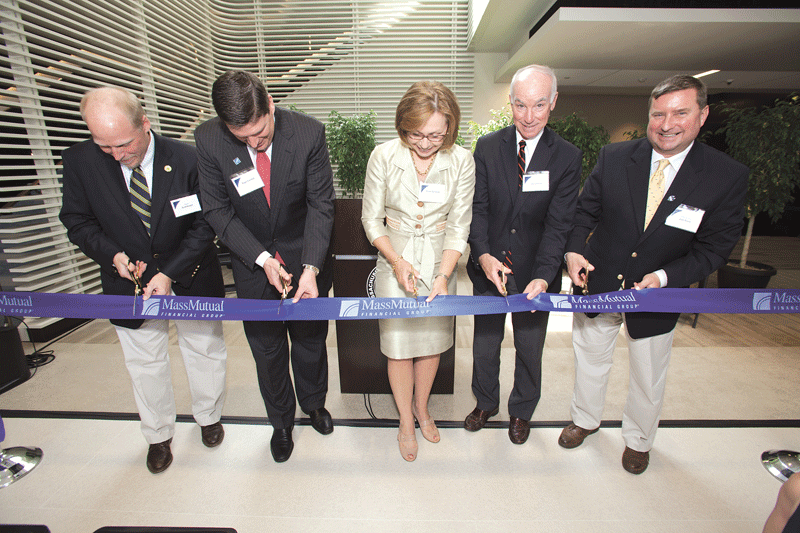
ENFIELD — MassMutual unveiled more than $38 million in renovations to its Bright Meadow campus, the primary location for the company’s retirement-services and workplace-insurance businesses, on June 17. The investment enhances the company’s overall infrastructure and positions MassMutual for future growth. It follows the company’s 2013 acquisition of the Hartford’s Retirement Plans division.

The renovations encompass approximately 15,000 square feet on the 66-acre, three-building site, and include infrastructure and technology improvements, a state-of-the-art data center, and enhancements to common areas. Several federal, state, and local officials and employees gathered to help MassMutual officially cut the ribbon on the revamped facility, as the 163-year-old company reasserted its commitment to driving economic growth in the state and the surrounding Enfield community.

“The significant improvements we have made to our Enfield campus reflect our efforts to position our integrated retirement business for continued success, as well as our broader commitment to invest in our facilities and our communities,” said Roger Crandall, chairman, president, and CEO of MassMutual. “We now have a world-class facility to accommodate the excellent growth potential of this business, and we look forward to delivering an outstanding service experience for our customers here for many years to come.”

The improvements in and around the building include:

• A state-of-the-art data center, the largest portion of the overall renovation project. The $23 million center will also deliver standby emergency power generation to most of the Enfield campus, thus enabling the facility to remain open in the event of a widespread power outage;

• The two-story lobby, which has been redesigned to prominently feature MassMutual branding, including the story of the company’s history and technology to create personalized greetings for special guests;

• A third-floor presentation room, created to welcome clients and visitors and demonstrate the company’s retirement-solution capabilities;

• A new innovative learning lab aimed at enhancing employee learning; and

• A redesigned visitors’ parking lot.

“Through the new construction and enhancements to our Enfield campus, we have created a dynamic and inviting work environment that fosters efficiency and productivity, and enables us to better provide our clients with the products and services they expect,” said Elaine Sarsynski, executive vice president of MassMutual’s Retirement Services division. “Our significant infrastructure investment also reaffirms MassMutual’s commitment to the state of Connecticut and to Enfield, a community we’ve been proud to be a part of for more than a decade.”

In addition to the new enhancements at its Enfield facility, MassMutual is also making infrastructure and workplace improvements to its Springfield campus. Between the two locations, the company is investing more than $85 million. MassMutual currently employs about 2,400 people in its Retirement Services division; more than 1,600 work at the Enfield campus. The company also currently has 200 employees with Cornerstone Real Estate Advisers LLC, a MassMutual subsidiary, in Hartford.

ENFIELD_exterior_JUNE2014
At left, MassMutual’s Bright Meadow facility, which recently underwent $38 million in renovations. Below, cutting the ceremonial ribbon are, from left, Enfield Mayor Scott Kaupin; Roger Crandall, chairman, president, and CEO of MassMutual; Elaine Sarsynski, executive vice president, MassMutual Retirement; Connecticut state Rep. Joe Courtney; and Connecticut state Sen. John Kissel. Below, left, Crandall addresses those gathered for the event. At bottom, the third-floor presentation room.

GuyPodiumRibbonBM3rdFloor01

Daily News

LUDLOW — Meredith-Springfield Associates Inc., a plastics manufacturer specializing in extrusion blow molding and injection stretch blow molding, is pioneering the use of new technology to manufacture sustainable plastic packaging for major brands like Mrs. Dash, owned by B&G Foods. “An analysis of the Mrs. Dash packaging process revealed the need to create a more sustainable bottle,” said Mel O’Leary, Jr., president and CEO of Meredith-Springfield. “While sustainable packaging has become a point of interest for manufacturers with regards to environmental benefits, significant cost-savings can also be realized. Sustainable package innovation offered by advanced plastic molding technology minimizes packaging costs – which in turn reduces warehousing and transportation costs, as well.” Meredith-Springfield constructed pilot molds and conducted design experiments with the objective to reduce the amount of PET (polyethylene terephthalate) used in the creation of Mrs. Dash packaging. “Manufacturers seeking more sustainable plastic packaging should look for innovative ways to reduce PET,” said O’Leary. “For Mrs. Dash, we are using the most advanced plastic molding technology to alter the amount of plastic and place PET only where it most impacts package performance.” By adjusting the weight-bearing performance of the packaging, Meredith-Springfield was able to reduce the weight of a Mrs. Dash bottle by more than 25%. The more sustainable packaging saves B&G Foods an excess of 200,000 pounds of PET resin per year and reduces related costs of optimizing other aspects of the molding and delivery process. “In reducing the weight, we carefully engineered the placement of remaining mass of plastic to go into the areas of the bottle which would maximize top-loading ability,” said O’Leary. The entire re-design resulted in a significant cost-savings for B&G Foods, but required in-depth research and development. The new extrusion blow molding machine produces more than 100,000 Mrs. Dash bottles in each 24-hour production period and is capable of delivering more than 35 million units per year. “This process is a major volume addition to our evolving PET business,” said O’Leary. “It provides economies of scale with resin, packaging and transportation purchases so it helps lower all costs and adds to our critical mass on both extrusion blow molding and stretch blow molding capabilities.”The machine is a one-step process for making specialty PET bottles versus a two-step process used to make carbonated beverage bottles. Beverage bottles require multiple steps; first, a “perform” is molded in an injection molding machine and then transferred to a reheat-stretch machine. “Our technology is the most energy-efficient method available,” said O’Leary. “It goes from plastic pellets to finished bottles on one machine.”

Daily News

WEST SPRINGFIELD — The Scuderi Group announced the signing of a power-purchasing agreement (PPA) with Mexico City-based developer and gaming company AHIS in an effort to lower electrical costs by up to 20% at 13 of its properties. This contract also enables the Scuderi Group to be given authorization to generate electricity for the Mexican power grid. According to the agreement, the Scuderi Group will build the necessary power-generation and energy-storage units to be installed at 13 of AHIS’s casinos located in Mexico City and other resort locations, which currently house an average of 350 machines each, as well as sports/race betting and bingo. The deal will also require the Scuderi Group to begin selling electricity to the country of Mexico since Mexican law mandates that any power generation taking place privately must also sell at least the same amount to the regional grid. This opens up major growth opportunities for the Scuderi Group. The Scuderi split-cycle engine incorporates a unique and highly efficient power-generation and compressed-air energy-storage capability that combines the energy of the high-pressure compressed air with the kinetic energy of the fuel to create a significant efficiency gain. When applied to properties with large power demands, the system has the capability to reduce electricity consumption up to 20%. AHIS is a leading gaming company in Mexico since 1993, currently operating 13 casinos around the country with an additional 29 operations in development. “We are very pleased to advance this project with AHIS to the PPA stage, which brings us closer to seeing the first installations of the Scuderi technology in Mexico take place,” said Sal Scuderi, president of Scuderi Group. “Not only do we look forward to seeing our systems at work saving significant energy, we are also excited to begin contributing electricity to the Mexican grid and helping it to meet its power demands. This is another important milestone for Scuderi Group.” After finalizing the extensive review and evaluation of current and future energy usage at the sites, the Scuderi Group will begin designing and building 13 natural-gas-powered electrical generators with CAES capability that will be sized and optimized according to each building’s specific requirements. The first systems are expected to be up and running next year. The Scuderi engine provides a major advantage when generating power over conventional generators. By utilizing the compressed-air storage capability, the Scuderi engine can capture energy produced via the grid, wind, solar, and other sources. Energy can then be provided on demand to users less expensively when power is in high demand. The system also increases the reliability and capacity of solar and wind farms so energy does not go to waste in off-peak hours. Because of the unique combustion process, the compressed-air energy-storage tanks require far less space than conventional compressed-air energy-storage systems.

Daily News

GREENFIELD — The town of Greenfield announced recently that implementation of the town’s technology master plan is underway. The master plan, an initiative started by Mayor William Martin in the fall of 2010, is another step in the mayor’s continuing “Stabilize and Expand Greenfield” Campaign, an effort to create a sustainable and resilient community that also prepares for opportunities created by external forces in the form of jobs, grants, loans, and recreational, cultural, and societal enhancements, as well as upgrades related to infrastructure, buildings, and quality of life. The plan includes upgrading the town’s information-technology assets and building a town-wide ‘last-mile’ broadband infrastructure to serve every business and resident that chooses to subscribe. “This is the culmination of three years of independent research and planning,” Martin said. “We have read and reread the information, discussed with internal and external experts, and now seek to follow a pathway outlined by this research and discussion that will produce a new, technology-rich future for the town of Greenfield. It will allow us, as local providers, to serve our citizens and businesses in a proactive, efficient, and user-friendly manner. We will have the ability to provide Internet access to many of our citizens who cannot currently access the Internet today or are prevented from a rapid and broad connection.” Beginning in 2010, Martin and Economic Development Director Robert Pyers began an effort to focus on the town’s lack of telecommunications and information-technology infrastructure. They believed that an investment in technology would help spur economic development, enhance public-health and public-safety communications, increase quality educational opportunities, and encourage government efficiency and local democracy. Research had also shown that investing in technology would help the town retain technology-based businesses and spur a knowledge-based economy while helping residents take advantage of the global educational, economic, and entertainment resources available through the Internet. “Over the course of the past three years, we have engaged three consulting firms to plan our approach,” said Martin. “The three Massachusetts-based consulting firms include Kelley Management Group Inc. of Wilbraham, JFK Systems of Somerset, and the Skyline Group from Uxbridge. Each has completed their studies and presented their strategic recommendations, which we are now deploying.” Kelley Management Group produced a Municipal Telecommunications Business Plan, which recommends that Greenfield move forward as a municipal telecommunications services provider with full town ownership and control. KMG’s business plan suggests the town will provide the best telecommunications services to every municipal entity, business, and residence at the lowest possible cost. Martin has accepted this plan and is moving forward with the creation of a town-owned Greenfield Technology Division, which will operate a break-even business with reserves for investment into future capital expenditures. JFK Systems developed a comprehensive municipal information-technology strategic plan, which defines and coordinates how the town focuses its IT resources and provides a consistent process necessary to link the various IT departments’ plans and initiatives with the needs of the citizens of Greenfield. The Skyline Group produced a municipal LAN/WAN site-assessment report and recommendations for the town’s municipally owned and town-occupied buildings. This report gives an assessment, inventory, and analysis of current network infrastructure, along with the risks associated with the current deployment. It also provides recommendations to achieve network enrichments in preparation for the town’s new municipal telecommunications network and services. Implementation of the technology master plan is a three-step process that is currently underway. The process begins with upgrading and/or selecting new municipal IT business applications that support the town’s business processes and incorporate industry standards and best-practice functionality and technologies. The next step in the process involves a redefinition of the technical requirements of the newly selected municipal IT business applications — requirements such as CPU speed, memory, data-networking speed, storage, data management, security, data sharing, etc. — and then building an optimal IT infrastructure, including computers, printers, servers, local area networking, etc., required to support it. The final step is the town’s most ambitious and will have the greatest impact on the community: Greenfield will build a low-cost, high-speed ‘last-mile’ broadband infrastructure to support the town’s new IT infrastructure, and to meet the voice, data, and Internet needs of every business and resident.

Daily News

BOSTON — Gov. Deval Patrick’s administration announced that the Department of Public Utilities (DPU) has issued two groundbreaking orders requiring Massachusetts electric-distribution companies to modernize the electric grid, building on the Commonwealth’s national leadership on energy efficiency and renewable energy. With these orders, Massachusetts is the first state in the nation to require electric-distribution companies to take affirmative and far-reaching steps to modernize the electric grid. “The grid-modernization order builds on Gov. Patrick’s commitment to strategic investments in innovation and infrastructure, and creates jobs,” said Energy and Environmental Affairs Secretary Maeve Vallely Bartlett. “By implementing grid modernization, Massachusetts will once again be leading the nation in the clean-energy revolution and enabling customers to participate in how and when they consume energy.” The DPU’s order requires each utility to develop and implement a 10-year grid-modernization plan, to be updated regularly. The DPU determined grid modernization will provide several benefits, including:
• Empowering customers to better manage and reduce electricity costs;
• Enhancing the reliability and resiliency of electricity service in the face of increasingly extreme weather;
• Encouraging innovation and investment in new technology and infrastructure, strengthening the competitive electricity market; and
• Addressing climate change and meeting clean-energy requirements by integrating more clean and renewable power, demand response, electricity storage, microgrids, and electric vehicles, and providing for increased amounts of energy efficiency.
The companion order on time-varying rates recognizes that the cost of electricity changes dramatically over the course of a day and year. Currently, most customers pay a flat rate. The time-varying order would require utilities to set prices that take into account the varying costs of electricity and allow customers to make informed decisions on their electricity use throughout the day. Grid modernization and time-varying rates also will allow the Commonwealth to reduce peak demand, a tremendous savings opportunity for all customers, not just those who respond to price signals. Currently, for reliability purposes, all customers pay to have an electric system that can provide power during peak demand periods, even if those periods occur only a few times a year. Grid modernization and time-varying rates will lead to lower electricity use during peak demand periods, reducing the need to build new energy infrastructure and saving money for all. “This order establishes the platform and the incentives for utilities and other businesses to innovate and invest in new technology, to continue to upgrade our current infrastructure, and to increase the use of renewable energy, electric cars, energy storage, and microgrids,” said DPU Chair Ann Berwick. “At the same time, customers will be empowered to control their electricity use and save money.”

Daily News

SPRINGFIELD — The newly formed Focus Springfield Community Television will open with a formal ribbon cutting, unveiling the new, 7,000-square-foot community television and programming facility at 1200 Main St., on June 23 at 10 a.m. Mayor Domenic Sarno, other local officials, and representatives of Focus Springfield Community Television will participate in the grand-opening event. The new local community television hub will host leading-edge technology that will allow local producers and Springfield residents to learn the skills needed to develop and air video programming on the Springfield cable system. The community television entity currently operates public channel 12, educational channel 15, and government cannel 17. Focus Springfield, evolved from the Springfield Media and Telecommunications Group, which was the successor of the Springfield Cable Endowment, was formed as a requirement of Springfield’s first cable television contract with the former Continental Cablevision. Funds contributed to the endowment from the cable-television contract were to be used for community programming, communications technology upgrades in the city, and related investments. The purpose of the center is to create a 21st-century environment to produce video and related media. Services will be rendered at no cost to Springfield residents, and video shooting and editing classes and mentoring will be available. The site was originally the home for MassMutual, which constructed the eight-story building as its home office in 1908.

Daily News

ENFIELD — MassMutual unveiled more than $38 million in renovations to its Bright Meadow campus, the primary location for the company’s retirement-services and workplace-insurance businesses, on June 17. The investment enhances the company’s overall infrastructure and positions MassMutual for future growth. It follows the company’s 2013 acquisition of the Hartford’s retirement-plan business. The renovations encompass approximately 15,000 square feet on the 66-acre, three-building site, and include infrastructure and technology improvements, a state-of-the-art data center, and enhancements to common areas. Several federal, state, and local officials and employees gathered to help MassMutual officially cut the ribbon on the revamped facility, as the 163-year-old company reasserted its commitment to driving economic growth in the state and the surrounding Enfield community. “The significant improvements we have made to our Enfield campus reflect our efforts to position our integrated retirement business for continued success, as well as our broader commitment to invest in our facilities and our communities,” said Roger Crandall, chairman, president, and CEO of MassMutual. “We now have a world-class facility to accommodate the excellent growth potential of this business, and we look forward to delivering an outstanding service experience for our customers here for many years to come.” Among the improvements in and around the building are:
• A state-of-the-art data center, the largest portion of the overall renovation project. The $23 million center will also deliver standby emergency power generation to most of the Enfield campus, thus enabling the facility to remain open in the event of a widespread power outage;
• A redesign of two-story lobby to prominently feature MassMutual branding, including the story of the company’s history and technology to create personalized greetings for special guests;
• A third-floor presentation room, created to welcome clients and visitors and demonstrate the company’s retirement-solution capabilities;
• A new innovative learning lab aimed at enhancing employee learning; and
• A redesigned visitors’ parking lot.
“Through the new construction and enhancements to our Enfield campus, we have created a dynamic and inviting work environment that fosters efficiency and productivity, and enables us to better provide our clients with the products and services they expect,” said Elaine Sarsynski, executive vice president of MassMutual’s Retirement Services division. “Our significant infrastructure investment also reaffirms MassMutual’s commitment to the state of Connecticut and to Enfield, a community we’ve been proud to be a part of for more than a decade.” In addition to the new enhancements at its Enfield facility, MassMutual is also making infrastructure and workplace improvements to its Springfield campus. Between the two locations, the company is investing more than $85 million. MassMutual currently employs about 2,400 people in its Retirement Services division; more than 1,600 work at the Enfield campus. The company also currently has 200 employees with Cornerstone Real Estate Advisers LLC, a MassMutual subsidiary, in Hartford.

Opinion
State Must Think Big on Gateway Cities

The Patrick administration recently announced that it will seek $100 million from the Legislature to spur business growth in the state’s so-called gateway cities, which include several communities in Western Mass. The four-year plan calls for everything from job training to loans for small businesses, all in an effort to spark progress in communities that, for the most part, have missed out on the economic progress the Commonwealth has seen in recent years.

But while that may sound like a big number, it really isn’t, not when you consider that there are now 24 of these cities — there were an original 11 designated in 2008, with 14 more added in 2010 — and that the problems facing them are large and quite stubborn.

For those reasons, we ask the governor and his administration to think and act bigger — make that much bigger — when it comes to these cities. Otherwise, progress will come slowly and unremarkably, if at all.

Backing up a bit, the state’s stated desire to help gateway cities, also called ‘legacy cities’ by some, is laudable, because help is clearly needed. These are, for the most part, old, industrial cities, with the industries varying from paper to shoes to fishing, that have tried in recent years to reinvent themselves as something else, but mostly have come up well short in those efforts.

The original 11 gateway cities are Brockton, Fall River, Fitchburg, Haverhill, Holyoke, Lawrence, Lowell, New Bedford, Pittsfield, Springfield, and Worcester. Those later added include Attleboro, Barnstable, Chelsea, Everett, Leominster, Lynn, Malden, Methuen, Peabody, Quincy, Revere, Salem, Taunton, and Westfield.

Some of these cities are doing better than others — Lowell has made a stunning turnaround over the past decade or so, for example — but most are still burdened with high unemployment and poverty rates, underperforming school systems, struggling neighborhoods, moribund downtowns, old mills that haven’t found new uses, and a lack of new business development.

The Gateway Cities program was launched to provide assistance to these communities — many of which, like Springfield, Worcester, New Bedford, and Pittsfield, anchor the regional economies surrounding them — because it was clear that they were not rebounding on their own.

One of the biggest reasons why is jobs, or, more precisely, a lack thereof. To create more, these communities must become more entrepreneurial — a theme we’ve stressed before — while also assembling workforces that can compete in this knowledge-based economy and embracing new industries and the cultural economy.

All that will take a lot more than $100 million over the next four years.

The Patrick administration’s plan calls for spending $20 million in job training in technology and advanced manufacturing careers at vocational schools and community colleges; $5 million to be spent on loans for small businesses; another $25 million to renew annual tax credits for companies that commit to adding jobs; a $15 million fund to jump-start commercial development projects; tax credits for housing construction; and $10 million in grants and loans to clean up contaminated industrial sites, among other considerations.

In our view, this represents a good start.

But if the Patrick administration is serious about enabling cities like Springfield, Holyoke, Lawrence, and Fall River to share in the prosperity enjoyed by Boston, Cambridge, and other communities, it must adequately fund programs to get the job done.

As we said, the state must think and act bigger when it comes to making investments in these legacy cities.

Green Business Sections
Hadley-based Venture Has Big Plans for ‘Small Wind’

Patrick Quinlan, left, and Bill Stein

Patrick Quinlan, left, and Bill Stein, with an HR-3 model wind turbine outside their Hadley facility.

When Patrick Quinlan and Bill Stein went about the task of assigning a name to the company they started in 2012 to design, build, and service small wind turbines, they quickly settled on ‘Black Island.’

That phrase may not mean much to most people — Quinlan joked that many who hear it think it has something to do with pirates — but it does resonate with those who know their geography. Or their wind power.

Black Island, so named because of a distinct lack of snow — there is also a White Island nearby that obviously has some — is in the Ross Archipelago in Antarctica. It is home to a major U.S. telecommunications center, and is among the most climatologically inhospitable places in the world.

The official population is zero, and for good reason — actually, several reasons. The island is often visited by category-5 hurricane winds exceeding 150 mph, temperatures regularly dip south of 40 below zero, and the island is in absolute darkness for almost half the year.

For nearly three decades now, the facility there — America’s South Pole communications link to the world — has been powered in part by several of the so-called HR-3 (3-kilowatt) series of small wind turbines built by a Vermont-based company called Northwind Power Co, later renamed Northern Power Systems.

It was this product that Quinlan and Stein were recruited to essentially reintroduce to the market — Northern exited this stage in favor of ‘big wind’ products several years ago — by the National Renewable Energy Laboratory (NREL). This was an entrepreneurial challenge they accepted, in part because they were both unemployed at the time, but also because they’ve been working in wind power throughout their careers and saw vast potential for products that fall in the category of what the industry calls ‘small wind.’

These would be units rated at under 10 kilowatts, said Quinlan as he spoke with BusinessWest in the company’s R&D facility in the ironically named Propeller Building on River Drive in Hadley. And there is growing demand for such products among commercial, industrial, and even residential users, he noted, adding that a study conducted by Navigant Research revealed that the market for small wind turbines will double to $3.3 billion annually by 2018.

An installation crew

An installation crew is seen with one of the HR-3 models in operation on Black Island in Antarctica.

There will likely be many competitors for that growing pie, but Black Island, which also plans to develop a 1-kilowatt version of the HR (high-reliability) product, will be well-positioned, he noted, steering the conversation back to Antarctica and the brand name chosen for this venture. That remote location has become a proving ground of the highest magnitude for the HR series of products, he said, adding that the company uses a photo of an installation on that South Pole outpost, along with the slogan “Toughest Wind Turbines on the Planet,” in its marketing materials.

And while there aren’t many, if any, other places like Black Island, reliability, in general, has been an issue with small wind turbines, said Stein, adding that the Black Island product distinguishes itself in this regard due largely to a spring-damper system called VARCS (variable-angle rotor-control system), which enables the turbine to handle high winds by pitching the rotor upward into a helicopter position when winds are strong.

“The demonstrated survivability of our H-3 wind turbine is exemplary, and uniquely distinguishes our design,” he said, adding this competitive advantage is important because demand for such turbines will be great in areas where competitively priced solar power is not practical — like Antarctica and other places that don’t get much year-round sun.

The current business plan calls for the company to build a small number of 3-kilowatt wind turbines in the Hadley facility — it has already filled a few orders from the U.S. Air Force — and eventually scale up production of those units, most likely in conjunction with Greenfield-based Applied Dynamics, while also introducing the 1-kilowatt unit capable of powering a home or small business.

“We’re leveraging the great reputation of the HR series to build a very solid, practical wind turbine that we think will be attractive to everybody, because small wind does not have a great reputation for reliability otherwise,” said Quinlan. “And there are so many great applications for small wind.”

For this issue and its focus on green business, BusinessWest examines an emerging local company that is looking to make a powerful statement in an intriguing and potential-laden industry.


Turns for the Better

Quinlan told BusinessWest that naming a wind-turbine company Black Island is similar in many ways to a carmaker naming one of its products after a racetrack where it has enjoyed great success — and that has happened many times over the years, with the Dodge Daytona, Chrysler Sebring, and Pontiac LeMans, among others, coming to mind.

That’s how powerful a statement he believes the brand name makes, and how much it resonates with the company’s audience.

“Among the people who purchase small wind turbines, they know about the Black Island facility and respect what’s happened there,” he said. “In many instances, people have called them legendary wind turbines because they’re so anomalous in their reliability.”

Quinlan and Stein have been telling the Black Island story repeatedly over the past few years as they’ve taken their venture off the drawing board and into reality and worked to differentiate themselves from what they call “commodity small wind turbines.” For example, there was the presentation given before the Mass. Clean Energy Center (MCEC), which eventually gave the partners a $150,000 grant to help get the planned 1-kilowatt unit off the ground.

In addition to lessons learned in the climate of Antarctica, Quinlan and Stein told the MCEC — as they have other groups and BusinessWest — that, when it comes to small wind turbines, there is a lot of “junk” out there.

“In short, small wind turbines are disappointing customers,” Quinlan explained. “There is a strong need for a cost-effective, reliable, and productive alternative that is dependable.”

All those words could be used to describe the original HR-3, he went on, adding that the product had made a name for itself in Antarctica and other remote locations, so much so that the National Renewable Energy Laboratory launched a search for a company that would service existing models and create what amounts to the next generation of the product.

It focused its efforts on Stein and Quinlan, two veterans of what could be the called the wind-power movement, who are now partnering with Lawrence Mott, an engineer on the originally built HR-3, on the Black Island venture

Quinlan is the former associate director of the UMass Wind Energy Center and has been involved with wind power for more than 30 years. He worked at Southern California Edison and AeroVironment Inc. on wind-turbine testing and in-field troubleshooting, and worked with individual electric cooperatives and municipal utilities across the West on wind-power projects. In Washington, he served as a renewable-energy expert as a Congressional fellow, working for the ranking member of the House Science Committee, and then as ASME White House technology fellow supporting the presidential science advisor at the Office of Science and Technology Policy.

Stein, meanwhile, is a former senior research fellow at the UMass Wind Energy Center who also began work in the field in the early ’80s.

He started building wind turbines at Clark University, worked at Natural Power Inc., a wind-instrumentation company, and started his own wind-power company, Astral Wilcon, a manufacturer of 8- and 15-kilowatt residential-sized wind turbines. He worked briefly at MIT’s Fusion Energy Laboratory and at Yankee Environmental Systems, where he developed meteorology instrumentation.

With $180,000 in funding from the NREL, the partners eventually set up shop in Hadley and contracted with the agency to design and then test a modified HR-3 at Texas A&M University’s Alternative Energy Institute. During those tests, the turbine ran flawlessly, said Quinlan, adding that, since then, the company has produced a handful of the units and sold two to the Air Force.

It hopes to secure more orders at the Small Wind Conference in Stevens Point, Wis. later this month, he went on, adding that the partners project sales of perhaps 20 units this year.

The company also sells new and refurbished parts  for the roughly 100 legacy HR-3 units still operating around world, mostly in remote locations such as mountaintop installations and offshore oil rigs, said Quinlan, adding that this component of the business provides a steady cash flow that makes the venture less of a business risk.

Looking forward, the partners are optimistic about scaling up production of the HR-3. Quinlan projects sales of the $39,000 turbines possibly reaching 100 units by next year.

“We’re targeting organizations that highly value reliability,” he said, adding that failures in the field can be extremely expensive and disruptive because getting service is so difficult and time-consuming. “This includes government agencies that have telecommunications networks, telecom companies that have microwave towers, oil and gas companies, and microgrids — small, self-contained utilities.”

Meanwhile, climate change may create business opportunities in another of the world’s most remote outposts — the Arctic, he explained.

“The Arctic will soon be navigable,” he told BusinessWest. “And there’s a lot of interest in setting up telecommunications systems there to support ship traffic, and that could create opportunities for us.”

The partners are also optimistic about development of the 1-kilowatt model now on the drawing board, with a prototype expected soon.

That product will compete with solar and other options for the business of those willing and able to use renewable energy to power their homes and businesses, said Stein, adding that, while solar has become an attractive option now that the price tag for such installations has come down in recent years, there is, and will continue to be, decent demand for wind power.

That’s because there are some places where solar is not a viable option, and where wind is, because it’s plentiful, said Quinlan.

“We’re looking at the windy states — the whole center of the country and the coasts,” he said, adding that preliminary projections forecast first-year sales of perhaps 1,000 units, and 5,000 annually within a few years.

Demand may be bolstered by growing need among businesses, government operations, schools, and other facilities to continue operating after a weather disaster or power outage, he went on, adding that small wind can provide that capability.


Gust in Time

When Quinlan and Stein were asked if they’ve been to Antarctica to see their product in action, they both enthusiastically said ‘no,’ although Stein admitted that it might be fun to go there — “for a few days, maybe, and at the right time of year.”

There are no plans for such an excursion, or to visit any of the other remote locations where the company’s turbines are in operation or will soon be put to use.

“We know what these units can do — we don’t need to go to the South Pole,” said Quinlan, adding that pictures from such outposts will suffice.

But Black Island will always be a big part of this company. As Quinlan said, it has been a proving ground, and because of that it is now a brand name — one that is expected to do big things in the world of small wind. n


George O’Brien can be reached at [email protected]

Green Business Sections
Amherst Farmer Refines Method of Growing Plants Without Soil

Joseph Swartz

Joseph Swartz shows off the roots of lettuce plants growing hydroponically in his greenhouse at Swartz Family Farm in Amherst.

Imagine growing 120,000 pounds of food each year without any soil on top of public housing in the Bronx.

Although the idea may sound farfetched, it’s not a fantasy. Instead, it’s one of many projects that Joe Swartz of Swartz Family Farm in North Amherst has accomplished in recent years.

Swartz is a master hydroponic gardener who has taken the industry to new heights. In fact, the New York City farm he designed for Skytop Vegetables was the first in the nation to be grown on top of a public-housing structure. “I did the early sketches on my kitchen table in Amherst,” he said, as he talked about the 8,000-square-foot rooftop farm that opened in February 2013, and provides fresh, nutritious vegetables to residents of the building and neighborhood as well as patrons of nearby restaurants and markets.

Swartz has gained international recognition as an expert in hydroponics, which is a method of growing plants without soil. They are planted from seeds in holes set in plastic containers and thrive on a nutrient solution dissolved in water that runs beneath them and is recycled after the plants take what they need from it.

Swartz has 28 years of experience in operating a year-round, pesticide-free, hydroponic vegetable-and-herb facility in Amherst. It’s a field he entered long before most people thought about where their produce came from and environmental concerns created a demand for locally grown vegetables and fruits.

As a result, Swartz has become a leading expert in hydroponic system design, high-end crop production, biological pest control, system troubleshooting, and much more, and has spoken all over the U.S. and in many foreign countries about his groundbreaking work.

“It’s very gratifying, and when I think of the evolution of all that has happened in the industry since I began my farm, it’s mind-boggling,” he said, adding that he gave a recent lecture at a national conference in Las Vegas and was just invited to speak at a major agricultural conference in England.

The concept of transforming unused rooftop space into a hydroponic garden has many environmental benefits, which include water conservation. “All rainwater that strikes a flat roof has to be channeled into the city’s stormwater systems, and most systems in U.S. cities are completely overwhelmed; one inch of rain that falls on an acre equates to 27,000 gallons of water,” Swartz explained, adding there are more than 15,000 acres of rooftop space in New York City alone.

“But a rooftop greenhouse has gutters on all sides, and rainwater is sent into an underground tank, where it is filtered, cleaned, and used for farming,” he went on. “So it allows us to take a waste product and convert it into food in a very sustainable manner.”

Benefits also accrue from the fact that a rooftop greenhouse shares synergy with the building. Sun that hits the roof and requires the building to be cooled is absorbed by the crops, which also absorb heat from the building in winter, preserving it rather than having it simply go into the atmosphere, Swartz said.

In addition, the system takes heat from the building’s smokestack and uses it to heat the greenhouse. “It capitalizes on heat that is normally wasted. Plus, the greenhouse has thermal curtains that hold the heat in at night. So it’s a win-win situation for the building owner and the owner of the garden,” he told BusinessWest. “It also produces jobs for local residents without many job skills and allows people in the neighborhood to get fresh, nutritious food that doesn’t have to trucked in from thousands of miles away.”

And rooftop gardens, which are rapidly expanding across the country, also provide inner-city children with agricultural knowledge. “We worked with a local school in the Bronx, and a frightening number of children thought milk was made in a manufacturing plant. They had no concept that it came from an animal,” Swartz said. “And most of the people in the neighborhood got their food from a small convenience store and did not have access to nutritious, locally grown vegetables and herbs until the garden was created.”


Growing Venture

Swartz Family Farm has been in business for 100 years, but Swartz likes to keep a low profile, and there are no signs to mark the entrance to his home, greenhouses, and acreage on 11 Meadow St.

“My grandfather Joseph and his wife Anastasia purchased 40 acres and started this farm after they came here from Poland in 1919,” he said. The couple grew mixed vegetables and tobacco and raised their family on the site.

Swartz’s father and uncle took the farm over in the ’50s and turned it into a large-scale potato-growing operation. In addition to growing potatoes on their farmland, they rented land in Hadley, Amherst, Sunderland, Hatfield, and South Deerfield; at the peak of their business, they were raising 300 acres of potatoes.

But his uncle died in 1970, and in the ’80s, the price of land became exorbitantly expensive due to extensive residential development in the area. “As my father got older, he scaled back to the 40 acres here.”

Swartz was in high school when he realized farming his family’s land on a seasonal basis was not a viable option because the economy was booming and seasonal help and additional farmland for crops were unavailable. “So I decided I had to look at a small-scale, very intensive type of agriculture,” he said.

His interest in controlled environmental agriculture, or hydroponics, began in 1985 when he was a student at the Stockbridge School of Agriculture at UMass Amherst. He learned the system had been pioneered in Holland and had expanded to the United Kingdom and Spain, where hydroponic greenhouses were operational year-round.

“The same nutrients you would normally apply to a field are dissolved in water,” he noted. “The plants take what they need, and the rest is recaptured and reused. It only requires 10% of the water needed for conventional agriculture, so it is a very environmentally friendly form of agriculture.”

However, the university did not have a program where Swartz could learn how to implement this growing method on a large scale. But he was fortunate enough to meet a retiree living in Ashby, Mass. who was running a small greenhouse growing hydroponic flowers. He had been the lead associate at Cornell University’s research center on Long Island, was originally from Holland, and had pioneered a large portion of the hydroponic technology that was being implemented in the U.S.

Swartz received valuable guidance from him on how to produce a premium product year-round inside a greenhouse on his property.

But when he began building a greenhouse on his family’s land and shared his plan with local farmers, they thought the idea was ridiculous.

“I was considered a crackpot. We have a very tight-knit agricultural community in the Valley, and no one understand why I would grow produce in water when there was beautiful soil here,” he recalled. “But for me, it was a necessity.”

The day after Swartz graduated from UMass, he began working in his new, 5,000-square-foot greenhouse. “At that time, there were 13 hydroponic farms in the state, and today we are the only one of them that is still in operation — we have the longest-running hydroponics farm in the Commonwealth,” Swartz told BusinessWest, adding that he also grew seasonal vegetables on the farm’s 40 acres and sold them to traditional markets.

But his greenhouse thrived. “In my first year, I produced more than 80,000 heads of Boston lettuce in it. In a field, you only get 5,000 heads per acre, and you can only plant one crop. But I was able to plant year-round,” he said, explaining that he devised a system where he was continuously harvesting and reseeding in different sections of the greenhouse.

Paradigm Shift

Swartz has continued to produce hydroponic crops at Swartz Family Garden for 30 years. Lettuce has always been a staple, but after his initial success, he built two other greenhouses and soon was shipping 300 cases of sweet basil a week to 42 Whole Foods stores across the Northeast.

About 15 years ago, when hydroponics became more well-known, Swartz delved into consulting work, which was a natural transition, although he continued farming his own greenhouses. “There were very few experts in the U.S. back then, and there wasn’t much information about how to grow hydroponically on a sustainable, commercial scale,” he said.

Over the past five years, as awareness and concern about the environment escalated, the demand for local products began to rise.

“Public awareness changed buying habits, and the demand for urban agriculture began to grow,” Swartz said. “It was a paradigm shift because, before that, food was produced on large commercial farms which were often not even in this country.” In fact, when he first began to sell Boston lettuce, there was nothing but iceberg lettuce in the stores, and there was no demand for any other variety.

About four years ago, Swartz was approached by two men who were starting a company called Sky Vegetables. “They wanted to take the concept of urban agriculture one step further and build commercial farms on flat city rooftops, because there is so much of that space that is unused,” he said.

He became their director of farming, and in 2009 began designing a hydroponics rooftop garden for a new LEED Platinum-certified building in the Bronx that would be used for public housing. Arbor House was completed in 2012, and the rooftop farm opened in February 2013.

“The space was leased for $1 for 99 years, and lettuce and cooking greens such as chard, kale, sweet basil, upland cress, and baby bok choy are grown there. Sky Vegetables operates the farm independently, and the building’s residents have the opportunity to get food from it via a community-supported agriculture program,” Swartz said.

Today, his wife, Sarah, operates their hydroponic farm in Amherst, which sells produce to local vendors such as Atkins Market. Swartz left Sky Vegetables six months ago to consult full-time with growers across the globe. He just finished an ongoing project in Kuwait and is going to Dubai to assist a large-scale farm in replicating a hydroponics system in Singapore. “I need to fine-tune the system before they can expand and replicate it,” he explained.

Limitless Potential

Swartz has more than 49,000 hours of greenhouse production time and has also done consulting work in a variety of settings. This year he has already been to Nassau, Bahamas; Santa Cruz, Calif.; Atlanta; Halifax, Nova Scotia; and Las Vegas.

“Hydroponic gardens range from simple, home-built systems that are outside, to conventional greenhouse systems, to very high-level, computer-controlled greenhouses, to a garden in Nova Scotia that grows without sunlight inside a warehouse, using LED lighting,” he explained. “It’s a 100% controlled atmosphere — and the final frontier is space.”

Indeed, he noted that a colleague, Gene Giachumelli, professor of Agricultural and Biosystems Engineering and director of the Controlled Environment Agriculture Center at the University of Arizona, is designing a hydroponics food-production system for outer space, where one of the challenges is zero gravity.

“It’s a very interesting industry, and hydroponics is the safest food-production method possible,” Swartz said, as he stood on his family farm, gazed at his greenhouse, and recalled his own history.

“My father and many other people thought I was crazy when I started this. But I have taken the farming techniques I developed in the Valley and am working with growers across the globe today,” he said, adding that pesticides are not needed, and “you cannot get safer food products.”

That endeavor has no limits, and Swartz will continue to grow his own business as well as help other people across the world create farms without soil, sunlight, and other factors — in the process transcending what any farmer could have imagined several generations ago.

Briefcase Departments

DevelopSpringfield Touts Rebuild Springfield Work
SPRINGFIELD — DevelopSpringfield hosted an event on May 29 to mark the two-year anniversary of the Rebuild Springfield Plan release and to commemorate the third anniversary of the June 1, 2011 tornado. City officials, volunteers, contributors, residents, and other stakeholders gathered on Central Street to hear remarks highlighting Rebuild Springfield Plan progress. Attendees were provided an opportunity to tour newly rebuilt homes in the severely tornado-damaged Central Street corridor. The Rebuild Springfield Plan is a city-wide master plan designed to provide a framework for addressing the redevelopment needs of neighborhoods impacted by the June 2011 tornado. Additionally, the plan serves as a guide for addressing a wide range of issues relevant to the city as a whole. DevelopSpringfield, in partnership with the Springfield Redevelopment Authority, facilitated the planning process, which included the input of city residents and stakeholders and was published in the spring of 2012. The recent gathering featured remarks by Springfield Mayor Domenic Sarno; Jay Minkarah, president and CEO of DevelopSpringfield; Nick Fyntrilakis, DevelopSpringfield board chair and vice president of Community Responsibility for MassMutual Financial Group; Bishop Bruce Shaw, pastor of New Hope Pentecostal Church; Melvin Edwards, city councilor and Maple High/Six Corners Neighborhood Council president; Tim Allen, city councilor; Steven Bradley, DevelopSpringfield board member and vice president of Government and Community Relations and Public Relations for Baystate Health; Jose Claudio, DevelopSpringfield board member and director of Community Development for the New North Citizens’ Council and speaking on behalf of the North End Housing Initiative; and Alberto Ayala, speaking on behalf of VIVA Development. All of the speakers played a role in planning and rebuilding efforts in the city. They noted that the new homes and cleanup in the Central Street corridor are clear signs of rebirth in that neighborhood, with construction of the new Elias Brookings School in the background. With the assistance of federal, state, and city investment, progress is being made on several other key projects, including plans for construction of a New South End Community Center at Mason Wight Park. Trees have been planted, parks rehabilitated, and the Dryden Memorial School rehabilitated, among many other signs of physical improvements since the tornado. Beyond the response to the challenges brought on by the tornado, the plan also provides a framework to advance other important community priorities throughout the city. Progress on these fronts is also evident in many ways, including work in addressing educational and workforce-training priorities; efforts to highlight cultural assets, including the designation of the Springfield Central Cultural District downtown; enhanced public safety programs; and cohesive and collaborative economic-development initiatives to attract business and permanent jobs to the city. The full plan is available at www.developspringfield.com. DevelopSpringfield also announced the publication of the Rebuild Springfield Progress Report 2014. Developed in collaboration with many volunteers who participated in the Rebuild Springfield planning process, the report highlights many of the plan’s priorities. It is available online at www.developspringfield.com and in print at DevelopSpringfield offices at 1182 Main St. in Springfield, and was distributed in the Republican on June 5. A Spanish-language version will be available soon and distributed throughout the community and also online.

Construction Spending Rises Modestly in April
WASHINGTON, D.C. — Total construction spending rose modestly for the third straight month in April as a mix of increases and declines in public and private categories showed the sector’s recovery remains fragile and fragmented, according to an analysis of new Census Bureau data by the Associated General Contractors of America (AGC). Association officials said the industry could benefit from new federal investments in infrastructure to offset declining public-sector demand. “Residential, private non-residential, and public construction spending all have areas of strength but also pockets of weakness,” said Ken Simonson, the association’s chief economist. “While the overall trend remains more positive than last year, growth is likely to be spotty for the foreseeable future.” Construction put in place totaled $954 billion in April, 0.2% above the revised February total and 8.6% higher than in April 2013. The year-over-year growth so far in 2014 has exceeded the full-year increase of 5% recorded from 2012 to 2013. Private residential construction spending inched up 0.1% in April to a six-year high. The latest total exceeded the year-ago level by 17%. Single-family construction rose 1.3% in April and 14% year-over-year. Multi-family spending soared 4.4% and 31%, respectively. Improvements to existing single- and multi-family structures slumped 2.2% for the month but increased 17% from a year ago. Private non-residential spending dipped 0.1% in April but climbed 5.6% over 12 months. Most major categories increased from year-ago levels. However, the largest private segment, power construction — comprising work on oil and gas fields and pipelines as well as electricity projects — slipped 0.6% for the month and 3.9% over the year. The fastest-growing private type was office construction, which jumped 3.1% in April and 26% since April 2013. Public construction spending rose 0.8% for the month and 1.2% year-over-year. The largest public segment, highway and street construction, declined 1.1% in April but increased 4.9% from a year before. The second-biggest category, educational construction, gained 3% and 4.9%, respectively. “The outlook for the rest of 2014 remains uneven,” Simonson predicted. “Demand for apartments appears to be very strong, but there are several warning signs about home building. Despite dropping last month, power and manufacturing construction should remain the leading private non-residential categories, with hefty growth for the year as a whole. The rebound in public construction that occurred last month may not be repeated soon.”

<strong>State Seeks $100 Million for Gateway Cities
BOSTON
— Gov. Deval Patrick is asking the Legislature to approve a bill that would make $100 million available to the state’s 26 so-called Gateway Cities, including Springfield, Holyoke, Chicopee, Westfield, and Pittsfield, for a host of economic development initiatives. Included in the bill are provisions for: $15 million for commercial development projects; $10 million in grants and loans to clean up contaminated industrial sites; $5 million for loans for small businesses; $25 million in annual tax credits for companies that commit to adding jobs; and $20 million for ‘middle-skills’ job training in manufacturing and information technology. “We are trying to make sure every resident — and not just residents of Boston — have access to economic opportunities,” said Alex Zaroulis, a spokeswoman for Patrick’s office of Administration and Finance. However, some legislators said the proposed spending was not enough to make a real difference in the struggling cities. “The level of funding proposed by the governor is simply insufficient,” said Rep. Antonio Cabral, a New Bedford Democrat. “The surest way to undermine faith in the Commonwealth’s programs is to fund them at a level that we know won’t solve the problem.”

April Trade Gap Widens to $47.2 Billion
WASHINGTON, D.C. — The U.S. trade deficit jumped to a two-year high in April, as exports declined and imports surged to a record high. The deficit rose to $47.2 billion in April, up 6.9% from an upwardly revised March deficit of $44.2 million, the Commerce Department announced this week. Exports dropped for the fourth month out of the past five, falling 0.2% to $195.4 billion. Meanwhile, imports climbed 1.2% to a record high of $240.6 billion.

Daily News

NORTHAMPTON — Fazzi Healthcare Solutions, a Northampton-based healthcare research and consulting firm, has announced the findings of its 2013-14 State of the Home Care and Hospice Industry study. The largest study of its kind, this national, six-month effort was initiated to identify present and future trends that affect home-care and hospice agencies across the country and the patients that they serve. More than 1,100 participants were interviewed as part of the study. Fazzi acted as facilitator and co-sponsor of the study in conjunction with other industry leaders. The findings can be found in the free, 44-page report available at fazzi.com.
The goal of the study was to provide agency leaders with insights on industry trends and best practices for the future. Topics addressed included technology and electronic health records, telehealth, new healthcare models, and organizational practices of home health care. There are more than 12,000 home care agencies and 5,500 hospice agencies in the U.S., serving more than 5 million patients each year, mostly seniors. The U.S. Census Department estimates that the population of people 65 and older is expected to more than double from 43.1 million to 92 million between now and 2060, and those age 85 and older will more than triple to 18.2 million by 2060. “As the elderly population increases, life expectancy rates increase, and as 45% of seniors live with two or more chronic conditions, the demand will increase for home and hospice care,” said Dr. Robert Fazzi, managing partner at Fazzi. “This study will help shed a light on best-practice strategies so that industry leaders can make informed decisions and improve care for patients across the country.” The study was sponsored by Delta Health Technologies and HealthWyse, and co-sponsored by the Joint Commission, the Community Health Accreditation Program, the National Assoc. for Home Care and Hospice, and the Forum of State Associations. Fazzi, also a co-sponsor, facilitated and authored the study. Fazzi Associates is a national consulting, benchmarking, and best-practice research firm that specializes in serving the home-health and hospice industry. Its major research projects have included partnerships with organizations such as Philips Corp., 3M Corp., Briggs Corp., Delta Health Technologies, and BlackBerry.

Opinion
Tech Foundry May Yield Better Workforce

Over the past several years, Delcie Bean has many made many headlines with his company, Paragus Strategic IT, one of the fastest-growing technology companies in the country.
Soon, though, he may be securing headlines of a different sort, through an initiative he calls Tech Foundry. He’s already garnered one; see story on page 15.
But Bean’s not really after press with this concept, although he’ll gladly take it because it will certainly help him achieve his goals. Instead, he’s after a larger, better-qualified workforce from which to draw employees not only for his company, but for everyone doing business in this region.
And Tech Foundry sounds like a great start toward creating one.
In a nutshell, this new nonprofit agency is a training center of sorts that will be created on the long-vacant ninth floor of Harrison Place in downtown Springfield. It will focus on providing skills to meet specific employer needs, but also on giving participants a basic understanding of what’s needed to be employable in today’s technology-based economy.
Elaborating, Bean said that many of those looking to enter the workforce today lack not only the technical skills to work at a place like Paragus or MassMutual or Comcast, but also lack many of the basics. These include everything from an understanding of the need to show up on time to work every day to the so-called people skills needed to provide effective customer service and communicate with co-workers.
Beyond the basics, though, Tech Foundry will strive to provide those aforementioned specific career skills. And he means very specific, because this is what’s needed in today’s offices and factories, and what’s often missing from most job applications.
Bean draws an analogy between a manufacturer ordering a specific part and an employer putting in an order for an employee with a particular set of skills and certifications. It’s not a perfect analogy, because people are not nuts and bolts, but it’s an intriguing concept.
Tech Foundry intends to address all of the above, and with a host of constituencies ranging from high-school and college students to veterans; from career changers to the many underemployed in this region. And it will start in a few weeks with what’s being called a pilot program that will involve 25 young people soon to enter their senior year in high school.
They’ll be learning in space that Bean describes as “Googlesque,” with bright colors on the walls and funky furniture in the classroom, and working through the summer and into the fall and winter after school. When they ‘graduate’ in the spring, they’ll be placed with companies that have agreed to participate in the program.
From this important start, Bean can envision some dramatic developments, even a company like Google coming to Greater Springfield because of a workforce that could be defined with the two words quantity and quality.
Such an eventuality is probably many years away, but work with these 25 high-school students represents a strong start and a good degree of hope when it comes to addressing one of this region’s most vexing challenges — presenting employers — and potential employers — with a workforce that can help them grow and prosper.

Employment Sections
Tech Foundry Aims to Build a Skilled Workforce — and More

Delcie Bean

Delcie Bean, president of Paragus Strategic IT and founder of Tech Foundry.

Paragus Strategic IT, by any measure, is one of the Pioneer Valley’s recent success stories, a fast-growing technology firm that’s getting set to move into a brand-new building in Hadley, having long outgrown its current location.

In fact, said its president, Delcie Bean, the firm would like to grow even faster, but that’s not always possible, because of the difficulty finding the right talent. It’s a story other business owners have been telling as well.

“We have been struggling with staffing for a long time, as has everyone else in the area,” Bean said. “We thought it was just us because our requirements are so stringent, and that’s why we’re having trouble hiring people. But it turns out everyone is looking for the same people but can’t find them — MassMutual, Baystate, Health New England, and smaller places like MassLive, Mobius, and Entre. They’re all having the same problem — they can’t hire. And that impedes growth, it impedes service, it impedes research and development.”

So, about a year ago, Bean started writing down ideas to tackle the problem — on a napkin. “I still have that napkin somewhere,” he said. “I wrote what the problem was and how we can go about solving it.”

The problem, in very specific terms, is that most people applying for available jobs, with IT firms and in other industries, lack not only the necessary skills, he noted, but also a certain level of professional acumen. “They don’t know customer service, they don’t know how to fill out a résumé or cover letter, they can’t interact with people well or write a business-formatted e-mail. Even the ones who have the technical skills, we can’t hire them because they aren’t ‘people people,’ they aren’t professionals — they’re not employable.”

“It’s not just a problem in the IT sector,” he reiterated. “Many sectors in Massachusetts are saying the same thing; they can’t find entry-level employees who come to the table with professional skills. We’ve seen it in precision manufacturing, financial services, healthcare — a lot of the sectors we work with say they have the same problems.”

From those napkin scribblings, however, emerged a possible solution, an ambitious workforce-development program Bean calls Tech Foundry. The goal of the new nonprofit, which will soon complete almost $500,000 in fund-raising for a one-year pilot project, is to train unemployed and high-school-age individuals and match them with the very precise needs of area companies.

“A lot of existing workforce-development programs use a broad-based curriculum, with all the kids learning the same stuff in the same way, then demonstrate what they know by taking tests,” he said. “I had some very frank, open conversations with the community colleges, and they admitted what they’re doing well and where they can improve. They admitted that, in many ways, they’re not equipped to handle what some sectors are asking for.”

The ambitious, innovative Tech Foundry is seeking nothing less than a game change when it comes to training workers and keeping them in a region that has been bleeding talent for a long time. It’s an idea with ramifications for not only education and workforce development, Bean said, but overall economic growth in the region as well.

Badges? We Need Badges

And it all begins by earning badges.

Backing up a little, Bean interviewed a number of companies about their needs and asked them to be very specific. “Customer service? What exactly does that mean? So I asked for 15 things they want applicants to know how to do. Same thing on the technical side — they say they want someone proficient in Excel, so I made them explain exactly what they want them to do in Microsoft Excel.”

Tech Foundry space

Delcie Bean describes the Tech Foundry space, still being completed and furnished, as “Googlesque.”

Tech Foundry distills these specific needs into badges students in the program can earn by learning the designated skills, not unlike in the Boy Scouts or Girl Scouts. “This badge means they can do these 25 things in Microsoft Excel. If people want them to do other things, there will be another badge we’ll call Intermediate Excel, or Excel 202.

“It allows us to have a common language between employers and people training future employees,” he continued. “Everyone will be on the same page. Right now, we’re misaligned, and this forces us all into one set of agreed-upon skills as we define what each position needs.”

The core idea of Tech Foundry, then, is to use those very specific badges to match job seekers with available jobs.

“We built what we call an engine — a real-world, scalable, real-time model for delivering education,” Bean said. “Say Paragus wants to hire two people. We’d log onto the engine and post the job and a list of badges associated with that position. Then we’d specify when we plan to hire, how many we want to hire, a couple more criteria, and hit submit.”

The end result, he told BusinessWest, resembles not so much a traditional want ad, but something more akin to a manufacturer placing an order for an item: “I say, ‘here’s the part I need; here’s my specific timetable,’ and that part is delivered to me.”

Meanwhile, students in the program will see these requests come up on the engine and get a feel for what they need to accomplish to find the ideal career. “They become aware of market demand and can tailor their education to meet that demand. Maybe a position opens up, and you have 80% of the badges already. You say, ‘I like that company, I like the pay, and I know what I need to do to get where I need to be for them to hire me,’ and you focus your time on getting the remaining badges.”

One of the critical aspects of the program, for many, will be the way it bypasses college debt for those who don’t need a degree and makes college more affordable for those who do.

“We’re going to show kids how to get a $40,000 job right out of high school — to earn a living wage,” said Bean, who famously launched his company when he was 14 and bypassed college to focus on growing it.

While some of the careers Tech Foundry graduates achieve won’t require a college education, he noted, for those that do, many participating companies are expected to offer tuition-reimbursement plans for night school, weekend study, or an online degree. “Why not get your professional education on someone else’s dime? Your education is tailored to the career path you love, you’re doing the work and getting a paycheck at the same time — you’d be crazy not to do it.”

Starting Young

Bean envisions an engine where hundreds of Tech Foundry graduates are seeing precise company needs in real time and constantly making matches. In fact, Bean would like to target four or five groups of career seekers — unemployed people, veterans, young people with some college experience who dropped out, high-schoolers, and — possibly — parolees trying to get a fresh start after jail time. But he can’t serve all those groups right off the bat.

“We decided to pick one for the pilot, and that’s high-school kids,” he said, noting that the initial idea was to teach them job skills, confidence, and professionalism over several years. The problem is that a pilot of 100 students over four years would cost between $3 million and $5 million in personnel and other resources, and Bean thought it unlikely that he’d secure that level of funding for an unproven concept.

So, instead, he’s launching a one-year pilot program involving 25 teenagers, all entering their senior year of high school this fall. It will cost $482,000, most of which has already been raised — mainly with small donations, although larger ones, like $50,000 from MassMutual and $125,000 from an anonymous donor, helped a great deal.

The pilot will essentially be an accelerated version of the program, with the 25 students — who have already been chosen from around 100 applicants — taking part in a six-week curriculum starting July 7 and running through mid-August.

When school starts in the fall, Tech Foundry will essentially become an after-school program, with the participants studying there five to 10 hours a week until graduating in the spring. After that, they will be placed among 15 companies that have committed to participating in the pilot.

“That will be the proof of concept we use to fund-raise, to show that we’re economically viable,” he said, before scaling the project up to 100 participants at a time, from the different demographics he mentioned. Teachers have already been hired, as well as an executive director and director of operations.

Tech Foundry has leased the ninth floor of Harrison Place in downtown Springfield and spent $40,000 renovating it to resemble a Silicon Valley workspace, with brightly colored paint and carpeting and what Bean called “a funky-cool café and weird furniture. It’s a very creative and engaging place. It’s Googlesque.”

Speaking of Google, Bean is thinking big when it comes to the regional economic-development potential of his new enterprise. He noted Cambridge’s tech explosion convinced companies like Google, Microsoft, and Amazon, as well as a number of smaller firms, to set down roots there and generate a critical mass of growth. “They produced 10,000 new jobs in three years. Those are insane numbers, crazy numbers. But it’s been done elsewhere — Raleigh, Austin, New Orleans, Denver … it’s happening all over the country.”

But it only happens where there’s a skilled workforce, because the big players are desperate for talent, he said. And the presence of a Google or Microsoft will help the region retain the talented graduates from UMass and other regional colleges who have been packing up their degrees and leaving for better, higher-paying opportunities than are available here.

“That will solve what people thought was the original problem, the brain drain,” he explained. “We’ll be able to keep UMass graduates because they’ll be able to work at these brand-name companies right here.”


Pieces in the Valley

The catalyst for achieving all that, Bean stressed, is a skilled workforce.

“We all know we have a low cost of living here, tons of infrastructure, a great lifestyle, access to the outdoors — we have all these assets,” he said. “But without a catalyst, we can’t sell those assets. That’s what Tech Foundry is trying to do, to build that catalyst.”

In fact, he added, Greater Springfield has the potential to become an even more promising hub than those other cities he mentioned. “We’re right between Boston and New York, we have an airport in Hartford, we have the computing center and low-cost electric in Holyoke … this is a phenomenal region.”

He believes Tech Foundry will be the first step in keeping more talent in a region with so much to offer. For promising high-school students and eventually others, the project may prove to be a vital link to a lucrative, satisfying career.

“They’ll see the data in real time,” Bean said. “They will know what the market demand is, and they’ll know, in very specific terms, what they need to do to get to the level they need to get that job.”

And, like other local businesspeople who have volunteered to be part of the training starting in July, he’ll be right in the middle of it, teaching some of the classes himself.

“I’m excited that I get to work with these kids,” said someone who understands youthful ambition better than most. “I’m so passionate about this.”


Joseph Bednar can be reached at [email protected]

Employment Sections
FIT Solutions Creates a Strong Niche Within the Staffing Industry

Jackie Fallon

Jackie Fallon says her company has achieved steady growth through its focus on the specific needs of both the clients it serves and the candidates it places with those firms.

Jackie Fallon says her expertise lies in the realms of technology and staffing, but she also has a background of sorts in marketing, experience that didn’t effectively “kick in,” as she put it, when she went about naming her company, FIT Solutions.

The first word is an acronym that blends her last name with the sector she specializes in — Fallon Information Technology — while the second amounts to what Fallon believes the company provides to both the businesses it serves and the individuals it places with those clients; she calls them candidates. Meanwhile, she does a lot with that word ‘FIT,’ as evidenced by the slogan on her letterhead — ‘Providing IT Resources That FIT Your Business.’

Unfortunately — and this is probably a sign of the times — many jump to the wrong conclusion. “A lot of people think we’re a fitness company, and we’re not, obviously,” said Fallon with a laugh.

Despite this confusion, Fallon is nonetheless making a name for herself in a challenging subsector within the broad staffing industry — helping companies of all sizes, but especially small to mid-size enterprises, find the IT personnel they need to enable their ventures to operate effectively in an increasingly technology-driven world.

It’s challenging, she said, because, despite some attractive benefits to being in IT — the pay is generally good, and work is, for the most part, still plentiful — not enough young people are getting into the field. She speculated that the bursting of the dotcom bubble early last decade and the exporting of considerable work overseas to India and other spots may have prompted parents to steer their children toward other vocations.

Those attitudes are changing, Fallon went on, but finding a good quantity of candidates remains a problem. Meanwhile, there’s the matter of quality, or effectively matching candidates with clients. And that can be a challenge, because many small business owners and managers simply don’t know what they need when they set about finding IT help.

“Small to mid-size companies rarely hire an IT person,” she explained while pinpointing her company’s bread and butter. “And when they do, human resources has no idea what to look for; he or she is given a list of specs and technical jargon they don’t understand. So they look to us as an extension of their internal HR department.”

By excelling in that role, the company has made broad inroads in several sectors, including higher education — UMass, Bay Path, Mount Holyoke, and other area schools are clients — as well as healthcare, with Health New England and Accountable Care Associates among those FIT has served, and manufacturing, with Dalton-based Crane & Co. which makes the country’s currency, among the company’s many repeat customers.

As it marks 10 years in business, FIT, which serves the Western Mass. and Northern Conn. markets, continues to grow and expand that client base because it has been able to correctly anticipate and decipher those aforementioned needs and, as the slogan says, provide solutions that fit.

That phrase applies not only to the companies FIT serves, but also the individuals it places, she went on, noting that the company goes to great lengths to make sure the fit is good for both sides of the equation, because if it isn’t, neither party will benefit.

For this issue, BusinessWest looks at how this company has carved an effective niche within the local economy, and at where it — or IT, as the case may be — can go from here.

Technically Speaking

Fallon didn’t want to name the large IT-staffing company she worked for at the start of the last decade. But she did want to talk about how it conducted business.

“I didn’t like the way they treated clients or their candidates,” she said, referring, again, to the two constituencies in this industry. “It was all a numbers game, and it was about quantity versus quality and trying to make the candidate take as little as possible so they could make a higher hourly profit.

“I just didn’t like that, but from that experience, I learned a lot about the staffing industry, I learned that I liked dealing with people, which I’ve known all along, and I had enough technical knowledge to be dangerous,” she went on. With all that in mind, she decided she was ready to go into business for herself with a company that would do things differently.

Backing up a bit, and retracing the steps that prompted her to launch her own venture, Fallon said she graduated from Western New England University and was hired by IBM, starting as a word-processing secretary. She moved on to be a systems engineer on the company’s AS 400 product line, working primarily on the sales side, installation of equipment, and training people on how to use it.

She did that for more than a decade before accepting an offer to join one of her clients, software maker DataProfit, in the mid ’90s. There, she started the company’s hardware division and ran it until not long before the company went under in 2001. She described it as a great learning experience that also enabled her to make some connections that would serve her well in the years to come.

As DataProfit’s struggles mounted and its demise became increasingly apparent, Fallon segued into the staffing side of the IT industry, working for that aforementioned large player focused on numbers. In 2004, she decided to go out on her own with a venture that would take a personal approach to staffing and put the emphasis on quality, not quantity.

From the beginning, her company has focused primarily on small to mid-sized companies — ventures that are generally big enough to have IT staff as opposed to outsourced help, but not big enough to have their own recruiting departments — although MassMutual, ING, and other large corporations are also on the client list.

FIT handles permanent placement, temporary staffing, temp-to-hire scenarios, outsourced recruiting, and other services, and provides clients with a wide range of personnel, including chief information officers, project managers, web developers, application developers, business and system analysts, database designers and administrators, and help-desk and technical-support personnel.

“We do direct hiring — people will call and say, ‘we want to hire someone; help us find the right person,’” she explained. “But we also do pure contract work — someone needs three developers for a project for six months — and also temp-to-hire.”

Finding qualified individuals to fill these various positions has, as she said, become an ongoing challenge.

“There are a lot of openings for candidates,” Fallon explained, “because there are not enough young people getting into the IT sector to make up for the ones we’re losing to the retirement side.

“There are many reasons for this,” she went on. “I think the parents of these young people became wary after the dotcom bust and the outsourcing to India and told their kids they didn’t want to get into this field because their jobs would be eliminated. But that sentiment couldn’t be further from the truth — we’re seeing a lot of companies come back onshore because of the issues they’ve had outsourcing offshore.”

Overall, FIT owes its success in this niche to knowing its clients and understanding what they want — and don’t want — when it comes to IT personnel, and consistently providing solutions (there’s that word again).

“Clients want to look at me as an extension of their company,” she explained. “And you really need to get to know them. You need to know what kinds of people they like and what kinds of people they don’t like; if it’s a quiet office, you can’t send in someone who’s loud and boisterous. And if you take care of your clients, they’ll take care of you.”

Looking ahead, Fallon said FIT Solutions is ideally situated for continued, and perhaps profound, growth.

Indeed, she noted the company doesn’t have any direct competition in this market, although some players have tried to enter the field and failed to gain a foothold, primarily because of those aforementioned challenges. Meanwhile, information technology continues to change, improve, and be an ever-growing part of doing business, which makes this work somewhat recession-proof.

“Even in the downturn, we were still very busy because there were IT projects that had to be done,” she explained. “Companies took the contract route because they couldn’t afford to bring people on full-time, but they still needed their projects done.”

But while FIT could, in theory, grow to the size of Fallon’s former employer, she is opting for what she called “smart growth,” which will leave her with the size — and mindset — to effectively serve clients.


The Bottom Line

While some people may mistakenly believe Fallon’s venture is a fitness company, most business owners now know the name, the acronym, the mission, and, most important, the track record for success.

And as FIT Solutions moves into its second decade of serving clients and candidates, it is more determined than ever to live up to both words in that name.

George O’Brien can be reached at [email protected]

Health Care Sections
Area Hospitals Tout the Critical Role of Infection Control

Mary Ellen Scales

Mary Ellen Scales says a big part of infection control is infection prevention.

It’s been five years since H1N1 put a major scare into the medical community. The virus, a combination of influenza virus genes never previously identified in either animals or people, appeared in the spring of 2009, spread across the globe, and caused hundreds of deaths in the U.S. alone.

By the time an effective vaccine was developed and distributed in the fall, however, the H1N1 threat had begun to ease up. “It was a flu that went through the entire summer and into the fall, when the traditional flu season was supposed to be starting, and then it started to tail off and disappear,” said Carol Wojnarowski, an RN and infection-control manager at Holyoke Medical Center. “It was a very unique situation. That’s how pandemics get labeled — it’s out of season, it’s worldwide, it usually moves rapidly, and it can be a significant disease for those who can’t fend it off.”

Wojnarowski and her staff — and infection-control personnel at all area hospitals — are among the community’s front-line defenses against such threats, along with local and state public-health officials. When threats emerge, their concerns range from making sure enough masks are available to protect people against airborne transmission to working with pharmacies to rotate antibiotics, to preserve their efficacy.

“We’re always working with other departments, from microbiology to central supply sterilization,” Wojnarowski added. “All these have to be moving together. One won’t work on its own.”

Not every infectious disease is communicable among people, she was quick to note. “You can get tetanus from a dirty nail or a rusty fence, but I can’t give you tetanus. But smallpox, chicken pox, measles, flu, I can give those to you and the person next to you. We have strategies in case we have a pandemic in the community and our vaccines aren’t suppressing it, so we can keep it under control.”

Mary Ellen Scales, an RN and chief infection-control officer for Baystate Health, said outbreaks of flu or a norovirus in the community will often be reported by the Department of Public Health, while, in other cases, a surprising number of patients with similar symptoms will show up in the emergency room, triggering an alert.

But she was quick to add that a significant part of her department’s job has nothing to do with infections and viruses that show up in the community. “Part of infection control is actually prevention. Chasing the horse after it’s left the barn is infection control; not opening the door in the first place is infection prevention.”

Indeed, infection prevention is serious business for hospitals. According to the Centers for Disease Control and Prevention (CDC), hospital-acquired infections are the fourth-leading cause of death in the U.S., and are responsible for tens of billions of dollars annually in healthcare costs.

“We have a responsibility to make sure patients, staff, visitors, and community members who come to Cooley Dickinson Hospital or its satellites are protected from transmittable infectious diseases,” said Linda Riley, an RN and manager of infection prevention at CDH. “We look for certain diseases in the hospital, and infections related to devices people use — IVs, catheters, tubes in the lungs that help them breathe. We look for infections in people having certain procedures and surgeries.

“We work as a team to keep our whole community safe where there’s a community exposure,” she noted. “I would alert our medical staff members, all our offices, let them know what they should expect, what the symptoms are, what they should do if people end up at their offices with measles or flu or something else.”

But where CDH has made major strides, she explained, is reducing the threat of infection inside the hospital.

“We’ve developed improvement plans to reduce the threat of infections,” Riley said. “We do orientation and education for staff, patients, and community members. We implement best practices, and I’m always on the Internet, reading infection-control journals and blogs, looking for new ideas, things we can do to create a safer environment for patients and staff.”


Just Breathe

Take, for example, ventilator-associated pneumonia (VAP), which is usually serious and caused by bacteria, which can be resistant to antibiotics. According to the Centers for Disease Control’s National Healthcare Safety Network Report, Cooley Dickinson’s efforts in preventing ventilator-acquired pneumonia place the hospital in the top 10% of the nation’s medical/surgical ICUs.

And that’s a big deal; patients on ventilators have a 32% mortality rate in the short term, but it rises to 46% when pneumonia is introduced.

The culture shift began in 2005 when a team of respiratory therapists, physicians, nurses, quality-improvement staff, and infection-prevention specialists adopted a set of instructions from the Institute for Healthcare Improvement known as the ‘IHI ventilator bundle.’ The bundle offers a series of interventions determined to be the best evidence-based practices related to reducing the risk of VAP to patients.

Carol Wojnarowski

Carol Wojnarowski says infection-control work in hospitals involves a number of departments effectively working together to identify — and minimize — risks.

The staff also scrutinized existing VAP cases to identify patterns and trends. They determined that the most vulnerable patients were those on ventilators for more than 19 days, those with difficult intubations, and those who required transportation within the hospital.

The hospital’s prevention strategy — which works, since it hasn’t had a VAP case in three years — includes making sure patients’ heads are elevated and heating the ventilator tubing to body temperature before use; if they aren’t heated, the gas that passes through them can turn into water vapor, which is a potential breeding ground for contaminants. Doctors at CDH also use closed-suction catheters, which allow them to clean secretions from a patient’s airway while maintaining ventilation, which also cuts down on the risk of infection.

A similar team was assembled at Baystate, which also adopted the IHI ventilator bundle in 2005 and, like CDH, witnessed an almost total elimination of VAP incidents. That followed on the heels of other infection-control measures, like installing alcohol hand rubs throughout its hospitals. “It’s important for healthcare workers to clean their hands,” Scales said.

Cooley Dickinson has taken a high-tech approach to hand hygiene, installing an electronic system, called the DebMed GMS, that monitors whether doctors, nurses, and other care providers are cleaning their hands before seeing patients.

An electronic box at each station keeps a tally of how many provider-patient contacts are preceded — or not — by hand disinfecting. Each department then discusses the findings at staff meetings to develop goals and strategies for improving compliance rates.

Again, this is a serious matter. A study conducted at Duke University Medical Center showed that a 1% increase in hand-hygiene compliance results in annual cost savings of $39,650 for a 200-bed hospital, due to fewer incidents of germ transmission requiring further care and longer stays.

Cooley Dickinson has also taken a cutting-edge approach to cleaner patient rooms using an ultraviolet disinfecting technology known as Xenex Px-UV. The system uses UV light to kill drug-resistant organisms like MRSA, VRE, and Clostridium difficile, or C. diff — which, by itself, infects 165,000 hospitalized patients annually, and about 9,000 of those die, according to the CDC. But at CDH, the presence of C. diff dropped by 82% in just the first four months after the introduction of Xenex.


Home Invasion

Wojnarowski said the report of a widespread pathogen in the community is followed by communication with public-health officials and procedures on everything from quarantines to immunizations. Hospital policy also requires care providers to be fully immunized against transmittable diseases.

But she also emphasized the importance of monitoring and preventing infections that develop inside the hospital.

“We invade the patient a lot; we put catheters in their veins, their bladder, their lungs. And those therapies, though they help the patient and provide relief in some ways, are also a pathway for bacteria to get in.”

That’s why Holyoke Medical Center has established guidelines for how long a catheter or IV can stay in, and how to put a medicated dressing around the catheter and insertion site.

“We’re always updating our guidelines, our patient-care practices, always consulting with operating-room people, sterilizing equipment — what can we do better to clean equipment, keep it sterilized? What are the latest strategies out there?” Wojnarowski explained. “It extends to purchasing equipment, too. For example, sometimes it’s cheaper to buy something disposable versus something we have to sterilize.”

Riley agreed. “We’re part of the equipment-management process, and we look for things that make hospital procedures safer.” For example, IVs must be disinfected with alcohol swabs, but CDH has started using alcohol-impregnated caps that keep the port disinfected. “We found this made our IV-related infections go away. We’re always looking for new things that come on the market and new practices to help us prevent infections.”

She said her job is enjoyable, if only because no two days are the same. For example, “environmental sources of infection are a concern when we do construction, so we do risk assessment, decide what protective barriers need to be in place, and do regular inspections. We do water and air testing to make sure they’re clean for the staff.”

Scales said her team gets support from the Mass. Department of Public Health, the Centers for Disease Control and Prevention, and other bodies dedicated to preventing infection both inside and outside a hospital’s walls.

“We also get calls all the time from people in the community, clinics, doctors’ offices, about how to manage certain things. I got a call from a barber who wanted to teach infection control in hairdressing. That’s fascinating. People are more aware of the fact that infections can be passed — and that they can be prevented.”

Those relationships with state and national agencies can be onerous, too, Wojnarowski added, because organizations like the Joint Commission demand rigorous record-keeping. “We’ll have to provide a log book for temperatures in refrigerators, to prove that vaccines are stored at the right temperature,” she said. “A lot of stuff is very tedious, but it’s all about keeping people healthy, because healthcare does have risks. The therapies and treatments people undergo are not risk-free.”

Riley added that her department works closely with infection-control officials in other hospitals to support each other and share strategies that work. “We help each other problem-solve, do educational programs, and e-mail each other when we have questions. I think it’s the most successful example of hospital collaborations and communications. Our relationships are everything — knowing whom to call, when to call, and knowing you trust these people.”

Impossible Task?

Wojnarowski said they need that network because of how demanding their role is.

“The government says to the hospital, ‘improve this number, get this number to zero,’ which is completely impossible,” she told BusinessWest. “People ask, ‘why is it impossible?’ Well, you have a very elderly population; you have a population that’s on a lot of serious medications that weaken your system.

“Not every patient is a 20- or 30-year-old marathon runner,” she added. “Some are overweight, some of them smoke, and they’re not as healthy as the marathon runner. A risk for me might not be a risk for you. Although there is standardization of procedures, we’re not all the same.”

Riley agrees that zero infections is an impossible goal to meet, but it’s still the goal.

“It shows the commitment of the hospital to do everything we can to make a safe environment for patients. The community really appreciates it,” she said. “The goal is zero infections. But no one is able to do that; it’s not just what we do, but the patient’s own immune system. No hospital has achieved zero, but we’re working as hard as we can, doing everything we possibly can, to create the safest environment for our patients, staff, and visitors.

“If we don’t aim high,” she added, “we’ll never get there. So we’re aiming for zero.”


Joseph Bednar can be reached at [email protected]

Sections Technology
Web Design Is Only Part of the Game at Gravity Switch

Christine Mark

Christine Mark, co-founder, graphic designer, and budding ukulele player at Gravity Switch.

Gravity Switch may be known for websites, Christine Mark said, but clients are often surprised to discover where conversations about those sites lead.

“Yes, we’re working on the public face of a company or organization, but we always want to talk about what their business challenges are, what they’re trying to do, what are their metrics of success. The work we do needs to help drive those things forward in some way. If it’s not, it doesn’t make sense to pursue it,” said Mark, who started Gravity Switch in 1996 with her husband, Jason (the company’s creative lead and a BusinessWest 40 Under Forty winner in 2011) and one of his high-school friends.

“We were three kids out of college, not unlike how a lot of startups begin, a bootstraps operation with wires hanging from the ceiling,” she told BusinessWest. “But our core ideals and why we’re here haven’t changed, even though the landscape around us has changed tremendously. We’ve matured as a company as we approach our double-decade milestone, but we still follow those ideals of doing work that we love, that’s meaningful, for people and organizations that we believe in and care about.”

And they draw on their own business experience to approach web design and a range of other high-tech services from a broad perspective.

“The end product might be a website, or it might be a website plus a mobile version of the site, or responsive design where the display and content are dynamically reformatted depending on whether it’s on a desktop, tablet, smartphone, whatever the case may be,” she said. “Or we might develop print pieces to accompany a web launch, or user testing and a usability study with a findings report, where we can leverage what we learn in that process. There might be a social-media strategy; we can offer a lot to clients in terms of how to approach their social media.”

All these elements — design, branding, messaging, technology — are spokes on the same wheel, and at the center is a company’s goals.

“The clients we work with feel really excited and energized to articulate who they are and what makes them great,” Mark told BusinessWest. “I’ve heard clients say to us, ‘we thought coming to you would help us with this marketing and technology issue, but then you helped us figure out how to position our products differently.’”

For this issue’s focus on technology, BusinessWest visits a Northampton-based company known for its cutting-edge work, its civic conscience, and — did she just break out a ukulele? — sense of fun.

Evolving World

At the start, Gravity Switch wasn’t as broad in its goals; in fact, it didn’t even focus on websites, its eventual bread and butter. In its first year, about 95% of the company’s work was graphics, animation, and video for CD-ROM and other platforms.

“My, how that’s flip-flopped,” said Mark. “In 1996 or 1997, if you told someone you were doing websites, a lot of people didn’t understand what that meant. You had to do a lot of explaining.”

She recalled someone who called that first year, struggling to articulate his question before asking, “do you have the Internet there?”

The Internet has, obviously, become much more pervasive since then, but Gravity Switch has evolved in some key ways as well.

“Now, I can say to someone, ‘we do websites,’ and stop there, but it wouldn’t do justice to it,” she said. “What we do is build web and mobile and digital experiences — and we’ve really moved over to print as well — that are rooted in business marketing, branding, and messaging strategy. To pull it off right, it’s not just websites.”

The Marks and their 10-person team focus on three key sectors: higher education — they’ve done website work for Yale, Dartmouth, UMass, Smith, Asuntuck Community College, and many other institutions — nonprofitsm, and businesses, ranging from local entrepreneurs to large corporations.

“We’re a good match for people who are forward-thinking, energetic, and like to get things done, because that describes us,” she said. “We’re not afraid of hard work, and we bring a lot of energy and expertise to the mix.”

For the most part, Mark explained, Gravity Switch doesn’t build first websites for companies, unless the client is a startup. Instead, they tackle the challenge of redesign, of making a site powerful, visible, and adaptable in a more complex Internet landscape.

“Between 2000 and 2005, we were doing first websites; companies came to us, wanting to embark on the web, and there was a lot of education to convey — why it’s important, why it matters, and what things don’t matter.

“It’s a much savvier client base today,” she continued. “I can say ‘CMS,’ and most of our points of contact — directors of marketing, directors of IT, presidents and CEOs — they’ll understand that CMS means content-management system. We used to have to define what that meant even five years ago. Now, they know what that means and maybe have some experience working with them.”

A CMS is essentially a program that allows users to publish content on the web, and even do-it-yourself programs have become more sophisticated, she said, citing Squarespace as a good example.

“There are design constraints imposed by Squarespace templates, but it’s a pretty powerful tool. What it doesn’t bring, though — and what you always need a human for — is the strategic part, the thinking, the messaging. No technology is able to hear what the client is saying and listen between the lines. No technology can replace that and add good copywriting and photography.”

Two basic questions Gravity Switch asks clients is what they want people to know, in terms of data and facts, and what they want people to feel — what impressions they want to convey ­— when users access their site.

“When you start conversations with these questions, some really interesting, powerful things come out of it, versus coming out of it thinking, ‘I need a website, and I want it to be blue.’ We don’t pick blue; we pick ‘businesslike’ or ‘conservative’ or ‘edgy’ or other things,” she said, adding that it’s important to test design ideas with different audiences before going live. “It’s the mantra of ‘fail early and fail often’ when it’s not that expensive to fail and it’s pretty inexpensive to correct course.”

All aspects of design and testing have become more complicated in the new mobile world, where consumers are constantly accessing the Internet on the go. Mark said Gravity Switch designs apps for mobile devices, but because their budget isn’t always matched by an immediate return on investment — after all, most apps are offered for free — they are not always an attractive option.

More important, she noted, is a mobile-friendly or mobile-streamlined website, which might include anything from minimizing form entry to streamlining screen real estate, to making sure the company’s phone number is findable and tappable. “The dexterity available in the mobile environment is more limited, and that needs to be taken into consideration.”

Clients need to ask themselves what their mobile audience is — the difference between 1% and 20% can change the way they prioritize a mobile-streamlined site — but it’s becoming at least a consideration for almost everyone.

“Maybe four years ago, the question was, ‘do we think we need mobile?’ Now it’s ‘what do we need to do about mobile?’” she said. “It’s part of the landscape, and it’s an opportunity to be leveraged or missed.”

Fun with a Purpose

Mark repeatedly came back to her company’s philosophy, which has remained steady over 18 years of otherwise dynamic industry change. “We work with organizations we care about and believe in. When it comes down to it, we like working with organizations we think are making a good impact on the world. Nonprofits are exciting for us, education is exciting, and we work with businesses we like. We’re very passionate about the work we do.”

She added that she and Jason have built their own team in a similar way, choosing talented individuals who bring with them a passion for their work.

“In terms of how we hire and the expectations we have for our team members, the people at Gravity Switch are in the roles where they get to do what they do best every single day,” she said. “That’s really a core part of our hiring philosophy and career-development philosophy.”

In addition to 10 full-time employees and a few part-timers — what she referred to as a “good, strong team of designers, developers, lead strategists, people who do content, and project managers” — the firm also works with a number of outside contractors, including videographers, photographers, additional content writers, and designers, to regulate the workload.

While Gravity Switch — which was named, whimsically, after a Shel Silverstein poem — has become a well-known name in Northampton and beyond, it seeks to be part of the community in ways that go beyond business.

“We contribute to the world around us through group volunteer work — a couple of times, we’ve helped Habitat for Humanity build houses — and we donate 15% of our corporate profits every year to charity; our employees help direct the funds,” Mark said, adding that the Make-A-Wish Foundation has benefited recently as well, with Gravity Switch paying for three of the 50 wishes granted last year by the local chapter.

Taking a page out of Alan Robinson’s book Ideas Are Free, the company has also formalized a process for generating ideas to help people. Every other week, the staff gathers to pitch ideas for making people’s lives better, doing things more efficiently, helping clients save money, or just have fun — with the caveat that all ideas must cost under $30 and take less than 30 minutes to implement, the concept being that more complicated, expensive plans are less likely to be put into action. “It’s another piece of sharing the work we’re doing with each other,” Mark said.

In other words, it’s a fun, open, and progressive place to work, she said, one where she feels free to break out her ukulele to jog her creativity.

“We’re all avid learners with different areas of interests. It’s part of our culture, that energy we bring. I’m grateful for our people, this team, and our culture. Jason and I are the business owners, but I’d be remiss if I didn’t say it’s the people who create that culture. It’s a fun group — a hard-working group, but we like to laugh and enjoy work, too.”


Joseph Bednar can be reached at [email protected]

Sections Technology
Understand the Pros and Cons of Technology Investments

By GREG PELLERIN

Greg Pellerin

Greg Pellerin

Bill Gates and the president of General Motors were having lunch. Gates boasted of the innovations his company had made. “If GM had kept up with technology the way Microsoft has, we’d all be driving $25 cars that get 1,000 miles per gallon.”

“I suppose that’s true,” the GM exec agreed. “But would you really want your car to crash twice a day?”

I think of this story whenever we’re asked by a client to justify the return on their technology investment. The latest and greatest may be better, but is it right for you, and how will it show up on the bottom line?

Take the healthcare industry, for example. Institutions are spending hundreds of millions — and, in some cases, billions — of dollars to meet new federal electronic healthcare (EHR) guidelines. Taxpayer dollars are in part funding the transition so that doctors can talk to the emergency room, radiology can talk to oncology, nurses can talk to the pharmacy, and everybody can talk to the accounting department.

Linking all systems together will invariably help improve patient care and no doubt provide accountability when it comes to paying for it all. That should help Washington’s bottom line as well as those of the insurance industry. But what about the hospitals? Hundreds of millions of dollars in up-front expense and tens of millions of dollars in annual system maintenance costs later, will it all be worth it?

A discussion on the subject took place recently on a LinkedIn forum, and the arguments for and against, can, quite frankly, be made for any business, inside or outside the healthcare world.

The Pros

• Technology reduces fraud, waste, and abuse;

• When used correctly, inter-department communication will drastically improve, making for a more efficient organization and happy customers (patients); and

• New-data analysis can identify strengths and weaknesses, driving process improvement and lowering costs.

The Cons

• The cost of installing and integrating software that, in the case of EHR, runs $250 million. An additional $30 million a year will need to be spent to keep it all running. That can only be recouped, some say, through massive cutbacks in personnel (either that, or as one online-forum participant suggested, “reduce the average physician’s salary by $100,000 a year!” That’s not going to happen).

• The system is broken. Hospitals, like many businesses, are being asked to improve quality even though they will need to spend more to operate and be paid less to do it.

Ask the Right Questions

So how do you judge ROI when it comes to a technology investment for your business? Start by doing a thorough LEAN analysis of your organization and industry. Begin by asking yourself two simple questions:

Why am I doing this? It may be something thrust upon you by the state or federal government, an industry group, the age and/or performance of your existing infrastructure, or security concerns.

How will it make my business better? Technology is often touted as making an organization more efficient, augmenting existing or opening up new capabilities, or allowing for increased capacity.

If you’re satisfied with the answers, make sure you then have a solid understanding of your existing network, because that needs to be the benchmark for your comparison. You don’t have to join the local ‘geek squad,’ but you should be asking the bits-and-bytes experts for a reasonable overview of your current systems, processes, and personnel. If you can’t understand it, tell them to go back to the drawing board. Throw out the acronyms and have them make their pitch again. You want an understanding of all the hardware and software you’re using today. You want assurances that all processes are documented and reviewed for optimal performance. And, finally, you want to know that you have the right team in place to run what you have now and handle the changes ahead.

With all of these answers in hand, you can now weigh the capital expense of the hardware or software against the resulting increases in operating expense and determine if the spending is appropriate for your business size and complexity.

Return on investment is not a simple ‘A + B’ calculation. But if you follow the process, you just may keep your ROI from turning into an IOU


Greg Pellerin is a 15-year veteran of the telecommunications and IT industries and a co-founder of VertitechIT, one of the fastest-growing business and healthcare IT networking and consulting firms in the country; (413) 268-1605; [email protected]

Daily News

BOSTON — Gov. Deval Patrick is asking the Legislature to approve a bill that would make $100 million available to the state’s 26 so-called Gateway Cities, including Springfield, Holyoke, Chicopee, Westfield, and Pittsfield, for a host of economic development initiatives. Included in the bill are provisions for: $15 million for commercial development projects; $10 million in grants and loans to clean up contaminated industrial sites; $5 million for loans fort small businesses; $25 million in annual tax credits for companies that commit to adding jobs; and $20 million for “middle” skills job training in manufacturing and information technology. “We are trying to make sure every resident — and not just residents of Boston — have access to economic opportunities,” said Alex Zaroulis, a spokeswoman for Patrick’s office of Administration and Finance. However, some legislators said the proposed spending was not enough to make a real difference in the struggling cities. “The level of funding proposed by the governor is simply insufficient,” said Rep. Antonio Cabral, a New Bedford Democrat. “The surest way to undermine faith in the Commonwealth’s programs is to fund them at a level that we know won’t solve the problem.”

Daily News

Springfield-based FIT Solutions LLC announced that Meghan Fallon has joined the company as a Technical Recruiter. In her new role, Fallon will be responsible for sourcing technical talent in the information technology field for FIT Solution’s client base in Massachusetts and Connecticut. She brings with her several years of staffing and recruiting experience across a wide spectrum of industries. She has a bachelor’s degree from UMass Amherst in sociology and communications.

Company Notebook Departments

Hampden Bancorp Reports Solid First Quarter
SPRINGFIELD — Hampden Bancorp Inc., the holding company for Hampden Bank, recently announced the results of operations for the three and nine months ended March 31. Core net income increased by $1.1 million, or 49%, to $3.5 million for the nine months ended March 31, or fully diluted core earnings per share (EPS) of $0.65 as compared to $2.4 million, or fully diluted core EPS of $0.42, for the same period in 2013. For the nine months ended March 31, net income increased to $3.2 million, or fully diluted EPS of $0.60, as compared to $2.4 million, or fully diluted EPS of $0.42, for the same period in 2013. Core income excludes net non-core (non-recurring) charges in the nine months ended March 31, related to a proxy contest, and does not constitute a financial measure under U.S. generally accepted accounting principles (GAAP). This core net income, net income, and EPS represents the largest nine-month core net income, net income, and EPS performance by Hampden Bancorp since its inception. At the company’s 2013 annual shareholders’ meeting that took place on Nov. 5, Hampden Bancorp’s stockholders elected the company’s director nominees and voted against a stockholder’s proposal. The expenses associated with this proxy contest totaled $410,000 for the nine months ended March 31, 2014 and are included in non-interest expense under U.S. GAAP. There were no non-core charges during the nine months ended March 31, 2013. Net income increased $196,000, or 23.8%, to $1.0 million for the three months ended March 31, 2014, or $0.19 per fully diluted share as compared to $825,000, or $0.15 per fully diluted share, for the same period in 2013. “We are pleased to deliver record basic earnings per share with an increase of 27% over the comparable quarter last year,” said Glenn Welch, president and CEO. “Year-to-date earnings per share have increased 42% over the same nine-month period in our 2013 fiscal year. Core earnings per share increased 53% for the same nine-month period. The company’s emphasis on commercial lending continues to pay dividends by providing strong loan and deposit growth. Despite the cost of our proxy contest, we have controlled expenses well, as demonstrated by the 3.7% decrease in non-interest expense quarter over quarter and 5.6% year to date. The company has and is negotiating with all major vendors to control costs. We continue to hold the line on increasing staff in an effort to remain efficient.” The company had an increase in net interest income of $1.0 million, or 7.4%, for the nine months ended March 31, 2014 compared to the nine months ended March 31, 2013. Interest and dividend income increased $757,000, or 4.2%, for the nine months ended March 31 compared to the same period last year, mainly due to an $812,000 increase in loan interest income due to an increase in average balances. For the nine months ended March 31, 2014, interest expense decreased by $284,000, or 6.8%, compared to the nine months ended March 31, 2013. This included a decrease in deposit interest expense of $526,000 due to a decrease in rates offset by an increase in the average balance of deposits. This decrease in deposit expense was partially offset by an increase in borrowing interest expense of $242,000 due to an increase in average balances offset by a decrease in rates. The net interest margin declined to 3.10% for the nine months ended March 31, compared to 3.15% for the nine months ended March 31, 2013. The provision for loan losses increased $75,000 for the nine months ended March 31, 2014 compared to the same period in 2013, primarily due to increased loan growth.

Florence Savings Bank Begins Construction on New Hadley Branch
FLORENCE  — Florence Savings Bank, a mutually-owned savings bank serving the Pioneer Valley through nine branch locations, announced that construction has begun for a new branch location at 377 Russell St. in Hadley. When completed, this new, 3,150-square-foot branch will replace the bank’s current Hadley location at 335 Russell St. Present plans call for a fall 2014 completion date and opening. Officials from the bank, the town of Hadley, and the architectural/construction teams celebrated the official start of the construction at a May 5 groundbreaking ceremony. Wright Builders Inc. and HAI Architecture are the firms working on the design and construction of the new branch. Amenities and features of the new branch will include direct access from Route 9; a full-service teller line with state-of-the-art technology for quick cash handling; walk-up and drive-up ATMs with smart technology for easy depositing; three drive-up lanes, including a drive-up ATM; expanded private offices and a private conference room; an energy-efficient building to minimize the carbon footprint; and a comfortable waiting area with a coffee bar and free wi-fi. Toby Daniels, vice president and current branch manager of the Hadley branch, will continue in that role in the new location. Hadley customers will be able to use the existing branch until the new construction and relocation are completed later this year. “We are all very excited about this new location and upgrade,” said John Heaps, Jr., president and CEO of Florence Savings Bank. “Hadley is a very important part of our market, and we look forward to bringing this new, dynamic, state-of-the-art facility to the town.” People interested in following the progress of the construction can do so by visiting the bank’s Facebook page at www.facebook.com/florencesavingsbank.

Holyoke Team Changes Name to Valley Blue Sox
HOLYOKE — Holyoke Blue Sox team officials announced recently that they have changed the name of the baseball team from Holyoke Blue Sox to Valley Blue Sox to more accurately reflect the market the team serves. “We want fans to know that we’re the Valley’s team,” said Blue Sox President Clark Eckhoff. “We’ve got dozens of great communities in our region, and by changing the name, we’re sending a more inclusive message: we want to be the Valley’s summer destination for fun, affordable, family entertainment. Added General Manager Hunter Golden, “I think one of the things that works to our advantage is that we play our games in Holyoke, so it allows us to reach a big audience, both north and south of the city.” Eckhoff bought the team last year and brought Golden on board soon after. The Blue Sox — which play their home games at Mackenzie Stadium, adjacent to Holyoke High School — will host this year’s New England Collegiate Baseball League All-Star Game on July 20.

Commercial Real Estate Sections
Technology Park Is Writing a New Chapter to Its Rich History

An architect’s rendering of the Phoenix Charter Academy

An architect’s rendering of the Phoenix Charter Academy that will take shape in the Technology Park at Springfield Technical Community College.

When Beth Anderson conceived what became the Phoenix Charter Academy more than a decade ago, the goal was to create an environment where young students who had failed in the traditional high-school setting, often repeatedly, might overcome their challenges and move on to pursue a college education.

It was a laudable concept, but one she wasn’t at all sure would actually work.

And as she commenced a search for a place to fulfill this dream in the city of Chelsea, it became abundantly clear that few others were sure it would work either.

“I had to practically beg people to let us be in a building,” Anderson recalled. “We had no track record, no history, and a brand-new model no one had tried. And we were working with some really tough characters.”

Eventually, space was secured in the former Assumption School, and Phoenix opened its doors in the fall of 2006. Conditions were not ideal — in fact, they were far from it. But the school’s staff and those first 75 students persevered, and soon Phoenix began making real headway toward meeting its stated mission.

In the process, said Anderson, she and other administrators learned invaluable lessons about creating an environment where students could not only learn, but also aspire to excellence.

“We learned early on how important space is,” she explained. “You can’t just stick kids in a space that looks like you’re not going to hold them to a high standard, or one that says they don’t deserve a beautiful space in which to learn.”

Fast-forward to the fall of 2012, and Anderson and her staff had those lessons clearly in mind as they went about searching for space in which to expand the Phoenix network in Western Mass. The charter was extended to include Springfield, Holyoke, and Chicopee, communities that have large numbers of at-risk students and struggling school systems, and school officials focused their search for space in the City of Homes.

A few months later, that search ended in what some might consider an unlikely location — the Technology Park at Springfield Technical Community College, and, more specifically, long-vacant space once occupied by Springboard Technologies, or at least a big part of what will be left of that building after a large portion of it is razed.

Indeed, the Phoenix facility will become the cornerstone of an imaginative reuse plan for the 110,000-square-foot Springboard building — a.k.a. Building 104 in the former Springfield Armory complex that was also once home to Digital Equipment Corp. — which has been vacant since early 2009.

Plans call for razing roughly 70,000 square feet of the structure — the middle portion of the building — then creating a temporary home for Phoenix in 16,000 square feet of surviving space on the south end of the site (classes are expected to begin in mid-August), while also building out a permanent home for the school in 30,000 square feet of Building 104 left standing on the north end. The school’s temporary quarters will then be leased out to new tenants.

Bob Greeley, leasing agent for the Tech Park

Bob Greeley, leasing agent for the Tech Park, stands in front of the portion of Building 104 that will soon be coming down.

Meanwhile, that space in the middle will be converted into roughly 300 parking spaces, replacing roughly the number that will be lost to the college and the Tech Park when a parking lot that was leased by the school off Walnut Street is redeveloped into a grocery store for the Mason Square neighborhood.

Considering all that, Paul Stelzer, president of Holyoke-based Appleton Corp., which manages the tech park for its owner, the STCC Assistance Corp., called this series of developments a “win-win-win” scenario, with maybe a few more ‘wins’ as well. He counted Phoenix, the college, the Mason Square area, and the city as a whole among those that will benefit from these projects in one way or another, while the Tech Park itself will get a new look and new opportunities to expand its tenant base.

“We’re excited about this, because we have the ability to do something good for the community,” Stelzer said, referring to the charter school. “And we have more space to lease, which could lead to bringing more jobs to this region.”

Challenges remain for those operating the Tech Park — Western Mass. Electric Co., which moved in more than a decade ago, will soon be vacating more than 15,000 square feet of space serving as its headquarters — but the complex (not including Building 104) is more than 90% occupied, and the WMECO space and remaining portion of Building 104 create possibilities for bringing new companies, and jobs, to a region that needs them.

For this issue and its focus on commercial real estate, BusinessWest looks at what is shaping up to be an intriguing next chapter for the Tech Park, and possible subsequent developments for the historic facility.

Building Blocks

Since Springboard closed its doors in 2009 after struggling and downsizing for several years, and even well before that as the demise of the company became increasingly apparent, Building 104 has been a persistent challenge for Tech Park managers trying to reposition that space and generate needed revenue.

The space became a source of controversy and even contentiousness as the assistance corporation offered it as an alternative location for the state-operated data center that was eventually built at the site of the former Technical High School. U.S. Rep. Richard Neal pushed hard for the Tech High site, and eventually prevailed in what became a bitter fight over where the center would be located.

In the years since, there has been little interest in cavernous Building 104, used for manufacturing by both Digital and the Armory, primarily because there is a glut of such space on the market — and has been since the start of the Great Recession — and the Tech Park space is generally not able to compete with such properties on price, said Bob Greeley, owner of R.J. Greeley Co., long-time leasing agent for the park.

However, a new vision for the property began to take shape starting in late 2012, as plans for the neighborhood grocery store — a project pushed by city officials and agencies such as DevelopSpringfield — started to come together and, later, when Anderson and her staff began a hard search for a location in which to create Phoenix’s Springfield facility.

The aerial photo at left shows the massive Building 104 at the top of the image. At right is a site map showing what the park will look like when a large section of the building is razed.

The aerial photo at left shows the massive Building 104 at the top of the image. At right is a site map showing what the park will look like when a large section of the building is razed.

1-Federal-Aerial“For eight or nine years, we’ve been trying to lease all or part of that former manufacturing building,” said Stelzer. “We were looking for a solution, and circumstances emerged that presented us with an opportunity to do something meaningful there.”

The assistance corporation applied for and received a $3.86 million infrastructure grant from the state to essentially move the parking facilities off Walnut Street into the Tech Park, said Stelzer, adding that the funding will cover the costs of demolition and creating a new parking lot.

When those funds were secured, work commenced with the National Park Service and state and local historical commissions on how the assistance corporation would adaptively reuse the park and how demolition would be accomplished and also remain sensitive to the historic nature of the site for the Armory days.

Meanwhile, park administrators started working on a viable plan for repositioning the portions of the building that would be left standing, said Stelzer, adding the charter school presented itself as an attractive option.

“The Tech Park board and the college had long had thoughts of having a charter school near the campus,” he explained. “And this [Phoenix] facility will give a real boost to the community because it serves a different population.”

That population consists of students who have struggled in a traditional high-school setting, said Anderson, noting that many have dropped out for various reasons, such as academic issues, teen pregnancy, and others.

The school presents an alternative for such individuals, she went on, adding that the model involves a blend of rigorous academics — a longer school day and year, advanced-placement classes, college-class dual-enrollment options, and a strict culture — with social and emotional supports for each student.

“We develop teachers and leaders who believe in the possibility of human change and growth,” she said, “and who fight tirelessly for better outcomes for kids.”

Sara Ofusu-Amah, chief operating officer for Phoenix, said the school is planning to open in its temporary quarters on August 15, with the goal of being in the permanent building in January. Already, 88 students have enrolled — a number that reinforces the perceived need for such a facility — and school officials believe they will easily reach their target of 125 for the fall semester.

The permanent facility will include several classrooms, she said, as well as an on-site day-care facility for the children of students, a small library, a student-support center, science labs, and multi-purpose space school officials call the ‘nest,’ which will serve as the gym, auditorium, and meeting space.

“We want a beautiful space that celebrates academics and scholarship,” she said. “But there’s not a lot of bells and whistles; this is a place focused on preparing students for college.”

The 16,000 square feet that will become the temporary home for the charter school has the potential to host businesses of varying sizes across a number of sectors, said Stelzer, who described it as “higher-end flex space.”

“It will have the ability to do office, light assembly, a clean-energy tenant, or a small call center,” he explained. “We can be flexible there.”

While work begins to demolish the middle 70,000 square feet of Building 104 and outfit the south portion of the property as the temporary home for Phoenix, Greeley is seeking new tenants for the space occupied by WMECO, which is slated to move out in June.

The space was formerly part of a large call center operated by RCN, and while it’s attractive and well-appointed, it brings some challenges as well, said Greeley.

There are a number of small offices and conference rooms, he noted, which would make it ideal for use as a corporate headquarters. However, many companies today favor more open floor plans to facilitate communication between employees and improve work flow.

The space may also prove difficult to subdivide because of the way it’s laid out, he went on, adding quickly that the space gives the park some valuable inventory at a time when the economy is showing signs of life and many businesses are possibly gaining the confidence to move forward with expansion plans and new initiatives.


Space Exploration

It’s unlikely that those who conceptualized the Tech Park and were there when the ribbon was cut in 1996 could have imagined the developments unfolding on the site today.

Then again, the park has always been a work in progress, a regional asset that has evolved as the region’s economy and business community have. It’s an evolutionary process that continues today.

In other words, a site already steeped in history is continuing to write more of it.

George O’Brien can be reached at [email protected]

Banking and Financial Services Sections
Recent Data Breaches Should Serve as a Wake-up Call for Businesses

By LARRY SNYDER, Ph.D.

Larry Snyder

Larry Snyder

All organizations, regardless of industry or size, are subject to cybersecurity risks. So if you have a business and you don’t have a cybersecurity plan or cybersecurity business unit, as the famous line from a popular movie states, you should “be afraid … be very afraid.”

Security breaches have an enormous impact on organizations. They can result in loss of investments, legal costs, and an erosion of consumer and investor confidence. One needs to look no further than the recent Target breach to understand how publicized breaches negatively impact the reputation of an organization.

According to IBM’s “2012 Mid-year Trend and Risk Report,” companies are attacked an average of 2 million times a week. The report also indicates a 38% increase in reported incidences of loss, theft, and exposure of personally identifiable information as compared to the previous year.  Keep in mind, this report was issued prior to the third-quarter breaches of retail organizations that resulted in the compromise of more than 100 million records.

Risk Based Security released a report in February 2014 indicating that more than 822 million records were exposed during data breaches in 2013, nearly double the previous high-water mark. That equates to 2.2 million records per day, or 1,560 per minute.

Regulations such as Mass. Gen. Laws § 93H-1 et seq. and 201CMR 17.00 increased administrative responsibilities for understanding and managing cybersecurity risks within organizations.

To build the business case that it is imperative for industries to address cybersecurity concerns, we must first quantify the threat. While the data on security breaches continues to be a bit murky, as there is really no incentive for organizations to fully disclose when and what they have lost, the available data provides a somber view.

The “2013 Cost of Data Breach Study: Global Analysis” released by the Ponemon Institute reveals that, globally, the average cost of a data breach has increased from $130 per record to $136. In this same report, the U.S. has cited an average cost of $188 per record. For context, this means the Target breach cost approximately $20.68 million.

The Computer Security Institute and the FBI conduct an annual survey of computer crime and security. The majority of respondents are organizations with annual revenue over $10 million that allocate some portion of their overall IT budget toward information security. As alarming as the number of reported breach incidents is, what is perhaps more worrisome is the number of organizations that could not determine if they had experienced a data breach. According to the CSI/FBI survey, 9.1% of those surveyed indicated that they did not know if their organization had experienced a security incident in the previous year.

The reaction to recent breaches has led the public and investors to call on industries to develop a more proactive approach to cybersecurity risks. Effective governance principles demand that an organization’s leadership re-evaluate the role cybersecurity has within their organization. No longer can security be viewed as an expense that is implemented as an afterthought or a reactive exercise under the category of ‘the cost of doing business.’ The integration of technology into every aspect of an organization’s daily operation has made cybersecurity controls essential for continued success. In essence, cybersecurity has moved from an expense to a stand-alone business unit. While these units will not produce direct profit for an organization, they add revenue indirectly.

Organizations that effectively protect their proprietary data, including customer information, and can effectively respond to security breaches send a clear message to the public, investors, and regulatory agencies about their attitude toward security, and reap the rewards through increased consumer engagement.

Every level of an industry, including management, staff, vendors, and suppliers, has the responsibility of addressing and responding to cybersecurity risks. As a business unit, cybersecurity personnel are responsible not only for identifying risks, but also for implementing controls for early detection, investigating and mitigating cyberthreats, and taking corrective action to prevent further exploitation.

To accomplish this, cybersecurity departments must address the following essential elements:

• Improve threat detection through the implementation of risk intelligence and forecasting;
• Conduct security data-management analytics;
• Employ organizational risk consultants;
• Develop secure control design and implementation that aligns with business needs; and
• Implement organizational change through information-security awareness and training programs.

The data breaches of 2013 must serve as a wake-up call for business owners, managers, and cybersecurity professionals. If your organization cannot determine whether it has experienced a data breach, if you do not have an effective cybersecurity risk-management program, or if you have not positioned the cybersecurity function in your organization as an essential business unit, you are putting your organization at risk … a risk from which it may not recover.

Larry Snyder, Ph.D is director of the new MS in Cybersecurity Management program at Bay Path College. He has nearly two decades of experience in law enforcement, fraud detection, and auditing, working in this capacity for the U.S. Army and in a variety of industries. He is a pioneer in the field of cybersecurity management education and, prior to joining Bay Path, worked with the State University of New York’s Herkimer County Community College in obtaining national certification for its Cybersecurity program from the Committee on National Security Systems; (413) 565-1294; [email protected]

Banking and Financial Services Sections
A Thorough Analysis Can Help You Leverage IT as an Advantage

By GREG PELLERIN

Greg Pellerin

Greg Pellerin

“Cleanup in aisle 4!”

I was walking the aisles at my local grocery store last weekend when that all- too-familiar phrase was heard over the PA system.  I smiled and thought how cliché it had become.

‘Can’t wait for a good spring cleaning’ is another one that always makes me chuckle, but for a different reason. What’s so special about the spring that precludes us from doing that much-needed cleanup right now?

And so it goes with your IT network. More than ever before, an organization’s success is tied to technology. The challenge for many, however, is that data requirements have outgrown current infrastructure, and the perceived cost and complexity to upgrade is daunting, and therefore postponed until it’s too late.

Here’s the true story of a company that got moving just in time.

OAL Was Going AWOL

“We felt like we were spending too much time saying, ‘how much will this cost?’ not ‘how will this make us better?’” said Bill Weik, CEO of Orthopedic Associates of Lancaster, Pa. Founded in 1972, OAL is one of the most respected medical practices in Central Pennsylvania. The organization went paperless in 2003, one of the first in the country to do so, and the technology challenges began emerging soon after that.

“We’re one of those companies where we’re big enough to need IT support, but we don’t think it should be that difficult,” said Weik. He noted that OAL had already installed a practice-management system and e-mail, which met the practice’s needs back then. “When it came to tech support, we had an outsourced company that would come in a couple of days a week. But when we installed a PACS system in 2006, we decided we wanted an internal resource.”

The Best-laid Plans

“Our guy was trying to be the network engineer, the desktop manager, and more,” Weik said.
“He fixed things and did things that proved to be detrimental over time to our existing systems. It was like putting a bandage on a serious infection.”

In short, it was time for spring cleaning. OAL sought advice from a business partner, the chief information officer for the hospital with whom it was aligned. He recommended a well-respected IT and networking consultant with ties to the local healthcare community. As the hospital’s IT networking partner, it not only understood the complexities of current healthcare-technology needs, but could project five and 10 years into the future. The consultant recommended, then implemented, the following:

• A complete site assessment to define operational goals and identify current technology gaps;

• A networking, switching, routing, and security review to evaluate against best practices and create a road map to leverage IT as a competitive advantage; and

• A PC, server, and user-device inventory that included assessment of hardware condition, expandability, life expectancy, and replacement cost.

“They submitted a proposal to overhaul every server and every PC — everything except the cat-5 wire,” said Weik. The assessment also included a maintenance and replacement schedule as well as an outsourced monitoring and support plan. “The consultant made IT work for us, instead of us working for the IT department. Since we’re so technology-dependent, we got beyond the frustrations. Now, we’re running our business, and IT is there to support it.”


Where Do I Begin?

Technology-refresh decisions can be daunting, so start with an assessment.  Bring in an outside consultant with a fresh perspective.

Through on-site analysis and interviews with key organizational stakeholders, the consultant’s report should define IT operational goals and identify current technology gaps. An in-depth review of all of your critical technology areas should include an evaluation against best practices and provide a road map to better leverage IT as a competitive advantage. A complete cataloguing of organizational hardware, including an assessment of condition, expandability, life expectancy, and replacement cost, should also be performed. Then, and only then, can a good cleaning process begin.


What Time Is It? Where You Work?

Here in the northeast, nine feet of snow is finally gone, trees are budding, and healthcare and business IT professionals are awakening from their winter slumber to assess and refresh.

Spring is time for taking a fresh look around and fighting through that urge to push off today what you can do tomorrow. It’s also a time for that cleanup in aisle 4, before someone slips and can’t get up.


Greg Pellerin is a 15-year veteran of the telecommunications and IT industries and a co-founder of VertitechIT, a Holyoke-based business and healthcare IT networking and consulting firm; (413) 268-1605; [email protected]

Business of Aging Sections
Marketing to Baby Boomers Poses Challenges, Opportunities

Janet Casey, with Marketing Doctor Agency Director Bill Lucardi

Janet Casey, with Marketing Doctor Agency Director Bill Lucardi, says older Americans comprise a lucrative — and growing — market.

Christopher Rawson has seen a sort of “reset” in the connection between how old Baby Boomers are and how old they feel.

“We do marketing for a number of retirement communities, and they’ve sort of noticed a gap in age. People used to move in at 65; now they’re moving in at 75 or 80,” said Rawson, creative director at Andrew Associates, an advertising and marketing firm in Enfield, Conn.

Compared to what would be considered the older generation decades ago, he noted, “they’re healthier individuals, with better medical care, and people are staying active longer.” They’re also purchasing more, and that’s posed a challenge for companies who want to access Boomers’ deep pockets.

How deep? According to a 2012 study by Nielsen and BoomAgers, nearly 70% of all the disposable income in the U.S. will be in the hands of this group within five years. Nearly 8,000 Boomers turn 65 every day, and with Americans living longer, the ranks of the over-65 crowd will continue to swell for the next 15 years.

“Marketing to seniors effectively, and being adept at the nuances and cultural values necessary for marketing to seniors, can make or break your campaign efforts,” writes Bill Murtha, president and CEO of Roberts Communications, who blogs about societal trends at behaviorchange.net. “Why? As the famed bank robber Willie Sutton allegedly said when asked why he robs banks, ‘because that’s where the money is.’”

Importantly, Rawson said, most Boomers see plenty of life in front of them. “They don’t like someone talking to them like they’re old. The whole mantra that ‘70 is the new 60’ or ‘60 is the new 50,’ that’s really true. Older people are much more active. Some are working just because they want to do something. They’re much more involved with technology than ever before, more informed. It seems like, the last few years, everywhere you turn, you see older people on smartphones and iPads.”

Janet Casey, president of Marketing Doctor, a marketing agency in West Springfield, agrees that older Americans bring rich opportunities for travel, recreation, healthcare, and a host of other industries.

“The way I look at it, people who are 50 and older have the highest disposable income of any market there is,” she told BusinessWest. “An 18-year-old might think he wants a new car or a vacation, but if he can’t write the check, it doesn’t matter, does it?

“This is what I see in the travel industry,” she continued. “They offer so many guided trips for seniors, domestic and international — because seniors can afford it.”

But with an eye on the long term, Rawson and Casey said, they’re not throwing their money around carelessly. Knowing how to reach them — with the right messages on the right media platforms — is the key to tapping into that promising 70%.


Logged On

Take social media, for example. The sole domain of Millennials and Gen-Xers five years ago, Facebook has undergone a remarkable demographic shift. Its ease of use attracted countless parents and grandparents who enjoy keeping up with family and old friends and sharing pictures; as younger users have abandoned Facebook in search of newer and ‘cooler’ platforms, the older crowd — less transient in its social-media tastes — has stayed put.

“Seniors are the fastest-growing group on Facebook,” Casey said, adding, however, that those habits don’t cross over into Twitter, Instagram, or other popular sites. “We place a lot of ads for area hospitals — say, for an arthritis clinic or joint replacement. We know that seniors spend a lot of time on Facebook, because they have more hours on their hands than other people do. But we don’t find them on social media outside of Facebook.”

Rawson said social-media use has picked up in general among Boomers, but agreed that Facebook is ground zero.

Chris Rawson

Chris Rawson says Boomers with disposable income aren’t indiscriminate with their money, but they will respond to ads, including online pitches, for products and services that appeal to them.

“In terms of the Boomers, the 65-plus crowd, they want to see what their grandkids are doing, and Facebook has definitely shifted to an older crowd now,” he noted. “The typical user on Facebook is a 42- to 45-year-old woman with kids. The second-most-popular user is that person’s mother.”

Twitter and Google Plus are also attracting more seniors, writes Tracy Sestili at socialmediatoday.com. But these are different than the family-photo-sharing crowd on Facebook; there are more executives and small-business owners who use social media for marketing purposes.

But older Americans are definitely online. According to Pew Research, 59% of people 65 and over use the Internet, and 77% have a cell phone. Furthermore, according to a study by eMarketers, 49% of Boomer tablet users and 40% of smartphone users made at least one purchase within the past year after gathering information on their mobile device.

Still, Rawson said, “they’re very cautious. They do investigate a lot of stuff on the Internet, whether it’s advertising going on Facebook or other social media. They’re responsive to ads. They won’t click on everything, but if it’s something they like, they’ll click on it.”

And, again, Casey stressed that no social-media site approaches Facebook when it comes to attracting older users. “Many younger people have left Facebook because their parents are on there, but there’s really no other place seniors are — not Instagram, not Twitter.”


Screen Time

What hasn’t changed much is the TV-viewing habits of seniors, who watch, on average, 4.2 hours of TV per day.

“They consume more TV than the other groups,” Casey said, particularly in the daytime hours, when soaps, game shows, and talk shows dominate. Fortunately, she added, advertising during these non-prime-time hours is relatively inexpensive. “It’s a very efficient way of reaching seniors. For literally $30, you can have an ad on a broadcast station, and you can reach them.”

Multiple studies also suggest that direct mail is more effective on Boomers than on younger generations, and while newspaper readership is declining among all demographics, 65% of readers are seniors.

“Most older people are reading a daily newspaper; it’s part of their culture,” Casey said. “If you think about it, our parents wouldn’t start their day without reading the paper. With our generation and our kids, it’s not the same.”

So when targeting the senior crowd, she added, “we have great success through print, through daily and specialized publications. But there’s a huge dropoff under age 50.”

Regardless of the medium, Murtha writes, the message is everything. “As senior lifestyles change, so do their interests. Yes, they are adopting and using social media and the Internet. But they’re using it to share photos and memories with friends and family. They’re spreading and taking in news about their local community online. They’re exploring or expanding their interests and hobbies in a more intent way now that they have the time and the money to do so.

“Want to connect and reach mature markets effectively?” he adds. “It’s not all digital and online, and it’s not all print and traditional.”

And caution still reins among much of this demographic, Rawson stressed. “It’s interesting how they perceive the future; they understand they’re living longer, and they want to make sure their retirement plans last them, so they don’t outlive their money. They are very conservative spenders, but they will spend if it’s the right thing and they have the income to spend on it.”

Joseph Bednar can be reached at [email protected]
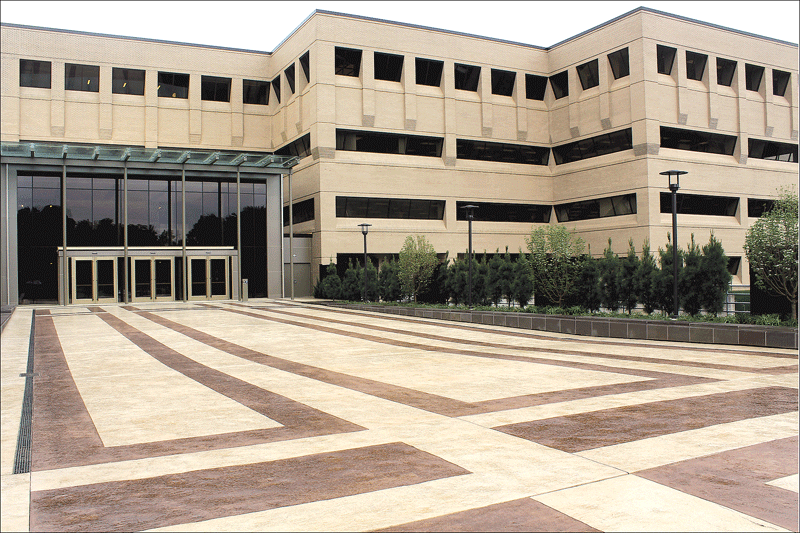
Education Sections
College Summer Programs Continue to Grow in Popularity

Pam Robinson

Pam Robinson says the average student taking summer courses at American International College earns 12 credits, or nearly the equivalent of a full semester.

The job market and economic climate have changed dramatically in recent years, and so have the needs of college and university students, who are signing up for summer courses in record numbers.

Many want to reduce the time it takes to earn a degree, take the prerequisites needed to enter a program, improve a grade, and/or lighten their course loads for the fall semester by taking challenging classes during the summer.

So, in response to a continually growing demand, college and university officials have continued to expand their summer offerings; create new, accelerated, year-round programs; and add experimental summer courses in hopes of attracting new students.

“Years ago, students attended classes during the fall and spring and took the summer off. But it’s very different now,” said Walter Breau, vice president of Academic Affairs at Elms College in Chicopee. “We have really become a 12-month institution. Students are looking to finish their schooling quickly, so colleges have had to respond.”

Bill McClure agrees. “The concept of taking courses in the summer is not new, but what has changed is the programs that are offered. Summer is our largest term,” said the executive director of Continuing and Professional Education at UMass Amherst and former president of the North American Assoc. of Summer Sessions, which includes 250 colleges and universities.

“We have a very strong summer program,” he went on. “Last year our Division of Continuing and Professional Education offered 1,323 courses, and 525 of those were held during the summer.”

Community colleges have also seen a brisk increase in summer enrollment. “We have a very robust summer program. Almost everything that is offered in the fall and spring is also offered in the summer, but with fewer sections, or classes,” said Debbie Bellucci, dean of Continuing Education and Online Learning at Springfield Technical Community College. “We try to add a few new courses every summer, whether they are online or totally new topics, and this summer we have instituted a format change. In the past, we ran two five-week sessions, but this summer we have some 10-week, on-site courses for students who don’t want the intensity of a five-week term.”

Similar measures are being introduced at other institutions and include an increase in online courses, which allow working students to stay on track.

“Our offerings have grown significantly over the last five years,” said Pam Robinson, associate dean of Adult and Continuing Education at American International College. “More and more students have to stretch out their studies because they have so many other responsibilities, and our experience with adult learners has helped us to design offerings for all of our students. Even traditional students today are working and often need to rely on summer classes to stay on track.”

Officials say summer courses offer other benefits as well, which include smaller classes and an increased opportunity to interact with faculty members.

“But summer school isn’t for everyone. It’s very intense,” Bellucci said. “Plus, some students need to work full-time or want to take the semester off.”

Creative Programming

STCC will offer a number of new free classes this summer. Its so-called Jump Start program includes three pre-college-level classes — Algebra I, Algebra II, and Review for College Writing. The courses are open to students slated to start college in the fall, but who need remedial coursework, which is determined by placement testing. “We’re hoping the free courses will give them a jump start,” Bellucci said.

STCC also created a new STEM (Science, Technology, Engineering and Math) Academy with three classes for Massachusetts high-school graduates who earned their diplomas between 2012 and 2014 and had a point average of 2.0 or higher. “We have room for 60 students who will each receive a $1,000 stipend as an incentive to participate and complete the courses,” said Bellucci. “We hope the students will develop an interest in pursuing a degree in our STEM programs in the fall.”

She added that STCC offers close to 300 summer classes, including unique offerings, such as Organic Chemistry, which can be difficult to find in a summer syllabus. “We also offer Calculus I through 5, and find students take these classes so they can concentrate on that subject.”

Jackie Synder

Jackie Synder says Bay Path College continues to create accelerated degree programs that run year-round.

Accelerated programs that run year-round are also on the rise. At Elms College, they include the Second Bachelor’s Degree Program in the School of Nursing for students with an associate, baccalaureate, or higher degree in a non-nursing major.

The program begins in September of one year and finishes in May the following year. “Our second class will graduate May 17, the third cohort is working toward graduation, and a fourth group has been accepted for next year,” said Program Coordinator Brother Michael Duffy, adding that it was designed for people “whose career didn’t play out the way they had hoped or who are looking to make a significant career change, and want to parlay their experience and credits into a professional degree that makes them more marketable.”

The waiting list is longer than the acceptance list, and the next class will include a Harvard graduate. “The program has become very competitive; it’s intense, but the people in it are adult learners who don’t want to wait four years to get back into the work pool,” Duffy continued. “It fills a need and is a commitment on our part to prepare more nurses with a bachelor’s degree for bedside care.”

Elms also offers an accelerated bachelor’s degree-completion program in social work at several sites. The largest is held in the STCC Technology Park, a second program is based in the Berkshires, and a third will start this fall at Greenfield Community College.

“Classes are held on Saturdays for 20 months, and people find the program very accessible,” said Maureen O’Connor Holland, assistant professor and program director of the Social Work department. She told BusinessWest that Elms has formed partnerships with community colleges, and students start the Elms program as a junior after earning an associate’s degree in liberal arts or human service.

“It is booming, and is a way for the college to reach more deeply into the community,” she said. “We also have several other social-work degree programs, including a year-round weekend program on the main campus and a traditional program with an optional summer course for students who want to accelerate their education.”

Breau said the number of high-school graduates has declined since 2006, and the numbers are expected to decrease through 2020, due to the size of the population. “We’re a small, regional liberal-arts college, and since the traditional market of students is getting smaller, we had to look at other opportunities to serve students, including the adult market. And we’re not alone,” Breau told BusinessWest. “There are people looking to move up in their job who have an associate’s degree and need a bachelor’s degree or have a bachelor’s degree and need a master’s degree. And adult learners are passionate and motivated. They want to complete their schooling as quickly as possible.”

To that end, Elms also offers a year-round RN to BS to MSN Nursing Completion program, which allows students to complete graduate-level nursing courses while enrolled in the RN to BS program, and a year-round master’s in Business Administration degree program, as well as summer courses for students in more traditional programs.

Changing Demographic

AIC will also launch two new undergraduate degree-completion programs this fall, targeted at working adults.

“People can earn a bachelor of arts in social science or in general business through a combination of online and Saturday classes in 20 months,” Robinson said. “We have a lot of adult students who are reinventing themselves, starting new career fields, and returning to school as a result. But traditional students also take these courses.”

Bay Path College in Longmeadow also offers several accelerated programs, including more than a dozen degrees through its American Women’s College, in which all courses are taken online with a few Saturday classes.

“The sessions are unique,” said Jackie Synder, executive director of Academic Operations, Assessment and Planning.

Bay Path had stopped offering summer courses to traditional students for many years, but revived the programming last year due to demand. In addition to college students, Snyder said, the classes are popular with high-school students who want to enhance their college applications.

Debbie Bellucci

Debbie Bellucci says Springfield Technical Community College is offering a number of new, free courses this summer.

“It also provides students who have already been admitted an opportunity to get a jump start on coursework so they have a reduced load their first semester or are able to take a double major without becoming overwhelmed,” she explained.

Seventeen of Bay Path’s summer courses are held on campus, and 32 are online. “Science and math are the most sought-after classes,” said Snyder. “They’re called gatekeeper courses because of their difficulty. But if they are taken in the summer, students can focus entirely on them.”

Robinson agreed, and said science courses fill up quickly at AIC.

“They’re especially popular, not only for our own students, but for high-school students and others going into health fields who need to take prerequisites,” she said, adding that other offerings include courses in general education, such as history, sociology, and foreign languages. “The average summer student takes two courses per semester, so they can earn 12 credits, which is essentially a college semester.”

She reiterated that a growing number of traditional students work while they are in college. “So they often rely on summer classes to stay on track,” she explained. “But others take summer courses for a variety of reasons. Some want to fulfill general requirements, some want to repeat a class they didn’t do well in, and others need prerequisites for graduate schools. There are also students who want to take a double major or add one, and are trying to earn credits during the summer that will give them more opportunities. Every year I try to add two or three new offerings to see if the interest is there.”

This year, new online summer classes at AIC include Crime and Delinquency and Philosophy Through Literature, while History of American Musical Film will be offered on campus.

UMass Amherst offers two six-week terms during the summer. “We experimented with a three-week term, but it didn’t work well,” McClure said, adding that a growing number of students are opting to take classes online. “It’s been a trend which continues across the board for undergraduate and graduate students.”

The university also has a full course catalog that includes eight-week music camps, sports camps, science programs, and a French program. “Some are aimed at high-school students, and some are college-level courses,” McClure said.

UMass also offers a year-round undergraduate degree-completion program called University Without Walls. “And our online MBA program continues to be very popular,” he continued.

Meanwhile, Bay Path added two online cybersecurity classes this summer in advance of its new undergraduate program in cybersecurity, which will begin this fall.

Future Outlook

As the cost of education continues to rise, Robinson said, more students will have to work while attending school, which means they will take fewer courses during the academic year and make up the difference during winter and summer intercession periods.

“These classes provide a great alternative for many people,” she concluded.

McClure agreed, and said UMass has become a four-season school, offering classes during winter breaks and in the summer through its division of continuing education.

And as student demographics change and the need for adult education expands, the demand for summer courses is almost guaranteed to heat up even more.

40 Under 40 Cover Story The Class of 2014
The Young Business and Community Leaders of Western Massachusetts


In 2007, BusinessWest introduced a new recognition program called 40 Under Forty. It was intended as a vehicle to showcase young talent in the four counties of Western Mass. and, in turn, inspire others to reach higher and do more in their community.

Seven years later, it has accomplished all that and much more. The program has become a brand, the awards gala has become one of the most anticipated events of the year, and the 40 Under Forty plaque that sits on one’s desk has become both a coveted prize and symbol of excellence, recognized by all.

On June 19 at the Log Cabin Banquet & Meeting House in Holyoke, 40 more plaques will be handed out, to members of a class that is both distinguished and diverse. It includes bankers, lawyers, and accountants, but also a Holyoke city councilor, a contractor who specializes in blitz building, and Springfield’s senior project manager. And it represents virtually every business sector, from healthcare to education; from technology to the nonprofit realm.

With that, we introduce the Class of 2014 with words (enough to explain why they’re an honoree) and pictures that tell a big part of each story, whether the winner is captured with his or her children, dog, or even boxing gloves or a giant candle. The stories are all different, but the common denominator is that these young individuals possess that most important of qualities: leadership.

Click here to download a PDF flipbook version of the 40 Under Forty Class of 2014

Sponsored by:
BaystateMedCenter130x70
Fathers&Sons130x70
HNE
StGermain130x70
Partner

YPS130x70


2014 40 Under Forty Winners:

Tamara Blake
Sandy Cassanelli
Robert Chateauneuf
Nick Colgin
Izabela Collier
G. David Condon IV
Jose Delgado
Justin Dion
Garett DiStefano
Patricia Faginski
Sean Gouvin
Nicole Griffin
Lee Hagon
Denise Hurst
Justin Hurst
Sean Jeffords
Danielle Klein-Williams
Dr. Andrew Lam
Angela Lussier
Ruby Maddox
Kevin Maltby
Andrew McMahon
Geoff Medeiros
Alex Morse
Meghan Parnell-Gregoire
Orlando Ramos
Jason Randall
Liz Rappaport
Robert Raynor
Alfonso Santaniello
Michael Schneider
Paul Silva
Michael Simolo
Noah Smith
Seth Stratton
Geoff Sullivan
Kyle Sullivan
Anthony Surrette
Jessica Wales
Francia Wisnewski

Meet the Judges — Click Here

Photography for this special section by Denise Smith Photography

DBA Certificates Departments

The following Business Certificates and Trade Names were issued or renewed during the month of and April 2014.

AMHERST

Amherst Survival Center
138 Sunderland Road
Mindy Domb

Head Games Beauty Supply
67 North Pleasant St.
Erica Wilson-Perkins

The Homestead
500 Sunderland Ave.
Peter Emmet

Woodland Associates
67 Hulst Road
Michael Hutton-Woodland

CHICOPEE

4 Quality Home Construction
116 Hampden St.
Denis Borisov

Bottle in the Smoke
76 Meadow St.
Jonathan Fannin

Greenski Contracting
188 Irene St.
Jeremy Greene

R & J Transport, LLC
106 Fletcher Circle
Robert Craig

LUDLOW

Chicago Pneumatic Construction Equipment
151 Carmelina’s Circle
Mining, Rock Excavation & Construction, LLC

Liberty Tax Service
61 East St.
Steven Kowalski

Massachusetts Refrigerant Abatement
100 State St.
Thomas Washer

Monark Complementary Health
110 Clearwater Circle
Monica Gagnon

Moonlight Café
387 East St.
Ten-Go, Inc.

NORTHAMPTON

Ann Xtra Hand
33 Roe Ave.
Patricia A. Rick

Couples Center of the Pioneer Valley
182 Main St.
Katherine Waddell

Greg’s Auto Repair
376 Easthampton Road
Jeffrey Tenczar

Leading The Way Doggie Daycare
18 Chestnut St.
Melissa Mehlman

Mike’s Along For The Ride
157 Prospect Ave.
Michael Cahill

R & L Healthcare Consulting
35 New South St.
Robin Lango

Room 6 Salon
140 Pine St.
Melanie Burnett

Steady Pine Publishing
8 Hockanon Road
Kerim May

System Technology RX
19 Whittier St.
John Celentano

SOUTHWICK

Diversified Technical Products
6 Pearl Brook Road
David Thompson

G.J. Battles Remodeling
49 Point Grove Road
Gregory Battles

LJ’s Unlimited Landscaping
10 Lexington Circle
Leonard Allen III

Ming House
648 College Highway
Shuming Chen

Our Community Food Pantry Inc.
220 College Highway
Pauline Cebula

SPRINGFIELD

K & S Wholesaler
258 Main St.
Warren Costa

Kevin Conway Auto Sales
200 Orange St.
William McCarthy

Kimi, LLC
38 Kingoke Lane
Kimberly K. Weaver

Maidpro
527 Belmont St.
Heewon Yang

Majestic Barber Shop 2
322 St. James Ave.
Misael Colon

Mi Antojito Bakery
126 Walnut St.
Marilyn Gali

Mobile Welding
74 Joan St.
Michael Skrabely

My Sister’s Stuff
143 Main St.
Angela M. Enos

Mylrose Lawn Care
9 Flint St.
Anthony Brown

NEFW Pro Wrestling
61 Starling Road
Shileen L. Gallerani

No B.S. Property Maintenance
261 Oakland St.
Corey J. Scott

North End Pizzeria
2550 Main St.
Daniel E. Ojeda

One Stop Mart
477 Boston Road
Ramchandra Parekh

Pioneer Valley Industries
16 Esther St.
William J. Kern II

Protemp
24 Hiawatha St.
Sean Gould

Red’s Variety, LLC
1196 St. James Ave.
Natalie A. Henry

Rhino Linings of Springfield
50 Verge St.
Michael T. Dancy

Rumba Music Shop
2633 Main St.
Felix Perez

S & K Distribution, LLC
165 Avocado St.
Ray Steele

United States Veterans
1350 Main St.
Luann Beaulieu

Uno Chicago Grill
1722 Boston Road
Uno Restaurants, LLC

Unstoppable Auto Club
511 East Columbus Ave.
Zenita Roman

WESTFIELD

Big Big Box, LLC
66 Industrial Park Road
Anthony Gleason

CZ Power Body Work
31 Elm St.
Hong Zhang

John Guagliardo’s American Dream
100 Steiger Dr.
John Guagliardo

Millrite Machine Inc.
587 Southampton Road
Robert F. Valcourt

Noble Medical Group
115 West Silver St.
Ronald Bryant

Step by Step Cooking
21 Sunflower Lane
Patrice Mercier

WEST SPRINGFIELD

Allied Heating & Air Conditioning
101 Circuit Ave.
Gary Giordano

Bathcrest of Western Mass.
176 Labelle St.
James E. Belle-Isle

BBC Trucking
58 Amherst St.
William C. Della

Drollett Plumbing & Heating
1 High St.
Jamie L. Drollett

ER Portal Software Group
59 Interstate Dr.
Edward Garibian

Father & Son Home Improvement
65 Verdugo St.
Peter Dzhenzherukha

J.I.S. Roofing Company
103 Ashley Ave.
Justin Grimm

Safaribudget.com
71 Craig Dr.
Aloyce C. Assenga

Sam’s
96 Southworth St.
Ivan Banari

Spartan Auto Care Center
865 Memorial Ave.
Nicholas Katsoulis

Thistle Security Products
78 Mercury Court
Angus Rushlow

Trinity Fitness Options
50 Thomas Dr.
Jessica Benchin

BANKRUPTCIES

The following bankruptcy petitions were recently filed in U.S. Bankruptcy Court. Readers should confirm all information with the court.

Albrecht, Susan A.
79 Talbot Road
Springfield, MA 01119
Chapter: 7
Filing Date: 03/13/14

Andrews, Sandra E.
3 Field Dr.
Sturbridge, MA 01566
Chapter: 7
Filing Date: 03/13/14

Berthiaume, Nathan
413 Belchertown Road
Ware, MA 01082
Chapter: 7
Filing Date: 03/12/14

Bourgeois, Michael
15 1/2 North St.
South Hadley, MA 01075
Chapter: 7
Filing Date: 03/14/14

Butler, James M.
70 Ruthven St.
Springfield, MA 01128
Chapter: 7
Filing Date: 03/11/14

Celestial Visions Inc.
Kopec, Celeste A.
61 Parallel St.
Springfield, MA 01104
Chapter: 7
Filing Date: 03/13/14

Cronin, John M.
22 Carol Lane
Holyoke, MA 01040
Chapter: 7
Filing Date: 03/12/14

Dockum, Thelma G.
Phins Hill Manor
50 West State St., AP
Granby, MA 01033
Chapter: 7
Filing Date: 03/14/14

Dubois, Holly Beth
76 Monroe St.
Chicopee, MA 01020
Chapter: 7
Filing Date: 03/15/14

Fondon, Tommy L.
Fondon, Janine
189 Braeburn Road
East Longmeadow, MA 01028
Chapter: 7
Filing Date: 03/11/14

Fontaine, Gregory J.
37 Steuben St.
Indian Orchard, MA 01151
Chapter: 7
Filing Date: 03/15/14

Gay, Albert T.
Gay, Tanya L.
94 Jacob St.
Chicopee, MA 01020
Chapter: 7
Filing Date: 03/13/14

Goff, Jeffrey M.
Goff, Amy R.
64 Biddle St.
Springfield, MA 01129
Chapter: 7
Filing Date: 03/13/14

Hamade, Yasser M.
127 Woodcrest Circle
Springfield, MA 01020
Chapter: 7
Filing Date: 03/13/14

Hojnowski, Krista A.
17 Adams St., Apt. 6
Chicopee, MA 01013
Chapter: 7
Filing Date: 03/13/14

Kronoff, Charles R.
Kronoff, Mary Beth
577 Suffield St.
Agawam, MA 01001
Chapter: 7
Filing Date: 03/11/14

McCann, Shawn P.
3 Oakwood Road
Brimfield, MA 01010
Chapter: 7
Filing Date: 03/13/14

Murray, Erin N.
68 Knollwood Road
Brimfield, MA 01010
Chapter: 7
Filing Date: 03/14/14

Pashko, Joseph M.
53 West School St.
West Springfield, MA 01089
Chapter: 7
Filing Date: 03/13/14

Penoyer, Curtis J.
Penoyer, Sonya C.
P.O. Box 528
Bondsville, MA 01009
Chapter: 7
Filing Date: 03/13/14

Raffloer, Evelyn
417 Springfield St., #140
Agawam, MA 01001
Chapter: 7
Filing Date: 03/14/14

Rivera, Albert
Murphy-Rivera, Kimberly A.
245 Allen Road
Belchertown, MA 01007
Chapter: 13
Filing Date: 03/14/14

Company Notebook Departments

Rick’s Auto Body Supports Link to Libraries
SPRINGFIELD — Rick’s Auto Body in Springfield recently became the latest Link to Libraries Business Book Link sponsor, with its support and contribution of more than 300 new books each year to the Baystate Academy Charter School on Franklin Street in Springfield. “Rick’s Auto Body has stepped up to offer much-needed resources and support to this school,” said Susan Landry, director of Business Book Link. “We’re honored by their support and advocacy to the Link to Libraries program. These students will be supplied with books of all genres for their school library and for their own home library throughout the next three years.” Since its inception in 2008, Link to Libraries has donated more than 225,000 new books to Western Mass. schools, nonprofits, and individuals. For more information on Link to Libraries and its childhood-literacy programs, contact (413) 224-1031 or visit www.linktolibraries.org.

ESB Gives $10,000 to Center for Health Education at HCC
EASTHAMPTON — Matthew Sosik, president and CEO of Easthampton Savings Bank, announced that the bank has made a $10,000 contribution to the Holyoke Community College Foundation for the Center for Health Education. When it opens, the facility will be equipped with sophisticated patient simulators, ranging from maternity and newborn to pediatric and geriatric, in support of nursing education. “The center will significantly expand the college’s nursing and radiologic technology programs, further allowing us to better serve the community,” said Erica Broman, vice president of institutional development and executive director of the Holyoke Community College Foundation. “It will also support the educational needs of the region through partnerships with other community colleges, local agencies, medical facilities, and K-12 schools in the region.” Added Sosik, “building healthy communities starts with education and reliable resources. An investment in this facility is an investment in our communities’ future.” Holyoke Community College will also use the classrooms in the center for outreach programs that will provide free and low-cost health-education programs for residents of Holyoke, Easthampton, and surrounding communities.

HealthSouth Opens Facility at Ludlow Mills
LUDLOW — HealthSouth Rehabilitation Hospital of Western Mass. recently celebrated its grand opening at Ludlow Mills. The $28.5 million facility consists of 53 beds and offers all private rooms. It provides rehabilitative care to patients who are recovering from stroke and other neurological disorders, brain and spinal cord injuries, amputation, and orthopedic, cardiac, and pulmonary conditions. At 74,500 square feet, HealthSouth used more than 100,000 recycled bricks and planed wooden beams from old mill buildings. The facility is part of the Ludlow Mills redevelopment project being undertaken by the Westmass Area Redevelopment Corp. The new HealthSouth is a LEED (Leadership in Energy and Environmental Design) Silver-certified hospital, signifying that it meets and exceeds established green-building criteria.

40 Under 40 The Class of 2014
Consumer and Business Banking Center Manager, PeoplesBank, age 36

Jessica-Wales-01Associates at PeoplesBank are never surprised when Jessica Wales asks if they can volunteer for a special event or fund-raiser, and know it could mean they end up serving hot chocolate on a freezing day or wearing an elf suit.

“I have a lot of great friends and co-workers who are up for anything, and especially around the holidays, when you can make a difference in kids’ lives; everybody just wants to help out,” she said.

While donning an elf costume last fall, Wales helped lead one of the most successful branch openings in the history of PeoplesBank, and in the weeks leading up to the opening of the new LEED-certified branch in Northampton, she created and led TeamPossible, a group of branch associates that visited local businesses to perform random acts of kindness, treating customers to free burgers, ice cream, and coffee.

The effort resulted in a record $6 million in new deposits during the initial four months of operation. A driving force in efforts to implement environmentally friendly technology at the new branch, including iPad account opening and video drive-up teller service, Wales has applied those same leadership qualities to Northampton Area Young Professionals, securing speakers for its Leadership Luncheon Series, as well as assisting the FDIC Money Smart program at Junior Achievement and serving as a past member of the fund-raising and marketing committees for the United Way of Hampshire County. For the past seven years, she’s helped the United Way’s Allocation Committee, a group that qualifies organizations’ request for funds.

“You get your heartstrings tugged at these interviews,” Wales said. “I don’t know if people in Western Mass. understand all the services available to them, but there are amazing volunteers out there who put their heart and soul into the organizations they’re representing.”

It’s her love of her hometown of Northampton that has her recruiting PeoplesBank associates to volunteer at Santa’s Train and Earth Day Clean Up in Look Park, the Hot Chocolate 5K Run, and the Northampton Center for the Arts’ annual First Night event. Her own personal time has her sharing afternoons with her partner, Jeremy Cotton, scuba diving or skydiving.

By land, sea, or air, Wales is always up for a challenge and making a positive difference in peoples’ lives.

— Elizabeth Taras

40 Under 40 The Class of 2014
Risk Oversight Officer, PeoplesBank, age 27

Robert-Raynor-01Armed with a business management degree from Springfield College, Robert Raynor said he wasn’t looking specifically at the banking world. “But it was definitely the most interesting option out there.”

So he joined PeoplesBank as a management development trainee in 2009 and was soon promoted to risk oversight auditor and then risk oversight officer. In that role, he develops and completes detailed financial and operational audits to evaluate the effectiveness of management controls, accuracy of financial information, and policy compliance.

“It’s a lot of testing, a lot of report writing, and a lot of interactions with various departments,” he said, adding that he enjoys this diversity because he has the opportunity to learn about many different areas of the bank, including ever-changing regulations, processes, and technology.

But Raynor also appreciates how PeoplesBank provides plenty of opportunities to improve its internal culture, which he takes by serving on the institution’s social committee, professional book club, employee appreciation committee, and especially the environmental committee, for which he’s currently co-president. On that group, he helped launch a program to promote and track employee carpooling, helps plan and run an annual environmental fair, contributes articles to a newsletter about green initiatives, and coordinates community events like cleanup days and tree plantings.

“Sometimes I feel like I really lucked out with where I work, and being able to come here directly after college,” he said. “I feel extremely lucky because not only do I have a number of opportunities professionally, but many opportunities to get involved in things like the environmental committee. I feel very good about the work I do and know I’m helping an organization involved in helping the community.

“It’s something that gets all the employees active,” he added. “The bank is great about giving us the time and resources to do these things.”

His community involvement extends to other organizations as well, including extensive work on the board of the Boys and Girls Club of Greater Holyoke.

“The Boys and Girls Club is such an amazing organization,” Raynor said. “I see the work that gets done there. It’s a great way to be involved in a community organization that directly helps children better themselves. It works.”

— Joseph Bednar

40 Under 40 The Class of 2014
Manager of Properties, Marketing and Human Relations, Century Investment Co., age 28

Liz-Cohen-Rappaport-01A chance encounter with an employee from W.F. Young led to Liz Rappaport working in that company’s Equine Division for a couple of years.

“There are few times when you have the opportunity to combine your vocation and your avocation,” said Rappaport, who has been riding horses since she was 10 and is an accomplished equestrian, including an Arabian Canadian championship. “I took it as a chance to work for a family business and get a lot of amazing opportunities at a young age; I was only 22.”

But another family business called —specifically, the commercial real-estate firm her grandfather started 70 years ago. So Rappaport went back to school to earn her MBA, then knocked on the door at Century Investment Co. “I said, ‘Dad, will you hire me? Because, if you don’t hire me, I’ll just apply to your competitors.’ That’s what got me hired.”

Over the past three years, Rappaport has managed the sale of more than $1 million in real estate and negotiated leases with a host of tenants at Century’s many properties.

“Technically, Dad calls me the assistant gofer,” she said. “One day, I’ll be doing a mortgage refinancing and signing tenants to 10-year leases, while the next day, I may have to go pick up trash somewhere or help out parking staff. I’m a jack of all trades, master of some, hopefully.”

One thing she has mastered is the technology of her industry, introducing new digital and print marketing materials and updating the bookkeeping system. “We’re bringing the company into the 21st century, updating accounting processes and establishing the first digital marketing campaign, getting us on the Internet.”

Rappaport also pours herself into civic volunteerism, most notably serving on the board of the Western Mass. Council of the Jimmy Fund, taking a leadership role in several fund-raising activities each year. She takes pride in helping to fight against childhood cancer, but is also proud of her place in her family’s business.

“I love working with my father, and I love real estate. I get to interact with tenants, but also get the finance side, the accounting aspects, the management side — a little bit of everything,” she said. “You’ve got to like what you do.”

— Joseph Bednar

40 Under 40 The Class of 2014
Owner, Hurst & Crane Investments, LLC; Springfield City Councilor, age 35

Justin-Hurst-01Justin Hurst hasn’t exactly traveled a straight line to his current career.

First, he spent about 10 years in education, teaching English at Bridge Academy Alternative High School before moving to the Springfield High School of Science & Technology. Later, he earned his CAGS from UMass Amherst and went into administrative work, becoming the coordinator and later the director of Springfield’s Striving Readers Adolescent Literacy Initiative.

All the while, he was attending Western New England College School of Law at night, passing the bar in 2006. “But I was doing what I was passionate about,” he said. “The students were the driving force behind why I continued to teach for so long. It was a different challenge every day.”

But eventually, he found a different passion that would consume his time. He and a partner invested in a couple of houses, and that eventually became the enterprise known as Hurst & Crane Investments.

“What I love most is I that get to get dirty and use my hands,” he said. “I’m not one of those people who buys a property and hires someone to rehab it; I’m a hands-on guy, and I like to do a lot of the work myself.”

Having established deep roots in the city, Hurst eventually became interested in local politics and ran for Springfield City Council. He fell short on his first attempt, but in his second try, last fall, he was the top vote getter. “I love it,” he said. “In a classroom, you might impact 100 kids. But every single day as a city councilor, you have 150,000 residents to think about.”

Family is important to Hurst, who posed for his 40 Under Forty photo alongside his father, Frederick Hurst Sr. — publisher of the Point of View community newspaper — and his son, Justin Jr., to symbolize Springfield’s bright past, present, and future. Indeed, he and his wife, Denise, the first married couple to be named to the 40 Under Forty in the same year, are both vocal believers in their city’s future.

“I want to attract young professionals back to this city,” he said. “A lot of kids my age didn’t make it, or they made it out, but never came back. I think it’s imperative to do whatever we can to bring people back to the city.”

— Joseph Bednar

40 Under 40 The Class of 2014
Mayoral Aide, City of Springfield, age 28

Jose-Delgado-01Jose Delgado says he cares deeply about Springfield. “There is so much potential here, and I want to highlight the positive, bring more jobs to the city, and help make it a destination where people want to live.”

Delgado told BusinessWest that his parents taught him the value of education, while President Obama inspired him to get involved in politics and the community. “I’ve had many mentors and feel the need to give back. A lot of what I enjoy is related to education and working with young people,” he said, adding, “my bachelor’s degree is very important to me because my parents never made it to college, and my 2-year-old son, Jonah, adds to my motivation to continue fighting to improve Springfield.”

Delgado is volunteer chair of the Buy Springfield Now program that provides services and incentives to potential homeowners. “We also show off beautiful housing and neighborhoods in Springfield and have started an Open House series,” he said.

Delgado completed a Massachusetts Institute of Technology, Springfield Department of Urban Studies Fellowship, which is focused on cultivating young area leaders. “It’s important to me to keep young professionals here,” he said, explaining that he understands the lure of large cities because, when he was in college, he obtained an internship in New York with Russell Simmons, who co-founded the hip-hop music label Def Jam and created clothing lines.

After graduation, Delgado’s volunteerism led him to become program coordinator for the Mass. Latino Chamber of Commerce in Springfield through the AmeriCorps VISTA program.

Today, the mayoral representative is a committee member of the Young Professional Society of Greater Springfield, the Puerto Rican/Latino Leadership Council, the Atwater Park Civic Assoc., and the Springfield Ward 2 Democratic Party.

In addition, he assisted with tornado-relief efforts in Springfield and the creation of a city resource guide for residents, is working to streamline the constable application process, and serves on the North End Counter Criminal Continuum.

“There is opportunity in Springfield,” Delgado said. “It’s a place where a kid who grew up on welfare in the North End can become a mayoral aide.”

— Kathleen Mitchell

Departments Real Estate

The following real estate transactions (latest available) were compiled by Banker & Tradesman and are published as they were received. Only transactions exceeding $115,000 are listed. Buyer and seller fields contain only the first name listed on the deed.

FRANKLIN COUNTY

COLRAIN

96 Jurek Road
Colrain, MA 01340
Amount: $145,000
Buyer: Allan C. Smith
Seller: Cheryl A. York
Date: 03/07/14

GREENFIELD

52 French King Highway
Greenfield, MA 01301
Amount: $160,000
Buyer: Megan Edson
Seller: S&S Realty LLC
Date: 02/25/14

3 Grove St.
Greenfield, MA 01301
Amount: $166,500
Buyer: Lewis Gordon
Seller: Marcus D. Curran
Date: 02/28/14

39 Grove St.
Greenfield, MA 01376
Amount: $147,500
Buyer: Daniel M. Majewski
Seller: Michael J. Winn
Date: 02/27/14

60 Overland Road
Greenfield, MA 01301
Amount: $155,500
Buyer: Sandra J. Lively
Seller: William J. Bontempi
Date: 02/28/14

20 Phyllis Lane
Greenfield, MA 01301
Amount: $285,000
Buyer: Yedod Snir
Seller: Christopher L. Jones
Date: 03/03/14

HEATH

11 Modoc St.
Heath, MA 01346
Amount: $192,000
Buyer: Clifford B. Long
Seller: Wendy Giard
Date: 02/28/14

NORTHFIELD

189 Birnam Road
Northfield, MA 01360
Amount: $180,000
Buyer: Gabriel D. Lapollo
Seller: Michael S. Fontaine
Date: 02/26/14

SHELBURNE

106 Bridge St.
Shelburne, MA 01370
Amount: $199,434
Buyer: Everbank
Seller: Marc Carcio
Date: 03/05/14

SHUTESBURY

505 Pratt Corner Road
Shutesbury, MA 01072
Amount: $179,900
Buyer: Steven C. Wolf
Seller: Clarke, Richard B., (Estate)
Date: 02/28/14

WHATELY

61 State Road
Whately, MA 01093
Amount: $475,000
Buyer: 5 DAWG NT
Seller: Michael A. Labelle
Date: 03/07/14

HAMPDEN COUNTY

AGAWAM

57 Harding St.
Agawam, MA 01001
Amount: $149,900
Seller: Zerbinopoulos, M., (Estate)
Date: 02/27/14

178 High St.
Agawam, MA 01001
Amount: $155,000
Buyer: Joseph G. Baldarelli
Seller: Sharon M. Baldarelli
Date: 02/27/14

236 Mill St.
Agawam, MA 01001
Amount: $298,000
Buyer: Yichao Xu
Seller: Yong S. Dong
Date: 02/28/14

113 North West St.
Agawam, MA 01030
Amount: $415,000
Buyer: Robert G. Vincent
Seller: CJA 3 LLC
Date: 02/28/14

287 North Westfield St.
Agawam, MA 01030
Amount: $159,900
Buyer: Benjamin Bobianski
Seller: Paula S. Robidoux
Date: 02/24/14

66 Ramah Circle South
Agawam, MA 01001
Amount: $210,500
Buyer: Popowich Family Inv. LLC
Seller: Pelter Inc.
Date: 02/27/14

712 South West St.
Agawam, MA 01030
Amount: $150,000
Buyer: Vitaliy Ganovskyy
Seller: USA HUD
Date: 02/26/14

318 Silver St.
Agawam, MA 01001
Amount: $127,200
Buyer: Joseph G. Baldarelli
Seller: Sharon M. Baldarelli
Date: 02/27/14

146 Suffield St.
Agawam, MA 01001
Amount: $143,000
Buyer: Eric J. Eaton
Seller: Stratum LP
Date: 02/28/14

25 Windermere Dr.
Agawam, MA 01030
Amount: $459,900
Buyer: James J. Meade
Seller: Caroline Morales
Date: 03/05/14

BRIMFIELD

6 North Main St.
Brimfield, MA 01010
Amount: $190,000
Buyer: Christina C. Mealey
Seller: Derek M. Casinghino
Date: 03/06/14

CHICOPEE

24 8th Ave.
Chicopee, MA 01020
Amount: $150,000
Buyer: Joshua A. Sroka
Seller: Campbell, Edith C., (Estate)
Date: 02/28/14

54 Bonner St.
Chicopee, MA 01013
Amount: $175,000
Buyer: Brad P. Labonte-Banas
Seller: Paul R. Banas
Date: 02/28/14

57 Boucher Circle
Chicopee, MA 01020
Amount: $145,000
Buyer: Elizabeth L. White
Seller: Kim M. Small
Date: 02/28/14

16 Brightwood St.
Chicopee, MA 01020
Amount: $205,000
Buyer: LTL LLC
Seller: James L. Domingos
Date: 02/25/14

250 Britton St.
Chicopee, MA 01020
Amount: $167,900
Buyer: Richard A. Funk
Seller: Anthony E. Ceria
Date: 02/26/14

596 Britton St.
Chicopee, MA 01020
Amount: $177,000
Buyer: Carla L. Brodeur
Seller: Michael M. Levesque
Date: 02/28/14

40 Deslauriers St.
Chicopee, MA 01020
Amount: $152,750
Buyer: Chad A. Beaudette
Seller: John S. Godin
Date: 03/05/14

1466 Donohue Road
Chicopee, MA 01020
Amount: $131,000
Buyer: Donald R. Peluso
Seller: Beauchemin, Donald G., (Estate)
Date: 02/28/14

58 Dunn St.
Chicopee, MA 01020
Amount: $170,000
Buyer: Gregory J. Vanoostveen
Seller: Margo Abelson
Date: 02/27/14

44 Gardner Road
Chicopee, MA 01013
Amount: $160,000
Buyer: Ryan L. King
Seller: Anthony J. Carraturo
Date: 02/28/14

945 Granby Road
Chicopee, MA 01020
Amount: $117,000
Buyer: Sandra J. Treat
Seller: Marie Ann Forni
Date: 02/28/14

55 Highview Ave.
Chicopee, MA 01013
Amount: $176,209
Buyer: FNMA
Seller: Dennis P. Zygarowski
Date: 03/06/14

89 Jacob St.
Chicopee, MA 01020
Amount: $210,000
Buyer: Kaitlyn B. Jones
Seller: Martin E. Laliberte
Date: 02/28/14

Jefferson Ave.
Chicopee, MA 01020
Amount: $116,000
Buyer: Amanda R. Huerta
Seller: FNMA
Date: 03/06/14

22 Marble Ave.
Chicopee, MA 01013
Amount: $185,000
Buyer: Patricia A. Fede
Seller: Philip W. Costello
Date: 02/28/14

20 Mount Carmel Ave.
Chicopee, MA 01013
Amount: $153,000
Buyer: Alexander Hripak
Seller: Matthew F. Dusseault
Date: 02/28/14

108 Nonotuck Ave.
Chicopee, MA 01013
Amount: $187,803
Buyer: US Bank
Seller: Kristoffer Costa
Date: 02/27/14

36 Olko Circle
Chicopee, MA 01020
Amount: $235,000
Buyer: Lynn A. Maciolek
Seller: Steven P. Nicora
Date: 02/28/14

21 Overlook Dr.
Chicopee, MA 01013
Amount: $152,900
Buyer: Ashley K. Shinkwin
Seller: Kenneth P. Senecal
Date: 02/28/14

89 Rochester St.
Chicopee, MA 01020
Amount: $144,900
Buyer: Caitlin M. Casey
Seller: Donna Blazey
Date: 02/28/14

35 Saint Onge St.
Chicopee, MA 01020
Amount: $178,000
Buyer: Suzanna Smith
Seller: Daniel J. Garrity
Date: 02/26/14

2070 Westover Road
Chicopee, MA 01022
Amount: $1,150,000
Buyer: Microtek Inc.
Seller: Kodiak Realty LLC
Date: 02/24/14

EAST LONGMEADOW

23 Betterley Lane
East Longmeadow, MA 01028
Amount: $425,000
Buyer: Raffaele S. Carrano
Seller: Bretta Construction LLC
Date: 03/03/14

37 Old Farm Road
East Longmeadow, MA 01028
Amount: $807,500
Buyer: Andrew W. Artenstein
Seller: Susan A. Alfano
Date: 03/06/14

270 Prospect St.
East Longmeadow, MA 01028
Amount: $355,000
Buyer: Brian D. Basgen
Seller: Nu Way Homes Inc.
Date: 03/04/14

HAMPDEN

66 Forest Hill Road
Hampden, MA 01036
Amount: $250,000
Buyer: Bienvenue FT
Seller: Thomas J. Kane
Date: 03/04/14

23 Kibbe Lane
Hampden, MA 01036
Amount: $435,000
Buyer: Jessica Rodrigues
Seller: Tennessee Jed RT
Date: 02/28/14

211 South Road
Hampden, MA 01036
Amount: $157,000
Buyer: Jason A. Foerster
Seller: Sherry Himmelstein
Date: 02/27/14

134 Thresher Road
Hampden, MA 01036
Amount: $239,000
Buyer: Jason T. Broom
Seller: Joseph M. Hickson
Date: 05/22/13

29 Wehr Road
Hampden, MA 01036
Amount: $172,000
Buyer: Daniel R. Hebert
Seller: Alan J. Murray
Date: 03/04/14

HOLLAND

11 Fenton St.
Holland, MA 01521
Amount: $250,000
Buyer: Michael Peltier
Seller: P. S. Roman
Date: 02/28/14

HOLYOKE

397 Apremont Highway
Holyoke, MA 01040
Amount: $141,000
Buyer: Justin Laliberte
Seller: Wayne F. Falardeau
Date: 02/25/14

6 Bayberry Dr.
Holyoke, MA 01040
Amount: $268,500
Buyer: Drew W. Nalewanski
Seller: Timothy S. Noonan
Date: 03/07/14

202 Easthampton Road
Holyoke, MA 01040
Amount: $240,000
Buyer: Eloyd Molina
Seller: Patrick Moody
Date: 03/03/14

37 Francis Ave.
Holyoke, MA 01040
Amount: $166,824
Buyer: Provident Fund Assocs. LP
Seller: FHLM
Date: 02/25/14

19 Green Willow Dr.
Holyoke, MA 01040
Amount: $185,000
Buyer: Daniel P. Griffin
Seller: Margaret A. Parsons
Date: 02/28/14

71 Westfield Road
Holyoke, MA 01040
Amount: $181,500
Buyer: Christopher Draper
Seller: Elizabeth A. Krok
Date: 02/25/14

LONGMEADOW

Colony Road
Longmeadow, MA 01106
Amount: $402,500
Buyer: Boulder Hill Construction
Seller: Elizabeth Pava
Date: 03/04/14

505 Converse St.
Longmeadow, MA 01106
Amount: $305,000
Buyer: Thomas R. Abbott
Seller: Daniel J. Swords
Date: 02/26/14

505 Laurel St.
Longmeadow, MA 01106
Amount: $282,500
Buyer: Michael J. Richard
Seller: Michael C. Paul
Date: 02/26/14

64 Nevins Ave.
Longmeadow, MA 01106
Amount: $215,500
Buyer: Michael S. Block
Seller: Ellen M. Foley
Date: 02/25/14

99 Pinewood Dr.
Longmeadow, MA 01106
Amount: $535,000
Buyer: Jeffrey Cartun
Seller: Carmel Armon
Date: 03/06/14

53 Williamsburg Dr.
Longmeadow, MA 01106
Amount: $675,000
Buyer: Aroosa Alam
Seller: Katherine Papazoglou
Date: 02/28/14

LUDLOW

74 Cady St.
Ludlow, MA 01056
Amount: $129,000
Buyer: Leigh M. Cardarelli
Seller: Brad M. Dakers
Date: 02/28/14

34 Cypress St.
Ludlow, MA 01056
Amount: $152,955
Buyer: Gail P. Rodrigues
Seller: Sticks & Stones Inc.
Date: 03/05/14

393 East St.
Ludlow, MA 01056
Amount: $152,500
Buyer: Jack C. Mendes
Seller: Pros Choice Inc.
Date: 03/07/14

32 Grimes St.
Ludlow, MA 01056
Amount: $166,000
Buyer: Joshua J. Auclair
Seller: David K. Carrington
Date: 02/28/14

7 Parker Lane
Ludlow, MA 01056
Amount: $349,376
Buyer: Freedom Mortgage Corp.
Seller: Michelle Baillargeon
Date: 02/25/14

MONSON

59 Bradway Road
Monson, MA 01057
Amount: $339,000
Buyer: Ronald L. Poremba
Seller: Boulder Hill Construction
Date: 03/06/14

PALMER

8 3rd St.
Palmer, MA 01069
Amount: $452,000
Buyer: K3 Technology LLC
Seller: Wayne L. Buxton
Date: 02/28/14

139 Boston Road
Palmer, MA 01069
Amount: $169,900
Buyer: Stanley R. Lamb
Seller: William D. Bacyk
Date: 02/27/14

8 Cedar Hill St.
Palmer, MA 01069
Amount: $158,000
Buyer: Adam J. Skowyra
Seller: Bilton, Albert E. Jr, (Estate)
Date: 02/28/14

331 Flynt St.
Palmer, MA 01069
Amount: $254,039
Buyer: FNMA
Seller: Kenneth J. Edwards
Date: 02/25/14

1051 Overlook Dr.
Palmer, MA 01069
Amount: $218,019
Buyer: FNMA
Seller: James J. Russell
Date: 03/03/14

34 Shearer St.
Palmer, MA 01069
Amount: $227,282
Buyer: FNMA
Seller: Debra J. Earle
Date: 03/04/14

RUSSELL

Russell, MA 01071
Amount: $300,000
Buyer: Russell Acquisition LLC
Seller: Texon USA Inc.
Date: 03/03/14

SPRINGFIELD

22 Ainsworth St.
Springfield, MA 01108
Amount: $135,000
Buyer: Ana M. Perez
Seller: Aaron L. Miles
Date: 03/03/14

23 Albee St.
Springfield, MA 01129
Amount: $235,000
Buyer: Valentina Thadison
Seller: Susan M. Szczebak
Date: 02/25/14

20 Alberta St.
Springfield, MA 01108
Amount: $135,000
Buyer: Raleigh Properties LLC
Seller: Paul J. Bailey
Date: 03/05/14

18 Angelica Dr.
Springfield, MA 01129
Amount: $276,000
Buyer: Oketo S. Williams
Seller: Ilidio A. Rodrigues
Date: 02/28/14

13 Banbury St.
Springfield, MA 01104
Amount: $132,653
Buyer: Roberto L. Maymi
Seller: Robert D. Valentine
Date: 03/03/14

54 Catalpa Terrace
Springfield, MA 01119
Amount: $129,000
Buyer: Karen M. Eagle
Seller: Shirley H. Morin
Date: 02/27/14

124 Donbray Road
Springfield, MA 01119
Amount: $260,000
Buyer: Justo R. Sepulveda
Seller: Bretta Development LLC
Date: 03/07/14

99 Forest Park Ave.
Springfield, MA 01108
Amount: $189,850
Buyer: Mon K. Tiwari
Seller: Miriam Steinberg
Date: 02/27/14

62 Grattan St.
Springfield, MA 01119
Amount: $120,000
Buyer: Carol J. Flores
Seller: Peter R. Carmichael
Date: 02/27/14

178 Hampshire St.
Springfield, MA 01151
Amount: $120,000
Buyer: Richard A. Pereira
Seller: Margaret M. Desellier
Date: 02/26/14

203 Jewett St.
Springfield, MA 01129
Amount: $195,000
Buyer: Christian A. Barthelette
Seller: Carlos A. Corredor
Date: 02/24/14

418 Longhill St.
Springfield, MA 01108
Amount: $425,000
Buyer: Mark A. Ballard
Seller: Doanes, Aric M., (Estate)
Date: 03/03/14

65 Mallowhill Road
Springfield, MA 01129
Amount: $131,750
Buyer: Deutsche Bank
Seller: Alejandro Cabrera
Date: 03/06/14

53 Martha St.
Springfield, MA 01151
Amount: $156,400
Buyer: Somontia S. Smith
Seller: Haydee Bou
Date: 02/28/14

203 Mary Coburn Road
Springfield, MA 01129
Amount: $192,000
Buyer: Randolph Coates
Seller: Albert P. Shlosser
Date: 03/03/14

129 Moxon St.
Springfield, MA 01151
Amount: $131,000
Buyer: Gyasi Sellers
Seller: FNMA
Date: 02/26/14

125 Oakwood Terrace
Springfield, MA 01109
Amount: $178,000
Buyer: Viktoriva Romanchenko
Seller: Elaine C. Graham
Date: 02/28/14

39 Old Farm Road
Springfield, MA 01119
Amount: $124,900
Buyer: Winnie Ly
Seller: Ruth E. Marcial
Date: 02/28/14

3 Silver St.
Springfield, MA 01107
Amount: $150,000
Buyer: Radwan Zaitoun
Seller: Lisa J. Russell
Date: 03/07/14

691 State St.
Springfield, MA 01109
Amount: $290,000
Buyer: CF SBC UST 3 LLC
Seller: Tracey A. Crawford
Date: 02/27/14

54 Timber Lane
Springfield, MA 01119
Amount: $155,000
Buyer: David Muniz
Seller: Natalie Rose LLC
Date: 03/07/14

343 Trafton Road
Springfield, MA 01108
Amount: $135,000
Buyer: James G. Ekmalian
Seller: Russel G. Webster
Date: 02/28/14

13 Treetop Ave.
Springfield, MA 01118
Amount: $150,000
Buyer: James P. Murphy
Seller: James M. Niedbala
Date: 02/28/14

49 Trinity Terrace
Springfield, MA 01108
Amount: $171,400
Buyer: Kris Ludwig
Seller: Melro Associates Inc.
Date: 02/28/14

178 Waldorf St.
Springfield, MA 01109
Amount: $129,900
Buyer: Melissa Arce
Seller: Marth E. LLC
Date: 02/27/14

26 Weymouth St.
Springfield, MA 01108
Amount: $146,900
Buyer: Carmine Manzi
Seller: Neil G. Newman
Date: 02/28/14

218 Winton St.
Springfield, MA 01118
Amount: $194,900
Buyer: Catherine E. Reynolds
Seller: Michael J. Richard
Date: 02/26/14

SOUTHWICK

14 Buckingham Dr.
Southwick, MA 01077
Amount: $144,000
Buyer: Cindy L. Degray
Seller: Michael Gavioli
Date: 02/28/14

10 Overlook Lane
Southwick, MA 01077
Amount: $186,500
Buyer: Lisa K. Baltronis
Seller: Pinnacle Estates At the Ranch
Date: 03/07/14

200 Sheep Pasture Road
Southwick, MA 01077
Amount: $259,900
Buyer: Robert M. Ducharme
Seller: Lon C. Winchell
Date: 02/28/14

136 Vining Hill Road
Southwick, MA 01077
Amount: $349,900
Buyer: Lon C. Winchell
Seller: Thomas Witham
Date: 02/28/14

TOLLAND

Clubhouse Road
Tolland, MA 01034
Amount: $230,000
Buyer: Edward N. Allen
Seller: Ronald Mack
Date: 02/28/14

WESTFIELD

164 Bates Road
Westfield, MA 01085
Amount: $270,000
Buyer: Andre J. Dion
Seller: Greg H. Connors
Date: 02/27/14

19 Bush St.
Westfield, MA 01085
Amount: $147,500
Buyer: Cassandra L. Jaeger
Seller: Esther C. White
Date: 02/28/14

81 Carroll Dr.
Westfield, MA 01085
Amount: $155,000
Buyer: Valerie K. Dulude
Seller: Hagan, Helen G., (Estate)
Date: 03/07/14

132 Foch Ave.
Westfield, MA 01085
Amount: $205,000
Buyer: Jerah L. Organek
Seller: Kenneth H. Stomski
Date: 02/25/14

9 Gladwin Dr.
Westfield, MA 01085
Amount: $130,000
Buyer: Retained Realty Inc.
Seller: Matthew R. Swayger
Date: 03/03/14

21 Jeanne Marie Dr.
Westfield, MA 01085
Amount: $426,274
Buyer: FNMA
Seller: Vincent L. Petrangelo
Date: 02/24/14

12 Joseph Ave.
Westfield, MA 01085
Amount: $185,000
Buyer: Edward J. Rondeau
Seller: Andrew D. Janicik
Date: 02/27/14

312 Northwest Road
Westfield, MA 01085
Amount: $132,000
Buyer: FHLM
Seller: Elaine Hawks
Date: 03/04/14

71 Pontoosic Road
Westfield, MA 01085
Amount: $172,000
Buyer: Matthew R. Schultze
Seller: Carlos Quiles
Date: 02/28/14

1168 Western Ave.
Westfield, MA 01085
Amount: $287,500
Buyer: Kristopher B. Johnson
Seller: Theresa M. Dion
Date: 02/28/14

70 Westwood Dr.
Westfield, MA 01085
Amount: $220,000
Buyer: Henry O. Wefing
Seller: Bernadette K. Gove
Date: 02/28/14

WILBRAHAM

67 Cherry Dr.
Wilbraham, MA 01095
Amount: $336,344
Buyer: Howard C. Eldridge
Seller: 2301 Boston Road LLC
Date: 02/25/14

5 Meeting House Lane
Wilbraham, MA 01095
Amount: $377,500
Buyer: Christian P. Damour
Seller: Gerald T. Eady
Date: 02/28/14

5 Russell Road
Wilbraham, MA 01095
Amount: $245,000
Buyer: David H. Silva
Seller: David H. Silva
Date: 02/28/14

98 Stony Hill Road
Wilbraham, MA 01095
Amount: $163,000
Buyer: Augusto Coelho
Seller: James J. Szmyt
Date: 03/07/14

WEST SPRINGFIELD

106 Butternut Hollow Road
West Springfield, MA 01089
Amount: $289,000
Buyer: Jeffrey J. Hebert
Seller: Sequoia Properties Realty
Date: 02/28/14

99 City View Ave.
West Springfield, MA 01089
Amount: $177,000
Buyer: Erik G. Sudnick
Seller: Thomas Scott-Smith
Date: 02/28/14

336 Prospect Ave.
West Springfield, MA 01089
Amount: $150,000
Buyer: Lynda Peters
Seller: Frechette, Stephen L., (Estate)
Date: 03/07/14

274 Westfield St.
West Springfield, MA 01089
Amount: $975,000
Buyer: 274 Westfield Street LP
Seller: 3 Diamond Realty Corp.
Date: 03/06/14

HAMPSHIRE COUNTY

AMHERST

Belchertown Road
Amherst, MA 01002
Amount: $145,000
Buyer: Kestrel Land TR
Seller: Thatsaul LP
Date: 03/06/14

310 Belchertown Road
Amherst, MA 01002
Amount: $360,000
Buyer: Rocky Hill Road Partner LLC
Seller: Stanley E. Stosz
Date: 02/28/14

43 Country Corners Road
Amherst, MA 01002
Amount: $645,000
Buyer: Christine S. Hutchins
Seller: Benjamin C. Hammond
Date: 03/04/14

BELCHERTOWN

454 State St.
Belchertown, MA 01007
Amount: $147,000
Buyer: Richard K. Shone
Seller: Bonnie Robert
Date: 02/28/14

85 Turkey Hill Road
Belchertown, MA 01007
Amount: $209,000
Buyer: Kevin R. Green
Seller: Raymond R. Rex
Date: 03/07/14

211 Warner St.
Belchertown, MA 01007
Amount: $299,900
Buyer: Robb E. Kapinos
Seller: 21st Century Green Homes
Date: 02/28/14

44 Warren Wright Road
Belchertown, MA 01007
Amount: $268,000
Buyer: Katherine F. Jekanowski
Seller: Jeffrey D. Skrocki
Date: 02/24/14

EASTHAMPTON

65 Glendale St.
Easthampton, MA 01027
Amount: $500,000
Buyer: 65 Glendale Realty LLC
Seller: 65-67 Glendale St. Realty
Date: 02/28/14

1 Summer St.
Easthampton, MA 01027
Amount: $684,000
Buyer: North Harlow 2 LLC
Seller: Stephen C. Robinson
Date: 02/26/14

134 West St.
Easthampton, MA 01027
Amount: $135,000
Buyer: David L. Pogue
Seller: Tofino Associates LLC
Date: 02/26/14

HATFIELD

115 Elm St. #30
Hatfield, MA 01038
Amount: $240,000
Buyer: Paula M. Corbett
Seller: Hatfield Village LLC
Date: 02/27/14

NORTHAMPTON

72 Drewsen Dr.
Northampton, MA 01062
Amount: $213,000
Buyer: Casey H. Krone
Seller: Linda Mondschein
Date: 02/28/14

53 Emerson Way
Northampton, MA 01062
Amount: $447,500
Buyer: Nicholas P. Lata
Seller: Countryside Homes Builder
Date: 02/25/14

16 Ford Xing
Northampton, MA 01060
Amount: $563,009
Buyer: Sherry H. McKenney
Seller: Wright Builders Inc.
Date: 03/05/14

65 Franklin St.
Northampton, MA 01060
Amount: $408,800
Buyer: John P. Berkowitz
Seller: Mark C. Wineburg
Date: 02/24/14

108 Grove St.
Northampton, MA 01060
Amount: $154,275
Buyer: Bruce P. Volz
Seller: Monska FT
Date: 02/28/14

200 King St.
Northampton, MA 01060
Amount: $380,000
Buyer: Valley Building Co. Inc.
Seller: Demers Family Realty LLC
Date: 02/28/14

206 King St.
Northampton, MA 01060
Amount: $434,000
Buyer: Valley Building Co. Inc.
Seller: Demers Family Realty LLC
Date: 02/28/14

56 Meadow St.
Northampton, MA 01062
Amount: $170,000
Buyer: Michael J. Behrens
Seller: Doppman, Magdalene T., (Estate)
Date: 02/28/14

172 North Maple St.
Northampton, MA 01062
Amount: $236,000
Buyer: John P. McAllister
Seller: Paula M. Corbett
Date: 02/27/14

91 South St.
Northampton, MA 01060
Amount: $980,000
Buyer: Yarland Properties LLC
Seller: Minnick Real Estate LLC
Date: 02/28/14

91 Turkey Hill Road
Northampton, MA 01062
Amount: $365,000
Buyer: Christopher J. White
Seller: Timothy V. Parsons
Date: 02/28/14

383 Westhampton Road
Northampton, MA 01062
Amount: $365,000
Buyer: Gleason Johndrow Rentals
Seller: Jacob W. Schrader
Date: 03/04/14

SOUTH HADLEY

154 Old Lyman Road
South Hadley, MA 01075
Amount: $215,000
Buyer: Maxine Szydziak
Seller: Wells Fargo Bank
Date: 03/04/14

SOUTHAMPTON

71 Gilbert Road
Southampton, MA 01073
Amount: $399,000
Buyer: Jessica I. Saraceno
Seller: Robert K. Eckert
Date: 03/05/14

WARE

93 Beaver Lake Road
Ware, MA 01082
Amount: $179,900
Buyer: Elsie C. Rutan-Heningham
Seller: Hunky Dory & Umps RT
Date: 03/06/14

42 Crescent St.
Ware, MA 01082
Amount: $288,512
Buyer: FNMA
Seller: Kevin M. Fleming
Date: 03/03/14

15 Lee Road
Ware, MA 01082
Amount: $160,000
Buyer: Jennifer L. Friberg
Seller: David J. Armstrong
Date: 02/28/14

WILLIAMSBURG

42 South St.
Williamsburg, MA 01096
Amount: $220,000
Buyer: Jennifer Smith
Seller: Leonika R. Allen
Date: 02/26/14