Daily News

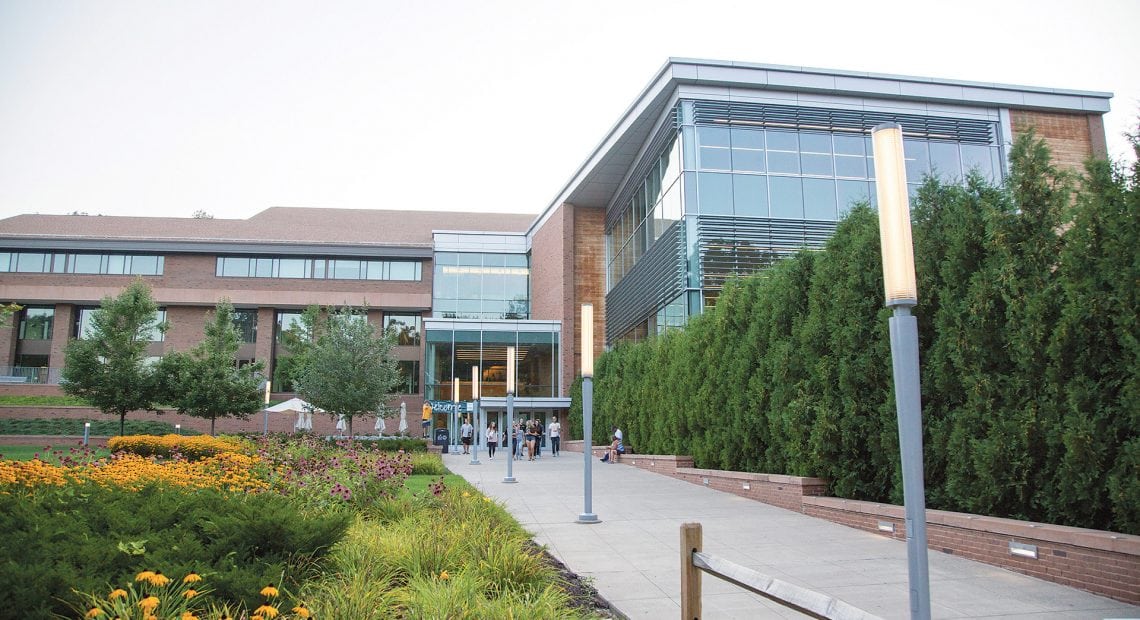
AMHERST — The University of Massachusetts awarded $395 million in university-generated financial aid across its five campuses this academic year — $22 million more than last year and $185 million more than a decade ago, with 81% of this aid going to Massachusetts residents, who comprise 73% of the 74,000-student UMass community.

“Keeping a UMass education world-class and affordable is our highest priority,” UMass President Marty Meehan said. “As a driver of economic mobility for our students and the Commonwealth’s greatest single source of talent, this is our primary mission.”

The $395 million in university-generated aid includes grants funded by university sources — nearly three times the amount of grant aid provided by the state and federal governments ($137 million). All of the funding directly reduces the ‘sticker price’ for students.

Meehan said growing financial aid is one piece of a larger effort to lower the financial barriers to a UMass education. Others include early-college programs that provide students with a head start on earning college credits while still in high school, holding annual tuition increases well below inflation, and a new initiative (included in the governor’s recent budget proposal) to lock in undergraduate in-state tuition rates for four years.

Meehan added that the university’s innovative efficiency and effectiveness efforts, which have saved $90 million across the five-campus UMass system since 2020, have been critical in keeping student costs down and growing financial aid. “I want to commend our chancellors and their teams for their stewardship of taxpayer, family, and donor dollars, which has allowed them to redirect resources to student aid and services.”

Meehan also praised the Healey-Driscoll administration for its budget proposal seeking a major increase in state-supported financial aid and student-support funding, as well as legislative leaders who have proposed new investments in public higher education. “There is a growing recognition that the University of Massachusetts and the rest of public higher education in Massachusetts are absolutely critical to maintaining the Commonwealth’s competitive edge.”

Business Talk Podcast Special Coverage

We are excited to announce that BusinessWest has launched a new podcast series, BusinessTalk. Each episode will feature in-depth interviews and discussions with local industry leaders, providing thoughtful perspectives on the Western Massachuetts economy and the many business ventures that keep it running during these challenging times.

Go HERE to view all episodes

Episode 157: April 10, 2023

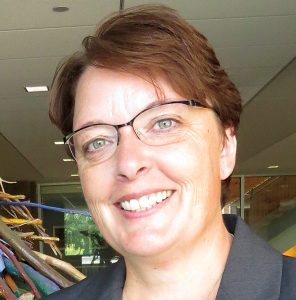
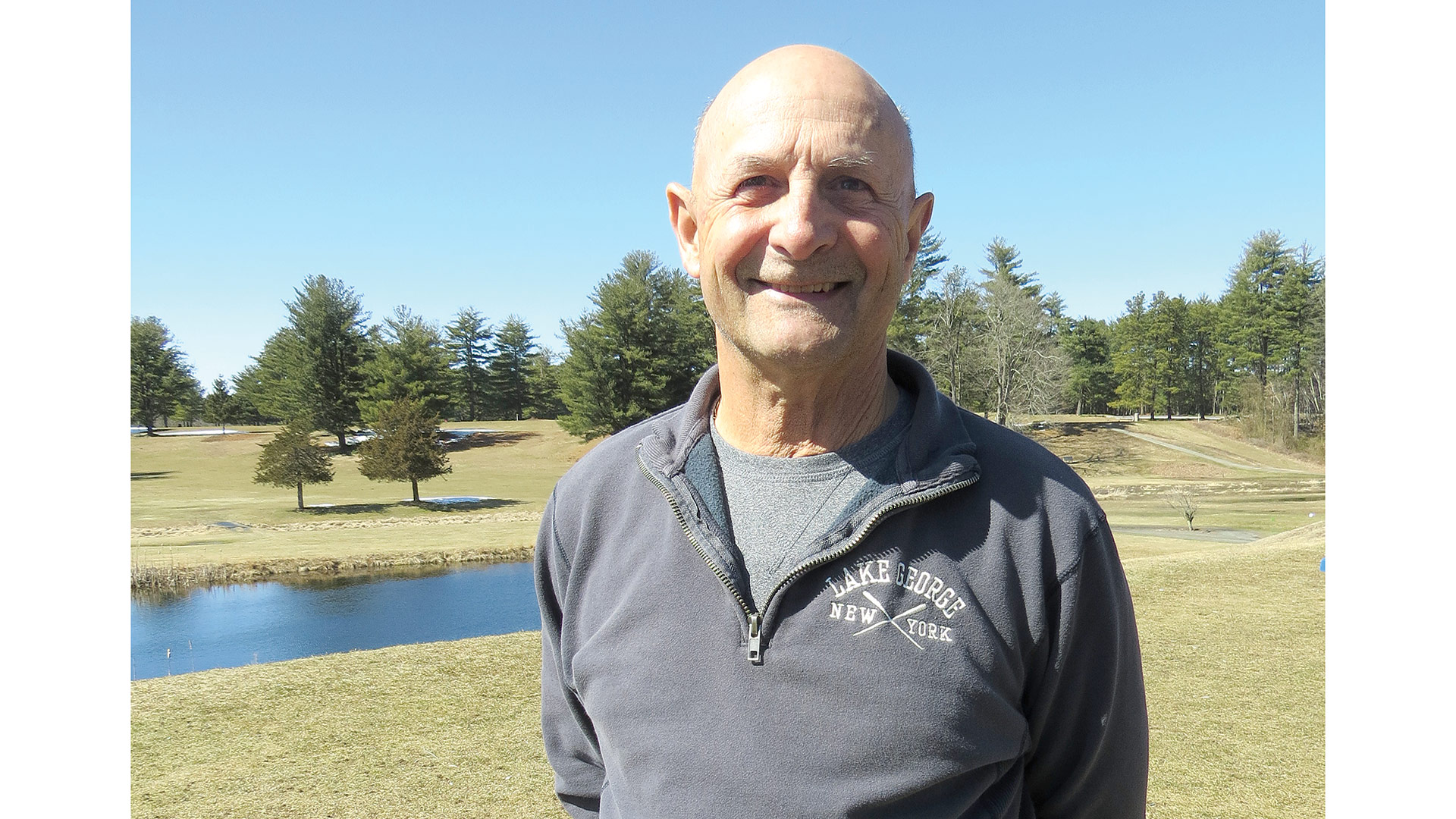
George Interviews Michelle Schutt, president of Greenfield Community College

michelle Schutt

On the next installment of BusinessTalk, Michelle Schutt, president of Greenfield Community College, talks with BusinessWest Editor George O’Brien about proposals for ‘free’ community college and what they might mean for area residents, the community colleges, the higher education sector, area employers, and the region’s economy. There’s a lot to unpack, and it’s all must listening, so tune in to BusinessTalk, a podcast presented by BusinessWest and sponsored by PeoplesBank.

Sponsored by:

Also Available On

Daily News

SPRINGFIELD — Hooplandia, a 3-on-3 basketball tournament and festival making its debut at the Eastern States Exposition (ESE) in June, announced on Thursday that its philanthropic partner will be Boys & Girls Clubs throughout Western Mass.

Hooplandia takes place June 23-25 and will be hosted by the Eastern States Exposition and the Naismith Memorial Basketball Hall of Fame. Games will take place across more than 70 courts at ESE, and showcase games will be held at the Hall of Fame.

“This is year one of a legacy event that will involve the whole community, whether you play ball, officiate, watch the games, volunteer, or come for the music, food, and festival. We will celebrate our mutual love for basketball through a little healthy competition,” ESE President and CEO Gene Cassidy said.

As a community-forward, all-inclusive event, Hooplandia has vowed to donate $10 of every team registration to local Boys & Girls Clubs in support of the program’s mission and enrichment of the region’s youths. Additionally, Hooplandia has begun a partnership program with regional businesses to underwrite the cost of team registrations for young players from clubs throughout the region.

Boys & Girls Clubs of America provide a fun, safe, and constructive environment for kids and teens during after-school hours. Community-based and led by professional staff, these programs offer students opportunities that allow them to succeed in school, develop leadership skills, and maintain healthy lifestyles.

“On behalf of the West Springfield Boys & Girls Club, we are thrilled to be designated as Hooplandia’s charitable partner and proud to partner with the Big E,” Executive Director Dan D’Angelo said. “We are equally thrilled to see such a fun and positive experience offered for youth in the area and can’t wait for June to see the courts lined with kids having a great time.”

Registration is open for all ages and skills. Teams of four can select their division for competition. Registration fees range from $75 to $190, with children under 8 and participants in the Special Olympics division free of charge.

For more tournament details on how to register, volunteer, or become a sponsor, visit www.hooplandia.com.

Daily News

SPRINGFIELD — New England Business Associates (NEBA) will host an exclusive comedy fundraising event on Friday, April 21 at 8 p.m. at 112 Island Pond Road, Springfield. Doors open at 7 p.m.

NEBA welcomes the community to enjoy an evening of laughs featuring top local comedians to benefit Lead the Way Through Laughter. The event will feature a cash bar, raffles, 50/50, and auctions. Sponsorship opportunities are available. Click here to purchase tickets.

“So much of our work involves connecting with the community, where we all know there is a critical workforce shortage that impacts everyone,” said Jeannine Pavlak, CEO of New England Business Associates. “This event is our way of bringing the community together in a fun way that provides an opportunity for all to take part in supporting NEBA’s efforts in solving workforce needs and leading the way to a more vibrant community.”

NEBA actively works toward ending social injustice through strategic work with employment agencies and businesses looking to expand their workforce.

Daily News

WASHINGTON, D.C. — Massachusetts ranks in the top five in a new study revealing financial losses due to cybercrime, with an average loss of $28,778.

The experts at sprinto.com, a security compliance automation platform provider, analyzed the most recent data from the Internet Crime Complaint Center (IC3) on the U.S. states most at risk of cybercrime attacks to underscore how individuals and businesses across states can exercise safeguards.

South Dakota is the state most at risk of cybercrime, with an average loss of $59,960 per fraud complaint.

Alabama is the second most at-risk state, with an average loss of $57,477 per complaint. The most frequent types of cybercrime are non-payment/non-delivery, personal data breach, credit-card fraud, identity theft, and social-media fraud.

New York ranks third, with an average loss of $32,040 per complaint. The most frequent types of cybercrime in New York are non-payment/non-delivery, identity theft, personal data breach, and social-media fraud.

The top 10 is rounded out by Delaware, Massachusetts, Georgia, Vermont, New Jersey, California, and Kansas.

At the other end of the scale, Indiana saw the lowest losses from cybercrime, with an average loss of $5,430 per fraud complaint.

The research reveals personal data breach is among the leading types of cybercrime in most states, as well as non-payment/non-delivery, extortion, and social-media fraud.

The research also reveals that business email compromise, also known as email account compromise, is the costliest type of fraud across 42 states.

Frauds have been increasing every year in the U.S. The Federal Trade Commission’s Consumer Sentinel Network data book received 5.74 million reports of fraud in 2021, up from 4.87 million in 2020, representing an 18% increase. Organizations are losing an average of 5% of their revenue to fraud each year, and the estimated cost of fraud for U.S. financial institutions in 2021 was $4.2 billion.

Daily News

SPRINGFIELD — Dr. Sarah Haessler, whose expertise in infectious diseases has been recognized at the local, state, national, and international levels, has been named chair of the Department of Medicine for Baystate Health.

Haessler, who has served as interim chair of the Department of Medicine at Baystate since 2022, was appointed chair after a highly competitive national search. She is the inaugural female chair of Baystate Health’s largest clinical/academic department. Her tenure begins immediately.

She received her medical degree from George Washington University School of Medicine and completed a residency in internal medicine and a fellowship in infectious diseases at Dartmouth Hitchcock in New Hampshire. She is board-certified by the American Board of Internal Medicine in internal medicine and infectious diseases.

Haessler joined Baystate Health in 2005 and since that time has held progressive leadership roles, including as the hospital epidemiologist for the health system, vice chair of the Department of Medicine, interim chief of the Division of Geriatrics and Palliative Care, and most recently interim chair of the Department of Medicine.

“Her strong work and expert insights have had a tremendous, salutary impact on national, state, and regional preparation and response to several biological threats, including pandemic influenza, Ebola, monkeypox, and COVID-19, serving in critical leadership roles in these events,” said Dr. Andrew Artenstein, chief physician executive and chief academic officer for Baystate Health and president of Baystate Medical Practices.

Active in the field of academics and research, Haessler has trained and served as advisor and mentor for dozens of residents and fellows in the specialty of infectious diseases. She is currently an associate professor of Medicine at UMass Chan Medical School – Baystate. Since 2002, as either principal or co-investigator, she has completed numerous research projects and is currently co-investigator in Reducing Antimicrobial Overuse Through Targeted Therapy for Patients with Community-acquired Pneumonia.

Haessler is the recipient of several honors and awards, including BusinessWest’s Healthcare Heroes Award, the Women in Medicine and Science Impact Award, and the Society for Healthcare Epidemiology of America’s (SHEA) Speaker Recognition Award and the Women in Medicine and Science Impact Award. She has held several distinct leadership roles in SHEA, including board and committee chair positions.

She has published more than 45 scholarly works in medical literature, including book chapters and peer-reviewed and non-peer-reviewed publications, and has served on several national and state expert panels and scientific review groups. She has been invited to present at international, national, regional, and local symposiums and conferences on a variety of topics, such as the science of hand hygiene for preventing infections, challenging cases in infection prevention, addressing the impact of the COVID-19 pandemic on women’s academic and clinical advancement, and many others.

Daily News

PALMER — Thorndike Energy Group announced a partnership with Worldwide Environmental Services in the development of a state-of-the-art data center at Thorndike Mill in Palmer.

The repurposed mill currently houses multiple DC hydroelectric generation units and offers a unique application of clean, renewable power that inherently has a significant amount of storage in the upstream water reservoir.

This power source will serve as the initial energy component for a campus-wide microgrid that will allow for the addition of wind, solar, and hydrogen-fueled energy sources along with connection to the local grid. The data center will be designed to maintain full operations during extended grid outages and offer its customers extended availability that will not utilize traditional fossil-fueled engine sources.

Daily News

SPRINGFIELD — Chikmedia announced its fourth annual Chiks of the Future Scholarship. Thanks to the generosity of a number of local businesses, Chikmedia is now offering one $1,500 scholarship as part of the annual initiative.

Chikmedia, a boutique firm offering strategic marketing planning and creative PR, has partnered with local businesses such as Summerlin Floors and the Springfield Thunderbirds to make this initiative happen. This scholarship will be awarded to one deserving woman of color, either a high-school senior or college student, pursuing a degree in marketing, public relations, communications, or business.

In order to see individuals succeed, the community needs to help them grow from the beginning. In 2020, during the Black Lives Matter movement, Chikmedia did a little digging into scholarship opportunities and found that Caucasian students received 72% of all scholarships, while minority students received only 28%. Although a $1,500 scholarship doesn’t close the large gap, the firm wanted to do its part in expanding available opportunities. The community involvement from local businesses has been welcomed with open arms.

Completed scholarship applications and all supporting materials must be submitted to Chikmedia by May 1. Scholarship recipients will be notified by email, and then announced publicly during the first week of August. Click here for the guidelines and application form.

“We continue to be grateful for the community business support we receive for this program,” said Meghan Rothschild, president of Chikmedia. “We started the scholarship to combat the racial injustices we saw in 2020 and plan to honor it every year. We cannot thank our partners enough; their generosity is humbling and overwhelming.”

Daily News

HOLYOKE — LightHouse Holyoke, Personalized Education for Teens, recently celebrated its annual Raise Your Glass event at Mill One at Open Square in Holyoke. LightHouse is a personalized middle- and high-school alternative now in its eighth year in downtown Holyoke.

LightHouse maintains an innovative collaboration with Holyoke Public Schools through Opportunity Academy, where students earn credit toward a Holyoke High School diploma in a program modeled after University Without Walls at UMass Amherst. The partnership allows a limited number of Holyoke Public School students to attend LightHouse along with privately enrolled students. LightHouse is accredited through the New England Assoc. of Schools and Colleges.

At the annual Raise Your Glass event, speakers included musician, performer, and LightHouse graduate Nehemiah Caradwyn; Liam Russell, a current privately enrolled student and graduating senior; and Damasco Santiago, father of Jhaydon Santiago, also graduating this year, who is enrolled through the LightHouse partnership with Holyoke Public Schools.

Santiago shared his personal story of growing up in Holyoke and unsuccessful experience with Holyoke Public Schools, including a moving account of significant challenges he overcame throughout his life. His story included watching his son, Jhaydon, encountering similar challenges as he navigated school.

“Then we found LightHouse,” Santiago said. “At first, I wasn’t so sure it would work for him. It was so different from regular school. Now I see how much it helped us. Jhaydon was able to learn at his own pace in his own way. Now he is already taking college classes, and he will graduate in June with a high-school diploma. LightHouse saved him.” Jhaydon is one of about 30 students who currently attend LightHouse through the school’s partnership with Holyoke Public Schools.

“We have a great working relationship with Holyoke Public Schools,” said Catherine Gobron, co-founder and executive director of LightHouse. “We are not aware of any partnership like this anywhere, between a public school district and a self-directed private school like ours.”

Daily News

HOLYOKE — Judd’s Restaurant at Gateway City Arts has a full schedule of events planned for Mother’s Day on Sunday, May 14, beginning with its Sunday brunch, served from 10 a.m. to 2 p.m. Following brunch at 2 p.m. will be a benefit concert for Safe Passage, featuring “Fantasie for Flute and Piano,” performed by Mosaic, the flute/piano duo of Sue Kurian and Meg Kelsey Wright.

The concert, which is free and open to the public, will feature a kaleidoscope of unusual pieces: two fantasies by Gabriel Fauré and Albert Franz Doppler; two tangos by Astor Piazzolla and Brazilian composer Ernesto Nazareth; a folk-like, jazzy theme and variation by New Hampshire composer Gwyneth Walker; a haunting nocturne for alto flute and piano by Norwegian composer Johan Kvandal; and flute and piano solos by Arthur Honegger and Clara Schumann.

The concert is part of the classical-music series at Gateway City Arts sponsored by GLC, the venue’s nonprofit arm.

Donations for Safe Passage will be accepted at the door. Safe Passage provides survivors with the support and information to keep themselves and their children safe and to rebuild their lives in the wake of domestic violence. Learn more at safepass.org.

Judd’s Sunday brunch features classic brunch cocktails and a menu of favorites with an Eastern European twist, including crispy potato latkes served with applesauce and sour cream, potato and cheese pierogi, homemade French toast bake, savory and sweet crepes, and more. In addition to the regular menu, there will be Mother’s Day specials. Click here to make Mother’s Day brunch reservations.

Also on Mother’s Day is the weekly Sunday Race Street Bazaar in the music hall at Race Street Live at Gateway City Arts. The bazaar features a variety of vendors offering secondhand goods, collectibles, records, CDs and tapes, clothing, toys, tools, crafts, electronics, and housewares.

Daily News

GREENFIELD — Greenfield Community and Economic Development Director MJ Adams announced her intention to retire from city service, effective May 6. Adams played pivotal roles in advancing downtown revitalization efforts, coordinating stakeholder and state assistance in creating an expansion of the I-91 Greenfield Industrial Park, helping local businesses navigate the COVID-19 pandemic, and brokering the agreement to redevelop the former Wilson’s Department Store building.

“There are not enough words to describe the energy, savvy, creativity, and dedication that MJ has provided the city and me when it comes to tackling all of the community and economic-development projects that we’ve been able to work on and that we’ll continue to work on,” Mayor Roxann Wedegartner said. “I am truly grateful for her expertise, experience, and ability to build coalitions. I wish her nothing but success and joy in her next chapter.”

Adams joined city government in December 2015 as Community Development administrator and was promoted to Community and Economic Development director in September 2018. Her prior experience includes positions with the Franklin County Regional Housing and Redevelopment Authority and the Pioneer Valley Planning Commission, and as executive director of Pioneer Valley Habitat for Humanity.

“Greenfield is in a strong position to keep advancing the positive initiatives on the downtown revitalization, housing, and economic-development fronts,” Adams said. “Many of the important projects I have been working on are far enough down the runway for takeoff, and it’s a good time to hand off leadership of the department to the next generation.”

The city will launch a search in the coming weeks for a new Community and Economic Development director. Adams has agreed to remain available during the transition process.

Daily News

EAST LONGMEADOW — Girl Scouts of Central and Western Massachusetts (GSCWM) announced it received a $10,000 grant from the Irene E. & George A. Davis Foundation in support of It’s a Girls World, one of the community-based programs it offers.

The afterschool program engages Hampden County girls in grades K-6 in STEM, financial literacy, and health and personal-wellness topics.

“We are so very grateful to the Davis Foundation for helping to provide girls with the opportunity to foster a sense of belonging and explore their true potential and leadership abilities through It’s A Girls World,” said Pattie Hallberg, CEO of GSCWM. “Through the program, participants are creating new friendships, embracing healthy risks, and exploring opportunities through the Girl Scout experience.”

The Girl Scout Leadership Experience is a collection of engaging, challenging, and fun activities for girls to develop a strong sense of self, display positive values, seek challenges, learn from setbacks, form and maintain healthy relationships, and learn to identify and solve problems in their community. The support of contributors such as the Irene E. & George A. Davis Foundation makes this possible.

The Irene E. & George A. Davis Foundation supports a variety of nonprofit organizations seeking to improve quality of life for those living in Hampden County.

Daily News

WARE — Country Bank President and CEO Paul Scully announced the appointment of Steven Musso to the bank’s board of trustees at its annual meeting.

Musso joins the board with more than 30 years of experience in the banking industry. He previously served as the chief operating officer for FinPro Inc., leading consulting engagements, running the consulting operation, and building the technology division. He has extensive experience working with banks on strategic planning, interest-rate risk analysis, and other consulting and advisory services. In addition, he has worked with various bank boards and management teams in financial institutions across the country. He holds Series 63 and 79 financial-securities licenses.

“I was attracted to Country Bank by its talented board, management team, and the opportunity to work with a strong and well-performing community bank,” Musso said. “I am excited to be on the other side of the fence. Joining the board at Country Bank allows me to bring all of my past experiences to bear in helping the bank continue to serve its local communities and grow by delivering quality banking services in a rapidly changing industry.”

“We are delighted to have Steve join the other talented strategic business professionals on Country Bank’s board as the institution continues to gain prominence and market diversification in Central and Western Massachusettsm,” said James Phaneuf, board chair. “Having been the bank’s strategic partner at FinPro for the past 12 years, Steve understands first-hand Country Bank’s depth and financial strength.”

Country Bank also appointed new corporators: Mary McGovern, executive vice president, chief financial and operating officer; G. Thomas Wolcott, first senior vice president, commercial banking; Dawn Fleury, first senior vice president, chief risk officer; Miriam Siegel, first senior vice president, chief culture and development officer; and Musso.

Daily News

HOLYOKE — Holyoke Community College (HCC) is offering youth ages 8-14 the opportunity to explore technology-based courses during their April school vacations.

Spring-break camp will run Tuesday through Friday, April 18-21, from 9 a.m. to 4 p.m. Each camp will meet in person at the Kittredge Center for Business and Workforce Development on the main HCC campus and include half-day and full-day options. The spring camp courses are “Code Breakers,” from 9 a.m. to noon; and “Python Programmers,” from 1 to 4 p.m.

Detailed course descriptions and a registration link can be found at hcc.edu/youth, which also previews what’s coming for HCC’s summer 2023 youth programs.

Individual classes for the spring are $179 for the week. Children in full-day camp are supervised by HCC staff members during an hour-long lunch break. Lunch is not provided.

HCC is offering the classes in partnership with Black Rocket Productions, and the in-person camps are operated under guidelines of the Massachusetts Department of Public Health. While HCC is now mask-optional, proof of COVID-19 vaccination is still required to register for on-campus classes until the end of the spring semester.

For more information or to register, call (413) 552-2500.

Daily News

FLORENCE — Florence Bank promoted Emily Tower to the position of vice president and branch manager of the bank’s main office in Florence. Prior to her promotion, she was the assistant vice president and branch manager in the Florence branch.

A graduate of the New England School of Financial Studies, Tower brings more than 15 years of banking experience to her role. She has been with Florence Bank since 2006 and has worked in the Belchertown and West Springfield offices as well.

“Emily has consistently shown exceptional customer service and team-leading skills,” said Matt Garrity, president and CEO of Florence Bank. “Her promotion is well-deserved.”

Daily News

LONGMEADOW — Bay Path University announced that Eric Lesser — attorney, educator, and former four-term state senator — has been elected to its board of trustees.

“Eric Lesser has been a loyal and longtime supporter of Bay Path University, and he has a strong commitment to our mission and our students,” Bay Path University President Sandra Doran said. “His many years of public service at both the state and the national level have given him incredible knowledge and insight on government and policy that will add significant value to both our board and in furthering our initiatives at the university.”

Lesser was one of the original members of President Obama’s White House team. From January 2009 to July 2011, he served as special assistant to the president’s senior advisor, David Axelrod. Later, he served as the Council of Economic Advisers’ director of Strategic Planning. In 2014, Lesser was elected to the Massachusetts State Senate, representing the First Hampden and Hampshire district.

As a state senator, Lesser led and served on numerous committees and commissions. He chaired the Joint Committee on Economic Development & Emerging Technologies; the Joint Committee on Tourism, Arts, and Cultural Development, and the Senate Committee on Ethics. He also was vice chair of the Joint Committee on Transportation and co-chaired the Massachusetts Commission on the Future of Work. Among his many priorities, he was a key proponent of east-west rail, a leading advocate for civics education, a champion for alleviating student debt, and a national leader on the future of work.

“Bay Path University is an anchor institution for the Greater Springfield area and has been on the vanguard of training a new generation of professionals in health sciences, technology, and business,” Lesser said. “I am especially grateful for their leadership opening new pathways for women from underrepresented communities, their continued dedication to serving the diverse people of Western Massachusetts, and the leadership role they’ve taken in life sciences, online and adult education, and other emerging trends in higher education. I look forward to joining the inspiring group of leaders who make up their board and helping to support their students and alumni.”

Lesser is currently a senior counsel at WilmerHale, a Boston-based law firm, where he is a member of the Public Policy and Regulatory Affairs Group. He earned his juris doctorate from Harvard Law School in 2015 and his bachelor’s degree from Harvard College in 2007.

Daily News

SPRINGFIELD — Time is running out to purchase tickets for Common Threads, an annual event to highlight the life-changing achievements of women engaged in Dress for Success Western Massachusetts (DFSWM). The event is scheduled for Thursday, April 13 from 5:30 to 8:30 p.m. at the Springfield Sheraton. Tickets are on sale until Thursday, April 6.

Common Threads will feature networking, dinner, and a live auction leading into a program that will highlight multiple local women who have made tremendous strides toward financial stability and personal goals. To help reach a broader audience, the in-person program will be livestreamed, with the support of CJC Events, on the DFSWM Facebook page.

Xiomara Albán DeLobato, vice president and chief of staff for the Western Massachusetts Economic Development Council, will be the emcee for the event. Latoya Bosworth, life coach and soul stirrer, will serve as the keynote speaker. During the event, Marie-Ange Delimon of Tech Foundry will be given the Distinguished Alumna Award, Jill Scibelli will be honored as Volunteer of the Year, and Tanya Sears of Springfield College will be recognized as an Outstanding Contributor.

“Hearing the stories of the women in our programs will leave you inspired,” DFSWM Executive Director Margaret Tantillo said. “It’s amazing how much these women have overcome ― including poverty, abuse, addiction and more ― to provide a better future for themselves and their families.”

Dress for Success Western Massachusetts is part of a worldwide nonprofit organization dedicated to the empowerment of women as they take control of their personal and professional lives. Local programs include the Foot in the Door workforce-readiness program, the Margaret Fitzgerald One-on-One Mentoring program, the Professional Women’s Group, a digital-literacy program, and the suiting program.

Click here to purchase tickets. The cost is $75 per person or $750 per table for the live event.

Daily News

SPRINGFIELD — The World Affairs Council of Western Massachusetts will present James Paul, director of the Boston Office of the U.S. Commercial Service, on Thursday, April 27 at noon in the ninth-floor Community Room at 1350 Main St. in downtown Springfield.

The U.S. Commercial Service is a division of the U.S. Department of Commerce’s International Trade Administration. Paul will discuss his agency’s Rural Export Center and many other resources that help Western Mass. organizations compete and win in the global marketplace. He will also brief on available assistance to enhance foreign direct investment, travel and tourism from abroad, and international student recruitment to the area’s high schools and universities.

Admission for World Affairs Council members is $5 ($20 including a box lunch provided), or $10 for non-members ($25 with lunch provided). Attendees may also bring their own lunch or choose not to eat.

To register or for more information, visit wacwestma.org or call (413) 733-0110.

Daily News

EASTHAMPTON — Audrey Chechile has joined the bankESB Marketing department as its Marketing Communications manager.

In this role, she will be responsible for managing internal and external communications content to drive brand awareness, engagement, and business development; managing the company’s marketing and sales-material development, inventory, and distribution; and managing bank-sponsored events and donations across the member banks of its parent company, Hometown Financial Group. She will be integral in supporting the Marketing department in providing the highest level of service and responsiveness to customers, communities, and business partners.

Prior to joining bankESB, Chechile was the Marketing manager at an automotive dealership group in Northampton, and before that was Marketing manager at Canna Provisions in Lee. She has more than 10 years of marketing experience in complex, regulated environments with emphasis in design, public relations, project management, event planning, and more. She holds a bachelor’s degree in public relations from SUNY Fredonia.

Daily News

HADLEY — Earth Day is right around the corner. For individuals and companies looking to get rid of their old computer equipment and do some good, Paragus IT will host a technology recycling drive on Friday, April 21 to promote sustainability and benefit Dakin Humane Society.

Paragus will take old, unwanted computers, laptops, printers, and other equipment and prepare them for reuse or make sure they’re properly disposed of. In exchange, Paragus will collect $5 per piece of equipment, all of which will benefit Dakin Humane Society.

“We’ve done this drive successfully in the past, and it’s a great opportunity for local businesses and individuals to recycle their old technology while supporting a good cause,” Paragus IT Marketing coordinator Jackie Deiana said. “Earth Day is a time when we all come together to do our part to protect our planet and its creatures.”

On April 21, between the hours of 10 a.m. and 3 p.m., those looking to recycle equipment have two choices of drop-off sites: Paragus IT at 122 Russell St. in Hadley or Dakin Humane Society at 171 Union St. in Springfield. Paragus has also partnered with the Lexington Group, which has offered its vehicles and services for pick-up from local businesses. A minimum of five pieces of equipment and a minimum $50 donation are required for pick-up. Interested businesses can contact Jackie Deiana at [email protected] or (413) 343-1104 to reserve a spot.

Daily News

WESTFIELD — U.S. Rep. Richard Neal joined Westfield State University President Linda Thompson to announce a $1 million earmark to enhance the university’s training capacity for nursing and health science students.

The allocation was made possible through congressionally directed spending from the Department of Education. Neal included funding for this project in the FY 2023 spending bill that was signed into law on Dec. 29, 2022.

“The Commonwealth has long been at the forefront of innovations in the healthcare field, making our state’s healthcare system the envy of the nation. We are fortunate to have some of the best hospitals in Western and Central Massachusetts, and institutions like Westfield State University are ensuring we have the skilled workforce needed to staff these facilities,” Neal said. “This funding will allow the university to improve and expand its nursing and health science programs, ensuring the next generation of healthcare professionals has access to the state-of-the-art technology and real-world experiences needed to succeed in their respective fields.”

Westfield State’s plans for this funding are threefold: to double the university’s simulation space that is utilized to develop students’ skills and confidence in applying healthcare practices, provide a new Easy Street simulation space that will allow healthcare students to apply concepts of home-based and community care in their learning, and provide new spaces for the practice of healthcare innovation.

“The funding appropriated for Westfield State University’s nursing and healthcare programs will create opportunities to reverse a healthcare professional shortage trend that has impacted a wide swath of our region,” Thompson said. “The critical, smart, and necessary move by Congress, led by House Ways and Means Chairman Richard E. Neal, will lead to the creation of systems that will reinforce and strengthen the health of the population. Westfield State University is eager to continue collaborating with our healthcare partners to provide top-level services to our communities through training and development opportunities for our students and others who may be interested in improving their skills.”

Daily News

HOUSTON — The Naismith Basketball Hall of Fame announced the 12 inductees in the class of 2023 to be celebrated during this year’s Enshrinement festivities on Aug. 11-12. The class announcement was made in Houston, the site of the 2023 NCAA Men’s Final Four, and was televised live on ESPN.

This year’s North American Committee inductees are Gene Bess, Pau Gasol, David Hixon, Gene Keady, Dirk Nowitzki, Tony Parker, Gregg Popovich, and Dwyane Wade. This year’s Women’s Committee inductees are Gary Blair and Becky Hammon. This year’s Direct Elect Committee inductees are the 1976 Women’s Olympic Basketball Team and Jim Valvano.

“The Naismith Hall of Fame class of 2023 is remarkable and truly embodies the breadth and impact of the global game today,” said John Doleva, the Hall’s president and CEO. “This class represents the game at every level and showcases the incredible efforts of individuals who are not only household names in the game, but also those who teach, coach, and counsel to men and women at the most organic levels of basketball. The ultimate achievement of a storied career is enshrinement in the Naismith Hall, and this class punctuates and defines what it means to be a Hall of Famer.”

The class of 2023 will be enshrined during festivities in Springfield, the birthplace of Basketball, as well as the Mohegan Sun, on Aug. 11-12. VIP packages and single-event tickets to the 2023 Hall of Fame Enshrinement Weekend are now available at hoophall.com/events/enshrinement-2023.

Business Talk Podcast Special Coverage

We are excited to announce that BusinessWest has launched a new podcast series, BusinessTalk. Each episode will feature in-depth interviews and discussions with local industry leaders, providing thoughtful perspectives on the Western Massachuetts economy and the many business ventures that keep it running during these challenging times.

Go HERE to view all episodes

Episode 156: April 3, 2023

George Interviews Robert Westerfield, vice president of Casino Operations at MGM Springfield

The sports betting era has begun in Massachusetts, and it’s off to a fast and intriguing start. On the next installment of BusinessTalk, Robert Westerfield, vice president of Casino Operations at MGM Springfield, talks with BusinessWest Editor George O’Brien about sports betting, March Madness, and what to expect moving forward. It’s must listening, so tune in to BusinessTalk, a podcast presented by BusinessWest and sponsored by PeoplesBank.


Sponsored by:

Also Available On

Daily News

HOLYOKE — Holyoke Community College (HCC) is one step closer to hiring its next president.

The HCC search committee evaluating candidates to succeed President Christina Royal has whittled a field of 50 down to four. All four finalists have many years of experience in higher education and now hold top-level administration positions at community colleges in the Northeast, and all four are persons of color — two Latinas and two African-American men.

They include Noemí Custodia-Lora, vice president of the Lawrence campus and Community Relations at Northern Essex Community College in Massachusetts; Tony Hawkins, provost and vice president of Academic Affairs, Continuing Education, and Workforce Development at Frederick Community College in Maryland; Arlene Rodríguez, provost and vice president of Academic and Student Affairs at Middlesex Community College in Massachusetts; and George Timmons, provost and senior vice president of Academic and Student Affairs at Columbia-Greene Community College in New York.

The announcement was made in a message to the HCC community from Eleanor Williams, chair of the search committee and vice chair of the HCC board of trustees, and Robert Gilbert, chair of the HCC board of trustees.

“As conversations continue toward the selection of HCC’s fifth president, we have total confidence that the candidate selected from among our finalists will bring strong, inspiring leadership to the college,” they said in a joint statement.

In August, Royal, who has been with HCC since January 2017, announced that she would retire after the 2022-23 academic year. Her last day will be July 14, and she expects to assist with the transition to the next administration.

The 18-member search committee included five members of the HCC board of trustees — Williams, Gilbert, Vanessa Smith, Ted Hebert, and Ivonne Vidal — three HCC faculty members, seven HCC staff members, one member of the HCC Foundation board of directors, and one student, as well as Robert Awkward, assistant commissioner for Academic Effectiveness at the Massachusetts Department of Higher Education. Four members of the search committee are also HCC alumni.

To aid in the search process, HCC retained the Pauly Group Inc., a national consulting firm that previously assisted the college in the hiring of Royal, HCC’s fourth president.

“This truly is an exciting time for the HCC community as we seek to find the next leader for the college,” Williams said in a separate statement.

Each of the four finalists has been invited to visit the HCC campus for a day and a half of tours, open forums, presentations, and interviews: Custodia-Lora on April 6-7, Timmons on April 10-11, Hawkins on April 11-12, and Rodríguez on April 13-14.

Custodia-Lora, a former Biology professor, holds a PhD in physiology and endocrinology from Boston University and a bachelor’s degree in biology from the Universidad de Puerto Rico.

Timmons holds a PhD in higher education administration from Bowling Green State University, a master’s degree in higher education from Old Dominion University, and a bachelor’s degree in financial management from Norfolk State University.

Hawkins, a former professor of Speech, Communication, and Theater, holds a PhD in higher education, leadership, and technology from New York University, a certificate of advanced study in administration, planning, and social policy from the Harvard University Graduate School of Education, a master’s degree in speech communication from the University of Georgia, and a bachelor’s degree in mass communications from Towson State University.

Rodríguez, a former English professor, holds a PhD in English from UMass Amherst, a master’s degree in English from Lehigh University, and a bachelor’s degree in English from Fordham University.

The HCC board of trustees is expected to vote to approve a new president at its next meeting on Tuesday, April 25.

“The search attracted a strong and diverse pool of candidates,” Gilbert said. “While replacing the leadership of President Royal is a daunting task, our finalists exhibit qualities that will continue our journey as a college of excellence. I thank trustee and search committee chair Eleanor Williams for her leadership as well as members of the search committee for their dedication to the search process.”

Full résumés of the candidates can be viewed at hccpresidentialsearch.com/finalists.

Daily News

SPRINGFIELD — These are exciting, challenging, and ever-changing times for healthcare and the businesses and individuals providing it. To better inform and educate its readers about the many issues, trends, and developments in the healthcare sector, BusinessWest and businesswest.com will be introducing a new, monthly segment that will present content from its sister publication, the Healthcare News (HCN), and healthcarenews.com.

This new resource will be called “HCN Monthly Feature,” bringing news and information on the many health, wellness, and fitness issues and developments of today, from both regional and national sources. Each HCN Monthly Feature will have specific themes and points of emphasis — everything from health and fitness (this month’s feature; see businesswest.com) to behavioral health; from cancer care to a salute to the region’s nurses — and it will be made available online at both businesswest.com and healthcarenews.com, as well as via daily e-newsletters BusinessWest Daily News and HCN News & Notes, making it readily available to subscribers and consumers in the Western Mass. region and beyond.

For subscriptions, additional information, and to send us your news and story ideas, please visit BusinessWest at www.businesswest.com and HCN at www.healthcarenews.com.

Daily News

CHICOPEE — Elms College and Holyoke Community College (HCC) signed an articulation transfer agreement that will make it easier for HCC students to complete their bachelor’s degree at Elms College in either biology or biotechnology.

HCC students who earn an associate degree in biology or biotechnology with a minimum GPA of 2.0 will be able to transfer at least 60 credits and enroll into Elms College’s bachelor-degree programs in either biology or biotechnology.

“We are delighted to partner once again with Holyoke Community College to offer students an opportunity to continue their education at Elms College,” said Harry Dumay, president of Elms College. “The increase in college graduates resulting from this agreement will serve our shared goal of improving access to higher education for all students.”

The agreement is effective immediately so that HCC biology and biotechnology students who graduate this spring and meet the requirements of the agreement can matriculate into Elms this fall as third-year students.

“Elms College has been a college of choice for many Holyoke Community College students,” HCC President Christina Royal said. “We are excited to expand our partnership for the benefit of our students who want a seamless transfer experience in STEM fields of study.”

For information about the program, contact [email protected] or [email protected].

Daily News

PALMER — Baystate Wing Hospital (BWH) received a $50,000 FY 2023 legislative earmark to focus on the prevention and treatment of opioid-related substance-use disorders in the Baystate Health Eastern Region. The earmark in the FY 2023 state budget was made by state Rep. Todd Smola to support public-health-related programs and initiatives that reduce health disparities, promote community wellness, and increase access to prevention, treatment, recovery, and referrals for people with opioid and substance-use disorders in the hospital’s service area.

Opioid and substance-use disorders were identified as significant health needs in BWH’s 2022 community health needs assessment.

The BWH Opioid Task Force is focused on addressing the many individual, environmental, and societal factors facing individuals with substance-use disorders. The task force, made up of hospital team members, aims to meet the needs of the local community who seek care in the Emergency Department and other outpatient departments throughout the hospital. The team will work to increase access to prevention, treatment, recovery, and referrals for people with opioid and substance-use disorders who live in the BWH service area, which includes Belchertown, Brimfield, Brookfield, East Brookfield, Hampden, Hardwick, Holland, Ludlow, Monson, New Braintree, North Brookfield, Palmer, Wales, Ware, Warren, West Brookfield, and Wilbraham.

“I am pleased to have advocated for state resources to be used in my district to continue combating the serious issues related to opioid and substance-use abuse,” Smola said. “It is critical we have well-trained healthcare professionals and community partners to serve our region and to work with families impacted by this deadly scourge. I look forward to seeing these good works continue.”

Lauren Mansfield, Behavioral Health practice manager of Baystate Griswold Center, added that, “as the patients facing opioid-related substance-use disorders needs have grown more complex, focusing on coordination and communication across all the patient’s healthcare providers has become increasingly crucial. Our hospital Opioid Task Force and our care teams will collaborate to continue to increase access to care and resources for people with substance-use disorders; reduce or eliminate the projection of stigma focusing on the care of the person, not his or her condition; and distribute harm-reduction kits to those in need. Patients and their families will benefit from increased access to care as we work to build trust in our healthcare environment.”

Education

A Potential Game Changer

John Cook says that, while the cost of a community-college education (roughly $7,000 per year) isn’t high, at least when compared with that of a four-year institution, public or private, it can be, and often is, a barrier that some cannot overcome, even with financial aid.

And for others, it’s enough of an obstacle for them to think twice about college — or not at all.

“Like anything in our lives, we can’t just separate this cost or isolate it from all the other considerations for a human being; it’s one more thing, one more cost in the lives of so many … this is why we see students drop out, or say ‘now is not the time,’” said Cook, president of Springfield Technical Community College (STCC). “Any way to get a whole lot of people, frankly, to take this second look is a good thing.”

With that, Cook added his voice to many others who are praising Gov. Maura Healey’s inclusion in the budget of something she calls MassReconnect, which would fund free community-college certificates and degrees to the Commonwealth’s residents who are age 25 and older and have not yet earned a college degree.

“This is a group of adults, many of whom have college credits, that we really want to encourage to come and take another look at college.”

John Cook

John Cook

According to some statistics released by the state, roughly 2 million residents would be eligible for the program — individuals who have a high-school diploma but not a college degree — and perhaps 700,000 of these individuals already have some college credits.

MassReconnect, which is actually one of two ‘free’ community-college programs that have been proposed (Senate President Karen Spilka has proposed free community college for all students), would provide both incentive and the means for many people to return to college and get the degree or certificate that might open a door to not just a job, but a career, said Christina Royal, president of Holyoke Community College (HCC).

“This is a potential game changer,” she told BusinessWest, adding that MassReconnect targets what she called the “emerging space of adult learners,” individuals who want a college education, but are held back by competing demands on their life, including family and work.

“The governor’s MassReconnect proposal is a great starting point that increases access for adult learners who don’t already have a college credential,” she went on. “It’s designed to help them finish that stretch so they can get a college credential.”

Michelle Schutt, president of Greenfield Community College, concurred. She said GCC ran some numbers and determined that nearly 200 of the roughly 1,400 students currently enrolled would qualify for the program. “That’s not insignificant,” she said, adding that many more in the community who are not enrolled who might be inspired to connect, or ‘reconnect,’ as the case may be.

“I’m incredibly excited about this,” she added. “Reconnecting with those people who have some college but no degree and letting them know that there’s a new opportunity here has great potential for the community colleges and GCC specifically.”

Rick Sullivan, president and CEO of the Western Massachusetts Economic Development Council, agreed.

Using similar language, he said MassReconnect could have broad and powerful impact over time, providing benefits for the region, its employers, and both community colleges and the four-year institutions for which they are feeders.

“Reconnecting with those people who have some college but no degree and letting them know that there’s a new opportunity here has great potential for the community colleges and GCC specifically.”

michelle Schutt

Michelle Schutt

Based on initiatives in Michigan and Tennessee, the MassReconnect proposal actually goes further than those programs by covering more than just tuition; it also covers mandatory fees, books, and various support services. It is designed to remove barriers to getting the college degree that is needed to succeed in most jobs today, and it holds significant promise to just that, said those we spoke with.

Cook told BusinessWest that the average age of a student at STCC is 26, a statistic that might surprise some, but certainly helps explain the thinking behind MassReconnect and its potential impact.

“This idea is right in our wheelhouse,” he noted. “This is a group of adults, many of whom have college credits, that we really want to encourage to come and take another look at college.”

Indeed, he went on, for many individuals over age 25, there are now many competing forces when it comes to the weekly budget, and for a good number of them, higher education is something that doesn’t make the cut. MassReconnect, as he noted earlier, provides people an opportunity to rethink college education.

“There are many students who might just have the perception that they are priced out,” he said. “And when we give them a chance to look at this, they might realize, ‘OK, that business degree is not out or my reach,’ or ‘maybe a manufacturing program isn’t going to be too big a lift for me.’”


Ripple Effects

Royal concurred, and noted that MassReconnect will bring more attention to the state’s community colleges — and the careers that individuals can access with two years (or less) of college education.

“Massachusetts, as a state, needs to move beyond the notion that everything requires a bachelor’s degree,” she told BusinessWest. “There are many jobs where an associate degree would either elevate their wages or help them gain a footing toward a career change or a particular job.”

Cook agreed, and said he considers MassReconnect to be an investment in the state’s community colleges and a huge opportunity to introduce more individuals to the value of the education provided by these schools and their ability to help open doors.

“At this price point, and with our class sizes, you won’t find a better deal,” he told BusinessWest.

“Massachusetts, as a state, needs to move beyond the notion that everything requires a bachelor’s degree.”

Christina Royal

Christina Royal

Schutt noted that these arguments and others have been born out in other states where the notion of free community college has become reality, especially Michigan, which adopted a model on which MassReconnect is based and has had it in place for three years now. She said that state has measured its success in many ways.

“From the number of people who came to the college to the number earning better wages, and more, this model has proven successful,” she said. “Those schools recognize that these are students they wouldn’t have otherwise.”

As he assesses MassReconnect and the broad concept of free community college, Sullivan said there will be a broad trickle-down resulting from making these schools more accessible.

For starters, the community colleges themselves will benefit, he said, noting they have been hit hard by sharp declines in enrollment over the past decade, a trend only exacerbated by the pandemic.

Cook qualified this decline by pointing out that STCC’s enrollment — just over 3,600 — is down a full 50% from the school’s peak in 2012 of roughly 7,000, numbers that reflect everything from smaller high-school graduating classes to a still-robust economy featuring low unemployment — the conditions that don’t spur enrollment at community colleges.

But enrollent has become a challenge at most all public and private institutions, Sullivan noted, adding that, over time, this concept of free community college could provide a boost for the large and important ‘Eds’ component of the region’s economy.

“Western Mass. is really lucky … obviously, we have four community colleges [STCC, HCC, Greenfield Community College, and Berkshire Community College] that are well-respected and do a great job,” he said. “But they are also feeders into our four-year colleges and universities, and we’re fortunate that we’ve got such a high-end cohort of four-year and community colleges in this region, and it is an important part of our economy.

“Most all of these schools are looking to bring in more students to be able to grow,” he went on. “So it shouldn’t be lost on people that, in many cases, the community colleges are the start of the training and retraining of that workforce.”

Elaborating, he said that while the higher-ed sector will benefit from free community college, the broader impact will be on the region’s employers, which have been struggling with workforce issues, to one degree or another, for the past several years.

“Workforce is the issue that every single employer is facing right now, and it’s probably the biggest barrier to growth; it doesn’t matter what sector you’re in,” Sullivan said. “This opportunity to bring it back — or, to use the governor’s phrase, ‘reconnect’ — is a good one for our region.”

Cook agreed, and noted that while sectors — and college programs — may not be greatly impacted by MassReconnect (many healthcare programs, such as nursing, already boast strong enrollment), there are others that will, because the assistance from the state might act to remove a barrier to exploring certain fields.

He mentioned manufacturing as one of them, noting that, while this sector features well-paying jobs and attractive opportunities, it still manages to elude the attention of many job seekers.

“I would love for us to continue to demystify manufacturing, to see people realize it’s very much a high-tech, high-end, laboratory type of setting for so many of the professionals working in this field,” he said, adding that MassReconnect, if it becomes reality (and it has the support of many in the State House), could help achieve that.


Bottom Line

Overall, and combining MassReconnect with the elimination of COVID vaccine requirements and proposed fee-stabilization initiatives, Cook can envision a lift in enrollment for this fall’s semester — perhaps a 2%, 3%, or 4% gain, this on top of a 4% improvement registered this spring.

Just how big a lift remains to be seen, obviously, but any improvement would be a step in the right direction, he said, and hopefully the first of many such steps.

Healthcare News

All Hands on Deck


In the six months since the Biden-Harris administration hosted the second-ever White House Conference on Hunger, Nutrition, and Health, U.S. Rep. Jim McGovern has recognized the significance of the moment — only, he hopes it’s more than a moment.

“The first and only other conference was held more than 50 years ago — in 1969, the year we put somebody on the moon,” McGovern said at a recent virtual gathering with officials from food-justice organizations, farm advocates, public-health leaders, healthcare providers, and other legislators, to discuss the White House event, legislative action that has emerged in its wake, and what is being done in Massachusetts — and what more can be done — to end hunger.

Liz Wills-O’Gilvie

Liz Wills-O’Gilvie

“The only way that we’re going to eradicate hunger and improve health is by centering our work with a racial-equity lens.”

“Out of this conference came an ambitious but achievable roadmap to end hunger and reduce diet-related disease by the year 2030,” McGovern said, adding that the conference has the potential to impact even more change than the 1969 event, which is saying a lot, since innovations like WIC, the modern-day SNAP program, and better food labeling came out of that session.

“There were so many important things,” he went on. “But I think this conference, if we do the follow-through, has the potential to have even a greater impact on this country.”

The March 17 briefing, attended by about 300 people, was co-hosted and organized by the Food Bank of Western Massachusetts, Growing Places, Stone Soup Cafe, CISA, the Springfield Food Policy Council, the Massachusetts Food System Collaborative, Project Bread, and the Western Mass. state legislative delegation, including state Sen. Jo Comerford and state Rep. Mindy Domb.

Liz Wills-O’Gilvie, who chairs the Springfield Food Policy Council, saw the historic nature of the White House event, which she attended, from a unique perspective: her own personal history as “a little Black girl from Springfield who was dependent upon commodities food before food stamps as we know it now existed.

“Our family’s life improved when food stamps emerged out of the last conference,” she recalled, “so I was struck by the significance of the moment I got to be there in that room and hear both President Biden and Secretary [of Agriculture Tom] Vilsack make the comments that they did … that the only way that we’re going to eradicate hunger and improve health is by centering our work with a racial-equity lens.”

To that end, Wills-O’Gilvie called Massachusetts’ Healthy Incentives Program (HIP) — which reimburses EBT card users when they used SNAP benefits for healthy produce from local farm vendors — a tool for racial equity as well as a way to improve the health of families.”

She also called for making universal free school meals permanent in the Bay State, a priority shared by Domb, who also praised HIP, talked up the benefits of food-literacy education, and called for a conversation about hunger on college campuses.

“We need to make universal free school meals in Massachusetts permanent,” Domb said. “It’s terrific that we extended it this year. It’s wonderful that the Legislature in the supplemental budget has included additional money to make sure it continues through the end of this academic year.”

“There’s obviously much, much more that needs to be done in these areas. But we’re off to a good start. And there is finally momentum at a national level behind efforts to end hunger.”

U.S. Rep. Jim McGovern

U.S. Rep. Jim McGovern

But she said expansion of such benefits during COVID demonstrated how important they are to families, even beyond the pandemic. “So we need to make sure that that continues.”


One Bite at a Time

McGovern said President Biden has made it clear that the federal government wants to implement an aggressive national strategy to end hunger in the next decade.

“In the months following the conference, Congress has gotten to work on some of the priorities that were laid out in the strategy,” he noted. “We created a permanent summer EBT program to give families with kids $40 per child per month over the summer, when we know that hunger is often worse. It’s a small step in the right direction, but it’s an important step in the right direction. And especially during these times of high inflation and especially in the aftermath of the SNAP pandemic boost being cut, this is really, really crucial.”

He also said lawmakers responded to a recent EBT-skimming problem by requiring benefit replacement for those who had SNAP benefits stolen through no fault of their own, mandated that the Department of Defense screen military families for food insecurity, and passed the Food Donation Improvement Act to make it easier for retailers, manufacturers, farmers, and schools to donate food directly to hungry people.

“And we passed a massive omnibus spending bill that includes the highest level of non-defense spending in history. That translates into robust funding for WIC, farm-to-school grants, school meal equipment grants, among other things,” McGovern went on. “There’s obviously much, much more that needs to be done in these areas. But we’re off to a good start. And there is finally momentum at a national level behind efforts to end hunger. We have people in the administration saying that we want to end hunger.”

He also recently introduced legislation to permanently increase the reimbursement rates paid by the federal government to schools for every breakfast and lunch served.

“We talk a lot about the quality of food that we provide our kids in school, but we also talk about the importance of supporting our local farmers,” he explained. “With a little more money for breakfast and lunch, it gives school districts and people who oversee school meals some flexibility to do some things that, right now, they don’t do because it’s too complicated or it might cost a little bit more.”

Kirsten Levitt, executive chef and co-director of Stone Soup Café, a volunteer-driven, pay-what-you-want meal spot in Greenfield, also attended the White House conference and came away with the belief it will take all sectors of the nation to eradicate hunger, and Western Mass. has the ability to be a national model for its emphasis on farms, food, and nutrition. She added that children will be the best ambassadors for health and nutrition, especially if school meals are funded properly.

Erin McAleer, president of Project Bread, an anti-hunger nonprofit based in Boston, identified five pillars to a statewide strategy on hunger, nutrition, and health: increasing access and improving quality of child-nutrition programs, increasing access and affordability of food for all, integrating food access into healthcare, strengthening and integrating the local food system, and ensuring economic stability and promoting economic opportunities to address the root causes of hunger.

“I never imagined I would be sitting in a room with the president of the United States, and certainly never imagined I would be sitting in the room when he expressed that what I went through my childhood was unacceptable — that food insecurity is unacceptable,” McAleer said.

“When 21% of families in Massachusetts are food-insecure and 33% of the Black and Latino families in Massachusetts are food-insecure, that is a systemic issue. And that requires systemic solutions. Too often, we focus on individualized solutions when it comes to this issue.”

Erin McAleer

Erin McAleer

“What I really appreciated about the plan that was put together by the White House is the focus on systemic solutions,” she went on. “When 21% of families in Massachusetts are food-insecure and 33% of the Black and Latino families in Massachusetts are food-insecure, that is a systemic issue. And that requires systemic solutions. Too often, we focus on individualized solutions when it comes to this issue.”

McGovern agreed that fighting hunger and improving nutrition is a battle that can, and should, be waged on all levels — federal, state, and local.

“There are things that can be done at the local level — things like expanding access to culturally appropriate cooking classes, bringing gardens and hydroponics to every school, and more robust food-recovery partnerships. All of this is going to require close collaboration.”


Menu of Activity

On the state level, myriad bills have been filed recently relating to nutrition, hunger, and agriculture: “An Act Relative to Universal School Meals,” “An Act to Promote Food Literacy,” “An Act Protecting Our Soil and Farms from PFAS Contamination,” “An Act Strengthening Local Food Systems,” “An Act Promoting Equity in Agriculture,” “An Act Relative to an Agricultural Healthy Incentives Program,” “An Act Supporting the Commonwealth’s Food System,” “An Act Encouraging the Donation of Food to Persons in Need,” “An Act Establishing the Massachusetts Hunger-free Campus Initiative” … the list goes on.

Comerford said those who organized the March 17 briefing with McGovern wanted participants to be inspired by the White House’s 2030 hunger goals, tackle diet-related diseases like hypertension and obesity in the Commonwealth, and strengthen the region’s food system and farms in the process.

“We also want to help participants take away concrete and timely action steps around critical budget priorities and policy proposals that are going to move the Commonwealth boldly toward ending hunger in just a handful of years.”


Healthcare News

An Active Office

Standing desks are standard at many local companies.

Since COVID-19 swept across the globe, many industries have shifted to fully remote or hybrid working. During the pandemic, 70% of the workforce was working from home, and since then, 62% of companies have planned to incorporate remote work, be it fully remote or hybrid.

With more and more people working from the comfort of their own home, concerns have arisen that this model may be associated with more sedentary lifestyles and, in turn, increased risk of obesity. Most of our calories throughout the day are burned through non-exercise activity thermogenesis, which includes walking and other basic activities. When working from home, sometimes those activities can be even more limited.

Here are a few ideas from online fitness resource Total Shape to stay fit even while working from home.

Standing Desk ($150-$600)

Standing desks have gained popularity over the last few years and have been proven to provide many positive health benefits. Simply put, standing burns more calories than sitting, even if you simply stand still. Research has also shown that 66% of workers felt more productive, and 87% felt more energized, using standing desks. Standing activates the muscles in your legs and core while stimulating circulation, which can help you to burn extra calories (typically 60 to 90 per hour) and build your strength. Standing desks come in a range of styles and cater to many different budgets, meaning this is an accessible option for all.

Desk Treadmill ($200-$800)

Although it is a more expensive option, this is one of the most effective ways to stay fit while working at home. It essentially takes the standing desk a step further by adding the walking element. Studies have shown that walking between 1 and 2.5 mph can lead to an extra 170 to 240 calories burned per hour. Not only have people encountered the physical benefits of getting more exercise, but walking helps oxygenate the brain by stimulating blood circulation. In other words, we think better and more efficiently when we walk. With most people having busy schedules outside of work, it can be difficult to get the recommended amount of physical exercise, which makes this a great way to stay fit while working from home.

Under-desk Bike ($50-$200)

A very similar concept to the desk treadmill, an under-desk bike features a small set of pedals that can slide under your desk so that you can pedal while sitting. The small machines can be altered to have more resistance, which makes it harder or easier to pedal. This type of aerobic exercise is good for staying fit and can help strengthen your legs and joints. Studies estimate that pedaling while seated can burn up to 10 calories per minute, depending on the intensity, which means you could burn up to 600 calories per hour. However, the average gentle pedaling will most likely burn 100 to 300 calories per hour.

Resistance Bands ($15-$40)

Resistance bands are an affordable option to help train your body and get fitter, by helping you build muscle and burn calories (180 to 250 per hour) while seated at your desk. You can perform plenty of passive resistance-band workouts even when you’re doing something at your desk, and in between typing and during brainstorming sessions, your body can keep active alongside your mind. Exercises could include bicep curls, overhead tricep extensions, and shoulder raises. However, there are many variations and other exercises that can be done with resistance bands. A study published in 2022 showed that resistance-band training lowers body fat in people who are overweight better than other forms of training, including free weights and body-weight exercises.

Seven-minute Workout

Searching ‘seven-minute workout’ on an app store will reveal an app that will guide you through various workouts you can do in your own home, which take just seven minutes at a time. The best thing about the seven-minute workout app is that its programs are designed especially for people who are doing the workouts at home, and who have no special equipment. The brief nature of these workouts allows people with busy schedules to fit in exercise and can help break up your workday, which can increase productivity while burning 20 to 50 calories per session. While there are some in-app purchases available, you can use the app completely free, so there’s nothing stopping you from getting started.

Diet

Exercise and living an active lifestyle are obviously important in staying fit and healthy; however, diet is a key contributor to overall health and fitness. People with few distractions at home may find they are more aware of hunger than they would be at the workplace, which can lead to more snacking and possibly an unhealthier diet. By focusing on eating healthy foods and healthy snacks, people who work from home can ensure they are staying fit and keeping their bodies healthy. Studies show that both the overall composition of the human diet and specific dietary components have been shown to have an impact on brain function, which means diet isn’t only going to keep you fit, but it’s going to improve cognitive function, and thus the quality of work produced.

Why It’s Important

A spokesperson from Total Shape noted that “roughly two in three people in the U.S. are overweight, and with many aspects of life becoming more sedentary, it’s important that people try to find new ways to keep fit and healthy. Life has become busy and more expensive, meaning that it’s harder to find the time and money to attend gyms or activities that help us to remain fit. This guide provides a plethora of choices for people on various budgets and with specific preferences to ensure we are keeping ourselves healthy.”

Total Shape is a fitness resource site providing information about workouts, supplements, and fitness to help people reach your goals. Total Shape does not provide medical advice, diagnosis, or treatment.

Healthcare News

Set Up to Fail


“How to lose weight fast” has an average 284,000 monthly search volume in the U.S., demonstrating that Americans are desperate for a quick fix to help shed those unwanted pounds in time for summer.

How to lose weight is one of the most pressing health questions for many people. As many as 95% of dieters fail to reach their body target or quickly backslide and regain the weight they lost once their diet is finished. Because of this, a massive number of people are serial dieters who skip from one eating plan to the next, trying to find best way to lose weight and keep it off.

While there are thousands of diets to choose from, the overall rule is, if you want to lose weight, get toned, build muscle, or even just improve your energy levels, you’ll probably need to change what you eat.

“Provided that your diet of choice meets your caloric needs, it will have the desired effect,” an exercise and nutrition expert at online resource Fitness Volt said. “For example, consume fewer calories than you need, and you will burn fat and lose weight, but consume more than you need, and you will gain weight.

“However, most people fail to stick with their diet long enough for it to work sustainably. They’re strong out of the gate, but soon fall off the wagon and return to their previously sub-optimal eating plan,” the expert continued. “That’s why so many of us lose weight only to regain it shortly afterward, and it seems long-term, sustainable weight loss is rare nowadays.”

According to Fitness Volt, here are six reasons why most diets fail.


Foods Are Too Restrictive

Most diets ban certain food or food groups. For example, the paleo diet excludes all processed foods, while keto severely limits your carb intake. Other diets will cut out sugar or alcohol. The problem is, while cutting out certain foods can help contribute to your daily calorie deficit, this technique is also guaranteed to trigger cravings.

Essentially, any diet that bans a particular food or food group will invariably result in cravings, driving you to cheat on your diet. So allow yourself the smallest amount of this particular food or drink to allow your body to feel like it isn’t being deprived of something. In other words, everything in moderation.


Ingredients Cost Too Much

It is good to follow a diet of healthy, fresh ingredients, but with food being one of life’s unavoidable expenses, it will be harder for you to sustain this diet plan long-term if you aren’t always financially stable.

For example, some diets specify that you must eat expensive foods and that somehow these products are better for weight loss than those that are more reasonably priced. Organic vegetables and grass-fed beef from free-roaming cattle cost a lot more than the basics you get at Costco, but nutritionally are not all that different. They certainly won’t help you lose weight faster.

For a diet to be sustainable, you need to be comfortable with how much your food costs. For example, if your grocery bill doubles overnight, you’ve got a ready-made excuse for quitting your new eating plan.


It’s Too Complicated

To make diets unique, they are often unnecessarily complicated. This complexity can often cause people to make mistakes or just give up after a while.

Food-combing diets are a perfect example of this. Some may say things like “you can’t eat fat and carbs in the same meal,” which looks OK on paper, but makes meal prep far more complicated than it needs to be. Ultimately, for any diet to work, it needs to be simple enough to follow every day.


Perfection or Failure

Diets can often be very prescriptive and allow no variation. However, in everyday life, any diet can be difficult to stick to. Perhaps you have a friend’s birthday or an off day, and you decide to indulge in something sweet.

The reality is that your diet doesn’t have to be perfect; it just needs to pretty good most of the time, which is more than enough to reach weight-loss goals.


Ignoring the Long Term

Putting a timeframe on any diet sets you up for failure. Some of the most common ways diets are advertised are through their quick-fix timestamp, like “lose 30 pounds in 90 days” or “30-day get-ripped plan.”

Excess body fat accumulates over many years, and no one goes to bed lean and then wakes up fat. Likewise, achieving your body goal could take many months, or even years. To achieve a significant result in just a few weeks, any diet must be very restrictive, and, therefore, it may be unsustainable, as your body will soon put the weight back on that it dramatically lost. Before considering any diet, ask yourself, “can I follow it for the next six to 12 months?”


What’s the Science?

Some diets are based on very flawed science or may not be based on any science at all. One example of this is calorie-burning or negative-calorie foods, such as celery. No food burns more calories than it contains, and these claims are very misleading.

Effective diets work by manipulating your calorie balance. Consume fewer calories, and your body will make up the shortfall by using stored body fat for energy. No deficit means no fat burning. There are no shortcuts around this law of thermodynamics.


Bottom Line

As a rule, if a diet promises something that sounds too good to be true, it probably is, so don’t fall for it.

“Fortunately, healthy eating doesn’t have to be complicated or unpleasant, and weight management doesn’t have to take over your life,” Fitness Volt’s expert said. “You don’t even have to give up your favorite foods. However, you will need to quit looking for short-term fixes and adopt healthier, long-term habits.”


Fitness Volt is a comprehensive online resource dedicated to strength sports. Its mission is to empower readers with tried and tested knowledge and practices surrounding the latest fitness and nutritional information.

Technology

Layers of Protection

By Mark Morris


As the world increases its dependence on the internet for all kinds of transactions, keeping everything secure becomes a constant challenge.

Cybersecurity experts compare their work to an ‘arms race’ in which every new, secure tool they put in place motivates cybercriminals to find a new way to defeat it.

“When you think about it, we need to be right all the time; they only need to be right once,” said Charlie Christianson, president of CMD Technology Group, which installs computer networks for all kinds of companies and keeps them safe.

Paul Whalley, president of Growth for Your Company (G4YC), said cybersecurity is like physical security in that, the more difficult it is for criminals to defeat, the better the odds of not being a victim.

“For example, if criminals want to rob a house, they are more likely to hit the house with an open door over one with bolted locks on every door, tightly shut windows, and a sign out front that says they have a security system.”

“Two-thirds of people use the same passwords on multiple online accounts. Imagine if a cybercriminal knows that one password and can log into your financial, work, or cloud accounts. It happens every day to millions of people.”

In his current venture with G4YC, Whalley helps companies like CMD Technology Group grow their business. In addition, Growth for Your Company is organizing a cybersecurity conference on Tuesday, Sept. 19 from 8:30 a.m. to 3 p.m. at Twin Hills Country Club in Longmeadow. The idea is to educate local business leaders and IT professionals on evolving cyberthreats and the latest tools to combat them.

Businesses that purchased antivirus software years ago may think they are protected, but Christianson noted that, even if the old software blocks a cyberattack, it can take months to determine the source of the attack and how it gained entry.

“The new software tools can make a huge difference because they will immediately point you in the right direction to find the problem,” he said. “Some will block the threat and move it to a safe server to determine if it needs to be quarantined.”

Two-factor authentication (2FA) — that access code a bank sends by text after the customer inputs a password — has emerged as a strong deterrent against outside attacks. Encouraging safe practices such as a written policy to guide employees on how to act when they are using the company’s system is another key to fighting cyberattacks.

The software tools are only as good, however, as the people using them. Scott Augenbaum is a retired FBI agent and cybercrime-prevention trainer who is scheduled to present at the fall cybersecurity conference. Augenbaum contends that online safety begins with basic practices everyone can follow, starting with passwords.

“Two-thirds of people use the same passwords on multiple online accounts,” he said. “Imagine if a cybercriminal knows that one password and can log into your financial, work, or cloud accounts. It happens every day to millions of people.”

When he retired from the FBI in 2018, Augenbaum said, cybercrime was a $4 trillion problem. Since then, the cost to society has doubled. “The pandemic ruined everyone’s lives except the cybercriminals. So many people were shopping online, working from home, and logging in remotely to our most critical sites.”

In addition to using 2FA, Augenbaum recommends that businesses and individuals identify what he calls “mission-critical accounts,” such as banks, credit cards, and cell-phone accounts, and make sure each password is unique and at least 12 to 15 characters long.

All three cybersecurity experts told BusinessWest no one is too small to be a target for cybercriminals.

“Every one of the victims I’ve worked with felt they didn’t fit the victim profile,” Augenbaum said. “Anyone who thinks they are immune because they are a small business increases their chances of joining the list of small businesses that have been victimized.”

Christianson agreed, and gave an example of someone who owns a pizza shop. “That person might think they are only in the pizza business, so what could happen? Well, they most likely process credit-card transactions, and that’s a gold mine to a cybercriminal.”

He added that it’s important for a business owner to consider what is unique in their environment that makes them vulnerable to a cyberattack. There was a time when insurance for cyberattacks could quickly help a company get back to business but after years of increasing claims, that has changed.

“There is a new landscape for cybersecurity insurance companies,” Whalley said. “Companies are now more stringent on eligibility to get cyberinsurance.”

Before selling a cybersecurity policy, Christianson added, insurers want to know that a business has built several layers of protection into its systems.

“Just like an onion has layers, an effective security system also has layers to make it harder to penetrate a company’s data,” he explained. “If one layer gets defeated, there’s another one right behind it to stop a potential breach.”

The Sept. 19 conference will focus, in large part, on how to create those layers of protection with technology and a more educated human element.

“Along with the technology, we will be encouraging training so everyone understands how to mitigate the risks,” Christianson said. “We all have a role to play in preventing cyberattacks.”

Daily News

BOSTON — The 104th Fighter Wing of the Massachusetts National Guard, stationed at Westfield-Barnes Regional Airport; and the 158th Fighter Wing of the Vermont National Guard are scheduled to perform a flyover for the Red Sox home opener today, March 30, at Fenway Park.

The Red Sox will host the Baltimore Orioles in the opening-day matchup at 2 p.m. The four-aircraft flight, two F-35As and two F-15Cs, will conduct the flyover during the opening ceremony.

The flyovers performed by the 104th Fighter Wing’s F-15 Eagles during any special events serve as an additional training opportunity for the pilots and ground crews, and are scheduled if the operational mission allows, as part of the annual flying-training plan.

Daily News

SPRINGFIELD — Max Tavern, in partnership with the Springfield Regional Chamber of Commerce and the Young Professional Society of Greater Springfield (YPS) will present Max on Monday on April 3 from 4 to 6 p.m. at Max Tavern, 1000 Hall of Fame Ave., Springfield.

Attendees will network and mingle while enjoying cocktails and complimentary hors d’oeuvres. Representatives from YPS will be present and able to answer any questions about the organization.

RSVP by emailing AnneMarie Harding at [email protected] or calling (413) 244-4055.

Daily News

WESTFIELD — Marianna Litovich, founder and executive director of All Our Kids Inc., announced the organization’s third annual Sundae Funday 5K and Family Fun Fest will take place on Saturday, May 6 from 9 a.m. to noon at Stanley Park in Westfield.

The event will kick off with a 5K run/walk and simultaneous family festival that is open to the public. Families can enjoy games, crafts, prizes, food, community information, and lots of entertainment. “This event helps All Our Kids raise awareness, celebrate foster and adoptive families, bring our community together, and have fun,” Litovich said.

Anyone interested in registering to run or walk the 5K or sponsor this nonprofit fundraiser can visit fosteringaok.org/aok5k.

Daily News

AMHERST — UMass Dining Services will host its 12th annual UMass 5K Dash and Dine on campus Saturday, April 22 at 9 a.m. The goal of the event is to promote health and wellness at the university while raising funds for the Amherst Survival Center. In total, UMass Dining has been able to raise more than $57,000 for the Amherst Survival Center.

The 5K features a USA Track and Field (USATF) certified course to runners, walkers, and wheelchair participants. When race participants are finished, all are welcome to have lunch at an award-winning Dining Commons on campus.

“It’s fantastic to see the UMass community come together for such a great cause,” said Ken Toong, executive director of Auxiliary Enterprises. “We’re a big believer of building community through food and promoting health and wellness; this event is another shining example of this. I’m extremely proud of our team and what we are able to accomplish.”

The race fee is $10 for all UMass and Five College students, $20 for UMass Amherst faculty and staff, and $25 for the general public. Children 8 years and under may participate for free at the annual fun run at 10 a.m. The fee includes registration, T-shirt, and the complimentary meal at the Hampshire or Berkshire Dining Commons. Online registration ends on Wednesday, April 19, but walk-up registration is available on race day.

The schedule includes check-in at the Southwest Horseshoe at 9 a.m., the fun run at 10 a.m., the start of the race at 11 a.m., an award ceremony at 11:30 a.m., and lunch at noon. To register for the event or make a donation, visit runumass.com.

“We are so excited to see Dash and Dine on campus again. This event is such a perfect fundraiser for the center,” Amherst Survival Center Executive Director Lev Ben-Ezra said. “It is all about community, everyone pitching in, and world-class cooking. A huge thank you to everyone who makes it possible and comes out to join.”

Cover Story Education

Taking Themselves More Seriously

Izabella Martinez

Izabella Martinez

At first, Izabella Martinez said, she was somewhat intimidated by the prospect of taking college courses when she was only a freshman in high school.

But then, when she got into it, that apprehension soon melted away and was replaced by a host of emotions and feelings, but mostly pride in accomplishment in taking, and doing well in, courses such as Introduction to Computer Technology, English 101, Art, Philosophy, Public Speaking, and what she considers her favorite thus far — College Writing.

“The teacher gave us a lot of freedom to write about what we felt passionate about,” said Martinez, a student at Discovery Early College High School in Springfield, a unique learning center that opened its doors in 2021. “I was able to improve my writing skills while also having creative freedom.”

Martinez believes she’ll have at least 24 college credits by the end of her sophomore year at Discovery. But she’ll have much more than that. She’ll have a higher level of confidence and perhaps something even more important — higher aspirations when it comes to her career and what’s doable, and the wherewithal to get to where she wants to go.

“One thing that we continued to struggle with was the number of people attending college and who were on a path to a living wage. The usual marker for success is graduation, and we were ringing that bell. But we weren’t seeing students entering into high-paying positions right after college, or who were pursuing college, in the way we wanted.”

And this, is a nutshell, is what Discovery High School (DHS), part of the Springfield Empowerment Zone Partnership (SEZP) — an independently governed nonprofit established in 2015 as a collaboration between Springfield Public Schools, the Massachusetts Department of Elementary and Secondary Education, and the Springfield Education Assoc. — is all about.

It uses what’s called a ‘wall-to-wall’ model to build viable future career pathways for students by enabling them to take college classes while in high school — and perhaps even earn an associate degree by the time they graduate — without having to pay for the college courses.

As he talked about the school, why it was created, and its overall mission, Matt Brunell, co-executive director of the SEZP, said the inspiration came in the form of statistics showing that, while Springfield’s high-school graduation rates were improving, the number of students going to college, and succeeding there, were not growing.

Matt Brunell

Matt Brunell says Discovery High School was designed to propel students to achieve a living wage within four years of graduation.

“One thing that we continued to struggle with was the number of people attending college and who were on a path to a living wage,” he explained. “The usual marker for success is graduation, and we were ringing that bell. But we weren’t seeing students entering into high-paying positions right after college, or who were pursuing college, in the way we wanted.”

“Three years ago, we took a hard look at industry and labor trends in the area, and we looked at which businesses were going to be growing over the course of the next several years,” he went on. “And we thought differently about a high-school model that would project and send students on that path to a living wage.”

Elaborating, he noted that DHS was designed to propel students to achieve a living wage within four years of high-school graduation. It does this by providing academic pathways that focus on high-demand careers in technology, computer science, engineering, and teaching.

But mostly it does this by inspiring students to “take themselves seriously.”

There are quotation marks around those words because all those we spoke with at DHS used them early and often.

“What she’s developed is an identity around college, and it’s really sticky.”

Especially Declan O’Connor, executive principal of Discovery, who referenced one student who will have amassed 24 college credits by the end of her sophomore year.

“What she’s developed is an identity around college, and it’s really sticky,” he told BusinessWest. “Kids are just starting to understand that this is real, and they’re looking toward their future, and they’re taking themselves seriously.”

Farrika Turner, assistant principal at Discovery, agreed.

“We’re really excited to see our Black and Brown students not be afraid of college, for their families not to be afraid of college and whether it will be attainable for them, to see parents become interested in returning to college and maybe take some of the classes that their children are taking,” she said. “And to have students see themselves as a college student, not as a high-school student that’s taking a course or two here and there that doesn’t add up to anything — they’re working toward the degree they’re interested in after high school.”

Farrika Turner

Farrika Turner says students at Discovery High are taking themselves, and their prospects for future employment, more seriously.

It will be another two years before DHS graduates a class of students. And it will be several years before those involved can compile real data on the outcome of students. But those we talked with said the early-college model is demonstrating promising results in many settings. Meanwhile, they say it is not too early to say it is succeeding at Discovery — at least when it comes to the very unofficial mission of getting students to take themselves more seriously.


Course of Action

As he led BusinessWest on a tour of DHS, O’Connor stopped in one classroom where students were learning how to create a circuit and, ultimately, a very small-scale solar panel, and in another, an Introduction to Digital Media class was ongoing where students were getting their pictures taken and compiling information to create their ‘digital brand.’

As inspiration, they were using a brand created by Ruth Carter, the costume designer from Springfield who has won two Oscars for her work on the Black Panther film franchise.

These are not college courses, he explained, but they are solid examples of how students at the school learn by doing, work together, and gain resolve by creating solutions and solving problems.

And this is what Brunell and others had in mind when they conceptualized this relatively new kind of high school.

“We’re really excited to see our Black and Brown students not be afraid of college, for their families not to be afraid of college and whether it will be attainable for them, to see parents become interested in returning to college and maybe take some of the classes that their children are taking.”

“We wanted to create a very small high school where kids were known, where they were cared for and loved during their time here, and where they could get really personalized attention and see themselves in careers that have been under-represented by Black and Brown folks in this community,” he said.

“Discovery High School is our attempt to take a really critical look at the STEM industries and to get students on a stronger pathway to those jobs,” he went on, adding that the Empowerment Zone board ultimately authorized the school in the spring of 2021, and it opened its doors that fall.

The school has open enrollment and is open to all students, said O’Connor, adding that there is no selection process. Overall, the school boasts a diverse population and draws from across the city. These students represent all levels of academic achievement as well.

“The child who chooses us … they know we are and what we’re about,” he explained. “They choose us mostly because they’re invested in our STEM pathways; they like to game, they like computers, they’re interested in engineering — or at least they think they are — and a lot of our students are those who traditionally didn’t do well in school, but have a big curiosity about technology.”

Now boasting 120 students, with plans to expand to 90 students per grade, DHS, as noted earlier, operates under the Early College model, which, as that name suggests, introduces students to college classes while they are high school. This not only gives them a solid head start when they get to college, said Declan, but it gives them that confidence and pride in accomplishment that Martinez spoke of.

Declan O’Connor

Declan O’Connor, principal of Discovery High School, says students there “gain an identity” by taking college classes.

O’Connor said every student at the school can take college classes, and most of them do, with DHS working in partnership with Holyoke Community College, Springfield Technical Community College, Worcester State University, and Quinsigamond Community College in Worcester. Classes take place at Discovery, online, and on the Quinsigamond campus.

As they take them, they are provided with plenty of support, he noted, adding this is an essential ingredient in this success formula, because they are real college classes, something he needed to be assured about himself.

“When I first started this and as I was learning about early college, I asked, ‘are these real college classes, or are they watered-down college classes that are a version for high-school kids?’” he recalled. “And Worcester State sternly said, ‘these are the same college classes.’ So the expectations didn’t change, but what had to be put in place was just a lot of supports for students.”

And what he’s learned over the past 20 months or so is that the students can handle these classes, academically; it’s the other aspects of that challenge, as they are for actual college students, that prove to be the bigger hurdle.

“These students didn’t have trouble doing the work,” he explained. “The challenge was more just ‘teenager stuff’ — following through, doing your homework, and submitting your assignments. Some of the students will say some of the classes they will take in the colleges are easier than 10th-grade English class.

“It’s really cool to see the shift from when they entered high school — to go from being scared and wondering, ‘what am I going to do with my life?’ to start future-planning and talking about their future in ways that make sense, and the feeling ‘I’m going to make some good money.’”

“A lot of it was just executive functioning,” he went on. “But when it came to the actual content of the classes, they were just fine because what we know about all of our kids is that, cognitively, they all have the capacity to learn.”


Learning Experiences

The learning at DHS has a stated purpose, said all those we spoke with — to put students on a path to not just a high-school diploma, but that living wage Brunell spoke of.

And this goes back to that notion of the students taking themselves seriously, an undertaking that comes with that confidence gained from taking those college classes, thus making students more ready not only for their actual college experience, but what can come after it.

“Early college for these students is an identity thing,” he explained. “They develop an identity around going to college, and there’s a lot of demystifying of going to college that happens along the way — they no longer have to wonder what college is like. Maybe they’re the first generation in their family to go to college, and in their freshman year, they can break down that psychological barrier of going to college.”

This ability to establish such an identity is one of the ways the faculty and administrators at Discovery are measuring success, more than two full years before anyone is handed a diploma or earns enrollment at a college or university.

Students at Discovery High

Students at Discovery High participate in a project to create a circuit, one of many examples of hands-on learning at the school.

“When the Empowerment Zone surveyed the schools in the entire country that were getting the strongest results for kids, the most predictive quality of the schools that were propelling kids to earn a living wage was whether or not kids were taking college classes in high school,” Brunell said. “It is far more predictive of college matriculation, of college success, of college achievement, of getting the diploma. If they can, during their high school years, actually spend the time in college-level classes and see themselves as being able to take those classes … this is the biggest element for us.”

Brunell said the state recently started compiling data on the salaries earned by the graduates of specific high schools. Looking out five years or so, he projects this data will show that DHS students are faring better than those in high school with more traditional models.

“We see this as the benchmark for whether or not the school is a success,” he said. “When we look at the average number of college credits earned by freshman and sophomores at Discovery High School, we’re incredibly enthused — this is a leading indicator that the school is on the right track.”

Elaborating, he said there will be several ‘winners’ to emerge from the creation of DHS and schools like it, starting with the students, who can earn up to 60 college credits and, as noted, perhaps even a degree in high school, without having to go into debt (those costs are absorbed by the school’s general-fund budget or philanthropy from groups such as the Barr Foundation and New Schools Venture Fund, as well as, locally, the Davis Foundation).

Other winners are the participating colleges, who gain enrollment, revenue, and, in some cases, future students, as well as area employers, especially those in technology-related fields, who are struggling, as other sectors are, to attract and retain qualified talent.

Another indicator of early success at DHS is the level of confidence exuded by students like Izabella Martinez, said Turner, noting that she and others can see this confidence build and reflect itself in how students see themselves and talk about the future.

“It’s really cool to see the shift from when they entered high school — to go from being scared and wondering, ‘what am I going to do with my life?’ to start future-planning and talking about their future in ways that make sense, and the feeling ‘I’m going to make some good money.’

“We see students come in and say, ‘I just want to graduate from high school, get a job, and help my family,’” she went on. “Now they’re understanding that they don’t have get a job at Geek Squad at Best Buy — ‘I can be a programmer; I can use my skills to go in the military and work in cybersecurity.’ It’s really cool to see that change, that mind shift.”

That’s what happens when young people start to take themselves, and their futures, more seriously.

Features Golf Preview Special Coverage

Staying the Course

Ted Perez

Ted Perez, long-time pro at East Mountain Country Club

When Ted Perez Jr. talks about the 2023 golf season, he uses the present tense — and even the past tense on occasion.

Indeed, Perez, the pro and co-owner of East Mountain Country Club in Westfield, said the season — for his course, anyway — began in January, as it sometimes does; this family-owned club is famous for being open whenever there is no snow on the ground.

But this January was different from just about any other that came before it, said Perez, who said the course was probably open for play all but a few days that month. And it was open most every day the first three weeks in February as well.

March wasn’t as kind, with the course closed several days by snow and play reduced to a trickle on many others, he said, but overall, it’s been a phenomenal start to 2023.

“I’ll call this a non-winter,” said Perez, whose father, Ted Perez Sr., built this course, located just a long par 5 from the runways at Barnes Municipal Airport, 60 years ago. “I wish every winter could have been like this one.”

Elaborating, he said winter golf of this kind is a real boon for the course because the revenue generated isn’t offset by the expenses encumbered most of the rest of the year, everything from cutting the grass to overseeding the fairways to paying the people to perform those tasks. “My father used to say, ‘it’s like finding money on the street.’”

As the 2023 season begins for most courses in the region — a few others were open for play through during stretches of the winter — they are hoping that their springs, summers, and falls are as good, relatively speaking, as Perez’s winter was.

“My father used to say, ‘it’s like finding money on the street.’”

Actually, they’ll settle, if that’s the right word, for what they’ve seen the past few years, a recognized surge in play that started during the summer of 2020, the height of the pandemic, when there was little else for people to do — they couldn’t even play tennis due to restrictions imposed by the state.

That surge continued into 2021 and then 2022, said Jesse Menachem, executive director and CEO of the Massachusetts Golf Assoc., noting that the numbers were down slightly in 2022 from 2021, but still better than the years leading up to the pandemic.

“We saw levels jump considerably in 2020 and into 2021,” he told BusinessWest. “In 2022, we were able to sustain levels and continue to grow. Overall, we’ve been able to retain the new golfers and the golfers who were brought back into the game by the pandemic. Our facilities, our operators, and our organizations are doing a great job of keeping the game sticky, keeping it relevant.”

The questions on everyone’s mind going into the new year are … will this surge continue?, and to what extent? As with the weather — always the biggest question mark heading into a new year — no one really knows the answers, but those we spoke with project another solid year for the local golf industry.

EJ Altobello

EJ Altobello, head pro at Springfield Country Club, is among those projecting the recent surge in the region’s golf industry will continue in 2023.

EJ Altobello, head pro at Springfield Country Club, a private club, said most all signs point to a continuation of current trends (his club now has a healthy waiting list for membership), and he points to Florida, where the first three months of the year have been on par (yes, that’s an industry term) with the past few seasons, as evidence.

“They’re off to a great start,” he noted. “Golf retail is off to a great start, golf rounds are off to a great start, and I think things will go the same way up here — there’s no reason to believe otherwise.”

Steve Elkins, chair of the board at Amherst Golf Club, a nine-hole track owned by Amherst College and managed by the board members, agreed. He said the past few years have been solid, and revenues have helped put the course on more solid ground than it has been in some time.

“We’re in good shape … we’re in as a good a shape as we’ve been in a very long time,” he said, adding quickly that courses have to be careful and smart with their spending to stay in solid shape financially.

On the downside, if it can be considered that, it is somewhat more difficult to get a tee time at some courses, said Menachem, and there are now waiting lists at many private clubs. So accessibility is certainly not what it was in the pre-pandemic years.

But for those in this unpredictable business, those are definitely good problems to have.


Green Lights

It’s called Good Friday, Bad Golf.

That’s the name of the first organized golf outing of the year at East Mountain Country Club, and, as that name suggests, it’s played every year on Good Friday, which means that some years, it isn’t played at all due to inclement weather, especially when Easter comes earlier rather than later.

This year, it’s set for April 7, and Perez is hoping his luck with the weather in 2023 holds, because there are 140 signed up for golf and the dinner to follow it. Meanwhile, April 7, or thereabouts, is when most courses in the area project to be open, if not a week or more earlier — a solid head start over most years.

“We saw levels jump considerably in 2020 and into 2021. In 2022, we were able to sustain levels and continue to grow. Overall, we’ve been able to retain the new golfers and the golfers who were brought back into the game by the pandemic.”
Jesse Menachem

Jesse Menachem

And as they open, they’re expecting to see roughly what they’ve seen for nearly the past three seasons — more business than they were seeing in the years leading up to the pandemic. In most cases, much more.

Indeed, through the end of the 2010s, golf was in the doldrums, continuing a downward trajectory that started in the early 2000s. For many, and especially the younger generations, the game was too time-consuming and too expensive, and they were putting their time and money elsewhere.

Public courses struggled to get daily play, often despite attractive specials, and private clubs, many of which had been historically full and boasted waiting lists, had plenty of spots available and were marketing themselves far more aggressively than ever before to bring in new members — and much-needed revenue.

The downward spiral was punctuated by the closing of several courses in the area, including Hickory Ridge in Amherst, Pine Grove in Northampton, and Southwick Country Club. Despite this thinning of the herd, many area courses continued to struggle.

Then, the pandemic came.

Golf was still slow and still comparatively expensive, but suddenly, people didn’t seem to care, or care as much. People of all ages and other demographic categories were looking for things to do, ways to keep active as they were eating and drinking more, and opportunities to socialize — and golf could check all those boxes, to one extent or another.

Then-Gov. Charlie Baker lifted tight restrictions on golf in early May 2020, and for the rest of the year, clubs saw surges in play, memberships, and retail sales.

Elkins said Amherst Golf Club (AGC) received a huge boost from students, most of them from UMass, who were still living in the area but not attending classes in person. Looking for things to do with their time, maybe 30 bought attractively priced memberships at AGC, a semi-private course.

Amherst Golf Club

Amherst Golf Club, a 9-hole track with a long history, has seen an increase in memberships and overall play since the start of the pandemic.

“We got a huge COVID bounce from students who couldn’t attend classes in person,” he said. “It was a one- or two-year bump, and now it’s gone away.”

Still, membership remains solid — it’s currently at about 265, down from the peak but certainly up from the pre-COVID years — and daily play (there’s a $32, play-all-day rate) has been stable as well and certainly helped by the closing of Hickory Ridge (just a mile or so down the road) a few years ago.


Different Strokes

The surge in play — and spending at local clubs — continued, and even accelerated, in 2021, despite the loss of maybe two dozen days of play to seemingly non-stop rain.

The skies brightened in 2022 — when obsessive heat was the bigger problem — and those trends continued. Indeed, almost everyone we spoke with said 2022 was down slightly from the year before, but still quite solid and better than pre-pandemic.

“Last year wasn’t quite as good, but right in that same ballpark,” said Altobello, using total rounds and membership, which is at a 15-year high, and his main measuring sticks. He noted that the difference might have been as simple as more people returning the office last year, making it somewhat more difficult to “sneak out for an afternoon round,” as he put it.

Overall, though, the numbers were quite good, and they provided ample evidence that those who picked up the game during the pandemic, or picked it up again after putting it down, were, indeed, staying with it, said Altobello, adding that these increases were across the board, and especially encouraging when it comes to women and young people, two demographic groups that many feel hold the key to the long-term success of the industry.

“The indicators are that they are still here,” he said. “How long they stay … that’s to be determined. But as of right now, they’re still out there playing. We’re seeing more and more women in the game, more and more men in the game, and we’ve had a great increase in our youth programs as well.”

As play picked up over the past few years, there were some changes to the landscape, ones that reflect concerns about the cost of the game and the time it consumes, said those we spoke with. Indeed, the nine-hole outing, or ones that are even shorter, became far more common, and more accepted, than perhaps ever before.

“In many cases, people only have time for nine holes. That’s roughly two and a half hours on a full course, and that’s all the time many people have.”

“Ten or 15 years ago, that wasn’t even a thought,” Menachem said of a nine- or maybe six-hole round. “It was either 18 holes or nothing; now, nine holes is a far more realistic and accepted option for those with families, for those with shorter windows of time to play before work or after work. That is definitely a positive.”

Dave Twohig, the head pro at Amherst Golf Club for more than 40 years, agreed. “In many cases, people only have time for nine holes,” he said. “That’s roughly two and a half hours on a full course, and that’s all the time many people have.”

Amherst actually has two “loops,” as he called them, holes 1-5 and 6-9 — both wind up back at the clubhouse — that people can play if they have just an hour or so and want to get a little play in, and many do just that.


Round Numbers

Looking ahead, or at what’s right in front of them, in the case of East Mountain and other courses that have been open for play in Q1, those we spoke with said the outlook for 2023 is colored by optimism.

And the head start many courses were able to get will certainly help, said Menachem.

Indeed, he said that, for tracks like East Mountain and many others, especially in Eastern Mass. and on the Cape (maybe 20% of the state’s courses), the robust first quarter provides needed cash flow, as Perez noted, when there are few, if any, offsetting expenses.

“It’s like found money,” said Menachem. “You’re running on a thin operation, and you’re allowing access to the golf course in the condition that it’s in without much preparation on the maintenance front; it’s not too much of a heavy lift, and the revenue you’re able to derive should completely outweigh the expenses.”

Also, the early, solid start provides a buffer against possible headwinds, such as heavy rain and excessive heat, later in the year, he went on.

Meanwhile, almost all courses should be able to open earlier than what would be considered normal, said Menachem, who, as he spoke with BusinessWest a few weeks back, said 60 to 70 were already open.

Despite all the optimism that prevails within the industry, there are still challenges to be overcome.

Indeed, the ongoing workforce crisis is still making it more difficult to attract and retain help than it has been historically.

“Labor is still a huge issue, especially on the maintenance and operations side of the game,” Menachem said. “It’s not always been attractive to get up early and set up a golf course, and we want to make sure we can support the next generation of staff and make sure wages are competitive with other industries. Meanwhile, being a seasonal sport also has its challenges.”

Elkins agreed, noting that Amherst Golf Club has increased pay rates to remain competitive and hire and retain not only young people, but also some retirees looking to work and stay active.

Meanwhile, the higher cost of … well, just about everything poses stern challenges for clubs, most of which are operating on rather thin margins and without huge reserves to fall back on. In a word, clubs need to be careful, said Elkins, adding that this certainly the case at AGC.

“Making sure that we manage our cash is really important,” he noted. “Like a lot of courses, we’re in good shape, but we’re not going to spend a ton of money on something that’s not core to the course, because it’s risky. We want to make sure we have a good capital reserve and that we spend our money wisely.”

Perez agreed, noting that, despite his great start to 2023, he knows things can change quickly, and he’s learned to reserve judgment until he’s added up all the numbers in December.

“I don’t get too caught up in all the numbers until the end of the year,” he said. “I’ve been doing this a long time, and I know better than to get too excited in March. But it is good to have a non-winter like this one; it beats the alternative.”


Staying on a Roll

With the non-winter of 2023 now in the rear view, the region’s golf industry looks forward to the next three seasons.

They do with a spring in their step — figuratively but also quite literally, and optimism that the recent surge the game has enjoyed will continue.

Time will tell if they are right, but all signs indicate that area operators will be able to stay the course — in all kinds of ways.


 

Healthcare News Special Coverage

Second Wind

By Mark Morris

Steve Conca

Steve Conca says he’s seen a post-pandemic uptick in people wanting to take charge of their health.

Editor’s Note:

These are exciting, challenging, and ever-changing times for healthcare and the businesses and individuals providing it. To better inform and educate its readers about the many issues, trends, and developments in the healthcare sector, BusinessWest will be introducing a new, monthly segment that will present content from its sister publication, Healthcare News (HCN) .

This new resource will be called “HCN Monthly Feature,” bringing news and information on the many health, wellness, and fitness issues and developments of today, from both regional and national sources. Each HCN Monthly Feature will have specific themes and points of emphasis — everything from health and fitness (this month) to behavioral health; from cancer care to a salute to the region’s nurses — and it will be made available online at both businesswest.com and healthcarenews.com, as well as via the daily e-newsletters BusinessWest Daily News and HCN News & Notes, making it readily available to subscribers and consumers in the Western Mass. region and beyond. 

For subscriptions, additional information, and to send us your news and story ideas, please visit BusinessWest  and HCN

Marina Lebo remembers what Healthtrax in East Longmeadow looked like during the pandemic — and is glad it looks a lot different now.

“The plastic barriers are down, and the equipment is all back where it was,” said Lebo, vice president of Operations at the club. “We have more cleaning supplies available, but that’s the only difference.”

Fortunately, that return to normal is manifesting in other ways as well — including an increase in activity.

That’s only natural; at the start of the pandemic in March 2020, fitness centers were forced to shut down. Three months later, they were allowed to reopen at 40% occupancy only after installing clear plastic barriers at the front desk, mandating masks for everyone, spacing out exercise machines, and providing lots more sanitizing wipes to clean the equipment after each use.

With Healthtrax membership back to about 70% of pre-pandemic levels, Lebo’s goal is to keep increasing everyone’s comfort level to encourage going to the club as a normal activity again.

Steve Conca, owner of Conca Sport and Fitness in West Springfield, described the last few years as a whirlwind. He’s grateful his business has survived — and even thrived — since the early days of the pandemic.

“We don’t have a huge membership base, probably around 150, and it’s a very tight-knit community where people support each other inside and outside the gym,” he said.

When everything shut down in the spring of 2020, Conca began meeting with clients outdoors and over Zoom. “Everyone stuck with us, which was great. We didn’t lose too many people once we got back into the swing of things.”

Outdoor gatherings and livestreams were options Ashley Brodeur also used to keep her business going during the height of the pandemic. The owner of Active Lifestyle Fitness in Agawam hosted a private group on Facebook Live to keep her members on a regular workout schedule. While she appreciated virtual classes as a short-term necessity, she said, nothing beats the in-person experience.

In fact, shortly after in-person sessions resumed, Brodeur noticed several members getting easily winded from doing the same workouts they were performing during the livestream sessions. “When I asked why, they admitted that they weren’t doing the entire workout at home.”

So everyone was glad to return, she went on. “There is an accountability in having to show up somewhere and having someone watch how you are exercising.”


Wake-up Call

Everyone who spoke with BusinessWest pointed out that the pandemic served as a wake-up call about the importance of good health. As their members return to fitness centers, all agree there’s a new emphasis on getting results.

Marina Lebo

Marina Lebo says the rise of flexible and hybrid work schedules has led to Healthtrax being busy at less traditional times.

“I think a lot of people’s minds shifted during the pandemic,” Brodeur said. “Instead of working out to quickly lose some weight, our typical member now seeks a higher quality of life and to avoid becoming an unhealthy person.”

Lebo noted that the most vulnerable people to getting COVID usually have issues with obesity or struggle with other health problems.

“There’s been a realization that, if you stay in shape, you will be better-prepared for all kinds of ailments, and you’ll be less likely to have symptoms over someone who isn’t as healthy.”

For the past year or so, Conca has seen a resurgence in his West Springfield facility due to people taking more initiative with their own health and wellness — especially older people or those who navigated the pandemic with heart disease, diabetes, weight issues, or other health factors, and now want to improve their outlook.

“They weren’t really paying attention to their fitness or health before,” he said. “These are folks who want to take a much closer look at their health.”

Most of Conca’s members are in their mid-40s through their 60s. “We have some folks in their 30s, but they’re not the majority,” he said. “It’s a nice mix of folks, and no one’s here for vanity reasons like getting ready for bikini season. They want to move better, feel better, take care of themselves. When they go on vacation, they want to be able to go on a hike without pain.”

The demand for more results-oriented workouts has meant growth in the personal training and small-group training programs at Healthtrax. Lebo said the small-group training appeals to people who like a dedicated workout at a scheduled time.

“If you’re a biker, golfer, tennis player, runner, obviously you can’t go as fast and hard and aggressive as you did in your 20s or 30s, but you can still go out and enjoy doing it, at maybe a little less intensity.”

“If you have a goal and you start to see results, you are more likely to stick with the training,” she said. “It’s far more effective than going to the gym for weeks, doing your own thing, and not seeing any noticeable results.”

To establish a starting point for fitness, Healthtrax uses a high-tech body-composition machine known as InBody 570. While the user stands on it barefoot and holds the handles, the machine provides a wealth of fitness information that helps a person understand what type of workout would benefit them most.

“For example, someone who is thin might learn they are not as fit as they thought, and the InBody might also reveal a heavy person has a good amount of muscle, so they can concentrate on exercises that burn fat,” Lebo said.

At Active Lifestyle Fitness, Brodeur offers what she calls a 6 Week Transformation Challenge, with an emphasis on strength, cardio health, and flexibility. She emphasized this is not a quick fix, but a results-oriented approach to a healthy and balanced body.

“We developed this program because people told me, ‘I need help. I don’t want to mess around with my health anymore’” she said. “It’s been successful because it centers around the basics of helping people properly move their body and build strength.”

Ashley Brodeur

Instead of just wanting to lose some weight, Ashley Brodeur says, today’s fitness crowd is looking to improve their quality of life.

An emphasis on long-term health comes with many rewards. Conca noted that, while everyone knows the definition of ‘lifespan,’ he talks with members about ‘healthspan’ — the number of years one spends without being hampered by chronic disease — and ‘playspan,’ the number of years one is able to continue to enjoy favorite activities.


“If you’re a biker, golfer, tennis player, runner, obviously you can’t go as fast and hard and aggressive as you did in your 20s or 30s, but you can still go out and enjoy doing it, at maybe a little less intensity.”

Understanding the value of that playspan, and of maintaining the ability to enjoy quality-of-life moments like getting on the floor to play with a grandchild and easily getting back up, puts a real-life emphasis on fitness goals, Conca said, which are more powerful than the numbers attached to weight-loss goals.

“When they come here, a lot of folks are not in a good place; they’re struggling, and there’s a lot of misinformation out there,” he explained, adding that many people have tried different approaches but lacked proper accountability along the way.

“We really personalize it. I’ve been really blessed to help people and have a team around me who feel the same way. It’s exciting because we’re really helping people.”


Opportunity Knocks

Lebo has seen a huge change involving when people choose to access her club. In the past, the hours before and after work were consistently busy, while the club was practically a ghost town in the early afternoon. That’s no longer the case.

“We are busy at all different times during the day,” she said. “With more people working from home or on floating work schedules, they might come in after 9 a.m. or after 2 p.m.”

All-day activity has been a positive development because, in addition to seeing activity all day, members no longer experience those congested times waiting to use the more popular exercise equipment.

“It’s also good for our training classes because we can schedule throughout the day instead of trying to jam everyone in after work,” Lebo said.

Whether it’s through personal training sessions, small groups, open gym time, or an introductory, six-week program called Mastering Your Best Self, Conca emphasizes that fitness should not be stressful. In fact, when done properly, it should reduce other stressors in life.

“Everyone’s dealing with something, whether it’s physical stress, financial stress, or family situations, taking care of someone. Everyone’s got a lot of stuff on their plate. So we try not to make fitness another burden for them,” he said.

“We want people to recognize, they have an opportunity to take better care of themselves, and it’s going to make all those things they are dealing with much more manageable. Fitness can be fun, let’s not make it a punishment.”

Special Coverage Technology

The World in Your Pocket


It’s staggering how much accumulated knowledge is available with a few taps on a smartphone screen. Whether Apple or Android, countless apps are available to help users with a wide range of tasks, from managing their finances to tracking their fitness goals to getting an education in various topics to making travel easier and more fun.

For this year’s roundup of what’s hot in technology, BusinessWest checks in on what the tech press is saying about some of the most popular smartphone apps.


Dollars and Sense

Smartphones have put a world of personal finance in people’s hands. For example, Intuit’s Mint gives users a real-time look into all their finances, from bank accounts and credit cards to student loans and 401(k) accounts.

“Let’s start with Mint’s very high ratings in both the App Store and Google Play,” Nerdwallet notes. “It’s free and syncs many kinds of accounts: checking and savings, credit cards, loans, investments, and bills. As far as the actual budgeting, Mint tracks your expenses and places them in budget categories. You can personalize these categories, which are unlimited. You set limits for these categories, and Mint lets you know if you’re approaching those limits.”

Besides those budgeting features, Nerdwallet notes, Mint may help users pay down debt, save more money, and track goals, while showing users their credit score and net worth. As a bonus, Mint provides plenty of support for using the app, including a detailed FAQ.

As its name notes, You Need a Budget, or YNAB, earns top grades from Investopedia because of the company’s renowned budgeting philosophy and reputation. YNAB says new budgeters typically save $600 in their first two months and more than $6,000 in their first year. It includes customizable reports that break down the user’s income and expenses by category, account, and time frame, with the aim of helping users get their finances in order.

“YNAB allows you to sync your bank accounts, import your data from a file, or manually enter each transaction,” the site adds. “After signing up, you create your first budget and assign every dollar a purpose, such as your rent or car payment. The goal is to eventually get at least one month ahead, so you’re spending money you earned 30 days ago. The company offers extensive educational resources and customer support to keep you on track.”

For investors, Forbes recommends Empower (formerly Personal Capital) for its outstanding reporting options, desktop capabilities, investment-management platform and spending tracking. Empower gives a holistic view of customers’ entire financial picture, from day-to-day spending to tracking portfolio performance.

“The app has several savings tools designed to help build retirement savings and emergency funds and pay down debt,” the publication adds. “It also has excellent advisory tools, including an investment checkup, investment-fee analyzer, financial planning, cash-flow tracking, education cost planning, and real-time net-worth tracking. All of these tools give detailed insights into your current financial picture, while also helping you plan for the future. The list of features may sound overwhelming, but the app is easy to use.”

Meanwhile, CNBC sings the praises of PocketGuard, which, among other features, taking into account the user’s estimated income, upcoming expenses, and savings goals, and uses an algorithm to show how much is available for everyday spending. The app categorizes expenses; syncs to bank accounts and credit cards; and boasts security features like bank-level encryption, PIN codes, and biometric IDs.


Beyond the Workout

Moving beyond financial wellness to physical wellness, countless apps are available to offer information on what to eat, how to exercise, and how to stay committed to better habits.

Forbes recommends FitOn, which offers a wide variety of workouts, including cardio, strength, high-intensity interval training, dance, yoga, Pilates, Barre, and more. It even features workouts led by celebrities like Gabrielle Union, Julianne Hough, and Jonathan Van Ness. Classes are available in real time with the app’s live classes feature or through on-demand workouts.

With a live leaderboard and real-time heart rate tracking via Apple Watch, users can track their progress and fitness goals. Upgrading to the Pro version grants users access to more than 500 recipes, live workout video calls, personalized meal plans, and more.

One of the most popular nutrition apps is MyFitnessPal, which offers a wealth of tools for tracking what and how much the user eats and how many calories they burn through activity, according to PC Magazine.

The app is also a top pick of Verywell Fit, which notes that “MyFitnessPal is our pick for best overall fitness app because of its robust food and activity database, easy-to-use logging and tracking tools, library of workouts, and ability to connect to several other apps.” It includes a database of more than 14 million foods, is customizable based on health goals, and offers restaurant menu logging as well.

According to CNET, Nike Training Club provides various workout programs such as body-weight exercises, high-intensity interval training, cross training, yoga, core exercises, and even expert health tips by Nike trainers to keep you on track.

“The workouts are easy to follow because there are video demonstrations of each exercise with the allotted time you should be doing them,” CNET notes. “This keeps you from losing track during your workout and mentally prepares you for the following exercise. The app also connects to your Apple watch to provide health metrics such as your heart rate and logs your activities. The best part of this app is that it’s free and gives you access to many resources no matter if you’re a beginner or more advanced.”

Although Peloton is famously associated with the home-workout bike of the same name, the workouts on the app don’t all require users to have the bike or other equipment, U.S. News and World Report notes, while boxing, running, yoga, and many more types of fitness workouts are available on the app.

Women’s Health agrees, adding that “testers loved the huge choice of workouts available, from strength sessions to yoga to meditation, and found it easy to filter classes on the app by duration and difficulty to find the right one for them. Our team also said they were persuaded to push beyond their usual limits during each session thanks to motivational instructors, who helped keep their form in check with non-stop helpful pointers — though some testers found them a tad too intense for their liking.”





So Much to Learn

Countless popular apps focus on education and learning for all ages. For kids, Verywell Family recommends Khan Academy, which collaborates with the U.S. Department of Education and myriad public and private educational institutions to provide a free, world-class education for anyone.

“From preschoolers to high-schoolers, there are few educational apps that can measure up to Khan Academy when it comes to the wide range of courses it offers to students of all ages,” the site notes. “Khan Academy’s YouTube videos cover most subjects at a range of levels: math, science and engineering, arts, humanities (which includes history and social studies), economics, AP courses, and test prep.”

It adds that Khan Academy is popular among students, parents, and educators because its videos are engaging and targeted at visual learners, using photos, maps, and other illustrations, and because it allows students to work at their own pace.

For teachers, Education Corner calls Google Classroom an excellent resource. “It pulls together all of the G-Suite apps (Docs, Slides, Sheets, and Draw). Teachers can create assignments and announcements for individual classes. They can attach worksheets, slideshows, or weblinks (along with many other things) and set deadlines. The work can be marked/graded and returned to students for further work.”

When a student completes work, it gets saved automatically to their Google Classroom class folders in their Google Drive (which are set up automatically). All work is saved securely. Students may submit class comments that are viewable to all students and teachers assigned to that ‘classroom,’ which leads to collaborative working.

My eLearning World touts HOMER as a personalized learning app designed to help younger kids fall in love with learning, featuring more than 1,000 learning activities across all subjects. “From toddlers to second-graders, this educational app is a fit for every eager kid ready to learn something new, especially younger kids early in their development. HOMER is an early learning software designed to help children develop their critical thinking skills. It helps them build their confidence for the future by leading them on their customized educational journey.”

HOMER features a variety of interactive lessons, stories, and activities that are tailored according to the student’s individual skills, age, and interests. “The level of personalization is what really sets HOMER apart from other kids educational apps,” My eLearning World notes, “and it’s why this is our favorite app for keeping children of various ages and skills engaged and learning at their own pace.

For learning another language in the go, Lifewire gives top marks to Duolingo, which “stands out among language-learning apps, and among education apps overall. Duolingo includes dozens of languages, including a couple of fictional ones just for fun. Each language offers a mostly linear path divided into topics of conversation. Each topic presents you with short exercises to familiarize you with the material through spoken and written formats.”

The app encourages users to make a habit of practicing with a reward system and a social component. The rewards can be spent in the app’s store on powerups and fun accessories. Meanwhile, the in-app social network encourages users to invite friends to the app and compare scores.


Now Go Away

Thinking about a vacation? PC Magazine says Hopper “is an app you definitely want to use while you’re planning a trip and before you buy any tickets. The mobile-only app tracks flight prices and gives you clear advice on the best time to buy — including through notifications when the price drops. What makes this travel app valuable is its level of detail. It doesn’t just tell you to wait to buy your ticket, but gives you a date when the price will likely rise. You can book through Hopper, too, with a commission fee of a few dollars.”

Travel + Leisure notes that flight prices can fluctuate, making it tricky to decide whether to book right away or hold off. Hopper can remove some of the uncertainty by predicting the best time to find the cheapest fares, saving up to 40%. The app also has a price-monitoring feature so users can select a particular flight and receive alerts if the price drops. They can also compare the prices and amenities of more than 250 airlines and get alerts about airfare flash sales.

For lovers of the great outdoors, Travel + Leisure also sings the praises of AllTrails, noting that “this app will provide you with the area’s best hiking, biking, and running trails. In addition to details on length, starting location, and trail quality, AllTrails includes reviews and photos from a community of hikers and outdoor enthusiasts. You’ll find useful information like what to pack, obstacles you’ll find along the route, and the best scenic spots to check out.”

Finally, Afar singles out TripIt, which automatically tracks confirmation emails for flight itineraries, hotel, or Airbnb bookings; car rentals; restaurant reservations; and even event tickets, then populates those travel plans into an itinerary that be viewed in one place.

“The easy-to-use organizational app makes it simple to share the consolidated information with family or friends, so you can send them your itinerary directly and avoid having to answer repeated texts like, ‘when are you landing again?’ to coordinate an airport pickup,” Afar notes. “TripIt even features a personalized travel stats page for really data-hungry folks who want to know how many trips they’ve taken or countries they’ve visited — and that’s just in the free version.” Meanwhile, the paid version includes extras like real-time flight alerts, TSA wait times, and loyalty reward program updates.

In short, whatever you’re looking to improve in your life, as Apple’s famous ad slogan notes, there’s an app for that.