Daily News

SPRINGFIELD — The Healing Racism Institute of Pioneer Valley (HRIPV) has announced the return of its in-person programming with space available for its August two-day signature Healing Racism trainings on August 16 and Tuesday, August 17; and on Thursday, August 19 and Friday August 20.

Dates were also released for HRIPV’s new virtual seminars, currently underway.

Sessions are 8:30 a.m. to 4 p.m. both days, and will take place at STCC Technology Park in the Corridan Center Conference Room, 1 Federal Street in Springfield. For a limited time, registration is discounted at $475 for the two-days. To register and view more seminar dates, visit https://www.healingracismpv.org/seminars#Inperson


HRIPV’s new virtual series is four parts on Tuesdays and Thursdays on Zoom, for two hours each session. The complete online curriculum was developed in response to the COVID-19 pandemic, to sustain and grow HRIPV’s reach and impact. The four parts are: Part 1: ‘A Shared Language Towards Equity’; Part 2: ‘History of Racism’; Part 3: ‘Love and Fear: Our Greatest Motivators’; and Part 4: ‘5 Shifts: A Model for Solving Complex Problems in More Effective Ways.’ The next virtual sessions will take place August 3, 5, 10 and 12, from 10 a.m. to 12 p.m. The virtual program is $199 per person. To register for this session and to view upcoming dates, visit https://www.healingracismpv.org/seminars#VirtualSeminars


The Healing Racism Institute of Pioneer Valley was formed in 2012; since then, more than 1,000 people from Western Massachusetts and throughout the state of Massachusetts have participated in its signature two-day Healing Racism program. HRIPV was formed as a result of the City2City of Pioneer Valley visit to Grand Rapids, Michigan in 2011 where area leaders discovered a similar model embedded in the Greater Grand Rapids Chamber of Commerce.


In addition to HRIPV’s signature two-day training seminars, HRIPV offers half and full-day board/staff training and cohort development whereby the Institute provides tools and training, allowing organizations to continue the internal process of examining racism and its impact on organizations and the larger community.

Daily News

SPRINGFIELD — Last spring, MHA started working with Lenny Underwood, a locally-based entrepreneur and founder of Upscale Socks (www.upscalesocks.com), to introduce two different sock designs with mental health themes to tie into the observance of Mental Health Awareness Month during May. Due to the popularity of the ‘Moving Forward’ and ‘Positive Steps’ sock designs, going forward both designs will be included in Upscale Socks’ year-round product line.

Significantly, MHA and Upscale Socks have jointly announced this change to coincide with Minority Mental Health Awareness Month, also known as BIPOC (Black, Indigenous, Persons of Color) Mental Health Awareness Month, which takes place in July.

“At MHA, we know that starting a conversation about emotional wellness and confronting stigma through understanding are important parts of Mental Health Awareness Month, but these are everyday conversations we need to continue having year-round,” said Kimberley Lee, VP Resource Development & Branding for MHA. “Of course we were thankful for the natural tie-in to Mental Health Awareness Month when we introduced the Moving Forward and Positive Steps socks. Now, as BIPOC Mental Health Awareness Month shines a light on the mental health needs of Black, Indigenous and Persons of Color communities, we are especially thankful for Lenny Underwood’s willingness to support MHA by continuing to include our two sock designs in Upscale Socks’ year-round inventory.”

MHA’s mental health themed sock designs are available at these links on the Upscale Socks website:

https://www.upscalesocks.com/product/moving-forward/

https://www.upscalesocks.com/product/positive-steps/

“Mental health is a topic that doesn’t get discussed enough, especially in the Black community,” said Underwood. “BIPOC Mental Health Awareness Month is a great opportunity for MHA and Upscale Socks to recognize that mental health awareness is not just something we acknowledge for a month or two each year, it’s a year-round commitment. These socks are a great conversation starter that can promote more dialog about mental health and the services MHA provides for anyone who may need support around their emotional wellbeing. As a black man in particular, I know it’s a conversation that needs to happen more often, more comfortably, and with more people in our community. If I can do my part to dispel myths and remove the stigma around mental health, I am happy to help.”

Daily News

AGAWAMDaniel Burger has joined OMG Roofing Products as a product engineer for the company’s solar business.

In his newly created position, Berger is responsible for creating and managing technical support for rooftop solar and pipe support products, including product design, testing, and voice of customer feedback. He will also support product certification efforts with the International Code Council, Factory Mutual Global and others, as well as support application engineering at Engineering, Procurement and Construction (EPC) firms. He reports to Kevin Kervick, solar business manager.

Berger brings solid environmental-related engineering experience to OMG. For the past few years, he was with the Dennis Group where he was a site civil engineer. He holds an engineering degree from the University of Hartford.

Headquartered in Agawam, OMG Roofing Products is a leading manufacturer of commercial roofing products including specialty fasteners, insulation adhesives, drains, pipe supports, and productivity tools.

Daily News

SPRINGFIELD — In the spring of 2017, the Healthcare News and its sister publication, BusinessWest, created a new and exciting recognition program called Healthcare Heroes.

It was launched with the theory that there are heroes working all across this region’s wide, deep, and all-important healthcare sector, and that there was no shortage of fascinating stories to tell and individuals and groups to honor. That theory has certainly been validated.

But there are hundreds, perhaps thousands of heroes whose stories we still need to tell, especially in these times, when the COVID-19 pandemic has brought many types of heroes to the forefront. And that’s where you come in.

The nomination deadline for the class of 2021 has been extended to Friday, July 16. We encourage you to get involved and help recognize someone you consider to be a hero in the community we call Western Mass. in one (or more) of these seven categories:

• Patient/Resident/Client Care Provider;

• Health/Wellness Administrator/Administration;

• Emerging Leader;

• Community Health;

• Innovation in Health/Wellness;

• Collaboration in Health/Wellness; and

• Lifetime Achievement.

The Healthcare Heroes event is presented by Elms College. Nominations can be submitted by clicking here. For more information, call (413) 781-8600, ext. 100.

Daily News

EAST LONGMEADOW — Congressman Richard Neal announced Tuesday that Bay Path University will receive $2.9 million in federal grants for two health programs at the school.

At a well-attended gathering at the school’s Philip H. Ryan Health Science Center, Neal announced that Bay path will receive two federal Health Resources and Services Administration (HRSA) grants.

The graduate program in Physician Assistant Studies will receive a grant totaling $1.5 million over five years through the Primary Care Training and Enhancement — PA Program, while the graduate program in Clinical Mental Health Counseling received a grant from the Behavioral Health Workforce Education and Training Program totaling $1.43 million over four years through the American Rescue Plan.

With students enrolled in the Physician Assistant program standing at the front of the room, a number of speakers, including Neal, Bay Path President Sandra Doran, Bay Path Trustee Brian Tuohey, and others, said the grants will support and bolster the school’s efforts to bring more needed health professionals into the field.

Neal, Doran, and other school administrators praised Janine McVay, Bay Path’s director of Corporate and Foundation Relations for her efforts in writing the applications that eventually led to the nearly $3 million in grants.

Daily News

WARE — Country Bank, a full-service financial institution serving central and Western Mass., announced the recipients of the 2020 President’s Platinum Award. The bank’s recognition program, “CB Shines”, encourages staff members to be on the lookout for co-workers who embody the bank’s corporate values of Integrity, Service, Teamwork, Excellence, and Prosperity (iSTEP).

Within this program, an employee can receive different levels of recognition: Silver Spotlight (awarded anytime), Gold Star (awarded quarterly) and the President’s Platinum (awarded annually).

The 2020 President’s Platinum award was presented to both Dianna Lussier, Risk Management officer, and Nicholas Thompson, assistant manager, Customer Care Center. “Our staff members are extremely dedicated, knowledgeable and committed to delivering the best service both to their external customers as well as their internal customers”, said Paul Scully, President, and CEO of Country Bank.

“Dianna’s forward-looking and collaborative manner, as well as her willingness to think outside the box and assist others when a problem arises, is noteworthy. In addition, Dianna looks to add value in her cross-divisional relationships, assumes extra duties when needed, and is considerate of other’s opinions”, said Dawn Fleury, first senior vice president, and chief risk officer.

“I am extremely honored and grateful to have been named the co-recipient of the prestigious 2020 President’s Platinum Award,” said Lussier. “Winning this award would not have been possible without my mentors and colleagues’ endless support and encouragement. I have learned to challenge myself and to use successes and setbacks as a way to continually develop my skillset.”

Ashely Swett, Customer Care Center manager, said of Thompson, “ Nick is a driven individual and is committed to improving his skillset by stepping out of his comfort zone and learning new things. He has been recognized for his professionalism and knowledge in retail banking. One of the most notable things about Nick is — he doesn’t shy away from times of friction or discomfort.”

“Being a recipient of the Presidential Platinum Award is such an amazing honor,” said Thompson. “I am thankful to Paul and to Country Bank for all of the opportunities that have been provided to me.”

Daily News

SPRINGFIELD Health New England announced the recent appointment of Lisa Cohen to the role of vice president of Finance and Chief Financial Officer. In this position, Cohen is responsible for leading Health New England’s financial strategy, accounting, actuarial, underwriting and financial reporting, ensuring its ability to provide cost-effective health care coverage while maintaining high-quality member care.

Cohen joins Health New England’s executive leadership team and reports directly to Richard Swift, president and CEO.

“We are excited to welcome Lisa as our new chief financial officer. She brings more than 25 years of experience in strategic financial planning and analysis, accounting, and health care,” said Swift. “As our growth and expansion continue, Lisa will serve an important role in strengthening our financial position in the health care industry so we can uphold our steadfast commitment to our members and deliver on our mission to improve the health and lives of the people in our communities.”

Cohen comes to Health New England from Fallon Health in Worcester, where she was vice president of Financial Planning and Accounting Operations, and served as interim chief financial officer in 2019. Prior to Fallon Health, Cohen was chief financial officer for Ascentria Care Alliance. She also served as chief financial officer at The PACE Organization of Rhode Island.

Cohen earned her Bachelor of Science in Accounting and Master of Business Administration degrees from the University of Massachusetts — Dartmouth. She has been a member of the American Institute of CPAs for more than 20 years, and maintains active certification as a Certified Public Accountant and Certified Global Management Accountant.

Daily News

LEELee Bank Foundation has awarded $64,500 to eight Berkshire area organizations in its second-round of 2021 community grant awards. Recipients were awarded grants ranging from $2,000 to $12,500 to support their local programming.

The following organizations received funding from Lee Bank Foundation:

• Berkshire Bounty;

• Berkshire County Historical Society;

• Berkshire South Regional Community Center;

• Elizabeth Freeman Center Inc.;

• Flying Cloud Institute;

• Music in Common;

• New Stage Performing Arts Center Inc.; and

• Volunteers in Medicine Berkshires

To be considered for grant awards, applicants must be a (501)(c)(3) nonprofit organization focused on funding organizations that work to bridge  income and opportunity gaps in our region. The next application deadline is Sept. 1. Funding requests should reflect one or more of Lee Bank Foundation’s primary focus areas:

• Education and literacy;

• Food security and nutrition;

• Economic growth and development;

• Health and human services;

• Mentorship, internship and “school to work” initiatives; and

• Arts and culture

Applicants may submit only one application in a 12-month period.

Online applications and information can be found at

https://www.leebank.com/community-impact/donations-sponsorships.html

Lee Bank Foundation was established in 2021 to support Lee Bank’s longstanding mission of community reinvestment on behalf of organizations working to improve the lives of Berkshire region organizations and the people they serve. In 2020, Lee Bank awarded $179,000 in funding to area nonprofits and for Covid-19 relief efforts. In 2021, the foundation projects awarding $250,000 in grants and the Bank expects to award an additional $70,000 in sponsorships.
Daily News

HOLYOKE — Holyoke Community College has named Harmony Cross its first dean of Student Development, Engagement and Inclusion.

This new position combines the responsibilities of two previous jobs at the college — dean of Students and director of Retention and Student Success — with an increased emphasis on education equity.

Cross began her new role July 6.

“I am honored to serve as the inaugural dean of Student Development, Engagement, and Inclusion at HCC,” said Cross, who was born and raised in Syracuse, N.Y. “I am excited to join such a thriving organization of students, faculty, and staff. As an advocate for educational equity, I am impressed by the college’s commitment to removing barriers so students can engage in a holistic collegiate experience. I look forward to partnering with members of the HCC community to continue the college’s legacy and efforts and help reinforce its mission, vision, and values.”

Before coming to HCC, Cross served as director of the New York State Education Department’s Higher Education Opportunity Program at Marymount Manhattan College in New York City, where she managed and developed holistic services and high-impact practices for students who might not have considered attending college because of their academic and economic backgrounds.

Prior to that, Cross worked as program director for the Madison Square Boys and Girls Club in the Bronx and area coordinator for 15 co-ed residential facilities at Widener University in Chester, Pa. She has also taught college-level, first-year transition courses and leadership classes and coached students on conflict resolution and mediation techniques.

“We are so happy to have Harmony join our college team,” said HCC President Christina Royal. “Her education and experience in student affairs, student services and academic affairs position her perfectly to create and support a transformational student development experience for HCC students.”

Cross earned her M.Ed. In Educational Leadership with a concentration in Higher Education at Temple University. She holds a bachelor’s degree in Public Administration from North Carolina Central University, where she was a Division I collegiate athlete in track and field.

She is currently working on her Ed.D. in Higher Education Administration at Bradley University.

Daily News

SPRINGFIELD — The Springfield Regional Chamber (SRC) is seeking nominations for its annual Super 60 awards program. Marking its 31st year, Super 60 recognizes the success of the fastest-growing and privately-owned businesses in the region.

The last awards ceremony took place in 2019, honoring winners from 21 communities across the region and representing all sectors of the economy, including real estate, transportation, sports, dining and entertainment, insurance, energy, health care, technology, manufacturing, retail, and service. After a hiatus due to COVID-19, the award program is back, with a nomination deadline of August 6.

Each year, Super 60 identifies the top-performing companies in our region, based on revenue growth and total revenue. In 2019, one-quarter of the Total Revenue winners exceeded $30 million, with all the winners culminating to more than $720 million in revenue. In the Revenue Growth category, all winners had growth above 21%, and 50% of the top 30 companies grew by more than 50%.

“It’s been a tough year, but our region is incredibly strong and we have persevered. We are thrilled to celebrate the robust accomplishments our small businesses have achieved in a year that posed tremendous challenges and adversity,” said Springfield Regional Chamber President Nancy Creed.

To be considered, companies must be independently and privately-owned; based in Hampden or Hampshire counties or be a member of the Springfield Regional Chamber; have revenues of at least $1 million in the last fiscal year; and have been in business for at least three full years. Companies are selected based on their percentage of revenue growth over a full three-year period or total revenues for the latest fiscal year.

Companies may be nominated by financial institutions, attorneys, or accountants, or they can self-nominate. Along with an application, nominators must provide net operating revenue figures for the last three full fiscal years, signed and verified by an independent auditor. All financial information must be reported under generally accepted accounting principles and will be considered confidential.

Nomination forms can be found on the Chamber’s website at www.springfieldregionalchamber.com and can be submitted by faxing to SUPER 60, Springfield Regional Chamber, (413) 755-1322. Nomination forms must be submitted no later than August 6. The Super 60 awards will be presented at the annual luncheon and recognition program on Oct. 22 at the MassMutual Center in Springfield.

The Super 60 award luncheon attracts nearly 700 business leaders each year. Super 60 sponsorships are now available. For information, call (413) 755-1310 or email Nancy Creed, president of the Springfield Regional Chamber, at [email protected].

Daily News

SPRINGFIELDMGM Springfield will present Brian Regan at Symphony Hall on Nov. 12 at 8 p.m. Tickets go on sale June 16 at 10 a.m. at MGMSpringfield.com, Ticketmaster.com, and the MGM Springfield Box Office. M Life Rewards members will receive exclusive presale access July 15 from 10 a.m. to 10 p.m. 

Regan stars in his own Netflix series, Stand Up And Away! With Brian Regan, a four-episode original series that combines sketch comedy and stand-up, executive produced by Regan and Jerry Seinfeld; and the Netflix special, Brian Regan: Nunchucks And Flamethrowers, which is also available as a vinyl album.

Regan can also be seen in the role of “Mugsy” in the Peter Farrelly TV show, Loudermilk, on Audience Network. Farelly personally cast Regan in the series, which premiered to rave reviews with Regan earning accolades for his portrayal of a recovering addict who is estranged from his family.

In 2015, Regan made history with his stand-up special, Brian Regan: Live From Radio City Music Hall, as the first live broadcast of a stand-up special in Comedy Central’s history. He made a scene-stealing cameo in Chris Rock’s film, Top Five, and is a guest on two episodes of Seinfeld’s Comedians in Cars Getting Coffee, which is now streaming on Netflix.

Regan has made numerous appearances on The Tonight Show Starring Jimmy Fallon, and was a regular guest on The Late Show with David Letterman, appearing on nearly 30 episodes of the CBS show. 

For announcements and additional details on upcoming events at Symphony Hall and MGM Springfield, visit MGMSpringfield.com.

Daily News

WEST SPRINGFIELD — Eastern States Exposition (ESE) will stage a 2021 Big E Job Fair on July 20 from 10 a.m. to 1 pm in the café area of the Eastern States Farmers Market located near the Mallary Complex.

The event is open to the public and is free of charge. Job-seekers will have the opportunity to network with many different ESE departments. This is a rare opportunity for many hours of work in a short period of time as The Big E is open for 17 straight days. Additionally, once workers experience a Big E job, they tend to return year after year.

“We have people who have been with us for decades, some who take vacation time and others that come in from other areas of the country to assume their Big E role and reconnect with co-workers,” said Gene Cassidy, ESE president and CEO. “We really have a Big E family during the Fair.”

With pandemic-related unemployment benefits set to expire in early September, working at The Big E is an opportunity to ease back into the workforce, said Jessica Fontaine, ESE Human Resources director.

ESE will be recruiting for positions in the following areas:


• Wine Barn Staff — beverage service prep, waitstaff;

• Retail Staff —  Storrowton Village and Farmers Market;

• Security Staff — gate, roving, supervisors;

• Parking attendants and shuttle drivers;

• Custodial, bathroom attendants, trash collection;

• ESE Foundation representatives;

• Guest information/admin. support;

• Vendor information staff

• Creative arts assistants

• Stage hands


To join The Big E team, please apply ahead of time (if possible) by visiting https://tinyurl.com/JobsESE

All staff will receive training for their roles as well as any COVID safety measures. Directions:  Enter Gate 1 and take an immediate left, driving past the Avenue of States, Coliseum, Farm-a-Rama and Young Buildings to the Farmers Market, a red building in front of the Mallary Complex dome. The Farmers Market will be open for shopping as well on July 20.

Daily News

Most cyberattacks — from a small, local breach to the major ransomware attack on the Colonial Pipeline — start with phishing scam. It can take just one email to hook a recipient into providing access to valuable information.

To address growing concerns of cyberattacks, Are You Vulnerable to a Phishing Scam? will be presented by Lauren C. Ostberg, an attorney in Bulkley Richardson’s cybersecurity group, and Chris Wisneski, IT Security and Assurance Services manager at the accounting firm Whittlesey on July 15 at noon.

To attend the virtual presentation, registration is required at https://zoom.us/webinar/register/WN_gihuwqIDTbSkyCFgVq_yXA.

This webinar is a continuation of Bulkley Richardson’s CyberSafe series aimed at providing critical information to businesses and organizations on topics of cybersecurity.

Daily News

EASTHAMPTON — Matthew S. Sosik was recently elected to the 20-member Board of Directors of the Massachusetts Bankers Association (MBA). Founded in 1905, the MBA is the only association representing FDIC-insured community, regional, and nationwide banks serving consumer and business clients across the Commonwealth.

Sosik is the CEO of Hometown Financial Group Inc., a $3.4 billion mutual multi-bank holding company based in Easthampton. He also serves as president and CEO of bankESB, a subsidiary of Hometown Financial Group.

“As a dynamic industry, it is essential that the association have perspectives of banking leaders like Matt Sosik who provide expertise and experience that enable us to achieve our priorities of exceptional advocacy representation on Beacon Hill and in Washington, DC; high quality and timely training and education for professionals in the banking industry; and communications and services that help strengthen our members,” said MBA’s President and CEO, Kathleen Murphy. “The market knowledge that Matt brings enables the association to anticipate and respond to emerging banking needs and trends that help our members as they serve a very large consumer and business footprint across the Commonwealth.”

Said Sosik: “I am excited and honored to work with this talented group of individuals to help shape the banking industry in Massachusetts. Banks continue to be there for their individual and small business customers as well as their communities, especially during the pandemic. I look forward to ensuring our industry continues to make a big and positive impact in communities all across the Commonwealth.”

Sosik joined Hometown Bank, now bankHometown, in 1996 after five years as a bank examiner with the FDIC. In 2013, he became the president and CEO at bankESB and began to build Hometown Financial Group through a combination of organic growth strategies and merger and acquisition transactions.

 Sosik is also a board member for The Massachusetts Housing Partnership (MHP), whose mission is to work with communities to create innovative policy and financing solutions that provide affordable homes and better lives for the people of Massachusetts. He also serves on the Federal Reserve Bank of Boston’s Community Depository Institutions Advisory Council and is a member of the Board of Directors of COCC Inc., a technology company headquartered in Southington, CT, that serves the financial industry.

Daily News

 SPRINGFIELD — By leveraging their organizations’ complementary services, Springfield-based Mental Health Association and Agawam-based Cambridge Credit Counseling Corp. are working cooperatively to provide a range of mental health and financial counseling services to their clients, current employees and new hires.

For example, MHA now is able to refer employees and/or clients who find themselves financially stressed directly to Cambridge, a non-profit debt relief agency while Cambridge Credit Counseling Corp is able to refer clients who are experiencing “debt stress” to MHA’s Emotional Health and Wellness Center, Bestlife.

“People who are struggling with their financial health often find themselves facing high levels of stress,” said Gordon Oliver, director of Business Development for Cambridge Credit Counseling Corp. “There’s actually a name for what they’re experiencing: debt stress. The concerns arising from their financial situation can leave them ridden with anxiety. Because so many people with debt problems feel so much stress, I wanted to see about how MHA and Cambridge could work together to make mutual referrals. In addition to supporting MHA employees who are facing debt stress, I was also interested in exploring opportunities where Cambridge staff members working with clients may sense that they may benefit from having a conversation with a Best Life clinician.”

Said Kimberley Lee, vice president of Resource Development & Branding for MHA, “it’s remarkable how much our missions are aligned. Cambridge Credit Counseling is also a non-profit organization dedicated to improving the lives of those they serve. Now one of the ways MHA can help people live their best life is by partnering with Cambridge to help them mitigate their debt stress with a combination of guidance, support and experience working with lenders to create debt relief solutions. MHA is excited about teaming up with Cambridge to help with our staff and participants who may be struggling with their finances. And Cambridge will have access via referral to mental health counseling and support services offered by Team MHA.”

One thing that people experiencing debt stress need is hope,” said Alane Burgess, MA, LMHC, clinic director for MHA’s Bestlife Emotional Health & Wellness Center. “With our new connection through Cambridge Credit Counseling, people have access to the mental health support services via a referral that can help provide that sense of hope. For people wondering how they will ever get out of their debt or how they will learn to manage their finances, Best Life clinicians and mental health counselors can start a conversation geared toward helping them see how it can get better because they are taking smart, solid steps to reach their goals. Building that understanding is a fundamental component of relieving stress.”

Oliver pointed out that, for a variety of reasons, debt levels actually went down throughout the pandemic.  “Many people got unemployment compensation and stimulus payments, and some were making more money than when they were working,” he explained. “But those supports are ending and people are starting to wonder what is coming down the road. If people have debt problems, they can reach out to Cambridge. A key piece of advice we’re giving now is to be careful with overspending on summer vacations and activities. Yes, people have been cooped up and with COVID easing they want to celebrate in a big way. The difficulty comes when they overextend financially by borrowing more than they can easily repay. Also remember that student loan payments, which were deferred during the pandemic, are coming back and you need to include those payments in your budget. Especially now, it’s important that you create a budget and stick to it.”

According to Lee, the partnership between MHA and Cambridge Credit Counseling blossomed as a result of Cambridge choosing to support MHA’s work with a $5,000 sponsorship of the Wellness Classic Golf Tournament, MHA’s largest annual fund-raising event.

Daily News

SPRINGFIELDSpringfield Technical Community College will help build students’ studying skills this summer through a series of live virtual sessions from July 15 to August 12.

The Academic Advising and Transfer Center at STCC will host “Survive and Thrive: Summer Edition,” which consists of six Zoom sessions focusing on the following topics:

• Time Management;

• ‘The Importance of Creating Positive Social Networks’;

• ‘Your Health and College Success’;

• TRIO Student Support Services (an overview of the program which assists students in adjusting to the college environment);

• ‘What to Do With the Degree?’; and

• Stress Management

For dates and times of each free session and to find links to register, visit stcc.edu/resources/survive-and-thrive.

Kiyota Garcia, assistant dean of Student Initiatives, said the series is for current and new students. STCC faculty and advisors will host the sessions and answer questions.

“If the topics don’t cover what you need to know, you’ll have the opportunity to ask or set-up a one-on-one chat or virtual appointment,” Garcia said.

The sessions cover skills students should develop to get started in their classwork, including:

• Prioritizing tasks to complete school work and assignments on time;

• Planning ahead, setting aside the time needed for projects and assignments; and

• Improving work-life balance

Those with questions should contact the Academic Advising and Transfer Center at (413) 755-4857, at [email protected], or by ChatNow! Find more information about “Survive and Thrive” at stcc.edu/resources/survive-and-thrive.

Business Talk Podcast Special Coverage

We are excited to announce that BusinessWest, in partnership with Living Local, has launched a new podcast series, BusinessTalk. Each episode will feature in-depth interviews and discussions with local industry leaders, providing thoughtful perspectives on the Western Massachuetts economy and the many business ventures that keep it running during these challenging times.

Episode 70: July 12, 2021

George O’Brien has a lively discussion with Ray Berry, founder and owner of White Lion Brewing

BusinessWest Editor George O’Brien has a lively discussion with Ray Berry, founder and owner of White Lion Brewing, author of one of the region’s more intriguing, and thirst-quenching, stories of entrepreneurship. The two talk about everything from the recent opening of the company’s tap room and restaurant in Tower Square, to the many challenges this business has overcome over the years, to the immense, and still growing, level of competition within the craft beer world. It’s must listening so join us on BusinessTalk, a podcast presented by BusinessWest in partnership with Living Local.

Also Available On

Daily News

BOSTON — MassDevelopment announced the availability of funding through its Real Estate Technical Assistance Program to help communities address site-specific and district-wide economic-development challenges.

Under this program, through a combination of in-house expertise and contracts with consultants, MassDevelopment works with municipal officials, planners, local stakeholders, and others to address priority planning and development projects through creative solutions and clear, implementable action steps. Awards will range from approximately $5,000 to $50,000 and can support public surplus property reuse, including feasibility analyses and RFP/Q development, and the implementation of local district-management tools such as Business Improvement Districts and District Improvement Financing.

“MassDevelopment’s Real Estate Technical Assistance program is a valuable resource for helping cities and towns throughout Massachusetts address challenges unique to their community,” said Housing and Economic Development Secretary Mike Kennealy, who serves as chair of MassDevelopment’s board of directors. “The Baker-Polito administration encourages local partners to apply for this targeted assistance as they consider and tackle their economic-development goals.”

The full request for proposals is available at massdevelopment.com/technicalassistance. Responses are due by Aug. 6.

“Every community has that one parcel, district, or neighborhood that has the potential for more,” MassDevelopment President and CEO Dan Rivera said. “Using the expertise of MassDevelopment’s in-house staff as well as top-tier consultants, our Real Estate Technical Assistance program can help cities and towns across the Commonwealth take on challenging planning and development projects to more fully leverage their assets.”

Daily News

SPRINGFIELD — The Springfield Thunderbirds, in partnership with the Massachusetts State Lottery, teamed up to recognize individuals in the local community. Through the Hometown Heroes initiative, individuals were nominated for making a significant impact in their community. From the beginning of May through the end of June, the Thunderbirds selected nine deserving individuals over seven weeks to be recognized on Thunderbirds social media for their selfless contribution to others.

“The Thunderbirds have consistently demonstrated a strong commitment to the Greater Springfield community, and we are proud to have joined them in recognizing those who played a crucial role in serving others during the pandemic over the last year,” said Michael Sweeney, executive director of the Massachusetts State Lottery.

The Thunderbirds teamed up with the Lottery on multiple community programs, including the recognition of a local educator as part of the Teacher Appreciation initiative, and Feeding the Frontline, where lunch was delivered to various organizations who were instrumental in their community during the pandemic.

“I want to thank the Massachusetts State Lottery for the emphasis that they place on the local community,” Thunderbirds President Nathan Costa said. “We try to align our organization with others that share our vision for community outreach, and we appreciate that the Lottery understands how each individual within the local community can make such an impact on others.”

The deserving individuals awarded as a Hometown Hero include:

• Dan Shaw is currently a sergeant with the Massachusetts National Guard. He enlisted in September 1999, deployed to Iraq in September 2006, and has been a full-time technician for the Massachusetts National Guard for more than seven years in the Westfield Field Maintenance Shop.

• Stuart Strohman joined the U.S. Army in 1989 serving with the 344th Military Police Company, which was deployed to Iraq in support of Desert Shield and Desert Storm. He served his entire time with the 344th MP Company before leaving the Army in 1995, and in that same year graduated from Westfield State University with a degree in criminal justice. He began his police career in 1997 and has spent his entire career with the East Longmeadow Police Department, from which he will retire this October.

• Mike Borecki has worked diligently for the last 25 years to raise countless amounts of money for the Jimmy Fund and support those who are currently battling cancer along with those we have lost along the way. His nonprofit, Our Sisters, was started to celebrate the life of his late sister, Marcella Brown. Through the years, Borecki has taken part in numerous walks, participating annually with his daughter, Darcy, who is by his side every step of the way to support the cause.

• Dr. Laki Rousou is a thoracic surgeon, specializing in the diagnosis and surgical oncologic treatment of lung cancer. Through his work, he has been pivotal in establishing a lung-cancer screening program in an attempt to decrease mortality rate of lung cancer by discovering it in its early stages. He is a strong patient-care advocate, ensuring he is able to provide the latest in care, technology, and techniques locally.

• Amy McKay, who has been a traveling emergency-room nurse for the last 12 years, currently works at Baystate Health in Springfield. She has been working countless hours throughout the entire pandemic and has displayed great dedication to the local community through her work, treating each patient with the highest level of compassion and care.

• Springfield Police Officers Luis Delgado, Francisco Luna, and Josue Cruz were called last month to a home where a baby had stopped breathing. They quickly sprang into action, providing CPR to the young child, calmly caring for the 3-month-old for five minutes until the baby started to cry, which was a welcome sound to everyone. “These officers did an amazing job,” Springfield Police Commissioner Cheryl Clapprood said. “Officers are trained in so many different areas, and life-saving techniques are one of them. When a baby is in distress, that can be one of the most difficult calls officers ever respond to, but to know that the baby is on the road to recovery and these officers helped prevent a tragedy, I am just so proud of them.”

• Kim Gorczyca has been a dedicated nurse for more than 20 years, with more than 18 of those working nights at Connecticut Children’s Medical Center in pediatric oncology. In recent years, she has worked in Springfield at Shriners Hospitals for Children while still maintaining shifts at Connecticut Children’s.

In addition, Julie Penna, a fourth-grade teacher at Mittineague Elementary School, was selected as this year’s Massachusetts State Lottery Outstanding Educator. When students first went remote, she did everything possible to ensure that they stayed engaged in their work, including producing step-by-step video instruction for parents and students to understand each lesson and did weekly check-ins with students. When school started again in the fall, she even spent time reaching out to her former students to ensure they were progressing through the pandemic. And then she picked up right where she left off, making sure her current students were transitioning well, while remaining in contact with parents and students so everyone was well-informed at all times. And once classes returned to full in person learning, Penna worked tirelessly to get the students who may be having some challenges back up to where they should be.

Daily News

EASTHAMPTON — Mary Ann’s Dance and More, a local dance-apparel store, is relocating to make room for a pre-professional conservatory in its current location. The studio will now be located at 163B Northampton St. in Easthampton.

“We are so excited for the opportunity to continue to offer dance apparel and supplies to studios in Western Mass. in our new location,” the studio noted in a statement.

Opened since 2007, Mary Ann’s Dance and More offers customers dance supplies, including apparel and accessories, as well as novelty and gift items. An active business in the community, Mary Ann’s Dance and More is recognized as a consistent sponsor of various local organizations. It has also been featured in the national dance retailer magazine Dance Retailer News as a “Retailer Spotlight,” twice on Mass Appeal on WWLP-22News, and in “Lifestyle/Balance Act” in Retail Minded.

Daily News

SPRINGFIELD — In the spring of 2017, the Healthcare News and its sister publication, BusinessWest, created a new and exciting recognition program called Healthcare Heroes.

It was launched with the theory that there are heroes working all across this region’s wide, deep, and all-important healthcare sector, and that there was no shortage of fascinating stories to tell and individuals and groups to honor. That theory has certainly been validated.

But there are hundreds, perhaps thousands of heroes whose stories we still need to tell, especially in these times, when the COVID-19 pandemic has brought many types of heroes to the forefront. And that’s where you come in.

The nomination deadline for the class of 2021 has been extended to Friday, July 16. We encourage you to get involved and help recognize someone you consider to be a hero in the community we call Western Mass. in one (or more) of these seven categories:

• Patient/Resident/Client Care Provider;

• Health/Wellness Administrator/Administration;

• Emerging Leader;

• Community Health;

• Innovation in Health/Wellness;

• Collaboration in Health/Wellness; and

• Lifetime Achievement.

The Healthcare Heroes event is presented by Elms College. Nominations can be submitted by clicking here. For more information, call (413) 781-8600, ext. 100.

Daily News

SPRINGFIELD — Valley Venture Mentors (VVM) will begin to host its monthly in-person community nights starting Wednesday, July 14 at the Springfield Innovation Center. Whether a potential mentor, an entrepreneur, or just ‘startup-curious,’ an ideal way to experience VVM is to dive into a night of conversation, networking, and community building.

The evening will begin at 5 p.m. with VVM’s first social gathering since March 2020, and light refreshments will be served. Attendees will then hear pitches from local entrepreneurs and startups immediately followed by breakout sessions in which the VVM community will have an opportunity to provide feedback. The event will conclude with a casual networking session until 8 p.m.

VMM community nights, entrepreneurial roundtables, office hours, and workshops with mentors have been entirely virtual for the past year, but its leaders believe there is no replacement for in-person networking and feeling the energy of entrepreneurship and innovation, so they are looking forward to getting back to normal.

“This day could not have come soon enough,” said Chris Bignell, interim CEO. “We are excited to welcome the VVM community back to the Innovation Center and look forward to re-establishing the high-quality programming and events that have been the hallmark of VVM’s positive impact on local entrepreneurs.”

Added Community Engagement Manager Hope Ross Gibaldi, “after months of virtual events, we are thrilled to take this step back towards normalcy. Nothing can replace the value of in-person networking and connecting as a community. Bringing together entrepreneurs, mentors, ecosystem partners, and community members is VVM’s strong suit, and we couldn’t be happier to be back together again.”

Daily News

AGAWAM — OMG Inc. promoted Brent Fournier to the position of director of Procurement. In this new role, he will develop and implement procurement strategies that meet OMG’s customer demands by focusing on customer service, reduced supply-chain risk, as well as stronger supply partnerships across the value chain. He reports to Brad Bedard, vice president of Supply Chain Management.

“Brent has developed a process-oriented approach to managing the dramatic growth in the number of suppliers and raw materials we purchase during the past six years,” Bedard said. “He has played a critical role in our continued success, and we are excited about his broader role as part of the OMG team.”

Fournier started with OMG as part of the Tiger Claw acquisition in 2011, as a service delivery manager, and was promoted to manager of Purchasing in January 2014. He holds a bachelor’s degree from Eastern Connecticut State University and an MBA from the University of Phoenix.

Daily News

AMHERST — Balanced Birch Studio — a budding small business that provides experienced, individualized instruction in classical Pilates and Gyrotonic exercise — announced it is joining the diverse community at the Mill District in North Amherst this summer. Located at 77 Cowls Road in North Square, the studio is kitty corner to the Mill District General Store and Hannah’s Local Art Gallery, and across the green from Provisions.

“We are energized to collaborate with our neighbors and set our roots in our new home,” said Mary Ellen Liacos, studio owner.

Balanced Birch Studio is unique in its approach to individualized personal training for people from all walks of life. From dancers and athletes to the injured and elderly, it offers boutique physical instruction to better a person’s quality of movement, posture, and lifestyle. Balanced Birch Studio is an educational community engaging students through authentic instruction to feel reconnection to their bodies, confidence in their day-to-day movement, and growth toward personal challenges.

Balanced Birch’s founder, Mary Ellen Liacos, is a certified USPA Authentic Pilates and Gyrotonic method instructor with more than 10 years of teaching experience. She has worked with students of all levels and abilities, specializing in youth and geriatric instruction. She has extensive experience training athletes, particularly pre-professional figure skaters and dancers. She has deep knowledge coaching clients with ALS, Parkinson’s disease, and those who are postpartum or returning from surgical rehab.

“Authenticity is our specialty,” Liacos said. “It is our top priority that every client receives an educational experience stemming from the techniques that Joseph Pilates and Juliu Horvath have structured, but also embody a workout that is customized to each individual on a personal level.”

She incorporates her training as a professional dancer with her Pilates and Gyrotonic practice, integrating these methods through instruction at Balanced Birch Studio.

In addition to private, semi-private, and Pilates mat sessions, Balanced Birch also offers several master-class options for the community to partake in throughout the year. Master classes will include Integrative Life Coaching, Self-Massage, Gyrokinesis, Alexander Technique, and more.

Daily News

EAST HARTFORD, Conn. — American Eagle Financial Credit Union (AEFCU) announced the recipients of more than $27,500 in donations from the latest round of the credit union’s popular Cash Back to the Community quarterly program. The second quarter’s winners — three nonprofits from AEFCU’s service area that were chosen by the local community — will each receive $9,187.

The newest winners of American Eagle’s Cash Back to the Community include Around the Worlds of Ellington, That Newfoundland Place of Coventry, and Creative Living Community of Connecticut, which is based in Coventry. An impressive 2,448 votes were cast by AEFCU members and the general public during the two-week voting period, determining which of the 215 local nominees would receive a financial boost from American Eagle to support their work in the community.

In total, AEFCU has donated $137,148 to nonprofits in AEFCU’s service area since the program’s inception, including $50,727 since the start of 2021.

“This was our strongest quarter since the Cash Back to the Community program began, and we are so tremendously pleased with its continued growth and popularity,” said Dean Marchessault, president and CEO of American Eagle Financial Credit Union. “What began as an idea on how we could give back to our community in a new, innovative way has morphed into one of the most engaging and successful charitable initiatives in our region. We congratulate and thank our latest winners for all they do for our members and community, and we want to encourage other organizations to remain or get involved in future rounds of this worthwhile program.”

Since January 2020, AEFCU has donated 1% of its credit- and debit-card interchange income to three nonprofit and/or 501(c)(3) organizations each quarter through the Cash Back to the Community program. Funding for the program is generated each time its members use an American Eagle Financial Credit Union credit or debit card.

Daily News

AGAWAM — Deliso Financial and Insurance Services announced that Nicole Stuart has joined the firm as practice coordinator. She will be responsible for providing service to Deliso’s clients as well as performing day-to-day administration and operational functions for the firm.

“I am excited and proud to join the Deliso Financial & Insurance Services team,” Stuart said. “Their reputation demonstrates the level of quality resources and service standards that align with my goals to execute the most advantageous and expedient financial solutions for our clients’ needs.”

Stuart attended Bay Path University, where she received an MBA in entrepreneurship and innovative practices. She brings more than 20 years of professional experience in finance, banking, and bookkeeping.

“Nicole’s background and experience will complement our core service offerings,” said Jean Deliso, CFP, president and owner of Deliso Financial and Insurance Services. “She is client-focused, and her enthusiastic personality and strong organizational skills are a perfect fit with the rest of our team. We look forward to her support in our efforts to expand our capabilities and becoming an integral part of Deliso Financial & Insurance Services.”

Deliso is a registered representative offering securities through NYLIFE Securities LLC, member FINRA/SIPC, a licensed insurance agency, and a financial adviser offering investment-advisory services through Eagle Strategies LLC, a registered investment adviser. Deliso Financial and Insurance Services is not owned or operated by NYLIFE Securities LLC or its affiliates.

Daily News

HOLYOKE — Vet Air, Northampton Airport Wright Flight, Holyoke Public Schools, and the Holyoke Boys and Girls Club have partnered to bring the world of aviation to Holyoke Public Schools students.

The Northampton Airport Wright Flight (Holyoke) program is currently accepting applications from Holyoke students in grades 7 and 8 to participate in the fall Wright Flight Program. Wright Flight introduces students to the world of aviation through science, technology, engineering, and mathematics. Program organizers believe that exposing students to the world of aviation will greatly impact their future and expose them to career opportunities not typically discussed in their everyday lives.

The students will meet weekly after school at the Holyoke Boys and Girls club and participate in learning activities including aviation and aerodynamics, flight controls, the history of aviation, communications and the air-traffic-control system, and more. The program also includes field day trips to local aviation companies and museums. Upon completion of the Northampton Airport Wright Flight (Holyoke) program, students will have the opportunity to pilot an aircraft for 30 minutes with a certified flight instructor.

Students interested in participating can download the application form found at www.nawfh.org. Completed applications can be e-mailed to [email protected].

Daily News

LONGMEADOW — Bay Path University announced its membership confirmation to the United States Collegiate Athletic Association (USCAA). The university will sponsor Division I volleyball, soccer, and softball teams in the 2021-22 academic year as members of the USCAA.

“This is an exciting time for Bay Path athletics and our student-athletes. Moving from the NCAA to the USCAA provides us with the opportunity to compete at both the regional and national level in new ways,” said Joel Wincowski, vice president for Enrollment Management, Marketing, and Athletics. “In addition, participating at the Division I level enables us to now offer athletic scholarships, which are very attractive to student-athletes and their families when making decisions of where to study and play.”

The USCAA’s focus is to enhance member institutions through athletics by providing opportunities for small colleges to compete on an equal level of competition with schools of like size and athletic programs. The USCAA conducts 15 national championships, names All-Americans, recognizes scholar-athletes, and promotes USCAA member schools through various means.

“The USCAA is excited to welcome Bay Path University,” USCAA CEO Matt Simms said. “Bay Path has a long-standing tradition of outstanding education and athletic programs for young women. We believe the USCAA is a better fit financially and from an opportunity standpoint for schools like Bay Path. We look forward to Bay Path competing for the Small College National Championships this season.”

The university softball team, which won its first championship as part of the NECC in 2018, will continue to be coached by Steve Smith, director of Athletics, head softball coach, and 2018 NECC Softball Coach of the Year. In addition, the university is in the final stages of the hiring process for both the volleyball and soccer coaches and will share the new hire announcements in the coming weeks.

Daily News

HOLYOKE — The Girl Scouts of Central & Western Massachusetts (GSCWM) elected eight new members to board of directors at its virtual annual meeting on June 23. The new board members, all of whom will serve a two-year term, include:

• Carla Carten, executive director of Diversity, Equity & Inclusion Strategy for Mass General Brigham Health Care;

• Ella Grant, senior Girl Scout and student at Tantasqua Regional High School;

• Lisa Greene, director of Patient Accounts/HIM for AdCare Hospital of Worcester;

• Kate Kane, Wealth Management advisor for Northwestern Mutual;

• Shirley Konneh, assistant director at the Center for Career Development at the College of the Holy Cross;

• Laura Marotta, co-founder and executive director of Creative Hub Worcester;

• Roberta McCullough-Dews, director of Administrative Services within the Office of the Pittsfield Mayor and Public Information officer for the City of Pittsfield; and

• Addison Witkes, senior Girl Scout and student at Wachusett Regional High School.

“I am pleased to welcome, and thrilled to have the privilege to serve on the board with, these new members,” said Joan Bertrand, GSCWM board president. “They are dynamic individuals with diverse talents and experiences to help oversee the operations of the Girl Scouts of Central and Western Massachusetts and further our mission to build girls of courage, confidence, and character, who make the world a better place.”

Cover Story

Study In Entrepreneurship
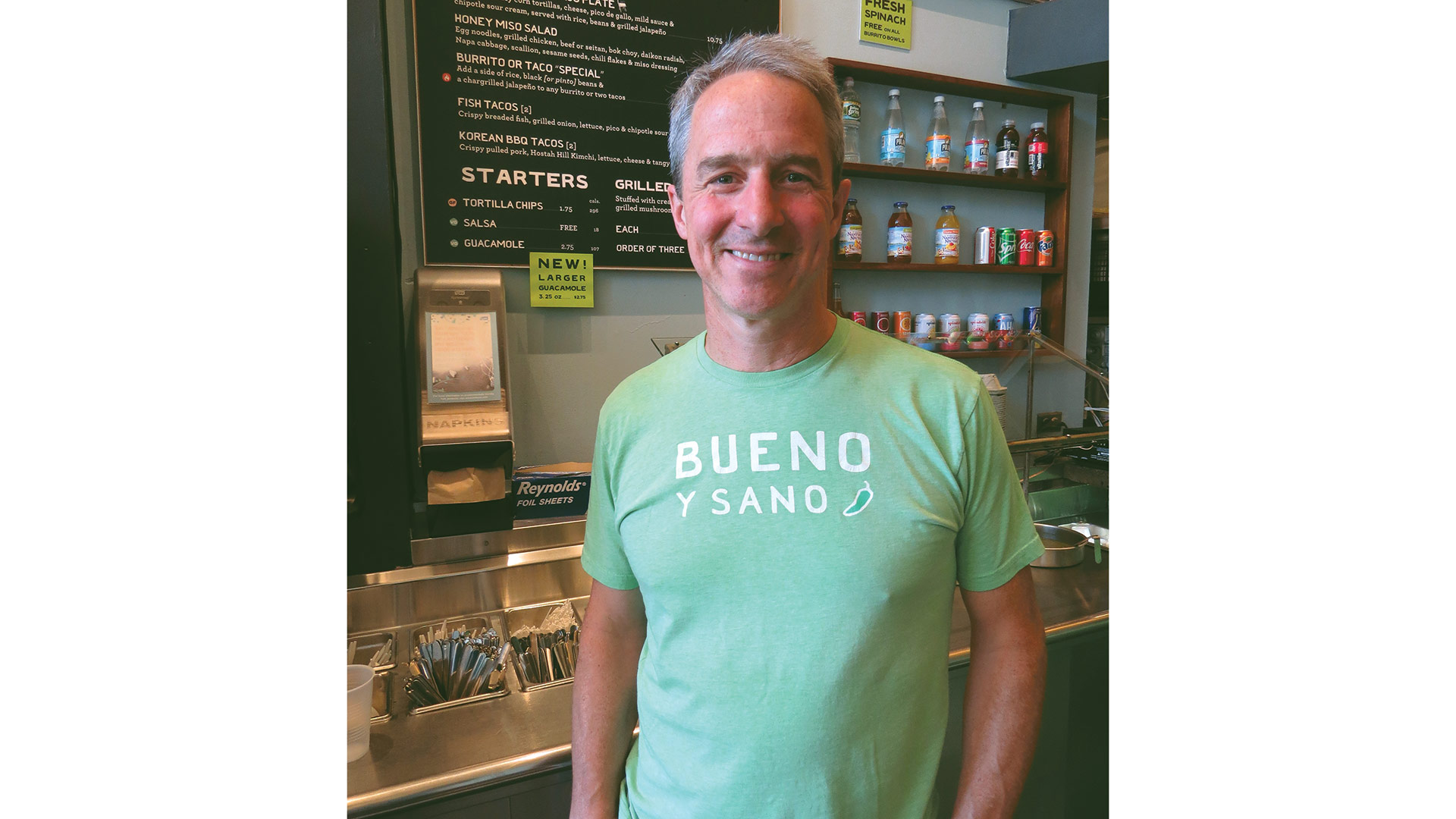
 

Bob Lowry calls it his ‘list-in-the-back-pocket’ technique.

That’s because it concerns a list he used to keep his back pocket — a list of ideas about how to make his emerging chain of fresh-Mex restaurants, Bueno Y Sano, better and more responsive to customers. It wasn’t what was on the list at any given time that was important, but rather how he handled the discussions that came up with employees about these items.

“Especially early on,” Lowry explained, “when we had a million things to figure out, I would keep a list in my pocket of the things I observed around our operation that we could improve or change; if I had an idea, I’d put it on the list. We’d have more or less regular meetings — every couple of weeks, we’d sit down as a staff, and I would ask them for their ideas.

“I’d say, ‘what do we need to do?’ ‘What do we need to change?’ ‘How do we get more organized?’” he went on. “They would have their ideas, and half of their ideas were the same ideas that I had. But instead of saying, ‘I already had that on my list,’ I’d say, ‘good idea, we’ll do it.’ In that way, it’s their idea, not my idea.”

Lowry talks about this technique often, and especially with the students in the “Introduction to Entrepreneurship” class that he teaches at the Isenberg School of Management at UMass Amherst. He uses it to demonstrate the power of positive reinforcement, the kind that was drilled into him when he first read Dale Carnegie’s classic How to Win Friends and Influence People, which serves as the textbook, if you will, for that class.

“Back then, the food at UMass was terrible. Most universities were already off to the races, but UMass was still stuck with food that wasn’t that great. So everyone was starving.”

“That notion of making the other person feel that the idea is theirs is right out of How to Make Friends — it’s a chapter,” Lowry told BusinessWest, adding that positive reinforcement is just one of the principles he focuses on not only in the classroom, but in his business. You might say he practices what he teaches.

All of which has helped him take Bueno Y Sano from that single store he started with in Amherst back in 1995 to what could be called a chain.

There are now locations that he owns in Amherst, Northampton, South Deerfield, and West Springfield. There is also a location in South Burlington, Vt., managed by Lowry’s brother, Will; another in Springfield owned by a business partner; and a store in Acton, Mass., owned by Lowry’s stepbrother.

It’s a thriving enterprise — one that actually managed to increase sales at some of its locations during the pandemic — that keeps Lowry busy enough so that he’s unsure if and to what degree there will be more expansion.

“Those things tend to pop up out of nowhere — it’s an organic thing,” he explained, adding that there are ongoing discussions about another location in the Acton area. “We’re not in a rush to have a big company at all. We have enough restaurants; we might have more, we might not.”

These days, Lowry spends his time “troubleshooting,” as he put it.

That’s how he described the practice of driving back and forth between locations, talking with staff, dealing with problems and issues that may arise, and, yes, coming up with ideas that go on a list, one that now resides in his briefcase and not in his back pocket.

He’s still giving employees credit for the ideas that he had already written down on his list, and that’s one of many reasons he’s quite content with a personal and professional life that meets a basic requirement he set a long time ago — working for himself rather than someone else.
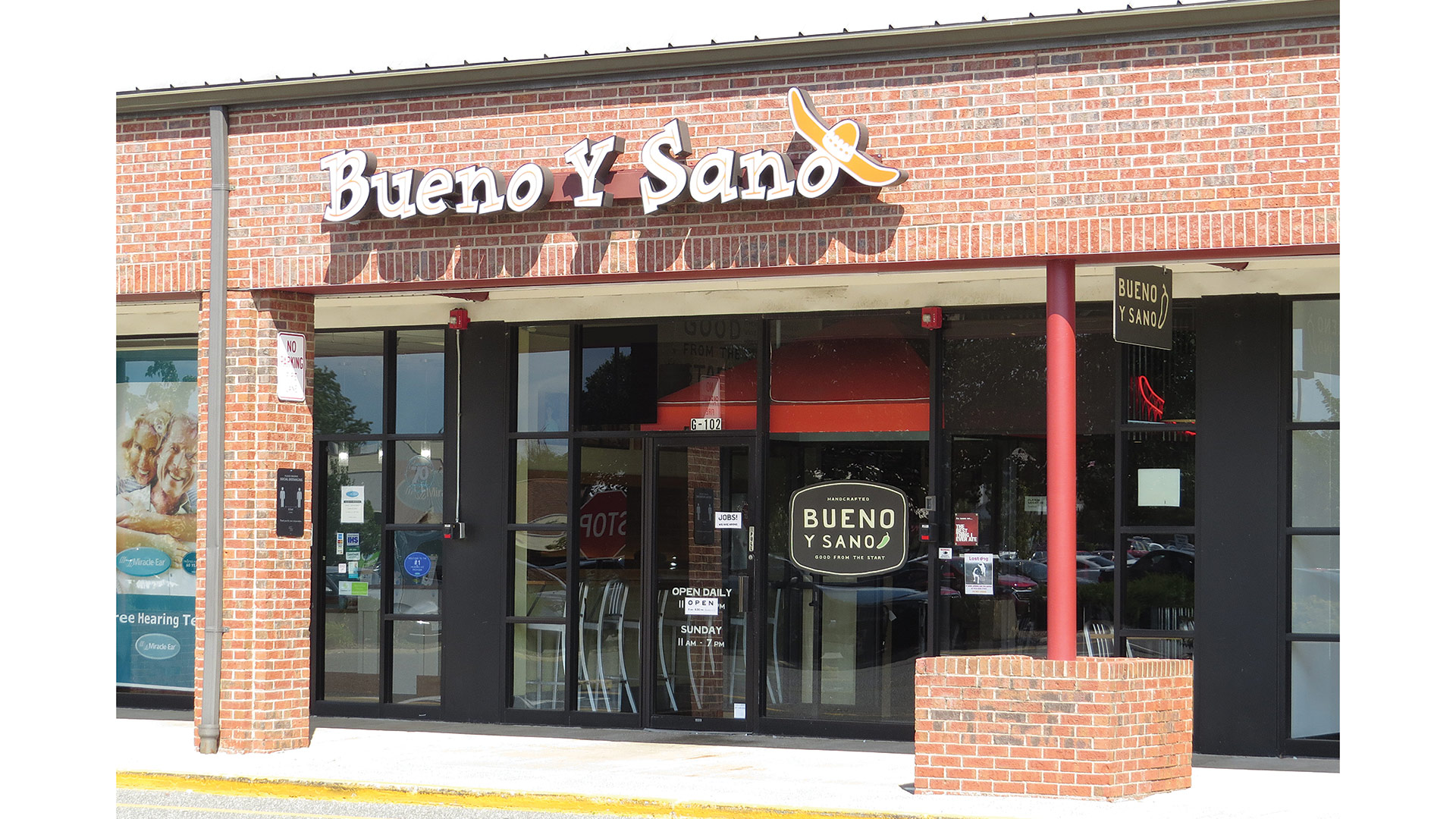
The West Springfield location in the Riverdale Shops

The West Springfield location in the Riverdale Shops is one of the later additions to the growing portfolio of Bueno Y Sano locations in Western Mass. and beyond.

“I knew I did not want to work for a company — it was deep within me … I just knew that wasn’t going to be fun for me,” he recalled. “I might have been wrong — I’m sure there are jobs out there that would have been fine — but still, it wasn’t what I wanted. And I knew that when I was 12. I knew I wanted to do fun stuff, and jobs didn’t seem like fun to me.”

For this issue, BusinessWest talked at length with Lowry about what he did want, and did get: the opportunity to work for himself. We also talked about what he’s learned and now passes on to students and a few mentors, especially about that concept of success in business, how it’s defined, and how it’s achieved.

As one might say in his industry, it’s food for thought.


Taste of Success

Lowry was quick to note that, at one time — soon after graduation from UMass Amherst — he did, in fact, have a job.

It was with State Street Bank as a mutual fund administrator.

“I got an interview through somebody’s girlfriend; she knew someone who could get me an interview,” he recalled. “They hired me because they needed people — they hired like 500 people a year. I wasn’t good at the job, but I didn’t die, though, and I would have been OK, but…

He voice trailed off, and he didn’t really finish the sentence, because he wasn’t in that job long before he came back to the Amherst area to visit friends who had not yet graduated. And it was on that trip that he famously spotted a ‘for-rent’ sign on a property in downtown Amherst and began thinking seriously about a burrito shop there.

Many in this region now know the story of how Lowry called the number on that sign, found out the location was already (or soon to be) under contract, but kept on pursuing the dream at another nearby location. With a rough business plan and a $20,000 investment from his father, the 24-year-old Lowry opened Bueno Y Sano just four months after he originally started thinking about his concept.

That thinking was blended with solid research in the form of surveys that revealed a real need for such an establishment, said Lowry, who noted that, upon opening, the Amherst location struggled mightily to keep up with heavy demand — and for a reason.

Indeed, this was 1995, years before UMass Dining reinvented itself and eventually earned a place near and then at the top of the annual rankings for best on-campus food.

“Back then, the food at UMass was terrible,” Lowry recalled, speaking from personal experience and anecdotal information. “Most universities were already off to the races, but UMass was still stuck with food that wasn’t that great. So everyone was starving.

“We couldn’t keep up — for years,” he went on. “Back then, we were doing three times the business we’re doing now in Amherst, adjusted for inflation. We were serving three times as many people back then as we do now, because UMass food is now some of the best in the world, so students don’t go out to eat as much.”

Still, the Amherst location, and the others as well, are faring quite well amid what has become a boom in Mexican fare, and especially fresh-Mex food, one that has helped fuel expansion of Bueno Y Sano well beyond its downtown Amherst roots.
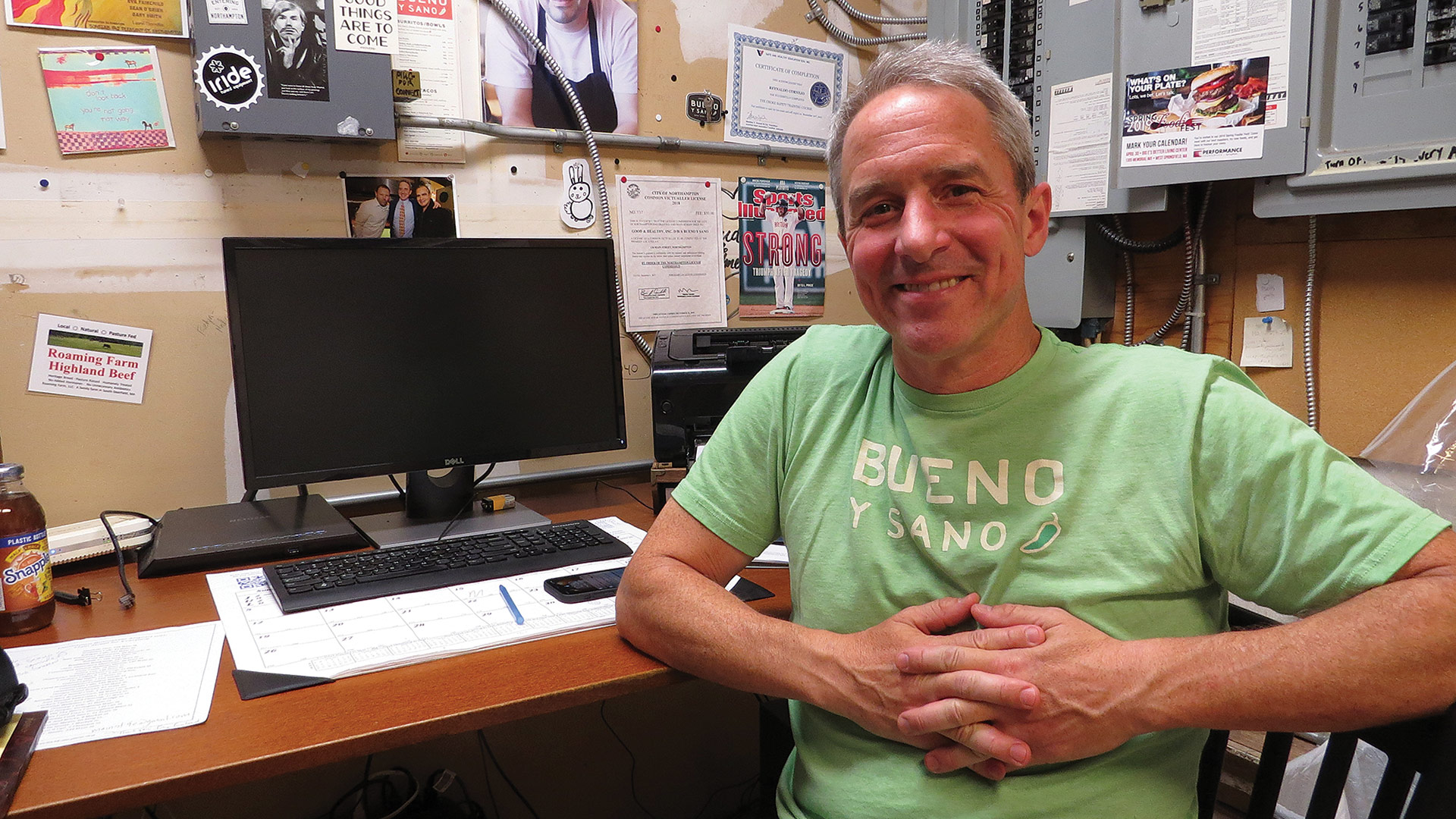
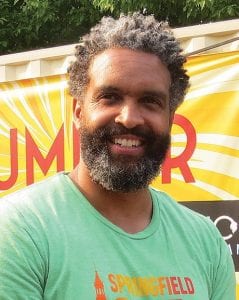
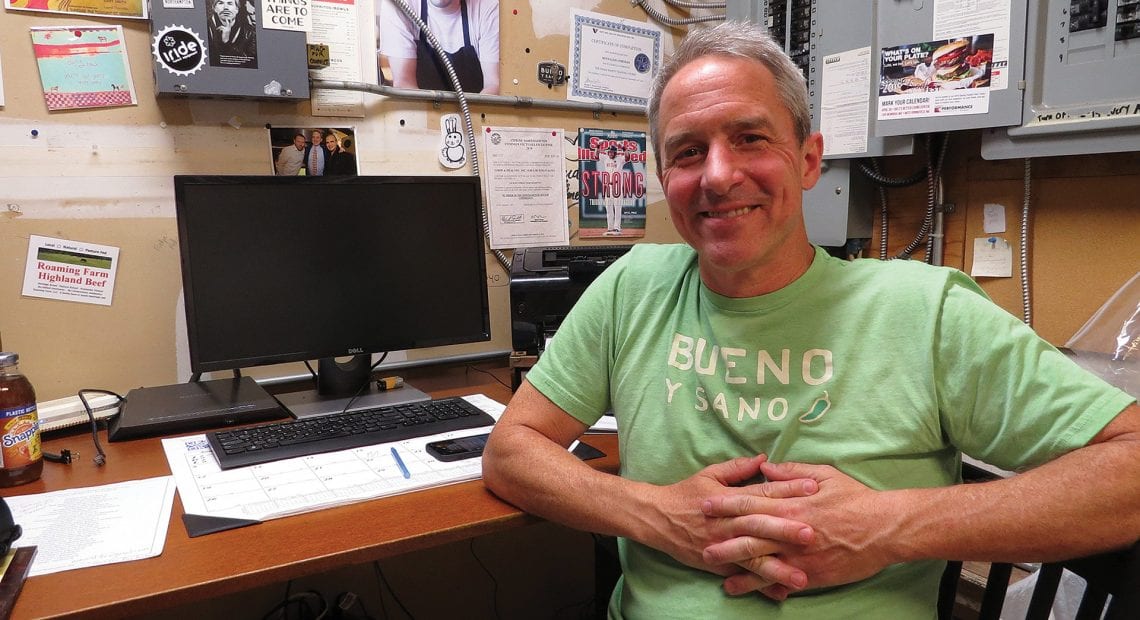
Bob Lowry

Bob Lowry says he long ago learned the importance of positive reinforcement, and he passes that message along to those he teaches and mentors.

Indeed, while a location that opened in Boston not far from Boston University quickly proved a bust — “we didn’t do any business in the evening because BU had awesome food” — the others have generally thrived, although the location in West Springfield in the Riverdale Shops hasn’t generated the traffic that was anticipated.

“We’re not a college-town place,” Lowry explained. “It’s a very broad market that we serve. Mexican food … if it’s not the biggest sector right now, it’s going to be, and soon. And we’re fresh Mex, quick service, which has grown like a weed ever since the day we started. There are probably 250 fresh-Mex, quick-service places in Massachusetts right now, where back then, there were probably 10, including us.”

The popularity of fresh Mex certainly helped Bueno Y Sano weather the pandemic, said Lowry, adding that, in 2020, the company registered roughly 75% of the sales it would during a normal year by focusing entirely on takeout and benefiting greatly from an online ordering system that was put in place before COVID-19 but not used extensively until the pandemic arrived.

“The Acton and Springfield locations actually did better than they did the year before,” he explained, adding that the company continues to do a great deal of business via the takeout route, with perhaps 80% of sales coming that way, while before the pandemic, it was probably 50%.


Hot Stuff

Flashing back to the days when he conceived Bueno Y Sano, Lowry said fresh Mex was a solid idea and, as things have turned out, a solid business proposition.

But it was also a means to an end — an opportunity to do what he wanted and not do what, deep down, he knew he couldn’t do — work for someone else.

“The things that go with a job were not motivating to me,” he explained. “I wanted to be the boss. I wanted to make decisions and do the fun stuff if I wanted to.”

Elaborating, and putting to work a phrase one hears often these days, Lowry wanted a business he could work on, not in.

“The vast majority of entrepreneurs get stuck working in the business as opposed to on it, and that’s a big trick,” he told BusinessWest. “That was part of my vision from the very, very first thought: I’m going to work on it, and other people can work in it. And it’s going to be fun, and people are going to like working for me because I’m not going to step on my feet by discouraging people.”

Expanding on that thought, Bueno Y Sano has become the kind of business he can work on, not in, he said, adding that he’s involved day to day, but there isn’t anything approaching micromanagement. He has put aside time to do other things, like teaching entreptreneurship, which creates an important balance — and often more fun.

He said the class, which he’s been teaching since 2006, has several components, including a pitch contest, the textbook, and guest entrepreneurs (he’s one of them) who will share experiences from their ventures and adventures. Over the years, a number of students, maybe 40 to 50 by his count, have gone on to start their own businesses.

Lowry said the teaching has been … well, a learning experience for him while standing at the front of the classroom, one that has given him great clarity about what works in all workplaces, and especially his.

“When they’re the boss, most people have as their first reaction the thought that their job is to catch people doing things wrong and tell them about it. But with just a small adjustment in philosophy, they could understand that their job is to catch people doing things right and tell everyone about it. And if they did that, they would be much more successful.”

With that, he returned to his chosen textbook, How to Win Friends and Influence People, which is subtitled The Only Book You Need to Lead You to Success, commentary he agrees with wholeheartedly.

Slicing through its 288 pages, he said it provides a roadmap for being not necessarily a popular leader (although that, too), but an effective one.

“Don’t criticize, condemn, or complain,” he said, while listing some of the tenets he has long lived by. “Show people genuine appreciation; let the other person feel that the idea is his or hers; give people a reputation to live up to; avoid arguments; be a great listener. These are the things you need to do as a leader and business owner.

“I’m always learning to be a better listener, and I’m always learning to take advantage of positive reinforcement,” he went on. “When they’re the boss, most people have as their first reaction the thought that their job is to catch people doing things wrong and tell them about it. But with just a small adjustment in philosophy, they could understand that their job is to catch people doing things right and tell everyone about it. And if they did that, they would be much more successful.”

And while this approach, or attitude, is one that works for entrepreneurs, it does for everyone else as well, he noted.

“If I can help them see what works with people, then I will have succeeded,” Lowry said in conclusion. “Because all of them will use it in their lives, whether they’re entrepreneurs or not. Positive reinforcement works much better than negative reinforcement. If you take it to heart, you can enjoy management and help people grow. The success of the people in your business is your success.”


Bottom Line

Getting back to that list of ideas that he used to keep his back pocket and that now mostly resides in his briefcase, Lowry said that, during those staff meetings — both years ago and quite recently — he would often get around to some of those items he had written down that hadn’t been addressed to that point.

“Half the time, they had a better idea than me, but at the end, I would have a few ideas left on my list, and I would say, ‘what do you think about this, and what do you think about that?’” he explained. “People are much more open to things after you’ve listened to their ideas.”

That’s another lesson that he passes on to his students, many of whom share his lack of enthusiasm, if not fear, of working for someone else.

In his case, that fear led to opportunity, and a chance to not only be successful in business, but also impart lessons to others on how to do the same.

In both cases, Lowry has certainly been a class act.


George O’Brien can be reached at [email protected]

Banking and Financial Services Special Coverage

Stating Its Case

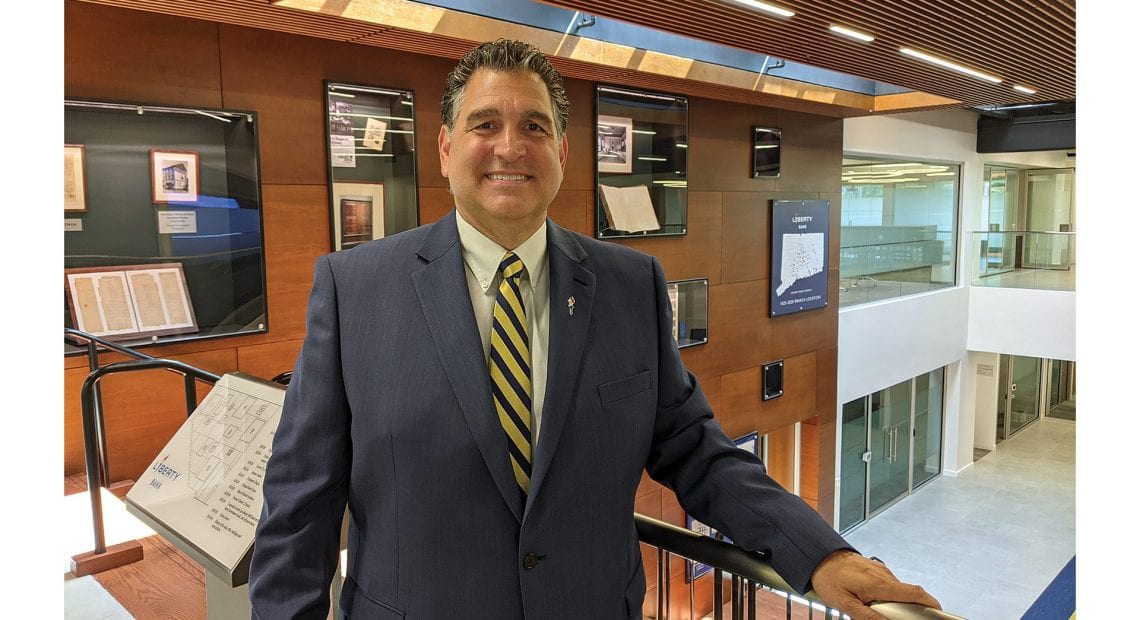
Tony Liberopoulos

Tony Liberopoulos says Liberty Bank might be new to Western Mass., but its lenders are anything but.

Dave Glidden is no stranger to the Western Mass. banking community, and neither is the lending team he’s assembled to grow Liberty Bank — the Connecticut-based institution he currently serves as president and CEO — within this region. Liberty’s leaders believe those community ties — some of the Western Mass. team’s lenders have worked in this market for three decades — will prove fruitful at a time when customers are looking for experience and stability.

Liberty Bank is the oldest currently operating bank in Connecticut. But Dave Glidden prefers not to think in terms of state lines.

“We’ve been in Connecticut a long time, and very recently we’ve crossed the border into Western Mass.,” said Glidden, the bank’s president and CEO and a familiar figure to the Pioneer Valley’s banking community from his years as regional president at TD Bank.

The reasons for the northward push, he said, seemed obvious.

“When I looked at this opportunity and took the job, one of the things I talked about with the board and my teammates was that, when you think about it, there are so many similarities between Connecticut and the Greater Springfield market, economically and culturally; people work back and forth across the border.

“So, really, if you stop looking at state boundaries for a second, we really lend in that I-91 corridor, New Haven on up through Middletown, through Hartford, and now into Greater Springfield,” he went on. “There are many similarities in industries and types of businesses, and we know a lot of the borrowers, the centers of influence, the CPA firms, the legal firms … and we know many of the businesses.”

“Liberty Bank is new to Western Mass., but our team is not new to Western Mass.”

That’s because Glidden and Liberty’s Western Mass. team — Chief Credit Officer Dan Flynn; lenders Tony Liberopoulos, Jeff Sattler, Rick Rabideau, and Gene Rondeau; and Sue Fearn, who specializes in cash management — have roughly 160 years of combined experience working in banking in Western Mass.

“Liberty Bank is new to Western Mass., but our team is not new to Western Mass.,” Liberopoulos said. “We’ve got one of the most experienced teams in Western Mass., even though we’re the rookie bank in this area.”

With the ability to assemble a team with that depth of experience in the market, Glidden said, expansion into this region — lending activity began last year, and a commercial loan-production office is opening this month in East Longmeadow — just made sense.

“Obviously, this commercial loan production under Tony’s leadership is the first foray over the border,” Glidden said, “and we’re continually evaluating and looking at retail branch sites and how we’ll build out the franchise over the course of the next couple of years in support of the commercial-lending activities that really started about a year or so ago.”

With more than $7 billion in assets but strong ties to its local communities, Glidden said Liberty is the kind of stable institution that appeals to customers in Western Mass., especially at a time when mergers and acquisitions (M&A) continue to shake up the landscape.

“With everything that’s going on in all the banking markets, there’s a lot of disruption with M&A, and it’s projected there will be a lot more M&A industry-wide,” he noted. “So, as a bank with our size and history, and the teams we have, we’re in a unique position where we can kind of out-local national banks and out-national local banks and be that entity in the middle that can deliver services and make decisions in a very local fashion, but has the scale and the size to grow with borrowers, usually past where a lot of the other community banks are restricted due to their size.”

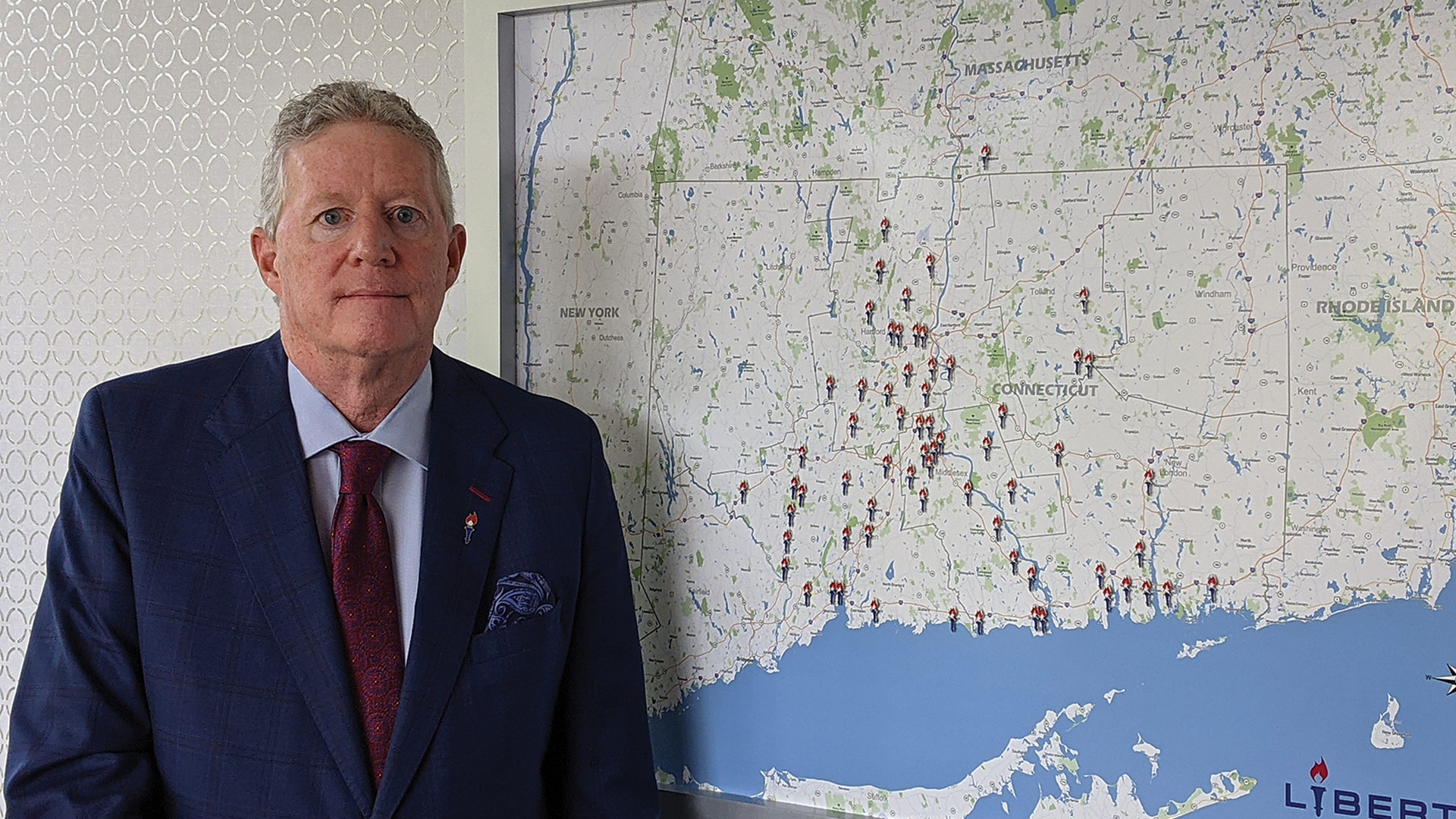
Dave Glidden with a map of Liberty’s locations

Dave Glidden with a map of Liberty’s locations, most of which are concentrated along, or not far from, the I-91 corridor.

While commercial lending is the main focus right now, Glidden said, he sees Liberty eventually expanding its presence to offer that type of appeal to retail customers as well. “When a bank gets acquired, customers often say, ‘my bank’s changing, my banking relationship is changing — maybe now is the time I should have the conversation with someone else.”

It’s a sense that was only supercharged by the pandemic, a time when online retailers thrived and changed people’s expectations about service delivery.

“We have to continue to deliver the right type of distribution system for our customers if we expect to gain market share and capture those who get disrupted due to M&A activity, or whatever other market event might happen,” Glidden told BusinessWest.

“There are great banks in Western Mass., super people, experienced bankers, but there’s going to continue to be disruption — everywhere, not just in Western Mass.,” he went on. “And we think, with our balance sheet and existing franchise and the investments we’ve been making, which have been significant over the past few years, to really up our digital offerings across the board, we’re in a great position to enter a great market that means a lot to the executive leadership here at Liberty Bank.”


Lending Support

Since launching activity in Greater Springfield, Liberopoulos and the rest of the lending team have assembled a broad variety of clients. “It’s across the board,” he said. “We’ll do loans up to $50 million for the right client, or even higher than that. We’re primarily looking at small to medium-sized businesses. We’ll look at investment real-estate deals, and we’ll look at any privately held business, if it’s the right size for us.”

Like the Greater Hartford market in which Liberty has recently expanded its presence, Glidden doesn’t see loans in a vacuum, but rather takes a big-picture look at how each loan-funded project or expansion impacts economic development in an entire region.

“It’s important, when you’re a community bank and you go into a market, that you have a strategy to align with and understand what’s going on in those markets. Who are the key economic-development companies, the drivers? Who are the key not-for-profits that we can align ourselves with and support? Because when we invest in the communities we do business in, it’s not only the right thing to do, it’s smart business.”

As it eyes growth across its footprint, including expansion of retail, investment, and other services in Western Mass., Liberty is making another kind of investment, Glidden said: in its digital channels.

“Banking customers’ habits are changing rapidly. They were changing rapidly before the pandemic,” he said. “But, obviously, the pandemic forced people to adopt online channels that, before, they wouldn’t have felt comfortable with, or didn’t think they needed — but it became a need during the pandemic.”

Part of the bank’s strategy for this region includes what shape the physical footprint will take to support the services Liberty wants to provide, he noted — but that strategy must roll out in tandem with the digital one.

Tony Liberopoulos (left) and Dave Glidden

Tony Liberopoulos (left) and Dave Glidden say there’s a space in Western Mass. for a bank of Liberty’s size and local focus.

“Branches are changing, and customers’ habits are changing — they’re using them less, but that doesn’t mean they’re not still important,” Glidden said, noting that part of what he called his “aspirational three-year plan” has involved bolstering digital assets, so customers can choose how to interact with the bank.

“It’s not up to us to choose how customers do business with us. It’s for them to choose, and it’s incumbent on us to make sure we have all those channels there. Branches are one of them, as are online, digital, and live chat.”

As he noted earlier, Amazon and other online entities, particularly during the pandemic, have altered people’s expectations when it comes to retail, and banks are, indeed, a retail business — so a bank’s digital channels need to live up to those heightened expectations.

The pandemic impacted Liberty’s Western Mass. plans in another way, Liberopoulos said: by giving it an opportunity to stay aggressive when not every bank did.

“It was an interesting time. We came to work every day, took our precautions, properly distanced, wore our masks,” he said, noting that clients still wanted to meet, some in person, some by phone or Zoom, whatever made them most comfortable. And those meetings were often productive.

“We were firm believers that COVID was going to end, so we’d look at their financial performance prior to COVID,” Liberopoulos said. “We knew 2020 and 2021 were going to be difficult, but if they were strong in ’17, ’18, and ’19 — and if their interim results look good in ’21 now that we’re getting past vaccinations — we were very eager to win that business.

“When some other banks were uncomfortable lending because of the numbers they saw for 2020, we were not,” he went on. “We understood it’s about the owners of the business, the history of the business, and we were all convinced, here at Liberty Bank, that we could see the light at the end of the tunnel and we would find the right clients to work with.”

Glidden said he was “never prouder to be a banker” than he was in 2020.

“I never want to go through it again, of course, but what the banking industry did with the Paycheck Protection Program and the SBA lending as part of the CARES Act, that was a huge challenge for the banking industry.”

He praised not only his own team, but his colleagues at other banks for working non-stop in those chaotic early days of PPP last spring, and kept working to get customers the help they needed.

“I could see it was a very unique, maybe the most unique, time in my career,” he said. “I really felt an obligation as a banker, that we’re the only way this money is getting out there in this once-in-a-lifetime — knock on wood — pandemic.”


Community Ties

Getting back to the consolidation landscape, Liberopoulos said acquisitions can often distance a bank’s philanthropic arm from the communities in which is does business, but Liberty continues to be focused on those activities.

“The bank is very sensitive to the fact that we’re seeing consolidations, so we’re seeing less money being given to non-for-profits in the community, and one of our chief slogans now is ‘be community kind.’ We want to give back to the community where we work, where we lend, and where we live. And we’ve done that already,” he said, citing donations to Ronald McDonald House, and the Boys & Girls Club as recent examples.

“It’s certainly been part of Liberty Bank’s DNA and corporate culture,” Glidden agreed, noting that the bank’s foundation, which he also serves as president and CEO, gives away around $1.5 million per year, and the bank itself contributes in the seven-figure range as well.

“And our commitments are growing,” he added. “As a community bank, you have a responsibility and obligation to give back; all of us truly believe that. That’s why we’re here. We walk the talk. We give back to our communities. It’s what community banks should do. We’re mutual, we’re private, we’re owned by our customers, so you have to give back to those communities.”

Which is even more important in an era of M&A activity.

“I just think, given the disruption and consolidation in the market, that we’re a bank that’s still local and makes decisions locally. We give back to our communities; we put our money where our mouth is.”

As one of the largest PPP lenders in Connecticut, Liberty also felt a responsibility to support community members who weren’t customers, which is why it serviced PPP loans for such individuals. In some cases, that opened the door to a new relationship opportunity.

In the end, Liberty grew during the pandemic — by about $1.2 billion during 2020, in fact. Some of that was PPP activity, Glidden noted, but about two-thirds sprung from new market share and new customers.

“We continue to feel optimistic — 196 years is pretty old, but I feel more optimistic about the next 196 years than I was pre-pandemic, and I was pretty optimistic pre-pandemic.”

Liberopoulos is optimistic, too. “We’re new to the market, but we’re not new to banking. We’ve got an experienced, well-known team, and we make local decisions with quick turnaround time. We’ll make loan decisions on the spot, in front of a client, when we meet with them. That’s the kind of bank I’m happy to say I work for.”

And it’s the sort of bank that shouldn’t be constrained by state lines, Glidden added.

“Liberty Bank is coming to Western Mass. to be a business partner with the community. We’re not coming there just to make loans and take deposits. This is the first stake in the ground, so to speak, but I think everyone will see and feel our commitment to Western Mass. as we build out our franchise there.”


Joseph Bednar can be reached at [email protected]

Education Special Coverage

Challenge Accepted

Linda Thompson, the 21st president of Westfield State University.

Linda Thompson had never applied for a college presidency position before a recruiter called and invited her to pursue that post at Westfield State University. She listened, and agreed it was time to take a 40-year-career in healthcare, public policy, and healthcare education to a new and much higher plane. She becomes WSU’s 21st president at a challenging time, especially as schools large and small return to something approaching normal after 16 months of life in a pandemic. But with her diverse background, she believes she’s ready for that challenge.


Linda Thompson remembers not only the call from the headhunter, made to gauge her interest in applying for the president’s position at Westfield State University, but the words of encouragement that accompanied it.

“She said, ‘Linda, I think you’re ready to think about being a president,’” said Thompson, who at the time was dean of the College of Nursing and Health Sciences at UMass Boston and hadn’t pursued a president’s position before. “She said, ‘you’re a dean now … look at the work deans do; they raise money, they create new programs, they create partnerships, they work with the board. The things you do as a dean are the things you’ll do as a president.”

More important than the recruiter thinking she was ready for the post at WSU, Thompson knew she was ready, even if she needed a little convincing.

“I thought I had the right background at this point in time to make a difference at this specific university,” she said, adding that it’s much more than the 35 years in higher education in various positions within nursing and health-sciences programs that gave her the confidence to enter and then prevail in the nationwide search for the school’s 21st president. It was also experience in public policy, working with a host of elected leaders to address a wide range of health and public-safety issues and, essentially, problem-solve.

“Education, to me, is a ticket out of poverty; it’s a ticket for creating wonderful solutions for society and for people.”

“Most of my career, I’ve worked with children and youth, trying to develop programs and policies to promote healthy outcomes for children, youth, and families,” she explained. “I started out, like most people in nursing, in a hospital and moved to community and public-health work. I really became interested in high-risk children just based on my work in public health, seeing how children who grew up in poverty, children who grew up in less-than-fortunate environments, were impacted by those circumstances.”

She points to her own family as an example, and noted that her two older sisters both died young, one from a gunshot wound at age 21 and the other from complications from diabetes during her second pregnancy as a teen.

“I always thought that the reason I thrived was education,” she told BusinessWest. “Education, to me, is a ticket out of poverty; it’s a ticket for creating wonderful solutions for society and for people. I’ve been blessed; I’ve not only had the opportunity to work as a nurse, I’ve also had the opportunity to work to develop programs for children who were in the justice system, people who were in state custody. I did work all over the country looking at ways we can promote good outcomes for people who had the misfortune to be engaged in the criminal-justice system.

Linda Thompson says Westfield State University learned a number of lessons during the pandemic

Linda Thompson says Westfield State University learned a number of lessons during the pandemic, and it will apply them as the school, its students, faculty, and staff return to something approaching normal this fall.

“I worked for the governor of Maryland for five years and developed programs and policies for children and youth statewide,” she went on. “We looked at how we could develop inter-disciplinary or trans-disciplinary programs, starting with education, all the way to how we need to work with housing and economic development to create good outcomes for families and for children.”

Thompson arrives at the rural WSU campus at an intriguing time for all those in higher education. Smaller high-school graduating classes have contributed to enrollment challenges at many institutions, and even some closures of smaller schools, and the soaring cost of a college education has brought ever-more attention to the value of such an education and how schools provide it.

Meanwhile, institutions will be returning to something approaching normal this fall after enduring two and a half semesters of life in a global pandemic, an experience that tested all schools in every way imaginable and also provided learning experiences and opportunities to do things in a different, and sometimes better, way.

Thompson acknowledged these developments and said they will be among the challenges and opportunities awaiting her as she takes the helm at the 182-year-old institution, founded by Horace Mann, whose pioneering efforts in education — and inclusion — are certainly a source of inspiration for her.

“He wanted to look at how education is important to a new society — a society that was going to be self-governed and where people needed to understand how to engage in civil society. I was very intrigued with this history, the inclusive nature of his approach to higher education, and how he looked back at some of the historical development of what I will call democracies in ancient Greece and the importance of an educated community to support democracies and health societies.”

For this issue and its focus on education, BusinessWest talked at length with Thompson about Horace Mann, the challenges facing those in higher education, and why she believes WSU is well-positioned to meet them head-on.


Grade Expectations

As noted earlier, Thompson brings a diverse portfolio of experience to her latest challenge.

Our story begins in 1979, when she began her career as a clinical nurse specialist in the Obstetrics and Gynecology Department at Henry Ford Hospital in Detroit. Soon thereafter, she would begin interspersing jobs in education with those in the public sector.

Linda Thompson says the timing was right for her to pursue a college presidency, and Westfield State University was the ideal fit.

Linda Thompson says the timing was right for her to pursue a college presidency, and Westfield State University was the ideal fit.

In 1987, she became assistant dean at the School of Nursing at Coppin State College in Baltimore, and two years later took a job as director of the Office of Occupational Medicine and Safety in Baltimore. In 1993, she joined the school of Nursing at the University of Maryland, where she would hold a variety of positions between 1993 and 2003, with a four-year diversion in the middle to serve as special secretary for Children, Youth & Families in the Maryland Governor’s Office.

In 2003, she became dean of Nursing at Oakland University in Troy, Mich., and later returned to the East Coast, where she would join the staff at North Carolina A&T State University, first as provost and vice chancellor for Academic Affairs, then as associate vice chancellor for Outreach, Professional Development & Distance Education.

“I see myself as a servant leader, a person who tries to see how I can help another person maximize their opportunity to dig deep inside themselves, and identify their strengths and bring those strengths out.”

In 2013, she became dean of the College of Nursing and Health Sciences and a professor of Nursing at West Chester University in Pennsylvania, and in 2017, she came to UMass Boston, serving as dean of the College of Nursing and Health Services.

Slicing through all that, she said she’s had decades of experience working collaboratively with others to achieve progress in areas ranging from student success to diversity with staff and faculty; from forging partnerships with private-sector institutions to creating strategic plans; from creating new academic programs to securing new philanthropic revenue streams for faculty research.

And she intends to tap into all that experience as she leads WSU out of the pandemic and into the next chapter in its history.

As she does so, she intends to lean heavily on Horace Mann, considered by many to be the father of public education, for both inspiration and direction. In many respects, they share common viewpoints about the importance of education and inclusion.

“This whole idea of looking at healthy communities and using education to strengthen communities resonated with me,” Thompson explained. “And it resonated with me given some of the things we’re starting to see with our divided country; how do we get people educated so that they’re able to know how to be critical thinkers, how to separate fact from fiction, and how to begin looking at the importance of creating communities where everyone is healthy? To me, healthy is more than physical health — it’s emotional and social and environmental, this whole way that we look at values that really enable people to thrive and survive in society.”

Looking forward, she said she has many goals and ambitions for the school, with greater diversity and inclusion at the top of the list. She pointed to UMass Boston, which she described as one of the most diverse schools in the country, as both a model and a true reflection of the demographic changes that have taken place in the U.S.

“Those diverse populations are the future of higher education in this country,” she told BusinessWest. “We are becoming a majority minority population, and there are opportunities to reach out to communities of color and stress the importance of education to be part of a lifestyle where we’re constantly looking at ways to engage with people and give them tools to thrive.”


Course of Action

Thompson arrived at the WSU campus at the start of this month. She will use the two months before the fall semester begins to make connections — both on campus and within the community.

She said the calendar was quickly filling up with appointments with area civic, business, and education leaders, at which she will gauge needs, come to fully understand how the university partners with others to meet those needs, and discuss ways to broaden WSU’s impact and become even more of a difference maker in the community.
The discussions with business leaders will focus on the needs of the workforce and how to make graduates more workforce-ready, she said, adding that the school has been a reliable supplier of qualified workers to sectors ranging from education to healthcare to criminal justice.

Meanwhile, the meetings with those in education focus on widening and strengthening a pipeline of students through K-12 and into higher education, and also on finding paths for those who can’t, for various reasons, take such a direct path.

“For those who are not able to go to college right after high school, how do make it easy for these adults to come back to school?” she asked, adding that she will work with others to answer that question.

And some of the answers may have been found during the pandemic, she went on, noting that, out of necessity, educators used technology to find new and different ways to teach and engage students. And this imagination and persistence — not to mention the direct lessons learned about how to do things, especially with regard to remote learning — will carry on into this fall, when the campus returns to ‘normal’ and well beyond.

“For us, moving forward, I’ll think we’ll never go back to the way we educated people before,” she told BusinessWest, “because people have learned to do this work in a different kind of way, and the public has learned that this is an option moving forward to give people an opportunity to return to college.”

When asked about what she brings to her latest challenge, Thompson reiterated that it’s more than her work in higher education, as significant as that is. It’s also her work in public policy, and, more specifically, working in partnership with others to address global issues.

She counts among her mentors David Mathews, former president of the University of Alabama and secretary of Health, Education, and Welfare under President Ford. She worked with him when he was leading the Kettering Foundation.

“I spent time with him learning about the way he approached leadership and the way he approached democracy,” she noted. “I’ve been a dean, and I’ve had experience as a provost; overall, I believe I have the right set of skills to use the lessons I’ve learned to help develop the next set of community leaders in all fields.

“We need to look at a way that we can create curriculum and graduate people who are innovative, who are critical thinkers, who know how to research on their own, who know to look at problems and how to work in teams with other people in order to create solutions,” she went on. “These are things I’ve learned in my life, and those are things I want to impart to the students who come to this campus.”

As for her leadership style, Thompson described it this way: “I look at creating a vision and an idea and working with and through people — people who are above me, people who work alongside me, people who are younger — and learning from people at all levels and ages and stages of their development.

“I tend to see myself as someone who is transformational,” she went on. “I see myself as a servant leader, a person who tries to see how I can help another person maximize their opportunity to dig deep inside themselves, and identify their strengths and bring those strengths out.”


George O’Brien can be reached at [email protected]

Special Coverage Women in Businesss

Crafting Connections

Hannah Rechtschaffen, director of placemaking for the Mill District and manager of Hannah’s Local Art Gallery.

Hannah Rechtschaffen, director of placemaking for the Mill District and manager of Hannah’s Local Art Gallery.

When Hannah Rechtschaffen set about to open an art gallery in Amherst’s Mill District, she didn’t envision a static space; instead, her goal was to develop a vibrant, eclectic, multi-media gallery that not only focused on local artists, but forged connections between them and the public through workshops, classes, events, and even the everyday conversations that bring to life the stories and history behind each artist and each piece. A couple weeks after the gallery’s opening, she’s optimistic those creative collisions are already happening.


Anika Lopes’ roots in Amherst go back six generations, so the town is special to her. But as a milliner — an artist who designs and creates hats — she has made her name in galleries and boutiques in much larger cities, especially New York.

Now, as the highlighted artist for the recent grand opening of Hannah’s Local Art Gallery in Amherst’s Mill District, she feels like she’s come full circle.

“This is the first time I’ve shown in Amherst,” she told BusinessWest. “I never thought I would be showing here, and it’s been wonderful how it’s been received — and it’s a way to give back to the community and encourage artists, especially local artists, that there is a scene and a space for everything.”

“I never thought I would be showing here, and it’s been wonderful how it’s been received — and it’s a way to give back to the community and encourage artists, especially local artists, that there is a scene and a space for everything.”

The Hannah in the gallery name is Hannah Rechtschaffen, director of placemaking at the Mill District, who launched a gallery after Cinda Jones, the ninth-generation owner of the property, asked her to. But Rechtschaffen infused that task with her own vision for an eclectic, multi-media collection of rotating artists (21 are on display now, hailing from 13 different towns, with some being replaced every quarter), but also a space-rental model that continually reinvests in bringing more exposure to the artists (more on that in a bit).

“Every three months, some of the artists will turn over, so there will always be something fresh, and there will also be some carryover,” she said. “I want people to feel good knowing they’ll come back in here and see new stuff. That’s a really crucial part.”

Also rotating will be the front window space, with which the gallery will highlight a certain artist. For the opening weeks, that’s Lopes, who was on hand to celebrate the gallery’s opening on June 19.

Anika Lopes with the front-window display of her millinery art.

Anika Lopes with the front-window display of her millinery art.

“In conjunction with Juneteenth, we wanted to make sure we were highlighting a local artist of color, and Anika’s work with the hats … gives us an opportunity to kind of push the boundary a little bit on what art is,” Rechtschaffen said of the front window space. “We can also have historic installations there, or we can do installations of artists who aren’t local, but maybe they’re doing work you can’t find locally, and we want to highlight it.”

History is important to Lopes, whose display at the gallery includes not only her hats, but original hat blocks created by one of first black men to have a millinery factory in the garment district of New York City — which she uses to hand-block her hat designs, which she then hand-sews.

“There’s a lot of history here, and it’s been amazing to merge this [artwork] with Amherst history as part of the Juneteenth celebration,” Lopes said. “It was just a wonderful opportunity to celebrate Amherst and what’s going on here at the Mill District, which was, in itself, such a pleasant surprise to see and experience. It’s an inspiration for where Amherst can go.”

As for the rental model, Rechtschaffen charges $20 per linear foot per month for wall space, which gives the artist use of the entire wall, floor to ceiling. She also takes a 20% commission on any art sales, all of which cycles back into the gallery for marketing, events, classes, and anything that brings more people in to see the work.

“Right from the start, they felt they were buying into something that was bigger than just their small space. It’s the connection, it’s the lifeline, it’s learning new things that are going to enhance their business.”

“That’s the idea — the commission isn’t just flying out of the artist’s pocket; it’s going right back into running the engine of the business side,” she said, noting that she modeled it after Woolworth Walk, a much larger gallery in Asheville, N.C., which features 230 booths in a former Woolworth’s store.

“In charging a little bit of rent, you create this ownership that artists have of the space. I want to overhear an artist say, ‘oh, I want to show you my gallery.’ I know that I’m doing it right when they have that connection to it,” she explained.

“I wasn’t sure it would translate, and especially coming out of COVID, I felt so self-conscious about putting the model out there, to charge them money up front, even if it was a low rent,” she went on. “I’m an artist; I know how hard it is. But no one batted a eye. Right from the start, they felt they were buying into something that was bigger than just their small space. It’s the connection, it’s the lifeline, it’s learning new things that are going to enhance their business.”


Art of the Matter

One of Rechtschaffen’s goals was to highlight a wide variety of art, and she’s done that, with the first 21 exhibitors — all but a couple of them women — working in media ranging from paint to felt to polymer clay. True to its name, the gallery aims to draw from local artists, meaning those living within a one-hour radius.

“We want to connect anyone coming to the Mill District with the wealth of art and artists in the area because it’s crazy how many artists are living right around here,” she said.

In addition, “it was really important to me to have both emerging and established artists sharing the space. For some of these people, it’s their full-time job, they’re artists, it’s what they do. And for some people, it’s very much on the side of what they do; maybe they want to make it a larger part of their livelihood, or maybe they’re retired and they’re just doing it because it’s a passion.”

Showing those works side by side forges connections between artists and their various media — and so does a large gathering table toward the front of the gallery, which will host classes, workshops, and “conversations” between artists and the public.

Ruth Levine says Hannah’s Local Art Gallery gave her a chance to move her jewelry from her garage into public view.

Ruth Levine says Hannah’s Local Art Gallery gave her a chance to move her jewelry from her garage into public view.

Rechtschaffen related a conversation with one of the exhibitors, Maxine Oland, a well-known local artist who operates an Etsy page.

“I was like, ‘oh, would you be open to teaching a class called Should I Bother Having an Etsy Page?’” she recalled. “Because it’s a lot of work, and you’ve got to keep it up, and there’s a cost involved. I get artists all the time saying, ‘should I bother? Is it worth it?’ What better way to have that conversation than with an artist who’s going to be honest and say, ‘well, for me it’s been worth it, and I sell X amount a month, and here’s the process.’

“So those kinds of classes and pop-up conversations can happen with emerging and established artists, and those who don’t consider themselves artists, coming and listening and learning from each other,” she went on.

Lopes sees great value in the gallery’s focus on connection, calling it a “lifeline for artists.”

“As I’ve been able to see the space and the artists coming in here, especially at this time, where people are coming out of COVID, where everyone in the arts has been affected, it’s really a place that has inspired artists,” she said. “I think it’s building confidence within artists and giving people hope.”

Rechtschaffen said the Mill District itself is intended to be a place that tells a story and builds community, which is why Jones felt an art gallery would be a strong component to begin with.

“Every artist in here has a story behind why they make the art they make, why it’s important to them,” Rechtschaffen told BusinessWest. “I can point to any one of them and tell you the backstory, and it just adds to why someone would connect with a piece and then decide to take it home.”

Stories like Susan Roylance, a longtime woodworker who, one day, carved a face and wasn’t sure what to do with it. She put it aside, but then got inspired by it, and started working in both wood and felt to sculpt whimsical characters. “I feel like every one of those sculptures is a children’s book waiting to happen,” Rechtschaffen said.

Or Dana Volungis, who worked for 24 years for Yankee Candle, got laid off during the pandemic, and started painting … only 10 months ago; her oceanside landscapes and other work belie that short gestation period. “Ten months!” Rechtschaffen said. “I didn’t even realize that when she submitted her application.”

Or Ruth Levine, who makes metal clay jewelry, but set it aside for a time to focus on being a parent and grandparent. “Now here she is,” Rechtschaffen said. “She was so empowered when she was setting her space up, saying, ‘I remember how this feels; this is great.’ She said to me, ‘if you hadn’t opened this gallery, this stuff would still be in my garage.’ I said, ‘you just validated everything for me, because I’m so glad this is not in your garage.’”

Visitors to the gallery, then, aren’t just seeing art, Lopes said. They’re connecting with history — the history of the area and the people who create art here — and maybe take a piece of that history home.


Animal Attraction

To add a bit of childlike fun to the gallery, Rechtschaffen commissioned Ivy Mabius, a close friend of Jones and a mural artist, to create a jungle-themed bathroom, complete with large, colorfully painted sculptures of an elephant and a giraffe. “Already, kids who see it don’t want to leave. It’s such an attraction. Kids — and adults — are going to want to come and use the bathroom.”

The general store that adjoins the gallery also features a unique bathroom — this one with one-sided glass, so users have a full view of the sidewalk and parking lot outside. But eclectic bathrooms aren’t the only connection between the two spaces. Rechtschaffen can see a time when artists who have displayed in the gallery find a space in the store to sell their crafts.

Ivy Mabius designed a whimsical, jungle-themed bathroom at the gallery.

Ivy Mabius designed a whimsical, jungle-themed bathroom at the gallery.

Again, it comes back to making connections and offering a wide range of exposure to local art. The front table can also be used as a co-working space, or just a spot to hang out, she added.

“This is really meant to be something people can access all the time, however they need to. The goal is for people to see great art and great work,” she went on, noting that a master cabinet maker from Cowls Building Supply built all the gallery’s walls, shelving, and fixtures on wheels, so the configuration of the gallery can be changed. Artists who want to apply to rent space may do so at bit.ly/HannahsGalleryApplication.

Rechtschaffen also envisions sharing art outside the gallery at pop-up displays, art fairs, holiday events, and other gatherings — again, with the goal of connecting local art to as many people as possible. And they’re hungry for it, she added, like one woman who came to the gallery opening and said it was her first social event in a long time.

“She was like, ‘I’m good, I’m good; this is helping.’ It’s not just about getting people back out there; for business owners and people creating these events, we have a responsibility — if we’re inviting someone into a space, we need to be mindful of what that space feels like, that it feels comfortable. I take that very seriously, creating a space like this where people can come enjoy themselves.”

As people emerge from COVID isolation, Lopes said, one positive is that many have learned a lot about themselves, and that’s especially true for artists, who can now move forward with new understanding and new vulnerability — and a new audience at the Mill District.

“We are into telling stories and making sure people get to see art,” Rechtschaffen said, “but also learn something about their community.”


Joseph Bednar can be reached at [email protected]m

Special Coverage Sports & Leisure

Play Time

Sarah Blais says it’s good to hear activity again at Spare Time Bowling.

Sarah Blais says it’s good to hear activity again at Spare Time Bowling.

Among the industries battered by the pandemic and the ensuing economic shutdown, indoor recreation centers — from bowling alleys to trampoline rooms to roller rinks — took a massive hit last year, forced to close for longer than most other businesses and then tasked with navigating a very gradual ramp-up to normal operations. Now, a month after the final restrictions were lifted, the owners and managers of these businesses are grateful to be fully open, with a renewed understanding of the value of play in people’s lives.

By Mark Morris

After a successful 2019, Jeff Bujak looked forward to 2020 as a chance to further grow Prodigy Mini Golf and Game Room in Easthampton. Then the pandemic hit.

“In the beginning, we were told to shut down for 15 days, and I said, ‘OK, let’s do it,’” Bujak recalled. When two weeks stretched to four months, however, he became worried about his business surviving.

He wasn’t alone. Every business that offers indoor entertainment was affected by the lengthier-than-expected, state-mandated shutdown to control the spread of coronavirus. Rob Doty, managing partner at Bounce! Trampoline Sports in Springfield, said his doors remained closed just two weeks short of a full year.

“At that time, there was huge fear about going near anyone and staying away from enclosed environments. I was concerned that people might stay afraid forever and not come back.”

“We had just installed a laser-tag arena,” Doty said. “We were getting it up and running for the season when we had to shut down.”

Like Bounce!, Interskate 91 North closed the roller-skating rink at Hampshire Mall in March 2020 but was allowed to reopen in October. Management held off opening until after Thanksgiving, but then had to shut down again when COVID-19 infection rates began to climb.

“To follow the guidelines, we stayed closed for a few more months and opened again in late March,” said Sarah O’Brien, sessions manager.

Meanwhile, Sarah Blais, general manager of Spare Time Bowling in Northampton, said her facility remained closed until late July 2020, and then, by mandate, could only operate at 25% capacity.

Jeff Bujack

Jeff Bujack is happy that customers can once again access his collection of vintage video games at Prodigy.

“We spaced everyone out by using every other lane,” she said. “It was slow in the beginning, and we didn’t even hit our 25% capacity numbers.”

Once the calendar turned to 2021, Blais said business began to pick up, and Spare Time began to reach its limited capacity. As more employees returned, she held an orientation for them on how to operate during a pandemic that’s not yet over.

“In short, it involved much more work than usual, and my team was all in for it,” she said. Much of the extra work concerned lots of sanitizing, including every bowling ball in the place.”

While extra cleaning was part of the mandate to reopen, all the managers BusinessWest spoke with agreed that the emphasis on cleaning went a long way toward helping customers feel safe.

“For the most part, we were doing our normal cleaning, but we did it more often,” O’Brien said. “People loved seeing us constantly cleaning.”

Doty concurred. “Now that hyper-cleaning has become second nature, I don’t see us changing things,” he said, adding that his crews use a fogger/mister to clean the trampoline courts as well as additional handheld sprayers to clean other areas.

“It was awesome when we reopened because my bosses and co-workers are like a second family to me.”

It’s yet another step in emerging from what has been a challenging 16 months, to say the least. But with the state lifting all pandemic restrictions on gathering sizes and mask wearing at the end of May, this is also an optimistic time for these facilities that are eagerly welcoming back families grateful for something to do.


Leveling Down

Prodigy doesn’t easily fit into a business category because it offers its customers the chance to play mini-golf, vintage video games, and even board games. Located in the Eastworks mill complex, Prodigy occupies 8,000 square feet, with 14-foot high ceilings, industrial fans, and windows that open to the outside.

While disappointed that his business was considered an arcade by state standards, Bujak was able to open last summer because indoor mini-golf courses were allowed to operate. He could not offer play on the video games, however, due to limits on arcades.

Rob Doty is expecting a big rebound at Bounce! Trampoline Sports.

Rob Doty is expecting a big rebound at Bounce! Trampoline Sports.

While nearly breaking even during the during the warm months, by November, the losses began to pile up, and Bujak was desperate.

“At that time, there was huge fear about going near anyone and staying away from enclosed environments,” he recalled. “I was concerned that people might stay afraid forever and not come back.”

With plenty of spacing and cleaning protocols in place, he reached out to his social-media followers to at least try the new layout and give their feedback. He said his spacious location eased concerns about social distancing and air flow.

“There was a community of people who said, ‘you can’t close, I need this place. The pandemic proved that it’s not just about me, it’s about hundreds of people who use Prodigy as a place to get away and play the games they can’t play anywhere else.”

“Gradually, friends, family, and our regular customers came in,” Bujak said. By January, business had returned, and February was the most successful month in Prodigy’s history.

“I don’t know if all these efforts with masks, distancing, and cleaning actually made people more safe,” he said. “It was more important that people felt safe in the environment and felt good about their choice to come in.”

As to why February was a banner month for Prodigy, Bujak said people had begun to figure out they could go out as long as they wore masks and distanced. People were also becoming more hopeful as access to vaccines received news coverage. “Most people were not ready for a concert or bar atmosphere, so this was a good middle ground of being social but still low-key.”

The disco lights are on again at Interskate 91, and Sarah O’Brien is expecting the crowds to return.

The disco lights are on again at Interskate 91, and Sarah O’Brien is expecting the crowds to return.

Blais credits a simpler rationale. “I think everybody just met their quota of staying at home,” she said with a laugh.

For the better part of a year during which Interskate 91 opened and closed a couple times, O’Brien found herself sidelined, without work, for the first time since she was 14 years old.

“I was home for nearly a year, and I missed not being here,” she said. “It was awesome when we reopened because my bosses and co-workers are like a second family to me.”

At the height of the pandemic when nearly everyone was advised to stay home, many used their time to clean out garages and basements to get rid of things that were no longer useful. Bujak benefited greatly from the COVID cleanout as many people donated old video-game consoles, video games, and board games to him.

“I might have doubled my amount of games just from people cleaning out their basements,” he said.

While most managers said they used the closed time to deep-clean their locations, O’Brien said Interskate 91 installed a new carpet and created a dedicated area where food is sold and eaten. “In the past, we let people eat anywhere. By keeping it all in one area, we can offer more food choices than we did before.”

As of May 29, people who had been vaccinated no longer had to wear masks in retail settings, and bounce houses, roller rinks, bowling alleys, and similar businesses could once again operate at full capacity.

“On the first weekend where people didn’t have to wear masks, we had lots of families and kids come in,” O’Brien recalled. “ Our regulars were so excited that we were open again.”

Blais admits seeing the return of people bowling was an emotional experience. “It’s very nice to hear bowling balls hitting the pins again.”

Doty is looking forward to finally getting use out of the laser-tag room. “Now that we’re fully open, we’re getting the word out about our laser tag and our expanded arcade,” he said, adding that he’s also looking forward to booking birthday parties and other group events.

To recognize the challenging 16 months everyone has gone through, Spare Time has begun offering weekly Service Industry Nights to workers in the restaurant industry.

“I’ve been talking with the restaurants in town, and we offer them free bowling from 9 to 11 p.m., and they have the place to themselves,” Blais said. “We are extending our service nights to our police and fire departments as well.”


Replay Value

Bujak said the experience of the past 15 months has made him a different person. At the start of the pandemic, he saw himself as an individual business owner who worried about losing his dream. He didn’t realize that Prodigy was bigger than just him.

“There was a community of people who said, ‘you can’t close, I need this place,’” he told BusinessWest. “The pandemic proved that it’s not just about me, it’s about hundreds of people who use Prodigy as a place to get away and play the games they can’t play anywhere else.”

Now that he can operate at full capacity, Bujak is grateful his business has survived and he can once again take care of his regular customers and introduce Prodigy to new ones.

“Here we are,” he said, “back to normal-ish.”

Community Spotlight

Community Spotlight

By Mark Morris

Mayor Nicole LaChapelle

Mayor Nicole LaChapelle says she is concerned about the deeper effects of COVID, and is thus stressing the importance of public health.


While grateful that Easthampton is reaching the other side of COVID-19, Mayor Nicole LaChapelle understands there is still plenty of work ahead.

Even though her city came through the pandemic in better shape than many communities, she has prioritized building up the Public Health department to help the city move forward.

“We’re looking at public health as a part of public safety,” LaChapelle said. To that end, the mayor hopes to add more clinical staff to the department as well as encourage other city departments to collaborate with Public Health.

“I’m concerned about the deeper effects of COVID, from people who had COVID and survived to the mental-health aspects of it on so many people,” she went on. “In Easthampton, we need to support those with medical needs as well as mental-health needs.”

There may be some help on the way. Recently, the Center for Human Development (CHD) purchased the former Manchester Hardware store on Union Street. While CHD currently has a small presence in Easthampton, moving to the nearly 18,000-square-foot building will allow it to expand its services.

Right now, plans include outpatient mental-health counseling services for all ages and primary medical care at the site. LaChapelle said CHD could go a long way to filling the gaps in behavioral-health services in the city.

“CHD has been a good partner, and they are listening to the needs of our community members,” she said. “I feel good about what they will bring to Easthampton.”

After 125 years in business, Manchester Hardware closed its doors late last year. Owner Carol Perman had tried to sell the business to a regional hardware chain, but when that and several other possible suitors didn’t pan out, she decided to retire and just sell the building.

Some in Easthampton were critical of LaChapelle for not trying harder to locate a for-profit business at the Manchester property. Yet, “Easthampton has historically had community-based services downtown. This is not a new placement of services,” she said, noting that Manchester Hardware’s location on a public bus route helps it fit in with City Hall, the Council on Aging, and Veterans’ Services, which are all located downtown.

“As businesses reopen and start to come back, we as a city want to help them readjust to be successful for the long term.”

While there have been calls to model Northampton by pursuing a robust Main Street business district, LaChapelle said she would be negligent as mayor to try to imitate other communities and ignore her own city’s strengths. “Having centrally located services for our residents is a real strength of Easthampton, and we need to pursue those things we do well.”

The mayor’s emphasis on public health is about bringing the entire community back, she noted, especially businesses in Easthampton. “As businesses reopen and start to come back, we as a city want to help them readjust to be successful for the long term.”


Back on Track

Since the beginning of the pandemic, the Greater Easthampton Chamber of Commerce has also worked closely with businesses to get them back on track.

“Even as COVID nears its end, business owners are trying to get their sea legs back,” said Moe Belliveau, the chamber’s executive director.

For the past 15 months, the chamber has shifted its role to become a central information resource in helping local businesses identify and apply for financial assistance during COVID.

“We sifted through all the extraneous information that comes with forms that apply to many situations,” Belliveau said. “Our members knew they could rely on us to get the right information and avoid the firehose effect of too many forms.”

In addition to securing federal grants, the chamber partnered with the city on a state economic-development project that enabled 31 businesses in Easthampton to each receive $1,500 grants.

Belliveau is currently working with the city planner on a COVID-recovery strategic plan. “There are still unknowns as we come out of COVID, so we’re trying to keep communication pathways open so we can make adjustments when necessary,” she said. “The chamber’s mission in this becomes to remain agile so we can provide help where needed and respond to opportunities when we see them.”

Like many communities, Easthampton businesses are having trouble filling open jobs. LaChapelle hopes to address this by possibly using state and federal money to subsidize local businesses so they can pay higher wages to get people back to work.

River Valley Co-op, a full-service supermarket

The opening of the River Valley Co-op, a full-service supermarket, is one of many intriguing developments in Easthampton.

The opening of the River Valley Co-op, a full-service supermarket with an emphasis on local and organically grown foods, is bringing lots of excitement to Easthampton. With its grand opening in July, River Valley will offer a 22,000-square-foot market to Easthampton employing 83 unionized workers with hopes of growing that number. By installing solar canopies in the parking lot and solar collectors on the roof, it produces enough power to offset the energy required to run the market, making it a net-zero building.

LaChapelle said River Valley is already inspiring the city to pursue its own energy-saving projects. “We’ll be putting solar canopies in the parking lot and on the roof of City Hall, as well as behind the Public Safety department. It won’t bring us to net zero, but it’s a good start.”

Easthampton at a glance

Year Incorporated: 1785
Population: 16,059
Area: 13.6 square miles
County: Hampshire
Residential Tax Rate: $17.46
Commercial Tax Rate: $17.46
Median Household Income: $45,185
Median Family Income: $54,312
Type of Government: Mayor, City Council
Largest Employers: Berry Plastics Corp., INSA, Williston Northampton School, National Nonwovens Co.
* Latest information available

Mountain View School, which will serve students from pre-kindergarten through grade 8, is nearing completion and expects to welcome middle-schoolers in January 2022, after the holiday break. LaChapelle said the plan is to move some of the younger grades into the new school next spring, and by fall 2022, all grades will be attending Mountain View.

“A couple years ago, we discussed the fear of moving young children during the school year and how disorienting that might be,” the mayor noted. “Since COVID and all the adjustments students have had to make, we no longer see that as an issue.”

Once all the students move to the new school, Easthampton will try to sell the Maple, Center, and Pepin school buildings, all of which are more than 100 years old. LaChapelle hopes to see those buildings developed into affordable housing, and the city is marketing all three schools as one project to make it more attractive to developers.

“There are still unknowns as we come out of COVID, so we’re trying to keep communication pathways open so we can make adjustments when necessary.”

“If we converted just one of these schools for affordable housing, it would be tough because it may result in only 12 units,” LaChapelle said, adding that several developers are considering the three schools as one package, and she remains optimistic that a deal might soon be in the works.

At one time, Easthampton was known for its mills. Long after they were shut down and no longer viable, the mill buildings are now a way to address economic development and to make more housing available. One Ferry Street is a project that is renovating old mill buildings into mixed-use properties featuring condominium and rental housing, as well as office space. One building, 3 Ferry, is already open, and several businesses are currently leasing space there. The next two buildings slated for renovation sit behind it and present a sort of before-and-after contrast to illustrate the potential at the site. Once complete, those two buildings, both much larger than 3 Ferry, will add more than 100 new housing units to Easthampton.

While many businesses either slowed down or shut down during the pandemic, the four cannabis dispensaries located in Easthampton continued to generate income for the city. LaChapelle is hoping to use some of that revenue for a clean-buildings initiative. With several buildings in need of new HVAC systems and some state money available, she sees this as an opportunity to invest in public infrastructure that will benefit the city well into the future.

“It’s a big step, and, where appropriate, we could offset some of the one-time expenses with our cannabis revenues,” she added.


Change Agents

Belliveau said one of the strengths of Easthampton is an eclectic entrepreneurial base. Last year, the National League of Cities selected Easthampton as part of its City Innovation Ecosystem program designed to drive entrepreneurship and innovation. The city’s effort, titled Blueprint Easthampton, currently features an online resource navigator to connect entrepreneurs with everyone from suppliers to counselors to help advance their enterprises.

The Massachusetts LGBT Chamber of Commerce and the Assoc. of Black Business & Professionals are also working with Blueprint Easthampton, which puts a focus on informal entrepreneurs who might not qualify for traditional grants, LaChapelle said, adding that she’s most excited about the coaching aspect of the program.

“[JPMorgan Chase CEO] Jamie Dimon has executive coaches — why not someone who’s making a product for sale on Etsy?” she said. Through coaching, entrepreneurs can learn how to take advantage of the many resources that are available.

“We’re seeing all kinds of people, including single parents and people of color, who are all trying to figure out how to grow,” the mayor said. “We’re giving them technical support, executive coaching, and, at the end of the program, a gift of capital to help them get ready for the next step in their venture. We just ask they register as a business in Easthampton.”

Through all its challenges, LaChapelle remains optimistic about Easthampton because she feels there is a real dialogue between the city and its residents.

“In Easthampton, you can get involved in your government and make a difference,” she said, crediting, as an example, efforts by volunteer groups who worked with the city to create open public spaces.

“Easthampton has really embraced change and the ability to evolve and grow,” Belliveau added. “In general, I’ve found people are excited about the positivity and potential that comes with change, even when it’s scary.”

Banking and Financial Services

Brokerage App Is a Dangerous Culmination of Intersecting Trends

By Jeff Liguori


It was supposed to democratize Wall Street — yet another DIY trend, this time with your hard-earned money.

Robinhood is a popular brokerage application that allows subscribers to open an account with as little as $1, charges nothing for commissions, and allows users to buy fractional shares of stock. Backed by venture capital and slated to go public with an estimated $30 billion valuation, the company has enjoyed meteoric growth with an estimated 13 million users, 50% of whom use the mobile app daily, often multiple times, and 90% of whom use it on a weekly basis. The overwhelming majority of its user base belongs to the millennial demographic.

Robinhood achieved what it set out to do, but at what cost?

I’ve worked in the investment field since 1994 and have managed assets for clients since 2006. I’m also an entrepreneur, so I appreciate disruptive technology amid a changing business landscape. Robinhood, however, is the dangerous culmination of intersecting trends that have harmed investors and, according to financial regulators, may have contributed to a death by suicide.

Jeff Liquori

Jeff Liguori

“Robinhood is not the Home Depot of investing. Do-it-yourself portfolio management has been around since the advent of E-Trade in the mid-’90s. That company disrupted the brokerage industry and forced commissions at most every other firm lower in order to compete for customers.”

The basic business model for financial advisory or money management is that the client pays a percentage of his or her account balance as an annual fee, generally around 1%. To be clear, Robinhood is a brokerage; the firm does not use discretion to manage a client account or offer advisory services. Many brokerage firms have morphed into advisors and now focus more on money management as trading commissions have trended to zero. Overall, this trend has been a positive for individual investors and has improved access to many financial solutions — mutual funds, exchange-traded funds, or individual stocks — as well as financial research and news.

Robinhood is not the Home Depot of investing. Do-it-yourself portfolio management has been around since the advent of E-Trade in the mid-’90s. That company disrupted the brokerage industry and forced commissions at most every other firm lower in order to compete for customers. Just as E-Trade blazed a path for lower commissions, Schwab, Fidelity, and TD Ameritrade slashed commissions to zero in 2019 in response to Robinhood taking market share.

But growth has consequences. Robinhood was at the center of some incredibly volatile trading in a handful of individual stocks. You may have heard of GameStop (GME). The Robinhooders gathered virtually in chat rooms, most notably on a platform called Reddit, and decided as a community which stock they wanted to manipulate. It was no small feat. From Jan. 18 to Jan. 28 of this year, the price of GME went from about $18 to a high of $478, an increase of more than 2,600%. The Robinhood crowd is believed to be the main catalyst for this action. The day GME hit $478, it also went down to $112 before finally closing around $193.

In the month of January, 1.26 billion shares of stock changed hands in GME, almost 15 times the average monthly volume. Robinhood eventually cut off any trading in GME shares on Jan. 28, as well as trading in several other stocks with a similar backstory. Imagine being a small investor, buying GME shares at, say, $250 on Jan. 27, watching your investment nearly double the next day, but not being able to trade and exit your position profitably.

As previously stated, the Robinhood story is the intersection of several trends: fiercely independent millennials, ‘killer app’ technology, and the rewards reaped from the instantaneous decision making of like-minded people, all backed by institutions awash in venture capital, looking for the next big idea. I cringe at the thought that Robinhood may compete with what firms like mine provide for clients, namely deep expertise, sound financial advice, and disciplined investing backed by serious research.

FINRA, a regulatory agency that oversees brokerage firms, recently fined Robinhood $57 million and ordered $13 million in restitution to customers. It is the largest fine ever imposed by that regulator. In the press release, FINRA even referenced the suicide of a 20-year-old trader who panicked when his Robinhood app may have incorrectly displayed a massive $730,000 loss and received only a generic autoreply when he e-mailed Robinhood customer service three times seeking help.

Robinhood the idea is a good one. Robinhood the company has a lot more growing pains on the horizon, which likely won’t prevent the founders from becoming fabulously rich. And I have no problem with wealthy entrepreneurs, who typically risk everything for a single idea. Time and again, however, the investment profession is plagued with these stories in which investors are persuaded to pursue the next big thing. I think FINRA’s message is a powerful one. Now, if someone would just listen.


Jeff Liguori is the co-founder and chief Investment officer of Napatree Capital, an investment boutique with offices in Longmeadow as well as Providence and Westerly, R.I.; (401) 437-4730.


Banking and Financial Services

Strike Against Hunger

Andrew Morehouse thanks Country Bank

A surprised Andrew Morehouse thanks Country Bank for the $500,000 donation to the Food Bank of Western Massachusetts.

Paul Scully says he wants to “throw hunger a curveball.”

And to the leaders of two Massachusetts food banks, it was a welcome pitch indeed.

At its annual meeting on June 21, Country Bank unveiled its most recent — and largest — donation targeting the persistent issue of food insecurity in the Bay State, surprising Andrew Morehouse, executive director of the Food Bank of Western Massachusetts, and Jean McMurray, executive director of the Worcester Food Bank, with two $500,000 checks, one for each organization.

“With everything we’re hearing these days about the shortage of food and the high expense of food … the need is real out there,” Scully said during the announcement event. “It’s really exciting for us and an honor to announce we’re kicking off a million-dollar pledge to throw hunger a curveball, and we are presenting a $500,000 check to both Jean and Andrew for your organizations.”

It’s just the latest, and largest, in a remarkable show of support from banks across the region in the fight against food insecurity, which spiked during the COVID-19 pandemic and continues to be a persistent problem. Most banks in Western Mass. have ramped up their contributions to area food banks and food pantries, often significantly.

“As a community partner, we care deeply about the sustainability of our communities and the people who live in them,” Scully added, noting that this $1 million pledge reflects an recognition of the burdens many have experienced throughout this past year.

“I’m in awe of Country Bank’s generosity and so impressed by their commitment to the community, whether it be Worcester County or the four counties of Western Massachusetts.”

Newly appointed Country Bank board members Elizabeth Cohen-Rappaport, Richard Maynard, Ross Dik, and Stacey Luster presented the checks to Morehouse and McMurray at the annual meeting.

“I’m in awe of Country Bank’s generosity and so impressed by their commitment to the community, whether it be Worcester County or the four counties of Western Massachusetts,” a visibly surprised Morehouse said. “This demonstrates that Country Bank is for real, and they practice what they preach.”

McMurray was equally touched. “This was totally unexpected, but, when I think about it, Worcester, and Worcester County, is the best place to live, to work, and to give back, and we are going to put this tremendous gift from Country Bank to work so none of our neighbors has to go hungry.”

The Food Bank of Western Massachusetts relies on donations from individuals, businesses, foundations, civic organizations, faith-based groups, schools, and government to fulfill its expanding mission. With the help of that support, it provided the equivalent of 12.3 million meals in in the fiscal year that ended Sept. 30, 2020 — a significant increase from meals provided in previous years, and a pace that continued as the pandemic extended well into 2021.

“Country Bank is always looking at the basic needs of folks in our communities, whether food services, shelter and homelessness, as well as healthcare — those are the primary pillars where the bank tries to make the most of its donations,” said Shelley Regin, the bank’s senior vice president of Marketing.

The support for food banks comes at a critical time, not just in Massachusetts, but nationally. Feeding America estimates that the pandemic caused 13.1 million non-elderly adults to seek free meals or free groceries for the first time.

“The pandemic forced businesses and workers to make tough decisions,” said Ash Slupski, the organization’s website marketing manager. “To prevent the spread of coronavirus, many businesses were forced to close or lay off employees. This is especially true for people employed in restaurants, hotels, other service industries, and small businesses.”

Meanwhile, the needs of remote learning, especially for young children, forced many working parents to temporarily leave their jobs to be home, if they couldn’t work remotely themselves. And many faced reduced hours and paychecks when they did return to work, Slupski noted. “All these changes impact people’s ability to provide for their families now and plan for the future.”

To meet the growing need locally, the Food Bank of Western Massachusetts recently revealed plans for a new distribution center and headquarters, which will be located on the corner of Carew and East Main streets in Chicopee. Construction on the new headquarters, which will be larger and more sustainably build than the current location in Hatfield, is expected to begin next spring.

Regin noted that, in 2020, Country Bank’s philanthropy exceeded $1 million by supporting 450 nonprofits throughout the region, mainly focused on helping food pantries, homeless shelters, COVID-19 relief services, veterans, and other programs that supported the everyday needs of the people in its communities.

“Country Bank really wants to make sure we’re supporting all our communities,” which extend geographically from Springfield to Worcester, she noted. “It starts with Paul, and we all follow his lead in looking for ways the bank can make a difference. We support many charities, as many banks do, but it starts with Paul; he’s a great leader in that way, and we’re all on board.”


—Joseph Bednar

Education

Maintaining Momentum

Anne Massey

Anne Massey says that early on, she told faculty and staff at Isenberg that the pandemic was not to be looked at as “a short-term problem we’re just trying to solve.” Instead, it has been a learning experience on many levels.


When Anne Massey arrived at the Isenberg School of Management at UMass Amherst in the late summer of 2019, she came with a lengthy set of plans, goals, and ambitions for an institution that was steadily moving up in the ranks of the nation’s business schools and determined to further enhance its reputation.

The overarching plan was to decide what was being done right, what could be done better, and how the school could continue and even accelerate its ascendency with those rankings.

Massey was already making considerable headway with such initiatives when COVID-19 arrived just eight months later and turned normalcy on its ear. But she was determined not to let the pandemic create a loss of focus or momentum.

And almost 16 months after students went home for a spring break from which they would not return, she can say with a great deal of confidence that she has succeeded with that broad mission.

In fact, the pandemic may in some ways have even created more momentum for Isenberg, which is now the top-ranked public business school in the Northeast.

Indeed, those at the school have used the past 15 months as a valuable learning experience, said Massey, who was most recently the chair of the Wisconsin School of Business. She stressed repeatedly that this was a time, as challenging as it was, not to simply get through or survive, and as a homework assignment for her staff, she strongly recommended Ryan Holiday’s book The Obstacle Is the Way — The Timeless Art of Turning Trials Into Triumph.

“I said early on that we’re not going to be looking at this pandemic, and all the things that it wrought for us in terms of remote teaching, remote learning, and remote work, as a short-term problem that we’re just trying to solve,” she explained. “I said that we’re going to learn things, and we’re going to carry them over to when we came back and be better than we were in March of 2020.”

She believes the school will be better because of how it has learned to use technology to do things differently and in some ways better than before, but also because of the many experiences working together as a team to address challenges and find solutions.

“I said early on that we’re not going to be looking at this pandemic, and all the things that it wrought for us in terms of remote teaching, remote learning, and remote work, as a short-term problem that we’re just trying to solve. I said that we’re going to learn things, and we’re going to carry them over to when we came back and be better than we were in March of 2020.”

Moving forward, Massey said those at Isenberg, whether they’ve read Holiday’s book or not, are responding well to the notion of looking at obstacles as opportunities and not letting challenges, even global pandemics, stand in the way of achieving goals and improving continuously.

As she noted, this mindset will serve the institution well in the future as it and all of its many competitors prepare to return to normal, but not a world exactly like the one that existed 16 months ago.

“It was also obvious to me in March and April of 2020 that everyone was going to be forced to be remote, at least for some period of time,” she said. “We’d been in the online space for 20 years, so we were ahead of the game. But now, suddenly, everyone was going to be playing the game. They weren’t all going to be good at it; some of them still aren’t good at it, but think they are.

“But now, there are going to be more people joining this competitive space,” she went on. “And some of them have more resources than we do. So we needed to say, ‘we’re just going to keep plowing forward. We need to be better than they were because that’s the only way we’re going to maintain our competitive position.”

For this issue and its focus on education, BusinessWest talked at length with Massey about her challenging and, in many ways, intriguing first two years at the helm at Isenberg, and especially about how the school will take the experiences from the pandemic and use them to make the school, as she said, better than it was before anyone heard of COVID-19.


Getting Down to Business

The lawn signs were first introduced a year or so ago.

They say ‘Destination Isenberg,’ and were intended to be placed on the front lawns of the homes of students bound for the school — enrollment in which is increasingly becoming a point of pride.

While those first signs to be issued were technically accurate, many of the students didn’t have the Amherst campus as their actual destination because of COVID, said Massey, adding that that the latest signs — they’re at the printer now and will be distributed soon — speak the full truth: students will be back in the fall.

There will be a party in August to welcome them to campus, and planning continues for an orientation that will feature programs and events not only for freshmen but also the sophomores who couldn’t enjoy such an experience last fall because of the pandemic. As part of those celebrations, there will be recognition of the national-champion UMass hockey team, which included 15 players who are enrolled at Isenberg.

The students will be coming back to the ultra-modern, $62 million Isenberg Innovation Hub, which opened in January 2019 and sat mostly quiet for the bulk of the pandemic. They’ll be coming back to a school now ranked 53rd in the country by U.S. News & World Report when it comes to undergraduate programs (34th among public schools).

The ‘Destination Isenberg’ signs soon to grace lawns

The ‘Destination Isenberg’ signs soon to grace lawns across the country will have real meaning this year, with the school back to fully in-person learning this fall.

They’ll be returning to a school where enrollment continues to grow even as competition increases and high-school graduating classes shrink. “We have the largest incoming class ever,” Massey said. “We have more than we probably should have, but we’ll deal with it.”

But they won’t be returning to the same school. Indeed, as she noted, they’ll be coming back to, or joining, an Isenberg that used the pandemic as a learning laboratory of sorts, one that will stand the school in good stead as it continues its quest for continuous improvement and movement up the rankings in an even more competitive environment.

She said this work actually started before the pandemic, soon after she arrived on the campus. She started with a survey that went out to faculty and staff that included three key questions:

• ‘What unexploited opportunities do you see for Isenberg?’

• ‘What’s standing in our way of those opportunities?’ and

• ‘Given what you know, what do you think Anne Masse should focus on for the next year?’

She received a 95% response rate to that survey, and the answers provided considerable fodder for discussion at what would eventually be more than 30 meetings with various groups within the school, including faculty and staff.

She then developed five key priorities for maintaining and enhancing the school’s reputation for excellence and went “on the road,” as she put it, visiting alumni in Boston, New York, San Francisco, and other cities. These visits continued until the pandemic arrived, she said, adding that, while the road trips have to come to a halt, the work of developing these priorities, identifying areas in which the school needs to invest, and shaping all this into a strategic plan have continued unabated.

Getting back to the pandemic, Massey actually had considerable experience on her résumé in the realm of research regarding virtual teams and how they function. And that work came in handy during the pandemic, especially as it related to communication, coordination, and relationships among individuals in those teams.

“We have the tools and technology that support communication and that support collaboration and coordination of our work,” she explained. “But the relationship building and maintaining relationships is something that people often don’t pay attention to. They get wrapped up in the work, and not the nature of the team and the relationships amongst the team members.”

Flashing back to March 2020, when students, faculty, and staff were sent home for spring break, Massey said she knew they wouldn’t be coming back anytime soon and that all operations, from teaching to recruiting to development, would have to go remote.

“I knew that we had the tools, but what we really needed to focus on were the connections,” she told BusinessWest, adding that she soon launched what became knowns as the Dean’s Briefing, which, as that name suggests, was a briefing sent out to faculty and staff almost weekly.

“Sometimes it was a pat on the back, sometimes it was ‘I know how hard it is,’ sometimes it was personal, sometimes it was about what was going on at the university and what we thought the summer was going to look like and what the fall would look like; it was always about trying to keep people in the loop,” she said, adding that she encouraged the associate deans, the department, and others to do the same with their own group. “They needed to maintain communication that was positive and supportive.”


Driving Forces

At the same time, Massey emphasized the importance of the faculty engaging with students and helping them through a difficult and unprecedented time.

Because not all faculty members had taught online, or certainly to that extent, the school named five Isenberg teaching fellows, all of them experts in remote learning, who are assigned to one or a few departments and a cohort of faculty.

“They took the ball and ran with it,” Massey said, adding quickly that she wasn’t sure at first how this initiative would go over. “They had workshops, they had brown-bag lunches, they used Zoom, they coached people, they surfaced new best practices, they shared ideas … they even wrote a few research papers that have been published. They were phenomenal.”

Lessons learned from the pandemic and these teaching fellows will carry over into ‘normal’ times, she said, adding that she’s expecting to get back on the road in the fall and continue to push the five priorities for the school as it works to sustain and enhance its overall reputation for excellence, a key driver of those all-important rankings.

“They’re all about reputation in various ways,” Massey said of the rankings, of which there are many across several categories, from undergraduate offerings to part-time MBA programs. “The question that I asked over a year ago, and that I always ask, is ‘how might we sustain or advance our reputation for excellence in all we do? And excellence in terms of students and our quality of students, the quality of our faculty and their research, the placement of our students, what the recruiters think, and companies once students are working for them and they’re out a few years. Do they deliver the goods? All of that.”

Listing those priorities, which all intersect, she started with attracting exceptional students, which means more than those with the top GPAs. It also means achieving diversity and attracting students with a commitment to their communities, she said, adding that another priority is sustaining faculty excellence, especially at a time when business schools, and higher education in general, is facing what Massey described as a “looming retirement problem.”

“It’s becoming more and more difficult to attract and retain faculty; we’re not producing Ph.D.s at the rate that we probably need to,” she explained. “So I’m always thinking about how we can make this a good place for prospective faculty, and then, when we get them, how do we keep them? And how do we support them in their research efforts, and how do we support them becoming better teachers?”

Another priority is what Massey called “enabling career success,” which involves both current students and alumni, many of whom were impacted by the pandemic and the toll it took on employers in many sectors. To address this matter, she created an Office of Career Success and integrated the Chase Career Center with the school’s Business and Professional Communications faculty in an effort to expand services to alumni as well as current students.

Still other priorities include “creating global citizens and inclusive leaders” and “inspiring innovation in teaching and learning,” Massey said, adding that she wants Isenberg to be a significant player in business education, especially when it comes to advances in teaching and the use of emerging technology.

“How do we use 3D? What about augmented reality?” she asked, adding that these are just some of the questions she and others at the school are addressing. “One of our initiatives when it comes to inspiring innovation in teaching and learning is the creation of a ‘technology sandbox,’ a dedicated space where new and emerging technologies will be available for our faculty to play with and our staff to play with — because you can’t provide support for something if you don’t know how to use it — and for our students to play with.”


Positive Signs

Getting back to those lawn signs, Massey, who has one in her yard (her son attends the school), said they’re great exposure for Isenberg, especially outside of Massachusetts, where the name is somewhat less-known, but becoming better-known.

“It’s good to have them all over the country, and the students love them,” she said, adding that these are literal signs of growth and progress at Isenberg, but there are many others, from the record class for the fall of 2020 to its longstanding home at to the top of the rankings of public business schools in the Northeast — it’s been there since 2015.

There were signs of progress during the pandemic as well, she said, even if they’re harder to see. The school was determined not to lose momentum during that challenging time and to turn that obstacle into an opportunity.

Time will tell just how successful that mission was, but Massey already considers it a triumph for all those at the school.


George O’Brien can be reached at [email protected]

Women in Businesss

Shoebox Greetings

Suzanne Murphy has put UTCA on a path to continued growth and influence — in this region and well beyond.

As she looked back on 30 years in business — and a very different kind of business, to be sure — Suzanne Murphy retold a story she’s recounted probably hundreds of times.

It concerns the conversation one of her clients had with the firm it was leaving to start doing business with Murphy’s Unemployment Tax Control Associates (UTCA) — as related by that client.

“He said, ‘I just got off the phone with our current vendor, and I told them I was moving my business to your company — and they laughed and said, ‘that’s a little shoebox out in Western Mass.,’’” Murphy recalled, adding that the implication was clear — that those in this region are not on the cutting edge in this realm. “He then said, ‘I was sure to tell them that this was one highly organized, very effective shoebox, and that’s where I was taking my business. And I also told them to think about those kinds of comments and how they land out in Western Mass.’”

Murphy said those remarks, which date back to the early days of her venture, and especially those referring to the size of her company and its mailing address, have stuck with her all these years, especially as she continues to add clients — and employees — from across the country.

Indeed, no one is laughing at this not-so-little shoebox anymore — although UTCA is still rather small when compared to some of the giants that also handle unemployment matters for businesses, although they do it as one of myriad services rather than focusing energies on that one area (we’ll get to all that later). In fact, UTCA has emerged as a regional and national leader in this realm.

“From all we’ve heard, the governor and the Legislature have no intention of revisiting this matter, and I think that’s very shortsighted.”

And most of the reason why is its founder, a thoughtful, enterprising entrepreneur who sat down with BusinessWest recently to talk about everything from her business and how it has evolved to the future of work and where it’s conducted in the wake of the pandemic, to the state’s recent decision not to use some of the $5 billion in federal stimulus money coming its way to help businesses absorb the massive unemployment-insurance costs facing them.

That controversy over the so-called solvency assessment has certainly put Murphy and her company’s work under a much brighter light. Indeed, while she’s been very successful at what she does, companies don’t need UTCA’s services until they need them — and over the years, it has operated in relative anonymity, if that’s the right word.

But the recent debate over the solvency assessment and state’s decision to not use stimulus funds, and instead stretch the payments out over the next 20 years, has brought Murphy and her firm to settings ranging from an East of the River Five Town Chamber of Commerce (ERC5) webinar to BusinessWest’s podcast.

It’s a subject she’s passionate about, and she believes the state’s decision will have some long-term ramifications.

“I think it’s ill-advised, and I think it will put the state at a competitive disadvantage,” she said, noting that many bordering states and others as well are friendlier from an unemployment-tax standpoint. “From all we’ve heard, the governor and the Legislature have no intention of revisiting this matter, and I think that’s very shortsighted.”

As for where people work, Murphy said the pandemic has shown her — and it should have shown every employer — that workers don’t need to be in the office to be effective, and they don’t even have to be in Massachusetts, which is good for employers, but potentially not so good for the Bay State, especially given its recent stance on unemployment costs and the manner in which other states have become much more business-friendly in that regard.


Taxing Situation

As she talked with BusinessWest, Murphy was preparing for what she expects to be — and really hopes will be — the last move her company makes. Or, at least, the last move she will make.

Indeed, as she walked amid furniture and boxes with sticky notes on them to tell the movers where to put them, she said she was trading space at 1350 Main St. in downtown Springfield for a building she purchased in West Springfield, one more suited to the hybrid/remote work model the company has adopted, and one that will even let employees work outdoors of they so choose.

“We want to make it a modern, fun place to work,” she explained, adding that the company should be moved in by mid-July.

The move is the latest of several, an indication of how UTCA has grown over the years, not only in size, but in stature within the realm of unemployment and, as the name on the letterhead says, unemployment tax control.

Murphy was handling such work for a larger firm, one that is no longer in business, when she decided it was time to go into business for herself — with a different business model.

That model was to take a handful of clients that were encouraging her to strike out on her own and start a business in Western Mass. and launch a venture focused entirely on helping companies manage and reduce their unemployment costs.

“I was toying with the idea of doing something, but I was still unclear on whether this was the path I wanted to take,” she recalled, adding that she credits those clients with being persistent and convincing her to take the plunge.

Starting with just herself and a single employee, she he took that small but reliable block of clients and continually built upon that base, primarily by differentiating herself from the larger competitors — “huge data warehouses,” as she described them — such as Equifax and Experian, for which unemployment services are part of a one-stop-shop model and, typically, a loss leader.

The differentiation, in addition to focusing solely on unemployment-tax matters, comes in the company’s proactive, rather than reactive, approach to serving clients, said Murphy, adding that, in this industry, it is generally understood that, in order to protect an organization from unwarranted claim costs, the most effective measures an employer can implement must occur before the employee has separated.

“ I feel the market needs a reliable, responsible, client-focused broker in the industry, and I’m going to keep slugging as long as I can.”

Elaborating, she said UTCA helps companies identify and target cost drivers, and then works with them to develop solutions for reducing them, an MO that has resonated with a wide range of clients.

The firm now boasts 20 employees, including Murphy’s daughter, Meghan Avery, senior vice president; and son, Evan Murphy, director of client development, as well as a number of independent contractors who handle hearings in a number of different states.

Getting back to those giants in the industry, Murphy said trying to compete with them, at least with regard to price, is extremely difficult, and this is why so many smaller players have not been able to stay in business over the years. She’s determined not to join the growing list of casualties.

“I would not do that my clients; I feel the market needs a reliable, responsible, client-focused broker in the industry, and I’m going to keep slugging as long as I can,” she said, adding that she laments the loss of many smaller players.

“I’d welcome more privately held, small or medium-sized competitors from the perspective that they be expected to be more focused on results, unable to confuse the marketplace with a very diluted spectrum of services or a blitz of advertising,” she explained. “It’s said that iron sharpens iron, and I think there’s a lot of truth to that. There’s plenty of business to go around and no shortage of complexity or issues employers must contend with in our space.”


Market Forces

There has certainly been enough business in recent months, as companies of all sizes have been forced to contend with the huge bill that has come due in the wake of huge numbers of people going on unemployment due to the pandemic and the deep toll it took on businesses across virtually every sector.

Indeed, Murphy described that period as by far the busiest of her career, dominated by helping clients handle both legitimate and fraudulent claims — and there were large numbers of both.

And then came what most would describe as a controversy regarding the solvency assessment and the decision of the governor and the Legislature about how to address it.

From her position on the front lines of this battle, Murphy heard directly from a number of small and mid-sized business owners facing huge assessments, often through no fault of their own, at a time when many were still struggling to fully dig their way out from the pandemic. Thus, she became highly visible, and highly vocal, in efforts to convince the Legislature to use money from the American Rescue Plan to offset those costs to businesses. Despite those efforts, Gov. Charlie Baker and the Legislature have instead opted to spread out the payments — an estimated $7 billion in total — over 20 years, a decision that disappoints her on many levels.

“There need to be discussions about tax equity and tax justice. The larger corporations are not going to feel this as much. But the smaller and medium-sized businesses are going to be far more disadvantaged; it’s going to impact them detrimentally. There’s no upside to how this was managed.”

“The governor and the Legislature believe the fix has been provided and nothing more needs to be done,” she said. “And that could not be further from the sentiments that we are experiencing on the ground, from our clients, and even those who aren’t clients — people who have reached out to us because they know of our role on this issue.

“There need to be discussions about tax equity and tax justice,” she went on. “The larger corporations are not going to feel this as much. But the smaller and medium-sized businesses are going to be far more disadvantaged; it’s going to impact them detrimentally. There’s no upside to how this was managed.”

As noted earlier, this controversy has put UTCA, and especially Murphy, under a brighter spotlight. For her, it’s a different role, one she’s accepted enthusiastically because of what’s at stake and because of the way her clients — and, as she said, non-clients, too — are now in the line of fire.

“It has morphed into more of an activist role, especially with our work with the ERC5,” she noted, adding that such involvement is important in that it helps bring the perspective of the small-business owner — often lost on those in power, in her view — into the forefront.

But the pandemic has done more than bring unprecedented levels of business — and visibility — to the company. Indeed, Murphy said it has also provided lessons in how work can be done, and where.

Elaborating, she said her company, like many others, has adapted a hybrid/remote model of work, with many employees working from home. But because of the technology available, home doesn’t have to be in the 413, or even in Massachusetts. And as employers look at whom they might hire and where they live, unemployment-tax rates and policies will likely play an increasingly significant factor in those decisions.

“Massachusetts will have to compete with every other state now — and there are 21 other states that have chosen to use federal stimulus funds to offset their losses on their unemployment trust funds,” she explained. “Massachusetts has used zero dollars for that purpose, and has chosen to strap employers with a 20-year assessment.

“We have two positions to fill,” she went on. “And now, we can interview and hire people from Michigan or Texas or California, and those will be the jurisdictional states for unemployment. As more employers with remote workforces become aware of this, they may be more prone to hire people from states where the unemployment-tax burden is much less.”

This changing playing field allows UTCA, and all companies, for that matter, to cast a wider net, said Murphy, and attract talent that was formerly out of reach because of geography.

“We used to talk about getting people from the eastern part of the state to relocate to Western Mass., and that was a difficult task,” she told BusinessWest. “All that has shifted; we can now focus on recruiting directly in the market where our competitor is — or wherever we want to be. We can do our homework and attract people within our industry who have niche experience and knowledge, or we can attract others who are in a demographic we want to focus on to make our company more diverse, as well as productive. And I would be surprised if businesses do not see the opportunity there to have a very robust workforce that will give them a competitive advantage.

Doing her homework and staying on the cutting edge of trends and new developments in business has enabled Murphy to take that ‘small shoebox’ referenced by that jilted competitor all those years ago and turn it into a much bigger shoebox — and, more importantly, one of the region’s more intriguing business success stories.


George O’Brien can be reached at [email protected]

Opinion

Editorial


It’s only July, just a few months after the governor essentially reopened the state and things started returning to normal. We have a long way to go before we can even begin to know the full impact of the pandemic on the local business community and individual communities.

But to many, it’s already apparent that new and intriguing uses will have to be found for spaces in the office towers and some of the other buildings in downtown Springfield. It seems clear that many of those already in those office towers will be downsizing or moving out when their leases expire. Meanwhile, there are few if any signs that retail can stage any kind of meaningful comeback, as the current vacancies along Main Street clearly show.

These indicators make it clear that creativity, with a generous amount of patience as well, will be needed when it comes to bringing new life to the properties downtown. Old answers and traditional ways of thinking won’t work. People should be thinking not about what these properties were designed to be — office spaces, for the most part — but what they can be.

If the pandemic has done anything, it has probably only accelerated a process that has been in place for years now. Indeed, downtown vacancy rates have been consistently, and somewhat disturbingly, high, with new inventory, at locations like 1550 Main Street and Union Station, only adding to the challenges facing those owning and managing property in and around Main Street.

There has been some movement in recent years when it comes to office-space absorption — Wellfleet Group moving into several floors in Tower Square, the Community Foundation moving out of Tower Square and onto street-level offices on Bridge Street, and the Dietz architecture firm moving into Union Station — but much of it is the kind of ‘musical chairs’ action that has defined the commercial real-estate scene for years now.

Looking forward, there is certainly potential for downtown to become more of a destination when it comes to office space, especially with regard to the manner in which the pandemic has shown business owners that they don’t necessarily have to be in downtown Boston or New York, paying sky-high lease rates, to conduct business. They can work from anywhere — including Springfield.

Unfortunately, every city in the country is sending out that same message, including communities with larger, deeper workforces, better climate, and more vibrant central business districts.

There are steps being taken to try to convince elected leaders to move some state offices to Springfield, again in recognition that they don’t need to be in Boston or even the Boston area. There is some optimism regarding these efforts, and the argument makes a great deal of sense, but we wonder if there can be any meaningful movement when it comes to agencies that have been headquartered in the eastern part of the state forever — and when it might come.

Beyond these initiatives, it’s clear that some real creativity in the form of imaginative new uses will needed. We’ve seen some already downtown with the YMCA of Greater Springfield, two colleges, and now White Lion Brewing moving into Tower Square, but we’ll need more.

That’s because traditional office-space users — law firms, accounting firms, insurance agencies, financial-services firms, and even nonprofits — will almost certainly need less of that space in the years to come. It’s time to look at a host of options, including residential, hospitality, healthcare, education, and others. Perhaps a live/work type of facility, such as the type being proposed for 1350 Main Street, can be one of the answers.

We’re not sure what the future will look like, but we’re reasonably sure it won’t look like what we have now. So something else will be needed. Something creative.