Daily News

NORTHAMPTON — Colebrook Realty Services Inc. announced the sale of the 33,228 square-foot retail building on Main Street in Northampton between Main Street, LLP and 175 Main Street, LLC — a subsidiary of Redstone. The property is located at 175 Main St. in Northampton.

Redstone is a property management and development company based in Burlington, Vt. It has been investing in properties that inspire pride and interaction for nearly 30 years, with a particular focus on commercial real estate, multi-family, and student housing throughout New England. The acquisition of 175 Main St. represents Redstone’s affinity for the former Faces building and Northampton’s strong downtown area, said Joe Engelken, Senior Vice President of Acquisition & Development for the company.

“Redstone is delighted to have the opportunity to acquire a prominent piece of Northampton’s Downtown and become a part of the community,” he said. “We are excited for the coming years and will strive to recreate the sense of destination that Faces once had.”

Half of the property has remained vacant since the iconic Face’s store shut down in April, 2019. TD Bank leases space at the building across from Thornes Marketplace. The sale of the property was handled by Mitch Bolotin and Jack Dill of Colebrook. “The Faces building is an important landmark for Northampton’s Main Street,” said Mitch Bolotin, “and Redstone is the right development group to manage the property growing forward.”

Daily News

HOLYOKE — Beginning July 6, Holyoke Community College will reopen its Admissions and Advising offices for on-campus, in-person services.

The Admissions and Advising offices, located on the first floor of the HCC Campus Center, will be open Mondays through Fridays from 10 a.m. to 2 p.m.

Those offices, and most others, have been operating remotely since March 2020 because of the COVID-19 pandemic.

Besides Admissions and Advising, other departments will also have in-person services at varied hours based on staff availability, and those hours will be posted on the HCC website. All offices will continue to provide remote services via email, phone, Zoom, and the “ChatNow” feature on the HCC website: hcc.edu.

The HCC Bookstore, located on the second floor of the Campus Center, has been open for in-person business since mid-May.

Due to renovations underway on the second floor of the Frost building, the Financial Aid, Student Accounts and Student Records offices will continue to operate remotely for now via email, phone, zoom, and ChatNow.

Masks must be worn in all HCC buildings.

Meanwhile, the fitness room in the Bartley Center for Athletics & Recreation is scheduled to reopen on July 16, with some restrictions for the remainder of the summer.

A maximum of 15 guests will be permitted in the fitness room at any given time. Workout time slots will run for 60 minutes with 30-minute intervals in between for cleaning and sanitizing along the following schedule: Monday-Friday: 6-7 a.m.; 7:30-8:30 a.m., 9-10 a.m., 10:30-11:30 a.m., noon to 1 p.m., 1:30-2:30 p.m., 3-4 p.m., 4:30 -5:30 p.m., 6-7 p.m., 7:30 – 8:30 p.m. Saturday & Sunday: 8-9 a.m., 9:30-10:30 a.m., 11 a.m.-noon.

Guests can pre-register for preferred workout times by calling the Bartley Center desk attendant at (413) 552–2160 during normal business hours, although pre-registration is not required.

Fitness room users may remove their masks while engaged in cardio exercises only. For the time being, the lobby, basketball courts, locker rooms and second floor areas will remain closed.

More information Bartley Center hours and regulations can be found on the HCC websitehcc.edu/bartley-center

Daily News

SPRINGFIELD Junior Achievement of Western Massachusetts (JAWM) staged a Virtual 5K Run/Walk June 11-14 to raise funds to support its literacy, entrepreneurship, and career exploration programs. A total of 14 participants met the challenge and raised $1,450 for the cause.

“The realities of the pandemic prompted us to hold this event virtually, but we are so grateful for the participants who still made the commitment to support us,” said Jennifer A. Connolly, President, JAWM. “Every bit helps as our programs are offered at no cost to schools and youth groups. Our students need financial literacy and work readiness programs to be prepared for their futures.”

Participants paid a $25 entry fee and were encouraged to walk, run or bike with friends and family and solicit donations through their own fundraising pages. Safety Restore of Westfield was the event’s medal sponsor, and Country Bank was the certificate sponsor.

Daily News

SPRINGFIELDIn preparation for Star Spangled Springfield on July 4, the Springfield Police Department will be detouring traffic in and around the area of the Memorial Bridge and Riverfront Park where festivities will be held.

On July 3, at 11 p.m., the Memorial Bridge will close to all traffic, vehicular and pedestrian, to allow for the set-up of the Star Spangled Springfield fireworks display. The bridge will open around 11p.m. on July 4.

On July 4, around 7:30 p.m., the Springfield Police Department will begin to close roads in the vicinity of the Memorial Bridge in anticipation of the 9:30 p.m. fireworks display.  Massachusetts State Police will close Exit 5 (formerly Exit 7) off of I-91 South as needed. Pedestrians will be restricted from sitting on I-91 Exit Ramps.

For public safety, the Springfield Police Department will enforce no bicycles, skateboards, rollerblades, pets, alcohol, fireworks, sparklers, and drones in and around Riverfront Park.

Star Spangled Springfield, presented by the Spirit of Springfield since 1991, is sponsored by MassMutual. It is supported with additional support from iHeart Radio (Mix 93.1 FM), MassLive, The Republican, and WWLP-TV22.  In-kind donors include 90 Meat Outlet/Armata’s, Affordable Waste Solutions, Charlie Arment Trucking, Elegant Affairs, Joseph Freedman Company, MGM Springfield, Michael’s Party Rentals, Quality Beverage, Republic Services, Sheraton Springfield, Springfield Parking Authority, Springfield Water and Sewer Commission, City of Springfield, and many others.

Daily News

HOLYOKE — Local home builder and developer Alan Tabin announced he has joined B & B Real Estate in Holyoke as a licensed real-estate agent.

Tabin has been active in the real-estate industry throughout his adult life. As co-owner of Home Improvement Associates, LLC, he grew a successful construction business over three decades. His expertise as a builder includes custom homes, investment property, rehabbing, and residential and commercial renovations. His experience in real-estate development includes a residential subdivision of new homes and a 25-unit condominium project in South Hadley known as Jacob’s Edge.

“I am excited to offer my unique expertise as a builder to home buyers, sellers, and potential investors,” Tabin said. “My knowledge of construction, local building resources and contacts, and the real-estate market can be valuable to anyone wanting to buy, sell, or invest in real estate.”

Daily News

NORTHAMPTON — The Three County Fair is back, returning on Labor Day weekend, Friday, Sept. 3 through Monday, Sept. 6.

“We could not be more thrilled that everyone continues to get vaccinated and that Massachusetts businesses can operate at 100% capacity,” said James Przypek, general manager of the Three County Fair. “Like all businesses and families, we took a series of cutbacks and steps to get us to this point, and we are proud to still be here planning a late-summer experience that fairgoers can cherish.”

Last year, the COVID-19 health crisis forced the fair to be closed to the public while hosting only limited arts, baking, crafts, and livestock competitions to comply with capacity restrictions. This year, the 204th consecutive fair returns to normal operations and capacities with discounted general admission and four-day passes on sale exclusively at 3countyfair.com.

The fair’s attractions include carnival-style rides and games; adult and youth livestock, agricultural, and arts and crafts competitions; live music concerts; area food trucks; comedy variety shows; plus the ever-popular demolition derbies each day.

General admission to the fair is $15 for ages 12 and up and free for ages 11 and under, with discounts for seniors and veterans. Further discounts are available by purchasing tickets online and in advance on the fair’s website. For example, the four-day pass, sold online only for $30, is 50% off the gate price for a general-admission adult ticket for four days.

Przypek encouraged fairgoers to get their tickets in advance to save money, plus get speedy and contactless entrance onto the fairgrounds. “We also know that everyone had a rough 14 months to weather; therefore, we have made parking free at the fair this year as a way to welcome back returning guests and incentivize new ones.”

Daily News

SPRINGFIELD — Smith & Wesson is once again lending its support to the children and families served by Square One. The company recently committed $20,000 in corporate giving, in addition to funds donated by employees as part of their commitment to social responsibility.

The gift marks the latest addition to a long list of contributions made over the years. The company has supported the agency’s early-education and care initiatives and programs to support victims of domestic violence. It was also among the first businesses in the region to fund Square One’s response to the COVID-19 crisis.

“Smith & Wesson and its employees are proud to support Square One’s efforts to offer tools and resources to local families,” said Mark Smith, president and CEO of Smith & Wesson. “We recognize that a strong foundation is the key to the development of all children. Through their programs, the staff at Square One has enhanced the lives of many children and families in our community. We’re happy that our partnership makes a difference.”

The funds will support Square One’s Campaign for Healthy Kids, a multi-year fund-development initiative focused on the agency’s commitment to providing healthy meals, physical fitness, social-emotional well-being, and a healthy learning environment.

“Square One has long relied on support from Smith & Wesson to support our programs and services,” said Kristine Allard, vice president of Development & Communication for Square One. “They are quick to recognize and respond to the changing needs of our community and take responsibility to support our work whenever possible. We are truly grateful to have them as our community partners.”

Daily News

SPRINGFIELD — Dakin Humane Society is currently caring for a large number of kittens at this time, and more are expected to arrive in need of urgent care for respiratory infections, digestive issues, and dehydration.

In response, the organization is seeking foster volunteers who are comfortable giving kittens hydrating fluids under their skin, as well as giving oral and eye medications regularly. Fosters will also need to track their kitten’s weight at least once per day. Dakin’s staff will provide training for administering fluids and medication. The timespan for foster care varies for each kitten based on their needs, but it typically ranges from a few weeks to a few months.

People interested in becoming a foster caregiver for sick kittens in need of medical care should visit www.dakinhumane.org/foster-a-dakin-animal.html and follow the steps to submit an application. Dakin is not placing healthy kittens in foster homes at this time.

Daily News

SPRINGFIELD — Springfield Union Station announced that Vanessa Ford, “the Songstress of Springfield,” who is well-known for singing “The Star-Spangled Banner” at various area events, will record a new version of the song at Union Station. The new video recording will be posted on springfieldunionstation.com and disseminated through social media starting on Friday, July 2 and running through Monday, July 5.

“This Fourth of July will be a celebration like no other in recent memory,” said Nicole Sweeney, property manager for Springfield Union Station. “So we wanted to offer something that both captures the spirit of the celebration as well as features a local treasure, Vanessa Ford.”

Ford began singing in her church choir at age 7, and she loves every genre of music. She is an aficionado of classical music, jazz, pop, traditional hymns, and contemporary gospel music, and has performed the national anthem for many local college sporting events, Springfield Police Academy graduations, and a multitude of high-profile local and national events.

Daily News

AGAWAM — OMG Inc. recently promoted Josh Kelly to the position of senior vice president for Business Development. Meanwhile, OMG Roofing Products hired Elli-Ann Oskar as Sales and Marketing assistant.

In his new role, Kelly will focus on strategic growth opportunities, including mergers and acquisitions, product development, licensing, as well as strategies to expand OMG’s business. He reports to Hubert McGovern, president and CEO of OMG.

“Josh is uniquely qualified to fill this key position,” McGovern said. “He has a deep knowledge of both our Roofing and FastenMaster businesses and markets. He also has a proven track record for developing disruptive technology, the best example of which is our industry-leading RhinoBond induction welding system. He will also play a critical role on the senior management team at OMG.”

Kelly started with OMG in 1991 as a project coordinator and has held several positions within the roofing division, including key account manager, vice president of Marketing, general manager, and, most recently, vice president of Product Development and Innovation.

Josh is a member of the Single Ply Roofing Industry trade association, a past president of the Roofing Industry Alliance, and a current member of the board of directors for the National Roofing Contractors Assoc. He holds a bachelor’s degree from UMass Amherst and an MBA from Western New England University.

In her new role, Oskar is responsible for a wide assortment of administrative functions to support the sales and marketing teams, as well as the company’s key account managers and Customer Service department. She reports to Monte Horst, vice president of Sales and Marketing.

Prior to joining OMG, she was a Business Development assistant at Teracode. She has a bachelor’s degree in economics from Westfield State University.

Daily News

HADLEY — UMassFive College Federal Credit Union collected 350 pounds of personal-care items during the month of May and donated them to the pantries of the Amherst Survival Center and Northampton Survival Center.

Donations were collected at the credit union’s Hadley and Northampton branch locations, and included incontinence products, toilet paper, diapers, menstrual products, soap, shampoo, conditioner, deodorant, sunblock, and many other personal-care items.

“We’re so appreciative of our members and employees for donating personal-care items to our annual drive,” said Cait Murray, Community Outreach manager at UMassFive. “We know that personal-care items in the Survival Center pantries may help people avoid making difficult tradeoffs. Nobody should have to choose between food and toilet paper.”

Daily News

ENFIELD, Conn. — Asnuntuck Community College (ACC) will hold a remote and on-campus Next Step Saturday on July 10. This event will be held both virtually and in person from 9 a.m. to 1 p.m. and will help new and continuing students with answering questions about how to apply, advising to select courses, and addressing questions regarding financial aid and registering.

New and continuing students are invited to attend the event. Participants will also be able to learn about the college’s more than 50 academic programs, in addition to Asnuntuck’s advanced manufacturing program. ACC’s Continuing Education and Workforce Development Office will be available for those that would like to learn about non-credit certificate options.

Anyone who is interested in attending the online event but has not yet applied may complete the application (asnuntuck.edu/admissions/how-to-enroll) ahead of time to maximize their time during the event. To meet with an academic advisor during the event, schedule an appointment in advance by following the steps for new or continuing students at asnuntuck.edu/advising.

To learn more and to pre-register, visit asnuntuck.edu/nextstepsaturday. The college’s fall semester begins Thursday, Aug. 26.

Students do not need to wait until July 10 to enroll. Registration is now open for the fall semester, and students are encouraged to apply before the July 10 event.

PACT (Pledge to Advance Connecticut) funding will be available to those who qualify, if they apply and register by Thursday, July 15. Visit asnuntuck.edu/admissions/pact for information regarding this free college program.

Also on July 10, Griffin Health will be on campus from 10 a.m. to 3 p.m., offering free Pfizer or Johnson & Johnson COVID-19 vaccines to anyone interested in participating.

Daily News

GREENFIELD — Melanson announced the promotion of two of its newest managers: Nadzeya Shkoda, CPA, and Jonathan Cohen-Gorczyca, CPA.

Shkoda has been in the accounting profession for almost a decade and is a part of the Governmental Services team out of the Greenfield office. She joined Melanson in 2014 and works on approximately 15 municipal audits annually. She enjoys participating in the Governmental Accounting Standards Board group and how auditing presents new challenges each day.

Shkoda received a master of science in accountancy degree at Westfield State University in 2011. She holds memberships with the Massachusetts Society of Certified Public Accountants (MSCPA) and the American Institute of Certified Public Accountants (AICPA).

Cohen-Gorczyca has been working at Melanson for more than nine years. As part of its Commercial Services team in Greenfield, he advises businesses and individuals on tax, management, compliance, and other accounting and planning matters. Over the last year, he has been particularly focused on helping clients with their Paycheck Protection Program loans.

Cohen-Gorczyca received his master of science in accountancy degree from Western New England University in 2013 and is a member of MSCPA and AICPA. He also serves on the board of trustees for the Greenfield Public Library as well as his condo association.

Daily News

HOLYOKE — Students enrolled full-time in chemistry, biology, engineering, mathematics, physics, or other STEM fields at Holyoke Community College (HCC) may qualify for a National Science Foundation scholarship of up to $10,000 a year toward tuition and fees.

Through HCC, the National Science Foundation Scholarship offers, on average, $6,500 per year to qualified full-time students and prorated amounts for part-time students.

Incoming and current HCC students are encouraged to apply. The STEM scholarship application deadline for the fall 2021 semester is Aug. 1.

Students chosen for the NSF scholarship become members of HCC’s STEM Scholars 2.0 Program, also known as SCoRE (STEM Cohorts for Research & Engagement). STEM Scholars are expected to maintain enrollment in a STEM program, be in good academic standing, complete an associate degree at HCC, and/or transfer to an accredited STEM degree program at a four-year institution. The scholarships are renewable every year students continue to meet the eligibility criteria.

Beside the financial awards, STEM Scholars become part of a learning community that fosters a sense of belonging and academic success, and includes mentoring, research, and honors experiences; community service; and internships.

Eligibility guidelines for the National Science Foundation Scholarship in STEM can be viewed at hcc.edu/scholarship. STEM disciplines include biological sciences, physical sciences, math, computer and information services, geosciences, and engineering.

The program is lead by HCC Math Professor Ileana Vasu, coordinator of the STEM Scholars program. She can be reached at [email protected] or (413) 552-2438.

Daily News

MONSON — Monson Savings Bank recently announced it awarded $28,000 in scholarships to 14 graduating seniors of local high schools.

On June 23, the bank held a scholarship ceremony at its corporate office in Monson. This event provided refreshments, opportunities for bank staff to meet the students and their parents, presentation of the scholarship checks, and a gift for each scholarship recipient to take with them on their educational journey.

Monson Savings Bank awarded $2,000 scholarships to the following recipients:

Joseph Angelica, Cameron Boucher, Abigale Bridges, Camille Lobik, and Zackery Wysk (Monson High School); Shaun Buteau, Carlie Simpkiss, and Peter Wurszt (Minnechaug Regional High School); Lillie Hellyer, Ariana Nevins, and Olivia Watson (East Longmeadow High School); and Myles Francis McGrail, Lexie Orszulak, and Olivia Vadnais (Ware High School).

“All of us at Monson Savings Bank are incredibly proud of these students for the fortitude they have shown over these unique past years,” said Dan Moriarty, the bank’s president and CEO. “We are thrilled to be able to offer these brilliant students with financial support so they can pursue their education. This is the beginning of an amazing ride for these graduates, and we hope they will stay in touch, sharing updates on their educational journey. We know they will accomplish remarkable things.”

Daily News

WEST SPRINGFIELD — The week of June 14-21 was National Nursing Assistant Week, and Visiting Angels of West Springfield showed its appreciation to all its caregivers for their hard work and dedication with a socially distanced drive-by at the Visiting Angels office with treats and goodies.

When a caregiver drove up to the table, the Visiting Angels administrative team presented them with a gift, a choice of treats, and a refreshing beverage. The goodie bags included tea bags, caramel candies, Visiting Angels party favors and tokens, and aromatherapy products for relaxation after a long day of work.

Visiting Angels of West Springfield is welcoming new caregivers to its team. Caregivers interested in joining the team can call (413) 733-6900. Visiting Angels offers benefits and flexible schedules designed to adapt to each employee’s specific needs. The home-healthcare service offers senior in-home care, elderly care, and care for those with dementia and Alzheimer’s disease in towns across the Pioneer Valley and the Greater Springfield area, including Springfield, West Springfield, Longmeadow, East Longmeadow, Wilbraham, Agawam, Ludlow, Westfield, Southwick, Chicopee, Holyoke, Southampton, and Montgomery.

Daily News

SPRINGFIELD — Bacon Wilson announced the opening of a new facility at 99 Springfield Road in Westfield. On June 23, the firm welcomed clients, neighbors, and friends to a grand-opening reception. Westfield Mayor Donald Humason Jr. officiated at a ribbon-cutting ceremony, while the firm’s managing shareholder, Kenneth Albano, welcomed the assembled guests, noting in his remarks that the gathering was a particularly happy occasion, as it was the firm’s first opportunity for in-person festivities since the pandemic began.

Bacon Wilson has enjoyed a longtime presence in the city of Westfield. The firm’s original Westfield office space was located on Chapel Street for more than a decade. In 2015, the firm moved to the Westwood Building on Elm Street. The current move to the newly renovated, state-of-the-art office space at 99 Springfield Road brings Bacon Wilson to one of the city’s most important thoroughfares. The firm hopes that clients and colleagues will enjoy the highly visible and convenient location.

Founded in 1895, Bacon Wilson is one of the largest firms in the Pioneer Valley, with 41 lawyers and approximately 80 paralegals, administrative assistants, and support staff working from five locations: Springfield, Amherst, Hadley, Northampton, and Westfield.

Daily News

SPRINGFIELD — The Western New England University (WNEU) College of Engineering has announced a new graduate engineering certificate in artificial intelligence (AI). Applications are currently being accepted for the coming fall.

Focusing on the theoretical foundation and practical application of AI and taught by expert WNEU faculty mentors, this certificate consists of four three-credit graduate courses: “Applied Fuzzy Logic,” “Machine Learning Concepts,” “Machine Learning Applications,” and “Applied Neural Networks.” Each course offered in a hybrid format, providing students the flexibility to participate either fully online, fully in class, or any combination of the two. The 12 course credits earned in this certificate can be transferred to the master of science in electrical engineering degree.

“Artificial Intelligence has become one of the most influential technologies since the turn of the century,” said Dr. Neeraj Magotra, associate professor of Electrical & Computer Engineering at WNEU. “AI and machine learning are driving the future of engineering, from big data to healthcare; smartphones to self-driving vehicles; robotics, aeronautics, and medical devices to supply-chain management. According to Forbes, jobs requesting AI or machine-learning skills are expected to increase by 71% in the next 5 years.”

Given that AI can mean different things to different people with a diversity of application areas of interest, this AI certificate program can be taken by people with diverse backgrounds to advance their expertise and career opportunities in this wide-ranging field.

This certificate is offered through the department of Electrical and Computer Engineering at WNEU, a leader in engineering graduate education ranked among U.S. News and World Report’s Top 100 Undergraduate Programs.

The Fall Graduate term begins Sept. 27 for this accelerated, 11-week program. For more information, visit wne.edu/grad.

Daily News

WEST SPRINGFIELD — The Eastern States Exposition (ESE) announced that, due to unforeseen circumstances, the Brad Paisley concert scheduled for Sept. 24 at the Big E has been cancelled. The ESE is working to bring fans a different concert on that date and will make an announcement as soon as information is available.

The 2021 Big E takes place Sept. 17 to Oct. 3. Information on concert announcements and other events can be found at thebige.com.

Daily News

SPRINGFIELD — In the spring of 2017, the Healthcare News and its sister publication, BusinessWest, created a new and exciting recognition program called Healthcare Heroes.

It was launched with the theory that there are heroes working all across this region’s wide, deep, and all-important healthcare sector, and that there was no shortage of fascinating stories to tell and individuals and groups to honor. That theory has certainly been validated.

But there are hundreds, perhaps thousands of heroes whose stories we still need to tell, especially in these times, when the COVID-19 pandemic has brought many types of heroes to the forefront. And that’s where you come in.

The nomination deadline for the class of 2021 has been extended to Friday, July 8. We encourage you to get involved and help recognize someone you consider to be a hero in the community we call Western Mass. in one (or more) of these seven categories:

• Patient/Resident/Client Care Provider;

• Health/Wellness Administrator/Administration;

• Emerging Leader;

• Community Health;

• Innovation in Health/Wellness;

• Collaboration in Health/Wellness; and

• Lifetime Achievement.

The Healthcare Heroes event is presented by Elms College. Nominations can be submitted by clicking here. For more information, call (413) 781-8600, ext. 100.

Daily News

SPRINGFIELD — After more than four decades of leadership as CEO for HCS Head Start Inc., Janis Santos plans to retire at the end of the year. A search for a new CEO is underway.

Santos began her professional teaching career by opening one of the first early-childhood centers in Ludlow in 1973, Parkside Early Learning Center. In 1979, she was hired as executive director of Holyoke Chicopee Head Start Inc. Under her leadership, the organization has grown to be the second-largest Head Start in Massachusetts and one of the largest providers of early-childhood education in Western Mass.

Santos is a pioneer in the early education and care field. A graduate of Holyoke Community College and UMass Amherst, she began teaching at a time when the greater public viewed her chosen career as babysitting. For close to five decades, her unwavering advocacy at the local, state, and national levels has helped change the perception of early-childhood education. She has led the charge ensuring that children from vulnerable backgrounds have access to high-quality early learning, and helped to legitimize and professionalize the field.

Santos has chaired the Massachusetts Head Start Directors Assoc. and the New England Head Start Assoc., and was a member of the national advisory panel for the Head Start 2010 Project in Washington, D.C. in 1999. She was also a UCLA Head Start management fellow in the Anderson School of Management and served on the National Head Start Assoc. board of directors from 1997 to 2011. She served as the NHSA vice chairperson from 2007 to 2011.

“As the board chair for HCS Head Start, I have witnessed the tireless efforts of Janis to secure funding and resources to continuously improve and expand services for the children, families, and staff of HCS Head Start,” Susan Gosselin said. “Under her leadership, partnerships were formed with MGM Springfield, the Educare Learning Network, Springfield College, the City of Chicopee, and Kaplan Early Learning Company that resulted in the opening of four state-of-the-art early-childhood centers in Springfield, Chicopee, and Holyoke that children and families will enjoy for many years. Janis is the face of HCS Head Start, and although she is retiring, her spirit and legacy will be with us for many years to come.”

Head Start is a federal program that promotes the school readiness of children from birth to age 5 from low-income families by enhancing their cognitive, social, and emotional development. Holyoke Chicopee Springfield Head Start Inc. has a long history of providing high-quality early-education and support services to children and families in the community.

Daily News

WINDSOR LOCKS, Conn. — This week, the Connecticut Airport Authority (CAA) launched the inaugural JetBlue flight from Bradley International Airport (BDL) to Miami International Airport (MIA) on JetBlue.

“We welcome JetBlue’s expansion at Bradley International Airport and the addition of new, non-stop service to Miami,” said Kevin Dillon, executive director of the Connecticut Airport Authority. “With the debut of this new route, JetBlue now offers non-stop flights to 11 destinations from Bradley International Airport. We thank JetBlue for their continued investment in our region and are confident that the new non-stop service to Miami will be quickly embraced by our passengers.”

The new, daily service to Miami operates year-round. The flight from Bradley to Miami departs 9:25 a.m. and arrives at 12:30 p.m., while the return flight takes off from Miami at 1:15 p.m. and arrives at Bradley at 4:10 p.m.

The new Miami route complements JetBlue’s existing non-stop flights to other Florida destinations, including Ft. Lauderdale, Ft. Myers, Orlando, Tampa, and West Palm Beach. The airline also offers non-stop flights from Bradley International Airport to Cancun (Mexico), Las Vegas, Los Angeles, San Francisco, and San Juan (Puerto Rico).

For booking information, visit www.jetblue.com.

Daily News

WEST SPRINGFIELD — The lineup for the Big E’s Court of Honor Stage has been announced. The tented venue, located in front of the iconic Coliseum at the heart of the fairgrounds, hosts more than 85 shows over the 17-day run of the Big E from Sept. 17 to Oct. 3. All events on the Court of Honor Stage are free with admission to the fair. Seating is available on a first-come, first-served basis.

Concerts include Modern English (Sept. 17-19, 3 p.m.), Jesse McCartney (Sept. 17, 8 p.m.), Tom Franek (Sept. 17-26, 11 a.m, 1 and 6 p.m.), Foghat (Sept. 19, 8 p.m.), Rainere Martin in the Donna Summer Experience (Sept. 20-21, 3 p.m.), the Yardbirds (Sept. 20-21, 8 p.m.), Exile (Sept. 22-23, 3 p.m.), Big Bad Voodoo Daddy (Sept. 22, 8 p.m.), 10,000 Maniacs (Sept. 23, 8 p.m.), the Bar-Kays: Soul 2 Soul Revue (Sept. 24-26, 3 p.m.), Ying Yang Twins (Sept. 25, 8 p.m.), Don McLean (Sept. 26, 8 p.m.), the Outlaws (Sept. 27-28, 8 p.m.), the Everly Set (Sept. 27 to Oct. 3, 11 a.m., 1 and 6 p.m.), Big Brother and the Holding Company (Sept. 29-30, 3 p.m.), Lisa Lisa (Sept. 29, 8 p.m.), Tribute to the King featuring Taylor Rodriguez (Oct. 1-3, 3 p.m.), Hoobastank (Oct. 2, 8 p.m.), and Darryl “DMC” McDaniels of Run-DMC (Oct. 3, 8 p.m.).

Look for more concert announcements at thebige.com.

Daily News

AGAWAM — Allied Flooring, Paint and Design, a home-improvement supplier for homeowners, contractors, and business owners, recently welcomed Jorge Morgado as a partner in the business and president of Sales.

“I am thrilled to welcome Jorge as a partner and to run the sales team,” Allied President Mario Tedeschi said. “Jorge and I spent decades as competitors, respecting and admiring each other’s work. Our relationship strengthened over the last few years when he became our sales representative for Tarkett. I saw how much care and dedication he devotes to his clients; that connection led to us becoming partners.”

Morgado has more than 25 years of experience in the flooring industry, beginning his career in high school and most recently serving as vice president of Residential Business, East Region, for Tarkett, the third-largest flooring manufacturer in the country.

“I’ve always admired Mario and everything he and his family have accomplished with the success of Allied,” Morgado said. “I’ve worked in this business a long time, most recently with Allied as one of my customers. I am drawn to how everyone here not only treats each other like family, but also our customers.”

Morgado graduated from UMass Amherst with a degree in business management. He is very involved in the community, currently serving on the board of the East Longmeadow Soccer Assoc.

Morgado says a distinct, life-changing event shifted how he handles not only business, but also the rest of his life.

“I was a part of the Miracle on the Hudson back in 2009,” he said. “It really changed my perspective on life. It instilled in me a renewed passion for people. I want to deliver my best every day to those in my community and to every customer that walks through the door at Allied.”

Tedeschi added that “Jorge has melded right into our family, as our strengths really compliment each other well. In fact, it’s gone so well that his son will be doing the same thing my three children have done — join our team this summer to work on cutting and binding rugs.”

Daily News

BOSTON — The Baker-Polito administration is filing legislation to establish a sales-tax holiday for the months of August and September. This plan aims to support Main Street businesses and local economies and promote economic growth and opportunity as the Commonwealth continues to recover from the impacts of the COVID-19 pandemic.

State-tax revenues for fiscal year 2021 continue to significantly exceed projections, with revenues to date 14.9% above benchmark. Strong revenues across the board have allowed the Commonwealth to grow the size of its Stabilization Fund and be poised to end the fiscal year with a significant surplus for the FY21 budget. As a result, the Administration is proposing to support the Commonwealth’s taxpayers and downtown economies by designating the entire months of August and September as sales-tax-free.

“A two-month sales tax holiday will provide a boost to Massachusetts’ taxpayers and Main Street economies as we continue to recover from COVID-19,” Gov. Charlie Baker said. “Massachusetts’ economic recovery is off to a good start, but it’s crucial that the Commonwealth takes action now to spur more economic activity in communities and support taxpayers. Thanks to stronger-than-expected tax revenues, the Commonwealth has managed to grow the Rainy Day Fund to a balance higher than it was at the beginning of the pandemic, and we can also afford to return these tax dollars to our residents and small businesses.”

Through May 2021, FY21 tax revenues collections are $3.938 billion, or 14.9%, more than the year-to-date benchmark. Additionally, Massachusetts has been awarded significant federal resources since the start of the COVID-19 pandemic, including Coronavirus Relief Fund dollars through the CARES Act, which have helped reduce pressure on the operating budget.

“A two-month sales-tax holiday is a smart, exciting, and progressive economic incentive that will benefit our small businesses and our consumers just when they need it,” said Jon Hurst, president of the Retailers of Massachusetts Assoc. “Consumers represent 70% of our economy, and it is important that we encourage them to invest in our Main Streets, small businesses, and communities. And for our lower-income families, this tax cut is all about temporarily suspending the most regressive tax on the books just as their children are heading back to school. Retailers and small businesses across the Commonwealth thank the Baker-Polito administration in proposing this important economic-growth incentive, and urge the Legislature to pass it into law.”

If enacted, this proposal would be an expansion of the annual sales tax-free weekend, which the administration is also officially designating as Aug. 14-15 this year. In 2018, Baker signed legislation that makes the annual sales-tax holiday permanent.

The governor’s proposal has already drawn some opposition. For instance, state Sen. Eric Lesser noted that “this proposal would cost $900 million and do almost nothing to help our local retailers. Now that COVID is ending, demand is at record levels. Our local businesses need more workers and better infrastructure, not political gimmicks. Extra funds should be used to reduce class sizes, repair crumbling roads and bridges, improve broadband internet, or use to pay down debt.”

Daily News

GREENFIELD — After three years as president of Greenfield Community College (GCC), Yves Salomon-Fernández announced plans to step down on Aug. 15 to accept a position as senior vice president at Southern New Hampshire University (SNHU).

In a letter to the college community, Salomon-Fernández wrote that she needed to step back a bit, the Greenfield Recorder reported. “I bring 150% to everything I do, and [GCC president] is a very public role. We’ve gone through a pandemic, social change, and racial issues … All of those things made me reflect on what kind of balance I want in my life. This is an all-consuming position. My family and I decided I take a step back from it.”

Robert Cohn, chair of GCC’s board of trustees, praised Salomon-Fernández’s leadership, saying she “got the ship steered in the right direction” during her three years at the helm. “It’s unfortunate she’s not going to see how it sails.”

Cohn added that “she understood and appreciated the important role GCC plays in Franklin and Hampshire counties and beyond. She stepped in to continue its mission of providing access to education and workforce training to best serve the needs of residents and employers in the region.”

Daily News

HADLEY — Johan Uvin was announced as the new executive director of the UMass Donahue Institute (UMDI). Uvin continues a strong career in public service at the local and federal levels, and will begin his new role on Aug. 1.

“His extensive leadership experience in public service at multiple levels of government and his work with the private sector are an excellent match to the mission and aspirations of the UMass Donahue Institute and the university,” said Mike Malone, UMass Amherst’s vice chancellor of Research and Engagement.

“Established in 1971,” Malone noted, “the UMass Donahue Institute addresses critical questions and develops innovative solutions to help organizations and agencies throughout the world from both the public and private sector meet challenges, measure success, and set goals. UMDI frequently collaborates with faculty and staff from all five UMass campuses, connecting the inquiry and insight of academia with the urgency and pragmatism of the business world.”

Uvin served at the U.S. Department of Education from 2009 to 2017 as senior policy advisor, then deputy assistant secretary, and later acting assistant secretary. At the Department of Education, he coordinated all strategy development for the Office of Career, Technical, and Adult Education, with a staff of 80 and more than $1.7 billion in resources. He led policy development and implementation for adult education, career and technical education, community colleges, immigrant integration, and more.

From 2017 to 2020, he was president of the Institute for Educational Leadership in Washington, D.C. There, he facilitated and implemented Rise Up for Equity, the institute’s five-year strategic plan. He has since founded Strategy Advising, a consulting practice that provides strategic advising services in education, workforce development, educational technology startups, and nonprofit organizations.

Uvin earlier held various leadership positions with the Rhode Island Department of Education and with Commonwealth Corp. in Boston. He has also managed projects and programs in the Massachusetts Department of Education and a number of nonprofit organizations in Boston, Belgium, and Sierra Leone.

Uvin will succeed Eric Heller, the current executive director, who retires this week after more than 35 years at the Donahue Institute. Carol Anne McGowan, UMDI’s associate director, will serve as interim executive director until Aug. 1. She works closely with the executive director to develop and implement management strategies, systems, and practices across the institute, and is directly responsible for overseeing all fiscal and human-resource functions.

Daily News

FLORENCE — Florence Bank recently announced the appointment of Erin Defoyd to the position of Marketing Communications officer. Defoyd comes to the bank with more than 20 years of banking experience and deep connections in the communities the bank serves.

She most recently served as Marketing officer at a local community bank. Her duties included implementation of marketing strategies to increase brand awareness, creation of communications materials, support of media planning, website management, and social-media administration.

“I have always been drawn to the Florence Bank brand and admired the commitment the bank has to its employees, customers, and the community,” Defoyd said. “I am excited to be a part of the team and look forward to fostering and building upon the deep relationships that the bank has established within the local communities.”

Defoyd graduated from the New England School for Financial Studies in 2018 and is currently pursuing a degree in marketing at Southern New Hampshire University.

“We are thrilled to announce the addition of Erin Defoyd to our Florence Bank family,” President and CEO Kevin Day said. “Her extensive background within the community-banking space as well as her knowledge of the communities we serve aligns with the ongoing commitment to our customers.”

Daily News

SPRINGFIELD — Springfield residents and motorists on I-91 will soon see the full name and logo of Wellfleet, a Berkshire Hathaway insurance company, prominently displayed on the city’s skyline.

Signage installation began last week on the western side of the 28-story Tower Square office building at 1500 Main St., at the center of Springfield’s downtown business district.

Agnoli Sign Co. of Springfield is responsible for planning, fabricating, and the complex installation of Wellfleet’s name and logo about 300 feet in the air.

Wellfleet relocated its corporate headquarters to Tower Square in 2019, occupying 80,000 square feet within three floors. Wellfleet has about 210 employees, with the majority based at the Tower Square office.

Founded in 1993, Wellfleet is one of the leading providers of health and accident products to the higher-education market, and its Wellfleet Workplace division offers businesses supplementary health coverage and income-replacement products for their employees.

“After a delay due to the pandemic, we’re excited to be installing the Wellfleet sign on the Tower Square building,” said Drew DiGiorgio, Wellfleet President and CEO. “We take pride in our Springfield roots, and our state-of-the-art offices at Tower Square are the perfect home for our growing company.”

Tower Square is owned by investors Vid Mitta (managing partner), Dinesh Patel, Rohit Patel, and Kamlesh Patel.

Daily News

SPRINGFIELD — Starting on July 26, Amtrak and the Massachusetts Department of Transportation (MassDOT) will restart the Valley Flyer round-trip train service between Greenfield and New Haven, Conn., which suspended three trains on March 30, 2020 due to fewer travelers during the COVID-19 pandemic.

In August 2019, Amtrak and MassDOT launched a new, state-supported passenger train called the Valley Flyer, which travels between Greenfield and New Haven with intermediate station stops. In New Haven, the train connects with Amtrak’s Northeast Corridor service and Metro-North’s New Haven Line service.

Valley Flyer station stops Greenfield, Northampton, Holyoke, and Springfield, Mass.; and Windsor Locks, Windsor, Hartford, Berlin, Meriden, Wallingford, and New Haven, Conn.

Daily News

SPRINGFIELD — Market Mentors, a marketing, advertising and public-relations agency, announced the addition of five new team members. The hires span multiple departments, including account services, copywriting, digital advertising, and public relations.

“Over the past year, our agency and our people have demonstrated their exceptional talents and resilience in the face of adversity,” company President Michelle Abdow said. “We are growing in every sense of the word and are excited to welcome these five new hires, each of whom brings a wealth of expertise.”

Elizabeth Barry joined the agency as a public-relations specialist. She has extensive experience gleaned from time spent producing morning news at FOX61 and WFSB in Hartford, Conn. A graduate of Endicott College and Southern New Hampshire University, Barry holds undergraduate and graduate degrees in communications. In her new role, she writes press releases as well as short- and long-form copy, and works to earn media opportunities for clients.

Chase Hoffman joined the team as an account executive. He possesses previous agency experience and is a graduate of Westfield State University, earning a communications degree with a public relations concentration.

Christopher Proulx joined the agency as a digital advertising specialist. A graduate of American International College and Westfield State University and holding Google Ads and Analytics certifications, he runs digital advertising campaigns on Google and across social-media channels. In addition, he researches and develops keyword strategies as part of SEO/SEM best practices.

David Smith joined the firm as a content writer, penning short- and long-form copy for digital and print placements, websites, blogs, and social media. After earning his degree in communications at the University of Connecticut, he worked in broadcast media at WWLP-22 News in Springfield and FOX61 in Hartford.

Sara West serves as an account director, leveraging her education at the University of Colorado at Denver and experience amassed from working her way up in the industry. Her primary responsibilities include managing accounts and creating, managing, and executing multi-channel marketing campaigns incorporating SEO, social media, inbound marketing, HubSpot, e-mail, mail, and print campaigns, as well as events to drive customer acquisition for clients.

“Beyond these wonderful new hires, our team continues to grow,” Abdow said. “We currently have other open positions, with plans to add more in the coming months.”

Market Mentors boasts a wide variety of clients in industries including automotive, banking and finance, education, energy, healthcare, home improvement, legal, manufacturing, nonprofit, political, and retail.

Daily News

AGAWAM — OMG Inc., a leading manufacturer and global supplier of fasteners, products, and value-added components and technology for the commercial roofing and residential construction markets, announced its 40th anniversary serving diverse construction markets.

Established in 1981 under the name Olympic Fasteners Inc., the company originally distributed fasteners for commercial roofing applications. In the mid-1980s, after several years of prosperous growth, the company began manufacturing and marketing its own line of construction fasteners at its current plant in Agawam.

Recognizing that on-site customer service and support were critical to its long-term success, the company began building a strong sales and technical support network of direct company employees, which today is the largest of its kind in the commercial roofing industry. By the early 2000s, the company had changed its name to OMG Inc.

What started as a fastener company has expanded over the years into a diversified manufacturer of components and technology for both commercial roofing and residential construction applications.

Through its two operating divisions — OMG Roofing Products and FastenMaster — OMG has developed many innovative products and technologies. Most notable from OMG Roofing Products are OlyBond insulation adhesives, RhinoBond induction technology for installing thermoplastic roofing membranes, and its exclusive Vortex Breaker drain technology for commercial roof drains. Notable FastenMaster products include the line of LOK products for structural wood-to-wood connections in residential applications, the Cortex hidden fastening system for composite decks and trim, and FrameFAST, a tool for structural framing applications.

Today the company has nearly 600 employees globally and more than 400 in Western Mass., making it one of the area’s largest employers. In addition, the company operates manufacturing plants in Agawam, Addison, Ill., and Rockford, Minn., and has a global sales force of more than 100 in North America, Europe, and Asia. Company capabilities include cold forming, stamping, heat treating, cathodic e-coating, adhesive formulating, and mixing, as well as packaging. OMG produces more than 1 billion fasteners each year.

Daily News

SPRINGFIELD — In the spring of 2017, the Healthcare News and its sister publication, BusinessWest, created a new and exciting recognition program called Healthcare Heroes.

It was launched with the theory that there are heroes working all across this region’s wide, deep, and all-important healthcare sector, and that there was no shortage of fascinating stories to tell and individuals and groups to honor. That theory has certainly been validated.

But there are hundreds, perhaps thousands of heroes whose stories we still need to tell, especially in these times, when the COVID-19 pandemic has brought many types of heroes to the forefront. And that’s where you come in.

The nomination deadline for the class of 2021 has been extended to Friday, July 8. We encourage you to get involved and help recognize someone you consider to be a hero in the community we call Western Mass. in one (or more) of these seven categories:

• Patient/Resident/Client Care Provider;

• Health/Wellness Administrator/Administration;

• Emerging Leader;

• Community Health;

• Innovation in Health/Wellness;

• Collaboration in Health/Wellness; and

• Lifetime Achievement.

The Healthcare Heroes event is presented by Elms College. Nominations can be submitted by clicking here. For more information, call (413) 781-8600, ext. 100.

Cover Story

Beyond the Firewall

The recent spate of high-profile cyberattacks, many involving paid ransoms featuring six or seven zeroes, has brought an ongoing, and escalating, problem even more to the forefront. Businesses are being advised that the problem needs to be managed — before the worst happens. That means having a detailed plan involving many layers to keep things safe.


As he talks about cybersecurity, Charlie Christianson, owner of CMD Technology Group, equates that art and science (mostly science) to an onion.

By that, he means it has layers — many of them — with each one being important to the desired end in this matter: keeping one’s data, business, financial information, and perhaps life and livelihood safe.

“The goal isn’t to have one be-all, end-all product or solution that’s going to protect you — it’s a variety of things,” he explained. “It’s about trying to put as many layers between the threat on the outside and the asset, which is at the core.

“Most people understand the firewall discussion,” he went on. “But what they’re starting to understand is that it’s not just the stuff that protects you — it’s your staff, it’s your people, it’s the training, it’s the education, it’s the policies, and having all that in place.”

Christenson, like everyone else in this business, has been making this onion analogy — or whatever phraseology they use to get their points across — quite often these days. That’s because cybersecurity — mostly in the form of high-profile, as in very high-profile, attacks — has been in the news lately. Again. Or still, to be more accurate.

These attacks have come one after another: the Colonial Pipeline, the steamship service to the islands in Massachusetts, the meat company JBS, and many others.

Collectively, what these hacks have shown that businesses across all sectors are vulnerable, and this isn’t a problem for other people to worry about.

That has always been the case, said those we spoke with, but the recent spate of cyberattacks and the relentless coverage of them have served as a needed wakeup call for business owners of all sizes, most of which — the number varies depending on who you talk to, but it’s at least 50% — are simply not ready to handle or respond to the kind of attacks seen lately.

Charlie Christianson

Charlie Christianson likens cybersecurity to an onion; both have, or should have, many layers.

Which brings Christianson back to his onion, and Phil Bianco to diabetes, or type 2 diabetes, to be exact.

“It’s always easier to prevent diabetes than to treat it after the fact,” said Bianco, chief technical officer with Melillo Consulting, which has three offices in the Northeast, including one in Springfield. “It’s the same thing with security — it’s always easier to manage things prior to the incident and be prepared for that and act appropriately.”

Elaborating, he said there are many elements to the process of managing before something bad happens, everything from having your system assessed so that vulnerabilities can be identified to acting on the recommendations listed in that assessment; from training employees on how spot suspicious e-mails to knowing what to do and whom to call when your system is attacked.

And while Melillo and all other firms in this business sector will do remediation — coming in after the hack and putting things back as they were, to the extent possible — and “stop the bleeding,” as Bianco put it, businesses would find it much better, and cheaper, if they hired the same company to handle preparation and prevention and work to eliminate the cuts that cause the bleeding.

“The goal isn’t to have one be-all, end-all product or solution that’s going to protect you — it’s a variety of things. It’s about trying to put as many layers between the threat on the outside and the asset, which is at the core.”

The high-profile cyberattacks of the past few weeks are an indication of how widespread the problem is, but they are also misleading to some extent, said those we spoke with, because they have involved mostly larger businesses and entities with very deep pockets, as evidenced by the size of the ransoms they paid. The sobering reality is that small businesses are a more attractive target because they are likely to be less prepared for such an attack.

“Cyberattacks are really a numbers game, and small businesses are less likely to invest in the cybersecurity practices, so they’re seen as low-hanging fruit,” said Lauren Ostberg, an attorney with the Springfield-based firm Bulkley Richardson (and a member of BusinessWest’s 40 Under Forty class of 2021), who helped spearhead the launch of the firm’s cybersecurity practice.
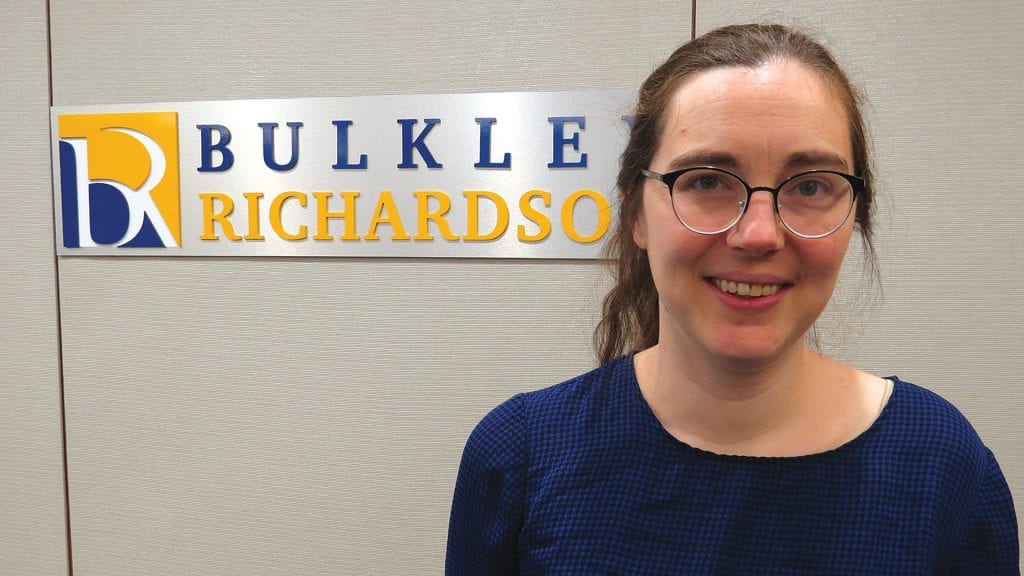
Lauren Ostberg

Lauren Ostberg says small businesses, many without IT teams or sophisticated cybersecurity systems, are low-hanging fruit for hackers.

“And these attackers also sell each other pre-made malware, so less sophisticated attackers can just send out 100 different phishing e-mails, see what sticks, and then attack there,” she explained. “So nonprofits are at risk, small- to medium-sized businesses are at risk, and, in most cases, they don’t have the insurance to back them up to minimize that risk, and they don’t realize how vulnerable they are.”

Everyone should now understand just how vulnerable they are, said those we spoke with, adding quickly that some remain slow to take action and adjust to what is a troubling new world order. Those who don’t adjust do so at their peril, said these experts, adding that recent events show just how easy it is to be attacked, and how painful, costly, and time-consuming it is to repair the damage that’s been done.


What the Hack?

As they talked about those behind all the cyberattacks going on in the world right now, those we spoke with used a wide array of descriptive adjectives to let people know just whom they’re dealing with.

Words like sophisticated, diabolical, persistent, and relentless were used early and quite often, as was another that should get the hair up on every business owner: automated.

“It is only a matter of time before any organization falls victim to one of these attacks,” said Joel Mollison, president of Westfield-based Northeast IT, who said this inevitability shouldn’t prompt paralysis, but instead well-thought-out action to prevent (to the extent possible) such an attack, and then recover as quickly and painlessly as possible if an attack does occur.

“It’s always easier to prevent diabetes than to treat it after the fact. It’s the same thing with security — it’s always easier to manage things prior to the incident and be prepared for that and act appropriately.”

Mollison puts it in clear perspective, if anyone wasn’t already sure.

“Typically, we find that most organizations have basic security measures in place, but rarely understand their level of potential exposure or impact on operations during such an event,” he said. “The ability to recover from one of these events varies widely based on size of the organization, data volume, and locations of data and services. Even in the best-case scenarios, this process can take many days or weeks.

“Business operations are almost always crippled to a marginal capacity while systems are recovered,” he went on. “The financial impact, even without having to pay a ransom, is often devastating, and most cyber liability policies are underfunded, which compounds the problem. There are also compliance, reporting, and legal factors that are part of the recovery process that are often overlooked.”

Stan Bates, director of Business Development for Melillo, agreed. Relating some recent and current cases his firm is handling, he said they effectively communicate how widespread the problem is, what issues and problems are confronting business owners, the costs involved (and there are many of them), and the direction this matter is taking.
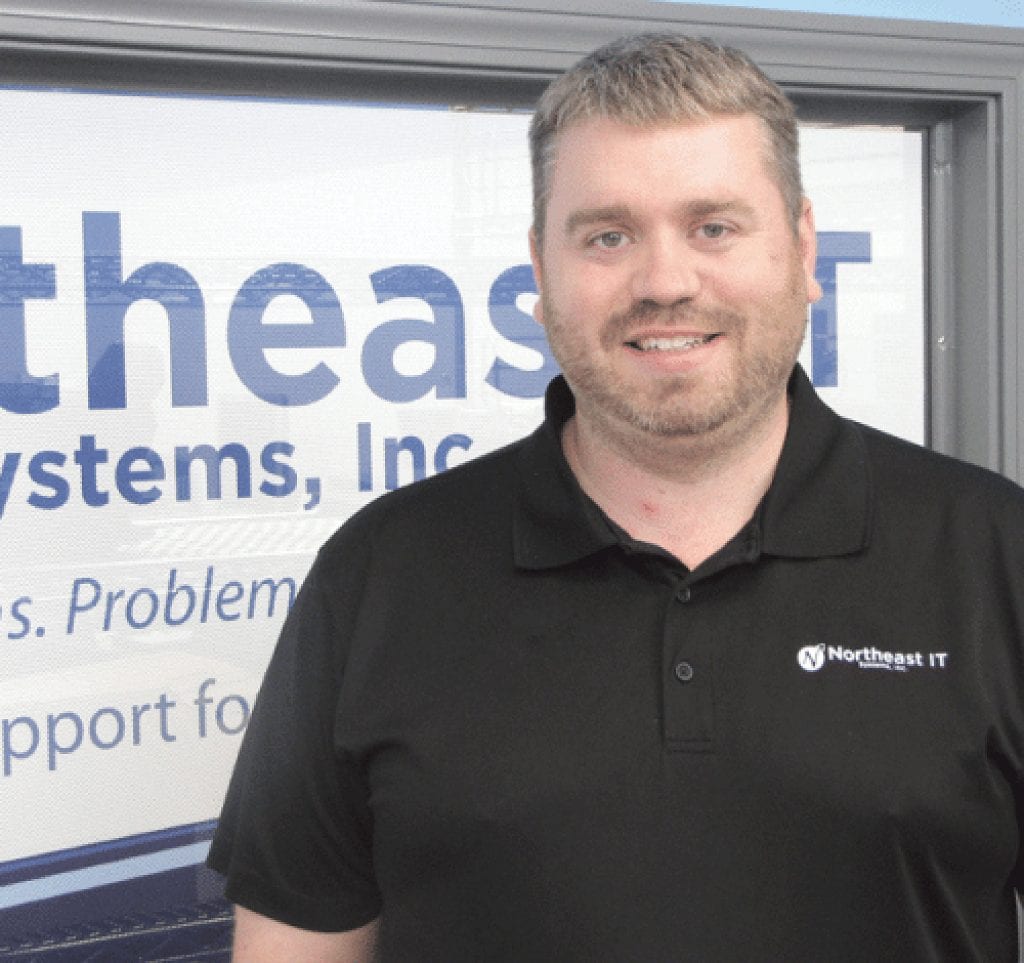
Joel Mollison

Given the sophistication and persistence of today’s cybercriminals, Joel Mollison says it’s only a matter of time before any organization falls victim to an attack.

One involves a large nonprofit in the healthcare sector, he said, adding that this client found out the hard way all that can be involved with returning things to the way they were before the attack.

“It got hit really hard, and they called us to help fix the situation,” Bates recalled. “They were hacked, they put their system down, they were out of e-mail, they were out of just about everything you can think of. The sad part was they weren’t prepared to know what to do, and to top it off, their insurance company forced them to use their security group, which had a limited knowledge of their network, and pay for those services, while also paying us to come in and help those guys understand what they had and fix it.

“They’re up and running,” he went on. “But it took about two weeks.”

Another case involves a small machine shop in the Hartford area, he said, adding that this small business has been informed that, if it wants to keep getting contracts from the federal government, it must meet a series of guidelines regarding cyberattacks and being fully prepared for them. “It’s going to run about $4,000 to $5,000 a month for us to monitor and secure his system and hit the score the federal government is telling him to hit.”


Something’s Phishy

These anecdotes are just some of many that help tell the story of how cybersecurity is becoming a huge issue for business owners and managers, one they can no longer ignore — not that they could really ignore it before.

Indeed, such sobering messages have been delivered with increasing frequency over the past several weeks as the high-profile attacks — and the ransom payments that include six and sometimes seven zeroes — come with increasing regularity. And they have certainly stimulated some interest within the business community, and also government offices and nonprofits, to be ready, or at least more ready.

“The conversations have changed. In the past, there were certain people you could talk to until you were blue in the face, and it was purely a dollars-and-cents discussion: ‘you want me to spend how much in a firewall, or this piece of software?’ Now, it’s ‘what can we do?’”

“The conversations have changed,” Christianson said. “In the past, there were certain people you could talk to until you were blue in the face, and it was purely a dollars-and-cents discussion: ‘you want me to spend how much in a firewall, or this piece of software?’ Now, it’s ‘what can we do?’”

Ostberg agreed. “People are taking the matter more seriously, and they’re taking me more seriously when I tell them they have to plan for cybersecurity incidents,” she said. “I’ve noticed an increase in concern, especially about ransomware, which can really cripple a business.

“The Massachusetts regulations and the advice I give my clients provide a lot of good ideas about ways to prevent or mitigate some of the risk that would be caused by some of the hacks we’re seeing,” she went on. “And it’s focused on building layers of prevention.”

At or near the top of any list of prevention measures is training, specifically involving the detection of phishing e-mails, which comprise the entry point for most of the hacks that occur today, according to those we spoke with.
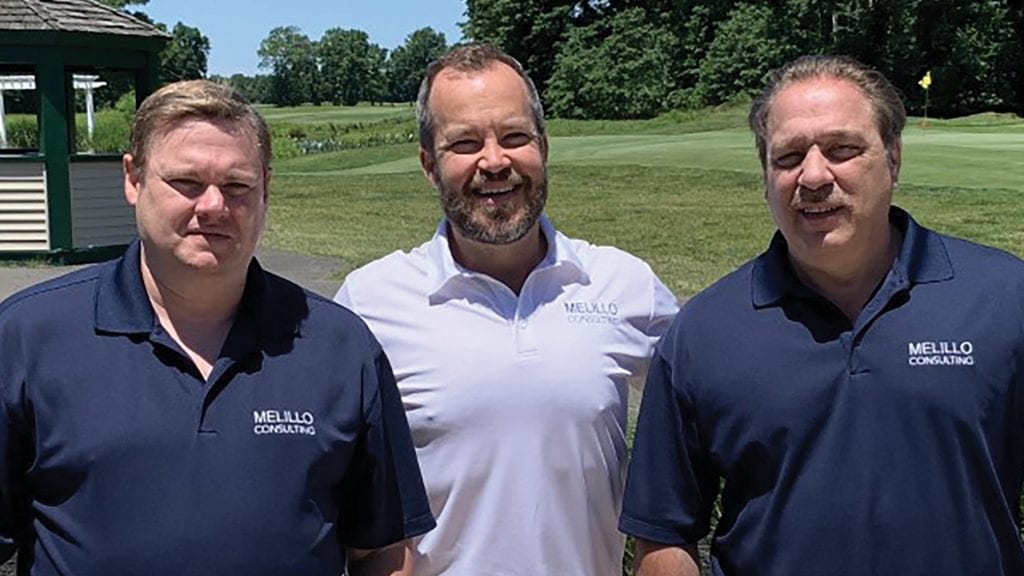
Melillo Consulting

Members of the team at Melillo Consulting, from left, Phil Bianco, Doug Morrison, and Stan Bates.

As they talked about these e-mails, they summoned some of those same adjectives as they tried to convey just how sophisticated they have become.

“The phishing is getting more elaborate, and the social engineering that goes behind it is far more advanced than what we’ve seen in the past,” said Doug Morrison, practice director for the Development Operations team at Melillo. “It used to be that the e-mails were intentionally easy to sleuth out, because that way they could weed out the people they didn’t want; they wanted the people who were easily fooled to click on the link. But now, it’s getting very elaborate and very difficult to tell real e-mails from the fake e-mails.”

With this level of sophistication, Bianco said, it really is only a matter of time before someone makes a mistake and opens the door for a cyberattacker. But training and knowing to be on alert and skeptical of everything remotely suspicious are still critical to help minimize such incidents.

“Know who you’re doing business with,” he said. “Trust an e-mail if it’s someone you’ve done business with in the past. And if it isn’t someone you’ve done business with in the past, be skeptical of that; if you’re in question, send it over to your IT team, and let them take a look at it. If they see a bad e-mail, they can tell you immediately, ‘hey, we’ve seen this before, this is not something you should work with — please delete this or quarantine this,’ or, if they haven’t seen it, they can send it on to an anti-spam or anti-virus protection service that they’ve engaged with, and that individual or group can look at it across multiple things that they’ve seen.”

In dealing with suspicious e-mails, Bates cited his own firm as an example of the kind of rigorous training that can and should go on.

“We do quarterly training — each employee has to take a test and pass it,” he explained. “It’s terribly difficult, but it instills in your mind some of the things that are going on out there. Just the other day, we got hit, but everyone in the organization was smart enough, because of their training, to delete before they opened.”


Backup Plan

Because of the seeming inevitability that these sophisticated phishing attacks will succeed, businesses of all sizes need to have all the other layers of that onion to fully protect themselves from attacks — the training and the policies, in addition to the hardware and software.

“You have to have all the other layers in place because you simply cannot rely on humans not to click on e-mails at the pace that they’re required to do,” said Morrison, noting, as others did, that subsequent layers include a firewall, backing up all information, and encryption of information.

As noted, there are layers to backing up information, said the experts we spoke with, noting that the best solution is to isolate the backups as much as possible from the main network.

“Most companies do back up, but these malwares that do ransomware are pretty sophisticated,” Bianco explained. “The average time that that individual has compromised your network is typically a month or more. And in that month or more, they can go through and encrypt your backups as well as your production-installed system, your code bases, and things like that.

“Know who you’re doing business with. Trust an e-mail if it’s someone you’ve done business with in the past. And if it isn’t someone you’ve done business with in the past, be skeptical of that.”

“And they have a pretty sophisticated map of what your environment looks like, so we’ve been working with customers to do what’s called air-gabbing backups,” he went on. “Once that infrastructure is backed up, it’s completely separated from your network, so it can’t be encrypted.”

Christianson agreed, and noted that such independent, often off-site backup systems need to not only be in place, but be monitored as well.

“We’ve all heard the stories … people think they’re backing up for a long period of time, only to find out that, when they need it, the backups are not working,” he said. “That’s why people are starting to realize that it’s really important to have these systems monitored in some fashion, and that there are multiple layers.”

As for whether to pay that ransom … most consultants, and lawyers like Ostberg, certainly recommend against that practice, although that hasn’t stopped many of those who have been attacked from paying out millions in Bitcoin.

“One of the things that’s just awful is seeing people pay the ransom,” Christianson said, “because that’s not the answer. You’re just encouraging them to come back — and they will come back, not to mention the fact that they give you the key and you get your data, but you have no idea what they dropped in there and left for a back door.

“Honestly, in some cases, the only way to know is to reformat it, reinstall it all, scan the heck out of the data, and bring it back from the ground up,” he went on. “Or, manage a good disaster-recovery backup plan.”

Which brings him all the way back to that onion he referenced at the top. It should have many, many layers, he said, with more added as they become available and necessary, because what worked and what was enough a few years ago probably isn’t enough now, and certainly won’t be enough a few years and maybe even a few months from now.

That’s how quickly and profoundly the scene is changing when it comes to cybersecurity and protecting a business, nonprofit, school system, government agency, or household from those who would do it harm.

Managing the problem is all-important, said those who spoke with, but what’s most important is managing it before the worst happens — because doing so can often prevent the worst from happening.


George O’Brien can be reached at [email protected]

Insurance Special Coverage

Give and Take

With five generations in today’s workforce, employee benefits are no one-size-fits-all proposition — yet, they remain a key issue for employers looking to attract and retain a skilled workforce. Striking a balance between what employees want and what the business can afford is certainly a challenge — but the flexibility and options available to employers these days makes the task a little easier to navigate.

By Mark Morris

Between demographic changes in the workforce and the impact of the pandemic, employers face multiple challenges these days in offering health insurance and other benefits to their workers.

In the U.S., 49% of people receive health-insurance coverage through their employer. According to the Kaiser Family Foundation, that percentage represents approximately 156 million Americans. Many of those workers also receive coverage for dental care and disability, as well as access to a retirement plan as part of a complete benefits package.

And, despite the increasing costs of health insurance, employers are not cutting back on this essential coverage, said Peter Miller, partner with Millbrook Benefits and Insurance Services in Springfield.

“They are trying to strike a balance between offering a benefits package that is attractive to new hires, while also trying to control costs and keep the business running,” he noted.

Traditional benefits, such as healthcare coverage and retirement plans, have always been important to employees. According to Patrick Leary, vice president of Work Benefits Research at LIMRA in Windsor, Conn., traditional benefits make up the core of an employer’s value proposition to employees.

In putting together a benefits package, an employer decides whether a particular offering will be paid 100% by the employer, or use a cost-sharing approach in which employees contribute as well. A third option, known as a voluntary benefit, is completely paid for by the employee.

LIMRA provides research for the insurance and financial-services industry. One significant trend Leary has studied is the expanding demographics of the workplace.

“There are now five generations in the labor force,” he said. “The oldest workers are staying longer, while Gen Z is just beginning to enter the workforce.”

Each generation has different benefit needs, and they are all looking to their employer to address them. Voluntary benefits are one way for an employer to accommodate different needs among a diverse employee population.

Peter Miller

Peter Miller

“They are trying to strike a balance between offering a benefits package that is attractive to new hires, while also trying to control costs and keep the business running.”

“A company can offer a broad-based plan where some benefits appeal to younger workers and some to older,” Leary said. “Because they are voluntary benefits, the employer can address the various needs of their employees without increasing their costs.”

He emphasized the importance of employers working with a benefits consultant to find the right mix. “Part of the process involves the employer understanding their current employees and the types of workers they plan to recruit for the future.”

Employers typically add benefits to make their companies more attractive to the specific types of workers they seek. For example, Miller has been discussing benefit packages with a tech company looking to attract engineering graduates from prominent colleges. While traditional benefits are important, flexible work arrangements and college debt-repayment programs also have a strong appeal to this group.

“It’s important for employers to think outside the box to make themselves more attractive to the people they’re trying to hire,” he said.

College debt repayment offered as a formal benefit is relatively new, but it’s quickly becoming a popular benefit as more graduates enter the workforce saddled with large debt obligations.

Meredith Wise, president of the Employers Assoc. of the NorthEast, said employers are using different tactics to help new employees manage their student-loan debt. Some employers offer a hiring bonus so new employees can pay off a chunk of their student loan.

Another approach allows employees to pay down their debt and contribute to their retirement savings at the same time. Based on his conversations with employers, Leary said the 401(k)/student-loan payment approach strongly resonates with young employees.

“The amount the employee pays each month toward their debt is matched up to 5% by the employer in a 401(k) plan,” Wise said. “This is helpful to young workers who would not normally be thinking about their retirement savings because they are saddled with debt.”


What COVID Wrought

There’s nothing quite like a worldwide pandemic to remind everyone of the importance of having healthcare coverage. After 14 months of operating during the pandemic, the benefits professionals BusinessWest spoke with cited two notable trends: an increase in telehealth offerings and usage, as well as an increased demand for mental-health services.

“There’s definitely been an increase in utilization for traditional medicine and mental health,” Miller said.

Wise agreed. “Employers are looking at the mental-health benefits covered under their policies and, in many cases, are augmenting those benefits with employee-assistance programs,” she noted.

A survey released in March by America’s Health Insurance Plans reported that 56% of employees said their telehealth and mental-health services are more valuable now than they were a year ago, before COVID-19.”

Offering wellness programs as a benefit is another trend that has gained popularity in the last several years. “Employers are adding or increasing benefits around wellness, nutrition, stress management, and other areas,” Wise said.

In addition to health wellness, Leary said employers are increasingly offering financial wellness programs as a benefit.

Patrick Leary

Patrick Leary

“Some older employees might be sandwiched between taking care of their children and their parents at the same time, while others are looking at their planning needs for retirement.”

“If an employee is stressed out about their personal finances, it affects their productivity at work,” he said, pointing out that financial wellness is a benefit that can help employees at every stage of their careers by providing guidance tailored to their individual needs.

“It’s a chance to help younger employees get off to a good start and to check in with older Millennials, now approaching their 40s, about retirement planning and the telehealth benefit they can access,” Leary explained. “Some older employees might be sandwiched between taking care of their children and their parents at the same time, while others are looking at their planning needs for retirement.”

Because employees have so many different needs, communication around benefit offerings becomes essential. As COVID disrupted so many other norms, it also caused significant changes in benefit communications. But in this particular case, Miller said, the change was an improvement.

For years, the model for enrolling employees into a company’s benefit plan involved on-site meetings and speaking directly with as many employees as possible to make sure all their questions and concerns were addressed. Miller said the strong in-person presence continued even after the actual enrollments were done online.

“We’re doing many of our open-enrollment meetings now on Zoom,” he said. “One advantage is that you can gather employees no matter where they are for the live presentation, and they can ask questions, either by shouting them out or using the chat box.”

For employees who may be on vacation or traveling, the Zoom meeting is recorded and uploaded to a video-sharing platform like YouTube.

“Lots of people want to discuss their benefit options with their spouse,” Miller said. “Now they can, because everyone can access the presentation whenever they want.”

Miller said the video gives employers a tool they can use for the entire plan year. “When a new hire comes in, they can be directed to the link and listen in on the entire employee-benefit presentation. The video approach was one of the few positive developments that resulted from adjusting to COVID concerns.”

Sometimes, a new employee benefit can emerge from a catastrophe. At the onset of COVID, Leary said, employers were frantically setting people up at home just to keep their businesses in operation.

“Several months later, they began seeing the benefits of having people work from home,” Leary said. “While many are discussing a hybrid approach, where employees split their time between the office and home, working from home to some degree is now undeniable.”

Because his business lends itself to working remotely, Miller said his employees definitely perceive it as a benefit.

“If you asked me last February if working from home would be feasible, I would have said ‘no way,’” he noted. “But it not only works, it works very well.”


Help Wanted

These days, employers need every benefit they can offer when recruiting new employees. Despite businesses itching to expand, Miller said, employers face new challenges in doing so. “I’ve been doing this nearly 30 years, and I don’t ever remember so many different employers saying they can’t get good people.”

Local employers he’s speaking with are increasingly hiring workers from other states to meet their needs.

“My clients are looking for health plans that are more robust and have a national presence,” Miller said. “I’m hearing that from employers right here in Western Mass.”

For many, traditional benefits remain important, but they make up only a part of the employment experience. Leary said the move to remote work means employers and benefit consultants need to think in new ways to communicate benefits and enroll employees in a new hybrid environment.

“You can make the argument that flexible work schedules and the ability to work autonomously without having a manager look over your shoulder are also benefits that go beyond traditional health, dental, and disability plans,” Miller said.

It’s a trend to keep an eye on — one of many employers need to consider as they determine which benefits will attract and retain employees in a changing economy — while making sense for the company’s bottom line.

Accounting and Tax Planning Special Coverage

Selling Online?

In the early days of e-commerce, states attempted to get out-of-state companies to collect sales tax on transactions into the state — without success. Enter the Supreme Court, which issued a landmark decision that physical presence is no longer needed, and if a company’s activity has substantial ‘economic nexus’ with a state, it can be required to collect sales tax. That means online businesses of all kinds may have tax exposure they’re not even aware of.

By Kristina Drzal Houghton, CPA, MST


The shutdown of stores and malls during COVID-19 fueled the already-prospering world of internet shopping. Many businesses were forced into direct-to-consumer marketing on their own webpages or using e-commerce online marketplace companies such as Wayfair, Amazon, and Etsy, just to name a few.

So, why is this important to you? Well, if you are one of those businesses who started selling direct to consumers on your website or if you turned a previous hobby into a business venture that markets using an online marketplace that does not collect sales tax for you, you might have a significant tax exposure you’re not even aware of.

In the 1980s and 1990s, states attempted to get companies to collect sales tax on transactions into the state. These companies were predominantly located out of state and were making sales via mail or telephone calls. The companies were not collecting sales tax on the transactions.

The states were less than pleased. One state, North Dakota, passed a law requiring any company engaging in ‘regular or systematic’ solicitation in the state to become registered for and collect sales tax. In 1992, the U.S. Supreme Court held that a company needed to have a physical presence (employees, property, or offices) in a state before the state could require the company to collect sales tax. This landmark case was Quill Corp. v. North Dakota.

Quill made sales-tax compliance easy for companies: if a company was physically present in a state, it had to collect sales tax for that state. If the company was not physically present in a state, it did not have to collect sales tax, although it was inevitable that there would be some controversy about when companies were ‘present.’

Seeing revenues were on the decline, states began adjusting their tax laws or regulations. One by one, states devised new requirements to make companies collect sales tax. States enacted various laws or promulgated regulations to creatively find nexus, such as Massachusetts, which taxed sales based on an electronic ‘cookie’ on a computer, and New York, which developed so-called click-through nexus, taxing internet sales that were derived from clicking through advertisements on websites.

South Dakota was one state that enacted an economic nexus law. The South Dakota law says that if a seller makes $100,000 of sales into the state or has 200 or more sales transactions into the state in a calendar year, the seller must collect sales tax. The law did not impose sales taxes retroactively; it law was designed to provoke litigation and for the issue it raised to reach the U.S. Supreme Court as quickly as possible. South Dakota pursued four large companies it knew would meet its threshold. Three of those companies sued: Newegg, Overstock.com, and Wayfair.

The case became known as South Dakota v. Wayfair Inc. After rocketing the case through state courts and losing, South Dakota took its arguments to the U.S. Supreme Court and won. Now, physical presence is no longer needed; if a company’s activity has substantial nexus with a state, the state can require the company to collect sales tax on sales into the state.

“If you are one of those businesses who started selling direct to consumers on your website or if you turned a previous hobby into a business venture that markets using an online marketplace that does not collect sales tax for you, you might have a significant tax exposure you’re not even aware of.”

Almost all states with economic nexus allow an exception for small remote sellers, which is determined by a remote seller’s sales and/or transactions in the state (the economic-nexus threshold).

Any remote seller whose sales into the state meet or exceed a state’s economic-nexus threshold must register with that state’s tax authority, collect and remit sales tax, validate exempt transactions, and file sales-tax returns as required by law. Remote sellers whose sales and/or transactions in a state are under the state’s threshold don’t need to register; however, they do need to monitor their sales into the state, so they know if they develop economic nexus.

Unfortunately, state economic-nexus thresholds vary widely. This seriously complicates nexus determinations.

In a post-Wayfair sales-tax world, how are states enforcing the new economic-nexus rules and identifying companies that fall within them? Given the budget shortfalls due to COVID-19, states are identifying new ways to increase their revenue, and what better way than enforcing the Wayfair economic-nexus rules as they relate to sales-tax obligations?

Accordingly, states have taken a broader perspective on enforcing economic-nexus rules on various sellers (including internet retailers) by creating new registration and collection tools for all registered sellers. Under this new nexus standard, it is important to note that, if states find that the taxpayer purposefully did not comply with state law, then the departments of revenue (DORs) can not only require that the taxpayer pay back sales tax, but also assert that it is liable for penalties as well as interest.


Since the Decision

In the nearly three years since the Supreme Court in Wayfair upheld South Dakota’s economic-nexus law, overruling the court’s physical-presence precedents, states have faced challenges enforcing this new nexus standard on remote internet sellers, given that traditional audit approaches leverage information that is geared toward identifying sellers with some physical identity or connection within the state.

For example, if employees work in the state, the entity is required to file payroll taxes, or if the entity owns real property, then DORs can obtain real property and tax records to help validate sales tax compliance or identify potential audit targets. Economic nexus, however, provides fewer avenues for states to prove that an entity should collect sales tax in comparison to traditional physical-presence standards, where data is more readily available.

On the other hand, some states are taking an aggressive approach in seeking out taxpayers for compliance with the new nexus rules. For example, DORs are sending out more nexus questionnaires to various companies to, for all intents and purposes, scare them into compliance. Companies should take great care in responding to these questionnaires because states can use this information to force reporting for sales tax and other areas of taxation. To find targets, state auditors have been known to visit an e-commerce site and place an order to see if the seller charges sales tax. If no tax is charged, a questionnaire is then mailed to the seller.

Auditors can also check on companies that advertise heavily in their state or have achieved some level of public notoriety. States will also continue to look for sellers that may have established facilities in their state to make sales or store inventory. A facility or in-state inventory constitutes old-school physical presence and can be the basis of an audit stretching back to well before economic-nexus standards came into existence.

Some states are now ostensibly working to make sales-tax compliance and collection easier for taxpayers. Some examples include websites that allow users to manually calculate sales tax based on address, or an application programming interface (such as California’s) that can be integrated into retailers’ online order forms to determine the appropriate rate and taxing location in real time.

A majority of states now have such a lookup tool in one form or another. Arkansas has a tool for searching by ZIP code or address. The state of Washington’s lookup tool incorporates a state map, allows searching by geographical coordinates, and calculates the tax for any given taxable amount of sale. Colorado’s site incorporates a clickable map and provides a breakdown of tax-rate components.

Companies should be aware of and monitor their physical and economic presence nexus on a quarterly basis. Also, companies should defend against and challenge state assertions concerning sales-tax nexus rules, as well as petition Congress for clearer and more equitable nexus guidelines, especially during these times of financial upheaval caused by COVID-19. If organizations decide to register to collect sales tax in a state, they should take advantage of any benefits and tools the state is providing.

A company will be in a better position to manage its sales-tax collection responsibilities for a state if it determines whether it has physical or economic nexus before it receives a notice, letter, or nexus questionnaire from the state DOR.


Kris Houghton is a partner and executive committee member at Holyoke-based accounting firm Meyers Brothers Kalicka, P.C.; (413) 536-8510.

Special Coverage Work/Life Balance

Blurred Lines

During the pandemic, work arrangements were, in some ways, clearer than they are now — in short, remote work was the norm. Now, however, businesses and their employees are grappling with balancing company needs and culture with workers’ desire to maintain flexibility regarding when and where they get their jobs done. At the center of all of this is the amorphous, yet critically important, concept of work-life balance — and how, in some ways, remote work has made it even more challenging to achieve.

The employees at Paragus IT

The employees at Paragus IT have been returning to the office — but will be allowed to keep working at home some days.


Getting work done during the pandemic was … messy, Delcie Bean said. But it got done.

“In the heat of the pandemic, we had to have maximum flexibility and understood that everyone was doing their absolute best to get done what needed to get done and make sure the clients were taken care of,” the CEO of Paragus IT told BusinessWest. “It was going to be messy, but we had to get through it.”

Emerging from COVID-19, then, has been a time for employers to assess what happened and what they learned about the many different ways people can get their work done — and still have time for themselves.

“What did we lose having everyone remote, and what did we gain?” Bean said. “We realized it was some of both columns A and B — there were certainly some benefits and some risks.

“Really, we found it’s very employee-specific,” he went on. “Some employees really need the structure of the office — they get up, commute, work in the office, commute, relax at home. That’s what helps them separate work from life. Others were really flourishing with a blend, doing work from home; they were good at setting up boundaries and not having their work bleed into their life.”

Despite the evidence showing that many workers flourish at home — achieving work-life balance by establishing firm boundaries — that blurring of lines between work time and family time is a concern, according to area company leaders we spoke with. The result, oddly enough, can be even less balance than before.

“With more people working from home and having increased autonomy over their work schedule, it becomes more challenging to differentiate between work time and personal time,” said Patricia Coughlin, Human Resources director at Wellfleet in Springfield.

In Bean’s case, the post-pandemic strategy that developed was to require employees to work in the Hadley office at least three days — a gradual shift, actually, beginning with one day in June, two days in July, and three days starting in August. Anyone who wants to be on site every day is welcome to do so.

Patricia Coughlin

Patricia Coughlin

“With more people working from home and having increased autonomy over their work schedule, it becomes more challenging to differentiate between work time and personal time.”

“There are certain things that are lost when you’re 100% remote,” he said, giving examples like mentoring new employees and collaborative projects. “But if remote is working for you, we don’t want to stop you.”

He understands that some people need to be in the office to function because they have too many distractions at home.

“It depends on their personality. My home is not a distraction at all — once the kids are in school, my home is quiet, with nothing to distract me,” he said, adding, however, that there’s also nothing there to energize him.

“I need energy from other people to function at my best. We all work a little differently, process things a little differently. A lot of flexibility is good, as long as that flexibility works for both the employees and the company — but working at home can lead to issues with work-life balance if the work never goes away.”

Amy Roberts, chief Human Resources officer at PeoplesBank in Holyoke, said the bank’s leaders learned the organization can be effective while incorporating different types of work arrangements.

“When the pandemic hit and we had to move to a remote workforce for much of our corporate team, there was no question that our associates were dedicated and would get the job done,” she noted. “We had concerns about remote work as it relates to data security, customer impact, and overall engagement of our workforce. But we saw pretty quickly that we were able to operate, meet the needs of our customers, and keep our team engaged.”

For that reason, the bank is now working to establish a hybrid model for many roles and will continue to evaluate increased flexibility for team members. “We may also consider fully remote roles, but at this time those will be very limited.”

Amy Roberts says PeoplesBank wants to develop strategies with its employees to avoid overly blurring the lines between work and family time, especially when working at home.

Amy Roberts says PeoplesBank wants to develop strategies with its employees to avoid overly blurring the lines between work and family time, especially when working at home.

Like Bean, she noted that collaboration can suffer when people are not physically working together. “It’s such a big part of our day to day that we have to ensure people can easily get things done and make decisions as a team from anywhere. We feel this is an important aspect of any sustainable hybrid work model.”

Coughlin agreed that the pandemic made Wellfleet’s leaders more aware of the different ways people not only work well, but collaborate with their peers and find satisfaction in their work. As a result, the company plans to offer hybrid work arrangements and telework options as part of its model going forward.

“We learned from our employees that there is no one-size-fits-all methodology in creating an effective work environment,” she noted. “Throughout the pandemic, it became apparent that the ‘typical’ work arrangement may not be effective for all people.”

She added that this flexible approach is an attractive model that will allow Wellfleet to expand its talent pool while improving overall job satisfaction and increasing opportunities for growth and effectiveness. Again, however, the key is communication and setting boundaries.

“Supervisors and employees should set clear expectations of work schedules, availability, and when responses to e-mails are expected,” she said. “Maintaining this communication reduces the likelihood that employees feel the need to be available while on their personal time.”


Unhealthy Relationship

That latter concern is one employment experts across the country have been pondering. Constance Grady, a staff writer for Vox, recently penned an article titled “How Capitalism and the Pandemic Destroyed our Work-life Balance,” arguing that, in a precarious, COVID-disrupted economy, workers became even more attached to their work, in often-unhealthy ways.

“Those of us who were lucky enough to have jobs we could do from home brought our work into our living rooms, our kitchens, our bedrooms,” she wrote. “We pivoted. We shared strategies for how to be productive and overcome the stress of trying to work during a global health emergency. We challenged ourselves to meet and even exceed our pre-pandemic goals, against unfavorable odds. Despite everything, we prioritized work.”

But treating work as a sacred object has consequences, Grady argues. “We have treated work as something to be taken home and cherished. Work is our lover. And this year, we took it to bed.”

Bean understands that risk. “We’ve always strongly encouraged employees to have work-life balance as much as possible and encouraged people to unplug at the end of the day and not resume work until they’re back in the office again,” he said. “That worked much better in the pre-pandemic world, where there were cleaner lines between work and home.”

Paragus has long offered employees ‘discretionary time’ for personal obligations and appointments, which they can make up later. “We try to give employees freedom to schedule their work around what works for both them and the company.”

But over the past year, those lines blurred, with more people shifting their schedules or even working sporadically, a couple hours on and a couple off — especially when they were helping their homebound kids navigate the world of remote learning.

Hopefully, a return to something approaching normal, even if it does include some remote work, will sharpen those lines a bit. What helps, Bean said, is making firm decisions on what the home is actually for, especially at night.

“I’m very strict. When I get home, the phone goes on the counter and stays there until I go to bed. It’s rare for me to check e-mail at home, and it’s rare for me to work weekends. I try my best to model that you don’t need to work all night and on weekends to keep up; you can do your job during your work hours, then be with your family. You need that balance, and your family needs you there.”

Beyond that, he added, employees need to decompress from work in order to be productive the next day. “You need that separation time to process. You’re never able to let it sink in and reflect when you’re just going, going, going.”

Roberts agreed. “We are concerned about the blurring of lines with people who are working at home,” she said. “We are looking at this issue to determine if there are other ways we can ensure this balance with our plan for long-term workplace flexibility.”

Ideas include encouraging employees to work in a dedicated space, and at the end of the work day, leaving that room behind and closing the door — in other words, stick to the set work schedule.

“Obviously, if a customer issue occurs at the end of our day, we aren’t walking away, but in most cases we have seen that people have done a good job maintaining their normal work hours from any location — home or office.”

Understanding employee needs helps them to create balance while meeting the company’s needs, Coughlin added.

“When people have the flexibility to manage their schedule — for example, to attend a personal appointment and make up time later in the day — that can have a really positive impact on productivity. And everyone’s different; some people are more productive early in the morning, some are more productive in the evening, and others work best within a very set schedule.”

From a company perspective, she went on, it’s important to establish general standards that allow all employees the opportunity to achieve a healthy work-life balance — and it’s important to engage with employees to better identify what is meaningful to them.

“Work-life balance, and what that means, can really vary from person to person,” she noted. “One employee might be driven by the satisfaction in completing a task, while another takes satisfaction from counting hours ‘clocked in.’”


Creating a Culture

The bottom line, Coughlin said, is that Wellfleet’s people are fundamental in creating its culture, so it’s important to engage with them, through various platforms, to identify and implement ways to support a healthy work-life balance.

To that end, it offers education and trainings to improve work efficiencies, as well as communication regarding company benefits workers can utilize for personal purposes. Supervisors also work closely with employees to coach skills like prioritizing tasks, setting realistic goals, and time management.

“Wellfleet believes a healthy work-life balance fosters a culture in which employees are able to perform their job duties in a productive manner,” she added. “Good balance and increased flexibility in the workplace can help prevent burnout, reduce stress, and promote overall wellness.”

The company also offers employees the flexibility to adjust their work schedules to attend appointments and encourages them to use paid time off for their personal well-being, Coughlin said. “We saw the need to internally emphasize this message throughout the pandemic, although the ways we promoted this adapted to the circumstances.”

Wellfleet isn’t the only company re-emphasizing the need for workers to take time off, even if they’re not taking as many week-long vacations as before. HR Daily Advisor recently published a story on work-life balance that included input from several employers across the U.S. noting that employees have been de-emphasizing long vacations in favor of three-day weekends, staycations, and mental-health days off — as well as taking less time off overall.

“We have always focused on promoting a healthy work-life balance, and I don’t think remote work will change the way that we encourage our team to pay attention to this balance,” Roberts said. “Some of the ways that we promote this balance is our official work week being 38 hours, generous time-off plans, and fun team events and activities throughout the year. Our managers also do a good job of making sure they balance their expectations to ensure that a healthy work-life balance is a real thing.”

At the same time, Bean said, workers at any number of companies may have begun seeing those remote and flexible work models of the past 16 months as a permanent aspect of work-life balance — or, at least, they hope so. That could cause tension down the line, as employers, already struggling to retain talent in many industries, may have to negotiate such arrangements moving forward.

“However, another part of me knows behaviors and habits don’t change easily,” he added. “We, as a country, have 200 years of working 8 to 5 and going home. I don’t know if the pandemic was long enough to permanently break this muscle memory.”

If he’s right, companies adopting hybrid models now may eventually shift back to the typical, on-site work schedule of the past.

“Maybe people will work from home more than before,” he said. “But I don’t think this was that disruptive that we’ll fundamentally change the way we do work. It comes down to a lot of factors.”

Those factors range from employee desires to company needs and what type of culture an employer wants to promote. And the day might come when the current job surplus lessens and employers feel they have more leverage.

“How comfortable are you with making a decision, if an employer tells you to come back to the office or find new employment?” Bean said. “We’ll see how those things play out, and we’ll find out if the changes are temporary or long-term — and, if they’re long-term, how impactful they’ll be.”

Until then, employees will continue to get their work done in whatever way their company allows — and, hopefully, not take it to bed.


Joseph Bednar can be reached at [email protected]

Community Spotlight Special Coverage

Community Spotlight

By Mark Morris

The final phase of the Columbia Greenway Rail Trail in Westfield should be complete this fall.

The final phase of the Columbia Greenway Rail Trail in Westfield should be complete this fall.

For Donald Humason, the phones ringing at Westfield City Hall is a sure sign the pandemic is nearing its end.

While recognizing that some people suffered devastating personal and economic loss, Humason remains grateful that, on the whole, Westfield came through the last 14 months better than expected. He credits the team at City Hall for working tirelessly with state officials to secure grants for Westfield agencies and businesses.

“At our weekly department meetings, I would always ask if we were prepared for the eventual end of the pandemic, so we would be ready when the phones start ringing again,” the mayor said. “Thanks to everyone’s efforts, I feel we are ready.”

Because construction crews continued working through the pandemic, Westfield saw progress on several infrastructure projects. In April, the main structure was installed for the Greenway Rail Trail bridge that crosses Main Street. As the trail continues through Westfield, it will be an elevated path with exit ramps that drop down to local neighborhoods and businesses. Humason expects the final phase of the trail to be complete this fall.

“This last section of the trail is taking longer because there are several overpass bridges which are more complicated to build than the pathway itself,” he said.

Meanwhile, Westfield-Barnes Regional Airport recently broke ground for a $4.7 million taxiway project that will benefit both military and civilian air traffic. Another improvement at Barnes involves a private company looking to build three new aircraft hangars, Humason noted.

“These are not the sexy projects, but they need to get done so we can keep everything working.”

Massachusetts state and federal legislators are currently on a campaign to bring the next generation F-35 fighter jets to the Air National Guard’s 104th Fighter Wing at Barnes.

Humason said he appreciates having a fleet of F-15 fighter jets based at Barnes, but it’s worth pursuing the newer jets, too. “We are competing with several states in the Northeast to get the F-35s. We’ve modernized the base, and we’re ready to accommodate them if we are chosen.”

On the other side of the city, work has begun to replace Cowles Bridge on Route 202 that connects Westfield to Southwick. This state project marks one of the last bridges in Westfield that hasn’t yet been updated. Because the city is situated between several rivers, Humason said, Westfield is like an island in some ways because many entries into town involve crossing a bridge. He predicts Cowles Bridge will be completed in about two years.

“While it’s not a big bridge, it carries every important infrastructure in the city, so that makes it a more complex project because several utilities have to be involved in moving the structures under the bridge,” he explained.

Other projects, such as pump stations and sewer replacements, are also in the works. While these projects are not as high-profile as bridges and bike paths, they are essential, the mayor said. “These are not the sexy projects, but they need to get done so we can keep everything working.”

Meanwhile, infrastructure work of a different kind — expansion of Whip City Fiber, a division of Westfield Gas & Electric — continues to build momentum and become an increasingly powerful force in efforts to attract and retain businesses (and residents) in Westfield and several surrounding communities.

Tom Flaherty, general manager of the G&E, told BusinessWest there are now just under 11,000 subscribers in Westfield and 19 surrounding hilltowns, with the goal, one he considers very attainable, of reaching 15,000 within the next three years.

The high-speed internet, as well as low-cost, reliable electric service from the municipal utility, have become strong selling points for the city, said Flaherty, noting that businesses looking to relocate or expand put such services at or near the top of their list of considerations for such initiatives.

“The reliability of our electric and natural-gas infrastructures and the lower cost in comparison with other utilities — we’re more than 40% cheaper — are a huge consideration when people are coming out this way looking for houses,” he explained. “Whip City Fiber is a significant selling point when people are relocating and when businesses are relocating.”

As an example, he cited Myers Infosystems, which recently relocated from Northampton into the site of the former Piccolo’s restaurant on Elm Street, and cited energy costs and high-speed internet as key considerations in that decision.


Survive and Thrive

Eric Oulette, executive director of the Greater Westfield Chamber of Commerce, said many of the businesses in Westfield were able to stay open last year because they quickly adapted once the pandemic hit. In particular, he pointed to the adjustment restaurants made last June when they were able to offer outdoor dining.

“They figured it out and made outdoor dining another feature they could offer,” Oulette said. “It was successful and allowed them to keep their doors open.”

With only a few chain restaurants in the city, Oulette said local restaurants are able to promote their individual personalities and offer many different experiences. That environment also encourages other types of small businesses to locate in Westfield.

Mayor Donald Humason

Mayor Donald Humason said the city was successful meeting the needs of residents, students, and seniors during the pandemic, and will now put more focus on business needs.

Humason told the story of three new businesses that opened in April on School Street. Hilltown Chic (small gifts, candles, etc.), Be Bella Boutique (clothing), and Boho Hair Studio are all women-owned businesses. The owners got together and decided to hold their grand openings on the same day.

“We went right down the street and cut the ribbon in front of each shop,” Humason said. “It felt like a street carnival, and the businesses all received extra publicity for it.”

Speaking of new businesses, Westfield has granted four licenses for cannabis dispensaries. Only one, Cannabis Connection, is currently open, with the others at various stages of getting ready to open.

“We are still early in the process with cannabis in Westfield, so, from a revenue perspective, we consider these eggs we have not yet put in our basket,” Humason said.

As businesses pick up their activity, he added, they will need more workers — and, like everywhere else, Westfield has far more job openings than candidates.

In May, Mestek joined with the chamber and about a dozen other businesses and held a job fair in the field across from Mestek, with each exhibitor setting up a tent to speak with interested job seekers.

“We are still early in the process with cannabis in Westfield, so, from a revenue perspective, we consider these eggs we have not yet put in our basket.”

The idea for the job fair started with Peter Letendre, plant manager at Mestek, which manufactures HVAC equipment and performs metal fabrication for other industries. The company had recently acquired its main competitor and was relocating the operation from Long Island to Westfield, bringing 60 to 70 new manufacturing positions along with the move. Traditional recruiting wasn’t working to fill those jobs, so Letendre had to look at other ways to find people.

“I’m on the board at the chamber and began talking with other members about holding a job fair,” he said. “That way, we could all help each other by attracting candidates for our respective companies.”

In addition to Mestek, exhibitors included Six Flags of New England, C&S Wholesale Grocers, Northwestern Mutual, and several others. A few weeks after the job fair, Letendre reported that Mestek had hired about 15 employees, with another 10 in the process of coming on board.

Many of the positions offered by the job-fair exhibitors offered starting pay that was higher than minimum wage. For instance, Letendre said, the entry-level starting rate at Mestek is $15.50 an hour, and after 90 days, if the employee performs well and demonstrates good attendance, the pay increases to $16. As they acquire more skills, their wage can rapidly increase from there.

From working with sheet metal to assembling HVAC units and warehouse work, Letendre said Mestek offers lots of opportunity for growth. “You can start off in manufacturing, then keep improving your skills and build a solid career here.”

Plans are underway for a second job fair at the end of the summer. While many would-be job seekers are currently receiving supplemental unemployment benefits, that program ends in September, Oulette noted. “Right now, there are lots of companies looking to hire above minimum wage, so my one message to job seekers is, don’t wait until the fall when the unemployment benefits end, because there will be much more competition.”

While he is the new executive director of the chamber, Oulette is no stranger to Westfield. He worked with the Boy Scouts of America Western Massachusetts Council for five years and was president of the Rotary Club of Westfield in 2019 and 2020. He accepted a director of Development position for the Boy Scouts in 2020 that had him spending several days a week in New Hampshire. When the pandemic kept him at home, he wanted to stay in Western Mass. and accepted the chamber position in April.

While new to chamber leadership, Eric Oulette

While new to chamber leadership, Eric Oulette is no stranger to civic life in Westfield, including service with the Boy Scouts and the Rotary.

Oulette is the first to admit he had to “fill some big shoes” following Kate Phelon, who retired in September after 12 years leading the chamber. He appreciates how welcoming everyone has been as he transitions into the new post.

“It’s just like starting any new job where information is coming at you like you’re drinking from a firehose,” he said with a laugh.


Back to Business

Flaherty, like Oulette, is optimistic about the city’s prospects for continued residential and commercial growth, noting that it has a number of strong selling points, including location, strong schools and neighborhoods, and, as mentioned earlier, lower-cost energy and an expanding fiber-optic network.

And this expansion may soon take Whip City Fiber well beyond the city’s borders, he said, adding that the utility is in discussions with West Springfield about a pilot program to bring high-speed internet service to areas of that city as it advances plans to build a town-owned internet utility in partnership with Westfield G&E.

“We’re looking at four potential pilot areas that would be installed over the next year while the city goes through the process for the community to become a municipal light plant, or MLP,” he explained, adding that expansion into the neighboring city could eventually bring another 13,000 subscribers to the service.

Meanwhile, there are preliminary talks about taking the service to other communities as well, Flaherty said.

“There’s a good level of trust concerning our product and our capabilities — we have all the infrastructure, we have the billing system, we have the customer in place, we have the utility capabilities, the bucket trucks, and the line personnel,” he noted, adding that the company is well-positioned for continued growth.

As is Westfield itself. Oulette and Humason are grateful the city was not forced to confront big job losses or high numbers of business closings. Despite the pandemic, the mayor noted, Westfield kept moving forward.

“While our schools faced issues of whether they were going to hold classes remotely or in-person, we still continued with education,” he said. “We were still able to serve our senior citizens even though we couldn’t meet at the Council on Aging. We were also able to keep our infrastructure projects moving despite the pandemic.”

Humason added that, because Westfield has taken care of residents, schools, and seniors, he now looks forward to giving more attention to expanding businesses in the city. “I’ve said this since the day I was sworn into office: Westfield is open for business.”

Insurance

Cover Story

From left, Bob Borawski, Dave Malek, and Mark Rosa, the leadership team at Borawski Insurance.

From left, Bob Borawski, Dave Malek, and Mark Rosa, the leadership team at Borawski Insurance.

As he talked about insurance, and also about the agency started by his grandfather almost 91 years ago, Bob Borawski drew a number of analogies to the banking industry.

Specifically, he referenced an ongoing pattern of mergers, acquisitions, and overall consolidation that has left fewer players, and far fewer smaller, independent agencies.

In banking, said Borawski, who has been on the board at Florence Bank for many years now, this activity has created opportunities for those players with a track record of strong customer service and the ability to fill a void left by those agencies swallowed up by larger interests with fewer ties to — and employees living in — the 413. At the same time, while rates and prices are always important in banking, relationships are more important.

And, by and large, it’s the same in insurance, Borawski said.

“Anyone can give a rate that’s a half or five-eighths of a percentage point less,” he said in reference to banks. “But beyond the rate, you want to have a good relationship with your client. Like an independent bank, we have a focus on being independent — we’ve chosen not to be gobbled up by one of the larger players because we think independence is important. We still think people appreciate being local.”

Dave Malek, vice president of the company, who came aboard nearly 30 years ago, agreed.

“It really is all about relationships,” he noted. “And I think that is what gets lost when you get swallowed up by a larger conglomerate.”

In essence, Borawski said, he, Malek, and the other 15 employees at this company launched at the height of the Great Depression in 1930, are continuing a pattern of personalized customer service and relationship building that was started by his grandfather, Alexander Borawski, and continued by his father, Robert.

“These days, people are always saying, ‘we can save you…,’ ‘we can save you…,’ ‘we can save you…’ — and that’s great until something goes wrong and all that savings took coverages away and didn’t provide what you should have had.”

And this pattern has served the company well, especially when it comes to commercial lines, where the Borawski company has built a large and diverse portfolio that continues to grow.

Indeed, at present, commercial accounts comprise roughly 75% of the book of business, said Malek, adding that the portfolio includes everything from manufacturers to auto dealers; nonprofits to general contractors.

And this commercial business has spawned growth in numerous areas, especially employee benefits but also personal lines, said Borawski, adding that the ability to provide a wide range of products and services to customers has been a formula for growth going back nine decades, but especially in the past 30 years as the company has sharpened its focus on its commercial portfolio.

The first and second generations of leadership at Borawski Insurance: Alexander Borawski, left, and Robert Borawski.

The first and second generations of leadership at Borawski Insurance: Alexander Borawski, left, and Robert Borawski.

Overall, this agency has been conducting business in much the same way it has since the doors opened, even if COVID-19 forced some changes when it came to where employees were working and how work was done.

Moving forward, the business plan calls for simply “more of the same,” said Borawski, adding that the company intends to take full advantage of the trend toward consolidation within the industry and continue its focus on relationship building.

“You’re either moving forward or moving backward, and our plan is to continue to grow our way — organically,” he said, adding that he believes the company is certainly well-positioned to achieve that goal.

For this issue and its focus on insurance, BusinessWest talked with several team members at Borawski to get a full understanding of not only where it’s been, but where it wants to go and how it intends to get there.


Independent Thinking

Borawski told BusinessWest that, upon graduating from Stonehill College in 1980, he had no plans to join the family business. Instead, he went to work for then-emerging office-supply company W.B. Mason as a salesperson.

“There were probably 35 people there at the time; I really liked it and had no intention of leaving,” he said, adding that his career took a critical turn a few years later when, while he was home for Thanksgiving, his father, who joined the agency in the early ’60s, commenced a discussion on succession.

“He said, ‘what am I going to do with this business?’ and we continued to talk,” Borawski recalled, adding that, soon thereafter, he came back home to join the company as a salesperson; eventually, he would succeed his father as president in 1992.

By then, he was also working to take a friendship on the golf course with Malek to a much different level. The two were members at what was Hickory Ridge Country Club in Amherst (the club closed a few years ago), and while talking golf and shop — Malek had been in the insurance business for roughly a decade by then — a discussion commenced about Malek coming to the Borawski agency and “helping build something,” Bob said.

That something was the aforementioned commercial-lines division that has grown so dramatically over time.

“We made a lot of cold calls over those years,” said Borawski, adding that, in addition to that time-honored strategy, the business has benefited tremendously from referrals that have led to new customers of all sizes in both the commercial- and personal-lines sides of the business.

Overall, the company has decided to grow organically, not through acquisition, as many others have. Again, as in banking, growing organically means, to a large extent, taking customers from other players, something that’s accomplished through hard work, a strong track record, a deep portfolio of products and services, relationships with carriers (Borawski works with more than 30 of them), and — here comes that phrase again — relationship building.

“Business just doesn’t fly in the door — you’ve got to go find it,” he explained. “You have to hunt it and track it.”

That’s because the competition, as in banking, is fierce. To stand out, an agency has to possess those qualities listed above, said all those we spoke with, and especially a desire to work with clients to find solutions for them, not just get a signature at the bottom of a policy — or series of policies.

“One of the things that we try to do differently is evaluate someone’s insurance program, and not just from the perspective of price,” Malek said. “It’s important to understand what their needs are and what we’re trying to provide for them, rather than just focus on the bottom-line price, because, in most cases, that doesn’t end up working out.

“Insurance is an intangible. You can’t touch or feel it until you need it. And we try to get people to understand just that — that everything is great until something goes wrong. And when it goes wrong, you need to know that you’re going to be put back to where you were prior to that.”

“You get what you pay for, and we work to get people to pay for the right coverage,” he went on. “These days, people are always saying, ‘we can save you…,’ ‘we can save you…,’ ‘we can save you…’ — and that’s great until something goes wrong and all that savings took coverages away and didn’t provide what you should have had. No one goes to the cheapest doctor for a reason.”

Mark Rosa, senior account executive, agreed, and noted that he and others in similar positions at the company strive to be advisors, not merely salespeople.

“It’s not just a game of show and tell and salesmanship — we want to advise as well,” he noted, adding that business owners who are experts at whatever business sector they have chosen are not necessarily — and not likely to be — experts on the many different insurance and employee-benefit products available today and which ones might be best for their company.

This desire to advise is another strong attribute that has served the company well during this time of consolidation within the industry, said Rosa, adding that, with those mergers and acquisitions, a personal brand of service is generally lost, creating opportunity for those who can still provide it.

“From a new-business standpoint, many people have made up their mind that they want to go somewhere else,” he explained. “It doesn’t take much for a client to figure out that things won’t be the same as they used to be. They figure that out pretty quickly, and that’s when the phone starts to ring.”


Bottom Line

While there are certainly many direct comparisons between banking and insurance, there are some important differences as well, Malek explained.

“Insurance is an intangible,” he noted. “You can’t touch or feel it until you need it. And we try to get people to understand just that — that everything is great until something goes wrong. And when it goes wrong, you need to know that you’re going to be put back to where you were prior to that.

“One of the things that we pride ourselves on is that we’re able to give people that sense of comfort to understand that their business is going to run just as if nothing happened,” he went on, adding that not all agencies can successfully provide this level of comfort.

Those that can think independently — in every sense of that phrase — can do it better than others. And that’s what has allowed this company to thrive for almost a century now, and prompt it to look toward the future with no plans to change how it does business.


George O’Brien can be reached at [email protected]

Accounting and Tax Planning

Death and Taxes

By Jim Moran, CPA


On April 28, the Biden administration released its FY 2022 revenue proposals. Along with raising the corporate tax rate to 28% and the top individual rate to 39.6%, widespread changes have been proposed to the capital gains tax rate and estate tax.

Under current federal law, upon death, property passes to a beneficiary at fair market value, with a few exceptions. This means the beneficiary’s basis generally becomes the value of the property at the decedent’s date of death, also referred to as ‘step-up in basis.’ For gifts made during a donor’s lifetime, the donee receives the donor’s basis in the property. This means the donee’s basis remains the same as the donor’s basis, generally original cost plus any improvements. No taxable gain or loss occurs upon the transfer of the property. Gain or loss is realized only when the property is eventually sold.

Under the Biden administration’s proposal, transfers of appreciated property upon death, or by gift, may result in the realization of capital gain to the donor or decedent at the time of the transfer. This means tax may be triggered at the date of the transfer regardless of whether the property is subsequently sold. This would be accomplished by eliminating the step-up in basis upon death of a decedent and requiring a tax be paid on a portion of the value of a gift made.

Fortunately, the Biden proposal would allow a $1 million per-person exclusion from recognition of unrealized capital gains on property either transferred by gift or held at death. The per-person exclusion would be indexed for inflation after 2022 and would be portable to the decedent’s surviving spouse under the same rules that apply to portability for estate- and gift-tax purposes (making the exclusion effectively $2 million per married couple). It is important to note, however, in the case of gifts, the donee’s basis in property received by gift during the donor’s life would be the donor’s basis in that property at the time of the gift to the extent that the unrealized gain on that property counted against the donor’s $1 million exclusion from recognition.

“Under the Biden administration’s proposal, transfers of appreciated property upon death, or by gift, may result in the realization of capital gain to the donor or decedent at the time of the transfer. This means tax may be triggered at the date of the transfer regardless of whether the property is subsequently sold.”


Tangible personal property (other than collectibles) would also be excluded from the triggering of gain. The exclusion under current law for certain small-business stock would remain, and the $250,000 per-person exclusion under current law for capital gain on a principal residence would apply to all residences currently allowed under IRC Section 121 and would be portable to the decedent’s surviving spouse, making the exclusion effectively $500,000 per couple.

The Biden proposal allows for some exempt transferees. Property transferred by a decedent to a charity would be exempt. Transfers by a decedent to a U.S. spouse would be at be the carryover basis of the decedent, and capital gain would not be recognized by the surviving spouse until the surviving spouse disposes of the asset or dies.

In addition to transfers upon death or gift to an individual, transfers of appreciated property into, or distributed in kind from, trusts (other than revocable grantor trusts) and partnerships may be treated as recognition events for the donor or donor’s estate. Valuation is another important concern in regard to a partial interest. The transfer of a partial interest would be at the ‘proportional share.’ Valuation discounts for minority interests will not apply.

Under Biden’s proposal, the donor would report any deemed recognition events on the donor’s gift-tax return. A decedent would report any capital gains on an estate-tax return or, potentially, a separate capital-gains return. A decedent would be able to offset capital gains against any unused capital-loss carry-forwards and up to $3,000 of ordinary income on their final individual income-tax returns. Any capital-gains taxes deemed realized at death would be deductible on the decedent’s federal estate-tax return if required.

The proposal would be effective for gains on property transferred by gift and on property owned at death by decedents dying after Dec. 31, 2021.

With a 50/50 partisan split in the U.S. Senate, it is currently unclear what the final proposal will end up being. Now is the time to start thinking about the how the proposed changes will affect you. Make an appointment with your tax or financial-planning professional to discuss what steps you should consider taking. You may need to be willing to act quickly should these proposals become reality.


Jim Moran, CPA, MST is a manager with Melanson CPAs, focusing on commercial services and tax planning, compliance, and preparation.