Home 2020 (Page 40)
HCN News & Notes

LONGMEADOW — How do you ask for help? When it comes to physical health — perhaps you twist an ankle, come down with the flu, or have trouble regulating your blood pressure — the answer is simple for most people. You call or visit a doctor, and you ask them to help you feel better. But when it comes to mental health, there is often a stigma around admitting when something isn’t right and reaching out for help.

Sara Kendall, MSW, LICSW, and Kimberley Lee, both of the Mental Health Association, will be on the Bay Path University campus to talk about how to ask for help, and also how to support others in your life who may need help, but aren’t asking for it. Their simple approach of ‘ask, support, and recommend’ is geared toward individuals who want to be able to reach out and support, but aren’t trained counselors and may not feel prepared to do so.

This free event, scheduled for March 5 at 7 p.m., is open to the public, and will be held at Breck Suite in Wright Hall, Bay Path University, 588 Longmeadow St., Longmeadow. For more information or to register, visit baypath.edu/asksupportrecommend.

HCN News & Notes

HOLYOKE — Rosemarie Ansel, executive director of River Valley Counseling Center (RVCC), has announced Kelly Gloster as its senior grants director. In this new role, she will oversee all grant programs to ensure the organization’s funded programs are compliant with grant rules and regulations based on the terms and conditions set by each funding organization. Gloster is also the program director for both River Valley Counseling Center’s School-Based Health Centers and HIV/AIDS Project.

“I have a particular interest in maximizing grant dollars to both better serve clients and achieve program efficiencies,” Gloster said. “My goals are to bring transparency to the grant-compliance activities, such as chart and documentation standards, data collection, and reporting requirements. I will also be looking to increase grant funding for River Valley Counseling Center programs, as we continue to serve the mental-health needs of our community.”

Prior to joining RVCC, Gloster was an assistant vice president of Grants and Government Relations at Landmark College in Vermont. She brings more than 20 years of grant-writing and grant-administration experience, and owned her own grant consultancy. She maintains a certificate in financial research administration. She also has extensive experience in the nonprofit and mental-health sectors, having worked as a foster-care supervisor, residential case manager, and crisis hotline counselor.

“We are fortunate to have an experienced grant writer joining our team as River Valley Counseling Center continues to grow as a nonprofit behavioral-health organization serving the Pioneer Valley,” Ansel said.

Gloster received a bachelor’s degree in psychology from UMass Amherst and a master’s degree in social work planning, policy, and administration from Boston College.

HCN News & Notes

SPRINGFIELD — Health New England has been recognized as one of the 2019 finalists of the Healthiest Employers of Massachusetts, a nationally recognized awards program powered by the Springbuk Health Intelligence Platform.

Applicants to the Healthiest Employers awards program were evaluated across six key categories, representing a holistic view of employee well-being: culture and leadership commitment, foundational components, strategic planning, communication and marketing, programming and interventions, and reporting and analytics. All companies that applied to the awards program were ranked according to the proprietary Healthiest Employers Index, a 1-100 rubric for employee well-being programming.

Ranked second in the 100- to 499-employee size category in Massachusetts, Health New England was honored for its commitment to employee health and corporate health programming. As an award finalist, Health New England has demonstrated a strong commitment to the health and well-being of its team members.

“We are honored and excited that Health New England is being recognized for the work we do to empower our associates to make positive changes in their health journeys,” said Katie Bruno, Public Health and Wellness program manager at Health New England. “We strive to improve the health and lives of the people in our communities, and we bring that same mission to our worksite wellness program. My team, in collaboration with our wellness committee, implements engaging, innovative, and meaningful programs that support our associates’ health needs.”

Health New England offers traditional wellness programs that allow employees to partake in short-term programs individually or with a team, and identifies ways to encourage long-term behavior change by building a work culture that supports overall health. This includes leadership support, internal partners, mindfulness training, health coaching, flexible work hours and location, and increased benefits and rewards.

“We congratulate Health New England for their efforts to make workplace health a top priority for their organization and their team members,” said Rod Reasen, co-founder and CEO of Springbuk. “Each year, it’s our privilege at Springbuk to recognize the best of the best in corporate health through the Healthiest Employers awards program. Across the nation, we’re encouraged by the tremendous efforts of corporate health leaders proactively investing in the well-being of their employee population.”

HCN News & Notes

SPRINGFIELD — The Edvocate, an online education magazine, has named American International College (AIC) among the best colleges and universities for people with disabilities.

The Edvocate highlighted institutions that have multiple programs, policies, and measures in place to help people with disabilities succeed in higher education. AIC placed in the top 10.

“The Supportive Learning Services (SLS) program at American International College provides professional tutoring services to students, as well as assistance with study skills, organization, and time management,” the magazine noted. “Students can also take advantage of the Center for Accessibility Services and Academic Accommodations (CASAA), which provides both academic and physical accommodations.”

CASAA provides resources, training, and direct services to ensure people with disabilities have a greater opportunity to achieve their goals, while SLS is a fee-based program that helps students with learning challenges achieve their dream of completing college successfully. The second of its kind in the country, SLS celebrated its 40th anniversary in 2018. This comprehensive program works with the whole student academically, socially, and emotionally, by providing one-on-one tutorial assistance in addition to skills and content workshops designed to fit the unique needs of each student. In addition to helping students hone academic skills, SLS staff can assist students with organizational skills and time-management strategies that can help them modify their learning environment and maximize their strengths.

“We are pleased that the commitment of the college to provide access and opportunity for every student is recognized,” said April Voltz, AIC’s dean of Academic Success. “American International College has long appreciated that people learn differently and have varying needs in the pursuit of their education. Learning specialists in the Supportive Learning Services program provide professional tutoring and academic coaching tailored to the learning style of the individual student. The Center for Accessibility Services and Academic Accommodations collaborates with members of the institution’s diverse community to ensure that all aspects of campus life — learning, working, and living — are universally accessible.”

HCN News & Notes

SOUTH HADLEY — DAISA Enterprises, a food-systems and community health strategy firm based in South Hadley, was selected by the Robert Wood Johnson Foundation to design and facilitate a convening of Healthy Children and Families grantees for 2020.

The Robert Wood Johnson Foundation (RWJF), based in Princeton, N.J., is the largest philanthropic foundation in the U.S. focused solely on health, striving to advance policy, system, and environmental changes that create the conditions to foster families’ opportunities to promote healthy child development. The Healthy Children and Families convening will be a forum for sharing lessons and leveraging insights among grantees, partners, stakeholders, and RWJF staff around strategies to achieve this goal and prioritize health equity. More than 100 health leaders are expected to attend this event this spring or summer.

DAISA Enterprises works at the intersection of food, health, and economic and community development, building cutting-edge initiatives and enterprises. It has quickly established itself as a key partner to national health-based philanthropic foundations, helping them design and implement field-building events and initiatives.

“DAISA is honored to support the work of RWJF grantees, help them connect and learn from each other, and build a greater movement for the health of children in our country,” CEO Daniel Ross said. “This is among the most powerful work we can do.”

Daily News

WEST SPRINGFIELD — Nicholas LaPier CPA PC announced that three local CPAs have joined the firm:

Dawn Bryant, CPA, recently joined Nicholas LaPier, CPA PC as an audit manager. She has worked in public accounting for more than 25 years, with her primary focus in auditing and specializing in not-for-profit organizations. Her experience also includes working with for-profit businesses in various industries including retail, distribution, and construction. Bryant earned a bachelor’s degree in accounting, financial track, graduating summa cum laude from the University of North Carolina at Asheville. She is a member of the American Institute of Certified Public Accountants (AICPA) and the Massachusetts Society of Certified Public Accountants (MSCPA). She serves as board president for a private foundation and teaches a nonprofit business functions course for the University of Connecticut.

Colleen Berndt, CPA, recently joined the firm as a tax manager. She has worked in public accounting for more than 30 years, with a primary focus in business taxation and consulting. She earned a bachelor’s degree in accounting from American International College in Springfield and is a member of AICPA and MSCPA. She serves on various local nonprofit boards.

Edward Stambovsky, CPA, also recently joined the firm. He has worked in public accounting for more than 40 years, with a primary focus on business, individual, and trust taxation, and has consulted with businesses throughout his career. He earned a bachelor’s degree in accounting from UMass Amherst and is a member of AICPA and MSCPA.

Daily News

FLORENCE — Florence Bank has named Patricia Covalli its Community Support Award winner. Covalli, a collections officer, joined the bank in February 2015 and has 25 years of banking experience.

The Community Support Award was established by Florence Bank in 1997 as a means of formally recognizing employees who are active participants in community events and donate their personal and professional time to local not-for-profit organizations.

Each year, the award recipient has the opportunity to select a not-for-profit organization of his or her choice, and the bank makes a donation to that organization. At Covalli’s recommendation, Florence Bank will make a donation to Soldier On. The mission of Soldier On, based in Leeds, is to provide formerly homeless veterans with permanent, supportive, sustainable housing.

Covalli serves her community as an active member of the United Way of Hampshire County. She also serves as a fundraising volunteer for Florence’s Look Park and volunteers at Northampton’s Interfaith Cot Shelter.

“Patty is the ideal choice for the Community Support Award,” said Kevin Day, president of Florence Bank. “Her positive energy, commitment to numerous local nonprofit organizations, and dedication to helping those in need within our community is exemplary.”

Daily News

PHILADELPHIA — Basketball Hall of Famers Julius Erving and Sheryl Swoopes, as well as U.S. Rep. Richard Neal and John Doleva, president and CEO of the Naismith Memorial Basketball Hall of Fame, were on hand Tuesday at the U.S. Mint in Philadelphia, which unveiled a special coin commemorating the Hall of Fame, the Republican reported.

The Mint makes two commemorative designs a year and offers them in limited quantities. Surcharges collected from sales of the coin — expected to be about $10 million — will go toward the Hall.

Daily News

LONGMEADOW — How do you ask for help? When it comes to physical health — perhaps you twist an ankle, come down with the flu, or have trouble regulating your blood pressure — the answer is simple for most people. You call or visit a doctor, and you ask them to help you feel better. But when it comes to mental health, there is often a stigma around admitting when something isn’t right and reaching out for help.

Sara Kendall, MSW, LICSW, and Kimberley Lee, both of the Mental Health Association, will be on the Bay Path University campus to talk about how to ask for help, and also how to support others in your life who may need help, but aren’t asking for it. Their simple approach of ‘ask, support, and recommend’ is geared toward individuals who want to be able to reach out and support, but aren’t trained counselors and may not feel prepared to do so.

This free event, scheduled for March 5 at 7 p.m., is open to the public, and will be held at Breck Suite in Wright Hall, Bay Path University, 588 Longmeadow St., Longmeadow. For more information or to register, visit baypath.edu/asksupportrecommend.

Daily News

CHICOPEE — This year marks the 35th year Kevin Vann has enjoyed coaching youth basketball — and for 16 of those years, he has provided young people in Greater Springfield and Northern Connecticut with the chance to play in a competitive tournament.

As the founder of the George Webb Memorial Basketball Tournament, which supports the Boys & Girls Club of Chicopee, Vann recently announced to sponsors and participants that the event topped the $200,000 fundraising mark in 2019.

“Thank you for standing with me over the past 16 years, supporting the kids of the club,” he said. “I have a deep passion for basketball, yet my 35 years of coaching pales in comparison to the 108 years that the Boys & Girls Club of Chicopee has been there every day for the now 358 boys and girls of this city. They are children who desperately need encouragement, companionship, challenge, and opportunity to help them grow into responsible and respected human beings.”

The largest basketball tournament of its kind, the annual 15-day event tips off on March 13 at the club, ending on March 28. Each year, the tourney draws hundreds of spectators to watch more than 40 teams of boys and girls play.

Vann founded the George Webb Memorial Basketball Tournament in 2005 to honor his late friend, George Webb, who died of cancer at age 52 in 2004. A basketball player who shot hoops at the club on Tuesday evenings, Webb rarely lost a game, Vann said, “and when he did, he showed true sportsmanship to whoever he was playing against.”

Vann and his business, the Vann Group of Springfield, a professional-services outsourcing company, have sponsored the tournament since its start. And it has been held at the club it supports since the beginning as well.

“The George Webb Basketball Tournament embodies the values of the Boys & Girls Club of Chicopee,” Vann said. “It’s an even competition for teams of boys and girls aged 8 to 13 who have varying abilities as ball players.”

For the second year in a row, Daishany Miller of Chicopee was named the club’s Youth of the Year. To achieve that title, a club member must embody the values of leadership and service, academic excellence, and healthy lifestyles. The Youth of the Year serves as a role model for other young people in the club and as a representative to the community.

Drawn to investigate the club in 2014, Miller, 19, soon adopted it as a second home and learned how to thrive as a leader. “It takes strength to fit in and courage to stand out,” Miller said. “The club is there for me and encourages me to take the steps I need to strive to be a better version of myself.”

Vann said the tournament has allowed thousands of young people to experience the safe haven that is the Boys & Girls Club of Chicopee, play a sport, and develop values that will last a lifetime.

For more information about the tournament, visit bgcchicopee.org/george-webb-memorial-basketball-tournament. For information on sponsorship opportunities, visit georgewebbtournament.com or contact Ruth Griggs at (413) 727-3354 or [email protected].

Daily News

SPRINGFIELD — Health New England has been recognized as one of the 2019 finalists of the Healthiest Employers of Massachusetts, a nationally recognized awards program powered by the Springbuk Health Intelligence Platform.

Applicants to the Healthiest Employers awards program were evaluated across six key categories, representing a holistic view of employee well-being: culture and leadership commitment, foundational components, strategic planning, communication and marketing, programming and interventions, and reporting and analytics. All companies that applied to the awards program were ranked according to the proprietary Healthiest Employers Index, a 1-100 rubric for employee well-being programming.

Ranked second in the 100- to 499-employee size category in Massachusetts, Health New England was honored for its commitment to employee health and corporate health programming. As an award finalist, Health New England has demonstrated a strong commitment to the health and well-being of its team members.

“We are honored and excited that Health New England is being recognized for the work we do to empower our associates to make positive changes in their health journeys,” said Katie Bruno, Public Health and Wellness program manager at Health New England. “We strive to improve the health and lives of the people in our communities, and we bring that same mission to our worksite wellness program. My team, in collaboration with our wellness committee, implements engaging, innovative, and meaningful programs that support our associates’ health needs.”

Health New England offers traditional wellness programs that allow employees to partake in short-term programs individually or with a team, and identifies ways to encourage long-term behavior change by building a work culture that supports overall health. This includes leadership support, internal partners, mindfulness training, health coaching, flexible work hours and location, and increased benefits and rewards.

“We congratulate Health New England for their efforts to make workplace health a top priority for their organization and their team members,” said Rod Reasen, co-founder and CEO of Springbuk. “Each year, it’s our privilege at Springbuk to recognize the best of the best in corporate health through the Healthiest Employers awards program. Across the nation, we’re encouraged by the tremendous efforts of corporate health leaders proactively investing in the well-being of their employee population.”

Daily News

SPRINGFIELD — Registration is open for Springfield Technical Community College’s (STCC) veterinary assistant training program, which begins March 2.

The course runs through August, with classes meeting Mondays and Thursdays from 9 a.m. to noon. Elliot Levy, senior director of the Workforce Development Center at STCC, encourages prospective students not to delay registration since space is limited.

The training prepares students to keep animals healthy, care for them when they are ill, and assist veterinarians in their offices.

Veterinary assistants work directly under the supervision of veterinarians and the veterinary technician as they perform procedures, examinations, and treatments. They provide basic care, such as feeding and exercising the animals, while learning how to recognize signs of illness and disease, performing laboratory procedures, interacting with clients, and performing general office procedures.

Veterinary assistants work in animal hospitals and clinics, animal shelters, laboratories, zoos, and animal parks.

The training marks the first step toward getting a start in a field where the jobs are in high demand. According to the U.S. Bureau of Labor Statistics, veterinary assistant jobs are expected to grow 19% between 2018 and 2028, which is much faster than the average for all occupations.

For more information and to enroll online, visit stcc.edu/wdc/descriptions/veterinary-assistant. To contact the Workforce Development Center Office, call (413) 755-4225.

Daily News

SPRINGFIELD — The Springfield College Department of Graduate Social Work (DGSW) will host an open house for prospective students at the Brennan Center, 45 Island Pond Road, Springfield — and also simultaneously at Saint Vincent Hospital, Conference Room B, 123 Summer St., Worcester — on Thursday, March 5 from 4 to 6:30 p.m. There will be a second open house for prospective students at both locations on Saturday, March 7 from 3 to 4:30 p.m.

The DGSW offers flexible scheduling options for students, including weekday, evening, and weekend courses in Springfield, as well as weekend courses in Worcester. There are also options for graduates of Council on Social Work Education-accredited bachelor of social work programs to choose either a four-semester weekend or three-semester weekday advanced standing program. The combined master of social work/juris doctorate is a four-year, full-time program in conjunction with Western New England University School of Law.

“Social Work is a growing profession. The U.S. Bureau of Labor Statistics projects that social-work jobs will grow by 11.5% between 2014 and 2024,” said Department Chair Dr. William Fisher.

The DGSW offers an advanced generalist concentration, the ideal preparation for direct clinical practice, group work, community practice, and administration in a range of settings. Graduates find careers in child and family agencies, schools, hospitals, veterans and military services, senior centers, the justice system, mental-health clinics, hospice care, government agencies, and corporations.

“The department is student-centered, community-focused, and committed to diversity and cultural competence, and to promoting continuous learning,” Fisher said.

Prospective students may register in advance for the open house through the department’s website, springfield.edu/gsw, or by contacting Leanna Tamiso, Recruitment and Admissions coordinator, at (413) 748-3060 or [email protected].

Daily News

NORTHAMPTON — Webber & Grinnell Insurance announced the acquisition of Roger Menard Insurance Agency at 241 King St., Northampton. 

“Roger and I have been talking about this for a long time, and we are fortunate to be able to continue his legacy of great customer service to his clients,” said Webber and Grinnell President Bill Grinnell. “Our office is only a quarter-mile down the street, so it will be an easy adjustment for his clients. We also represent the same insurance carriers as Roger Menard Insurance, which will make the transition go very smoothly.

Menard added that “Webber and Grinnell is the premier insurance agency in Northampton, and I know my clients will be treated very well. I’ve truly enjoyed this business and the relationships I have developed along the way. But after 36 years, it’s time to do something different. I will still be available to answer any questions during the transition.”

Daily News

LONGMEADOW — Bay Path University’s fourth annual President’s Gala will take place on Saturday, April 18, at 6:30 p.m. at the Sheraton Springfield Monarch Place Hotel. While the event will continue its tradition of raising funds for student scholarships, it will also celebrate the legacy of Carol Leary, who will retire in June after 25 years as Bay Path president.

The gala will feature a tribute to Leary and her husband Noel, silent and live auctions, dinner, and dancing with live entertainment. The evening will also tell the story of the university’s mission — empowering undergraduate women and graduate women and men to flourish in a constantly changing world. Last year’s event netted more than $360,000 in support of student scholarships. 

“We are extremely grateful for the opportunity to raise funds again this year for student scholarships while celebrating the legacy of Dr. Carol Leary and Noel. The Learys have been instrumental to Bay Path and the Western Mass. community over the last 25 years,” said Allison Gearing-Kalill, Bay Path University’s vice president for Development and Planned Giving. “The gala provides an opportunity to bring together businesses, community partners, alumni, and friends of Bay Path who understand the obstacles our students face today.”

Mary and David Bushnell, Laura and Rick Grondin, and Michelle and Peter Wirth are the gala’s honorary chairs. The platinum sponsor is MassMutual. Gold sponsors include Advance Manufacturing Co. Inc., Hannoush Jewelers, Health New England, Melinda and K. Francis Lee, PeoplesBank, and Powerstation Events. Drew and Lauren Davis are the entertainment sponsors.

The President’s Gala will begin at 6:30 p.m. with a cocktail reception and silent auction, followed by a seated dinner at 7:30 p.m. The tribute will start at 8:30 p.m., and at 9 p.m., guests will be invited to dance the night away. To learn more about the gala, including sponsorships, purchasing tickets, and donating to or participating in the auction, visit www.baypath.edu/gala or contact Meg Morrill at (413) 565-1396 or [email protected].  

For those who are not able to attend, but would like to support Leary’s 25th and final year as president, Bay Path University announced the relaunch of the Carol A. Leary Endowed Scholarship Fund for First-Generation College Students. The fund, which was initially established in 2005 in honor of Leary’s 10th anniversary as Bay Path’s president, is just as relevant today as Bay Path continues to welcome first-generation students into the community. Since its induction, Bay Path has awarded this scholarship to more than 100 women attending college as first-generation students. To learn more about the fund, visit baypath.edu/leary.

Daily News

SOUTH HADLEY — DAISA Enterprises, a food-systems and community health strategy firm based in South Hadley, was selected by the Robert Wood Johnson Foundation to design and facilitate a convening of Healthy Children and Families grantees for 2020.

The Robert Wood Johnson Foundation (RWJF), based in Princeton, N.J., is the largest philanthropic foundation in the U.S. focused solely on health, striving to advance policy, system, and environmental changes that create the conditions to foster families’ opportunities to promote healthy child development. The Healthy Children and Families convening will be a forum for sharing lessons and leveraging insights among grantees, partners, stakeholders, and RWJF staff around strategies to achieve this goal and prioritize health equity. More than 100 health leaders are expected to attend this event this spring or summer.

DAISA Enterprises works at the intersection of food, health, and economic and community development, building cutting-edge initiatives and enterprises. It has quickly established itself as a key partner to national health-based philanthropic foundations, helping them design and implement field-building events and initiatives.

“DAISA is honored to support the work of RWJF grantees, help them connect and learn from each other, and build a greater movement for the health of children in our country,” CEO Daniel Ross said. “This is among the most powerful work we can do.”

Daily News

HADLEY — Happier Valley Comedy, a nonprofit dedicated to bringing more laughter, joy, and ease to Western Mass. (and the world) through the tenets of improv comedy, named Meghan Lynch to its board of directors.

Lynch is the CEO of Six-Point Creative in Springfield, a brand strategy agency serving second-stage businesses. Lynch co-founded Six-Point in 2007 and was named an Enterprising Woman of the Year in 2019 for her company’s growth and her commitment to supporting other women entrepreneurs.

Lynch first became acquainted with Happier Valley Comedy when its president and founder, Pam Victor, facilitated a THROUGH LAUGHTER Professional Development workshop for the Women Presidents’ Organization, of which she’s a member.

“That workshop took place on the due date for Meghan’s baby,” Victor recalled. “She was ready to give birth and so totally wiped out that she had to sit and observe most of the workshop. I think she was just concentrating on not giving birth right there and then. And yet, when we reconnected a year later, she absolutely astounded me by her ability to perfectly appreciate and encapsulate the benefits of the THROUGH LAUGHTER program. But that just goes to show how good Meghan Lynch is at her job.”

In 2017, Lynch invited Victor to Six-Point Creative to facilitate the first of many professional-development workshops for the staff and clients. “Pam clearly reads her audience well, and had a team of skeptics not only laughing and participating, but also actively using the principles of the workshop within hours of her departure,” Lynch said. “We need to access our place of pure creativity on a daily basis, and this workshop gave us new tools to use in order to do that ourselves and encourage others in to do it. I have never participated in a workshop that was so thoroughly applicable to our daily life, work, and relationships. The return on investment was clear immediately.”

When a seat opened up on the Happier Valley Comedy board of directors, Lynch was at the top of Victor’s wish list. “Meghan brings a tremendous breadth of talents to our board, including her business acumen, sharp intellect, and creative mind,” Victor said. “The fact that she’s not an improviser is a huge benefit too, since we need some more ‘normals’ in the HVC community.”

Happier Valley Comedy is a 501(c)(3) organization and the first and only comedy theater and training program in Western Mass. The organization provides comedy shows, classes, workshops, and professional and personal development services.

“Happier Valley Comedy uses improv as a tool to build truly important skills for both individuals and companies,” Lynch said. “Assuming goodwill, reframing and disempowering failure, taking risks, and finding the joy and ease in our daily lives are things that are so difficult for people to do. We use the tenets of their work in my own company, and we share it with our clients. Now I am excited to help further the mission as a board member.”

Daily News

BOSTON — The Baker-Polito administration announced $2 million in Urban Agenda grant program funding to 23 projects, the largest award round since fiscal year 2016. The program is focused on promoting economic vitality in urban neighborhoods by fostering partnerships for growth that capitalize on unique local assets and community-driven responses to challenges.

The awards will fund projects supporting workforce development, small businesses, and entrepreneurship initiatives across 21 communities: Attleboro, Barnstable, Boston, Brockton, Chelsea, Everett, Fall River, Fitchburg, Greenfield, Haverhill, Holyoke, Lawrence, Lowell, Lynn, New Bedford, North Adams, Pittsfield, Revere, Salem, Springfield, and Worcester.

“Our administration is committed to partnering with local leaders and community organizations that are on the ground in urban neighborhoods to encourage collaborative, high-impact projects that directly impact the quality of life and access to opportunity of residents,” Gov. Charlie Baker said. “The flexibility of the Urban Agenda program enables investments in a wide range of initiatives that train unemployed individuals for jobs, assist local entrepreneurs, and prepare small businesses for success.”

Lt. Gov. Karyn Polito added that “Urban Agenda grants are one of the tools that allow our administration to tackle local challenges around workforce training and provide support to urban small businesses and entrepreneurs that have the potential to create strong and vibrant downtowns. Our administration has always emphasized collaboration and homegrown solutions, and today’s awards embrace innovative projects that will expand access to economic prosperity.”

Launched by the Baker-Polito administration in 2015, Urban Agenda program grants are competitive, one-year grants that offer flexible funding for local partnerships to implement programming and projects that are based on creative collaborative work models with the goal of urban communities achieving economic progress. These projects leverage existing economic assets to respond to and deliver on defined economic development and quality-of-life goals. Awards prioritize collaboration, shared accountability, and building leadership capacity at the local level.

In this round of the Urban Agenda program, the administration prioritized funding to applications that proposed the implementation of projects or initiatives that directly address any of the recommendations issued by the Black Advisory Commission and the Latino Advisory Commission, established by Baker in 2017. Applicants were encouraged to enhance partnerships from within the African-American and Latino communities and to prioritize changes that would enhance community partnerships, strengthen small businesses, increase workforce participation, and expand opportunity in ways that drive diversity and inclusiveness.

“Our new economic-development plan, Partnerships for Growth, aims to ensure that everyone has a chance to be on the playing field when it comes to economic success, and the Urban Agenda program is one way our administration can connect more residents to the prosperity that has been generated in Massachusetts,” Housing and Economic Development Secretary Mike Kennealy said. “Over the next four years, our administration will continue our outreach to small businesses across the Commonwealth, including those in urban downtowns, to ensure we align programming with their needs for space, capital, employees, and technical assistance.”

Daily News

LONGMEADOW — In honor of Women’s History Month in March and International Women’s Day on March 8, Bay Path University, Springfield Museums, and the Springfield Women’s Commission will present the fourth annual On the Move Forum on Wednesday, March 4 from 5:30 to 7 p.m. at the Springfield Museums, 21 Edwards St., Springfield.

This year’s theme, “Generation Equality: Stand Up, Stand Out, RISE,” offers attendees an inter-generational, cross-cultural, gender-inclusive conversation focused on women’s rights, civic engagement, career opportunities, and wealth. Now in its fourth year, the forum explores women’s history and the advancement of women.

The On the Move Forum will engage attendees in an interactive conversation about the gaps, gains, and opportunities to advance women, empower young professionals, and inspire students. Kamilah A’vant, director of Diversity Programs for Color magazine, will be the event’s keynote speaker. The forum will also include a panel discussion, where attendees will have the opportunity to have their questions addressed by community, business, and academic leaders.

“The year 2020 marks the 100th anniversary of the passage of the 19th Amendment, guaranteeing and protecting women’s constitutional right to vote,” said Kateri Walsh, On the Move Springfield City Council Women’s Commission chairwoman. “I am proud to promote and support the advancement of women in all fields, especially as we hope to get more young women involved in civic engagement.”

Added Janine Fondon, Bay Path professor and founder of the On the Move Forum, “I look forward to engaging in this inter-generational conversation where women of all backgrounds can share their voices, insights, and leadership. There will be dialogue, networking, resource-sharing, and relationship-building. We hope to advance women by connecting the dots and helping women find tangible ways to reach their goals, build new skills, and take advantage of existing resources — all to break barriers and remove obstacles to success.”

Kay Simpson, president and CEO of the Springfield Museums, noted that “the Museums, historically known as the People’s College, are proud to be a part of the conversation orchestrated by the On the Move Forum. As a gathering place for curious people, the Museums strongly support collaborative efforts to help us all engage through authentic educational and social experiences that foster connection.”

This event is free and open to the public, and is hosted in collaboration with the Women’s Fund of Western Massachusetts, Girls Inc. of the Valley, Arise for Social Justice, the African American Female Professors Assoc., NAMIC New England, the Rhode Island Black Film Festival, and others. Registration is required. For more information and to register, visit onthemoveforum2020.eventbrite.com.

Opportunities to sponsor On the Move’s 2020 year-long series and programs are still available. For more information, contact Janine Fondon at (413) 221-7931 or [email protected].

Daily News

BOSTON — John Moore, a Springfield artist, was recently recognized at the Massachusetts State House as the winner of the Assoc. of Developmental Disabilities Providers’ (ADDP) 2020 Legislative Calendar cover contest. Moore is a member of Pyramid, a day habilitation program at Viability in Springfield. 

He was among 31 artists — all of whom have intellectual and/or developmental disabilities, including autism or brain injuries — who submitted their artwork for entry into the contest. The ADDP calendar is an annual project that features compelling stories from its member provider agencies and legislators’ birthdays. It is distributed to both the House of Representatives and Senate, and its association members statewide. 

As part of his winnings, Moore was recognized in front of approximately 300 people, including state legislators, during ADDP’s Legislative Luncheon, held last month at the Massachusetts State House. ADDP hosts the annual luncheon to outline its budget priorities for the upcoming fiscal year and to honor its Legislators of the Year.

“ADDP’s member organizations serve talented individuals across Massachusetts, and we are thrilled to have the opportunity to showcase those talents on the cover of our annual legislative calendar,” ADDP President Ellen Attaliades said. “On behalf of the entire association, we’d like to congratulate John on this well-earned honor, and thank the many other artists who submitted beautiful works of art.”

Moore, an active member of Pyramid since 2005, is known as the scientific wizard of Pyramid, sharing technical facts about the world to everyone in the program. He loves to draw, paint, Google interesting facts, dance to rock and roll, and exercise when he attends the Pyramid program. His hobbies include collecting pictures and facts on volcanoes and “scary creatures.” He also gives back to his community by volunteering at the Food Bank of Western Massachusetts. While out in the community, he loves to swim, go to the movies, and shop at bookstores.

“I love to paint and draw, so it felt really good to get this award,” he said. “I enjoyed getting dressed up and attending the Legislative Luncheon in Boston with my friends from Pyramid.”

ADDP is a statewide association comprised of approximately 120 community-based providers throughout Massachusetts that provide critically needed services to individuals with intellectual and/or developmental disabilities, including autism and people with brain injuries. 

Viability, headquartered in Northampton, serves more than 4,000 individuals with intellectual and developmental disabilities throughout Massachusetts, Connecticut, Rhode Island, Oklahoma, New York, and Florida. The agency leverages community and employer partnerships to create opportunities for the people they serve. 

Daily News

FLORENCE — When parents believe their child is headed down the wrong path, they often panic. That’s why it’s essential to have organizations like the CARE Coalition of West Springfield. As a nonprofit focused on the prevention of youth substance abuse, staff there can answer questions, provide recommendations, and tell parents where to get help.

For the first time this year, the CARE Coalition will receive a $1,232 grant from Florence Bank through its Customers’ Choice Community Grants Program during the 18th annual event, to be held Tuesday, March 10 from 5 to 7 p.m. at the Garden House at Look Park.

This year, 57 nonprofits will receive an award as Florence Bank tops the $1.2 million mark in grants it’s presented to community organizations over nearly two decades. 

“We’re extremely honored to have been chosen by the customers of Florence Bank to receive the funds,” said Nikki Lewis, coordinator at CARE Coalition. “We feel this is the start of an incredible partnership with Florence Bank. We are always looking to enhance community relationships. This is an incredible opportunity.”

The Customers’ Choice Community Grants Program is an annual offering founded in 2002, through which Florence Bank customers are invited to vote for their favorite local nonprofit in hopes it will receive a share of grant funding.

To qualify for a community grant, organizations must receive at least 50 votes. In 2019, more than 11,000 votes were cast, and 57 nonprofits will accept a grant award at the celebratory event, with a total of $100,000 to be presented.

Ten organizations that received between 40 and 49 votes were also invited to attend to be in a drawing for one additional $500 award.

Florence Bank’s former president and outgoing CEO, John Heaps Jr., who will retire in May, will be there alongside Florence Bank’s new president, Kevin Day.

“It will be an especially memorable night for me,” Heaps said. “My late wife, Jane, suggested this program, and I will be proud to attend my last awards event. It is always tremendously rewarding to meet the people behind the organizations and to hear firsthand about the good work they are doing in our communities.”

Day, who has attended the event for the past 11 years, said he is thrilled to preside over his first Customers’ Choice ceremony as president. “I look forward to the event every year. I value the program’s contribution to the community, and I’m committed to its continuation and growth.” 

The following organizations received more than 50 customer votes and will receive an award at the event: Dakin Humane Society, Cancer Connection, Friends of the Williamsburg Libraries, Northampton Survival Center, Friends of Forbes Library, Big Brothers Big Sisters of Hampshire County, Amherst Survival Center, the Food Bank of Western Massachusetts, Friends of Lilly Library, Our Lady of the Hills Parish, Williamsburg Firefighter Assoc., New Hingham Elementary School PTO, Northampton High School PTO, BARC Inc., Northampton Senior Center, Grow Food Northampton, Safe Passage, Friends of Northampton Legion Baseball, MANNA Soup Kitchen, Kestrel Land Trust, Northampton Community Music Center, Hospice of the Fisher Home, Children First Enterprises Inc., Community Action Pioneer Valley, Easthampton Elementary Schools PTO, Belchertown Firefighters Assoc., Jackson Street School PTO, Granby Senior Center, Bright Spot Therapy Dogs, Northampton Neighbors, Pioneer Valley Chinese Immersion Charter School, Belchertown Police K-9 Unit, Historic Northampton, RK Finn Ryan Road School, Friends of M.N. Spear Memorial Library, Friends of Clapp Memorial Library, Easthampton Community Center, Edward Hopkins Educational Foundation, It Takes a Village, Amherst Regional Public Schools Parent Guardian Organization, Tapestry Health Systems, Cub Scout Pack 705 (Chesterfield), Mass Audubon’s Arcadia Wildlife Sanctuaries, Whole Children, Hitchcock Center for the Environment, Belchertown Band Boosters, Williamsburg Grange #225, Smith Vocational & Agricultural High School PTO, Riverside Industries Inc., Pelham Elementary PTO, Emily Williston Memorial Library, Belchertown Public Schools, Cooley Dickinson VNA & Hospice, Amherst Neighbors, Granby Preservation Society, and the Hartsbrook School.

The Customers’ Choice Community Grants program is a year-long initiative. Customers of the bank can vote via paper ballots at each bank branch location or online at www.florencebank.com/vote.

Daily News

SPRINGFIELD — The nomination period for the 40 Under Forty class of 2020 has closed, and now a panel of judges has a challenging task ahead.

That’s because BusinessWest received a record haul of more than 200 unique nominations this year — an indication that, in its 14th year, the 40 Under Forty honor remains a coveted mark of distinction for this region’s young individuals who have made a mark both professionally and through community involvement.

This year’s judges include Mychal Connolly, chapter chairman of SCORE Western Massachusetts and member of the 40 Under Forty class of 2011; Jose Delgado, director of Government Affairs at MGM Springfield and member of the 40 Under Forty class of 2011; Claudia Pazmany, executive director of the Amherst Area Chamber of Commerce; Payton Shubrick, a home office technology strategist at MassMutual and member of the 40 Under Forty class of 2019; and Donna Yetter, a principal in Commercial Services at Melanson Heath.

After the judges have completed their careful review of the nominees, the class of 2020 will be profiled in the April 27 issue of BusinessWest and honored at the 40 Under Forty Gala on June 25 at the Log Cabin in Holyoke. This year’s event is presented by PeoplesBank and Health New England, and sponsored by Mercedes-Benz of Springfield. WWLP-22News is the media sponsor, and the Young Professional Society of Greater Springfield is a partner. Other sponsorship opportunities are available.

Daily News

LONGMEADOW — The National Council on Teacher Quality released its scores for the 2020 Teacher Prep Review, ranking Bay Path University’s Early Reading course content in undergraduate, traditional, elementary-education programs with an ‘A’ designation.

Reading ability is a key predictor of future educational gains and life success, and more than one-third of American children are not able to read by the fourth grade, with black and Hispanic children being disproportionately affected. Successful reading instruction is essential to achieving educational equity, yet only seven programs in Massachusetts received an ‘A’ ranking.

After reviewing course syllabi and required textbooks, programs were ranked based on the following criteria: the availability of explicit instruction on each of the five components of reading instruction — phonemic awareness, phonics, fluency, vocabulary, and comprehension strategies; support for instruction with high-quality textbooks that accurately detail established principles of scientifically based reading practices; and evidence that teacher candidates must demonstrate mastery through in-class assignments, tests, and field work.

“Only about a quarter of educator-preparation programs nationwide received this highest rating, with Bay Path University being only one of four undergraduate programs in the state of Massachusetts to be recognized with an ‘A,’” said Ellen Rustico, Bay Path professor and chair of Education Programs, and director of Teacher Licensure. “It ensures that we are training teacher candidates with effective, evidence-based, structured literacy practices for use in the pre-K-to-12 general-education and specialized settings. The reading coursework at Bay Path links the science of reading to educational practice. Our teacher candidates are ready to make an impact on students on day one.”

The National Council on Teacher Quality is a non-partisan, not-for-profit research and policy organization that is committed to modernizing the teaching profession.

Daily News

SPRINGFIELD — The American International College (AIC) Office of Diversity Education, student organization People Ready in Defense of Ebony (PRIDE), and the Assoc. of Black Business and Professionals will host a dinner and dialogue event tonight, Feb. 20, at 7 p.m. in the Schwartz Campus Center Auditorium located at 1000 State St. in Springfield.

In the U.S., black women are three to four times more likely to die from complications of childbirth than white women are. Black individuals are 70% more likely to be diagnosed with diabetes than white individuals are. The public is invited to attend a roundtable discussion concerning these and other health issues affecting black individuals, along with ways to improve health and wellness for the black community.

The event is free and open to the public. For more information, call AIC’s Office of Diversity Education at (413) 205-3352.

Daily News

HOLYOKE — Steve Kaplan was awarded the Paul Harris Award by the Rotary Club of Holyoke on Feb. 18 at the Delaney House in Holyoke.

Paul Harris Fellowships are awarded as recognition for donations of $1,000 to the Foundation of Rotary International. The foundation utilizes the funds raised to support Rotary International humanitarian efforts throughout the world.

The recognitions are named in honor of Paul Harris, the Chicago businessman and visionary who formed the first Rotary club and began what has become an organization with more than 22,000 clubs and more than 1 million members. Both Rotarians and non-Rotarians alike are eligible to receive Paul Harris Fellowships. While anyone may make a donation and receive a Paul Harris recognition, the Holyoke Rotary Club has chosen to utilize its credits to honor some of its own members for their service to the club and the community.

A recipient must be a humanitarian, willingly participate in Rotary Club activities over an extended period of time, be a person whose daily actions personify the Four Way Rotary Test, display initiative, and be a leader. Consideration is given to Rotary activities at the district, national or international level; volunteer participation in civic and/or religious groups; and volunteer service to town, city, state, or federal government.

Daily News

SPRINGFIELD — The Hampden County Bar Assoc. will hold a Legal Help Hotline in conjunction with Western New England University School of Law on Thursday, Feb. 27 from 4 to 7 p.m.

The volunteers will provide legal advice on a variety of topics, including divorce and family law, bankruptcy, business, landlord/tenant matters, and real estate. Spanish-speaking attorneys will be available. Individuals needing advice should call (413) 796-2057 to speak to a volunteer.

Daily News

SPRINGFIELD — The Massachusetts Gaming Commission reported that gross gaming revenue (GGR) at MGM Springfield totaled $20.6 million in January, up from $18.9 million in December, which was its worst-ever full month.

Meanwhile, the Encore Boston Harbor casino recorded $48.6 million in GGR in January, down from $54 million in December, while Plainridge Park Casino posted $11.1 million in January, an almost $900,000 increase from December and its first monthly uptick since last spring.

MGM Springfield’s January GGR totaled included $14.9 million from slot machines and $5.7 million from from table games. The facility named a new president and chief operating officer following December’s poor numbers, replacing Michael Mathis with Chris Kelley.

MGM Springfield and Encore Boston Harbor, category-1 resort casinos, are taxed on 25% of GGR; those monies are allocated to several specific state funds as determined by the gaming statute. Plainridge Park, a category-2 slots facility, is taxed on 49% of GGR; 82% of those taxes are paid to local aid, with 18% allotted to the Race Horse Development Fund. To date, the Commonwealth has collected approximately $547 million in total taxes and assessments from the three gaming facilities.

Daily News

FLORENCE — Florence Bank’s incoming President and CEO Kevin Day said his 11 years with the bank will allow for a smooth transition for employees, customers, and the community. He stressed that he and the board are committed to keeping the bank independent.

“Where the bank is and where it is going will not change. I am 100% committed to the mutual form of ownership,” Day said. “Remaining mutual is what allows our culture to exist. As a mutual bank, we can’t be forced into a sale or merger with another bank. We have the flexibility to do what is right, not just what’s profitable.”

Drawing on the bank’s popular and unique “Always” branding, Day added, “that should give all stakeholders comfort that Florence Bank will always be Florence Bank.”

Day has 37 years in the banking industry and has been in senior management for 34. He came on board at Florence Bank in 2008 as chief financial officer, responsible for finance, facilities, and risk management. His responsibilities expanded to include compliance in 2013, residential lending in 2014, and retail banking in 2016.

When he was promoted to executive vice president, also in 2016, Day was supervising 90% of the bank’s personnel.

“I’ve been part of every major decision at the bank for 11 years,” Day said, noting that he’s been significantly involved in the bank’s expansion into Hampden County, where two branches now exist in West Springfield and Springfield; a third branch will open in Chicopee in 2020.

Immediately after earning his bachelor’s degree in business administration at UMass Amherst, Day worked for five years as a CPA for the accounting firm Arthur Young & Co. In 2016, he graduated from the Executive Development Program at the University of Chicago Booth School of Business, and he is a 2018 graduate of the ABA Wharton Executive Leadership Program at the University of Pennsylvania.

Day became president on Jan. 29, replacing John Heaps Jr., the longest-serving president and CEO of Florence Bank. When Heaps retires on May 1, Day will also become CEO.

Active in the community, Day is currently a member of the board of directors and the finance committee for United Way of Hampshire County, a board member for the Springfield Rescue Mission, a member of the finance committee for Westfield Evangelical Free Church, and board president for the Northeast Center for Youth and Families.

Daily News

SPRINGFIELD — After collaborating with the Community Foundation of Western Massachusetts (CFWM) for 29 years, the Bank of America in May transferred three trusts totaling more than $22 million to the Valley-wide grant funder.

The move brings CFWM’s total earned assets from roughly $153 million to $175 million and bolsters its role as an enduring philanthropic leader in the Pioneer Valley.

“That the Bank of America has enough faith in us and what we can do, and in our ability to effectively administer funds, acknowledges that we are truly a leader of philanthropy in the Pioneer Valley,” said Elizabeth Sillin, trustee chair of CFWM, adding that the increase in assets will help CFWM better position itself to attract funds from partners and other granting entities outside the region to support its work.

“The more internal muscle they see that we have, the more confident they will be in investing their dollars with us,” said Sillin, a partner with the law firm Bulkley, Richardson and Gelinas, LLP. “The bigger and more effective you are, the more likely it is that you are going to attract other dollars.”

Founded in 1990, CFWM administers a charitable endowment consisting of more than 600 separately identified funds totaling approximately $175 million. Some of these charitable assets are unrestricted and used to meet emerging and changing needs in the region. Others support named nonprofit organizations or provide financial support to college-bound students. Still others are donor-advised, offering flexibility to donors in timing, amount, and beneficiary of their giving. Last year, CFWM awarded $7.3 million in grants to nonprofits and $2.2 million in scholarships and interest-free loans to more than 770 area students.

The Bank of America funds will continue to support a wide variety of organizations for generations to come, from grassroots community food pantries to region-spanning arts programs — and will preserve the original donors’ wishes to support their communities in perpetuity.

The three trusts transferred from the bank to the foundation are the Eugene A. Dexter Charitable Fund, established in 1944; the Nan and Matilda Heydt Fund, established in 1960; and the Valley Charitable Trust Fund, established in 1960. All three were originally created to support and serve charitable organizations and interests with a focus on Springfield and Hampden County.

“This transfer represents decades of a dedicated, collaborative effort between the foundation and the bank and is an inspiring example of how the legacy of philanthropy can have a profound and sustainable impact,” said Katie Allan Zobel, the Community Foundation’s president and CEO.

Carol Leary, longtime president of Bay Path University and an emeritus trustee of the foundation, added that “this significant act of philanthropy will have a lasting legacy and will certainly signal to other organizations or individuals the trust that Bank of America has in the board and the leadership of the foundation.”

Daily News

BOSTON — An Eversource program that pays customers to use less electricity during high-demand periods has received an award for Outstanding Achievement in Residential Program Design & Implementation by the Assoc. of Energy Services Professionals.

The award recognizes the company’s ConnectedSolutions demand-response program, which leverages customer-owned devices, such as wireless thermostats, battery storage, and electric-vehicle chargers, to reduce electric use during peak periods, when the cost and greenhouse-gas emissions of electricity in New England are at their highest.

“We’re honored to be recognized for our commitment and vision for a decarbonized grid,” said Eversource Vice President of Energy Efficiency Tilak Subrahmanian. “This program allows us to optimize flexible resources and harness them for energy savings on a regional level, which reduces our reliance on costlier, fossil-fueled generation. This is another example of how we’re working to help our customers better manage their energy.”

More than 9,000 customers have enrolled in the volunteer demand-response program in Massachusetts and Connecticut. Customers allow their devices to automatically communicate with Eversource during regional peak energy periods, resulting in a short reduction of power or, in the case of batteries, a reduction of the stored energy. Residential customers with eligible connected wireless thermostats, battery storage, or electric-vehicle chargers can participate and earn incentives ranging from $20 to more than $1,000 a year, depending on their connected device. The energy company anticipates that, at full enrollment, the collective ability to call on these customers during high-demand periods could have the environmental equivalent effect of taking 20,000 homes off the grid.

Eversource is looking to get thousands of customer-owned devices enrolled over the next three years, amounting to approximately 100 megawatts in total. Customers who are interested in learning more should e-mail [email protected].

Daily News

SPRINGFIELD — The Edvocate, an online education magazine, has named American International College (AIC) among the best colleges and universities for people with disabilities.

The Edvocate highlighted institutions that have multiple programs, policies, and measures in place to help people with disabilities succeed in higher education. AIC placed in the top 10.

“The Supportive Learning Services (SLS) program at American International College provides professional tutoring services to students, as well as assistance with study skills, organization, and time management,” the magazine noted. “Students can also take advantage of the Center for Accessibility Services and Academic Accommodations (CASAA), which provides both academic and physical accommodations.”

CASAA provides resources, training, and direct services to ensure people with disabilities have a greater opportunity to achieve their goals, while SLS is a fee-based program that helps students with learning challenges achieve their dream of completing college successfully. The second of its kind in the country, SLS celebrated its 40th anniversary in 2018. This comprehensive program works with the whole student academically, socially, and emotionally, by providing one-on-one tutorial assistance in addition to skills and content workshops designed to fit the unique needs of each student. In addition to helping students hone academic skills, SLS staff can assist students with organizational skills and time-management strategies that can help them modify their learning environment and maximize their strengths.

“We are pleased that the commitment of the college to provide access and opportunity for every student is recognized,” said April Voltz, AIC’s dean of Academic Success. “American International College has long appreciated that people learn differently and have varying needs in the pursuit of their education. Learning specialists in the Supportive Learning Services program provide professional tutoring and academic coaching tailored to the learning style of the individual student. The Center for Accessibility Services and Academic Accommodations collaborates with members of the institution’s diverse community to ensure that all aspects of campus life — learning, working, and living — are universally accessible.”

Daily News

SPRINGFIELD — Attorney John Gannon, a partner with Skoler, Abbott & Presser, P.C., will conduct a complimentary, informative webinar, titled “Processing the Interactive Process,” to discuss employers’ interactive-process obligations for reasonable-accommodation requests. The webinar will be held on Wednesday, Feb. 19 from 12:15 to 1 p.m.

The Americans with Disabilities Act requires employers to provide reasonable accommodations to disabled employees, unless doing so would cause undue hardship to the business. Common accommodation requests include time off from work, modified working schedules, and changes to the work environment (seating, lighting, noise, etc.). Employers should engage in what is known as the ‘interactive process’ when presented with an accommodation request. This is the first step in evaluating whether a workplace accommodation can and should be offered.

“Reasonable-accommodation requests are among the most challenging compliance issues for human resource professionals,” Gannon said. “Rarely are there easy answers in this area that assure success against a legal challenge. I will go over the steps in the process and present a plan for HR to follow when evaluating and responding to reasonable-accommodation requests.”

A question-and-answer session will follow the presentation. Registration is required at skoler-abbott.com/training-programs.

Daily News

BERNARDSTON — On Friday, May 22 at the Crumpin-Fox Club in Bernardston, the Greenfield Knights of Columbus, Council #133, will host its seventh annual charity golf tournament. This year, the Greenfield Council #133 recognizes the United Arc as its tournament partner.

Golfers will have the opportunity to play a course that continues to be recognized for its excellence. Golf Advisor ranked the course second on its Top Courses of Massachusetts list for 2018. Crumpin-Fox will be hosting the U.S. Open qualifier for Winged Foot on May 11, so golfers can expect the course to be at its best.

The event will be an 18-hole, four-person scramble with tee advantages for senior golfers. The entry fee of $125 per person includes greens fees, carts, lunch and dinner, and prizes for the winners. Those less inclined to tee off and who would rather enjoy the views of the 18th green while supporting a good cause can take in a meal at Zeke’s Grill. Dinner-only tickets are available for $30.

Raffles and a silent auction will feature lottery tickets, gift cards, a three-day Cape Cod vacation, Crumpin-Fox and Hopyard golf certificates, a mystery box, and more. There will also be a hole-in-one contest for a chance to win a new car.

The United Arc supports people living with intellectual and developmental disabilities in achieving the universal goals of inclusion, choice, and independence. Every year the organization provides services to individuals and their families in Franklin, Hampshire, Hampden, and Worcester counties.

In addition to the United Arc, proceeds from the event will be used to fund a number of Council #133’s worthy causes in Greenfield and Franklin County, including the Pan Mass Challenge, Baystate Hospital Wheeling for Healing, Farren Hospital Gift of Light, the Greenfield Homeless Shelter, monthly community meals, honoring veterans by placing flags on graves for Memorial Day and Wreaths Across America wreaths placed on graves at Christmas, several youth sports programs, and more.

To sign up or to get more information, call Lou Grader at (413) 774-2848, Dan Arsenault at (413) 774-5258, Bob Wanczyk at (413) 774-2465, Paul Doran at (413) 774-2801, or Joe Ruscio at (413) 768-9876.

Daily News

SPRINGFIELD — Scout Curated Wears started out as a local business and quickly turned into a nationwide sensation with its signature item, which converts from a wrap bracelet to a necklace. But the company is equally proud of its commitment to give back 10% of its net proceeds to support women’s organizations.

Dress for Success Western Massachusetts is one of the nonprofits that benefits from the generosity of Scout Curated Wears and owner Lora Fischer-DeWitt. “The support of Scout Curated Wears is critical to the ability of Dress for Success Western Massachusetts to impact the lives of hundreds of women in Western Massachusetts,” Executive Director Margaret Tantillo said.

Women in the Greater Springfield community benefit from both a network of support and programs developed by Dress for Success. These programs, which are designed to be responsive to both women and employers, include the Foot in the Door workforce-readiness program; the Boutique, which provides women with professional attire for interviews and employment; the Margaret Fitzgerald One-on-One mentor program; and the Professional Women’s Group, designed to promote employment retention and career advancement. 

Fischer-DeWitt changes the lives of women who come through these programs by providing an annual contribution and by sponsoring Common Threads, an annual event celebrating of the accomplishments of women who have come through Dress for Success Western Massachusetts programs. This year’s event is scheduled for Thursday, April 16 from 5:30 to 8:30 p.m. at the Springfield Sheraton.

Cover Story

Turning the Corner

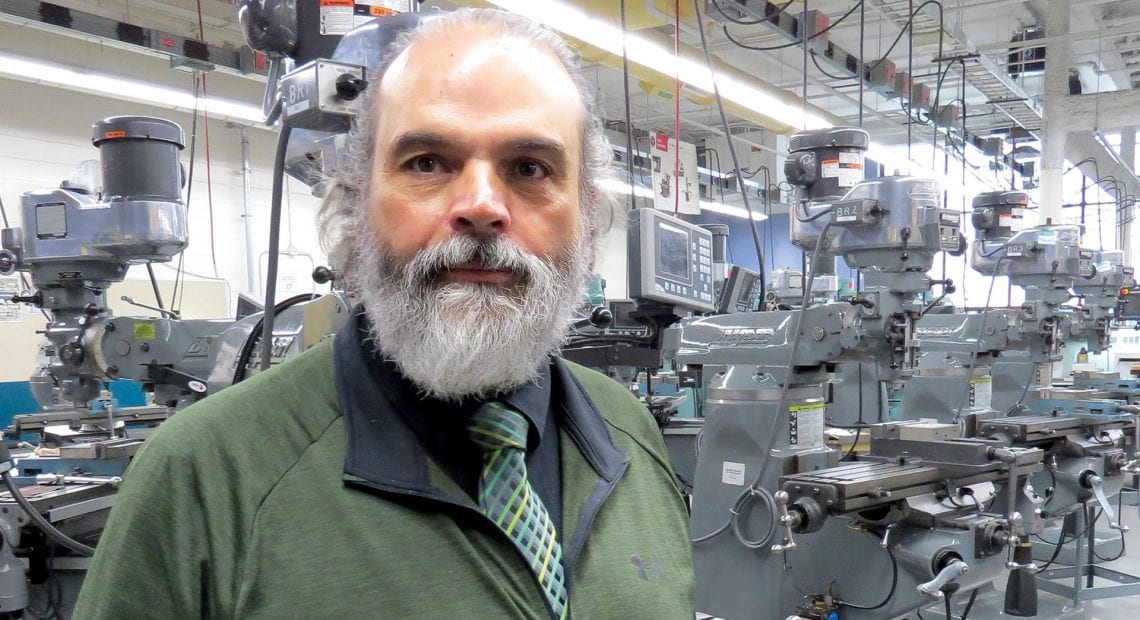
Joao Alves, Chapter 74 Vocational Director at Roger L. Putnam Vocational Technical Academy

It wasn’t so long ago that young people — and their parents — perceived technical schools as a last resort of sorts. But a profoundly changed labor market, a workforce crisis, and a series of investments on the part of the Commonwealth have changed all that. Today, these are increasingly seen as schools of choice because of their blend of academic and vocational programs, and their students are certainly in demand.

Joao Alves has been in and around what is now known as Roger L. Putnam Vocational Technical Academy for the better part of 40 years.

He attended the school, known then as Putnam Vocational High School, in the late ’70s. He started teaching there in the early ’90s, and has been there ever since, now taking the title of Chapter 74 vocational director, which means he’s in charge of making sure the school’s many programs meet established state standards. Over all those years, he has seen what amounts to serious pendulum swings when it comes to vocational education, from his days as a student, when the school’s enrollment was at its zenith and jobs in manufacturing and the trades were plentiful, to those days when he started teaching there, when such jobs were in sharp decline and interest in vocational programs was plummeting.

To … today, when, by all accounts, vocational schools are enjoying a resurgence of sorts — as evidenced by a lengthy waiting list for valuable slots at Putnam and similar situations at other area schools.

Indeed, fueled by a number of factors, from the retirement of Baby Boomers and the resulting infusion of jobs to a huge commitment from the state to meet workforce needs and address a widely recognized skills gap, vocational/technical schools — many of them now called ‘academies’ thanks to rebranding efforts undertaken years ago — are seeing heightened and what appears to be sustainable interest in programs ranging from machine tooling to allied health; from criminal justice to culinary arts.

“What we provide today is opportunity,” Alves said. “Whether the student is going to go out and work tomorrow, as soon as they graduate, or whether they go into the military, or whether they go on to college — they’re better prepared for those options.”

Joe Langone, principal of Westfield Technical Academy, formerly Westfield Vocational High School, agreed.

“There’s been a change in perception about technical schools and the students who attend them,” he told BusinessWest, adding that his school, with nearly 600 students, is at what he called max capacity. “I’m pleased that this has come about, but, sadly, it took a skills gap for people to become aware of what we’re doing, why we’re doing it, and how we’re doing it. All of a sudden, we find ourselves in a situation where people with trade skills are a commodity.

“We’re experiencing great shortages in a number of areas in our region, including healthcare, manufacturing, information technology, and education,” he went on, adding that these shortages result in part from the retirement or Baby Boomers, a trend that will only accelerate as more members of that generation reach their mid-to late ’60s.

David Cruise, president and CEO of MassHire Hampden County, concurred, and said a variety of forces — from those job opportunities to a stronger alignment of the academic and vocational programs at the area’s technical schools — have increasingly made them what he called the “schools of choice.”
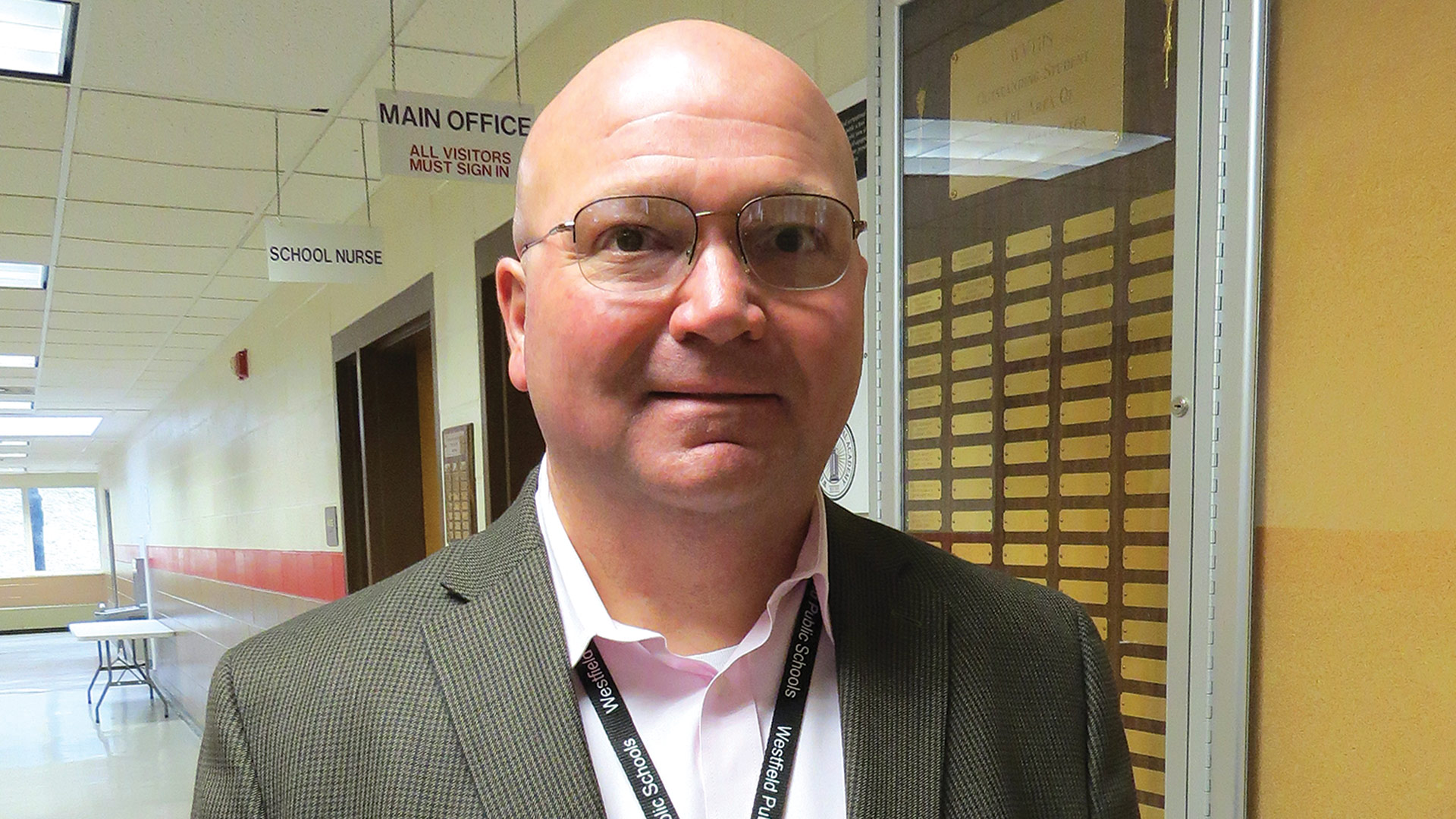
Joe Langone says that, in today’s challenged workforce climate, technical-school graduates have become what he called a commodity.

“Over the past several years, both employers and parents have come to understand the importance of both college and career,” he explained. “And they find that the vocational/technical high schools offer a pretty robust academic program, but also prepare students with skills they either take to the labor market after graduation or pursue two- or four-year degrees. And with today’s labor market, where supply is in relative short supply across most industries, the value of a vocational/technical high-school education, which was always valuable, is now even more so.”

Langone said his school, like others, is responding to needs and concerns within the workforce with curriculum changes, new and updated equipment — often funded with help from community partners, including businesses that hire graduates — and new programs designed to help create a pipeline of workers for specific industry sectors.

“There’s been a change in perception about technical schools and the students who attend them. I’m pleased that this has come about, but, sadly, it took a skills gap for people to become aware of what we’re doing, why we’re doing it, and how we’re doing it. All of the sudden, we find ourselves in a situation where people with trade skills are a commodity.”

As an example, he cited his school’s Aviation Maintenance Technician program, created specifically to address the needs of companies like Gulfstream and Rectrix Aerodrome Center, located near Westfield’s Barnes Municipal Airport (more on that later).

And there may be more new programs and expansion of existing ones through a new line item in the state budget called the Career Technical Initiative. Proposed by the Baker administration, it calls for leveraging current vocational assets across the state to expand to three shifts of training per day — many currently have two, with night programs for adults looking to be trained or retrained in a vocational skill.

Cruise said the initiative would allow traditional high-school students, including many now on those aforementioned waiting lists, the opportunity to access vocational programs after school, between 2 and 5 p.m.

The goal is to add an additional 20,000 skilled technical workers to the workforce over the next four years, said Cruise, adding that such initiatives are certainly needed as companies search, often in vain, for workers, and the so-called ‘gray wave’ of retiring Baby Boomers gains intensity.

For this issue and its focus on Manufacturing and the Trades, BusinessWest takes an in-depth and how and why these institutions became the schools of choice and also at how they are helping to address the state’s workforce needs at this critical juncture.

Current Events

It’s called “Tiger Talk: In the Flow with Rob and Joe,” with Joe being Joe Langone and Rob being Rob Ollari, Student Services director at Westfield Technical Academy.
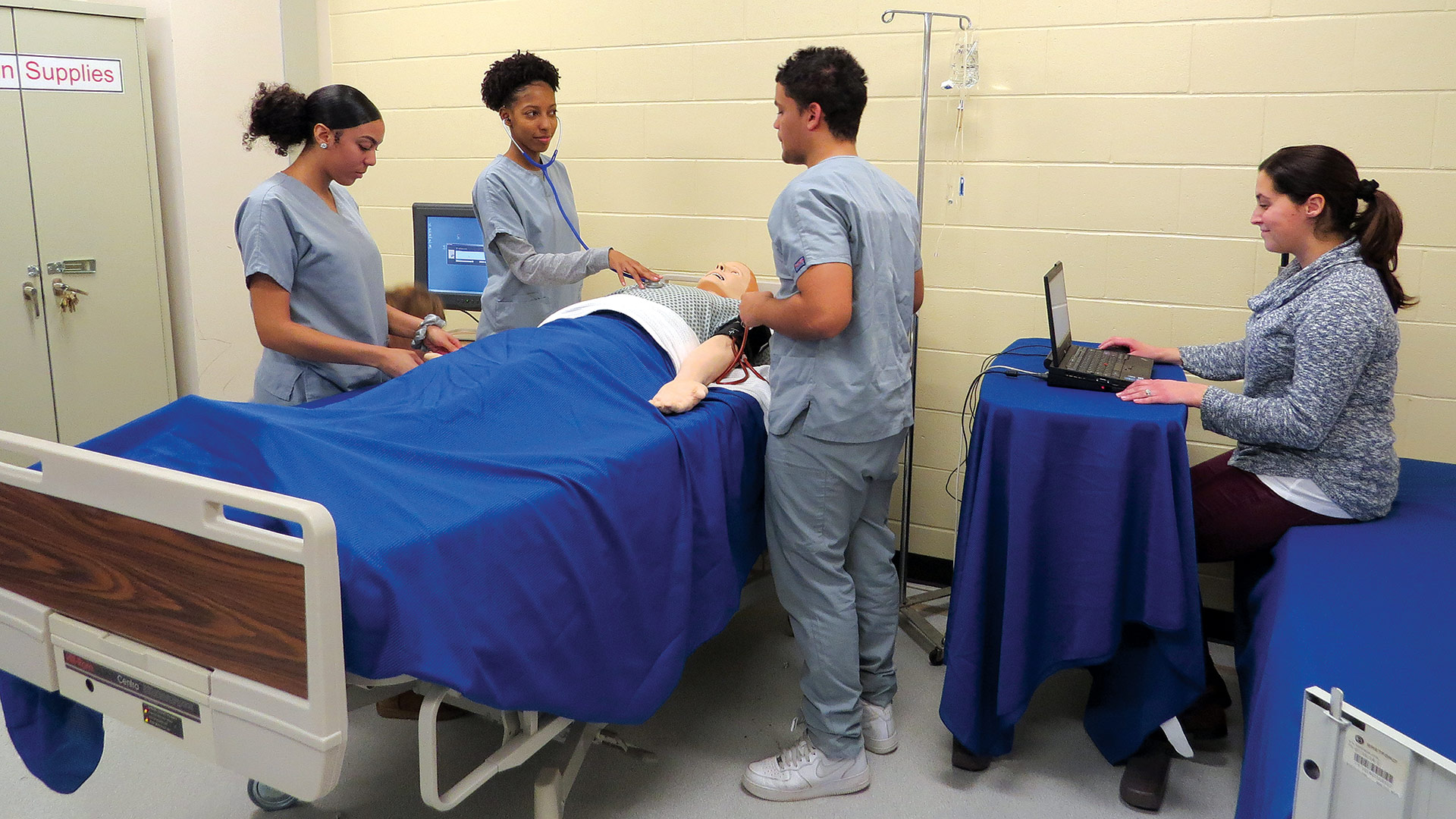
Students are seen in the Allied Health program at Roger L. Putnam Vocational Technical Academy, one of 22 programs at the school.

This is a weekly, hour-long show on Westfield Community Radio (WSBK) that features the two in studio talking about all things at the school — from the sports teams, nicknamed the Flying Tigers, to recent and upcoming events. But a good deal of that hour is spent taking to students about the programs they’ve chosen and why. On the Jan. 23 show, for example, they had several guests, including 10th-grader Caitlyn Carter, enrolled in the Electrical Wiring program. That’s not where she thought she’d be, as she told them candidly.

“I did not want to go into electrical wiring at all — I came here for either for culinary or automotive,” she explained, adding that she eventually chose the technical school over Westfield High, even though all her friends went to the latter, because she considered it the better option considering her ultimate goal — to become a Marine. “I was going to join automotive, because my grandfather knows everything in automotive. Then I thought, ‘electrical sounds pretty cool; let’s try that.’”

She also talked about the technical school being the better ticket to a good-paying job and how she was attracted to several of the non-traditional, or ‘non-trad,’ programs, as Langone called them, meaning those that have been traditionally (hence the term) dominated by men, or, in the case of Allied Health, women.

The program is one of several initiatives undertaken to build interest in technical programs and Westfield Technical Academy in particular, said Langone, and collectively they seem to be working.

“I remember my parents speaking about it, saying, ‘you have to go to college, you have to go to college, you have to go to college.’ I don’t recall anyone saying why were supposed to go to college, but that was sort of the golden rule.”

Indeed, the traditional period for applying for Westfield Vocational Academy — early spring — hasn’t really begun, but already the school has received more than 120 applications; it will only admit roughly 150.

That is one sign, amid many others, of the growing popularity of vocational programs, said those we spoke with, all noting that this represents a sea change from the way things were years ago.

For some perspective, Alves turned the clock back to 1993, when he came back to Putnam to teach, specifically in Metal Fabrication, Sheet Metal, and Welding. Actually, he went back further to when he was a student.

“When you came to this school, you knew there was work out there,” he recalled. “The connection was great; from school to industry was a good pathway, a clear pathway.”
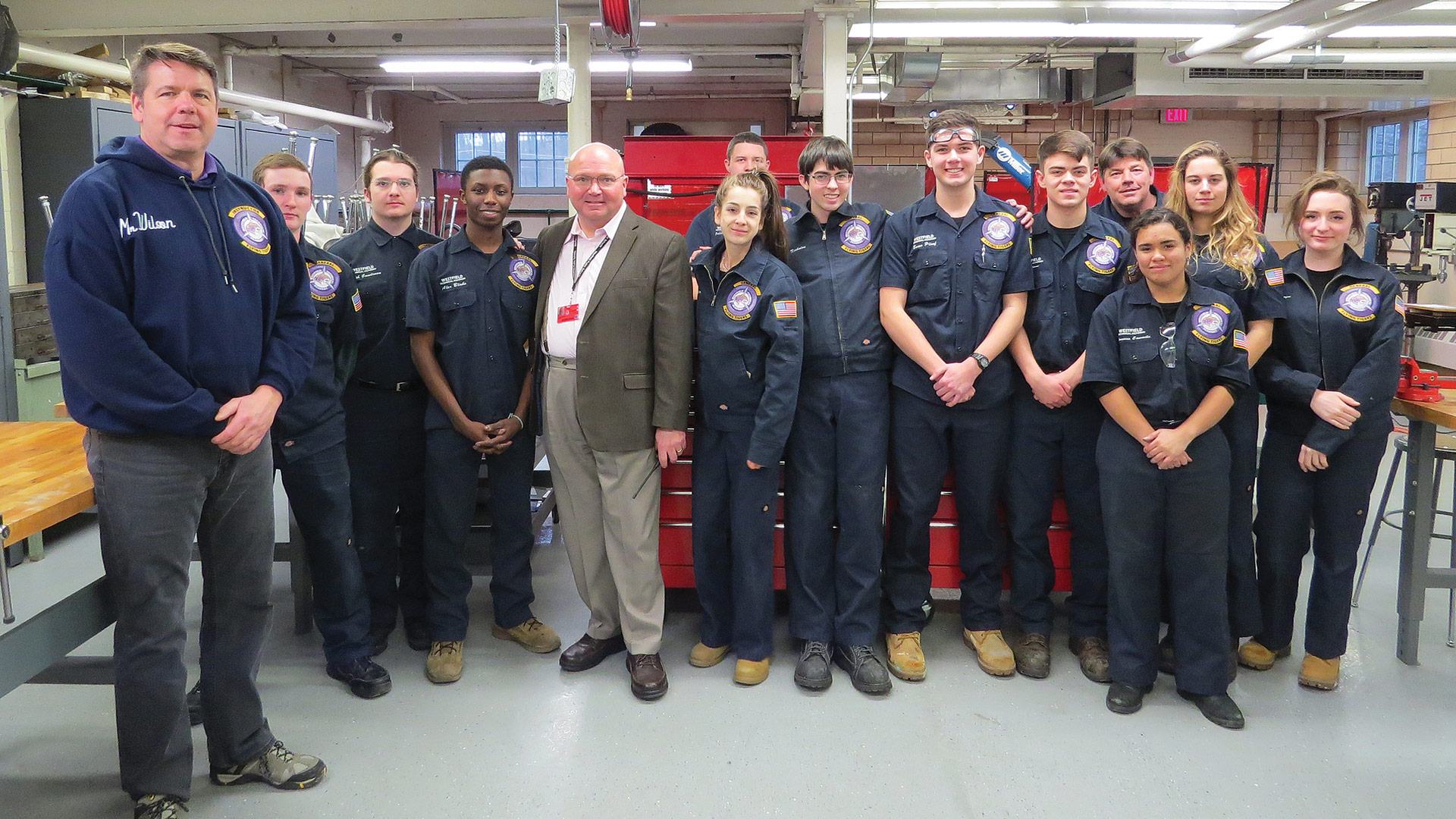
Joe Langone, seen here with students and instructors in Westfield Technical Academy’s Aviation Maintenance Technician program, says it is now one of the most popular programs at the school.

Things were much different when he returned. “A lot of the bigger manufacturers had left, and the construction economy was very slow,” he told BusinessWest. “What I found was that the students were still focused on coming here for a trade — that was still the buzzword; you came to Putnam to work with your hands — but what I found was that, on the flip side, the jobs just weren’t there, so the numbers started to go down. We weren’t getting the same numbers of students, and some of the ones who were coming were not as focused because they didn’t think they were going to be able to get a job.”

Langone has similar recollections from when he attended Cathedral High School back in the mid-’80s.

“Back in those days, the perception, and I’m not sure how true it was, was that the highest-performing kids in Springfield went to Cathedral or Classical,” he said. “Things started to scale down from there, and Putnam was always viewed by my peers and from my parents’ generation as the point of no return; that’s where you went as a last resort. The perception was that if someone wasn’t going to be successful anywhere else, they at least might have a shot if they had a trade.”

Those sentiments were fueled by the common presumption by his parents — and by most in that generation — that, to get ahead, one had to go to college.

“I remember my parents speaking about it, saying, ‘you have to go to college, you have to go to college, you have to go to college,’” Langone recalled. “I don’t recall anyone saying why were supposed to go to college, but that was sort of the golden rule.”

Building Momentum

Back in the ’90s, Putnam struggled, Alves recalled, noting that it was the first of the state’s vocational schools to be labeled as ‘non-performing,’ thus requiring a turnaround plan, which was drafted — and executed.

“With a lot of hard work, a lot of good planning, and a lot of good people, we were able to change the image of the school,” he said, adding that these efforts were aided greatly by both a changing job market and the construction of a new Putnam.

“Parents and students started believing in the school again, and students started to come back,” he recalled. “And now, they’re performing at a higher level; they’re going on to be engineers, and if they’re in the health track, where traditionally they would go on to be RNs and LPNs, now they’re saying, ‘I can go on to be a doctor.’ And this helped attract more students.”

Today, Putnam, with 22 technical programs, ranging from Auto Tech to HVAC; Robotics to Graphics; Carpentry to Machining, is well-positioned to train people for a technology-driven economy, said Alves, and students (and their parents) are responding.

Indeed, enrollment is now roughly 1,200, not what it was when Alves was a student himself, but much higher than it was only a decade ago. And there are probably 300 to 400 people on the waiting list, a number that grows larger each year.

A somewhat similar pattern was followed at other vocational schools, and today, converging trends have the schools at or approaching capacity and looking for ways they can accommodate more students.

For starters, with the ever-rising cost of a college education and the often-crippling burden of college loans — Langone said he’s 53 and still paying off loans from his advanced-degree work — some are rethinking that golden rule. Meanwhile, as Cruise said, and others hinted strongly, the technical schools are now often considered a first, best option for many as they look to enter or re-enter the workforce.

This change, as noted, didn’t come overnight, but rather over the past 20 years or so, said Alves, adding that Putnam and other technical schools took a number of proactive steps to change perceptions and boost enrollment, including new programs and, in some cases, some rebranding and use of that word ‘Academy.’

But, as Langone noted with some regret, it took the skills gap and its very visible impact on the state’s economy, and especially its manufacturing and healthcare sectors, for these schools to gain the full appreciation they now enjoy.

Meanwhile, investments made by the Commonwealth have certainly helped these schools enhance existing programs and add new ones.

Langone said Westfield Voke has received more than $500,000 in grants over the past few years for its Aviation Maintenance Technician and Manufacturing programs, and more than $100,000 for that aforementioned Electrical Wiring program, in part to offer training to adults in the evening. It has applied for additional grants for its Culinary and Allied Health programs and is currently awaiting word.

The State of Things

As noted earlier, the state, recognizing the demographic patterns and hearing employers’ desperate pleas for qualified help, has made significant investments to counter those trends. The so-called Workforce Skills Cabinet (WSC) and its seven regional teams have worked together to design and implement a number of strategic initiatives that include:

• $67 million in capital skills grants awarded to the state’s technical schools covering some 230 training programs, supporting an additional 12,500 students;

• The Career Pathways Initiative, which aligns high-school curriculum to priority industries; the program has created 170 new pathways and attracted $4 million in philanthropic funding to complement state funding;

• The Workforce Competitiveness Trust Fund, which has awarded $12 million in fiscal years 2019 and 2020 to retrain more than 1,560 individuals for employment in careers prioritized by WSC blueprints; and

• The Workforce Training Fund (WTF), which has awarded $10.7 million to upskill nearly 7,000 workers at 119 companies in priority sectors.

These investments have helped create a number of new programs, such as the Aviation Maintenance Technician program in Westfield, now among the most popular programs at that school, said Langone, adding that the first cohort of seniors from that program graduated last spring.

It was created specifically to address the workforce needs of the aerospace-related companies at Barnes, specifically for airframe and power-plant mechanics — “the outide and the inside of the airplane,” as Langone called it — and, thus, it is a good example of how the area technical schools are responding to emerging needs.

Interestingly, many of the recent graduates didn’t go to work at Gulfstream or Rectrix. Indeed, most went on to attend college.

“Only half of those 11 kids are interested on going to work as air-frame or power-plant mechanics,” he explained. “The other half are using it as a springboard to other aviation-related career clusters; I have a graduate who’s attending the University of Kansas at Wichita for Aviation Engineering. I have some others going to Bridgewater State for Airport Management.

These are examples, and there are myriad others, of how going to technical high school no longer means not going to college, said Langone.

Alves agreed, noting that many of Putnam’s graduates, perhaps half by his estimate, go on to attend two- or four-year colleges that will enable them to broaden their career opportunities in their chosen field.

“A lot of our students come here with a bigger picture in mind,” he said. “They come here for health, but not just to be a nurse — maybe, as I said, to be a doctor. Some come here for the HVAC program, but not necessarily to be a HVAC technician; they may aspire to be a mechanical engineer. A good portion of our students have that in mind from the get-go.”

If there is one challenge for area tech schools, and it’s one they couldn’t have foreseen 20 or even five years ago, involves infrastructure and capacity. Indeed, many industry sectors — again, manufacturing and healthcare are at the top of the list, but there are others as well — are calling for more skilled graduates, but the schools are at capacity.

“I wish I could take more, but our facility is maxed out for space and also maxed out when it comes to my ability to add more programs,” said Langone. “There are some technical programs I’d love to add, but I have no place to put them.”

Cruise said the Career Technical Initiative, as proposed by the Baker administration, will help address this problem by giving more individuals, including adults looking to be trained and students on those waiting lists, an opportunity to receive some training in a specific field.

Work in Progress

Returning to that Jan. 23 episode of “Tiger Talk: In the Flow with Rob and Joe,” Carter talked about she has some job interviews coming up — several of them, in fact — with companies she hopes to work for over the summer and perhaps land a co-op opportunity with later.

Those co-ops, traditionally for students in their junior years, often lead to permanent, well-paying jobs after graduation.

This is what Alves and Langone meant by ‘opportunity.’ And it’s what they meant when they talked about preparing students for whatever they wanted to do after graduation.

And it goes a long way toward explaining why there has been an attitude adjustment when it comes to the region’s technical high schools. u

George O’Brien can be reached at [email protected]

Features

Plane Speaking

Bill Hogan

Florence Casket Co. has been making its mainstay products, wooden caskets, for nearly 150 years now. And it’s making them pretty much the same way, as well — by hand. But while this business seems frozen in time in some ways, this unique industry has seen change and evolution — and the company has more than kept pace.

There’s a good amount of history on display at the Florence Casket Co. plant in Florence, as one might expect at a company that’s been making the same product in the same building since 1873, as the plaque mounted near the front entrance proclaims.

Much of it is captured in the photographs hanging in the lobby, the conference room, and Bill Hogan’s spacious and somewhat cluttered office — testimony to the fact that the third-generation president wears quite a number of hats at this venture.

Many of those photos, including those in Hogan’s office, are portraits of first- and second-generation leaders of this unique business, including his maternal grandfather, Russell Christenson, who bought the company with a few of his siblings in the mid-’50s. In the conference room, meanwhile, there are several photos of the vintage horse-drawn hearses the company loans out to area funeral homes for special services — as well as framed newspaper accounts of those funerals, with the hearses featured prominently.

And in the lobby, hanging not far from a framed receipt — dated 1898 and given from the Florence Furniture Co., Manufacturers of Burial Caskets and Undertakers Supplies, to a Joseph Belanger for “boxes” and other materials — are two aerial photos of the factory.

One is relatively recent, maybe a decade or so ago. The other one, a black and white shot … Hogan isn’t quite sure, although he thought he could determine the date if he did a little research. There are a few clues, including an old rail line that’s been gone for decades, and a few cars — compared with the full parking lot of today — that look like they might be from the late ’20s or early ’30s.

Whatever the date is, the building certainly looks different on the outside than it does today — there have been several expansions. On the inside, though, most areas — from the lobby to most of the manufacturing spaces — probably look very much the same as they did back then.

Indeed, to walk into this factory, wedged between houses in a decidedly residential neighborhood, is to almost step back in time. While some of the equipment, including a CNC machine, are new, most everything else in this building is old — as in old world. Which is one way of saying they’re pretty much making caskets here the same way they did when the building was opened, when Ulysses S. Grant was in the White House, and when that picture was taken — whenever that was.

“We could buy machines that would do most of this mechanically, but we do it all by hand.” said Hogan, adding that, on a typical day, roughly two dozen caskets will be shipped out to funeral homes across a territory that covers most of the Northeast.

While in many ways time seems to have stood still at this company, the reality is that it hasn’t. Times have changed in some ways, from the amount of competition — there are far fewer companies doing this now, although some are national and even international giants — to the increasing popularity of cremation, which has certainly impacted demand for the wooden caskets this company specializes in — although demand is still steady.

“As much has cremation has crept in and become more and more popular, there are still a fair number of families that want to have a traditional funeral,” he explained, adding that this is especially true in the Northeast.

Craftsmen at Florence Casket assemble models the same way they were built in 1873 — by hand.

Overall, Florence Casket, while in some respects still doing business the way it did nearly 150 years ago, is also adapting to changing times by diversifying into everything from supplying cremation urns and metal caskets to making specialty caskets, such as oversized models, and even those for pets.

But its bread and butter remains fine wooden caskets, which are in many ways custom-made for each customer. The company’s strategy has been to generate more of the remaining business for such caskets in its territory by “going into untouched corners to find new customers,” as Hogan put it.

For this issue, BusinessWest visited this unique business to learn about a business where demand may be constant, but so too is change and the need to adapt to it.

Going with the Grain

Hogan began his extensive tour of Florence Casket — something he enjoys and does fairly often — in the shipping area, where several caskets, covered by protective wrapping, sat waiting to be delivered to one of dozens of funeral homes in the company’s client portfolio. He spent the next 40 minutes or so explaining the many processes involved with getting them ready for delivery.

He began by rolling open a large wooden door and pointing to a separate building in which vast stores of kiln-dried lumber — everything from pine to poplar; maple to mahogany — are kept. He then took BusinessWest on a journey that covered three floors — the top floor is essentially for storage of finished product — and more steps than one could likely imagine when looking at the final product. Steps that include planing, cutting, gluing, shaping, assembling, painting (staining), lacquering, sanding at many stages along the way, and installation of the interior fabric.

He also introduced some industry terms of a sort, such as ‘ears,’ the wooden pieces affixed to the side of the casket, to which the handles are mounted, and the ‘piece of pie,’ the wedge-shaped (hence the name) piece glued and then stapled into the front of the top of the casket.

Finished caskets are stored on the third floor of the company’s headquarters in Florence and then customized to meet the specific needs of clients.

The craftsmen making and assembling pieces are doing things pretty much the way they’ve been done for decades, said Hogan, as he pointed to some equipment that’s been in use from the very beginning, or so he’s been told.

Again, he knows much more about the chapter in the company’s story that began when his family bought it nearly 70 years ago — but through research and stories passed down, he’s been able to gain an appreciation of its full and long history.

And before giving his tour, Hogan provided an in-depth and quite intriguing inside look at his company and the casket business — which he stressed repeatedly is not the funeral business, although the two have always been intertwined, and were even more so decades ago, as we’ll see.

As for Hogan, he started working in the plant when he was very young; he said his grandfather would put him to work mowing lawns and handling other duties. Later, he worked on the floor during summers and school vacations. After graduating from Castleton College in Vermont, he returned to the family business in 1993, and “I haven’t looked back.”

“When I was kid, I didn’t necessarily picture myself doing this,” he explained. “But it was an opportunity that was presented to me, and it’s the path I chose; it was a good decision.”

Thus, he’s one of several third-generation members of the family involved with the business, and while some from the second generation are still active as well, including a semi-retired uncle who serves as a sales representative in Vermont, most have retired. But they still consult when called upon.

“The whole family has been a great sounding board for me when there’s been problems, questions, cares, or concerns,” he told BusinessWest. “They bring years of experience to the table.”

And there have been a number of matters on which to consult, he said, adding that, while the casket business is steeped in tradition and history, there has been change and evolution and the need to adapt to it.

As evidence, Hogan referenced the ‘showroom’ sign on another door to the building, even though it hasn’t actually served that role in quite some time.

A craftsman finishes ‘painting’ a casket, one of many steps in a very involved process.

“Many years ago — this is before my time, but it’s what I’ve been told — funeral directors would bring families here to look at caskets and choose a model,” he explained. “The funeral director would call down and say, ‘we’d like you to put a polar casket, a maple casket, and a cherry casket into the showroom for the family to see.’”

Later, funeral homes established their own small showrooms, he went on, adding that, when a particular model was chosen, the funeral director would call Florence and order a replacement. More recently, many of those showrooms have been given over to other uses, Hogan noted, and a number of funeral homes are displaying casket options through miniatures or simply photos on the internet, neither of which is ideal, but that’s nonetheless reality.

So after a model is picked, a call will be placed to Florence Casket for that item, he said. While the company has several of each type of casket (meaning the wood it’s made from) in those third-floor storage areas, it essentially makes each item to order, especially with the handles and interior fabric, which separates it from those competitors who stockpile inventory in huge warehouses.

“Our specialty is we manufacture everything as needed,” he explained. “Everything going tomorrow, we’re working on today; you can change colors, interiors, handles — you can customize them more than you can elsewhere.”

Board Meetings

Making things to order brings its own challenges, he went on, adding that, while some times of the year are busier than others — and winter in the Northeast, for whatever reason, probably the weather, is one of those times — work, like death itself, is constant and unpredictable.

“People don’t stop dying because it’s a holiday or because it’s the weekend or because the weather is bad,” he explained, adding that this makes the December holidays, and the time off that comes with them, sometimes difficult to navigate.

It also makes Fridays and Mondays, positioned on opposite sides of the weekend (when the business is closed), more hectic than the other days of the week. “So Mondays are essentially three days all wrapped into one.”

Indeed, BusinessWest visited on a Friday, and Hogan was interrupted several times to advise those making deliveries in time for the weekend.

Those deliveries are made almost exclusively within a Northeast territory that stretches from roughly Atlantic City, N.J. to the Canadian border, a coverage area chosen because it can be served from the Florence location with a fleet of trucks and vans.

As noted earlier, that territory was once home to a number of companies that made wooden caskets, but now there are just two — Florence and a company in Athol called Cambium Corp. There was a third, New England Casket in East Boston, but its factory burned to the ground almost a year ago, and the company is still in a state of limbo, said Hogan.

Meanwhile, there are a few large national players, including Batesville Casket Co. and Matthews Aurora Funeral Solutions, both based in Indiana with additional locations in other states.

New England Casket sold primarily to distributors, while Florence does not, which explains why the company hasn’t picked up much business as a result of that devastating fire, said Hogan. Instead, as noted, it has responded to the impact of cremations and other forces within the industry by working to add new customers within its territory. It has done this by going into those untouched corners that Hogan mentioned, and also stressing what differentiates it from other makers, specifically the quality and customization of the work.

This was on full display during Hogan’s tour, which essentially took the process from start to finish. On a tour that might take 40 minutes, he stops and explains each step. In real time, it probably takes about 40 hours, he noted, with some woods, such as oak and cherry, being more porous, thus needing more time to dry between coats of lacquer.

One of the last stops on the tour, the third-floor storage area, shows the depth of the customization process. Indeed, for each type of wood there are several different colors, or stains, and a variety of models. In cherry, for example, there’s everything from the Tanglewood to the Monticello to the Washington, each with customizable handles and panels. In mahogany, another of the higher-end options along with cherry, there are four options — Baldwin, Nantucket, Newport, and Simsbury — again, each one customizable.

Hogan said one of the keys to the company’s success is to have options for all tastes and price ranges, with mahogany and cherry at the high end, pine at the lower end, and woods like poplar, perhaps the most popular, in the middle.

Indeed, there are more than two dozen options in poplar, Hogan said. “We sell a lot of them because they’re reasonably priced and the finishes are brilliant.”

Bottom Line

Those models are part of the ongoing story at Florence Casket, which is closing in on 150 years of making both wooden caskets and history.

Those framed photographs in the lobby, conference room, and Hogan’s office reflect this history, but the real story is written on the shop floor, where they’re still doing many things the same way they were done in 1873.

The same way they did in that black-and-white photo — whenever it was taken.

It was Ben Franklin who said that, in this world, “nothing is certain except death and taxes.” For 147 years, this company been a constant as well.

George O’Brien can be reached at [email protected]

Insurance

Deepening Its Roots

Timm Marini, president of Personal Lines

When FieldEddy Insurance entered the HUB International family a little over five years ago, it traded a name with a rich regional history for one backed by the resources of a large corporation. The result has been the best of both worlds — HUB’s clout improves the office’s ability to grow specific niches through talent development, while the company is still able to focus on local needs with an emphasis on building deeper relationships with customers.

The insurance company known as FieldEddy had more than 160 years of history and a still-growing geographic footprint in Western Mass. when it became part of the HUB International family in 2014.

It’s a move that simply made sense at the time, Timm Marini said, and he feels even more strongly about that five years later.

“It’s such a natural fit for us,” said Marini, president of Personal Lines at HUB International New England in East Longmeadow. “There’s a cultural mesh in that our focus and HUB’s focus has always been in delighting the customer.”

Several years ago, FieldEddy employees were tasked with coming up with tools and resources they needed to better ‘delight’ those customers, Marini recalled. “We got to about seven of them and looked at each other and said, ‘we’re going to go bankrupt trying to buy all this and do all this on our own.’ So we plugged into HUB, and that’s when we really became the market leader.”

While FieldEddy had grown dramatically through acquisition over the previous two decades, under the HUB name, the company took a more organic approach, Marini told BusinessWest, adding talent in specific growth areas, from cybersecurity to healthcare (in the wake of health-insurance reform in the Bay State, followed by the Affordable Care Act nationally).

But last year, it was back on the acquisition trail, purchasing the Insurance Center of New England in Agawam — a move, Marini said, that represented the same sort of ‘cultural mesh’ that FieldEddy and HUB did five years ago.

“They had some great talent on their team and a couple of niche markets that made sense for us,” he said. “We’re not just buying to get big. We’re buying to get better. If we can buy an organization or invest in an organization that helps us get better, that’s what HUB’s acquisition strategy country-wide is.”

“When there’s a catastropic event — a hurricane, a tornado — HUB is ready, and we’re communicating to our customers, we’re communicating to the marketplace, and we’re giving them better data than what you’d receive in the news. We’re getting ready for the event.”

The company undergoes a due-diligence process before making an offer, he explained, one that involves three questions. “Number one, is it a good fit? Number two, are they bringing something to the party to make us better? And number three, can we make it grow?

“This was a great cultural fit, with really educated people — just good, solid folks. That first piece of it was a home run,” Marini went on. “Then, they have talent that we didn’t have, and we’re getting that talent. HUB wants to bring levels of expertise and be able to delight our customers differently. We want different people on our teams, different resources available to us, that will help our customers.”

For this issue’s focus on insurance, Marini talked about how HUB continues to expand both its reach and its knowledge base in numerous ways.

Hub of Activity

HUB itself has been around only since 1998, with its first operations in Canada and Chicago. Its first acquisition after that was CJ McCarthy Insurance Agency in Wilmington, Mass. in 2000. It picked up FieldEddy 14 years later.

Today, Marini said, HUB is the largest independently owned agency in New England, the largest personal-lines agency in the country, and the fifth-largest agency in the U.S. overall. So, while the firm operates autonomously with local decision making, it does so with plenty of clout behind it.

“A lot of our talent investments, we could never do on our own,” he said, citing growth in areas like risk services and loss control, claims advocacy, and underwriters who specialize in specific niches.

Legalization of marijuana is one example. “We’ve made pretty significant investments in educating our brokers across the country and making sure we can handle the unique needs of that industry.”

As another example, “on the health side, we’re asking, ‘what do we need to do better for the customer?’ We’ve invested in health and wellness folks, people who can help mitigate exposures and help us all be healthier … we’ve invested in actuaries, underwriters, data-analytics experts, just to help carve out the information and make sure the pricing we receive from insurance carriers is the right one for our customers.”

“I believe we’ve tried to move away from just the transactional side of things. Price is important, coverage is more important, but most important is being that advocate — not just when the negative or adverse thing happens, but being there through the process, through the life of the product that you’re talking about. It’s not just the transaction.”

And in times of emergency, HUB brings more to the table than insurance, he added.

“When there’s a catastropic event — a hurricane, a tornado — HUB is ready, and we’re communicating to our customers, we’re communicating to the marketplace, and we’re giving them better data than what you’d receive in the news. We’re getting ready for the event.”

When a hurricane devastated Bermuda last year, he noted, “we had $10 million homeowner customers on the island. And when that happened, we had barges filled with emergency-care stuff out there. HUB coordinated it — paid for by us, by our carrier partners — and it had nothing to do with insurance, just to do with taking care of people.

“Again, as a small independent, we didn’t have the resources to do that,” he went on. “That’s really cool. To be able to communicate that and see it in action, it puts me to bed thinking we made the right decision five years ago.”

In general, Marini said, being part of a large national company is a healthy balance between local autonomy and broader resources.

“The budget is more regional and filters across, but my team is plugged into the process. We have growth initiatives and retention initiatives — again, focused on delighting the customer,” he told BusinessWest. “We say, ‘grow well, grow big, but don’t just be big — be great at what you do.’ And the greatness comes from our customer feedback.”

Knowledge Is Power

HUB International New England has also bolstered its educational outreach in recent years. For example, it recently sponsored a seminar with about 350 business customers about the new employee leave laws in Massachusetts, featuring Bill Alpine, director of the Commonwealth’s Department of Family and Medical Leave, and two attorneys.

“That whole educational process takes a real investment in your people, in your talent. And that’s one of the benefits of HUB,” he said, adding that the company offers a ‘HUB University’ program in Chicago, where employees are trained in specific industries and niches to be better able to serve certain types of customers.

“It could be as simple as one individual or one family that owns one home, or a high-net-worth individual with millions of dollars of assets, all the way to the largest corporations in the world,” he said. “We educate each one of those folks and determine their needs through an assessment, a conversation. It’s not just selling them a product, it’s really finding a solution — and having them understand up front what they’re buying.”

All insurance, after all, is assessing risk and deciding how to mitigate and cover it, he went on. Someone in a flood zone might decide, based on not having a flood in the past 100 years, that they’re OK with not covering that, but at least they’ve had the conversation.

“It’s an educated buying decision based on some expertise we bring to the table. It’s not just trying to sell a policy,” Marini said. “And how do you get there? We have to educate our employees, and they educate our customers. It’s a shared conversation, not a unilateral conversation.”

HUB takes part in national summits with industry experts as well, talking about hot trends and digging into coverage details, such as how to protect, say, someone’s vast wine collection from California wildfires. That’s a first-world problem to be sure, he noted, but if it’s something of value to the customer, then it’s important to HUB.

“Each person has specific things that are special to them,” he told BusinessWest. “Our responsibility is to find the right levels of protection for them.”

That involves forging relationships, he added.

“I think about some of the partnerships I have personally. The same guy has made my suits for 28 years. The same guy cut my hair for 34 years. Those are personal relationships — yes, they provide a service, and insurance is a service — but they’re real, personal relationships that bring different conversations than you have with your friends and your other acquaintances.

“I believe we’ve tried to move away from just the transactional side of things,” he continued. “Price is important, coverage is more important, but most important is being that advocate — not just when the negative or adverse thing happens, but being there through the process, through the life of the product that you’re talking about. It’s not just the transaction.”

Community Ties

Marini says HUB International New England has long maintained relationships of another kind as well — with the nonprofits and community organizations it supports with money, time, energy, and expertise.

“I still sit on six nonprofit organizations. It’s all about giving back to the community,” he said, adding that employees are encouraged to get involved as well, even if it overlaps with work time. “We encourage that; we don’t count it against their time. It’s good for our organization. We want to be in the community, frankly. It’s what we are. And HUB is the exact same way. It’s an expected part of the culture.

“We encourage everyone in the organization to be involved. It’s rewarded, not penalized,” he went on. “After all, this is a people business. We earn a lot of money, and we invest a lot of money. That’s something I’m proud of.”


Joseph Bednar can be reached at [email protected]

Autos

Shifting Lanes

For years, people have been aware — at least vaguely — of the benefits of electric cars, especially energy conservation and savings on gasoline. But according to at least one survey, a general lack of awareness still surrounds these vehicles, especially when it comes to their often-surprising road performance. Yet, electrics and hybrids are gaining momentum, as evidenced by the number and variety of models being introduced to the marketplace — a group that might soon include larger SUVs and trucks.

Brian Ortega sees the connection between electric cars and energy conservation in general.

“They’re popular for a multitude of reasons,” said the product specialist at Balise Hyundai in Springfield. “One, a lot of people are making the transition to having solar panels in their home or making other changes to be a little more eco friendly. People are becoming more aware of climate change, and they want to switch to electric cars.”

But here’s what many drivers of gas-powered vehicles don’t know — people drive electric cars for the performance, too.

“With full electric, there’s a lot more torque,” Ortega said. “When you hit the pedal, there’s no gears, nothing but electricity hitting the car, so your takeoff and speed on the vehicle and ability to get out of snow is a lot better on an electric car.”

Since the days when the Toyota Prius was the only option on the electric market, he told BusinessWest, manufacturers have gradually improved the performance and pickup of electric vehicles, as well as hybrids, which tap into both electricity and gasoline (more on that later). And with Hyundai, Nissan, and a host of other names starting to roll a wider variety of electric and hybrid cars out of factories, they’ve been gradually improving ride quality as well.

“A lot of people have the stigma that it’ll only perform so well, but when they come from a traditional sedan and see that it performs at the same level or better, they are always caught off guard by that,” said Ortega.

Carla Cosenzi, president of TommyCar Auto Group, which sells a number of electric and hybrid vehicles, agreed.

“I think people are shocked when they get in the car and realize the pickup they have,” she said. “When consumers look at electric vehicles, they usually don’t expect them to be as responsive as they are or have the torque they have.”

Whatever the reason, she went on, “we see electrification becoming more popular among manufacturers. It seems everyone’s research and design are focused on electrification now, and they’re definitely becoming more popular with consumers, for a number of reasons. For one thing, I think consumers are now more environmentally conscious than in the past, so if vehicles offer zero emissions, that’s better for the environment and more efficient than internal-combustion engines. The other piece is that these cars are more affordable than in the past.”

Ford has taken note of shifting attitudes on electrics and hybrids and pivoted accordingly, said Jeff Sarat, president of Sarat Ford Lincoln in Agawam.

Brian Ortega says charging stations for electric cars are more ubiquitous than they think — and Hyundai has an app to help locate them while driving.

“It’s interesting — for a while, Ford and Lincoln dropped all of their hybrid vehicles, but recently they brought back numerous versions of hybrids, both plug-in and traditional hybrids. Lincoln has a plug-in version of the Aviator coming out called the Grand Touring model. That’s something like a high-end luxury vehicle, and with the plug-in version, believe it or not, it gets more horsepower and torque than a regular twin-turbo V6 that comes standard in that vehicle.”

In addition, Ford will soon launch the all-electric Mustang Mach-E, which Sarat said is a whole new entry point into electric vehicles — perhaps a hipper one.

“I think this vehicle — and I’ve seen it, I’ve sat in it — is really going to take the electric world by storm, and going to battle the likes of Tesla because it looks better than the Tesla, has better range, and it’s also probably a fraction of the cost, which is nice.

“I think, forever, the common thought about electrics and hybrids was that these aren’t exciting cars,” he added. “The Mustang Mach-E and Aviator Grand Touring, those are exciting vehicles with plenty of range. That’s what we’re seeing in the newer vehicles.”

Engines of Change

To explain the difference between electric and hybrid vehicles, Ortega pointed out two that Hyundai sells: the Ioniq, a sedan, and the Kona EV, a small SUV.

The EV is strictly electric, while Ioniq has a plug-in hybrid and an electric hybrid,” he said. “With full electric vehicles, there’s only the charge, no gas. Hybrid is a mixture of an electric battery, electric drivetrain, and an actual gasoline engine. With the typical hybrid, you fill it up with gas, and it uses regenerative braking, so that, every time you step on the brake, it actually charges the hybrid battery, and gives you a little extra range in driveability.

Carla Cosenzi

“I think people are shocked when they get in the car and realize the pickup they have. When consumers look at electric vehicles, they usually don’t expect them to be as responsive as they are or have the torque they have.”

The plug-in hybrid allows you to go a farther distance between the charge that’s on the car and the gasoline you put into it. So, with a plug-in hybrid, if you get 52 miles to the gallon on gasoline, you get 30 additional miles of range from electricity.”

Ford has long been a player in this market with its Escape hybrid, a small SUV. “We sold thousands of those,” Sarat said. “And we still have the Fusion Energi with the plug-in hybrid; we sell a lot of those.”

The tipping point for many people, he believes, will be the emergence of electric and hybrid trucks and larger SUVs. He said the hybrid Escape was discontinued for a time when the difference between its gas mileage and that of a gas-powered model was small — say, 33 miles per gallon versus 28. Now that hybrid SUVs get well over 40 miles per gallon, though, the difference is more likely to attract buyers, and Ford hopes that’s the case as it develops a hybrid Explorer.

“That will fit seven people and get 40 miles per gallon,” he said. “Everyone wants that.”

Cosenzi said some electric cars in her stores have sold well for years.

“The Nissan Leaf won a number of awards and was one of the top-selling electric vehicles for the past couple of years — and was one of the first electric vehicles on the market,” she told BusinessWest. “I think people are really excited about the range. They get over 200 miles per charge, so that’s really appealing. Other things put a customer at ease, too — you can save money on maintenance and gas, and the manufacturer supports the battery life of the vehicle; Leaf has an eight-year, 100,000-mile battery warranty.”

She also cited Hyundai’s Ioniq and Kona as popular sellers, as well as the Sonata hybrid. Volkswagen offers an electric Golf and is developing other electric models. And Volvo has the T8 hybrid and announced an electric XE40 SUV that will go on sale this year. And TommyCar just acquired a Genesis franchise, which will introduce an electric car this year.

In short, Consenzi said, electric and hybrid models are starting to proliferate, and that speaks to manufacturers’ confidence in their sales potential.

“I think, even when we talk about the next two or three years, you’ll see huge growth. From everything we hear from manufacturers, all the research and design is going into electrification.”

Forward Progress

Long-term forecasts of electric and hybrid vehicles have fluctuated by year, but the national growth rate since 2013 still averages about 25% per year.

Several factors explain why growth isn’t even higher, according to a recent survey by research firm Altman Vilandrie & Co. of 2,500 American drivers. When asked what’s stopping them from buying such vehicles, 85% of respondents pointed to a perceived lack of charging stations, followed by cost (83%), and concerns over the range (74%). And 60% said they were simply unaware of electric cars.

Worries about range and charging-station location seem to go hand in hand, and manufacturers have noticed. Ortega said Hyundai has an app that connects with a car’s data screen — even if navigation isn’t installed — and points out all the charging stations in the area.

“Typically, you’ll always have one within two miles of where you are,” he noted. “Of course, on the highway, that’s where it becomes more spread out, but they tend to be readily available.”

Cosenzi added that today’s charging stations are much more efficient than they used to be. “People waited a long time for their car to be charged, but now it’s as quick as under 45 minutes for a full charge.”

As for cost, she noted that government rebates for electric vehicles are often aggressive, such as a $7,500 federal rebate and state rebates that vary by manufacturer, but tend to average around $2,500. “That’s quite an advantage for going electric, plus savings on gas mileage.”

Ortega agreed, noting that, after about $9,000 in rebates, drivers can lease an Ioniq for under $200 a month, no money down.

“It makes all the sense. It’s the cheapest lease you can get,” he said, adding that, “in the future, that’s going to be the route people go. You’ll have that performance as well as the savings. They’ll become more popular.”

The fuel savings, after all, remains a huge factor, Sarat said.

“My truck has a 35-gallon gas tank in it. I hate filling that up; it costs 75, 80 bucks. Nobody likes doing that,” he told BusinessWest. “Pretty soon we’ll have hybrid pickup trucks. To me, that’s exciting because I hate filling this gas tank. I like to be home at night, plug it in, and be done with it, and be able to go to work the next day or go skiing on the weekend.”

And maybe go a little easier on the environment, too.

Joseph Bednar can be reached at [email protected]

Commercial Real Estate

Sign of the Times

Republican Publisher George Arwady says the newspaper’s staff can fit into perhaps one-third of the space in the building on Main Street, prompting an effort to sell or lease that real estate.

The sign just went up on the top of the structure a few months back. But the Republican building on Main Street in Springfield has been for sale or lease, on one level or another, for the better part of a more than a decade now.

Thus, it has become part of a regional and national story involving newspapers and commercial real estate. Technology has changed, papers have consolidated operations, and staffs have become smaller — those last two trends accelerated by a sharp decline in the fortunes of most all newspapers as interest in print advertising has waned. Thus, those papers’ real-estate needs have changed accordingly. And sometimes dramatically.

So it is in Springfield and at the Republican, part of Advance Publications, where publisher George Arwady estimates that the business — meaning the non-commercial-printing side of the venture (he stressed that repeatedly) — now requires not even half, and perhaps not even a third, of the roughly 64,000 square feet in the office building opened more than a half-century ago.

“We had maybe 500 people working in this building in the heyday — that’s when we were producing three newspapers, the Daily News, Union, and Republican, that were all competing against each other. There were competing newsrooms, competing circulation departments … they threw things over the fence at one another,” said Arwady, who came aboard as publisher nine years ago but certainly knows the history. “We might have 100 non-production people here now; we certainly don’t need all this space.”

Which brings us back to that sign. It announces loudly what has been widely known for years now — that there are large quantities of what Jack Dill, a principal with Colebrook Reality Services, which is now marketing the property, described as flexible, conveniently located space available for lease or sale as business condominiums.

And if someone wanted the whole building (again, not the huge commercial-printing operation), they can have that, too, if the price is right, said Arwady.

Indeed, he said the staff at the paper could easily be relocated into 20,000 square feet of space, and perhaps even less, in any of a number of downtown office buildings.

The fact that there are a number of properties that could accommodate them, including all the major office towers and several other buildings, including Union Station, helps explain why there has been little movement on the Republican space over the years, and why the sign has gone up on the property.

“It’s a buyer’s market, and certainly not a seller’s market,” said Arwady, noting, as area commercial real-estate brokers and managers have for some time now, that there is what amounts to a relative glut of office space in downtown Springfield, at least when compared with much hotter markets such as Boston, Cambridge, and even Cleveland.

In that last city, another Advance newspaper, the Plain Dealer, has relocated to smaller quarters, and its now-former headquarters has been sold and redeveloped. Something similar has happened at a number of other Advance publications, said Arwady, including the one in Grand Rapids, Mich. (the Press), and the Gazette in nearby Kalamazoo, where he once worked, where the newspaper property was acquired by a hospital group.

“They kept a portion of the old building, designed by a famous architect, and they built a large addition with offices,” he explained. “And the paper moved into nice space three blocks away in downtown Kalamazoo.”

And in Grand Rapids, he went on, the Press building was sold and redeveloped; it is now part of what’s known as the Medical Mile, a renowned healthcare destination.

“We’ve done this stuff all over the country, so we’re experts,” Arwady said of the Advance group, noting that the story has been replicated, to one degree or another, with newspapers — and communities — of all sizes.

The pattern has continued regionally as well, with a number of newspaper properties, perhaps most prominently the Boston Globe’s former headquarters building on Morrissey Boulevard in Dorchester being sold and redeveloped.

The Globe left its 700,000-square-foot complex in 2018 after nearly 60 years at that location, and took up residence on Washington Street — not far from where it had operated starting in 1870. It sold the Dorchester property to developer Nordblom, which is reshaping it into something called BEAT (Boston Exchange for Accelerated Technology). Plans call for 360,000 square feet of office and 300,000 square feet of flex, light industrial, and lab space that will likely include a craft brewery.

“It’s a massive project; the site is being totally redeveloped,” said Dill, who attended Boston College High School across the street. “That’s an example of what’s happening in cities across the country.”

And the Republican almost had a success story to top all these others. That’s almost.

“The solution for each market has been different. And at the end of the day, all real estate is local, as Tip O’Neill said about politics, and you have to find solutions that are available and practical and economical in the place that you happen to be located.”

Flash back to 2013 when there were briefly three Springfield casino proposals vying for the coveted Western Mass. license. In addition to the South End blocks now occupied by MGM Springfield and a short-lived proposal to build where CRRC is now assembling subway cars, Penn National, which now operates the slots casino in Plainville, wanted to build a casino on a large parcel that included both the Peter Pan bus terminal (now home to the Way Finders headquarters under construction) and the entire Republican parcel, including the massive printing operation.

“Somewhere, I have an option to buy that’s this thick from Penn National,” said Arwady, placing his thumb and index finger roughly two inches apart. “They were going to take the whole shooting match and build me a new production facility — the city was trying to get me to go into the industrial park; we were going to move all the office people downtown. And they were going to pay for the whole thing.”

Since the MGM plan got the nod in Springfield and then with the Gaming Commission, Arwady has essentially been trying to forge a successful plan B, and he acknowledged that doing so will be somewhat challenging because the market remains soft in Springfield. But he nonetheless remains optimistic that the property can regain the vibrancy it had 30 and even 20 years ago.

This optimism is based on a number of factors, starting with that prime ingredient in commercial real estate — location. Indeed, the property is visible from — and lies almost underneath — I-91, and also just off 291. Meanwhile, the bus and train stations are right across the street.

Beyond location, the building, described by Arwady as a “concrete fortress,” has abundant free parking (a rarity in the downtown area) and flexibility in that he believes it can accommodate everything from retail to professional offices to a variety of different cannabis-related businesses.

“We even have a large vault,” said Arwady. “And a vault is the most attractive thing you can have, from a commercial real-estate perspective, for a cannabis company, because it’s still an all-cash business and they can’t use the banks.”

Dill told BusinessWest that he can envision a number of different potential redevelopment opportunities at the site, including office space, education-related uses, and perhaps co-working space. And flexibility — meaning the ability to respond to a market’s needs — is an important quality when redeveloping such structures, because each real-estate market is unique.

“The solution for each market has been different,” he explained. “And at the end of the day, all real estate is local, as Tip O’Neill said about politics, and you have to find solutions that are available and practical and economical in the place that you happen to be located.”

Over the past several years, a number of entities, from law firms to education-related facilities, have toured the property, said Arwardy, adding that he believes this interest will eventually translate into a transformation of the property into other uses — perhaps several of them.

This has been the trend — or the story — when it comes to newspapers and commercial real estate, and the story is ongoing. u

George O’Brien can be reached at [email protected]

Community Spotlight

Community Spotlight

A $50 million renovation will transform Elm Court, on the Stockbridge line, into a new resort.

Historic properties are getting a second act in Lenox these days.

Take the $60 million expansion and renovation at the former Cranwell Spa & Golf Resort. The Miraval Group, a subsidiary of Hyatt Hotels, purchased the property in 2016 for $22 million and has transformed it into a high-end wellness resort, called Miraval Berkshires Resort & Spa, featuring 102 guest rooms and suites, and a luxury, 46-room hotel, Wyndhurst Manor & Club.

Set to open in May, the complex known as Miraval Berkshires is the third Miraval property nationwide, following its flagship in Tucson, Ariz. — named among the top 20 destination spas in the world last year by Condé Nast Traveler readers — and a second location in Austin, Texas, which opened last year. Hyatt acquired Miraval in 2017, and Wyndhurst Manor & Club is part of Hyatt’s Destination Hotels brand.

The 29,000-square-foot spa in Lenox “was conceived to excite all five senses and encourage mindfulness and introspection,” according to the company, and will include 28 treatment rooms, an indoor/outdoor lounge pool, separate relaxation rooms for women and men, a salon, a sauna, a steam room, a retail boutique, and a courtyard that evokes “a sense of harmony with nature.”

The neighboring Wyndhurst Manor & Club, a renovated Tudor-style mansion built in 1894, will offer a more traditional hotel experience, but guests there can purchase day packages for Miraval.

“We are excited to continue the Miraval brand’s expansion with the upcoming opening of Miraval Berkshires, as well as to welcome Wyndhurst Manor & Club to the Hyatt family,” said Susan Santiago, senior vice president of Miraval Resorts, in a release. “These two properties will offer distinct and memorable travel experiences, and we look forward to inspiring once-in-a-lifetime, transformative experiences for all guests who visit our Miraval and Wyndhurst resorts in the heart of the Berkshires.”

Then there’s the Elm Court estate on the Stockbridge-Lenox line, constructed in 1886 as a summer cottage for William Douglas Stone and Emily Vanderbilt. It completed a series of renovations in 1919 and evolved into an inn in the ’40s and ’50s, hosting dinners, events, and overnight accommodations. It was eventually placed on the National Register of Historic Places.

These days, Travaasa Berkshire County is working on a $50 million renovation of the property to develop a new resort there, featuring 112 rooms, including 16 existing suites in the Gilded Age mansion. After a series of starts and stops, including a holdup in land court in Lenox and a pause for infrastructure improvements to the roadway and water and sewer lines, the project is now moving forward.

“Travaasa Berkshire County’s plan preserves and protects a beloved historic property, respects community character, conserves open space, and contributes to the hospitality culture of the region,” the project website notes. “A tasteful, responsible commercial use of this property by a financially healthy organization will revive a dormant estate, create living-wage hospitality jobs at all skill levels, and maintain the property on town tax rolls.”

Even the Mount, Edith Wharton’s English manor-style home during the early part of the 20th century, is making news these days. Her classic novel The Age of Innocence is celebrating its 100th anniversary this year, and to mark the occasion, the Manor is displaying Wharton’s personal copy of the book.

“We have many, many of her works that either have bookplates or her signature — or both, as with this copy — and so, to finally have her own copy of The Age Of Innocence join this collection of her work, it’s amazing. It’s incredible,” Nynke Dorhout, the Mount’s librarian, told Northeast Public Radio recently.

Looking Ahead

Lenox is much more than its historical properties, of course. It’s also long been renowned for its cultural and recreational attractions, from Tanglewood, the summer home of the Boston Symphony Orchestra, to Shakespeare & Co., to the town’s collection of rustic inns and bed and breakfasts.

But the business community has seen new energy in recent years as well, with projects like a Courtyard by Marriott that opened in 2017 and features 92 rooms with panoramic views, an indoor pool, a large patio with firepits, a restaurant, and a 12,000-square-foot event space; the relocation of Morrison’s Home Improvement Specialists Inc. from Pittsfield and its adaptive reuse of a blighted building that had been vacant for 10 years; an apartment conversion at the Walker Street Residences by the Allegrone Companies; and the construction of Allegrone’s headquarters and co-working office space using green design and technology in a building on Route 7.

Lenox at a glance

Year Incorporated: 1767
Population: 5,205
Area: 21.7 square miles
County: Berkshire
Residential Tax Rate: $12.10
Commercial Tax Rate: $14.78
Median Household Income: $85,581
Median Family Income: $111,413
Type of Government: Board of Selectmen, Open Town Meeting
Largest Employers: Canyon Ranch, Boston Symphony Orchestra, Kimball Farms
* Latest information available

To address an aging population, town officials created a first-time-homebuyers program in 2016 in partnership with four banks that offers up to $10,000 in down payments to qualified applicants. They also changed zoning requirements to make it easier to build new apartments and condominiums or convert older housing stock into appealing residences, as well as adopting a Complete Streets policy that will make the town eligible for state funds to improve connectivity for pedestrians and bicyclists.

Meanwhile, to encourage companies to move to Lenox or expand, town officials have been focused on a five-year open-space plan that was adopted several years ago. In addition, the Berkshire Natural Resources Council, the regional land trust, has been working to develop a regional trail network with a long section passing through Lenox.

Add it all up, and this town of just over 5,000 is looking decidely to the future, while continuing to celebrate and restore its rich past.

Joseph Bednar can be reached at [email protected]