Home 2021 (Page 19)
Daily News

SPRINGFIELD — Professional Drywall Construction Inc. (PDC), a leading commercial drywall company headquartered in Springfield, will host its fifth annual PDC Charity Golf Tournament on Thursday, Sept. 9 at 11 a.m. at Wyckoff Country Club in Holyoke. All proceeds from the tournament will be donated to Baystate Children’s Hospital.

“It has been an honor to host this tournament for the past five years to help such an amazing organization like Baystate Children’s Hospital,” PDC co-owner Nick Shaink said. “Last year, things were a little different due to the pandemic, but we are looking forward to getting back to a full-capacity event and hope we are able to raise a significant amount for this cause. Giving back to our community is at the core of our values as a company.”

The tournament features an 18-hole round of golf, lunch, and a dinner reception. Registration is open now, and sponsorship opportunities are also available.

“We want to thank anyone who has already signed up to play or has been generous enough to purchase one of our sponsorship options,” PDC co-owner Ron Perry said. “We have sponsorship opportunities open at every level and would love for other businesses in our community to participate in giving back with us. We’ve been working to raise funds for Baystate Children’s Hospital with various events over the years and believe wholeheartedly in their mission to provide quality healthcare to children.”

To register online, visit app.eventcaddy.com/events/2021-pdc-charity-golf-tournament and click ‘register.’ To purchase a sponsorship online, click ‘store.’ The deadline for registration is Friday, Aug. 13.

Daily News

SPRINGFIELD — U.S. Rep. Richard Neal visited the Naismith Memorial Basketball Hall of Fame Monday to announce $3,740,728 in funding from the U.S. Small Business Administration’s (SBA) Shuttered Venues Operation Grant (SVOG) program. Joining Neal for this announcement was Hall of Fame President and CEO John Doleva.

“These funds are incredibly instrumental to operations like the Basketball Hall of Fame who suffered greatly because of the pandemic,” Neal said. “For the safety of the American people, the government forced these agencies to close their doors. And now, it is the government again stepping in to make sure that they are able to get back on their feet.”

Doleva added that “the Shuttered Venue Operations Grant commitment means the Basketball Hall of Fame can stabilize its business operations that were so severely impacted over the last 15 months and allow us to better position ourselves for long-term survival and future growth. Without the SBA’s SVOG, many venues, like ours, would have struggled to regain footing and suffered long-term consequences that for some may have been permanent.”

SVOG was established by the Economic Aid to Hard-Hit Small Businesses, Nonprofits, and Venues Act, and amended by the American Rescue Plan Act. The program includes more than $16 billion in grants to shuttered venues, to be administered by SBA’s Office of Disaster Assistance. Eligible entities include live venue operators or promoters, theatrical producers, live performing-arts organization operators, museum operators, motion-picture theater operators (including owners), and talent representatives.

Across Massachusetts, 244 grants have been awarded, totaling $194,408,323. Thirty-three of those are in the First Congressional District, totaling $20,010,864. In addition to the Basketball Hall of Fame, they include Agawam Cinemas; Jacobs Pillow Dance Festival in Becket; Chester Theatre Co.; Public Emily Inc. in Conway; Stationery Factory Events in Dalton; Luthier’s Co-Op in Easthampton; Berkshire Choral International, Berkshire International Film Festival, Mahaiwe Performing Arts Center, and Shaw Entertainment Group in Great Barrington; Massachusetts International Festival of the Arts in Holyoke; Athlone Artists, Edith Wharton Restoration, and WAM Theatre in Lenox; Exit Seven Players in Ludlow; HiLo Holding Co. and Massachusetts Museum of Contemporary Art Foundation in North Adams; Barrington Stage Co. and Berkshire Theatre Group in Pittsfield; Corcoran Productions in Richmond; PDP Productions in Shelburne; Egremont Village Inn and Triplex Management Corp. in South Egremont; Tower Theatres in South Hadley; Bold New Directors in Southampton; Cindy Pettibone in Southwick; Springfield Symphony Orchestra; Old Sturbridge Inc.; NV Concepts Unlimited and the Theatre Project in West Springfield; and Community Images Inc. and Williamstown Theatre Foundation in Williamstown.

Daily News

HOLYOKE — Meyers Brothers Kalicka, P.C. (MBK) will close its offices on Monday, Aug. 2 in honor of its former managing partner, James Barrett.

“With heavy hearts, we share that our friend and colleague, Jim Barrett, lost his battle with cancer and passed away on July 23,” the firm said in a statement. “Our thoughts and prayers are with his family, his friends, and all the lives he touched. Our offices will be closed on Monday, August 2 to allow the MBK family to honor Jim’s memory and attend his service.”

Barrett had a successful career in public accounting following his service in the U.S. Marine Corps. He earned his bachelor’s degree in business administration from Western New England College and his master of taxation degree from Florida International College. He was licensed as a certified public accountant in Massachusetts, Connecticut, and Florida; served on the board of directors for CPAmerica; and was a member of the American Institute of Certified Public Accountants, the Massachusetts Society of Certified Public Accountants, the American Legion, and the National Rifle Assoc. In 2008, he was appointed managing partner of MBK and served in that position until his health required him to step down in the spring of 2020.

“As our managing partner, Jim guided MBK through many transitions over the past decade,” the firm noted. “Jim was disciplined in his approach to leadership, always studying the facts and data before making decisions. He was particularly adept at helping clients work through the most complicated financial and business situations. He was an active listener, preferring to lead through the art of asking thoughtful questions, a trait that his clients and colleagues appreciated about him. When he walked into any room, people were drawn to his strong leadership, warm smile, and sense of humor. He knew how to help everyone balance the stress of our profession with a funny story, a pat on the back, or one of his famous fist bumps as he would make his rounds through our office (often with his to-do list in hand). Jim set a great example for us with his work ethic and desire to always improve MBK. His leadership contributed to MBK’s long-standing reputation as a leading professional service firm in New England. Jim was a great leader, mentor, friend, and brother to the entire MBK team. We will all miss Jim greatly, and we will work to honor his memory for years to come.”

Click here for Barrett’s obituary at MassLive. Memorial gatherings will be held at Forastiere-Smith Funeral Home and Cremation Service, 220 North Main St., East Longmeadow, on Sunday, Aug. 1 from 2 to 6 p.m., and on Monday, Aug. 2 from 9 to 10 a.m. The liturgy will follow on Aug. 2 at 11 a.m. at St. Michael’s Parish in East Longmeadow.

Memorial contributions in Barrett’s memory may be made to Semper Fi & America’s Fund, 825 College Blvd., Suite 102, PMB 609, Oceanside, CA 92057 or to the Sister Caritas Cancer Center, 271 Carew St., Springfield, MA 01104.

Daily News

SPRINGFIELD — Leadership Pioneer Valley (LPV) recently welcomed LaTonia Naylor of Springfield College and Gregory Thomas of UMass Amherst to its board of directors.

Naylor is a dedicated Springfield native and LPV class of 2016 alumna who has been serving the region for years through her work at nonprofit organizations and the Springfield School Committee, where she serves as an elected member. Thomas, director of the Berthiaume Center for Entrepreneurship Management at UMass, has demonstrated exceptional leadership in positions across corporate America in both advising and coaching leaders and entrepreneurs.

“LaTonia and Gregory bring great skill sets to our board as we envision our future as an organization. Their perspectives as an alumna and entrepreneurial advisor are invaluable to the organization,” said Lora Wondolowski, executive director of LPV.

The board also elected its officers, including Annamarie Golden of Baystate Health as chair, Tony Maroulis of W.D. Cowls as vice chair, Calvin Hill of Springfield College as clerk, Callie Niezgoda of Common Capital as treasurer, and Russell Peotter, retired from WGBY, as immediate past chair.

Daily News

SPRINGFIELD — The YMCA of Greater Springfield announced it will hold a golf tournament on Monday, Sept. 20 at the Longmeadow Country Club.

“We are excited to be holding a golf tournament this year, especially after the challenges of this past year,” said Dexter Johnson, president and CEO of the YMCA of Greater Springfield. “This will be a great opportunity for people to get outside on an incredible course, enjoy a day of golf, and support a meaningful cause. The funds raised through this tournament will go to support youth development, healthy living, and social responsibility through access to the YMCA because, at the Y, our doors are open to all, and no one is turned away due to the inability to pay in full for programs and services.”

Michael Rouette, executive vice president and chief operating officer at Monson Savings Bank and golf chairperson for the event, added that “we’ve been working hard to create a great experience for all our golf participants and sponsors. I would like to thank all of our sponsors who have teed up to support the Greater Springfield community through this tournament. I hope others will join Monson Savings Bank, Country Bank, Epstein Financial Services, and the other sponsors in making this day a true success. You will be helping to provide childcare for our youngest in the community, support after-school programs, provide access to the YMCA’s many health and wellness programs, support a social outlet for many, and so much more.”

In addition to a round of golf, golfers will enjoy a grilled lunch at 11 a.m. and a dinner following the tournament.

To learn more about registration and sponsorship opportunities, e-mail Donna Sittard, Development director at the YMCA, at [email protected], call (413) 739-6951, ext. 3110, or visit www.springfieldy.org.

Daily News

SPRINGFIELD — The Springfield Thunderbirds, in conjunction with the American Hockey League, announced they will host the Hartford Wolf Pack in the club’s home opener on Saturday, Oct. 16 at 7:05 p.m. at the MassMutual Center.

It is the first of 38 regular-season home games for the Thunderbirds in 2021-22 after shutting down play for the 2020-21 season.

The first matchup with the Wolf Pack also marks the second straight season that the Thunderbirds will open their season on home ice. Click here for the full, printable 2021-22 Thunderbirds schedule.

Single-game tickets will go on sale at a later date. For more information or to become a Springfield Thunderbirds ticket member, call (413) 739-4625 or visit www.springfieldthunderbirds.com.

Daily News

NEWTON — As the Greater Boston business community prepares for a post-COVID-19 environment, the Mount Ida Campus of UMass Amherst is opening co-working space for startup or small companies interested in co-locating with the state’s flagship public research university.

The Innovation and Collaboration Space on UMass Amherst’s Newton campus includes co-working office and lab space, with an additional makerspace planned in the near future.

The co-working office space features 20 individual workspaces, available for rent on a weekly or monthly basis, with access to shared conference rooms. In addition to the opportunity to network with other businesses, the co-working space, located in the Campus Center, allows for interaction with UMass Amherst faculty, staff, and students. The Massachusetts Small Business Development Center Network and CoachUp will be among the first tenants in the co-working space.

The co-working laboratory space offers 26 individual benches available for rent on a monthly basis. Companies utilizing the lab space have access to the core facilities on the university’s main campus in Amherst. It is aligned with the lab space-rental program of the UMass Amherst Institute of Applied Life Sciences (IALS). Newton-headquartered nanotechnology company Xheme Inc. will be the first tenant in the lab space.

“The co-working lab space allows companies to access core research facilities at UMass Amherst,” said Kathryn Ellis, director of the UMass Amherst Innovation Institute. “Companies that choose to co-locate with us can also build long-lasting and valuable relationships with UMass Amherst faculty and students.”

Consistent with the campus mission and strategic plan, Innovation and Collaboration Space members are expected to provide professional-development opportunities for UMass Amherst students, including informational interviews, job shadowing, and networking opportunities.

“As a center for student experiential learning and professional development, we’re building a campus environment where UMass Amherst students conducting internships or co-ops in Greater Boston also get exposure to different industries while living here,” said Mount Ida Campus Managing Director Jeff Cournoyer. “The intent is for these companies to grow and ‘graduate’ to larger spaces in the region, but while they’re here they’ll be accessible to students — and potential future employees ­­— who want to learn about their business.”

The Mount Ida Campus of UMass Amherst is located at 100 Carlson Ave. in Newton, within the N-Squared Innovation District, five minutes from I-95 and eight miles from downtown Boston. The campus offers Innovation and Collaboration Space tenants free parking, award-winning UMass Dining, outdoor recreational facilities, and on-site conference and event space.

A 6,000-square-foot collaborative maker space is also in development on the Mount Ida Campus.

Daily News

WEST SPRINGFIELD — The Advertising Club of Western Massachusetts encourages the community to apply for the 2021 Creative Awards before the deadline on Thursday, Aug. 5. Applicants can find the guidelines and application form by clicking here or can contact the Ad Club at (413) 342-0533 or [email protected].

Award winners will be announced at the Ad Club’s Creative Awards show scheduled for Tuesday, Sept. 14. Tickets to attend the awards show are available for purchase online by clicking here.

Participants may qualify for entry in a variety of categories, including advertising, copywriting, design, interactive and web media, photography, video and motion, and student work.

“We are super excited to see all of the submissions for this year’s award show and are beyond excited for our virtual celebration to highlight and honor all of the hard work and dedication that went into projects of the past year,” said Susie Howard, Creative Awards co-chair.

Daily News

PHILADELPHIA — Comcast Business announced it has launched its new wireless mobile service for small businesses, Comcast Business Mobile, nationally across its footprint. Comcast Business Mobile offers flexible data options, nationwide 5G coverage, and savings, and is available exclusively to Comcast Business Internet customers in all of its service areas via www.comcastbusiness.com/mobile.

“Staying connected — whether in the office or on the go — is critical for small businesses. Comcast Business Mobile provides small-business owners and their employees access to the most reliable network with nationwide 5G included at no extra cost as well as access to more than 20 million secure Xfinity WiFi hotspots,” said Bill Stemper, president of Comcast Business. “We have created a unique mobile experience that brings more value to our internet customers, saving them money while providing tremendous performance, reliability, and flexibility.”

The service offers Comcast Business Internet customers up to 10 lines with no line-access fees. Comcast Business Mobile gives customers the freedom to build the best plan for their needs, even mixing and matching Comcast Business Mobile’s two data options — unlimited data and by the gig — across multiple lines.

Comcast Business Mobile is compatible with top phones and tablets, allowing customers to choose from today’s most popular devices. Customers may also bring their own devices with no term contract required for mobile service.

To sign up for Comcast Business Mobile or to learn more, visit www.comcastbusiness.com/mobile.

Business Talk Podcast Special Coverage

We are excited to announce that BusinessWest, in partnership with Living Local, has launched a new podcast series, BusinessTalk. Each episode will feature in-depth interviews and discussions with local industry leaders, providing thoughtful perspectives on the Western Massachuetts economy and the many business ventures that keep it running during these challenging times.

Episode 72: July 26, 2021

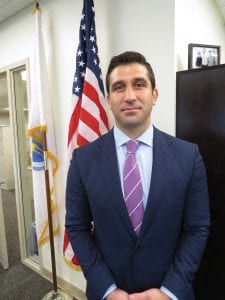
George O’Brien has a lively discussion with Hampden County District Attorney Anthony Gulluni, another of the finalists for BusinessWest’s coveted Alumni Achievement Award

BusinessWest Editor George O’Brien has a lively discussion with Hampden County District Attorney Anthony Gulluni, another of the finalists for BusinessWest’s coveted Alumni Achievement Award. The two talk about a number of the D.A.’s recent programs and initiatives, from work on cold cases, to the Emerging Adult Court of Hope, to efforts to curb everything from drug addiction to human trafficking to elder abuse. It’s must listening so join us on BusinessTalk, a podcast presented by BusinessWest in partnership with Living Local.


Also Available On

Daily News

WARE — Country Bank and the Worcester Red Sox have announced a community giving campaign to support nonprofit leaders throughout the region.

To kick off the campaign, dubbed “WooStars,” Country Bank recognized 11 local nonprofits at Polar Park, including Springfield-based organizations Friends of the Homeless, Ronald McDonald House, Christina’s House, and Habitat for Humanity, along with Worcester-based organizations the United Way, Why Me, Sherry’s House, Provision Ministry, St. John’s Food Pantry for the Poor, the Boys and Girls Club, and Habitat for Humanity. Each nonprofit was presented with a $5,000 check from Paul Scully, president and CEO of Country Bank. Representatives of the nonprofits also participated in a television commercial to support the campaign.

Country Bank and the Worcester Red Sox Foundation will select nine additional nonprofit leaders who have stepped up to the plate to serve their community. The deadline for nominations is Aug. 15. Each winner will receive a $5,000 donation to their nonprofit and will be recognized at a presentation in Polar Park on Sept. 9. A total of $90,000 will be donated this year through the WooStar campaign.

“One of the most important goals of our partnership with the Worcester Red Sox is to find ways for us to collectively give back to our communities in an impactful and meaningful way. Country Bank is deeply rooted in supporting its communities and a value that we have lived by for 171 years,” said Shelley Regin, the bank’s senior vice president of Marketing, adding that “this campaign rewards those doing the life-changing work out there.”

In addition, the bank has also launched a Most Valuable Teacher (MVT) campaign that recognizes the outstanding work teachers do every day to educate and support students. Country Bank has a long-standing Teacher of the Month campaign to support teachers in the region, so it is exciting to partner with the WooSox to make the MVT campaign even more rewarding for teachers and students.

“We are continually inspired by the unrelenting community outreach of Country Bank,” WooSox President Charles Steinberg said. “Our shared interest in education is leading us to recognize some of our unheralded heroes — our MVTs, or Most Valuable Teachers. We look forward to shining the spotlight in the sunlight on our educators, and we thank Country Bank yet again for their splendid partnership.”

The public is invited to nominate a WooStar or Most Valuable Teacher by clicking here or here to complete a simple nomination form.

Daily News

BOSTON — For the second time in two years, the Massachusetts House of Representatives voted to legalize sports betting. Though the vote was 156-3, the bill’s prospects remain unclear in the Senate, where the last attempt to pass a sports-betting law died.

The Boston Herald reported that sports betting brought in $960 million in the first quarter of 2021, according to a state Gaming Commission report. Thirty states — including Rhode Island, Connecticut, New Hampshire, and New York — have all legalized sports wagering in some form.

Licensing fees for the three casinos, two racetracks, and up to nine mobile-app operators described in the bill would generate as much as $80 million for the state to begin with, and again upon their renewal every five years, the Herald added, while the state could bring in another $60 million to $70 million in tax revenue annually.

Betting would be regulated by the state Gaming Commission. In-person bets at casino and track retailers would be taxed at 12.5%, with mobile bets costing slightly more at 15%.

Daily News

SPRINGFIELD — Market Mentors, the region’s largest marketing, advertising, and public-relations agency, announced it has received certification from the Women’s Business Enterprise National Council (WBENC), a leading nonprofit organization dedicated to helping women-owned businesses thrive and grow.

“We had previously received certification through the Commonwealth of Massachusetts. Because we have clients outside of the state, pursuing this national certification made sense,” company President Michelle Abdow said. “We’re honored to be a part of a group of such successful and driven women entrepreneurs.”

WBENC certification provides Market Mentors with access to a vast network of support, including targeted business opportunities and increased visibility in corporate and government supply chains, education, and development programs. It is also an approved third-party certifier for the SBA’s Women-Owned Small Business federal contracting program.

“This certification opens the door so we can pursue opportunities with government agencies and programs, public schools and universities, and companies with supplier diversity and inclusion programs,” Abdow explained.

WBENC certification validates that a business is at least 51% owned, controlled, operated, and managed by a woman or women. One or more women must have unrestricted control of the business, a demonstrated management of day-to-day operations, and a proportionate investment of capital or expertise. To become certified, business owners undergo a thorough vetting process, including review of business documentation and a site visit.

After working in media for more than a decade, Abdow founded Market Mentors in her home in 2003. Over the past 18 years, it has grown into a team of more than 20 professionals with multiple areas of expertise and breadth of experience across a range of industries.

Daily News

AGAWAM — OMG Roofing Products announced it has hired Christina Gonzalez as a product manager. She is responsible for developing sales and marketing opportunities for new and existing OMG discretionary products throughout the company’s extensive network of independent roofing distributors across the U.S. She reports to Adam Cincotta, vice president of the Adhesives & Solar Business Unit.

For the past four years, Gonzalez has been an associate product manager with the FastenMaster Division of OMG Inc., where she led cross-functional teams to help commercialize several new products annually. Earlier, she was in a management-training program with Sherwin-Williams. She holds a bachelor’s degree in business administration from Eastern Connecticut State University.

Daily News

ENFIELD, Conn. — Asnuntuck Community College will hold two more Admissions & Financial Aid virtual information sessions this summer, on Wednesday, Aug. 4 at 3 p.m., and Thursday, Aug. 12 at 5 p.m.

Potential students need to attend only one of the sessions. Participants will receive information about the admissions and financial-aid process, as well as learn about the many resources and course offerings available at Asnuntuck. The 60-minute session will also include time for questions and answers. Click here to register for a session. Classes begin on Aug. 26 for the fall semester.

Daily News

EAST LONGMEADOW — Excel Dryer Inc., manufacturer of the XLERATOR Hand Dryer, has added a new director of Marketing to the team. A seasoned professional with 24 years of experience, Tony Ieraci will be responsible for helping Excel Dryer create and execute long-term marketing strategies that will help grow the brand.

“We are excited to have Tony join us and bring innovative and exciting ideas to Excel,” said William Gagnon, vice president of Sales and Marketing at Excel Dryer. “With the majority of his professional life spent working in marketing and communications for industrial manufacturers, we are eager to see what he can do in this position.”

Ieraci has a bachelor’s degree in business administration and a master’s degree in marketing from Western New England University. He has spent the last two decades working in marketing and communications for leading manufacturers like Scapa North America and Dymax Corp. Ieraci will now head up the marketing team at Excel Dryer to develop and implement effective global communication plans that advance the company’s business goals and objectives.

“Excel Dryer is a perfect fit for me, and I couldn’t be happier working for a company that makes a reliable, sustainable product in the USA,” Ieraci said. “Excel has done incredible work in creating innovative, industry-leading products, and I’m excited be part of the team and contribute to the company’s continued growth.”

Daily News

SPRINGFIELD — Increasing diversity in the construction workforce is an important topic and has become a measure of each project’s success, just like schedule, budget, and safety. To that end, Fontaine Bros. Inc. has named Elizabeth Wambui to serve as the company’s director of Diversity, Inclusion & Impact.

“Our approach, led by Liz, will go beyond the traditional general contractor/construction manager line of looking to subcontractors to have all the answers,” said David Fontaine Jr., vice president of Fontaine Bros.

Wambui will play a critical role in leading the company’s projects and project teams to maximize opportunities for minority- and women-owned business enterprises as well as attracting a more diverse workforce. Fontaine Bros. will be partnering with unions, trade schools, and other community partners to more actively promote and provide opportunities for diverse and local residents.

“The key is to support these individuals throughout their careers so that, as their time with one subcontractor or on one project comes to an end, they have every opportunity to connect with subs on another of our projects,” Wambui said. “By being more active throughout the entire diversity ecosystem, I believe we will not only meet and exceed our goals and expectations, but we will help to create and sustain great careers for the next generation of tradespeople in Springfield, Worcester, and throughout the Commonwealth.”

Wambui will immediately step in and support Fontaine’s work across the Commonwealth, including the new $242 million Doherty Memorial High School project and the new $75 million DeBerry-Homer Elementary School in Springfield.

Before joining Fontaine, Wambui served as director of Advancement at Nativity School of Worcester (a longtime Fontaine community partner). A graduate of North High School and the College of the Holy Cross, she is passionate about engaging with the community. She currently serves as a board member at the Bancroft School, Shine Initiative, Women in Development of Central Massachusetts, Worcester Historical Museum, and YWCA. She is also a Mechanics Hall Modern Mechanics Guild member, a Worcester Art Museum corporator, and has served as a Greater Worcester Community Foundation early childhood committee member and scholarship community reviewer. She was part of the Leadership Worcester class of 2016-17 and has been recognized in the Worcester Business Journal’s 40 Under Forty.

Daily News

AMHERST — The Hitchcock Center for the Environment announced William “Billy” Spitzer as its new executive director. He brings a wealth of knowledge and leadership experience in the areas of science education, climate communication, and network building along with a vast network of national and international connections. Spitzer will be influential in the continued growth and impact that the center has seen in recent years as it continues on its mission to educate and inspire action for a healthy planet.

Spitzer comes to the center as the former vice president for Learning and Community at the New England Aquarium, where he was responsible for applying learning and social-science research across education programs, exhibits, visitor experience, and community outreach for more than 20 years. Working with organizations such as the National Network for Ocean and Climate Change Interpretation, Climate Literacy and Energy Awareness Network, and North American Assoc. for Environmental Education, he has been involved in many successful collaborative projects with a focus on environmental education and awareness along with the promotion of public engagement in climate change.

In 2014, Spitzer was recognized by the White House as a Champion of Change for Engaging the Next Generation of Conservation Leaders. In 2016, he received a Visionary Award from the Gulf of Maine Council for innovation, creativity, and commitment to marine protection. He holds a Ph.D. in oceanography from Massachusetts Institute of Technology and the Woods Hole Oceanographic Institution.

The Hitchcock Center worked with search consultant Cathy Cohen of TSNE MissionWorks to review more than 70 applicants for the position. After an extensive search, which saw a wide variety of candidates vetted and interviewed, the board of directors enthusiastically chose Spitzer as the best-qualified to lead the center into the future.

Board President Clay Ballantine called Spitzer “an exceptionally skilled and accomplished professional who comes to the center at the perfect time. [He] is smart, approachable, thoughtful, has high emotional intelligence, and a track record of success — a perfect fit as the center continues to forge an unwavering path forward to be a leader addressing the challenges of climate change head on and ensuring a world where people, communities, and ecosystems thrive.”

Daily News

SPRINGFIELD — Arrha Credit Union announced the Adam Baldwin has been named Springfield branch manager.

Baldwin has more than seven years of banking experience and been recognized throughout his banking-industry career as a rising star with superior service awards. He is also a Rotarian with the Springfield Rotary Club.

“Arrha Credit Union is extremely pleased to welcome and introduce Adam Baldwin as our new Springfield branch manager,” said Michael Ostrowski, president and CEO.

Added Baldwin, “I am excited to be part of the Arrha Credit Union family and serving the Springfield community and its members. I look forward to providing caring service, offering rewarding membership benefits to existing and new members, and growing these relationships.”

Daily News

HOLYOKE — On July 12, Holyoke Mall welcomed Lynn Gray back to the shopping center as its new general manager. She brings more than 25 years of experience in the shopping-center industry. She has held various roles over her combined tenure with Pyramid Management Group, including customer service representative, receptionist, Marketing assistant, assistant Marketing director, Marketing director, and, most recently, general manager of Hampshire Mall.

In addition to her numerous years of experience with Pyramid Management Group, Gray held various roles over the span of 10 years with General Growth Properties, now Brookfield Properties, including director of Field Marketing for the East Region.

When asked what her goals are for Holyoke Mall, Gray said she is “committed to fostering strong relationships with the tenants and community as well as continue the development and support of a strong and seasoned mall team.” With her indepth background in all facets of the shopping-center industry, she also looks forward to being an integral component of the redevelopment process at Holyoke Mall.

“We are fortunate to have someone of Lynn’s capabilities and experience assume the position of general manager at Holyoke Mall,” said James Soos, director of Field Operations for Pyramid Management Group. “Lynn is enthusiastic and brings her vast knowledge and hands-on experience of working in the shopping-center industry to Holyoke Mall at a time when the center is poised for growth and will benefit from Lynn’s leadership.”

Gray is a graduate of Holyoke Community College with an associate degree in business administration. A lifelong resident of Western Mass., she is actively involved with several community and nonprofit organizations. She serves as president of the board of directors for the Amherst Area Chamber of Commerce and the board of directors for the Amherst Boys and Girls Club. She is also a CDH International Massachusetts ambassador and volunteers for CHERUBS, the support division of CDHi.

Bill Rogalski, outgoing general manager of Holyoke Mall, retired on June 30 after 19 years in the position.

Daily News

HOLYOKE — The Holyoke Community College Foundation allocated $75,000 to endow a new scholarship fund specifically for Latinx students attending HCC.

Through the Bienvenidos Latinx Scholarship, HCC will provide financial support up to $2,500 each to eligible Latinx students attending or planning to attend HCC.

The foundation plans to award Bienvenidos scholarships totaling $50,000 to 20 students during the inaugural year, with the remaining $25,000 set aside in an endowed fund for future years.

The deadline to apply for Bienvenidos scholarships for the 2021-22 academic year is Friday, Aug. 6. The online application is available on the HCC website at hcc.edu/bienvenidos.

“HCC marked a major milestone in 2016 when the U.S. Department of Education recognized the college as a Hispanic-serving institution (HSI), which means at least 25% of our students are of Latinx or Hispanic heritage,” said Amanda Sbriscia, vice president of Institutional Advancement and executive director of the HCC Foundation. “As an HSI, though, we are committed to doing more than simply serve our Latinx students. We want to see them thrive.”

Bienvenidos was chosen as the name of the scholarship program because it means ‘welcome’ in Spanish. Beyond the direct financial support, scholarship recipients will also be connected to peer and alumni mentors and workshops to ensure their ongoing success.

“The Bienvenidos scholarships will open doors to a college education and welcome Latinx students into our community with everything they need to succeed at HCC,” Sbriscia said. “That includes providing a culture that embraces inclusion and increases their sense of belonging. The name of this new scholarship was an important piece of prioritizing that welcoming culture. Bienvenidos says it all.”

Applicants selected for scholarship awards by the college’s Hispanic Leadership Committee will be invited along with their families to celebrate during a first-ever Bienvenidos Latinx Scholarship reception on the HCC campus on Saturday, Aug. 28.

To be eligible for the Bienvenidos scholarship, students must be enrolled or intend to enroll in at least six credits at Holyoke Community College for the fall 2021 semester and must identify themselves as a Hispanic, Latina/o, or Latinx. The Bienvenidos Scholarship is open (but not limited) to DACA, undocumented, and international students. Preference will be given to students residing in Holyoke, Springfield, and Chicopee.

Daily News

SPRINGFIELD — ROAR! Comedy Club is back and ready to bring the laughs. Tickets to see comedians Ray Harrington on Saturday, Aug. 14, and Marty Caproni on Saturday, Aug. 28, are on sale at mgmspringfield.com/roar. ROAR! Comedy Club is located in the refurbished Armory at MGM Springfield.

MGM Springfield and John Tobin Presents will host comedy nights in ROAR! through the remainder of the year, with more shows to be announced in the upcoming weeks. The club, which launched in 2019, is a staple of MGM Springfield’s entertainment offerings.

“We are ecstatic to be re-opening ROAR! Comedy Club and bringing the great people of Springfield, Western Mass., and Connecticut laughter again,” said Ryan Cott, managing partner at John Tobin Presents. “It’s been a long 16 months without shows at ROAR!, but we couldn’t be happier to renew our fantastic partnership with MGM Springfield, who have been instrumental in bringing top-notch entertainment to the area.”

Chris Kelley, president and chief operating officer of MGM Springfield, added that “the return of ROAR! Comedy Club marks another milestone in reintroducing entertainment to our campus and downtown Springfield. We kicked off our Free Music Friday concert series last month and put the spotlight on premier local talent. Now, we look forward to reopening the doors of the iconic Armory for evenings of laughter. MGM Springfield is proud to offer the best in entertainment as we continue to celebrate the strength and resilience of our community.”

Daily News

SPRINGFIELD — The STEM Starter Academy at Springfield Technical Community College (STCC) will feature a talk by an expert on opioid-use disorder today, July 21, from 11 a.m. to noon, the first in a series of events for students in the Summer Bridge program. The events, held over Zoom, are free and open to the public as well as students.

Today’s STEM Starter Academy presents Dr. Elizabeth Evans, a professor at the School of Public Health and Health Sciences at UMass Amherst. She specializes in opioids and other substances of abuse, women’s health, life course, social determinants, health-services utilization, and outcomes. She researches how healthcare systems and public policies can better promote health and wellness among vulnerable and underserved populations, particularly for individuals at risk for opioid and other substance-use disorders.

On Wednesday, July 28 from 10 to 11:30 a.m., the STEM Starter Academy will present a STEM Careers Symposium. The Zoom event will feature professors, scientists, and industry experts sharing their inspiring stories about STEM (science, technology, engineering, and mathematics). Anyone joining the event will learn about STEM career choices, challenges, demands, and opportunities.

Scheduled to speak are Robert O’Connor of the state office of Energy and Environmental Affairs; Shannon Roberts, a professor of Mechanical and Industrial Engineering at UMass Amherst; Dr. John O’Reilly from the Division of General Pediatrics at Baystate Health; and Graziella DiRenzo, an ecologist at UMass Amherst.

To request a Zoom link to watch the series, e-mail Reena Randhir, director of the STEM Starter Academy at STCC, at [email protected].

Alumni Achievement Award Cover Story

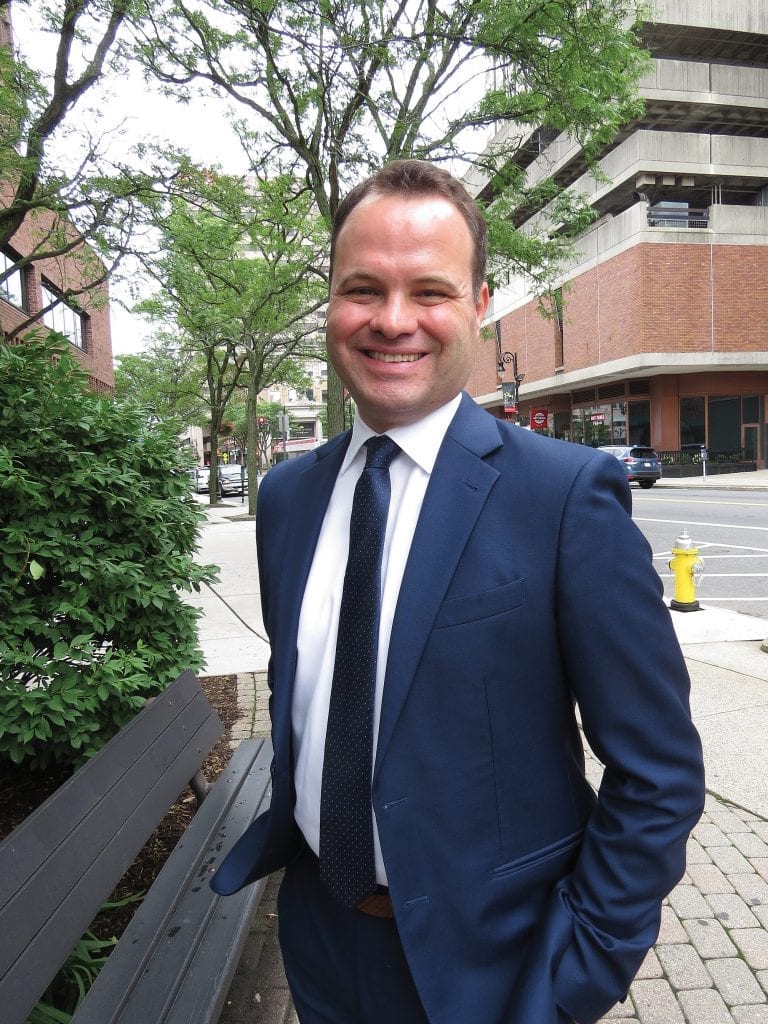
In 2015, BusinessWest introduced a new award, an extension of its 40 Under Forty program. It’s called the Alumni Achievement Award, and as that name suggests, it recognizes previous honorees who continue to build on their résumés of outstanding achievement in their chosen field and in service to the community. Recently, a panel of three judges identified the five finalists for the 2021 award — Tara Brewster, Gregg Desmarais, Anthony Gulluni, Eric Lesser, and Meghan Rothschild. The winner for this year will be unveiled with Alumni Achievement Award presenting sponsor Health New England at the 40 Under Forty Gala on Sept. 23 at the Log Cabin in Holyoke. As the profiles that begin on page 7 reveal, all five finalists embody the spirit of this award. Their stories convey true leadership and are truly inspiring.


Tara Brewster

Vice President of Business Development, Greenfield Savings Bank


Gregg Desmarais

Vice President and Senior Private Client Relationship Manager


Anthony Gulluni

Hampden County District Attorney


Eric Lesser

State Senator, First Hampden and Hampshire District


Meghan Rothschild

President and Owner, Chikmedia


Past Alumni Achievement Award Winners:

2020

Carla Cosenzi
President, TommyCar Auto Group, Class of 2012
Peter DePergola
Director of Clinical Ethics, Baystate Health, Class of 2015

2019

Cinda Jones
President, W. D. Cowls, Inc., Class of 2007

2018

Samalid Hogan
Regional Director, Massachusetts Small Business Development Center, Class of 2013

2017

Scott Foster
Attorney, Bulkley Richardson, Class of 2011
Nicole Griffin
Owner, ManeHire, Class of 2014

2016

Dr. Jonathan Bayuk
President of Allergy and Immunology Associates of Western Mass. & Chief of Allergy and Immunology at Baystate Medical Center, Class of 2008

2015

Delcie Bean
President, Paragus Strategic IT, Class of 2008

Employment Special Coverage

Questions, Questions


At a time when most companies and nonprofit institutions in the region are hiring, or trying to, many area business owners, managers, and HR directors are sitting across the table from job candidates trying to determine if that individual is the proverbial ‘right one.’

Given this climate, BusinessWest asked a number of area business leaders to identify one of their favorite, most effective interview questions. We asked them to explain why they ask that question and what it reveals to them about the candidate.

Suffice it to say, their responses provide some food for thought on a very important part of business.


Sara Rose Stack

Sara Rose Stack

Sara Rose Stack, Marketing & Recruiting Manager, Meyers Brothers Kalicka

The question: “Tell me something that you would do differently than your current boss at your current job.”

I ask this question to learn more about candidate’s awareness of people around them, their creative problem-solving skills, their desire to improve and grow, and their level of tact. A candidate’s answer to this question will reveal a lot about his/her ability to solve problems, but what I am most interested in is how they communicate their proposed solution. The question itself has a somewhat negative connotation because it is asking for the candidate to share something that their boss could do better or differently. My experience has shown that, if someone will bash a supervisor or competitor to you, then they will repeat the behavior to others. Further, anyone that can share suggestions for improvement in a positive way is a great addition to the team. Tact and diplomacy are powerful tools for making improvements, contributing ideas, and working in a team.


Sandra Doran

Sandra Doran

Sandra Doran, President, Bay Path University

The question: A two-parter: “How will this position help you grow your career?” “Tell me about an experience or work project where you had to work across departments to accomplish the goal(s).”


In the first part of the question, I am looking for authenticity of the candidate and the ability to be introspective and share their current strengths as well as their vulnerabilities. As their experience grows, their value as contributors to Bay Path will also increase. The second question provides insights to their capacity to be a team player and team leader within our organization. Today, 40% of Bay Path students are students of color, and we are striving to increase the diversity of our employees. As a result, as the candidate explains the project, I am looking for how they respect and handle other opinions and perspectives, value diversity of thought, and exhibit multi-cultural competencies. Above all, the candidate must be both mission- and student-centered.


Brenda Olesuk

Brenda Olesuk

Brenda Olesuk, President, Graduate Pest Solutions Inc.

The question: “What do you consider to be your professional and personal strengths, and, conversely, what areas do you struggle with or are not interested in doing professionally?”


This is a mainstay question in all of my interviews since it encourages the applicant to be introspective and reflective about themselves — and this tells me a lot about them. Learning what they consider to be their professional strengths and how they’ve applied those strengths often creates context for what they can and will bring to the table in the position they are applying for. Perhaps more important to me is the level of candor with which they communicate areas of struggle or lack of interest and how they have managed this in their career. This question often leads to an additional discussion that unveils the applicant’s openness to coaching and development, which is a trait that is important to me as a leader, manager, and employer.


Ellen Freyman

Ellen Freyman

Ellen Freyman, Esq., Partner, Shatz, Schwartz and Fentin, P.C.

The question: “What would make you satisfied in this job?”


This question lets the applicant know that we care whether our employees are happy working for us, and at the same time, it helps us determine if this applicant will be a good fit. It is also another way of finding out the applicant’s strengths without asking directly, and discloses what part of the job they may not care to do. The answer to this question can reveal why the applicant hasn’t stayed in previous jobs and potentially lead us to rethink some of the things we are doing in our office. The question helps us determine if the applicant understands the position they have applied for and if they have the right skill set. Getting an honest answer to this question helps both the applicant and us know whether hiring this person will be satisfying to both of us.


Carla Cosenzi

Carla Cosenzi

Carla Cosenzi, President, TommyCar Auto Group

The question: “How do you delegate responsibilities to team members?”


I ask this question to potential hiring candidates because most managers fail at delegation. As a good leader, it is their responsibility to be clear about what they are delegating and their expectations. In our company, it is our manager’s responsibility to offer their team the tools they need to succeed by encouraging and supporting the decision-making environment. The effective delegation and empowerment of their employees is essential for their success as a manager. By asking this question, I am able to learn if a potential candidate is able to release control and effectively delegate, empower, and hold accountable their future team members.


Pia Kumar

Pia Kumar

Pia Kumar, Chief Strategy Officer, Universal Plastics

The question: “Why did you leave your last job?” Or, if they are still employed, “Why are you looking to leave this job?”


As an employer, I value continuity and longevity in job history. However, the résumé is just a piece of paper. The interview is the opportunity to either rise above what the piece of paper says or minimize it. How someone discusses a job change tells me whether they are a team player, whether they are growth-mindset-oriented, and what kinds of cultures, people, and attributes they either enjoy or don’t. In short, it is the ‘heart’ (as opposed to the ‘head’) part of the interview, which answers the most important question of all for me — do I want this person on my team?

It is never easy to leave a job, whether you do it on your own terms or have been asked to do so. So, how you answer this question brings up your response to a difficult situation, which may even involve conflict or confrontation. As an employer, I want to know how you handle difficult situations. At Universal Plastics, we believe in giving people chances, lots of them, but it has to start from a place of candor and commitment to our culture and the values we espouse, and this question aims to ascertain exactly that.


Michael Matty

Michael Matty

Michael Matty, President, St. Germain Investments

The question: “What did your parents do?”


I like to ask this because we are all a product of our background, and it is a great opportunity to gain some insight into the person. If, for example, the parents ran their own business, the candidate probably has a good understanding of the needs of a small business and what it takes to make it work. It is also a good opportunity to ask why the candidate doesn’t want to work there. Conversely, the mom may have been stay-at-home, and dad worked in a factory job in a blue-collar role. The candidate may be first-generation college and first-generation in a professional role — sometimes a bit less polished in presentation, but likely with good reason. And if they are smart, energetic, and willing to learn, I’d potentially think they were a good hire. Overall, it’s a good, open-ended question that can lead to some good conversation.


Jane Albert

Jane Albert

Jane Albert, Senior Vice President and Chief Consumer Officer, Baystate Health

The question: “What impact has the pandemic had on you?


This is a newer question I ask because it opens the door to conversation about a current topic of significance with many pathways to get to know the candidate. Asking a broad, open-ended question provides the candidate with a choice to respond with an orientation toward their personal life or their work experiences. like to provide that option to make it most comfortable for the candidate during the interview. This question enables conversation about how they handled changes and challenges related to the pandemic and offers glimpses into how they may handle and adjust to changes within our healthcare environment and their potential new work responsibilities. It also opens the door to learning about the candidate’s priorities, relationships, engagements, and abilities to adapt to change, along with how they handled this in their daily life as well as throughout their work experiences.


Kate Campiti

Kate Campiti

Kate Campiti, Associate Publisher and Sales Manager, BusinessWest

The question: “Have you had experience in the service industry?”


When I interview for sales, I look for — and ask about — experience in the service industry. If the candidate has it, I ask how they’ve handled a tough customer or table and how they turned it around or were able to shake it off to continue successfully serving the rest of the shift. If candidates can wait tables or bartend successfully, it shows they have what it takes to think on their feet, appeal to customers, and provide high-level service to earn tips. It also shows they are driven by both money and customer service, which bodes well for a sales position with BusinessWest. For other positions, I typically ask what motivates them, what they do to unwind, if they have tactics for stress relief inside and outside the office, and what they think their best assets and weaknesses are and what they think their current or previous employers would say.

Business of Aging Special Coverage

House Calls

While the pandemic may have challenged the home-care industry, it certainly didn’t suppress the need for such services. In fact, demographic trends in the U.S. — where about 10,000 Baby Boomers reach age 65 every day — speak to continued, and growing, demand for care services delivered in the home. That means opportunities both for agencies who specialize in this field and job seekers looking for a rewarding role and steady work.

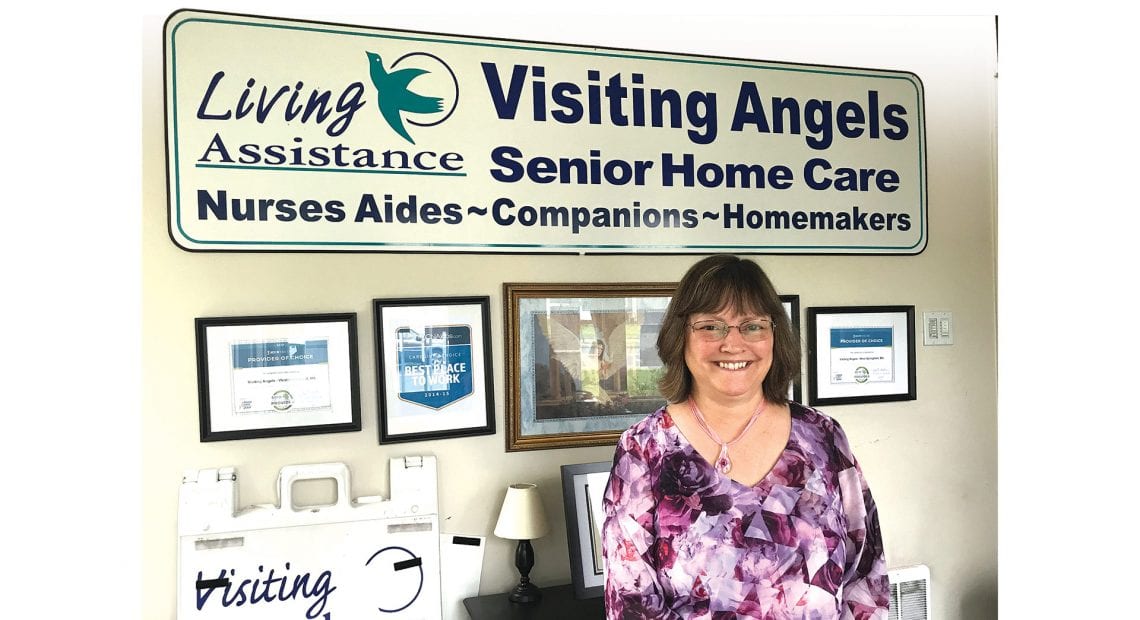
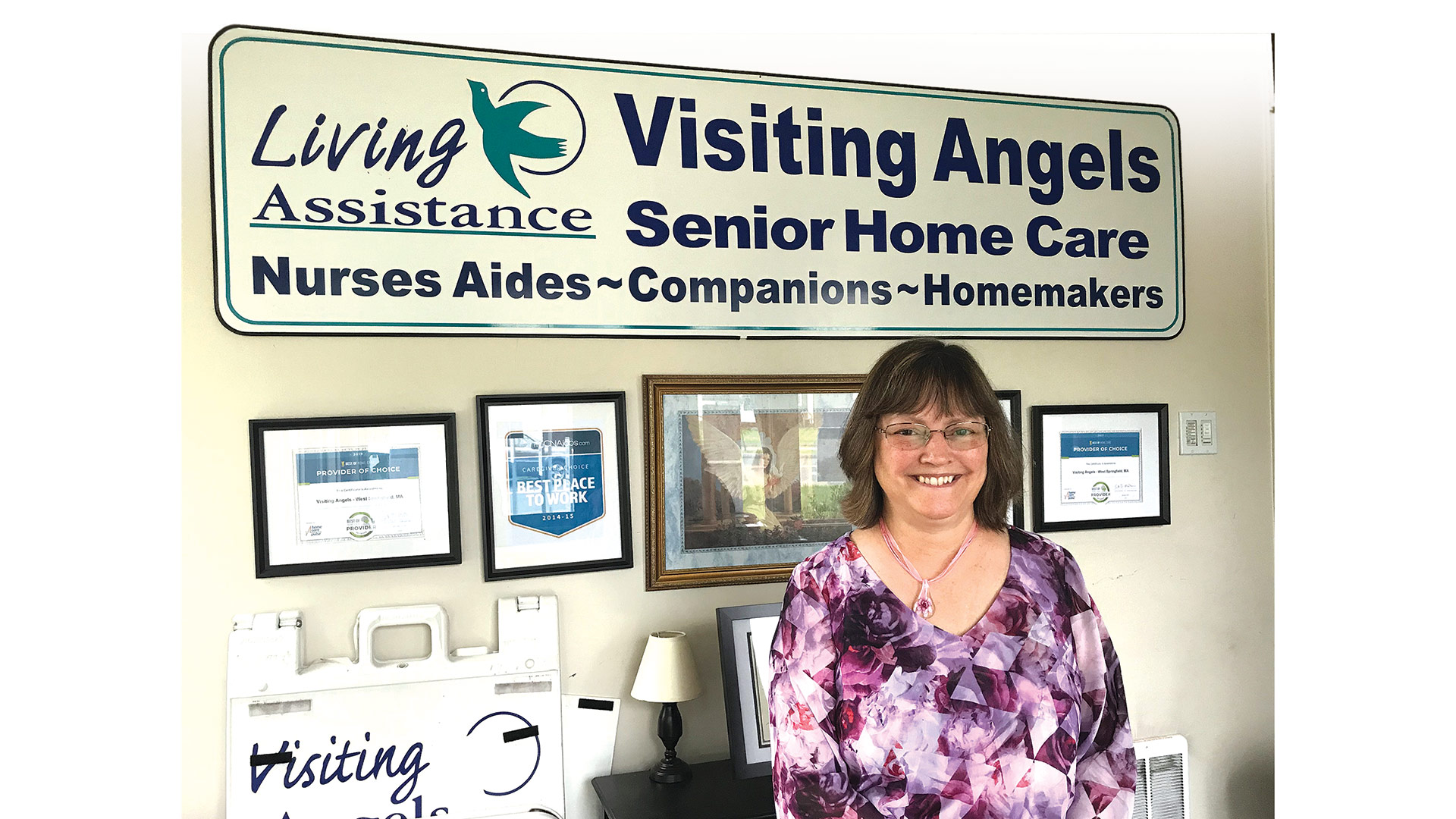
Michele Anstett says business was like “falling off a cliff” when COVID hit, but client volume has returned to normal.

Michele Anstett says business was like “falling off a cliff” when COVID hit, but client volume has returned to normal.

By Mark Morris

In early 2020, Michele Anstett, president and owner of Visiting Angels in West Springfield, was pleased because her business was doing well. As a provider of senior home care, she managed 80 caregivers for 50 clients.

“We were going along just fine,” she said. “And when COVID hit, it was like falling off a cliff.”

The business model for companies like Visiting Angels involves interacting with people in their homes, so when early mandates encouraged people to keep away from anyone outside their immediate ‘bubble,’ it hit the industry hard.

Even though caregivers were designated as essential workers, Anstett saw her numbers shrink to 39 caregivers who were now responsible for only 19 clients. In order for her business to survive, she continued to provide services for her clients who needed personal-care services around the clock and for those who had no family members in the area.

“Where possible, we asked family members to step in to help out,” she told BusinessWest. “At the beginning of the pandemic, there was less risk to everyone when a family member could be involved with their loved one’s care.”

Anstett also incorporated a detailed checklist of risk factors for each caregiver to review to prevent COVID-19 from spreading to them or their clients.

“I thought patients weren’t following up because of a language barrier. As it turns out, they weren’t responding because they didn’t understand the severity of the situation.”

“We talked with caregivers about the people in their circle,” Anstett said. “It was similar to contact tracing, but we did it beforehand, so people would understand what they had to consider to protect themselves, their families, and their clients.”

A Better Life Homecare in Springfield runs two home-care programs. In one, it provides personal-care services such as helping seniors with grooming, cooking, laundry, and more. The other program provides low-income patients with medical care in the home, such as skilled nursing services, occupational therapy, and physical therapy.

On the medical side of the business, licensed practical nurses (LPNs) handle many of the home visits, while certified nursing assistants (CNAs) and patient care assistants (PCAs) are the main frontline workers on the personal-care side. A Better Life also employs case workers to supervise PCAs and CNAs and to set up other resources a patient may need, such as Meals on Wheels and support groups.

When COVID hit, said Claudia Lora, community outreach director for A Better Life, she and her staff made patient communication a top priority.

Claudia Lora

Claudia Lora says communication with clients was key to navigating the pandemic.

“We implemented daily phone calls to our patients that also served as wellness check-ins,” she recalled. Because a majority of the company’s clients are Spanish speakers, A Better Life employs many bilingual staff. At the beginning of their outreach efforts, Lora became concerned when some patients didn’t seem to follow up and respond to communications.

“I thought patients weren’t following up because of a language barrier,” she said. “As it turns out, they weren’t responding because they didn’t understand the severity of the situation.”

On the other hand, she said some patients temporarily stopped their home-care service out of concern about interacting with anyone in person. The system of daily phone calls helped address patient concerns and keep them current on their treatments. In addition, patients received whimsical postcards to lift their spirits and care packages of hygiene products and food staples.

“The pandemic opened our eyes in different ways,” Lora said. “It made us aware that we needed a system of daily phone calls in both programs, which we will continue even after the pandemic is no longer a concern.”


Growing Need

The lessons home-care agencies learned from the pandemic — some of which, as noted, will lead to changes in how care is provided — come at a time when the need for home-based services is only increasing.

That growing need is due in part to people living longer, of course. According to government data, once a couple with average health reaches age 65, there is a 50% chance one of them will live to age 93, and a 25% chance one of them will see age 97. With the increased longevity, there is also a greater chance these seniors will need some type of assistance with daily chores or treating a malady.

Receiving care at home, with an average cost nationally of $3,800 per month, is less expensive than moving into a nursing home (approximately $7,000 per month), and nearly everyone would rather stay in their home. When seniors need assistance, Anstett said, they often rely on family members out of fear of having an outside person come into their home.

Now that concerns about COVID are easing, she reports that people are increasingly more willing to have someone come in to their home to help, but there are still some who resist. “I wish they could understand we are not there to take away their independence, but to give them more independence.”

Lora said some of her patients were reluctant to allow people to come into their homes until they considered the alternatives.

“The only other option for people receiving medical care would have been checking into a skilled-nursing facility or a nursing home,” she noted. “I knew that was the last place they wanted to go.”

She added that the extensive news coverage of high rates of COVID in nursing homes and the high case rate locally at the Holyoke Soldiers Home convinced most people that care at home was a wise choice.

Anstett and Lora both pointed out that their companies always make sure anyone providing home care wears appropriate personal protective equipment and follows the latest guidelines for preventing the spread of COVID. Anstett said she encourages her caregivers to get vaccinated, but doesn’t force the issue because she recognizes some people have health issues.

“However,” she added, “I make it clear to the unvaccinated folks that the pool of clients willing to see a caregiver who is not vaccinated is fairly small.”

While the pandemic may have slowed down business in the short term, demographic trends still remain strong for the years ahead. According to U.S. Census Bureau data, about 10,000 people reach age 65 every day. This trend is expected to continue until 2030, when all living Baby Boomers will be at least 65 years old.


Looking Ahead

Fifteen months after the chaotic early days of the pandemic and with many people now vaccinated, Lora said A Better Life is busier today than before the pandemic.

“In the last six months, admissions have increased by around 50%,” she noted. “That’s more than I have seen in the past three years; it’s been insane.”

She added that her company is now short-staffed because of the rapid growth it is seeing and has been offering incentives to try to bring more CNAs and PCAs on board.

Anstett said her client numbers and caregiver numbers are back to where they were before the pandemic and noted that she has not had any problem filling open positions.

“I just cut 80 paychecks, and we are anticipating even more growth,” she said, adding that her secret to hiring is treating caregivers with respect and encouraging them to grow in their careers. “I stay in touch with every one of our caregivers. They’re the reason I’m working, so I treat them with the utmost respect.”

While many professions look to push out older workers, Anstett said she appreciates more seasoned workers and looks forward to hiring them. “Caregiving is an opportunity to keep working for those who want to, and we welcome their experience.”

Pointing out that she hired another case manager last week, Lora added that, while her organization is expanding, it has not forgotten its mission.

“Even with our growth,” she said, “we see our patients as part of a family and a community, not just a number.”

Franklin County Special Coverage

All Aboard

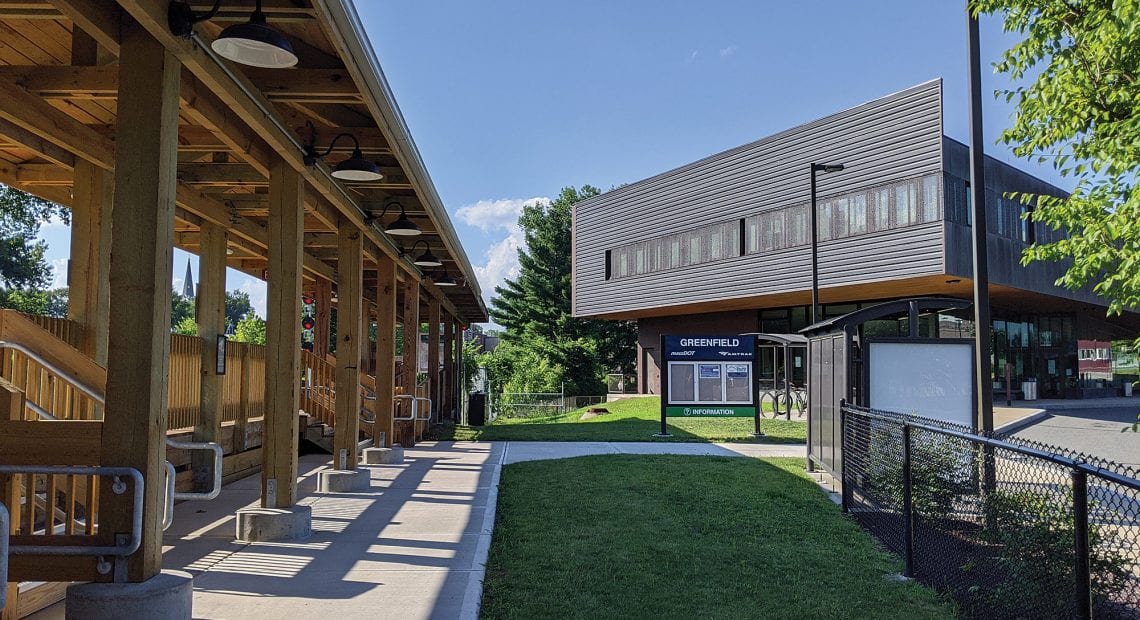
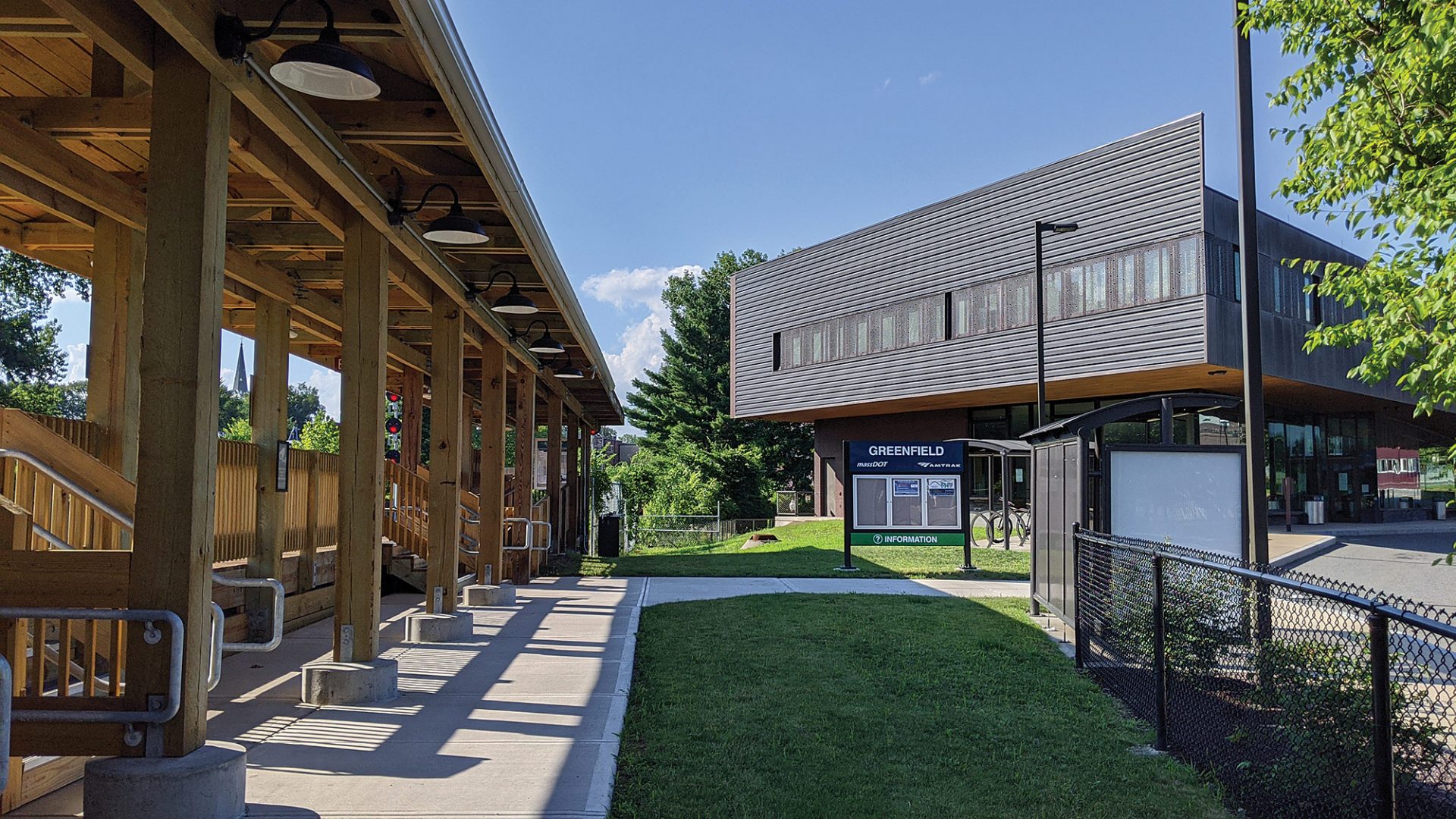
The Greenfield Amtrak stop

The Greenfield Amtrak stop will be busier this month with the restoration of Vermonter service and a second Valley Flyer train. Photo courtesy of Trains In The Valley

While a proposed east-west rail line between Pittsfield and Boston has gotten most of the train-related press recently, another proposal, to incorporate passenger rail service on existing freight lines between North Adams and Boston, has gained considerable momentum, with a comprehensive, 18-month study on the issue set to launch. Not only would it return a service that thrived decades ago, proponents say, but expanded rail in the so-called Northern Tier Corridor could prove to be a huge economic boost to Franklin County — and the families who live there.


State Sen. Jo Comerford has spoken with plenty of people who remember taking a train from Greenfield to North Station in Boston to catch Bill Russell’s Celtics.

They stepped on at 2:55 p.m. — one of as many as 12 boardings on any given weekday — and the train was already half-full after stops in Troy, N.Y., North Adams, and Shelburne Falls. Then they’d arrive at North Station at 5:15, “and you’d still have time for dinner before the game started,” Comerford said. “That was our reality in Franklin County in the 1950s.”

She shared those words last week at a virtual community meeting to discuss a comprehensive study, soon to get underway, of passenger rail service along the Northern Tier Corridor, a route from North Adams to Boston via Greenfield, Fitchburg, and other stops.

Ben Heckscher would love to see expanded train service in Western Mass.; as the co-creator of the advocacy organization Trains In The Valley, he’s a strong proponent of existing lines like Amtrak’s Vermonter and Valley Flyer, north-south lines that stop in Greenfield, as well as more ambitious proposals for east-west rail, connecting Pittsfield and Boston along the southern half of the state and North Adams and Boston up north.

Like Comerford, he drew on the sports world as he spoke to BusinessWest, noting that travelers at Union Station in Springfield can order up a ticket that takes them, with a couple of transfers, right to the gates of Yankee Stadium in the Bronx. “But there’s no button to push for the Red Sox,” Heckscher said. “It seems funny — we’re in Western Mass., and you can take a train to see the Yankees, but you can’t get to Fenway.”

But sporting events aren’t highest on his list of rail benefits. Those spots are dedicated to the positive environmental impact of keeping cars off the road, mobility for people who don’t own cars or can’t drive, and the overall economic impact of trains on communities and the people who live and work in them.

People want to access rail for all kinds of reasons, Heckscher said, from commuting to work to enjoying leisure time in places like New York, Philadelphia, and Washington without having to deal with navigating an unfamiliar city and paying for parking. Then there are medical appointments — many families living in Western Mass. have to get to Boston hospitals regularly, and don’t want to deal with the Mass Pike or Route 2 to get there.

“People are just really tired of driving Route 2 to Boston, especially at night or in the winter, and they want another way back and forth,” he said. “So they’re going to do a really robust study, and we’ll see what comes of that.”

In addition, as the average age of the population ticks upward, many older people might want to travel but be loath to drive long distances. In fact, that kind of travel is increasingly appealing to all age groups, Heckscher added. “You can ride the train, open your computer, take a nap. You can’t do that operating a car — at least not yet. So, rail definitely has the potential to become even more important.”

State Rep. Natalie Blais agrees. “We know the residents of Central and Western Mass. are hungry for expanded rail service. That is clear,” she said at last week’s virtual meeting. “We are hungry for rail because we know these connections can positively impact our communities with the possibilities for jobs, expansion of tourism, and the real revitalization of local economies.”

Ben Heckscher

Ben Heckscher

“People are just really tired of driving Route 2 to Boston, especially at night or in the winter, and they want another way back and forth.”

Makaela Niles, project manager for the Northern Tier study at the Massachusetts Department of Transportation, said the 18-month study will evaluate the viability and potential benefits of rail service between North Adams, Greenfield, and Boston.

The process will document past efforts, incorporate market analysis (of demographics, land use, and current and future predicted travel needs), explore costs and alternatives, and recommend next steps. Public participation will be critical, through roughly seven public meetings, most of them with a yet-to-be-established working group and a few focused on input from the public. A website will also be created to track the study’s progress.

“We know it’s critical that we have stakeholders buying in,” said Maureen Mullaney, a program manager with the Franklin Regional Council of Governments. “We look forward to having a very robust, inclusive participation process.”


Making Connections

Comerford has proposed rail service along Route 2 as a means for people living in the western counties along the corridor to more easily travel to the Greater Boston region, and a means for people living in the Boston area to more easily access destinations in Berkshire, Franklin, and Worcester counties. In addition to direct service along the Northern Tier, the service could provide connecting service via Greenfield to southern New Hampshire and Vermont.

The service would operate over two segments of an existing rail corridor. The first segment, between North Adams and Fitchburg, is owned by Pan Am Southern LLC. The second segment, between Fitchburg and Boston North Station, is owned by the Massachusetts Bay Transportation Authority (MBTA). Any new service would be designed so that it does not negatively impact the existing MBTA Fitchburg Line commuter rail service or the existing freight rail service along the entire corridor.

State Sen. Jamie Eldridge asked Niles at last week’s meeting about potential tension between freight and passenger interests and whether commuter times will be thrown off by the needs of freight carriers.

“We’ll be looking at how those two intersect and make sure any additional service that could occur along the corridor doesn’t impact with freight or current commuter operations along the corridor,” Niles responded. “We’ll look at how all the services communicate and work together.”

Other potential study topics range from development of multi-modal connections with local bus routes and other services to an extension of passenger rail service past North Adams into Adams and even as far as Albany, although that would take coordination with officials in New York.

“My hope is that these communities would suddenly become destination spots for a whole new market of people looking to live in Western Massachusetts and work in Boston.”

Comerford first introduced the bill creating the study back in January 2019, and an amendment funding it was included in the state’s 2020 budget, but the COVID-19 pandemic delayed the start of the study until now.

And it’s not a moment too soon, she recently said on the Train Time podcast presented by Barrington Institute, noting that rail service brings benefits ranging from climate effects to economic development to impact on individual families who want to live in Franklin County but work in Boston (see related story on page 39).

With average salaries lower than those available in Boston often making it difficult to settle in Franklin County, availability of rail affects people’s job prospects and quality of life, she noted.

“My hope is that these communities would suddenly become destination spots for a whole new market of people looking to live in Western Massachusetts and work in Boston,” Comerford said, noting that, longer-term, she hopes to see greater business development in Western Mass. due to expanded rail, as businesses that need access to Boston, Hartford, and New York could set up shop here and access those cities without having to deal with traffic.

The bottom line, she said, is that it’s environmentally important to get cars off the road, but there are currently too many gaps in public transportation to make that a reality.

“There was a time when you could work in Boston and live in Franklin County,” she said. “I’ve heard story after story about what life was like up until about the late ’60s. It changed abruptly for them.

“When I was elected, one of the first things I researched was passenger rail along Route 2,” she went on. “I thought, ‘we have to explore starting this again. This is really important.’”


Chugging Along

Of course, east-west rail is only part of the story right now in Western Mass. Running north-south between New Haven and Greenfield are Amtrak’s Valley Flyer and Vermonter lines.

On July 26, Amtrak will restore a second train to its daily Valley Flyer service 16 months after cutting a train due to COVID-19. Southbound trains will depart Greenfield at 5:45 a.m. and 7:35 a.m., and northbound trains will return to the station at 10:23 p.m. and 12:38 a.m.

The Vermonter will return to service in Massachusetts on July 19. A long-distance train originating in Washington, D.C., it has gone no further north than New Haven since March 2020, also due to the pandemic. Amtrak is also reopening three other trains which offer service between New Haven and Springfield.

According to Amtrak, ridership on the Valley Flyer fell by more than half at the Holyoke, Northampton, and Greenfield stations in 2020, but the company is optimistic it will return to past numbers. That’s critical, since the Flyer is part of a DOT and Amtrak pilot program, which means its funding depends on its ridership. The Pioneer Valley Planning Commission (PVPC) will launch an advertising campaign this fall in an effort to boost interest in the service.

“The pandemic really tanked ridership — all forms of public transportation, actually,” said Heckscher, noting that most travelers felt much safer in their cars last year than among groups of people. “But since the vaccine came out, there’s been a comeback in ridership in the Valley Flyer service.”

MJ Adams, Greenfield’s director of Community and Economic Development, said the city has been waiting a long time for the Valley Flyer, “and we don’t want to be just a pilot.”

She feels the city, and the region, will benefit from a perception that people can get anywhere from the Greenfield area, and they may be more willing to move there while continuing to work in the city. Many of those are people who grew up in Franklin County and have a connection to it but still want to feel like they can easily get to work far away or enjoy a day trip without the hassle of traffic or parking.

There’s an economic-development factor related to tourism as well, Adams said. “People in New York City, Hartford, or New Haven can spend the day up here in the country — it’s not just us going down to New York, but people from New York who get on a train, enjoy a nice stay in rural Massachusetts, have a blast, and get back on the train to go home. It’s a two-way street.”

A recent report commissioned by Connecticut’s Capitol Region Council of Governments (CRCOG), in consultation with the PVPC, reinforced the idea of rail as an economic driver, finding a nearly 10-to-1 return on investments in passenger rail between New Haven and Worcester via the Hartford-Springfield metro area.

“In so many ways, the findings of this study confirm what we have seen with our own eyes for decades here in the Valley — regions connected by rail to the major economic hubs of Boston and New York City are thriving, while underserved communities like ours have lagged behind,” PVPC Executive Director Kimberly Robinson said. “We now know what the lack of rail has cost us economically, and this trend cannot continue further into the 21st century.”

Though she was speaking mainly of proposed routes along the state’s southern corridor, Heckscher believes in the economic benefits — and other benefits — of numerous projects being discussed across Massachusetts, including along Route 2.

“With rail, everyone has the ability to travel long distances,” he said — and the impact, while still uncertain in the details, could prove too promising to ignore.

Joseph Bednar can be reached at [email protected]

Employment

Get the Vaccine or Get Fired?

By John S. Gannon, Esq. and Meaghan E. Murphy, Esq.


To mandate the COVID vaccine, or not to mandate?

John S. Gannon, Esq

John S. Gannon, Esq.

Meaghan E. Murphy, Esq

Meaghan E. Murphy, Esq.

That is the question on the minds of employers across the globe. As employment lawyers, we have been asked that question countless times by clients (and friends). Until about a month ago, all we could do was provide our best guess based on guidance and legal decisions related to other vaccines, like the flu shot. However, on May 28, the U.S. Equal Employment Opportunity Commission (EEOC) provided some comprehensive COVID-19 guidance that addresses this topic head-on.

The EEOC is the federal agency that enforces anti-discrimination laws applicable to workplaces. The news is good for Massachusetts employers considering a mandatory vaccine program. Some of the key takeaways for employers are described below.


Mandatory Vaccinations

The EEOC guidance declares in no uncertain terms that an employer can lawfully require employees to obtain a COVID-19 vaccination as a condition of returning to the workplace. Such a practice would not run afoul of the Americans with Disabilities Act (ADA) or the Genetic Information Non-discrimination Act (GINA). There is one big catch: an employer mandating vaccines must reasonably accommodate employees who are unable or unwilling to get vaccinated because of a disability or sincerely held religious belief.

These employees might need to be excepted from the vaccine mandate if other safety measures can keep them and others safe. The EEOC provided examples of such accommodations, including requiring an employee to continue to wear a mask and socially distance while in the workplace, limiting contact with other employees and non-employees, providing a modified shift, permitting continued telework if feasible, conducting periodic COVID testing, or reassigning the employee to a vacant position in a different workplace.

Notably, employers should not assume that an employee does not require an accommodation relating to COVID simply because the employee is fully vaccinated. The guidance provides that an employer may need to accommodate an employee who is fully vaccinated for COVID if there is a continuing concern for heightened risk of severe illness from a COVID infection.

For an employee who is unwilling to obtain the vaccination because of a sincerely held religious belief under Title VII, employers should presume that the request is legitimate. The EEOC does make clear, however, that if an employee requests a religious accommodation, and an employer is aware of facts that provide an objective basis for questioning either the religious nature or the sincerity of a particular belief, practice, or observance, the employer would be justified in requesting additional supporting information.

Employers presented with this issue should proceed with caution, as the EEOC will take a narrow view of such circumstances. Employers are required to engage in a similar ‘interactive process’ with employees who have sincere religious objections to vaccination and provide an accommodation that allows the employee to return to work where doing so does not present an undue hardship.


Vaccination Incentives

An employer may lawfully provide an incentive to its employees to obtain COVID-19 vaccination outside the workplace so long as the incentive is not so substantial as to be coercive. Unfortunately, the EEOC did not give any examples of what incentives would be considered ‘so substantial as to be coercive’ and also failed to clarify whether and to what extent an employer must provide a vaccine incentive to employees who are unable to obtain a vaccination due to a medical or religious-based reason.


Confidentiality

An employer’s request for self-disclosure of vaccination status, or for documentation or other confirmation that an employee has received a vaccination from a third party (such as a pharmacy or personal physician), is not a medical examination or a disability-related inquiry. As a result, employers may lawfully request this information without implicating the ADA or GINA.

With that said, employers should restrict access to vaccine-related information, apply safeguards similar to those applied to other types of sensitive personal information, and obtain appropriate consent from employees before disclosing vaccine-related information to third parties.


Legal Actions

To date, there has been one reported case dealing with mandatory vaccines in the workplace. Similar to the EEOC guidance, the case supports an employer’s right to mandate COVID vaccines.

In April, the Houston Methodist Hospital System in Texas issued a directive requiring that all employees be fully vaccinated by June 7 or they would be placed on a two-week suspension. Employees who were not vaccinated by the end of the suspension period would be terminated.

In late May 2021, more than 100 employees who were not vaccinated, and apparently did not qualify for a disability or religious exemption, filed a lawsuit against the hospital raising a number of claims, including wrongful termination. The judge dismissed the lawsuit entirely. In his written decision, the judge expressed his dismay with the plaintiffs for equating the threat of termination for refusing to get the COVID vaccination to the forced medical experimentation in concentration camps during the Holocaust, calling the comparison “reprehensible.”

Addressing an argument that the vaccine mandate was contrary to public policy, the judge wrote that the vaccine requirement “is consistent with public policy. The Supreme Court has held that (a) involuntary quarantine for contagious diseases and (b) state-imposed requirements of mandatory vaccination do not violate due process.”


Bottom Line

While this EEOC guidance and recent decision may seem like a big victory for mandatory COVID vaccines in the workplace, Massachusetts employers should be cautious in relying on them too heavily. The Commonwealth has its own anti-discrimination and public-policy laws, so it’s difficult to predict how this might play out in a state court or administrative proceeding.

In other words, while the decision is encouraging for Massachusetts employers who want to require vaccines, it is important to check in with experienced labor and employment counsel before implementing a mandatory vaccine program.


John Gannon and Meaghan Murphy are attorneys at the firm Skoler, Abbott & Presser, P.C., in Springfield; (413) 737-4753; [email protected]; [email protected]

Employment

Breaking Down the Trickier Aspects of Massachusetts Laws

By Ludwell Chase and Amy B. Royal, Esq.

State and federal laws pertaining to minimum wage, tips, overtime, and employing minors are complicated. As a result, these are areas where mistakes are often made.

Ludwell Chase

Ludwell Chase

Amy B. Royal, Esq

Amy B. Royal, Esq

Employers, however, cannot afford these errors because the consequences of not complying with these laws can be very costly. In fact, in Massachusetts, there are mandatory treble (triple) damages for violations of wage-and-hour laws relating to minimum wage, tips, and overtime. This means that, if an employer is found in violation of state law, at a minimum, for every dollar an employer does not pay in accordance with wage-and-hour laws, that employer will have to pay three times that amount.

Under Massachusetts and federal law, employers are allowed to pay employees who receive tips an hourly wage that is lower than the minimum wage. This works by allowing employers to take a ‘tip credit’ for a certain amount in tips that the employee earns. The employee must not make less than minimum wage when their tips and hourly wage are combined. Under the federal law, the Federal Labor Standards Act, all hourly workers must be paid the federal minimum wage of $7.25. Tipped workers may be directly paid $2.13 per hour if their tips and hourly wage combined are at least equal to the minimum wage. In other words, employers can claim a ‘tip credit’ of $5.12 per hour.

The U.S. Department of Labor (DOL) recently released new proposed regulations for tipped workers that reinstate the 80/20 rule. This rule limits the amount of time tipped workers can spend performing activities that are related to tip-generating duties, while their employers can still claim the tip credit. Tipped workers must spend at least 80% of their time performing directly tip-generating activities, such as serving customers, and no more than 20% of their time performing not directly tip-generating activities, such as setting tables. This rule was previously in effect but was replaced by DOL guidance in 2018.

The 2018 guidance provided that employers could claim the tip credit if non-tipped duties were performed at the same time as tipped duties, or if the non-tipped duties were performed for a reasonable time before or after tipped duties. This new proposal returns to the 80/20 rule. In addition, the new proposal specifies that, if an employee performs non-tipped activities for 30 minutes in a row, the employer cannot pay the employee the lower tipped hourly wage for that time.

For employers with tipped workers that are subject to federal wage-and-hour law, this proposal is a good reminder that they need to pay attention to these potential changes and their effects on how they compensate employees.


Caution on the Menu

Massachusetts has its own complex laws relating to tips, minimum wage, and overtime. As a result, these are areas where it is easy for employers to make mistakes. Therefore, employers need to pay special attention to ensure they are complying with both state and federal laws. As of Jan. 1, 2021, the minimum wage in Massachusetts is $13.50 per hour. Massachusetts is incrementally increasing the minimum wage in order to reach a $15 minimum wage by 2023. For now, employers may pay workers who make at least $20 a month in tips a tipped hourly wage of $5.55 and take a tip credit of up to $7.95 per hour, for a combined minimum wage of $13.50.

The Massachusetts Tip Law mandates that all tips must be given to employees whose work directly generates tips, and that employers and managers may not keep any portion of their employees’ tips. The law applies to three categories of employees: waitstaff employees, service bartenders, and service employees. Waitstaff employees include waiters, waitresses, busboys, and counter staff who serve beverages or food directly to patrons or clear tables, and do not have any managerial responsibilities. Service bartenders prepare beverages to be served by another employee. Service employees include any other staff providing service directly to customers who customarily receive tips but have no managerial responsibilities. For the purposes of this law, managerial responsibilities are duties such as making or influencing employment decisions, scheduling shifts or work hours of employees, and supervising employees.

Massachusetts law allows for ‘tip-pooling’ arrangements. This means all or a portion of tips earned by waitstaff employees are pooled together and then distributed among those employees. Employers must be cautious when administering a tip pool and ensure that only waitstaff, service bartenders, and service employees are being paid from the pool. This means managers and back-of-house employees like cooks and dishwashers cannot share in tips. Even employees with limited managerial roles who also directly serve patrons are not considered waitstaff employees on days when they perform managerial duties.

When employees do not receive enough in tips to make up the difference between the tipped hourly wage and the minimum wage, employers must pay the difference. Employers are required to calculate tipped employees’ wages at the end of each shift, rather than at the end of the pay period. This requires employers to keep track of how much workers receive in tips for each shift. This may also require employers to pay their tipped employees additional amounts in order to compensate for slow shifts.

Under Massachusetts law, certain businesses, including restaurants, are exempt from paying employees overtime; however, they may not be exempt under federal law. If subject to federal law, employees working in restaurants must be paid one and one-half times the minimum wage (not one and one-half times $5.55 per hour) for all hours worked in excess of 40 hours per week.

Under the Massachusetts Tip Law, if a restaurant includes a service charge, which serves as the functional equivalent of an automatic tip or gratuity, all the proceeds from that service charge must be paid only to waitstaff employees, service employees, or bartenders as a tip. Employers may, however, charge a ‘house fee’ or an ‘administrative fee,’ which they may use or distribute at their discretion, but only if it is clearly stated to customers that the fee is not a tip, gratuity, or service charge for tipped employees. Thus, any fees not intended as gratuities and not paid solely to tipped employees should not be labeled as a service charge.


Food for Thought

These complexities are especially important to Massachusetts employers, given that the consequences of failing to comply with wage-and-hour laws can be costly, and the penalty is the same regardless of whether the employer violated the law willfully or by mistake.

Considering the consequences of violations, businesses with tipped employees should regularly consult with their employment counsel to review their practices and policies to ensure compliance with state and federal law.


Ludwell Chase and Amy B. Royal work at the Royal Law Firm LLP, a woman-owned, boutique, corporate law firm; (413) 586-2288; [email protected]

Employment

Leaving — No Doubt

Peter Rosskothen admits to not knowing there is a statistic called the ‘quit rate.’

But he could certainly relate when told that this stat — a measure of how many people in the workforce quit their jobs in a given month — is historically high (2.5% in May, down from a record 2.8% in April, according to the Bureau of Labor Statistics) and also when told the reasons why.

Rosskothen, owner and operator of the Delaney House restaurant, the Log Cabin Banquet & Meeting House, and several other businesses, told BusinessWest he cannot recall a time (and he’s been in business for nearly 40 years) when it’s been more difficult to hire, and especially retain, people, particularly in the restaurant and banquet business.

He cited a host of reasons, starting with the fact that, during the pandemic, many of the workers in that field couldn’t keep working within it because businesses had to close their doors — for a few months or, in some cases, forever. So they found something else, and now, they don’t want to go back.

Meanwhile, with everyone fighting hard for good help, many companies are paying more — enough to turn heads in many cases and prompt people to leave for what appear to be greener pastures. With that, Rosskothen related the story of how he lost one of his managers to a competitor, one that was offering considerably more than this individual was making.

Sara Pileski

Sara Pileski

“When the pandemic hit, many people had a lot of time to think — they were in quarantine, some were furloughed or laid off — and they took this time to assess what was important to them: flexibility, compensation, career advancement, and whether their own values line up with those of the company they work with.”

“I had to decide if I wanted to match, and ultimately decided that I wouldn’t,” he said, adding that he opted to hire someone at roughly the same rate he was paying and absorb the other costs attended with doing so, such as training. And everyone he knows in this sector is facing the same kinds of hard decisions — on a regular basis.

Leaving for a higher salary is just one of the reasons why the nation’s quit rate is so high, said Sara Pileski, a regional vice president for Robert Half International, a national staffing business with a local office in Springfield.

She said many individuals stayed with their jobs through the pandemic because of the security they provided at a time when unemployment was soaring. Now that the worst is over, many are looking around and, in many cases, deciding it’s time to move on — for any number of reasons, ranging from a fondness for remote work and a preference to keep toiling that way when the boss is ordering them back to the office, to a desire for a different culture.

“Some people are looking to obtain a salary boost, and others are looking for greater career-advancement opportunities,” Pileski told BusinessWest. “When the pandemic hit, many people had a lot of time to think — they were in quarantine, some were furloughed or laid off — and they took this time to assess what was important to them: flexibility, compensation, career advancement, and whether their own values line up with those of the company they work with.

“During COVID, people re-evaluated what they are looking for in their careers,” she went on. “And a lot it has to do with flexibility. People, and businesses, have learned that people can be successful working remotely, so many individuals have been looking for fully remote roles, and a big piece of that is Millennials.”

Elizabeth Wise, president of the Employers Assoc. of the NorthEast, concurred, and said members are telling her that employees are leaving their jobs for a host of reasons, ranging from retirement, or, in many cases, early retirement, to those higher salaries that are now available as companies desperate for good help ante up. Like Pileski, she said many employees used the pandemic to take stock of their situation, with a good number not only finding something, or some things, lacking, but also discovering a newfound determination not to settle for what they had.

“Members are seeing more quits, more people leaving, than they would certainly like to see,” she said. “And it comes down to employees taking a step back, looking and things, and saying, ‘I’ve enjoyed my time with this company, I’ve done this, and I like this, and all of this is great, but I don’t know where things are going to go, and I don’t know what’s going to happen. I’ve always wanted to try this new field or this new area, or making this kind of change, and now is the time to do it because there are job offers out there, and the pay I’m going to get for making the change is better than it’s ever been. So I’m going to put my toe in the water.’”

Peter Rosskothen

Peter Rosskothen

“Everyone is in the same boat — they’re fighting for people, but paying them more. And then you get into the conversation … is it worth ‘this much’ to keep this person? Before COVID, you would almost always say ‘no.’ But I don’t think you can think that way anymore.”

For this issue and its focus on employment, BusinessWest looks at why so many people are putting their toes in the water and leaving their jobs, and also at what employers are doing, or should be doing, in response to this challenging trend.


Resigned to the Situation

Pileski stated the obvious when she told BusinessWest that this is a candidate-driven market. How long it will stay that way is anyone’s guess, but for now, job seekers are in the proverbial driver’s seat.

That’s because there were more than 9 million job openings nationwide at the end of May, and also because, well, people are still quitting a near-record rate, creating more jobs to fill.

“The ball is in the candidate’s court,” said Pileski, adding that her company has been flooded with orders from clients looking to fill positions, and there is a dearth of candidates to fill them. And those who are looking can pick and choose and go to the highest bidder, if you will. “When we call individuals on opportunities, whether it’s contract or permanent, they have multiple offers on the table, where in the past, we may have been their only resource or their only offer. Now, they’re seeing three, four, or five offers because the ball is in their court and they have the upper hand because the talent market is so low right now.”

This environment is certainly contributing to the higher quit rate, she went on, because there are myriad places for people who aren’t entirely happy to go, and, in many cases, more attractive employment packages to be found.

“Whether people are actively looking or not … they’re definitely thinking about it,” she told BusinessWest, adding that she believes the quit rate will remain higher than normal (which is just south of 2% historically) and speculates that it might not have actually peaked yet.

These sentiments were put into perspective locally — and, more specifically, across the hospitality sector — by Rosskothen, who used some words and numbers to paint a picture about how dire the hiring scene has become.

First, some numbers. He estimates that he’ll need maybe 350 employees at his various facilities to handle the peak of the season, to arrive in just a few weeks. He’s at 270 now, and really has doubts about whether he can hit his number.

“I’ve got a little bit of forgiveness in July because it’s busy, but we’re not crazy yet,” he said. “But it’s coming — it’s coming fast.”

He further estimates that his overall payroll is running about 10% higher than last year (or the last normal year), when a 2.5% to 3% increase (reflecting raises of that amount given to most employees) would be the average.

“The biggest challenge for us in this industry is that, to attract and keep people, we’re paying a lot more money than we were two years ago — a lot more,” he said. “For example, for a line cook, I used to be able to keep them happy at the $16- to $17-an-hour rate; now, I can’t get a line cook for less than $20 or $22 an hour now, because if I don’t pay them that, they’re going to go right down the street and find a job that pays them that.

“Everyone is in the same boat — they’re fighting for people, but paying them more,” he went on. “And then you get into the conversation … is it worth ‘this much’ to keep this person? Before COVID, you would almost always say ‘no.’ But I don’t think you can think that way anymore.”

Elaborating, he said that, in this climate, retention is extremely challenging. He estimates he can only retain maybe 30% of those he hires, where historically, the number is more like 60% to 70%.

Speaking in general terms, Wise told BusinessWest this problem extends across the board, to all sectors. “It’s an equal-opportunity quit rate,” she said, adding that departures are being seen in healthcare, higher education, hospitality, and other areas of the economy.

Some of those leaving are retiring, she noted, adding that the pandemic convinced many that it was time to leave the workforce, at least on a full-time basis. For others, there might be burnout, she went on, noting that, during the pandemic, many employees actually worked longer hours and skipped vacations, while dealing with stress on a number of fronts. With something approaching ‘normal’ returning, some are seeking out opportunities to take some stress out of their lives.

Whatever the reason, people are quitting in higher numbers, and employers must respond proactively, both Wise and Pileski said. And raising wages is just part of the equation. In some cases, they may need to be more flexible when it comes to where people work and when, although Wise does not believe that’s a huge issue in the 413.

As for wages, she said they are “starting to come up in Western Massachusetts,” with the pace and rate of climb determined by how competitive things are getting in a specific sector and how desperate employers are feeling.


Bottom Line

Adding more perspective, Rosskothen said things are certainly desperate within his sector.

“Everyone I talk to is dealing with this right now — everyone,” he noted, adding that he has seen and heard about companies offering bonuses to start and bonuses to stay a certain number of months.

He’s opting to give the bonuses to existing employees who refer people who are eventually hired. And overall, he and his managers are working harder at recognizing and rewarding long-time employees.

“I have a really hard time giving an incentive to a new employee to start with us,” he said. “I’d rather give an incentive to an old employee for being loyal.”

That’s just one way employers are coping with a quit rate — and all that comes with it — that just won’t quit.


George O’Brien can be reached at [email protected]

Franklin County

Small-city Living

Greenfield’s strides in municipal broadband

MJ Adams says Greenfield’s strides in municipal broadband will boost its potential for remote workers.

At a recent briefing about potential east-west passenger rail service through Greenfield, state Sen. Adam Hinds talked about how infrastructure investments — not just in rail, but in broadband access and other realms — feels like a “build it and they will come” moment.

“We’re keenly aware we are in a critical transition, a moment of uncertainty, and it feels like we’re at a time when people are making choices about the potential to live in a region like this, or stay in a region like this, based on infrastructure development,” Hinds said, noting that ridership trends on current north-south rail would likely shift as other types of infrastructure, especially digital, come online.

“Our answer to a major disruption in our society and our Commonwealth is a major investment to make the entire community stronger, that can allow anyone to work anywhere in the world,” he added. “We need to be getting it right as we think about recovering strongly.”

MJ Adams, Greenfield’s director of Community Development, said the city has already made strides in that all-important digital realm — strides that could help position the city as a destination for people who want to keep their jobs in larger cities, but work remotely while living in a place with rural appeal, small-city amenities, and, in their mind, better quality of life.

“We felt that, not just for residents but the business community here, we needed our own municipal broadband. We didn’t realize how important that was until everyone was on Zoom.”

She was speaking of Greenfield Community Energy and Technology (GCET), Greenfield’s municipal broadband provider, which was created several years ago to meet a growing need.

“For people who require better high-speed connection, they can actually do that here now,” Adams said. “When Greenfield started building out its broadband infrastructure, that was prompted by experiences years ago, when companies turned down locating here because the internet was not very strong.

“So the city decided not to wait anymore and made a pretty big investment on the city side, making the decision that we’re not going to wait for a Comcast to come in and provide service; we felt that, not just for residents but the business community here, we needed our own municipal broadband,” she added. “We didn’t realize how important that was until everyone was on Zoom.”

John Lunt, general manager of GCET, agreed. In a Greenfield Recorder article in December, he touted GCET’s response to the pandemic — efforts that included no-charge connections for students attending school remotely — but said the utility’s role goes far beyond that.

Danielle Letourneau calls Greenfield “a small city with big-city amenities.”

Danielle Letourneau calls Greenfield “a small city with big-city amenities.”

“Revenues tend to stay local, and municipal broadband providers have become economic-development assets to their towns,” he wrote. “Reliable service, better pricing and customer service, local development, and control of critical infrastructure — this is what a municipal provider offers.”

Danielle Letourneau, Greenfield Mayor Roxann Wedegartner’s chief of staff, told BusinessWest that the city had the foresight to establish this service well before the pandemic made it more critical. But now, it plays a role in attracting new residents and businesses that are navigating a new world when it comes to how, and where, employees want to work.

“We’ve set ourselves up well,” Letourneau said. “We are a small city with big-city amenities. But we do have a rural feel. We even have several co-working spaces; we’re recognized already for that kind of thing as a way to attract people who want to move here.”

All these amenities open the city up for new arrivals, as well as people who grew up here and want to return and raise their own families here, especially those who can take advantage of new opportunities in remote work.

“Even before COVID hit, we looked at ourselves as being a pretty attractive city,” Adams said, and building out high-speed broadband was one way to build on that. “We were seeing ourselves as well-positioned for people who wanted a small-city feel but still wanted proximity to big cities. And we were planning it before COVID arrived.”

Then the pandemic accelerated the remote-work trend, which dovetailed well with what the city was doing, she went on. “Businesses are trying to understand how to make it work, but employees are also figuring out how it works for them. Here, they have an attractive way of life as they try to work remotely, farther afield from higher-priced communities in New England.”


Living Room

Chris Campany, executive director of the Windham Regional Commission in Vermont, told the participants in the passenger-rail meeting that “we’re seeing an odd inversion in Southeast Vermont where people are finding employment here but, because of our extreme housing scarcity, are living in Western Mass. There’s going to be a lag in the data availability, but it’s increasingly feeling like the exurban growth in the I-91 corridor has accelerated.”

He doesn’t know if that emigration will continue, but he also doubts families who have moved to Western Mass. or Southern Vermont for work or other reasons will want to uproot again after the pandemic, so there may be some staying power to these trends.

“We were seeing ourselves as well-positioned for people who wanted a small-city feel but still wanted proximity to big cities. And we were planning it before COVID arrived.”

Indeed, the real-estate market in Western Mass. has been booming, with the latest monthly report from the Realtor Assoc. of Pioneer Valley showing sales volume up 20.7% across Hampden, Hampshire, and Franklin counties from June 2020 to June 2020, and the median price up 20.4%.

But while Franklin County’s median price is up 23%, its sales actually fell by 10%, reflecting, perhaps, the shortage of homes to meet demand, which is, obviously, hiking those prices. In fact, current inventory of homes for sale in Franklin County is down 52.9% from a year ago.

Adams said Greenfield officials recognize the need for more housing, especially market-rate housing in the downtown area, noting that upper-level residential development would create mixed-use vibrancy downtown.

Understand how critical downtown is to the city’s future, municipal officials were getting ready to update the downtown revitalization plan well before the pandemic, identifying what the strengths and challenges were in the corridor, she explained. “We want to develop in a way that’s thoughtful and local and makes sense for the business community.”

Greenfield was also among the Massachusetts communities that received local Rapid Recovery Plan funding. “That helps us identify actionable plans we can put in place fairly quickly to ramp up the business community,” Adams said. “It means taking a look at both the public and private realms and the business mix and who needs to be at the table to make a comprehensive plan to breathe life back into our downtown.”

It’s a downtown, she said, that already offered entertainment in venues like Hawks and Reed Performing Arts Center and had been talking about creating outdoor dining before the pandemic accelerated that process.

“From talking to people, the draw downtown is really experience-based now versus when we were younger, and it was a place to buy goods and services,” Letourneau said. “People come here to eat out, for world-class music venues, arts, great antique shops, stuff you can’t find anywhere else. I think it’s experiential, and it’s a good feel for downtown.”

The question now is, will the city put all those pieces together, plus the draw of well-established municipal broadband, plus possibly expanded passenger rail, and become a destination of choice for an increasingly remote workforce?

“This is our opportunity now,” Adams said. “People are reassessing where they want to be and what they want to work, and they should take a look at Greenfield.”


Joseph Bednar can be reached at [email protected]

Opinion

Editorial


Back in 2015, those of us at BusinessWest decided it was time to build on what was already a pretty good thing — our annual 40 Under Forty compilation of rising stars in this region.

That decision was to add another layer of recognition, and another layer of intrigue, to the equation by creating a new award, one that would acknowledge a previous 40 Under Forty honoree who has continued to build on the accomplishments that earned them membership in one of the region’s more prestigious clubs.

Originally, we called this the Continued Excellence Award, which works, but doesn’t tell the whole story. So in 2019, we changed it to the Alumni Achievement Award, which does a better job of explaining what this is about.

It’s about achievement — in one’s profession and with work in the community to address the many issues and challenges facing those who call this region home. And sometimes, one’s profession is addressing those aforementioned challenges.

Such is the case this year, with at least two of the five finalists for the 2021 Alumni Achievement Award, but we’ll get to them in a minute. First, more about the award and what it’s about.

It’s about calling attention to people who are setting the standard when it comes to making a difference and serving as role models for other young people in this region — individuals who continue to find ways to impact quality of life for the better.

There can be only one (or two) winners of this award annually, but we call attention to all the finalists — and really all those nominated for this award — because of the way these stories can, and should, inspire everyone to keep reaching higher and find new ways to give back.

The five finalists this year (see profiles HERE) are:

• Tara Brewster, the “recovering entrepreneur” (former co-owner of the clothing store & Connor) who is now the vice president of Business Development at Greenfield Savings Bank and extremely active within the community, with groups ranging from the Greater Northampton Chamber of Commerce to the YMCA to the Downtown Northampton Assoc. And she’s recently added another line to her résumé — radio personality, as the new host of the Western Mass. Business Show on WHMP;

• Gregg Desmarais, another banking executive — he’s vice president and senior private client relationship manager for TD Private Client Group, a business of TD Wealth — who has made it his business to get involved in the community. Much of that involvement is with Revitalize Community Development Corp., which he has served as chair and helped bring to new levels of success with revitalizing area neighborhoods;

• Anthony Gulluni, district attorney for Hampen County, who has introduced a number of new programs since first being elected to office in 2015, initiatives that include everything from a cold-case unit to an addiction task force; from a campus-safety symposium to a human-trafficking task force; from a youth-advisory board to one of the nation’s first courts focused specifically on high-risk young adults;

• Eric Lesser, the state senator representing the communities that comprise the First Hampden and Hampshire District. Since first being elected in 2014, Lesser has worked tirelessly within the broad realm of economic development, but especially toward the goal of leveling the playing field between east and west in Massachusetts and bringing new opportunities to those who live, work, and own businesses in the 413; and

• Meghan Rothschild, president and owner of Chikmedia, who has steadily built on a résumé of success of business and giving back to the community. In addition to growing her company, she has become an advisor and mentor to many women in business while also donating time and her considerable talents to a number of area nonprofits, volunteering for everything from help with social-media marketing to emceeing an event.

The winner of the 2021 Alumni Achievement Award will be announced at the 40 Under Forty Gala on Sept. 23 at the Log Cabin Banquet & Meeting House. But in our view, all five of this year’s finalists are truly winners. They exemplify all that this award is about, and, more importantly, they set the standard when it comes to being a leader in this region.

Alumni Achievement Award

Hampden County District Attorney

It’s called the Emerging Adult Court of Hope, or EACH for short.

The court, blueprinted by Hampden County District Attorney Anthony Gulluni in partnership with Springfield District Court and the Massachusetts-based youth-justice nonprofit Roca, is one of very few in the country to focus specifically on high-risk young adults typically aged 18 to 25.

And it was created with the goal of helping these young adults — whose brains, research has shown, are still developing, and whose understanding of consequences and of risk taking is not the same as it is for adults — break the cycle of crime and incarceration that has ruined so many lives by intervening and putting them on the path to not just a job, but a career.

“These are young people who are starting off 100 steps behind, really at birth,” Gulluni told BusinessWest. “They are born into really poor situations, disadvantaged situations with poor role models around them … they never get off on the right foot in school, they’re not supported, they’re not enriched, they’re not resourced, and they end up committing crimes.”

EACH is just one of the number of new programs, initiatives, and events launched by Gulluni and his office since he prevailed in the race for Hampden County DA in 2015, a lengthy list that easily explains why the judges made him a finalist for the 2021 Alumni Achievement Award. Others include:

• A Cold Case Unit that has experienced a number of successes, including an arrest and later a guilty plea to first-degree murder in the 1992 slaying of Lisa Ziegert and, more recently, what amounted to a deathbed near-confession on the part of defrocked Catholic priest Richard Lavigne in the death of Chicopee altar boy Daniel Croteau (Lavigne died before he was set to be charged with the crime);

• The Hampden County Addiction Task Force, a collaboration of community resources, local and state law enforcement, healthcare institutions, service providers, and community coalitions working toward the common goal of a county-wide approach to addressing drug overdoses, addictions, and preventions;

• Development of the Western Massachusetts Human Trafficking Task Force, a collaboration of local, state, and federal law-enforcement partners working on a new approach to pursuing and prosecuting human-trafficking cases based on an understanding that some of those who are traditionally prosecuted for prostitution are victims of force, threat, and coercion;

• The Campus Safety Symposium, which focuses on a multi-disciplinary team approach to the investigation of sexual-assault and domestic-violence complaints and a review and update of applicable laws and the legal issues frequently occurring during these investigations;

• A training event called “Protect, Report and Preserve: Fighting for Elders and Persons with Disabilities” for service providers and care workers to learn best practices for the recognition and reporting of abuse;

• Creation of the District Attorney’s Youth Advisory Board, which consists of local high-school students who meet on a regular basis with the DA’s office to address issues facing today’s teens and research-effective prevention strategies;

• A training event called “How Can You Not Remember? Understanding a Victim’s Response to Violence” for members of the law-enforcement community to highlight a trauma-informed approach to interviewing victims of sexual assault;

• The Commercial Sexual Exploitation of Children conference, designed for healthcare, mental-health, law-enforcement, and school professionals to provide tools and skills for recognizing and accessing the necessary resources in the aid of children suspected to be victims of exploitation;

• A #StoptheSwerve public-service-announcement contest for Hampden County high-school students to highlight the dangers of impaired driving; and

• A summer job fair and 3-on-3 basketball tournament that combines fun with a chance to learn about employment opportunities.

Slicing through all those new initiatives, Gulluni said that they are the embodiment of the mindset he took while first campaigning for the office.

“During that campaign, we communicated to the public that we could build a safer community by engaging with young people, by preventing crime, and by dealing with the core issues that cause crime, namely addiction, mental illness, and others, while also continuing to do the core work of the district attorney and law enforcement,” he explained, “which is to deter serious crime and to take people who are violent and repeat offenders off the streets.

“And when I look back on the first six and half years, I really feel that we’ve lived out that very philosophy,” he went on, adding that recent headlines have provided testimony to the progress his office has made.

Lavigne’s deathbed interview with Massachusetts State Trooper Michael McNally, which was front-page news across the state and beyond, tops that list in most respects, but there have been many other developments, including multiple arrests of members of the Knox Street Posse, a local street gang in Springfield, the first strike made by the Strategic Action and Focused Enforcement Team, which operates out of the DA’s office. The sweep resulted in the seizure of 20 firearms, 100,000 bags of heroin, and approximately 2.8 kilograms of cocaine.

And then, there’s EACH, which was first conceived more than four years ago. It first convened in March 2020 and was slowed in its development by the pandemic, but early results are very positive, said Gulluni, noting that the court has caught the attention of both the press and other regions looking to emulate it because of its potential to intervene and help steer young, high-risk youths to a different path.

“We’re intervening and wrapping these young people with support and services,” he explained. “We have seven young people in the court, and they’ve really begun their turnaround. And we’re dealing with high-risk young people — these are people with records who have committed serious offenses for which they would almost certainly be going to jail.”

As noted, EACH is just one of the initiatives that have not just made Gulluni a finalist for this award, but are changing lives in this region.


—George O’Brien

Alumni Achievement Award

President and Owner, Chikmedia

Meghan Rothschild says the role of event emcee comes naturally to her — and that’s just one of the many reasons why the requests for her to take on those duties keep pouring in from groups ranging from the Ad Club of Western Massachusetts to the American Cancer Society’s regional chapter.

She’s adept behind the mic and standing in front of people because … well, she’s had a lot of experience doing so — as a college instructor, specifically in marketing and public relations, and as a public speaker delving into subjects ranging from social-media marketing to sun safety (she is a melanoma survivor who started survivingskin.org to help share her message).

Sometimes she gets asked to emcee, but quite often she volunteers, one of many ways she gives back to specific nonprofits and the community at large.

“I really enjoy it,” she said. “And I try to use a little humor, a little self-deprecation, and try to get people to laugh; I try to reflect what the organization wants me to reflect.”

Rothschild, a member of the 40 Under Forty class of 2011, has been a finalist for the Alumni Achievement Award, formerly known as the Continued Excellence Award, on several occasions. And it’s easy to see why different panels of judges have come away so impressed.

Indeed, over the ensuing decade, she has continued to add scores of new lines to her résumé (figuratively but also quite literally).

She started Chikmedia in 2014 and has grown the agency to a staff of five and a client list that includes Dunkin’ Donuts, Papa John’s Pizza, Square One, and many others. In addition to being an entrepreneur, Rothschild has also become a mentor to several young women in the region and a coach and resource for many women-owned businesses looking for effective ways to tell their story.

Efforts in this realm also include the recent creation of scholarships for women of color pursuing degrees in marketing and public relations. Last year, the first for this initiative, the company awarded one $500 scholarship; this year, it awarded four because several area companies heard about the program and wanted to be part of it.

“This was something we felt passionate about last year, when everything was going on in the country and there was so much turmoil over racial injustice,” she told BusinessWest. “It was something we needed to do to give back and try to combat these issues; since we’re very much focused on women’s empowerment, we thought this was a great way to support a young woman who is pursuing a degree in this field.”

In addition to her success in business and efforts to mentor and coach other women in business, Rothschild is well known for the many ways in which she gives back to the local community, and especially its nonprofits.

Indeed, she has become a resource on many levels, from those aforementioned emceeing duties to the way in which she engages the classes she teaches at Springfield College and Southern New Hampshire University in building social-media strategies for selected nonprofits (five to 20 of them, depending on the size of the class).

Meanwhile, Chikmedia chooses three to five nonprofit events each year to sponsor on a pro bono basis, with help ranging from free publicity to fundraising to event coordination. Beyond that is ongoing support to several nonprofits. Rothschild said she started her company with such efforts to give back in mind, and it has become a huge part of the culture of the business, one that others are now striving to emulate.

“We donate five hours of time every month to Girls Inc. of the Valley, we work with Square One, we have been very involved for years with all of the Food Bank of Western Mass. events, and I’ve been volunteering for and emceeing events for the American Cancer Society for many years,” she said, offering just a partial list of such efforts.

But Rothschild and her company go further in their backing of nonprofits by compelling their for-profit clients to make support for, and alignment with, a nonprofit part of their overall marketing plan.

“Every marketing strategy I devise for my for-profit clients aligns them with a nonprofit that makes sense for their mission; that’s something I’ve always been passionate about,” she explained. “Yes, you can buy traditional advertising, and that’s great; you can place digital advertising, you can do all these things. But if you can find a nonprofit or a charity you can support, it’s going to really help reinforce your mission, but it’s also what you should be doing.”

Rothschild’s effort to mentor others, work within the community, and be a role model to countless others was summed up perfectly by Heather Clark, event manager for Baystate Children’s Hospital, who nominated her for the Alumni Achievement Award.

“People tell me all the time how much Meghan inspires them through her passion for not only helping businesses to succeed through great marketing and PR, but also her straightforward approach,” she wrote. “She cares deeply about her clients and about the nonprofits for which she volunteers her time. Most importantly, Meghan is as authentic as a person gets, and is the best friend anyone could ask for. She has personally lifted me up more times than I can count and encouraged me to follow my dreams.

“She doesn’t settle for mediocre, but instead demands the best from herself and everyone around her,” Clark went on. “I truly wouldn’t be in the career I am today without her encouragement and leadership. I have learned so much about business, marketing, and events, and I push myself each day to present myself in a way that would make me proud.”

Those sentiments, echoed by many others, explain not only why Rothschild is a finalist for this award, but why she has become a true business leader in this region — in every sense of that word.


—George O’Brien

Alumni Achievement Award

State Senator, First Hampden and Hampshire District

Eric Lesser

Eric Lesser

Eric Lesser says he doesn’t know if a proposed high-speed rail project linking the eastern and western parts of the state has enough support on Beacon Hill to become reality.

What he does know is that the concept has never been this close to becoming reality, and he isn’t shy about touting his role in getting what has become known as ‘east-west rail’ as far down the tracks as it has ever traveled.

“We’re at a closer and more exciting moment than we’ve ever been,” he said of the initiative. “With Joe Biden in office, with the feasibility study done … after eight years of advocacy and work, we have the best chance we’ve ever had of making this reality.”

The rail proposal is just one of the initiatives Lesser has led since first being elected to the First Hampden and Hampshire District Senate seat in 2014 (and earning a 40 Under Forty nod the following year). Most, but not all, of them have fallen into the broad realm of economic development and, more specifically, into the area of leveling the playing field between east and west within the Commonwealth and bringing opportunities to the people — and communities — of the four western counties.

“The animating principle of both my campaign in 2014 and, really, every day I’ve been in office since then has been unlocking and creating economic opportunity for Western Mass. that’s comparable and equal to people in Eastern Mass.,” said Lesser, a first-time finalist for the Alumni Achievement Award. “I will have succeeded if a child born in Springfield or Chicopee or anywhere in Western Mass. has the same shot at making a good living and supporting a family as a kid born in the Boston area.”

By now, most know the story of how Lesser, then 29, moved to the State House from the White House, specifically a position in the Obama administration as a special assistant to Senior Advisor David Axelrod. Lesser, who has a bachelor’s degree in government from Harvard and a juris doctor from Harvard Law School, started his career as an aide on Obama’s 2008 presidential campaign.

Today, he holds several leadership positions in the Legislature. He is Senate chair of the Joint Committee on Economic Development and Emerging Technologies, Senate vice chair of the Joint Committee on Financial Services, Senate vice chair of the Joint Committee on Transportation, and Senate chair of the Joint Legislative Manufacturing Caucus, the Gateway Cities Caucus, and the Libraries Caucus.

Recent initiatives have included a number of efforts to bolster the state’s manufacturing sector and raise awareness of the 10,000 vacant manufacturing jobs in the four western counties, including work to create apprenticeship tax credits and fund mid-career training programs for workers. Lesser has also been at the forefront of efforts to create the Student Loan Borrower Bill of Rights, which recently became law in the Commonwealth.

As for those efforts to level the playing field between east and west, they come in a number of forms, said Lesser, who started by referencing the Clinical Trials unit at Baystate Health, which will open in the fall, part of the Life Sciences Bill passed several years ago. It will create jobs, but also enable people in this part of the state to take part in clinical trials without having to travel to Boston.

He also cited his efforts to lead an initiative to encourage more people to relocate to Western Mass. through a remote-worker incentive, which would pay workers up to $10,000 to move to this region, a concept that, given the lessons provided by the pandemic about where people can work and how, proved to be ahead of its time.

And then, there’s east-west rail.

“Frankly, I got laughed out of a lot of rooms when I talked about connecting Springfield and Boston by train service,” he told BusinessWest. “People said it would never happen; they said it was something we shouldn’t focus on. But now, our chances are as good as they’ve ever been, and the next year will provide the answer. We need to get the federal money secured, and we’re closer than we’ve been to seeing that happen.

“A major unfinished piece is the governor supporting it from there,” he went on. “That’s a major piece that requires our focus and our attention. An eyelash isn’t batted about investments in Boston, but when an investment will help the whole state … suddenly there’s a lot of questions about how expensive it will be.”

Lesser’s latest assignment is as co-chair of the new Future of Work Commission, which will include 17 members from across the state who will address a topic that was already dominated by question marks before the pandemic.

“These are some of the biggest questions in society right now,” he said. “How are people going to work in an era of remote working? How are benefits going to work? How is commuting going to work? What does transportation look like when people are no longer in 9-to-5, in-an-office-building jobs? How is automation going to be impacting society? These are some of the biggest questions we have, and this commission will look to answer them.”

Summing up his first seven years in the Legislature, Lesser said this time has been a learning experience, and what he’s learned is that change and progress come through patience and diligence.

“Success in politics is about methodical, persistent progress,” he explained. “Sometimes it’s two steps forward, one step back; sometimes it’s two steps forward, three steps back. But staying focused on the ultimate goals and working collaboratively with people is the key. One of the things I’ve seen seven years in is that some of the seeds we’ve planted back in 2015, 2016, and 2017 are now blooming.”

By keeping that focus and working collaboratively, Lesser has certainly seen many of his initiatives bear fruit, which helps explain why he is a finalist for the coveted Alumni Achievement Award.


—George O’Brien

Alumni Achievement Award

Vice President and Senior Private Client Relationship Manager, TD Private Client Group

Gregg Desmarais

Gregg Desmarais

It was more than 10 years ago now, but Gregg Desmarais still remembers the day one of his managers at TD Bank invited him to spend part of a Saturday joining others as they did some work revitalizing one of Springfield’s neighborhoods.

“I joined him and a few other volunteers cleaning up an old lady’s house and tidying up her yard, cutting down some trees, stuff like that,” he recalled. “I liked doing that kind of work anyway, and knowing that it helped someone in need made it even more enjoyable.”

And so began what has become a long and ongoing tenure of service to Revitalize Community Development Corp. (CDC), a nonprofit that serves the Greater Springfield area and performs critical repairs and modifications to the homes of low-income families with children, the elderly, military veterans, and individuals with special needs. That service punctuates a résumé that has made Desmarais a finalist for the 2021 Alumni Achievement Award.

A member of the 40 Under Forty class of 2015 (three of this year’s finalists are from that class), Desmarais captures the essence of this award, which was created that same year to recognize those who have built upon their track records in both business and service to the community.

He has steadily risen in the ranks at TD Bank, moving from an assistant store manager in Agawam to vice president and manager of the store in his hometown of Westfield, then to manager of the flagship office in downtown Springfield, the post he was in when he took his walk down the 40 Under Forty red carpet at the Log Cabin Banquet and Meeting House.

Today, he serves as vice president and senior private client relationship manager for TD Private Client Group, a business of TD Wealth.

In that role, he serves as a liaison to whom those in the area branches refer high-net-worth customers. “I’m their point person for anything to do with their finances, be it deposits, lending, financial planning, investment-management services, trust and estate work, and more,” he said, adding that he works with others to see that all these various needs are met.

His work covers essentially all of Western Mass., and he works with TD employees in, and customers of, more than 20 branches stretching from Longmeadow to Great Barrington. It’s rewarding work, he said, noting that many of the aspects of work with high-net-worth individuals is complex and involves solving problems.

“I’ve been in customer service my whole career, so this is essentially the culmination of everything I’ve done,” he told BusinessWest. “Not many people can say, ‘I love what I do,’ but I can.”

Like all those in financial services, Desmarais said the pandemic has created a number of challenges when it comes to customer service, which have forced adjustments when it comes to how work is carried out and where. Indeed, he’s been to his office at the bank’s local headquarters at 1441 Main St. only a few times over the past 16 months.

“We’re just reinventing ourselves and figuring out new ways of doing business, like videoconferencing, and it’s been working out just fine,” he said.

While working to serve high-net-worth individuals, Desmarais continues a long track record of service to the community, especially with Revitalize CDC. When named to the 40 Under Forty class of 2015, he told BusinessWest, “I take advantage of any opportunity to get out of my suit and tie, get my hands dirty, and give back to the community; I want to make Springfield as healthy, safe, and beautiful as it can be.”

He meant that quite literally. While he has given back in a number of ways, including as chairperson for three years during the Community Foundation’s annual Valley Gives fundraiser, as a former member of the United Way of Pioneer Valley’s grant approval board, and service on the fundraising committee for the American Cancer Society, he is best known for his work for Revitalize CDC, where he has also risen in the ranks, if you will.

Indeed, he moved from volunteer that Saturday a decade ago all the way to chairman of the board (a role he recently relinquished), although he remains quite active with this nonprofit group, in fundraising and also as a house captain for its rebuilding events.

During his tenure with Revitalize CDC, and especially as chairman of the board, Desmarais worked to improve fundraising efforts and create more community events for the nonprofit, enabling it to grow and serve more families each year. Under his leadership, Revitalize CDC officially became a community-development corporation in 2015.

During COVID, Desmarais helped orchestrate a needed shift in services, with volunteers mostly unable to go into individuals’ homes. Indeed, the nonprofit found new ways to give back.

“We had a few projects to rehab here and there, but mostly we were bringing sanitary products, household cleaners, masks, and food to people,” he explained. “We found more ways to help people in those difficult times.”

Colleen Loveless, president and CEO of Revitalize CDC, who nominated Desmarais for the Alumni Achievement Award, summed up not only his work with her group, but his ability to inspire others to give back.

“Gregg exemplifies the characteristics of a strong, community-based leader — vision, mentorship, hands-on service, and a positive understanding of the strength of the local community,” she wrote in her nomination. “He quickly saw the underserved population of Springfield residents who could directly benefit from the services of Revitalize CDC, and he understood that it would take a more robust fundraising structure.”

In these and other ways, Desmarais truly exemplifies the characteristics of an Alumni Achievement Award finalist — an individual who continues to build on an already strong record, both in business and within the community.


—George O’Brien

Picture This

Email ‘Picture This’ photos with a caption and contact information to [email protected]



Supporting the Kids


Smith & Wesson recently committed $20,000 in corporate giving to Square One, in addition to funds donated by employees as part of their commitment to social responsibility. The company has previously supported the agency’s early-education and care initiatives and programs to support victims of domestic violence. It was also among the first businesses in the region to fund Square One’s response to the COVID-19 crisis. Pictured: Smith & Wesson’s Caitlin Roman (top) and Mark Smith (above) meet some preschool children from Square One’s Main Street classroom before the check presentation.


New Housing in Amherst


Gov. Charlie Baker (second from right) joined other state and economic-development officials on July 7 to cut the ribbon at the new apartment complex at North Square in Amherst. The 130-unit building at 75 and 85 Cowls Road, part of the Mill District, offers a mix of market-rate, affordable and low-income apartments with one, two and three bedrooms, and is more than 90% occupied. The Mill District development — a project of W.D. Cowls Inc., which is led by ninth-generation owner Cinda Jones (seventh from right) — also includes 22,000 square feet of retail space.


Grant Announcement


On July 13, U.S. Rep. Richard Neal and Bay Path University President Sandra Doran jointly announced that two health-focused graduate programs at the university have recently received two federal grants. The master of science in physician assistant studies program has been awarded a five-year, $1.5 million grant from the Health Resources and Services Administration, Primary Care Training & Enhancement Program; and the master of science in clinical mental health counseling program is the recipient of a grant from the Behavioral Health Workforce Education and Training program totaling $1.43 million over four years, funded through the American Rescue Plan. At top, Doran addresses those gathered at a press conference at the university’s Philip H. Ryan Health Science Center in East Longmeadow. Above, Neal, with Bay Path physician assistant studies students behind him, addresses the audience.


Agenda

Fly LUGU Flight Training Open House

Aug. 7: Fly LUGU Flight Training will host an open house from 11 a.m. to 4 p.m. at Westfield-Barnes Municipal Airport, located at 110 Airport Road in Westfield. The flight school will celebrate its reopening after the pandemic, and the public is welcome to attend a meet-and-greet with instructors, learn about discounted discovery flights, and enjoy food and music. Interested individuals can call (833) 359-5848 for more information on flight training.


Three County Fair

Sept. 3-6: The Three County Fair is back, returning on Labor Day weekend. Last year, the COVID-19 health crisis forced the fair to be closed to the public while hosting only limited arts, baking, crafts, and livestock competitions to comply with capacity restrictions. This year, the 204th consecutive fair returns to normal operations and capacities with discounted general admission and four-day passes on sale exclusively at 3countyfair.com. The fair’s attractions include carnival-style rides and games; adult and youth livestock, agricultural, and arts and crafts competitions; live music concerts; area food trucks; comedy variety shows; plus the ever-popular demolition derbies each day. General admission to the fair is $15 for ages 12 and up and free for ages 11 and under, with discounts for seniors and veterans. Further discounts are available by purchasing tickets online and in advance on the fair’s website. For example, the four-day pass, sold online only for $30, is 50% off the gate price for a general-admission adult ticket for four days.


RVCC Golf Tournament

Sept. 10: River Valley Counseling Center (RVCC), a multi-faceted mental-health agency, will hold its sixth annual golf tournament fundraiser at East Mountain Country Club in Westfield. The event is presented by Action Ambulance Service Inc. Funds raised will support the programs RVCC provides to children and teens in the community, in schools, and through local partnerships. The cost per golfer is $100 and includes greens fees, a golf cart, a gift bag, lunch, and dinner. Golfers will also be able to participate in course contests and a raffle. Registration will begin at 9 a.m. with a 10:30 a.m. shotgun start. Sponsorship opportunities are available. Visit rvccinc.org/golf for more information and to register or sponsor online.


Free Concerts at the Big E

Sept. 17 to Oct. 3: The lineup for the Big E’s Court of Honor Stage has been announced. The tented venue, located in front of the iconic Coliseum at the heart of the fairgrounds, hosts more than 85 shows over the 17-day run of the Big E. All events on the Court of Honor Stage are free with admission to the fair. Seating is available on a first-come, first-served basis. Concerts include Modern English (Sept. 17-19, 3 p.m.), Jesse McCartney (Sept. 17, 8 p.m.), Tom Franek (Sept. 17-26, 11 a.m, 1 and 6 p.m.), Foghat (Sept. 19, 8 p.m.), Rainere Martin in the Donna Summer Experience (Sept. 20-21, 3 p.m.), the Yardbirds (Sept. 20-21, 8 p.m.), Exile (Sept. 22-23, 3 p.m.), Big Bad Voodoo Daddy (Sept. 22, 8 p.m.), 10,000 Maniacs (Sept. 23, 8 p.m.), the Bar-Kays: Soul 2 Soul Revue (Sept. 24-26, 3 p.m.), Ying Yang Twins (Sept. 25, 8 p.m.), Don McLean (Sept. 26, 8 p.m.), the Outlaws (Sept. 27-28, 8 p.m.), the Everly Set (Sept. 27 to Oct. 3, 11 a.m., 1 and 6 p.m.), Big Brother and the Holding Company (Sept. 29-30, 3 p.m.), Lisa Lisa (Sept. 29, 8 p.m.), Tribute to the King featuring Taylor Rodriguez (Oct. 1-3, 3 p.m.), Hoobastank (Oct. 2, 8 p.m.), and Darryl “DMC” McDaniels of Run-DMC (Oct. 3, 8 p.m.). Look for more concert announcements at thebige.com.


40 Under Forty Gala

Sept. 23: BusinessWest’s 15th annual 40 Under Forty gala will take place at the Log Cabin Banquet & Meeting House in Holyoke. The class of 2021 was introduced to the region in the magazine’s May 12 issue, and the profiles may be read online at businesswest.com. Tickets cost $80 per person. This is expected to be a sellout event, and tickets will be sold on a first-come, first-served basis. To reserve a spot, call (413) 781-8600, or e-mail [email protected].


Alumni Achievement Award

Vice President of Business Development, Greenfield Savings Bank

Tara Brewster

Tara Brewster

Tara Brewster likes to refer to herself as a “recovering entrepreneur.”

She uses that phrase to describe everything from how she can’t fully unplug while on vacation (which she was when talking with BusinessWest) to life in general after she and partner Candace Connors sold the clothing store they created, Jackson & Connor, in 2013.

She has spent the years since … well, recovering from a thoroughly enjoyable time running her own business and essentially deciding what comes next for someone with entrepreneurial energy still to be tapped and a deep commitment to serving the community.

Actually, many things have ‘come next,’ from some work in consulting to her current assignment as vice president of Business Development for Greenfield Savings Bank (GSB); from a wide range of work within the community, especially in Hampshire County, to something new and completely different — her own radio show.

Indeed, Brewster recently succeeded Ira Bryck as the host of the weekly Western Mass. Business Show on WHMP. She started only a few months ago and admits to still being in the process of learning the ropes and becoming comfortable behind the mic.

“I’m still kind of shaking off the jitters and the ‘how am I going to craft my voice,’” she told BusinessWest. “And I’m still figuring out what I can ask and how deep I can go, all those things. I’m still learning, and it’s been a lot of fun.”

Meanwhile, she was already quite comfortable with getting involved in the community, but has only become more so in recent years, donating her time and talents to agencies and causes ranging from the Hampshire Regional YMCA to the Downtown Northampton Assoc. (DNA) to the Greater Northampton Chamber of Commerce. But more on that, and how the sum of her work has made her a finalist for the Alumni Achievement Award, later.

First, we flash back to when Brewster sold Jackson & Connor — a difficult time, as she described it, because she really didn’t know what to do with herself and fill the void created by selling the business that had been her passion — or one of them, anyway.

“I was like, ‘this was my whole identity; what am I going to do now?’” she said, adding that she worked as a consultant for the Vann Group (which helped her sell the business), and later did some work for the Springfield Business Improvement District and CityStage. Through those assignments, she reconnected with her former loan officer from Greenfield Savings Bank, who took her to lunch, at which Brewster did a lot of ‘complaining’ (her word) about being a consultant and how different it was from the retail world she was in.

She remembers saying, “‘after a decade of being entrepreneurial and making my own economy, I think I’m ready to go back to being an employee — but no two days can be the same; it has to be entrepreneurial, I’ve got to have freedom, and I have to be out and about in the community and making an impact.’”

All of which is serendipity, because that loan officer was essentially there to encourage her to apply for a position in business development at GSB, a job that offered essentially everything she just said she needed.

Overall, her job at the bank, which began in late 2016, has allowed her to take her work within the community to an even higher plane, one that recently earned her the Kay Sheehan Spirit of the Community Award, presented by the Community United Way of Hampshire County.

That involvement, which includes work with the YMCA, DNA, MassHire, Double Edge Theatre, Pathlight, Safe Passage, the chamber, and many other groups, was put into its proper perspective by Bryck, who not only gave Brewster the keys to the radio show he handled for more than a decade, but nominated her for the Alumni Achievement Award.

“Tara exemplifies for many what commitment and giving back looks like,” he wrote. “Western Mass. is fortunate to have Tara continuing to improve our backyard. She is a person for whom each day is a blessing, and she shows her appreciation, and uses her position, in ways that help fellow humans.

“I know a lot of people who see Tara as an inspiring leader,” he went on. “They are lit by her fire, and they become better people by seeing her compassion and action. She embodies sincerity and is brilliant at luring others into the river that she flows with.”

Brewster, a member of the 40 Under Forty class of 2009, summed it up this way: “To work for a community bank in Western Massachusetts is just a gift, especially for someone who is a true philanthropist at heart, someone who really sees the jeweled web of a region and understands that everything happens because of connections, everything happens because you make asks, everything happens because you see others before you see yourself.”

As for the radio show, she sees it as an extension of her work in business — and in the community — and she has committed herself to using the show to give a platform to those who need to tell their story.

“I try to focus on people in the community who need to be highlighted and aren’t necessarily highlighted,” she explained. “I have a real bent in my heart toward nonprofits, so I try to bring them on so they can talk about themselves. Also, people of color. COVID really took off my rose-colored glasses and put on some pretty intense eyeglasses from which I now view a lot of the work that I do, how we are in the community, how we treat each other, and who has the mic.”

Her work sharing the airwaves is just the latest installment of ‘what comes next’ for this recovering entrepreneur, a list that now also includes being a finalist for the 40 Under Forty Alumni Achievement Award.


—George O’Brien

People on the Move
Nadzeya Shkoda

Nadzeya Shkoda

Jonathan Cohen-Gorczyca

Jonathan Cohen-Gorczyca

Melanson announced the promotion of two of its newest managers: Nadzeya Shkoda, CPA, and Jonathan Cohen-Gorczyca, CPA. Shkoda has been in the accounting profession for almost a decade and is a part of the Governmental Services team out of the Greenfield office. She joined Melanson in 2014 and works on approximately 15 municipal audits annually. She enjoys participating in the Governmental Accounting Standards Board group and how auditing presents new challenges each day. She received a master of science in accountancy degree at Westfield State University in 2011. She holds memberships with the Massachusetts Society of Certified Public Accountants (MSCPA) and the American Institute of Certified Public Accountants (AICPA). Cohen-Gorczyca has been working at Melanson for more than nine years. As part of its Commercial Services team in Greenfield, he advises businesses and individuals on tax, management, compliance, and other accounting and planning matters. Over the last year, he has been particularly focused on helping clients with their Paycheck Protection Program loans. He received his master of science in accountancy degree from Western New England University in 2013 and is a member of MSCPA and AICPA. He also serves on the board of trustees for the Greenfield Public Library as well as his condo association.

•••••

Alan Tabin

Alan Tabin

Local home builder and developer Alan Tabin, announced he has joined B & B Real Estate in Holyoke as a licensed real-estate agent. Tabin has been active in the real-estate industry throughout his adult life. As co-owner of Home Improvement Associates, LLC, he grew a successful construction business over three decades. His expertise as a builder includes custom homes, investment property, rehabbing, and residential and commercial renovations. His experience in real-estate development includes a residential subdivision of new homes and a 25-unit condominium project in South Hadley known as Jacob’s Edge. “I am excited to offer my unique expertise as a builder to home buyers, sellers, and potential investors,” Tabin said. “My knowledge of construction, local building resources and contacts, and the real-estate market can be valuable to anyone wanting to buy, sell, or invest in real estate.”

•••••

Nicole Stuart

Nicole Stuart

Deliso Financial and Insurance Services announced that Nicole Stuart has joined the firm as practice coordinator. She will be responsible for providing service to Deliso’s clients as well as performing day-to-day administration and operational functions for the firm. “I am excited and proud to join the Deliso Financial & Insurance Services team,” Stuart said. “Their reputation demonstrates the level of quality resources and service standards that align with my goals to execute the most advantageous and expedient financial solutions for our clients’ needs.” Stuart attended Bay Path University, where she received an MBA in entrepreneurship and innovative practices. She brings more than 20 years of professional experience in finance, banking, and bookkeeping. “Nicole’s background and experience will complement our core service offerings,” said Jean Deliso, CFP, president and owner of Deliso Financial and Insurance Services. “She is client-focused, and her enthusiastic personality and strong organizational skills are a perfect fit with the rest of our team. We look forward to her support in our efforts to expand our capabilities and becoming an integral part of Deliso Financial & Insurance Services.”

•••••

Josh Kelly

Josh Kelly

Brent Fournier

Brent Fournier

Elli-Ann Oskar

Elli-Ann Oskar

OMG Inc. recently promoted Josh Kelly to senior vice president for Business Development and Brent Fournier to director of Procurement. Meanwhile, OMG Roofing Products hired Elli-Ann Oskar as Sales and Marketing assistant. In his new role, Kelly will focus on strategic growth opportunities, including mergers and acquisitions, product development, licensing, as well as strategies to expand OMG’s business. He started with OMG in 1991 as a project coordinator and has held several positions within the roofing division, including key account manager, vice president of Marketing, general manager, and, most recently, vice president of Product Development and Innovation. Kelly is a member of the Single Ply Roofing Industry trade association, a past president of the Roofing Industry Alliance, and a current member of the board of directors for the National Roofing Contractors Assoc. He holds a bachelor’s degree from UMass Amherst and an MBA from Western New England University. In his new role, Fournier will develop and implement procurement strategies that meet OMG’s customer demands by focusing on customer service, reduced supply-chain risk, as well as stronger supply partnerships across the value chain. Fournier started with OMG as part of the Tiger Claw acquisition in 2011, as a service delivery manager, and was promoted to manager of Purchasing in January 2014. He holds a bachelor’s degree from Eastern Connecticut State University and an MBA from the University of Phoenix. In her new role, Oskar is responsible for a wide assortment of administrative functions to support the sales and marketing teams, as well as the company’s key account managers and Customer Service department. Prior to joining OMG, she was a Business Development assistant at Teracode. She has a bachelor’s degree in economics from Westfield State University.

•••••

The Girl Scouts of Central & Western Massachusetts (GSCWM) elected eight new members to board of directors at its virtual annual meeting on June 23. The new board members, all of whom will serve a two-year term, include Carla Carten, executive director of Diversity, Equity & Inclusion Strategy for Mass General Brigham Health Care; Ella Grant, senior Girl Scout and student at Tantasqua Regional High School; Lisa Greene, director of Patient Accounts/HIM for AdCare Hospital of Worcester; Kate Kane, Wealth Management advisor for Northwestern Mutual; Shirley Konneh, assistant director at the Center for Career Development at the College of the Holy Cross; Laura Marotta, co-founder and executive director of Creative Hub Worcester; Roberta McCullough-Dews, director of Administrative Services within the Office of the Pittsfield Mayor and Public Information officer for the City of Pittsfield; and Addison Witkes, senior Girl Scout and student at Wachusett Regional High School. “I am pleased to welcome, and thrilled to have the privilege to serve on the board with, these new members,” said Joan Bertrand, GSCWM board president. “They are dynamic individuals with diverse talents and experiences to help oversee the operations of the Girl Scouts of Central and Western Massachusetts and further our mission to build girls of courage, confidence, and character, who make the world a better place.”

•••••

Lisa Cohen

Lisa Cohen

Health New England announced the recent appointment of Lisa Cohen to the role of vice president of Finance and Chief Financial Officer. In this position, Cohen is responsible for leading Health New England’s financial strategy, accounting, actuarial, underwriting, and financial reporting, ensuring its ability to provide cost-effective healthcare coverage while maintaining high-quality member care. Cohen joins Health New England’s executive leadership team and reports directly to Richard Swift, president and CEO. Cohen comes to Health New England from Fallon Health in Worcester, where she was vice president of Financial Planning and Accounting Operations, and served as interim chief financial officer in 2019. Prior to Fallon Health, Cohen was chief financial officer for Ascentria Care Alliance. She also served as chief financial officer at the PACE Organization of Rhode Island. Cohen earned her bachelor of science in accounting and MBA degrees from the UMass Dartmouth. She has been a member of the American Institute of CPAs for more than 20 years, and maintains active certification as a certified public accountant and certified global management accountant.

•••••

Lara Sharp

Lara Sharp

Lara Sharp has been named dean of the School of STEM at Springfield Technical Community College. Sharp’s professional experience includes six years at St. Petersburg College in Clearwater, Fla., as the program director for Engineering, Manufacturing and Building Arts, and also serving as the acting dean of Natural Sciences, Engineering, Manufacturing, and Building Arts. From 2013 to 2015, she was at the Corporate College of Polk State College in Winter Haven, Fla., managing National Science Foundation and Department of Labor grants in advanced manufacturing and engineering technology. Sharp spent more than 11 years teaching chemistry, natural science, and engineering to high-school students at various locations. Sharp also brings industry experience, having worked at Specialty Minerals Inc. as a process engineer and an operator technician as well as an educational consultant for PASCO Scientific. She has been recognized for her outstanding teaching as well as her community engagement, including a STEM Woman of the Year Award from Girls Inc. STEM stands for science, technology, engineering, and math.