Home 2022 (Page 31)
Daily News


HOLYOKE — The arrival of spring means sunshine, warmer weather and … the annual Earth Day (today) tomato plants and garden seeds giveaways hosted by PeoplesBank at four of their banking centers. This year, each banking center will also be giving away kids gardening kits. All giveaways are while supplies last. 

Gardening enthusiasts can also register to win gift certificates to Dickinson Farms, Rooted Flowers, and Arethusa Farm Café. 

PeoplesBank will give away tomato plants, garden seed packets, and kids gardening kits starting at 10 a.m. at the following locations: 


Massachusetts Locations 

1866 Northampton St., Holyoke 

56 Amity St., Amherst 


Connecticut Locations 

102 LaSalle Road, West Hartford 

30 Bridge St., Suffield 

The events are open to the public. Seed and plant quantities are limited, will be distributed only while supplies last and only at the designated PeoplesBank offices. 

For more information on getting your garden growing, please visit the bank’s Gardening Tipspage. 

Daily News


SPRINGFIELD — Revitalize Community Development Corp. and the BeHealthy Partnership Accountable Care Organization are teaming up again, this time to tackle the issue of diabetes. 
The Nutrition Rx Program provides services aimed to improve health outcomes for patients with uncontrolled diabetes and food insecurity. Since September, more than 150 patients enrolled through the BeHealthy Partnership have completed the 10-week program. Patients must meet specific criteria of the MassHealth Flexible Services program, which is not a covered service and only available to a limited number of eligible members. Each participant receives a cooking appliance of their choice (microwave, slow cooker, or induction cooktop), kitchen supply bag, diet education, and 10 weeks of home-delivered nutritious groceries. 

The weekly groceries are specially curated for people with diabetes by registered dietitians and are delivered to the client’s doorstep. The groceries are culturally tailored and feature foods that promote a carbohydrate controlled therapeutic diet.  

Perhaps the most empowering benefit of the program is education by way of the grocery deliveries. The groceries demonstrate how to shop for foods needed to plan healthy meals and include a variety of fresh fruits, vegetables, meats, chicken, fish, dairy products and whole grains. Clients express having more confidence to choose appropriate foods at the store so they can continue buying similar foods after the program has ended.  

As organizers head into the third cycle of referrals to the program, they look forward to offering a virtual group to provide nutrition education and to share recipes and strategies for managing diabetes.  

Daily News


NORTH ADAMS — MCLA’s summer Science and Robotics Camp is back this year from July 25-29, with hands-on STEM activities that culminate in a Robot Demolition Derby. 

Designed for students ages 9-12 in grades 4-7, this camp is for students who are interested in science and robotics. Campers will participate in science activities and experiments and use LEGO Mindstorm RCX and NXTs to create robots. Families are invited to attend a demolition derby at the end of the week where campers will battle with their creations. 

Science and Robotics Camp costs $375, and will run from 9 a.m. to 4 p.m., with a 2 p.m. end time on Friday. Campers should be dropped off at 8:30 a.m., with pickup at 4:30 p.m. Camp will take place in MCLA’s Bowman Hall Robotics Lab, and proof of immunizations and COVID-19 vaccination is required for all campers.   

To register, visit mcla.edu/camps or contact [email protected]or (413) 662-5576 with questions. Space is limited.   

Daily News


HADLEY — UMassFive College Federal Credit Union (UMassFive) was the recent recipient of a 2022 Gold Community Champion Award from Banking Northeast magazine in the category of Civic Involvement. The award recognizes the Credit Union’s overall philanthropic efforts. 

Banking Northeast established the Community Champion Awards to highlight credit unions and community banks that create unique community partnerships, go beyond the call of duty to aid their community in special times of need, and demonstrate what their institution’s cumulative effort means to their communities. The Civic Involvement award was presented to UMassFive for its “A Community You Can Count On” campaign, which provides value to non-profit organizations within each of the communities the Credit Union serves, and also encourages a similar community spirit within UMassFive employees and members. 

“In addition to the financial support that we provide to local organizations, we also offer resources including employee volunteerism, promotional assistance from our marketing team, and engagement of our membership,” said Craig Boivin, vice president of Marketing at UMassFive. “Our employees personally fundraise for select events with credit union support such as paid-time-off incentives for funds raised, and in-branch fundraising opportunities. We also welcome member engagement through donation drives in our branches, and promote fundraising for local organizations and events through our marketing channels.” 

The credit union’s ongoing campaign has provided both financial and non-financial support to nearly 50 local organizations in recent years. In 2021, UMassFive employees raised more than $20,000 for two local fundraisers, and the Credit Union held in-branch drives that collected 350 pounds of personal care items for local survival centers. 

Daily News

SPRINGFIELD — The Springfield Thunderbirds have put Calder Cup Playoff tickets on sale. They can be purchased at www.SpringfieldThunderbirds.com/Playoffs.  

For fans’ convenience, the team’s front office is offering a ‘Pay as We Play’ plan, whichallows fans to lock in a seat and pay for the 2022 Calder Cup Playoffs as the Thunderbirds advance through the playoff tournament. This is currently the only way to lock in seats at the lowest price for the Calder Cup Playoffs.  

If the Thunderbirds finish the regular season in first or second place in the Atlantic Division, the team will earn a bye from the Calder Cup Playoffs’ best-of-3 play-in round and begin its chase for a Calder Cup in the division semifinal round. 

‘Pay as We Play’ works like this: There is no upfront payment for games. Rather, fans pre-authorize the T-Birds to charge a credit card on file before each guaranteed home playoff game. Participants are only charged for games that are played. Tickets will be sent as mobile tickets via email, starting 48 hours before each playoff game. 

To secure the same seats throughout the 2022 Calder Cup Playoffs, ‘Pay as We Play’ plans are available for purchase up to 24 hours before the first playoff home game. After that date, all seats will become available for public sale. Individual tickets will need to be purchased on a game-by-game basis online or at the MassMutual Center Box Office at full box office prices plus additional fees. If fans decide to join in after the playoffs have commenced, the team cannot guarantee that the same seat will be available for every remaining game. 

Credit cards must be used to sign up for the ‘Pay as We Play’ plan, and cards will only be charged for games played. There are a maximum of 16 home playoff games for the duration of the 2022 Calder Cup playoffs.  
Individual game tickets for the playoffs will be made available in the coming days. 

For more information, call (413) 739-4625. Follow @ThunderbirdsAHL on Facebook, Twitter, and Instagram for more details to come, or visit www.SpringfieldThunderbirds.com. 

Daily News

SPRINGFIELD — To promote travel and tourism in Western Massachusetts and to support the Massachusetts Office of Travel and Tourism’s My Local Campaign, the Spirit of Springfield has temporarily reduced admission prices for motorcoaches. Through August 31, paid reservations for buses with seating capacity of 31 or more passengers will be just $150, a reduction of $25.   

“The group tour industry has been hurt by the COVID-19 pandemic; we want to support their efforts and bring their passengers to Bright Nights at Forest Park,” said Spirit of Springfield President Judy Matt. “We also want to support our local attractions, shops, and restaurants in order to maintain the multi-million dollar economic impact Bright Nights provides to the region.” 

Some bus tours make Bright Nights their primary destination while others bring their passengers to Yankee Candle Village and the Holyoke Mall to shop, to the Log Cabin and Salem Cross Inn to dine, the Springfield Museums, Naismith Memorial Basketball Hall of Fame, and the Springfield Armory for culture and education, and to MGM Springfield for some fun. 

“Bright Nights at Forest Park is a great way to complete a holiday tour in Western Massachusetts,” added Judy Matt. “The American Bus Association has recognized it as one of the Best of the Best in 2020 and 2021.” 

Bright Nights at Forest Park will open for its 28th season on Nov. 23, and operate nightly through Jan. 1, 2023.  It will be closed Nov. 28 and 29, 2022.   

Visit brightnights.org for more information and to make a bus reservation. 

Daily News


HOLYOKE — The Pioneer Valley’s local entrepreneurship program EforAll is actively seeking volunteers to mentor aspiring entrepreneurs as part of the summer Business Accelerator program. 

Accelerator mentors come from a variety of backgrounds and use their business and leadership experience to guide new entrepreneurs through the process of turning their idea into a growing business. 

Mentors work in teams of three and are matched with an entrepreneur based on schedule availability and desire to work together. The team meets virtually as a group to help reaffirm topics and themes raised during classes, while also strategizing with the entrepreneur on how to reach their specific goals during the program. This is a high-touch, year-long commitment, and is a great way to give back to the community. 

Anyone interested in mentoring can email [email protected]for more information or visit eforall.org.  

Daily News


The Young Professional Society of Greater Springfield (YPS) will host its signature Third Thursday event series at Smokin’ Scoops in West Springfield today, from 5:30 p.m. – 7:30 p.m. The networking event will support and encourage young professionals to become more involved and invested in their local communities.  


April’s Third Thursday event will feature Smokin’ Scoops’ signature offering, Nitro Ice Cream, made from scratch and mixed at 320 degrees Fahrenheit, as well as its popular Boozy Milkshakes, networking with fellow young professionals, food from Springfield’s The Saucy Mama food truck, and more.  


“Events like this will help retain individuals who are enthusiastic about the future of the community and their personal endeavors,” said YPS president, Heather Clark. “YPS is here to exchange ideas, share common interests, and cultivate membership to serve as local leaders of tomorrow. We’re hopeful that our monthly events will make it easier to make meaningful connections that will help local young professionals thrive.”  


Smokin’ Scoops is located at 1425 Westfield St. in West Springfield. Attendees are encouraged to register in advance. Registration is free for members and $10 for non-members. Register today by visiting:YPS Third Thursday at Smokin’ Scoops (springfieldyps.com) 


Daily News


SPRINGFIELDThe Springfield Regional Chamber will present its Mayors Forum on May 4, from 7:15 to 9 a.m. at Springfield’s MassMutual Center. 

Dave Madsen of Western Mass News will moderate the discussion with Mayor Domenic Sarno of Springfield, West Springfield Mayor Will Reichelt, and the region’s newest mayor, Joshua Garcia of Holyoke.  

Sponsored by Common Capital and Health New England in partnership with the MassMutual Center, the discussion will offer an inside look at the personal and professional lives of the elected officials and provide insight into what they’ve learned over the past year. The group will also discuss what the future looks like for local communities as we move past the pandemic.  

“It’s more important than ever to check in with our local elected officials to hear their plans for the future,” said Springfield Regional Chamber President Nancy Creed. “Participants will truly benefit from hearing insider knowledge directly from the mayors during the forum.”  

Tickets are $35 for Springfield Regional Chamber members who purchase tickets in advance, and $45 for future members buying tickets in advance. Participants can register online by visiting the Mayor’s Forum event page here. 

Daily News


SPRINGFIELD — Chris Crean, vice president of Safety & Security at Peter Pan Bus Lines, announced that the company will follow the guidance of TSA, and no longer require employees or passengers to wear a mask while boarding, riding and disembarking the coach. 

The choice to wear a mask will be a decision left to the employee and the passenger, he said.  

Daily News


HOLYOKE — Registration is now open for summer and fall classes at Holyoke Community College. 

Summer classes at HCC begin May 24 and run in two, consecutive seven-week sessions: Summer Session I (May 24-July 8); Summer Session II (July 11-Aug. 26).   

The fall 2022 semester begins on Sept. 6. Full 15-week semester classes begin Sept. 6. HCC will also be running three accelerated flex start sessions: Flex Start I classes also begin Sept. 6 and run for seven weeks; Flex Start II classes begin Sept. 26, and run for 12 weeks; Flex Start III classes begin Oct. 31, and run for seven weeks.  

“Fall offers a mix of classes, fully online, fully on campus, and hybrid – partly on campus and partly online, allowing students the opportunity to find what works best for them,” said Mark Hudgik, HCC director of Admissions. “Students should register early to ensure they get the classes they need, taught in the way they want, before they fill up. Students looking to complete credits and also experience summer will find both online and on-campus options, with the majority being online.” 


Prospective students can peruse all the course options for summer and fall at: hcc.edu/class-schedule 


Students interested in visiting campus, should contact the HCC Admissions office at [email protected] 

For more information on HCC classes or to enroll, please visit hcc.edu/admission or call (413) 552-2321. 

While HCC is ending its mask mandate on May 20, proof of COVID-19 vaccination remains a requirement to enroll in on-campus classes for summer and fall 2022. 

Daily News


WEST SPRINGFIELDThe Advertising Club of Western Massachusetts has extended the deadline for submissions to April 29 for its annual merit-based scholarship. 


The Advertising Club of Western Massachusetts, the premier organization for all marketing and communications professionals in Western Mass. and Northern Conn., launched its annual scholarship to support future generations of creative professionals. Western Massachusetts seniors who plan to attend an accredited college or technical school to study advertising, communications, marketing, or graphic arts and will be attending in September 2022 are encouraged to apply. The scholarship must be applied against tuition and fees at the school. 

Candidates will be judged on academic performance, extracurricular activities, community service and/or work experience. Scholarship decisions will be made by the Scholarship Committee of The Advertising Club of Western Massachusetts. The scholarship will be awarded at the Ad Club’s Creative Awards show in September.   

Applicants can find the guidelines and application form hereor can contact the Ad Club at (413) 342-0533, or [email protected] 

“Over the years, the Ad Club has been pleased to award scholarships to graduating seniors throughout the four western MA counties,” said Matt Audette, Ad Club scholarship chair.  

Daily News


SPRINGFIELD — Rocky’s Ace Hardware, one of the country’s largest family-owned Ace Hardware dealers, will celebrate the reopening of its Liberty Street, Springfield location on April 23. 

After months of construction, renovations to the store are complete, adding new features for both homeowners and contractors. 

The reopening celebration begins at 10 a.m. and will feature a board-cutting ceremony, raffle prizes, demonstrations, activities for young people and much more. 

“This renovation has allowed us to expand our paint options and cater to both those who make a living in construction as well as weekend warriors tackling home projects on their own,” said Rocky’s Ace Hardware President Rocco Falcone. “Inside the Liberty Street location, we have built a paint store within the store, offering a grander range of products. This new and innovative setup offers high-quality products for all our customers.” 

The new space also offers expanded paint selections for contractors and a separate, more convenient entrance for them. This location also employs a master paint specialist who can help customers select and purchase any paint products they need, offering expert advice on everything from colors to the tools needed for the job. 

The store will also be collecting donations for Children’s Miracle Network to benefit Baystate Children’s Hospital. 

Daily News


AMHERST — Lora Wondolowski has joined the Peace Development Fund’s (PDF) Amherst-based staff as the new director of Advancement & Communication.   

Wondolowski comes to PDF with an extensive background in leadership training, environmental advocacy, fundraising, organization building, and voter education, throughout her career working for the National Audubon Society, League of Conservation Voters, the Mass. League of Environmental Voters, and most recently leading Leadership Pioneer Valley in Springfield.   

As the founding executive director of Leadership Pioneer Valley (LPV) since 2011, she managed all aspects of LPV’s training programs and development, while growing LPV from a start-up to an established, successful, and productive regional leadership development organization.   

Wondolowski brings more than 20 years of experience with grassroots organizing and community outreach work to lead PDF’s development operations and capacity-building training program, the Sustainability Project.   

“Over the course of my career, I have designed, implemented, and managed advocacy and outreach programs at regional, statewide, and national levels,” she said. “A recent volunteer campaign working to cure rejected ballots in GA and IA reminded me how much I love grassroots organizing and social justice work. I am thrilled to be joining PDF to help strengthen social justice movements across the country.”   

She is also involved locally serving on the boards of directors of the Connecticut River Conservancy, Public Health Institute of Western MA, and the United Way of Pioneer Valley   

The Peace Development Fund’s mission is to build the capacity of community-based organizations through grants, training, and other resources as partners in human rights and social-justice movements.  

Daily News


LUDLOW — On April 18, opening day at Lupa Zoo, state Sen. Eric Lesser and state Rep. Jacob Oliveira announced $100,000 in funding for American Disabilities Act (ADA) handicapped accessibility improvements, general operations, and expanded virtual opportunities to meet the needs of the pandemic. 

Lupa Zoo is a 20-acre conservation and education institution demonstrating the value, beauty, and interdependence of all living things. 

“I am proud to present this funding to Lupa Zoo, a Ludlow institution dedicated to conservation, education, and connecting our community to animals,” said Lesser “The park does important work protecting our wildlife and providing fun and educational programming in our community, and I am glad to see its mission continue.” 

Said Oliveira, “as a life-long Ludlow resident, Lupa Zoo is a fixture in our community bringing joy to families throughout New England. The pandemic was hard on many community zoos, that is why I am pleased to present funding secured by the House & Senate as they upgrade their facilities and programming for this new season.” 

Daily News


CHICOPEE — On April 30, the Boys & Girls Club of Chicopee will host an 80’s themed 5K Run/Walk and Kid’s Fun Run. 

The Kid’s Run will take place at 11:15 a.m. and 5K will take off at noon from the Club located at 580 Meadow St., Chicopee. Participants are encouraged to dress in their best 80’s attire and can enjoy a cookout after the race included with registration fee. There will be a DJ, inflatable obstacle course for kids, ice cream truck and a contest for the best dressed. 

The event is a fundraiser for the Boys & Girls Club of Chicopee with a cost of $30 per person for the 5K Run/Walk and Kid’s Fun Run $10. Children will receive a certificate for participation, lunch, and gift to take home. 

The event is sponsored by PeoplesBank, Polish National Credit Union, A. Crane Construction, Planet Fitness, Freedom Credit Union, Mohawk Communications, and Westfield Bank. Anyone interested in signing up, can visit to www.bgcchicopee.organd follow the link for registration. For more information, call (413) 206-4101. 

Daily News


NORTHAMPTON—After a two-year hiatus due to the pandemic, the Elliot Ross Memorial Jazz Artists in the Schools program has returned to Northampton High School with five guest musicians teaching four sessions to students in the Jazz and Rock Improvisation Workshop. 

The visiting musician teaching program is solely funded through donations from family and friends of the late Elliot Ross, a musician and graduate of the high school. Ross died at age 21 in November 2018. By request of the Ross family, the Northampton Jazz Festival established the Jazz Artists in the Schools program at Northampton High School the following year. 

Donations to the program now top $15,000 and make it possible for students of music at the high school to gain insight, tips and techniques from professional, working musicians. 

Led by band director Paul Kinsman, the program is a collaboration between Kinsman and Northampton Jazz Festival’s creative director and producer Paul Arslanian. 

“I am so grateful for all the guest lecturers Paul Arslanian is bringing in, and the Ross family that has kept this program going,” said Kinsman. “It’s really important that we keep jazz in the schools, and this has really helped us come back strong after two years when we were silenced.” 

This spring, five visiting musicians have visited the high school to teach four sessions each of Kinsman’s Jazz and Rock Improvisation Workshop, an elective scheduled during normal academic hours. Each guest musician has led a clinic and workshopped with the students on various topics around the art of improvisation to help hone their skills. 

“Jazz as a genre of music is so diverse and so wide that having a different guest musician come in every week has really exposed me to different ideas that I can absorb and then incorporate into my improvisations,” said Ilan Bryant, a pianist and senior at the school. “I have also been surprised by how the diversity of the other student musicians around me has helped me grow in this class.” 

The guest musicians have included Evan Arntzen, a jazz clarinetist and saxophonist who received his master’s from the Jazz Arts program at The Manhattan School of Music this spring; George Kaye, a lifelong professional jazz bassist; Gabe Childs, a guitarist and recent graduate of the Berklee School of Music; Justin Esiason, a professional trumpeter and a graduate in music at the University of Massachusetts, Amherst; and Dave Haughey, a professional cellist, composer, teacher and improviser. 

“For me, starting out improvising, listening to all of the greats play, it was really frustrating to me because it wasn’t as easy to play as they made it sound,” said Bryant. “So, to actually have seasoned musicians come in and break down improvising in all these different parts makes me appreciate how difficult, how complicated and how interesting it is, but it has also allowed me to take steps in the right direction to work on my own solo.” 

The visiting musicians were given the opportunity to teach students different aspects of improvisation given their own professional experience. Topics included melodic variations in improvisation, harmonic considerations in improvisation, the role of guide tones and voicings in improvisation and the role of rhythm in improvisation. 

Daily News

HOLYOKE – The Girl Scouts of Central and Western Massachusetts (GSCWM) recently elected five new officers and one new member to its board of directors at its annual meeting. They include: 

  • Ellen W. Freyman, board member-at-large 2022-2024. Freyman concentrates her law practice in commercial finance and real estate: acquisitions and sales, development, leasing and financing. She has an extensive land use practice;
  • Jennifer Johnson, president/chair of the Board: Johnson is the director of Clinical Services for Commonwealth Medicine at UMass Chan Medical School. She is a registered nurse and is a Medical Service Corps Officer for the United States Air Force Reserves;
  • Nicole Messier, first vice president, is the program manager for a classified program at Raytheon in which she is responsible for $10 million in annual revenue. She is an eight-year veteran of the U.S. Air Force; 
  • Bonnie J. Walker, second vice president,is the director of Equity and Inclusion at Worcester Academy. She is a member of the National Association of Independent Schools (NAIS) and the New England Chapter, and the Board at the African Center for Education (ACE), in Worcester;
  • Ryan Matson, secretary, is the vice president of Business Development for Peregrine Property Management, a property management firm based in Rhode Island and Massachusetts. He is the chair of the GSCWM Fund Development Committee; and

Sheryl Zarozny, treasurer, is practice director at Change Healthcare Consulting. She is a member of the board of advisors for the Macgregor Communications Boston PM Summit and mentors college freshmen at Bryant University on their IDEA program design thinking projects required for all freshmen.   

Daily News

Associated Industries of Massachusetts (AIM) announced that it will present its 2022 Vision Award to Andrew Dreyfus, president and CEO of Blue Cross Blue Shield of Massachusetts, for his decades-long efforts to create a sustainable and equitable health-care system in Massachusetts. 

Dreyfus, who has announced his intention to step down at the end of 2022, has been at the forefront of developing national models for both value-based payment systems for medical care and health-reform measures that have extended coverage to large segments of Massachusetts residents. 

The AIM Vision Award recognizes companies, organizations and individuals who have made unique contributions to the cause of economic opportunity in Massachusetts. The award reflects AIM’s mission to stand for jobs, economic prosperity, innovation, and a government that acknowledges that the private sector has the unique responsibility to create the “common wealth” for the people of Massachusetts. 

The largest employer association in Massachusetts will present the awards as part of its virtual annual meeting on May 6. The one-hour meeting, entitled “Inclusive Economic Growth,” will include live online gatherings, a discussion with Gov. Charlie Baker and networking. 

“Andrew Dreyfus has worked in both the public and private sectors to ensure that the world-class Massachusetts health-care system is affordable, sustainable and accessible to everyone,” said John R. Regan, President and Chief Executive Officer of AIM. “He has in many ways been the conscience of the Massachusetts health-care system from the landmark 2006 reform to the recent COVID-19 pandemic. AIM is pleased to honor Andrew for his 12 years as Chief Executive of Blue Cross Blue Shield and for a career that has benefitted the Massachusetts economy and improved the quality of life throughout the commonwealth.” 

Dreyfus joined Blue Cross in 2005 as Executive Vice President of Health Care Services, where he led the creation of the Alternative Quality Contract, one of the largest commercial payment reform initiatives in the nation.  He previously served as founding President of the Blue Cross Blue Shield of Massachusetts Foundation, where he oversaw the development of the “Roadmap to Coverage.” That multi-year initiative led to the passage of the state’s landmark 2006 Health Reform Law, which resulted in the lowest uninsured rate in the country and later became the model for the Affordable Care Act. 

Daily News

HOLYOKE — While Shakespeare set his chaotic comedy A Midsummer Night’s Dream in ancient Greece, it’s not the same ancient Greece described in history texts. Much of the action takes place in a magical forest full of mischievous fairies manipulating the affections of mortals.    


“It’s a kind of mythical ancient Greece,” says Holyoke Community College theater professor Tim Cochran. “When Shakespeare wrote plays, he wanted the audience to escape to a different time, a different place. In A Midsummer Night’s Dream, instead of historical realism, he was trying to get people to think about magic and myth. Most of what we know about fairy myth comes from ‘A Midsummer Night’s Dream.’”  


The HCC Theater Department’s spring production of A Midsummer Night’s Dream maintains the play’s location — Athens — while shifting the action into a more modern age — the 1960s. Instead of white togas, these characters sport bright floral prints, short skirts, bell-bottom jeans, and tie-dye. 


“We’ve set this play in 1969, right at the point where people were getting into their VW vans and traveling to Woodstock,” says Cochran, the director. “We’re doing a lot of ‘60s music. There’s some dance, a little singing. Constrained by their parents, the rebellious teenagers in the play escape to the woods, where there is more freedom and love is a little bit more fluid.” 


HCC will present A Midsummer Night’s Dream April 21-23 at 7:30 p.m. in the Leslie Phillips Theater with a 2 p.m. matinee on April 23. The Friday, April 22, show will be ASL-interpreted. 


In the play, Shakespeare presents a tangle of multiple plotlines. As Theseus, duke of Athens, prepares to marry Hippolyta, queen of the Amazons, a ragtag group of laborers vie for stage time in a play to be performed at the wedding feast. Meanwhile, Egeus solicits the duke’s enforcement of his daughter Hermia’s pending nuptials to Demetrius. Hermia, as it turns out, loves Lysander, while her friend Helena is in love with Demetrius. The two young couples – and others – run off to the woods, where Oberon and Titania, the quarreling fairy king and queen, dispatch one of their minions, Puck, to sort things out.  


The result? Mayhem.  


“Somehow, Shakespeare crammed these storylines together and it works very nicely,” says Cochran. “It’s actually a very accessible play. There’s something for everybody.” 


All tickets are $5 and are available at the door or in advance; (413) 552-2528) 
Masks are required.  

Business Talk Podcast Special Coverage

We are excited to announce that BusinessWest, in partnership with Living Local, has launched a new podcast series, BusinessTalk. Each episode will feature in-depth interviews and discussions with local industry leaders, providing thoughtful perspectives on the Western Massachuetts economy and the many business ventures that keep it running during these challenging times.

Go HERE to view all episodes

Episode 108: April 18, 2022

George talks with State Rep. Joseph Wagner of Chicopee, who recently announced he will not seek re-election

BusinessWest Editor George O’Brien engages in provocative discussion with State Rep. Joseph Wagner of Chicopee, who recently announced he will not seek re-election. Wagner looks back on more than 30 years in the House and what might come next for him, and also offers his thoughts on a range of pressing matters, from East-West rail to the state of the casino industry to the prospects for sports betting.

Sponsored by:

Also Available On

Daily News

SPRINGFIELD Baystate Health has awarded $1 million in Better Together Grants to five community initiatives with partner organizations as part of its Community Benefits Program.  

 “Baystate Health is proud to invest our Determination of Need (DoN) Community Health Initiative (CHI) funding in the communities served by our four hospitals. It is an honor to partner with these very deserving local non-profit organizations over the next three years,” said Annamarie Golden, director, Community Relations for Baystate Health 

 This year’s recipients, who submitted requests for proposals in January 2022 include: Quaboag Valley Community Development Corporation in partnership with the Town of Ware, The Care Center in partnership with Greenfield Technical Community College, Westfield State University in partnership with Springfield Technical Community College, Montague Catholic Social Ministries in partnership with The Brick House Community Resource Center, and the Western Mass. Training Consortium in partnership with the Bridge Program community organizations  — The Recover Project, The Salasin Project and The Wildflower Alliance.  

 “Baystate’s Community Benefits Program, in partnership with our hospital Community Benefits Advisory Councils (CBACs) and Grant Review Teams, is making investments through Better Together grants that will have lasting and meaningful impacts on health outcomes, health equity, and social determinants of health throughout the Pioneer Valley,” said Golden. 

 Funding for the Better Together grants is made possible through the Mass. Department of Public Health’s (MDPH) Determination of Need (DoN) requirements related to the replacement of Baystate Medical Center’s Operating Rooms approved in November 2020. Although this project was unique to the hospital, Baystate Health’s goal is to equitably distribute the Community Health Initiative funds for grant making to all four Baystate Health hospitals. This was an intentional step toward health equity, recognizing that Baystate’s community hospitals historically have lower likelihood of accessing DoN CHI funds. The aim of the Better Together grant opportunity is to develop approaches that by targeting the social determinants of health, will improve people’s overall well-being and make our communities healthier places to live in, while complementing the health care system’s current offerings. In addition to funding the grantees, Baystate Health has also contracted with the Public Health Institute of Western Mass. to provide technical assistance and evaluation support to the grantee cohort over the next three years. 


Better Together Grant Recipients: 


Baystate Franklin Medical Center: $300,000 total budget (over three years); Social Determinant of Focus: Social Environment 

Montague Catholic Social Ministries & The Brick House Community Resource Center, Director of Policy, Advocacy and Development: $150,000 – 2 years


 Baystate Medical Center: $500,000 total budget (over three years); Social Determinant of Focus: Education 

The Care Center & Greenfield Technical Community College, Cabot Street College: $250,000 – 3 years

  • Westfield State University & Springfield Technical Community College, Pathways for New Healthcare Professionals: Promoting the Development of a Diverse, Entrepreneurial, and Innovative Nursing Workforce: $250,000 – 3 years


 Baystate Wing Hospital: $200,000 total budget (over three years); Social Determinant of Focus: Education 

Quaboag Valley Community Development Corporation & The Town of Ware, Engaging Youth in Education to Employment: $200,000 – 3 years


  For more information about Baystate Health’s Community Benefits Program, visit baystatehealth.org/communitybenefits. 

Daily News


HOLYOKE — Holyoke Mall has welcomed, OneZo, with its unique house-made boba, to the shopping center. 

Boba tea is a Taiwanese tea-based drink with sweet balls or “pearls,” made from tapioca starch and can be made from milk tea, green tea or fruit tea. Established in Taiwan in 2015, OneZo was the first café in the world to make their own boba in-store. Their goal is to serve the freshest boba drinks and use their creativity to develop new boba flavors. Some of the more popular flavors include Brown Sugar Bubble Latte, Hong Kong Style Milk Tea, Strawberry Slush Milk Tea, Grapefruit Green Tea, and Thai Tea.  

OneZo tea can be found in 17 countries and has several locations in Massachusetts including Quincy and Worcester. Holyoke Mall guests can experience freshly made bubble tea in their new location in Café Square. 

Daily News


LENOX — Shakespeare & Company, a theater performance, education, and training outfit now celebrating its 45th year, announced the appointment of Amy Handelsman as managing director, effective May 1. 

Handelsman accepted the position following an executive search process led by Arts Consulting Group (ACG), and comes to the company with more than two decades of diverse experience in theater, dance, film, and television, particularly in the areas of nonprofit management, business development, and strategic planning.  

“I am thrilled to be joining Allyn Burrows, the rest of the staff, and the board at Shakespeare & Company — one of the nation’s most highly regarded theater companies — to uphold the playful rigor of its work and to open up new avenues for programming, partnerships, and community engagement,” she said. 

In her new position, Handelsman will be responsible for championing Shakespeare & Company’s artistic vision through the development of new and expanded income streams, expansion, and cultivation of the company’s Board of Trustees; supervision of administrative, marketing, and fundraising efforts, and ongoing engagement with various constituents in the Berkshire County community.  

Most recently, Handelsman served as managing director of GALLIM, a movement production company based in Brooklyn, N.Y., which has staged productions at Lincoln Center’s Hearst Plaza, New York City Ballet, the Martha Graham Dance Company, Ailey II Dance Company, and other venues.  

She serves on the Artistic Council of the Eugene O’Neill Theater Center’s Playwrights Conference, and has worked as a curator, dramaturge, project manager, and consultant for a wide range of clients including the Hip-Hop Theater Festival (Hi-ARTS), HBO’s U.S. Comedy Arts Festival, and locally with Jacob’s Pillow and the Batsheva Dance Company’s 2018 Summer Tour.  

Daily News


SPRINGFIELD — The management of Big Y Foods, Inc. has announced the following new appointments:  

  • Kayla Constantine was named senior financial analyst at the Springfield Big Y Store Support Center;
  • Christopher Eldredge was named Food Service sales manager at the Manchester, Conn. Big Y Supermarket;
  • Otilia Brown was named store director at the Simsbury, Conn. Big Y Supermarket;
    • Jennifer Devine was named Customer Service manager at the West Springfield Big Y Supermarket;
  • Shawn Kirchner was named store director of the North Adams Big Y Supermarket;
  • Anthony Zarlengo was named store director in Training at the Springfield Big Y Store Support Center;
  • Natalie Alves was named Employee Services representative at the Ware Big Y Supermarket;
  • Christopher Krupa was named manager of Pharmacy Operations at the Springfield Big Y Store Support Center 
  • Zachary Harris was named Customer Service representative at the Stafford Springs, Conn. Big Y Supermarket;
  • James Simonds was named Deli sales manager at the Ware Big Y Supermarket; and
  • Kevin Connors was named Meat & Seafood sales manager at the Northampton Big Y Supermarket.
Banking and Financial Services

Branching Out — Again

Matt Sosik

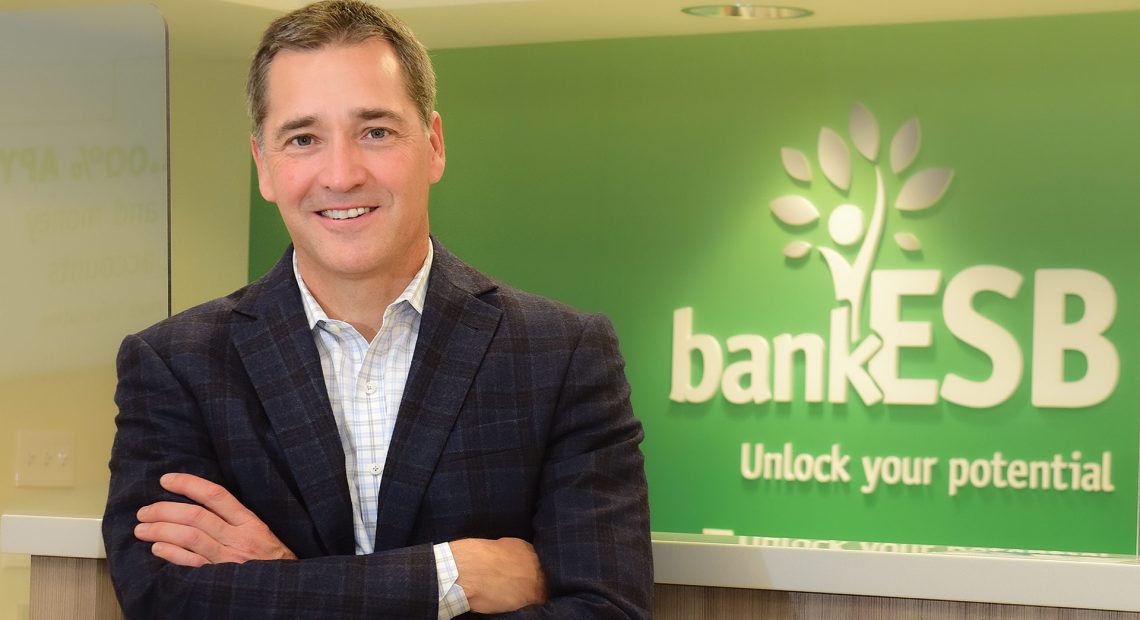
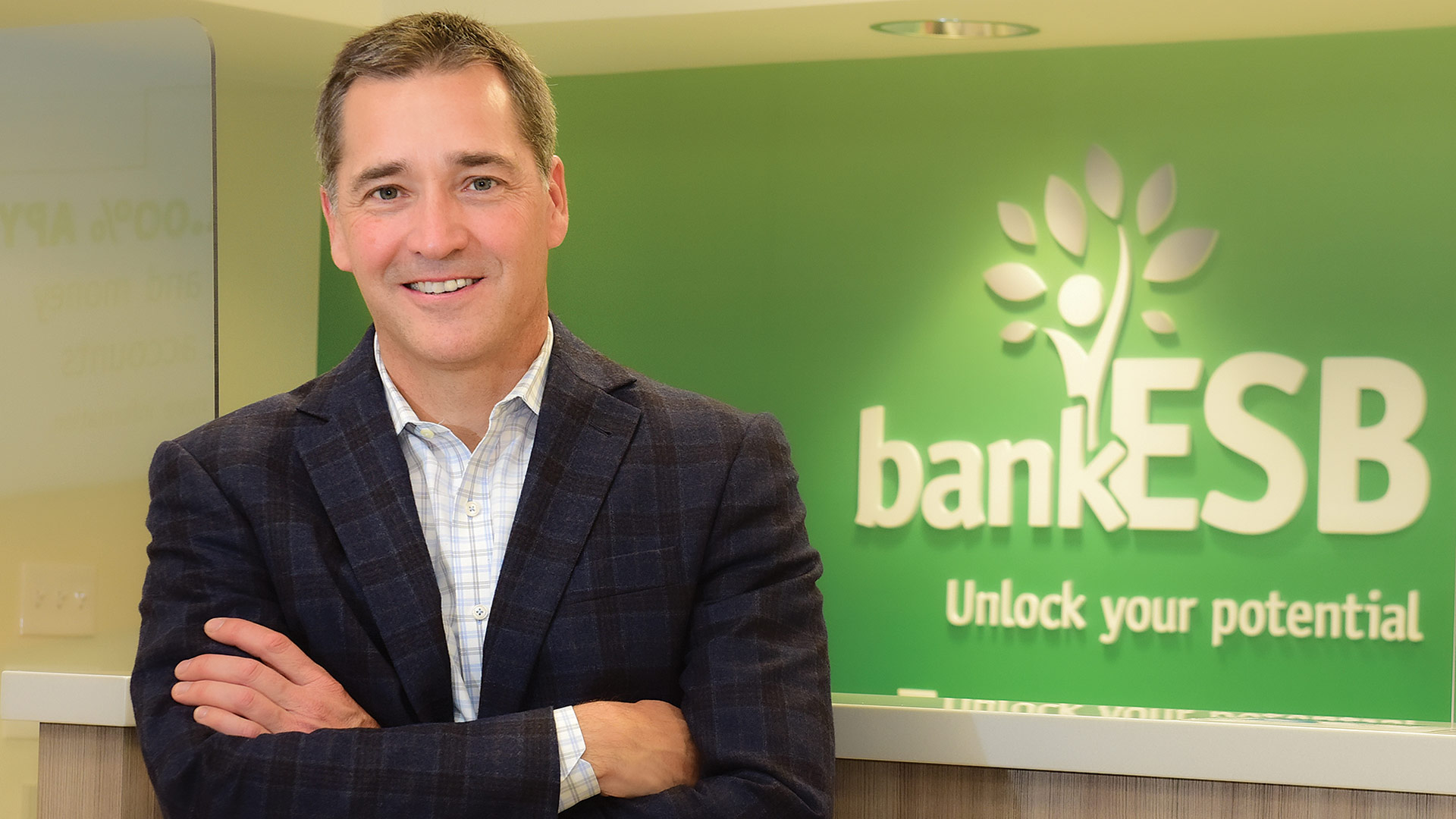
Matt Sosik says Hometown Financial Group’s latest acquisition, like those that came before it, is all about creating scale at a time when that quality is critical to growth and even survival.

A “survival tactic.”

That’s one of the phrases Matt Sosik, CEO of Hometown Financial Group Inc., the parent of bankESB, used to describe Hometown’s announced plans to acquire Randolph Bancorp Inc., the latest in a series of moves by Hometown to expand through acquisition.

Elaborating, Sosik said this acquisition will certainly give Hometown, the multi-bank holding company for Abington Bank as well as bankESB, a larger, stronger footprint on the state’s South Shore. Indeed, Randolph Bancorp is the holding company for Envision Bank, which will merge with and into Abington Bank to create a $1.4 billion institution with 11 full-service retail locations across the South Shore, including the towns of Abington, Avon, Braintree, Cohassett, Holbrook, Marion, Randolph, and Stoughton.

But the primary reason for this acquisition, as well as the other five undertaken in just the past seven years, he told BusinessWest, is to achieve something that is becoming ever-more critical in today’s banking climate: scale.

“Banking has become such a low-margin business that scale is absolutely critical,” Sosik explained. “We aren’t running our company to survive three years or five years; we’re running to survive 20 and 30 years. We want to be a relevant player in all our markets, and we want to ensure our long-term survival, and to do that, scale is the name of the game.

“We’re not seeking this growth because it makes us feel better or because it allows us to pump our chest out,” he went on. “This is a survival tactic in this business.”

With this latest acquisition, which is expected to be finalized by the fourth quarter of this year, Hometown will have consolidated assets of approximately $4.4 billion and a branch network of 38 full-service offices across Massachusetts and the northeastern part of Connecticut. The move will make Hometown the 10th-largest mutual banking company in the country.

“We aren’t running our company to survive three years or five years; we’re running to survive 20 and 30 years. We want to be a relevant player in all our markets, and we want to ensure our long-term survival, and to do that, scale is the name of the game.”

“That’s scale — that’s about us being one of the survivors when the dust eventually settles,” said Sosik, reiterating, again, the need for size in a changing, still consolidating banking and financial-services sector, where competition is growing — and evolving.

“I talk about low margins and scale, but there’s a dynamic that’s ever-increasing; we now have competitors that aren’t just credit unions or banks,” he went on, listing players such as SoFi, Chime, and others. “The non-bank competition is out to steal our lunch, and to an extent, they will be successful. But we need to be able to play in their space, and that takes scale, too.”

Hometown’s acquisition of publicly traded Randolph Bancorp will provide more of that scale, said Sosik, noting that talks between the institutions started last fall and quickly intensified.

Under the terms of the merger agreement, which has been unanimously approved by both boards of directors, Randolph shareholders will receive $27 in cash for each share of Randolph common stock. The total transaction value is approximately $146.5 million.

This transaction will be the sixth strategic merger for Hometown in the last seven years. In 2015, Hometown acquired Citizens National Bancorp Inc., based in Putnam, Conn., and then merged with Hometown Community Bancorp. MHC, the holding company for Hometown Bank, in 2016. It then acquired Pilgrim Bancshares Inc. and Abington Bank in 2019, and later that same year merged Millbury Savings Bank with and into bankHometown.

Like those other acquisitions, this one will enable Hometown to achieve needed additional growth quickly and effectively, Sosik said.

“From the Hometown Financial Group perspective, this is a move that allows us to grow with very little additional cost,” he told BusinessWest. “This particular acquisition is going to be extremely efficient for Hometown.”

And, as noted, it will give Hometown a much larger and stronger position in a very competitive banking climate on the South Shore.

“With the addition of Envision Bank, we more than double our full-service locations and assets in Eastern Massachusetts,” he explained. “This dramatically increases the branding power we have on the South Shore, as well as market share.”

One matter still to be determined — and there is time to make this decision — is what name will go on the new entity, said Sosik, adding that both brands (Envision and Abington) have value and cache in that market.

“We’ll try to figure out what’s the best brand in that market for that combined bank,” he said. “We want to be thoughtful about that, and we’ll give it some thought.”

Meanwhile, the search for additional strategic acquisitions and partnerships with like-minded acquisitions will continue, he added, because scale will only become more important in the years and decades to come.

As he said, it’s a survival tactic.


— George O’Brien

Banking and Financial Services

Smart Tax Planning for 2022

By Barbara Trombley


Most of you have probably just filed your taxes or an extension. Maybe you are shell-shocked by the taxes owed on unexpected capital gains, unemployment, or additional income picked up in the last year. Maybe you received a large refund, which means you are estimating a larger tax bill than is due.

It is not the time to close the drawer and forget. Smart taxpayers start planning right away for next year so that they are prepared for their 2022 taxes and have done all they can to minimize them.

The first task is to have a detailed discussion with your accountant to comprehend why you owed extra taxes this year or why you received a big refund.

If it’s the latter, you are having too much money withheld. If you expect your income to be the same in 2022, you can adjust your withholdings. If you are still working, call your payroll department and make a change. If you are retired, you are probably having taxes withheld from a few different sources — possibly Social Security, a pension, or investment distributions. Getting a big refund is not a good thing. Make a change to one or all so you aren’t giving the government an interest-free loan with your money. Also, do the same for state taxes.

Barbara Trombley

Barbara Trombley

“It is not the time to close the drawer and forget. Smart taxpayers start planning right away for next year so that they are prepared for their 2022 taxes and have done all they can to minimize them.”

If you owed money, have a clear understanding why. Many dual-income families enter a higher tax bracket when combing two salaries. Unless you fill out a new version of the W4, your payroll department may not be withholding enough. Also, in our new economy, many people have picked up side jobs. Unless you make quarterly estimated tax payments, you will have to pay the taxes owed on the additional income when you file. Talk to your accountant about making quarterly estimated tax payments. It is easier to fund a large tax bill over the course of the year instead of scrambling to find the funds. Also, you will avoid potential interest and penalties by having the correct amount of taxes paid throughout the year instead of in a lump sum in April.

Another common reason to have owed money for 2021 taxes was due to capital-gains distributions in non-retirement investment accounts. The stock market had a great year in 2021, and many mutual-fund companies realized gains on holdings. These are tough for the investor to plan for. If you have investment accounts that are not retirement-specific, you will see a 1099-Div form from the investment company each year. Dividends and interest may be predictable, but gains and losses, not so much. Taxable gains mean you were successful and made money in your investment account, and taxes are due.

Do you want to try to reduce your tax bill? Consider maximizing your retirement-plan contribution. In 2022, investors can contribute $20,500 to their 401(k), 403(b), or 457 with an additional $6,500 of catch-up contribution if over age 50. This is a great way to get a tax break (your contributions are deducted from your income before taxes are figured) and grow your assets. You will need to log in to your plan and adjust your withholdings to account for the increase, as the maximum contribution allowed was $19,500 in 2021. Contribution limits are also increasing for Simple IRAs, from $13,500 in 2021 to $14,000 in 2022, with a $3,000 catch-up contribution.

There are some notable changes in the 2022 tax year that may impact how much you will owe when figuring next year’s taxes. On the plus side, the standard deduction will slightly increase for all filing categories. Income thresholds for deduction phaseouts will also increase for traditional IRAs and Roth IRAs. In addition, the federal lifetime estate-tax and gift-tax exemption for 2022 jumped from $11.7 million to $12.06 million — $24.12 million for couples if portability is elected when filing after the death of the first spouse. This is more than enough for most Americans.

Unfortunately, the Massachusetts estate tax is not nearly as generous. If you die as a Massachusetts resident, your heirs may have to pay an estate tax, which is calculated on the first dollar of estates that are over $1 million. Gov. Charlie Baker has current legislation that would exclude the first $2 million in assets when figuring the estate tax. This change is long overdue.

There are many other changes coming this year for taxpayers, and this article highlights just a few. If it impacts you, look up changes to child tax credits, earned-income tax credits, deductions for teachers’ expenses, and changes to the kiddie tax. Knowledge and planning are the keys to having a successful, uneventful 2022 tax season.


Barbara Trombley is a financial advisor and CPA with Wilbraham-based Trombley, CPA; (413) 596-6992. Securities offered through LPL Financial. Member FINRA/SIPC. Advisory services offered through Trombley Associates, a registered investment advisor and separate entity from LPL Financial. This material was created for educational and informational purposes only and is not intended as ERISA tax, legal, or investment advice.

Banking and Financial Services

The Art of Being Ready

By Chelsea Russell


Each year goes by faster than the last, and before you know it, your nonprofit’s year-end audit is right around the corner.

Collectively, we can all agree that the audit process should be quick and easy, but we often face audits that never seem to end. Have you ever wondered what you can do to make an audit go smoothly and be as efficient as possible so that deadlines can be met? This is a great opportunity for you to learn about how your organization can have a more efficient audit process and how your organization can continue to improve procedures surrounding audit preparation.

As an auditor who is involved in many not-for-profits, I’d like to share some best practices to help you prepare for your year-end audit.


Have a Planning Meeting

It’s never too early to start reaching out to your auditor. Having a planning meeting with your auditor a month before your organization’s year end is encouraged. This meeting will serve many purposes, such as reminding everyone of specific due dates, discussing significant activity over the last year, and deciding on a start date for the audit based on your readiness.


Establish a Timeline

Once you and your auditor have discussed due dates and a start date for the audit, you should start preparing for the audit early by asking for your auditor’s data-request list. Review the list with your auditors, ask for what items are priority for testing purposes, and establish an internal due date for your team. As you and your team start preparing information for the audit, have regular check-ins with your auditor as you approach each due date and the start of the audit.

Chelsea Russell

“Collectively, we can all agree that the audit process should be quick and easy, but we often face audits that never seem to end.”

Reconcile All Significant Trial Balance Accounts

Prior to starting the audit, all significant trial balance accounts should be reconciled, and you should double-check that the supporting documentation agrees with the trial balance accounts. This is a great opportunity to make sure you have the necessary internal control procedures in place, and may present an opportunity for improvement. To prevent a delay in the audit, the earlier you can start your year-end closing process and reconciliation of accounts, the sooner you can review the audit support for potential errors before handing documents over to the auditors.


Compliance Requirements

The level of compliance requirements you have to adhere to depends on the funding your organization receives (state, federal, grants, or donations). A best practice would be to review your funding sources and determine the compliance requirements needed well ahead of the annual audit. Depending on where your funding is coming from can dictate the level of compliance requirements you have to adhere to. For example, if you receive federal funding or federal funding passed through the state, this could require additional audit testing to be performed and additional time incurred by the auditor. It’s best to review all funding sources on a regular basis and communicate any changes with your auditors.


Bottom Line

Once you invest your time and try these best practices, you’ll be able to develop your own processes throughout the year, keep the information organized, and be ready for your next audit.


Chelsea Russell, CPA is a manager at the Holyoke-based accounting firm Meyers Brothers Kalicka, P.C.

Education

Grade Expectations

By Elizabeth Sears


Rachel Romano certainly understands the importance of providing meaningful education opportunities to a community’s youth. She’s the founder and executive director of Veritas Prep Charter School, a charter-school system that uses innovative turnaround strategies to help students reach their full academic potential.

“Most of our students come into middle school performing below grade level, and the vast majority leave us headed to high school at or above the level of their peers across the state,” she said.

That transformative impact will no longer conclude at the end of eighth grade. Indeed, Veritas Prep High School is set to welcome its inaugural ninth-grade class in the fall of 2022. Now scholars have the opportunity to continue with Veritas, complete essential high-school graduation requirements, and even earn credits toward a college degree.

Veritas Prep Charter School started off in 2012 as a middle school in Springfield holding the belief that all students have the ability to achieve at high levels if given the right opportunities. It has been a decade now since the middle school opened, and since its founding, Veritas has grown more than those who created it could have imagined.

Rachel Romano

Rachel Romano

“Most of our students come into middle school performing below grade level, and the vast majority leave us headed to high school at or above the level of their peers across the state.”

The school now serves more than 370 Springfield students and is one of the Bay State’s top-performing middle schools. Veritas also has a Holyoke middle school in addition to its flagship Springfield location. Dramatic gains have been shown in student achievement, with double the ‘proficient’ and ‘advanced’ MCAS scores than those received in Springfield Public Schools. With such growth and success, the enthusiasm surrounding the opening of the new high school is immeasurable.

“We never had intentions of opening a high school when we started, but year after year, our students who matriculated on to ninth grade and were in high school would come back and say, ‘why don’t we have a high school?’” Romano explained. “So given the parent and student demand for Veritas to open a high school, a few years ago we decided maybe it is time that we expand our charter to serve our students through high-school graduation.”


Course of Action

Veritas Prep Charter School was given the approval to open a high school back in 2020. Veritas assembled a diverse design team to create a high school that can effectively serve the needs of its students. The design team was comprised of more than 200 Springfield community members, including current students, alumni, families of students, and stakeholders.

“We really wanted to center the voices of our students, our alumni, our teachers, our families, to design a high school that would meet the needs of our students,” Romano told BusinessWest.

That is where the ‘Portrait of a Graduate’ was developed — something Romano is particularly proud of.

‘Portrait of a Graduate’ was developed through the design team and embodies the vision of Veritas — that all of its scholars will “emerge as woke citizens, innovators, leaders of tomorrow, and learners for life.”

An important element of this mission includes the opportunity to earn up to 30 college credits — two years of college worth — completely free of charge. These college credits can be transferred to any state college or university. Students can even potentially earn an associate degree by the time they graduate high school.

“Too few Springfield students complete college degrees, and since we will have our students through high school, we want to go ahead and give them access to college courses while we can support them to earn some credits, tuition-free,” Romano noted.

Currently, only 26.4% of Springfield residents obtain a higher-education degree, compared to almost 50% statewide. Veritas is seeking to address key barriers to higher education such as access, lack of preparation, and cost.

“Our middle school is always focused on getting our students set up with a vision of themselves in college and pointing them toward high school ready to be on a college prep track. What we learned is that even that is sometimes not enough,” she went on. “We really are centering the need in Springfield for degree completion. We know degree completion is going to significantly increase the earning potential, health, and quality of life for our students and their families; earning a degree has been an asset that’s been pretty elusive for many Springfield Public School students.”

The Springfield community was prioritized throughout the entire planning process. Veritas scholars have played a key role in the planning and development of the new high school, providing input on everything from the school’s design to its curriculum. Students will have multiple areas of study to choose from that cover a wide range of high-impact careers, including health sciences, engineering, education, and more.

“With the right voices at the table, we have been able to reimagine what high school can look like and create a compelling, career-focused, early-college model,” Romano said.

Veritas Prep High School is following a career-focused early-college program. Students will not be able to select any course they want from the catalog, but rather will have pathways to choose from that are aligned with career trajectories. Veritas seeks to place its students on pathways where they can be certain about getting jobs and earning a good living.

“With the right voices at the table, we have been able to reimagine what high school can look like and create a compelling, career-focused, early-college model.”

Not only will students have the option to take college classes during their time at Veritas Prep High School, but they will also be able to get relevant and beneficial certificates — for example, a certificate in Google Suites or a nurse-aide certification for students who are in the health-sciences trajectory.

“We’re really trying to equip them with meaningful experiences in the high-school years that will send them off to hopefully four-year degree programs,” Romano said, while helping those who plan to work immediately after high school access gainful employment experiences while they work their way through school.

Even though charter schools operate a bit differently from their traditional public-school counterparts, they serve the community in a similar way. Charter schools were created from federal legislation with the intention of creating innovative schools within the public-school space while providing parents with choices.

Although students do have to apply to Veritas, there is no selection criteria — as long as a student has a mailing address in Springfield, the opportunity to attend is open to them.

“We’re really excited to open a new campus this August … we will have some vacant seats available for other Springfield students to join our inaugural class as well,” Romano said.

Current eighth-graders at Veritas are guaranteed a place in the new high school, and a lottery will be held to fill the remaining spots. The high school will expand by one grade per year up through grade 12.


Class Act

When discussing the immense impact Veritas Prep High School will have on the Springfield community, Romano spoke of the unlimited academic and social potential that Springfield students possess.

Given the opportunity, any student can achieve the goals they set their mind to, she insisted. “Veritas scholars will become changemakers who are equipped to choose their path, challenge inequity, and transform the world.”

Education Event Galleries

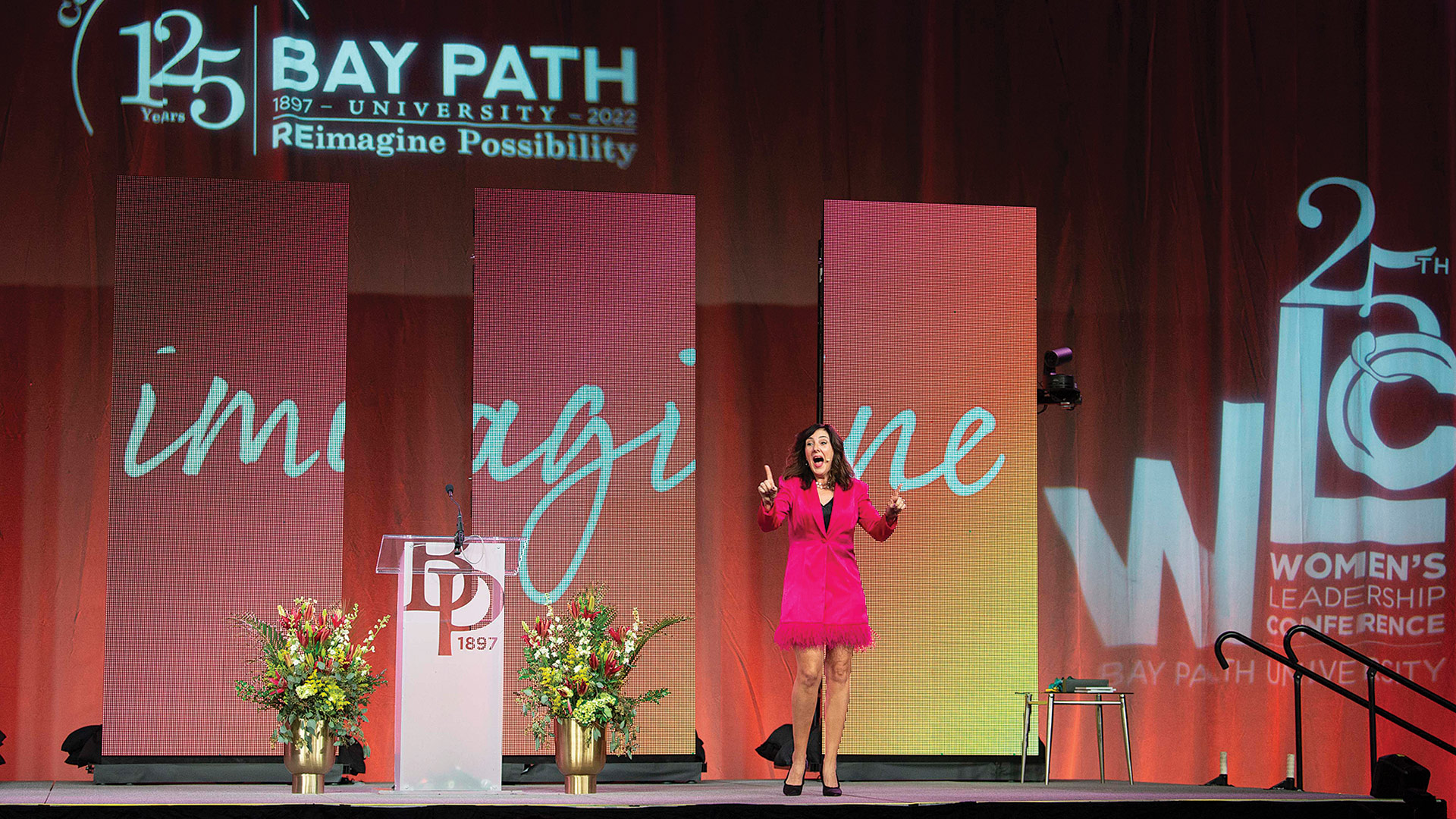
Women’s Leadership Conference

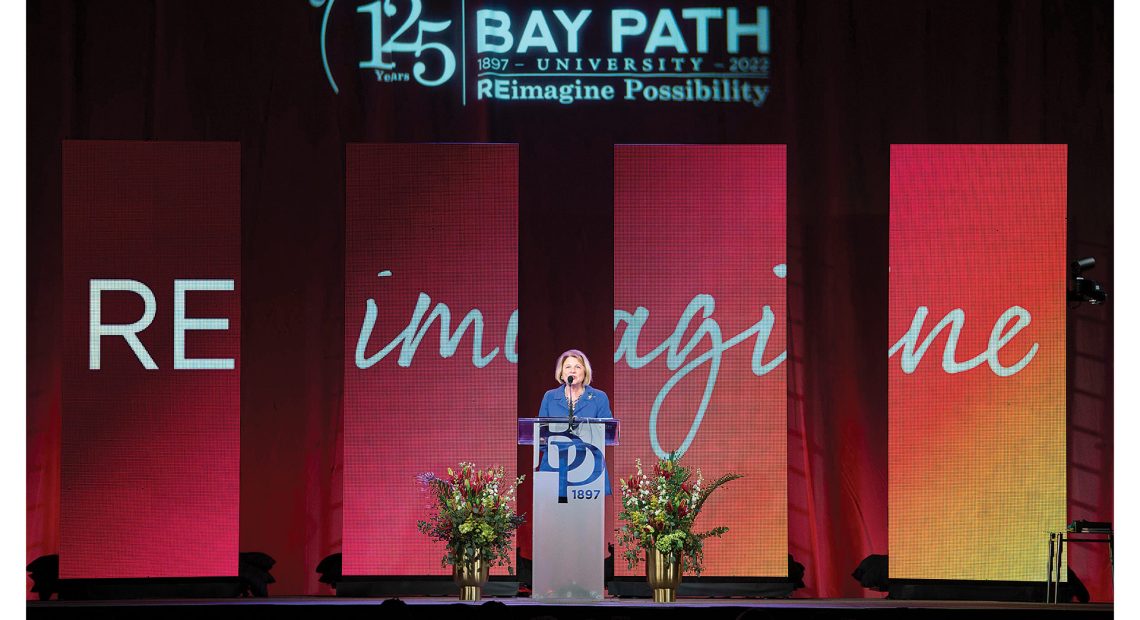
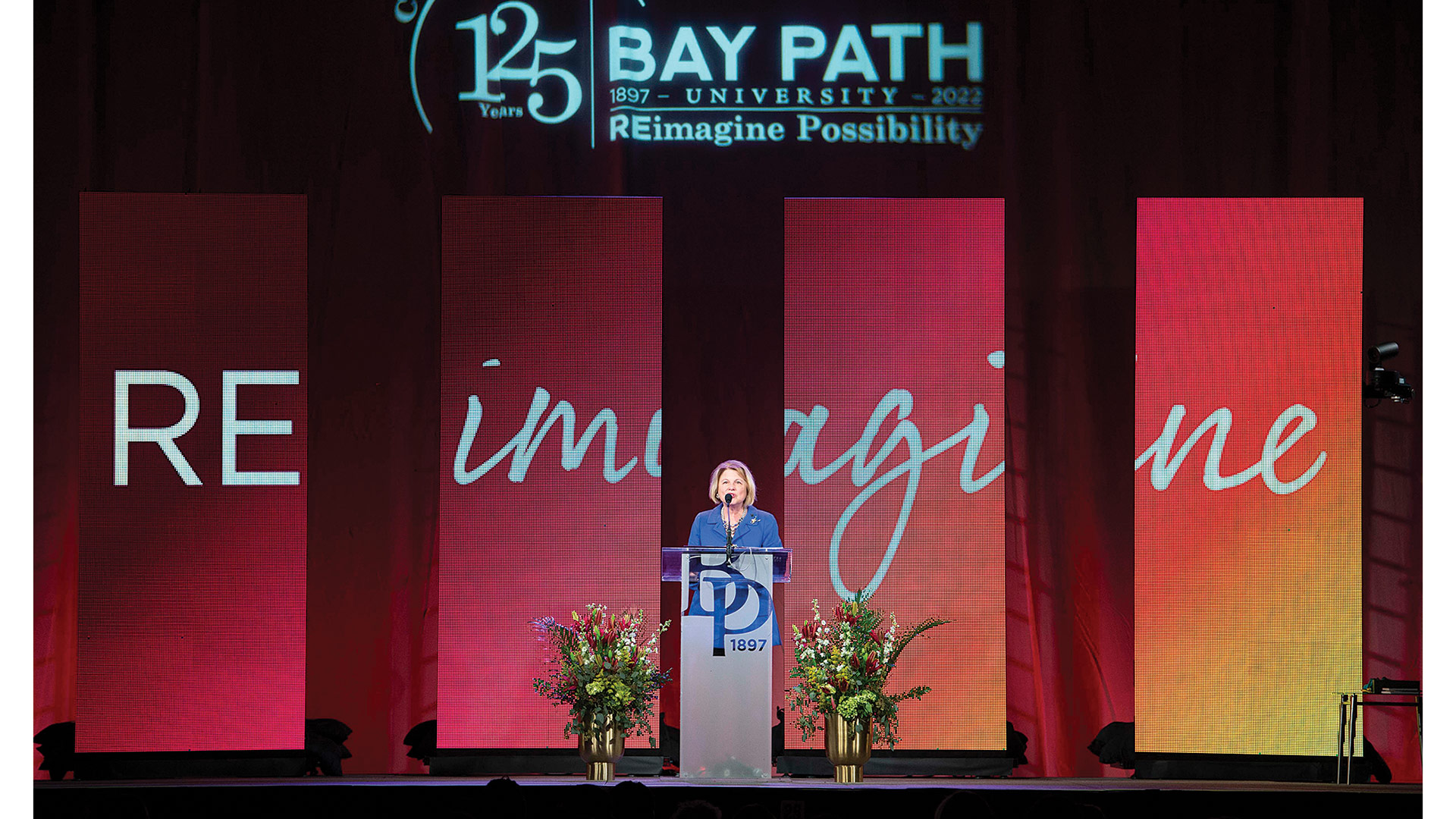
‘Reimagine’ was the theme for the 25th Bay Path University Women’s Leadership Conference on April 1, a day-long event that drew more than 1,300 women and men to the MassMutual Center in downtown Springfield. The conference featured three keynote speakers and a number of educational breakout sessions, as well as networking and a message from Bay Path President Sandra Doran about the university, its 125th anniversary, and its future.

Photos by Leah Martin Photography


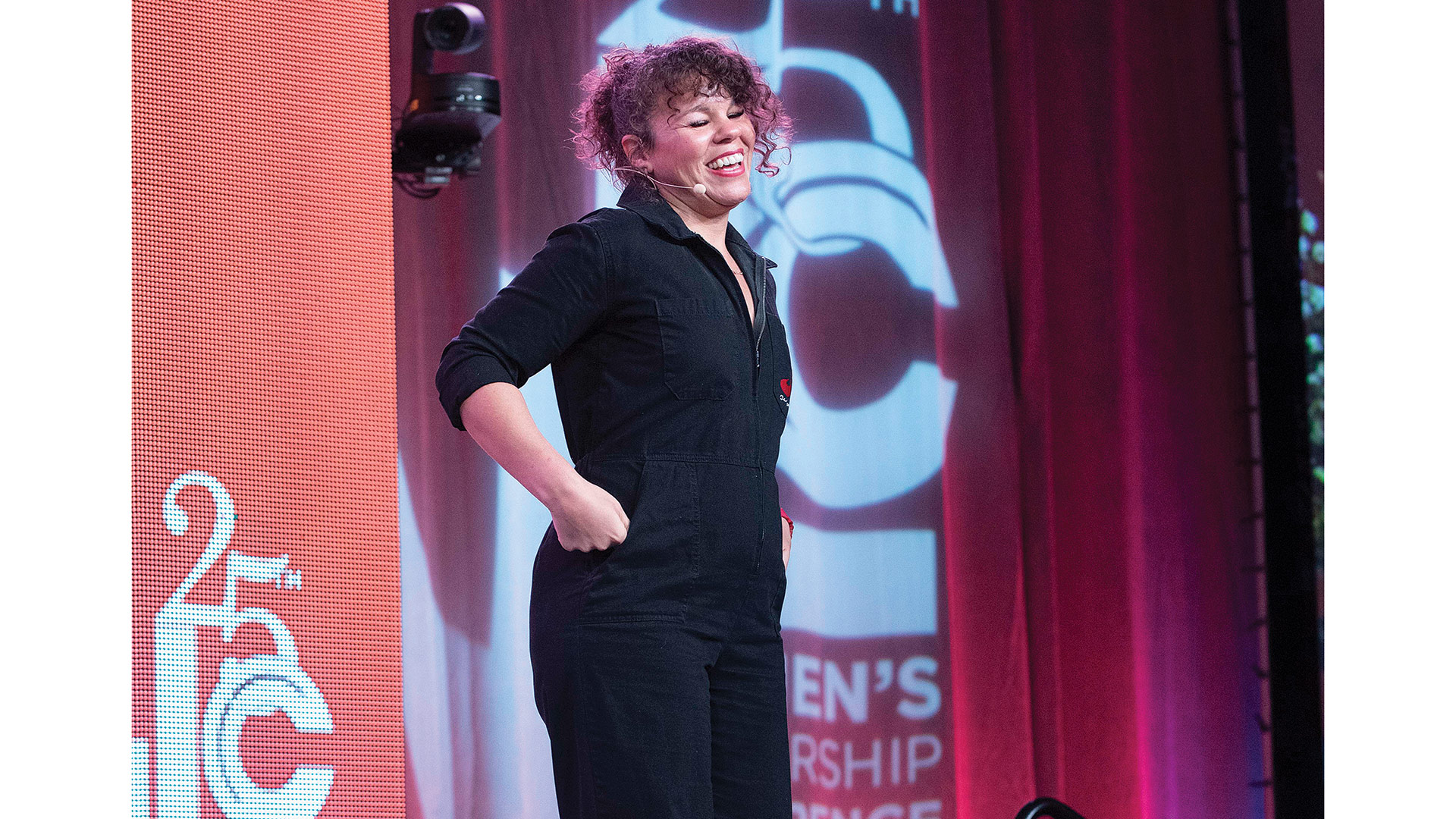
Mechanic and Girls Auto Clinic founder Patrice Banks takes the stage as the luncheon keynote speaker

Mechanic and Girls Auto Clinic founder Patrice Banks takes the stage as the luncheon keynote speaker


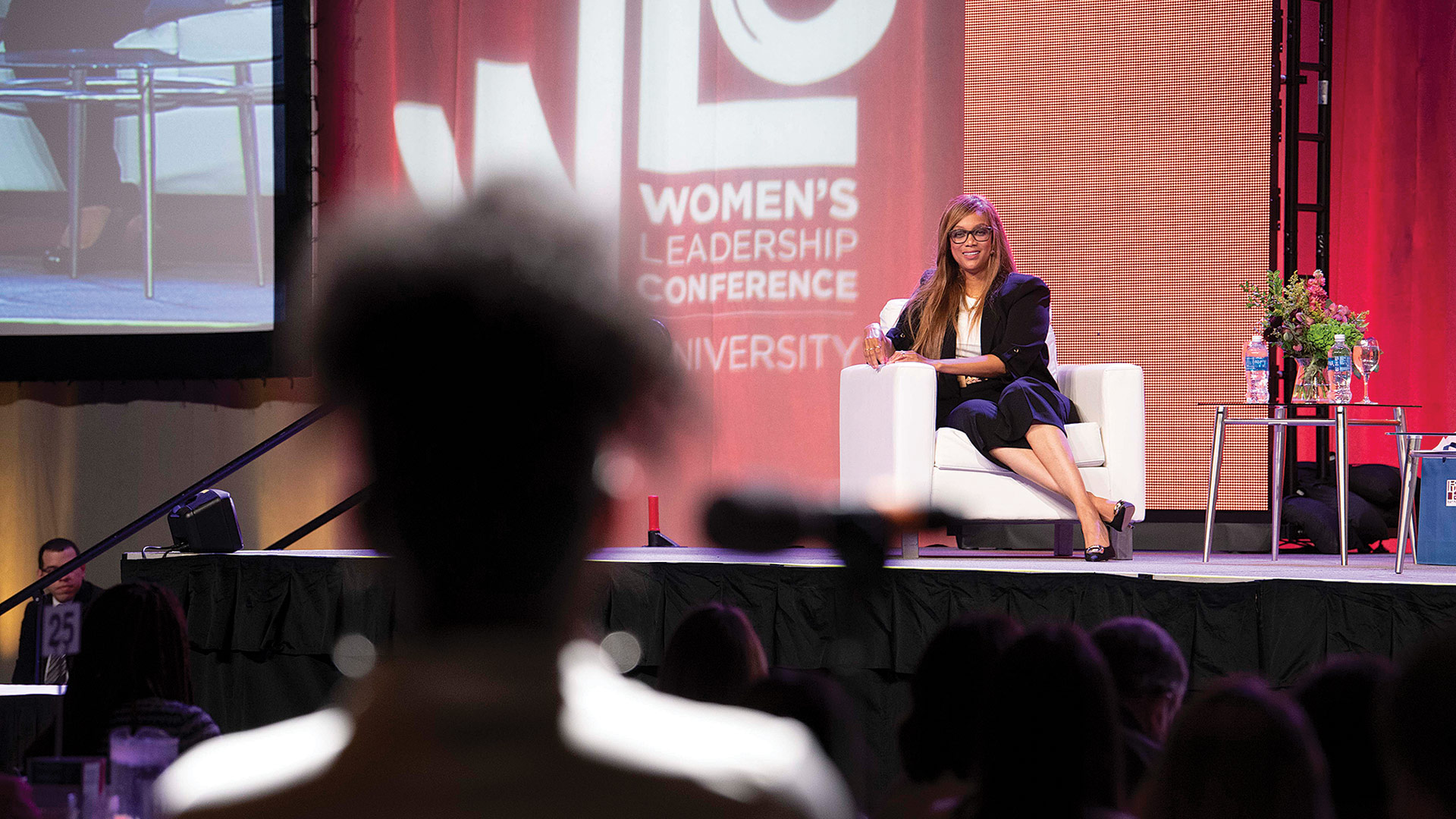
Tyra Banks, the closing keynote speaker, answers questions from conference attendees

Tyra Banks, the closing keynote speaker, answers questions from conference attendees


author and speaker Christine Cashen kicks off the 2022 conference with laughter and advice as the morning keynote speaker

Doran addresses the audience

Doran addresses the audience


Springfield Mayor Dominic Sarno welcomes attendees to the city of Springfield

Springfield Mayor Dominic Sarno welcomes attendees to the city of Springfield


Nonprofit Management

18 Under 18

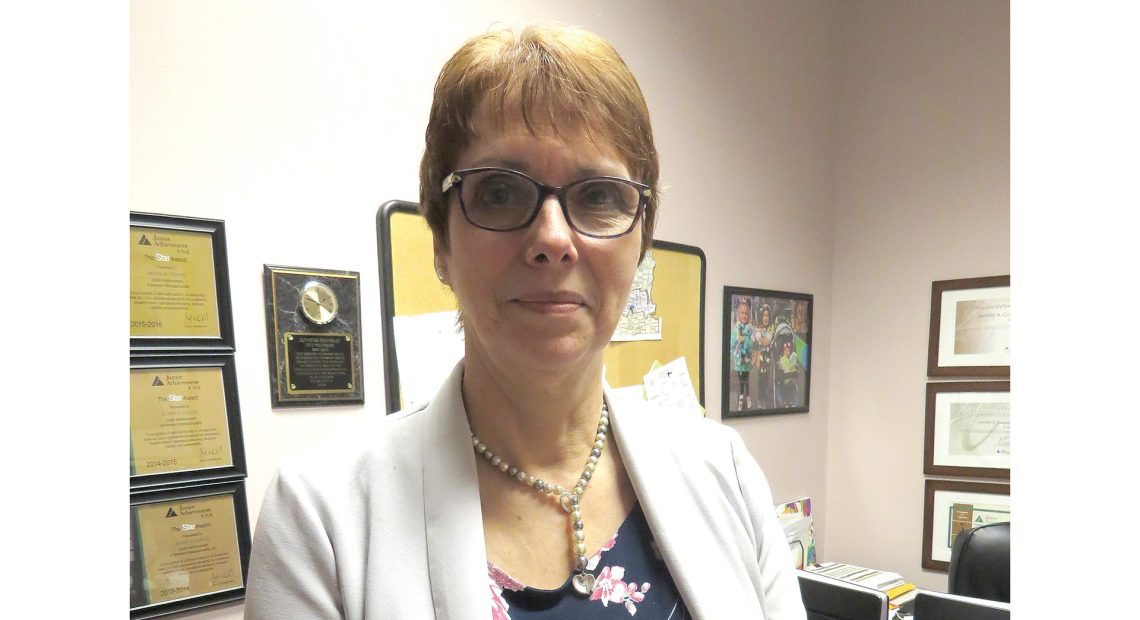
Jennifer Connelly

Jennifer Connelly says JA’s 18 Under 18 program will recognize young people in three areas — innovative spirit, leadership, and community involvement.

Jennifer Connelly says that, in many ways, the new recognition program created by Junior Achievement (JA) of Western Massachusetts was inspired by the pandemic and a recognized need to bring attention to the manner in which young people, who were impacted by COVID-19 in many different ways, stepped up and displayed true leadership and community involvement at a turbulent time.

“The past few years have been tough on everybody, but they’ve been even tougher on young people,” said Connelly, the agency’s president and CEO. “I think that being isolated, doing remote learning, having to wear masks, not being able to interact with people like they used to, like our volunteers … has challenged many of them, and they’ve felt isolated and removed from being part of the community. We wanted to do something to recognize them to help their self-esteem, but also for the community to realize what a bright future we have with these young people who are doing so much already and celebrate them.”

But these are qualities worthy of recognition at any time, she went on, noting that JA’s new initiative, called 18 Under 18 — in a nod to many regional and national recognition programs, including BusinessWest’s 40 Under Forty — and presented by Teddy Bear Pools, will hopefully become a permanent fixture in the region. That is certainly the plan.

“We wanted to do something to recognize them to help their self-esteem, but also for the community to realize what a bright future we have with these young people who are doing so much already and celebrate them.”

The program, as its name connotes, will recognize 18 young people from across the region in both middle and high school. Nominees must attend school in Hampden, Hampshire, Franklin, or Berkshire County, and while involvement in JA programs is not required, it is considered favorably during the evaluation process, which is now underway. The class of 2022 will be introduced later this month, and they will be honored at ceremonies in the Tower Square food court on May 19.

Candidates will be judged in three areas, said Connelly — innovative spirit, leadership, and community involvement — and the nominations that have been received, mostly from teachers, principals, guidance counselors, parents, and other students, show all of those qualities.

Connelly said the program is modeled after initiatives launched in recent years by JA chapters in Arizona and Pennsylvania, and is designed to bring attention to the accomplishments of young people, their leadership skills, and the manner in which they are inspiring others.

She said finalists for the program will be required to attend a 30-minute virtual interview with judges who will ultimately select the 18 to be honored this year.

Those who are nominated are asked to submit something “creative,” she added, be it a photo, a video, a poem or story they wrote, or, in the case of students from the Springfield Conservatory of Music who were nominated, YouTube videos.

“We’re asking these students to display leadership and entrepreneurship, but in the sense that entrepreneurship is creative thinking, the skills it takes to be an entrepreneur, the ability to think outside the box, and problem solving.”

“We’re asking these students to display leadership and entrepreneurship, but in the sense that entrepreneurship is creative thinking, the skills it takes to be an entrepreneur, the ability to think outside the box, and problem solving,” she explained, adding that the exercise in creativity should certainly give the judges some things to think about.

Elaborating on that concept of leadership, Connelly said it can come in many forms and many forums, and the 18 Under 18 program should bring this out.

“You don’t have to the student president of a particular grade,” she explained. “You can be demonstrating leadership in a class, for example, stepping up when you see someone having problems in class and helping them.”

Community service is the third leg of the triangle, she said, adding that, even during the pandemic — or especially during the pandemic, as the case may be — young people across the region have found ways to help others and serve their community.

The chosen 18 will be recognized in many different ways, which is one of the hallmarks of the initiative, said Connelly, adding that she is expecting several local media outlets to introduce the honorees to the region. At the May 19 event, there will be a reception for the honorees, with 250 to 300 attendees expected, and awards given out (Country Bank is the award sponsor). There will be even be ‘18 Under 18’ lawn signs to identify the homes of the 18 honorees.

Eventually, the goal is to award college scholarships to the honorees, said Connelly, adding that this goal can be realized if the program catches on as expected and additional sponsors can be secured.

Ted Hebert, owner and founder of Chicopee-based Teddy Bear Pools and, coincidentally, one of BusinessWest’s Difference Makers for 2022, said he was approached by JA several months ago to be a sponsor of 18 Under 18. A strong supporter of youth programs and organizations committed to serving young people, from youth sports leagues to Boys and Girls Clubs to YMCAs, Hebert said he attached the Teddy Bear name to the initiative because it dovetails with other work he and his wife, Barbara, are involved with, and meshes with his values when it comes to how such agencies should serve young people.

“I like to help organizations that don’t enable people,” he explained. “I like organizations that help people, give them a helping hand, to guide them and help them through whatever they’re going to go through to make it better for them and our society. I’m looking to assist people, and this program seemed to be something that would be assisting young people in their personal lives and, potentially, their business lives. And I liked that idea.”

As with other recognition programs of this kind, Connelly said 18 Under 18 will take some time to become part of the fabric of the region. As it gains visibility and the students are recognized for their accomplishments and talents, she expects the number of nominations to steadily grow.

Over the coming years, she believes, this recognition, a word she chose over ‘award,’ is something that students and those that they inspire will come to value and strive for.

“We’re really excited about this,” she said in conclusion, adding that such a recognition program for young people has been a missing ingredient locally. “We know how special these students are. We need to let everyone know.”


— George O’Brien

Features

The Future of Work

By Mark Morris

State Sen. Eric Lesser

State Sen. Eric Lesser says the pandemic accelerated a number of work trends that were already in motion.

Topics like ‘the future of work’ can often sound like a lofty concept, something that’s years or even decades away from the present.

But to state Sen. Eric Lesser, the future of work has already arrived.

Lesser and state Rep. Josh Cutler co-chaired a commission on the future of work and recently released its final report.

The commission came to be after Lesser authored and filed legislation back in 2019 to address the rapid changes that are happening in workplaces across the state. From increased automation and robotics to international trade policies, all these factors affect the economy and the lives of workers in Massachusetts. The arrival of COVID-19 only accelerated and intensified these economic changes.

“The idea was to take a peek over the horizon, to look beyond COVID to see what a worker’s experience will be over the next five to 10 years, and how we can prepare for that,” Lesser said.

The legislation was signed into law in January 2021 by Gov. Charlie Baker as part of an economic-development bill. Lesser called the commission “diverse in every sense,” with members representing the private sector, the public sector, labor, and academia. Members of the commission also hailed from every region of Massachusetts.

“We gathered a group of people with a diverse set of experiences, backgrounds, and perspectives,” Lesser said. “It was important to reach consensus by considering all our viewpoints.”

A major finding of the commission’s report discusses how every type of worker is facing some new level of technology integration into their jobs. Lesser gave an example of a restaurant server who once needed only a pad and pen to take dinner orders.

“The idea was to take a peek over the horizon, to look beyond COVID to see what a worker’s experience will be over the next five to 10 years, and how we can prepare for that.”

“Now many restaurants have software programs to keep track of orders, payments, and reservations,” he said. “We’re seeing this type of technology integration in jobs across industries.”

In order to qualify for jobs that use ever-changing technology, training workers for current and future jobs becomes essential.

“One finding in the report said the state of Massachusetts has to train or retrain 30,000 to 40,000 workers a year just to keep up with all the workplace changes,” Lesser said. “That’s more than double our current capacity at the MassHire Workforce Training Center.”

On top of all the challenges on the job, another key finding addressed work-adjacent issues that affect workers off the job and impact family stability. Escalating costs for childcare and housing are among the top work-adjacent concerns.

“Private childcare in Massachusetts is $8,000 higher than the national average,” Lesser said. As a byproduct of COVID, the price of houses and rents are soaring, which forces people to live further away from their workplaces and exacerbates another concern — transportation.


So, What’s the Answer?

While it’s easy to list all the issues confronting workers in Massachusetts, Lesser said the report also provides recommendations to guide legislation going forward to address these concerns and make life better for workers in the state.

“The idea is to integrate the findings and perspectives of the report into everything the state does,” he noted, giving examples of upcoming legislation on healthcare and economic development where the Future of Work report aided in drafting the bills.

The most pressing area where the report can influence workplace policies involves putting a focus on equity and inclusion to make sure no one is left behind. The report reveals serious roadblocks to finding meaningful work, which Lesser wants to see addressed.

“More than one-third of families in Springfield do not own a laptop or desktop computer,” he noted. “Today, nearly every employer requires the first application be done electronically, so right off the bat it locks out a whole population of people.”

The report also suggests an increase in language training for non-English speakers, which would make it easier for immigrants to join the workforce instead of being held back by language skills.

“Predictions are that today’s worker will have 12 different jobs over the course of their work career. That number will only increase five to 10 years from now, so the notion of training for a job once is really obsolete.”

While the report is future-focused, Lesser quickly pointed out that traditional models for successful careers are already out of touch with the demands of today’s workforce. The old model where workers learned a craft or students went to college and then joined the workforce for the next 45 years without much change rarely happens these days.

“Predictions are that today’s worker will have 12 different jobs over the course of their work career,” he said. “That number will only increase five to 10 years from now, so the notion of training for a job once is really obsolete.”

To adjust to a world that keeps changing at a faster pace, the report recommends an emphasis on “stackable credentials” for workers, with constant, specific training keeping them current and promotable.

“By acquiring skills that stack on top of each other, workers can move up the skill ladder, move up the income ladder, and build out a fulfilling career as a result,” Lesser explained.

As technology demands in the workplace keep advancing, the workforce itself is aging, especially in Massachusetts. Baby Boomers are staying on the job longer than previous generations, partly for financial reasons and because technology has lessened the physical demands of work. Lesser said it’s important to consider the needs of an aging workforce from several perspectives, including work-adjacent issues.

“It’s not surprising to see workers dealing with childcare and elder care for their parents,” Lesser said. “The work culture hasn’t really accounted for that type of situation because it’s a more recent consideration.”

All these issues are called out in the report to enable the state to have information on what’s needed to help workers in the years ahead, he added. “The state needs to do its part to make sure all these work-adjacent issues are considered when planning the future of work.”


Strong Foundation

While all these issues and concerns can sound dramatic and overwhelming, Lesser said it’s important to remember all the contributions made by the Massachusetts economy and its workers. Early development of COVID vaccines, as well as many breakthroughs in life sciences and new technologies, are just some of the innovations the state can claim.

“We are well-positioned to benefit from all these changes because we have a highly skilled workforce, great educational institutions, and leadership in many fields,” he noted.

Looking ahead, Massachusetts has a positive story to tell. Lesser said the next challenge is to make sure “this booming engine of a state” includes all communities.

“As a result of all the changes in the workplace, we are making contributions to the world. Now we want to make sure we continue to do this without leaving people behind in the process.”

Banking and Financial Services

Big Is Getting Even Bigger

By Jeff Liguori


Financial advice generally addresses the question ‘where should I put my money?’ It is a simple way of asking ‘what is the optimal investment for my hard-earned dollars?’ The more important meaning may be more literal: with today’s shifting landscape, where do I actually put my money?

The financial-services industry, which employs approximately 6.5 million people and is responsible for more than $123 trillion in assets in the U.S., has been rapidly changing over the past two decades. And the rate of that change is quickening. As with all industries, change may be the only certainty, but when it directly impacts our pocketbooks, it can create anxiety.

At the end of 2020, there were 4,377 FDIC-insured commercial banks in the U.S. That number is down from 6,519 in 2010 and more than 8,000 in 2000. During the same 20-year period, the dollar volume of loans generated by those banks has increased 127%, growing from $1.05 trillion to $2.38 trillion. Consumers seem to have fewer choices in terms of traditional banking.

Despite the number of banks being cut in half since 2000, there are more financial outlets than ever for depositors, borrowers, and investors. Finance has become a complex structure and confusing network of companies, from purely digital firms with a limited product offering, like PayPal, to massive financial supermarkets like Bank of America. Incidentally, in the past five years, the number of total active user accounts with PayPal has risen sharply from 165 million to 380 million, up 130%, with total annual transaction volume approaching $1 trillion.

Jeff Liguori

Jeff Liguori

“Finance has become a complex structure and confusing network of companies, from purely digital firms with a limited product offering, like PayPal, to massive financial supermarkets like Bank of America.”

The adoption of technology in banking is largely a function of age. At the end of 2020, nearly 50% of consumers ages 24 to 39 were making payments with digital or mobile wallets. That percentage decreases slightly up to age 54. But only one-fifth of consumers ages 55 to 73 transact digitally, and only one in 12 consumers age 74 or older are comfortable making digital payments. Focusing on younger demographics, ‘killer app’ technology has become a critical component of growth for companies in financial services. The number of financial-technology startups, or fintech, in North America has grown 90% since 2018.

Beyond technology, financial firms continue to expand their suite of products. For example, the five largest life-insurance companies measured by annual premium revenue are Northwestern Mutual, MetLife, New York Life, Prudential, and MassMutual, in that order. Those firms also have a significant presence in investment management, by way of mutual funds or wealth advisory or both. The same is true for the largest commercial banks, investment banks, and broker-dealers. Financial solutions are ubiquitous across the industry regardless of the type of firm.

Big is getting even bigger. It is an evolution in financial services, and not without precedent. Historically, consumers deposited their paycheck and took out their mortgage from the local bank. They obtained insurance through a local broker and invested with a local advisor. As these independent businesses got bought by larger firms, the relationship to the community slowly eroded. Meanwhile, our bank is connected to our PayPal account, directly pays our mortgage and car payments, and debits our monthly Netflix subscription. The idea of switching banks is enough to cause sleeplessness, even though our relationship manager works at a call center in Tulsa.

As with all trends, opportunities arise. The combination of an intricate financial landscape with rapidly changing technology and a greater access to products and solutions than ever before is exciting. Lost in the consolidation of banking is the local connection. In years past, a bigger institution had greater access, but that is no longer the case.

In It’s a Wonderful Life, George Bailey was the frustrated local banker who single-handedly saved the town from financial ruin. He couldn’t compete with the wealthy industrialist, Henry Potter, who owned half of Bedford Falls. But George had one thing Mr. Potter didn’t, the trust of his neighbors. As financial products and services continue to multiply and digitize at a dizzying pace, it will ultimately be the local trusted banker or advisor who helps confused consumers make the right choices.


Jeff Liguori is the co-founder and chief Investment officer of Napatree Capital, an investment boutique with offices in Longmeadow as well as Providence and Westerly, R.I.; (401) 437-4730.

Daily News

SPRINGFIELD — Springfield Technical Community College has received $30 million in state funding to move healthcare programs out of an aging building on campus that has outlived its usefulness.

Gov. Charlie Baker announced the award on Wednesday. College officials in December asked the state for the maximum amount of $30 million to vacate Building 20, which houses 18 degree and certificate allied health programs as well as the acclaimed SIMS Medical Center. STCC has secured $11.5 million from other sources for the $41.5 million project.

The award announced by the governor comes from the state Division of Capital Management and Maintenance (DCAMM).

Constructed in 1941, Building 20 is past its useful life and has a history of expensive emergency repairs. The healthcare programs in the School of Health and Patient Simulation educate more than 700 students per semester and employ more than 120 faculty and staff.

“We offer our thanks to Governor Baker, Lieutenant Governor (Karyn) Polito and Education Secretary (James) Peyser for investing in the future of healthcare and workforce development in such an impactful way,” said STCC President John Cook. “This has been a true team effort between the administration, trustees, our legislative delegation and the STCC Foundation.”

The STCC Board of Trustees committed $6 million from the college’s budget to the project. Trustees Chair Marikate Murren said, “We’re thrilled and grateful to Gov. Baker and DCAMM for their support to make this move possible. The relocation of the programs in the School of Health and Patient Simulation will allow STCC to continue to prepare students for healthcare careers. The investment in this project represents an investment in the City of Springfield and the region.”

To best summarize the outlook for the College, Cook said, “I am delighted for our students and faculty as this ensures that STCC stays on the leading edge of healthcare education; the future of STCC is bright.”

Daily News

HADLEY — The 14th Annual Tom Cosenzi Driving for the Cure Charity Golf Tournament will take place Sept. 27 at Twin Hills Country Club in Longmeadow, and will be joined by presenting sponsor, CDK Global.

The 14th Annual Driving for the Cure Charity Golf supports neuro-oncology research in honor of Tom Cosenzi, a successful businessman and father of four who succumbed to brain cancer in 2009 at 52.

Since its inception, this annual golf tournament has raised more than $1.3 million with its partnership with the Jimmy Fund, one of the largest organized golf programs in the U.S. All proceeds support Dr. Patrick Wen and his team of researchers in the Neuro-Oncology Department at Dana Farber Cancer Institute

“My brother Tom and I started this charity golf tournament to honor the legacy of our dad,” said TommyCar co-owner, Carla Cosenzi. “His vision was that no other family would experience the pain that he and his family endured. It was Tom’s wish that his family and friends continue to raise money for Neuro Oncology Research so the burden of Cancer can be eliminated for patients and their families. We’re so thankful to CDK Global for their partnership and we are proud to be able to support the world class research that is ongoing at Dana-Farber.”

The scramble style tournament features a “Tee off against Cancer” shotgun start. Players will enjoy 18 holes of golf at one of the area’s top private golf courses, lunch, on-course activities, an evening cocktail reception with live entertainment, a gourmet dinner, raffle prizes, and silent and live auctions.

For more information on the Tom Cosenzi Driving For The Cure Charity Golf Tournament visit www.TomCosenziDrivingForTheCure.com.

Daily News

SPRINGFIELD — Pathlight, a pioneering organization serving people in Western Mass. with developmental and intellectual disabilities, today named human services leader John Roberson as its new executive director.

Throughout his career, Roberson has designed and implemented programs tailored to meet the needs of vulnerable children and families. He brings an extensive background in leadership and operations for community-based residential programs and a passion for improving the quality of life for individuals with disabilities and special needs.

“On behalf of the board of directors and the entire Pathlight organization, I am pleased to announce that John Roberson is joining us as our new executive director,” said Hank Drapalski, chair of the board. “We feel privileged to have a leader of his experience, character and integrity guiding Pathlight into the future.”

Most recently, Roberson was vice president of Children & Families for the Center for Human Development (CHD), where he was responsible for management of a $25 million annual budget and expansion of services with local, state and federal agencies for a division that provides housing, child development, behavioral health and court guided support services.

Prior to becoming vice president, he served in a variety of capacities including managing two large residential facilities as CHD’s director of Juvenile Justice Programs. Previously, he was a lead treatment supervisor for the Hampden County Sheriff’s Department, where he supervised treatment staff and developed treatment programs for inmates housed in the Pre-Release Center.

“I am honored to be selected as Pathlight’s next Executive Director,” said Roberson. “I am looking forward to working to advance Pathlight’s mission to assist people with intellectual disabilities, developmental disabilities, and autism in reaching their full human potential.”

Roberson is a member of the Child Welfare League of America and the American Correctional Association. He has served as a board member of the Correctional Association of Massachusetts, the Restorative Justice Collaborative of Hampden County, and the Martin Luther King Jr. Charter School of Excellence. He holds an M.S. from Cambridge College in Springfield.

He will assume his responsibilities as Executive Director of Pathlight on May 2.

Daily News

HADLEY — UMassFive College Federal Credit Union (UMassFive) announced the retirement of board member Sam Killings at its 55th Annual Meeting on March 23. New director Jeremiah Bentley was elected to the open position at the virtual event.

Killings is retiring from the UMassFive Board of Directors after serving since 1998. During his tenture, Killings served on the credit union’s Asset and Liability Management Committee, which he chaired for several years, as well as the Human Resources Committee and the Diversity Task Force. He holds a bachelor’s degree in Accounting and 42 years of experience as an internal auditor and assistant controller for Research Accounting at UMass Amherst.

With his retirement, Killings was recently honored with the status of director emeritus, the first person to hold this title at the credit union.

Bentley has been a member of UMassFive since 2015, when he moved to the area after completing his Ph.D. in accounting from Cornell University. He previously

served as a volunteer on the credit union’s Asset and Liability Management Committee. He currently serves as a research foundation director for the Institute of Management Accountants, and in multiple positions with the American Accounting Association. He is also the Richard Dieter & Susan Dieter Faculty Fellow and associate professor at UMass Amherst, where he teaches financial and managerial accounting and examines how accounting systems change the way people think about and report on their performance.

Cover Story

The Next Chapter

Valley Venture Mentors has long had a singular but multi-faceted mission — to promote entrepreneurship in the region and provide various forms of assistance to help business owners take their venture to the next stage. Through a new and broader affiliation with the Western Massachusetts Economic Development Council, the agency has an opportunity to become, in the words of its director, even more of an advocate, a champion, and a “convener” within the region’s broad, and growing, entrepreneurship ecosystem.

VVM Executive Director Hope Ross Gibaldi

VVM Executive Director Hope Ross Gibaldi

As she talked about the new, broader, stronger relationship between Valley Venture Mentors and the Western Massachusetts Economic Development Council (EDC), Hope Ross Gibaldi, VVM’s executive director, used the word ‘opportunity’ early and quite often.

She said the affiliation between the two agencies, or the deeper affiliation, as the case may be, gives VVM access to a larger pool of funding sources, some of them stemming from COVID-relief efforts, and, in general, a stronger platform from which to conduct its many programs — from its weekly ‘community nights’ to its student business accelerator to its entrepreneurial roundtables — and become an even more vital component of the region’s entrepreneurship ecosystem.

“VVM has gone through a lot of evolution and many iterations, and with the course of the pandemic, that has really provided us with a chance to do some reflection,” Ross Gibaldi explained. “I think this new alignment with the EDC really positions VVM to be a convener regionally for the entrepreneurial ecosystem and be an advocate and a champion for entrepreneurship in the Western Mass. region. It’s a tremendous opportunity — for VVM and the region.”

Rick Sullivan, president and CEO of the EDC, agreed. He told BusinessWest that VVM, which will continue to be its own 501(c)(3) nonprofit and rely on many of its traditional funding sources, ranging from area foundations to long-time supporter Berkshire Bank, is now a “program” of the EDC, one that must ultimately pay for itself through fundraising, grants, program fees, and more, while taking full advantage of networking and funding opportunities presented by the EDC.

“Our economy here is really reliant on small and medium-sized businesses, many of which are generationally owned — the ownership is here in Western Massachusetts. And that’s what the future is going to be.”

Sullivan noted that entrepreneurship has always been one of planks, if you will, of the EDC’s platform when it comes to economic development. Elaborating, he said regions like Western Mass. can certainly hope to add all-important jobs by attracting major corporations. But a far more realistic strategy is to grow organically, by encouraging entrepreneurship and providing mentorship and several forms of assistance to companies at various stages of development and maturity.

“Our economy here is really reliant on small and medium-sized businesses, many of which are generationally owned — the ownership is here in Western Massachusetts,” he said. “And that’s what the future is going to be. A Fortune 50 company is not likely to build its headquarters here — our strength is the small-to medium-sized company that stays local, invests local, hires local, uses a supply chain that is also local. Do we all sit and hope that one of these companies that goes through VVM gets really big and stays here? Sure, but that is not the model.”

This explains why the EDC has always maintained a healthy relationship with VVM and why it has now made the agency one of its programs, or affiliates.

Rick Sullivan

Rick Sullivan says that promoting entrepreneurship and supporting the startup community is vital to the Western Mass. economy, which explains the affiliation between VVM and the EDC.

“The founders of VVM did a masterful job of getting it here and recognizing the importance of the startup community and small-business growth and the importance of that to the Western Mass. economy,” Sullivan told BusinessWest. “We’re building off that leadership and vision and bringing in here. And I think it does align perfectly with the EDC, because it [VVM] is really looking to bring all the resources together for a common goal and put everyone under one umbrella. So I’m optimistic about the future of VVM.”

VVM now joins several other affiliates of the EDC, including the Springfield Regional Chamber, the Greater Springfield Convention and Visitors Bureau, the Westmass Area Development Corp., the Springfield Business Improvement District, the Amherst Business Improvement District, Westover Airport, and the East of the River Five Town Chamber of Commerce.

The new affiliation agreement provides a good opportunity (there’s that word again) to revisit the mission of VVM, which has entered another intriguing chapter in its history, and how it will carry that mission out.

Indeed, the stronger relationship with the EDC comes as the agency continues what Ross Gibaldi, who joined the agency two years ago and has grown into her current role, described as an evolutionary process, one impacted in many ways by the pandemic, and sometimes in a positive way.

Indeed, programs that were once limited to those who could attend in person are now accessible to anyone who can join via Zoom, which has greatly increased attendance in some cases and brought some new and different voices to the discussions.

“I see VVM stepping in to support a lot of these amazing initiatives that are helping to build that ecosystem.”

Meanwhile, as she noted, the new affiliation provides VVM with an opportunity to create more and stronger partnerships with other agencies in the ecosystem and enable that larger entity to better serve the region and its business community.

For this issue, BusinessWest talked with Ross Gibaldi and Sullivan about not only the new/old affiliation between the EDC and VVM, but also about the business plan moving forward for an agency that has been at the forefront of efforts to promote entrepreneurship and assist businesses as they work to get to that next level — whatever it might be.


Getting Down to Business ‘Dolphin tank pitches.’

That’s the very unofficial name given to one of the more intriguing elements of a summer student business-accelerator program VVM operates in conjunction with the Berthiaume Center at UMass Amherst.

And, yes, it’s a derivative of sorts of the popular television show Shark Tank.

Actually, “it’s a softer version of what you see on TV — it’s, well, not as sharky,” Ross Gibaldi told BusinesWest. “We’re lovingly critical … we’re not vicious. It’s not that we don’t want these entrepreneurs to get real feedback, because that’s an important part of building a venture — getting real, honest, transparent feedback from judges and mentors. But you also don’t want to break their spirit, so we’re trying to find a loving way to do it.”

The dolphin tank, even if it’s not really called that, is part of a broad network of programs that VVM conducts or is part of, all aimed at helping those in business or looking to start one clear hurdles and get to the next level. And it is just one example of how the agency is working to refine and strengthen all those roles Ross Gibaldi described earlier — from convener to advocate to champion of entrepreneurs.

Elaborating on these thoughts, Ross Gibaldi said that, as the entrepreneurship ecosystem continues to grow and evolve, VVM looks to play a broader role in forging partnerships with various players, create more awareness of specific initiatives (and the system itself), and bring a more unified, cohesive approach to the mission shared by these agencies.

“We’re all building a unified front for innovation and entrepreneurship across the region, and I think that fits very nicely with the Western Mass. Economic Development Council, and this new alignment puts VVM in a position to support some these ecosystem initiatives that are so drastically needed,” she explained. “But, as organizations and nonprofits that are so strapped, everyone is working with blinders on, which creates silos that people are working in and duplication of efforts. So when we’re able to clearly map out our regional entrepreneurial ecosystem, we can highlight where the gaps are and where we are not serving our entrepreneurs.

“What VVM’s programs will do from there is pull together the stakeholders, be the advocate to figure out how we get funding to support indepth initiatives that can really address the challenges and barriers for our entrepreneurs,” she went on. “I’ve been working very hard over the past few years to strengthen the relationship with other organizations in the entrepreneurial ecosystem, other technical-assistance providers, and all of the others operating in the space supporting entrepreneurs. I see VVM stepping in to support a lot of these amazing initiatives that are helping to build that ecosystem.”

As just one example, she cited the Blueprint Easthampton entrepreneurship program, an regional resource-mapping initiative launched by the city’s mayor, Nicole LaChapelle, to promote innovation, entrepreneurship, and STEM education.

And there are countless others, she noted, adding that they often target specific communities or regions, sectors of the economy, or stages of starting and scaling a business.

Another example would be an initiative called the Western Mass Founders Network, funded by a grant from the Massachusetts Technology Collaborative and launched by the EDC in partnership with other agencies, including Greentown Labs.

The network was designed for companies that are more advanced, are looking for funding, or might already have received funding, said Sullivan, adding that the group meets monthly and hears from speakers on topics chosen by the business owners with the goal of helping them move to the next level.

“There’s also monthly meetings that are happening with resource partners such as SCORE, the Mass. Small Business Development Center, and other organizations that are supporting entrepreneurs,” said Ross Gibaldi, adding that one of her broad goals is to create more awareness of all that is happening within the ecosystem and create more partnerships to better serve the region.

“Supporting a lot of these initiatives and really threading them together to build out and strengthen our regional entrepreneurial ecosystem is one of our priorities.”

“I found that, often, we as organizations are operating in silos and often are unaware of what’s happening with the other agencies,” she explained. “When that happens, we do a disservice to our entrepreneurs because we’re not fully aware of the opportunities in the Valley. And how are we supposed to take advantage of them and encourage our entrepreneurs to take advantage of them if we don’t know about them? So supporting a lot of these initiatives and really threading them together to build out and strengthen our regional entrepreneurial ecosystem is one of our priorities.”

Meanwhile, VVM continues to offer its own broad slate of programs while partnering with other agencies on different initiatives. In that first category are VVM’s community nights, on the second Wednesday of each month. Now back in person after being virtual for two years because of the pandemic, they offer networking, mentoring opportunities, and elevator-pitch presentations. There’s also a weekly roundtable discussion with startup businesses on Tuesday nights, conducted via Zoom.

In that latter category are programs such as RiseUp Springfield, in which VVM partners with the city to provide a six-month program to help small business owners create scale and expand their ventures. There is also the Harold Grinspoon Entrepreneurship Initiative, which involves all 14 area colleges and culminates with an annual spring Celebration of Entrepreneurship Spirit banquet.

There’s also the summer student business-accelerator program, which, because it has been run virtually the past few years, has been able to attract participants from across the country and around the world.

“We’ve found that making the program virtual makes it more accessible to people,” she explained. “Over the past few years, we’ve had people log in from outside the United States, which is really exciting; we’ve had people from Pakistan, France, India, and South Africa, and that’s been an amazing element, to broaden that accessibility for these entrepreneurs.”

And these lessons learned will carry over into the future, she said, adding that many programs will continue to have at least a virtual component to enable that improved accessibility to continue.


Venturing Forth

Overall, the new relationship between VVM and the EDC is difficult to put into words or describe with a single word.

In simple terms, it means that VVM now has a better, stronger platform for promoting innovation and entrepreneurship.

Time will tell, but it appears that the new relationship will enable it to take its mission to a different plane while perhaps bringing more continuity and cohesion to the entrepreneurship ecosystem.

As Ross Gibaldi said, it’s a big opportunity for both VVM and the region.


George O’Brien can be reached at [email protected]

Banking and Financial Services Special Coverage

The Fed Makes Its Move


Last month’s federal funds rate hike by the Federal Reserve — the first of what may be several such increases — was long-awaited and welcome in the banking community, while the Fed hopes it begins to produce its intended effect of cooling the economy and slowing inflation. The impact on loans and credit of all kinds will be meaningful, finance leaders say, but the long-term, historical perspective suggests this is still a very good time to borrow.

It’s a move many in the finance world are calling overdue, and in some ways welcome.

After keeping interest rates low through the first two years of the COVID-19 pandemic, the Federal Reserve hiked the federal funds rate by one-quarter of a percentage point on March 16, while also suggesting it might issue up to six more small increases before year’s end.

“We’ve lived with this low-rate environment for the last few years, which has been extremely difficult for banks on the margins,” said Brian Canina, executive vice president and chief of Finance and Shared Services at PeoplesBank. “So this was definitely something we have been waiting for.

“Last year was very interesting because, despite the inflation we were seeing, there was no movement on interest rates,” he added. “These have been interesting times, and hopefully, as the Fed continues to monitor this and increase the rates in the future, it would be nice to see us get back to a more normalized interest-rate environment that we’re more familiar with.”

Jeffrey Sullivan, president and CEO of New Valley Bank, said the Fed’s move was not only expected, but had been announced and much discussed in the marketplace.

“People are saying it’s overdue, and many are saying the Fed should have done it earlier to cool off the economy and keep inflation down a little bit,” he told BusinessWest. “Some people are worried there could be a lot of increases coming down the pike. But if it’s slow and steady, it’s probably not going to be a huge shock to people borrowing money, whether businesses or consumers.”

According to Forbes, the Federal Reserve’s mission is to keep the U.S. economy humming, but not too hot or too cold. So when the economy booms and distortions like inflation and asset bubbles get out of hand, threatening economic stability, the Fed can step in and raise interest rates, cooling down the economy and keeping growth on track.

“We’ve lived with this low-rate environment for the last few years, which has been extremely difficult for banks on the margins. So this was definitely something we have been waiting for.”

“When the Fed raises the federal funds target rate, the goal is to increase the cost of credit throughout the economy. Higher interest rates make loans more expensive for both businesses and consumers, and everyone ends up spending more on interest payments,” the publication notes.

“Those who can’t or don’t want to afford the higher payments postpone projects that involve financing,” Forbes adds. “It simultaneously encourages people to save money to earn higher interest payments. This reduces the supply of money in circulation, which tends to lower inflation and moderate economic activity — a/k/a cool off the economy.”

Because so many other rates in the economy are tied to the funds rate, any increase by the Fed has a direct effect on the interest consumers pay when they carry a credit card balance or take out a loan, and on yields for savings accounts and certificates of deposit, Nerdwallet notes.

“In general, the Fed reduces rates to try to stimulate the economy and raises rates to try to head off inflation,” the site explains, using a mechanism that causes rates on savings accounts, mortgages, and credit cards to rise. “Interest rates have been low for so long that many consumers — Millennials and Gen Z, particularly — haven’t really known a time when borrowing wasn’t cheap and savings vehicles didn’t pay next to nothing.”

Sullivan agreed. “Obviously, they’re paying a little more than they were paying a year or two ago. But by historical standards, when you look at mortgage rates — which have been 6%, 8%, even 20% — it’s not as unbearable.

“Everyone wanted to lock it in when a 30-year mortgage was 2.75%, which was the low point — kind of like saying they wish they’d bought Apple stock early on; everyone wants to time it perfectly,” he went on. “But in the broader context, these are still really low rates compared to what consumers have seen. It shouldn’t slow down the economy tremendously.”


Gimme Shelter

Mortgages will certainly become more expensive following the Fed’s move — at least, the interest costs. Forbes noted that a $300,000, 30-year, fixed-rate mortgage would add about $185,000 in interest charges with a 3.5% rate, but would add $247,000 — almost double the amount of the original loan — with a 4.5% rate.

“In response to this increase, the family in this example might delay purchasing a home, or opt for one that requires a smaller mortgage, to minimize the size of their monthly payment,” the publication notes.

But NPR notes that rising rates could stop the “runaway train” of higher home prices, which rose nearly 20% in the U.S. last year, on average. With a historic shortage of homes for sale and very low interest rates, bidding wars regularly broke out and drove prices ever higher. Meanwhile, soaring selling prices pulled in more buyers who didn’t want to miss out, which further overheated the market.

Jeff Sullivan

Jeff Sullivan says many in the banking world feel the Fed’s rate increase is long overdue.

“Higher mortgage rates may be helpful in cooling the housing market,” Selma Hepp, an economist with CoreLogic, told NPR. “That may help bring us back more to some level of normality, and in that case we won’t see so much bidding over the asking price.”

Prices aren’t likely to fall right away, Hepp said, but they might rise much less this year, say 3%, and a few years like that could give contractors time to catch up with demand and build more homes.

Canina notes, however, that low inventory is still the main factor driving home prices in Western Mass. So with interest rates increasing, “that’s kind of a double whammy, for lack of a better term.”

Sullivan agreed. “Lack of inventory keeps prices high, no matter what the rates are.”

Ninety percent of homeowners have fixed-rate mortgages, protecting them against rising rates. But most home-equity lines of credit — funds borrowed against the home — have variable rates, which will now go up. Forbes noted that some banks will let borrowers take the money they owe on their line of credit and lock that into a fixed interest rate.

On the other side of the coin, retail banking customers may expect interest rates on savings to rise now as well, but that may happen more slowly.

“These historically low rates on savings products won’t jump higher overnight, but a higher federal funds rate can stimulate competition among banks and credit unions, and consumers may benefit from that,” Nerdwallet notes. “It may be worth looking for a savings account with better rates if your financial institution is slow to respond to a Fed rate increase.”

“If they continue to increase interest rates six or seven times before the end of this year, it’s going to be interesting to see what kind of impact that has on the markets and consumers particularly.”

Canina explained that, from a consumer standpoint, banks have been living with historically low rates, and their margins have been squeezed at the same time the federal government has been putting out trillions in stimulus into the economy. As a result, bank balance sheets have significantly expanded with deposits.

“Banks have so much liquidity on their balance sheets, and if loans slow down, even with rates rising, banks will probably be reluctant to raise [savings] rates,” he noted. “We’ve managed to maintain deposit rates at a higher level than our competitors, and we’ll continue to monitor it to make sure we stay in terms of where we are relative to our competition, but banks are likely not raising rates any time in the near-term future.”

Brian Canina

Even if the Fed decides on multiple hikes this year, Brian Canina says, consumers should realize that interest rates are still low from a historical perspective.

The expectation from consumers is that, once the Fed raises rates, savings interest rates will follow shortly after, Canina added. “In the current environment, that’s very likely not to be the case this time around.”


Uncertain Times

Canina noted that the Fed employed a similar rate policy in the wake of the Great Recession, but “this is a little different situation, so coming out of it, I think it will be a little different in terms of how it plays out.”

Specifically, the key factors in the financial crisis of the late oughts were credit and housing issues. “In this one, you have the supply chain. You also have the Great Resignation, and the labor market was heavily impacted. The supply chain has not corrected itself, and we do have some labor-market matters to deal with. If they continue to increase interest rates six or seven times before the end of this year, it’s going to be interesting to see what kind of impact that has on the markets and consumers particularly.”

Canina added that commercial lending at PeoplesBank slowed slightly in 2020 and 2021, and 2022 is expected to be stronger.

“But the rising interest-rate environment has not impacted the commercial side just yet,” he explained. “Commercial rates are based more on competition than the markets. Mortgage pricing is really designated by the government agencies, Freddie Mac and Fannie Mae. So that’s kind of a set market, and mortgage companies price off that.

“When pricing commercial mortgages,” he continued, “you’re pricing to competition, and they’re usually a little slower to react, so right now, we’re seeing lower rates for commercial than residential mortgages, which is a total anomaly, something we don’t see in a normalized interest-rate environment. In the next six to nine months or so, that should straighten itself out. We’re seeing some unusual trends right now.”

Sullivan said gas prices are a larger factor for people right now than interest rates. “They’re staring at gas prices that average $4 a gallon and could be going to $5 a gallon. That’s more of a psychological factor for the average person.”

It’s certainly not the first economic shock of recent years.

“The pandemic definitely shocked the system, creating disruption in the supply chain,” Sullivan said. “That certainly includes building materials, which is one reason why real-estate prices aren’t coming down. And those material costs, the people I talk to say it’ll be another year or two before that starts to correct itself. So that will keep the inflation rate high.

“The Federal Reserve has some tools, but they’re limited tools,” he added. “We’re in such a unique situation with the supply chain being so screwed up. It’ll take awhile.”

As for the other factor weighing on the economy — a persistent worker shortage — “wages are going up, and pressure on wages is going up. Is that bad or good? That depends on what lens you’re looking through. It’s tougher for employers who have to pay that.”

Taking the big picture on what’s happening in the economy, Nerdwallet said the Fed’s recent move — and those to come — aren’t necessarily a bad thing.

“Reducing debt, especially when you’re paying a variable interest rate, will help you in a rising-rate environment. So will increasing your savings and staying focused on your long-term investing strategy, in spite of day-to-day fluctuations in the stock market,” the site notes. “If you manage your money carefully and the economy stays strong, rising rates could be a good thing for your wallet.”


Joseph Bednar can be reached at [email protected]

Education Special Coverage

Back to School

Jonathan Scully

Jonathan Scully says Elms College stays engaged with incoming students from acceptance until they arrive on campus.


After two years of massive shakeups on college and university campuses — from sending students home in 2020 to building remote and hybrid programs and instituting sweeping safety protocols — admissions officers are seeing an uptick in enthusiasm, and applications, from prospective students, sparking hope that the coming fall will mark a return not only to normalcy, but to healthy enrollment numbers.

By Mark Morris


For college enrollment professionals, March and April are the busiest months of the year.

That’s when, after considering thousands of applications, colleges begin reaching out to students who were accepted for the fall semester. April, particularly for four-year institutions, is crunch time, as May 1 is known as National College Decision Day, the deadline for students to submit their acceptance forms and make a deposit.

According to Jonathan Scully, vice president of Enrollment Management and Marketing at Elms College, the job is not done on May 1. He and his staff work with students until they arrive in September.

“When a student has been accepted and they pay their deposit, they’re stoked,” Scully said. “Then they have to wait four months before they come here, so we stay in contact and have events over the summer to make sure that level of engagement stays up.”

There’s plenty of engagement to maintain, as many colleges report that application numbers are hitting new records. In past years, students would typically apply to three or four colleges they hoped to attend. These days, it’s not unusual to see a student apply to 10 or even 15 schools. It’s part of a trend Scully has observed in the last five years.

“With the ability to do everything online, the process has gotten easier,” he said. “As a result, application numbers are hitting astronomical heights.”

He isn’t alone. BusinessWest spoke with several area college-admissions professionals who report that applications are up and admissions are meeting or exceeding expectations. Part of that is a return to some semblance of pre-COVID normalcy. As infection rates have declined, campuses have adopted mask-optional policies, among other shifts, while staying ready to wear them again, if necessary.

Mike Drish

Mike Drish

“They want to live in residence halls, join clubs and organizations in person, eat in dining halls, and cheer on our teams.”

Like every organization, colleges quickly shifted to an online presence early in the pandemic and can now offer courses in person, online, or through a hybrid model, with some coursework offered in person and some online. While remote and virtual options performed well when they were needed, surveys of current and prospective students at UMass Amherst show they still want a residential college experience.

“They want to live in residence halls, join clubs and organizations in person, eat in dining halls, and cheer on our teams,” said Mike Drish, director of First Year Admissions at UMass Amherst.

While students crave the campus experience, they also want more flexibility with the academic part of the experience.

“Students and faculty are looking for more opportunities to blend in-person, online, and hybrid learning,” said Bryan Gross, vice president, Enrollment Management and Marketing at Western New England University (WNE). “They want to know to know more about the technology that exists and how it can enhance learning and outcomes.”

The benefits of this new remote world has brought benefits outside the classroom, said Gina Puc, vice president of Strategic Initiatives at Massachusetts College of Liberal Arts. Now that so many people are comfortable with Zoom, she noted, MCLA’s events can have an impact beyond the campus.

“We’ve been able to host a number of guest speakers and lectures on Zoom and open them to the public,” Puc said. “That has really expanded our audience.”


Community Spirit

A common theme admissions professionals discussed with BusinessWest involved “meeting students where they are.” At UMass, Drish said, that can mean expanding access to students from a variety of backgrounds and involving other departments on campus to ensure success for the student.

Meeting students where they are is central to the mission at community colleges. With up to half of their enrollments occurring after July 1, community colleges have a different timetable and different priorities for the application and acceptance process than four-year schools.
Darcey Kemp

Darcey Kemp says STCC has broadened the way it meets student needs over the past two years.

As the pandemic begins to wane, Mark Hudgik, director of Admissions for Holyoke Community College (HCC), said many high-school students graduating in June are fatigued and feeling uncertain about college because of all the disruption in their high-school careers.

“We have conversations with students who question if they are ready for college, if they are prepared enough,” Hudgik said. “Even if they’re not ready to start, we will stay connected with them to help however we can, and when they are ready, we’re here for them.”

Darcey Kemp, vice president of Student Affairs at Springfield Technical Community College (STCC), said maintaining “high-touch” connections with students helps keep them on track whether it’s through flexible course offerings or by supporting non-academic needs.

“We provide non-perishable food items for students who have food insecurity,” Kemp said, noting that, before the pandemic, students could stop by Student Affairs and get what they needed, but since the pandemic, STCC has adjusted the program so students can now call or text and receive a package of food or an envelope with a gift card to a grocery store.

“It’s all part of being responsive and providing support based on what students tell us they need,” she added.

Like many organizations, the STCC website has a ‘chat now’ pop-up screen for student questions. Kemp said what was once a rarely used function has turned into a meaningful way to provide additional services to students.

“Before the pandemic, we might see 200 engagements a month,” she noted. “Now, on busy months, we have upwards of 4,000 unique monthly engagements.”

Since the pandemic, more students are seeking courses to gain entry-level jobs in professions that allow them to work while pursuing higher academic credentials, Hudgik explained. For example, a student may sign up for a non-credit certified nurse aide (CNA) course to get their foot in the door in healthcare and, from there, take courses for practical nursing and eventually registered nursing programs.

Community colleges remain a popular way for students to complete the first two years of an undergraduate degree and transfer those credits to a four-year college or university. In addition to providing great value, pursuing an associate degree can change a person’s life.

“We try to reach students who don’t see themselves as learners,” Hudgik said. “When they come to HCC, we will meet them where they are and help them build the skills they need so they can go on to the schools of their choice.”

Since the pandemic, it’s probably not surprising that several colleges are reporting an increase in student enrollment in healthcare majors.

“Our health science major has seen a 35% increase over the last three years,” Puc said. “It’s become an in-demand major as students become more aware of public health, immunology, epidemiology, and similar subjects.”

Gina Puc

Gina Puc says the move to remote learning during the pandemic has brought long-term benefits, with MCLA continuing to expand its geographic reach, and its audience, with its events.

While pharmacy programs at WNE have long been popular, students can now pursue a master’s degree in pharmacogenomics.

“This area of study looks at how a person’s genetic makeup can affect their response to therapeutic drugs,” Gross explained. “Graduates in this degree can go into genetic counseling, traditional pharmacy, as well as areas of research or teaching.”

Another new major influenced by current events involves bachelor’s- and master’s-level courses devoted to construction management. Gross said these offerings are the result of the federal infrastructure bill passed last year.

“We’ve had lots of interest in this subject from freshman on campus, as well as our community-college partners,” he noted. “We’re finding more people want to acquire the necessary skills to be part of the infrastructure movement.”

Gross described WNE as a “new traditional” university that prepares learners and earners for the future of work. “That message has resonated with families, to know we put a lot of value on the traditional campus environment while also focusing on work, jobs, and outcomes.”

“Even if they’re not ready to start, we will stay connected with them to help however we can, and when they are ready, we’re here for them.”

He added that the recent U.S. News and World Report ranking of top colleges showed that WNE graduates had a higher starting salary than 52 of the top 100 universities on the list.


Welcome Mat

Colleges have already begun holding events to welcome new students accepted for the fall semester.

“We’re excited that we can now have these events in person,” Puc said. “We usually hold them on Saturdays with faculty there as well. It’s a great way for students to meet other students and become more acquainted with the MCLA community.”

This past fall, when Omicron numbers were trending up, Scully had to cancel the open-house events for prospective students he would normally host. For small colleges like Elms, in-person events are essential.
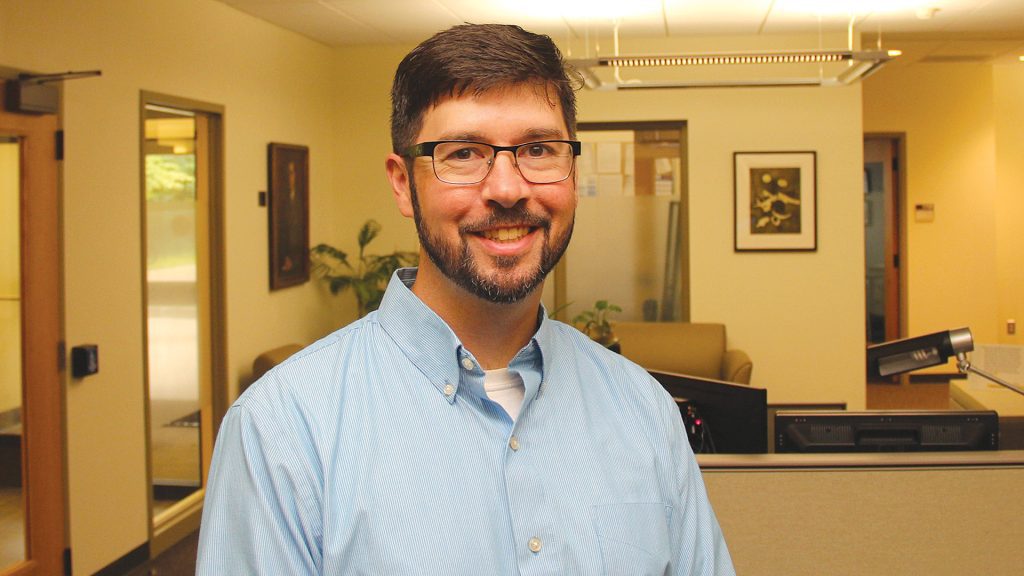
Mark Hudgik

Mark Hudgik says HCC tries to reach students who don’t see themselves as learners, one of the important qualities community colleges bring to the table.

“On paper, there are so many small liberal-arts colleges, students need a way to find out what makes us different,” he said.

There are occasions when a student will complete the application and acceptance process, send in their deposit, and have their plans change before September. Scully referred to this as the “summer melt.” Drish noted that, even when someone’s plans change, he doesn’t worry. “We have students on the waitlist we can contact who will be excited to say ‘yes.’”

After the pandemic, making a few changes is the easy part. Hudgik discussed what a new normal might look like.

“I’m optimistic that we will emerge to a place where folks understand what it means to plan for the uncertain,” he said, adding that he hopes issues like childcare, remote schooling, and job uncertainty will begin to lessen so students can put a renewed focus on their academic careers.

Gross agrees that COVID has provided a real education. “We’ve learned a lot about collaborating, how to be agile, how to respond to environmental circumstances, as well as responding to the needs of our students,” he said.

For the next several months, admissions professionals will stay plenty busy making sure the next class of students settle into their colleges and universities.

“The day when students return to campus is my favorite day of the year,” Scully said. “I look forward to the fall when students are here because there’s life on campus again.”

While he enjoys stopping to appreciate the fall campus scene, Scully knows there are plenty of new prospective students out there who need to be contacted.

“Once the fall class is settled, then we rinse and repeat. Our staff hits the road, and we start recruiting again.”