Daily News

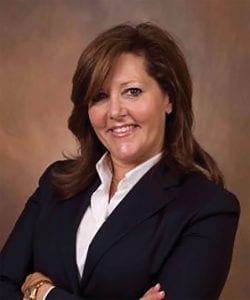
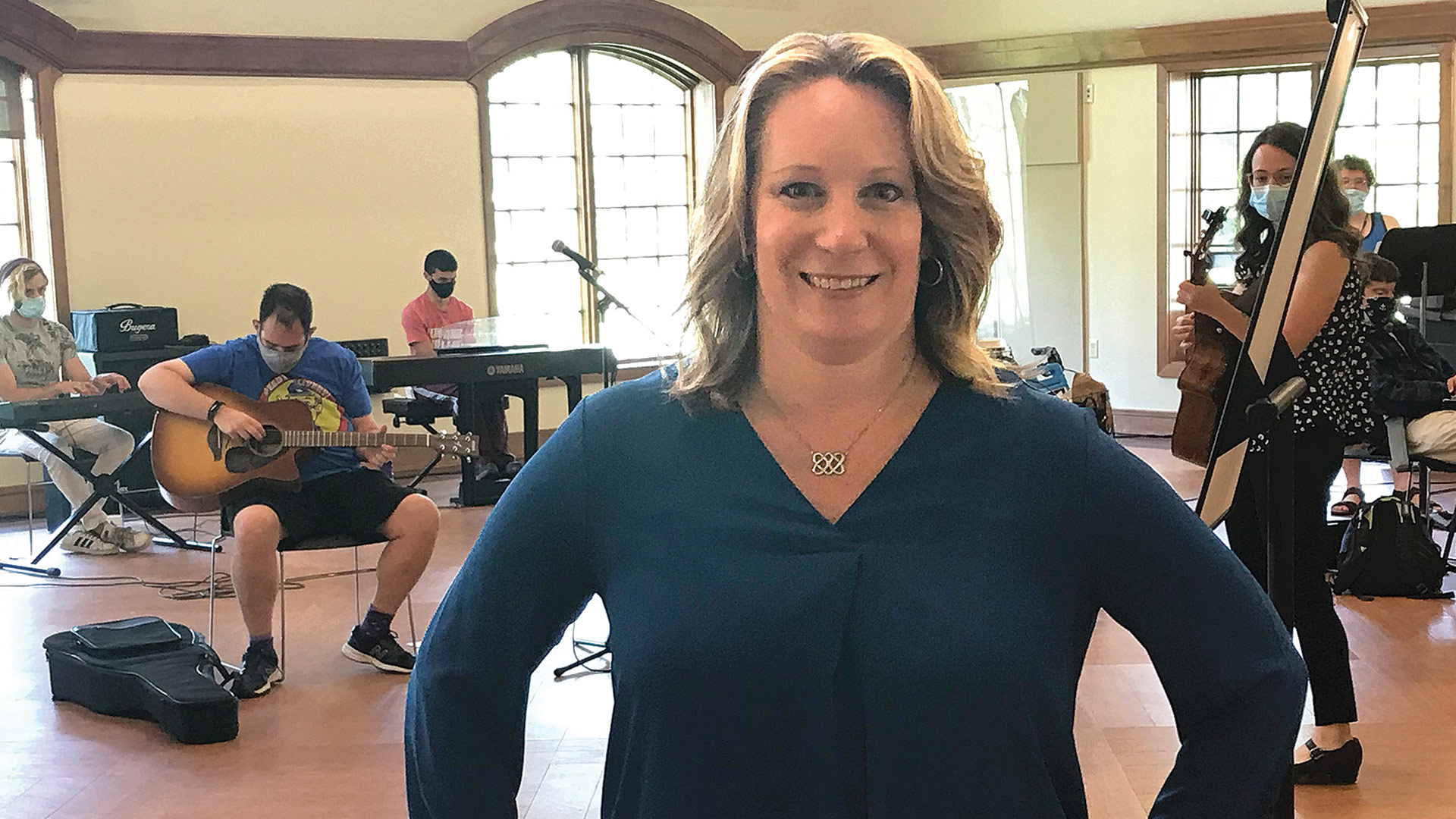
GREENFIELD — Greenfield Savings Bank (GSB) named Shandra Richardson senior vice president and senior operations officer. She will direct all aspects of the bank’s operations, including compliance, retail banking, marketing, deposit, electronic, and loan operations, as well as developing and implementing new policies and procedures for organizational systems management.

“Shandra has joined GSB with more than 15 years of financial and banking experience at the executive level in consumer retail banking, operations, and regulatory functions,” said John Howland, president and CEO of Greenfield Savings Bank. “In addition, Shandra is the embodiment of our core values of commitment to customers and community.”

Prior to joining GSB, Richardson held multiple leadership roles at Citizens Bank N.A. and, most recently, at Santander Bank N.A. She specializes in operational life-cycle transformation, regulatory exam preparation, project management, and organizational development. She has also been involved in company diversity, equity, and inclusion initiatives, including active participation in multiple employee resource groups (ERGs) focusing on the support and empowerment of women and black and Latinx employees.

A UMass Amherst graduate, Richardson received a bachelor’s degree in marketing and then went on to earn an MBA along with completing leadership and Lean Methodology Executive Education courses. While working in the Boston area, she has been active in the Greater Boston and South Shore communities volunteering at a wide range of organizations, such as Cradles to Crayons, Dress for Success, United Way, Year Up, and OneBostonDay.org. She also serves as a member of the Harvard Business Review advisory council, an opt-in research community of business professionals, and has also served as the New England regional lead of the Thrive ERG, which provides resources and support to caregivers and individuals with physical or cognitive differences.

Daily News

SPRINGFIELD — Jewish Family Service of Western Massachusetts has partnered with Soccer without Borders and Springfield College to host a first-of-its-kind soccer clinic in Springfield. The week-long clinic will be held June 28 to July 2 from 9 a.m. to 1 p.m. at Springfield College for 50 refugee and immigrant Springfield high-school students.

The soccer clinic will provide a positive summer experience for refugee and immigrant students who attend Springfield public schools. For some students, this will be the first in-person activity of the school year, and for others new to the city or the U.S., it is an opportunity to meet peers in person and find common ground.

“As one of the few global languages, soccer has the power to shape the world for the better,” said Bruno Contreras, Soccer without Borders Boston program director. “Soccer Without Borders (SWB) uses soccer as a vehicle for positive change, providing underserved youth in the U.S. and abroad with a toolkit to overcome obstacles to growth, inclusion, and personal success. SWB Boston has been serving the refugee and immigrant community in and around East Boston since 2012 with a culture of welcoming and belonging that supports newcomers to build a new home.”

JFS and Springfield College are excited to have Soccer without Borders make its debut in Springfield. The clinic will bring together youth and coaches from diverse cultural backgrounds to create community, exercise, build leadership, and practice their English-language skills. Over the course of the week, teens will have the opportunity to foster teamwork, connect and build friendships with other teens, and, of course, have fun.

Daily News

EAST LONGMEADOW — Monson Savings Bank’s East Longmeadow Branch announced it will host a free Community Shred Day on Saturday, June 26 from 9 a.m. to noon. As in past years, the bank is partnering with PROSHRED of Wilbraham for this event. The bank welcomes the public to dispose of their private documents safely and securely.

Storing documents that contain personal information in the home can pose a major security risk. Monson Savings Bank is encouraging residents to shred any documents they no longer need, especially those that contain private information. This Community Shred Day is an ideal chance to properly discard unwanted documents, such as tax returns, bank or credit-card statements, bills, medical records, and more.

“The East Longmeadow branch has been open for almost a year now; we have really enjoyed being a part of the town’s community,” said Aimee Kohn, branch manager. “We are very excited to host our branch’s first Community Shred Day. We prioritize protecting the personal information of our customers and community members. Every day, our employees, in every department of the bank, do everything they can to keep the information of our customers and noncustomers safe. Our Shred Day gives the community the opportunity to safely gather together at a fun event, while providing them with a convenient and secure way to destroy their documents.”

Pre-packaged refreshments and giveaways will be available at the event, while supplies last.

Daily News

SPRINGFIELD — Price Rite Marketplace teamed up with anti-hunger organization Feed the Children and event partners Pepsi and Revival Time Evangelical Center to distribute food and essentials to 400 local families on June 16. The community event is part of the supermarket retailer’s 2021 Feeding Minds & Bodies Campaign in partnership with Feed the Children, which helps food-insecure families in the communities where Price Rite Marketplace stores operate.

Each family, pre-identified by Revival Time Evangelical Center, received a 25-pound box of food; 15-pound box of essentials like shampoo, conditioner, lotion, and personal-care items; a backpack filled with school supplies, and additional shelf-stable items provided by Price Rite Marketplace.

“We are pleased to continue our partnership with Feed the Children to help combat childhood hunger,” said Jim Dorey, president of Price Rite Marketplace. “Supporting the communities we serve is a top priority for us, and after the year we’ve been through, we are needed now more than ever. We are proud of our team’s continued work helping families during difficult times.”

Fighting hunger is at the heart of Price Rite Marketplace’s charitable giving, and, paired with Feed the Children’s vision to create a world where no child goes to bed hungry, the two created an initiative called Feeding Minds & Bodies, which is designed to help bring attention to and fight the serious issue of childhood hunger. Price Rite Marketplace and Feed the Children help families by providing food, personal-care items, and school supplies throughout the year. With more than 15.6 million households living with food insecurity in the U.S., hunger remains a serious issue in many communities.

“The Price Rite Marketplace partnership means a so very much to Feed the Children and, more importantly, to the families we serve,” said Travis Arnold, president and CEO of Feed the Children. “Those living paycheck to paycheck do not have a safety net. Our partners are a critical part of providing compassionate support to those who are facing tough decisions about how to care for their families.”

Since partnering with Feed the Children in 2015, Price Rite Marketplace has contributed nearly 3 million pounds of food, totaling more than $9 million in gift-in-kind donations, helping more than 145,000 people in 49 cities.

Daily News

EASTHAMPTON — NAI Plotkin, an office of NAI Global, a leading commercial real-estate brokerage firm located in Western Mass., announced it has sold 55-69 Union St., a 17,900-square-foot commercial building in downtown Easthampton known for many decades as Manchester Hardware.

The building was sold to the Center for Human Development (CHD) for $1.4 million and includes a total of 1.06 acres of land in downtown Easthampton. Jim Reardon and David Wolos of NAI Plotkin brokered the deal. CHD, which provides a broad range of community-oriented human services, plans on renovating the building to house a community-related program.

Daily News

SPRINGFIELD — American International College (AIC) announced that Velmer Burton Jr., Jennifer McDonough, and Louis Izzi Jr. will join its leadership team.

Burton joins AIC on July 12 as executive vice president for Academic Affairs. As part of his responsibilities, Burton will advance the academic priorities and goals of the college in a fiscally responsible manner, balancing expenses and revenues and managing growth, with an emphasis on new and enhanced programming, student learning, and quality of instruction in a student-centered, culturally diverse, and inclusive environment. He will oversee undergraduate and graduate degree programs in AIC’s School of Business, Arts and Sciences; School of Education; and School of Health Sciences.

In his most recent executive positions at the University of Arkansas at Little Rock, Burton has served as senior vice chancellor of University Strategy and Performance and professor of Criminal Justice, with the goals of building external constituencies, collaborating with the institution’s communities, and enhancing offerings and outreach initiatives within the local community. As executive vice chancellor and provost at UA Little Rock, he also served as the university’s chief academic officer, overseeing 164 academic programs supported by 500 full-time faculty. He was responsible for personnel and planning across six colleges, as well as all academic issues and initiatives, operations, and programs.

As provost, coupled with providing internal and external leadership for the division of Academic Affairs, he monitored departmental and college governance document processes, co-chaired the university budget review committee, worked with the executive committee of the university’s faculty senate, expanded tenure-track and tenured faculty and full-time instructors, and implemented the ‘teacher-scholar model’ to ensure quality teaching and scholarship. In addition, he oversaw Higher Learning Commission Accreditation efforts and activities.

With a goal of building external constituencies, Burton collaborated with the institution’s University District to bridge academic programs, offerings, and outreach initiatives with the local community. An advocate for diversity and ensuring a culture of respect and opportunity, Burton is committed to work with stakeholders to foster the continuation of a diverse and inclusive AIC.

McDonough joins American International College on July 1 as vice president for Institutional Advancement. She brings nearly 40 years of experience in the advancement profession, incorporating institutional leadership positions and philanthropic consulting services focusing on campaigns and ongoing development, as well as alumni-engagement program planning, implementation, and assessment; talent development; and leader and partner involvement.

In her previous roles as a vice president for University Advancement/Development and Alumni Relations, she was responsible for comprehensive teams and programs that included annual giving, major and principal gifts, planned giving, corporate and foundation relations, prospect research, donor relations and stewardship, alumni engagement, alumni and donor records, and communications.

As a former executive associate with Bentz Whaley Flessner, a national and international fundraising consulting and services company, McDonough served an extensive number of diverse private and public higher-education institutions across the country, including AIC. Her consulting work also extended to nonprofits in the academic medicine and healthcare, social and community service, and arts and culture sectors. She has been actively engaged at both strategic and tactical levels with presidents, senior staff, trustees, volunteers, deans, faculty, and advancement staff and teams.

McDonough brings substantial and varied consulting experience, with multi-million to billion-dollar campaigns and with cultivation, solicitation, and stewardship strategies impacting individual philanthropic commitments and overall fundraising results.

Izzi, who joins the college on July 12, will lead the Yellow Jackets as the vice president for Athletics. He joins AIC from the University of Bridgeport (Conn.), where he served as vice president for Athletics and Enrollment Management since 2019. While at Bridgeport, Izzi was responsible for the strategic planning, leadership, development, and operational and personnel management of the university’s NCAA Division II athletics program, providing management oversight and direction of all operations and strategies related to undergraduate, graduate, domestic, international, and online recruiting efforts. Additionally, he worked closely with the university’s Office of Institutional Advancement to cultivate and steward gifts for the Athletics department.

Prior to his role at the University of Bridgeport, Izzi served as director of Athletics at New England College in Henniker, N.H., a Division III institution with 18 varsity sports, club and junior varsity teams, and intramural and recreational programs. While at New England, he administered a comprehensive national recruiting plan to increase student-athlete enrollment by 38%; implemented an academic plan to improve student-athlete academic success and retention, achieving the highest department GPA in 20 years; and worked with Institutional Advancement to increase yearly giving, including procuring a major gift for a new athletics center.

Before accepting the position at New England College, Izzi was the assistant director of Athletics Administration at Johnson & Wales University in Providence, R.I. for 17 years, while also serving as head men’s ice hockey coach at Johnson & Wales and Nichols College for 15 years.

Daily News

SPRINGFIELD — Home City Development Inc. (HCDI) has been chosen as the developer of the former Gemini site in the South End of Springfield. Once completed, the development will include 33 for-sale residential units, to be known as Gemini Town Homes. This project will expand home ownership in the South End by more than 150%.

“We are proud to have been chosen as the developers on this project, and we are grateful for the help and support of many organizations,” said Thomas Kegelman, executive director of HCDI. “Thank you to Mayor [Domenic] Sarno, the South End Citizens Council, Councilor Melvin Edwards, Tim Sheehan and the Office of Planning and Economic Development, and MassDevelopment for making this project possible.”

Once completed, the project will provide dozens of otherwise non-existent housing opportunities for people and families with low to moderate income, as well as millions of dollars of contracting opportunities for local and minority-owned businesses.

HCDI has assembled a team of experienced professionals with demonstrated success with projects like the Gemini Town Homes development. “We believe that this project will provide a solid footing for Springfield’s economic resurgence and continuing pride as the City of Homes,” the company stated.

Home City Development Inc. is a nonprofit, resident-centered developer of multi-family and mixed-use properties in Western Mass. Founded as Better Homes Inc. in 1968 by the Springfield Chamber of Commerce, HCDI has worked for more than 50 years to facilitate community stability and growth in collaboration with the community.

Daily News

NORTHAMPTON — MachineMetrics, an industrial data startup that elevates manufacturing performance through autonomous machining, announced it has raised $20 million in Series B financing. The company will use the funding to scale its platform globally and democratize access to the machine insights that power manufacturing operations.

“Manufacturing is on the brink of a digital renaissance. The intersection of software, big data, and physical machinery is the next frontier for manufacturing and a proven solution for overcoming the production and labor shortages we are experiencing right now,” said Bill Bither, co-founder and CEO of MachineMetrics. “Today’s industrial machines are inefficient because they require significant human intervention to operate. MachineMetrics makes it easy to harness data from these machines and lays the foundation for the factory of the future, where machines operate autonomously and with predictability.”

Teradyne, a market leader in industrial automation and robotics, led the funding round with participation from Ridgeline Ventures and existing investors Tola Capital and Hyperplane.

“MachineMetrics’ rapid growth reflects the value and demand for its data-collection and analytics solutions. Our customers increasingly want to monitor the performance of their production machines to improve utilization and increase output. MachineMetrics makes this easy with an innovative and simple solution that delivers a fast ROI,” said Greg Smith, president of Teradyne’s Industrial Automation Group. “The team’s vision aligns strongly with our larger industrial automation strategy, which focuses on equipping all manufacturers with accessible, reliable, and easy-to-use automation solutions.”

Today’s global capacity challenges underscore the urgency to improve manufacturing productivity. A 2020 benchmarking report by MachineMetrics revealed an average machine-utilization rate of only 24%, an alarmingly low mark that limits manufacturers’ ability to meet demand.

MachineMetrics’ industrial data platform solves this challenge by enabling manufacturers to improve machine utilization and increase production without adding more machines. The IoT-powered solution, which can be installed in minutes, automates the collection of data from manufacturing equipment and delivers actionable, machine-data-driven insights for factory workers, empowering organizations to immediately reduce waste and optimize shop floor productivity.

MachineMetrics is currently used by hundreds of customers and connected to thousands of machines globally. These manufacturers, which range from small contract manufacturers to some of the world’s largest OEMs, are leveraging MachineMetrics to enable remote visibility into real-time production, identify production bottlenecks, predict machine failures, improve quality, and build workflows that automate the operation of machines.

“We are experiencing the single largest disruption to manufacturing and supply-chain operations of our time. Manufacturers simply don’t have the time or resources to rebuild from scratch. They need results right now,” said Eric Fogg, co-founder and chief customer officer of MachineMetrics. “Our solution continues to prove highly effective in one of the most complex markets ever. This past year, our customers were able to pivot, respond, adapt, and grow. Their success wasn’t luck — they were equipped with the data, tools, and mindset needed to win.”

Daily News

WEST SPRINGFIELD — Eastern States Exposition (ESE) President Gene Cassidy and West Springfield Mayor Will Reichelt met with media on Tuesday to officially announce the opening of the 105th edition of the Big E, slated for Sept. 17 to Oct. 3.

“It’s a good day,” Cassidy said. “We have long awaited the opportunity to make this announcement and have been working diligently on our program. Preparations are underway as we look forward to welcoming everyone back to our beloved Big E.”

Added Reichelt “the Big E is a West Springfield institution, and we welcome all of New England to our town in September. We have appreciated ESE’s transparency and communication through this process as well as their assistance in providing a location for the West of the River Regional Vaccine Center. Personally, I can’t wait to get back to the Big E.”

Cassidy thanked Gov. Charlie Baker, Lt. Gov. Karyn Polito, Reichelt, and West Springfield Director of Public Health Jeanne Galloway, “who has been working closely with us as we all navigated the many phases of the Massachusetts reopening process.”

“Big is Back” is the theme of this year’s fair. Currently the fifth-largest fair in North America, the Big E will debut some features this year, including the Super Wheel, a 150-foot-high ferris wheel with 36 climate-controlled gondolas that seat up to six people. It will be located between the Better Living Center and the Gate 5 entrance.

Music fans will enjoy concerts at the Big E Arena, sponsored by Truly Hard Seltzer, and fairgoers will be able to visit the Avenue of States and Storrowton Village Museum, shop, eat iconic fair foods, watch the new Big Parade, ride the rides, and much more.

Advance discount tickets to the 2021 Big E are on sale now online at thebige.com or at the Big E box office.

The Big E relies on thousands of employees and volunteers in a variety of positions to help present the fair each year. Visit thebige.com for job postings for the 2021 Big E.

Finally, the Big E would not be possible without the support of its sponsors. The fair has myriad sponsorship opportunities at a variety of levels. Businesses and organizations interested in becoming a sponsor at the Big E should contact Jill Larsen at (413) 205-5017 or [email protected].

Daily News

SPRINGFIELD — MassDevelopment awarded a $10,000 grant to Blues to Green Inc., which will use the funds to relocate the Springfield Jazz & Roots Festival downtown to the Springfield Transformative Development Initiative (TDI) district to help catalyze economic recovery and support black, indigenous, and people of color (BIPOC)-owned businesses in the neighborhood. Festival events will also take place at local parks and businesses, including three emerging black-owned businesses, and will provide employment and exposure opportunities to local Springfield artists.

Blues to Green will also crowdfund this summer; if the organization reaches its $40,000 goal, it will receive an additional $40,000 matching grant from MassDevelopment. The funds are awarded through MassDevelopment’s special Commonwealth Places COVID-19 Response Round: Resurgent Places, which was made available specifically to assist local economic-recovery efforts as community partners prepare public spaces and commercial districts to serve residents and visitors.

“Before this pandemic, the vibrant centers of our cities and towns were not only a driving force behind the strength of local economies, they were the places where we gathered to dine, to shop, and to be entertained, and the Commonwealth Places program is one way that we can help these areas bounce back stronger than ever,” said Housing and Economic Development Secretary Mike Kennealy, who chairs MassDevelopment’s board of directors. “The Baker-Polito administration continues to support downtowns and town centers through various economic-recovery programs, and these Resurgent Places grants are providing nonprofit community organizations with the resources to activate public spaces, boost economic activity, and support an equitable recovery.”

Added MassDevelopment President and CEO Dan Rivera, “we are proud to support Blues to Green Inc. in this way as it relocates the Springfield Jazz & Roots Festival downtown to drive foot traffic to BIPOC-owned businesses,” said. “MassDevelopment is focused on assisting hard-hit neighborhoods as they recover from the economic and social impacts of COVID-19. Our Resurgent Places grants will help make it easier for people to come together again for arts and cultural celebrations that benefit both the local economy and the larger community.”

Daily News

SPRINGFIELD — Pride Stores CEO Bob Bolduc announced plans to sell the chain, which includes 31 stores and 525 employees, with 10 additional sites in development.

Bolduc told the Republican he will know in six to eight weeks if he will sell and who the buyer will be. He has hired a merger and acquisition firm and has been speaking with potential buyers, which include oil and gas companies and chain convenience-store operators. The plan is to sell the whole company, retaining only a few real-estate investments.

Bolduc worked at his father’s gas station in Indian Orchard in 1970 before buying him out, thus becoming the third generation of the family to run that business. In addition to running the station, he became a tire and auto-parts wholesaler, specifically a distributor for BF Goodrich and Continental.

But in 1976, Bolduc made the shift that would define his career, buying a self-serve gas station in Indian Orchard. Over the years, he would gradually expand his business, creating the chain of stores known today as Pride. But, more importantly, he developed a reputation as an industry innovator by marrying the self-service station with another emerging phenomenon, the convenience store.

Other innovations would follow; Pride would eventually become the first chain in Western Mass. to put a Dunkin’ Donuts in the stores, and the first to incorporate a Subway. But where the company has really made a name, in recent years, is with its own fresh-food production, supported by the Pride Kitchen, located at the company’s headquarters on Cottage Street in Springfield.

Daily News

SPRINGFIELD — Springfield-based Smith & Wesson is once again lending its support to the children and families served by Square One. The company recently committed $20,000 in corporate giving, in addition to funds donated by employees as part of their commitment to social responsibility.

The gift marks the latest addition to a long list of contributions made over the years. The company supported Square One’s early-education and care initiatives and programs to support victims of domestic violence. It was also among the first businesses in the region to fund Square One’s response to the COVID-19 crisis.

“Smith & Wesson and its employees are proud to support Square One’s efforts to offer tools and resources to local families,” said Mark Smith, president and CEO of Smith & Wesson. “We recognize that a strong foundation is the key to the development of all children. Through their programs, the staff at Square One has enhanced the lives of many children and families in our community.”

The funds will support Square One’s Campaign for Healthy Kids, a multi-year fund-development initiative focused on the agency’s commitment to providing healthy meals, physical fitness, social-emotional well-being, and a healthy learning environment.

“Square One has long relied on support from Smith & Wesson to support our programs and services,” said Kristine Allard, vice president of Development & Communication for Square One. “They are quick to recognize and respond to the changing needs of our community and take responsibility to support our work whenever possible. We are truly grateful to have them as our community partners.”

A check presentation will be held on June 30 at 11 a.m. at Square One, 1095 Main St., Springfield.

Square One currently provides early learning services to more than 500 infants, toddlers, and school-age children each day, and family-support services to 1,500 families each year, as they work to overcome the significant challenges in their lives.

Daily News

SPRINGFIELD — American International College (AIC) announced four promotions, most effective July 1.

Nicolle Cestero has been promoted to chief operating officer, executive vice president, and retains her title as chief of staff. Cestero joined AIC in July 2011 as the associate vice president for Human Resources. Since that time, she has assumed increasing levels of responsibility and scope of duties. In 2012, she was named vice president for Human Resources and Title IX coordinator. She was promoted to senior vice president for Human Resources and Title IX coordinator in 2016, and two years ago, she was named chief of staff and senior vice president for Human Resources.

Among the responsibilities in her newly expanded position, Cestero will be responsible for the day-to-day operations of the college, while continuing to serve as advisor to the president, playing an integral role in implementing AIC’s strategic plan. Cestero will oversee the college’s legal matters and support presidential and institutional initiatives to ensure project deadlines are met and targeted outcomes are attained. She serves on the president’s cabinet and all individual board committees. Additionally, she will play a key role, in collaboration with the board of trustees, in the nationwide search for President Vince Maniaci’s successor following the recent announcement of his retirement at the end of the 2021-22 academic year.

Matthew Scott has been serving as vice president for Student Affairs and dean of students since July 2020. He will add Title IX coordinator to his area of responsibilities. With that addition, he will be the designated official from AIC with primary responsibility for coordinating compliance with Title IX, including providing leadership for Title IX activities; consultation, education, and training; and helping to ensure that the institution responds appropriately, effectively, and equitably to Title IX issues.

As vice president and dean of students, Scott oversees the Division of Student Affairs, which includes Student Life, the Saremi Center for Career Development, and Dexter Health and Counseling Services. The following programs and services fall under his purview: residence education; student conduct; student activities; diversity and engagement; campus recreation programs such as intramural sports, fitness, and wellness programs; and the Fitness Center.

Jessica Chapin has been promoted to director of Athletics and will oversee all aspects of AIC athletic programs. Chapin joined AIC in 2014 as the compliance coordinator. Among her duties, she is responsible for the day-to-day administration of the athletics department, including oversight of compliance with ensuring NCAA Division I and Division II rules and bylaws, retention, financial aid, and new-student recruitment, collaborating with offices across campus. She is the Title IX deputy coordinator for Athletics.

In 2017, Chapin was appointed to a four-year term with the National Collegiate Athletic Association (NCAA) Division II Management Council, serving on the national student-athlete advisory committee, convention planning team, committee on infractions, legislation committee, and research committee. She currently serves on the NCAA’s women’s volleyball regional advisory committee and was recently appointed to a four-year term on the NCAA committee on infractions. She currently serves on the executive committee of both the Atlantic Hockey Assoc. and the National Intercollegiate Rugby Assoc.

Michael Eriquezzo has been promoted to director of Marketing and Communications. He will have oversight of all aspects of institutional digital and traditional marketing, web, and public-relations functions for the college, including the semi-annual Lucent magazine with a circulation to more than 30,000 alumni. Eriquezzo came to AIC as the art director and senior designer in 2017 from Go Graphix in East Longmeadow, where he served as project manager and creative lead, and the Children’s Study Home, where he was the external communications manager.

Daily News

HOLYOKE ­— Holyoke Community College (HCC) and Enchanted Circle Theater are joining forces to offer an in-person racial-justice program this summer for area youth.

Called “I Am Somebody,” the four-day, interactive performing-arts program will run Monday, July 19 through Thursday, July 22 from 9 a.m. to noon each day in the HCC Kittredge Center for Business and Workforce Development.

The program is free and limited to 15 youth ages 8 to 11 chosen through a lottery to be held Monday, June 21.

“Enchanted Circle is proud to offer this exciting, new, creative youth-development program in partnership with Holyoke Community College,” said Priscilla Kane Hellweg, executive and artistic director of Enchanted Circle Theater, a Holyoke-based nonprofit that combines arts and education. “The arts are such a powerful teaching and learning tool for the expression of cultural identity and an inspiring platform for getting to know ourselves and each other.”

Participants will explore racial justice through a variety of creative activities, including writing, music, visual art, movement, and theater.

“Students will be encouraged to find and use their own unique voices to express their understanding of equity and racial justice,” said Michele Cabral, HCC’s executive director of Professional Education and Corporate Learning. “In celebrating themselves, each other, and our collective community, they will examine how we are each unique, diverse, and yet all connected.”

Following the final session on July 22, parents are invited to attend a lunch and family arts-sharing celebration from noon to 1 p.m. in the Kittredge Center.

The sessions will be led by Enchanted Circle teaching artists Maya Rivera and Axel Cruz. Rivera is a visual artist, performer, vocalist, and photographer who holds a bachelor’s degree in theater from Smith College. Cruz, who has theater degrees from HCC and UMass Amherst, is an actor, dancer, choreographer, theater director, stage manager, and designer.

In advance of the June 21 lottery, interested parents and their children are invited to attend a virtual family information session on Thursday, June 13 at 5:30 p.m.

To sign up for the information session or to apply for the “I Am Somebody” program, e-mail Sharon Grundel at [email protected].

Daily News

LENOX — Christopher Silipigno has been promoted to CEO of Renaissance Investment Group, LLC, a financial-services firm headquartered in the Berkshires that specializes in comprehensive financial counseling and investment management for high-net-worth individuals. Managing approximately a half-billion dollars in assets, Renaissance’s clients reside across the U.S. with a concentration in Western Mass., Upstate New York, Connecticut, and Vermont.

For the last three years, Silipigno has served as chief operating officer, working to grow the business, lead organizational development efforts, and advise clients. During this time, Renaissance has increased its client base at its fastest pace in 20 years and nearly doubled the amount of assets being managed. Silipigno has been instrumental in this development, as well as helping Renaissance introduce new technology, providing even closer client contact and enhanced information sharing for clients and the team, said Trevor Forbes, the firm’s president and chief investment officer.

“His efforts have been instrumental in helping the company and its clients through the last difficult and challenging 12 months, coping with the rigors of COVID and working remotely,” Forbes added. “I am delighted to be able to announce this well-deserved appointment, which provides for long-term continuity for both our staff and clients, which has been a hallmark of our success since the establishment of Renaissance 21 years ago. I wish Chris every success in his new role and look forward to continuing our work together in the coming years.”

Added Silipigno, “I was extremely impressed with the team at Renaissance from the time I began working with them just over three years ago. Having initially spent a considerable amount of time with clients and professional associates that work with the firm, it quickly became clear that Renaissance offers financial planning and investment-management services that are truly exceptional and well-regarded. This fact has provided a strong tailwind to our growth efforts. I am honored to accept this appointment and plan to continue and further develop Renaissance’s client-centric focus as we move into the future.”

Daily News

SPRINGFIELDBusinessWest’s 15th annual 40 Under Forty gala will take place at the Log Cabin Banquet & Meeting House in Holyoke on Thursday, Sept. 23. The class of 2021 was introduced to the region in the magazine’s May 12 issue, and the profiles may be read online at businesswest.com.

Tickets cost $80 per person. This is expected to be a sellout event, and tickets will be sold on a first-come, first-served basis. To reserve a spot, call (413) 781-8600, or e-mail [email protected].

Daily News

BOSTON — An emerging economic recovery and good news about COVID-19 pushed business confidence slightly higher in Massachusetts during May.

The Associated Industries of Massachusetts (AIM) Business Confidence Index rose 1.2 points to 61.9 last month, leaving it almost 20 points higher than a year ago. Confidence levels remain comfortably in optimistic territory.

The increase was the fourth in five months and came as Massachusetts Gov. Charlie Baker announced the resumption of full business activity in the Commonwealth. The federal government also said vaccinated people no longer need to wear masks in most public settings.

Meanwhile, the Massachusetts unemployment rate fell to 6.5% during April as employers created 5,100 jobs. Massachusetts has gained an estimated 392,300 jobs since the nadir of the COVID crisis.

“Employers remain confident amid a state economy that is projected to grow at a 8.7% annual rate in the second quarter and 6.9% in the third quarter of this year,” said Sara Johnson, vice chair of the AIM Board of Economic Advisors (BEA) and executive director of Global Economics at IHS Markit. “The economy still faces challenges ranging from persistent worker shortages to global supply-chain disruptions, but there is a sense that we are returning to a more normal economic situation.”

The AIM Index, based on a survey of more than 140 Massachusetts employers, has appeared monthly since July 1991. It is calculated on a 100-point scale, with 50 as neutral; a reading above 50 is positive, while below 50 is negative.

The constituent indicators that make up the Business Confidence Index were mostly positive during May. Employers’ confidence in their own companies posted its seventh increase in eight months, rising 2.2 points to 63.8. The Company Index was 18.1 points higher than it was a year ago.

The Massachusetts Index assessing business conditions within the Commonwealth was 60.7, up 0.3 point for the month and 23.3 points since May 2020. The U.S. Index measuring conditions nationally lost 0.9 points in May but gained 21.6 points for the year.

The Current Index, which assesses overall business conditions at the time of the survey, surged 3.7 points to 60.3. The Future Index, measuring projections for the economy six months from now, lost 1.3 points for the month at 63.5.

The Employment Index was flat at 56.9 as employers now able to open at full capacity confronted an acute shortage of qualified workers. A separate AIM survey last month revealed that 60% of employers currently have job openings, and 53% cannot find qualified workers to fill those vacancies.

Confidence among manufacturing companies increased 2.2 points, leaving it 19.3 points higher than its year-earlier level. Small companies (63.2) were more bullish than large companies (62.1) or medium-sized companies (60.9).

Katherine Kiel, professor of Economics at the College of the Holy Cross and a BEA member, said Baker’s decision to lift almost all COVID-related business restrictions will help public-facing industries that were most affected by the pandemic.

“The retail, hospitality, restaurant, and travel sectors that lost hundreds of thousands of jobs throughout Massachusetts last year now have the opportunity to bring back some of those jobs,” she noted. “At the same time, construction and other sectors are likely to benefit from federal stimulus dollars and a possible federal infrastructure bill.”

AIM President and CEO John Regan, also a BEA member, said the economic recovery received an important shot in the arm last week when the Massachusetts Legislature and the Baker administration took multiple steps to stabilize an unemployment-insurance system battered by the COVID recession.

Baker signed legislation that will moderate an unexpected spike in unemployment-insurance taxes by spreading the levies over the next 20 years. The new measure, together with a previous UI rate freeze and the administration’s announcement that Massachusetts will reinstate the requirement that people who collect unemployment benefits must actively search for a job, aims to stabilize the stressed UI system in the short term and encourage people to return to the workforce.

“These were important steps to helping employers and workers alike get back on their feet and move the economy forward,” Regan said. “The one step that remains is for policymakers to use some of Massachusetts’ federal stimulus money to stabilize the unemployment system for the long term.”

Daily News

SPRINGFIELD — The Community Foundation of Western Massachusetts (CFWM) announced a grant of $150,000, spread over the next three years, to the Healing Racism Institute of Pioneer Valley (HRIPV). The grant represents a significant contribution to the initiative’s capital drive to raise $1 million in commitments now to support and build capacity for the organization over the next three years.

The multi-year, strategic grant is part of CFWM’s ongoing commitment to advance diversity, equity, and inclusion in workplaces and promote equitable growth in the region. The funding will support HRIPV’s capacity in engaging communities across the state of Massachusetts in its signature two-day training. HRIPV has been in existence since 2012, and more than 1,000 community members have participated in its programming.

Funds from the capital drive have also allowed HRIPV to develop a comprehensive online and virtual series of trainings and programming. The Healing Racism initiative will also be resuming in-person training sessions in July. Members of the community interested in participating can learn more and register online at www.healingracismpv.org.

The first $50,000 grant to HRIPV will occur in July 2021. According to the Community Foundation, the multi-year funding approach will guarantee revenue stability while HRIPV meets demands for its services and continues its capital-campaign efforts.

“As an alumna of HRIPV’s two-day anti-racism training, I know what a powerful experience it is,” said Katie Allan Zobel, president and CEO of the Community Foundation. “I have seen firsthand the transformation in the community that HRIPV has catalyzed. That is why the foundation is investing in them to help expand their capacity for the future. We recognize the critical role HRIPV can play in creating shared understanding, connecting diverse members of our community, and dismantling systems that perpetuate inequalities. I’m optimistic about our partnership with HRIPV and encourage others to join us to work together toward a more equitable region.”

This award will also help HRIPV build its internal infrastructure and capacity to help ensure its sustainability efforts.

“The Healing Racism Institute is a recognized leader in promoting anti-racism within the Pioneer Valley,” said Paul Murphy, chair of the CFWM board of trustees. “We welcome the opportunity to partner with HRIPV in the expansion of its transformative program. We’re delighted to grant this funding as part of our commitment to invest and foster racial equity in our communities.”

The Healing Racism Institute is led by Vanessa Otero, one of the co-founders of HRIPV and an original member of the board until assuming the position of interim director in 2020.

Added Frank Robinson, board chair of the Healing Racism Institute of Pioneer Valley, “we welcome and celebrate this crucial grant for the important work we are doing to create more equitable communities, and see the Community Foundation of Western Massachusetts as a critical partner in that work.”

Daily News

SPRINGFIELD — Thanks to the generosity of Summerlin Floors, Ryan McCollum of RMC Strategies, and the Springfield Thunderbirds, Chikmedia has chosen four $500 scholarship awardees for its 2021 Chik of the Future scholarships.

Chikmedia, a boutique firm offering strategic marketing planning and creative PR, launched its annual scholarship this year to support future generations of marketing professionals. Chikmedia offered four $500 scholarships in 2021, and a variety of local businesses decided to match that scholarship amount. These four scholarships are being awarded to Western Mass. women who are high-school graduates pursuing a college degree in marketing, public relations, communications, or business. They are:

Shermarie Hyppolite is pursuing a double major in communication and public relations with the hope to one day become a successful public-relations professional specializing in brand building and storytelling. She aims to have her own public-relations agency that can help uplift brands and create a space in the public-relations industry for women and non-binary people of color.

“Winning this scholarship is so meaningful to me because it feels special to have won it from public-relations professionals since it is my dream to become one as well,” Hyppolite said. “I am so grateful to be awarded something that will allow me to further my education in public relations.”

Claudia Gonzalez is currently obtaining her degree in marketing with the goal of working in a television and networking company. Additionally, she will be pursuing her MBA this fall at Bentley University.

“I am honored to receive this scholarship from an organization that empowers women in business with diverse and cultural backgrounds,” Gonzalez said. “Winning this scholarship brings me a lot of joy and some financial relief.”

Kimberley Moore is completing her degree in communications with a concentration in human resource management at DeVry University. As a mother of six daughters, she made a commitment early in their life to instill the importance of education, including hard work and dedication. She is proud to say that all have finished or are still attending college, and it is now her turn to do the same.

“I am honored to be selected to receive the Chik of the Future Scholarship. This will certainly assist as I continue the final stretch of my educational journey as a non-traditional student,” Moore said. “It also gives me the push and motivation to work even harder and maintain my 4.0 GPA. I am deeply appreciative of your generosity and support.”

Saniya Stewart is a full-time student at American International College and a dual-enrollment student at a local community college. She simultaneously attends both colleges, working toward her bachelor’s degree and the prerequisites for a master’s degree in healthcare management. Her goal is to open a nonprofit healthcare facility in her hometown of Springfield to be an advocate for those who truly need a person to lean on.

“I am ecstatic to be a recipient of the Chik of the Future Scholarship. As a black woman in a male-dominated major, it is important to receive support and recognition; I am glad that Chikmedia makes it a priority to recognize students such as myself,” Stewart said. “This scholarship will help with my educational expenses and aid me in becoming a trailblazer in the business community.”

Daily News

SPRINGFIELD — Junior Achievement of Western Massachusetts (JAWM) held its annual EnTEENpreneur Challenge on May 7, naming three sophomores from the business technology program at Pathfinder Regional Technical High School the winners of the virtual competition. Sean Moon, Cody Ostiguy, and Max Sanderson received top honors for Private Pockets, a teen business that sells ties with hidden pockets in the back for customers to store business cards, cash, and credit cards.

“We are so proud of all the students who participated, especially since the virtual nature of the competition added extra challenges,” said Jennifer Connolly, president of JAWM. “It was a hard decision for our judges, but the Private Pockets team really checked off all the boxes. We congratulate them on their success.”

The EnTEENpreneur Challenge is a regional teen pitch contest in which teams create a comprehensive business plan and product idea for a small business and pitch it to a team of judges, similar to the reality show Shark Tank.

The concept for the ties was the brainchild of Moon, but Ostiguy and Sanderson helped bring the idea to fruition. The team would like to expand their company at some point to include socks with pockets in them.

Judges for the event were provided by its sponsors and included Wesley Days, UMass Springfield; Amanda Garcia, Elms College; and Mychal Connolly, Stand Out Truck. The winning team received a $5,000 scholarship to Elms College, a $500 cash prize, and their photos featured on a Stand Out Truck roaming billboard truck.

“This is the second year we held this popular event virtually due to the pandemic,” Connolly said. “We hope to return to a live format next year.”

Business Talk Podcast Special Coverage

We are excited to announce that BusinessWest, in partnership with Living Local, has launched a new podcast series, BusinessTalk. Each episode will feature in-depth interviews and discussions with local industry leaders, providing thoughtful perspectives on the Western Massachuetts economy and the many business ventures that keep it running during these challenging times.

Episode 68: June 14, 2021

George O’Brien talks with Claudia Pazmany, executive director of the Amherst Area Chamber of Commerce

BusinessWest editor George O’Brien talks with Claudia Pazmany, executive director of the Amherst Area Chamber of Commerce. The two discuss the broad impact of the pandemic on a region heavily dependent on  college students and tourism, and how the same region is bracing for the ‘new normal’ and the many challenges and opportunities that will come will with it. It’s must listening,  so tune in to BusinessTalk, a podcast presented by BusinessWest in partnership with Living Local.


Also Available On

Daily News

SPRINGFIELD — The Fresh Paint Springfield mural festival has been transforming 10 large exterior walls into art in Mason Square and downtown throughout the week, culminating in weekend events to celebrate the new art in the city. A block party will be held on Saturday, June 12 from 3 to 7 p.m. outside Mason Square Library, 765 State St., with food, music, and a paint party, along with mural bus tours at 3:30 and 5 p.m.

During the Saturday block party, ribbon cuttings will take place for two Mason Square murals: at 4 p.m. at the Heritage mural, 727 State St. — originally the oldest mural in Springfield, painted in 1967 by local artists Don and Paul Blanton — which has been repainted during Fresh Paint 2021; and at 4:45 p.m. at the Wall of Fame mural, 827 State St., which features portraits of 13 pioneering men and women, past and present, from Mason Square in Springfield, painted by several Western Mass. portrait artists.

State Rep. Bud Williams, Springfield Cultural Council President Andrew Cade, and a member of the Springfield City Council will attend and offer remarks at the ribbon cuttings, along with Nelson Stevens, who was a lead artist and organizer of 37 murals that were painted in Springfield in the 1970s and an early member of AfriCOBRA, an African-American artists’ collective formed in Chicago in the 1960s.

On Saturday, there will also be mural bus tours on a double-decker Peter Pan bus, leaving from the Mason Square Library, 765 State St., at 3:30 and 5 p.m. The tour will visit all the new murals that were painted during Fresh Paint 2021, along with the murals that were painted during Fresh Paint 2019. Tours will also be held on Sunday, June 13 at noon and 1:30 p.m.

This year’s festival involved members of the community in the design and painting of all 10 murals, which has resulted in opportunities for more than 1,000 Springfield residents to actively participate in the beautification of the city. Also new to the festival this year is the community mural apprentice program, which paired 10 local artists with established muralists to learn how to independently engage with the community in designing and painting large, professional murals.

Daily News

BOSTON — The Baker-Polito administration announced the launch of the $4.6 million rapid re-employment grant program, with the first round of grant funding totaling $360,000 being awarded to six employer partner programs that will train 105 participants. The grants will support training residents who have experienced an employment interruption due to COVID-19 and help place them in high-demand job categories such as information technology and healthcare by scaling up training opportunities provided by organizations to employers.

“As Massachusetts focuses on economic recovery from the COVID-19 pandemic, it is important that we think strategically about getting people back to work and increasing our investments in programs that are successfully serving local businesses and people most affected,” Gov. Charlie Baker said. “The rapid re-employment program can help thousands of people get access to high-demand jobs in the Commonwealth through workforce training and building skills to get people hired quickly.”

The rapid re-employment program is designed to help businesses develop a pipeline of workers to meet their skills needs as well as providing better lifetime earnings potential for those whose job prospects have been disproportionately affected by the pandemic. These grants are funded through the federal Coronavirus Aid, Relief, and Economic Security (CARES) Act. The application process is rolling through Sept. 30 or until funds are expended.

“No economy can succeed without a high-quality workforce. This funding will help individuals and businesses accelerate a return to full employment that is more equitable and leads to more employment resiliency in Massachusetts,” Labor and Workforce Secretary Rosalin Acosta said.

One of the six partner programs is based in Western Mass.: Tech Foundry: which is being awarded $80,000 to train 20 participants. In partnership with MassHire Springfield Career Center, Tech Foundry will provide training and placement to prepare individuals impacted by COVID-19 for jobs as computer network support administrators. Trained individuals will be placed at Rediker Software, Paragus Strategic IT, Veritas Prep Charter School, and Winslow Technology Group.

“This grant program will play a key role in helping people get back to work, which is a central component of our strategy for economic recovery,” Housing and Economic Development Secretary Mike Kennealy said. “As we continue taking steps to put this pandemic behind us, efforts that assist in matching workers with available jobs and that provide necessary training to address gaps in skills will further our goal of accelerating the Commonwealth’s recovery.”

Daily News

BOSTON — University of Massachusetts President Marty Meehan said the university system is emerging from the pandemic period “with its academic, research, and financial strengths fully intact” and positioned to play a major role in driving economic renewal and recovery in the Commonwealth.

“Thanks to the leadership of the board of trustees and the sound management of our chancellors and finance teams, the University of Massachusetts is positioned to thrive — not just for the next fiscal year or decade, but for generations,” Meehan said.

Speaking at a quarterly meeting of the UMass board of trustees, during which the board approved the university’s operating budget for the coming year, Meehan said there are many signs UMass has weathered the COVID-19 storm and is moving forward in its mission of service to the Commonwealth.

For example, the five campuses of the UMass system recently awarded 19,000 degrees to students, the vast majority of whom will live and work in Massachusetts. Meehan projects that student enrollment will remain stable and that each of the UMass campuses will be open to students when the new academic year begins in the fall.

The university is also on course to end this fiscal year with a balanced budget and projects a 6% increase in its workforce, bringing staffing back to pre-pandemic levels. Meanwhile it will use $113 million in federal recovery funds to provide emergency grants to students in need while also freezing tuition for most students for a second consecutive year.

“As I said at our recent commencements, we can now feel the breeze of reawakening and recovery flowing throughout the university and in our daily lives,” Meehan said. “UMass answered the call throughout the dark days of the pandemic and will continue to be there for Massachusetts and for the world.”

Rob Manning, UMass board of trustees chairman, said the university established sound goals and benefited from strong management and leadership throughout the pandemic period.

“Over the past year and a half, our driving principles have been simple — preserve the strength of the university and do as much as we can for the students who have been hit hardest by this crisis,” Manning said. “By balancing the need to stabilize operating costs with the imperative to support our neediest students, we have held true to our mission throughout the most challenging of circumstances.”

Both Meehan and Manning also indicated that, while the university is currently on firm financial footing, the expiration of federal funding after this fiscal year, combined with ongoing disruption in the higher-education industry nationwide, will require continued vigilance and innovative management in the coming years.

UMass expects to receive $258.6 million in total federal stimulus funding. In addition to the $113.5 million that will support student emergency grants, the university will strategically invest $145 million of these one-time funds — available through the end of fiscal year 2022 — to create a financial bridge to future fiscal years with the goal of ensuring financial stability for the long term.

“We are grateful to the members of the Massachusetts congressional delegation, to the leaders in the U.S. House and Senate, and to the president for stepping up to assist UMass and all of higher education,” Meehan said. “The federal funds are a critical bridge for this fiscal year and next, allowing us to make the necessary strategic decisions to keep UMass financially strong for the long term.”

Daily News

SPRINGFIELD — MGM Springfield announced it will partner with local brewery White Lion Brewing to provide guests a wide selection of craft beer during the resort’s Free Music Fridays concert series at the Plaza. Located in downtown Springfield, the brewing company will activate a bar and beer trailer from 6 to 9 p.m. where guests can tap into local brews while enjoying live music from local musicians. Concerts are scheduled to run from 7:30 to 9 p.m.

“MGM Springfield is proud to partner with White Lion Brewing, a company who, similar to our team, has a focus and commitment to revitalizing the area,” said Chris Kelley, MGM Springfield’s president and chief operating officer. “We look forward to working together to bring the community a terrific lineup of great live music as well as a taste — or sip — of Springfield with White Lion’s wonderful offerings.”

Ray Berry, White Lion Brewing’s president and general manager, added that “White Lion is extremely happy to extend its long-standing relationship with MGM Springfield. There has always been synergy and mutual creativity in our efforts to support the local community and local business. We are excited to showcase a number of craft and artisan breweries with everyone at Free Music Fridays.”

MGM Springfield kicked off the new concert series on June 4 with FAT. Upcoming local favorites scheduled to perform include Brass Attack, Trailer Trash, Darik and the Funbags, and Michelle Brooks-Thompson, among many others. For details on the Free Music Fridays concert series, including lineup updates, visit mgmspringfield.com.

Daily News

AGAWAM — The Local Farmer Awards program, funded since 2015 by community philanthropic leaders and businesses, recently distributed checks of up to $2,500 to 81 farmers in Western Mass. and Eastern New York. The funds, totaling $180,000, support infrastructure improvements and equipment.

“Our local farmers continue to be an intrinsic and crucial part of our communities. We recognize their growing need for assistance now more than ever,” said funding partner Charles D’Amour, Big Y president and CEO. “For over 85 years, Big Y has been proud to support hardworking farmers and their families, and as partners with the Harold Grinspoon Charitable Foundation, we provide one more way to help our local growers thrive.”

In its short history, the awards program has made more than $900,000 available to local growers, who have become better positioned to expand, compete in the marketplace, and provide the public with the health and environmental benefits of local farming.

Not surprisingly, the pandemic fueled a need for some unexpected projects and new equipment. Stillman Quality Meats in Hardwick won its award to purchase a commercial egg-washing machine necessitated by a 10-fold increase in demand for eggs, a demand now anticipated to grow.

Winner Gideon Porth, owner of Atlas Farm in Deerfield, added that “we are incredibly grateful for funds to buy a flat-filling machine for our greenhouse operation, a quantum leap in both labor efficiency and uniformity of flats for seeding. Our plants and people are loving it.”

Program funders, all of whom recognize the urgent need to invest in local farms, include the Harold Grinspoon Charitable Foundation in partnership with Big Y, along with Ann and Steve Davis, the DeNucci Group at Merrill Lynch, Farm Credit East, HP Hood LLC, PeoplesBank, Audrey and Chick Taylor, Baystate Health, Country Bank, and others.

Local Farmer Awards Director Cari Carpenter of the Harold Grinspoon Charitable Foundation noted that farmers have exhibited enormous persistence, creativity, and great spirit throughout COVID-19. “We are incredibly fortunate to be able to purchase local farm products at farmers’ markets, farm stands, CSA [community supported agriculture] shares, and in our grocery stores. We urge all consumers to continue buying local farm products whenever and wherever they can.”

Daily News

WILBRAHAM — Following a national search, Wilbraham & Monson Academy (WMA) named former prep and collegiate standout Sara Ugalde head coach of its inaugural girls’ ice hockey team. Ugalde will take the helm of the program beginning July 1.

“We are extremely excited to have Sara Ugalde joining WMA to launch our girls’ hockey program,” Head of School Brian Easler said. “We feel incredibly fortunate to have found Sara. With her depth of playing and coaching experience in youth leagues, prep-school hockey, collegiate and professional hockey, combined with her passion to build this program and grow the sport for girls, we look forward to Sara’s impact as the founding head coach of this new program for female WMA scholar-athletes.”

A hockey MVP as a player at Westminster School, Ugalde helped lead Middlebury College to NESCAC championships in 2011 and 2012. Her experience with collegiate hockey coaching includes assistant women’s ice hockey coach at Trinity College, Williams College, and Colby College. She was director and coach of the Connecticut Junior Rangers and assistant coach for the NWHL Connecticut Whale, and has helped run multiple hockey camps throughout the country.

“I am extremely excited to join the Wilbraham & Monson Academy community,” Ugalde said. “I am thankful and honored for the opportunity to build the girls’ hockey program. Throughout the entire interview process, I was moved by the unified vision and support displayed by members of WMA. After years working at the collegiate level, I am delighted to rejoin the prep-school sphere. I am looking forward to finding players that add to the already-established excellence at WMA and helping them reach their athletic aspirations.”

Daily News

GREENFIELD — Melanson announced that Patrice Squillante, CPA, principal at the accounting firm, has passed away after battling cancer over the past year.

Squillante came to Melanson in 1987 and became a principal in 1995. She was instrumental in developing the firm’s governmental practice and making it what it is today. She spearheaded the firm’s governmental audits and was responsible for the uniform guidance (single-audit) protocols and compliance.

“The entire Melanson team is grieving this great loss and will be keeping Pat’s family in our thoughts during this difficult time,” the firm said in a statement. “For the last 33 years, she was not just a colleague, but a true friend and mentor who always knew how to keep things fun and make us laugh. Pat will be greatly missed by not only our team, but by her clients as well.”

Daily News

WEST SPRINGFIELD — Visiting Angels of West Springfield announced that Alissia Prefontaine was named Caregiver of the Month for March. She has been with Visiting Angels since November 2015 and has had more than 30 clients in that time.

As the agency notes, “Ali is a very warm individual and takes her time with each of her clients to make sure they have whatever they need. She has a gentle personality that allows her to get along with each and every client.

“Ali specializes in committing to many small cases, meaning that she must form a personal bond with a wide number of clients and quickly adjust to each individual situation. She is always willing to help pick up shifts and new clients; as a result, she has dealt with a wide variety of situations and always knows exactly what to do in order to best assist her client. Whether caring for clients with dementia, on hospice care, or simply providing companionship, Ali is warmhearted and caring. For example, Ali once had a client she was very attached to. When this individual unfortunately passed away, Ali was there to support the husband as well as each and every grieving family member.

“We are so thankful at Visiting Angels for Ali, who has truly displayed her dedication and true passion as a caregiver. She is always able to help and care for those who can’t do so themselves. Her quality of care and commitment to her clients is why she has been named Caregiver of the Month.”

Daily News

NORTHAMPTON — The Applied Mortgage team announced that Branch Manager Lindsay Barron LaBonte has been recognized as the number-one loan originator at a mortgage company in Western Mass., for both the number of units and volume of loans funded for 2020. The May 24 special section of the Warren Group’s Banker & Tradesman magazine features the top Massachusetts loan originators of 2020.

The list of rankings is pulled from the National Mortgage Licensing System public records for Hampshire, Hampden, Franklin, and Berkshire counties. Barron LaBonte and her team at Applied Mortgage have been ranked as the top loan originator at a mortgage company for both 2019 and 2020.

“I am incredibly thankful for both the continuous community support throughout the years and also the committed work of my team here in Northampton and at HarborOne Mortgage,” she said. “We are proud to carry on the Applied Mortgage legacy as a second-generation, family-managed branch which continues to serve the home-ownership needs of our Western Mass. community.”

Added Chris Urick, vice president and regional sales manager for HarborOne Mortgage, of which Applied operates as a DBA, “Lindsay works tirelessly to help her clients understand the mortgage process and give them the best in class service in her marketplace. She and her team continue the great dedication to customer service that her father Todd was known for when he started and built Applied Mortgage. HarborOne is proud to have her on our team as she continues to set the bar for excellence in mortgage lending.”

Daily News

SPRINGFIELD — Anyone who knew Andy Yee knew how much he loved his family and friends, the restaurant business, good food, entertainment, and his community. And while many are mourning the loss of the legendary restaurateur, the Student Prince & the Fort will celebrate his life with a 60th birthday bash on Friday, June 11, featuring some of the things Yee loved.

The event take place indoors and outdoors at 8 Fort St. in Springfield beginning at 5 p.m. It will kick off with a proclamation by Springfield Mayor Domenic Sarno, a welcome by Yee’s restaurant partner and friend Peter Picknelly, and a word from Rudi Scherff, longtime former owner of the Fort.

The menu will include Yee’s favorite dishes from the Fort kitchen, while the Fort bar will serve his favorite drink menu, and, because Yee loved music, a lineup of live music will be offered with no cover charge.

Daily News

SPRINGFIELD — Bulkley Richardson has enhanced the firm’s summer associate program, welcoming four law students this summer.

Briana Dawkins is currently attending Western New England University School of Law and earned a bachelor’s degree from Curry College, summa cum laude, in 2018. She was an intern at the U.S. Department of Labor and the Connecticut Commission on Human Rights and Opportunities.

Sean Buxton is currently attending Western New England University School of Law. He is a 2019 graduate of Princeton University, cum laude, where he earned a bachelor’s degree. He was an intern at the Hampden County District Attorney’s Office and for Judge Alberto Rivas in the Superior Court of New Jersey.

Shriti Shah is currently attending the University of Connecticut School of Law. She received a master of management studies degree in 2017 from K. J. Somaiya Institute of Management Studies and Research, and a bachelor of commerce degree in 2004 from SIES College of Arts, Science and Commerce, both affiliated with the University of Mumbai.

Jacob Kosakowski is currently attending Suffolk University School of Law. He is a 2018 graduate of UMass Amherst, summa cum laude, and served as an intern for Chief Justice Paul Dawley and the Child Abuse Unit of the Northwestern District Attorney’s Office.

Summer associates are introduced to the inner workings of a law firm, receive mentorship from lawyers ranging from firm leaders and retired judges to junior associates, and are exposed to real-life legal matters. All of this year’s summer associates anticipate a spring 2022 graduation from law school.

“Having a robust summer program is a vital component of the firm’s growth,” said Kevin Maynard, chair of the firm’s hiring committee. “Our attorneys take pride in mentoring new lawyers, and the summer associate program is where it all begins. By inviting bright, new talent to the firm, we have the opportunity to play a significant role in the start of their careers.”

Daily News

SPRINGFIELD — Freedom Credit Union is collecting cash donations at its 11 branches throughout the region to benefit the Food Bank of Western Massachusetts, which leads the fight against food insecurity throughout Hampden, Hampshire, Franklin, and Berkshire counties. Donations will be accepted through Saturday, July 31.

“Food insecurity is more prevalent than you might expect,” Freedom Credit Union President Glenn Welch said. “More than 100,000 people across the region’s four counties are in need of support, especially as we all continue to recover from the COVID-19 pandemic. As an institution, we are proud to raise awareness and funds to help the Food Bank provide for those in need.”

Since 1982, the Food Bank of Western Massachusetts has helped provide much-needed food to area residents. It sources products from donations and then supplies it to participating pantries, meal sites, and shelters throughout the region. Its work allows individuals, families, seniors, children, veterans, and people with disabilities to lead healthy and meaningful lives.

Based on the donations received in their previous fiscal year, the Food Bank of Western Massachusetts was able to provide the equivalent of 12.3 million meals, a significant increase over previous years.

“You don’t need to donate a lot to make a difference — any amount helps to make a significant impact in ensuring that your neighbors have enough to eat,” Welch said. “A $1 donation to the Food Bank can actually provide up to four meals for those in need. We can all work together to create a hunger-free Western Massachusetts.”

Throughout the months of June and July, Freedom Credit Union employees and members, as well as the community at large, are invited to make monetary donations in support of this cause at any Freedom branch. All funds collected during this time will directly benefit the Food Bank of Western Massachusetts.

Cover Story

The Next Stage

The governor calls the last phase of his reopening plan the ‘new normal.’ It’s a phrase people are already tired of, even if they use it themselves. Life in the new normal isn’t like it was during the pandemic, and it isn’t like it was in 2019, either. As the stories below reveal, it’s a different time — a time everyone has been waiting for since workers packed up their things and headed home to work in March 2020. It’s a time of opportunity and a chance to recover some of what’s been lost. But there are still a number of challenges and questions to be answered, involving everything from workforce issues to when business travel will resume, to just how much pent-up demand there is for products and services.

Hall of Fame

Shrine is poised to rebound from a season of hard losses

Bradley International Airport

Facility gains altitude after pandemic-induced declines

White Lion Brewing

After a year to forget, this Springfield label is ready to roar

The Starting Gate at GreatHorse

Reopening timeline prompts excitement, but also trepidation

The Sheraton Springfield

Downtown mainstay sees new signs of life, anticipates many more

The Clark Art Institute

This Berkshires staple has exhibited patience and flexibility

The Federal Restaurant Group

At these eateries, guests will determine pace of reopening


Construction Special Coverage

Framing the Issue

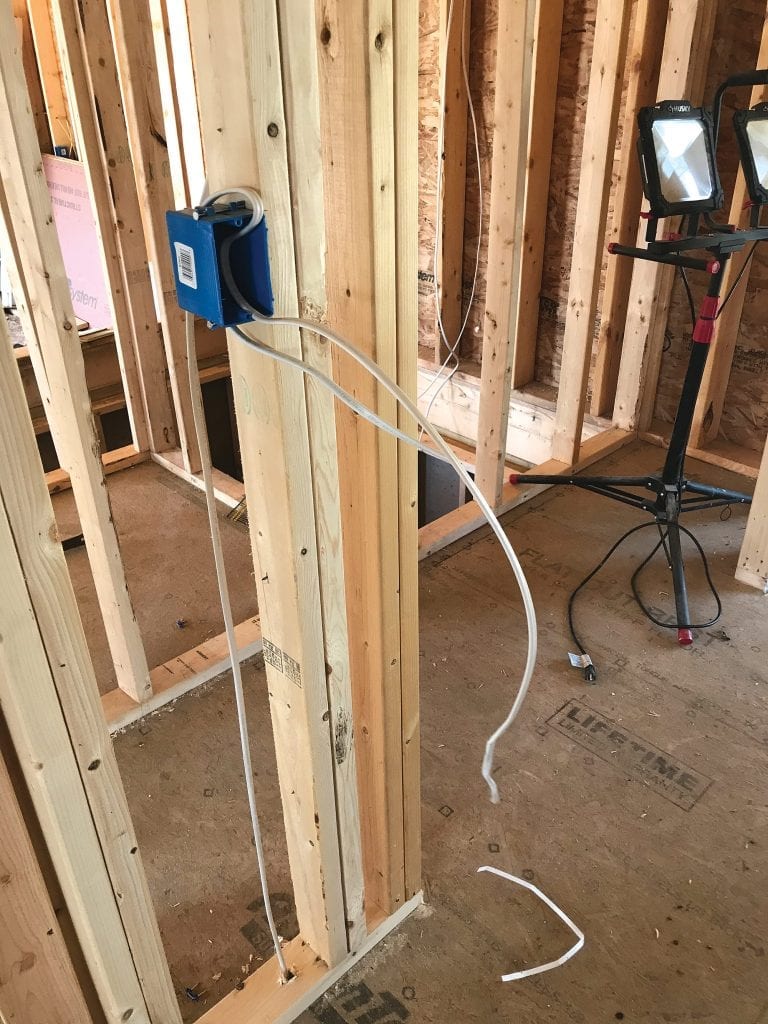
Few industries have been immune to the supply shortages and rising costs that have plagued the world economy over the past few months, but construction is especially vulnerable, relying heavily on materials — most notably lumber and steel, but dozens more as well — riddled by soaring prices. The good news is that demand for work is high, but many still worry about the long-term implications of a cost problem with no end in sight.


By Mark Morris

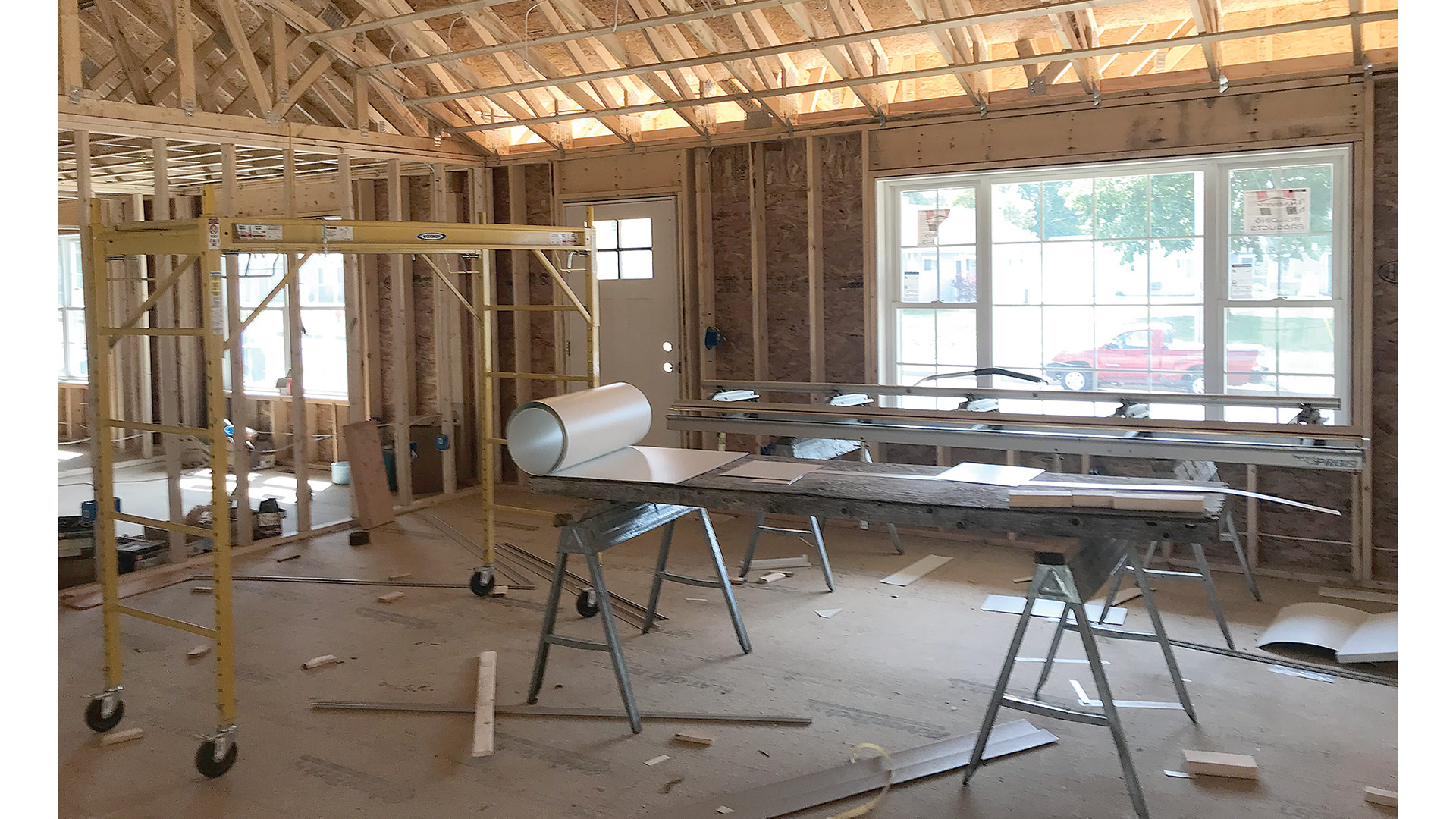
Early in 2020, several lumber mills and steel plants expected demand for their products to take a nosedive once the pandemic hit, so they slowed down or closed some of their operating plants. Instead, after only a brief hiatus in March, home and commercial construction resumed — and then significantly increased.

For Bob Boilard, vice president of Boilard Lumber, the decreased supply of lumber and growing demand have created multiple challenges. Orders for lumber that once took a week for delivery now have vague timetables and constantly changing prices.

“Pricing right now is set at the time of shipment, so we don’t know exactly what it’s going to cost us until it’s on the back of a truck,” Boilard said.

Because lumber prices change so often, Boilard and dealers like him study the commodity market every day to make sure they stay current. At press time, an eight-foot 2-by-4, used primarily to frame houses and certain commercial buildings, had increased to $11, up from $4 several months ago, a price hike of 175%.

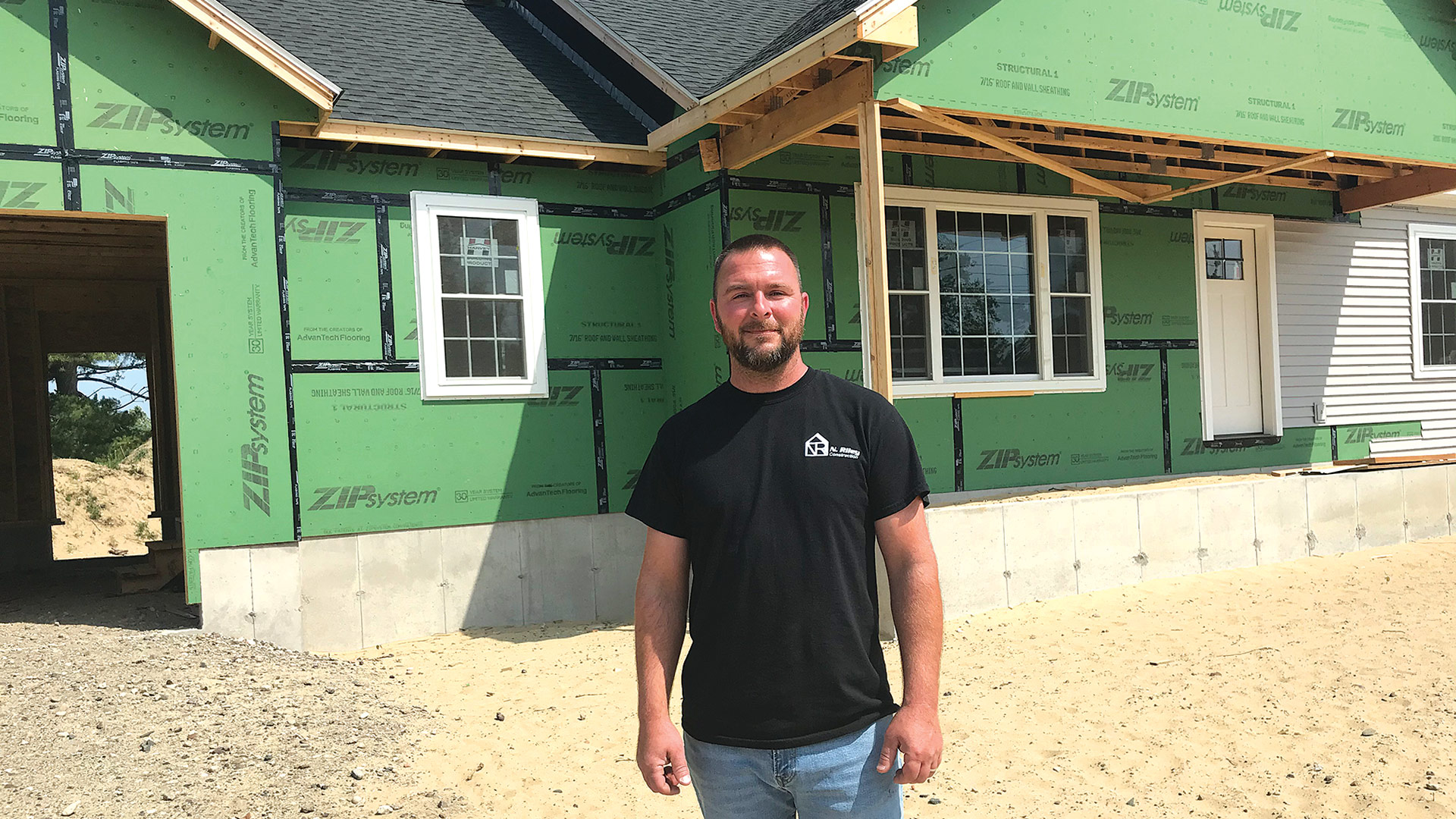
Nick Riley

Nick Riley says shortages are nothing new in construction, but so many types of materials being in short supply at one time is very uncommon.

Construction professionals have called this an unprecedented time. Price hikes and shortages of certain building materials are nothing new to the construction industry, but no one has seen inflation and scarcity of so many supplies that go into building a house or a business.

BusinessWest spoke with several construction managers who said we are currently in a perfect storm of greatly increased demand, COVID-related manufacturing slowdowns, and, literally, storms.

For instance, back in February, ice storms knocked out the power grid in Texas, shutting down several resin plants there and in neighboring Louisiana for several weeks. The resins from these plants are used in a broad range of building products, from adhesives to make plywood to the plastic that insulates electric cables. The resins are also used in many paints and primers.

“This is the first time I’ve seen drastic increases and shortages affect this many products. In the past, we’ve seen oil prices drive up the cost of roofing shingles, but never across the board with nearly every building material.”

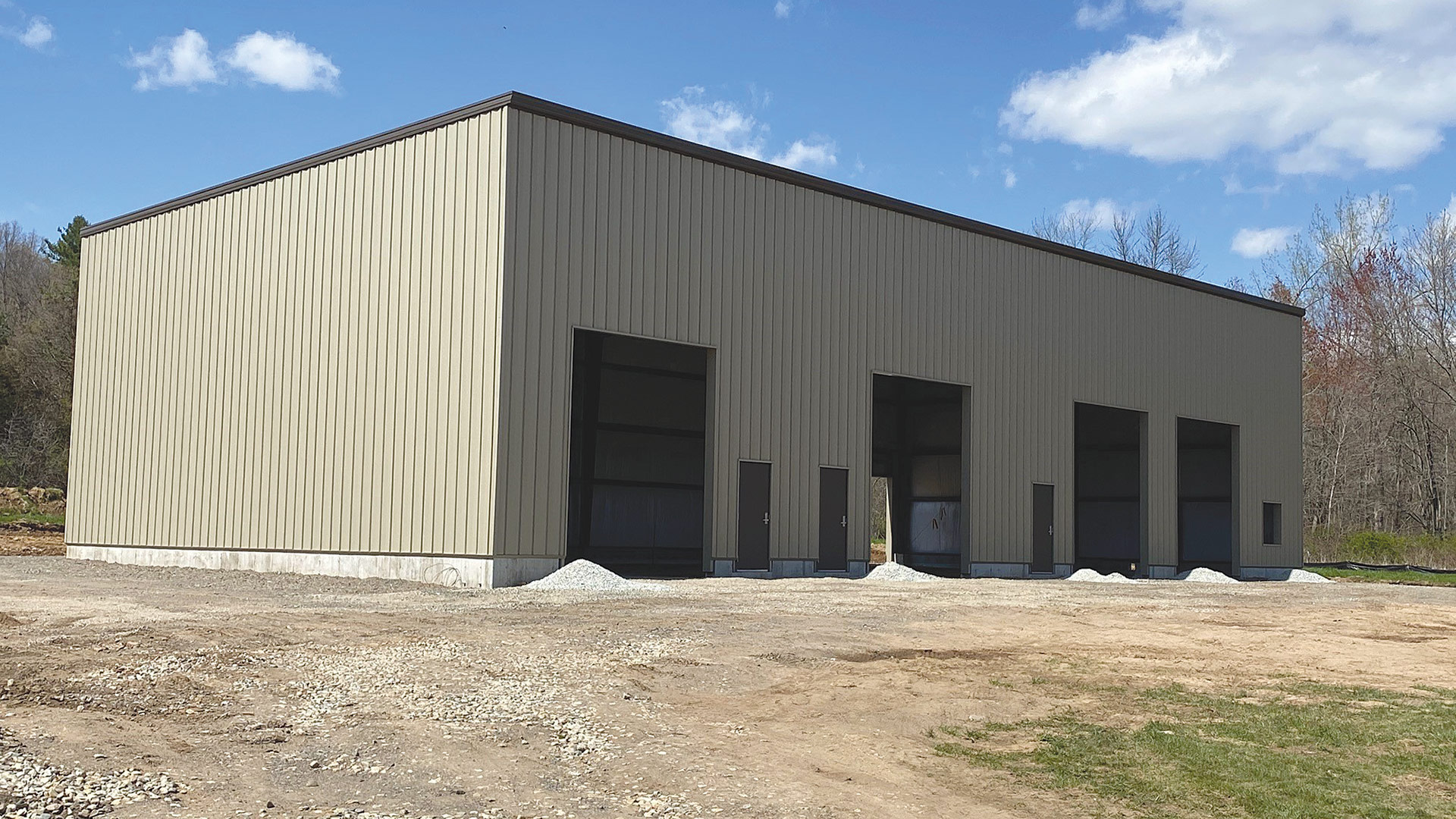
Dan Bradbury, director of Sales and Marketing for Associated Builders, said the commodity price he follows closely is cold rolled steel. Most of the structures his company builds are pre-engineered metal buildings for commercial and industrial use.

“Cold rolled steel prices have increased 225% since last August,” Bradbury said. Due to shortages in getting the steel, he tells customers the building they order today will be delivered in about 20 weeks. Before COVID-19, that same project would take 10 to 12 weeks.

Increases and shortages don’t end with commodities, but also affect other materials involved in construction. Craig Sweitzer, co-owner of Sweitzer Construction, said an electrical contractor told him about the price instability of a heavy-duty cable used in commercial applications.

“His supplier would only hold the price for one day,” Sweitzer said. “Usually, our material prices are good for 15 days, so we’re not used to seeing this.”

What makes this time different is the broad array of materials impacted, said Nick Riley, owner of N. Riley Construction.

The price of a basic 2-by-4 has risen by 175% in recent months.

The price of a basic 2-by-4 has risen by 175% in recent months.

“This is the first time I’ve seen drastic increases and shortages affect this many products,” he noted. “In the past, we’ve seen oil prices drive up the cost of roofing shingles, but never across the board with nearly every building material.”

As someone who builds medical and dental offices, Sweitzer uses steel studs in place of 2-by-4 wood studs for interior wall partitions. At one time, the two products were close in price. While prices for both have increased, a steel stud is now far less expensive than wood.

“While the price of a steel stud has increased about 30%, it’s well below the double and triple price hikes we’ve seen with wood,” he said, adding that he’s also experienced shortages in random materials such as joint compound to finish walls, acoustical insulation, and interior doors. “There’s a particular style of door we use that once took a week to get. Now it can take eight weeks, and the price has increased.”


Steady On

Despite shortages and price hikes, the construction managers we spoke with are all grateful to have plenty of work scheduled.

“I’m fortunate to be busy, and at the same time, it’s incredibly stressful to keep everyone happy and meet deadlines,” Riley said. “It’s a crazy time right now.”

To manage some of that craziness, he has invested in a new tool, a CRM (customer relationship management) system.

“Through our system, we can keep everyone on the same page, and it allows customers to check in on their project,” Riley said. “By staying in closer contact with our customers, they’ll know immediately about any issues that might slow down a project.”

Managing expectations becomes essential when prices and timelines are uncertain. When someone wants a fast turnaround on a project, Bradbury gives them straight talk. “We’re honest and upfront with our customers as to what’s realistic,” he said.

Some customers have chosen to delay their projects, anticipating that prices may come down. Bradbury said that may work for some, but when a company needs a building to grow their business, they can’t always wait it out.

“My advice is to build it sooner rather than later because we are more likely to see further price increases,” he said. “Also, with lead times so long, the sooner you get in the queue for your project, the better off you’ll be.”

Beyond materials, shortages have also extended to the human element. Riley said finding laborers for home building has always been challenging, and the increased demand for new homes only exacerbates an already-tough situation.

One of the thorniest challenges to solving supply shortages, Boilard noted, involves finding truckers to move the goods. “You can’t get drivers to get behind the wheel of a tractor-trailer. There are lots of trucking jobs open right now, but few people to fill them.”

Construction workers were deemed essential during the pandemic, so their time off the job was brief. Bradbury said the short shutdown allowed his company to retain most of its workers. “Some of our subcontractors have felt labor shortages, but we are grateful that has not had a significant impact on our business.”

When COVID first hit, Sweitzer gave all his employees a raise to make sure they were compensated well enough to stay with his company. “We’ve been lucky because we have an extremely good and loyal crew. I’ve found that good labor is worth the investment.”


Looking Ahead

Predictions on when prices and supplies might stabilize is anyone’s guess. Boilard explained that his company determines its lumber-buying needs early in the year, which these days is a real challenge. If a dealer stocks up heavily now only to see prices eventually crash, they are stuck with expensive inventory in a market that no longer supports those higher prices.

This building under construction shows how much cold rolled steel Associated Builders uses in a project.

This building under construction shows how much cold rolled steel Associated Builders uses in a project.

“It’s not a fun time because we have to do a balancing act of meeting our customers’ needs without having too much inventory on hand,” he said.

Riley has seen conflicting predictions about lumber prices dropping either at the end of 2021 or sometime in 2022. He’s seen lumber and electrical wire come down before, but he’s more concerned about other materials that go into building a house.

“In my years in business, when windows, siding, and roofing shingles increase in price, I’ve never seen them come back down,” he said. “I think increases like that are here to stay.”

Bradbury said he can’t predict what will happen in his industry, but he hopes to see the supply of steel catch up to demand by the end of this year. “My best guess is supply will get better and lead times will improve before we see prices start to stabilize.”

Sweitzer noted that he has a degree in management, while his two sons have degrees in economics and business administration, so they often discuss what may lie ahead. And their conversations have been optimistic.

“Markets always find some level of equilibrium, and I believe that will happen in this market,” he said. “Market equilibrium may take a temporary vacation, but it has always returned, and I think it will again.”

Health Care Special Coverage

An Anxious Transition

While the economic reopening is being called the ‘new normal,’ things aren’t back to normal, really — at least not by pre-pandemic standards. With COVID-19 still lingering, developments like the loosing of mask and gathering rules and a growing call for employees to return to the office have only ratcheted up the stress and anxiety among a broad swath of the population. In other words, for many, returning to the world as they knew it will be a gradual process.

By Mark Morris

In these unique times when COVID-19 is still active but in decline, we all have lots of questions about how to navigate daily life.

For example, if you have been vaccinated, should you continue to wear a mask? Why does the CDC say you can go without a mask, yet many public places still require one?
Should we still socially distance and sanitize in certain situations?

And, importantly, how much anxiety are such questions causing these days?

Answers can come from many places. Lauren Favorite, assistant program director with Behavioral Health Network, noted that, while information can be good, an overload of messages from different sources results in confusion.

“When we are bombarded with a plethora of information, it’s difficult for people to make a singular choice that will be the right one for them,” Favorite said. “Too much conflicting information can create anxiety.”

“Because so many people are not sure what to do, they will hold on to behaviors even when they no longer serve their intended purpose.”

BusinessWest spoke with several behavioral-health professionals who said much of the stress people are feeling right now is rooted in their concerns about how safe it is to go back into the world. Despite the May 29 reopening of Massachusetts, allowing everything from restaurants to sports arenas to fully welcome the public, Alane Burgess, clinic director for MHA’s BestLife program, said many people still do not feel safe going to the supermarket.

Alane Burgess

Alane Burgess says it’s always easier to learn how to be afraid than to unlearn that mindset.

“It’s always easier to learn how to be afraid than it is to be unafraid,” Burgess said. “Even when we’re told everything is OK, people still have questions.” As COVID-19 is a relatively new virus and scientists are still learning about it, continued concerns about personal safety are not surprising.

A recent research article looked at the trauma experienced by refugees after they emerged from a war-torn country. Favorite said their experience serves as a metaphor for these times.

“In the war zone, they had to develop certain habits and routines as a way to survive,” she said. “Once they escaped and reached a safe place, they held on to those behaviors because they didn’t know how else to act.”

All behaviors have a motivation, she continued, and the ones we followed to stay safe during the pandemic served us well. As we move beyond the pandemic, however, it’s time to examine if those behaviors are still serving us.

“Because so many people are not sure what to do, they will hold on to behaviors even when they no longer serve their intended purpose,” Favorite said. “I think many people will be in a sort of in-between place until we start to see a critical mass of vaccinations.”


Baby Steps

For many, entering back into the world needs to be a gradual process. Kathryn Mulcahy, clinic director for Outpatient Behavioral Health Services at the Center for Human Development, encourages her clients to start small.

“Instead of trying to do everything at once, I remind people it’s OK to take baby steps,” Mulcahy said. “You might not be ready to go out to the movies, but you can start getting back into the world by taking a walk in your neighborhood.”

As an incentive to go out again, Burgess advises her clients to make a bucket list of activities they are excited about doing again. “Making a list reminds people of what brought them joy before COVID and can help motivate them to get back to doing those things again.”

lauren favorite

Lauren Favorite

“I think many people will be in a sort of in-between place until we start to see a critical mass of vaccinations.”

COVID also had a significant impact on the nature of work. Depending on the occupation, some people reported to work every day during the pandemic, while others followed a more hybrid approach of working at home some days and at the office other days. A third group has been working from home since last March.

Employers have begun asking Joy Brock, director of the CONCERN Employee Assistance Program, how to proceed as we move toward the end of the COVID era.

“Companies are struggling with how to translate all the different mandates,” Brock said. “They are having as much anxiety as their employees.”

According to the Massachusetts Attorney General’s Fair Labor Division, employers are allowed to ask if an employee has been vaccinated. In some cases, they can require vaccination in order to report to work. Exceptions are allowed for those protected by legal rights, such as individuals who have disabilities or those with sincerely held religious beliefs.

Brock said even those distinctions beg more questions. “What if I’m vaccinated, but the person next to me isn’t? How is that going to work with masks, social distancing, and other considerations?”

When there is no clear-cut direction, individuals usually figure out how to keep themselves safe. Brock said even modest steps to take control over one’s health can help reduce anxiety. “If that means you are the only one in the office wearing a mask, that’s perfectly fine.”

Finding a comfort level at work and in the world ultimately depends on the individual. Burgess emphasized that everyone is on their own journey, and it’s OK to move at a different pace than others.

“I advise people to be patient with themselves and not make any self-judgments just because their comfort level is different than their friends or co-workers,” she said.

One clear demand Brock has heard from workers involves flexibility in work schedules.

“For the most part, people have enjoyed working from home because it makes child care easier to manage, they have been able to match or exceed their productivity, and many report lower stress levels,” she said.

With that in mind, many employers are looking at a hybrid model and trying to figure out the right mix between working at the office and from home.

Kathryn Mulcahy

Kathryn Mulcahy

“Instead of trying to do everything at once, I remind people it’s OK to take baby steps. You might not be ready to go out to the movies, but you can start getting back into the world by taking a walk in your neighborhood.”

A return to the office also means remembering how to be a colleague. Even if co-workers talk remotely every day, Mulcahy said people can get out of the habit of face-to-face conversations.

“As silly as it sounds, practicing an in-person conversation with someone outside your bubble is one more way to prevent that overwhelming feeling of being thrown back into the workplace,” she explained.

Beyond water-cooler discussions, Burgess said a successful transition back to the office also requires companies to be tuned in to the apprehensions their employees may have. “It will be important for people to have an open dialogue with their employers about any anxieties or concerns they may be feeling.”

Added Favorite, “as a supervisor in the workplace, I’m having conversations with my staff to assuage their fears about coming back on site.”


Talk About It

One key to putting COVID behind us is recognizing what everyone has gone through since last March.

“For the past 14 months, we’ve lived in a world full of trauma,” Burgess said. “The idea that we can suddenly go back to the way everything was is an impossible task.”

Mulcahy said she has heard from people who are embarrassed because they feel stressed and anxious about returning to a more normal life.

“They feel like they should be happy and excited that people are vaccinated, but instead they just feel worried,” she noted. “I want people to know they are not alone and they can reach out for help to navigate these feelings; that’s why we’re here.”

Burgess also pointed out that life was different during the pandemic, and we should accept that we are not the same people we were before.

“Our life has changed, and we have changed in some of the ways we think, how we feel, and what feels safe,” she said. “It’s important to respect who we are today because that, too, is part of the process in getting back into the world.”

When everyone was forced to suddenly deal with a pandemic, it created anxiety for many. Now, as the pandemic (hopefully) nears its end, that creates anxiety, too. Those who spoke with BusinessWest agree that talking about this stress, and letting people know their feelings are valid, will go a long way to easing everyone’s anxiety.

After all, Favorite said, “we’re still learning how to be in a world where we don’t have to worry all the time.”

Innovation and Startups Special Coverage

Moving Pictures


John Hazen stands beside displays

John Hazen stands beside displays of just a fraction of the products created at his company using holographic technology.

Hazen Paper, a third-generation family business that’s approaching a century in operation in the Holyoke mill district, has never stood still, expanding its operation over the years into facets like foil laminating, specialty coating, and rotary embossing. But its emergence over the past 15 years as an internationally celebrated producer of holographic printed products may be its most profound shift. Its entry into this niche was a calculated risk, the company’s co-owner said, but one that gradually paid off in a striking way.


John Hazen figured there was some risk in purchasing his first holographic printer back in 2005. But, as the third-generation co-owner of Hazen Paper Co. in Holyoke, he also saw the potential.

“I always say I was like Jack and the beanstalk,” he told BusinessWest. “Dad sent me out with a bag of beans — ‘grow the business, son!’ — and I bought this crazy thing called a holoprinter.”

But he was determined to build Hazen’s footprint in the world of holographic printing, and plenty of other technology at the company sprung from that first investment.

The results? Well, the numerous awards that pour in every year testify to the company’s success. Like a 2021 Product Excellence Award from the Assoc. of International Metallizers, Coaters and Laminators (AIMCAL), for a holographic consumer package.

“To magnify visual effect on a very small carton,” the press release for the award reads, “Hazen micro-embossed specially coated polyester film with ‘Mercury,’ a unique overall holographic pattern, then metallized the film and laminated it to a solid bleached sulfate board before registered sheeting. The film lamination delivers mirror-like brightness and a liquid-flash effect of full-spectrum color, as well as durable performance for clean scoring and folding.”

“I always say I was like Jack and the beanstalk. Dad sent me out with a bag of beans — ‘grow the business, son!’ — and I bought this crazy thing called a holoprinter.”

Most of those words won’t register with the average consumer. But the effect of the packaging certainly does. “This package really stood out,” one judge said. “The embossed areas are like a hallmark and impart a feeling of luxury.”

It’s the latest in a string of AIMCAL awards for Hazen, which also earned the association’s Product of the Year honors in 2018, 2019, and 2020. The latest was for a transfer-metallized carton, featuring custom holography, created for Nordic Premium Beverages’ Arctic Blue Gin, a project made with Hazen Envirofoil, which uses less than 1% of the aluminum of traditional foil laminate — one way the company continues to stress sustainability, which is being increasingly demanded by clients.

The carton for Arctic Blue Gin, made using Hazen Envirofoil

The carton for Arctic Blue Gin, made using Hazen Envirofoil, earned Product of the Year honors in 2020 from the Assoc. of International Metallizers, Coaters and Laminators (AIMCAL).

In fact, it’s understanding customer needs that led Hazen to step into the world of holography with two emphatic feet in the first place. “In many ways, it’s requests from the customers, information coming in from the market — trying to identify opportunity.”

For background, he explained that the holographic industry saw significant consolidation between 2000 and 2004. In the late ’90s, holographic manufacturers were mostly small mom-and-pop shops, but that changed when larger players started buying them out. One of the catalysts was … well, toothpaste.

“When Colgate came out with a line of holographic packaging on their toothpaste … in the world of holography, the world of consumer packaging, that was a major event,” Hazen said. “They gained market share against Crest, and that’s what it’s all about. If they can pick up 1%, it’s massive. Once Colgate truly validated the use of holography, things got pretty exciting.”

Another growth area was DVD packaging — in fact, Hazen would go on to create holographic images for the DVD boxes for numerous major films, including for the likes of Pixar and Marvel. But its entry into that niche came in 2004, when it created the DVD packaging for the TV show Quantum Leap, which involved a custom hologram.

By that time, however, some of the small holographers Hazen used in the ’90s had been bought up, so it turned to one of the big conglomerates, Illinois Tool Works, or ITW, which had bought up several of the small, boutique holographers.

“We had to work with ITW, but we didn’t feel like they were using their power very well,” Hazen recalled. “We got the job done, and it won an award — and the feedback we were getting from studios and box makers was that this could be big.”

So, seeing the expanding opportunities in front of him, Hazen started creating an in-house holographic division.

Around 2005, “one of the companies that got acquired got busted into pieces, and we were able to start reassembling the pieces of the broken puzzle,” he recalled. “We set up our holographic lab, bought the holoprinter technology, hired some castoffs from the consolidation era, and set up a holographic lab in the basement. Since then, we’ve been able to expand.”


Shining Examples

Holography isn’t particularly new in the corporate world, Hazen said, noting its use on the dove image on Visa cards.

“That’s a hologram. They’ve had that on the Visa card for 40 years. A lot of times, holography is used as a branding feature, but also as a security feature. It authenticates, makes it hard to counterfeit. It’s done with money as well. That’s security holography, and it tends to be small.

“The holography we do for decorative packaging and some branding is larger format,” he went on. “We’re producing holographic plates as big as 60 inches by 60 inches. It’s not security holography and tends to be lower-resolution. But it is very unique; it’s hard, if not impossible, to replicate. And from a graphic point of view, it gives the graphic artist a mechanism for providing backlighting, for creating movement, for creating a 3D kind of effect.”

Hazen also uses a digital process — several different ones, actually, as opposed to Visa. “The Visa dove is analog — they created the model of a dove, set up lasers around a room, and got light to refract and bounce back.”

“We got the job done, and it won an award — and the feedback we were getting from studios and box makers was that this could be big.”

These days, Hazen Paper’s holography can be seen in hundreds of applications worldwide, from product packaging to the program covers for annual events like the Basketball Hall of Fame enshrinement (since 2013) and the Super Bowl (since 2004, although not in 2021, since there were questions early on about the game’s scheduling during COVID-19, and the design process has to start many months in advance).

Hazen showed off a copy of the 2020 hoops-hall enshrinement program, the class that includes the likes of Kobe Bryant, Tim Duncan, and Kevin Garnett. It showcases 3D imagery of the Hall of Fame’s iconic dome and spire and its panoramic interior, juxtaposed with a collage of the year’s inductees in action. The back cover is a holographic treatment of Mohegan Sun in Connecticut, where the enshrinement ceremony was held. Again, it used the sustainable Envirofoil process.


Hazen has created over the past two decades

Top: the holographic Kat Von D Metal Crush limited-edition powder highlighter carton won AIMCAL’s Product of the Year honors in 2018. Above: one of the many DVD packages Hazen has created over the past two decades.

Hazen has also added to its trophy shelf multiple times in the past year, including a Next Century Award from Associated Industries of Massachusetts, which recognizes employers, individuals, and community organizers that have made unique contributions to the economy and residents of Massachusetts. The company employs 200 people and participates in an internship program with Western New England University that helps engineering students gain experience.

“We create opportunities for young people to learn about the industry in general and our operation in particular — and expand our future talent pool,” Hazen said when the award was announced.

And back in December, the International Hologram Manufacturers Assoc. (IHMA) named Hazen Paper’s 2020 holographic calendar Best Applied Decorative/Packaging Product at its Excellence in Holography Awards.

Featuring a fire-breathing dragon with three-dimensional scales, the oversized calendar utilized an array of innovative holographic techniques to create a decorative design the IHMA called “outstanding.” These holographic designs included gray-motion for the sky background, color-motion for the dragon, and two-channel color-motion lenses and fire-motion lenses to animate the flames.

And the company continues to innovate. For example, it announced back in August it had created an innovative, two-sided promotion to demonstrate cutting-edge holographic technologies. The Hazen team designed the artwork on both sides to showcase specific visual effects with nano-holography that delivers an even more dramatic three-dimensional effect.

Perhaps the most unusual aspect of the promotion is that it is two-sided custom holography, transfer-metallized on both sides. “It hasn’t been done before,” Hazen said last summer. “The ability to transfer-metallize a lightweight stock on two sides with custom holography opens up the potential for use in many applications where consumer impact is key. It’s very exciting.”


Changing Times

Clearly, Hazen Paper has come a long way from its origins in 1925, when Hazen’s grandfather, also named John, launched the enterprise as a decorative paper converter and embosser. His younger brother, Ted, joined Hazen in 1928 to help manage the growing company, which grew rapidly in the 1930s and expanded into printing and foil laminating by the 1940s.

Ted’s son, Bob, joined the company in 1957, and John’s son, Tom, signed on in 1960, and the second generation expanded the company numerous times over the next three decades, as Hazen Paper became known worldwide for specializing in foil and film lamination, gravure printing, specialty coating, and rotary embossing. Hazen products became widely used in luxury packaging, lottery and other security tickets, tags and labels, cards and cover stocks, as well as photo and fine-art mounting.

The third-generation owners, John and Robert Hazen, joined the company at the start of the 1990s, and have continued to grow the enterprise and expand its capabilities, with a special emphasis on coating, metallizing, and — of course — holographic technology.

In 2005, Hazen Paper set up its holographic origination lab and design studio in Holyoke, and has since developed thousands of unique holographic designs and holds several patents on the processes it has developed. Shortly after, the company launched a holographic embossing and metallizing operation a mile away on Main Street.

“They always say it’s dangerous to go outside your traditional business model, outside your wheelhouse,” John Hazen said of those early days in this new niche, and particularly that plant. “We came in way over budget, at least six months behind, but that plant came to life right at the end of 2008.”

That’s right — at the beginning of a crippling recession.

“When you think about what was going on in the world, the first half of 2009 was really a scary time,” he said. “Fortunately, the business came back in the summer of 2009, and everything started to fall into place.

“Everyone’s system for making holography is different — they’re similar, but they’re different — but the one thing we knew was our system worked,” he went on. “But we went through some rough years from 2010 to 2016. We definitely overextended ourselves to get into the holographic business, and part of that overextension was the impact of the 2009 recession.”

In 2006, Hazen set up its first satellite plant in Indiana, a lamination and sheeting operation that ultimately operated 24/7, with more than 50 full-time employees. In 2016, however, it sold the plant as a strategic move away from commodity-type foil laminations to increase focus on growth opportunities in holography and specialty paper products in Holyoke.

Broadly speaking, packaging remains the broadest category of holographic work nationally, with designs seen on everything from boxes of golf balls and toothpaste to liquor packages. But the sky is the limit, Hazen said, and new uses emerge all the time — justifying that initial investment more than 15 years ago.

“It really was a startup, a technology startup in an older company. And ultimately, we really reinvented Hazen Paper,” he told BusinessWest. “The holographic technology ended up feeding the old business. So it’s like we installed a new heart in an old body.”

Not a bad return on that bag of beans.


Joseph Bednar can be reached at [email protected]

Community Spotlight

Community Spotlight

By Mark Morris

Michelle Theroux

Michelle Theroux says businesses in town, including her own, Berkshire Hills Music Academy, are anxious to ramp up operations as the economy reopens.


For Mike Sullivan, the past 15 months have been a learning experience on many levels.

As town administrator in South Hadley, Sullivan has learned just how essential online payment systems and Zoom meetings have become for residents who need to do business with the town.

“As we make more access points available to the public, we’ve seen participation in government increase,” Sullivan said, adding that, while many people are looking forward to meeting in person again, Zoom is also here to stay.

The pandemic also taught him about the efficiencies of running Town Hall. By limiting in-person visits to appointment only, staff have been able to more efficiently get business done. Going forward, he looks to follow a model other towns have adopted of limiting hours or closing to the public one day a week.

“There are multiple ways to take care of business,” Sullivan said. “I appreciate that some people have complicated business they need to conduct in person, and we will accommodate them. When residents use online platforms or even ‘snail mail’ instead of visiting Town Hall, it saves money for the town and for everyone’s individual taxes.”

Sullivan made plenty of adjustments to keep South Hadley moving forward during the pandemic. Attendees to last year’s town meeting, for example, never left their cars.

“People tuned into the discussion over their car radios, just like an old drive-in movie,” he said. A similar drive-in town meeting is planned for this year, but there will also be a seating area for those who feel safe enough to leave their cars. “We’re looking forward to getting back to some semblance of normalcy.”

Michelle Theroux, president of the South Hadley and Granby Chamber of Commerce, said one indication of a return to normalcy is the “we’re hiring” signs around town. She acknowledges there are many factors why people are not immediately returning to work, but even with recruitment issues, the signs represent a positive step.

“The good news is that people are looking to hire, and they are in a position to bring people back into the workforce,” she said.

As the end of the pandemic nears, Theroux credits the South Hadley community for its support of small business. From restaurant takeout orders to holiday shopping, it was local people who provided enough support so that no chamber-member businesses permanently closed due to the pandemic.

“Certainly, many downsized and did what they had to do to survive,” she said. “It’s a real credit to community support because small business is such an important part of South Hadley.”

Because small business is such an essential part of South Hadley, banks in town worked with the chamber to secure Paycheck Protection Program funds for businesses in town. In addition, the chamber recently partnered with the Northampton chamber and the Massachusetts Office of Travel & Tourism to secure $20,000 in state grants.

“The good news is that people are looking to hire, and they are in a position to bring people back into the workforce.”

The chamber also spread the word among its members on how they could help each other, as well as support businesses that are not necessarily top of mind.

“If you look at the South Hadley Commons, we all think of the great restaurants there,” Theroux said. “The Commons also has a movie theater and a number of small boutiques that offer unique and personalized items you can’t find at a big-box store.”


Forward Momentum

One key project that kept going during the pandemic involves the Woodlawn Shopping Plaza. At one time the site of a Big Y supermarket, the parcel now features various retail stores anchored by Rocky’s Hardware. The site has been approved for a 60-unit, mixed-income apartment complex that will occupy three acres in the back of the parcel.

“Way Finders of Springfield is running the housing-complex project, and they are waiting for federal funding to come through before they break ground,” Sullivan said.

Theroux is excited about the project because it provides a glimpse at the future of development.

“At Woodlawn, you have a multi-use site with different types of businesses and living options all in one central location,” she said, while predicting that the entire area surrounding Woodlawn will see a revitalization over the next several years. As one example, Northampton Cooperative Bank and PeoplesBank have recently opened branches in or near the Woodlawn Plaza.

Sullivan also pointed with pride to the new senior center on Dayton Street, which is scheduled to open June 30.

“We were able to successfully build the senior center during the pandemic, and the costs were below the estimated bids,” he said. “Even with increases in some of the materials, we will still come in nearly $700,000 under the original estimate.”

South Hadley at a Glance

Year Incorporated: 1775
Population: 17,791
Area: 18.4 square miles
County: Hampshire
Residential and commercial tax rate: $19.46 (Fire District 1); $19.80 (Fire District 2)
Median Household Income: $46,678
Median Family Income: $58,693
Type of government: Town meeting
Largest Employers: Mount Holyoke College; the Loomis Communities; Coveris Advanced Coatings; Big Y
* Latest information available

Six years ago, Mohawk Paper opened a plant in South Hadley to great fanfare and optimism for a long relationship with the community. Last year, in pursuit of more favorable taxes and incentives, the company closed its operations in South Hadley and moved to Ohio.

As tough as it was to see Mohawk pack up and leave, Sullivan noted that E Ink, the company located across Gaylord Street from the former Mohawk plant, has good news moving forward. “E Ink is planning to double in size because they have a new product line coming out.”

E Ink makes the agent used in tablets like the Amazon Kindle, which allows an electronic page to read like a physical book. In addition to tablets, E Ink screens are used in a variety of applications ranging from signage at MBTA stations and international airports to retail price signs.

On top of contributing as a successful company, Sullivan noted that E Ink is a strong supporter of community projects and events in South Hadley.

Meanwhile, the Ledges Golf Club, owned by the town and a financial drag for many years, is on its way to performing at par. At the beginning of the pandemic last year, golf courses across the state were mandated to stay closed for several weeks. Sullivan called the lost months a “kick in the shins” because, once it opened, the Ledges did brisk business all season and came close to hitting a break-even point.

“This year, we made $200,000 in revenue in just March and April,” Sullivan said. “By the end of the fiscal year next June, we think the Ledges will break even.”

In addition to her duties as chamber president, Theroux’s full time job is executive director of Berkshire Hills Music Academy (BHMA), a music-infused program that helps young adults with special needs to expand their social, vocational, and life skills. Before the pandemic, BHMA employed just over 100 people. Though it normally offers both residential and day programs, state mandates forced BHMA to quickly shift to remote classes for its day students. After furloughs and layoffs due to the new mandates, 64 staff remain.

“Our current state is a hybrid model where we have about 40% of our day students back on campus, with the rest joining us by remote,” Theroux said. “Once we can fully reopen, we’d like to staff up to where we were before the pandemic.”

Looking ahead to the fall, she wasn’t sure what to expect for new enrollments, but was pleasantly surprised to see strong numbers for BHMA’s incoming class.

“Once their loved one is vaccinated, many families are all in on our program, and that’s a huge positive for us,” Theroux said. “Three months ago, I would not have been as confident about what next year would look like.”


Back to School

After more than a year of remote learning, Mount Holyoke College students have begun to return to campus. While remote learning is still available, many have indicated they plan to return to campus in the fall.

“The presence of Mount Holyoke students back on campus will provide a real boost to South Hadley feeling normal again,” Theroux said.

Sullivan is on the move, too. After a long career of public service, he has announced he will retire in June. Looking back, he points to a number of projects he’s helped shepherd to success. One area of particular pride is the progress South Hadley has made in hiring a more diverse workforce. As an example, he mentioned Police Chief Jennifer Gundersen, who recently joined South Hadley’s force after several years in Amherst.

“Certainly, many downsized and did what they had to do to survive. It’s a real credit to community support because small business is such an important part of South Hadley.”

Sullivan in only one of South Hadley’s leaders who are moving on. Planning Director Richard Harris is also retiring, and the superintendent of schools left in December to pursue another professional path.

While grateful for their service to the town, Theroux sees this as a time for South Hadley to bring new faces into leadership roles.

“As we emerge from the pandemic, I’m optimistic about the future and a new era of leadership for our town,” she said, adding that she looks forward to people once again enjoying all that South Hadley has to offer.

Construction

Air Apparent

Scott Cernak’s expertise and development of the residential division at M.J. Moran

Scott Cernak’s expertise and development of the residential division at M.J. Moran are serving him well today as the head of his own venture.

Never underestimate the influence of a teacher.

Or, in Scott Cernak’s case, two of them, who taught plumbing when he was a student at Smith Vocational & Agricultural High School, and proved engaging enough in the subject to capture his attention.

“I wasn’t sure which trade I wanted to take,” he said. “The plumbing teachers there were really good — I never thought I would have chosen plumbing, but I ended up liking it quite a bit.”

He likes the trajectory of his career as well. Today, Cernak is the owner of a company — Western Mass Heating, Cooling & Plumbing — that recently spun off M.J. Moran Inc., the only company he’d ever worked for, and where he latched on as an intern early in his junior year at Smith.

“I started on my 16th birthday and started liking it more and more,” he recalled. “I got into more and more things; I started doing sprinkler fitting, all kinds of pipe fitting, welding and plumbing and HVAC.”

“It was a really good, mutually beneficial decision to have us part ways and for me to buy the division.”

All of that appealed to him, but he was especially interested in the residential division, which hadn’t been a significant part of Moran’s business, but which he and two other employees started growing steadily. “At this point, I was in my early 20s and running a lot of large residential and small commercial jobs, new-construction service calls — anything from packing a faucet to doing a whole new house and everything in between.”

His success in that division led to a promotion to general manager of the company in 2016, and something bigger four years later. “I got the opportunity to buy the division that I helped build,” he told BusinessWest, “and here we are.”

The reason for the spinoff company is that Jim Moran, who launched his enterprise 42 years ago, is heading — slowly — toward retirement, Cernak explained.

“He’ll never fully retire, but he wanted to take a little off his plate right now. His sons, Chad and Kyle, who run the commercial-industrial division, don’t have any interest in the residential divison — they relied on me for that anyway — so it just made sense for Jim and myself and our departments.

“It was a really good, mutually beneficial decision to have us part ways and for me to buy the division; it worked really well for them, and it’s worked really well for us,” he went on. “We still communicate frequently, and we still collaborate; I hire them as a sub when we need extra manpower, or they hire us as a sub on some jobs. So it works out pretty well.”

Roughly eight months into his new enterprise, Cernak said his work is well-balanced, split fairly evenly between service work, major renovations for general contractors, and installing and replacing heating and cooling systems. “It’s a pretty good mix, and some of that is commercial, too — service work and small installation work.”

Western Mass Heating, Cooling & Plumbing is more departmentalized than most similar firms, he added, with a full service department.

“Most companies around us don’t have a service department; they just throw in a service call here and there. We actually have a service department that’s dedicated to service work, then we have a new-construction installation department that’s dedicated to the bigger work. That works well for our dispatching and keeping things organized and keeping the right guys on the right jobs. It’s one reason we’re able to stay efficient and continue to grow.”


Into the Pipeline

What first drew Cernak into the plumbing field at Smith Voke was, simply, realizing for the first time the breadth of what tradespeople in that field do.

“As a teenager, I didn’t realize that plumbing was more than just cleaning a drain or fixing a toilet. A lot of people — not just young teenagers — think plumbing is just fixing plumbing; they think it’s just dirty work. But I got to see a different side of it — learning how the pipefitting works, doing some welding and some soldering.”

“Even before 2020, new houses were getting a lot tighter, and indoor air quality was becoming a much higher priority for people.”

He also quickly learned, by researching the field, that it’s a trade with stability and good job security. “It’s one of the higher-paid trades, so there were a lot of factors. But before that, it had never clicked to me that, hey, plumbers actually install the plumbing in a new house, too, not just fix the plumbing in an old house.”

The science of plumbing hasn’t changed much during his career, but HVAC is a different story.

“Indoor air quality has been a big factor,” he said. “Coronavirus certainly helped with that — or hurt with that, however you want to put it. But coronavirus certainly put a new spin on it. But even before 2020, new houses were getting a lot tighter, and indoor air quality was becoming a much higher priority for people, so we sell a lot of products that help with filtration and literally zap bacteria and viruses out of the air; there are all kinds of air-cleaning products that we’re selling as part of our systems, part of our installations, part of our services. It’s not the core of our business, but it certainly is a pretty big part of our business.”

Businesses in Massachusetts took the lead on emphasizing air-quality measures indoors, much of it driven by regulations. But in the era of COVID-19, people increasingly demand high-tech air-purifying systems in their homes.

“We’d never had people asking for indoor air-quality measures — or very rarely; maybe 1% of people would ask for something like that back before coronavirus. And now, probably close to 20% to 30% ask for it specifically.”

Scott Cernak said his company is growing and hiring

Scott Cernak said his company is growing and hiring, even though his industry is challenged by a slow pipeline of young talent entering the field.

Clearly, there will always be a market for plumbing and HVAC work — as Cernak said, this is a stable field — and he can see his fledgling company growing, but one challenge will be attracting talent as it does. Right now, nationwide, roughly three workers are aging out and retiring from these disciplines for every two young people who come in.

“And out of those two, probably only one to one and a half are going to make it past five years,” he went on. “So there’s a big-time shortage, and it’s going to get worse and worse.”

As one way to counter that trend, “I have longer-term goals of creating more education within our company,” he explained. “I’d like to bring a sheet-metal school in house, not necessarily from us, but probably third-party, using our facility; that’s going to help attract some people.”

Meanwhile, “we have ads out on different internet platforms, and we’re trying to recruit internally too. Everyone who works with us knows we’re looking for at least one or two more service techs on top of other positions as well. We have been hiring — four people in the past month and a half — so we’re definitely growing, and we’re on a trajectory of more growth as well.”


Investments in the Future

One key to achieving that growth, Cernak said, is not being afraid to invest in the kinds of things that will attract top talent.

“I’ve got an eye for talent — and I’m not afraid to hire the best and pay for the best, that’s for sure,” he told BusinessWest. “I provide the best tools, the best training, we have new, well-equipped trucks, and we’re working on getting even more trucks. So all our people have the right tools, the right trucks, and the right infrastructure to do their jobs.”

In addition, “I’ve invested heavily into software and IT systems to organize how we do our work and how we bill for our work and how we store data and how we access data, which is a huge part of the industry that people generally overlook,” he went on. “We’re not fumbling through file cabinets to find the customer’s history. With a couple clicks, we’re there. Same thing with our guys in the field — they have access via tablet or smartphone to access any of our customers’ history. When a customer calls, we know what they have already, and we know the right tech to send to the right job.”

What it adds up to is efficiency, which both employees and customers appreciate, Cernak said. “We’re very good in the service department, dispatching, getting people there. We have quite a backlog sometimes, but we’re also very good at prioritizing emergencies.”

Creating efficient systems and investing in better resources may not bring an immediate payback, he added, but he’s looking long-term — at the kind of success his mentor, Jim Moran, enjoyed for more than four decades. It’s why, when he saw an opportunity to build upon his experience and set out on his own, he took it.

“Sometimes,” he said, “you’ve got to go with your gut and know what’s right and do it.”


Joseph Bednar can be reached at [email protected]

Construction

Soaring Again


MassDevelopment has provided an $800,000 loan to Eagle Mill Redevelopment, LLC, which is using the proceeds to redevelop the former Eagle Mill and surrounding parcels in Lee into a mixed-use complex featuring 128 residential housing units and 14,000 square feet of retail and office space.

The developer used loan proceeds and additional financing from Adams Community Bank to buy 10 adjacent properties that will be combined and subdivided into six separate parcels for future redevelopment. Construction on the project, which is expected to cost approximately $55 million, is slated to begin in the fourth quarter of 2021, with its first phase completed within 14 to 18 months.

“A priority of the Baker-Polito administration is to breathe life back into underutilized factory and mill buildings that were once integral to the Commonwealth’s industrial success,” said Housing and Economic Development Secretary Mike Kennealy, who serves as chair of MassDevelopment’s board of directors. “These properties are uniquely situated for redevelopment into mixed-use communities that accelerate economic growth and expand housing opportunities, and we were proud to deliver a $4.9 million MassWorks award to facilitate needed infrastructure work at Eagle Mill. MassDevelopment’s contribution of loan financing advances the transformation of the site and complements the other state, local, and private investments.”

“Bringing additional housing, businesses, and jobs back to Eagle Mill, a defining site in Lee’s industrial history, will be an important part of the community’s next chapter.”

Built in 1808, Eagle Mill is located along the Housatonic River in Lee. In the later part of that century, Lee was the national leader in papermaking and home to 25 paper mills. As operations dwindled, Eagle Mill closed in 2008 — resulting in the loss of 165 factory jobs — and has remained vacant since. The town received a $4.9 million MassWorks Infrastructure Program grant in 2018 to upgrade the water main in the town and install 9,000 linear feet of new water main to the development site, allowing the Eagle Mill project to move forward. The project is also supported with both state and federal historic tax credits.

“Bringing additional housing, businesses, and jobs back to Eagle Mill, a defining site in Lee’s industrial history, will be an important part of the community’s next chapter,” MassDevelopment President and CEO Dan Rivera said. “MassDevelopment is proud to be a financial partner in Eagle Mill Redevelopment, LLC’s plans to unlock the economic potential of this property.”

Jeffrey Cohen, the lead developer in the Eagle Mill redevelopment, has been involved in the project since 2012. He has done similar, large-scale historic restoration and redevelopment projects in Washington, D.C.; Portland, Maine; and St. Paul, Minn. DEW Construction, another partner and the project’s general contractor, brings similar experience and expertise to the effort, with projects of more than $150 million each year.

“It is incredibly fortunate that MassDevelopment has so many tools by which they are able to enhance the likelihood of our project’s success,” Cohen said. “They provide financing for predevelopment, amongst other things, which is otherwise so difficult to obtain, making their support invaluable to our project. The essential turning point that will lead to the project’s ultimate success was, and is, the approval by then-Secretary [Jay] Ash and MassWorks of the $4.9 million grant to the town of Lee, enabling the replacement of the water line to the mill, without which we would not have been able to move forward.”

MassDevelopment, the state’s finance and development agency, works with businesses, nonprofits, banks, and communities to stimulate economic growth across the Commonwealth. During FY 2020, MassDevelopment financed or managed 341 projects generating investment of more than $2.69 billion in the Massachusetts economy. These projects are estimated to create or support 10,871 jobs and build or preserve 1,787 housing units.