Home 2020 September (Page 4)
Daily News

SPRINGFIELD — United Way of Pioneer Valley (UWPV) announced it will be able to provide backpacks full of school supplies to all 2,600 students who are homeless in its service area of Hampden County, Granby, and South Hadley. Thanks to generous funding from MassMutual, the organization has been able to greatly expand the scope of Stuff the Bus and bring help to the students who need it most.

“I am thrilled to work with MassMutual to help what matters most — our children, who are suffering greatly in these difficult times,” said Paul Mina, president and CEO of the United Way of Pioneer Valley.

Business Talk Podcast

We are excited to announce that BusinessWest, in partnership with Living Local, has launched a new podcast series, BusinessTalk. Each episode will feature in-depth interviews and discussions with local industry leaders, providing thoughtful perspectives on the Western Massachuetts economy and the many business ventures that keep it running during these challenging times

Episode 25: Sept. 7, 2020

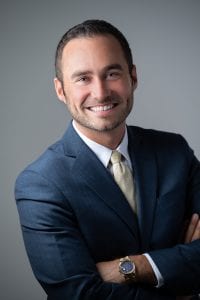
George Interviews Mike Fenton, Shareholder at Shatz, Schwartz, and Fentin

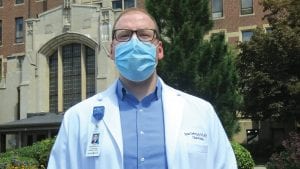
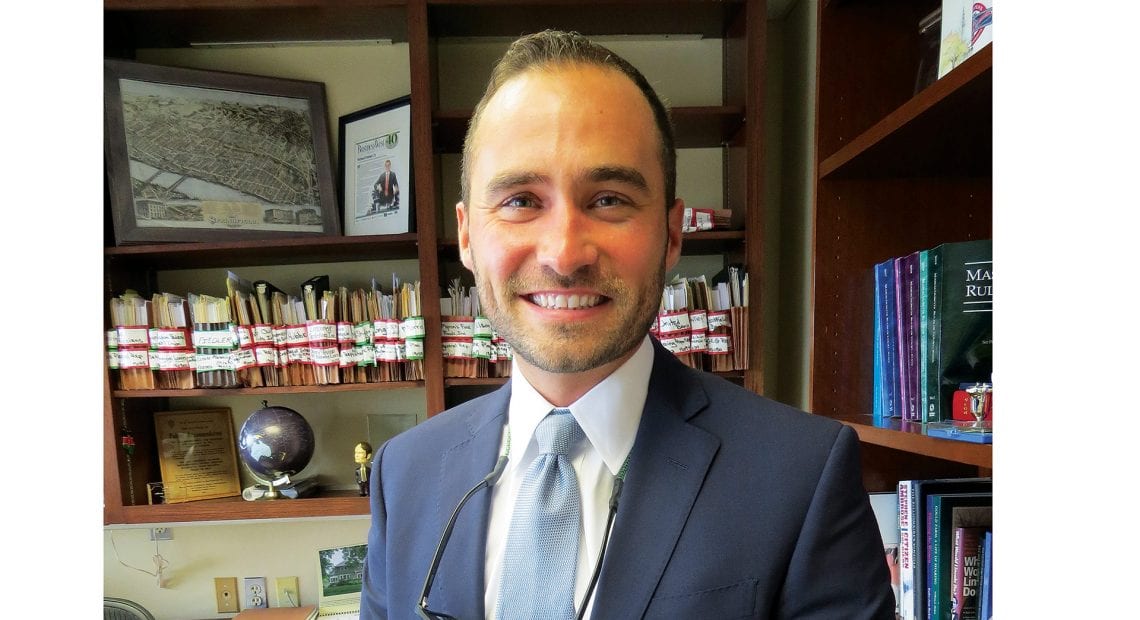
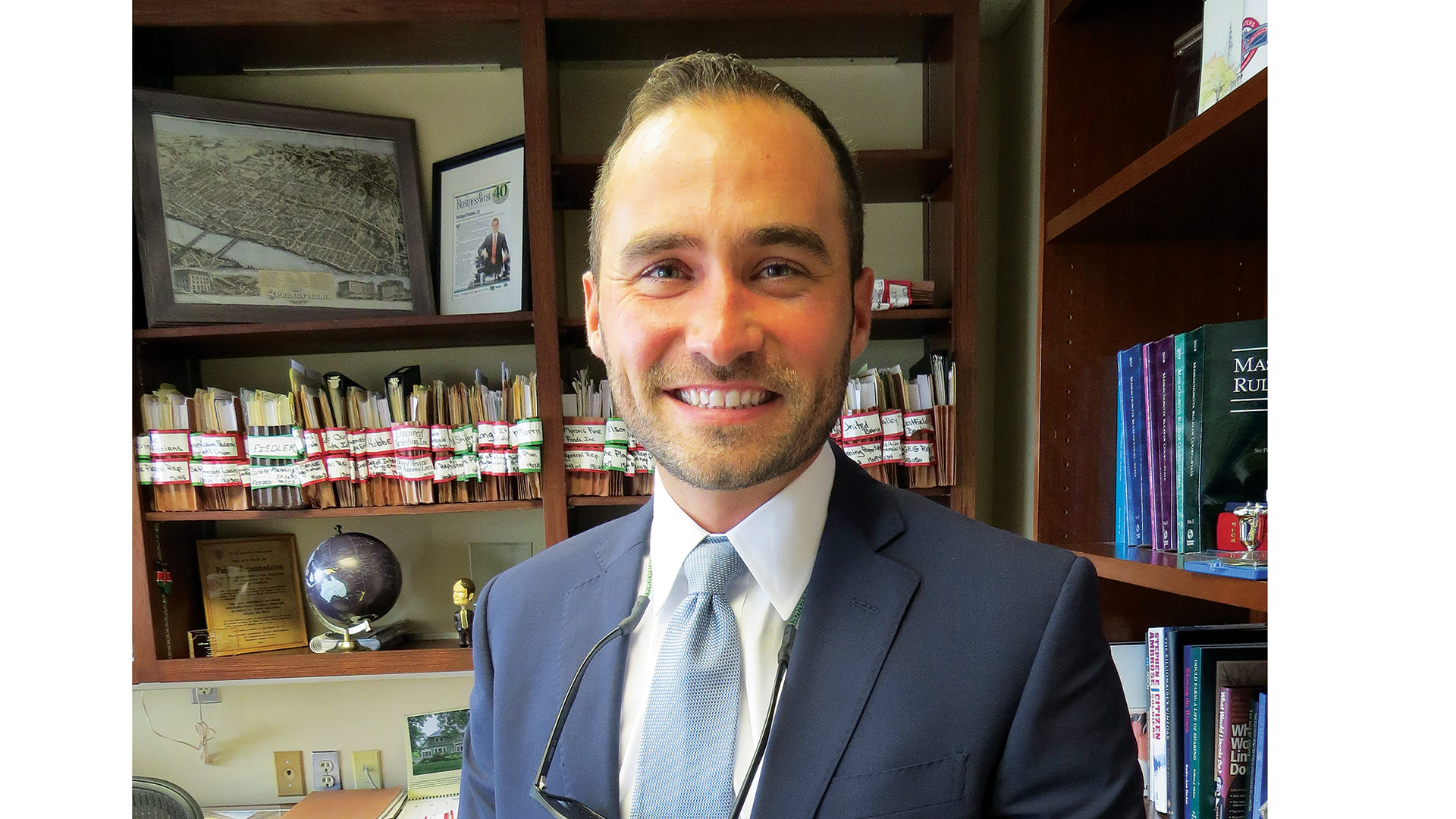
George interviews Mike Fenton, Shareholder at Shatz, Schwartz, and Fentin, and one of BusinessWest’s Alumni Achievement Award finalists. Fenton is now a multiple-year finalist for the Alumni Achievement Award, previously known as the Continued Excellence Award. He hopes that 2020 will be the year he’ll break through, but he admits to having other things on his mind right now.

Sponsored by:

Also Available On

Daily News

NORTH ADAMS — Massachusetts College of Liberal Arts (MCLA) and Berkshire Community College (BCC) have signed a new articulation agreement, creating a pathway for students who complete BCC’s associate degree in early childhood education to enroll in MCLA’s liberal-arts degree-completion program in children, families, and society.

Students who complete this associate-degree program at MCLA will also be able to enter MCLA with a core-requirement waiver. Students must graduate with at least a 2.5 grade point average to qualify.

This agreement means students who qualify will be able to earn their associate and bachelor’s degrees as well as early education and care certifications. These credentials support requirements of the Massachusetts Department of Early Education and Care (DEEC). This pathway can also result in a lead teacher certification from the DEEC.

“This is an exciting pathway for future educators,” MCLA President James Birge said. “MCLA began as a normal school, and the college remains committed to creating opportunities and pathways for educators. MCLA is proud to be involved with BCC in these educational efforts to meet the needs of districts in the Berkshires, in the region, and in Massachusetts.”

Patricia Kay, chair of BCC’s Education Department, added that, among first-time community-college students, the desire to transfer to a four-year school is strong.

“The transfer pathway, an academic avenue for advancement, is important for students to consider. The ease of the transfer process remains key to students wanting to acquire a bachelor’s degree,” she said. “BCC and MCLA have constructed a transfer articulation agreement that builds on skills acquired in the first two college years, making the transition to the four-year program efficient and effective for students. We are pleased to celebrate this articulation agreement with MCLA and look forward to collaborating now and in the future to enhance the quality of educators in Berkshire County.”

Daily News

SPRINGFIELD — The Hampden County Bar Assoc. will hold its seventh annual 5K/10K Run/Walk Race Judicata, “A Run for the Bar,” on Saturday, Sept. 26. For the safety of the participants, spectators, and volunteers, and to adhere to the current safety guidelines, the event will be held virtually.

Proceeds from the event will benefit the William J. Boyle Scholarship, the Colonel Archer B. Battista Veterans Scholarship, and the Children’s Law Project. The cost for the 5K is $30, and the 5K is $40. All registrants will receive a shirt and water bottle. Registration is now available at bit.ly/3gTjult. Sponsorship opportunities are also available.

Daily News

SPRINGFIELD — From personal trainers to phlebotomy technicians and plumbers, Springfield Technical Community College’s (STCC) Workforce Development Center offers a number of affordable training options this fall to prepare students for a range of career opportunities.

Some of the courses may be free for those who use services provided by the statewide MassHire workforce system. In addition, individuals who receive benefits through the Supplemental Nutrition Assistance Program may be eligible for free certified nursing assistant (CNA) classes.

Some classes will be taught online only, while others will be offered on campus using social distancing protocol. Visit stcc.edu/wdc for more information, including when the classes will start. Classes include Auto Damage Appraiser Exam Preparation; Water Distribution; Personal Trainer; Real Estate Sales Exam; CNA I and II; CPR Refresher; Dental Radiology; EMT; Phlebotomy Tech; Phlebotomy for Healthcare; PC/Network; Legal Interpreting; Medical Interpreting; Electrical I, II, III, and IV; Master Electrician; Massachusetts Construction License; Plumbing Tier I and II; and Sprinkler Fitter II.

David Buonora, assistant vice president of Workforce Development at STCC, said the non-credit programs and classes meet the ever-changing technology and workforce demands of individuals, business, and industry in the region.

“Our mission is to offer programs and classes that will lead to employment. We provide both instructor-led and web-based workforce training and certifications in a wide variety of areas,” Buonora said. “Whether you’re looking to start a career, change careers, or learn a new skill, now is an excellent time to consider the training programs offered this fall.”

Many of STCC’s Workforce Development Center programs may qualify for funding under the Department of Unemployment Assistance. Anyone who is out of work should contact the MassHire career center in their area for guidance and information.

David Cruise, president and CEO of the MassHire Hampden County Workforce Board, said he is happy that STCC is an option for many of the customers coming into the MassHire one-stop career centers. “STCC has been a strong partner with us for many years. Having an array of courses available at STCC gives those seeking training many courses from which to choose that can be appropriate based on their career aspirations.”

To apply, visit stcc.edu/wdc or call the Workforce Development Center at (413) 755-4225.

Daily News

ENFIELD, Conn. — The fall semester may have already begun at Asnuntuck Community College, but there is still time to register for select courses. Late start allows students to register for accelerated courses with start dates in September and October. These online classes meet less often than a traditional 15-week semester but cover the same material.

Classes and dates include “Intro to Nutrition” “Principles of Environmental Science,” “Intro to Software Applications,” “Spreadsheet Applications,” “Composition,” “Music History & Appreciation I,” “General Psychology I,” and “Principles of Sociology” (all Sept. 9 to Dec. 15); “First Year Experience” (hybrid, Sept. 9 to Dec. 15); “Business Ethics” (Sept. 14 to Dec. 15); “Music and Movement for Children,” “Administration & Supervision of Early Childhood Programs,” and “Legal Issues in Human Services” (all Oct. 19 to Nov. 23); and “Self and Others: Dynamics of Diversity” (Oct. 24 to Dec. 5).

Students are encouraged to make sure courses fulfill their program’s requirements by using Degree Works or checking with an advisor. Course Descriptions can be found at asnuntuck.edu/courses-programs/course-descriptions. Students can find information on instruction methods at asnuntuck.edu/campus-reopening-info. To register, visit asnuntuck.edu/latestart.

Daily News

GREENFIELD — The Connecticut River Conservancy (CRC) is hosting its 24th annual Source to Sea Cleanup throughout the month of September. To learn how to get involved, visit www.ctriver.org/cleanup.

“After cleaning up 1,167 tons of trash over the past 23 years, it’s clear that repeated cleaning is not the solution to our trash problem,” CRC Executive Director Andrew Fisk said. “Consumers need to avoid single-use items. And it’s time for the businesses who created and have been profiting from this trash to now help solve the problem through fundamental redesign of how our products are made and disposed of.”

CRC insists the economy must be redesigned so there isn’t waste in the first place, and that it’s time businesses step up to voluntarily do the right thing by offering more sustainable, reusable, recyclable, and compostable options.

“As individuals, we should always properly dispose of and recycle our waste,” Fisk said. “And it’s time that corporations also take responsibility for their role in trashing our rivers.”

Consumers have been trained by businesses to rely on unnecessary disposable and single-use plastics, the CDC argues, adding that businesses and manufacturers are profiting by making these products out of cheap, petroleum-based plastic that is harmful and doesn’t easily break down. Producers and manufacturers then pass the responsibility and disposal costs for the products they make to the consumers, which lead to litter and polluted rivers.

“We invite everyone to join us in telling businesses we expect better,” said Stacey Lennard, Source to Sea Cleanup coordinator. “You can help show the problem to help solve the problem. Take a photo, video, or make art inspired by river beauty or river pollution. Get creative, use #RiverWitness online, and tag CRC on social media.”

CRC will add these images to an online mosaic photo display and video. Select images will be used to call on decision makers to enact solutions to keep trash out of the rivers. “Show them this is important to you. Speak up for your rivers,” Lennard said.

According to CRC, the best way businesses and corporations can cut down on their products becoming litter in rivers is to offer more reusable options, like coffee mugs and drink cups. Additionally, bioplastics are emerging as a promising alternative to plastic made from fossil fuels. There are plenty of eco-friendly cups and dishware items on the market that businesses could be using. These new plastics are compostable, break down in the marine environment as food, are made from waste, and are made with less energy and environmental impact than traditional petroleum plastics.

“We all have a responsibility to solve this problem,” Fisk said. “We are responsible as consumers to make good choices in how we purchase and dispose of products. Manufacturers, businesses, and government are also responsible, and it’s time they do their part. By working together, we can make a real difference for our rivers. These ideas are going to take time, decades even. And we’ll keep at it as long as it takes. But our rivers need change now.”

Daily News

BOSTON — Berkshire Bank has chosen Boston-based Nexamp as its community solar provider to reduce costs and improve sustainability. Founded more than 170 years ago, Berkshire Bank operates 130 branches across seven northeastern states. By enrolling in the Nexamp community solar program, the bank is taking an active role in the advancement of clean energy.

Corporations and large organizations looking to embrace clean energy have a number of compelling options today, but a community solar subscription provides a unique opportunity in scale and savings potential, while helping to green the grid in the areas they work. Nexamp operates hundreds of community solar farms that generate clean electricity fed directly to the local utility grid and allocates the value of that energy to subscribers to help reduce their monthly electric bills. Through solar net metering agreements available in the program, Berkshire Bank is subscribing to a significant portion of the community solar farm in Hadley.

“Renewable energy plays a major role in our overall sustainability strategy, which include policies and programs designed to enhance our environmental performance and increase our efficiency,” said Gary Levante, senior vice president of Corporate Responsibility at Berkshire Bank. “We are committed to transitioning our energy use to lower carbon alternatives, and, by subscribing to community solar, we are able to do that while also reducing our overall costs, an added benefit. We chose Nexamp for the simplicity and proven performance of its community solar program.”

Community solar continues to expand, providing options for those who want to go solar but do not have the resources or infrastructure to install panels on their property. More businesses are embracing the advantages of distributed solar, such as enhanced sustainability and reduced operational expenses.

“Corporations are increasingly prioritizing sustainability and looking for innovative ways to reduce their environmental footprint within the communities they serve,” said Joe Fiori, director of Business Development at Nexamp. “By integrating a mix of renewable energy, efficiency measures, and other intentional programs, these organizations are able to make a real difference. And with community solar, the benefits are available to individuals as well as corporations and other organizations.”

Daily News

HOLYOKE — Given the uncertainty of the times heading into a new school year, Holyoke Community College (HCC) is offering two “Flexible Fall” start dates in addition to its traditional fall semester start next week following Labor Day.

For most students, the fall semester at HCC will begin Tuesday, Sept. 8. For those looking for more flexible academic options, however, HCC is also running two sessions of accelerated, full-credit classes that will begin on Monday, Sept. 28, and Wednesday, Oct. 28.

Sept. 28 start classes will run for 12 weeks. Oct. 28 start classes will run for seven weeks. All fall courses will conclude by Dec. 16.

“We know how unsettled everyone’s lives are due to the pandemic, especially the lives of families juggling jobs and childcare and parents who may not yet know where they will be working or where their children will be for school,” said Rachel Rubinstein, HCC’s vice president of Academic and Student Affairs. “We hope that, by offering more flexible fall options, students will be able to find a schedule that works best for them, and that students who need to delay decisions about college can do so without fear that they will miss out on an entire semester.”

The late-start courses are being offered in accounting, anthropology, biology, business administration, career readiness, communication, education, economics, English, health, math, psychology, sociology, and sustainability.

No matter the start date, all HCC classes this fall are being offered in one of three formats: online, blended remote, and blended face-to-face. Online courses follow a traditional, asynchronous online model with coursework deadlines established by instructors. Blended remote courses have both asynchronous online components combined with scheduled class meetings via videoconference platforms such as Zoom.

Blended face-to-face combines blended remote with some in-person instruction on campus. This format is limited to culinary arts and health-science programs that require clinical assessments: nursing, radiologic technology, veterinary technician, and medical assistant.

Registrations are still being accepted for all three fall start dates. For more information or to apply, visit hcc.edu/fall, call (413) 552-2321 or e-mail [email protected].

Daily News

HOLYOKE — Holyoke Medical Center (HMC) has earned national recognition as a Let Life Bloom Platinum Award recipient for its efforts to increase organ, eye, and tissue donor registrations through the Workplace Partnership for Life (WPFL) Hospital Organ Donation Campaign.

The WPFL is a national initiative that unites the U.S. Department of Health and Human Services, the Health Resources and Services Administration, and the organ-donation community with workplaces across the nation in spreading the word about the importance of donation.

The WPFL Hospital Organ Donation Campaign challenges hospitals and healthcare organizations to “let life bloom” by educating staff, patients, visitors, and communities about the critical need for organ, eye, and tissue donation, including offering opportunities to register as organ donors. HMC earned points for conducting awareness and registry activities between October 2019 and April 2020 and prompting new donor registrations during that time period.

“Three years ago, we had an opportunity for improvement related to raising awareness about the benefits and importance of donation among our staff and within our community,” said Colleen Desai, HMC’s chief Nursing officer. “Together, we worked to challenge the status quo, and with the amazing partnership and support from New England Donor Services, we have successfully changed culture and have risen to the level of receiving the Let Life Bloom Platinum Recognition Award for two consecutive years.

“We could not have achieved this level of recognition had it not been for a team of dedicated staff professionals who share in the passion of donation and were open to change,” she added. “They accepted the challenge to meet and exceed quality-improvement benchmarks, and were willing and able to continue the conversation about donation with their peers, patients, friends, families, and community members. This award belongs to our awesome staff for championing to improve the lives of others through the advocacy of donation.”

Visit registerme.org to sign up as an organ donor. For more information about the WPFL Hospital Organ Donation Campaign, visit www.organdonor.gov/hospitals.

Daily News

SPRINGFIELD — Link to Libraries and the Food Bank of Western Massachusetts announced a partnership to provide books and meals to hundreds of local families in need in Western Mass. In partnership with the Northampton and Springfield Rocks radio groups, the organizations launched the “Feed the Body – Feed the Mind” campaign, distributing children’s books and meals to families at several Food Bank member organizations’ designated meal-pickup sites in Springfield, Easthampton, Greenfield, and Holyoke.

“During these uncertain times, Link to Libraries has remained committed to ensuring that underserved children throughout Western Massachusetts have the books they need to continue learning,” said Laurie Flynn, president and CEO of Link to Libraries. “That’s meant we’ve had to get creative and find new ways to distribute books while schools remain closed. We were thrilled to have the opportunity to collaborate with these wonderful organizations to feed the bodies and minds of those in need in our community.”

Christina Maxwell, director of Programs for the Food Bank of Western Massachusetts, added that “the Food Bank of Western Massachusetts is delighted to be partnering with Link to Libraries and the Northampton Radio Group and Springfield Rocks Radio Group to be able to provide books to kids. Young people are facing many challenges right now, including both food insecurity and a very unusual school year. It is also giving us an opportunity to remind everyone how important it is to complete the census by the end of September. The results of the census have a major impact on funding for schools, libraries, and nutrition resources.”

Daily News

SOUTH DEERFIELD — Coldwell Banker Community Realtors announced the addition of Realtor Lori Baronas to its roster of professional real-estate agents serving Franklin and Hampshire counties.

Baronas has had her Realtor and broker licenses for more than 42 years. Her father started Dresser Real Estate in Turners Falls when she was a child, and once in high school, she began helping out in the office. When her father retired in the 1980s, she took over the office in addition to working at UMass, earning a general business and finance degree from UMass, running a bookkeeping business, and raising her two children, Megan and Justin.

Baronas has always been active in her community, volunteering in the public schools her children attended. Her biggest achievement was starting the Pop Warner Football league in Deerfield more than 26 years ago and chairing the Frontier Athletic Field Lights Project, which allowed the children to play night games.

Joining Coldwell Banker “was an easy decision,” she said, adding that she attends church with Coldwell Banker Community Realtors broker/owner Christine Aubrey and is friends with the firm’s top agent, Don Mailloux.

“We’re so happy to have Lori on our team,” Aubrey said. “Her experience and passion for real estate will benefit buyers and sellers, especially during these challenging times. Lori is an expert who will help guide her clients through the process.”

Baronas is a member of the Realtor Assoc. of Pioneer Valley, the National Assoc. of Realtors, and the Massachusetts Assoc. of Realtors. With Coldwell Banker, her primary focus will be residential real estate in Franklin and Hampshire counties.

Daily News

BOSTON — The Massachusetts Department of Unemployment Assistance (DUA) has begun the disbursement of lost-wages assistance (LWA) benefits to pandemic unemployment assistance (PUA) claimants. Payments are expected in claimant accounts by Saturday, Sept. 5. For those who are eligible for LWA through the standard unemployment insurance (UI) program accessed through UI Online, benefits are expected to be disbursed on or before Sept. 15.

The Commonwealth’s application to receive grant funding to pay a limited additional weekly unemployment benefit to claimants under the federal LWA program for the weeks ending Aug. 1, Aug. 8, and Aug. 15 was recently approved by the Federal Emergency Management Agency (FEMA). The application was submitted by the Massachusetts Emergency Management Agency, in coordination with DUA. An additional application for the week of Aug. 22 has been sent to FEMA, and the Massachusetts DUA is awaiting review by FEMA.

Per FEMA’s authorization, the grant will fund an additional $300 weekly payment to those who are eligible for at least $100 in weekly unemployment benefits for the three weeks ending Aug. 1, Aug. 8, and Aug. 15.

The Massachusetts Department of Unemployment Assistance continues to work on the technology and business requirements necessary for this program and anticipates being able to quickly deliver retroactive funds to all eligible claimants in the coming weeks. Most eligible claimants currently receiving benefits do not need to take any action because the Commonwealth will automatically add LWA to their weekly benefit payment retroactive to the dates specified in the grant.

Daily News

SPRINGFIELD — When Square One shared plans to launch its latest fundraising campaign by producing a public-service announcement highlighting its critical work with children and families, a team of community partners eagerly stepped in to lend a hand.

“I’ve seen firsthand the incredible and beneficial work Square One does for children,” said political consultant Anthony Cignoli, one of several high-profile community partners with a role in the initiative. “I’ve been a long-time supporter because Square One is essential in the lives of so many families. When I heard about the campaign and their creative approach, I was eager to join so many other great supporters in championing this effort.”

The Campaign for Healthy Kids is a multi-year fund-development initiative focused on Square One’s commitment to providing healthy meals, physical fitness, social-emotional well-being, and a healthy learning environment. All funds raised will directly support the children and families who rely on Square One to help meet their early-learning and family-support needs.

With funding from Pride Stores, the campaign will kick off with a PSA that features preschoolers transitioning to adult leadership roles. The video will appear in the mainstream media, as well as social-media platforms. It will be complemented by a series of print and radio promotions.

“We are thrilled and grateful to have such high-level, talented community support for this undertaking,” said Kristine Allard, vice president of Development & Communications for Square One. In addition to receiving funding from Pride and the agency’s board of directors, she cited the in-kind efforts of Balise Auto, the Springfield Thunderbirds, New York Sound and Motion, Chikmedia, Springfield Police, Crystal Vazquez & Co., Leonard Underwood Photography, as well as all the volunteers who participated in the production of the campaign.

“When we first developed this campaign, we had no idea that our world would be dramatically changed by the COVID-19 crisis,” Allard said. “The past few months have greatly reinforced the demand for our programs and services. With that growing demand and the unanticipated COVID-related expenses — including providing full-day support during remote learning — we have a tremendous need to expand our donor base. We are excited for this opportunity to raise awareness of our important work and the funding we need to continue to develop the leaders of tomorrow.”

To make a donation, text ABC123 to 44-321, visit www.startatsquareone.org, or e-mail Allard at [email protected].

Business Talk Podcast

We are excited to announce that BusinessWest, in partnership with Living Local, has launched a new podcast series, BusinessTalk. Each episode will feature in-depth interviews and discussions with local industry leaders, providing thoughtful perspectives on the Western Massachuetts economy and the many business ventures that keep it running during these challenging times

Episode 24: Sept. 2, 2020

Thom Fox interviews Tessa Murphy-Romboletti, Executive Director of EforAll in Holyoke

Thom Fox interviews Tessa Murphy-Romboletti, Executive Director of EforAll in Holyoke.  EforAll [Entrepreneurship for All] accelerates economic and social impact in communities through inclusive entrepreneurship. Tessa discusses the organization’s Business Accelerator program, Pitch Contests, and how EforAll is supporting local entrepreneurs through the COVID-19 pandemic.


Sponsored by:

Also Available On

Daily News

WESTFIELD — The College of Graduate and Continuing Education (CGCE) at Westfield State University will host a virtual information session for the master of science in accounting (MSA) program on Tuesday, Sept. 29 at 6 p.m. via Zoom.

The graduate program is designed to foster leadership skills and prepare students for successful careers in public and private accounting. It allows students to complete the additional 30 credit hours necessary to fulfill the educational requirements for the certified public accountancy (CPA) license in Massachusetts and several other states.

The program offers a foundation curriculum for students who have a business background but lack the necessary coursework in accounting to complete a series of prerequisite courses as part of the master’s program. This curriculum can be completed entirely online with courses offered on a rotating basis (students can also take courses in person). The advanced curriculum is for students with an undergraduate major or concentration in accounting. It includes 10 courses (the majority are offered in a hybrid format, and certain courses are 100% online) that can be completed in only two semesters. The MSA program offers students flexibility and affordability to achieve a greater degree of sophistication in accounting and auditing.

Information-session attendees will have an opportunity to speak with faculty and members of the outreach team about the program and its application process. The $50 application fee will be waived for all attendees. To RSVP, visit www.gobacknow.com. For more information, call (413) 572-8020 or e-mail [email protected].

Daily News

HOLYOKE — According to President and CEO Tom Senecal, PeoplesBank wanted to bring something new to the Ludlow market. Then COVID-19 hit, and suddenly PeoplesBank’s investments in technology had a whole new meaning and value.

“It’s about as close to curbside banking as you can get, except with way better hours,” Senecal said in describing the drive-thru VideoBanker ITM that will be a feature of the new Ludlow banking center located at 450 Center St. “Customers can do pretty much anything they can with a teller — except they do not have to enter the banking center. This new technology also allows us to extend the banking day, and they will be available seven days a week, including Sundays. Customers are finding a whole new level of convenience by banking when they need to as opposed to when they have to.”

Currently, the PeoplesBank VideoBanker ITMs are the only such service in Ludlow. The new banking center is slated to open on Oct. 15.

“While we apply the design template differently every time we build a new branch, the basic elements are the same: new technology, an open interior, and an empowered universal-banker team of associates all housed in an extremely efficient footprint,” Senecal added.

PeoplesBank wanted to develop a team of associates for the new banking center who had strong community connections, said Aleda De Maria, senior vice president of Retail and Operations at PeoplesBank. “Ludlow is a close-knit community where trust is granted based on what you do, not what you say. And we hit it out of the park when Scott Ganhao joined us as our Banking Center Manager in Ludlow. Not only does he speak fluent Portuguese, he has incredibly strong community connections from serving in roles of responsibility in a variety of charitable organizations, including Festa.”

“Ludlow is a hardworking, close-knit community comprised of many cultures,” Ganhao noted. “PeoplesBank is a great community partner. We are going to bring technology that people have not seen, and I think Ludlow is going to embrace that.” Ganhao is the president of the Our Lady of Fatima Preservation Society, a 501(c)(3) organization, and is a member of the board of directors of the Wilbraham Rotary Memorial Foundation Inc. and the Lusitania Institute. He is a member of the Wilbraham-Hampden Rotary Club and served as chairman of the Our Lady of Fatima finance committee, president of the Our Lady of Fatima parish council committee, and director of the Our Lady of Fatima Festa committee.

Daily News

SPRINGFIELD — Bulkley Richardson announced it has joined the Law Firm Antiracism Alliance (LFAA), a national collaboration of more than 260 law firms united in identifying and dismantling structural or systemic racism in the law.

The alliance’s charter states its purpose is to “leverage the resources of the private bar in partnership with legal-services organizations to amplify the voices of communities and individuals oppressed by racism, to better use the law as a vehicle for change that benefits communities of color, and to promote racial equity in the law.”

“We are joining some of the country’s most prominent law firms to shine a spotlight on systemic racism,” said Jeff Poindexter, co-chair of Bulkley Richardson’s litigation department. “Recognizing that racism is a public crisis, the firm has made a pledge to reject racism, hate, bigotry, and all forms of discrimination. By joining the LFAA, we can be a part of the solution and support an initiative to advance racial equity.”

Daily News

AMHERST — Local insurance agency Encharter Insurance, along with insurer Quincy Mutual Group, showed their appreciation to the Amherst Fire Department for their service on Aug. 18. The insurance partners delivered chocolates from local business Richardson’s Candy Kitchen, an Encharter client, for the firefighters to enjoy.

The event was inspired by the help these first responders have given to the Amherst community during this challenging time. Trish Vassallo and Lisa Eugin of Encharter Insurance met safely and distantly at the Amherst Fire Department’s Central Fire Station to offer thanks to the staff for their dedication to the community and help during the ongoing COVID-19 pandemic.

“Here in Amherst, our first responders have been working so hard and so courageously through the current situation. We are so thankful to them for all that they do for our community,” said Vassallo, director of Operations at Encharter Insurance. “When Quincy Mutual approached us about giving back to our community, we immediately thought of the Amherst Fire Department and the men and women there who are working so hard to keep us all safe.”

Alumni Achievement Award Cover Story

Finalists for Award Are Leaders in Business — and in the Community

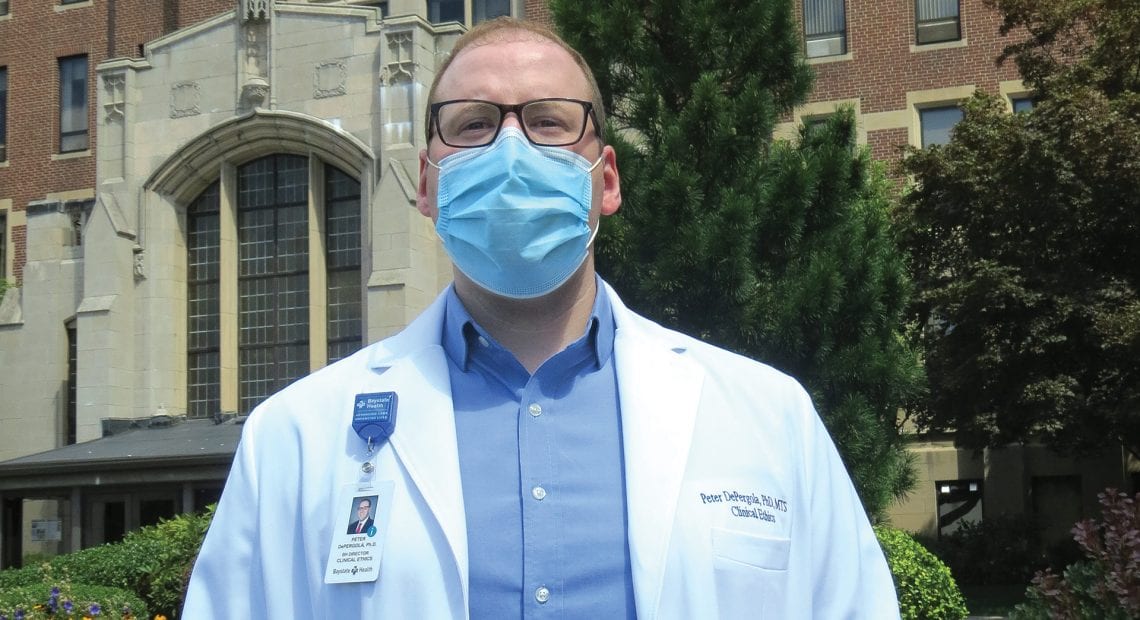
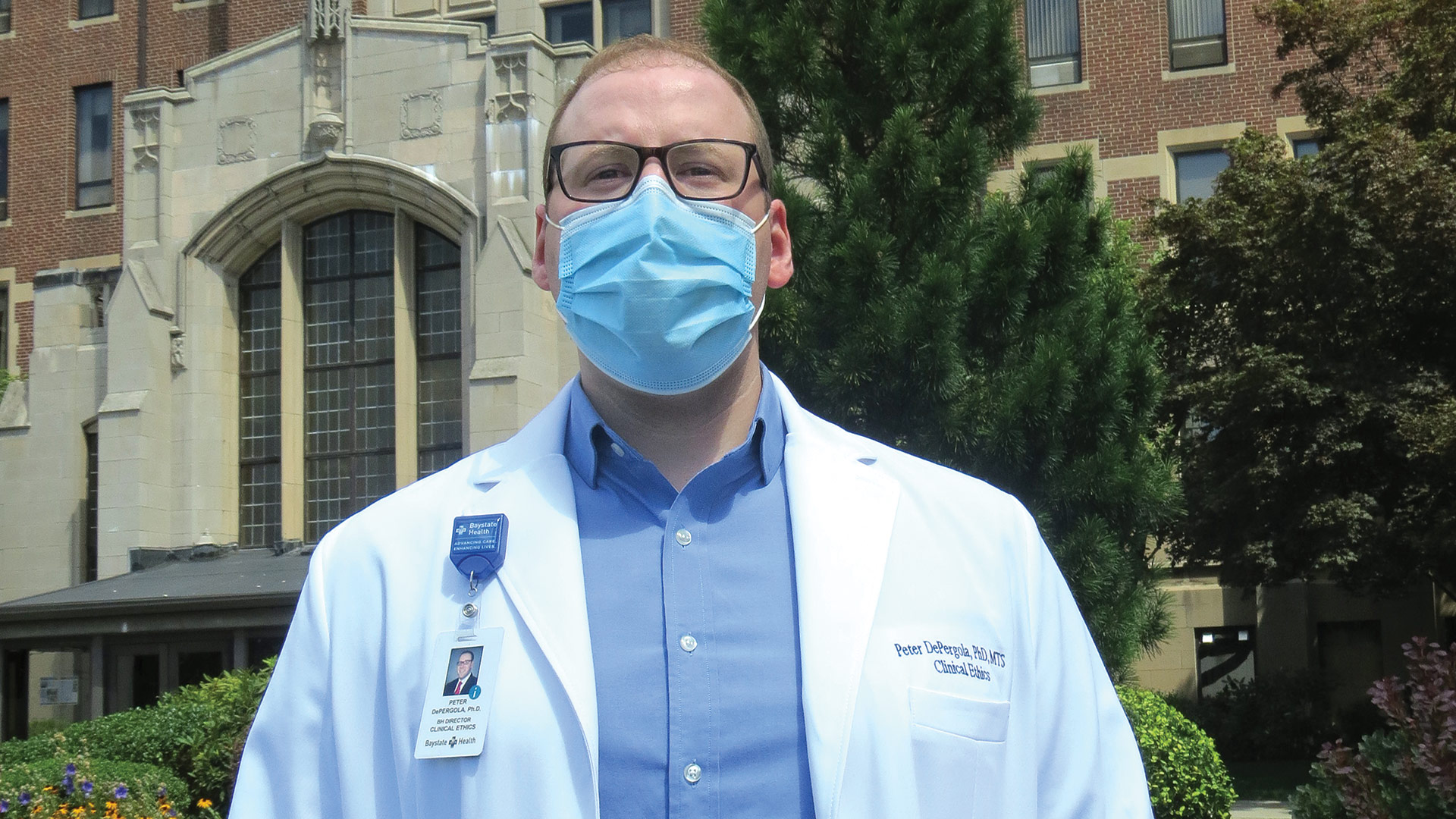
Launched in 2015, and known then as the Continued Excellence Award, BusinessWest’s Alumni Achievement Award recognizes a previous 40 Under Forty honoree who has continued to build on his or résumé as a rising star in this region and leader both in business and within the community. The five finalists for 2020 — Carla Cosenzi, Peter DePergola, Mike Fenton, Paul Kozub, and James Leahy — epitomize what this award, sponsored by Health New England, is all about, and why it is among the most coveted of BusinessWest’s many awards.


Carla Cosenzi

She’s driven to succeed — in business and in the community

>>Read More


Peter Depergola

This pioneer remains on the leading edge in the field of bioethics

>>Read More


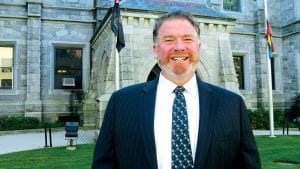
Mike Fenton

He has a passion for the law, and for serving his constituents

>>Read More


Paul Kozub

This entrepreneur — and his label — have come a long way in 15 years

>>Read More


James Leahy

This city leader has always been an ambassador — and a connector

>>Read More


Coronavirus Features Special Coverage

Plane Speaking

Travelers at Bradley

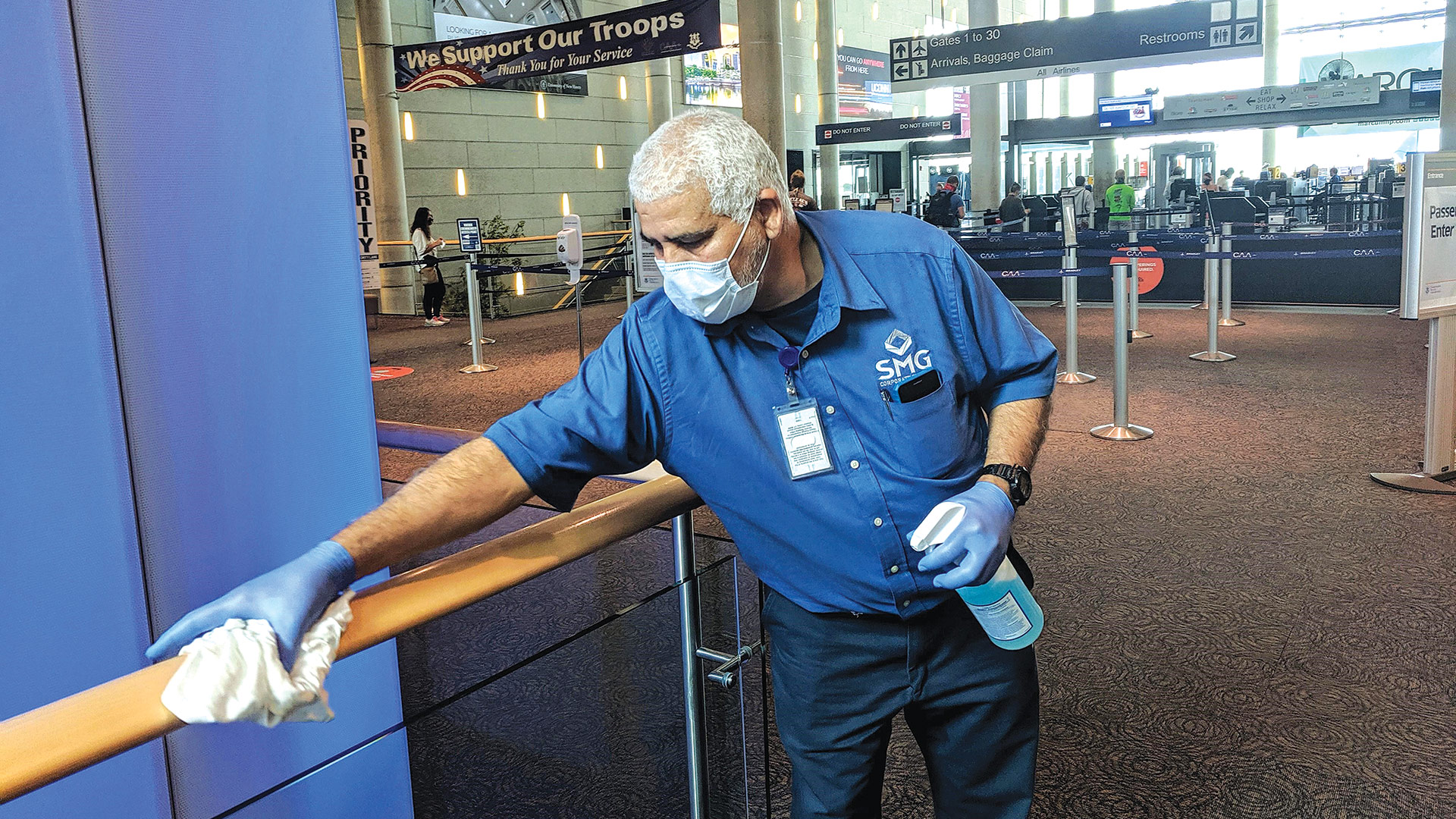
Travelers at Bradley (and there are fewer of them) will find a number of new protocols, from mandatory face coverings to more frequent cleaning and sanitizing.

Bradley International Airport has a contract with a medical laboratory willing to conduct COVID-19 testing for arriving passengers.

Kevin Dillon, executive director of the Connecticut Airport Authority (CAA), which manages the airport in Windsor Locks, Conn., thinks that would be an ideal way for healthy travelers to avoid a mandatory 14-day quarantine instituted by Gov. Ned Lamont in July.

But state leaders turned that option down.

“We have a lab that’s willing to start testing here, yet we can’t convince the Department of Public Health to allow that to occur. It makes no sense,” Dillon said. “Because what’s impacting us now is the travel advisory that’s been put in place here in Connecticut.”

According to the policy, both tourists visiting from other states and Connecticut residents returning from vacations in COVID-infested areas are required to fill out a travel advisory form and indicate where they will self-quarantine. Failure to do so incurs a $1,000 fine.

“Unfortunately, the airlines are reacting to the travel advisory by pulling flights out of the airport,” Dillon explained. “As you can imagine, it’s very, very difficult for someone to take a week vacation and then, when they come back, have to take a two-week quarantine. The same goes for business travel — people aren’t going away for two days when they have to quarantine for 14. That’s had a pretty chilling effect on our level of recovery.”

It’s a recovery — if one can call it that — from the most dramatic loss of business airports across the country have ever experienced, the post-9/11 period included. In April, passenger volume at Bradley was down 98% compared to the same period last year. The airport has recovered some of its volume, but a typical day is still some 70% to 75% below 2019 numbers. And the state of Connecticut is doing the airport no favors with one of the most rigid travelers’ advisories in the nation.
Kevin Dillon

Kevin Dillon

“Airports are competing for some very limited airline assets, aircraft and flights, so we want to present a market that’s viable. This travel advisory really starts to skew how some carriers look at Connecticut and Bradley Airport and this region.”

“I’m not questioning the medical necessity of a travel advisory — I’m not qualified to question that, and I take folks at their word that it’s is a necessary thing,” Dillon told BusinessWest. “What we have asked for here is a testing option. If you get a negative COVID test, you should be able to avoid a 14-day quarantine period. Massachusetts is doing that.”

He has other questions — including why it’s OK to cross the border for a funeral, but not a business meeting — and they all come, he said, from a place of common sense. “We’re not questioning the travel advisory, but I do think testing here at Bradley would make all the sense in the world.”

If the impact of discouraging interstate travel was a short-term thing, it would be less frustrating, but Dillon is looking far beyond 2020, when airlines will emerge from the pandemic as much smaller companies, with fewer planes to spread around the nation’s airports, and some tough decisions to make about where to put them.

“They’re really having a struggle,” he said, with some airlines saying they don’t expect to return to normal operations until 2023 or 2024. “There are going to be winners and losers coming out of this.”

This is true, he said, not only of airlines, but of airports.

“Airports are competing for some very limited airline assets, aircraft and flights, so we want to present a market that’s viable,” Dillon explained. “This travel advisory really starts to skew how some carriers look at Connecticut and Bradley Airport and this region. It’s a concern of ours not only for today but as we look to the future — what damage we’re doing to our relationships to airlines as well as their view of this market.”
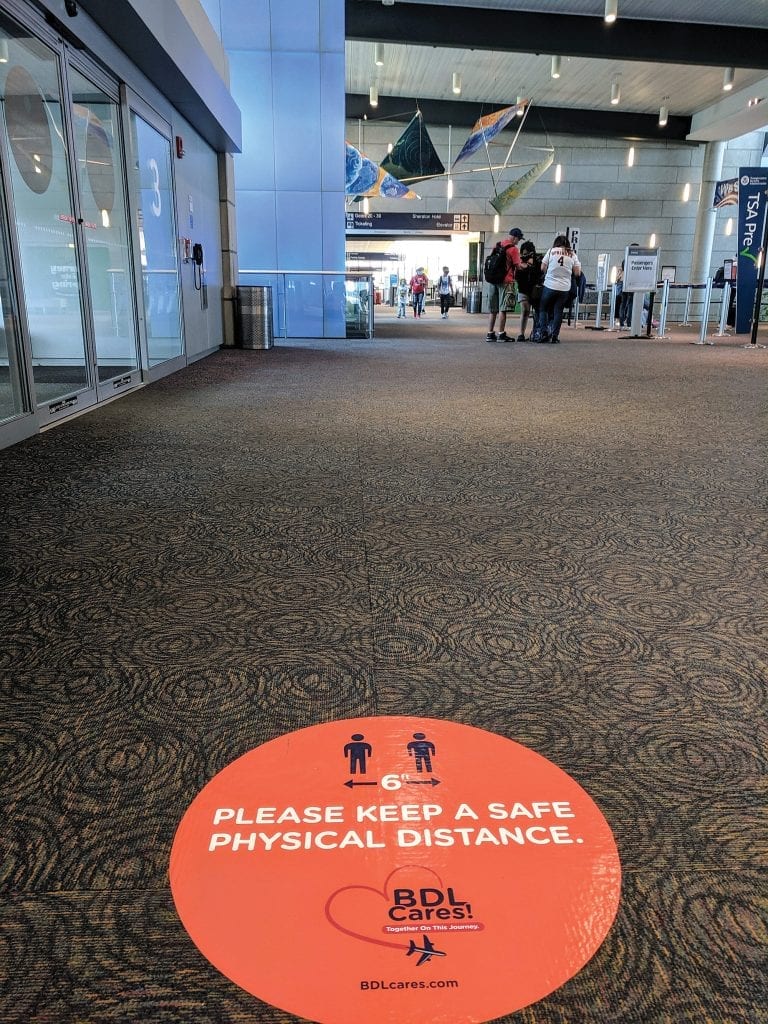
Physical distancing

Physical distancing is easier when terminals are less crowded, as they are now.

For this issue’s focus on transportation, BusinessWest spoke with Dillon about how Bradley is navigating an unprecedented business challenge, and why it’s important to keep investing in the future, because the future is where this story really gets interesting.

Shifting on the Fly

Even before COVID-19 was a thing, Dillon often spoke about how Bradley was constantly competing on two levels: with Logan and the New York airports for passengers, and with every airport in the country for those precious aircraft assets. On thar front, Connecticut’s mandatory quarantine isn’t helping.

“Airlines have to be in locations like Boston and New York simply because of the population and business volume. But airlines have alternatives in terms of not having to serve Bradley and still serving a good portion of this market area,” he explained. “I don’t think it would serve the area really well without us, but an airline trying to skinny down as a result of cost-cutting measures could very well look at it that way.”

The more pressing issue in 2020 has been plummeting demand, of course. “If we don’t have passengers coming through the airport, airlines cut back, we don’t get airline fees, and no one’s here utilizing concessions, parking, renting cars, all the businesses here. When your business is off 75% to 80%, you have a corresponding drop in revenue. It’s a difficult balancing act.”

Dillon said Bradley was fortunate to receive some financial assistance from the CARES Act, which allocated $10 billion to airports across the country. Based on the allocation formula, Bradley received $28 million, which sounds like a lot of money, he went on, but to put it in perspective, that covers about three months of operating expenses and debt service. And the pandemic-related travel slowdown is now well into its sixth month.

“We are fortunate that, as an airport authority, we did create what I consider some healthy reserves, and we will rely on those reserves to some extent, but it wouldn’t be prudent to exhaust our reserves,” he said, noting that they impact bond ratings, among other things.

Bradley did institute a hiring freeze, not replacing most employees who chose to retire this year, and has cut department budgets by 10% to 20%. The CAA is also looking at further measures, including a voluntary severance program.

“It is a goal of ours to try to prevent involuntary severances,” Dillon said. “We don’t want to get to a place where we’re talking about layoffs. For now, that’s off the table. We tried to make a commitment to the employee base — first and foremost, to protect their health, and second, to protect their paycheck. As you can imagine, it’s a challenge.”

About $20 million in capital projects are on hold as well, but some are moving on, including an airport-wide restroom-renovation project that should be complete by October, and features a largely touchless experience with sinks, soap dispensers, hand dryers, and more. These features were planned well in advance of the pandemic, but Dillon said travelers will appreciate them more now.

“People want a safe, healthy, clean environment, and we try to deliver that the best we can,” he noted. “Folks think differently about hygiene in public places now; they have different expectations.”

Other protocols in place at Bradley include the expected: mandatory face coverings, more frequent cleaning and sanitization efforts at high-touchpoint areas, plenty of hand-sanitizer stations, signage detailing physical distancing rules, and plexiglass shields in high-passenger-interaction areas.

Some airlines have committed to limited capacity on planes as well, Dillon said, citing Southwest and Delta as two examples. And the airport is developing touchless kiosks where travelers don’t have to interact with an agent or touch the screen to activate the ticketing process.

Bradley’s restrooms

A major renovation of Bradley’s restrooms, including many touchless features to discourage the spread of germs, began well before the pandemic.

“The key for us is to keep differentiating ourselves from our larger competitors,” he told BusinessWest. “We want people to understand that Bradley is going above and beyond in terms of sanitizing and cleaning the facilities. And Bradley might represent a better option because it’s less congested. We’re going to keep highlighting to the traveling public why Bradley is a better alternative.”

View from the Ground

Again, however, all these efforts are blunted by the fact that considerably fewer people are traveling, and Connecticut is making it difficult to do so.

Airlines are struggling too, Dillon said, sending 135-passenger planes into the sky with only 25. And, like airports, they’re all having internal discussions about the future. Bradley’s five-year contract with carriers expired in June, and with no airlines in a position to sign another five-year deal, they opted for one-year extensions.

But even had longer-term contracts been in place, he explained, “I think a lot of people don’t understand how an airline agreement works. It doesn’t necessarily guarantee you full revenue coming in, because airlines pay revenue in large measure based on landing fees. Airlines can have a presence and pay rent for space, but they’re not required to operate a certain number of flights. If you have carriers cut operations in half, the landing fees we get are then cut in half from that carrier.”

As a difficult, uncertain year continues to unspool, there are a few bright spots, especially progress on a $210 million ground transportation center — expected to be fully operational in late 2021 — that will house car-rental services, expand public parking, and incorporate public-transit connections.

“All that money had been bonded prior to the pandemic, so we’re committed to the project,” Dillon said. “It will really transform the look of the airport and our operations. People who haven’t been to the airport recently will be surprised by the magnitude of the project and how it’s transforming the space out there.”

In addition, cargo business at Bradley has remained consistently strong. “I believe one factor is that people are staying home and doing a lot of online ordering, so we’re seeing small-package delivery — UPS, Fedex, and Amazon — all increase at the airport,” he noted. “Unfortunately, the revenue profile of cargo is much different than passenger traffic, as the bulk of the revenue at any airport comes from the passenger side of the house. But I appreciate that cargo is doing well right now.”

After all, in a year of startling setbacks, any good news is welcome. But what airports need now is clarity — and for people to get back on planes.

“It’s going to be a challenge,” he said. “I’m convinced that, by working smart and having employees work smart, we’ll be able to get through this. But it will be a balancing act for a while.”

Joseph Bednar can be reached at [email protected]

Banking and Financial Services Coronavirus Special Coverage

Uncharted Waters

Michael Tucker

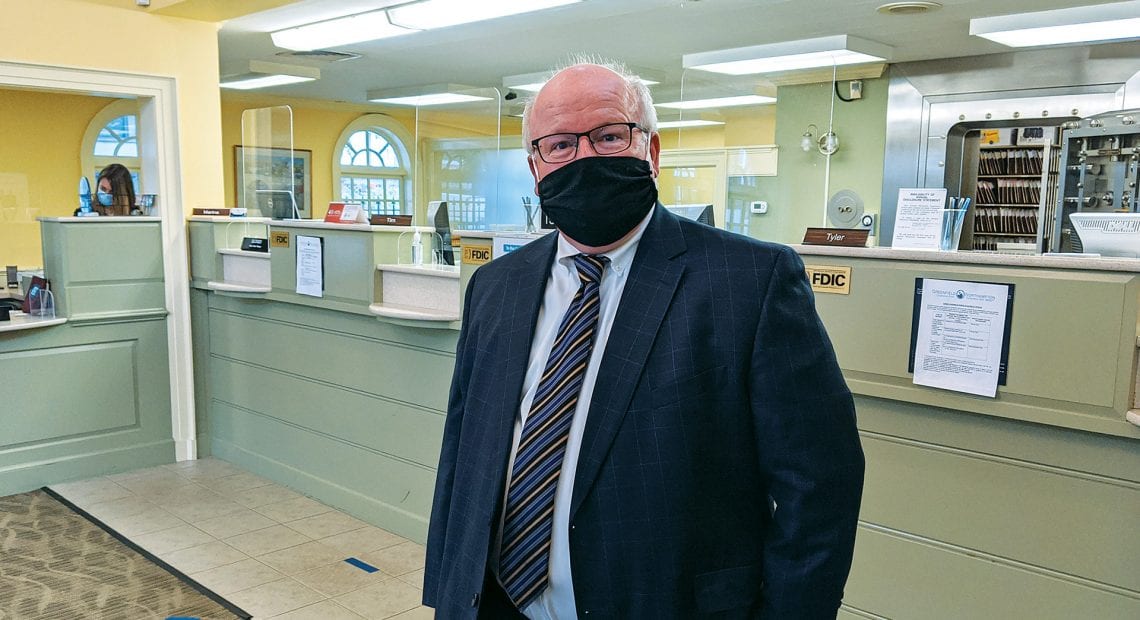
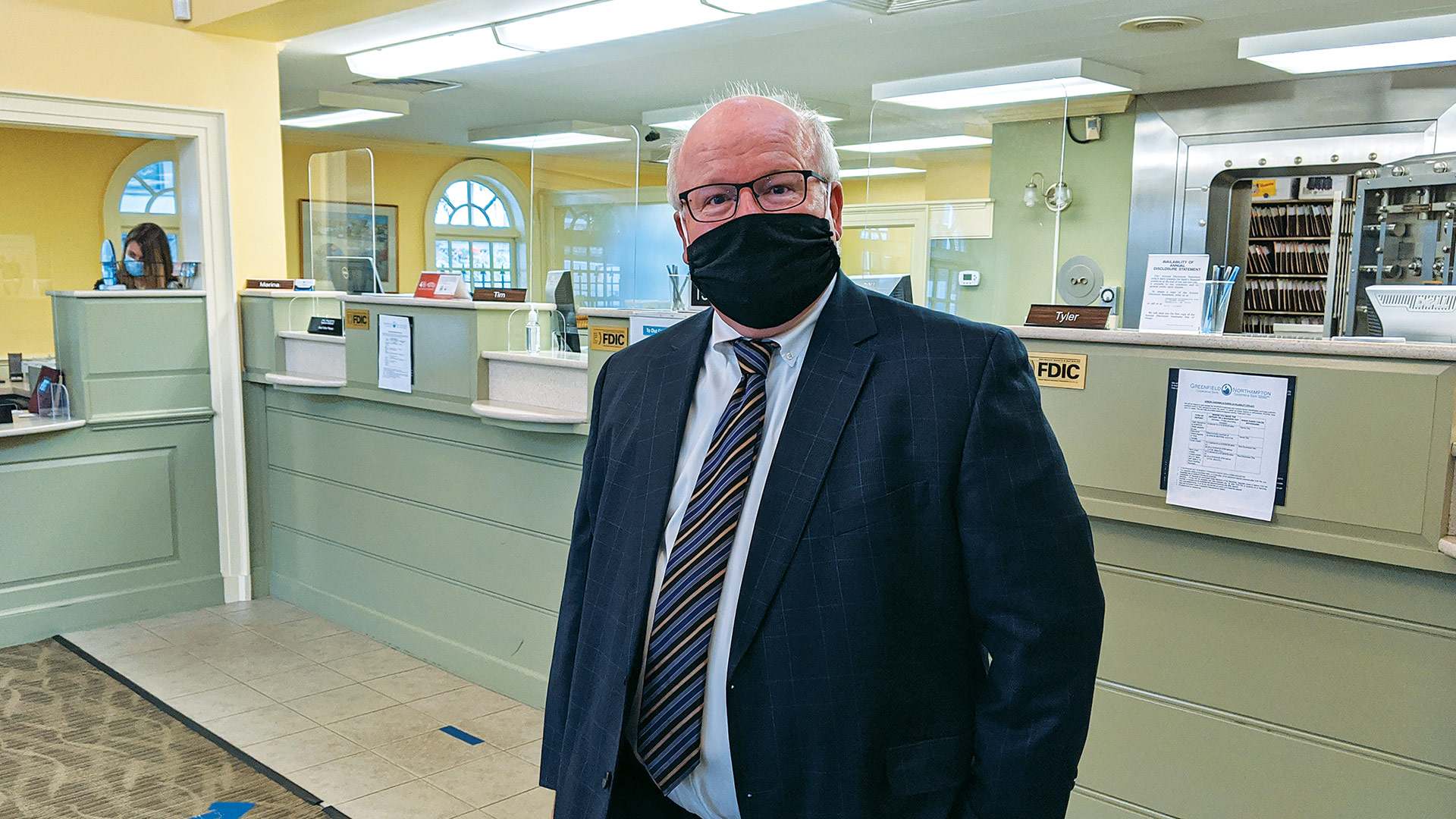
Michael Tucker, president of Greenfield Cooperative Bank.

It’s safe to say 2020 has been an unpredictable year, testing the ability of all businesses to be nimble. Matt Sosik thinks banks are passing that test.

“Community banks may seem like they’re a staid industry, but we’re actually very accustomed to change, and sometimes a fast pace to that change,” said Sosik, president of bankESB. “So we’re used to it. It’s not always visible from the outside, but culturally, we were very well-positioned to deal with the pandemic.

“The unique thing was that it just seemed to happen so fast. It was zero to 60, and you can’t always move at that pace,” he added, noting that bankESB is part of a family of three different banks with almost 500 employees. “But we pivoted as fast as we could.”

Part of that was recognizing that many customers were suddenly in turbid financial waters, and needed help. So, early in the pandemic, all banks were doing what they could to help them, whether that meant deferring mortgage loans for a few months or guiding businesses through the hastily assembled Paycheck Protection Program, or PPP.

“We had a customer-centric focus, which meant helping people navigate payment-related financial issues — at least the financial issues in their lives that could impact their ability to pay us. We did modifications for a lot of folks; we could foresee this was going to be a problematic situation for them. We got out front of it early and tried to alleviate that one piece of stress at a time when so many aspects of life were stressful. We did millions-of-dollars-worth of modifications for customers in the Pioneer Valley.”

Business customers, especially ones forced by a state mandate to shut their doors, were facing similarly dire issues, Sosik said. “We were also doing PPP by the truckload. It was uniquely challenging for us because it all happened at once.”

Such efforts have impacted banks’ bottom line, said Michael Tucker, president of Greenfield Cooperative Bank (GCB), noting that about 15% of mortgage and commercial loan customers took advantage of deferral programs, resulting in an impact of $900,000 from an accounting perspective.

“Everyone else seemed to be in good shape — but that doesn’t mean it’s going to stay that way,” he told BusinessWest. “I don’t see this totally ending until there’s some sort of treatment or vaccine that’s really effective. That being said, things are slowly reopening, and Massachusetts has done a pretty good job keeping infections down.”

And community banks were an important part of that, he said, noting that those loan deferrals, plus costs related to the shutdown and investments in safety protocols in order to reopen, have contributed to GCB being about $1.5 million behind where it would normally be.

“Community banks may seem like they’re a staid industry, but we’re actually very accustomed to change, and sometimes a fast pace to that change. So we’re used to it.”

“It’s going to be a profitable year, but a lot leaner. It’s going to be a challenge,” Tucker went on. “What worries me is what hasn’t risen to the top. We did the payment holiday, but now that the unemployment supplement is gone, and companies rightsize — a lot of them were paying people but couldn’t keep it up forever — I think, until we have a vaccine, we’re looking at a very difficult 2020 and 2021. We’ll be solid; we’ve put a lot of reserves aside, but it’s going to be a challenge.”

Loan Stars

There are some positive signs in the economy, said Jeff Sullivan, president of New Valley Bank, which launched in Springfield last year. He participates in a group of bank CEOs, and on their last group call a couple weeks ago, most said they were pleasantly surprised that, at least on the commercial-loan side, customers who had deferred loan payments had largely returned to their normal payment schedule.

He noted that bank stocks have been “beat up,” as the analyst community didn’t like the idea of deferring principal and interest. “But the overall, totally unscientific trend I’ve seen is that people are pleasantly surprised with how businesses are coming back.

“From our standpoint, we see a lot of growth; businesses are making plans again,” he went on, conceding that New Valley doesn’t yet have a huge portfolio to manage.

Meanwhile, the housing market and stock market are doing better than anyone expected three months ago, he noted, which contributes to an overall mix message when GDP was down 30% in the second quarter and unemployment rose to 16%. “These are troubling numbers, and from a community-bank perspective, we hope it doesn’t turn into a haves-and-have-nots recovery, where the rich get richer and more people get left behind.”

Tucker said demand for loan deferrals has been way down, and banks are now pivoting to help businesses with the forgiveness-application phase of the PPP.

“We did about $18 million worth of PPP, which for us was a lot because most of our loans were under $250,000,” he said, noting that GSB handled about 280 such loans. “It was about a year’s worth of work in a month. Like a lot of banks, our staff was working nights and weekends.”

Sosik added that the waters surrounding the PPP forgiveness phase are still a but murkey and could use some clarity from Congress so the forgiveness path can be clearer. “If people are unclear about forgiveness, they don’t want to spend the money, so it doesn’t get out into the economy.”

At the same time, he added, banks are also being cautious when it comes to growth plans.

“It’s a time to be careful, but at the same time it’s been a very successful year,” he told BusinessWest. “We’ve grown a lot this year, but we’re obviously looking forward, expecting continued economic challenges, and our job is to be here for many years. There are times to push hard and run fast, and times to slow that down and be cautious.”

Still, banking leaders are pleased to have made the investments they did in online and remote banking models, Tucker noted, while holding up his smartphone. “Our fastest-growing branch is this. That’s a reality.”

“Banks caused the 2008 recession. Banks were weakened and in a penalty box and reviled by the mainstream for several years afterward. The big difference now is, this recession was not caused by banks.”

But while the number of GCB customers using remote banking is 25% higher than before COVID-19, branches still serve a critical purpose, he added. “We’ve seen a lot of people realize we are invaluable to them. When they had problems with their mortgage, they can deal with one person and not get shuffled through a lot of bureaucracy. That’s a plus.”

While branches are still necessary, he went on, they’re different than they used to be; the recently opened South Hadley branch is 1,800 square feet, less than half the space the bank used to set aside for new branches. But he doesn’t foresee any closures, aside from two Amherst branches, about a mile apart, that recently consolidated into one.

“Some banks are using this time as a trigger to say, ‘OK, we’re going to close these branches,’” Tucker added. “We’ve chosen not to do that because there’s enough disruption for customers as it is.”

Sosik noted that bankESB has invested a lot of money in the remote infrastructure and platform. “The technology works seamlessly, and the adoption was good. We were looking for a catalyst we could use to push it and have customers really start enjoying the technological advances. We didn’t expect it to come from a pandemic; we didn’t want it to come from a pandemic. But the pandemic absolutely pushed people to use it.”

That said, “we totally believe in the branch part of the overall delivery system, and we’re still investing in branches,” including one recently opened in Amherst. “But they’re much different than the ones we built a decade ago, or even five years ago. There’s still a need for a branch; customers still want that. Even if they don’t need to be there, they still like that someone they know and trust can work with them when they need it.”

Here for the Long Haul

Whatever the model, the presidents BusinessWest spoke with all believe in the work community banks have done and continue to do during a very difficult year for so many.

“We believe in it,” Sosik said. “Everyone who works for a community bank does it because we love that part of it. If you look at any successful New England town, you’re going to find a locally managed, if not locally owned, community-type bank at its economic center”

While banks still grapple with the impact of not only loan deferrals but ultra-low interest rates, they’re still in strong shape, he added.

Sullivan agreed. “Banks caused the 2008 recession. Banks were weakened and in a penalty box and reviled by the mainstream for several years afterward. The big difference now is, this recession was not caused by banks. Banks are healthy and have lots of capital. And hopefully we can turn the page soon and get back to normal lending.”

Tucker doesn’t know what shape the recovery will take — a U, a V, or the one he feels is most likely, resembling the Nike ‘swoosh’ logo, with a long, gradual ascent to normalcy.

“But we’ll do fine, and we are doing fine,” he said. “There’s just a lot of pressure on the margin with rates as low as they are and all the unknown with COVID.

“I’m very optimistic, though,” he added. “Businesses are doing OK. Yeah, a lot of them are struggling, but we see a lot of small businesses trying their damnedest. And we’re trying to support those businesses. We’re here, and we’re going to be here.”

Joseph Bednar can be reached at [email protected]

Community Spotlight Special Coverage

Community Spotlight

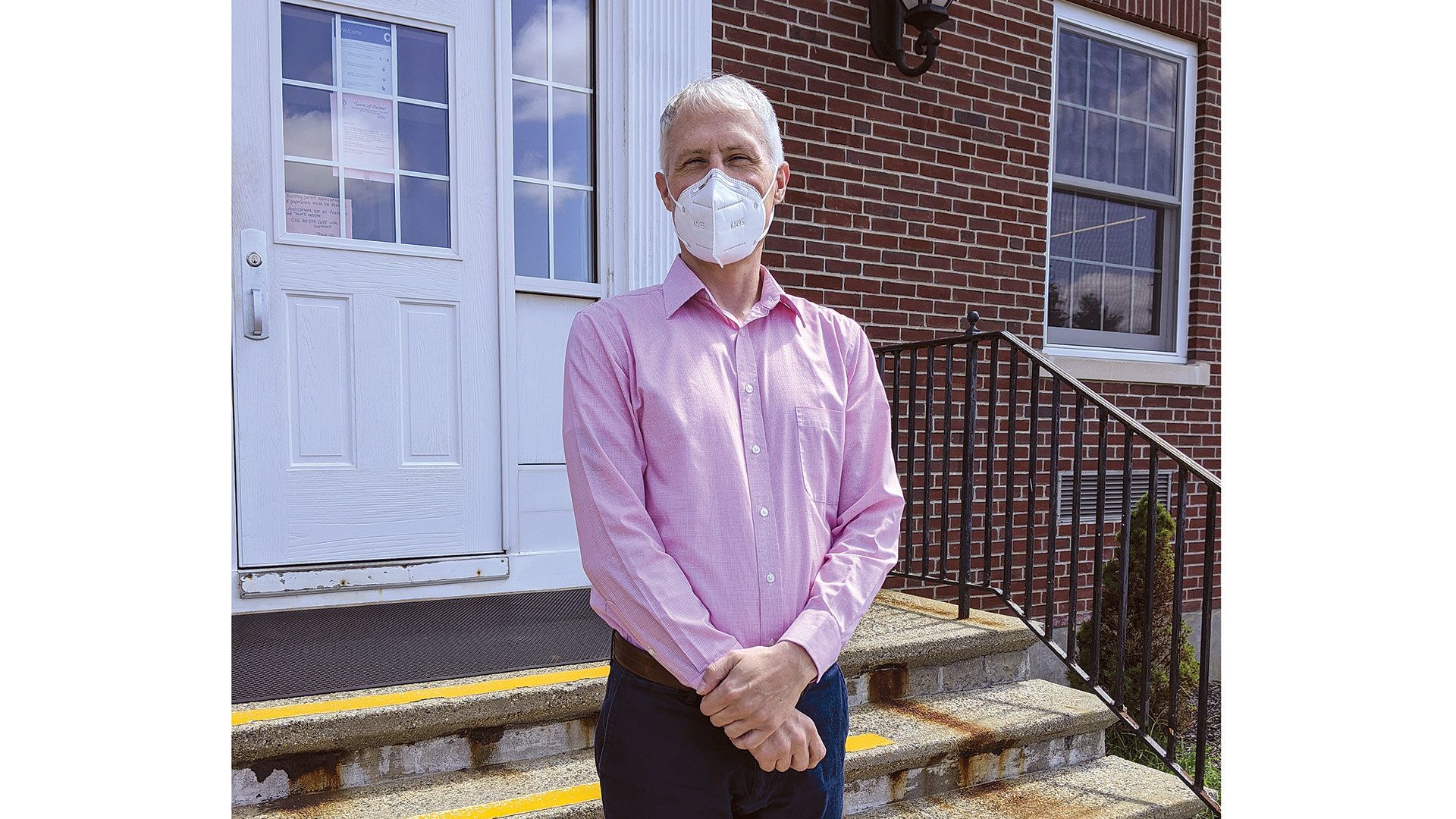
Ryan McNutt

Ryan McNutt says a burgeoning cannabis sector is just one of many positive developments in Palmer.

If there’s one thing capitalism doesn’t like, Ryan McNutt says, it’s uncertainty. And COVID-19 has certainly injected plenty of that into the regional and national economic picture.

But unlike more densely populated areas like Boston, where the death toll — and accompanying anxiety — are higher, leading to a slower return to acitity, Palmer has seen only seven coronavirus-related deaths. Even now, only nine people are under some sort of quarantine order, following a long stretch of no cases at all.

How much Palmer’s low case count has affected business activity is hard to tell, said McNutt, who became town manager last year. But there’s reason for cautious optimism.

“I’m encouraged that our busiest department right now is our Building Department; in fact, I’m going to add another building inspector,” he told BusinessWest. “And some other Western Mass. communities are seeing that as well.”

Local projects run the gamut from a bar on Main Street being converted to a pizza restaurant to Adaptas Solutions adding a building to its complex in the Palmer Industrial Park.

“It’s a growing business — even in this pandemic, people are still adding jobs, adding capacity, adding new product lines,” said McNutt, noting that Sanderson MacLeod, which specializes in manufacturing twisted wire brushes, has grown recently by shifting to new product lines, some of them medical, during the pandemic. “Capitalism is creative destruction. People are going to enter new markets, or enter existing markets where others couldn’t fill those markets, and Palmer will benefit from that.”

The cannabis sector certainly shows no signs of slowdown, with four businesses — Altitude Organic and Heka Health on the retail side and and MINT Cultivation Facilities and the WingWell Group on the cultivation side — getting ready to open in the coming months.

“I’m encouraged that our busiest department right now is our Building Department; in fact, I’m going to add another building inspector.”

“This will be an amazing amount of unrestricted local revenue,” McNutt said, though he was quick to add that most neighboring states still haven’t legalized cannabis. “Once those states or the federal government legalize, there will be diminishing returns. We’re seeing hundreds of thousands of dollars coming in from other states.”

That said, he expects the industry to be a net positive for Palmer’s tax base for a long time to come, even if it’s hard to predict the exact impact. “There’s obviously a floor of cannabis users, but what is the ceiling?”

It’s a question he can apply to many types of economic development, including a long-talked-about rail line that could eventually be a game changer for this community of just over 13,000 residents.

Focused Approach

When McNutt, the former city manager of Claremont, N.H., took over in Palmer last July, economic development was a key focus from the start.

“Economic development is important, making sure we grow the tax base and make it sustainable for the people who live here but also create opportunities to attract new people coming in,” he said. “We can do that to some degree ourselves, and then there are macro things happening, like the east-west rail line. Some days I’m more confident that will come in, some other days I’m less confident. I try to stay on the optimistic side of it.”

Palmer at a Glance

Year Incorporated: 1775
Population: 13,050
Area: 32 square miles
County: Hampden
Tax Rate, residential and commercial: Palmer, $22.80; Three Rivers, $23.42; Bondsville, $23.89; Thorndike, $24.16
Median Household Income: $41,443
Median Family Income: $49,358
Type of government: Town Manager; Town Council
Largest Employers: Baystate Wing Hospital; Sanderson MacLeod Inc., Camp Ramah of New England; Big Y World Class Market
* Latest information available

That said, “if our folks at the federal level are really looking at this country, starting to talk more and more about having a national infrastructure package, then I think the east-west rail line is more promising, because it will take federal money; it will take being a component of a larger national infrastructure package to make it doable. But that east-west rail line would be so transformative for the Commonwealth of Massachusetts.”

In recent years, the Palmer Town Council established a citizens’ advisory committee and contracted with the UMass Center for Economic Development to study the merits of an east-west passenger rail stop in Palmer. The town’s position, roughly central to Springfield and Worcester, and also at the center of a market that extends north to UMass Amherst and the Five Colleges and south to the University of Connecticut, makes it a point of connection in many directions that would benefit from expanded rail service.

In addition, McNutt noted, Palmer has a workforce of close to 8,000 people, and 85% of them work outside of Palmer, mostly in Worcester but more than 100 in Pittsfield. A rail line would ease the commute for many, while individuals who want to work in the Boston area, where housing prices can be exorbitant, could instead choose to live in towns along the rail line, like Palmer.

“There are a lot of good opportunities that make Palmer an attractive community, as long as we market ourselves correctly,” he told BusinessWest. “We’re making sure we’re doing everything we can so when a national infrastructure package gets introduced, we will be shovel-ready.

Speaking of infrastructure, Palmer boasts nine bridges that span four rivers, all built around 80 years ago with a life expectancy of about 50 years, he said. The cost to repair them is about $3 million per bridge, on average, and with the entire municipal budget, including schools, around $40 million, “it’s not like we have the internal capacity to just fix those bridges.”

The town submitted a $7.5 million grant application to the federal BUILD program last year to repair a couple of those bridges, competing with $10 billion worth of applications — across all 50 states — for about $900 million in funding. Despite those odds, Palmer made it to the final round of consideration before being dropped, and McNutt said the region’s federal lawmakers encouraged him to reapply this year. He’s cautiously optimistic the news will be better this time around.

“I think both Democrats and Republicans agree we’ve let huge swaths of this country fall apart since the end of World War II. Bridges, ports, airports … we’ve got to get on top of this. Everyone understands the deficiency across the country is bipartisan. The amount of jobs that could will be created would keep people working for the 20 years fixing the stuff we’ve let go for 70 years. And borrowing money has never been cheaper.”

Bang for the Buck

McNutt said he’s always thinking in terms of economic development, and its importance in communities with tax-rate increases constrained by Proposition 2½.

“I’m conservative when it comes to taxpayer resources,” he said. “I grew up in Massachusetts, and I know the strain Proposition 2½ places upon communities and municipalities, considering the rising fixed expenditures and costs we face, especially on the school side. And at the same time, I really believe that taxpayers pay a lot of money. I’m very keen on making sure people get value for that taxpayer dollar, so we’re always looking for grants and efficiencies in doing business, to be able to control those costs.”

For that reason, he went on, it’s important for towns of Palmer’s size and demographics to attract an influx of younger residents, and expanded rail could help boost that effort.

“Everybody who’s aging and on a fixed income, they really have a limited runway in what the property taxes can get to,” he noted. “That’s something that’s always my first focus — what is the tax base, what is the tax rate, and what is the economic capacity to pay it? How quickly do we need to find new revenue to support municipal operations without having everything fall on the backs of the retiree who’s lived in Palmer their whole life, and not necessarily getting new revenue themselves?”

Fortunately, even during a pandemic, growth is possible — and, in many cases, happening — and the promise of east-west rail service only boosts McNutt’s sense of what’s possible. While his confidence on that front may waver, depending on the day, his belief in Palmer’s potential — and its ability to weather the current storm — certainly does not.

Joseph Bednar can be reached at [email protected]

Features Special Coverage

On the Right Track

Jeremy Levine

Jeremy Levine says Pioneer Valley Railroad and Railroad Distribution Services have a unique business model that has led to decades of success and steady growth.

When it comes to moving freight, Jeremy Levine says, many business owners believe it comes down to a choice between rail — if it’s available — or trucks.

But in many cases, he believes, the best answer might be rail and trucks.

And this is the answer that has enabled Westfield-based sister businesses Pioneer Valley Railroad (PVRR) and its wholly owned subsidiary Railroad Distribution Services (RDS) — both Pinsly Railroad companies — to thrive for the past 35 years and remain on a steady growth trajectory.

“Railroads and trucking … they have their lobbyists in D.C. on opposite sides of the aisle trying to argue against one another,” said Levine, who is awaiting new business cards that will identify him as the company’s business-development coordinator. “But the truth is, for a short-line railroad like us, we use trucking all the time — we’re sending out hundreds of trucks a year to do the last-mile transit for our customers, either here in Westfield or all across the Northeast.”

As a short-line railroad, PVRR, as it’s known to many in this area, moves on 17 miles of operable track running north from Westfield, said Levine, the fourth-generation administrator of the company started by his great-grandfather, Samuel Pinsly. There is a branch running roughly four miles in Westfield and another branch running 13 miles into Holyoke.

The company interchanges with two class-1 railroads — Norfolk Southern and CSX — and takes freight that last mile, as Levine put it, referring to the last leg of a journey that might begin several states away or even on the other end of the country.

“The number you’ll hear is that four trucks equals one rail car. So if you looking to ship a distance or something that’s very heavy, that’s where we provide economies of scale.”

“If you want to get lumber from Louisiana, a large class-1 railroad such as CSX will bring that up, interchange with us at our yard in Westfield, and we’ll take it the last mile or miles to our customers, if they’re located directly on our line,” he explained, adding that, for customers not on the line — those without a rail siding — RDS will take it the last leg by truck via two warehouses it operates in Westfield.

And in some cases, that last leg might be dozens or even hundreds of miles, he noted, adding that rail is a less expensive, more effective way to move material, and RDS enables customers to take advantage of it, at least for part of the journey.

“The number you’ll hear is that four trucks equals one rail car’s worth of capacity,” he explained. “So if you looking to ship a distance or something that’s very heavy, that’s where we provide economies of scale.”

This has been a successful business model since 1982, and the company continues to look for growth opportunities in this region, he noted, adding that such growth can come organically, from more existing companies using this unique model, or from new companies moving into the region to take advantage of its many amenities — including infrastructure. And Pinsley Railroad owns several tracts of land along its tracks that are suitable for development, he noted.

For this issue and its focus on transportation, BusinessWest takes an in-depth look at PVRR and RDS, and how those letters can add up to growth potential — for the company and the region itself.

Train of Thought

Levine told BusinessWest that, while he didn’t work at what he called the “family business” in his youth, he was around it at times, well aware of it, and always intrigued by it.

“When my grandmother was running the business, that’s when they moved the headquarters from Boston to Westfield,” said Levine, who grew up in nearby Granby. “You grow up going to the rail yard, and you’re around these people; you’re definitely going to be inclined to the business.”

But he didn’t take a direct route, as they might say in this industry, to PVRR’s headquarters on Lockhouse Road. Indeed, after graduating from George Washington University in 2015, he stayed in D.C. and worked on Capitol Hill, specifically on transportation policy. He later moved to the private sector and worked at a firm advocating for railroads.

Eventually, he decided he wanted to be a part of the family’s business and relocated to Western Mass. “It’s been quite a ride,” he said while borrowing more language from the industry, noting that he started at PVRR and RDS roughly a year ago.

He came to a company that had a small, steady, and diverse group of rail customers, some that receive thousands of rail cars of material a year and others merely a handful of cars, and more than three dozen RDS customers.

He said his new job description is essentially to generate new business, and he believes there is enormous potential to do just that — again, because of the unique business model these companies have developed and the benefits that rail (or a combination of rail and trucks known as ‘transloading’) brings to potential customers.

As Levine talked about the sister companies and how they operate together, one could hear the drone of forklifts operating in the warehouse outside his office, which led to an explanation of how it all works.

“We have some rail cars here this morning,” he explained. “They got dropped off by CSX late last night; early morning, or 3 a.m. crew [at PVRR] dropped them off here. The crews have been unloading them, staging them, and placing them outbound on trucks to head off to our various customers.”

There are other operations like this, or somewhat like this, in the Northeast, he explained, but what sets this operation apart, beyond the interchange with the two class-1 railroads, is the fact that the company owns both its railroad and distribution services.

“There are companies like our Railroad Distribution Services that are directly on CSX’s line,” he noted. “But the difference there is they don’t control the trains; I can pick up the phone and call the train operator and ask him when he’s going to be here with my rail cars, and with that comes a lot of security that your stuff is not going to backlogged or jammed up and that your deliveries are going to come on time.”

It is this security — and these benefits — that Levine is selling to potential customers. And as he goes about that task, he has the Pinsly team, if you will, focused solely on the Westfield operation and its future. Indeed, the company, which operated short-line railroads in Florida and Arkansas, has divested itself of those operations, with PVRR and RDS being the only holdings in the portfolio.

“What that has allowed us to do is reinvest and recalibrate,” he explained. “We had a very large team throughout the years and a lot of focus on Florida, where we had 250 miles of track; we can now take that talent and focus on our operations here.

“My go-to line is that ‘even you don’t have rail siding, that doesn’t mean you can’t benefit from railroading,’” he continued, adding that he can back up those words with numbers, and he intends to use them to build the company’s portfolio of customers.

PVRR owns a 1930s-era passenger rail car that it calls the ‘dinner train.’ As that name suggests, it’s used for fundraising events, a customer-appreciation gathering, and even as a means to transport Santa Claus to Holyoke Heritage State Park for annual festivities there.

It hasn’t been out of the yard much in the era of COVID-19, but U.S. Rep. Richard Neal recently used it as a backdrop for an event, said Levine, adding that the dinner train has become a highly visible part of this company for decades now.

But the bottom line — in virtually every respect — is that PVRR and RDS are about getting freight, not people, from one place to another.

It’s a moving story, and one that could well add a number of new chapters in the years to come as the company tries to get customers on the right track when it comes to freight — literally and figuratively.

George O’Brien can be reached at [email protected]

Banking and Financial Services Coronavirus

Volume Business

By Mark Morris

When COVID-19 made its arrival in Western Mass., it was mid-March, just weeks before the start of the traditional home-selling season. Area mortgage professionals didn’t know what to expect when the pandemic hit, but they certainly weren’t projecting a solid year.

Soon, though, they had to adjust those expectations and projections.

Indeed, a combination of factors, from historically low interest rates to high demand and low inventories, have made this a much busier, much better year than most residential lenders and home sellers could have hoped for back in the dark days of March.

Indeed, instead of completely canceling the spring home-buying market, the pandemic merely postponed it, said James Sherbo, senior vice president of Consumer Lending with Holyoke-based PeoplesBank.

“We’ve been very busy because the activity we would have normally seen in April or May, we saw in June, July, and August,” he told BusinessWest.

Jeffrey Smith, vice president and chief Lending officer with Freedom Credit Union, concurred, noting that any debilitating effects on the housing market from the pandemic have been more than offset by lower interest rates. The rates were already fairly low — in the 3.25% to 3.5% range — before the pandemic, he said, but now consumers can now get a 30-year fixed-rate mortgage for well under 3%.

James Sherbo

James Sherbo

“We’ve been very busy because the activity we would have normally seen in April or May, we saw in June, July, and August.”

“This is probably the best real-estate market I’ve seen in years,” Smith said. “When the pandemic first hit, I thought it was going to be just the opposite.”

Meanwhile, many mortgage holders are taking advantage of these lower rates to refinance, and this high volume of refis, as they’re called, is keeping most all lending institutions busy.

“It’s crazy … we’ve seen an 80% volume increase in our overall business compared to last year,” Smith noted. “And we certainly did not expect that.”

Tami Gunsch, senior executive vice president and director of Relationship Banking at Berkshire Bank, agreed. She said the bank is pleased with the Mortgage Division’s performance, “especially during these unprecedented times of COVID-19.”

For this issue and its focus on banking and financial services, BusinessWest takes an in-depth look at the housing market and the various, and powerful, forces that are driving it.

Rooms for Improvement

Flashing back to mid-March, Sherbo said his department was mostly focused on where (and how) team members would work, and keeping employees and customers safe.

“We just tried to prepare as best as we could to keep our team safe and our customers safe,” Sherbo said. “When COVID-19 first hit, everybody wondered what would happen; nobody had a crystal ball.”

Indeed, no one could have foreseen how the drop in interest rates — one of many steps taken to stimulate the economy — and other factors would collaborate to stimulate virtually all aspects of the housing market and create a unique set of circumstances.

Home sales are strong, again, because of low interest rates even though fewer homes are for sale, said Sherbo, adding that he can’t recall a time when both conditions have happened at the same time.

Jeffrey Smith

“This is probably the best real-estate market I’ve seen in years. When the pandemic first hit, I thought it was going to be just the opposite.”

“I’ve seen rates this low before, but I’m not sure we’ve seen this lack of supply in quite a while,” he said, adding that it’s no surprise that many people do not want to move or sell during the pandemic, so the supply of homes for sale is limited. That creates an environment where many purchase offers are coming in higher than the asking price.

“New listings are selling very quickly,” noted Smith, adding that nearly all the houses offered for sale in early July were sold by early August.

In addition to people moving out of the city and into the suburbs to take advantage of low interest rates, Smith said the demand for second homes is exploding.

“In the last three to six months, prices have increased by 20% or more in areas like Cape Cod or Maine,” he noted. “Second homes are a hot market right now, and because there is a limited supply, properties are on the market for only a short time before they are sold.”

Then, there’s the refi market.

Gunsch said that, in addition to strong new-mortgage activity, Berkshire Bank is doing a high-volume business in refinances.

“Refis account for 52% of our closed-loan production through July,” she said, “while in the prior year, during the same period, they accounted for 35% of the closed loan volume.”

Smith added that, thanks to the robust business Freedom is doing with loan refinancing, he does not anticipate the lack of housing supply to limit the institution’s growth potential this year.

Strong housing-sales activity is even more impressive considering how the entire home-buying process had to quickly change when COVID-19 hit.

The notion of a real-estate agent walking potential buyers through a house for sale sounds almost quaint these days, as virtual tours have replaced showings, and drive-by looks at a house have become the norm.

“People are buying homes based on what they see online,” said Smith. “Many people are not even going out to the house to see it. In some cases, particularly for second homes, they are buying them sight unseen.”

Before COVID-19 struck, Smith said Freedom had limited online mortgage-application capabilities, but the virus forced the institution to quickly go all in.

“Luckily, we had the technology to be able to make a fast adjustment to online only, so we were kind of ready for it,” he told BusinessWest.

PeoplesBank launched its paperless mortgage-application system in October 2019 after two years of refining it. When COVID-19 arrived and disrupted so much of daily life, Sherbo said having a touchless system already up and running made it easier to maintain business levels.

“Our customers don’t have to meet or sign anything in person,” Sherbo explained. “The entire application process can be done online or over the phone. We were ready for this, which was great.”

Gunsch said Berkshire also uses an online application process. When an appraisal of the property is needed, only the exterior is appraised to reduce physical contact.

“Loan closings are still done in-person with everyone wearing masks and following social distancing guidelines,” she added.

Critical Deferrals

A serious concern at the beginning of the pandemic was the potential for mortgage delinquencies to spike due to homeowners affected by financial and health issues. In April, Gov. Charlie Baker signed into law a moratorium on evictions and foreclosures on consumers through March 2021.

Meanwhile, those who are struggling with COVID-related issues are encouraged to contact their mortgage holder to defer payments. The law makes it clear that, by deferring, consumers merely extend the length of the mortgage without taking a hit on their credit rating.

All the mortgage professionals BusinessWest spoke with said the deferral program has worked to keep delinquencies down and allow people to stay in their homes.

“We have a strong team in place to assist our borrowers with loan deferrals and ensure they understand their options to defer payment during this time,” said Gunsch.

Smith said that roughly 5% of Freedom mortgage holders have taken advantage of the deferral program. “We’re actually seeing our delinquencies at very low levels, lower than they’ve been in years.”

Smith added that most of the deferral requests occurred in April and May. With each passing month, the number of new deferrals continues to decline.

“The deferral program is working the way it was intended,” Sherbo added. “It’s giving people the chance to maintain their own stability and credit.”

As for inventories, even that picture may improve soon. A recent report from the U.S. Census Bureau and Housing and Urban Development (HUD) showed new housing construction starts are up more than 23.4% in July 2020 compared to July 2019. The national figure closely mirrors the Northeast, which saw a similar increase of 23.3%.

Locally, Sherbo said new home starts are relatively flat, but if interest rates continue at record lows, that would encourage more new construction in Western Mass.

Just as no one had a crystal ball back in March, none of the mortgage professionals we spoke with can really say what will happen six months or a year from now. That’s the nature of this pandemic — a high level of unpredictability.

For now, the housing market is booming at a time when few thought it would. This is good news for banks and credit unions — and for the customers they serve.

And it’s certainly one of the more intriguing stories in a year with seemingly no end of them.

Banking and Financial Services

Course of Action

By Gabriel J. Jacobson and Ian Coddington

In addition to the obvious financial benefit to the employee, employer-funded advanced education can carry financial and soft benefits for employers, employees, and colleagues alike.

These benefits extend beyond the person who is pursuing advanced education, as this article explains.

More Accessible to Working Professionals

As access to online education grows, the number of professionals seeking to advance their education also increases. In 2017, one in six students enrolled entirely online, and one in three enrolled in at least one online course.

With the advent of the COVID-19 pandemic, schools around the country shut down their physical locations, and students were forced to move to online learning. Now that most students have taken some form of online classes, it is likely that many will choose to continue this method of learning.

Gabriel Jacobson

Gabriel Jacobson

Ian Coddington

Ian Coddington

Advanced education has become more attractive to employees and employers because it is a more accessible option for working professionals. One tax associate at Meyers Brothers Kalicka recently took advantage of the opportunity to pursue an advanced degree while continuing to work full-time. He enrolled at the Isenberg School of Management at UMass Amherst to gain a BBA in accounting and decided to remain online rather than go in-person.

Prior to making this choice, he worked full-time for a few years before deciding he wanted to earn his business degree. He enrolled in a la carte online classes immediately to accelerate his degree track before he was officially admitted. Once he was accepted into Isenberg, he decided to remain online so he could continue working a full-time internship at Meyers Brothers Kalicka, which ultimately led to him being offered an associate position at the firm.

He attributes the combination of full-time school and full-time work to his success, claiming that experiencing real-world situations reminiscent of the subject matter of his classes helped cement key concepts related to his profession. He graduated with more than a year of real-world professional experience under his belt.

The heart of online school is the flexible pace; students choose any quantity of classes each semester, meaning they could offload during busy season and upload during the slow season. Some employers allocate otherwise-unassigned slow-season hours to degree-earning coursework.

“Employers can sponsor employees with funds for academic training to build job-related skills. They may provide up to $5,250 in employer education-assistance benefits for undergraduate or graduate courses tax-free each year.”

With the increase in availability of online education due to the pandemic, companies can leverage this opportunity to attract talent earlier to both their and the student’s benefit.

Tax Incentives for Employers

Employers can sponsor employees with funds for academic training to build job-related skills. They may provide up to $5,250 in employer education-assistance benefits for undergraduate or graduate courses tax-free each year. To receive the benefit, the funds must pay for tuition, fees, books, supplies, and/or equipment. As an added bonus, these funds qualify for a business deduction and are not required to pay FICA or FUTA payroll taxes.

However, the education must be legally required for the employee to maintain their current position, or it must improve or maintain skills required for the position. One of these two stipulations must be met to satisfy the tax-free treatment.

There are limits, as these benefits are for employees only, and not for spouses or dependents. Also, there is no choosing between the education benefit and a cash payment to the employee. Employers should provide these rules and others as a written notice to employees interested in receiving the benefit.

Organizational and Culture Benefits

Outside of the financial benefits, there are workplace benefits to supporting student employees. Collaborative teams are a mainstay of most successful businesses. These teams often group employees with differing niches and experience levels, so they translate directly to supporting newer employees’ development through mentorship.

Mentorship relationships can help maintain accountability and time management for online student professionals. They can also serve as sounding boards for in-class work and discussion that reflect areas of interest to the student employee.

For example, the previously mentioned associate nurtured a mentorship relationship with his manager by discussing his primary interests and questions from his corporate tax class. Outside the mentor relationship, he found solidarity and motivation with peers at his level as many completed online master’s programs to advance their careers.

These relationships foster vibrant cultures of positive reinforcement toward educational goals within firms all over the country. Further, this culture can extend beyond the classroom and cultivate a collaborative and supportive work environment.

The human-capital, financial, and cultural benefits of incentivizing employees’ advanced education through online learning cannot be overlooked in today’s business climate. With the tools highlighted above, companies should take advantage of this opportunity.

Gabriel J. Jacobson and Ian Coddington are associates at Holyoke-based accounting firm Meyers Brothers Kalicka, P.C.; (413) 536-8510.

Company Milestones

Company Milestones

Paul Scully, president of Country Bank

Paul Scully, president of Country Bank

It was March 1850. Millard Fillmore was still working through his first 100 days in office as the thirteenth President of the United States — although no one was probably counting the days back then. In six months, California joined the Union as its 31st state, taking the country from coast to coast and Ware Savings Bank was incorporated under the laws of the Commonwealth of Massachusetts. Thus, the first chapter in the 170-year history of Country Bank was written.

There have been a number of important chapters written since — including the incorporation of Palmer Savings Bank in 1870 and the merger of those two institutions in 1981 to form Country Bank for Savings (later shortened to simply Country Bank). Paul Scully, the bank’s current president, noted that many things have changed at this institution over those 170 years, everything from its footprint — it now stretches from Ludlow to Worcester, with 14 branches and 23 ATM/ITM locations — to how people do their banking.

Company:
Country Bank
www.countrybank.com
800-322-8233
Home Base:
Ware, Mass.
Founded:
1850
President:
Paul Scully
Company Snapshot:
A community bank with 14 locations

What’s more significant to him — and all members of the Country Bank team — is what hasn’t changed in that time. Specifically, it’s a commitment to the customers, communities, and staff that sets this institution apart. In short, what hasn’t changed is that this is still a community bank in every sense of that phrase. “What we are celebrating is the bank’s support for those who have been right there with us along the way,” stated Scully. “And we’re celebrating our independence in being a mutual savings bank, and one of the most highly capitalized banks in the Commonwealth.”

This rich history of support prompted the bank to assume a leadership role during times of crisis — and there have been many over the past 170 years, perhaps none more significant than the COVID-19 pandemic.

Over the past several months, the bank has stepped up to assist its commercial and consumer customers impacted by the virus and resulting economic downturn. “Every customer matters, regardless of their deposit balance, and we’re here to help them achieve their dreams or navigate through rough waters.” None have been rougher than those generated by the pandemic, he noted, adding that the bank has written 475 Payment Protection Plan (PPP) loans in amounts ranging from $1,500 to $2 million and helped many commercial and mortgage borrowers. “It’s the premise of why community banking and Country Bank exist,” he went on. “Since the start of the pandemic, the bank has donated over $450,000 to COVID-related relief efforts along with an additional $400,000 to other local non-profits. For the past one hundred and seventy years, the bank’s operated with the belief that healthy communities thrive; recognizing that it has not only an opportunity but a responsibility to support its communities at varying levels.”

A RICH HISTORY

There have been many milestones for Country Bank since 1850, and dates to remember:

July 1869: The Committee of Investment voted that the bank loan to the town of Ware in the amount of $70,000 was to be used in the building of the Ware River Railroad;

• 1920: The service of school savings accounts was inaugurated to help establish a habit of thrift among young savers;

• 1945: The first home loan to a veteran of World War II was made under the G.I. Bill of Rights;

• 1982: The first ATM was installed;

• 2017: The Boston Business Journal first recognized the bank for its charitable donations; and

• 2019: Country Bank became a founding member of the Worcester WooSox.

These milestones collectively speak to the notion of what a community bank is — or should be — and that legacy is being celebrated as this institution turns 170. “Behind the individual milestones is a consistent pattern of service to the community,” Scully said.

A LEGACY OF CARING

When asked how the bank would mark its 170th birthday, Scully said there would be “subtle” celebrations. “We’re not big on tooting our own horn on things,” he noted, adding that there would be themed events in the fall celebrating its 170th birthday and the staff and customers who have been a part of the bank’s legacy. Rather than celebrate with lots of hoopla, the bank is far more focused on continuing — and building upon — its strong track record. “It’s a significant milestone that you can’t take lightly,” he said. “For all of us who are associated with the organization, we are given the challenge — and opportunity — to maintain a legacy: a legacy of supporting those in need and helping customers achieve their financial goals and dreams, whatever they may be. And that’s what is being celebrated as this institution turns 170.”

Opinion

Editorial

Let’s face it — it’s been a long, hard year. And it’s only September.

Indeed, the pandemic has made this not only one of the most trying times almost anyone can remember, but one of the most tiring, especially when it comes to the seemingly unending barrage of bad news that began back in the dead of winter. Bright spots have been few and far between.

Which brings us to BusinessWest’s Alumni Achievement Award. That’s the new name attached to a program started several years ago called the Continued Excellence Award. By whatever name it goes, this is an important honor, but one that often gets a little lost amid some of our other awards.

This one, sponsored this year and the past few years by Health New England, is presented to a Forty Under 40 winner who has continued to build upon their résumé professionally and perhaps within the community as well.

And this year’s class of five finalists provides a strong ray of light in a year that has been mostly dark. They are:

• Carla Cosenzi, president of TommyCar Auto Group, is also a winner of BusinessWest’s Difference Makers Award. Over the past several years, she has added dealerships to the company’s portfolio and many new lines to the list of nonprofit groups and causes she and the company support, especially Driving for the Cure, which raises money to battle brain cancer.

• Mike Fenton, an attorney with Springfield-based Shatz, Schwartz and Fentin as well as a Springfield city councilor, has been a finalist for this award many times, and for good reason. He represents Ward 2, but he’s had a strong impact across the city, especially during the COVID-19 pandemic.

• Paul Kozub, founder and president of V-One Vodka, is the pure entrepreneur in this group, and a multiple winner of our awards, including Top Entrepreneur in 2016. We’ve followed his story from the very beginning, when his was a struggling brand trying to break out. Now it’s in several states, and is the official vodka of the Pro Football Hall of Fame.

• James Leahy, has a day job — with the Massachusetts State Lottery — and a city job, as an at-large city councilor in Holyoke who just celebrated two decades in that role. But his influence extends far beyond City Hall; indeed, he’s become actively involved in a number of Holyoke institutions.

• Peter DePergola is director of Clinical Ethics at Baystate Health. In a very short time, he has become not only a regional and state leader in the emerging field of bioethics, but a national and even international leader as well, particularly as he applies his expertise to the COVID-19 crisis.

The winner of the 2020 Alumni Achievement Award will be announced on October 8 at this year’s drive-in 40 Under Forty event at Mercedes Benz Springfield. But all of these individuals are winners. And, more importantly, the region is the winner for having them working, living, and making contributions inside the 413.

Opinion

Opinion

By Suzanne Parker

This year marks the 100th anniversary of the passage of the 19th Amendment and women’s constitutional right to vote. This historic moment provides an important opportunity to emphasize that full gender equity requires racial justice and equity as well.

While the women’s suffrage movement benefited tremendously from the leadership of black women, it did not advance or include their right to vote. In fact, it took more than a half-century later for women of color to access the ballot with the passage of the Voting Rights Act of 1965.

The U.S. has a long history of denying its citizens the right to vote. ​Building a more equitable society means ensuring ​all ​people, regardless of race, gender, and socio-economic status, are able to participate in our political system. Many of our most heavily debated issues — the economy, healthcare, education, and public safety — carry tremendous consequences for those most vulnerable and with the least amount of political power.

That’s why it’s so important for girls, particularly girls of color, to be civically engaged as early as possible. Through our She Votes initiative, Girls Inc. helps girls realize the power of their voices, learn about the structure and role of the U.S. government, and even be inspired to run for elected office one day. Girls are innately powerful and, with the right opportunities and support, can grow up to be leaders and change agents in the world.

​Building a more equitable society means ensuring ​all ​people, regardless of race, gender, and socio-economic status, are able to participate in our political system.

Often overlooked in the pages of history, women of color have played an instrumental role in advancing civic engagement, voting rights, and social movements for centuries. From abolitionists like Sojourner Truth and Harriett Tubman to suffragettes and activists like Mary Church Terrell, Nannie Helen Burroughs, and Ida B. Wells, black women bravely fought for the rights of women and men long before they themselves were seen as equal citizens under the law or had the right to vote. They endured racial prejudice, discrimination, and even violence to advance justice and freedom for all. As ​educator and civil rights activist ​Nannie Helen Burroughs wrote​, “to struggle and battle and overcome and absolutely defeat every force designed against us is the only way to achieve.”

When the Voting Rights Act of 1965 was passed — making racial discrimination in voting illegal — it marked more than a century of work by black suffragists to secure voting rights for all people, which finally would include them. To this day, however, obstacles to voting still persist for black Americans and communities of color, including voter suppression, ​photo-ID requirements, early-voting cutbacks, under-resourced polls, and inadequate funding for elections.

Young people of color face additional barriers. ​Mail-in ballots, which many young people complete (as well as first-time ​voters and people of color), have been found to be rejected at a higher rate than in-person ballots, according to the U.S. Election Assistance Commission. Tougher voting rules, difficult absentee-ballot procedures, and irregular school and work schedules serve as additional obstacles to young people exercising their right to vote.

Increasing voter participation is critical for democracy. With Nov. 3 just two short months away, we must do everything we can to ensure safe, fair, and accessible elections amid the COVID-19 pandemic. Many states have begun preparations to educate people about the health risks, make polling places as safe as possible, and also encourage voting by mail. We must also urge Congress to appropriate emergency funding to support such efforts, as the funds provided in the CARES Act fall tremendously short of what is necessary.

Millions of eligible voters, many of them women and people of color, are not active in our political decision making — and we need them to be. During this year’s centennial celebration, we remember the women who paved the way for future female voters and political leaders, and the work that remains to ensure ​all​ girls and young people grow up in an equitable and just society.

Suzanne Parker is executive director of Girls Inc. of the Valley; (413) 532-6247.

Picture This

Email ‘Picture This’ photos with a caption and contact information to [email protected]


Helping Local Kids

Carr Hardware in Pittsfield launched a program called ​“Round Up for the Schools”​ to benefit local Berkshire County school districts. Customers have the option to round up the cost of their purchases to the nearest dollar, and Carr will then match those donations and purchase needed personal protective equipment, such as masks, gloves, sanitizer, and other items, to donate to local schools, said company President Bart Raser (pictured). Carr Hardware will also have collection jars stationed at all locations for customers to donate.


Boosting Access to Food


Florence Bank donated $5,000 to Chesterfield’s Community Food Cupboard, which was recently established by Chesterfield’s Council on Aging and a group of volunteers to help needy families access food during the COVID-19 crisis. The team includes members of the Select Board, trustees of the Chesterfield Library, along with Council on Aging board members and the Chesterfield Finance Committee. Pictured, from left: Chesterfield Community Food Cupboard volunteer Denise Cormier, Florence Bank Branch Manager and Vice President April O’Brien, and Janice Gibeau, director of Chesterfield’s Council on Aging.


Ribbon Cutting at F45 Training


Dan and Jessye Deane recently opened F45 Training at 1464 Riverdale St. in West Springfield. The interval training studio is a franchise out of Australia that is just getting its start in the U.S. Unlike traditional box gyms, F45 blends high-intensity interval training, functional training, and circuit training and pulls from 4,100 exercises, ensuring that no workout is ever the same. Pictured, from left: Brennan McKenna, West Springfield Mayor Will Reichelt, Dan Deane, Jessye Deane, Charley, Brady, Cooper, and Kristina Cordova.


Driving for the Cure

It wasn’t exactly business — or even golf — as usual, but the 12th Annual Tom Cosenzi Driving for the Cure Charity Golf Tournament was staged Aug. 17 at Twin Hills Country Club in Longmeadow. The field was smaller than in years past — 140 golfers — and there were other changes made due to COVID-19, but roughly $70,000 was raised to aid research into cures for brain cancer. Top to bottom: Tom Cosenzi Jr. and Carla Cosenzi, co-owners of TommyCar Auto Group and founders of the tournament, named in honor of their father, who succumbed to brain cancer in 2009; Golfers line up at the registration table; The event T-shirts tell the story; over the years, the tournament has raised more than $1 million to fight brain cancer.


Open for Business


Sport Clips Haircuts Hadley owner Ian Coogan was joined recently by his wife, Lisa Scheff, and daughter, along with state Rep. Dan Carey, Amherst Area Chamber of Commerce Executive Director Claudia Pazmany, and the Sport Clips team to cut the ribbon at the grand opening ceremony for their new location along Route 9 in Hadley.


Alumni Achievement Award

President, TommyCar Auto Group

She’s Driven to Succeed — in Business and in the Community

Carla Cosenzi

Carla Cosenzi has become a solid role model for her children, Niko and Talia, when it comes to getting involved in the community.

Carla Cosenzi moved into her new office at Northampton Volkswagen some time ago.

But she’s never quite found the time to fully decorate.

Indeed, there are a number of drawings created by her children that haven’t found their way on to the walls yet, and, likewise, there are several plaques, photos, BusinessWest awards (in the plural), and assorted pieces of memorabilia still waiting to be hung.

Among them is a popular framed poster featuring an image of legendary Green Bay Packers head coach Vince Lombardi above the words ‘What it takes to be Number One,’ and a quote that has become one of her favorites:

“Winning is not a sometime thing; it’s an all the time thing. You don’t win once in a while; you don’t do things right once in a while; you do them right all of the time. Winning is a habit.”

The poster once belonged to her father, Tom, and she more or less inherited it from him — along with a number of other things. She said her father lived by the words in that quote — especially the part about doing things right all the time — and, not surprisingly, she does as well.

“I try to instill in my children — and especially my daughter, because she’s older — the importance of community and giving back to the community. And she will often attend events with me; it’s important for her to be there with me to see that it’s not just about giving money — it’s about getting involved.”

She’s inherited his entrepreneurial spirit — she and her brother, Tom Jr., have greatly expanded the business, adding several dealerships in recent years — as well as his commitment to serve the community, especially with the Tom Cosenzi Driving for the Cure Charity Golf Tournament, staged each year to raise funds to battle brain cancer, which claimed her father when he was just 52 years old. Since it was launched in 2009, the tournament has raised more than $1 million to support brain-tumor research at the Dana Farber Center for Neuro-Oncology.

But also through the Carla Cares Program, which could be called the philanthropic arm of TommyCar Auto Group. The program assists charitable and nonprofit organizations across Western Mass., Southern Vermont, Southern New Hampshire, and Northern Connecticut. Just a partial list of organizations it has supported through donations and other forms of support includes Baystate Children’s Hospital, Big Brothers Big Sisters, the Food Bank of Western Massachusetts, Unify Against Bullying, NoHo Pride, Cooley Dickinson Hospital, Dress for Success Western Massachusetts, and many others.

This desire to serve the community — and to do things right all the time — is an operating mindset, if you will, that has earned Cosenzi not only her 40 Under Forty plaque (class of 2012), but another BusinessWest honor as well — the Difference Makers award in 2019. And it was on display the day BusinessWest visited Cosenzi. The golf tournament was just a few days away, and, as always, she was involved with every detail, right down to the gift baskets for the silent auction and raffle.

“I like to get involved in every aspect of this — it’s who I am,” she said. “It’s been that way from the beginning.”

But the fact there was a tournament at all is testimony to Cosenzi’s competitive spirit and desire to continue the fight against brain cancer.

Indeed, in the year of COVID-19, a number of fundraising events such as this one have been canceled or gone virtual — not that you can play a virtual golf tournament. But Cosenzi, after a number of discussions with tournament committee members — and talks with Twin Hills Country Club, where it took place — decided to press ahead and make something happen.

And they did. It wasn’t as large as in recent years — one course instead of two and, therefore, perhaps half the number of golfers — but it was a memorable start to the drive to get to the second million dollars in donations.

And while Cosenzi was busy helping with last-minute details of the tournament, so too were her children, especially her daughter, Talia, who has become a fixture at the event in recent years. Indeed, she has her own tent, Talia’s Tent, from which she sells lemonade for the cause. Because of the pandemic, she won’t be able to do that this year, so she’s making bracelets and sugar scrubs to sell online the day of the tournament.

“I’m proud to say that they know what they’re raising money for, and they’re very excited to help,” she said. “They feel like they’re part of making the difference, which is really exciting for me to see in my children.

“I try to instill in my children — and especially my daughter, because she’s older — the importance of community and giving back to the community,” she went on. “And she will often attend events with me; it’s important for her to be there with me to see that it’s not just about giving money — it’s about getting involved.”

Thus, the words on that Vince Lombardi poster have been passed down to a third generation of the Cosenzi family. They all live by the notion that you don’t do things right only once in a while.

—George O’Brien

Alumni Achievement Award

Director of Clinical Ethics, Baystate Health

This Pioneer Remains on the Leading Edge in the Field of Bioethics

Peter DePergola

Peter DePergola, wearing his mask outside Baystate Medical Center, a new requirement, has become a national leader in the emerging field of bioethics.

Peter DePergola described it as a “haunting experience.”

He then amended that statement slightly — but poignantly.

“It was incredibly haunting,” he told BusinessWest while retelling his experiences writing a white paper eventually to be titled “Ethical Guidelines for the Treatment of Patients with Suspected or Confirmed Novel Coronavirus Disease (COVID-19),” published in the Online Journal of Health Ethics.

As that title suggests, this is a guide to help medical professionals and healthcare facilities decide who would be treated for the virus and how; specifically, it addresses how limited resources are to be expended and in what circumstances. It was a guide that kept him up nights while he was writing it, and one he truly hoped no one would ever have to use.

But when he wrote it — at the height of the surge that hit the eastern part of the state in April — it seemed likely, if not almost certain, that his own employer, Baystate Health, would be putting it to use.

“I really thought — I truly believed — that we would be using this policy within weeks,” he said, adding that he was working with administrators at Baystate who were preparing to become overwhelmed and would need guidance on, among other things, how to proceed when the number of patients who needed a ventilator exceeded the number of machines available.

It never came to that, and DePergola hopes it never does, but his white paper is there for use if the circumstances arise.

As for why it was so haunting, he said he was writing guidelines, or thresholds, for receiving care that he knew his own loved ones would not meet.

“As I wrote it, I realized that people that I cared about, even my own mother, may not qualify, or meet the criteria, that I have developed in collaboration with my colleagues, to receive a life-sustaining resource,” he said. “It was incredibly difficult to separate my own personal feelings and moral responsibilities to my family from the greater good of the public.”

DePergola’s white paper goes a long way toward explaining why he has become a leading voice in the emerging field of bioethics, not only in this region, but across the state and the nation. And also why he has, for the first time, become a finalist for the Alumni Achievement Award, five years after receiving his 40 Under Forty plaque, and two years after receiving another of BusinessWest’s honors — its coveted Healthcare Heroes award in the category of Emerging Leader.

But there are many other examples, including his steady, if not meteoric, rise within the ranks of experts in the bioethics field.

When he joined the other members of the 40 Under Forty class of 2015 at the Log Cabin, he was a staff ethicist at Baystate and the only person to hold that title in Western Mass. Now a professor of Bioethics and Medical Humanities at Elms College, he’s still the only ethicist in the 413, but his influence now extends well beyond this region.

This was evidenced by his appointment to the Commonwealth’s Crisis Standards of Care (CSC) Advisory Committee in the spring.

The 17-member panel, which in April produced a document titled “Crisis Standards of Care Planning for the COVID-19 Pandemic,” was comprised mostly of noted experts from institutions in the eastern part of the state, including Harvard Medical School, Massachusetts General Hospital, and Boston’s Children’s Hospital. And DePergola was, by his estimate, 20 years younger than any other member.

He remembers a number of heated discussions among the members of the panel, including one that involved whether healthcare providers should receive primary access to scarce resources.

“For a while, I was the minority on that subject, saying that I did think that healthcare providers should get priority because they are the means by which we can care for many more people,” he told BusinessWest. “So even on just utilitarian grounds, which is not the best way to make moral decisions, it just made sense that, if we didn’t take care of the individuals who are, in essence, the tools by which we could heal the general public, then there would be no one else. If we didn’t prioritize them, what incentive would they have to come to work?”

A revised version of the committee’s “Crisis Standards of Care Planning” eventually did stipulate that healthcare workers would get priority, and it included a number of other measures contained in DePergola’s white paper.

The fact that the two documents are now very similar speaks to just how quickly and profoundly DePergola his risen to the status of national, and even global, leader in the field of bioethics.

And also why he is one of the five finalists for the Alumni Achievement Award.

—George O’Brien

Alumni Achievement Award

Attorney, Shatz, Schwartz and Fentin; Springfield City Councilor

He Has a Passion for the Law, and for Serving His Constituents

Mike Fenton

Mike Fenton has now spent more than a decade representing Springfield’s Ward 2.

When he was running for the Ward 2 Springfield City Council seat in 2009 while attending law school at Western New England University, Mike Fenton, who was competing in a deep, well-credentialed field, didn’t think he’d win.

“And when I did win … I didn’t think I’d stay,” he told BusinessWest, figuring that, in time, maybe a few years, he would be immersed in his law career and essentially done with his service to the city.

Suffice it to say Fenton was wrong with both of his projections. Indeed, 11 years later, he is still representing Ward 2 while still building that law practice — he’s a partner with the Springfield-based law firm Shatz, Schwartz, and Fentin, specializing in commercial real estate, business planning, commercial finance, and estate planning.

“A few years into it, I just fell in love with it,” he said of his multi-faceted work with the City Council. “I fell in love with all of it — with helping constituents, the city budget, and some of the more complicated aspects of city government; it’s very rewarding work.”

These sentiments explain why Fenton is now a multiple-year finalist for the Alumni Achievement Award, previously known as the Continued Excellence Award. He hopes that 2020 will be the year he’ll break through, but he admits to having other things on his mind right now.

“I fell in love with all of it — with helping constituents, the city budget, and some of the more complicated aspects of city government; it’s very rewarding work.”

That list includes the now nationwide focus on police-community relations — “we’re taking steps to increase accountability and transparency within the department” — and especially COVID-19. The pandemic is impacting both his law practice — there’s been a general slowing of the commercial real-estate market, but an understandable surge in estate-planning work — and the city of Springfield, which is impacted in many ways, especially within its business community.

As Fenton talked about the changing landscape, one can hear the concern in his voice and the passion he has for serving the city he grew up in.

“The biggest casualty to this pandemic, after you take in the public-health and human cost, which is obviously first and foremost, is commercial real estate and the economy,” he noted. “The commercial real-estate market was doing much better than it had in the decades leading up to 2020, and then the pandemic hit, and like every other place, not only this country but around the globe, it’s a completely different environment now.

“There’s no doubting that Springfield was hitting its stride, and the pandemic has thrown us a curveball,” he went on. “Everything from stalled progress at MGM to questions now about development in the area around the casino, to Worthington Street and what’s going to happen there, to losing Big Mamou’s … there’s a lot of losses that will have to be made up when we get to the other end of this pandemic.”

Fenton said he’s looking forward to serving the city as it works to recover from those losses. To explain this passion, he flashed back to 2009 and his decision to seek public office. Actually, he started the discussion with a different decision — the one to attend law school at Western New England, which offered him a full scholarship, instead of Boston College, where he thought he was headed.

That decision, which he now counts among the most important (and best) of his life, brought him back home. And as he was making that decision, his cousin sent him a news article detailing how Springfield was going through a change in its charter, moving from nine at-large city councilors to a 13-member board, with eight of them representing wards. And this started talk of a possible run for one of those seats.

“I was a political science major, but I never thought about a career in politics — I didn’t want a career in politics,” he explained, adding that a City Council seat wasn’t a career, but it was “a great opportunity to meet people and serve the city I love.”

So he ran, launching his career just a few weeks after graduating from Providence College. And again, to his surprise, he prevailed against a number of opponents with better name recognition and better credentials.

He now represents Ward 2, which includes Hungry Hill, East Springfield, and Atwater Park, balancing a long list of city responsibilities with an equally hectic schedule within his law practice. “I’ve been successful at balancing the two because I’m extremely passionate about both of them,” he told BusinessWest. “Politics, and elected office, is not my career, and it will never be my career — but I really enjoy serving my city in this capacity.”

With that, he explained not just why he’s a finalist for the Alumni Achievement Award, but why he’s now been a finalist several times.

—George O’Brien

Agenda

Real-estate Licensing Course

Sept. 9 to Oct. 15: The Realtor Assoc. of Pioneer Valley will sponsor a 40-hour, 14-class, sales-licensing course to help individuals prepare for the Massachusetts real-estate salesperson license exam. Tuition is $400 and includes the book and materials. For an application, call the (413) 785-1328 or visit www.rapv.com. The Realtors Assoc. has taken all necessary COVID-19 sanitary precautions in accordance with CDC and Massachusetts Department of Public Health guidelines to ensure the safety of its students. Classes are limited to 18 students.

Golf FORE Health Tournament

Sept. 14-15: The 31st annual Golf FORE Health Tournament, Cooley Dickinson Hospital’s only major fundraising event, will be held at the Crumpin-Fox Club in Bernardston. COVID-19 has altered every aspect of people’s personal and professional lives. Today, the need for support for the local hospital is greater than ever, and many businesses have reached out asking how to help Cooley Dickinson care for its patients and our community. This year’s tournament will be played in a social-distancing format with tee times every 10 minutes starting at 8 a.m., and will now be played over two days and adhere to all current Massachusetts COVID-19 golf guidelines. Each team will play on one of the two days. This means the annual post-event banquet will not take place, but organizers say they have been able to incorporate some exciting new tournament additions and give sponsors the greatest amount of exposure. The lead platinum sponsors are bankESB and MJ Moran Inc. To secure a team or to sponsor the event, visit www.cooleydickinson.org/golf. Questions should be directed to Jennifer Margolis at [email protected] or (413) 582-2255.
Virtual Information Session on WSU Graduate Programs

Sept. 23: A virtual information session for Westfield State University’s (WSU) master’s degrees in counseling and applied behavior analysis will be held at 6 p.m. via Zoom. Individuals interested in careers as behavior analysts, clinicians, family and marriage counselors, and guidance or adjustment counselors should consider attending to learn how a graduate degree could help them attain one of these positions. The Department of Psychology offers a 60-credit graduate program designed to serve the student who plans to enter the applied fields of counseling or psychology after receiving a master of arts degree. The program offers four specialized tracks: school guidance counseling, school adjustment counseling, forensic mental-health counseling, and mental-health counseling. Westfield State also offers a 48-credit master of arts degree in applied behavior analysis to individuals who work, or aspire to work, in a number of different settings, such as schools, including regular and special-education classrooms; business and industry; healthcare; and other community-based settings. Information-session attendees will have an opportunity to speak with faculty and members of the outreach team about the program and its application process. The $50 application fee will be waived for all attendees. To RSVP, visit www.gobacknow.com. For more information, call (413) 572-8020 or e-mail [email protected].

Difference Makers

Sept. 24: BusinessWest has rescheduled its celebration of the Difference Makers Class of 2020 for Sept. 24. This will be a hybrid event, with the honorees and sponsors gathered at the Upper Vista at the Log Cabin Banquet & Meeting House in Holyoke, with other guests taking in the proceedings virtually. The Class of 2020 includes: Christopher (Monte) Belmonte, DJ at WRSI the River Radio and creator of Monte’s March; Ira Bryck, consultant and former executive director of the Family Business Center of Pioneer Valley; Sandy Cassanelli, CEO of Greeno Supply; Dianne Fuller Doherty, retired director of the Mass. Small Business Development Center Network; Ronn Johnson, president and CEO of Martin Luther King Jr. Family Services; Steve Lowell, president and CEO of Monson Savings Bank; and Rick’s Place. Guests who have purchased tickets for the event, originally scheduled for March at the Log Cabin, will be able to pick up a boxed meal, a program guide for the event, and gifts from events sponsors at locations to be announced at a later date. The Difference Makers program for 2020 is sponsored by Burkhart Pizzanelli, Mercy Medical Center/Trinity Health of New England, Royal P.C., and TommyCar Auto Group, with non-profit partners MHA Inc., the Tom Cosenzi Drive for the Cure Charity Golf Tournament, and United Way of Pioneer Valley.

40 Under Forty:

Oct. 8: BusinessWest has rescheduled its celebration of the 40 Under Forty Class of 2020 for Oct. 8 at Mercedes-Benz of Springfield. This will be a drive-in event, with more than 400 attendees expected to park at the spacious lot at the dealership, tailgate next to their cars (a boxed meal, gifts from sponsors, and a program guide will be presented to each attendee upon arrival), and watch the Class of 2020 — and this year’s Alumni Achievement Award winner — take to the stage to accept their awards. For a list of this year’s honorees, visit https://businesswest.com/40-under-forty/40-under-forty. The 40 Under Forty program is being sponsored by Health New England and PeoplesBank (presenting sponsors), and Comcast Business, UMass Amherst Isenberg School of Management, and Mercedes-Benz of Springfield, with event partners WWLP 22 News/CW Springfield and the Young Professional Society of Greater Springfield.

Gap-semester Course on Social-justice Issues

Sept. 21 to Dec. 21: Bay Path University has put together a unique course for recent high-school graduates looking to explore ways they can impact movements for social justice. The course, “Exploring Pathways to Social Justice,” will combine lectures, discussions, videos, readings, and virtual, experiential learning through the context of history, legal studies, and communications. In addition, the students will participate in presentations by professionals who have channeled their visions for a more just world into careers advocating for social justice and leading their communities. The three-credit course runs from Sept. 21 to Dec. 21 and is open to recent high-school graduates and college students, whether enrolled at Bay Path University; its online program, the American Women’s College; or any other institution, as well as students who are taking a gap semester while they evaluate their college options. Registration runs until Sept. 16. The class is a collaboration between several faculty members and will explore social-justice movements, trace the historical roots of the civil-rights struggle, investigate how race factors into the contemporary criminal justice system, and consider strategies for change. Students will be challenged to apply their passion for social justice while learning to express themselves and developing practical skills for academic and professional settings. Through the course material and ongoing opportunities for conversation, they will connect with other students and become part of an inspired, motivated network. “We created this class for students who may be using this time away from their schools to contemplate how and where to channel their voice and their passion for social justice, as they begin to think about their long-term goals, personally and professionally,” said Gwen Jordan, director of Bay Path’s Justice and Legal Studies department. She will be teaching sections on the criminal justice system, including a focus on the movement devoted to exonerating the wrongly convicted and reforming the system. Additional course information and a registration link are available at www.baypath.edu/academics/undergraduate-programs/the-american-womens-college-online/academics/gap-semester-course.

Alumni Achievement Award

Founder, V-One Vodka

This Entrepreneur — and His Label — Have Come a Long Way in 15 Years

Paul Kozub, left

Paul Kozub, left, seen here with business partner and former Patriots star Ty Law, is growing V-One into a national brand.

When BusinessWest caught up with Paul Kozub recently, he had just wrapped up some promotional video work with Ty Law, former New England Patriots standout cornerback and member of the Pro Football Hall of Fame class of 2019.

Law is now a partner with Kozub in his venture, V-One Vodka, and the videos being shot were at the Hall of Fame in Canton, Ohio. That’s because V-One has been named the official vodka of the Hall for this year — when most all activities, including the induction ceremony, have been postponed because of the pandemic — and next.

The juxtaposition of all this — official vodka of the Hall of Fame, Ty Law as spokesperson — help show just how far Kozub and his label have come since he became part of the very first 40 Under Forty class in 2007. Back then, he was struggling to get his brand off the ground and into bars, restaurants, and package stores in the 413. It wasn’t exactly a one-man show, but it was very close, with Kozub making most of the deliveries himself.

Today, he’s in four states — Massachusetts, Connecticut, Rhode Island, and New Hampshire — and he’s poised to enter four more, including Ohio. He had plans to be in roughly 30 by this fall, and signed on with a distributor to make that happen, but COVID-19 has put many of the plans … well, on ice.

“In Florida, Texas, and some of these other states, there are so many problems that it’s not a good time to launch a new brand,” he noted. “Are the bars and restaurants open? Are the bars closed? That’s typically half our business.”

But Kozub, who was named BusinessWest’s Top Entrepreneur in 2016 and thus has a few pieces of hardware from the magazine on display somewhere, has certainly come a long way in the 15 years since he started this journey in his basement, using a few thousand dollars left to him by his uncle to create his own vodka.

“You have to have that perseverance; there are so many hurdles when you’re running a business — and in today’s present moment, there are even more. You have to love what you do and have the passion for it. If there’s a roadblock or wall, you have to figure out a way around it or through it.”

Indeed, he now has his own distillery in Poland; work continues to expand his footprint geographically; he’s spent $500,000 to create a new bottle — an important part of the puzzle in this industry; and he continues to defy the odds when it comes to making a vodka label stand out and be successful in an immensely crowded field.

“About 97% of new vodkas fail within the first three years,” said Kozub, who used that statistic to segue his way back to the pro football Hall of Fame and a discussion he had recently with its president, Dave Baker.

“We talked about the 33 million people who have played football, the 27,000 who have played in the NFL, and the 300 who are in the Hall of Fame. What did it take for those people? What qualities did they have to have to be one of those 300?” he asked rhetorically, drawing a parallel to those who get to the top of their field in any business, and especially his.

“You have to have that perseverance; there are so many hurdles when you’re running a business — and in today’s present moment, there are even more,” he said while answering his own question. “You have to love what you do and have the passion for it. If there’s a roadblock or wall, you have to figure out a way around it or through it. When it comes to vodka … yes, you have to have a great product, but you have to be willing to work very hard.”

Kozub’s been doing that since he first launched V-One in 2006, trading in life as a loan officer at a local bank for the life he’s always dreamed of — one as an entrepreneur.

It’s not an easy life, certainly, but it’s the one he certainly prefers.

“When you run a small business, it has to be your life,” he said in conclusion. “I don’t know many small-business owners who are playing a lot of golf or have a lot of time on their hands. For me, it’s all about my family and about my business.

“To be successful, you have to love it,” he went on. “Like I told Dave Baker … my worst day at V-One was better than my best day of being a banker. But that doesn’t mean it’s easy. The challenges that come up — the financial challenges, the HR challenges, the legal challenges … all those things don’t end. And we’re still a very small brand; if we do get bigger and become a national brand, the challenge then becomes how do you stay successful — how do you stay on top?”

As Kozub said, the challenges — the roadblocks and the walls — keep coming. And he rather enjoys finding ways to get through them or around them.

—George O’Brien

Alumni Achievement Award

Assistant Director of Business Development and Promotion Sales, Massachusetts State Lottery; Holyoke City Councilor

This City Leader Has Always Been an Ambassador — and a Connector

James Leahy

James Leahy, seen outside City Hall, has become involved a wide array of Holyoke institutions.

James Leahy joked that being an at-large city councilor is not a reference to his size.

The six-foot, four-inch Leahy has had a lot of experience retelling that one-liner — more than 20 years worth, actually. Indeed, he was first elected to that body in 1999, when he was only 26, after a run very much inspired by his father (more on that later).

He admits to not expecting to spend two decades in that post, but he has, and in the meantime, he has become involved in, well … all things Holyoke, or almost all things. Indeed, he has devoted considerable time, energy, and expertise to the Holyoke St. Patrick’s Day Parade, and also been involved with everything from the Holyoke YMCA to the Volleyball Hall of Fame; from the Holyoke Children’s Museum to the Westfield State University board of trustees (he’s an alum), as well as Holyoke’s famous merry-go-round.

And recently, he started and still maintains the Hello Holyoke Community Forum.

He does all this while keeping a day job as assistant director of Business Development and Promotion Sales for the Massachusetts State Lottery, a position that requires him to rotate between offices in Springfield and Worcester.

When asked how he finds time for all this, Leahy, who is often described as an ambassador for the city and a ‘connector’ for people looking for help with a problem or issue, gave an answer that speaks volumes about why, a decade after earning his 40 Under Forty plaque, he is a finalist for the coveted Alumni Achievement Award.

“I find the time,” he said. “But more importantly, I find the right amount of time. One of my strong suits is organizational skills, and I try to teach my children that. I think some of them have it, and some of them don’t. I tell them that they have to put the right amount of quality time into whatever they’re doing. If I can’t give 100%, then I’m not doing it.”

Suffice it to say he’s given 100% to Holyoke, and to ascertain how and why that is, we return the subject of Leahy’s father, Thomas, who emigrated to this country from Ireland, arrived with a strong work ethic, and passed on to his children some strong advice about service to the community.

“When my father arrived here, he worked in Boston, and he heard stories about [former Mayor] James Michael Curley and other politicians,” Leahy explained. “He was always talking about politics, and he loved politics. I was named James Michael Leahy, and I’m pretty sure that has something to do with James Michael Curley.
“My dad always talked about giving back and how America gave him what he has,” Leahy went on. “He was always stressing two things — one, that you had to give back, and two, if you’re going to live somewhere and raise your family there, you should be a cog in the wheel; you should be part of the community.”

That mindset was reinforced by his mother, Mary Ellen, a prolific volunteer, he continued, adding that it was only a few years after graduating from Westfield State that he first decided to seek one of Holyoke’s at-large council seats. He remembers the time well; he was not only running for office that November, but getting married that same month. And his birthday and his his fiancée’s birthday were the same day, Nov. 19.

“I was thinking, ‘this could be the best month of my life,’” he recalled. “And then I thought, ‘if I lose the election, that will put a damper on things.’”

But he didn’t lose, and he’s gone on to win every two years since. But, as noted, his work within the city goes far beyond City Council chambers and City Hall — and to institutions like the merry-go-round, the children’s museum, the YMCA, and especially the parade, which he became involved at the behest, if one can call it that, of his father-in-law, attorney Peter Brady.

“He was very active on the parade committee,” Leahy recalled. “I was still in college when I started dating his daughter; I can remember him handing me an application and saying, ‘fill this out — if you’re going to be part of this family, you’re going to be part of the parade committee.’”

And he has been, serving in a number of capacities, from board president to his current assignment, co-marketing director. He is one of many working hard to help the parade bounce back from a year when it had to be canceled — for the first time anyone can remember — because of the pandemic.

No, ‘at-large’ has nothing to do with Leahy’s size. But you could say it has everything to do with his involvement in — and impact on — this historic city, which continues to be very large indeed.

—George O’Brien

People on the Move
Joan Kagan

Joan Kagan

Following a human-services career spanning more than 45 years, Square One President and CEO Joan Kagan has announced plans to retire. Kagan has served in her current role since 2003. Although her retirement will take effect on Dec. 31, 2020, Kagan will continue to serve the agency as an advisor to support the leadership team during transition. “When you think about the nonprofit community in Western Massachusetts, the name Joan Kagan immediately comes to mind,” said Peter Testori, chair of Square One’s board of directors and dean of Academic Support Services and assistant Title IX coordinator at Bay Path University. “For decades, Joan has been a champion for the well-being and education of our region’s children. Her passion and commitment have positively impacted the lives of thousands of children and families.” Under Kagan’s leadership, Square One (formerly known as Springfield Day Nursery) expanded its offerings from providing child care exclusively to a full menu of family-support services. This expansion was built upon Kagan’s experience as a child and family social worker and her in-depth understanding of the need for all children to have a high-quality early education, nurturing adults to care for them, and a safe and healthy community in which to live. A committee of Square One staff and board members, as well as other community leaders, will conduct a search to determine the next president and CEO.

•••••

Nathaniel Munson

Nathaniel Munson

Leighanne Sullivan

Leighanne Sullivan

bankESB promoted Nathaniel Munson to assistant vice president – portfolio manager, and announced that Leighanne Sullivan has joined the bank’s Marketing Department as its social-media coordinator. Munson joined bankESB in 2018 as portfolio manager, and prior to that was with Westfield Bank for six years, most recently as senior credit analyst. He holds a bachelor’s degree in business administration from Western New England University and is an active member of the Mountain View Baptist Church in Holyoke, currently serving as a trustee, Sunday school director, and youth leader. Prior to joining bankESB, Sullivan was a marketing assistant with Project Look Sharp in Ithaca, N.Y., and before that was a marketing intern with Westfield Bank and a public-relations and social-media intern with Sarah Hall Productions. She will be responsible for maintaining the bank’s social-media presence across all platforms as well as those of the member banks of its parent company, Hometown Financial Group. Additionally, she will produce video content and serve as the primary administrator for the company intranet. This spring, Sullivan earned her bachelor’s degree in integrated marketing communications from Ithaca College, where she was a participant in the college’s Leadership Academy and a member of the women’s crew team.

•••••

Richard Juang

Richard Juang

Attorney Richard Juang has joined the Royal Law Firm. He brings to Royal a decade of experience working with nonprofits and small businesses on their core operations and transactions. He also provides clients with Massachusetts legislative and public-policy advocacy. Juang’s clients have ranged from human-services organizations to cannabis entrepreneurs to restauranteurs, reflecting the breadth of economic activity that makes Massachusetts a vibrant state in which to live and work. He is available to represent clients in transactions, regulatory and nonprofit compliance, and administrative-law matters. For clients facing legislative, regulatory, or public-policy changes, he is also able to help them navigate the Massachusetts legislative, budgetary, and regulatory landscapes. Juang received his bachelor’s and master’s degrees from Stanford University and his juris doctor from Northeastern University. He is admitted to practice in Massachusetts and in the U.S. District Court for Massachusetts.

•••••

Justin Monell

Justin Monell

Elms College announced the hiring of Justin Monell as director of Career Services. Monell will help ensure that current Elms students are career-ready by providing them resources to help determine their career path, find internships in their field of study, prepare for graduate school, or look for employment. He will also be a resource for alumni seeking assistance with job searches, networking, or planning for a career change. Throughout his career, Monell has worked in various roles within student affairs, career services, and student success. Most recently, he was assistant director of Career Development at Clark University in Worcester. He has also worked in the Office of Multicultural Affairs at the University of South Florida and the Center for Advising & Student Success at Florida International University. Monell holds a bachelor’s degree in sociology and political science from the University of Connecticut and a master of education degree in student affairs administration from Springfield College.

•••••

Tyra Good

Tyra Good

Elms College announced the appointment of Tyra Good as the college’s first faculty director of the Center for Equity in Urban Education (CEUE). Good has more than 10 years of experience teaching education, and, most recently, she was assistant professor of Practice in Education at Chatham University in Pittsburgh. In this new position, she is responsible for the strategic oversight and management of the college’s efforts to address this issue. The CEUE was launched in September 2019 to increase the number and diversity of qualified teachers in the Chicopee, Holyoke, and Springfield school systems. In these school systems, the racial and ethnic composition of teachers is not representative of the students. This area also experiences an annual 800-teacher gap across K-12 schools, especially in specific roles such as special education, English-language learners, and STEM (science, technology, engineering, and math). Through a partnership with philanthropists, school districts, and charter-school networks, and with a reimagined curriculum, Elms College and Good aim to increase the pipeline of teachers, including teachers of color, who are culturally prepared to inspire the students whom they teach. Good is the founder and chief academic consultant for GOOD Knowledge Connections and the founder of the Black Educators Network (BEN) of Greater Pittsburgh. The BEN is a strategic team of K-12, higher-education, and community educators working across school-district and community lines to help ensure the academic and personal success of African-American youth from underserved communities. For her dedication and commitment to diversifying the teaching pipeline and preparing pre-service teachers to work in urban settings, Good has received myriad award recognitions. Most recently, she was awarded a 2019 National Deeper Learning Equity Fellowship through Big Picture Learning and Internationals Network for Public Schools. Good received her bachelor’s degree in business management from Howard University, a master’s degree in teaching from Chatham University, and a doctorate in educational leadership and evaluation from Duquesne University.

•••••

Loretta Dansereau

Loretta Dansereau

River East School-to-Career Inc. announced that Director Loretta Dansereau will retire in August after more than 16 years of service to the organization. Dansereau has been the driving force behind growing the organization since 2004, when it was still in its infancy, to be a recognized local business and education partnership under the MassHire Hampden County Workforce Board and the Department of Elementary and Secondary Education. In addition to helping incorporate as a non-profit 501(c)(3), she has been instrumental in building a community of more than 300 business partners, increasing partnership awareness, and mentoring numerous students. Under Dansereau’s leadership, River East School-to-Career has become a model for other school-to-career organizations in Massachusetts. In the just the past five years, the organization has impacted the lives of more than 1,000 students in Hampden and Hampshire counties by bringing together schools, businesses, and organizations to create career-exploration opportunities. The aim is to help students make informed decisions regarding their career and educational goals through work-based learning and internship opportunities, co-op placements, career days, and work-readiness workshops. Dansereau will be succeeded by Amy Scribner, who has been part of the organization in various capacities for more than 10 years.

•••••

Christopher Silipigno

Christopher Silipigno

Christopher Silipigno, chief operating officer and managing director at Renaissance Investment Group, LLC, earned the Chartered Financial Consultant (ChFC) professional designation from the American College of Financial Services. Candidates for the ChFC designation must complete a minimum of eight college-level courses and 18 hours of supervised examinations. They must also fulfill stringent experience and ethics requirements and participate in continuing education to maintain professional recertification. Since its inception in 1982, the credential has been widely regarded as a premier standard of knowledge and trust for financial-planning professionals. The ChFC program prepares professionals to apply advanced skills to address the financial planning needs of individuals, families, and small-business owners in a diverse environment. Having held licenses in mortgage lending, property and casualty insurance, and real estate, Silipigno provides Renaissance clients with a wide breadth of experience and expertise. In addition to fulfilling his role as COO, he works directly with the firm’s high-net-worth clients and foundations in the areas of investment management, cash-flow analysis, estate planning, charitable-giving strategies, and other complex financial-counseling domains.

•••••

Jeremy Therrien

Jeremy Therrien

The Westfield Starfires announced the addition of Jeremy Therrien to the staff as Game Operations and Promotions coordinator. Therrien, a Westfield native and senior at Springfield College, has served in that position since late in 2019 and has spent much of the 2020 season implementing the organization’s COVID-19 readiness plan. For three consecutive years, Therrien has served as a student leader at the Hoophall Classic, an annual, Springfield-based tournament that features the top high-school basketball players and teams from around the country. He is also a Game Operations supervisor for the Springfield Thunderbirds of the American Hockey League.

•••••

Scott Ganhao

Scott Ganhao

PeoplesBank announced the appointment of Scott Ganhao as the manager of its new banking center located at 450 Center St. in Ludlow. He has more than 13 years of financial services and banking experience. In his new position, Ganhao will aim to ensure the banking center meets and exceeds service and sales goals, provides excellent customer service, operates according to all bank policies and procedures, and serves as a leader within the community. Ganhao earned a bachelor’s degree in business management from Western New England University. He is the president of the Our Lady of Fatima Preservation Society and a member of the board of directors of the Wilbraham Rotary Memorial Foundation Inc. and the Lusitania Institute. He is a member of the Wilbraham-Hampden Rotary Club and has served as chairman of the Our Lady of Fatima finance committee, president of the Our Lady of Fatima Parish council committee, and director of the Our Lady of Fatima Festa committee. He is fluent in spoken Portuguese.

•••••

Jennifer Halpin

Jennifer Halpin

Florence Bank promoted Jennifer Halpin to the position of Employee Relations officer in the Human Resources department at the main office in Florence. Halpin joined Florence Bank in 2014. Prior to her recent promotion, she served as the Employee Relations manager. She holds a bachelor of business administration degree from UMass Amherst. During her tenure at the bank, she has been the recipient of the President’s Award, which is awarded to employees who demonstrate superior levels of performance, customer service, and overall contribution to the bank.

Company Notebook

PeoplesBank Grant Helps Fund WNEU Student Startup

SPRINGFIELD — PeoplesBank and the Center for Innovation and Entrepreneurship at the Western New England University (WNEU) College of Business are working together to help students expand their entrepreneurship education beyond the classroom. The Center for Innovation and Entrepreneurship at WNEU works to develop students’ entrepreneurial mindset. Through co-curricular efforts, such as Startup Weekend and the cross-disciplinary business/engineering “Product Development and Innovation” course, students are able to create ideas, products, and services that have market potential. PeoplesBank is taking this one step further by providing grant funding to advance qualifying startups that show promise and demonstrate success. Joseph Ferrera, a 2020 graduate of the Entrepreneurship program at Western New England University, is the first recipient of a PeoplesBank grant. He founded Double O Joe, a Ludlow-based videography startup, in his sophomore year and continued to advance the business model through his entrepreneurship courses at WNEU. He is currently serving several small businesses in the Greater Springfield area. The grant funded a more advanced drone and camera in order to continue to grow his customer base and video offerings.

STCC Launches Certificate in Social-media Strategy, Design

SPRINGFIELD — Springfield Technical Community College (STCC) will offer a new social-media strategy and design certificate this fall in the Department of Technical Arts and Design. The coursework is designed to prepare students for the planning and implementation of a promotional strategy using a variety of social-media platforms, including social networking, microblogging, photo sharing, and video sharing. In addition, students will take courses in graphic design, motion graphics, marketing, and advertising to blend social-media strategy and design, a combination that is very much in demand, said Professor Philip Ruderman, a faculty member in the Graphic Communications & Photography program at STCC. Ruderman called the program a vehicle to help students promote their talents, showcase their work, and develop relationships that will grow their employer’s business, or their own. The new social-media tools course offered this fall will focus on the basic elements needed to create and maintain a successful social-media campaign, including social-media marketing basics, social-media mix, social marketing process, analysis, strategy development, program and communication design, and implementation. This online course will put students on the path for self-promotion and promotion of businesses. The training enables them to build awareness within the marketplace and to target and engage online viewers and build a community of followers. An online search for social-media jobs in the region will yield a number of results, including digital content creators, digital content producers, social-media designers, and social-media specialists. In addition, a number of marketing positions requiring social-media skills can also be found. Nine courses, or 27 credits, are required to complete the program, which could be completed in as few as two semesters. To learn more about the program, visit stcc.edu/explore/programs/smsd.coc. For questions, call Admissions at (413) 755-3333.

BHN’s Kamp for Kids Receives $10,000 Grant from Westfield Bank

WESTFIELD — Behavioral Health Network Inc. (BHN) announced it received a grant of $10,000 from Westfield Bank to benefit Kamp for Kids, the organization’s summer day camp for children and young adults with and without disabilities. Westfield Bank has been a longtime supporter of BHN’s Kamp for Kids. Grants made to Kamp for Kids provide camperships to youth with or without disabilities to ensure that all children, regardless of family income, are able to attend camp. Due to COVID-19, this summer Kamp for Kids is being held virtually in order to provide a safe camp experience for the campers and their families. The virtual camp is open to all who wish to participate and offered free of charge, and consists of recreational activities, nature time, and arts and crafts. To register and participate in virtual camp, visit www.bhninc.org/kamp-kids. The camp has created three themes for this year’s activities: “In My Backyard,” “Only in New England,” and “All Around the World.” Kamp for Kids has also continued its partnership with the Westfield Cultural Council and Berkshire Hills Music Academy, a music-based program for people with disabilities in Franklin County, to offer musical programming for participants.

LPV Announces New Path Forward

SPRINGFIELD — Last month, Leadership Pioneer Valley’s (LPV) board of directors approved a plan for the next six months. The plan creates new leadership-development options aimed at addressing the needs of the wider community. Because leadership in a pandemic necessitates both a statewide and national perspective, LPV will continue to collaborate with programs across the Commonwealth and participate in the National Leadership Alumni Network — a first of its kind. It will also continue offering sessions exploring creating more equitable workplaces and communities. These programs and others in the works are designed to address the needs of LPV alumni and the wider community. LPV’s signature LEAP program, a nine-month regional leadership-development program for emerging leaders, will be pushed back to January 2021, and will be a hybrid of virtual and in-person programming that prioritizes safety while building engaging connections. This fall, LPV will offer a number of new opportunities including small Leadership Luncheons, a Leader Roundtable series, and a new Adaptive Leadership series. All sessions will begin virtually and transition to in-person when feasible.

HCC Unveils New Academic Programs for Fall Semester

HOLYOKE — Cannabis cultivation, beer and cider brewing, and winemaking are just a few of the new academic programs being offered this fall at Holyoke Community College (HCC). All three were developed as one-year, 24-credit certificate programs through the college’s Sustainability Studies department. One new course, “Cannabis Today,” provides knowledge of the growing part of the industry. Other requirements for the certificate include classes in agriculture, marketing, and entrepreneurship. The college also developed the brewing and winemaking certificates with an eye on expanding industries. Another new course, “Fermentation Science,” explains the scientific processes of fermentation as it applies to both brewing and winemaking. This fall, HCC is also unveiling new certificate and associate-degree programs in a range of other academic areas, including behaviorial neuroscience (degree), critical social thought (degree), geoscience (degree), child development (certificate), mental health (certiificate,) and veterinary assistant (certificate). The fall semester at Holyoke Community College begins Tuesday, Sept. 8. To enroll for fall, visit hcc.edu/admission, call (413) 552-2321, or e-mail [email protected].

Pellegrini, Seeley, Ryan & Blakesley Awards Six Scholarships

SPRINGFIELD — Six area students were each recently awarded a $1,000 Gerard L. Pellegrini Scholarship to advance their education by the law firm that bears his name, Pellegrini, Seeley, Ryan and Blakesley. The Gerard L. Pellegrini Scholarship is an award that goes to a member of a local union affiliated with the Western Massachusetts Area Labor Federation or their spouses or dependents. Applicants were asked to submit their high-school or college transcripts, written recommendations, a recital of their community-service activities, and an essay detailing the importance of the labor movement to their family. Winners of this year’s awards are Corey Bryant of Springfield, Alexandria Barnard-Davignon of Longmeadow, Anna MacDonnell of Longmeadow, Lindsay Marjanski of South Hadley, Sarah Meunier of South Deerfield, and Taryn Morse of Hatfield.

Hazen Paper Pioneers New Type of Custom Holography

HOLYOKE — Hazen Paper Co. has created an innovative, two-sided promotion to demonstrate cutting-edge holographic technologies. Hazen’s team designed the artwork on both sides to showcase specific visual effects with nano-holography that delivers an even more dramatic three-dimensional effect than lenticular printing. The front features a fire-breathing dragon with minutely detailed glittering scales. The effect of a blast of moving flames was achieved with registered, custom color-motion and multi-channel holography. On the back, a shimless random repeat custom hologram, ‘random burst,’ creates a moving, three-dimensional flash backdrop for a flock of butterflies. Originated entirely within Hazen’s state-of-the-art holographic lab and manufactured in its Holyoke facility, the project was realized on Hazen Envirofoil, an environmentally friendly product. Sub-micron transfer-metallized Envirofoil uses less than 1% of the aluminum of traditional foil laminate and a recycled film carrier, and is repulpable as paper after de-inking. It was offset-printed using UV-cure inks by AM Lithography of Chicopee. Vertically integrated, Hazen can take production from design to holographic paper in less than two weeks.

WSU Teacher-education Program Accredited with Commendation

WESTFIELD — Westfield State University’s (WSU) teacher-education program has received full, seven-year accreditation with commendation from the Assoc. for Advancing Quality in Educator Preparation (AAQEP) for its wide-ranging, growing work in anti-racism education. WSU is the first institution of higher education in the AAQEP membership to receive commendation from the organization. The WSU Education Department’s teacher-education program is designed to prepare educators to teach effectively within a democratic society. Its mission is informed by several pillars, including critical engagement with diversity, social justice, community building, scholarship, and reflective practice. Program coursework and field experiences provide students with the understanding, knowledge, and skills that will enable them, as teachers, to engage with diversity and issues of equity, build inclusive learning communities, embrace the scholarship of teaching and learning, and adopt a reflective practitioner mindset. These principles — which undergird the Teacher Education program — set expectations that are essential for those who will teach in K-12 schools, and collectively are needed to provide the foundational knowledge for WSU students to become effective, caring, and equitable teachers. The Accreditation Commission also commended the university’s education programs for their concerted and deepening work in anti-racist education, as these efforts permeate the preparation of educators, are embedded in and impact the wider campus culture, and reach into the community through campus- and program-based partnerships. All education students participate in annual Anti-Racist Education Town Hall events featuring relevant themes like the School-to-Prison Pipeline, share common readings across courses, and participate in guest lectures on campus.

WNEU, Big Y Pharmacy Residency Program Accreditated

SPRINGFIELD — Western New England University (WNEU) College of Pharmacy Health Sciences and Big Y Foods, Inc. Community-Based Residency Program has received accreditation from the American Society of Health-System Pharmacists (ASHP) and the American Pharmacists Assoc. (APhA). The accreditation establishes criteria for training pharmacists for the purpose of achieving professional competence in the delivery of patient-centered care and in pharmacy services. The purpose of the post-graduate year one (PGY1) Community-Based Pharmacy Residency Program is to build upon the doctor of pharmacy (PharmD) education and outcomes to develop community-based pharmacist practitioners with diverse patient care, leadership, and education skills who are eligible to pursue advanced training opportunities, including post-graduate year two (PGY2) specialized residencies and professional certifications. ASHP’s Commission on Credentialing extended the accreditation of the residency program through 2024. The accreditation means the program meets or exceeds the national standards set for a residency training program. The WNEU College of Pharmacy and Health Sciences and Big Y Foods Community-Based Residency Program is the only such university-based initiative in Western Mass. This year, the residency program graduated its fifth resident. Three of the graduates are Big Y pharmacists who have created new pharmacy services, and two graduates went on to pursue PGY2 ambulatory-care residencies. WNEU College of Pharmacy and Health Sciences also offers a PGY1 Community-Based Pharmacy Residency Program with Walgreens. This program began in 2014 and is also accredited by ASHP and APhA.

Multiple Sclerosis Center Opens at Mercy Medical Center

SPRINGFIELD — Trinity Health Of New England announced the opening of the Joyce D. and Andrew J. Mandell Center for Comprehensive Multiple Sclerosis Care and Neuroscience Research at Mercy Medical Center. Multiple sclerosis (MS) patients in the Greater Springfield area are now able to access their healthcare needs in one central location with a team of specialists dedicated to every aspect of their care. The Mandell Center, located at 175 Carew St. in Springfield, offers a combination of cutting-edge treatments, groundbreaking research, and innovative rehabilitation programs, and provides an all-inclusive treatment plan for each patient’s individual needs. In addition to state-of-the-art equipment, the model will include a nationally recognized team of MS specialists including neurologists, neuropsychologists, urologists, physiatrists, social workers, occupational and rehabilitation therapists, speech pathologists, physician’s assistants, and nurses. The Mandell MS Center at Mercy is partnered with the world-renowned Joyce D. and Andrew J. Mandell MS Centers at Mount Sinai Rehabilitation Hospital in Hartford, Conn. and Saint Mary’s Hospital in Waterbury, Conn. Multiple sclerosis is a disease that causes a disruption in the myelin that insulates and protects nerve cells. MS is a long-lasting disease that can affect a person’s brain, spinal cord, and optic nerves, causing problems with vision, balance, muscle control, and other basic body functions. Thus, having a variety of specialists in one location is invaluable for MS patients.

Incorporations

The following business incorporations were recorded in Hampden, Hampshire and Franklin counties and are the latest available. They are listed by community.

AGAWAM

Drjsoto Ministries Inc., 50 Riviera Dr., Agawam, MA 01001. David Daniel Diaz, same. To minister and promote good style of living for anyone and everyone.

AMHERST

European Vehicles of Amherst Inc., 398 Northampton Road, Amherst, MA 01002. Luke Zbylut, 75 Country Corners Road, Amherst, MA 01002. Repair and sales of automobiles.

CHARLEMONT

West County Soccer Association Inc., 46 Charlemont Road, Charlemont, MA 01339. Jake Thurber, same. Youth soccer league.

CHICOPEE

Dsliners Inc., 203 Buckley Blvd., Chicopee, MA 01020. Jason Horowitz, same. Wholesale auto accessories.

Templo Pentecostal Una Voz De Alerta, 95 Main St., Chicopee, MA 01020. Angel L. Cotto, 123 Commonwealth Ave., Apt A, Springfield, MA 01108. Open a church, to preach the gospel and counseling.

EASTHAMPTON

Easthampton High School Athletic Foundation & Hall of Fame Inc., 35 Carillon Circle, Easthampton, MA 01027. Jeff Sealander, same. Recognize those who have made significant contributions to the Easthampton High School Interscholastic Athletic program.

FEEDING HILLS

Friends of Our Lady of The Rosary of Springfield Inc., 178 North West St., Feeding Hills, MA 01030. Veronica Anne Rovatti, same. Restore, preserve, support and maintain The Our Lady of The Rosary Church located at 334 Franklin St. in Springfield.

GRANBY

DSIS Group Inc., 63 West State St., Suite 972, Granby, MA 01033. Sylvester Jones, same. Real estate and property management.

GREAT BARRINGTON

Steiner Wegman Medical Foundation Inc., 177 East St., Great Barrington, MA 01230. Eugene Gollogly, same. To create, form, and establish an organization to provide educational information regarding the practice of anthroposophic medicine and its uses.

LONGMEADOW

The Old Shoe Club Inc., 54 White Oaks Dr., Longmeadow, MA 01106. John Rauseo, same. Developing and fostering support for the Springfield College football program through the support of alumni and the general public.

Fads Distribution Inc., 10 Bliss Road, Longmeadow, MA 01106. Luann Pulliam, same. Provide and/or manage vendor arrangements.

PITTSFIELD

Story Catching Studios Inc., 82 Wendell Ave., Suite 100, Pittsfield, MA 01201. Heather Richard, same. Providing opportunities for women and girls to create and publish their work.

Gavi Sports Foundation (GSF) Inc., 82 Wendell Ave., Suite 100, Pittsfield, MA 01201. Sandra Gavi, same. Promote sports and education among children. Support children with great talents and less fortunate to use their talents in achieving their goals.

SOUTHWICK

Vivid Cares Inc., 5 Reservoir Road Southwick, MA 01077. Basia Belz, same. The purpose of this organization is to raise awareness and funding for those in need due to the result of having cancer.

SPRINGFIELD

Dynasty Zheng Inc., 5 Locust St., Springfield, MA 01108. Ya Rong Zheng, same. Takeout restaurant.

WEST SPRINGFIELD

Extreme Exterior Cleaning Inc., 57 Amherst St., West Springfield, MA 01089. Joseph Poddubchak, same. Exterior cleaning.

WESTFIELD

Tighe & Bond Designer Services Inc., 53 Southampton Road, Westfield, MA 01085. Francis J. Hoey, same. Engineering, planning, landscape, architecture, environmental science, and other related services.