Home 2020 (Page 20)
Daily News

WEST SPRINGFIELD — Johnson & Hill Staffing will present its latest webinar today, July 28, from 1 to 2 p.m. “Leading in Turbulent Times” will be presented by Richard Fagerlin.

If the last few months have taught us anything, it’s the power, impact, and importance of strong leadership. HR leaders are often the gatekeepers of culture — and a culture of high trust is more important now than ever before. This session will present an effective model for achieving a high-trust culture and getting results, the top seven reasons for the trust gap, 10 practical solutions for building high-trust relationships, and a simple model for evaluating trust that participants can use to measure trust in their organizations.

To register, click here.

Daily News

FLORENCE — Florence Bank announced that Rebecca Albro was recently selected as a recipient of its President’s Award.

The President’s Award was established by the bank in 1995, affording employees the annual opportunity to nominate their peers for this prestigious honor that recognizes outstanding performance, customer service, and overall contribution to Florence Bank.

Albro, who was nominated by numerous colleagues, is a teller operations manager and customer-service representative in the main branch in Florence. She began work at Florence Bank in 2014.

“For nearly six years, Becky has been a reliable asset to our organization,” Florence Bank President Kevin Day said. “Her ability to manage and encourage others is admirable. Becky is the consummate employee to receive the President’s Award.”

COVID-19 Daily News

BOSTON — Gov. Charlie Baker announced that, effective Saturday, Aug. 1, all travelers entering the Commonwealth, including both out-of-state residents and Massachusetts residents returning home, will be required to comply with a new travel order. The full order and other information is available at www.mass.gov/matraveler.

Starting Aug. 1, all visitors and Massachusetts residents returning home, including students returning to campuses for the fall semester, must fill out a Massachusetts Travel Form and quarantine for 14 days unless they are coming from a COVID-19 lower-risk state or they can produce a negative COVID-19 test result administered no more than 72 hours prior to arriving in Massachusetts, or they are included in one of the other, limited exemptions.

Individuals who get a test must remain in quarantine until they receive their negative test results. Failure to comply may result in a $500 fine per day.

Travelers are exempt from this requirement if they are coming from a state that has been designated by the Department of Public Health as a lower-risk COVID-19 state or fall into another narrow exemption category. Based on current public-health data, those lower-risk states currently include New York, New Jersey, Connecticut, Maine, Rhode Island, Vermont, New Hampshire, and Hawaii.

Traveler exemptions include people passing through the state, people commuting across state lines for work, people traveling to Massachusetts for medical treatment, people complying with military orders, or people traveling to work in federally designated critical infrastructure sectors (essential services).

Prior to travel, people should visit www.mass.gov/matraveler to fill out the Massachusetts Travel For or text ‘MATraveler’ to 888-777.

The list of lower-risk states is subject to change based on public-health data, and states may be added or taken off the list at any time.

Daily News

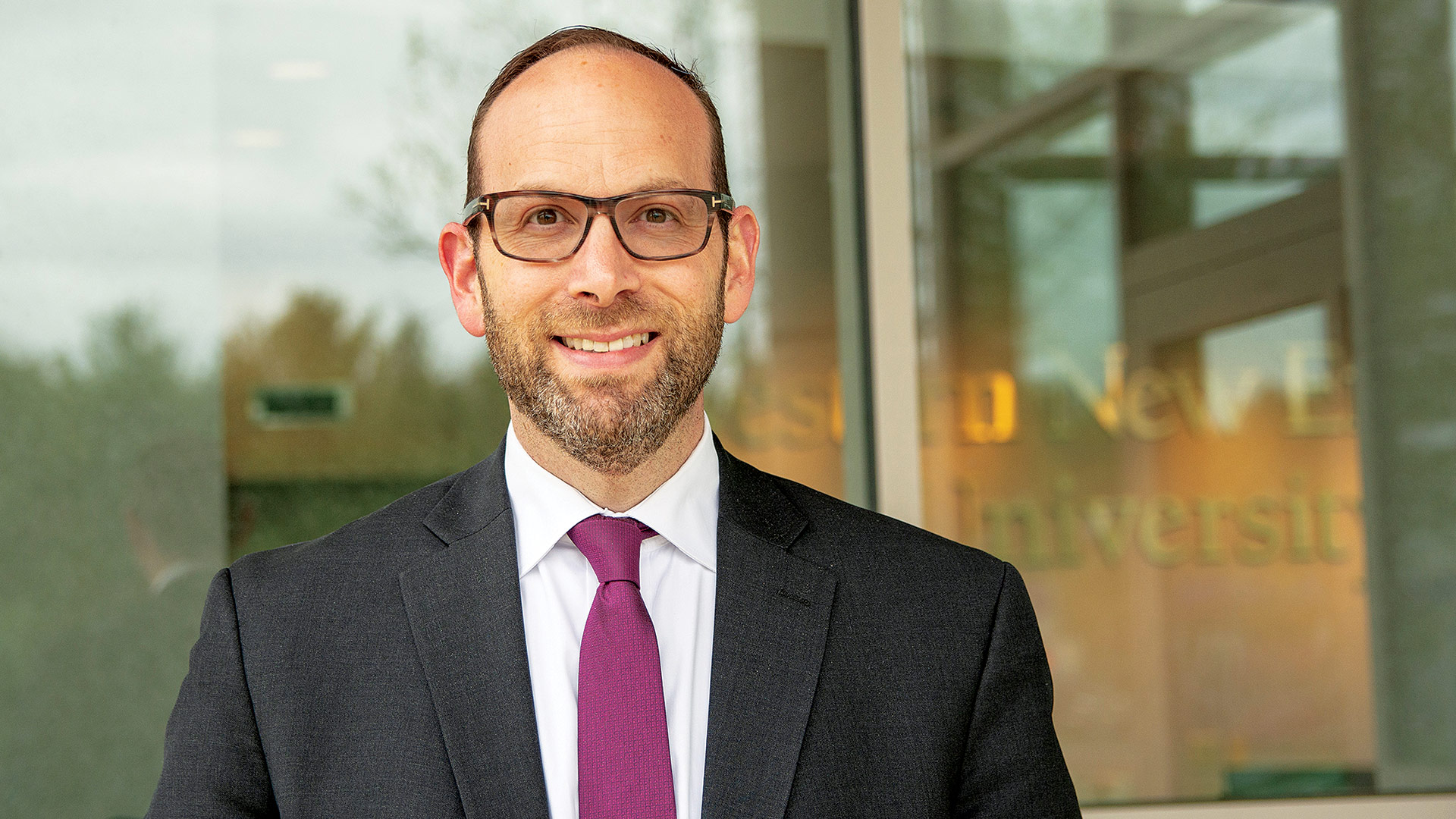
SPRINGFIELD — Western New England University (WNEU) School of Law Dean Sudha Setty announced the appointment of nationally renowned legal scholar and advocate Jennifer Taub to the School of Law faculty.

An authority on the 2008 mortgage meltdown and related financial crisis, Taub’s research and writing centers on ‘follow the money’ matters, promoting transparency and opposing corruption. Her new book, Big Dirty Money: The Shocking Injustice and Unseen Cost of White Collar Crime, will be published on Sept. 29. Taub was a co-founder and organizer of the April 15, 2017 Tax March, where more than 120,000 people gathered in cities nationwide to demand President Trump release his tax returns.

She will join the School of Law faculty in August, teaching white-collar crime, civil procedure, and other commercial and business law subjects.

Taub’s 2014 book, Other People’s Houses: How Decades of Bailouts, Captive Regulators, and Toxic Bankers Made Home Mortgages a Thrilling Business, was praised by Nobel Laureate Robert Shiller in his 2015 edition of Irrational Exuberance and won a “must-read nonfiction” honor at the Massachusetts Book Awards. She is also a co-author of the sixth edition of Corporate and White Collar Crime: Cases and Materials.

Taub’s scholarly writing on corporate governance, financial market regulation, and banking law reform has been published in law journals and peer-reviewed volumes, and she has testified several times before U.S. congressional committees as an expert, including as an invited witness for the Senate Banking Committee and a House Financial Services subcommittee.

Taub has been the Bruce W. Nichols Visiting Professor of Law at Harvard Law School, and a visiting professor at the University of Illinois College of Law and the University of Connecticut School of Law. She also served as a visiting fellow at the Yale School of Management. Before joining Western New England University School of Law, she was a professor at Vermont Law School.

Prior to joining academia, Taub was an associate general counsel with Fidelity Investments. She received her bachelor’s degree, cum laude, from Yale University, with distinction in the English major, and her juris doctor, cum laude, from Harvard Law School, where she was the Recent Developments editor at the Harvard Women’s Law Journal.

“We are delighted to welcome Jennifer Taub to the WNE School of Law community,” Setty said. “Her groundbreaking scholarship on economic justice and good government, her dedication to the craft of teaching, and her commitment to serving the community are some of the tremendous attributes that she brings to the School of Law.”

Taub has appeared on cable news programs including MSNBC’s Morning Joe and CNN Newsroom to discuss legal matters, including the special counsel investigation into links between Russia and the Trump presidential campaign. She has written opinion pieces for a variety of platforms, including the Washington Post, the New York Times, the CNN opinion page, Dame Magazine, the Baseline Scenario, Race to the Bottom, Pareto Commons, the Conglomerate, and Concurring Opinions.

Daily News

CHICOPEE — First American Insurance Agency, an independent insurance firm, announced it has acquired Morin & Foy, a property and casualty firm situated in Brimfield.

Located on Route 20, Morin & Foy serves its surrounding communities by providing clients with personal and commercial insurance. The joining of the two companies allows for the growth of First American Insurance Agency’s portfolio and building the business client groups. First American Insurance Agency is acquiring only the Brimfield location.

“When I first met Sharon and the team in Brimfield, it was clear from our very first conversation that First American Insurance Agency could build on what we both have in common: the client-first mentality,” said Corey Murphy, First American president.

Added Sharon Morin, manager at Morin & Foy, “we are a dedicated team committed to serving our community and treating people with respect and kindness. I know that First American Insurance will continue to build and grow that culture.”

Daily News

GREENFIELD — Innovation and the long desire to serve more youth from the outlying areas of Franklin County has led to the launch of a new, fully virtual mentoring program from Big Brothers Big Sisters (BBBS) of Franklin County.

“Our goal is always to keep kids connected, and nothing drives this home more than a pandemic,” said Jennifer Webster, executive director of BBBS. “Youth are shouldering so much of this global crisis, their school lives disrupted, their home lives changed dramatically, and the uncertainty of their future. We knew we had to find a way to serve even more kids and keep them connected, right now.”

The new Big Brothers Big Sisters virtual mentoring program will utilize rising high-school juniors as well as community-college students to act as mentors to youth ages 6 to 12 from Franklin County. The matches will meet virtually once weekly with guidance and support from the BBBS trauma-informed case-management team and will last for a duration of one year.

“It’s an incredible opportunity for young adults to have a big impact in their community,” Webster noted. “Who better to help guide a youngster than someone who has just been through the same developmental stages and has community insight?”

Big Brothers Big Sisters is currently recruiting and enrolling for this program. If you are, or know, a rising high-school junior and/or community-college student who would like to serve as a mentor, or you know a youth age 6 to 12 who could use a community mentor and friend, BBBS encourages you to reach out. Program information can be found by visiting www.bbbs-fc.org.

Business Talk Podcast

We are excited to announce that BusinessWest, in partnership with Living Local, has launched a new podcast series, BusinessTalk. Each episode will feature in-depth interviews and discussions with local industry leaders, providing thoughtful perspectives on the Western Massachuetts economy and the many business ventures that keep it running during these challenging times

Episode 13: July 27, 2020

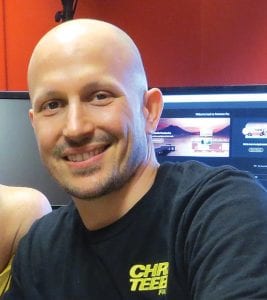
George Interviews Chris Thibault, Owner, Writer & Director for Chris Teebo Films

George interviews Chris Thibault, owner, writer and director for Chris Teebo Films and discusses his navigation, along with his wife Missy, through his cancer fight. Chris also gives insight on his company, Chris Teebo Films, what they provide, and how the COVID pandemic, and his health, has affected business. 

Sponsored by:

Also Available On

Daily News

GREENFIELD — Prudence Blond has been promoted to vice president and trust officer at Greenfield Savings Bank. In her new position, Blond, as a client service officer, oversees the administration and tax departments and also works with the Bank’s internal and external auditors.

Blond joined the bank after graduating from Greenfield Community College in 1997 as a teller. In 1999, she was promoted to trust operations associate with responsibility for processing operational work along with administrative assistant tasks of the GSB Trust Department. Over the next 10 years, she began to work directly clients and was promoted to assistant trust officer, then trust officer, then to assistant vice president and trust officer before her new promotion to vice president and trust officer.

After graduating from GCC, she earned a personal trust diploma through the American Bankers Assoc. in 2011 and a general financial services diploma through the Centre for Financial Training. She has continued to take educational classes in administration, personal tax preparation, trust and estate-tax preparation, financial planning, and IRAs. She earned her certified trust and financial advisor (CTFA) designation in 2012 through the Institute of Certified Banks.

Blond is currently serving on the board of directors, personnel committee, and nominating committee at LifePath Inc. (formerly known as Franklin County Home Care Corp.). She is a member of the annual campaign team at Greenfield Community College. She has previously served on the board of trustees, as treasurer, and as Sunday school superintendent at Robbins Memorial Church.

Daily News

SPRINGFIELD — Leadership Pioneer Valley (LPV) recently welcomed Lidya Rivera-Early of Springfield Technical Community College (STCC) to its board of directors. Rivera-Early has a demonstrated history of serving on various boards and committees within the community. As an LPV LEAP alumna, she also brings a passion for both the mission of the organization and the continued success of the Pioneer Valley.

“We are delighted to have Lidya join us,” said Lora Wondolowski, Leadership Pioneer Valley executive director. “Lidya understands firsthand the value of LPV. She will bring her voice, skills, and experiences to the board and will help LPV to fulfill its mission of building and connecting more diverse, committed, and effective leadership for the Pioneer Valley.”

The Board also announced that Russell Peotter and Annamarie Golden will continue for an additional year in their current roles as chair and vice chair, respectively. Francia Wisnewski will continue as clerk, and Callie Niezgoda as treasurer.

Daily News

CHICOPEE — Elms College announced it has been awarded a $240,000 grant from the Davis Educational Foundation (DEF) in support of its Experiential Learning Mastering Success (ELMS) – Real World Ready! learning initiative. The grant will be dispersed over the next three years.

“Experiential Learning, through the ELMS – Real World Ready! learning initiative, will provide all of our students with the framework to be career-ready, community-minded graduates,” said Joyce Hampton, associate vice president of Academic Affairs, Strategic & Global Initiatives. The overall goal of the ELMS – Real World Ready! learning initiative is to provide at least one high-impact experiential learning opportunity to every student during their college career.

Experiential learning is one of the five pillars of the college’s 2020-23 strategic plan. Students can participate in internships, research, study-abroad trips, and service learning opportunities.

“In making the award, the trustees of the Davis Educational Foundation recognized the merits of the proposed project, in particular the commitment from institutional leadership, the strong link to the strategic plan, and the clearly articulated assessment framework,” said Edward MacKay, chair of the DEF board of trustees. The Davis Educational Foundation was established by Stanton and Elisabeth Davis after Stanton’s retirement as chairman of Shaw’s Supermarkets Inc.

The first-year disbursement of the grant will support hiring a director of Experiential Learning, providing professional development for faculty and staff, and broadening of the college’s third annual Innovation Challenge (IC). The IC is a three-day event in which students work in teams and explore the intersection of social relationships, business economics, public education, and social justice. Over the past two years, Elms students have developed creative ideas to alleviate homelessness and address bullying. The upcoming Innovation Challenge in the fall 2020 semester will expand participation from 60 students to the entire first-year class.

“I’m looking forward to working with our experiential learning committee and helping our faculty and staff embed experiential learning into our curriculum and co-curricular activities, so that every student can benefit from this opportunity,” said Beryl Hoffman, co-chair of the Natural Science, Mathematics and Technology Division, associate professor of Computer Science, and project director for the grant.

The ELMS – Real World Ready! learning initiative and the DEF grant build on the philanthropic scholarship funding currently available to students through the donor-funded Keating Schneider Experiential Learning Fund and the Elms Advantage Internship program.

Daily News

SPRINGFIELD — The Zoo in Forest Park will host a virtual Trivia Night on Wednesday, July 29 at 7 p.m.

The event will take place on Zoom and will consist of four rounds of 15 questions. All questions are animal-themed, to some extent, but cover a wide range of topics including TV, film, literature, sports, music, and more. Players can use either a smartphone or a second browser to submit answers during the game.

“We want to provide safe and engaging activities for the community during this time when people are staying home,” said Gabry Tyson, development associate at the Zoo in Forest Park. “Our goal with this Trivia Night is to offer a fun alternative to a night out.”

To play, participants are encouraged to donate what they would spend on a typical Saturday night out; the zoo is recommending $25 per player. Donations can be made at www.forestparkzoo.org/events-1/trivia-night and will help pay for animal care as the zoo continues to struggle with limitations related to COVID-19.

Pre-registration is required. E-mail Tyson at [email protected] to register a team. Players can opt to play as an individual or on a team of up to six people. Registration is capped at 50 teams. The zoo will award prizes to the top teams.

For more information, contact Tyson at (413) 733-2251, ext. 304 or [email protected].

Daily News

FLORENCE — Florence Bank donated $7,500 to the Easthampton Community Center to support its Food Pantry Program that serves 22 towns throughout the Pioneer Valley.

The Easthampton Community Center’s Food Pantry currently provides food each month to 6,000 food-insecure individuals in need, including more than 600 children in the greater Easthampton area through the Kid’s Summer Pantry Program.

The Easthampton Community Center has been a dependable resource in the Easthampton community for 46 years. The core of the Community Center’s mission is to provide services and assistance to residents through its Food Pantry, Community Care Kitchen, and Clothing Closet programs. Additionally, the Community Center serves as a meeting space for community groups and celebratory gatherings.

“We are pleased to be able to contribute to the Easthampton Community Center so they can continue to serve the people of the Greater Easthampton area with the essential resources offered through their Food Pantry,” said Florence Bank President and CEO Kevin Day.

Added Robin Bialecki, Easthampton Community Center’s executive director, “since the onset of the COVID-19 pandemic, the Easthampton Community Center has seen a huge influx in the number of individuals in need. Donations like this from Florence Bank will help keep our mission sustainable and strong during this challenging time.”

Daily News

SPRINGFIELD — Dress for Success of Western Massachusetts announced a partnership with the Greater Springfield chapter of the Links Inc. Founded in 1946, the Links Inc. is an international, not-for-profit organization that brings together professional women of color to serve their communities through volunteerism and philanthropy. Its ultimate goal is to sustain the culture and economic survival of African-Americans and people of African ancestry.

Formed in 1986, the Greater Springfield Chapter of the Links Inc. is one of 288 chapters. Greater Springfield chapter President Danielle Williams noted that “the goals of Dress for Success of Western Massachusetts align well with the chapter’s operations in five facet areas: services to youth, the arts, national trends and services, international trends and services, and health and human services.”

Pia Flanagan, chair of the chapter’s national trends and services facet, has identified a partnership with Dress for Success of Western Massachusetts as an endeavor that would benefit the chapter’s target community.

The work of the Links Inc. aligns well with the mission of Dress for Success, specifically the Margaret Fitzgerald Mentor Program. This program, named for a Physics Department secretary from Mount Holyoke College who provided help and encouragement for women entering that male-dominated field in the 1970s, pairs women who are overcoming great odds to achieve economic independence with professional women who volunteer to work with them one-on-one. Together, they establish individual goals and work on self-esteem, résumé building, workplace etiquette, interview skills, work/life balance, and more. By establishing a trusting rapport and sharing the wisdom of experience, mentors helps move their mentees from career readiness to action. Though the mentorships last one year, the impact lasts a lifetime.

Beginning on Aug. 14, women from the Greater Springfield chapter of the Links Inc. will serve as mentors to women of color who have been recruited to the Margaret Fitzgerald Mentor Program from both Dress for Success programs as well as their partners in the community.

“This is a unique opportunity for the mentees that we are recruiting,” said Dress for Success of Western Massachusetts Executive Director Margaret Tantillo. “Being able to learn from the accomplished, dynamic, and compassionate women of the Links Incorporated will bring them opportunities to establish or further their careers in ways that they might not have been able to otherwise.”

The mentorships will continue until August 2021, when the mentees will be invited to join the Dress for Success Professional Women’s Group.

Daily News

BOSTON — The Baker-Polito administration announced more than $3.6 million for 12 projects — two of them in Western Mass. — in its fourth annual round of Site Readiness Program awards. These awards provide resources to municipalities, private-sector businesses, and nonprofit economic-development entities to help overcome obstacles to developing otherwise prime locations.

The funding announced this week will finance feasibility studies, master planning, environmental work, strategic land acquisition, and site improvements, resulting in critical additions to the Commonwealth’s inventory of large, development-ready sites.

“The Site Readiness Program is a key tool to help communities reach local and regional economic-development goals,” Gov. Charlie Baker said. “These awards will assist in community-stabilization efforts, including downtown revitalization, helping advance prime locations to shovel readiness to spur investment and job growth.”

Among the two local grants is $265,000 to Carriage Grove in Belchertown. The Belchertown Economic Development and Industrial Corp. will use the funds to partially match the U.S. Economic Development Agency’s $550,000 grant for infrastructure improvements in Carriage Grove’s industrial district, supporting the construction of new roadway, sidewalks, utilities, and stormwater improvements.

The other local grant is $80,000 to Ludlow Mills Market in Ludlow. The Westmass Area Development Corp. will use the funds to update marketing data, prepare a strategic marketing plan, and prepare specific redevelopment buildout concepts for individual mill buildings and districts within the Ludlow Mills complex.

Administered by MassDevelopment, the Site Readiness Program aims to boost Massachusetts’ supply of large, well-located, project-ready sites; accelerate private-sector investment in industrial and commercial projects; and support the conversion of abandoned sites and obsolete facilities into clean, actively used, tax-generating properties.

“As outlined in our economic-development plan, ‘Partnerships for Growth,’ the Baker-Polito administration is committed to building vibrant communities in every region,” Housing and Economic Development Secretary Mike Kennealy said. “In the long term, the Site Readiness Program will help communities in recovery as they prepare sites for development projects that help build vibrancy in their neighborhoods, on main streets, and in industrial areas.”

Daily News

BERNARDSTON — On Friday, Aug. 21 at Crumpin-Fox Club in Bernardston, the Greenfield Knights of Columbus Council #133 will host its seventh annual charity golf tournament. This year, the Greenfield Council #133 recognizes the United Arc as its tournament partner.

The event will be an 18 hole, four-person scramble with tee advantages for senior golfers. The entry fee of $125 per person includes greens fees, carts, use of the practice range, and prizes for the winners. A $35 gift card will be given to all golfers, which can be used at any time for meals, merchandise, or golf-related items.

Raffle tickets will be sold, with prizes including a three-day Cape Cod vacation,  a sports package, golf certificates, a ‘mystery box’ provided by the United Arc, restaurant certificates, auto packages, and much more. A hole-in-one contest will offer a chance to win a new car or other significant prizes.

In addition to the United Arc, the proceeds from the event will be used to fund a number of Council #133’s worthy causes in Greenfield and Franklin County, including the Pan Mass Challenge, Baystate Franklin Medical Center’s Wheeling for Healing, Farren Hospital’s Gift of Light, the Greenfield Homeless Shelter, monthly community meals, high-school scholarships, honoring veterans on Memorial Day and having Wreaths Across America wreaths placed on graves at Christmas, several youth sports programs, and more.

To sign up or for more information, call Lou Grader at (413) 774-2848, Dan Arsenault at (413) 774-5258, Bob Wanczyk at (413) 774-2465, Paul Doran at (413) 522-1800, or Joe Ruscio at (413) 768-9876.

Daily News

SPRINGFIELD — Western New England University (WNEU) announced the addition of a new master of science program in construction management to the list of graduate-degree offerings.

“Construction management is defined as a professional service that uses specialized project-management techniques to oversee the planning, design, and construction of a project, from its beginning to its end,” said Kenneth Lee, founding chair for the Construction Management department, as well as professor and chair of Civil and Environmental Engineering at WNEU.

U.S. News and World Report ranks construction manager first in “Best Construction Jobs” and 43rd in “100 Best Jobs” with a low unemployment rate of 2.3%. The Bureau of Labor Statistics website shows that the job outlook growth (2016-26) for Construction Managers is 11% (faster than average), with a median salary of $93,370 per year.

“Construction projects can range from improving intersection traffic flows to massive, multi-billion-dollar infrastructure projects with a decade-long development environment, each [needing] specialized people with specialized skill sets to manage,” said Christian Salmon, assistant professor of Industrial Engineering and Engineering Management at WNEU.

With courses rooted in civil engineering, industrial engineering, and engineering management, the program strives to provide a well-rounded knowledge base in engineering as it pertains to construction management. Elective opportunities in business and management will give students a perspective into the business world that will prepare them for management and leadership roles.

“The MS in construction management is a great fit with our existing undergraduate and graduate programs offered by our College of Engineering,” said Matthew Fox, executive director of Graduate Admissions. “We continue to accept applications for new graduate candidates, and those starting the construction management program this fall will be able to earn their master’s in as few as 18 months studying part-time or in one year studying full-time.”

The program is tailored for students to choose from three options to complete the degree. The all-course option allows students to complete the 10 graduate courses that include open electives, choosing from courses in civil, electrical, and mechanical engineering as well as engineering management and business. Through the project or thesis options, students will work with a faculty advisor to take a deeper dive in a topic of interest, culminating in a final report and presentation.

Applications are now being accepted for the MS in construction management program. Classes begin Sept. 28. To learn more, call the Office of Graduate Studies at (413) 782-1517 or e-mail [email protected].

Daily News

HOLYOKE — Holyoke Community College President Christina Royal and Amanda Sbriscia, HCC’s vice president of Institutional Advancement, will kick off a reimagined monthly Women’s Leadership Luncheon Series on Wednesday, July 29.

The 2020 Women’s Leadership Luncheon Series, postponed from spring due to COVID-19, will now take place virtually over Zoom on the last Wednesdays of July, August, September, and October from noon to 1 p.m.

The series is sponsored by HCC and Training and Workforce Options (TWO), a collaboration between HCC and Springfield Technical Community College.

“Women leaders and up-and-comers will be joined by panels of like-minded women each month for small group discussions and open dialogue,” said Tracye Whitfield, TWO’s director of Business Development. “Participants will have the opportunity to form a supportive network of women leaders, discuss topics of interest, and enjoy a brown-bag lunch, virtually. Professional development, networking, and socialization over a delicious meal — does it get any better?”

Each lunchtime event will feature two presenters leading discussions on different topics, as follows:

• July 29: “Leading Through Change,” with Royal and Sbriscia.

• Aug. 26: “Empowering Women in the Workplace,” with Denise Jordan, executive director, Springfield Housing Authority; and Julie Quink, managing partner, Burkhart, Pizzanelli, P.C.

• Sept. 30: “Comfortable in Your Own Skin, Finding Your Voice,” with Tanisha Arena, executive director, Arise for Social Justice; and Pam Victor, owner, Happier Valley Comedy.

• Oct. 28: “Women Leaders in Non-Traditional Businesses,” with Colleen Loveless, president and CEO, Revitalize Community Development Corp.; and Nicole Palange, vice president, V&F Auto.

The July 29 session is free. The remaining three sessions are $20 each, or $50 for the full series. Registration is required. Space for each luncheon is limited to 25. To register, visit hcc.edu/womens-leadership.

Daily News

BOSTON — Fraudulent text messages are being sent claiming to be from the Massachusetts Unclaimed Property Division (UCP). The texts say there are available funds under the recipient’s name, and they should visit the link provided. According to state Treasurer Deborah Goldberg, these texts are a scam and have not been sent by UCP.

“It has come to our attention that text messages claiming to be from the Massachusetts Unclaimed Property Division have been sent to residents across the state,” Goldberg said. “Our goal is to ensure that no Massachusetts citizen is taken advantage of as part of this scam.”

Despite the fraudulent text, UCP does in fact currently hold more than $3.4 billion in unclaimed property; 10% of Massachusetts residents are owed money. To search to see if you have unclaimed money, visit findmassmoney.com. If you have questions, contact the Unclaimed Property Division at (617) 367-0400.

Business Talk Podcast

We are excited to announce that BusinessWest, in partnership with Living Local, has launched a new podcast series, BusinessTalk. Each episode will feature in-depth interviews and discussions with local industry leaders, providing thoughtful perspectives on the Western Massachuetts economy and the many business ventures that keep it running during these challenging times

Episode 12: July 22, 2020

Thom Fox interviews Tricia Canavan, President of United Personnel Services

Thom Fox interviews Tricia Canavan, President of United Personnel Services. With hundreds of jobs to fill, United Personnel has not slowed down during COVID.  Thom and Tricia discuss the evolving world of work, innovations brought about by the pandemic, and the types of talent WesternMA employers are seeking.

Sponsored by:

Also Available On

Daily News

SPRINGFIELD — Baystate Health and Kindred Healthcare, LLC announced plans to form a joint venture that will build and operate a $43 million, state-of-the-art behavioral-health hospital in Western Mass.

The 120-bed facility will address the shortage of behavioral-health beds in the region, increasing patient access to Baystate Health’s specialty inpatient behavioral healthcare for adults (including geriatrics), adolescents, and children by more than 50%. Kindred will manage day-to-day operations of the hospital, and Baystate Health psychiatrists and advanced practitioners will provide care under the medical leadership of Dr. Barry Sarvet, chair of Psychiatry at Baystate Health.

The hospital will be designed specifically for behavioral-health services to foster a better healing environment for patients. The hospital will feature distinct units to meet patients’ varying treatment needs and is expected to employ more than 200 direct caregivers and ancillary staff.

“In building a state-of-the-art behavioral-health facility to serve the area’s most vulnerable patients, we recognize that such a major undertaking could not be achieved without a quality partner,” said Dr. Mark Keroack, president and CEO of Baystate Health. “Kindred’s strength in building and operating specialty hospitals, coupled with Baystate’s behavioral-health clinical expertise, is the perfect fit. We are looking forward to creating an unparalleled community resource dedicated to the needs of all behavioral-health patients.”

Baystate had planned last year to partner with US HealthVest, LLC on a $30 million behavioral-health hospital, but ended that relationship in November following news reports alleging substandard care at other HealthVest facilities, and began searching for a new partner.

“Our partnership with Baystate creates a unique opportunity to expand access to high-quality behavioral-health services in Western Massachusetts,” said Rob Marsh, senior vice president and chief operating officer for Kindred Behavioral Health (KBH). “Kindred is a leader in treating medically complex and rehab-intensive patients, leveraging partnerships and innovation to enhance care. Through KBH, we are building upon our existing clinical and operational capabilities to address the unmet need for behavioral-health services.”

Baystate Health remains interested in a centrally located Holyoke location and is in discussions with the city of Holyoke regarding the potential acquisition and development of a property on Lower Westfield Road.

It is anticipated that, from the time the site is secured, it will be at least two years before the new hospital is operational, pending regulatory and other approvals. Until the new hospital is completed, Baystate will continue to operate its inpatient behavioral-health units at its community hospitals — Baystate Franklin Medical Center, Baystate Noble Hospital, and Baystate Wing Hospital. Upon completion of the new facility, those units will be closed.

Emergency-care services will continue to be provided at all Baystate Health hospitals, and the treatment of medically complex patients will continue at Baystate Medical Center in its Adult Psychiatric Treatment Unit.

Daily News

BOSTON — Responding to the financial hardships many Massachusetts families are facing, the University of Massachusetts board of trustees voted to freeze tuition rates for in-state undergraduate and graduate students for the 2020-21 academic year.

Across the Amherst, Boston, Dartmouth, and Lowell campuses, tuition will average $14,722 for the nearly 48,000 in-state undergraduate students before financial aid is provided. This keeps UMass mandatory charges nearly $1,000 lower than the average for New England public research universities.

Students will continue to receive nearly $1 billion in federal, state, private, and university-funded financial aid in 2020-21. University-funded financial aid, primarily scholarships and grants, has been increased by $99 million, or 38%, over the last five years, with 94% going to Massachusetts residents.

Tuition for the 9,500 graduate students will continue to range from $14,590 to $18,433 at the four campuses. The board set tuition rates for UMass Medical School at its April meeting.

“Holding the line on tuition is simply the right thing to do this year as so many students and families are facing stress and uncertainty created by an unprecedented national health emergency and economic downturn,” UMass President Marty Meehan said. “That means controlling student charges and supporting financial aid so our students are able to pursue their dream of earning a UMass degree.’’

In freezing tuition this year, the university is setting aside its recent practice of increasing tuition at the rate of inflation, forgoing $18.6 million in revenue for the coming year. The loss of revenue is offset, in part, by ongoing efforts of the university to reduce administrative costs. For example, a procurement-consolidation effort launched in January is projected to save $15 million to $20 million by the end of this fiscal year, and an ongoing ‘efficiency and effectiveness’ program started in 2013 has saved $124 million.

“Even as UMass, like higher-education institutions across the country, faces significant budget cuts due to pandemic-related financial challenges, we need to do all that we can to keep a high-quality UMass education within financial reach of Massachusetts students,” said Rob Manning, UMass board of trustees chairman. “I commend President Meehan, the campus chancellors, and their teams for making this possible through sound and innovative management.”

UMass trustees also approved a $3.3 billion operating budget that is $171 million less than last year’s budget.

Meehan said the budget, which funds university operations for the fiscal year that began on July 1, “is in balance at a time when many other colleges and universities, public and private, find themselves in great financial jeopardy. This required the university leadership to make difficult choices, but we take these actions to preserve stability and meet the long-term needs of students. We are continuing to advocate for the highest possible level of state funding and passage of the federal HEROES Act, which could translate into $119 million in emergency funding for UMass.”

Daily News

GREENFIELD — Michael Tucker, president and CEO, announced that Kevin Bowler has joined Greenfield Cooperative Bank as the new senior vice president of Loan Resolution. He began working in the Northampton office on July 1.

“Kevin brings to us over 30 years of lending experience,” Tucker said. “We are lucky to have someone with his level of experience in handling and working with commercial and residential credits to help them through these times.”

Bowler, who will report directly to Tony Worden, executive vice president and chief operating officer, previously worked for Peoples United Bank (the Bank of Western Massachusetts). He has a bachelor’s degree from Westfield State University.

Daily News

WEST SPRINGFIELD — With government-mandated social-distancing restrictions in place, the West of the River Chamber of Commerce (WRC) will hold its annual job fair virtually this year on Tuesday, Aug. 4.

“We feel we need to continue to move forward in this new environment and show our business community that we are here, active, and supporting our members during this time,” Executive Director Robin Wozniak said.

With the extra unemployment money individuals are receiving about to expire, and local businesses beginning to reopen, the WRC is looking to help its members in any way it can. The Zoom event will take place from 5:30 to 7 p.m. This is a free event for attendees, and vendors and attendees can both register online.

“Times are different now, and many businesses are struggling. We understand this and want to help,” Wozniak said.

Each vendor will have the opportunity to speak to the attendees as a whole group about their company and what positions they are looking to fill. At the conclusion of the group session, each vendor will have a breakout room where attendees can ask more detailed information and exchange contact information. The event is sponsored by Reminder Publications.

For more information and to register, visit www.westoftheriverchamber.com.

Daily News

LONGMEADOW — Adam Berman, president of JGS Lifecare, announced that Mary-Anne Schelb has rejoined the JGS Lifecare team as director of Business Development for the Western Mass. market.

“We are very happy to announce the return of Mary-Anne Schelb to the JGS Lifecare campus,” Berman said. “Mary-Anne worked with us several years ago as our director of Sales and Community Relations and, in her own words, feels as though she is returning home. Mary-Anne brings a great breadth of experience, knowledge, and understanding of business development, sales, and customer services, as well as a wide range of key community relationships that will support her success in this new and expanded role. We are excited to have her back on our team.”

Prior to returning to JGS Lifecare, Schelb led marketing operations at Encompass Health Rehabilitation Hospital in Ludlow. In her prior role at JGS Lifecare as director of Sales and Community Relations, she developed strategic partnerships and spearheaded the efforts that succeeded in making Longmeadow a dementia-friendly community. Prior to that, she headed up sales, marketing, and community relations at Monastery Heights Assisted Living in West Springfield.

Schelb is very active in numerous community organizations. She is a Rotarian, a board member of the East of the River Chamber of Commerce, and a member of the West of the River Chamber of Commerce, the Retirement Marketing Directors Assoc., the Western Massachusetts Eldercare Professionals Assoc., the Women Business Owners Alliance, the Western Mass. Elder Care Conference steering committee, and the Tri-County Partnership, just to name a few.

She began her career with an accounting certification from St. John’s School of Business and worked in the mainstream until continuing onto a more wellness-based path as a Holistic Health Practitioner, holding master/teacher certifications from the International Center for Reiki Training. She is also a certified cranial sacral therapist in Profound Neutral from the Neurovascular Institute.

“We are thrilled to have Mary-Anne back,” said Susan Kimball Halpern, vice president of Development and Communications. “Not only is she an expert in her field, but she brings a tremendous rolodex of invaluable relationships and is highly respected by her colleagues and peers for her commitment to excellence and for advancing the well-being of the people she serves. Her positive energy and enthusiasm is not only contagious, but helps drive results.”

Cover Story Education

Entrance Exam

Come back to campus, or don’t — either way, you’ll learn.

Just don’t expect campus life to be anything like you’re used to.

That’s essentially the message from UMass Amherst, by far the region’s largest of roughly 20 colleges and universities grappling with how to welcome students back to campus this fall — or setting them up for online instruction, as the case may be. Or, in some cases, both.

“We heard loud and clear from our student body that, even if they’re taking courses remotely, they would really like to be on campus or around campus,” Chancellor Kumble Subbaswamy said during a recent conference call discussing the university’s fall plans.

In a nutshell, the vast majority of students will not be required to return to Amherst, with most courses offered remotely. But they may return — for residence-hall life and in-person instruction — if they’d like.

“Our communication will be very explicit about what the campus might look like and what our expectations are, and what we will hold all of our students responsible for,” he continued. “With all of that knowledge, if they still want to come to campus and live in campus housing, they’re most welcome to. And whether they come back to campus or not, we will really provide a rich and rewarding academic experience with not only remote courses but also advising and lots of peer-to-peer interactions and faculty-to-student interactions and so forth.”

In other words, Subbaswamy noted, “we’re prepared to serve our community to the best possible extent in terms of providing all the college experience can under these different circumstances because of the pandemic. That’s the bottom line.”

Bryan Gross says WNEU’s mission prioritizes on-campus education

Bryan Gross says WNEU’s mission prioritizes on-campus education, but the university is ready to pivot if the pandemic worsens.

That said, life in the residence halls will be altered to include pedestrian-flow guidelines, restrictions on group gatherings, and limited face-to-face contact. No guests will be allowed in residence halls, at least at first. Most student services will be offered remotely. The Recreation Center will be open — with limits and restrictions placed on activities.

In short, things have changed since COVID-19 arrived in Massachusetts. Leaders at the region’s higher-education institutions have been meeting since … well, pretty much since they sent students home in mid-March, to hash out what classrooms and the campus experience will look like come late August, when the fall semester begins for most.

“We need to make sure we’re providing them with some sense of security, and do everything that we can to make this experience one where they are able to continue their studies and get to graduation.”

None of the schools’ plans are exactly the same, with some emphasizing on-campus instruction, some — including most of the community colleges — opting for an online-heavy approach, and others landing somewhere in between, with students choosing between in-person, online, and hybrid programs (see box on page 19).

Western New England University, touting its ample space and small classes, has decided to conduct the vast majority of classes fully on-campus this fall, while a small number of courses will be delivered in a hybrid or online format.

“We keep coming back to discussions regarding our mission, which is to provide a highly personalized educational experience inside and outside class,” said Bryan Gross, vice president for Enrollment Management and Marketing. “For the faculty and staff working on this plan, any time we get stuck on details, we come back to that mission.”

Students will be required to wear a mask or face shield, practice social distancing, and maintain a high standard of hygiene. In addition, plexiglass barriers will be installed throughout campus, including classrooms. Most buildings will be one-directional to minimize hallway contact, buildings will be cleaned more frequently, and residence halls will be limited to single and double rooming options, among other measures.

Walter Breau

Walter Breau

“We learned a lot in the spring when we had to go online — we understand what we did well and what we can do better. If a second surge happens and everyone decides to move online, the Elms flex model allows that to happen.”

“We watch the news every day,” Gross told BusinessWest. “Things are constantly changing in terms of safety, and we have to follow state and federal regulations, but based on the information we currently have, we feel confident our plan is doable — that it meets our values and protects the health and safety of students. But if things change, we also have to be open and honest, and we are willing and able to change.”

That’s why WNEU, like many colleges and universities, has actually been planning for three different scenarios — most students on campus, online learning, and a hybrid of the two.

“The majority of our families are ready for their children to be on campus and have the campus experience,” he added, “They trust our Health Services and know, if it’s ever not safe to be here, we’re going to make the right decision in the best interest of our students.”

That’s the COVID-19 world colleges and universities must grapple with — with every day bringing changing news and more moving targets. As enrollment planning goes, it’s unprecedented, at least within living memory. And students aren’t the only ones who will be learning something.

Course Corrections

At Elms College, classes will be taught this fall in a hybrid, flexible model that gives students the option of attending sessions in the classroom, online, or both. Students can move between the options based on their personal preferences, while international and non-local students will be able to continue their coursework from afar.

“We know some students are high-risk or living with someone high-risk and don’t feel comfortable being in a classroom, but we also know students want an in-person experience,” said Walter Breau, vice president of Academic Affairs. “So they can choose when to be in the classroom.”

The usual mix of masks, distancing, and plexiglass will be in play, and on-campus students will be expected to monitor and record any COVID-like symptoms they might have. As is the case at other campuses welcoming students this fall, any positive symptoms must be reported to the Health Center for consultation, and the college will have a separate living space for any student in need of quarantine.

Fall 2020 Plans … for Now

Leaders at 20 area colleges and universities continue to discuss plans for how academic programs will be delivered fall. Those plans might change, and even schools planning on a mostly on-campus experience will likely offer some programs remotely. Here are the latest plans, grouped by categories that may not capture all the nuances of each plan; readers are encouraged to visit the schools’ specific websites for more information.

• All courses delivered online, but students have option of attending in person: UMass Amherst.

• All online, with students in some programs (such as healthcare and culinary arts) on campus part of the time: Asnuntuck Community College, Cambridge College, Greenfield Community College, Holyoke Community College, Springfield Technical Community College.

• Blend of on-campus, online, and hybrid instruction: Bay Path University, Berkshire Community College, Elms College, Mount Holyoke College, Springfield College, Westfield State University, Williams College. American International College is discussing this model as well.

• Blend of on-campus and online instruction with students on campus for either fall or spring: Amherst College, Smith College.

• Mostly on-campus instruction: Bard’s College at Simon’s Rock, Massachusetts College of Liberal Arts, Hampshire College, Western New England University.

“Safety is our number-one priority,” Breau told BusinessWest. “We know students want to come back. How to keep them safe while doing that has been the prime goal of reopening. Our task force made sure safety was always number one on the list.”

To that end, students will need to review safety-training materials when they return to campus. “It’s going to be a team-based effort. It’s not just administrators, faculty, and staff, but students have to be a part of the process as well. We’ll certainly rely on them to help us stay safe.”

There’s a safety net built into the ‘HyFlex’ model as well, Breau noted, in that it wouldn’t be difficult to transfer all learning online if the region’s infection rates soar.

“We learned a lot in the spring when we had to go online — we understand what we did well and what we can do better. If a second surge happens and everyone decides to move online, the Elms flex model allows that to happen; it’s built into the syllabus and the way instructors plan the courses.”

American International College is also seriously considering a HyFlex model, and plans to announce its detailed fall strategy by the end of July, said Nicolle Cestero, chief of staff, senior vice president for Human Relations, and Title IX coordinator. She said a group of campus leaders has been meeting for several months and are doing all they can to give students an on-campus option.

With more than half of its undergraduate student body first-generation college students and more than 50% also Pell Grant-eligible — meaning they come from low-income families — AIC doesn’t want to add additional challenges to their lives, she noted.

“We need to make sure we’re providing them with some sense of security, and do everything that we can to make this experience one where they are able to continue their studies and get to graduation,” Cestero said, noting that the HyFlex option is an ideal model in that it allows students to access their education in a way that best serves their needs in this most difficult year.

Plus, there’s value in the on-campus experience that can’t be replicated remotely, she added. “Maybe your roommate becomes your best friend for life. Or you’re participating in a conversation that you never would have participated in — on race or gender or power and privilege, or whatever it is — and you don’t necessarily get to do that if you’re not on campus. You develop so much in these years — it’s your first time away from home, and you’re teaching yourself how to do things, how to manage your own time and finances, all that stuff.”

In a letter to the Springfield College family, President Mary-Beth Cooper detailed a blend of in-person, remote, and hybrid instruction, with all learning moving online after Thanksgiving. But she emphasized that new safety measures — from masks and distancing to a contact-tracing program and isolation spaces — are key to making the plan work.

“Successfully remaining on campus throughout the fall semester will depend on the degree to which we, as a community, work together to reduce the possibility of the virus appearing on campus and, if it does, responding quickly to limit its spread,” she explained.

Brandi Hephner LeBlanc, vice chancellor for Student Affairs at UMass Amherst, noted that the university will distribute a student agreement that details the testing and symptom self-monitoring they’re asked to do, as well as the need to carry hand sanitizer and face coverings when moving about, among other safety measures.

“We’re really asking them to be a responsible community member, first and foremost, and to be a part of the bystander intervention,” she said. “When you see someone without a mask, remind them.”

And if students don’t comply?

“There is going to be what I would term an escalation of intervention,” she explained. “We’ll have public-health ambassadors on campus that will help remind folks, and there will be a lot of communication to find out if there’s a problem. This is not going to be an immediate referral to the Conduct Office, unless it’s something so egregious that that’s necessary. But this is something that takes a lot of reminding to manage the behavior. And we’re prepared to do that.”

Catalog of Options

A few institutions across the region have emphasized the value of returning as much activity to campus as possible. Massachusetts College of Liberal Arts President James Birge cited recent survey data collected from 10,000 high-school and college students; 78% of respondents find the experience of in-class learning this fall appealing, while one-third would transfer out of their institution if the college shifted to online course delivery.

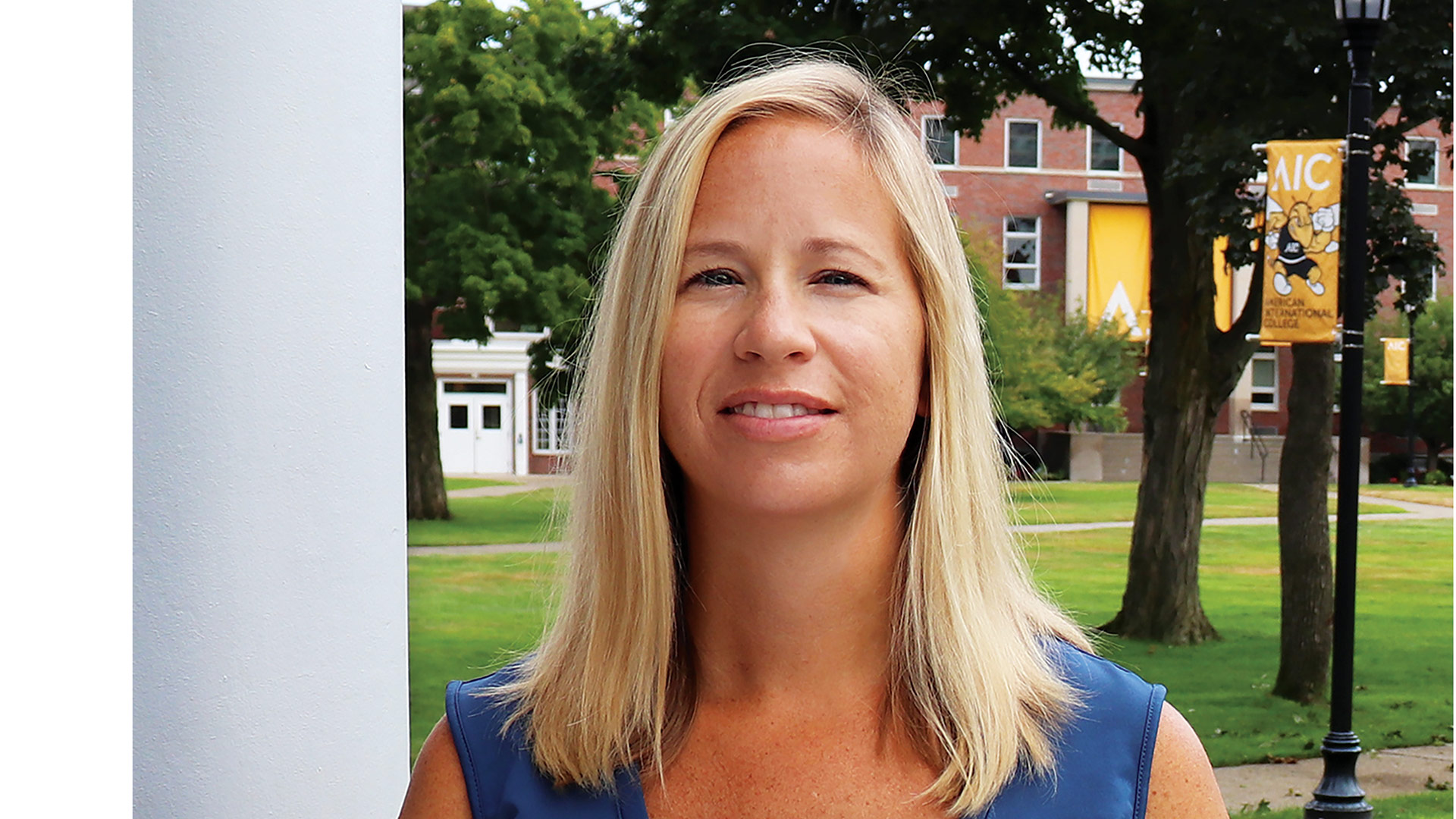
Nicolle Cestero

Nicolle Cestero says the value of the campus experience shouldn’t be minimized, but a hybrid flex model might be the smartest way to go this fall.

“We know the residential and in-person class experience is important to our students, students at state universities across the Commonwealth, and nationally,” Birge said, which is why MCLA is moving ahead with an ambitious on-campus approach. “Although returning to campus this fall presents some risk, we will work to make the campus experience as safe as possible for everyone. Of course, this means we will have to significantly shift our way of learning, teaching, and working.”

Other campuses, like Amherst College and Smith College, are looking at having roughly half the students on campus for the fall, to better achieve physical distancing, with the ones sent home for remote learning having on-campus priority for the spring.

“We know that any scenario short of bringing everyone to campus will be bitterly disappointing to those who will have to wait until the spring,” Amherst College President Biddy Martin wrote in a letter to students and families. “With this structure, we can provide the opportunity for every student who wishes to be on campus to spend at least one semester here and, if things go well, both semesters for a large number of those students.”

Meanwhile, Springfield Technical Community College is among a handful of area institutions — several community colleges among them — to continue with an online model this fall, though some programs in STCC’s School of Health and Patient Simulation will include low-density, on-campus labs adhering to social-distancing, PPE, and sanitizing protocols.

“STCC has no intention of becoming a fully online institution,” said Geraldine de Berly, vice president of Academic Affairs. “The pivot to online is driven by a health pandemic. COVID-19 has forced the college to adjust, and we do hope in the future to return to the robust utilization of campus facilities.”

In some instances, STCC will use synchronous teaching strategies, with students gathering at a specific time through videoconferencing. But most of the classes will be taught using an asynchronous approach, which gives students flexibility to set their own hours to complete their studies and assignments.

“Many of our students have childcare obligations, work commitments, and a host of other complicated circumstances,” President John Cook said. “We know that our students benefit from having flexibility in their classwork, and online is yet another way STCC lives its mission of ensuring access to higher education.”

Flexibility, in many ways, has become a key word in the region’s higher-education sector, which suddenly offers a wide array of learning models heading into perhaps the most unusual fall semester for American students in generations.

What these schools have in common is an emphasis on safety, and on making sure students know their own responsibilities in keeping COVID-19 infections low — and keeping the campus experience alive, in whatever curtailed form it might take.

WNEU’s Gross is confident it’s a message they will understand.

“You’re not doing it for yourself, but for other people. And that’s such a positive message we can send,” he told BusinessWest. “That’s why human beings are on this earth, to care for one another and take actions that help the community. We hope that value is something that’s embraced by our students. It’s an amazing opportunity to learn and grow and take actions to help others.”

Joseph Bednar can be reached at [email protected]

Coronavirus Special Coverage

Finding Meaning

Kay Simpson

Kay Simpson says the top priority before reopening Springfield Museums was making sure both visitors and staff would be safe.

“Kissing Through a Curtain” is an exhibit of 10 contemporary artists, dealing with communicating and translating across borders, how people interact, and the meaning behind words. It was hung at the Massachusetts Museum of Contemporary Art (MASS MoCA) in March, a few days before the museum closed due to COVID-19 — and there it has hung, dormant, ever since.

“The curator of that exhibit recently changed the introductory text to note that the questions the exhibit asks feel even more urgent now than they did three or four months ago when the exhibit was originally scheduled to open,” said Jodi Joseph, the museum’s director of Communications.

Visitors have agreed, she added, citing a conversation she had with a family of regulars from Boston the week museums were allowed to reopen to the public.

“Heading out, the mom in the group said, ‘oh, gosh, it has so much more meaning now,’” Joseph told BusinessWest. “That’s truly contemporary art. It reflects our time and what we’re going through.”

What museums have been going through is nothing to celebrate. Shutting down for almost four months is a financial strain for any cultural attraction, no matter how large or small.

“For many smaller museums, the financial impact has really been catastrophic,” said Kay Simpson, president of the Springfield Museums, adding that her organization was fortunate to receive not only a Paycheck Protection Program (PPP) loan, but generous contributions from a private donor and a foundation to help get through the past four months.

“One of the things people loved is all the interactive exhibits we provided, both permanent and traveling. Of course, now, we’ve had to be very careful about that.”

“It was an agonizing decision to shut down. At the beginning, we thought it would be for three weeks, and we’d be able to reopen,” she said, adding that conversations with other museums, followed by Gov. Charlie Baker’s shutdown order in late March, made the actual picture much clearer.

“It was really hard. It has just been an experience like no other,” she said. But thanks in part to the PPP loan and those donations, “we were able to sustain our operation through the closure. And now we’re reopening, but it’s on a limited basis. We’re very, very concerned about making sure this is a safe environment for our employees and our volunteers, as well as our visitors.”

It’s important they feel safe and return, Simpson added, if only because of what this set of museums means to the city and region.

“They’re unique and can’t be replicated at other settings — it’s an incredible complex that has served the city of Springfield for more than 160 years and is constantly evolving,” she said. “It attracts people of all ages and all backgrounds, engaging in learning experiences alongside each other — it’s a place where people come together, and it’s joyful and also educational.”

And, at long last, open to visitors.

Safety First

Not that it was easy getting to that point, of course. Museums across Massachusetts had to adhere to very specific guidelines outlined in phase 3 of Baker’s economic reopening plan, as well as their own sense of what visitors needed to feel comfortable enough to return.

Both Simpson and Joseph outlined measures at their facilities ranging from signs reminding people to wear masks, wash their hands, and stay six feet apart to plexiglass barriers and one-way directions at certain areas.

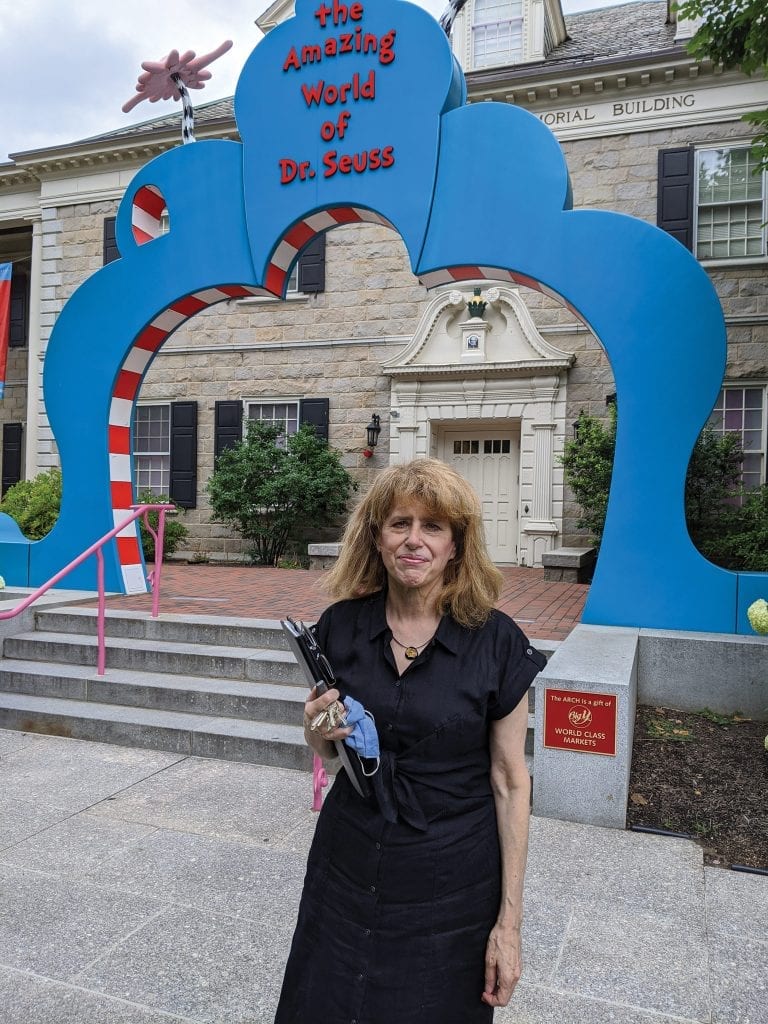
“One of the things people loved is all the interactive exhibits we provided, both permanent and traveling. Of course, now, we’ve had to be very careful about that,” Simpson said, noting that one nod to the new reality is the Yop, a Dr. Seuss character but also a new cell-phone app packed with maps, scavenger hunts, and self-guided tours that lend some interactivity to the museums in a safe way.

“We anticipate families will be among first visitors, and older adults will follow once they feel more comfortable,” she added, noting, of course, that what we know about COVID-19 has evolved, and is no longer recognized as dangerous only to older people.

MASS MoCA

Jodi Joseph says the wide spaces at MASS MoCA make physical distancing easier than at many places where people gather.

“We took COVID-19 very seriously, and we’ve engaged in months of planning,” Simpson said. “Even though we were closed, our staff worked very hard behind the scenes. We had staff talking to other museums, sharing best practices, attending webinars and conference calls, reading CDC guidelines — all to understand how we can safeguard our environment. It’s not like a classroom setting; it’s not like a retail setting — it’s a very different set of physical environments that we needed to think about very carefully.”

In addition to the basic rules around masks and distancing, MASS MoCA visitors who experience fever-like symptoms while at the museum are asked to self-identify to staff, and to enable contact tracing, should that be necessary, all ticket buyers are required to provide contact information and names of everyone in the party — both ways to prevent isolated infections from becoming community problems.

That said, the galleries themselves are massive — “we measure our gallery space by the acre here,” Joseph said — but high-traffic areas like stairwells are now one-directional, the entrance and exit have been separated, and the admissions desk has moved outside, accepting no more than 75 timed tickets every half-hour to keep crowds at state-mandated levels.

The museum, at one point, was considering five different scheduling plans for those galleries, which were gradually whittled down to one plan as the reopening date became more crystallized. Joseph credited state Sen. Adam Hinds and Jonathan Butler, president and CEO of 1Berkshire, for keeping the museum abreast of what was happening at the state level.

“As guidance about the hospitality and tourism sectors started to come down in late spring, we had a pretty good sense of when we’d be open, and we were able to come up with an exhibition calendar that made sense,” she explained.

“We learned lessons from the closure; we came to understand we need this online presence, and it needs to be developed on a parallel track with our on-site experiences.”

Like many museums, MASS MoCA has a long exhibition cycle that’s planned out well in advance, so most installations were ready to go this month. Meanwhile, the museum staged its first concert last week, for an audience limited to 100 — including staff — in a space that can typically pack in 4,000.

For the region’s live-music scene, it’s a welcome start. MASS MoCA alone usually hosts performing-arts events 40 weekends per year, and about half its resources go toward supporting the performing arts, mostly emerging artists.

In short, it’s tough when everything shuts down.

“MASS MoCA is a landlord — we have between 30 and 40 tenants on our 16-acre, 28-building former factory campus,” she noted, and a core group of employees remained on site to manage them, but also reach out virtually with daily ‘art moments’ — “like a greatest hits of MASS MoCA, some fan-favorite exhibitions. We wanted to remind people how great it would feel to be back here, walking these halls, reflecting in the galleries, taking in performances on our stages all across campus.”

It was in many ways “an excruciating few months,” she added, yet the museum staff was inspired at times, too.

“Visitors kept in touch not just with donations, but with deeply felt personal messages telling us how much MASS MoCA means to them, or sharing landmark memories from their own lives that have taken place within these walls,” she told BusinessWest. “As our hearts were aching from being closed and dealing with all the daily troubles of the world, we were also reassured by all the gratitude and appreciation folks were showing the institution, even though we weren’t able to welcome them inside.”

That said, Joseph was thrilled to see more than 1,000 people arrive on opening weekend. “Everyone who showed up said things like ‘thank you, I’m so glad you finally opened’ and ‘I’ve been dying to get back here.’”

Virtual Lessons

Springfield Museums stayed connected to fans as well by bolstering its virtual museum offerings online, Simpson said, from online classes to video demonstrations of collections and exhibitions, to staff videos showing parents how to do activities with their kids at home.

“We learned lessons from the closure; we came to understand we need this online presence, and it needs to be developed on a parallel track with our on-site experiences. So there is innovation that has come out of this,” Simpson said. “Out of something that no one wanted came positive results that can help shape what we do in the future and help us be better.”

That said, she was quick to add that “we strongly believe having people come down to the museums and engage in on-site experiences is really what we do well, and it’s our greatest contribution to our community and people who come to us from all over the region — and across the country and all over the world.”

She’s confident they will come from afar again, though it might take some time. “We might need a vaccine or successful treatments before people feel really confident about being together in the way they were before the pandemic.”

Joseph knows they’ll return, too, whether it’s to see art, like “Kissing Through a Curtain,” that shines a light on today’s world, or, conversely, to get away from reality, especially when that reality has been living in isolation for months on end.

“We want our institution to be a place of respite and a place where people can reflect on their shared experiences — and a place to escape, if that’s what they need. Leave the cares of the world behind and take a moment to be with art. That was our great hope when we reopened the doors.”

Joseph Bednar can be reached at [email protected]

Health Care Special Coverage

Critical Condition

Guy DiStefano

Guy DiStefano says the non-urgent procedures that were shut down in March typically support the rest of what hospitals do, leading to major revenue shortfalls this spring.

Back in March, when COVID-19 was just starting to crest, hospitals took steps to brace for a potential surge of patients. But while COVID-19 surged, revenues slowed to a trickle.

“Early on, we realized we needed to build capacity for a surge of patients so we didn’t get overwhelmed like they did in New York City, so we shut things down early in March — which blew a hole in everybody’s finances,” said Mark Keroack, president and CEO of Baystate Health. “We’ve been gradually returning to prior operations. We always remained open, of course, but it was only a week or two ago that we resumed more elective kinds of cases.”

Many hospitals are doing the same, but the overall losses to the state’s hospital industry are, as Keroack put it, “staggering” — expected to total between $5 billion and $6 billion by the end of the fiscal year on Sept. 30. “It’s a big stress test, if you will, for hospitals. And some have been hit more than others.”

All area hospitals have taken a financial blow.

“This has been very challenging, with the reduction in services,” said Guy DiStefano, vice president of Finance at Mercy Medical Center. “All our outpatient services — what are termed non-urgent cases, which usually help feed and support what a hospital does in its normal, day-to-day business — has been shorted, leaving us with a great revenue shortfall.”

At the same time, he added, “we still have all our expenses in place, just like any other business. Look at restaurants — the doors were closed, but they still had rent, utilities, all the other expenses, and the employees.”

Through May, Mercy saw a $25 million reduction in revenues due to pandemic-related reductions in services — and plummeting volume in the ER, a development that surprised hospital officials nationwide. At Mercy, daily Emergency Department cases dropped from a typical average of between 225 and 250 to around 100 to 120.

“Those slowly crept back up — we’re at 150 to 180 on a daily basis, so we’re not at full capacity, and there’s a lot of pent-up demand. Our business is coming back, but we lost a lot of revenues.”

“All our outpatient services — what are termed non-urgent cases, which usually help feed and support what a hospital does in its normal, day-to-day business — has been shorted, leaving us with a great revenue shortfall.”

Joanne Marqusee, president and CEO of Cooley Dickinson Hospital, said the hit has been significant. Through May, the facility recorded a loss of $18 million, partly due to COVID-related costs, but mostly because of lost volume. That number would be worse if not for $5.5 million in federal support.

“But that in no way covers our losses,” she added, noting that Cooley Dickinson Health Care could see a revenue shortfall of well above $30 million for the fiscal year ending on Sept. 30.

“We’re now planning for a fiscal-year 2021 budget and considering a number of measures to mitigate some of this — things like hiring freezes and reducing a lot of discretionary expenses. Everywhere we can hold off on spending, we have,” she went on, noting that service hours could be temporarily curtailed in some services, while employees making more than $26.50 per hour will forgo raises for the time being.

While that move shaves some costs while protecting lower-paid employees, it doesn’t make nearly enough of a dent, Marqusee noted. “So we’re looking at ways to further reduce expenses. But the work we’re doing already will certainly have an impact.”

DiStefano said Mercy has also had to take steps like furloughs and reducing hours to mitigate the losses. “We did everything we could to help employees keep their benefits in place. But employees are the number-one cost of a typical hospital — about 50% to 60% of the cost structure.”

Holyoke Medical Center has been losing roughly $6.5 million per month since services were curtailed back in March, President and CEO Spiros Hatiras said. But the community hospital did take some steps early on to gird against the damage.

“We were probably the first hospital in the area to furlough folks; we didn’t hold off because we saw it was absolutely important to be financially viable because we don’t have a parent company to spot us money,” he told BusinessWest, adding that many furloughed employees took advantage of the $600 federal boost in unemployment and wound up bringing in more than they did while working.

Joanne Marqusee says she hopes patient volume returns

Joanne Marqusee says she hopes patient volume returns not because of the revenue issue, but because patients shouldn’t forgo necessary care.

“That helped reduce expenses significantly,” he added, noting that almost 170 of 250 furloughed employees were back at the start of July, with another 80 to 90 expecting to return at month’s end. “Then MassHealth stepped in and allocated $11.8 million over four months to cover some of the losses, and we got a one-time payment from the feds of about $3 million. Add it all up, and through May, our losses were roughly $3 million — not insignificant, but we were able to survive it.”

Dollars and Sense

Baystate is surviving, too, Keroack said, emphasizing the importance the health system has not only on its 12,000 employees, but on the region, where it has an annual economic impact of some $4.2 billion.

When the fiscal year ends on Sept. 30, he expects Baystate to have lost about $160 million in revenues due to volume losses, but the system was able to secure about $75 million in federal relief and another $23 million state aid.

“The rest of that will likely be covered by reserves,” he added, noting that Baystate is fortunate to have both reserve funds and a broad service model.

“The smaller hospitals that have cash-flow problems got hit very hard because they didn’t have much in the way of reserves, but the other group is bigger hospitals that are highly specialized, like Mass General, where their revenues really depend on that elective surgical volume. Hospitals that are jacks of all trades and have good size, like Baystate, were hit less hard. Not to say it was pleasant what we’ve been through.”

Calling a $160 million revenue loss a ‘less hard’ hit may speak in some ways to the financial clout of the healthcare industry as a whole; it’s certainly one of the Commonwealth’s key economic drivers. And as patient volume continues to ramp back up, hospitals will be on safer ground when it comes to budgeting.

“At Baystate Medical Center, we’re at 80% to 90% capacity, so I would say people are mostly back.” Keroack said, noting that, while patients are returning gradually for routine care and procedures, current volume is still affected by social-distancing and sanitization measures that have slowed the pace of treatment. “In the community hospitals, they’re a bit further behind — more like 60% of former volume.

“In the long run, the question is, will volumes be permanently depressed?” he went on. “We’ve tried to convince people you really don’t want to put off stuff you know is worthwhile — you don’t want to ignore symptoms that might be serious. We have seen a number of people lately whose illness is much more serious than it would have been in pre-COVID days.”

Cooley Dickinson Hospital’s Emergency Department has seen a 100% increase from its COVID lows, during the height of the pandemic locally, when it was handling 35 to 45 patients per day. Now, ED providers are seeing 70 to 80 patients per day, which is still about 20% below the organization’s typical ED volume.

“We are seeing people with chronic illness who have waited too long to seek medical attention and are sick,” Emergency Department Nurse Director Sara McKeown said. “We have also seen an uptick in people seeking mental healthcare; patients presenting with substance-use issues and trauma are also increasing.”

Patient volume is bouncing back at Holyoke Medical Center and its community-based practices, but ED visits still lag, Hatiras said. “Anecdotally, we’ve heard of people putting off heart conditions and other things, and that can lead to bad outcomes. People shouldn’t stay home with serious conditions.”

That said, “I don’t blame the government for being overly cautious with closing down elective surgeries,” he added, noting that the elimination of many procedures over the past two months was, more than anything else, about preserving beds to treat an unpredictable pandemic.

“We’re now planning for a fiscal-year 2021 budget and considering a number of measures to mitigate some of this — things like hiring freezes and reducing a lot of discretionary expenses. Everywhere we can hold off on spending, we have.”

Now that the infection rate is being effectively controlled, he explained, hospitals are trying to communicate the message that they are safe places to visit — with plenty of strict protocols in place, from masking to social distancing to constant sanitizing — for patients who need to be seen.

DiStefano said the challenge has been ramping services back up — and bringing back furloughed workers — to match what is proving to be pent-up demand, but in a measured way. “It’s a delicate balance — how do we do this to best serve the community?”

It’s a long road back from the volume lows of the spring, when physician revenue dropped by 50. They’re now back around 65%, and inpatient beds are at about 80% of capacity. But people with serious health concerns should not put off care, he stressed, especially since the hospital has been diligent about infection protocols and keeping COVID-suspected patients separated from the rest.

“We take great pains to keep this environment safe,” he said. “The message to the community is, ‘if you are hurt, if you have a condition, this is a safe place to come.’” It helps, he added, to be affiliated with a larger system, Trinity Health, and while Mercy has rarely seen the kind of financial deficit it faced this spring, its leaders are still doing what they can to meet community health needs.

“We are the fabric of the community; there are no concerns about Mercy’s future,” DiStefano told BusinessWest. “We are going to be here for many years to come. Fortunately, we have the backing of a larger organization, and that helps a lot.”

Distance Learning

If there is an upside to navigating the pandemic, he said it might be the growing importance of telehealth, which became not just a convenient tool for providers and patients over the past few months, but a critical one — and one that seems to be on track to be covered by insurance payers in the future much more consistently than before.

“This has become more of a platform that allows us to reach out to patients,” said DiStefano, whose background in telemedicine goes back to the 1990s. “I hope it’s a bigger part of healthcare going forward. Obviously, you have to do some testing in the office, but you can do preliminary or follow-up appointments with telehealth, and that reduces the volume of patients in the waiting room and the physical office, which allows us to have a much cleaner, COVID-free environment to keep those people safe.”

In short, it’s a way to boost volume — and revenues — while making patients who do go to the hospital feel more secure.

Hatiras agreed. “We had to switch on the fly to do more telehealth, but what we saw was care being delivered even more efficiently,” he said. “We saw no-show rates completely drop. So it’s an effective way to provide care, and there will certainly be more pressure on insurers to reimburse appropriately for telehealth.”

Indeed, Marqusee added, “what has been stopping us from doing more telehealth has been reimbursement; I hope we never go back to the days when we were so underpaid for telehealth. It has been a terrific model.”

In the meantime, she sees volume slowly returning to Cooley Dickinson — perhaps reaching 90% of a typical season come October. “But the reason we welcome those numbers is because people need to get care — it’s not because we need the volume. We know from national studies and anecdotally that people have been afraid, and they’re forgoing care, and that can really have health impacts for people.”

That’s why her facility, like the others BusinessWest spoke with, is not only maintaining strict protocols around infection control, but is communicating what it’s doing with the community.

“People have to believe that and feel confident. It’s really important that people don’t stay home in pain with issues that will just get worse. People aren’t coming with heart attacks, or appendicitis, or they power through a head injury, and it turns out they had a brain bleed. People need to come for care, and they should know this is a place they can come and feel comfortable.”

Not so comfortable, however, that they neglect the behaviors that have reduced infection rates in Western Mass. and allowed hospitals to increase their non-COVID-19 services.

“We’re in a good place; there isn’t a high level of COVID in our community. But that can change quickly,” Marqusee said. “I want people to always remember the reason we have low levels of COVID is because of the efforts everyone is making to social distance, wear masks, and practice hand hygiene. We shouldn’t take the reopening as a sign they we don’t need to do those things, but to do it even more. That allows us to provide needed care to all our communities.”

Keroack says he expects some patients to enthusiastically return to care providers, while others will be stragglers who need more convincing — while others will continue to embrace telehealth as the best option.

“We may not return to our former volumes until we have a vaccine and everyone feels totally comfortable,” he told BusinessWest. “I think it’s going to be a process.”

Joseph Bednar can be reached at [email protected]

Coronavirus Special Coverage

Solid Proof

Mike Quinlan

Mike Quinlan says the pandemic has ratcheted up online orders and curbside pickup, while generating an increase in overall consumption of alcohol.

Some are calling it the ‘drinking at home’ phenomenon — a reference to how people who can’t go to bars, nightclubs, or (until recently) casinos have been doing all or most of their imbibing at their residence instead.

Others are calling it the ‘drinking while working at home’ phenomenon, and that’s another story, one that has a number of employers understandably concerned.

Whatever it’s called, it’s a fact that people are not going out to drink nearly as much as they did BC — before COVID. And they’re drinking more, by most all accounts — according to a Morning Consult poll of 2,200 U.S. adults conducted in the spring, 16% of all adults said they were drinking more during the pandemic, with higher rates among younger adults — and for reasons ranging from coping with all the additional stress from the pandemic to not being in the office for eight or nine hours a day, to being able to stay up later on ‘school nights’ because they don’t have to dress for or commute to work in the morning.

All this has created opportunities for some area business owners, especially liquor-store owners — always deemed essential by the governor — who have seen sales volumes rise (in some cases dramatically) and a number of trends emerge.

That list includes everything from more bulk purchases to buying less-expensive items to keep overall spending down; from ordering online to getting items delivered or picking them up at curbside.

“April, May, and June were just … crazy,” recalled Sean Barry, owner of Four Seasons Package Store in Hadley. “It was just constant — the phone ringing off the hook some days, and you never knew when your busy days would be.”

Mike Quinlan, fine wines manager at Table & Vine in West Springfield, agreed. He said overall business volume has increased, as have visits to the store, but what has really ratcheted up has been online ordering and curbside pickup. The company has always featured the former — it’s been especially popular with wine buyers — but not the latter until the pandemic created a huge need for it.

“April, May, and June were just … crazy. It was just constant — the phone ringing off the hook some days, and you never knew when your busy days would be.”

“The impact on our business for online orders went up dramatically — it was a huge increase in the number of orders we were getting,” he said last week, noting that, while it has tapered off lately as restaurants have reopened, recent holidays, such as the Fourth of July, saw huge volume, and orders continue to flow in. “There’s a stack of orders for us to pick today, and then we keep up with it throughout the day.”

For others, this trend, which would appear to have some staying power — because, in this state, bars won’t open until there’s a vaccine, and in others where they’ve opened, they’re closing down again — is simply shifting business from one type of client to another.

Indeed, Paul Kozub, founder of Hadley-based V-One Vodka, said that, while his sales to liquor stores are certainly up — 30% to 40% over last year, by his estimation — sales to restaurants and bars are way down. And the scale is not exactly balanced because the latter has traditionally been the source of more business than the former, especially at certain times of the year, like spring, when COVID-19 shut most everything down.

Paul Kozub

Paul Kozub says that, while the pandemic has certainly increased sales of his vodka in liquor stores, that hasn’t made up for the losses he’s incurred at bars, restaurants, and events.

“In March and April, I lost 50% of my business because I do so much in bars and restaurants during those months, while I do a lot more in liquor stores in November in December, so that was quite a shock,” Kozub said. “The package stores are up, but that certainly doesn’t make up for what we’ve lost in those bars and restaurants.”

Overall, as with most sectors of the economy, the pandemic has created some opportunities for those making and selling spirits, and also eliminated others. For this issue, we take a look at how the numbers provide some hard proof — yes, that’s an industry term — of how buying and consumption habits have changed.

Case in Point

Barry, like many liquor-store owners, reduced his hours early in the spring and closed earlier at night. There were many reasons for this, he said, listing fewer people being on the roads, the fact that almost all surrounding stores were closed, and a desire to limit the risk of exposure to customers and employees alike.

But there was also what he called simply the “fatigue factor.”

“My staff was just overworked, so we needed to cut back,” he explained, noting that, while things have settled down somewhat since then, with restaurants now open, many people are still wary about going to such eateries, and in the meantime, large numbers of people continue to entertain and, yes, work from home.

Which means they’re buying more at the liquor stores. And their buying habits are changing in all kinds of ways, said Barry and Quinlan, noting that in-person visits are still popular, but curbside is flourishing as an option, and delivery, offered by some but not all, has certainly gained significant traction as well.

And while business is up generally, there have been periods of especially heavy volume, including some holidays that have historically been dine-out occasions but are now, like most things, stay-at-home affairs.

“When Mother’s Day came, and Father’s Day … those are occasions where a lot of people go out to a brunch or something like that — but not this year,” Quinlan said. “And so we saw our business jump significantly during those weeks when people would be having meals at home instead.”

Barry noted that, while it’s logical to assume that the closing of the five colleges located near his store in the middle of the spring semester would certainly have impacted his bottom line, he said that’s not really the case.

That’s because the vast majority of students are underage, he noted, and also because his store, unlike some in that area, does not directly market to the college crowd.

But the crowd it does cater to is definitely buying more these days, adding that he’s seen several trends develop. One is that many people — meaning those who can — are buying in bulk, on the theory being that, as with trips to the supermarket, many are trying to make as few as possible.

“What’s of note to us is that, in the wine department, the average price of a bottle that we’re selling has gone down a little bit. People who would drink a bottle or two of wine a week were now drinking three or four bottles a week, so they’re spending less on those bottles.”

So they’re coming less often, and they’re also buying in larger quantities, which is better for them than it is for the liquor-store owner.

“Sales are up, customer counts are pretty flat, and overall, net profit is slightly down,” Barry said. “That’s because everyone is buying bulk items and taking advantage of case discounts and all that stuff.”

Quinlan concurred, to a point. He noted that, while buying the large, economy sizes, or full cases of products, is less profitable for the store, Table & Vine — and other stores, he presumes — have been able to sell more in fewer hours, thus yielding greater overall productivity and profitability.

But while consumption of alcohol is increasing — statistics nationally confirm that — overall spending in individual households may not be. People are buying in bulk, as noted, but they’re also buying less-expensive items in some cases.

“What’s of note to us is that, in the wine department, the average price of a bottle that we’re selling has gone down a little bit,” Quinlan said. “People who would drink a bottle or two of wine a week were now drinking three or four bottles a week, so they’re spending less on those bottles; the number of bottles we’re moving has increased significantly.”

Mixed Results

As for what people are buying … it’s generally across the board, said Barry, noting that wine and vodka probably represent the biggest increases.

Speaking of vodka, Kozub, while referencing the shifts in consumption and buying and some changes at his company as it expands nationally, said the pandemic has certainly helped his business in some ways — but definitely hurt it in others.

Indeed, while he’s done much better with liquor-store sales — in large part because the company is now working with a distributor, which has opened a number of new doors — he’s suffered greatly from not having bars, restaurants, and other gathering spots — from the Hadley American Legion to the South Deerfield Polish Club; from MGM Springfield to the Big E — open for business.

And there are other missed opportunities as well.

“We were going to be the official vodka of the Pro Football Hall of Fame,” said Kozub, noting the company’s current push into Ohio, where that shrine is located (in Canton). “And we were going to sell a lot at the induction ceremony and Hall of Fame Game, but that just got called off.”

As for his liquor-store business, he’s been helped by the work-from-home and stay-at-home trends, and also by ‘Zoom mixology’ sessions, as he called them, Zoom happy hours, and other vehicles to educate the public, bring them together (online, at least), and share experiences somewhat like being in their favorite bar.

Meanwhile, as noted, the distributor he’s hired has certainly reduced the profitability of each bottle he sells in his liquor store, but it has greatly increased volume.

“Without the change to a distributor, we would be down 40% overall for the year,” Kozub said, emphasizing, again, just how much he’s lost through restrictions on people gathering in large numbers or confined spaces.

And this ongoing trend — and even taking steps backward in some states, including Florida, Texas, and others — is slowing V-One’s efforts to go national.

“We’re going to do Ohio and Michigan next, but we’re going to wait a little bit for Florida, Texas, and California,” he said, adding that those states, among the current hot spots, are closing many of the bars and restaurants that were open just a few weeks ago. “The timing of us going national is good in some ways, but tough in others.”

Meanwhile, in the current climate, getting into new liquor stores and expanding that footprint, which is among Kozub’s many goals, is somewhat of a challenge.

“The liquor stores are so busy that they’re not necessarily excited about bringing in new products right now,” he explained. “Because they’re selling everything they have, they’re selling a lot of the staples — the brands people know.”

Beer with Us

This is yet another emerging trend at a time when there have been many changes when it comes to what people are buying, when, where, how, and in what quantities.

The pandemic has certainly changed the landscape in so many business sectors and aspects of society — and alcohol is just one of them.

For some businesses, this will be a vintage year — another industry term — while for others, like Kozub, it will be a mix of new opportunities and lost opportunities, with the former hopefully outweighing the latter.

And, as with those other sectors, it’s a matter of waiting and seeing what happens.

George O’Brien can be reached at [email protected]

Coronavirus Special Coverage

Coping with a Lost Year

Gene Cassidy

Gene Cassidy says the Eastern States Exposition is much like the farmers it helps promote; one lost season can spell disaster.

As he talked with BusinessWest about the cancellation of this year’s Big E and how the Eastern States Exposition (ESE) will respond to that huge loss of revenue, Gene Cassidy stopped and pointed to a picture at the opposite end of the company’s large conference room.

“That’s J. Loring Brooks, son of Joshua L. Brooks, founder of the Eastern States Exposition,” said Cassidy, president and CEO of ESE. “He was the Big E’s chief development officer. When the Eastern States had rainy fairs or fairs where, for one reason or another, we didn’t make any money, he would get on the phone and fundraise; when we had difficult times, he would find the funding to make ends meet.”

J. Loring Brooks died in 1984, Cassidy went on, and it’s been a long time since the fair has needed to try to raise money in that fashion — and it would be difficult do it that way now. “That’s not an aircraft carrier you can turn on a dime,” he noted, adding quickly that he did hire a development officer last year, and is looking into various strategies to perhaps do some fundraising.

Action of various kinds — from a development campaign to borrowing to discovering new revenue streams — is needed because 2020 has been the rainiest of years — figuratively, if not literally — in the fair’s 102-year history, and the assignment of making ends meet, as he put, is going to be a very stern challenge.

“We’re not unlike the farmer — if he loses a season, he can go broke,” said Cassidy, who quickly went from that analogy to another one. “I cavalierly refer to the Big E as the church bazaar for this nonprofit; if you don’t have your annual fundraiser, how can you execute on your mission?”

The Big E, he noted — originally known as the Eastern States Industrial and Agricultural Exposition — was created to be that church bazaar, the method for raising money needed to support a mission of promoting agriculture.

Thus, the COVID-19 pandemic has done more than close the fair for the first time since World War II. It has put the Eastern States Exposition on precarious financial ground; put plans for rehabbing and modernizing some of the buildings on the grounds, especially the obsolete Coliseum, on ice; left large questions marks about how the ESE is going to respond to the agricultural community’s ongoing need for a platform; and even raised some doubts about the fate of the fair in 2021.

“We’re not unlike the farmer — if he loses a season, he can go broke. I cavalierly refer to the Big E as the church bazaar for this nonprofit; if you don’t have your annual fundraiser, how can you execute on your mission?’”

But while those at the Big E are certainly moving full steam ahead with planning for next year’s fair, they must also contend with a massive hole in the budget — the Big E accounts for 85% of the yearly revenue, and much of the remaining 15% (all the many types of shows on the books after mid-March) has been wiped off the calendar as well.

Grounds for Change

That makes this year decidedly different, said Cassidy, noting that, in a typical year, his staff would be on what amounts to cruise control as it enters the final six or seven weeks of lead-up to the Big E. This year, these employees are searching imaginatively for ways to generate revenue and close the budget gap.

“We’re in a phase now of trying to discover how we can do smaller types of events that can generate some resources in order for us to sustain ourselves through to next season,” he explained, noting that the fair, despite its wealth of space, buildings, parking, and amenities, is still limited in what it can do. Put another way, it’s limited by what it can’t do, according the governor’s reopening plan — bring large numbers of people together in close proximity to one another.

J. Loring Brooks

When he was the Big E’s chief development officer, J. Loring Brooks would get on the phone and raise money when the fair had bad years, usually as a result of weather.

Options, most of which involve keeping visitors in their cars and taking full advantage of the Big E’s sprawling, 59-acre main parking lot, include everything from a drive-in theater — a cost-benefit analysis is currently underway — to concerts to events like the recent ‘Taste of the Big E,’ a gathering that was eye-opening in a number of ways.
Indeed, the Taste, which involved visitors driving onto the Big E property and then staying in their cars to sample some of the food that would have been offered at this year’s fair, drew far more people than organizers were expecting, said Cassidy, adding that traffic was backed up the full length of Memorial Avenue. “People drove for hours to get here, and then they spent hours waiting in line to get in.”

Ultimately, the Taste helped convince Big E organizers that they simply couldn’t control the turnout for this year’s fair, said Cassidy, adding that the event showed that, if you open for the doors for something people want, they will come.

“When we saw the response to the food show, we knew there was no way to control the number of people on the fairgrounds for the Big E,” he explained. “And knowing that really helped make the decision that staging the fair would not in the best interests of the people who came.”

But the Taste also provided ample evidence that different types of revenue-generating events can possibly be staged at the fairgrounds during the pandemic. These won’t generate anything approaching the income the fair did, but they may help limit the flow of red ink in a year no one could have comprehended just five months ago.

“We’re in a phase now of trying to discover how we can do smaller types of events that can generate some resources in order for us to sustain ourselves through to next season.”

A drive-in theater is among them, said Cassidy, noting that, decades ago, there was one just a half-mile or so down Memorial Avenue, and other one on Riverdale Street. Drive-ins have staged something approaching a comeback during the pandemic, but the startup costs are considerable — $90,000 to buy the camera to project the movies, for example.

“We’ve done a lot of due diligence to discover if there’s a way we could actually turn a profit,” he noted. “That’s one of many things that are on the table.”

Another is the possibility of bringing carnival rides — which are not discussed anywhere in the reopening plan, according to Cassidy — to the fairgrounds. Others include finding new uses for the state buildings (or the grounds outside them), and staging concerts where attendees stay in their cars.

“There are some challenges to putting these on, and some limitations, but they’re a viable option for us,” he noted. “People want to get out to events like this, and a lot of entertainers are dying to work; they’ve lost a lot of opportunities, and they need to work.”

Daunting Challenge

While optimistic that some revenue streams can be created in the midst of the pandemic, Cassidy is also realistic and knows that, collectively, these efforts will generate only a fraction of what a solid Big E would.

“My goal is to get this organization through this very difficult time and run a Big E in 2021 that brings people together again,” said Cassidy, adding, again, that this will be a stern challenge not unlike that faced by a farmer who loses a year’s worth of crops.

Or a small fundraiser that loses its annual bazaar.

Those analogies might not seem appropriate for an organization, and an event, that brings 1.5 million people to the region every year. But for Cassidy, they work, and they illustrate just what he and his staff are up against.

—George O’Brien

Community Spotlight

Community Spotlight

By Mark Morris

While communities nationwide continue to grapple with what he calls the “grumpy cloud” of COVID-19, Westfield Mayor Donald Humason is looking to project a little sunshine.

“A lot of it has to do with the attitude in Westfield,” the mayor said. “We’re optimistic, and we want people to come to our community because it’s a great place to live, work, go to school, and run a business.” 

Kate Phelon, executive director of the Greater Westfield Chamber of Commerce, agreed, and wants everyone to know Westfield is open for business.

Kate Phelon

Kate Phelon says the Greater Westfield Chamber remains strong and active, and has even welcomed some new members.

While the chamber remains strong with more than 5,000 members, two new businesses have recently joined. Play Now, a new toy store on Silver Street, and Results in Wellness, a health and wellness clinic on Springfield Road, were both planning ribbon-cutting ceremonies at press time. Also scheduled to open is a Five Below store, where everything is priced between $1 and $5.

“New business openings are a great thing to see, especially during these times that are so challenging for everybody,” Phelon said.

After many months of not being able to hold any chamber events, she’s also excited about hosting the annual chamber golf tournament, scheduled for Aug. 31 at East Mountain Country Club. “We will, of course, be following all the guidelines for masks and distancing. It certainly helps that this is an outdoor event.”

Speaking of outdoor events, the Westfield Starfires began their Futures Collegiate Baseball League season on July 8. The team modified Bullens Field to provide a safe experience for fans and staff by following state guidelines for COVID-19 safety. Phelon attended as part of a contingent of chamber members and reported that fans simply wore their masks and were able to enjoy refreshments at properly distanced picnic tables.

“We’re optimistic, and we want people to come to our community because it’s a great place to live, work, go to school, and run a business.”

Considering what’s already been lost in this unprecedented year, the shout of ‘play ball!’ was certainly welcome — and city and chamber officials hope it heralds the start of a back half of 2020 that’s far more promising than the first half.

Full Power

While it was uncertain if the Starfires would be able to play this season, the crew at Westfield Gas & Electric never stopped.

General Manager Anthony Contrino said his crews have consistently provided essential services for customers of the municipal utility. After a crash course on handling COVID-19 in the workplace that kept people safe and followed state guidelines, G & E crews have handled only emergency situations for the last several months. More recently, the utility has been able to handle non-emergency work like in-home gas and electric installations.

Contrino said the many disaster-recovery drills he and his colleagues have done in the past helped prepare them well for COVID-19.

“We’ve had a lot of remote-workforce capabilities in place, but they’ve never been tested to this degree,” he said, calling it a “blessing in disguise” as the last several months confirmed that the processes they had set up work when they are most needed.

Administrative staff returned to their offices at the end of June after the building was reconfigured with the latest pandemic protocols in place.

“I commend my co-workers, who have done a very good job during this time for their service to the city and all of our customers,” Contrino said, adding that Westfield G & E received the Reliable Public Power Provider Award for excellence in operating efficiently, reliably, and safely.

Westfield

Westfield Mayor Don Humason says he has heard from business, both downtown and elsewhere, looking to expand once they feel they can.

Whip City Fiber, a separate business that provides fiber-optic internet service, is also run by Westfield G & E. Contrino said 70% of Westfield now has access to the utility’s fiber-optic network. “In 2020, we have continued to add customers to areas that have access to fiber optics in their neighborhood.”

The plan going forward is to expand the network to the remaining 30% of the city. “Customer demand will determine where we build out the remainder of the network,” he noted.

In addition to serving Westfield, Whip City Fiber is working with 19 towns in Western Mass. to establish their internet service, Contrino added. “We are working in places like the hilltowns that were underserved with internet service, so they are appreciative that we can help them get up and running.”

Once established, customers in the hilltowns will have access to gigabit service, or 1,000 megabits coming into their homes. By installing fiber optics, Contrino said, these towns are “future-proofing” their internet systems. “We already had the competencies in place to build fiber-optic networks, so by expanding our services to other towns, we become more cost-effective for Westfield residents.”

Getting Around

On the recreation front, the Greenway Rail Trail, an elevated bike path, is expanding across the city. By the end of next year, bike paths and five bridges will be added to the trail.

“The completion of the bike trail will be a real economic driver for Westfield,” Humason said. “I think it will attract cyclists from other parts of the country, as well as the state.”

Phelon added that serious cyclists will be able to ride continuously from Westfield to New Haven, Conn., and the trail is a valuable asset for casual cyclists as well.

“Bike riders will now have a way to quickly get across town because the trail goes through the center of Westfield,” she noted. “Because it’s elevated and above all the traffic, they will be able to go from one end of town to the other, complete with off-ramps into different neighborhoods.” 

“New business openings are a great thing to see, especially during these times that are so challenging for everybody.”

The mayor is hopeful that enterprising businesses will locate near the bike trail to serve the bikers, walkers, and others who use it.

“The bike trail fits in nicely with the flavor of old Westfield and our history of industry and agriculture,” he said. “Even if you’re not interested in all that, it’s an easy way to get across town.”

Humason said he’s pleased to see that a number of road improvements over the years now connect the downtown area from the south side of the city all the way to the Mass Pike exit.

The latest road project near completion involves widening and adding sidewalks along Western Avenue. The project also improves traffic flow with turning lanes into Westfield State University, as well as pull-off areas for PVTA buses.

“Western Avenue is one of the longest streets in the city, and it deserved to get this treatment,” the mayor said, adding that certain parts of the road also have traffic islands to separate the east and west lanes. “It’s an easier road to drive now, and it looks really nice.” 

The mayor said the city completed a similar project on East Mountain Road, another long street. “If we continually work on the longer streets and keep them in good order when we have the revenue, we can work on the smaller streets in the neighborhoods and the downtown corridor, so we can keep the city in good shape.” 

Future projects coming to Westfield include a new entry gate to the military side of Barnes Airport to service the both the Army Aviation facility and the Air National Guard base. The new entrance will allow the base to modernize function and security for everyone entering the base.

A public park is also planned just outside the gate that will feature one of the F-15 fighter jets that flew over New York City on 9/11. A plaque to tell the story of the jet’s mission on Sept. 11, 2001 will also be part of the display.

Moving On

Also in the near future, Phelon will be retiring from the Greater Westfield Chamber. Before she leaves on Sept. 25, her plan is to work with the new executive director to ensure continuity in the many chamber projects.

“I want to make sure the next director understands our community, as well as our members, and can work with our public and private partners at the local and state level,” she said.

Despite the tough economic times of the last six months, prospects for Westfield look strong, she told BusinessWest, adding that she’s encouraged by the fact that no businesses have decided to not reopen. Meanwhile, Contrino said his crews have not been asked to shut off any business customers because they are permanently closing. Humason said he’s heard only from businesses looking forward to expanding once they can.

“Like many towns, we’re going through the COVID economy, but that’s not going to last forever,” the mayor said. “We’ll be ready to grow when the restraints have finally been taken off because the people in Westfield have put a lot of time, attention, and money into its city and its downtown.”

Education

‘This Is Our Moment’
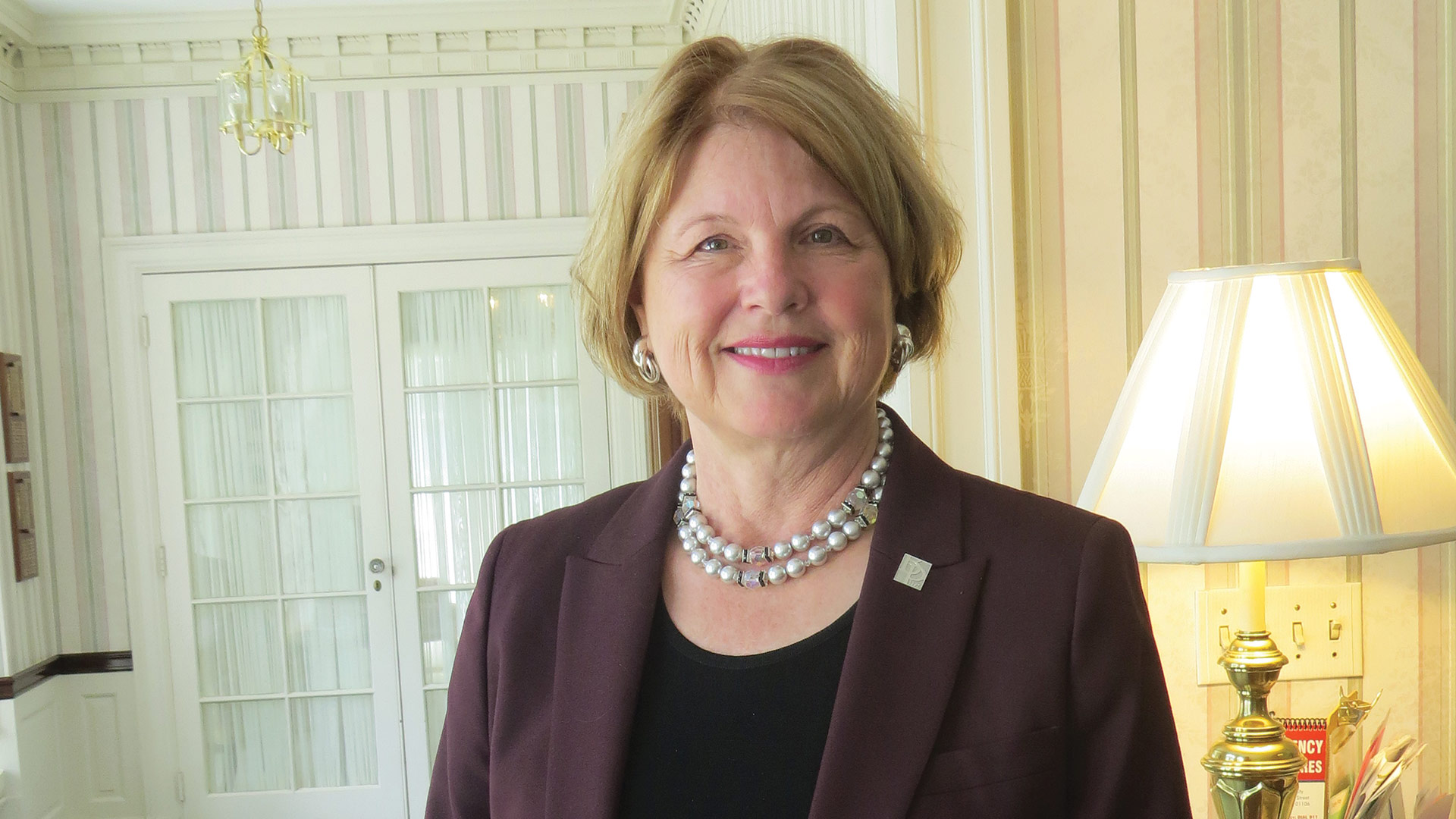
Sandra Doran

While the pandemic presents a number of challenges, Sandra Doran says, it might also create opportunities for Bay Path University.

Sandra Doran says her family has long been attracted to careers in education and the law.

One great-grandfather traveled from New York to Colorado and set up the first one-room schoolhouse in that state, she noted, while her grandfather was superintendent of a school district in New York City, and her mother was a music teacher. And her other great-grandfather was a bankruptcy lawyer, kept especially busy during the Great Depression.

So it’s logical she would take one of those career paths. Actually, she took both.

Indeed, after serving as chief legal officer for Shaw’s supermarkets, she later served as vice president, general counsel, and chief of staff at Lesley University in Cambridge. And it was that position that eventually inspired a full shift to higher education — although she always calls on her legal background — and put her on a path to … Bay Path University and its president’s office.

“At Lesley, I came to realize that higher education was my passion, and my calling,” said Doran, who’s been handed the attractive, but perhaps also daunting, assignment of succeeding Carol Leary and building on the strong foundation she built during a 25-year tenure that saw the college become a university and expand in every way imaginable.

She arrives at Bay Path at a critical juncture, when several powerful forces are colliding — stern challenges in higher education that started emerging years ago; the COVID-19 pandemic, which is exacerbating those challenges and creating new ones; a financial crisis; and a nationwide focus on racial justice.

“This is a historical leadership opportunity for all of us — how we lead through the months and years ahead is really going to define what kind of community we are, how resilient we are, and now adaptive and nimble we are.”

This collision of crises, as Doran called them, presents a real test — actually, several of them — but also opportunities for the school, and higher education in general.

“This is a historical leadership opportunity for all of us — how we lead through the months and years ahead is really going to define what kind of community we are, how resilient we are, and now adaptive and nimble we are,” said Doran, adding that she believes Bay Path is well-positioned to be a leader during this time of crisis, introspection, and profound change, and that she is looking forward to the challenge of helping it play that role.

As she talked with BusinessWest at a small table positioned on the lawn behind the college’s administration building, Deepwood Hall — a nod to social distancing and keeping safe during the pandemic — Doran talked about the college’s plans for reopening this fall. It will embrace what many are calling a hybrid model blending online and in-person classes, with far more of the former. The plan, overall, is to “de-densify the campus,” as she put it, with a limited number of students living on campus, all in single rooms.

But mostly, she talked about this convergence of crises and how, rather than be a roadblock or even a speed bump, it could serve to accelerate the process of Bay Path’s emergence as a leader not simply in remote learning — only she doesn’t call it that; she prefers ‘technology-assisted learning’ — but in guiding students to fulfillment of their goals and ultimate success in the workplace. And also accelerating the process of creating systemic change in how higher education carries out its mission.

For the school, this opportunity to further cement its reputation as a pioneer and frontrunner in remote learning has been confirmed by the large number of colleges and universities calling to seek assistance as they establish or build their own programs (more on that later).

And for higher education, the pandemic presents a unique if not entirely welcome (at some schools) opportunity to rethink and perhaps reinvent many aspects of a college education and put more (and much-needed) emphasis on cost, access, and pathways to success in the workplace, and less on the on-campus experience (more on that later as well).

For all of this, Bay Path is well-positioned, if not uniquely positioned, to grasp these opportunities.

“This is our moment at Bay Path,” she said with noticeable energy in her voice, “because we’ve always been that place where students come to further their career ideals, and we’re going to continue to provide that opportunity.”

For this issue and its focus on education, BusinessWest talked at length with Doran about what she ultimately called “an exciting moment in time,” and all the reasons that make it so.

School of Thought

When asked what appealed to her about Bay Path and its presidency, Doran said, in essence, that there was little, if anything, that didn’t appeal to her.

Indeed, she said the once-struggling two-year college that was resurrected and then taken to dizzying new heights during Leary’s tenure represents an opportunity that brings together her collective passions and many of the initiatives that have marked the latter stages of her career.

These include women’s education, technology and technology-assisted learning, entrepreneurship, and innovation.
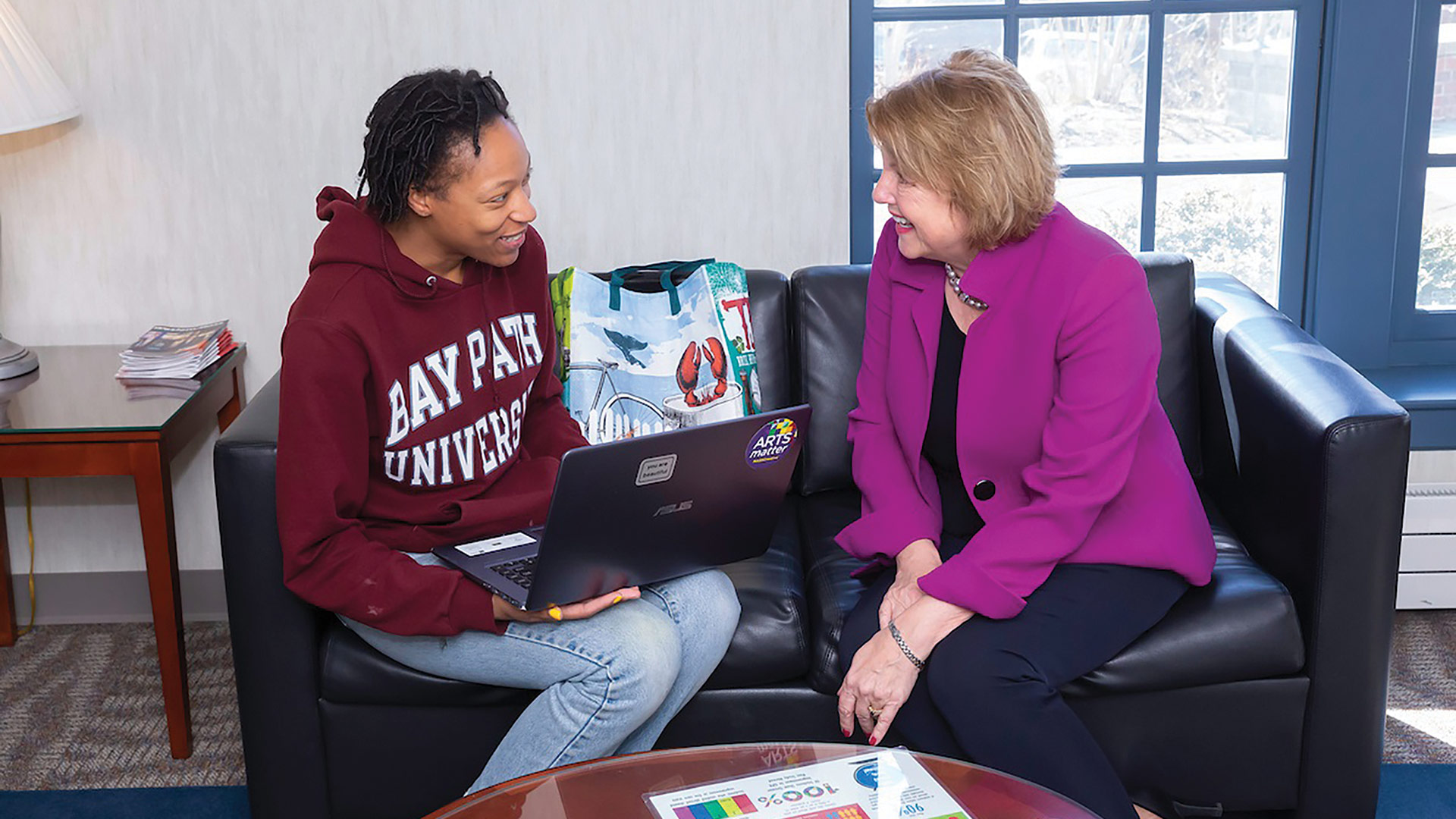
Sandra Doran, seen here with a student

Sandra Doran, seen here with a student on Feb. 27, the day she was introduced to the campus community, embraces the challenge of building on the foundation built by her predecessor, Carol Leary.

“This opportunity is a perfect fit and really the culmination of all my professional work,” she explained. “I’ve had the opportunity to lead a women’s college, so I understand the value of a women’s education. But another part of my background involves adaptive learning and the power of online education to really bring out the best of everyone in terms of mastering the subject matter and ensuring that everyone has a voice. I’ve also led a software company and been an entrepreneur. This opportunity brings all that together, and that’s why it’s a perfect fit.”

A quick recap of her career to date will explain why she said that.

We start at Shaw’s, where Doran, in addition to her work as general counsel, oversaw the company’s portfolio of mergers and acquisitions, which included the acquisition of Star Market Inc.
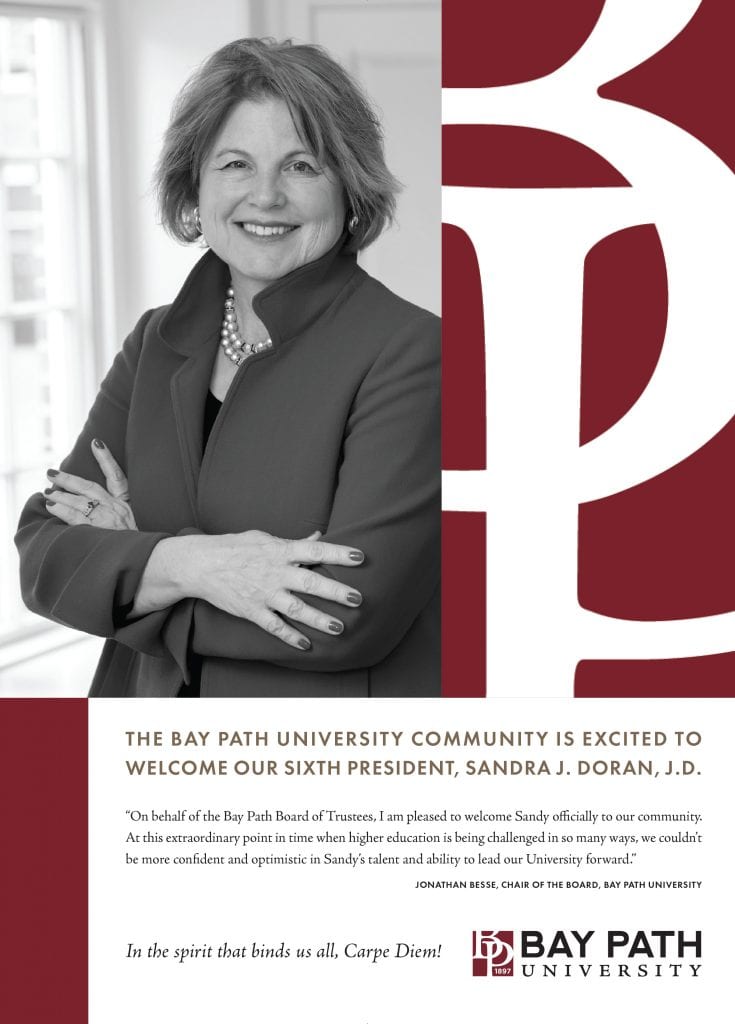
Later, at Lesley, which she also served as general counsel, she came to that realization that higher education was a passion, one that led her to pursue and then garner the role of president of American College of Education, an online doctoral institution serving more than 3,500 students.

From there, while serving as an entrepreneur in residence at Stevens Institute of Technology in Hoboken, N.J., she served as the CEO of Castle Point Learning Systems, a Stevens Institute-supported educational technology startup that had developed an instructional framework for calculus, enabling students and teachers to develop a more robust foundation for higher-level mathematics.

Concurrently, she took a position as National Policy director for the New England Board of Higher Education, where, among other responsibilities, she created and implemented an innovative initiative for multi-state collaboration to increase educational attainment and access for students through online, hybrid, and distance education.

Her career then took another intriguing turn when she was appointed president of Salem Academy and College in North Carolina, the country’s oldest women’s college, founded in 1772. There, she put the school on firm financial footing, developed a strategic plan, and initiated several new programs, including an entrepreneurial makerspace in downtown Winston-Salem where students could work directly with the city’s innovation ecosystem.

As noted earlier, while education has become her career, she calls on her background in law on an almost daily basis, and finds that the two professions coexist effectively.

“One of the great roles of lawyers is to educate,” she explained. “It’s to educate clients, to educate themselves, to mediate, to bring people together, to critically analyze the data and synthesize the data, and communicate. Lawyers are problem solvers, except for the high-profile ones, which are litigators; most lawyers are solving problems.”

When a search firm called last year to gauge her interest in the Bay Path position, she responded enthusiastically, and for the reasons — and passions — mentioned earlier.

“I was familiar with the pioneering aspects of Bay Path — it was one of the first institutions to immerse themselves in the online education experience and understand what that could provide for our students,” she explained, adding, again, that she viewed this opportunity as the culmination of all the career work that had come before it.

Many schools don’t have an online presence at all, and so imagine their consternation when faced with this pandemic. It’s interesting that other liberal-arts colleges are reaching out to us and looking to us as being able to provide that kind of education.”

Since arriving on campus late last month, Doran, while working with staff on the reopening plan, has also been trying to meet with local leaders and the campus community alike — in COVID-mandated ways, especially phone calls and Zoom meetings.

It’s not the same as meeting people in person, but it’s been effective in that she’s getting to know and better understand the community the school serves. And this work continues with an initiative she calls “Let’s Come Together: Virtual Conversations with President Doran.”

“I’m eager to get to know my colleagues, and they’re eager to get to know me,” she said. “So these are conversations we’re conducting virtually, almost one a day — so faculty and staff have an opportunity to sit and talk and learn about each other. It’s a great opportunity for me to learn about our staff and faculty and what excites them about Bay Path, and, frankly, to learn about areas of strength and areas we need to improve.”

Course of Action

Doran was introduced to the Bay Path community on Feb. 27, just before the school sent its students home for the semester and essentially closed the campus. By the time of that announcement, it was already becoming clear that the approaching pandemic could alter the calendar and impact lives — but no one could really have predicted just how profoundly the landscape would change or how schools would be challenged by the virus.

As the story on page 17 reveals, schools have been spending the past several weeks carefully putting together reopening plans for the fall that incorporate a host of different strategies.

For Bay Path, the assignment, while not easy by any stretch, was made less complicated by what could be called the school’s head start when it came to online programs. Its first fully online graduate program was the MS in Nonprofit Management & Philanthropy, launched in 2007, followed by other online graduate programs for men and women and the fully online bachelor’s-degree program offered by the American Women’s College.

Bay Path’s plan, blueprinted with the help of a 75-member task force, calls for essentially cutting the number of students living on campus by half — down to roughly 200 — and conducting most courses, except those with some lab component, online. It’s a plan the school feels comfortable with because so many of its students were already learning remotely.

“It’s an environment where we’re making decisions with imperfect information — our environment is changing on a weekly basis, if not on a daily basis,” Doran noted. “So we’re going to be ready to pivot if we need to, but we feel strongly that we’ve got the right plan in place.”

This head start with remote learning has certainly caught the attention of others in academia, she added, noting those phone calls and e-mails seeking Bay Path’s assistance with online programming and inquiring about potential partnership opportunities.

“We’ve had several schools reach out to us to ask if they can enroll their students in our courses or think about ways we can partner,” she told BusinessWest, noting that inquiries are coming from institutions across the country. “Many schools don’t have an online presence at all, and so imagine their consternation when faced with this pandemic. It’s interesting that other liberal-arts colleges are reaching out to us and looking to us as being able to provide that kind of education.

“They want to learn from what we’ve learned,” she went on. “So it’s exciting to be in that position of being able to share what we know, what we’ve learned about how to provide the best opportunities for students.”

And these phone calls represent just one of the opportunities, a strange word to use in this climate, to arise from the pandemic, said Doran, adding that she chooses to look upon them in that light.

“We have an opportunity to rethink how we meet the needs of students whose ideals and thoughts around higher education are changing in the midst of everything that we’re dealing with,” she said. “So, just as the pandemic is impacting every single person in terms of how they think about their own career and their own lives, our students are doing the same thing.”

Elaborating, she noted that fewer than 20% of those attending college today are having what would be called a traditional college experience, meaning a four-year school and living on campus.

“The other 80% attend a very different — and have a very different — college experience,” she went on. “And one’s not better than the other, but I think there’s a new reality that higher education is embracing that’s focusing on the academic part of the experience, the part of the experience that enables students to have productive careers and move forward with their life goals and their life dreams.

“And that’s what Bay Path has always been — our mission is rooted in this idea that we want to provide career paths,” she continued, noting, again, that the school is well-positioned to embrace this new reality, as she called it, and this is reflected in enrollment numbers for the fall, which are quite solid at a time when many schools are struggling.

“We have — and this is another strength of Bay Path — a very diverse set of students,” she said. “We have students who are only online students, so they were never contemplating coming to campus, so we feel secure in those enrollments; we have graduate students, many of whom are online, so we feel secure in those enrollments; and our undergraduate enrollment is up for this fall in terms of deposits and commitments. We’re feeling very confident, and we’ve had a good response to our plan.”

Overall, the school is on solid financial ground, Doran said, and in a good position to withstand the challenges created by the pandemic.

“The finances around higher education are always challenging,” she explained. “The pandemic has certainly raised another level of gauze around all this, because it’s hard to see through and see what the next steps are. But we have a number of task forces looking at the long-term aspects, and, overall, we see some opportunities.”

Bottom Line

Looking ahead … well, Doran acknowledged it’s difficult to look very far ahead in the era of COVID-19.

Her immediate goals are to continue building on the foundation that Leary has built and develop new growth opportunities for a school that has come a long way in the past quarter-century.

And rather than somehow slow or stifle those efforts, this convergence of crises that greeted her upon her arrival may, as she said, actually serve to accelerate that process.

As she noted, “this is our moment.”

George O’Brien can be reached at [email protected]

Health Care

Improved State

Dr. Andrew Artenstein

Dr. Andrew Artenstein says the state’s slow, cautious reopening has effectively blocked some of the paths COVID-19 might take, thus slowing transmission of the disease.

In many respects, Dr. Andy Artenstein says, the COVID-19 virus acts like water in the home in that, if there are leaks, it can go where you don’t necessarily want it to go and cause major problems.

“Water will always find a path,” Artenstein, chief physician executive and chief academic officer at Baystate Health, told BusinessWest. “But if you block off all the paths, you have a chance; it’s the same with the virus.”

With that, he worked to explain why it is that Massachusetts, more than most of the other 50 states at this particular moment in time, is seeing the number of hospitalizations and deaths stemming from the virus decline sharply. In short, and in his view, the residents of the Commonwealth are essentially, and somewhat effectively, blocking off the paths the virus might take.

“We live in a society where there’s free mobility — that’s one of the things we love about our society. But it’s also one of the things that puts us at risk when there’s a transmissible agent rooted in this society,” he explained. “And this one is clearly here; it’s clearly transmitted in our community. It has not gone away; it’s just that, if viruses don’t get transmitted from person to person … if the virus has nowhere to go, it puts a wall from that root of transmission. You start to block off transmission paths.”

This was Artenstein’s way of explaining why, as one looks at a map of the country charting cases, hospitalizations, and deaths from the pandemic, Massachusetts is colored or tan or pink, while so many other states, especially in the South and Southwest, are dark shades of red, indicating they are hot spots.

Robert Roose, chief medical officer at Mercy Medical Center, gave essentially the same account.

“Massachusetts, along with a few of the other states here in New England, like Connecticut, New Hampshire, and a few others, seem to be solid, if not shining, examples of how a state encompassing multiple different communities can effectively slow down the rate of transmission of the coronavirus,” he said. “More than 40 other states are seeing significant increases in numbers of new infections, while here, over the past several weeks, we have not seen that increase; rather, we’ve seen a plateauing at a very low level.”

“Massachusetts and other states now doing well have been cautious in giving guidance to residents about limitations on travel and quarantining of individuals who have come from other states where there are increasing numbers of infections.”

He punctuated those comments with some statistics from his facility. Indeed, he noted that hospitalizations stemming from COVID-19, which numbered in the 50s daily on average in April, the height of the surge in this region, were down in the 20s in May, then the single digits in June. Starting in early July, there were several days when there were no hospitalizations.

Clearly, the state is doing something right, or several things right, when it comes to blocking paths for the virus, and we’ll get to those. But this begs a number of questions — especially, ‘is this sustainable?’

The quick answer, said Roose and Artenstein, is ‘yes.’ But there are a number of caveats, especially as more segments of the economy reopen in more cities, including Boston, and as the new school year is poised to begin. In their view, the Commonwealth has acted prudently in not opening too much of the economy too quickly. Staying that course is essential, they said, adding that it appears the state is committed to the slow, steady, and safe method.

Meanwhile, travel is another key factor in this equation, both people from this state traveling to others and people from other states coming here — actions that create paths for the virus, rather than block them.

“Massachusetts and other states now doing well have been cautious in giving guidance to residents about limitations on travel and quarantining of individuals who have come from other states where there are increasing numbers of infections,” Roose said. “To me, that is likely to be the most significant factor going forward, because of the rates of infection in other parts of the country; interstate travel represents one of our most significant risks in terms of keeping our rates of transmission is this local community low.”

Dr. Robert Roose

Dr. Robert Roose says caution regarding travel will be one of many factors that will determine if the Bay State can continue its pattern of falling hospitalizations as a result of the pandemic.

But the biggest factor might be fatigue.

“It’s exhausting — for all of us; I’m not just talking about the healthcare side, I’m talking about life,” said Artenstein. “There are certain things that you just miss having as social human beings. But the longer you can sort of wait this out and stretch this out, the better off we’ll be.”

In other words, people can’t relax or think for a moment that maybe it’s time to start talking about the pandemic in the past tense.

As they talked about the state’s current status as a … let’s call it a cold spot for the virus, both Roose and Artenstein praised the Commonwealth’s approach to reopening, which has been described by both those supporting and criticizing it as slow and careful.

Pain Threshold

Artenstein had another word for it.

“It’s painful, because we all want to get back to a sense of normalcy,” he explained. “It’s exhausting that you can’t do what you like to do the way you used to do it, and eventually we will be able to. But this approach has paid dividends; you get used to a little bit of a new normal, but you also know that you’re moving toward something.”

Roose agreed.

“What I think Gov. Baker and the Executive Office of Health and Human Services have done very well is be cautious, rely very clearly and directly on the key data points, and move slowly but consistently through a phased reopening,” he explained. “In other states, governors had moved much more quickly, and we’re seeing the effects of that now; in many states, they’re seeing such significant increases that they’re moving backward and rolling back some aspects of their reopenings.

“It’s not to say that this same type of thing couldn’t happen here,” he added quickly. “But relying consistently on key data and reinforcing consistently the important public-health and safety strategies that we know are effective in reducing transmission — that has not wavered, and I think that has sent a very consistent and strong message to residents to continue to wear masks, be cautious with increasing your social circle, practice hand hygiene, and quarantine when you’re sick.”

As a result of the slow reopening plan and diligence with things like mask wearing, contact tracing, social distancing, and testing, the Commonwealth has effectively moved past the first wave of the pandemic — while other states have clearly not, said those we spoke with. It is now in what Artenstein called a “window,” where, he said, residents must be diligent about not backsliding when it comes to mask wearing, hand washing, keeping one’s distance, and other preventive measures, while also preparing for the second wave that most say is almost certain to come in the fall or winter.

“That’s just historically what pandemics do,” he explained. “They don’t all do that, but statistics will tell you that there will be at least a second wave if not more waves.”

What will those waves be like? It’s difficult to say at this point, said Roose and Artenstein, adding that a number of factors will dictate the level of infections and how well the healthcare community can respond to the next surge.

But in the meantime, and while still in this window, the state’s residents and business owners alike must continue to stay the course, the experts said.

“We still could do better in terms of how often people wear masks in pubic and follow the public-health recommendations,” said Roose, adding that state leadership must continue to reinforce those messages. “We know that when we give those recommendations and that guidance and it’s clear and connected to science, it helps, and it’s certainly important to be consistent about it, or people will have less inclination to follow them.”

Meanwhile, as the state proceeds with phase 3 of its reopening plan and eyes phase 4, testing will be another critical key to closing off paths the virus might take.

“I believe strongly that adequate capacity and widespread testing are critical for us to continue to move forward into phase 4 and into a state where the community is engaging as fully as it can,” Roose said. “That allows us to ensure that, if we do identify infections, we can mitigate the spread; widespread testing is really critical, and we’re not yet where we need to be, as state and as a country. We still could be doing more, and I think the ways we do testing will continue to get easier and more readily available, and that will help quite a bit.”

Artenstein agreed, but quickly noted that all the steps people have been taking — and hopefully will continue to take — only serve to slow or inhibit the spread of the virus. The virus is still there, and it will remain there until a vaccine is developed.

“You can temporarily shut down or limit transmission,” he said, “and then you have the chance for other things to kick in, such as therapies and better approaches to diagnosis and treatment. Those things take time, but they can get a chance to take root once you’ve already established those public-health principles.

“It’s pretty obvious that limiting public gatherings and staying the course has helped,” he went on, returning to the thought that, however painful and exhausting the last few months have been, the strategy moving forward for the state and all its residents has to be to continue to wait it out and, as he said, “stretch it out.”

Bottom Line

Turning the clock back 100 years, to the so-called Spanish flu, Artenstein said the second wave of that pandemic was more severe than the first in many parts of the country simply because communities eased off on restrictions and returned to what life was like before it struck.

“A lot has changed in 100 years — science, technology, people, etc.,” he told BusinessWest. “But one thing that hasn’t changed that much, in my opinion, is behavior. We may be able to further mitigate any future surge, just as we mitigated this surge, by adhering to public-health guidelines. If we can keep that up, and then get some help with testing, better contract tracing, better therapies, which will happen, and maybe a vaccine…”

He didn’t completely finish the thought and instead stressed that this ‘if’ is a very large one, and there are really no certainties when it comes to this strategy.

But the very best strategy at the moment, he stressed, is to string this out and close off those pathways the virus can take.

George O’Brien can be reached at [email protected]

Opinion

Editorial

If you read between the lines when scanning or listening to the comments made by MGM Springfield officials in the run-up to the reopening of the facility this week, it’s easy to see that they have some real concerns about whether the restrictions they’ve been placed under will enable them to succeed.

“We’re excited to be here in this moment,” Chris Kelley, president and COO told members of the press being given a tour of the pandemic-adjusted facilities. “We have significant occupancy constraints that the business will be opening with, but we approach this moment with gratitude for the opportunity to serve our guests and this community again.”

We’re not sure how much gratitude, but we are sure that these occupancy constraints and other restrictions, put in place to keep guests and employees safe, are going to present stern challenges for the casino operators.

Roughly two-thirds of the slot machines will be disabled in the name of social distancing; many table games, including roulette, craps, and poker, will be shut down; capacity in the restaurants will also be limited, again in a nod to social distancing; the bars will be closed and drinking will be limited to those playing the games that are still open; large gatherings, such as concerts and shows, are still prohibited.

Add it all up, and then add in the cost of retrofitting the casino for play in the middle of a pandemic, and it’s fair to wonder whether opening is even a sound business decision given the high overhead at such facilities. That question remains to be answered.

What isn’t in doubt, though, is whether the city and the region need this facility open for business. To that question, there is a resounding ‘yes.’

Indeed, the tourism industry has been absolutely battered by the pandemic, perhaps harder than any other sector. Hotels, restaurants, bus companies, tourist attractions, and other businesses, have been crippled by this. And the announcement that there will be no Big E this fall dealt that sector another huge blow.

We’re not sure how much reopening MGM Springfield will help those businesses — many visitors to the casino don’t make any other stops before or after they do their gambling — but any help would certainly be appreciated.

There’s also the support the casino provides to other businesses, especially its vendors. We’ve written much over the past few years about how important MGM’s business is to these vendors — from the sign makers to the dry cleaners — and the trickle-down, while limited in some respects, is very real.

And then, there’s the psychological factor. Much of Main Street in Springfield was shut down by the pandemic, from shops to restaurants to businesses in the office towers. It’s starting to come back somewhat, with outdoor restaurants on Fort Street, Worthington Street, and by One Financial Plaza, and the office towers slowly (as in SLOWLY) but surely coming back to life.

MGM is another, very important, piece of the puzzle. With the casino again welcoming guests, Springfield, the region, will seem all the more open for business after a dreadful spring.

We’re under no delusions here. Reopening MGM is not going to dramatically alter the fate of many of the businesses that have been decimated by the pandemic. But it might provide a spark — another spark to be more precise — as the region tries to fight its way out of a disaster unlike anything it’s ever seen.

MGM’s managers are certainly not thrilled with the hand they’ve dealt, as they say in this business, but perhaps they can do something with it, show they can operate safely, and eventually build their capacity back up. In the meantime, the city and the region get another boost when they so badly need one.

Opinion

Opinion

As the calendar turns to late July, area colleges and universities are getting set to welcome students back for a fall semester that will, like the spring semester before it, be unlike any they’ve ever experienced.

It will be that way for the students, but also for the institutions themselves as they try to cope with a pandemic that is testing them in every way imaginable, starting with the not-so-simple task of simply reopening.

Indeed, there are a number of strategies being deployed by the schools in this region and well beyond — everything from mostly or entirely online (something many community colleges are favoring) to in-classroom learning, to an increasingly popular hybrid approach that blends both .

And there are twists on those themes, such as UMass offering online education in all programs, but also giving students the option of living on campus — with a whole lot of rules that will have to be followed in an attempt to keep people safe from the virus.

But as schools scramble to reopen, deeper discussions are taking place — or should be taking place — about how the pandemic may bring about systemic change in how colleges provide an education to students.

With that, we return to those reopening strategies, because they provide ample evidence of an ongoing debate concerning what’s important to students and what a college education is or should be.

Many are of the opinion that in-person, in-the-classroom learning is critical and more effective than online, or remote, learning, and this is why some colleges are working diligently to maintain this element, even during a pandemic. Meanwhile, others consider the campus experience an integral part of a college education.

This leads to the larger question — just what is a college education? Is it merely gaining skills that could enable one to succeed in the workplace? Or is it much more? Is it also about making lifelong friendships, learning about people and about life, working in a collaborative environment, and, yes, going to parties and football games and concerts?

The easy answer is that it’s all these things. The challenge for each institution is figuring out how to provide the best mix of all that to its students. As the story on page 17 makes clear, no two strategies among the region’s schools are exactly the same, and that makes the fall semester a fascinating experiment — one higher-ed leaders promise to take lessons from, even as they hope for a more traditional fall of 2021.

Picture This

Email ‘Picture This’ photos with a caption and contact information to [email protected]


Camp Days

The Boys & Girls Club of Greater Holyoke opened its seven week, in-person summer camp on July 6, serving up to 75 youth a day. The camp will help kids combat summer learning loss while focusing on one primary theme: diversity. With the topic of racism at the forefront of the country and Holyoke being a community of color, the club will continue to create a platform to educate children on inclusiveness, acceptance, and equality for all. Program activities will incorporate elements of diversity, and additional activities will include project-based learning, targeted literacy support, STEM and coding, arts and crafts, daily challenges, sports and recreation, gardening, culinary arts, dance, non-contact boxing, and more.


Food Donations

The United Way of Pioneer Valley recently received its first food shipment — 11 pallets of shelf-stable food items, pre-packaged in boxes, made to feed a family of four for several days — secured through a relationship with MEMA as part of pandemic-response efforts. If a family needs assistance and isn’t covered by one of the community agencies receiving food, they can call (413) 737-2691 for assistance. Pictured: Jennifer Kinsman, director of Community Impact, and Emmanuel Reyes, Thrive financial coach, unwrap a pallet of food.


Agenda

Nominations for Humane Awards

Through July 31: Dakin Humane Society is accepting nominations from the public for its Dakin Humane Awards until July 31. Nominees should be people who go out of their way to care for animals in need, people who volunteer to help animals, or people and/or animals who have provided significant public service or shown courage in a crisis. Finalists in each of the award categories will be picked from among the nominees and notified of their selection in August. The award ceremony will be livestreamed at a later date in the fall, and one winner in each of the categories will be announced. There are five awards to be bestowed: the Frances M. Wells Award, given to an individual recognized for notable contributions to the health and welfare of animals; the Youth Award, honoring a hero, age 16 or younger, whose extraordinary care and compassion makes a difference in the life of an animal, and makes the world a kinder and gentler place; the Champion Award, given to a public servant who makes life better for tens of thousands of animals and people in their community, and recognizing their dedication and compassion on behalf of animals and people in need; the Richard and Nathalie Woodbury Philanthropy Award, paying homage to an individual who displays a remarkable sense of stewardship in sharing time, talent, and financial resources to improve the lives of animals and people who love them; and the Animal Hero Award, recognizing an exceptional animal and handler (when applicable) whose valor and extraordinary devotion to people proved life-saving in disastrous or challenging heath circumstances. Nominations are being accepted online only at bit.ly/2NOcgps. Mail-in nominations will not be accepted. Nominees should be residents of Central or Western Mass. or Northern Connecticut.

MCLA Gallery 51 Virtual Artist Series

Through Aug. 8: MCLA Gallery 51 will continue its online program, the G51 Virtual Artist Series, live via Zoom at noon on alternating Saturdays. Local, regional, national, and international artists will give virtual tours of their studios and discuss their practices. Discussions with the artists will also be recorded for later viewing. The series kicked off on May 16. The gallery’s full spring programming schedule is available on its website. Upcoming artists include Kim Faler (July 25), a local, multi-disciplinary artist working in painting, drawing, installation, sculpture, and photography, whose art practice unpacks the emotional weight found within everyday objects and architecture; and Anina Major (Aug. 8), who works with topics of identity, slavery, the female body, Bahamian culture, and more. She considers her creative practice to be a response to continuous erasure and a culture that is constantly being oversimplified.

Submission Period for Virtual Art Show

Through Aug. 13: Due to the COVID-19 pandemic, NAMI Western Massachusetts will present a virtual art show this year, and is now accepting artwork for the show. Submissions are limited to individuals living with a mental-health diagnosis, and the artwork will be displayed on the organization’s website and social-media pages for a limited time, then switched out for new artwork. To submit, e-mail a picture of the art to [email protected]. Note the size of the piece, the medium, and the price if it is for sale. The artist should also specify if they want their name used. The deadline for submissions is Aug. 13.

People on the Move
Katherine Dugan

Katherine Dugan

Springfield College Assistant Professor of Religion Katherine Dugan has accepted the position of director of core curriculum at the college. Dugan will oversee the implementation of the new core curriculum at Springfield College starting during the 2020 fall semester. As part of her responsibilities, she will be responsible for providing clear communication methods with faculty, administrators, and students about the what and why of the Springfield College core curriculum. Dugan joined the Springfield College humanities faculty in 2016 with a focus on American religions with a specialization in contemporary Catholicism in the U.S. She teaches courses on world religions, religion in the U.S., Catholicism, women and religion, and introduction to Christianity. Her research interests are in religious experience, women in religion, and the intersection of religious practice and American culture. Her first monograph, “Millennial Missionaries: How a Group of Young Catholics Is Trying to Make Catholicism Cool,” was published by Oxford University Press in 2019. Her current research is on Catholics who practice natural family planning in the U.S.

•••••

Kate Burke

Kate Burke

Westfield State University (WSU) appointed Kate Burke associate director of Alumni Relations and Annual Giving. In her role, she will be responsible for the development, management, and oversight of alumni outreach and engagement initiatives as well as providing leadership to the Alumni Relations team for the management of the Alumni Association and the Lifetime Owls program. In addition, she will provide oversight of the annual-fund communications, campaigns, and giving programs. Burke comes to WSU with a wealth of external, alumni-relations, and development experience in both higher education and intercollegiate athletics. She has previously made an impact at Colorado School of Mines, Northwestern University, University of Wisconsin-La Crosse, Oakland University, University of Virginia, and Xavier University. Burke earned a bachelor’s degree at Eastern Illinois University and a master’s degree from Indiana State University.

•••••

Antonio Dos Santos

Antonio Dos Santos

The Westmass Area Development Corp. board of directors has elected Antonio Dos Santos its new chairman, replacing Carol Campbell as her term expires. Dos Santos joined the board in 2011 and has served in numerous roles, most recently as vice chair. He is a partner at the Springfield-based law firm Crear, Chadwell, Dos Santos & Devlin, P.C., specializing in business, commercial real estate, and commercial lending. Dos Santos brings years of leadership and commitment to the Westmass board as Campbell’s term concludes after three challenging years. Amid the unexpected passing of former President and CEO Eric Nelson in 2019 and hiring new President and CEO Jeff Daley in October 2019, Campbell’s management and commitment to Westmass has ushered in a strong financial and operational base for success in the years to come. She will assume the role of immediate past chair and continue to serve on the executive committee.

•••••

Justine Dymond

Justine Dymond

Springfield College Associate Professor of English Justine Dymond has been selected by the Mass Cultural Council (MCC) Artist Fellowships Program as a finalist in the category of fiction/creative nonfiction on the strength of her lyrical essay titled “Brave of Worms.” Dymond teaches courses in writing and multi-cultural literature at Springfield College. Her short prose and poetry have appeared in numerous literary journals, including Massachusetts Review, Pleiades, Briar Cliff Review, and Cimarron Review. Her short story “Cherubs” was selected in 2007 for an O. Henry Award, a highly prestigious recognition in the art of the short story. In 2018, she received the the Eludia Award presented by Hidden River Arts, an inter-disciplinary, independent arts organization located in Philadelphia, for her collection of stories titled The Emigrant and Other Stories. Forthcoming from Sowilo Press, the collection ranges widely in setting and era, including France during World War II, Maine in the early 18th century, and Tennessee in the 21st century.

•••••

Wendy Fitzgerald

Wendy Fitzgerald

HUB International New England, LLC announced that Wendy Fitzgerald, strategic account executive, received the Chartered Private Risk and Insurance Advisor (CPRIA) certificate, completing an intensive, 18-month program designed to enhance the knowledge of professionals who serve high-net-worth clients. Nearly 600 professionals from leading insurance organizations in the U.S. have graduated from the program since its inception in 2015. The CPRIA program is offered by the Private Risk Management Association (PRMA) and is endorsed by the Tobin Center for Executive Education of St. John’s University in conjunction with St. John’s School of Risk Management, Insurance and Actuarial Science. The CPRIA program is unique in that it provides real-world scenarios, addresses current and complex industry trends, and predicts needs of the future. The program also aims to further the knowledge of participants by providing them with access to high-net-worth industry veterans and leading insurance executives.

•••••

Michael Paysnick

Michael Paysnick

Michael Paysnick, CEO of Springfield Jewish Community Center (JCC), has announced his retirement. Initially intending to retire in September, Paysnick has agreed, in light of COVID-19, to remain until a replacement is hired or until the end of the year. Paysnick began his career at the JCC as assistant executive director in 1988. In 2008, he succeeded Mark Dindas, now executive director emeritus. During his tenure, Paysnick helped establish the JCC as the central meeting place of the Jewish and general community. He set the organization on a path to financial sustainability, a goal achieved by working closely with the board of directors. Paysnick was instrumental in expanding existing programs, as well as overseeing the initiation of new and creative programs and services, in a fiscally responsible manner. He successfully achieved the creation of the special-needs program Kehillah and oversaw the expansion of the after-school program and infant program in the Early Learning Center. In 2011, he achieved the successful hosting of the 2011 JCC Maccabi Games held at the Springfield JCC. During his time at the helm, he presided over numerous renovations and infrastructure improvements to the center’s facility. The Springfield JCC received several recognition awards under Paysnick’s leadership, including one from Human Resources Unlimited (now Viability), which recognized the JCC for its employment practices of hiring individuals with special needs. The JCC also received the Brianna Award for its commitment to providing quality programs and services for individuals with special needs and their families.

•••••

Toastmasters International announced that Steve Lanning was selected as Toastmaster of the Year by district leadership during its annual officer meeting. Lanning is the current president of Toastmasters of Downtown Springfield, and the outgoing Division F director for District 53 of Toastmasters International. This annual award goes to the District 53 Toastmaster who has demonstrated year-long dedication to, and leadership within, District 53; committed to assisting other members in making their own progress; and upheld the core values of Toastmasters International: integrity, respect, service, and excellence. Lanning is a six-year Toastmasters member who earned the Distinguished Toastmaster Award, the organization’s highest award, in 2019. He also earned seven educational awards in the just-ended club year. Lanning stepped down as Division F director on July 1 to assume the role of Area F63 director for the next club year.

•••••

Wesley Church II

Wesley Church II

Wesley Church II has been named dean of the Springfield College School of Social Work and Behavioral Sciences. His professional background includes more than 20 years of experience in the field of social work, primarily in criminal-justice settings. “Springfield College will benefit from the broad experiences and accomplishments that Dr. Church brings to the dean’s role,” said Martha Potvin, Springfield College’s provost and vice president for Academic Affairs. “His spirit of innovation and collaboration, as well as successes in growing enrollments in online and continuing-education programs in social work and in child and family studies, bode well for successful leadership across all departments in the year-old School of Social and Behavioral Studies.” Church has been the J. Franklin Bayhi endowed professor, the special assistant for assessment, and formerly director of the Louisiana State University School of Social Work. He succeeds Francine Vecchiolla, who is retiring after 30 years of service at Springfield College.

•••••

John Whalley, CEO of Whalley Computer Associates (WCA), announced the appointment of Michael Sheil as the company’s new president. Whalley has led the company as president and CEO for the past 41 years and will remain in his role as CEO moving forward, working closely with Sheil and the senior leadership team. Sheil brings to the position a wealth of knowledge and a wide range of experience in the information-technology industry, with expertise in sales for higher education, healthcare, finance, enterprise, and state and local governments. He has more than 32 years of experience in sales and 27 years of IT sales with WCA, most recently as a senior account manager, where he was an integral part of WCA’s success. In his new role, he will be responsible for presiding over the entire workforce, managing budgets and making sure resources are allocated properly to meet the overall goals and initiatives of the company. Tom Hanson, vice president of Operations; Doug Moglin, vice president of the OEM Division; and Paul Whalley, vice president, will remain in their current roles.

Company Notebook

Melanson Heath Rebrands as Melanson

NASHUA, N.H. — Melanson Heath, one of the fastest-growing accounting firms in the U.S., announced that the company will begin operating under a new name and will be known as Melanson, effective immediately. This rebranding strategy reflects both the evolution of the company and its vision for the future. Along with this change, a newly redesigned company logo has been revealed, and a new website, melansoncpas.com, has been launched. “As part of our focus on expansion and business development, our leadership team and I believe it was appropriate to rebrand our firm to more specifically reflect who we are,” said Managing Partner Scott Toothaker, CPA. “We are very excited about the introduction of our new company name, Melanson, because it allows us to better represent our business to our clients and community. We are also very happy about the launch of our new website, which features our own employees and better reflects the personality found at Melanson. We are not just an accounting firm; we are a partner for our clients.”

Phoenix Project Launched to Assist Struggling Businesses

PIONEER VALLEY — The DiStefano Group and Seven Roads Media announced the Phoenix Project, a movement to collaborate and create opportunities within the Pioneer Valley business community based on the principles of kindness and understanding. The goal is to provide a broad range of assistance to businesses that are struggling as a result of the unprecedented happenings of 2020. The two companies, in direct response to the inequities and hardships that so many in the community are facing, will seek to gain a genuine understanding of what local business owners need and address those needs immediately and for free. The process will begin with a video interview to gather raw, first-hand knowledge. Seven Roads Media and the DiStefano Group will provide business and media coaching on the spot, but support for the business won’t end there. The Phoenix Project also includes the expertise of an established group of ‘masterminds’ — local professionals at the top of their fields — to provide coaching in banking, marketing, financial management, real estate, photography, hospitality, events, human resources, psychology, IT, and more. Gina DiStefano, president and CEO of the DiStefano Group and Phoenix Project co-founder, explained that “the video is just the beginning. From there, we will connect the business with our group of masterminds, who will continue to provide pro bono advice. We intend to have a real impact on businesses that have been hit hard. We are willing and able to help.” The project’s model will build supportive relationships not just for the chosen business, but among all of the those represented by the masterminds, said the third co-founder, Jess Roncarati-Howe, a nonprofit consultant and coach with the DiStefano Group who formerly served as president of the Greater Chicopee Chamber of Commerce. “An entrepreneurial spirit who truly cares about what’s going on around them can foster tremendous impact,” she added. “It is the driving force behind the Phoenix Project. We will help our community to heal — one interaction, one relationship at a time.”

IALS at UMass Amherst Joins Digital Health Sandbox Network

AMHERST — The Massachusetts eHealth Institute at MassTech (MeHI) selected six new healthcare research and development (R&D) hubs to join the Digital Health Sandbox Network, including UMass Amherst’s Institute for Applied Life Sciences (IALS). The Sandbox Network program connects digital-health startups to cutting-edge R&D facilities in the Commonwealth and allows Massachusetts startups to apply for funding to test their innovations at one of the networks’ labs, now including IALS. Sandbox R&D facilities provide a range of services supporting validation and testing for digital health companies throughout their life cycles. “Establishing a translational institute at UMass that provides startup lab space; more than 30 industry-friendly, staffed core equipment facilities; and individualized venture-mentoring services creates an exciting environment for digital-health companies in Western Massachusetts,” IALS Director Peter Reinhart said. IALS helps to shepherd and translate fundamental research into new product candidates, technologies, and services that benefit human health and well-being. IALS also helps users address both basic and translational questions, deliver technologies and product candidates more rapidly, and become more competitive in obtaining funding. Facilities include a state-of-the-art test bed for mobile health experiments at scale, the Center for Human Health and Performance, a roll-to-roll fabrication and processing facility, and research laboratory space for lease. In 2019, Gov. Charlie Baker announced $500,000 in funding for the Sandbox program as part of the Commonwealth’s efforts to boost the digital-health ecosystem under the Massachusetts Digital Health Initiative.

Captain Candy to Open Second Store in Holyoke

NORTHAMPTON — Levi Smith, owner of Captain Candy in the lower level of Thornes Marketplace, announced he is opening a second store in the Holyoke Mall at Ingleside. “I’ve survived the COVID-19 shutdown, and I’m excited to be opening a second store in Holyoke,” Smith said. Captain Candy offers eclectic candies that are not the norm in grocery and convenience stores — everything from gumballs to candy cigarettes, wax bottles full of juice, Turkish taffy, Pop Rocks, and Zotz. Smith was contacted in January by the owners of Pyramid Management Group, which owns more than a dozen malls in the Northeast, including the Holyoke Mall. Smith’s Holyoke store opening comes a little over a year after he purchased the Northampton shop from former owner Nolan Anaya. Smith was 18 at the time. Currently, he is a business student at Holyoke Community College. In the early months, Smith will operate the new store to ensure a smooth start, and then he will hire as needed. Currently, he and six part-time employees operate the Thornes location, which opened in 2013.

Smith College Team Wins Ventilator-design Challenge

NORTHAMPTON — The SmithVent team of engineering alumni, staff, and faculty are the winners of the CoVent-19 challenge to design an easily manufacturable ventilator for use during the coronavirus pandemic, according to Grécourt Gate, Smith College’s online news portal. The team’s breathing device was chosen from more than 200 submissions to the competition launched on April 1. “In two months, we went from knowing nothing to having a functional prototype,” said team co-leader Susannah Howe, director of Smith’s Engineering Design Clinic. “To see that trajectory in such a short period of time, with people who are volunteering their time on top of their other jobs, is amazing and heartwarming and so rewarding.” Smith College President Kathleen McCartney added that “I could not be more proud of the SmithVent team for winning the CoVent-19 Challenge. This win speaks volumes about the power of a liberal-arts education, grounded in experiential learning, to find innovative, collaborative solutions to complex, urgent problems. SmithVent is Smith at its best: a lasting example of our community coming together for the betterment of the world.”

Springfield Library & Museums Assoc. Wins $100,000 NEA Grant

SPRINGFIELD ​— National Endowment for the Arts Chairman Mary Anne Carter has approved more than $84 million in grants as part of the NEA’s second major funding announcement for fiscal year 2020. Included in this announcement is an Our Town award of $100,000 to​ the ​Springfield Library & Museums Assoc. in partnership with the Springfield Cultural Partnership for Spark!: Igniting Our Community, a project in the newly renovated Pynchon Park to envision and create public art that serves to connect the city, residents, and visitors. This is one of 51 grants nationwide that the agency has approved in this category. Spark: Igniting Our Community is a two-year public art project that will transform recently reopened Pynchon Park into a vibrant public space through innovative multi-media art installations created by local and national artists. City residents, community stakeholders, and cultural institutions will be involved in a collective process to imagine, select, and commission public art that celebrates Springfield’s citizens, culture, and heritage. The park, closed for 40 years, will use the arts to connect neighborhoods and people, creating equitable partnerships that demonstrate the power of civic engagement for more vibrant and livable communities. The park’s reopening offers an opportunity to continue momentum by celebrating public art in this passageway and creating a programming and civic-engagement space. This project will create a walkable pathway between the museum district and the commercial downtown, spurring retail and public-space projects along these avenues and encouraging greater tourism throughout the city.

Webster Bank Offers Financial Program for Frontline Heroes

WATERBURY, Conn. — Webster Bank became one of the first financial-services companies nationwide to introduce Frontline Heroes, a program for essential healthcare workers and first responders that enhances the financial well-being of those who are on the front lines of the COVID-19 pandemic. In gratitude for their selfless service, Webster’s new Frontline Heroes program offers a range of financial benefits, including checking accounts free of a monthly maintenance fee and free checking withdrawals at any ATM through December 2021. The program provides new customers with the ability to earn a cash incentive, as well as additional discounts and benefits. Frontline Heroes includes any full-time or part-time employee currently in essential healthcare, including hospitals, nursing homes, medical and dental practices, and home healthcare. The program is also available to first responders. For every new Frontline Heroes customer, Webster will also donate $250 to United Way COVID-19 Response Funds, making a minimum donation of $100,000.

Incorporations

The following business incorporations were recorded in Hampden, Hampshire and Franklin counties and are the latest available. They are listed by community.

AGAWAM

AC Auto Transportation Inc., 322 Meadow St, Apt. 12, Agawam, MA 01001. Alexei Ciocalau, same. Long distance transportation.

AMHERST

Amherst Cognitive Therapy Inc., 24 South Prospect St., Amherst, MA 01002. Caroline Aller, 31 Montague Road, Leverett, MA 01054. Psychotherapy.

BELCHERTOWN

Belchertown Cultural Alliance Inc., 19 Jackson St., Belchertown, MA 01007. AprilEve Jasak-Bangs, same. To enrich the community of Belchertown, MA through repurposing underutilized landscapes. To preserve Belchertown’s history while providing a space for artistic, technical, and educational pursuits.

BERNARDSTON

Aedz Inc., 30 Deanne Road, Bernardston, MA 01337. Abaz Cecunjanin, same. Restaurant, bar, food service, and catering.
DEERFIELD

Chen Family Holdings Limited, 228 Lower Rd., Deerfield, MA 01342. Sharon Laisum Chan, same. Real estate.

FEEDING HILLS

Belchertown State School Friends Association Inc., 926b Springfield St., Feeding Hills, MA 01030. Katherine Marian Benson, same. Support planning with the town of Belchertown and the Belchertown economic development industrial corporation for the continued use of certain land parcels of the former Belchertown State School.

GREENFIELD

26 Clark Street Inc., 26 Clark St., Greenfield, MA 01301. Tyler Nolan, same. Rental property.

PITTSFIELD

Cafe Dexter Corp., 82 Wendell Ave., Suite. 100, Pittsfield, MA 01201. Sangyul Lee, same. Sale of coffee materials and machinery.

Cash Cloud Inc., 82 Wendell Ave., Suite 100, Pittsfield, MA 01201. Christopher Mcalary, same. Virtual currency kiosk operators.

RICHMOND

Anita Chapman Scholarship Fund Inc., 3050 State Road, Richmond, MA 01254. Janice Hartford, same. To organize, promote and conduct the giving of educational scholarships from donations collected by the corporation for the sole purpose of assisting young people with their education or training following high school graduation.

SPRINGFIELD

Crane Edmund Family Inc., 654 Newbury St., Springfield, MA 01104. Robert F. Crane, same. To help high school students pursue college courses and credit at local community colleges while attending high school.

WARREN

Brian Oshea Services Inc., 192 Old West Warren Road, Warren, MA 01083. Brian Oshea, same. Sale of flooring.

WEST SPRINGFIELD

Chartiers General Carpentry Inc., 78 Rogers Ave., West Springfield, MA 01089. Donald N. Chartier, same. General carpentry.

WESTFIELD

B-Ton Construction Inc., 120 Mullen Ave., Westfield, MA 01085. Olessya Kondratyev, same. Construction.

WILLIAMSBURG

Brewmasters Inc., 4 Main St., Williamsburg, MA 01096. John J. Lucey, 14 Chapman Ave., Easthampton, MA 01027. Restaurant.