Home 2021 August (Page 3)
Daily News

GREENFIELD — The MassHire Franklin Hampshire Workforce Board announced a new partnership with CareerVillage (careervillage.org). This collaboration will connect Franklin County and North Quabbin youth to local community professionals and industry leaders, helping them achieve their career goals and building the next generation of leaders.

The MassHire Franklin Hampshire Workforce Board will build on its work to support youth career development by partnering with CareerVillage, a 501(c)(3) open-access platform where learners can ask any question about any career. Each question is matched to one of more than 90,000 working professionals volunteering their time on the site. The organization’s unique model has enabled it to serve more than 5.5 million students worldwide with personalized career advice.

“Our young people need better tools and resources to boost their level of career readiness,” CareerVillage founder Jared Chung said. “The vast majority of youth who use careervillage.org found us on their own while they were searching the internet for basic career information. I’ve always believed that the public sector and workforce boards have a role to play in the lives of young people. I look forward to working with the MassHire Franklin Hampshire Workforce Board to reach and serve local youth as they prepare for their dream careers.”

As a MassHire Franklin Hampshire Workforce Board partner, CareerVillage will provide students with 24/7 access to career-planning activities and educators with free career curriculum and professional-development opportunities. This builds MassHire Franklin Hampshire Workforce Board leadership’s capacity to serve local youth and rallies the Franklin North Quabbin communities to engage in youth career development. By engaging entire ecosystems of localized support, CareerVillage helps students achieve financially stable careers and fortifies local economies.

“This is an exciting opportunity to bring national expertise in a wide range of industries right to the doorways of our student population,” said Rebecca Bialecki, executive director of the MassHire Franklin Hampshire Workforce Board.

For more information on CareerVillage, visit www.careervillage.org, or e-mail MassHire Franklin Hampshire Workforce Board School to Career Coordinator Laura Robinson at [email protected].

Daily News

WASHINGTON, D.C. — The U.S. Small Business Administration (SBA) is announcing a call to all eligible Shuttered Venue Operators Grant (SVOG) applicants seeking economic aid for live-entertainment small businesses, nonprofits, and venues. New applications will be accepted through Friday, Aug. 20. The SVOG program has so far awarded $8.4 billion in grants to more than 10,800 businesses to assist in getting the nation’s cultural institutions, which are critical to the economy and were among the first to shutter, back on track.

While the application portal will close to new applicants, the SBA will continue delivering economic aid to help venues recover by providing relief through the supplemental awards program. Later this month, the SBA will open the program for supplemental SVOGs for 50% of the original award amount, capped at a total of $10 million (initial and supplemental combined). Details will be announced at a later date.

Additionally, to ensure no eligible venue is left behind, the SBA is currently accepting, by invitation, applications for reconsideration of award amounts and appeals. This rare opportunity gives applicants a chance to prove their eligibility and reverse a prior decision. Should the need arise, the SBA may reopen the portal or make other adjustments to its plan to best meet the needs of small businesses.

“After making much-needed improvements to this vital program, we’ve made swift progress getting more than $8 billion in funds into the hands of more than 10,800 performing-arts venues and other related businesses — two-thirds of which employ less than 10 employees. These small businesses suffered disproportionate impacts from the pandemic and were often left out of early rounds of relief,” SBA Administrator Isabella Casillas Guzman said. “However, we also know so many small businesses continue to struggle. That’s why, as this program nears the finish line, we’re providing additional funding options for our hardest-hit venues through our supplemental awards program, which will provide another critical lifeline to ensure businesses can reopen and stay open.”

SBA’s Office of Disaster Assistance Customer Service Center is available from 8 a.m. to 8 p.m. to provide technical assistance with the SVOG application portal and can be reached at (800) 659-2955 or, for the deaf and hard of hearing, at (800) 877-8339. For additional information on SBA’s economic-relief programs, visit sba.gov.

Daily News

SPRINGFIELD — Freedom Credit Union will once again to offer the opportunity for Western Mass. residents to securely purge unwanted paperwork. In cooperation with PROSHRED Springfield, Freedom is offering a free community shred day at two of its branches in Springfield and West Springfield.

The event is slated for Saturday, Sept. 18 from 9 to 10 a.m. at 296 Cooley St. in Springfield, and from 11 a.m. to noon at 58 Union St. in West Springfield. The public is invited to bring old bills, bank statements, tax returns, and other sensitive documents for free, quick, and secure on-site shredding.

Members and non-members alike may bring up to five file boxes or paper bags (per vehicle) to the events. Masks are not required for those who are vaccinated.

Daily News

SPRINGFIELD — 2021 marks the eighth season of Springfield Jazz & Roots Festival, an annual celebration in the heart of Springfield produced by Blues to Green.

This festival has become a powerful expression of civic pride, uniting the region’s diverse cultural communities through music, art, education, and revelry. The event will feature 17 performers between 12:30 and 10:30 p.m., as well as pop-up food and beverage vendors. Admission is free, but reservations are required this year. Visit springfieldjazzfest.com for the full lineup and schedule, and to RSVP.

Daily News

SPRINGFIELD — The Springfield Regional Chamber has partnered with MassHire and the Baker-Polito administration on a statewide virtual job fair, the first of its kind. To date, nearly 3,000 job seekers from across the Commonwealth have registered to participate.

The event will be held Aug. 16-20 from 10 a.m. to 2 p.m. There is no cost to participate, and the online platform will allow employers to connect with candidates on the spot.

“We are working with our partners across the state and convening the chambers in our region to ensure that this opportunity is available to every business seeking talent and every resident seeking a job,” said Nancy Creed, president of the Springfield Regional Chamber. “I encourage you to take advantage of this unique recruiting opportunity to find the talent you need.”

Employers and job seekers can register at www.mass.gov/massachusetts-virtual-job-fair. The fair will focus on all industries on Aug. 16 and 19; manufacturing, professional services, and finance on Aug. 17; healthcare, hospitality, and education on Aug. 18; and information technology, building services, and others on Aug. 20.

Daily News

EAST LONGMEADOW — Excel Dryer Inc., manufacturer of the XLERATOR hand dryer, recently welcomed a new director of global sales to its team. Tammy Stone joins Excel Dryer with more than a decade of experience and a worldly expertise unlike many in her field.

“When looking for someone who could head up our global sales, Tammy was the perfect fit,” said William Gagnon, vice president of Sales and Marketing at Excel Dryer. “In addition to speaking five languages, Tammy holds three degrees, two of which she received at overseas universities. She is knowledgeable, driven, and will share her vast expertise in business and global solutions with our team.”

Born in the Republic of Georgia, Stone moved to the U.S. as a teenager. A graduate of Carl von Ossietzky University in Germany, Tbilisi State University in Georgia, and the University of Illinois College of Law, she holds degrees in business and political science. In previous positions, she grew national and international sales, developed business-strategy plans, and led a team of employees focused on business-to-business activities.

“I am thrilled to take on this challenging and exciting new chapter with Excel Dryer,” Stone said. “This company made a name for itself creating quality products that are in use all over the world. I hope to further spread the message of value and excellence Excel has come to be known for.”

In her role at Excel Dryer, Stone will be responsible for managing and providing business-strategy plans for all business-to-business interactions, negotiating transactions, and working to increase domestic and international market share and build sales activity.

Daily News

ENFIELD, Conn. — The town of Enfield’s Family Resource Center, a division of the Enfield Department of Social Services, has partnered with Asnuntuck Community College’s Early Childhood Education program. In a creative collaborative program, the two partners are providing an educational experience at the Enfield Public Schools’ Stowe Early Learning Center to preschool-aged children who are entering preschool and kindergarten in the fall, and who have had a limited preschool experience due to the pandemic.

The summer program, currently underway, is three weeks long, and there are three classes of 16 children each going to kindergarten and two classes of 10 children each going to preschool. Funding for the program has come from the Connecticut Office of Early Childhood and is partially staffed by teaching assistants who are Asnuntuck students or recent graduates.

Administrators from the college and the town of Enfield recently participated in a walk-through tour of the program. Led by Amy Morales, the Family Resource Center coordinator for Enfield who has been coordinating this summer initiative, the group had an opportunity to peek inside the classrooms to see the children in the program.

Participating in the visit were Enfield Assistant Superintendent of Schools Andy Longey, Assistant Town Manager Kasia Purciello, Director of Social Services Cindy Guerreri, Director of Early Childhood Initiatives Jaclyn Valley, Chief Academic Officer Michelle Middleton, and Partnership Coordinator Amy Witbro; as well as Asnuntuck CEO Michelle Coach, interim Dean of Academic Affairs Teresa Foley, and Professor and Career Programs Department Chair Carol LaLiberte.

Daily News

BOSTON — Confidence among Massachusetts employers rose to its highest level in more than three years last month as the state and national economies continued to expand despite renewed COVID-19 outbreaks.

The Associated Industries of Massachusetts (AIM) Business Confidence Index marked its 30th anniversary in July by rising 2.2 points to 65.6, some 20 points higher than a year ago.

The increase was driven by a strong outlook among manufacturers and a brightening assessment by all employers of current economic conditions.

Those conditions included an estimated 6.2% annualized growth in Massachusetts real GDP during the second quarter and a 6.5% annualized surge nationally as federal stimulus dollars and the availability of COVID vaccines stoked the economic recovery. The Massachusetts economy had grown at a 6.9% annual clip in the first quarter.

The Massachusetts unemployment rate fell to 4.9% in June as employers created 9,400 jobs.

“Every component of the Business Confidence Index rose during July, from employer assessments of their own business prospects to their hiring plans. Employers see the recovery gaining momentum despite the presence of the Delta variant of COVID-19. With the reopening of the Massachusetts economy, consumer spending is proving its resilience,” said Sara Johnson, chair of the AIM Board of Economic Advisors (BEA) and executive director of Global Economics at IHS Markit.

The AIM Index, based on a survey of more than 140 Massachusetts employers, has appeared monthly since July 1991. It is calculated on a 100-point scale, with 50 as neutral; a reading above 50 is positive, while below 50 is negative.

The constituent indicators that make up the Business Confidence Index were all positive during July. The confidence employers have in their own companies rose 3.0 points to 67.7, leaving it 20 points better than it was during the depths of the pandemic a year ago.

The Massachusetts Index assessing business conditions within the Commonwealth increased 2.4 points to 66.0, up 17.2 points since July 2020. The U.S. Index measuring conditions nationally gained 0.1 point in July and 21.8 points for the year.

The Current Index, which assesses overall business conditions at the time of the survey, gained 3.3 points to 66.6. The Future Index, measuring projections for the economy six months from now, rose 1.3 points.

Confidence among manufacturing companies increased 3.9 points to settle 18.1 points higher than its year-earlier level. Large companies (70.6) were more bullish than medium-sized companies (65.5) or small companies (59.1). Companies in Eastern Mass. (69.2) were significantly more confident than those in Western Mass. (61.7).

Alan Clayton-Matthews, professor emeritus of Economics and Public Policy at Northeastern University and a BEA member, said the American Rescue Plan Act and expansionist monetary policy continue to stimulate consumer demand and hiring by employers.

“Economic growth is expected to remain strong in the second half of the year, but there is a risk that rising COVID-19 Delta-variant cases could slow the recovery,” Clayton-Matthews said.

AIM President and CEO John Regan, also a BEA member, said the $1 trillion infrastructure bill moving through Congress should allow Massachusetts to make significant new investments in transportation, utilities, and power infrastructure. The bill contains $550 billion in physical infrastructure spending.

“Roads, bridges, power-delivery systems, and transportation are key elements of sustainable business growth,” Regan said. “The proposed spending plan will be another pillar of the recovery and has the added advantage of being funded by reallocating existing federal resources with no additional taxes.”

Daily News

FLORENCE — Keiter Corp. has donated $10,000 to the Greater Northampton Chamber of Commerce for a promotion that will allow consumers to purchase a $25 Northampton gift card and receive $50 in actual spending power.

This investment by Keiter, aimed at helping to continue to boost the local economy in the wake of the COVID-19 pandemic, will be supplemented by a $2,500 contribution from the chamber’s Community Revitalization Fund, allowing for 250 of the double-valued, $25 Northampton gift cards to be sold.

Billed as a “Kickstart the Community with a Keiter Card” campaign, the promotion will launch on Thursday, Aug. 12. The $25 Keiter cards will be sold exclusively at the chamber offices at 99 Pleasant St., Northampton between 9 a.m. and 5 p.m., Monday through Friday. Consumers must mention that they want a Keiter card, and the promotion applies only to $25 Northampton gift-card purchases. (A $50 gift card would not be valued at $100, for instance.) There is a limit of one card per customer, per transaction.

“We care about our community and where we live,” said Scott Keiter, founder and president of the Keiter Corp. “Our families are here. Our business is here. We saw this as an opportunity to raise awareness about our business in a way that benefits the local business community and consumers. We’re trying to reinvest in a different way.

“COVID-19 was not fair,” he added. “Some industries, people, and families were hit significantly harder than others. We see this as a way to help people get back out there and feel better about having a nice meal and spending some time in downtown Northampton. Let’s continue to build the positive energy downtown and support our business community.”

Based in Florence, Keiter has provided general-contracting and construction-management services in the Valley since 2010 for its commercial and residential projects.

Scott Keiter is a member of the chamber’s board of directors and its finance committee, so he is personally aware of the financial hit that local merchants took during the pandemic. Knowing the gift-card program has been successful, he thought an investment focused on it would be a win-win-win for his business, the chamber, and shoppers around the region who have also been hard-hit.

“We see this as a positive way to invest in our community,” he said. “Things are coming back to life. It’s another little piece of the puzzle — another piece of forward movement. We hope this is very successful and triggers a cascade of other organizations getting involved in doing similar things.”

The Northampton Gift Card is currently accepted at 65 restaurants, shops, and other establishments. Additionally, 25 Keiter cards will be given away via an online promotion on the Daily Hampshire Gazette’s website, gazettenet.com.

Daily News

WEST SPRINGFIELD — The YMCA of Greater Springfield reached out to several local business for their help with upgrades at its Camp Weber in West Springfield this past year. Ondrick Materials & Recycling of Chicopee, Adam Quenneville Roofing & Siding of South Hadley, and Eastman Chemical Co. of Springfield were among several businesses that, without hesitation, stepped up to help. Over the course of a few months this spring, various projects were completed to upgrade Camp Weber, including paving, new roofs, painting, landscaping, consulting, new equipment, and more.

The YMCA was also fortunate to receive donations and grant awards to help with other expenses on the project. In addition, some community friends came together and helped raise enough money to send nearly 300 kids to one-week sessions of camp.

“The YMCA of Greater Springfield is so appreciative of all the hard work and donations from everyone who came together to help us with many of the projects needed at Camp Weber and raising funds to send kids to summer camp, culminating this spring. It allowed us to open camp on a strong foundation, providing our campers and staff with a better Camp Weber than before the pandemic,” said Dexter Johnson, president and CEO. “Because of COVID-19 restrictions and guidelines, we were not able to open Camp Weber last summer. It was a blessing in disguise because it gave us more time to plan and roll out our capital improvements at the camp. I would also like to thank Jean Gailun and her friends, who, for another year in nearly a decade, have raised funds to help send kids to camp.”

Among those who helped the YMCA make improvements at Camp Weber are Adam Quennville Roofing & Siding, anonymous donors, the Agnes M. Lindsay Trust, Big E Trust – Town of West Springfield, Construction Dynamics, Eastman Chemical Co., Excel Dryer, Graybar Electric Supply, Hampden County Sheriff’s Department, Kelly Building Group, Kittredge Foodservice Equipment & Supply, Noonan Energy, Nora Roberts Foundation, Ondrick Materials & Recycling, Szlachetka Dubay, P.C., West Springfield Rotary Club, and West Springfield Rotary District 7890.

Daily News

BELCHERTOWN — MassDevelopment and the Belchertown Economic Development and Industrial Corp. (BEDIC) announced the selection of Brisa Ventures, LLC to develop a 12-acre parcel of land at Carriage Grove into a new mixed-income residential community featuring approximately 100 units of housing.

Brisa Ventures will also preserve and redevelop the existing former Belchertown State School administration building into a community center, museum, cultural space, meeting space, and either a restaurant, brewery, or distillery. Construction of the development is projected to begin by the end of 2022 and is expected to be complete within 18 to 24 months.

The sale of this BEDIC-owned parcel and building to Brisa Ventures will represent the first phase of a multi-phased, mixed-use project under negotiation with the company intended to include additional commercial, residential, and community-oriented investments.

“MassDevelopment’s partnership with the Belchertown Economic Development and Industrial Corporation has made significant strides in transforming the former Belchertown State School from an underutilized asset into a thriving mixed-use community,” said Housing and Economic Development Secretary Mike Kennealy, who serves as chair of MassDevelopment’s board of directors. “This new development marks another exciting step in that journey and will add about 100 much-needed units to the Commonwealth’s housing stock.”

Added MassDevelopment President and CEO Dan Rivera, “momentum breeds momentum, and it’s clear that the progress the town of Belchertown, the Belchertown Economic Development and Industrial Corporation, and MassDevelopment have made in breathing life back into the former Belchertown State School campus has paved the way for this landmark new development. MassDevelopment has been proud to be a strategic partner in the development of Carriage Grove. Brisa Ventures, LLC’s proposal to build about 100 mixed-income rental housing units, while preserving and transforming the existing former administration building into community space and a restaurant for the benefit of the public, stood out as the best next step for the community.”

The new rental housing units will be designed as a mix of two- and three-story apartment- and townhome-style residences and built to ultra-low energy-use standards; they are planned to use solar energy to meet net-zero energy use. The development will also include extensive common green areas with play areas, community gathering spaces, and pathways that connect the housing units to each other and to the neighboring trail network.

Daily News

WESTFIELD — Westfield State University (WSU) interim Dean of Faculty Enrique Morales-Díaz is the recipient of the Latino Scholarship Fund (LSF) of Western Massachusetts’ Antonia Pantoja Award, which honors people who contribute to the Latinx community through research and education. It was presented in June, during the organization’s 30th annual awards ceremony, held virtually.

The Latino Scholarship Fund of Western Massachusetts is a nonprofit organization dedicated to putting higher education within reach of college-bound students in the region.

Morales-Díaz leads Westfield State’s initiative to become a federally recognized Hispanic-serving institution (HSI) and chairs the University’s Racial Equity and Justice Institute Team. The HSI designation is part of a larger commitment by Westfield State to address systemic racism and inequities on campus, such as in its policies and practices. It also supports its efforts to become a student-ready, relationship-centered campus community that is fluent in understanding all of its students’ needs and that values their culture.

“To say that I was surprised to learn I have been bestowed the Antonia Pantoja Award is an understatement,” Morales-Díaz said. “Dr. Pantoja’s example is what I strive to emulate with my work on these highly important matters of inclusivity and accessibility.”

An activist for the Puerto Rican community in New York City, Pantoja is best known for establishing ASPIRA in 1961, a nonprofit organization that promotes education and advancement for Puerto Rican youth by providing clubs within schools, career and college counseling, advocacy for bilingual education, and other services.

In his introduction of Morales-Díaz, Massachusetts Department of Higher Education Commissioner Carlos Santiago said he was delighted to celebrate the accomplishments of his former student from their days at the State University of New York Albany, where Santiago taught as a professor.

“I know Enrique well,” Santiago said. “His receipt of the Antonia Pantoja Award is very well-deserved for his contributions to the [Latinx] community and to Westfield State University.”

One of Morales-Díaz’ former students, LSF board member Derek Estrella, nominated him for the Antonia Pantoja Award.

“As a former student of Dr. Morales-Díaz, I had the opportunity of getting to know his deep commitment to the Latinx community and, more specifically, this community at Westfield State University,” said Estrella, who graduated from WSU in 2019. “Dr. Morales-Díaz has always taken an initiative to be involved with Latinx students who are trying to navigate their collegiate careers.

“In addition to serving in various mentorship roles, he has pioneered many conversations surrounding intersectionality of being queer and Latinx,” Estrella added. “For these reasons — and many more — I am delighted to have advocated for Dr. Morales-Díaz as a more-than-deserving recipient for the Antonia Pantoja Award.”

Daily News

BOSTON — Mark Fuller, who has served as interim chancellor of UMass Dartmouth since January, was named permanent chancellor. He has served in the interim capacity since January, following nine years as dean of the UMass Amherst Isenberg School of Management, which rose to national prominence under his leadership, and three years as UMass Amherst vice chancellor for Advancement.

“Over the last seven months, Dr. Fuller has proven himself to be a good listener, a passionate advocate, a sincere collaborator, and a strategic, common-sense decision maker,” UMass President Marty Meehan said when recommending Fuller to the UMass board of trustees. “He has been tested by the pandemic and all of the challenges it has created. He has responded with focus and grace, always keeping the well-being of students, staff, and faculty front and center. As a first-generation college student who worked his way through school, he understands the challenges today’s students face and is tireless in helping them succeed. I look forward to working with Mark to advance the UMass Dartmouth mission.”

Robert Manning, who chairs the UMass board of trustees, added that, “with his breadth and depth of experience, his perspective as a first-generation college student, and his track record of success, Mark Fuller is the ideal leader to serve as chancellor of UMass Dartmouth at this pivotal moment. Dr. Fuller will bring the stability and results-driven focus needed for UMass Dartmouth to excel on a rapidly changing higher education landscape.”

Fuller spent 12 years in the UMass system prior to being named interim chancellor in January, including nine transformative years at Isenberg, which is now ranked as the number-one public undergraduate business program in the Northeast by U.S. News & World Report. Isenberg’s online MBA program rose to the top ranking in the nation, and third in the world, according to the Financial Times. With an alumni base of 60,000 (similar to that of UMass Dartmouth), the annual giving to the Isenberg School increased from $2 million to $10 million on Fuller’s watch.

As vice chancellor for Advancement for three years, he was a key player in redesigning UMass Amherst’s Advancement activities and building greater coordination between alumni communications, engagement, and fundraising.

“I am honored by the trust that President Meehan, Chair Manning, and the board of trustees are placing in me,” Fuller said. “Over the last seven months, I have been inspired by the students, faculty, and staff of UMass Dartmouth and by the people and civic leadership of the SouthCoast. I’m excited about the spirit of collaboration, inclusion, perseverance, and innovation that I have found in confronting the challenges posed by the pandemic and in creating new cultural and economic opportunity across the region. These are qualities that are critical to sustaining an environment of learning and discovery. I look forward to making the SouthCoast my home and accelerating the work we have started for our students and the community.”

Prior to joining the UMass system, Fuller was a professor and department chair at Washington State University for nine years and began his career in academia with eight years at Baylor University. His research interests are especially relevant to today’s world, including technology-supported learning, distance education, and teamwork in technology-mediated environments. His teaching interests include executive education, leadership, information-systems strategy, e-commerce, change management, and project management.

Daily News

SPRINGFIELD — Generally, unless there’s a power outage, the weather does not impact digital production. But this year, all the rules were thrown out the window. While snowflakes were still flying during GCAi’s planning phase for the new Westmass Area Development Corp. website, it was both the heat and wet weather that proved to be challenging while capturing the high-quality visuals that the project required.

The critical component of the project was Westmass’ expansion of its traditional development role. The method to achieve success would be to get that expansion documented through not only text, but video interviews, high-quality images of past and current projects, and even drone video, scheduled carefully to miss the aforementioned raindrops.

“For decades, Westmass has sought to benefit the communities and residents in our region through the development of business and industrial parks,” said Jeff Daley, president and CEO of Westmass. “Today, it is our continued goal to help provide communities and private developers with the tools and resources they need to do smart development. The new website allows us to showcase the exciting projects Westmass is undertaking, as well as promote our efforts to advance real-estate and economic-development opportunities throughout Western Massachusetts for years to come.”

News of the ongoing production leaked before the launch, and what Westmass was up to, as well as some of the businesses and projects impacted by its work, could not be contained. The GCAi Digital PR team helped coordinate coverage, which resulted in the article “Westmass Strives to Become a More Impactful Force in Economic Development” in BusinessWest.

GCAi has now turned the keys to the new website over to the Westmass team, who continue to make updates and add content from their new offices in Monarch Place, adjacent to GCAi’s new perch in Tower Square.

Daily News

SPRINGFIELD — Since its launch in the fall semester of 2020, the American International College (AIC) master of science program in Cannabis Science and Commerce has been an online degree program. Beginning this fall semester, the Micro Emerging Markets: Cannabis certificate program will additionally be offered fully online.

The MS program in cannabis science and commerce, a 30-credit graduate program, is designed for individuals interested in a career in the cannabis industry, providing students with an understanding of the science, business, and legal issues associated with the industry. The program offers education in the areas of basic science, including chemistry, horticulture, cultivation, uses, and delivery systems; business management, marketing, and operations; and federal and state laws and policies.

The Micro-Emerging Markets: Cannabis certificate program offers three business courses in rotation. There are no prerequisites to enroll other than a high-school diploma or GED equivalency. Non-matriculated students are welcome to enter the program.

The first course of the certificate program, “Cannabis Entrepreneurship,” examines customer groups, products, and services in the recreational market. The effect of price, quality, and competitors will be explored relative to competing effectively. This will involve key components of the industry, including legal aspects, business models, financing, and marketing.

In “Cannabis Business Operations,” students will analyze the evolving cannabis marketplace and investigate the complexities and challenges of this sector. This course will conduct an in-depth look at the key components of different business types, how the sector is evolving, starting and operating a cannabis business, in addition to financial constraints, investments, and strategic marketing in the industry.

The final course of the certificate tackles “Law and Ethics of Cannabis,” which examines the legalization of cannabis. Discussion around the legal and ethical implications of cannabis use, its legalization, criminal activity, and marketing will be explored, in addition to perspectives of law enforcement, business owners, and recreational uses.

According to the 2021 jobs report issued by Leafly, the world’s largest cannabis website, 321,000 full-time equivalent (FTE) jobs across 37 states were supported by legal cannabis as of January this year. Eighteen states and the District of Columbia have now legalized adult recreational-use marijuana, including Connecticut, the latest state to legalize recreational cannabis this June. The cannabis job growth in 2020 represented a doubling of the previous year’s U.S. job growth. In 2019, the cannabis industry added 33,700 new U.S. jobs for a total of 243,700. Despite a year marked by a global pandemic, spiking unemployment, and economic recession, the legal cannabis industry added 77,300 full-time jobs in the U.S. That represents 32% year-over-year job growth.

“American International College is excited to offer both a graduate-level program that offers courses focused on developing business acumen in a field that is experiencing a meteoric rise and a certificate program that is a business-based offering that provides courses in a developing field,” said Susanne Swanker, AIC’s dean of the School of Business, Arts and Sciences. “AIC is positioning itself to be an educational leader in this rapidly emerging market that offers entrepreneurial and employment and opportunities for the future.”

For more information regarding these programs, visit www.aic.edu/cannabis.

Business Talk Podcast Special Coverage

We are excited to announce that BusinessWest, in partnership with Living Local, has launched a new podcast series, BusinessTalk. Each episode will feature in-depth interviews and discussions with local industry leaders, providing thoughtful perspectives on the Western Massachuetts economy and the many business ventures that keep it running during these challenging times.

Episode 74: August 9, 2021

George O’Brien talks with Tara Brewster, Vice President of Business Development for Greenfield Savings Bank

Tara Brewster

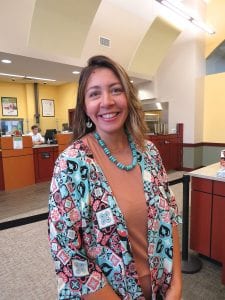
BusinessWest Editor George O’Brien has a lively discussion with Tara Brewster, Vice President of Business Development for Greenfield Savings Bank and one of five finalists for BusinessWest’s coveted 40 Under Forty Alumni Achievement Award. The two talk about her work, but especially her involvement in the community, her latest assignment as radio talk host, and her life as a self-described “recovering entrepreneur.” It’s must listening so join us on BusinessTalk, a podcast presented by BusinessWest in partnership with Living Local.


Sponsored by:

Also Available On

Daily News

SPRINGFIELD — A respected healthcare professional with more than 30 years of clinical leadership, Frank Cracolici, has been named interim president of Baystate Medical Center. Meanwhile, Joanne Miller, who has more than 30 years of hospital-operations experience, has been named interim chief Nursing officer (CNO).

Cracolici has an extensive background in leading hospitals and most recently served as senior advisor to the CEO of Morton Hospital, a member facility within the Steward Health Care System, a $7 billion system comprised of 36 hospitals with more than 40,000 employees. He was responsible for the day-to-day operations for the 125-bed hospital located in Central Mass., which includes 440 physicians and 730 associates, an active Emergency Department with more than 45,000 visits per year, 5,500 inpatient discharges, and an operating budget of $125 million.

Previously, Cracolici was president and CEO of St. Vincent Medical Center, part of Verity Health System, in Los Angeles, where he was responsible for all strategy, hospital operations, and ambulatory services for the 366-bed hospital. He has also held leadership roles as executive vice president and chief operating officer, and then president and CEO, at St. Luke’s-Roosevelt Hospital Center in New York City, where he was responsible for the oversight of 1,000 inpatient beds and strategic planning for all clinical and operational departments of the dual campus hospital center and level 1 trauma center.

Cracolici is a Johnson & Johnson fellow from the Wharton Business School at the University of Pennsylvania and has a master of professional studies degree in health services administration and a bachelor’s degree in business and health services administration from the New School for Social Research in New York City. He earned his diploma of nursing at Englewood Hospital and Medical Center School of Nursing in Englewood, N.J.

For 19 years, Miller served as senior vice president, Patient Care Services; vice president, Surgical Services; chief Nursing officer, and interim CEO in both major academic health systems and community-based hospitals.

Most recently, she served as CNO/vice president at Carson Tahoe Health in Carson, Nev., and interim CEO/CNO at Jupiter Medical Center in Jupiter, Fla. She was also CNO/vice president, Patient Care Services at Johns Hopkins Medicine/Sibley Memorial Hospital in Washington, D.C. In this capacity, she led the development, implementation and evaluation of nursing-practice and patient-care standards across the acute-care hospital, ambulatory sites, and its skilled-nursing and assisted-living facilities. She held system nursing leadership roles to foster collaboration and promote peer learning to improve quality and the patient experience.

Miller holds a doctorate in executive nursing practice from Drexel University, a master’s degree in nursing administration from the University of Hartford, and a bachelor’s degree in nursing from Mount Saint Mary College. She is a Malcolm Baldridge executive fellow.

She is a strong champion for safety, quality, and patient and staff experience, and has a proven track record in value-based purchasing measurements. She also brings to Baystate her expertise in lean innovation and the Pathway to Excellence/Magnet journey.

Daily News

WILBRAHAM — Giombetti Associates, a leadership institute providing behaviorally based talent development and acquisition services, will host a series of Common Application Workshops to assist students and their parents in the process of applying to college. The first two sessions will take place Wednesday, Aug. 11, and Sunday, Aug. 22 from 6 to 8 p.m. at the Giombetti Associates office, 2377 Boston Road, Unit 2, Wilbraham. Only four students will be admitted to each session, allowing for more personal attention.

“Applying to college may be the most stressful thing teenagers have had to face in their young lives,” said Ross Giombetti, president of Giombetti Associates. “We get a lot of questions and concerns about the application process through our work with student career coaching. Our hope is that these workshops can serve as a resource for families working through the process, offering support, guidance, and expert knowledge.”

During the two-hour workshop, student career coach and college-application expert Laura Lucarelle will walk students through the process step by step, answering questions and offering advice tailored specifically to their situation along the way. Lucarelle offers more than 25 years of experience counseling a wide range of students and families. She worked for eight years in higher education as an admissions counselor, where her responsibilities included reviewing applications and visiting high schools to represent the college and recruit students.

“Laura has dedicated much of her life to helping students achieve their dreams,” Giombetti said. “Her first-hand knowledge of the higher-education system will be an asset to anyone who takes this workshop. The intimate nature of these events will help students get one-on-one attention with a professional who has been in the position to admit students into college, and who specializes in making the college-application process easier and even enjoyable.”

To register for the workshop or for more information, e-mail [email protected].

Daily News

NORTH ADAMS — MCLA’s Division of Graduate and Continuing Education worked this summer with Student Diplomacy Corps (SDC) to offer college classes to 101 high-school students from 15 U.S. states and four different countries, including two from Berkshire County.

The program, which provides full scholarships for high-school students, lets participants select from 10 college-credit courses, from public health to sociology and culture, ecology, history, literature, and music. In addition to coursework, MCLA provided guest speakers, including current students, to connect with SDC students about the benefits of a liberal-arts education. While all SDC courses were delivered online this summer, a future residential program is planned.

The Student Diplomacy Corps creates opportunities for high-school students from underserved populations to access free summer programs that build college readiness and foster empathy. Learn more at sdcorps.org.

“The Student Diplomacy Corps has offered an outstanding program this summer that MCLA has been proud to support,” said Paul Petritis, associate dean for Graduate and Continuing Education. “With a rigorous curriculum, outstanding faculty, and an international focus, SDC is a remarkable organization doing wonderful work, and we look forward to partnering with them in the future.”

Daily News

ENFIELD, Conn. — Are you looking for a career in the healthcare field? Asnuntuck Community College will hold a virtual Healthcare Career Open House on Wednesday, Aug. 18 from 5:30 to 6:30 p.m. The event will showcase a number of in-demand careers, various short-term certification programs, and expert instructors.

Participants can learn about healthcare-career certificates and potential SNAP scholarships. Fifteen different non-credit career programs are available at Asnuntuck, including medical billing and coding, certified inpatient coder, certified pharmacy technician, CNA/certified patient care technician, emergency medical technician, electrocardiogram technician, dental assistant, sterile processing technician, ophthalmic assistant, veterinary assistant, esthetician, nail technician, personal trainer, as well as cosmetology and medical interpreter programs.

The college has designed a state-of-the-art facility for its cosmetology program, where students are receiving hands-on cosmetology and hairdressing education.

Registration is not required. Visit asnuntuck.edu/courses-programs/healthcarepersonalservices to register. For more information regarding programs, call (860) 253-3010.

Daily News

NORTHAMPTON — Coca-Cola announced it will close its bottling plant at 45 Industrial Dr. in Northampton in the summer of 2023, leaving its 319 employees to find new jobs, a move Mayor David Narkewicz told the Daily Hampshire Gazette “will be a significant economic loss for the city of Northampton.”

“After careful consideration, the Coca-Cola Company has decided to close our production facility in Northampton, Massachusetts,” the company, headquartered in Atlanta, said in a statement. “We did not make this decision lightly and are grateful to have had the opportunity to have been a part of the Northampton community.”

The statement added that workers “will be encouraged to apply and be considered for jobs that they are qualified to perform within the Coca-Cola system and at other third-party manufacturer locations. The facility is targeting closure in the second quarter of 2023, and we will support our associates throughout the challenging transition.”

After a conference call with company representatives, Narkewicz said the closure is tied to a corporate restructuring plan that will also shut down a plant in California, the Gazette reported.

Daily News

SPRINGFIELD — Martin Luther King Jr. Family Services Inc. (MLKFS) appointed Zaida Govan as vice president of Youth Services. She will direct all educational programming, including after-school, summer, and college-readiness programs.

“The needs of the youth in our community have increased greatly,” said Ronn Johnson, president and CEO of MLKFS. “Zaida will help us to carry on the vision of Dr. King and respond to those needs. While our core focus remains the Mason Square community, the need has grown, and the people we serve come from all neighborhoods, even beyond the borders of the city of Springfield.”

Govan is a licensed clinical social worker and an accomplished community organizer who has worked with the Mason Square Health Task Force and its Drug Free Communities efforts. Her community work also includes serving as a board member of Wellspring Cooperative Corp. and Wellspring Harvest Greenhouse, as well as a board member of the League of Women Voters of Northampton. She is president of the Indian Orchard Citizens Council and president of the Springfield Community Land Trust, whose mission is to bring permanent, affordable housing to Hampden County. She also started community-garden efforts in both the Indian Orchard and Mason Square neighborhoods.

Govan attended the University of South Carolina in Columbia and holds undergraduate and graduate degrees from Springfield College, including a master’s degree in social work and human services.

Daily News

BOSTON — Karen Wallace has joined Associated Industries of Massachusetts (AIM) as executive vice president of Marketing. She will develop and lead strategies to support expansion of the association and implement AIM’s belief that business can be a positive force for change in creating a better, more prosperous Commonwealth.

A native of Springfield, Wallace was most recently a consultant to Northeastern University Khoury College of Computer Sciences, the Northeastern University College of Professional Studies, and the Isabella Stewart Gardner Museum. She previously spent more than 20 years in marketing positions at Fidelity Investments, including as senior vice president of Marketing, Communications, and Branding. She has also held senior marketing positions at MFS Investment Management and Sun Life. She brings a strong capacity for using data to drive marketing and business growth.

Wallace earned both a bachelor’s degree and an MBA from Simmons University in Boston. She has completed professional-development courses at MIT Sloan School, Harvard Business School, and Tuck School at Dartmouth College. She serves as a board member for the Boston Children’s Chorus and is a member of the National Black MBA Assoc. and Alpha Kappa Alpha Sorority Inc.

Daily News

NORTH ADAMS — MCLA will receive $1.9 million to distribute directly to enrolled students from Higher Education Emergency Relief Funds (HEERF) that are part of the federal American Rescue Plan (ARP).

One of the largest investments ever made in American higher education, ARP allocates $40 billion to colleges in order to mitigate the negative impact of the COVID-19 pandemic. A third round of pandemic relief for higher-education institutions, the ARP funds are more than double the first two COVID recovery packages combined. HEERF funding, which exists under the umbrella of ARP, is meant specifically for students.

MCLA students with the highest need, demonstrated via FAFSA information, will receive the majority of this funding, but all enrolled students will receive a check or the option to use the funds to pay off student debt or pay for future semesters of college.

The first disbursement of funds will be to MCLA undergraduates and graduate students who are enrolled for summer classes as well as for the fall 2021 semester. The next disbursement will be to students enrolled for fall 2021. The remainder of this funding will be disbursed to enrolled students in spring 2022.

Bonnie Howland, MCLA’s director of Student Financial Services, said she has heard from many MCLA students who are helping support their families, have lost jobs, or lack internet access at home. This funding can help pay for expenses so that students can stay enrolled in college while they deal with other emergencies brought on by COVID.

“It’s designed to help students stay in school throughout the pandemic,” Howland said. “I think we’re going to feel the effects of the pandemic for at least the next couple of years.”

Daily News

HOLYOKE — Girls Inc., the national organization that inspires girls to be strong, smart, and bold, has received $10 million in funding as one of four awardees selected by the Equality Can’t Wait Challenge to benefit its Project Accelerate program. Project Accelerate aims to expand the power and influence of women in the U.S. by 2030.

Building on Girls Inc.’s evidence-based programming, Project Accelerate addresses inequality in the workplace, particularly the absence of women of color in positions of influence and leadership. The program will accelerate young women’s trajectories through college and career entry, leveraging partnerships with corporations and social-impact organizations to ensure both their preparation and their access to positions of influence. Project Accelerate will also reduce the gender gap by working with young women starting as early as their junior year in high school to ensure they have the resources and support to thrive as leaders. Through a network of 78 affiliates, including here in the Pioneer Valley, Project Accelerate aims to lift 5,400 diverse women into corporate positions of power and influence, shifting the equity landscape for generations.

“The $10 million in funding secured by Girls Inc. National for Project Accelerate from the Equality Can’t Wait Challenge will be instrumental in addressing and dismantling gender inequalities in the workplace,” said Suzanne Parker, executive director of Girls Inc. of the Valley. “We are so thrilled for our national organization and the affiliates all over the country who will be piloting the program over the course of the next year, and we look forward to rolling out Project Accelerate at Girls Inc. of the Valley in the future.”

Project Accelerate will prepare thousands of young women leaders not merely to succeed in workplace environments, but also to affect cultural change from within. Expected outcomes include an increased number of young women graduating on time, an increased network of influence for girls from historically marginalized groups, and job placement in high-paying positions of leadership. In doing so, women will acquire the means and the opportunity to elevate their status, as well as their families, neighborhoods, communities, and organizations.

“A generation of bold young women stands ready to lead change in the world. Yet entrenched, inequitable systems prevent them from having the opportunities and resources they need to succeed,” said Girls Inc. President and CEO Stephanie J. Hull. “Girls Inc. is proven to make a positive difference in the lives of girls. Support from the Equality Can’t Wait Challenge for Project Accelerate extends the proven Girls Inc. experience through college and into early careers. The investment also supports change in the companies that employ these young leaders. In its insistence on justice and equity for women, Project Accelerate advances equality for all.”

The Equality Can’t Wait Challenge, which launched in 2020, is the first competition centered on gender equality in the U.S. with an award of this magnitude and represents an opportunity to invest in and empower women leaders who bring a wide range of lived experiences to their work to advance women’s power and influence in the U.S.

Daily News

SPRINGFIELD — The Markens Group (TMG) recently announced the addition of the New England Financial Marketing Assoc. (NEFMA) to its comprehensive list of clients and expanded its team by hiring three new employees.

The Markens Group, an association-management company located in Springfield, now has a 15-person staff that serves clients ranging from local societies and membership organizations to national not-for-profits. Its new client, NEFMA, based in Massachusetts, provides personal- and professional-development opportunities to financial marketers through educational meetings and networking opportunities.

“NEFMA is thrilled to partner with the Markens Group. We’re excited for them to showcase their expertise, implement strategy, identify trends, and overall help our association learn and grow,” said Shelley Regin, board president of the New England Financial Marketing Assoc. and senior vice president of marketing at Country Bank, headquartered in Ware.

New TMG staff members include Michelle Everard, who serves as director of programs and events; Brandy Swanson, who serves as an accountant; and Lauren Martin, who serves as communications manager. The Markens Group’s community-first approach to business is driven by its inclusive team and client collaboration that fosters brighter communities and deeper engagement.

“TMG was founded over three decades ago to help organizations thrive and create connected communities. Today, we’re thrilled to be in a dynamic place with continuous growth and expansion,” said Ben Markens, founder and president of the Markens Group. “We’re excited to be working with NEFMA and look forward to helping them with their programs and communication efforts. With the addition of new clients also comes more talent, and we feel fortunate to welcome Michelle, Brandy, and Lauren to our team.”

Daily News

SPRINGFIELD — Market Mentors, the region’s largest marketing, advertising, and public-relations agency, announced the addition of a director of Agency Operations, Pam Soisson, a 30-year marketing veteran. This new position was created to provide guidance and day-to-day oversight as the agency grows.

“Pam brings a wealth of experience to this role,” company President Michelle Abdow said. “We are thrilled that she agreed to join our team and has already made a strong impact. She’s extremely methodical, seeking order and ways to improve efficiencies in process and procedures. This mindset, paired with leadership experience, makes her an especially effective member of our management team.”

Soisson most recently served as vice president of Marketing Strategy for Rebel Interactive Group in Southington, Conn. At Market Mentors, she is responsible for the development and success of both the agency’s team members and the agency itself.

With her strategic-planning acumen, Soisson prides herself on asking better questions to get to the heart of issues. “I love getting to the root of challenges so that we can develop the best solutions that lead to client growth,” she said. “I’m delighted to join the team of creative professionals at Market Mentors. They truly extend themselves to provide every client with exceptional service.”

Daily News

HOLYOKE — Partner Consulting has been acquired by Massachusetts-based Pixel Health as part of the company’s continued expansion of its national healthcare technology ecosystem. Headquartered in Middlefield, Conn., Partner joins VertitechIT (infrastructure design and implementation), Nectar (digital health strategy consulting), baytechIT (managed services), Liberty Fox Technologies (software-application development) and akiro (healthcare financial and business-advisory services) as part of the Pixel Health brand.

Turning ordinary phone systems into a unified communications tool with bottom-line impact on productivity and collaboration has been the hallmark of Partner Consulting for more than two decades. With experience in assessment, design, implementation, and management of unified communications, mobility, contact-center, and telecom expense-management methodologies, Partner consultants work with healthcare systems, Fortune 500 businesses, utility companies, and state governments in the sourcing and management of telecommunications and mobility platforms.

“Improving unified communications is of primary concern for major health systems nationwide,” Pixel Health President Brad Mondschein said. “Partner Consulting’s expertise fits perfectly with our growth plans and our intention to become an all-inclusive provider of technology advice, workflow and process design, and infrastructure-implementation services in the healthcare industry.”

Partner Consulting will continue to service healthcare and enterprise clients from its Connecticut headquarters. Pixel Health is based in Western Mass., with consulting offices in Philadelphia and central Pennsylvania, Vermont, Florida, Tennessee, and Washington.

“The Pixel Health message is all about taking a comprehensive view of where IT and people come together,” Partner Consulting President Barry O’Brien said. “We’ve collaborated with Pixel Health companies for many years at Baystate Health, Lancaster General, and Temple University Health System, to name a few. Now, we can formalize the partnership.”

Daily News

SPRINGFIELD — Registration is still open for the 33rd annual Excel Golf Tournament to benefit the Children’s Study Home on Friday, Aug. 13. This is the second year the tournament will be held at the Country Club of Wilbraham. Registration and breakfast will begin at 9:30 a.m., with a shotgun start at 11 a.m. The day will conclude with a cocktail hour, dinner, speaker, awards, and raffles.

In supporting this year’s tournament, sponsors and participants will provide the opportunity for the Children’s Study Home to improve its residential treatment services for children with mental-health needs.

“These are good kids who have been through some bad things,” explained Yamilca Nogue, director of Community Relations & Development. “Sponsorships will help us incorporate sensory designs into our trauma-informed spaces with therapeutic items, facility improvements, and program enhancements such as therapeutic activities, field trips, and other unfunded resources.”

Sensory and other adaptive toys, games, furniture, room designs, and resources help children and adolescents feel safer, calmer, and often more able to engage or self-manage their behaviors. As a trauma-informed organization, the Children’s Study Home knows that many children are affected by recent trauma, anxiety, attention deficit, depression, and other behavioral-health or sensory issues that, when unresolved, can affect and limit life functions, such as social skills, academic development, and behavior management, among others.

This year’s event will also include a keynote speech by Bruce Dixon, CEO of Tech Foundry and an award-winning innovator, social entrepreneur, adventurer, storyteller, and self-described performance geek. His insatiable curiosity and zest have led him to trekking around the globe and engaging in an eclectic array of vocations including professional sports, financial-services management, leadership development, organizational behavior, career coaching, and social-venture leadership.

Top sponsors of this year’s tournament include Excel, Gyre9, Health New England, and PeoplesBank. To register, attend, or donate to the cause, visit bit.ly/CSHgolf21 or contact Yamilca Nogue at (413) 739-5626 or [email protected].

Daily News

SPRINGFIELD — The city of Springfield and the Springfield Redevelopment Authority (SRA) announced they will utilize funding designated for eligibility of economic development from the American Rescue Plan Act (ARPA) to acquire properties for redevelopment in alignment with the Main Street and Convention Center Master Plan.

The properties that the city and SRA will purchase are 113-115 State St., 1139-1155 Main St., and 11-21 Stockbridge St. In 2019, all of the properties were put under the control of Freedom Credit Union and participatory lenders. Due to the city’s concerns that potential investors would not invest in or appropriately tenant them, Mayor Domenic Sarno and Chief Development Officer Tim Sheehan reached out to Freedom Credit Union to discuss plans to acquire the properties for redevelopment.

The assessed value for the properties are $1,318,900 for 113-115 State St., $2,105,000 for 1139-1155 Main St., and $303,400 for 11-21 Stockbridge St. The properties were listed for sale for $5 million, and the city and SRA will purchase them for $2,750,000.

“This investment will greatly benefit my administration’s vision of enhancing our downtown district and ensures that that these key properties will not be underutilized or underdeveloped by questionable investors who would have no intentions of properly investing in our city and finding appropriate tenants for this prime real-estate area,” Sarno said.

Sheehan added that the proactive acquisition of these properties has thwarted the adverse impacts of further speculative investment in the real estate surrounding MGM Springfield from occurring, and will ensure that these properties will be reintroduced to the market in a manner consistent with their importance to the economic vitality of the area immediately surrounding the casino, as well as the development objectives of the Main Street and Convention Center Master Plan, as approved by the City Council.”

From May to October 2020, the city conducted extensive due diligence on the buildings and in May 2020 signed a letter of intent to acquire the properties. In June 2020, the SRA approved the purchase and sale agreement, and in July 2020, the agreement was executed. Currently, the city is in a 90-day due-diligence period prior to closing. The SRA will be the owner on record for these properties.

Daily News

HOLYOKE — The Dowd Agencies, LLC, a leading insurance provider serving New England for more than 120 years, has restructured its financial-services division to provide more focused services to its clients. The former Dowd Financial Services has been divided into two divisions: Dowd Wealth Management and Dowd Employee Benefits.

“We are very excited about this restructuring. Separating these divisions allows us to more expediently meet the needs of our customers,” said John Dowd Jr., president and CEO of the Dowd Agencies. “In addition, our offerings have expanded. As a full-service financial and insurance agency, we are able to now provide our customers with a more diverse and broad range of needed services.”

Dowd Wealth Management will replace the financial arm of Dowd Financial Services, offering financial consultation relative to retirement planning and investments. Dowd Employee Benefits will center around both group and individual health, dental, life, and an assortment of ancillary products. Both divisions will serve individuals and businesses.

“With such a large client base, this became a necessary split,” said Jon Lumbra, chief financial officer. “This business decision is a testament to both our company’s growth and our commitment to offering professional and personalized service. We want both our commercial and personal clients to know we can serve them in a broader capacity, and this expansion is the perfect way to announce it.”

Daily News

AGAWAM — Canary Blomstrom Insurance Agency recently became a member of GoodWorks Financial Group, a national network of insurance agencies, according to Canary Blomstrom President Sandy Brodeur. The agency will retain its name, staff, and Agawam location, and Brodeur will continue to serve as president.

By joining GoodWorks, Canary Blomstrom will partner with Wheeler & Taylor Insurance of Great Barrington to broaden its insurance offerings locally, regionally, and nationally. Wheeler & Taylor is GoodWorks Financial’s flagship national agency.

“With this new arrangement, we can provide additional insurance products; offer new, specialized expertise; and represent more insurance companies,” Brodeur said. “And we’ll still offer the same great, personal hometown service.”

The move is a win for all parties, said Chad Yonker, chairman of GoodWorks Financial Group,

“By partnering with Wheeler & Taylor and GoodWorks, Canary Blomstrom can do even more for its personal and business customers,” he noted. “Local decision making combined with national resources creates a unique opportunity for companies like CB to preserve their heritage and commitment to the local community while at the same time significantly expanding their access to resources, product sets, and expertise.”

Canary Blomstrom offers all types of personal insurance, including home, auto, renters’, and boat insurance. It sells life, long-term-care, and disability insurance and annuities. Products for businesses and nonprofits include all types of commercial property and casualty insurance and employee-benefits insurance, including group health and dental plans and voluntary benefits.

Daily News

WEST SPRINGFIELD — Have you been sewing up a storm, creating other crafts over the past year, or discovering new, delicious recipes? The Creative Arts Department at the Big E is looking for entries in a variety of categories for this year’s fair.

Now is your chance for your art to be on display alongside hundreds of works from a diverse range of exhibitors, including youth and adults. Fairgoers walk through the New England Center to admire the beautiful displays of exhibitors’ crafts from numerous departments, including quilting, knitting, jewelr and beading, dolls, holiday ornaments, jellies, honey, homemade granola, baked pie, decorated fake cake, scroll saw, and many more.

The deadline to enter for most departments is Monday, Aug. 16. Entries must be dropped off or mailed in prior to the fair. Exhibitors have the chance to receive awards and ribbons. Entries will be on display for the duration of the Big E, which runs Sept. 17 to Oct. 3.

More information regarding rules, department-specific guidelines, entry limits, fees, deadlines, receiving dates, and how to enter can be found at www.thebige.com/p/competitions/creative-arts. Any questions may be directed to [email protected] or (413) 205-5015.

Cover Story

The Road Ahead

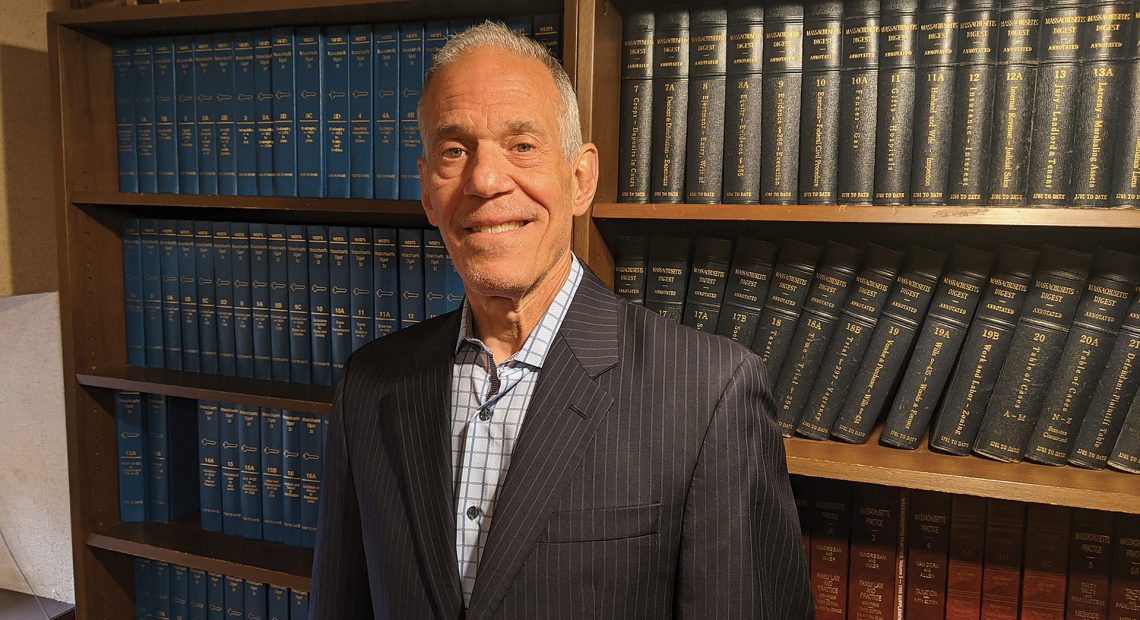
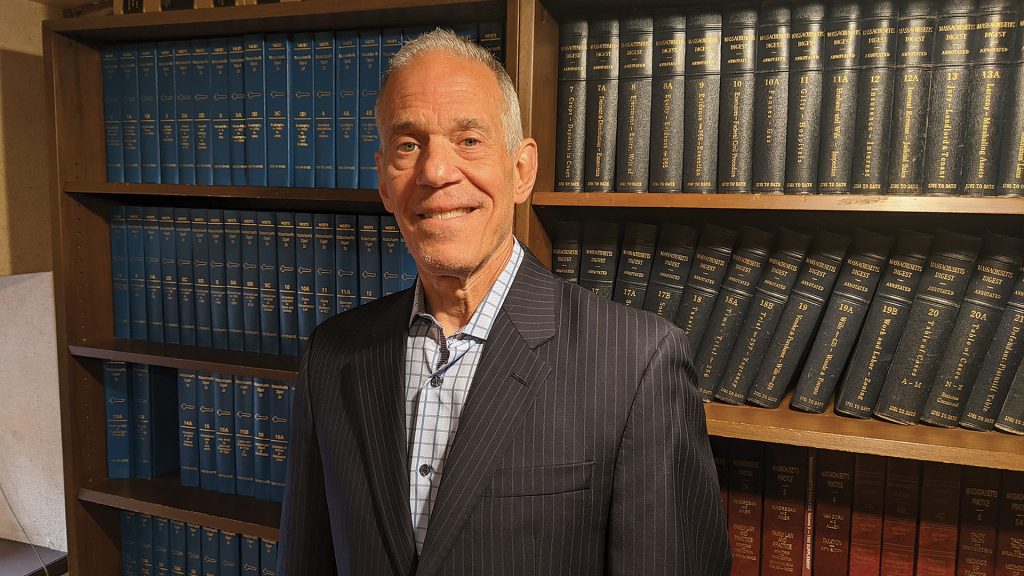
In late May, after 15 months of living through a global pandemic, the state entered into a phrase the governor called “a new normal.” A few months later, most businesspeople would say this ‘normal’ isn’t everything they expected or wanted. Indeed, while business has picked up in many sectors, from hospitality to healthcare, there are myriad challenges facing the business community, from what can only be called a workforce crisis to shortages of goods and rising prices; from a new and very potent strain of the coronavirus to issues with when and how to bring employees back to the office. To get a sense of where things are and, especially, where we may be headed, BusinessWest convened a panel of area business leaders — Deborah Bitsoli, president of Mercy Medical Center; Harry Dumay, president of Elms College; Patrick Leary, a partner with MP CPAs; Elizabeth Paquette, president of Rock Valley Tool in Easthampton; Tom Senecal, president and CEO of PeoplesBank; and Edison Yee, a principal of the Bean Restaurant Group. Their answers to a series of questions on the economy and the forces shaping it are certainly eye-opening.


BusinessWest: How is the process of returning to ‘normal’ proceeding at your business?


Bitsoli: “It does appear that patients are coming back; our Emergency Department is really returning back to the volumes it had before the pandemic. On the surgical side, the same thing is occurring. I do think there is a lot of caution about the fall, but for the time being, patients are seeking the appropriate level of care, including a lot of the screenings they put off. That’s the good news in terms of a public-health policy standpoint. At the hospital, we’re still wearing masks, and we’re still relying heavily on Webex; we have some meetings face to face, but we still have masks on. As for returning to normal, we continue to have a focus on patient safety, and we have an expansion planned in our Emergency Department. Overall, we are trying to return to normal, but everyone is looking to the fall, and there is caution there. The one big difficulty is hiring staff.”


Dumay: “At the college, ‘normal’ for us would mean getting back to the high-touch, nurturing, vibrant, in-person environment for teaching and learning. Returning to normal means having everyone on campus in the same mode we had pre-pandemic. The process for preparing for that is the same as we had last year, with the ElmsSafe Plan for making sure that employees and students are safe. That begins with a level of vaccination that we need to accomplish. That’s why we came out very early and required vaccinations for our students and employees. The challenges are to ensure that we’re getting to that level of vaccination that the state considers optimal for campuses, which is roughly 90%. We are gearing up for the fall, to have full in-person learning and all of our faculty and staff on campus. We have a task force that is meeting on a regular basis to come up with all the elements of the ElmsSafe plan so that we can make sure our campus is safe and as back to ‘normal’ as possible.”


Harry Dumay

Harry Dumay

“For the traditional undergraduate, first-time freshman, we had a record deposit year, and we are looking at potentially a record enrollment year for first-time freshmen, so that has come back better than it was before.”


Leary: “We have found that our biggest challenge to returning to normal is a big investment in software. When we all went remote in March of 2020, we found the flaws in our system, we found out where we were falling down and where our system couldn’t handle the stress of people working remotely, etc. So we had a big investment in software across the board — we’ve replaced really all of our systems, so we met the challenge of not only keeping up with workload, but having people keep up with workload while also learning new software. The other challenge involves getting back to the office; being a CPA, we can work from just about anywhere — I can be in my office, or I can be sitting in the Caribbean, which, unfortunately, is not what I’m doing now. This presents us with a lot of challenges. We have a very young workforce — half our staff is 30 or younger — so they’re very much tuned into the social aspects of being in the office and like being in the office, which is great. Our greatest challenge is going to be how we incorporate our client-service work with the protocols of each of our clients; each one presents its own unique circumstances — our staff can’t be stagnant and say ‘this is how we’re going to do things.’


Paquette: “We’re a machine shop that manufactures parts for aerospace, defense, sports, and leisure, blow-mold and extrusion. When everything hit in the spring of 2020, we were getting letters from larger customers saying ‘you can’t shut down — you have to stay working.” So we were very busy, but at the same time, we had seven of our 43 employees leave for one reason or another due to COVID, so we had this intense workload, and we had to scrounge and fill the gaps in our workforce. And then, in mid-June, our largest aerospace customer said, ‘we don’t have anything to send anymore,’ and by the end of the summer, we had laid off a total of 13. Now, with things a little more normalized, we’ve been able to bring back some of those we had to lay off. So when we talk about returning to normal, we’re just trying to work our way through this crisis and keep people’s mental health in mind and … just keep working.”


Senecal: “Overall, I don’t know if ‘normal’ is the right word at this point — it certainly is a new normal. We’re going back to a hybrid method for our workforce — we’re going to allow people to work from home as well as work in our building. I’m a firm believer in culture, and I’m a firm believer in some sort of work in the office. The challenges with that hybrid workforce include dealing with office space — that’s going to affect a lot of our customers — and technology needs; how do we adapt to technology, and how do we use technology? One of the biggest ones is communicating expectations when you go to a hybrid model — how do you communicate with people expectations of what is expected of them, for meetings, for hours worked, for a lot of things? How do you evaluate good performance from a remote-workforce perspective? Those are all a challenge. Also, getting people comfortable with and without facemasks — we’re going back to work in this new normal, and people aren’t sure of the expectations when it comes to facemasks. It’s challenging getting people comfortable in those settings.


Tom Senecal

Tom Senecal

“I think we’re all going in the right direction, and there’s nothing but good news ahead as long as inflation stays in check.”


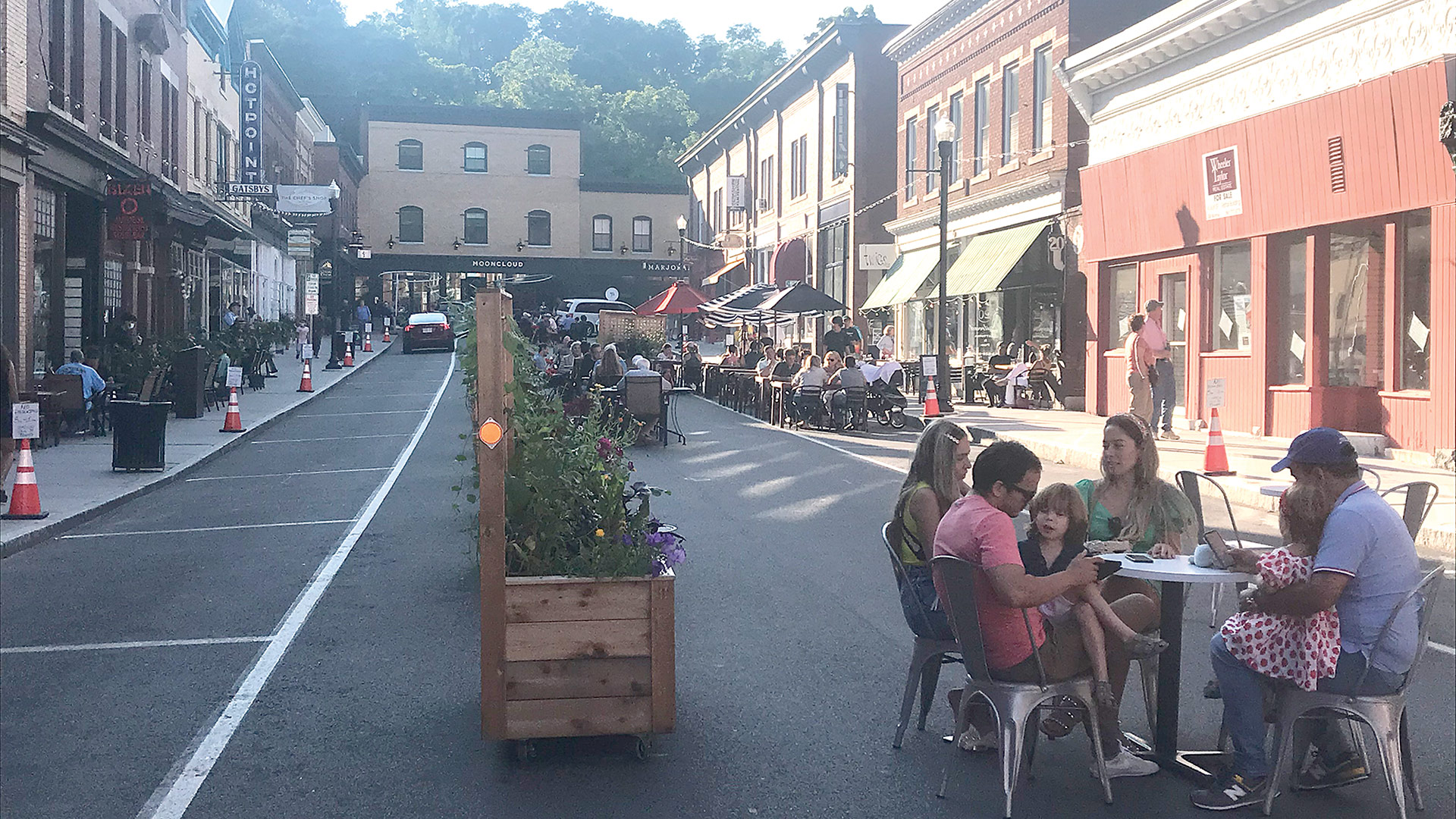
Yee: “For restaurants, it’s a new normal as well. Outdoor dining is very much prevalent, but customers are starting to return to the dining rooms. And while they are beginning to feel more comfortable doing so, not everyone has made that transition — although a lot of them have. Our late-night business has not come back yet, but we feel that might change as time progresses. But to be frank, it was a messy way to get into COVID, and coming out of it has been messy as well, with lots of disruption in supply chain, with labor shortages, and other issues. We’re adjusting, as we always do, in the restaurant business, with much more takeout business as part of our overall sales, and with using technology to help us smooth out the rough edges from not having enough frontline workers.”


BusinessWest: How has this year been business-wise, and what is your forecast for the rest of this year?


Bitsoli: “Business is almost back to normal, but it will very interesting to see what happens in the fall when we hit flu season and everyone goes back into the office. And we still have a large number of people who haven’t been vaccinated. Directionally, we’re moving back to normal, but everyone is looking to see what happens when we migrate back inside. Internally, while the volumes of business have returned, people are tired because of the duration of this and the expectation of what’s going to happen in the fall. So we’re investing a lot of resources right now in things like a Zen room, spot yoga, massage chairs … so that is a new normal for us in terms of something we’re going to need to continue on with until we come to the end of this pandemic.”


Dumay: “For the traditional undergraduate, first-time freshman, we had a record deposit year, and we are looking at potentially a record enrollment year for first-time freshmen, so that has come back better than it was before. For continuing-education students, those who come to us from community colleges, that’s a population that often doesn’t enroll until the last minute, so we’re still watching that, but it looks a little softer than it had been previously. And graduate-school enrollment is very much looking to be a record year in terms of enrollment. One area where students and families may still be hesitating is a return to residential living.”


Yee: “For restaurants, we like to compare numbers to 2019, our last ‘normal’ year. And for quarter one, it was lower, when you’re looking at year-over-year numbers. It wasn’t until the vaccinations reached the general population that things started improving; in the second quarter, the sales have bounced back to a much higher level, better than 2019. We anticipate that this trend will continue.


Edison Yee

Edison Yee

“We’re very optimistic about the last two quarters of the year and going into 2022. We’ve seen a lot of positive results during this summer, which is traditionally our slower time of year. It’s been a very strong summer to date and much higher than 2019 levels.”


Paquette: “While we had lost work in aerospace, we’ve started to see some of it comes back. For us, workload is good and steady, and we project that this will continue through the rest of the year. The workload is good for the number of people we have.”


Senecal: “In the past 18 months, our deposits are through the roof. We are up more than 35% in a little over a year. And the balances are not going down. As we talk about demand and this influx of demand and a surge in spending, I’m not seeing it from people’s deposit accounts — those numbers are not going down. We’re up over a little more than $1 billion over the past 18 months in deposits. That’s a function of a lot of things — PPP money, stimulus money, people not going out and spending. We have an enormous amount of money in the system, and the government continues to put money into the economy. That adjusts to inflation, and that’s showing up everywhere in our economy — food, transportation, supplies, inventory, computer chips … it’s showing up everywhere, and I think it’s going to have an impact. We see good times ahead as long as inflation can be kept in check and interest rates stay relatively low.”


Leary: “The need for our services greatly increased in 2020 because of the PPP program and other initiatives and trying to help clients understand the rules, what qualifies for forgiveness, and so on. There was great demand for our services, and it’s continued into this year. As for our customers … most of them are doing OK post-pandemic, but I’m concerned that the federal money that these businesses have received is masking how they are doing financially. And as demand starts to grow, will these businesses be able to find the staffing to supply the products and provide the services?


BusinessWest: That’s a good segue to the next question. Attracting and retaining workers has become the dominant challenge for 2021. How has your business been impacted?


Yee: “There is virtually no one applying for jobs, and the people we do have working are tired from working extended hours, so we’re trying to give them breaks by closing an extra day during the week or sometimes two, which we’ve never done in the past. But we’ve found that’s one of the only ways we can deal with this labor shortage — giving people some extra time for that work-life balance.


Senecal: “I received a résumé the other day from a headhunter for a position we were looking to fill … the person was very well-qualified and has all the right skill sets. But in big, bold letters on the résumé, it said this person is only interested in working remotely. I don’t think I’ve ever seen on that on a résumé before, but it’s an indication of the world to come.”


Patrick Leary

Patrick Leary

“I’m optimistic about the rest of 2021 and 2022, at least the first half. It will be interesting when the government programs start to dry up and slow down and we see how people react to that when it comes to their spending habits.”


Leary: “We’re seeing the same thing many of our customers are seeing. As tax laws change and accounting rules change, we have a great demand for people, and it’s not for entry-level people, but more experienced people. And it’s very challenging to find them. But what we’ve found is that, because of the ability to work remotely, instead of searching for someone and saying, ‘we want you to work in our Springfield office or our Connecticut office,’ we can say, ‘you can work anywhere in the country — we have the ability to let you work wherever you want.’”


Dumay: “I haven’t looked at the comparisons closely, but it certainly seems, anecdotally, that we have more open positions than we normally have. For some, we’re seeing good pools of candidates, and for others, the pools are not as strong as we would like. So in many ways, we’re like everyone else. There is a higher level of vacancy at the college, and for many positions, the pool of applicants is simply not as robust.”


Bitsoli: “From a business standpoint, the thing that’s very different for us and most all businesses is the staffing. It really is different. There are people who retired early, people who decided to change career paths … so we’re dealing with quite a few staffing challenges, like everyone else. One of the things I’ve heard anecdotally is that, because of the incentives being offered by the state, for people at a lower level, like dietary, housekeeping, nurse aides, and other positions, it’s almost better for them financially to stay at home than it is to work. I’ve also heard anecdotally that there’s a group of people that are gathering resilience over the summer, and they plan on coming back after Labor Day.”


BusinessWest: What are the forces — workforce, inflation, inventory, COVID, and more — that will determine where the local economy goes?


Senecal: “I think we’re all going in the right direction, and there’s nothing but good news ahead as long as inflation stays in check. Businesses are opening and growing, and with the levels of demand we’re seeing, that’s a good problem to have. And I think things will start to open up from a supply-chain perspective. We talked a little about unemployment benefits ending in September; let’s see if that pushes people back to work and brings the labor situation closer to normal. Overall, as long as COVID stays under control and we don’t go back to shutdowns — such shutdowns are devastating for the economy — I feel very positive about the fourth quarter and going into 2022.”


Dumay: “I second that optimism and emphasize the ‘as long as’ comment regarding COVID. The only thing that is sobering or bringing caution to my optimism is the slowdown in the rate of vaccination across the country, especially in areas of the country where it’s very low. Also, with the CDC looking at potential mask mandates and people getting alarmed about another surge … that could slow down what is looking to be an optimistic time and an opportunity to really get back to normal.”


Yee: “We’re very optimistic about the last two quarters of the year and going into 2022. We’ve seen a lot of positive results during this summer, which is traditionally our slower time of year. It’s been a very strong summer to date and much higher than 2019 levels. We’re really positive about what’s to come, but there are many challenges that could slow things down moving forward, like labor shortages, inflation, and supply-chain disruptions … those are all major concerns. We’re eager for everyone to get to normal so we can see a higher level of business than we have and, we hope the pent-up demand generates business across the area.”


Bitsoli: “People are looking for optimism, and I think as long as the economy holds out, and if we can get more people vaccinated, things should continue to improve. With the new variants out there are certainly concerns, and there are questions about whether the vaccines are going to continue to keep people healthy even when they’re exposed to the variants and keep them out of the hospitals and from getting severe complications.”


Deborah Bitsoli

Deborah Bitsoli

“As a leader, what I’ve learned is the importance of that human connection. We’ve all talked about the fact that Webex is great from a technology standpoint, but that relationship building and that ability to look someone in the eye … I really realize that there’s something to that, and it’s quite big.”


Paquette: “It’s really business as usual for us now. Our biggest concern is trying to hire people who are skilled — which means we’re like everyone else. But we’re seeing a lot of people who are interested in growing their skill set, and that, to me, is a positive; I’ve never had as many people enrolled in school and training programs as we do now. We’re rebuilding, we’re in a good space, and we’re growing. It feels much different than a year ago.”


Elizabeth Paquette

Elizabeth Paquette

“I had to spend a chunk of my time with a remote first-grader, so I had that stress at home while trying to be at work. So I found that employees function better if we’re able to meet them where they’re at.”


Leary: “I’m optimistic about the rest of 2021 and 2022, at least the first half. It will be interesting when the government programs start to dry up and slow down and we see how people react to that when it comes to their spending habits. But as we heard, deposits are way up, which means people have money to spend; they have disposable income. So I think people will start to spend as they get out and feel more comfortable going to restaurants or getting on an airplane. I see that continuing for the next year or so, but who knows after that what will happen? We need to have supplies free up, and we need to push for everyone to get vaccinated.”


BusinessWest: Finally, what have you learned during this pandemic, and how has this made you a different and perhaps better leader?


Bitsoili: “As a leader, what I’ve learned is the importance of that human connection. We’ve all talked about t the fact that Webex is great from a technology standpoint, but that relationship building and that ability to look someone in the eye … I really realize that there’s something to that, and it’s quite big. Also, I knew this before, but now I really know it: you really have to lead from the heart because employees want to feel the empathy and the caring from leadership. Lastly, it’s visibility and the ability to connect with people on their turf and really be able to listen to issues and immediately follow up with resolution. These are all things I knew, but this pandemic has caused me to reflect and overemphasize the need to do those things.”


Dumay: “I realized the importance of connecting with the people with whom I work, the faculty and staff at Elms College, and be present and pay attention to what people are experiencing and have that be relevant to my decision making. Also, I’ve learned the importance of giving people some answers, even if they don’t have the complete answer. There was a lot of uncertainty during the past year, and people were looking for the leaders of organizations to provide some answers. For someone who likes to completely process things and share them when they’re finalized, I had to learn to provide answers that are sometimes incomplete and need to be finalized. That was important to me.”


Leary: “One thing that I learned is that each person is very unique with regard to what their circumstances are — they might be a single parent with high-school children, or they may have a newborn … there are so many factors, and we can’t have a one-size-fits-all policy. We have to be flexible when it comes to work-life balance.”


Paquette: “I had to spend a chunk of my time with a remote first-grader, so I had that stress at home while trying to be at work. So I found that employees function better if we’re able to meet them we’re they’re at. Everything was remote to me outside the shop, but in the shop, it just seemed important that people had someone that they could look to make them feel better. We definitely improved our transparency with employees to let them know where we were at. It was probably so scary to see so many people laid off, some by choice, but some by our choice. I held meetings with people just so they would know what was going on and that they had as much information as I had in that moment. And the response was pretty good. Most people stayed, and they kept at it at a time when it was hard to keep at it.”


George O’Brien can be reached at [email protected]

Accounting and Tax Planning Special Coverage

Doing the Math


Joe Bova compared the past 18 months in the accounting profession

Joe Bova compared the past 18 months in the accounting profession to “trying to sail a ship while you’re building that ship.”

For accountants, the past 18 months have been a time of change, challenge, and adapting to everything from new ways of doing business to new responsibilities with clients to ever-changing tax laws. Looking forward, they note that many of these changes are permanent in nature.

It’s been called the ‘never-ending tax season.’

That’s just one of the many colorful ways those in the accounting sector have chosen to describe the past 18 months or so, a time of change, challenge, learning, and adapting — for them and for their clients.

Indeed, this time of COVID-19 has been marked by everything from changing tax laws to fluid filing deadlines; from new responsibilities, such as helping clients handle PPP and SBA loan paperwork, to changes when it comes to where and how work gets done; from a greater reliance on technology to the acceleration of a shift in accounting toward a more advisory role as opposed to merely adding up numbers.

Summing it all up, Joseph Bova, CPA, CVA, CGMA, a partner with Northampton-based Bova Harrington & Associates, said navigating all this has been “like trying to sail a ship while you’re building the ship.”

Nick Lapier, CPA, a partner with West Springfield-based LaPier Dillon, used phraseology from sports (sort of), but more from politics.

“It’s very hard for us to focus on our work when the government kept moving the goalposts.”

“It’s very hard for us to focus on our work when the government kept moving the goalposts,” he said, referring to the many changes in tax laws — some coming in the middle of tax season — and moving of filing deadlines. “For some people who filed their tax returns early, we then found ourselves amending those returns because they changed some of the rules. And some we didn’t file because we hoped they would change the rules.

“The end zone kept moving,” he went on. “We’d be on the 10-yard line, work really hard, and still be on the 10-yard line. There are 50 sovereign states that have the right to tax, so if you have clients filing tax returns in multiple states, each state was also possibly changing their laws and moving the goalposts.”

As the calendar turns to August, those we spoke with said this has been a time for many at area firms to catch their breath and take some of the vacation days they didn’t take last year or earlier this year. It’s also a time to reflect on what has transpired and what likely lies ahead in terms of the lessons learned and which of the changes seen over the past year and half are more permanent than temporary in nature.
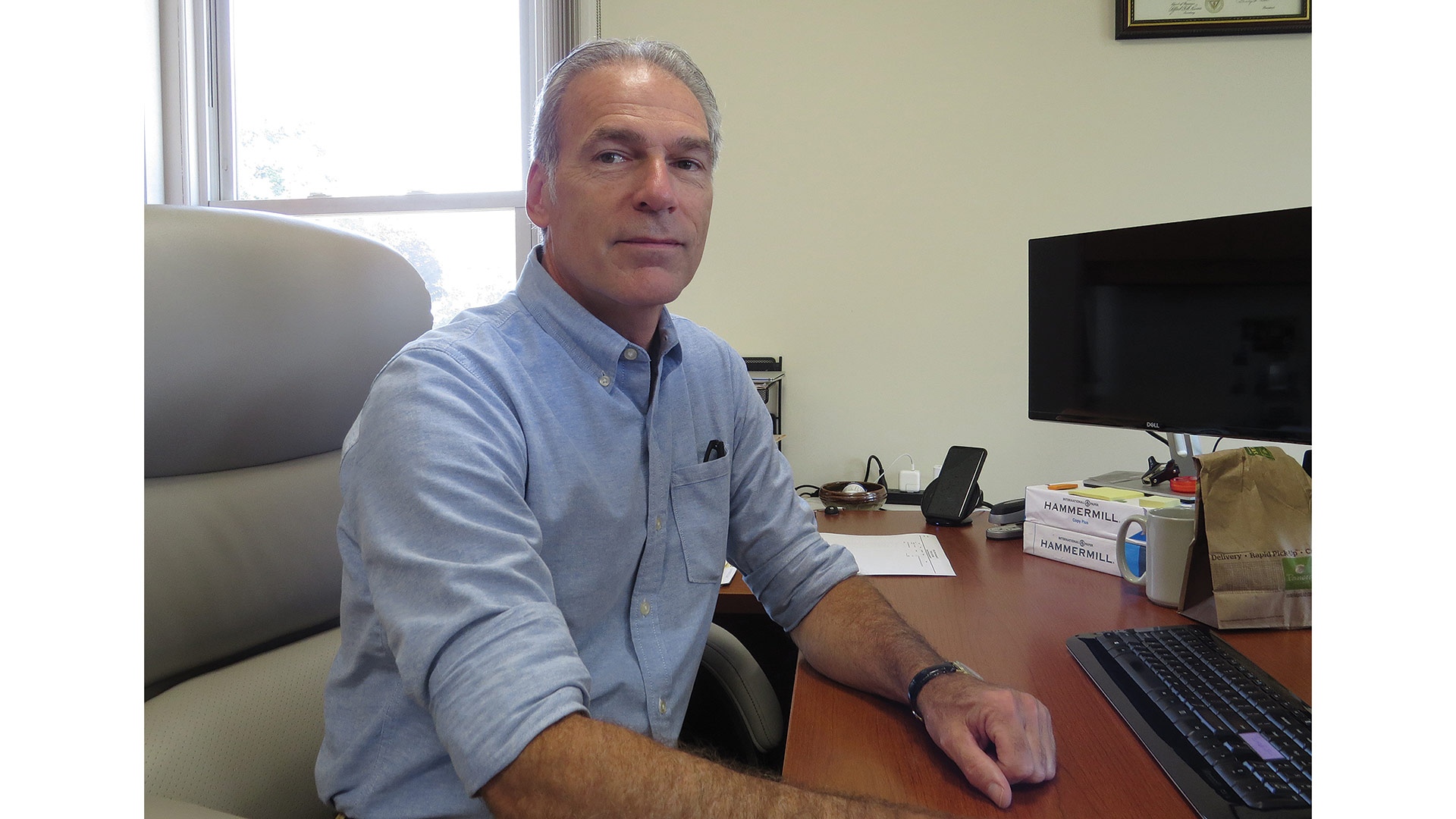
Nick Lapier

Nick Lapier says a taxing period for all accountants was exacerbated by the federal and state governments constantly “moving the goalposts.”

Julie Quink, CPA, CFE, managing partner of West Springfield-based Burkhart Pizzanelli, P.C., said her firm, like most others, is not simply turning back the clock to late 2019 when it comes to returning to something approaching normal, especially when it comes to how and where business is conducted. She said most employees have returned to the office, but moving forward, there will be even more flexibility when it comes to schedules and working remotely because of what’s been learned over the past 18 months.

“We’re not going to dial back to everyone needing to be here those static hours of 8:30 to 5,” she noted. “I’m a glass-half-full person, and if there is a positive from the past 16 or 17 months that we’ve been dealing with, it’s taught us that we need to be more flexible, more mobile, and more adaptable — and understand that people don’t have to be actually sitting in their offices to get their job done.”

Meanwhile, Lapier told BusinessWest that many accountants, himself included, spent far less time meeting face-to-face with clients in 2020 and early 2021, and he expects that trend to continue.

“This current generation lives in the digital world; they don’t need to see people — they transact their personal and their business life electronically,” he explained. “What has changed because of COVID is that all the prior generations have adopted that same mentality — not 100%, but a heck of a lot more than before the pandemic.”

Howard Cheney, CPA, MST, a partner at Holyoke-based Meyers Brothers Kalicka, P.C. and director of the firm’s Audit and Accounting Services, agreed, while noting, as others did, that the pandemic in many ways accelerated a trend within the industry toward accountants shifting to roles that are more advisory in nature, with a greater focus on the future than the numbers from the past quarter or two.

“I’m a glass-half-full person, and if there is a positive from the past 16 or 17 months that we’ve been dealing with, it’s taught us that we need to be more flexible, more mobile, and more adaptable — and understand that people don’t have to be actually sitting in their offices to get their job done.”

“Accounting has for many years been an historical-look-back kind of thing,” said Cheney, part of an executive committee now managing the firm. “With the speed that people can now get data, they don’t need us to tell them about what happened six months ago; they need us to tell them what’s going to happen six months from now and help them interpret that.”

For this issue and its focus on accounting and tax planning, BusinessWest talked with several CPAs about the never-ending tax season, which still hasn’t ended — many are still dealing with a large number of extensions, many of them resulting from changing tax laws — and what will come next in a sector that has been taxed (yes, that’s an industry term) by this pandemic, and in all kinds of ways.


A Taxing Time

Chris Nadeau, CMA, CPA, CVA said he spent most of the past April — the height of tax season — in Florida. And hardly any of his clients knew he was working and handling their needs from more than 1,000 miles away.
Julie Quink

Among the many lessons learned from COVID, Julie Quink says, is the need for more flexibility in when and where people work.

“No one would have known unless I told them,” said Nadeau, a director with Hartford-based Whittlesey, which has offices locally in Holyoke, adding that he would never have considered such a working arrangement prior to the pandemic, but COVID provided ample proof that a CPA doesn’t have to share an area with a client to get the work done.

This anecdote speaks volumes about just how profoundly the landscape has changed in the accounting and tax-planning world over the past year and a half. There have been a number of seismic shifts, and where people work is just one of them, said Nadeau, who has come to his office on Bobala Road in Holyoke only a few times since St. Patrick’s Day of 2020 and was in on this day only to meet with BusinessWest.

Others we spoke with told of similar learning experiences during what has been a year and a half of acting and reacting to everything that has been thrown at them since those days in mid-March of last year when everyone — well, almost everyone — packed up and went home for what they thought would be a few weeks.

As everyone knows, that certainly wasn’t the case, and thus accountants, like all those in business, had to adjust to a new playing field, finding new and sometimes better ways to do things and communicate with clients and fellow team members alike.

“We had to reinvent our processes — how we communicated with the team and how we shared information back and forth, especially when working remotely,” said Lapier of those early days, noting that a three-month extension of the traditional April 15 filing deadline helped spread the work out and was a saving grace.

Bova agreed, noting that his firm of nine employees adjusted to the new landscape out of necessity, with investments in technology, a move to a paperless work process, Zoom meetings between employees and with clients, visits by appointment only, and other steps.

Moving forward, many of these new ways of doing things will continue, with perhaps the biggest being where people work. Indeed, most of the firms we spoke with said some variation of hybrid schedules will become the norm for at least some employees .

“In the future, there will be more hybrid work models, where people work in the office, but they do some work at home — I can see some real potential for that,” said Bova, adding that not all workers have returned to the office, and he’s not sure when they will. “We’re going to explore our options with this; there’s no need to deal with it in the summer — it will be more of a fall issue.”
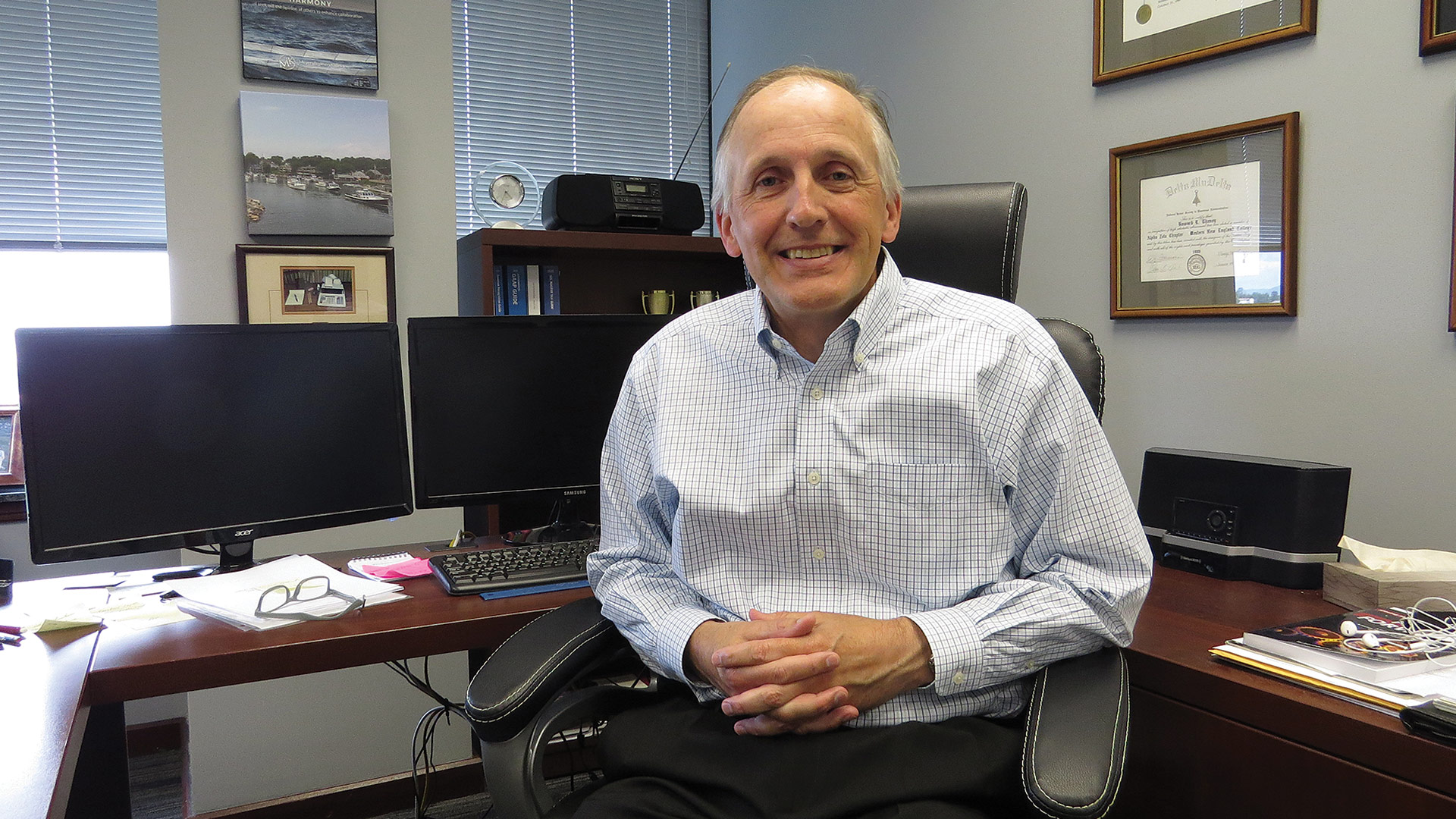
Howard Cheney says the pandemic

Howard Cheney says the pandemic may have accelerated, or amplified, a shift within accounting to an advisory role, with more emphasis on the future than the past.

Cheney agreed. “We’ve been really flexible as a business with not requiring people to come back just yet,” he said, adding that most at the company have returned to their offices in the PeoplesBank building, but some are still working remotely. “The likelihood is that some kind of hybrid work schedule will be the future for our business.”

Whittlesey recently adopted a hybrid work policy, one that enables people to work “from wherever they will be most efficient,” said Nadeau, adding that most are finding it more efficient to work remotely, and they will continue to do so in the future.

“Some people are not coming in at all, and some are coming in a day or two a week,” he explained. “It’s ‘work where you need to for that day.’ Some employees have actually moved away to another state during COVID, so you could definitely call them ‘remote.’ And it’s been pretty seamless — and flawless.”

And this shift brings a number of benefits for the company, including a possible reduction of its physical footprint, he said, adding that it is likely that the firm will be able to downsize in Holyoke. “At some point down the road, we’ll see what kind of space we’ll need.”

It also means more and better opportunities to recruit top talent to the company because such employees will be able to work from anywhere, including another state, as Nadeau did earlier this year.

“It’s incredibly challenging to recruit people — I think there are fewer accounting students graduating now, and a lot of the people who do graduate end up going to Boston or New York to work for the Big Four firms,” he explained. “So having a remote-work or hybrid-work policy is an added benefit that we can offer, and one that firms are probably going to have to offer if they want to attract top talent.”

As for interaction and communication with clients, while all those we spoke with said face-to-face is still the preferred option, COVID has shown that Zoom and even the telephone work well — and, as with working arrangements, when it comes to interacting with clients, flexibility is the new watchword.

“As we’re talking with our clients, we’re seeing a combination of the two, in-person meetings and those by Zoom and phone — some want meetings in person, and other times, a Zoom meeting or phone call is sufficient,” said Nadeau, noting, as others did, a significant time savings from not physically traveling to see clients, so those at the firm are able to do more with the hours in the day.

Cheney agreed, to some extent, but noted there will always be plenty of room for, and need for, in-person service to clients.

“You don’t want to lose sight of that personal-touch aspect,” he told BusinessWest. “You don’t want to do everything remotely — I don’t think clients want to do everything remotely. But they’re OK with some level [of remote interaction] because we’ve gotten used to it, and they see the efficiency, too.”


Crunching the Numbers

As he tried to put all the changes to tax laws — and changes to the changes — into perspective, Joe Bova recalled the communication he received from the U.S. Small Business Administration concerning PPP loans that came with the header “Interim Final Rules.”

This oxymoron was just one of many challenging measures and changes that CPAs had to make sense of over the past 18 months, a time that Bova described as “a shooting gallery.”

“What’s been different during these past two seasons is that tax-law changes have been happening during tax season,” he told BusinessWest. “And when the PPP loans first came out … the SBA and the Treasury were updating their websites almost daily, and there was a lot of ambiguity in the definitions. We [accountants] were kind of on the front lines because people were calling us, even the banks.

“We all had the same information, which wasn’t clear, so people were calling us to help them interpret these changes,” he went on. “You were in the water on the boat, but you were still building the boat.”

In addition to coping with new legislation and changing rules, there was simply more work to do, said those we spoke with.

“Our workload has gone up probably a good 20% without adding a single client,” said Lapier, listing PPP applications, forgiveness, and audit work, as well as helping companies with SBA loans and the unemployment-tax credit as just some of the additional assignments.

Indeed, on top of all that, there was simply more consulting work to do as companies, especially smaller ones, leaned on their accountants as perhaps never before to help them make what were often very difficult decisions during truly unprecedented times.

Now, with the pandemic easing in some respects, the nature of some of this advisory work is changing, said Quink, noting that many business owners are now able to focus more on the future instead of being consumed by the present.

“We’re seeing a lot of clients that are buying and selling businesses, which is a good sign,” she noted. “And overall, people are starting to think forward now; they were in survival mode for a period of time, and now they’re starting to think forward from a business perspective.”

And there is a lot to think about, she went on, noting that what she and others at her firm are advising clients on is how to adapt to change and navigate challenge — such as a global pandemic.

“We’re talking to our clients that we see as potentially at risk because they don’t have the ability to adapt or they’re not identifying how to adapt,” she explained. “We know that things can change in the blink of an eye; we’ve seen a client, a third-generation business, close because it wasn’t able to look forward and move in a way that still made them competitive. You can’t rest on what you have — you have to be always looking forward, and that’s a hard thing for some of our more mature clients and businesses who have done things they’ve always done, and it’s worked.”

This additional advisory work, as Cheney noted earlier, is merely an acceleration of a trend that has been ongoing for many years now when it comes to clients and what they want and need from their accounting firm, with the accent on the future and how to be prepared for it.

Quink agreed that this shift, if that’s the proper term, has been ongoing for some time now as technology has enabled clients of all kinds to access data more quickly and more easily than ever before.

“We see robots in all aspects of life, and our profession is going to go that way as well,” she explained. “We’re using technology to do the things we’ve always done by hand; we’re now going to have programs that run that data for us. What we’re seeing and what we’re preparing people in our profession for is a shift to more of an advisory-slash-consulting role.”


Bottom Line

For several years now, Quink told BusinessWest, Burkhart Pizzanelli has closed its doors on Fridays. Historically, those Fridays between Memorial Day and Labor Day have served as comp time for those who logged considerable overtime during tax time, and it’s been a time to recharge the batteries.

This year, staff members have needed those Fridays off more than ever, she said, adding that, for many reasons — from all the additional work detailed above to the vacations that haven’t been taken over the past 18 months — there have been many signs of fatigue.

It’s certainly understandable. Indeed, while every business sector has been impacted by COVID, those in accounting were affected in different ways, with more work to do, different work to take on, and learning curves when it came to new and different ways of doing business.

They don’t call it the ‘never-ending tax season’ for nothing. It’s far from over, but in many ways, things are … well, less taxing.


George O’Brien can be reached at [email protected]

Modern Office Special Coverage

Getting Up Off the Floor

For those in the office furniture and design sector, the past 18 months have been a long and extremely challenging stretch. Looking ahead, while the pandemic has eased to some extent, new challenges and question marks loom. The questions concern everything from how many people will return to the office to whether they will have their own space if and when they return. And the challenges involve everything from long wait times for ordered products to the specter of skyrocketing prices and the impact they will have on business.

Mark Proshan says a combination of factors

Mark Proshan says a combination of factors makes it difficult to project what will come next for this industry.

Mark Proshan says the e-mail found its way into his inbox earlier that morning. It was short and to the point, but it clearly articulated one of the many challenges still facing those in the office furniture and design business.

“‘I’m in the process of closing my office and moving employees to fully remote work,’” wrote the business owner and client that Proshan, president of the West Springfield-based Lexington Group, opted not to name. “‘I have a lot of office furniture I’m looking to sell.”

As he commented on what he was reading, Proshan started with that last bit of news. He said there are a number of business owners and managers looking to unload unneeded office furniture these days. They should know first that there is already a glut, and, second, that the price they have in the back of their mind is not likely to be the price they’re going to get for what they’re looking to sell. “With the massive amounts of furniture now on the market, selling furniture isn’t something that’s going to realize an amazing return on the investment.”

But that’s just a small part of the story now unfolding, said Proshan, noting that, while this particular business owner knows just what he’s doing with his office, many do not.

Indeed, a full 18 months after the term ‘COVID’ entered the lexicon, there is a great deal of uncertainty regarding what will happen at many offices, colleges, hospitals, and other kinds of businesses moving forward. Proshan has his theories, and we’ll get to some of them later, but he and others believe there will certainly be some downsizing, some hybrid work schedules for many employees, and more of the outright closures and conversion to remote working described in that e-mail.

But at the same time, some businesses and institutions that are waking up (for lack of a better phrase) from COVID are ready to advance plans for new furniture and accommodations.

And they are running into strong headwinds in the form of supply shortages, long wait times for desired items, and, almost certainly, higher prices in a nod to the laws of supply and demand — and the skyrocketing cost of shipping items from abroad.

“We can’t get the products out of where we need to get them from,” said Fran Arnold, owner of Holyoke-based Conklin Office Furniture, which, in addition to selling new and used furniture, manufactures its own lines of products overseas and remanufactures used furniture here. “Every manufacturer in the country is seeing huge delays when it comes to delivering furniture.

At Conklin Office, co-owned by Fran and Rosemary Arnold

At Conklin Office, co-owned by Fran and Rosemary Arnold, new challenges include supply-chain issues, soaring shipping costs, and long wait times for ordered products.

“On the import side, we’re running with massive delays in shipping and huge increases in the cost of shipping,” he went on, with some noticeable exasperation in his voice. “Our shipping costs have gone from $3,500 to $5,000 per container all the way to $23,500 per container. That’s a massive increase for freight; it’s now costing us more money to get the stuff here than to manufacture it over there.”

Proshan agreed.

“Because most of the manufacturers have employee shortages and raw-goods shortages, everyone’s lead times have been drastically pushed out,” he noted. “You try to stock up on what you think might make the most sense for when the floodgates open, but you just don’t know, and it’s going to be a difficult situation when people want products from you and manufacturers aren’t able to deliver them to you until much later than your customer is hoping to receive them.”

Overall, while the worst of the storm might be past for those in this sector — that’s might — there is still considerable cloudiness and general uncertainty about the forecast, and challenges ranging from those inventory issues to simply finding people to drive delivery trucks, to a huge merger in the industry between manufacturers Herman Miller and Knoll, which only leads to more question marks.

Indeed, what happens next is anyone’s guess, as BusinessWest learned as it talked with Proshan and Arnold about has transpired and what is likely on the horizon.


Measures on the Table

As he walked and talked with BusinessWest in his huge showroom, Proshan noted that he’s selling a number of items to be used by people working at home, especially chairs — “they want good seating, but they don’t want to spend a lot for it” — and sit/stand desks, because they’re smaller and also because many people want the option of sitting or standing.

Meanwhile, he said he’s also been selling more large conference-room tables — those for 12 to 20 people — than would be considered normal.

When asked why, he gave a quick and definitive “I don’t know, exactly, but we are,” before joking that companies might need bigger tables for all those meetings that will decide what they’re going to do next.

Overall, this interest in large conference-room tables and the possible reasons behind it comprise just one of the many unknowns for this industry. What is known is that the past 18 months have been an extremely difficult time, and the challenges are far from over.

They may just be different challenges.

“Every manufacturer in the country is seeing huge delays when it comes to delivering furniture.”

Looking back, Arnold said Conklin, like all businesses in this sector, saw business evaporate early on during the pandemic as businesses shut down and then hunkered down, with buying new or used office furniture, or redesigning their space, the last thing on their minds.

“We were flying just before COVID, and then we just hit a wall,” he explained, adding that, through a number of efficiency and austerity measures — including a four-day work week for all employees — the company managed to slash expenses to an extent that it was nearly as profitable in 2020 as it was in 2019.

Elaborating, he said that, in hindsight, the timing could not have been better for the company to consolidate operations and move into new facilities on Appleton Street in Holyoke in late 2019.

“We’re able to do more with fewer people,” he explained. “We’re much better organized, and we’re not so spread out. We’re much more efficient.”

Now, as it emerges from those very difficult times, there are new and different challenges to face, including supply-chain issues and a lack of inventory, just as some larger corporations are in a “panic mode,” a phrase he used a few times, to move on from the pandemic themselves.

“These corporations are working our sales teams to the limit,” he explained. “They want numbers, they want to know when things can be delivered … and a lot of the news we have to give them is not good; prices are going up, and deliveries are being postponed.”

Overall, Arnold said, inflation and the skyrocketing cost of shipping product are just starting to impact prices within the industry.

“We’ve just had our first price increase on our imported products; we just couldn’t hold it where it was any longer,” he explained, adding that, as the cost of shipping continues to escalate, more price hikes are likely. “It’s been quite an experience, and I don’t know how it will all play out; it’s a perfect storm that’s developing, and where it will go, I don’t know.”


Looking ahead and projecting what might come next, Proshan said this assignment is difficult because many companies are still very much trying to decide what they’re going to do.

“At the moment, business leaders are trying to figure out what their employees want, and employees are trying to figure out what their employers are going to be expecting,” he explained. “With all of that taking place, not a whole lot has happened yet. People have been talking about business getting back up to speed in the spring, and then the fall, which is not here yet, and then, the first of the year. We still have those mileage markers out there in front of us, so there’s a whole lot more that’s unknown than known.”

Proshan theorizes that many companies will create more space for each employee in efforts to create safer environments, and that, in all likelihood, there will be fewer people working in the office and more in remote settings.

“Every time you have a space that was occupied by three people, that had three work environments, they might cut that back to two to create a bigger gap between people,” he explained. “So now you have a work environment that’s going to be for sale or is going to become surplus; that’s one of the things we’re seeing.

“It’s going to be a difficult situation when people want products from you and manufacturers aren’t able to deliver them to you until much later than your customer is hoping to receive them.”

“And I think that when it gets sorted out as to who’s going back and who’s not, and how often they’re going back,” he went on, “I think a lot of personal space is going to disappear. If you work at home, you’re going to have your own workspace; when you go to the office, you may or may not have your own workspace. It may be a space that’s occupied by someone else on the days you’re not there.”


Bottom Line

Proshan, who does a good bit of sailing when he’s not working, made a number of comparisons between what’s happening in his industry and what transpires on the water.

Specifically, he talked about wind.

“You can’t see wind,” he told BusinessWest. “What people experience as wind is what they see as the result of wind and its impact on objects. When you see wind blowing through the trees, you don’t see the wind, you see the result of the wind. When you’re on a boat and there’s no wind, if you look at the water and see it start to ripple, you know that wind is approaching you, and it can either knock you over or make you go faster, or help you determine which direction to go in.

“It’s almost as if we’re sailing,” he said of the current conditions in his business, “and not able to see the wind in the trees.”

That was Proshan’s way of saying that an industry that has been blown about for the past 18 months, and not in a good way, is still very much in the dark about what will happen next.

The mission, he said, is to be as prepared as possible, even with all those unknowns.

“If you don’t pay attention to the possibilities,” he said in conclusion, “you’re going to be too late.”


George O’Brien can be reached at [email protected]

Law Special Coverage

Firm Commitment

Peter Shrair

Peter Shrair says the two firms saw “some real synergies” when they started talking.

Springfield-based Cooley Shrair and Hartford-based Halloran Sage have a lot in common, including histories that span more than 75 years and a focus on the broad needs of business clients. But their philosophies and cultures also have a lot in common, as their leaders discovered during discussions that led to Cooley Shrair joining the Halloran Sage family last month. The result, they hope, will be more inclusive service to clients, as well as a more attractive landing spot for the young talent all law firms need to grow.

When asked what Halloran Sage and Cooley Shrair bring to each other’s table, David Shrair had to think back only 15 minutes.

“We’ve got a new, West Hartford-based client who called me and said, ‘I tried to trademark a logo myself, and I got lost. Can you help us?’” said Shrair, a partner at his namesake Springfield firm, which recently joined the much larger, Hartford-based Halloran Sage law group.

“We normally would have referred him to a firm we did business with in Hartford, who did all our intellectual-property work,” Shrair continued. “But I got on the computer and sent out a blast e-mail to partners and counsel at Halloran Sage. Within three minutes, I got one name from five different partners. I’ve connected that partner, he’s got the logo, and we’re working on it.”

In other words, by joining forces with 86-year-old Halloran Sage, an 80-attorney practice whose law expertise in the realm known as transactional business runs deeper in some areas than Cooley Shrair’s, the firm can keep its clients in house for a much wider range of matters, instead of farming them out, he noted.

“We can keep an eye on the case and make sure it’s being handled properly, which is very difficult to do when you’re sending it out to somebody else, and you have no idea whether your client is being taken care of,” said Peter Shrair, another partner with the firm. “If we’re looking at the client’s interest first, then the client gets a much better product.”

That’s one of the ideas behind what both firms aren’t calling a merger or an acquisition, but a joining together of the two entities under the Halloran Sage umbrella.

“We started talking, and we saw some synergies between what we do and what they do. And I had a thought that one plus one could equal three, with a really good group of smart people working together.”

Peter said he started talking informally to Bill McGrath, a partner at Halloran Sage, about such a relationship last year.

“Another lawyer in their office, Sue Scibilia, and I were talking about something else. She said to me, ‘you really should meet Bill McGrath. He’s a good business person and one of the smartest lawyers I’ve ever known.’ And I consider Sue to be one of the smartest lawyers I’ve ever known. So, we started talking, and we saw some synergies between what we do and what they do. And I had a thought that one plus one could equal three, with a really good group of smart people working together.”

Casey O’Connell, another partner at Halloran Sage, agreed.

“This has always been a Connecticut-based firm with a regional focus,” he told BusinessWest. “We’re always looking to find ways to better serve our clients and to provide the best possible legal services that we as a legal firm can provide. So we’re always on the lookout to have talented attorneys with complementary practices and similar philosophies to join our firm.”

David Shrair says the combined firm will be able to keep more clients completely in-house.

David Shrair says the combined firm will be able to keep more clients completely in-house.

After informal discussions turned more specific over several months, he went on, “there were some meetings among people with the firms, and it was determined it would really be a great fit and a way for us to collectively be bigger than we both were separately and, most importantly, to provide additional resources to our client base and Cooley Shrair’s client base to better serve our clients.”

For this issue’s focus on law, BusinessWest sat down with O’Connell and the two Shrairs to talk about why this relationship makes sense, and why both firms feel they — and their business clients — are better off because of it.


One-stop Shop

Business clients, after all, are at the heart of both firms’ work. Besides a shared focus on transactional law, which incorporates activities like contracts, finance, construction and real estate, risk management, restructuring and bankruptcies, board governance, intellectual property, and a host of others, Halloran Sage also boasts broad expertise in business litigation.

“That’s a service that we had not been offering for a number of years,” Peter Shrair said. “Even when we offered it, it clearly wasn’t with that depth of people. We had one or two, maybe at one point three people doing litigation, but they might have 30. And depending on the size and complexity of the matter, they have the skill, knowledge base, and depth of people to handle it.”

The firms are similar in other ways — for instance, both have a large banking practice, representing different banks, “so there’s a synergy right there,” David added.

“We collaborate very well across practices,” O’Connell said, “and that is one way where the firms can mutually help each other, with the Cooley Shrair folks bringing a wealth of transactional and business banking knowledge that really strengthens our practice areas. But we also have a very robust litigation practice.

“I would say Halloran is a full-service firm, and our litigation portion of the firm is very large and robust — we’re one of the biggest firms that focuses on litigation in Connecticut,” he went on. “And one of the reasons we have such a long history in Connecticut is our ability to provide clients with essentially one-stop shopping.”

Joining a Connecticut-based firm — Halloran Sage has five offices in the Nutmeg State — also makes sense in that three of Cooley Shrair’s attorneys were already admitted to the Connecticut bar, and the firm has worked with many clients from across the border.

This isn’t the first time Halloran Sage has taken on an established group of attorneys all at once, but most of its growth over the years has been organic, O’Connell said. For instance, it launched a New Haven office with two attorneys in 2012, and has since grown that site to 12 attorneys.

“It was a big success story to build and maintain a presence in that part of the state,” he noted. “We have an office Washington, D.C., but [Springfield] is our first office outside Connecticut with a large presence. This really broadens our reach to become not just a Connecticut firm, but a Southern New England firm.”

Client relationships won’t be disrupted, Peter Shrair said, but may shift over time.

Casey O’Connell

Casey O’Connell

“We collaborate very well across practices, and that is one way where the firms can mutually help each other, with the Cooley Shrair folks bringing a wealth of transactional and business banking knowledge that really strengthens our practice areas.”

“If it’s a more natural fit for someone from Hartford to handle something, they’ll handle it,” he explained, noting, as an example, a litigation case that came in just that morning and was referred to attorneys in Hartford. “We’re looking for whatever is best for the client — if a client can be handled better out of New Haven, we want to handle that out of New Haven. If it can be handled better in Springfield, presumably we’ll handle it in Springfield. “Really, it deals with whose practice area it fits best in.”


Business as Usual, Sort Of

For two firms that deal heavily with business clients — at a time when the business world has been rocked by COVID-19 — the past 18 months have gone surprisingly well, Peter noted.

“At least as far as my practice goes, there was very little change,” he said. “In fact, with the advent of Zoom and Microsoft Teams and everything else, it was probably easier because you could get different people online together quickly and have a discussion.”

David Shrair was stranded in Florida in March 2020 when the economy first began to shut down — so his firm shipped him a computer and double-screen monitor.

“I closed one of my largest transactions in years from Florida; I did Planning Board meetings from Florida, just like I was sitting in Springfield or wherever; it mattered not,” he recalled. “It’s interesting — with the shutdown and all the issues that went with it, most of our business clients continued very much along the same vein. They had their own internal problems, but the sales and acquisitions and all that still continued to go on. We have been extremely busy.”

After an initial slowing of work in the pipeline last spring, Halloran Sage’s team adjusted quickly to the pandemic as well, O’Connell said, and business has been strong from the second half of 2020 to the present. The transactional work has been more robust than litigation because court activity slowed to a crawl last year, but overall, business has been brisk, and the firm is on a growth trajectory.

“We’re always looking for new opportunities and ways to serve our clients. That includes having new attorneys come in with different specialties or outlooks or just to grow our bench and have more resources to grow our client base,” he went on. “We’re always looking to figure out how we can modify our firm or business to better serve our clients. That’s what the current combination of Cooley Shrair and Halloran Sage is all about, and certainly where Halloran wants to continue to go, to make sure we’re staying ahead of the curve and in the best position to serve our clients.”

The broader geographic reach will also benefit the combined firm in attracting talent, as attorneys will be able to access opportunities across Connecticut as well as into Massachusetts, and move around as their life circumstances change, Peter Shrair said. And David noted that being part of a much larger organization broadens the partnership track, which can also be a draw for young attorneys to settle in this region.

But in the end, O’Connell said, what the discussions really came down to was a perceived alignment in the firms’ client-first philosophies.

“We went through some internal discussions, not really to create a new philosophy, but to figure out a way to better articulate our firm’s philosophy, and we have determined that our firm’s philosophy is ‘client, firm, self,’ in that order,” he said. “In talking to the Cooley Shrair folks, we found there was a great alignment with how they deliver service, and our philosophies really align, so seemed like a natural fit when we pursued it.”

Peter Shrair agreed. “For 75-plus years, that has always been our mantra — our response time and our response to clients’ needs.”


Joseph Bednar can be reached at [email protected]



Special Coverage Technology

Strong Signals

By Mark Morris

When the pandemic arrived early last year and many companies adjusted to remote work for their staff, it was IT professionals who got everyone up and running from their homes.

Now, as the world begins to move away from the pandemic and companies begin bringing employees back to the office, the demand to hire IT pros is even higher than it was before COVID-19 emerged. And that poses challenges for employers.

In a normal year, said Delcie Bean, CEO of Paragus Strategic IT, the company sees about 10% turnover of people leaving and new staff being hired. During the pandemic, there was no turnover, as every one of the 50 Paragus employees stayed in their job.

In the last four months, however, as the economy has improved and COVID restrictions have eased, Bean has seen a “tremendous transition” among the IT labor force.

“Many of those who are leaving are pursuing remote-work opportunities that didn’t exist before the pandemic,” he said. “Most of these companies are not local and would never have interviewed or offered jobs to these workers in the past.”

Bean cited a number of reasons for the high demand for IT talent. During the pandemic, nearly every company increased their use and dependence on technology, which requires more people to keep systems up and running. As the economy improves, companies are pursuing more projects and thus increasing their need for IT talent. The pandemic also made it acceptable to hire people who work only remotely, creating even more opportunities for IT pros.

“With the increased dependence on technology, an improved economy, and the ability to work remotely, we’re seeing employers do things they would not have done before,” he said.

Joel Mollison, president of Northeast IT Systems, noted that, unlike others in IT support, his 18-person company does not have high worker turnover. He credits that to attracting IT staff who enjoy working with Northeast’s varied client list, which covers sectors from insurance and healthcare to manufacturing, municipalities, and even cannabis.

“Many of those who are leaving are pursuing remote-work opportunities that didn’t exist before the pandemic. Most of these companies are not local and would never have interviewed or offered jobs to these workers in the past.”

One notable challenge to retaining his workforce involves companies such as banks, manufacturers, and other industries that are looking to bring their IT support in-house, he said. “As a service provider in Western Mass., we’re competing against much larger institutions in the region who can pay IT professionals more.”

As security issues receive prominent news coverage, companies worry more about ransomware attacks and similar threats. Mollison believes this is part of the reason firms are increasingly looking for in-house IT staff.

“The larger the business, the more complex their systems are, and the more they need IT professionals to manage them,” he explained.

Bean agreed that IT security issues have increased the pressure for companies to be proactive in preventing major disruptions, pointing out that much of the job growth is the result of companies expanding their internal IT staff both regionally and on a national level.

Delcie Bean says an IT workforce that was remarkably stable in 2020 has entered a time of “tremendous transition.”

Delcie Bean says an IT workforce that was remarkably stable in 2020 has entered a time of “tremendous transition.”

“All these companies are doing this because the growing economy gives them a little more money and it can be a luxury to have your IT support in-house.”

Jeremiah Beaudry, owner of Bloo Solutions, agrees, but believes that, after companies build up their internal IT staffing, they usually return to outsourcing with an external service provider once they realize that internal IT is less cost-effective.

“Instead of paying full-time employees to show up every day, companies can hire an IT firm that knows all the technical details and address specific problems when they arise,” Beaudry said. “It would be similar to bringing a plumber on staff. Why would you do that?”

In fact, he predicts that the hiring surge for internal IT will shake out to one or two positions to oversee the main systems augmented by an outside IT service provider.

Bean said it’s common for companies to have an internal person handling technology issues as well as an outside IT service company. “Our biggest source of new business right now involves partnering with internal IT departments to round out what they are doing and give them supplemental assistance.”


Here and There

Like many industries right now, technology is grappling with a job market that significantly favors job seekers. Bean told the story of an employee who had previously worked in the defense-contracting industry 10 years ago.

“Because this employee’s name was still in the defense system, a contractor called him to make a job offer, sight unseen and without an interview,” he said. “They literally e-mailed him an electronic salary offer without meeting him, and it was for $35,000 more than he was making here.”

A company located in a large metro area interested in hiring remote workers will offer salaries that are competitive in their market. This can often lead to small-market workers getting big-city paydays.

“If you’re at home and take five minutes between tasks to turn around to pet your dog or do the dishes real quick, that time becomes meaningful and helpful in your life.”

“Usually, when someone makes a salary that’s attractive in Boston, it comes with the high cost of living in the metro Boston area,” Bean said. “When someone with a Western Mass. cost of living makes that same amount, they can see a 30% net increase in their salary.”

Indeed, more companies than ever are embracing remote or hybrid workforces (see related story on page 25). That means IT service providers face the same dilemma confronting many of their clients: continue to work from home or go back to the office.

Mollison tells a slightly different story. Before COVID, he said, Northeast IT was outgrowing its space in Westfield, so he suggested that staff work remotely as a short-term solution. He was surprised when almost no one wanted to work from home.

“Nearly everyone wanted to work in the office,” he recalled. “We have a kind of think-tank environment where our staff enjoy working on problems together.”

However, the pandemic forced nearly everyone to work from home for the last 16 months, a situation Mollison called stressful because many felt less connected to their co-workers. He added that a change in venue is coming. “We purchased a building in West Springfield and will be moving in at the end of August. We’ll have plenty of space to bring everyone back with social distancing; our people are really looking forward to returning.”

At Paragus, employees have been ramping up their return to the office by coming in one day a week in June, two days a week in July, and three days a week starting in August. Bean said he won’t require more than three days a week in the office, but felt that some time in the office was important.

“We have intentionally designed our office to promote collaboration,” he said. “We don’t have walls or offices, so people can listen to each other and overhear what’s going on. You can replicate some of that online, but it’s not the same as hearing what’s going on around you.”

At Bloo Solutions, Beaudry has allowed his four full-time and several part-time employees to stay remote except for occasional trips to the office or when visiting a client’s location. Collaborative messaging tools like Slack and Microsoft Teams allow him and his staff to stay in touch with each other and stay on top of client concerns.

Jeremiah Beaudry says even companies that have built up internal IT

Jeremiah Beaudry says even companies that have built up internal IT staffing often come to see the value in outsourcing that work.

“We have channels dedicated to each client so any one of us can jump in and take care of any concerns,” he said. “Because we all have access to these messages, the same information is available to all of us without being next to each other.”

Whenever possible, Beaudry makes working from home an option for his staff.

“If you’re at home and take five minutes between tasks to turn around to pet your dog or do the dishes real quick, that time becomes meaningful and helpful in your life,” he said. “When you are in the office and not near anything you need to do, that same five minutes is wasted.”

Therefore, as long as his staff are productive, he doesn’t care if they work from home or at the office.

Another reason Bean cited for having people in the office at least some of the time is to help with their professional development and to identify when a staff member might need help. He worries that IT professionals who have chosen full-time remote work won’t have the same chance to grow or develop their careers.

“They will probably be fine doing the job they were hired for, but they will be relatively unengaged and potentially stagnant,” he said. “I don’t see how they can grow or develop much in an environment where they never see their co-workers or be around other people.”

Mollison credits his low staff turnover to seeking out people who like variety in their work and have an interest in personal and professional growth.

“Because IT folks tend to be introverts, we try to help them grow personally so they can become more comfortable working with clients and developing relationships with them,” he said.

While finding people in Western Mass. with technical skills isn’t so tough, Beaudry makes his hiring decisions based on a candidate’s emotional intelligence.

“I’ve learned over time that clients would rather feel good about a conversation they had rather than having an expert solve the problem who makes them feel bad about themselves,” he said.


Change Can Be Good

Another reason the demand for IT professionals is increasing has to do with the growing economy. Bean said the sales pipeline for new projects has never been fuller. “In terms of new business, we’re booking clients out to October because we only book so much at a time.”

In addition to hiring temporary contract workers, he has found another way to make up worker shortages: acquisitions. Paragus recently acquired one IT-support company in Worcester and is looking at two other acquisitions.

“In the past, the goal of an acquisition was to acquire clients and market,” he said. “Now it’s about acquiring talent.”

Would Bean like to see less disruption in the labor force? Sure. He also understands that this time of transition is part of the bigger picture.

“Everybody is moving around, so we’re on the receiving end of this as well,” he told BusinessWest. “The good news is we haven’t seen a shortage of any new résumés coming in.”

While it’s tempting to dwell on the employees leaving, however, Bean has gained some perspective.

“After some reflection,” he said, “we realized that a lot of the innovation and fresh approaches we get are driven by new people coming in with new ideas.”

Community Spotlight

Community Spotlight

By Mark Morris

Mark Pruhenski says Great Barrington

Mark Pruhenski says Great Barrington has seen an influx of new residents during the pandemic.


On a summer Friday night in Great Barrington, Mark Pruhenski simply enjoyed the sight of dozens of diners eating outside and the sound of musicians playing from various spots around downtown.

Town manager since 2019, Pruhenski said Great Barrington is fortunate to have weathered the pandemic well. He gave much of the credit to a task force formed early on that included town staff and a strong network of partners, including Fairview Hospital, local food banks, and others who lent support.

With its location in the Berkshires, Great Barrington has long been a popular spot for second homes. During the pandemic, many people relocated to their second homes to get away from populated metro areas and work remotely. As time went on, many decided to make Great Barrington their permanent home.

“Along with those who moved into their second homes, we had hundreds of new residents move to the area,” Pruhenski said. “Folks who enjoyed visiting the Berkshires for culture and entertainment were now permanently moving here.”

Betsy Andrus, executive director of the Southern Berkshire Chamber of Commerce, noted that, even at the height of the pandemic, when restaurants and cultural venues were closed, people were still looking for a place to rent or buy. She believes the consistently low COVID-19 infection rates were a strong part of the town’s appeal.

“Along with those who moved into their second homes, we had hundreds of new residents move to the area. Folks who enjoyed visiting the Berkshires for culture and entertainment were now permanently moving here.”

“People from larger metro areas came to Great Barrington in droves,” Andrus said. “You could not keep a house on the market, with some sales happening in only a few hours. Others took a virtual tour and bought sight unseen.”

While admitting it’s difficult to find positives from a worldwide pandemic, Andrus said one benefit was forcing businesses in town to change the way they had been operating.

“I think we were kind of stagnant before,” she said. “Then, suddenly, our businesses had to put a lot of energy into how they could reinvent themselves.”

In addition to sit-down restaurants figuring out how to become takeout places, Andrus pointed to Robin’s Candy Shop, which could no longer allow customers to serve themselves in the shop.

“They moved the store around overnight, so now the staff gets you everything you want,” she said. “Then Robin’s quickly switched over to online sales, which is no small feat, either.”

Great Barrington used its Shared Streets grant

Great Barrington used its Shared Streets grant to develop an outdoor dining area on Railroad Street.

While Great Barrington saw some stores permanently shutter their businesses during the pandemic, Andrus said COVID was not usually the main reason for closing. In some cases, the businesses that did not survive the pandemic were struggling before COVID hit. For others, the pandemic provided the opportunity for owners to change professions or retire.

“We had a huge movement of stores that was similar to musical chairs,” she said. “When a business would close and make their space available, multiple people were trying to sign up for it.”


Filling the Gaps

Like musical chairs, there are no empty spaces now in downtown Great Barrington. As a lifelong resident, Andrus said she’s never seen so much activity.

“In some ways, this big shift is the best thing that could have happened,” she noted. “The stores have all settled in to the right locations for what they are selling, and it has really changed the atmosphere in town.”

With retail storefronts full, the second- and third-story office spaces are also reaching full occupancy. Pruhenski hopes the current boom can address a long-term concern in town.

“We’ve always anticipated that Great Barrington would see a population decline over the next decade and beyond,” he said. “It would be great to see the influx of new residents flatten or even reverse that decline.”

While many town halls closed during the pandemic and conducted business remotely, Pruhenski said Great Barrington Town Hall closed only twice, for a month each time. Otherwise, he and his staff came in every day to keep several town projects moving forward.

In 2019, the state Department of Transportation had closed the Division Street bridge. Right now, the project is in the permitting and design phase for a new bridge, which is scheduled to open next summer.

“Everyone was forced to jump out of their comfort zone, and I believe that made us all better for it.”

“Division Street is an important bridge because it links the east side of town to the west,” Pruhenski said. “It’s a shortcut everyone in town likes to use.”

In the northern part of Great Barrington, a private water company serves the village of Housatonic that has been struggling with insufficient water pressure. While Great Barrington doesn’t regulate or own the system, the town is involved to make sure residents there receive clean water and to make sure there is plenty of pressure for firefighters when they need it. Pruhenski said he and the Select Board are looking at several options, including a merger with the town’s water system.

“We were working on this during the pandemic because it has an impact on so many residents,” he noted.

After a transportation service for seniors abruptly closed, town officials took the lead to quickly revive the regional van service that now provides transportation to elderly and disabled residents in Great Barrington and five neighboring towns.

Meanwhile, in the spring of 2020, the town launched a project to paint the downtown crosswalks as a way to recognize diversity in town. Pruhenski said the reaction by residents was more encouraging than he could have expected.

“We just did our little project, and the timing happened to be perfect that the rainbow was being used as a symbol of hope at the height of the pandemic,” he recalled. “After we painted our first crosswalks, people were encouraged to come outside to see them and take pictures with them. It’s been a fun project that’s made everyone happy.”

For 2021, the town added more rainbow crosswalks, and now the entire downtown corridor has replaced its white crosswalks with rainbows.

“People from other communities are calling us because they want rainbow crosswalks in their town,” Pruhenski said. “They are asking us how we did it and where we bought the paint. This project has been so rewarding during such a challenging time.”

For several years, Great Barrington has been pursuing projects to encourage environmental sustainability. One big step was to ban plastic water bottles in town. In return, the town has built three public water stations to make up for the bottle ban.

Another sustainability effort involves the Housatonic Community Center, a popular gym built shortly after World War II. Pruhenski said the center is used a great deal in the winter, so the town has bulked up on insulation and added LED lighting. He hopes to see big savings in energy use and operating costs for the facility.

Great Barrington also has the distinction of hosting the first retail cannabis store in Berkshire County. Theory Wellness opened January 2019 and is now one of four cannabis establishments in town. Pruhenski said sales at all four stores have been strong, and they have returned some welcome revenue to the town.

Great Barrington at a glance

Year Incorporated: 1761
Population: 7,104
Area: 45.8 square miles
County: Berkshire
Residential Tax Rate: $15.99
Commercial Tax Rate: $15.99
Median Household Income: $95,490
Median Family Income: $103,135
Type of Government: Open Town Meeting
Largest Employers: Fairview Hospital; Iredale Mineral Cosmetics; Kutscher’s Sports Academy; Prairie Whale
* Latest information available

“For fiscal year 2022, we were able to use $3.5 million in cannabis revenue to offset taxes,” he noted. “Capital budget items, like new police cruisers that we normally have to borrow for, were paid for in cash thanks to the cannabis revenues.”

The town also collects 3% from cannabis stores to mitigate the negative effects of cannabis on the community. After awarding $185,000 in fiscal 2021, Pruhenski said the town will be awarding $350,000 in fiscal 2022 to five social agencies in the form of community-impact grants.

Andrus agreed that cannabis has had an overall positive impact on Great Barrington.

“Despite all the traffic cannabis brings to town, I’m surprised at how unintrusive it has been,” she said. “For people with health issues, cannabis allows them to live with much less pain.”


Hit the Road

When Massachusetts launched the Shared Streets and Spaces Grant Program in June 2020, it was immediately popular across the state. Pruhenski called the program a “silver lining” resulting from the dark cloud of COVID. Great Barrington used its Shared Streets grant to develop an outdoor dining area on Railroad Street to support several restaurants located there. Every Friday and Saturday night in the summer, two-thirds of the street is dedicated to outdoor dining. Pruhenski enjoys seeing Railroad Street turn into a café each weekend.

“When we started this in 2020, vaccines were not yet available, and the only way to dine out was to eat outside,” he said. “Restaurants nearby also use their outdoor space, so it creates a lively downtown experience.”

Andrus said outdoor dining on Railroad Street was a huge effort that was well worth it. “It works great, and people love it. The restaurants want to see this keep going, so they are all taking part.” The town also participates in an effort called Berkshire Busk, in which a dozen entertainers perform at different spots around downtown Great Barrington during the outdoor dining season.

Andrus said the town’s response the to pandemic reminds her of the expression, “don’t waste a good crisis.”

“Everyone was forced to jump out of their comfort zone, and I believe that made us all better for it,” she added. “Because we were all kind of stagnant before the pandemic, it made us try something different.”

Pruhenski would be the first to say that Great Barrington is moving in a positive direction as more people move in, and many are locating their businesses here, too.

“School enrollments are increasing, and Main Street is busier than it’s ever been,” he said. “It’s a really exciting time for the town.”

Accounting and Tax Planning

Where There’s Smoke…

By Kristina Drzal Houghton, CPA, MST


Kristina Drzal Houghton

Kristina Drzal Houghton

The production and distribution of cannabis, once known to many only as marijuana, is the newest and most variegated industry in America. Some would even say it is one of the toughest industries in America in which to do business. This article will discuss a few unique challenges from a financial perspective faced by the industry.

The first complexity starts with the difference between cannabis and CBD. When you look at a cannabis plant and a hemp plant side by side, the plants themselves look identical to an untrained eye, making it a bit challenging to identify, as the real difference lies in the chemistry of the plants.

CBD can be extracted from hemp or marijuana. Hemp plants are cannabis plants that contain less than 0.3% THC (the compound that creates the ‘high’ sensation), while marijuana plants are cannabis plants that contain higher concentrations of THC. This article will refer to all products containing more than 0.3% THC as cannabis, while products with less will be referred to as CBD.

So, basically, the only difference from a scientific standpoint is the level of one chemical. However, things are much more complex from a legal and tax perspective. Under the 2018 Farm Bill, CBD and hemp are now legal, and not on the schedule I list of controlled narcotics right up there with heroin and LSD. In 2016, Massachusetts passed a law making all cannabis legal, and all but five other states have passed laws making it either fully legalized, decriminalized, or medically authorized. While cannabis is federally illegal, the Internal Revenue Service is perfectly willing to collect taxes on companies that handle the product.

Federal tax law is very punitive on the cannabis industry. Internal Revenue Code Section 280E is a very short part of the tax code (just one sentence) and states:

“No deduction or credit shall be allowed for any amount paid or incurred during the taxable year in carrying on any trade or business if such trade or business (or the activities which comprise such trade or business) consists of trafficking in controlled substances (within the meaning of schedule I and II of the Controlled Substances Act) which is prohibited by federal law or the law of any state in which such trade or business is conducted.”

Under 280E, you’re not allowed any deductions or credits on your return, but you can deduct the cost of goods sold, as that is part of the definition of taxable income. A cannabis farm will only be allowed to allocate various costs, direct and indirect, into cost of goods sold and inventory. Section 280E will affect only cannabis entities. CBD companies, since they are legal, are allowed all normal business deductions and credits available to other non-cannabis companies. This provides many more opportunities to reduce taxable income to a hemp/CBD company.

It is not only the federal tax difference which significantly attributes to the disproportionate cost of cannabis versus CBD. Due to discrepancies between state and federal law, legal cannabis businesses are forced to operate almost entirely in cash, with very little access to financial services, since most banks are federally insured and therefore unable to establish accounts for this federally illegal business. This leaves thousands of dollars stored in backroom safes and transported in shoeboxes and backpacks, creating a prime target for crime. Another banking challenge that cannabis businesses regularly face is exorbitant monthly account fees, or banks that take a percentage of each deposit.

The industry faces many other challenges as well. For example, most states have a mandated ‘seed to sale’ software-tracking system that must be used and accurate (daily), and must be reconciled with POS (point of sale) systems and accounting systems. Additionally, because this is a new industry, many of the tools other industries use are simply not readily available, including a cannabis-tailored chart of accounts, QB POS systems, reliable inventory software, and common merchant service platforms.

There is an opportunity for dispensaries to separate some revenue streams outside of the cannabis division, meaning normal business deductions are allowed for the non-cannabis division. These might include clothing, paraphernalia, coffee, CBD, and other goods. While this is good news for the industry, it only creates even more complexities when allocating selling and administrative expenses.

A recent report from the U.S. Treasury inspector general for Tax Administration recommends increased audits by the IRS of cannabis businesses to identify potential non-filers and returns that are not 280E-compliant. For this as well as the above reasons, cannabis businesses need to find an accounting firm that really knows what it’s doing. The cannabis accountant has to not only understand Section 280E, but also know how to treat a business that deals strictly (and necessarily) in cash. Many cannabis companies have bad books because their bookkeepers do not understand the special accounting and therefore didn’t properly categorize expenses. It can be time-consuming to fix them.

So, while the many layers of regulatory control and reporting may be of utmost importance to those operating in the cannabis industry, overlooking the complexities in the finance area of the business can lead to the proverbial perfect storm — or the business going up in smoke.


Kristina Drzal Houghton, CPA, MST is a partner at the Holyoke-based accounting firm Meyers Brothers Kalicka, P.C.