Home 2023 August (Page 2)
Daily News

WEST SPRINGFIELD — Eastern States Exposition (ESE) announced that Greg Sanocki has joined the organization’s Marketing Department as communications & social media specialist.

Sanocki completed his bachelor’s degree in business administration with a major in marketing from Western New England University in December 2014. Shortly following his collegiate career, he joined Westfield State University’s Marketing Department as social media and digital content specialist. In that role for nearly seven years, Sanocki was responsible for developing and administering the university’s official social-media presence, producing video content, and serving as a social-media expert for the campus community.

“I’m thrilled to join such a welcoming team at the Eastern States Exposition,” Sanocki said. “Growing up in Western Massachusetts, I’ve always loved going to the Big E, so I’m delighted to be a part of such an important staple in our community and beyond.”

In his new role as communications & social media specialist, Sanocki will be responsible for overseeing ESE’s digital and social-media marketing initiatives, collaborating with departments to ensure seamless digital communication, and creating and producing effective marketing and public-relations communications.

Daily News

HOLYOKE — Holyoke Community College (HCC) will run three sessions of its free line-cook training program this fall at the HCC MGM Culinary Arts Institute.

The first of two daytime sessions begins Monday, Sept. 18, and runs five days a week through Oct. 20 (Monday, 9 a.m. to noon; Tuesday through Friday, 9 a.m. to 3:30 p.m.).

Concurrently, an evening program (5 to 9:30 p.m.) also begins Sept. 18 and runs Mondays through Thursdays until Nov. 9.

A second daytime session begins Oct. 30 and runs five days a week through Dec. 8 (Monday, 9 a.m. to noon; Tuesday through Friday, 9 a.m. to 3:30 p.m.).

The line-cook program is designed for those already in the restaurant industry who want to upgrade their skills, as well as unemployed or underemployed individuals interested in starting a new career.

“We usually have a mix of young people entering the job market for the first time and people who are re-entering the job market and looking for a second career,” said Maureen McGuinness, assistant project coordinator for HCC’s non-credit culinary-arts programs. “The course is perfect for anybody who’s looking for a job and has a passion for food and the dining industry.”

Classes will be held in person at the HCC MGM Culinary Arts Institute, 164 Race St., Holyoke, where participants will learn all the essential competencies they need to become successful line cooks: knife skills; how to prepare stocks, soups, sauces, desserts, poultry, fish, and meat; culinary math and measurements; moist and dry heat cooking methods; as well as workplace soft skills, such as building a résumé and searching for jobs.

Offered as part of HCC’s Business & Workforce Development division, the line-cook course is free to qualifying applicants. For more information, complete an online inquiry form at hcc.edu/line-cook or contact [email protected] or (413) 552-2500.

Daily News

LENOX — The Mount, Edith Wharton’s home, invites the public to a free musical celebration of Berkshire Latinx culture and artistry on Sunday, Aug. 27 at 4 p.m. Attendees will enjoy a performance under the tent from Brazilian samba/salsa dancer Luana Días and live Mexican music from Loreli Chavez and Laura Cabrera, the multifaceted singer of Yo Soy Arte, a collective of local Latinx artists dedicated to preserving their cultural heritage through music and dance while bringing people together in celebration and unity.

Food will be available for purchase from local favorite La Chalupa y la Enchilada, and a beverage garden will feature a variety of drink options. Children’s activities will include face painting and, or course, dancing.

Free bus transportation from Pittsfield to Lenox will be provided; a 3 p.m. bus departs from Hotel on North (297 North St.) to the Mount, returning to Pittsfield at 7 p.m. Register for transportation by calling (413) 707-2607 or emailing [email protected].

“I’m thrilled to be leading the Mount’s efforts to build authentic relationships and highlight the rich cultural talent we have within our community,” said Liliana Atanacio, the Mount’s new Outreach coordinator.

This project is supported by a grant awarded by the Berkshire Taconic Community Foundation’s Arts Build Community initiative with funding from the Barr Foundation.

Daily News

SPRINGFIELD — Feed the Kids, a local nonprofit focused on fighting childhood hunger, raised a total of $75,000 through its sixth annual golf tournament and online auction. The amount raised at this year’s event, held on Aug. 7 at Springfield Country Club, brings the six-year total to more than $370,000. Proceeds benefit local organizations that work to ensure children do not go hungry, including Square One, the Holyoke School Backpack Program, Pioneer Valley Powerpacks, and No Kid Hungry.

“We had a little rain in the morning, but everyone enjoyed a wonderful day, and we raised a record amount of money,” said Dr. Frederick Kadushin, co-chair of Feed the Kids. “For some added excitement, we even had our first hole-in-one winner: Scott Trevethan scored an ace on the ninth hole.”

The more than 200 items in the online auction were donated primarily by local businesses and individuals. They included vacation packages, restaurant gift certificates, golf foursomes, jewelry, autographed sports memorabilia, and more.

“Over the past six years, we’ve raised more than $370,000 for these incredibly deserving charities,” Kadushin noted. “We are especially grateful to our generous sponsors, including AAA Northeast, Westfield Bank, PeoplesBank, PIMCO, DiStefano Financial, Elm Electric, and M&T Bank, as well as Curry Honda and Teddy Bear Pools, who provided prizes for four hole-in-one contests.”

Square One provides food to more than 500 kids a day. The Holyoke School Backpack Program and Pioneer Valley Powerpacks distribute backpacks of nutritious and easy-to-prepare meals to children at the end of each week to enjoy over the weekend. No Kid Hungry is a national organization that raises funds to support school breakfast programs, summer meals, afterschool meals, and more for children throughout the country.

Donations can still be made at feedthekidsgolf.com.

Features Special Coverage

Celebrating a Legend

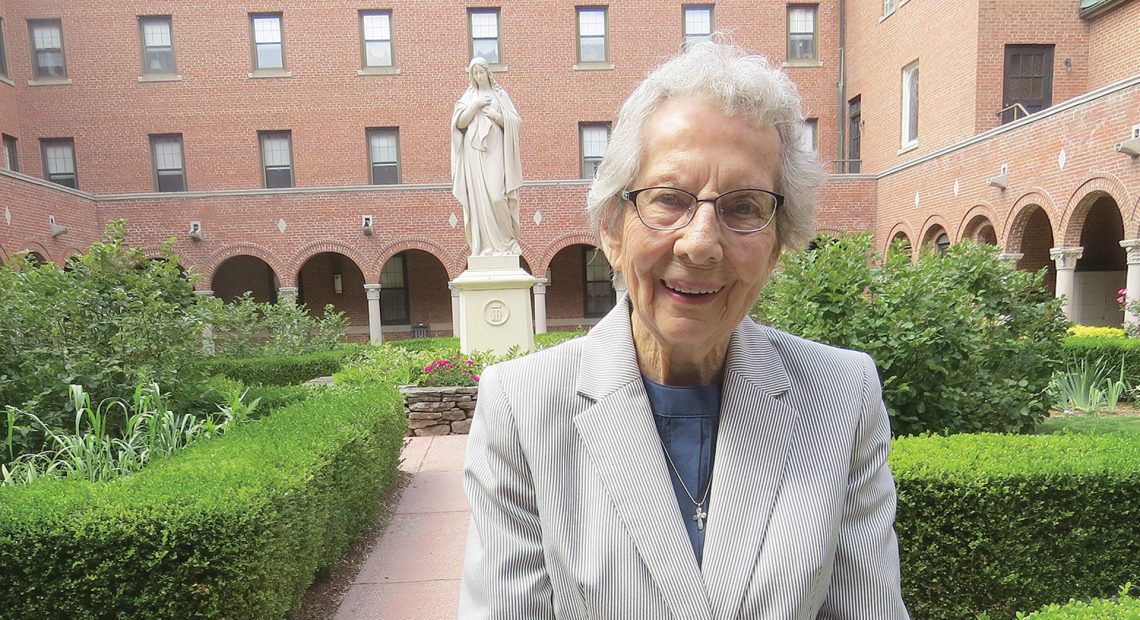
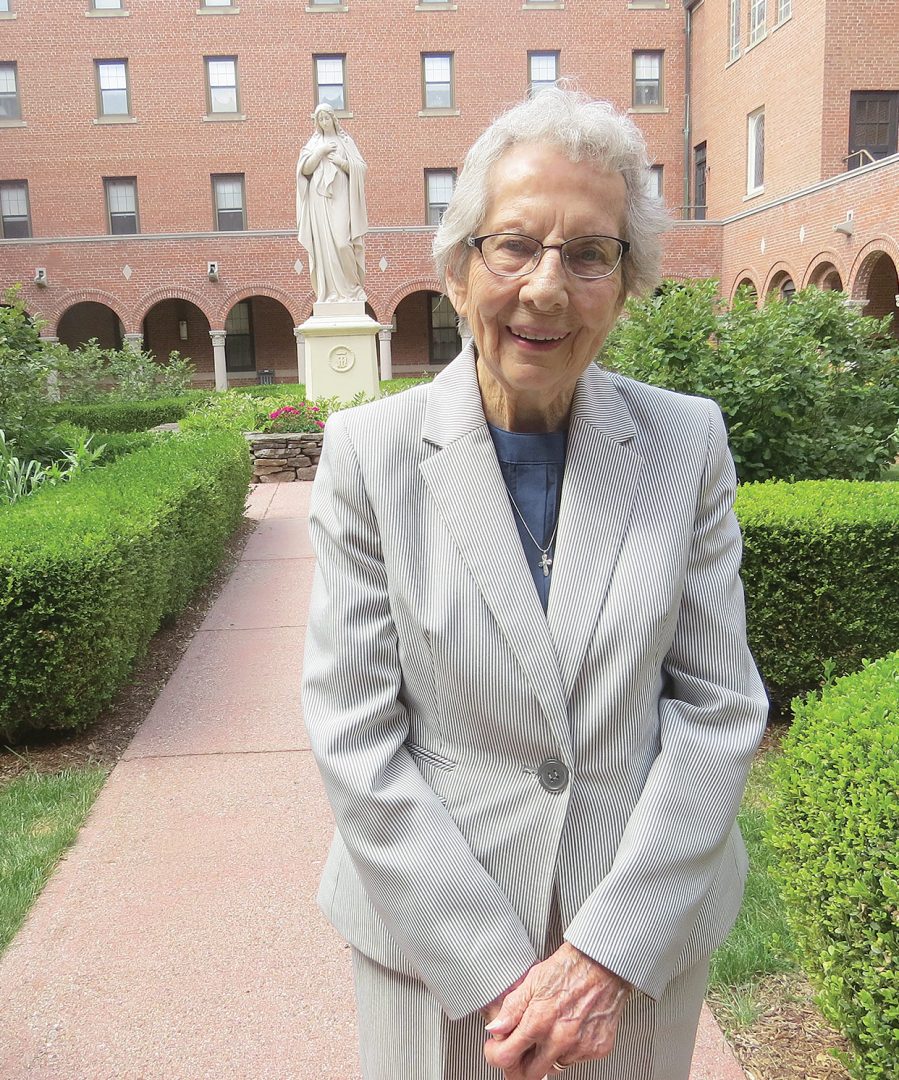
Sr. Mary Caritas

Sr. Mary Caritas

Sr. Mary Caritas, SP turned 100 on Aug. 22. It was a day to be celebrated in almost every respect, with one sad note, if it can be called that.

She decided that would be the day she turned in her driver’s license (it expired then, actually), saying goodbye to at least the driver’s seat of the Toyota RAV4 that she had come to know and love, and a small SUV that gave her something she’s never really had throughout her long and remarkable life — a break from being vertically challenged.

“All my life I’ve been looking up at … everything,” said the diminutive (in physical size only) Sr. Caritas, called ‘Little Sister’ by some in the Sisters of Providence over the years. “In that RAV4, I’ve been sitting on top of the world, looking down at everything; it’s been such a blessing.”

When asked why she gave up her license, she said simply, “I’m going to be sad about it, but it’s the time to do it,” and then elaborated a little.

“My balance isn’t as good as it used to be, my gait isn’t what it used to be, and my reaction time isn’t what it used to be; at 100, what do you expect?” she said in summing up her decision.

Maybe her balance is slipping, but her sense of humor, one of many enduring qualities, is as sharp as ever. Indeed, when she talked about her longevity and juxtaposed it against the knee replacement she underwent at age 97, she said matter-of-factly, “I need to live long enough to get my money’s worth.”

No one doubts that she will.

While she has given up her driver’s license and no longer sits on any external boards — “they all want younger boards these days, and I skew the age higher … much higher” — the dynamic Sr. Caritas, born Mary Geary, remains active on many levels.

She’s active with the Sisters of Providence, with matters for the diocese, such as deciding the fate of some of the buildings on the former Brightside complex still to be repurposed; on the golf course — although she’s not playing as much as she once did because others are having health issues — and as a mentor to many.

“The word that comes to me is indefatigable — no matter what the problem is, the task, or the role, she engages herself and gathers others around her.”

And if you watch Jeopardy! or the nightly news, you might catch her in a TV ad reciting the track record of Springfield Mayor Domenic Sarno, who is one of several candidates jockeying for votes in the primary coming up later this month. “I’m not out there holding signs for anyone,” she said, adding that she can’t even vote in Springfield. “But if someone asks me my option of Mayor Sarno, I’ll give it to them.”

And if you keep watching, you might see her in one of several different testimonial ads for car-dealership owner Gary Rome. “Someone put a camera in my face, asked me what I thought of Gary, and they made it into a commercial.”

She’s in these ads, presumably, because she’s extremely well-known and possesses a name, and a voice, that people trust. And when she talks, people listen. She’s earned that trust, and that willingness to listen to what she says, through roughly eight decades of service and involvement in this region, often at the highest levels.

Indeed, over the years, Sr. Caritas has been asked to do lots of things — from managing Mercy Hospital to solving the odor problems at Bondi’s Island. She’s rarely said no — when given assignments by the ministry, she really couldn’t say no — and has almost always succeeded with the task she’s been given.

In many respects, she’s risen to legend status, one of few in the 413.

“Sr. Caritas has been called a legend in her time, and that’s rare,” said Sr. Kathleen Popko, SP, president of the Sisters of Providence, who has served beside her colleague in many capacities for decades now. “From my perspective, she’s coached, inspired, and facilitated the growth of so many people and organizations. Her résumé is astounding, and the number of awards she’s received is amazing. She’s amazing.

“The word that comes to me is indefatigable — no matter what the problem is, the task, or the role, she engages herself and gathers others around her,” Sr. Popko went on, using the present tense, as we will throughout this piece. “Just think of her nickname, ‘Sr. Sludge,’ and how she dealt with the Bondi’s Island odor problem.”

For this issue, BusinessWest sat down with Sr. Caritas on the occasion of her 100th birthday to talk about her life and career — and where she found all the energy that drove her, and continues to drive her today.

Century Unlimited

On the door to Sr. Caritas’s apartment at Providence Place in Holyoke, there’s a cloth sign hanging on a hook that reads “Golf suits me to a tee.” Below that, there’s another sign featuring the ‘golfer’s prayer’ — “May I live long enough to shoot my age.”

She certainly has lived long enough, but, by her reckoning, she’s never accomplished that rare feat. Indeed, golf has always been a hobby, and sometimes a time and place to get work done. But, by her own admission, she’s never been very good, although, as most everyone knows, she has a hole in one to her credit, at the 10th hole at East Mountain Country Club in Westfield.

While golf has been a constant in her life and something that helps capture who she is, to understand her life and what she has meant to the region, one needs to take in another piece of art hanging in her apartment.

It’s a framed print of an editorial cartoon published decades ago in the Republican. It features a much younger Sr. Caritas (she was 66 at the time), then president of Mercy Hospital, sporting boxing gloves and a sweatshirt that reads, “I love a good fight! Knock out Dukakis.” Explaining the image, she said then-Massachusetts Gov. Michael Dukakis was not supporting the state’s hospitals to the degree that she and others thought he should, and the difference of opinion had turned into a real battle.

‘I love a good fight’ is not a phrase one would likely attach to a member of the Sisters of Providence, but in this case, it fits. Sr. Caritas has never backed down from a fight she thought was important, whether that involved the governor, Congress, making sure hospitals in this region were adequately reimbursed for Medicare, or her lengthy battle to win approval from the Massachusetts Department of Public Health for a cobalt unit for cancer treatment at Mercy Hospital.

These fights have earned her a number of honors and accolades over the years — too many to mention in this space — including several from BusinessWest. Indeed, she and the other Sisters of Providence were honored with a Difference Makers award in 2013, while Sr. Caritas was the first to earn a Healthcare Heroes award in the Lifetime Achievement category in 2017. And last year, she was honored by the magazine as a Woman of Impact.

The awards offer testimony to not only her fighting spirit, but other traits as well, from perseverance to entrepreneurship to innovation, all of which were on display in many settings and in many posts, most of which, as she’s fond of saying, were not of her choosing.

One that was of her choosing was nursing school, specifically the one at Mercy Hospital, this after her parents had convinced her that the best path was to become a secretary — she went to school for the vocation, but failed at it (one of the few times she’s really failed at anything) and went into nursing instead.

She started in that field in 1945 at Mercy — she was going to become a nurse in the Navy, but World War II ended before she could enlist — earning $48 a month. After joining the Sisters of Providence, she was sent to St. Vincent’s Hospital in Worcester as a nurse. But upon making her final vows after her fifth year, in 1949, she was sent back to Mercy Hospital, a move she was thrilled with until she learned that, instead of nursing, she would focus on dietary services.

After receiving a master’s degree in nutrition education at Tufts University and undertaking a dietetic internship at the Francis Stern Food Clinic at the New England Medical Center in Boston, she was assigned to be administrative dietitian at Providence Hospital in Holyoke.  After seven years in that role, she was told she would become CEO of St. Luke’s Hospital in Pittsfield, where she would eventually oversee a merger with Pittsfield General to create Berkshire Medical Center. And just as she settled into that role, she was elected to be president of the Sisters of Providence, a role she served for eight years before taking the helm at Mercy Hospital.

“Every role I’ve had in the community is the best role I’ve ever had,” she told BusinessWest. “It always came about as a surprise, and not a happy one. But it always turned out to be the best time I had.”

Sr. Popko agreed.

“She oftentimes says that we understand God’s providence only in the rearview mirror,” she said of her colleague. “She had her plans, and life, meaning God’s providence intervened. She took on those roles, she educated herself and learned how to do them, and then moved on with her own personality, courage, daring, energy, and enthusiasm, and made a success of herself — and them.” 

Still a Driving Force

Sr. Caritas told BusinessWest she had no real plans for her 100th birthday — beyond retiring her driver’s license.

There was a large party for her, hosted by members of the Tremble family (owners of Valley Communications) early this month, and hers was one of the August birthdays celebrated at Providence Place on Aug. 16. Another party will take place at Mercy Hospital in September. It will take the form of a benefit for establishing a nurse’s scholarship in her name.

“How could I say no to that?” she asked rhetorically, noting that she didn’t want a party. “Nursing was my first love.”

And it still is, some 70 years or so since she left that role to become a dietitian. There have been many positions and many settings since, but as she turns 100, Sr. Caritas displays only a few signs of slowing down. Her driver’s license is one, but that won’t keep her from being active, especially with the Sisters of Providence and its many initiatives; she currently serves as vice president of the congregation and is actively involved with the redevelopment of the former Brightside property, already home to Hillside of Providence, a low-income elderly-housing facility, where residents are part of the PACE (Program of All-inclusive Care for the Elderly) initiative.

There are several ‘cottages’ left to be redeveloped, she said, adding that their condition is deteriorating and, thus, their fate is uncertain.

“We’re in the process of selecting an architect, and hopefully we’ll be redeveloping those buildings because the walls and the roofs are fine; hopefully, we can salvage them and recondition them.”

While looking ahead, Sr. Caritas (that name translates to ‘charity’) looked back on her career and her contributions. And while noting that most everything has changed within the broad spectrum of healthcare, the most basic things haven’t. She referred to her first love, nursing, to get this point across.

“When I was at Mercy, I always used to remind people that they’re more important for who they are than what they do,” she said. “Nursing comes from the word ‘nurture,’ and you have to remember that. Even though all kinds of things have changed, the basic belief, and basic sense of being, is all about that — a nurse is not someone who does something to you; a nurse becomes part of you and becomes part of your recovery process and assists you in things you can’t possibly do for yourself.”

And while she talked specifically about nursing, she said this mindset applies to everyone who works in healthcare, a message she has tried to impart to others throughout her career.

Looking back on that career, she noted that, while she has given much, she has received much in return, especially the opportunity to work with others to change lives and improve quality of life. She said she’s grateful for being given the opportunity to use her time and talents in ways that benefit others — even now, at 100 years old.

“God has been good to me in terms of intellectual energy, and my memory is still pretty good,” she told BusinessWest. “There’s some things I forget, but … I’m blessed.”

People in this region — and well beyond, for that matter — can say the same, for her tireless use of that intellectual energy, and all her other gifts, in many consequential ways.

Make a Wish

When asked how she would get around now that’s no longer licensed to drive, Sr. Caritas said she’ll probably rely on Uber.

She joked that area business leader, philanthropist, and good friend Harold Grinspoon — a bit of a legend himself — sent her a check for $500 so she could start her own account, a check she quickly tried to divert Providence Ministries. (He told her to keep the one he sent and wrote another one of the same amount to the ministry). “All I have to do now is learn how to Uber.”

If she ever does need a ride, there are probably … oh, only a few thousand people in that broad ‘friend’ category she could call and ask for a lift. And they would all be willing to help.

That’s the kind of respect — and, yes, love — she’s earned over a century of caring.

Indeed, while Sr. Caritas celebrates a milestone birthday, the region is celebrating her — and what has truly been a wonderful life.

She’ll have to sit in the passenger’s seat now, but she will always be a driving force for progress in this region.

Daily News

SPRINGFIELD — The National Park Service named the Pioneer Valley Planning Commission’s (PVPC) 501(c)(3) subsidiary, the Pioneer Valley Regional Ventures Center Inc., as one of only 13 awardees nationally to receive a Paul Bruhn Historic Revitalization Grant.

The $750,000 grant will allow the state-designated regional planning agency to work with the Ventures Center to develop a subgrant program and select individual projects in rural communities for physical preservation projects that will contribute to economic vitality. It is the first time a Bruhn Historic Revitalization Grant has been awarded to a Massachusetts organization.

“From our cities to our rural towns, we know economic development is often spurred when we reinvest in places that reflect the history of community and pay tribute to the people who came before us,” PVPC Executive Director Kimberly Robinson said. “We are grateful to the National Park Service and its Paul Bruhn Historic Revitalization Grant program for providing the resources necessary to reactivate historic buildings in rural towns that will create 21st-century opportunities for growth.”

Through the Pioneer Valley Regional Ventures Center, PVPC staff will provide subgrants to competitively selected preservation and rehabilitation projects on National Register-listed anchor historic buildings in 40 communities with fewer than 12,500 residents in Hampden and Hampshire counties and parts of Worcester County. The focus is on properties that are significant to the community and, when rehabilitated, will contribute to local economic development.

Subgrant awards of up to $100,000 will be given to work in compliance with the secretary of the Interior’s standards for the rehabilitation of historic properties to conduct pre-planning; roof repair or replacement; exterior rehabilitation, such as painting, repointing, or historic siding restoration; structural repairs; window and door restoration; and life and safety improvements, including fire suppression and ADA compliance.

Eligible owner-applicants may be private, public, or nonprofit. There will be no match required. Applications will be evaluated based on population, regional distribution, variety of project type, community and economic-development potential, pre-planning to determine project needs, and the capacity of the active, local working group. A preservation restriction will be required on a property that receives funding.

Daily News

HATFIELD — The Food Bank of Western Massachusetts announced the successful sale of its Hatfield building and property to Myers Produce, a woman-owned regional produce distributor and trucking company offering farmer-focused distribution, freight, and warehousing services.

The strategic decision to sell the building marks a significant milestone for both businesses. The Food Bank will move to its new location at 25 Carew St., Chicopee, during the last week of August, and Myers Produce will move into its new Hatfield facility in October.

“We are thrilled that Myers Produce has purchased the Food Bank’s Hatfield building,” said Andrew Morehouse, executive director of the Food Bank of Western Massachusetts. “The Food Bank board of directors decided that an extension of our mission is to sell our Hatfield facility to Myers Produce to help expand markets for local farmers and strengthen our region’s farm economy. The Food Bank relies heavily on local farmers for a large portion of the fresh produce it provides for free every year to households who otherwise would not be able to afford it.”

Myers Produce has a long-standing commitment to bolster access to regionally grown food and to support farmers in Western Mass. and Vermont. With this strategic move, Myers Produce is taking a significant step to expand the purchasing of food from local growers and producers and transporting and reselling it to food retailers throughout the region and beyond.

“We are excited to embark on this new chapter as we celebrate 10 years of operation,” said Annie Myers, owner of Myers Produce. “Our mission has always been to support our region’s agricultural communities by increasing farmers’ access to wholesale markets within the Northeast. This acquisition allows us to take our efforts to the next level. In addition to allowing for the expansion of our distribution and freight operations, this facility will enable us to offer short-term storage and cross-docking services to farmers, producers, distributors, and carriers throughout our region.”

Moving to Hatfield will generate employment opportunities and place Myers Produce close to farmlands, near highways, and at a central crossroads for serving growers, customers, and fellow distributors in Massachusetts, New York, Vermont, Rhode Island, Connecticut, New Hampshire, and Maine.

Both the Food Bank and Myers Produce are looking forward to sharing resources at their respective new facilities, including cross docking and temporary storage. This arrangement will facilitate Food Bank deliveries to its member food pantries and meal sites in Hampshire and Franklin counties. For Myers Produce, this arrangement will contribute to its current ‘donation transportation’ program, facilitating the free transportation of donated food to the Food Bank for distribution to the local community.

“The planning board voted unanimously to approve the Myers Produce project,” said Stephanie Slysz, Hatfield Planning Board chair. “We are sad to see a landmark organization such as the Food Bank go, and we wish them well. We’re thrilled to welcome Myers Produce, which is a great fit for the parcel, and for Hatfield, with their commitment to local agriculture and farms in our town and in the region.”

Foreseeing it was running out of space many years ago, the Food Bank purchased 16.5 acres of vacant land in the Chicopee River Business Park in 2020. In 2021, it launched a successful, $26 million capital campaign to raise funds to build a larger facility, with support from individual and business donors, state and federal governments, and volunteers. In 2022, construction began on its new distribution center and headquarters, which is nearing completion.

Daily News

NORTH ADAMS — LEAD Academy, Massachusetts College of Liberal Arts’ (MCLA) almost two-decade-old program to help new students integrate into college life, is getting a huge boost thanks to Greylock Federal Credit Union.

Greylock pledged $100,000 to support a reimagined Greylock LEAD Academy, allowing the program to grow from around 30 MCLA students each year to this fa­ll’s cohort of 200 participants. Thanks to Greylock’s generosity, LEAD is now available to all MCLA first-year students at no cost.

“Our LEAD program has a long history of being incredibly successful at boosting student retention rates,” MCLA President James Birge said. “With help from Greylock Federal Credit Union, we now are able to offer this meaningful experience to all of our incoming first-year students.”

LEAD, which stands for Leadership, Education, Action, and Development, is a college success, leadership, and civic-engagement program designed to help students develop leadership skills and the skills necessary for college preparation, which they can immediately apply. Beginning Aug. 26, this year’s LEAD students will participate in a holistic onboarding experience before the start of fall classes. The first five days will provide a signature experience focusing on leadership development, team building, community building, and workshops conducted by student leaders.

“Greylock is excited to support this longstanding initiative, which we believe creates success for new college students in our region,” said Jennifer Connor-Shumsky, Greylock’s assistant vice president for Community Support and Events. “The LEAD Academy equips the next generation of leaders with the tools they’ll need to thrive in their academic experiences and professional development. At Greylock, we believe in the power of financial wellness, and we’re thrilled to provide support for the financial-literacy presentation during the first five days of LEAD.”

Daily News

PITTSFIELD — Pittsfield Cooperative Bank recently made a $1,000 donation to the People’s Pantry in Great Barrington. The People’s Pantry, located at Saint James Place, is a local nonprofit offering locally sourced food and other resources to clients experiencing food insecurity.

“The People’s Pantry serves a critical need for Great Barrington and the southern Berkshires,” said J. Jay Anderson, president and CEO of Pittsfield Cooperative Bank. “They are an admirable organization dedicated to helping the people in our community who need it most.”

Since 1999, the People’s Pantry has been a local staple for those experiencing food insecurity in the Berkshires. While mainly serving the Southern Berkshire community, all individuals in need of food support are encouraged to visit, with no required proof of income or status to receive services.

“We are extremely grateful and appreciative of the donation from the Pittsfield Cooperative Bank,” said Beth Moser, president of the People’s Pantry. “We rely on our donors’ generous support to help reduce food-supply costs so that we can keep serving our community.”

Daily News

SPRINGFIELD — Bulkley Richardson recently welcomed Jennifer Santucci to the firm as an associate in the Real Estate department.

She will work with clients on drafting and negotiating purchase and sale agreements; reviewing and analyzing sales contracts, LLC/corporate documents, trust documentation, and title commitments; and preparing for and conducting closings. Her experience also includes real-estate financing, including representing various lenders in commercial real-estate transactions, and preparation of loan agreements and other loan documents on behalf of lenders.

Santucci earned a juris doctorate from Suffolk University Law School in 2014 and a bachelor’s degree, summa cum laude, in criminal studies from Johnson & Wales University in 2009.

“Our real-estate practice supports the legal objectives of so many of our business and individual clients,” said Kathy Bernardo, chair of the firm’s Real Estate department. “Jennifer’s addition to the real-estate group came at an ideal time as her skills and experience as a lawyer will complement our ongoing work and help to support our clients’ complex real-estate needs.”

Daily News

BOSTON — The state’s July total unemployment rate was 2.5%, down 0.1% from the revised June estimate of 2.6%, the Executive Office of Labor and Workforce Development announced.

The Bureau of Labor Statistics’ (BLS) preliminary job estimates indicate Massachusetts gained 12,500 jobs in July. This follows June’s revised gain of 1,400 jobs. The largest over-the-month private-sector job gains were in trade, transportation, and utilities; education and health services; and information.

Employment now stands at 3,781,200. Massachusetts gained 719,600 jobs since the employment low in April 2020.

From July 2022 to July 2023, BLS estimates Massachusetts gained 90,300 jobs. The largest over-the-year gains occurred in education and health services; professional, scientific, and business services; and leisure and hospitality.

The state’s July unemployment rate of 2.5% was 1.0% below the national rate of 3.5% reported by BLS.

The labor force decreased by an estimated 5,200 from the revised estimate of 3,720,900 in June, as 1,200 fewer residents were employed and 4,000 fewer residents were unemployed over-the-month. Over-the-year, the state’s seasonally adjusted unemployment rate was down by 1.2%.

The state’s labor-force participation rate — the total number of residents 16 or older who worked or were unemployed and actively sought work in the last four weeks — dropped by 0.1% to 64.5% over-the-month. Compared to July 2022, the labor-force participation rate was down 0.6%.

Daily News

HOLYOKE — Attorney Karen Jackson of Jackson Law in Holyoke will lead three estate-planning workshops at Holyoke Community College (HCC), once per month in September, October, and November.

An elder-law and estate-planning attorney, Jackson will present these sessions:

• “Core Estate Planning,” Thursday, Sept. 21, 6-7 p.m. Jackson recommends that everyone should have what she calls a ‘core estate plan,’ with a will, power of attorney, and healthcare proxy. She will explain the value of each document.

• “De-mystifying Trusts,” Thursday, Oct. 19, 6-7 p.m. Jackson will explain what a trust is, review the different types of trusts, and outline who needs a trust and in what situations.

• “Saving Your Home from the Nursing Home Bill,” Thursday, Nov. 30, 6-7 p.m. Jackson will explain the use of an irrevocable income-only trust to save one’s home when nursing care becomes problematic. She will explain MassHealth rules and provide tips and traps to avoid.

Each class costs $39. To register, call (413) 552-2320.

Daily News

NORTHAMPTON — The Wealth Transition Collective of Holyoke is partnering with Cooley Dickinson Hospital for its annual shred day.

Anyone with financial or sensitive documents that need shredding can bring them to Cooley Dickinson on Saturday, Sept. 16 from 9 to 11 a.m. (or until the truck is full). A donation of $5 per paper box will directly benefit the hospital. Only paper items will be accepted. For more information, visit www.twealthtc.com.

Daily News

SPRINGFIELDBusinessWest, the business journal of Western Massachusetts, is now accepting nominations for the sixth annual Women of Impact awards.

In 2018, BusinessWest created the Women of Impact program as a way to honor women in the region who are making an impact and creating positive change.

Women of Impact was chosen as the name for the program because, while nominees can hail from the world of business, they can also emerge from other realms, such as the nonprofit community, public service, law enforcement, education, social work, the mentorship community, a combination of these — in short, we’re recognizing inspirational women on any level.

Nominations for the class of 2023 are due by Tuesday, Sept. 5 at 5 p.m., and the honorees will be announced in the Oct. 16 issue of BusinessWest.

Nominations should be written with one basic underlying mission: to explain why the individual in question is, indeed, a woman of impact. Visit businesswest.com/women-of-impact-nominations for addional information and a nomination form.

For more information, call Melissa Hallock, Marketing and Events director, at (413) 781-8600, ext. 100, or email [email protected].

Business Talk Podcast Special Coverage

We are excited to announce that BusinessWest has launched a new podcast series, BusinessTalk. Each episode will feature in-depth interviews and discussions with local industry leaders, providing thoughtful perspectives on the Western Massachuetts economy and the many business ventures that keep it running during these challenging times.

Go HERE to view all episodes

Episode 176: August 21, 2023

Joe interviews Amy Chillane, Greenfield’s new Community and Economic Development director

For the past decade, Amy Cahillane has been a key figure in the Northampton community, most notably as the first executive director of the Downtown Northampton Assoc., where she led initiatives to strengthen the vibrancy of the city’s economy and culture. These days, she’s bringing her considerable talents to Greenfield, as that city’s new Community and Economic Development director — and she’s doing so at a time of considerable momentum, challenge, and exciting projects happening downtown. On the next episode of BusinessTalk, Amy talks with BusinessWest Editor Joe Bednar about her passion for communities, why Greenfield is an attractive place to live and work, and more. It’s must listening, so tune in to BusinessTalk, a podcast presented by BusinessWest and sponsored by PeoplesBank.

Sponsored by:

Also Available On

Daily News

SPRINGFIELD — It’s been a few years in the making, but the Springfield Museums are getting closer to having a Dr. Seuss specialty license plate on the road in the near future.

“We are just 91 orders away from hitting the 750-order minimum that the Registry of Motor Vehicles requires before it can begin production,” said Emilie Czupryna, director of Development at the Springfield Museums. “We are so close.”

Launched in 2019, the Museums’ specialty plate campaign has two key goals: celebrate Dr. Seuss’s legacy of inspiration, curiosity, and whimsy, while creating a revenue stream that will support the Amazing World of Dr. Seuss Museum on the Quadrangle in downtown Springfield.

The plate features the beloved Cat in the Hat, arguably the most famous character created by Springfield native Ted Geisel (Dr. Seuss).

“This plate is an opportunity to celebrate all that makes learning fun,” said Kay Simpson, president and CEO of the Springfield Museums.

The specialty plates cost $40 (in addition to standard vehicle-registration fees), and a portion of that $40 goes to the Dr. Seuss Museum. The RMV requires 750 pre-orders of specialty plate designs before it can begin production. Visit springfieldmuseums.org/seuss-plate to order a Dr. Seuss plate.

“Who doesn’t smile when they see the Cat in the Hat?” state Rep. Carlos Gonzalez asked. “This iconic plate would not only celebrate Dr. Seuss’s literary contributions, but also remind us of the joy, imagination, and inspiration he continues to bring to generations. Let’s proudly display this plate on our vehicles, spreading the magic of Dr. Seuss’s world wherever we go.”

Once the 750-order minimum is reached, the Springfield Museums will contact those who have already placed orders to thank them for their patience and to explain the next steps.

“Millions of people have found true joy in reading and learning, thanks to Dr. Seuss,” state Sen. Adam Gomez said. “These license plates are a wonderful and very visible tribute to his genius — and a reminder of his roots right here in Springfield.”

Anyone with questions about the Dr. Seuss license-plate campaign should contact Czupryna at (413) 314-6458 or [email protected].

Daily News

SPRINGFIELD — Local law firm Shatz, Schwartz and Fentin announced that eight of its lawyers have been awarded in the 2024 editions of The Best Lawyers in America and Best Lawyers: Ones to Watch in America.

The following attorneys received special designations from Best Lawyers, including Lawyer of the Year and Best Lawyers: Ones to Watch in America:

• Attorney Steven Schwartz was named a Lawyer of the Year in the field of business organizations (including LLCs and partnerships). He was also chosen for The Best Lawyers in America in the fields of business organizations (including LLCs and partnerships), closely held companies and corporate law.

• Attorney Gary Fentin was named a Lawyer of the Year in the fields of banking and finance law and commercial transactions/uniform commercial code (UCC) law.

• Attorney Carol Cioe Klyman was named a Lawyer of the Year in the fields of elder law and trusts and estates.

• Managing Partner Timothy Mulhern was named a Lawyer of the Year in the fields of corporate law and tax law.

• Attorney Steven Weiss was named a Lawyer of the Year in the fields of bankruptcy and creditor debtor rights/insolvency and reorganization law.

• Attorney Mark Esposito was named to Best Lawyers: Ones to Watch in America in the fields of commercial litigation and litigation ­­­­­­­­­­­­­­­– labor and employment.

The following attorneys were selected by their peers for inclusion in the 2024 edition of The Best Lawyers in America:

• Attorney Michele Feinstein was recognized in the fields of trusts and estates litigation, elder law, and trusts and estates.

• Attorney James Sheils was recognized in the field of commercial transactions/ uniform commercial code (UCC) law.

Daily News

NORTH AMHERST — The Cars & Coffee auto-show series returns to the Mill District’s North Square with another free collectible and classic vehicle exhibition on Sunday, Aug. 20 from 8:30 a.m. to noon. And also returning is the chance for spectators to test-drive a Mercedes-Benz electric vehicle (EV).

“We’re expecting two vehicles, a Mercedes-Benz EQS and GLB, to be on hand Sunday,” said Tim O’Brien of the Mill District. “Folks who’ve never experienced the unique driving experience of an EV will especially enjoy this opportunity.”

The Cars & Coffee concept has grown explosively across the U.S. as a car-collector and spectator phenomenon. By emphasizing a laid-back, everyone-welcome format, the shows typically attract a widely different mix of vehicles — and car-curious onlookers — each time they’re held.

The June edition of the series set a record with more than 70 vehicles on display, plus a new record model-year span. The cars arriving that day ranged from a 1923 Ford Model T to a 2023 Chevy Corvette.

“A century’s worth of motoring diversity in one show really demonstrates the wide appeal of the Cars & Coffee format,” O’Brien added. “One hundred years is definitely the biggest difference we’ve seen so far, but that could change with the next show.”

Trophies will be awarded at 11:45 a.m. for the crowd’s favorite domestic, import, exotic, and best overall. Everyone submitting a ballot will be entered into a free drawing for one of three Mill District General Store gift cards.

Daily News

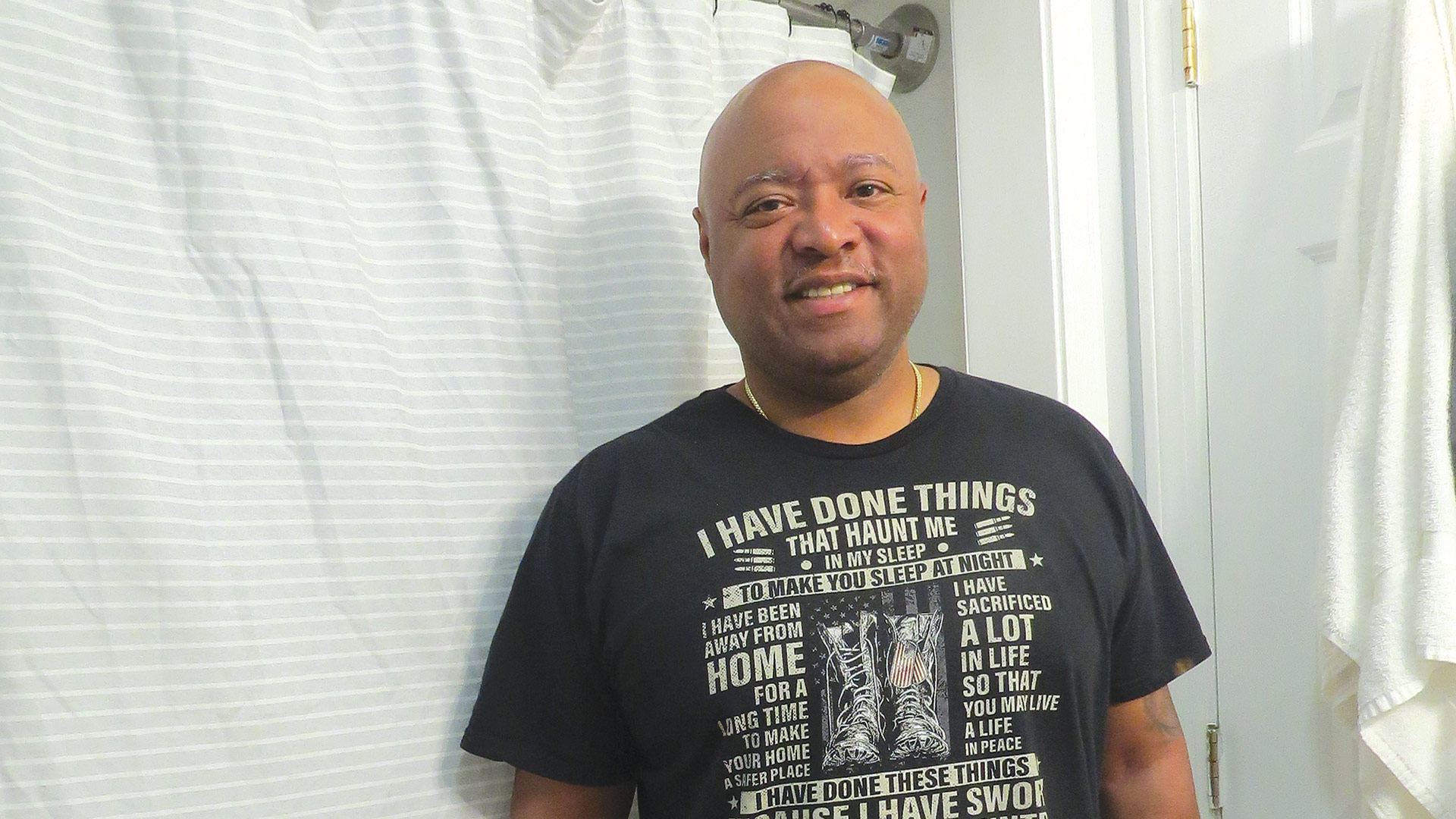
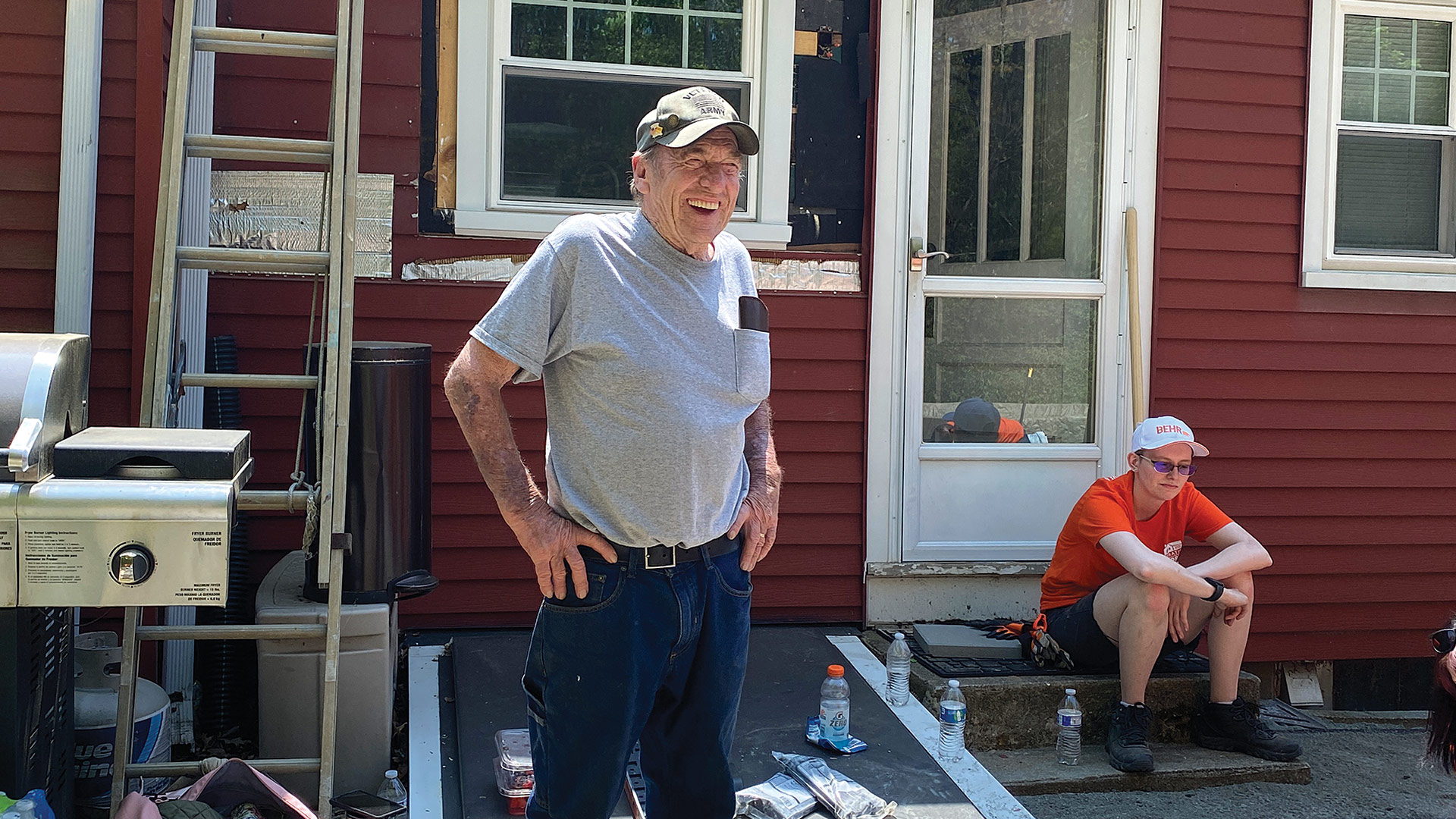
SPRINGFIELD — Greater Springfield Habitat for Humanity (GSHFH) homeowner and local veteran Max needed help. The colonial home he purchased in the McKnight neighborhood in 2002 had become a hindrance. Max suffers from chronic obstructive pulmonary disease (COPD) and rheumatoid arthritis, which makes climbing stairs to the second-floor bedrooms challenging. He expressed his concerns to Habitat, and together, they discovered a solution. Habitat, through its Veterans Build Home Preservation program, is building a downstairs bedroom and bathroom for the veteran and his wife, Gloria.

Veterans Build is a national Habitat for Humanity initiative that provides housing solutions and volunteer and employment opportunities for U.S. veterans, military service members, and their families. The program serves limited-income homeowners who are affected by age, disability, or family circumstances and struggle to maintain the condition and utility of their homes.

The home-preservation program provides affordable micro-loans to qualifying homeowners who need help with accessibility modifications, home weatherization, general home repairs, yard cleanup, and landscaping. GSHFH works alongside volunteers and homeowners to make repairs.

“Massachusetts has some of the oldest housing stock in the country, and many aging homeowners are unable to make needed repairs on their own,” said Aimee Giroux, GSHFH’s executive director. “We are happy to be able to help them through the repair process so they can continue to stay in their homes.”

Max, a former Marines corporal, qualified for the Veterans Build Home Preservation program and the U.S. Department of Housing and Urban Development’s Veterans Housing Rehabilitation and Modification Pilot Program. The pilot project gives competitive grants to nonprofits that serve veterans or low-income individuals. The grants can be used to rehabilitate eligible veterans’ primary residences. Purple Heart Homes is donating $15,000 while raising additional funds toward the project. Purple Heart Homes, a nonprofit charity, provides housing solutions for former military members who are disabled and/or have decided to age in place.

“Every act of generosity toward our veterans echoes a resounding commitment to honor their service and sacrifice. With deep gratitude, Purple Heart Homes is proud to contribute $15,000 to the Greater Springfield Habitat Humanity home-preservation project, ensuring veteran Maxwell finds solace and security in a place he can call home,” said John Gallina, CEO and co-founder of PHH. “Our mission extends beyond this gift, as we embark on a dedicated fundraising campaign to reach a goal of an additional $10,000. We believe we’re better together. In collaboration with Habitat for Humanity, we hope to build a legacy of compassion and support for those who have bravely defended our freedom.”

Features

Getting a Refresh

Diana Szynal

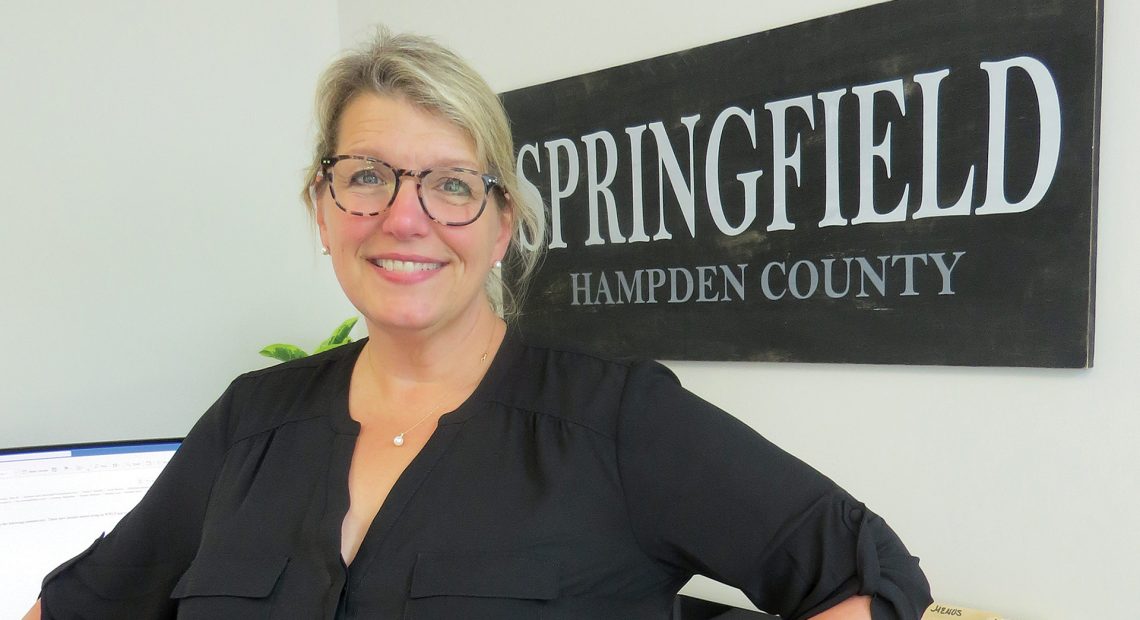
Diana Szynal says the Springfield Regional Chamber is refreshing many of its events, including Super 60 and its Rise & Shine breakfasts.

349.

That’s how many ‘engagements’ Diana Szynal estimates she had during her first year as president and CEO of the Springfield Regional Chamber of Commerce (SRC).

By this, she means in-person meetings, Zoom sessions, phone calls, emails, talks at networking events, and more. These engagements were with a number of different constituencies — chamber members, elected officials, economic-development leaders, directors of others chambers, and more.

And while she believes that’s an accurate number, it’s really just an estimate.

Whatever the total might be, it adds up to a lot of talking — and especially a lot of listening. Through all that listening, Szynal has determined a least a few things. The first is that there is a good deal of momentum concerning the chamber and many of its programs and events, as evidenced by the addition of 45 new members over the past fiscal year. The second is that there is room for change and, in some cases, improvement to better serve members as well as the region and its business community.

So, as Szynal begins her second year at the helm, changes are coming to everything from the chamber’s logo to its nearly 40-year-old Super 60 program; from its slate of breakfasts to its website.

Let’s start with Super 60, since it’s almost that time of year. Actually, it is that time of year, with nominations being sought for a revamped program that will honor businesses and institutions across five categories, not merely the traditional ‘Revenue Growth’ and ‘Total Revenue.’

The new categories are ‘Nonprofits,’ ‘Startups,’ and ‘Givebacks,’ a measure of how much a business gives back to the community. These additions, said Szynal, should provide new layers of intrigue and excitement for a program that hasn’t seem much change over its existence, while also bringing some new businesses to the podium for the awards ceremony.

“What we want to accomplish with these new categories is recognition that there are different measures of success,” she explained. “And it’s a way to award more members across various sectors for their success.”

Beyond Super 60, the chamber will be changing its look with a new logo and tagline, retiring ‘Connect2Commerce,’ she said, adding that this initiative is a work in progress, as is work on the website to make it more user-friendly. Meanwhile, the slate of events for the 2023-24 calendar year has been finalized, and there will be something of note each month, including themed Rise & Shine breakfasts to highlight different sectors of the business community, including sports-related ventures, hospitals, nonprofits, and manufacturers.

“Housing is really a challenge here in the Commonwealth, and particularly in Western Mass. When you think about the barriers to success, oftentimes, the roads lead back to a lack of housing.”

On the legislative side, the chamber will continue its strong track record of advocacy with its legislative steering committee, she said, adding that a housing subcommittee has been added to address an issue identified as a priority by the governor, state legislators, and all of the region’s mayors.

“Housing is really a challenge here in the Commonwealth, and particularly in Western Mass.,” she said. “When you think about the barriers to success, oftentimes, the roads lead back to a lack of housing.”

Overall, Szynal said, the chamber is focused on working to better serve, promote, and connect members, while also forging new and stronger partnerships with other area chambers and economic-development agencies, especially the Western Massachusetts Economic Development Council (EDC).

For this issue and its focus on Springfield, we take an in-depth look at the many ways the SRC is getting a refresh, and what these changes mean for the agency and the region’s business community.


Progress Report

When she talked with BusinessWest just after taking the helm at the chamber last summer, Szynal said her first year in that position would be a time to listen and learn.

And is has been exactly that.

The listening, as noted earlier, has been a constant, involving voices with many different constituencies. The learning, meanwhile, has been about Greater Springfield — Szynal, while from this region, has lived and worked mostly in Franklin and Hampshire counties — but also about chambers, this chamber in particular, and what it should be doing to better serve both its members and the region.

What has emerged from this listening and learning is a strategic plan of sorts, one with many components, starting with a focus on collaboration and building partnerships, especially with other chambers in this region, but also other agencies focused on business and economic development.

Szynal said the leaders of the Hampden County chambers now meet every other month. Collectively, they’re piecing together plans for a multi-chamber event — details to come — to take place next March.

“We’re forming really good relationships and seeing how we can work together to each provide better value to our members,” she said, adding that SRC is also working more closely with the EDC on several fronts, especially legislation and advocacy, with Szynal now chairing the EDC’s legislative committee.

“The chamber really hangs its hat on its legislative advocacy and the structure we’ve built around that,” she noted. “But then, forming a bond with the EDC and working together with them on some things will be really great for both of our memberships.”

Meanwhile, the SRC and the EDC are both involved with the recently launched Massachusetts Chambers of Commerce Policy Network, comprised of 10 members from across the state, with plans to expand to include other chambers in 2024.

“The chamber really hangs its hat on its legislative advocacy and the structure we’ve built around that. But then, forming a bond with the EDC and working together with them on some things will be really great for both of our memberships.”

The network is designed to leverage the existing impact and on-the-ground knowledge of these local chambers to provide solutions to policy challenges that hinder the success of the state’s residents, employees, and businesses, Szynal said, adding that one recent issue it addressed was the need to rebuild trust in the state’s unemployment-insurance system after an audit found that $2.5 billion in federal money had been wrongly used by the Department of Unemployment Assistance.

Changes will also be coming to the SRC’s calendar of events, aimed at freshening some traditional programs and gatherings while also boosting participation. And the full slate has been finalized at a relatively early date, giving businesses more opportunity to plan.

The Rise & Shine breakfasts, which have seen a surge in attendance over the past year, have been expanded from four to five and, as noted, will now spotlight different sectors of the economy, starting with the one in September, which will put the focus on what Szynal called the ‘business of sports,’ which is becoming a steadily growing force in the reginal economy.

“We have a quite a few sports-related members, so we’re going to really paint a picture of the impact that sports have on a city,” she said, adding that other breakfasts will turn the spotlight on Springfield-area hospitals and their wide-ranging economic impact (October), nonprofits (January), business focused on the aging of the population (February), and Hampden County manufacturers, with a focus on how things are made (April).

Overall, there will be something every month, Szynal said, listing traditional events such as Super 60 (November), the annual Government Reception (December), the Outlook lunch (March), and a bulked-up Mayors Forum, with nine individuals taking part (May), as well as the annual Fire and Ice cocktail event in May and the annual meeting in June.

Getting back to Super 60, a program with a great deal of history and tradition (it started as the Fabulous 50 and was later expanded), Szynal said that, after more than three decades, it was certainly time for a refresh.

This year’s program will still feature 60 honorees, but, as noted, they will be in five categories, not the traditional two, with the additions designed to identify different ways to recognize excellence and “performance,” she said.

The Startups category will recognize newer, growing businesses, she noted, adding that revenue growth will be the yardstick. The Nonprofits category will be based on the percentage of an agency’s budget spent on programs.

The third addition, Givebacks, will be the most subjective of the five categories, she told BusinessWest, adding that a committee of three will weigh several factors — from the estimated value of what was donated (products, services, and more) to employee engagement — and assign a score.

There will be 12 winners in each category, she said, adding that the changes, which include a streamlined nomination process that allows the work to be done electronically, should breathe some new life into the program and bring new companies and nonprofits into the spotlight.

“We’re excited about these changes and think the business community will be excited as well,” she said, adding that nominations are due Sept. 8, and the annual recognition lunch will take place on Nov. 9 at the MassMutual Center.


Bottom Line

Returning to the matter of those estimated 349 engagements from her first year at the helm of the SRC, Szynal said the number is surely higher than that.

Whatever the total is, it represents a great deal of talking and listening, conversations that have translated into a number of action steps designed to make the chamber even more visible, impactful, and responsive to the needs of its members and the community, she said, adding these initiatives are a work in progress, in every sense of that phrase.


Community Spotlight

Community Spotlight


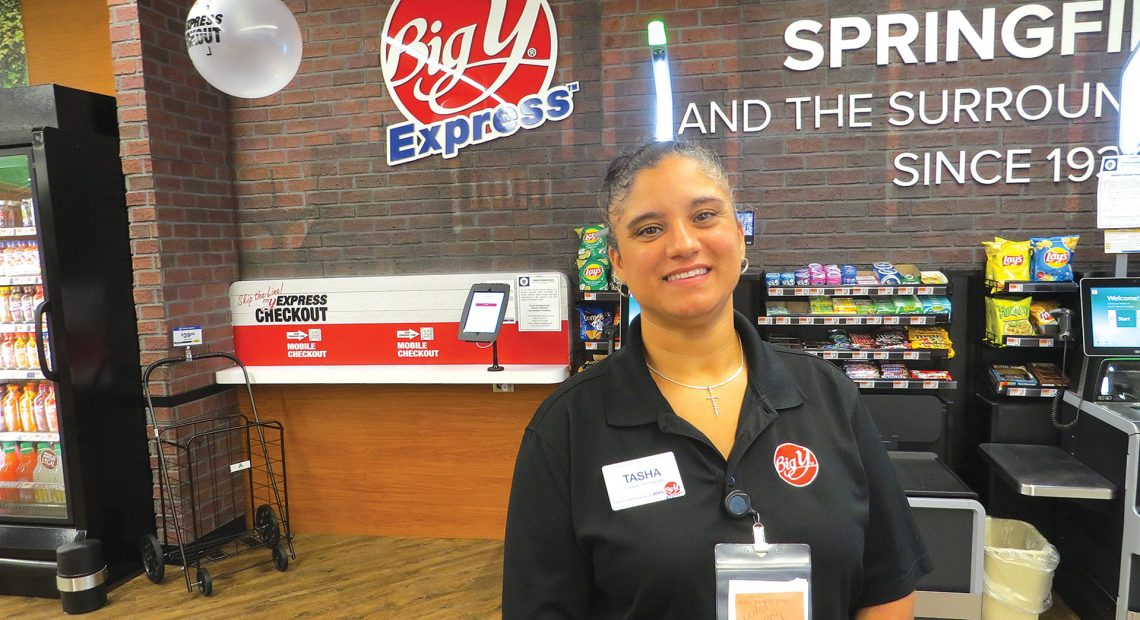
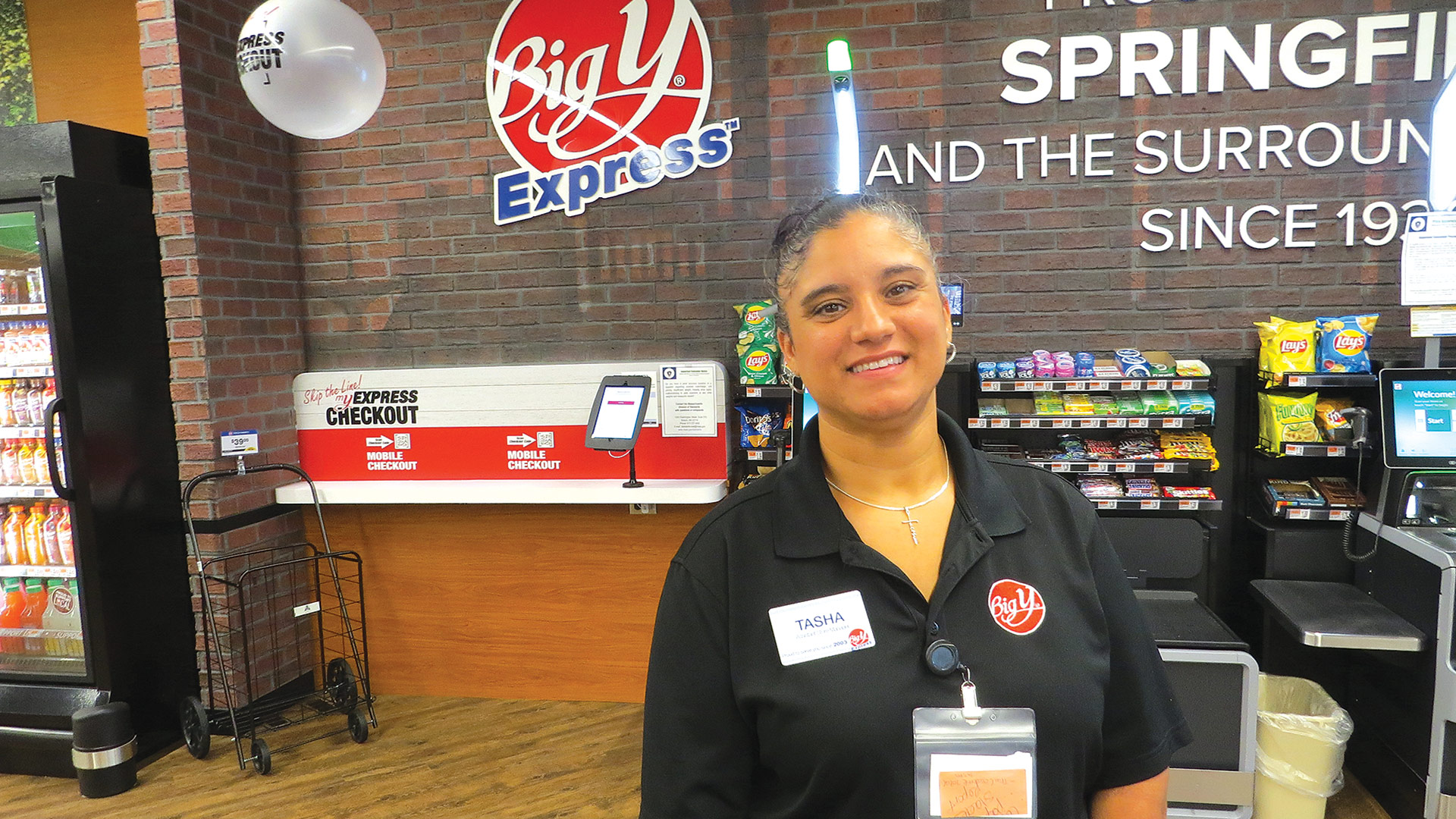
Natasha Dymnicki, assistant manager of Big Y’s Tower Square location, shows off the new facility, which is off to a solid start, according to company officials.

As he reflected on 16 years in office and his intention to serve another four, Springfield Mayor Domenic Sarno said that, while much has been accomplished during his tenure in the corner office — the longest in the city’s history — “there is still considerable work to be done.”

And that assessment covers many different fronts — from public safety to revitalization of the city’s downtown; from working with the state to design and build a replacement for the troubled Roderick Ireland Courthouse to continuing efforts to improve neighborhoods; from schools to hospitality and tourism.

But it’s especially true when it comes to the broad issue of housing, which has been identified as a both a pressing need and a key ingredient in a formula to revitalize neighborhoods, including the downtown, and spur economic development.

Indeed, housing is at the heart of a number of projects at various stages of development in the city, from the long-awaited restoration of the former Court Square Hotel to the reimagining of the former Knox manufacturing building in the Mason Square neighborhood to the redevelopment of the former Gemini site in the South End.

“It will probably take a full year to really get settled in and fully understand all the nuances of this. It’s a different model, and we’ve been working through a lot of things like staffing and logistics.”

And housing will be at least part of the equation with several other initiatives, from the redevelopment of the Eastfield Mall on Wilbraham Road, which closed its doors last month, 55 years after it opened, to Sarno’s preferred resolution of the question of how best to replace the courthouse (more on that later).

“When you listen to Governor Healey and Lieutenant Governor Driscoll, every other word out of their mouth is housing,” the mayor said. “So, a lot of projects we’re pitching, including Eastfield Mall, have a housing component.”

Beyond housing, though, there are a number of intriguing and mostly positive developments in the city, said Sarno and Chief Development Officer Tim Sheehan, offering a list that includes:

• New restaurants in the Worthington Street/Bridge Street corridor;

• The new Big Y market in Tower Square, a unique addition to the landscape made possible by ARPA money;

• New additions to the outdoor marketing menu, also made possible by ARPA money;

• Some real momentum at MGM Springfield almost five years to the day since it opened; the past three quarters have been the best recorded by the facility when it comes to gross gaming revenue;

• An ambitious infrastructure project involving the ‘X’ in the Forest Park neighborhood, one that is designed to improve traffic flow in that area but also spur business development;

• A project to replace the Civic Center parking garage, a state-funded project that will not only provide needed parking, but also activate neighboring space and create an area outside the MassMutual Center similar to Lansdowne Street outside Fenway Park;

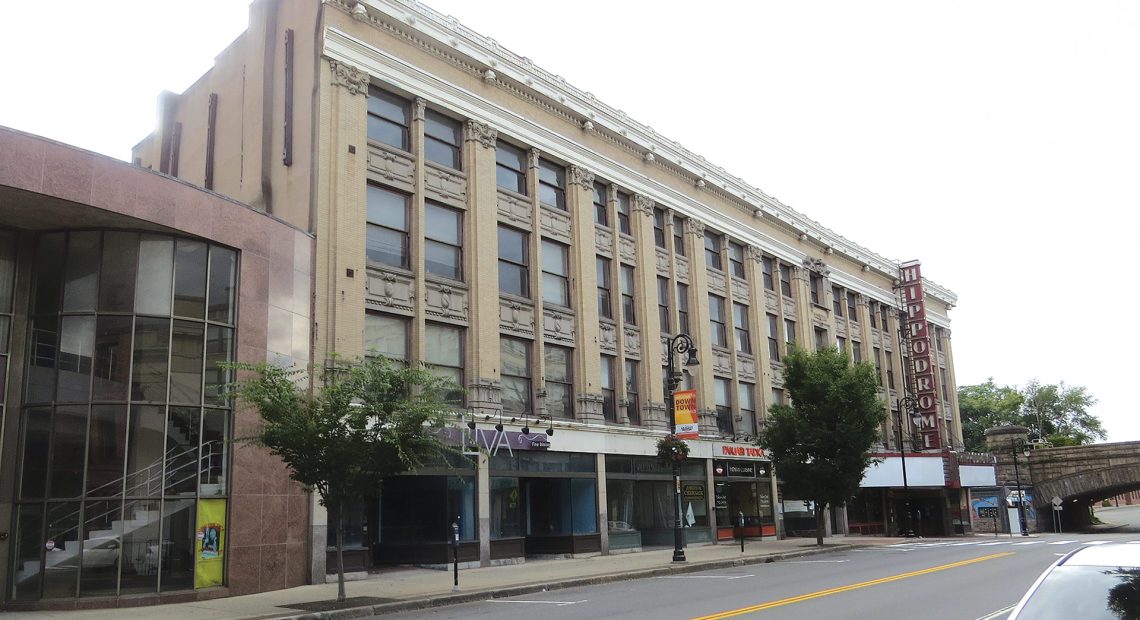
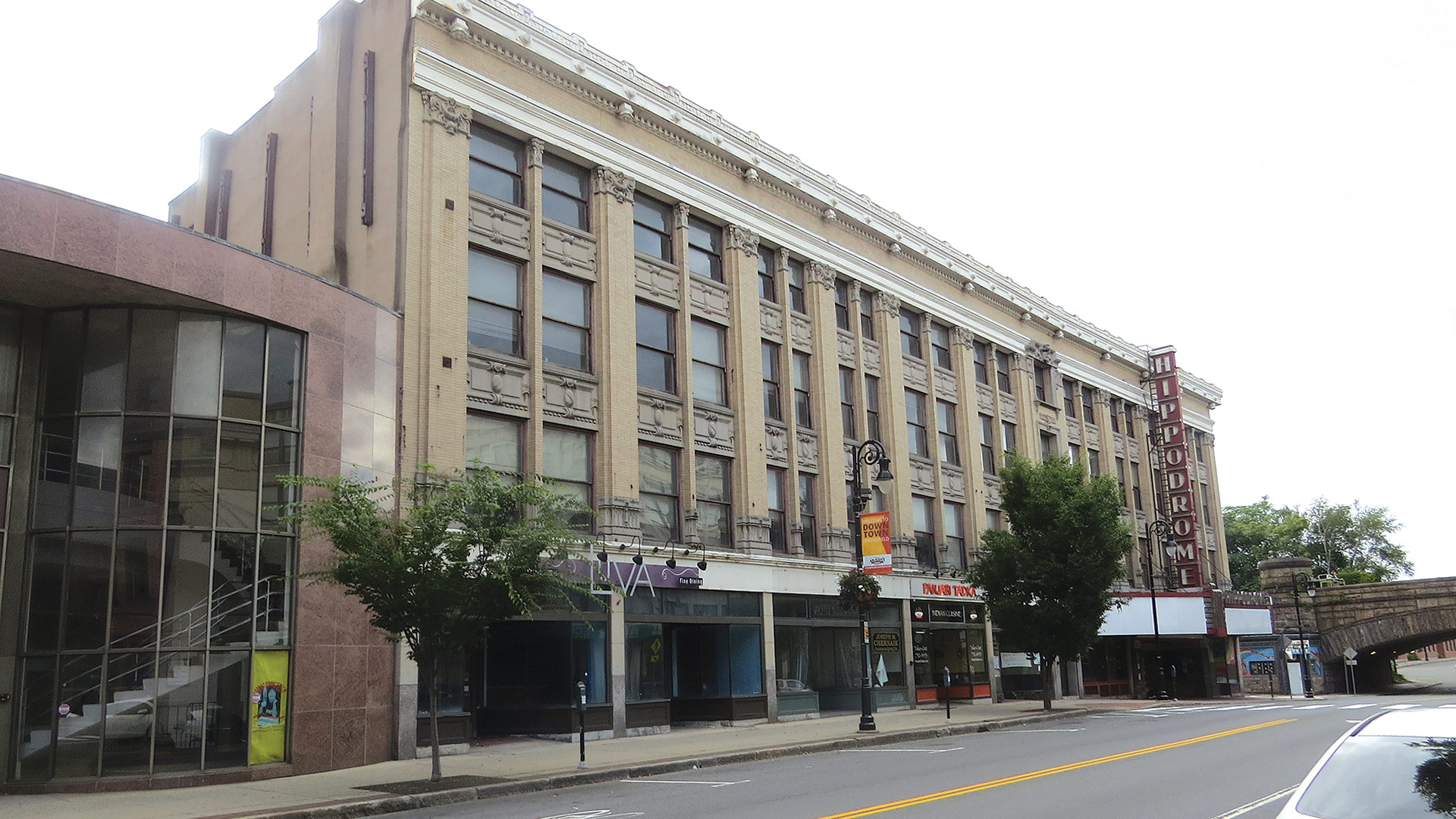
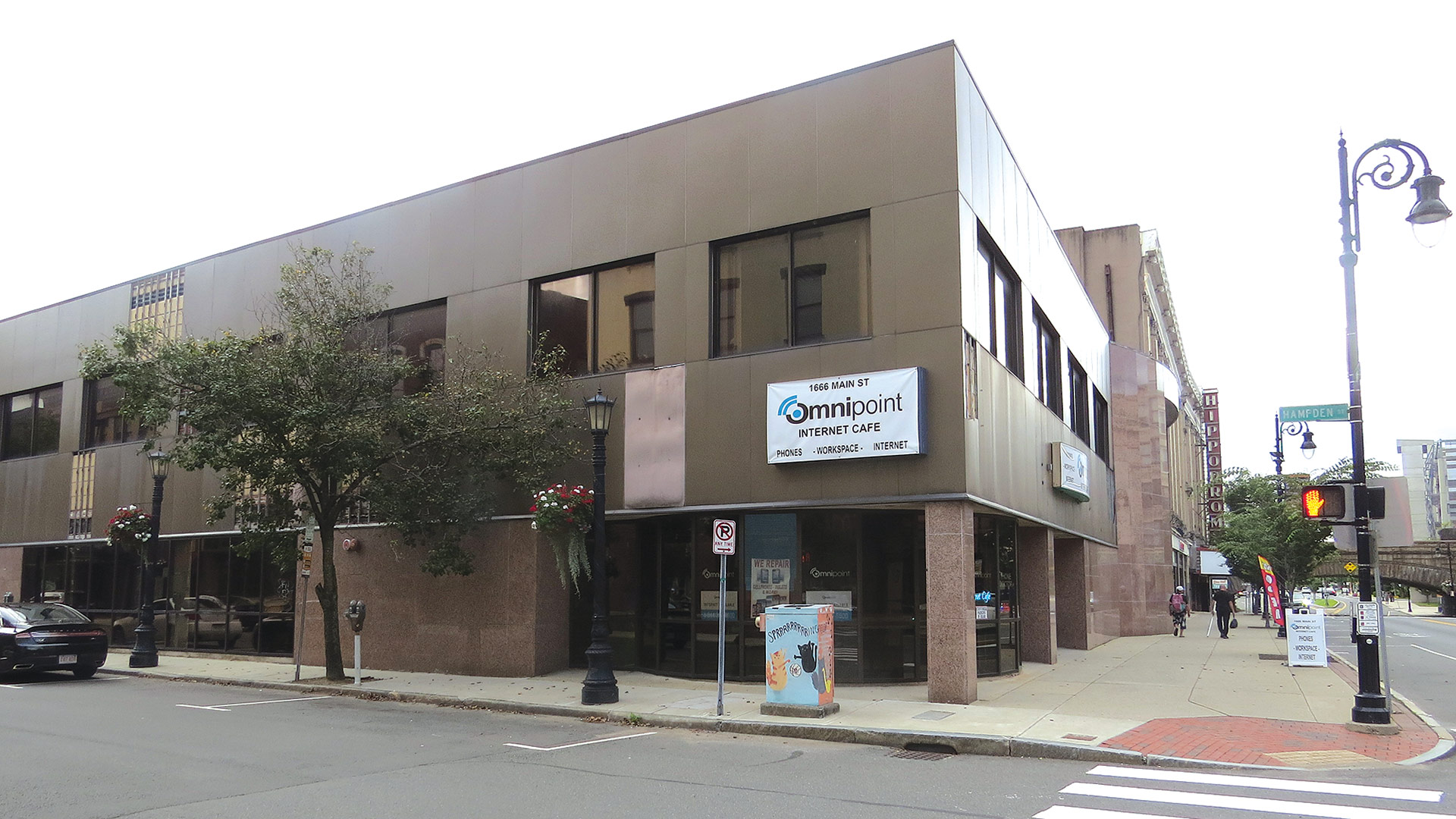
• Considerable response from the development community to a request for proposals to redevelop the vacant or underutilized properties across Main Street from MGM Springfield; and

• Vibrancy downtown, highlighted by a weekend in June when the IRONMAN competition coupled with performances by Bruno Mars and Tina Fey and Amy Poehler brought 50,000 people to MGM Springfield facilities.

“Downtown was alive, it was electric … you had to wait to get a seat at restaurants; this is the kind of vibrancy we want downtown,” Sarno said, adding that there have been many weekends like this over the past several years, and more to come.
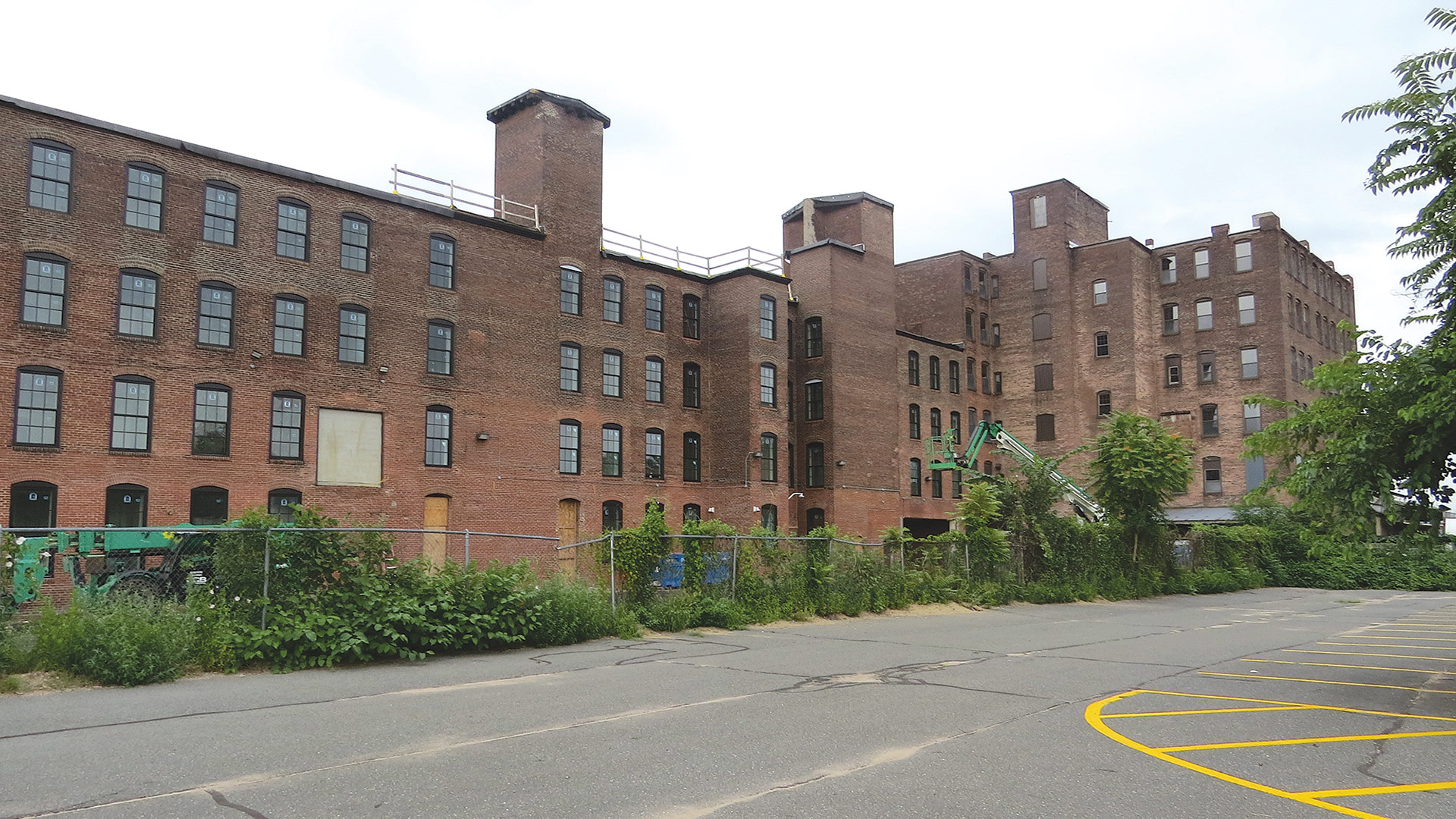
The former Knox automobile manufacturing plant in Mason Square

The former Knox automobile manufacturing plant in Mason Square is one of many properties in the city being converted to housing, or to feature a housing component.

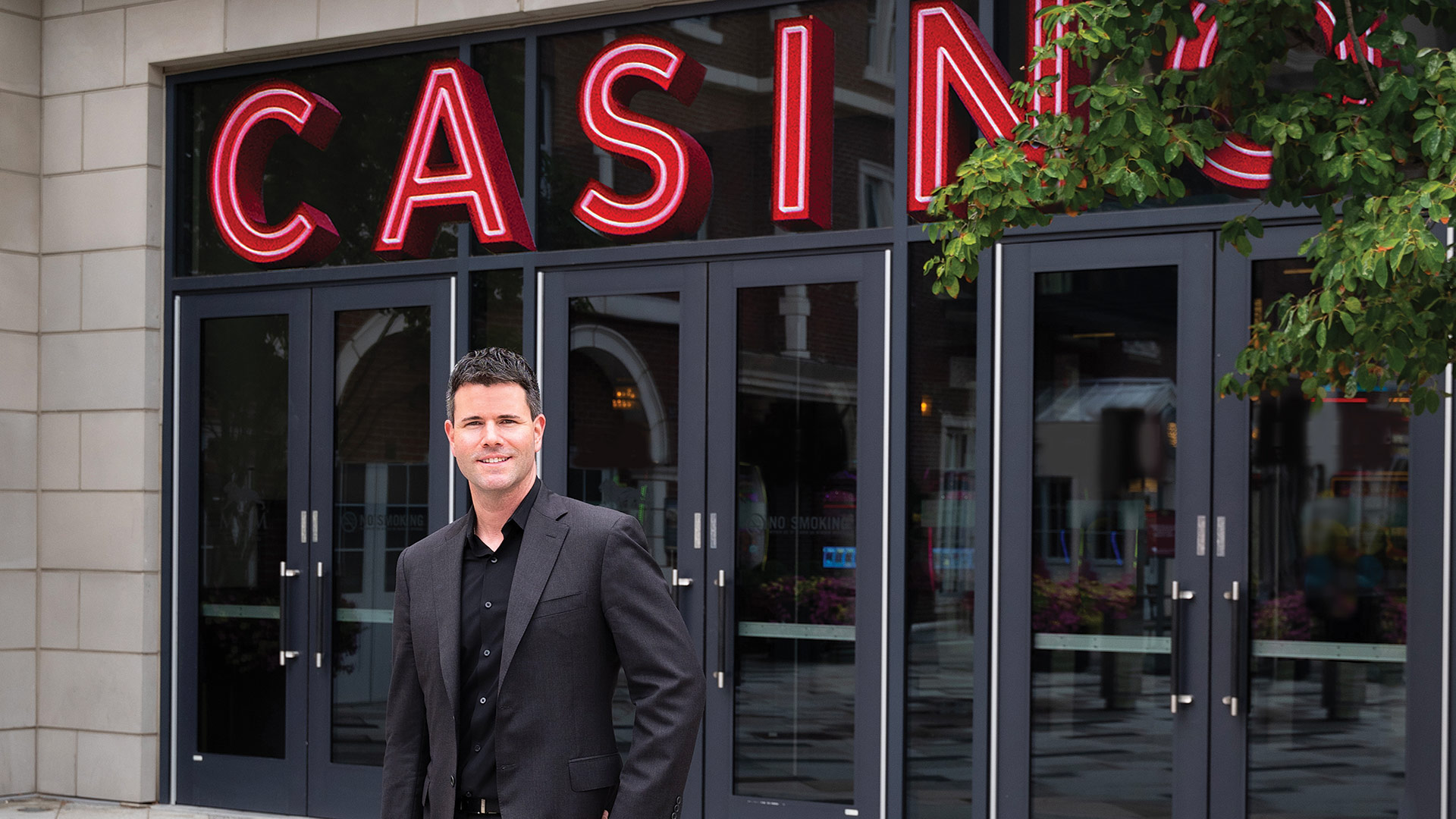
As for MGM, the mayor said the casino, the city’s largest taxpayer, has become a partner on many levels — with the city and state on projects like Court Square, and with area nonprofits on several different initiatives — and a key contributor to the vibrancy downtown. “They’ve been critically important to the nightlife of the city, and they’ve been a good corporate citizen.”

For this, the latest installment of its Community Spotlight, BusinessWest takes an in-depth look at the latest developments in the City of Homes, which is focused on many initiatives, but especially creating … well, more homes.


What’s in Store?

Reflecting on the few first months the Big Y Market has been open in Tower Square, Clair D’Amour-Daley, the company’s vice president of Corporate Affairs, said it’s going to take more than a few months for this picture to come fully into focus and this unique model to fully develop.

By that, she meant this concept is something totally new, not just for Big Y, but in the broad grocery-store realm itself — at least as far as she and others at the company can determine.

“We have nothing like it, and I’m not sure we’ve been able to model anything quite like it,” she said, adding that this is, in many respects, a scaled-down version of a Big Y supermarket, maybe one-fifth the size of a traditional store, offering many but certainly not all of the items available in one of the larger markets. It was conceptualized to address the food desert that exists downtown, and also meet the identified needs of downtown office workers, as well as people coming into the city for various events and gatherings.

“There are three basic constituents for customers,” she said. “There’s the downtown workers, and there is obviously some ebb and flow there, but we’re coming to understand that market. The second part is the tourism piece, and it has its own cadence. And then, we’re still really learning to tap into the residential community downtown, and that’s significant; we have a lot of customers tell us that they no longer have to walk or otherwise get to our store on Memorial Avenue in West Springfield.

“We want to continue to create market-rate housing, but we’ve also been successful in doing workforce-development housing.”

“We’re learning all those things and learning what types of products to put in, although we’re trying not to make radical changes just yet,” D’Amour-Daley went on. “It will probably take a full year to really get settled in and fully understand all the nuances of this. It’s a different model, and we’ve been working through a lot of things like staffing and logistics.”

Thus far, the store is off to a solid start, she said, adding quickly that, because the model is so different, Big Y is still trying to figure out how to accurately gauge results.

“There are so many variables, and we didn’t want to jump to conclusions right away,” she said. “But it’s been steady; we’re happy with where we are, and we’re just in a wait-and-see mode, waiting for things to settle.”

The Big Y project is one of many ARPA-funded initiatives aimed at helping businesses and, in this case, spurring economic development and improvements within specific neighborhoods, Sarno said, adding that, while most cities have dedicated the bulk of their ARPA funds to infrastructure work (and Springfield has done some of that), certainly, most of the more than $123 million has gone to help small businesses and individuals.

“More than 80% of the ARPA funds we’ve put out have gone to minority- and women-owned businesses,” he said. “We moved very quickly to help prime the pump and help businesses that wanted to stay open at the start of the pandemic and, in many cases, reinvent themselves.”


At Home with the Idea

As noted earlier, perhaps the biggest priority for the city moving forward, from the standpoint of both neighborhood improvements and economic development, is housing, the mayor said.

Tim Sheehan, the city’s chief Development officer, agreed, noting that housing is either being planned for, or at least contemplated, at a wide range of sites. That list includes the former School Department building on State Street as well as another project at 310 State St.; the Mardi Gras property on Worthington Street, recently sold by its owner, James Santaniello, for $2.3 million, and other properties on Worthington; the Eastfield Mall site; the properties across Main Street from MGM Springfield, including the Clocktower Building and the Fuller Block; the former Gemini Corp. factory site on Central Street in the South End; a former warehouse building on Lyman Street; and others.

This is in addition to the 90 units being built at the former Knox Automobile factory at 53 Wilbraham Road, a project being undertaken by First Resource Development Corp., which has developed a number of properties in the city, including the former Indian Motocycle manufacturing facility across Wilbraham Road from the Knox property, as well as the Court Square development (75 units), a project at 169 Maple St., and the completed redevelopment of the former Willys-Overland building on Chestnut Street as the Overland Lofts.

This housing comes in many different forms, from ownership housing at the Eastfield Mall site to various types of apartments, including affordable units and another category that is called “workforce-development housing,” Sarno explained.

“We want to continue to create market-rate housing, but we’ve also been successful in doing workforce-development housing,” he noted, referencing housing that, in the case of the Court Square project, is limited to tenants making 80% of the region’s median income. “That’s an important component of what we’re doing, and we need to do this because there’s a housing crisis in the Commonwealth and across the country.”

The mayor went on to say that these housing projects and other types of developments, including new restaurants in the downtown area, convey confidence in the city, its leadership, and its future.

“When I first came into office, people weren’t interested in Springfield — we were second, maybe third on their list,” he recalled. “People would say, ‘what can you expect from Springfield?’ Now, people say, ‘why not Springfield?’”

Sheehan concurred, noting that housing is the preferred reuse for those vacant or underutilized properties across Main Street from the casino.

The city recently issued a request for proposals for redevelopment of those properties and received what he categorized as a very solid response from the development community.

“There were five companies responding — two locals and three nationals,” he said, adding that the city expects to name a preferred developer by the end of this month.

The even better news, he said, is that the nationals were “looking for more” — as in more properties around that area to develop. And there are plenty of them.

“There is a significant amount of underutilization of property in that area,” Sheehan told BusinessWest. “There are portfolios of properties that haven’t been fully utilized for quite some time. The owners have put out pieces of their portfolios to their market, but there is much more to be developed.”


A Developing Story

Beyond housing, one of the more pressing issues confronting the city is the fate of the Roderick Ireland Courthouse, the 47-year-old structure that has taken on the name the ‘sick courthouse,’ by employees and others, because of intense breakouts of mold and other issues.

The state has vowed to address these issues, and in June, Gov. Maura Healey announced that the state will commit an initial $106 million toward replacement of the courthouse, a project that will carry a price tag of $400 million to $500 million and could take several years to resolve.

At present, there is no clear path forward, Sheehan said, noting that, also in June, the state Division of Capital Asset Management and Management issued a report identifying 13 properties (11 of them in Springfield and most of them in the downtown area) as potential sites where a new courthouse may land.

The sites were ranked according to factors like proximity to downtown Springfield, access to public transportation, and the physical capacity to accommodate the operations of several courts, and the address topping the list is 50 State St., where the courthouse currently stands. That ranking would appear to favor a plan to move the court to a temporary facility, spend whatever is necessary to renovate the existing structure (or, more likely, build a new one its place), and then move the court back to that address.

Sarno told BusinessWest that considerable time, expense, and aggravation could be saved if the state would embrace a site owned by developer — and Peter Pan Bus Chairman — Peter Picknelly, who has forwarded a proposal for a multi-use development along the riverfront that would include the courthouse, office space, housing, and a marina. The site, which combines property on East Columbus and West Columbus avenues and Clinton and Avocado streets, is on the state’s list of ranked properties, but quite far down: ninth, in fact.

“That’s a game changer,” Sarno said of the Picknelly proposal, which he believes will not only simplify the process of creating a new courthouse, but also spur new development in the city’s North Blocks area. “When I talk to the people at the court, they want to move once, not two or three times. We think we have a very viable proposal in the Picknelly site, and we’re going to continue to pursue it.”

Sheehan said the Picknelly site — or any other site other 50 State St. — would afford the city the opportunity to also redevelop the current courthouse property, which sits across State Street from MGM Springfield and is just a few hundred feet from I-91.

“You would want to have development on that site that is directly related to the anchors around it,” Sheehan said, referring to not only MGM Springfield and the MassMutual Center, but also the housing being built at Court Square and other locations, as well as the Old First Church at 50 Elm St. Built in 1810, the historic structure was sold to the city in 2008 and is currently rented out for weddings and other events.

As Springfield waits for the state to make up its mind on the courthouse, other intriguing projects are moving forward, including the redevelopment of the Eastfield Mall.

The last tenants in the facility moved out in early July, and demolition of the complex is set to begin as early as later this month, Sheehan said, adding that a mix of retail, housing, and support businesses are planned for the site.


X Marks the Spot

Meanwhile, in Forest Park, plans have emerged for major infrastructure work at the ‘X,’ the intersection of Belmont Avenue, Sumner Avenue, and Dickinson Street. This is another historic area, and a dangerous intersection, said Sheehan, noting that it has been the site of numerous accidents over the years.

The planned improvements will include modification of traffic patterns, updates to signal equipment, updates to signal coordination, the addition of five-foot bicycle lanes, reconstruction and reconfiguration of sidewalks and pedestrian facilities, accessibility upgrades, the conversion of the Belmont Avenue and Commonwealth Avenue intersection into a roundabout, and more.

“Ultimately, we’re creating a better pedestrian environment, while also looking at how those infrastructure improvements can spur more commercial activity in the area,” Sheehan said, adding that, while there are already a significant number of retail, service, and hospitality-related businesses in that area, there are obvious opportunities for more in each category.

As there are throughout the City of Homes, which stands at its own crossroads of challenge and promise.

Features

Beyond a Living Wage

This is the second article in a monthly series examining how area colleges and universities are partnering with local businesses, workforce-development bodies, and other organizations to address professional-development needs in the region. One college will be featured each month.

In explaining why Greenfield Community College is an ideal fit for the Community College Workforce Transformation & Implementation cohort, Kristin Cole, vice president of Workforce Development at GCC, pointed to a series of criteria that New America — the national public-policy think tank that launched the program — considers in judging an effective workforce program.

“Number one is labor-market outcome. Programs should link to high-quality jobs that provide at least a living wage,” she told BusinessWest. “And that’s what we ask, too. Is this preparing someone for a job that builds into a career with a sustaining wage? If the answer is no, that’s not the kind of program we want to build here. We’re creating programs to be a bridge to financial stability.”

GCC is one of just 15 community colleges in the U.S. — and the only institution in New England — chosen to participate in the cohort by New America. The selection gives GCC’s Workforce Development office unique access to best practices, tools, research, and experts to implement innovations in workforce equity.

Kristin Cole

Kristin Cole

“Is this preparing someone for a job that builds into a career with a sustaining wage? If the answer is no, that’s not the kind of program we want to build here.”

“We’re honored to have been selected to join this impressive cohort. Our inclusion means a lot to our own equity efforts at GCC but means even more to the region, as GCC can become a leader in building a more equitable workforce throughout Franklin and Hampshire counties,” Cole explained. “Working closely with regional employers and community partners like the MassHire Franklin Hampshire Workforce Board, GCC is laser-focused on accelerating the development of high-quality and affordable workforce-training programs with credentials that will lead to quality jobs and careers for all members of our community.”

The work, which will take place over the next 18 months, will assist GCC in implementing policies to better align workforce and economic development, modernize college-wide data infrastructure, and diversify the financing of workforce programs to better serve the residents and employers of Franklin and Hampshire counties, Cole noted — goals that line up with New America’s own intentions for the program.


Capacity, Data, and Funding

According to the think tank, the cohort’s first focus area is about building the capacity of colleges to meet the current economic demand in their communities while also contributing to economic development and emerging jobs in their regions. At many colleges, it notes, workforce programs are distributed across the college, and not all colleges have a senior leader with oversight over all those programs who can develop a strategic vision for economic development and align workforce programs with the needs of the community.

Some colleges, therefore, need to build out staffing models and structures, including workforce advisory boards, for broader engagement with community partners. Many colleges cite a need to grow partnerships with employers, local and federal government agencies, community-based organizations, and other entities that can provide work-based learning opportunities and job placements for students and/or funding to develop and expand in-demand programs.

Many colleges, New America notes, are focused on how their programs can better serve the economic needs of their students and communities. Some want to create new-short term credentials, and others want to expand apprenticeships and pre-apprenticeships. Others want to create more seamlessness across programs, especially allowing students to ‘stack’ programs so students who complete non-credit programs can continue in for-credit programs without starting from square one.

“We really engage our employer partners up here,” Cole said, also praising the connecting work of the MassHire Franklin Hampshire Workforce Board. “We want our learners to know that the first credential is a launching pad; it’s not the final destination. We’ll continue to help them add licensures to their résumé so their income levels will rise. New America has been focused on this work for a long time. How do we plan and deliver high-quality workforce-development programs at community colleges across the nation?”

New America’s second focus area is data — specifically, what data colleges need to understand the labor market and program outcomes, how colleges can collect this data, and how they can use it to launch programs and evaluate existing ones.

Some colleges still need to update their data systems and employ more sophisticated tools to better store and analyze their data, the organization notes. Most colleges need to gather more labor-market information, like what training is needed by employers, and they have questions about what data sources are accurate and up-to-date. They also need to better track program completion rates and information about graduates’ job placements and salaries.

The last focus area is financing: how to pay for the startup and operation of high-quality workforce programs.

“The colleges in our cohort are very interested in finding new funding streams, including state and federal funds, to diversify the financing of their workforce programs,” New America notes. “Many colleges across the country knit together many funding sources, from grant funding to state operational funding to student fees, to make these programs work, and they are very interested in finding new sources of revenue to improve their capacity and support services for students.”

It notes that the 15 cohort colleges would also like additional help to explain the value and return on investment of these programs to external audiences so they are more likely to invest in workforce programs. “Communicating how these programs have a substantial impact on the lives of graduates and the communities where they live is a vital part of creating sustainable funding models. Our colleges are particularly interested in communicating to state and federal policymakers and foundations or individuals who might donate to the college. We will also cover how to communicate the ROI to employers to leverage both in-kind and financial donations to the programs they benefit from.”

Cole said GCC has been committed to helping students succeed in ways that will lead to sustainable wages and promising careers, not just a degree or certificate, and part of that has been recognizing barriers to success.

Fifteen months ago, the college received a $735,000 state grant allowing it to offer free workforce-training programs, but also provide critical wraparound supports to learners dealing with barriers like transportation, clothing, and other basic needs.

“Our resource navigators meet with students to identify barriers that threaten their ability to persist and proceed and learn. Now we’re able to provide resources directly to students — gift cards, groceries, gas, laptops from the lending library, hotspots for homework, work clothing, like scrubs, when appropriate. We have a really strong relationship with our community partners for additional support needs.

“This direct support has been a game changer for building trust and confidence with learners,” she went on. “They know GCC is here to support them through finding sustainable employment and beyond.”


Regional Benefits

In introducing the Community College Workforce Transformation & Implementation program, New America points out that artificial intelligence is poised to disrupt work as we know it, with many jobs expected to be automated over the coming years. At the same time, the American labor market is slowing, particularly for Black Americans, with rising interest rates meant to rein in inflation.

“American workers face an uncertain future,” it notes. “To address these challenges, we need a system that supports people retraining for the jobs that are available and can sustain a family. That’s where community-college workforce programs come in.”

The 15 colleges in the initial cohort represent 12 states and a mix of rural, suburban, and urban communities. They collectively educate over 181,000 students, with the smallest (like GCC) serving around 2,000 students and the largest more than 34,000. Four of the colleges are Hispanic-serving institutions.

“The innovations that these colleges want to implement provide a window into how community colleges across the country are looking to strengthen workforce programs,” New America notes.

GCC President Michelle Schutt added that “being selected into the Community College Workforce Transformation & Implementation cohort with New America is a momentous accomplishment for Greenfield Community College. Intentional focus on workforce equitability will benefit the entire Pioneer Valley.”

Cannabis

Testing, Testing

Megan Dobro

Megan Dobro turned a passion for cannabis testing, and a clear market opportunity, into a successful lab.

When Megan Dobro earned a degree in molecular biology from Caltech, she wasn’t thinking about a career in cannabis, which wasn’t even legal in Massachusetts back then.

But life has a way of posing challenges — and opportunities. Often in quick succession.

“I was on the faculty at Hampshire College. And then, shortly after getting tenure, they announced major financial trouble, and everyone scrambled and tried to figure out what to do,” Dobro recalled. “By then, the cannabis market was legal in Massachusetts, but there were only two labs, and that was the real bottleneck of the industry. So I started consulting for labs and then got really passionate about cannabis testing.”

So much that she took what she calls “a big leap of faith” to start her own company, SafeTiva Labs, in Westfield. She founded the enterprise in 2020 and opened last fall — an indication that the licensing process for cannabis testing moves as slowly as it does for dispensaries and cultivators.

“I just had a vision. There were no labs in Western Mass.,” she said. “But there were tons of big grow facilities because building square footage out here is cheaper than in Boston. Everyone was growing cannabis here and then having to drive it across the state to get it tested every week. So Western Mass. needed something. All of that, combined with my eagerness for a new career adventure, led to this.”

Dobro raised funds, purchased a former manufacturing facility, and converted it into a laboratory with not only cutting-edge equipment, but the safety and security measures required by the Cannabis Control Commission.

That was the challenge; the opportunity was the fact that labs weren’t proliferating around the state like dispensaries were, and she believed she could stand out in a limited field — and do the job more efficiently than existing labs, especially considering the proliferation of cannabis sales.

“The labs were really jammed, and it was taking eight weeks for licensed cultivators to get their results back. And in that eight weeks, they can’t do anything with their products. They don’t know the process. They can’t start packaging it. So it was really halting the industry,” she explained. “So I built this with turnaround time in mind. Everything was built for efficiency, for automation and advanced technology.”

By the time Dobro opened SafeTiva, there were more labs in the region, but she still aims for quick response, whether her client is a large grower, a manufacturer, or even a home grower, consumer, or concerned parent looking to test a small sample.

“Everyone was growing cannabis here and then having to drive it across the state to get it tested every week. So Western Mass. needed something.”

“Turnaround times across the state have come down, but they’re still longer than they need to be,” she said. “So that’s our big badge of honor and our point of differentiation: our turnaround time is under two days. And we’re pretty consistent about that.”


Great Chemistry

Testing is a necessary facet of the cannabis trade, Dobro said. “Every 15 pounds of flower or every batch of manufactured product has to go through a third-party, licensed testing lab,” she said. “We test for pesticides, solvents, the potency of the products, that it’s labeled accurately, and for contamination, heavy metals, and other safety requirements. It’s a required step in the process.”

To show how this is done, she gave BusinessWest a tour of the SafeTiva facility, starting with a traditional chemistry lab where team members extract the specific components being tested for. “There’s a pesticide method; there’s a solvent method. We test terpenes, which affect the flavor and smells of the cannabis. So everything has its own prescribed method that our lab team will conduct here in the sample lab.”

Across the hall is a small room where samples are tested for heavy metals, like lead, mercury, cadmium, and arsenic. “Metals will survive almost anything. They’re really hard to break down,” she said. “So the goal is to get everything else out of the sample so all that’s left are the metals. We digest it at really high heat.”

Up front, samples come in through the window and have to be logged with the state’s tracking system to make sure product isn’t being diverted anywhere. “Security is very tight with this,” she said.

After the tour, Dobro sat down to talk about other challenges in the cannabis-testing realm.

“There isn’t standardization across the labs because the regulations are really vague, so every lab is doing it differently. So results are different,” she explained. “And that leads to lab shopping, where growers can send their products to the lab they choose based on the results they like. That leads to lots of complaints about things not being labeled accurately, things passing that shouldn’t have passed.

“So, for us, we always emphasize honesty and ethics in what we do, and we make sure we’re telling all of our clients, ‘these are all the ways we do our quality checks and this is how our staff are trained,’ and we’re checking all the time to make sure things are accurate,” she went on. “But the state isn’t checking on that. So there’s a range of accuracy among the labs.”

Amid those inconsistencies across the industry, Dobro wants to be known as not only an accurate and ethical lab, but a valued partner to other businesses.

“We pride ourselves on delivering a really great service and giving our clients valuable data that informs their practices,” she explained. “So we hope that our clients don’t view us just as a necessary hurdle they have to jump through to get their product to market, but that we’re a valuable part of the process that provides data for them.”

“We hope that our clients don’t view us just as a necessary hurdle they have to jump through to get their product to market, but that we’re a valuable part of the process that provides data for them.”

Steven Lynch, director of Sales and Marketing at SafeTiva, agreed. “One of our goals is to take a transactional element out of the testing process,” he said. “In the time I’ve been with the lab, I don’t want to say we’re looked at in an adversarial fashion, but I think we’re looked at as a positive resource, so they can learn how to do things better on their end from a cultivation standpoint.”

Meanwhile, testing labs feel the ongoing financial squeeze across the industry that has some dispensaries closing and others wondering if they’ll stay afloat as profits tumble (see story on page 18).

“We’re a required service, so what we do is very expensive. Between our equipment, our staff, and reagents, it’s really expensive to run a lab,” Dobro told BusinessWest. “But it’s very difficult for producers to pay for services like this when their margins are already so tight. But then, it’s necessary for consumer safety. And we don’t want to cut any corners on this end, because that’s when bad things happen.”

That said, while cannabis testing labs aren’t technically recognized as legal federally, they’re also not subject to the burdensome tax requirements of growers, manufacturers, and retailers.

“While we are plant touching, we’re not buying or selling cannabis,” she noted. “We’re in a gray area because we’re here for consumer safety. We’re a necessary part of the legal market. Without us, it’s the free for all that the black market was. So I think they want us to stay put; they don’t want to give us too much trouble.”


Confidence Boost

Dobro’s life is busy these days; she is also the owner of an event-rental and design company, the Borrowed Teacup, and is still an associate professor of Biology at Hampshire College.

But SafeTiva has occupied more of her time this past year, which has been an interesting one, to say the least, in a sector that is still rapidly evolving and, in some cases, may be starting to contract.

“I think this year is going to be very interesting. I’m hopeful that we’re going in the right direction, where the shakeout is going to benefit those who are really passionate about what they do, the local growers who make really great product and don’t cut corners. If that happens, then I think the products consumers see in dispensaries will be that much better. Those who had no business being in this industry in the first place will leave and not be here anymore.”

Despite the competition, she also senses a certain camaraderie and shared experience among Massachusetts’ cannabis pioneers. “All the time, we tour facilities and hear the passion these growers have for their product. That’s the excitement that I’m hoping sticks around for Massachusetts.”

The day of BusinessWest’s tour, Dobro was getting ready for a visit by members of the Cannabis Control Commission; she invited them for a tour because she believes in the importance of open dialogue between the commission and businesses of all kinds, including labs.

“We should all be on the same side,” she said. “We’re testing for public safety. So I’m hoping they’re listening to the labs, trying to standardize the labs, so consumers can ultimately have confidence in what’s on the label.”

Architecture Environment and Engineering

Thinking Outside the Bridge

By Daniel Holmes and Andrea Lacasse

The new modular, prefabricated truss bridge

The new modular, prefabricated truss bridge rests on the existing abutments and is secured to the reconstructed bridge seat.
Photo by Tighe & Bond

The Town of Great Barrington was faced with a substantial challenge: one of its main bridges, the Division Street bridge, connecting two state routes, had to be shut down due to deterioration and safety concerns. This created a significant detour for local traffic as well as upsetting an important truck route, causing congestion in the downtown area. The town acted quickly to find a solution that would not only be cost-effective and work within an expedited schedule, but would benefit the local communities and all who use the bridge.

The town engaged Tighe & Bond to review the Massachusetts Department of Transportation’s (MassDOT) inspection reports for all town-owned bridges crossing the Housatonic River. It soon became clear that the bridge on Division Street over the Housatonic River needed rehabilitation and potentially a complete structure replacement.

The original, 138-foot, single-span, through-truss bridge was constructed in 1950 and carried two 10-foot traffic lanes with no sidewalks or breakdown lanes. The bridge has always been a popular area for hiking, biking, walking, and fishing, as well as an important truck route connecting Route 7 to Route 41, keeping truck traffic out of downtown Great Barrington. In addition, Division Street is an important artery for local traffic and the agricultural community.

With the potential for the bridge to be closed entirely, Tighe & Bond got to work developing cost estimates for varying levels of rehabilitation and/or complete replacement of the bridge to provide the town with the most cost-effective design solutions for the bridge.

In 2019, a town meeting voted to appropriate funding to replace the bridge. Soon after, Tighe & Bond began data collection and preliminary engineering as well as a bridge-replacement alternatives analysis. However, while the replacement bridge was being designed, the due diligence of a MassDOT special member inspection and subsequent load rating report found that three structural elements were rated at zero capacity, and the bridge was closed immediately. This created a five-mile detour, causing additional congestion for Great Barrington’s downtown area.

With the bridge closed, the town requested Tighe & Bond refocus on emergency repairs to reopen the bridge as quickly as possible. Tighe & Bond and the town reached out to MassDOT to switch gears and begin the design of emergency repairs for the three zero-rated elements to reopen the bridge to local traffic as quickly and safely as possible.

“To avoid a prolonged closure of the Division Street bridge, Tighe & Bond proposed to the town a temporary superstructure replacement, which would allow the critical crossing to reopen until the permanent bridge replacement was installed.”

Through further examination of the inspection and load rating results, MassDOT indicated that the bridge deterioration had advanced to a point where rehabilitation would not be possible, and a complete replacement would be required. MassDOT then informed the town it would be able to get the bridge on the State Transportation Improvement Plan and the state would replace the bridge, but it would effectively delay the reopening of the new bridge for several years until the necessary funds could be allocated, design completed, and construction executed. The estimated reopening date was sometime in 2027.

To avoid a prolonged closure of the Division Street bridge, Tighe & Bond proposed to the town a temporary superstructure replacement, which would allow the critical crossing to reopen until the permanent bridge replacement was installed.

The town reallocated funds from the town-funded bridge replacement into an accelerated reopening of the bridge with a temporary superstructure replacement. Tighe & Bond evaluated the existing abutments for reuse to determine if they were sufficient to continue to support the same load. The team of engineers determined that the existing abutments could support the same load and could be reused for the project.

aerial view

This aerial view shows the old truss being removed by cranes.
Photo by Tighe & Bond

To accommodate the town’s request of eliminating the previous load restriction while reusing the existing abutments, Tighe & Bond engineers proposed a single-lane modular truss with a cantilevered pedestrian walkway. The single-lane traffic could be controlled with new traffic signals, effectively reopening traffic flow along this important corridor while the town awaited the permanent bridge replacement.


Logistical and Environmental Challenges

With consensus on the design approach, time was of the essence, and the design team put the agreed-upon plan into action immediately. While Tighe & Bond mobilized the design team, the town continued its public outreach effort, keeping the local community informed through Select Board meetings, social-media posts, and press releases. Tighe & Bond participated in several town meetings to provide answers to technical questions and support the town’s effort.

There were a few unique challenges the team had to work around in order to make this project a success. For one thing, the permits would need to consider the potential impacts the superstructure replacement would have on rare and endangered species. The permitting process included a proactive conversation with the Natural Heritage and Endangered Species Program to discuss the potential impacts construction methods could have on three identified endangered species — creeper mussels, brook snaketail dragonflies, and longnose suckers — as well as potential actions that could be taken to minimize impacts.

Tighe & Bond adapted the solution of keeping all construction work out of the limits of the Housatonic riverbank, removing potential impacts to the river habitat below. Although this approach created challenges during construction, it reduced the overall project schedule by one year.

Another design challenge included working around energized overhead power lines encroaching onto the job site. Tighe & Bond coordinated with National Grid to relocate the power lines to provide contractors with space to execute their demolition and erection plans while adhering to OSHA guidelines, providing at least 10 feet of clearance.

“They were able to quickly pivot design plans to meet the needs of our community in a way that allowed us to ensure safe traffic flow, save the town money, and not disrupt habitats around the Housatonic River.”

Once the design phase was complete, the demolition and construction of the replacement bridge required all hands on deck in order to reopen the bridge before the winter of 2022. Every member of the project team was integral to the success of this project. This included the town of Great Barrington, Tighe & Bond (engineer of record), and Rifenburg Contracting Corp. (contractor), along with subcontractors Seifert Associates (construction engineer), Atlantic Coast Dismantling (demolition), Acrow (truss manufacturer), and Lapinski Electric (traffic signal).

Innovative demolition techniques were put into action to avoid work within the riverbank and the energized power lines encroaching on the job site. Using cranes on either approach, Seifert worked with Atlantic Dismantling to split the truss into two pieces using thermal lancing rods, then lifting the two halves and swinging them to a temporary location outside the riverbank for disassembly before being trucked off-site. This method resulted in the removal of the bridge without impacting the endangered species’ habitats in any way.

With the existing bridge removed, it was time to install the new modular, prefabricated truss bridge. Reuse of the existing abutments not only reduced cost and time, but also kept to the team’s commitment to protect the local endangered-species habitat. The abutments were modified to receive the new truss.

The new modular bridge was then constructed on the east side of the project area and ‘launched’ toward the west abutment as it was counterweighted to allow the bridge to extend approximately halfway across the span. Once safely at rest, the crane positioned behind the west abutment connected to the end of the bridge and lifted it while an excavator on the east aided in the remaining launch by pushing the bridge the remainder of the span, where it finally rested on both abutments and was secured to the reconstructed bridge seat.

With substantial efforts by all parties, the construction project was completed on time and on budget with no change orders issued.


Future Opportunities

The collaborative partnership between the project team resulted in Division Street being open to traffic once again. In addition, the new modular, prefabricated truss bridge will remain a resource to Great Barrington going forward. Not only can the town use the new truss bridge for Division Street, once the bridge is permanently replaced by MassDOT, the town can either sell the truss bridge to help fund future projects or reuse the bridge for any future needs that may arise, saving time and money.

“Tighe & Bond and the entire team did a great job with this project. They were able to quickly pivot design plans to meet the needs of our community in a way that allowed us to ensure safe traffic flow, save the town money, and not disrupt habitats around the Housatonic River,” Great Barrington Town Manager Mark Pruhenski said. “We look forward to driving over the bridge every day.”


Daniel Holmes is a senior project manager, and Andrea Lacasse is a structural engineer, at Tighe & Bond. Contributing to this article are Emily White, proposal and content management specialist, and Regina Sibilia, marketing and communications specialist.

Women in Businesss

A Leap Well-taken

Meghan Rothschild

Meghan Rothschild says she wanted her firm to inspire and empower women business owners to find their voice.


As her boutique marketing firm celebrates 10 years in business this year, Meghan Rothschild can’t help but recall the doubts that crept in before she made the leap as an entrepreneur.

“I remember as if it were yesterday, the night I had decided to go full-time with the company, lying in bed next to my husband, just in sheer panic,” she recalled. “‘What if it fails? What if I fail?’ I just kept asking him over and over again. And he was like, ‘if you fail, we’ll figure it out, but you have to leap for the net to appear.’”

Even after creating Chikmedia, Rothschild wasn’t sure whether it would remain a side gig alongside her other pursuits. “I never wanted to be a business owner. I remember people asking me, ‘will you ever go full-time with that company you started?’ And I’d be like, ‘no way. I want nothing to do with being responsible for other people’s income, for being responsible for my own revenue. I don’t want the stress of that.’ So … I am amazed.”

To mark the occasion, on Aug. 9, Rothschild and her team celebrated the 10-year anniversary at a party at TAP Sports Bar at MGM Springfield alongside clients, friends, and supporters — a milestone for which she’s grateful.

“I’ve always been a very driven person. I started working when I was 14 years old. I got my own bank account. I paid for my own stuff throughout high school, not because my parents made me, but because I just wanted to be responsible for myself,” she explained. “I put myself through undergrad and graduate school and got my master’s so that I could become a professor because I’m passionate about teaching. So I know I have the drive — but the fact that I’ve been able to successfully run a business for 10 years is still something I’m a little bit in awe of.”

Rothschild had been in marketing for eight years — with stints as Marketing and Promotions manager at Six Flags, Development and Marketing manager at the Food Bank of Western Massachusetts, and director of Marketing and Communications at Wilbraham and Monson Academy — when she teamed up in 2013 with Emily Gaylord, who brought a strong design skillset to the partnership they called Chikmedia.

“ I know I have the drive — but the fact that I’ve been able to successfully run a business for 10 years is still something I’m a little bit in awe of.”

Gaylord eventually left the company to pour more of her time and passion into the Center for EcoTechnology, where she works as director of Communications and Relationship Development. Meanwhile, Rothschild was balancing ownership of Chikmedia with a full-time gig at IMPACT Melanoma. A skin-cancer survivor who had built a national platform for skin-safety advocacy (more on that later), she was working for IMPACT as Marketing and Public Relations manager when she realized she had to make a choice. Today, she knows she made the right one.

At its inception, Chikmedia focused mostly on social media, graphic design, and public relations, but has expanded since. “We’re a full-service, boutique firm. So we do everything,” she said. “We do graphic design, social-media management, PR, expert positioning, media pitching, grand openings, press events. We also do influencer marketing, which is what makes us really unique.”

The firm is sponsored by certain brands in the Western Mass. area and helps produce content to endorse their product lines, she added. “So we’re pretty comprehensive, but we are a small firm.”

In doing so, Chikmedia has won awards from the Telly Awards, the Advertising Club of Western Massachusetts, and Cosmopolitan. Its mission has always been to help small, women-led businesses thrive through “badass marketing” (Rothschild’s term), public relations, branding, and more.

From left, Chikmedia’s Jax Nash, Liza Kelly, Meghan Rothschild, and Jill Monson

From left, Chikmedia’s Jax Nash, Liza Kelly, Meghan Rothschild, and Jill Monson at the firm’s anniversary party on Aug. 9 at MGM Springfield.

The firm has also helped hundreds of women-owned businesses across the country; provided an annual scholarship called Chiks of the Future for women of color pursuing marketing, PR, and communication degrees; and hosted dozens of networking events over the years to connect female entrepreneurs with one another.

And, clearly, Rothschild isn’t done.


Women Helping Women

While not all Chikmedia clients are female-run companies, the company’s focus on women was important to Rothschild from the outset.

“I wanted to help inspire and empower women business owners to find their voice, learn how to market themselves, learn how to be in front of the camera, and really advance their own business. So that has been a core mission of Chikmedia since its inception.”

As a boutique firm, she explained, clients don’t get one dedicated account manager. “You’re going to get the full team, and you’re going to get customized work. You’re not going to get cookie-cutter templates. Everything we do is very strategic and customized based on who the client is.”

“You might be really good at what you do, but if you’re not good at leading, managing, communicating, setting strategy, and finding vision for your company, the other stuff is going to fall apart.”

In an era when many young entrepreneurs feel they can do their own marketing, Rothschild says it’s more complicated than they may realize.

“Why do you think you can do your own marketing? Because you have an Instagram page? That doesn’t mean anything,” she said. “You need to understand marketing strategy, you need to understand how to craft messages that are going to resonate with your intended audience, you need to understand how to analyze your Google Analytics and your website hits.

“And all of this plays together,” she went on. “You have to really assess your audience, where they are, how to find them, how to communicate effectively to them. So I always say to people, ‘you can try, but I’ll see you in a year.’ And that’s inevitably what ends up happening.”

Part of the challenge is keeping up with the evolution of modern marketing, especially in the realm of social media. A professor of social-media marketing at Springfield College, she said she has to reinvent her syllabus on a regular basis.

“My course content changes every year because some of what I was teaching five years ago is not relevant,” she noted. “I would say social media and digital marketing are probably the biggest ways in which the field has changed.”

But Rothschild brings more than expertise; she brings an attitude that’s unapologetically edgy and even “sassy,” she said, but also one that’s protective of work-life balance.

“We’re really good about setting boundaries and making sure our clients know you can’t text me at 9 o’clock at night and start talking about business,” she explained. “And you can’t make me wait three weeks for content and then expect me to turn something around the next day if I’ve been asking you for stuff. I’ve had a lot of clients say to me, ‘I really appreciate the boundaries that you’ve set and the clear communication that you’ve set.’ And they really like our sassy, creative energy that we bring to the table.”

She said her fight with melanoma age 20 was a factor in her philosophy about balancing work and life, and it’s something she instills in her employees as well.

“When I graduated from college, I immediately didn’t want to work crazy, crazy hours and miss family activities and miss out on milestones of my nieces and nephews. So I really had to find that work-life balance kind of immediately,” she said.

“So that’s another thing that I brought to the table when I started Chikmedia: we’re going to try really hard to be done by noon on Fridays so that people can unplug for the weekend and get ample time to recover. Because, in my opinion, a two-day weekend just doesn’t cut it.”

That policy extends to week-long company shutdowns around July 4 and between Christmas and New Year’s Day.

“We’re not allowed to email one another. We’re not allowed to email clients. And clients have learned, we’re unavailable that week — because you have to unplug; you have to give yourself space to recover.”


More Than Skin Deep

Rothschild’s own recovery from skin cancer changed her life going forward in many ways. She spent more than a decade as a melanoma-awareness advocate and became a national spokesperson for the American Academy of Dermatology and the Skin Cancer Foundation before working for IMPACT Melanoma.

“That really shaped a lot of my work and my ability to do PR effectively and be on camera,” she told BusinessWest. “I used to do tons of media interviews with Cosmopolitan and Marie Claire and Inside Edition — these huge, national outlets. So I had to learn really quickly how to be concise, how to get to the point, how to give good sound clips, which are now skills that I get to help my clients hone.”

She still works in skin awareness, including a partnership with TIZO, a national skincare brand with an SPF line. “We do something every year around Melanoma Awareness Month, which is in May. They actually just brought me to a beauty show in Dallas, Texas to give a lecture on my story and how to protect your skin.”

Rothschild is also working with the Melanoma Research Foundation, and one of Chikmedia’s clients is BrightGuard, a sunscreen-dispenser company that provides access to free sunscreen across the country. “So it’s been wonderful to be able to take that work that was so important to me and transition it into the work I do at Chikmedia.”

For aspiring entrepreneurs she meets at colleges, looking for advice in making the jump, Rothschild has some blunt advice.

“It’s not that I discourage them, but I look at them and say, ‘you need to understand that a lot of what is involved in running a business is stuff that you’re not going learn here. You need a few years of real-world work experience in order to be able to do it.’

“That’s the biggest thing that I try to express to my students: ‘I fully support your goals of wanting to be an entrepreneur, but you’re going to do it faster and better if you spend your first two or three years out of college in a full-time job setting, learning what it’s like to work with people, to manage people, to be a leader, learning what’s a P&L, what’s a budget, what’s a fiscal year?’

“You might be really good at what you do, but if you’re not good at leading, managing, communicating, setting strategy, and finding vision for your company, the other stuff is going to fall apart,” she went on. “I can’t tell you how many entrepreneurs I see who are so skilled at the craft and the service they provide. And then they decided to start their own company, and their team’s a mess, they have high turnover, and everybody is disgruntled because they don’t know how to effectively lead.”

Rothschild values her own education in that realm, which includes a master’s degree in corporate communication with a focus on leadership. But even that didn’t prepare her for the emotional weight of running a company and not only generating revenue for herself, but keeping women she cares about employed as well.

“I say to people all the time that you need to be ready to be strapped into a roller coaster full-time. Entrepreneurship is no joke; it is not for the faint of heart. There are extreme highs, and there are some low lows.”

“I say to people all the time that you need to be ready to be strapped into a roller coaster full-time. Entrepreneurship is no joke; it is not for the faint of heart. There are extreme highs, and there are some low lows.”

But the highs keep her going.

“I genuinely love marketing and PR. I don’t know what it is. I mean, there are days where I don’t, and I think to myself, ‘man, I should have gone with marine biology,’” Rothschild said with a laugh. “But I love content creation. I love my team. I love being out in the field … I really do enjoy it, and my team has made it so much fun.”

Construction

Back on the Job

The construction industry added 19,000 jobs in July even as the sector’s unemployment rate increased, according to an analysis of new government data by Associated General Contractors of America. Officials with the association noted that tight labor conditions are bringing more previously employed construction workers back into the job market as firms continue to boost pay levels.

“The construction industry continues to add workers at a steady clip as demand for many types of construction remains strong,” said Stephen Sandherr, the association’s CEO. “Firms are boosting pay to cope with tight labor-market conditions, which is bringing more former workers back into the job market.”

Construction employment in July totaled 7,971,000, seasonally adjusted, an addition of 19,000 compared to June. The sector has added 198,000 jobs, or 2.5%, during the past 12 months. Non-residential construction firms — non-residential building and specialty trade contractors along with heavy and civil-engineering construction firms — added 10,600 employees (3.1%) in July. Meanwhile, employment at residential building and specialty trade contractors grew by 7,800 (1.8%).

The unemployment rate among job seekers with construction experience rose from 3.5% in July 2022 to a still-low 3.9%. A separate government release reported there were 378,000 openings at construction firms on the last day of June, close to the record high for June set in 2022, indicating that demand for workers remains strong.

Average hourly earnings for production and non-supervisory employees in construction — covering most on-site craft workers as well as many office workers — jumped by 5.8% over the year to $34.24 per hour. Construction firms in July provided a wage ‘premium’ of just over 18% compared to the average hourly earnings for all private-sector production employees.

“The good news is that there remain private construction segments associated with rosier prospects, including manufacturing, data centers, and healthcare.”

Officials at Associated General Contractors of America noted that labor shortages in construction threaten to undermine new federal investments in infrastructure, semiconductor chip plants, and green-energy construction. They urged federal officials to boost funding for construction education and training programs, noting that the federal government currently spends five times as much encouraging students to go to college as it does on career and technical education programs.

“Unless federal officials begin to narrow the funding gap between college prep and career training, the construction industry will continue to struggle to find workers,” Sandherr said. “It is great that federal officials want to invest in construction projects; they also need to invest in construction workforce development.”

The report followed an Associated Builders and Contractors (ABC) analysis of data published by the U.S. Census Bureau noting that national non-residential construction spending increased 0.1% in June. Spending is up 18% over the past 12 months. On a seasonally adjusted annualized basis, non-residential spending totaled $1.07 trillion in June.

Spending increased on a monthly basis in 12 of the 16 non-residential subcategories. Private non-residential spending was virtually unchanged, while public non-residential construction spending rose 0.3% in June.

“Non-residential construction spending growth downshifted over the past two months,” ABC Chief Economist Anirban Basu said. “While stakeholders can expect ongoing spending growth in public non-residential construction segments as more Infrastructure Investment and Jobs Act monies flow into the economy, private, developer-driven activity appears to be drying up in the context of higher costs of capital and tighter credit conditions.

“Among other things, these dynamics will translate into larger spreads in performance among contractors,” Basu added. “While those that focus on public work stand to remain busy for years to come, those who specialize in meeting the needs of developers of office buildings, hotels, and shopping centers are likely to struggle to support backlog going forward. The good news is that there remain private construction segments associated with rosier prospects, including manufacturing, data centers, and healthcare.”

Daily News

SPRINGFIELD — Nominations are now open for the Springfield Regional Chamber’s 2023 Super 60 event. This year, Super 60 is reimagined and expanded with newly configured categories, providing an opportunity to honor more deserving businesses and nonprofit organizations within the Greater Springfield region.

Super 60 seeks to recognize and celebrate businesses that have achieved remarkable success and made significant contributions to the region, as well as nonprofit organizations that have displayed selfless dedication to serving the community through exceptional programming and support.

Carol Campbell, president and CEO of Chicopee Industrial Contractors, reflected on the company’s 2022 Super 60 wins, noting that, “in the face of the worst pandemic and an unpredictable business cycle, our company not only survived but emerged stronger and better than ever before. Winning in two Super 60 categories was a truly special moment, celebrating our resilience and success during such a difficult time.

“Being recognized by your peers is the greatest honor, and certainly, as a marketing tool, it increased exposure,” Campbell added. “It has amplified our reputation and credibility in the industry, opening doors to new opportunities and partnerships. The recognition has undoubtedly played a crucial role in our continued success.”

The Super 60 2023 categories are:

• Revenue Award, recognizing companies for total revenue in the latest fiscal year;

Growth Award, recognizing companies for revenue growth over a consecutive three-year period;

• Start-Up Award, recognizing companies that have been in business for five years or less and have achieved revenue growth over a full three-year period;

• Non-Profit Award, recognizing nonprofit organizations based on the percentage of their total spending dedicated to programs; and

• Give Back Award, recognizing companies that give back to the community, emphasizing the impact of their charitable work and employee engagement in their efforts.

“We are thrilled about this year’s Super 60 event,” said Diana Szynal, president of the Springfield Regional Chamber. “The expanded categories allow us to celebrate the incredible diversity and innovation within our business community. As we continue to overcome the challenges posed by the pandemic, we believe it’s more important than ever to shine a spotlight on the achievements and resilience of our local businesses and nonprofits. I encourage everyone to submit their nominations as soon as possible.”

Interested businesses and nonprofits can submit their nominations until Friday, Sept. 8, and the Super 60 luncheon will take place on Thursday, Nov. 9 at the MassMutual Center.

The Super 60 luncheon attracts more than 500 business leaders each year. Super 60 sponsorships are now available. For information, call (413) 755-1309 or email Szynal at [email protected]. Click here for full eligibility guidelines and to submit a nomination.

Daily News

SPRINGFIELD — Bulkley Richardson announced that 15 lawyers from the firm were recently selected by their peers for inclusion in the 2024 edition of The Best Lawyers in America. These lawyers were recognized in 24 unique areas of practice. They are:

Peter Barry: construction law, healthcare law, and education law;
• Kathy Bernardo: real-estate law;
Michael Burke: medical malpractice law (defendants) and personal-injury litigation (defendants);
Mark Cress: banking and finance law, bankruptcy and creditor-debtor rights/insolvency and reorganization law, and corporate law;
Francis Dibble Jr.: bet-the-company litigation, commercial litigation, white-collar criminal defense, labor and employment litigation, and securities litigation;
Daniel Finnegan: administrative/regulatory law, construction litigation, and construction law;
Scott Foster: business organizations, including LLCs and partnerships;
Mary Jo Kennedy: employment law (individuals) and employment law (management);
Kevin Maynard: commercial litigation, banking and finance litigation, and construction litigation;
David Parke: corporate law and mergers and acquisitions;
Jeffrey Poindexter: commercial litigation and construction litigation;
John Pucci: bet-the-company litigation, general-practice criminal defense, and white-collar criminal defense;
Jeffrey Roberts: corporate law and trusts & estates;
Michael Roundy: commercial litigation; and
Ronald Weiss: corporate law, mergers and acquisitions law, and tax law.

Lawyers who are nominated for consideration are voted on by currently recognized Best Lawyers working in the same practice area and located in the same geographic region. Lawyers on The Best Lawyers in America list are reviewed by their peers based on professional expertise, and recognitions are based purely on the feedback received.

Daily News

MONSON — Monson Savings Bank recently made a $1,000 donation to Springfield’s Hispanic-American Library in support of its newly established event, the New England Latino Festival.

The festival will take place at Riverfront Park in Springfield on Friday and Saturday, Aug. 25-26. The first-time festival will celebrate New England’s vibrant Latino community through food, music, and more. The event will bring together individuals from diverse cultural backgrounds and age groups, with an expected attendance of 12,000 visitors.

“On behalf of the Hispanic-American Library, I would like to extend a warm thank you to Monson Savings Bank for their generous donation,” said Juan Falcon, executive director of the Hispanic-American Library. “This donation will help to ensure the festival is an unforgettable experience. The festival will showcase Latino culture, and all proceeds will be used to help secure a larger space for the library so that we can better serve the community. We are grateful for our friends at Monson Savings.”

Dan Moriarty, Monson Savings Bank President and CEO, shared his excitement for the New England Latino Festival being in Springfield and how the event is a great opportunity to bring communities together.

“We are incredibly grateful for our relationships with organizations like the Hispanic-American Library that are committed to promoting diversity and inclusion among our communities,” Moriarty said. “The New England Latino Festival happening in Springfield is exciting and provides a chance for people to come together and celebrate the vibrant culture that makes this area great. We are thrilled to sponsor this event and are looking forward to the festival.”

Daily News

HOLYOKE — The Cannabis Education Center at Holyoke Community College (HCC) will begin its fall schedule of industry training programs on Oct. 14-15 with Cannabis Core: Foundations of the Industry, a two-day, introductory cannabis course.
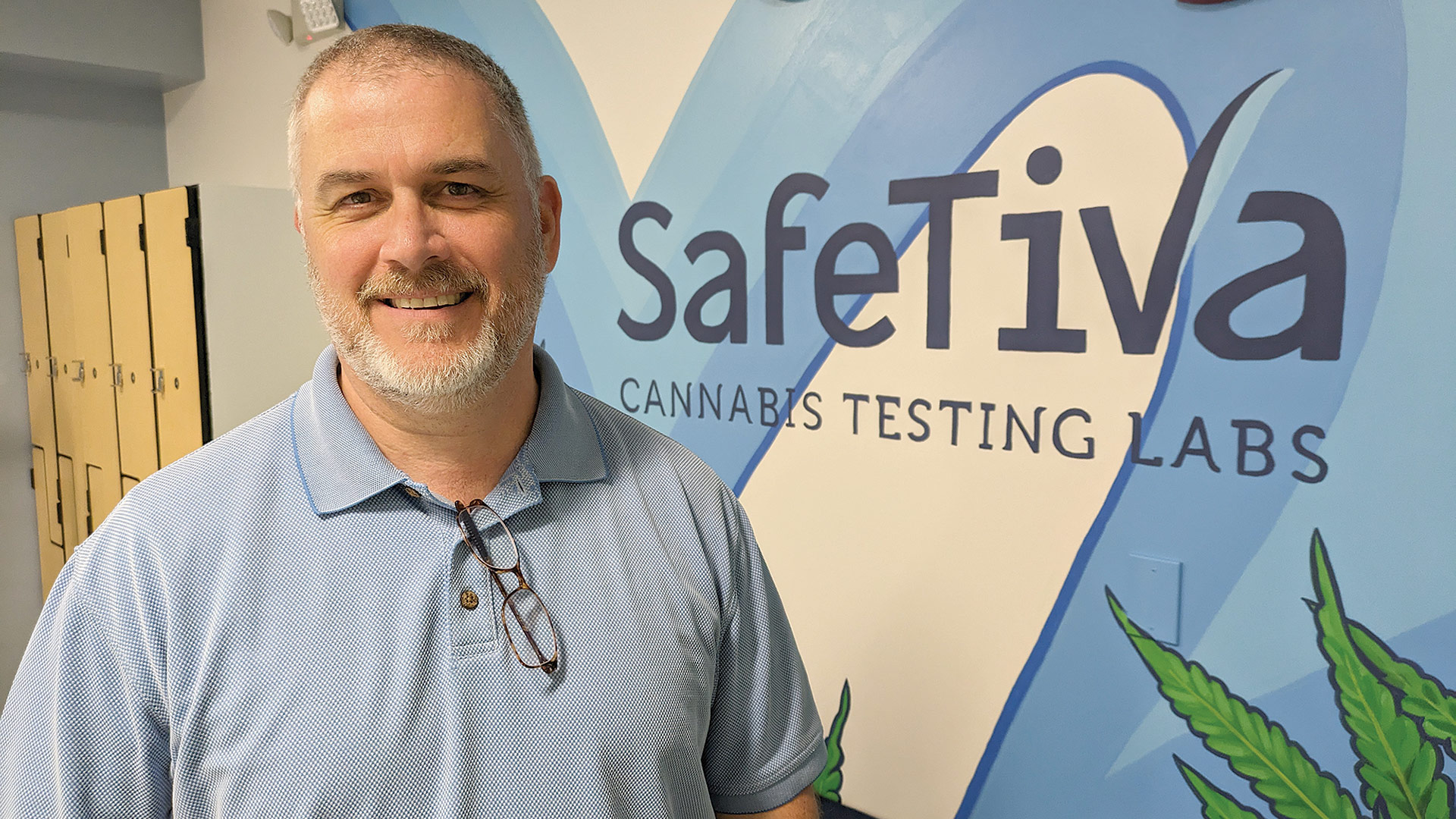
A second fall session of Cannabis Core is set for Dec. 2-3. All classes meet over Zoom on Saturdays and Sundays from 9 a.m. to 4 p.m.

The fall calendar also includes a cannabis-industry job fair at HCC on Thursday, Nov. 9 from 4-7 p.m. in the PeoplesBank Conference Room on the third floor of the Kittredge Center for Business and Workforce Development on the main HCC campus, 303 Homestead Ave.

“The growing cannabis industry in Western Massachusetts has sparked a demand for innovative approaches to address the unique employment needs of this emerging sector,” said Cara Crabb-Burnham, co-founder and director of education at Elevate Northeast, one of HCC’s partners. “As the region experiences a surge in cannabis cultivation, manufacturing, and retail enterprises, the necessity for specialized talent and a skilled workforce has become evident. Cannabis job fairs play a crucial role in bridging the gap between job seekers and employers within this industry and offer a platform for individuals to explore diverse career opportunities.”
The Cannabis Core program provides an overview of the cannabis industry in Massachusetts and is geared for people looking for general knowledge as they consider a cannabis career. The program is a foundational course and a prerequisite for career-track courses, such as culinary assistant, patient-service associate, cultivation assistant, and extraction technician.

The cost of the Cannabis Core training is $599; scholarships are available to those who qualify. To register, visit hcc.edu/cannabis-core or contact Jeffrey Hayden, HCC vice president of Business and Community Services, at [email protected] or (413) 552-2587.

Cover Story

President Says It’s Been a ‘Journey,’ but Casino Is in a Good Place

President and COO Chris KelleyPhoto courtesy of MGM Springfield

President and COO Chris Kelley
Photo courtesy of MGM Springfield

In most respects, Chris Kelley says, five years isn’t a long time when it comes to the life of a casino.

But as he quickly draws an analogy to an automobile, or an individual, for that matter, he notes that it’s not the years that count, necessarily … it’s the miles.

“And we’ve run a lot of mileage through the odometer,” Kelley, president and COO of MGM Springfield, told BusinessWest.

By that, he meant that the nearly $1 billion facility in the city’s South End has seen and experienced a lot since it opened to considerable fanfare in late August 2018, enough to make it seem as though it has been in operation much longer than five years.

At the top of that list, of course, is the global pandemic that closed the facility’s doors for four agonizing months and also forced a number of operating changes, some of which have actually paid dividends in some respects.

“We had significant changes on our gaming floor in ways that I never would have predicted could have been possible before COVID,” he said. “We have close to 1,000 fewer slot machines than we did when this property opened, yet we’re making significantly more; we have fewer table games, but we’re making significantly more; we have fewer poker tables, but we’re making significantly more.

“So what we have found is that, through COVID, guests really developed a preference for spacing and the way we arrange and offer our amenities,” he went on. “And the end result is a floor that is much less populated than it was before, but it is much more attractive to our guests. We see that with visitation, and obviously we see it on the gaming end as well.”

But there has been evolution beyond the pandemic, he noted, listing everything from huge changes to the competitive landscape, starting with the opening of Encore Boston Harbor and continuing with other additions in neighboring states, to the introduction of sports gambling in the Bay State, to a lingering workforce crisis that currently leaves the casino with 200 open positions, some of which place limitations on which facilities, especially restaurants, can operate, and when.

“We have close to 1,000 fewer slot machines than we did when this property opened, yet we’re making significantly more; we have fewer table games, but we’re making significantly more; we have fewer poker tables, but we’re making significantly more.”

Through all of this — and, again, it adds up to a lot of miles — MGM has emerged after five years in what Kelley described as a fairly good place, while there is still certainly room for improvement.

He notes that the past three quarters have been the best, from a gross gaming revenue (GGR) respect, since the casino opened. Meanwhile, sports betting has brought additional revenue and an intriguing new element to the operation, as well as a good deal of anticipation as a new NFL season begins in less than a month.

On the entertainment side of the equation, the casino continues to build on a solid track record of success, he said, with recent shows featuring Bruno Mars, Carlos Santana, Tina Fey and Amy Poehler, and a recently announced show presenting Jon Stewart, John Mulaney, and Pete Davidson, set for Sept. 8.

“The MGM Springfield comeback story is alive and well,” Kelley said, noting that this comeback, from the pandemic and everything else, is ongoing. “We have had a pretty extraordinary journey, starting with the parade down Main Street in August 2018; the introduction of a new competitor in Encore Boston Harbor; the closure from the pandemic, something that no one could have anticipated; the impacts from COVID following the closure; the introduction of sports betting; and where we sit now, with record results. At the same time, we’re seeing unprecedented levels of entertainment that we’re bringing into the city, levels that we haven’t seen in decades.

COVID have made MGM more responsive to the wants and needs of members and guests.

Chris Kelley says some of the lessons learned, and changes made, because of COVID have made MGM more responsive to the wants and needs of members and guests.

“We look back with a lot of gratitude and look forward with a lot of optimism,” he went on, adding that, while the current picture is fairly bright, there is ample reason to believe there will be continuous improvement, in part because of the many lessons learned over the past few years. “It has been a journey, and I’m very optimistic as we look ahead.”


Doubling Down

Kelley has nearly three decades of experience in the casino industry. Reflecting on those years, he said he’d never been home on New Year’s Eve before — a huge day in this business — and certainly never expected to be in 2021.

But after casinos were allowed to reopen in July 2020 after a COVID-forced shutdown, there were several restrictions placed on those facilities, most of them without precedent. And one of them of them is that they had to close at 9:30 p.m., even as the world was ushering in a new year.

“In a 24-hour business, I had never experienced a New Year’s Eve at home when the clock struck midnight, but that’s exactly what happened,” he told BusinessWest. “We had to reinvent ourselves.”

Reflections on New Year’s Eve at home, and not on the casino floor, is one of countless elements that contribute to Kelley’s comments about miles on the odometer when it comes to this facility’s first five years of operation. Looking back over those five years, and especially his three and half years at the helm, he said they have been a challenging time, but also a learning experience, with some lessons coming unexpectedly during the pandemic, which was, overall, an experience without precedent in the industry.

“The time period that was most impactful was what we went through during COVID,” he said. “We had our challenges even prior to the closure in March of 2020, but we had no expectation of a long closure when it happened. I don’t think anyone did; we thought this would be a short-term impact, and we wound up being closed for four months.”

During that time, the company decided it would, despite not seeing any revenue whatsoever, continue to make the payments to the city outlined in the host-community agreement inked prior to opening.

“That was the first really challenging decision that we had, and it was very difficult to make,” he recalled. “I’m proud of the fact that we made the right decision, which was to continue those payments without question.”

“We have learned, and we have grown, and we have improved, and we’ve done that to the enhancement of the guest experience.”

When the casino reopened in July, he went on, those at the casino knew it would not be business as usual, and as it made mandated adjustments, especially with regard to social distancing, some key lessons were learned.

Kelley refrained from using the phrase ‘silver linings,’ but said there were certainly some good things that came out of the pandemic and that reinvention process he mentioned earlier.

“Ultimately, that has been a great teacher for us; it has been a great benefit for us as operators,” he explained. “We have learned, and we have grown, and we have improved, and we’ve done that to the enhancement of the guest experience.

“One of the reasons why I think we’re seeing record results now is because we’re focused, first and foremost, on the experience of our guests from the minute that they walk through the door,” he went on. “And we’re using that that as a differentiator against a much larger competitive set; we’re competing against two of the largest properties on the planet in Foxwoods and Mohegan Sun and also against Encore Boston Harbor, with a metro population of 5 million versus the 150,000 we have in Springfield.”

Elaborating, and returning to his thoughts on the benefits of a less-crowded gaming floor, Kelley said the team at MGM Springfield is focused less on the volume of offerings and more on having the “right” products, such as the hugely popular Dragon Link and Lightning Link slots.

“We have a very dynamic floor — we’re bringing in new product all the time,” he said. “And we’ve adjusted the spacing on the banks, so when you sit down at a game now, you have a lot more room, you have a lot more visibility — lines of sight to other games — and people really enjoy that.

“Prior to COVID, a lot of the thought process had been, ‘let’s get as many games, as many tables, as you possibly can in any area of the floor,’” he went on. “What we’ve found is that this is not the most effective use of the space.”

These sentiments, he said, are reflected in GGR figures from the Massachusetts Gaming Commission, which show total slot and table GGR of $22.2 million in June, $23.35 million for May, $23.7 million for April, $24.1 million for March, and $23.3 million for the short month of February, continuing a solid run for the casino.

Q1 of 2023 was the best quarter the facility has had since it opened, Kelley said, adding quickly that Q4 in 2022 was the second-best quarter, and Q2 of this year was the best second quarter the casino has recorded. “We’re on a run of the three best quarters in our history,” he said, adding that COVID restrictions were in place through Q1 of 2022, meaning that, once those restrictions were lifted, the numbers started to dramatically improve and outperform even those months before Encore Boston Harbor opened.


Odds Are

Moving forward, Kelley believes this run can continue as the casino continues to apply the lessons learned during the pandemic, keep its floor dynamic, market itself aggressively, and create draws to bring guests to the South End facility.

“We do things here that we don’t do anywhere else in the company,” he explained. “Probably the best example is that there is not a Saturday night when we’re not giving a car away; you often see that done on a monthly basis or a quarterly basis — we do it on a weekly basis. So our marketing efforts have become very aggressive and very focused.”

Another element in the recent success formula that will continue is a hard focus on the overall guest experience, personalizing it as much as possible.

MGM’s music and comedy shows

MGM’s music and comedy shows have been a key contributor to vibrancy in Springfield’s downtown, and the casino’s promotions have generated buzz as well.
Staff Photo

“We recognize that we compete against properties that have more hotel rooms, more slot machines, and more restaurants, so the only way we win is by providing a better experience for our guests, a personalized experience that begins when they walk through the door. We have focused our training and our attention on guest service, getting to know our guests, and personalizing their experience when they’re here, and the combination of those three things has been very effective.”

Overall, Kelley said, it takes three to five years for a casino property to “come to life,” as he put it, and reach a certain level of stability. He believes MGM Springfield is at that point, although he quickly noted that the ramping-up process is not done yet.

“I think we’re through a lot of the initial learnings — we packed a lot of life into a short amount of time; we learned a lot, and we’ve changed a lot,” he noted. “That said, particularly in the post-COVID environment, I don’t think you ever stop ramping, and by that I mean that we’ve learned the impact and the importance of a dynamic operating model and bringing continuous improvement into the daily operation in a meaningful way.

“When I think of ramping, I think of making positive change tomorrow that positively impacts the guest experience,” he went on. “From that sense, I don’t think we’re done with by a long shot. This is a property that has not seen its best day, and it’s up to us to continue to change in positive ways to realize that.”

Perhaps the biggest challenge moving forward when it comes to continuous improvement is on the labor front, Kelley said, noting that those 200 openings he mentioned earlier are about three or four times what the number would be in what would be considered a normal labor market.

“And this does impact what we can offer and when we can offer it,” he told BusinessWest, noting that this is especially true with food and beverage operations, which are particularly vulnerable when positions go unfilled or when existing employees call in sick, leaving teams short-handed.

“Our restaurants are all open, but not every restaurant is open every day of the week,” he said, adding that this is not uncommon within the industry and a situation certainly exacerbated by the ongoing workforce issues.

As for sports gambling, he said there is not enough hard data to gauge its overall impact on operations and revenues, but anecdotally, he said it is certainly having an impact, especially when it comes to bringing new life to what had been a quiet corner of the casino floor, where a multi-million-dollar sports lounge has been created.

Kelley noted that, while the majority of sports wagers are made on mobile apps, the lounge has become a destination for Super Bowl Sunday, March Madness, the Kentucky Derby, and other prominent sporting events.

“That place just blows up when you have a big game,” he said, adding that he is looking forward to the first full NFL season since sports gaming was introduced, noting that pro football is hugely popular, not only from a fan perspective, but a gaming perspective as well.

Time will tell how that NFL season impacts the sports lounge … and whether the casino can continue what those who gamble would call a hot streak.

But Kelley is certainly optimistic. As he said, it’s been a journey, one in which many miles were put on the odometer. But the road ahead would seem to be clear, and with fewer hills to climb.


Cannabis Special Coverage The Cannabis Industry

What’s Next for Cannabis?

Payton Shubrick

Payton Shubrick says she understood she was entering an increasingly challenging market for cannabis sales when she opened her doors last year.

By the time Payton Shubrick opened the doors to 6 Brick’s Cannabis Dispensary in Springfield last fall, she was well aware of how challenging the business was becoming.

“The market is getting tougher across the board in Massachusetts,” she told BusinessWest. “Gone are the days when you could open a dispensary and just have people lined up. Gone are the days when cultivators could guarantee sales. We’re seeing that you must earn customers’ loyalty and have a competitively priced product and have decent quality to do well in the Massachusetts market.

“I’ve been able to see growth with my company, despite coming online in September of 2022, when prices had just fallen by over 30%,” she added. “So we essentially started with less-than-ideal conditions, but it’s not all doom and gloom.”

Because Springfield set out a long, rigorous process to open a dispensary, Shubruck had time to witness a total evolution of the Massachusetts cannabis market; when she first applied for a permit, the few dispensaries that were open saw an early ‘green rush’ of customers; though the industry’s onerous tax and regulatory burdens and tight profit margins never made it easy money, exactly, the early shops took advantage of a clearly favorable supply-and-demand picture.

“We essentially started with less-than-ideal conditions, but it’s not all doom and gloom.”

By the time Six Brick’s opened, the landscape was considerably more cluttered; prices, as Shubrick noted, were falling; and some shops were struggling.

Those struggles have turned into actual contraction. The first Western Mass. dispensary to close, back in December, was the Source, on Strong Avenue in Northampton, a city with nearly a dozen retail cannabis shops. But it was Trulieve’s departure from the market that will resonate more broadly; the national company closed its three retail locations in the Bay State at the end of June, and is also closing its 126,000-square-foot growing, processing, and testing facility on Canal Street in Holyoke — another city that invested heavily in the new cannabis trade.

“These difficult but necessary measures are part of ongoing efforts to bolster business resilience and our commitment to cash preservation,” said Trulieve CEO Kim Rivers said. “We remain fully confident in our strategic position and the long-term prospects for the industry.”

At the same time, several proposed cannabis facilities in Western Mass., including one planned for the former Chez Josef banquet house in Agawam, have been scrapped due to an inability to secure financing amid dramatically changing market conditions.

“The market is correcting itself,” Shubrick said, reflecting a throughline seen in all states that legalize cannabis. “A lot of folks raked it in during the green rush. But only 24% of cannabis companies in the U.S. are profitable. So you actually have to view this as a business. You can try to increase volume and think that’s going to fix the problems, but the market has matured in a real way. And now, other states are coming online.”


High Stakes

Erik Williams, chief operating officer at Canna Provisions (see sidebar on page 20), explained that a typical dispensary needs to take in about $6 million in top-line revenue annually in order to break even. “A whole bunch of companies are not there. They’re sitting on big tax bills without the cash flow, and they’re going to close under the weight of taxes; we’re seeing that right now across the state.”

He also noted the 24% profitability figure, and said anyone coming into the market should be aware of it.

Steven Lynch

Steven Lynch says cannabis businesses doing things the right way and for the right reasons will survive any contraction in the sector.

“There’s a survivability factor we’ve written about from day one. We were the second adult-use-only store in Massachusetts to open [in Lee], and there’s definitely a sort of glory time which happens with every new market, where the demand outstrips the supply, and businesses are just opening their doors and slinging weed,” he said. “They saw pie in the sky, and they have not operated their business with real-time controls over every dollar they’re spending. It’s a tough thing.”

Simply put, too many cannabis businesses in Massachusetts based their business plans on supply-and-demand figures that no longer exist, he added. “There’s a lot more competition. The pie is always growing, but competition is far outstripping the growth of the pie, so you’re seeing price compression.”

Williams agreed with Shubrick that a dispensary must be run like a business from day one, with hard decisions around every dollar spent — or the enterprise will fail.

“If you’re at the point where you have to readjust everything, it’s almost too late,” he said. “Really tough business decisions need to be made across the board. We’re seeing how other companies are failing, and one of the first analyses is what it takes to be profitable as a standalone dispensary. A bunch of different people have run a bunch of different numbers, and when it comes down to it, the consensus is $6 million.”

So, how does one succeed in this environment? Shubrick has some ideas.

“At Six Bricks, we have a clear focus on who the customer is, and we’re focused on our competitive advantages, which are the cannabis experience over transaction, having knowledgeable staff, and being an option for conscious consumers who want their dollars spent close to home,” she explained, noting that the pandemic years taught people the value of spending their money with local businesses, and those lessons could carry over to cannabis. “There’s still a lot of work to be done with social equity for businesses, but consumers can support more a more equitable industry by what brands they support and where they spend their money.”

Erik Willaims

Erik Willaims

“There’s a lot more competition. The pie is always growing, but competition is far outstripping the growth of the pie, so you’re seeing price compression.”

Steven Lynch, director of Sales and Marketing at SaveTiva Labs, agreed about the appeal of strong, local brands.

“I see a lot of parity with when the big-box stores, the Home Depots and Lowe’s, first came to the market. It was great because they had these big stores you could go in, but ultimately, you’re not going to get the service that you’re going to get from your local hardware store,” he told BusinessWest. “So you saw a lot of stores go away initially, but then you saw a whole wave of small mom-and-pops come back into the market because they did things completely from a quality, service, and educational standpoint.

“I think that’s what’s going to happen in cannabis,” he went on. “The people who had no business doing this, or got into it for the wrong reasons, will fall by the wayside, and the people that that are doing it for the right reasons, the right way, are going to continue to flourish.”


Blazing a Trail

For Shubrick, ‘the right way’ is reflected in the 6 Brick’s tagline, “people, plant, and purpose.”

“People — how can we help show that cannabis can be a part of an individual’s wellness routine? Plant — how can we make this more of a cannabis experience than a transaction?” she explained. “And lastly, purpose — we want to be a viable option for those in the community that want diversity of price point and diversity of products. I can’t overemphasize the community aspect of it. You can try marketing to pull customers out of Connecticut, but it’s the local community that’s going to show up every day, whether they’re buying a pre-roll or a present for a friend.”

Though Springfield’s licensing process was slow and rigorous, she noted, it’s a plus for operators that there’s not a shop on every corner, as opposed to cities like Holyoke and Northampton that allowed many more licensees.

“We’re the third-largest city and have only four dispensaries; that does prevent what we’ve seen in Worcester and Northampton, which is a race to the bottom in terms of providing a product. Many customers are saying they want it as cheap as possible. The reality is, that hurts the entire supply chain and drives prices so low, it compromises quality.”

That ‘race to the bottom’ has occurred in other states where cannabis was legalized, but the assumption is that the market will eventually level out — and not everyone will survive.

“A lot of folks made the assumption that cannabis companies just open the doors, and people show up,” Shubrick said — and at the earliest-opening shops, like NETA in Northampton, they certainly did. “I never anticipated 100 people show up on day one. I knew it would be a slow climb. The first 15 companies to open their doors, some of them now have to make a comeback because the product wasn’t great or they didn’t have the right people.”

It’s not an unusual track in other business sectors, she added. “Car dealerships and restaurants rise and fall, and the same is happening in cannabis. A lot of naive operators thought they were untouchable because there was this pent-up demand and a thriving black market. But that’s not the case. Couple that with the realities of 280E, and this is not for the faint of heart.”

She was referring to Section 280E of the Internal Revenue Code, which forbids businesses from deducting otherwise ordinary business expenses from gross income associated with the ‘trafficking’ of Schedule I or II substances, as defined by the Controlled Substances Act; cannabis is a Schedule I substance.

According to the National Cannabis Industry Assoc., “federal income taxes are based on a fairly simple formula: start with gross income, subtract business expenses to calculate taxable income, and then pay taxes on this amount. Owners of regular businesses often derive profits from these business deductions. Cannabis businesses, however, pay taxes on gross income. These businesses often pay tax rates that are 70% or higher.”

“Most companies spend a dollar to get $1.10, and you’re ten cents up,” Williams said. “Here in the cannabis business, because of the 280E tax situation, you need to make $3.50 for every dollar you’re spending just to break even. That changes the math in a really big way.”

It also changes the way cannabis companies do business, he added, returning to those earlier thoughts about closely tracking all spending. “Being tight with advertising dollars and watching ROI on every dollar you’re spending is super important.”

Canna’s model, as a vertically integrated company that cultivates product as well as selling it, helps stem those tides, he noted. “Doing cost analysis is a little different, but you also are putting things through your stores at much higher margins. If you’re controlling your supply, you have more control over your business. We’re seeing it happen right now.”


Rolling with the Changes

Shubrick said it was worth navigating a thorough licensing process to open a cannabis shop, alongside her family members, in her hometown. “If I wasn’t selected in Springfield, I wouldn’t have picked up and gone to another city or town.”

It’s an example of the thoughtfulness that must accompany entering a very challenging cannabis marketplace in Massachusetts, especially now.

“Companies come in, and they’re not profitable, and they can’t pay back the tax bills. So they have to close,” Williams said, echoing not only the stories of the Source and Trulieve, but other casualties to come. “But their consumers don’t go away; they go elsewhere. So the lesson from the contraction of the market has always been that the survivors are going to do better long-term.”


Weathering the Storm: a Resilient Path Forward

By Meg Sanders


We are at the precipice of a significant contraction in the cannabis market, not confined to Massachusetts alone, but reverberating across the U.S. and even globally. As business owners navigating this turbulent landscape, it is essential to recognize the imminent challenges — in particular the ones staring down cannabis across the Commonwealth — prepare to face them, and, more importantly, cultivate a hopeful vision for the future.

Let’s begin with third-party vendors, the cogs in the machine that keep your cannabis enterprise running smoothly. We must ask ourselves: how do these vendors weather the storm if they lose 30% of their business suddenly? If a small vendor employing just six people experiences a 20% revenue loss from a key account, what could that mean for the business?

These are not mere speculations. These scenarios are unfolding right now, causing ripples across the industry. It’s a risk-management issue that warrants our immediate attention.

Meg Sanders

Meg Sanders

“It’s critical to identify how exposed our vendors are to the same downturn we’re grappling with, especially if their clientele consists primarily of cannabis companies.”

As we sail through these choppy waters, we mustn’t lose sight of the bigger picture. We need to question the depth and financial security of our vendor base, especially since many struggling businesses might not be able to pay their bills. The aftershocks of such downturns typically hit marketing, advertising, and street teams the hardest. But what does that mean for us, the business owners who rely on these very vendors?

Imagine your vendor pool as a ship’s crew, each playing a vital role in keeping your business afloat. What happens if your vendor’s ship starts sinking? The ripple effect could capsize your own vessel, and that’s a scenario we must guard against.

Indeed, there’s a sense of camaraderie in this industry. We are all in the same boat. When one sinks, we all feel the tremor. It’s critical to identify how exposed our vendors are to the same downturn we’re grappling with, especially if their clientele consists primarily of cannabis companies. The domino effect could span from your point of sale to merchant services, banking, all the way down to your graphic designer.

We have to play the long game, keeping our eyes on the horizon and the changing tides. Let’s envision a situation where you’re sourcing packaging from a company whose revenue is all cannabis-related. What happens when it loses 20% of its business overnight? What does that mean for your buying abilities, purchasing decisions, their supply chain, and your overall purchasing power and profit and loss (P&L) statements?

To chart a path through this storm, we must adopt a three-dimensional approach to risk management, particularly for those selling cannabis products wholesale to local companies. The strain on accounts-receivable departments is a testament to the rising pressures within the industry. Payments aren’t arriving on time, and some aren’t arriving at all, affecting everyone from packaging and label companies to small cannabinoid providers and cultivators.

But amidst this storm, there’s hope. And here’s the silver lining: we can mitigate these risks with strategic planning and robust backup systems. By identifying alternative vendors, knowing their offerings and lead times, we can prepare for any disruptions in our sensitive systems. We need to ensure that we’re not left without a resource simply because we didn’t think far enough down the track.

This contraction isn’t just a challenge; it’s an invitation to innovate. To think differently. To challenge the status quo. Industries shift, technologies evolve, and we must keep pace. We need to think about all the ways a contraction impacts everyone: vendors, landlords, municipalities. The effects when a cannabis company exits a market or closes its doors are far-reaching.

Even as we’re witnessing companies in Massachusetts entering receivership, it’s not a time for despair. It’s a time for planning, for taking stock of where we stand and where we aim to go. Think about your ‘what-ifs,’ and devise your backup plans. Be ready to replace a critical item on your menu if it goes away. Be prepared to find an alternative source if your main provider hits financial turbulence.

This is not a doom-and-gloom narrative. It’s a story of resilience, of weathering the storm, and emerging stronger. It’s about recognizing opportunities amidst adversity, shoring up your P&L, and seizing the chance to negotiate better pricing with your vendors. Many might be willing to partner with you to push through these challenging times in that way, and the worst thing that happens is they say no. That’s just good business practice, no matter the state of the industry. Always make sure you’re checking where every dollar is going, from your expenses to getting quotes on best prices.

So, in these uncertain times, let’s remember one thing: hope is not lost. Even in the face of contraction and economic downturn, there’s an opportunity for those vigilant and ready to adapt. And as we navigate this storm together, we can create a more resilient, more robust industry ready for a brighter future.

We are, after all, in this together.


Meg Sanders is CEO of Canna Provisions in Holyoke and Lee.

Architecture Environment and Engineering Special Coverage

What Goes Around…


Frank Antonacci, left, and Jonathan Murray

Frank Antonacci, left, and Jonathan Murray have been leading many different constituencies on tours of the MRF in Berlin, Conn.

Frank Antonacci says he’s lost track of how many tours he’s led of the All American Material Recovery Facility (MRF) in Berlin, Conn., which handles material from across the Nutmeg State and Western Mass.

“Suffice it to say, it’s a big number,” said Antonacci, a principal with Murphy Road Recycling, an operator of several recycling facilities, which, in partnership with Van Dyk Recycling Solutions, suppliers of the system’s equipment, opened the state-of-the-art facility in early 2022.

Since then, in addition to overseeing this intriguing operation, which processes more than 50 tons of recyclable material an hour, Antonacci and Jonathan Murray, director of Operations for Murphy Road Recycling, have been leading individuals and groups through the massive facility to show them what goes on there and why this operation is among the most advanced of its kind in the country — and the world, for that matter.

And there have been many different constituencies donning the bright orange vests, hardhats, and audio systems needed to hear and be heard over the din of countless conveyer belts and sorting machinery. These include elected officials, business leaders, public-works crews, press members (including BusinessWest), and, perhaps most importantly, representatives of the companies that buy the recyclables — and many of them have made the trip to Berlin.

What they take in is a facility that was built with three primary goals in mind: to increase the quantity, quality, and purity of recyclables; to provide an innovative and safe working environment; and to have the flexibility to adapt to ever-evolving consumer habits (more on that later) and recycling market conditions.

And more than a year after it opened to considerable fanfare, this MRF is accomplishing all three, especially with regard to the purity of recyclables, said both Antonacci and Murray, noting that this is something that communities, states, and those buying the recovered products are demanding.

“Today’s curbside material isn’t what it was 10 or 15 years ago. Then, it was heavy on newspaper and relatively clean. Today, everyone reads news online and orders everything from the internet. Today’s stream is full of small cardboard boxes and shipping envelopes and requires that we, as recyclers, innovate and change our thinking around the sorting of recyclables.”

The fully integrated system, replete with artificial intelligence and high-tech scanners, is dedicated to the maximum recovery of all recyclable material, with several second-chance mechanisms in place to make sure valuable material doesn’t slip through the cracks, said Murray, adding that the design includes state-of-the-art equipment to target paper, cardboard, boxboard, glass, and five types of plastic.

Elaborating, he said the system first separates paper from aluminum and other metals and plastic and then digs deeper to identify and sort different types of plastic, such as the PET (polyethylene terephthalate) used to make water and soda bottles, and HDPE (high-density polyethylene) used to make food and beverage containers, shampoo bottles, cleaning-product bottles, and similar products.

“The optical scanners are trained; they’re learning all the time to know what the makeup of a PET bottle is,” Murray explained. “If a scanner’s job is to pick PET bottles, it knows it by reading the makeup of the bottle. Everything else travels on to the next optical scanner, which may be looking for HDPE or milk jugs or laundry detergent bottles; it scans for those and shoots those out.

Murray Road Recycling’s MRF

Frank Antonacci says Murray Road Recycling’s MRF has “moved the industry forward a generation” with its design.
Staff Photo

“The scanners are actually looking for the makeup of what’s in that material,” he went on. “It shoots a blast of air to kick it out or leave it in, and they’re trained at the factory and adjusted, so if we’re seeing a higher level of PET in the mix than HDPE, we can make adjustments so it will recognize that quicker and make sure we’re getting it all out.”

For this issue, BusinessWest toured the massive facility in Berlin and talked with Antonacci and Murphy about this operation, the evolving recycling market, and how the Berlin MRF redefines what would be considered state-of-the-art in this industry.


Leaving Little to Waste

Murray calls it the “Amazon effect.”

That’s a term he and others in this industry use to describe the influence of that giant corporation on life in general — and especially the world, and business, of recycling.

“Today’s curbside material isn’t what it was 10 or 15 years ago,” he noted. “Then, it was heavy on newspaper and relatively clean. Today, everyone reads news online and orders everything from the internet. Today’s stream is full of small cardboard boxes and shipping envelopes and requires that we, as recyclers, innovate and change our thinking around the sorting of recyclables.”

And these sentiments effectively and concisely explain what the All American Material Recovery Facility is all about — innovation and changing how people think about recycling and waste-disposal diversion.

“We took a significant amount of risk and leveraged our expertise, as well as a very strong team, to develop what we have here.”

The facility, and the roughly $40 million invested in it, represent another entrepreneurial venture, and gambit, undertaken by the Antonacci family, which was recognized by BusinessWest as its Top Entrepreneurs in 2018 for their creation of an eclectic and highly successful stable of businesses, with ‘stable’ being one of the operative words.

Indeed, this large and impressive portfolio includes a horse farm, Lindy Farm in Somers, which has bred and trained a string of champion trotters; Sonny’s Place in Somers (named after the patriarch of the family, Frank’s grandfather, Guy ‘Sonny’ Antonacci), a huge and continually growing family-entertainment venue; GreatHorse, the high-end, horseracing-themed private golf club created on the site of the former Hampden Country Club; and Murphy Road Recycling.

All of these ventures represented considerable investments and risks, Antonacci said, adding that the MRF in Berlin is no different.

“You’ll see many of the same themes throughout this facility as you would at our other operations,” he explained. “We took a significant amount of risk and leveraged our expertise, as well as a very strong team, to develop what we have here.”

The company looked at a number of recycling facilities starting in 2018 and made the decision to buy the Berlin facility in 2020, at the height of COVID.

“It was a considerable risk and investment at that point,” he went on. “But we knew that there would be life after COVID, and we believed that the region really needed a reliable, scalable solution to handling the growing amount of single-stream material.”

the primary goals for the new MRF

One of the primary goals for the new MRF is to increase the quantity, quality, and purity of recyclables for sale to companies that will use them to make new products.

By single-stream, he noted that recyclables from businesses and consumers come with various materials mixed together, often with materials that shouldn’t be placed in recycling bins but are anyway — from batteries to electronic devices.

This venture represents the expansion and modernization of an existing recycling facility, Antonacci said, adding that everything about the facility is state-of-the-art, a phrase he used early and often in this conversation, because it’s certainly warranted.

“We integrated tried-and-true mechanical separation though screens with optical technology,” he noted as he talked about what is really the heart of this operation. “We have machines that are optically looking at the material to polish any contamination or any mixture of different grades of recycling, and that’s done through highly advanced camera systems with artificial intelligence.”


Reading Material

The facility handles recyclables from roughly 100 communities in Connecticut and Western Mass., Antonacci explained, noting that materials from many communities in the 413 are aggregated and then brought to Berlin for processing. Overall, it handles upwards of 1,000 tons of material per day, a huge jump from the 350 tons a day handled by the largest facilities in the area prior to the opening of the MRF in Berlin.

Beyond size and scope, this facility stands out for many other reasons.

Indeed, the operation employs a dozen optical scanners that can identify and separate materials based on their chemical composition, and utilizes robotics and AI to perform additional quality control.

“The quality of the material that we’re able to glean from the blue-bin mix is really remarkable,” Antonacci said. “Leveraging our expertise and that of Van Dyk Recycling Solutions, we’ve moved the industry forward a generation with the design of this plant, based not only on the scale, but on the quality of the materials coming out of here.”

As they were developing the Berlin facility, those at Murphy Road toured a number of recycling operations in this region and other parts of the country, Murray said, with an eye toward adopting best practices and technologies. But there are some things being done here that would be considered unique and groundbreaking, he went on.

This includes a dual-feed system set in parallel lines, Antonacci said, adding that this is a different approach to preparing materials for final processing. Other innovations include the picking stations, where employees handle quality control, which are enclosed in dust-controlled, climate-controlled boxes which place a premium on worker comfort and safety.

“We went through a painstaking effort of keeping people away from places that could harm them,” he told BusinessWest. “We invested heavily in automation to further increase the safety and productivity of the facility.”

Beyond these safety features, the facility was designed to effectively handle ongoing evolution in consumer habits and thus the recycling stream. As he talked about this and pointed to the streams of paper moving along conveyer belts, Murray noted that, despite declines in readership, a large amount of newsprint still winds up in recycling bins.

“We took a significant amount of risk and leveraged our expertise, as well as a very strong team, to develop what we have here.”

But these same bins are being increasingly dominated by both cardboard packaging — that aforementioned ‘Amazon effect’ — as well as myriad kinds of plastic, aluminum, and tin cans.

Overall, the bins are cleaner than they were years ago, he went on, adding that the overall quality of the end product — what is ultimately sold to companies to make new products — is a function of how effectively the different materials, especially the many types of plastics, are separated.

And this is where the All American MRF stands out from other facilities.

Elaborating, Antonacci said this facility’s sorting capabilities extend to polypropylene, used to make everything from yogurt containers to margarine tubs; from Dunkin’ Donuts coffee cups to the packaging for to-go food products.

“This is something that has historically been hard to separate,” he explained. “But we have both the optical technology to look for polypropylene number 5, which those containers are made out of, and there’s also a laser on our optical machine that enables us to see those black plastics — the to-go containers — which most facilities can’t.”


Bottom Line

There are ever-larger amounts of polypropylene #5 winding up recycling bins, and the ability to separate it from everything else is becoming increasingly important, said Antonacci, adding that this is just one of the reasons why he and Murray are giving so many tours these days.

People want to see what separates this facility from most others — with the emphasis on separates. It not only represents state-of-the-art in this industry, it defines it.

Special Coverage Women in Businesss

Applying Lessons

Founder and CEO Nicole Polite

Founder and CEO Nicole Polite

As the staffing and recruiting company she launched in 2013, the MH Group, celebrates 10 years in business, Nicole Polite explained that her path wasn’t always in the employment world. But she quickly found a passion for it.

After serving as an MP in the Army National Guard, she thought her natural progression would be into law enforcement, as a police officer or a correctional officer.

“My dad was working at Ludlow at the time, so I went to my dad and said, ‘can you give me a job?’ — like all kids do with their parents. And he did just that,” she recalled. “But after I received the job offer, I was having second thoughts. It was third shift; I didn’t want to do that. I was a new mom as well. And it just wasn’t the career path I thought I wanted to take.”

So she shifted gears and landed a job at MassMutual, which was a valuable experience — starting right at the interview process, when the woman who perused her résumé said something that has stuck with Polite to this day.

“She said, ‘you know what? You’re not qualified for the position we have open in my department. But I’ll tell you what I’ll do — I’ll get you the job interview.’ At 23, that was the first time someone told me I wasn’t qualified, but that was good to hear because she was correct. And it really stayed with me.”

It also spurred her to study and prepare rigorously for that interview, and she got the job. “And that led to a 10- or 11-year career. It completely changed my entire life.

“My takeaway from that was that someone sat at a table I was not privy to and put my name forward and granted me the opportunity to have a career that lasted all those years. So that was fuel to my fire, my passion in life. I want to go back and be able to do the same thing for other people.”

“That was fuel to my fire, my passion in life. I want to go back and be able to do the same thing for other people.”

While volunteering at a MassMutual Community Responsibility event at Western New England University, helping high-school students through a Junior Achievement employment-awareness program, Polite (then known as Nicole Griffin) was assigned the task of mentoring a young man and teaching him how to interview for jobs. After two days of career and interview prep work, she invited him back for a mock interview. And he showed up wearing jeans and a baseball cap.

“After the interview, I said, ‘you did a very good job, but you’re not really dressed appropriately for an interview, especially with a baseball cap on.’ And I’ll never forget his response. He said, ‘look, my parents never worked. I don’t even know what that looks like.’ And that was like a dagger to my heart because that was his reality. And I said, right then, ‘I’m going to help people in those situations and see how I can make an impact.’ And it grew, like a burning desire.”

While working at MassMutual as a financial underwriter — providing analysis, sales, and marketing for the company’s products — she became a certified interviewer and started a small nonprofit on the side, called the ABCs of Interviewing. There, she consulted with other nonprofits, companies, and individuals, helping them with interviewing skills.

From there, she made the leap into entrepreneurship, leaving MassMutual in 2013 to open Griffin Staffing Network.

The company would change names twice: the first to ManeHire about five years later. As she told BusinessWest at the time, she wanted a new name that evoked lion imagery. “I like the lion — it represents strength and courage and resilience, and those are some of the key components you need when you’re looking for employment.”

Nicole Polite (top) with Kassaundra Woodall, senior recruiting manager at the MH Group.

Nicole Polite (top) with Kassaundra Woodall, senior recruiting manager at the MH Group.

Today, she still likes the name, but explained why a change to the MH Group was in order. “It was fierce — empowering women. That was the goal of the name with me and my marketing partner when we came up with it. But it lost some of its brand and became a little confusing. People were confusing the name as ‘man hire,’ like a job-ready type of employment firm, and we are the complete opposite; about 70% of our jobs are direct-hire. So we dropped that and just go by the initials, which is the MH Group.”


Getting to the Next Level

The MH Group’s recruiting and staffing work focuses on the nonprofit sector, as well as healthcare, insurance, and manufacturing.

But it does so in a way that ensures that matches stick, and that goes back to Polite’s experience landing that job at MassMutual. For instance, the firm conducts workshops to teach people how to interview for a job.

In addition, “I teach my staff and train them that, when you have someone in front of you, you mentor on the spot. And that’s from entry-level to C-level positions. If you have the opportunity to tell someone about something that could be answered in a better way, or just give them some pointers on their résumé, things to highlight and things not to highlight, just mentor it on the spot.

“And then, in terms of employers, we do a lot of vetting up front. So you’re getting an applicant from the MH Group that has been highly vetted and has had some training as well.”

That’s especially important at a time when employers in most sectors are struggling to attract and retain sufficient talent — which gives job seekers more leverage than normal.

“I have clients that have really met the needs of the applicants and employees. They’ve changed their benefit structures, their PTO time, their flexibility, their hybrid schedules. I would say employers are really trying their best to meet the needs of the workforce.”

“It’s a very competitive market — and the workforce knows that it’s competitive. So they’re asking for things they’ve never asked for before. They’re pushing back in ways they’ve never pushed back before; they’re really going through benefits, medical benefits, with a fine comb to make sure it’s something that is valuable to them and their family structure.

“But I will say my clients are meeting their needs,” she added. “I have clients that have really met the needs of the applicants and employees. They’ve changed their benefit structures, their PTO time, their flexibility, their hybrid schedules. I would say employers are really trying their best to meet the needs of the workforce.”

As part of its 10-year anniversary, Polite is also launching the MH Cares Foundation, which uses the power of mentorship to help underserved populations achieve fulfilling careers.

“Most people in HR and CEOs can understand this: you post a job position, and you have hundreds of applications — and, out of those applications, maybe a few that qualify. And you wonder, ‘why is that? Why do so many people apply for positions that they may not be qualified for?’”

Playing off the saying ‘no child left behind,’ Polite sought to create a program where no job seeker is left behind. So the foundation matches job seekers with mentors, using a curriculum to help that job seeker get to the next level.

“It’s more than just applying for a job. We’re going to put you with a mentor who can actually mentor you through that process, whether it be helping you with your résumé or coaching you on interviewing,” she explained. “And then, the second component is giving you volunteer work within that industry or that field and having you work there so that you can gain some experience. The goal is to make sure that we are meeting job seekers where they’re at and bringing them to the next level.”

The foundation will host a kickoff event this fall, and in the meantime, volunteers who want to be mentors to job seekers can visit www.mhcaresfoundation.org and register to be a volunteer.


Deepening Roots

Polite notes that “a core philosophy for the MH Group is the need for both roots and wings.”

For her, those roots run deep in Springfield, as her great-great-granduncle was Primus Parsons Mason, a Black entrepreneur and real-estate investor who is most well-known as the namesake of the city’s Mason Square neighborhood.

Active in the community, she has served the Greater Springfield region on multiple nonprofit boards, such as the YWCA of Western Massachusetts, the MassHire Hampden County Workforce Board, the United Way of Pioneer Valley’s Dora D. Robinson Women’s Leadership Council, and the Pioneer Valley Planning Commission council. She has also served as a business advisor at the Entrepreneurial & Women’s Business Center at the University of Hartford.

MH Group

Nicole Polite says the MH Group name more clearly conveys the firm’s purpose than its former name, ManeHire.

Because of her success to that point, she was selected to BusinessWest’s 40 Under Forty class of 2014 and then won the magazine’s Continued Excellence Award (now known as the Alumni Achievement Award) in 2017. And she was only getting started.

“This has been extremely gratifying — for one, to take such a huge risk of leaving a very good company with great benefits, great structure, great financial standing, and to launch out into my own business … and then just to still be here for 10 years, is very gratifying,” she said.

The MH Group provides staffing for companies from Massachusetts to Washington, D.C., and Polite believes it has the potential for a national reach. But locally, she wants to continue outreach to the community, including partnering with local schools to teach job-readiness training.

“We can reach them at a younger age. Then, one day, I hope this will be a part of the curriculum … because job readiness and career readiness is something that’s taught, but not taught the level it should be.”

Polite told BusinessWest she attended its annual 40 Under Forty event this past June and felt emotional seeing many people her company had helped to find employment.

“That’s very gratifying to see them all really excel within their fields. We have people we placed in entry-level positions that are now in management, vice presidents, heads of corporate compliance. It’s amazing to look back and to see people’s growth.”

She’s also encouraged by the many employer clients who have remained partners since the day she opened her doors.

“That makes my heart extremely happy. They’ve grown into family,” she said. “It’s like a dream sometimes — like, pinch me, I’m dreaming. I didn’t think this dream of mine could grow to where it’s at today.”

Construction Special Coverage

Bringing It Home


Oliver Layne

Oliver Layne stands in ‘his’ bathroom, with a walk-in shower, one of many projects undertaken by those involved in the JoinedForces program.

Oliver Layne has come to call it “my bathroom.” Others in his family simply call it “dad’s bathroom,” for reasons that will become clear.

This is the small half-bath in his home on Border Street in Springfield, the one that was renovated to include a walk-in shower, something that became a necessity for Layne, a U.S. Air Force veteran of both Gulf wars, after he was afflicted with a rare muscle disease whereby his immune system attacks his muscles. This disorder made lifting his leg to get into a bathtub difficult, if not impossible.

“My day starts off with my cane, by the middle of the day I’m in my walker, and by the evening I’m in my wheelchair — I just get more and more tired throughout the day; I’m very limited in what I can do,” said Layne, whose bathroom renovation was realized through the JoinedForces program administered by Revitalize Community Development Corp. (CDC) and funded by grants from the U.S. Department of Housing and Urban Development and its Veterans Home Modification Program.

That well-thought-out name speaks volumes about this unique program and the many people who are involved in it.

For starters, the name helps convey that this is a program designed to assist veterans, many of whom are disabled and need help to stay in their homes or, in the case of Layne, live more comfortably in their home.

“Veterans are a big part of our focus,” said Colleen Loveless, president and CEO of Revitalize CDC, noting that the nonprofit agency also serves low-income families with children, the elderly, and individuals with special needs through initiatives such as its #GreenNFit and Healthy Homes programs. “Many are looking to age in place in their homes, many have injuries from their service, and this has become a particular focus of ours.”

“Veterans are a big part of our focus. Many are looking to age in place in their homes, many have injuries from their service, and this has become a particular focus of ours.”

The JoinedForces name also hints at how these projects to assist veterans are acts of collaboration, often involving a number of parties, including those at Revitalize CDC, other agencies focused on veterans and their needs, contractors, and area businesses.

That was certainly the case with Layne’s project, and also a coordinated effort to assist Ron Schneider and his wife, Cara, during a recent Volunteer Day initiative.

Schneider, a Vietnam War veteran now battling cancer he attributes to his exposure to Agent Orange, made his living as a general contractor. But his declining health left him unable to undertake many of the projects around the home that would have been so simple years earlier.

Fast-forward (we’ll fill in some details later) to this past spring, when there were two major projects at the Schneider home — one undertaken by a contractor to replace windows that had ceased to open easily, if at all, and the other involving an army (not a term we use loosely) of volunteers from Revitalize CDC and Home Depot to tackle a number of projects, from repairing the patio and driveway to building a shed and undertaking some landscaping work. New doors, also part of the mix, were put on earlier this month.

“All of this has taken a lot of pressure off me because I can’t do things around the house — I’m not physically able to do some of the projects that they handled,” Ron said. “And they did it in a day’s time because they had almost 100 volunteers.”

Suzanne Larocque (left, with Ethel Griffin)

Suzanne Larocque (left, with Ethel Griffin) says projects range from roof repairs and replacements to installation of handicap ramps and bathroom renovations.

These comments from Layne and Schneider effectively convey the sentiments of those veterans and their families who have had work done on their homes. As for those doing the work, they say there are many types of rewards, but especially the pride and satisfaction that come from helping those who served their country.

“I love it — it’s not about the money,” said Frank Campiti, a general contractor who handles many projects for Revitalize CDC and its #GreenNFit, JoinedForces, and Healthy Homes programs. “I get a lot of satisfaction from helping these veterans. We do everything we can to make their lives better with whatever their repair is.”

Myles Callender, who served as construction manager for Revitalize CDC before starting his own construction company with his brothers, and still handles projects for the agency, agreed.

“Some of these projects may not look big in terms of their size and scope,” he said. “But they make a huge difference in the lives of these veterans. It’s very rewarding to help improve the lives of those who have served.”

“All of this has taken a lot of pressure off me because I can’t do things around the house — I’m not physically able to do some of the projects that they handled. And they did it in a day’s time because they had almost 100 volunteers.”

For this issue and its focus on construction, BusinessWest takes an in-depth look at the JoinedForces program and its efforts to help veterans and their families feel more at home — in all kinds of ways.


Building Hope

Layne told BusinessWest that his physical issues started several years after he returned from his service in the Gulf and started his professional career, working first at a college and then for AT&T. He suspects the disorder results from exposure to contamination at two bases where he served — Wurtsmith Air Force Base in Michigan (now closed), and Sheppard Air Force Base in Texas.

He started noticing that he was having trouble walking straight and that his hands didn’t work right.

“My body just didn’t work the same as it did before; I couldn’t run anymore, I couldn’t walk long distances,” he recalled, adding that it took doctors more than two and a half years to figure out what was wrong with him.

In 2017, he was officially diagnosed with a muscle disorder, and it was determined that there was no known cure. All medication was stopped, he said, adding that he is doing what he can to try to slow down or mitigate the condition’s progress, though diet and physical therapy, for example.

He has soldiered on, but increasingly has struggled with everyday tasks. He walls with a significant limp and can no longer navigate stairs — the Veterans Administration put a stair lift in his home — and has trouble getting in and out of the shower.

Ron and Cara Schneider (center, with their daughter, Bridget, between them)

Ron and Cara Schneider (center, with their daughter, Bridget, between them) celebrate the work done on their home in Ludlow by dozens of volunteers.

He became aware of Revitalize CDC and filled out an application for assistance late last fall. “That was on a Monday, and on Wednesday, I got a call; they were asking me what I needed done in my home and how they could help.”

Layne’s bathroom renovation is, in many ways, typical of the projects undertaken through the JoinedForces program, said Ethel Griffin, vice president of Community Engagement for Revitalize CDC.

She told BusinessWest the agency works with other veteran-related organizations on outreach to help make sure people know about JoinedForces and the agency’s other programs and encourage them to apply for assistance.

“Our work with veterans is important because they’ve served our country, and they deserve to have comfort in life,” she told BusinessWest. “A lot of our veterans are very old, and it’s amazing to see the conditions they are living in. We do spend a little more time and bit more money with the veterans — because they deserve it. This program gives us the feeling that we’re helping our country as well, even though we’re helping individuals; it’s our time to serve.”

Larocque agreed. “I don’t come from a military background at all, so meeting these veterans has been such a great experience. They’re so appreciative, and it’s been really rewarding to work with them.”

Since Loveless came on board in 2009, the agency has assisted between 200 and 300 veterans across the state, with the vast majority of them living in the 413, and veterans’ homes are included in all Revitalize CDC programs, including #GreenNFit.

Ron Schneider

Ron Schneider is grateful that JoinedForces has taken pressure off him because the volunteers completed projects he no longer can.

The projects vary in size and scope, said Suzanne Larocque, HUD project manager for Revitalize CDC, adding that they range from roof repairs and replacements to installation of handicap ramps and bathroom renovations like Layne’s.

Other projects have involved removal of asbestos from one home, installation of a drainage system and dehumidification system to relieve water issues in a basement, and many window-replacement initiatives. Meanwhile, the agency is undertaking more projects to replace heating systems with more modern — and green — systems.

Revitalize CDC hires licensed contractors to handle such work, obviously, Loveless said, adding that there is an emphasis on hiring minority- and women-owned firms. In some cases, the agency can get materials and labor donated, as it did for a veteran in Springfield who needed a new roof.


The Battle Is Joined

Ron Schneider, who served in the Army as an engineer building roads, tells a story somewhat similar to Layne’s, one of returning from service, launching a successful career, and then being beset with health problems that left him unable to do things around the house.

“I’m disabled, and I just can’t do much physically,” he said, noting that, in addition to his cancer fight, he has fought other health battles over the years.

As Ron’s condition deteriorated, and as needed work at his home on Prospect Gardens in Ludlow piled up — as noted earlier, many of the windows, originally installed in the 1940s, would no longer open or close easily, if at all — the Schneiders filled out an application for assistance through the JoinedForces program.

“Ron was a contractor for more than 40 years; these were all projects that he’s been hired to do over the course of his career that he can no longer do. For him, it was challenging; it was hard for him to be able to say ‘yes, I need help.”

That was prior to COVID, Ron said, adding that they received a call from Larocque early this year, and work commenced in phases this spring.

The first phase was replacement of the windows in April, work handled by a local contractor. Then, in May, Revitalize CDC joined forces (there’s that phrase again) with Home Depot, for a massive Volunteer Day effort at the home.

Cara Schneider put the improvements and what they mean to her husband and the rest of the family in their proper perspective.

“Ron was a contractor for more than 40 years; these were all projects that he’s been hired to do over the course of his career that he can no longer do. For him, it was challenging; it was hard for him to be able to say ‘yes, I need help,’ she said. “And then, to have these people come in and do it in a way that was respectful and that made our lives so much more functional and for him not to have to worry about these things while he’s going through treatment … it took all the stress off. And he’s able to open windows now.”

These sentiments hit at the true mission of the JoinedForces program, said Campiti, who has worked on dozens of projects over the past several years.

He said most are not large in scope, but can be rather involved. And in many cases, these are projects most contractors would pass on because of their degree of difficulty, the conditions in the home, or their small margin for real profit.

“I get involved with projects that other contractors look at, but they don’t even call them back,” Campiti said, adding that, in other cases, contractors will take on the work, but at a cost beyond what the veteran is willing or able to pay.

Such was the case with Layne, who said he looked into renovating his bathroom and installing a walk-in shower, but the cost was prohibitive. A friend, also a veteran, told him about Revitalize CDC, and he applied for assistance to undertake the bathroom renovation.

He was hesitant to install a walk-in shower in his main bathroom due to concerns about impact on the resale value of the home, but, after consultation with Campiti, was convinced that his half-bath, also home to his washer and dryer, could be renovated and outfitted with such a shower.

This was a fairly complicated project that involved moving the laundry equipment to the basement, constructing the shower, and redoing the floor, he went on, adding that it took several days to complete.

Overall, he’s working on two or three projects a month, most of them addressing the accessibility issues that many veterans face, whether it involves a bathtub, stairs, or a backyard deck.

“We do a lot of railings and grab bars in places that would be considered non-traditional,” he explained. “We put them in places beyond the bathroom, like with a person walking out to their patio; they can’t step down anymore.”

He stopped short of calling this work fun, but reiterated that it is gratifying on many levels.


On with the Fight

Returning to this concept of ‘his’ bathroom, Layne injected some needed background.

Indeed, he said he has four daughters, including twin 14-year-olds who still live at home.

“Bathroom time is extremely difficult to get,” he said with a laugh, adding that he obviously has to share his facility, which has actually become quite popular.

“They’ll say, ‘can I take a shower in your shower?’” he said of his children, adding that he used to ask why. “They say, ‘because it’s big; you can move around in there.’”

That’s because Campiti made it big enough to put in a chair, which is necessary, as Layne is prone to falling because his legs don’t move as they should.

It’s quite unfortunate that Layne, a veteran of two wars, needs this walk-in shower with all that room in it. But he — and his daughters, for that matter — are fortunate to have it.

And it was made possible by an agency with a name that truly says it all.


Commercial Real Estate Special Coverage

Divesting the Portfolio

The Paramount Theater/Massasoit Hotel

The Paramount Theater/Massasoit Hotel complex is one of several properties in the New England Farm Workers’ Council portfolio now under agreement.


Dan Knapik says that, when he became executive director of the New England Farm Workers’ Council in the summer of 2021, he found a multi-faceted nonprofit agency at what amounts to a crossroads and in need of what he called a “kick start.”

That was especially true when it came to the agency’s broad commercial real-estate portfolio, assembled over the preceding decades with the goals of housing programs, spurring economic development, and creating revenue streams — goals that, in most cases, have not been realized.

“We needed to go aggressively to rent out what we could or sell it,” said Knapik, adding that, in most all cases, the latter option is being pursued. “We put a multi-pronged strategy together; we started renting what we could rent and sell what we couldn’t rent.”

Indeed, a few of the agency’s holdings were sold prior to his arrival, in the winter and spring of 2021, including 1600 Main St. in Springfield (the International Bier Garten), sold for $700,000; and 297-299-301 Main St. in Holyoke, sold for $150,000.

The selloff has continued into this year, with 276 Union Ave. in Bridgeport, Conn. (a rooming house) selling for $656,000 in January. Then, in May and June, the property at 21-23 Hampden St., home to the Shakago Martini and Piano Bar, sold to an Alabama-based real-estate company for $240,000; 2345 Main St. in Springfield sold for $85,000; 203-205 High St. in Holyoke sold for $134,900; 211-213 High St. went for $134,000; and 211-213 High St. sold for $49,900.

“We needed to go aggressively to rent out what we could or sell it. We put a multi-pronged strategy together; we started renting what we could rent and sell what we couldn’t rent.”

There are several other properties now under agreement, Knapik said, including the 1610 Main St./20 Fort St. complex, home to the Student Prince restaurant, and the Paramount Theater/Massasoit Hotel complex further north on Main Street, a historic property that has long been considered a key to revitalization of the downtown. And the agency is actively showing other properties, including 32-34 Hampden St. in Springfield and 217-225 High St. in Holyoke.

“I am determined to divest the portfolio,” Knapik said, adding that doing so gives the agency, an affiliate of Partners for Community, capital to pay down debt, while also freeing it from some heavy tax burdens — nearly $70,000 each quarter for the properties in Springfield alone — and debt service, an estimated $200,000 per quarter. And it will provide the agency the time and opportunity to focus on its mission.

Overall, this is not a particularly good time to be selling real estate, said Knapik, adding that higher interest rates — and they keep getting higher to due to actions by the Federal Reserve to cool the economy and tame inflation — have made this assignment more challenging.

The nonprofit’s board voted last fall to sell the remaining 13 properties in the portfolio, including 1666-1670 Main St. in Springfield.

“It’s been difficult — the Fed’s interest-rate environment has been less than favorable for us, and some of the buildings were not in great shape,” he told BusinessWest, noting that interest rates are more than five points higher than they were just a year or so ago.

But given these market conditions — and the state of the some of the properties — he is not unhappy with the results to date.

“I haven’t been horribly displeased,” he went on. “We’re obviously not selling class-A real estate, but we haven’t lost money on the sales, either.”

For this issue and its focus on commercial real estate, BusinessWest takes an in-depth look at the council’s active efforts to shift away from the commercial real-estate business, what this means for the agency, and what it might mean for area communities, especially Springfield and its downtown.


Setting Sale

When BusinessWest toured what is known colloquially as the ‘Fort building’ or ‘Fort complex’ not long after it was purchased by the Farm Workers’ Council in 2010, then-President and CEO Heriberto Flores (he still holds those titles at the agency) talked enthusiastically about bringing new life to the vast spaces in the multi-story complex that had been vacant for years, and, in many cases, decades, with some of the abandoned offices still featuring brightly colored shag carpeting.

The Fort complex

The Fort complex is one of several properties in the New England Farm Workers’ Council portfolio now under agreement.

Today, they are still vacant — the Student Prince and the Latino Economic Development Corp. (an affiliate of the council) occupy the ground floor, and they are the only tenants in the complex — and those quiet spaces speak volumes about why the Farm Workers’ Council is divesting itself of its real-estate portfolio, Knapik said, adding that, in many respects, the properties have been underperforming and losing money for several years.

Recapping the history and state of this portfolio, Knapik said the properties were acquired with good intentions and solid goals in mind, but most of the promise has not been realized.

“They weren’t really aggressive about seeking out new tenants, and there was a lot of deferred maintenance on the buildings,” he explained. “A lot of the buildings were bought years ago to put programming in, and one of the mistakes I think the council made was, when programming lost funding, for whatever reason, buildings should have been sold off, and they weren’t. They were held onto for a variety of reasons, and they then became big liabilities, and this is where a lot of the accumulated debt came from.”

“A lot of the buildings were bought years ago to put programming in, and one of the mistakes I think the council made was, when programming lost funding, for whatever reason, buildings should have been sold off, and they weren’t.”

This fact was certainly not lost on the nonprofit’s board, which voted last fall to sell the remaining 13 properties in the portfolio, he said, adding that many have been, and most of the rest are under agreement.

That list includes several properties in downtown Springfield, including 1666-1670 Main St., 1655 Main St. (the Board of Trade Block), 1628-1640 Main St., and 1618-1624 Main St.

As noted earlier, that includes the Fort complex, which is under agreement to a group led by Peter Pan Bus Chairman and CEO Peter Picknelly, one of group of local entrepreneurs who stepped in to rescue the Student Prince several years ago when closure seemed imminent.

It also includes the Paramount and adjoining Massasoit Hotel, a complex that has been envisioned as a multi-use property, with the theater being a host for events and the hotel being converted for housing.

“We have a purchase-and-sale with a development group that goes back pre-COVID,” Knapik explained. “We continue to work with that development group for a project; we continue to talk with them, and I’m hoping that, within the next 60 days, we can execute a final agreement.”

Shakago Martini & Piano Bar

The property at 21-23 Hampden St., home to the Shakago Martini & Piano Bar, is one of several already sold by the New England Farm Workers’ Council.
Staff Photo

He noted that the same rising interest rates that are making sales of these properties more challenging is driving up the cost of redevelopment of the Paramount/Massasoit Hotel complex.

Overall, the sale of the properties in the portfolio should provide the council with some needed capital, Knapik noted, adding quickly that there is substantial debt to pay down.

“There’s about $4 million in total equity after all the mortgages are paid, but there are some legacy debts, some operating debts that Farm Workers’ has accumulated over the years, and we’re hoping to clear that off,” he said, adding that many of the properties do not have mortgages.


Bottom Line

Meanwhile, by getting out of the commercial real-estate business, the council can concentrate its full energies on its programs, and there are many working in several different realms, from economic development to housing to youth and education.

And it can develop and execute the next strategic plan.

“This will allow the council to take a breath and figure out to position itself for what it wants to do in the future,” he said. “We’ve been in business for 52 years, responding to the needs of the community. When this gets done, we’ll propose some ideas to the board of directors and let them decide how they want to go forward.”

Daily News

AMHERST — For the seventh consecutive time, UMass Amherst has earned the top spot for Best Campus Food in annual rankings published by the Princeton Review.

The rankings are derived from student reports of their experiences at the schools in its annual “Best Colleges” guidebook. The 2024 rankings are based on feedback from 165,000 students at the schools in the guide.

UMass Dining, the largest collegiate dining program in the U.S., is committed to providing the campus community with locally sourced, healthy, sustainable, and globally inspired cuisine, and its leadership believes in helping to build community through food.

“I’m extremely proud of our dedicated, talented, and hardworking team, whose commitment to excellence has been instrumental in our continued success,” said Ken Toong, executive director of Auxiliary Enterprises, which includes UMass Dining. “We’re immensely grateful for our students, faculty, staff, and entire UMass administration for their support and invaluable feedback, which has contributed to shaping and enriching the quality-of-life experience. Without them, we would not have been able to achieve this remarkable feat. Their dedication and enthusiasm inspire us to continuously raise the bar and deliver exceptional dining experiences, one meal at a time.”

Toong also extended his gratitude to Chancellor Javier Reyes, Vice Chancellor Andrew Mangels, and former Chancellor Kumble Subbaswamy for their leadership and continued support, which have been instrumental in UMass Amherst’s journey to culinary excellence.

“Congratulations to the entire UMass Dining team for this incredible achievement,” Mangels said. “This recognition is a testament to the great leadership, dedication, and focus on excellence all year long, which provides exceptional culinary experiences.”

Daily News

CHICOPEE — Elms College has named Lukman Arsalan its new vice president of Enrollment Management and Marketing, effective Aug. 14. In this role, Arsalan will become a member of the president’s cabinet.

“I am thrilled that Lukman has accepted the position to be Elms College’s new vice president of Enrollment Management and Marketing,” Elms College President Harry Dumay said. “His diverse expertise in enrollment, recruitment, financial aid, and marketing strategy are valuable assets that will help us attract highly talented students.”

Arsalan joined Elms College following his most recent appointment as the dean of Admissions and Financial Aid at King’s Academy in Madaba, Jordan. Prior to that, he served as dean of Admission at Franklin and Marshall College in Pennsylvania and director of Global Enrollment and Student Success at Trinity College in Hartford, Conn. He brings a wealth of experience in higher education to this leadership role at Elms and will lead the college’s strategic efforts to attract outstanding students from Massachusetts, New England, and beyond.

At King’s Academy, Arsalan achieved record-breaking application numbers and successfully launched a national campaign to attract talented students. During his tenure at Trinity College, he built a reputation for his dedication to providing a student-success ecosystem, while significantly increasing the college’s international applications, net revenue, and global brand recognition.

Arsalan is passionate about education and access. “While the challenges in higher education are daunting, they excite and energize me,” he said. “I am thrilled to be joining the dedicated Elms community and helping the college face these headwinds boldly, ensuring we meet our strategic enrollment goals.”

Daily News

HADLEY — UMassFive College Federal Credit Union announced the latest enhancement to its checking accounts with the launch of cash back via uChoose rewards.

uChoose rewards adds yet another benefit to the Co-op Advantage Checking account that already includes better security with debit-card controls within the credit union’s online banking and mobile banking app, and the ability to earn a higher rewards dividend rate plus monthly ATM fee reimbursements each month when simple monthly qualifications are met (signing up for eDelivery of statements, having a direct deposit or ACH auto debit, and using the debit card for at least 12 purchases).

With the new uChoose cash-back rewards, points accumulate independently of qualification status, and there’s no maximum points cap imposed each month.

“When considering a new program for our debit cardholders, we really wanted something that would be rewarding to everyone, so there’s no categories or hoops to jump through once you’ve enrolled your UMassFive debit card into the uChoose rewards program,” said Craig Boivin, vice president of Marketing at UMassFive. “Our former debit-card rewards program was very focused on shopping at local businesses, and ultimately cash rewards was the best way to stay true to that value. We’re confident our members will continue to take their cash back earned and use it locally.”

When members enroll their UMassFive debit card in uChoose rewards, they earn 0.5 points for every dollar spent on all purchases, with no per-purchase limit. Points accumulate monthly and can be redeemed for cash back at any time, with no minimum points threshold needed to redeem. To learn more, visit umassfive.coop/advantage.

Daily News

NORTH ADAMS — On Friday, Aug. 18, Andrew Fitch of North Adams will embark on his second annual Berkshires cross-state walk to raise money for the Roots Teen Center. Fitch will walk from the Massachusetts-Connecticut border in North Canaan, Conn. to the Massachusetts-Vermont border in Stamford, Vt. over the course of five days.

Last year, Fitch walked across the state from Williamstown to Provincetown and raised more than $5,000 for the National Network of Abortion Funds, which helps remove financial and logistical barriers to abortion access. This year, he has chosen to support the ROOTS Teen Center, a nonprofit organization that provides a safe, fun, and educational space for teens of the Northern Berkshires to hang out and participate in community-based events, workshops, and classes. Fitch will walk approximately 75 miles and will donate $2 to ROOTS for every mile he walks.

“I wanted to do something positive to bring awareness to ROOTS and help the youth of my community,” he said. “Roots Teen Center provides a safe space and empowering programs for young people who need them. I’m asking people to join me in supporting this important cause.”

Fitch invites the community to learn more about ROOTS and consider supporting them as well. Community members can make donations or pledge an amount for each mile walked. All proceeds will go directly to the ROOTS Teen Center.

Click here to make a donation, volunteer, or learn more about the route and meetup locations. Follow along on social media at #WALK4ROOTS.

“We are excited to work with Andrew on this walk and fundraiser to support our organization,” said Ellen Janis, board fundraising chair at the ROOTS Teen Center. “We have been so grateful for Andrew’s work with ROOTS over the past few months. We believe strongly in the potential of the young people in our community, and we are so grateful to have a partner like Andrew who wants to help us invest in their social and emotional well-being. Donations will help us continue providing essential services and resources to all teens in Northern Berkshires.”