Home 2019 (Page 12)
Daily News

CHICOPEE — Elms College is taking a big step forward to improve the number and diversity of qualified teachers in Chicopee, Holyoke, and Springfield.

A new program called the Center for Equity in Urban Education (CEUE) was officially launched on Sept. 24, and supporters, trustees, donors, and members of the community gathered to celebrate the launch.

The program gives paraprofessionals the opportunity to earn their degrees and also provides in-service training to teachers working in schools throughout the area.

Representatives of Chicopee Public Schools, Holyoke Public Schools, Springfield Public Schools, the Catholic Schools Office from the Diocese of Springfield, Libertas Academy Charter School, Phoenix Charter Academy Network, and Veritas Preparatory Charter School signed agreements to participate in the program with Elms.

“We are really overwhelmed by the response we have this afternoon for the launch of the program,” said Elms College President Harry Dumay. “The superintendents of public schools, Catholic schools, and heads of charter schools have all expressed with great eloquence their aspiration for a diverse, well-trained body of educators and leaders who are committed to Western Massachusetts learners.”

The CEUE intends to bridge the 800-teacher annual gap across K-12 schools in the region, especially in the areas of special education, English-language learners, and STEM (science, technology, engineering, and math) programs.

“I think we will be successful when we can say that the number and quality of educators in our schools matches the demand,” said Anthony Klemmer, acting director for the CEUE. “We’ll be successful when we can say that our educators truly reflect the communities and students that they serve.”

While Dumay said the program has been in the works for almost 18 months, this summer, the CEUE was strengthened and nourished by funders including the Irene E. & George A. Davis Foundation and Cynthia and William Lyons of Wilbraham.

“We are here first and foremost because we believe. We believe in the power that education had in shaping the stories of our own lives,” Dumay said. “We know this opportunity should not stop with us. We believe that this gift of a great education should also be afforded to all children and young people in Western Massachusetts, regardless of their zip code or the type of schools that they attend.”

Daily News

CHICOPEE — Westmass Area Development Corp. named Jeff Daley CEO of the private, nonprofit development entity. Daley, who was chosen as the result of a search process conducted by the Westmass board, has more than 15 years of experience in the real-estate development arena.

Daley is the former executive director of the Westfield Redevelopment Authority and most recently served as the principal of CJC Development Advisors LLC, which he founded in 2016. Daley’s portfolio includes overseeing $60 million in commercial and industrial development and managing $34 million in public development projects.

As CEO, Daley will be responsible for management of Westmass, including negotiating corporate acquisitions, land sales, leases, and incentive proposals; grant applications; and marketing resources and development services to organizations and businesses considering investment in the region. Daley will also enhance Westmass offerings regarding development services to communities throughout the region to assist with economic development and real-estate development opportunities.

Daley will also evaluate opportunities for new industrial-park development and land acquisition and coordinate federal, state, and local economic-development grants and resources. Daley replaces interim CEO Bryan Nicholas, who served after the sudden passing of former CEO Eric Nelson, who was appointed in 2016.

Carol Campbell, president of Chicopee Industrial Contractors Inc. and chair of the Westmass board, said, “I know I speak on behalf of the search committee and the Westmass board of directors in saying we are very pleased to have Jeff join our team. He possesses the skills we need at this time to continue to advance the organization. Jeff brings a wealth of experience and knowledge in real estate and development and will complement the services and resources offered by the Westmass team. I also want to extend my thanks to Bryan Nicholas, who steered the organization as interim CEO following the passing of our former CEO Eric Nelson.”

Daley will also be responsible for the continued development of one of Westmass Development’s signature projects, the Ludlow Mills complex. Most recently, Westmass announced the addition of Commonwealth funding secured by state Rep. Thomas Petrolati and an Economic Development Administration Grant from the U.S. Department of Commerce supported by U.S. Rep. Richard Neal. Those funds will be utilized for the construction of Riverside Drive at the rear of the complex, making the development accessible to substantially more development. The site includes 75 Winn Development apartments in Mill 10 for those over age 55 and is host to the Encompass Health Rehabilitation Hospital of Western Massachusetts.

Daily News

SPRINGFIELD — Bacon Wilson announced that attorney Rebecca Mercieri Rivaux has joined the firm. Mercieri Rivaux is an associate and a member of Bacon Wilson’s bankruptcy and business/corporate practice groups.

Prior to joining Bacon Wilson, Mercieri Rivaux attended Western New England University School of Law, graduating magna cum laude in 2019. She also obtained her bachelor’s degree from Western New England University, graduating summa cum laude in 2015.

Daily News

EAST LONGMEADOW — In celebration of Latinx History Month, Bay Path University, in partnership with Eastern Connecticut State University, announced its 2019 Latinx Symposium, scheduled for Saturday, Sept. 28 from 2 to 8 p.m. at Bay Path’s Philip H. Ryan Health Science Center, 1 Denslow Road, East Longmeadow.

With more than 43% of Springfield’s population identifying as Hispanic or Latinx, and more than 37% of Bay Path’s traditional undergraduate students identifying as a person of color, Bay Path’s Diversity and Inclusion Council is excited to host a celebration that honors so many members of the community.

“The Latinx Symposium provides an opportunity to reflect on our narratives and to learn and celebrate our diverse identities,” said Elizabeth Cardona, Bay Path’s executive director of Multicultural Affairs and International Student Life and assistant to the provost for Diversity and Inclusion. “It is important for our students and partners in higher education to gain perspective while having the space to analyze, become critical thinkers, and to be empowered to serve this growing demographic.”

Featured special guests will include keynote speaker Yvette Modestin, founder and executive director of Encuentro Diaspora Afro, and musician and social-justice leader Heshima Moja. The event includes traditional dances led by instructor Teresa Catano, interactive workshops, and a poster gallery highlighting the experiences, identities, and current issues in the Latinx community. An authentic Latin dinner will be served.

Anyone interested in Latinx culture is invited to attend. This event is free and open to the public, with activities scheduled throughout the duration of the event. Guests are welcome to attend anytime between 2 and 8 p.m.

Daily News

SPRINGFIELD — Sheila Stamm has joined American International College (AIC) as dean of the School of Education. Stamm is the president of S. Wright & Associates, providing consulting support to academic leaders and faculty in higher education and community sectors. She has an extensive background in higher education, including serving as dean of the School of Education for Cambridge College and Hamline University in St. Paul, Minn.

Stamm previously served as commissioner of Higher Education for the state of Minnesota, where she managed the agency with a budget of $350 million that included programs for student loans and college readiness; data collection, assessment, and tracking systems for policy analysis and decisions specific to higher education; and state approvals for the registration, licensing, and regulation of private, independent colleges and universities.

Prior to transitioning to administrative roles in higher education, Stamm was a tenured professor at Hamline University and an associate professor at Saint Xavier University in Chicago.

Throughout her career, Stamm has been dedicated to community service, with affiliations including the Ramsey County Blue Ribbon Commission on Economic Disparities, the Minnesota Chicano Latino Affairs Council Committee on Educational Disparities, the education workgroup of the African American Leadership Forum, the West Suburban College of Nursing board of trustees, the leadership council of Chicago-Area Deans, and the Urban Teacher Education Program, among numerous other affiliations.

“We are pleased to have an individual with such experience, dedication, and stature lead the School of Education at American International College,” said Mika Nash, AIC’s executive vice president for Academic Affairs. “Dr. Stamm’s career has been mission-driven, and her educational philosophy blends well with our commitment to provide access and opportunity for students in a diverse and inclusive setting as they pursue undergraduate and advanced degrees to help them meet the demands of a rapidly changing world.”

In addition to her teaching and administrative experience, Stamm has written grants ranging from several hundred to 7 million dollars, and served on dozens of committees at the colleges where she was a member of the administration or faculty. She has extensive publications and presentations to her credit, with a focus on higher education, diversity, inclusion, hiring, teaching, innovation, leadership, and learning.

Daily News

SPRINGFIELD — The United Way of Pioneer Valley announced the expansion of its successful Thrive Financial Success Centers with Thrive to Go!, a mobile version of the same one-on-one financial coaching that has been available in Holyoke, Westfield, and Springfield. This free program served 585 low- to moderate-income residents of Hampden County last year and, with Thrive to Go!, aims to reach even more residents in a wider area within the United Way service footprint.

At Thrive, the client works one-on-one with a financial coach, who offers assistance with setting financial goals, opening bank accounts, budgeting, building credit and credit repair, reviewing credit reports, debt reduction, building assets, referrals to social services, and assistance with income-support applications. Thrive provides services in a bundled, sequential manner so that clients can build on their knowledge for their future successes and goal completion.

“United Way of Pioneer Valley is proud to provide free and confidential financial coaching through our Thrive program,” said Paul Mina, president and CEO of the United Way of Pioneer Valley. “Individuals seeking an appointment may call our Thrive Centers directly, while businesses who would like to partner with us can call our main office. Our highly trained financial coaches are ready to help clients build a solid foundation for themselves and their families, at no cost to them. This undoubtedly creates a positive ripple effect throughout our entire community, one that serves everyone.”

The Thrive to Go! financial coach is now scheduling appointments at local businesses and nonprofits that would like to provide free financial coaching on a monthly basis for their employees or clients. Contact the United Way office for more details.

To book an appointment at a Thrive office in Holyoke, Westfield, or Springfield, contact the Thrive coach directly to schedule. For more information about Thrive to Go!, contact Jennifer Moulton, Digital Communications and Special Events manager, at (413) 693-0236 or [email protected].

Daily News

LONGMEADOW — Bay Path University’s seventh annual Cybersecurity Summit will be held on Friday, Oct. 4 in the Blake Student Commons on the Longmeadow campus. Networking will begin at 7:30 a.m., with presentations starting at 8 a.m., followed by a question-and-answer session.

This year’s event features Capt. Stephanie Helm, director of the MassCyberCenter at the Massachusetts Technology Collaborative, and Kim Casci Palangio, program manager for the Cybercrime Support Network (CSN) of Rhode Island.

A career naval officer, Helm brings to the role deep expertise developed in her senior leadership roles during her nearly 30-year career as a cryptologic/information-warfare officer. Prior to joining Mass Tech in September 2018, she served as a consultant with the U.S. Naval War College in Newport, R.I., providing subject-matter expertise in the areas of cyberspace, space, and information operations.

Helm’s presentation will include an overview of the MassCyberCenter and its current projects, including the Cyber Resilient Massachusetts Working Group, and the need for more strictly regulated and enforced cybersecurity measures in both the public and private sectors, among other topics.

Palangio has been in her role since January 2019. Rhode Island was the pilot program for the Michigan-based CSN, and it was the first state in the nation to offer cybercrime services partnering with the United Way through the 211 phone system. By using the network, citizens in Rhode Island will now be able to report and find resources for battling identity theft, financial fraud, cyberstalking, cyberbullying, and other cybercrimes.

Palangio’s talk will focus on how CSN and CSN of Rhode Island are on the front lines of cybercrimes and CSN’s current efforts with states to launch hotlines, with a company goal to be in all 50 states within three years. In 2018 alone, there were over 350,000 complaints from individuals and small businesses filed with the FBI’s Internet Crime Complaint Center for monetary losses of over $2.7 billion.

The seventh annual Cybersecurity Summit is sponsored by Bay Path’s Cybersecurity/Computer Science department, offering undergraduate degrees in computer science, computer security, digital forensics, and information assurance, as well as a master of science degree in cybersecurity management; and by the Economic Development Council of Western Massachusetts.

This event is free and open to the public, with handicap accessibility. To register or for more information, visit baypath.edu/cybersummit.

Daily News

SPRINGFIELD — Thousands of visitors to Six Flags New England entered the park last weekend carrying boxes of diapers for Square One. In exchange, Six Flags rewarded them with a free ticket to enjoy the park.

The annual drive to support the children served by Square One was once again an overwhelming success — so much that Square One and Six Flags had to enlist the help of another community partner to help.

“Anytime our friends at Six Flags arrange an event for us, we know to expect big things,” said Kristine Allard, chief Development & Communications officer for Square One. “But the response this weekend was beyond overwhelming. Within the first few hours of the drive, we had exceeded our goal of 600 boxes. By the end of the weekend, the tally reached over 1,000 boxes of diapers. It was amazing.”

Given the abundance of donations, Square One called up the team at ProShred in Wilbraham to enlist their help. They eagerly offered up a box truck and palette jack to help get the diapers delivered to Square One’s offices. More than 1,000 boxes of donated diapers will be delivered to Square One today, Sept. 24, around 3:30 p.m.

“Without any hesitation, our friends at ProShred offered their help,” Allard said. “How fortunate this community is to have so many caring and supportive individuals and businesses, like Six Flags and ProShred, who will do everything they can to lend support.”

Daily News

SPRINGFIELD — Chef Paul Wahlberg, Springfield Mayor Domenic Sarno, MGM Springfield President Michael Mathis, and Massachusetts Gaming Commission Chairwoman Cathy Judd-Stein broke ground on Friday on the newest Wahlburgers location in Springfield. After the groundbreaking, Wahlburgers hosted a food-truck pop-up for the public to celebrate the occasion.

“We are so excited to bring Wahlburgers to Springfield,” Wahlberg said. “It’s been great to work with the team at MGM Springfield, and we feel so welcomed. It’s an honor to open another Wahlburgers in our home state and know that this location will be another amazing addition to the family.”

Located at the corner of Union and Main streets, Wahlburgers at MGM Springfield will be a casual-dining eatery, featuring its signature burgers and full bar. Founded by brothers Mark, Donnie, and Chef Paul Wahlberg, Wahlburgers will be filled with photos and memories celebrating the brothers’ life journeys from Dorchester neighborhood kids to rising chef and international celebrities. Menu items will include fresh ground-beef burgers and Wahlberg family favorites, including sloppy Joes, tater tots, and frappes, based on the same recipes Paul and his eight siblings devoured as kids.

“We are incredibly proud to partner with the Wahlberg family to bring this fun destination to our property,” Mathis said. “Wahlburgers is a staple in the Massachusetts community and the ideal addition to our resort.”

The 4,400-square-foot space, set to open in 2020, will provide 120 jobs to the community.

“We are thrilled that Wahlburgers chose to come to Springfield,” Sarno said. “We look forward to welcoming Wahlburgers to our city.”

Daily News

WEST SPRINGFIELD — In the wake of a record number of new homes being built, Greater Springfield Habitat for Humanity (GSHFH) recently welcomed new staff to assist with furthering the agency’s mission.

Jason Montgomery joins GSHFH as its Donor Relations manager. He comes to GSHFH with more than 10 years of experience in nonprofit/human-services work and has strong ties in the local community. He has previously served with Habitat for Humanity in Hartford and locally with Way Finders.

Also joining the team, Sarah Tanner is now on board for a short term as interim executive director. Tanner is a principal with Financial Development Agency and brings more than 20 years of local nonprofit experience to the affiliate.

GSHFH also announced internal promotions and realignments to maximize the agency’s resources. In response to a capacity grant received by Habitat for Humanity International, Jeff Lomma has been named Marketing & Communications manager, with an emphasis on promoting the value of Habitat programming throughout the community. Meanwhile, Mary Olmsted has transitioned from serving as an Americorps volunteer to full-time staff as Volunteer Services coordinator.

Daily News

HOLYOKE — Holyoke Community College (HCC) is launching a new round of cooking and baking classes this fall geared toward home chefs.

“Cooking Confidently with Chef Tracy Carter,” a twice-monthly series of Friday-night, non-credit classes, kicks off Sept. 27 with “A Stroll Through the Markets of the Middle East,” during which Carter, a professional chef and HCC Culinary Arts instructor, will teach participants to prepare falafel, tahini, tabouli salad, and crispy phyllo dough with nuts and honey for dessert.

Each single-session, hands-on class has a unique culinary theme. Participants will learn how to prepare appetizers, salads, sauces, entrees, and desserts, then dine on their creations, leaving with leftovers and the knowledge and skills to replicate those recipes at home.

“My goal is to give the beginner home cook the confidence to take on any recipe in the kitchen,” Carter said. “I believe that mastering a few basic skills can provide anyone with confidence to expand their culinary repertoire.”

The series continues with “Clean Eating: Light & Healthy” on Oct. 11, “Crowd-pleasing Weekend Brunch” on Oct. 25, “On the Spice Trail of India” on Nov. 8, “Chef Tracy’s Twist on Steakhouse Classics” on Nov. 22, “Noni’s Italian Kitchen” on Dec. 6, and “Tis the Season: Chef Tracy’s Holiday Sides” on Dec. 13.

Also, Chef Maureen Benton will conduct two baking classes this fall: “Petit Fours, Glaces & European Macaroons” on Friday, Oct. 25, and “Torte & Pie: the Linzertorte & Chocolate Silk Pie,” on Friday, Nov. 22.

All the classes meet from 6 to 9 p.m. at the HCC MGM Culinary Arts Institute at 164 Race St. in downtown Holyoke. “Cooking Confidently” classes cost $79 each, while baking classes cost $64. Space is limited.

Full descriptions of each class and registration information are available at www.hcc.edu/bce. Call (413) 552-2500 for more information.

Daily News

BOSTON — The state’s total unemployment rate remained at 2.9% in August, the Executive Office of Labor and Workforce Development announced Friday.

The Bureau of Labor Statistics’ (BLS) preliminary job estimates indicate Massachusetts gained 7,100 jobs in August. Over the month, the private sector added 6,700 jobs as gains occurred in professional, scientific, and business services; construction; information; financial activities; and other services. The manufacturing jobs level remained unchanged over the month. Government added 400 jobs over the month.

From August 2018 to August 2019, BLS estimates Massachusetts added 43,600 jobs. The August unemployment rate was eight-tenths of a percentage point lower than the national rate of 3.7% reported by the Bureau of Labor Statistics.

“Massachusetts continues to experience strong job growth with an unemployment rate which has been at or below 3% for seven consecutive months,” Labor and Workforce Development Secretary Rosalin Acosta said. “Job gains have been concentrated in key economic areas like education and health services, which added 12,600 over the year, and professional, scientific, and business services, which has added 8,900 jobs during that timeframe.”

The labor force increased by 3,300 from 3,834,100 in July, as 3,800 more residents were employed and 500 fewer residents were unemployed over the month.

Over the year, the state’s seasonally adjusted unemployment rate dropped four-tenths of a percentage point.

The state’s labor-force participation rate — the total number of residents 16 or older who worked or were unemployed and actively sought work in the last four weeks — remained at 67.6%. Compared to August 2018, the labor-force participation rate is down two-tenths of a percentage point.

The largest private-sector percentage job gains over the year were in other services; education and health services; information; and professional, scientific, and business services.

Daily News

PIONEER VALLEY — Today, Sept. 20, marks United Way of Pioneer Valley’s 25th annual  Day of Caring, as about 250 volunteers will roll up their sleeves and render volunteer service to dozens of local nonprofit agencies.

This year, 25 nonprofit agencies are participating in Day of Caring, and more than 30 unique projects that will take place. The United Way of Pioneer Valley Day of Caring is the largest volunteer day of service in Western Mass., bringing together local businesses and nonprofit agencies to accomplish meaningful work in the community.

Day of Caring is an ideal team-building opportunity for employees and an opportunity for a nonprofit agency to accomplish tasks and projects it otherwise would not have the capacity to complete.

As examples of just a few of today’s projects, a group of 15 from Berkshire Bank will volunteer with Birthday Wishes in Holyoke, wrapping birthday gifts for children who are homeless; a group of  20 from Mestek Inc. will complete cleaning and landscaping projects at Wistariahurst Museum in Holyoke; a group of 15 from Harry Grodsky and Co. will tackle painting projects at the Salvation Army in Springfield; a group of 20 from Baystate Health and Excel Dryer will volunteer at Stanley Park in Westfield, completing a variety of landscaping and painting projects; a group of eight from Collins Pipe will help with outside projects at the Gray House in Springfield; and several groups from Baystate Health, Westfield Bank, and Health New England will help with painting and beautification projects at multiple Westfield public schools.

Daily News

PITTSFIELD — Entrepreneurship for All (EforAll) Berkshire County is officially launching on Monday, Oct. 7 with a Berkshire County Caravan, bringing community leaders, volunteers, and would-be entrepreneurs together for free introductory events all day, starting at 8:30 a.m. in Great Barrington, 11:30 a.m. in Pittsfield, and 5 p.m. in North Adams. Details and registration for the caravan are available on the EforAll website, eforall.org/ma/berkshire-county.

It all leads up to bringing the All Ideas Pitch Contest to the Pittsfield area for the first time ever on Tuesday, Oct. 22. The program will be held at the Berkshire Museum, 39 South St., Pittsfield, from 6 to 8 p.m. Sometimes described as ‘Shark Tank without the teeth,’ the friendly, free event features seven pre-selected contestants and an eighth that will be added by audience vote on the night of the event.

Each participant is given two and a half minutes to pitch a business or nonprofit idea to a panel of judges and the audience. At the end of it, EforAll will give away $2,750 in seed money to help launch these ideas. The first place finisher wins $1,000, second place $750, third place $500, and audience favorite $500. The event is an example of EforAll’s mission of using innovative means to foster entrepreneurial growth throughout Berkshire County. Applications and audience registration are both available online at eforall.org/ma/berkshire-county.

Business startups (whether or not they participate in the Pitch Contest) are encouraged to apply for Berkshire County’s Winter 2020 Accelerator, which will begin in Pittsfield in January. This free, 12-week, intensive training program is taught by community mentors and volunteers who lend their expertise and experience to these budding entrepreneurs.

Entrepreneurship for All is a nonprofit organization that partners with communities nationwide to help under-resourced individuals successfully start and grow a business through intensive business training, mentorship, and an extended professional support network.

Daily News

HADLEY — Last spring, Bay Path University and the Commonwealth of Massachusetts teamed with Paragus IT to offer state-subsidized, low-cost audits to aid in cybersecurity efforts for local businesses. A $250,000 grant from the Commonwealth gives Bay Path students an opportunity to gain on-the-job experience helping small businesses protect their data and secure their networks. The first semester of the program was a success, and organizers are now recruiting businesses for the next round.

As the first women’s college in the country to offer a master’s-degree program in cybersecurity management, Bay Path is on the leading edge of a rapidly growing field. Cybersecurity experts are in high demand at major companies around the world, and programs such as this go a long way toward preparing students to be competitive in a thriving job market.

Bay Path student Lauren Mendoza was a participant in the program and got a taste of what it’s really like to be out in the field. “People doing the hiring today want to see that you have experience as well as education,” she said. “Over the course of this program, we’ve not only become more knowledgeable about cybersecurity, but also gained confidence in real-life work situations such as on-site client interaction and the ability to prioritize and tackle each client’s unique needs.”

Julia Miller, student team leader, added that “it’s personally been helpful to put what I’m learning in my online classes into real-life situations. I’m grateful for the opportunity to take part in the program. It’s a win-win for students and the local business community.”

A cybersecurity expert at Paragus helps supervise 30 students as they conduct a series of security audits for 45 small-business clients. The students work with state-of-the-art software and help businesses understand cybersecurity risks and how to prevent and defend themselves against future attacks.

Westfield-based manufacturer Peerless Precision was one of the first businesses to take part in the program. “Working with Paragus IT and Bay Path was extremely beneficial,” said Kristin Carlson, president of Peerless Precision. “It opened our eyes to where we stand and gave us a clear path forward on how to better protect both our sensitive customer data and our business as a whole. The process went very smoothly and did not interrupt our daily operations.”

The Markens Group, based in Springfield, also took part in the program. “As an association management company, our systems must meet the highest standards for data security, for internal use as well as for our clients,” said Lou Kornet, chief operating officer of the Markens Group. “This independent assessment provided us with assurances in our current practices as well as worthwhile recommendations on best practices. Given the current environment, this is a program small to medium-sized businesses need to take advantage of.”

Paragus CEO Delcie Bean said he is “very excited to team up with the Bay Path and the Commonwealth on this important issue. These days, many analysts believe that cyberattacks represent the single greatest external threat to small-business owners. This opportunity provided by the Commonwealth allows students to get experience in the field, and small businesses only pay $500 for a service that normally costs thousands of dollars.”

Local businesses interested in taking part in the program should visit www.paragusit.com/cyber for more information.

Daily News

SPRINGFIELD — Springfield Technical Community College (STCC) will offer a professional craft brewing certificate class that blends online studies with hands-on laboratory work, with a focus on science and technology.

The Workforce Development Center at STCC has designed the hybrid class for anyone who wants to brew beer at home or would like a career in the fast-growing craft-beer industry.

Students will learn about the brewing process as well as quality control and the science behind the brewing process. The class has five modules that can be taken individually or as a discounted bundle: introduction to craft brewing, craft-brewing operations with two labs, raw materials in craft brewing, quality control, and an overview of the craft-beer business

The class will be taught by Michael Bernier, who has more than 17 years of experience as a craft brewer and chemist. In addition, Bernier has performed lab work, recipe formulations, and equipment troubleshooting for breweries for many years.

The fully bundled program runs Oct. 15 to March 6. Individual classes have different starting times this fall and spring. Prices on individual classes start at $175.

For complete information, or to register for a class or the entire series, visit the STCC Workforce Development Center Website at www.stcc.edu/wdc/craft-beer-brewing or call (413) 755-4225.

Daily News

WILBRAHAM — The third Delaney’s Market store opened on Tuesday at 2030 Boston Road, Wilbraham.

“I love this amazing community of Western Mass., but I am especially grateful for the support we have gotten over the years,” owner Peter Rosskothen said. “We live in a great place with great people.”

Delaney’s Market is a retail store that features chef-inspired meals that are fresh and ready to serve with little effort. It also features a selection of wine and craft beers. Delaney’s Market strives to assist the busy individual or family that wants to eat a quality lunch or dinner at their home or office without the hassle of long prep times and/or high costs.

The first Delaney’s Markey store opened in 2016 at the Longmeadow Shops in Longmeadow. The Springfield location opened just two months ago downtown on Main Street. One more store will open later this year in Westfield.

Daily News

SPRINGFIELD — Unify Against Bullying announced it will award $21,000 in microgrants to 22 recipients at its combination grant awards ceremony and all-inclusive fashion show. The event is scheduled for Monday, Oct. 21, during National Bullying Prevention Month, at the Log Cabin in Holyoke.

“Unify is excited to be able to award this amount, which is our largest yet to date,” Executive Director Christine Maiwald said. “We had so many wonderful applications that it was a difficult task for our volunteer grant committee to choose. The committee chose a total of 21 anti-bullying initiatives that were in line with Unify’s mission: to end bullying through the celebration of true diversity.”

Here are some of the 22 grant recipients:

Once again this year, John Paul Mitchell Systems (JPMS) will donate $1,000 to a sixth-grade girl, Arianna Hopkins, who was bullied and decided she didn’t want anyone else to feel the way that she did, so she decided to do something about it. With the grant money, Hopkins will purchase art supplies and engage her peers to make handmade posters and then put them in elementary and middle schools in her community. She will write a script for her and a friend to present to her peers to raise awareness of the effects of bullying and let students know how to stop it. “I definitely choose Arianna to receive our grant because I am so impressed that this young lady wants to change the world,” said JPMS Chairman Michaeline DeJoria Heydari.

The Birchland Park School Student Council in East Longmeadow wants to inspire more young people to break out of their comfort zone and talk to kids they usually wouldn’t talk to. As the Student Council noted, “kids go through all kinds of trials on their own, but sometimes an act of kindness such as a smile or compliment can go a long way. We see the cliques in middle school, but being kind will take you far in life and sometimes can change a life.” The students want to use the grant for schoolwide activities, have a spirit week supporting anti-bullying, create morning announcements with insights on bullying, and make posters for the school that remind students to smile and compliment their peers.

Emily Herring, school counselor at Paul R. Baird Middle School in Ludlow, wants to focus on creating a positive, inclusive, and safe environment for the incoming sixth-grade class. Many students lack the skills needed to handle peer conflict, often resulting in increased anxiety, depression, bullying, school avoidance, and academic struggles. She will teach conflict resolution and a growth mindset, stressing coping skills as well as classroom-based social emotional skills. Herring will create an after-school club for students to meet new peers and provide leadership roles to create an inclusive environment within the school.

Eileen Cavanaugh from the Boys & Girls Club of Greater Holyoke will launch the Speak Up Campaign, inviting kids from 5 to 18 years old to create their own public-service announcements in the media room that will focus on bullying. They will then play on a loop on TVs throughout the club, be distributed to the Holyoke Public Schools leadership, and sent out via Constant Contact and other social-media outlets, thereby reaching thousands of youth.

Those who attend the all-inclusive fashion show on Oct. 21 will have an opportunity to meet all 22 grant recipients and talk with each of them about the work they are doing to combat the pervasive bullying issue. To purchase tickets, visit www.unifyagainstbullying.org and go to the events page and click on ‘tickets.’

Daily News

HADLEY — UMassFive College Federal Credit Union has once again been honored with the title of Best Credit Union in the Valley Advocate’s annual reader voting poll, extending its streak in the number-one position to 13 years in a row. The credit union was also favored in multiple categories in the Hampshire Gazette’s Reader’s Choice poll, where it took home the titles of Best Credit Union for the sixth year in a row, the Best Place to Get an Auto Loan, and Best Financial Planning.

Jon Reske, vice president of Marketing, attributes UMassFive’s success in the polls to a company culture centered on personalized experience that has created a loyal community of members. “We, as an organization, take a lot of pride in knowing that we not only provide competitive products and services to meet our members’ needs and improve their financial lives, but we continue to provide a level of member service that surpasses their expectations.”

Daily News

AMHERST — The Advanced Digital Design & Fabrication Lab (ADDFab) at UMass Amherst will offer two classes providing hands-on 3D-printing experience from CAD design to finished parts. Attendees will use an EOS P110 selective laser sintering machine in a one-day course, or an EOS M290 direct metal laser sintering printer over two and a half days.

With a maximum of three students per course, participants will get to do the printing and get all their questions about additive manufacturing answered. Two seats are available in the next polymer course, and one seat is available in the upcoming metal course. ADDFab will work with each group to find a date that fits their schedules.
Workshops are held at the ADDFab Lab at UMass Amherst.

The polymer workshop costs $850 per person. The metal workshop is $1,487 per person or $4,460 for a group of up to three participants. To sign up, e-mail [email protected].

All services and workshops are eligible for the Massachusetts Innovation Voucher Subsidy. Companies headquartered in Massachusetts with fewer than 10 employees can receive a 75% subsidy on the cost, and those with fewer than 50 employees receive a 50% subsidy.

Daily News

HOLYOKE — The Women’s Business Owners Alliance of the Pioneer Valley (WBOA) will hold its 2019 Business Woman of the Year Celebration on Thursday, Oct. 24 at 5:30 p.m. at the Delaney House in Holyoke.

Patricia Banas, owner and president of Latka Printing in Westfield, will be named the 2019 Business Woman of the Year, an honor given to a member who has contributed to WBOA in a significant way and is a role model who inspires other women to be successful.

Also during this event, the WBOA will recognize its 2019 Outstanding New Members: Lori Novis, owner of Mango Fish Art in Easthampton, and Andrea Kennedy of Coldwell Banker Residential Brokerage in Chicopee.

“Both honorees have shown support to the group and have stepped in to volunteer after only being a member for a short time,” said Carleen Fischer Hoffman, chair of the event. “We are so thrilled to be honoring all three of these women and the contributions they have given to both WBOA and the community.”

The celebration will carry a Roaring Twenties theme and will include live entertainment provided by Steve and Roxann Bailey. The Baileys will offer a dance demonstration and a dance lesson for attendees to learn about styles from the period.

Banas is a second-generation owner of Latka Printing, a certified woman-owned business. Her parents, Joseph and Murielle Banas, bought the business 40 years ago, while Banas was in high school. While studying at Westfield State College, Banas learned the print industry. She enjoys working with government agencies, nonprofits, manufacturers, service industries, small startups, and other customers. She is a member of WBOA, now based in Springfield, and the National Print Owners Alliance, and she is the treasurer of New England Peer Group. She also sits on the Buy Westfield Now Committee and is a former Westfield Rotarian and past board member.

Novis holds a bachelor’s degree in psychology and social work from Clemson University and a master’s degree in library science from Rutgers University. She worked as a librarian for many years. While living on an island in Puerto Rico in 2010, she launched a Caribbean jewelry line, and was involved in community activism, launching several nonprofits and also fundraising. She and her husband, Fred Hanselman, owned and managed a year-round guesthouse they called Mango Fish, which survived two major hurricanes. She relocated to Western Mass. in 2016, where she worked in a vocational high school before launching a jewelry and gift business called Mango Fish Art. She offers employment and mentoring to women in the region while designing unique, handcrafted items. Recently, Novis launched a new division of her business, Proud of U, marketing to educational institutions and sororities.

Kennedy’s mother, Lynne Andreen, is a Realtor, which inspired Kennedy to enter the industry. She is a full-time real-estate professional with Coldwell Banker Residential Brokerage located in Chicopee, serving Hampden and Hampshire counties.

A portion of the proceeds from WBOA’s event will benefit the WBOA Cheryl Reed Loan Fund, which offers low-interest loans to members for seed money, expansion, or other worthy business purposes.

For more information or tickets, visit www.wboa.org or contact Hoffman at (413) 525-7345 or [email protected].

Daily News

CHICOPEE — First American Insurance Agency, an independent insurance firm, recently donated more than 200 backpacks to local Chicopee elementary schools. Notebooks, pencils, and glue sticks filled each bag along with Kleenex and a bookmark.

“We know there are some kids who need a little help at the start of the school year, and we are happy to provide that help. Giving back to the community has always been important to us and a big part of what we do at First American Insurance Agency,” said Corey Murphy, president.

The schools who received the donations were Barry Elementary School, Belcher Elementary School, Bowe Elementary School, Bowie Memorial School, Fairview Elementary School, Stefanik Elementary School, Lambert-Lavoie Elementary School, Litwin Elementary School, and Streiber Memorial School. The backpacks were delivered after the start of the school year to the front offices, and the administration handed them out to children in need.

Daily News

HOLYOKE — Holyoke Medical Center announced the opening of a new service location at 5 Hospital Dr., which will include the HMC Pulmonology Center, thoracic surgeons, the Lung Cancer Screening Program, and a new Pulmonary Function Testing Lab. The location opened Sept. 9. An open house has been scheduled for Thursday, Sept. 26 from 5 to 7 p.m.

“Over the past six months, we have welcomed three new pulmonology physicians and have renovated the 5 Hospital Drive location to better meet the needs of our pulmonary patients. Bringing the services of pulmonology, thoracic, lung-cancer screening, and pulmonary functions tests together in one space will allow for more collaboration and even better continuity of care,” said Spiros Hatiras, president and CEO of Holyoke Medical Center and Valley Health Systems. “We are happy to offer an opportunity for the community to come and meet the doctors and see the new space.”

The providers now practicing at this new location include pulmonologists Dr. M. Saleem Bajwa, Dr. Andrey Pavlov, and Dr. Miguel Rodriguez, and thoracic surgeon Dr. Laki Rousou. To schedule an appointment with the HMC Pulmonology Center, call (413) 534-2582. To schedule an appointment with the HMC Thoracic Surgeons or Lung Cancer Screening Program, call (413) 535-4721.

Daily News

WEST SPRINGFIELD — In celebration of its 30th anniversary, Lexington Group will host an Aeron chair hockey tournament on Wednesday, Oct. 2 from 5:30 to 8 p.m. at its showroom located at 380 Union St., West Springfield.

For this first-of-its-kind event in New England, Lexington Group has invited players, and their administrative staff, from elite area hockey teams — American International College and UMass Amherst — to battle it out in a friendly competition on the ‘ice.’ The winning team from the first round will play against members of the Springfield Thunderbirds. The tournament will be incorporated into an After 5 networking event, with about 300 business and community professionals expected to attend. Mayor William Reichelt of West Springfield will serve as referee of the tournament. Pat Kelley of Lazer 99.3 will emcee and provide entertainment. Complimentary refreshments will be provided by Log Rolling.

The event will help raise funds and awareness for the Foundation for TJO Animals. Founded in 2007, the Foundation for TJO Animals is dedicated to raising much-needed funds to help the local, homeless animals at the Thomas J. O’Connor Animal Control and Adoption Center, which serves the cities of Springfield, Holyoke, and Chicopee. With a focus on providing financial assistance and grants for veterinary care, the foundation has had a direct impact on saving the lives of animals at the shelter.

“We hope you will join us as a spectator or as a sponsor to ensure that we raise much-needed funds for Thomas J. O’Connor Animal Control & Adoption Center,” said Mark Proshan, president of Lexington Group.

Admission to the event is complimentary, but registration is required and can be made at lexington-aeronhockey.eventbrite.com. Donations to the Foundation for TJO Animals are appreciated and can be made in advance directly through the foundation’s website, www.tjofoundation.org, or may be made at the event.

The event is currently sponsored by , MP, CPA’s, St. Germaine Investments, Sitterly Movers and Sheraton Springfield Monarch Place Hotel (cup sponsor); bankESB, Behavioral Health Network, Complete Payroll Solutions, Dietz & Company Architects, Fire Service Group, HUB International New England, Massachusetts Fire Technologies, Mercier Carpet, Morgan Stanley Wealth Management, and New England Promotional Marketing (chair sponsors); AIS, Baystate OB/GYN, Contract Sources, Excel Dryer, Lexington Group, KI, Paragus IT, People’s United Bank, The Republican, and Westfield Bank (rink sponsors); Go Graphix and Herman Miller (goods sponsors), BusinessWest, ERC5, and West of the River Chamber of Commerce (event partners).

Daily News

LONGMEADOW — How do we identify people? Through their gender? Race? Ethnicity? Skin color? Sexuality? It’s natural to identify people based on their similarities and differences, but what happens when you are identified as the one who is different?

Ellie Krug, the founder of Human Inspiration Works, LLC, will present at Bay Path University on understanding how we automatically label and categorize people who are ‘different.’

This free event, presented by Strategic Alliances at Bay Path University, will be held Wednesday, Sept. 18 at 7 p.m. at Mills Theatre in Carr Hall, Bay Path University, 588 Longmeadow St., Longmeadow. The presentation is open to the public.

When Krug transitioned from male to female in 2009, she began to experience what it means to be ‘the other’ as she moved from being seen as a wealthy, white male attorney to being seen as a transgender woman. She now uses her experiences and perspective to model inclusivity and to provide a toolset for how to be more inclusive and welcoming toward anyone who is considered ‘different’ or ‘other.’ Krug is also a well-known author and was recently awarded Minneapolis/St. Paul Business Journal’s Business of Pride Career Achievement Award.

In addition to this workshop, Krug will be on the Bay Path campus to deliver inclusion training to staff, faculty, and students, sponsored by the university’s Diversity and Inclusion Initiative. This public workshop is one of the many efforts held by the university in conjunction with its strategic plan for diversity and inclusion.

Daily News

AMHERST — The Amherst Business Improvement District (BID) recently announced Gabrielle Gould as its new executive director. Gould’s appointment followed a two-month search after the departure in May of long-time Executive Director Sarah la Cour.

A recent Amherst transplant, Gould has extensive executive leadership background in the nonprofit sector with significant fundraising experience and a record of success in building successful organizations. Along with her husband, she has started and operated two successful small businesses on Nantucket and served as vice president for Business Development at Nantucket Bank.

“We are very happy to have Gabrielle join the BID as the new executive director,” said Barry Roberts, board president. “We were drawn to her varied and successful work experience and especially her enthusiasm and can-do spirit. It’s this energy that will help us build on our previous successes and sell our great downtown.”

Added Gould, “I’m absolutely in love with downtown Amherst. There’s such a great history here. It’s very diverse. There’s an eclectic business mix and a wonderful contrast and complement between the architecture and natural beauty.”

Gould and her family moved to Amherst this past January after 20 years as Nantucket residents. Before settling in town, she and her husband conducted “a few years of research and more than a few trips to different locales, but Amherst consistently topped all competitors,” she said. Since moving to Amherst, she has been active on the Jones Library SAMMYs events committee and the Amherst Regional Middle School PGO.

According to Roberts, Gould’s early goals have been to familiarize herself with downtown landlords and businesses, institutional partners at UMass Amherst and Amherst College, and partners in Town Hall and the Amherst Area Chamber of Commerce. She has also jumped headfirst into helping plan the BID’s fall events, including its annual Celebrate Amherst Block Party scheduled for Thursday, Sept. 19.

“I’m absolutely thrilled to join the BID,” Gould said. “I look forward to working with our current and future businesses, town hall, and our entire community to continue to make Amherst a beautiful year-round home and destination for families, tourists, parents, and students alike.”

Daily News

AMHERST — Hampshire College announced a major effort to reinvent its pioneering academic program, engaging its campus community and 12,000 alumni in ongoing meetings this fall and promising to publish a plan by November. The initiative, called Hampshire Launch, marks the college’s 50th anniversary next year and the launch of its second half-century.

The effort is led by President Ed Wingenbach and supported by a campus planning group, who are facilitating weekly meetings with students, faculty, and staff, as well as virtual meetings with alumni. The intensive community discussions will lead to board of trustees action on a plan in October.

The college is exploring new academic and financial models as it creates a vision and roadmap for its future, an effort critical to its admissions recruiting and fundraising. The goal is to produce an inspiring, realistic plan, which also exemplifies its identity and reputation as an experimenting college and presents a model for others in higher education. The academic plan will be accompanied by a sustainable financial plan.

Hampshire College was founded more than 50 years ago to offer a major departure from traditional colleges, rejecting passive lectures and exams and academic majors and departments and empowering students to follow their own questions, design their own program guided by faculty, perform serious independent work, and explore freely across disciplines. Hampshire was founded by its partners in the Five College Consortium — Amherst, Smith, and Mount Holyoke colleges and UMass Amherst.

With its new plan, Hampshire has committed to keeping what’s most distinctive about its education, including its student-designed programs, model of faculty co-learning with students, rigorous capstone projects, and values for social justice, diversity, and community engagement.

Daily News

SPRINGFIELD — American International College (AIC) will host its first information session of the academic year on Saturday, Sept. 21 in the Admissions Office, DAR building on the college campus, located at 1000 State St. in Springfield.

The graduate information session begins at 9 a.m. and will provide insight into the application process, providing prospective students with an opportunity to meet with admissions staff members to learn more about AIC’s 22 graduate programs and counting.

To learn more about graduate degree programs at American International College, visit www.aic.edu or call Hannah Hartzsch, director of Graduate Admissions, at (413) 205-3700.

Cover Story

Her Happy Place

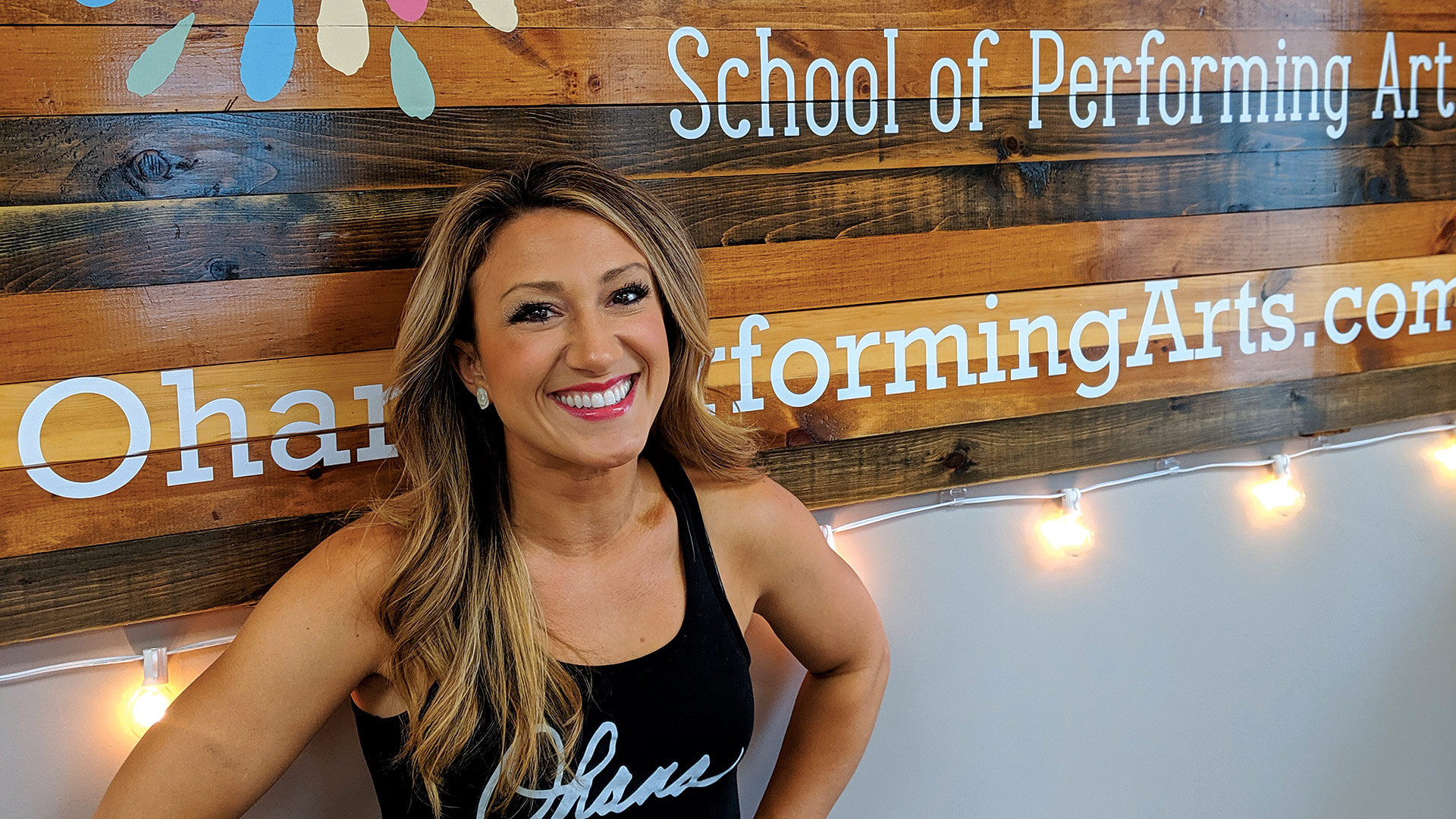
Ashley Kohl, perhaps best known in the region as the former host of Mass Appeal, has carved out a new success story over the past three years as owner of Ohana School of Performing Arts. But the road to this point hasn’t always been easy, marked by personal upheaval, financial challenges, and a sudden uprooting to a new location. Through it all, her business has grown, but her values — a commitment to inclusion, positive vibes, and providing a safe space to cultivate a passion for dance — have never changed.

A woman reached out to Ashley Kohl recently on Facebook, saying she wanted to dance, but was feeling uncertain.

“She said, ‘I haven’t danced since I was a kid, I’m really out of shape, I have no confidence, I’m really intimidated. But I want to try something new that’s for me, to help me build my confidence, and I want to feel accepted — and I feel like your studio is a perfect place.”

So she gave Ohana School of Performing Arts a try.

“I saw her in my adult hip-hop class last night, smiling the whole time,” Kohl told BusinessWest. “She was super nervous when she came in, but when she left, she said, ‘I can’t wait to come back.’”

In many ways, that woman personifies Kohl’s vision of what she wants Ohana — which recently hosted a grand opening at its new location in Chicopee — to be.

“A dance studio can be intimidating — but this is not that place. What I envision is people of all shapes, all sizes, all backgrounds, all beliefs, all genders, all identities, everyone. No matter what age you are, you can come here, and I love seeing everyone dance. Everyone. When I dance, I’m happy. So I know dance will bring them joy. And that’s the ultimate goal.”

After a stressful spring during which she was given only a few weeks to find a new location for the studio she has owned since 2016 (more on that later), Kohl takes her own measure of joy from the space on Sheridan Street in Chicopee, which is more than double the size of her former studio in South Hadley.

Classes include ballet, tap, hip-hop, musical theater, contemporary, parent/child combo classes, adult-level classes, fitness and more. But education is only part of the equation at Ohana (a Hawaiian word meaning ‘family’). The other part is a focus on kindness, compassion, and inclusivity.

“Ohana has become more than a dance studio — it’s a movement,” Kohl said. “So many people sign up not just because they want to dance, but because they want to be a part of this positive energy. It’s a place of love.”

That energy is shared these days by more than 300 students. “I overcame a ton of adversity because we were kicked out and given a month to find a new place. And now I’m living my dream, doing what I love. This is my happy place. These people are my family. It’s so much more than a job. I even have ‘Ohana’ tattooed on me, because this is what I live, sleep, eat, breathe.”

Winding Road

The journey to this point, however, has been a winding one, marked by both disappointments and unexpected successes — all of it subtly directing Kohl to that happy place she now occupies.

The relevant part of the story begins with an audition in New York City for So You Think You Can Dance in January 2010. Kohl waited in line overnight, in the rain, for that chance, and when she had her few seconds to impress the producers, her wet sneaker caught on the rubber floor during a pirouette, and she fell.

One of several reminders on the walls that Ohana is intended to be a place of acceptance and inclusion.

“I cried all the way home, thinking, ‘my dreams are over, my life is over,’” she recalled. But in March, another opportunity arose — an open casting call for Mass Appeal, a lifestyle program on WWLP-TV. Kohl’s mother encouraged her to audition, and she did, even though she had no journalism or television background. She didn’t feel nearly the pressure she did in New York two months earlier because she figured her chances weren’t great. But she kept getting callbacks, and eventually the hosting job.

“I loved it. It was amazing, the things I learned, the people I met,” Kohl said, noting that she had attended college, but never graduated. “I look back on my time at Mass Appeal, and that was the best education I could have received. I learned about every industry, met people from every walk of life, and learned how to adapt and overcome. It was a great learning experience.”

And also, with one fateful interview in 2015, a great inspiration. “I did a story on a dance class for kids of all ages and all abilities. Afterward, I got in my car, and I was so inspired. I thought, ‘this is what’s missing in my life — dance for people of all abilities.’ It moved me.”

At the same time, two other things were happening. Her marriage was falling apart, and she didn’t want to go through a divorce while in the public eye, so she was looking to step away from a hosting job she had come to love. And her mother, who had owned Technique Studio of Dance since 1997, first in Chicopee and then on Newton Street in South Hadley, was looking to slow down and offered her daughter the opportunity to take over the business.

“That’s when I thought, you know what? I’ll leave TV — I think it’s my time — and I’ll open a dance studio for people of all abilities,” she said.

The sudden inspiration surprised her. Though she’d been dancing all her life, she never once — not as a kid, as a teenager, even in college — had a desire to follow in her mom’s footsteps and own a dance studio. Yet, here she was, struck by a new passion and able to see how the events of the past several years had led her to that point.

“If I got So You Think You Can Dance, if I didn’t fall and made it through and my dream came true, Mass Appeal never would have happened — and that led me here.”

Kohl took over Technique in 2016 and changed the name to Ohana to stress not only her own family, but the one she hoped to create among her students. “My mother said, ‘you bring your own energy and vision. Rebrand it and make it your own.’”

And there, on Newton Street, the business grew for three years — until she had to move.

She actually first heard rumors that the building owner wanted to sell during the summer of 2015, and not long after, she stumbled upon the Sheridan Street building in Chicopee, which had been vacant for two years and needed copious amounts of work. “I wasn’t in the place financially to jump into something new,” she recalled. “I figured, if it’s still there when I need it, it was meant to be. And when I got the eviction letter, this place was still available.”

That letter came on March 1 of this year, telling her she needed to be out by April 1. “I’m a single mom with two kids, and I was in the midst of my dance season, so it was really hard. And I had grown up dancing in that building, so there were emotions, too.”

She pushed the owner for six weeks instead of four — actually, “I begged,” she said — and was granted the extension. Through those six weeks, Kohl had the first floor of the new location renovated, and after classes began there at the end of May, she went to work on the top floor.

Ashley Kohl says the move to Chicopee was stressful at times, but serendipitous in the way it came together with no program cancellations.

“It definitely wasn’t move-in ready,” she said — but no classes or programs were ever interrupted. “We had our last class in South Hadley the Thursday before Memorial Day, and our first class here the Tuesday after Memorial Day. It was very stressful, but this community had my back. They all came out on moving day. I never was alone, and that’s a testament to what this community is and who the people are.”

Safe Space

The new, 6,000-square-foot Ohana — more than doubling the 2,600 square feet available in South Hadley — includes three large studios, one of them handicapped-accessible; a ramped entrance and restrooms are also ADA-compliant.

“I want to make sure this is a place where everyone feels welcome,” Kohl said, but that sentiment extends beyond disabilities. “We have kids as young as 18 months, and adults as old as … well, anyone who wants to come and be a part of it. I think the biggest thing is that everyone feels accepted, and they feel comfortable and not intimidated, and everyone gets to perform.”

Why take up dance? Kohl says people have different reasons — but everyone dances anyway, in some form or another. “Maybe we don’t admit it or go to dance class, but we all feel music in our body, no matter who we are.”

Popular TV shows like So You Think You Can Dance, Dancing with the Stars, and America’s Got Talent have made dancing even more mainstream, but a little intimidating at the same time, she added. “People think, ‘I can’t do that. I can’t dance like that.’”

At the same time, though, she believes dancing makes people happy — and she wants to provide an outlet where they can do that in a non-intimidating way.

“You can be part of something where you feel like you’re accepted, where you’re loved and supported, where you can exercise and release the tension of the day in a positive place. There aren’t many places you can go and just feel free and feel like you can let go and find a happy place.

“It’s not for everyone,” she admitted. “But the main thing is, whether you say you dance or not, you do in some capacity. And to be able to come to a place that’s safe and happy and positive and loving is really cool.”

Kohl is protective of those positive vibes, too — and won’t tolerate negative or disrespectful behavior.

“If you come in here and bring your dark stormcloud — granted, we all have bad days, and we’re here to lift you up,” she told BusinessWest. “But if you are going to talk about people or treat people unkindly, I will ask you to leave. This is a very safe, happy place, and I am serious about keeping it that way.”

Kohl said she was bullied growing up, but finally felt like she belonged when she attended high school at Pioneer Valley Performing Arts, a place where people finally ‘got’ her passion for dance. It was, in short, the safe space that public school was not.

“Not every kid has that,” she said. “Maybe home isn’t safe. Maybe school isn’t safe. But I know — I guarantee — when you come here, you’re safe. Whether you’re an adult in a really bad marriage and home isn’t safe, whatever it may be, I hear from people that they come here, and they feel happy.”

That’s especially notable in a dance world that can admittedly be catty, cutthroat, and competitive, she added. “And there’s a time and place for that if you want to be on Broadway, but that’s not what this is. We don’t compete in dance competitions. We do it for the love.”

It starts with the love of family — her mother still runs a dance store in the studio, and it’s her handwriting that forms the Ohana logo on the walls — but now extends to 300 students, 11 teachers, seven assistants, and one full-time employee, all of which have the potential to increase in this much larger space than Newton Street allowed.

Still, the transition was scary at times. “The whole time I was terrified, but my faith was stronger,” Kohl said. “I knew if it was meant to happen, it would. What’s the worst thing that could happen? It fails? Then I move on.”

As it turns out, she just had to move a few miles away. “It’s fulfilling, and it’s more than a dance studio — it’s people’s second home,” she went on. “I feel humble and grateful, but I’m proud of it because I don’t feel there’s enough of this energy in the world.”

Living the Dream

It’s safe to say Kohl has plenty to do in the new studio, but one goal down the road is to expand community outreach programs. Already, Sunshine Village residents take classes on Fridays, a Westfield program for adults with disabilities will be starting up on Thursdays, and instructors teach dance at the senior center in South Hadley as well. She’d like to do more of the latter — “bringing those vibes and energy and dance to people where they are. That’s the next step.”

Meanwhile, she promotes the spirit of the studio through programs like Wingman for Dance, which teaches students about kindness, self-acceptance, diversity and inclusion, giving back, and community service. Speaking of giving back, students also present annual charity performances to support local nonprofits, and Kohl founded One Ohana Inc. a registered 501(c)(3) organization that awards scholarships to dancers of all ages and abilities throughout the Pioneer Valley.

She’s passionate about all of it, because, well, life’s too short not to be.

“I was born with something inside me that I have to pursue, and if I don’t, then it’s going to be buried in a cemetery somewhere, and no one will ever know what would have come of it,” she told BusinessWest. “And look at this now. I found my passion — to bring not just dance, but joy to people’s lives.

“I’m not going to die with my passion inside me,” she went on. “I’m going to make a difference and inspire people. I have a humble house, and I’ll probably never be rich, but in my heart, I’m so full.”

Joseph Bednar can be reached at [email protected]

Education

Breaking Barriers

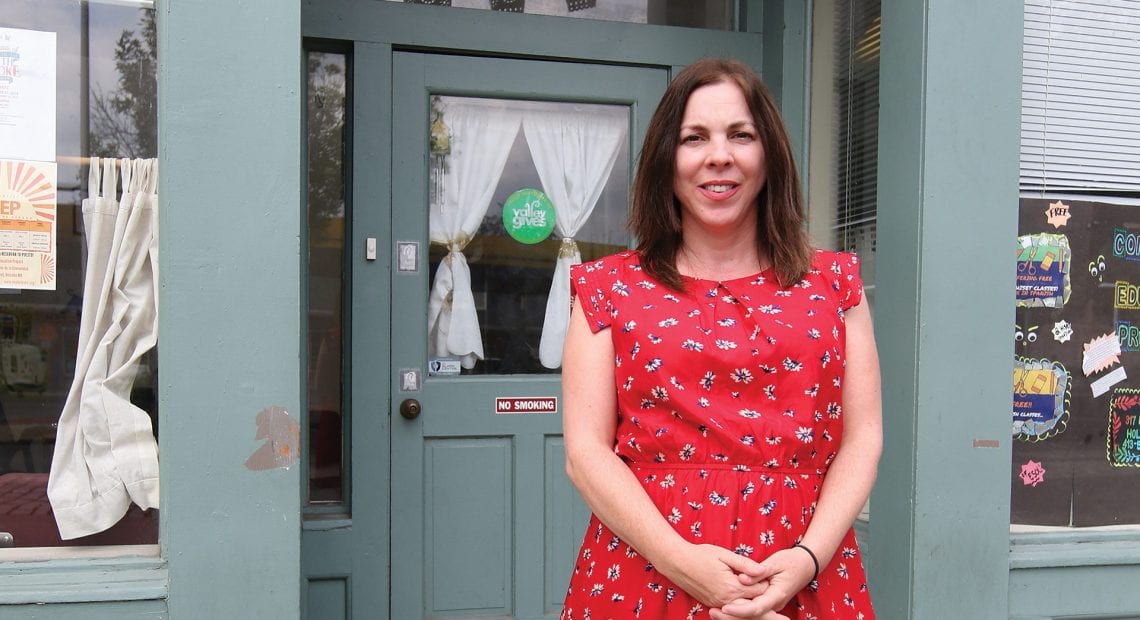
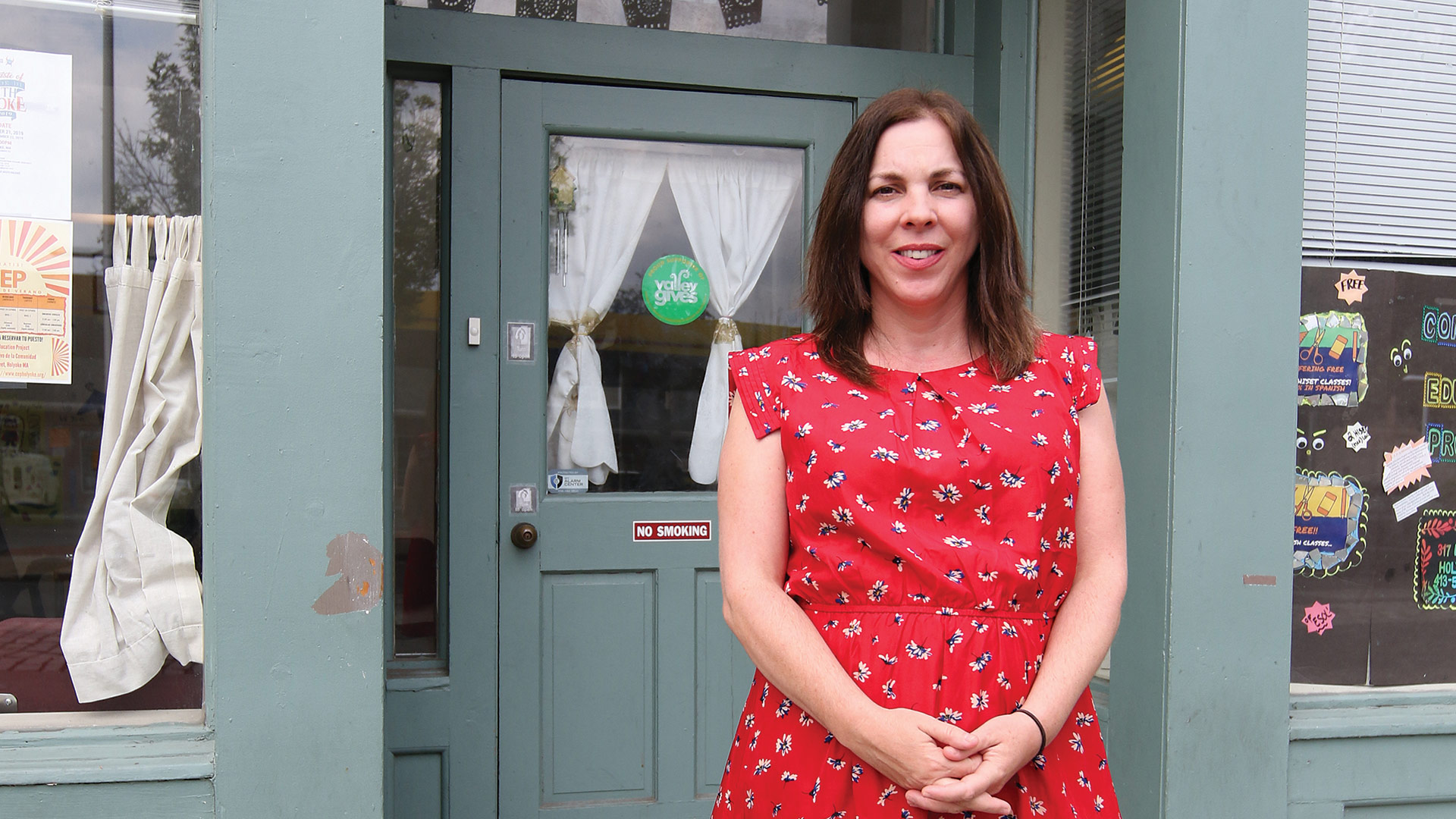
Rose Egan was inspired to work at the CEP because she had a long and difficult journey to education and wants to be able to give the gift of learning to others.

For many people, going to school and preparing to enter the working world is the norm. Unfortunately, for many members of the Latino community in the city of Holyoke, this is easier said than done. The language barriers faced by those who do not speak English are often burdensome and prevent people from getting an education or finding a job. The Community Education Project provides classes to give individuals the tools they need to become successful and move forward with their lives.

Imagine that your one and only barrier to success was not speaking the language you need to speak in order to move forward in life.

This intimidating scenario is all too real for many people in the city of Holyoke. In the Paper City, 30% of the population age 18 and older does not have a high-school diploma, while 18.4% speak with limited English proficiency.

This language barrier creates setbacks for much of the Latino community, but the Community Education Project (CEP) is working to change that.

“The bottom line is, people want to better their lives, and they want better opportunities. A lot of them are doing it for their children so they have better opportunities as well.”

The CEP provides adult-literacy and language-education programs in an effort to achieve social and economic justice by contributing to the development of the Latino community in Holyoke. The organization offers two levels of native language literacy in Spanish to prepare students for HiSET and GED exams in Spanish, three levels of English for speakers of other languages (ESOL), and adult basic education for transition to college and careers.

It is the only provider in the region that offers native language literacy, or GED preparation in Spanish, and all classes are provided for free to anyone who walks in the door.

Executive Director Rose Egan said most people come in because they desire a better quality of life and want to be more independent.

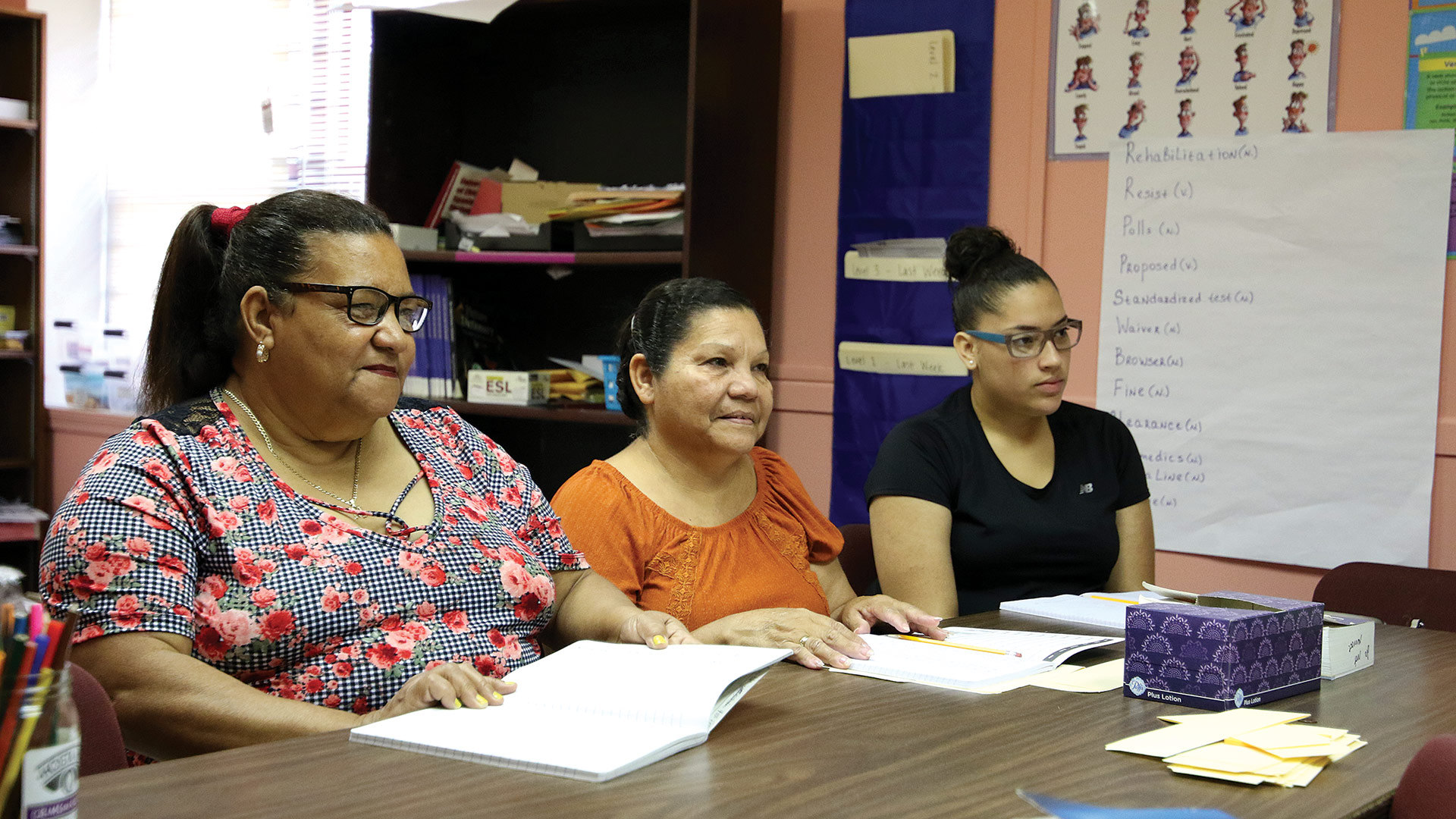
From left, Edith Rodriguez, and Sonia Girón Peña de Aponte take their first English class with Angelika Bay, lead instructor in English for speakers of other languages (ESOL).

“The bottom line is, people want to better their lives, and they want better opportunities,” she noted. “A lot of them are doing it for their children so they have better opportunities as well.”

People come to the CEP at all levels, including adult learners with grade-level equivalency of age 3 to high school. Some students haven’t stepped in a classroom in 20 years. Some must bring interpreters to doctors’ appointments. Some are parents who want to be able to talk to their kids’ teachers and other school personnel without having an outsider in the mix, because they feel like they cannot develop a solid relationship.

“They want to be able to advocate for themselves,” said Egan. “The issue we see is that people can get along in their daily life fine in this area because everyone around here speaks Spanish, but then when they try to step out of that zone, they find barriers due to their lack of English-language skills.”

CEP classes run throughout the day and at night, and summer classes are offered as well. Egan said about 110 students participate daily across all programs, and seven staff members make it all happen — a “small but mighty” team, as she calls it.

“I didn’t even know what college was — it could have been another planet. I knew no one that went to college in my entire life. My purpose here is to help open doors for students, but also help elevate the organization as a whole.”

One staff member in particular, Vida Zavala, made a positive impact on student Ingrid Arvelo’s life, and put her in the right direction to accomplish her goals.

Arvelo — an immigrant from Venezuela and a 40-year-old mother of two — has plenty on her hands, but still found time to take level three ESOL classes, including the hardest, most immersive class in the program.

“It worked for me because now I’m taking classes to go to college in January,” she said.

Arvelo is currently enrolled in the college-transition course with CEP, and wants to attend Holyoke Community College next year, hoping to study law or education to become a teacher. She is thankful to the CEP for helping give her the confidence to learn English.

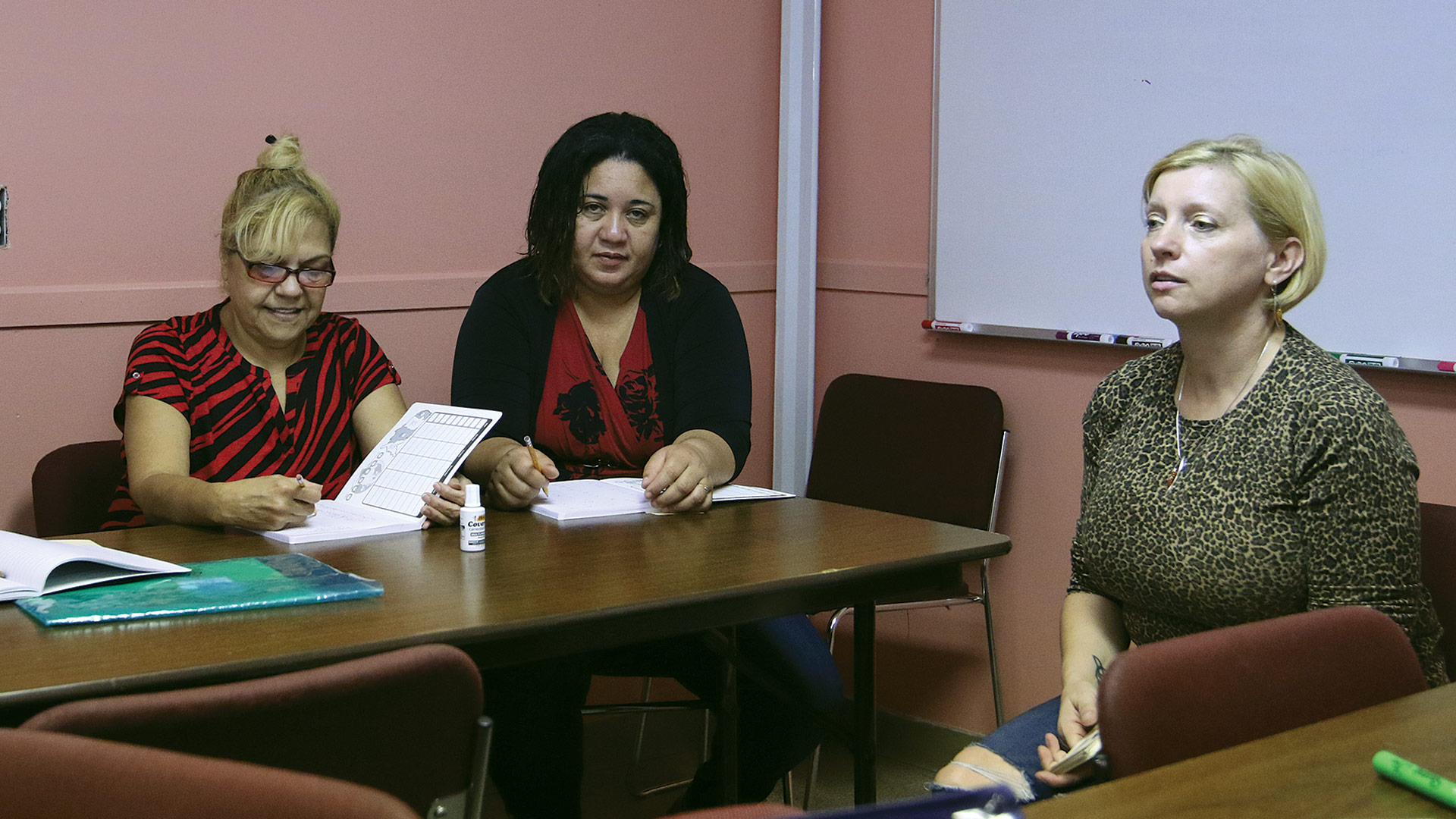
From left, Maria Vasquez, Nydia Rodriguez, and Stephanie Trinidad take their first English class at the CEP.

“If they see that you are in trouble or struggling, they help,” she said. “I’m so grateful for the program.”

Broader Purpose

Putting on programs like this isn’t easy, but when things get tough, Egan says she remembers her journey through education and how much she wants to give that to others.

“I didn’t even know what college was — it could have been another planet. I knew no one that went to college in my entire life,” she said. “My purpose here is to help open doors for students, but also help elevate the organization as a whole.”

Egan is also a single mom and sent her daughter off to her first day of kindergarten recently. She recognizes — and is grateful — that her daughter will probably never experience what it’s like to not know what education is. Her job at the CEP is her way to make sure others can grow and learn every day.

“This is an opportunity for me to be able to come to work every day and feel like I’m not coming to work,” she said. “I’m doing what I love to do, which is sharing the gift of education with other people.”

And she has plans in motion to help support the classes the CEP offers.

The Community Education Project is a 501(c)(3) organization and is classified as a public charity. After attending an innovation accelerator program with Paul Silva, Egan came up with a few programs to expand its revenue streams.

The first is a document-translation service the CEP has been providing for 30 years, but recently opened up to nonprofit organizations in the area. She explained that document translation is very costly, and the CEP is able to come in about 20% below competitors, helping other local nonprofits get their documents translated into Spanish.

“It helps us because it provides us some unrestricted revenue so that we can focus on our core services, which are serving our students and providing them with native language literacy, English-language skills, transition to college and careers, things like that,” Egan said, adding that this is very difficult to do with a limited budget.

“We find the biggest barrier to people coming in our door is they didn’t know we existed,” she said, adding that conducting more outreach in the community and incorporating marketing strategies into the mix are also on her to-do list.

She’s also hoping to expand Spanish-language classes to both children and adult learners, such as those regularly tasked with interacting with Spanish-speaking employees.

“We’re targeting local employers so that we can train their staff to speak Spanish so they can develop a better relationship with people they are serving without having to have a middle person interpret,” Egan said. “Launching those classes will really help us worry less about how we’re going to fund our classes and our core program. We want to make sure we have the funds we need to continue providing the services that will better our community.”

Looking to the Future

With all these services, Egan is confident CEP will be able to help even more students like Arvelo reach their goals.

“This country gives you the opportunity to be a better person, a better professional, and a better worker,” Arvelo said. “But if you don’t speak English and if you don’t put in the effort, you can’t make it. So English is the first step.”

With that in mind, Egan and the staff at the CEP continue to look for new ways to support those who want a better quality of life and have big plans for the future, one step at a time.

“Education is such a gift, and without it, we don’t even know what we’re missing,” Egan said. “If I can be that conduit to just make education accessible to those who otherwise wouldn’t have that opportunity, then I’m more than happy to step into that role.”

Kayla Ebner can be reached at [email protected]

Green Business

Here Comes the Sun

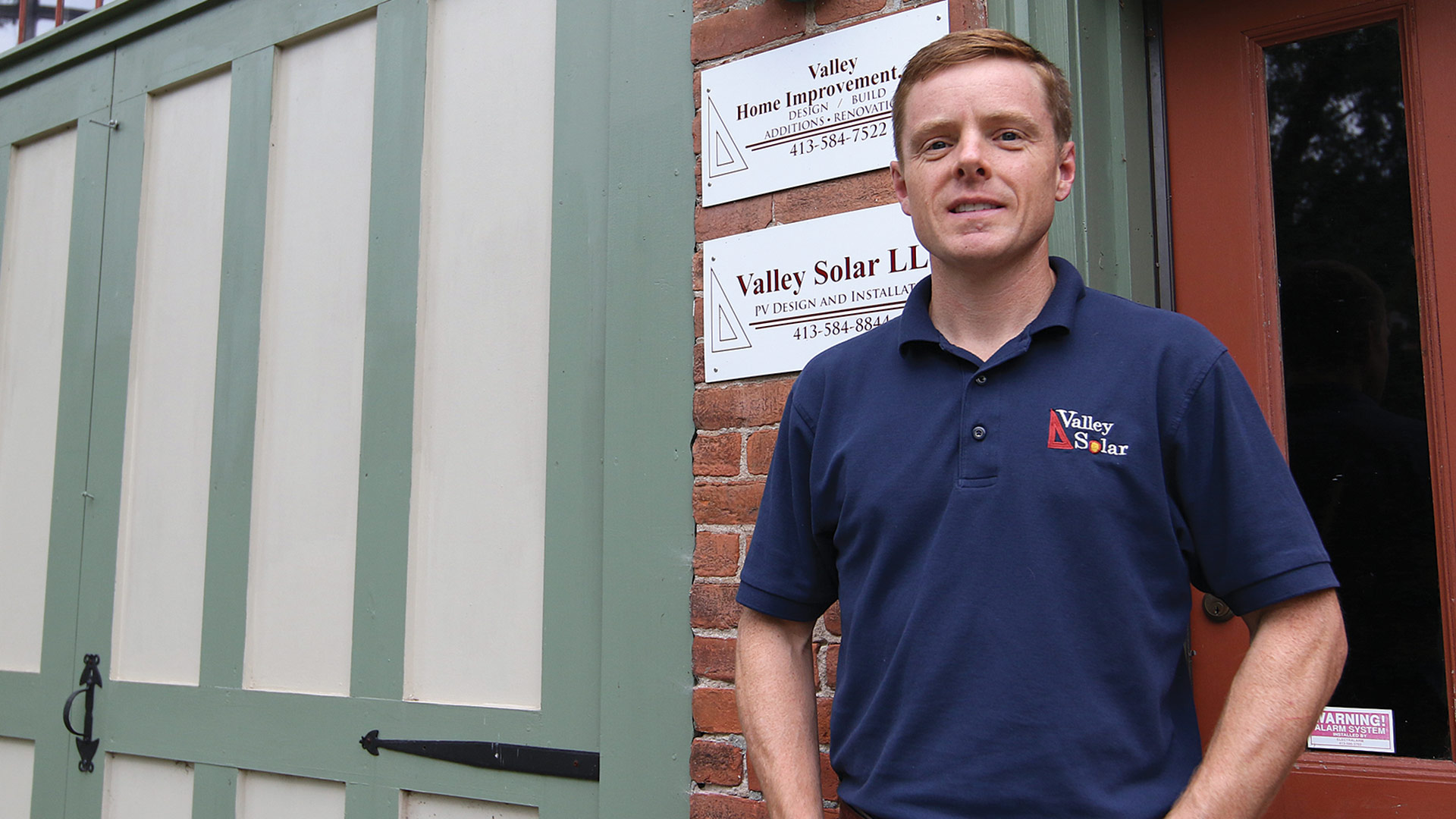
Photo by Leigh Chodos

With green-energy usage in homes rapidly increasing, there is no shortage of competition in the solar field. Home and business owners are looking for ways to save money and protect the environment, and with 211 solar installers in the state of Massachusetts, there are plenty of options. This makes standing out even more important for companies like Valley Solar, which installs solar panels for families and businesses alike.

Sixteen months ago, Mike Hempstead was a landlord with a background in sales and marketing and an interest in alternative energy.

He had six solar systems installed on properties he owned, giving him plenty of experience with various solar companies, including Valley Solar, an energy division of Valley Home Improvement in Northampton, which installed his last two systems.

“I just felt that the experience of working with the team at Valley Solar was so far superior to what I experienced with other solar companies that I knew this was the place I wanted to work when I got into solar.”

Hempstead was so impressed with the service he received that he applied for a job with the company.

“I just felt that the experience of working with the team at Valley Solar was so far superior to what I experienced with other solar companies that I knew this was the place I wanted to work when I got into solar,” he said.

These days, he’s Valley Solar’s sales manager, part of the team that provides service to customers in the four counties of Western Mass.

That service, he said, is what helps the company shine (pun intended) in a very competitive field — so competitive, in fact, that Valley Solar is one of 211 solar installers in the state of Massachusetts.

“Most customers only buy solar one time in their lives, but we treat our customers for solar as if they’re going to be a repeat customer and we give them that level of care that sets us apart,” he said.

General Manager Patrick Rondeau agreed, adding that Valley Solar makes recommendations for homeowners based on what’s best for them, not what’s hottest on the market.

Mike Hempstead says his first experience with Valley Solar was when he installed systems on two of the houses he leased, which led him to pursue a position at the company. (Photo by Leigh Chodos)

“We’re just trying to advise homeowners in a way that we’d want to be advised if we weren’t specialists in the field,” he said.

Valley Solar is a division of Valley Home Improvement, which has been around for 25 years. “About five or six years ago, the former owner of the company installed solar at his house,” said Rondeau. “He watched the process, and, having been a builder for his whole life, he thought, ‘we could do that. We should do that.’”

So, five years ago, this vision was brought to life with Valley Solar, and its relatively new status hasn’t slowed it down. The company took the 2018 Daily Hampshire Gazette Readers’ Choice Award for Best Local Solar and continues to receive raving reviews from customers.

Hempstead said much of that success comes from the firm’s home-improvement background, better enabling it to help choose the right plan for each customer.

“We’re a division of a design and build firm, and we handle all aspects of building renovation and construction, and that gives us a broader perspective of how solar integrates with other energy systems,” he said.

A finished system that Valley Solar installed on a home in Pelham. (Photo by Leigh Chodos)

For this issue and its green-business focus, BusinessWest talked with Hempstead and Rondeau about the solar business and the advantages it brings to customers on both the residential side and business side.

Green Makes Green

Rondeau started by stating the obvious: solar technology is environmentally friendly.

But what many people don’t realize, he went on, is that it is also a huge money-saving strategy.

“Right now, if you’re simply paying the utility, you’re paying what they’ll have you pay,” said Rondeau. “If you have your own system, you don’t worry about what they’re charging; you’ve taken care of that.”

Perhaps one of the greatest incentives is the constantly rising cost of energy, which has been going up at twice the rate of inflation, Hempstead noted. Massachusetts has the third-highest residential electricity rate in the country, coming in at 22.57 cents per kilowatt-hour, topped only by Hawaii (32.09) and Rhode Island (22.67). And these numbers will only continue to rise.

“Your savings are far greater than they were in the past because the cost of energy is so much more than it was,” he said. “At the same time, panels have become more powerful, so you’re getting more energy for less cost.”

Webber and Grinnell Insurance is one local business that recently installed solar panels on their property, and Vice President of Operations Richard Webber said the investment has been 100% positive so far.

“We’ve basically eliminated our monthly electric charge, which is really our only utility in the building,” he said. “We do all of our limited heating and air conditioning with the solar panels now.”

Patrick Rondeau says Valley Solar recommends products for homeowners based on what’s best for them, not what’s hottest on the market.

President Bill Grinnell agreed, and said the incentives were another reason why the company chose to go solar.

“As a business owner, you’re very concerned with the investments you make and the return you get,” he said, adding that, while the upfront investment is a good chunk of change, the tax credit he gets will make it worthwhile. “With the incentives that are out there, I think it’s a great investment.”

These incentives are another reason why many businesses and homeowners alike have invested in solar energy, but they’re always shifting. Commercial and residential owners who have just installed their solar systems receive a federal tax credit for 30% of the system, but not for long. Congress passed a multi-year extension of the solar Investment Tax Credit (ITC) in 2015, with a 30% incentive for systems installed in 2019, a 26% incentive in 2020, 22% in 2021, and 10% in 2022 for commercial and utility scale, but none for residential.

Still, even with this news, there are still plenty of reasons to consider solar installation, including accelerated depreciation. While business customers still get the 30% federal tax credit for their business, they also get a 100% bonus depreciation in their first year with solar.

“This will effectively, depending on your tax rate, give you another 20-25% back in the first year,” said Hempstead. “So, you have 50-55% of your system paid for the next time you pay taxes.”

Bright Idea

The numbers speak for themselves, said Rondeau, adding that he predicts prices for solar installation will continue to drop in the next few years.

“Solar can and often does pay for itself in a relatively short period of time,” he said. “I think we have reached a tipping point where most folks, if they can see the numbers, can convince themselves that it’s worth the investment.”

Kayla Ebner can be reached at [email protected]

Home Improvement

Help Wanted

With home-improvement demand surging in 2019, contractors say they can pick and choose from available jobs, which isn’t always ideal for consumers, who often have trouble finding a professional who can fit them in. In realty, most contractors would love to take on more jobs — but can’t because it’s not easy to find talent, especially young talent with the potential to grow with a company over the long term.

In one sense, it’s a good problem to have, Andy Crane said — but it’s still a problem.

He’s talking about an ongoing shortage of skilled labor in the construction field, making it difficult for companies to keep up with what continues to be high consumer demand for home-improvement projects.

The good part of the problem is that they can be more selective about the projects they want to tackle, but that’s not always great for the consumer, and it stifles growth, said Crane, executive director of the Home Builders and Remodelers Assoc. of Western Mass.

“There’s a lot of work to be done, but the workforce is very tight, and it’s difficult for companies to respond to everyone. They’re just booked out for a long period of time,” he went on. “Skilled labor — especially young skilled labor — is few and far between.”

Crane gets calls from homeowners looking for a contractor for a project but struggling to nail one down who can fit them in, and that labor shortage has a lot to do with it, he told BusinessWest. “A lot of contractors are in the same boat. I guess it’s a good problem on our side, but it’s bad PR.”

Stephen Ross, partner at Construct Associates in Northampton, understands the problem well. “We just hired two new guys, which is a nice thing to be able to do these days. We just snapped them up. It’s hard — the majority of people applying for jobs have been in their late 50s, even early 60s. But we try to hire for the long haul.”

Still, business has been positive for a long stretch now at Construct, which boasts plenty of residential construction in its mix of projects.

“Kitchens and bathrooms are still big sellers around here — lots and lots of them,” Ross said, noting that the prevailing design trends of the past couple of years continue to dominate, among them open floor plans, tile in bathrooms, hardwood floors, and granite and quartz surfaces in kitchens.

The Home Improvement Research Institute (HIRI), which issues quarterly state-of-the-industry reports, is bullish on the rest of 2019. According to HIRI’s quarterly Project Sentiment Tracking Survey of 3,000 homeowners, several trends stand out:

• About 75% of homeowners are planning one or more projects in the next three months — the highest project-planning incidence since tracking began in 2012, according to the organization.

• The top motivators for projects include repair, replacement, and routine maintenance.

• The average homeowner plans to complete 4.3 projects in the next three months.

• The top projects include kitchens, windows, driveways, exterior paint, and roofs.

• The Northeast is home to the nation’s highest percentage of project planners in the second quarter — not surprising, as the region’s housing stock tends to be older than in many other areas of the country, so there’s plenty of work to be done.

Other Trends

Energy efficiency remains a trend at the forefront of home improvement as well. Each year, Fixr, an online home-improvement community, polls experts in the home-design industry to discover what the upcoming trends in home design and building will be. This year, the site polled industry experts on what they believe are the top ways that homeowners will utilize design trends and new innovations to help lower their energy bills in the coming years.

According to the poll, a majority of homeowners are personally motivated to save energy in order to save money, yet they also have a significant environmental awareness, which is driving some decisions.

The poll revealed that ducts and windows are the two most effective places to save through air sealing, heat pumps are the most popular method to heat an energy-efficient house, tankless heaters are the most efficient way to heat water, solar power remains the most common way to utilize renewable energy in the home, and cellulose and fiberglass are tied as the most popular ways to insulate an attic.

Another trend analysts have been keeping an eye on for years has been the rise of DIY (do-it-yourself) projects, spurred partly by a greater variety of resources available to homeowners and the abundance of inspiration available on home-improvement television programs and websites.

According to HIRI, roughly two-thirds of completed home-improvement projects are done completely DIY, and three-quarters have at lease some DIY involvement. The level of professional work is dependent on the project. Painting and landscaping are overwhelmingly DIY, while roof and siding replacement are heavily dependent on professional work. Interestingly, HIRI’s poll suggests that, while most who finish their projects are satisfied, those who complete them totally DIY report a higher satisfaction rate.

Not surprisingly, projects done with professionals cost significantly more than those undertaken DIY, and survey respondents who used professional contractors showed a higher likelihood of having the total cost of their project be higher than expected.

As homeowners age, they tend to move away from doing the work by themselves, shifting to professional contractors more frequently. Baby Boomers are twice as likely to hire a pro than a Millennial. The use of professionals is also largely dependent on household income. As family income goes up, so does the likelihood that a contractor is hired to complete a remodeling project.

Whether professional or DIY, annual gains in improvement and repair spending, while still healthy, are projected to continue decelerating through early 2020, according to the Leading Indicator of Remodeling Activity (LIRA) released by the Remodeling Futures Program at the Joint Center for Housing Studies of Harvard University. LIRA forecasts that year-over-year growth in homeowner remodeling expenditure will slow from about 7% this summer to 2.6% by the first quarter of 2020.

“Cooling house price gains, home-sales activity, and remodeling permitting are lowering our expectations for home-improvement and repair spending this year and next,” said Chris Herbert, managing director of the Joint Center for Housing Studies. “Yet, more favorable mortgage rates could still give a boost to home sales and refinancing … which could help buoy remodeling activity.”

Abbe Will, associate project director in the Remodeling Futures Program, added that “home-improvement and repair spending has been in an extended period of above-trend growth for several years, due to weak homebuilding, aging homes, and other factors. However, growth in remodeling is expected to fall below the market’s historical average of 5% for the first time since 2013.”

Aging in Place

One strong home-improvement trend in the Northeast involves Baby Boomers, who continue to pour into their retirement years at the rate of about 10,000 a day — and want to spend those years in their own homes if possible. As a result, many projects today involve making those homes safer and more accessible, with improvements ranging from night and security lights to wider interior walkways to curbless showers.

But older homeowners are also going for modern and attractive features, Ross said. “People are wrapping things up, things they’ve let go for decades. People are moving toward fixed incomes and are planning that last hurrah — maybe a garage addition. Or decks need replacing, or siding needs replacing — and nothing gets cheaper the longer you wait.”

In fact, building costs are more expensive than ever, Crane said, for reasons ranging from heavy regulation in Massachusetts to new tariffs at the federal level to inevitable economic trends. But the landscape remains a healthy one for builders and remodelers — if they can find the help they need.

“Construction companies can pick and choose their jobs,” he said. “It’s a great sellers’ market.”

Joseph Bednar can be reached at [email protected]

Cover Story Features Healthcare Heroes

Healthcare Heroes Class of 2019 to Be Honored on Oct. 17

When BusinessWest and Healthcare News launched Healthcare Heroes in 2017, there was no doubt this was a long-overdue award program in Western Mass. — in fact, we knew the challenge wouldn’t be finding quality nominations, but choosing just a handful to honor each year. Indeed, this year’s judges (see below) carefully studied about 100 different nominees in seven categories to choose the impressive group to be honored at this year’s gala in October.

Collectively, they are innovators and game changers in the region’s rich and vibrant healthcare community, and their stories — told on the following pages — reveal large quantities of energy, imagination, compassion, entrepreneurship, forward thinking, and dedication to the community.

There are eight winners in this third class, with two in the category of Lifetime Achievement, because two candidates were tied with the top score. The Heroes for 2019 are:

• Lifetime Achievement (tie): Katherine Wilson, president and CEO, Behavioral Health Network Inc.; and Frank Robinson, vice president, Public Health, Baystate Health;

• Health/Wellness Administrator/Administration: Emily Uguccioni, executive director, Linda Manor Assisted Living;

• Collaboration in Health/Wellness: Carol Constant, convener, Dementia Friendly Western Massachusetts; and director of Community Engagement, Loomis Communities;

• Community Health: Amy Walker, certified nurse midwife, Cooley Dickinson Health Care;

• Emerging Leader: Tara Ferrante, program director of the Holyoke Outpatient Clinic, ServiceNet;

• Innovation in Health/Wellness: Cristina Huebner Torres, vice president, Research & Population Health, Caring Health Center Inc.; and

• Patient/Resident/Client Care Provider: Shriners Hospitals for Children – Springfield.

3rd Annual Healthcare Heroes Gala
Thursday, October 17, 2019
5:30 p.m.-8:30 p.m.
Sheraton Springfield One Monarch Place Hotel
$90/person; $900/table of 10

PURCHASE TICKETS HERE

Submit nominations for 2020 consideration HERE

Deadline to submit nominations is July 10, 2020, 5 p.m. NO EXCEPTIONS.

Presenting Sponsors

Partner Sponsors

Supporting Sponsors

Meet the Judges

Bob Fazzi

Bob Fazzi has spent a lifetime making a difference in healthcare, most notably with Fazzi Associates, the company he started 40 years ago and incorporated in 1995. Its stated mission is to make a real difference in healthcare by strengthening the quality, value, and impact of home care, hospice, and community-based services. Fazzi Associates has been a leader and a pioneer in this sector, developing products and services — including the industry’s first home-health patient-satisfaction services — as well as research to make agencies stronger and better able to serve their patients. For this work, Fazzi was honored as a Healthcare Hero in 2018 in the category of Lifetime Achievement.

Mary Paquette

Mary Paquette, director of Health Services at American International College, is another 2018 Healthcare Hero, in the category of Patient/Resident/Client Care Provider. AIC is only the latest stop in a 35-year career that has seen her take on a variety of roles, from director of Nursing at Ludlow Hospital to per-diem hospitalist at in the GI Department of the Eastern Connecticut Health Network, to assistant director of Health Services at Western New England University — the job that became the springboard to her post at AIC. Since arriving at AIC 2012, she has turned a moribund health-services facility that few students knew about or ventured to into a thriving, innovative, important campus service.

Alan Popp

Alan Popp joined the Mason Wright Foundation as its Chief Executive Officer in 2008. His previous experience includes head of school and CEO at White Mountain School, a college preparatory school; and chief operating officer at Pine River Institute, a residential treatment center. He has also served as a consultant to more than 200 New England nonprofits, many of them providers of services to seniors. He serves on the boards of LeadingAge Massachusetts, Salvation Army Citadel Corps, and OnBoard Inc., and on the Leadership Council of the Alzheimer’s Assoc. of Massachusetts/New Hampshire. He is also a trustee of Antioch University New England and previously served on the campaign cabinet for the United Way of Pioneer Valley.

Community Spotlight

Community Spotlight

Margaret Kerswill (left) and Laureen Vizza in front of their Main Street shop, Mutability in Motion.

When Margaret Kerswill talks about her favorite part of the town of Stockbridge, she doesn’t mention a restaurant or the relatively low property-tax rate — she talks about the positive vibe and sense of community in town.

Although Kerswill’s favorite local shop is undoubtably Mutability in Motion, a store she owns with wife Laureen Vizza that sells crafts from more than 50 artisans in the U.S., the first thing she mentioned was the culture of the town.

“That’s the absolute joy of Stockbridge itself,” she said. “You see it in every aspect of Stockbridge, whether you’re just out and about for your daily activities like going to the post office. Doing those normal, daily things, you bump into people all over the place.”

And Kerswill experiences this sense of community in more ways than one. As president of the Stockbridge Chamber of Commerce, she regularly attends meetings and finds that several town residents show up consistently, contradicting the typical stereotype for chambers of commerce.

“It’s a great force in the town,” she said. “The more members we have, the more feedback we get, and the more people who can take part in town meetings. It gives us a bigger voice, and it helps us when we come at this as a collective rather than trying to do all the same things, but as individuals.”

She joined the chamber soon after opening her business in town as an opportunity to be a part of a broader marketing reach, hoping to create relationships with other local businesses in town.

“The chamber has a much broader marketing reach than I might as an individual business,” Kerswill told BusinessWest. “Because of that much broader marketing reach, when the businesses come together and support the chamber, it can reach even further because those member dollars increase our marketing budget and increase our ability to interact with the town.”

When thinking of a small town that relies on tourism to support its economy, one might assume it turns into a ghost town during the winter months. But this is not the case for Stockbridge. In fact, this close-knit town provides plenty of museums, historic sites, and other activities for those who live there and visitors alike, and most don’t close down during the offseason. While summer and spring typically see the most tourism, Stockbridge still has plenty to offer during the other months of the year.

“We are a town that’s open all year long; nobody closes seasonally,” said Kerswill. “All of our shops are independently operated, and they’re all mom-and-pop shops. Everybody carries something you need; we try not to overlap what we sell. We all have different missions.”

Year-round Fun

And these missions all provide different forms of entertainment, 365 days a year.

Barbara Zanetti, executive director of the Stockbridge Chamber of Commerce, noted that, while Stockbridge currently relies on tourism, the chamber is constantly looking for ways to grow the town and slowly move away from that necessity.

“We are a small community with just under 2,000 residents, but we have so much to offer as far as culture,” she said.

Along Main Street alone, one can find the Stockbridge Library, banks and real-estate offices, the Red Lion Inn, St. Paul’s Episcopal Church, the Austen Riggs Center, the Mission House Museum, and many more.

Stockbridge at a glance

Year Incorporated: 1739
Population: 1,947
Area: 23.7 square miles
County: Berkshire
Residential Tax Rate: $10.13
Commercial Tax Rate: $10.13
Median Household Income: $48,571
Median Family Income: $59,556
Type of government: Town Administrator; Open Town Meeting
Largest Employers: Austen Riggs Center; Tanglewood; Red Lion Inn
* Latest information available

Among the most popular is the Norman Rockwell Museum, which celebrates 50 years of exhibits this year. The museum holds the world’s largest and most significant collection of Rockwell art, and provides educational opportunities for those who are interested in learning more about the universal messages of humanity and kindness portrayed in his work.

Another popular destination is Tanglewood, the summer home of the Boston Symphony Orchestra and one of the world’s most beloved music festivals. The 2019 Tanglewood season included everything from performances by the Boston Symphony Orchestra to showcases for up-and-coming artists.

During the warmer months, outdoor activities abound, Kerswill noted, and suggested visitors take a moment to explore nature in and around Stockbridge.

“Bring your kayak up here, get out on the water, and just let your body de-stress for a couple of hours,” she said. “And then take in the surroundings.”

The natural resources, hiking, and beauty of the countryside are a few things that Zanetti says consistently keep people coming to the area, in addition to the arts and cultural aspects that draw a steady flow of visitors.

And though some activities may slow down during the offseason, Kerswill said few close during the colder months. “There’s just this amazing bit of culture that happens. Whether you live here or whether you’re visiting, you will find something regardless of the time of year.”

Best of Both Worlds

While Stockbridge has the feel of being in the countryside, Kerswill says anything a person could need is only a short drive away.

“We like the small-town New England feel, but you’re also not too far from all the conveniences you need,” she said. “It’s like this illusion of living in the country, but you’re surrounded by everything you need, so nothing is really inconvenient.”

All it takes, she said, is a little bit of research to find a plethora of activities to explore in town.

“I think, unless people really get to know the town, they don’t really realize just how much there is here,” she said. “It’s the best of both worlds, for sure.”

Kayla Ebner can be reached at [email protected]

Education

Doctors in Residence
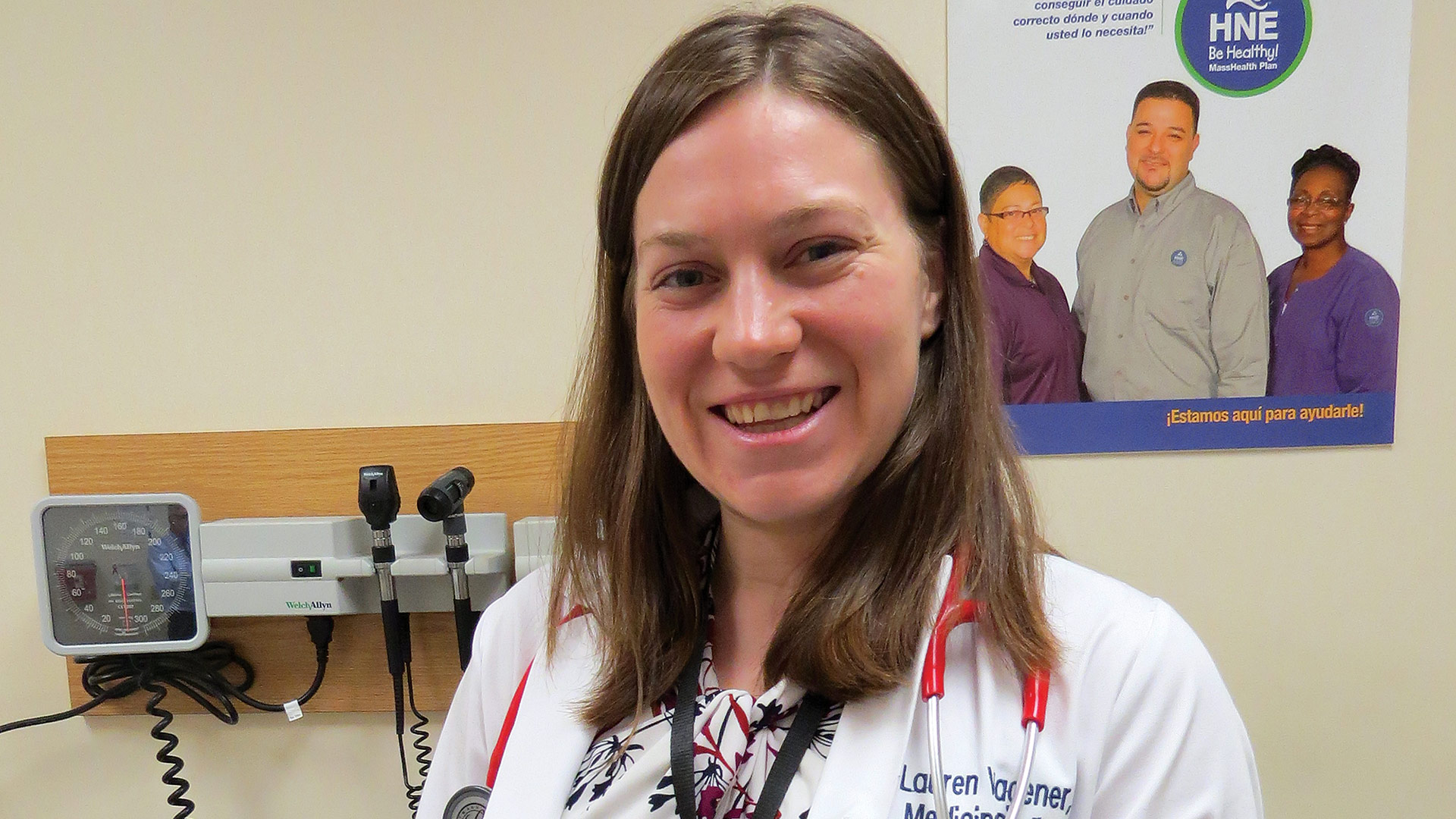
Dr. Lauren Wagener

Dr. Lauren Wagener says she discovered roller derby before she enrolled in medical school, and continued to play while earning that degree.

She told BusinessWest she started playing in a league, taking shifts as both a ‘jammer’ and a ‘blocker,’ terms most Baby Boomers might remember — that’s might — from when they watched the sport on TV back in the ’70s.

Things are different now, said Wagener, noting that today’s game features less violence and fewer of the pro-wrestling-like antics that Boomers might remember.

“Roller derby has revamped into more of a fully realized team sport with rules and regulations and safety — we’re not allowed to trip, no punching, no hitting,” said Wagener, who did some extensive research on the scene well before she moved here and identified two leagues she might play in locally.

But she has a few problems.

The first is a completely torn anterior cruciate ligament in her knee, an injury suffered while playing the sport; she is scheduled to have surgery soon. The second is that she just started her residency at Baystate Medical Center.

“No one likes working on the computer, on the notes; it’s the patient care everyone enjoys. This is what internal medicine offers, and I wanted to be a part of that.”

And while residents don’t have the crazy schedules they did until a decade or so ago, they still put in 80 hours a week over six days, the equivalent of two full-time jobs. That won’t leave much time for roller derby, although Wagener is determined to make some — after the knee is healed, of course.

In the meantime, she plans to take some of the lessons she’s learned from roller derby about teamwork into her daily duties at Baystate’s Mason Square Neighborhood Health Center and myriad other settings she finds herself in. And there are many such lessons, as she will explain later.

Wagener is one of 90 new residents and fellows to arrive at Baystate this summer to begin the next chapter in their healthcare education. Each one has a different and compelling story.

Dr. Zoha Kahn is from Pakistan. But she was already quite familiar with Baystate and Western Mass. before starting her residency a few weeks ago because her sister is a cardiology fellow at the hospital, and her brother-in-law is a pulmonary and critical-care fellow.

Kahn is an internal-medicine resident who hasn’t quite figured out what she wants to a specialize in, and plans to spent at least the next year narrowing her focus.

“Internal medicine is very broad — you deal with everything,” she explained. “This gives you the opportunity to look at the full spectrum of diseases before choosing what you want to do; I get to find out what I truly like.”
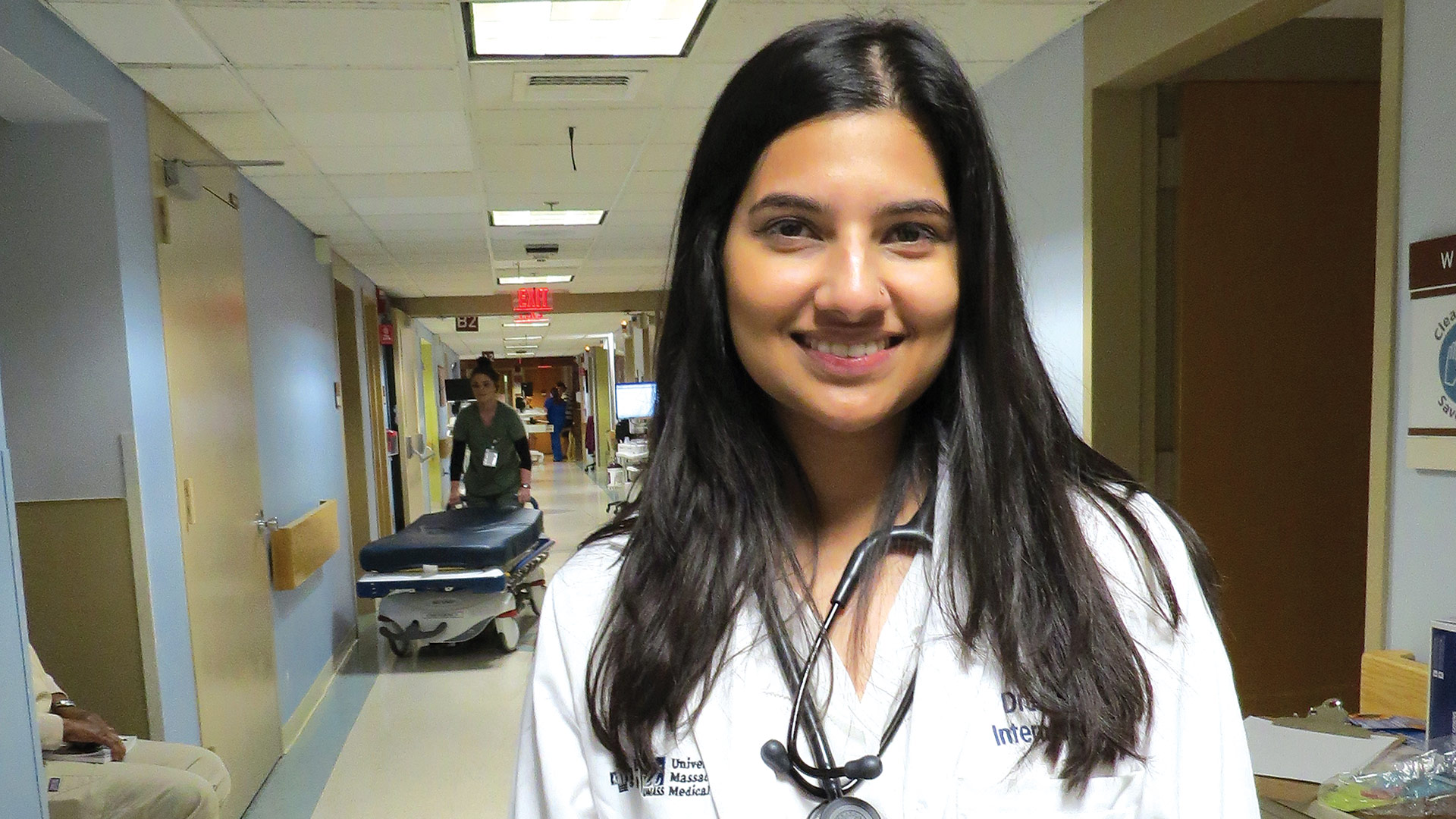
Dr. Zoha Kahn

Dr. Tiago Martins, meanwhile, is from Ludlow. While attending Ludlow High School, he took part in a job-shadowing program that brought him to Baystate Medical Center, an experience that inspired him to choose healthcare as a career. Later, he did rotations at Baystate while attending the University of New England College of Osteopathic Medicine in Maine and was actually on a trauma-surgery rotation at the hospital when he learned he had matched there.

Today, he’s essentially starting his professional career there with the stated goal of becoming a hospitalist, a specialist who, as that name implies, cares for individuals while they are hospitalized.

“It provides a different type of challenge,” he said of the hospitalist role. “You see patients not on a long scale, like a primary-care physician does, but you deal with more healthcare needs, and you also get to work with them more on a social level; I really enjoy it.”

For this issue and its focus on education, BusinessWest talked with these residents and some of their supervisors about these intense experiences and how they help these newly minted doctors prepare for the careers in front of them.

Learning Curves

Kahn told BusinessWest there is certainly no shortage of poverty in Pakistan. She cared for that population while attending medical school in that country, and she said she’s generally aware of the myriad challenges that those living in poverty — there and here — face as they struggle to survive day to day.

But none of this prepared her for what’s known as ‘poverty simulation,’ an experience that seemingly every participant describes with the same adjective — eye-opening.

Kahn is no exception. She played the role of a young, single mother in this exercise, and over the course of the fast-moving, four-hour simulation, she learned first-hand all that life can throw at you — and take from you — when you’re living at a certain income level.
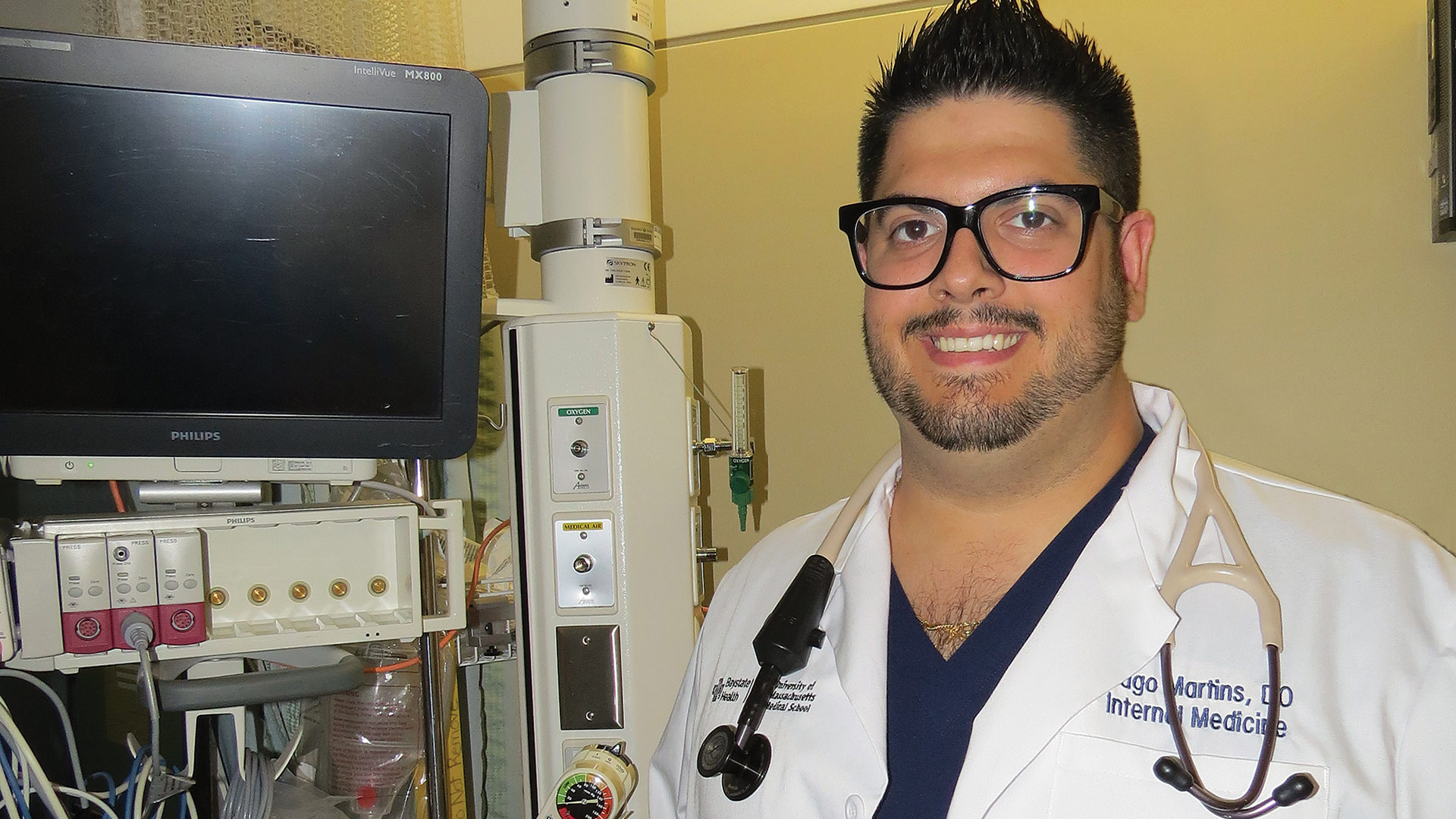
Dr. Tiago Martins

“When you’re in that place, it is so difficult,” she recalled. “I was a single mother with two kids, and I was going to school. The first week, I couldn’t pay my rent, my kid was taken away … it was really crazy. You don’t know how to handle all your expenses along with taking care of kids; it’s really eye-opening and gives you a better perspective on how to deal with the kind of patients you’re going to see.”

The poverty simulation is part of the orientation process for all new residents at Baystate, she explained, and, as she said, it’s designed to help ease residents into the community they’re going to serve and give them perspective into one of the larger populations they will serve.

Kahn said she knew more than a little about Springfield from visits to see her sister and brother-in-law, both of whom also did their residencies at Baystate. This familiarity, not to mention a host of positive reviews, put the hospital at or near the top of her wish list when it came to the matching process for her internal-medicine residency.

“When I came for the interview, it felt right,” she said, adding that feel is all-important when one is considering where to spend their next three years on their career journey.

In addition to the array of options it presents, she said she chose internal medicine for the high level of patient interaction.

“You get these long-term relationships — you’re following that one patient for a while, and you build a relationship with that patient, which is very important to me,” she said. “No one likes working on the computer, on the notes; it’s the patient care everyone enjoys. This is what internal medicine offers, and I wanted to be a part of that.”

“Some rotations are harder than others, so we try to pick the schedules carefully so the rotations are balanced in terms of the intensity of the number of hours they do.”

Since starting her residency, Kahn has been working mostly on the ‘floors,’ or wards within the hospital. The cardiac ward is coming up soon on the schedule, and she expects to be working with her sister. She described life so far as “crazy,” in part because she’s learning a new system.

“The way medicine is practiced in Pakistan is different from the way it’s practiced here,” she explained. “It’s a steep learning curve, even with something like the electronic system of documentation.”

Kahn said she’s managing to navigate all this change thanks to a solid support system, a sentiment echoed by all the residents we spoke with.

“Everyone is super helpful,” she explained, adding that it certainly helps to have family in the area — and at the same hospital. “I feel more confident in my ability to deal with patients, and things have gotten better with time, but in the first few days it was really tough; what’s helped has been all the support.”

Support System

Dr. Reham Shaaban is a big part of that support system that Kahn mentioned.

She’s program director of Internal Medicine Residency at Baystate and an academic hospitalist there. She also did her own residency at Baystate.

Each year, she told BusinessWest, a class of 18 new residents arrives at the Baystate system. The doctors come from across the region and around the world, she noted, adding that the class of 2019 is quite typical.

“They all have different backgrounds, different experiences, and different expectations,” she explained. “And knowing that, we start with a blank slate and put together a six-week orientation period for them to get them familiar with all of our resources, all of the help, to get to know them a little better, and ease them into understanding our system and what’s expected of them.

“And introduce them to our community,” she went on, adding that there is quite a bit that goes into that part of the equation.

Part of it involves work at Baystate’s various neighborhood clinics, like the one in Mason Square, she said, adding that the six-week orientation also involves rotations in various wards at the hospital. There are also shadowing programs with nurses and other healthcare professionals, and so-called boot camps, simulation-lab cases conducted with supervisors and chief residents to focus on some of what Shaaban called the “bread-and-butter medicine aspects we see in internal medicine to help them hit the ground running.”
The poverty-simulation program is another big part.

“This is the third year we’ve been doing it, and it’s a very powerful experience for our residents to understand our community and have a different perspective going into medicine,” she explained. “And we do it purposefully before they start seeing their first patients.”

When they do start seeing patients, they do so with large amounts of supervision and support from senior residents, who are two years ahead of them in training, she went on, adding that guidance is provided in everything from patient diagnosis and treatment to use of the computer system.

And the schedule is carefully choregraphed, she went on.

“Some rotations are harder than others, so we try to pick the schedules carefully so the rotations are balanced in terms of the intensity of the number of hours they do,” she explained. “We try to put easier rotations between harder rotations to give them some breathing room.”

Describing the sum of all this, both Shaaban and Marie Housey, administrator of the internal-medicine program, said it extremely rewarding work — and it’s a lot like parenting.

“It’s the best job I ever had,” said Shaaban, who devotes much of June and July to the new residents before shifting back to the second-and third-year doctors. “It’s like being a parent and seeing your kids go through and learn new things and grow each day until you let them out to real life.”

Housey agreed. She said she starts corresponding with residents soon after match day and continues to do so on a weekly basis, dealing with subjects ranging from the location of housing to how and when they get paid.

“It’s like having a lot of children and nurturing them and watching and helping them grow,” she said. “It’s a lot of work, but it’s very, very rewarding.”

At Home with the Idea

Flashing back to the job-shadowing experience nearly a decade ago, Martins said he was able to shadow a wide variety of professionals, including Emergency Department staffers, radiologists, physician assistants, nurses, and a variety of doctors.

The experience, as noted earlier, put his career path into focus.

“From that point, I knew that I wanted to go into medicine,” he told BusinessWest. “And, ideally, I knew that I wanted to work at Baystate.”

And today he is, with a badge that declares that he is a doctor of Osteopathic Medicine.

Martins said he has a number of connections to Baystate, and collectively they make the hospital feel like home.

Listing more of them, he said his mother works there as a housekeeper; he now rides to work with her most days. Also, he became familiar with the hospitalist and that unique role while visiting — and translating for — grandparents and parents when they were in the hospital.

“Coming from a first-generation family, I always had to interpret for my parents and grandparents,” he explained. “And I found myself always connecting very well with the hospitalist team that took care of them, one of them being my current advisor; she took care of my grandfather when he was here with cancer four years ago.”

This explains the wide range of emotions when he received the e-mail on match day informing him that he would be doing his residency at Baystate.

“It’s hard to describe,” he said. “It was a happy, emotional type of experience, but at the same time it was kind of surreal; I was very excited.”

When he spoke to BusinessWest, Martins was on rotation at the Cardiac Intensive Care Unit (CICU) at the hospital, but, like Wagener, he’s also doing work in the clinics as well, specifically the one on High Street, another facility that serves a generally low-income population.

“We see a wide variety of conditions, and we also deal with some complex social backgrounds that are not unique to Springfield but are very common here,” he explained. “In a sense, we’re helping them with the social determinants of healthcare; many of these patients can’t afford some of their medications and have to make decisions about what they can afford and can’t afford.”

The clinic setting contrasts sharply with the CICU, he said, adding that those working in the latter setting are far less focused on social concerns than the immediate medical necessities; going from one world to the other is part of the residency experience.

“There are high points of stress and low points of stress,” he said, referring initially to the CICU, but also the clinic setting as well.

Like Kahn, he said the poverty simulation brought home the challenges facing many of his patients in a very powerful way.

“Even though we all knew it was a game,” he recalled, adding that he played the father and head of a household in his simulation, “it became very real.”

Rolling with the Punches

Wagener told BusinessWest she had heart surgery as an infant and has vivid memories of some of the follow-up visits to the hospital.

She recalls having a temper tantrum upon being informed that she couldn’t keep an X-ray taken of her.

Overall, she said science and medicine are in her blood, and that’s why she took the healthcare fork along the career path. “I took an anatomy class in junior or senior year of high school, and that got me full into it,” she said, adding that further inspiration was provided by listening to the stories of some classmates diagnosed with cancer.

Dr. Lauren Wagener, seen here in her other uniform, will struggle to fit roller derby into her life — even after knee surgery.
Photo by Phantom Photographics

A native of the Pittsburgh area, she preferred to stay somewhat close to home for her residency, but she also read — and actually called up the quote on her phone to verify — that Baystate “has the happiest residents in the country.”

On match day, she got a text informing her that she would be one of them.

As noted, her residency is in what’s known as ‘med-peds,’ a combination of internal medicine and pediatrics, which means she has many career options to consider as her residency plays out over the next three years, both general and very specialized.

Early into her residency, she has spent considerable time at the clinic in Mason Square, where she’s taking care of patients and getting a first-hand look at the challenges facing a population that is, for the most part, living at or below the poverty line.

“At Mason Square, we have a very underserved population of patients,” she explained. “These are people not only with complicated medical issues, but also people who might struggle to get the resources that would help with their treatment. In the clinic, it’s not only learning the medicine, it’s also learning how to navigate the resources that we have for patients and helping them get what they need, not only medicine-wise, but with things in the home as well.”

Overall, it’s work that is in many ways different from medical school.

“It feels different when the decisions are yours and you’re not just recording for someone else,” she said, adding that she is new to such duties as ordering tests and prescribing medications. “There is a lot of responsibility that comes with that, and you want to do well by your patients.”

As for roller derby, she said it’s like medicine in a lot of ways, especially when it comes to teamwork.

“You have to have a good team and a strong sense of teamwork and collaboration,” she said, referring to both the roller-derby rink and a hospital or clinic. “Communication is the name of the game.

“You’ve got to put yourself out there,” she continued while expanding the analogy to her current work in residency. “In roller derby, one of the first things they teach us is falling and how to fall safely; they teach you how to fall so hopefully you can fall less in the future. If you make a mistake by falling, you know to get back up again and jump back into it — it’s in the same in this setting. And there’s a lot of encouragement as well; we pick each other up.”

Study in Determination

Wagener told BusinessWest she’s going to be very careful and patient when it comes to roller derby, and she wasn’t just talking about her knee.

“It’s a sport that can easily take over your life,” she said, while quickly noting that she’s already had her life taken over by something else — her med-peds residency.

It’s a three-year journey and a critical step in one’s career in healthcare. It’s a learning experience, but also a life-changing experience, as these residents, only a few weeks into the process, already know.

George O’Brien can be reached at [email protected]

Green Business

Bans and Beyond

Coryanne Mansell says CET understands how to balance conservation issues (like food-waste reduction)with business needs.

Ask a random person what percentage of food goes to waste. Maybe they’ll say 10% or 20% — some might guess a little more. But few would surmise the actual figure.

“Food waste is a nationally and even globally pervasive issue,” said Lorenzo Macaluso, director of Client Services at the Center for EcoTechnology (CET) in Northampton. “There have been a number of studies on this, all of which find that somewhere in the ballpark of 40% of all food produced is never actually consumed. There is loss at every step of the way along the chain. From a cost perspective, from an environmental perspective, from a resources perspective — basically, by every measure — it’s very significant.”

Massachusetts is one of only six states — five of them clustered in the Northeast, the other being California — and seven metro areas that have implemented organic waste bans on some level. And CET has helped area businesses develop strategies to reduce food waste, so a recent partnership with the Harvard Law School Food Law and Policy Clinic (FLPC) — specifically, a ‘toolkit’ on organic waste bans and their potential to reduce food waste and strengthen local economies — made sense.

“Somewhere in the ballpark of 40% of all food produced is never actually consumed. There is loss at every step of the way along the chain.”

“Massachusetts in general has been a national leader on addressing this issue head-on, through a number of strategies to help keep food from the trash,” Macaluso told BusinessWest. “We’re focused on helping businesses implement those strategies because we have a long, rich history of doing that work. Harvard Law is great at analyzing policies with a legal lens, and we have the practical side, how those policies are actually playing out in real life.”

Food waste in the U.S. amounts to some $218 billion each year spent on food that is never eaten, according to the toolkit, which is basically a lengthy report (titled “Bans and Beyond”) that examines the issue, what those six states and seven cities have implemented, the challenges they’ve faced, and the economic impact of those policies.

As for the core issue, most wasted food ends up in landfills, where it produces greenhouse gases and contributes to states and localities running out of landfill capacity. State and local bans limit the amount of organic waste, including food waste, that businesses and individuals can dispose of in landfills — thus driving more sustainable practices, such as food-waste prevention, food donation, and sending food scraps to animal-feed operations or composting or anaerobic-digestion (AD) facilities.

“Food waste takes up space in landfills, contributes to climate change, and is a drain on the economy,” said Emily Broad Leib, director of FLPC. “Organic waste bans are one of the best tools we have seen that states and localities can use to transform business practices and drive the development of food-waste recycling infrastructure.”

While much work remains, Lorenzo Macaluso says the Bay State has been a national leader on the food-waste issue.

The toolkit walks readers through factors to consider in pursuing similar policies in their own state or locality. It also explores nine other categories of policies and programs — such as permitting and zoning regulations for organics-recycling facilities, grants to support food-waste reduction projects, and policies to create markets for biogas and compost — that can enhance the impact of an organic waste ban or advance food waste reduction and diversion independently.

“Over the years, we’ve seen firsthand how waste bans and the other policies and programs discussed in the toolkit can drive innovation and significantly reduce wasted food,” said John Majercak, president of CET. “The resulting impact is a big win for communities, regional economies, and the environment.”

The environmental impact is significant. According to the report, 21% of the U.S. freshwater supply and 300 million barrels of oil are used to produce food that goes to waste. And in 2012, more than 20% of municipal solid waste disposed of was food waste — especially noteworthy at a time when cities and states are running out of space to pile trash. Furthermore, organic materials in landfills decompose and release methane, a greenhouse gas that contributes to climate change. Food waste is responsible for at least 11% of methane emissions generated from landfills, an amount equivalent to the emissions of about 3.4 million vehicles.

“We’ve seen firsthand how waste bans and the other policies and programs discussed in the toolkit can drive innovation and significantly reduce wasted food.”

“We partnered with the Harvard Food Law and Policy Clinic to develop this toolkit because we have boots-on-the-ground experience with businesses to implement food-waste diversion programs, as well as understanding market needs,” said Coryanne Mansell, Strategic Services representative at CET, adding that individual businesses, at least locally, increasingly understand the problem, especially after hearing the 40% statistic. “That’s a huge impact on the environment.”

“When I mention that number,” Macaluso added, “100% of the people are really surprised when they first hear it.”

The Massachusetts Model

Unlike other states with organic waste bans, Massachusetts established its disposal ban through regulation rather than legislation. In 2014, the Commonwealth’s Department of Environmental Protection (DEP) amended regulations on solid-waste disposal by adding ‘commercial organic material’ to a list of several materials already barred from entering solid-waste disposal streams.

The ban applies only to commercial and institutional food-waste generators (not households) that dispose of at least one ton of those materials in waste per week, and and only for weeks during which they surpass that one-ton threshold. Temporary exemptions from the ban may be issued if the waste is contaminated or unacceptable for composting or other use, and the entity takes steps to prevent the contamination from recurring, or if a waste generator’s usual composting or other processing service declines the waste and the generator cannot find an alternative within a reasonable time.

Food-scrap generators may comply by reducing their waste production below the one-ton-per-week threshold, donating surplus food, processing food scraps on site, or sending food scraps to an animal-feed, composting, or AD facility.

To aid in compliance, Massachusetts offers several options for funding organics-processing operations. The DEP also partners with BDC Capital to administer the Massachusetts Recycling Loan Fund, which provides loans to eligible businesses, including recycling and composting companies. The fund offers preferred terms for composting, AD, and other food-waste processing facilities. Another funding source for renewable-energy projects is the Massachusetts Clean Energy Center, a quasi-public agency that provides grants and technical assistance for clean-energy innovators.

Due to the efforts of organizations like RecyclingWorks, food-rescue organizations, and state and local agencies, the amount of food donated or rescued in Massachusetts has increased at least 22% since the organic-waste ban went into effect, from 21,300 tons in 2014 to 25,900 tons in 2017.

“We’ve had great results,” Macaluso said. “An economic-impact study was conducted, showing increased investment and job creation and large diversion of food-waste tonnage … it’s been quite effective.”

That economic impact has been an underreported part of the story. The Massachusetts DEP contracted with ICF, a management-consulting company, in 2016 to conduct an analysis of the impacts of Massachusetts’ commercial food-waste ban and broader trends in the state’s organic waste industry. To accomplish this, they developed a survey targeting three primary sectors: organic waste haulers, processors and composters, and food-rescue and recovery organizations.

The study found that the three sectors together supported more than 900 total jobs in 2016, and that all three sectors reported significant growth in employment in recent years, with more than 500 jobs added between 2010 and 2016. In 2016, the jobs supported by all three sectors combined generated more than $46 million in labor income, and the industries contributed nearly $77 million to the gross state product and produced almost $175 million in industry activity. Finally, the organic-waste industry contributed more than $5 million in state and local tax revenue in 2016. The analysis projected that growth would continue in 2017 in beyond.

“When we evaluate the impact of these waste bans,” Mansell told BusinessWest, “we see they can create job growth, help feed more hungry people, and, of course, increase capacity at existing landfills.”

All Aboard?

The toolkit lays out this data in detail not just for Massachusetts, but for New York, Vermont, Connecticut, Rhode Island, California, and the seven metro areas (New York City; Seattle; San Francisco; Portland, Ore.; Austin, Texas; Boulder, Colo.; and Hennepin County, Minn.). The hope now, among those who prepared the toolkit, is that other states will consider these case studies and be part of a national effort to lower that daunting 40% statistic.

CET has been promoting waste-reduction efforts on the local level for a long time, Mansell said. “We help people understand what the regulatory requirements are, but we also come at it from a company perspective, helping them implement a program that’s best suited for their needs, really meeting those businesses where they are. And we’ve seen some pretty positive experiences because companies are seeing the financial savings and seeing the social and environmental opportunities from these programs as well.”

For states wondering if a food-waste ban would work, she added, “we do hope this toolkit provides a roadmap.”

The report makes clear that it’s not an easy decision. A state or locality must determine whether it has, or plans to develop, the necessary infrastructure to process the organic waste that a ban would divert from landfills, from composting and AD facilities that accept food scraps to collection services and food-rescue organizations.

A state or city must also determine whether implementing an organic waste ban would be politically and financially feasible, the report notes. “In the absence of a plan to develop sufficient infrastructure, or without political support or financial resources, a state or locality may wish to focus on a non-binding strategy such as a zero-waste plan or waste-management strategy, or on more targeted policies to support infrastructure development, before pursuing an enforceable organic waste ban or mandate.”

So change doesn’t necessarily happen overnight. But Macaluso says these kinds of changes are worth pursuing.

“We understand business. We understand things have to make business sense,” he said. “But we do feel like this is a win all around.”

Joseph Bednar can be reached at [email protected]
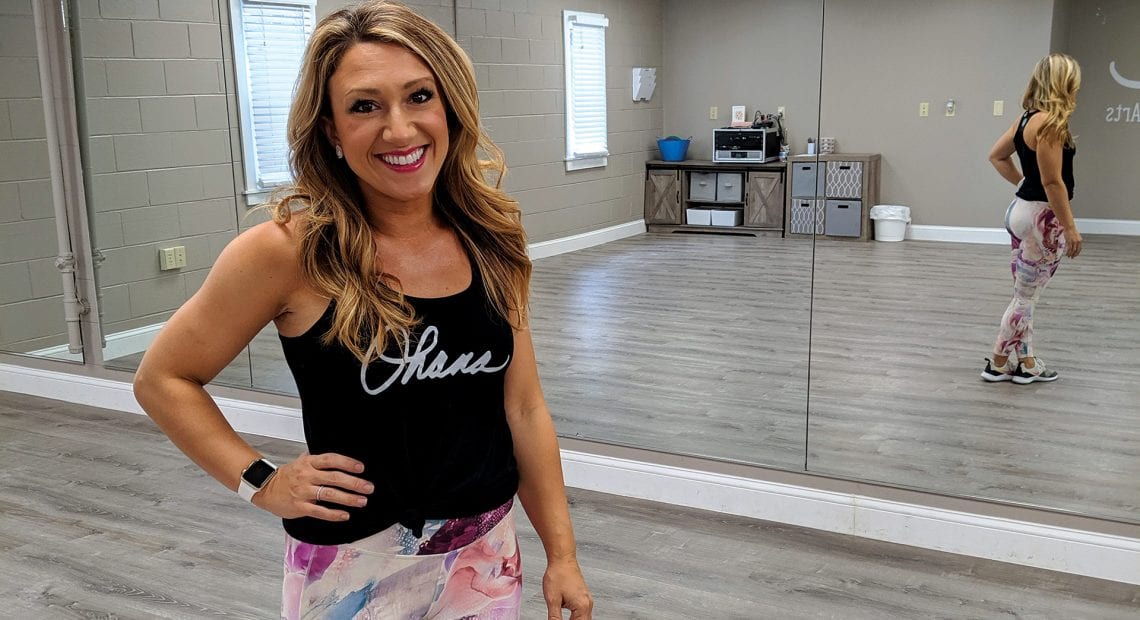
Green Business

Tyler Crawford (left), Lovin’ Spoonfuls Hampden County food rescue coordinator, and Big Y president and CEO Charlie D’Amour help make a delivery to the Longmeadow Food Pantry.

Meeting a Need

Hampden County has the highest rate of child food insecurity in the state of Massachusetts. In fact, more than 15% of children in the region may not know where or when their next meal will come from, and may lack access to enough food to lead an active, healthy life.

This is one of the reasons Lovin’ Spoonfuls, an organization dedicated to rescuing and distributing fresh food to communities in need, brought its project to Hampden County.

In explaining the significance of an elevated child food-insecurity rate, Lauren Palumbo notes that it not only affects those kids now, but may also negatively impact communities in the long term.

“You can’t expect these children to succeed in school if they’re not accessing adequate nutrition.”

“The challenging thing about food insecurity is that it often affects households with children at a much higher rate than it affects general households,” said Palumbo, the organization’s chief operating officer. “You can’t expect these children to succeed in school if they’re not accessing adequate nutrition.”

Palumbo told BusinessWest that Lovin’ Spoonfuls has been eyeing Hampden County for a couple years now, partially due to that high level of child food insecurity, and she hopes Lovin’ Spoonfuls can help aid those in need.

So far, Lovin’ Spoonfuls has rescued and delivered more than 13,300,000 pounds of food to nearly 40 cities and towns across Eastern Mass., she noted. “For us, it’s about growing regionally and serving the areas that have some of the greatest need, but our long-term goal is really to serve all of Massachusetts.”

Food Waste to Food Placed

Although it may not always be obvious, there is plenty of need in Hampden County.

Kathy Henry, food administrator at Friend’s Place Food Pantry in Springfield, serves up to 180 people and households on one of her two distribution days throughout the week. Monday is reserved for senior citizens age 60 or older, and normally draws up to 135 seniors, while Wednesday is open to all ages, and typically brings in up to 180 people or families.

Founder and Executive Director Ashley Stanley kicks off the launch of Lovin’ Spoonfuls in Hampden County.

Henry said Lovin’ Spoonfuls reached out to her about delivering food right when she lost a few volunteers who used to pick up food for her.

“It was perfect timing that they stepped in,” she said. “I have no complaints. I greatly appreciate the service.”

Henry’s food pantry is one of 17 that Lovin’ Spoonfuls delivers to in Hampden County. The organization works to deliver food that would otherwise be wasted to nonprofits in Chicopee, East Longmeadow, Holyoke, Longmeadow, South Hadley, Springfield, and West Springfield.

The route in Hampden County is expected to rescue an estimated 10,000 pounds of fresh produce, dairy, proteins, and prepared foods from grocery stores in the region every week, including inaugural retail partner Big Y, whom Palumbo says has been a pleasure to work with.

“Oftentimes, it’s sort of a learning curve to get a business on board, but their team has been absolutely on board since day one and has been really consistent and amazing to work with,” she noted.

This proved to be true at the Hampden County launch of Lovin’ Spoonfuls on July 22, when Big Y President and CEO Charlie D’Amour was the first volunteer to jump in the back of the truck to help deliver food to Longmeadow Open Pantry.

“It’s not every day we get the president and CEO of a retailer into the back of a truck to move boxes,” Palumbo said.

At the launch, D’Amour said he’s always been troubled by the waste endemic to the supermarket business, and he’s glad there is now a way to use the extra food to serve those in need.

Tyler Crawford says working for Lovin’ Spoonfuls gives him the opportunity to give back to the community he grew up in.

“With Lovin’ Spoonfuls, we have a wonderful opportunity to connect that much more and in a very timely way,” he said. “It’s food rescue for a reason because it would just be going to waste, and there’s an opportunity to have it not go into the landfills, but have it go and do some wonderful good.”

Right now, Hampden County food dropoffs are run by driver Tyler Crawford, a 23-year-old who grew up in Springfield. He said he was looking for a way to give back to the community when he saw Lovin’ Spoonfuls was coming to the area.

“I had been looking for something meaningful for work,” he said. “I don’t like just having a job to make money; I prefer to do something I’m passionate about, which is mostly helping people.”

Food for Thought

But a dedicated team isn’t the only thing that makes what Lovin’ Spoonfuls does possible. Palumbo says it takes about $140,000 a year to run this operation, from staffing costs to training right down to the truck itself.

“The real lift is, obviously, making sure that we have the funds in place to stay and make a strong commitment to the community,” she said, adding that the last thing she wants to do is enter a community and have to pull back if the funding is not there.

“With Lovin’ Spoonfuls, we have a wonderful opportunity to connect that much more and in a very timely way. It’s food rescue for a reason because it would just be going to waste, and there’s an opportunity to have it not go into the landfills, but have it go and do some wonderful good.”

If operating at full capacity, each truck can rescue up to 600,000 pounds of food a year, adding up to more than 3 pounds per dollar for the cost of operating the vehicle.

“There is not a single county in this country that is not wasting food,” she noted. “So much energy goes into producing and transporting food, and then to throw 40% of it away, you’re wasting the resources and the human labor and all of the effort that went into doing this in the first place. For us, it’s an environmental issue as well.”

The most important impact, however, may be on the thousands of people who are food-insecure across the state.

“This is not a problem of supply. Hunger has been a problem in this country for a number of years, but it is not a question of us not having enough food,” Palumbo said. “We produce more than enough food to feed everyone, but it’s about getting it to them.”

Kayla Ebner can be reached at [email protected]

Opinion

Editorial

In the U.S., 150,000 tons of food is wasted every day.

This equals about a pound of food per person, or about a third of the daily calories that each American consumes. What may not be totally obvious when we throw out that banana with a brown spot on it, or the slightly mushy red pepper, is that all this food waste contributes to a much bigger problem in America — the waste of about 40% of country’s food production.

This shocking fact shared by the Center for EcoTechnology is a testament for just how serious the food-waste epidemic is.

In addition, according to the Environmental Protection Agency, wasted food is the single biggest occupant in American landfills. The food we throw out affects our lives in more ways than one, including our own financial resources and a bigger carbon footprint.

Thankfully, while food waste remains a huge problem in America and the world, more and more awareness is being brought to this subject, and more action is being taken to significantly reduce this problem. This includes organizations like Lovin’ Spoonfuls, a nonprofit dedicated solely to food rescue and distribution in Massachusetts.

Lovin’ Spoonfuls picks up food from more than 75 vendor partners in refrigerated trucks and serves more than 40 cities and towns across Massachusetts. It focuses primarily on perishable foods like fruits, vegetables, and dairy, which are the most likely to be wasted, and provides meals to more than 30,000 people a week.

Aside from organizations like this, there are simple ways families can do their part to significantly reduce food waste — everything from planning meals for the week before going to the grocery store to freezing foods that won’t be eaten right away. Looking in the refrigerator and cabinets and cooking food already on hand — and saving leftovers for lunch or dinner the next day — are other habits that add up over 128 million American households.

Businesses are increasingly implementing food-waste reduction strategies as well — spurred in many cases by state regulation. The bottom line is, if everyone tries a little each day to help, significantly less food will be wasted and dumped into landfills.

While Massachusetts in general has been a national leader in addressing food waste, it is important that individuals do their part by implementing their own strategies. With the help of organizations like the Center for EcoTechnology and Lovin’ Spoonfuls, we can only hope those shocking food-waste numbers begin to go down in the next several decades.

Opinion

Opinion

By Christine Palmieri

September is National Recovery Month. ‘Recovery’ is a word that gets used a lot in the world of mental health and addiction services, sometimes so much so that I think we can easily lose sight of what it represents. In my role with the Mental Health Assoc. (MHA), I often have the opportunity to talk to newly hired staff about the idea of recovery. We discuss what it means and what it can look like in the context of working with people who have experienced trauma, homelessness, psychiatric diagnosis, and substance problems.

When I ask new staff the question, “what does it mean to recover?” I frequently hear things like “getting better” or “getting back to where you were” or “having a better quality of life.” Although I tell staff there are no wrong answers to this question, secretly I think there are. They’re common and easy, but insufficient.

As with many things, I think it’s easier to talk about what recovery is by defining what it isn’t. For me, recovery isn’t a cure. It isn’t a finish line or a place people get to. It isn’t a goal that can be neatly summarized in a treatment plan. I believe recovery is a process that is unique and intimately personal to the individual going through it. Ultimately, though, I think the answer to the question “what does it mean to recover?” should be “it isn’t for me to say.”

I believe recovery is a process that is unique and intimately personal to the individual going through it.

As providers of services, or as loved ones, community members, and policy makers, I don’t believe it’s up to us to define what recovery means or looks like for people going through it. Each person needs to examine and define what it means to them. For the rest of us, I think the more important question is “what makes recovery possible?” When the question is posed this way, we are able to engage this idea of recovery in a much different and more productive way. This question offers the opportunity to share the responsibility and partner with those we support.

The analogy of a seedling is often used when describing this process of recovery, and one I use when I talk to our new hires about their roles and responsibilities as providers of service. Seeds are remarkable little things. For me, they represent unlimited potential. A seed no bigger than a grain of rice contains within it everything it needs to grow into a giant sequoia. But no seed can grow without the right environmental conditions. No amount of force or assertion of control can make a seed grow. It needs the right soil, the right amount of water, and the right amount of light.

In the same way, within each person who has experienced trauma, homelessness, psychiatric diagnosis, or problems with substances, I believe there lies unlimited potential for growth, and each person needs the right environment for the process of recovery to take place. As providers, loved ones, community members, and policy makers, we very often control that environment. Metaphorically, we provide the soil, the water and the light.

Soil is the place where recovery begins. It offers a place for the seed to grow roots, to gather strength, security, and safety. Soil is what keeps trees rooted tightly to the ground through storms. It is our responsibility to offer environments where people in recovery feel safe and secure, to try out new ways of coping and new ways of managing the difficulties and challenges that life presents to all of us.

Water provides a seedling with essential nourishment. We need to find ways to support people in recovery to discover what truly nourishes them. The work of recovery is hard. It requires taking risks and feeling uncomfortable. We cannot do the work of recovery for anyone else, but we can and should work to help people in recovery find the supportive relationships, meaningful roles, and reasons to do that hard work.

Light provides the energy necessary for growth. In recovery, I believe light is offered through the hope and understanding that every person has within them the potential to live a full and active life in the community, whatever that means for them. As providers, loved ones, community members, and policy makers, it is our role to shine the light of hope for people who have experienced discrimination, loss of power and control, and in many cases a loss of their identity. We hold this hope and offer this light because we know, without question, that recovery, however it is defined, is not only possible, but is happening, right now, all around us.

Christine Palmieri is vice president of the Division of Recovery and Housing at MHA.

Picture This

Email ‘Picture This’ photos with a caption and contact information to [email protected]

Project SEARCH

Springfield College is once again collaborating with New England Business Associates and recently introduced the second cohort of interns participating in the community’s Project SEARCH program. The second cohort started at Springfield College the week of Sept. 2-6, and will continue on throughout the 2019-20 academic year. Project SEARCH’s mission is to help young adults with disabilities transition from school to work through a community agency partnership while gaining employability skills. The model involves an extensive period of training and career exploration, innovation adaptations, long-term job coaching, and feedback from teachers, job coaches, and employers.

Pictured, from left: Project SEARCH participants Zach and Jose; Springfield College Director of Multicultural Affairs Felicia Lundquist; and Ruth Poirier, New England Business Associates Project SEARCH program coordinator and division supervisor.


Effective Gateway

The Gateway to College program at Holyoke Community College (HCC) has been recognized for the third year in a row for its outstanding graduation rate, one of the best of all programs of its kind in the nation. The award for Graduation Achievement was presented in July to HCC Gateway’s director, Vivian Ostrowski (left, with Julissa Colon, special programs coordinator). Gateway to College is an alternative high-school program that offers dropouts and struggling teens a chance to earn their high-school diplomas through dual enrollment by taking college classes. Gateway students also collect transferable college credits they can apply toward a college certificate or degree. Since 2008, 384 students have earned their high-school diplomas through HCC’s Gateway to College program, and 33 have continued on to earn their associate degrees from HCC.

HCC Gateway’s director, Vivian Ostrowski (left, with Julissa Colon, special programs coordinator).


Pedal Power

More than 300 participants and volunteers gathered on Aug. 25 at Greenfield Community College for Wheeling for Healing, Baystate Franklin Medical Center’s yearly ride, walk, and run benefit to support oncology services. Past donations have been used to purchase state-of-the-art equipment such as new infusion chairs and exam tables to ensure patient comfort, support improvements for a better healing environment, and fund programs such as art therapy and yoga to encourage wholesome healing for patients and survivors.


Name That Ice Cream

In collaboration with Gran-Val Scoop, maker of gourmet homemade ice cream, Bulkley Richardson recently launched a challenge to create a new ice-cream flavor. The top three flavors were produced by Gran-Val Scoop and sampled by attorneys and staff at Bulkley Richardson on Aug. 20. The overwhelming winner was Executive Director Betsey Quick with ‘Butter Representation,’ a play on the law firm’s tagline, ‘better representation.’ The flavor consisted of peanut-butter ice cream with marshmallow and fudge swirls and crushed peanut-butter cups.


Community Support

Phillips Insurance Agency recently donated $1,000 to the Melha Shriners. Chris McMaster of Phillips Insurance (right) recently presented the check to Shriner Shonn Monday to support the 2019 Shriners Music Feztival, held Sept. 7 at the Three County Fair in Northampton.