Home 2023 (Page 19)
Daily News

BOSTON — The Massachusetts State Senate passed a $513 million supplemental budget for FY 2023 this week. Among other key priorities, the legislation funds flexible assistance for farms throughout the Commonwealth impacted by recent severe weather events.

“Investing in our people is vital to keeping the Commonwealth competitive, and that is precisely what this supplemental budget does,” Senate President Karen Spilka said. “This budget invests in the services that people around the Commonwealth use every day — the hospitals where people receive critical care, the special-education programs in our schools, and programs that improve quality of life for individuals and families who are low-income, among other state priorities. It also gives critical relief to farmers around the state who have been devastated by this year’s extreme weather.”

State Sen. Jo Comerford, assistant vice chair of the Senate Committee on Ways and Means, added that “I am tremendously grateful that the Senate is standing with farmers in the wake of a disaster with $20 million in funding for affected farmers and growers. These public funds will go out as direct grants. That’s money in the pockets of farmers who have experienced a massive hardship in the wake of the extreme flooding earlier this month and the frosts and freezes this past spring.”

In addition to the $20 million for natural-disaster relief for farms and affected areas, other direct appropriations include $180 million for relief to fiscally strained hospitals, $100 million for a supplemental transfer to the Pension Liability Fund, $75 million to support school districts with extraordinary special-education costs, $60.3 million for staffing needs at the Department of Transitional Assistance, $40 million for a reserve to support costs related to Tatum vs. Commonwealth of Massachusetts, $26.2 million for collective-bargaining-agreement costs, $10.7 million for public-health hospitals, $506,000 for interstate flood compact costs, and $200,000 for Department of Early Education and Care contingency contract costs.

Daily News

SPRINGFIELD — In the spring of 2017, BusinessWest and its sister publication, the Healthcare News, created a new and exciting recognition program called Healthcare Heroes.

It was launched with the theory that there are heroes working all across this region’s wide, deep, and all-important healthcare sector, and that there was no shortage of fascinating stories to tell and individuals and groups to honor. That theory has certainly been validated.

But there are hundreds, perhaps thousands of heroes whose stories we still need to tell. And that’s where you come in.

Nominations for the class of 2023 are due Saturday, July 29, and we encourage you to get involved and help recognize someone you consider to be a hero in the community we call Western Mass. in one (or more) of these seven categories:

• Patient/Resident/Client Care Provider;
• Health/Wellness Administrator/Administration;
• Emerging Leader;
• Community Health;
• Innovation in Health/Wellness;
• Collaboration in Health/Wellness; and
• Lifetime Achievement.

Nominations can be submitted at businesswest.com/healthcare-heroes/nominations.

For more information, call Melissa Hallock, Marketing and Events Director, at (413) 781-8600, ext. 100, or email [email protected].

Daily News

GREENFIELD — Thanks to a generous donor community, the Greenfield Community College (GCC) Foundation is giving $100,000 to the college to ensure all students have access to critical technology to achieve their educational goals.

The funds will be used to purchase laptops for GCC’s technology lending library, securing enough of the technology to provide one to any matriculated student who needs it. The laptops will be available for matriculated students when the fall semester starts in September.

“We’re dedicated to our students and their dreams of completing a college education, and this program will ensure that technology won’t stand in the way of their success,” said Chet Jordan, vice president of Academic and Student Affairs.

GCC Foundation Executive Director Alexis Page added that “we are thrilled to help GCC provide much-needed technology for GCC students so they can successfully pursue their education.”

The technology lending library is operated through GCC’s library. The lending library also features other items students can borrow at no cost, like WiFi hotspots, digital cameras, voice recorders, and more.

The lending library is just one part of the complete wrap-around services GCC provides students to ensure their success, including access to student emergency funds, tutoring, disability services, a food pantry, and a fitness center and rock-climbing wall. GCC is also planning to reintroduce its internship program for students to get real-life skills while still in college to prepare them for their careers.

Daily News

AGAWAM — Yankee Mattress Co., a local, employee-owned maker of handcrafted mattresses, has found an innovative way to support a local nonprofit organization while improving its own sustainability goals.

“There is a comfort layer on the top of our mattresses, and when we get to the end of the roll, we always have excess material that’s not quite big enough for a mattress,” said Adam Miller, president of Yankee Mattress Co. “Our lead mattress maker, Aaron Bisson, had the idea to use the surplus to make pet beds, instead of disposing of it. Then Bill Lamirande, our vice president of Sales, suggested donating the beds to Dakin Humane Society as a way to support the great work they do in our community.”

Lamirande coordinates with the Dakin team to customize the sizes needed, including small beds that fit inside the pet carriers the adopted animals go home in, and bigger beds for larger dogs. The number of beds Yankee Mattress creates is based on the amount of excess bedding material it generates.

“The more beds we sell, the more pet beds we can create,” Miller said. “This partnership is a creative way for us to reduce waste while supporting a cause we all believe in.”

Located in Springfield, Dakin Humane Society provides shelter, medical care, spay and neuter services, and behavioral rehabilitation for more than 20,000 animals and people each year.

“We are so grateful for this ongoing donation from Yankee Mattress,” said Kaitlyn Holloway, Dakin’s Community Engagement manager. “We rely solely on contributions from individuals and businesses who care about animals, and these beds allow us to enhance the care and comfort we provide. The idea was a stroke of brilliance.”

Daily News

GREAT BARRINGTON — Berkshire Agriculture Ventures (BAV), a nonprofit organization dedicated to supporting local agriculture and resilient food systems in the Berkshire-Taconic region, announced the appointment of Patrick Grego as its full-time Communications and Development associate.

Grego comes to BAV with a background in nonprofit communications. After moving from Brooklyn, N.Y. to Hudson, N.Y. in 2021, he served as a Communications coordinator at Time & Space Limited, a community arts center in Hudson, and later as Communications assistant at the Olana Partnership.

Grego has a passion for storytelling. His writing has been published in several regional newspapers, including the Times Union and Chronogram’s River Newsroom. He recently won the New York Newspaper Publishers Assoc. award for distinguished feature writing.

“We are thrilled to welcome Patrick to the Berkshire Agricultural Ventures team,” said Rebecca Busansky, executive director of BAV. “We are excited to work with him to help share the stories of our farmers and amplify our work in the food system. His enthusiasm provides great promise in advancing our work to create a thriving local food economy.”

Berkshire Agricultural Ventures has been a driving force in the Berkshire region, providing farmers and food producers with vital resources, technical assistance, and financing opportunities. The addition of Grego to the team will further strengthen the organization’s ability to engage the community, expand its network, and advance its mission of creating a resilient and sustainable food system for all people.

“I am honored to join Berkshire Agricultural Ventures and contribute to their impactful work in sustainable agriculture,” Grego said. “I believe that supporting local farmers and promoting environmentally friendly practices is crucial for the health of our community and our climate. I am excited to help raise awareness and foster connections that drive positive change.”

Daily News

SPRINGFIELD — American International College (AIC) announced the appointment of Shefali Desai as the newest member of its board of trustees.

With a career spanning more than 30 years in the financial-services industry, including 22 years at MassMutual, Desai brings a wealth of knowledge and expertise to her new position on the AIC board. In her role as head of Worksite at MassMutual, she has been instrumental in driving the success of MassMutual’s Worksite business, offering voluntary benefit and executive group life solutions through employers to the mass market.

Before assuming her current position at the company, Desai served as the leader of the Strategy and Analytics team for MassMutual Workplace Solutions. Additionally, she has served as the Emerging Market sales manager of the MassMutual Retirement Services Sales Division.

A graduate of Babson College, Desai joined the Bucknell University Parents Board in 2022 and has been actively involved in a variety of initiatives, including new-student orientations, fostering diversity and inclusion efforts, and providing career-counseling support.

With her extensive background in the financial-services industry, Desai’s presence on the board of trustees aligns with AIC’s core mission of empowering students, fostering academic excellence, and driving innovation in higher education.

Daily News

GREENFIELD — LifePath was awarded more than $450,000 by the Healey-Driscoll administration for the creation of a community enrichment center. The center will provide a space where older adults and people with disabilities can enjoy respite, activities, and socialization with people of all ages, while caregivers can take a break and receive information needed to help their loved one remain at home.

The administration sought innovative models to identify promising practices to relieve caregivers of the stress acquired from the exceptional demands of caring for individuals with complex needs, to close service gaps, and to provide person-centered respite in home- and community-based settings.

“So many people in our state act as primary caregivers for others every single day,” Secretary of Health and Human Services Kate Walsh said. “It is important to provide these caregivers with the opportunity to rest, while still ensuring continuity and high-level quality of care that is both culturally and linguistically appropriate to those who rely on them.”

LifePath is partnering with the Care Collaborative (TCC), a local nonprofit serving elders and their caregivers for more than 20 years. Programming will start in late fall. The day program will be hosted by TCC at its Sunderland location.

“All of the work originates from the foundational belief that, in order for elders to be well-cared-for and supported, they must have well-supported caregivers,” said Sue Pratt, executive director and founder of TCC.

Through this grant, TCC will recruit and train paid caregivers who can gain experience at the center and then go into people’s homes to provide respite care. In-home training on the best way to care for their loved one can also be provided to family and informal caregivers.

“We see the center as a one-stop shop for caregivers,” said Diane Robie, director of Client Services at LifePath. “We want caregivers — paid and unpaid — to know they are not alone.”

The center will be a place where caregivers can get information and resources specific to their unique caregiving needs, and where they can access help navigating healthcare and social systems. In addition, there will be self-care offerings like massage and yoga, as well as peer support.

The center will partner with local colleges and universities to provide internships for those who are interested in learning more about the needs of this population. Interns will have opportunities to learn with and from caregivers and those who are entering the direct-care workforce by participating in activities at the center, attending workshops, and providing specialized services.

“We want this to be a multi-generational center where, one day, there might be elementary children joining for a music session, and another day high-school students might be leading an activity on building birdhouses,” Robie said. “We see this as an innovative approach to bridge fragmented systems of care and build strong and lasting relationships of support.”

Anyone interested in learning more about the center or being part of a planning group should contact Robie at [email protected] or (413) 773-5555.

Daily News

HADLEY — UMassFive College Federal Credit Union announced a recent donation of $2,500 to aid local farms impacted by the recent severe flooding in Western Mass.

The donations, made directly to the farms, have provided essential support to farmers who have all faced significant challenges due to the devastating floods, including Natural Roots Farm, Mountain View Farm, Pepin Farm, Community Care Apothecary, Song Sparrow Farm, Stone Soup Farm, New Community Farming Cooperative, World Farmers’ Flats Mentor Farm, and the Grow Food Northampton Community Farm. This initiative reflects UMassFive’s commitment to supporting the local community and promoting sustainable agriculture.

UMassFive’s longtime partner, Community Involved in Sustaining Agriculture (CISA), has compiled a comprehensive list of farms affected by the flooding. This list helped UMassFive identify the farms that required urgent assistance and ensure that the donated funds reach those who needed it the most. CISA’s expertise was instrumental in this endeavor.

“We are deeply connected to our community and our members, and we understand the critical role that local farms and local food play in our lives,” said Craig Boivin, vice president of Marketing at UMassFive College Federal Credit Union. “Our donation to the local farms impacted by the floods is an expression of our gratitude and commitment to helping our neighbors in their time of need. We believe in the power of collective efforts to bring positive change and make a difference in the lives of those who sustain us.”

UMassFive urges members of the community to join the effort in supporting local farms impacted by the floods. Those interested may visit CISA’s website, www.buylocalfood.org, to find a flood-resources page with information about relief efforts and where to make donations.

Daily News

HOLYOKE — Holyoke Community College (HCC) Culinary Arts Professor Warren Leigh has been named Educator of the Year by the Center for the Advancement of Food Service Education (CAFE), a national industry group.

Leigh, a professional chef and restaurateur who has been teaching at HCC for 15 years, received his award June 21 at the 2023 CAFE Leadership Conference in Charleston, S.C.

“It’s pretty cool,” he said. “It’s nice to be recognized. It’s humbling.”

Leigh also received honorable mention for CAFE’s annual Community Outreach award. He was nominated for both by Chef Paul Sorgule, a retired culinary educator and president of Harvest America Ventures, a restaurant consulting and training company.

Sorgule said he has known Leigh for more than 40 years and has watched him mature into a talented chef, restaurateur, and teacher.

“Even at a young age, he had a strong inclination toward serving others, and the kitchen drew him in,” Sorgule said. “His professional work and personal life experiences became the stories that brought his classrooms to life, but it is also his unwavering commitment to professional standards, his passion for the craft, and his unique empathy for students trying to figure out where they fit that makes him very special as an educator.”

In receiving the Educator of the Year award, Leigh, co-chair of HCC’s Culinary Arts program, was recognized for his part in designing the HCC MGM Culinary Arts Institute, the college’s state-of-the-art teaching facility on Race Street that opened in 2018; reimagining the culinary-arts curriculum; creating a line-cook training program in collaboration with HCC’s non-credit business and workforce division; and pushing forward on his concept for a mobile kitchen where students could learn food-truck operations while also teaching the community about nutrition and healthy eating.

“Throughout my 14 years of knowing Warren, first as a student and currently as a colleague, he has always had a heartfelt commitment to serving our students, as well as our greater community,” Maureen Hindle, a culinary-arts alum who now works as a lab tech at the HCC MGM Culinary Arts Institute, wrote in support of Leigh’s nomination.

Leigh holds a bachelor’s degree in food service administration from the Rochester Institute of Technology and a master’s degree in management from the University of Phoenix. He trained extensively as a chef in Germany and Switzerland.

He is the owner, operator, and executive chef for Hydrangea Catering & Consulting and has worked over the years in many capacities at restaurants in Connecticut (including the Standish House in Wethersfield, Madeleines in Windsor, and the Eatery in East Windsor) and Western Mass.

“As a product of his work myself, I can attest to his superb teaching and knowledge,” said HCC alumnus Matthew Enos, now an executive sous chef at Johnny’s Bar and Grille in South Hadley. “Chef Leigh has given me a great stepping stone to launch a career in culinary.”

Daily News

LONGMEADOW — Bay Path University has been ranked third in the nation for its online cybersecurity master’s degree program by Fortune magazine, up from last year’s position at number 11.

Rankings were determined by a program’s selectivity score, which measures the undergraduate GPAs and years of work experience of its students, along with the program’s acceptance rate. In addition, Fortune evaluated retention and graduation rates, as well as the size of each graduating class.

“We’ve known for a long time that cybersecurity is an important and in-demand professional niche, and we have consistently developed our program to fill that niche,” said Matt Smith, director of Bay Path’s cybersecurity program. “There’s such a tremendous incentive for businesses and organizations to enhance the security of their operations, and this creates jobs that offer ongoing opportunities for growth and advancement, especially for women, who are underrepresented in this segment of the workforce.”

In addition to its cybersecurity graduate program for men and women, Bay Path offers an NSA- approved bachelor’s degree in cybersecurity to undergraduate women.

Bay Path was recognized in 2023 as a Center of Academic Excellence in Cybersecurity Education (CAE).

“Cybersecurity is a fast-growing, highly paid profession that delivers upon the promise Bay Path has been making to students since our earliest days: in-demand skills that lead to growth-oriented jobs and the economic determinism that comes with those jobs,” Bay Path President Sandra Doran said. “It’s an exciting arena to be in, and we’re hoping to promote the amazing opportunities that exist in cyber to even more students.”

According to data from the U.S. Bureau of Labor Statistics, demand for cybersecurity professionals is expected to grow by 35% over the next decade, more than four times faster than the average for all occupations. In 2022, the median annual salary for cybersecurity analysts in the U.S. was approximately $135,000.

Daily News

SPRINGFIELD — Freedom Credit Union announced the promotion of Eric Garcia from assistant branch officer to branch officer at its main office in Springfield. He first joined the Freedom team in September 2020 as a member services representative and, due to his potential and initiative, was quickly promoted to the role of assistant branch officer in November 2021. With this latest promotion to branch officer, he will assume responsibility for the day-to-day operations of the main branch.

“Eric’s dedication, professionalism, and commitment to our members make him the perfect fit for this leadership role,” Freedom Credit Union President Glenn Welch said. “He has frequently filled in for officers at other branches and had the employees singing his praises.”

Throughout his tenure at Freedom, Garcia has been recognized for his outstanding contributions. He is a recipient of both the prestigious GEM Award and the President’s Award, highlighting his exceptional work ethic, commitment to excellence, genuine kindness, and positive impact on the organization.

“Eric has consistently demonstrated exceptional management skills and has earned the trust and respect of his entire team,” Welch said. “We are confident that, under his guidance, our main branch will continue to thrive and provide our members with the exceptional service they deserve.”

Daily News

EASTHAMPTON — Matthew Sosik, president and CEO of bankESB, announced that the bank is awarding up to $25,000 in a matching challenge grant to support the Amherst Hurricanes Boosters’ Transformative Uses for Regional Fields (TURF) Project. Alongside the support of parents and community members, the total could reach as much as $50,000.

The Amherst Hurricane Athletic Boosters approached bankESB in search of a community partner to help them replace and reorient the condemned 23-year-old track and field with a usable, eight-lane track and year-round playable fields offering the best pedagogical experience and community gathering place in the area. To support their fundraising initiative, they wanted a partner who shared their commitment to eco-friendly facilities, health and wellness, equal access, safety, and innovation.

This matching grant gives parents, families, and community members the opportunity to purchase a seat or row in the new stands that would receive a named plaque, with bankESB matching donations dollar for dollar up to $25,000.

“What an amazing opportunity for student-athletes to have a facility like this to use year-round to help unlock their full potential,” Sosik said. “bankESB is proud to stand with our community in Amherst, and we look forward to breaking ground on such an impactful project.”

Organizations and community members contributing to the Amherst TURF Project can double the impact of their donations through this matching grant. Contributions may be sent to the Amherst Hurricanes Boosters office at 141 North Pleasant St., Amherst, MA 01002, or made online at hurricaneboosters.com.

Daily News

EASTHAMPTON — Hometown Financial Group, parent company of bankESB, announced it was named a 2023 Financial Services Industry Top Workplaces national award winner.

This award is based solely on feedback from employees of participating workplaces, gathered through an anonymous, third-party survey administered by Energage LLC, a leading provider of technology-based employee-engagement tools. Industry Top Workplaces awards celebrate organizations that have built a people-first workplace culture and mark them as an employer of choice within their sector.

This is the second year in a row that bankESB’s parent company has been recognized nationally in the financial-services industry category. The company also was named a national Top Workplaces USA winner in 2022.

“To be nationally recognized as an employer of choice in financial services is a tremendous honor, particularly since it’s the direct result of feedback from those who know us best: our employees,” bankESB President and CEO Matthew Sosik said. “I’m proud of our employees’ passion and dedication to helping our customers, our communities, and each other unlock their potential, every day. As an employer, we’re equally committed to nurturing an environment where everyone feels valued and respected, and where employees can unlock their own potential, personally and professionally.”

“Earning a Top Workplaces award is a badge of honor for companies, especially because it comes authentically from their employees,” Energage CEO Eric Rubino said. “That’s something to be proud of. In today’s market, leaders must ensure that employees have a voice and are heard. That’s paramount. Top Workplaces do this, and it pays dividends.”

Daily News

PITTSFIELD — U.S. Rep. Richard Neal joined Pittsfield Mayor Linda Tyer and city officials to announce a $3 million earmark to renovate the grandstand at Wahconah Park.

The allocation was made possible through congressionally directed spending from the Department of Housing and Urban Development. Neal included funding for this project in the FY 2023 spending bill that was signed into law on Dec. 29, 2022.

“Listed on the National Register of Historic Places, Wahconah Park is a true gem in the city of Pittsfield, one where countless memories have been made over the course of generations. Maintaining this historic park and the sense of tradition that comes with it is of great importance to the Berkshires, which is why I am proud to have procured $3 million to make this project a reality,” Neal said. “Congress has the fundamental responsibility to oversee the expenditure of the public purse, and this investment is one that I believe will be of great service to the Berkshire community and regional economy.”

A recent structural evaluation of the ballpark’s grandstand revealed significant concerns with the structural-steel system under the grandstand, making it unusable in its current condition. The improvement project will rebuild the grandstand and bring it into compliance with modern building codes, enhance the fan and operator experience, and preserve the character-defining elements that have made this historic park a beloved sports and entertainment venue for generations.

“I am grateful for Congressman Neal’s support toward one of Pittsfield’s longstanding treasures,” Tyer said. “We now have access to resources that will enrich the visitor experience for both present and future generations to come.”

Daily News

SPRINGFIELD — The Rotary Club of Springfield held its annual Changing of the Guard event at the Naismith Memorial Basketball Hall of Fame in Springfield on July 13.

The Changing of the Guard holds deep significance as it represents the seamless transition of leadership within the club, symbolizing growth and continuity. During the ceremony, the club expresses gratitude for the accomplishments and dedication of the outgoing officers while extending a warm welcome to the incoming team, who will steer the course of the club’s activities and initiatives in the forthcoming year.

“We are truly honored to gather at the Naismith Memorial Basketball Hall of Fame and pay tribute to our outgoing officers while embracing the fresh perspectives and enthusiasm of our incoming leaders,” said Marie Angelides, newly elected president of the Rotary Club of Springfield. “The Changing of the Guard event encapsulates the dedication and passion of our club members.”

Angelides takes over for Samalid Hogan, who served as Rotary Club of Springfield president for the past year.

Daily News

SPRINGFIELD — In the spring of 2017, BusinessWest and its sister publication, the Healthcare News, created a new and exciting recognition program called Healthcare Heroes.

It was launched with the theory that there are heroes working all across this region’s wide, deep, and all-important healthcare sector, and that there was no shortage of fascinating stories to tell and individuals and groups to honor. That theory has certainly been validated.

But there are hundreds, perhaps thousands of heroes whose stories we still need to tell. And that’s where you come in.

Nominations for the class of 2023 are due Saturday, July 29, and we encourage you to get involved and help recognize someone you consider to be a hero in the community we call Western Mass. in one (or more) of these seven categories:

• Patient/Resident/Client Care Provider;
• Health/Wellness Administrator/Administration;
• Emerging Leader;
• Community Health;
• Innovation in Health/Wellness;
• Collaboration in Health/Wellness; and
• Lifetime Achievement.

Nominations can be submitted at businesswest.com/healthcare-heroes/nominations.

For more information, call Melissa Hallock, Marketing and Events Director, at (413) 781-8600, ext. 100, or email [email protected].

Business Talk Podcast Special Coverage

We are excited to announce that BusinessWest has launched a new podcast series, BusinessTalk. Each episode will feature in-depth interviews and discussions with local industry leaders, providing thoughtful perspectives on the Western Massachuetts economy and the many business ventures that keep it running during these challenging times.

Go HERE to view all episodes

Episode 172: July 24, 2023

BusinessWest Editor Joe Bednar talks to Valley Blue Sox General Manager Tyler Descheneaux

It’s not easy building a sports franchise that wins on the field while consistently growing its attendance and presence in the community. But the Valley Blue Sox, which has brought collegiate summer baseball to Holyoke since 2008, has certainly done both. On the next installment of BusinessTalk, as the team makes a late-season playoff push, General Manager Tyler Descheneaux joins BusinessWest Editor Joe Bednar for a wide-ranging discussion of what it takes to build a roster; how the team is connecting with families, businesses, and nonprofits through promotions and community outreach; how attendance has been ticking back up since the pandemic; and much more. It’s must listening, so tune in to BusinessTalk, a podcast presented by BusinessWest and sponsored by PeoplesBank.

Sponsored by:

Also Available On

Daily News

SPRINGFIELD — Dietz & Company Architects Inc. announced that Kyle Young, AIA has been promoted to the position of senior architect.

Young joined the firm in 2014 as an architectural associate upon graduating with his master of architecture degree from UMass Amherst. Now as a senior architect, he manages medium- to large-sized construction projects specializing in renovations and new construction for multi-family housing. He also serves as the firm’s AXP mentor/supervisor, supporting employees on their paths to architectural licensure.

“Kyle has been a valuable asset to our team for almost 10 years and has contributed to several successful projects throughout the Pioneer Valley,” Principal Jason Newman said. “He consistently goes above and beyond to ensure the success of the projects he works on, and this promotion is a testament to his dedication. We are committed to nurturing career growth and promoting from within, so it has been exciting for us to see Kyle flourish since joining the firm as a new grad to now reaching this latest milestone in his career.”

As Young takes on the additional responsibilities of his new role, he will continue to lead the teams on his current projects.

Daily News

HOLYOKE — PeoplesBank has been recognized as a Top Corporate Charitable Contributor for the 16th year in a row by the Boston Business Journal.

Only 100 companies throughout the state are recognized, and PeoplesBank shares the spotlight with such national brands as Procter & Gamble, AT&T, and Dell Technologies, as well as local names like the Red Sox Foundation, Blue Cross Blue Shield, and MassMutual.

PeoplesBank supported more than 450 nonprofits in the communities it serves in 2022, with both financial support and volunteerism from the associates.

Daily News

HADLEY — Curran and Keegan Financial recently welcomed two additions to its team, Amy Watts Bovaird and Megan Rooney.

Watts Bovaird spent more than a decade fundraising for an academic institution, nonprofits, and a trade association, sparking her interest in personal finance. In 2020, she made a career transition and pursued her FINRA Securities Industry Essentials, Series 66, and Series 7 certifications, and spent more than a year advising at a major firm. At Curran and Keegan, she is a financial advisor and is pursuing the certified financial planner certification.

Rooney joined the team as a client services associate. She is a recent graduate of Mount Holyoke College, where she received her bachelor’s degree with a concentration in politics. It was during her studies that she became fascinated with personal finance and decided to venture into financial planning. She completed her FINRA Securities Industries Essentials certification as a primary step into the field, and is now pursuing the FINRA Series 7 certification.

Daily News

BOSTON — The state’s June total unemployment rate was 2.6%, down 0.2% from the revised May estimate of 2.8%, the Executive Office of Labor and Workforce Development announced.

The Bureau of Labor Statistics (BLS) preliminary job estimates indicate Massachusetts lost 4,500 jobs in June. This follows May’s revised gain of 7,300 jobs. The largest over-the-month private-sector job gains were in professional, scientific, and business services; financial activities; and leisure and hospitality. Employment now stands at 3,762,800. Massachusetts gained 701,200 jobs since the employment low in April 2020.

From June 2022 to June 2023, BLS estimates Massachusetts gained 96,200 jobs. The largest over-the-year gains occurred in education and health services; professional, scientific, and business services; and leisure and hospitality.

The state’s June unemployment rate of 2.6% was 1.0 percentage point below the national rate of 3.6% reported by BLS.

The labor force decreased by an estimated 7,400 from the revised estimate of 3,728,300 in May, as 2,100 more residents were employed and 9,500 fewer residents were unemployed over the month. Over the year, the state’s seasonally adjusted unemployment rate was down by 1.1%.

The state’s labor-force participation rate — the total number of residents 16 or older who worked or were unemployed and actively sought work in the last four weeks — dropped by 0.1 percentage point to 64.6% over the month. Compared to June 2022, the labor-force participation rate was down 0.7%.

Daily News

SPRINGFIELD — The Springfield Jazz & Roots Festival kicks off today, July 21, in and around Stearns Square in downtown Springfield and continues through Saturday, July 22. This year marks the 10th annual festival.

“We are so proud to welcome residents and visitors to the 10th annual Springfield Jazz & Roots Festival, an event that unites people through music, art, and fostering a sense of community,” Mayor Domenic Sarno said. “We are also proud to continue to support the organizers at Blues to Green and commend them for their hard work to put together a thoughtful and entertaining experience with a positive impact for our community.”

Visit springfieldjazzfest.com for the full schedule of events and music lineup.

Daily News

EASTHAMPTON — The Healey-Driscoll administration and the United Way of Central Massachusetts (UWCM) announced the creation of the Massachusetts Farm Resiliency Fund, a partnership between philanthropic organizations and private foundations intended to support Western and Central Mass. farms impacted by recent flooding and strengthen farm resiliency in the long term. Officials made the announcement Thursday at Mountain View Farm in Easthampton, which had much of its crop destroyed by flooding.

The Massachusetts Department of Agricultural Resources estimates at least 75 farms have been hurt by flooding, with about 2,000 acres in crop losses at a minimum value of $15 million. That number will likely climb as more damage is assessed and the longer-term impacts set in.

“As the lieutenant governor and I have visited farms across the state, we’ve been deeply moved by the devastating impacts we’ve seen and heartbreaking stories we’ve heard,” Healey said. “We’re grateful to our philanthropic and private partners for quickly answering the call to action and creating this fund to deliver relief directly to farmers. This is about team Massachusetts, where we come together to support farmers and their livelihoods, build resilience for our farms and food supply, strengthen our economy, and create a stronger future for our children and families.”

Massachusetts Department of Agricultural Resources Commissioner Ashley Randle added that, “for generations, our farms have been part of our cultural heritage and the fabric of our local communities. As heartbreaking as it has been to see our farming community hit hard this past week, I’m truly inspired to see the community step up and rally around our farmers with this partnership that will bring much-needed relief.”

To ensure farmers can begin recovery as quickly as possible, all funds will be distributed rapidly by the United Way through a deliberate selection process. Massachusetts Attorney General Andrea Joy Campbell and private foundations, including the Eastern States Exposition, Community Foundation of Western Massachusetts, and Community Involved in Sustaining Agriculture, have already announced their support.

“The Massachusetts Farm Resiliency Fund is a most beautiful demonstration of real partnership, united in compassion and united in purpose to support and assist our farmers,” said Tim Garvin, president and CEO of United Way of Central Massachusetts. “We at United Way are proud to be partners in this effort. We are hopeful that many will be inspired to contribute.”

Daily News

SPRINGFIELD — Junior Achievement of Western Massachusetts (JAWM) announced it has received a $10,000 donation from the Joseph & Anna C. Dias Jr. Family Foundation, in partnership with LUSO Federal Credit Union, to fund age-appropriate financial-literacy programs for students in Ludlow.

“It is an honor to once again work with LUSO Federal Credit Union, through the generosity of the Joseph and Anna C. Dias Jr. Foundation, to bring our programs to the young people in Ludlow,” said Jennifer Connolly, JAWM president. “Volunteers from the credit union, along with community and business volunteers, routinely donate their time and talents to inspire and prepare students at St. John the Baptist School, East Street School, and Harris Brook Elementary School to succeed in their futures.”

Maria Gomes, trustee for the Joseph & Anna C. Dias Jr. Family Foundation, added that “we are pleased to partner with LUSO Federal Credit Union to support the mission of Junior Achievement to deliver age-appropriate financial-literacy programs to local students in Ludlow schools. The connection between the school and the business community is important to help students understand how what they are learning will be applied in their personal and business life.”

JAWM programs are offered at no cost to schools and community groups throughout the four counties of Western Mass.

“We are delighted to coordinate the volunteers for JA with our employees, including having many of our employees teach classes,” said Sharon Dufour, chief financial officer at LUSO Federal Credit Union. “We view the JA program as a real-life learning extension of our school banking program, and we thoroughly enjoy the time we spend in the classrooms engaging with the students and teachers.”

Daily News

SPRINGFIELD — MP CPAs recently promoted Meghan Boone to senior audit associate at the firm. She works to provide quality audit services to a diverse group of clients, including for-profit companies, nonprofits, employee benefit plans, and charter schools. She has begun to develop relationships with her clients and has enjoyed working with them on their audits, reviews, and compilations.

Boone joined the firm in 2020. She holds a bachelor’s degree in management and accounting from Westfield State University. She also works closely with colleagues from Westfield State to continue a mentoring and recruiting relationship with her alma mater.

Features

Local Connections


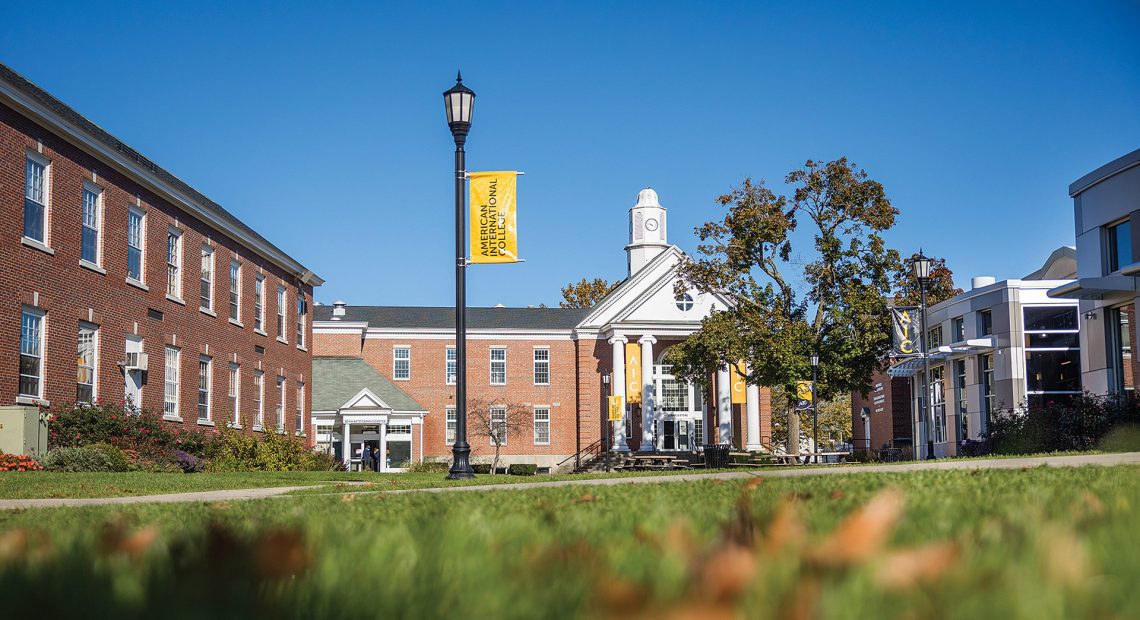
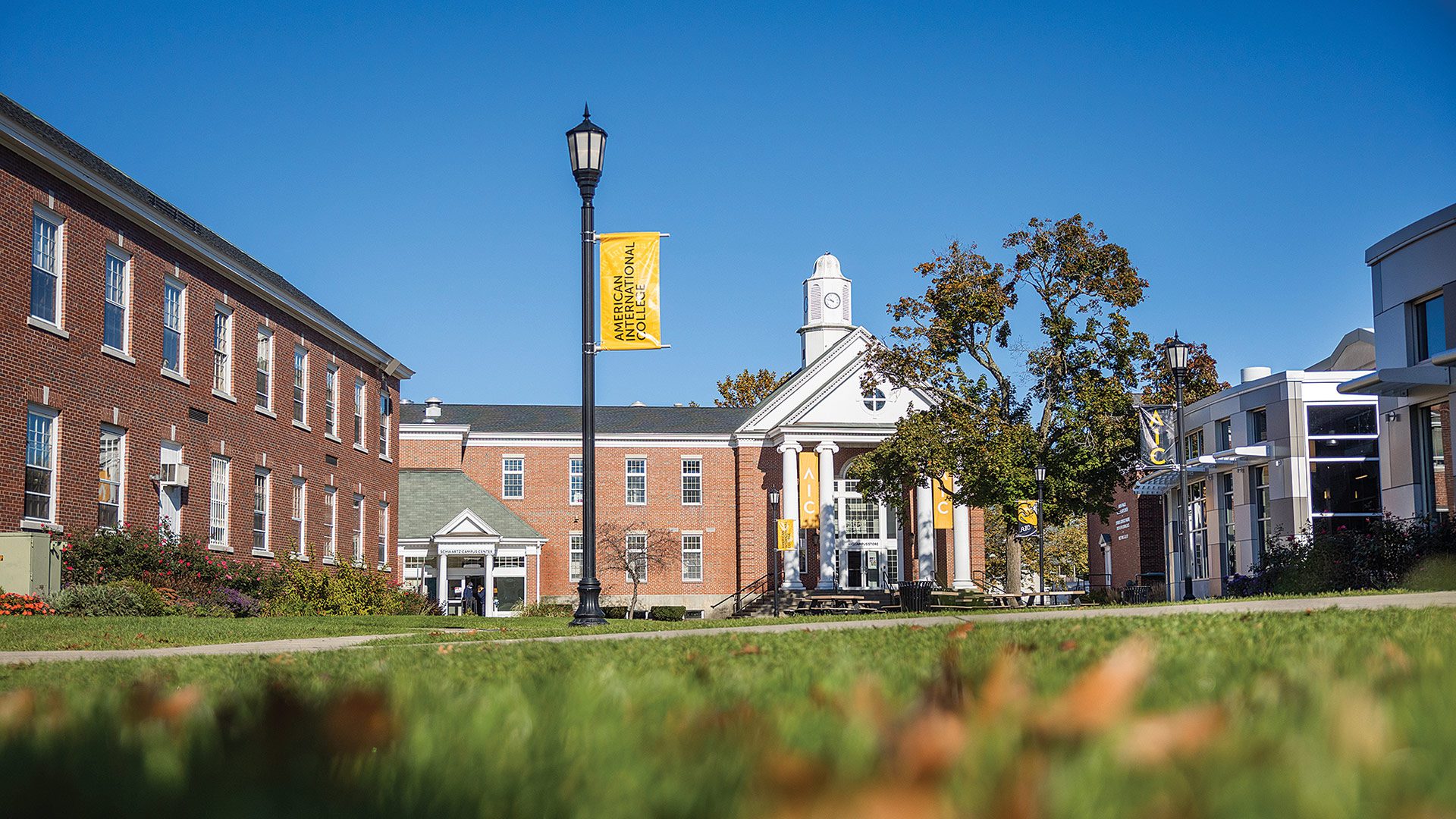
Editor’s note: This article is the first installment of a new, monthly series on professional-development efforts at area colleges and universities. It’s as broad a topic as it sounds, and the higher-education community has certainly developed myriad strategies to help businesses find talent while helping area professionals access career ladders to advancement — and will share, during this series, the many ways they’re doing just that. Our first visit is to American International College in Springfield.

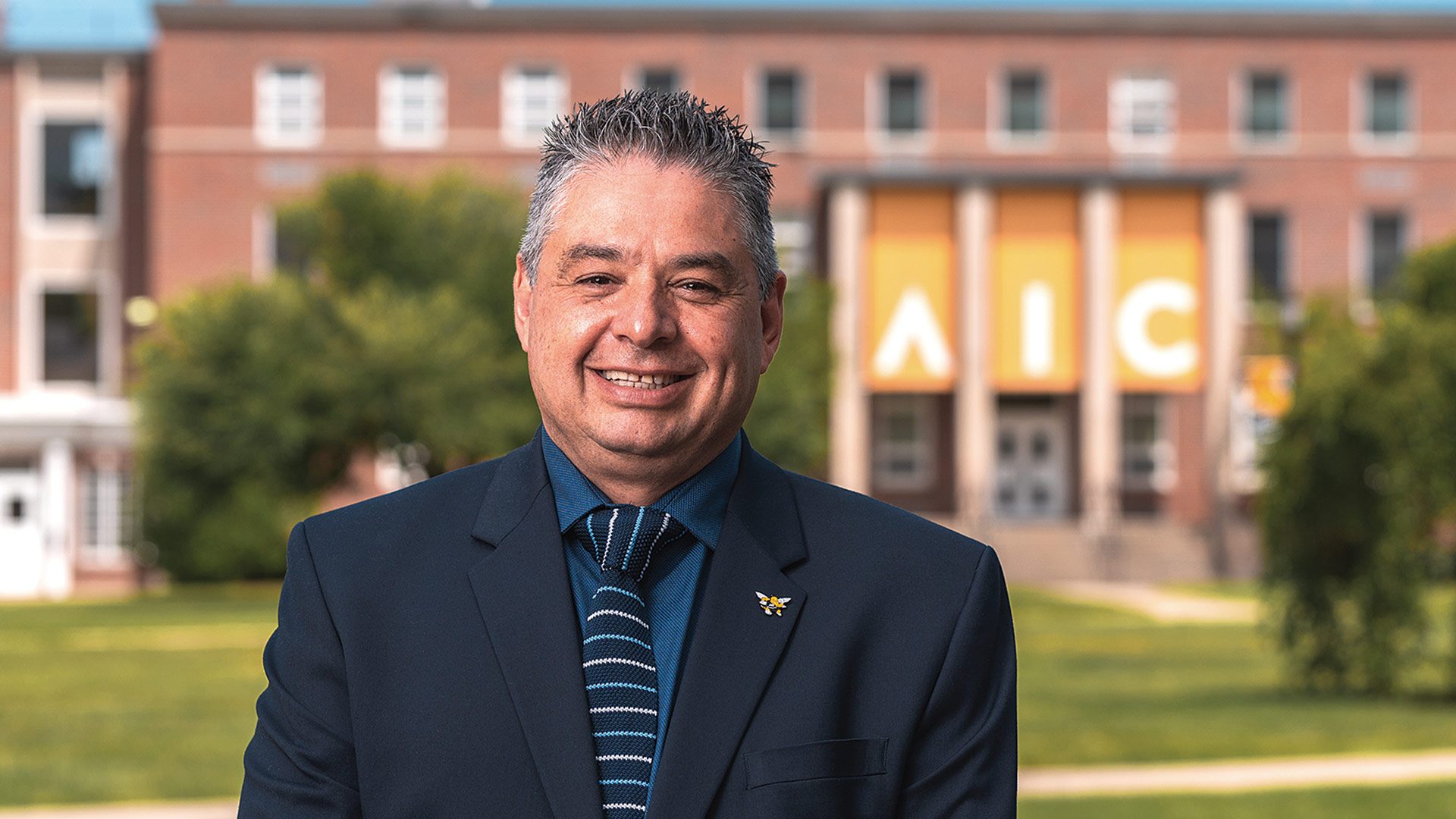
Hubert Benitez

Hubert Benitez says it’s critical that colleges understand what businesses need in terms of worker skills and competencies.

At a time when employers in most sectors are struggling to attract and retain a workforce, leveraging the impact of the region’s colleges and universities is more important than ever.

That’s part of what Hubert Benitez, president of American International College (AIC), conveyed during an address to a recent Rise and Shine Business Breakfast sponsored by the Springfield Regional Chamber.

He highlighted that AIC graduates, coming from diverse backgrounds and primarily from the local area, make significant contributions to the economic development of the region — and that retaining talent within the community is key to enriching the social fabric of Greater Springfield and the surrounding region.

“Let’s explore how we can come together and join forces to serve the best interests of Springfield and Western Mass.,” he said. “That is the focus of our work at AIC.”

The intriguing part is how the college intends to boost workforce development and the regional economy — and it involves robust connections and communication with area businesses, in a number of sectors, to determine what they need, and what higher-education leaders can do to meet those needs.

“It’s critically important,” Benitez told BusinessWest shortly after that event. “Workforce development is one of the major focus areas of our education.”

Take, for instance, healthcare, one of this region’s key economic drivers — and, in particular, the persistent need for talented nurses.

“What we need is the employers to truly look at the academic institutions as their partners in this, because we need to be sitting at the table to hear what their needs are specifically.”

“There is no state that is not hurting for a nursing workforce,” Benitez said. “So our approach has been, let’s work together with the major industries in the region; how can we help provide that workforce? And it has to be a joint effort.”

That’s because students who study at area colleges must have a reason to stay here after they graduate. When they leave, he noted, AIC has done its job providing them with an education, but it has not fulfilled its mission to meet the workforce needs of Western Mass. or the Commonwealth at large.

“So we have to create an environment where the student understands that, if they pursue their nursing degree at AIC, they have a clear transition plan to the workforce at one of the major hospitals or hospital systems in the region.”

To that end, AIC has worked closely with Baystate Medical Center and the Trinity Health system to create models to fulfill their specific workforce needs. Benitez and his chief of staff have participated in strategic-planning sessions for workforce development at Baystate, and have also spoken with the leadership of Mercy Medical Center about creating a model to draw more advanced-practice providers to the hospital and the Trinity system.

“We heard firsthand, ‘we need more of this, more of this, and more of this,’” he said. “We have to be working together. If I don’t know — if the academic institution does not know — what they need, and what are the skillsets they’re looking for, there is no way the academic institution is going to be able to fulfill those needs.”

Not only does a college need to understand the needs of industries into which its graduates will enter, he explained, but it must to be nimble and willing to move in the direction of creating or reformatting initiatives that will fulfill these specific needs.

AIC

AIC is taking steps to better integrate career preparation into its programs.

“How education has been delivered in the past may not be what employers are looking for,” Benitez told BusinessWest. “That may take form of certificates, certifications, short courses of instruction, staff development. Some may say, ‘well, we really don’t need more of these at the baccalaureate level, but what about a certification with this specific skillset?’ We are looking to fulfill that.

“What we need is the employers to truly look at the academic institutions as their partners in this, because we need to be sitting at the table to hear what their needs are specifically. It’s that close working relationship that I would say is critically important,” he went on, adding that keeping young professionals local is a two-way street, an effort in which businesses must be engaged as well.

“Why should a graduate stay here in Western Mass.? That’s more on the employer side of things. How do they engage the graduate, entice the graduate to stay local and not go elsewhere? That goes beyond pay; that goes beyond benefits. It’s more, how do we make them feel that they have a good career trajectory here at Western Mass.? That’s part of what the employer has to look at as well.”


Partnering for Progress

Benitez stressed that four-year colleges like AIC aren’t the only important players in cultivating a local economy with plenty of young talent.

“As you look around and you read in the press, ‘we need more nurses, we need more physical therapists, we need more of this, we need more of that,’ well, some of those professions and careers are created at the community-college level. I am a full supporter of the community-college enterprise.”

Indeed, he explained, AIC has partnered with Springfield Technical Community College and Holyoke Community College on housing agreements, whereby students who attend community college can live at AIC and use its services. “That’s how much we value the relationship between AIC and the community colleges.”

Workforce-development efforts begin even earlier than that, however — with efforts at the high-school and even middle-school level to instill in young people an interest in careers where opportunities abound.

One example is working with middle- and high-school students to entice them to explore careers in STEM (science, technology, engineering, and mathematics) fields, Benitez noted. “It’s a two-pronged, even three-pronged approach: we’re working with vocational schools, technical schools, community colleges, and the public school systems because we know that’s where the appreciation for the skillset begins. We’ve got to grab the kids really, really early. And we’re working toward that goal.”

One new partnership between AIC and two community groups — the Coalition of Experienced Black Educators and the Springfield Empowerment Zone Partnership — promotes access to higher education by empowering parents to support their children’s academic success, which, in turn, will benefit the region’s economy if those young people earn degrees and stay local.

“How do they engage the graduate, entice the graduate to stay local and not go elsewhere? That goes beyond pay; that goes beyond benefits. It’s more, how do we make them feel that they have a good career trajectory here at Western Mass.?”

Another new new initiative aims to strengthen AIC’s commitment to equipping students with the necessary skills and knowledge for successful careers. The college is among 10 member institutions to benefit from a three-year, $2.5 million grant awarded to the Yes We Must Coalition (YWMC) by Ascendium Education Group to integrate career preparation into four-year degree programs.

This grant — titled “Addressing Inequity in College Retention of Low-income Students: Collaboratively Creating Pathways to Careers in Four-year Degree Programs” — will provide AIC with resources to implement new strategies to promote career readiness. The award will support a partnership among AIC, Jobs for the Future, and Sova Solutions to ensure that students from all backgrounds have equal opportunities to succeed in their chosen fields.

More effectively integrating career preparation into AIC’s four-year degree programs is a step that recognizes the evolving demands of the employment market, Benitez noted. By aligning academic coursework with real-world skills, students will be better equipped to navigate their future careers upon graduation. The degree programs slated for redesign include psychology, biology, business, sociology, theater, and criminal justice.


A New Mindset

To Benitez’s original point however, for any college to adequately meet the needs of the regional economy — and adequately prepare its graduates to succeed within it — it must first know what those needs are.

“I’m telling my industry colleagues and the business colleagues, ‘what do you need as it relates to the workforce? Maybe we can deliver that for you.’ I’m not going to my colleagues and saying, ‘look, AIC is asking for this, this, and this.’ No, on the contrary, I’m saying, ‘what do you need? Let me know because I think I can deliver that for you.’”

In his remarks at the chamber breakfast, he emphasized the importance of collaboration and working toward a greater good in the realm of higher education. “This area is blessed with having so many institutions of higher learning. But it’s not about competition; it’s about working together for the common good.”

To that end, he noted that, in his first year since becoming president, AIC has actively engaged with scores of individuals and community leaders, seeking opportunities for collaboration. “We want to be invitational to the community, not asking for anything, but to ask them, ‘how can we work together?’”

This focus outside the campus, on how AIC can be a catalyst for a stronger regional economy, is part of what Benitez means when he says he wants to reimagine a college education.

“We continue doing that every single day — reimagining how we deliver education, the cost of education, reimagining the sense of belonging in an educational enterprise, but also how we teach students,” he told BusinessWest. “Students today come to academic institutions with a completely different mindset. They think differently about the world. They think differently about the profession. Some of them even question the value of an education.

“That is our reality,” he went on. “So how we deliver education, how we communicate with them, has drastically changed. We think about reimagination every single day.”


Features

Community Spotlight

Betsy Andrus says that, like most communities dominated by businesses in the retail, hospitality, and cultural realms, Great Barrington suffered mightily during COVID-19.

But through that suffering, there were lessons learned and resiliency gained, said Andrus, executive director of the Southern Berkshire Chamber of Commerce (SBCC), adding that these lessons, and this resiliency, are serving this eclectic community well as it puts COVID in the rear view and moves deeper into its busiest seasons — summer and fall.

Indeed, among those lessons learned is the popularity of — and, now, the necessity for — outdoor dining, she said, adding that it is now a huge part of the scene in the city’s vibrant downtown and its pulsating center of activity, Railroad Street.

Betsy Andrus

Betsy Andrus

“The area just keeps on growing — it grew a lot during COVID, as a lot of places where people had second homes did. People moved up here and got out of the city, and that’s a trend that has made our winters much better.”

“Before COVID, very few, if any, of the restaurants offered outdoor dining,” she told BusinessWest. “Now, most of them do, and it’s a huge part of the scene on Railroad Street.”

Paul Masiero owns one of those restaurants, Baba Louie’s, maker of sourdough pizza and other specialties and a Great Barrington staple for nearly 30 years. He said he started offering outdoor dining during the pandemic and is now part of the broader scene on Railroad Street, which the city actually closes off to traffic on Friday and Saturday nights for several months a year and turns it over to a festival, figuratively but also quite literally, of outdoor dining.

“It’s kind of like a street fair,” Masiero, which is organized by Berkshire Busk!, an initiative that strives to improve economic development and community engagement during the summer by harnessing artistic talent to create a new and vibrant downtown cultural experience. “From July 4 to Labor Day, we put out 10 tables, and there are five restaurants that take part. It’s been really, really good; the closing of the street has been a great decision for the community — a lot of people come out.”

Beyond outdoor dining and the added vibrancy, COVID has helped Great Barrington and other Berkshires communities in other ways, Masiero said.

He noted that, at the height of the pandemic, some of those living in New York and other large urban areas who had second homes in and around Great Barrington decided to sell the first home and move there.

This growth in population has brought new business for restaurants and other types of ventures, he said, and brought more business throughout the year (more on that later).

Restaurants are just part of the picture in Great Barrington, the largest and most vibrant community in what would be considered Southern Berkshire County, said Andrus, adding that this city of just over 7,000 people has “something for everyone.”

That list includes shops, mostly smaller, specialty shops in and around downtown, she said, as well as culture, most notably the Mahaiwe Performing Arts Center, where, this summer, visitors can do everything from see some vintage films, from The Empire Strikes Back (July 28) to The Lion King (Aug. 11), as part of its Friday Night Summer Movies series, to a live performance by Broadway star and Tony Award winner Sutton Foster on Aug. 19.

“COVID forced them to look at other avenues of doing business. Before, they were kind of content and didn’t bother to really look at what they doing, why, and how. COVID forced them to think outside the box, which, for some locations, really helped — a lot.”

It also includes outdoor recreation, she said, listing the Ski Butternut resort, hiking, camping, and watersports facilities, among many others.

“Whoever comes here … there’s going to be something for them,” Andrus said. “Whether you like opera or just want to sit and have dinner and listen to music, or shop, or antique, you can find it all here.”

For this, the latest in its ongoing Community Spotlight series, BusnessWest takes an in-depth look at Great Barrington, how it has staged an impressive recovery from COVID and its after-effects, and how it manages to live up to that promise of having something for everyone.


Taking Center Stage

Masiero told BusinessWest that, after working in the restaurant business for several years for various establishments, he was ready to get out and try something different.

“I was tired of working for other people and wanted out,” he said, adding that, around that time, Baba Louie’s came onto the market. He measured the risks and potential rewards of buying the establishment, and decided that the latter far outweighed the former.

“I realized I could be the owner, be the head guy,” he said. “I decided to take a chance on it and see what I could do.”

That was 23 years ago, he went on, adding that what he could do, and has done, is not only continue the business, but build on it, becoming a part of the fabric of the economy.

He’s opened a second location in nearby Hudson, N.Y., and moved the Great Barrington location from Main Street, where it held court until just before COVID, to a larger location on bustling Railroad Street.

There, it has thrived, he said, adding that the scene in Great Barrington today is characterized by vibrancy and energy, and not just during the summer, thanks in large part to that aforementioned growth in population witnessed by the town and surrounding communities such as Egremont, Mount Washington, Otis, and others.

“The area just keeps on growing — it grew a lot during COVID, as a lot of places where people had second homes did,” he noted. “People moved up here and got out of the city, and that’s a trend that has made our winters much better.

“Berkshire County is really a destination for summer unless you ski — it’s a summertime destination with Tanglewood and all the outdoor theaters and playhouses,” he went on. “But it’s grown quite a bit in the winter, too; all our business used to happen in the summer, but now it’s more of a year-round business.”

Andrus agreed, noting that, beyond this COVID-generated population growth and its accompanying benefits, the pandemic eventually helped businesses by forcing them to dig deep, pivot in some cases, and find new ways to carry on.

Great Barrington at a glance

Year Incorporated: 1761
Population: 7,172
Area: 45.8 square miles
County: Berkshire
Residential Tax Rate: $14.07
Commercial Tax Rate: $14.07
Median Household Income: $95,490
Median Family Income: $103,135
Type of Government: Open Town Meeting
Largest Employers: Fairview Hospital; Iredale Mineral Cosmetics; Kutscher’s Sports Academy; Prairie Whale
* Latest information available

“COVID forced them to look at other avenues of doing business,” she explained. “Before, they were kind of content and didn’t bother to really look at what they doing, why, and how. COVID forced them to think outside the box, which, for some locations, really helped — a lot.”

Overall, Great Barrington continues to thrive because of its full menu of offerings, enjoyed by residents and visitors alike, she went on.

“There’s really unique shops with things you can’t get in the box stores. And there’s food; I’ve traveled all over the country, and I always get to places and think, ‘I’ve got to get home because the food is not good — I’ve got to get back to the Berkshires.”

This is an ever-changing community, Andrus said, noting that, while many establishments have been doing business for years and even decades, there are always new businesses opening, making each visit to the city different and fresh.

She noted that, coincidentally, some of the longer-tenured stores in the community — such as Out of Hand; Evergreen, a crafts store; and Byzantium Clothing — have closed due to retirements or will close soon. But storefronts are rarely vacant for long, she added. “Sometimes is looks there’s an empty spot, but it’s not.”

While the town is more of a year-round destination now, summer is still the busiest and most vibrant time of year — and the outdoor dining and accompanying entertainment on Railroad Street have made it even more so, she said.

“There’s entertainment of all different sorts throughout the evening each night that the road is closed,” she explained, noting that Berkshire Busk! provides everything from musicians to acrobats to balloon-character makers. Visitors come for the entertainment and then often stay for dinner at one of the restaurants.

Amid these good times, there are challenges, especially with the regionwide problem of finding and retaining adequate levels of talent. Indeed, many restaurants have been forced to reduce the number of days and hours they are open, Andrus said, adding quickly that most are coping and making the most of a difficult situation.


Right Place, Tight Time

Masiero can’t remember where, but he read somewhere that Great Barrington was listed among the top 10 places to move to during COVID (Hudson, N.Y. was the number-one destination, he recalled).

That ranking speaks volumes not only about how the pandemic that initially bruised this small town has gone on to help it, but also about all that this colorful community has to offer.

As Andrus said, it does have something for everyone, and now there are seemingly more people to enjoy it all.

The scene on Railroad Street on weekend nights tells the story — in all kinds of ways.


Banking and Financial Services

Roadmap for Reporting

By Jennifer Sharrow, Esq.


Businesses, get ready. The federal government is implementing new reporting requirements that will bring even the smallest businesses under the purview of the U.S. Department of Treasury. All entities registered with a secretary of state are now required to make mandatory reports which require specific and detailed information, and a failure to file these reports can result in serious penalties.

Jennifer Sharrow

Jennifer Sharrow

This new reporting system is like nothing that has ever been required for the majority of businesses, either locally or elsewhere in the country, but the passing of the Corporate Transparency Act (CTA) represents a fundamental change to the information that must be provided to the federal government by small businesses and single-purpose limited liability companies and corporations.

The Corporate Transparency Act was passed in 2021 as part of a suite of efforts from the federal government to crack down on money laundering across various parts of the economy. The CTA specifically targets efforts to hide monies under the guise of complicated corporate entity structuring. Whereas these entities previously enjoyed a significant amount of privacy regarding matters of ownership, under the CTA, these entities will now be required to disclose detailed, personal information about their beneficial ownership.

Every small-business owner, and every business that assists in the formation and annual reporting requirements of the business, needs to know about this new reporting requirement, as non-compliance can result in substantial penalties of $500 a day up to $10,000, and up to two years in jail.


Who Needs to File?

While certain exemptions are available within the statute, in general, any corporation, limited-liability company, or any similar entity formed by a filing with the secretary of state needs to file reports with the U.S. Department of Treasury’s Financial Crimes Enforcement Network (FinCEN). This requirement applies to most small businesses, fund-manager entities, and real-estate holding companies.

Additionally, FinCEN is gathering information on what is described in the CTA as the ‘company applicant’ — the person or organization who actually files the paperwork on behalf of the entity. For law firms, where formation documents are generally filed by a paralegal, FinCEN will require information on both the paralegal and their supervising attorney. For other service companies, this will be information on the specific person filing the organizational paperwork.

“This new reporting system is like nothing that has ever been required for the majority of businesses, either locally or elsewhere in the country.”

There are 23 exemptions from the CTA reporting requirements. Most exemptions are for entities that are already subject to considerable federal or state regulation. Examples of exempt entities include publicly traded companies and other entities that file reports with the SEC, tax-exempt entities, banks, credit unions, money-services businesses, insurance companies, securities brokers and dealers, state-licensed insurance producers, public utilities, and accounting firms.

There is also an exemption for what’s called a ‘large operating company,’ which is an entity that employs more than 20 full-time employees in the U.S., has an operating presence at a physical office within the U.S., and has filed a federal income-tax or information return in the U.S. for the previous year with more than $5 million in gross receipts or sales.


What Is Being Reported?

• Entity information. This includes full legal name, ‘doing business as’ name, principal office address, jurisdiction of formation, and IRS employer identification number.

• Beneficial owner information. A ‘beneficial owner’ is anyone who owns more than 25% of the entity and anyone who exercises ‘substantial control’ over the entity’ such as directors, LLC managers, and certain trustees. The entity will need to provide, for each beneficial owner, their full legal name, date of birth, current residential address, governmental identification information from a passport or driver’s license, and a copy of that identification document.

• Company applicant information. For new entities formed after Jan. 1, 2024, the entity will need to provide essentially the same information on the appropriate company applicant individuals as they provide for the beneficial owners.


When Are the Reports Due?

There are two timelines, one for existing businesses formed prior to Jan. 1, 2024, and one for those new businesses formed after the start of the new year. The existing businesses have until Jan. 1, 2025 to submit their initial reports. New businesses will have to file their initial reports to FinCEN within 30 calendar days of their initial formation. Additionally, whenever there is a change in beneficial ownership or a change to the information of a beneficial owner, the entity will have 30 days from that change to file an updated report.


Where Is This Information Being Kept?

The disclosures will be made to a centralized federal database under FinCEN. These reports will not be accessible to the general public, but will solely be used by law-enforcement agencies, government regulators of financial institutions, the Treasury Department, and certain foreign authorities requesting information through federal agencies.


How Should You Prepare Now?

Entities should first consult with an attorney to understand whether they qualify for an exemption or whether the CTA will require them to submit reports to FinCEN. Then, the owners and managers should decide when they want to file their initial disclosure and begin the process of gathering the required reporting information.

Finally, it is highly recommended that they implement a system to keep the reporting information accurate and up to date, so they know when updated reports need to be filed. The reporting companies should communicate with their clients to assist in filing these new reports and to have their own information ready and available to disclose to FinCEN.


Jennifer Sharrow is an associate at Bacon Wilson and a member of the firm’s business and corporate department, specializing in business matters, financing, and commercial real-estate transactions.

Creative Economy

Getting a Taste of the Region

Deborah Christakos

When her research revealed that this region didn’t have any food tours, Deborah Christakos decided that was a void she needed to fill.

Deborah Christakos has spent most of her adult life in the food business — or several businesses, to be more precise.

Trained in France, she was a chef in restaurants in several major large cities, including New York, Boston, and San Francisco. Later, after moving to Northampton, starting a family, and deciding that a chef’s life didn’t mesh well with family life, she started offering cooking lessons.

And it was while teaching one class, where students shopped at a local farmers’ market and prepared what they bought, that she started to conceptualize a new and different kind of venture — at least for this region. She would call it Pioneer Valley Food Tours, and that name tells you all you need to know.

Well, not really, but it sets the tone.

These are, indeed, walking tours involving food — in the Pioneer Valley. There’s one focused on Northampton and another that takes people to various stops in Amherst. There’s a bicycle tour, a concept born at least in part from COVID-19 and the need to keep people socially distanced during the pandemic, and private tours that have taken people to Springfield, Greenfield, and other communities.

The tours take people to restaurants, bakeries, butcher shops, farmers’ markets, and other … points of interest, let’s call them, where participants can explore local food and beverages from source to table.

“If you just go buy a loaf of bread or pastry, you may never hear about it. But when you hear from them, in their own words, talk about what they do, how what they do is special, and what they love about it, it’s a really neat experience.”

Christakos started in 2017, and what she’s learned since then is that, while these tours are centered around food, they’re mostly about people, communities, and the mostly small businesses that participants get to visit.

The people come from all over, she said, adding that some are local, while others hail from across the state or neighboring states. Others are from further away, many in the area visiting friends and family and looking for something to do, specifically something that, well, whets their appetite when it comes to this region and its food.

“I thought it was a neat idea, and I thought we could really inform people that come to this area about what’s going on here,” she said. “I felt the food here was of incredible quality, and I felt like people were visiting the area, dropping their kids off at college, driving off, and not knowing what we had here. I felt that this area was very underappreciated, so one of my goals was to sort of lift up the profile and make it into a food destination.”

Easily the best thing about her business is the opportunities it provides to meet people and learn from them while providing some insight into this region and all that it offers.

“Something I didn’t expect was that it’s really fun to meet people from all over the country or different walks, and even locals,” Christakos said. “The conversation is different every time because people bring to this their own experiences. Some people are really into food; others are really into history. It’s always interesting and fun.”


food tours of Northampton

Guests enjoy one of the food tours of Northampton, which visit several sites in Paradise City.

As for the communities that participants tour, there are opportunities to learn about much more than food. Indeed, tour members get a ‘taste’ of these communities, be it the murals, architecture, and ‘vibe’ in Northampton or Amherst’s vibrant history, including, on most tours, a stop at West Cemetery, where Emily Dickinson and several members of the 54th Massachusetts Infantry Regiment, portrayed in the movie Glory, are buried.

As for the small businesses, they are the focal points of the tour, said Christakos, adding that the tours not only support such ventures — and, during COVID, that support was critical — it celebrates them and their specialties and the manner in which they help provide a community with an identity.

For this issue, we talked with Christakos about her venture and how it has gained traction and provided tour participants with some food for thought — in every way one can imagine.


Walking, Taking, and Eating

As she talked about how and why she launched this venture, Christakos said food tours are common in other countries — as well as in larger cities in the U.S. She had only been on one herself, in Ireland, but she knew about them and all they aim to celebrate in a particular community.

Returning to that cooking class she was teaching and the visit to the farmers’ market, she started thinking there must be food tours in a region so rich in agriculture and restaurants. When some research revealed there wasn’t, she decided this void needed to be filled.

She did a trial run, spoke to the businesses that would be involved in these tours, and concluded that there was a market for such a concept. She launched in the summer of 2017, and at first tried to do both the tours and the cooking classes. Eventually, she decided that she wanted, and needed, to devote all her time and energy to the former.

The venture has seen steady growth over the years, although COVID certainly created some challenges.

At the start, most of the participants were local, she told BusinessWest, but eventually word started to spread.

“People from Central Connecticut would come up for the day, or people from Boston would come up for the day,” she explained. “And then, gradually over the next few years, people started coming from further away — Utah, California, all over, people who were coming to this area and looking for something to do.”

Many had been on food tours in other cities, regions, and countries, she went on, adding that her venture provides an opportunity to explore a different area.

In larger cities, there are many different kinds of food tours, she explained, noting that some will focus specifically on pizza, or chocolate, or a specific neighborhood. Her tours are broad in nature and focused on specific communities noted for their food, restaurants, and culture, especially Northampton and Amherst.

In Northampton, the food tour, which runs three hours on average, usually starts in Pulaski Park, where participants will make introductions and sample local produce that’s in season, such as blueberries, which Christakos will either pick herself or buy from a local farm. From there, there are roughly 15 different places a group might stop; Christakos generally picks five for each tour.

A common first stop is Hungry Ghost Bread on State Street or the Woodstar Café on Masonic Street, where participants can sample something Christakos has pre-selected and often hear from the establishments’ owners about what they do and the passion they bring to their work.

“If you just go buy a loaf of bread or pastry, you may never hear about it,” she explained. “But when you hear from them, in their own words, talk about what they do, how what they do is special, and what they love about it, it’s a really neat experience.”

This is the essence of the food tours, she went on, adding that participants can hear Hungry Ghost owner Jonathan Stevens and his wife, Cheryl, talk about what makes their bread unique and how they use local ingredients.

From there, the tour might go to Sutter Meats on King Street and a few of the restaurants in the city, such as Paul & Elizabeth’s on Main Street, a vegetarian restaurant; or the Dirty Truth, also on Main Street, a gastropub featuring craft beers; or the Mosaic Café on Masonic Street, a Mediterranean restaurant.

Along the way, participants take in murals, architecture, a little history, and the feel of downtown Northampton, she said, adding that the flavor of the community, and all that goes into that phrase, comes through.

It’s the same in Amherst, she noted, where tours generally start at the farmers’ market and proceed to stops such as the Black Sheep Deli; Lili’s, a Chinese restaurant; and Mexcalito Taco Bar, as well as West Cemetery and other points of interest.

There are generally two Northampton tours a week, on Friday and Saturday, and a few Amherst tours each month, she said, adding that they are offered year-round. Spring and summer are obviously the most popular times, but there is appetite for the offerings throughout the year — she conducted a ‘chocolate tour’ on Valentine’s Day — and she will carry on unless the weather is “dangerous.”

A fairly recent addition to the portfolio has been bicycle tours, she noted, adding that these will stop in a few different communities, visiting farms, food producers, and eateries and generally covering 20 to 25 miles at a decent, but not overly fast, pace.

“The people who take those tours like to bicycle, but they’re more interested in their food,” she explained. “They’re not Tour de France candidates.”


Bottom Line

Moving forward, Christakos, who splits the tours with the company’s other guide, David Bannister, said she would like to continue growing the concept, perhaps expanding to other communities (Springfield is a possible candidate).

In the meantime, she will continue honing the concept, which is bringing the region’s restaurants, farms, and other food-related businesses to light.

As she said, these tours are really about people and communities — and an opportunity to celebrate both.


Creative Economy

Creating a ‘Time Machine’


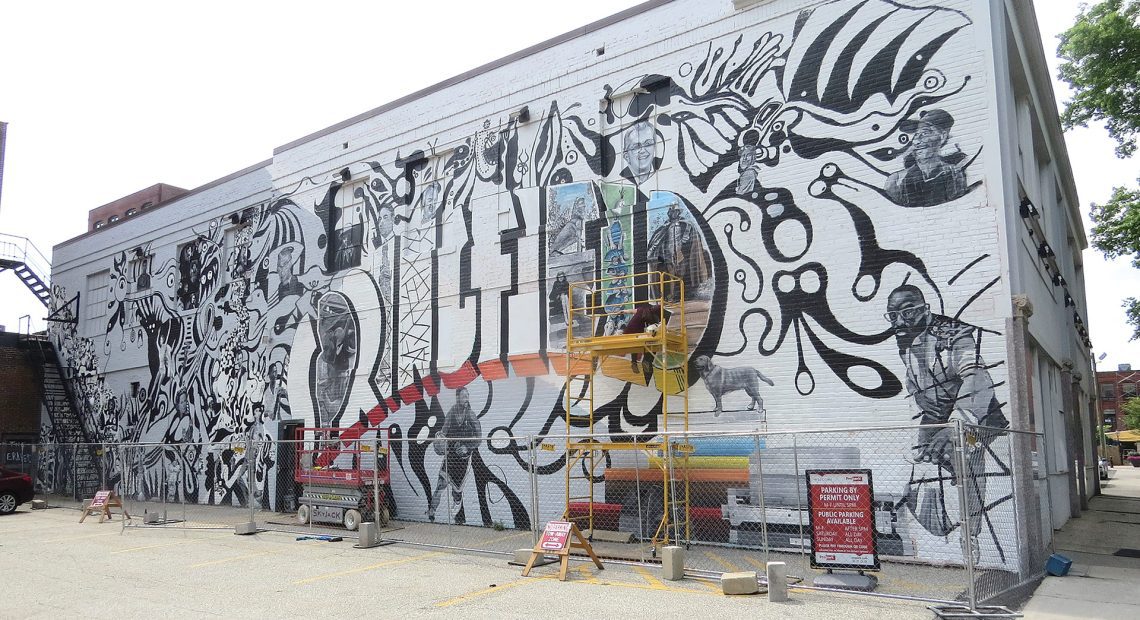
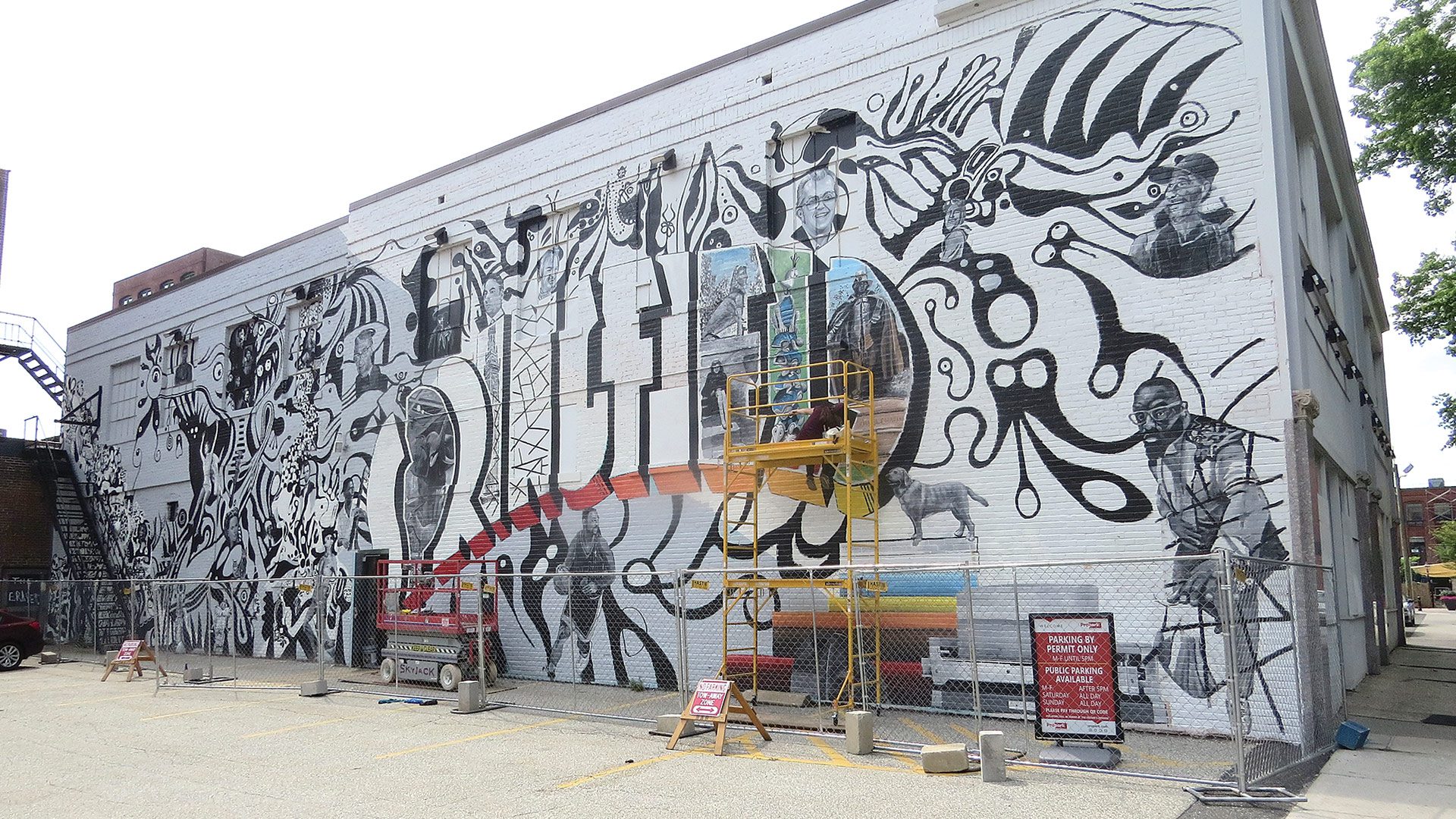
The mural on Bridge Street

The mural on Bridge Street remains a work in progress.

You’ll need more than a glance to take in, and fully appreciate, the mural being created on the south-facing wall of the old Skyplex Building on Bridge Street in Springfield.

You’ll probably need at least 10 minutes to fully absorb all the images on the 100-foot-long wall. There are dozens of them, large and small.

But you’ll also need a cheat sheet of sorts (a few different ones will be created — more on that later) and probably easy access to Wikipedia.

That’s because, while some of the people can be easily identified (Muhammad Ali, Abraham Lincoln, and even Peter L. Picknelly, among them), most of them are far more obscure and need some explaining, at least when it comes to their connection to, and importance to, the City of Homes.

And that’s part of the charm, if that’s the right word, of this project, which is one of the more ambitious projects to date of City Mosaic, a nonprofit organization that has brought many colorful and, in some cases, informative murals to downtown Springfield — and, in the process, reactivated a number of properties and made them conversation pieces.

Such was the case with another huge work of art just around the corner on Worthington Street. That project involved the recreation of wall advertising that was on the building more than a half-century ago, as well as a few images of personalities from the past and present.

John Simpson, the lead artist on that project, said some have referred to it as a “time machine,” and asked that he create another one at the Skyplex building, another somewhat underutilized property that is slated to become home to another brewery.

Susan Riano, Madden Sterrett, and John Simpson.

And he a team of artists, including Madden Sterrett and Susan Riano, have done just that.

“We wanted to blend many of the city’s historic firsts with historical figures, and modern community members, such as Mayor [Domenic] Sarno,” Simpson said. “We want to have the past connect with the present — and have it connect with the future.”

While the wall, which is a work in progress that should be completed “soon,” according to Simpson, features some well-known personalities and landmarks (such as the Puritan statue in front of the library) that need no explanation as to why they are pictured, many of them do.

Let’s start with Abraham Lincoln. According to local legend, the name ‘Republican Party,’ the party of Lincoln, originated in Springfield. Meanwhile, his wife, Mary Todd Lincoln, is said to have taken in shows at the Paramount Theater. As for Ali, he had connections to a mosque in the city, and is said to have visited it while training in Chicopee for his first fight against Sonny Liston.

Frederick Douglass also has a presence on the wall. Simpson said he visited Springfield several times, at least once to meet with fellow abolitionist John Brown about his raid on Harper’s Ferry, which started the Civil War.

There’s also the artist James Whistler, famous for the composition known as Whistler’s Mother. While born in Lowell, he did live in Springfield for a time, Simpson said. There are a few images of Eleanor Powell, a dancer and actress (she was in a few movies with Fred Astaire) who was also born in Springfield.

As was the actor Kurt Russell. There’s a small image of him portraying the character he is perhaps best known for, Snake Plissken, from both Escape from New York and Escape from L.A.

Former NBA star Travis Best, another Springfield native, is on the wall, as is Gwen Ifill, the journalist, television newscaster, and author, who was born in New York but later relocated with her family to Springfield and graduated from Classical High School.

There’s also June Foray (born June Lucille Forer), who grew up in Springfield and later became the voice of Rocky the Flying Squirrel and a host of other characters.

There aren’t many — if any — people who would recognize Foray from the image on the wall. And that’s why there will be a plaque, or key, to the images, explaining what they are, Simpson explained, adding that there are plans to print flyers to hand out at the restaurants — Granny’s Baking Table and the Osteria — that have windows facing the mural.

“Already, people are asking the waiters and the owners of these establishments who the people are on this wall,” he said, adding that this is one of the main objectives of this project — to get people talking and asking questions — about the wall, and about the city depicted on it.

Evan Plotkin, president of NAI Plotkin, collaborator with Simpson on several art-related projects in and around downtown, and leader of efforts to reactivate properties in that area, agreed.

“They’ve captured a moment in time, and the history and character of the city,” he said of the artists. “And while doing so, they’ve brought this property back to prominence; people are talking about it, and in the present and future tenses. That’s what these murals do.”

There is still some work to do on the mural, especially in and around the letters that spell out SPRINGFIELD, Simpson said, noting that many more characters, firsts, and landmarks will be added before the wall is officially finished. He mentioned an image of the Basketball Hall of Fame and perhaps something depicting the M-1 rifle, produced at the Springfield Armory, and its inventor, John Garand, as likely additions.

But already, those behind the project are accomplishing their primary mission. They’re creating that time machine, and they’re prompting people to stop, look, point, maybe ask some questions, get some answers, learn about Springfield, and celebrate the city and its history.

That’s a lot to ask from a mural, but this one does all that and more.


—George O’Brien

Building Trades

Super Bowls

Michael Preli works on the lathe

Michael Preli works on the lathe in his basement in Suffield.


Michael Preli’s career has been one of constant advancement — not necessarily in title or income, but in job satisfaction. And he’s a long way from where he started, in the auto-body field.

“My father is a frame technician for auto body. And I always thought that’s what I wanted to do,” Preli told BusinessWest. “So I started working in a body shop when I left school. I did that for a couple of years.”

What he didn’t expect was that he’d come to like wood more than metal.

Auto-body work “didn’t bring me the satisfaction I thought it would,” he recalled. “Metal is cold and dirty and dusty — like, the dust sticks to you.”

Meanwhile, his rented house, on the same property he worked at, needed some improvements, including a new door. He did the job himself, even though he had never done any woodworking.

“I got a lot of satisfaction from it. My boss came over and looked at it and said, ‘wow, you did a really nice job on this.’ I said, ‘oh, thanks.’ And that stuck with me for a while. So, when an opportunity came up to do framing for houses, I took it, and I left the world of auto body. Thank God.”

These days, Preli owns his own home-based business in Suffield, Conn., Cellar Dweller WoodTurning, creating and selling a host of artful pieces, including plates, bowls, urns, and decorative pieces. But it took a couple more steps to get there, as we’ll see.

Starting with framing, which he characterized as work with “a lot of brute force, not a lot of finesse. I always gravitated toward the jobs that took more patience, and my overseers saw that and placed me there.”

“It got my wife motivated, too, because she could see that, with a young child, I had an opportunity to do something from home instead of going back to work.”

Indeed, Preli started focusing on finish work, such as crown molding, fireplace mantles, door frames, doors, and windows. “I did that for many years, along with remodeling and renovating. And then I got into doing furniture, which took more patience and required more solitary-type work.”

Even through the decade he spent making furniture out of a rented shop, he never saw himself in woodturning, a craft that uses a wood lathe and hand-held tools to create symmetrically shaped pieces. “I thought I loved making furniture. But now that I’ve stepped away from it, did I really like doing furniture? I mean, I felt like I did.”

He switched gears, however, after his landlord passed away, and he lost his shop and moved all his tools back home, returning to commercial finish work while he and his wife, Kathryn, decided to start a family; their son was born in 2019.

“I was still working very hard, but my wife’s a doctor. She makes way more than I’ll ever be able to make. So she was going to continue working, and I planned to stay home until the kid was old enough to talk, and then go back to work.”

Then a pandemic struck, and that changed everything.


Crafting a Career

Specifically, it forced Preli to be home even more than he had planned to, and introduced a hobby into his life.

In some ways, he said the isolation many people faced during COVID was a blessing to his own household. “We even got COVID — we got colds and got over it — but it gave me a chance to put my tools down for the first time ever. This was the first time ever I hadn’t been working. I mean, I dropped out of high school young to work. Now I was home with my boy the whole time. It was wonderful. That’s when I picked up woodturning, just as a hobby.”

Showing off the lathe in his basement, Preli noted that “it’s a specific type of woodworking. The only thing I can do on that machine is round work, and that’s what I got into.”

Soon, the hobby started filling the Prelis’ kitchen with bowls and other items.

“I always undervalue my work, but my wife was like, ‘man, this stuff is coming out great.’ I’d been giving out a lot of stuff, giving gifts to my family. And of course, they said, ‘yeah, thanks, Mike, it looks great.’ But they’re my family. I could have given them anything, and they would say that.”

items Michael Preli sold

These are some of the items Michael Preli sold at the recent Suffield Summer Fair.

What convinced Preli that they weren’t just being polite was a craft-selling event at a local Tractor Supply Co., where his wife decided to set up shop.

“I said, ‘don’t do it, Kathryn. You’re going to spend the whole day there. It’s hot out. Don’t bother,’” he recalled. “She said, ‘I’m going to do it.’ She set herself to it, and she made a killing. We sold so much stuff. I didn’t think anyone would buy anything, but we sold a lot. It gave me some inspiration, and it got my wife motivated, too, because she could see that, with a young child, I had an opportunity to do something from home instead of going back to work.”

After all, he said, commercial finish work can be a six-days-a-week gig, and they both preferred Michael to be mainly home during that time.

“It’s nice to know that something I made with my hands is going to be the object of beauty beauty in someone’s home for a long time.”

“So it just worked out great,” Preli said. “And slowly, we started doing these craft fairs, and the revenue was good. We made it happen. My wife takes care of all the logistics for these shows and fairs.”

Those events take place most weekends and are the main sales source; online sales haven’t been so robust, and Preli believes that might be partly because he sells tactile items that people want to touch — and are far more likely to buy once they do.

“Plus, online, there are so many options,” he said. “I’m not the only guy selling wood bowls there; there are thousands and thousands. And shopping online, you want to save money, so you gravitate toward something less expensive, maybe not the best quality … but to each his own. We do very well in person.”

Michael Preli

Michael Preli says he was surprised when his creations first met an eager reception with buyers.

He enjoys talking to customers, especially when he hears what they plan to do with the items they buy. “I don’t know what anyone would ever do with some of these things I make, but they buy them. And it gives me some ideas, too. It’s nice to know that something I made with my hands is going to be the object of beauty beauty in someone’s home for a long time.”

When he started out, Preli worked with a number of different finishes, but most people gravitated to his half-epoxy, half-wood hybrid pieces that boast a smooth, shiny finish, so that’s the work he focuses on. “People love this stuff. They sell almost instantly.”


Joy in the Journey

While Preli didn’t think of woodturning during his framing or furniture-making days, he said the trajectory seems natural now; essentially, as his work became finer in scope, he loved it more.

“I get a lot of joy from it. My wife is proud of me. My family is proud of me. I have time for my son. I’m very happy with it.”

He said many people come home from work and spend time with their hobby, but he feels like the Cellar Dweller business is a hobby-like experience: something he does for fun that also generates income.

“That thing you’re compelled to do, I get to do that every day,” he said. “And it requires such a high level of concentration and patience. Everything melts away; it’s very much tunnel vision. I get to do that, and I’m so lucky.

“I keep it small, and I would say it’s a good life,” he continued. “The stress from doing commercial work, competing, bidding, dealing with different people — you know, some people aren’t as pleasant as others — and just being stuck in traffic and shopping for stuff at Home Depot … that’s all gone. It’s a relief.”


Daily News

FLORENCE — Keiter Corp. will donate $25,000 to the Greater Northampton Chamber of Commerce for a promotion that will allow consumers to purchase a $25 Northampton gift card and receive $50 in actual spending power.

Daily News

SPRINGFIELD — MP CPAs recently announced the promotion of Tony Trinchini to senior tax accountant at the firm. He works to provide quality tax services to a diverse group of clients, including individuals, trusts, corporations, and partnerships. He has a strong rapport with clients, working with many of them year-round.

Trinchini joined the firm in 2020. He holds a master of accounting degree from the Isenberg School of Management at UMass Amherst. He works to recruit potential interns and clients as a member of the college outreach and networking committees.

MP CPAs also announced the promotion of Katelyn Henderson to senior tax accountant at the firm. She works to provide quality tax services to a diverse group of clients, including individuals, estates, trusts, corporations, and partnerships. She has begun to develop relationships with clients and advisors, and has enjoyed gaining experience with high net-worth clients and businesses with multi-state filings.

Henderson joined the firm as an intern and started full-time in 2021. She holds a bachelor’s degree in accounting and finance from Western New England University (WNE). She has taken a lead role this year in organizing firm-wide events and activities, and also works closely with colleagues from WNE to continue a mentoring and recruiting relationship with her alma mater.

Daily News

WEST SPRINGFIELD — Have you been sewing up a storm, creating other crafts, or discovering new, delicious recipes? The Creative Arts department at the Big E is looking for entries in a variety of categories for this year’s fair.

The Big E is seeking exhibitors, both youth and adults, to be featured in a diverse showcase. Fairgoers walk through the New England Center to admire the displays of exhibitors’ crafts from numerous departments, including quilting, photography, knitting, jewelry/beading, dolls, holiday ornaments, jellies, honey, homemade granola, baked pie, decorated fake cake, dried food (new for this year), scroll saw, and many more.

The deadline to enter for most departments is Monday, Aug. 14. To enter photography and fine arts, entries must be submitted online by Aug. 1. Entries must be dropped off or mailed in prior to the fair. Exhibitors have the chance to receive awards and ribbons. Entries will be on display for the duration of the fair, which runs Sept. 15 through Oct. 1.

More information regarding rules, department-specific guidelines, entry limits, fees, entry deadlines, receiving dates, and how to enter can be found at www.thebige.com/creativearts. Questions may be directed to [email protected] or (413) 205-5015.

Daily News

NORTHAMPTON — The fifteenth annual Tom Cosenzi Driving for the Cure Charity Golf Tournament will be held on Tuesday, Sept. 26 at Twin Hills Country Club in Longmeadow.

Tom Cosenzi, successful businessman and father of four, succumbed to brain cancer in 2009 at the early age of 52. His vision was that no other family would experience the pain that he and his family endured. It was his wish that his family and friends continue to raise money for neuro-oncology research so the burden of cancer can be eliminated for patients and their families. In his memory, the Tom Cosenzi Driving for the Cure Charity Golf Tournament was formed.

All money raised will go directly to benefit the work of Dr. Patrick Wen and his team of researchers in the Center for Neuro-Oncology at Dana-Farber Cancer Institute in search for a cure. The tournament has raised more than $1,458,135 in its 14-year history.

Visit www.tomcosenzidrivingforthecure.com for registration, sponsorship opportunities, and more information. Questions may be directed to (413) 341-1917 or [email protected].

Cover Story

Vintage Years

Mary and Ed Hamel

Mary and Ed Hamel

Ed Hamel acknowledged that, while all entrepreneurial ventures start with an idea, most then follow a business plan that details how to take that idea and transform it into a successful, profitable operation.

It is with a large dose of … well, let’s call it pride, because that’s what it sounds like, that Hamel says he and his wife, Mary, essentially skipped that business-plan part.

“We’re just following where this thing takes us, and we’re having a lot of fun doing it,” he said, adding that this ‘thing’ is the Glendale Ridge Vineyard in Southampton, a concept that has grown into an intriguing and, yes, successful business.

Actually, three businesses, as Mary likes to say.

There’s the vineyard, where, at present, six main varieties of grapes are grown, from Reisling to Chardonnay to Cabernet Franc. There’s also a winery, where a broad mix of labels are made and bottled. And there’s a tasting room and what could be called an events division.

Indeed, the vineyard has been the site of a few weddings and regularly hosts retirement and birthday parties and many other types of functions, as well as concerts large and small — there’s an ABBA tribute band scheduled to play on Aug. 4, and Mary is expecting north of 400 people (much more on all that later).

All three of these businesses involved steep learning curves, said both Ed and Mary, who, in previous lives, worked as a general contractor and dental hygienist, respectively, before they purchased the Sankey dairy farm in 1992 with only some vague ideas about what they might do with it. And the learning process continues — on everything from which grapes to grow (and how) to which wines makes the best blends, to what kinds of music to book for the weekly Sunset Series, which is just what it sounds like: concerts as the sun goes down, with some drop-dead gorgeous views of the Holyoke Range and Mount Tom thrown in free of charge.

“We’re just following where this thing takes us, and we’re having a lot of fun doing it.”

Like the wines they make, the business itself has developed and matured, said the Hamels, noting that each aspect of the operation is growing and, by all accounts, improving and becoming more smooth and even bold, to borrow some terms from the industry.

There is a wine club that now boasts more than 350 members, the vineyard’s wines are now available in several area retail outlets and restaurants, and the farm itself has become a destination — for wine enthusiasts, music lovers, visitors from across the country who focus their travels on winery tours, a growing number of volunteers who help pick grapes each October, and more.

Moving forward, Mary and Ed say their obvious goal is to grow each of the three businesses within the operation, which currently relies on a small core of employees, as well as that growing army of volunteers who pick grapes.

And to keep having fun.

“People tend to think it’s a great job to have a vineyard, and it is, but let me tell you, it’s a lot of hard work,” Ed said. “It’s farming — I don’t need to say anything else — but there’s a lot of joy in it, too.”
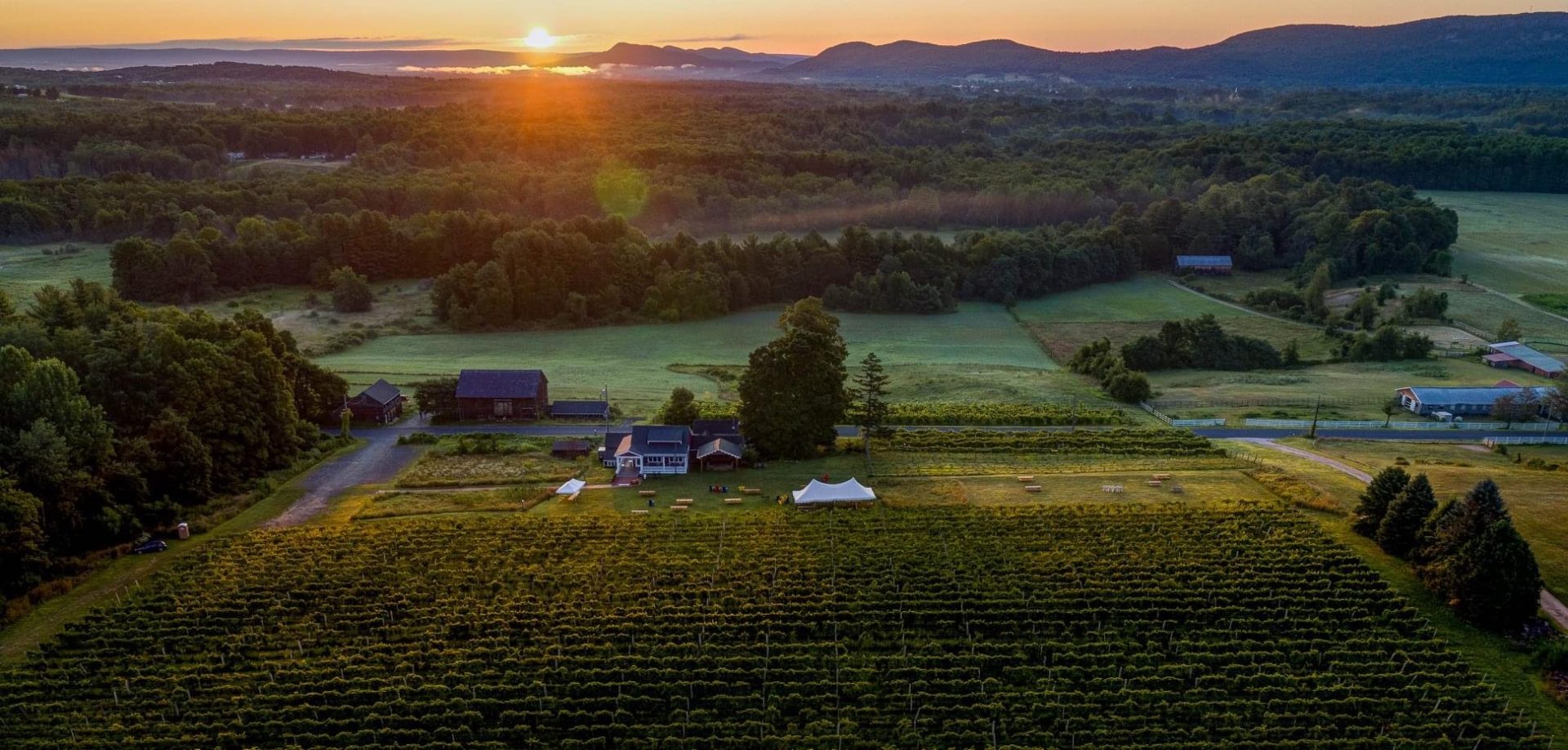
This aerial view reveals the deep beauty of Glendale Ridge Vineyard and the surrounding mountains. Photo by Glenn T. Labay, Aerial Camera Services LLC

This aerial view reveals the deep beauty of Glendale Ridge Vineyard and the surrounding mountains. Photo by Glenn T. Labay, Aerial Camera Services LLC

For this issue, we learned a little about how to grow grapes, make wine, and fill a summer concert series. We learned a lot more about how a couple with an idea but no business plan — he says they still don’t have one; she believes they do — have shaped a dream into a growing business, in every sense of that phrase.


Grape Expectations

Ed told BusinessWest that Glendale Ridge grows only about a third of the grapes needed for its growing portfolio of wines. The rest are bought from other vineyards, mostly in Long Island and the Finger Lakes region of New York.

Each fall, he’ll rent a large truck and go on grape-buying treks, which, in the case of those Long Island vineyards, from which he’ll come back with three to six tons of product, can be a bit of an adventure. At least they were early on.

“People tend to think it’s a great job to have a vineyard, and it is, but let me tell you, it’s a lot of hard work. It’s farming — I don’t need to say anything else — but there’s a lot of joy in it, too.”

“Have you ever driven a large Penske truck onto the ferry?” Ed asked rhetorically, referring to the way most people get to Long Island. “It’s fun. It’s a little nerve-wracking at first; you see other large trucks, so you know it can be done, but it will test your nerves. Now, it’s old hat; I don’t think too much of it.”

Mastering the art of driving such a large vehicle onto the ferry serves as an effective metaphor for this operation, which, for the most part, has involved a whole lot of learning by doing and simply becoming better at … well, whatever it is you’re doing over time.

Our story begins in 1992, when Ed and Mary purchased the Sankey Farm with the goal of preserving the land through an active farming project.
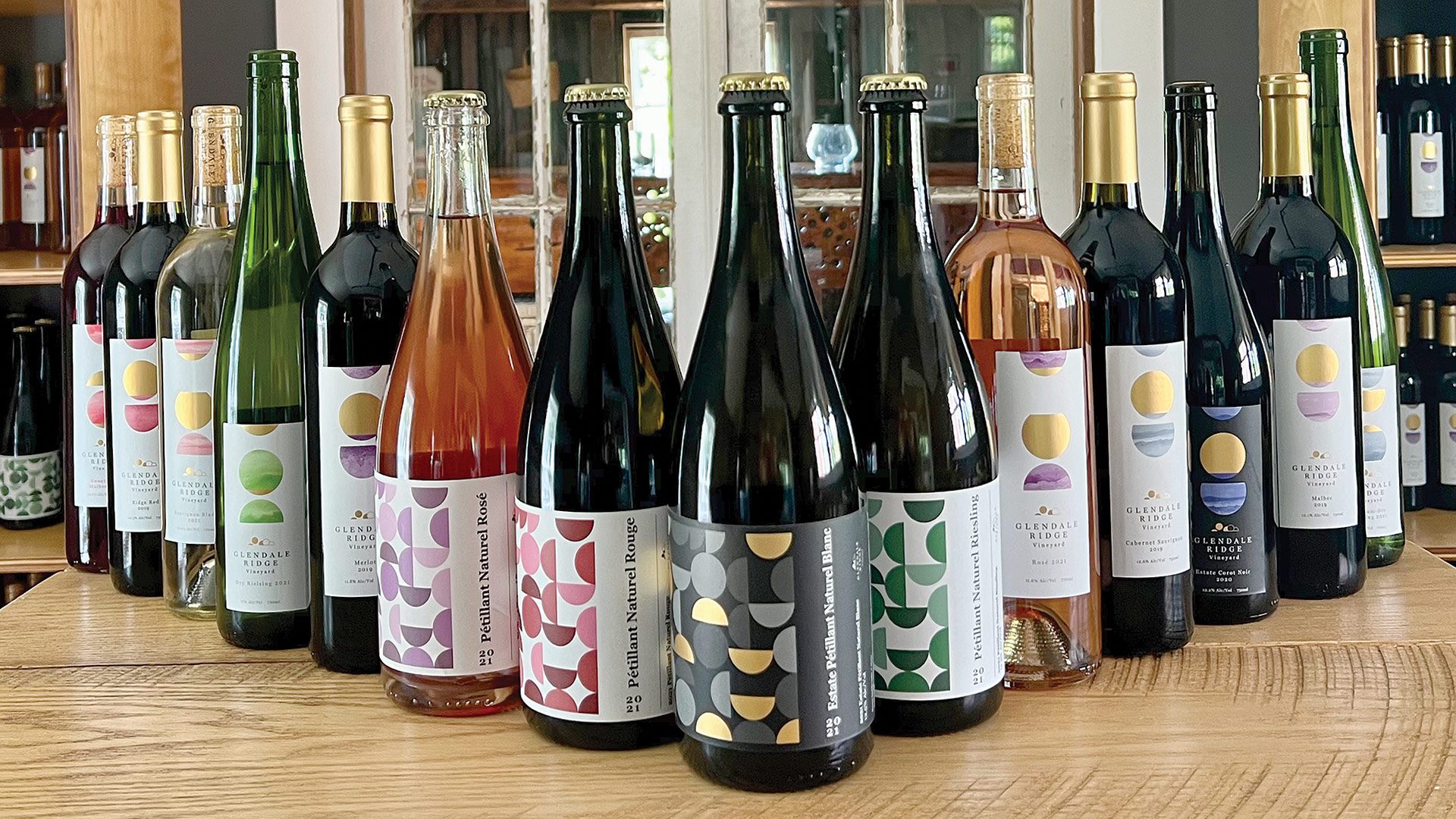
18 different wines

Glendale Ridge now offers 18 different wines, and the portfolio continues to grow.

“I’ve always had this thought that I wanted to grow something,” said Ed, adding that his maternal grandfather operated a small farm in Vermont, where he spent a good deal of time in his youth. “Once we were on this farm, I thought we would do the organic thing — carrots, lettuce, tomatoes — but I couldn’t wrap my head around that.

“I started looking at value-added products, and grapes came onto the scene,” he went on, adding that the couple started in 2010 with 110 vines that were planted in what has come to be called the west block. They started with a trial vineyard with rows of Reisling, Chardonnay, Cabernet Franc, and more. The initial thought was that they would make wine for themselves.

“People tend to think it’s a great job to have a vineyard, and it is, but let me tell you, it’s a lot of hard work. It’s farming — I don’t need to say anything else — but there’s a lot of joy in it, too.”

Initially, the Hamels partnered in this venture with Ian and Michelle Kersberger, who later started Black Birch Vineyard in Hatfield, a similar operation in many respects.

Today, there are three blocks and more than 3,000 vines at Glendale Ridge. The east block contains an acre of Cabernet Franc, while the Nonotuck block comprises three acres, with an acre each of Vidal, Traminette, and Corot Noir.

As he talked about growing grapes, Ed said there is lot of research and constant learning that goes into the equation, and plenty of information out there from others in the business who are willing to share what they know.

“People who are in this business are very cooperative; they’ll answer your questions honestly and give you advice,” he told BusinessWest, adding that there are a few vineyard operations in this region and many more in the winery regions of New York.
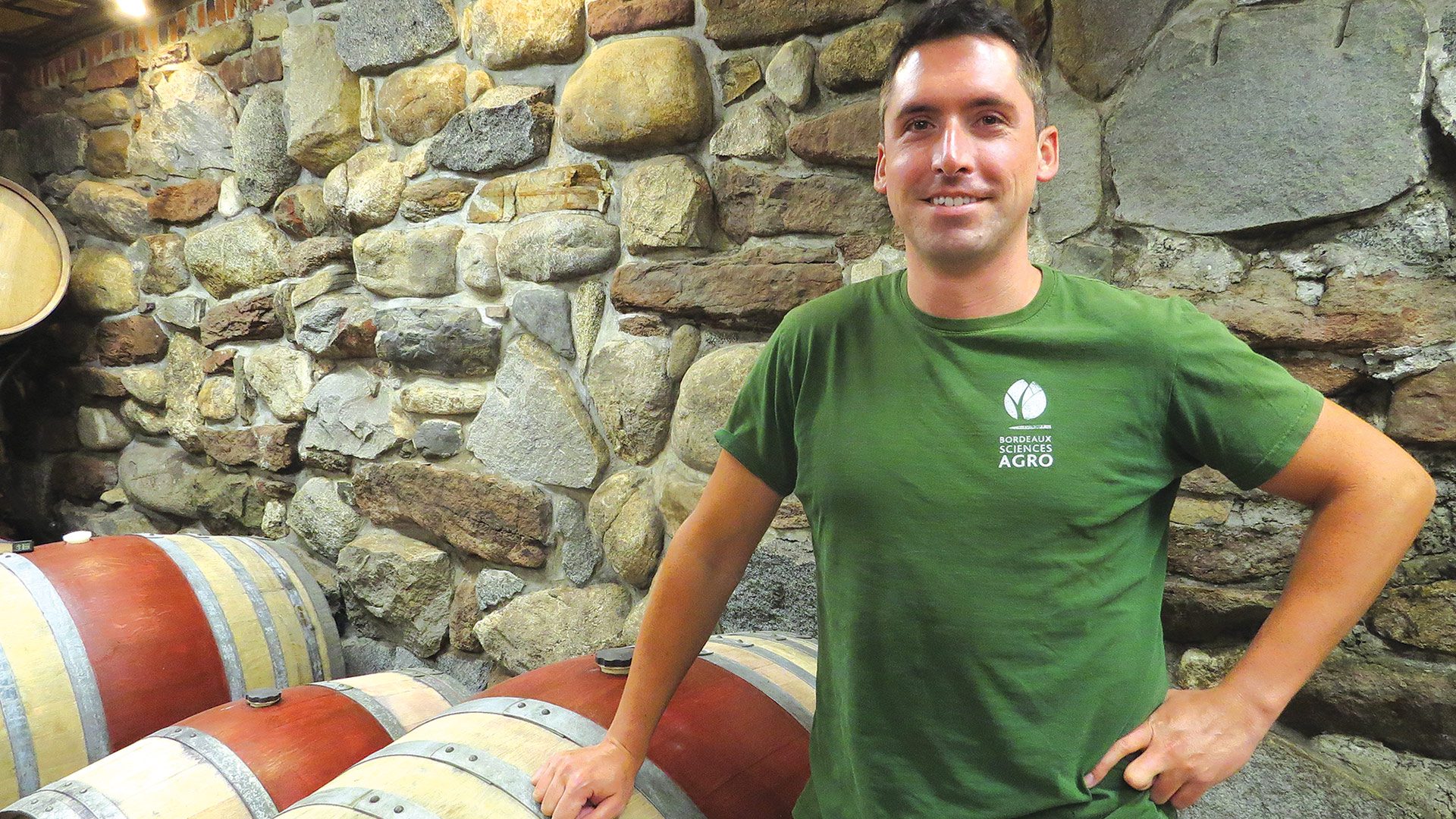
Tim Beaudry

Tim Beaudry, wine steward at Glendale Ridge, in his ‘office.’

Meanwhile, Cornell University has a strong viticulture and enology program that publishes a large amount of information, he noted, adding that it has become a great resource for him over the years.

The Cornell program has been involved in the creation of hybrid grapes, which is mostly what is grown at Glendale Ridge, he said, adding that current varieties — which involve mixes of “old-world European varieties” and grapes grown in the U.S. — include Vidal, Traminette, Carot Noir, Itasca, Cabernet Franc, and Aromella.

Harvest time is in October, he said, with the Cabernet Franc, a red grape, the last one to be picked.

“We like to let that hang as possible — typically, we’ll go to October 25 or October 28, depending on what the weather is like, before we pick those,” he explained, adding that harvesting time has become an intriguing tradition at the vineyard, one that attracts growing numbers of volunteers.

“It’s the most fun thing we do,” Mary said. “People do love it — we’ll get 35 people here.”


Heard It Through the Grapevine

These grapes and those sourced from other vineyards wind up on a crush pad, where they start to get processed into either crushed grapes, which go into red wine, or juice, which makes white wine.

There are a number of both among a growing number of labels, now featured in a retail area just off the tasting room. There is a solid mix of reds, whites, rosés, and dessert wines, everything from dry and medium-dry Rieslings to a Sauvignon Blanc; from a Merlot and a Malbec to a Cabernet Sauvignon.

The Glendale Ridge website includes colorful descriptions of each label, such as this one for a 2019 Malbec: “the nose is of dark fruit with a little smoke. Black cherry, strawberry, and cedar flavors shine with a beautiful acidity on the finish.” And this one for the 2021 Sauvignon Blanc: “You’ll find enticing scents of new-mown hay, elderflower, and honeysuckle. The palate offers assertive acidity and minerality with white grapefruit.”

Over the years, the number of individual labels has grown, and new offerings, such as a Traminette that has become a popular seller, are added regularly.

And while the vineyard and winery operations continue to grow and evolve, so too does the events and tasting-room side of the equation, said Mary, who leads that aspect of the operation.

In the tasting room, patrons can enjoy wine ‘flights,’ with three pours of wine, as well as wine for sale by the glass and the bottle, she said, adding that the vineyard has become a popular place to stop and unwind or pick up a bottle of wine or two.
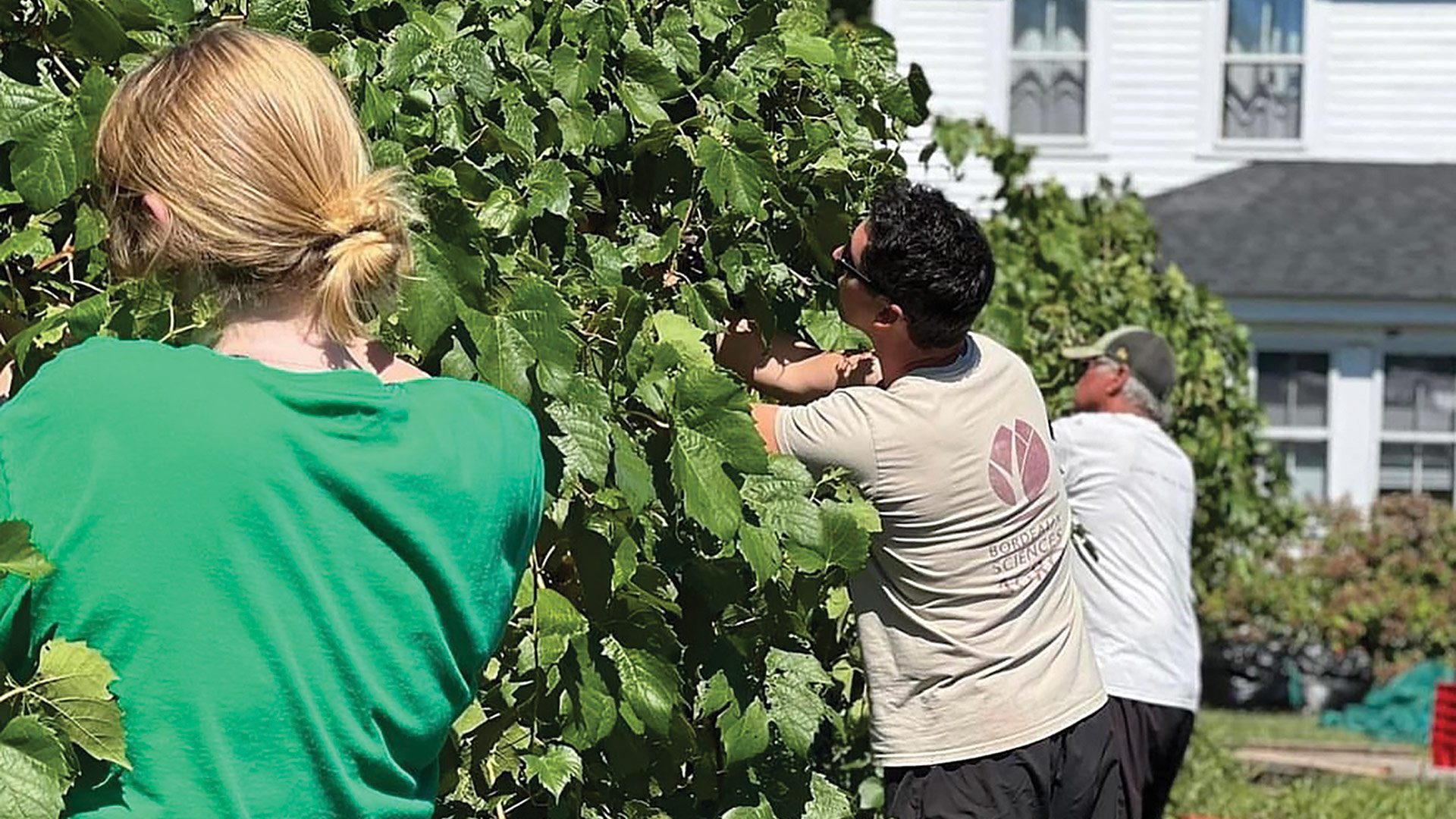
picking of grapes

The picking of grapes has become an event at Glendale Ridge, one that draws a growing number of eager volunteers.

“People enjoy coming here and sitting and relaxing,” she said, noting that the vineyard, open Thursday through Sunday, sees a steady stream of visitors.

As for events, she noted that there are several weddings, small and large, at the vineyard each year, as well as many other types of events, from wedding and baby showers to rehearsal dinners and company outings; from family reunions to companies’ customer-appreciation gatherings.

“People enjoy each other’s company — and the wine,” she said.

On the Friday afternoon that BusinessWest visited earlier this month, preparations were being made for a surprise 60th birthday party and a retirement party, as well as the Sunset Series, all starting at 5 p.m.

“We have a lot going on Fridays,” Mary said, adding that, among her many responsibilities, she is charged with filling the calendar with events and gatherings, starting around Valentine’s Day and ending on New Year’s Day.

In addition to these private events, the vineyard now hosts a number of concerts, including the popular Sunset Series, which runs most Friday and Sunday evenings.

July’s series offerings are typical, Mary said, adding that a mix of music genres is preferred. On July 7, the Buddy McEarns Duo, described as ‘blue roots rock ‘n’ roll,’ and a regular at Glendale Ridge, performed. On July 9, guitarist and vocalist Dan Goldwaite visited the vineyard, and on July 14, the OverEast Jazz Band took the stage.

Beyond the Sunset Series, the vineyard hosts a number of larger concerts as well, Mary said, noting that, in addition to the ABBA tribute band, called Dancing Dream, the Wild Heart Tribute to Stevie Nicks & Fleetwood Mac is scheduled for September. She added that the vineyard, which many have praised not only only for its setting but its acoustics, has been described by some as a ‘mini-Tanglewood.’

In addition, the vineyard hosts food trucks a few days a week on average, as well as programs such as a bouquet class with Finch Flower Company and restorative yoga with the Traveling Yoga Company. Meanwhile, Tim Beaudry, the wine steward at Glenridge, will host programs on the various types of wines, what goes into making them, and how to pair them with food.

The vineyard is located near Northampton, Holyoke, Westfield, and Easthampton, Mary noted, making it central location in the region. Meanwhile, wine adds a different and appealing element to many different types of over-21 gatherings.


Vine and Dandy

“Every bottle tells a story.” That’s the marketing slogan for Glendale Ridge, or one of them, anyway.

Actually, each bottle tells several stories, but especially the one about the couple that skipped the business-plan part of the entrepreneurship process and, as Ed said, are “following where this thing takes us.”

It’s taken them in many different directions, but mostly, Glendale Ridge has become a true destination — a place where passions collide and you can view something special, no matter which way you happen to be looking.


 

Banking and Financial Services Community Spotlight Special Coverage

An Uphill Climb

Dan Moriarty was among the participants in the recent IRONMAN competition that wound its way through many Western Mass. communities.

The president and CEO of Monson Savings bank, Moriarty is also an avid biker, and decided to take things up a notch — or two, or three — with the IRONMAN, which featured a mile swim, downstream, in the Connecticut River; a 56-mile bike trek; and a half-marathon (13 miles and change).

Moriarty said his time — and he doesn’t like to talk about time — was roughly seven hours, and joked that that he believes he met what was his primary goal: “I wanted to come in first among all the local bank presidents.”

As things are turning out, the IRONMAN isn’t the only test of endurance he will face this year and next (yes, he’s already scheduled to take part again in 2024). He and all other banking leaders are facing another stern challenge, and where they finish on this one … well, there are several factors that will ultimately determine that, as we’ll see.

Indeed, the past year or so has been a long, mostly uphill, upstream stretch for banks, which are being severely tested by unprecedented interest rates hikes implemented by the Fed, which have a domino effect on banks — and their customers. For banks, these moves are squeezing margins that were already tight, with some margins off 50 basis points or more from last year. And for public banks, their stocks have, for the most part, been hammered.

This domino effect involves everything from the huge increase in interest paid to customers on their deposits to the manner in which those interest-rate hikes have brought the home-mortgage business to a virtual standstill.

To quantify that increase in interest paid to consumers, Tom Senecal, president and CEO of PeoplesBank, recalled a quote he read from the president of a large national bank that put things in their proper perspective.

“I won’t even call this a short-term problem anymore when it comes to profitability. It’s a medium-term problem that we’re all having to adjust to.”

“He said, ‘my raw-material costs have increased 600%,’” Senecal noted. “His raw materials are the funding for deposits for his wholesale assets, which have literally gone up 600%. If you look at any business and their profit margins — our raw materials have gone up 600%, so that squeezes our margins.”

Meanwhile, with interest rates more than double what they were a year or so ago, the refi market has obviously disappeared, said Kevin O’Connor, executive vice president of Westfield Bank, adding that, with home sales, those who might be thinking about trading up wouldn’t want to trade a 2% or 3% mortgage for one closer to 7% mortgage, so they’re taking what could be called a pause.

As is the Fed, which is taking a close look at the impact of its interest-rate hikes before deciding what to do next, although most experts expect at least one more rate hike this year.

And that will keep banks on this current treadmill, said Jeff Sullivan, president and CEO of Springfield-based New Valley Bank, adding that, while there has been talk that rates might start coming down this year, that likely won’t happen until at least early next year.

By then, the country may well be in recession, adding new levels of intrigue, said Moriarty, noting that the yield curve is currently inverted, a historically accurate predictor of recession.

“We’re going to eventually get into a recession in the third or fourth quarter of this year,” he said. “We were anticipating it might happen a little earlier with hopes that the Fed would have cut rates before of 2023, but now, we’re guessing that interest rates are going to be elevated another year out until they start cutting.”

Tom Senecal

Tom Senecal says unprecedented interest-rate hikes have put a great deal of pressure on banks large and small.

Overall, banks’ fortunes are tied, ironically enough, to how well the economy is doing, and they are in the unusual position of hoping that things cool off a little, said O’Connor, adding that, like the Fed itself, banks don’t want to see efforts to curb inflation throw the economy into reverse.

The biggest question, among many others, concerns when the pendulum might start swinging in the other direction and things will improve for banks. There is no consensus there — not with the economy still doing well, a presidential election looming in 2024, and other factors.

But the general feeling is that the uphill portion of this trek won’t be over soon.

“I won’t even call this a short-term problem anymore when it comes to profitability,” Sullivan said. “It’s a medium-term problem that we’re all having to adjust to.”

Moriarty agreed, noting that, while the first two quarters of 2023 has been a difficult year for most banks, the rest of this year and 2024 might be an even more of an uphill climb.


Points of Interest

Senecal told BusinessWest that, as he was heading home for the first weekend in March, he planned to take a break from his phone and spend a few days unplugged.

And he did … until news broke that Silicon Valley Bank (SVB) in California had failed after a bank run on its deposits.

So he started looking at his phone again. And he kept looking at it.

“The weekend that SVB failed, the four largest banks in the country took in roughly $140 billion in new deposits, and community banks, in general, lost $130 million in deposits. There was a huge move to larger institutions out of fear.”

Indeed, there were many discussions with other leaders of the bank about how to communicate with customers and convince them that their deposits were safe.

“That whole weekend, myself and our commercial team and our retail people were on the phone explaining what was going on, answering their questions, and putting their minds at ease,” he recalled. “And I talked to a number of my competitors, and they were doing the same thing.”

Such discussions were necessary, he said, because even though those deposits were becoming far more burdensome, cost-wise, as he noted earlier, all banks need them to have the money to grow their loans, and consumers were getting skittish.

Jeff Sullivan

Despite the interest-rate hikes, the economy is still humming in many respects, Jeff Sullivan says, meaning the Fed may still have some work to do to slow it down.

“The weekend that SVB failed, the four largest banks in the country took in roughly $140 billion in new deposits, and community banks, in general, lost $130 million in deposits,” he said, citing a combination of concern fueled by social media and the ease with which consumers can now move money electronically as the dominant causes. “There was a huge move to larger institutions out of fear.”

Overall, there was less fallout in this region, said O’Connor, another of those banking leaders who was the phone to customers assuring them that their assets were safe, adding that the failure of SVB and a few other banks this spring, and the resulting fallout from depositors, were just one of the many speedbumps encountered by banks in 2023.

Indeed, this was a year the industry knew would be challenging — or more challenging — going in, especially with regard to rising interest rates. Just not this challenging.
“Just a year ago, rates were quite low, and everyone thought rates were going up a point and a half, maybe 2%, something in that ballpark — that was the consensus prior to August of last year, when Chairman [Jerome] Powell said, ‘no, we’re really going to stomp on the brakes,’” Sullivan said. “Up to that point, we thought that rates would go up slightly, and we were modeling our projections on that; I don’t think there’s anyone who projected that rates would go up 5% in seven months — that’s unprecedented territory, and that’s what is causing the squeeze.”

O’Connor agreed. A year or so, banks were paying maybe a half-percent interest on deposits, he recalled, adding that most new CD products being advertised are featuring rates in the 4.5% to 4.9% range on the higher end, while rates on money-market accounts are coming up as well, numbers that reflect both the need to garner new deposits and growing competion for those assets.

“You have competition from other banks, internet-only banks, the security brokers — everyone is clamoring for those deposits,” O’Connor said. “And that certainly puts pressure on all banks, including community banks.”

Institutions are adjusting to this landscape, said those we spoke with, but it’s going to take some time to fully adjust because the rate hikes came so quickly and profoundly.

And such adjustments take several forms, they said, including efforts to trade fixed-rate assets for variable-rate assets, initiatives that take time and come with their own set of risks — indeed, rates could, that’s could, go down quickly.

Dan Moriarty

Dan Moriarty says many ominous signs point toward a recession, which could bring more challenges for banks and their customers.

On the mortgage side of the equation, there aren’t many options. Senecal said PeoplesBank has been working to acquire mortgages written in areas that are still relatively hot, such as Cape Cod. Meanwhile, O’Connor said Westfield Bank and institutions like it are pushing home-equity loans, and there is a good market for them as homeowners look to take that equity and put it back into their homes or make other large purchases.

“It certainly doesn’t make up for what we’re losing in mortgages and refis, but it does help,” O’Connor said. “We’re seeing a lot of interest in home-equity loans.”


No Margin for Error

While banks cope with the present, there is just as much discussion, if not more, concerning what will happen next and when conditions will improve for this sector.

And most of that discussion obviously involves the Fed and what will happen with interest rates, because it’s these rates that determine what happens with all those dominoes.

There is some general uncertainty about what the Fed will do, said those we spoke with, because the jury is still out, in some respects and at least in some quarters, on whether it has accomplished its mission when it comes to slowing down the economy and curbing inflation. This uncertainty led to intense discussion at the most recent Fed board meeting, Senecal said.

“There are two schools of thought on this. One is, ‘let’s wait and see what our rate increases are doing to the economy, because it’s like steering a battleship — it doesn’t happen right away,’” he told BusinessWest. “So the Fed took this pause trying to gauge what happened, and what happened? Inflation came down little bit; it was up to 6 or 7%, and now it’s 3.5% or 4%. But their goal is to get it to 2%. So do they continue to raise rates and wait to pause, or do they raise and do a long pause to see if inflation comes down to their target level of 2%?”

“I don’t think there’s anyone who projected that rates would go up 5% in seven months — that’s unprecedented territory, and that’s what is causing the squeeze.”

While inflation slowed in June — the consumer price index rose 0.2% last month and was up 3% from a year ago, the lowest level since March 2021 — core inflation is still running well above the Fed’s 2% target. And Moriarty is among those saying there is ample evidence that the Fed still has work to do to slow the economy and further decrease inflation.

“Employment numbers are surging, and that’s an indication the economy is still moving fast and hot,” he said. “My uneducated crystal ball is telling me we might see a few more interest-rate moves, which means it’s going to be more difficult for the economy to continue on this path.”

Many are saying that the probable course will be another rate increase and then that pause, he went on, adding that there is more conjecture about what will then happen. Will rates stay where they are, or will they start to come down and perhaps reverse the trends seen over the past year or so?

Kevin O’Connor

Kevin O’Connor says rising interest rates have slowed the mortgage business — and destroyed the refi business.

“The consensus is that the economy is starting to slow down — not quickly, but it’s starting to slow down — and that rate cuts will probably start to happen in 2024 because inflation and economic growth both show signs of slowing down,” Sullivan said. “When that happens, we can start to price the deposit costs down.

“We’re probably not going back to where we were before,” he went on, meaning rates near zero. “We’re going back to normal, or what could be a new normal — deposit rates in the 3% range. They’re not going to be zero, and they’re not going to be 5%; they’re probably going to be somewhere in the middle once all this settles out.”

When things will settle down is another question that is difficult to answer because the economy is still chugging along, and, with the notable exception of the mortgage market, consumers are still borrowing money.

“Borrowers have gotten used to paying loan rates in the 6s and 7s — they’re not happy about it, but it doesn’t seem to be stopping anyone’s appetite for acquiring assets and borrowing money,” Sullivan said. “There’s still plenty of business out there, and that would support what Powell has been saying — that they haven’t really slowed the economy yet; in fact, it’s pretty darned good. We’re taking applications every day, and we’re writing loans every day; we’re running our business as usual.”


Taking Account

Well … not quite usual at most institutions, especially with regard to mortgages and refis, a huge part of the success formula for the region’s community banks and credit unions.

In this environment, O’Connor said, Westfield Bank and institutions like it are putting even more emphasis on customer service, attracting new customers and retaining existing customers.

“We have to make sure that we’re the bank of choice and remain that,” he said. “We work hard at the commercial relationships, the consumer relationships … our branch teams, our cash-management teams, our lenders, everyone is out there being very available to our customers and working hard to attract new customers from other banks.”

Banks are always working hard on attracting and retaining customers, he said in conclusion, but this year, and in this climate, there is even more emphasis on such initiatives.

It’s all part of a broad response to something that is a little more than your typical economic cycle. It’s somewhat unprecedented, in fact … and certainly a long, uphill climb for most banks.


Creative Economy Special Coverage

Art and Soul

Double Edge Theatre isn’t the easiest organization to describe.

Or, perhaps more accurately, it’s not an entity that lends itself to one obvious description. And that’s a positive thing, said Adam Bright, the company’s producing executive director.

“If you ask a different Double Edge ensemble member or anyone who works here, they’ll have a slightly different answer, I would imagine,” Bright said. “But for me, it’s simply that we’re trying to live together with an understanding, with certain agreements, about how we want to leave the world after we’ve stepped through it.”

That said, “we’re definitely an arts organization first, and everybody here is extremely creatively minded,” he noted. “We all come from different educational backgrounds, different parts of the world, we all grew up in different places, but we’ve all been magnetized to this strange little place.

“Everything you’ll see here comes from that seed of creative thinking,” Bright went on. “The way we’ve renovated the buildings that could no longer be used for dairy farming and were repurposed. The way we create theater and art, and how we integrate that with our work with conservationists, the Native peoples of this area, and how they approach the land. It’s a holistic way of thinking and being.”

Double Edge was born in Boston in 1982 but moved to Ashfield, a bucolic Franklin County community, in 1997, repurposing, as Bright noted, a former dairy farm into a theater company that stages performances, including ‘spectacles’ the audience follows across the grounds (more on those later), but also hosts training programs, workshops, and much more.

It does so while centered on values that are painted in large letters on one of the property’s buildings.

“We’re trying to live together with an understanding, with certain agreements, about how we want to leave the world after we’ve stepped through it.”

“Our vision is to prioritize imagination in times of creative, emotional, spiritual, and political uncertainty,” the message reads. “Our mission is to pursue authenticity, interaction, and identity with whomever is seeking creative, emotional, spiritual, and political clarity. Our art is grounded in a rigorous ensemble aesthetic unfolded in dream, imagery, metaphor, mystery, and symbolism. Our work is created and sustained within an open, honest, meaningful, relevant shared experience. We call this ‘living culture.’”

And then: “Our dedication is to face isolation and erasure, to face despair and pain that can translate into personal incapacity and political paralysis. To uplift. We call this ‘art justice.’”

It’s a mouthful, and Bright knows it. But at its core is a reflection of life that many people in this modern world — especially post-pandemic — have gotten away from.

“I think we’ve isolated ourselves more and more. Even in neighborhoods that seem great, everyone goes to their little boxes, and then they’re isolated,” he explained. “I think what we’re creating here — or recreating, let’s say — is something closer to a village, and that feels healthy. On any given day, there will be 70 people working here, ages 18 to 70-something, from all over the world: different languages, different cultures, different music, all of these things in this little place.”

Adam Bright

Adam Bright says Double Edge is an arts organization first, but one that is always considering how it interacts with and impacts its community and its world.

As part of that philosophy, Double Edge has taken a keen interest over the years in the Indigenous history of Ashfield and its environs, specifically the Nipmuc Tribal Nation, which traces its lineage in the region back 12,000 years. The theater company has partnered with the Ohketeau Cultural Center in efforts to bring awareness to this heritage and support Native priorities today.

“Our interactions introduced us to the Indigenous peoples who still inhabit this land after millennia, even though their presence has been rendered invisible on the land we now occupy,” Double Edge notes in its literature. “Ashfield may never be ‘diverse’ within the currently circumscribed and restrictive use of the term. However, the mission, values, vision, and work of Double Edge will always reflect the larger population of our region, our state, and our country.”


Making a Spectacle of Themselves

Amid its cultural passions, this is, as Bright noted, primarily an arts organization, and its performances — both on site and touring — have become widely noted for their unique, eclectic, and interactive nature.

“The art is predominantly theater, although we touch all the mediums of art,” Bright said, noting that company members — some live on the grounds for extended stretches, while others commute — not only write and perform works, but build and paint sets; create costumes; handle lighting, sound, rigging, and other production aspects; and more,

The summer performances are called ‘spectacles,’ and it’s an apt term. “They move around this farm, so the whole farm turns into a theatrical stage, essentially,” Bright said. “We really interact with the outside world; there are giant puppets and fire.”

“Even in neighborhoods that seem great, everyone goes to their little boxes, and then they’re isolated. I think what we’re creating here — or recreating, let’s say — is something closer to a village, and that feels healthy.”

The audience — which is capped at 80 to 90 per night — follows the performance across the grounds, both inside and outside its buildings, and are often timed to begin in sunlight and end with dark skies, beside a small lagoon lit by fire and stage lights, lined with platforms in the trees, a trapeze, a trampoline, and more. It’s … well, a spectacle.

“We essentially guide everything, from parking the car through the final hurrah,” Bright explained. “There’s a whole journey that the audience follows, and whether you’re at the front or the back, you’ll experience the whole thing. You won’t miss out on anything, although each audience member experiences it differently.”
Double Edge creates ‘spectacles’

Double Edge creates ‘spectacles’ that move around the farm, so the whole property turns into a theatrical stage.
Photo by David Weiland

The spectacles have been a staple of Double Edge’s offerings for a couple decades. “Lots of people are involved; it could be painting giant murals or doing puppets, making costumes,” he said. “We also work with a bunch of contractors that come in to help us with some heavy lifting, certain set pieces. So, really, lots of people are involved before we even open the performance.”

The current spectacle, directed by Double Edge founder and Artistic Director Stacy Klein, is called The Hidden Territories of the Bacchae, and is “our response to Euripides’ Bacchae, in which women’s rites are no longer in hidden territories and women are freely able to express their deeply held desires,” according to the company’s description. It runs from July 19 through Aug. 6, and tickets are available at doubleedgetheatre.org.
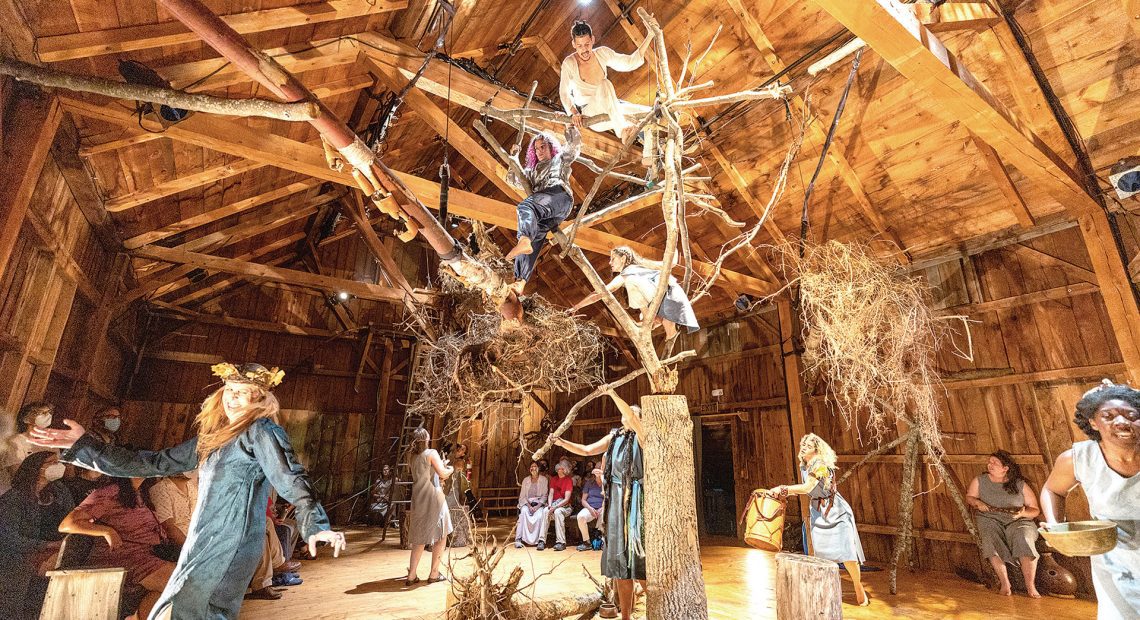
“Then, other times of the year, we make other works that can go into regular-type theatres, and we tour,” Bright said. “We just got back from Europe for a couple of tours there. It’s still large-scale, but it becomes a little bit more intimate, and you can control more in the theatrical setting than outdoors. There are different limitations, I would say. But it’s still visually stunning, very physical, poetic … it’s definitely not your average Shakespeare recital.”

Meanwhile, Double Edge offers residencies and other cooperative oppportunities to like-minded companies across the U.S., he noted. “We come together once or twice a year, and we train together, and sometimes we present each other’s work. So it’s really a cool thing.”

Hannah Rechtschaffen, director of Greenfield Business Assoc., who recently came on board Double Edge as its team and relationships manager, called the organization one of the most well-organized and communicative companies she’s ever worked for.

The concepts of ‘living culture’ and ‘art justice’

The concepts of ‘living culture’ and ‘art justice’ are integral to the training and performance work going on at Double Edge.

“You don’t find that in a lot of arts organizations. Sometimes the art is taking over so much that the business side lacks a little, and I think one of the real strengths of Double Edge, and one of the reasons that we rise as a real leader and attract people from many sectors, not just the art sector, is because, though our message is really complex, it’s also very clear because it’s being rolled out in a way that a lot of different people can relate to.”


Living History

Klein founded Double Edge in 1982 as a feminist ensemble collective alongside co-founder and emerita ensemble member Carroll Durand and several other women, performing in six-week rentals of various Boston theaters.

In 1985, the ensemble located a parish hall in Allston, a long-unused building at the Episcopal Church of Saints Luke and Margaret. Following renovations, this was its home for the next 12 years. In 1994, the company located a new home in Ashfield, precipitated by the economic impossibility of paying exorbitant rent in the Boston area, and by the desire to house overseas guest artists for long periods.

After driving back and forth for a couple years, the Double Edge team opened their first performance space in Ashfield — in a converted barn — in 1997.

In addition to its spectacles, which launched in 2002, Klein and her team have created seven performance cycles, or series of plays, that have toured around the world, including:

• The Garden of Intimacy and Desire (2002-08), a cycle exploring distinctive visions of magic realism in Jewish and Hispanic culture;

• The Chagall Cycle (2010-15), which was imagined entirely from the visual art of Marc Chagall;

• The Latin American Cycle (2015-18), which began as an effort to come to artistic terms with Co-Artistic Director Carlos Uriona’s sociocultural and personal background; and

• The Surrealist Cycle (2017-present) three performances, loosely woven together, relating to the Latin American Cycle and research into surrealism.

In addition, the Ashfield Town Spectacle & Culture Fair (May 2017) and We the People (summer 2017 and 2018) were a duet and ode to the history of Ashfield and the surrounding hilltowns of Western Mass. Eighty local artists and groups participated in each two-day event, which took place throughout the entire town of Ashfield, ending in a 700-person parade and an aerial flight over the Ashfield Lake.

“There’s a whole journey that the audience follows, and whether you’re at the front or the back, you’ll experience the whole thing. You won’t miss out on anything, although each audience member experiences it differently.”

Clearly, a sense of place and culture is a constant theme here, and Double Edge itself is a model for a living community. About 10 years ago, the ensemble started thinking about ‘greening’ and the necessity of moving off the grid, “not only as giveback for what we receive from nature, but also as a model for theaters around the country and other organizations who are themselves modeling unsustainable building and operating practices,” the organization notes.

With that in mind, single-use plastic was banned from the farm for our students, audiences, and daily living, and the property has also started using solar energy and wants to replace all its heating systems, with the dream of building a solar farm and multi-acre apiary and wildflower sanctuary.

So, yes — this is a theater company with a lot on its mind, one that takes a holistic approach to art and life, striving to find the critical connections that often get lost in today’s world.

“I’m always in the intersection of economic development and the creative arts, and how those things come together,” Rechtschaffen said. “It’s a constant process of figuring out how to communicate that in a way that every sector can understand. I think that’s something that we do incredibly well and have an opportunity to do even more — to figure out how to grow that impact.”


Building Trades Special Coverage

Current Events

President Jeff Goodless

President Jeff Goodless

Early on, Jeff Goodless knew life wasn’t easy in the world of electrical contracting.

But he also knew his family had built a strong reputation in the field since 1945, so it was always on his mind to one day enter the family business.

“I went to Northeastern University for five years,” he said, studying electrical engineering and business management there in the 1970s and taking advantage of NU’s well-known co-op work programs. “Everybody said, ‘why did you go to the co-op school?’ But I wanted to go through the experience of actually working and doing real interviews, knowing I was coming here, just to have that experience.

“I came back here and thought I was going to take a month off, and my father said, ‘you can have a day off,’” he went on. “So I came right to work, right out of college.”

He knew that was a good decision and knows it even more now, almost a half-century later, with Goodless Electric marking 78 years in business, still serving clients in the residential, commercial, and industrial sectors, just like his father, Leon Goodless, and uncle, Irving Goodless, did from the start.

Irving launched the business behind his parents’ home in Springfield, and his brother Leon joined in 1957, when the firm took the name Goodless Brothers Electric Co.

They did quite a bit of moving in the first few decades, Jeff said, to Riverdale Road in West Springfield, Worthington Street and then Winter Street in Springfield, then to the current location at 100 Memorial Ave. in West Springfield, alongside the Route 5 rotary at the Memorial Bridge. Irving retired in 1977, Irving retired in 1977, around the time his nephew came on board part-time. Jeff moved into a full-time role around 1982 and eventually took over the firm’s leadership.

“Everybody went into computer technology. That’s really what happened; they all went into IT, computer technology, and they weren’t going through the electrical programs. But now, I think the classrooms are filling up again.”

“Believe it or not, the type of work has stayed the same, although maybe on a larger scale later,” Jeff told BusinessWest. “But even way back when, they always did residential, industrial, and commercial work. They ran maybe three, four, six guys.”

At its heyday, Goodless said, the company was running about 90 workers, where now, it boasts about 20, keeping them busy with projects ranging from parking-lot maintenance and upgrades, generator services, and fire-alarm systems to lighting retrofits, swimming pools and hot tubs, and residential and commercial service upgrades, just to name a few.

“There’s a lot of jobs with UMass Amherst, a lot of state work, some city work, fire stations, DPW facilities, a little bit of everything. A lot of work for the housing authorities throughout the years, too,” he said. “We don’t do new homes, but I do additions and a lot of repair work. Out of our service department, we run about four vans, and we roll basically 24 hours a day.”

Goodless Electric celebrated its 75th anniversary in 2020

Goodless Electric celebrated its 75th anniversary in 2020, a major milestone for any company.

As the firm celebrated 75 years in business in 2020, an emerging pandemic posed serious challenges, especially since it was performing work at the Holyoke Soldiers’ Home, where COVID killed 84 residents.

“I couldn’t get my people to go up there, and I couldn’t really blame them,” Goodless recalled. “People didn’t want to work; people were scared. I had an outbreak in my office. It was challenging.”

What made a difference, he said, was the federal Paycheck Protection Program, which poured funds into businesses to keep their teams employed. “We took advantage of that; it was so helpful. We used it right. We used it responsibly. We kept guys going. In fact, we didn’t have to let anybody go through the pandemic at all.”

“I tell them, ‘if you work hard, if you work diligently, you can have anything you want. The sky’s the limit if you want to work.”

The economic ripple effects from the pandemic — particularly higher costs and supply-chain issues — still resonate, however. Goodless was able to stock up on things like 100-amp and 200-amp panels to keep housing projects moving, but said customers are still shocked to hear it might take nine to 10 months to get switchgear in.

“We say it over and over again: we’re not the chef; we’re the waiter. We don’t make the stuff,” he said. “It’s still a very difficult message to get through, though.”


The Next Generation

Goodless said the company’s reputation for fast response and competitive bids has helped it earn multiple awards for customer service.

At the same time, though, growth is challenging at a time when building trades of all kinds are beset with a talent drain.

“The workforce situation is awful,” he said. “You can get people, but it’s very hard to get good people in. But I’ve been pretty fortunate; I’ve been able to pick up a few people along the way during the past couple of years, and I’m working on a third one right now.”

Part of the issue has been the pipeline of new, young talent not keeping up with the pace of retirements, but Goodless said that might be changing.

Jeff Goodless’ first projects

This wall represents some of Jeff Goodless’ first projects for clients in the late ‘70s.

“Over the years, we noticed a huge decline in the electrical trade,” he said, referring to the programs young people were choosing to study. “Everybody went into computer technology. That’s really what happened; they all went into IT, computer technology, and they weren’t going through the electrical programs. But now, I think the classrooms are filling up again.”

He’s gleaned as much through conversations with teachers at the trade schools in Springfield, Westfield, Holyoke, and others, who say students are more serious than before about entering the electrical field and other trades. Part of the reason may be the talk of graduates of four-year colleges entering the workforce with six-figure debt and a cloudy career path.

“A kid in a trade, they’ll pay their dues and go through the program, and at the end, you can make well over 100 grand a year. And you’re going to do your side jobs like everyone does and make another 25 grand,” he said. “I tell them, ‘if you work hard, if you work diligently, you can have anything you want. The sky’s the limit if you want to work.’”

And work hard Goodless has over the past four-plus decades, outlasting many former clients whose companies are no longer in business. And it’s work he relishes.

“Everybody will have something different to say,” he noted when asked what he enjoys about running this 78-year-old business. “I love going after a bid, going over the numbers, and winning the bid. That gives me a thrill. My second-biggest thrill is going out and doing the buys.”

He’s also got his eye on making sure Goodless Electric continues to be a force for many years to come, even after it moves past family ownership.

“I always think about what I’m going to do with this business as I’m getting older. My ultimate goal is to turn it over to the employees, or half to the employees and maybe sell the other half, something of that nature,” he said. “I just want to keep the business going, keep the name going.”

Commercial Real Estate Special Coverage

Building Anxiety

Trulieve will soon be leaving the Massachusetts market

Trulieve will soon be leaving the Massachusetts market, and its property on Canal Street in Holyoke, leaving questions about the site’s future.

Aaron Vega calls it the ‘year of reckoning.’

And he’s not the only one who uses such language when talking about 2023 and the cannabis industry.

This has been a year when a confluence of forces has brought stern challenges to a sector that got off to a fast and hot start in this region. These forces, including mounting competition and falling prices, have prompted some players to exit the market — Truelieve was the latest to make that decision — and others to delay or cancel entry into it.

The impact of these rather sudden changes in the fortunes of the cannabis industry has changed the landscape in many different ways and in many different communities. But perhaps the greatest impact has been on the commercial real-estate market in the city that has most aggressively pursued this sector: Holyoke.

Indeed, a market that was once white-hot as Holyoke officials, led by former Mayor Alex Morse, rolled out the red carpet for cannabis has cooled off substantially, said Vega, director of the city’s Office of Planning and Economic Development, adding that this trend will likely continue as the cannabis sector continues adjusting and responding to the changing climate.

“We’re wondering … how does that property move? What does that company want to sell it for, and what is the acquisition cost going to be? It comes currently with a $300,000 tax bill; that’s a lot of money to keep a building empty. We’re hoping they’re able to move it or work with the city to find a public solution.”

A number of properties have been purchased or leased, and at prices that could not have imagined a decade ago. And as some cannabis businesses close or leave the market and others delay their plans to start, questions mount about all that real estate and what will happen with it.

“A lot of the buildings were locked up because they were purchased at a much higher price than they were probably worth, and now those companies are not going forward, or their timelines are stretched out,” he said. “Are they going to sell these buildings? Are they going to be able to maintain these buildings? They come with tax bills, and they come with maintenance; if you don’t have anything going on inside that you’re making money with, it becomes more of a struggle.”

The most visible manifestation of this changing landscape is the property at 56 Canal St., home (but not for much longer) to Trulieve’s 126,000-square-foot growing, processing, and testing facility, the former Conklin Office Furniture building. Truelieve poured tens of millions into purchasing, renovating, and retrofitting the former mill for cannabis-related uses, said Vega, who wondered out loud how the company could possibly recover that kind of investment given the current fortunes of the cannabis industry.

“We’re wondering … how does that property move? What does that company want to sell it for, and what is the acquisition cost going to be?” he asked. “It comes currently with a $300,000 tax bill; that’s a lot of money to keep a building empty. We’re hoping they’re able to move it or work with the city to find a public solution.”

While some ventures are slated to open in the coming weeks and months, Vega said, there are at least 20 properties for which special permits have been approved — for one or more of the several types of cannabis-related businesses — but where there has been little movement, if any, on site toward opening those businesses.

Vega said he was only half-kidding when he suggested that Trulieve donate its Canal Street property to the city and its redevelopment authority, which could then try to attract more and different kinds of indoor agriculture businesses. Among other things, the transformation of old mills across the city for cannabis-related uses has shown what can be done with those properties, he noted, adding that indoor agriculture could be a growth industry for the city — literally and figuratively — moving forward.

Meanwhile, another emerging model for these mills could be an incubator-like facility, such as the one taking shape at 1 Cabot St., another old mill, the former Riverside Paper Co. building, purchased by Tom and Karen Cusano in 2018.

1 Cabot St. will become an incubator of sorts

Tom Cusano says the property at 1 Cabot St. will become an incubator of sorts for several small, cannabis-related businesses, a model he believes has a great deal of promise.

There, several smaller companies, many of them social-equity ventures, are moving forward with plans, Tom said, adding that this is a different kind of model, and one he believes has some staying power.

“We have one operating tenant and four tenants who are in the licensing process, and we’re building out their space — they should be operational within 90 to 120 days,” he said, adding that this model calls for reasonable lease rates, most buildout handled by the owner, and opportunities to grow if and when the businesses do.

For this issue and its focus on commercial real estate, we take a look at what’s happening in Holyoke — and not happening, as the case may be — and what it all means moving forward.


Pot Luck

Vega told BusinessWest that the cannabis experience — and it is ongoing — has benefited Holyoke in a number of ways.

Beyond the hundreds of thousands of square feet of old mill space that has been absorbed and the jobs created, the arrival of this industry has given the city a tremendous amount of exposure locally, regionally, and even nationally and internationally, he said, adding that many people in business who didn’t know about the city’s assets and benefits, from available real estate to green, comparatively inexpensive energy, now do. And this bodes well moving forward.

For the immediate future, though, the relative strength and resilience of the local cannabis industry is the primary topic of conversation in this year of reckoning. At the very least, there are now real questions about whether this sector has already peaked, and if not, how much more it can grow.

To quantify and qualify the changes that have taken place, Vega talked about phone-call volume — as in calls from cannabis companies calling with questions about the city and opportunities to land there — and his overall workload when it comes to handling license applications and related matters.

“When I started in this job two and a half years ago, we were talking to companies once a week, and we had that peak of having 70 host agreements,” he noted. “Working with the City Council, we got 38 special permits approved; that’s a lot of work on a lot of people’s part.

“But now, I think we had two host-community agreements in the last three months, and two projects in front of the City Council and other departments for review,” he went on. “In two years, it’s changed quite a bit.”

Elaborating, he said many of the major players and ‘funders’ in this industry have already moved on to the next emerging markets in this industry, such as Connecticut and New York, with their attention also focused on federal legislation to legalize cannabis.

“With the cannabis industry, it was kind of predatory; everyone looked at it like it was the golden goose. If you had a building, you asked for four times what it was worth, and if you had space to lease, you asked the tenant to spend millions of dollars to fix up your run-down building.”

All of this is reflected in the commercial real-estate market, he said, referencing the large question marks now hanging over several of the properties acquired or leased — at high prices — with cannabis businesses in mind.

Cusano, who purchased his property not long after cannabis was legalized in this state, summed up the market frenzy, if that’s the right term, this way:

“With the cannabis industry, it was kind of predatory; everyone looked at it like it was the golden goose. If you had a building, you asked for four times what it was worth, and if you had space to lease, you asked the tenant to spend millions of dollars to fix up your run-down building. And, quite honestly, very few people could afford that.

“Some of the big, multi-state operators came in with deep pockets and dumped tons of money,” he went on. “And as we can see with Trulieve, that doesn’t seem to work.”

He’s taking a different approach, one he thinks will generate some long-term success.

Indeed, at the Cabot Street property, he’s drawing on 20 years of experience with renovating and then leasing out a former mill building to emerging small businesses in New Hampshire.

“We’re trying to help these small businesses get started; we’re doing the lion’s share of the renovation work and essentially giving them a turnkey operation except for fixtures and whatever they need to run their business, whether they’re doing cultivation, manufacturing, or processing,” he said. “We’ve talked with multiple tenants; we’ll have a retail dispensary in the front of the building that we’re working on.”

Elaborating, he said he and Karen purchased the building “for a song” and have invested far more than $1 million in it thus far. He said he’s had some experience with the cannabis industry in New Hampshire and Maine and understands its potential, both as a source of tenants and its importance to the community in question.

At present, there is one business operating at the property on Cabot Street, Mill Town, a cultivation and light-manufacturing operation, Cusano said, adding that several more are in the pipeline, ventures that will occupy 10,000- to 35,000-square-foot spaces.

He believes this model will fare better than some of the other strategies that have been tried — mostly companies overpaying to purchase or lease property, a situation that adds another layer of challenge to their ability to remain competitive in a rapidly changing market.

“People were overpaying, dumping a ton of money into these properties, and then the market collapsed because of oversupply, and they were upside-down,” he said. “We have a saying in the retail business — you can sell below cost and make up the difference with volume. But not for long.”


Bottom Line

Returning to his thoughts about indoor farming and how properties like the Trulieve facility might be turned over to such uses, Vega said such prospects represent just one of the ways the changing real-estate climate in Holyoke represents both challenge and opportunity.

“Let’s keep the cannabis industry, but let’s also help the local food economy,” he said. “Someone growing lettuce and micrograins can’t afford a $40 million building, but if the redevelopment authority can gain control of that building or sell it without needing to make a profit, and we can get a whole industry or a bunch of small businesses going, we can create a food economy, and that would be huge.”

He acknowledged, without actually saying so, that such plans represent a real long shot. The reality is that, rather than solutions, there might be more question marks for the buildings bought with designs on entering what looked at the time to be a lucrative cannabis sector.

And if things break the wrong way, Holyoke may wind up with what it had before it rolled out the red carpet for this industry — a large number of vacant and underutilized properties.