Daily News

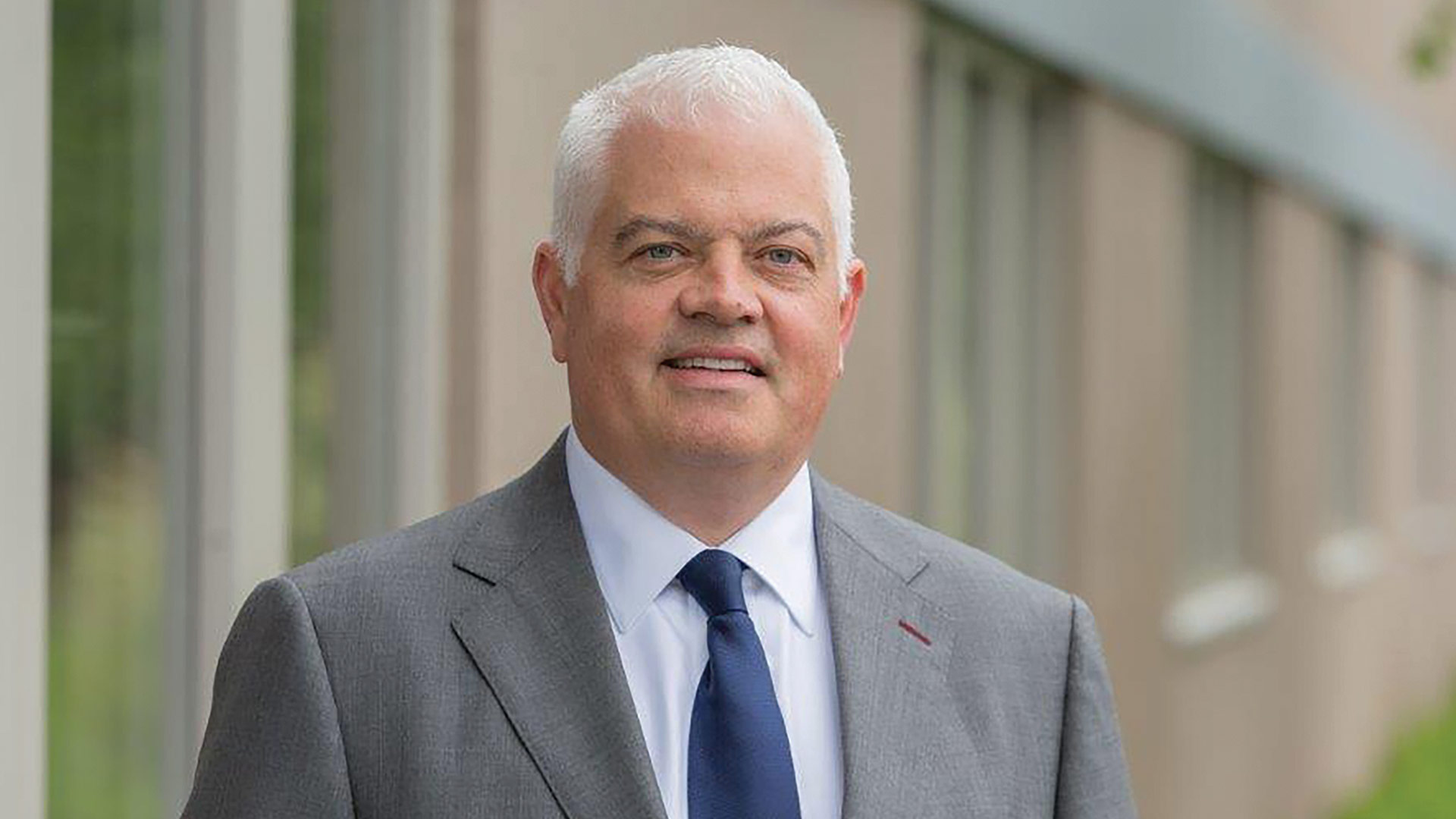
SPRINGFIELD — Richard Swift, who has served as Health New England’s (HNE) interim chief financial officer since April, has been appointed president and CEO, effective immediately.

Swift is an experienced chief executive officer and chief financial officer for provider- owned health plans, and a senior healthcare executive with over 30 years of leadership with integrated delivery systems, health plans, and provider groups throughout the country.

He has served as president of Medwise Partners, a health-insurance consulting company he founded in 1996. In that capacity, he has served in numerous interim executive roles for regional health plans throughout the U.S. He holds a bachelor’s degree from Mercer University and an MBA in healthcare administration from the University of Miami in Florida.

As president and CEO, Swift will be responsible for the successful operation of HNE; driving growth across the organization, including the development and execution of strategic plans; successful introduction of new programs and services; membership growth; operational, financial, and service excellence; and continued improvements in clinical quality with a focus on lowering the cost of care in Western Mass.

Daily News

HOLYOKE — Holyoke Community College will continue to offer the majority of its classes remotely through the 2021 spring semester, HCC President Christina Royal announced in a message to students, faculty, and staff.

“So much has happened over the course of the last several months,” Royal said. “Sometimes it’s hard to imagine how our world will change from one day to the next. It is difficult to predict what life will look like for HCC months from now. However, we are preparing and planning as best we can for every possible scenario.”

In her message, Royal said that, “out of an abundance of caution,” HCC will continue to operate primarily remotely for the spring 2021 semester, with the vast majority of courses offered in a remote or hybrid environment.

“We anticipate that no more than 10% of courses offered this spring will be held on campus,” she added. “In every case, plans for offering face-to-face courses will be reviewed by the college’s Return to Campus Task Force to ensure that health and safety protocols are in place.”

Royal noted that it was important to make this decision now because registration begins Monday, Nov. 2 for HCC’s two-week January term and the spring 2021 semester. Registration and course materials must be prepared in advance of that date, so students have time to make informed decisions about their classes.

HCC’s January term, called Wintersession, begins Monday, Jan. 4. The spring 2021 semester begins Monday, Jan. 25. HCC will also be offering flexible spring start dates on Feb. 16 and March 29.

“This is a challenging time,” Royal said, “but our community is meeting it with resilience, creativity, and determination. I appreciate your flexibility and understanding as we navigate this time together. Supporting and inspiring our students remains our top priority today and always.”

Like most colleges, HCC started remote instruction in mid-March after the COVID-19 pandemic forced campus closures. This fall, all HCC classes are being offered in one of three formats: online, blended remote, and blended face-to-face.

Online courses follow a traditional, asynchronous online model with coursework deadlines established by instructors. Blended remote courses have asynchronous online components combined with real-time scheduled class meetings via videoconference platforms such as Zoom.

Blended face-to-face combines blended remote with some in-person instruction on campus. For the most part, this format is limited to health science programs that require clinical labs, such as nursing, radiologic technology, veterinary technician, and medical assistant.

Daily News

SPRINGFIELD — Tech Foundry, a nonprofit with a mission to support the region’s growing need for a qualified technology workforce and elevate underrepresented groups into sustainable careers in information technology, has named Bruce Dixon its new CEO. Dixon will work alongside an 11-member board, lead a five-member staff, and drive strategic business partnerships and curriculum development to propel the already-thriving organization forward.

Founded in 2014, Tech Foundry has offered internships, networking opportunities, and instruction to traditionally low-income, underserved populations, preparing graduates for the entry-level IT workforce in the Pioneer Valley. These programs are offered free of charge to participants through generous donations from area businesses and members of the local community.

Dixon previously served as CEO of the Connecticut Pre-Engineering Program, a social venture that inspires and prepares underrepresented students to pursue careers in science, technology, engineering, and mathematics. It’s this background that generated interest among Tech Foundry board members, but it’s his well-rounded background and personal philosophy that solidified his candidacy.

“We couldn’t be more pleased to welcome Bruce Dixon to our team,” said Delcie Bean, CEO of Paragus IT and co-founder of Tech Foundry. “Not only does he possess an impressive résumé, he understands and subscribes to the mission and vision of our organization.”

Dixon is an award-winning innovator, social entrepreneur, adventurer, storyteller, and self-proclaimed “human-performance geek.” His insatiable curiosity and zest for life has led him to trek around the globe and to engage in an eclectic array of vocations including professional football, financial-services management, leadership development, organizational behavior, coaching, and nonprofit innovation.

He has held a variety of leadership roles with the Hartford Financial Services Group and the Chubb group of insurance companies; was honored with numerous awards, including the Connecticut Science Center Award for Achievement in STEM Innovation and Education and Wesleyan University’s Social Entrepreneurship Award; and was invited as an honored guest to the 2014 inaugural White House Maker Faire.

Daily News

WINDSOR LOCKS, Conn. — The Connecticut Airport Authority (CAA) announced that Condé Nast Traveler released the results of its annual Readers’ Choice Awards, with Bradley International Airport recognized as the eighth-best airport in the U.S.

“The results of this year’s survey, conducted at the start of the COVID-19 pandemic, are a testament to the lasting power of a meaningful travel experience,” said Jesse Ashlock, U.S. editor of Condé Nast Traveler. “The winners represent the best of the best for our audience and offer plenty of trip-planning inspiration for all the adventures we can’t wait to have next.”

The Condé Nast Traveler Readers’ Choice Awards are the longest-running and most prestigious recognition of excellence in the travel industry. Bradley International Airport was recognized as a top-10 airport for the fourth consecutive year.

“This award is a tremendous honor during a challenging year for the travel industry, and we are proud to once again be recognized among our nation’s best airports,” said Kevin Dillon, executive director of the Connecticut Airport Authority. “We thank the travel community for their continued vote of confidence in Bradley International Airport and for underscoring the value of traveling through a smaller airport. Now more than ever, Bradley Airport stands out by always offering a clean, safe, and convenient travel experience.”

Daily News

WESTFIELD — Westfield State University’s College of Graduate and Continuing Education (CGCE) launched a new graduate degree concentration and certificate program that focuses on public healthcare administration. The master of public administration (MPA) in public healthcare administration concentration and the public healthcare administration certificate were approved recently by the Massachusetts Board of Higher Education.

“Public healthcare is a priority, now more than ever, and we are excited about Westfield State’s new MPA in public healthcare administration concentration and certificate program because their curriculum provides an opportunity to better support our public healthcare system with high-quality, skilled workers,” said CGCE interim Dean Stefanie Sanchez. “The degree concentration — or the standalone certificate — addresses an ongoing need for healthcare leaders and administrators in several different capacities. With a focus on management and leadership, both options provide a clear path for advancement in the workforce.”

According to the U.S. Bureau of Labor Statistics, the employment outlook for healthcare managers is strong and projected to grow 32% through 2029 — much faster than the average for all occupations. As the large Baby Boomer population ages, and more people remain active later in life, an increase in the demand for healthcare services is expected.

Graduates of the degree and certificate programs will be prepared to take on public healthcare challenges as government and nonprofit leaders, where they will lead the charge to create healthier communities. Students in both interdisciplinary programs benefit from an inclusive, supportive environment in which faculty are committed to their success and where they build relationships with their classmates that will continue long after they graduate. They will learn from full-time faculty and practitioners whose expertise is in nursing, biology, communications, healthcare economics, and policy.

MPA Program Director Charles DiStefano explained that, for many years, public-service leaders in Western Mass. have developed leadership and management skills in public management, nonprofit management, and criminal justice administration through Westfield State’s MPA program. Now, future leaders seeking to make their mark in public healthcare administration can benefit from the same specialized opportunity. Additionally, he added, successful public healthcare administrators are leaders within their agencies who effectively gain and foster political allies, nurture relationships within their communities, and build public trust.

“We have seen during the COVID-19 pandemic amazing examples of strong, effective leaders at the federal, state, and local levels, and we have felt the effects of failures by public healthcare officials,” DiStefano said. “By offering this concentration and certificate now, we demonstrate Westfield State’s commitment to nurturing leaders in the public healthcare community who will not succumb to fear or pressure from special interests, and who instead act in our collective best interest to keep us safe and healthy.”

Business Talk Podcast

We are excited to announce that BusinessWest, in partnership with Living Local, has launched a new podcast series, BusinessTalk. Each episode will feature in-depth interviews and discussions with local industry leaders, providing thoughtful perspectives on the Western Massachuetts economy and the many business ventures that keep it running during these challenging times.

Episode 33: Oct. 7, 2020

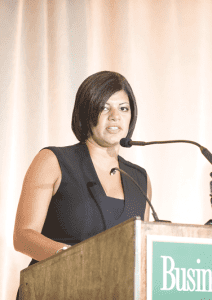
Thom Fox interviews Angela Lussier, CEO and Founder of Speaker Sisterhood

Thom Fox interviews Angela Lussier, CEO and Founder of Speaker Sisterhood. Speaker Sisterhood is a growth-stage start-up providing a community to women who want to discover, awaken, and create their voice through the art of public speaking. Angela discusses the pandemic’s impact on her business-model, how she is capitalizing on opportunities brought about by COVID-19, and offers tips about participating in successful on-line communications.

Also Available On

Daily News

BOSTON — Business confidence in Massachusetts was essentially flat during September as employers remained pessimistic about an economy that continues to struggle under the weight of the seven-month-old COVID-19 pandemic.

The Associated Industries of Massachusetts (AIM) Business Confidence Index rose three-tenths of a point to 46.6 last month, up from a low of 38.4 in April but still 12.3 points lower than a year ago. The reading remains below the 50-point level that signals optimism.

Opinions about the state of the national economy strengthened, while confidence in the Massachusetts economy declined. Employers feel more bullish about the future than about present conditions.

The stable confidence reading came during a month in which the Massachusetts unemployment rate fell from a highest-in-the-nation 16.2% to 11.3%. It was also a month that saw the number of newly reported COVID-19 cases in the Commonwealth begin to accelerate.

“Employer comments suggest a both uncertainty about the presidential election and frustration about the persistent disruption of the COVID pandemic,” said Raymond Torto, professor at the Harvard Graduate School of Design and chair of the AIM Board of Economic Advisors (BEA). “Confidence among employers varies widely, depending upon the degree to which the economic downturn is affecting particular industries.”

One participant in the confidence survey commented that “conditions are quite uneven — dire for many, marginally satisfactory for some, and extremely strong for a few.”

The constituent indicators that make up the Business Confidence Index were mixed during September. Employers’ confidence in their own companies fell slightly to 48.7, 9.5 points lower than in September 2019.

The Massachusetts Index assessing business conditions within the Commonwealth lost 2.0 points to 44.1, while the U.S. Index measuring conditions nationally rose 4.2 points to 42.6. The state confidence reading has dropped 4.7 points during the past two months and now sits 19.2 points below its reading of September 2019.

The gap between attitudes toward Massachusetts and the nation shrank from 12 points in July — the largest in a decade — to 1.5 points last month. Massachusetts lost 403,200 jobs between August 2019 and August 2020.

The Current Index, which assesses overall business conditions at the time of the survey, lost a point to 43.9. The Future Index, measuring expectations for six months out, rose 1.5 points to 49.2, just shy of optimistic territory. The Employment Index increased slightly — 0.7 points to 48.6 — while the Sales Index, a leading indicator, rose 0.2 points to 45.0.

Large companies (49.7) were more optimistic than small companies (47.4) or medium-sized companies (43.9). Non-manufacturers (48.8) were more bullish than manufacturing companies (46.8).

“The confidence index continues to show a clear disparity by industry and by company size in the consequences of the economic downturn,” said Paul Bolger, president of Massachusetts Capital Resource Co. “At the same time, it is a positive sign that the Future Index is higher than the Current Index. That means employers looking beyond the current uncertainty anticipate improvement six months down the road.”

AIM President and CEO John Regan, also a BEA member, said the continued economic uncertainty facing employers underscores the importance of decisions by the Massachusetts Legislature to maintain a competitive business climate. He cited a recent vote to table two bills that would have presumed that employees who contract COVID-19 did so while on the job and could thus seek workers’ compensation benefits.

“The decision by the Legislature was good news for employers already facing huge potential increases in unemployment-insurance taxes,” Regan said. “Expanded workers’ compensation eligibility is inconsistent with the public-health science because workers could just as well contract COVID-19 from family, friends, or a trip to the beach as from the workplace.”

Daily News

SPRINGFIELD — The Professional Women’s Chamber invites the community to join in celebrating the 2020 Woman of the Year: Beth Cardillo, executive director of Armbrook Village. This event, usually held in-person, will be presented virtually this year on Thursday, Oct. 15 at 6 p.m. by Rise Event Production and Chikmedia, two local, women-owned businesses.

The award is presented annually to a woman in Western Mass. who exemplifies outstanding leadership, professional accomplishment, and service to the community. Attendees can tune in live on the Professional Women’s Chamber Facebook page. The event is free.

“I am flattered and humbled to receive this prestigious award,” Cardillo said. “What sets me apart from all the other fabulous women that work to improve the quality of life for others — I would say absolutely nothing.”

Born in New York City, Cardillo moved to Massachusetts with her family as a teenager. As her parents were activists, her first march was at the United Nations against nuclear-bomb testing when she was 3 years old — and she hasn’t stopped marching yet. Her father was a newspaper journalist and editor and had a public-relations business. She’s always learned to be a change maker in the world for equity and peace, to keep questioning authority, taking risks, trusting her intuitions, embracing change, and asking questions. She’s proud of being a part of the generation that stopped the Vietnam War, and she still expresses her activism to this day while married with three kids and two grandchildren. Kayaking, traveling, friends, and family are her passions when she’s not doing any of the above.

“I feel like I should be sharing this award with everyone. So congratulations to you as well for doing all the hard work each and every one of you do daily,” Cardillo said. “I have always asked questions, acted curious, stood up for my beliefs, had a vision, found my voice, been a bit of a rebel, been accessible, thought big, and, of course, followed the motto since the ’60s: think globally, act locally. Education does not end with a diploma; it’s a lifelong process, as well as a purpose. Lastly, have fun every day!”

The Professional Women’s Chamber (PWC) works to empower career-oriented women through participation in leadership, education, and networking opportunities, striving to strengthen the positive impact of women in the business community and on the economy. All individuals in the community are invited to attend this event.

“We are truly excited to honor Beth as our 2020 Professional Women’s Chamber Woman of the Year” chamber President Gillian Amaral said. “Her tenacity and leadership truly embody what the PWC stands for.”

Daily News

AMHERST — UMass Amherst and the town of Amherst announced that the university will provide asymptomatic COVID-19 testing for the town’s first responders and inspectors as part of their joint efforts to deter spread of the novel coronavirus.

Approximately 100 firefighters, police, and inspectors will be tested once per week in the university’s Public Health Promotion Center at the Mullins Center. The town will reimburse the university for the costs associated with the testing.

“UMass has a long tradition of supporting and partnering with the town’s front-line responders and is deeply appreciative for the invaluable role they play in enhancing the public safety of our campus community,” Chancellor Kumble Subbaswamy said. “Currently, our resources and capacity are limited, but we are pleased to be able to make this commitment for the well-being of the entire community.”

Added Amherst Town Manager Paul Bockelman, “we appreciate that the university will provide a needed service to the town as we work to keep our employees safe and healthy. Our entire community relies on our expertly trained first-responder teams, and we welcome the opportunity to keep them, and ultimately our town, safe. The university has done a tremendous job in setting up such a professionally run testing regimen, and we deeply appreciate the campus’ willingness to accommodate our request.”

The university’s asymptomatic-testing program is one of the largest in the state. UMass Amherst has conducted more than 70,000 COVID-19 tests since Aug. 6, including approximately 48,000 tests of the off-campus student population living in the Amherst area.

Daily News

SPRINGFIELD — In order to continue to raise awareness and funds for the fight against breast cancer, all Big Y supermarkets will donate proceeds from various departments throughout the store to 32 local breast-cancer support groups throughout Massachusetts and Connecticut. Since 2007, the chain has raised more than $2 million for this cause. The program, “Partners of Hope,” reflects the partnership, commitment, and support of breast-cancer awareness and research.

During the entire month of October, Big Y will donate a portion of the proceeds from both floral and produce purchases, including Sunshine Bouquets. Additionally, Big Y will donate five cents for each purchase of Big Y brands, including Full Circle Organics, Culinary Tours, Cravin’ Flavor, Food Club, That’s Smart, Wide Awake Coffee, Sweet P’s Bake Shop, Top Care Health, Tippy Toes, Pure Harmony, and Paw’s Happy Life purchased the week of Oct. 8-14 (some exclusions may apply). Big Y Butcher Shops will donate 10 cents from every pound of All Natural Angus Beef and Big Y Smart Chicken sold during the entire month of October, and Big Y Pharmacy & Wellness Center will also donate $5 for every flu shot given. New this year, customers can also donate directly to Partners of Hope via bigy.com/community/breastcancerawareness.

Big Y’s dietitian team, Carrie Taylor and Andrea Luttrell, will devote a portion of their fall newsletter to cancer prevention.

“During these challenging and stressful times, it has never been more important to take care of one’s health,” Big Y CEO Charles D’Amour said. “Thousands of women and many men are impacted each year by breast cancer. With a renewed focus on health and wellness and the importance of breast-cancer awareness and early detection, we hope that this initiative can not only help save lives, but someday lead to better treatments and ultimately a cure.”

Daily News

PALMERNorthern Tree Service Inc. announced it has transitioned the ownership of its business lines over to an employee stock-ownership plan, or ESOP.

The Lazear Capital Partners team worked with the management of Northern Tree Service to design a custom solution that included employee benefits, financial flexibility, and maximum tax advantages.

Founded in 1932 by Walter Cambo, the company was first established to service state and municipal tree work in Eastern Mass. Under the leadership of Paul Cambo, Northern Tree Service grew to provide land-clearing services for the ever-expanding energy grid in the Northeast. Furthering Northern’s expansion, now under the leadership of Paul’s son, Philip, Northern Tree Service has continued its growth to become one of the most diversified tree-care companies in the industry, servicing all New England and surrounding states.

“With the history of our employees’ dedication to the company comes personal responsibility for me to develop a succession plan that will help ensure its continued success, further strengthen its legacy, and reward all employees dedicated to the future of Northern Tree,” CEO Philip Cambo said. “While there were many succession plans available to Northern Tree, only one was the perfect fit to address my responsibility to the company. I’m proud to say that Northern is now 100% employee-owned through this newly formed ESOP.”

Added President Timothy LaMotte, “the ESOP was the choice we made to maintain the business’s current direction while simultaneously rewarding the 250-plus employees that have been so critical to the business’ success. We have a very specialized and highly skilled group of professionals focused on safety and integrity, and we are excited to see that continue.”

With the new ESOP in place, both Cambo and LaMotte will continue their current roles for the foreseeable future and gradually hand over the business’ operational control to the next generation of leaders.

Employee ownership through an ESOP is a retirement plan that allows employees to have an ownership stake in the firm through a qualified trust. Over time, employees earn an equity stake in the company’s shares through no cost to them. In practice, ESOPs encourage companies to stay rooted in a single place and generally keep employee turnover low because they reward tenure with more significant financial stakes.

Daily News

HOLYOKE — Aegis Energy, EDF Group, a leading provider of co-generation technology, hired experienced energy-sector professional Michael Bartoszek to the role of business development manager. Bartoszek’s hire comes during an extended period of growth; Aegis recently added 12 team members and has plans to add four more.

Although new to Aegis, Michael is no stranger to the company or its affiliates, having previously held the position of regional manager for the Eastern U.S. for Citelum North America, a unit of the EDF Group. With his knowledge of EDF offerings and more than two decades of industry experience, he is well-equipped to suggest energy solutions in his current role of business development manager.

“Michael brings invaluable energy experience to Aegis, so we expect he will make an immediate impact on new business development by educating and marketing our products and services to prospective customers,” Aegis President Lee Vardakas said.

The four available positions include business development specialist (entry-level), new business development manager, generator technician, and field services technician.

“We’ve been fortunate to experience growth, even during the pandemic,” Vardakas added. “That speaks volumes to the stability of our industry and company.”

To learn more about Aegis and the current open positions, visit aegischp.com/careers.

Daily News

HOLYOKE ­— Bennett Walsh, the embattled superintendent of the Holyoke Soldiers’ Home, issued a letter announcing he will step down amid efforts to fire him and a week after he was criminally charged for his role in the deadly COVID-19 outbreak at the facility, the Boston Globe reported. Investigators have said that Walsh’s decision to consolidate units in the facility back in March led to “horrific circumstances” that allowed the virus to easily spread.

In his letter, Walsh, who has been on leave since March, called his work for the veterans’ home “a tremendous honor,” adding that “I very much appreciated the opportunity to serve my fellow veterans, and I strived every day to do my best for them and their families. Recent events, however, make it impossible for me to continue to serve.”

Kevin Jourdain, who chairs the facility’s board of trustees, also released a statement acknowledging Walsh’s letter of resignation.

“The board of trustees looks forward to a thoughtful and robust search process to fill this critical leadership position,” he added. “The board of trustees will seek a candidate who is highly qualified and able to lead the facility to its full potential to provide our veterans with the outstanding care they so richly deserve.”

Daily News

SPRINGFIELD — Since 2016, the Western Massachusetts Economic Development Council (EDC), through its Springfield WORKS initiative, has brought together employers, educators, community leaders, the city, and residents to address how to meet the economic needs of both Springfield residents and local businesses. As a result of this collaboration, it became clear that there was a need to increase employer engagement to hire locally and invest in upskilling for worker advancement.

To that end, a partnership developed between the EDC and Baystate Medical Center (BMC), the largest employer in the region, to bring such strategies to fruition in Springfield. The BMC/EDC team was awarded $125,000 from the Ascend at the Aspen Institute’s Family Prosperity Innovation Community for a project that seeks to engage more employers in identifying and addressing institutional practices and policies that will support their growth and development of low-wage, entry-level employees and better access to career pathways, and simultaneously provide ready access to employment for residents from surrounding limited-opportunity neighborhoods.

The funding will support Baystate Health’s ‘anchor institution mission’ to support and revitalize low-income communities though inclusive local hiring through deliberate action and meaningful collaboration with community workforce-development and training organizations affiliated with Springfield WORKS. ‘Anchor institutions’ have traditionally been nonprofit, place-based entities, such as universities and hospitals, that are able to leverage their resources for the benefit of the local community in hiring, investment, purchasing, and more.

What is unique about what is happening in Springfield is that a traditional anchor, Baystate Medical Center, is joining with the EDC’s Springfield WORKS and Parent Villages, a community-based parent organization, to establish a network of organizations that move children and their parents toward educational success and economic security. Springfield’s Family Prosperity Innovation Community initiative is an innovative, two-generation approach focusing on employees, their families, and children together with a gender- and racial-equity lens.

“Even before the COVID-19 pandemic, we knew we needed innovative economic-development models to meet the needs of employers and job seekers in our region. That is even more true today,” said Rick Sullivan, thre EDC’s president and CEO. “This anchor strategy is an effort to more strategically and effectively harness the power of local institutions to become the social and economic engines of our communities.”

Springfield’s Family Prosperity Innovation Community initiative will engage all employers in committing to develop and set measurable goals around local hiring, internal workforce advancement and pathways to living-wage jobs, and diversity and inclusion.

“Baystate’s participation in the Aspen Institute’s Ascend Family Prosperity Innovation Community is a strategic investment that promotes economic dignity for low- and moderate-income workers and equitably strengthens their families,” said Frank Robinson, vice president of Public Health at Baystate Health. “Simply put, economic dignity means changing how we support workers to have a financially stable family life that brings with it fair access to opportunities and makes it easy for their children to live healthy lives.”

Business Talk Podcast

We are excited to announce that BusinessWest, in partnership with Living Local, has launched a new podcast series, BusinessTalk. Each episode will feature in-depth interviews and discussions with local industry leaders, providing thoughtful perspectives on the Western Massachuetts economy and the many business ventures that keep it running during these challenging times.

Episode 32: Oct. 5, 2020

George Interviews Sandra Doran, President of Bay Path University

In this episode of BusinessTalk, BusinessWest Editor George O’Brien talks with Sandra Doran, president of Bay Path University. In a wide-ranging interview, the two discuss everything from COVID and its impact on campus life, to the many challenges already facing higher education before the pandemic, to the many ways in which COVID may ultimately change the higher education ‘experience.’

Also Available On

Daily News

HOLYOKE — Race Street in Holyoke, located along the canal, will be transformed into a pedestrian-friendly walk for the fall season, named “Canal Walk Roll & Stroll,” and will formally launch on Saturday, Oct. 3 at 10 a.m. The project is an initiative of the City of Holyoke and supported by the Solomon Foundation, and is a collaborative civic project managed by OneHolyoke Community Development Corp.

The goal of the project is to make the Race Street canal walk the biking, walking, and leaf-peeping destination in downtown Holyoke, so neighborhood residents can enjoy an enhanced healthy outdoor location through the fall.

The transformation of Race Street includes temporarily adding specially designed barriers and markers to expand the walkable and bikeable zones on the street while still allowing space for parking. By temporarily narrowing the road to single-car use, Race Street will be a safer, relaxed site for food trucks and other vendors. Transportation planning was provided by Kittelson & Associates.

The Canal Walk Roll & Stroll will be installed on Oct. 3 from 10 a.m. to noon, and will remain through the fall. Walking, bicycling, and literacy events on site will be announced. Community groups, food trucks, and other vendors are invited to use this public space and are encouraged to contact the project manager for inquiries and assistance.

In support of the Canal Walk Roll & Stroll, Holyoke’s Bike & Pedestrian Committee will offer an air and oil station for bicyclists who visit Race Street at the kickoff at 2 p.m. on Oct. 3. Gift pouches will be given to the first 25 participants. A community walk will also be hosted from the same location on Saturday, Oct. 24, with more details to follow.

In addition, beginning Monday, Oct. 5, the Holyoke Chicopee Head Start Family & Community Program will install a ‘story walk’ on the Race Street canal walk, between Dwight and Cabot streets, featuring Graeme Base’s Animalia. A story walk is a different way to read a children’s book, where pages of the story are posted outside and families read as they walk. The story walk will be left up during the month of October.

Daily News

SPRINGFIELD — The Zoo in Forest Park will host its second Virtual Trivia Night on Wednesday, Oct. 21 at 7 p.m.

The event will take place on Zoom. The game will consist of four Halloween-inspired categories, each containing 15 multiple-choice questions. Players can either use a smartphone or a second browser to submit answers during the game.

“There are increased costs associated with animal care in the winter,” said Gabry Tyson, Development associate at the Zoo in Forest Park. “We received great feedback from the trivia night we hosted in July, so we thought we would bring it back for a night in October to hopefully help cover a portion of those costs.”

To play, the zoo is recommending a $25 donation per player, but the event is pay-what-you-can. Donations can be made at www.forestparkzoo.org/events-1/trivia-night.

Pre-registration is required. E-mail Tyson at [email protected] to register a team. Players can opt to play as an individual or on a team of up to six people. Registration is capped at 50 teams. The zoo will award prizes to the top teams.

Daily News

GREENFIELD — Greenfield Savings Bank (GSB) announced the recent promotions of Logan Anderson, Jessica Duffy, Michelle Ozdarski, Mary Pomeroy, and Jocelyn Walsh.

Anderson been promoted to Customer Service Call Center representative. In her new position, she will work in the GSB Call Center, assisting customers with a wide range of account services, tracking voice mails, and returning phone calls. In addition, she will also work as one of the video tellers for the bank’s network of Teller Connect ATMs, which are ATM machines that provide teller service via a live video feed at select GSB locations in Franklin and Hampshire counties. Logan first joined Greenfield Savings Bank as a teller in September 2018. She is a 2017 graduate of Pioneer Valley Regional School. She has been an active volunteer at community events, including the Great Falls Festival in Turners Falls, the Relay for Life in Greenfield, and the Franklin County Fair.

Duffy has been promoted to assistant office manager of the GSB South Deerfield Office. In addition to supervising the daily activities of the office and staff, she will also concentrate on business development and assist customers with a full range of banking services. Duffy first joined Greenfield Savings Bank in January 2017 as a teller and was previously promoted to the position of super banker. She has an associate degree in accounting from Greenfield Community College and is currently working on a degree at the Center for Financial Training.

Ozdarski has been promoted to senior Bank Secrecy Act/anti-money laundering investigator and fraud analyst, responsible for monitoring, reviewing, researching, and analyzing transactions for potential money laundering or other illegal activity, such as terrorism financing and tax evasion. She is responsible for assisting customers with identity theft and other fraud-related issues. Ozdarski joined GSB in 1999 as a teller and the next year became the teller trainer. In 2008 she became the senior Operations specialist and recently held the title of BSA/ID theft manager. She earned an associate degree from Greenfield Community College in 1998.

Pomeroy has been promoted to office manager of the Greenfield and the Shelburne Falls offices. As the office manager, she oversees the operations of both offices and staff development. In addition, she also works with customers on all aspects of their banking and lending needs, including mortgage origination. She first joined GSB in March 2019 as the assistant office manager of the main office in Greenfield. She most recently was the office manager of the Shelburne Falls office. Pomeroy has earned diplomas in consumer lending, general financial services, and advanced financial services, as well as certificates in introduction to financial services and credit analysis and consumer lending from the Center for Financial Training. She is currently enrolled in Cambridge College, working toward an associate degree in business administration.

Walsh has been appointed assistant office manager of the GSB Shelburne Falls office. In her new position, she will oversee day-to-day office operations and assist customers with a full range of account and banking services. She first joined Greenfield Savings Bank in December 2015, starting as a teller in Shelburne Falls Office and later was promoted to a super banker at the Hadley Office. In 2019, she was promoted to assistant manager of the Hadley Office. Walsh has been a volunteer at a wide range of community events, including the WGBY Hadley Asparagus Festival, Shelburne Falls Moonlight Magic, and the Great Falls Festival.

Daily News

SPRINGFIELD — As part of its COVID-19 response efforts, United Way of Pioneer Valley has distributed a round of personal protective equipment (PPE) and other COVID-19-related items to multiple area nonprofits and municipalities.

Recipients of PPE to date include the Agawam Department of Public Health, Boys and Girls Club of Chicopee, Chicopee Food Force, Granville Fire Department, Granville Police Department, Granville Public Library, Link to Libraries, Lovin’ Spoonfuls, Ludlow Senior Center, Ministry en Motion, Neighbors Helping Neighbors, One Holyoke CDC, Quarry Hill Community School in Monson, Southwick Senior Center, Tolland Fire Department, and Westfield Senior Center.

Distributions include various sizes of hand-sanitizer bottles, hand-sanitizing stations, disposable masks, gloves, face masks, face shields, cleaning wipes, and countertop sneeze guards. Donations also included hula hoops and pool noodles to help young children learn about social distancing.

“Keeping our municipal governments and community essential services such as food pantries safely open for business is our top priority, and we thank our community’s generous contributors for our ability to help keep essential workers in Hampden County, Granby, and South Hadley safe,” said Paul Mina, president and CEO of United Way of Pioneer Valley.

Daily News

WINDSOR LOCKS, Conn. — The Connecticut Airport Authority (CAA) announced a partnership with Connecticut-based lab Genesys Diagnostics in the opening of a COVID-19 testing site in the baggage-claim area of Bradley International Airport. This testing site is one of the first in the nation to be located directly in an airport terminal.

“The health of our economy and the health of our state go hand in hand. The team at the Connecticut Airport Authority understands this very well,” Gov. Ned Lamont said. “They are taking every precaution possible to keep their staff, airline workers, and travelers safe, and this new testing capability will go a long way to helping make sure that COVID-19 screening is available for all who come into the state through Bradley International Airport.”

The launch of the Bradley testing site is made possible by recent changes to the state travel order. Previously, passengers traveling to Connecticut from states affected by the state travel order were allowed to avoid a 14-day quarantine only if they were traveling for specific purposes and if they received a negative COVID-19 test in the 72 hours prior to arriving in Connecticut. As a result of recent changes, any passenger arriving in Connecticut from an impacted state is exempt from the 14-day quarantine period if the traveler receives a negative COVID-19 test in the 72 hours prior to arriving in Connecticut or after arriving in Connecticut. A testing site located directly at Bradley Airport enhances safety for passengers and offers convenience for both business and leisure travelers arriving in Connecticut who wish to shorten their quarantine period.

“The new COVID-19 testing site at Bradley Airport is yet another step that we are taking to make Bradley International Airport the most convenient airport for regional travelers, and we thank Governor Lamont and the Department of Public Health for their partnership on this initiative,” said Kevin Dillon, executive director of the Connecticut Airport Authority. “Rather than endure the anxiety of larger crowds and inconvenience at New York or Boston airports, travelers can feel increasingly comfortable with the short lines, strong safety measures, and the on-site availability of quick testing for Bradley passengers and employees.”

The testing site is located in the baggage-claim area at Bradley, between vestibule doors 4 and 5 and across from bag belts 5 and 6. Testing will be available seven days per week between 11:30 a.m. and 12:30 a.m., or as needed per airline scheduling. Testing is available only to passengers traveling through Bradley on the day of their testing and airport employees. Passengers must show a copy of their physical or mobile boarding pass demonstrating they are departing from or arriving at the airport on the day of testing.

Genesys Diagnostics is providing COVID-19 testing via minimally invasive anterior nasal swab. Results will be available within 24 hours of testing. To minimize wait time and crowding near the site, passengers are strongly encouraged to pre-register before arriving at the testing site. Pre-registration is available on the Genesys website at www.gdilabs.com.

Passengers are encouraged to check their health insurance, as many insurers will cover all costs associated with COVID-19 testing. If a passenger does not have health insurance, or if the test is not covered by the passenger’s insurer, tests are still available for $125 each.

In order to avoid or shorten the 14-day quarantine, passengers need to provide written proof of the negative test result to the Department of Health Commissioner via e-mail at [email protected] or by fax to (860) 326-0529.

Daily News

SPRINGFIELD — Leadership Pioneer Valley (LPV) is now accepting applications for enrollment in its LEAP class of 2021. This year’s class will be a little different under COVID-19 protocols. LPV has condensed the curriculum to six months and will mainly operate remotely.

LEAP, LPV’s regional leadership-development program, engages the Pioneer Valley’s most promising emerging leaders through learning and exploration. Participants are trained in applied leadership skills by experts. They also explore critical community issues by connecting with local leaders and visiting businesses and towns across the region. This year’s program runs from January through June.

In its nine years running, more than 300 individuals representing more than 100 companies, organizations, and municipalities have participated. The program has filled a critical need for a leadership program that builds a network of emerging leaders to address the challenges and opportunities of the region. Fifty-three percent of alumni have a new leadership role at work, 64% have joined a new board of directors, and 99% made new meaningful connections.

“This year will be a little different,” said Lora Wondolowski, executive director of LPV. “We are using best practices from other programs around the country to adapt our curriculum to meet our current challenges.”

LPV is seeking applicants from all over the Pioneer Valley, including Hampden County, Hampshire County, and Franklin County, in different sectors. The program is designed for those in nonprofits, businesses, and government who are eager to increase their leadership skills and take action to better the region.

Applicants are considered in a competitive application process that prioritizes diversity by employment sector, geography, race, gender, and sexual orientation. Emerging leaders, mid-career professionals with leadership potential, and those looking to better the Pioneer Valley should consider applying. The deadline for class of 2021 applications is Nov. 20. Applications and further information can be found at www.leadershippv.org.

Daily News

FLORENCE — Florence Bank recently donated $10,000 to the Amherst Survival Center, which connects residents of Hampshire and Franklin counties to food, clothing, healthcare, wellness, and community, primarily through volunteer efforts.

Since mid-March, the Amherst Survival Center has focused its resources on food and nutrition programs, ensuring its ability to provide hot meals to go, daily access to fresh produce and bread, and full grocery shops from its food pantry in as safe a manner as possible.

This summer, the center established a strategic plan to address the steady rise of food insecurity during the COVID-19 pandemic. Their plan entails doubling the food provided by the food pantry while also expanding grocery offerings to roughly two weeks each month. Additionally, the center will expand its staff in order to implement evening and weekend hours and integrate deliveries into the schedule with a goal of delivering food to 1,000 to 1,500 area residents per month.

“We had a very busy summer season,” said Lev Ben-Ezra, executive director of the Amherst Survival Center. “We’ve continued to see more and more people for lunch, and had many new households sign up for the Food Pantry, both to pick up on site and for our rapidly growing delivery program. With the help of our amazing volunteers and support staff, we spent the summer passing out produce, cooking up to 250 lunches per day, and in August alone, we delivered groceries to nearly 1,000 people.”

These efforts have been fueled by generous donations, Ben-Ezra added. “With support from organizations like Florence Bank, we’ll be able to expand our evening and weekend hours to facilitate access for those returning to work. By year end, we expect to serve 6,000 residents, a 50% increase from fiscal year 2019.”

Florence Bank President and CEO Kevin Day added that “we’re thrilled to support the Amherst Survival Center as they continue their important work and service the increased amount of food-insecure people in need. They’ve done an outstanding job throughout the pandemic and, during the summer alone, distributed more than 200,000 meals to community members. We’re proud to stand beside them and support their integral efforts to make sure we all have the food we need.”

Daily News

WARE — Country Bank announced donations to local schools that participate in the bank’s Savings Makes Sense school banking program. Each school received a $250 Visa gift card to assist with back-to-school supplies and other items, including personal protective equipment.

“During these challenging and uncertain times, our communities need us now more than ever,” said Jodie Gerulaitis, vice president of Community Relations at Country Bank. “We know how difficult it is for the schools to obtain all the supplies they need when budgets become tight. We hope this donation is a reminder that we are all in this together.”

Country Bank is offering new educational resources for all students in grades K-12 through online financial-literacy lessons found on its website at www.countrybank.com/student-banking. Parents, teachers, and students are encouraged to use this resource to continue conversations around saving and budgeting.

Daily News

BOSTON — The Baker-Polito administration announced that, effective Monday, Oct. 5, lower-risk communities (based on COVID-19 case numbers) will be permitted to move into the second step of phase 3 of the Commonwealth’s economic reopening plan. All other communities will remain in the first step of phase 3. Gov. Charlie Baker also issued a revised gatherings order. Industry-specific guidance and protocols for a range of phase 1, 2, and 3 businesses will also be updated.

Among the Oct. 5 changes for lower-risk communities only:

• Indoor performance venues will be permitted to open with 50% capacity, with a maximum of 250 people;

• Outdoor performance venue capacity will increase to 50%, with a maximum of 250 people;

• For arcades and indoor and outdoor recreation businesses, additional activities like trampolines, obstacle courses, roller rinks, and laser tag will also be permitted to open, and capacity will increase to 50%;

• Fitting rooms will be permitted to open in all types of retail stores; and

• Gyms, museums, libraries, and driving and flight schools will also be permitted to increase their capacity to 50%.

The limit for indoor gatherings remains at a maximum of 25 people for all communities. Outdoor gatherings at private residences and in private backyards will remain at a maximum of 50 people for all communities.

Outdoor gatherings at event venues and in public settings will have a limit of 50 people in first-step communities and a limit of 100 people in lower-risk, second-step communities.

Daily News

WARE — The Boston Business Journal has once again named Country Bank an honoree in its annual 2020 Corporate Citizenship Awards, recognizing the region’s top corporate charitable contributors.

The publication annually publishes this list to highlight companies that promote and prioritize giving back to their communities. During this year’s virtual celebration held on Sept. 10, 107 companies — a record number — qualified for the distinction by reporting at least $100,000 in cash contributions to Massachusetts-based charities and social-service nonprofits last year. This year’s honorees include companies from healthcare, technology, financial and professional services, retail, professional sports, and more.

Country Bank, which ranked 60th, employs 209 staff members within Hampden, Hampshire, and Worcester counties. In 2019, staff members actively promoted the bank’s mission of giving back to the communities they serve by volunteering more than 1,100 hours of community service.

“During a year filled with unprecedented events and change, it’s incredible to think that the Boston Business Journal’s Corporate Charitable Contributors list is the largest we have ever compiled. These companies give back at least $100,000 to the local community, and now we are in a time when giving back and helping one another is more important than ever,” Market President and Publisher Carolyn Jones said. “These philanthropic companies prioritize the welfare of our communities, and we are excited to be able to honor them.”

Paul Scully, president and CEO at Country Bank, added that “we are honored to be recognized by the Boston Business Journal for our charitable giving. Country Bank’s mission is to help make a difference in the lives of others, and now more than ever, we are committed to this mission as we continue through such a historic time in our history.”

Daily News

SPRINGFIELD — American International College (AIC) is ranked 17th among the top 50 colleges and universities for teaching and education degrees, as ranked by learn.org for academic year 2020-21.

Established in 2003, learn.org provides free resources for students and working professionals to research potential schools and degrees by providing information on career opportunities and institutions of higher education that help individuals reach their goals, including school connections, scholarships, and online college planning for quality and affordable education.

Citing AIC, learn.org highlights the college’s master’s programs, including its master of education in early childhood education and a master of education in middle or secondary education. The organization additionally notes that AIC offers a doctoral program with multiple tracks, the doctor of education in teaching and learning, and called attention to students’ ability to take part in a practicum or field-based research to ensure preparedness for future careers. The organization also credits the School of Education with employing “top-notch staff and faculty members, many of whom hold terminal degrees in their field.”

“AIC has, for over 130 years, invested in the value of access to education and understands the relevancy of giving back to community,” said Sheila Stamm, dean of AIC’s School of Education (SOE). “Our model in the SOE embraces the agency of teachers, leaders, and counselors as scholar practitioners supporting the currency of needs supporting all learners in PK-12. This focus is embodied in our mission, our values, and promise to the citizens of Massachusetts to provide capable, caring, and committed professionals deeply invested in the collective success of communities served.”

Daily News

SPRINGFIELD — In recognition of Domestic Violence Awareness Month in October, Springfield Technical Community College (STCC) has scheduled virtual events open to students and the public.

On Thursday, Oct. 1 at 2 p.m., Rosalia Rivera of the “AboutCONSENT” podcast will speak in a Zoom webinar titled “Telling Our Stories to Create Change.” Rivera is an internationally recognized consent educator who will offer insight into the connections between childhood sexual abuse and young-adult dating violence. Her talk also will address how students can play a role in supporting safe and healthy relationships in the ‘new normal’ of the COVID-19 college experience.

On Wednesday, Oct. 7 at 2 p.m., Rivera will give a talk titled “Breaking Barriers, Breaking the Silence / Rompiendo Barreras, Rompiendo el Silencio, a Café Con Leche Conversation.” This event is part of STCC’s recognition of Latinx Heritage Month.

Rivera has turned past traumatic experiences into a powerful voice and platform for healing and social change. Based on her personal story, Rivera will discuss breaking the silence around childhood sexual abuse and interpersonal violence, and dig into the roots of gender stereotypes that impact healthy sexuality, family culture, and healthy relationships within the Latinx community.

Both events are co-sponsored by #STCCWeCan (formerly the Be Empowered Project), the Office of Multicultural Affairs, the Hispanic Assoc. of Higher Education, and Title IX. E-mail [email protected] with questions. To register for the Zoom events or for more information, visit stcc.edu/resources/stccwecan.

Business Talk Podcast

We are excited to announce that BusinessWest, in partnership with Living Local, has launched a new podcast series, BusinessTalk. Each episode will feature in-depth interviews and discussions with local industry leaders, providing thoughtful perspectives on the Western Massachuetts economy and the many business ventures that keep it running during these challenging times.

Episode 31: Sept. 30, 2020

Thom Fox interviews Waleska Lugo-DeJesus, CEO of Inclusive Strategies

Waleska Lugo-DeJesus

Thom Fox interviews Waleska Lugo-DeJesus. Waleska Lugo-DeJesus is the CEO of Inclusive Strategies, LLC and during COVID-19 she has been putting her 18-years of diversity consulting to good use as many companies tackle workplace inequities. Waleska shares why diversity and inclusion is growing in importance, and how organizations are evolving to include more voices in the conversation on equality.


Also Available On

Daily News

SPRINGFIELD — Bacon Wilson announced that attorney Michael Locke has joined the firm as an associate and a member of the real-estate team, focusing on matters of land use, planning, and zoning.

Prior to joining Bacon Wilson, Locke served as a clerk in both the Massachusetts Superior Court and the Massachusetts Court of Appeals. He earned his juris doctor magna cum laude from New England Law School in 2018, and his bachelor’s degree magna cum laude from UMass Amherst in 2015. He will be practicing primarily from Bacon Wilson’s Amherst location, working with real-estate and business clients throughout the Commonwealth.

Daily News

CHICOPEE — The board of trustees at Elms College has appointed three prominent figures — Kristin Ferriter Hagan, Carolyn Jacobs, and Paul Marchese — to serve on the board.

Hagan graduated from Elms College in 1996, earning her bachelor’s degree magna cum laude in psychology. Most recently, she served as director of Development for St. Mary’s Parish School in Westfield. In that position, she was responsible for all major-gift fundraising, grant writing, event planning, and community outreach.

Jacobs is a social-work professor, spiritual director, and was Elms College’s 2017 commencement speaker. She is a dean emerita of the Smith College School of Social Work, where she taught for 35 years. She received her bachelor’s degree from Sacramento State University, her master’s degree in social work from San Diego State University, and her doctorate from the Heller School of Brandeis University, and also received training as a spiritual director from the Shalem Institute for Spiritual Formation. She currently serves on the board of directors for the Mind & Life Institute in Charlottesville, Va. Jacobs previously served on the Elms board of trustees from 2009 to 2018.

Marchese is executive vice president of Business Development and Relationship Management at St. Germain Investment Management and has more than 35 years of experience in private banking, investment management, and financial planning. Prior to his tenure at St. Germain, he was vice president of Business Development for private banking at FleetBoston Financial Corp. He currently serves as vice chair of the board of trustees for both Mercy Medical Center and Mason Wright Foundation. He is a board member of Stanley Park of Westfield, Glenmeadow, and the Springfield Symphony Orchestra. He also serves on the finance committees of Trinity Health Of New England and Pathlight. Marchese holds a bachelor’s degree in economics from Georgetown University and an MBA in marketing from the Boston College Carroll School of Management.

“The new members bring a wide range of perspectives to the board and have experience in higher education, institutional advancement, and financial services,” said Harry Dumay, president of Elms College. “I am pleased to welcome Kristin, Carolyn, and Paul, and I look forward to working with each of them as we advance the mission and vision of the college.”

Daily News

HOLYOKE — On Monday, Oct. 26, high-school students of all shapes, sizes, styles, ethnicity, and physical abilities from schools in Western Mass. and Northern Conn. will strut their stuff at a fashion show celebrating true diversity. In this unprecedented time, the Unify Against Bullying team has decided to stream the event free on Facebook Live for all to enjoy.

One addition this year is an online auction where individuals can bid on prizes from the comfort of their home. The organization will also accept donations during the event to support their mission and the youth they serve. Delaney’s Market is offering a Unify meal package to order, pay for, and pick up curbside at one of four locations to make the event a party with family and friends.

“The event this year is especially poignant for all as Christine Maiwald, one of the founding board members and the executive director for the past three years, will be retiring on October 30,” said Sarah Goff, president of Unify Against Bullying. “Chris will be missed by everyone, especially the students she has worked with through the years. She plans to spend more time with her grandchildren and travel to visit with friends in South Carolina and Florida. The board of directors, students, and families that we serve wish Chris all the best in her retirement. We thank her profusely for her tireless pursuit of working with students to create respect and kindness toward one another.”

Maiwald added that “we are grateful to the countless businesses who step up to support the kids of Unify. It’s through their generous donations that we are able to help families struggling with this pervasive issue throughout our region and beyond.”

For information on streaming, sponsorship, and program advertising, visit www.unifyagainstbullying.org or call (413) 304-0668.

Daily News

SPRINGFIELD — Two websites have ranked Springfield Technical Community College’s medical assistant program first in Massachusetts for quality and value.

One site, medicalassistantadvice.com, listed STCC as having the best medical assistant program in Massachusetts, beating out other community-college and training programs in the state, while another site, medassistantedu.org, rated the program as the most affordable in the Commonwealth.

“One of the top medical assistant schools in Massachusetts, Springfield Technical Community College prepares you for a rewarding career in the allied healthcare field by combining practical learning with didactic classes,” medicalassistantadvice.com wrote about STCC.

The medical assistant program at STCC offers a ‘one-plus-one’ option, which means students in the program obtain a certificate after one year of successful coursework. They can either enter the workforce or continue another year in the program to pursue an associate degree.

In naming STCC among the most affordable medical assistant associate-degree programs of 2020-21, medassistantedu.org noted that the program costs more than $1,800 less than the state average for public medical assistant associate degrees and praised its comprehensive curriculum, which includes hands-on learning through laboratory and simulation experiences. “Becoming a medical assistant is one of the quickest routes to a career that offers a big return on a relatively small investment of time and money.”

Professional medical assistants perform administrative duties such as word processing, record keeping, billing, electronic medical records, and scheduling procedures. Clinical responsibilities include assisting the physician with patient care, performing electrocardiograms, assisting with physical examinations, performing phlebotomy, and obtaining and processing specimens. Graduates are qualified to accept positions in medical offices, clinics, health-maintenance organizations, insurance companies, hospitals, ambulatory-care centers, or any other area where their broad basic skills are needed.

Karolyn Ryan, program director and associate professor in the Medical Assisting department, said she was delighted to find out the program made two separate lists of top schools. “Our program offers value and quality for our students who are well-prepared to sit for the national certification exam offered by the American Association of Medical Assistants. We’re proud of the work we do to train students and help fill the demand for skilled workers in the healthcare field.”

For more information about the medical assistant program and to apply, visit stcc.edu/explore/programs/mast.as or call STCC Admissions at (413) 755-3333.

Cover Story Special Coverage

The Business of Pivoting
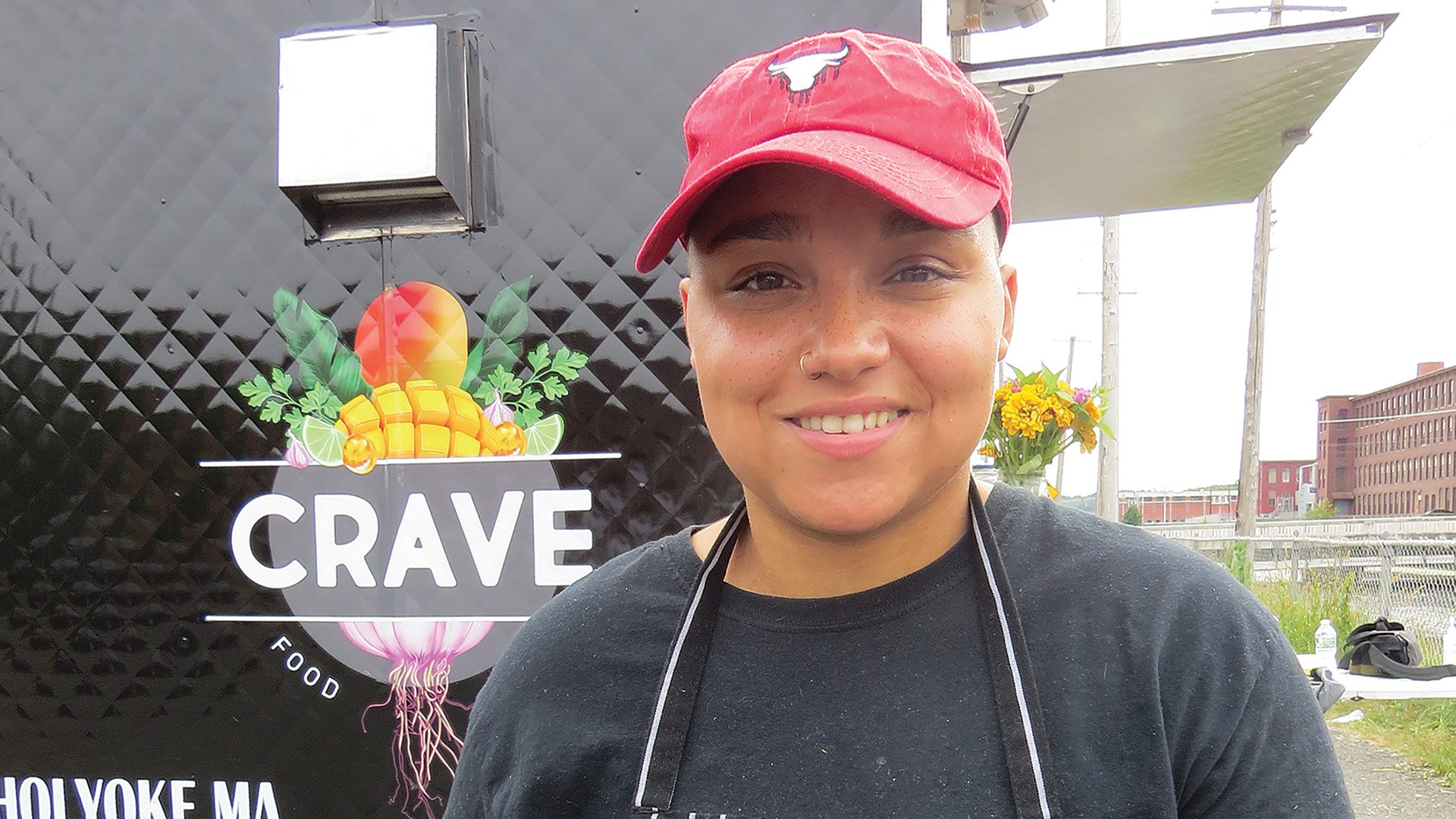
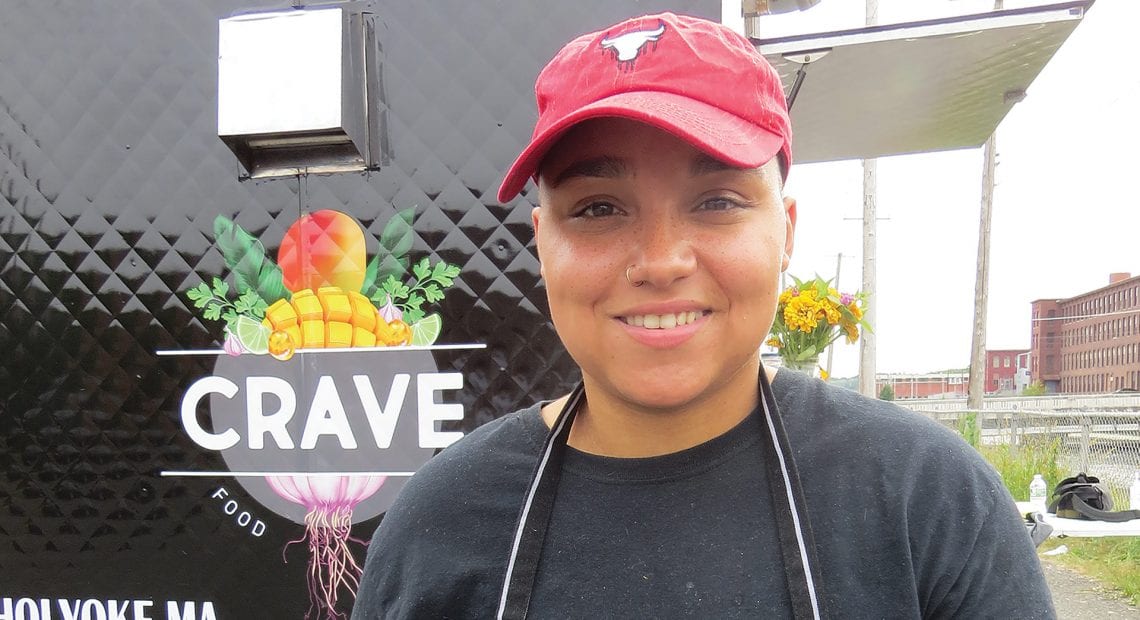
Nicole Ortiz, founder and president of Crave Food Truck

Nicole Ortiz, founder and president of Crave Food Truck

Nicole Ortiz remembers a lot of people having some serious doubts about whether she should go forward with her plans to put a food truck into operation late last spring.

After all, it was the middle of a pandemic, people were staying home, the economy was tanking, and the restaurant business, perhaps more than any other, was suffering mightily.

But Ortiz, a graduate of the Culinary Arts program at Holyoke Community College, was determined to make her dream, which she would call Crave, become reality — pandemic or not.

She had already acquired the vehicle itself, and her experience in the accelerator program operated by EforAll Holyoke had given her the confidence (and technical know-how) to get her show — a food truck specializing in Puerto Rican cuisine — on the road … literally.

Problem was, it was not business as usual when it came to securing the needed approvals and permits from city officials.

“It was even difficult to speak with officials from cities because people weren’t working as much, and you couldn’t even get into city halls,” she said. “Everything has to be mailed in, which takes … as long as that takes. Meanwhile, a lot of cities don’t have ways to do this online; you can’t e-mail them or submit a form online. You have to mail it in, and that took a while.”

But Ortiz persevered, and opened for business just over a month ago. Her truck, usually parked on Race Street, not far from the Cubit Building and just a few blocks from the computing center, is actually exceeding goals set higher than most everyone she knows thought were reasonable.

Successful launches in the middle of COVID-19 are certainly rare, and for most area entrepreneurs, especially those trying to get a concept off the ground or to the next level, these are challenging times, when the focus is on pivoting and adjusting to meet changing needs and changing ways of doing things.
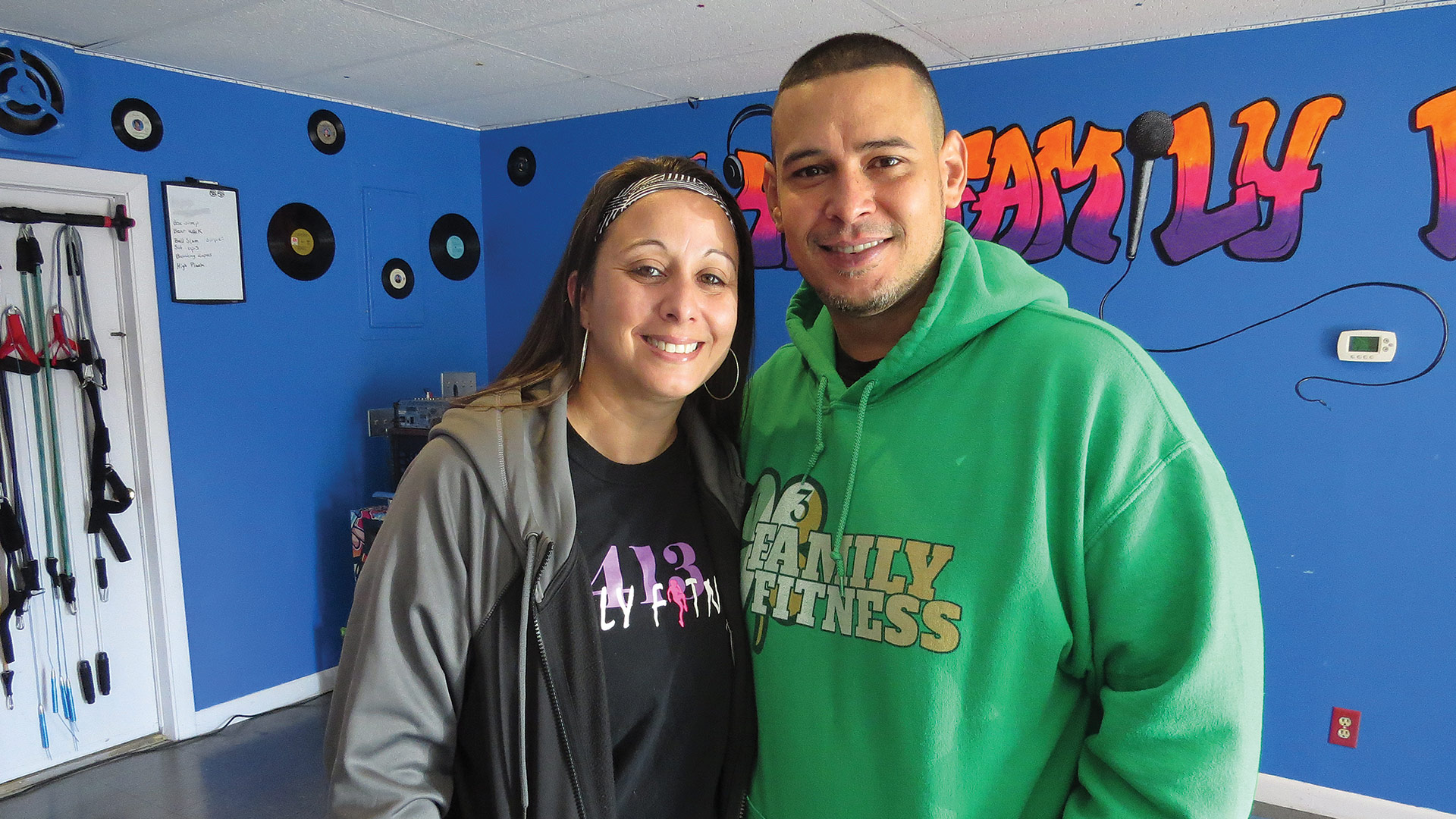
Juan and Elsie Vasquez, owners of 413 Family Fitness

Juan and Elsie Vasquez, owners of 413 Family Fitness, are like many small-business owners in that they have had to pivot during the pandemic and create new revenue streams.

In most all ways, the same can be said of the region’s entrepreneurship ecosystem itself, which specializes mostly on programs focused on people gathering in large numbers or sitting across a table from one another — things that can’t be done during a pandemic. Agencies within the ecosystem have been pivoting and adjusting as well.

This is especially true of Valley Venture Mentors (VVM), the nonprofit based in Springfield’s Innovation Center, which is in the midst of what interim Director Chris Bignelli, a partner with the Alchemy Fund, calls a ‘reset.’

That’s the word he chose to describe a retrenching after most of the agency’s staff members left within a week of each other last spring, and after COVID prevented it from staging any of the large gatherings for which it became known — not only here, but across the state and beyond.

“Our mentors advise entrepreneurs about the importance of pivoting and changing directions when needed, and we’re doing the same,” he said, adding that the pandemic and other forces are compelling the agency to look inward and find new and perhaps different ways to provide value to entrepreneurs while also providing support to other agencies and initiatives within the ecosystem.

“For a while there, it really felt like we were kind of providing therapy to small-business owners.”

As VVM resets and reinvents, though, work within the ecosystem goes on during these trying times — despite COVID, and in many cases in an effort to help business owners survive it.

People like Juan and Elsie Vasquez. They operate 413 Family Fitness in Holyoke, a business that, like most all gyms, was devastated by the pandemic. With help from those at EforAll Holyoke, the couple has pivoted to everything from outdoor classes to staging quinceañeras, or sweet-15 birthdays (a tradition among Hispanics), and leasing out their space to third parties (more on that later).

Meanwhile, another initiative within the ecosystem, WIT — Women Innovators and Trailblazers — is continuing its mentoring program despite COVID, and is preparing to embark on its third cohort of matches.
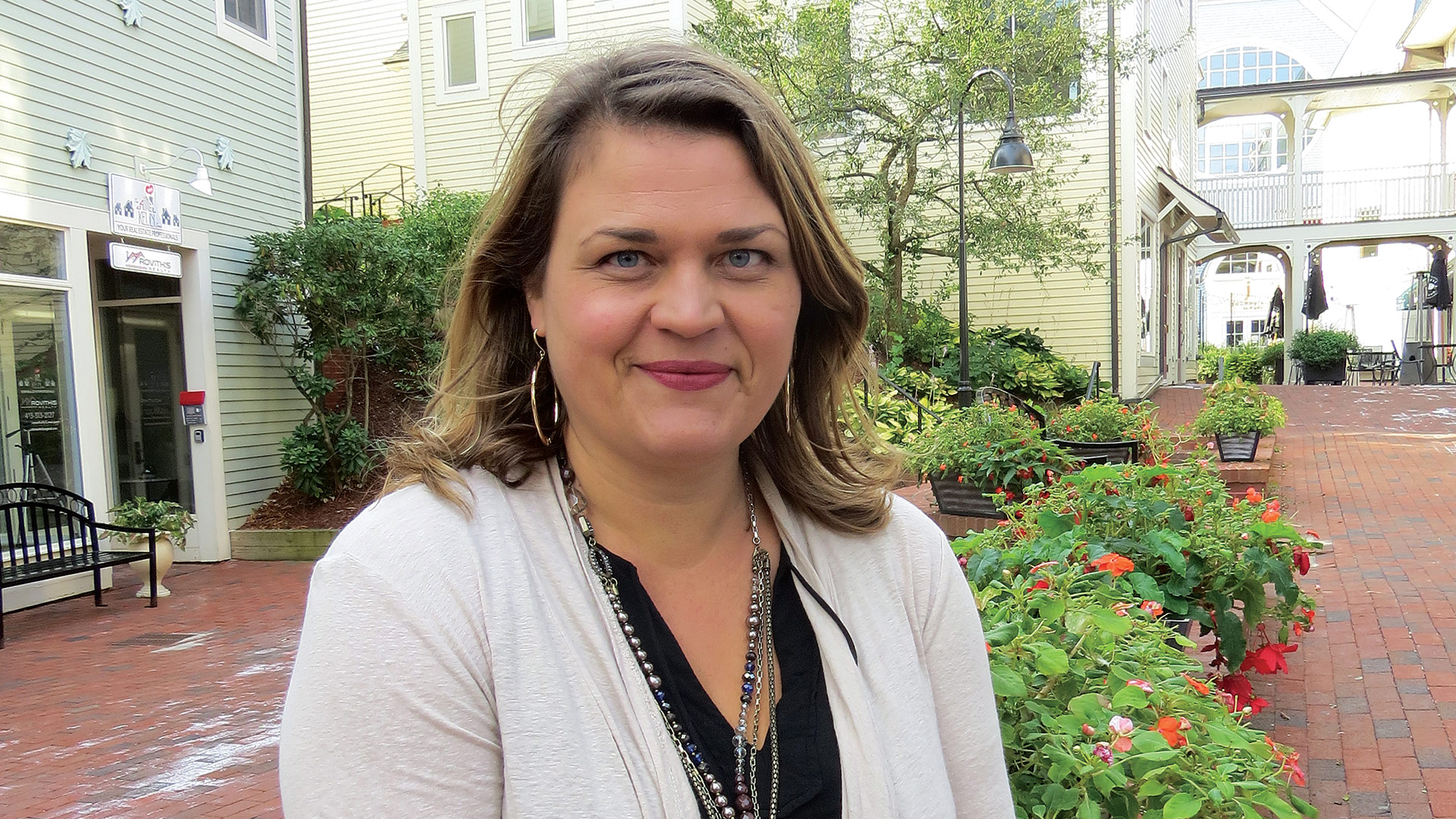
Leah Kent

Leah Kent says the mentor she’s been matched with through the WIT program, Melissa Paciulli, has helped her set firm goals for her business and move out of her comfort zone.

The second cohort, featuring 45 teams, up from 20 in the first, was started just before the pandemic shut things down, noted Ann Burke, vice president of the the Economic Development Council of Western Massachusetts and one of the architects of the program, adding that she had some concerns about whether those matches could withstand COVID and its highly disruptive nature.

But for the most part, the partnerships persevered, and many have the legs to continue even after the formal program is over.

“We were really trying to see what would happen with the cohort and how they would respond with all that was happening,” said Burke. “I thought most of them would just throw up their hands and say, ‘we can’t do this’ amid all the business issues, personal issues, and issues at home. But for the most part, that’s not what happened.”

For this issue, BusinessWest takes an in-depth look at the local entrepreneurship ecosystem and how it is carrying on through the pandemic, providing more evidence of its importance to the region.

Keep on Trucking

Flashing back several months and then fast-forwarding to today, Ortiz described the process of opening with a single word — ‘crazy.’

That sentiment applied to everything from getting her truck outfitted for the road — meaning wrapped with her logo and fully equipped — to buying all the supplies she needed (which meant going to the grocery store a number of times), to getting those aforementioned permits and approvals. Work started later than she wanted, and everything was made more difficult by the pandemic.

“Most of March and half of April, I called a halt to everything,” she said, noting that she bought the truck in February, but, because of the pandemic — and also the fact that she was still in school, which was also more complicated — she wasn’t able to advance her plans. “And then I started to feel more comfortable, and by the end of the April, I was going full speed.”

Or at least the speed at which City Hall would allow her to travel.

Now that she’s open, all that craziness seems like a distant memory, and business is, as she noted, exceeding expectations.

“We’ve been busy every day, and we usually sell out by the end of the day,” she said, noting that Craze features tacos, rice bowls, vegetarian and vegan dishes, and more, and uses social media to connect with potential customers. “COVID might actually be helping because people don’t want to go to restaurants.”

She credits EforAll — she was the first-place winner in its recent winter accelerator — with helping her get the doors open, especially with such matters as insurance and accounting, but also focusing on the model she wanted and the service she wanted to provide.

And such work is carrying on in the COVID-19 era, although it’s somewhat different and also in some ways more challenging, said Tessa Murphy-Romboletti, executive director of EforAll.

“We’ve been really fortunate that we can continue to offer a lot of the services that we provided before the pandemic in a virtual format,” she explained. “And we made that pivot very quickly, out of necessity.”

Elaborating, she said the agency was in the final stages of its winter cohort when the pandemic hit, and quickly shifted to not only a virtual platform, but a somewhat different purpose as it helped both those cohort members and other small businesses cope with everything that was happening.

“For a while there, it really felt like we were kind of providing therapy to small-business owners,” she explained. “We felt like there were a lot of things out of our control, but what we did want to do was support them, whether it was with help navigating PPP loans or even just applying for unemployment. We were doing a lot of one-on-one support and just helping people however we could.”

“It gives people a place to come and brainstorm as a group and impose that accountability that can sometimes be missing when you’re running your own venture.”

And such help was certainly needed, she said, adding that, in the case of PPP, many small businesses didn’t know if they were eligible, and if they were, they certainly needed assistance with paperwork that most established businesses turned over to a seasoned accountant. Meanwhile, a number of local, state, and federal grant programs emerged, and small businesses needed help identifying which ones might be appropriate and then navigating the application process.

Beyond that, EforAll also helped some businesses identify ways to pivot and find new revenue streams in the middle of a pandemic, Murphy-Romboletti said, adding that such assistance was provided to restaurants — helping them move beyond takeout and Grubhub, for example — and to other kinds of ventures, like 413 Family Fitness, which is one of those businesses that just ‘graduated’ from the most recent accelerator.

Like all fitness centers across the state, this operation had to shut down back in the spring, said Elsie Vasquez, forcing the company to pivot. It did so by offering classes online, then a shift to outdoor classes, more one-on-one personal training, and finally a reopening of the studio in July, with a host of restrictions.

“We’ve even done some space rental to bring in some revenue,” she told BusinessWest, adding that EforAll has been invaluable in helping to not only identify ways to generate business, but make them reality.

“The biggest thing we learned is that we have to pivot our business,” she explained. “We came in with an idea of what we wanted to do, and it’s been working out OK, but EforAll really opened our eyes to the fact that we have to think differently, and that your beginning result may not be your end result.”

In Good Company

While companies are pivoting, so too are some of the agencies within the ecosystem that serves them. And VVM is probably the best example.

Hope Gibaldi, who was serving the agency in a part-time role when the pandemic hit and is now full-time, serving as engagement manager, told BusinessWest that the agency has had to readjust as a result of the pandemic and its inability to stage the large gatherings it became known for.

Meanwhile, is doing what its mentors advise entrepreneurs to do — assess needs within the community and go about meeting them.

“There were listening sessions prior to the pandemic,” she noted, “and we’ve been taking the priorities identified during those sessions with an eye toward addressing them, while also trying to figure out how we can continue to provide value to entrepreneurs during COVID and what programming might look like when we come out of COVID.”

Elaborating, she said hybrid models blending in-person and remote programming are being considered, while, in the meantime, the agency is creating ways to bring people together on a remote basis to share ideas and work through common problems.

One such program is the introduction — or reintroduction, to be more precise — of ‘Entrepreneurial Roundtables,’ a peer-led “accountability group,” as she called it, that meets via Zoom.

“It’s a place where mentors and entrepreneurs can come and address their challenges,” Gibaldi explained. “It gives people a place to come and brainstorm as a group and impose that accountability that can sometimes be missing when you’re running your own venture.”

Other initiatives already in place or in the planning stages, she said, include everything from the agency’s once-thriving Community Nights (now handled remotely) to expert-in-industry mentorship, to a book club, to be launched in January, focusing on offerings in entrepreneurship, marketing, personal and professional growth, and more.

Overall, VVM looks a little different, but its mission hasn’t changed, Gibaldi said, adding that it is working to partner with other agencies and initiatives within the ecosystem to help them succeed.

One example is WIT, and helping to recruit mentors for that program, which has thus far created dozens of effective matches.

Leah Kent and Melissa Paciulli comprise one such match. The former is a writer and book designer who also helps other writers with the process of getting published, while the latter is director of the STEM Starter Academy at Holyoke Community College. Kent described the relationship as an intriguing, and effective, collision of science and creativity.

“We can understand each other quite well, but we bring different strengths,” she explained. “That complementary pairing has been so fantastic. In my work, she’s really honed in on the way that I help readers finish their manuscripts and get their work published.”

The two were part of the cohort that launched last March; the kickoff gathering was on March 12, and the next day, schools were shut down, and much of the business world ground to a halt. Kent’s original mentor was not able to continue participating because of the pandemic, so she was reassigned, if that’s the right word, to Paciulli, whom she credits with taking her outside her comfort zone and helping her set the bar higher professionally and personally.

Paciulli said Kent is her second match through WIT, and one of many business owners and students she has mentored over the years. She finds the work invigorating and rewarding, especially when the mentee is coachable and open-minded — like Kent.

“When you’re working with entrepreneurs and they’re coachable, and they take action on your direction, because it’s an iterative process of finding your product, getting it to market, and pivoting when you need to … it’s a super-cool experience to be part of one’s journey in that way,” she said. “When they’re coachable and they’re action-oriented — and she is — it’s awesome.”

Where There’s a Will…

Summing up what the past seven months or so have been like for entrepreneurs and small businesses, Murphy-Romboletti said it’s been a continuous run of challenges that have tested them — and her agency — in every way imaginable.

In many ways, COVID-19 and everything it has thrown at these businesses only reinforces what she pretty much already knew.

“What always inspires me about entrepreneurs is that, if you tell them ‘no,’ they just say, ‘OK, let me find out a way to make this work,’” she said.

Many have been doing just that, providing more evidence of their resiliency and more reminders of the importance of the entrepreneurship ecosystem to this region and its future.

The pandemic has slowed some things down and added to the already-long list of hurdles entrepreneurs have to clear, but it certainly hasn’t stopped people like Nicole Ortiz — and countless others — from getting down to business.

George O’Brien can be reached at [email protected]

Class of 2020 Event Galleries Special Coverage

It was a different kind of event, to be sure, but BusinessWest’s Difference Makers class of 2020 was celebrated in style on Sept. 24 at the Upper Vista at the Log Cabin Banquet & Meeting House in Holyoke. Honorees, their guests, and sponsors were in attendance at an event where safety and social distancing were paramount, while hundreds more took in the ceremonies remotely. Download the Program Guide HERE

Difference Makers is sponsored by Burkhart Pizzanelli, Mercy Medical Center, The Royal Law Firm, and TommyCar Auto Group, while the Tom Cosenzi Driving for the Cure Charity Golf Tournament, MHA, and United Way of Pioneer Valley are partners.

The 2020 Virtual Event

Scenes from the 2020 Event

2020 Difference Makers

Christopher ‘Monte’ Belmonte

DJ at WRSI the River Radio

His March is Changing
The Conversation
on Food Insecurity

Ira Bryck

Consultant and Former Executive Director of the Family Business Center of Pioneer Valley

He’s Helped Create
Fun, Imaginative
Learning Experiences

Sandy Cassanelli

CEO of Greeno Supply

She’s Fighting to Find a Cure for Metastatic Breast Cancer

Dianne
Fuller Doherty

Retired Director of the Massachusetts Small Business Development Center

She’s Retired … but Not from Her Role as a Difference Maker

Ronn Johnson

President and CEO of Martin Luther King Jr. Family Services Inc.

This Community Leader
Has Tackled Many Roles
With a Sense of Purpose

Steve Lowell

President and CEO of
Monson Savings Bank

Giving Back Has Always Been a Big Part of His Life — and His Work

Rick’s Place

This Unique Nonprofit Provides Support, Light in the Darkest of Times

2020 Sponsor Videos

2020 Sponsors

Pay it Forward Non-Profit Partners


Photography for this special section by Leah Martin Photography

Alumni Achievement Award Special Coverage

Class Acts

As they came together via Zoom to decide who would take home the coveted Alumni Achievement Award for 2020, the three judges who scored the nominations kept talking about how hard their final assignment was. Indeed, they admitted that all five finalists — Carla Cosenzi, president of TommyCar Auto Group, Peter DePergola, director of Clinical Ethics at Baystate Health; Mike Fenton, attorney with Shatz, Schwartz and Fentin and a Springfield city councilor; Paul Kozub, founder of V-One Vodka; and James Leahy, assistant director of Business Development and Promotion Sales for the Massachusetts State Lottery and a Holyoke city councilor — were more than worthy of the honor, formerly known as the Continued Excellence Award. As they debated the merits of each finalist, the judges had a difficult time settling on one winner of this award, sponsored again this year by Health New England. So they instead decided to honor two.
Carla Cosenzi

Carla Cosenzi, president of TommyCar Auto Group, with her children, Niko and Talia.

• Cosenzi, who adds this honor to two others from BusinessWest (40 Under Forty in 2012 and Women of Impact in 2019), was chosen both for what she’s done in business — expanding the auto group started by her father with several new dealerships — and for what’s she’s done in the community. Chief among her accomplishments in that latter category has been the creation of the Tom Cosenzi Driving for the Cure Charity Golf Tournament, staged each year to raise funds to battle brain cancer, which claimed her father when he was just 52 years old.
Peter DePergola

Peter DePergola, director of Clinical Ethics at Baystate Health.

• DePergola, who has emerged as not only a regional, but national and even international leader in the emerging field of bioethics, also now has three plaques from BusinessWest on his desk. Indeed, in addition to 40 Under Forty (class of 2015), he was also named a Healthcare Hero in the Emerging Leader category in 2018. The first, and still the only, bioethicist in this region, he recently wrote a white paper titled “Ethical Guidelines for the Treatment of Patients with Suspected or Confirmed Novel Coronovirus Disease,” published in the Online Journal of Health Ethics, and also served on the state’s Crisis Standards of Care Advisory Committee. BusinessWest congratulates these two deserving winners, who continue to raise the bar for professional and personal achievement in Western Mass.
Coronavirus Insurance Special Coverage

At a Premium

The story is a familiar one by now: hospitals across the U.S., hammered by COVID-19, began directing resources toward fighting the pandemic last spring and curtailed elective and non-emergency procedures. Meanwhile, patients, even when sick, stayed away from medical practices out of fear of infection.

As a result, health insurers continued to reap premiums while paying out millions of dollars less in medical claims. Some of the largest companies reported second-quarter earnings about double what they were a year ago. Anthem’s net income soared to $2.3 billion for the second quarter, up from $1.1 billion in 2019, while UnitedHealth reported net income of $6.7 billion, compared to $3.4 billion last year. Humana’s second-quarter net income rose from $940 million in 2019 to $1.8 billion in 2020.

But the issue is a complex one, especially in Massachusetts, where laws governing insurance are different, said Keith Ledoux, vice president of Commercial Line of Business, Sales, Marketing, and Business Development for Health New England, a 166,000-member health plan based in Springfield.

For example, HNE did see lower utilization for medical services among its members in the early months of the pandemic; however, at the same time, it saw an increase in prescription-drug fills as members made sure they had their medications during stay-at-home orders.

“On the pharmaceutical side, we saw a small spike in claims and overall costs starting at the end of March and the beginning of April because we had relaxed our rules on allowing folks to fill prescriptions early, or to get a greater supply,” Ledoux told BusinessWest.

Meanwhile, “after April, on the medical side, we saw a significant reduction in claims, but starting in probably June, we started to see that pick back up — almost back to what we would consider to be somewhat normal.”

At the same time, the pandemic brought about a significant increase in telehealth utilization; through April, HNE had processed 114,000 telehealth visits for its members versus 900 in all of 2019, accounting for $12 million in costs for Health New England.

“One reason that’s so costly for us is that we’re mandated by the government to pay the same rate for telehealth as we would for an in-person visit, and typically telehealth is cheaper than in person,” Ledoux said, adding that future state negotiations will likely alter that formula as telemedicine continues to gain traction in healthcare.

“The silver lining is not the cost, but the behavior shift of so many members embracing the idea of telemedicine, which does broaden your ability to access non-invasive care. There’s definitely an opening for systems to adopt a new approach and potentially increase their revenue stream using telemedicine.”

Massachusetts-based Tufts Health Plan reported that COVID-19 treatment costs were one factor in actually recording a drop in net income between the first six months of 2019 to and the six months of June 2020.

Keith Ledoux

Keith Ledoux

“After April, on the medical side, we saw a significant reduction in claims, but starting in probably June, we started to see that pick back up — almost back to what we would consider to be somewhat normal.”

“Tufts Health Plan proudly serves all segments of the market, regardless of a person’s age or life circumstance,” Chief Financial Officer Umesh Kurpad noted in a statement. “This diversity in our business translates into different financial pressures, such as significantly higher COVID-19 infection rates and treatment costs for our members, particularly those who rely on both Medicare and Medicaid.

“Year-to-date, our earnings were challenging, with the increased costs of COVID-19-related expenses across virtually all of our businesses,” he went on, projecting COVID-19 expenses to reach $220 million for the full year. “The pandemic cost tail is anticipated to be long with the lingering impact of COVID-19 survivors and increased morbidity from deferred care.”

In short, there’s no one trend common among health insurers in a year where they, like all industries, have learned to expect the unexpected.

Appointment Viewing

Another Massachusetts-based insurer, Harvard Pilgrim Health Care, reported little change in second-quarter net income from 2019 ($36.2 million) to 2020 ($40.9 million). It also encouraged members not to avoid medical services they need.

“Now more than ever, our focus remains on the health and well-being of our members and the communities we serve,” President and CEO Michael Carson said. “Many people have deferred care over the past several months, and it is incredibly important that they not neglect their health. Healthcare providers have implemented stringent safety precautions, and we encourage our members to seek routine and preventive care, including checkups, health screenings, and vaccinations.”

Ledoux told BusinessWest that HNE typically doesn’t know the performance of a year until probably three or four months after the year has closed.

In its planning for 2021, he explained, the company must consider uncertainties with expenses, which include utilization continuing to pre-COVID levels; increased use of high-cost technology; and costs of new pharmaceuticals, vaccines and testing, as well as increased costs for certain behavioral healthcare for children and adolescents.

Consumers are protected to an extent by state and federal laws that require health plans to rebate customers annually if the percent of premiums spent on medical expenses falls below a certain threshold.

Under the Affordable Care Act, insurers are required to use a fixed percentage of the money they take in from premiums for their customers’ medical expenses — at least 80 cents of every dollar they collect in premiums from small businesses and individuals, and 85 cents per dollar for large employers. The remaining 15% to 20% percent is what they are allowed under the ACA to spend on administrative costs like overhead and marketing, and to keep as profit. Excess revenues are to be returned to consumers in the form of rebates.

“If we perform even 0.1% better than 88%, we have to rebate that excess margin back to the market. In a regular year, our target margin is around 1.9%, which we hardly ever achieve. All these variables make it difficult to make a profit.”

Under Massachusetts’ health-insurance law, that number rises to 88 cents on the dollar. “If we perform even 0.1% better than 88%, we have to rebate that excess margin back to the market,” Ledoux said, adding that, “in a regular year, our target margin is around 1.9%, which we hardly ever achieve. All these variables make it difficult to make a profit.”

Some of those variables emerged this year in the form of concessions to the pandemic and the stress it has placed on families, he noted. “We relaxed a lot of rules on how we collect premiums. Normally it’s a 30-day grace period, and we expanded that another 30 days.” HNE also allowed furloughed employees to stay on their companies’ health plans.

“We continue to evaluate our position in the market,” he added. “There are already protections in place, profits above what would be considered reasonable, and a mandate to rebate that back to the market. We already know it self-corrects on its own.”

Meredith Wise, president of the Employers Assoc. of the NorthEast, told BusinessWest that health-insurance premiums haven’t been a big topic among EANE’s members. “We’ve heard from some employers who are getting refunds, but it hasn’t been a major thing that anyone is focusing on at the moment.”

Nationally, insurers are spending a far lower portion of premium revenue on their customers’ healthcare costs. For example, CVS said its medical-benefits ratio was 70% for the second quarter, compared to 84% over the same period in 2019.

According to a report in the New York Times, the ACA gives companies a three-year window to calculate how much to return, so members probably shouldn’t expect relief anytime soon, especially because it’s hard to tell what the rest of the year will bring, with COVID-19 numbers still fluctuating dramatically from state to state, as well as the impact of potentially expensive new vaccines or treatments around the corner. At the same time, many people who postponed getting medical attention could surge back into doctors’ offices and submit more bills for coverage.

“The second half of the year could see a lot more care, and higher costs, than the first half of 2020,” according to a statement by America’s Health Insurance Plans (AHIP). “However, if these costs never materialize and remain below certain levels, American consumers, businesses, and taxpayers are protected by provisions in federal and state laws that require health-insurance providers to deliver premium rebates and put money back into their pockets.”

Community Focus

In addition to changes in patient volume and the bottom line, the pandemic shifted the priorities of Health New England in other ways, Ledoux said.

For instance, it contributed $300,000 in grants for COVID-19 relief efforts throughout Western Mass. to help residents with access to food, mental healthcare, child care, housing, and basic needs.

The company has also made benefit adjustments that make it easier for members to get the care they need, such as eliminating out-of-pocket costs for all telehealth services and for COVID-19 diagnostic testing ordered by a medical professional, no prior authorizations for members receiving medical care for COVID-19, and flexibility with payment plans and adjusted underwriting guidelines to ease the burden for employer-group customers and members.

Meanwhile, as it approaches Medicare’s annual enrollment season, Health New England is holding online Zoom sessions and drive-up events, and has added staff to its call center, to help educate people about their Medicare options.

“The second half of the year could see a lot more care, and higher costs, than the first half of 2020.”

Tufts has implemented a number of changes as well, including compensating providers 100% of an in-office rate for telehealth, working with providers on a case-by-case basis to address their concerns regarding payment stability, extending premium payment periods for employers who need more time to make payments, and contributing $2 million to support those affected by the coronavirus outbreak in Massachusetts, Rhode Island, New Hampshire, and Connecticut.

Certainly, reports of soaring profits may persuade some lawmakers to revive proposals to cap insurers’ profits even more, but insurers say they are using their financial strength to help customers, hospitals, and doctors. In the New York Times report, AHIP also cited trends like waiving co-payments for COVID testing and treatment and paying for telemedicine visits, some of which the government has mandated be covered.

“From the very beginning,” AHIP CEO Matt Eyles said, “health-insurance providers have focused on being part of the solution.”

Joseph Bednar can be reached at [email protected]

Business of Aging Special Coverage

Safe at Home

By Mark Morris

Cheryl Moran

Cheryl Moran says she increased staffers’ hours and pay to make sure they worked only at the Atrium during the pandemic.

Beth Cardillo said the arrival of COVID-19 caused a “wildfire effect.”

As executive director of Armbrook Village, a senior-living community in Westfield that offers independent and assisted living, as well as memory care, Cardillo said the first days of the pandemic created huge challenges for healthcare professionals who faced major decisions while working with limited information.

For example, hospitals were only admitting COVID-positive patients if they had a fever and showed respiratory symptoms. Some seniors at Armbrook, however, were testing positive but manifesting different symptoms.

“We had someone who tested COVID-positive, but he didn’t have a fever or a respiratory problem,” she said. “He felt weak, fatigued, and he almost passed out.”

Cardillo’s call for an EMT to transport the positive-testing resident to the hospital was met with disappointment when she was told the hospital would not admit anyone for the coronavirus unless they had a fever or respiratory symptoms.

“At that time, no one knew there were a host of other symptoms,” she said. “It’s nobody’s fault because nobody knew.”

Cardillo informed Baystate Medical Center about residents who showed different symptoms for the coronavirus, and the hospital quickly sent a team of specialists in infectious disease and emergency medicine to Armbrook to further examine these cases.

“Incidents like this were happening all over the country,” Cardillo said. “It’s how we learned that people can manifest other symptoms but still have the coronavirus.”

Similarly, at the beginning of the pandemic, health officials were not encouraging everyone to wear masks; later, with better information, they shifted course. As information on all aspects of COVID-19 improved and safety guidelines were implemented across the U.S., senior-living facilities that already had sanitizing and infection protocols in place increased their efforts to battle the spread of coronavirus.

Emily Tamilio, Corporate Marketing director for Rockridge Retirement Community in Northampton, said her complex revamped its already-strong infection-control policies before the state went into lockdown. “We’ve redoubled our protocols and to make sure all our staff is up to date on proper infection control, hand washing, and strict sanitization procedures.”

Beth Cardillo

“We had someone who tested COVID-positive, but he didn’t have a fever or a respiratory problem. He felt weak, fatigued, and he almost passed out.”

Meanwhile, at Atrium at Cardinal Drive in Agawam — an assisted-living facility exclusively for people with memory loss — Executive Director Cheryl Moran imposed strict screening procedures to keep residents and staff safe, such as requiring all outside agencies to get her approval before they could enter the facility.

In the caregiving community, it’s not unusual for workers at one assisted-living facility to take a second part-time job at a similar site or earn additional income by providing care at a person’s home. Moran knew she had to address this vulnerability to keep the virus away. “I met with all our associates and offered more money, more hours, and different hours to encourage them to work only for the Atrium.”

Tamilio said Rockridge also offered additional pay and hours to keep staff working only at that facility. “Having our people just work for Rockridge was key to preventing transmission.”

Both Moran and Tamilio said encouraging staff to work only at one community is one of the main reasons neither campus has had any COVID-19 cases to date. It’s an example of how senior-living communities across Western Mass. had to be creative and aggressive — and continue to do so — to protect the most vulnerable population from a pandemic that’s far from over.

Visitation Consternation

In mid-March, the state issued guidelines for senior-living facilities to allow visitors only after they’ve had a health screening prior to their entry. When the pandemic first hit, all three communities BusinessWest spoke with said they restricted all outsiders except health providers and other essential personnel. Unfortunately, that meant families were not able to visit their loved ones in assisted living.

“As disappointing as that was, we had a solid communication process in place, and we were transparent about any changes, so it was much easier to get the families, residents, and staff on board,” Tamilio said.

Cardillo also stressed that communication was key, and personally checked in with every family member. “We were honest with people and let them know what was going on, and they appreciated that.”

As a further precaution for those in assisted living, the Executive Office of Elder Affairs mandated that everyone be quarantined in their apartments. No communal dining or walking around the halls was allowed.

Emily Tamilio

Emily Tamilio

“We’ve redoubled our protocols and to make sure all our staff is up to date on proper infection control, hand washing, and strict sanitization procedures.”

Cardillo noted that many residents in assisted living have cognitive impairments that make processing and retaining information difficult, so structure and constant communication are very important. Still, cognitively impaired residents who had been making progress before the quarantine began to backslide.

“They were confused again, depression was setting in, and their anxiety increased,” she recalled. “In some ways, the social isolation was almost worse than the virus.”

Staff dressed in full personal protective equipment (PPE) began meeting one-on-one with each resident in their apartment. Cardillo said reaching out and having conversations with the residents began to make them feel better.

Moran said the configuration of the Atrium made it possible to allow residents out of their apartments and still keep them safe. “Because we have the space, we were able to socially distance our residents while still allowing them to take part in modified programs and activities.”

As late spring arrived and the weather improved, residents in most communities were able to go outside more often and socialize with others. Cardillo said positive changes began to happen the minute residents were able to enjoy some fresh air. “Whether it was having a conversation or taking a walk or simply looking at the birds, we saw their depression and anxiety lessen once they could spend time outside.”

The warmer weather also enabled the facilities to resume family visits. Moran said the Atrium has a designated area for outdoor visits where families can schedule time with their loved ones either after breakfast or after lunch.

“We can only allow two family members at a time, and they have to wear masks,” she explained. “Unfortunately, they can’t hug or kiss their loved ones, so they do air hugs and things like that.”

Videoconferencing through platforms like Zoom, Skype, and FaceTime have been effective ways for families to stay connected — and send air hugs to their loved ones — when a physical visit is not possible. Tamilio said Rockridge staff will often work with families to coordinate a videoconference or even a phone call to help them feel connected during the pandemic.

“There are many times when our staff are the eyes and ears for the families of our residents, so we work very hard to stay in contact with them,” she told BusinessWest.

Using videoconferencing tools is one more way to be reassuring and transparent with families and staff, Moran added. “It’s important for families to know about the place where their mom and dad are living.”

Cardillo talked about a recent Zoom conference conducted like a town-hall meeting that included 80 resident family members, as well as Armbrook department heads. The purpose was to let everyone know what’s been done so far to keep residents healthy and engaged, and their plans going forward.

“Many family members had no idea about everything we’d gone through to keep their loved ones safe,” she said. “They want to do this type of meeting again.”

Meeting with potential new residents and their families is an important part of any senior-living community. The arrival of COVID-19 has moved much of that activity from in-person meetings to videoconferences. For families who want a tour of the facilities, Tamilio said virtual tours have been an effective alternative to an actual visit.

“We can connect them to our community and help them feel engaged,” she said. “Videoconferencing also allows us to bring together multiple family members from different locations to answer all their questions in one meeting.”

Cardillo is still able to meet with families in-person in Armbrook’s private dining area by using social distancing and requiring masks for everyone. Before the meeting, she will have a phone conversation and send information so that, when a family arrives for the meeting, they have some idea about the community.

“I will show them apartments, but we can’t wander around the building anymore,” she noted. “That’s the only thing that’s really changed.”

While Moran is not yet meeting in person, she depends on virtual tours and has identified a number of families willing to serve in an ambassador-type role.

“There are several family members of current and past residents who are willing to speak with new families about their experience here,” she said. “They are able to give their perspective on how things have been going for their loved ones.”

Winter Is Coming

Seven months into the pandemic, and with fall and winter coming, the Executive Office of Elder Affairs is allowing senior-living facilities to permit indoor visitation to specific areas of the building.

Moran said the Atrium will use office space in its main building to screen visitors and supply full PPE. She plans to limit visits to 30 minutes and restrict visitors to meeting in the front areas of the building.

A similar visitor policy will be in effect at Rockridge, which is about to install an air-purification system to use in common areas. The idea is to monitor air quality to make sure those areas are safe, especially as they begin to open the dining area and allow more visitors

“We are trying to find the right balance between mitigating risk and enhancing the quality of life for everyone here,” Tamilio said.

As the weather gets cooler, Cardillo is looking forward to bringing activities such as exercise classes indoors. There will be limits on the number of people who can participate at any one time, but that’s just part of life in these times.

She reflected on the challenges facilities like hers faced with the sudden arrival of the pandemic back in March, and how far they’ve come. “At the beginning, we were all learning together at the same time. With all that we’ve learned since then, we have a much better handle on things now.”

She said residents are in a much better frame of mind these days, with no COVID-19 cases reported in months.

All the administrators we spoke with said a spirit of cooperation — with everyone pitching in and constantly doing more than expected — has been a true highlight of these last six months. To acknowledge that spirit, Cardillo is planning a series of recognition ceremonies for her staff in the coming weeks.

“We had people who got very sick, and our staff did some beautiful things,” she said. “Sometimes it was just sitting with a resident and holding their hand. Their families were really touched by it.”

With the pandemic still a daily reality, Cardillo said she and her colleagues are better prepared if there is another flare-up of the virus.

“We hope it doesn’t happen, but we’re ready if it does.”

Commercial Real Estate Coronavirus Special Coverage

A Matter of Speculation

Ned Barowsky

Ned Barowsky is transforming 14,000 square feet of what was retail space into Venture X, a co-working concept, one of many signs of change within the region’s commercial real-estate market.

It was time to face facts, Ned Barowsky recalled.

For six months, two brokers assigned by a large, national real-estate firm had been trying to fill the vacancies left at Barowsky’s property at 98 Lower Westfield Road by the departure of Pier One Imports and Kaoud Oriental Rugs. And they had gotten … nowhere.

“I met with them on the phone weekly, and they sent me a sheet of everyone they talked to and e-mailed, and all the responses they got,” he said. “For six months prior to COVID, not one bite. And they worked it. I felt bad for them; I wanted to pay them, but they didn’t get me anybody.”

Faced with this handwriting on the wall and an uncertain future for the Holyoke property he has owned for nearly 35 years, Barowsky is doing what so many are doing in the midst of COVID-19, and in general. He’s pivoting — big time.

Indeed, he intends to remake those vacated storefronts, and some additional space at the complex, into a franchise for the emerging co-work concept known as Venture X, which bills itself as “the future of workspace” (more on that later).

This intriguing pivot is just one indication that the local commercial real-estate market is in a state of flux, if you will, with perhaps profound changes to come as the pandemic continues and its impact on this sector grows.

Indeed, there is already significant movement in the market when it comes to additional vacancies and properties becoming available. Meanwhile, there is widespread speculation that the office market in particular may see considerable disruption as businesses with some or most of their employees working remotely consider making such arrangements permanent.

“A remote work hub is basically converging living space with working space; you’re allowing people to get out of their house and into a work place that’s safe — and in close proximity to where they live.”

And even if they don’t swing that far when it comes to working arrangements, there are questions about how much of their present space they’ll retain when their lease is up.

“We have lost a few tenants, mostly due to non-renewals as companies look for ways to be more efficient and perhaps consolidate if they had multiple locations,” said Evan Plotkin, president of NAI Plotkin and co-owner of 1350 Main St. in Springfield, noting that Bay Path University, which occupies roughly 12,000 square feet, is one of these tenants.

But as some are downsizing or not renewing, others are actually taking more space to accommodate pandemic-era guidelines on social distancing and keep employees safe, said Plotkin, noting that he’s already seen such upsizing from a few tenants and expects more in the months to come.

In the meantime, new leases are being signed, and properties are being acquired, said Demetrios Panteleakis, a principal with MacMillan Group LLC, which has authored what could certainly be called a stunning turnaround at Tower Square in downtown Springfield.

Over the past 24 months or so, Panteleakis said, MacMillan has successfully backfilled roughly 80% of the 150,000 square feet of office space in the complex that MassMutual vacated, with about a third of that coming in just the past few months.

The latest additions in the office tower include Wellfleet and Farm Credit Financial Partners, which moved into 37,500 square feet on the sixth floor, but also a few law firms and a civil-engineering firm. Meanwhile, on the retail side, the Greater Springfield YMCA moved several of its operations last winter, White Lion Brewery is completing work on its brewery and eatery in the former Spaghetti Freddy’s space, and a nail salon has moved in. And all this is on top of a massive renovation of the hotel on the property into a new Marriott.

“Tower Square is absolutely on fire,” he said, adding that he believes the success at that address has been a function of providing an attractive product in a good location, in this case an urban area in the midst of what has been called a renaissance.

Demetrios Panteleakis says activity has been strong at Tower Square

Demetrios Panteleakis says activity has been strong at Tower Square in recent months, with new leases signed for both retail and office space.

Mitch Bolotin, a principal with Springfield-based Colebrook Realty Services, agreed that there has been activity within the market despite the pandemic, noting that his firm has completed a number of transactions, including the sale of the property at 95 Elm St. in West Springfield formerly occupied by United Bank, the Newman Center on the UMass Amherst campus, and lease of the former Chandler’s restaurant space at the Yankee Candle complex in South Deerfield, among others.

The $64,000 question is … what happens now?

No one really knows the answer. Many brokers are encouraged by numerous stories in recent weeks about both productivity being down as a result of remote working and pent-up desire to return to the office. But these sentiments are juxtaposed against others indicating that remote work has been a success and, as a result, less office space will be leased in the future.

Speaking for others, Panteleakis said there will likely be a lull or pause in the action until perhaps the end of the first quarter of next year as business owners sort some things out.

Work in Progress

Plotkin calls it a “remote work hub.”

That’s a term he borrowed from a request for proposals he’s likely to respond to, and it describes … well, a place where people can both live and work. But not like the current work-from-home environment many are now experiencing.

“A remote work hub is basically converging living space with working space; you’re allowing people to get out of their house and into a work place that’s safe — and in close proximity to where they live,” said Plotkin, adding quickly that he’s thinking hard about whether 1350 Main St. can be shaped into one of these remote work hubs. He thinks it can.

“I have a design here that works great,” he told BusinessWest. “We have some empty floors, and if we created maybe 20 units per floor and used the three floors that are empty, that would be 60 market-rate housing units. And if you had another floor that was a COVID-19 pandemic remote work space, which has yet to be designed, I think you’d have something very attractive.

“The idea is to make people feel that they can go someplace to work and not be in their kitchen, not be in their living room, and actually have some socialization and see other people,” he went on, adding that such a facility would help attract people of all ages, but especially young people, to downtown Springfield.

The fact that Plotkin is thinking about such a dramatic pivot provides more evidence that the commercial real-estate market is changing and there are certainly question marks about how — and how profoundly — the landscape may change.

The remote-work phenomenon, if it can be called that, is certainly at the heart of much of this speculation. Indeed, as more workers toil from home for longer periods — some of the massive tech companies have told employees they won’t be coming back for a year, at least — questions are raised about whether such arrangements will become permanent, and what this means for major urban centers and individual office facilities.

Barowsky, for one, believes that companies will be less likely to want to tie themselves down with long-term leases for large amounts of space. And that’s one of the reasons why he’s moving forward with Venture X.

A Holyoke native who has seen a number of economic cycles and an ongoing evolution of the area’s retail scene, Barowsky believes this co-work space is certainly the right concept at the right time — and especially the right place.

“I don’t think you get this energy that you have when people are working together in one office, and you don’t see the productivity.”

Indeed, the site, just a few hundred yards from the Holyoke Mall, is right off I-91 exit 15 and only minutes off exit 4 of the Mass Pike.

“This is literally the crossroads of New England,” said Barowsky, adding that this address makes the Venture X facility attractive for businesses across a number of sectors.

Add all these factors up, and Barowsky doesn’t see this dramatic pivot — away from retail and into co-working space — as much of a gamble. And if it is a gamble, it’s one he believes will pay off eventually, perhaps sooner than later.

Indeed, he said the current timeline doesn’t have him opening the doors for another six months, but he’s already received a number of inquiries about his concept.

Questions and Answers

While Barowsky doesn’t have any doubts about his new development, there is a growing amount of uncertainty when it comes to the larger commercial real-estate market.

And it crosses many of the sectors within that realm, including retail — which was already under considerable stress before COVID-19 due to online buying and now is under even more — and especially the office market because of questions about the future of work.

“At this point, I think the jury is still out — the verdict is not in yet,” Plotkin said. “There’s been an abrupt change in how we work, and it has required us to work remotely. It’s been a complete lifestyle change, and it’s created a fair amount of fear. And those converging factors may prevail over a long period of time; we just don’t know.”

Panteleakis agreed to some extent, but said he concurs with JPMorgan Chase Chairman and CEO Jamie Dimon, who recently told American Banker that he sees economic and social damage from a longer stretch of working from home.

“Between 2002 and 2005, there was a big movement happening — commercial real estate had become so expensive that everyone was trying remote working,” he recalled. “Jamie Dimon is saying the same thing that everyone was saying back then — that they see a decrease in productivity. So I think real estate is coming back; I don’t think you get this energy that you have when people are working together in one office, and you don’t see the productivity.”

Plotkin concurred. “Today, people can work from anywhere, and it’s appealing to people to work from anywhere. But the reality is that working from home is isolating, and I don’t think that’s a long-term solution.”

Added Bolotin, “there is a lot of speculation on both sides of that fence. I believe that the office market will still have a future — there will still be demand. Working from home is fine on a limited basis, but people will eventually migrate back to an office setting.

“Needs might change,” he went on. “They may need to consolidate, or they may wish to add more space for social-distancing purposes. But what the net effect of this will be … time will tell.”

Returning to the present, those we spoke with said there are certainly some deals getting done, and the market remains active. Panteleakis cited not only Tower Square, but also neighboring 1550 Main St., which he also handles, and which is fully occupied.

Bolotin, citing those recent transactions in West Springfield, Amherst, South Deerfield, and other communities his firm was involved with, said they provide evidence of a resilient economy and an equally resilient commercial real-estate market, one that has seen a number of downturns — and recoveries.

“We’re very active, we’re busy, there are transactions happening,” he said of his firm but also the market overall. “Over the past few months, we’ve had deals close across a number of categories — office, retail, industrial, land, investments. We’ve had activity in all segments.”

Some of these transactions bode well for the region and some of its individual communities, he noted, such as the sale of 95 Elm St. in West Springfield. Considered a key to development of the downtown area, the property is being targeted for a mix of office and retail, said Bolotin, and his firm is currently negotiating several potential leases in that building.

Meanwhile, other deals have been closed involving retail (two Family Dollar stores), industrial (more than 500,000 square feet in total), and even a few church properties.

“It is certainly a challenging time, and there are people who have been negatively impacted,” he stressed. “But there is still activity within the marketplace.”

Bottom Line

As for the immediate future … Panteleakis said a pause, or lull, is common just before presidential elections. And this year, COVID-19 has given business owners and managers more reason to be cautious.

“People are in a wait-and-see mode,” he explained. “Most of the executives that I’ve spoken with are waiting to see what happens in the first quarter of 2021. So I think the jury will be out until that first quarter of next year.”

After that … no one really knows when the jury will actually be back and what the verdict will be.

But some are already anticipating long-term changes to the landscape. That’s why Venture X is taking shape in Holyoke and why Evan Plotkin is drafting plans for a remote work hub.

Plenty of questions remain about the future, and the answers won’t come easily.

George O’Brien can be reached at [email protected]

Community Spotlight

Community Spotlight

Jeff Smith

Jeff Smith says getting town business done during COVID-19 has been more challenging than usual, but projects continue to be approved.

Wilbraham is a mostly residential town with two main business districts — the town center, as it’s known, on Main Street, and along a lengthy stretch of Route 20, or Boston Road.

The fact that both have seen development activity during the ongoing pandemic is good news indeed, said Jeffrey Smith, chairman of the Planning Board.

Take, for example, a couple of vacant buildings next to Home Depot that have been vacant for about a decade. They will soon become a 7,000-square-foot O’Reilly’s Auto Parts store and a 2,340-square-foot Valvoline instant oil-change facility.

“It’s great,” Smith said. “Being on the Planning Board and being a resident in town, I hear from people all the time, in casual converations, ‘what’s going on with that place?’ This is one of those vacant and seemingly abandoned properties that is getting a great redo, and I think it’s going to be a welcome addition. The site has been an eyesore for some time.”

Then there’s the former Papa Gino’s restaurant near the Springfield line that’s been vacant several years, but will soon be home to an expansion of Springfield-based Vanguard Dental. Meanwhile, Excel Therapy and Conditioning, a physical-therapy practice that’s expanding to sports rehabilitation and personal training, will set up shop on Boston Road as well.

“We had to work fast to fast-track this during the height of the pandemic, with Town Hall closed,” recalled John Pearsall, director of Planning. “They were in a situation where their lease was running out and they had a chance to purchase this building and move and expand their practice. That’s been a good success story, saving a local business during these difficult times.”

Doing due diligence on development projects hasn’t been easy with offices closed, Smith noted.

“Just like every other town, we’re dealing with COVID, and all Planning and Zoning board meetings have to be done remotely. John and I used to meet quite a bit more in person during the week and outside our regularly scheduled meetings, and we do a little less of that right now. Everything has become more cumbersome, with a lot of extra steps.”

“For a long time, residents in the center of town have complained that it’s a little sleepy, and they want to have more activity there. We’re finally getting some actual development and change. The project will be a real catalyst for the center of town.”

Yet, important work continues, including efforts by the Board of Selectmen, the Board of Health, and licensing authorities to get restaurants reopened in recent months.

“We’re trying to do the best we can to help our businesses stay afloat during these difficult times,” Pearsall said. “And they seem to be very active. I think people are happy to have that option, whether it’s curbside pickup or being able to go out and have a meal outside the home. That’s a big thing for people these days.”

As the town continues to develop a Route 20 renovation plan — including widening driving lanes, adding sidewalks and bike lanes, and more — business continue to see it as an attractive destination, Smith and Pearsall said. That bodes well for 2021, when the process of getting anything permitted in town — and, let’s be honest, life in general — promises to be slightly easier.

Center of Activity

Most schools throughout Western Mass. are currently teaching students remotely. But not Wilbraham & Monson Academy, which launched an ambitious plan earlier this year — including everything from reconfiguring buildings to implementing strict safety guidelines — to bring students back to campus.

“We worked extensively as a town with WMA to reopen and allow students back,” Smith said, recalling Head of School Brian Easler working the Planning Board, Board of Health, and Board of Selectmen to produce a comprehensive plan to get students back safely for in-person learning. “I was surprised at the lengths they went and the protocols they put in place to get reopened.”

The town had a stake in the plan that went beyond what was best for students and their families, Pearsall said. “We were happy to see them open because they provide a real anchor to the town center.”

It’s a center that has long been the subject of speculation. Two years ago, an effort to allow a mixed-use development in the area of Main and Springfield streets failed to garner the necessary two-thirds approval at a town meeting, falling short by about a dozen votes. Since then, town officials have struggled to balance the need to fill vacant buildings with general pushback when it comes to change.

Currently, two vacant buildings at the corner of Main Street and Burt Lane have been slated for demolition and development, Smith said.

“We’ve been working at least the last two years with the owner of the property and getting something viable in place for those buildings,” he told BusinessWest. “If everything goes as planned, that will be a major change in the way the town center looks. The owner of the property has worked extensively with us and other committees and boards in town to come up with a design concept that would fit in with the town center.

“It’s a very sensitive area; it’s looked the way it has for quite some time,” he added. “This is a new use on this spot — mixed-use development, with retail on the ground floor and apartments on the second floor. Actually, it’s bringing in an old use. At one point, a hotel stood on this spot. So we’re bringing residential use back, and resurrecting something that was done years ago.”

Wilbraham at a glance

Year Incorporated: 1763
Population: 14,868
Area: 22.4 square miles
County: Hampden
Residential Tax Rate: $22.38
Commercial Tax Rate: $22.38
Median Household Income: $65,014
Median Family Income: $73,825
Type of government: Board of Selectmen, Open Town Meeting
Largest Employers: Baystate Wing Wilbraham Medical Center; Friendly Ice Cream Corp.; Big Y; Home Depot; Wilbraham & Monson Academy
*Latest information available

Some folks in the neighborhood are open to change, Pearsall said. “For a long time, residents in the center of town have complained that it’s a little sleepy, and they want to have more activity there. We’re finally getting some actual development and change. The project will be a real catalyst for the center of town.”

The former post office on Crane Park Drive recently changed ownership and could be repurposed as commercial office space, he added, while a new cosmetology business, Inner Glow Skin Studio, is moving in. Meanwhile, the old Masonic Hall on Woodland Dell Road was purchased by a local resident who is converting it to office space for his dental-management business.

“We’re taking a property that was tax-exempt and putting it back on the tax rolls,” Smith added.

Also along Main Street, Rice’s Fruit Farm and adjoining Fern Valley Farms have been enjoying a strong year, with pick-your-own-apples business boosted by cooperative weather and families looking for something to do. In fact, Rice’s has been working with town Planning and Zoning officials on parking expansions to accommodate the enterprise’s growth.

“It’s been very successful,” Smith said, adding that a parking crunch is, in one sense, a good problem to have. “They’re kind of taking the next step.”

Developing Stories

Wilbraham also has two solar farms under construction, a 1.4-MW project on Tinkham Road and a 3.4-MW project on Beebe Road; the latter development straddles the Hampden town line, with another 2 MW available for that community.

Another development in the works is part of a ‘community compact’ to identify and explore the potential for expanding municipal fiber along Boston Road to determine how that might impact business opportunities.

“There’s a need for fiber and high-speed internet,” Smith said. “We moved some time ago to be a municipal light plant, which means we can essentially be a supplier of high-speed internet.”

“There’s a broadband committee, being coordinated by our IT director, to move that project forward,” Pearsall added.

Residential growth advances slowly in a small town, but some trends have emerged. Even before COVID-19 struck, Pearsall noted, more people were starting to work from home.

“We’ve seen a lot more interest and activity from people trying to do home-based businesses,” he said. “We’ve also seen a lot of interest in so-called in-law apartments in town, and we have zoning for that, where elderly parents own a home and want their children to live with them, or the children own the home and create an apartment for their parents. That seems very popular right now.”

It’s another way times are changing and town leaders must adapt — in a year when they’ve certainly had plenty of practice.

Joseph Bednar can be reached at [email protected]

Insurance

Covering All the Bases

By Mark Morris

When COVID-19 became a daily reality in March and working from home became the default for many businesses, Trish Vassallo had to scramble. Of the 26 employees at Encharter Insurance, where Vassallo is director of Operations, only three were set up to work from home.

“Thanks to our tech provider, we were all up and running within a week,” Vassallo said, noting that the system at her office is advanced to the point where calls to the Encharter switchboard are fed through to employee laptops. “When customers call us, they have no idea whether we are in the office or at home. It’s seamless.”

Bill Trudeau, executive vice president and partner at HUB International New England, recalled that, when workimg from home became the norm, his business was about 95% ready to serve clients remotely.

“While our people certainly didn’t plan for a pandemic,” he said, “we were fortunate that our business was designed for our staff to effectively serve clients remotely from home.”

Both Encharter and HUB International have since limited interactions in their offices to only necessary functions and are not yet open to the public. It’s a different situation at Axia Insurance, which offers Registry of Motor Vehicles services in its office.

Michael Long, president and CEO of Axia, explained that, to safely accommodate people using the registry services, a dedicated area at the building entrance was set up to screen people before they come in. While Axia has offered RMV services for several years, it’s seeing an increase in the number of people using it since the pandemic.

“The RMV requires everyone to make an appointment, which can often be scheduled up to two weeks out,” Long said. “At our location, we can take care of people the same day.” Before COVID-19, he added, 30 to 40 people a month would use Axia’s registry service. Long said it now serves that many every week.

Trish Vassallo

Trish Vassallo

“Thanks to our tech provider, we were all up and running within a week. When customers call us, they have no idea whether we are in the office or at home. It’s seamless.”

Because of the registry service, most of Axia’s staff are working in the office. Long said shifts are staggered so that a typical five-day work week means working from home two or three days and in the office for the balance of the week.

For years, staff have been able to work from home when necessary, but Long admits the pandemic adds a layer of difficulty. “Working out schedules that will adapt to everyone’s needs at home and taking care of their families has been a harder challenge than actually maintaining business.”

For this issue’s focus on insurance, BusinessWest spoke with area agencies about how they’re managing to keep the customer experience consistent even as they change how they do business, thanks to a pandemic that continues to challenge all sectors of the economy.

Adjusting Expectations

The agencies BusinessWest spoke with all said their business was steady — if, some cases, only slightly lower due to the pandemic, which has hurt a number of their commercial insurance clients.

For example, several of Encharter’s restaurant customers reduced their insurance coverage because so many of them closed in the early days of the pandemic. With most offering only limited service even now, Vassallo said her agency tried to help its restaurant clients in their time of need.

“When stay-at-home first happened, we went to all of our local restaurateurs and purchased a large amount of gift certificates to try to help them keep going,” she recalled. To get the gift certificates out into the community, Vassallo used them as prizes in weekly and monthly contests Encharter ran on its social-media platforms.

Long said insurance companies are offering deferred billing and special payment plans to help companies that have lost business during the pandemic. One creative approach involves companies that need to take a vehicle off the road. They can now temporarily suspend the vehicle’s insurance coverage instead of ending it.

“In the past, insurance companies would not have agreed to do that,” Long said. “The business would have had to turn in the license plate, and if they suddenly needed the vehicle, they’d have to go through the insurance and registry process all over again.”

Trudeau added that, while some of his clients have been under pressure to reduce staff and sales estimates, others are doing more business. “We have a few businesses that are growing because of changing demands during the pandemic and people shifting their buying habits.”

Not surprisingly, all three agency managers said videoconferencing on Zoom, Skype, and other popular platforms has allowed them to keep in touch with staff and customers.

Because HUB International has 28 locations in New England, Trudeau and his counterparts have been using conference calls and videochats in ways they hadn’t before — a trend he predicts could have a lasting impact.
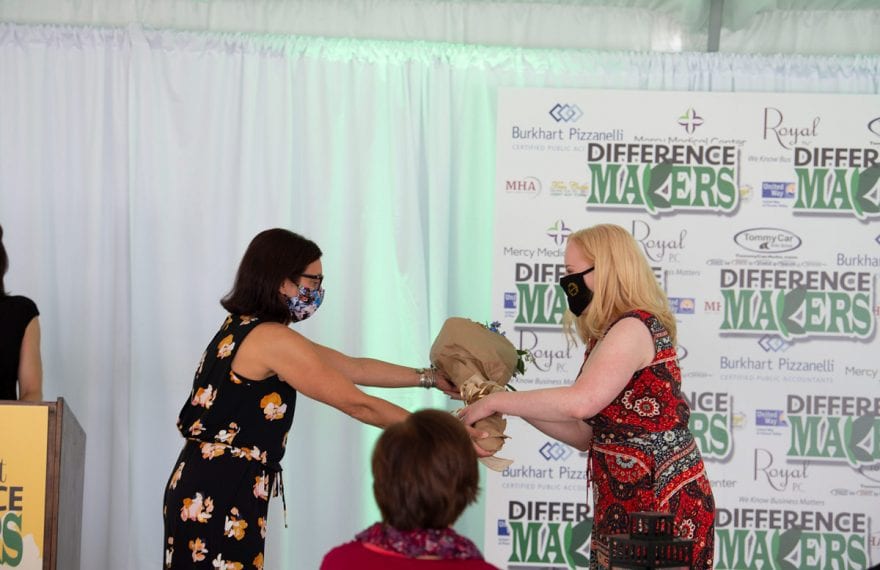
“Instead of asking people to travel to a central New England location every quarter, they might choose to do that only once a year and have the other three quarterly meetings by videoconference,” he said.

Bill Trudeau

Bill Trudeau says the increased adoption of videoconferencing platforms in his industry could have a lasting impact.

When the pandemic ended the walk-in traffic at Encharter, Vassallo and her staff started to make wellness calls to keep in touch with clients.

“The calls had nothing to do with insurance,” she said. “They were simply a way to contact our customers during the early months of the pandemic to say, ‘we’re just checking in; how are you doing?’” So far, she and her staff have made more than 2,000 calls, and the effort has been well-received. They’ve continued the calls to check in and to remind clients about policy renewals.

As valuable as modern tools are to keeping in touch, certain personal dynamics get lost during a pandemic. In the past, Long would often get together with other managers in Axia’s offices across Massachusetts and Rhode Island, and he has missed doing so since the pandemic.

“We have a culture of being a close-knit organization, and when you are not in contact with people on a regular basis, some of that culture seems to dissipate,” he said. “We use videoconferencing, but it’s not quite the same.”

Trudeau cited another culture challenge resulting from the pandemic: bringing a new employee on board.

“You want to invite someone into the culture of your company, but they can’t be there to experience it,” he said. “Part of a new job is the work, and part of it is walking around, meeting people, and creating the feeling of a social connection with your co-workers.”

Gradual Return

Calling it a “soft approach,” Vassallo is talking with her staff about re-entry to the office. She acknowledges some families need at least one parent at home for schooling reasons, but her greatest concern is that everyone becomes too comfortable staying home.

“Right now we have a re-entry date of mid-November, so we are not rushing this,” she said. “When the time comes, we need to get back because we still need to have a presence in our office.”

As staff from all three agencies return to their respective offices, the spaces are all being reconfigured to follow the current pandemic safety guidelines. Temperature checks, hand sanitizer, and other precautions are all part of the new normal.

Still, according to Long, one thing that doesn’t change is the role of the insurance agent.

“Our job is to protect your potential financial loss as best as we can,” he said, while cautioning against looking at insurance protection as a commodity. “It’s not about getting the cheapest insurance; it’s about getting the most value out of your insurance.”

Helping customers achieve that goal hasn’t been easy this year, but it’s a task that continues at all area insurance agencies — if sometimes a bit differently than before.