WARE — Country Bank was recognized for its “Pioneers” video at the American Bankers Assoc. Bank Marketing Conference in Austin, Texas. “Pioneers” competed against hundreds of national video submissions, winning first place in its category. The winners were selected by bank marketing professionals who judged the entries based on creativity, production value, and overall messaging.
“We were so honored to receive this award; ‘Pioneers’ truly portrays the hardworking communities that we serve in such an impactful way. The imagery captured local landscapes, people, and businesses, which resulted in a genuinely moving video for us,” said Shelley Regin, senior vice president of Marketing at Country Bank. “The closing line, ‘even hard work needs a partner,’ supports the bank’s belief that relationships are life’s most valuable investments.”
When the bank decided to create new videos last summer, it turned to its agency partner, Small Army, to develop a storyline that would truly represent both Central and Western Mass., she added. “We could not be more grateful to our agency for creating a true representation of Country Bank’s local communities.”
LEVEL UP is an awareness and recruitment tool for western Mass. manufacturers and trades helping you target your workforce of tomorrow.
Looking to reach your next employee? LEVEL UP is an interactive publication and flipbook profiling
area trades and manufacturers, showcasing what you make, who uses it, and what kinds of careers
are available in your company.
Distributed To:
• Trade & Technical High Schools
• Guidance Counselors
• Middle Schools
• Community Colleges
• State College Career Counseling Offices
• Top Manufacturers & Firms
• Regional Workforce Development Groups & Employment Offices
• Non-Manufacturing Employers
• BusinessWest Subscribers
To reserve your space and for more information on sponsorship, contact:
Kate Campiti 413.781.8600 (ext. 104) [email protected]
Kathleen Plante 413.781.8600 (ext. 108) [email protected]
Meg Granger 413.781.8600 (ext. 112) [email protected]
BOSTON — The state’s total unemployment rate for September remained at 2.9% for the third consecutive month, the Executive Office of Labor and Workforce Development announced.
The Bureau of Labor Statistics’ (BLS) preliminary job estimates indicate Massachusetts lost 1,000 jobs in September. Over the month, the private sector lost 600 jobs as losses occurred in leisure and hospitality; other services; and trade, transportation, and utilities. Gains occurred in the remaining six private sectors. Government lost jobs over the month.
From September 2018 to September 2019, BLS estimates Massachusetts added 35,300 jobs.
The September unemployment rate was six-tenths of a percentage point lower than the national rate of 3.5% reported by the Bureau of Labor Statistics.
“Massachusetts is estimated to have now added 286,100 jobs since the previous high level in February of 2001, and 350,000 jobs from the April 2008 pre-recession peak. These job gains have been concentrated in key areas of the economy like education and health services,” Labor and Workforce Development Secretary Rosalin Acosta said.
The labor force increased by 2,500 from 3,837,400 in August, as 1,700 more residents were employed and 800 more residents were unemployed over the month.
Over the year, the state’s seasonally adjusted unemployment rate dropped three-tenths of a percentage point.
The state’s labor-force participation rate — the total number of residents 16 or older who worked or were unemployed and actively sought work in the last four weeks — remained at 67.6%. Compared to September 2018, the labor-force participation rate is down three-tenths of a percentage point.
The largest private-sector percentage job gains over the year were in information; education and health services; other services; and professional, scientific, and business services.
AGAWAM — OMG Roofing Products hired Kevin Kervick as solar products business manager, reporting to Adam Cincotta, director of the company’s Adhesives/Solar Business Unit.
In his new role, Kervick is responsible for developing and implementing a strategic plan for the company’s solar business, as well as for managing solar sales, product development, and profitability.
For the past four years, Kervick has been a sales and marketing consultant, most recently working with the Spencer Brewery, a startup venture. Earlier, he was owner and chief Marketing officer for the Bassette Co., a commercial printing and marketing company based in Springfield. He holds a bachelor’s degree in business administration from Babson College.
AMHERST — Peter Reinhart, director of the Institute of Applied Life Sciences (IALS) at UMass Amherst, announced that six campus research teams have been named recipients of the first Manning/IALS Seed Grants. The awards will support next steps in their research, such as proof-of-concept studies, business development, and fundamental research into new products, technologies, and services to benefit human health and well-being.
Earlier this year, alumnus Paul Manning and his wife, Diane, committed $1 million through their family foundation to establish the Manning Innovation Program, which provides three years of support in advancing a robust and sustainable pipeline of applied and translational research projects from UMass Amherst.
The seed grants were awarded after a competitive process that narrowed 35 teams to six winners. Faculty researchers will receive not only seed funding of $100,000 each over three years, but also business training and mentorship from IALS, the College of Natural Sciences, the Berthiaume Center for Entrepreneurship, and the Isenberg School of Management, among others.
The winning team leaders and their projects include Derek Lovley, microbiology, “Fabricating Protein Nanowires for Unique Sensing Capabilities”; Jeanne Hardy, chemistry, “Development of Potent Zika Virus Protease Inhibitors”; S. “Thai” Thayumanavan, chemistry, and Steve Faraci, “Pre-clinical Efficacy Evaluation of Liver-targeted, Thyromimetic-encapsulated IntelliGels for the Treatment of Non-alcoholic Steatohepatitis”; Neil St. John Forbes, chemical engineering, “Bacterial Delivery of Therapeutic Peptides to Treat Advanced Hepatocellular Carcinoma”; Shelly Peyton, chemical engineering, “GelTech to Enable Tissue-specific Drug Discovery and Help Eliminate Potential False-positive Hits from Screening”; and Madalina Fiterau Brostean, computer science, “4Thought: Unlocking Insights into Your Mental Health.”
The Manning Foundation’s gift provides an investment in UMass Amherst as a partner of choice in advancing and applying knowledge and innovation for the betterment of society.
“The Manning/IALS Innovation Program provides much-needed support allowing promising UMass Amherst research programs to move toward translational technology, prototypes, and product candidates,” said Peter Reinhart, founding director of IALS. “This in turn will facilitate follow-on investments from venture organizations such as the Maroon Fund.”
WEST SPRINGFIELD — The Hampden County Bar Foundation and the Dante Club will hold a Chili Cook-off fundraising event on Sunday, Nov. 17 from noon to 3 p.m at the Dante Club, 1198 Memorial Ave., West Springfield.
All proceeds from this event will benefit the Hampden County Bar Foundation and the Dante Club Scholarships Inc. The Hampden County Bar Foundation funds the Colonel Archer B. Battista Veterans Scholarship, the John F. Moriarty Scholarship, the Hampden County Legal Clinic, and the Children’s Law Project.
The cost to register chili for the competition is $25, and registration is open to all. For more information and to register, visit www.hcbar.org.
CHICOPEE — Polish National Credit Union (PNCU) made a $10,000 donation to the Chicopee Fire Department. On Oct. 15, PNCU President and CEO James Kelly made the check presentation to Chicopee Fire Chief Daniel Stamborski, Chicopee Mayor Richard Kos, and Chicopee Fire Fighters Local 1710 IAFF President Glen Olbrych.
The $10,000 donation will be used to purchase an industrial-sized washer extractor for the Fire Department. This innovative machine reduces the amount of carcinogens in turnout gear without damaging the equipment.
“We’re thrilled to have the support of a community partner like Polish National Credit Union,” Kos said. “They take great pride in their community, and it shows through their strong financial support and incredible volunteerism.
Added Stamborski, “fires today aren’t the same as they were in the past. Today’s structures contain plastics, metals, and endless materials that are flame-retardant, which creates a dangerous carcinogen mixture. This washer extractor will reduce the number of carcinogens in turnout gear, making it safer for our firefighters and their families.”
Stephen Burkott, former Chicopee Fire Chief and Polish National Credit Union board chairman, noted that “this is a wonderful investment that will have long-term effects. Making sure our firefighters are safe is of utmost importance, and with the help of this machine, we’re one step closer.”
Kelly added that “our focus has always been on building relationships, so it’s not surprising that most of our giving is targeted to help strengthen our local communities, especially our municipalities. Largely, we owe our success to the wonderful people and businesses that make up our communities. It goes without saying that PNCU will always support the interests of Chicopee and our friends at the Fire Department.”
SPRINGFIELD — PayScale, a Seattle-based software company that performs compensation research, including pay-scale indices and employee engagement, recently released its 2019-20 College Salary Report, ranking American International College (AIC) 39th in the country for health science and nursing programs when considering salary growth.
The annual report, based on the salaries of 3.5 million college graduates, provides estimates of early and mid-career pay for 2,500 associate and bachelor’s degree-granting institutions. For health science and nursing programs, PayScale examined 679 institutions offering four-year degrees. At number 39, AIC ranks in the top 6% of the colleges and universities reviewed.
“We are very proud of the dedication, motivation, commitment, and diversity of the students in our health sciences programs, including nursing, exercise science, occupational therapy, physical therapy, and public health, who strive to be the very best,” said Karen Rousseau, dean of the School of Health Sciences. “Central to American International College’s mission is to provide access, opportunity, and inter-professional collaboration to scholars in the School of Health Sciences, which will serve them well in their career goals as they advance in their chosen fields.”
PayScale pioneers the use of big data and unique matching algorithms to power the world’s most advanced compensation platform and continues to be the compensation market leader based on user reviews.
SPRINGFIELD — When was the last time you evaluated your information-security practices, or considered the technical, legal, and financial risks a cybersecurity incident could pose to your business? In the second segment of its CyberSafe series, Bulkley Richardson will help businesses of all sizes assess the scope, risks, and value of both administrative and technical information-security practices.
Jim Duda and Lauren Ostberg, attorneys in Bulkley Richardson’s cybersecurity practice, will team up with Frank Vincentelli of Integrated IT and Scott Garcia of Smith Brothers Insurance for this event, to be held on Wednesday, Oct. 23 from 4 to 5:30 p.m. at Bulkley Richardson’s office in Springfield. A networking reception will follow the program. Registration is required at [email protected].
The CyberSafe series meets quarterly to cover topics on preparation, assessment, implementation, and response to ensure that attendees are aware of their legal obligations, safeguards to stay protected, and what to do in the event of a breach.
There were eight winners in this third class, with two in the category of Lifetime Achievement, because two candidates were tied with the top score. The Heroes for 2019 are:
• Lifetime Achievement (tie): Katherine Wilson, president and CEO, Behavioral Health Network Inc.; and Frank Robinson, vice president, Public Health, Baystate Health;
• Collaboration in Health/Wellness: Carol Constant, convener, Dementia Friendly Western Massachusetts; and director of Community Engagement, Loomis Communities;
• Community Health: Amy Walker, certified nurse midwife, Cooley Dickinson Health Care;
• Emerging Leader: Tara Ferrante, program director of the Holyoke Outpatient Clinic, ServiceNet;
• Innovation in Health/Wellness: Cristina Huebner Torres, vice president, Research & Population Health, Caring Health Center Inc.; and
SPRINGFIELD — The third annual class of Healthcare Heroes will be honored at the Sheraton Springfield tonight, Oct. 17 from 5:30 to 8:30 p.m. Media coverage is welcome.
Healthcare Heroes, a recognition program involving the Western Mass. healthcare sector, was launched in 2017 by HCN and BusinessWest. The program was created to shed a bright light on the outstanding work being done across the broad spectrum of health and wellness services, and the institutions and people providing that care.
The Heroes for 2019 are:
• Lifetime Achievement (tie): Katherine Wilson, president and CEO, Behavioral Health Network Inc.; and Frank Robinson, vice president, Public Health, Baystate Health;
• Collaboration in Health/Wellness: Carol Constant, convener, Dementia Friendly Western Massachusetts; and director of Community Engagement, Loomis Communities;
• Community Health: Amy Walker, certified nurse midwife, Cooley Dickinson Health Care;
• Emerging Leader: Tara Ferrante, program director of the Holyoke Outpatient Clinic, ServiceNet;
• Innovation in Health/Wellness: Cristina Huebner Torres, vice president, Research & Population Health, Caring Health Center Inc.; and
• Patient/Resident/Client Care Provider: Shriners Hospitals for Children – Springfield.
The class of 2019 was profiled in the Sept. 2 issue of BusinessWest and at businesswest.com.
Healthcare Heroes is sponsored by American International College and Baystate Health/Health New England (presenting sponsors), Behavioral Health Network, Comcast Business, and Development Associates (partner sponsors), and Bulkley Richardson, Design to Finish, Elms College, Keiter Builders, Loomis Communities, and Mercy Medical Center/Trinity Health (supporting sponsors).
HOLYOKE — The entrepreneurship program SPARK EforAll Holyoke will host an informal networking event on Wednesday, Oct. 23 from 6 to 8 p.m. at the Unicorn Inn, 126 Main St., Holyoke.
Anyone with a passion for entrepreneurship and helping local businesses is encouraged to stop by to learn more about becoming a mentor this winter. Accelerator mentors come from a variety of backgrounds and use their business and leadership experience to guide new entrepreneurs through the process of turning their idea into a growing business. Mentors work in teams of three and are matched with an entrepreneur based on schedule availability and desire to work together.
BOSTON — Today, Oct. 17, the Assoc. of Developmental Disabilities Providers (ADDP) and the Department of Developmental Services will hold Talking Tech 2019, an event celebrating the promise of technology for empowerment and social inclusion of individuals with disabilities. Delcie Bean, CEO of Hadley-based Paragus IT, will be a featured guest speaker alongside other experts in a wide range of technological areas, including remote monitoring, staffing solutions, assistive technologies, cybersecurity, and more.
ADDP is a trade association representing more than 120 providers throughout Massachusetts. The organization is committed to enhancing the political, financial, and educational health of member organizations that serve people with disabilities, including intellectual and developmental disabilities and acquired brain injuries.
“It’s an honor to be invited to speak at an event for this very important organization,” Bean said. “Individuals with disabilities rely on technology in ways many of us don’t understand. As tech professionals, it’s important that we do everything we can to support the mission of ADDP.”
ENFIELD, Conn. — Asnuntuck Community College (ACC) will host an open house on Tuesday, Nov. 12 from 5:30 to 7:30 p.m.
The open house will feature information about ACC’s credit and credit-free opportunities, information sessions from Admissions and Financial Aid, campus tours, as well as an information session and tour in the Advanced Manufacturing & Technology Center. ACC’s Follett Bookstore will also be open for business during the event. Walk-ins are welcome.
Web registration for the spring semester will open on Monday, Oct. 28. Asnuntuck is currently accepting applications for the winter 2019, spring 2020, and fall 2020 terms. Visit www.asnuntuck.edu for information on how to register.
SPRINGFIELD — Junior Achievement of Western Massachusetts (JAWM) was recognized recently by Massachusetts’ Department of Youth Services (DYS) for its work with local youth. DYS, the juvenile-justice agency for the Commonwealth, gave JAWM the 2019 Commissioner’s Award for Outstanding Community Partner in the Western Region at a ceremony on Oct. 4 in Dorchester.
JAWM, which provides workforce-readiness, entrepreneurship, and financial-literacy programs to K-12 youth, was nominated by Sharon Bess, youth employment development specialist at the Center for Human Development (CHD) in Springfield. Bess wrote in her nomination that “Junior Achievement has allowed us to introduce career readiness and financial literacy in a unique way that leaves a lasting impact on our young people and creates a foundation toward positive change to their futures.”
CHD is a nonprofit that delivers social and mental-health services to people in Western Mass. and Connecticut.
“We’re honored to be recognized with this Community Partner award,” said Jennifer Connolly, president of JAWM. “Starting in 2005, our partnership with CHD helped establish their Exclusive Tees program by introducing local high-school students to the JA Be Entrepreneurial program and the JA Company program. Our partnership also established the Teen Reality Fair, which provides high-school students with information on career opportunities and introduces financial literacy in a hands-on, eye-opening fashion. It’s always a pleasure to work with the youth and the staff at CHD.”
The Teen Reality Fair will take place this year on Wednesday, Oct. 23 at CHD, 332 Birnie Ave., Springfield. For more information, call JAWM at (413) 747-7670.
NORTHAMPTON — In honor of its 25th anniversary, the Family Business Center of Pioneer Valley (FBC) will host a Legacy & Soul celebration at the Log Cabin in Holyoke on Wednesday, Oct. 23 from 5 to 9 p.m. Entertainment will be provided by local reggae band ReBelle and dance instructor Anastasia Veremenyenko Christie.
In addition to celebrating its silver anniversary, the FBC will formally launch its leadership transition from its founding director, Ira Bryck, to its new director, Jessi Kirley, who will lead the organization into the next era.
“Under Ira’s leadership, the FBC has become a trusted place for owners, entrepreneurs, and emerging leaders to grow their wisdom, influence, and impact,” said Kirley. “I have worked closely with Ira over the past 10 months, and his guidance and support have made me very confident of a smooth transition as we enter our next quarter-century.”
The FBC provides a unique professional learning environment for the leaders of closely held and family-founded businesses in the Western Mass. area, a setting that fosters business connections and growth. Members benefit from presentations by experts in the fields of psychology, management, law, accounting, organizational culture, emotional intelligence, finances, and more. Workshops allow for a deeper dive into topics with smaller groups, and peer-learning roundtables give owners a place to gain fresh perspectives on real challenges.
“I’m excited to pass the torch to Jessi,” said Bryck. “The Family Business Center has been a labor of love, and Jessi is well-poised to bring its legacy and soul into the next era.”
Member companies can receive up to four tickets for their leadership team to attend the event, and non-members are invited to attend for $50 per ticket, with proceeds benefiting the FBC’s new need-based grant fund for underserved business owners. The event will provide an opportunity for businesses considering joining the FBC to learn more about the benefits of membership and to network with current members.
For more information about the FBC’s 25th-anniversary celebration or to purchase tickets, visit fambizpv.com.
EASTHAMPTON — Social entrepreneurs from across the nation will gather to share their award-winning strategies at the Treehouse Foundation’s Re-envisioning Foster Care in America (REFCA) Conference this year with the goal of inspiring others to replicate and design new effective solutions in Massachusetts and beyond.
This year, the REFCA Conference, called Foster Care Innovators, will be held at Brandeis University Heller School of Social Work on Saturday, Nov. 2. The purpose of the conference is to change the foster-care narrative in America by highlighting innovative approaches and models that are making a difference in the lives of children and youth in foster care. With more than 10,000 children in foster care in Massachusetts, 40% of whom live in Western Mass., one innovative response is to link older adults and families adopting children from foster care in a planned, intergenerational neighborhood.
Treehouse launched its Treehouse Community in Easthampton 13 years ago, and will be replicating the community model to a new Boston site. There will be three keynote presentations and 24 workshops, with tracks focusing on youth-driven solutions, intergenerational solutions, and foster-care innovation.
Register online at www.treehousefoundation.net. Special rates are available for students, youth, who have experienced foster care, older adults, and Department of Children & Families workers.
FRAMINGHAM — The Massachusetts Nonprofit Network (MNN) announced that Priscilla Kane Hellweg, executive and artistic director of Enchanted Circle Theater of Holyoke, and Darnell Williams, president and CEO of the Urban League of Eastern Massachusetts, will be the recipients of its 2019 Lifetime Achievement Awards.
The awards will be presented at MNN’s annual conference today, Oct. 16, at the Sheraton Framingham Hotel and Conference Center.
“We are pleased to honor Priscilla and Darnell for their inspiring careers and for their invaluable contributions to the state’s nonprofit sector,” said Jim Klocke, CEO of MNN. “Their lives of service have made indelible impacts on the lives of people across the Commonwealth.”
Enchanted Circle Theater is a nonprofit, multi-service arts organization that integrates arts and education to engage, enhance, and inspire learning. Under Kane Hellweg’s direction, it has become a regional leader in the field of arts integration. Enchanted Circle works in public school districts across Western Mass. and collaborates with more than 60 community-service partner organizations to develop work that bridges arts, education, and human services to chronically underserved communities, including youth in foster care, families in homeless shelters, and youth in residential treatment programs.
“I am incredibly honored to be chosen by the Massachusetts Nonprofit Network for a Lifetime Achievement Award,” said Kane Hellweg. “To be a part of that moment of inspiration when children, youth, and adults feel their own creative potential is beyond inspiring. Thank you for this vote of confidence.”
The Urban League of Eastern Massachusetts is a nonprofit that provides services and programs in education, career, and professional development and employment for African-Americans and other residents of color.
“My family and I are so humbly honored to receive this recognition for the Lifetime Achievement Award from the Massachusetts Nonprofit Network,” said Williams. “We do this work because of our passion and purpose to help people transform their lives for the better. To have that work highlighted is a sincere blessing.”
LONGMEADOW — Donna Levin, executive director of Innovation and Entrepreneurship at Worcester Polytechnic Institute (WPI) and co-founder of Care.com, will deliver the 2019 Innovative Thinking and Entrepreneurship Lecture at Bay Path University on Thursday, Oct. 17 in the Blake Student Commons on the Longmeadow campus. There will be a networking continental breakfast beginning at 7:30 a.m., with the lecture to follow at 8:15 a.m. This event is free and open to the public.
Care.com is the world’s leading online destination for helping families find and manage family care, with more than 32 million members across 20 countries. During Levin’s tenure there, she played key roles in building and leading high-performing teams and scaling the company through five rounds of funding to IPO. She was also vice president of Operations at Upromise, an online service that helps families save for college, which was acquired by Sallie Mae.
Levin has served as an entrepreneur in residence at MIT and a senior lecturer at the MIT Sloan School of Management. Currently, at WPI, she is responsible for the university’s Innovation and Entrepreneurship ecosystem, and her work aligns entrepreneurial activities across campus and disciplines and further stimulates innovation among the university community as a whole. As a passionate advocate for innovation and entrepreneurship, she advises several early stage startups and has mentored teams at MassChallenge, TechStars, Smarter in the City, and Project Entrepreneur.
The Innovative Thinking and Entrepreneurship Lecture is sponsored by Strategic Alliances and the Advisory Council at Bay Path University. For more information or to register, visit www.baypath.edu/innovative.
HOLYOKE — Meyers Brothers Kalicka, P.C. announced the promotions of Ian Coddington and Christopher Soderberg to associate positions.
Ian Coddington
Coddington started as an intern in 2018 and worked his way up to associate in less than a year. In his new position, his responsibilities include preparing individual and corporate tax returns and working with senior staff to conduct audit engagements. He works to understand clients’ needs and wants in the whole scope of their business.
He earned his bachelor’s degree in business management, with a concentration in accounting, from Westfield State University, and is a member of the Massachusetts Society of Certified Public Accountants. Outside the office, he volunteers at Junior Achievement.
Christopher Soderberg
Soderberg also began as an intern last year. As an audit associate, he assists and supports the audit team in day-to-day functions, including ensuring compliance of best practices of all audit procedures and standards and preparing and analyzing test work completed during the audit. He is passionate about developing a professional relationship with clients, with a focus on HUD and nonprofit organizations.
He holds a bachelor’s degree in accounting and management from Elms College. He plans to return there to pursue his master’s degree in accounting with a focus on financial planning, along with acquiring his CPA.
“We take pride in the fact that we are always looking toward the future of our firm — and our clients’ businesses,” said MBK Partner Howard Cheney. “It’s always great to see people who begin as interns grow and thrive at the firm.”
GREENFIELD — Curtiss, Carey, Gates and Goodridge, LLP (CCG&G) is recently welcomed attorney Kristi Bodin to its practice. Bodin’s practice areas include business law, liquor licenses, special permits, zoning and land use, and civil litigation. She is a lifelong resident of the Pioneer Valley and is celebrating her 25th year as a lawyer in Western Mass.
Bodin has successfully guided dozens of small-business clients through the processes of entity formation, asset purchases and sales, commercial leasing, and related transactions. She also works with businesses and individuals on issues involving state and local regulations and code enforcement. She is skilled at strategic analysis, business planning, and management.
“I am excited to become a member of a firm where I can work with business owners and area residents, while contributing to the growth and vitality of Western Massachusetts,” she said.
Before becoming a lawyer, Bodin worked in materials management and production control for companies whose products included metal-cutting tools, time-recording and building-management systems, and consumer health products. In addition, she has served as an assistant attorney general for the Commonwealth of Massachusetts and assistant town counsel for several communities. She is a past member of the board of directors of the Franklin County Community Development Corp., a representative Town Meeting member in Montague, and an active member of the Amherst Rotary Club.
“Western Massachusetts is a prime marketplace for our services,” said Luke Goodridge, managing partner and a principal of CCG&G. “We have provided quality legal services to the area for many years. We are fortunate to have Kristi as part of our firm. She is an experienced professional who will help us to provide an immediate presence and a higher level of service to our clients.”
SPRINGFIELD — Springfield School Volunteers (SSV) will host Forward Fifty, its golden anniversary fundraising gala, on Wednesday, Nov. 20 at 5:30 p.m. at MGM Springfield. The event will honor 50 individuals, businesses, and community officials who have helped SSV become the impactful organization it is today.
“Our nonprofit could not have thrived for 50 years without our dedicated volunteers, funders, partners, and friends,” said Denise Cogman, president and CEO. “In honor of our golden anniversary, we will recognize 50 individuals and businesses with the Springfield School Volunteers Honoree Award. It was difficult to select only 50 caring adults and generous businesses, but those set to be honored truly embody our belief in making a difference.”
Forward Fifty will take place in the Bellagio Ballroom with a celebration of SSV’s rich history through speakers, photos, and videos. There will also be a buffet dinner, cash bar, and awards presentation. Proceeds from the gala will help SSV continue its work improving the lives of Springfield’s students.
“Many people do not realize that SSV is a nonprofit organization that relies on public support like any other nonprofit,”said Cheryl Ronzoni, SSV board chair. “At this gala, we are looking forward to being able to highlight not only our amazing work, but also the fact that raising funds through fundraisers like this is the only way that SSV will be able to continue to provide valuable services to the staff, students, and families of the Springfield Public Schools.
Over the years, SSV has been a strong supporter of the Springfield Public Schools, developing programs in response to the diverse needs of the students and the district. Today SSV runs three distinctive programs — School-based Mentoring, Academic Support, and Read Aloud — that bring more than 1,000 volunteers each year into the schools.
Tickets and tables to Forward Fifty are now on sale at ssvgoldengala.eventbrite.com.
SPRINGFIELD — Square One has been awarded a $25,000 grant from the Tufts Health Plan Foundation. The grant is part $1 million the Tufts Health Plan Foundation is donating to area nonprofits that are focused on health equity and the social determinants of health in honor of Tufts Health Plan’s 40th anniversary and its longstanding tradition of giving back to the community.
“It is a true honor to be recognized by Tufts Health Plan Foundation in such a meaningful and generous way,” said Joan Kagan, Square One President and CEO. “Each and every day, our families are impacted by health disparities and social determinants of health. With these funds, we will continue to seek out creative and effective ways to support the physical, social, and mental health and well-being of our children and families.”
The $25,000 grants — 10 in each of the states where Tufts Health Plan serves members — support a range of nonprofit organizations doing exemplary work to promote community health and wellness.
“We recognize that nonprofit organizations are on the front lines of service and play a crucial role in building stronger and healthier communities for all of us,” said Tom Croswell, president and CEO of Tufts Health Plan. “These angel grants are a way of saying ‘thank you’ to Square One and other organizations addressing the economic and social conditions that influence the health of our diverse communities and helping them to keep up the great work they do.”
The Tufts Health Plan Foundation has given more than $35 million to community organizations since 2008 and will give nearly $5 million in community grants this year.
Tim Sheehan, who succeeded Kevin Kennedy as Springfield’s chief Development officer in July, may be new to the job, but he’s certainly not new to the city. He grew up there, and later worked for two different mayoral administrations. In recent years, he’s seen the city go from the depths of receivership to what many are calling a renaissance. Looking to build off created momentum, he said there is still considerable work to do.
Tim Sheehan left Springfield, and a job with the state agency MassDevelopment, in 2002 to become director of the Redevelopment Agency in Norwalk, Conn.
But he didn’t exactly leave his birthplace behind.
Indeed, with a number of family and friends still living in and around the City of Homes, he returned frequently — at least once a month, by his estimate — and thus was keeping pace with all that happened in the city over that time.
That’s a lengthy list that includes everything from receivership to the opening of MGM Springfield to the revitalization, decades in the making, of Union Station, a project he’s quite familiar with because, starting in 2017, he took the train to Springfield for those visits.
So Sheehan didn’t have to reacquaint himself with the city, its challenges, and its opportunities when he accepted Mayor Domenic Sarno’s proposition to succeed Kevin Kennedy as Springfield’s chief Development officer.
In this important role, he has some big shoes to fill — Kennedy played a huge part in bringing more than $4 billion in development to the city since that tornado touched down in June 2011 — but also some momentum to build on and opportunities to add new chapters to an ongoing success story.
Indeed, while noting that considerable progress has been made with everything from vitality in the central business district to jobs to the city’s fiscal health, Sheehan concedes that much work remains to be done.
“There’s a very positive perception regarding where the city has positioned itself as a city within Western Mass.,” he said. “But there’s still room to grow on that, and I think Springfield can become a real leader in urban development.”
“The casino has met us a long way in the objective of encouraging people to go out from the casino and explore the city. What we need to do is take the next step so that there’s some sense of equivalence between what’s at the casino and what’s outside on Main Street.”
In no particular order, he listed the city’s many neighborhoods and needed work to revitalize the ‘Main Streets,’ if you will, of Indian Orchard, Forest Park, Six Corners, Boston Road, and even 16 Acres, where he grew up, as well as the need to create more market-rate housing in the city, a realm where he enjoyed success in Norwalk.
Sheehan also mentioned some specific projects that most might think of when they hear the term ‘economic development’ — 31 Elm St. was at the top of that list — and some initiatives they might not connect with that term, such as job training and assistance to small businesses, which are the backbone of the city’s economy.
“There are some studies that looked at employment and job-training initiatives in the city and discussed ways they could be improved,” he noted. “And there are studies that looked at how we could expand and assist the industrial and manufacturing sectors that exist here, and still others that look at the importance of the small-business sector within Springfield’s larger economy, the role it plays, and what government could provide to strengthen small business.
“As much as the large-scale development in the city has been fantastic and they’re a beacon to attract people,” he went on, citing MGM, CRRC, and other eight- and nine-figure projects, “we can’t lose sight of the fact that the smaller businesses — employers with fewer than six people — are the vast majority of the businesses, and they contribute significantly to the economic health of the city.”
And then, there’s MGM Springfield, or what’s happening across the street from it, to be more precise. Actually, it’s what’s not happening that needs to be addressed moving forward, said Sheehan, citing the need for balance or ‘equivalence,’ as he put it.
“The casino has met us a long way in the objective of encouraging people to go out from the casino and explore the city,” he explained. “What we need to do is take the next step so that there’s some sense of equivalence between what’s at the casino and what’s outside on Main Street.”
For this issue, BusinessWest talked at length with Sheehan about his return to Springfield and how he intends to help build on the positive energy that’s been created and take the city to a still-higher plane.
Tracking Results
Looking out the windows of the train during those trips from New Haven, Sheehan said he could certainly see progress coming to the city he grew up in — and not just in the gleaming casino taking shape in the South End.
He noted improvement in everything from the entertainment district to parks; from public safety to job creation.
But, as noted, there is still considerable work to do, he said, adding that the prospect of leading such efforts was enticing enough to make ‘chief Development officer, city of Springfield’ the next line on an already-intriguing résumé.
And, as mentioned, some of the earlier lines involve Springfield as well. Indeed, he worked for two mayors — Richard Neal (before he become Congressman Neal) and his successor, Mary Hurley, in the Community Development and Planning office.
From Springfield City Hall, Sheehan moved to work for the state at the Executive Office of Communities and Development, and later at MassDevelopment, both at that agency’s Boston office and its first regional office in Springfield, which he directed.
He enjoyed the work, but eventually he desired a return to working on the municipal level and in development work.
“At the time, MassDevelopment was doing a lot of community-development lending, and I was doing projects on the North Shore and Lawrence, and then projects in the Berkshires,” he recalled. “One of the problems, from my perspective, is that I was drifting toward being more of a banker and less of a hands-on community-development/economic-development person.”
While MGM is thriving, Tim Sheehan says, one of the challenges facing the city is the need to achieve what he calls ‘equivalence’ on the other side of Main Street, seen here.
He found an opportunity to get back to the latter in Norwalk, and its Redevelopment Agency, a broad, one-stop shop for planning, housing, and economic development.
In Norwalk, a city roughly half Springfield’s size (85,000 people), one of his biggest achievements involved increasing the number of market-rate housing units in and around downtown, thus growing the population in the central business district.
The city had a number of factors working in its favor as it went about this assignment, he noted, especially its proximity to New York and status as a bedroom community for Gotham.
“It’s an hour by train to Grand Central Station, and 45 minutes to be in Manhattan proper,” he said, adding that these numbers translate into a fairly attractive commute, thus making such projects doable from an economic perspective in terms of the prices developers could charge for such properties.
Springfield doesn’t have such geography working for it, he went on, adding quickly that it can take advantage of some demographic shifts, especially retiring Baby Boomers and Millennials both becoming more drawn to walkable cities and the amenities of urban living.
What’s more, the city has a large stock of older buildings, many of them architectural gems, that could be converted to market-rate housing, perhaps with retail or other uses on the ground floors.
“The architecture in Springfield is far beyond what new development would be able to accomplish today,” he noted. “What we would like to see is a dedicated effort to look at repurposing those buildings with residential uses.”
Still, the numbers have to work for developers to move forward with projects like the one now underway at the former Willys-Overland building, and in some cases, it might be challenging to make them work.
“Springfield has the capacity to absorb more market-rate housing, but I think there’s going to have to be some level of government support for that,” he said, citing statistics showing that, while Worcester added more than 600 new housing units between 2013 and 2017, Springfield added 230. “But these projects have to pencil out from an economic standpoint. That was a challenge in downtown Hartford, but both the state and the city stepped up to understand that.”
“The importance of having a downtown residential population is critical to the long-term economic viability of your municipality,” he went on, underscoring the importance of such initiatives. “This is one of the challenges that Springfield needs to address.”
Overall, the city needs to create much more of a balance downtown between market-rate housing and the large amounts of subsidized housing that still exist in the central business district, he said, adding that this has been a long-standing issue for Springfield and a key to continued revitalization.
“You can’t have all or mostly subsidized housing — that’s not good for your downtown,” he went on, adding that Springfield’s housing stock downtown has been out of balance for some time.
Down on Main Street
But housing is just one of the issues and challenges facing the city, said Sheehan, who returned to the subject of MGM Springfield and the work needed to match the glitter on the west side of Main Street with some on the east side.
At the moment, there is little if any glitter there, he said, noting that there are several vacant or underutilized properties in the shadow of the casino, and this is a situation that needs to be addressed if the property is to reach its full potential and become even more of a catalyst for development.
“You have to give a nod to MGM in terms of the architectural design of the casino — it was meant to be porous, and that’s atypical of casino design, but a net positive for Main Street in Springfield,” he noted. “But in order to have people traversing between Main Street and the casino, there needs to be a sense of equivalence on both sides of the street.
“If I didn’t necessarily want to stay on the casino floor and wanted to come out and see what downtown might have to offer, I’m inhibited from doing that by coming to the front door on Main Street, looking across the street, and seeing that there’s no ‘there’ there for me,” he went on. “I’m going to turn around and go back into the casino.”
Creating a ‘there’ will require private investment, he continued, adding that a consortium of investors have expressed some interest in taking on properties that are “not meeting their full potential.”
And while downtown and the blocks around MGM are certainly a priority for the city, Sheehan said, Springfield’s other neighborhoods need some attention as well, especially their main commercial districts.
“If you look at the neighborhood commercial corridors, there is a lot of work to be done,” and strengthening those corridors is a priority moving forward, he told BusinessWest, listing Main Street Street in Indian Orchard as one such corridor, the ‘X’ in Forest Park as another, and Boston Road, which he grew up near, as still another.
“If you look at Boston Road, there is significant vacancy there,” he said, referring not only to the Eastfield Mall and the exodus of stores there but the full length of that commercial thoroughfare. “It’s not the Boston Road I used to remember as a kid; there are some challenges there.”
Six Corners is another neighborhood corridor where improvement is needed and work is in progress, he said, noting the infrastructure work taking place there, especially a new roundabout designed to ease traffic flow in that area.
The hope is that such civic improvements there and elsewhere will generate private-sector investments, he went on, adding quickly that revitalization of neighborhoods such as Six Corners requires collaborative efforts among a number of parties — and healthy doses of imagination.
We’ve made a big investment in the public infrastructure there,” he said. “Now, we need to look at the sustainability of the businesses that exist there; we’re doing some early planning activity with regard to what commercial activity is appropriate for there.
“We’re also trying to get more engagement in these centers from the institutions that surround them,” he went on. “How can we engage better with AIC and Springfield College to ensure that the businesses that surround them are made more healthy by their populations?”
These projects are often much more difficult to undertake because they do involve private investment, he went on, adding that the public (government) side has to inspire such investments and make them easier through planning and a roadmap for the future.
“In order to entice the private developer to come to those areas, from the city’s perspective, you need to have a plan as to what you want to happen there, and you have to have everything aligned with that plan, so that, if I’m making the investment after reading your plan, I don’t have to deal with zoning in terms of having to change something to fit your plan; it’s already been done,” he explained. “I’ve read the plan, I understand what the city wants, and the city’s done all the heavy lifting to get my project approved.”
Along for the Ride
Talking about the train he took into Springfield, Sheehan raved about everything from the price of the ticket to how full the cars were — at least to the Hartford stop.
“The train is fantastic; the ability to go from Springfield to Hartford or Hartford to Springfield or New Haven to Springfield for $6 or $12 one way … that’s a bargain and a very convenient form of transportation,” he said, adding that the train has become a very attractive alternative to those not looking to battle the traffic on I-95 or I-91 on a Friday afternoon, or any afternoon, for that matter.
It’s not his official job description, but as chief Development officer, Sheehan’s goal is putting even more people on those trains coming into Springfield — professionals, tourists, and those, like him, coming to visit family and friends.
It’s also his job to give them not only more to see out the windows, but more to experience once the train pulls in.
It’s a challenge he certainly embraces, and one that brings his career full circle in many respects — back to the city he grew up in, and back to the city he wants to take the next level.
Recognition Program Marks 30 Years with Oct. 25 Event
Now in its 30th year, the Springfield Regional Chamber’s Super 60 program celebrates the success of the fastest-growing privately-owned businesses in the region. Businesses on the Total Revenue and Revenue Growth categories for 2019 represent all sectors of the economy, including nonprofits, transportation, healthcare, technology, manufacturing, retail, and hospitality. Some have been named to the Super 60 once or many times before, and some are brand-new to the list.
This year’s Super 60 Celebration event will take place on Friday, Oct. 25 from 11:30 a.m. to 1:30 p.m. at Chez Josef in Agawam. Sheila Coon, founder of Hot Oven Cookies, will be the keynote speaker at the event, which is presented by Health New England and sponsored by People’s United Bank, Wells Fargo Bank, the Republican, MassHire Hampden County Workforce Board, and Zasco Productions.
Hot Oven Cookies began in 2015, when Coon started baking cookies for her children while she was in culinary school. She started her business as a cookie-delivery service. With business education from Valley Venture Mentors and SPARK EforAll in Holyoke, the delivery business expanded to a food truck, from which Coon began selling cookies from her repertoire of more than 100 recipes, inspired by her children, at farmers’ markets and other events. When her food truck constantly sold out of cookies, Coon knew there was potential for more.
Coon is also a graduate of the first cohort of RiseUp Springfield, a seven-month, intensive, hands-on program for established and small business owners, powered by Interise’s StreetWise ‘MBA’ curriculum in collaboration with the city of Springfield, the Assoc. of Black Business & Professionals, and the Springfield Regional Chamber.
In just four short years, Coon has found sweet success with Hot Oven Cookies. In 2018, she and her husband, David, opened the brand’s first retail location at 1597 Main St. in Springfield. She has plans to open a production facility in Agawam to accommodate her current business as well as plans for a wholesale business and an online store with national shipping of Hot Oven’s uncooked frozen cookie dough.
“Hot Oven Cookies is an example of a true entrepreneurial story about how an idea, a passion, or a hobby can become a thriving business with dedication and taking advantage of the small-business resources available in Western Massachusetts,” said Nancy Creed, president of the Springfield Regional Chamber. “We are thrilled to have a graduate of the first cohort of RiseUp Springfield take the stage at Super 60 to share her success story.”
The event costs $60 for chamber members and $75 for general admission. Reservations may be made for tables of eight or 10. The deadline for reservations is Wednesday, Oct. 16. No cancellations are accepted after that date, and no walk-ins will be allowed. Reservations must be made online at www.springfieldregionalchamber.com or by e-mailing [email protected].
Total Revenue:
1. Whalley Computer Associates Inc.* 2. Marcotte Ford Sales Inc. 3. Tighe & Bond* Arrow Security Co. Inc. Baltazar Contractors Bob Pion Buick GMC Inc. Center Square Grill (Fun Dining Inc.) Charter Oak Financial Commercial Distributing Co. Inc. Con-Test Analytical Laboratory (Filli, LLC) Court Square Group Inc. David R. Northup Electrical Contractors Inc. The Dowd Agencies, LLC E.F. Corcoran Plumbing & Heating Co. Inc.* Freedom Credit Union Governors America Corp. / GAC Management Co.* Haluch Water Contracting Inc. Holyoke Pediatrics Associates, LLP JET Industries Inc. Kittredge Equipment Co. Inc. Lancer Transportation / Sulco Warehousing & Logistics Louis and Clark Drug Inc. Maybury Associates Inc.* Paragus Strategic IT Rediker Software Inc. Rock Valley Tool, LLC Skip’s Outdoor Accents Inc. Tiger Press (Shafii’s Inc.) Troy Industries Inc. United Personnel Services Inc.
Revenue Growth:
1. The Nunes Companies Inc. 2. Brewmasters Brewing Services, LLC 3. Christopher Heights of Northampton A.G. Miller Co. Inc. Adam Quenneville Roofing & Siding Inc.* American Pest Solutions Inc. Baystate Crushing and Recycling Inc. Burgess, Schultz & Robb, P.C. City Enterprise Inc.* Courier Express Inc. EOS Approach, LLC / Proshred Security International Gallagher Real Estate GMH Fence Company Inc. Goss & McLain Insurance Agency Inc. Greenough Packaging & Maintenance Supplies Inc. Kenney Masonry, LLC Knight Machine Tool Company Inc. L & L Property Service, LLC Ludlow Heating and Cooling Inc. Michael’s Party Rentals Inc. Oasis Shower Doors (EG Partners, LLC)* Pioneer Valley Financial Group, LLC R.R. Leduc Corp.* Sanderson MacLeod Inc. Springfield Thunderbirds (Springfield Hockey, LLC) Summit Careers Inc. United Industrial Textile Products Inc. Villa Rose Restaurant (Tavares and Branco Enterprises Inc.) Webber & Grinnell Insurance Agency Inc.* Westside Finishing Co. Inc.*
*Qualified in both categories
Total Revenue
1. Whalley Computer Associates Inc.* One Whalley Way, Southwick (413) 569-4200 www.wca.com John Whalley, President WCA is a locally owned family business that has evolved from a hardware resale and service group in the ’70s and ’80s into a company that now focuses on lowering the total cost of technology and productivity enhancement for its customers.
2. Marcotte Ford Sales Inc. 1025 Main St., Holyoke (413) 536-1900 www.marcotteford.com Bryan Marcotte, President The dealership sells new Ford vehicles as well as pre-owned cars, trucks, and SUVs, and features a full service department. Marcotte has achieved Ford’s President’s Award multiple occasions over the past decade. It also operates the Marcotte Commercial Truck Center.
3. Tighe & Bond* 53 Southampton Road, Westfield (413) 562-1600 www.tighebond.com Robert Belitz, President and CEO Tighe & Bond is a full-service engineering and environmental consulting firm offering myriad services, including building engineering, coastal and waterfront solutions, environmental consulting, GIS and asset management, site planning and design, transportation engineering, and water and wastewater engineering.
Arrow Security Co. Inc 124 Progress Ave., Springfield (413) 732-6787 www.arrowsecurity.com John Debarge Jr., President This company provides security for all types of clients and issues, including industrial plant security, patrol services with security checks for homeowners, free security surveys, and more provided by a management team that consists of a diverse group of professionals with law enforcement, private-sector security, and military backgrounds.
Baltazar Contractors 83 Carmelinas Circle, Ludlow (413) 583-6160 www.baltazarcontractors.com Frank Baltazar, President Baltazar Contractors is a family-owned construction firm specializing in roadway construction and reconstruction; all aspects of site-development work; sewer, water, storm, and utilities; and streetscape improvements in Massachusetts and Connecticut.
Bob Pion Buick GMC Inc. 333 Memorial Dr., Chicopee (413) 206-9251 www.bobpionbuickgmc.com Rob Pion, General Manager Bob Pion Buick GMC carries a wide selection of new and pre-owned cars, crossovers, and SUVs, and also offers competitive lease specials and a full service department.
Center Square Grill (Fun Dining Inc.) 84 Center Square, East Longmeadow (413) 525-0055 www.centersquaregrill.com Michael Sakey, Bill Collins, Proprietors Center Square Grill serves traditional American food, with hints of classically prepared French sauces, Latin-inspired fish dishes, and standard Italian repertoire. The facility also has a catering service and hosts events of all kinds.
Charter Oak Financial 330 Whitney Ave., Holyoke (413) 539-2000 www.charteroakfinancial.com brendan naughton, general agent Charter Oak’s services include risk management (including life insurance, disability income insurance, and long-term-care insurance), business planning and protection, retirement planning and investments, and fee-based financial planning.
Commercial Distributing Co. Inc. 46 South Broad St., Westfield (413) 562-9691 www.commercialdist.com Richard Placek, Chairman Commercial Distributing Co. is a family-owned business servicing more than 1,000 bars, restaurants, and clubs, as well as more than 400 package and liquor stores. Now in its third generation, the company continues to grow by building brands and offering new products as the market changes.
Con-Test Analytical Laboratory (Filli, LLC) 39 Spruce St., East Longmeadow (413) 525-2332 www.contestlabs.com Tom Veratti, Founder and Consultant Con-Test Inc. provides industrial-hygiene and analytical services to a broad range of clients. Originally focused on industrial-hygiene analysis, the laboratory-testing division has expanded its capabilities to include numerous techniques in air analysis, classical (wet) chemistry, metals, and organics.
Court Square Group Inc. 1350 Main St., Springfield (413) 746-0054 www.courtsquaregroup.com Keith Parent, President Court Square is a leading managed-services company that provides an audit-ready, compliant cloud (ARCC) infrastructure for its clients and partners in the life-sciences industry.
David R. Northup Electrical Contractors Inc. 73 Bowles Road, Agawam (413) 786-8930 www.northupelectric.com David Northup, President This is a family-owned, full-service electrical, HVAC, and plumbing contractor that specializes in everything from installation and replacement to preventive maintenance, indoor air-quality work, and sheet-metal fabrication.
The Dowd Agencies, LLC 14 Bobola Road, Holyoke (413) 538-7444 www.dowd.com John Dowd, President and CEO The Dowd Agencies is the oldest insurance agency under continuous family ownership, and one of the most long-standing, experienced insurance agencies in Massachusetts.
E.F. Corcoran Plumbing & Heating Co. Inc.* 5 Rose Place, Springfield (413) 732-1462 www.efcorcoran.com Charles Edwards and Brian Toomey, Co-owners E.F. Corcoran is a full-service plumbing and HVAC contractor. Services include 24-hour plumbing service, HVAC system installs, design-build services, energy retrofits, system replacements and modifications, gas piping, boilers, and more. Freedom Credit Union 1976 Main St., Springfield (800) 831-0160 www.freedom.coop Glenn Welch, President and CEO Freedom is a full-service credit union serving a wide range of business and consumer clients. Freedom has its main office on Main Street in Springfield, with other offices in Sixteen Acres, Feeding Hills, Ludlow, Chicopee, Easthampton, Northampton, Turners Falls, Greenfield, and Roger L. Putnam Vocational Technical Academy.
Governors America Corp. / GAC Management Co.* 720 Silver St., Agawam (413) 786-5600 www.governors-america.com Sean Collins, President GAC is a leading provider of engine-governing and system controls to a worldwide list of equipment manufacturers and power providers. The engine-control products are used in a wide range of industries, including generator set, material handling, marine propulsion, mining, locomotive, and off-highway applications.
Haluch Water Contracting Inc. 399 Fuller St., Ludlow (413) 589-1254 Thomas Haluch, President Haluch Water Contracting’s main lines of business include sewer contracting, underground utilities, and water-main construction.
Holyoke Pediatrics Associates, LLP 150 Lower Westfield Road, Holyoke (413) 536-2393 www.holyokepediatrics.com Kathy Tremble, Adair Medina, Care Coordinators HPA is the largest pediatric practice in Western Mass., providing primary-care services as well as lactation counseling, behavioral-health services, and patient education. HPA has a medical laboratory drawing site and also provides in-hospital support for new mothers.
JET Industries Inc. 307 Silver St., Agawam (413) 786-2010 Michael Turrini, President Jet Industries manufactures aircraft engines, parts, and equipment, as well as turbines and turbine generator sets and parts, aircraft power systems, flight instrumentation, and aircraft landing and braking systems.
Kittredge Equipment Co. Inc. 100 Bowles Road, Agawam (413) 304-4100 www.kittredgeequipment.com Wendy Webber, President Kittridge Equipment is a $57 million equipment and supply giant. It boasts 70,000 square feet of inventory and warehouse, handles design services, and has designed everything from small restaurants to country clubs to in-plant cafeterias.
Lancer Transportation & Logistics / Sulco Warehousing & Logistics 311 Industry Ave., Springfield (413) 739-4880 www.sulco-lancer.com Todd Goodrich, President Sulco Warehousing & Logistics operates a network of distribution centers. Lancer Transportation & Logistics is a DOT-registered contract motor carrier providing regional, national, and international truckload and LTL delivery services.
Louis and Clark Drug Inc. 309 East St. Springfield (413) 737-2996 www.lcdrug.com Skip Matthews, President Louis & Clark provides prescriptions for individuals and institutions and helps those who need home medical equipment and supplies. The company also provides professional pharmacy and compounding services, medical equipment, independent-living services, and healthcare programs. Maybury Associates Inc.* 90 Denslow Road, East Longmeadow (888) 629-2879 www.maybury.com John Maybury, President Maybury Associates has more than 80 employees and is a distributor for about 1,300 manufacturers. The company designs, supplies, and services a wide variety of handling equipment throughout New England, and provides customers in a wide range of industries with solutions to move, lift, and store their parts and products. Paragus Strategic IT* 112 Russell St., Hadley (413) 587-2666 www.paragusit.com Delcie Bean IV, President Paragus has grown dramatically as an outsourced IT solution, providing business computer service, computer consulting, information-technology support, and other services to businesses of all sizes.
Rediker Software Inc. 2 Wilbraham Road, Hampden (800) 213-9860 www.rediker.com Andrew Anderlonis, President Rediker Software has been providing school administrative software solutions for more than 35 years. Rediker Software is used by school administrators across the U.S. and in more than 100 countries, and is designed to meet the student-information-management needs of all types of schools and districts.
Rock Valley Tool, LLC 54 O’Neil St., Easthampton (413) 527-2350 www.rockvalleytool.com Elizabeth Paquette, President Rock Valley Tool is a precision-machining facility housing both CNC and conventional machining equipment, along with a state-of-the-art inspection lab. With more than 40 years of experience, the company provides manufactured parts to customers in the aerospace, commercial/industrial, and plastic blow-molding industries.
Skip’s Outdoor Accents Inc. 1265 Suffield St., Agawam (413) 786-0990 www.skipsonline.com John and Scott Ansart, Owners Skip’s Outdoor Accents specializes in a wide range of outdoor products, including storage sheds, gazebos, swingsets, and outdoor furniture, offering installation and delivery to sites with limited or no access. Skip’s shed and gazebo delivery is free to most of Massachusetts, Connecticut, and Rhode Island.
Tiger Press (Shafii’s Inc.) 50 Industrial Ave., East Longmeadow (413) 224-2100 www.tigerpress.com Reza Shafii, Jennifer Shafii, Owners TigerPress is a sustainable, eco-friendly printer, using green technology and operating in a 100,000-square-foot manufacturing plant. The company offers digital printing, commercial printing, and custom package printing all under one roof.
Troy Industries Inc. 151 Capital Dr., West Springfield (866) 788-6412 www.troyind.com Steve Troy, CEO Troy Industries is an industry leader that designs and manufactures innovative, top-quality small arms components and accessories and complete weapon upgrades. All products are American-made and designed to perform flawlessly under intense battle conditions.
United Personnel Services Inc. 289 Bridge St., Springfield (413) 736-0800 www.unitedpersonnel.com Tricia Canavan, President United provides a full range of staffing services, including temporary staffing and full-time placement, on-site project management, and strategic recruitment in the Springfield, Hartford, and Northampton areas, specializing in administrative, professional, medical, and light-industrial staff.
Revenue Growth
1. The Nunes Companies Inc. 658 Center St., Ludlow (413) 308-4940 www.nunescompanies.com Armando Nunes, President The Nunes Companies offers services such as sitework, road construction, and roll-off dumpster rentals, relying on leadership, quality, and cutting-edge technology to get the job done.
2. Brewmasters Brewing Services, LLC 4 Main St., Williamsburg (413) 268-2199 Dennis Bates, Michael Charpentier, Owners Brewmasters Brewing Services is a small craft brewery offering a wide variety of services, including contract brewing and distilling.
3. Christopher Heights of Northampton 50 Village Hill Road, Northampton (413) 584-0701 www.christopherheights.com michael taylor, executive director Christopher Heights is a mixed-use community located in a natural setting that features scenic mountain views and walking paths. Residents and staff each bring their own experiences and talents, which are recognized and often incorporated into social activities and programs.
A.G. Miller Co. Inc. 53 Batavia St., Springfield (413) 732-9297 www.agmiller.com Rick Miller, President A leader in the metal-fabricating industry, the company’s services include precision metal fabrication; design and engineering; assembly; forming, rolling, and bending; laser cutting; punching; precision saw cutting; welding; powder coating; and liquid painting.
Adam Quenneville Roofing & Siding Inc.* 160 Old Lyman Road, South Hadley (413) 536-5955 www.1800newroof.net Adam Quenneville, CEO Adam Quenneville offers a wide range of residential and commercial services, including new roofs, retrofitting, roof repair, roof cleaning, vinyl siding, replacement windows, and the no-clog Gutter Shutter system. The company has earned the BBB Torch Award for trust, performance, and integrity.
American Pest Solutions Inc. 169 William St., Springfield (413) 781-0044 www.413pestfree.com Bob Russell, President American Pest Solutions is a full-service pest-solutions company founded in 1913. With two locations, the company serves residential and commercial customers, offering inspection, treatment, and ongoing protection.
Baystate Crushing and Recycling Inc. 36 Carmelinas Circle, Ludlow (413) 583-4440 www.baystateblasting.com Paul Baltazar, President Baystate Blasting Inc. is a family-owned drilling and blasting firm that provides a full range of rock-blasting and rock-crushing services, including sitework, heavy highway construction, residential work, quarry, and portable crushing and recycling. An ATF-licensed dealer of explosives, it offers rental of individual magazines.
Burgess, Schultz & Robb, P.C. 200 North Main St., South Building, Suite 1, East Longmeadow (413) 525-0025 www.bsrcpa.com Andrew Robb, Managing Partner Burgess, Schultz & Robb, P.C. is a professional certified public accounting firm providing audit, tax, business-advisory, and business-management services to private businesses, trusts, tax-exempt organizations, and individuals. City Enterprise Inc.* 52-60 Berkshire Ave., Springfield (413) 726-9549 www.cityenterpriseinc.com Wonderlyn Murphy, President City Enterprises Inc. is a general contractor with a diverse portfolio of clients, including the Groton Naval submarine base, Westover Air Reserve Base, the Federal Aviation Administration, the National Park Service, the Army Corps of Engineers, and many others.
Courier Express Inc. 111 Carando Dr., Springfield (413) 730-6620 www.courierexp.com Eric Devine, President Courier Express is committed to providing custom, same-day delivery solutions for any shipment and a courteous, prompt, and professional delivery agent. The company ships everything from a single envelope to multiple pallets.
EOS Approach, LLC / Proshred Security International 75 Post Office Park, Wilbraham (413) 596-5479 www.proshred.com Joe Kelly, Owner Proshred specializes in the secure, on-site information destruction of confidential and sensitive documents, computer hard drives, and electronic media. It is an ISO 9001:2008 certified and NAID AAA certified mobile shredding company. Gallagher Real Estate 1763 Northampton St., Holyoke (413) 536-7232 www.gogallagher.com Paul Gallagher, Owner Gallagher Real Estate is an independent brokerage that operates in Hampshire and Hampden counties in Massachusetts and Hartford County in Connecticut. The company specializes in both residential and commercial properties and has offices in Holyoke, South Hadley, East Longmeadow, and Springfield.
GMH Fence Co. Inc. 15 Benton Dr., East Longmeadow (413) 525-3361 www.gmhfence.com Glenn Hastie, Owner GMH Fence Co. is one of the largest fence companies in the region, offering fence installations from a selection of wood, aluminum, steel, and vinyl fencing for residential and commercial customers.
Goss & McLain Insurance Agency Inc. 1767 Northampton St., Holyoke (413) 534-7355 www.gossmclain.com Deborah Buckley, President Goss & McLain is an independent insurance agency offering a diverse portfolio of personal and business property and liability insurance, as well as life and health insurance. It also insures homes, cars, and businesses and protects against personal and business liabilities. Greenough Packaging & Maintenance Supplies Inc. 54 Heywood Ave., West Springfield (800) 273-2308 www.greenosupply.com Craig Cassanelli, President Greenough is a distributor of shipping, packaging, safety, breakroom, janitorial, cleaning, and facility-maintenance supplies. It also offers custom solutions to customers, such as printed bags, cups, and napkins, as well as custom packaging, including printed tape, boxes, stretch wrap, and strapping.
Kenney Masonry, LLC P.O. Box 2506, Amherst (413) 256-0400 www.kenneymasonry.com Sarahbeth Kenney, Owner Kenney Masonry is a family-owned company with more than 150 years of combined construction experience working with brick, block, stone, and concrete on commercial, institutional, public, and residential projects.
Knight Machine Tool Company Inc. 11 Industrial Dr., South Hadley (413) 532-2507 Gary O’Brien, Owner Knight Machine & Tool Co. is a metalworking and welding company that offers blacksmithing, metal roofing, and other services from its 11,000-square-foot facility.
L & L Property Service, LLC 582 Amostown Road, West Springfield (413) 732-2739 Richard Lapinski, Owner L & L Property Services is a locally owned company providing an array of property services, including lawn care, snow removal, sanding, excavations, patios and stone walls, hydroseeding, and more.
Ludlow Heating and Cooling Inc. 1056 Center St., Ludlow (413) 583-6923 www.ludlowheatingandcooling.com Karen Sheehan, President Ludlow Heating & Cooling is a full-service energy company dedicated to providing quality heating and cooling product services including new system installation, oil heat delivery, and maintenance to an existing system.
Michael’s Party Rentals Inc. 1221 South Main St., Palmer (413) 589-7368 www.michaelspartyrentals.com Michael Linton, Owner Michael’s Party Rentals operates year-round, seven days a week. Its 9,000-square-foot warehouse holds more than 100 tents of all sizes, tables, chairs, dance flooring, staging, lighting, and an extensive array of rental equipment for any type of party.
Oasis Shower Doors (EG Partners, LLC)* 646 Springfield St., Feeding Hills (800) 876-8420 www.oasisshowerdoors.com Thomas Daly, Owner Oasis is New England’s largest designer, fabricator, and installer of custom frameless glass shower enclosures and specialty glass, offering a wide array of interior glass entry systems and storefronts, sliding and fixed glass partition walls, back-painted glass, and switchable privacy glass for bedrooms, offices, and conference rooms.
Pioneer Valley Financial Group, LLC 1252 Elm St., Suite 28, West Springfield (413) 363-9265 www.pvfinancial.com Joseph Leonczyk, Charles Myers, Senior Partners PV Financial helps clients pursue their goals through careful financial planning and sound investment strategy. Services include retirement planning, asset growth, business planning, college funding, estate planning, and risk management.
R.R. Leduc Corp.* 100 Bobala Road, Holyoke (413) 536-4329 www.rrleduc.com Robert LeDuc, President Since its inception in 1967, the R.R. Leduc Corp. has been a family-owned business that specializes in precision sheet metal and custom powder coatings. The company produces a variety of products for the communication, military, medical, electronics, and commercial industries.
Sanderson MacLeod Inc. 1199 South Main St., Palmer (413) 283-3481 www.sandersonmacleod.com Mark Borsari, President From breakthrough brush innovation projects to supply-chain integration, Sanderson MacLeod leverages its experience and know-how in ways that produce high-quality twisted-wire brushes for its customers.
Springfield Thunderbirds (Springfield Hockey, LLC) 45 Bruce Landon Way, Springfield (413) 739-4625 www.springfieldthunderbirds.com Nathan Costa, President The Springfield Thunderbirds are a professional ice hockey team and the AHL affiliate of the NHL’s Florida Panthers. Since the team began to play in the area in 2016, it has formed the T-Birds Foundation, a 501(c)(3) public charity that benefits causes in Springfield and surrounding Pioneer Valley communities. Summit Careers Inc. 85 Mill St., Suite B, Springfield (413) 733-9506 www.summitcareers.inc Bryan Picard, Owner Summit Careers is a full-service staffing and recruiting firm that provides temporary, temp-to-hire, and direct-hire services for clients in a variety of sectors, including light industrial, warehouse, professional trades, administrative, accounting, and executive.
United Industrial Textile Products Inc. 321 Main St., West Springfield (413) 737-0095 www.uitprod.com Wayne Perry, President UIT is a family-owned manufacturer that has been making high-quality covers for commercial, military, and industrial applications for more than 60 years. Craftsmen at the company specialize in the creation of custom covers that are manufactured to each client’s unique specifications.
Villa Rose Restaurant (Tavares and Branco Enterprises Inc.) 1428 Center St., Ludlow (413) 547-6667 www.villaroserestaurant.com Tony Tavares, Owner Nestled across from the Ludlow reservoir, the Villa Rose offers fine dining in a relaxed and intimate atmosphere. The restaurant offers a private room with availability for weddings, receptions, showers, anniversaries, and any other banquet function from 30 to 175 people.
Webber & Grinnell Insurance Agency Inc.* 8 North King St., Northampton (413) 586-0111 www.webberandgrinnell.com Bill Grinnell, President Webber and Grinnell has provided insurance protection for thousands of individuals and businesses throughout the Pioneer Valley for more than 150 years. The agency is balanced between business insurance, personal insurance, and employee benefits.
Westside Finishing Co. Inc.* 15 Samosett St., Holyoke (413) 533-4909 www.wsfinish.com Brian Bell, President Westside Finishing is a family-owned business specializing in a wide array of services, including pre-treatment/cleaning, conveyorized powder coating, batch powder coating, silk screening, pad printing, masking, packaging, and trucking.
One of the more challenging aspects of running a cannabis business is the inability to access banking services because banks are federally regulated, and cannabis is illegal on the federal level. However, change could be coming after the U.S. House of Representatives voted to pass legislation that would legalize cannabis banking. If the Senate agrees, proponents of the effort say, cannabis operations will become easier, less costly, more transparent, and accessible to a wider range of investors.
Want to start a cannabis business? You’d better have a lot of cash on hand.
However, that equation could be changing after the U.S. House of Representatives voted to pass legislation that would allow the cannabis industry to access banking and financial services, even as the substance remains illegal under federal law.
The Secure and Fair Enforcement (SAFE) Banking Act passed the House by a vote of 321 to 103, with nearly half of Republicans joining all Democrats but one in voting in favor of the bill.
Now the bill will move to the U.S. Senate and, eventually, to the president’s desk. Proponents are confident in their chances of passage.
“It would be great for the cannabis industry and great for the banking industry,” said Peter Gallagher, chief financial officer at INSA, a cannabis dispensary in Easthampton. “A lot of banks we’ve talked to are very interested in getting into it, but don’t want the risks associated with it, so they’ve steered clear of it.”
Banks providing services to state-approved cannabis businesses could, in theory, face criminal and civil liability under federal statutes. In fact, only two financial institutions in Massachusetts have taken on the risk, both of them located in the eastern part of the state. So most cannabis companies operate as cash-only businesses.
“The implications of having to handle a lot of cash are pretty profound,” Gallagher told BusinessWest. “A lot of effort goes into counting and transporting it. To the extent that we can move some of this to credit, it would make our operations a lot easier.”
Momentum to legalize cannabis has made the banking issue impossible to ignore at the federal level. Currently, 33 states, the District of Columbia, Guam, and Puerto Rico have all legalized the use of marijuana to some degree. Yet the possession, distribution, or sale of marijuana remains illegal under federal law, which means any contact with money that can be traced back to state marijuana operations could be considered money laundering and expose a bank to significant legal, operational, and regulatory risk, notes the American Banking Assoc. (ABA).
“The rift between federal and state law has left banks trapped between their mission to serve the financial needs of their local communities and the threat of federal enforcement action,” the association wrote recently. “ABA believes the time has come for Congress and the regulatory agencies to provide greater legal clarity to banks operating in states where marijuana has been legalized for medical or adult use. Those banks, including institutions that have no interest in directly banking marijuana-related businesses, face rising legal and regulatory risks as the marijuana industry grows.”
Gallagher said legalizing cannabis banking across the board makes sense on many levels.
“From a business perspective, it would make banking more accessible and less costly, and it would eliminate the risk of enforcement and regulatory action that banks are worried about, which is what’s leading them to abandon the market.”
Most think they would gladly jump in — making the cannabis industry more accessible to a wider range of entrepreneurs, while bringing down costs — if the SAFE Banking Act becomes law. And that’s what the Senate will have to consider as it begins its review.
Dollars and Sense
Scott Foster, a partner with the law firm Bulkley Richardson who helped establish its cannabis practice, said the law, if passed, would open up the ability of cannabis businesses to use local branches of local banks essentially overnight — if the banks decide to get involved, which seems likely, given the ABA’s advocacy on the issue.
“This is driven not by the cannabis industry, but by the banking industry,” Foster said. “We need clarity in this issue, considering all the non-cannabis businesses affected by this.”
“A lot of banks we’ve talked to are very interested in getting into it, but don’t want the risks associated with it, so they’ve steered clear of it.”
Indeed, in addition to growers and retailers, there are plenty of vendors and suppliers, landlords, and employees indirectly tied to the cannabis industry, thus posing legal risks for banks serving those individuals.
Rob Nichols, ABA president, recently wrote about two such examples: a bank in Ohio was forced to turn down a loan to a fencing company hired to build a fence around a marijuana growing facility, and a bank in Washington had to close an account when a law firm took on a marijuana business as a client.
“If either of these banks looked the other way, they risked violating federal law and facing criminal prosecution,” Nichols said, noting that these examples are far from isolated. An ABA survey found that 75% of banks have had to close an account, terminate a client relationship, or turn away a customer because there was some connection to cannabis.
“What we’re seeing is employees of cannabis companies being turned down for mortgages, and checking accounts closed down because they’re being paid by cannabis companies. That’s the biggest impact that’s actually driving the law,” Foster told BusinessWest. “Senators in states where it’s legal are saying, ‘time out.’ This isn’t about cannabis companies, it’s about the people selling stuff to them, landlords, even W.B. Mason delivering supplies. They’re getting caught up because they’re being paid by cannabis companies, and banks are saying they can’t accept the money. It’s an unintended ripple effect that’s causing a shift in thinking in Congress.”
Furthermore, reconciling the legal divide between state and federal laws would bring benefits to the communities banks serve, Nichols argues.
“The estimated $24 billion in cannabis sales by 2025 in states where marijuana has been legalized could be deposited safely with federally regulated financial institutions, enhancing transparency, public safety, and tax revenue,” he said.
And it’s not just banks asking for lawmakers to take action, he noted. A bipartisan group of 19 state attorneys general last year wrote a letter to lawmakers, arguing that bringing cannabis businesses into the banking system would improve accountability and increase public safety.
“This isn’t about cannabis companies, it’s about the people selling stuff to them, landlords, even W.B. Mason delivering supplies. They’re getting caught up because they’re being paid by cannabis companies, and banks are saying they can’t accept the money. It’s an unintended ripple effect that’s causing a shift in thinking in Congress.”
“Without relief from Congress, even banks that have decided not to serve cannabis businesses will find themselves caught in the financial web created by this booming industry,” Nichols said. “The money from cannabis businesses often goes to vendors, landlords, and employees, while the federal criminal association follows that cash.”
Gallagher agreed, and said it shouldn’t be difficult to build consensus around the need to bring clarity to cannabis finances through the well-regulated banking system.
“If, at the end of the day, what we’re worried about is diversion, or being able to track all that money, it’s easier to do that with electronic payments rather than having people carry large cash balances,” he said. “It’s easier for regulators and everyone else to make sure the industry is healthy and operating compliantly.”
Indeed, that very argument became part of the House debate. Colorado state Rep. Ed Perlmutter argued that keeping cannabis banking illegal is “an invitation to theft, it’s an invitation to money-laundering, it’s an invitation to tax evasion, and it stifles the opportunities of this business.”
Joint Resolutions
Foster said the immediate impact of the SAFE Banking Act would be significant on current cannabis businesses, which would now be able to access local branches of local banks, instead of running a ponderous all-cash operation — and requiring the security that entails — or seeking services from an institution across the state.
“We can’t apply for loans — working capital, construction loans, any lending right now,” Gallagher noted, adding that the handful of banks nationwide that are currently risking the cannabis business are passing on exorbitant costs to customers to do so.
“You’ve had some companies that have been willing to shoulder the risk associated with servicing an operation that’s federally illegal,” he told BusinessWest. “They’ve been able to charge excessive rates for that. As [legalization] happens in this industry, the fees will come down and start to normalize.”
Nichols expects that competition to emerge quickly, saying banks typically respect the decisions made by voters in the states where they operate. “Those voters had weighed the societal and cultural issues that come with legalization, and they made their decision. Instead, the industry is focused on the impact of the gap between state and federal laws on banks and their ability to serve those in their communities.”
The other major impact of a change in the law, Foster said, has to do with the concept of social equity. Massachusetts’ Cannabis Control Commission launched what it calls its Social Equity Program to expedite business applications and provide technical assistance, mentoring, and other resources for individuals from communities that have been disproportionately harmed by marijuana prohibition — typically poverty-stricken areas.
“Even though Massachusetts law has a social-equity component to it, giving expedited processing to social-equity candidates, the practical reality is, most of the investors are still wealthy, white gentlemen who have disposable income invested in cannabis,” he noted.
By allowing entrepreneurs to finance these operations instead of needing all the money up front, Foster explained, “you’ll have more players at the table, and be able to leverage smaller sums into larger companies. I haven’t heard a lot of talk about the social-equity piece, but to me, that’s a big piece, to help more people be able to engage in this business and apply for a loan if they qualify. That, to me, is a potential game changer.”
A companion bill in the U.S. Senate has yet to be voted on by the Senate Banking Committee, which held a hearing in late July on the issue. While that debate is coming, some lawmakers believe it’s only the start. For instance, House Majority Leader Steny Hoyer said he doesn’t believe the SAFE Banking Act goes far enough.
“This must be a first step toward the decriminalization of marijuana, which has led to the prosecution and incarceration of far too many of our fellow Americans for possession,” he argued.
For now, people like Gallagher are happy the banking issue may finally be resolved.
“We’ve been following this, so it’s not a surprise,” he said. “It’s something that makes a lot of sense from an operations and compliance perspective. We weren’t sure of the timing of it in terms of the evolution of the industry, but it’s something we expected to happen.”
Call it a decisive response to a much less clear-cut problem.
While shop owners may seethe, Gov. Charlie Baker says the state’s four-month ban on selling vaping products is a necessary step while the medical community tries to figure out what’s causing a rash of pulmonary illness among e-cigarette users across the U.S.
“We do not know what is causing these illnesses, but the only thing in common in each one of these cases is the use of e-cigarettes and vaping products,” Massachusetts Public Health Commissioner Monica Bharel said. “So we want to act now to protect our children.”
On Oct. 1, the Massachusetts Department of Public Health (DPH) reported five additional cases of vaping-associated pulmonary injury — two confirmed, three probable — to the U.S. Centers for Disease Control and Prevention (CDC), bringing the statewide total of reported cases to 10. (Five of the cases are confirmed, and five are considered probable for meeting the CDC’s definition of vaping-associated lung injury.) At press time, 83 suspected vaping-related pulmonary cases have been reported to the DPH since Sept. 11.
“While no one has pinpointed the exact cause of this outbreak of illness, we do know that vaping and e-cigarettes are the common thread and are making people sick,” Bharel said. “The information we’re gathering about cases in Massachusetts will further our understanding of vaping-associated lung injury, as well as assist our federal partners.”
Some clarity may be emerging, however, particularly concerning the role of tetrahydrocannabinol (THC), an ingredient found in marijuana. According to the CDC, 77% of the people involved in the recent outbreak reported using products containing THC. In Massachusetts, five of the 10 cases involved THC, while another four vaped both THC and nicotine; just one of the 10 reported vaping nicotine only.
Based on this recent data, CDC recommends people consider refraining from e-cigarette or vaping products, particularly those containing THC.
“CDC is committed to finding out what is causing this outbreak of lung injury and death among individuals using vaping products,” said CDC Director Dr. Robert Redfield. “We continue to work with FDA and state partners to protect the nation from this serious health threat.”
More information is needed to know whether a single product, substance, or brand is responsible for the lung injuries, the CDC noted, adding that the investigation is particularly challenging because it involves hundreds of cases across the country, and patients report use of a wide variety of products and substances.
According to the CDC’s most recent national report, of the patients who reported what products they used, about 77% used THC-containing products, with or without nicotine-containing products; 36% reported exclusive use of THC-containing products; and 16% reported exclusive use of nicotine-containing products.
In addition, the report from Illinois and Wisconsin showed that nearly all THC-containing products reported were packaged, prefilled cartridges that were primarily acquired from informal sources such as friends, family members, illicit dealers, or off the street. THC use is legal and regulated in Massachusetts.
“The main theme seems to be illegal THC products. It’s a mix of chemicals in products to sell on the street that just don’t react that well with the lungs,” Dr. Nico Vehse, chief of Pediatric Pulmonology at Baystate Children’s Hospital, told BusinessWest.
He noted that vaping has posed lung issues since it first emerged in the early 2000s. “Back then, we had a recurrence of what they call popcorn lung. If you get fatty lipids into your lungs, your lung tries to fight it like pneumonia, and that causes a lot of lung damage.”
While much of the vaping news surrounds a lung illness, Dr. Nico Vehse says, nicotine addiction remains a persistent danger, particularly for young people.
Whether the current outbreak is a similar phenomenon or something altogether different is the subject of intense study, at the national level but also in Massachusetts. In mid-September, Bharel mandated that Massachusetts clinicians immediately report any unexplained, vaping-associated lung injury to the DPH. Of the 83 suspect cases reported at press time, 51 are still being investigated, with DPH officials collecting medical records and conducting patient interviews. Twenty-two cases did not meet the official CDC definitions, while the other 10, as noted, were reported to the CDC.
Off the Shelf
Baker went a big step further when, on Sept. 24, he declared a public-health emergency and a four-month statewide ban on sales of all vaping products in Massachusetts. The ban applies to all vaping devices and products, including those containing nicotine or cannabis.
The decision generated some pushback, and not just by retailers. Shaleen Title, commissioner of the state Cannabis Control Commission, assailed the ban in a tweet, posting that it is “purposely pushing people into the illicit market — precisely where the dangerous products are — and goes against every principle of public health and harm reduction. It is dangerous, short-sighted, and undermines the benefits of legal regulation.”
As someone who works with young people, however, Vehse understands the DPH’s concern. Of the 10 reported cases in Massachusetts, five are under age 20. Even absent concern over the current lung illnesses, many vaping products have a much higher nicotine concentration than traditional cigarettes, and some public-health officials are concerned an entirely new generation of young people may be falling prey to nicotine addiction. He noted that some products use salts instead of oils, which may not cause the same kind of lung damage as the oils, but deliver more nicotine.
“They improved on the perfect delivery system for addiction — cigarettes — and made it even more potent for nicotine addiction,” Vehse told BusinessWest. “Nicotine addiction is probably one of the hardest things to quit. I’ve always said you’ll have an easier time quitting heroin than quitting nicotine. It’s the most highly addictive substance we have, legally or illegally.”
As part of its public-health emergency declaration, Massachusetts implemented a statewide standing order for nicotine-replacement products that will allow people to access over-the-counter-products like gum and patches as a covered benefit through their insurance without requiring an individual prescription, similar to what the Baker administration did to increase access to naloxone, the opioid-reversal medication.
Other health organizations praised Baker’s decision, for a variety of reasons.
“In the absence of strong federal action, especially by the FDA, states are being forced to make decisions to protect the health of children and adults from a vaping-related public-health emergency,” said Harold Wimmer, president and CEO of the American Lung Assoc.
“While no one has pinpointed the exact cause of this outbreak of illness, we do know that vaping and e-cigarettes are the common thread and are making people sick.”
“Governor Baker’s announcement reinforces the need for the FDA to clear the market of all flavored e-cigarettes in order to address the youth e-cigarette epidemic,” he went on. “While the Centers for Disease Control and Prevention and state and local departments of health continue to investigate the hundreds of cases of lung injury from e-cigarettes, the American Lung Association once again urges all Americans to stop using e-cigarettes.”
Meanwhile, the Massachusetts Dental Society (MDS) also swung its support behind the ban.
“While vaping is believed to pose fewer health risks than smoking regular tobacco cigarettes — the leading cause of preventable death in the United States — it is by no means harmless,” said MDS President Dr. Janis Moriarty. “E-cigarettes still contain nicotine … which increases the risk of high blood pressure and diabetes. E-cigarettes also can have a significant impact on oral health.”
She cited a study supported by the American Dental Assoc. Foundation that determined that vaping sweetened e-cigarettes can increase the risk of cavities. “Additionally, the nicotine in e-cigarettes reduces blood flow, restricting the supply of nutrients and oxygen to the soft tissues of the mouth. This can cause the gums to recede and exacerbate periodontal diseases. Reduced blood circulation also inhibits the mouth’s natural ability to fight bacteria that can accelerate infection, decay, and other problems.”
Time to Act
The main story, however, remains the recent spate of lung illness. At press time, 805 confirmed and probable cases of lung injury associated with e-cigarette product use or vaping had been reported the CDC by 46 states and the U.S. Virgin Islands. Those cases included 12 deaths, but none in Massachusetts.
Bharel hopes her department’s reporting mandate will bear fruit in getting to the bottom of what has become a national concern.
“We are beginning to hear from clinicians about what they are seeing in their practice as a result of the health alert,” she said, adding that the mandate “establishes the legal framework for healthcare providers to report cases and suspected cases so that we can get a better sense of the overall burden of disease in Massachusetts. It also will allow us to provide case counts to the U.S. Centers for Disease Control and Prevention as they continue to try to understand the nationwide impact of vaping-related disease.”
In 2018, Baker signed a law that incorporates e-cigarettes into the definition of tobacco, making it illegal to vape where it is illegal to smoke and raising the minimum age to buy tobacco products, including e-cigarettes, to 21.
Still, the latest statewide data shows 41% of Massachusetts high-school students have tried e-cigarettes at least once. About 20% of them reported using e-cigarettes in the past 30 days — a rate six times higher than adults. Nearly 10% of middle-school students say they have tried e-cigarettes.
In the past year, DPH has conducted two public-information campaigns to raise awareness among middle- and high-school-aged youth and their parents about the dangers of vaping and e-cigarettes. The department promises to reprise both campaigns in the coming weeks and include resources for young people to assist them with quitting.
Vehse said it’s easier for teenagers to sneak a vape at school than to smoke cigarettes, which may contribute to their use. “It doesn’t smell; it doesn’t stay in the air. It’s completely covert. Now high schools have started to install some vaping sensors in bathrooms. As young as middle school, kids are vaping.”
He had no answer to why the usage numbers are so high among a population that shouldn’t even be able to purchase e-cigarettes, but deferred to the simple psychology of being young.
“Maybe it’s just because you’re a teenager and want to do something you’re not allowed to do. It’s all part of the teenager feeling indestrictible,” he said. “But whether you’re cigarette smoking or vaping, both are addictive, and you’re inhaling stuff you’re not supposed to.”
In many cases, they’re inhaling products flavored and packaged in such a way to appeal to kids, he added. “They pretty much make them look like candy bars on the shelves.”
Following a report from the CDC that 27.5% of kids are using e-cigarettes and that many are initiated with flavored products, the AMA’s Wimmer said, “we also call on the Massachusetts Legislature to pass a law prohibiting the sale of all flavored tobacco products.”
For now, Baker, Bharel, and other state officials will continue to assess their most recent moves as the national effort continues to learn more about — and prevent — vaping-related lung disease.
“One of the experts said that, ‘we don’t have time to wait. People are getting sick, and the time to act is now,’” Baker said when announcing the sales ban. “I couldn’t agree more.”
It’s no secret that the call to action to find more ways to go green is growing every day. With eco-friendly movements like plastic-bag bans and solar panels on the rise, it is easier than ever to find ways to help the environment — and it isn’t just individuals who are making this effort. Small businesses in Western Mass. are doing their part to reduce their carbon footprint — and also saving a little money in the process.
Try to think of a restaurant or business that produces only one 13-gallon trash bag at the end of each week.
Impossible? Not quite. For Tim Monson, owner of Monsoon Roastery in Springfield, this is a regular occurrence.
Admittedly, this is an impressive feat for a roastery that pumps out coffee on a daily basis. One of the first things he and wife, Andrea, started doing when they opened their roastery on Gasoline Alley in September 2018 was collecting coffee compost.
“It’s a great way to reduce waste, because all of a sudden you’re taking 50 or 60 pounds a week and removing that from the trash system and turning that into a renewable resource,” he said.
Food waste can be a difficult process to navigate, but Monson isn’t the only local business owner doing his best to reduce his carbon footprint through methods like composting.
“In this day and age, there’s just no reason not to be making that slight extra effort to do things the right way. It’s also smart from a business sense. You’re going to be a more profitable business if you have less waste. It might be slightly harder in some respects, but only from a logistical point of view.”
For Aimee Francaes, co-owner of Belly of the Beast in Northampton, just one five-gallon bag of trash is produced at the end of each night. With two composting bins in the back of the restaurant, this small business is producing astonishingly low amounts of food waste.
“We try to have as little waste as humanly possible,” she said, adding that part of the business model is not leaving much waste to dispose of in the first place. “Really, getting every little tiny bit we can out of the wonderful animals that come to our doors, and produce as well, that’s a big part of how we go about our business.”
In the U.S., it is estimated that between 30% and 40% of the food supply is wasted. According to the Massachusetts Department of Environmental Protection (DEP), in Massachusetts alone, food waste and other organic material made up about 25% of the total waste stream in 2016.
In addition to composting, Francaes and Monson use other methods to try to reduce this number. For example, Monson says each hot coffee cup sold is compostable. On the restaurant side, Francaes tries to cut down on the number of cups and side plates she serves customers at the restaurant and doesn’t sell bottles of water.
“In this day and age, there’s just no reason not to be making that slight extra effort to do things the right way,” she continued. “It’s also smart from a business sense. You’re going to be a more profitable business if you have less waste. It might be slightly harder in some respects, but only from a logistical point of view.”
Right up the street from Belly of the Beast, the owners and managers of Ode Boutique make decisions that are both business- and environment-smart every day, from where they get their clothes to how they sell them.
Aimee Francaes says her restaurant produces just one five-gallon bag of trash each night.
Manager Jenessa Cintron knows how difficult it is to be environmentally friendly in the retail industry. From the plastic packaging clothing comes in to the plastic hangers on which clothes are displayed, it’s not exactly easy to be green. But the boutique still finds ways to do everything it can to help the environment. This includes looking at the designers it buys from to determine what efforts they are making up the chain.
“It’s so important to so many of our designers and makers — that’s a plus,” she said. “Especially if they’re using natural fibers, biodegradable fabrics, that kind of thing.”
What these small businesses are selling may be different, but they say their desire to do anything they can to help the environment is one that should be adopted by many more companies.
Resourcefully Responsible
For Cintron, this means setting an example for her children (ages 13 and 4, with another on the way).
“I want to try to have the smallest carbon footprint possible, and I want to be an example for my kids,” she said. “Being an example for the community is important, too. I think it’s important as a business to set an example and use your platform in a positive way.”
Jenessa Cintron not only strives to promote sustainable practices, but also looks for that quality in the designers she buys from.
Alison Annes, stylist at Ode Boutique, emphasized the importance of encouraging customers and buyers to know who’s using recyclable materials and why it’s important.
“One of the biggest things is being conscious of it and shopping more and more of the ones that are, and maybe less often of the others until they change their platform on how they recycle their packaging,” she said.
Cintron echoed that packaging is a huge part of the problem, and something she wishes would change.
“A lot of our clothing comes in plastic packaging, and we can’t recycle it,” she said. “We try to recycle as much as we can, all of our boxes and paper and everything, and we encourage our customers to use our reusable bags.”
Monson said he has a similar problem with the plastic packaging coffee comes in, but has not yet found a way to make use of it.
However, Monson and his wife and friends did find a way to use several other materials to create the coffee shop’s decidedly quirky vibe.
“The retail area of our place is mostly made out of repurposed materials, from the barn doors that you walk through when you come in down to the paint on the walls and the floor,” he said. “Even our espresso bar is put together from a used door.”
The desire to be a business that produces as little waste as possible started in college, where Monson earned a bachelor’s degree in business administration with a concentration in green and sustainable business practices.
“Part of our mission from the get-go was, how can we do what normally happens in a business, but a little cleaner and a little better in all areas?” he said. “For us, reducing what we throw in landfills is a no-brainer.”
One Step at a Time
What might be a no-brainer for business owners like Monson, Francaes, and Cintron might not be quite so easy for others to grasp. Luckily, each offered suggestions as to how people can do their part to help reduce their carbon footprint.
Francaes says she used to offer a side dish with cole slaw with every meal, but noticed it ended up in the bus bin because some people didn’t want it. She didn’t want to waste the food or spend the time putting another dish through the washer, so she lowered the prices slightly and added the side dishes as an option on the menu.
“It’s looking at your habits and movements each day and seeing what you can do differently,” she said. “From a personal standpoint, I think it’s a lot about changing habits.”
A habit Cintron and other employees at Ode Boutique adopted is using stuffing from other products when packaging bags for customers instead of buying more paper.
“We also ask customers first if they want all the paper to go along with it,” she said.
Another simple thing to consider is using something old and turning it into something new. At Monsoon Roastery, the entire ceiling is made up of an old fence that was dumped on the property.
“Part of our mission from the get-go was, how can we do what normally happens in a business, but a little cleaner and a little better in all areas? For us, reducing what we throw in landfills is a no-brainer.”
“We broke down the fence, stripped it, stained it, and sealed it, then we covered the whole ceiling with it,” said Monson. “It’s awesome to take a look around you and say, ‘can we give something new life?’”
The overarching lesson emerging from each of these three business owners is that there really are no excuses when it comes to being environmentally friendly, and that, while waste challenges vary from company to company, everyone can find some room for improvement — and those small steps add up.
“There are always little things you can do,” Monson said. “I think, if more people would make a small effort, together it would go a long way. We can all do our part in our own ways. We can’t all do everything, but we can all do something.”
John Regan says the state should do what many business owners are doing with a possible recession looming — refrain from taking on too much at once.
John Regan says Associated Industries of Massachusetts (AIM) recently surveyed a cross-section of its members regarding the economy, the direction they believe it will take, and the steps they are themselves taking as a result.
Roughly 75% of those surveyed anticipate an economic contraction before the end of 2020, and a sampling of the gathered remarks hints strongly at an undercurrent of caution, if not outright concern:
• “Scaling back on hiring plans; slowing down certain capital expense/equipment purchases until we get a clearer picture of what the next six months will bring.”
• “Concentrating on expense reduction … evaluating closely the need to replace positions.”
• “Diversifying our service options.”
• “We have temporarily eliminated overtime, which was formerly unlimited.”
Slicing through all that, Regan said AIM’s members are looking at the conditions, gauging how they will effect things short-term and long-term, and, by and large, deciding not to take on too much until the picture becomes much clearer.
And, as the organization’s new president and CEO — he took the helm in May — he is essentially advising the state to do the same.
“A possible takeaway from the survey for state policymakers as they begin considering billions of dollars in new spending is this could be a difficult time ahead for the state economy,” Regan told BusinessWest. “Businesses are assuming a defensive posture, and significant tax increases — beyond the $1 billion for the new paid family and medical leave system — even for worthwhile causes, could harm the overall economy, most especially the manufacturing sector.
“This might not be the time to really go all in on lots of different tax proposals,” he went on, listing everything from new spending initiatives to the so-called ‘millionaires’ tax,’ a step he believes will pose dire consequences for the Commonwealth. “Legislators should do what our members who answered the questions are doing — delaying their ambitious agenda and letting the things they’ve already done take their course and put some away for a rainy day.”
Passing on members’ concerns about the economy and urging caution when it comes to business-related legislation are two of the many lines on the job description for AIM’s president, said Regan, who moved to the corner office after a dozen years as AIM’s executive vice president of Government Affairs and almost two decades with the agency in that realm.
Another line on that job description involves presiding over annual ceremonies such as the one staged earlier this month at Wistariahurst in Holyoke, at which three area companies — MGM Springfield, American Saw, and Peerless Precision — were presented with Next Century and Sustainability awards for their efforts in creating the next era of economic opportunity for state residents.
A few hours before that ceremony, Regan sat down to talk with BusinessWest about a variety of topics, including his appointment, the state of AIM and its 3,500 members, and even his thoughts on how to achieve more balance between east and west in the Commonwealth.
“Businesses are assuming a defensive posture, and significant tax increases — beyond the $1 billion for the new paid family and medical leave system — even for worthwhile causes, could harm the overall economy, most especially the manufacturing sector.”
But the condition of the economy and the results of that aforementioned survey soon dominated the conversation.
Regan noted that, overall, the state’s economy continues to expand, albeit at a slower pace than earlier in the year. Meanwhile, AIM’s Business Confidence Index, generally a reliable barometer of economic conditions, remains in optimistic territory (58.9), although it has lost nearly four points over the past 12 months. Unemployment remains low (2.9%), and private employers created nearly 7,000 jobs between August 2018 and August 2019.
Still, there are some ominous warning signs of a recession, and a number of businesses are already starting to feel the effects of tariffs and other federal and state measures, said Regan, adding that these businesses are starting to play defense — and the state should do the same.
Background — Check
If Regan seems to know his way around the State House — in every sense of that phrase — it’s because he does.
Indeed, before coming to AIM, before serving as vice president of Operations for MassDevelopment and leading its efforts to repurpose Fort Devens, before directing the Massachusetts Office of Business Development (MOBD) for five years, and even before serving as chief of staff to the mayor of Marlboro, he worked in the State House, first as a researcher on the Joint Committee on Banks and Banking, and then as a special assistant to the House Ways and Means Committee.
“I started out on the constituent side, and quickly moved to the policy side,” he said of his work with the Legislature. And, on many respects, he has remained on the policy side ever since.
When asked how he went from working for the state to becoming an advocate for its business community, Regan said there’s a story there. It involves the former Lunt Silversmith (an AIM member) in Greenfield, he recalled, adding that, as director of MOBD, he was asked to help convince the state Highway Department to put up signs that would direct motorists to the company’s new showroom facility. Long story short, he played a big role in getting the signs up.
“AIM was so impressed that state government actually got something done that they asked if I would consider joining the agency and its Government Affairs Department,” he recalled. “At the time, I wasn’t really looking, but I knew AIM from my days at the State House — it was a well-respected group and well-regarded in the building — and I thought this was a good opportunity for me.
“I never wanted to be a lobbyist in that sense that you’re out chasing clients to represent individually,” he went on. “The opportunity to come to AIM represented a chance to use my relationships in the building, but not lobbying for individual clients; at a 3,500-member organization, you’re working on policy, not just individual company issues.”
And over the years, he has advocated for members on issues ranging from unemployment-insurance reform to non-compete agreements; from pay-equity law changes to paid family and medical leave.
Since taking over as president and CEO, Regan said he spent much of the first several weeks focusing largely on internal matters, including membership, marketing, finances, technology, and hiring his successor in Government Affairs — Brooke Thomson, formerly with AT&T.
“I wanted to make sure I understood the parts of AIM I never really had to worry about as head of Government Affairs,” he noted. “And part of what the board charged me with was coming up with an operational plan for the balance of 2019 through 2021.
“It’s not a strategic plan,” he went on, “but just making we’re able to explain what we thought we could do and should do, and get that on paper and in front of the board.”
Reading the Tea Leaves
These days, though, he’s more focused on the Commonwealth’s businesses, the uncertain state of the economy, and policy matters, such as helping to secure a three-month delay in the start of payroll deductions to fund the program.
Returning to that recent survey of members, Regan said it is quite revealing and clearly depicts both the concern felt by business owners and their commitment to act responsibly, and defensively, in such a climate.
“They’re doing the things you might expect,” he noted. “They’re saving money versus investing it, and they’re only doing capital projects that have a very swift return on investment. They’re looking for additional, profitable product lines that might allow them to weather the storm. But mostly, they’re thinking ahead and being ready.”
And this is the mindset Regan believes both the federal and state governments should embrace given both the current conditions and the possibility, if not likelihood, of a recession in 2020.
“Uncertainty around trade, in particular, grows by the day. It seems like every day you wake up and there’s another round of tariffs. One of our longest members is Ocean Spray cranberries, and they’re getting killed by tariffs.”
With the former, Regan noted that tariffs and the trade war are already taking a steep toll — on manufacturing but also other sectors of the economy, including agriculture — and the threat of more such actions loom large over the state and the region.
“Uncertainty around trade, in particular, grows by the day,” he said. “It seems like every day you wake up and there’s another round of tariffs. One of our longest members is Ocean Spray cranberries, and they’re getting killed by tariffs.”
As for the State House, Regan said lawmakers there should consider the current economic conditions and the threat of recession as they ponder additional mandates and taxes, including what is known officially as the Fair Share Amendment, but has been dubbed the millionaires’ tax.
That name conjures up thoughts of rich people sitting on a beach, he told BusinessWest, but the reality is that most of those who would be impacted by this measure, which would impose a 4% income-tax surcharge on annual income beyond $1 million, are business owners, as in the small to medium-sized business owners who dominate the state’s economy and especially the Western Mass. economy.
And recent research, including an in-depth report by Bloomberg News, shows that individuals hit with such taxes often leave for safer havens, taking their income with them, he noted.
“Bloomberg found that Connecticut, New York, and New Jersey face the largest financial drains from the 5 million Americans who move from one state to another each year,” AIM wrote in a recent blog post, citing other states that had passed taxes on high earners. “Connecticut lost the equivalent of 1.6% of its adjusted gross income, according to Bloomberg, because the people who moved out of the Nutmeg State had incomes that were 26% more, on average, than those people who moved in.”
Regan agreed, and said these numbers paint a grim picture and present a competitive disadvantage for the Commonwealth, one the Legislature should consider as it moves closer to joining other states in enacting such measures.
“I love it when elected officials roll out statistics that show ‘30 states do this’ or ‘20 states do that,’” he said. “We can tell them we have a whole list of states that have tried the wealth-tax approach, and it’s bombed, and they say, ‘well, that’s different.’
“How is it different?” he went on. “How are we not going to experience the same things that they’ve experienced?”
Bottom Line
Returning to that survey of AIM members, a few of the business owners polled expressed confidence about riding out what appears to be a storm on the horizon.
“We think we’ll be immune from the contraction,” wrote one, while another said, “our industry is counter-cyclical; when the economy contracts, our industry usually receives a boost.”
Those sentiments don’t apply to most businesses, certainly, and Regan knows that. And that’s why AIM’s new president and CEO is working hard to convince lawmakers to do what his members are doing — what’s best for business and what’s best for long-term economic health.
Mary McNally says the town’s top public-safety priority right now is taking its ambulance service to the next level.
Balance.
That’s a word you hear quite often in East Longmeadow’s Town Hall these days — and for good reason.
This growing community of roughly 16,000 people on the border with Connecticut has long enjoyed a solid balance of business and industry, attractive residential neighborhoods, and a large amount of agricultural land, although the total acreage has fallen in recent years.
It’s an attractive and fairly unique mix — most towns this size can boast two of those ingredients or only one — and maintaining this balance while also achieving additional growth is the ongoing assignment for town leaders.
Balance and patience are the current watchwords for the community, said Town Council President Kathleen Hill, especially as it takes on several large-scale projects she said will benefit the community in the long run.
These include everything from public-safety initiatives to addressing the need to renovate or perhaps replace the town’s 60-year-old high school, one of many built across the region to accommodate the huge Baby Boom generation; from securing a new use for the large eyesore known to most as the Package Machinery property on Chestnut Street to developing a new master plan (more on these matters later).
At the top of the to-do list for town leaders, though, is hiring a new town manager to replace Denise Menard, who left the position on a separation agreement back in July.
For now, Mary McNally serves as acting town manager for a four-month period. She was appointed by the Town Council on Aug. 22 and will serve through Dec. 21 of this year. Hill is in the first year of her second three-year term.
Hill said finding a permanent town manager is a priority for the council and a crucial step in order to begin moving forward with several projects that are in various stages of progression.
“We hired a consultant about a month ago to conduct a professional search for us,” she said, referring to Community Paradigm Associates, which is also assisting Longmeadow in finding a town manager, and recently completed a search for Palmer.
Hill said the town is still in the early stages of the process, and, at this time, the council is gearing up to advertise the position and proceed in the search for the second manager in the town’s history.
Once this process is concluded and the new town manager is settled into the role, more focus can be put on “progressive projects,” as both Hill and McNally called them. Hill says the goal is to move East Longmeadow toward the future, while also keeping the tight-knit community feel that many residents know and love.
“You have to move with the future,” she said. “The character of the town is something we want to preserve. At the same time, we recognize the necessity of being progressive.”
For this, the latest installment of its Community Spotlight series, BusinessWest talked with Hill and McNally about the process of maintaining balance while also moving the community forward.
Preservation Acts
‘Progress’ is another word you hear in town offices, and officials are looking to create some on a number of fronts, especially with the hiring of a new town manager.
“Next week, the council will be appointing a screening committee, solely for the purpose of reading the applications that the consultant brings to them,” said Hill, noting that the council will not be involved in any part of the process prior to the final four candidates that come out of the pool.
“We will, for the right reasons, go into the process blind to the candidate pool so that we can be totally unbiased, and we will conduct our own public interviews with the hopes of identifying our next manager by early December,” she said, adding that the worst-case scenario is to have the town manager at a desk in early 2020, depending on the candidate and whether or not the person has to give notice to a previous job.
And there will certainly be a lot on that desk in terms of projects and priorities, said those we spoke with, listing matters ranging from public safety to education; economic development to parks and recreation.
With that first category, the priority is taking the town’s ambulance service to the next level, said McNally.
Currently, the town has one basic life support (BLS) ambulance that can be staffed by an EMT, and she says the Fire Department is pursuing an advanced life support (ALS) ambulance that must be staffed by paramedics.
This request, McNally and Hill said, was prompted predominantly by a growing elder community in town. Indeed, East Longmeadow has a half-dozen senior-living facilities, three nursing homes, and other facilities that care primarily for the elderly.
“Because that need is growing, the Fire Department is ready, willing, and able to meet it,” McNally said. “The firefighters have reached that paramedic level of certification; because of the needs of the community, the fire chief has been quite interested in securing that second ambulance, but it’s a long process.”
A feasibility study is also being contemplated for the renovation or rehabilitation of the East Longmeadow Police Department, which was built in 1974.
About a mile down the road from the police station is the old Package Machine property, which is perhaps the most pressing matter in the economic-development category. The industrial property, which includes a large manufacturing area and huge warehouse, has seen various uses over the past several decades — modular homes were built in the warehouse, for example — but has remained mostly vacant and thus become a topic of controversy and speculation.
Hill said there is an interested party, East Longmeadow Redevelopers, that is working with the Planning Board on conceptual work for a mixed-use district that would include apartment-style living, single-family home-style living, retail, and commercial properties.
Hill and McNally referenced Mashpee Commons, located in the town of Mashpee on Cape Cod and described as “upscale shopping and dining in a charming New England village setting,” as the type of facility that might be built on the property.
“There’s something for everyone,” said McNally. “The idea is to have options for your retail, dining, and housing needs. In terms of economic development, it will bring more tax revenue to the town, and it brings housing options for an aging population.”
Kathleen Hill says the former Package Machine property could eventually see new life as a mixed-use development.
She stressed, however, that the discussions are preliminary, and at present there is no existing mixed-use bylaw to establish the district.
The ultimate goal for town officials, as stated above, is to achieve such growth and add needed commercial tax revenue, while also preserving the town’s rural character. This includes preserving remaining farmland.
“We have some huge tracts of land that the town will protect and keep that way as undeveloped land either for conservation or because you just don’t want to build on every square foot you have for a variety of reasons,” said Hill. “You don’t want the farming areas to go away.”
McNally added that this is often a quality-of-life matter, and a desire to have green areas and oxygenation from the trees.
Speaking of green, a plan currently on the back burner is a vision to “re-image” Heritage Park, Hill said. A rendering shows an amphitheater-type stadium built around the pond where more concerts and local events could be held. In addition, more ballfields would be added, as well as a field house.
“It’s going to be a significant investment, but it will add more value to the town,” she said. “That’s what we want to do — make sure there’s return on investment.”
Adding value to the town also means having a good school system with up-to-date buildings, which means addressing the issue of the aging high school. Hill is a former career educator — she spent 21 years in the East Longmeadow school system — and said she has a hard time not advocating for a better high school.
“The reality is, without a building that is state-of-the-art, it drags your real-estate values down,” she said. “People aren’t going to want to come. My husband and I want to sell our house at some point and maybe get something a little smaller. If we let everything in town fall by the wayside, we’re not going to get the same price point that we would if we keep our town vibrant.”
Slow and Steady
Cultivating an even more vibrant community for the long term will be the underlying goal behind creating a new master plan, work on which began more than a year ago.
“Our planner has convened a master plan committee,” said Hill. “It would be a cross-section of folks in town who want to reimagine the master plan. The last one the town did was in 1976, so it’s time.”
Although this might sound like a long time to go without a plan, she said, this is not unique to East Longmeadow. Many small towns either struggle with their plan or simply don’t have one.
But Hill says the benefits of having one are too great to ignore.
“With an accurate plan, as a community, you are in a better position to attract state and federal grant funding,” she added. “It’s a way to define who you are as a community and understand what your needs are. It’s strategic planning. It’s a vision of the future.”
This vision all comes back to that word mentioned at the very top — balance.
“There’s just so much here in this town, but it still has that small-town, quaint feeling,” said Hill. “The sentiment on the Town Council is to maintain that feeling, spend the tax dollars to not only keep that feeling for folks, but give them as much service as possible with a look toward the future as well.”
For business owners looking to sell soon, there is still plenty to be optimistic about.
Capital for purchasing businesses continues to flow thanks to low interest rates from banks and investment portfolios lingering near high-water marks.
Meanwhile, the Massachusetts economy has pushed to new highs from Boston to Springfield. Most recent reports show unemployment rates at historic lows, with both sides of the state making improvements. MGM Springfield and Encore Boston Harbor have attracted out-of-state plates. Private equity and public companies, both flush with cash, continue to show confidence in the state through investments in their workforce and current business as well as construction and new business acquisitions. We’ve seen national tax reform increase cash flows to businesses across the country.
These factors have helped to keep buyers engaged as retiring Baby Boomers head for the exits. The timing has been great for some business owners cashing out recently, but buyers have become more selective in some industries. While some businesses are snagged as soon as they go to market, many are aging on the shelf with buyers and sellers unwilling to bridge pricing gaps.
When figuring the value of their business, owners can fall into the trap of including sentimental value in their estimation. Some are relying on what a similar business sold for in a different market or, worse, have a target number they drew up without any real anchor to reality.
For business owners who have dedicated their lives to a business, it can be hard to take a step back and objectively consider what their business is worth. Business owners who are willing to take an objective look at the value of their business can be proactive now instead of reactive when they are ready to retire and list their business for the first time.
The value of a business is dynamic. While there is no way to get a buyer to price sentimental value into a purchase price, there is a potential to make changes to the business that will increase the value over time.
There are three approaches to valuing a business — asset, income, and market approaches. For most privately held companies, valuators rely on either the income approach, market approach, or a combination of the two. The basic formulas for these calculations are widely available online, but what owners can do with this information may be less obvious.
First, it’s important to know that the years leading up to the valuation or sale are the most important. A long history of profits can show stability for a small business; however, only the most recent three to five years are going to be considered in a calculation. Small-business owners with eyes on an exit have a tendency to disconnect from the business during this most important period when they should be pushing in the opposite direction.
Flat revenues or increases in expenses during this period have the potential to erase even decades of growth and profitability. Owners should resist the temptation to ‘pull the parachute’ as they get closer to the finish line. Continue to push for revenue growth and pay close attention to expense control. This is the time to let the numbers showcase the full potential of the business.
Nobody knows the ins and outs of a small business like the owner. Buyers and valuators weigh heavily on the impact the seller’s exit will have on the future of the business. Owners should focus on replacing themselves in the areas in which they are most intertwined in the business to lessen the impact. To identify these high-dependency areas, owners can interview managers and employees, noting issues that cannot be resolved without them.
Key areas of focus generally depend on the industry or business model but usually include sales generation, relationship management, product development, strategic decision making, or day-to-day business management. If continuity can be achieved through process improvement or process documentation, it should be a key focus. Some results can be found through training current employees and empowering them. Consider restructuring tasks and delegating the current owner’s duties to rising managers.
Revisit labor costs. Business owners with family members at above-market wages face a double expense. While they may overpay weekly on purpose, it will cost them a multiple of that annual salary when it’s time to cash out. For hourly workers, be ready to field questions about how the rising minimum wages will impact more labor-intensive businesses.
Finally, clean up the financial statements. For various reasons, including tax motivations, small-business owners have a tendency to let their personal and business lives collide on their company financial statements. Documentation is important for any personal expenses being charged to the business. Owners should be ready to prove which expenses were not necessary for the business so that buyers and valuators exclude the expenses to calculate the value — buyers will not report findings to the IRS.
Performing a financial analysis can also help owners understand how their business compares to the rest of the industry, making them ready to articulate strengths and defend or improve weaknesses.
Overall, the current market remains friendly to someone looking to sell their business. It’s also a great time to be proactive in managing an exit strategy, whether it lies around the corner or several years out. Getting realistic about the value of their business enables owners to take steps to improve it and make informed decisions.
Brandon Mitchell is a certified valuation analyst and supervisor in auditing and consulting for Blumshapiro, the largest regional accounting, tax, and business-advisory firm based in New England, and winner of the Massachusetts Lawyers Weekly Reader Rankings for Best Appraisal Service and Best Accounting Firm.
Michael Taylor and Teresa Weybrew say Christopher Heights of Northampton is striving to be ‘the place’ for LGBTQ seniors.
The average age of a Christopher Heights resident is somewhere in the 80s, says Teresa Weybrew, director of Marketing & Admissions at the assisted-living community in Northampton.
That’s an age group that grew up in a less-open time when it came to gender identity and sexual orientation — and members of that generation often still feel anxiety around their peers. But what’s more surprising, Weybrew said, is that, for many, that fear of being openly themselves is heightened when they move into senior-living communities.
“There’s a statistic that, of people who have come out and lived an authentic life in their sexual orientation, when they come into assisted living or skilled nursing, 86% go back in the closet out of fear,” she told BusinessWest. “They’re in an environment where they don’t know how safe they are because they have some memory loss or physical ailments — they’re already vulnerable because they’re not quite physically themselves — and then they have this added layer of anxiety. We want to help them understand that we get it, and they’re going to be OK here.”
Christopher Heights recently hosted a workshop for staff, residents, and public on LGBTQ (lesbian, gay, bisexual, transgender, queer) cultural competency in the senior-living setting. Presented by Rainbow Elders, an arm of LifePath in Greenfield, the event was also part of the process of being credentialed by SAGE, the nation’s largest advocacy organization for LGBTQ elders.
“I want our community to be accepting of other residents,” said Michael Taylor, the facility’s executive director, “but we also want employees to feel comfortable and respected. I see this as making it a welcoming place for both.”
Not all communities are. Angela Houghton of AARP Research writes that three out of four adults age 45 and older who are lesbian, gay, bisexual, or transgender say they are concerned about having enough support from family and friends as they age. Many are also worried about how they will be treated in long-term-care facilities and want specific LGBTQ services for older adults.
“I’ve been working with SAGE in a conversation for a couple months,” Weybrew added. “But as I got into it, I realized this isn’t just about having a plaque on the wall. We want to live and breathe and walk the talk and really be the facility that does the work and where people can come in and say, ‘yeah, they really do know what they’re doing, and I feel welcome,’ whether it be an employee or someone who comes to live here.”
Subtle Spectrum
For the recent workshop, Rainbow Elders brought in four people — representing gay, lesbian, bisexual, and transgender perspectives — to talk about gender, identity, orientation, and how none of those categories are black and white, but rather a spectrum.
“It was good educational background. Each talked about their personal story,” Taylor said, noting that Christopher Heights already employs a handful of LGBTQ individuals and aims to create a more welcoming environment for staff and residents alike — which is why hearing these perspectives shared aloud is important.
The demographics speak to the importance of this issue. By 2030, the population of American adults ages 65 or older is expected to surpass 70 million, according the U.S. Census Bureau. The National Gay and Lesbian Task Force puts the number of LGBTQ seniors in the U.S. at 3 million and notes that this figure is expected to double by 2030.
However, LGBTQ seniors frequently report concern over the possibility of encountering discrimination from senior-housing staff or other residents. According to SAGE, 48% of lesbian, gay, or bisexual couples experience “adverse treatment when seeking senior housing,” and transgender elders face such treatment at even higher rates.
Meanwhile, a 2016 report from Justice in Aging notes that 78% of LGBTQ residents in nursing homes, assisted-living facilities, and long-term-care facilities responded ‘no’ or ‘not sure’ when asked if they felt comfortable being open about their sexual orientation or gender identity to facility staff.
Then there are cases like Mary Walsh and Bev Nance, a Missouri couple whose housing application at a local senior-living facility was denied because of a cohabitation policy that defined marriage as between one man and one woman. They sued the facility, but their lawsuit was dismissed by a U.S. district judge in January.
Yes, that’s January 2019, not 1959. Clearly, the work of SAGE and like-minded organizations isn’t done. Cases like this certainly help explain why only 20% of LGBTQ seniors in long-term-care facilities are open about their sexual orientation, according to Justice in Aging.
Yet, attitudes have been shifting — and prejudices hopefully diminishing — over the decades when it comes to this population, and facilities should be welcoming them as an untapped market, notes a report by Sodexo titled “Why ‘LGBTQ-welcoming’ Will Soon Be a Hallmark of the Most Successful Senior-living Communities.”
“Developing a marketing strategy that attracts LGBTQ older adults is the right thing to do,” the report notes. “And it’s good business. Given the opportunity for senior-living operators to advance their growth agenda, developing a strategic plan that attracts and retains LGBTQ older adults and allies is a vital lever to business growth and to improve quality of life.”
To help facilities move in that direction, SAGE launched its credentialing program for retirement communities around the country aiming to create more understanding and resources for these marginalized groups. Its program addresses the specific difficulties LGBTQ older adults face, including abuse, neglect and hurtful comments.
“Most people work with older adults because they have a caring orientation,” said Tim Johnston, director of national projects at SAGE. “We are giving them the tools they need to help older adults feel more comfortable.”
Watch Your Language
In developing a culturally competent and welcoming environment, it is important to address a number of factors, including language, inclusive visuals in company materials, programming, and outreach efforts, according to the Sodexo report.
At Christopher Heights of Northampton, it begins with the application, which used to give only two options for gender — male or female. It may seem like a small thing, but it’s a detail that sets transgender and non-binary individuals on edge right from the start.
“If you’re trans, what do you put?” Weybrew said. “That’s your first exposure to us — and you’re already thinking, ‘all right, they expect me to be a man or a woman,’ when you don’t identify as that.”
She recently asked a resident from the LGBTQ community what might have improved her experience, and she did mention the application form, but she also stressed the importance of respectful communication.
“She said, ‘just ask.’ And we are afraid. We don’t want to offend anyone, and yet, in our fear, we are offending people by not asking them the questions. We want to connect, we need to connect, and that’s what I think this training will offer us — ways to have the conversation. Many people have lived their whole lives feeling either offended or accepted or some awkward in-between. It’s not like we’re going to do something that’s going to shock them.”
Sodexo’s report affirms that idea, noting that “one of the simplest ways to cultivate both understanding and respectful relationships with LGBTQ older adults is through appropriate use of language. Keep in mind, however, that some terms still used by older LGBTQ people may be seen as outdated by younger LGBTQ people. Become familiar with key terminology and pay close attention to how residents use terms and how they refer to themselves and others.”
Indeed, the report continues, “the LGBTQ community is not a monolith. This must be kept in mind when addressing the needs of LGBTQ older adults as well, who have a totally different set of life experiences than younger LGBTQ people. The former grew up in a time that was far less welcoming, when LGBTQ people guarded their sexual orientation and gender identity as a dangerous secret that could cause them to lose their homes, jobs, families, and freedom. They risked being labeled anything from criminal to mentally ill. That generation still carries a lot of this baggage today as they attempt to navigate issues related to housing and healthcare.”
That may be an understatement. SAGE notes that, just a few decades ago, homosexuality was still classifed as a mental illness by the American Psychiatric Assoc., not to mention a crime in some parts of the U.S. Housing, employment, and healthcare discrimination were common. As a result, many LGBTQ seniors remain fearful or distrustful of medical and social-service providers.
Weybrew has assembled an advisory board that will continue to meet regularly going forward and bring in educational opportunities for residents, staff, and the larger community.
“It won’t end. It can’t end,” she told BusinessWest. “We have to keep learning, and we have to say, ‘yes, we see you.’”
She knows she’s already dealing with a vulnerable population. “You’re talking about a potential resident who’s scared because they’re leaving their home of 40 years. Their spouse died, they’re losing their health, and they’re coming to a place where they don’t know us. I know what’s like because I did it with both my parents. Now you add that layer of sexual orientation. We want them to know, ‘yeah, it’s cool to be here because we’re going to treat you right.’
“We’re going to have our issues,” she went on. “We might get some pushback from an 88-year-old who says, ‘God says that’s a sin.’ It’s going to happen. And we’re going to learn how to manage that.”
Not Just Seniors
Senior-living facilities aren’t the only ones recognizing opportunities to boost cultural competency among their staffs. For example, Cooley Dickinson Hospital has been recognized as a 2019 Leader in LGBTQ Healthcare Equality by the Human Rights Commission (HRC), the country’s largest LGBTQ civil-rights organization. CDH is the only hospital in Western Mass. and one of only seven hospitals in the Commonwealth to earn this designation.
Among its efforts, Cooley Dickinson has recruited and trained clinicians who specialize in the care of LGBTQ people; implemented changes to electronic medical records that facilitate the use of the patient’s preferred gender, name, and pronouns; and collaborated with local gender-diverse community members, the Fenway Institute, and researchers from Harvard Medical School on the PATH (Plan and Act for Transgender Health) Project, a study that will inform the expansion of gender-affirming health services in Western Mass.
“This designation affirms Cooley Dickinson’s commitment to providing equitable, inclusive, and affirming care for LGBTQQ patients and their families,” said Cooley Dickinson Health Care President and CEO Joanne Marqusee. “We are proud to receive — for the third consecutive year — this honor and to continue our efforts to ensure that our local LGBTQ community has access to respectful, appropriate care.”
Sure, it’s easier for Northampton-based facilities like Cooley Dickinson and Christopher Heights to make these efforts, which are likely to meet with resistance in less progressive areas of the country. But it’s a start.
“We realize it’s going to be an ongoing process, but we as a company are committed to it,” Taylor said.
Weybrew said Christopher Heights is a corporate sponsor of the Out! for Reel film festival, which focuses on LGBTQ-themed films and recently kicked off its season. “I had a chance to get up and speak. The word is getting out that this is going to be a welcoming place, and it starts with us internally asking, how do we make it that place every day? How do we make people feel comfortable?”
The answer is an evolving one — and begins with asking the right questions of those who have felt marginalized for too long.
Rachel Szlachetka, Jazz, and Cindy Napoli play in the kids’ room at the Center for Human Development facility on Birnie Ave in Springfield.
When looking at 2-year-old Jazeilis “Jazz” Jones, she seems like any normal toddler who loves to eat and play. But what you can’t tell from looking at her is that Jazz, born a month prematurely, has overcome several developmental hurdles to get to where she is today.
When Diany Dejesus gave birth to Jazz, she was already fighting her own battle with anxiety and depression. A newborn baby who wouldn’t latch to her breast or drink from a bottle only added to her stress and made it nearly impossible for Dejesus to sleep at night. After talking with her therapist, she was referred to the Early Intervention program at the Center for Human Development.
Today, Jazz could seemingly eat all day if you let her, and Dejesus is exponentially more confident as a mother.
This success story, like others similar to it but unique in some ways, wasn’t written overnight, but rather over time and through perseverance — as well a partnership, if you will, between the parent and the 22 staff members of the Early Intervention program.
Erinne Gorneault, a licensed clinical social worker and program director, explained how it works. She told BusinessWest that each child is unique and grows at his or her own pace. But sometimes a child needs help.
“It’s the best feeling in the world to feed your kid. Everybody should be able to have that joy in feeding, and it can be so stressful for our kids who are developmentally delayed or on the autism spectrum.”
With a caseload of 230 families, CHD’s Early Intervention program works with infants and children from birth to age 3 who have, or are at risk for, developmental delays. A CHD team can assess a child’s abilities and, if indicated, will develop an individualized plan to promote development of play, movement, social behavior, communication, and self-care skills. Staff members work with children and their families in their own environment.
The work is extremely rewarding, said Cindy Napoli, an occupational therapist and program supervisor of Early Intervention, who cited, as just one example, how the program can help give parents the gift of being able to feed their child.
“It’s the best feeling in the world to feed your kid,” she said. “Everybody should be able to have that joy in feeding, and it can be so stressful for our kids who are developmentally delayed or on the autism spectrum.”
For Jazz, her biggest challenge was with feeding. At one point, she was labeled as “failure to thrive,” meaning she was unable to grow or gain weight. Even when Napoli and other CHD staff found a solution by having her drink through a straw, she was still struggling. Now, Jazz is thriving, eating more than enough food to keep her healthy, and speaking in full sentences.
“She’s doing so great, I’m so amazed. At the beginning, it started off so slow, I was really afraid for her. I didn’t know what I was going to have to deal with, but she’s way ahead of herself now.”
Erinne Gorneault says that being receptive to parents’ wants and needs is a critical part of the early-intervention process.
For this issue, BusinessWest takes an in-depth look at CHD’s Early Intervention program and that aforementioned partnership between team members and parents to achieve life-changing results for both the child and the parents.
Food for Thought
Gorneault said parents often contact CHD’s Early Intervention program because they are concerned about their baby or toddler’s development in the areas of speech delays, or delays in walking or crawling.
The experienced team can assess the possibility of a delay and work with parents and their children to help them attain their milestones — essentially, to catch up — if that’s what’s needed.
Program staff members also work with children diagnosed on the autism spectrum, infants and toddlers with feeding concerns, toddlers with sensory issues, and infants and toddlers with medical needs. They support the family by providing education and improving developmental milestones through teaching parents to interact with their infant or child while building strong emotional relationship. In all cases, staffers work with families to connect them with other community services that might be helpful and provide several playgroups for both community members and CHD Early Intervention families to participate in without interactive team members.
Although the 22 staff members in the program may be the experts, Napoli said the most important part of their work is going at the parents’ pace and empowering them to be advocates for their child.
“It’s about enabling and empowering the parents to be the lead person and the specialist,” she said. “We believe the parents are the specialists. It’s about empowering them and teaching them how to be advocates.”
Gorneault agreed, adding that the trans-disciplinary approach used at Early Intervention allows them to guide parents effectively while also keeping them in the driver’s seat.
Diany Dejesus says that one of the most beneficial things that has come out of her participation in the Early Intervention program with daughter Jazz is that it has built up her confidence as a mother.
“We just help; the parents are the ones doing all the work,” she told BusinessWest. “They’re the ones working on the outcomes; they are making the difference.”
With occupational therapists, physical therapists, and speech therapists in the program, staff members use a trans-disciplinary approach to work with families and find the best way to help achieve milestones.
“You don’t go in there with blinders on, thinking, ‘I’m only here for feeding,’ or ‘I’m only here for walking,’” said Napoli. “It’s about where the child is at, where do we want them to go, what are the priorities of the family, and how can we all do it together?”
One of the most important aspects of this program, said those we spoke with, is that the specialists work with the families in their most natural environment, usually the home or a day-care facility, in order to get the most successful outcomes.
“Being in the home, you’re able to adapt the environment,” said Napoli. “You’re able to see what they’re cooking. I can’t say enough about the natural environment.”
One of the priorities during the hour-long sessions staged over several weeks is working on what is most difficult for the parents, said Napoli. Once staffers have made their suggestions, their goal — and their hope — is that parents continue to practice the suggested strategies on their own.
“You’re modeling in hopes to encourage the parent to do the same thing,” she explained.
This is important, she said, because while CHD staff see the child for only one hour a week and specialists may visit a family at different times, parents are with the baby daily, almost 24/7.
Gorneault agreed, adding that being receptive to the parents’ wants and needs is a critical part of the process.
“They run the show,” she explained. “We make recommendations, but if they’re not ready for that, we slow down and just stay at their pace and support them and build their confidence as parents.”
A Matter of Confidence
And a confidence boost was exactly what Dejesus needed.
“I started off doubting everything, due to the fact that I have anxiety and depression; it just made it so much harder for me,” she said. “Little by little, with a lot of help from here and from my therapist, I just got reassured more, and it made me that much more confident.”
Dejesus said the people she interacts with at CHD are like another family, and have helped her achieve the confidence she needs to be a great mother.
“Having more people that can help you and guide you, that really did help me a lot,” she said. “Now, I trust myself and my instincts as a mom when it comes to Jazz.”
On Sept. 27 and 28, an estimated 3,500 volunteers gathered at more than 125 locations along the Connecticut River and tributary streams in Massachusetts, Connecticut, New Hampshire, and Vermont for the Connecticut River Conservancy’s (CRC) 23rd annual Source to Sea Cleanup.
Volunteers with work gloves and trash bags got dirty — and some got wet — in their effort to remove nearly 50 tons of trash from in and along the rivers. This massive effort for cleaner rivers included over 50 groups from the Massachusetts region of the four-state Connecticut River basin. Groups included local river and conservation groups; elementary, high-school, and college students; Girl and Boy Scouts; and many employee volunteer groups from local businesses.
Notably, CRC worked with Northeast Paving and the Franklin County Sheriff’s Department to remove 650 tires from a tire dump along the Deerfield River in Greenfield. The effort involved manually loading tires into machinery that hauled the tires from the ravine and trucking them to another location where they were hosed off by the Greenfield Fire Department and later removed for recycling by Bridgestone Tires4Ward.
Now, focus shifts to preventing trash in the first place.
“Source to Sea Cleanup volunteers’ hard work and dedication is inspiring and makes a real difference for our rivers,” says Andrew Fisk, CRC’s executive director. “But our work isn’t done until we put ourselves out of the river-cleanup business.”
While the two-day cleanup event is over for this year, CRC continues its work on trash pollution year-round. Via social media, CRC is especially challenging two companies — Dunkin’ Donuts and Cumberland Farms — whose trash is regularly found during the annual cleanup.
“We invite everyone to join us in telling them we expect better,” said Stacey Source to Sea Cleanup coordinator. “We want less single-use plastic and plastic foam, we want more reusable and compostable options, and we want items that are easier to recycle and keep out of landfills.
“We need our legislators, businesses, and manufacturers to see just how bad the problem is and hear from their constituents and customers that we aren’t going to put up with them ignoring this problem any longer,” she added. “We’ve been doing our part for 23 years by cleaning up our rivers. It’s time they finally do their part in helping solve our trash problem.”
Companies like Dunkin’ Donuts and Cumberland Farms have a unique opportunity to make a huge difference for rivers by using more environmentally friendly options, Fisk noted.
“We all have a responsibility to solve this problem — individuals, manufacturers, businesses, and government,” he said. “After cleaning up over 1,100 tons of trash over the course of 23 years, it’s clear that repeated cleaning is not the solution to our trash problem. We need to redesign our economy so there isn’t waste in the first place. These ideas are going to take time, decades even. And we’ll keep at it as long as it takes. But our rivers need change now.”
Final trash-cleanup totals are still being tallied. Volunteers turned out from faith communities, watershed groups, schools, community and youth organizations, and at least 35 businesses and employee service groups.
In addition to the tons of small litter picked up this year by volunteers, CRC’s Source to Sea Cleanup also tackles large trash-dump sites and removes large debris from the rivers. For example, 54 tires were removed from the Connecticut River at the mouth of the Ashuelot River in New Hampshire, and large chunks of metal were pulled from the Ottauquechee River in Vermont.
Eversource, the lead Source to Sea Cleanup sponsor, had three employee cleanup groups — one each in Massachusetts, Connecticut, and New Hampshire.
“At Eversource, we’re committed to caring for the environment and take great care to promote conservation while carefully managing natural and cultural resources,” said Rod Powell, the company’s president of Corporate Citizenship.
Most would agree that Springfield has come a long way over the past decade or so and especially since the 2011 tornado touched down on Main Street.
But most would also agree there is still considerable work to be done in the City of Homes to bring it back to the prominence it enjoyed decades ago. And while no one would dare suggest that what has accomplished to date has been easy — although MGM Springfield might have been the easiest $1 billion project anyone has ever seen — the work to be done falls into the ‘much harder’ category.
Indeed, over the past decade, city officials, working in collaboration with a host of public and private partners, have succeeded in giving people more reasons to come to Springfield — to work, play, and, yes, live — and they’ve also made it somewhat easier to get here through new rail service and extensive work on I-91.
Collectively, the city has made progress and created momentum, but hard work remains to build on what could be called a foundation, while also making sure that MGM Springfield, Union Station, and other developments are put in a position to succeed.
Tim Sheehan, Springfield’s recently appointed chief Development officer, touched on some of these points in an extensive interview with BusinessWest (see story, page 6). Slicing through his comments, he notes that, while Springfield is now a more attractive place to visit, in many respects, it must focus even harder on creating more opportunities for people to live here, launch businesses, and see them succeed.
Most recently employed by the city of Norwalk, Conn. and its Redevelopment Agency, he said he saw first-hand what can happen when a city succeeds in attracting a larger population of professionals through new market-rate housing initiatives.
Norwalk, roughly an hour’s commute to New York city via train, benefited from its location and developed more housing that in turn brought energy, disposable income, and, yes, business opportunities to the city.
Springfield, doesn’t have the same advantage of geography — although hopes remain for east-west rail that would certainly change that equation — but there is still vast potential to create more market-rate housing in its downtown and the neighborhoods beyond. And tapping this potential is perhaps the number-one priority for the city moving forward.
That’s because, while the city can certainly benefit from people coming to gamble or see an Aerosmith concert or visit the Basketball Hall of Fame or take in the Dr. Seuss museum, true vibrancy comes when people live in your community. Brooklyn, N.Y. is perhaps the best example of this, but there are many others.
The assignment, then, becomes giving people a reason (or a good number of reasons) to live in your community.
Springfield is making progress there, but it has to do more to entice private investors to build here. And this brings us to another priority on Sheehan’s to-do list — the city’s many fine neighborhoods. We can still use that adjective, although all of them have seen better days, especially when it comes to their commercial districts.
Sheehan mentioned Boston Road, which is still a vibrant commercial artery but not what it was decades ago, especially at the Eastfield Mall end of the street. The ongoing demise of traditional retail certainly plays a part in what’s happening along these stretches, but Sheehan is right when he says the city needs to develop new plans for these areas, create buy-in from neighborhood institutions, and, overall, inspire investors to what to be part of something.
All this falls into the category of taking Springfield to the next stage. As we said, this is in many ways harder work than what has been undertaken to date, but it’s work that has to be done if Springfield is to enjoy a real renaissance.
A company’s intention in a job interview is to find the person who best fits a particular position. But quite often, the candidate who is hired fails, and usually their exit is related to attitude issues that weren’t revealed in the interview.
That raises the question: are interviewers asking the wrong questions — and consequently hiring the wrong people? Some traditional styles of interviewing are outdated, thus wasting time and resources while letting better candidates slip away.
It still astounds me to meet HR professionals who lack the basic skills of interviewing. In 2019, ‘tell me about yourself’ is still a way to start an interview, and that’s absurd. The only thing you get is people who describe the outline of their résumé, which you already know.
Here are some interview approaches to help HR leaders, recruiters, and executives find the right candidate:
• Make it a two-way conversation. Traditional interviewing focuses too much on the candidate’s skills and experience rather than on their motivation, problem-solving ability, and willingness to collaborate. Rather than making most of the interview a rigid, constant question-and-answer format that can be limiting to both sides, have a two-way conversation and invite them to ask plenty of questions.
• Flip their résumé upside down. Surprise them by going outside the box and asking them something about themselves that isn’t on their résumé or in their cover letter. See how creatively they think and whether they stay calm. You want to see how a candidate thinks on their feet — a trait all companies value.
• Ask open-ended questions. Can this candidate make a difference in your company? Answering that question should be a big aim of the interview. Ask questions that allude to how they made a difference in certain situations at their past company. Then present a hypothetical situation and ask how they would respond.
• Don’t ask cliched questions. Some traditional interview questions only lead to candidates telling interviewers what the candidate thinks the company wants to hear. Interviewers should stop asking pointless questions like, ‘where do you see yourself in five years?’ or ‘why do you want to work for this company?’ Candidates rehearse these answers, and many of them are similar, so that doesn’t allow them to stand apart.
• Learn from the candidate’s questions. The questions candidates ask can indicate how deeply they’ve studied the company and how interested they really are. A good candidate uses questions to learn about the role, the company, and the boss to assess whether it’s the right job for them.
• Don’t take copious notes. The tendency by interviewers to write down the candidate’s answers and other observations is a huge obstacle to building a solid two-way conversation because it removes the crucial element of eye contact.
Alex Zlatin is CEO of dental practice-management company Maxim Software Systems.
Email ‘Picture This’ photos with a caption and contact information to [email protected]
They Shoot, They Score
In celebration of its 30th anniversary, Lexington Group hosted an Aeron Chair Hockey Tournament on Oct. 2. Lexington Group invited players and administrative staff from American International College and UMass Amherst to battle it out in a friendly competition (pictured at top left). AIC won and advanced to a match against the Springfield Thunderbirds, with the AHL squad prevailing. The event, which raised $18,000 for the Foundation of TJO Animals, was incorporated into an After-5 networking event co-hosted by BusinessWest, the West of the River Chamber of Commerce, and the East of the River Five Town Chamber of Commerce. West Springfield Mayor William Reichelt served as referee, Pat Kelley of Lazer 99.3 emceed and provided entertainment, and complimentary refreshments were provided by Log Rolling.
Two squads with Boomer, the Thunderbirds mascot
Lexington Group owner Mark Proshan (far left), Reichelt, and some of the players present the $18,000 check to the Foundation for TJO Animals
The cake created by Cerrato’s Bakery to commemorate Lexington’s 30th anniversary
Square One Tea Party
Square One held its 14th annual Tea Party on Oct. 4 at the Starting Gate at GreatHorse in Hampden. Proceeds will benefit the children and families served by Square One. (Michael Epaul photography)
event sponsors Jenny Mackay and Maureen Gaudreau of USI Insurance
Keynote speaker Tasheena Davis, attorney and Springfield city clerk
Dawn DiStefano of Square One with event sponsors Peter Miniati and Jeff Ligori of Napatree Capital
New Home for Williamstown Police
Caolo & Bieniek Associates Inc., the Chicopee-based architectural firm, has completed construction at the new Williamstown Police Station. Built at the Turner House, formerly a center for veterans, the new station provides improved accessibility and safety, as well as the most current technologies in law enforcement.
Pictured, from left: Chris Kluchman, Housing Choice Program director, Department of Housing and Community Development; Jim Kolesar, assistant to the president for Community and Government Affairs, Williams College; Williamstown Selectwoman Anne O’Connor; state Sen. Adam Hinds; Williamstown Selectman Andrew Hogeland; Williamstown Town Manager Jason Hoch; Williamstown Police Chief Kyle Johnson; state Rep. John Barrett III; and James Hanifan, architect, Caolo & Bieniek Associates.
Grand Opening
The Sisters of Providence celebrated the grand opening of Hillside Residence, 36 units of elder affordable housing, on Sept. 27. The $9,250,000 housing development is located on the Hillside at Providence campus, formerly known as Brightside, at 100 Hillside Circle, West Springfield. This innovative facility’s objectives will demonstrate a nonprofit model of affordable elder housing and be integrated with Mercy LIFE, a Program for All-inclusive Care for the Elderly (PACE) offering health and care management services, with both organizations co-located on the same 27-acre campus devoted to elder programs.
Cooking Up Support
bankESB recently donated $10,000 to the Holyoke Community College Foundation to support students preparing for careers in the culinary-arts and hospitality industries.
Pictured, from left: Amanda Sbriscia, HCC vice president of Institutional Advancement and executive director of the HCC Foundation; Harry Montalvo, Community Development specialist at bankESB; Tiffany Raines, assistant vice president of the bank’s Holyoke branch; HCC president Christina Royal; and John Driscoll, board chair of the HCC Foundation, hold a ceremonial check for $10,000 at the HCC MGM Culinary Arts Institute.
Bridging the Gap
On Sept. 24, Elms College launched the Center for Equity in Urban Education (CEUE). The CEUE will help bridge the 800-teacher annual gap across K-12 schools in the area, especially in specific roles such as special education, English-language learners, and STEM (science, technology, engineering, and math) programs. The center was made possible through the foundational support of the Irene E. & George A. Davis Foundation of Springfield and Cynthia and William Lyons III of Wilbraham. The launch ceremony included the signing of memorandums of understanding with leaders from schools in Chicopee, Holyoke, and Springfield.
Pictured, from left: John Davis, senior director, Davis Foundation; Modesto Montero, head of school, Libertas Academy Charter School in Springfield; Cynthia Lyons, chair, Elms College board of trustees; Elms College President Harry Dumay; William Lyons III; Daniel Baillargeon, superintendent, Catholic Schools Office, Diocese of Springfield; Stephen Zrike Jr., receiver/superintendent, Holyoke Public Schools; Daniel Warwick, superintendent, Springfield Public Schools; Rachel Romano, executive director, Veritas Preparatory Charter School in Springfield; and Paul Stelzer, vice chair, Elms College board of trustees.
Supporting Veteran Families
Revitalize Community Development Corp. and its JoinedForces initiative announced they were awarded a $730,000 grant from the Department of Housing and Urban Development to continue their mission to support military veteran families. This statewide grant will be used to modify and rehabilitate the homes of more than 51 military veterans. The funds will be used to remedy safety hazards in the home; install energy-efficient features such as insulation, heating system repairs, and Energy Star appliances; and make age-in-place modifications, including the installation of grab bars and ramps. The announcement took place at the home of Lonnie Chappell, a U.S. Marine veteran who served in Vietnam, and his wife, Mary (pictured with U.S. Rep. Richard Neal and Springfield Mayor Domenic Sarno).
Oct. 17: The third annual class of Healthcare Heroes will be honored at the Sheraton Springfield from 5:30 to 8:30 p.m. Healthcare Heroes, a recognition program involving the Western Mass. healthcare sector, was launched in 2017 by HCN and BusinessWest. The program was created to shed a bright light on the outstanding work being done across the broad spectrum of health and wellness services, and the institutions and people providing that care. The class of 2019 was profiled in the Sept. 2 issue of BusinessWest and on businesswest.com. Tickets cost $90 or $900 for a table of 10. To reserve a spot, visit www.businesswest.com/healthcare-heroes-2 or e-mail [email protected]. Healthcare Heroes is sponsored by American International College and Baystate Health/Health New England (presenting sponsors), Behavioral Health Network, Comcast Business, and Development Associates (partner sponsors), and Bulkley Richardson, Design to Finish, Elms College, Keiter Builders, Loomis Communities, and Mercy Medical Center/Trinity Health (supporting sponsors).
Disability Awareness Month
Oct. 17, 22: In honor of National Disability Awareness Month in October, Gina Kos, executive director of Sunshine Village, invites the community to attend several events in partnership with local organizations throughout the month. In the spirit of inclusivity and acceptance of differences, these events will bring awareness and celebrate the unique abilities and creativity of the people served by Sunshine Village. To kick off the month, Sunshine Village will host “Collections: An Art Reception Featuring Artists With Distinct Abilities” on Thursday, Oct. 17 from 10 to 11:30 a.m. at Chicopee Public Library, 449 Front St., Chicopee. Artists will be available to discuss their artwork, and light refreshments will be available. In addition, art will be on display in the community room of the library throughout the month of October. On Tuesday, Oct. 22 from 10:30 a.m. to noon, Sunshine Village will team up with Ohana School of Performing Arts for a showcase dance performance at the Boys and Girls Club of Chicopee, 580 Meadow St., Chicopee. Through a partial grant from Health New England, Sunshine Village brings Ohana instructors into its programs to share the joy and wellness benefits of dance. Light refreshments will be available.
‘The Emerging Cannabis Industry in Western Mass.’
Oct. 21: Holyoke Community College (HCC) and its social-equity vending partner, Cannabis Community Care and Research Network (C3RN), have scheduled the first of what both organizations expect to be an ongoing series of educational and networking events designed to spur investment, economic growth, and job creation in the nascent cannabis industry in Western Mass. “The Emerging Cannabis Industry in Western Mass.” will be held on Monday, Oct. 21 from 6 to 9 p.m. in the PeoplesBank Conference Room on the third floor of the HCC Kittredge Center for Business and Workforce Development, 303 Homestead Ave., Holyoke. The event will include data sharing and a panel discussion featuring key figures in the region’s cannabis industry. The event is free and open to all and will be of particular interest to anyone who is or wants to get involved in the cannabis industry in Western Mass. Panelists will include Mark Zatryka, CEO of INSA; Meg Sanders, CEO of Canna Provisions; Marcos Marrero, director of Planning and Economic Development for the city of Holyoke; and Tessa Murphy-Romboletti, executive director of SPARK EforAll Holyoke. The discussion will be moderated by Kate Phillips, director of Education for C3RN.
Unify Against Bullying Awards, Fashion Show
Oct. 21: Unify Against Bullying announced it will award $21,000 in microgrants to 22 recipients at its combination grant awards ceremony and all-inclusive fashion show. The event, which coincides with National Bullying Prevention Month, will be held at the Log Cabin in Holyoke. Those who attend will have an opportunity to meet all 22 grant recipients and talk with each of them about the work they are doing to combat the pervasive bullying issue. To purchase tickets, visit www.unifyagainstbullying.org and go to the events page and click on ‘tickets.’
Business Woman of the Year Celebration
Oct. 24: The Women’s Business Owners Alliance of the Pioneer Valley (WBOA) will hold its 2019 Business Woman of the Year Celebration at 5:30 p.m. at the Delaney House in Holyoke. Patricia Banas, owner and president of Latka Printing in Westfield, will be named the 2019 Business Woman of the Year, an honor given to a member who has contributed to WBOA in a significant way and is a role model who inspires other women to be successful. Also during this event, the WBOA will recognize its 2019 Outstanding New Members: Lori Novis, owner of Mango Fish Art in Easthampton, and Andrea Kennedy of Coldwell Banker Residential Brokerage in Chicopee. The celebration will carry a Roaring Twenties theme and will include live entertainment provided by Steve and Roxann Bailey. The Baileys will offer a dance demonstration and a dance lesson for attendees to learn about styles from the period. For more information or tickets, visit www.wboa.org or contact Carleen Fischer Hoffman, event chair, at (413) 525-7345 or [email protected].
Employment Law & Human Resource Practice Conference
Nov. 7: The Employers Assoc. of the NorthEast (EANE) announced its annual Employment Law & Human Resource Practice Conference will be held on Thursday, Nov. 7 the Sheraton Springfield Monarch Place. Ben Eubanks, principal analyst at Lighthouse Research & Advisory and the author of Artificial Intelligence for HR: Use AI to Build a Successful Workforce will be the keynote speaker. In his session, “Artificial Intelligence for HR,” he will cover how artificial intelligence (AI) works at a basic level and how it is infiltrating people’s daily lives at work and home. This session will cover key ways AI can support HR functions, the diversity and inclusion argument for AI at work, and the five human skills of the future that AI alone can’t replace. Several sessions are scheduled throughout the day, including presentations from the Massachusetts Department of Paid Family Medical Leave, the Department of Labor, and Springfield law firm Skoler, Abbott & Presser. In addition to compliance-based training, there are sessions on the agenda to help employers invest in best practices for growing their businesses through video as a means of employee engagement and skill-development plans for their workforce. A complete agenda with the full roster of presenters and topics is available at www.eane.org/elhr. The cost for the program is $360 per person with discounts for three or more. Register at www.eane.org/elhr or (877) 662-6444. The program will offer 5.75 credits from the HR Certification Institute and SHRM.
Boys & Girls Club Black Tie & Sneakers Gala
Nov. 8: The Boys & Girls Club of Chicopee will host its eighth annual Black Tie & Sneakers Gala at the Log Cabin Banquet & Meeting House in Holyoke. Presented by Chicopee Savings Charitable Foundation and Westfield Bank, this event serves the club as its largest fundraiser of the year. Guests will enjoy a sit-down dinner, dancing, and silent and live auctions. They will have the opportunity to bid on auction items including a trip to Costa Rica, gift baskets, Adirondack chairs, jewelry, gift certificates, and more. Guests will also see a short production on the impact the club has on its members. This year, the mistress of ceremonies will be Michelle Wirth from Mercedes-Benz of Springfield, and the auctioneer will be John Baran of WWLP-22News. An Aura photo booth from Absolute Photo Booths, a signature cocktail, and a contest for best sneakers will be introduced this year. Guests can enter the contest as they arrive, and the top three will walk the runway for the audience to decide first place. Each year, the Boys & Girls Club of Chicopee selects members of the community to receive recognition for their support and interest in the mission of the club and the members it serves. This year, the club will recognize Pilgrim Interiors Inc. with its Donald & Lois Prescott Founders Award. About 300 people are expected at this event, which begins at 6 p.m. Tickets cost $50. To attend, e-mail Lynn Morrissette, Marketing & Development director, at [email protected].
Women of Impact Luncheon
Dec. 4: BusinessWest will present its second annual Women of Impact Luncheon from 11 a.m. to 1:45 p.m. at Sheraton Springfield. The keynote speake will be Lisa Tanzer, president of Life Is Good. The 2019 Women of Impact honorees will be announced in the Oct. 14 issue of BusinessWest. Tickets cost $65 per person, or $650 for a table of 10. To purchase tickets, visit www.businesswest.com/women-of-impact or e-mail [email protected]. The Women of Impact program is sponsored by Country Bank and TommyCar Auto Group (presenting sponsors), Comcast Business (supporting sponsor), New Valley Bank & Trust (speaker sponsor), and WWLP 22 News/CW Springfield (media sponsor).
HMC Annual Gala
Nov. 23: Holyoke Medical Center (HMC) will host its annual gala at the Log Cabin. All proceeds will benefit Valley Health Systems, which includes Holyoke Medical Center, Holyoke Medical Group, Holyoke VNA Hospice Life Care, and River Valley Counseling Center. The annual gala will feature a complimentary cocktail reception; a seven-course chef’s dinner, each with its own wine pairing; a silent auction to support Valley Health Systems; award presentations; and dancing to music performed by the O-Tones. Holyoke Medical Center has selected Dr. M. Saleem Bajwa to be honored with a Lifetime Achievement Award for his dedication and hard work on behalf of Holyoke Medical Center and the local community for more than 40 years. Also being recognized are select members of the Valley Health Systems staff who exemplify exceptional care in the categories of Best Physician, Best Caregiver, Best Supporting Employee, and Best Leader. Tickets for this black-tie-optional gala are $125 per person and can be purchased at www.holyokehealth.com/gala19 or by calling the Development Office at (413) 534-2579.
• Oct. 23: Cybersecurity Chamber Breakfast, 8:30-10 a.m., hosted by the Greater Easthampton Chamber of Commerce, 33 Union St., Easthampton. Suite 3 President Dave DelVecchio will guide attendees through a security-awareness training review in three easy steps: identify the cybersecurity problem, create a security framework, and define what you as a user can do to help. This session is loaded with content and many actionable takeaways to improve the security awareness level within the attendee’s organization. Cost: $15, which includes a light breakfast. Pre-registration is required, and no tickets will be sold at the door. For more information and to register, visit www.easthamptonchamber.org or call the chamber at (413) 527-9414.
• Oct. 22: “Sync Up with the Chamber and the Downtown Northampton Assoc. – A Conversation with Health, Wellness, and Beauty Businesses,” 8-9:30 a.m., 33 Hawley St., Northampton. Join us for a conversation among professionals and business owners within the health, wellness, and beauty sector. This event is part of the Greater Northampton Chamber 2019 Connect Campaign Event Series. Cost: free. RSVP at northamptonchamber.com/connect-campaign-2019.
• Oct. 22: “Social Media in the Workplace” with Daniel Carr of Royal, P.C., 8:30-9:30 a.m., hosted by Greater Northampton Chamber, 99 Pleasant St., Northampton. Join us for a workshop in the Greater Northampton Chamber 2019 Connect Campaign Event Series. Cost: free. RSVP at northamptonchamber.com/connect-campaign-2019.
• Oct. 24: “Marketing and Advertising: What Works and What Doesn’t?” 8-9 a.m., hosted by Greater Northampton Chamber, 99 Pleasant St., Northampton. Join Joe O’Rourke of Northampton Radio Group for an informative talk on what works and what doesn’t in marketing and advertising. This event is part of the Greater Northampton Chamber 2019 Connect Campaign Event Series. Cost: free. RSVP at northamptonchamber.com/connect-campaign-2019.
• Oct. 28: “Nonprofit Resource Roundtable with Jenny Ladd: Fundraising as Program, Program as Fundraising,” noon to 1:30 p.m., hosted by the Garden House at Look Memorial Park. How can our fundraising be a form of our programming, and how can programming be part of fundraising? All too often, the person, people, or department doing fundraising are off in a corner separate from the programmatic workings of a nonprofit. Cost: free. RSVP at northamptonchamber.com/connect-campaign-2019.
• Oct. 29: “Health Connector for Small Business,” noon to 1 p.m., hosted by Greater Northampton Chamber, 33 Hawley St., Northampton. Join us for an informative session with Rich Cahillane of American Benefits Group and Chaitra Sanders, account manager for the Health Connector for Business Distribution Channel. This event is part of the Greater Northampton Chamber 2019 Connect Campaign Event Series. Cost: free. RSVP at northamptonchamber.com/connect-campaign-2019.
• Oct. 17: Lunch & Learn: Hemp CBD Educational Seminar, 11:30 a.m to 1:30 p.m., hosted by Western Massachusetts Hospital, 91 East Mountain Road, Westfield. Presented by Kathleen Angco-Vieweg of Rehab Resolutions. This workshop is for everyone interested in learning basic information regarding CBD oil, the difference between hemp and marijuana, benefits of CBD oil, and what CBD oil can help with. Lunch provided by Peppermill Catering. Cost: free for members, $40 for non-members. For more information and to register, visit westfieldbiz.org/events or call (413) 568-1618.
• Oct. 21: After 5 Connections, 5-7 p.m., hosted by East Mountain Country Club, 1458 East Mountain Road, Westfield. The event will include a cash bar, refreshments, and a 50/50 raffle to benefit the chamber scholarship fund. Bring your business cards and make connections. Cost: free for members. For more information and to register, visit westfieldbiz.org/events or call (413) 568-1618.
• Oct. 17: Renaissance of Springfield Leadership Forum, 11:30 a.m. to 1 p.m., hosted by Springfield Museums. Panelists will include female leaders in Springfield who will share their visions and contributions to the current Springfield renaissance. Kay Simpson, president of Springfield Museums, will moderate the panel. Cost: $35 for members, $40 for non-members. To register, e-mail [email protected].
SOUTH HADLEY & GRANBY CHAMBER OF COMMERCE www.shgchamber.com
(413) 532-6451
• Oct. 17: Business After 5, 5-7 p.m., hosted by TD Bank, Newton Street, South Hadley. Network with area businesses and business people. The event will include cider tastings, a cash bar, and light refreshments. Cost: $10 in advance, $15 at the door. Register online at shgchamber.com.
• Oct. 25: Super 60, 11:30 a.m. to 1:30 p.m., hosted by Chez Josef, 176 Shoemaker Lane, Agawam. Cost: $60 for members, $75 general admission. To register, visit www.springfieldregionalchamber.com, e-mail [email protected], or call (413) 755-1310.
WEST OF THE RIVER CHAMBER OF COMMERCE www.ourwrc.com
(413) 426-3880
• Oct. 23: Mingle with the Mayors VIP Luncheon, noon to 1:30 p.m., hosted by Carrabba’s Italian Grill, West Springfield. Join us for an update from the mayors of Agawam and West Springfield over lunch, and mingle with the mayors afterward during this private, VIP event. Seating is limited. For more information, contact the chamber office at (413) 426-3880 or [email protected].
• Nov. 7: Food Fest West, 5:30-8 p.m., hosted by Springfield Country Club, West Springfield. Local restaurants and eateries show off their cuisine at this well-attended event. Vote for your favorite restaurant. A DJ, raffle, and entertainment will round out this event. Proceeds raised by Food Fest West will go toward the Partnership for Education and the WRC Educational Fund, which provides grants to businesses for on-the-job training and continuing-education needs. Tickets may be purchased online at www.westoftheriverchamber.com. For more information, contact the chamber office at (413) 426-3880 or [email protected].
Westmass Area Development Corp. named Jeff Daley CEO of the private, nonprofit development entity. Daley, who was chosen as the result of a search process conducted by the Westmass board, has more than 15 years of experience in the real-estate development arena. Daley is the former executive director of the Westfield Redevelopment Authority and most recently served as the principal of CJC Development Advisors LLC, which he founded in 2016. Daley’s portfolio includes overseeing $60 million in commercial and industrial development and managing $34 million in public development projects. As CEO, Daley will be responsible for management of Westmass, including negotiating corporate acquisitions, land sales, leases, and incentive proposals; grant applications; and marketing resources and development services to organizations and businesses considering investment in the region. Daley will also enhance Westmass offerings regarding development services to communities throughout the region to assist with economic development and real-estate development opportunities. Daley will also evaluate opportunities for new industrial-park development and land acquisition and coordinate federal, state, and local economic-development grants and resources. Daley replaces interim CEO Bryan Nicholas, who served after the sudden passing of former CEO Eric Nelson, who was appointed in 2016.
•••••
Sheila Stamm
Sheila Stamm has joined American International College (AIC) as dean of the School of Education. Stamm is the president of S. Wright & Associates, providing consulting support to academic leaders and faculty in higher education and community sectors. She has an extensive background in higher education, including serving as dean of the School of Education for Cambridge College and Hamline University in St. Paul, Minn. Stamm previously served as commissioner of Higher Education for the state of Minnesota. Prior to transitioning to administrative roles in higher education, Stamm was a tenured professor at Hamline University and an associate professor at Saint Xavier University in Chicago. Throughout her career, Stamm has been dedicated to community service, with affiliations including the Ramsey County Blue Ribbon Commission on Economic Disparities, the Minnesota Chicano Latino Affairs Council Committee on Educational Disparities, the education workgroup of the African American Leadership Forum, the West Suburban College of Nursing board of trustees, the leadership council of Chicago-Area Deans, and the Urban Teacher Education Program, among numerous other affiliations. Stamm has served on dozens of committees at the colleges where she was a member of the administration or faculty and has extensive publications and presentations to her credit, with a focus on higher education, diversity, inclusion, hiring, teaching, innovation, leadership, and learning.
•••••
Patrick Fortunato
Azaya Inc. named Patrick Fortunato its Business Development manager. In this role, he will lead the sales of IT managed-services support, digital and VoIP business telephone systems, and future security surveillance technologies to serve businesses, the government sector, as well as educational institutions within the state of Massachusetts. Fortunato has more than 20 years of executive management leadership experience, while developing strategic business units in financial services and digital-imaging solutions, for mid-size to large enterprise companies and organizations. He served as national Sales manager for Sharp USA and vice president of Sales while working at Konica Minolta, with U.S. national responsibilities and oversight. Fortunato most recently served as managing director for Global Financial NetworX, LLC with the task of increasing customer acquisition for the company’s lending, insurance, annuities, and investment portfolios.
•••••
Rebecca Mercieri Rivaux
Bacon Wilson announced that attorney Rebecca Mercieri Rivaux has joined the firm. Mercieri Rivaux is an associate and a member of Bacon Wilson’s bankruptcy and business/corporate practice groups. Prior to joining Bacon Wilson, Mercieri Rivaux attended Western New England University School of Law, graduating magna cum laude in 2019. She also obtained her bachelor’s degree from Western New England University, graduating summa cum laude in 2015.
•••••
In the wake of a record number of new homes being built, Greater Springfield Habitat for Humanity (GSHFH) recently welcomed new staff to assist with furthering the agency’s mission. Jason Montgomery joins GSHFH as its Donor Relations manager. He comes to GSHFH with more than 10 years of experience in nonprofit/human-services work and has strong ties in the local community. He has previously served with Habitat for Humanity in Hartford and locally with Way Finders. Also joining the team, Sarah Tanner is now on board for a short term as interim executive director. Tanner is a principal with Financial Development Agency and brings more than 20 years of local nonprofit experience to the affiliate. GSHFH also announced internal promotions and realignments to maximize the agency’s resources. In response to a capacity grant received by Habitat for Humanity International, Jeff Lomma has been named Marketing & Communications manager, with an emphasis on promoting the value of Habitat programming throughout the community. Meanwhile, Mary Olmsted has transitioned from serving as an Americorps volunteer to full-time staff as Volunteer Services coordinator.
•••••
Adrienne Smith
Holyoke Community College (HCC) recently welcomed Adrienne Smith as interim dean of its division of Science, Technology, Engineering, and Math (STEM). Smith brings 13 years of community-college experience to HCC, most recently as the dean of the School of Engineering, Technologies, and Mathematics at Springfield Technical Community College. Prior to that, she served as associate professor and coordinator of Electronics Technology at Quinsigamond Community College in Worcester. Her professional accomplishments span many areas of academic program development and enhancement, enrollment management and retention, diversity responsiveness, and regional and community partnership coordination. Smith holds a bachelor’s degree in electrical engineering and a master’s degree in science, engineering, and math from Western New England University, where she was the first African-American woman to graduate with a degree in engineering, and she earned a doctorate in education from UMass Amherst with competencies in community-college leadership, educational polices, and administration. A graduate of Springfield Technical High School, Smith started her professional life as an electrical engineer (and the first female engineer) at Digital Equipment Corp. in Springfield.
•••••
Alyssa Arnell
Alyssa Arnell, chair of the History Department at Greenfield Community College (GCC), was awarded the African American Female Professor Award by the African American Female Professor Award Assoc. (AAFPAA) in a ceremony at Bay Path University on Sept. 26. Formerly a history teacher at Dillard University and educational-outreach coordinator and historical interpreter for the National Park Service, Arnell joined the faculty at GCC in 2017. In just two years, she has modernized GCC’s history curriculum, infusing it with a social-justice focus and adding courses such as “The Legal History of American Civil Rights” and “North American Indigenous History.” For many of Arnell’s classes, she has integrated a public history component that brings her classes out of the classroom and to the lobby of the main building, where her students give presentations on their projects throughout the day — a way to let other faculty, staff, and students see the kinds of work her students are engaged in, and see the kinds of research that can happen in a history course. In addition to teaching, Arnell has created programming that reaches beyond the classroom with talks on the removal of confederate statues, a lecture on the life Frederick Douglass, a panel discussion with students about the movie Black Panther, and a conversation on immigrant rights. She also adapted a format of Facilitated Dialogues used by the National Park Service to launch a series of conversations about race and ethnicity at GCC. Arnell is also a core member of Greenfield Community College’s Racial Equity and Justice Institute Team, a part of the Leading for Change Higher Education Diversity Consortium. As part of the Racial Equity and Justice Team, she has worked to learn best practices to support students of color, helped the college identify specific areas where achievement gaps exist, and will continue in the coming year to work to identify specific action steps to try to address those achievement gaps.
•••••
Amy Royal
Amy Royal, owner of Royal, P.C., has been selected as a Super Lawyer for 2019. Providing legal representation in Massachusetts for a variety of different issues, Royal was also selected to Super Lawyers in 2014, 2015, and 2016. Super Lawyers is a rating service of outstanding lawyers from more than 70 practice areas who have attained a high degree of peer recognition and professional achievement. The selection process includes independent research, peer nominations, and peer evaluations. Royal represents employers with employment and labor issues. Additional legal issues represented include employment litigation: defense, cannabis law, and alternative dispute resolution.





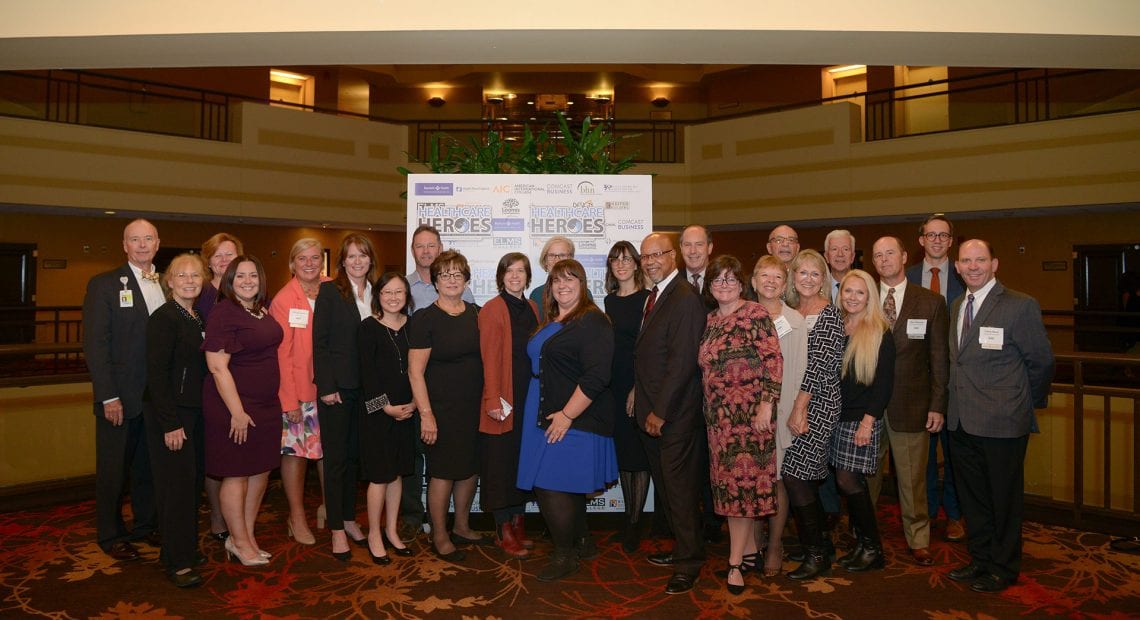
















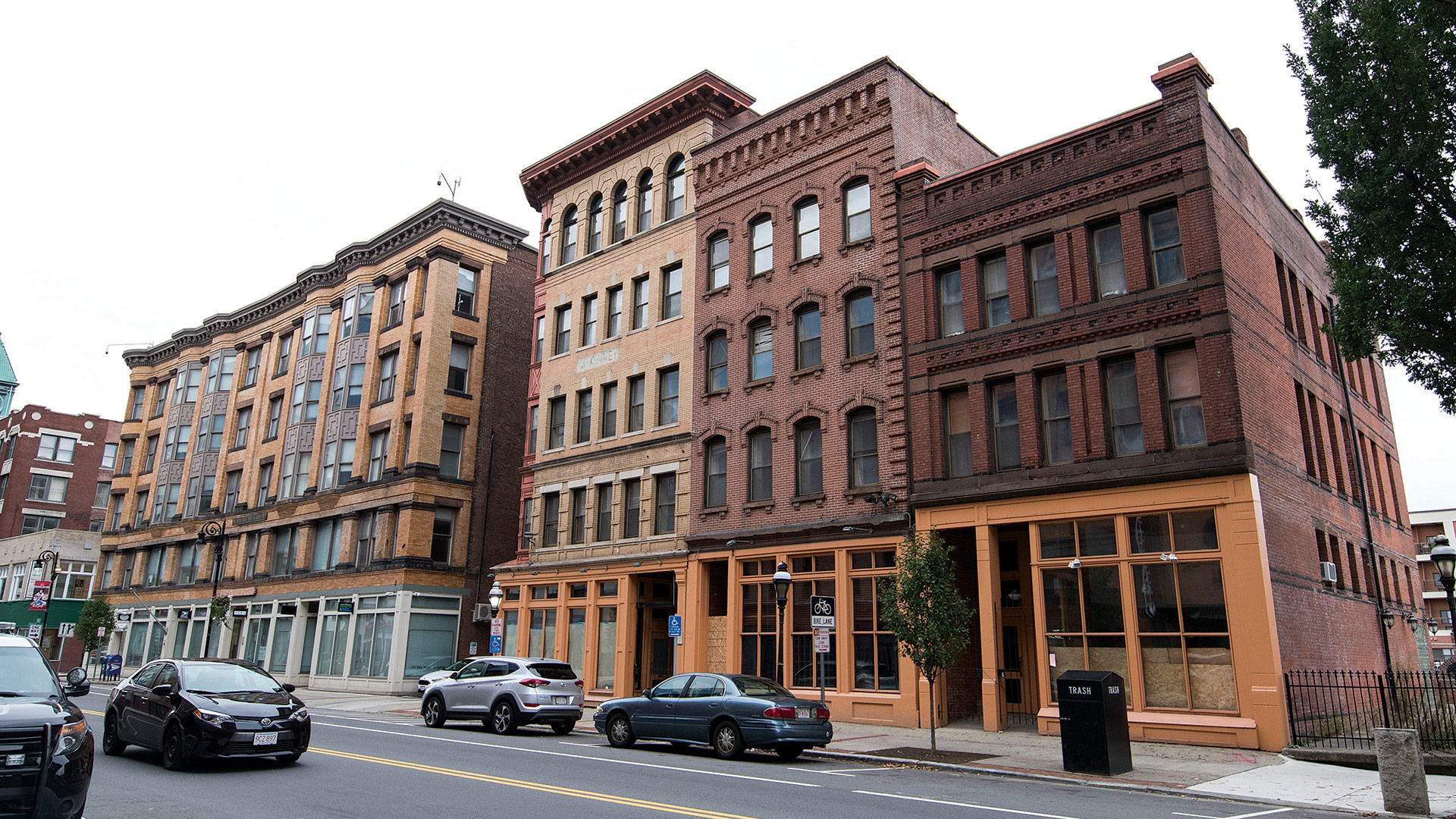




 Now in its 30th year, the Springfield Regional Chamber’s Super 60 program celebrates the success of the fastest-growing privately-owned businesses in the region. Businesses on the Total Revenue and Revenue Growth categories for 2019 represent all sectors of the economy, including nonprofits, transportation, healthcare, technology, manufacturing, retail, and hospitality. Some have been named to the Super 60 once or many times before, and some are brand-new to the list.
 One of the more challenging aspects of running a cannabis business is the inability to access banking services because banks are federally regulated, and cannabis is illegal on the federal level. However, change could be coming after the U.S. House of Representatives voted to pass legislation that would legalize cannabis banking. If the Senate agrees, proponents of the effort say, cannabis operations will become easier, less costly, more transparent, and accessible to a wider range of investors.



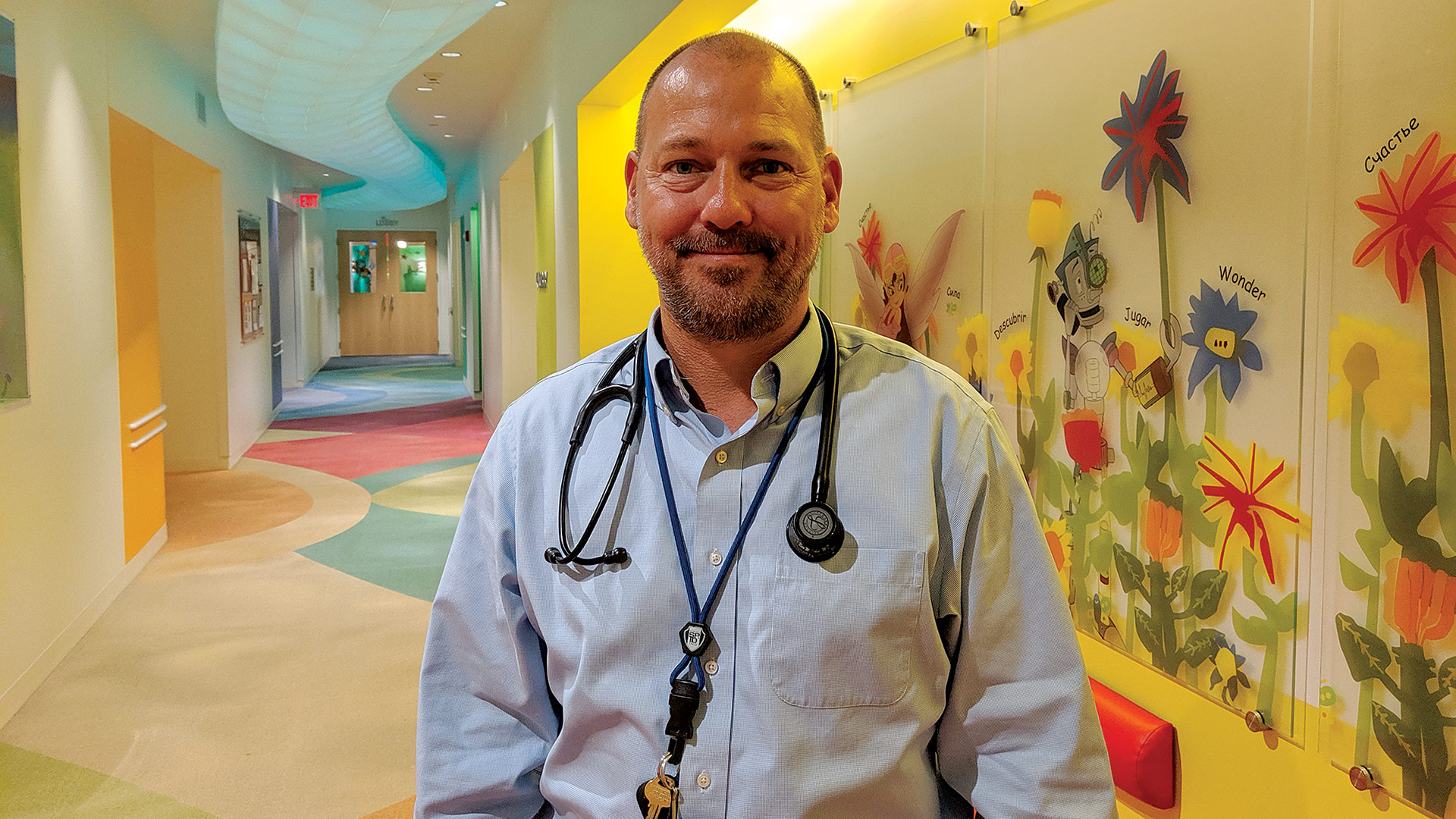



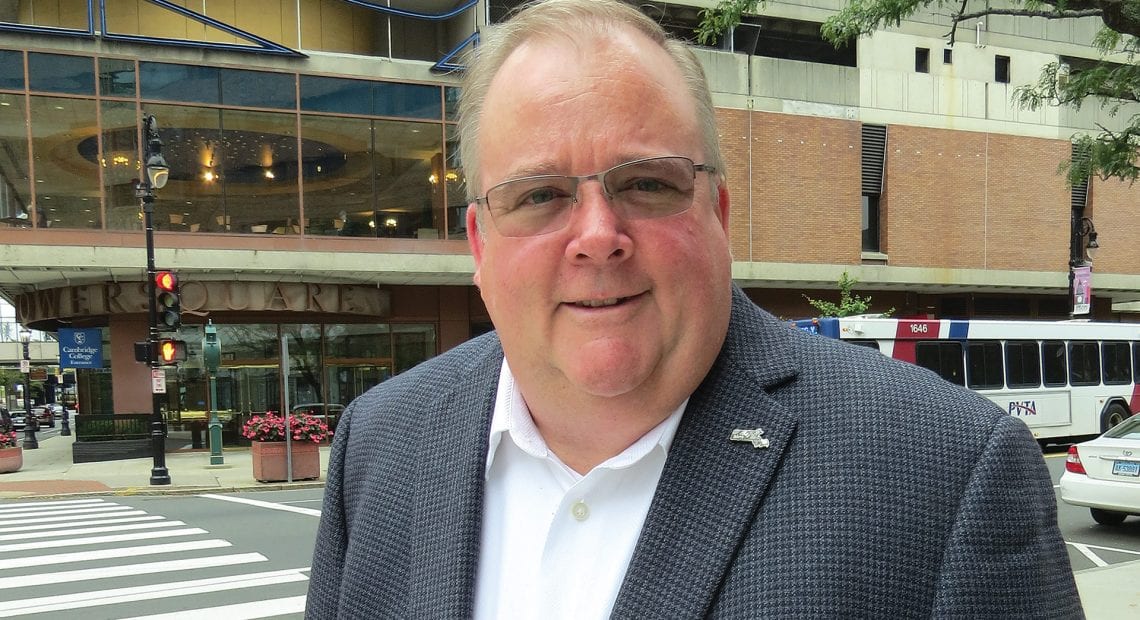
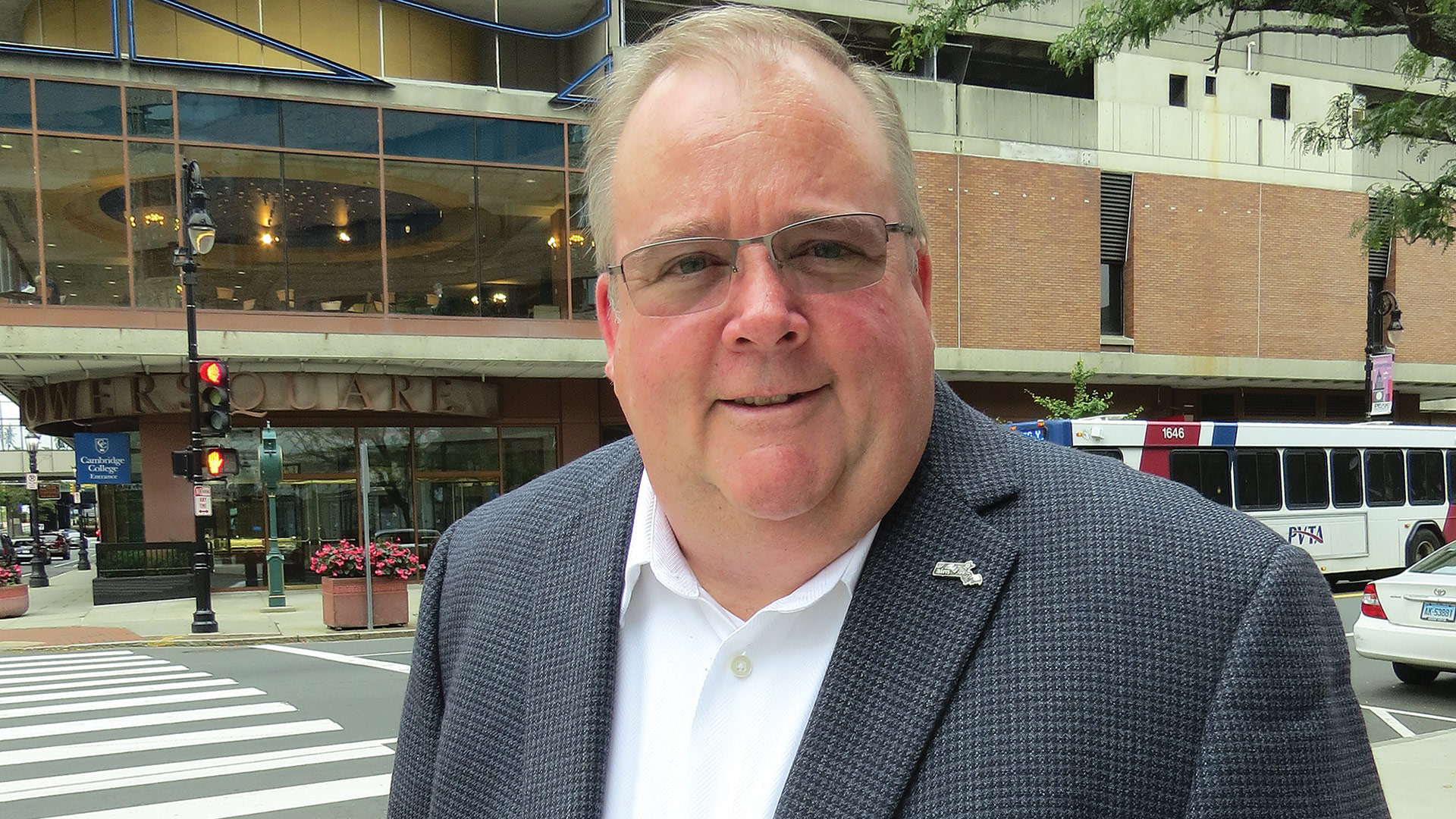


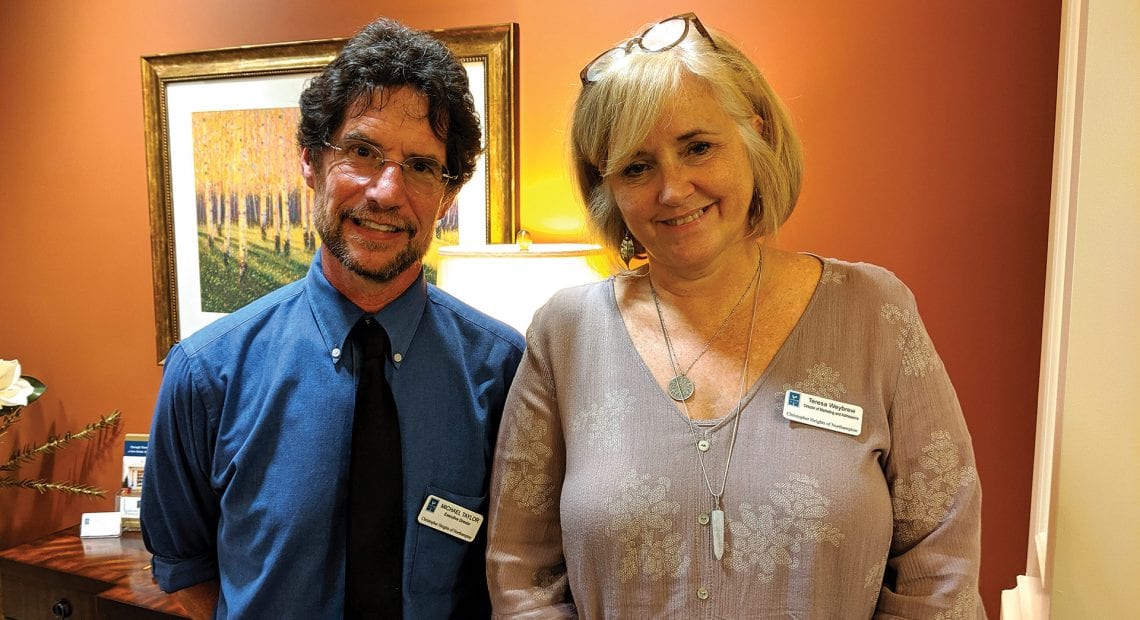
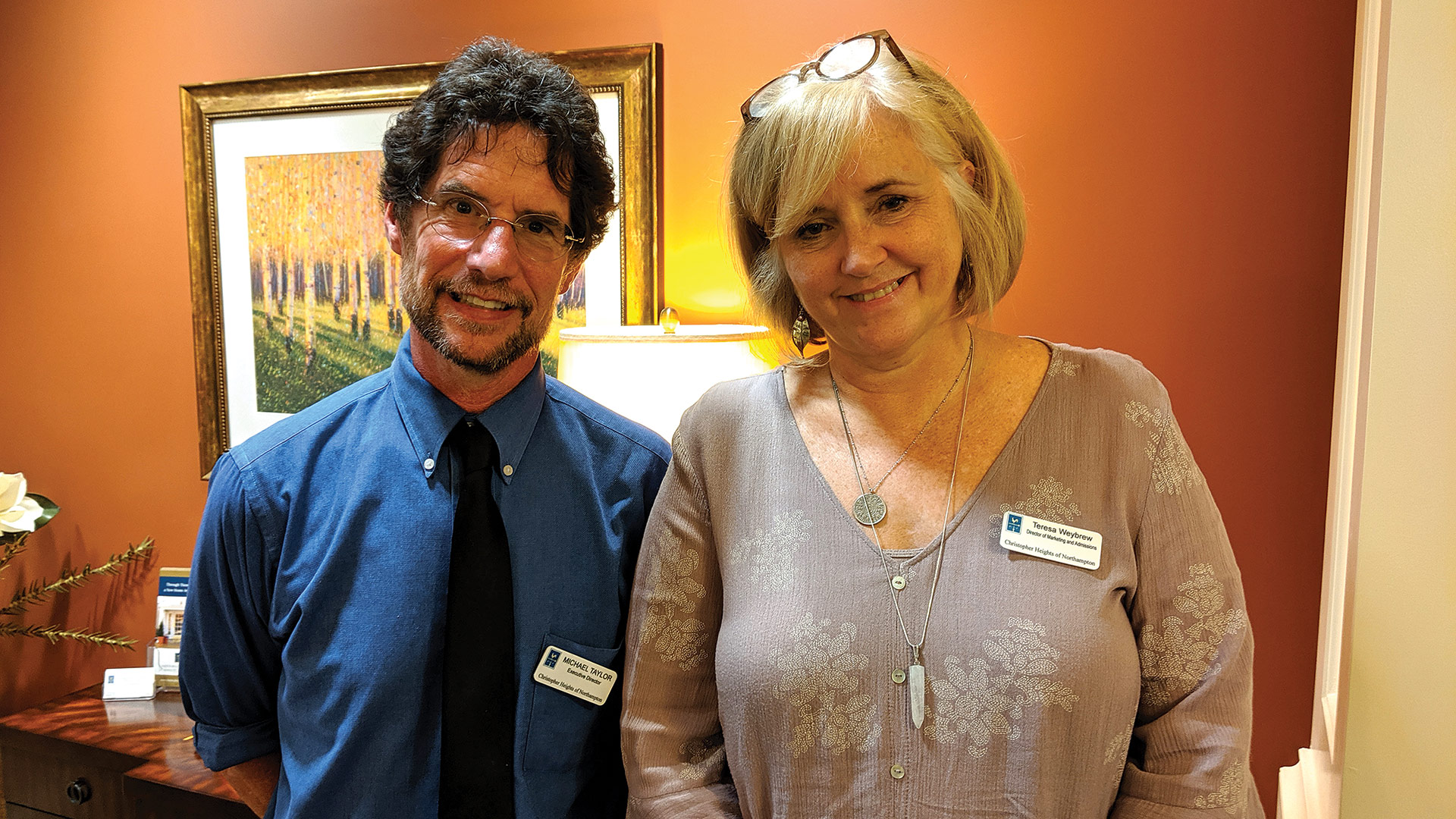





 Most would agree that Springfield has come a long way over the past decade or so and especially since the 2011 tornado touched down on Main Street.