Home 2023 April (Page 3)
Daily News

SPRINGFIELD — Dietz & Co. Architects Inc. recently welcomed three new employees, all in the role of architectural staff, to the firm.

Bethany Mauri earned bachelor of architecture and bachelor of building science degrees from Rensselaer Polytechnic Institute. Prior to joining Dietz & Co., she worked for firms in Albany, N.Y., and Connecticut, and as a freelance architectural designer. She has primarily worked on projects in the K-12 education sector but also has experience with retail and residential projects.

Jason Waisnor has spent his career thus far working for architecture firms in New York City, where he focused on housing and sustainable redevelopment. He also completed work for the hospitality and gaming industries earlier in his career. He holds both bachelor’s and master’s of architecture degrees from Roger Williams University. He enjoys working on preservation projects and specializes in historic restoration, renovation/interior fit-outs, and housing projects.

Priscilla Ramos earned a master of architecture degree from Hampton University and has spent a number of years working for firms in New York City in multiple market sectors, specializing in programming and spatial relationships. Project types she has worked on include single- and multi-family housing, education, and transportation. Outside of architecture, she has experience with engineering, code consulting, and work with the National Park Service.

Daily News

BOSTON — The state’s March total unemployment rate was 3.5%, down 0.2% from the revised February estimate of 3.7%, the Executive Office of Labor and Workforce Development announced.

Bureau of Labor Statistics (BLS) preliminary job estimates indicate Massachusetts gained 16,300 jobs in March, following February’s revised gain of 9,200 jobs. The largest over-the-month private-sector job gains were in leisure and hospitality, education and health services, and construction. Employment now stands at 3,758,300. Massachusetts gained 696,700 jobs since the employment low in April 2020.

From March 2022 to March 2023, BLS estimates Massachusetts gained 104,000 jobs. The largest over-the-year gains occurred in education and health services; professional, scientific, and business services; and leisure and hospitality. The state’s March unemployment rate of 3.5% was the same as the national rate reported by BLS.

The labor force increased by an estimated 300 from 3,741,500 in February, as 4,700 more residents were employed and 4,400 fewer residents were unemployed over the month. Over the year, the state’s seasonally adjusted unemployment rate was down by 0.2%.

The state’s labor-force participation rate — the total number of residents 16 or older who worked or were unemployed and actively sought work in the last four weeks — remained unchanged at 65.0% over-the-month. Compared to March 2022, the labor-force participation rate was down 0.3%.

Daily News

WESTFIELD — On Wednesday, April 26 from 6:30 to 7:45 p.m., the Westfield State University master of public administration program will present a discussion with municipal leaders in Western Mass. on the challenges and rewards of municipal work. The discussion will take place at the Westfield State University TV studio in the Ely Campus Center.

This event is free and open to students of all majors interested in public service, high-school students, and anyone interested in learning about the inner workings of local government.

“Local Government Career Opportunities and Challenges” will feature a panel including Holyoke Mayor Joshua Garcia; Westfield Personnel Director Anne Larkham, West Springfield Mayor William Reichelt, and Paul Sieloff, chair of the Berkshire Municipal Management Assoc.

The panel will be moderated by Rick Sullivan, adjunct faculty member of Westfield State University, former Westfield mayor, and current president and CEO of the Western Massachusetts Economic Development Council.

The program will be livestreamed on the University website, westfield.ma.edu/live.

Daily News

GREENFIELD — Tony Worden, president and CEO of Greenfield Cooperative Bank, announced that Paul Mokrzecki has joined the team as senior vice president of Government Banking.

Mokrzecki brings more than 40 years of experience in the public and private sectors, with a focus on providing banking solutions to municipal clients. He has been responsible for establishing, growing, and maintaining Government Banking departments for two local banks in the past. He has also served as the Finance director, treasurer, and collector for the town of Greenfield, where he oversaw all aspects of financial operations. Prior to that, he was the elected treasurer and collector for the town of Hadley.

He holds an MBA from UMass Amherst. He is a certified municipal treasurer, a certified municipal collector, and a member of the Massachusetts Collectors and Treasurers Assoc.

“We are excited to have Paul join our team, and we are confident that Paul will be a valuable asset to our organization and our clients,” Worden said.

Daily News

HOLYOKE — Valley Opportunity Council (VOC) will host a ribbon cutting and open house today, April 21, at 10 a.m. to celebrate completion of phase-1 renovations of the Voces de Esperanza affordable housing community at 339 Chestnut St., Holyoke.

The $9 million rehabilitation project restores 36 units of affordable housing at the site. City and VOC officials will be in attendance to celebrate the new units.

Daily News

SPRINGFIELD — On Monday, May 1 at 1 p.m., the Hampden County Bar Assoc. (HCBA) will participate in a local Law Day event. The theme of this year’s event is “Cornerstones of Democracy,” and it will be hosted by HCBA President Kathryn Crouss, an attorney with Doherty, Wallace, Pillsbury & Murphy, with the help and support of the master of ceremonies, Springfield District Court First Justice Kevin Maltby. The event will be held in District Courtroom #1 of the Roderick L. Ireland Courthouse, 50 State St., Springfield.

The program will include the annual presentation of the John M. Greaney Award to an attorney and non-attorney for their contributions to the Hampden County legal community. This year’s recipients are Hampden County Lawyers for Justice President Christopher Todd and Community Legal Aid’s pro bono coordinator, Carmen Gonzalez.

The event will also include the presentation and portrait unveiling for retired Springfield District Court First Justice John Payne Jr.

Daily News

SPRINGFIELD — Springfield College has been named a recipient of the Campus Prevention Network (CPN) Seal of Prevention. Presented by Vector Solutions, the CPN Seal of Prevention is awarded to institutions of higher education that have demonstrated leadership in digital prevention programming focused on student safety, well-being, and inclusion.

Each recipient of the CPN Seal of Prevention has taken action to create a safer, more inclusive campus through comprehensive, evidence-based digital prevention education on issues such as sexual assault, alcohol misuse, mental health, and discrimination. It establishes guidelines for discerning quality online prevention education and implementation practices, and positions prevention as central to key institutional outcomes.

“Springfield College is known for holistically educating students in service to others. This Seal of Prevention is a recognition that the co-curricular experiences provided to students not only educate them on matters of safety and well-being, but prepare them to live and lead in a diverse world,” Vice President for Student Affairs Slandie Dieujuste said. “We are honored to be among the top 12% of higher-education institutions receiving this recognition.

At Springfield College, incoming students complete three courses: “AlcoholEdu” (first-year and transfer students), “Sexual Assault Prevention” (all new undergraduate, graduate, and regional and online students), and “Diversity, Inclusion, and Belonging for Students” (all new students). Sophomores complete “Sexual Assault Prevention Ongoing: Healthy Relationships,” juniors complete “Sexual Assault Prevention Ongoing: Taking Action,” and student-athletes complete “Sexual Assault Prevention for Student-Athletes.”

In addition, all new employees complete “Title IX and Sexual Harassment Prevention” (supervisor or non-supervisor courses), “FERPA: Confidentiality of Records,” “Data Security & Privacy,” and “Managing Bias.”

“Creating a culture of prevention speaks to the heart of the Springfield College mission. We are proud to receive this seal of prevention as recognition for the support and commitment of college leadership to ensure our students and employees are informed about their safety and well-being,” said Erin Leeper, director of Non-discrimination Initiatives, Title IX administrator, and 504 coordinator.

According to research conducted by Vector Solutions, 34% of high-school seniors are more likely to attend a college or university that has achieved the CPN Seal of Prevention. Among current college students, 77% feel it is important that their institution has achieved the CPN Seal of Prevention.

“The CPN Seal of Prevention recipients reflect the top 12% of colleges and universities nationwide, further highlighting their commitment and investment to not only academics but also the well-being of their students and the overall college experience,” said Jonathan Cherins, CEO at Vector Solutions.

Daily News

HOLYOKE — Holyoke Community College (HCC) received a pledge of more than $10 million, the largest single gift commitment in the college’s 77-year history and one of the largest gifts ever to any community college.

The pledged gift is included in the estate plan of HCC alumna Margaret (Peg) Wendlandt ’58 and her husband, Gary Wendlandt, longtime supporters and frequent donors to the college. The money, estimated to be at least $10 million, will go toward student scholarships and the college’s greatest needs.

“Education has made a great deal of difference in our lives, and how we have succeeded over the years,” Peg Wendlandt said a few years ago. “Gary and I both received scholarships to assist us in achieving our goals of education and feel fortunate that we can help others do the same.”

The Wendlandts’ many gifts to the college in their lifetime already total more than $1 million and include donations to the President’s Student Emergency Fund and two endowed scholarships administered by the HCC Foundation: the Peg ’58 and Gary Wendlandt Scholarship, for students with financial need; and the Peg ’58 and Gary Wendlandt Health Scholarship, for students in nursing or health-related fields.

In each of the past two years alone, the Wendlandts have made matching gift donations of $100,000 during the HCC Foundation’s one-day “Together HCC: Drive to Change Lives” fundraising campaign. This year, the Wendlandts have again pledged to match up to $100,000 in gifts from new donors and alumni for this year’s campaign on Tuesday, April 25.

“News of the Wendlandt’s historic pledge comes at a time of leadership transition at HCC, and so their gift takes on even greater significance,” said Robert Gilbert, chair of the HCC board of trustees. “On one hand, their commitment celebrates the relationship they have developed with President Royal over the last six and a half years, and on the other, they are demonstrating their commitment to HCC’s mission and vision with a gift that will impact future generations.”

Over the years, HCC has been the beneficiary of two $1 million donations, one from HCC alumnus and Yankee Candle Company founder Michael Kittredge in 2003 and another from the estate of HCC alumna, professor emeritus, and textbook author Elaine Marieb, as well as a $7.5 million donation in 2020 from the Marieb Foundation, which was then the single largest donation ever to a community college in Massachusetts.

The $10 million-plus gift from the Wendlandts will be among the largest so far to any community college in the U.S., rivaling a $15 million gift from philanthropist MacKenzie Scott to Amarillo College in Texas in 2021 and a $10 million gift to Arapahoe Community College in Colorado from the Sturm Family Foundation in 2019.

“Community colleges serve roughly 45% of all undergraduates in the United States and are deserving of our support,” Gilbert said. “We are expanding access to higher education and preparing students for the workforce, and we intend to do that for decades to come. Peg and Gary’s estate commitment enables us to advance HCC’s mission well beyond any of our lifetimes.”

Daily News

AGAWAM — The Employers Assoc. of the NorthEast (EANE) announced that Meredith Wise, president of the association, will be retiring at the end of June.

“After much contemplation, I have decided to retire as president of EANE. It has been my privilege to work with our members for the past 28 years, the last 21 of them as president of the association,” Wise said. “I am so proud of our accomplishments and the work we’ve done to continue the 100-plus-year tradition of the association, including expanding our footprint to serve employers in Connecticut and Rhode Island as well as all of Massachusetts. The depth and breadth of our resources and services has grown to meet the ever-changing needs of our members and employers in the region.”

The board selected Allison Ebner, currently vice president of Membership and Partnerships with the association, as the new president of EANE. She will continue to lead the team of professionals in developing high-quality human-resources support services and training for members and the region’s employers and will focus on building collaborative relationships within the region and creating new opportunities for the expansion of services.

Linda Olbrys will be joining the EANE team as the new director of Membership and Partnerships, bringing with her considerable experience in both human resources and talent acquisition and retention services.

Daily News

HOLYOKE — The arrival of spring means sunshine, warmer weather, and, of course, the annual Earth Day tomato-plant and garden-seed giveaways hosted by PeoplesBank at four of its banking centers.

This year, those who attend Earth Day events at a participating banking center can also enter to win $50 gift certificates to local garden centers, farmers’ markets, and farmshares from community-supported agriculture farms.

Earth Day Events will be held on Friday, April 21 from 10 a.m. to noon at the following PeoplesBank banking centers: 1866 Northampton St., Holyoke; 468 Newton St., South Hadley; 30 Bridge St., Suffield, Conn.; and 102 LaSalle Road, West Hartford, Conn.

The events are open to the public. Seed and plant quantities are limited and will be distributed only while supplies last and only at the designated PeoplesBank banking centers.

PeoplesBank has sponsored Earth Day events for the past 10 years as part of its corporate-responsibility and community-support efforts. In 2022 alone, the bank donated a record $2.3 million to civic and nonprofit causes in Massachusetts and Connecticut.

Daily News

PITTSFIELD — Best Western Plus Berkshire Hills Inn & Suites promoted Anthony Arevalo to the position of director of Operations for Best Western Plus Berkshire Hills Inn and Suites in Pittsfield.

Arevado will be responsible for day-to-day operations of all departments and ensuring customer satisfaction. In addition, he will work with General Manager Kevin Martin to increase group sales and general revenue management for the hotel.

“We are pleased to have Anthony take on this role,” said Mauer Desai, principal of Sita Hospitality, operator of Best Western Plus Berkshire Hills Inn & Suites. “Anthony has been a member of our team for two years, where he has worked in maintenance, front desk, and sales. His variety of skills and experiences will allow Anthony to bring our hotel to the level of service we need to prepare our hotel for the post-pandemic visitors.”

Growing up in California, Arevado worked on the customer-service side of the wedding and function industry and in manufacturing of new housing developments.

Daily News

WESTFIELD — Years of intense lobbying by federal, state, and local leaders to see the Air National Guard’s 104th Fighter Wing, based at Barnes-Westfield Regional Airport, receive upgraded aircraft, has paid off in a huge way, with the Pentagon announcing that 18 of its $78 million, latest-generation F-35 fighters will be based at the facility.

The F-35s, which will arrive during fiscal year 2026 at the earliest, will replace a fleet of aging F-15C Eagles.

The announcement was hailed by federal and state officials as a big step forward for the 104th and Barnes, and as a potentially huge boost for the local economy. Indeed, supporters say the decision to base the F-35s at Barnes will not only secure the future of the Guard unit, but provide a needed jolt for an airport that has an estimated total economic impact of roughly $235 million per year.

Barnes was among three Guard bases across the country contending for either the F-35 or the latest incarnation of the F-15. The other bases are in Louisiana and California.

In a statement on the Pentagon’s decision, U.S. Rep. Richard Neal said, “today’s announcement that a new fleet of F-35A aircraft will be assigned to Barnes Air National Guard Base comes after years of advocacy from the Massachusetts congressional delegation, state leadership, the adjunct general for the Massachusetts National Guard Gary Keefe, and, most importantly, the superb efforts of the dedicated service members at Barnes. Over the past several years, I have been in constant communication with Air Force leadership to underscore the importance of supplying Barnes with the resources needed to complete their critical missions. I am glad that, after years of ongoing discussions, those efforts have culminated in a positive outcome, one that will benefit the Western Massachusetts community for years to come.

“I have long advocated for the brave airmen and women of Barnes who support and defend us here in the Commonwealth and throughout the country,” he went on. “Their integrity and commitment to service has upheld the longstanding reputation at Barnes, one that is nothing short of excellence. We have an obligation to support our service members, and today’s announcement means that the men and women of Barnes will be able to continue their work for years to come.”

Daily News

WINDSOR LOCKS, Conn. — The Connecticut Airport Authority announced the launch of CLEAR and its identity-verification technology at Bradley International Airport.

“At Bradley International Airport, we are always looking for innovative approaches to the traveler journey,” said Kevin Dillon, executive director of the Connecticut Airport Authority. “With our focus on modernizing the whole travel experience while maintaining the integrity of safety and security protocols, we are thrilled to introduce CLEAR’s biometric technology to our traveler base. The addition of CLEAR now offers another convenient, time-saving travel option in our growing menu of services and amenities.”

CLEAR already serves nine of Bradley’s top 10 domestic destinations, allowing members traveling through the airport to use CLEAR on both ends of their journey. Nationally, it offers an expedited security program at 52 airports, serving more than 15 million members.

Members use CLEAR’s network of dedicated lanes to verify their identity with their eyes or fingers, replacing the need to take out their wallet and driver’s license. After verification, a CLEAR ambassador escorts members through the dedicated lane and directly to TSA physical security, saving them time waiting in line at the security checkpoint. CLEAR’s launch at Bradley is expected to create 23 jobs and generate approximately $1.2 million in local economic activity every year.

“CLEAR has officially landed in Connecticut, and we’re excited to partner with Bradley International Airport to make air travel easier, faster, and more secure for Connecticut travelers,” CLEAR CEO Caryn Seidman-Becker said.

CLEAR Plus, an opt-in membership that provides access to CLEAR’s expedited identity-verification lanes, costs about $16 a month billed annually, with discounts available for Delta Air Lines, United Airlines, and American Express members. Newly enrolling active military, veterans, and government officials are also eligible for discounted memberships, and additional family members can be added to an existing CLEAR Plus account for $60 per adult per year.

Daily News

HOLYOKE — The Young Professional Society of Greater Springfield (YPS) will host its 15th annual Great Golf Escape event this May. The event will take place on Monday, May 15 at 10 a.m. at the Country Club of Wilbraham. Check-in begins at 9 a.m.

The cost for this event is $125 for individual YPS members, $500 for a YPS member foursome team captain, $150 for individual non-members, and $600 for a non-member foursome team captain. There will be prizes, a hole-in-one contest with a cash prize, a poker challenge throughout the event, and more. Registration includes lunch, post-golf dinner, and giveaways. Click here to register.

This event is open to the public, so there is no need to be a YPS member to play. However, members will receive a free mulligan, entry into the door-prize raffle, and more.

The event’s presenting sponsor is PeoplesBank. Other sponsors include Beauty Batlles Lounge, Brown and Brown Insurance, Caring Medical Staffing, Chikmedia, DDS Acoustical Specialties, HUB International, Kyle Sullivan, LiftTruck Parts & Service, LUSO Federal Credit Union, Monson Savings Bank, Raymond James, UMass Dining, and Visual Sound Production.

Daily News

SPRINGFIELD — The Hampden County Bar Assoc. will hold its annual Judicial Dinner on Monday, April 24 at the Log Cabin, 500 Easthampton Road, Holyoke. The cocktail hour will begin at 5 p.m., with dinner and the program to immediately follow at 6:30 p.m.

The guest speaker will be Chief Justice Kimberly Budd of the Supreme Judicial Court of Massachusetts. The Hampden County Bar Assoc. will also award the Kent B. Smith Award, the William T. Walsh Longevity Award, and presenting judicial robes to newly appointed judges during the event.

For further information, contact the Hampden County Bar Assoc. at (413) 732-4660.

Daily News

SPRINGFIELD — Western New England University’s (WNE) School of Law recently earned a spot on the Princeton Review’s “Best Law Schools for 2023” list.

The Princeton Review’s rankings are based on data the company gathers from surveys of administrators at the law schools, as well as surveys of students attending the schools, who rate and report on their experiences at them. The rankings for 2023 are based on surveys of administrators at 168 law schools in 2021-22 and surveys of 17,000 students enrolled in the schools over the past three academic years. More than 60 data points are factored into the company’s rankings.

“As the only law school in Western Massachusetts, we pride ourselves on welcoming students as lawyers in training from day one,” interim Dean Beth Cohen said. “We stress practical lawyering skills throughout the curriculum and offer a broad variety of externships and clinical opportunities so that our students begin their professional careers with a sound understanding of the practice of law and the lifelong habit of continued learning.”

Founded more than a century ago to provide legal education to underrepresented populations, the WNE School of Law today welcomes students from all walks of life who are seeking a rigorous education that blends theory, skills, and ethical values. The School of Law’s Center for Social Justice fosters student interest in establishing a more equitable and just society and serves as a focal point for community engagement through research, innovation, education, and advocacy.

Daily News

HADLEY — UMassFive College Credit Union announced it is offering MassHousing loans to its members in partnership with Member Advantage Mortgage, its mortgage service organization. As a community-focused financial institution, UMassFive is always looking for more ways to make a positive difference in the financial lives of its members. Joining the MassHousing program contributes to this aim by helping to make homeownership accessible to more prospective buyers.

MassHousing is an independent agency created in 1966, charged with providing financing for affordable housing in Massachusetts. It offers proprietary products, including down-payment assistance; affordable, straightforward terms; and unique mortgage insurance. UMassFive and partner Member Advantage Mortgage are excited to offer these options to their membership.

“For the past several years, we as an institution have put an increased emphasis on helping our membership reach their homeownership goals,” said Lauren Duffy, UMassFive’s executive vice president and COO. “Through our collaborative partnership with Member Advantage Mortgage, being able to offer MassHousing products adds another crucial option for our members.”

While not everyone may be eligible for MassHousing loans, Duffy noted that “these benefits are more accessible than one might think.” She encourages anyone thinking about financing a home in Massachusetts to consider MassHousing and find out if they are eligible.

The MassHousing program offers benefits including down-payment assistance up to $50,000; loans with affordable rates that are fixed for the life of the loan; and MIPlus, a unique mortgage insurance that includes job-loss protection. MassHousing has already helped more than 70,000 Massachusetts residents buy a home in the Commonwealth.

To learn more about MassHousing and potential eligibility, visit umassfive.coop/mahousing.

Daily News

GREENFIELD — Starting Tuesday, April 18, Court Square in downtown Greenfield will again be closed to vehicular traffic to make way for a seasonal pedestrian plaza and a full schedule of events continuing through October. Moveable planters will be used to close off Court Square between Main Street and Newton Place. Traffic will still be able to access the parking lot behind City Hall from Main Street at Veterans Memorial Mall and from Bank Row by way of Newton Place.

Events scheduled for Court Square and the common this season include Meltdown Children’s Book and Music Festival on April 22, the Greenfield Farmers’ Market every Saturday starting April 29, the Greenfield Recreation Department’s Cornhole Tournament on May 6, Greenfield Bee Fest on May 20, and the annual Harvest Supper Celebration on Aug. 26.

Other events still in the planning stages will feature food, live music, dancin,g and youth activities. Court Square will also serve as a pickup area for shuttle buses for the Green River Festival on June 23-25.

Those who are interested in planning a community event on Court Square can visit greenfield-ma.gov/courtsquare for information on reserving the space.

Daily News

WESTFIELD — Whip City Animal Sanctuary will host its third annual golf tournament fundraiser on Saturday, May 13 at St Anne Country Club, 781 Shoemaker Lane, Feeding Hills. The tournament starts at 12:30 p.m., with dinner following at 5:30 p.m.

“We are raising funds this year to help with the purchase of a parcel of land to expand our sanctuary,” said Sonia Henderson, event coordinator for the sanctuary. “Last year’s event helped fund the cost of hay and vet services for our 70+ animal residents.”

There will be contests, raffle prizes, a free T-shirt for the first 52 players, and a cash bar. The registration fee is $125 per player and includes a cart and dinner following the tournament. The deadline to register is Tuesday, April 28. Additional details and forms can be found at whipcityanimalsanctuary.com or the sanctuary’s Facebook page, or by emailing Sonia Henderson at [email protected].

Whip City Animal Sanctuary is a 501(c)(3) nonprofit organization that provides a caring, safe, long-term home for abandoned, rescued, and surrendered farm animals.

Business Talk Podcast Special Coverage

We are excited to announce that BusinessWest has launched a new podcast series, BusinessTalk. Each episode will feature in-depth interviews and discussions with local industry leaders, providing thoughtful perspectives on the Western Massachuetts economy and the many business ventures that keep it running during these challenging times.

Go HERE to view all episodes

Episode 158: April 17, 2023

George Interviews Corey Wrinn, Managing Director of Rivel

It’s been a somewhat turbulent start to 2023 for the banking industry, with a few headline-making failures and questions about what will happen in this sector amid interest rate hikes, inflation, and other forces. On the next installment of BusinessTalk, Corey Wrinn, Managing Director of Rivel, who conducts primary research on U.S. banking customers, provides some perspective on the current landscape, especially with regard to the community banks that have a huge presence in the local market. It’s must listening, so tune in to BusinessTalk, a podcast presented by BusinessWest and sponsored by PeoplesBank.


Sponsored by:

Also Available On

Daily News

CHICOPEE — Elms College and the St. Augustine Center for Ethics, Religion, and Culture will present the fourth annual Rev. Hugh Crean Distinguished Lecture in Catholic Thought on Thursday, April 20 at 4 p.m. in the college’s Alumnae Library Theater.

Dr. Karin Öberg, professor of Astronomy and director of Undergraduate Studies for the Department of Astronomy at Harvard University, is this year’s distinguished lecturer. The title of her remarks is “Christian Creation and the Big Bang Cosmology.”

The most cited living astronomer in the world, Öberg’s research aims to uncover the way in which chemical processes affect planet formation, including the chemical composition of fledgling planets. Her research team, the Öberg Astrochemistry Group, approaches this work through laboratory experiments, astrochemical modeling, and astronomical observations of molecules in planet-forming disks around young stars.

The St. Augustine Center for Ethics, Religion, and Culture was launched in October 2020 with support from an anonymous naming gift and several significant contributions. The center, whose founding executive director is noted bioethicist Dr. Peter DePergola, aims to increase engagement and discourse on the most pressing and complex questions related to ethics, religion, and culture in today’s society, and to lead the regional community in thoughtful, engaging dialogue.

The annual Rev. Hugh Crean Distinguished Lecture was established through an endowment made by B. John (Jack) and Colette Dill to honor the legacy of Rev. Hugh Crean and recognize his academic work at Elms College and his pastoral ministry throughout the Diocese of Springfield and the entire region.

The lecture will take place both in person and virtually via Zoom. Click here to register for the event.

Daily News

PITTSFIELD — Berkshire Museum announced a partnership with Wonderfund, a nonprofit working with the Massachusetts Department of Children and Families to provide enrichment opportunities to foster children and families. Under this program, foster families receive free admission to Berkshire Museum for two adults and two children.

Free admission to the museum also gives families access to museum programs such as WeeMuse Littlest Learners, a weekly, educator-led activity for infants and toddlers to spark curiosity with hands-on cognitive and social experiences, on Thursdays from 4 to 4:45 p.m. The museum’s aquarium also hosts Discovery Tank, an educator-led program, on Fridays from 3 to 4 p.m., featuring the animals of the aquarium’s tide pool and demonstrating the behavior and life of crustaceans, sea urchins, starfish, and many other creatures of the shallows.

“This partnership with the Berkshire Museum and the Wonderfund throws open the doors of our treasured downtown institution to foster families,” state Rep. Tricia Farley-Bouvier said. “The Wonderfund is now achieving its goals, not only in the Boston area, but now also here in the Berkshires. Foster families need to be lifted up and appreciated for all they do, and providing the space and programming that the Berkshire Museum offers is just one small way we can support them.”

Daily News

SPRINGFIELD — Mercy Medical Center announced the launch of TeamBirth, a new initiative to enhance the birthing experience and improve outcomes for people giving birth and their babies.

TeamBirth is a communication and teamwork process that closes gaps in communication that challenge the safety and dignity of people giving birth. It was developed by Ariadne Labs, a joint center for health-systems innovation at Brigham and Women’s Hospital and the Harvard T.H. Chan School of Public Health in Boston.

“At Mercy Medical Center, we want every woman giving birth and the clinicians who care for them to feel empowered to participate in decisions made during labor and delivery,” said Dr. Robert Roose, chief administrative officer at Mercy Medical Center and Johnson Memorial Hospital. “TeamBirth will move us closer to that goal by fostering teamwork and communication among physicians, midwives, nurses, staff, and the woman giving birth so that our patients are heard and supported from the moment they walk into the Family Life Center.”

Research indicates that failures in communication between providers and between providers and patients account for up to 90% of preventable injuries during childbirth.

TeamBirth was developed to address these gaps in communication to ensure that people giving birth and the clinicians who are caring for them have shared input and understanding into decisions during labor and delivery.

A central component of the TeamBirth model is a shared whiteboard located in all labor and delivery rooms to outline care plans and progress for the patient and the baby that serves as an ongoing shared reference for the team. The full care team, of which the person giving birth and their support person are an integral part, meet frequently throughout labor and delivery in huddles to make sure all parties are aware of the patient’s preferences, symptoms, and experiences and to set clear expectations.

The TeamBirth model was developed and rigorously tested by Ariadne Labs as part of its Delivery Decisions Initiative, a research and social-impact program focused on transforming childbirth care around the world. In one TeamBirth trial, 90% of the clinicians said they would recommend TeamBirth, and nearly 80% of patients said their preferences made a difference in the care they received.

“All people who give birth deserve to have a safe, dignified experience; TeamBirth is an evidence-based approach to turn this vision into a reality,” said Amber Weiseth, director of the Delivery Decisions Initiative at Ariadne Labs. “We are excited to collaborate with Mercy Medical Center to ensure that the patient voice is central to all decisions in labor and delivery. We hope to see this model continue to spread to ensure the best possible care experience for every patient, everywhere.”

TeamBirth now has been implemented in more than 16 health systems around the country, collectively involving more than 1,500 clinicians and more than 67,000 mothers and babies.

Daily News

WESTFIELD — Westfield State University (WSU) advanced public relations students are launching a campaign, Dunkin’ for Diapers, to raise money and awareness for Square One’s diaper bank.

The campaign will create awareness and collect donations for the organization’s diaper bank, which provides diapers and wipes to 1,200 families annually throughout the Pioneer Valley. The students are hosting two events featuring games and raffles: Saturday, April 22 from 11 a.m. to 5 p.m. outside of Target at the Holyoke Mall; and Tuesday, April 25 from 10 a.m. to 2 p.m. outside Dunkin’ Donuts at Westfield State University.

The Instagram-based public-awareness campaign will take place via the handle @dunkinfordiaperssquareone and use the hashtags #dunkin4diapers and #squareonediapers.

Square One is a nonprofit organization based in Springfield that provides a range of family-friendly education and support services to local families. Its focus is on providing opportunities for children and families to build the foundation for lifelong learning, make smart choices, and grow strong cognitively, emotionally, socially, and physically.

“Families in our region continue to be challenged by the high cost of basic essentials, including diapers for their little ones,” said Kristine Allard, vice president of Development & Communication at Square One. “We are so grateful to the students and staff at Westfield State for recognizing this tremendous need and for taking action to help us support our region’s children and families.”

Suzanne Boniface, adjunct professor of Communication at WSU, added that “this Westfield State Communication Department course partners with a local nonprofit each semester to help the community through its civic-engagement program. These public-relations students use the skills they have acquired from their studies and gain practical experience for their future careers.”

She added that her students’ campaign will raise awareness of the diaper-bank program and will help fund expenses for diapers.

Donations to this campaign can be made by Venmo @dunkin4diapers.

Community Spotlight

Community Spotlight

By Mark Morris

Ryan McNutt

Ryan McNutt says the ‘hill’ off Palmer’s Mass Pike exit is a challenging site.

You might say Ryan McNutt is a man with a plan. The Palmer town manager keeps a copy of the town’s master plan on his desk for anyone who wants to know the projects and priorities for the community in the years ahead.

McNutt sees a real benefit in a formal plan because it reduces what can be an overwhelming world of choices.

“When you have a document that we’ve all agreed on, it allows us to work toward the different benchmarks that are laid out for us,” he said. “Having a plan just makes it easier to get things done.”

And there are a lot of initiatives that developers, the town, and the state are trying to get done in Palmer — everything from a hotel and water park on the site once proposed for a casino to a stop on the planned, and highly anticipated, east-west rail line; from new cannabis businesses and a brewery to some infrastructure projects, and much more.

Overall, it’s an intriguing tome for this town roughly halfway between Springfield and Worcester, one that could change the landscape in all kinds of ways.

One key benchmark involves developing the land near Exit 63 on the Massachusetts Turnpike, commonly known as the Palmer exit.

With several empty land parcels near the exit ramp, McNutt and others see this as a significant economic opportunity. He was prepared to have the town purchase one of the parcels, clean up the lot, and advertise it for development with the hope it would be a catalyst for others.

“When you have a document that we’ve all agreed on, it allows us to work toward the different benchmarks that are laid out for us. Having a plan just makes it easier to get things done.”

While planning that move, a developer bought the parcel from the current owner and signed on to build the Liberty Plaza, scheduled to open late next year. Committed retail stores include a Chipotle restaurant, Starbucks, Jersey Mike’s Subs, and two other retail spaces not yet finalized.

“This is a great success for the town because it turns an empty lot into the kind of plaza you would expect to see close to a turnpike exit,” McNutt said. “Best of all, we achieved the result we wanted without having to buy anything.”

But this project pales in comparison to another proposed project, one that involves development of an area known as the ‘hill.’ Located directly at the end of the turnpike exit, the parcel represents nearly 200 acres of land. It was this area that was the proposed site for a casino complex.

According to Quabog Hills Chamber of Commerce Executive Director Andrew Surprise, Kalahari Resorts is in discussion with the town about a potential 400- to 500-room hotel with an indoor water park. Kalahari Resorts currently has hotel complexes in Pennsylvania, Ohio, Wisconsin, and Texas. Themed around African adventure, the hotels emphasize family vacations by featuring large indoor water parks, and business gatherings by offering large conference centers.

Andrew Surprise

Andrew Surprise says the Quaboag Hills Chamber has rebounded following a loss of members and direction during the pandemic.

“If Kalahari eventually locates here, it would be a huge economic benefit to Palmer and the entire region,” Surprise said.

At the town level, McNutt said Palmer is working with the company to address bringing public utilities and access roads to the hill parcel.

“It’s a challenging site,” he noted. “While nothing is a sure thing, I’m glad to see this company feels optimistic enough to keep exploring the opportunity.”

Meanwhile, those in — or looking to enter — the cannabis industry are also finding opportunities in Palmer.

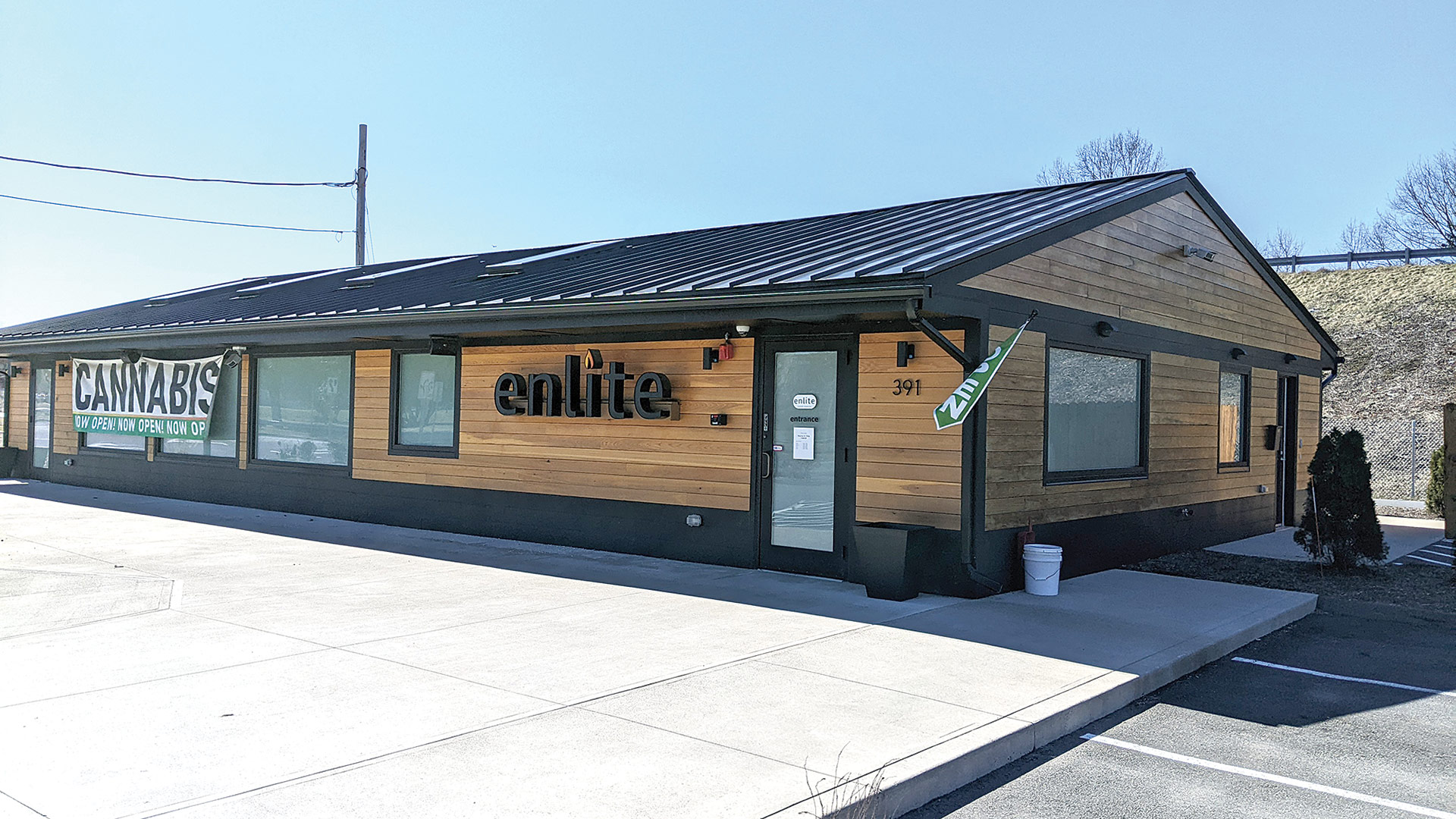
Indeed, while there are no cannabis retailers currently operating in town, that will soon change. Kali Cannabis has begun building a retail operation on Shearer Street, close to the turnpike exit. Cannabis retailer Silver Therapeutics has also broken ground on its facility, and two additional companies, Green Gold Group and Green Adventure, are planning retail operations in Palmer. The latter companies are still completing the permitting process with the Cannabis Control Commission.

In short order, the town could see four cannabis establishments open their doors.

“We will have to see what the market does to determine the right number of cannabis retailers,” McNutt said. “We’re going to let capitalism solve that one.”

As for the chamber, in the middle of the pandemic, it faced a shrinking membership base and a loss of direction. During that time, Surprise became the executive director, with a mandate to turn things around. After nearly three years, he is happy to report the chamber is back.

“We’ve added dozens of new members in the last two years, with more businesses signing on every day,” he said, adding that, in the past year, the chamber has brought $364,000 in economic-development money to its members.


Tracking Progress

Another engine of economic development involves a train stop in Palmer as part of the east-west rail project currently under consideration. In the budget that Gov. Maura Healey will present to the legislature for approval, she has identified funding for train stops in Pittsfield and Palmer.

“While the budget hasn’t yet passed, it’s a promising sign because it shows the Commonwealth believes in the rail project and supports Palmer,” McNutt said.

If approved, a rail stop in Palmer offers residents the possibility of direct access to Boston without driving. But Surprise looks at that potential from a different angle. “I’m more focused on bringing people from Boston and Eastern Mass. here, so they can visit the region, spend money in this area, and help our economy.”

It’s an economy that’s growing and becoming increasingly diverse, with many new additions, including cannabis-based businesses as well as the town’s first brewery, created by Rachel Rosenbloom and her husband, Michael Bedrosian, who saw opportunity in Palmer and are seizing it.

“We knew town officials were looking to revitalize downtown, and we thought it would be a good idea to add something to the community that would encourage people to go downtown,” Rosenbloom said.

While the couple have been home brewers for 10 years, Rosenbloom is a professional brewer, working at Fort Hill Brewery in Easthampton for the past five years. Palmer is known as the Town of Seven Railroads because the rail industry was an important part of the town’s early industrial development. That knowledge inspired the couple to name their business Seven Railroads Brewery.

“We didn’t want to go with an obvious name like Palmer Brewing Company,” Rosenbloom said. “We wanted to choose a name that really meant something to the community and to the area.”

Once they receive the proper construction permits for their Park Street location, the couple will start installing their brewing equipment. They have secured a license to brew and are still waiting for approval of their license to pour, which will determine how soon they can open the taproom and start serving the public.

“We’re going to concentrate on being a brewery, and while we won’t be serving food, we will invite local food trucks and let patrons know they can bring in food,” Rosenbloom said.

Palmer at a glance

Year Incorporated: 1775
Population: 12,448
Area: 32 square miles
County: Hampden
Tax Rate, residential and commercial: Palmer, $21.40; Three Rivers, $21.82; Bondsville, $22.54; Thorndike, $22.25
Median Household Income: $41,443
Median Family Income: $49,358
Type of government: Town Manager; Town Council
Largest Employers: Baystate Wing Hospital; Sanderson MacLeod Inc., Camp Ramah of New England; Big Y World Class Market
*Latest information available

She is hopeful the taproom can open this spring or early summer, and she’s not the only one looking forward to it.

“Everyone we talk to is super excited and can’t wait for us to open,” she said. “The response we’ve gotten from the community has been so positive, with several local businesses reaching out to help and to discuss working with us in the future.”

Last spring, Surprise resumed publishing the chamber’s recreation guide and business directory after not producing it during the pandemic years. Published in time to distribute at the Brimfield Antique and Flea Market (which brings more than 250,000 people to the region every year), the guide’s return proved a big success.

“We distributed half our print run at the flea market as well as to more than 60 locations in the region, with many asking for more copies,” Surprise said. “People really liked the pocket-guide format, and, of course, it’s available online, too.”

With the 2023 edition, Surprise is looking to create different trails for antique shops, breweries and wineries, boutique shops, and more. He hopes the increased activity will increase the tourism dollars spent in the region. “Right now, our efforts are all about planting seeds and seeing what grows.”

Meanwhile, Palmer continues to seek a new use for the 100-year-old Converse Middle School. McNutt said the town looked into the costs to modernize it for municipal use, but the price tag was too high. Now he’s looking to see if housing developers, specifically those building for residents age 55 and over, can propose an effective use for the site.

As part of its master plan, Palmer is also working on replacing two main bridges in town, on Church Street and Main Street. After minor repairs, the Main Street bridge has been deemed safe for now, while the Church Street bridge was closed. A truss bridge is in use until a new Church Street bridge gets built.

“It’s a complicated construction project, but we are still on schedule with our benchmarks,” McNutt said. “It is still a goal that I will drive my car across the new bridge this year.”

A boat ramp for Forest Lake is one project that is now complete. As a small, quiet spot, McNutt explained that the lake is a popular place for parents to teach children how to fish.

In the past, boat owners would launch from a sandy area along the lake and park their vehicles on the adjacent road. That would often lead to two safety issues of launching during muddy times and then parking vehicles on a fairly busy road. The Massachusetts Department of Fish and Game and Department of Conservation corrected those issues with a dedicated boat launch and an adjoining parking lot.

“From a safety, convenience, and aesthetic point of view, the boat launch was a great project all around that will benefit people for years to come,” McNutt said.


Bottom Line

In order to keep town projects on the path to completion, Palmer has a master-plan implementation committee consisting of citizens and town officials to make sure the actions that occur are aligned with the goals the town has identified.

“As we succeed and complete these projects, it serves as a catalyst and allows us to get even more done for the town,” McNutt said.

After all, it’s part of the plan.

Construction

Claiming Mileage


On March 30, the Massachusetts State Senate passed a bill that includes $350 million in bond authorizations for transportation needs across the state, including $200 million for the state’s Chapter 90 program, which provides municipalities with a reliable funding source for transportation-related improvements, including road and bridge repairs.

“This legislation will maintain and improve our state’s infrastructure, ensure that residents have safe and reliable transportation options, and support sustainable, regionally equitable economic development in communities across the Commonwealth,” Senate President Karen Spilka said.

The legislation also authorizes $150 million in programs that will assist municipalities with various transportation-related projects. This includes $25 million each for the municipal small-bridge program, the Complete Streets program, a bus-transit infrastructure program, grants to increase access to mass transit and commuter rail stations, grants for municipalities and regional transit authorities to purchase electric vehicles and the infrastructure needed to support them, and new funding dedicated to additional transportation support based on road mileage, which is particularly helpful for rural communities.

“Rural towns do not have large municipal budgets like some Commonwealth cities; yet, with much smaller municipal budgets, they have been expected to maintain many hundreds more miles of roads than their urban counterparts.”

“By dedicating a $25 million fund to rural communities for road and culvert work, the Senate has once again demonstrated a commitment to regional equity,” state Sen. Jo Comerford said. “Rural towns do not have large municipal budgets like some Commonwealth cities; yet, with much smaller municipal budgets, they have been expected to maintain many hundreds more miles of roads than their urban counterparts. They have culverts in need of repair and a significant number of gravel and dirt roads. This rural program recognizes and begins to address these pressing, inequitable realities for rural communities, and I’m deeply grateful.”

In arguing for the bill’s passing, Comerford made a passionate appeal for relief for communities in her district, which includes parts of Hampshire, Franklin, and Worcester counties.

“I know Boston didn’t have a lot of snow this winter. That was not the case in my district. Just over two weeks ago, a number of towns in my district received over 24 inches of snow, some getting as much as 38 inches just in one storm,” she said. “The Hatfield DPW director wrote that, ‘due to the late storms, we have a lot of roads that have fallen apart and a lot of tree damage. With the costs of asphalt rising and the Chapter 90 funding staying the same, we will never catch up.’ The Greenfield DPW director told us, ‘due to many freezes and thaw cycles, our roads have shown accelerated deterioration, and our pavement-management program is really in shambles.’

She said the base amount being provided to communities has been static for many years, while costs are constantly rising. “Weather events are getting more extreme, putting more stress on roads and bridges and cleanup, and rural municipalities have many dirt and gravel roads, making up more than 30% of a municipality’s road network, in some instances, in my district. And this, of course, is exacerbated by climate change, the erosion and the disrepair of these roads.”

She noted that the existing Chapter 90 formula used to distribute funds — established more than 50 years ago — takes into account road mileage, but also population and employment. “But this doesn’t work for the places that don’t have the people, but do have the miles and miles of roads. Adjusting the base Chapter 90 formula to put more emphasis on road mileage is something that I respectfully urge us to consider.”

State Sen. Paul Mark, who represents all of Berkshire County among some communities in Hampden, Hampshire, and Franklin counties, agreed that the mileage-based calculation will greatly benefit smaller towns.

“In a district of 57 cities and towns, 54 of which have populations of fewer than 10,000 people, and in some cases communities as small as 120 residents, we live first-hand every day how difficult it can be to undertake road repairs, invest in new equipment, or have our voice heard in Boston,” he said.

Legislators outside Western Mass. also praised the bill’s passage.

“Our transportation system is the backbone of our Commonwealth, connecting us to our jobs, families, and communities,” said state Sen. Brendan Crighton, chair of the Senate Committee on Transportation. “This investment is not just an investment in infrastructure, but an investment in the future of our Commonwealth, enabling our cities and towns to make the necessary improvements to promote efficient and safe travel for all.”

State Sen. Edward Kennedy, chair of the Senate Committee on Bonding, Capital Expenditures, and State Assets, added that “I’m pleased to see this crucial investment in the Commonwealth’s roads and bridges move toward fruition. The cities and towns of Massachusetts depend on this necessary funding to maintain their transportation infrastructure.”

A different version of the bill having previously been passed in the House of Representatives, the two chambers will now reconcile differences before sending the bill to Gov. Maura Healey’s desk.

Insurance

Avoiding a World of Hurt

By Encharter Insurance


If you are an employer in Massachusetts with one or more employees, workers’ compensation is a mandatory business-insurance coverage. An employer may be an individual, a partnership, a corporation, or any other form of ownership that has employees. Failure to carry workers’ compensation coverage can result in an immediate stop work order and fines for every day that no coverage was available.

Besides being the law, here’s why you need it: workers’ compensation is essentially a no-fault system designed to protect both employers and employees should a workplace injury or illness occur. Your workers’ comp insurance policy would cover payment for medical care related to the employee’s injury, and would pay wage-replacement benefits, also called indemnity payments. In exchange for these benefits, workers’ comp, rather than the courtroom, becomes the employee’s exclusive remedy.

Individual states have jurisdiction over their own systems, so specific regulations and benefits vary by state. In Massachusetts, the Department of Industrial Accidents (DIA) manages the workers’ compensation system, adjudicating any disputes or appeals that arise. Meanwhile, the Massachusetts Workers Compensation Rating and Inspection Bureau sets rates.


How Is Coverage Obtained?

Most employers secure their workers’ compensation from an insurance agent. Large employers sometimes self-insure but must pass several regulatory gating issues to qualify for self-insurance.

If two or more insurance companies decline to insure your organization, you may have to seek coverage in the Massachusetts residual market, also known as an assigned risk pool.

Workers’ compensation insurance can be canceled by the insurance company, but only for the reasons of non-payment of premium, fraud or material misrepresentation, or a substantial increase in the hazard being insured. Your insurance company would need to notify you of cancellation with 10 days written notice.


How Are Rates Set?

The cost of the insurance is based on anticipated loss experience and is comprised of two basic components.

Under manual premium, the cost for your workers’ compensation policy is determined by your payroll and the classification of the work your employees do. The riskier the work, the higher the rate for the class code. There are thousands of class codes set by the Workers Compensation Rating & Inspection Bureau (WCRIB) in Massachusetts.

Under modified premium, once you have purchased workers’ compensation for two years, if the sum of the premiums for two years is $11,000 or more, your policy will be subject to experience rating. Manual premium is multiplied by an experience rating factor (or ‘e-mod’) reflecting your specific organization’s loss history. Much like the experience rating system used by many states to develop auto insurance rates, a bad year will impact an employer for years to come, as three prior years’ experience are used to develop a workers’ compensation e-mod.


What Benefits Does Workers’ Comp Provide to an Injured Worker?

Workers’ compensation coverage provides unlimited medical expenses, lost wages (also referred to as wage replacement or indemnity), rehabilitation expenses, and dependent and funeral expenses up to a state’s limits

The amount and duration of wage replacement and medical benefits varies based on each state’s law. Generally, the injured worker faces no out-of-pocket medical costs.


What Are Your Responsibilities as an Employer?

• Obtain workers’ compensation insurance coverage. Failure to carry coverage can result in stop-work orders and daily fines for the uncovered duration.

• Show proof of that coverage by posting notice in a public and visible place that all employees use.

• Provide a safe workplace, as required by OSHA.

• If an employee is injured, send them for medical care. In Massachusetts, you have the option to choose the physician for the first appointment.

• Report a medical-only injury (one with no anticipated lost time) to your insurer.

• Report a workplace injury with five or more days of absence, or a death, to the Massachusetts Division of Insurance.


What Are Some Best Practices to
Minimize Costs?

You can lower your workers’ comp costs by working to the lowest possible e-mod. There are two variables that you should work to control: the frequency of injuries, or how many work-related incidents occur; and the severity of workplace injuries, or the duration of time away from work. Here are best practices to help control both and to help you attain the lowest possible experience e-mod:

• Maintain a safe and healthy workplace. The least costly injuries are the ones that never happen. Control frequency by setting the expectation for an injury-free workplace, training employees to work safely, requiring personal protective equipment, and conducting periodic walk-through audits. Your insurance company can often provide safety resources.

• Have a plan for point-of-injury response. A quick, caring, non-judgmental response to a work injury will help to set the trajectory for a positive outcome for all. Ensure that employees and managers know what to do if an injury occurs. Escort the injured worker to medical treatment.

• Partner with a nearby occupational doctor or medical clinic. Massachusetts allows employers to choose the first medical contact. Choose a top-quality physician or a clinic experienced in workplace injuries. Your insurance company may have a good network.

• Report injuries to your insurer in a timely manner. Early reporting is extremely important — numerous studies have demonstrated that the sooner injuries are reported, the better the outcome. Aim for same-day reporting.

• Prepare for return to work. It’s important to get employees back to work and on the team as soon as possible to help prevent disability syndrome. Plan for a transitional or modified job duties to help the employ re-acclimate and work-harden to their regular job.

Cannabis

Improvement Needed


In its annual “State of the States” report, Americans for Safe Access (ASA) gave 13 state medical cannabis programs failing grades.

In the report, the ASA gave failing grades to Georgia, Idaho, Indiana, Kansas, Kentucky, Mississippi, Nebraska, North Carolina, South Carolina, Tennessee, Texas, Wisconsin, and Wyoming. Idaho and Nebraska, the last two states without medical cannabis access, both got a zero.

No state earned an A, but Connecticut, Illinois, Maryland, Michigan, and Rhode Island got the highest grade on the ASA report card, a B+.

Massachusetts earned a C+. According to the report, “medical cannabis sales in Massachusetts have reached almost $1 billion since the medical cannabis program was approved in 2018. Despite this promising sales number, Massachusetts did not make any noticeable improvements to the medical cannabis program in the past year.

“In 2023, ASA recommends that legislators in the state expand protections provided under the law for patients. As it stands, employment protections only exist through case law and should be formalized by the state Legislature. The Legislature should also seek to protect patients rights within housing, education, and family court as well.”

The ASA did commend Massachusetts for not requiring a fee with patient registrations and encourages policymakers to extend patient registrations to cover multi-year periods in order to cut down on administrative paperwork for patients.

According to patient feedback gathered for the Massachusetts report, “patients surveyed expressed concern regarding inflated pricing, a concentration on potential harm rather than potential benefits, and that the adult use/recreational market is undermining the medical market. They also reported a lack of pediatric access.”

While states continue to slowly adapt their laws to meet the needs of patients, the ASA noted, “we have noticed a big shift in states prioritizing adult use. Recreational adult-use programs and medical cannabis programs are not the same and should not be treated as such. A state may have both recreational, adult-use laws and medical cannabis laws, but those programs must remain separate in order to serve the distinct needs of the population. Cannabis patients rely on medical cannabis products for their health and well-being and should be treated as patients by the state — not as recreational consumers.”

This includes protections that may not exist in the recreational market, the report explained, such as excise and sales tax breaks on medical cannabis products, continued access to medical cannabis for minor patients, civil-rights protections for employment, housing, parental rights, and even alternative accessibility methods.

“Medical cannabis programs are essential to patient health and well-being and should be maintained and improved upon regardless of the legality of recreational adult use in the state,” the ASA argued. “While adult-use models can expand access to a larger population of people and may even increase the number of legal cannabis retailers, these systems and associated businesses are often not held to the same standards as authorized medical cannabis businesses.

“For example, laboratory testing of adult-use products may not have to undergo screening for the full array of heavy metals and contaminants that medical products require. It is also uncommon that states ask adult-use retailers to maintain staff competent about medical cannabis products or their applications to ensure patients have a trained advisor to consult with when they purchase medicine. It is critical to patient health that states maintain focus on addressing medical cannabis program challenges and patient needs before, during, and after developing adult-use programs.”

The ASA also gave grades to the medical cannabis programs of U.S. territories, such as the Commonwealth of the Northern Mariana Islands (D+), Guam (C-), Puerto Rico (D), and the Virgin Islands (D+).

According to a report by Ganjapreneur, “even in states with full medical cannabis programs, each state differs greatly in how patients can access their medicine, where they can access it, or even what types of products they can access.” Because medical cannabis remains prohibited federally, it added, “most state programs leave out millions of potential patients due to issues with affordability, patient rights, and civil protections, or product-safety standardization.”

The ASA gave no state a grade higher than a B+ because none of them “include the entire range of protections and rights that should be afforded to patients under the law, with some lagging far behind others.”

The ASA believes there are more than 6 million medical cannabis users in the U.S., which is about 1 million more than in its report from 2021.

Daily News

BOSTON — The University of Massachusetts research enterprise grew to $813 million in fiscal year 2022, an 8% increase over the previous year, according to the five-campus system’s latest annual research report.

Annual R&D at the Amherst, Boston, Dartmouth, Lowell, and Medical School campuses of UMass has grown by 23% over the past five years, boosted by large increases in federal research funding. The greatest concentration of UMass research spending is in the STEM fields, with 93%, or $754 million, in those disciplines. This includes $463 million focused on the life sciences, a critical economic sector for Massachusetts.

“The world class research being conducted at each of our nationally ranked universities is driving innovation in every region of Massachusetts and enhancing the education of our 74,000 students,” UMass President Marty Meehan said. “The discoveries made in UMass laboratories have been critical to society’s ability to confront major challenges, from COVID-19 to climate change, and will continue to be essential in our fast-changing world.”

UMass has the third-largest research portfolio among universities in Massachusetts and the fourth-largest in New England, after Harvard, MIT, and Yale.

Recent UMass research highlights include the following:

• UMass Amherst received a $15 million, five-year grant to fund the New England University Transportation Center (NEUTC), where researchers are focusing on developing “smart” roadways to improve safety and reduce congestion, developing safe approaches to automated vehicles, and embedding equity and community engagement in transportation planning.

• UMass Boston has launched a pilot project to enhance digital connections to minority communities with funding from a two-year, $2.97 million grant from the Department of Commerce.

• UMass Dartmouth has received $16.7 million, including $3.6 million this year, from the Office of Naval Research to support innovation related to marine technologies and the blue economy.

• UMass Lowell Associate Prof. Neil Shortland won a three-year, $429,000 Young Investigator Project grant from the Air Force Office of Scientific Research to study the impact of misinformation on people and how it can influence some toward extreme behavior.

• UMass Chan Medical School Professor Jennifer Tjia and her research team were recently awarded a $4.1 million, five-year grant from the National Institutes of Health to study caregiver engagement in serious illness and the impact of structural barriers, including racism.

Daily News

AMHERST — Autism Care Partners (ACP) continues to expand services to families throughout Massachusetts, opening a new center in Amherst, one of three centers opening during Autism Acceptance Month, followed by Avon, Conn. and Framingham.

“I am extremely excited to be able to expand the opportunity for greatly needed therapeutic services for children and families diagnosed with autism in the Western Mass. community,” said Nikki Snizek, Amherst’s Managing BCBA. “With the opening of the Amherst center, families will have access to high- quality, interdisciplinary services including Applied Behavioral Analysis (ABA), speech and language therapy, occupational therapy, feeding therapy, and diagnostic evaluations. I look forward to working with and supporting clients and families by offering compassionate care in an enriching environment that provides children with opportunities for growth and development.”

As one of the largest autism and related service providers in Massachusetts, ACP is focused on ensuring “no wrong door” to individuals on the spectrum and their families by providing and coordinating ABA, diagnostic, and related services across diverse care settings. With nine treatment hubs currently across the state, ACP is continuing Massachusetts expansion in 2023, while also deepening its growing bench of diagnosticians, social workers, speech therapists, and occupational therapists. Additionally, ACP continues to invest in its best-in-class clinical model, enhanced through The Visual Immersion System, an evidence-based and pioneering Boston Children’s-developed language acquisition intervention.

On April 12, Amherst’s Town Manager and CEO Paul Bockelman officiated the grand opening of the facility on University Drive with a ribbon cutting ceremony. In addition to local officials, ACP welcomed families, academic and medical partners, health-plan colleagues, and community members to its new center to learn about ACP and its comprehensive suite of interdisciplinary services.

Daily News

EAST LONGMEADOW — TRE Olive, based in East Longmeadow, is a Silver Award winner at this year’s New York International Olive Oil Competition. The NYIOOC, staged each spring, is considered the authoritative guide to the year’s best extra-virgin olive oils.

TRE Olive won the Silver Award for its TRE Olive Select. In 2022, the company won gold for its TRE Select, and in 2021 won a gold and silver for both its TRE Select and Campo Dieci brands.

“We are honored to be among the producer of the world’s best olive oils,” said Joe Maruca, co-owner of TRE Olive. “Our team has worked extremely hard over the last few years to improve not only our equipment and processes, but to also participate in industry courses and seminars. Our hunger to continue learning has made a huge difference and has paid off with awards year after year.”

Daily News

HOLYOKE — After a three-year COVID hiatus, the annual Holyoke Community College (HCC) Student Art Exhibition has returned to campus.

The 2023 HCC Student Art Exhibition opened Tuesday, April 11 and runs through Thursday, May 4 in the Taber Art Gallery inside the HCC Library, in the Media Arts Center on the third floor of the Campus Center, and along the third floor hallway of the Fine & Performing Arts Building.

The HCC student art shows in 2020, 2021, and 2022 took place virtually, with online galleries set up in place of in-person installations.

This year also marks the return of the Student Art Exhibition Gala Reception on Thursday, April 13 from 7 to 9 p.m., with the announcement of Visual Art awards at 8 p.m.

“2019 was the last time we did this, so we’re really excited to be back on campus and to have a community event,” said Felice Caivano, chair of the Visual Art Department. “Students are saying they’re going to bring their families. We’ll give out awards. It’s a real celebration for us.”

Thirty-five HCC students majoring in visual art, graphics, and graphic design were nominated by their teachers for a variety of awards.

On display for the exhibition are works in a wide range of mediums by students of the HCC Visual Art Department faculty: Lahri Bond, Felice Caivano, John Calhoun, Kelly Clare, Tara Conant, William Devine, Benj Gleeksman, Chris Lizon, and Margie Rothermich.

“It feels great to have student art back in here,” Taber Art Gallery director Amy Johnquest said. “I’m really happy and excited, and it’s looking extraordinarily beautiful.”

The Taber Art Gallery, located off the lobby of the HCC Library on the second floor of the HCC Donahue Building, is free and open to the public Monday through Thursday from 10 a.m. to 5 p.m. during regular school sessions.

Cover Story

What’s in Store?

Brian Kaplan, vice president

Brian Kaplan, vice president of Development for Onyx Partners


When Dennis Smith Jr. says the old 99 Restaurant location in the Eastfield Mall is the ideal space for the Empowerment Center operated by the Massachusetts Military Support Foundation, a facility that provides veterans with everything from food to clothing to referrals for legal help, he means ideal.

Indeed, the site, which became available after the restaurant ultimately failed to regain its footing after the pandemic, boasts plenty of space, a lobby area for greeting vets and presenting them with information, freezers and refrigerators for storage of food, ample parking, location on a major thoroughfare (Boston Road), a stop on a bus route … there’s even warehouse space that’s been made available to the foundation at the Ocean State Job Lot across the street.

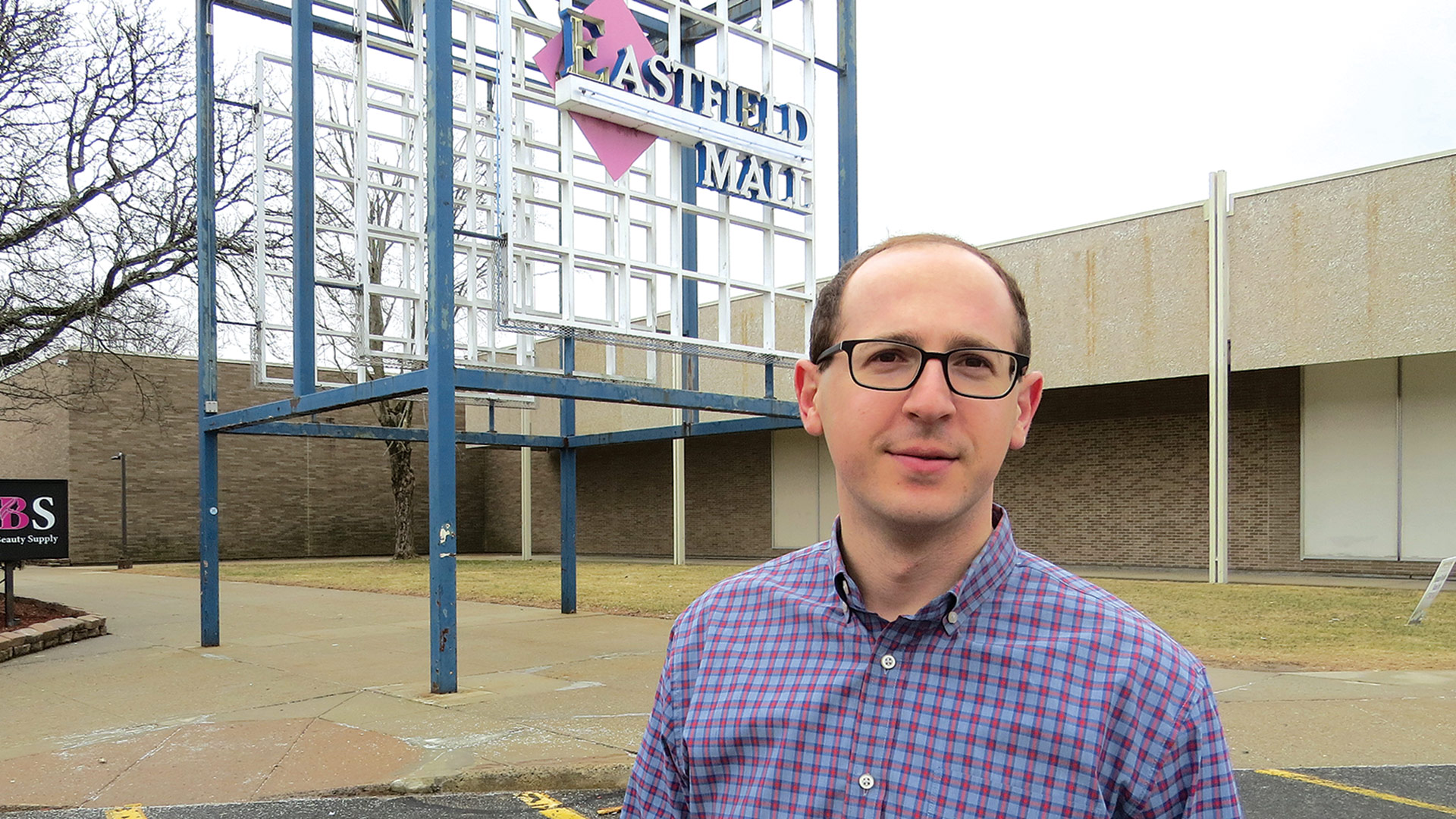
As ideal as all this was, Smith, who became the center’s director last July, knew it was only temporary. The mall, opened in 1968 and the first facility of its kind in Greater Springfield, has been targeted for redevelopment for close to a decade now and will officially close its doors in July. The question concerning demolition of the landmark (yes, it can be called that) was always when, not if, said Smith.

So, almost from the day he started at the center, he has been exploring where the facility can go next, and he’s looking for a spot that can check as many boxes as the current site as possible, knowing it is unlikely he will find something quite so ideal.

“Nothing has been finalized as to our exact plan. It could consist of primarily retail, but also other uses such as residential, storage, medical office, restaurants — we’re still looking at a few of those options.”

“I’m looking at a number of sites right now,” he said, noting that he recently toured a former Walgreens location on St. James Avenue in Springfield. “It’s going to be very hard to match what we have here, but we’ll try.”

Where the center and the 40-odd other businesses at the mall eventually land — and most are expected to land somewhere — and when are just a few of the many subplots to a broad and intriguing story that could change the landscape on Boston Road and elsewhere in a number of ways.

Others obviously include the reimagining of the mall itself. This has been an ongoing story, but one that will become real when demolition begins later this year, said Brian Kaplan, vice president of Development with Needham-based Onyx Partners, which is remaking the site into what he expects will be a mixed-use facility featuring retail, restaurants, and other, still-to-be determined businesses and residential uses.

“Nothing has been finalized as to our exact plan,” he told BusinessWest. “It could consist of primarily retail, but also other uses such as residential, storage, medical office, restaurants — we’re still looking at a few of those options.”

Dennis Smith Jr.

Dennis Smith Jr. has been looking for a new home for the Empowerment Center operated by the Massachusetts Military Support Foundation almost since the day he arrived, knowing Eastfield Mall’s days were numbered.

Another aspect to the story is the potential impact of the relocation of the tenants on specific retail areas and communities. Indeed, the retail sector has been struggling in general, and especially since COVID. Officials with the Western Massachusetts Economic Development Council (EDC), which is coordinating the relocation process for tenants, said the evictions might provide a boost for specific properties and business districts.

The region hasn’t seen many mass relocations like this one, with the most recent one coming when MGM Springfield purchased 95 State St. in Springfield for its own use, displacing a few dozen law firms that found space in several different office buildings within a mile or so of the Hampden County Courthouse.

This process will be different, and for some tenants, it may prove to be challenging, said Xiomara DeLobato, chief of staff of the EDC, adding that many have had very favorable lease rates at the mall and may experience a form of sticker shock as they explore other options.

The EDC is working with Springfield-based Homes Logic Real Estate to create customized solutions for each tenant, she noted. “Our intent is to make sure that we’re providing one-on-one support for each step in the process as they look for vacancies or potential locations to set them up for success.”

For this issue, BusinessWest looks at the many aspects of the Eastfield Mall redevelopment story and what they might mean for the region and its real-estate sector.


End of an Era

There is a quiet, eerie feeling at the mall these days.

The massive parking lot off Boston Road is all but empty. Inside, most of the smaller businesses are still open, but there is little foot traffic as the end nears. This sits in stark contrast to the mall’s better days, and there were many of them, when several anchors, including Sears and JCPenney, were thriving; a multiplex theater was operating; and the mall was still a destination.

“Our intent is to make sure that we’re providing one-on-one support for each step in the process as they look for vacancies or potential locations to set them up for success.”

It hasn’t been that for some time, as the anchors and then the theaters closed, mirroring what was happening at malls across the country as consumers increasingly did their buying online and major retailers, like Sears, all but vanished from the landscape.

Today, the mall is experiencing a slow, painful death that comes amid great expectation about what can and ultimately will happen at this site, and a wide range of emotions concerning existing tenants — who will be free of rent and utility charges for these last few months — and what will happen with them.

Let’s start with what’s next for the mall. Kaplan said Onyx often builds new, but it has worked on projects similar to the Eastfield Mall redevelopment initiative in other regions of Massachusetts, Southern New Hampshire, and several other states.

He said the Eastfield Mall project was presented to the company last fall, and after extensive due diligence, the decision was made to move forward and acquire the property, with work ratcheting up in recent months on everything from meetings with tenants to filings with the city.

He believes demolition will begin sometime later this year, after local approvals are secured, with a 12- to 18-month construction process to follow.

Redevelopment will take place in stages, he noted, adding that phase one will, in all likelihood, be retail, restaurants, and services, with a mix of national brands and local ventures, similar in some respects to what exists now, but in a far more modern, 21st-century facility.

Eastfield Mall, which will be redeveloped

The clock is winding down on Eastfield Mall, which will be redeveloped into a modern mixed-use facility.

What will follow will be a function of demand and feasibility, Kaplan noted, adding that the canvas will likely be filled in over several years. Residential development is likely to follow, with more businesses to provide services to those living nearby.

The project could include some of the current tenants at Eastfield, he said, adding that it is possible that some will choose to find a temporary home and ultimately return. The others, which include a broad mix of national retailers and local businesses, will settle elsewhere.

Onyx is collaborating with the EDC and working with other stakeholders, including local and state agencies, to come up with a plan for each tenant, he said, adding that each case is different, obviously, and will require a personalized solution.

Rick Sullivan, president and CEO of the EDC, said the agency’s mission is broad, and includes work to bring new businesses to the region and also retain existing businesses and jobs. Finding new homes for displaced Eastfield Mall tenants is a somewhat unique assignment, but it fits the EDC’s job description, if you will.

“It fits in with a focus that we have moving forward, which is on small businesses in terms of having them grow and flourish in the region,” he explained. “This is an opportunity where there are about 40 businesses that have been in operation for some time, and in some cases, they’re original tenants.”

The national tenants, and they include Old Navy, LensCrafters, Kay Jewelers, T-Mobile, and a host of others, have the resources and staffs to handle relocation efforts, if they choose to move those outlets, said Sullivan, adding that the EDC’s primary focus is the local tenants, ranging from the Mall Barber to Donovan’s Irish Pub to Mykonos, a Greek restaurant that has been at the mall since the very beginning.

Many will choose to try to stay in Springfield, he went on, adding that others are willing to look outside the city and the Boston Road area, which presents opportunities for retail areas that were impacted by the pandemic and the general shifting tide of retail — and there are many of them.

Some would prefer to stay in a mall-like setting, he went on, while others might opt to find their own space. Most are looking to lease space, but some are considering the purchase of real estate, which could bring its own benefits.

“Some are willing to look at downtown Springfield or downtown Holyoke,” Sullivan said. “They may not necessarily need to be in a mall setting or Boston Road — although some of them need to be there because that’s where their client base is.”


Up from the Ashes

The demise of the mall certainly has the attention of property owners and real-estate brokers in the region, especially those that specialize in retail spaces.

Evan Plotkin, president of NAI Plotkin, has several retail properties in the portfolio, as well as 1350 Main St., the office tower in downtown Springfield that has a significant amount of ground-floor retail space, much if it vacant since the departure of Santander Bank several years ago.

As he walked BusinessWest through that space, Plotkin said it would be an ideal landing spot for some of the Eastfield businesses.

“There are a lot of people who still work downtown or come here for events or to do business,” he said, noting that 1350 Main will soon be welcoming some new office tenants that could generate additional foot traffic. “Some of those mall businesses could do well here.”

Tower Square is another potential landing spot, and Demetrious Panteleakis, a principal with the Macmillan Group, the leasing agent for the office and retail complex, said he has talked with some of the mall tenants about making a move downtown and all that is involved with that decision.

“There’s a potential positive economic spin that goes beyond just the mall investment.”

“We’re very different as it pertains to such things as parking,” he explained, listing just one of the issues being discussed. “Although we have plenty of parking, it’s not typical retail parking; we’re tower parking.”

Overall, he said Tower Square ownership is focused on finding new tenants that can provide needed products and services to tenants of that tower and perhaps those surrounding it. The planned new Big Y market, a scaled-down version of its supermarkets that will go into space once occupied by CVS, is a good example, as are existing tenants, ranging from White Lion Brewing Co. to Dunkin’ Donuts to SkinCatering, a salon and spa. And some of the mall tenants might fit that description.

“We have a spa and hairdresser, a bar, our food court … businesses that support people who work here and don’t want to leave the building,” Panteleakis said, adding that additional hospitality-related businesses that don’t compete directly with existing businesses might be good fits.

As for Smith and his search for a new home for the Empowerment Center, he said there is some “intense work” going on as he tries to find a space that is affordable and checks at least most of the boxes that the old 99 Restaurant does.

“I have a number of great locations that I’d like to go to,” he told BusinessWest. “It comes down to what can be negotiated with the local property owners — that will determine where we go; we’ll just take it step by step.”

Summing up what’s happening on Boston Road, Sullivan said that, while the demise of the mall is regrettable in some ways, there are several bright spots to this ongoing story.

For starters, there is a national developer, Onyx, that has committed to redeveloping the site into something that speaks to the present and future, and not the past, when it comes to retail. Meanwhile, the relocation of the many existing tenants could provide a spark for some communities and their downtowns.

“There’s a potential positive economic spin that goes beyond just the mall investment, and that’s why the EDC is involved,” he told BusinessWest. “There’s potential to grow and amplify that investment in the region.”

Time will tell just how much that investment will be amplified, but the parties involved in this developing story say there are many intriguing chapters still to come.

Construction Special Coverage

Yard Markers

By Mark Morris

Sean Corrigan

Sean Corrigan says landscapers have to deal with the challenge of longer lead times for delivery of many supplies.

Mark Lacombe likes good head start.

And like others in the landscaping industry, he’s grateful for one of the mildest winters in many years — from one perspective, at least.

“A mild winter helps us because there’s no frost in the ground, which allows us to start working on sites now rather than waiting for the frost to thaw and the mud season that would typically follow the thaw,” said Lacombe, general manager of Commercial Grounds Maintenance for Mountain View Landscapes in Chicopee.

However, the downside of a mild winter affects snowplowing, the other business many landscapers run in winter months. Lacombe said a normal winter allows the company to start the year off with revenue, even though he can’t count on it every year.

“During a normal winter, we’ll do about a million dollars in snow removal,” he said. “This winter was only about 65% to 70% of our normal business. That’s where a mild winter really hurts.”

Still, area landscapers say they are staying busy as spring takes hold in New England, and 2023 holds promise as well as some continuing challenges.

Brian Campedelli, owner of Pioneer Landscapes in Easthampton, said his crews are already busy finishing several jobs that carried over from last year due to the unprecedented growth his company experienced in 2022. This year is off to a strong start, too.

“During a normal winter, we’ll do about a million dollars in snow removal. This winter was only about 65% to 70% of our normal business. That’s where a mild winter really hurts.”

“We had a good turnout at the home show,” Campedelli said of last month’s annual event put on by the Home Builders & Remodelers Assoc. of Western Mass. “Many people we spoke with are interested in new projects.”

Greg Omasta also begins the year with several carryover projects. The owner of Omasta Landscaping in Hadley believes he will have a busy year, but he’s also concerned that increases in basic necessities like food and fuel may cause some homeowners to delay their yard improvements.

“We’re still getting calls every day, so I guess I’m optimistic and pessimistic all at the same time,” Omasta said.

Greg Omasta (right, with son Chris Omasta)

Greg Omasta (right, with son Chris Omasta) says inflation in basic necessities may cause some families to delay yard improvements this year.

At the height of the pandemic, the residential side of landscaping exploded as homeowners who would have normally scheduled out-of-town vacations had to stay put. Many decided to convert their yards to outdoor entertainment areas. From elaborate projects like swimming pools and outdoor kitchens to simple landscape upgrades and firepits, every contractor had more business than they could handle.

However, while COVID-19 boosted the staycation phenomenon, it also created unusually high demand for all the products used in hardscaping and landscaping at a time when supply chains around the world faced sporadic delays due to the pandemic.

Landscapers now report that many of the supply-chain issues have subsided, but there are still delays for some products, and everything costs more.

“As we order for this season, plant prices are up, and the freight charges to ship them to us are really high,” Lacombe said, noting that this is a particular challenge when bidding for commercial landscaping projects that won’t start for 12 to 18 months. “We have to estimate the costs for a job that will happen a year from now, while our material prices are only guaranteed for 30 days.”

“Since COVID, municipalities are paying more attention to outdoor spaces and upgrading them, particularly with more climbing structures.”

Omasta pointed to one pleasant surprise, as grass-seed prices have seen a slight decrease. “Also, fertilizer prices have stabilized. I don’t expect them to come down, but at least they are more stable than they’ve been.”


Places to Play

Public parks and playgrounds are an area of commercial business both Omasta and Mountain View have seen as growth opportunities.

Sean Corrigan, vice president of Landscape Construction for Mountain View, said his company has a full schedule of reconstruction work on parks, playgrounds, and athletic fields, with most of the work happening in Connecticut and the Boston area.

“Since COVID, municipalities are paying more attention to outdoor spaces and upgrading them, particularly with more climbing structures,” he said. “They are interesting structures, and many have unique designs. The kids love them.”

Playground equipment and drainage piping are among the products that still have long lead times for delivery, Corrigan noted. “It’s getting better, but we still have to factor in extra time for these items.”

Finding enough workers is another challenge that still exists, but the situation has started to improve. Campedelli said this year has been easier to hire laborers as better-quality applicants are looking for work.

“Some of the more specialized jobs, like hardscape installers, are still hard to fill,” he said. “We recently hired a new general manager and a new office manager, who are both fantastic.”

Dave Graziano

Dave Graziano says the industry is being challenged to cultivate the next generation of workers.

While Omasta hires extra workers for spring and fall cleanups, he depends on a core group of employees who have worked with the company for years. “We provide them with benefits, holiday and vacation pay, as well as other perks to keep them with us.”

Lacombe said more people are looking for work this year than in the past, but finding workers with experience remains difficult.

“We’re hiring on attitude more than anything else,” he said. “I can teach someone what they need to know, but they need to be willing to come to work every day and put in the effort.”

Dave Graziano, project manager in the Landscape division of Graziano Gardens in East Longmeadow, sees a larger industry problem finding the next generation of landscape workers who want to put in the effort to be successful.

“Anything you can do outside to enhance the entertaining possibilities in your yard is generally what remains popular with people.”

“It’s not for everyone, but it can be rewarding work,” he said. “You see the fruits of your labor from the design of a project through completion, and you make the customer happy. It’s very satisfying.”

Graziano proudly noted that he and his brothers, Mark and Chris, work closely with all their customers. “One of the reasons people call us is because they know they will get a Graziano, and our customers like that.”

Along with landscaping services, Graziano Gardens also runs a retail location, he added. “In addition to people who hire us for landscaping projects, our clients are also do-it-yourselfers who are looking for good ideas and advice.”

As the world continues to move past COVID and more people leave home for vacation, landscapers say there are still plenty of homeowners who want to improve their yards.

“It seems that people are traveling by car more than plane, yet they are still spending money on their yards,” Omasta said.

“It’s not for everyone, but it can be rewarding work. You see the fruits of your labor from the design of a project through completion, and you make the customer happy. It’s very satisfying.”

Campedelli added that he’s hearing from plenty of homeowners who still want stone patios, new lawns, firepits, and other projects. “Anything you can do outside to enhance the entertaining possibilities in your yard is generally what remains popular with people.”


Long-term Value

In addition to the entertainment factor, Omasta noted one compelling reason to invest in a landscape project is the value it can add to a home when it goes up for sale.

According to Better Home and Gardens, attractive landscape projects can add 5% to 12% to a home’s resale value, while a professional hardscape project can add 15% to 20% to the resale value.

For many consumers, thoughts about landscape improvements don’t occur until the weather reaches 70 degrees and stays there. Campedelli’s advice for homeowners planning large backyard projects? Book soon if you want to get your job done this year.

“For special projects, we are scheduled into June and maybe a little later,” he said. “We can bring on new yard-maintenance clients without waiting, but big projects are booking further out.”

While traveling for vacations is on the rise, many people are still staying close to home and investing in their backyards. During the winter months, Campedelli attended seminars from hardscape block manufacturers who said they are in full production this year with lots of new product selections.

“They said the availability is much better this year, and we’ll have no problem getting what we need,” he said. “I hope they are right.”

Insurance Special Coverage

Perfect Storm

Inflation ebbs and flows in unpredictable ways. The insurance world is certainly finding that out — and so are customers seeing their auto-insurance bills.

“Auto insurance hasn’t kept up with inflation over the past three to four years, and it’s finally catching up to it,” said Michael Long, CEO of Axia Insurance Services in Springfield, partly explaining why the average premium nationwide rose more than $240 in the past year, according to Bankrate.

There are plenty of other parts to the equation, of course, including the ongoing supply shortages that are generating inflation on everything that goes into cars, from materials to computer chips to labor.

In fact, used-car values in 2022 were 37% higher than they were previously, Long said, meaning insurance carriers that had been paying, say, $20,000 for a totaled car were now paying $30,000. Eventually, that was going to be passed to customers.

Bill Grinnell, managing partner of Webber & Grinnell Insurance, agreed. “A few things are driving automobile prices; one is supply-chain issues and a lack of supply of replacement vehicles and parts, and the increased costs of all that.”

As a result, he went on, “your collision claim that might have cost a couple thousand dollars pre-pandemic is now $3,800. It’s significantly more, and the insurance has kind of trailed that inflation. First the cost of the replacement vehicles and parts go up, and that’s reflected in the financial statement of the insurance company, and they need to react and bring rates up. It’s not a leading edge, but a trailing edge, but there’s an inflationary factor there.”

And it’s not just auto insurance. On the home-insurance side, the cost of building materials has risen sharply over the past few years, and supply shortages and lag times still beset the construction industry. Meanwhile, contractors dealing with those issues and also a workforce crunch aren’t able to take on as many jobs as they’d like.

Bill Grinnell

Bill Grinnell

“The cost to build a home three years ago might have been $175 per square foot, and now it’s $275 per square foot. If you’re insuring a home that was worth 300,000, now it’s $400,000.”

“The combination of those two factors have driven up the cost of repairs, and that’s reflected in increased claim payments. So insurance companies need to adjust their rates to afford these claim payments.”

The other huge factor is the dramatic rise in home values over the past two years, another supply-and-demand metric. “You’re required to insure your house to an educated, calculated measurement of its true replacement value,” Grinnell said. “And the cost to build a home three years ago might have been $175 per square foot, and now it’s $275 per square foot. If you’re insuring a home that was worth 300,000, now it’s $400,000.”

Whatever the reason — and, obviously, there are many — insurance customers are experiencing more pain than usual in their monthly premiums. While there are ways to reduce the hit, the key economic factors influencing those increases will continue to linger, at least in the short term.


Up, Up, and Away

Plymouth Rock Assurance recently created an infographic that showed customers why home and auto rates are rising.

On the home side, it listed a worker shortage (the construction industry is down 200,000 trade workers); supply-chain shortages and delays with everything from asphalt shingles and piping to copper wire and drywall; lumber and other material costs up more than 50%; and increased operating expenses for energy, transportation, storage, and more.

On the auto side, higher costs are related to chip shortages; a technician shortage driving labor costs up about 6%; a shortage of parts in repair shops causing delays, higher demand, and higher repair prices; and a still-low vehicle inventory on many lots, inflating the sticker price of cars — and their replacement value.

Michael Long

Michael Long

“Not all insurance companies are created equally. Whether it’s the way they handle claims, the way they handle billing, the way they handle cancellations after a loss or two losses, all those things need to be discussed with an agent because not all contracts are the same.”

“It’s a challenging time for all of us,” Long said. “When we talk to clients, last year’s rates were up about 15% on the auto side, and we’re expecting another 8.4% this year.”

Some of the cost factors are unexpected — for example, glass replacement. “With glass claims, it used to be a couple hundred to replace a windshield. I’ve seen them as high as $2,400 because of all the information you get from the sensors in the windshield.”

Then there’s driver behavior. Long noted that accidents were up 7% in 2022, and insurance companies have never seen the volume of lawsuits they’re dealing with.

Grinnell agreed. “The results are worse for insurance companies. The severity of accidents is up, and that’s driving up the cost of the insurance, too.”

There are only so many ways for customers to reduce insurance costs, and some of them are common-sense.

“First, don’t have a claim. Drive carefully,” he said. “Claims really impact your premium quickly, so drive safely and don’t have motor-vehicle violations; don’t get a speeding ticket.”

Paying bills on time helps as well, he said. “There are so many hidden factors that none of us understand, even at the agency level, that go into ratemaking these days, but late payments and being consistently behind and getting cancellation notices is a sure way of having your premiums go up. So pay your bill on time and even enroll in automatic bill payment.”

While it’s important to have adequate coverage, Grinnell said people with older cars they might not be driving for much longer may opt out of collision coverage. He did just that with a 12-year-old car he owns but doesn’t drive that much, and it saves him about $450 per year.

Long said he talks to clients all the time about raising their deductibles. “If you currently have a $500 deductible, maybe look at a $1,000 deductible. If its $1,000, maybe $2,500. We’re regularly quoting $2,500 deductibles,” he noted. Meanwhile, “if a tree comes down, and it’s a $500 loss, absorb it, and pay it in full.”

Carriers also offer any number of discounts, from safe-driver and good-student benefits to discounts related to involvement in organizations ranging from the Pan Mass Challenge to the Massachusetts Golf Assoc. “There’s a Red Cross discount; if you contribute $25 to the Red Cross, you get 5% off your insurance. So you’re helping the community and saving money on insurance. Everyone wins with that deal.”


Weather or Not

The home-insurance market has been buffeted by a series of costly weather events, from hurricanes in Louisiana and Texas to tornadoes in the Midwest to fires in California. Insured losses from natural disasters routinely top $100 billion per year these days, and Long said $20 billion of that in 2022 was in auto claims alone.

As noted earlier, the cost of lumber and other building materials (up 33.9% in 2022) and labor (up 27%) are already causing insurance companies to play catch-up, and weather and climate events are just another challenge to deal with.

“It’s been a funny year for homeowners,” Grinnell said. “Property rates were certainly affected across the country due to some of these climate changes and weather patterns, the big windstorm losses.”

He noted one “big freeze” day last year that wound up affecting the region’s home-insurance carriers. “It was one of the biggest lost days on record. Pipes burst, and those are expensive claims. Generally, that’s not helping our region at all.”

Long advises people to be careful when switching carriers due to rising rates because the new carrier might not have made the same inflationary adjustments, and the customer will just have to face that all over again — while possibly losing benefits like accident forgiveness.

“Not all insurance companies are created equally. Whether it’s the way they handle claims, the way they handle billing, the way they handle cancellations after a loss or two losses, all those things need to be discussed with an agent because not all contracts are the same.”

On the other hand, Long said customers should absolutely stay in touch with their agent. “How often do you review insurance with them? Every year is not realistic, but every two to three years, you should be getting a call from your agent: ‘hey, let’s talk about what’s going on, and any new coverages out there.’”

After all, people still need to have enough coverage in case the worst does happen. And with home values what they are now, a total loss could be extra catastrophic if the coverage is not in line with that.

“The biggest investment people have is their dwelling. So, young people may have the time to make up for a disaster, to build equity in their house if they lose it,” Long said. For older homeowners, inadequate coverage for a loss could be a real problem.

The bottom line? Insurance costs money, and even more so this year, as customers should expect premiums to rise another 8% to 10% for both home and auto, Long said.

But when disaster strikes — even a small disaster, like a burst pipe or a sideswiped car — it beats not being covered.

Cannabis Special Coverage

Growth Pattern

Enlite co-owner Matt Yee

Enlite co-owner Matt Yee

From the start of cannabis legalization in Massachusetts, Northampton was one of the most receptive communities, streamlining the municipal regulatory process and initially setting no caps on licenses. Meanwhile, Springfield posed a more onerous process and set strict limits.

Enlite has experienced both, having opened its first dispensary in Northampton in late 2021 and is getting ready to open a second shop in Indian Orchard this year, Springfield’s fourth dispensary in all.

Matt Yee, one of Enlite’s owners, sees value for business owners in both models.

“Springfield was a longer process getting through special-use permit hearings. Northampton, in comparison, was very, very open and friendly to cannabis businesses, which created the amount of licenses we see here,” he explained. “So in some ways, [Springfield] has been difficult, but that difficulty also creates a bit of a barrier for competition to come in; there’s only a handful of active licenses in Springfield.”

The fact that Enlite is expanding at all is an accomplishment in an increasingly competitive marketplace, one that has exploded with new businesses to the point where the industry is starting to weather its first closures, including the Source in Northampton and Pleasantrees in Easthampton.

And Yee and his fellow owners — who include Matt Cutting, Peter Picknelly, and Nick Yee — aren’t done, with plans to apply for a third license, the maximum allowed by the state’s Cannabis Control Commission (CCC).

“Most customers are shopping with their phone prior to coming in with us, seeing what our menu looks like, seeing what our price points look like, and if they can’t find the specific product that they’re looking for, then they’re going to go somewhere else.”

“We’re still hunting for that third location,” Matt said. “That makes for a more profitable and healthy business model. It’s hard to exist with just one unit. And we chose Springfield because the location fills a niche of demand.”

Specifically, Indian Orchard borders two towns, Wilbraham and Ludlow, with moratoriums on dispensaries, he explained. “We’re very close to both of those. So we saw that location in Indian Orchard as a prime spot.”

Northampton shop’s location right off I-91

Enlite’s owners say the Northampton shop’s location right off I-91, rather than in the congested downtown, has been a plus.

When Enlite opened in Northampton a year and a half ago, Yee and his team saw potential, not only in the state’s legalization of cannabis, but Northampton’s embrace of it. It was the city’s eighth adult-use dispensary, a number which quickly bloomed to 11 and now sits at 10.

“So competition has definitely gone up. But competition is good, especially in this industry. Just like in my former industry, restaurants, competition benefits the customer at the end of the day.”

Considering the experience of the Yee family and Picknelly in that other challenging industry, and Cutting’s business background, the Enlite leadership team felt it had a good chance of success in cannabis, and so far they’ve been proven right. That’s not to say there haven’t been obstacles to overcome, but so far, Enlite is not only staying the course, but setting their sights … well, higher.


Rolling Along

Soon after Enlite opened, Yee told BusinessWest that the sheer number of cannabis businesses in Massachusetts — which now tops 265 retailers, in addition to cultivation, manufacturing, and wholesaling businesses — actually makes it easier for the best-equipped players to succeed, because of the cross-pollination. It’s why Enlite has adopted the model of many area dispensaries of partnering with boutique makers of cannabis products.

“We work with about 65 wholesalers right now,” he explained during BusinessWest’s recent visit. “We try to give priority to those who are producing local here in the Pioneer Valley, and also give priority to minority-owned, woman-owned, and veteran-owned companies, and participants in the social-equity program or the economic-empowerment program of the CCC. Anybody who checks those boxes and has a quality product, we definitely give priority to.”

A wide variety of products is key, he added. “We have about 450 to 500 items on the menu at any given time, which is a burden to control inventory-wise, but we have systems in place and experience with that well enough to handle all those SKUs and provide a wide selection to our customers.

“Most customers are shopping with their phone prior to coming in with us, seeing what our menu looks like, seeing what our price points look like, and if they can’t find the specific product that they’re looking for, then they’re going to go somewhere else,” Yee went on. “Our mentality is, if they can find the item here and maybe try some new items too, then they’ll become a repeat customer with us.”

“To kind of wade through the chaff and find the quality product at the right price point that the customer will enjoy can be a little overwhelming.”

He said many customers settle into buying favorite brands, but still appreciate variety.

“Five years ago, there weren’t very many brands, and quality wasn’t the highest, but now, with the level of competition we’re seeing in the wholesale market, there are brands that are definitely excelling. We have a couple of brands in-house that are excellent performers, and people come back for more.”

With competition forcing retail cannabis prices down to five-year lows in Massachusetts, Yee said his time in the restaurant world, where stiff competition also challenges profit margins, has taught him the value of customer service, as well as product knowledge and customer engagement — all factors that make the experience easier and more enjoyable, especially newcomers to the cannabis world. “That’s something we really pride ourselves on and strive for.”

The other differentiating factor is location — not just the strategic second location in Indian Orchard, where competition in the immediate environs is low, but in Northampton, where the flagship store sits right off the Coolidge Bridge rotary.

“Everybody’s kind of congested in the downtown area, which makes it far more difficult because somebody could just walk next door and find a cheaper price and buy there,” he said. “Here, with our location, situated right by the bridge and off the highway, we provide a convenience for people. It’s easy in, easy out, with plenty of parking that’s tough to find downtown. Our consumers want convenience, so that’s the other aspect we try to excel at.”


Highs and Lows

That said, Yee was quick to stress that captivating an audience and generating repeat customers is a constant focus, not something Enlite takes for granted.

“I think the other challenging aspect is the amount of wholesale product that’s becoming available on the market,” he explained. “Something I buy this month may be far less expensive two months from now, which would mean another retailer might pick it up for that price point and sell it for that price. So we’re seeing constant fluctuations in the price points of the wholesale product.

“That, along with the sheer amount of wholesalers that are knocking on our door and calling our phone, is pretty overwhelming,” he went on. “To kind of wade through the chaff and find the quality product at the right price point that the customer will enjoy can be a little overwhelming.”

Some cannabis-industry observers have commented on the experience of other states that followed a similar pattern to what’s happening in Massachusetts — exploding competition sends prices plummeting, and many operators focus on competing on price above all else, including quality and customer experience.

“We’ve always been conscious about that. We’re not trying to race to the bottom,” Yee said. “There are some operators here in Northampton who are dropping their prices, and all the other operators are forced to match those prices, which is difficult. But maintaining a healthy economy here in the Western Mass. market is something that we think about a lot. We’re not trying to drive the prices down too low and hurt everybody’s margin. There are definitely some players in town who are playing that game.”

Enlite will be the second minority-owned dispensary in Springfield, after Six Brick’s, which opened in September 2022. Enlite’s Northampton site was also the state’s first Minority Business Enterprise (MBE) applicant to open its doors, and Yee said the process of getting into the industry is still laden with minefields, especially for smaller entities.

“It’s definitely difficult. The requirements to get through the licensing procedure and then the buildout, inspections, and final licenses … it’s strenuous, and a lot of that knowledge is unknown to those smaller operators,” he explained. “So a lot of money can be burned just going through that painful process and experiencing that learning curve. And for those smaller operators who don’t have the capital of the big, multi-state operators or well-capitalized groups, that can be very difficult and sometimes detrimental to the business.”

As Enlite grows and expands, Yee said he’s still learning new things all the time, whether it’s a new product — from fast-acting edibles to new beverage lines — or a new market opportunity. “There’s something new coming out every month, it seems, and the customers are being introduced to those products with us.”


Business in Bloom

Yee has said Enlite’s biggest competitor is the black market, but analysts have pointed out that the leveling out of prices in the legal cannabis market may mitigate the illicit market’s advantage somewhat — while bringing on a whole new set of headaches in an industry where profits are already very tight due to onerous taxes.

He hopes, as consumers find more options in their price range, that stores that focus on quality, education, and customer experience will maintain an edge. And he said dealing with those customers, and hearing their stories, is his favorite part of the job.

“On a daily basis, we have first-time consumers come in, curious about cannabis and wanting to learn more. I have so many stories of first-time consumers coming back in and saying, ‘wow, that really helped me. That got me to go to bed more regularly. I got more sleep. I’m less stressed out. I have more fun with my kids — thousands of stories like that.

“Every day, somebody comes in, and we have a great conversation, and we can introduce them to a new product that they didn’t know existed, and we’ll see them back here a couple of days later. And there are still a lot of people who are just wading into this industry and finding these products.”

And finding them at a shop that continues to navigate an ever-changing, always-challenging landscape for business owners, with not just survival in mind, but continued growth.

Commercial Real Estate Special Coverage

Turning Back the Clock

Clocktower Building

The Clocktower Building, above, was home to Masonic Temple more than a century ago (right).

At other times in Springfield’s history, the properties at 113 State St. and 1155 Main St. were prominent players in the vibrancy, culture, and overall tenor of the City of Homes.

The former — long known, for obvious reasons, as the Clocktower Building — was home to the Masonic Temple when it opened in 1893, before a new, much larger facility was built further east on State Street. The latter, the Colonial Block, which opened in 1903, was one of the city’s first real mixed-use facilities, noted Tim Sheehan, Springfield’s chief Development officer, featuring a blend of office and retail space on the lower floors and residential units on the upper floors.

Until fairly recently, meaning before the pandemic, the two properties had still been somewhat vibrant, featuring a wide array of tenants, including nonprofits, small businesses, a bank (at 113 State St.), and a number of various-sized law firms taking advantage of the buildings’ proximity to the Hampden County Courthouse just down State Street. These days, though, they are almost entirely vacant and stand in stark contrast to the progress seen around them, most notably across Main Street at MGM Springfield and across State Street at the MassMutual Center.

City officials have been looking to change that picture, obviously, and are moving forward with a plan to return these buildings, and also 11-21 Stockbridge St., a smaller, better-occupied office property in that same area, to their former status and make them part of the city’s resurgence. After acquiring them as a package in 2021 for $2.75 million, the Springfield Redevelopment Authority (SRA) has invited the development community to step up and submit proposals for the properties, separately or perhaps collectively.

Responses to this request for qualifications (RFQ) are due later this month — the deadline was originally late March — and Sheehan and SRA Executive Director Amanda Pham are expecting some imaginative proposals because that’s what will be needed to turn back the clock and make them key players again.

“This will require a responsive, creative developer, someone who has a vision for preservation of these buildings,” Pham said. “They have great potential.”

Sheehan and Pham are expecting proposals that will likely blend office and/or retail with a residential component, noting that what emerges for one, two, or all three properties will likely require a public-private partnership, similar to what was needed to finally move the needle and create a new use — a mix of residential and retail — for the former Court Square Hotel, just a block or so from the three properties in the RFQ.

Finding a preferred developer is a two-step process, said Pham, adding that, after responses to the request for qualifications are received and reviewed, three finalists will move on to a request for proposals.

If all goes well, a preferred developer is expected to be named by June, they said, adding that it may not be long after that when people start talking about these landmarks using mostly the present and future tenses, and not the past.


Building Momentum

As she gave BusinessWest a tour of 1155 Main St., Pham referenced some reminders of, well … what it once was, starting with the large directory on a wall in the lobby listing tenants and their suite numbers.

Tim Sheehan and Amanda Pham stand outside the historic structure.

Tim Sheehan and Amanda Pham stand outside the historic structure.

The board still includes the names of dozens of tenants that are no longer there — from the law firm Pellegrini Seeley, Ryan and Blakesley, which once took much of the space on the third floor before moving to the Basketball Hall of Fame complex, to Revitalize Community Development Corp., which occupied a large suite on the second floor. In fact, the 82,000-square-foot property is currently only about 12% occupied.

Later, she pointed to a large bookcase full of law books left behind by one of the departing law firms.

“We have a lot of law books,” she said, adding that, apparently, many of the departing firms located in various-sized offices on the maze-like floors had no use for the books in this age of the internet and simply left them behind.

Thus, these law volumes become part of the dialogue concerning what this property used to be, said Pham, who took the helm at the SRA in 2021, adding that, increasingly, the focus is on what they can be moving forward.

The SRA has taken the matter from the discussion phase to what could be called the discovery phase with the request for qualifications. It includes a link to a six-minute video that features comments from Pham, Sheehan, Mayor Domenic Sarno, MGM President and CEO Chris Kelley, Peter Picknelly, chairman of Peter Pan Bus Lines and a key player in the Court Square project, and others, all inviting developers to take advantage of this “Main Street and Convention District development opportunity.”

“This will require a responsive, creative developer, someone who has a vision for preservation of these buildings. They have great potential.”

Together, they talk about the progress made downtown and the progress still to come, with projects like the $74 million parking garage and event space that will replace the facility torn down last fall. They also discuss how much of this progress was the result of public-private partnerships.

“This development behind me never would have happened if not for the cooperation of City Hall and the state of Massachusetts,” said Picknelly as he stood in front of the Court Square property.

The Colonial Block

The Colonial Block was one of the first mixed-use buildings in Springfield, with retail and residential space. It may see a similar blend in the future.

A number of developers, both with local ties and from outside the region, have expressed interest in the properties, said both Sheehan and Pham, noting that the city acquired the properties to move beyond the ongoing speculative nature of previous ownership and take redevelopment to a higher plane.

“We wanted the buildings situated so their redevelopment would ultimately fit the city’s overall planning as it relates to the Main Street Convention Center District Plan,” said Sheehan, adding that this plan, in general terms, calls for building on existing momentum and creating a true destination in the downtown, a place where people can live, work, and (especially with MGM and the MassMutual Center right next door) play.

A developers’ tour conducted several weeks ago attracted several parties, many in person, but some virtually, said Pham, adding that Springfield has managed, through its recent spate of progress, to put itself on the map with regard to regional and national developers looking to expand their portfolios.

There were site tours of the properties and the surrounding area as well, she went on, adding that firms brought full teams with them, including architects, engineers, and planners, to gauge future uses for the landmarks.

Given the current glut of office space, Sheehan said, especially the class B and class C variety that these properties have featured, future redevelopment will likely not focus on that use entirely, although it could be part of the equation.

“There is an overabundance of class B and C space in the office sector, so we’re really encouraging people to look at adaptive reuse to … something else,” he noted. “Developers may want to reduce the amount of office, but not completely eliminate it, either.”

A much larger part of the equation will likely be market-rate housing and activation of the ground floors with retail and hospitality-related businesses that will give downtown visitors more things to do and more opportunities to stay, he went on.

Colonial Block

Above, the directory inside the Colonial Block is quite dated, as most of those tenants have moved out. At right, one of the unique spaces in the building.

“Our planning ultimately calls for extensive ground-floor activation,” he explained. “You have two very strong anchors, in MGM and the MassMutual Center, adjacent to these properties, and we really think there is the ability to activate the ground floors so that it encourages people who want to come to the MassMutual Center or MGM to want to linger and stay in the area.”

As for housing, Sheehan said a recent study identified the need for 1,500 units of additional housing of this type in and around downtown.

And while conversion of such properties to housing is often difficult and expensive, developers need only look a few hundred yards to the south for inspiration, to the massive Stockbridge Court apartment complex, created more than 40 years ago and perhaps the city’s best market-rate-housing success story.

“Stockbridge Court is certainly an example of what can be done,” he said, adding quickly that any residential projects in these properties will likely require a public-private partnership to not only renovate the buildings in question but improve the overall area and its connection to Main Street.

“We’ll need to enhance the infrastructure to make it a much more walkable environment — and a pleasant walkable environment — if we’re going to attract that scale of residential development in this area.”


Right Time and Place

Overall, there are some building blocks coming together that could make development of these properties a more attractive and more viable opportunity, said both Sheehan and Pham, noting that leasing activity will start soon at Court Square, and construction is set to commence on the new parking garage. Meanwhile, a new entrance is planned at the southwest corner of the MassMutual Center.

Meanwhile, the two leaders are looking at adaptive reuse of these properties as just part of a larger effort in the city’s downtown.

“We’re looking at these as the first step in the redevelopment of the area,” said Sheehan, noting that that there are several other vacant or underutilized spaces, including the neighboring 1260 Main St., several surface parking lots, and other properties.

As he referenced a photo of the Clocktower Building, from the days before its stone exterior was mostly stripped away — it remains in some places as a reminder of what was — Sheehan waxed nostalgic on its place in city history.

“For a long time, this building has certainly played a major role in downtown Springfield in terms of being a major corner and a huge presence,” he told BusinessWest, adding that the hope is that this property, as well as the Colonial Block — and other properties in that area — can attain that status again.

Time will tell, of course, when and how soon that happens, but this is certainly a developing story — in every sense of that phrase.

Opinion

Some Big Shoes to Fill


Javier Reyes, the incoming chancellor of UMass Amherst, was introduced to the local media — and took a few questions — at a session on the campus earlier this month.

On subjects ranging from the Blarney Blowout to his management style; from why he pursued this particular job to his thoughts on the relative worth of college rankings today, he said … well, mostly what you would expect.

That was especially true when he was asked by BusinessWest what it would be like to follow in the very large footsteps of Kumble Subbaswamy, who has served as chancellor for the past 11 years and is credited with taking the university to a higher plane when it comes to everything from prestige (and those rankings; the school is now 26th among American public universities, according to U.S. News & World Report) to research dollars.

So much so that UMass President Marty Meehan opined at the same media session that the UMass chancellor’s job is now far more attractive than it was years ago, one able to draw the top candidates.

That includes Reyes, who has most recently served as interim chancellor at the University of Illinois Chicago. He told those assembled that, when it comes to following Subbaswamy, he understands there is perhaps more pressure than if this was a turnaround assignment, as many schools are providing these days, but he welcomes that pressure.

“You’re not coming in to repair something, but to build on the shoulders of giants — and that is a very attractive opportunity,” he said of his decision to come to UMass Amherst and work to keep the school on its current pace and angle of ascent. “You’re not trying to catch up; you’re really trying to move and set the direction and be a forward leader … It comes with more pressure, but it’s more exciting.”

‘Exciting’ would be just one of the words we could use to describe this assignment. ‘Daunting’ also comes to mind. That’s because, while it isn’t easy to put a major university on a higher trajectory, it is certainly more difficult to maintain such a course.

To do that requires real leadership and both a desire to continually set the bar higher and the will to clear that higher bar.

We hope that Reyes, the university’s first Hispanic chancellor, can meet this stern challenge because, as we’ve said on many, many occasions, UMass Amherst is an extremely important economic engine for this region and a source of innovation and entrepreneurial energy. Meanwhile, its graduates — at least those that we can keep in this market — are a key ingredient in the success formula of businesses all across the 413, and across the state as well.

Using every measuring stick but the football team (a sore subject to be sure), UMass took critical steps forward during Subbaswamy’s tenure in terms of new building and expansion of the campus; enrollment; research dollars; diversity, equity, and inclusion; rankings for the university and specific schools, such as the Isenberg School of Business; and the institution’s ability to attract top talent, meaning students, faculty, and staff.

Swamy, as most everyone called him, has taken the university to a place it hadn’t been before. It will be Reyes’ assignment to not merely maintain the status quo, but take it further still.

He sounds like he’s up for a challenge, and that’s good, because this will be one.

Opinion

Opinion

By Pam Thornton


The way that we work has changed over the past several years, and as a result of that shift, our mindset around rewards and recognition for employees also needs to change. We are facing a major rebalancing resulting from the severe economic and social shifts that have emerged.

Gartner reports that one of the top five priorities for 2023 is prioritizing the ‘employee experience, with almost 50% of HR leaders making this a major focus. A well-thought-out ‘total rewards’ strategy can have a big impact on attracting and retaining talent and overall employee experience.

Being a human-resources professional is a harder job than it ever has been before. Developing and using skills to influence how organizations shape their employee experience and human-capital strategies is a critical leadership role and one that cannot be done in the HR department alone. The answer is a holistic approach to total rewards that truly engages employees and includes every member of the organization.

There are five critical components in a total rewards strategy to consider when creating better employee engagement: compensation, benefits, recognition, well-being, and development.

It’s important to evaluate the compensation system you have in place. Do you have a system that is linked to organizational goals and individual competencies? Is your incentive and rewards system doing what it is designed to do? Do the benefits you offer resonate with your employees? Are they using them? An evaluation of the effectiveness of the overall strategy is critical, and the only way to really get the answers to these questions is to ask your employees and include them in the assessment and development of a truly effective total rewards program.

Well-being is all-encompassing and means something different to every individual, which makes this one of the hardest things for us to wrap our arms around. Flexible work practices, mental-health resources, financial-wellness solutions, and expanded caregiver-support options are just some of the building blocks that should be explored when creating your strategy. Offer solutions that give employees what they need and balance the business priorities of the organization. Thinking creatively to achieve the right mix is the ultimate goal.

The final and probably the most important component of a total rewards strategy is development. Developing your own skills and the skills of your workforce should be an ongoing journey that everyone participates in.

If we don’t put our life mask on first, we may not be able to help others. “Average leaders raise the bar on themselves; good leaders raise the bar for others; great leaders inspire others to raise their own bar,” author and leadership expert Orrin Woodward said. Leaders, please be students and use what you’ve learned to inspire, model, and teach.

We have an opportunity to re-engineer the traditional employment experience. Not all organizations are created equal, and we don’t have an endless fountain of resources, but we all collectively need to put the effort in to assess and adjust our total rewards strategy to leverage what we’ve got.


Pam Thornton is director of Strategic HR Services at the Employers Assoc. of the Northeast. This article first appeared on the EANE blog; eane.org