Home 2024 (Page 40)
Daily News

SPRINGFIELD — Springfield Chamber Players (formerly MOSSO) announced the inauguration of a new program to bring education and outreach programs into the community.

According to Beth Welty, chair of Springfield Chamber Players, Quartetto Mosso (using the Italian term mosso, for moving rapidly forward) performed an educational concert at Berkshire School in Sheffield in early January. This performance will be repeated at the Community Music School of Springfield, 127 State St., Springfield on Sunday, Feb. 11 at 2 p.m. The concert, like the January performance, is free to the public.

In Springfield, Quartetto Mosso will perform William Grant Still’s “Lyric Quartette,” Florence Price’s “String Quartet No. 1 in G Major,” and Antonin Dvorak’s “String Quartet No. 12, Opus 96, American.”

“This program introduces audiences to a variety of classical music genres and styles, and we hope to bring this program to schools, senior centers, assisted-living facilities, and other venues,” Welty said.

Springfield Symphony Orchestra musicians performing with the Springfield Chamber Players’ Quartetto Mosso include violinists Welty and Ronald Gorevic, violist Carol Hutter, and cellist Yoonhee Ko.

To book a Springfield Chamber Players education or outreach program, contact Welty at (339) 368-2996 or [email protected].

Daily News

AGAWAM — Braman Termite & Pest Elimination, a family-owned and operated business serving residential and commercial customers across Southern New England since 1890, announced the promotion of John McCarthy from account manager to sales director.

“John has been with us for over a year now and quickly proved himself ready for additional responsibilities,” said Jerry Lazarus, third-generation owner of Braman Termite & Pest Elimination. “With his extensive experience and a commitment to customer satisfaction, he’s the perfect choice to lead our sales team.”

In his new role, McCarthy is directly responsible for leading and developing Braman’s sales team while cultivating customer relationships for long-term customer satisfaction and growth. This includes developing long-range sales goals and objectives, as well as sales plans and tactics to meet and exceed those goals.

McCarthy joined the Braman team in 2022 with 22 years of experience in a variety of leadership roles within the pest-control industry, including sales and service manager, branch manager, and district manager. He is a member of the National Pest Management Assoc.

Daily News

WARE — Country Bank, a full-service financial institution serving Central and Western Mass., announced a $10,000 donation to the Quaboag Valley Community Development Corp. (QVCDC) to support various programs to help local communities in the region.

“The Quaboag Valley Community Development Corporation is grateful for this generous donation from Country Bank,” said Melissa Fales, QVCDC executive director. “We appreciate Country Bank’s support for our initiatives and its investment in the economic growth and stability of the Quaboag Region.”

To learn more about the various support programs the QVCDC offers, visit www.qvcdc.org.

Daily News

CHICOPEE — MassDevelopment has issued a $6,543,000 tax-exempt bond on behalf of Mental Health Assoc. Inc. (MHA), which will use the proceeds to buy and renovate a 78,378-square-foot building at 350 Memorial Dr. in Chicopee, where it will relocate its headquarters from Springfield and house its mental-health programs and residential and support services.

The building originally housed the Charles River West Psychiatric Hospital and most recently served as the MassMutual Learning and Conference Center. The move will allow MHA to keep pace with growth and locate its staff in one office.

Renovations to the building will include interior wall reconfiguration, office construction, HVAC and sprinkler-system updates, added reception-area security, and painting, flooring, and information systems improvements. Construction began in November and is expected to be complete by February 2024. MHA expects to create 45 full-time jobs and 20 part-time jobs over the next three years. Florence Bank purchased the tax-exempt bond, which helped MHA achieve a lower cost of capital.

“Mental Health Association Inc. will soon be able to seamlessly transition its headquarters and programs into a renovated space in the gateway city of Chicopee, expand services for the community, and create dozens of new jobs,” MassDevelopment President and CEO Dan Rivera said. “Access to mental healthcare is an essential part of helping people thrive personally and professionally, and this leading nonprofit has a long history of delivering services for individuals and families across Western Massachusetts.”

Florence Bank President and CEO Matt Garrity added that “we were pleased to partner with MassDevelopment on the purchase of a $6.5 million tax-exempt bond to assist Mental Health Association Inc. with the purchase and renovation of a 78,000-square-foot building in Chicopee that will serve as their new headquarters. Mental Health Association is a longtime and highly valued customer who plays a pivotal role in providing behavioral-health services in the communities we serve.”

Founded in 1960, MHA provides access to therapies for emotional health and wellness; services for substance use recovery, developmental disabilities, and acquired brain injury; services for housing and residential programming; and more. MHA serves more than 3,000 people, from ages 5 to 90, each year.

“We are thrilled to announce our move to this new facility,” MHA President and CEO Cheryl Fasano said. “This move represents a significant investment in our mission and demonstrates our commitment to providing quality services to the people in our care.”

Daily News

HOLYOKE, WORCESTER — Following an extensive and thorough search process, Girl Scouts of Central and Western Massachusetts announced the appointment of Theresa Lynn as its new CEO.

Lynn brings a wealth of experience in nonprofit leadership, having most recently served as senior vice president of the United Way of Central Massachusetts, where she focused on fundraising, communications, and some large grant-making opportunities. Her dedication to community engagement is evident through her roles as executive director for Back on My Feet, addressing homelessness and job insecurity in Boston, and executive director for ReadBoston for 14 years. She currently serves as a board member for the Worcester Education Collaborative and BioBuilder Education Foundation.

“I’ve long been a fan of Girl Scouts’ legacy experiences — from outdoor adventure to the iconic cookie program — and an admirer of the cutting-edge STEM initiatives that create one-of-a-kind experiences,” Lynn said. “I’m thrilled for the opportunity to join Girl Scouts of Central and Western Massachusetts and work alongside the staff, adult volunteers, and community supporters who are deeply committed to serving today’s members in exciting, future-focused ways, because the need for female leadership has never been greater.”

Lynn holds a master of public administration degree from the Harvard Kennedy School, an MBA from Boston University, and a bachelor’s degree in economics from the College of Holy Cross. Her contributions in the community have been recognized by the Boston Celtics, who presented her with a Heroes Among Us award, and by the Boston Business Journal, which acknowledged her as a Top 40 Under 40 leader in Boston.

“We are so proud to welcome Theresa to the Girl Scouts family,” said Nicole Messier, GSCWM board chair. “Her proven leadership, innovative vision, and unwavering commitment to empowering young people align seamlessly with the values that define our organization. We are confident that, under her guidance, GSCWM will continue to thrive and inspire the next generation of leaders.

“We’re thankful to the search committee for their diligence in selecting a leader who shares our commitment to fostering a supportive and empowering environment for the members we serve,” Messier continued. “We look forward to the positive impact Theresa will undoubtedly make as she leads us in fulfilling our mission of developing girls of courage, confidence, and character who make the world a better place.”

Daily News

GREENFIELD — Greenfield Cooperative Bank (GCB) announced a $10,000 sponsorship of Habitat for Humanity’s Victoria Bismark Farm project. This initiative will see the construction of three single-family homes on Burts Pit Road in Northampton, which will be built by hundreds of community volunteers alongside three future homebuyers with low income.

“At Greenfield Cooperative Bank, we believe in the power of homeownership to build strong communities,” said Tony Worden, president and CEO of GCB. “The Victoria Bismark Farm project embodies this principle perfectly, offering families a chance to achieve stability, prosperity, and a sense of belonging within the Northampton community.”

Jane Wolfe, executive vice president of Residential Lending, added that “we are honored to contribute to this impactful project and look forward to witnessing the positive transformation it will bring to these families and the neighborhood.”

The Victoria Bismark Farm project aligns with GCB’s core values of community engagement and financial empowerment. By sponsoring this project, GCB hopes to make a lasting difference in the lives of local families while demonstrating its dedication to building a brighter future for Western Mass.

“The housing crisis is real and happening now. Habitat’s response can only succeed with the help of strong community partners,” said Megan McDonough, executive director of Pioneer Valley Habitat for Humanity. “We are grateful to Greenfield and Northampton Cooperative Bank for joining us in creating three opportunities for affordable homeownership for local families with low incomes who are ready to make their dreams of owning a home a reality.”

Daily News

BOSTON — The Executive Office of Economic Development (EOED) launched the Immediate Needs Grant Program, which will provide financial assistance from the state’s Cannabis Social Equity Trust Fund. The first of its kind in Massachusetts, this new grant program will make financial assistance available for cannabis entrepreneurs from communities that have been disproportionately harmed by marijuana prohibition and enforcement. The program aims to increase equity and opportunity within state’s regulated marijuana industry.

This inaugural funding round will make $2.3 million available to support qualified cannabis business license holders with urgent financial needs. It will be the first of several programs, which will launch as additional resources become available in the trust fund.

“The Cannabis Social Equity Trust Fund was created to ensure that communities that have been disproportionately harmed by marijuana regulations have an equal opportunity to engage in this new industry,” Gov. Maura Healey said. “The programs enabled by this fund highlight our commitment to supporting social-equity businesses and will help strengthen the industry and our economy.”

The Legislature enacted the enabling law for this program in August 2022. As part of the FY 2023 closeout supplemental budget enacted in November 2023, the Healey-Driscoll administration partnered with the Legislature to resolve technical issues affecting the funding mechanism.

EOED is charged with administering the fund in consultation with the Cannabis Social Equity Advisory Board. The board met five times in 2023 to help inform trust-fund regulations and program development.

“For the past year, I’ve had the honor of working alongside my fellow board members to educate, advise, and discuss the important, strategic, and beneficial topics and areas that we believed should be captured in regulating the fund and application process,” said Keisha Brice, chair of the Cannabis Social Equity Advisory Board.

“The Social Equity Trust Fund will play a crucial role in upholding the Commonwealth of Massachusetts’ promise to support people and communities that have been disproportionately impacted by the war on drugs,” she went on. “In partnership with the EOED, I believe what we have drafted is a reflection of a fair process that is equitable, commits to our fiduciary responsibilities, and still allows room for growth as the industry evolves and we learn from this initial process. I look forward to our ongoing commitment to making an impact on what social equity in cannabis looks like in the Commonwealth of Massachusetts, and I encourage everyone to continue advocating for change as there’s more work to be done.”

Added state Sen. Adam Gomez, “as Senate Chair of the Joint Committee on Cannabis Policy, I recognize the importance of reframing the narrative around cannabis policy in the Commonwealth. Despite being a fairly new industry, the upsides of the cannabis market are evidenced by the state’s tax revenue and the thousands of families who have a newfound hope after choosing cannabidiol as an alternative. Now our focus must be on acknowledging the lack of representation in the marijuana industry by the very people who were disproportionately harmed by marijuana prohibition and enforcement. The launch of the inaugural round of the Cannabis Social Equity Trust Fund is encouraging news as the fund will seek to right many wrongs.”

Daily News

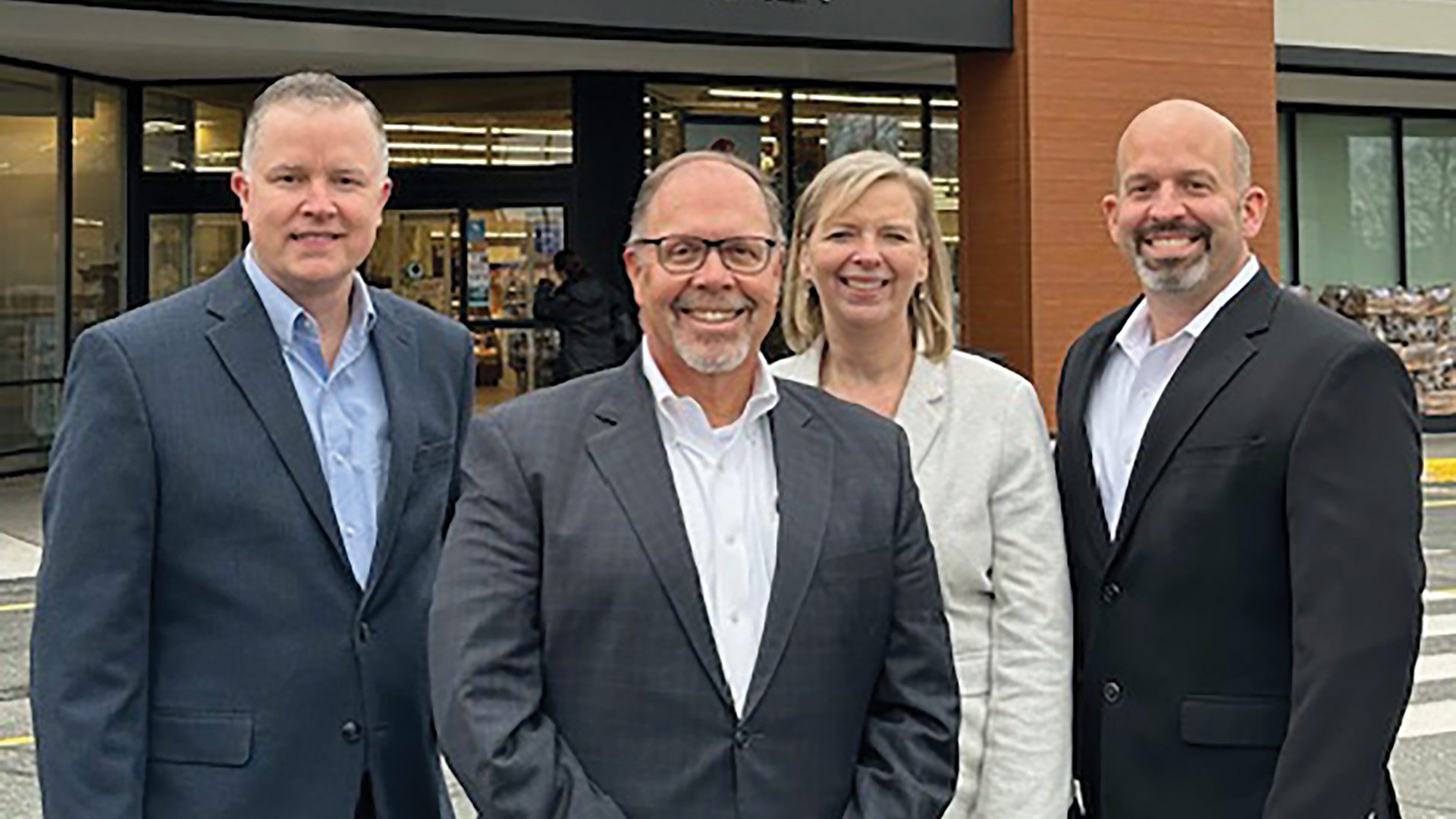
SPRINGFIELD — Big Y Foods Inc. has reached an agreement to acquire the leasehold interests for three supermarket locations within the chain’s marketing area. These locations are 290 Turnpike Road in Westborough, 1076 Post Road East in Westport, Conn., and 14 Candlewood Lake Road in Brookfield, Conn.

“All of us at Big Y are excited about the opportunity to enter into these communities with our unique fresh and local foods along with our exceptional and knowledgeable employees,” Big Y president and CEO Michael D’Amour said. “These locations fit nicely within our current store footprint.”

Each location has been carefully scrutinized by Big Y teams in order to assess how soon they can take over these spaces to convert and remodel them into Big Y supermarkets, which could start as early as within four to six months, depending upon equipment lead times. These new locations tie in with Big Y’s current growth strategy, which includes a new supermarket currently under construction in Middletown, Conn. and one that is planned for Uxbridge. In all, these locations will bring Big Y’s total number of supermarkets to 77 stores.

Big Y also announced it is acquiring a gas and convenience store at 342 Washington Ave. in North Haven, Conn., across the street from the Big Y supermarket there. This location will mark the chain’s 18th Big Y Express.

Daily News

SPRINGFIELD — The Markens Group Inc. (TMG) has been certfied by Great Place to Work for the ninth consecutive year. The award is based entirely on what current employees say about their experience working at TMG. This year, 95% of employees said it’s a great place to work — 50% higher than the average U.S. company.

Great Place to Work is a global authority on workplace culture, employee experience, and leadership behaviors proven to deliver market-leading revenue, employee retention, and increased innovation.

“Great Place to Work Certification is a highly coveted achievement that requires consistent and intentional dedication to the overall employee experience,” said Sarah Lewis-Kulin, vice president of Global Recognition at Great Place to Work. “By successfully earning this recognition, it is evident that the Markens Group stands out as one of the top companies to work for, providing a great workplace environment for its employees.”

Emily Leonczyk, executive vice president of the Markens Group, added that “it’s more than just a title to us. We owe our continued growth to our dedicated team at TMG, and we honor that our culture reflects the heart and talents of each team member. This designation represents a commitment to growth, leaning into challenges together, and creating a community that empowers our team both personally and professionally. I am so proud of our team and the effort required to earn this recognition. We don’t always get it right, but we’re all committed to learning and growing together. We believe that focusing on delivering a positive experience for our teammates also stimulates our productivity and overall collaboration, allowing us to provide the best service to our association clients.”

According to Great Place to Work research, job seekers are four and a half times more likely to find a great boss at a certified great workplace. Additionally, employees at certified workplaces are 93% more likely to look forward to coming to work and are twice as likely to be paid fairly, earn a fair share of the company’s profits, and have a fair chance at promotion.

According to the Trust Index survey taken by the staff, many noted the company ‘fundamentals’ — a set of valued behaviors within TMG — are one of the biggest reasons employees enjoy working at the Markens Group. “Having been in business for over 35 years, we continuously evaluate our in-place work-culture practices to gauge their effects on our team accurately, and as a result, I’m proud to say that our fundamentals have remained a stable piece of TMG culture,” said Ben Markens, president and CEO of the Markens Group. “The mission of the Great Place to Work certification is to help every place become a great place to work for all, and the Markens Group commends this goal to the fullest.”

Daily News

LONGMEADOW — The master of science degree in cybersecurity at Bay Path University has received a National Centers of Academic Excellence in Cyber Defense Program of Study Validation from the National Security Agency (NSA). This designation extends through 2028.

The Program of Study Validation confirms that the MS in cybersecurity program has met the rigorous academic standards set by the NSA in curriculum, faculty qualifications, and commitment to continuous improvement.

“The NSA Program of Study Validation for our MS in cybersecurity degree speaks directly to the quality of courses and the experiences we provide to our students,” said Thomas Loper, associate provost and dean of the School of Management and Technology at Bay Path. “We are particularly excited to partner with the Union Station/Cybersecurity Center of Excellence, where CyberTrust Massachusetts will offer to the region and the Commonwealth access to a globally recognized cyber range, a simulation-based platform of technology and networks that offers hands-on, all-in-one training and experiences for beginners to experts to build knowledge and confidence; a security operations center (SOC) for our municipalities; and paid internships for cyber students at the SOC, among other initiatives planned at this state-of-the-art facility.”

In January 2022, Bay Path’s BS in cybersecurity: digital forensics & incident response received Program of Study Validation from the NSA. One month later, the university was designated as a National Center of Excellence in Cyber Defense, resulting in cyber programs at the graduate and undergraduate level earning this recognition.

With the launch of the MS in cybersecurity in 2012, Bay Path was one of the first institutions of higher education and the first women’s college to establish cyber programs that address the critical need for women and diverse candidates for the cyber talent pipeline. According to Statista, there are currently more than 20,000 job openings in Massachusetts for the cybersecurity profession.

Daily News

BOSTON — State Sen. Adam Gomez joined the Massachusetts Department of Elementary and Secondary Education on Monday in announcing a grant award of $20,000 for the Springfield Public Schools as part of the Healey-Driscoll administration’s FY 2024 Strengthening Family-School Partnership Grant.

Having served as Senate chair of the Joint Committee on Children, Families, and Persons with Disabilities last session, Gomez had this to say on the grant: “I am pleased to see the release of these funds to the Springfield Public School system, where they may be used to strengthen our response to issues at home and facilitate better results in the classroom. Home and community life play a large role in academic performance, and this grant reflects the administration’s attention to these issues and willingness to provide the needed resources to strengthen engagement.”

The Strengthening Family-School Partnership grant aims to allow school and districts leaders to make a clear and transparent commitment to equitable family engagement. School and district leaders will encourage school staff and families to build and strengthen authentic and trusted relationships, bringing families and educators together for dual capacity building while leveraging the strengths of both.

Daily News

WESTFIELD — Bill Mertz has been appointed Tighe & Bond’s next Transportation Business Line leader.

Mertz joined the firm in 2023 with the acquisition of WorldTech Engineering. He has nearly 30 years of experience on a wide variety of roadway, bridge, transportation, and utility infrastructure projects. Throughout his career, he has overseen the financial performance, project management, and technical delivery of transportation and infrastructure projects. Additionally, he has worked on notable projects for state agencies, including the Massachusetts Department of Conservation and Recreation and MassDOT, as well as local communities throughout New England.

Mertz is based out of Tighe & Bond’s Woburn office. Outside of work, he serves as a member of the American Public Works Assoc. and the American Society of Civil Engineers, as well as local boards.

Business Talk Podcast

We are excited to announce that BusinessWest has launched a new podcast series, BusinessTalk. Each episode will feature in-depth interviews and discussions with local industry leaders, providing thoughtful perspectives on the Western Massachuetts economy and the many business ventures that keep it running during these challenging times.

Go HERE to view all episodes

Episode 197: January 22, 2024

BusinessWest Editor Joe Bednar talks to Elms College President Harry Dumay

Colleges and universities have had to deal with a host of challenges in recent years, from demographic pressures on enrollment numbers to recovery from a pandemic that challenged the main role of colleges: delivering access to quality education. Elms College has emerged from those years on a mission: to reshape its strategic plan, launch a capital campaign to help implement it, and better prepare students for a changing work world. On the next episode of BusinessTalk, BusinessWest Editor Joe Bednar talks to Elms College President Harry Dumay about these developments, as well as an intriguing regional higher-ed partnership with Springfield Public Schools to improve literacy in area kids. It’s must listening, so tune in to BusinessTalk, a podcast presented by BusinessWest and sponsored by PeoplesBank.

Sponsored by:

Also Available On

Daily News

SPRINGFIELD — Civil and environmental engineering firm Fuss & O’Neill announced a strategic partnership with Trilon Group, a family of infrastructure consulting businesses. The partnership gives Fuss & O’Neill additional capital and resources to expand its services and markets in the Northeast, while better serving its clients.

Founded in 1924, Fuss & O’Neill is a leading provider of engineering services, with offices in each New England state and New York.

“Fuss & O’Neill’s strategic growth goals can be better achieved with a strong, well-resourced partner that shares our core beliefs, culture, and vision,” CEO Kevin Grigg said. “Our organizations share a close alignment on many important items, such as shaping career paths for our employees, serving clients, and setting ambitious growth targets, while committing the time, resources, and hard work to make them happen.

“What resonated with us is Trilon’s shared business approach with Fuss & O’Neill,” Grigg continued. “Partnering with Trilon serves as a pathway to drive our firm into the next century of design and technology, all the while upholding our core values and reinforcing our respected, 100-year-old brand.”

Fuss & O’Neill was selected by Trilon Group to be a part of the company’s vision to build the next top-10 design firm in North America. Trilon will support Fuss & O’Neill to accelerate the growth and careers of its employees with additional investment in talent, technology, and targeted mergers and acquisitions.

“Trilon looks to partner with firms that provide infrastructure solutions to address complex challenges of sustainability, resiliency, social equity, and constructability,” said Mick Renshaw, CEO of Trilon. “It’s hard to find a partner that better fits that description than Fuss & O’Neill. Trilon is excited by Fuss & O’Neill’s committed mission, its deep expertise, and its track record of impact on the communities it serves.”

Daily News

SPRINGFIELD — Skoler, Abbott & Presser, P.C. will host a breakfast briefing on Thursday, Feb. 15 from 8:30 to 10 a.m. at Sheraton Springfield Monarch Place Hotel in Springfield. Attorneys from the firm will discuss strategies for defending and avoiding costly wage-and-hour lawsuits.

The briefing, titled “Wage and Hour Law Update: Navigating 2024 and Beyond,” will highlight recent significant state and federal cases involving wage-and-hour issues; the proposed salary increase to the ‘white-collar’ overtime exemption minimum salary threshold and the impact of the proposed changes; common mistakes by employers; and suggested action steps for businesses, including the use of arbitration agreements.

The cost for the briefing is $35 per person, which includes a continental breakfast and parking. For more information or to register, click here or email [email protected] with the attendee’s name and company.

Daily News

SPRINGFIELD — Health New England announced the recent appointment of two vice presidents: Sarah Morgan, vice president of Human Resources, and Shawn Thamert, vice president of Sales and chief growth officer.

Sarah Morgan

Morgan has been promoted from within the organization, where she had been serving as director of Human Resources since 2021. In her new role as vice president of Human Resources, she leads and oversees Health New England’s human-capital and organizational-development operations, ensuring that business strategies, plans, and initiatives are developed and implemented in compliance with governing regulations, internal policies, and procedures. She is also responsible for identifying and implementing long-range strategic talent management goals.

Morgan joined Health New England in 2019 as assistant general counsel. She was previously a litigation associate at Bulkley Richardson in Springfield. Morgan is a graduate of UMass Amherst and earned her juris doctor degree from the Western New England University School of Law. She is currently a master’s-degree candidate in diversity, equity, inclusion & justice leadership at Tufts University.

“We are thrilled to promote Sarah to the role of vice president,” said Richard Swift, president and CEO of Health New England. “Since joining the HR team, she has been recognized for her important work leading the development of our COVID response plans and managing the transition of Health New England to a mostly remote workplace. Sarah has long championed our diversity, equity, inclusion, and belonging programs for our more than 400 associates, and she is committed to advancing health equity and social justice within the communities we serve.”

As vice president, Thamert is responsible for the strategic direction, leadership, and oversight for all sales, product-development, and marketing programs, including the Medicare line of business. He is also responsible for Health New England’s partnerships with brokers, employer groups, and community nonprofit organizations.

Shawn Thamert

Thamert joined Health New England as interim vice president, Sales and Marketing, in February 2023. Since then, he has focused on strategic membership growth across all lines of business. He has nearly 25 years of healthcare leadership experience, including as vice president, Market Development for Commonwealth Care Alliance, as well as senior sales positions with MultiPlan, Geisinger Health System, Jackson Health System, Humana, Highmark, and Coventry. He received his bachelor’s degree from Penn State University.

“We are excited to welcome Shawn to this position of vice president and chief growth officer,” Swift said. “As we look to 2024 and beyond, Shawn will serve an important role in strengthening our strategic growth potential in the market. We look forward to his collaborative leadership and the continued success of our commercial and Medicare lines of business so we can continue to uphold our commitment to our employer groups and members and deliver on our mission to improve the health and lives of the people in our communities.”

Morgan and Thamert are members of Health New England’s executive leadership team, reporting directly to Swift, and they join the Baystate Health leadership team as part of the health system.

Daily News

EASTHAMPTON — bankESB and its employees recently donated $50,000 to the United Way of the Franklin & Hampshire Region.

Employees pledged nearly $23,000 of their own funds in the bank’s United Way workplace campaign. Combined with the bank’s dollar-for-dollar match and additional corporate contribution, the campaign total of $50,000 will be donated to the United Way of the Franklin & Hampshire Region. The campaign lets employees donate and direct funds, advocating for causes that are most important to them.

As a longtime contributor, the bank and its employees have donated more than $690,000 to United Way organizations in Western Mass. over the last 12 years. The United Way is a volunteer-driven organization that serves residents through its own programs and services as well as those of its partner agencies. The organization works to advance the common good by focusing on the building blocks for a good life: education, financial stability, health, and basic needs.

“bankESB and our employees are proud to support the United Way in its mission to unlock the full potential of our friends, neighbors, and communities in need throughout Western Massachusetts,” bankESB President and CEO Matthew Sosik said.

Daily News

HOLYOKE — PeoplesBank announced its final total for 2023 philanthropic grants to area nonprofits and causes was $1.6 million, for a cumulative total of $14 million over the past decade.

“Community support, whether it be financial support or volunteer efforts from our associates, is in our DNA and is a large part of both the mission of the bank and a competitive differentiator for us, both in serving our customers and communities and also in attracting and retaining associates who want to be part of an organization with such a commitment,” explained Brian Canina, president and COO of PeoplesBank. “We are a mutual bank, chartered to serve our customers and the communities they live in. As a mutual bank, we do not have stockholders who would divert profits. Therefore, we are able to significantly support nonprofits and other community causes.”

Canina added that, as a large regional employer whose values include community service, PeoplesBank is able to increase its support to the community and social-service organizations through volunteerism. “We have a lot of talent in our organization, and because of that, we have a significant presence on area nonprofit boards of directors. We also look for opportunities to roll up our sleeves and serve, and we spend thousands of hours each year doing that.”

The $1.6 million was donated to more than 550 area nonprofits, making the average grant just under $3,000. With a philosophy of giving a little to a lot of groups, PeoplesBank is able to support a wide variety of causes, although most are within the bank’s funding focus areas of housing, food insecurity, literacy, economic development, and social services.

More information on PeoplesBank corporate responsibility and how to apply for a donation, including a link to the 2024 grant application, can be found at www.bankatpeoples.com/community.

Daily News

SPRINGFIELD — Peter Ruffini was installed as the 2024 president of the Realtor Assooc. of Pioneer Valley (RAPV), a nonprofit trade association with more than 1,800 members. The 108th annual installation of officers and directors was held on Jan. 11 at Twin Hills Country Club in Longmeadow.

A Realtor since 1996, Ruffini is the broker/owner of RE/MAX Connections and has made a long-term commitment to RAPV and the Realtor family. Since 2021, he has served on the local board of directors at RAPV, including as secretary in 2022 and treasurer in 2023. He is involved in several committees at the association, including the government affairs, mediator & ombudsman, professional standards, bylaws & policy task force, and finance. The RAPV named him Realtor of the Year in 2015 and 2021.

Ruffini served as president of the Massachusetts Assoc. of Realtors (MAR) in 2014. In addition to serving in leadership, he has been a member of the MAR board of directors since 2006. He received the MAR Private Property Rights Award in 2019 and the MAR Milton H. Shaw Distinguished Service Award in 2020. He also currently serves as chair of the Massachusetts Board of Registration for Real Estate Brokers and Salespersons and holds 11 professional designations and certifications.

The following individuals were installed as 2024 officers: Sue Drumm of Coldwell Banker Realty as president-elect, Brenda Cuoco of Brenda Cuoco & Associates Real Estate Brokerage as treasurer, and Lori Beth Betterton of LAER Realty Partners as immediate past president. Directors include Carrie Blair of Keller Williams Realty, Shawn Bowman of Trademark Real Estate, Janise Fitzpatrick of Jones Group Realtors, Judy Nevarez of BHH Realty Professionals, Kelly Page of Trademark Real Estate, Erica Swallow of Coldwell Banker Realty – Western MA, Jennifer Tetreault of Berkshire Hathaway HomeServices Realty Professionals, Don Thompson of NextHome Elite Realty, and Vinny Walsh of Coldwell Banker Realty – Western MA.

Daily News

Victor Rodriguez Sr.

GREENFIELD — Greenfield Cooperative Bank (GCB) announced the appointment of Victor Rodriguez Sr. as assistant vice president, mortgage loan officer. In this role, he intends to leverage his extensive experience and expertise to guide borrowers through the homeownership journey with personalized care and local market knowledge. He will be based at the bank’s South Hadley branch.

“We are excited to welcome Victor to the GCB team,” said Tony Worden, president and CEO. “His proven track record of success, deep understanding of the mortgage industry, and commitment to personalized service make him an invaluable asset to our bank and our community. We are confident that Victor will play a key role in helping our neighbors achieve their dreams of homeownership.”

Rodriguez brings more than 20 years of banking experience. Throughout his career, he has earned accolades such as the 2022 Realtor Affiliate of the Year from the Realtor Assoc. of Pioneer Valley. Rodriguez’s passion for mortgage lending extends beyond client transactions, as evidenced by his recent role as a guest speaker at the NEFMA fall conference, where he presented on the topic “Opportunities Await: Developing a Diverse Mortgage Customer Source.”

“Victor’s passion for fostering diversity in homeownership is deeply impressive. His NEFMA presentation clearly demonstrated his commitment to expanding access to mortgage opportunities for underserved communities,” said Jane Wolfe, executive vice president of Residential Lending. “We fully expect Victor to become a leading voice in this area, not only within our bank, but across the region.”

Daily News

HOLYOKE — A check presentation will take place on Thursday, Jan. 25 at 2:30 p.m. at the Gary Rome Hyundai dealership located at 150 Whiting Farms Road in Holyoke. Two donations will be made from Hyundai Hope on Wheels: $10,000 to LukeStronger Inc. of South Hadley and $10,000 to Each Moment We’re Alive of West Springfield. Representatives from both organizations will be present to accept their checks.

“At Gary Rome Hyundai, we believe in leading by example and pride ourselves on doing the next right thing. As a Hyundai Hope on Wheels board member for the Eastern Region, I am committed to making a positive impact by supporting local organizations in their fight against childhood cancer,” Gary Rome said. “We are dedicated to striking out cancer and providing hope to those affected by it.”

Hyundai Hope on Wheels, a 501(c)(3) nonprofit organization supported by Hyundai Motor America and its more than 820 U.S. dealers, celebrates its 25th anniversary in its longstanding fight against childhood cancer. Launched in 1998, the organization is one of the longest-running corporate social-responsibility efforts in the automotive industry. In honor of this milestone, Hyundai Hope on Wheels announced plans to award $25 million in research grants this year, its largest donation in a single year, bringing its total giving to $225 million since its inception.

Each Moment We’re Alive was launched by Sheridan Murphy in 2015 after her second bout with breast cancer. She then realized that reaching out, rather than blocking out, was the best chance for survival. Since then, she has helped organize support groups and workshops with a focus on emotional and spiritual health. Sheridan has since expanded her network to help families with all types of cancer, including pediatric cancer.

LukeStronger Inc. is a local 501(c)(3) nonprofit providing assistance to local families dealing with pediatric cancer so that parents can spend time with their children. LukeStronger originated when Luke Bradley, a then 10-year-old boy from South Hadley, relapsed with acute lymphoblastic leukemia. Local residents rallied to support his family with, among other things, a benefit golf tournament. Complications and another unforeseen relapse kept Luke at Boston Children’s Hospital for 15 months. He underwent a bone-marrow transplant in December 2017 and is doing well today.

Knowing firsthand the financial struggle, Bradley’s family created a nonprofit to help other families by continuing the golf-tournament tradition. Together with friends, in its short history, LukeStronger has helped seven local families fill in the income gap caused by pediatric cancer. All profits go to the family. LukeStronger does not expect repayment.

Features

Breathing Easier

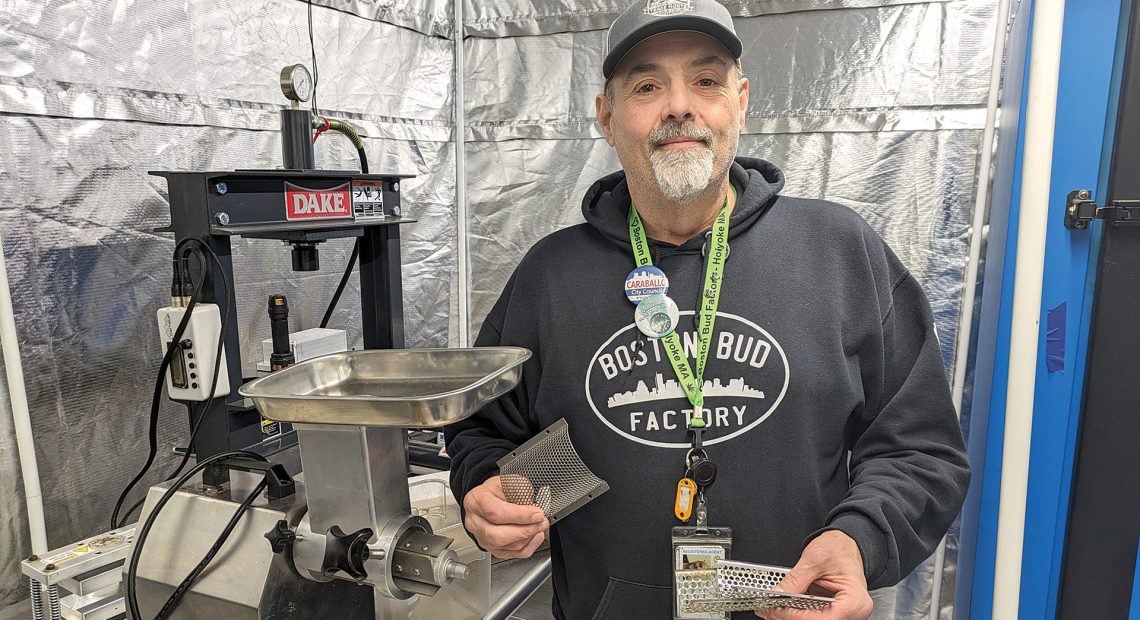
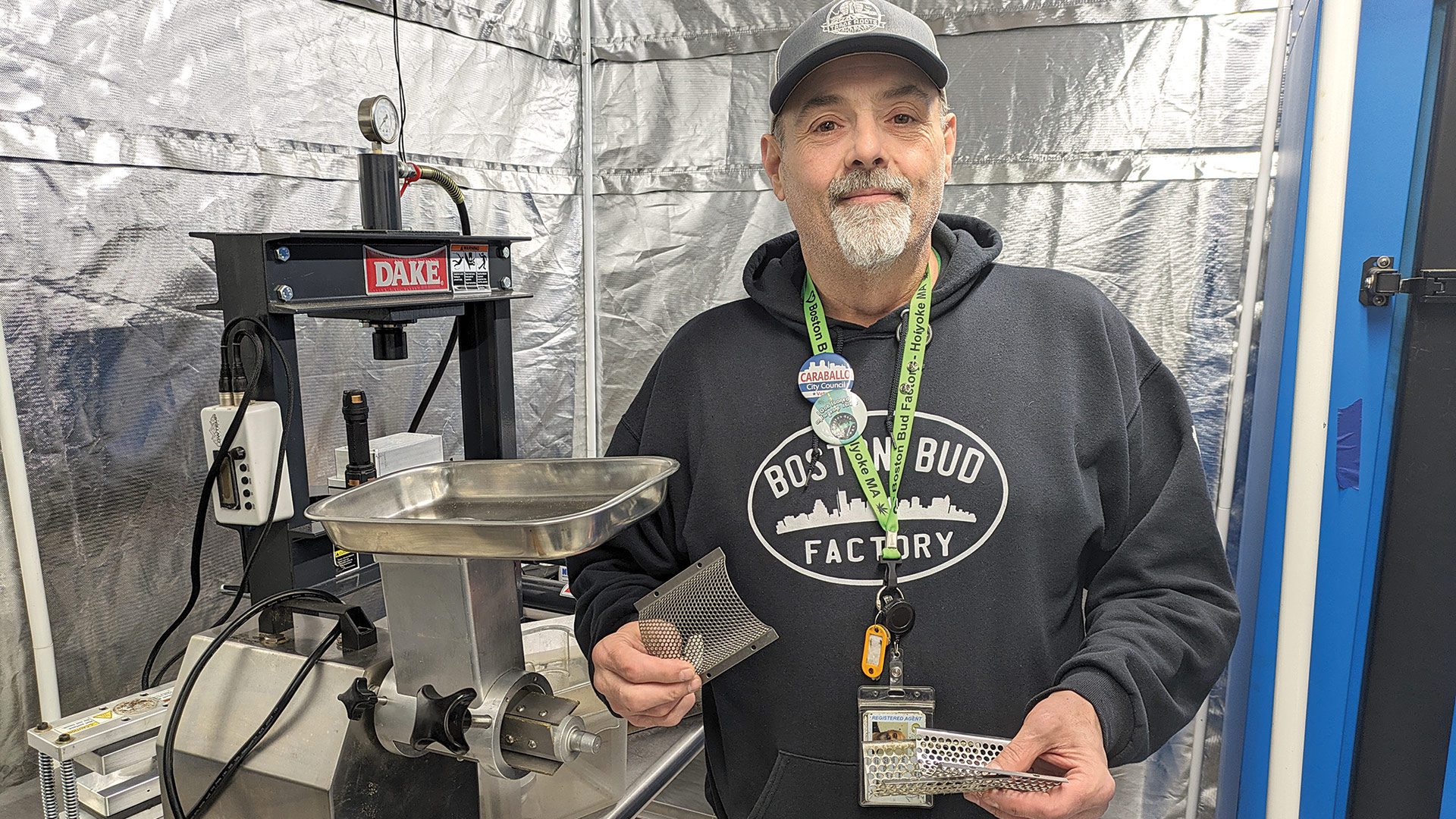
Frank Dailey shows off some equipment used to grind cannabis.

Frank Dailey shows off some equipment used to grind cannabis.


From his background in plant management and chemical engineering, Frank Dailey said, he understands the risks involved in manufacturing anything, let alone a product with so little research available in the realm of workplace safety.

So, when asked to take part in a National Institute of Occupational Safety & Health (NIOSH) evaluation of the cannabis grinding process at Boston Bud Factory, the Holyoke business Dailey owns, he was enthusiastic about it.

The study was first slated to take place at Trulieve in Holyoke, where an employee died in January 2022. The 27-year-old production technician suffered a fatal asthma attack while working at the indoor cannabis cultivation and processing facility. According to the Massachusetts Department of Public Health (DPH), the death occurred seven months after she started employment at the facility and three months after she began working as a flower technician, which involved processing and handling whole and ground cannabis flower buds.

Boston Bud Factory was contacted by Danny Stair, a local industry advocate and former Trulieve employee, who was concerned the study was in jeopardy following Trulieve’s departure from the Massachusetts market last year. So Dailey contacted NIOSH directly and volunteered his operations for the study.

“We put up signs when we’re grinding; we notify everybody. It can be a hazardous process. It doesn’t have to be, but it can be,” Dailey told BusinessWest. “We have to take into account allergens. Employees have allergic reactions processing some strains. It’s random; there’s no rhyme or reason.”

While he doesn’t know exactly what precautions were taken at Trulieve, “what I do know is that it’s common in the industry for large corporations to short personal protective equipment when the money’s tight. They need to pay for inventory. We’re answering to the money train in this industry, and it seems like it’s a common thing throughout the industry, that employees’ safety is not being looked out for.”

Dailey said Boston Bud Factory has already implemented strict PPE procedures when grinding cannabis due to possible employee reactions to dust, but still has concerns about whether the PPE was adequate, and he wants to be part of developing a wider body of knowledge that may become the basis for mandated workplace health regulations.

“People are talking about tax revenues and other issues in cannabis, but you don’t hear people talking about the effort the industry is making to keep their workers safe. Workers shouldn’t have to unionize and take extreme measures to implement safety in the workplace.”

“We know how dangerous dust is in other industries. Dust in foundries has caused explosions. Dust in factories has caused fires. As for cannabis dust, this is just the beginning of the employee exposure. As the industry grows, more and more dust is created.”

One of his employees with specific sensitivity concerns actually wears not only a Tyvek suit with a particulate mask, but also gloves duct-taped to the sleeves so the dust doesn’t get up the sleeves.

“These are techniques from the pharmaceutical industry that are easy to implement if someone is paying attention and has proper safety protocols in place,” he explained. “People are talking about tax revenues and other issues in cannabis, but you don’t hear people talking about the effort the industry is making to keep their workers safe. Workers shouldn’t have to unionize and take extreme measures to implement safety in the workplace.”

During the on-site visit, NIOSH will set up airborne particulate monitoring during the grinding process to see what the exposure is and how many airborne particulates employees are subject to.

“We use dust masks, basically particulate masks, and that should be enough in most cases. We’re not talking chemical fumes; it’s simply airborne particulates,” Dailey said. “But we need to know whether we need to go to N95 or a higher level to make sure enough particulates are captured.”

Historically, he added, a lot of cannabis manufacturing has been done underground, where employee safety isn’t paramount.

“We’re one of the smallest operations in Massachusetts; we’re fighting for survival,” he added. “But we need to do something to set some standards in this emerging industry.”


Statewide Investigation

Also in the wake of the death at Trulieve, the Massachusetts Department of Public Health (DPH) recently released an investigative report outlining additional steps the cannabis industry should take to prevent work-related asthma and sent a bulletin to healthcare providers in the Commonwealth urging vigilance in identifying work-related asthma among workers in that industry. The bulletin reminds providers that they are mandated to report cases of work-related asthma and other respiratory diseases to DPH.

While the Holyoke death is the only known asthma death in the U.S. cannabis industry, other cases of non-fatal respiratory disease among Massachusetts cannabis workers have been reported. According to DPH, cannabis-industry workers can be routinely exposed to numerous occupational respiratory hazards, including cannabis dust, mold, volatile organic compounds, pollen, bacterial endotoxins, pesticides, soil components, and cleaning disinfectants, which can cause and/or exacerbate chronic diseases, like asthma, if not addressed.

Massachusetts has more than 500 licensed cannabis industry employers providing jobs to more than 22,000 workers.

“The legalized cannabis industry in Massachusetts is relatively new, and the impact on the health and safety of workers demands our careful attention,” Public Health Commissioner Dr. Robert Goldstein noted in a statement. “As this workforce continues to expand, it will require all of us working together — state and federal agencies, regulators, healthcare providers, and the cannabis industry — to improve working conditions for these employees. At DPH, we will continue to identify and follow up on these cases using our long-standing public-health surveillance system for work-related respiratory disease and continue to work with our partners on documenting cases, building evidence around workplace hazards, and on intervention and policy.”

“The legalized cannabis industry in Massachusetts is relatively new, and the impact on the health and safety of workers demands our careful attention.”

According to DPH, work-related asthma is underrecognized in part because symptoms and industry and occupation data are not routinely collected. Yet, about 17% of new-onset adult asthma cases are related to workplace exposures. In Massachusetts, an estimated 200,000 adults have work-related asthma, according to data from DPH’s Occupational Health Surveillance Program.

In its bulletin, DPH urged healthcare providers to:

• Ask patients with new or worsening respiratory or allergic symptoms what they do for work and how it affects their health;

• Perform diagnostic testing, such as allergy testing, pulmonary imaging, and/or spirometry;

• Recommend workplace changes to avoid further exposure; and

• Report cases of work-related asthma and other work-related respiratory diseases to DPH, as required by law.

To improve worker safety, the investigative report recommended that employers:

• Assess and control hazardous materials in the workplace, including asthmagens;

• Ensure that all workers are properly trained about hazardous materials in the workplace;

• Develop and implement a comprehensive safety and health program that addresses hazard recognition, avoidance of unsafe conditions, and proper use of equipment; and

• Implement a medical surveillance program to monitor the health of their workers.

The report also noted that equipment manufacturers should adopt and implement the concept of ‘prevention through design’ to identify potential hazards associated with equipment and then eliminate these hazards through design changes; and that industry licensing agencies in Massachusetts should consider how they can further support the health and safety of cannabis-industry workers.

“Levels of exposure to cannabis dust at work are much higher than what is present during recreational use,” said Emily Sparer-Fine, director of DPH’s Occupational Health Surveillance Program. “Work processes that include grinding and concentrating an allergen need to be better controlled. It is critical for employers to assess and control exposure to hazardous materials, including the respiratory hazards found in the cannabis-processing facilities, such as cannabis dust.”


The Effort Continues

All this is gratifying to Dailey, who thanked Stair for ensuring that the NIOSH Study was completed, advocating for the safety cannabis-industry employees, and helping prevent future injuries or deaths. Dailey claimed that larger cannabis companies are prioritizing profits and growth over workplace safety, so it is important that advocates and smaller companies step up to take the lead in setting industry standards to ensure workplace safety.

“We are proud to be one of the first companies to prioritize worker safety over profits. Boston Bud Factory has said from the start that we didn’t want to be one of the big guys, and we still stand by that wholeheartedly,” he added. “We hope that the NIOSH safety evaluation will help determine industry standards that could help to ensure worker safety in this emerging and rapidly growing industry. Worker safety should always take precedence over profits, no matter how large the company is.”

Banking and Financial Services

Lending Perspective


Tom Senecal has been president, CEO, and chairman of PeoplesBank since 2016, and moving forward, he’s shedding the ‘president’ part of that title. But that doesn’t mean he’s slowing down.

“It’s more of a transition of the daily responsibilities,” he said, explaining why Brian Canina has been promoted to president and chief operating officer, and Hayes Murray has been promoted to executive vice president, chief financial officer, and treasurer, taking on some of Canina’s former duties.

“I reassigned to Brian three or four different responsibilities, but when you look at both of us, it’s still a lot on both our plates,” said Senecal, who retains his CEO and chairman titles. “This is a recognition of Brian’s success and talent and the timing of the growth that we’re going through. And quite frankly, the operational side of things needs more daily attention. And Brian really has the fortitude, the wherewithal, the work ethic, and the strategy to execute all the daily operational things. So it just made sense at this point in time to transition those responsibilities.”

Tom Senecal

Tom Senecal

“This is a recognition of Brian’s success and talent and the timing of the growth that we’re going through.”

After working together for almost 15 years — Canina as CFO and controller, Senecal as president and CEO — it just made sense to reward Canina for him efforts, Senecal added, “and, quite frankly, to make sure that we have our eyes on the ball as we continue to grow.”

Canina said he has prepared for this transition over the past year or two, operating in more than just a CFO role, and more like a COO, driving strategic initiatives and monitoring and managing the strategic plan of the bank along with Senecal.

“That will continue to be a focus of mine going forward, taking more responsibility away from Tom in terms of administratively managing the strategic plan and working with him as he identifies other strategies that he’s working on,” Canina explained. “So it’s not really a significant change; it’s something that we’ve been working toward, and with the size of the bank and how we’ve grown, it was a good timing to make this more formal change.”

The leadership changes will provide Senecal with more opportunities to plan and manage the growth and revenue activities of the bank, including retail operations, consumer lending, small business, municipals, and commercial and industrial divisions. Canina will continue to be responsible for finance, facilities, PeoplesWealth, the Business Solutions Group, and information technology. In his new role, he will also be responsible for human resources, marketing, and corporate responsibility.

“I’ve kind of shed some meeting responsibilities and a few of the operational responsibilities, but my focus is on growth,” Senecal said. “We have both an organic strategy of growing the bank by opening branches, and also non-organic opportunities. We’re constantly having conversations with other banks, and we will never be bought or sold, but we are looking at opportunities with other banks that might want to partner with PeoplesBank.”

Connecticut in particular continues to present growth opportunities. After adding branches in East Granby and Suffield through acquisition, then expanding the bank’s branch footprint into South Windsor and West Hartford, the bank’s board of directors has approved plans to open banking centers in Glastonbury and Avon, in addition to seeking other opportunities for future expansion.

Brian Canina

Brian Canina

“It’s something that we’ve been working toward, and with the size of the bank and how we’ve grown, it was a good timing to make this more formal change.”

“Our commercial-lending business has been extremely successful in the Connecticut market,” Senecal noted. “We’ve hired some commercial lenders and residential lenders in the Connecticut market. We’ve always had a large presence on the commercial side, but since we’ve developed the retail side, it has brought us some synergies in the relationships with those commercial customers, bringing them in as retail customers as well. It’s been hugely successful.”

Canina agreed. “We’re at a very important time right now to really continue pushing the growth of People’sBank down into Connecticut and looking into other areas to grow. That’s what we’re really focused on, and I feel confident we’re going to have a lot of success.”


Soaring Assets

The numbers tell the story of PeoplesBank’s recent upward trajectory.

“When I took over as president and CEO in 2016, we were a $1.8 billion bank,” Senecal told BusinessWest. “We ended 2023 just shy of $4.1 billion. So we’ve more than doubled in those seven years.”

The bank also boasts more than 300 employees and operates 20 banking centers across Massachusetts and Connecticut, with an additional five locations when its headquarters, ATM, and VideoBankerITM locations are included, he noted. “That’s quite a bit of recent growth, which is a credit to the hard work of our entire team.”

Over the past couple years, PeoplesBank also began partnering with Zynlo, a digital bank, Senecal said. “That is starting to really take off. When we talk about growth, traditionally, brick and mortar has been our main source of banking growth. With the digital bank, that has taken on a whole different perspective.

“We’ve got different lines of business, and we’re starting a personal banking division of the bank,” he added. “We have the PeoplesWealth division. Those weren’t in existence a few years ago, so these different banking channels are really what’s driving some of our growth.”

Other expansion opportunities exist because of the merger-and-acquisition environment among large banks and how that disrupts a marketplace, Canina said, citing as one example M&T Bank’s acquisition of People’s United Bank. “That acquisition opens up opportunities for us to jump in on the disruption down in the Connecticut market and, in some cases, Western Massachusetts as well, but mostly down in the Connecticut market, which is why we have our sights set on organic growth down there.”

Opportunities will also arise from banks that aren’t faring as well as PeoplesBank, he said, due partly to the compression on interest margins coupled with increased costs for human resources and compliance, as well as coming regulatory changes.

“Some of these smaller banks are really going to be challenged,” Canina explained. “And I think that we’re at a size — more than $4 billion in assets — where we’re in a very good position to partner with another bank that’s smaller and having challenges, so I think there’s going to be opportunity there for us.”

Of course, PeoplesBank continues to grapple with those same headwinds, he added.

“The challenges right now are coming from the interest-rate environment, where the margins have really compressed from the short-term rates coming up and long-term rates coming up a bit, but not as much as the short end of the curve. So we’re paying deposits on the short end and then lending out on the long end, and there’s not a big spread there. It makes it challenging, not just for us, but for all banks.

“At the same time, a lot of the pandemic deposits that came in have started to flow out; people started spending more money, and they have the ability to to move deposits anywhere they want very easily,” Canina continued. “So the industry has been challenged with managing the interest-rate environment and maintaining deposit levels, and I see that continuing into 2024. Depending on what happens with interest rates, it’s not likely going to let up until we see the short end start to come down. And then we’ll face some different challenges when that happens, because most likely there will be some potential recessionary concerns.”

On the residential side in particular, Senecal added, “I think it’s tough for every bank these days, even though interest rates have come down a little bit from their all-time highs in the last 20 years or so. But there’s no inventory. So, even though interest rates are high, what we’re seeing is, when something comes on the market, it sells, and it’s financed. It’s just that the inventory is so low. And that will be a challenge heading into 2024 for almost all banks.”


Hometown Focus

As he broadens his responsibilities in dealing with these issues and working with Senecal and other bank leaders on growth strategies, Canina added that he aims to continue — and grow — PeoplesBank’s commitment to the communities it serves, noting that the bank’s charitable giving continues to be a strength, with almost $6 million donated over the past three years alone, and more than $11 million over the past 10 years.

“I think what really separates us from the larger regional banks and the national banks — we’re so invested in the communities that we’re banking with, and even though we’re contributing the amount of dollars we are back to the community, we’re still paying interest rates that are competitive with any other bank out there.”

Meanwhile, employees donate thousands of hours of volunteer service to area nonprofits and charitable causes, he noted. “More than half of our bank is on a nonprofit board of some sort, and the amount of volunteer hours is very strong; that’s something that all of our employees hold near and dear to them and really keeps them engaged.”

Banking and Financial Services

A Matter of Survival


When asked what it takes to thrive in the cannabis business these days, Meg Sanders paused before noting that ‘thrive’ is the wrong word.

“I think thriving is part two. Right now, surviving is really the topic of the day. That’s what we need to be looking at,” said Sanders, CEO of Canna Provisions, which operates dispensaries in Holyoke and Lee.

And it’s not just because of the heightened competition that has arisen, both within Massachusetts and from across state lines, though that factor has caused some shops to close, with others likely to follow, as the market begins to settle, eventually determining how many dispensaries is too many.

No, that development has only exacerbated one of the key challenges for cannabis entrepreneurs: the fact that the drug is federally illegal, which makes financing thorny, normal business activities difficult, and the tax environment severe, to say the least.

“Our accounting bill is probably super elevated from a normal business. Our legal bill is probably way larger than a normal business because there are just so many T’s to cross and so many I’s to dot. And that’s just part of it,” Sanders said before detailing issues with access to financial services and lending. “What if we could get SBA loans? What if we could apply for federal grants? I mean, there’s so much money out there that a small business should be eligible for, but we can’t do any of that because we’re federally illegal.”

Meg Sanders

“What if we could get SBA loans? What if we could apply for federal grants? I mean, there’s so much money out there that a small business should be eligible for, but we can’t do any of that because we’re federally illegal.”

With that in mind, a coalition of U.S. cannabis operators and investors filed a lawsuit late last year against U.S. Attorney General Merrick Garland. The coalition asserts that the federal government has no basis for enforcing the Controlled Substances Act against intrastate, state-regulated cannabis operations. The plaintiffs include Canna Provisions; Gyasi Sellers, CEO and founder of Treevit; and Wiseacre Farm, all of which are independent operators in Massachusetts that claim to have suffered significant harm and business challenges due to federal prohibition.

Verano Holdings is also named as a plaintiff, while foundational supporters of the suit include Ascend Wellness Holdings, TerrAscend, and Green Thumb Industries, as well as Eminence Capital and Poseidon Investment Management.

The lawsuit seeks to confirm the rights of Massachusetts and other states to regulate cannabis within their borders, and to limit the federal government’s power to regulate commerce.

The Controlled Substance Act bars the production, distribution, and possession of marijuana, regardless of whether those activities cross state lines or, as in the case of the plaintiffs’ businesses, are intrastate. According to the lawsuit, “this unjustified and unconstitutional prohibition on intrastate cannabis harms plaintiffs and hinders the efforts of states to provide patients and adults with access to strictly regulated and tested cannabis.”

“The purpose of the lawsuit is to basically challenge the constitutionality of the Controlled Substance Act on intrastate activity. Basically, the suit alleges that the federal government has no say what happens within state borders,” Sanders told BusinessWest. “I wasn’t aware of this lawsuit until somebody recommended me to be part of it. So we had substantial meetings with our legal team and our board about this particular issue, and we all felt like there’s something here, and that this is an important way to approach it.”


Tough Environment

Cannabis banking has softened somewhat in Massachusetts, Sanders was quick to note. “I would say Massachusetts is probably one of the friendliest banking states in the United States as far as cannabis. We have a lot of very thoughtful, kind, smart bankers out there that are trying to service the industry. And that’s great; we have checking accounts, we have saving accounts, some of us are able to do debit-card acceptance. But we can’t take credit cards. I can’t get a business loan. Equipment loans are out there, but they’re at a really high interest rate. And also, I can’t get access to normal payroll services. So I can’t work with an ADP or a Paychex or some of the big guys that are really good at what they do.

“If you’re signing up to be in cannabis, you’re signing up for all of these headaches. This is the nature of the beast. And it’s not negotiable; those are the facts. This is what we have to deal with every single day. And it’s really, really hard.”

The lawsuit also takes aim at what’s known in the IRS tax code as Section 280E, which originated from a 1981 court case in which a convicted cocaine trafficker asserted his right under federal tax law to deduct ordinary business expenses. In 1982, Congress created 280E to prevent other drug dealers from following suit.

So, while state-legal cannabis businesses are allowed to deduct the cost of goods sold when paying taxes, they can not take other deductions normal to most non-cannabis businesses — salaries, health insurance, utilities, maintenance, and much more. “So I have an effective tax rate of 73%,” Sanders said.

In 2005, the U.S. Supreme Court rejected a challenge to the Controlled Substance Act’s cannabis prohibitions.

But, according to a press release announcing the new lawsuit, “a critical factor in that decision, Gonzales v. Raich, was that the federal government intended to ‘eradicate’ the market for cannabis nationwide. The court concluded that the federal goal of eliminating commerce in cannabis, combined with the assumption in 2005 that intrastate marijuana could not be differentiated from interstate cannabis, justified the Controlled Substances Act’s prohibitions on intrastate cannabis. Neither of those facts, however, are true today. In the 18 years since Gonzales, Congress and the executive branch have abandoned any intent to ‘eradicate’ cannabis, and numerous states have developed regulatory programs for legal marijuana that is not fungible with, and is readily distinguished from, illicit cannabis.”

Indeed, the plaintiffs note, today, 38 states and Washington D.C. have medical or adult-use cannabis programs with significant regulatory oversight, requiring compliance with stringent regulations aimed at protecting patients, customers, and the public, including video surveillance and seed-to-sale tracking.

“Absent the relief sought in this lawsuit, plaintiffs and other state-regulated cannabis operators will continue to suffer severe harms,” the release notes. “State-regulated cannabis businesses are deemed illegal under the CSA; their everyday activities are considered federal crimes. As a result, they are cut off from numerous federal programs and protections (including small-business loans), they are subject to discriminatory tax penalties, and many organizations — including banks and credit-card processors — refuse to do business with them, rather than risk being deemed conspirators, aiders and abettors, or money launderers.

“The result is that many cannabis businesses are suffering, people are losing their jobs, and individual wealth is being destroyed,” the statement continues. “In addition, social-equity licensees harmed by the war on drugs and who were supposed to have equal access to the industry do not have the same benefits as otherwise situated business owners to start a business and build their wealth.”


Appetite for Change?

Sanders sees this lawsuit as a kind of parallel track to other ongoing efforts to disentangle federal and state laws, thereby easing the cost of business in the cannabis industry, with many hoping Congress steps in at some point and removes cannabis from the Schedule 1 list of controlled substances.

“There are a lot of legislators that really support and see cannabis as an industry for their constituents and understand that jobs are being created and there’s a lot of revenue. And, bottom line, their voters want to buy weed from a regulated dispensary,” she told BusinessWest. “That’s what we see every single day. We still have more people coming in. And what voters are telling legislators is they want safe access to cannabis.”

At the same time, Sanders understands that Congress has many competing priorities, and that they struggle to come together in a bipartisan way on any issue.

“Until politicians see voters saying, ‘well, because you’re negative on cannabis, we’re not going to vote for you,’ I don’t think you’re going to see a change. I mean, that’s their business. Their business is to get votes. As voters, we want legalization, but there are so many other things that are separating us as a country, and those are way more important, probably, in the eyes of legislators.”

Daily News

Natalia Blank

LONGMEADOW — Bay Path University announced that Natalia Blank has been elected to serve as vice president for Academic Affairs, which was effective Jan. 2. Blank will serve on the executive leadership team and work across all divisions at the university.

In her role, she will articulate a clear and compelling vision for the academic enterprise that builds on Bay Path’s innovative approach to higher education, marshals the collective talents of faculty and staff in an environment of collegiality and cooperation, and use data-driven decision making and strategic thinking to optimize the student experience, from access through successful completion, as well as the academic operations of the university.

After a national search, Blank comes to Bay Path from D’Youville University in Buffalo, N.Y., where she served as vice president for Academic Affairs. She joins the leadership team with nearly 20 years working in university administrative roles, including associate provost for Academic Affairs and Assessment at Norwich University in Vermont.

“Natalia has the experience and the ability to lead and envision innovative and results-oriented academic initiatives,” Bay Path President Sandra Doran said. “Her commitment to students, faculty, and staff is apparent, and she will be integral to our university’s work in diversity, equity, inclusion, and belonging.”

For more than 20 years, Blank has served in various roles on both the faculty and administrative side in education. As a teacher-scholar, she has been the author of numerous publications, earned several awards and honors for teaching excellence, and has received multiple grants in support of student and faculty research. She received her bachelor’s degree in chemistry from Nizhegorod State University in Nizhniy Novgorod, Russia, and went on to receive her doctorate in organic/organometallic chemistry from Dartmouth College.

“Immediately, upon meeting and speaking with members of the Bay Path community, I felt a connection to the mission and vision of the university,” Blank said. “I am excited to join President Doran, her leadership team, faculty, staff, board of trustees, and alumni in helping our students achieve their goals. I believe that innovative and entrepreneurial institutions like Bay Path will change higher education by becoming a model for responsive, successful learning experiences that will transform the futures of students.”

Daily News

AMHERST — Gabrielle Gould, executive director of the Amherst Business Improvement District (BID) and the Downtown Amherst Foundation (DAF), announced she will be stepping down from her position at the BID to form a consulting business. She will continue in a leadership capacity for the DAF and its management of the Drake, the live performance venue in downtown Amherst. Her final day at the BID will be Feb. 22.

“The BID board is forever indebted to Gabrielle for her ideas, energy, and integrity,” said Barry Roberts, board president of the BID. “She has changed the discussion about downtown, and her leadership has been a model for BID directors throughout the Commonwealth. We wish her well.”

Appointed executive director in August 2019, Gould’s four-plus years at the helm of the organization have been filled with notable successes, including strengthening the BID’s relationship with town government and institutional partners, teaming with the Amherst Area Chamber of Commerce on COVID relief for small businesses, producing signature downtown events like the Sip & Shop Stroll and Makers Market holiday event and Fire & Ice, and conceiving and launching the Drake, the downtown’s first-ever live performance venue.

In recognition of their efforts, Gould and Claudia Pazmany, the chamber’s executive director, were named Difference Makers by BusinessWest in 2023.

“I’ve walked into the office each day with passion, excitement, and a million ideas on how to make downtown Amherst a vibrant, beautiful, and destination-worthy town for all to experience and enjoy,” Gould said. “The BID and downtown Amherst are in a great place, and I feel that now is the perfect time for me to transition to a new chapter in my career.”

A search for Gould’s successor will commence in the coming weeks, Roberts said.

Daily News

SPRINGFIELD — The Young Professional Society of Greater Springfield (YPS) will host its Third Thursday: Alumni Connections & Annual Showcase, a monthly networking event today, Jan. 18, from 5:30 to 7:30 p.m. at Springfield Country Club in West Springfield, while honoring and paying respects to longtime YPS member Jennifer Schimmel.

This Third Thursday event will feature a review of 2023 events, partnerships, and community investments, as well as an outlook for 2024. Highlights for 2023 include more than 25 events, 18 partnerships, and more than $18,000 in community investment, with plans to surpass those numbers in 2024.

YPS will also seek to partner with local colleges and universities and engage in more volunteer and community giving opportunities in the coming year. Existing members and other young professionals interested in membership will have the opportunity to network with board of directors alumni and learn more about how YPS helped with their professional development.

During the event, YPS will take a moment to honor and pay respects to Schimmel, who passed away on Jan. 7. Professionally, Jennifer dedicated her talents to nonprofit organizations, holding the position of executive director of Greater Springfield Habitat for Humanity from 2007 to 2019. She has held various support roles with organizations such as Hartford Seminary, Wadsworth Atheneum, and Shakespeare & Company.

Daily News

HADLEY — UMassFive College Federal Credit Union is always looking for opportunities to educate members and the local community on financial subjects. For more than a decade, UMassFive has offered free financial wellness workshops, where attendees gain insight into specific financial topics.

During the first four months of 2024, the following UMassFive financial wellness webinars will be offered: “Paying Down Debt,” “Reaching Your Financial Goals in 2024,” “Understanding Credit,” “Understand Your Money Personality,” “Budgeting 101,” and “Homebuying 101.”

Licensed CFS financial advisors will also present the following topics: “Understanding Social Security,” “Saving for Retirement: IRA Need-to-knows,” and “Retirement Plan Rollover Options.”

Specific financial wellness topics are typically offered multiple times per year to allow multiple opportunities for community members to be able to attend subjects that interest them. To view descriptions of all these financial-wellness webinars, including dates and times, and to register to attend, visit umassfive.coop/resources/workshops.

Cover Story Top Entrepreneur

A Hunger to Do More

The Food Bank of Western Massachusetts Dramatically Grows Its Operations


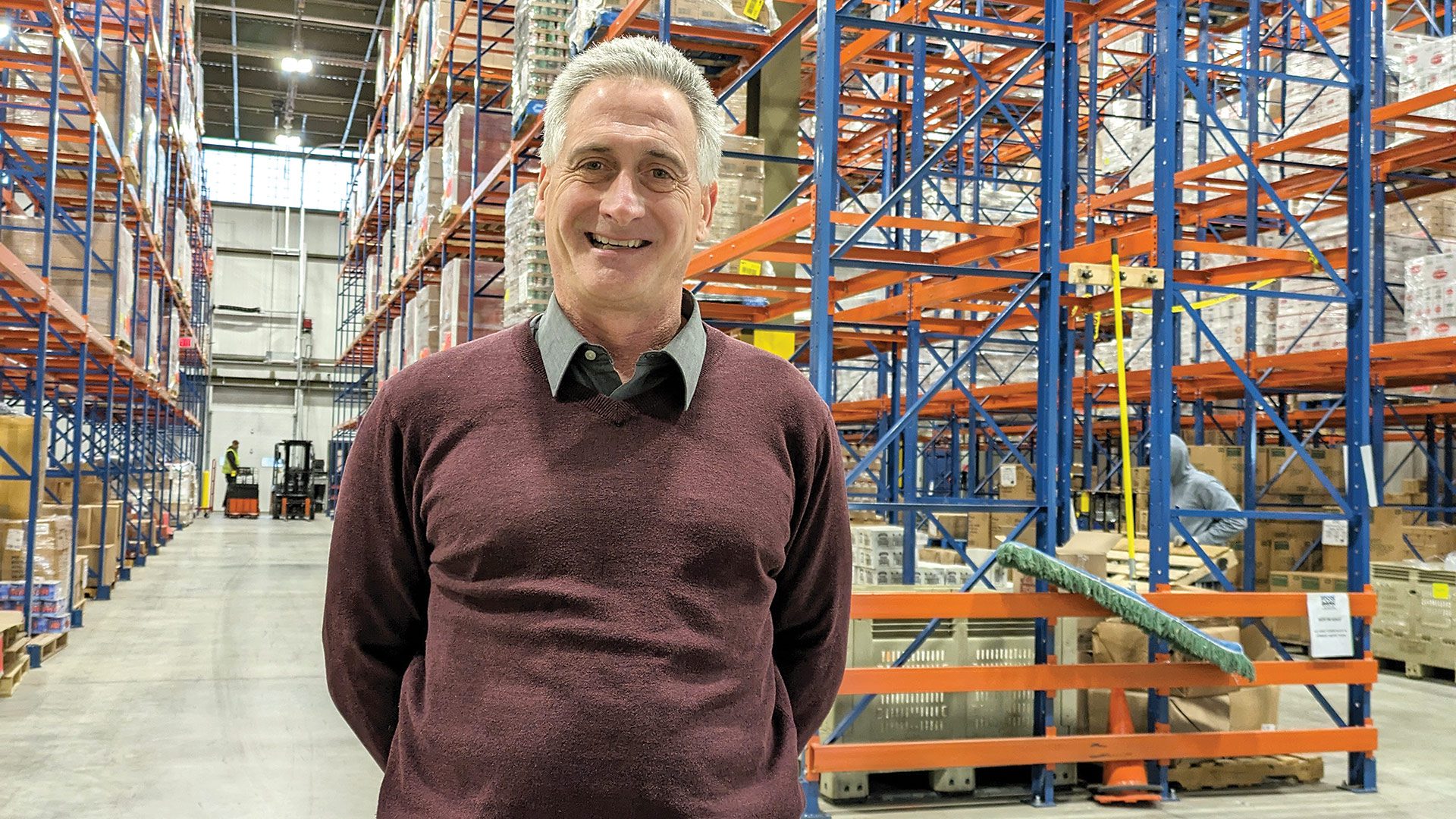
Executive Director Andrew Morehouse

Executive Director Andrew Morehouse


It’s long been a tenet among nonprofits — successful ones, anyway — that they need to think entrepreneurally in order to thrive and grow. To think, in other words, like successful for-profit businesses do, in terms of resource allocation, financial planning, workforce management, and day-to-day operations.

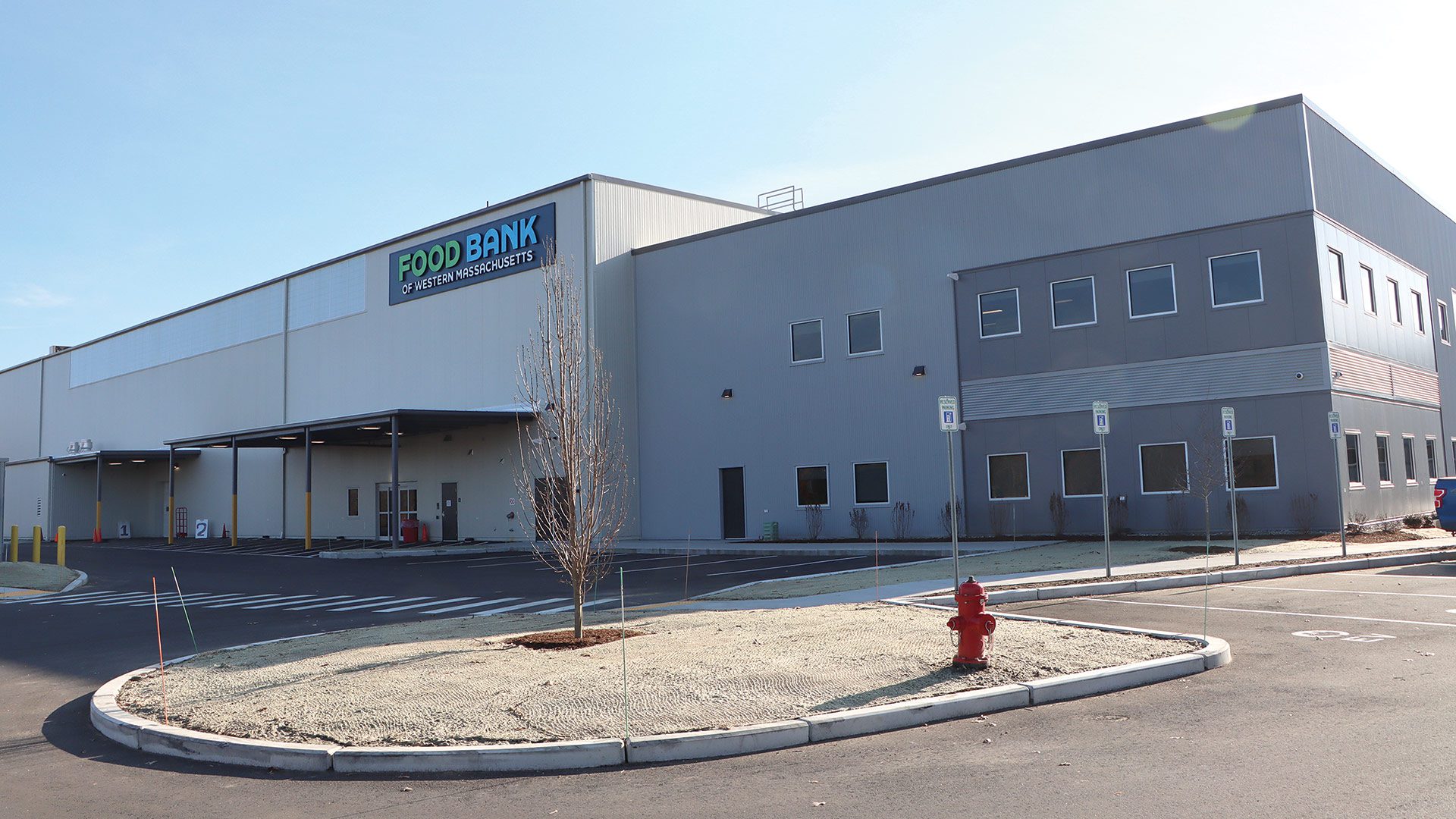
And no nonprofit has been more entrepreneurial — and more ambitious — over the past few years than the Food Bank of Western Massachusetts, whose $30 million project to build a new, larger headquarters in Chicopee culminated not only in last month’s grand-opening ceremony, but in the dramatic expansion of its capacity to perform work it was already doing on a massive scale.

The project — and the accompanying campaign that raised about $15 million of that cost from private donors and $15 million from state and federal governments — started just before the pandemic and continued through those challenging years, making the successful conclusion especially gratifying to Executive Director Andrew Morehouse and his team, and earning the Food Bank recognition from BusinessWest as its Top Entrepreneur for 2023.

“The Food Bank of Western Massachusetts’ new, state-of-the-art facility will allow their dedicated team to provide greater access to healthy, nutritious foods to thousands more of our neighbors in need and expand service routes to partners throughout the area.”

“We have to be innovative. We have to be able to adapt to circumstances,” he said. “We have a strategic plan, and every year, we have specific objectives — and all that can go out the window if something happens, like a pandemic, and then we have to pivot.”

That applies to any entity — for-profit or nonprofit — of this size, Morehouse added, noting that the Food Bank has a $9 million annual operating budget, and the value of the food that comes through is about $18 million, so this is essentially a $27 million operation, with a staff of 67, and plans to hire another 14 by the end of 2024.

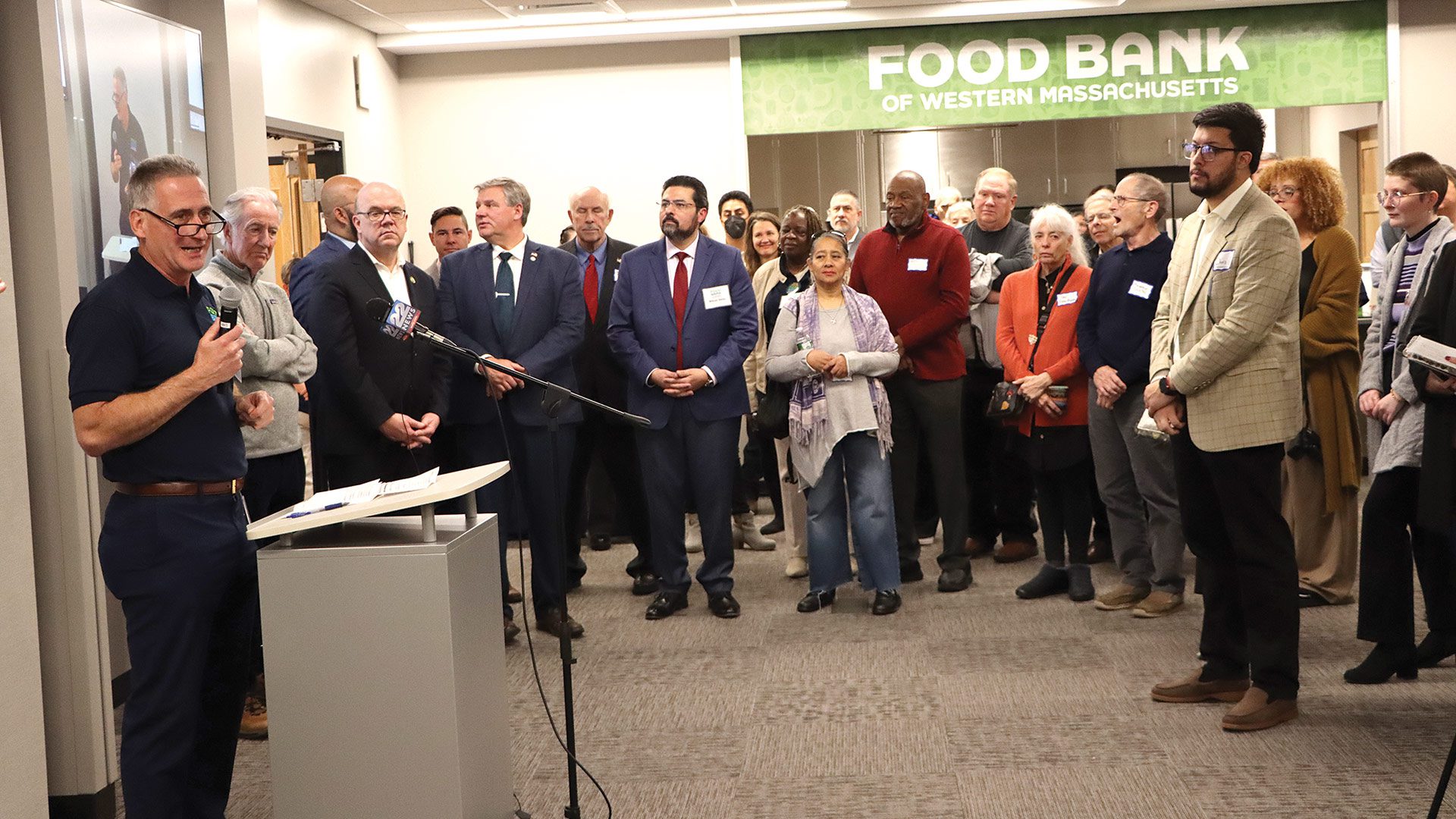
Andrew Morehouse addresses guests

Andrew Morehouse addresses guests at the Food Bank’s grand-opening ceremony last month.

“We acknowledge that it’s the dedication and talent of our staff that’s the source of our success,” he told BusinessWest. “That’s our ethos as a business — that we can succeed in our mission when we acknowledge and invest in our staff and the hard work that they’re doing.”

The new food-distribution center, located at 25 Carew St. in Chicopee, is twice the size of its previous Hatfield location, with an additional 18,000 square feet in the warehouse alone. Floor-to-ceiling warehouse racks and expanded refrigeration and freezer sections enhance efficiencies and enable the Food Bank to store and quickly distribute more healthy food than ever before to 175 member food pantries, meal sites, and emergency shelters across all four counties of Western Mass.

The new site also features a dedicated community space with a working kitchen for cooking and nutrition classes and other educational events. Other efficiencies include electric charging stations, an expanded member pick-up area, and plenty of parking for staff and volunteers. In 2024, the Food Bank will add a solar array on the roof and a canopy over part of its parking, along with backup battery storage that will fully support all electricity needs of the building.

“That will make it a greener building, so there are efficiencies to be gained,” Morehouse said. “We expect that building to be near-carbon-neutral and generate most of the electricity that we need.”

The investment in the relocation project and its capital campaign is already bringing palpable returns. In just the first three months since moving in, the Food Bank has already provided 25% more healthy food than the same period last year — the equivalent of more than a half-million meals. In all, the Food Bank provides a little more than 1 million pounds of food every month, or the equivalent of 850,000 meals.

“The more we thought about moving to Hampden County, the more we realized that was what we needed to do.”

“The Food Bank of Western Massachusetts’ new, state-of-the-art facility will allow their dedicated team to provide greater access to healthy, nutritious foods to thousands more of our neighbors in need and expand service routes to partners throughout the area,” U.S. Rep. Jim McGovern said at the grand opening. “I’m proud of the Food Bank’s 40 years of history serving our community and their continued leadership on the national stage in our movement to end hunger now.”


An Overstuffed Facility

The Food Bank, which traces its history back to 1981, expanded its facility in Hatfield just before the Great Recession, and then maxed it out as food-insecurity needs exploded during the ensuing years of difficult economic conditions.

“We had no available space, and we continued to see heightened demand, and that left no space at all for continued growth,” Morehouse said, noting that the Food Bank has grown its operations by about 6% annually between 2006 and last year.

The new Chicopee headquarters

The new Chicopee headquarters doubles the size of the former Hatfield site.

“We knew around 2016 that it was unsustainable, that we would need a larger space in order to continue to accommodate more food and to address increasing food insecurity whenever there was another adverse impact on the economy, whether it be a recession or … who would have known?”

Who, indeed. When COVID struck, the Food Bank had already been scoping out properties — and considering numerous options, such as a two-location model that was rejected because of its expense. But soon after, in 2020, the nonprofit found its ideal spot in Chicopee, launched the capital campaign in 2021, and started building in 2022.

The site had a couple of advantages, one being its proximity to two interstate highways, another being the county’s population and demographic makeup, Morehouse explained.

“The more we thought about moving to Hampden County, the more we realized that was what we needed to do — not only because of the proximity to the largest concentration of people who are faced with insecurity, but also because, quite frankly, it would enable us to strengthen our relationships with communities of color, which, unfortunately, face food insecurity disproportionately relative to the rest of society.”

As for the campaign, it drew the support of 246 individuals, businesses, and foundations — but there was some anxiety early on, especially since it was launching during a challenging economic time, year two of the pandemic.

“If we don’t acknowledge that the problem exists and we don’t, as a society, want to do something about it, we’re not going to make any progress.”

Morehouse credited the early, significant support by Big Y and MassMutual in “grounding” the campaign and lending confidence that it could succeed. After that, the entire banking community stepped in, as did and a host of other businesses, foundations, and individuals, including major contributions from the Irene E. and George A. Davis Foundation and C&S Wholesale Grocers.

“Before we had launched the campaign, there was a lot of internal discussion and planning, and I just had the faith that we could accomplish it and that the community would rally behind us, and they did,” he said. “Our board felt the same way, so we went public after we secured some of those large commitments. So we had something to start with, and then we were able to inspire and persuade the rest of the community to jump on board, and they did.”

One factor, he noted, was that the pandemic focused more attention nationally on the issue of food insecurity across the country — attention that was needed even before COVID, but was definitely in the public eye now.

announced large pledges to the Food Bank’s capital campaign in 2021

Andrew Morehouse (center) with Big Y President and CEO Charlie D’Amour (left) and Dennis Duquette, MassMutual Foundation president, when they announced large pledges to the Food Bank’s capital campaign in 2021.

“If we don’t acknowledge that the problem exists and we don’t, as a society, want to do something about it, we’re not going to make any progress,” he said. “So it was gratifying that the community rallied behind our campaign to help us to be successful. And now we have this facility, this community resource, that can make even greater impact in addressing food insecurity, but also to serve as a place for convening, for learning, for collaborating, for taking action.”

The ‘action’ part of that goal is clearly the most important.

“If we’re ever going to end hunger, we need to raise awareness, and that happens through education and dialogue, but also through the power of public policy and the changes that we can make to public policy and investments in people, families, and communities to ensure that everyone can lead a healthy and productive life,” Morehouse said.

“That means addressing not only the food assistance that people need today, but the underlying causes of hunger,” he went on. “Do people have access to affordable housing, childcare, transportation, education, jobs that pay a meaningful wage to support families? All of those are things we need to be looking at as a society.”

After 19 years in charge of the Food Bank, it’s a lesson that has grown clearer every year. “I’ve been in the nonprofit world for over 30 years,” he said, “and I’ve always enjoyed building things, building capacity, because that’s how, ultimately, I think you create social change and economic change for the better, for families and communities.”


In and Out

The Food Bank’s reach is impressive, serving as a clearinghouse of emergency food for the region, most distributed to local food pantries, meal sites, and shelters.

Much of the food the organization collects is purchased, using state and federal funds, from wholesalers, local supermarkets, and dozens of local farms; farmers also donate more than a half-million pounds of food each year.

“We then turn that food around — we store it here and distribute it through a vast network of about 175 food pantries, meal sites, and shelters across all four counties of Western Massachusetts,” Morehouse explained. “That’s how about 85% of the food that we receive flows through, ultimately to individuals in need of food assistance.”

In addition, the Food Bank operates a mobile food bank for direct-to-household distribution at 26 sites once or twice a month, plus a brown-bag program for elders that boasts 52 partners, mainly senior centers. The nonprofit also receives reimbursements to provide some individuals with supermarket gift cards, in addition to referring them to food-pantry meal sites.

And because food insecurity is often entangled with other economic and social needs, “we do refer individuals to some other nonprofit partners who can provide them with affordable-housing assistance, transportation, childcare, job training, things of that sort,” Morehouse added, noting that the Food Bank uses the 413Cares system to coordinate referrals with partners. “We’re all trying to figure it out and find a way to help people lead healthy, productive lives.”

Some of the Food Bank’s top supporters recognize the importance of those efforts.

“Our goal, our mission, is to feed families,” outgoing Big Y President and CEO Charlie D’Amour (see story on page 4) said when announcing financial support for the Food Bank early in the campaign. “We have people in our communities that are really struggling to get food on their table. The role of food banks serving local neighborhoods has never been more important.”

Country Bank President Paul Scully felt the same when announcing a large donation in 2021. “With everything we’re hearing these days about the shortage of food and the high expense of food … the need is real out there,” he said. “As a community partner, we care deeply about the sustainability of our communities and the people who live in them.”

What they were acknowledging was a nonprofit that has been entrepreneurial in its efforts to tackle a widening problem.

“We’re very much like a for-profit business to the extent that we have overhead, we have trucks, we have inventory, and we have staff,” Morehouse said, noting that the Food Bank doesn’t have customers, exactly, but it does have key stakeholders, from the households facing insecurity to the meal sites and shelters that receive 85% of those distributions, to the federal and state agencies that pay for the food. “We have an obligation to those agencies to ensure that we’re delivering on our agreement with them.”

In addition, the Food Bank maintains contracts with the Department of Transitional Assistance to provide SNAP assistance and with MassHealth to provide food assistance to individuals who have chronic illnesses and are referred from hospitals and community health centers.

While the Great Recession and the COVID pandemic marked times of spiking need, that need never goes away, although it does fluctuate, Morehouse said.

“Inflation is coming down, and that might help … but folks are still struggling,” he added. “And, you know, we’re here to help them, give them a hand up.”

And at a higher level than ever before, thanks to an ambitious goal, some very entrepreneurial thinking, and a lot of community support.

Features Special Coverage

Passing Thoughts


From left, Rick Bossie, Charlie D ‘Amour, Theresa Jasmin, and Michael D ‘Amour

From left, Rick Bossie, Charlie D ‘Amour, Theresa Jasmin, and Michael D ‘Amour

Charlie D’Amour says his father, Gerry, and uncle, Paul — the co-founders of Big Y Foods — had an outlook on work and business management that was typical of members of their generation.

“They came away with the notion that you died with your boots on — you just kept working until the end,” he said, adding that he is of a much different mindset, one of meticulously grooming the next generation of leadership, stepping back when the time is right and letting them take the reins, and … well, not working right to the very end.

And that’s exactly what’s been happening at Big Y over the past few years and especially the past several months, steps that ultimately led to the recent announcement that Charlie D’Amour would be assuming the role of executive chairman of the board and that his nephew, Michael D’Amour, would be taking the reins of president and CEO. Also, Richard Bossie, a 40-year-employee who is now senior vice president of Retail Operations and Customer Service, will be stepping into Michael D’Amour’s roles as executive vice president and COO. The moves are effective Jan. 21, and they are all significant in nature.

Indeed, Michael’s ascension to president and CEO represents a passing of the torch from the second generation of leadership to the third as the company approaches its 90th birthday (in 2026) and contemplates where it wants to be when it reaches 100. Meanwhile, Bossie becomes the first non-D’Amour family member to become COO, another significant step and poignant example of how the company is certainly bigger than the family and takes pride in putting people in jobs that can lead to careers, including those that involve the C-suite.

For Michael, the executive changes represent the continuation of a pattern set by his uncle Charlie and another uncle, Donald, before him — from humble beginnings working at one of the supermarkets (in Michael’s case, slicing cold meat in the deli) to a succession of leadership positions, and eventually to the corner office.

“I have an opportunity to stay somewhat connected with the business but also get out of the way. There is something unique about a family business; it’s hard to completely walk away from it. For so many years, and from a very young age, I’ve been involved with the company. I’m part of the company, and the company is part of me.”

He told BusinessWest that this is an important time for the company, not simply in terms of milestone celebrations and leadership changes, but also when it comes to challenges and opportunities for continued growth of a chain that now boasts more than 70 supermarkets as well as Table & Vine, which specializes in wines and liquors, and Big Y Express gas and convenience stores.

He said the company remains in a strong growth mode, and he can envison perhaps 100 or more stores by the time of the company’s centennial through a likely mix of organic growth and acquisition.

Bossie agreed, noting that, beyond continued growth, the company will have several other focal points in the years to come, especially in the broad realm of workforce.

The severe crunch that came in the wake of the pandemic when companies across all sectors, but especially this one, struggled to fill vacancies and fully staff stores is mostly in the rear-view mirror, but other challenges continue, including those involved with meeting the needs of a changing, more demanding workforce.

“There have been massive changes there since the pandemic, but even before then,” he explained. “There are greater expectations, and greater needs, now when it comes to the tools they need to do their jobs.”

As for Charlie D’Amour, 72, who had become the face of the company over the past several years, he said will step into what will mostly be an advisory role, one with a job description that he will write as he goes.
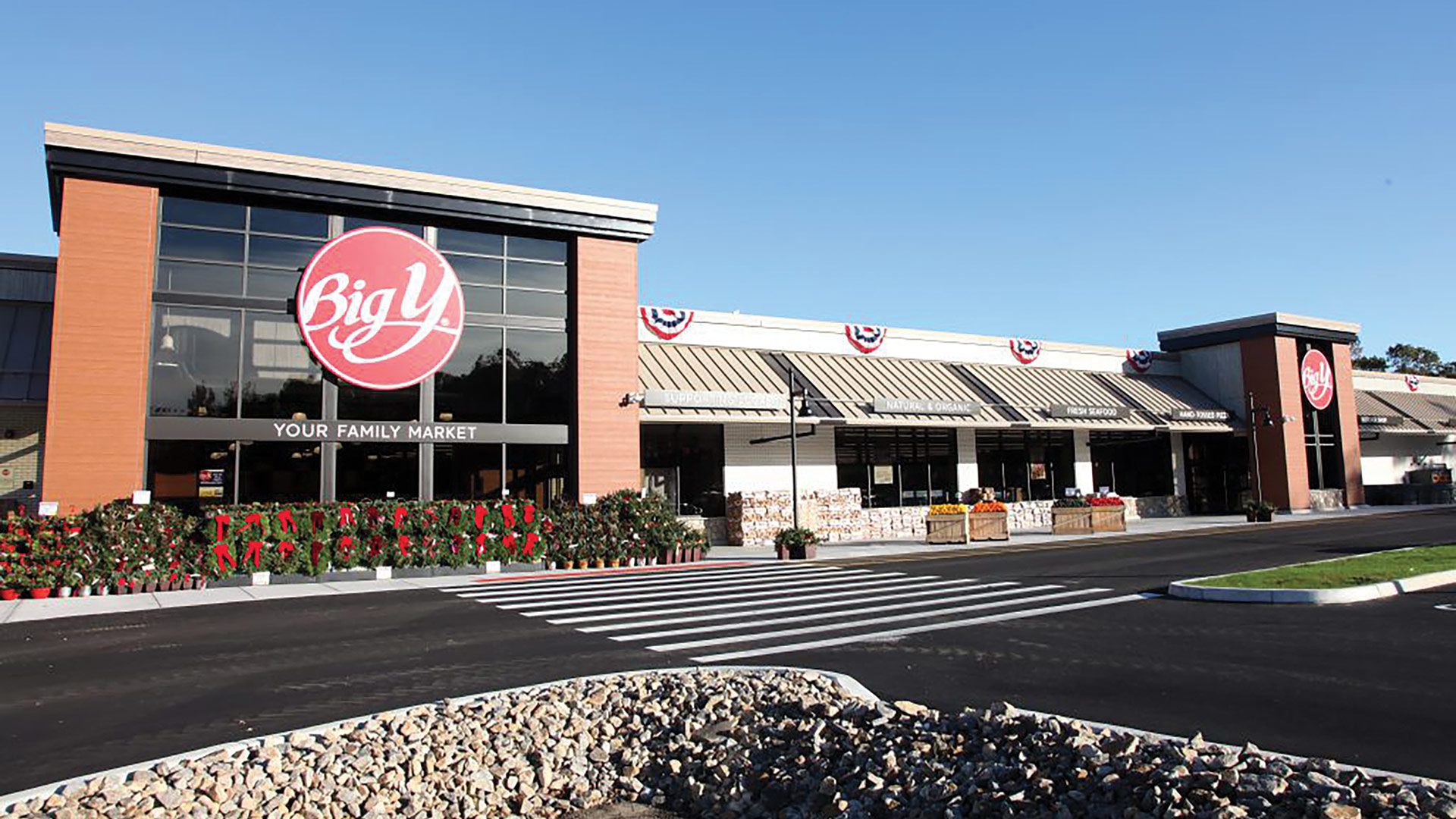
Michael D’Amour says he can envision 100 or more supermarkets

Michael D’Amour says he can envision 100 or more supermarkets by the time Big Y turns 100 in 2036.

“I have an opportunity to stay somewhat connected with the business but also get out of the way,” he said of this new role. “There is something unique about a family business; it’s hard to completely walk away from it. For so many years, and from a very young age, I’ve been involved with the company. I’m part of the company, and the company is part of me.”

For this issue, BusinessWest talked with senior management at Big Y about these changes in leadership and what will come next for the one of the region’s largest employers.


Produce Department

Michael D’Amour told BusinessWest that, while he — like other members of the second, third, and now fourth generations of the family — grew up in Big Y stores, handling a number of different assignments, he didn’t exactly set out to make this a career.

“In college, I was thinking about more about criminal psychology and things like that,” he said, adding that, when he returned home after graduating, he needed a job and, at his mother’s urging, took one working full-time in the deli department at the Big Y on Memorial Avenue in West Springfield.

After learning that side of the business, he moved on to other areas of supermarket operations and management, including the assumption of a lead role in creation of the food-services department that exists today, one that offers pizza, sandwiches, and many other options.

“We did business much the same way for decades, but over the past five years, the pace of change has greatly accelerated. We have to stay current, we have to stay educated, we have to stay knowledgeable, and we have to be able to share that wisdom and knowledge with our teams out in the stores.”

He would go on to open the company’s new store in South Windsor, Conn. in 2001, before moving on to other areas, including sales, produce, and fresh offerings, and eventually becoming vice president of Sales and Marketing and then COO in 2019. Since then, along with his uncle, Charlie, he has been a key face of the company and many of its recent initiatives..

Michael said he will bring to his new roles a leadership style he saw in his predecessors and is eager to emulate, one grounded in “listening more than we speak,” as he put it, giving employees at all levels the tools they need to succeed and focusing on teamwork.

As he talked, he made it a point to use ‘we,’ not ‘I’ when talking about leadership.

“We have an eye toward growth and innovation, not just with technology, but across the board,” he said. “We want to develop tools and processes to make our employees’ jobs easier and more effective, and also add to the customer experience.”

As for Bossie, he came to Big Y in 1986 after returning to the region after living in Alaska and working in a supermarket as a part-time service clerk.

He started working nights stocking shelves in the store in Great Barrington, and has since worked in all areas of store operations, including store director and, later, district director until his appointment as director of Operations in 2010.

In 2019, he was named senior vice president of Retail Operations and Customer Experience, where, in addition to his operations oversight, he also leads other retail banners such as Big Y Express gas and convenience and Table & Vine, along with teams for asset protection and continuous improvement.

He joins Michael D’Amour and Theresa Jasmin, the company’s chief financial officer, who joined Big Y nearly two decades ago and worked in a number of capacities before becoming CFO in 2020, as well as several of Michael’s siblings and cousins, as what would be considered the proverbial next generation of leadership at Big Y.

This new leadership group has come into place through careful consideration and a hard focus on succession planning, something that all ventures, and especially family businesses, need to make a priority, Charlie said.
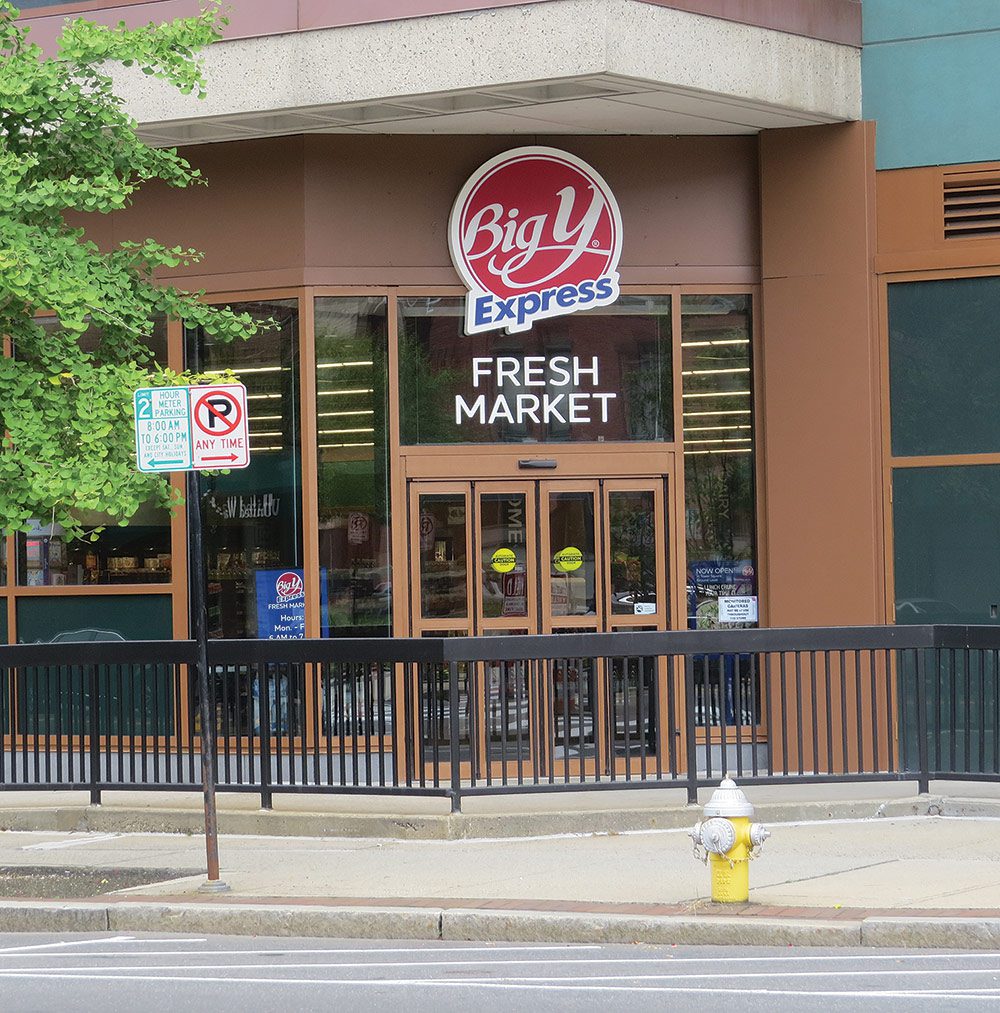
The Big Y Express Market in downtown Springfield

The Big Y Express Market in downtown Springfield is one of the many additions to the company’s portfolio in recent years.

“We spend an awful lot of time across the organization looking at succession, planning for it, and making sure we’re thoughtful about it — and working at all levels of the team to get ready for this particular point,” he told BusinessWest.

“There are not a lot of companies that can brag about passing the reins on to the next generation,” he went on. “And I’m very excited that we’ve been able to do that. The second generation has been involved in it, we didn’t screw things up too, too badly, and now the third generation can step in and continue the growth that we’ve enjoyed.”


What’s in Store?

As he talked about what comes next, for the new leadership and the company as a whole, those we spoke with said the company has achieved a strong pattern of growth, and the goal will be to continue this ‘little run,’ as Charlie D’Amour called it.

In addition, Michael D’Amour said he wants the company to build on its reputation as a great place to work, efforts that have culminated in awards such as listing by Forbes as a ‘Best-in-state Employer’ in Massachusetts and Connecticut and recognition from Newsweek as one of ‘America’s Greatest Workplaces for Diversity and Women.’

“It’s becoming harder and harder, given the environment in Massachusetts and Connecticut, to get development of new sites going. As the development costs continue to increase, increase, increase, we’ve had to walk away from some locations because it didn’t make any financial sense anymore.”


“We’ve made a lot of progress over the past few years, but we still have a long way to go, and for us this is a never-ending journey,” he said. “It’s a point of focus for us along with innovation and growth. We do a lot to educate and grow our employees — it’s turned out to be a great strength of ours, to be transparent with information as best we can and to help them grow, as employees but also as individuals.”

Bossie agreed, noting that, as the workplace evolves and the workforce becomes increasingly dominated by the younger generations, companies must responsive to their employees’ needs and expectations if they want to be successful.

“We have to be focused on the things they like to do and want to do, more so than me working night crew in 1986,” he said. “That kind of work might not be appealing to this latest generation of employees that we have, so we have to manage our business differently; we have to employ different tools and strategies and continue to ask, ‘what makes our workforce most satisfied and most engaged, and how can they serve our customers the best?’

“We did business much the same way for decades, but over the past five years, the pace of change has greatly accelerated,” he went on. “We have to stay current, we have to stay educated, we have to stay knowledgeable, and we have to be able to share that wisdom and knowledge with our teams out in the stores.”

As for growth of the company’s portfolio of supermarkets and other facilities, there will opportunities for organic growth and acquisition, and especially the later, said Michael D’Amour, adding that the company has already seen some of these opportunities, and there will be more in the years to come.

“There are some companies that don’t have succession plans, and others that have been struggling since the pandemic,” he noted, adding that there are independent stores and several smaller chains of stores that could become acquisition targets in the near future. “We’ve seen some opportunities already, and we’re going to continue to look at them and vet them fully; we think that’s going to be a big part of our growth over the next few years.

“We’re not going to buy Kroger tomorrow,” he went on, referring to the Ohio-based supermarket giant. “But something digestible, anything between one store and 25 to 30 stores tops, and it has to be contiguous to our marketplace; we’re not going to leapfrog into Minnesota or Florida. We’re going to be very opportunistic with our vehicles for growth.”

Jasmin agreed, noting that the company has always taken a calculated, thoughtful approach to growth — not growing for growth’s sake — and that this mindset will continue moving forward.

Charlie D’Amour concurred, noting that acquisition will almost certainly be the preferred path to continued growth, given the mounting challenges to finding sites for new stores and then clearing all the hurdles on the way to cutting a grand-opening ribbon.

To make his point, he cited the chain’s store in Clinton, Conn., a facility that took six years to open from start to finish, more than double the time it would have taken maybe a decade or so ago.

“It’s becoming harder and harder, given the environment in Massachusetts and Connecticut, to get development of new sites going,” he said. “As the development costs continue to increase, increase, increase, we’ve had to walk away from some locations because it didn’t make any financial sense anymore.”

Banking and Financial Services Special Coverage

Moving North

President Dave Glidden


Dave Glidden has long referred to it as the “I-91 corridor strategy.”

This is the growth plan for Middletown, Conn.-based Liberty Bank, one that, as the name suggests, focuses on the I-91 corridor, which stretches from New Haven into Southern Vermont.

The bank has followed that strategy, increasing its presence in Southern Conn., and now Western Mass. as well, taking another important step in what could be called its northward advance with the opening last month of its first branch in this region — on Shaker Road in East Longmeadow, just a few miles from the state line.

The facility, a former United Cooperative and then PeoplesUnited branch, was home to a commercial loan-production office that Liberty opened in 2021 and eventually moved to the 23rd floor of Monarch Place in downtown Springfield — after that LPO gave Liberty a foothold of sorts and convinced Glidden, the bank’s president, and other members of his leadership team that it was time to open a full-service branch in the 413.

“We generated a lot of volume and a lot of new customers out of there, and some good deposits,” he said. “When it got to that point, I said, ‘OK … we’ve proven that there’s space and a place for us in this market,’ and that’s when I decided to move the commercial-lending team and their support staff to Monarch Place and tear down the sheetrock and outfit a nice branch on Shaker Road.”

“We are selectively and cautiously considering where to go next. We don’t have to be in a rush, but I can see a total of maybe three to six branches over the next few years — if the right opportunities present themselves.”

With that move, the logical questions — and Glidden was ready for them — is where will the bank go next within the 413, and when?

“We are selectively and cautiously considering where to go next,” he told BusinessWest. “We don’t have to be in a rush, but I can see a total of maybe three to six branches over the next few years — if the right opportunities present themselves.

“I wouldn’t force the issue,” he went on, saying there is no firm timetable and no specific number of locations as a firm goal. “Maybe three to six branches, strategically located, with drive-thrus, with the focus on catering to small to medium-sized business owners. That’s our future plan.”

How this plan shakes out remains to be seen, obviously, and we’ll delve more into where the Liberty name and logo might appear next. For now, the bank wants to continue solidifying its beachhead and take the I-91 corridor strategy to different corners of the 413.

For this issue and its focus on banking and financial services, BusinessWest talked with Glidden about the next possible steps with this strategy and how the drive north will unfold.


Points of Interest

Glidden laughed when he noted that, when people tell him they see the bank’s TV commercials — “the ones with the emu and that guy with the mustache” — he no longer makes the effort to correct them and inform them that those are for the insurance giant Liberty Mutual.

“Why bother — what am I fighting it for?” he asked rhetorically, adding quickly that the last four words of each of those frequently, as in frequently, aired spots — ‘Liberty, Liberty, Liberty … Liberty’ — constitute solid name recognition that he doesn’t have to pay for. “Every time I see that commercial, I’m cheering; people come up to me and say, ‘I saw your commercial.’ I just say, ‘thank you; let me open a checking account for you.’”

Bank employees and elected officials

Bank employees and elected officials cut the ceremonial ribbon last month on Liberty Bank’s East Longmeadow branch.

This form of free advertising, if you will, is just one of many things that have gone well for Liberty over the past several years. In fact, Glidden said 2023 may be the bank’s third straight year of record profits, though the final numbers are not yet in.

But even if it’s not a record, the bank is maintaining a strong upward trajectory, which it owes to several factors, but especially its aggressive I-91 corridor strategy and the qualities needed to carry it out and gain market share across that wide area.

Elaborating, Glidden said the bank has several advantages, from a name that resonates and crosses state lines easily to a broad portfolio of products on both the commercial and consumer sides of the ledger; from a commitment to the latest digital technology to an attractive size.

Indeed, with more than $7 billion in assets and 56 locations in Connecticut and two in the Bay State, Liberty, the oldest mutual bank in the country, can “out-local the national banks and out-national the local banks,” said Glidden, a native of Holyoke who is well-known in this region and has long considered Western Mass. the next logical area of expansion for the bank.

“We can deliver a balance sheet that’s going to be large enough for 99.9% of the companies up there to grow to whatever they want to be,” he said, adding that this size, coupled with lenders who know and hail from Western Mass., has enabled Liberty to make solid inroads in the local market and presents opportunities to gain market share in this region.

And many changes to the banking landscape, but especially the advent and continued evolution of digital platforms and mobile apps, make it easier to cross state lines, he went on.

“The habits of consumers and small businesses, what they’re looking for from a bank, are not the same as they were 15 years ago.”

“The habits of consumers and small businesses, what they’re looking for from a bank, are not the same as they were 15 years ago,” Glidden explained. “Do they want to know that their bank has a branch so that, if there’s an issue, they can go in and sit with someone and get advice? Yes. But, across the board, transactions and visitations to branches continue to decline, and that decline is not projected to slow down any time soon.

“And that kind of changes the playing field in the sense of being able to go over the line with maybe a toe in the market,” he continued. “If this was 10 to 15 years ago, and I made the decision that I wanted Liberty to go into Western Massachusetts and compete, I probably would have looked to do it through an acquisition strategy. That doesn’t mean that acquisition strategies are off the table, but you don’t have to do that now with digital and mobile apps.”


By All Accounts

As for the growth strategy in the 413, Glidden said that, as with the initial thrust into the region in East Longmeadow, the focus — the ‘macro strategy for this market,” as he called it — is an emphasis on small business and commercial lending, realms that build customers, relationships, deposits, and more, and cement the need for additional branches.

This was the strategy followed in New Haven, where the bank established an LPO, and again in Hartford. And it is the same strategy being deployed north of the border in Greater Springfield.

As he scans the Western Mass. landscape — and, again, he knows it well from his years as regional president at TD Bank — Glidden acknowledged that Western Mass., is, by and large, a no-growth area. And most of its communities — and East Longmeadow is squarely in this category — are considered overbanked.

But there are opportunities, he noted, adding that his team is looking at maps and crunching numbers as they consider where to go next.

There are what would be considered obvious landing spots, he said, mentioning larger population and commercial centers such as West Springfield, Holyoke, Chicopee, and Westfield, and these may well be the next push pins on the wall map.

“The analytics you use on this stuff gets so complicated … sometimes you need to just take a step back and say, ‘where are all the people, and where are all the businesses?’” he said. “And just put them there.”
‘There’ probably doesn’t mean Hampshire County, at least not at this time, he went on, adding quickly that he certainly wouldn’t rule out putting a branch in a community like South Hadley, which borders Holyoke, Chicopee, and Amherst, and is another of those ‘overbanked’ communities in Western Mass.

“Right now, we’ve had success on the commercial and small-business side; let’s look at Greater Springfield and the surrounding communities,” he told BusinessWest. “If Springfield is the hub, then look at the spokes around there and find the right places to sprinkle a few more branches to service our growing customer base there.”
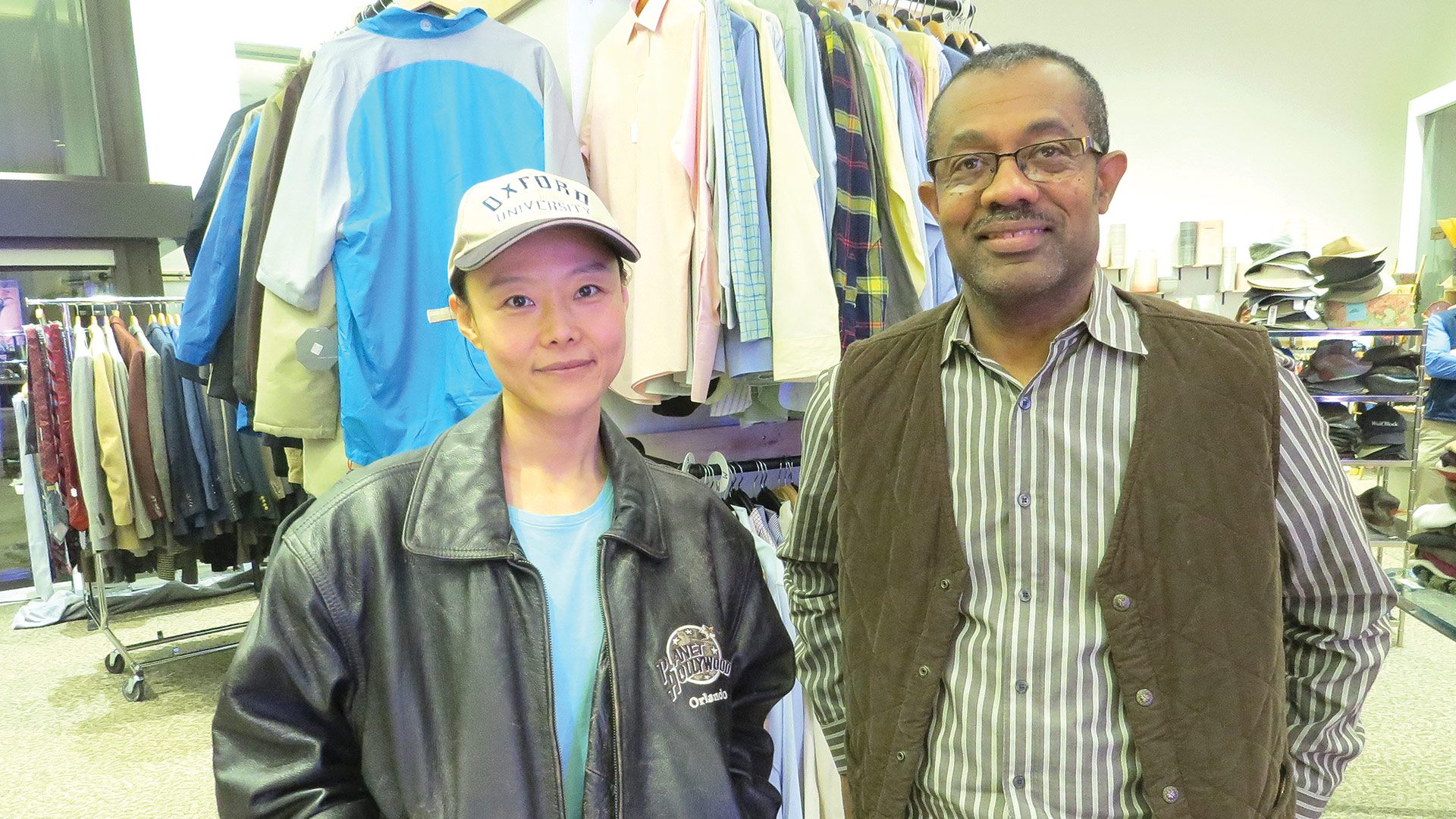
As he looks ahead, Glidden isn’t expecting another record year when it comes to profitability for Liberty Bank.

Indeed, while 2023 was a very strong year, the pace of growth started to slow during the third and fourth quarters, and this trend will, in all likelihood, continue in the year ahead.

But what will also continue is implementation of the bank’s I-91 corridor strategy, one that has seen Liberty makes its first moves in the Western Mass. market and establish a foothold.

The goal for 2024 and the years to follow will be to strengthen that hold and take the brand to different communities across the region. Just where, when, and how the next steps will take place remain to be seen, but one thing is clear: Liberty’s march north is just getting started.

Commercial Real Estate Special Coverage

Suspense Is Building

Evan Plotkin shows off the new offices

Evan Plotkin shows off the new offices of the Department of Children and Families, one of several new tenants at 1350 Main St. in Springfield.

Evan Plotkin can look out the windows of his offices on the 14th floor at 1350 Main St. and see many signs of progress, and momentum, in downtown Springfield.

Across neighboring Court Square, the renovated hotel at 31 Elm St. that had been vacant and deteriorating for years is getting set to welcome its first residential tenants. Meanwhile, the park itself is undergoing a much-anticipated, $6 million facelift.

Further south on Main Street, Plotkin, president of the real-estate company NAI Plotkin, referenced the so-called Clocktower Building and, behind it, the Colonial Block, two more mostly vacant, underutilized properties that are being targeted, like the former Court Square Hotel, for market-rate housing that is expected to bring more people, vibrancy, and opportunities for retail and hospitality businesses to the downtown.

Gesturing in a different direction, he referenced the new parking garage rapidly taking shape where the dilapidated Civic Center garage once stood. That garage and accompanying facilities are expected to provide another jolt of energy downtown, he noted, and be much more than a place to park cars.

“There’s new energy coming into the city,” he said, noting that he met with the Chicago-based group named the preferred developer of the Clocktower Building and Colonial Block project, and came away impressed with their enthusiasm for doing something in Springfield. “I think we’re really turning a corner; I think we’re at a tipping point.”
“There’s new energy coming into the city. I think we’re really turning a corner; I think we’re at a tipping point.”
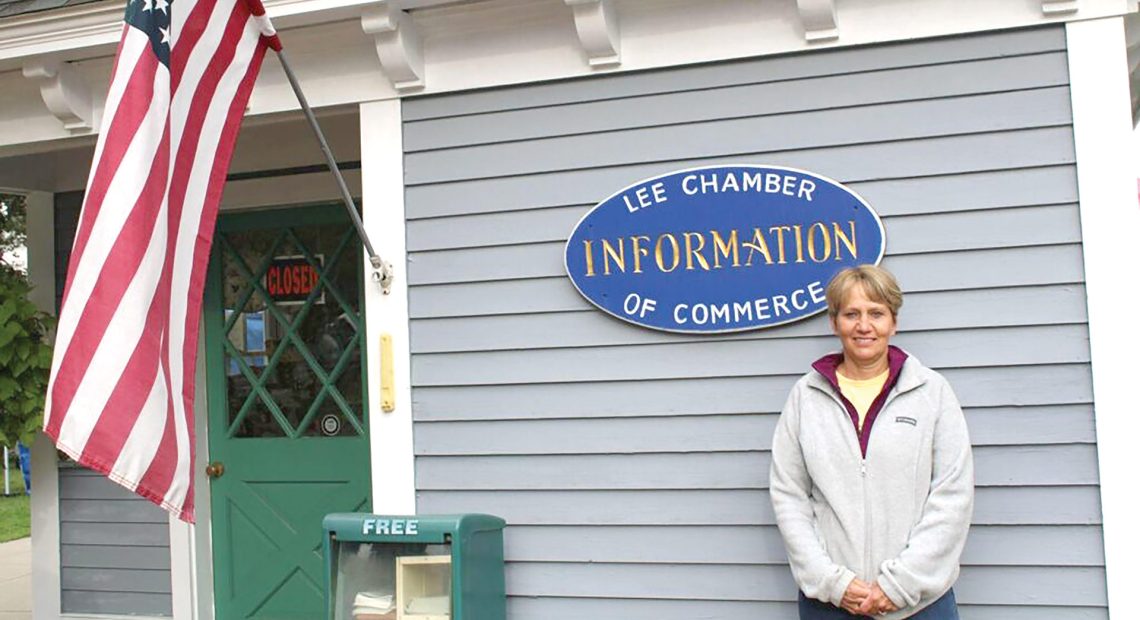
For other signs of progress, momentum, and turning the proverbial corner, Plotkin doesn’t have to look outside his windows. Instead, he can get in the elevator outside his suite of offices and ride in either direction.

Going down a few floors, he can point out the new offices of the Department of Children and Families (DCF), which now occupies the seventh and eighth floors, which had long been vacant. Going down to the sixth floor, he can show off the new digs of the Committee for Public Counsel Services.

And by pushing the button for the lobby, Plotkin can show off many intriguing new developments, including Keezer’s Classic Clothing, the oldest second-hand fashion store in the country. The store, which opened in late November, is one of several new women- and Latino-owned incubator businesses now located in former bank offices transformed into what’s known as 1350 Market, a program oversen by the Latino Economic Development Corp. He also pointed to what had been a Santander Bank branch at the front of the property facing Main Street, space now being considered for a new restaurant. There’s even a new gym on the ninth floor.

Plotkin pushed all those buttons during a recent tour of 1350 Main, a building that has had several vacant or mostly vacant floors in recent years but is rapidly filling in those spaces, with the promise of more. Indeed, he said a party has expressed strong interest in the top two floors of the property, once the corporate headquarters for Bank of Boston.

These developments obviously bode well for this office tower, he noted, adding that he and his business partners recently acquired the first five floors from its previous owners and now own the entire property.

Wenting Jia, left, has partnered with Dick Robasson

Wenting Jia, left, has partnered with Dick Robasson, owner of two Keezer’s locations in Cambridge, to bring the concept to Springfield.

But they also bode well for the downtown area, he said, noting that the new tenants mentioned earlier bring a combined 400 or so workers to the central business district on a daily basis, providing a boost for restaurants and other businesses.

They also help what has been a somewhat sluggish office market in the downtown, Plotkin explained, noting that these new leases take space off the market, creating better demand for existing vacant space and potentially higher lease rates, even as questions linger concerning the long-range impacts of remote work and hybrid schedules on the overall office market.

“To have that kind of absorption in the downtown office market helps everyone in the downtown,” he said. “It’s all about supply and demand; there’s been a lot of vacancy in the downtown, and when there’s vacancy, we have to be very cost-effective and competitive in our pricing; when there’s that much space in the market, there’s downward pressure on lease rates.”

For this issue and its focus on commercial real estate, we talked at length with Plotkin, who played multiple roles on this day, from tour guide to analyst, addressing what all these developments mean and what might come next because of them.


Dressed for Success

As the tour stopped at Keezer’s, Plotkin first pointed out artwork crafted from recycled plastic and took a moment to look over a table loaded with vintage sweaters, a small part of a much larger collection that also includes shirts, suits and sport jackets, overcoats, shoes, designer jeans, and more.

He said his sons tell him these threads are trendy and in-demand, and he’s seen some evidence that they are correct in that assessment.

“They have one-of-a-kind items you can’t find anywhere else,” he said. “And I didn’t realize the draw of that kind of retail, but according to my kids, who are in their 20s and 30s, that’s what they love, because it is one of a kind; you can find something there that no one else has. So it’s a big draw for young people.”

The arrival of Keezer’s — this is the third store for the Cambridge-based retailer — and the other businesses in the incubator, which range from a nail salon to a business specializing in cryotherapy, is just one of many developments that have brought new vibrancy to 1350 Main, a property that has been lagging other office towers in the downtown when it comes to occupancy rates.

1350 Main

A pending deal could bring 1350 Main to 80% occupancy.

But those numbers are much improved through the absorption of more than 60,000 square feet of space, most of it through the arrival of those two state agencies mentioned above.

DCF, formerly located on High Street in the former Wesson Hospital, now occupies two full floors, seven and eight (last occupied by Unicare and vacant for more than 15 years) and a large part of the 13th floor as well.

Meanwhile, the Committee for Public Counsel Services and its Public Defender division, Children and Family Law unit, and Youth Advocacy division now occupy the entire sixth floor, space that had not been occupied since 2012.

Overall, Plotkin and his partners invested nearly $4 million to renovate those spaces and turn the lights back on, he said, adding that these investments have paid off in long-term leases (10 years in each case) from both of those agencies.

Their arrival brings overall occupancy in the building to roughly 70%, a nearly 20% jump, he said, adding that the number could go higher still if a promising lead to lease the top two floors, 16 and 17, comes to fruition.

“Arguably, it’s the nicest space in the city,” he told BusinessWest. “There are outdoor balconies — you can see Hartford from there — and it’s all furnished; there’s even a separate elevator for those two floors and a winding staircase that connects the two floors.

“And we have a very interested party that we’re talking to now that wants the entire two floors; that’s another 30,000 square feet,” he said, adding that the space was most recently occupied by Disability Management Services, which left to take a smaller footprint in Tower Square in 2022. “I have a very good feeling that this is going to work.”


Space Exploration

If the deal comes to fruition, that will bring the building to 80% occupancy and take 90,000 square feet of class-A space off the market in roughly a year, both impressive developments at a time when the office market has been struggling and there has been speculation, from Plotkin and others, about whether some office facilities could or should be retrofitted for other uses.

“Everyone’s looking at how you reposition office properties when you have so much vacancy coming on the market,” he said. “So these have been very important and meaningful steps for this market.”

“To have that kind of absorption in the downtown office market helps everyone in the downtown. It’s all about supply and demand; there’s been a lot of vacancy in the downtown, and when there’s vacancy, we have to be very cost-effective and competitive in our pricing; when there’s that much space in the market, there’s downward pressure on lease rates.”

And he projects that the overall commercial real-estate market will continue to fare well in 2024. Indeed, he said the market is showing positive signs in most major categories, including office, retail, and industrial.

The recent new additions at 1350 — and the promise of more — inspired Plotkin and his partners to bring valet parking back to the property.

It was initiated several years ago but rendered unnecessary at the height of COVID because few were to coming to the building — or any of the surrounding properties, for that matter.

The return of the valet service was made more necessary, he noted, by the demolition of the Civic Center parking garage, which made it necessary for tenants of 1350 Main, new and old, to park in lots further from the property.

When the new garage is open, the valet service will continue, he went on, adding that it will benefit not only his property, but others around it, including City Hall, Court Square, the MassMutual Center, and others.

Likewise, the new employees now coming to the building every day, as well as the agencies’ clients and customers of establishments like Keezer’s, should help existing and potential new businesses in the downtown, he noted, adding that the developments at 1350 Main are just part of a surge in momentum he’s seeing downtown.

Elaborating, Plotkin, who has worked downtown for more than 40 years and has long been a champion of the city and its central business district, said the needed ingredients for a successful downtown are coming into focus. These include people, places to live, things to do, and hospitality-related businesses such as restaurants and clubs.

People are perhaps the biggest ingredient, he said, adding that this means residents, workers, and visitors. Workers have been in shorter supply since COVID, he noted, and downtown businesses have certainly felt the pinch.

“That’s why what’s happening here at 1350 Main is so exciting to me,” he said. “All those new employees will patronize restaurants, businesses, banks, and stores. It’s an opportunity for a lot of good things to happen.”

Or more good things, to be specific.

Community Spotlight Special Coverage

Community Spotlight

Kathy DeVarennes

Kathy DeVarennes says there is a downside to Lee’s white-hot housing market: a shortage of affordable homes for working-class families.


Chris Brittain says the report wasn’t exactly surprising, but it was still quite eye-opening.

Indeed, by the time the Boston Business Journal listed Lee as one of the three hottest housing markets in the Bay State last August — along with Edgartown on Martha’s Vineyard and the gateway city of Lowell — most in this community didn’t need to be told just how hot things were in town.

They already had plenty of direct or anecdotal evidence to that effect.

“People have been buying homes for well above the asking price,” said Brittain, Lee’s town administrator, noting that the median home value in Lee was $256,000 five years ago, $370,000 a little more than a year ago, and nearly $400,000 last June, one of the largest upward swings in the state over that time.

He said the surging prices are in part a reflection of the run-up in value of vacation and second homes, but also the product of supply and demand; there is limited supply, and demand has been soaring, in Lee and most other Berkshires communities, in the wake of COVID and the growing popularity of remote work. He speculates that Lee appears at the very top of the list because home values are generally lower — although the gap is certainly closing — than in neighboring communities such as Lenox and Stockbridge, which are also hot markets.

Surging home prices are not the only intriguing development in Lee, said Brittain, noting some real headway in the long-anticipated, scaled-down project known as Eagle Mill, which involves new construction and conversion of some of the town’s many former paper mills into a mixed-use development featuring housing, retail, and a restaurant.

There’s also movement with plans to create a new public-safety facility downtown, on the site formerly occupied by the Department of Public Works, which is moving to a commercial property on Route 202 that the town has acquired. The price tag for the various phases of the initiative is roughly $37 million, he said, adding that the DPW will likely be moved in the spring, with demolition of those properties to follow, and construction of the new public-safety facility to likely commence in the spring of 2025.

“We started to see people wanting to move to move rural areas. During COVID and right after it, I knew of people who would put their house up for sale, and by the end of the day, they had five offers over what they were asking, and people hadn’t even come to look at the house; they just wanted to get out of the city.”

Meanwhile, there was more talk about how to celebrate the town’s 250th birthday, coming up in 2027.

And there is continued bounceback from the difficult COVID years, with travel to Lee and other Berkshires communities returning, and many different types of hospitality-related businesses doing as well as, if not even better than, they were before the pandemic, said Kathy DeVarennes, director of the Lee Chamber of Commerce, which recently celebrated its own milestone — 100 years in operation.

She said the business community in Lee is large, diverse, and resilient, with ventures ranging from Prime Outlets Lee, just off the Mass Pike exit into town, to High Lawn Farm, a third-generation dairy farm and creamery approaching its own centennial that has become a real destination for visitors, to an eclectic mix of businesses along Main Street that give it a unique flavor.

Businesses like the Starving Artist Café & Creperie, which offers organic, vegetarian, vegan, and gluten-free menu options for breakfast and lunch.

Owner Emmy Davis, who opened the café in 2012, said one of its traditions, and main attractions, is a Sunday brunch served all day. During this time of year, there are some travelers coming to brunch, as well as some with second homes in town coming in for the weekend, but it’s mostly locals.

“During the summer, though, it’s crazy; on Sundays in the summer, there’s often a line out the door,” she said, adding that visitors will stop in on their way to one of the many attractions only a few miles away, from Jacob’s Pillow in Becket to Tanglewood in Lenox. “There’s a lot going on constantly, so there’s a lot more people.”

Lee’s iconic downtown

Lee’s iconic downtown, which boasts an eclectic mix of stores and restaurants, continues its comeback from COVID.

And brunch at the Starving Artist provides an effective snapshot of what businesses generally see and when they see it, she said, adding that travelers pass through or stay at some of the many inns and hotels in the community all year round, but summer and fall are obviously the busiest times.

For this latest installment of its Community Spotlight series, BusinessWest looks at how all of these factors are coming together to create even greater vibrancy in the community known as the Gateway to the Berkshires.


Staying Power

When Bob Healey and his wife, Olia, started talking about buying the historic bed and breakfast on Main Street in Lee, the one created from a schoolhouse built in 1885, some thought they were … well, “crazy,” Bob said.

After all, they were both just 23 years old. Meanwhile, the year was 2009, and the region was still trying to dig out from what became known as the Great Recession.

“It certainly wasn’t the best time to be thinking about doing something like this,” he said, adding quickly that he and Olia believed in the property — and they believed in themselves. And they found a lending institution, Lee Bank, to believe in them as well.

As a result, they’ve been able to write more history for a property that was barely saved from the wrecking ball and then successfully moved one block — a feat many didn’t believe was possible — and is now an important part of Lee’s iconic downtown.

They call it the Chambery Inn, named after the town in France from which five nuns were sent to staff the school, and it has become a fixture, with 10 rooms, many featuring original blackboards from its days as a school.

“We have these city people coming in and paying cash for homes that used to be the homes of working-class families that sent children to our schools. Prices have skyrocketed, and that makes it more difficult for young families to find affordable housing to purchase.”

Healey, like Davis, said downtown is thriving at present, making an almost full recovery from the traumatic COVID years.

“We have an absolutely amazing Main Street,” he said. “It’s a town of 6,000 people, and we have more than 60 eateries. As the Gateway to the Berkshires, the location is really key, and it’s kind of an iconic American Main Street.

The comeback, and continued evolution, of Main Street is one of the major developing stories in Lee, with the other being the housing market, which might have cooled off a little, but still remains quite hot.

“COVID had a lot to do with it,” said Brittain, who had served the town in several different capacities over the years, including stints as moderator and town clerk, before becoming interim town administrator in 2021 and then losing the interim tag. “That’s when we started to see people wanting to move to move rural areas. During COVID and right after it, I knew of people who would put their house up for sale, and by the end of the day, they had five offers over what they were asking, and people hadn’t even come to look at the house; they just wanted to get out of the city.”

The surge, which is still ongoing, has been good for sellers, but there is certainly a downside to Lee’s housing boom, said both Brittain and DeVarennes, noting that it’s now much harder to find something that would be considered affordable in town.

A recently retired school teacher, DeVarennes said the lack of affordable housing can be seen in decreasing enrollment in the community’s schools.

“We have these city people coming in and paying cash for homes that used to be the homes of working-class families that sent children to our schools,” she said. “Prices have skyrocketed, and that makes it more difficult for young families to find affordable housing to purchase.”

The Eagle Mill project will create 128 units of market-rate housing, but there is a definite need for more housing, especially in the affordable category.

Lee at a glance

Year Incorporated: 1777
Population: 5,788
Area: 27 square miles
County: Berkshire
Residential Tax Rate: $11.83
Commercial Tax Rate: $11.83
Median Household Income: $41,566
Median Family Income: $49,630
Type of Government: Representative Town Meeting
Largest Employers: Lee Premium Outlets; Onyx Specialty Papers; the Landing at Laurel Lake; Oak n’ Spruce Resort in the Berkshires; Big Y
* Latest information available

“It’s a subject that comes up a lot in town,” said Brittain, noting that many of the younger professionals and blue-collar workers in Lee are increasingly finding themselves priced out and with limited options if they desire to stay in this community.


Getting Down to Business

But while it’s becoming more difficult to live in Lee, the growing number and variety of businesses — and that includes a new Starbucks in the site of a former Friendly’s near the turnpike exit — make it an ever-more inviting place to visit, said those we spoke with.

Foot traffic may not have fully rebounded to pre-pandemic levels, said DeVarennes, but the community, with its location just off exit 10, certainly lives up to the Gateway nickname. Indeed, people pass through on their way to better-known destinations like Stockbridge and Lenox, but they also often stop and stay — for a few hours or a few days.

And there is plenty to see and do, such as High Lawn Farm, where families can see a dairy farm in operation and also get ice cream and buy butter, cheeses, and other products.

“If you go on a weekend during the summer, it’s packed,” DeVarennes said. “It’s a wonderful place and a real destination.”

Meanwhile, the town’s iconic downtown continues to thrive, she added, noting that it has a deep mix of stores and is easily walkable.

“There are quite a few good restaurants and businesses,” she said, adding that there is great stability — many businesses have been there for decades — but also a fairly steady stream of new and intriguing businesses.

That includes a new yoga studio that will soon open its doors and a comic-book store recently opened by Davis’s husband, Ryan.

“Since we’ve opened, a lot of people have been psyched because there’s nothing in the Berkshires like it — you have to go to Northampton to find something like this,” she said, adding that the store, like many of the businesses on Main Street, appeals to local residents, but becomes part of the draw for visitors.

Healey agreed.

“It’s a very nice Main Street to walk, but it’s also a Main Street where you won’t find a lot of franchises and such,” he said. “It’s really mom-and-pops with a lot of character.”

Added Davis, “we have a great little community of downtown businesses — everyone supports one another. And the more the merrier in downtown; more businesses bring more people to the area to hang out.”

Over the years, Lee has seen a steady source of reasons to come and hang out. And live, year-round or during the summer and on weekends. And tackle remote work. And start a business.

All of that makes it a draw — and, now, one of the hottest real-estate markets in the state.

Opinion

Editorial


Photo by Leah Martin

Fredrika Ballard, founder and owner of Fly Lugu Flight School, one of BusinessWest’s Women of Impact for 2023, was one of three people who died tragically in a plane crash in Leyden, at the Greenfield line, on Jan. 14.

The others killed were William Hampton, a flight instructor, and Chad Davidson, a student pilot.

Their deaths sent shock waves through the region, its business community, and all of us here at BusinessWest, who, in a short time, came to know Ballard as the epitome of the program created by those at the magazine to recognize women who are making a difference in this region.

Ballard, a flyer since her youth and a true entrepreneurial spirit, brought both of those qualities together in Fly Lugu, a name whose origins could be traced to something her father told her about how, when it came to the yoke of a plane, when you look up, you go up — LUGU.

Ballard brought that sentiment not just to flying, but to life in general. To move forward, she said, one had to look up, be positive, and move with confidence.

She did all of that, and she inspired others to do so as well, again, not just with flying, but with their lives and careers.

BusinessWest created its Women of Impact program, and chose that name, not simply to honor successful businesswomen, although several of them have been recognized. It was created to honor women who stand out, women who are true leaders, women who are mentors to others, women who inspire those around them to set a higher bar — in their work and in their lives — and then clear that bar. Women whom others consider powerful forces in their lives.

Ballard was all of these things and more, and this is why she epitomizes that phrase Woman of Impact. She was a success in business and a true entrepreneur, but she was also a teacher, a mentor, and an inspiration.

Opinion

Opinion

By Dr. Negar Beheshti

In a world where the pursuit of perfection can sometimes overshadow the significance of self-compassion, MiraVista Behavioral Health Center emphasizes the need for New Year’s resolutions that prioritize mental health and are both realistic and achievable. This approach aims to reduce the pressure often associated with traditional New Year’s resolutions and promotes a more holistic perspective on personal growth. The key themes are:

Prioritize self-care rituals. Resolve to incorporate daily self-care rituals into your routine. This could include activities like meditation, reading, taking a warm bath, or going for a nature walk.

Establish healthy boundaries. Set clear boundaries in your personal and professional life. Learn to say ‘no’ when necessary and prioritize activities that contribute positively to your well-being.

Cultivate mindfulness and presence. Make a commitment to being more present in the moment. Practice mindfulness through activities like meditation, deep-breathing exercises, or simply taking a moment to appreciate the present.

Nurture positive relationships. Focus on building and strengthening positive relationships. Invest time in meaningful connections with friends and family, fostering a support system that contributes to your emotional well-being.

Limit screen time. Reduce the time spent on electronic devices and social media. Allocate time for activities to promote mental health, such as reading, engaging in hobbies, or spending quality time with loved ones.

Practice gratitude. Start a gratitude journal and make it a habit to reflect on the positive aspects of your life. Regularly expressing gratitude can shift your focus towards positivity.

Engage in regular physical activity. Choose physical activities that you enjoy and make them a regular part of your routine. Exercise has proven benefits for mental health, releasing endorphins that can boost mood and reduce stress.

Seek professional support. Break down the stigma surrounding mental health by committing to seeking professional support when needed. Therapy or counseling can provide valuable tools for managing stress, anxiety, or other mental-health challenges.

Embrace a healthy sleep routine. Prioritize sleep by establishing a consistent sleep routine. Ensure that you are getting enough restorative sleep each night, as it plays a crucial role in mental and emotional well-being.

Learn a new skill or hobby. Engage your mind in positive and creative activities by learning a new skill or picking up a hobby. This can provide a sense of accomplishment and contribute to your overall sense of well-being.


Dr. Negar Beheshti is a board-certified child, adolescent, and adult psychiatrist and chief medical officer for both MiraVista and TaraVista Behavioral Health Centers.

Daily News

WEST SPRINGFIELD — The certified public accounting firm Burkhart, Pizzanelli, P.C. announced two recent additions to its professional team.

Kimberly Howarth

Kimberly Howarth, CPA received her bachelor’s degree in business administration from Bryant University in 2005 and a master’s degree in accounting from Western New England University in 2007. Her prior experience includes the position of senior accountant specializing in tax preparation.

Howarth has vast experience in preparing and reviewing tax returns. In addition to working with small and mid-sized businesses to fulfill their accounting, payroll, and tax-preparation needs, she has significant experience preparing individual and trust returns, as well as probate accounting.

Jenna Roux

Jenna Roux, CPA received her bachelor’s degree in accounting from Central Connecticut State University in 2012 and her master of taxation degree from University of Hartford in 2015. Her previous experience includes the position of senior accountant focusing on multi-state corporate, partnership, individual, and nonprofit income-tax returns.

In addition, Roux has expertise in real-estate accounting practices, as well as functioning as an ‘outsourced CFO’ providing strategic consulting and support of daily financial activities.

Daily News

SPRINGFIELD — MP CPAs recently announced the promotions of Brooke Williams to audit manager and Matt Baran to tax manager.

Brooke Williams

Williams manages audits, reviews, and compilations for small to medium-sized businesses. She also manages audits of Massachusetts charter schools (governmental entities), nonprofit organizations (including yellow book and single audits), and employee benefit plans.

Williams joined the firm in 2019 and has more than five years of experience in public accounting. She holds a bachelor’s degree in accounting and economics and a master’s degree in accounting from Westfield State University. She is a certified public accountant and a member of the American Institute of Certified Public Accountants and Massachusetts Society of Certified Public Accountants. She takes an active role in the local community by participating in various community fundraising and networking events.

Matt Baran

Baran provides consulting and tax solutions to a diverse group of clients, including individuals, partnerships, corporations, and trusts. He specializes in working with high-net-worth clients and with private-equity firms and their owners.

Baran joined the firm in 2018 as an intern and started full-time later that year. He holds a bachelor’s degree in accounting and a master’s degree in accounting and taxation from UMass Amherst. He remains involved in recruiting and mentorship efforts with the university.

Daily News

SPRINGFIELD — Bulkley Richardson announced that Stephen Holstrom and Lauren Ostberg were promoted to partner, effective Jan. 1.

Holstrom is a general practice litigator with a focus on medical-malpractice defense. In addition to medical-malpractice cases, he has litigated complex tort actions, commercial disputes, insurance cases, complex class actions, and education cases.

Ostberg, a key member of Bulkley Richardson’s intellectual property and technology and cybersecurity practice groups, also maintains a diverse commercial-litigation practice.

“Steve is an asset to the medical-malpractice and general-litigation teams. With a strong work ethic and persuasive skills, he continues to earn the respect of his peers,” said Dan Finnegan, managing partner. “Lauren has established herself as a leader in many technical areas of the law, and her dedication to achieving results for clients is unwavering. As co-chair of the firm’s cybersecurity group, she has been instrumental in launching the robust practice and positioned herself as a go-to cyber resource.”

Daily News

HOLYOKE — The Western Mass Runners Hall of Fame (WMRHoF) board of directors announced the inductees of the third class, set to be honored on Friday, March 8.

Since its inception, the WMRHoF has celebrated outstanding contributors to the running community, with its first class inducted in 2020 and the second in 2022. The third class inductees are Ric Bourie, Mary Cobb, Howard Drew, Sue Haryasz, Rich Larsen, Nicole McGilpin, Bob Neil, Bill Romito, Ed Sandifer, and John Stifler.

In addition to these distinguished individuals, the charity organization Griffin’s Friends, which has supported children with cancer and their families for decades in the Springfield area by running and raising funds, will be inducted. Also, Neal Lamberton, a runner who has volunteered his time to the running community for years, will receive the Brian Goddu Volunteer of the Year Award, founded in memory of Goddu, a founding board member of the Western Mass Runners Hall of Fame.

The induction ceremony will take place on Friday, March 8 at 6 p.m. at the Holyoke Elks Lodge. The guest speaker will be Bob Hodge, third-place finisher in the 1979 Boston Marathon, multiple Mount Washington Road Race champion, 40-year course record holder on the DH Jones/Amherst 10 Mile Course, and author of Tale of the Times.

Tickets for the dinner and ceremony are priced at $20 and are available for purchase by clicking here. For those unable to attend but wishing to support the WMRHoF mission, donations are welcome via the RunReg website.

Picture This

Email ‘Picture This’ photos with a caption and contact information to [email protected]


No Shave November

During their annual No Shave November initiative, TommyCar Auto Group and the Hampshire County Sheriff’s Office raised a record-breaking total of $9,826.90 for Dana-Farber Cancer Institute. Throughout November, members of the Hampshire County Sheriff’s Office embraced No Shave November, setting aside their razors to symbolize solidarity in the fight against cancer. Each participant made a $20 donation, with all proceeds directly benefiting the Tom Cosenzi Driving for the Cure Charity Golf Tournament, a key supporter of Dana-Farber.

Pictured: TommyCar President Carla Cosenzi and Sheriff Patrick Cahillane.

Pictured: TommyCar President Carla Cosenzi and Sheriff Patrick Cahillane.


Supporting Military Families

Throughout the month of November, Freedom Credit Union collected cash donations at all its branches on behalf of the Westover Galaxy Community Council to support military service members and their families at Westover Air Reserve Base (ARB) in Chicopee. A total of $2,032.83 was collected from members, staff, and the community, which Freedom matched for a total donation of $4,065.66.

Pictured: John Beaulieu (left), president of Westover Galaxy Community Council, and Glenn Welch, President and CEO of Freedom Credit Union. (Photo by Market Mentors)

Pictured: John Beaulieu (left), president of Westover Galaxy Community Council, and Glenn Welch, President and CEO of Freedom Credit Union. (Photo by Market Mentors)


A Merrier Christmas for Kids

Westfield Bank invited its customers and community members across Western Mass. and Northern Conn. to help provide new toys and books to children in local communities as part of its 2023 toy drive. From Nov. 23 through Dec. 13, all Westfield Bank branches collected new, unwrapped toys, books, and monetary donations. Each branch donated to an organization or charity local to its service area.

Pictured, from left: Mike Mirski, Matt Valliere, Stephanie Morales, Marc Massey, and Laurie Mathews at Westfield Bank’s main office.

Pictured, from left: Mike Mirski, Matt Valliere, Stephanie Morales, Marc Massey, and Laurie Mathews at Westfield Bank’s main office.