Daily News

MONSON — Monson Savings Bank will host a free Community Shred Day on Saturday, June 15 from 9 a.m. to noon at the bank’s 146 Main St., Monson branch. As in past years, Monson Savings Bank is partnering with PROSHRED of Wilbraham for this event. The bank will be welcoming the public to dispose of their private documents onsite. All are welcome.

Storing documents that contain personal information in the home can pose a major security risk. Monson Savings Bank is encouraging residents to shred any documents they no longer need, especially those that contain private information. The bank’s free Community Shred Day is an opportunity to properly discard unwanted documents, such as tax returns, bank or credit-card statements, bills, medical records, and more.

“Protecting the personal information of our customers and community members is a top priority at Monson Savings Bank,” said Dan Moriarty, president and CEO. “Our entire team works diligently to keep personal information secure and safe. We are happy to extend additional protection to our customers with a free Shred Day, allowing them to dispose of their sensitive documents in a secure way.”

Pre-packaged refreshments and giveaways will be available, while supplies last.

Daily News

MONSON — Monson Savings Bank will host a free seminar on Wednesday, June 26 from 5:30 to 7:30 p.m. at Twin Hills Country Club in Longmeadow. The seminar will be focused on helping attendees from businesses grow their awareness of risks and prevention methods related to fraud, scams, and cybersecurity.

In the no-cost seminar, expert speakers Heather Arbour, Monson Savings Bank vice president, BSA/fraud officer, and compliance manager; Paul Shepardson, Monson Savings Bank assistant vice president and digital systems officer; and Charlie Christianson, owner and technology and security professional with CMD Technology Group Inc., will share with attendees how to protect themselves and their businesses from fraud and scams, how to identify scam-prevention methods, how to create a risk assessment for their current business practices, how to develop security procedures for their business and employees, and how to respond to events where a business may be at risk for fraud or a scam.

“We take the safety and security of all our customers very seriously. Businesses can be at risk and susceptible to fraud and scams, especially if they do not have anti-fraud measures and controls in place,” Arbour said. “As a community bank, we are proud to offer businesses the support and knowledge to navigate the fraud, scam, and cybersecurity risks they could face and, furthermore, help them to protect themselves, their business, and their employees by offering sound risk-mitigation practices to put in place. We want to give businesses the tools to be as secure as possible.”

Daily News

BOSTON — Each year, the Massachusetts Commission on the Status of Women (MCSW) partners with state legislators to identify women who make outstanding contributions to their organizations and in their communities. This week, the MSCW announced the full list of awardees and their nominating legislators.

Each elected official is encouraged to submit one woman from their constituency who is making a big difference in their community but not necessarily making the news, as a means of recognizing their invaluable efforts and extraordinary acts of service. This year, the class of 2024 Commonwealth Heroines comprises more than 125 women from across the state, leaders in industry, business, nonprofits, advocacy, and more.

The MCSW will be celebrating the 21st annual Commonwealth Heroines on Friday, June 14 at the Gardner Auditorium at the Massachusetts State House. Opening remarks will be made by MCSW Chairwoman Sarah Glenn-Smith, followed by recognition of all 125 honorees and the 2024 MCSW Scholarship award winners in celebration of the organization’s 25th anniversary.

The 2024 Commonwealth Heroines from Western Mass., and their nominating legislators, are as follows:

Berkshire County

• Darlene Rodowicz, Pittsfield (nominated by state Rep. John Barrett III)

• Christine Ward, Great Barrington (nominated by state Rep. Smitty Pignatelli)

Franklin County

• Pamela Adams, Greenfield (co-nominated by state Rep. Natalie Blais and state Sen. Jo Comerford)

Hampden County

• Jessica Avery, Chicopee (nominated by state Rep. Shirley Arriaga)

• Amy Baxter, Longmeadow (nominated by state Rep. Brian Ashe)

• Roseanne Caracciolo, Feeding Hills (nominated by state Sen. John Velis)

• Christine Goonan, Wilbraham (nominated by state Rep. Angelo Puppolo)

• Emurriel Holloway, Springfield (nominated by state Rep. Bud Williams)

• Judith Matt, Springfield (nominated by state Rep. Carlos Gonzalez)

• Laura Rooney, Ludlow (nominated by state Sen. Jacob Oliveria)

• Pat Voisine, Springfield (nominated by state Rep. Orlando Ramos)

• Rose Webster-Smith, Springfield (nominated by state Sen. Adam Gomez)

Hampshire County

• Alisa Klein, Leeds (nominated by state Rep. Lindsay Sabadosa)

• Henia Lewin, Amherst (nominated by state Rep. Mindy Domb)

• Amanda Milazzo, Easthampton (nominated by state Rep. Daniel Carey)

Daily News

CHICOPEE — Westover Metropolitan Airport announced the launch of its new website, westoverairport.com, designed to streamline the user experience and provide valuable information for travelers, pilots, and aircraft tenants.

For close to five decades, Westover Metropolitan Airport has been committed to ensuring safe, convenient, and cost-effective travel. Situated in Chicopee, Westover Municipal Airport’s strategic location offers easy access to major highways.

“We are just two miles from the Massachusetts Turnpike and only six miles away from Interstate 91. This facilitates seamless travel to prominent cities like Boston, Providence, and New York, as well as renowned area attractions like the Berkshires and the Basketball Hall of Fame,” said Andy Widor, manager of the Westover Metropolitan Airport and president of Westover Metropolitan Development Corp.

“Westover Metropolitan Airport is essential to the many business aircraft and personal aircraft used for recreational purposes that utilize the runways here,” added Widor, who is active in municipal airport organizations and associations regionally and nationally. “For pilots and business or leisure travelers, we are well-known by professional word of mouth. But we knew we needed to upgrade our online and unlimited reach worldwide with a newly focused website.”

The newly launched website aims to further enhance the airport’s commitment and reputation to exceptional service by providing a user-friendly platform to access essential travel and destination information.

Westover Metropolitan Airport benefits from the worldwide reputation of Westover Air Force Reserve Base, but it is important to provide the distinction between the military facility and high-profile operations and the civilian operations. The new website’s focus will help achieve that.

Daily News

AMHERST — Summerlin Floors, woman-owned flooring business based in Amherst, made its annual donation of $2,500 to Greenfield Community College (GCC) in memory of Erin Summerlin, daughter of owner Ann Bronner, who hopes the gift makes a lasting impact and positive contribution toward the educational community.

Bronner, a GCC alumna, aims to support the future generation of scholars and give back to the GCC community.

“Greenfield Community College was a pivotal part of my life,” she said. “The professors, faculty, and administration at GCC created an inspiring and enriching experience for me, and now is my opportunity to give back. I love making this donation each and every year on behalf of my daughter, Erin, as I know she is extremely proud and her memory will continue to live on.”

Daily News

GREENFIELD — Franklin County Community Development Corp. (CDC) will host a small-business block party on Thursday, June 6 from 4:30 to 7 p.m. at its Venture Center, 324 Wells St., Greenfield.

The organization is celebrating 45 years of small-business development through business coaching and flexible financing. Attendees will hear from engaging, innovative entrepreneurs and small-business owners who have worked with the Franklin County CDC and whose ventures help power the local economy.

The party will feature music and concert-ticket giveaways from WRSI. Food truck Ginger Love Café will provide Filipino street food, and MexiRico will serve its famous limbers, a frozen dessert that originated in Puerto Rico. Beverages will also be available from Freedom Street Brewing and Stout Pigeon.

All are welcome, but RSVP is requested by clicking here. The event will be held rain or shine, but lightning would cancel it.

Daily News

PITTSFIELD — Dulye Leadership Experience will present a Culture Chat titled “The Shift You Need to Make When You Become a Leader” on Wednesday, June 26. This free virtual program begins at noon.

Prominent LinkedIn leadership voice Evan Hickok will provide tips for avoiding the biggest barriers that cause 60% of new managers to fail within the first 24 months in their role. This one-hour session is ideal for current managers and professionals seeking a future management role.

Hickok has leveraged his interest in building high-performing teams into a weekly newsletter, “Lighthouse Leadership,” and content creation on LinkedIn. He has held leadership roles in engineering and manufacturing at General Electric and General Dynamics, and has designed complex systems for the U.S. Navy and served as a program manager for multi-million-dollar projects with demanding customers.

Throughout his two-decade experience in major corporations, he has conducted extensive research on the differences between successful and struggling teams. He created an onboarding process for a Fortune 100 company that accelerated the productivity of more than 500 new hires by accelerating their connections.

Culture Chat is a career-focused program that fosters conversations and connections with professionals from different industries and companies. The interactive program format features a mini-workshop with the expert followed by small group discussions.

Reserve your virtual seat here by clicking here. There is no fee to attend, thanks to the sustained sponsorship of Dulye & Co. consulting firm.

Daily News

Kenneth Askins

WESTFIELD — James Hagan, president and CEO of Westfield Bank, announced that Kenneth Askins has been appointed to the role of mortgage loan officer. He is responsible for the Connecticut towns of Granby, Bloomfield, West Hartford, and surrounding communities, and will be based out of the bank’s 12 East Granby Road location in Granby, Conn.

Askins will develop and maintain business relationships with prospective home buyers, Realtors, builders, and colleagues. He has 23 years of experience in the mortgage industry, working as a mortgage loan officer at local competitive banks prior to joining Westfield Bank. He has been recognized as a top performer multiple times throughout his career.

Daily News

SPRINGFIELD — MassMutual announced that accomplished cybersecurity executive and veteran Eric Boateng has been named head of Enterprise Cyber Security. In this role, he will be responsible for leading the company’s cybersecurity and cyber risk-management strategies and safeguarding MassMutual’s information assets.

“Eric brings demonstrated success implementing globally recognized technology risk management and cybersecurity programs in both the public and private sector to this role,” said Sears Merritt, head of Enterprise Technology & Experience for MassMutual. “I’m confident that these technical skills, combined with his collaborative and innovative leadership, will support the continued advancement of our security strategy while also furthering our focus on securing our data and protecting the personal information of our policy owners, customers, and employees.”

Boateng most recently served as vice president of Cyber Security, Technology & Resiliency Risk Oversight for American Express. In this role, he developed and implemented the technology risk-management program strategy that included cybersecurity and risk management, while providing effective oversight and credible challenge to American Express’s information-security and technology activities. Prior to that, he held various information and cybersecurity roles of increasing responsibility at New York eHealth Collaborative, Roundpoint Mortgage, Georgia Department of Human Services, and Lockheed Martin.

Prior to his career in the private sector, Boateng served two decades as an officer in the U.S. Navy, where he managed multiple IT initiatives and programs, employing industry information security risk-management frameworks and best practices for the U.S. Department of Defense.

“I look forward to utilizing my rich background and leadership skills to help MassMutual continue to focus on ensuring it is well-positioned to prevent, detect, and mitigate cyberattacks and safeguard the company’s digital assets and information,” he said.

Boateng earned a bachelor’s degree in information technology from the University of Central Florida, a master’s degree in management from Rensselaer Polytechnic Institute, a master’s degree in information technology from Carnegie Mellon University, and a professional degree as a computer systems engineer from Columbia University.

Daily News

WINDSOR LOCKS, Conn. — The Bradley Regional Chamber of Commerce will present its annual symposium, bringing together business leaders, entrepreneurs, and innovators for a half-day collaboration of learning and networking, on Friday, June 7 from 1 to 5 p.m. at the Doubletree Hotel in Windsor Locks, Conn. This year’s symposium aims to be a premier event for business professionals seeking to stay ahead of the curve in today’s rapidly evolving business landscape.

The theme of this year’s symposium, “Strategies for Success,” reflects the chamber’s commitment to providing actionable insights and strategies to help businesses thrive. From learning new policies to harnessing the power of digital marketing, attendees will gain invaluable knowledge and tools to propel their organizations forward.

Keynote speakers include Meghan Rothschild, president of Chikmedia (topic: “Current Social Media Trends”); Sheila Patrizz, Small Business manager at Smith Brothers Insurance (“What Type of Insurance Does Your Business Need?”); Tanisha Baptiste, lead Outreach and Marketing specialist at the Small Business Administration (“What Can SBA Do for Your Business?); and Chris Davis, vice president of Policy at CBIA (“Legislative Update & Employers Economic Outlook”).

Early-bird registration is now open. The cost is $50 for Bradley and TVCA chamber members, $100 for non-chamber members, and $20 for a boxed lunch. Click here to register.

Daily News

SPRINGFIELD — Bulkley Richardson recently welcomed three law students to its 2024 summer associate program, which introduces law students to the inner workings of a law firm, where they will receive mentorship from lawyers ranging from firm leaders and retired judges to junior associates, gaining exposure to real-life legal matters.

Johanna Huyhn is currently attending Western New England University School of Law, where she received the Best Oral Advocate Award and is a member of the National Moot Court team. She earned a bachelor’s degree cum laude in social thought and political economy from UMass Amherst.

Tim Kwarcinski, a current student at the Sandra Day O’Connor College of Law at Arizona State University, was a University Honors Scholar at New York University, where he majored in politics. He has experience as a mental-health counselor at Holyoke Medical Center, worked at the Northwestern District Attorney’s Office in Northampton, and was a legal intern for Judge Mary Beth Ogulewicz.

Cameron Reis, currently attending Western New England University School of Law, is an Oliver Wendall Holmes Scholar and member of the Law Review staff, set to step into the role of editor next academic year. He majored in criminal justice, magna cum laude, at Pace University.

“Our summer associate program is designed to help prepare law students by exposing them to a wide range of legal matters through hands-on training and working alongside seasoned attorneys,” said Mike Roundy, chair of Bulkley Richardson’s hiring committee. “We are honored to have three such talented and ambitious law students join us for the summer.”

Bulkley Richardson continues to accept résumés for its 2025 summer associate program, as well as recent law-school graduates and attorneys considering a lateral move. Visit bulkley.com/current-openings for more information.

Daily News

SPRINGFIELD — This year, the Springfield Rotary Club, in partnership with Dress for Success Western Massachusetts, recently launched an initiative aimed at empowering women entering the workforce with essential financial skills and strategies. Spearheaded by Flavia McCaughey, vice president of the FR Investment Group and a Springfield Rotarian, the program addressed the unique challenges faced by these women.

“These women have encountered numerous obstacles in their lives,” McCaughey said. “This program provides them with the first-ever opportunity to envision and prepare for their long-term financial aspirations.”

Under McCaughey’s guidance, participating women underwent an education program designed to equip them with financial literacy and long-term planning tools. Following the sessions, they had the option to consult with a financial advisor of their choice and apply for a Rotary grant to kickstart their financial journey. Four women received grants of $300 each. Many of the program’s attendees were single parents, for whom this initiative represented a crucial stepping stone toward securing their financial future.

Funding for this program was made possible through the support of a district Rotary grant. The initiative culminated in a panel discussion held at White Lion Brewing in Springfield, centered on fostering support networks and promoting financial empowerment.

Looking ahead, both the Springfield Rotary and Dress for Success look to expand upon this initiative in the coming year, further extending its reach and impact within the community.

Daily News

CHICOPEE — The East of the River Five Town Chamber of Commerce, West of the River Chamber of Commerce, Greater Chicopee Chamber of Commerce, Greater Holyoke Chamber of Commerce, Greater Westfield Chamber of Commerce, and Springfield Regional Chamber all came together on March 27 to support the Food Bank of Western Massachusetts.

The event, which took place at the new Food Bank headquarters in Chicopee, was an evening of networking showcasing the new building to the community while giving area chamber members the opportunity to meet for a good cause. The event raised $10,863 and 1,400 pounds of food, which will provide more than 30,000 meals to local people in need.

Event sponsors included Baystate Health, Country Bank, KNF&T, the Latino Economic Development Center, PeoplesBank, Westfield Gas & Electric, Andrews Associates, Comcast, Commercial Distributing, the Employers Assoc. of New England, the Markens Group, Polish National Credit Union, Blaze Express, the Center for EcoTechnology, Development Associates, Florence Bank, Greenfield Cooperative Bank, Holiday Inn Ludlow, Holyoke Gas & Electric, MassHire Holyoke, and Park Square Realty.

Business Talk Podcast Special Coverage

We are excited to announce that BusinessWest has launched a new podcast series, BusinessTalk. Each episode will feature in-depth interviews and discussions with local industry leaders, providing thoughtful perspectives on the Western Massachuetts economy and the many business ventures that keep it running during these challenging times.

Go HERE to view all episodes

Episode 215: May 27, 2024

George Interviews Darby O’Brien

Darby O’Brien is the dean among the local marketing and public relations professionals, and he speaks with more than 40 years of experience in that field. He’s also famous for speaking his mind, being candid any subject you want to talk about, and not caring if he ruffles any feathers while doing so. Sounds like an intriguing guest for BusinessTalk. And he is. Indeed, in a candid talk with BusinessWest contributing writer George O’Brien (no relation — and both are thankful for that) Darby opines on everything from the state of modern advertising — “where has all the creative gone?” — to what can be expected during the 2024 presidential campaign — “it’s going to get ugly.” This is certainly must listening, so tune in to BusinessTalk, a podcast presented by BusinessWest.

Also Available On

Daily News

GREENFIELD — Greenfield Cooperative Bank announced that Chelsea Depault, vice president of Commercial and Municipal Lending, has been named the recipient of the prestigious Emerging Leader Award from the Massachusetts Bankers Assoc.

This award recognizes outstanding individuals in the Massachusetts banking industry who demonstrate exceptional leadership potential and a commitment to serving their communities.

“Chelsea’s dedication to our customers, colleagues, and community is truly inspiring,” said Tony Worden, president and CEO of Greenfield Cooperative Bank. “Her leadership during the critical Paycheck Protection Program (PPP) rollout and her commitment to financial-literacy programs exemplify the spirit of this award. We are fortunate to have Chelsea on our team, and we congratulate her on this well-deserved recognition.”

During the PPP rollout, Depault played a pivotal role in ensuring the bank could effectively serve clients. Her quick thinking and willingness to go the extra mile, including working evenings and weekends, helped secure vital funding for many local businesses.

“Chelsea truly exemplifies the qualities of an emerging leader,” Worden added. “She consistently demonstrates initiative, strategic thinking, and the ability to inspire others.”

Committed to continuous learning, she completed the ABA Stonier Graduate School of Banking program and earned a Wharton leadership certificate. Additionally, she actively seeks out professional-development opportunities through courses offered by the Massachusetts Bankers Assoc. and the Center for Financial Training.

Depault’s impact extends beyond the bank. She also volunteers with the VITA program, serves on committees, and holds treasurer positions with local organizations, as well as dedicating her time to youth sports programs.

Daily News

NORTHAMPTON — TommyCar Auto Group announced that its annual scholarship for high-school students, the Tom Cosenzi Scholarship, now extends its reach to include Franklin, Hampden, and Hampshire counties. The initiative aims to support and honor students who exhibit academic excellence, leadership qualities, and a dedication to community service.

In a significant expansion, the scholarship program will select two high-school students from the three-county area. Each of the two selected recipients will be granted $2,500 toward their college tuition, chosen through a rigorous application process involving academic records, essays, and recommendation letters.

“We firmly believe in the transformative power of education for our youth and the profound impact it has on our community’s future,” said Carla Cosenzi, president of TommyCar. “Expanding our scholarship program to encompass Franklin, Hampden, and Hampshire counties aligns with our commitment to nurturing the academic aspirations of deserving students and fostering positive change within our broader community. We eagerly anticipate receiving a diverse array of applications and selecting deserving candidates who embody our values.”

To qualify for the scholarship, applicants must be graduating seniors from one of the participating high schools. The application window is currently open and closes on May 31.

For further details regarding the scholarship program, visit www.tomcosenzischolarship.com.

Daily News

SPRINGFIELD — The Springfield Thunderbirds announced a donation of $40,000 to Rays of Hope thanks to proceeds from the live jersey auction during the T-Birds’ seventh annual Pink in the Rink game on March 9.

Thunderbirds President Nathan Costa and Vice President of Sales & Strategy Todd McDonald presented a check to Rays of Hope earlier this spring inside the MassMutual Center. This year’s Pink in the Rink game, as has become tradition, set new records for total funds generated, and fans at the MassMutual Center came out in full force with a seventh straight Pink in the Rink sellout crowd of 6,793.

“We are so appreciative of our partnership with the Rays of Hope and equally overwhelmed by the support of our fanbase every year for Pink in the Rink,” Costa said. “The visuals of this event elicit so much inspiration, and we are privileged to celebrate these brave fighters whose strength and perseverance are unmatched. We cannot wait for next year’s event to break even more records, and furthermore, we long for the day a cure is discovered.”

Established in T-Birds’ inaugural season in 2016-17, Pink in the Rink celebrates the commencement of Rays of Hope fundraising efforts each March to shine a light on breast-cancer awareness outside the traditional October awareness month. Every year, the fundraising efforts culminate in the annual Rays of Hope Walk & Run Toward the Cure of Breast Cancer in October in Springfield. Since the establishment of this staple night, the Thunderbirds have generated more than $140,000 for the Rays of Hope Foundation, all of which stays local in Western Mass. in pursuit of a cure.

“The generosity and enthusiasm of the Springfield Thunderbirds players, staff, and fans have made a significant impact on Rays of Hope’s mission to support those affected by breast cancer here in Western Massachusetts,” said Michelle Graci, manager of Events for the Baystate Health Foundation. “They are champions both on and off the ice, and we are honored to be partnered with them. This year’s Pink in the Rink was an incredible evening of hope and strength, and the compassion of our Thunderbirds family proved yet again that no one faces breast cancer alone.”

Since its inception in 1994, Rays of Hope has raised more than $17.2 million to support women and men living in Western Mass. touched by breast cancer. Funds also support vital research at the Rays of Hope Center for Breast Cancer Research. This year’s Rays of Hope Walk & Run Toward the Cure of Breast Cancer will be held on Sunday, Oct. 27.

“We are profoundly grateful to the Thunderbirds for their unwavering support and dedication to Rays of Hope,” said John and Sandy Maybury, 2024-25 Rays of Hope co-chairs. “Their generosity and community spirit have made a significant impact in our fight against breast cancer. The funds they have helped raise will go a long way in supporting research, providing patient care, and raising awareness. As co-chairs of Rays of Hope, and on behalf of the countless individuals and families they have touched, we want to say ‘thank you’ to the entire T-Birds organization for skating alongside us in this crucial journey.”

The T-Birds Foundation was established in 2018 with a mission of serving the Springfield community and the Pioneer Valley beyond every win and loss through a focus on providing and supporting initiatives in the areas of health and wellness, youth enrichment, and civil service. During the 2023-24 season, the T-Birds Foundation raised more than $128,000 for charitable causes in Western Mass.

Daily News

BOSTON — Former Pittsfield Mayor Linda Tyer was among those honored by the Massachusetts Housing & Shelter Alliance (MHSA) at its annual Home for Good fundraiser and award ceremony on May 16 at WBUR CitySpace in Boston. Tyer, along with Quincy Mayor Thomas Koch and Brockton Mayor Robert Sullivan, received the prestigious Canon Brian S. Kelley Public Service Award from MHSA, which recognizes individuals who are steadfast in their commitment to ending homelessness.

Inaugurated as the mayor of Pittsfield for a second four-year term in January 2020, Tyer holds the distinction of being the first mayor in Pittsfield’s history to be elected to a four-year term. This past January, Tyer stepped down from office and now serves as executive director of Workforce Development and Community Education at Berkshire Community College.

At the height of the COVID-19 pandemic in the spring of 2020, Tyer assembled the city of Pittsfield’s COVID-19 Task Force. For more than a year, a team comprised of city and school officials, law enforcement, first responders, leadership from the Sheriff’s Office, Berkshire Medical Center, and the Massachusetts Emergency Management Agency worked to ensure that the Pittsfield community had what it needed to remain safe during this unprecedented public-health crisis.

“Mayor Tyer ably handled all the challenges associated with governing during the pandemic with skill and great sensitivity. She fully supported, embraced, and promoted the ‘housing first’ model for those experiencing chronic homelessness,” said Joyce Tavon, CEO of MHSA. “Mayor Tyer has worked to find housing solutions for those living in outdoor encampments as well as the wraparound services they need to address their healthcare needs and provide much-needed stability.”

Community Spotlight

Community Spotlight

Molly Keegan

Molly Keegan says the Route 9 project is just one of many ongoing issues in Hadley.


There is no official countdown clock on the massive project to widen and reconstruct roughly 2.5 miles of Route 9 in Hadley.

But there might as well be.

Indeed, many business owners and residents alike are counting down the months, weeks, and days until this important undertaking, launched in 2021, is in the books; April 2026 is the projected date. Everyone agrees that, when finished, the project will be well worth the trouble and inconvenience it is creating. But getting there … well, that is an ongoing challenge and topic of frustration for many.

“Yes, it’s a disruption, especially for some of the businesses along Route 9 that have had more disruption to date than others,” said Molly Keegan, a principal with Curran & Keegan Financial, a Select Board member in town and one of the driving forces behind the creation of the Hadley Business Council. “But, ultimately, I think it’s really going to serve the business community well once it’s completed.”

The Route 9 project is one of many ongoing issues in this community of just over 5,000 people, said Keegan and Town Administrator Carolyn Brennan. Others include a growing need for a full-time planner, the advancement of plans for a new Department of Public Works facility, and ongoing work to maintain the town’s dikes, a costly but necessary initiative.

But it’s a housing problem — which mirrors what’s happening in many other communities but is perhaps more acute because of the surging cost of real estate in Hadley — that has perhaps taken center stage, Brennan said.

“Ultimately, I think it’s really going to serve the business community well once it’s completed.”

As in many other communities, she noted, a shortage of affordable housing is certainly impacting seniors and young families. The former want to stay in town but don’t have any place to go except the large homes they no longer want or need, and the latter are finding it increasingly difficult to come to Hadley because there is very little that they can afford.

“If you do any search on housing in Hadley, at any given time, there’s maybe five or six houses, and they’re extremely expensive,” Brennan said. “There are a lot of parents who have raised their kids here — and those kids can’t afford to raise their own children here.”

Keegan agreed. “It’s very difficult for people on either end of the spectrum to buy in,” she said. “If you look right now and see what’s for sale in Hadley, you’ll find houses for $900,000 to $1 million. Young people looking to start a family are not going to be able to afford that.”

For this, the latest installment of its Community Spotlight series, BusinessWest takes an in-depth look at Hadley, a community known for its asparagus, but also a lively, diverse business community that continues to take advantage of the town’s unique spot on the map.


Location, Location, Location

As she relayed the story of how Curran & Keegan relocated from Northampton to Middle Street in Hadley, in the center of town, in 2021, Keegan explained, rather succinctly and effectively, why this community has become such a popular mailing address for businesses of all kinds.

In short, it’s that oldest and most absolute of commercial real-estate values: location, location, location, in this case between two college towns and two of the most popular destinations in the region — Amherst and Northampton — a spot that has made Hadley a destination itself.

Carolyn Brennan

“If you do any search on housing in Hadley, at any given time, there’s maybe five or six houses, and they’re extremely expensive. There are a lot of parents who have raised their kids here — and those kids can’t afford to raise their own children here.”

“We had been renting and were looking for a property to purchase,” she explained. “This particular property we’re in had been a residential property, but given its proximity to Route 9, it happened to be zoned commercial. We fell in love with it; it’s a wonderful location for our clients on both sides of the river, and also those coming down from Franklin County. We’re in the perfect spot at the crossroads of Route 47 and Route 9.”

Business owners in virtually every sector can say essentially the same thing, which is why Hadley, and especially that Route 9 corridor, is home to everything from hotels and restaurants to big-box retail stores; from car dealerships to cannabis dispensaries; from tech companies to the world headquarters for V-One Vodka.

All or most of them are taking full advantage of the 100,000 or so cars that pass along Route 9 every day, although there are certainly fewer these days as the construction project continues and many bypass the thoroughfare — if they can. And those that are on it are moving more slowly because of that work.

Hadley at a glance

Year Incorporated: 1661
Population: 5,325
Area: 24.6 square miles
County: Hampshire
Residential Tax Rate: $11.39
Commercial Tax Rate: $11.39
Median Household Income: $51,851
Median Family Income: $61,897
Type of Government: Open Town Meeting, Board of Selectmen
Largest Employers: Super Stop & Shop; Evaluation Systems Group Pearson; Elaine Center at Hadley; Home Depot; Lowe’s Home Improvement
* Latest information available

But, by and large, businesses along the road are getting by, said Keegan, adding that project was one of the motivations for creation of the Hadley Business Council, and it has certainly become a priority for the agency, which meets on the last Friday of each month.

The council has helped generate ongoing communication among the business community, the Massachusetts Department of Transportation, and Baltazar Contractors, the general contractor handling the Route 9 project, which has in some ways eased the disruption.

“They recognize the negative impact on businesses, and they’ve been doing everything they can to make sure that there’s signage to indicate that businesses are still open and that they’re not blocking people from entering those businesses,” Keegan said. “So we’ve established a good working relationship.

“That said, there has been an impact on certain businesses,” she said, listing ventures ranging from Hillside Pizza to Wanczyk Nurseries to Exotic Auto, which had to be relocated to another spot on Route 9 because of the project.

As noted, the road work is one of the main focal points at present for the business council, which was formed, she explained, to improve communication between the town and its business community — “in both directions.”

One of the council’s priorities is educational opportunities, she said, adding that the town’s building inspector has appeared before the group to talk about the permitting process. Meanwhile, the council serves as a voice for the business community if it wants to bring something to the attention of town leaders, such as the need for specific bylaws and zoning on food trucks.

“I think we’ve done remarkably well for a long time, but there is so much out there in terms of grant opportunities, especially around housing — the state is really promoting housing construction — and it’s difficult to take advantage of those opportunities when you don’t have someone focused on it on a full-time basis.”

One of the issues moving forward is a heavy reliance on volunteer board members, said Keegan, adding that, for some time, the town has looked at hiring a full-time planner but hasn’t been able to fit such a position into the budget. Money remains tight, but the need for a planner continues to grow, she told BusinessWest.

“I think we’ve done remarkably well for a long time, but there is so much out there in terms of grant opportunities, especially around housing — the state is really promoting housing construction — and it’s difficult to take advantage of those opportunities when you don’t have someone focused on it on a full-time basis,” she explained. “So that’s something we will continue to take a look at; ultimately, a position that like that will pay for itself over time.”


Housing, Housing, Housing

As she talked about Hadley’s housing challenges, Brennan referenced a recent project undertaken by students in the architecture and landscape architecture programs at UMass Amherst.

As part of a studio course, the students were asked to develop potential plans for re-envisioning the Hampshire Mall, a 33-acre property on Route 9 that, like many malls, has suffered from the growing popularity of online shopping and other sea changes in retail and has lost of many businesses.

The course, “Reimagining the Hampshire Mall: Exploring Opportunities for Intergenerational Housing and Community Development,” yielded a proposal to convert the space into 40 rowhouses and 150 apartments with recreational areas.

“It was really fascinating; we sat and listened to the students, who showed us the design and engineering of what the mall could look like by bringing housing and commercial together, and that was very interesting,” said Brennan, noting that the audience included many from the business community and Hadley’s Economic Development Committee, as well as representatives of the mall. “There is definitely some potential for something like this in Hadley.”

While she acknowledged that this was a course project and such an initiative is a long way from reality, Brennan said it will require some real imagination and, most likely, creative reuse of properties like the mall to ease the town’s housing shortage.

“It was a good visual for people on those committees to see what the opportunities are in Hadley,” she said, adding that, like other cities and towns in the region, Hadley is finding it challenging to interest the development community in affordable-housing initiatives, which is the type of project most needed at the moment.

Indeed, Keegan noted that the town’s senior population continues to grow each year, and there is a huge shortage of housing for that constituency.

She offered hope that town officials might be able to take advantage of state Chapter 40R, which encourages the creation of dense residential or mixed-use smart-growth zoning districts, including a high percentage of affordable-housing units, to ease the crunch.

“40R could go a long way toward helping us increase the housing stock,” she said. “But like anything, whatever changes are made are done thoughtfully and over some period of time.”

Housing is one option being considered for the iconic, 129-year-old Russell School, said Brennan, noting that the landmark has been vacant since 2015. A reuse study has identified several alternatives, including keeping the property as a municipal building and renovating it and creating a public-private partnership, she noted.

“The study is going to determine what the market might be for various uses and what it would cost to renovate the Russell School,” she said, adding that housing is certainly a consideration. “We’re hoping that we’re going to get some options to put in front of the voters to see how they would like to proceed with the school.”

Banking and Financial Services

Doubling Down

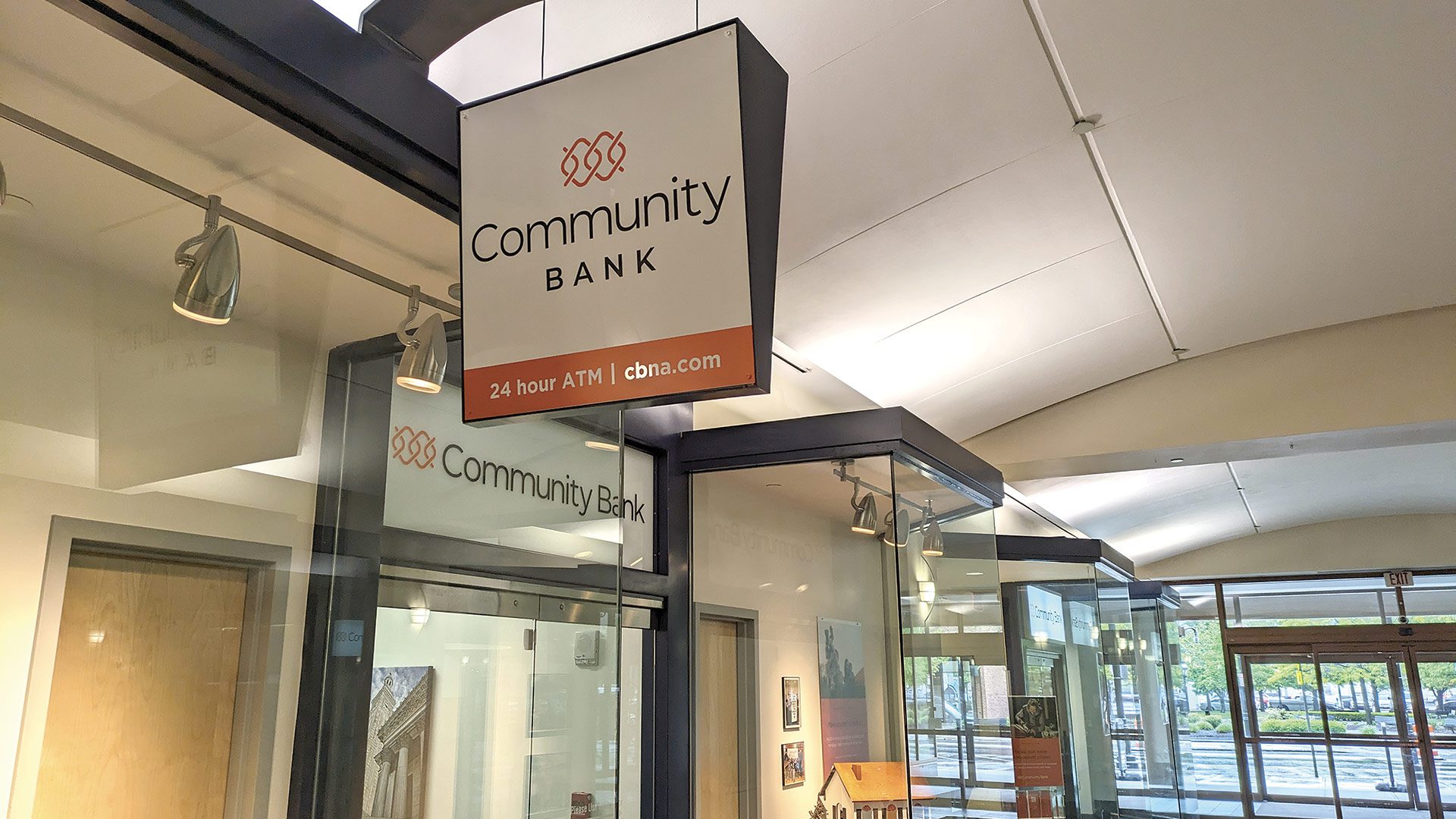
Community Bank’s branch inside Tower Square

Community Bank’s branch inside Tower Square will be complemented later this year by a second Springfield location on Boston Road.


When Community Bank expanded in 2017 with the acquisition of Merchants Bank, it gained a large network of branches in Vermont … and one in Massachusetts.

That office is located in Tower Square in downtown Springfield and had been NUVO Bank before hanging the Merchants banner. Located far from any other Community location — the organization has a strong presence in Pennsylvania and New York as well as its newer footprint in Vermont — it wouldn’t have been surprising had Community shed it altogether. But the bank saw value in a Springfield presence.

And now, seven years later, it’s doubling down, planning to open a second Springfield location on Boston Road later this year.

“It’s a market that’s not too far from Albany, but far enough where it’s a very distinct market by itself. And because it’s one branch, it’s been a little bit under the radar,” President and CEO Dimitar Karaivanov said. “But it’s a good market with good opportunities, and we have a really good team in the market, and the level of energy and activity in Springfield has been very hot.

“So almost a year ago, we decided we hadn’t given Springfield its rightful chance to succeed,” he went on. “We’re just one branch and have a good team, but we’re somewhat limited by the fact that it’s only one branch downtown. So we decided to kind of invest in the team and the opportunities that we have in the market, and we’re going to double our presence.”

The bank is doing so, he said, in locations that make strategic sense, and also, in some cases, investing in lower-income areas. “We’re looking at communities that offer opportunity from an economic perspective, but we also consider it our responsibility to invest in communities and bring them along in terms of growth. That’s how we’ve been selecting some areas that we’re going into.”

While Greater Springfield has been called overbanked, Karaivanov said Community Bank sees plenty of potential in expanding.

“We’re just one branch and have a good team, but we’re somewhat limited by the fact that it’s only one branch downtown. So we decided to kind of invest in the team and the opportunities that we have in the market, and we’re going to double our presence.”

“There’s no lack of competition in Springfield — there are a lot of banks, a lot of mutuals, a lot of credit unions,” he said. “But the reason that we feel like we can be successful is our team. So we’re really investing in our team. That’s how we look at expansion; it’s really people-based. Obviously, the market needs to be sizable enough for another entrant, but we feel like we’ve got a team that we have basically under-leveraged over the past several years. And now we’re trying to give them more runway and opportunity to be successful.”


Branching Out

As Community Bank expands in Springfield and other markets, it’s doing so, the organization explains, by reimagining the in-branch experience with clean, modern designs that encourage customer and banker collaboration, local community tie-ins, and staff that can handle a wide array of financial needs.

“Branches are still pretty important, and I think they will continue to be important,” Karaivanov said. “If you look at where most accounts, especially new accounts, are opened, it is still predominantly in the branch. People still get their mortgages predominantly in the branch. That initial contact with a financial institution is mostly in the branch.

“Now, when you open your second account, or if you are already a customer of a bank, you might go online to apply for a mortgage and other things. But to get into the ecosystem, usually the average person still starts in the branch.”

He cited the example of JPMorgan Chase launching an online-only bank six years ago, “and no one’s heard of it since,” he noted. “Instead, you’re seeing JPMorgan open branches all over the place. It’s hard to be just online. You need both parts.”

To that end, modern branch designs are different than the old, traditional model of counters and lines, he added.

“Today, the branch is really more advisory and consultative than transaction-based because transactions are easy to do on your phone, and you don’t need to go into the branch for a specific transaction anymore. But people do go to the branch for advice and for questions and when they have a problem. So spaces in the branch are designed in a much different way.”

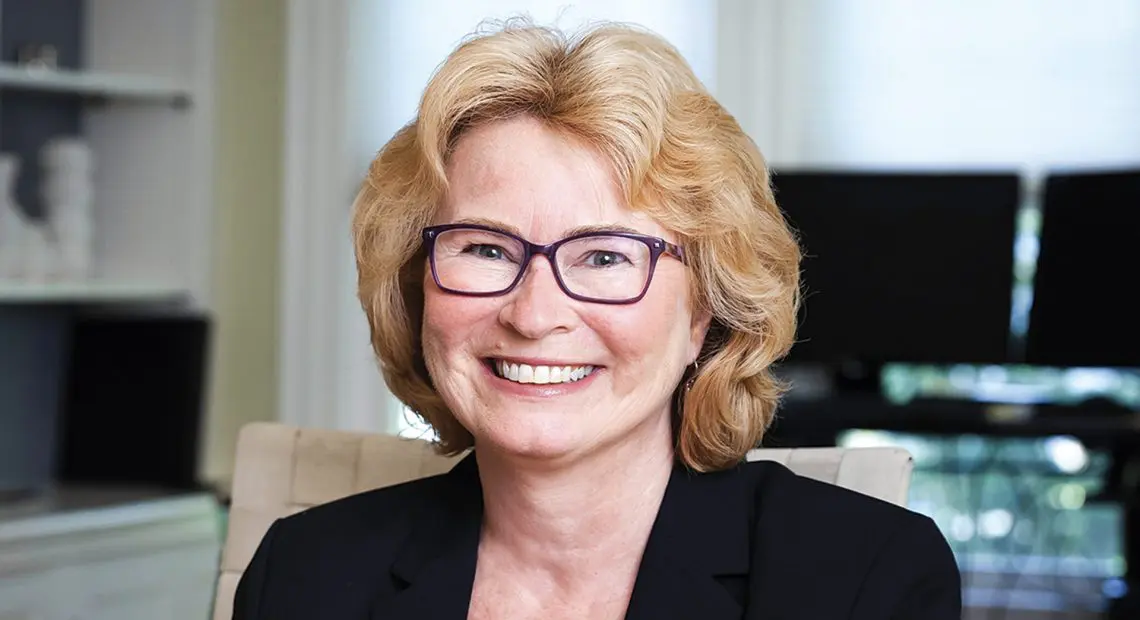
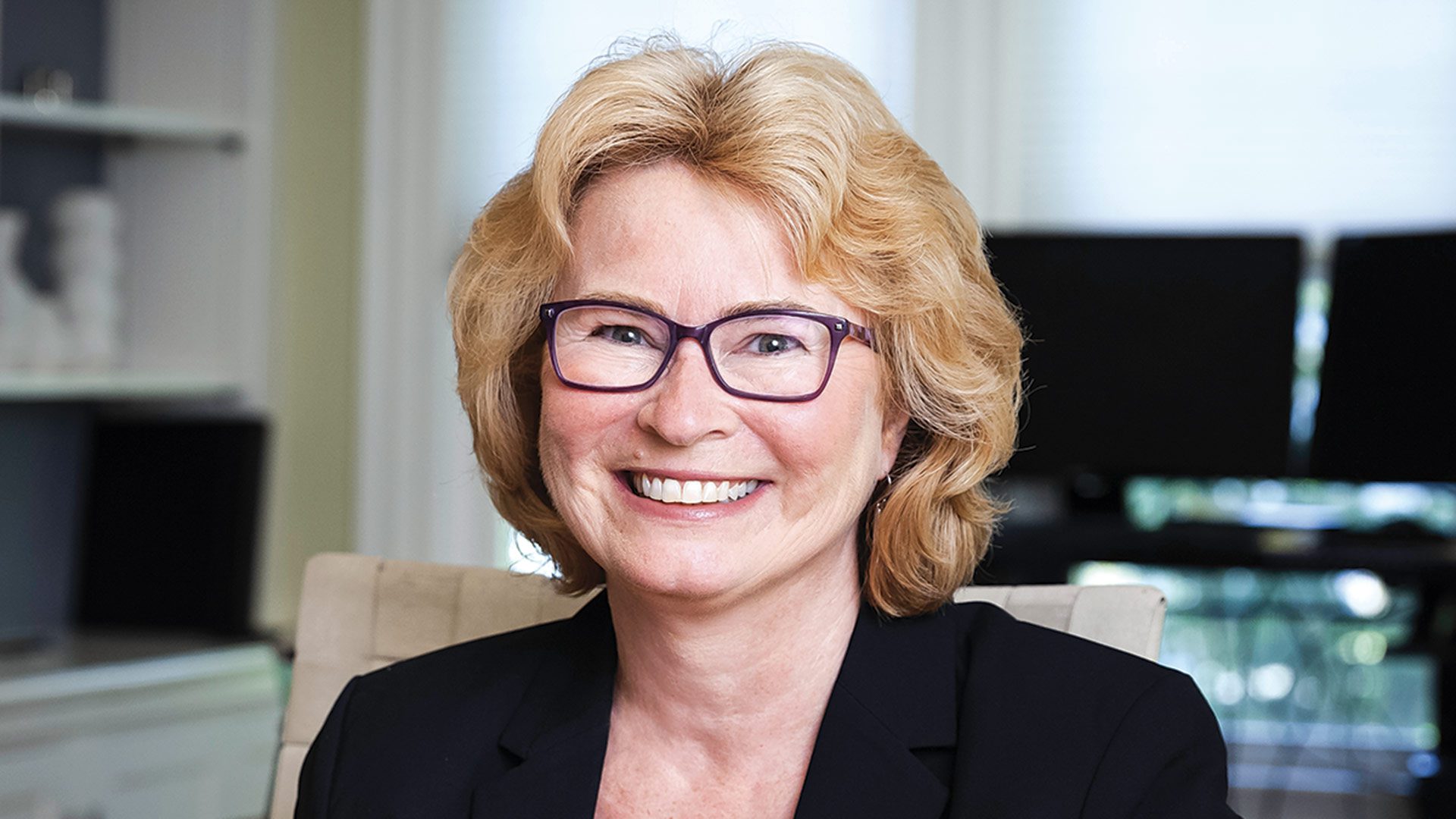
Dimitar Karaivanov

Dimitar Karaivanov

“Transactions are easy to do on your phone, and you don’t need to go into the branch for a specific transaction anymore. But people do go to the branch for advice and for questions and when they have a problem.”

Community Bank currently boasts 28 branches in New England, all but one of them in Vermont, and its current expansion plans include the first New Hampshire branch in addition to the second Springfield location.

“Community Bank is not just expanding, but deepening our roots in New England,” said Matthew Durkee, regional president for New England. “Our branches are the cornerstone of our retail business, and each one allows us to support the community and deepen our relationships with our customers as we partner together throughout their financial journey.”

Those community relationships involve philanthropy and volunteerism in communities where the bank has a presence, Karaivanov added.

“We do a lot of that, led by our branch staff most of the time,” he told BusinessWest. “It’s in our name, right? So we live by it. Our people are involved, they’re on boards, they’re in the Rotary Clubs, they know their neighbors, they’re supporting the local schools, teams, and everything else. It’s how we distinguish ourselves. Those are our neighbors, they’re our friends, and being part of the community is just as important as being a financial institution.”

With its commitment to Springfield affirmed, he added that Community Bank could look to expand further in Massachusetts where it makes sense.

“Hopefully, as we are successful in this expansion, we would like to do more. I’m a big believer in getting behind your success. So if we continue to be successful in Springfield, we’re going to continue to grow.

“Again, this has been a little bit of an outpost for us. Meanwhile, the team’s been doing a great job. And now is the time for us to empower them to do even more.”


One-stop Shop

Earlier this month, Community Bank System Inc. — which encompasses four key businesses: banking, benefits administration, insurance, and wealth management — changed its name to Community Financial System Inc. to better reflect the company’s reach.

“The new name allows us to emphasize the evolution of our capabilities, solutions, and focus,” Karaivanov said. “In aggregate, over 39% of our revenue is comprised of diversified fee-income businesses, well over twice that of industry peers. Bringing all of that under the new name, Community Financial System, underscores our mission and drives our inclusiveness as one company.”

It’s a different model, he said, than financial-services organizations in which banking is 90% of the pie.

“We’re a bit of a unicorn because we have four different businesses, and the way we run the company, the bank is our largest business, but it’s not the whole business. With our benefits business, we help people with their 401(k) plans; we administer those all over the country. Or, if you’re an individual and you’re coming for a mortgage from us, we can directly give you a quote for the homeowners’ insurance as well.”

Meanwhile “if you have amounts in your banking accounts that clearly can be invested in better outcomes for you, we’ve got the wealth-management side of the house, or the trust capability. And on the commercial side, especially for small to mid-sized businesses, we can provide everything from capital to insurance to managing their benefit plans, actually helping them with HR consulting.

“It gives us a real leg up when we talk to customers because we’re not just a one-widget shop,” Karaivanov added. “We can provide comprehensive solutions.”

Restaurants

Yes They Can


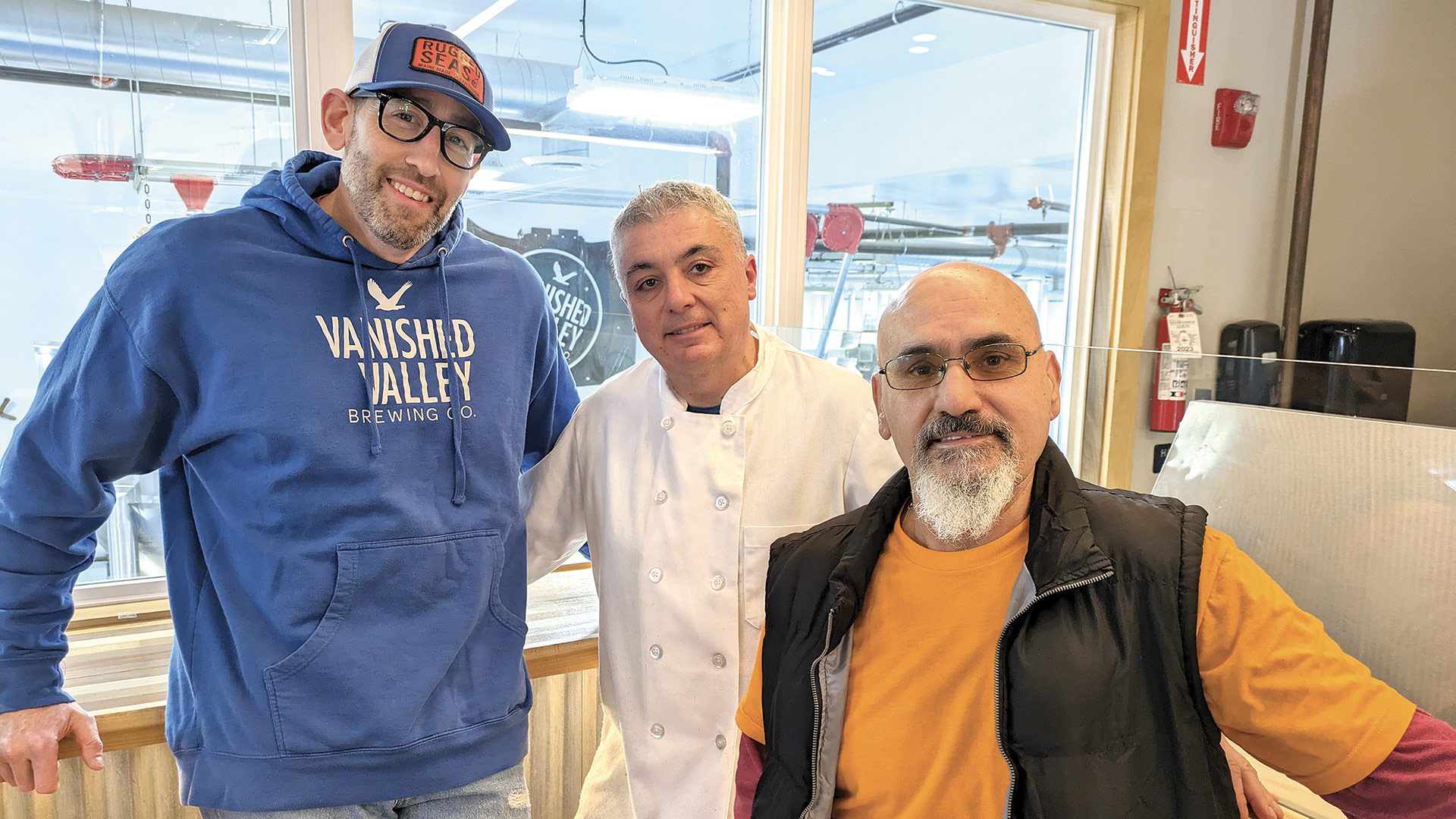
From left, Vanished Valley principals Joshua Britton, Michael Rodrigues, and Manny Vital

From left, Vanished Valley principals Joshua Britton, Michael Rodrigues, and Manny Vital.


Josh Britton remembers the early, heady days of Vanished Valley Brewing Co. — and the challenging ones that followed.

He had started brewing beer in his garage around 2015 when he met Michael Rodrigues, owner of Europa Black Rock Bar & Grille in Ludlow, and Manny Vital, who owned Europa’s building on Route 21. Vital retrofitted a building out back that became the first Vanished Valley brewery; the name was chosen to honor the drowned Quabbin Reservoir towns of Dana, Enfield, Greenwich, and Prescott.

“We started that process in 2016, but the licensure took nine months for approvals at the state level. Then we started hammering it out in 2017,” Britton said. Within a year or two, the brewery was rated third-best in Massachusetts by BeerAdvocate.

“We had lines out the door,” he added. “We were only producing like 10 barrels at a time, which for that space is a lot of barrelage; it’s pretty tight in there. We were selling cans in a tent next to the building and doing well. And we were fueling Europa with our kegs. We had people show up and ask, ‘oh, where’s your taproom?’ And they found out it was just a small, 20-by-20 space.”

Rodrigues decided to retire the Europa brand early in 2019 when he saw an opportunity to expand Vanished Valley with expanded production space and a food operation, and the three principals started gutting and updating the building, and also putting up an addition.

“Mike stayed up nights smoking meat — night after night after night, just to meet demand. So we were delivering barbecue and beer to door to door, and it stuck.”

“We wanted to add the food element in a bigger retail space, so it made sense, obviously, to do it right there,” Britton said. “We worked on it all throughout 2019 while still producing beer, and then we were ready to go in January 2020.”

Everyone knows what happened next.

“We had just opened our doors, and then a couple months later, it came to a halt because of COVID,” he said. “It was an interesting time. It forced us to kind of relook at the brand and pivot and decide what fell within the guidelines of what we could and couldn’t do.”

The pivots they came up with not only kept the business afloat during the pandemic, they may have actually raised its profile.

“No place could open and serve food, but we were allowed to deliver food — and beer, for the first time in Massachusets. So we started doing takeout. We didn’t have barbecue as a food option at the time, and Mike came up with the great idea to say, ‘hey, how cool would it be to have fresh barbecue and beer delivered to your door?’

“So we added that as a takeout option, and it was the most popular one we had,” Britton continued. “Mike stayed up nights smoking meat — night after night after night, just to meet demand. So we were delivering barbecue and beer to door to door, and it stuck. We still have great barbecue today; we kept it on the menu.”

Murals in Vanished Valley’s lower level reflect the theme of the drowned Quabbin towns.

Murals in Vanished Valley’s lower level reflect the theme of the drowned Quabbin towns.

Between the successful delivery operation, as well as two Paycheck Protection Program loans and an Economic Injury Disaster Loan, the team was able to keep the operation running. “It was a stressful year, but we made it. Once we were allowed to open the doors, we took all the necessary precautions with social distancing and things like that. It kept the lights on, and it kept the brand alive.”


Beneath the Surface

Some of the brewery’s beer selections — 1939 Amber Ale, Cellar Hole Series, Lost Town Stout, etc. — pay homage to the history of the Quabbin.

“The name itself, Vanished Valley, is the tip of the cap to the Quabbin Reservoir and the people that sacrificed for the benefit of others,” Britton said. “We try to keep the names of the beers as Quabbin-esque as possible. Sometimes it’s hard to do, and we just come up with other ideas. But the brand itself commemorates the Quabbin area.”

At any given time, Vanished Valley makes, pours, and distributes — to liquor stores and other restaurants across Massachusetts, from New York to Cape Cod — an array of IPAs, ales, stouts, and more, he added.

“We are very IPA-heavy, but that’s not to say that we don’t appreciate and still produce the classic brands, like a good lager or a pilsner. Some of our bestsellers in-house are actually our light beers. But when we distribute, the more popular ones are the IPAs.”

Britton explained that Vanished Valley straddles two different models.

“When you’re thinking about a brewery, you can be one of three different types of breweries. You can be a contract brewer, where you hire someone to brew your beer for you, and they send it out, and that’s it. Look at Jim Koch’s story with Sam Adams; that’s how he started. Then there’s a straight manufacturing-like brewery, where all you’re doing is pumping liquid out the back door and putting it on the shelf in the store.

“Then there’s us. We’re a brewpub,” he went on. “We wanted to have the food element, but we didn’t want to give up on the opportunity for mass distribution. So we built the brewery to be a distribution model, but the retail side of the house is a straight brewpub. So I don’t need to produce a ton of beer for here, but I need to produce a ton of beer for the market. We wanted to go at it from both angles.”

As for the food element, Vanished Valley serves a broad menu of appetizers, soups and salads, wood-fired pizza, burgers and other handhelds, and, of course, barbecue platters featuring pulled pork, brisket, chicken, and St. Louis-style ribs. Dinner hours are more crowded than lunch, and Thursday through Sunday draw the biggest crowds.

“We have a beer garden out there in the warmer weather, with a massive tent,” Britton said, adding that Vanished Valley now allows groups to rent the space for weddings and large parties. “We have music out there; Manny built an amazing stage for our bands. We have a firepit … all the stuff that makes for a better environment.”

Inside, the brewery has also hosted events from a murder mystery dinner to a bonsai tree event to charcuterie board design, as well as events featuring outside vendors, like a chili cookoff.

“We wanted to have the food element, but we didn’t want to give up on the opportunity for mass distribution. So we built the brewery to be a distribution model, but the retail side of the house is a straight brewpub.”

“We rent this for smaller parties, too: birthday parties, anniversaries, retirement parties, stuff like that. We try to be a one-stop shop for as much as possible,” Britton said. “It’s hard to do sometimes, but compared to other brewpubs and breweries in the region, we are very, very diverse.

“I think we’re doing really well compared to a lot of other breweries in the industry,” he went on. “There have been some closures in the state, and we’re not going to be one of them. But you constantly have to tailor things to the customer, and that’s a constantly moving target. So one of the bigger challenges is staying fresh.”


Lager Than Life

Despite some shifts in the market, Britton said, Vanished Valley is doing well on both the brewpub and distribution sides.

“Our first struggle was dealing with the holy-grail beers — you know, what’s the next best thing? That’s what the craft-beer fanatics want — the search for the white whale, or whatever they want to call it. We were one of those whales initially, and we gained a lot of loyal customers, but there were some falloffs of people that wanted to find the next best thing.”

Another challenge has been the rise of ready-to-drink cocktails. “That sector of the industry is really doing a number on craft beers,” he said. “And now you have CBD-infused seltzers and stuff like that. So our distribution has gone down a little bit because of that.

“But our overall growth in sales has continued every year because of what we do here in the retail area with the restaurant,” Britton added. “If we were a straight production brewery, we probably wouldn’t be having this conversation right now. But on the restaurant side, the amazing customers we get here — from a local standpoint and people from out of state — have helped us stay afloat as a small, local business. We’re still very young. We’ve been going at it since 2017, but we’re still young.”

Vanished Valley also makes an effort to give back to the community, such as a beer produced to honor veterans every November, with proceeds donated to veteran organizations. The brewery also sponsors golf tournaments and gets involved with events like Ride to Remember, which honors fallen heroes.

“This is our backyard,” Britton said. “We all grew up here, and we’ve got to take care of it.”

Despite the challenges throughout the years, he added, Vanished Valley has continued to grow — from three employees just a few years ago to more than 30 today.

“We’ve done really well for ourselves. We’ve made a home for a lot of great customers that we appreciate so much. And the town has been nice to work with; they appreciate what we’re doing here from an economic standpoint. It’s just been a fun ride.”

Education

Giving a Hand Up


On April 30, representatives from Holyoke Community College and the Springfield-based nonprofit I Found Light Against All Odds agreed to work closely to increase educational and workforce training opportunities for young women at risk for homelessness. 

HCC President George Timmons and Stefan Davis, CEO, president, and founder of the Springfield-based I Found Light Against All Odds, met at the college to sign a memorandum of understanding outlining the terms of the agreement.  

I Found Light Against All Odds provides support services for young women to help address social and economic issues that can lead to poverty and homelessness. Specifically, by signing this memorandum, HCC and the foundation agree to broaden support services for area women, ages 18-20, to help them obtain safe housing and career opportunities through education and training. 

“This agreement is firmly in line with HCC’s mission and vision to remove barriers to student success, to break cycles of poverty, and provide opportunities for education and training that will allow more young women to be successful, earn a livable wage, and enjoy all that life has to offer,” Timmons said.

According to statistics cited in the memorandum of understanding, Hampden County has a poverty rate of 16.9%, which is higher than the national average of 11.5%. Meanwhile, the poverty rates in Springfield and Holyoke are even higher at 25.5% and 26%, respectively. 

“This agreement is firmly in line with HCC’s mission and vision to remove barriers to student success, to break cycles of poverty, and provide opportunities for education and training that will allow more young women to be successful, earn a livable wage, and enjoy all that life has to offer.”

“At the same time, research shows that many community-college students in Massachusetts experience hunger and/or homelessness, as well as other types of basic needs insecurity that can serve as barriers to degree completion and thereby limit economic sustainability and mobility,” the memorandum states.

Davis thanked Timmons and HCC faculty for the partnership. “We look forward to working with you and your staff to help these young women that are in darkness, searching for light and education. These women have dealt with a lot of trauma throughout their lives and are looking for ways to end the cycle of poverty. This collaboration proves that we care about them and that they have our support.”

Through the agreement, the foundation is looking to connect with HCC’s existing academic support services, such as admissions and financial-aid counseling, as well as career and transfer advising and more. 

“It’s a natural fit between an agency that works to support young women and a college, HCC, which is known for its wraparound support model,” said Jeff Hayden, HCC’s vice president of Business and Community Services.

Before the signing, Davis introduced a video about I Found Light Against All Odds that featured interviews from two of its consumers. One of them was Alisandra Pantoja from Springfield, who attended the April 30 event. 

Pantoja also stood beside Davis as he put pen to paper. She will be taking advantage of all the opportunities outlined in the agreement as a student at HCC starting in September, and plans to major in human services. “I like working with people,” she said.

Education

Expanded Opportunity


On May 6, Senate leaders unveiled MassEducate, a proposal for tuition-free, universal community college for all Massachusetts residents, aimed at boosting the state’s workforce and expanding opportunity for students and families in every part of the Commonwealth.

The announcement was made during an event at Middlesex Community College in Lowell, where Senate President Karen Spilka, Senate Ways & Means Chair Michael Rodrigues, and Senate Higher Education Chair Jo Comerford gathered with members of the Senate, presidents of the Commonwealth’s 15 community colleges, business leaders, students, and advocates.

“Today, we shift conversations about college from ‘I wish’ to ‘I will’ for thousands of students and families in Massachusetts,” Spilka said. “We are investing in talent that is right here at home and opening the workforce floodgates to employers who are starved for graduates, so Massachusetts keeps the competitive edge that we pride ourselves in.”

MassEducate would invest $75.5 million in new spending to cover tuition and fees for all residents, as well as up to $1,200 for books, supplies, and other costs to students who make up to 125% of median income in the state. Pell-eligible students already eligible for a books stipend through state financial aid would also be eligible for a stipend for books, supplies, and costs of attendance, for a combined amount of up to $2,400 per year.

“Today, we shift conversations about college from ‘I wish’ to ‘I will’ for thousands of students and families in Massachusetts.”

“With the historic investments announced today, ushering in universally free community college and more, the Senate doubles down on our commitment to build back the power and promise of public higher education,” Comerford said. “The Senate investments will propel the Commonwealth forward toward greater social equity and greater economic competitiveness.”

The Senate’s plan, which will be included in the chamber’s FY 2025 budget, would continue to invest in programs created in the FY 2024 budget, including $18 million in free nursing programs at community colleges and $24 million in free community college for residents over age 25.

Students would be eligible for free tuition, fees, and the stipend in the fall 2025 semester if the proposal is included in the Commonwealth’s final FY 2025 budget.

To support students whose education paths can be jeopardized by unanticipated life events, Senate leaders announced the creation of the Student Persistence Fund, a $10 million investment that would go directly toward aiding community colleges and state universities in supporting low-income students with such costs that are shown to put someone’s chance of finishing school at risk, such as transportation, childcare, or food insecurity.

Understanding that retention and graduation is directly tied to support systems like advising and career planning, the Senate also proposed an $18.3 investment in the Supporting Urgent Community College Equity through Student Services (SUCCESS) program, which is designed for community colleges to invest in wraparound supports and services using models proven to strengthen outcomes for students facing systemic barriers, especially for colleges’ most underserved populations.

To ensure the long-term fiscal sustainability of the program, the Senate’s proposal would institute annual tuition-increase caps at community colleges set at an inflation index. And to hold community colleges accountable for producing positive outcomes, the proposal creates a working group to re-evaluate community-college performance funding, aimed at better aligning state funding with key metrics such as student success and workforce alignment.

Recognizing that many Massachusetts students opt directly for four-year universities, the budget makes a $105 million investment in the Massachusetts financial-assistance program MassGrant Plus, which keeps college costs low for students at all public colleges in the Commonwealth. This increased investment builds on recent investments that have allowed all Pell-eligible students in Massachusetts to go to a community college, state university, or UMass campus without paying tuition or fees.

The proposal additionally includes policy directives to study future paths to success for the Commonwealth’s students. It directs the Department of Higher Education to improve the credit transfer pathway between two- and four-year institutions so students can easily transfer to a public four-year institution. It also creates a new commission to evaluate current state financial assistance for students to attend state universities and UMass and evaluate ways to further ensure accessibility and affordability of an education at these institutions.

Technology

The Science of Naps

A UMass Amherst sleep scientist, funded with $6.7 million in grants from the National Institutes of Health (NIH), has launched two unprecedented studies that will track over time the brain development of infants and preschoolers to confirm the role of napping in early life and to identify the bioregulatory mechanisms involved.

Rebecca Spencer, a professor of Psychological and Brain Sciences who is well-known for her groundbreaking research into napping, is testing her theories about what’s happening in the hippocampus — the short-term-memory area of the brain — as babies and young children undergo nap transitions.

This new research is expected to become the gold standard of scientific evidence that emphasizes the importance of healthy sleep for young children as their brains develop. The findings will help inform nap policies for preschool and pre-kindergarten and be useful to teachers and parents of both neurotypical and neurodiverse children.

“The work we’ve been doing has always pointed to this interaction of sleep and brain development,” said Spencer, who carries out research in her Somneurolab at UMass Amherst. “We think that kids get ready to transition out of naps when the brain is big enough to hold all the information of the day until nighttime sleep.”

The study involving preschoolers is a collaboration between Spencer at UMass Amherst; Tracy Riggins, a developmental psychologist specializing in memory development at the University of Maryland (UMD); and Gregory Hancock, a UMD professor of Human Development and Quantitative Methodology. Previous research by Spencer and Riggins showed differences in the hippocampi of kids who nap compared to those who have transitioned out of naps.

“The work we’ve been doing has always pointed to this interaction of sleep and brain development. We think that kids get ready to transition out of naps when the brain is big enough to hold all the information of the day until nighttime sleep.”

“So far, we’ve used cross-sectional approaches,” said Spencer, referring to research that analyzes data at one point in time, as opposed to longitudinal studies that involve repeated observation over time. “We really need to show longitudinally within a child that the point when they transition out of naps is predicted by a transition in the development of their hippocampus.”

The hippocampus is the short-term location for memories before they move to the cortex for long-term storage. Naps allow children with an immature hippocampus to process memories. Young children give up their afternoon nap, not based on their age, but their brain development, Spencer hypothesized.

“Naps are beneficial to everybody. Naps protect memory for everybody, no matter what age. Kids who are habitual nappers really need the nap. If they don’t nap, they get catastrophic forgetting. That’s the difference between habitual and non-habitual nappers — not how good is the nap, but how bad is staying awake,” she explained.

Added Riggins, “in the end, being able to tell parents that those little deviations from routine that keep their children from napping might not have these huge implications for a neurotypical child in the long run would be great. And the more we know about how the brain works in a typically developing child during this nap transition, the more we will be able to know about where we could possibly intervene to help neurodiverse children — like children with autism and ADHD, whose sleep patterns tend to be disrupted — since we will have some sort of scientific basis.”


Go to Sleep

The research team is recruiting 180 children, ages 3 to 5. The researchers will track their brain development, memory performance, and nap status over the course of one year at three checkpoints. During the first and second sessions, the children will wear activity-tracking watches and EEG equipment to record naps and overnight sleep. They will also play memory games before and after naps. The children will undergo an MRI brain scan during the third session.

Monica and David Dumlao signed up their son Miles, 4, for the preschool study after watching the Netflix documentary series Babies, which features Spencer in the episode about sleep. “We like learning about the neuroscience behind brain development,” Monica Dumlao said at a recent study session in Spencer’s lab. “We thought this was a good opportunity to contribute to the science about the importance of naps.”

In the three-part infant study on nap transitions and memory, Spencer is studying the period before and after babies transition from two naps — one in the morning and one in the afternoon — to one, richer afternoon nap. She is recruiting 140 infants 7 to 9 months old. The babies will play a memory game before and after their naps. Their brain activity will be recorded during their naps using a non-invasive electrode cap. The sessions will take place at 9, 12, and 15 months.

“We think as they are getting ready to drop the morning nap, staying awake in that morning interval will be less and less damaging to their memory,” Spencer said. “But we don’t think that’s going to happen with the afternoon nap at this age. We think the afternoon nap stays superimportant.”

Daily News

Lirianna Powers

MONSON — Monson Savings Bank (MSB) recently announced the hiring of Lirianna Powers as assistant branch manager of the Ware Branch located at 136 West Main St.

“Lirianna’s expertise in banking is a tremendous asset to our team and extends benefits to our customers and the local communities as well,” said Dan Moriarty, president and CEO of Monson Savings Bank. “Her positive outlook is perfectly in sync with the culture at Monson Savings Bank, and we are truly fortunate to have her as part of our organization.”

Powers will assist the branch’s manager and oversee the operation of branch functions. She aims to provide the bank’s customers with superior customer service and help them find the financial products that best suit their unique needs.

Powers comes to Monson Savings Bank with eight years of experience in banking and finance. She previously worked at Florence Bank as a teller operations manager and customer service representative. In this role, she oversaw and managed her branch’s teller line, educated team members, and provided customer service while serving as a positive role model.

“I am genuinely enthusiastic about the opportunity to apply the skills I have acquired throughout my banking career to my new role at Monson Savings Bank,” Powers said. “As a local bank that is deeply committed to its employees, customers, and the broader community, Monson Savings Bank has established a remarkable reputation for integrity and community engagement. I am very excited to be a part of this. I am eager to contribute to the dynamic team, where I believe my background in finance and customer service will not only be valued but will also flourish.

“Joining MSB feels like the perfect alignment of my professional skills and my personal values, where I can actively participate in initiatives that make a real difference in people’s lives locally,” she added. “This role represents a unique chance for me to grow while also helping to sustain and enhance the bank’s legacy of empowering local individuals and businesses.”

Daily News

SPRINGFIELD — As part of its ongoing commitment to helping customers across the Commonwealth take control of their own energy use with optimized solutions, Eversource announced it will bring its successful Main Streets program to more than 40 Massachusetts communities in 2024.

Through Main Streets, sponsors of Mass Save, including Eversource, partner with municipalities to connect small-business owners with approved contractors that offer no-cost energy assessments to discuss upgrades that lower energy use and reduce costs.

“Since Eversource first launched Main Streets nearly a decade ago, it has evolved from a few events per year into an equity-driven statewide initiative that serves, on average, more than 1,000 commercial customers annually,” said Tilak Subrahmanian, Eversource’s vice president for Energy Efficiency and Electric Mobility. “Main Streets provides opportunities for small and microbusinesses to improve their energy efficiency and gain a competitive edge by lowering their energy costs or demonstrating a reduced carbon footprint.

“In 2024, we continue to prioritize outreach in environmental justice communities, which often face an undue energy burden,” Subrahmanian added. “It is essential for us to connect with those customers who would most benefit from energy-efficiency measures, while supporting Massachusetts in reaching its ambitious decarbonization goals.”

Evolving from a small, Eversource-only initiative, Main Streets has continued to grow over the years, with more than half of all planned events in communities across the Commonwealth in 2024 in collaboration with other sponsors of Mass Save, including several events outside the Eversource service territory organized solely by other sponsors.

Through Main Streets, customers have saved on average nearly 13 million kWh per year — equivalent to the greenhouse-gas emissions saved from recycling over 3,000 tons of waste — as well as more than 100,000 therms of natural-gas savings annually. This year, Eversource will continue building on that success through close collaboration with local community partners, multilingual marketing efforts, and language support at in-person events.

Main Streets energy-efficiency solutions start with a no-cost, no-obligation energy assessment to identify energy-saving opportunities for small businesses, such as weatherization, insulation, occupancy sensors, programmable thermostats, refrigeration controls, lighting controls, and more. Improvements like installing aerators and spray valves happen on the spot at no cost to the customer. More involved projects, like the installation of energy-efficient motor controls, are scheduled for a future date. Eversource offers increased incentives for a range of energy-efficiency improvements to further offset the cost of upgrades, and interest-free financing is available for any remaining costs.

Local licensed electricians contracted by Eversource will complete approved projects and ensure minimal disruption to daily business operations, and all high-efficiency products installed as part of this initiative include warranties for both materials and labor.

Businesses interested in scheduling a no-cost, no-obligation assessment, including those in communities not part of an official Main Streets partnership this year, can click here to complete the registration form.

Daily News

GREENFIELD — The Greenfield Community College (GCC) nursing faculty has named Lauren Bell the third Jean Simmons Nursing Faculty Chair. Bell was chosen for her dedication to the GCC nursing program and her students. She will be honored at the nursing department’s pinning ceremony on Saturday, May 25 at 9 a.m.

The Jean Simmons endowed chair was established in 2013 with a $1 million gift from anonymous donors. It was the first endowed faculty position at a community college in Massachusetts.

“Lauren always puts her students first and demonstrates professionalism and exceptional patient care in the clinical setting,” said Melanie Ames Zamojski, GCC dean of Nursing Programs. “Within our laboratory, she’s developed simulations that test our students in ways that allow them to show their knowledge and the patient-centered care they’ve learned in the classroom.”

Since joining the GCC nursing faculty in 2012, Bell has guided faculty through curriculum and program assessments and outcomes, a critical part of state and national accreditation processes, and she has helped her colleagues incorporate the newest style of NCLEX questions in order to better prepare students for their licensing exams. She has also served on several college committees, including student activities and professional development. She co-teaches the second-year medical-surgical courses and has led the graduating class in organizing their pinning ceremony.

Bell earned her bachelor’s degree at Elmira College and her master of science degree at the University of New Hampshire. In addition to her work with GCC, she is a nurse at Brattleboro Memorial Hospital in the Progressive Care unit.

Surprised to be named the Simmons chair, Bell was characteristically student-focused in her response. “A lot of students want to make a difference, and a lot of them have the ability to do so. If I can support these talented students in pursuing their education, I feel honored for that,” she said.

She further expressed appreciation for being part of a rigorous program that helps students achieve their dreams. “We produce and support these strong graduate nurses who have a great reputation moving forward in the profession.”

While the endowed fund supports the faculty position, GCC uses the personnel cost savings to fund a nursing advisor as well as a scholarship program for GCC students at all levels of nursing education. This year, scholarships have been awarded to three members of the associate-degree class who will be continuing on to bachelor degree programs in nursing: Marylou Bliss, Kassidy DiGeorge, and River Edwin King.

The endowed nursing chair was named for longtime GCC nurse educator Jean Doherty Simmons. She was the first nursing program applicant to be admitted as a GCC nursing student, and she graduated with the first class from the program in 1965. Considered the face of the nursing program, she taught at GCC for more than 35 years and served as coordinator of the associate in science nursing program from 1998 to 2003.

The recipient may hold the Jean Simmons Nursing Faculty Chair throughout their tenure at the college. Previous honorees were Cheri Ducharme (2014-18) and Mary Phillips (2018-24).

Zamojski sees Bell as an ideal choice to carry on this legacy. “Lauren will continue to be an asset to our program and to the college. She is a shining example of how our faculty not only teach our students how to be nurses, they teach our students how to be great nurses.”

Daily News

SPRINGFIELD — In cooperation with PROSHRED Springfield, Freedom Credit Union will offer a free Community Shred Day on Saturday, June 8 at two branches. The event will take place from 9 to 10:30 a.m. at 1976 Main St., Springfield; and 11 a.m. to 12:30 p.m. at 296 Cooley St., Springfield.

The public is invited to bring old bills, bank statements, tax returns, and other sensitive documents for free, quick, and secure on-site shredding. Credit union members and non-members alike may bring up to five file boxes or paper bags per vehicle. There is no charge for this service.

Banking and Financial Services Cover Story

A Community Asset


Country Bank president Mary McGovern

Country Bank president Mary McGovern


Country Bank, according to its slogan, is “made to make a difference.”

Mary McGovern has taken that as a personal challenge.

“I’ve been at several institutions, public institutions, that run a little differently than mutuals, having to answer to shareholders every quarter,” said McGovern, who recently became Country’s first female president in its 174-year history. “With a mutual bank, we feel we take a different approach with our customers, and our involvement in the community means a lot to them. It’s a differentiator.”

McGovern brings three decades of context and experience — at different types of institutions — to that philosophy.

Prior to her 13-year rise at Country Bank, where she has served as chief financial officer, executive vice president, and chief operating officer, McGovern served in management roles at Danversbank, Capital Crossing Bank, and Boston Private Bank & Trust. Her areas of expertise include finance, operations, information technology, retail banking, commercial lending, financial and credit analysis, compliance, risk, sales, and strategic business and relationship development.

“With a mutual bank, we feel we take a different approach with our customers, and our involvement in the community means a lot to them. It’s a differentiator.”

“I started at Boston Private when it was a de novo with $80 million in assets. I was the 20th or 22nd person they hired. I came in on the ground floor in a finance role, in accounting, and grew with the department,” she recalled.

After that institution went public and was acquired, she left, earned her MBA, and moved to Capital Crossing in the late ’90s, doing a lot of work with distressed real estate. Danversbank, her next stop, was a reunion of sorts with some individuals she had worked with at Boston Private.

“They were like Country Bank is today, a nice, local, mutual community bank,” she said, adding that she served Danversbank as senior vice president and chief accounting officer. “But they went public in 2008 and were sold in 2011, and my position was eliminated.”

So, the same year, she joined the team at Country — and has never looked back.

“The mission is to be the bank of choice in Central and Western Massachusetts,” McGovern told BusinessWest. “I’m excited to lead as the first female president of Country Bank as we approach our 175th anniversary. It’s a good opportunity to get out and talk in the community, talk to our customers, put a new face in front of them. It’s been really exciting.”

Country Bank’s productive partnership with the WooSox

Country Bank’s productive partnership with the WooSox is reflected by its prominent right-field signage.

From a bottom-line perspective, she said, Country is doing well, even showing growth in the mortgage market, despite high rates and higher prices.

“Obviously people still have to buy and sell homes and move different places. The pipeline may not be as robust, but there’s still a lot of activity.”

On the commercial side, the bank is being selective, focusing on building lasting relationships and not targeting huge volume for its own sake, to maintain liquidity. “We’re looking for 5% to 6% growth in loans this year, so we’re keeping busy for sure.”

Geographically, the bank is in a growth mode as well. With a physical footprint that currently stretches from Springfield to Worcester, with the Ware headquarters between those two cities, County is adding two additional locations to the east this year — a second in Worcester and one in Uxbridge — while making plans to add two more branches to the west, in Springfield and another community.

Earlier this year, the board of trustees announced it had full confidence in McGovern to lead that strategy, as well as all of Country’s other operations and activities in the community. Paul Scully, who has been president and chief executive officer since 2004, remains in the CEO role.

“We are thrilled to announce Mary’s appointment as the next president of Country Bank,” James Phaneuf, board chair, said when the selection was announced. “Mary’s proven track record, dedication, and strategic vision make her the ideal candidate for this role.

“In a challenging time of food insecurity and other challenges out there, it’s important to give back to local nonprofits. They need our support to do their important work. That’s valuable to our staff, and I believe it’s valuable to our customers as well.”

“The board is confident that Mary’s leadership will drive the bank’s continued success and growth,” he added. “With her extensive experience, strategic mindset, and dedication to excellence, Mary is poised to lead the bank into a new era of innovation and customer satisfaction while maintaining its position as one of the most highly capitalized financial institutions in the region.”


Community Partner

Country is also well-known for its community involvement. Those efforts have focused in recent years on a number of priorities, including food insecurity, health, and education, as well as homeless shelters, senior-serving programs, youth organizations, and more.

To that end, Country reported more than $1.2 million in donations in 2023, with 463 organizations receiving grants. In addition, the bank’s team members volunteered 1,255 hours of community service in 2023, while 37 employees served on a total of 65 nonprofit boards and committees.

“We are a valued piece of the community. We try to give back to all the communities we serve,” McGovern said, adding that the bank’s financial-literacy programs continue to be a priority, as is a partnership with the WooSox — signified by a very prominent Country Bank sign in right field at Polar Park — and the team’s WooStars awards and its teacher-recognition program.

“We’re just continuing to build on a great foundation set by Paul in his 20 years here,” she added. “Being a community bank, we’re really invested in the health of our communities.”

McGovern speaks the language of community-bank presidents in Western Mass. that place a high value on local philanthropy.

“We’ll continue to do a hybrid approach. It seems to be working. The staff seems to be happy. We don’t see that changing — in the foreseeable future, anyway.”

“We’re different from a big commercial bank that’s not as worried about the individual communities that they serve,” she said. “As a mutual bank, obviously it’s important to make money, but making money also allows us to give back. So we’re trying to give back to our communities. In a challenging time of food insecurity and other challenges out there, it’s important to give back to local nonprofits. They need our support to do their important work. That’s valuable to our staff, and I believe it’s valuable to our customers as well.”

Also of value to customers is a physical presence in their communities, even at a time when online banking is dominant.

“There are differences of opinion among financial institutions, some of whom are pulling back from their banking centers,” McGovern said. “But we feel it’s important to support the different ways our customers want to bank.

“There are plenty of the younger generation who don’t want to talk to people, who would prefer to do everything online; self-service is important to them,” she added. “But we have a good component of customers who like to go in and talk to people face to face. Even younger people want to sit down and talk to somebody when they’re buying their first house; it’s an important, life-changing kind of event.”

In addition, she said, “I feel it’s important that we show our presence. It’s hard to say that you’re in Springfield without having signage there. We have a business center in Tower Square, but it’s not quite as visible as having a branch location with a sign.”

Country Bank has consolidated in some cases as well — for instance, it used to have three branches in Ware, but now only houses its headquarters and a digital banking center there. And many branches are staffed with fewer employees than in years past, to reflect how many customers bank online only.

“But while there’s less foot traffic, we’re still there to serve people, allowing customers to bank how they want.”

Other elements of the bank experience have changed over the years as well, including how — and where — employees work.

“Since the pandemic, it’s been a different way of working,” she told BusinessWest. “For some time, we were fully remote. Over time, we went with a more flexible work arrangement. So the average employee works three days in and two days out. There are some with a little more flexibility based on what kind of job it is.”

While some employees prefer to come in five days a week, and do so, McGovern added, for most of them — those who don’t deal face to face with the public, anyway — working remotely at least part of the time is a valued part of their job. “I don’t see how we can be competitive without that. I know different institutions that have lost staff when they requested people come in five days.

“So we’ll continue to do a hybrid approach,” she went on. “It seems to be working. The staff seems to be happy. We don’t see that changing — in the foreseeable future, anyway.”


Making a Difference

McGovern also doesn’t want to change a culture at Country Bank that she feels benefits both employees and customers.

“It’s hard to be a differentiator when all banks sell the same products, but I feel we are different,” she said. “Our people are spending a lot of their life doing something they like in an institution they like with peers they like. And we’re trying to keep that culture going.”

The challenge, she said, is understanding that employees want and appreciate hybrid work schedules, while maintaining a positive office culture whether they’re in the office or not.

“It’s a fine line managing both aspects,” she said. “But I think we’ve got a good thing going, and hopefully I can keep it going into the future.”

Restaurants Special Coverage

Good Vibrations

Andrea and Tim Monson

Andrea and Tim Monson, owners of Monsoon Roastery, are two of the original partners who brought the Urban Food Brood to life.

Almost a decade ago, Tim and Andrea Monson started a small business roasting and selling coffee, which grew to the point where they opened a retail and operating space on Albany Street in Springfield in 2019.

Not long after, the owners of Monsoon Roastery began talking to the owners of two other small businesses — Nosh, a downtown Springfield eatery, and Urban Artisan Farm, which specializes in hydroponic food production — about a concept that has now become one of the city’s most unique food-centric success stories.

“It started after COVID when small businesses were struggling to survive,” Andrea said. “We already did business with Nosh — we would carry her food products, and then they would carry our coffee. So that kind of social capital started very early on. We actually did that with a lot of small businesses. So we started to think … what if we were a small business corporation — a bunch of us kind of fighting together?”

That’s how the Monsons, Nosh owner Teri Skinner, and Urban Artisan Farm owner Jack Wysocki launched their concept, envisioning a place where small businesses could support each other in a shared space with a common kitchen and other amenities, and people could come stop by for lunch or a coffee and bring home some fresh produce, meat, or other items.

“We started to think … what if we were a small business corporation — a bunch of us kind of fighting together?”

“It took us three years to get financing and to get organized,” Monson explained. “This was an office building. So we had to transform it into food-manufacturing collaborative, which cost a lot of money. In the middle of COVID, there were a lot of shortages, a lot of delays. But we kept fighting for this dream and investing our own funds and sacrificing a lot of time and a lot of sweat equity, and it finally came together in July of last year.”

Skinner recalls collaborating with the other founders on ideas, looking into grant funding to turn the building on Albany Street — a stretch of road known as Gasoline Alley, due to the giant fuel tanks that line it — into a collaborative workspace that eventually became known as the Urban Food Brood.

“The three of us sort of came together, wanting to expand our businesses,” she said, adding that the project ran into a lot of infrastructure and renovation issues that weren’t expected, and cost more money than expected. “But now it’s flourishing,” she added.

Nosh is actually the latest — and largest — operation to move into the space, which, along with Monsoon and Urban Artisan Farm, also includes Corsello Butcheria, Happy Man Freeze Dried, Wicked Whisk, and Rocka Docka Foods.

Vincent Corsello

Vincent Corsello says the Urban Food Brood offers fresh options amid a food desert.

“Happy Man had a certified home kitchen, but he was expanding tremendously. He needed a kitchen, so he ended up taking a room here,” Skinner said. “Wicked Whisk acquired a food truck, but she also needed a commercial kitchen so she could produce her products, as she was growing as well.”

Vincent Corsello, who runs Corsello Bucheria, an Easthampton business that has expanded into the Urban Food Brood, said he took part in a pig roast on Albany Street a few years ago and was struck by the uniqueness of the setup.

“This place is magic. There’s such a vibe here,” he remembered thinking. “So I started coming — I don’t know to what end, exactly, but they were open to a collaboration. They got a grant to do a community kitchen, and I said, ‘can I be a part of it?’ And they said ‘yes.’ And then we went from there.”


Creating a Vibe

The building, with its community spirit and that creative vibe — the walls are lined with works from local artists, which are displayed on a rotating basis and available for sale — is a stark contrast to its surroundings, Corsello said.

“It’s in the middle of a brownfield, essentially. They call it Gasoline Alley for a reason; we’re surrounded by a million gallons of gasoline.

“I have a big window, and I did a brick facade outside the bakery so you can look through the window and see the bakers cooking.”

“But it’s easy to get to, and there’s plenty of parking, so it’s a good location,” he was quick to add. “And the vibe really attracted me to this this campus; it’s like a modern-day boys’ club, only it includes all different types of people.”

Indeed, Monson noted that she’s seen people of different backgrounds, experiences, and even religious persuasions enjoying the welcoming vibe of the space together.

“We have students, we have professionals, we have the police, we have the firefighters, we have EMTs, social workers, teachers … we have so many different people that come in here to enjoy the food or the coffee or the environment. Everybody’s here.

“The one thing I hear over and over again — unfortunately — is, ‘wow, I can’t believe this is in Springfield,’” she went on. “I both love and hate that. As a Springfield resident, a Springfield business owner, someone who grew up in Springfield, I feel like Springfield always gets the short end of the stick. There’s a lot of negative perception about Springfield. And we’re trying to disprove that. We’re saying, ‘hey, look, we built this thing, and people are coming.’

“I’ve heard, ‘this feels like I stepped into Northampton,’ which is, I guess, a compliment. But we’re not Northampton; we’re Springfield.”

Teri Skinner

Teri Skinner, seen here at her downtown Nosh location, is the most recent of the original Urban Food Brood partners to move to Gasoline Alley; she will continue to operate at both sites.

Corsello said the uniqueness extends to the business model, with the various tenants sharing one register, and the businesses sharing their products.

“So when I make sandwiches, I use Teri’s bread, and I use Jack’s vegetables. We use each other’s products to create. So you not only have an opportunity to get something for yourself, but if you like what you taste, you can buy any of those components here at the market. Plus, a lot of Springfield is kind of a food desert, and we’re small businesses offering locally created food products.”

He said patrons appreciate being able to eat or drink something on site, then bring something home to prepare.

“Anybody can come in here and get a cup of coffee, they can shop, they can get some vegetables, they can get some meat, they can get something freeze-dried. For us, it’s a model that doesn’t come without its challenges, and we’re still figuring some of that stuff out, but it’s very unique. People like a one-stop shop.”

Skinner, whose downtown Nosh location has long had an artistic, funky décor, appreciates the way the Urban Food Brood prioritizes art as well.

“People come here, and they’ll pick up some sausage and go, ‘you know, let me get a kombucha, let me get some mushrooms, let me get some spinach.’ And you go home, and you have all of this really good product that’s manufactured here in Springfield.”

“We have lots of artists that come in and display their work on a monthly basis, and then people can purchase their artwork. They’re in a rotation; if the art is there for too long, it seems like it’s just part of the décor. So it moves in and out, and there are some super talented artists that provide works for us.”

Monson said many artists have sold works in the space, or even gotten commissions based on their displays. “So it’s very cool that we can provide that.”

Skinner appreciates other elements of the Urban Food Brood vibe, like how it feels like the center of a town, only indoors and on a smaller scale, with each of the businesses acting as a storefront of sorts.

“I’m super happy with how it all came out,” she said. “I have a big window, and I did a brick facade outside the bakery so you can look through the window and see the bakers cooking. Vincent has the same idea; so do the others. That’s kind of neat.”

The complex, which is open Tuesday through Friday from 7 a.m. to 2 p.m. and Saturday from 9 a.m. to 2 p.m., also hosts regular events, such as food truck Fridays and Thursday farmers markets from 4 to 8 p.m., which have already begun for this season.

“It’s early in the season for farmers markets, but hopefully, as the season progresses, we’ll have more and more items. We’re also going to try to do music,” Skinner said.

A sign outside the Urban Food Brood

A sign outside the Urban Food Brood lists the businesses currently operating there.

“The thing that’s great about the nighttime market is that all of our downtown Springfield markets have always been during the day, when people are at work. What are they going to do with their products after they’ve purchased them? Are they going to put them in the car or bring them back to the office? So this is kind of nice. People can just stop on their way home.”


Fueling Growth

Andrea Monson said the partners in the Urban Food Brood have been pleased with the organic growth of the Gasoline Alley complex.

“We don’t actively market; we rely on word of mouth,” she told BusinessWest. “And I have to say that the people who come here are very cool. They’re great customers. They’re great to my staff, they’re great to all of us, and they’re very supportive. They tell people who tell people who tell people, and now we have this amazing group of people that come here to support us.

“The cool thing is, we all have our own following. Wicked Whisk has their own following. Nosh has their own following. People come here, and they’ll pick up some sausage and go, ‘you know, let me get a kombucha, let me get some mushrooms, let me get some spinach.’ And you go home, and you have all of this really good product that’s manufactured here in Springfield.”

And it’s not just people from the city, Corsello said. Urban Food Brood has been drawing from all the surrounding towns, steadily developing a reputation … not as something vaguely Northampton-ish, but something uniquely and vibrantly Springfield.

“We’re really excited about it,” he said. “It’s only the beginning.”

Features Special Coverage

Beyond the Forecast

Dave Hayes

Dave Hayes

Like many New Englanders, Dave Hayes remembers the significant weather events of his childhood, like the Mother’s Day snowstorm that struck the region in 1977, dropping more than a foot of snow on parts of Massachusetts, and the Blizzard of 1978 that crippled much of Southern New England the following February.

But he also remembers something else weather-related from his youth: watching a Boston-area forecast, intrigued by the bright colors of the radar display, and then almost immediately watching the skies outside his living room grow dark, and a storm suddenly arise.

“Five minutes later, what was on the radar was overhead, and something lit up inside of me. I became obsessed with the weather,” he said — to the point where he’d flip between local TV forecasts to compare them. “I found I gravitated toward the meteorologist who explained why the weather is doing what it’s doing, rather than just what it’s doing.”

Hayes never lost that obsession with the weather, and it led to an unlikely, donation-funded career as Dave Hayes the Weather Nut, through which he posts and discusses the day’s current weather and upcoming forecast on social media, as his myriad followers converse about it all in the comments.

And there are a lot of followers — more than 57,000 on Facebook, in fact, and 6,600 on Twitter.

But while Hayes is widely known on Facebook today, early in 2011, he had become disenchanted with the site and deactivated his account.

“I didn’t get it yet. I didn’t understand virality and sharing with people and the idea that this might possibly be useful in some way.”

However, when a tornado struck Springfield and a host of other communities on June 1 of that year, he heard talk of his friends chattering online about what he thought about the destructive event. So he eventually logged back on and started talking more often about weather events. When an acquaintance complained that he was doing too much of that, Hayes decided to create a page separate from his personal account, called Dave Hayes the Weather Nut, where friends — or anyone else — could follow him if they wanted to.

And what a year that was for weather in Western Mass. — 2011 featured not only the tornado, but Tropical Storm Irene in August, the freak pre-Halloween snowstorm that felled countless trees, and a few other events. His reporting between 2011 and the summer of 2012 had about 200 people taking part in the local weather conversation, and his reports in the fall of 2012 on Hurricane Sandy — which seemed to be threatening New England before turning toward New Jersey — tripled that, to more than 600.

“People wanted to know what was going on,” he said. “I didn’t get it yet. I didn’t understand virality and sharing with people and the idea that this might possibly be useful in some way — a hub for weather that’s interesting. But I kept doing it.”

Dave Hayes collects raw data from numerous sources and uses it to craft his daily reports.

Dave Hayes collects raw data from numerous sources and uses it to craft his daily reports.

A blizzard in February 2013 saw Hayes’s audience crest to more than 1,000 people. “People said how helpful my work was to them. And as someone who hadn’t really launched in life yet, I wanted to be helpful to people. So that lit a fire inside of me, and I said, ‘I’m going to do this daily. This is something that people find useful.’”

When he began daily reports, which continue today, the audience doubled to 2,000, then swelled above 10,000 early in 2014, during a colder and snowier winter than any Western Mass. has seen since. Around the same time, he was laid off from a sales job when his company downsized due to the lingering effects of the Great Recession.

“Without a job, looking for work, not finding anything, I went deeper into weather reporting,” he said, and began attracting the attention of public radio, the Daily Hampshire Gazette, and other media — and wondering if this could actually become a career.


Weather or Not

Indeed, when the page was taking off in 2014, Hayes’s father and others in his life started asking him seriously if he could make a living at this, he recalled. “I said I didn’t know. I hadn’t even thought of it. I was just doing something I love.”

But around that time, crowdfunding was becoming more popular, so he threw up a GoFundMe link.

“Without a job, looking for work, not finding anything, I went deeper into weather reporting.”

“I figured, if people want to support my work financially, they’ll do it. If they think it has value, they’ll kick me a few bucks. I linked to it during big storms, and during 2015, I produced a crowdfunded support drive, about four or five weeks, talking about different aspects of what I was doing. I was teaching myself as I went along. It was a very unorthodox way of making a living.”

But Hayes did, in fact, begin to slowly generate a steady income through voluntary donations, and while he still does some paralegal work on the side, Dave Hayes the Weather Nut is, in fact, his living now. He compares the model to Patreon, a popular site through which people can directly support artists and writers producing content.

“It’s very unorthodox, how my life has played out,” he added. “You never know what’s going to happen until you work on something and share it with others.”

In creating daily content, Hayes curates his reports by gathering information from multiple sources, gathering data and modeling from the National Weather Service, private meteorological subscriptions, and personal weather stations, then creates his own forecasts and analysis that people from across Massachusetts and parts of Vermont, New Hampshire, and Connecticut have come to rely on.

“I’m not a meteorologist,” he said. “I pay for data subscriptions, read multiple forecast discussions from regional National Weather Service meteorologists, and obtain other trusted weather data in the Northeast region. I take all that information, along with my 35-plus years living in the Western Mass. region, and use my own process to produce my reports.”

Dave Hayes says winter storm trends can be slow-moving

Dave Hayes says winter storm trends can be slow-moving, while severe summer weather can emerge with little warning.

The next phase for Hayes will be a mobile app, which he plans to introduce in 2025, and which he hopes will replace his social-media presence, given a widespread problem of algorithms restricting the reach of social-media content creators — a real problem during fast-developing storms.

“Three out of four people look at my info from their smartphone, so I figured I need to have a way to reach people more directly, especially during the summer severe events,” he explained. “Winter storms develop more slowly. You see them building across the country over three or four days. But thunderstorms, microbursts, and tornadoes can form within five, 10, or 15 minutes.”

He plans to offer both free and paid versions of the app with different features, and will definitely retain the all-important interactive aspect, with users able to comment. After all, that may be the most compelling and popular aspect of his passion turned unlikely career.

“The way we watch the forecast has traditionally been on TV; you consume the forecast, and that’s it. There’s no conversation about it,” Hayes explained. “What I’ve tried to create with social media is a two-way street where we can go back and forth and answer as many questions as we can.”

It essentially adds another dimension to weather reports, one he’s been delighted to find so many people are passionate about.

“The way we watch the forecast has traditionally been on TV; you consume the forecast, and that’s it. There’s no conversation about it. What I’ve tried to create with social media is a two-way street where we can go back and forth and answer as many questions as we can.”

“People are talking to each other — ‘I got this much snow in Belchertown.’ ‘Oh, I got this much down in Palmer.’ It’s a whole community vibe around something that we all have to deal with. Everyone has unique lives, but we all have to deal with the weather. So by fostering this community, we can all talk about what’s impacting all of us.”

It also lends an element of “ground truth” in real time, he added. Because a temperature difference of a degree or two can turn rain into snow quickly, not only can he quickly adjust a report based on comments, but a weather forecast becomes not a static report, frozen in time, but a living, evolving thing.


Seeing the Light

Speaking of evolving, Hayes has taken note of the trend toward warmer, wetter winters over the past decade, as well as more flooding events. But he says he’s not a climatologist and continues to focus on his bread and butter — forecasting, reporting, and talking about each day’s weather with a growing fanbase in the tens of thousands.

Even “space weather,” as he put it, got plenty of attention recently, as followers snapped, shared, and commented on photos of the aurora borealis making a rare appearance across the U.S. on May 10. With the solar maximum not having hit its peak yet, such a shared experience might happen again within the next year or so.

“It was beautiful and otherworldly; humans think they’re amazing, and it really puts things into perspective, shows how small we are,” Hayes told BusinessWest. “But you don’t want too many solar storms. The Carrington Event in 1859 fried the entire telegraph system. One hundred and sixty-five years later, we’re a lot more reliant on the power grid for a lot of things. So while the aurora is fun to see, I don’t want to see it too often.”

Education Special Coverage

A Bold Step Forward

Bay Path University President Sandy Doran

Bay Path University President Sandy Doran


As she talked about how Bay Path University’s acquisition of Cambridge College came about — and, more importantly, why — Sandy Doran, Bay Path’s president, turned the clock back almost a year to when the university undertook a ‘strengths and opportunities’ analysis to understand where its growth opportunities might lie.

This led to creation of a cross-disciplinary leadership task force to conduct an analysis of strategic growth opportunities, building on the things the school does well while also focusing on ways to amplify those traits.

This task force eventually identified five opportunities for growth — everything from graduate programs to business-to-business corporate sponsorships; from expansion of its online American Women’s College to growth in enrollment among Latino populations.

As it considered these opportunities and how to seize them, Doran said Bay Path, its leadership, and its board could “do some things around the edges” with all or several of them, as she put it, or “do something bold and think about our future in a transformational way.”

Given Bay Path’s recent history — one that has seen it achieve dramatic growth and rise from a two-year college to a four-year university with a growing slate of degree options and national recognition in fields like cybersecurity — the latter course was essentially a given, said Doran, now in her fifth year as president of the college, adding quickly that the question became what this bold move would be.

“Outside of Puerto Rico and New York City, Western Massachusetts has the largest Hispanic population in the United States. We knew that, in order to meet the needs of that population, we needed to grow our student services, we knew we needed additional support, and we identified it as a potential growth opportunity.”

As different opportunities were considered, the answer became an acquisition of Cambridge College, a Boston-based, private, nonprofit institution established in 1971, a move that should enable Bay Path to double its overall enrollment; gain a presence in other markets, including Boston and Puerto Rico, which Cambridge as a campus; and, overall, achieve growth in all those areas identified by the task force.

This includes enrollment among Hispanic populations, she said, noting that this is one of the fastest-growing constituencies in this region.

“Outside of Puerto Rico and New York City, Western Massachusetts has the largest Hispanic population in the United States,” Doran told BusinessWest. “We knew that, in order to meet the needs of that population, we needed to grow our student services, we knew we needed additional support, and we identified it as a potential growth opportunity.

“We wanted a partner that had experience serving this Hispanic market,” she went on, adding that Cambridge College, which is a designated Hispanic-serving institution, has this experience, among many other qualities.

Indeed, overall, Bay Path and Cambridge share a number of other strengths — everything from online programs (locally, Cambridge, which had a location in Springfield’s Tower Square, now offers programs only online) to meeting the needs of first-generation college students, said Doran, adding that the schools also share missions and values.
Longmeadow campus

Much of Bay Path’s growth is taking place beyond the borders of its Longmeadow campus.

“Those cultural aspects — of serving the same student populations, of thinking about our values and joining together with another organization and making sure that their values were compatible and strengthened ours — are key; we just knew that, without that shared mission, those shared values, we wouldn’t be able to move forward,” she said, adding that this merger represents the latest in a series of bold moves for Bay Path.

The ones to come before have taken it to levels that might not have been imagined 25 years ago. This latest one will build on those efforts and take the university to different places — quite literally, in the case of Puerto Rico and the Boston market — and figuratively when it comes to needed size and higher status among the region’s and country’s higher-ed institutions.

For this issue and its focus on education, BusinessWest takes an in-depth look at this intriguing merger — how it came about and what it means for Bay Path as it continues its recent history of taking bold steps.


Course of Action

Sounding much like area bank presidents, which have been harping on the need for size in a changing financial-services environment for years now, Doran said growth is perhaps more important than ever for institutions of higher education.

Given the spiraling costs of doing business and the many challenges facing colleges and universities, including demographics in the form of smaller high-school graduating classes, growth in overall enrollment is critical.

“To be a financially sustainable institution, it’s important to have 5,000 students or more,” she said, adding that Bay Path now surpasses that number. “Five thousand students gives you the resources, it gives you the financial strength, the revenue streams — all those things that are essential to a sustainable institution.”

And, as in the banking industry, there are different ways to achieve growth in higher education. One method is organic growth, through everything from more aggressive marketing to creation of new degree programs, especially at the graduate level, a course taken by many schools locally, including Bay Path.

But there are also opportunities to partner with other schools and, increasingly, to acquire them, especially as more struggle with enrollment, face uncertain futures, and, in some cases, even close their doors.

Doran said Bay Path has been looking at many growth strategies, including acquisition, and had looked at several different institutions.

“We talked to some colleges in the Southeast, we talked to some in the Southwest, we talked to some in the middle of the country, and ultimately, we were very fortunate to find a partner here in Massachusetts,” she said, adding that Cambridge College emerged as the option that made the most sense, for many reasons, especially those shared traits and values, as well as areas of focus — particularly online programs and service to Hispanic students — that would provide Bay Path with avenues for growth. “They had so much of what we were looking for in a partnership. What they have to offer lines up beautifully with what we were looking for.”

Doran said she didn’t know if Cambridge was looking to be acquired, but did know that it was looking to partner, as many schools are in these challenging times. Elaborating, she said Cambridge certainly suffered during the pandemic — again, as many schools did — but coming out of COVID, its enrollment has been increasing over the past few years, with much of that growth coming in online programs.

“It’s not a just a checklist of how you communicate with students and families whose first language is Spanish. Are we offering all the right supports? Do we understand the cultural nuances of how to serve the Hispanic market, which is very much growing in Western Mass.?”

And while talks with other potential acquisition candidates progressed to different degrees, Bay Path eventually crossed the finish line with Cambridge College because the ‘fit’ — the word you hear so often in these transactions — was right for both sides, and especially Bay Path.

“It’s one thing to read about mission and culture and values on a website and talk about it with people inside an organization,” Doran said. “But it’s really when the boards sit down, the leaders sit down, and you have a chance to meet with students that you get a true picture. I had the chance to meet with students at Cambridge College, and that is really what convinced me, the board, and others that this is really the right fit.

“And that’s because their students are our students,” she went on. “Half are students of color, half are first-generation students, 60% of their students are in graduate programs, and 60% are online.”


Class Acts

Getting back to the growth-strategy exercises of a year ago and the establishment of a matrix to determine whether a potential partner might be right for Bay Path, Doran said several necessary common threads were identified, with shared mission and values being just one.

Others include everything from a strong culture of innovation to an opportunity to “expand our reach,” as she put it; from a commitment to workforce development to strong business-to-business partnerships.

When it comes to expanding reach, this is a broad term that covers considerable ground, said Doran, encompassing everything from expansion into new geographic regions to reaching new populations to expansion of online and graduate programs.

Merging with Cambridge College allows the university to do all of that, she said, adding that the acquisition brings with it a number of huge growth opportunities.

As one example, she returned to the Hispanic population and Bay Path’s desire to better serve — and, yes, capture more of — that market, explaining why this acquisition makes sense for the institution.

“We have here a limited experience in terms of fully serving the Hispanic market,” she explained. “We’ve developed some student supports; we’ve given them some academic supports. If you peruse our website, you’ll see that many of our web pages are now in Spanish, so we can speak directly to students whose native language is Spanish and to their parents.

“But we knew that we didn’t know enough because there’s a huge cultural component,” she went on. “It’s not a just a checklist of how you communicate with students and families whose first language is Spanish. Are we offering all the right supports? Do we understand the cultural nuances of how to serve the Hispanic market, which is very much growing in Western Mass.?

“We really wanted to reach into that marketplace because we knew how important it was for Western Mass., and for the nation, for that matter,” she continued. “This is the fastest-growing population in the country, and as an institution, our job, our mission, is to serve those students with equally robust and dedicated resources.

There are other benefits to be gained from this acquisition, obviously, said Doran, who listed Cambridge College’s portfolio of graduate programs as another of them.

Elaborating, she explained that developing new graduate programs and bringing them to market is a costly, very involved process that can take years, when time is a luxury few institutions have.

“To bring a new program to market can take two to five years,” she explained. “So the opportunity to grow graduate programs by acquiring another college was absolutely essential to what we were thinking about, and with Cambridge, we’re acquiring about 30 new graduate programs.

“So if you think about it, even taking two years to bring a program to market, it would have taken 60 years,” she went on. “That’s a long time, even for me.”


Grade Expectations

Doran said full integration of Cambridge College into Bay Path will take 18 to 24 months, and over that time, several issues will be settled, including whether — and in what ways — the Cambridge College name will live on.

That name has some value in various markets, she said, adding that she hopes the brand lives on in some form.

Meanwhile, she’s more certain about other aspects of this acquisition, especially the part about it being a bold, decisive step at a time when such actions are required of higher-ed institutions looking to fully emerge from the challenging pandemic and post-pandemic periods in a position to not merely survive, but grow and thrive.

“I will credit our board with being such strong partners,” he said. “They’ve always been bold, they’ve always been strategic — we were the first in the region to have online education — and that kind of support is very critical.”

And it’s yet another example of how a school with a rich past is focused, as Doran put it, on thinking about the future in a transformational way.

Commercial Real Estate Special Coverage

The Next Chapter

Brendan Greeley, president of the R.G. Greeley Co.

Brendan Greeley, president of the R.G. Greeley Co.

Growing up, Brendan Greeley never thought much about going to work for his father at the commercial real-estate firm he started the same year Brendan was born — the R.J. Greeley Co.

But as his undergraduate work was wrapping up at St. Michael’s College in Vermont, his father, Robert Greeley, asked him to start thinking about it.

And there was a lot to think about. Brendan didn’t really know much about this business, or business in general, and his college work didn’t exactly prepare him for that industry.

“I was a sociology and anthropology major with a minor in religion,” he said. “I was a singer in a band … and I never really thought much about my career.”

After telling his father he’d think about his invitation, Brendan sought the advice of one of his uncles, who told him, among other things, that commercial real estate was a good business for meeting … well, all kinds of people in many different businesses, exposure that could lead to different types of career opportunities.

“He said, ‘at the very least, you can go work for your dad for a little while, get a snapshot into different kinds of businesses, and see what you like,’” he recalled, adding that he went to work for his father for more than a little while, and eventually determined that commercial real estate was something he liked.

Fast-forwarding a little (we’ll go back and fill in some details later), Brendan learned a lot from his father, gradually assumed more responsibilities for running the business, and eventually became its president in 2017. After what he described as a somewhat difficult transition process, he bought his father out in 2019 and steered the company through the difficult COVID years and their aftermath.

Now, just over a year after his father passed away at age 73, the younger Greeley is writing new chapters in the history of the 43-year-old company. The firm is smaller now, with a staff of just two, but “doing more with less,” as he put it.

He is continuing to build on the portfolio of properties the firm handles, which is anchored by the Technology Park at Springfield Technical Community College in a collection of buildings that were once part of the Springfield Armory and later home to a massive Digital Equipment Corp. operation.

“My father always impressed upon me, from the beginning, that you have to go out and establish your network, the people you’re going to be doing business with — the people, as my father used to say, that you’re going to be in the trenches with.”

The Tech Park, as it’s called, has been around about as long as Brendan Greeley has been with the family business (which calls the park home itself), and it has been a career-long focal point and passion, he said, adding that the company has successfully filled most of the space vacated by a Liberty Mutual call center and continues to work to fill remaining vacancies in the sprawling complex.

“We had a great year last year — we brought on the Department of Developmental Services with a lease for just under 30,000 square feet for 10 years,” he said, adding that the state agency and other signed tenants now fill most of the 55,000 square feet once occupied by Liberty Mutual.

Meanwhile, the R.J Greeley Co. continues to respond to changes and trends within the market — everything from growing inventories on the office side of the ledger (a byproduct of remote work and hybrid schedules at businesses in virtually every sector) to an extreme tightening of the industrial and distribution markets, a byproduct of rising interest rates that have produced an environment in which it is far more advantageous to buy or lease than build new.

Technology Park at STCC

Brendan Greeley continues to build on his firm’s portfolio of properties, which is anchored by the Technology Park at STCC.

For this issue and its focus on commercial real estate, BusinessWest talked with Greeley about the market and what the future might bring, and about what might come next for the company that was started by his father and still bears his initials, but is now being steered by his youngest child.


Right Place and Time

As he talked about his time with the company, and especially about life in a family business, Greeley spoke for everyone who has ever had that experience when he said, “it’s not all rainbows and sunshine, that’s for sure.”

Elaborating, he described his father as a great real-estate broker, teacher, and mentor — “I wish I had his ability to mentor people and bring them along” — but not the easiest person to work with or for, and someone who didn’t think much about succession planning, didn’t really want to think about it, and did so only when the matter was pressed.

Indeed, when asked when his father first started talking to him about succession planning, Greeley laughed and said, “never.”

“That was a painful process,” he recalled. “Succession planning was really hard for him. He never really thought about wanting to retire, it seems, and he was pretty reluctant to think about it.”

So much so that Greeley admitted to thinking about perhaps doing something else because of that reluctance.

“I had to impose some timelines to move things along,” he went on. Eventually, a successful transition was achieved, made easier by some very strong years leading to that changing of hands, punctuated by the brokered sale of the former Westinghouse property to one of the players trying to bring a casino to Springfield.

Flashing back further, Greeley recalled that, as he entered the business, he certainly learned a lot from his father, especially when it came to the all-important work of getting in front of people building and maintaining relationships — duties that he referred to collectively as the “grunt work.”

“Those first few years, I was going out and getting to know people,” he told BusinessWest. “My father always impressed upon me, from the beginning, that you have to go out and establish your network, the people you’re going to be doing business with — the people, as my father used to say, that you’re going to be in the trenches with.

“So the first few years were filled with inserting myself into circles of attorneys, accountants, bankers, insurance people — those we work with often — and just making friends with them and creating a network,” he went on.

“There was a lot of driving around, pulling up to businesses, knocking on doors and saying, ‘I’m Brendan Greeley with the R.J. Greeley Co. — I just want to let you know that we’re out there and that, if there’s anything you need with commercial real estate, give us a call.’ There was a lot of going to lunches, playing in golf tournaments, and just … being out there.”

This grunt work has certainly paid off over the years, as the Greeley company has continued its run of success, even during times of stress and duress for the commercial real-estate industry, which is still coping with many lingering effects from the pandemic.

“When I came into the business, a manufacturing building was $50 a square foot, and now, it’s commonly $100 a square foot or more. To build new would be $200 a square foot.”

Foremost among those is the sea change in the office market, which has definitely slowed since the pandemic and has seen vacancies increase as remote work impacts whether companies will renew leases, as well as how much space they take if they do renew.

“Firms are creating opportunities for people to work at home, and that has certainly created some shifts in the office market,” he said. “We have some big chunks of office space that are available or coming available; as leases expire, people are renewing for less space, and that adds up to more inventory.”

This shift is certainly countered by a tightening on the industrial and distribution side of the ledger, where fewer properties are coming on the market and those frequented by ‘for sale’ or ‘for lease’ signs are not on the market for long, and for obvious reasons.

“There are far fewer construction projects taking place in this market because of higher interest rates, and this obviously helps with the value of existing inventory,” Greeley said, citing the laws of supply and demand. “The alternative is to build new, and building new is going to be very expensive.

“When I came into the business, a manufacturing building was $50 a square foot, and now, it’s commonly $100 a square foot or more,” he went on. “To build new would be $200 a square foot.”

As for the value of commercial properties — a huge issue in most major markets and communities of all sizes in the wake of COVID — Greeley said that, by and large, most properties in the region are holding their value, but this ability is being sternly tested by rising interest rates.

“Someone can afford to pay less for an investment property if they’re financing some portion of the transaction,” he explained. “So I would say that investment real estate has deflated some, although the quality inventory seems to be holding value better than the lesser-quality inventory.”


Bottom Line

Looking ahead, Greeley said his company will continue to do more with less in terms of office staff, but continue to look for growth opportunities.

This could include hiring an additional broker or perhaps more, he said, adding that he is always looking for good fits. Meanwhile, the firm is looking at opportunities on the property-management side of the ledger and on the development side as well.

“I have an open mind for opportunities that may present themselves in the future,” he said. “I’m always looking at ways to grow.”

Not bad for someone who never gave much thought to working at the family business growing up — and is now the owner of the family business.

Special Coverage Technology

Inside the IT Academy

Academy’s Pathway to Cybersecurity program at STCC.

April Bellafiore teaches the IT Academy’s Pathway to Cybersecurity program at STCC.

The IT Academy at Springfield Technical Community College (STCC) is a “life changer” for Juan Burgos.

Echoing comments from other students enrolled in the IT Academy at STCC, Burgos said he’s excited to be working toward certifications that are tickets to good-paying jobs in the cybersecurity industry. Students in the first cohort, held this spring, are enrolled for free, supported by a grant.

“This opportunity came up, and I jumped on it,” Burgos said one Wednesday afternoon at STCC, where he was seated in a classroom with the other students. “This is a life changer. This is going to change everything.”

Launched on March 12, the IT Academy’s Pathway to Cybersecurity program at STCC supports non-traditional students who are new to information technology (IT) and computer technology. They are learning skills that set them up for entry-level IT careers. Students also have the option of moving into the two-year Cybersecurity program, which can lead to an associate degree.

The comprehensive curriculum combines theoretical knowledge with practical, hands-on experience. The program includes a part-time option running classes three evenings a week for nine months. A summer and winter boot camp will be offered that runs for 10 weeks (full-time day program), which allows students to attend classes five days a week.

Eventually, students who follow the cybersecurity track will use the Richard E. Neal Cybersecurity Center of Excellence in Springfield, scheduled to open later this year. The facility will serve as a dynamic hub for advancing cybersecurity awareness, education, innovation, and battling global security threats.

“This opportunity came up, and I jumped on it. This is a life changer. This is going to change everything.”

The 6,000-square-foot facility will include a cyber range, which is a simulated training environment, and security operations center, which is envisioned as a support service for Massachusetts municipalities, as well as regional businesses, to detect cybersecurity events in real time and respond quickly.

STCC offers a number of training opportunities through its Workforce Development division, from a free program that prepares students to be paraeducators in Springfield to the Hampden Prep program, which provides basic computer skill training.

“We are excited to offer a wide range of training programs that help non-traditional students pursue their dream careers,” said Gladys Franco, assistant vice president of Workforce Development at STCC. “Our goal is to make it easier for people looking to get started in a career. We’re particularly excited about the IT Academy, which provides a pathway to build a career in IT and cybersecurity. It’s a growing field with many opportunities.”


Immersive Education

Students in the Pathway to Cybersecurity program are learning in person in a classroom taught by April Bellafiore, Cruz Antonio Pagan, and Andrew Collins, a professor for the Cybersecurity program at STCC.

Students also participate in interactive computer training labs focused on obtaining CompTIA certifications, which are industry standards that IT professionals can use to demonstrate their knowledge and skills to potential employers.

The training is “beginner-friendly,” Bellafiore said. The course provides students with skills to be successful in the Cybersecurity program and in the workforce.

Students enrolled in the course come from a variety of backgrounds. Shelby Kiendzior graduated from STCC with a degree in dental hygiene and worked in the field, but plans on changing her career.

“We are excited to offer a wide range of training programs that help non-traditional students pursue their dream careers.”

“I will be getting four certifications in different IT-related courses,” Kiendzior said. “This course will set me up for where I want to go in IT or tech.”

Luz Padilla, who hails from Puerto Rico, called the IT Academy “the best thing that’s ever happened to me.”

She added, “I love computers. I love troubleshooting, and I would like to work in homeland security someday. The class is amazing. The teacher’s great. I got a lot of encouragement from everybody here, especially Miss April.”

She was referring to Bellafiore, an instructor who has taught in-person and online courses for more than 20 years.

“I am excited to work with the IT Academy students to prepare them for a dynamic and exciting industry,” Bellafiore said. “We also encourage students to continue their education and apply for the STCC Cybersecurity two-year degree program. In today’s digital age, every industry relies on IT expertise. It’s a growing field with many rewarding and diverse job opportunities.”

Daily News

SPRINGFIELD — U.S. Rep. Richard Neal joined Springfield Mayor Domenic Sarno and Springfield Redevelopment Authority Executive Director Amanda Pham on Tuesday to announce a $4,116,279 earmark to invest in streetscaping surrounding Springfield Union Station.

The allocation was made possible through congressionally directeded spending from the Department of Housing and Urban Development. Neal included funding for this project in the FY 2024 spending bill that was signed into law by President Biden on March 9.

“With the rebirth of Springfield Union Station, the city of Springfield re-established itself as the crossroads of New England. Significant investments have been made to refurbish and beautify the inside of the station, and as ridership continues to increase, we now turn our attention to the outside of the station,” Neal said. “This investment will have a profound impact not only on Union Station, but also on surrounding neighborhoods, marking a substantial investment in green infrastructure that will greatly benefit the downtown community. Union Station has been at the center of Springfield’s renaissance and an anchor in the city’s downtown. As we continue celebrating historic milestones that stimulate significant economic growth and activity, I will continue working with Mayor Sarno and his administration to explore funding opportunities that will further build upon the city’s tremendous success.”

The redevelopment of Springfield Union Station is the culmination of a 40-year effort, dating back to Neal’s time as a Springfield city councilor. After closing its doors in 1973, Springfield Union Station reopened in 2016. From the time he was elected to Congress in 1988 until the station reopened in 2016, Neal has brought home tens of millions of dollars for the rehabilitation of Springfield Union Station, including $15 million in 1989 and $30 million in 2011. Most recently, he secured $3 million for Springfield Technical Community College to establish a cybersecurity center at Springfield Union Station, a project that, once completed this fall, will bring the main concourse level to 100% occupancy.

“The transformation of Springfield’s historic Union Station into a world-class transportation center would not have been possible without the support of Congressman Neal,” Sarno said. “We are fortunate that Congressman Neal understands the importance and positive impact of these infrastructure projects on communities. Public transportation provides people with mobility and access to employment, community resources, medical care, and recreational opportunities in communities across the commonwealth. We have seen increased ridership, and now we are continuing to build on the incredible investments in Union Station with enhanced access, safety, and aesthetics, creating positive spinoff effects throughout downtown, our city, and the whole region.”

This project will build upon the nearly $100 million that has been invested in Springfield Union Station by improving the surrounding streetscape, ultimately creating a gateway to downtown Springfield and its many amenities. The project will improve roadway safety for vehicular and pedestrian travelers through improved crosswalks, signage, and lighting. Additionally, a significant investment will be made in green infrastructure, including the planting of street trees that will provide beautification and increased sustainability of the improved streetscape.

“We are very proud of the transformational outcome of the Union Station redevelopment project and deeply grateful for the support of Congressman Richard Neal,” Pham said. “We are also extremely proud of the positive environmental impact of our Union Station project, which included critical environmental cleanup. Now, with this federal earmark, we have an opportunity to further develop Union Station with enhanced sidewalks, lighting, and signage so our regional transportation hub will be further prepared for its role as an area economic driver. This earmark for additional green infrastructure also supports our continued focus on sustainability.”

Daily News

GREENFIELD — The Greenfield Community and Economic Development Department welcomes residents and community stakeholders today, May 22, for a Housing Study Community Meeting. The gathering will take place at the John Zon Community Center and remotely via Zoom from 5:30 to 7:30 p.m.

The meeting kicks off the public-engagement process of the city’s housing study. Greenfield received a Community Planning Grant from the Executive Office of Housing and Livable Communities to hire a planning consultant to conduct a housing study. The city contracted CommunityScale LLC to spearhead this work.

The study involves a housing assessment and developing a vision for meeting Greenfield’s housing needs. This first meeting is focused on the needs assessment, including analysis of housing data and an overview of the strengths and weaknesses of the city’s housing inventory. After CommunityScale LLC presents preliminary findings from the housing needs assessment, the meeting will transition to an interactive conversation with attendees that will help inform the plan’s goals and priorities.

There will be a second meeting later this summer to share the results and to talk about plans and strategies for meeting goals.

Click here to join the meeting remotely via Zoom.

Daily News

SPRINGFIELD — Committed to supporting local nonprofits that help its members and community, Freedom Credit Union raised $2,925 during its Month of Giving campaigns during the first three months of 2024.

Funds were split between four organizations: Massachusetts Coalition for the Homeless (January), the Foundation for TJO Animals and Franklin County Regional Dog Shelter (February), and Griffin’s Friends (March).

“All of these organizations have been included in our monthly giving campaigns for years because they are causes that are important to our members, staff, and community,” Freedom Credit Union President Glenn Welch said. “They each provide essential services that make our region a better place for all.”

The mission of the Massachusetts Coalition for the Homeless is “to create lasting solutions to housing, income, health, education, and racial inequalities in all parts of the Commonwealth.”

The Foundation for TJO Animals supports the Thomas J. O’Connor Adoption Center, which provides animal shelter and adoption services for the cities of Springfield, Chicopee, and Holyoke.

The Franklin County Regional Dog Shelter is a volunteer-led group serving the communities of Franklin County. Its mission is to protect and improve the lives of stray, lost, and unwanted dogs.

Griffin’s Friends is committed to helping ease the hardships of children in treatment for cancer and the families who love and support them.

Freedom’s May Month of Giving campaign supports A Bed for Every Child. The community is invited to stop by any Freedom branch throughout the month to support this endeavor with cash donations. Over the summer, in June, July, and August, Freedom will again collect funds and nonperishable food items in support of the Food Bank of Western Massachusetts.

Daily News

HOLYOKE — Girls Inc. of the Valley’s Teen Advocacy Board (TAB) will host a fundraising event on Friday, May 24 from 6 to 8 p.m. to benefit Hope for Holyoke, a local organization welcoming all people in recovery from substance use and those affected by substance use.

The event will take place at Girls Inc. of the Valley’s headquarters at 480 Hampden St., Holyoke. Parking for the event is located at 16 Linden St., Holyoke.

TAB will be selling bracelets with inspirational quotes at the event to spread awareness and support those struggling with substance abuse. Substance abuse is TAB’s chosen cause as it effects an overwhelming amount of people in the community, and there is not an abundance of resources for those impacted.

“The Teen Advocacy Board, or TAB, is a group of teens in the Pioneer Valley area who are passionate about creating change and want to give back to our community. Every year, TAB picks a cause that we advocate and fundraise for,” said Lita Pierson, a current member of TAB.

The event is open to the public, and drinks and refreshments will be provided. For people who would like to support the cause but are unable to attend the event, bracelets can be purchased by emailing Amy Bonilla, Girls Inc. MHSP facilitator, at [email protected].

“Activism is important in order to create change and make the world a better place,” Pierson said. “We are fundraising for Hope for Holyoke. From support groups to career-readiness programs and much more, Hope for Holyoke provides free and accessible resources to community members impacted by substance abuse.”

Opinion

Editorial


As you likely know, BusinessWest marked its 40th anniversary this month.

Over that time, the magazine has told many intriguing stories involving entrepreneurship, innovation, risk taking, and pioneering.

And one of the best — one that involves all those qualities and more — has been the meteoric rise of the institution now known as Bay Path University.

Roughly 30 years ago, this was a small — make that tiny — two-year school with a reach that barely extended beyond its campus in Longmeadow. Over the course of the past three decades, under the leadership of two presidents, first Carol Leary and now Sandra Doran, the school has taken dramatic strides, adding four-year and then graduate programs, creating new degree programs in areas ranging from cybersecurity to healthcare, launching the annual Women’s Leadership Conference, taking dramatic steps in online education, including creation of the American Women’s College, and much more.

The university now has a reach that is national and even global, and it has achieved this status by being what it encourages its students to be — innovative, bold, and entrepreneurial.

The latest example of all these traits coming together in a powerful way is the school’s recently announced acquisition of Cambridge College (see story on page 26). This bold move speaks not only to Bay Path’s intention to continue its efforts to grow enrollment and expand its reach, but to the trends and challenges in higher education today as well.

Indeed, due to a series of factors, especially heightened competition for enrollment and the rising costs of doing business, many schools have found it difficult to continue their missions. Many, in fact, have looked to merge or partner with other schools.

Meanwhile, Bay Path was developing a growth strategy, one that called for everything from new graduate programs to a broadening of its healthcare offerings; from geographic expansion to profound growth in enrollment among the Hispanic population — the fastest-growing population in the region.

As Doran told BusinessWest, there were several options for achieving these various goals, and one alternative was to nibble at the corners, as she put it. Another was to take a bold step, which was far more likely given the school’s recent track record.

Several acquisition options were considered in several different parts of the country, before Bay Path’s leadership eventually set its sights on Cambridge College, the Boston-based institution created a half-century ago.

This acquisition will essentially double Bay Path’s enrollment and take the institution (and probably the Bay Path name itself, although the specifics still must be worked out) to different markets, including Boston and Puerto Rico, where Cambridge has a campus in San Juan that provides graduate programs in business and technology as well as education and counseling to working professionals.

It will also allow the school to add another 30 graduate programs to its existing portfolio and better serve the growing Hispanic population — Cambridge is ranked among the best colleges and universities for Latinos.

Full integration of Cambridge College into Bay Path will take 18 to 24 months, and it will be interesting to see what the combined schools will look like then.

But we expect that this will be another success story for an institution that has written several of them over the past 30 years.

Opinion

Opinion

By John Henderson

Let’s face it: we are living and working in a socially and politically divisive world that can have a negative impact on a company’s culture. So what can an organization do about this in order to create and sustain a culture of respect in their workplace?

It really comes down to courtesy — being polite and aware of other’s concerns and feelings, and practicing the good manners of saying “hello,” asking “how are you?” and actually waiting for the person to respond rather than continuing to walk by them.

We foster a culture of respect by appreciating everyone for their uniqueness and intrinsic worth as a person — what they bring to the team and organization. We realize that we must create a place where people can be their authentic self at work. We show that we value and support others. And the most important thing is that we accept people for who they are and what they do, but we don’t necessarily need to agree with their opinions or values.

The last one is where many organizations fall short by allowing people’s differences to get in the way of having a productive and positive environment where people feel valued and feel that they belong.

As in real estate, where the most important things are location, location, and location, the things that are most important to creating a respectful workplace are communication, communication, and communication. We must lead by example and communicate openly and constructively.

We must also have embedded in our culture the willingness to effectively address disrespectful behavior, not turn and walk away from it. When communicating, make sure it is clear, specific, and understood by the recipient by asking them to repeat back what they heard and what you agree upon. Most importantly, remember that our non-verbal communication is 70% of what is conveyed.

To foster a culture of respect does not have to be a difficult undertaking. Ensuring that the values and norms of the organization are understood by all is the first step, but living them is the next step that needs to be part of everyday life in your organization.


John Henderson is director of Learning and Development at the Employers Assoc. of the NorthEast. This article first appeared on the EANE blog; eane.org